

Haja Fatimah Mosque
Muslim Travel Guide Singapore: Haja Fatimah Mosque, Western Minaret and Historic Prayer Hall
Articles • Hasan09 posted the article • 0 comments • 332 views • 2026-05-24 01:47
Reposted from the web
Summary: This Singapore Muslim travel guide visits Haja Fatimah Mosque, known in the source for its Western-style minaret. It keeps the author's Lion City mosque-series context, mosque details, and historic prayer-hall notes.
This mosque is the last one in my Lion City mosque exploration series. After this update, I will write some summary articles. I hope you all support them.
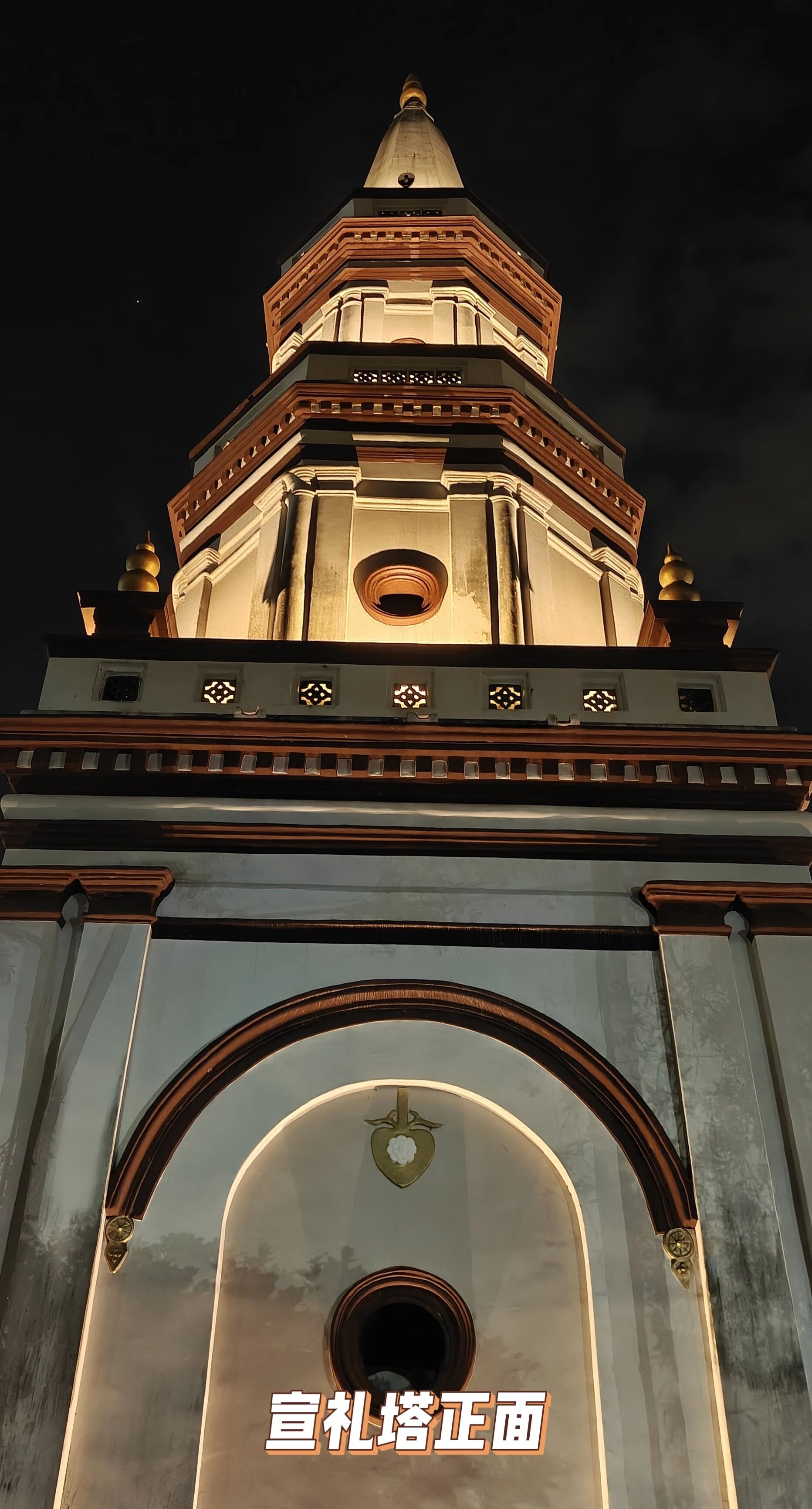
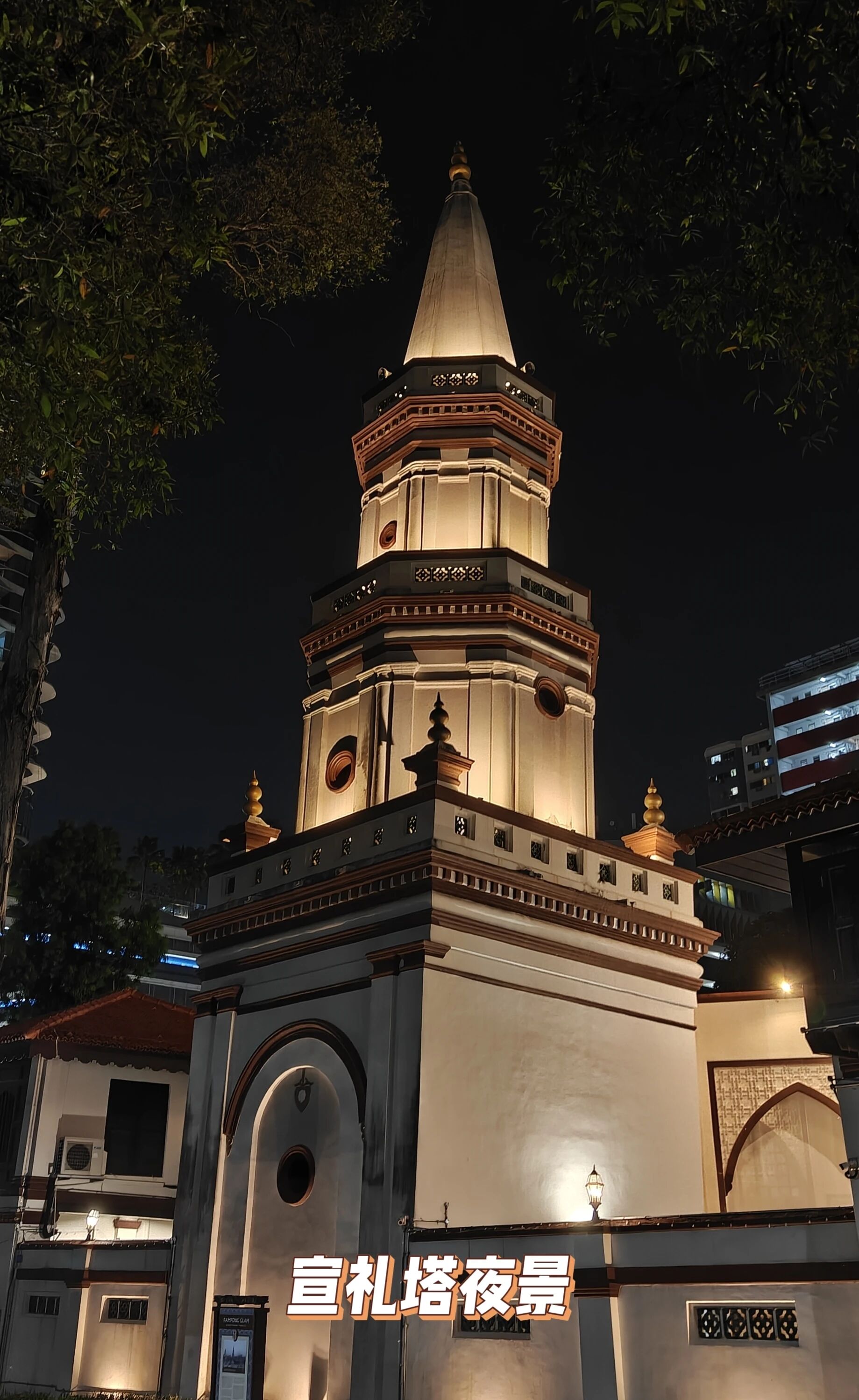
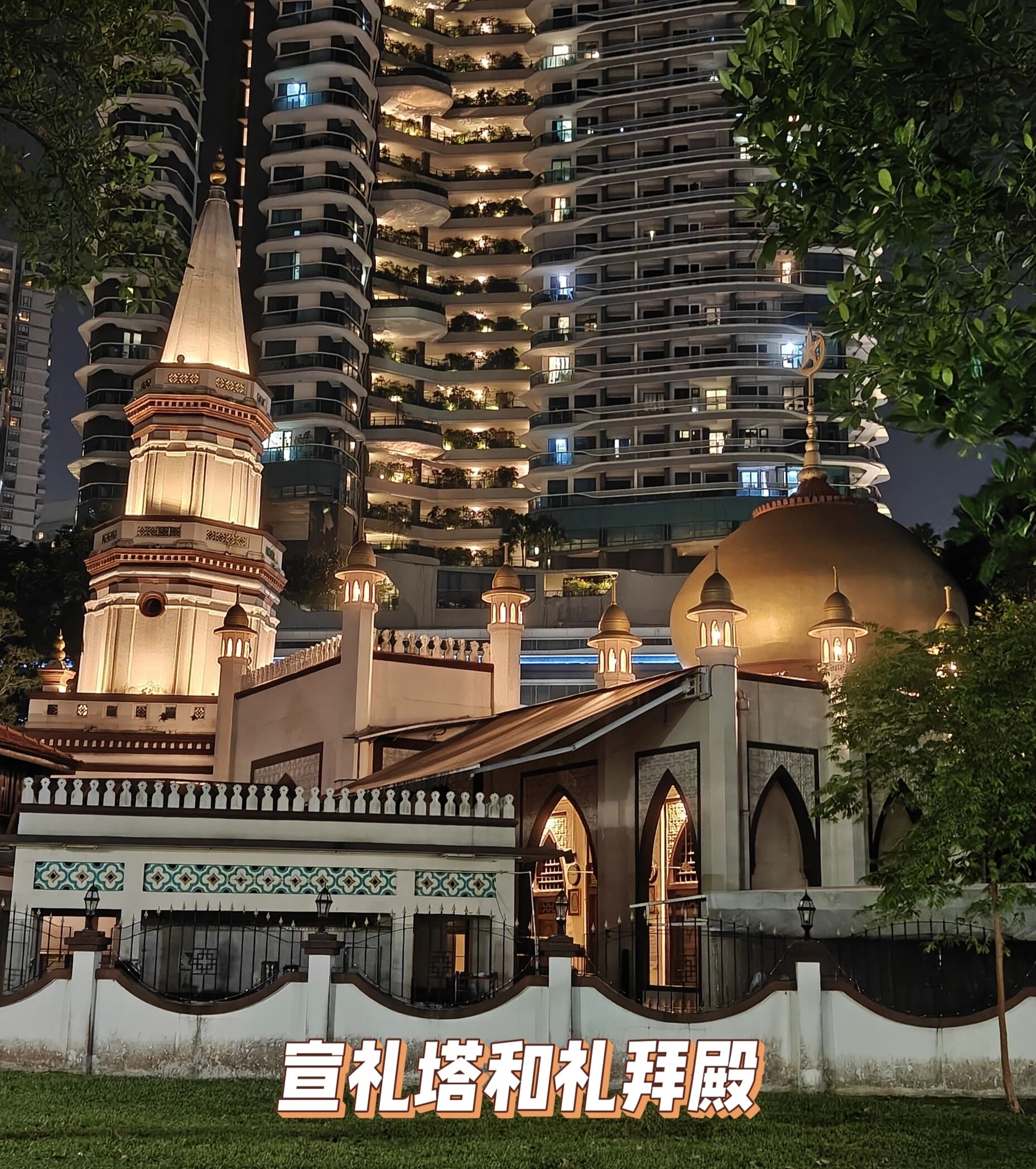
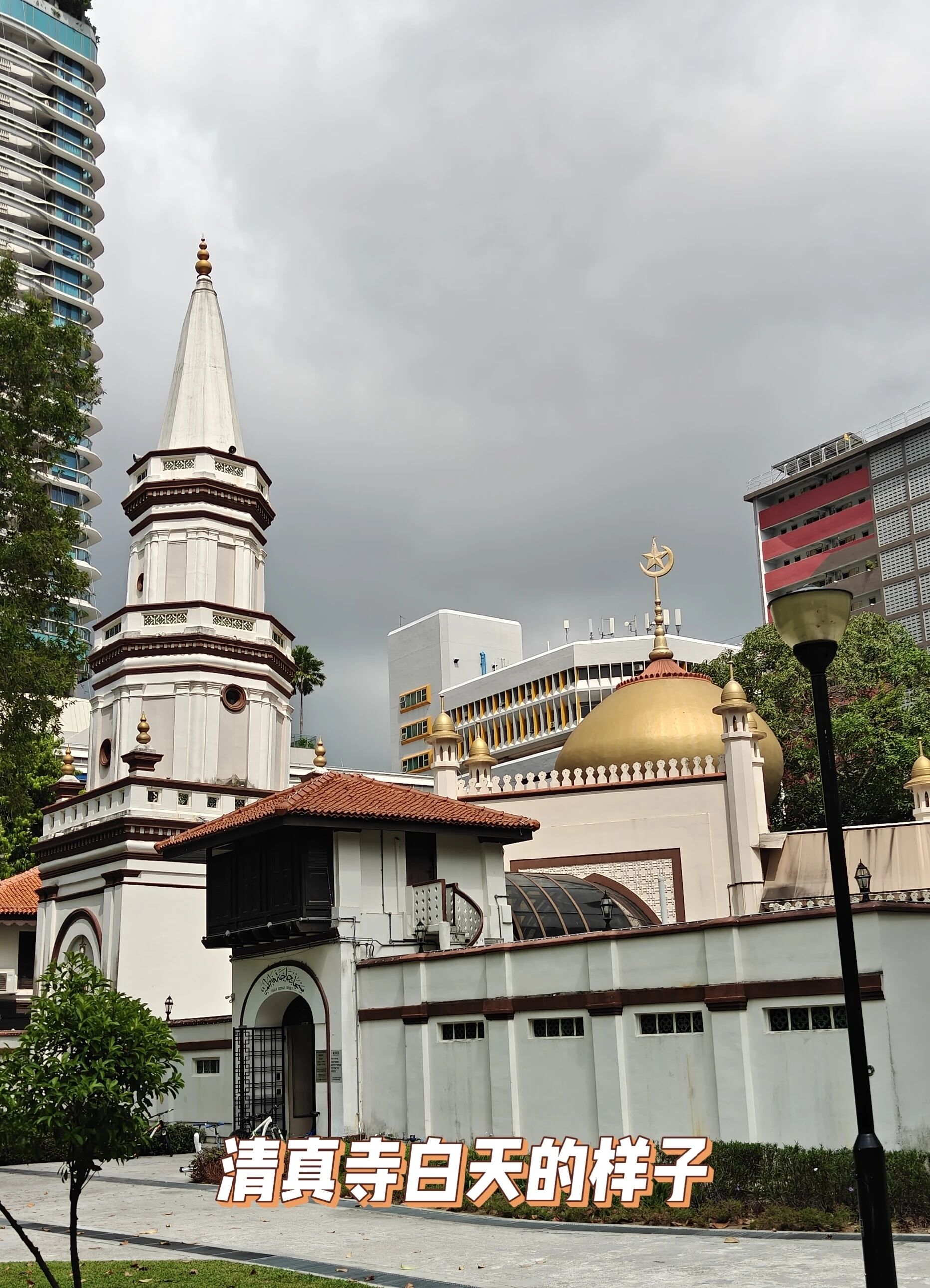
The most striking feature of this mosque is the style of its minaret, which looks different from the ones I usually see. It clearly borrows from Western architecture. At first glance, I really thought it was a Christian church.
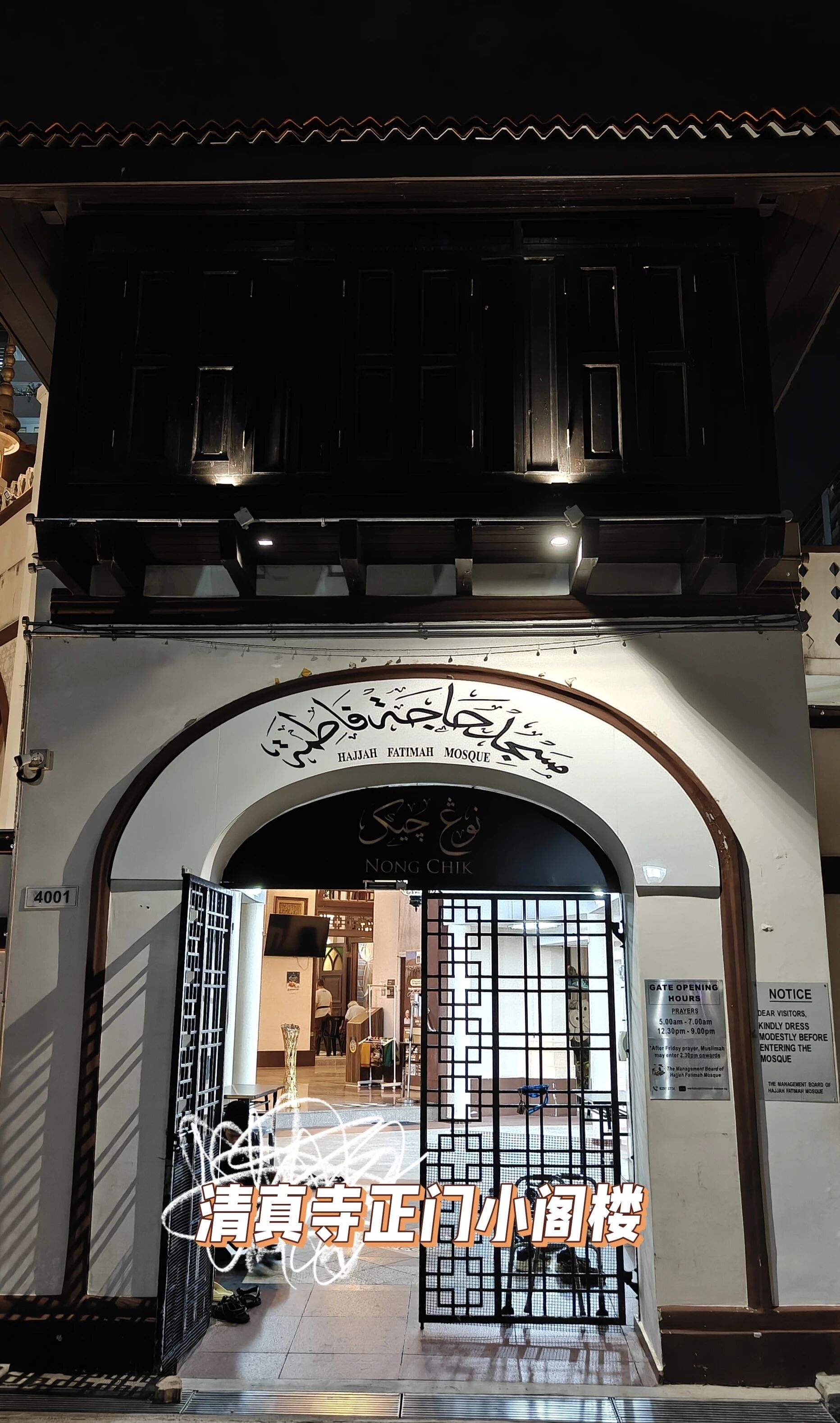
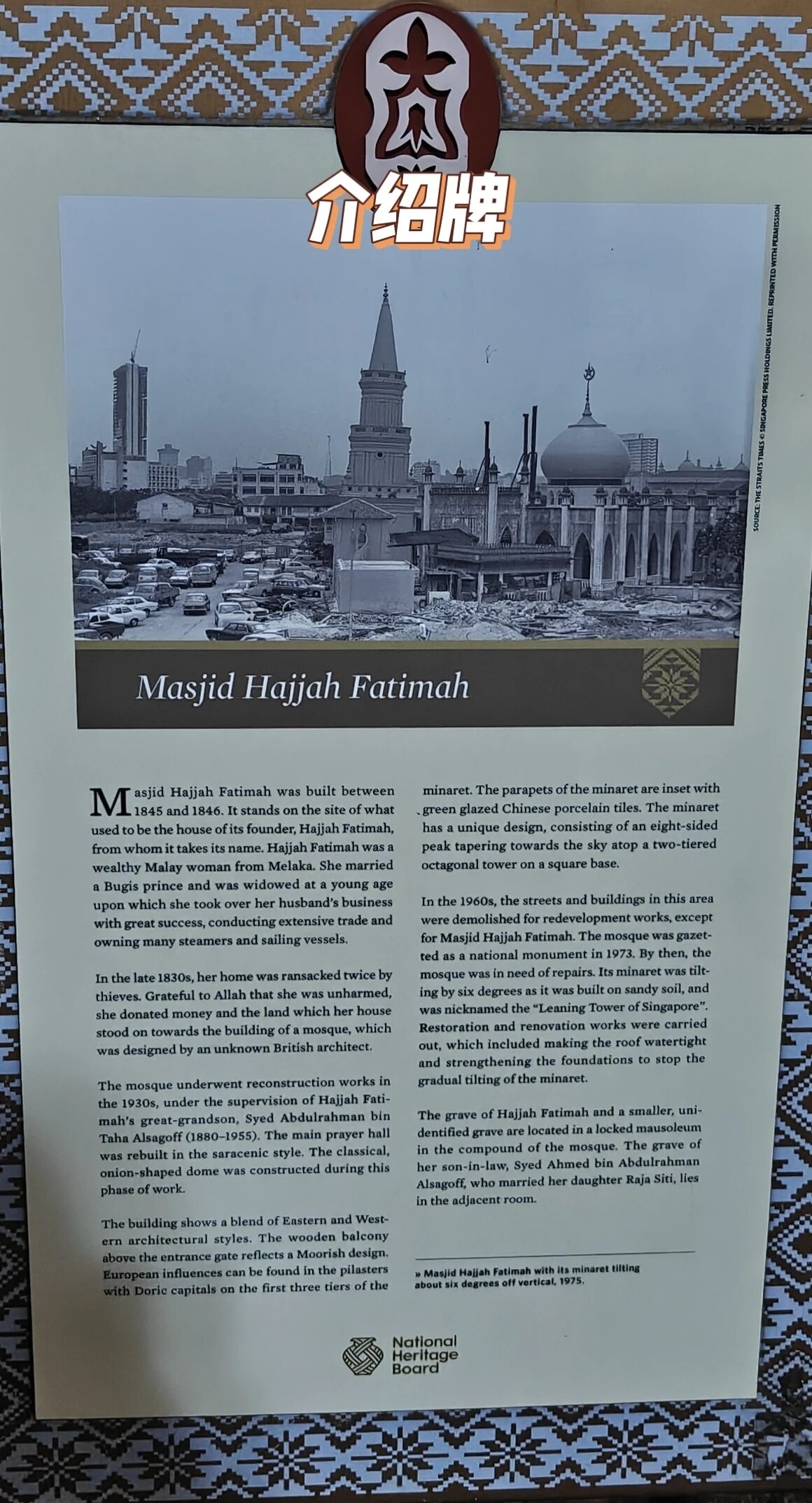
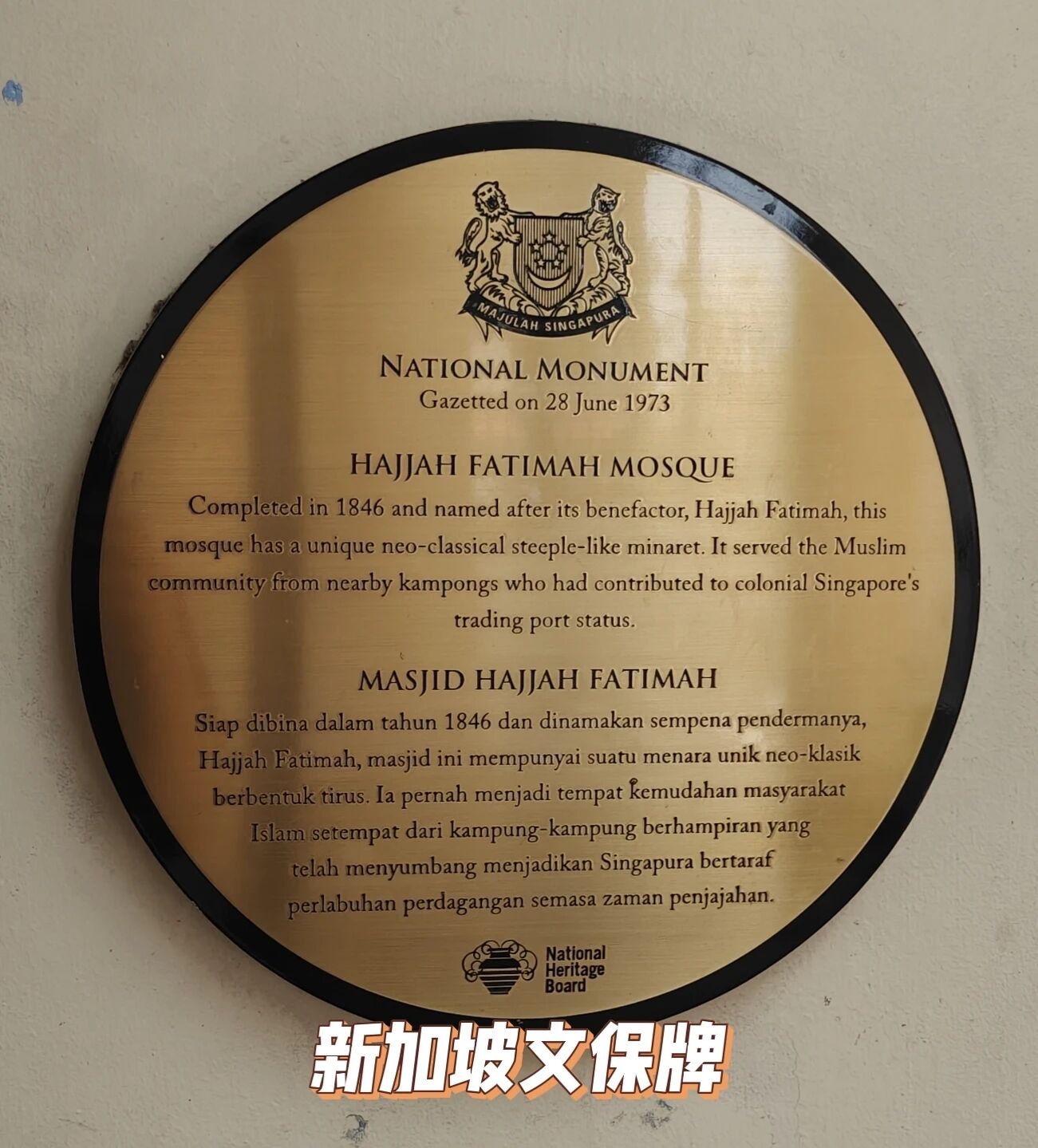
There is an information board at the entrance of the mosque. It says it was built between 1845 and 1846. The site was originally the home of a person named Hajjah Fatimah. Hajjah Fatimah was a wealthy Malay woman from Malacca, Malaysia.
You can see from this that the connection between Singapore and Malaysia is truly very close. The previous Temenggong Mosque in Singapore is actually territory of the state of Johor, Malaysia.
Back to the main topic, in the late 1830s, this generous lady donated her property to build this mosque.
The designer of the mosque was a British architect whose name is no longer known. It is no wonder the mosque's minaret looks a lot like a church steeple.
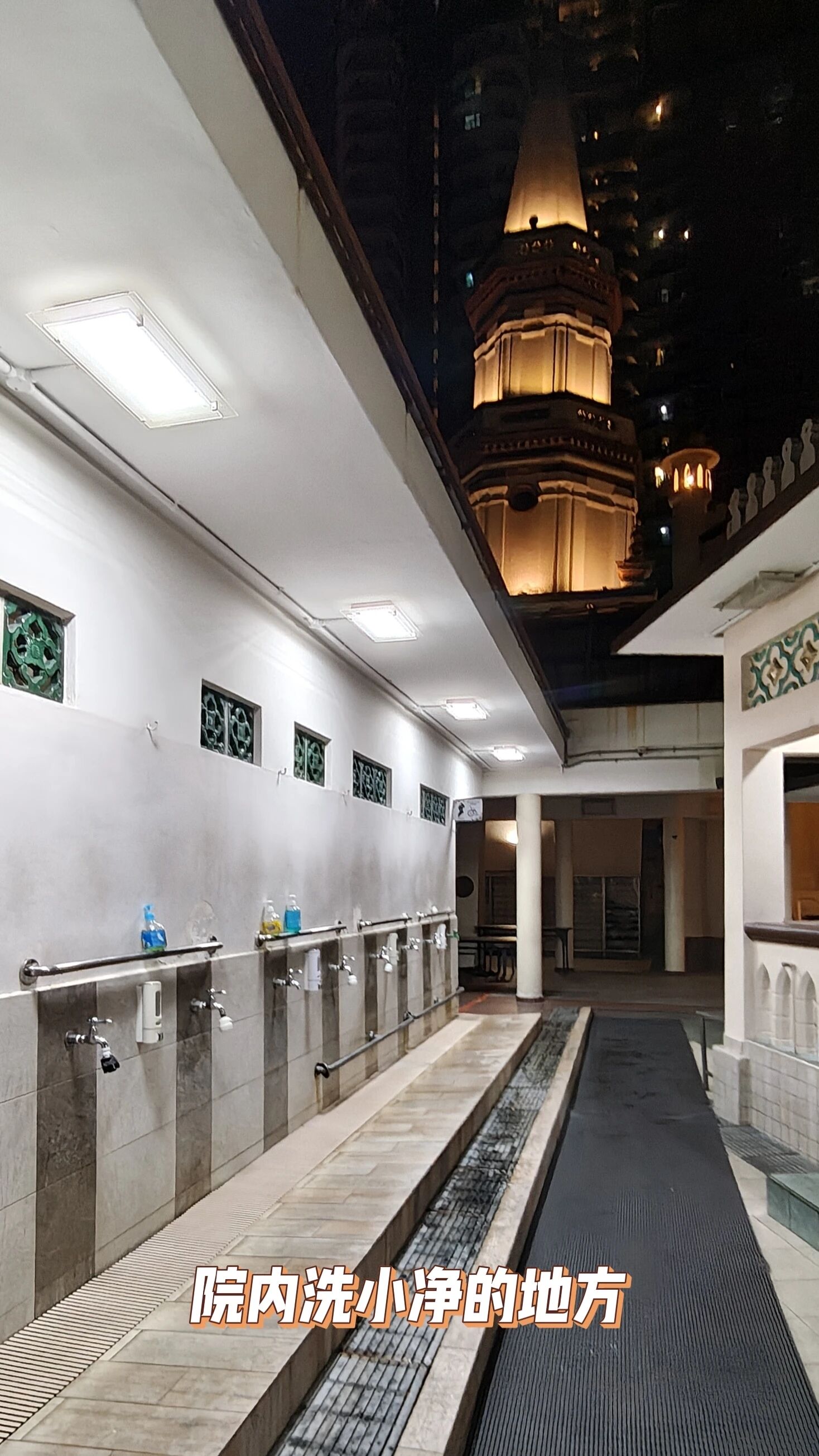
One day after visiting the area near the Flower Dome, I came to this mosque. It was late, past nine o'clock, but the mosque gate was still open. Google Maps shows that this mosque closes at nine o'clock. I was wondering why the mosque was still open after nine o'clock; it seemed like Google Maps was wrong.
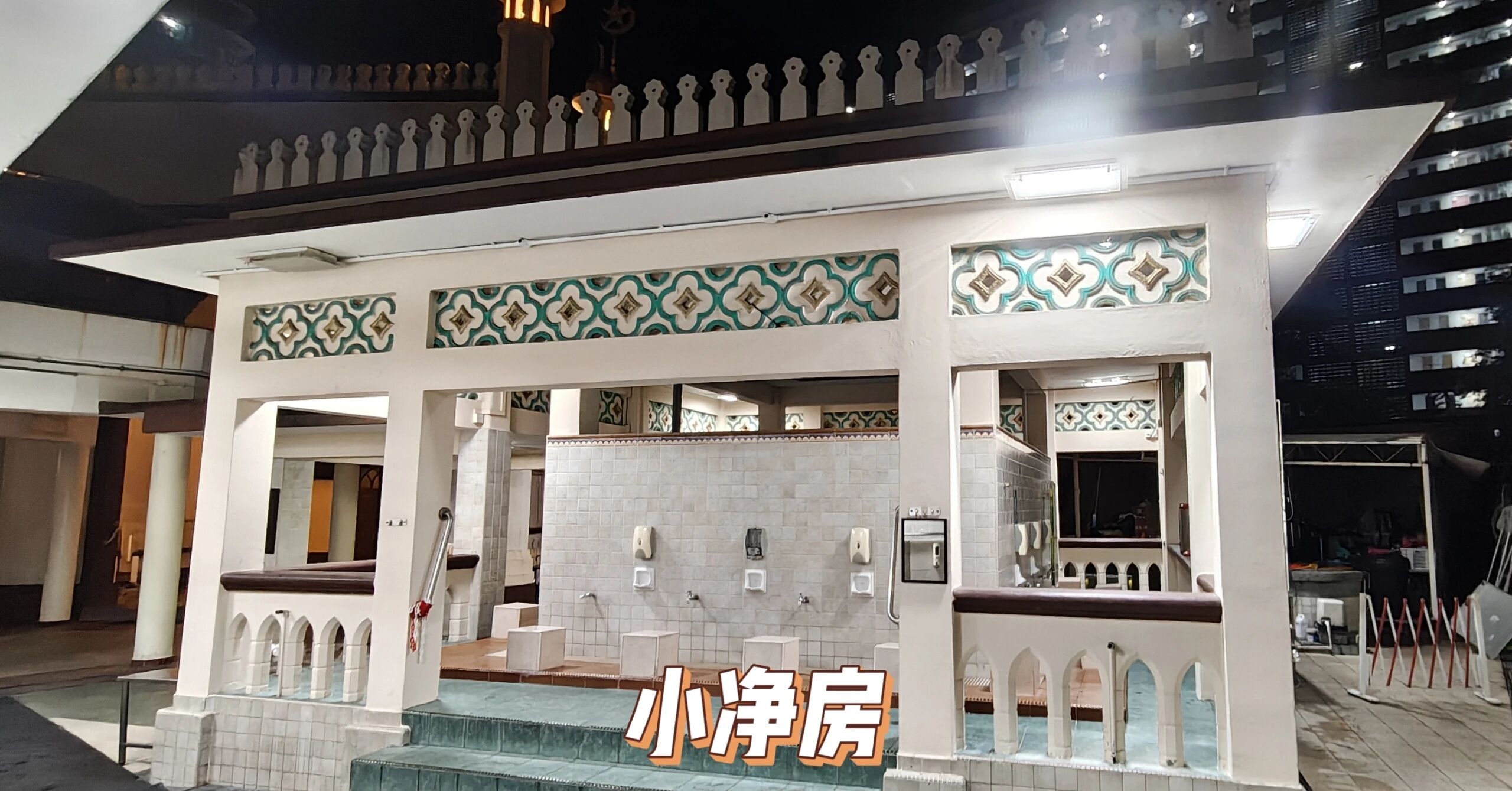
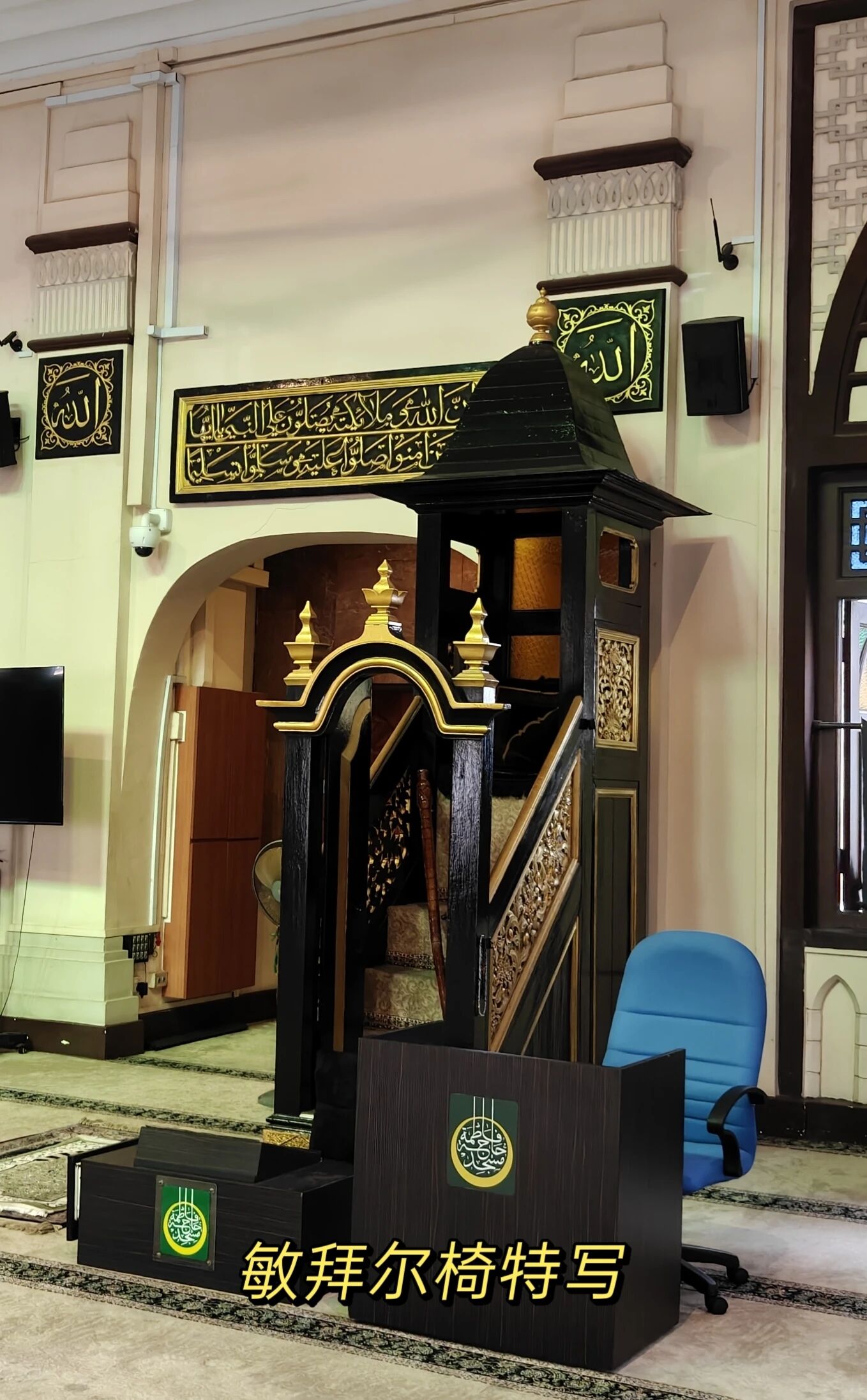
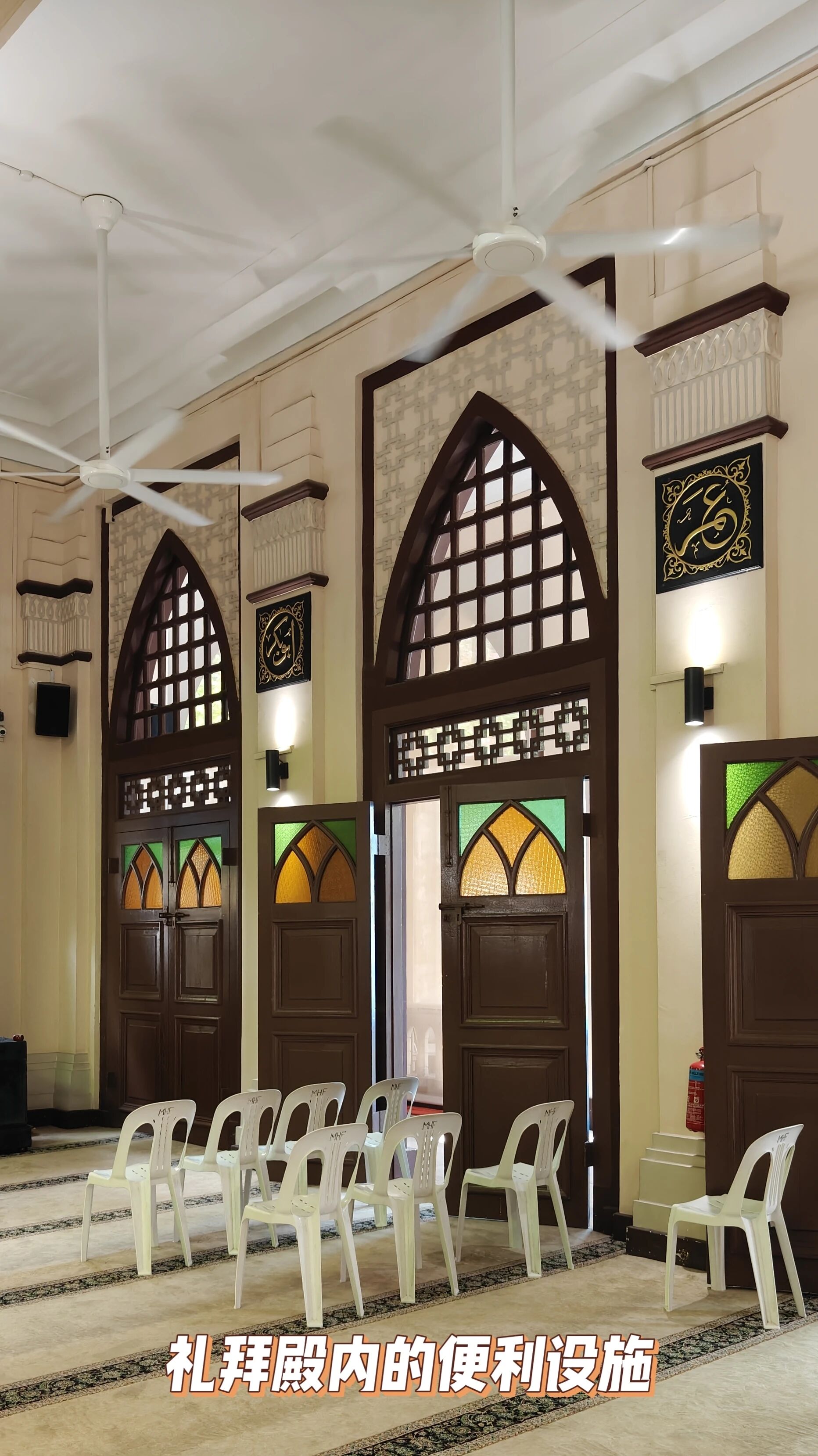
But after I finished my wudu, the prayer hall actually closed. I had to leave feeling disappointed and decided to come back the next morning to take photos of the prayer hall. It was not far from where I was staying anyway. I returned the next day and got the photos of the inside of the prayer hall just as I wanted.
A Quran study class was being held in the main hall, where a teacher was teaching children how to recite the Quran. There were also some outside the hall.
As I put my shoes on to leave, I noticed the floor tiles (Figure 11) were actually quite special; each color block was a separate piece, and the whole pattern had to be pieced together to form the design.
I remember seeing these kinds of tiles only in some old Western-style hotels.
The last photo is what I saw that night at the community activity center next to the mosque. Many people inside were playing badminton or tennis, and the entrance was decorated with colorful lights and a sign that said Selamat Hari Raya, which is Malay for Happy Eid al-Fitr. view all
Summary: This Singapore Muslim travel guide visits Haja Fatimah Mosque, known in the source for its Western-style minaret. It keeps the author's Lion City mosque-series context, mosque details, and historic prayer-hall notes.
This mosque is the last one in my Lion City mosque exploration series. After this update, I will write some summary articles. I hope you all support them.
The most striking feature of this mosque is the style of its minaret, which looks different from the ones I usually see. It clearly borrows from Western architecture. At first glance, I really thought it was a Christian church.
There is an information board at the entrance of the mosque. It says it was built between 1845 and 1846. The site was originally the home of a person named Hajjah Fatimah. Hajjah Fatimah was a wealthy Malay woman from Malacca, Malaysia.
You can see from this that the connection between Singapore and Malaysia is truly very close. The previous Temenggong Mosque in Singapore is actually territory of the state of Johor, Malaysia.
Back to the main topic, in the late 1830s, this generous lady donated her property to build this mosque.
The designer of the mosque was a British architect whose name is no longer known. It is no wonder the mosque's minaret looks a lot like a church steeple.
One day after visiting the area near the Flower Dome, I came to this mosque. It was late, past nine o'clock, but the mosque gate was still open. Google Maps shows that this mosque closes at nine o'clock. I was wondering why the mosque was still open after nine o'clock; it seemed like Google Maps was wrong.
But after I finished my wudu, the prayer hall actually closed. I had to leave feeling disappointed and decided to come back the next morning to take photos of the prayer hall. It was not far from where I was staying anyway. I returned the next day and got the photos of the inside of the prayer hall just as I wanted.
A Quran study class was being held in the main hall, where a teacher was teaching children how to recite the Quran. There were also some outside the hall.
As I put my shoes on to leave, I noticed the floor tiles (Figure 11) were actually quite special; each color block was a separate piece, and the whole pattern had to be pieced together to form the design.
I remember seeing these kinds of tiles only in some old Western-style hotels.
The last photo is what I saw that night at the community activity center next to the mosque. Many people inside were playing badminton or tennis, and the entrance was decorated with colorful lights and a sign that said Selamat Hari Raya, which is Malay for Happy Eid al-Fitr. view all
Reposted from the web
Summary: This Singapore Muslim travel guide visits Haja Fatimah Mosque, known in the source for its Western-style minaret. It keeps the author's Lion City mosque-series context, mosque details, and historic prayer-hall notes.
This mosque is the last one in my Lion City mosque exploration series. After this update, I will write some summary articles. I hope you all support them.
The most striking feature of this mosque is the style of its minaret, which looks different from the ones I usually see. It clearly borrows from Western architecture. At first glance, I really thought it was a Christian church.
There is an information board at the entrance of the mosque. It says it was built between 1845 and 1846. The site was originally the home of a person named Hajjah Fatimah. Hajjah Fatimah was a wealthy Malay woman from Malacca, Malaysia.
You can see from this that the connection between Singapore and Malaysia is truly very close. The previous Temenggong Mosque in Singapore is actually territory of the state of Johor, Malaysia.
Back to the main topic, in the late 1830s, this generous lady donated her property to build this mosque.
The designer of the mosque was a British architect whose name is no longer known. It is no wonder the mosque's minaret looks a lot like a church steeple.
One day after visiting the area near the Flower Dome, I came to this mosque. It was late, past nine o'clock, but the mosque gate was still open. Google Maps shows that this mosque closes at nine o'clock. I was wondering why the mosque was still open after nine o'clock; it seemed like Google Maps was wrong.
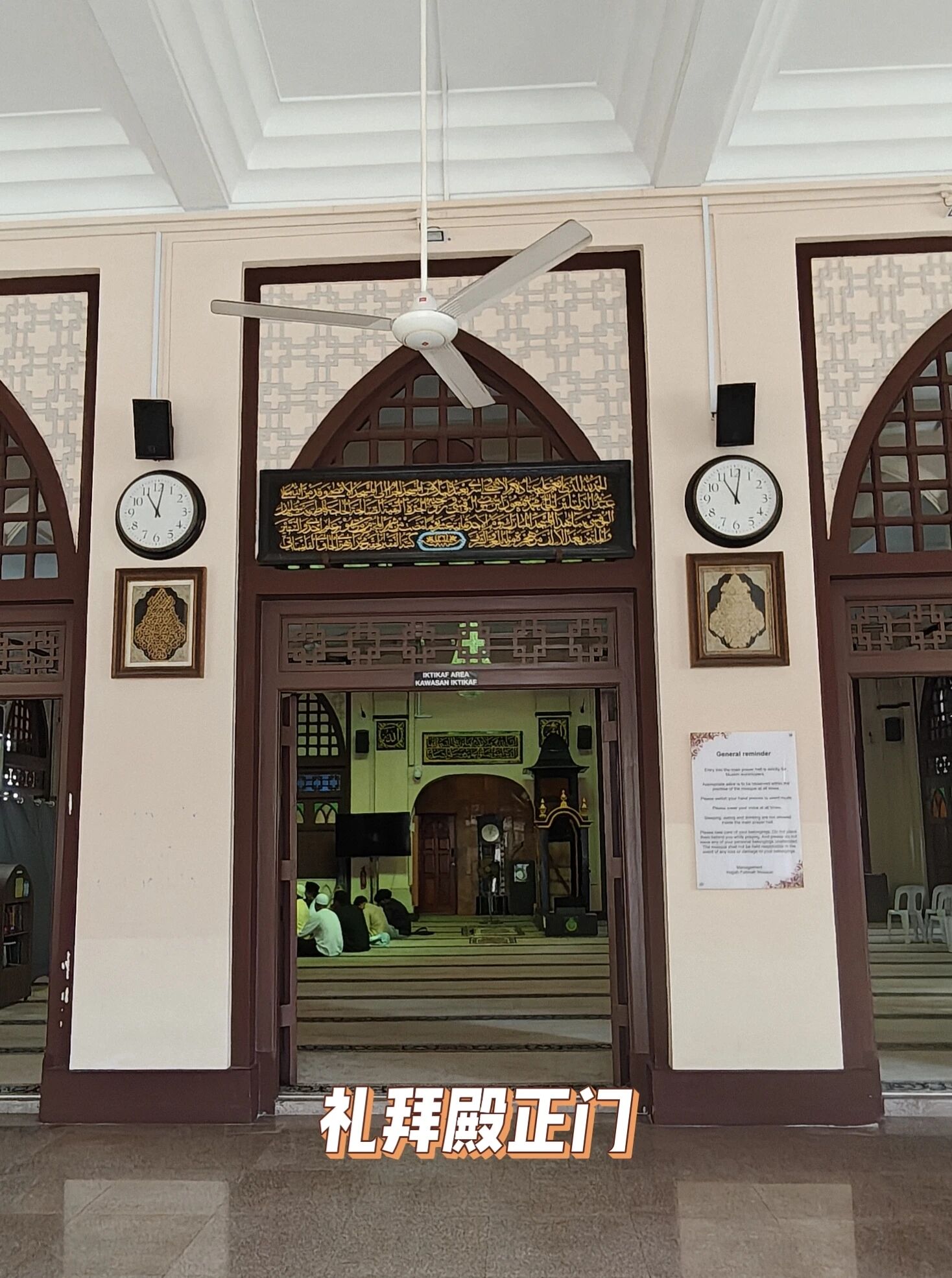
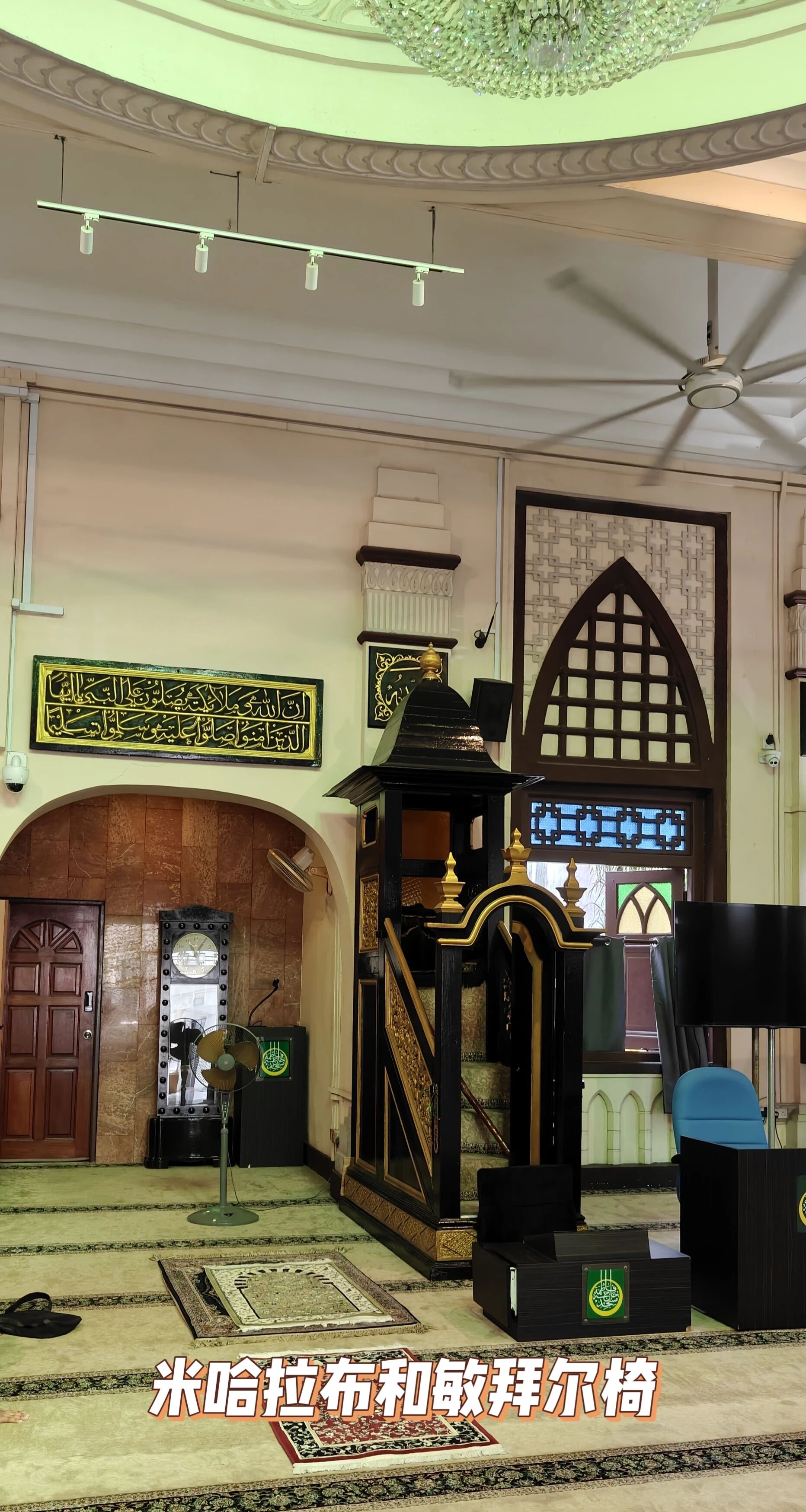
But after I finished my wudu, the prayer hall actually closed. I had to leave feeling disappointed and decided to come back the next morning to take photos of the prayer hall. It was not far from where I was staying anyway. I returned the next day and got the photos of the inside of the prayer hall just as I wanted.
A Quran study class was being held in the main hall, where a teacher was teaching children how to recite the Quran. There were also some outside the hall.
As I put my shoes on to leave, I noticed the floor tiles (Figure 11) were actually quite special; each color block was a separate piece, and the whole pattern had to be pieced together to form the design.

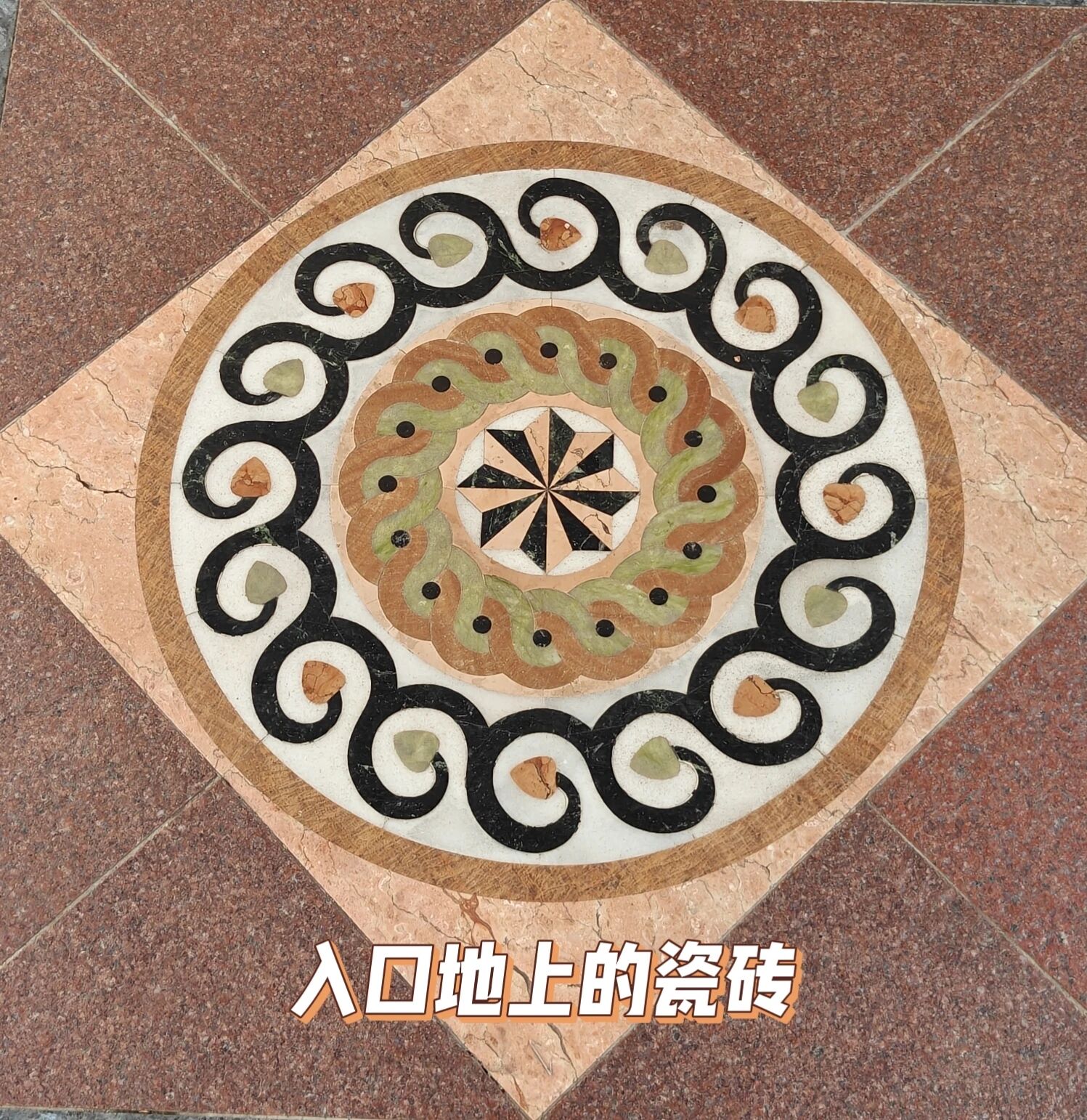
I remember seeing these kinds of tiles only in some old Western-style hotels.
The last photo is what I saw that night at the community activity center next to the mosque. Many people inside were playing badminton or tennis, and the entrance was decorated with colorful lights and a sign that said Selamat Hari Raya, which is Malay for Happy Eid al-Fitr.
Summary: This Singapore Muslim travel guide visits Haja Fatimah Mosque, known in the source for its Western-style minaret. It keeps the author's Lion City mosque-series context, mosque details, and historic prayer-hall notes.
This mosque is the last one in my Lion City mosque exploration series. After this update, I will write some summary articles. I hope you all support them.
The most striking feature of this mosque is the style of its minaret, which looks different from the ones I usually see. It clearly borrows from Western architecture. At first glance, I really thought it was a Christian church.
There is an information board at the entrance of the mosque. It says it was built between 1845 and 1846. The site was originally the home of a person named Hajjah Fatimah. Hajjah Fatimah was a wealthy Malay woman from Malacca, Malaysia.
You can see from this that the connection between Singapore and Malaysia is truly very close. The previous Temenggong Mosque in Singapore is actually territory of the state of Johor, Malaysia.
Back to the main topic, in the late 1830s, this generous lady donated her property to build this mosque.
The designer of the mosque was a British architect whose name is no longer known. It is no wonder the mosque's minaret looks a lot like a church steeple.
One day after visiting the area near the Flower Dome, I came to this mosque. It was late, past nine o'clock, but the mosque gate was still open. Google Maps shows that this mosque closes at nine o'clock. I was wondering why the mosque was still open after nine o'clock; it seemed like Google Maps was wrong.
But after I finished my wudu, the prayer hall actually closed. I had to leave feeling disappointed and decided to come back the next morning to take photos of the prayer hall. It was not far from where I was staying anyway. I returned the next day and got the photos of the inside of the prayer hall just as I wanted.
A Quran study class was being held in the main hall, where a teacher was teaching children how to recite the Quran. There were also some outside the hall.
As I put my shoes on to leave, I noticed the floor tiles (Figure 11) were actually quite special; each color block was a separate piece, and the whole pattern had to be pieced together to form the design.
I remember seeing these kinds of tiles only in some old Western-style hotels.
The last photo is what I saw that night at the community activity center next to the mosque. Many people inside were playing badminton or tennis, and the entrance was decorated with colorful lights and a sign that said Selamat Hari Raya, which is Malay for Happy Eid al-Fitr.
Muslim Travel Guide Singapore: Haja Fatimah Mosque, Western Minaret and Historic Prayer Hall
Articles • Hasan09 posted the article • 0 comments • 332 views • 2026-05-24 01:47
Reposted from the web
Summary: This Singapore Muslim travel guide visits Haja Fatimah Mosque, known in the source for its Western-style minaret. It keeps the author's Lion City mosque-series context, mosque details, and historic prayer-hall notes.
This mosque is the last one in my Lion City mosque exploration series. After this update, I will write some summary articles. I hope you all support them.
The most striking feature of this mosque is the style of its minaret, which looks different from the ones I usually see. It clearly borrows from Western architecture. At first glance, I really thought it was a Christian church.
There is an information board at the entrance of the mosque. It says it was built between 1845 and 1846. The site was originally the home of a person named Hajjah Fatimah. Hajjah Fatimah was a wealthy Malay woman from Malacca, Malaysia.
You can see from this that the connection between Singapore and Malaysia is truly very close. The previous Temenggong Mosque in Singapore is actually territory of the state of Johor, Malaysia.
Back to the main topic, in the late 1830s, this generous lady donated her property to build this mosque.
The designer of the mosque was a British architect whose name is no longer known. It is no wonder the mosque's minaret looks a lot like a church steeple.
One day after visiting the area near the Flower Dome, I came to this mosque. It was late, past nine o'clock, but the mosque gate was still open. Google Maps shows that this mosque closes at nine o'clock. I was wondering why the mosque was still open after nine o'clock; it seemed like Google Maps was wrong.
But after I finished my wudu, the prayer hall actually closed. I had to leave feeling disappointed and decided to come back the next morning to take photos of the prayer hall. It was not far from where I was staying anyway. I returned the next day and got the photos of the inside of the prayer hall just as I wanted.
A Quran study class was being held in the main hall, where a teacher was teaching children how to recite the Quran. There were also some outside the hall.
As I put my shoes on to leave, I noticed the floor tiles (Figure 11) were actually quite special; each color block was a separate piece, and the whole pattern had to be pieced together to form the design.
I remember seeing these kinds of tiles only in some old Western-style hotels.
The last photo is what I saw that night at the community activity center next to the mosque. Many people inside were playing badminton or tennis, and the entrance was decorated with colorful lights and a sign that said Selamat Hari Raya, which is Malay for Happy Eid al-Fitr. view all
Summary: This Singapore Muslim travel guide visits Haja Fatimah Mosque, known in the source for its Western-style minaret. It keeps the author's Lion City mosque-series context, mosque details, and historic prayer-hall notes.
This mosque is the last one in my Lion City mosque exploration series. After this update, I will write some summary articles. I hope you all support them.
The most striking feature of this mosque is the style of its minaret, which looks different from the ones I usually see. It clearly borrows from Western architecture. At first glance, I really thought it was a Christian church.
There is an information board at the entrance of the mosque. It says it was built between 1845 and 1846. The site was originally the home of a person named Hajjah Fatimah. Hajjah Fatimah was a wealthy Malay woman from Malacca, Malaysia.
You can see from this that the connection between Singapore and Malaysia is truly very close. The previous Temenggong Mosque in Singapore is actually territory of the state of Johor, Malaysia.
Back to the main topic, in the late 1830s, this generous lady donated her property to build this mosque.
The designer of the mosque was a British architect whose name is no longer known. It is no wonder the mosque's minaret looks a lot like a church steeple.
One day after visiting the area near the Flower Dome, I came to this mosque. It was late, past nine o'clock, but the mosque gate was still open. Google Maps shows that this mosque closes at nine o'clock. I was wondering why the mosque was still open after nine o'clock; it seemed like Google Maps was wrong.
But after I finished my wudu, the prayer hall actually closed. I had to leave feeling disappointed and decided to come back the next morning to take photos of the prayer hall. It was not far from where I was staying anyway. I returned the next day and got the photos of the inside of the prayer hall just as I wanted.
A Quran study class was being held in the main hall, where a teacher was teaching children how to recite the Quran. There were also some outside the hall.
As I put my shoes on to leave, I noticed the floor tiles (Figure 11) were actually quite special; each color block was a separate piece, and the whole pattern had to be pieced together to form the design.
I remember seeing these kinds of tiles only in some old Western-style hotels.
The last photo is what I saw that night at the community activity center next to the mosque. Many people inside were playing badminton or tennis, and the entrance was decorated with colorful lights and a sign that said Selamat Hari Raya, which is Malay for Happy Eid al-Fitr. view all
Reposted from the web
Summary: This Singapore Muslim travel guide visits Haja Fatimah Mosque, known in the source for its Western-style minaret. It keeps the author's Lion City mosque-series context, mosque details, and historic prayer-hall notes.
This mosque is the last one in my Lion City mosque exploration series. After this update, I will write some summary articles. I hope you all support them.
The most striking feature of this mosque is the style of its minaret, which looks different from the ones I usually see. It clearly borrows from Western architecture. At first glance, I really thought it was a Christian church.
There is an information board at the entrance of the mosque. It says it was built between 1845 and 1846. The site was originally the home of a person named Hajjah Fatimah. Hajjah Fatimah was a wealthy Malay woman from Malacca, Malaysia.
You can see from this that the connection between Singapore and Malaysia is truly very close. The previous Temenggong Mosque in Singapore is actually territory of the state of Johor, Malaysia.
Back to the main topic, in the late 1830s, this generous lady donated her property to build this mosque.
The designer of the mosque was a British architect whose name is no longer known. It is no wonder the mosque's minaret looks a lot like a church steeple.
One day after visiting the area near the Flower Dome, I came to this mosque. It was late, past nine o'clock, but the mosque gate was still open. Google Maps shows that this mosque closes at nine o'clock. I was wondering why the mosque was still open after nine o'clock; it seemed like Google Maps was wrong.
But after I finished my wudu, the prayer hall actually closed. I had to leave feeling disappointed and decided to come back the next morning to take photos of the prayer hall. It was not far from where I was staying anyway. I returned the next day and got the photos of the inside of the prayer hall just as I wanted.
A Quran study class was being held in the main hall, where a teacher was teaching children how to recite the Quran. There were also some outside the hall.
As I put my shoes on to leave, I noticed the floor tiles (Figure 11) were actually quite special; each color block was a separate piece, and the whole pattern had to be pieced together to form the design.
I remember seeing these kinds of tiles only in some old Western-style hotels.
The last photo is what I saw that night at the community activity center next to the mosque. Many people inside were playing badminton or tennis, and the entrance was decorated with colorful lights and a sign that said Selamat Hari Raya, which is Malay for Happy Eid al-Fitr.
Summary: This Singapore Muslim travel guide visits Haja Fatimah Mosque, known in the source for its Western-style minaret. It keeps the author's Lion City mosque-series context, mosque details, and historic prayer-hall notes.
This mosque is the last one in my Lion City mosque exploration series. After this update, I will write some summary articles. I hope you all support them.
The most striking feature of this mosque is the style of its minaret, which looks different from the ones I usually see. It clearly borrows from Western architecture. At first glance, I really thought it was a Christian church.
There is an information board at the entrance of the mosque. It says it was built between 1845 and 1846. The site was originally the home of a person named Hajjah Fatimah. Hajjah Fatimah was a wealthy Malay woman from Malacca, Malaysia.
You can see from this that the connection between Singapore and Malaysia is truly very close. The previous Temenggong Mosque in Singapore is actually territory of the state of Johor, Malaysia.
Back to the main topic, in the late 1830s, this generous lady donated her property to build this mosque.
The designer of the mosque was a British architect whose name is no longer known. It is no wonder the mosque's minaret looks a lot like a church steeple.
One day after visiting the area near the Flower Dome, I came to this mosque. It was late, past nine o'clock, but the mosque gate was still open. Google Maps shows that this mosque closes at nine o'clock. I was wondering why the mosque was still open after nine o'clock; it seemed like Google Maps was wrong.
But after I finished my wudu, the prayer hall actually closed. I had to leave feeling disappointed and decided to come back the next morning to take photos of the prayer hall. It was not far from where I was staying anyway. I returned the next day and got the photos of the inside of the prayer hall just as I wanted.
A Quran study class was being held in the main hall, where a teacher was teaching children how to recite the Quran. There were also some outside the hall.
As I put my shoes on to leave, I noticed the floor tiles (Figure 11) were actually quite special; each color block was a separate piece, and the whole pattern had to be pieced together to form the design.
I remember seeing these kinds of tiles only in some old Western-style hotels.
The last photo is what I saw that night at the community activity center next to the mosque. Many people inside were playing badminton or tennis, and the entrance was decorated with colorful lights and a sign that said Selamat Hari Raya, which is Malay for Happy Eid al-Fitr.