

Halal Traditions
Halal Food Guide: Hui Muslim Seasonal Dishes and Eid Food
Articles • ali2007fr posted the article • 0 comments • 145 views • 2026-05-18 21:14
Reposted from the web
Summary: Halal Food Guide: Hui Muslim Seasonal Dishes and Eid Food is presented here as a firsthand travel account in clear English, beginning with this scene: In the daily life of Muslims, certain foods are closely tied to holidays. Foods like bean rice for Ashura, fried dough (youxiang) for Mawlid, dates for breaking the fast, and lamb for Eid al-Adha are all important parts. The account keeps its focus on Hui Muslim Food, Eid Food, Halal Traditions while preserving the names, places, food, and historical details from the Chinese source.
In the daily life of Muslims, certain foods are closely tied to holidays. Foods like bean rice for Ashura, fried dough (youxiang) for Mawlid, dates for breaking the fast, and lamb for Eid al-Adha are all important parts of these holidays. I will share some of the holiday foods I have eaten.
10th of the first month of the Islamic calendar: Ashura.
The 10th of the first month is the honorable Ashura, the first important day after the Islamic New Year. To commemorate the day the ship of Nuh (Noah's Ark) docked, Hui Muslims traditionally make Ashura bean porridge.
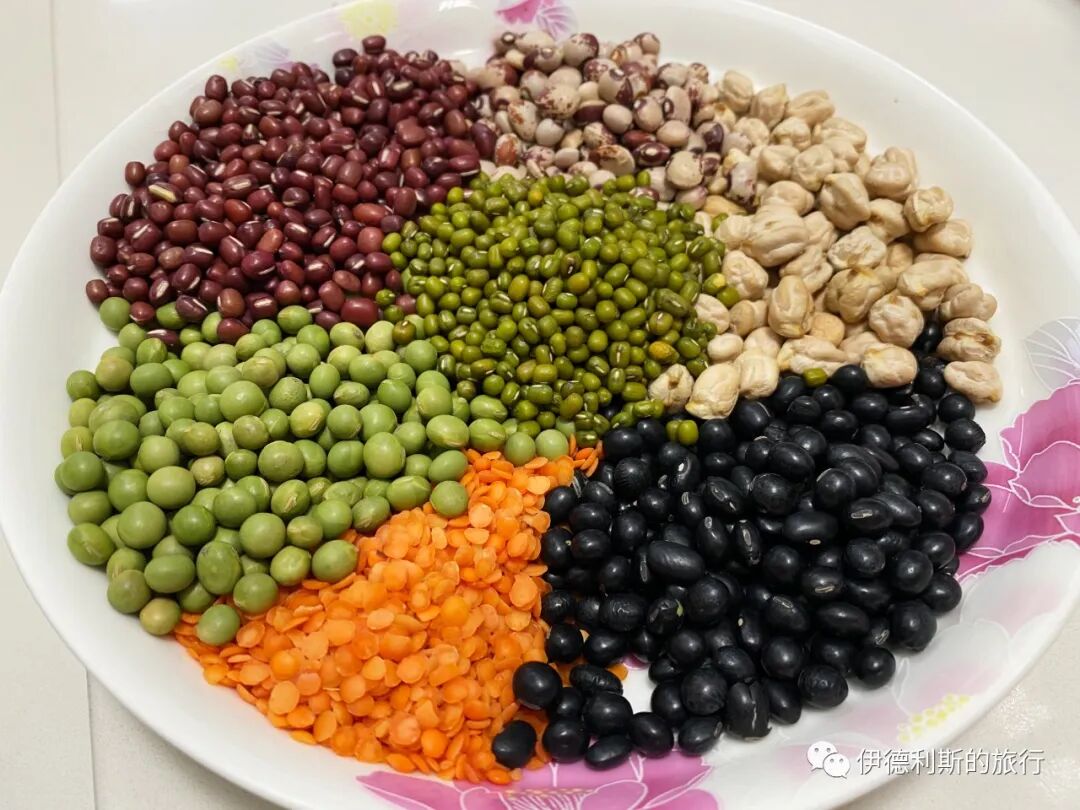
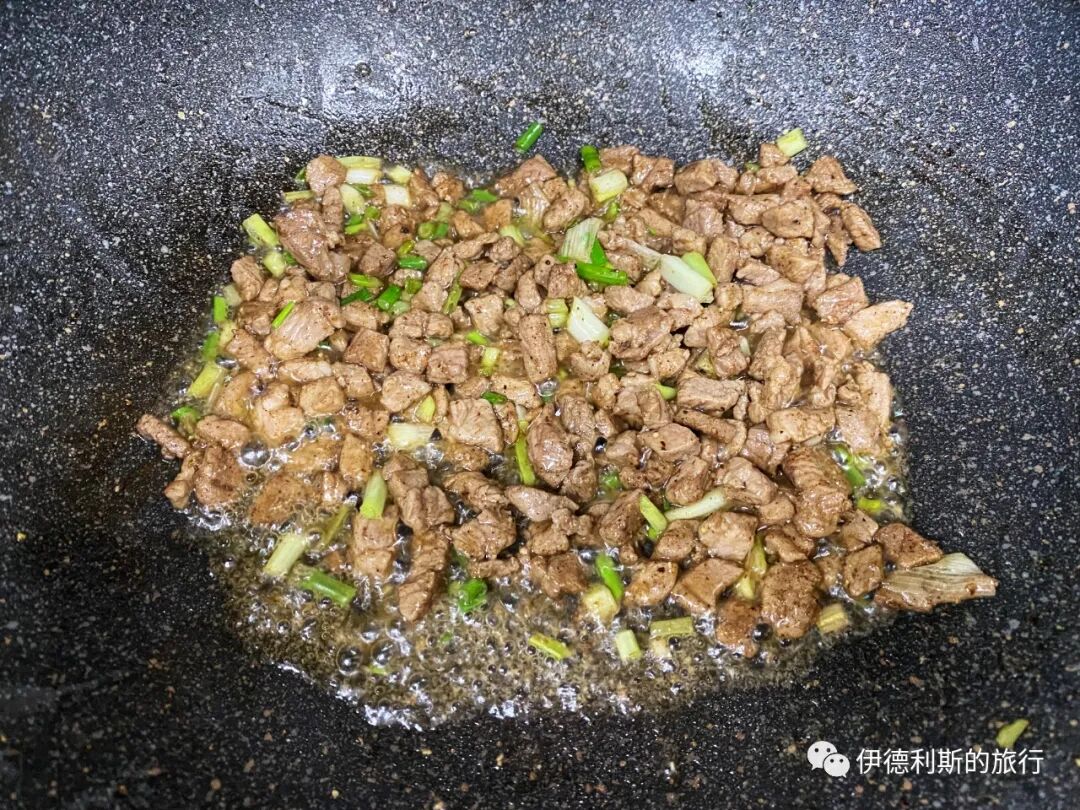
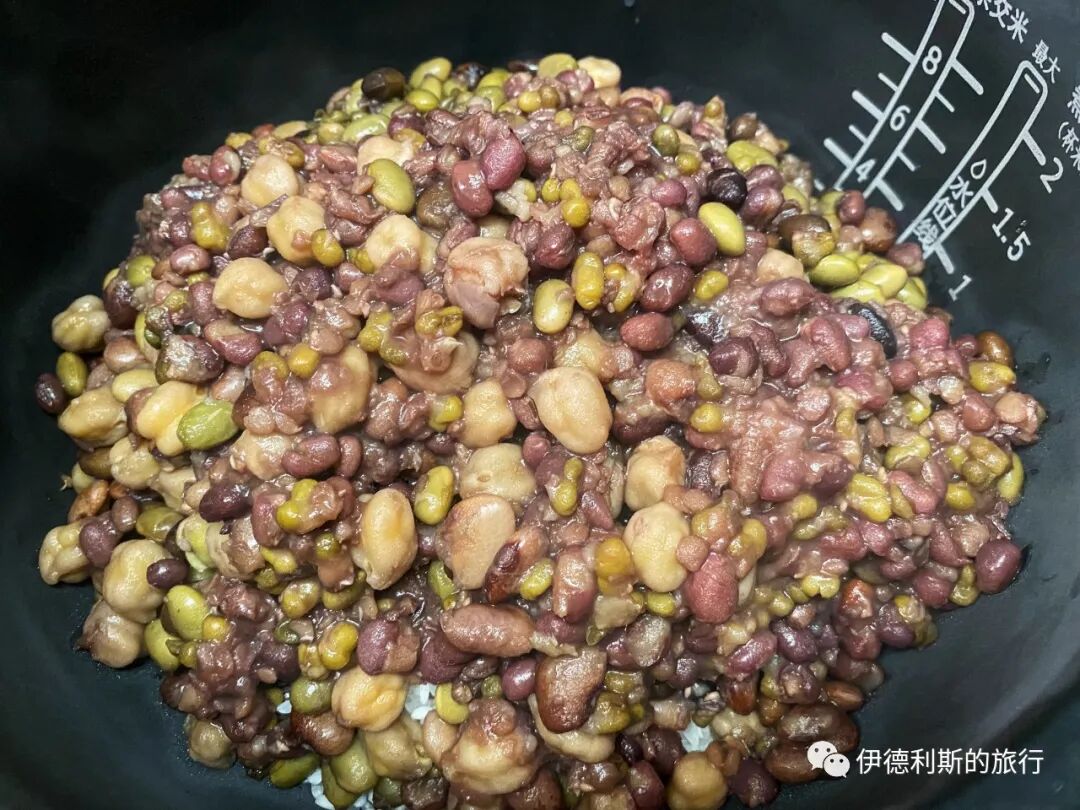
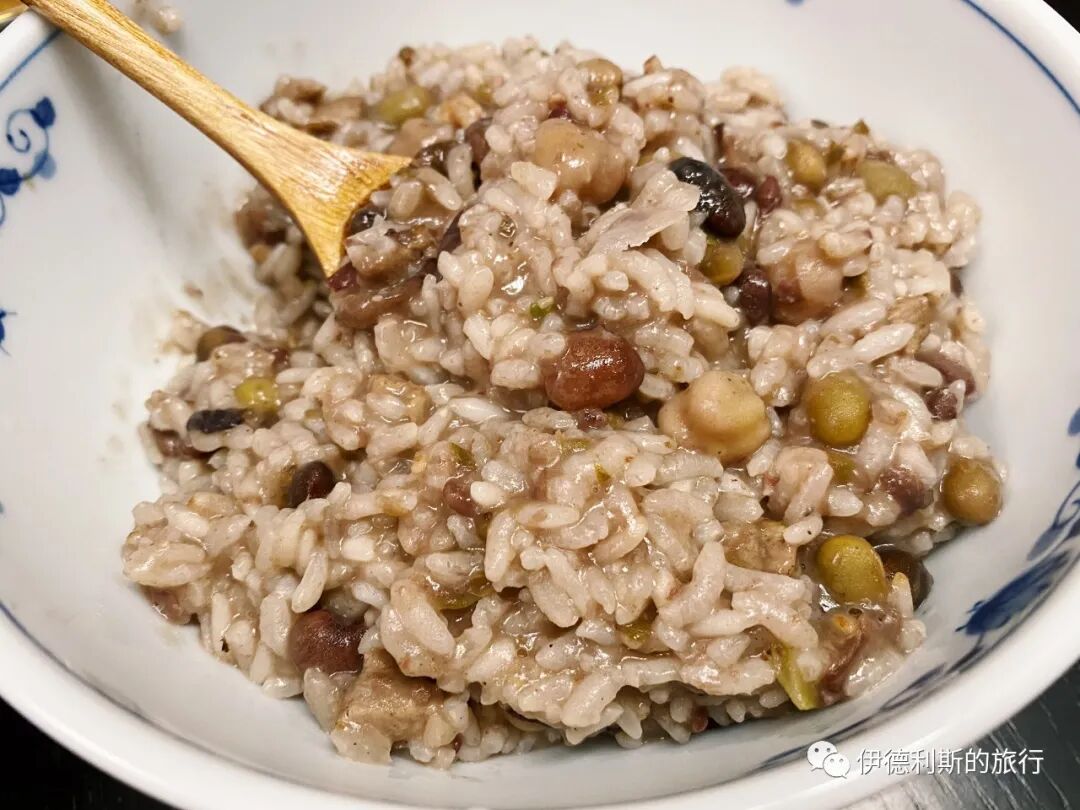
Every year, my family makes the Urumqi Hui version of Ashura lamb and bean rice. We prepare seven types of beans, boil them in a pressure cooker, then dice lamb from the Eid al-Adha sacrifice (Qurbani), fry it with scallions in rendered lamb fat, and add salt and Sichuan peppercorn powder. After the beans are cooked, we add rice and glutinous rice, then the fried meat, and simmer until the rice is done. When eating, it has both the fresh scent of beans and the savory taste of lamb; I could eat two big bowls and still want more.
I am sharing the origin of Ashura porridge as told by Imam An from the Jingjue Mosque in Nanjing: On Ashura, the Prophet Nuh and his followers got off the boat and fasted that day to thank Allah. At that time, they had almost no food left. One person took out a handful of wheat, another a handful of mung beans, and another a handful of fava beans. After the Prophet Nuh gathered seven types of seeds, he boiled them so everyone could break their fast. By the will of Allah and the miracle (mu'jiza) of the Prophet. This small amount of food was enough to feed everyone who came off the boat. This was the first meal cooked on land after the flood covered the earth, so people treat it as a blessing from the Prophet Nuh. The Prophet Nuh is known as the second ancestor of humanity.
12th of the third month of the Islamic calendar: Mawlid.
The 12th of the third month is the birthday of the Prophet (Mawlid), and Muslims everywhere commemorate him during this time. Mawlid celebrations first appeared in Baghdad during the Abbasid Caliphate and grew into grand festivals in the Middle East through the Sufis in the 13th century, then spread around the world. In places like Indonesia, the scale of Mawlid even exceeds that of Eid al-Fitr and Eid al-Adha.
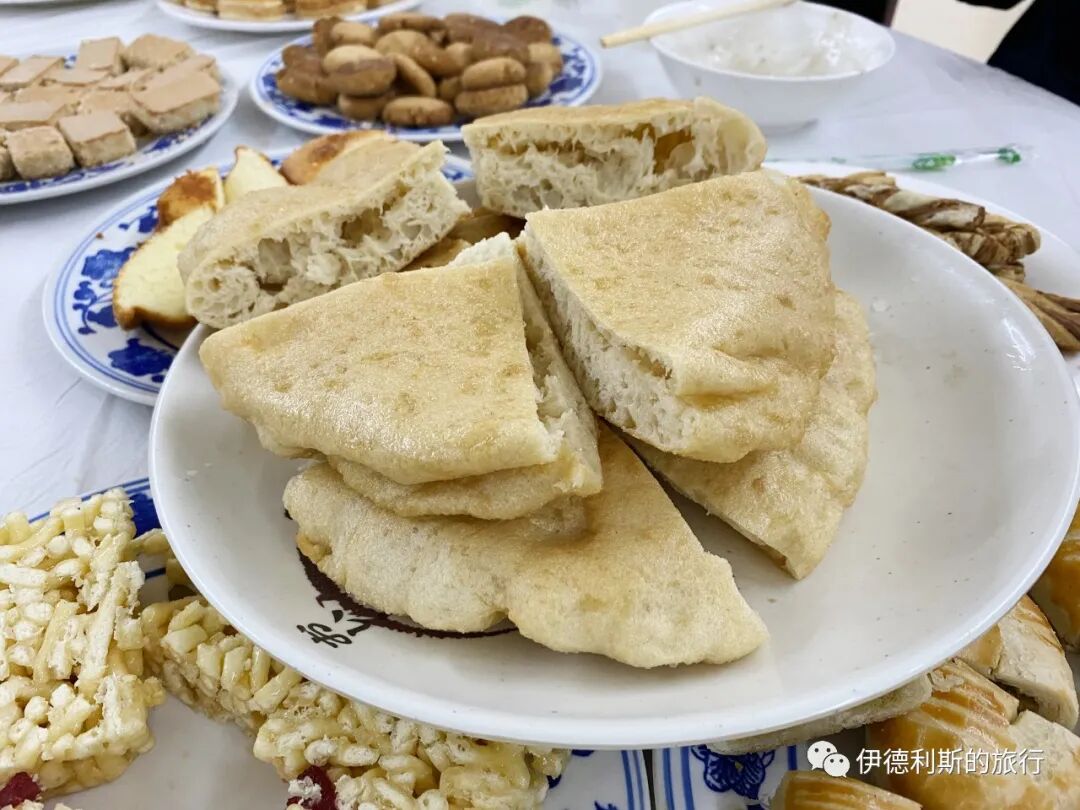
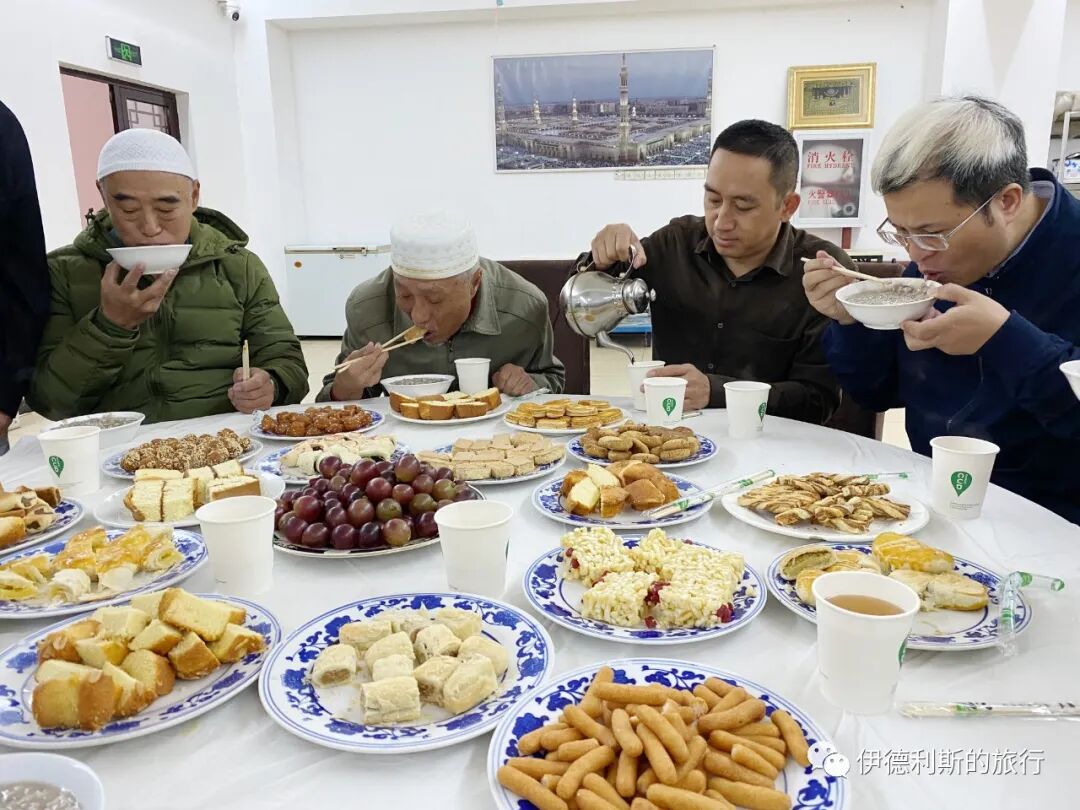
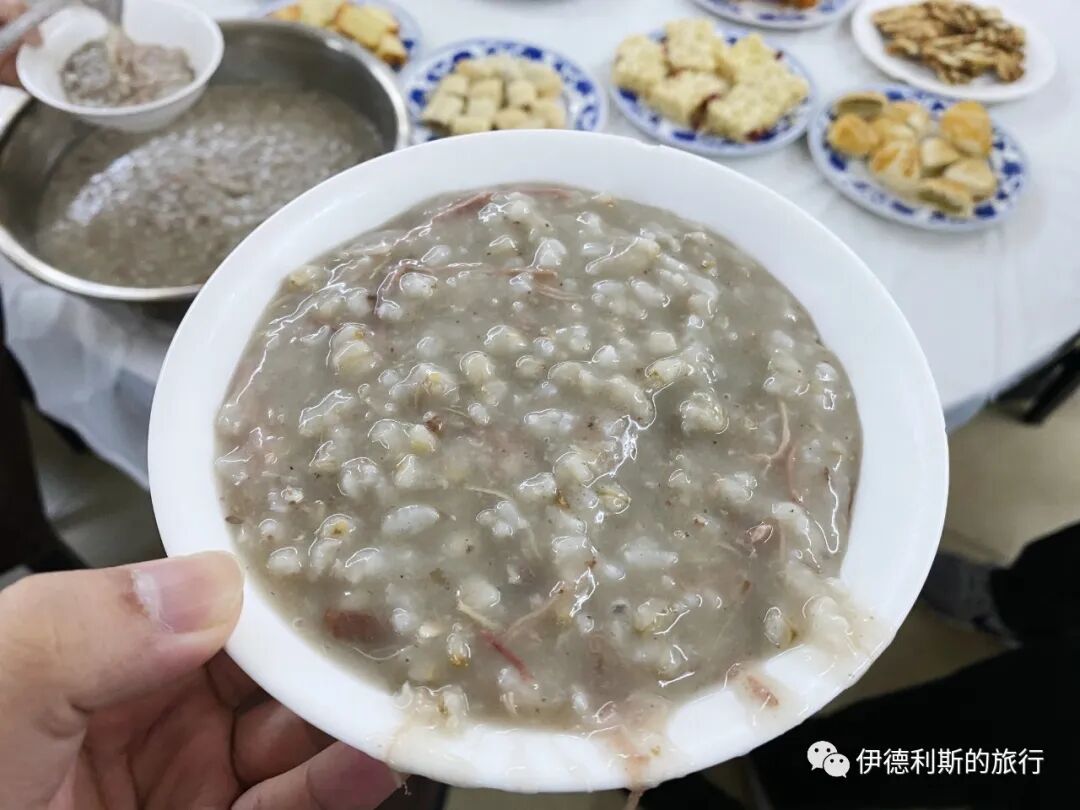
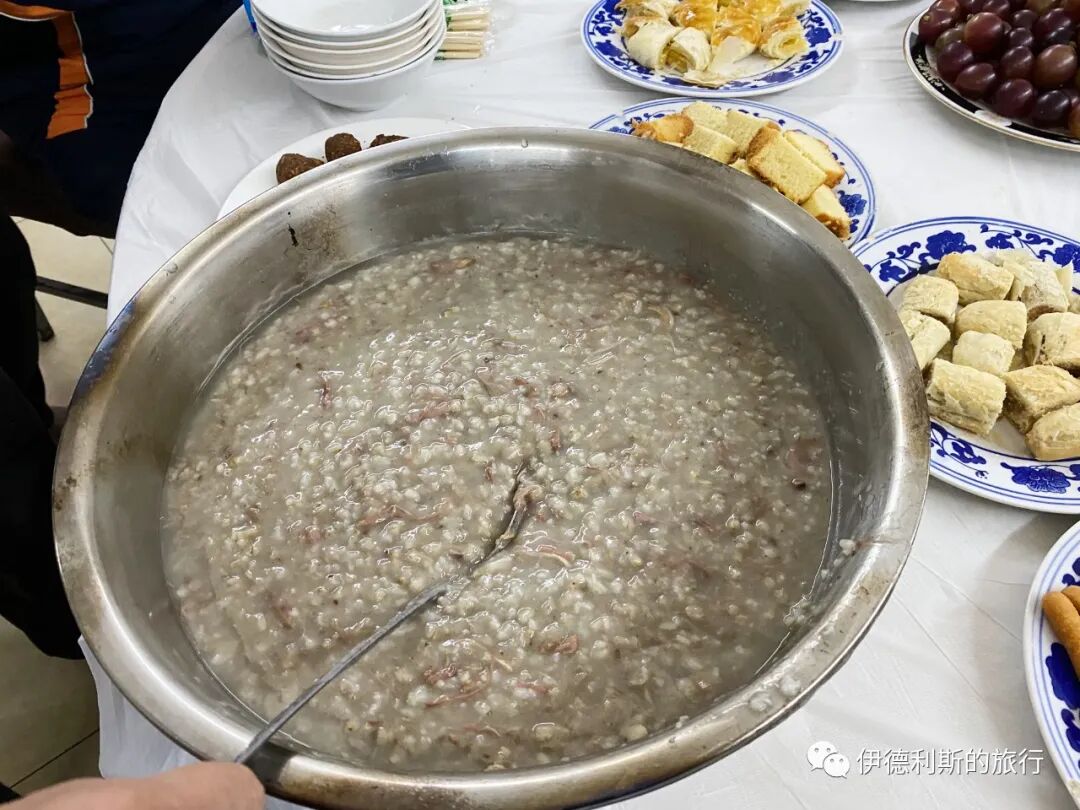
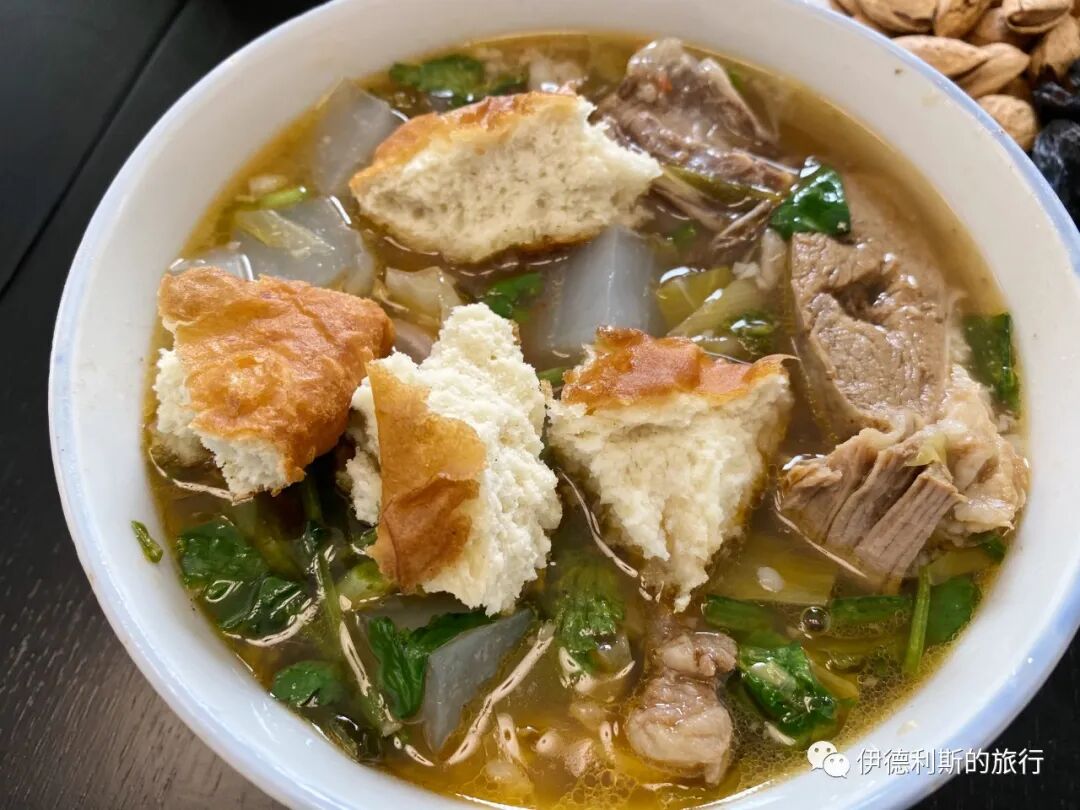
Hui Muslims in China hold Mawlid events at the mosque during this time, also called the Holy Gathering or Holy Birthday. After listening to sermons (wa'z), scripture recitations, and saying dua in the main hall, everyone goes downstairs for a communal meal, which is called "koudao." In North China, the most important foods for the Holy Gathering are fried dough (youxiang) and meat porridge. The fried dough in North China is relatively soft, with a texture a bit like bread. The lamb porridge is made with lamb bones, letting the marrow melt into the porridge, making it very fragrant.
Below is the Holy Gathering I attended in Nanxiapo, Beijing, in 2021; although it was smaller than in previous years, I still had the fried dough and meat porridge.
15th of the eighth month of the Islamic calendar: Night of Bara'at.
The night of the 15th of the eighth month is called the night of Bara'at, meaning the night of forgiveness. People say Hu Dengzhou Baba in Shaanxi during the Ming Dynasty started the practice of observing Bara'at, also called the Night Prayer or the Walking Festival. During the first half of the eighth month, everyone gathers to invite the imam and elders to recite scriptures and praise for Bara'at, welcoming the arrival of Ramadan through seeking forgiveness.
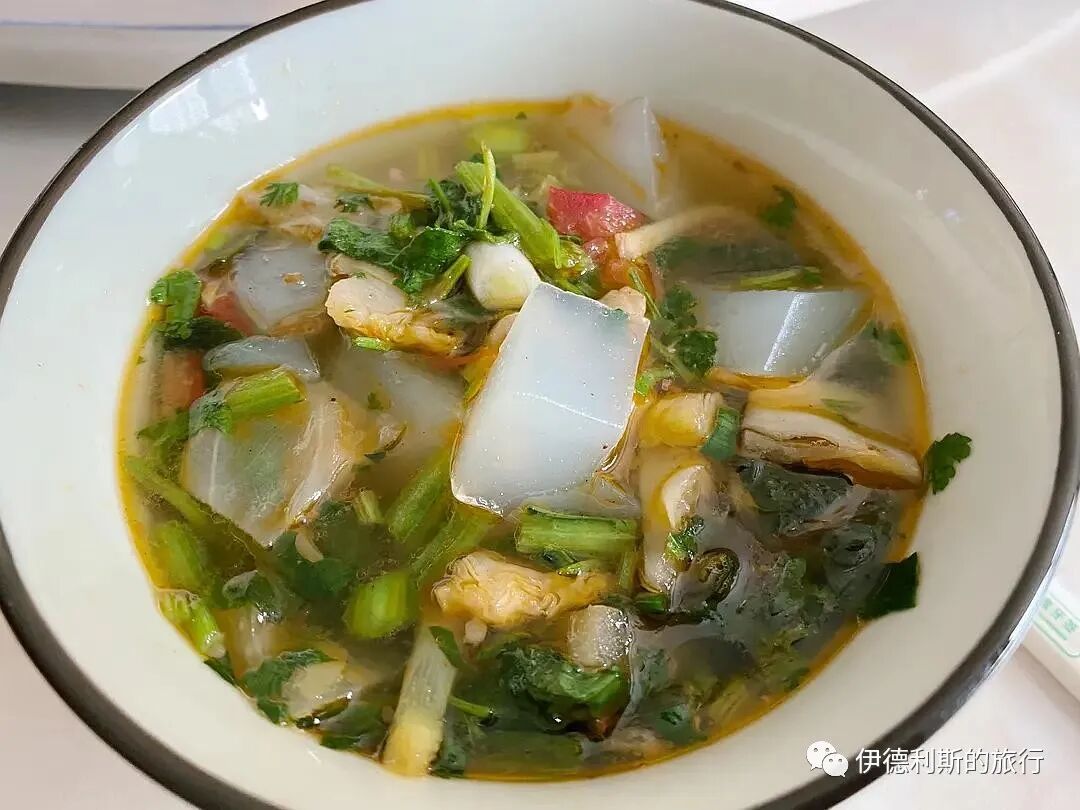
In 2022, our family visited Bulate. My mother-in-law made lamb noodle soup (yangrou fensi tang), fried dough (youxiang), braised meatballs (hui wanzi), braised beef steak, and spicy chicken (jiaoma ji). It felt like we were back in Urumqi.
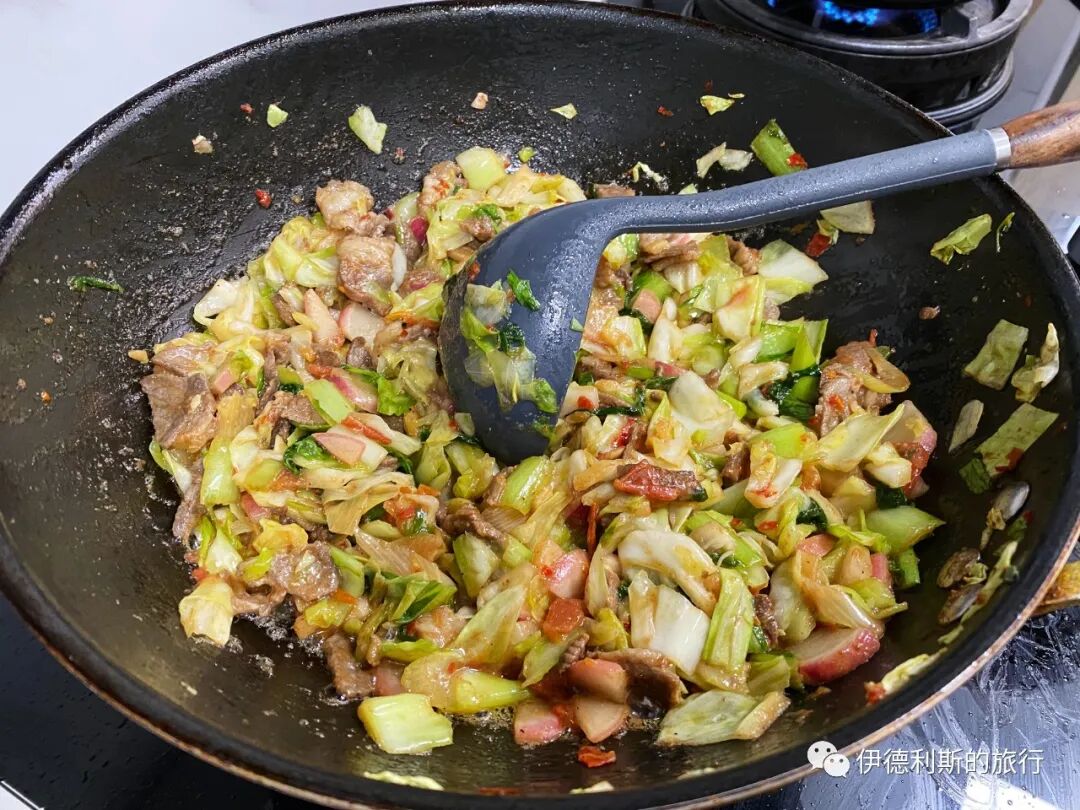
To make lamb noodle soup, first braise the lamb. Then, stir pea starch, let it set overnight, and cut it into blocks. Next, make a topping with cabbage, small radishes, sliced meat, and tomatoes. When eating, you must soak fried dough in the soup.
The ninth month of the Islamic calendar: Ramadan.
The ninth month of the Islamic calendar is the holy month of Ramadan, the month when the Quran was revealed. Fasting, also called holding the fast, is one of the five pillars of the faith. Muslims abstain from food during the day this month. They eat a pre-dawn meal called Suhur and break their fast after sunset with a meal called Iftar.
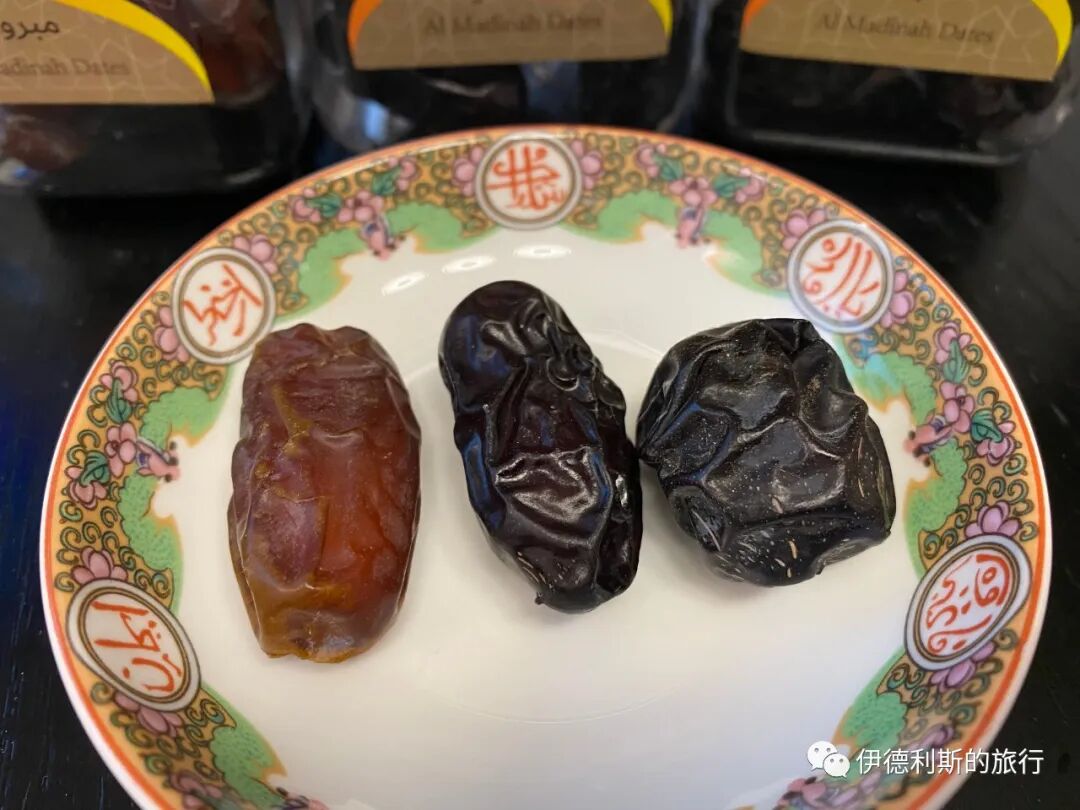
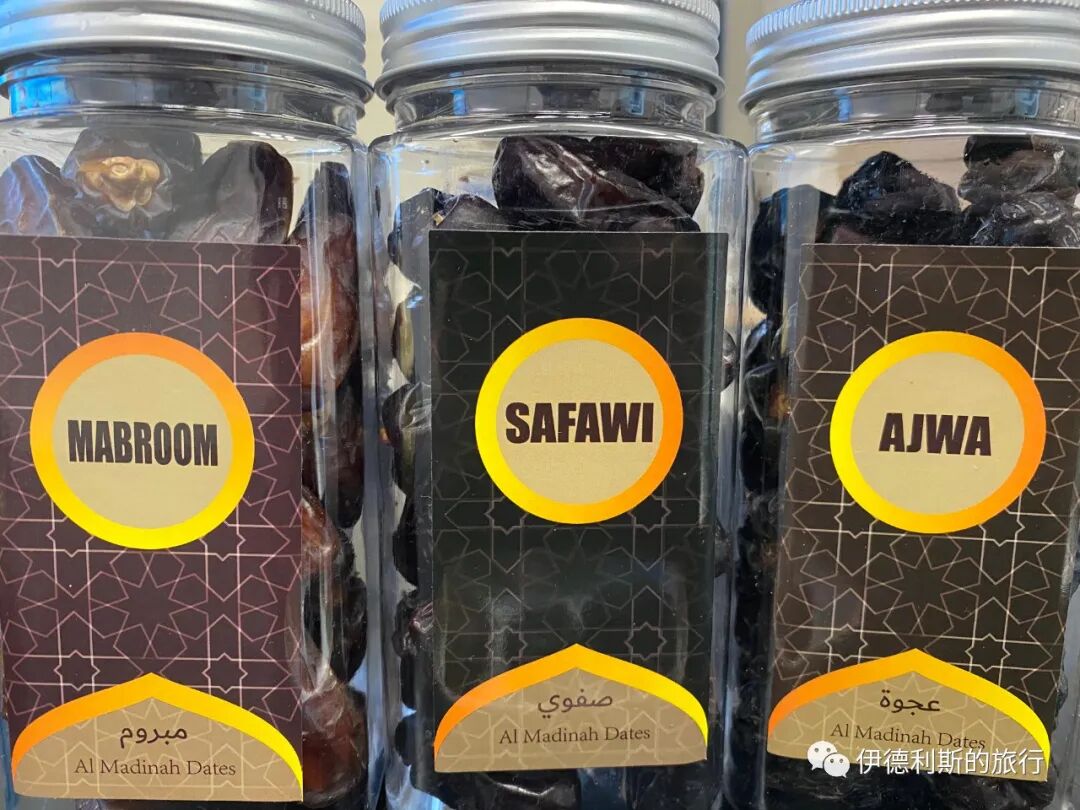
Eating dates to break the fast is a Sunnah, so many people choose to use dates to break their fast. These are the three types of Medina dates I ate during Ramadan in 2022.
On the left are Mabroom dates, which are long, dark brown, and have a moderate, candy-like sweetness. In the middle are Safawi dates, which are rectangular, dark black, and relatively soft. These are also commonly eaten by pilgrims during Hajj. On the right are Ajwa dates, which are round, dark black, chewy, and very sweet. This is also the most famous type of date, mentioned in the Hadith. Records state that all Ajwa dates originally came from a date palm tree planted by the Prophet Muhammad.
Breaking the fast with everyone at the mosque is a very atmospheric experience. Some mosques in Beijing prepare pastries and fruit for Iftar.
Below is when I was at Nanxiapo Mosque in Beijing in 2021.
This was at the Nandouyacai Mosque in Beijing in 2021.
This was at the Dongzhimenwai Mosque in Beijing in 2021.
In Beijing, some foreign halal restaurants offer Iftar buffets during Ramadan, where you can taste specialty foods from different countries. For details, see my previous article, 'Eating Turkish, Tunisian, Jordanian, and Pakistani Buffets during Ramadan in Beijing'.
The first place is Dardanelles, a long-standing Ramadan Iftar buffet restaurant on Ritan Upper Street. It is a Turkish restaurant run by Azerbaijanis, so it features both Turkish and Azerbaijani flavors.
The best part is the unlimited supply of meat from the open-fire grill, including roast chicken, roast lamb chops, and kebab meat paste. You can eat your fill! There are also various types of flatbread (nang) and bread, plus Levantine appetizers and stews. They have lentil soup made from three colors of lentils. Drinks include lemonade, salty yogurt drink (ayran), and Turkish black tea. For dessert, there is classic baklava and milk pudding, plus various fruits. In short, their selection is very rich.
Baklava is the most famous dessert of the Ottoman Empire, developed by royal chefs at the Topkapi Palace. Every year on the 15th day of Ramadan, the Ottoman Sultan would attend a ceremony called 'Baklava Alayı,' where he would distribute trays of baklava to the Janissaries.
Baklava is a pastry made by layering very thin unleavened dough (filo) with crushed pistachios, crushed walnuts, syrup, or honey.
The second stop is the Tunisian restaurant La Medina at Liangma River. First, follow the Sunnah by eating dates, then drink Harissa soup. The first plate I took included North African sausage (merguez), kebab, six types of Levantine and Maghreb appetizers (meze), fried chickpea balls (falafel), and fried meat balls (kibbeh). Meze and falafel can be stuffed into pita bread.
The second plate was the classic North African Berber dish couscous served with a clay pot stew (tajine). Couscous is a staple food for the Berbers. It is made by rubbing semolina flour into millet-sized grains, which are then dried. A clay pot (tajine) is a cooking vessel with a round, flat bottom and a conical or domed top. This design lets evaporated steam return to the bottom, and you can add water through the hole in the lid.
The third stop is the Levantine restaurant Al Safir at Sanyuanqiao, owned by a Palestinian from Jordan.
The three Ramadan iftar buffets I have tried so far each have their own unique features. Dardanelles has the widest variety, and the open-flame grilled meat is unlimited. La Medina is the only place in Beijing to get a Maghreb buffet, which makes it very unique. Al Safir has the richest selection of Levantine appetizers (Meze), and their falafel and grilled chicken wraps are the best.
At Al Safir, you can eat the most classic Ramadan snack for Arabs, lamb fried pastry triangles (Sambousek). This snack started as the Iranian Sanbosag and spread everywhere as Persian culture traveled. It entered Arab cuisine after the 10th century, reached South Asia with the Delhi Sultanate after the 13th century, and later spread to China, Indonesia, and Africa with Muslim merchants.
The fourth stop is the Pakistani restaurant Khan Baba in Sanlitun. First came dates and water, then Zainab chose flatbread (naan) as her main, while I picked the classic biryani rice with masala chicken, grilled chicken chunks (tikka), and grilled fish. The drink was rose syrup water, and dessert was milk pudding (Kheer). Their yogurt tasted very authentic and tart.
1st day of the 10th month of the Islamic calendar: Eid al-Fitr.
A month of fasting ends, welcoming the important Eid al-Fitr, also called 'Guo'erde'. 'Eid' is Arabic for 'festival,' and Hui Muslims in Urumqi pronounce it 'Erdi'.
I spent Eid al-Fitr in Urumqi in 2020. Hui Muslims in Urumqi usually follow three main steps for Eid al-Fitr: go to the mosque in the morning for prayers, visit graves, and then visit relatives. There are four must-have foods for Eid al-Fitr: noodle soup (fentang), fried dough (youxiang), fried dough twists (sanzi), and small pastries (diediezi). The noodle soup and fried dough must be homemade.
Our family's fried dough twists (sanzi) and small pastries (diediezi).
Hand-pulled fried dough twists (sanzi) made with eggs.
After finishing my first bowl of noodle soup (fentang), my father-in-law and I set off for Zainab's uncle's house, where I had a second bowl. The fried dough (youxiang) at the uncle's house was made with scalded flour.
The uncle's fried dough twists (sanzi) and small pastries (diediezi), which included twisted sugar snacks (tangningningzi) and pastries from the Ma family shop on Shanxi Alley. The twisted sugar snacks (tangningningzi) were soft and delicious.
After visiting the graves, we went to visit Zainab's great-uncle.
The great-uncle's fried dough twists (sanzi) and various snacks.
I spent Eid al-Fitr in Beijing in 2021. After the Eid prayers, everyone gathered on the roof of the century-old Jian'an Zhai shop on Yangmeizhu Xiejie outside Qianmen for a buffet. The 21st-generation successor of the Wang Hui family from Jian'an Tang fried the dough (youxiang) for us himself. It was super delicious, with a chewy texture that wasn't hard at all. We also ate old Beijing Hui-style beef stew and sugar-rolled fruit (tangjuanguo). The beef is brought from Niujie every morning and stewed fresh, never kept overnight. The sugar-rolled fruit (tangjuanguo) is made of yam, dates, and raisins, which are steamed and then stir-fried in sugar, a very time-consuming process.
Besides old Beijing specialties, there was chicken curry, tomato pasta, fried cod fillets, fruit salad, and cream cakes. It was a very satisfying meal!
10th day of the 12th month of the Islamic calendar: Eid al-Adha.
Eid al-Adha is also called the Festival of Sacrifice or the Festival of Loyalty and Filial Piety. In Singapore and Malaysia, it is called Hari Raya Haji. It commemorates the story of the Prophet Ibrahim following Allah's command to sacrifice his beloved son Ismail. Just as the knife touched his throat, Allah sent an angel with a black-headed ram to take his place. Muslims who can afford it perform a sacrifice every year during Eid al-Adha, choosing between a camel, cow, or sheep depending on their situation. After the sacrifice, the meat is usually divided into three parts: one for the family to eat, one for relatives, and one to give to the poor.
In 2020, I spent Eid al-Adha in Sanya, Hainan, and the sheep we sacrificed was a Dongshan goat (Dongshan yang) bought by my friend Muning.
We asked a neighbor to make us some dry-fried lamb (ganbian yangrou) in the local Sanya style. Their family usually sells roast duck next to the Southern Mosque (Nan Si) in Huixin Village, but they were on holiday for Eid al-Adha.
The imam from Turpan, Xinjiang, who performed the sacrifice for us, made a Xinjiang-style clear-stewed lamb (qingdun yangrou). It was super delicious, and the lamb broth was great too.
After the meal, I helped Muning distribute the rest of the meat to friends.
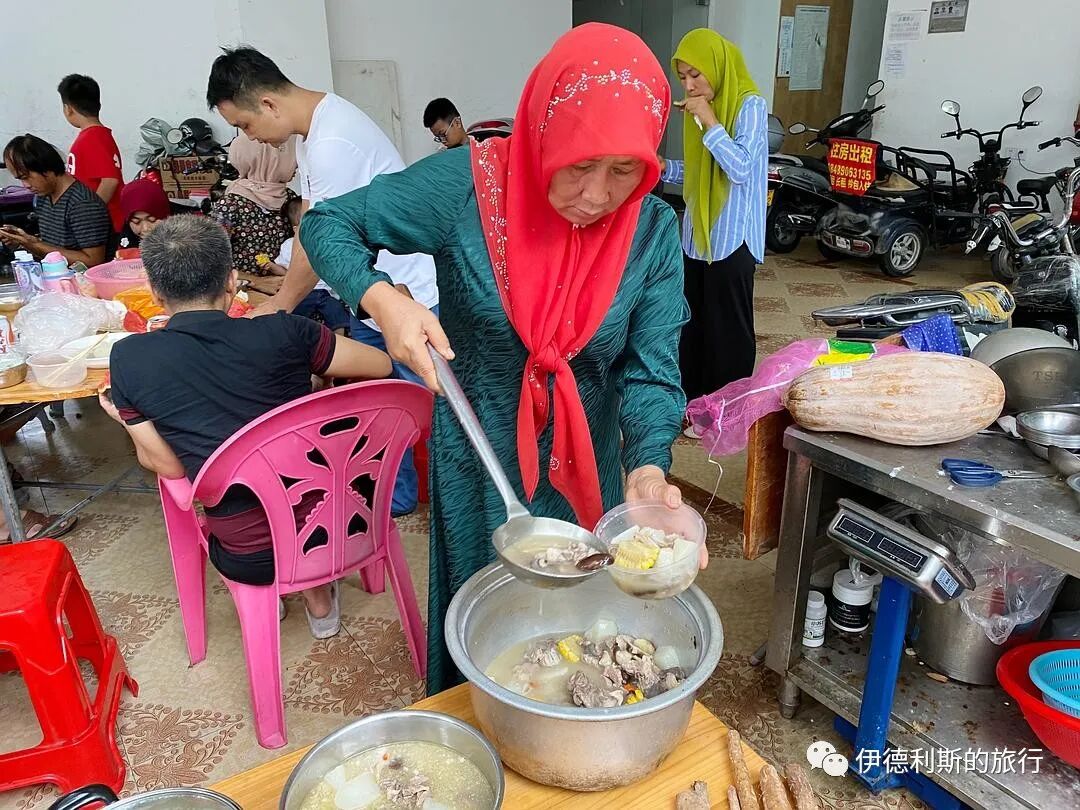
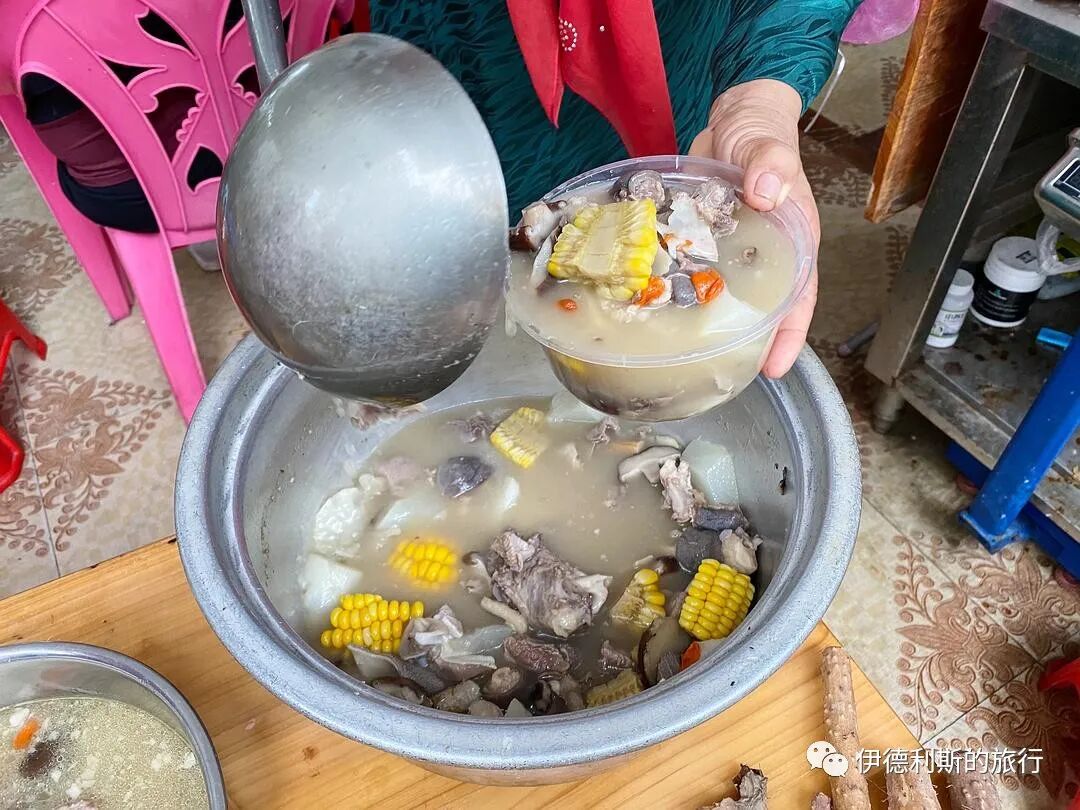
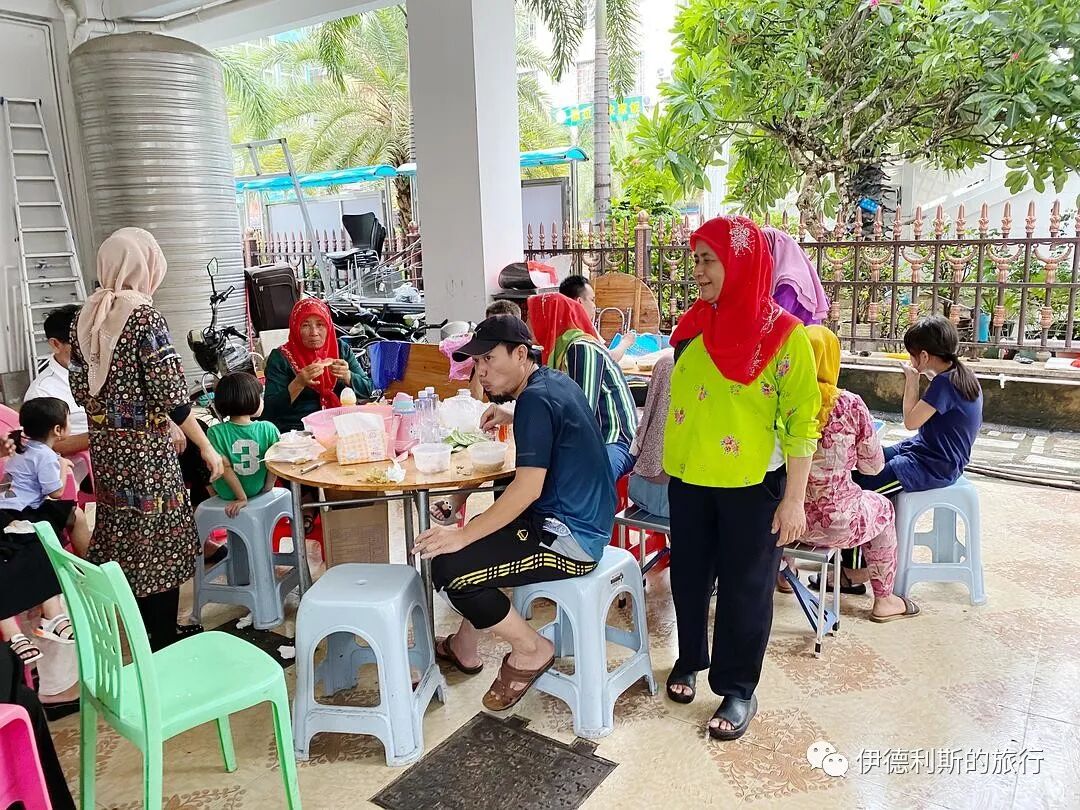
This is the lamb offal soup (yangza tang) stewed by our downstairs neighbors, who are Hui people from Huihui Village. Hui people in Huihui Village rarely eat lamb; they basically only eat the Dongshan goats they sacrifice themselves once a year during Eid al-Adha. After slaughtering the sheep, the Hui people scrape off the hair because they think lamb tastes best with the skin on.
When stewing the lamb offal, they include the sheep's feet and cook it from morning until afternoon, adding various spices. Finally, they add radishes, corn, and mushrooms. The taste is completely different from northern lamb soup; it is a unique and delicious flavor.
Besides holiday foods based on the Islamic calendar, I also eat traditional seasonal foods based on the lunar calendar.
Jingzhe (Awakening of Insects): Oil tea eggs (youcha dan).
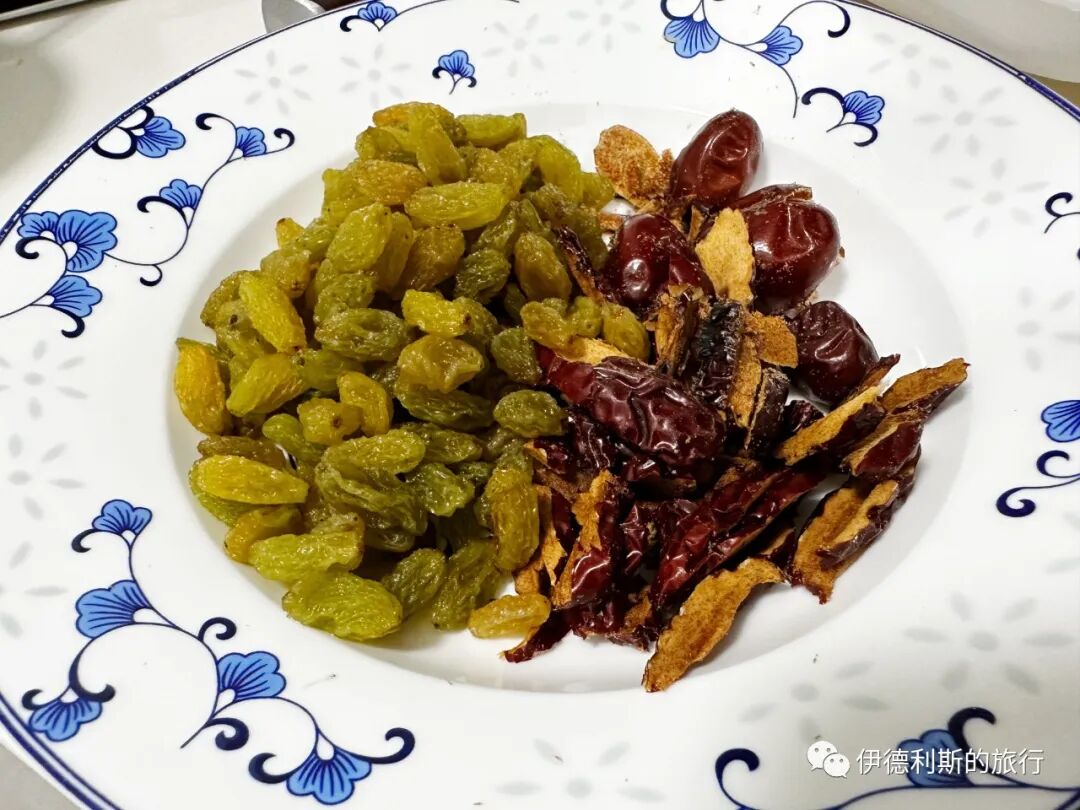
Oil tea eggs are a seasonal food unique to Xinjiang Hui Muslims on the day of Jingzhe. The method is simple: first brew brick tea (zhuancha), then render some lamb fat. Stir-fry eggs in the lamb fat, then add raisins, sliced dates, and walnuts. After the eggs are fried, strain the tea leaves, pour the brick tea into the pot, and finally add rock sugar.
Summer Solstice: Cold noodles (lengtao mian).
Beijingers have a saying, 'Wonton for Winter Solstice, noodles for Summer Solstice.' On the Summer Solstice, we eat cold noodles, which are boiled and then rinsed in cold water. You can serve them with eggplant sauce, fried soybean paste (zhajiang), or sesame paste. According to the 'Dijing Suishi Jisheng,' 'On this day, every family eats cold noodles, which is what people commonly call rinsed noodles...'
Let me share how I make fried soybean paste noodles (zhajiang mian). It is actually simple. First, stir-fry meat with green onions, ginger, and garlic over high heat. Use plenty of oil (sometimes I render some lamb fat to add in). Then add yellow soybean paste (huangjiang)—if it's dry, dilute it with water, though I usually buy the wet version—and sweet bean paste (tianmianjiang). Simmer on low heat, adding salt and sugar to your own taste. I usually use a ratio of three parts sweet bean paste to seven parts yellow soybean paste, then add a little sugar.
Winter Solstice: Wonton.
The night of the Winter Solstice is the longest of the year. It is also Yalda Night in Iranian culture, where people like to eat pomegranates, as the red color represents the light of dawn.
Old Beijingers make a point of eating wonton on the Winter Solstice. The 'Yanjing Suishi Ji' records: 'The shape of a wonton is like a chicken egg, resembling the chaos of heaven and earth, so we eat them on the Winter Solstice.' There is also the saying, 'Wonton for Winter Solstice, noodles for Summer Solstice.' Additionally, the 'Chunming Caifeng Zhi' records: 'Yuanbao soup is wonton. Beijing families often eat this on the Winter Solstice, as the proverb says, Wonton for Winter Solstice, noodles for Summer Solstice, which is appropriate for the season.'
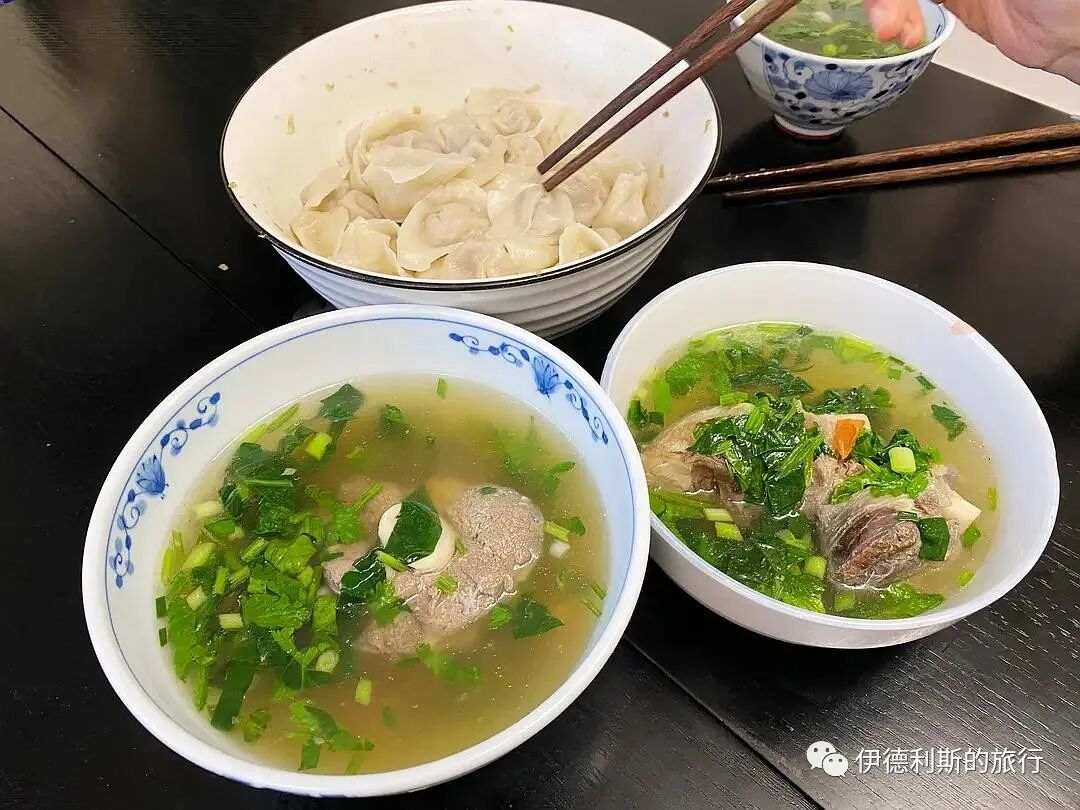
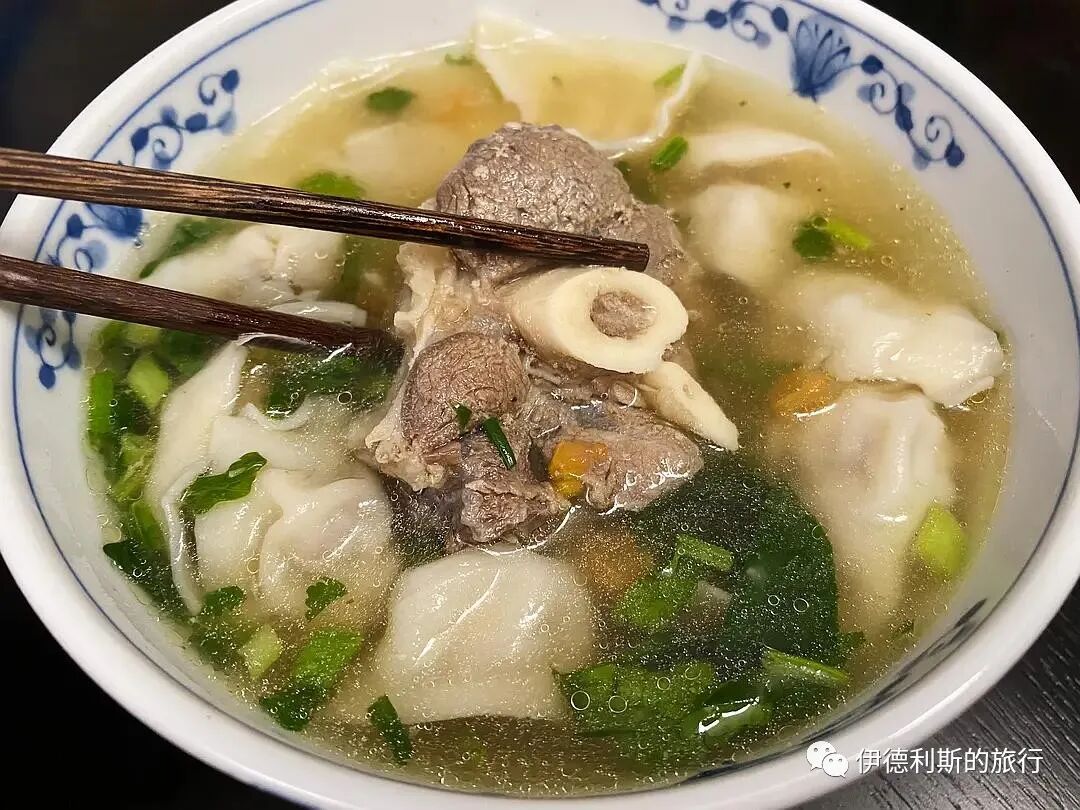
My family makes traditional Urumqi Hui-style lamb sour soup wonton (hong dong). After the lamb is stewed, we add tomatoes, spinach, green onions, and cilantro. The wontons are filled with the classic lamb and onion (piyazi) filling. view all
Summary: Halal Food Guide: Hui Muslim Seasonal Dishes and Eid Food is presented here as a firsthand travel account in clear English, beginning with this scene: In the daily life of Muslims, certain foods are closely tied to holidays. Foods like bean rice for Ashura, fried dough (youxiang) for Mawlid, dates for breaking the fast, and lamb for Eid al-Adha are all important parts. The account keeps its focus on Hui Muslim Food, Eid Food, Halal Traditions while preserving the names, places, food, and historical details from the Chinese source.
In the daily life of Muslims, certain foods are closely tied to holidays. Foods like bean rice for Ashura, fried dough (youxiang) for Mawlid, dates for breaking the fast, and lamb for Eid al-Adha are all important parts of these holidays. I will share some of the holiday foods I have eaten.
10th of the first month of the Islamic calendar: Ashura.
The 10th of the first month is the honorable Ashura, the first important day after the Islamic New Year. To commemorate the day the ship of Nuh (Noah's Ark) docked, Hui Muslims traditionally make Ashura bean porridge.
Every year, my family makes the Urumqi Hui version of Ashura lamb and bean rice. We prepare seven types of beans, boil them in a pressure cooker, then dice lamb from the Eid al-Adha sacrifice (Qurbani), fry it with scallions in rendered lamb fat, and add salt and Sichuan peppercorn powder. After the beans are cooked, we add rice and glutinous rice, then the fried meat, and simmer until the rice is done. When eating, it has both the fresh scent of beans and the savory taste of lamb; I could eat two big bowls and still want more.
I am sharing the origin of Ashura porridge as told by Imam An from the Jingjue Mosque in Nanjing: On Ashura, the Prophet Nuh and his followers got off the boat and fasted that day to thank Allah. At that time, they had almost no food left. One person took out a handful of wheat, another a handful of mung beans, and another a handful of fava beans. After the Prophet Nuh gathered seven types of seeds, he boiled them so everyone could break their fast. By the will of Allah and the miracle (mu'jiza) of the Prophet. This small amount of food was enough to feed everyone who came off the boat. This was the first meal cooked on land after the flood covered the earth, so people treat it as a blessing from the Prophet Nuh. The Prophet Nuh is known as the second ancestor of humanity.
12th of the third month of the Islamic calendar: Mawlid.
The 12th of the third month is the birthday of the Prophet (Mawlid), and Muslims everywhere commemorate him during this time. Mawlid celebrations first appeared in Baghdad during the Abbasid Caliphate and grew into grand festivals in the Middle East through the Sufis in the 13th century, then spread around the world. In places like Indonesia, the scale of Mawlid even exceeds that of Eid al-Fitr and Eid al-Adha.
Hui Muslims in China hold Mawlid events at the mosque during this time, also called the Holy Gathering or Holy Birthday. After listening to sermons (wa'z), scripture recitations, and saying dua in the main hall, everyone goes downstairs for a communal meal, which is called "koudao." In North China, the most important foods for the Holy Gathering are fried dough (youxiang) and meat porridge. The fried dough in North China is relatively soft, with a texture a bit like bread. The lamb porridge is made with lamb bones, letting the marrow melt into the porridge, making it very fragrant.
Below is the Holy Gathering I attended in Nanxiapo, Beijing, in 2021; although it was smaller than in previous years, I still had the fried dough and meat porridge.
15th of the eighth month of the Islamic calendar: Night of Bara'at.
The night of the 15th of the eighth month is called the night of Bara'at, meaning the night of forgiveness. People say Hu Dengzhou Baba in Shaanxi during the Ming Dynasty started the practice of observing Bara'at, also called the Night Prayer or the Walking Festival. During the first half of the eighth month, everyone gathers to invite the imam and elders to recite scriptures and praise for Bara'at, welcoming the arrival of Ramadan through seeking forgiveness.
In 2022, our family visited Bulate. My mother-in-law made lamb noodle soup (yangrou fensi tang), fried dough (youxiang), braised meatballs (hui wanzi), braised beef steak, and spicy chicken (jiaoma ji). It felt like we were back in Urumqi.
To make lamb noodle soup, first braise the lamb. Then, stir pea starch, let it set overnight, and cut it into blocks. Next, make a topping with cabbage, small radishes, sliced meat, and tomatoes. When eating, you must soak fried dough in the soup.
The ninth month of the Islamic calendar: Ramadan.
The ninth month of the Islamic calendar is the holy month of Ramadan, the month when the Quran was revealed. Fasting, also called holding the fast, is one of the five pillars of the faith. Muslims abstain from food during the day this month. They eat a pre-dawn meal called Suhur and break their fast after sunset with a meal called Iftar.
Eating dates to break the fast is a Sunnah, so many people choose to use dates to break their fast. These are the three types of Medina dates I ate during Ramadan in 2022.
On the left are Mabroom dates, which are long, dark brown, and have a moderate, candy-like sweetness. In the middle are Safawi dates, which are rectangular, dark black, and relatively soft. These are also commonly eaten by pilgrims during Hajj. On the right are Ajwa dates, which are round, dark black, chewy, and very sweet. This is also the most famous type of date, mentioned in the Hadith. Records state that all Ajwa dates originally came from a date palm tree planted by the Prophet Muhammad.
Breaking the fast with everyone at the mosque is a very atmospheric experience. Some mosques in Beijing prepare pastries and fruit for Iftar.
Below is when I was at Nanxiapo Mosque in Beijing in 2021.
This was at the Nandouyacai Mosque in Beijing in 2021.
This was at the Dongzhimenwai Mosque in Beijing in 2021.
In Beijing, some foreign halal restaurants offer Iftar buffets during Ramadan, where you can taste specialty foods from different countries. For details, see my previous article, 'Eating Turkish, Tunisian, Jordanian, and Pakistani Buffets during Ramadan in Beijing'.
The first place is Dardanelles, a long-standing Ramadan Iftar buffet restaurant on Ritan Upper Street. It is a Turkish restaurant run by Azerbaijanis, so it features both Turkish and Azerbaijani flavors.
The best part is the unlimited supply of meat from the open-fire grill, including roast chicken, roast lamb chops, and kebab meat paste. You can eat your fill! There are also various types of flatbread (nang) and bread, plus Levantine appetizers and stews. They have lentil soup made from three colors of lentils. Drinks include lemonade, salty yogurt drink (ayran), and Turkish black tea. For dessert, there is classic baklava and milk pudding, plus various fruits. In short, their selection is very rich.
Baklava is the most famous dessert of the Ottoman Empire, developed by royal chefs at the Topkapi Palace. Every year on the 15th day of Ramadan, the Ottoman Sultan would attend a ceremony called 'Baklava Alayı,' where he would distribute trays of baklava to the Janissaries.
Baklava is a pastry made by layering very thin unleavened dough (filo) with crushed pistachios, crushed walnuts, syrup, or honey.
The second stop is the Tunisian restaurant La Medina at Liangma River. First, follow the Sunnah by eating dates, then drink Harissa soup. The first plate I took included North African sausage (merguez), kebab, six types of Levantine and Maghreb appetizers (meze), fried chickpea balls (falafel), and fried meat balls (kibbeh). Meze and falafel can be stuffed into pita bread.
The second plate was the classic North African Berber dish couscous served with a clay pot stew (tajine). Couscous is a staple food for the Berbers. It is made by rubbing semolina flour into millet-sized grains, which are then dried. A clay pot (tajine) is a cooking vessel with a round, flat bottom and a conical or domed top. This design lets evaporated steam return to the bottom, and you can add water through the hole in the lid.
The third stop is the Levantine restaurant Al Safir at Sanyuanqiao, owned by a Palestinian from Jordan.
The three Ramadan iftar buffets I have tried so far each have their own unique features. Dardanelles has the widest variety, and the open-flame grilled meat is unlimited. La Medina is the only place in Beijing to get a Maghreb buffet, which makes it very unique. Al Safir has the richest selection of Levantine appetizers (Meze), and their falafel and grilled chicken wraps are the best.
At Al Safir, you can eat the most classic Ramadan snack for Arabs, lamb fried pastry triangles (Sambousek). This snack started as the Iranian Sanbosag and spread everywhere as Persian culture traveled. It entered Arab cuisine after the 10th century, reached South Asia with the Delhi Sultanate after the 13th century, and later spread to China, Indonesia, and Africa with Muslim merchants.
The fourth stop is the Pakistani restaurant Khan Baba in Sanlitun. First came dates and water, then Zainab chose flatbread (naan) as her main, while I picked the classic biryani rice with masala chicken, grilled chicken chunks (tikka), and grilled fish. The drink was rose syrup water, and dessert was milk pudding (Kheer). Their yogurt tasted very authentic and tart.
1st day of the 10th month of the Islamic calendar: Eid al-Fitr.
A month of fasting ends, welcoming the important Eid al-Fitr, also called 'Guo'erde'. 'Eid' is Arabic for 'festival,' and Hui Muslims in Urumqi pronounce it 'Erdi'.
I spent Eid al-Fitr in Urumqi in 2020. Hui Muslims in Urumqi usually follow three main steps for Eid al-Fitr: go to the mosque in the morning for prayers, visit graves, and then visit relatives. There are four must-have foods for Eid al-Fitr: noodle soup (fentang), fried dough (youxiang), fried dough twists (sanzi), and small pastries (diediezi). The noodle soup and fried dough must be homemade.
Our family's fried dough twists (sanzi) and small pastries (diediezi).
Hand-pulled fried dough twists (sanzi) made with eggs.
After finishing my first bowl of noodle soup (fentang), my father-in-law and I set off for Zainab's uncle's house, where I had a second bowl. The fried dough (youxiang) at the uncle's house was made with scalded flour.
The uncle's fried dough twists (sanzi) and small pastries (diediezi), which included twisted sugar snacks (tangningningzi) and pastries from the Ma family shop on Shanxi Alley. The twisted sugar snacks (tangningningzi) were soft and delicious.
After visiting the graves, we went to visit Zainab's great-uncle.
The great-uncle's fried dough twists (sanzi) and various snacks.
I spent Eid al-Fitr in Beijing in 2021. After the Eid prayers, everyone gathered on the roof of the century-old Jian'an Zhai shop on Yangmeizhu Xiejie outside Qianmen for a buffet. The 21st-generation successor of the Wang Hui family from Jian'an Tang fried the dough (youxiang) for us himself. It was super delicious, with a chewy texture that wasn't hard at all. We also ate old Beijing Hui-style beef stew and sugar-rolled fruit (tangjuanguo). The beef is brought from Niujie every morning and stewed fresh, never kept overnight. The sugar-rolled fruit (tangjuanguo) is made of yam, dates, and raisins, which are steamed and then stir-fried in sugar, a very time-consuming process.
Besides old Beijing specialties, there was chicken curry, tomato pasta, fried cod fillets, fruit salad, and cream cakes. It was a very satisfying meal!
10th day of the 12th month of the Islamic calendar: Eid al-Adha.
Eid al-Adha is also called the Festival of Sacrifice or the Festival of Loyalty and Filial Piety. In Singapore and Malaysia, it is called Hari Raya Haji. It commemorates the story of the Prophet Ibrahim following Allah's command to sacrifice his beloved son Ismail. Just as the knife touched his throat, Allah sent an angel with a black-headed ram to take his place. Muslims who can afford it perform a sacrifice every year during Eid al-Adha, choosing between a camel, cow, or sheep depending on their situation. After the sacrifice, the meat is usually divided into three parts: one for the family to eat, one for relatives, and one to give to the poor.
In 2020, I spent Eid al-Adha in Sanya, Hainan, and the sheep we sacrificed was a Dongshan goat (Dongshan yang) bought by my friend Muning.
We asked a neighbor to make us some dry-fried lamb (ganbian yangrou) in the local Sanya style. Their family usually sells roast duck next to the Southern Mosque (Nan Si) in Huixin Village, but they were on holiday for Eid al-Adha.
The imam from Turpan, Xinjiang, who performed the sacrifice for us, made a Xinjiang-style clear-stewed lamb (qingdun yangrou). It was super delicious, and the lamb broth was great too.
After the meal, I helped Muning distribute the rest of the meat to friends.
This is the lamb offal soup (yangza tang) stewed by our downstairs neighbors, who are Hui people from Huihui Village. Hui people in Huihui Village rarely eat lamb; they basically only eat the Dongshan goats they sacrifice themselves once a year during Eid al-Adha. After slaughtering the sheep, the Hui people scrape off the hair because they think lamb tastes best with the skin on.
When stewing the lamb offal, they include the sheep's feet and cook it from morning until afternoon, adding various spices. Finally, they add radishes, corn, and mushrooms. The taste is completely different from northern lamb soup; it is a unique and delicious flavor.
Besides holiday foods based on the Islamic calendar, I also eat traditional seasonal foods based on the lunar calendar.
Jingzhe (Awakening of Insects): Oil tea eggs (youcha dan).
Oil tea eggs are a seasonal food unique to Xinjiang Hui Muslims on the day of Jingzhe. The method is simple: first brew brick tea (zhuancha), then render some lamb fat. Stir-fry eggs in the lamb fat, then add raisins, sliced dates, and walnuts. After the eggs are fried, strain the tea leaves, pour the brick tea into the pot, and finally add rock sugar.
Summer Solstice: Cold noodles (lengtao mian).
Beijingers have a saying, 'Wonton for Winter Solstice, noodles for Summer Solstice.' On the Summer Solstice, we eat cold noodles, which are boiled and then rinsed in cold water. You can serve them with eggplant sauce, fried soybean paste (zhajiang), or sesame paste. According to the 'Dijing Suishi Jisheng,' 'On this day, every family eats cold noodles, which is what people commonly call rinsed noodles...'
Let me share how I make fried soybean paste noodles (zhajiang mian). It is actually simple. First, stir-fry meat with green onions, ginger, and garlic over high heat. Use plenty of oil (sometimes I render some lamb fat to add in). Then add yellow soybean paste (huangjiang)—if it's dry, dilute it with water, though I usually buy the wet version—and sweet bean paste (tianmianjiang). Simmer on low heat, adding salt and sugar to your own taste. I usually use a ratio of three parts sweet bean paste to seven parts yellow soybean paste, then add a little sugar.
Winter Solstice: Wonton.
The night of the Winter Solstice is the longest of the year. It is also Yalda Night in Iranian culture, where people like to eat pomegranates, as the red color represents the light of dawn.
Old Beijingers make a point of eating wonton on the Winter Solstice. The 'Yanjing Suishi Ji' records: 'The shape of a wonton is like a chicken egg, resembling the chaos of heaven and earth, so we eat them on the Winter Solstice.' There is also the saying, 'Wonton for Winter Solstice, noodles for Summer Solstice.' Additionally, the 'Chunming Caifeng Zhi' records: 'Yuanbao soup is wonton. Beijing families often eat this on the Winter Solstice, as the proverb says, Wonton for Winter Solstice, noodles for Summer Solstice, which is appropriate for the season.'
My family makes traditional Urumqi Hui-style lamb sour soup wonton (hong dong). After the lamb is stewed, we add tomatoes, spinach, green onions, and cilantro. The wontons are filled with the classic lamb and onion (piyazi) filling. view all
Reposted from the web
Summary: Halal Food Guide: Hui Muslim Seasonal Dishes and Eid Food is presented here as a firsthand travel account in clear English, beginning with this scene: In the daily life of Muslims, certain foods are closely tied to holidays. Foods like bean rice for Ashura, fried dough (youxiang) for Mawlid, dates for breaking the fast, and lamb for Eid al-Adha are all important parts. The account keeps its focus on Hui Muslim Food, Eid Food, Halal Traditions while preserving the names, places, food, and historical details from the Chinese source.
In the daily life of Muslims, certain foods are closely tied to holidays. Foods like bean rice for Ashura, fried dough (youxiang) for Mawlid, dates for breaking the fast, and lamb for Eid al-Adha are all important parts of these holidays. I will share some of the holiday foods I have eaten.
10th of the first month of the Islamic calendar: Ashura.
The 10th of the first month is the honorable Ashura, the first important day after the Islamic New Year. To commemorate the day the ship of Nuh (Noah's Ark) docked, Hui Muslims traditionally make Ashura bean porridge.
Every year, my family makes the Urumqi Hui version of Ashura lamb and bean rice. We prepare seven types of beans, boil them in a pressure cooker, then dice lamb from the Eid al-Adha sacrifice (Qurbani), fry it with scallions in rendered lamb fat, and add salt and Sichuan peppercorn powder. After the beans are cooked, we add rice and glutinous rice, then the fried meat, and simmer until the rice is done. When eating, it has both the fresh scent of beans and the savory taste of lamb; I could eat two big bowls and still want more.
I am sharing the origin of Ashura porridge as told by Imam An from the Jingjue Mosque in Nanjing: On Ashura, the Prophet Nuh and his followers got off the boat and fasted that day to thank Allah. At that time, they had almost no food left. One person took out a handful of wheat, another a handful of mung beans, and another a handful of fava beans. After the Prophet Nuh gathered seven types of seeds, he boiled them so everyone could break their fast. By the will of Allah and the miracle (mu'jiza) of the Prophet. This small amount of food was enough to feed everyone who came off the boat. This was the first meal cooked on land after the flood covered the earth, so people treat it as a blessing from the Prophet Nuh. The Prophet Nuh is known as the second ancestor of humanity.
12th of the third month of the Islamic calendar: Mawlid.
The 12th of the third month is the birthday of the Prophet (Mawlid), and Muslims everywhere commemorate him during this time. Mawlid celebrations first appeared in Baghdad during the Abbasid Caliphate and grew into grand festivals in the Middle East through the Sufis in the 13th century, then spread around the world. In places like Indonesia, the scale of Mawlid even exceeds that of Eid al-Fitr and Eid al-Adha.
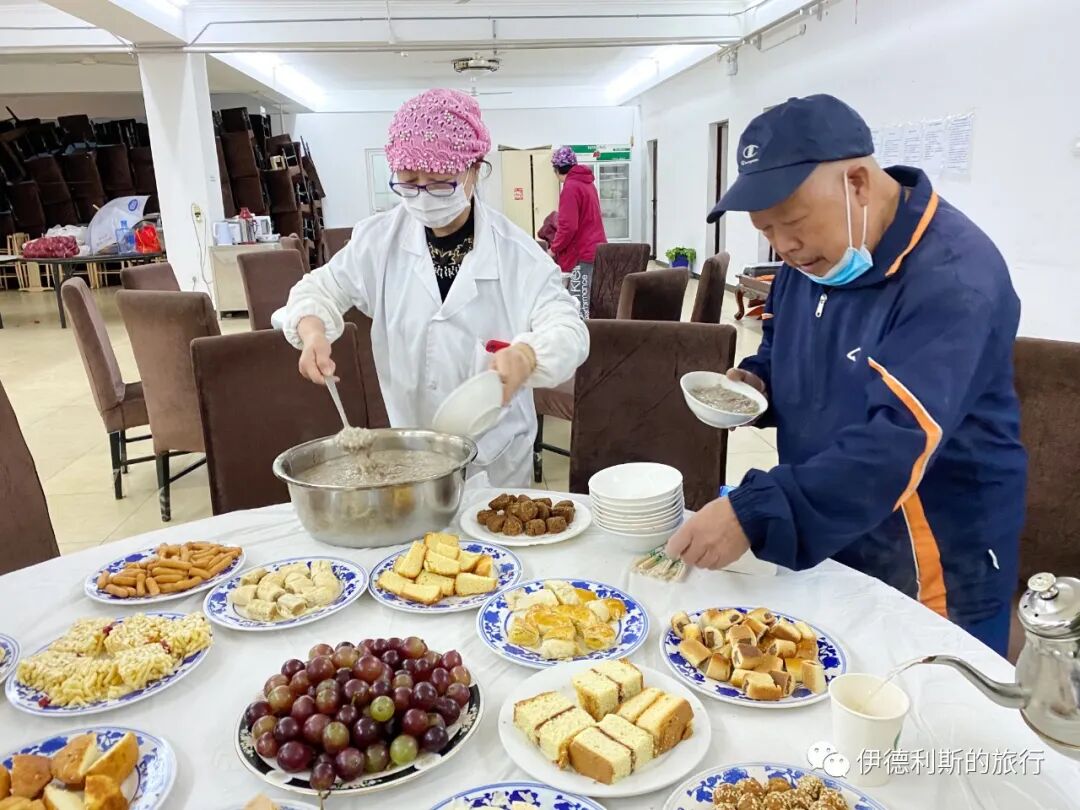
Hui Muslims in China hold Mawlid events at the mosque during this time, also called the Holy Gathering or Holy Birthday. After listening to sermons (wa'z), scripture recitations, and saying dua in the main hall, everyone goes downstairs for a communal meal, which is called "koudao." In North China, the most important foods for the Holy Gathering are fried dough (youxiang) and meat porridge. The fried dough in North China is relatively soft, with a texture a bit like bread. The lamb porridge is made with lamb bones, letting the marrow melt into the porridge, making it very fragrant.
Below is the Holy Gathering I attended in Nanxiapo, Beijing, in 2021; although it was smaller than in previous years, I still had the fried dough and meat porridge.
15th of the eighth month of the Islamic calendar: Night of Bara'at.
The night of the 15th of the eighth month is called the night of Bara'at, meaning the night of forgiveness. People say Hu Dengzhou Baba in Shaanxi during the Ming Dynasty started the practice of observing Bara'at, also called the Night Prayer or the Walking Festival. During the first half of the eighth month, everyone gathers to invite the imam and elders to recite scriptures and praise for Bara'at, welcoming the arrival of Ramadan through seeking forgiveness.
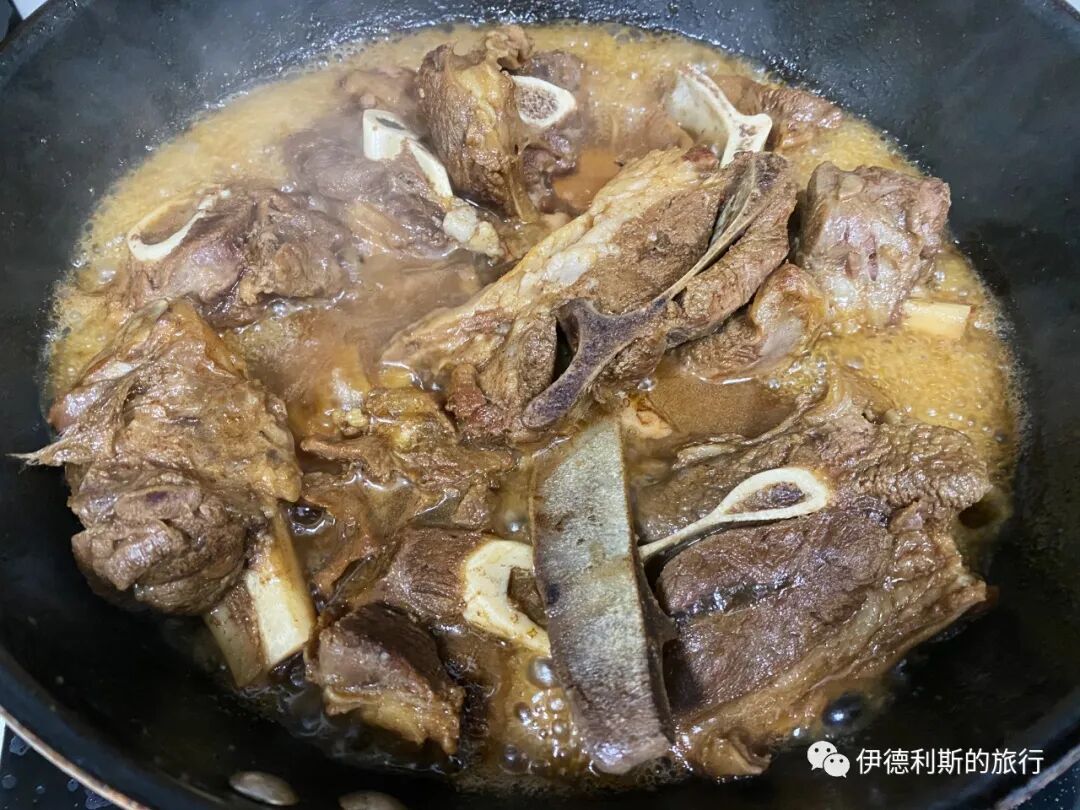
In 2022, our family visited Bulate. My mother-in-law made lamb noodle soup (yangrou fensi tang), fried dough (youxiang), braised meatballs (hui wanzi), braised beef steak, and spicy chicken (jiaoma ji). It felt like we were back in Urumqi.
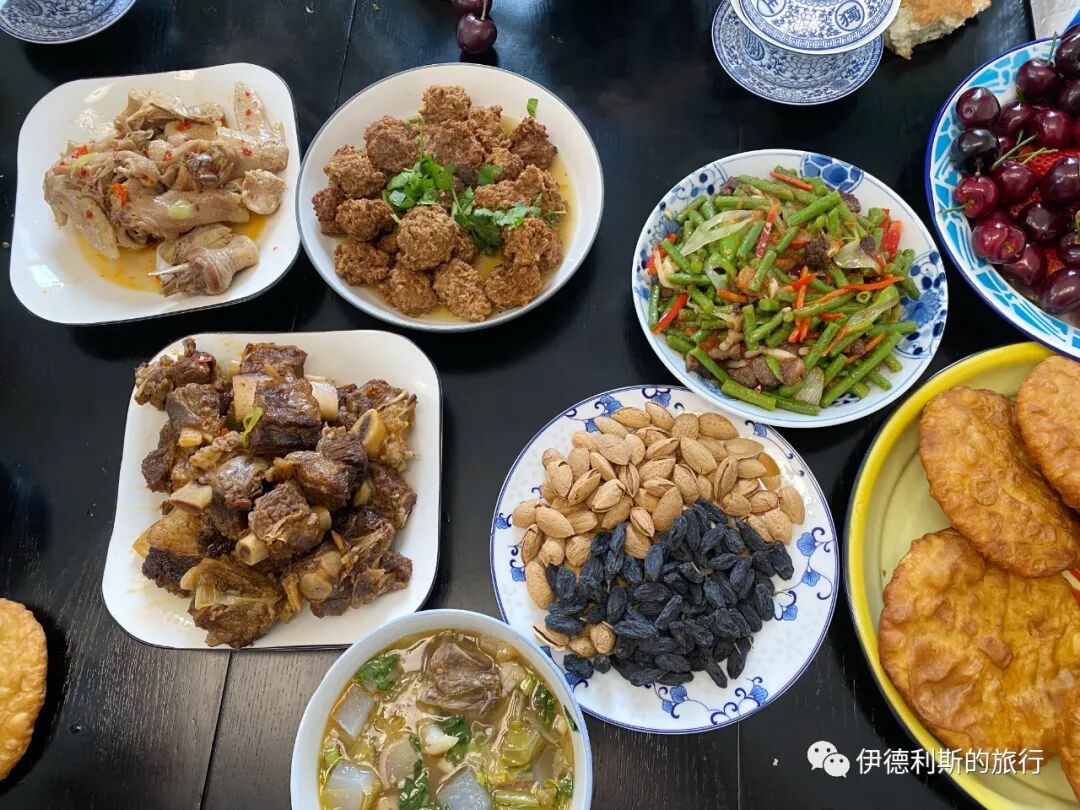
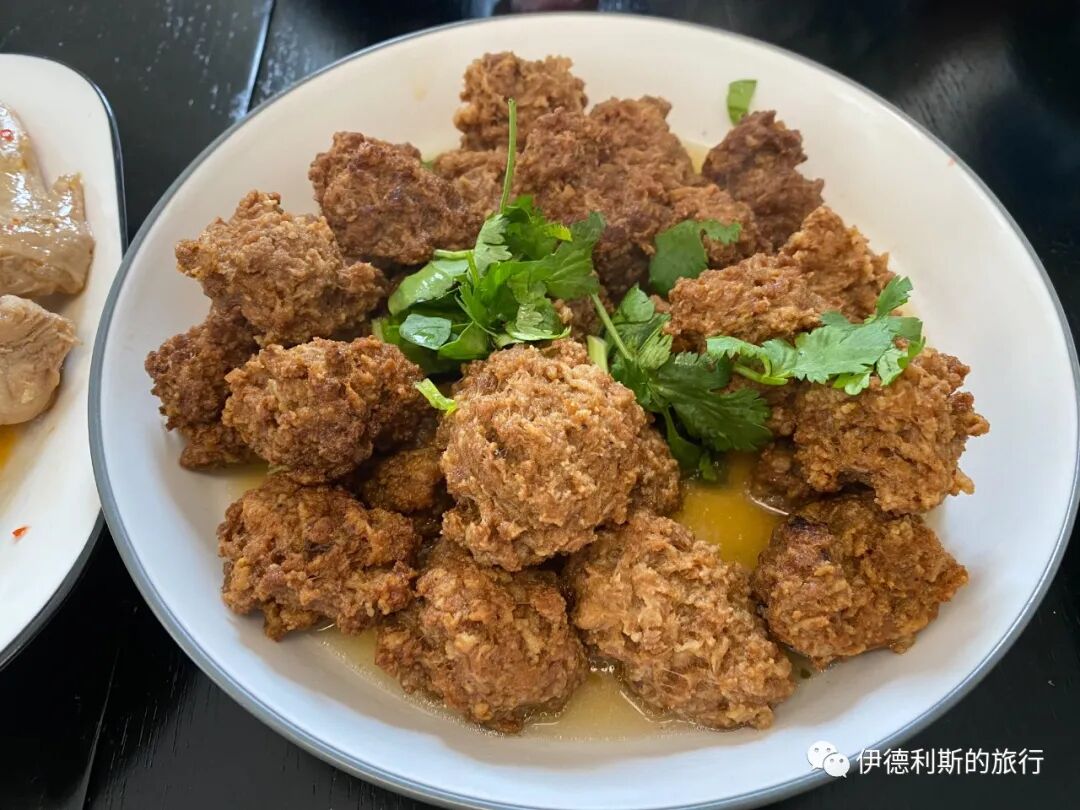
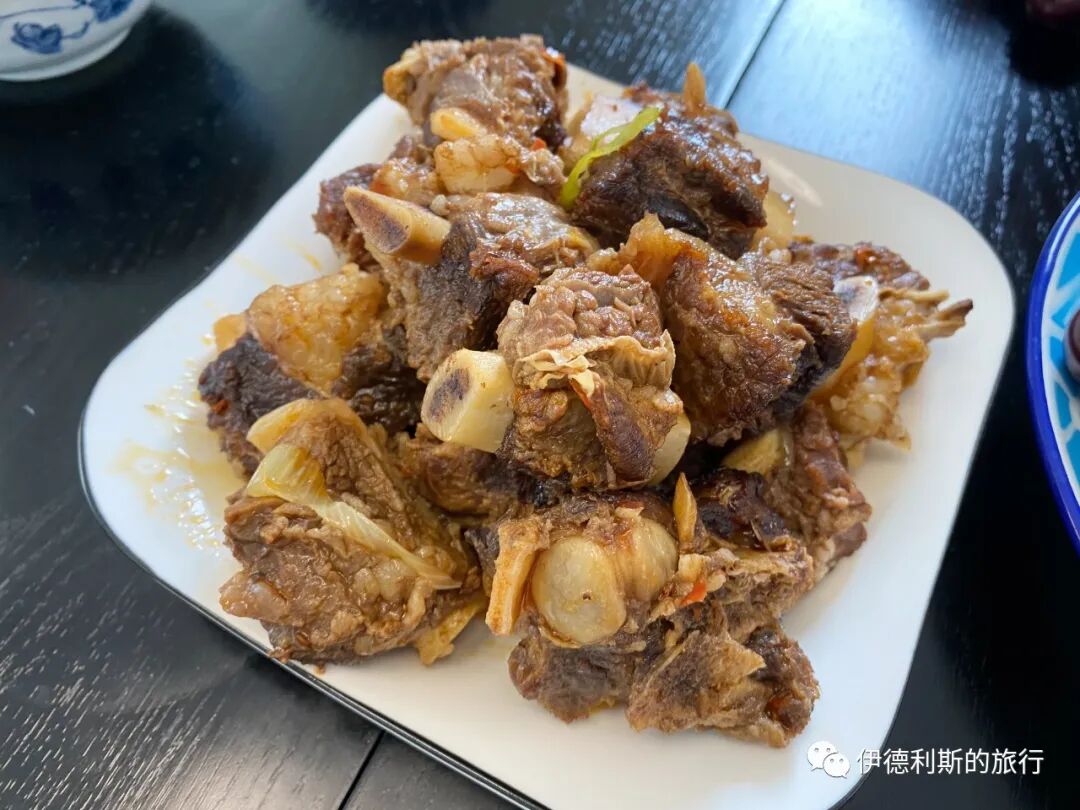
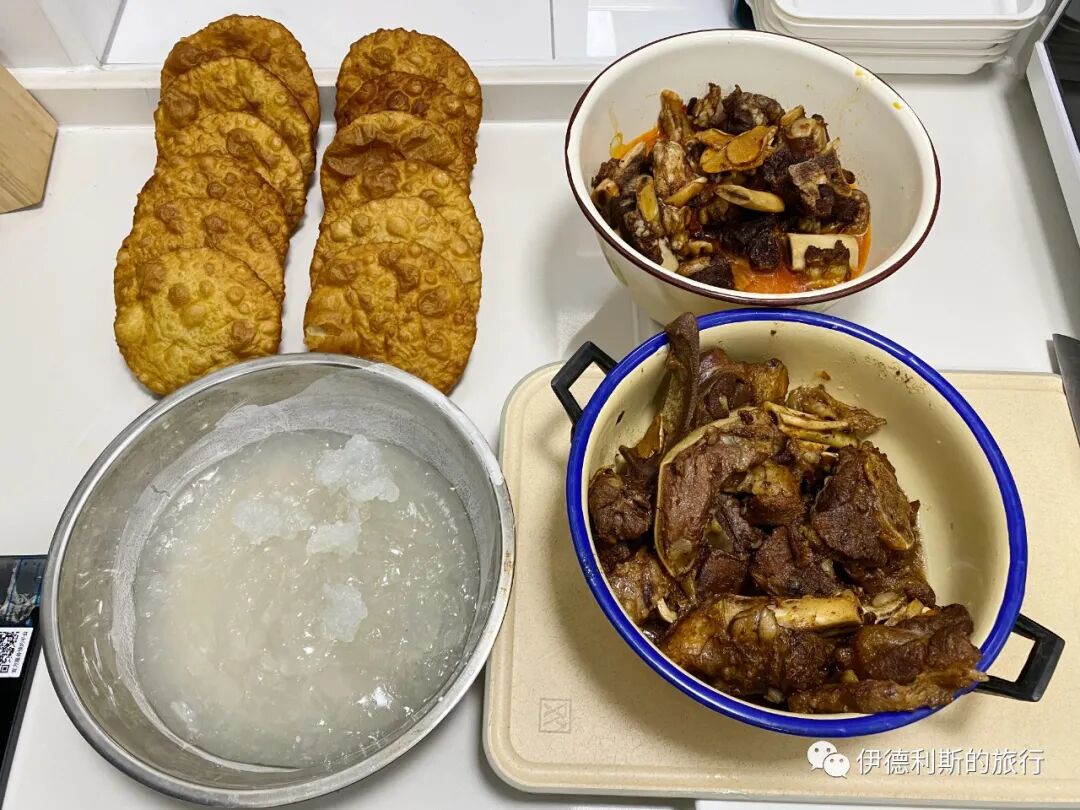
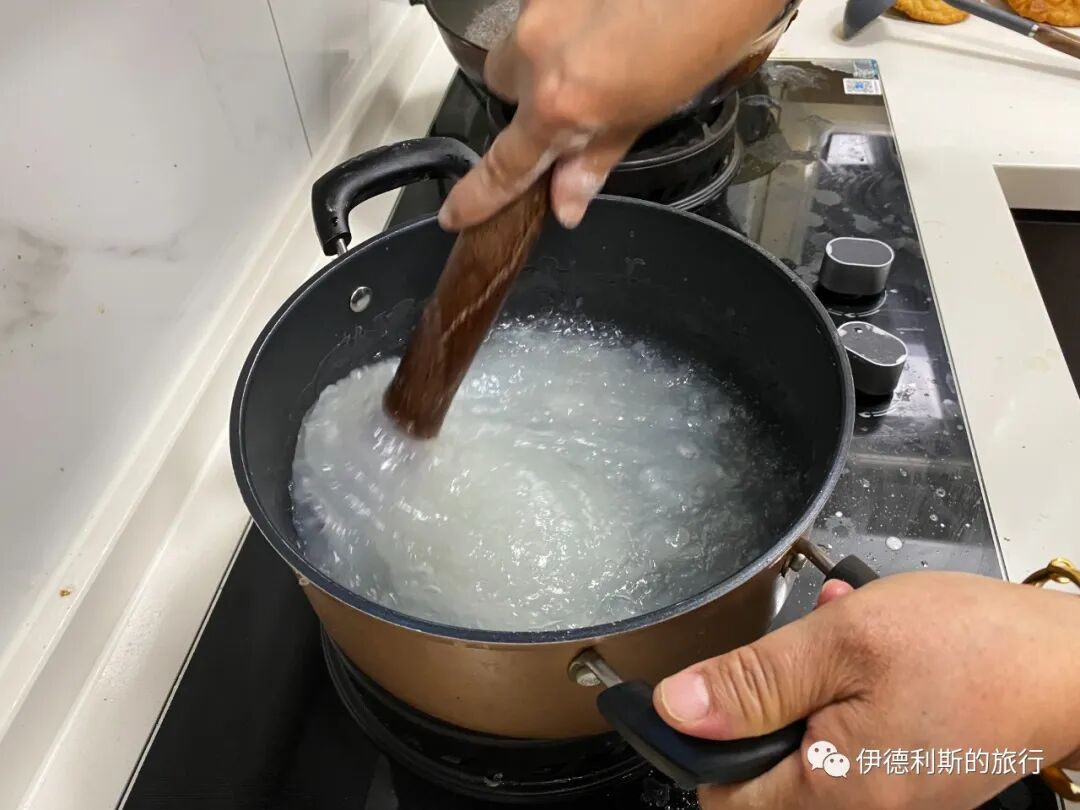
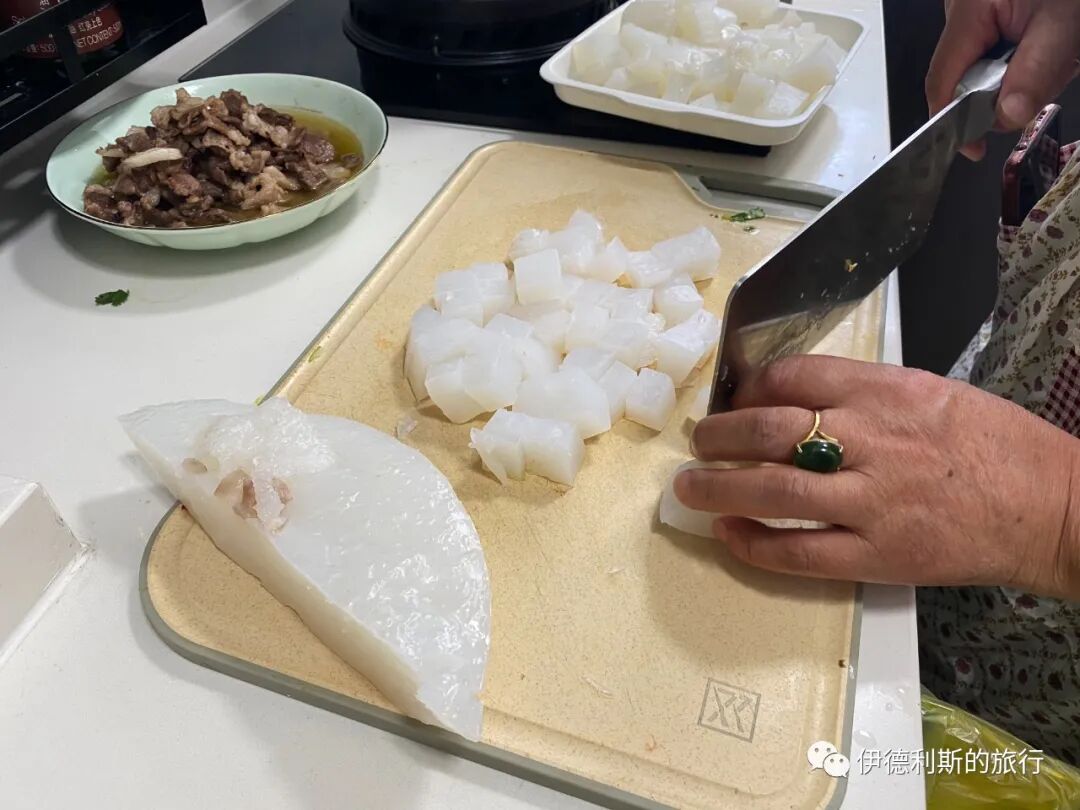
To make lamb noodle soup, first braise the lamb. Then, stir pea starch, let it set overnight, and cut it into blocks. Next, make a topping with cabbage, small radishes, sliced meat, and tomatoes. When eating, you must soak fried dough in the soup.
The ninth month of the Islamic calendar: Ramadan.
The ninth month of the Islamic calendar is the holy month of Ramadan, the month when the Quran was revealed. Fasting, also called holding the fast, is one of the five pillars of the faith. Muslims abstain from food during the day this month. They eat a pre-dawn meal called Suhur and break their fast after sunset with a meal called Iftar.
Eating dates to break the fast is a Sunnah, so many people choose to use dates to break their fast. These are the three types of Medina dates I ate during Ramadan in 2022.
On the left are Mabroom dates, which are long, dark brown, and have a moderate, candy-like sweetness. In the middle are Safawi dates, which are rectangular, dark black, and relatively soft. These are also commonly eaten by pilgrims during Hajj. On the right are Ajwa dates, which are round, dark black, chewy, and very sweet. This is also the most famous type of date, mentioned in the Hadith. Records state that all Ajwa dates originally came from a date palm tree planted by the Prophet Muhammad.
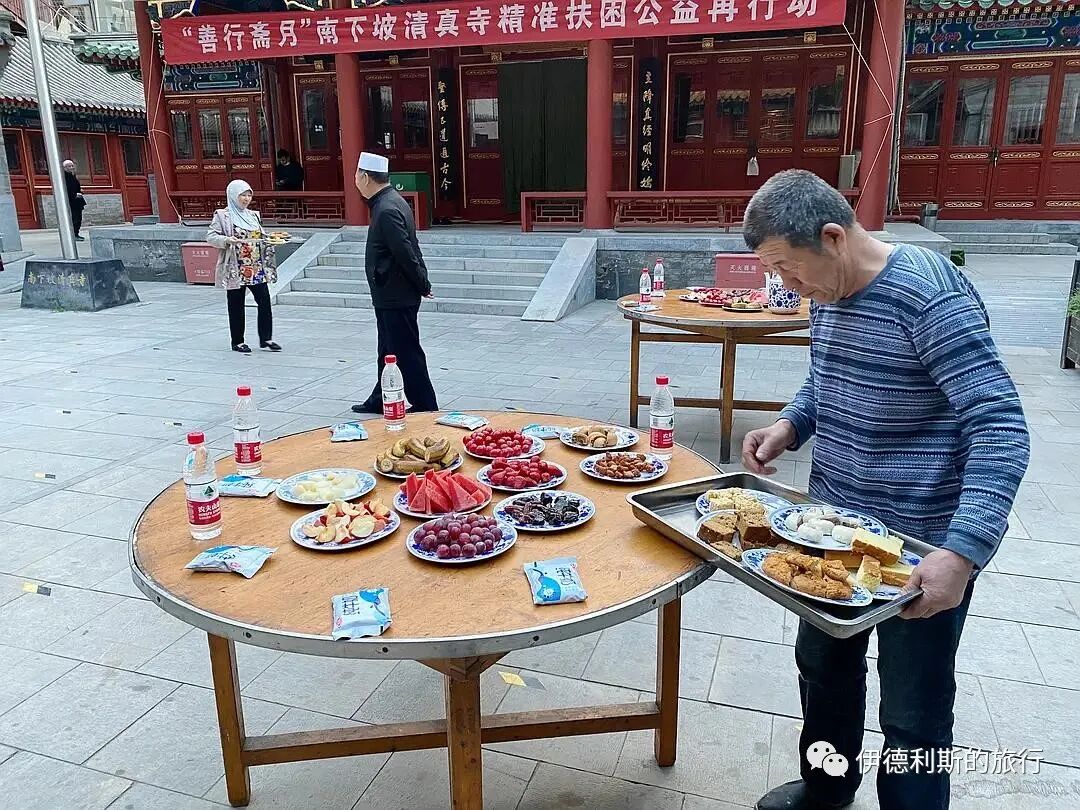
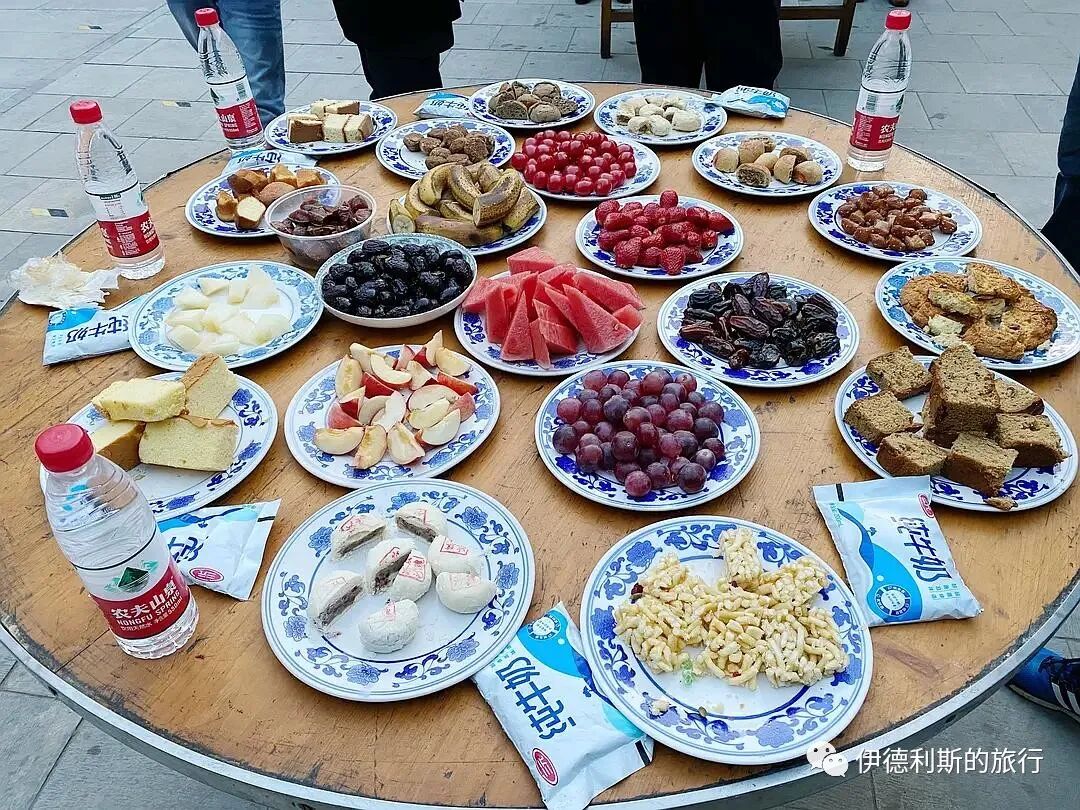
Breaking the fast with everyone at the mosque is a very atmospheric experience. Some mosques in Beijing prepare pastries and fruit for Iftar.
Below is when I was at Nanxiapo Mosque in Beijing in 2021.
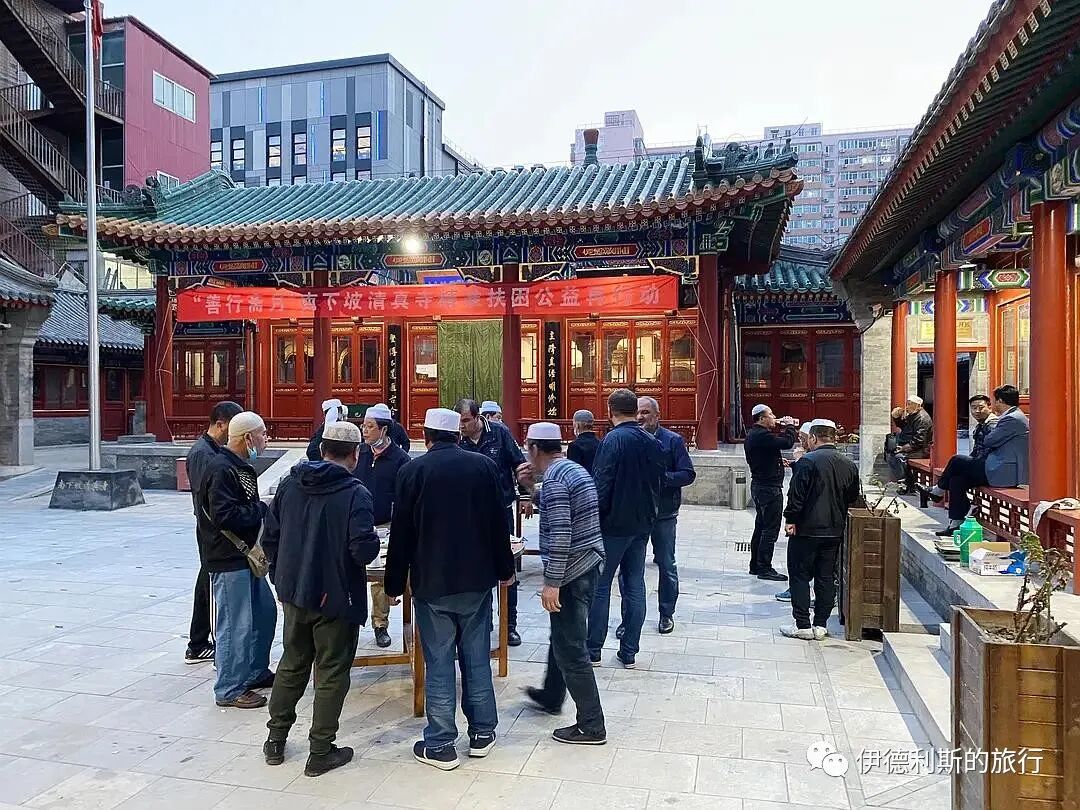
This was at the Nandouyacai Mosque in Beijing in 2021.
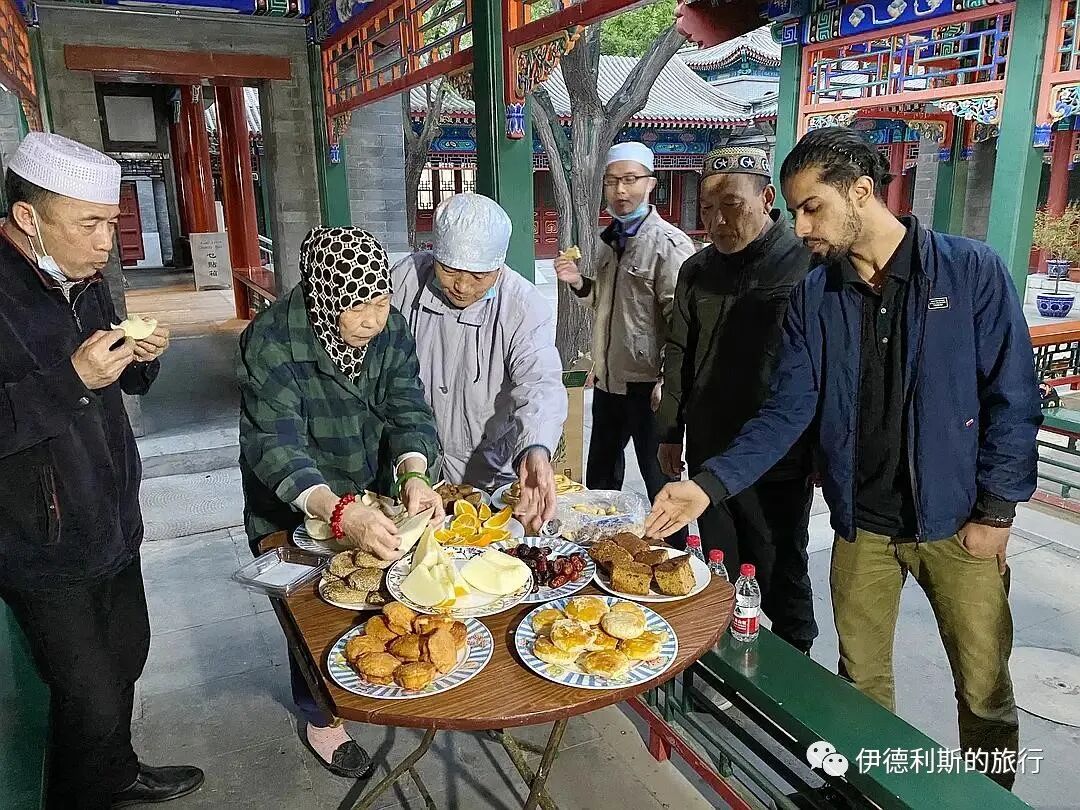
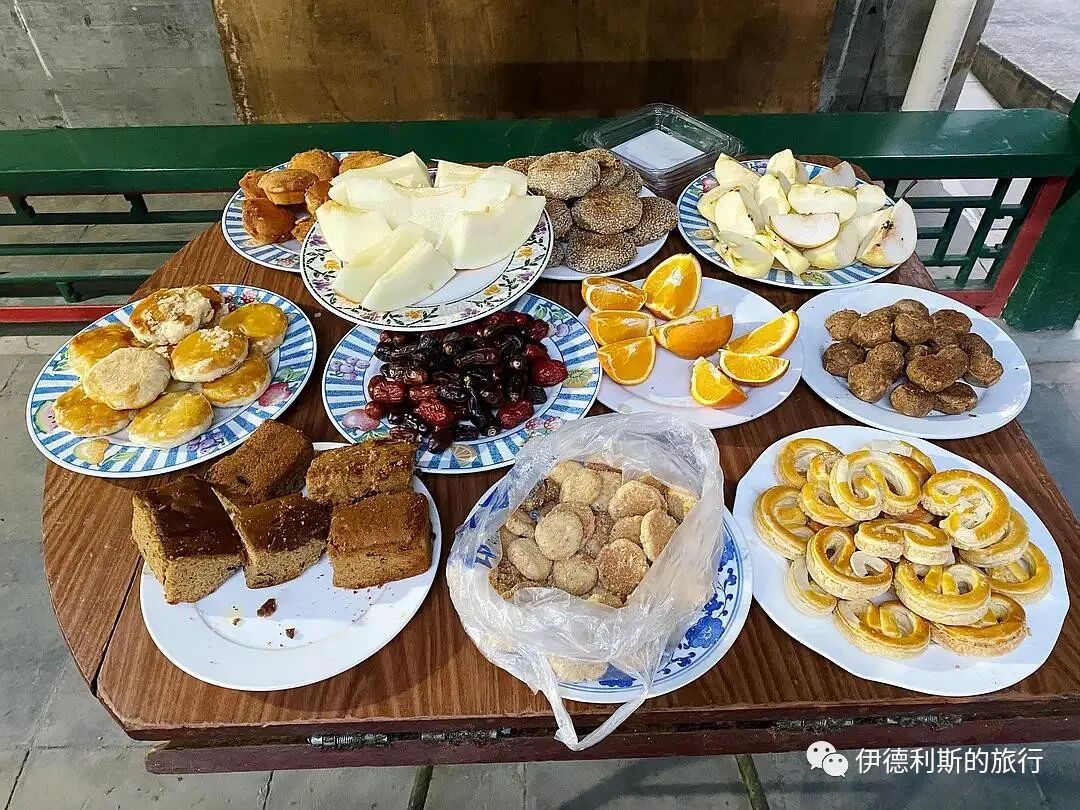
This was at the Dongzhimenwai Mosque in Beijing in 2021.
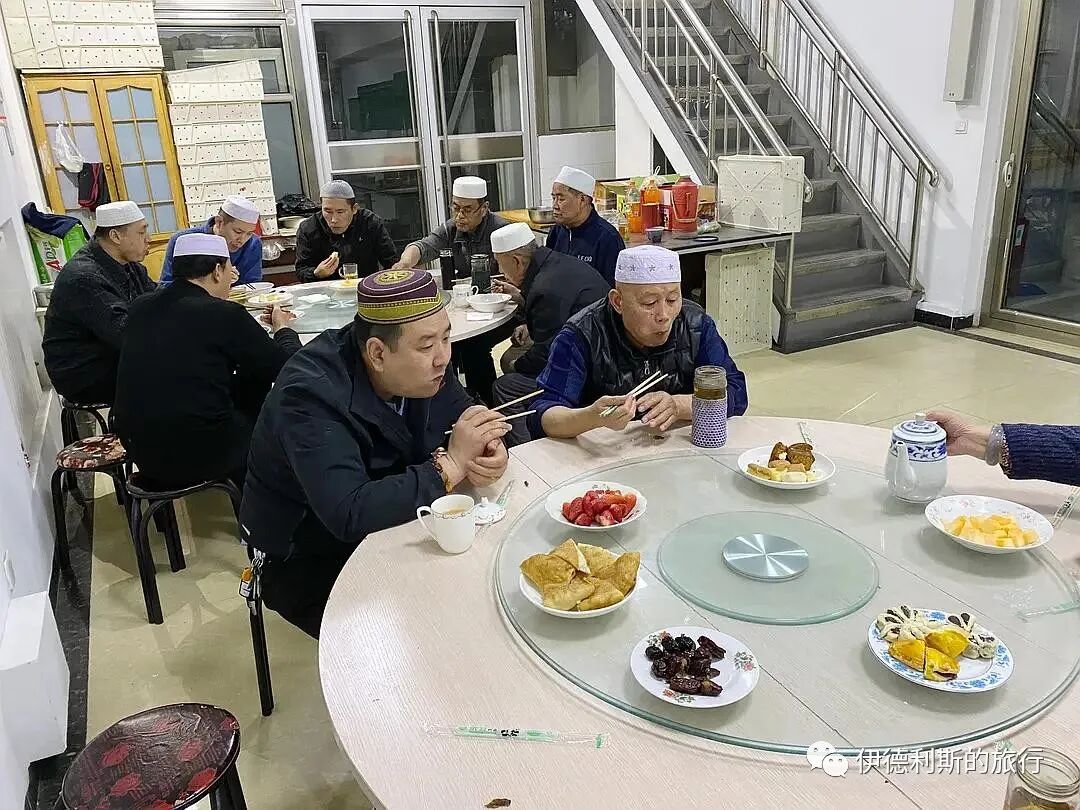
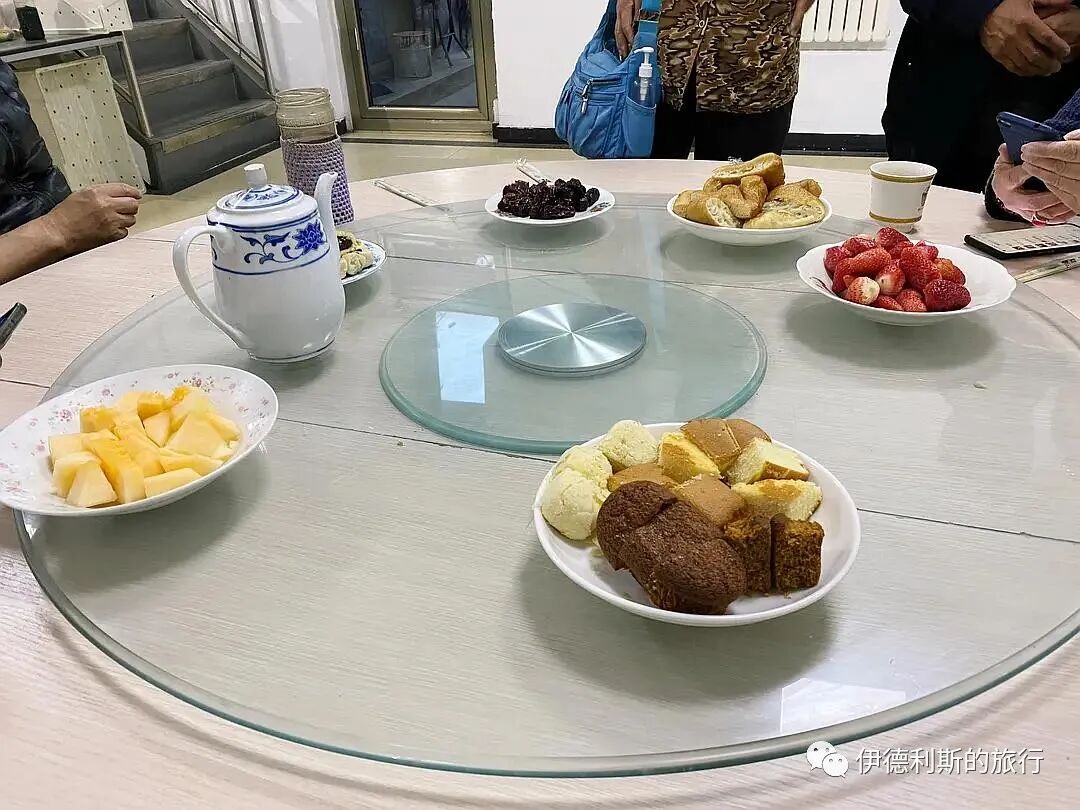
In Beijing, some foreign halal restaurants offer Iftar buffets during Ramadan, where you can taste specialty foods from different countries. For details, see my previous article, 'Eating Turkish, Tunisian, Jordanian, and Pakistani Buffets during Ramadan in Beijing'.
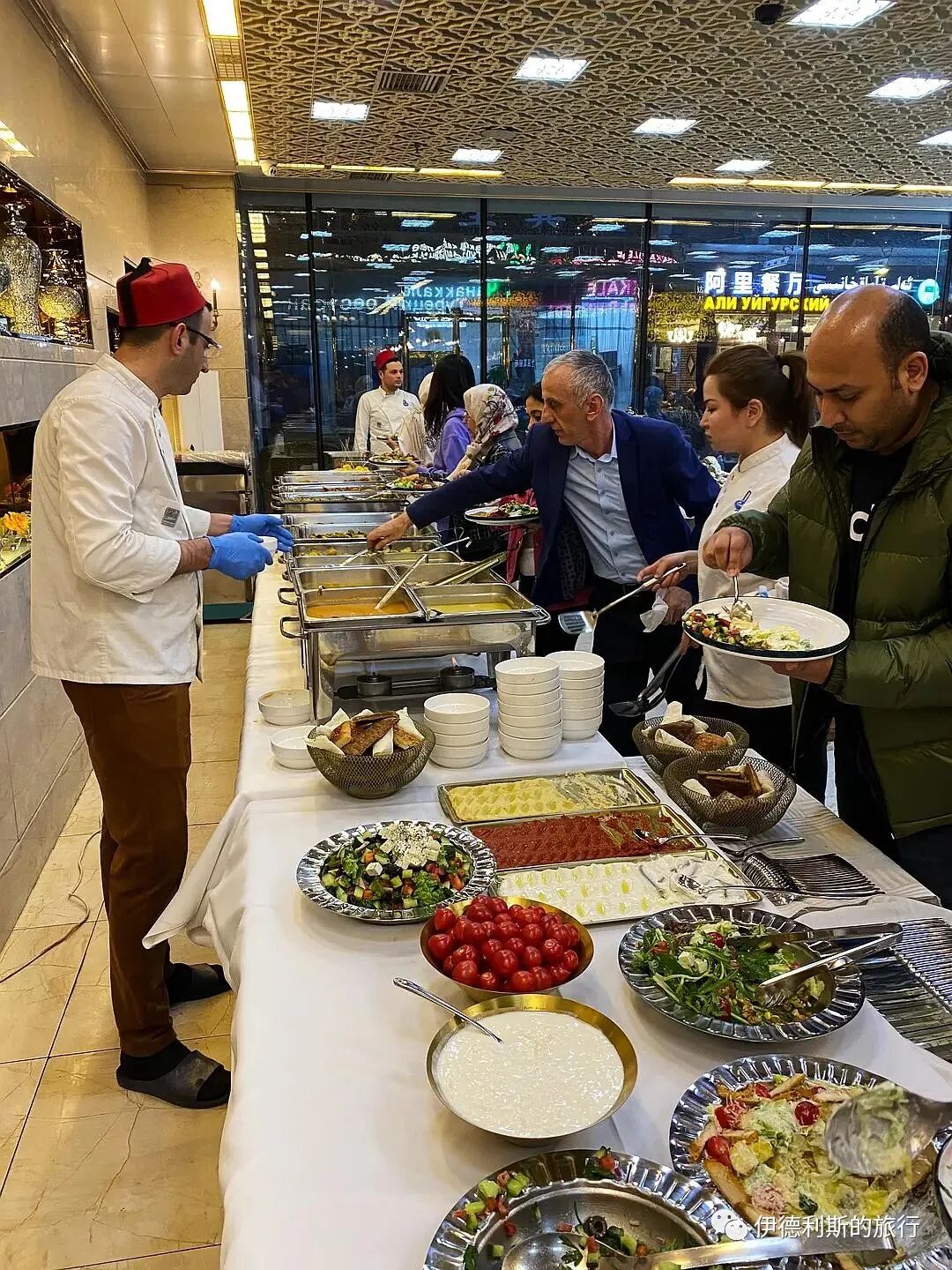
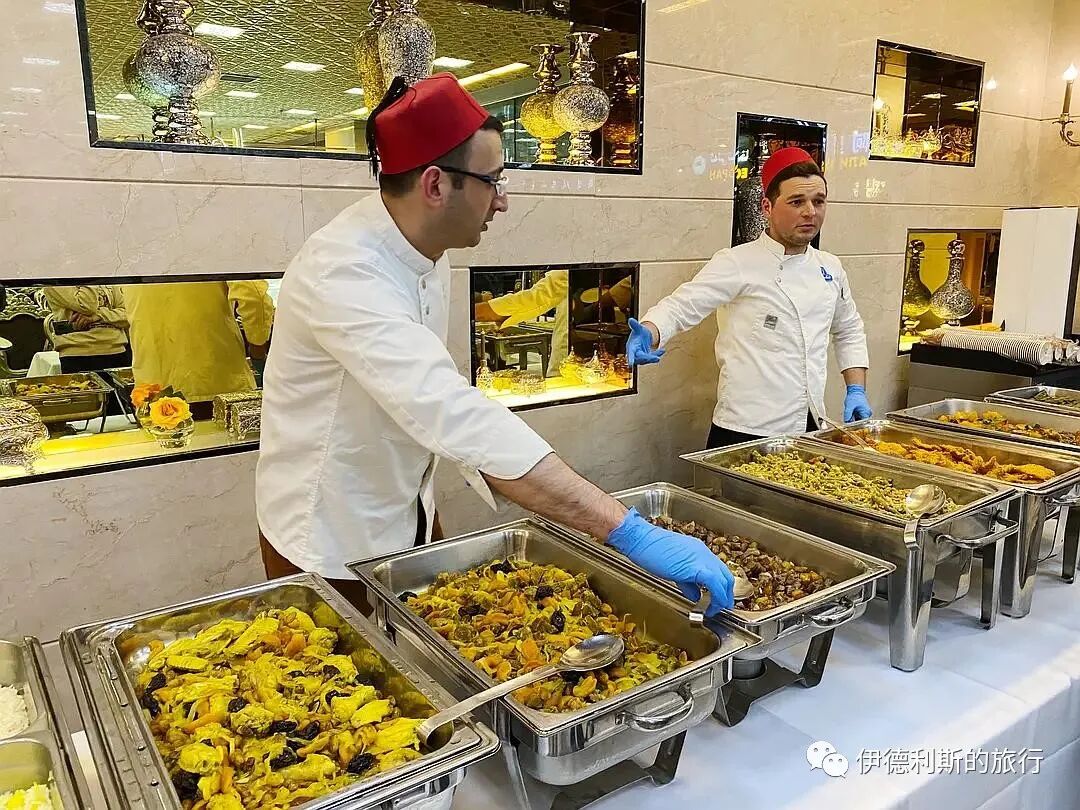
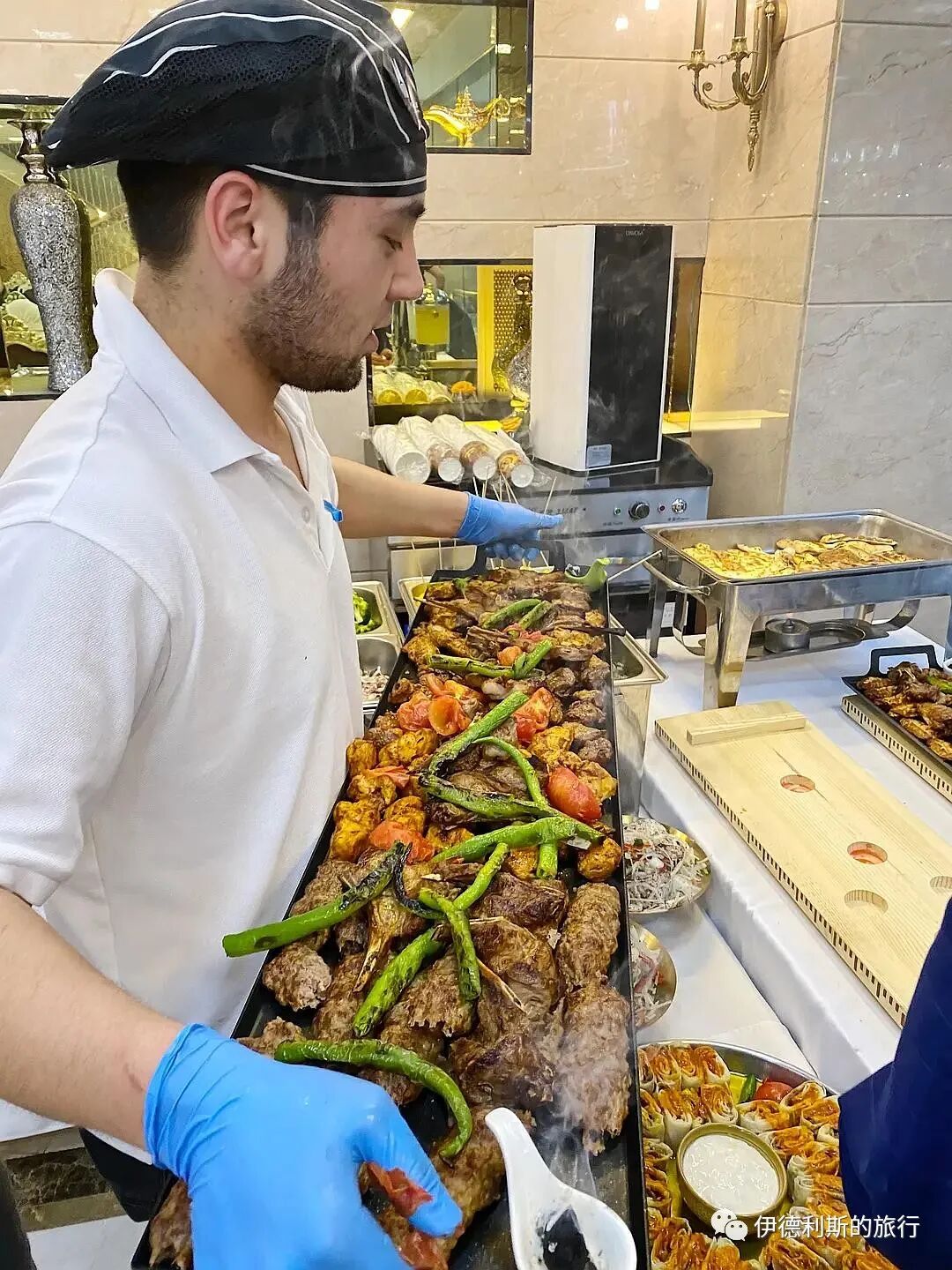
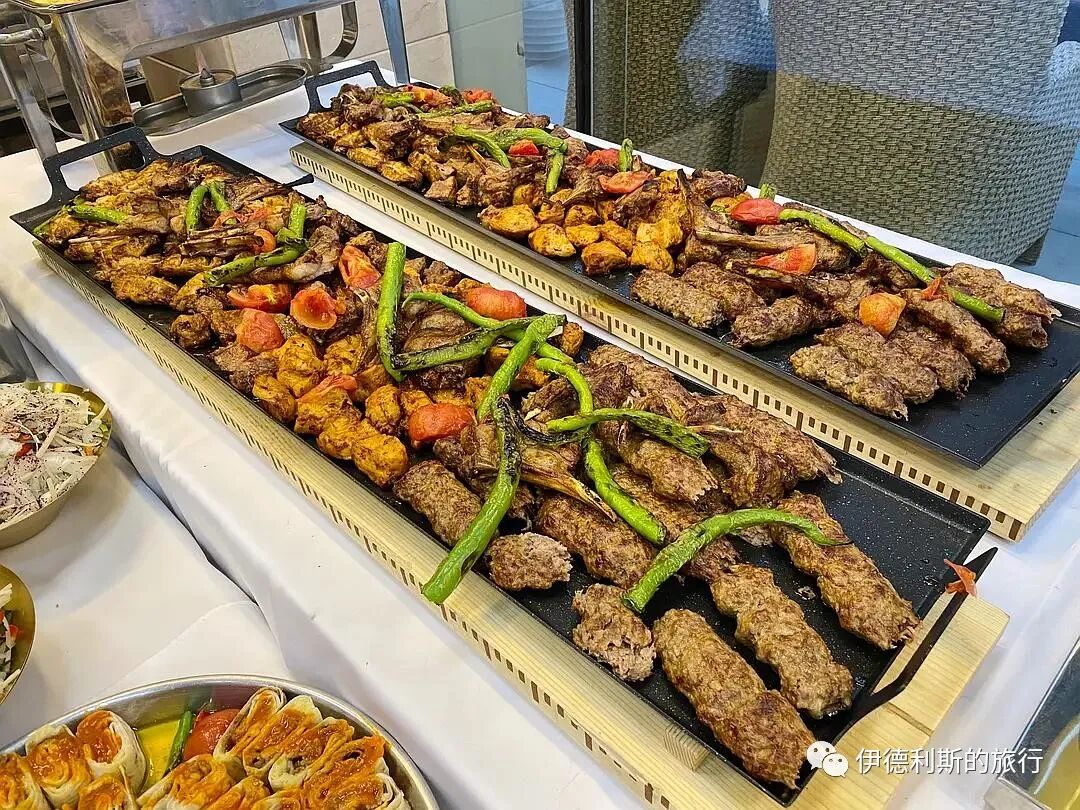
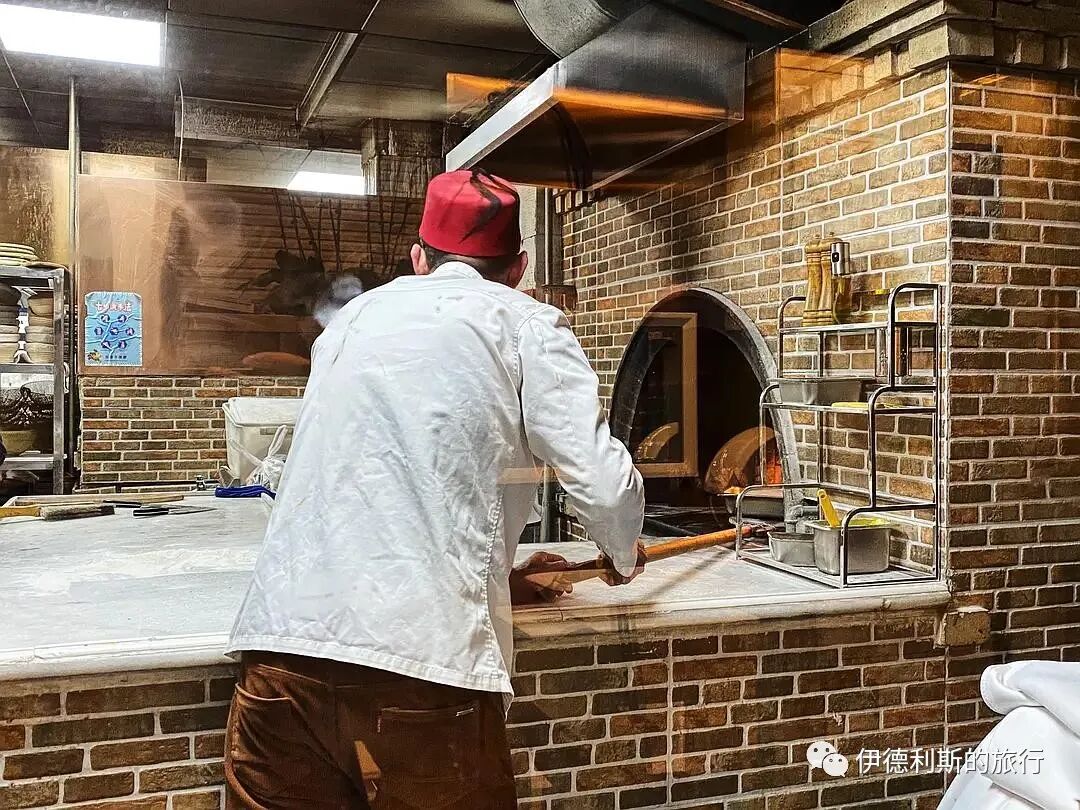
The first place is Dardanelles, a long-standing Ramadan Iftar buffet restaurant on Ritan Upper Street. It is a Turkish restaurant run by Azerbaijanis, so it features both Turkish and Azerbaijani flavors.
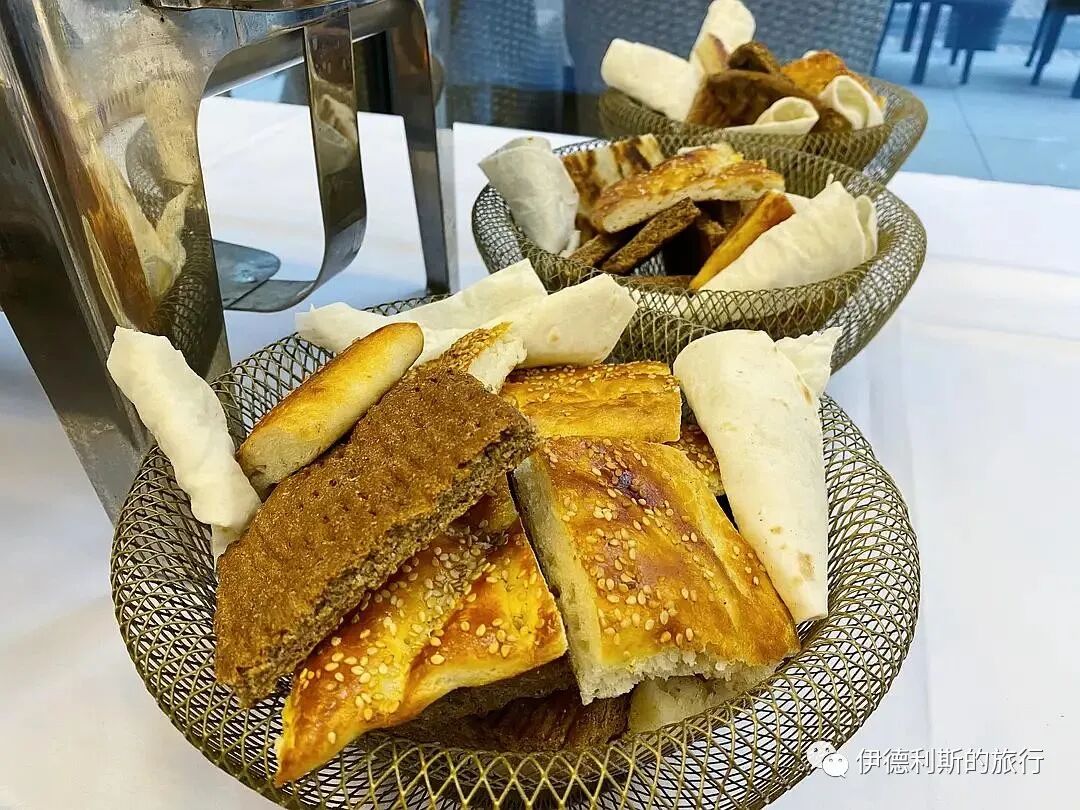
The best part is the unlimited supply of meat from the open-fire grill, including roast chicken, roast lamb chops, and kebab meat paste. You can eat your fill! There are also various types of flatbread (nang) and bread, plus Levantine appetizers and stews. They have lentil soup made from three colors of lentils. Drinks include lemonade, salty yogurt drink (ayran), and Turkish black tea. For dessert, there is classic baklava and milk pudding, plus various fruits. In short, their selection is very rich.
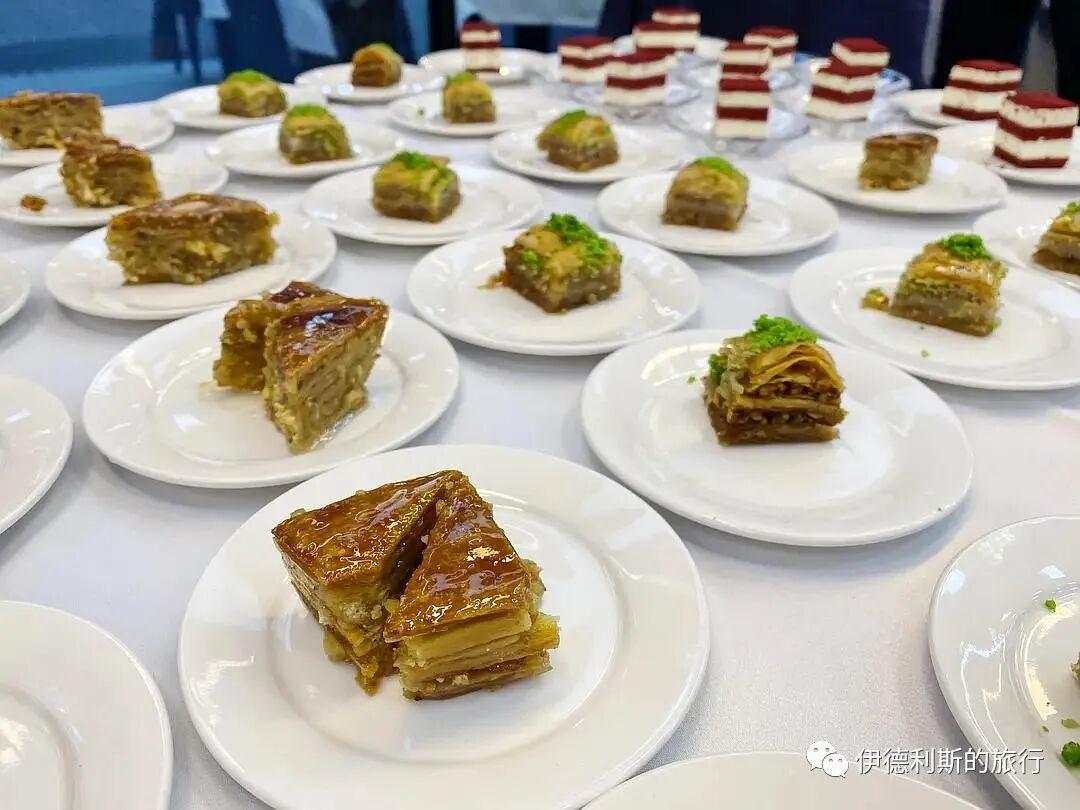
Baklava is the most famous dessert of the Ottoman Empire, developed by royal chefs at the Topkapi Palace. Every year on the 15th day of Ramadan, the Ottoman Sultan would attend a ceremony called 'Baklava Alayı,' where he would distribute trays of baklava to the Janissaries.
Baklava is a pastry made by layering very thin unleavened dough (filo) with crushed pistachios, crushed walnuts, syrup, or honey.
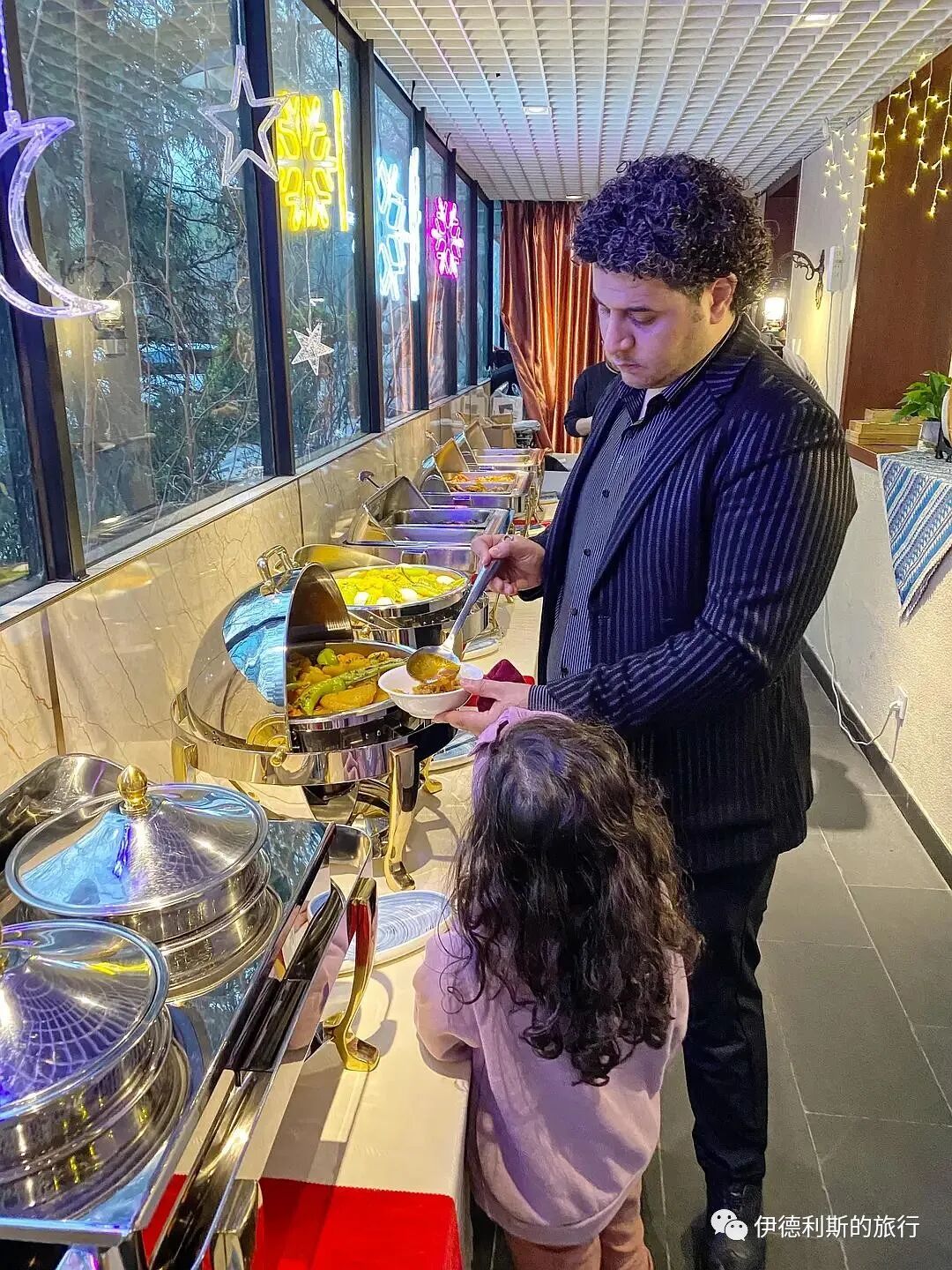
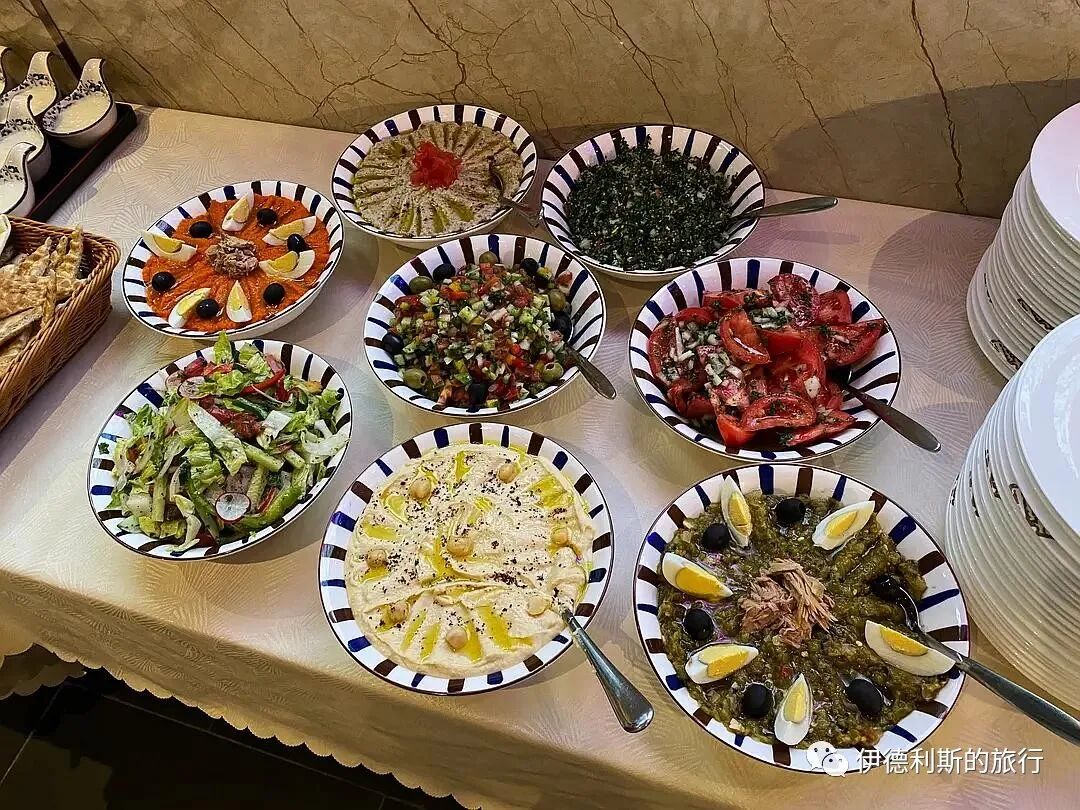
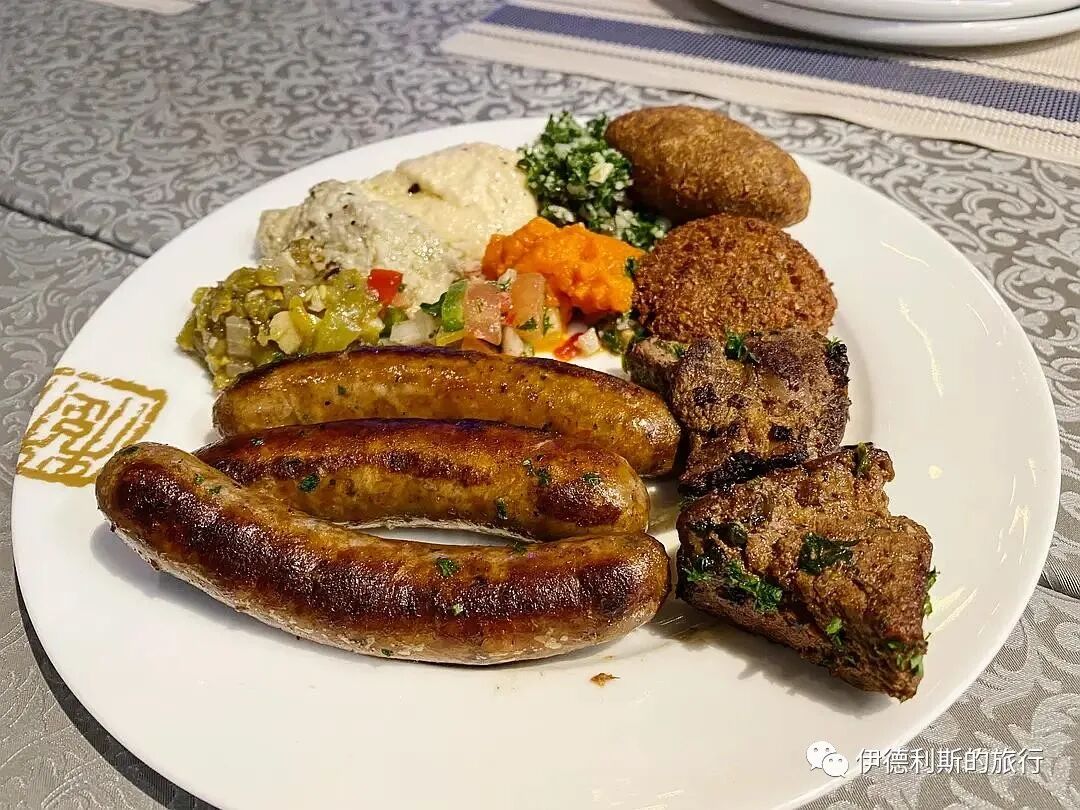
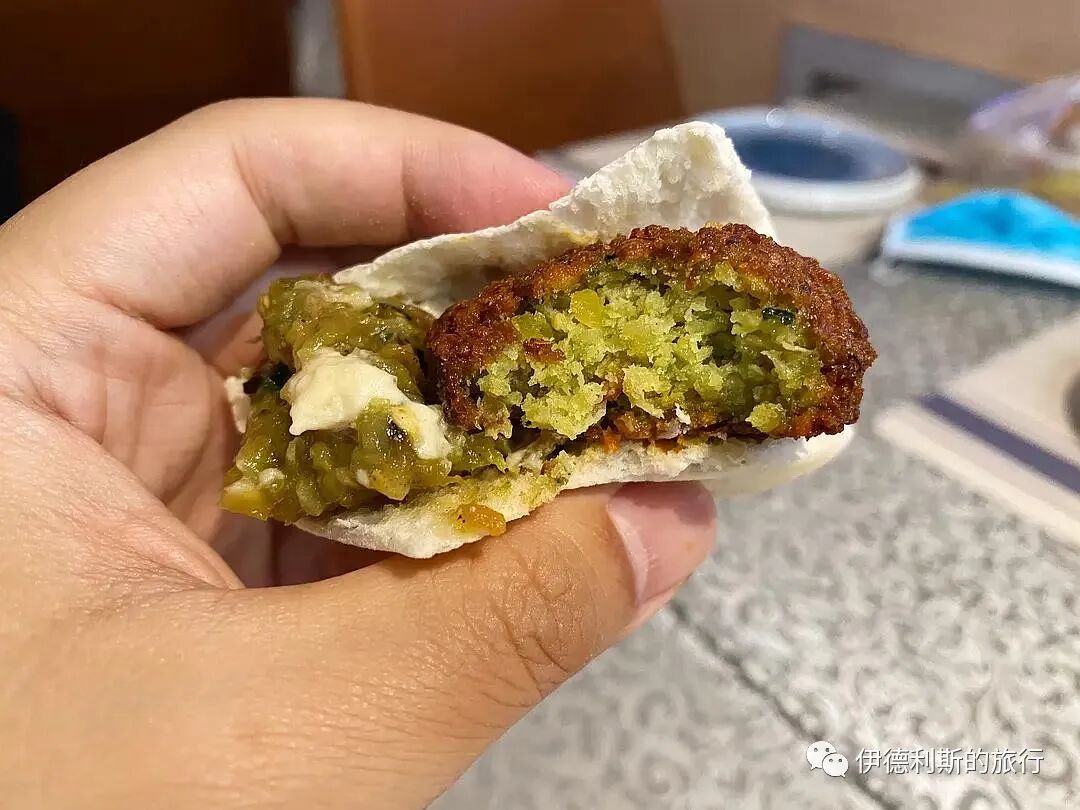
The second stop is the Tunisian restaurant La Medina at Liangma River. First, follow the Sunnah by eating dates, then drink Harissa soup. The first plate I took included North African sausage (merguez), kebab, six types of Levantine and Maghreb appetizers (meze), fried chickpea balls (falafel), and fried meat balls (kibbeh). Meze and falafel can be stuffed into pita bread.
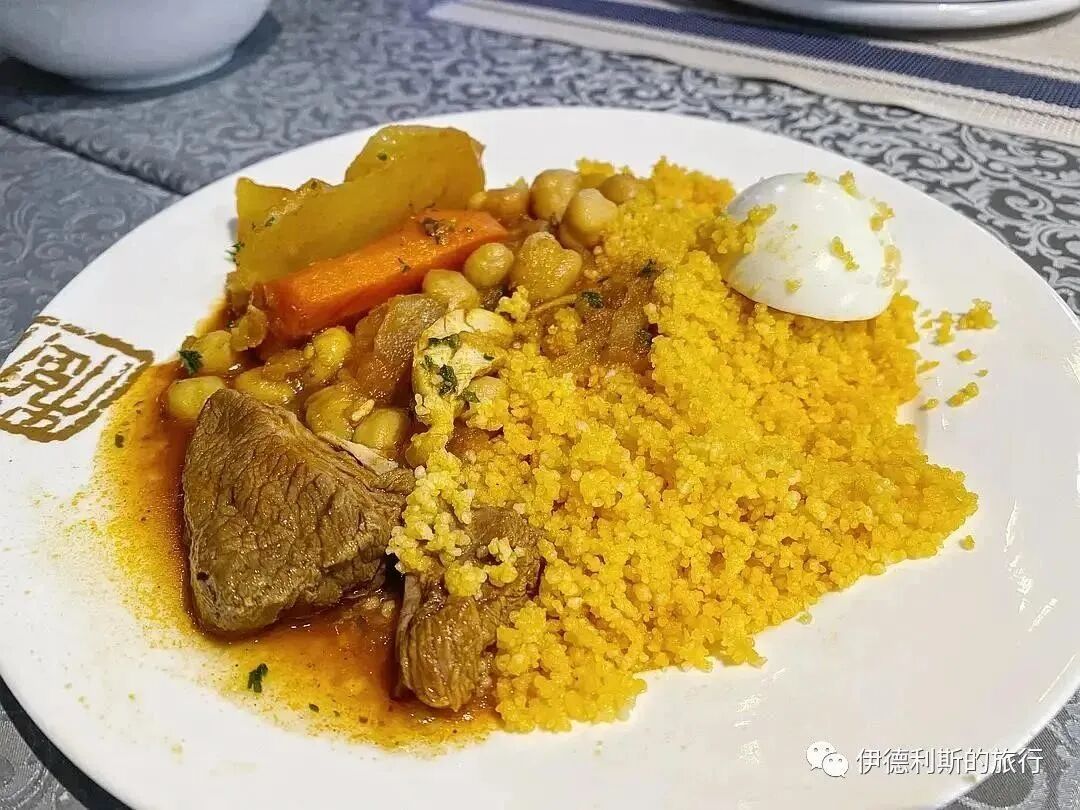
The second plate was the classic North African Berber dish couscous served with a clay pot stew (tajine). Couscous is a staple food for the Berbers. It is made by rubbing semolina flour into millet-sized grains, which are then dried. A clay pot (tajine) is a cooking vessel with a round, flat bottom and a conical or domed top. This design lets evaporated steam return to the bottom, and you can add water through the hole in the lid.
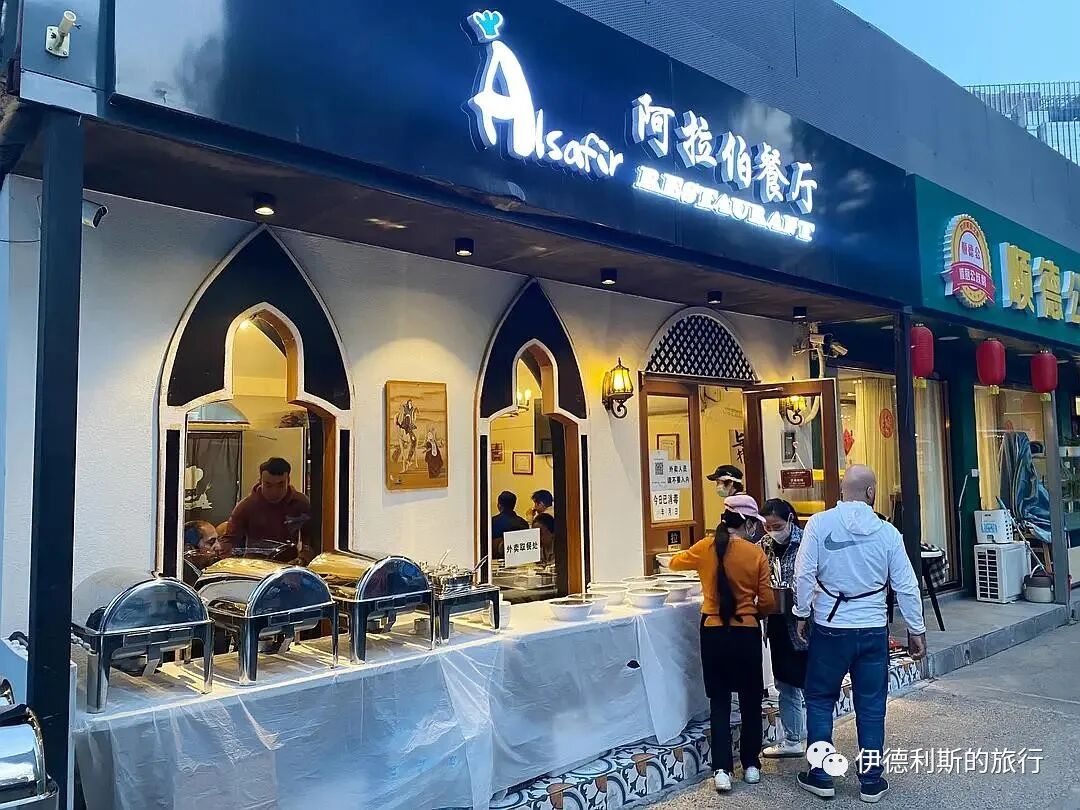
The third stop is the Levantine restaurant Al Safir at Sanyuanqiao, owned by a Palestinian from Jordan.
The three Ramadan iftar buffets I have tried so far each have their own unique features. Dardanelles has the widest variety, and the open-flame grilled meat is unlimited. La Medina is the only place in Beijing to get a Maghreb buffet, which makes it very unique. Al Safir has the richest selection of Levantine appetizers (Meze), and their falafel and grilled chicken wraps are the best.
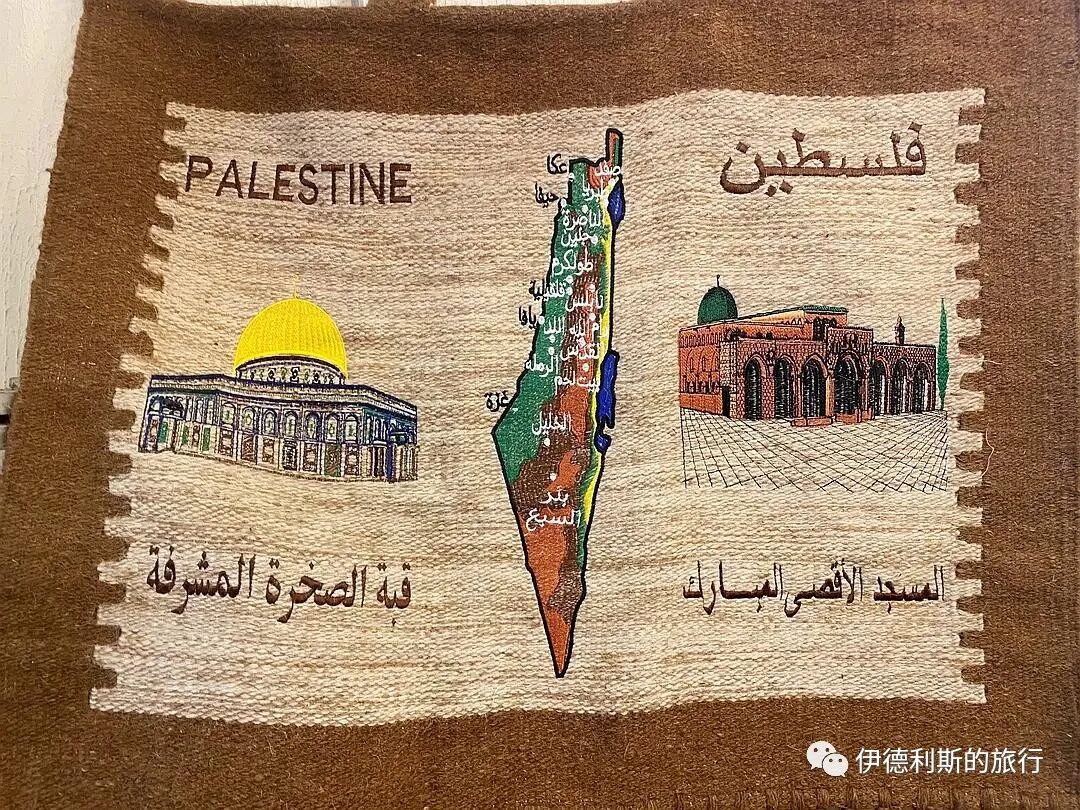
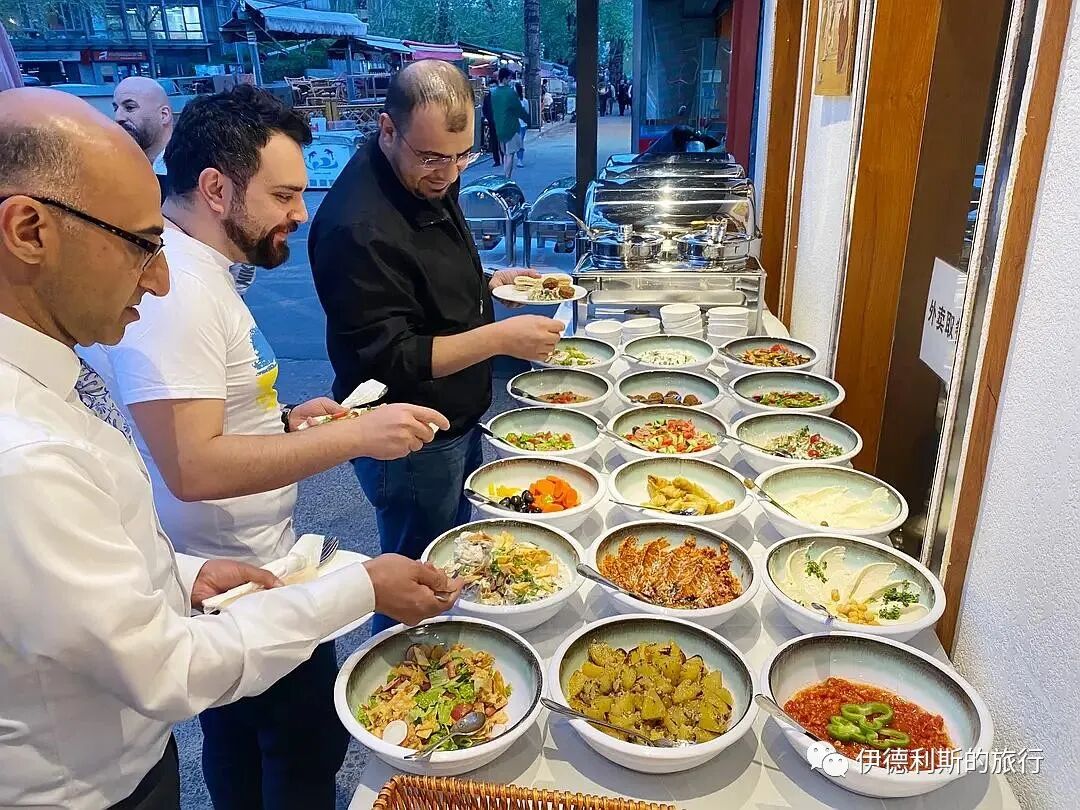
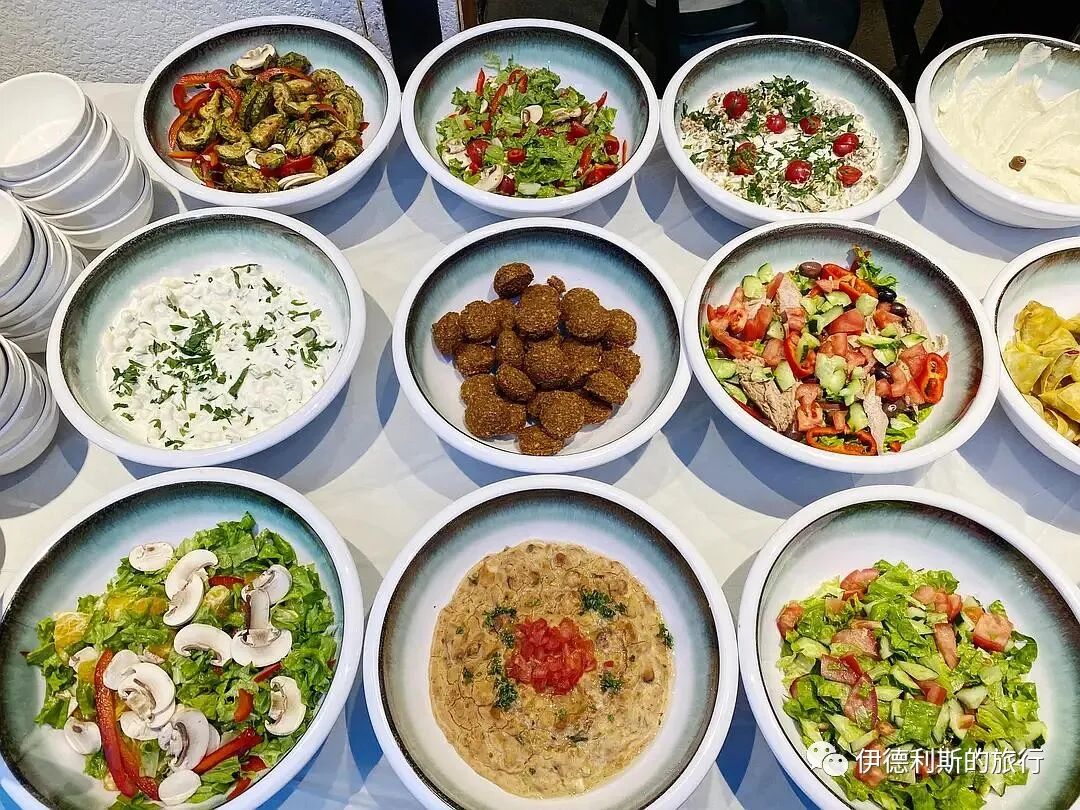
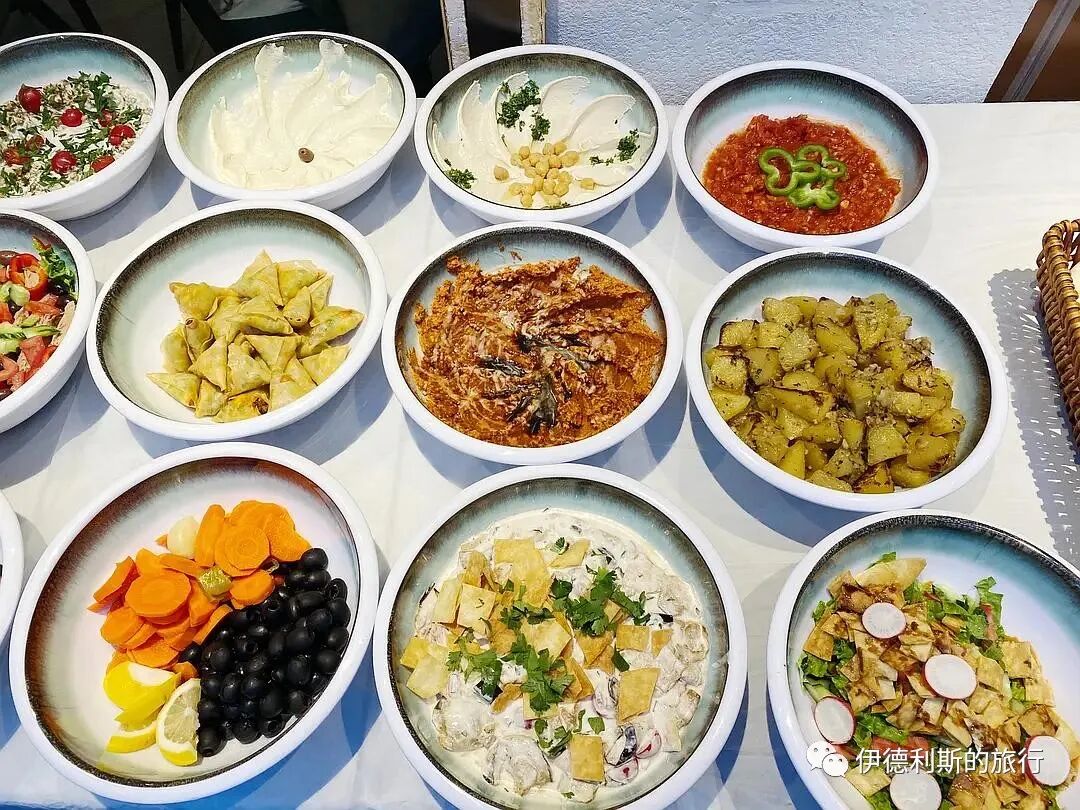
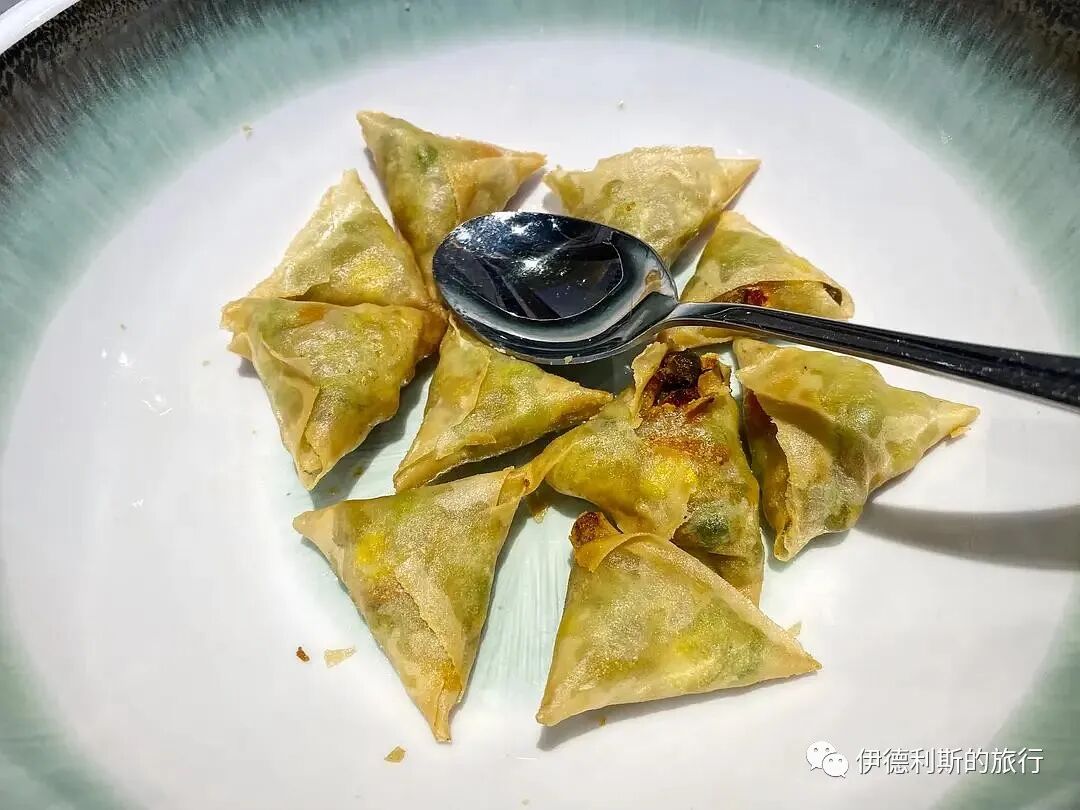
At Al Safir, you can eat the most classic Ramadan snack for Arabs, lamb fried pastry triangles (Sambousek). This snack started as the Iranian Sanbosag and spread everywhere as Persian culture traveled. It entered Arab cuisine after the 10th century, reached South Asia with the Delhi Sultanate after the 13th century, and later spread to China, Indonesia, and Africa with Muslim merchants.
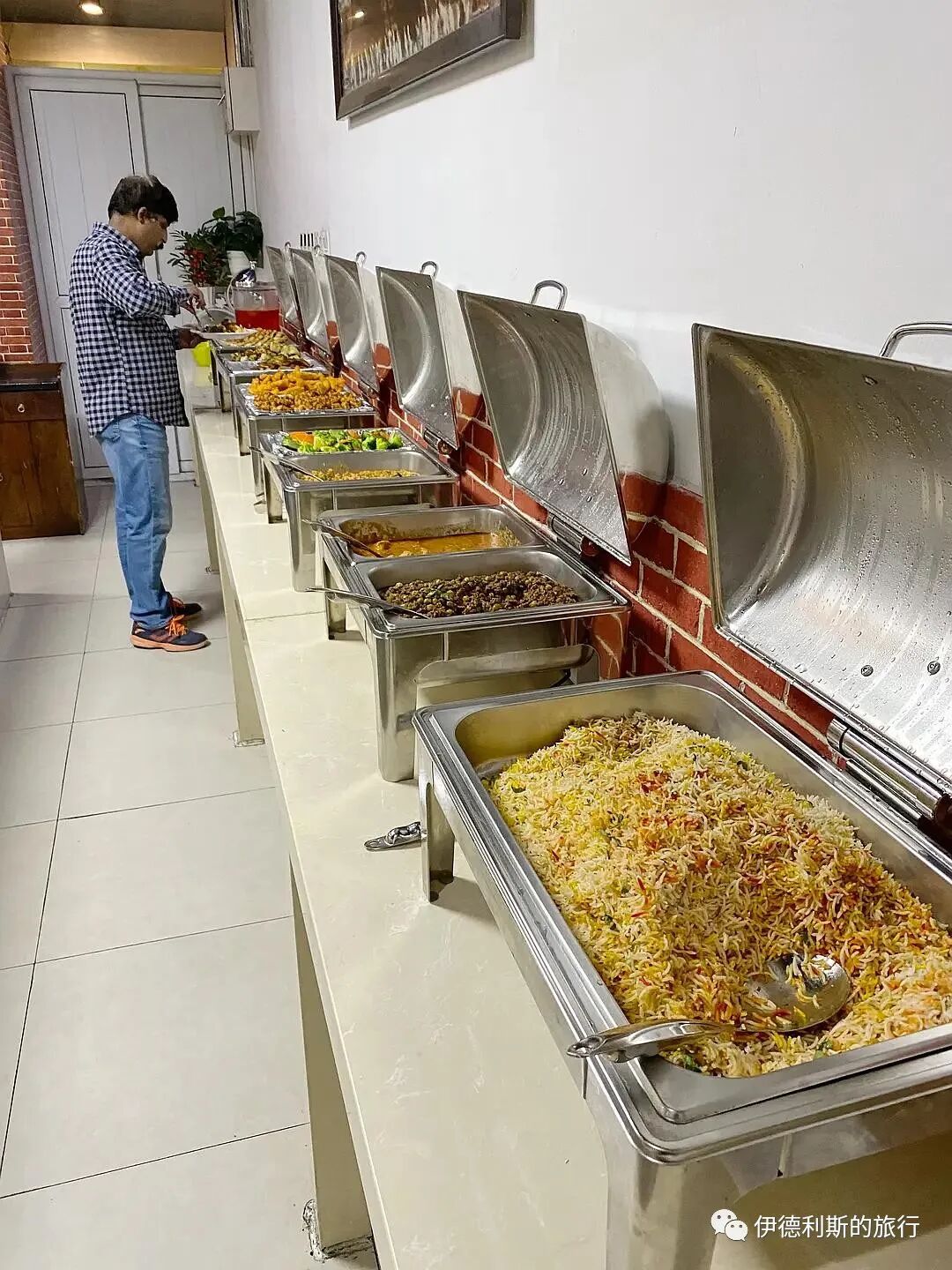
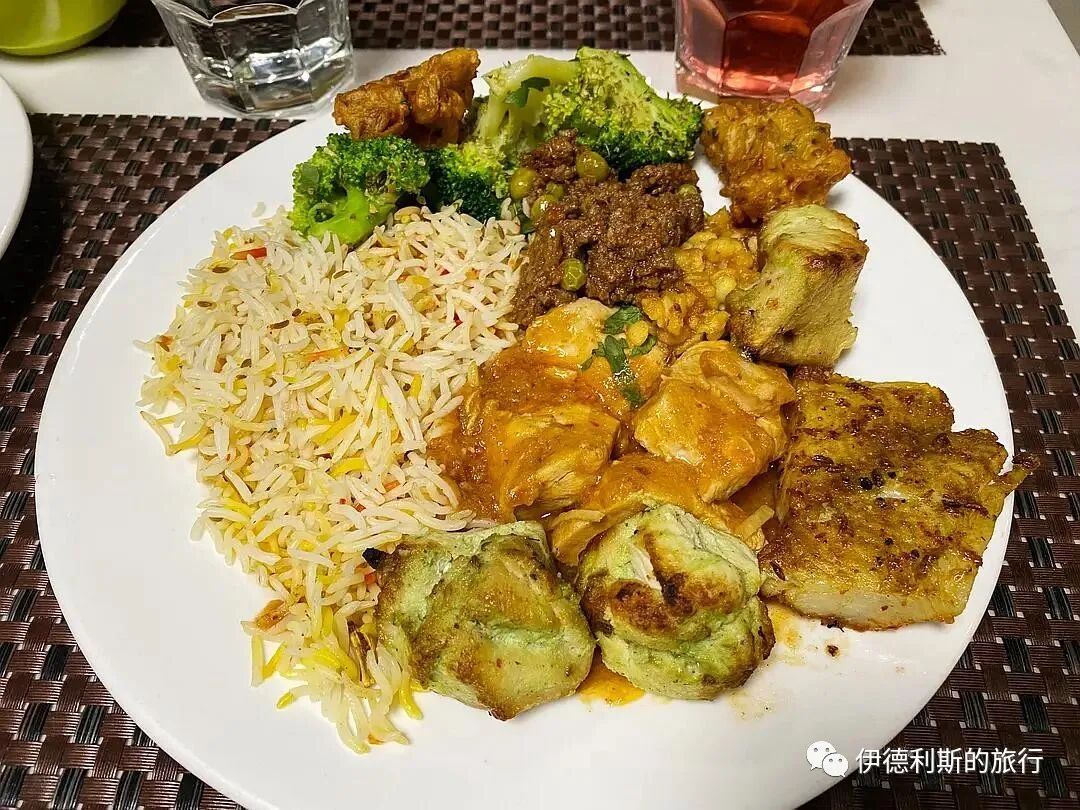
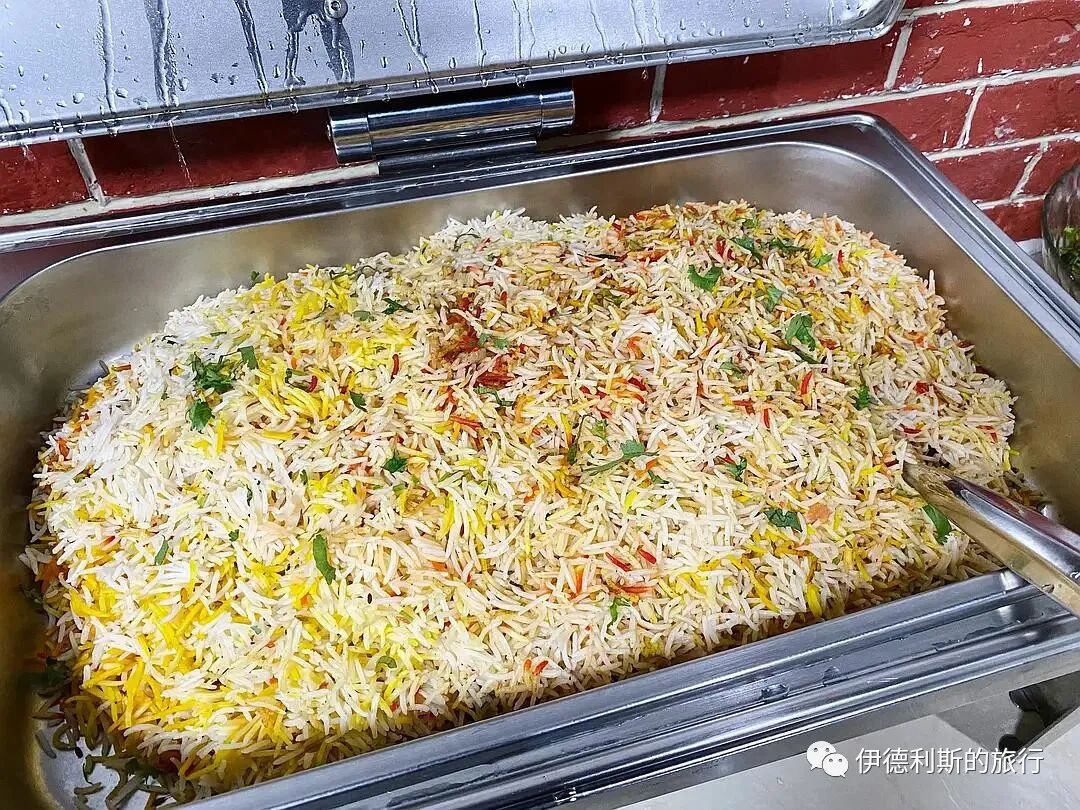
The fourth stop is the Pakistani restaurant Khan Baba in Sanlitun. First came dates and water, then Zainab chose flatbread (naan) as her main, while I picked the classic biryani rice with masala chicken, grilled chicken chunks (tikka), and grilled fish. The drink was rose syrup water, and dessert was milk pudding (Kheer). Their yogurt tasted very authentic and tart.
1st day of the 10th month of the Islamic calendar: Eid al-Fitr.
A month of fasting ends, welcoming the important Eid al-Fitr, also called 'Guo'erde'. 'Eid' is Arabic for 'festival,' and Hui Muslims in Urumqi pronounce it 'Erdi'.
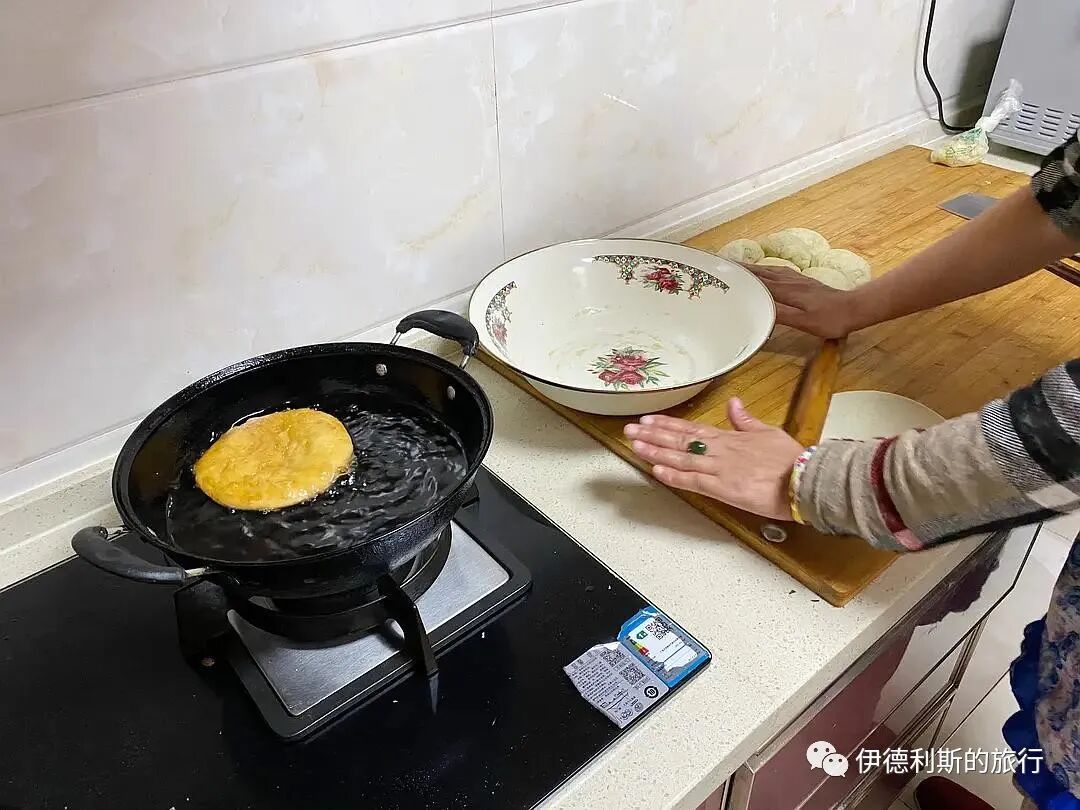
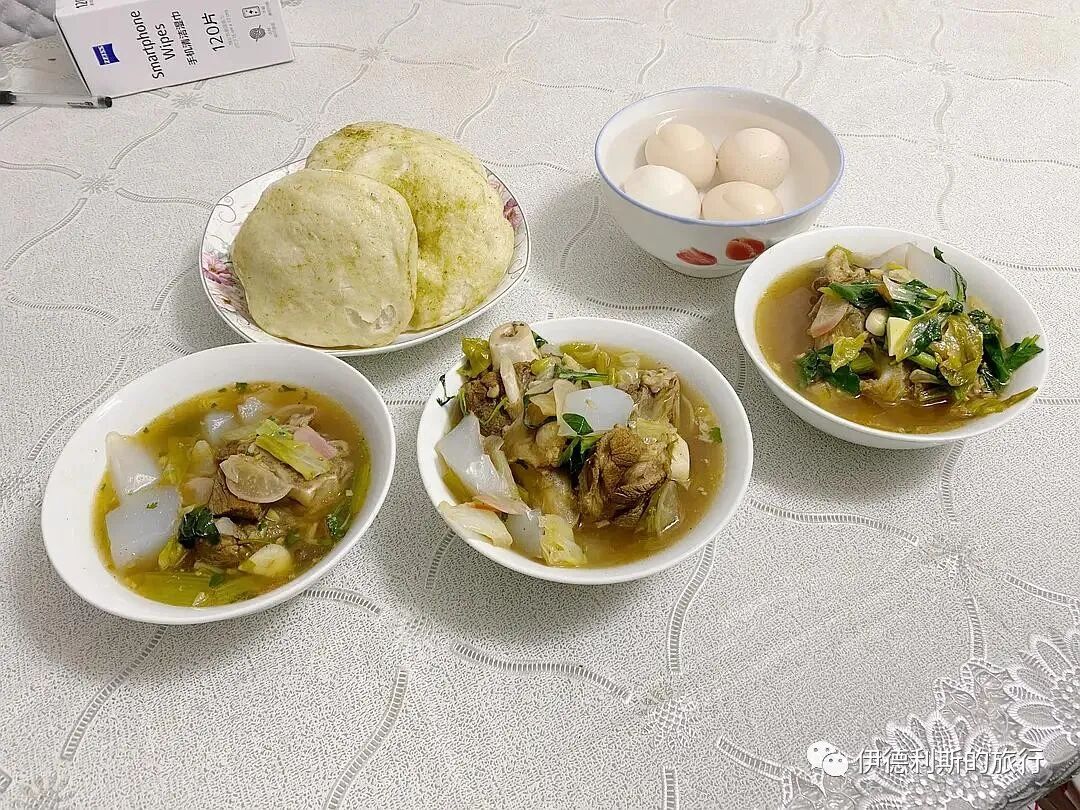
I spent Eid al-Fitr in Urumqi in 2020. Hui Muslims in Urumqi usually follow three main steps for Eid al-Fitr: go to the mosque in the morning for prayers, visit graves, and then visit relatives. There are four must-have foods for Eid al-Fitr: noodle soup (fentang), fried dough (youxiang), fried dough twists (sanzi), and small pastries (diediezi). The noodle soup and fried dough must be homemade.
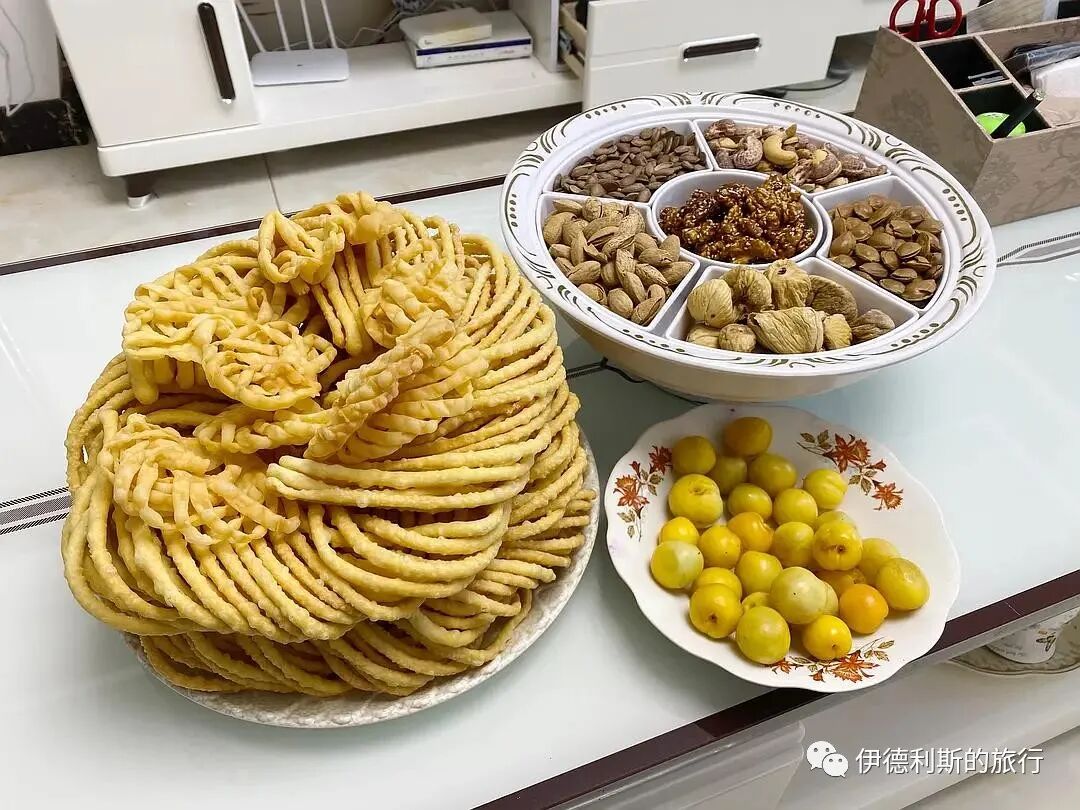
Our family's fried dough twists (sanzi) and small pastries (diediezi).
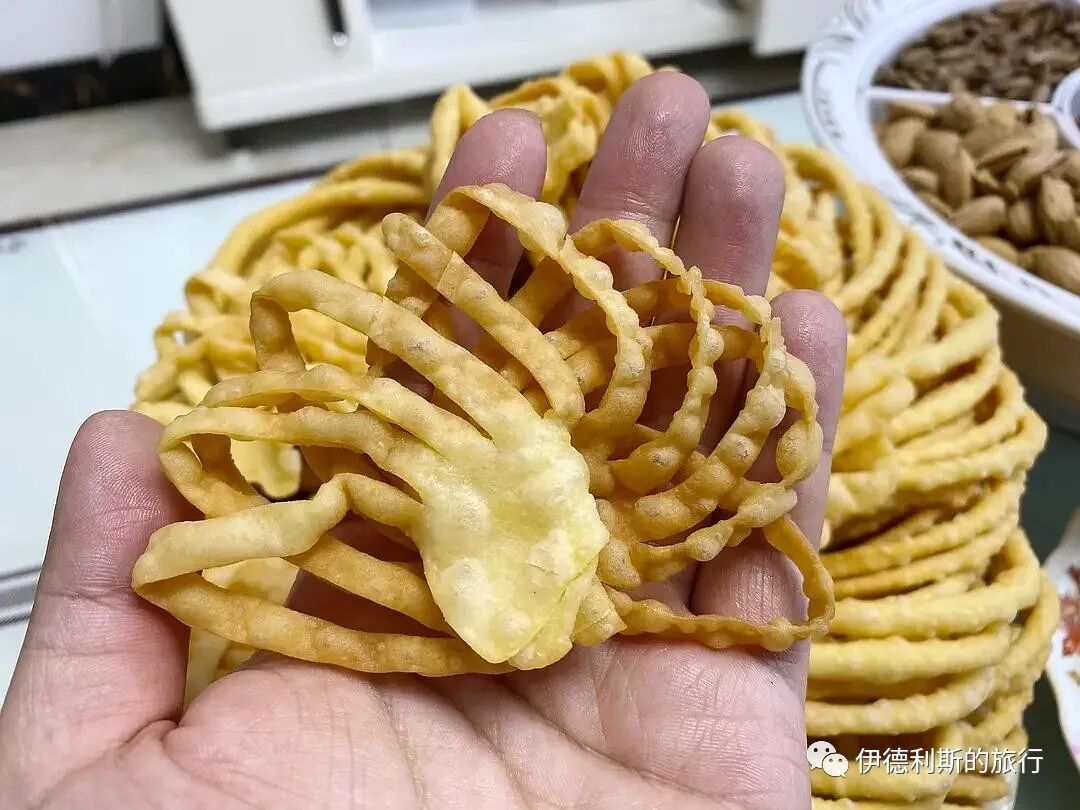
Hand-pulled fried dough twists (sanzi) made with eggs.
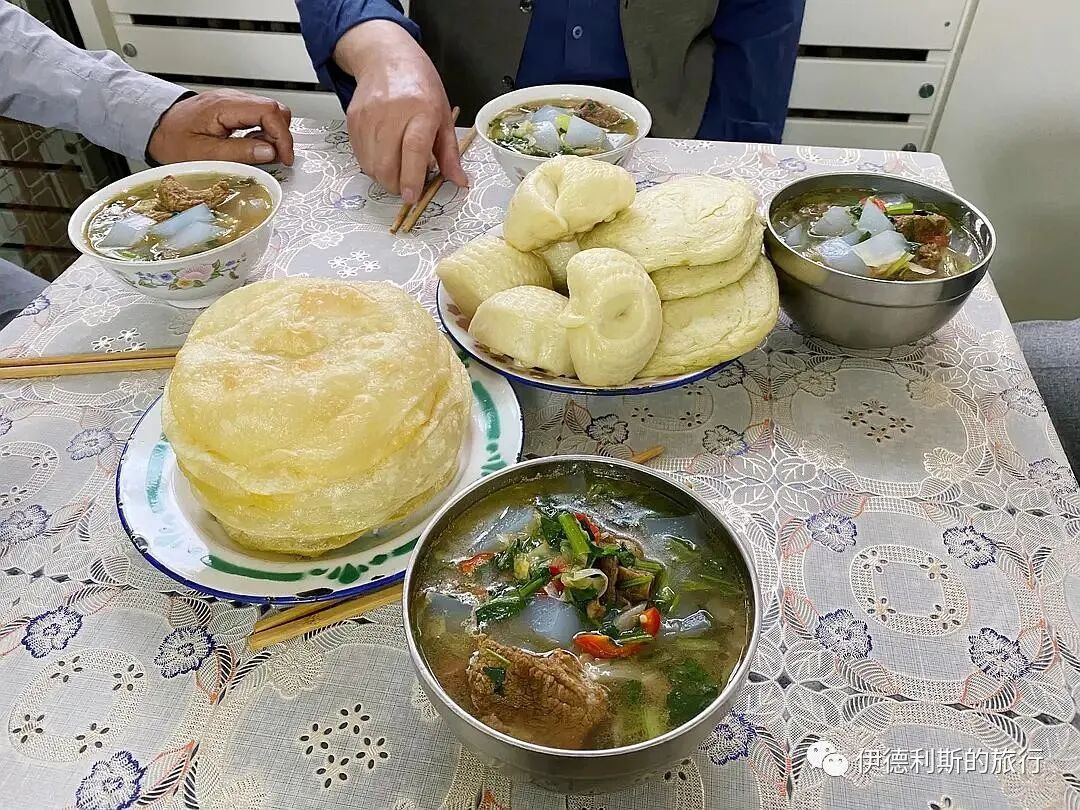
After finishing my first bowl of noodle soup (fentang), my father-in-law and I set off for Zainab's uncle's house, where I had a second bowl. The fried dough (youxiang) at the uncle's house was made with scalded flour.
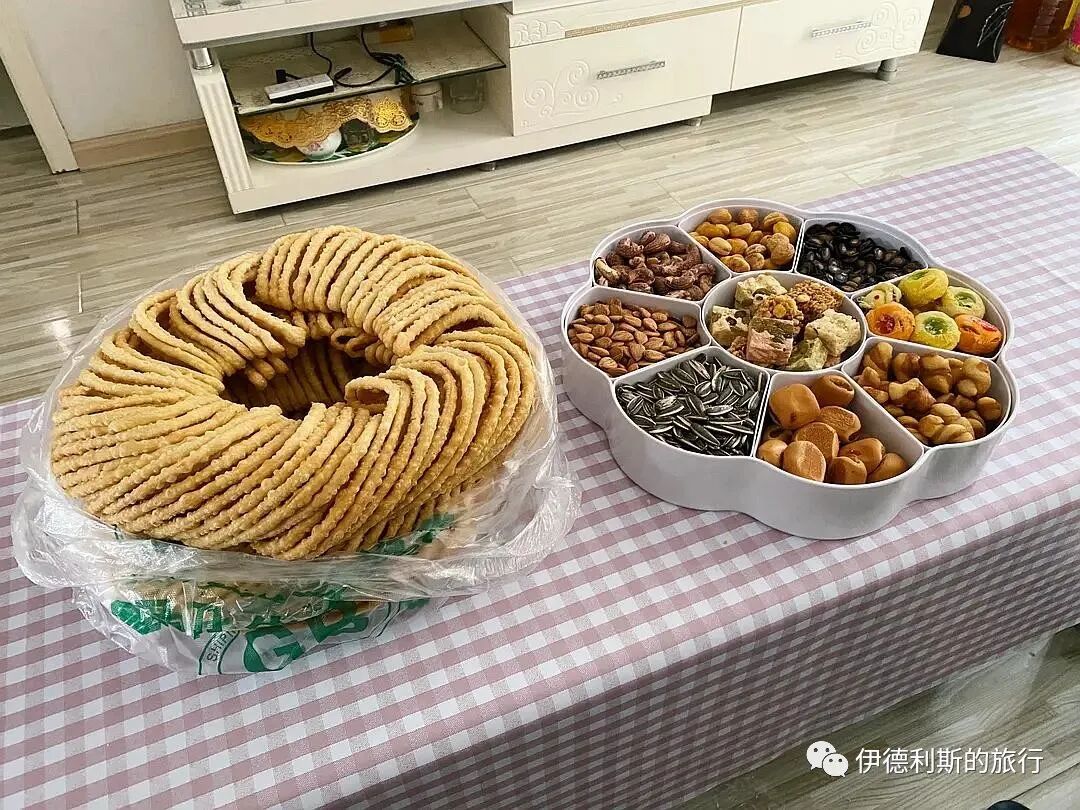
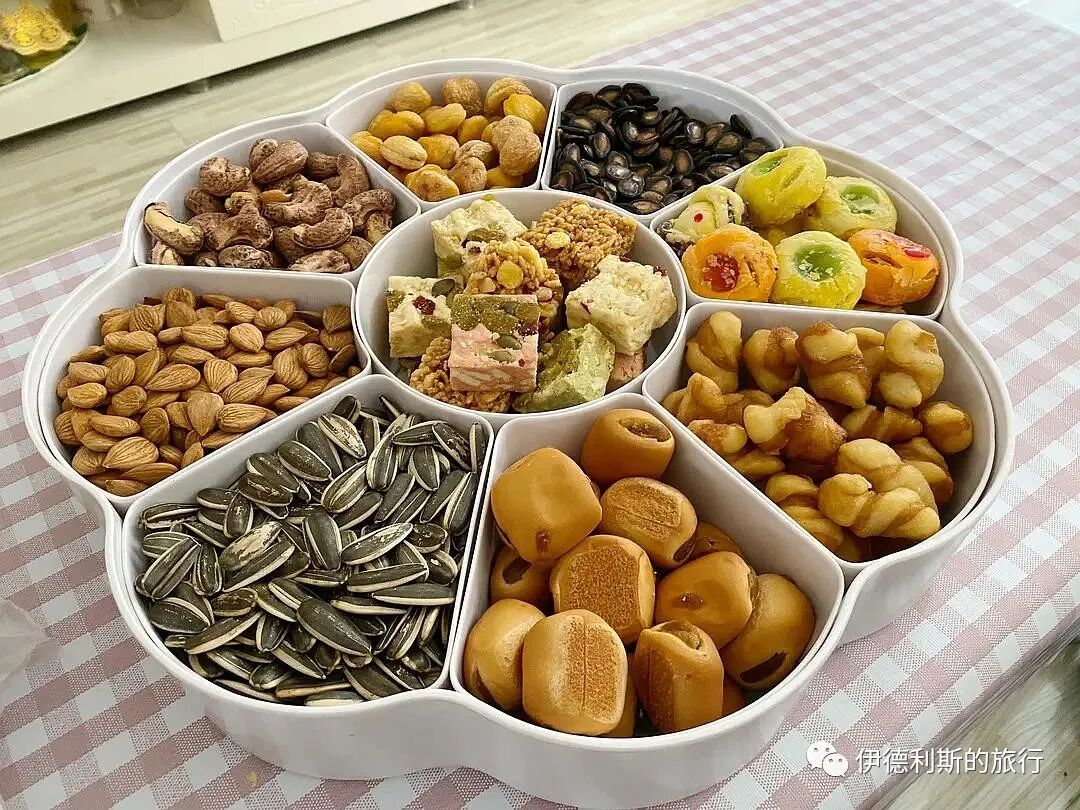
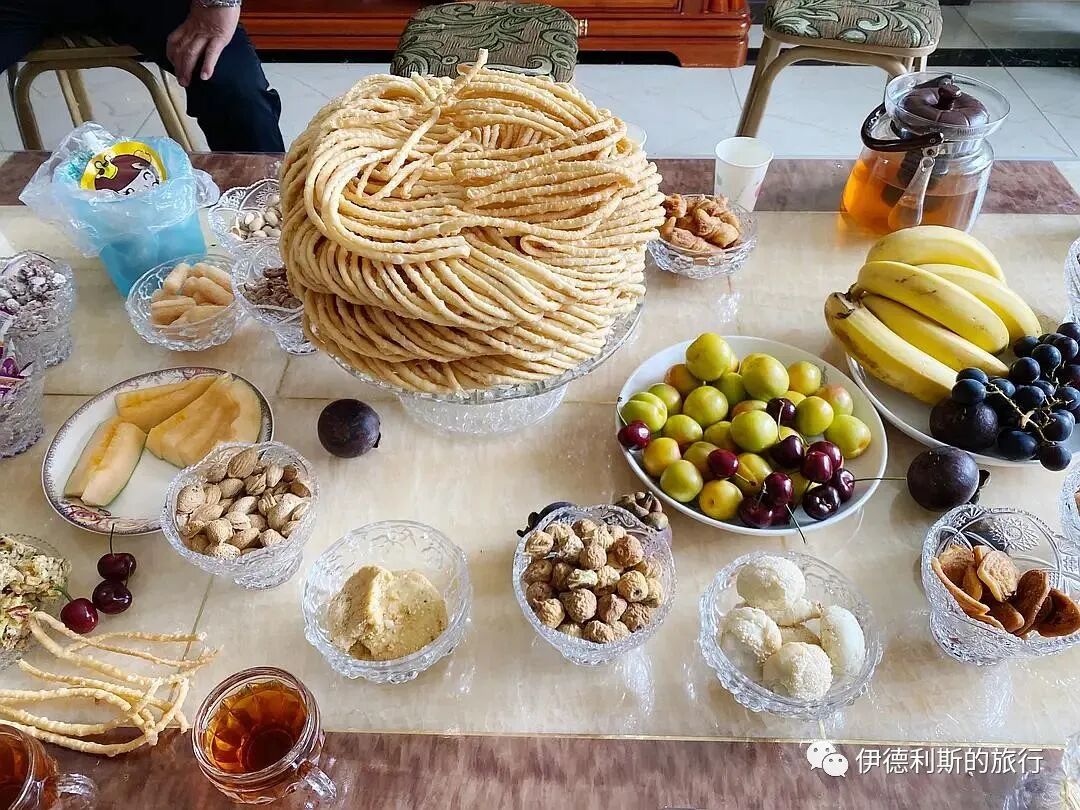
The uncle's fried dough twists (sanzi) and small pastries (diediezi), which included twisted sugar snacks (tangningningzi) and pastries from the Ma family shop on Shanxi Alley. The twisted sugar snacks (tangningningzi) were soft and delicious.
After visiting the graves, we went to visit Zainab's great-uncle.
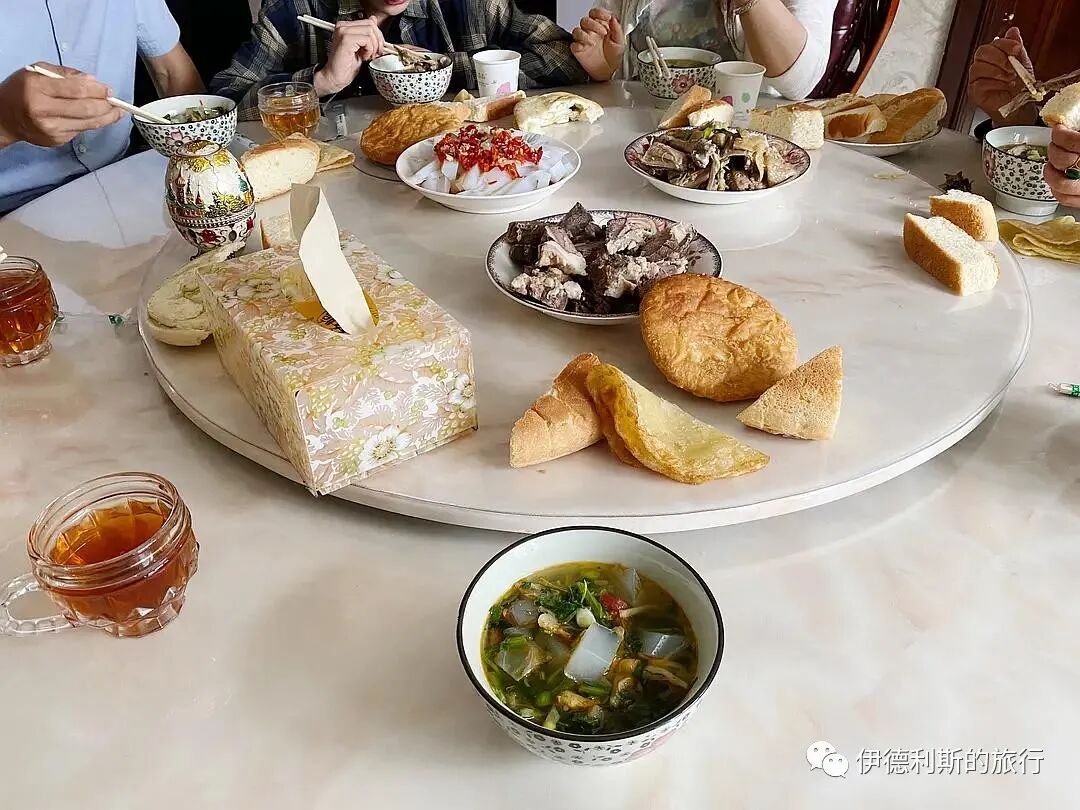
The great-uncle's fried dough twists (sanzi) and various snacks.
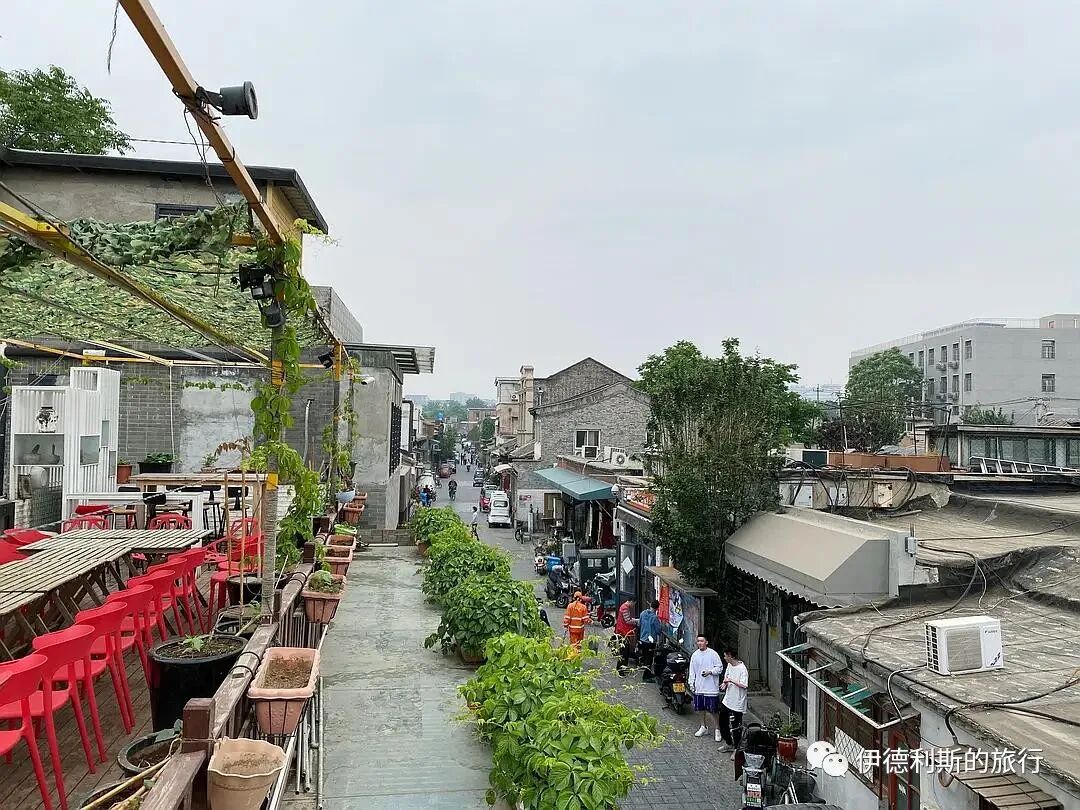
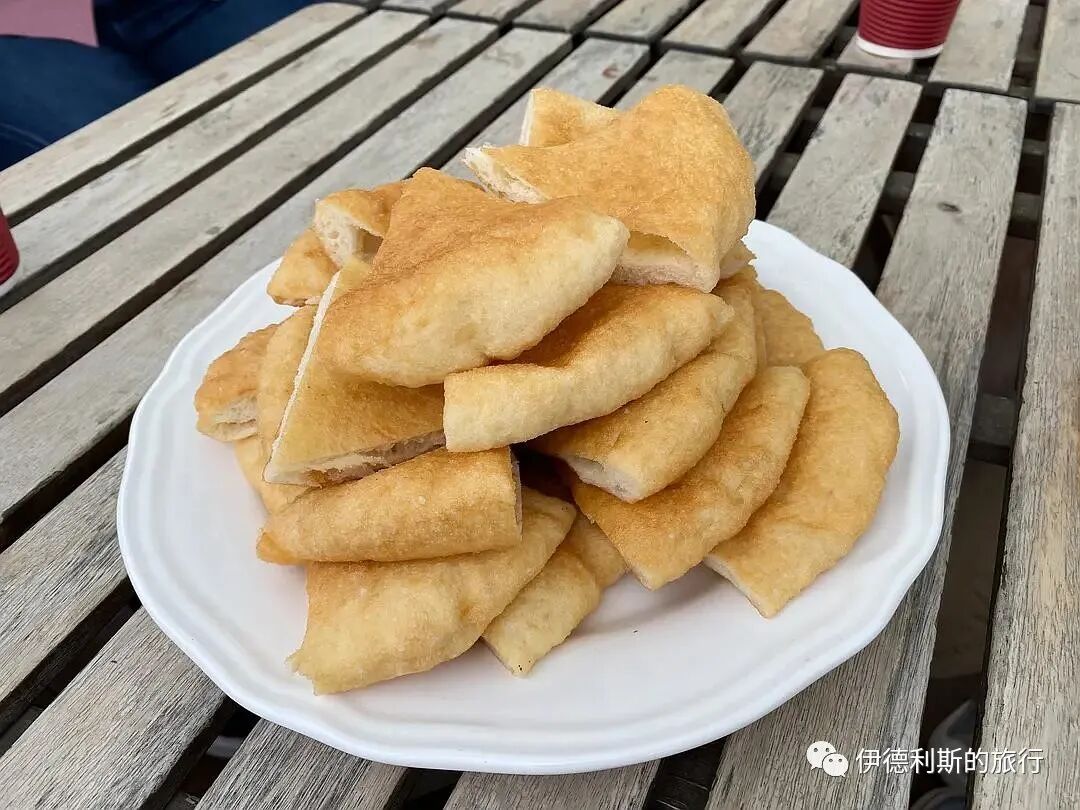
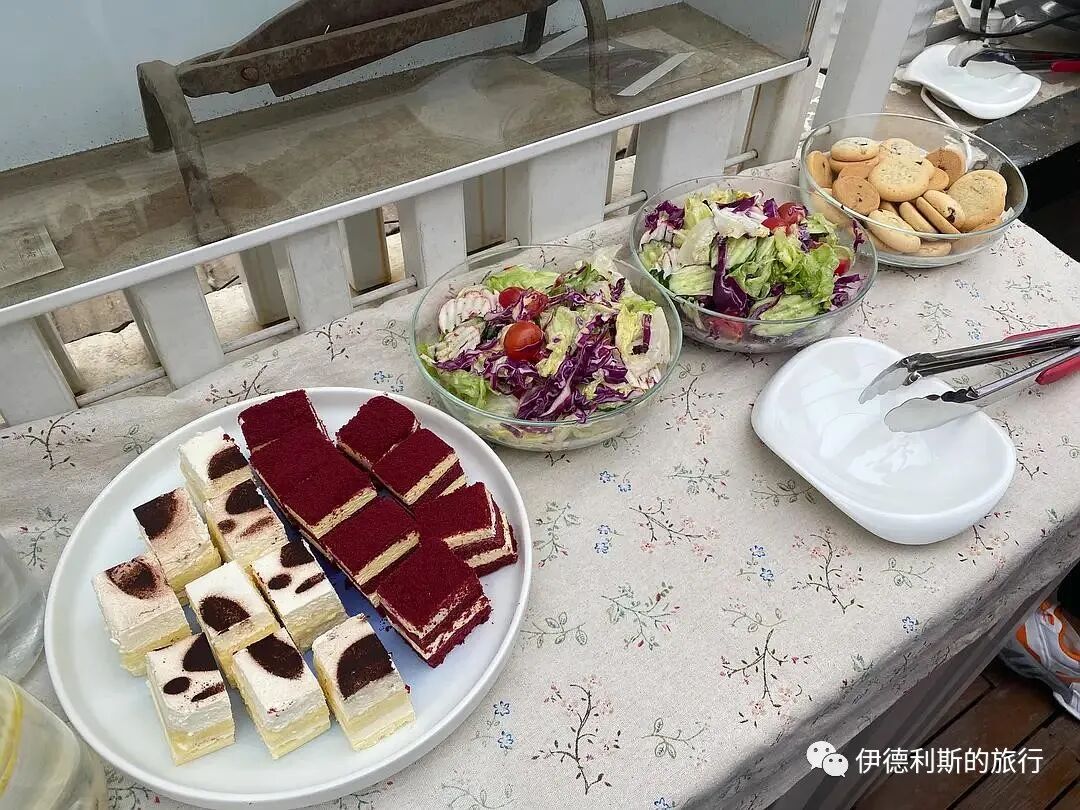
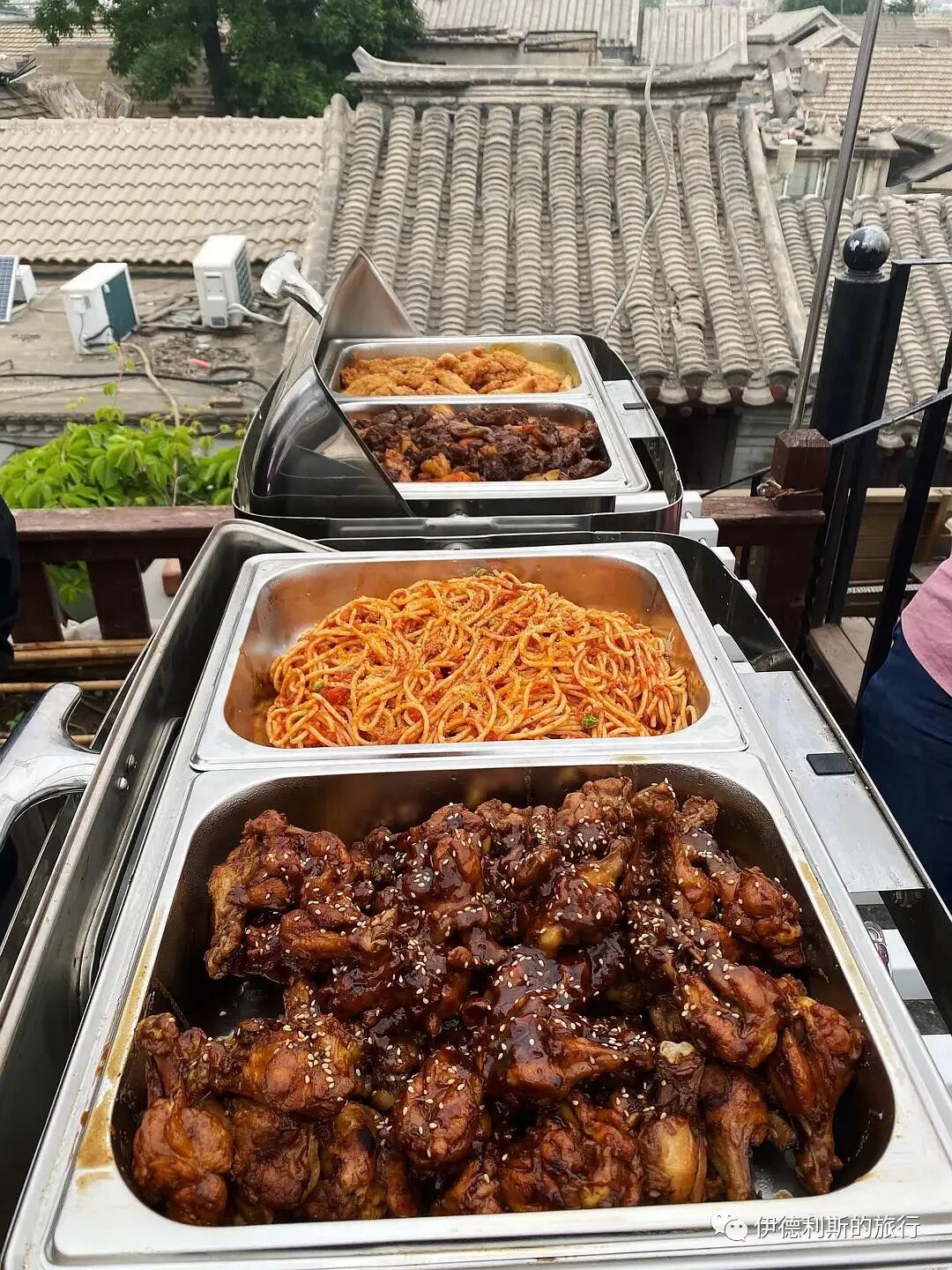
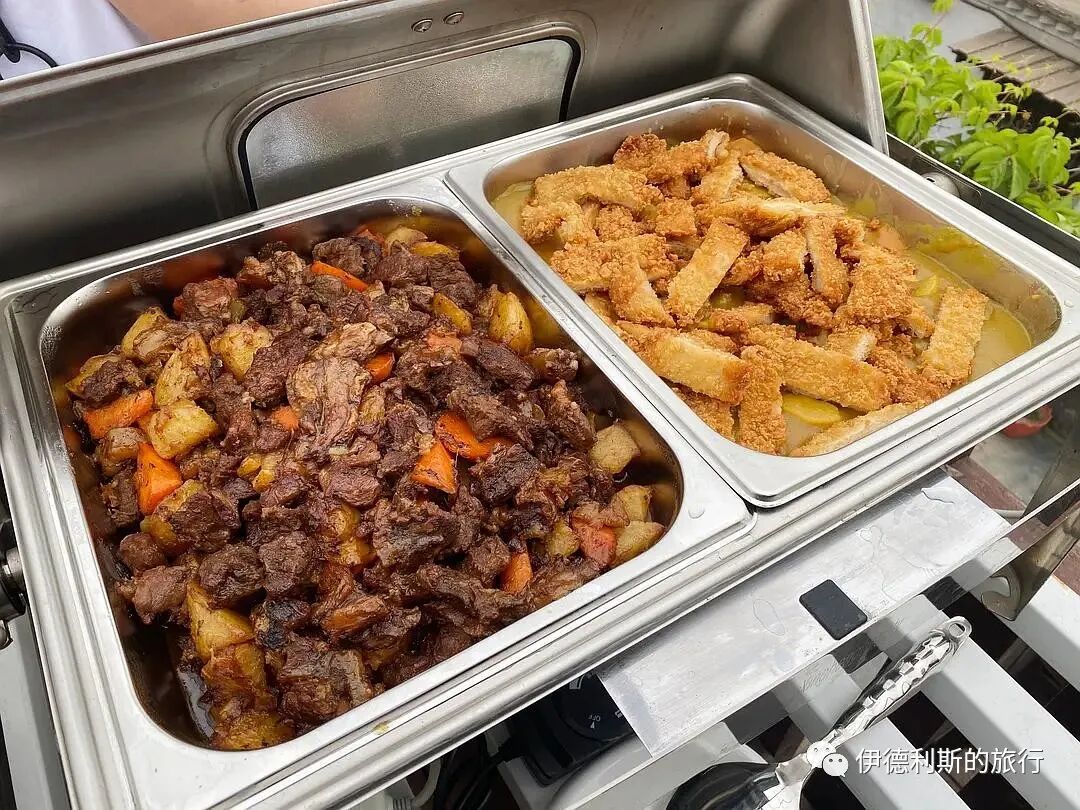
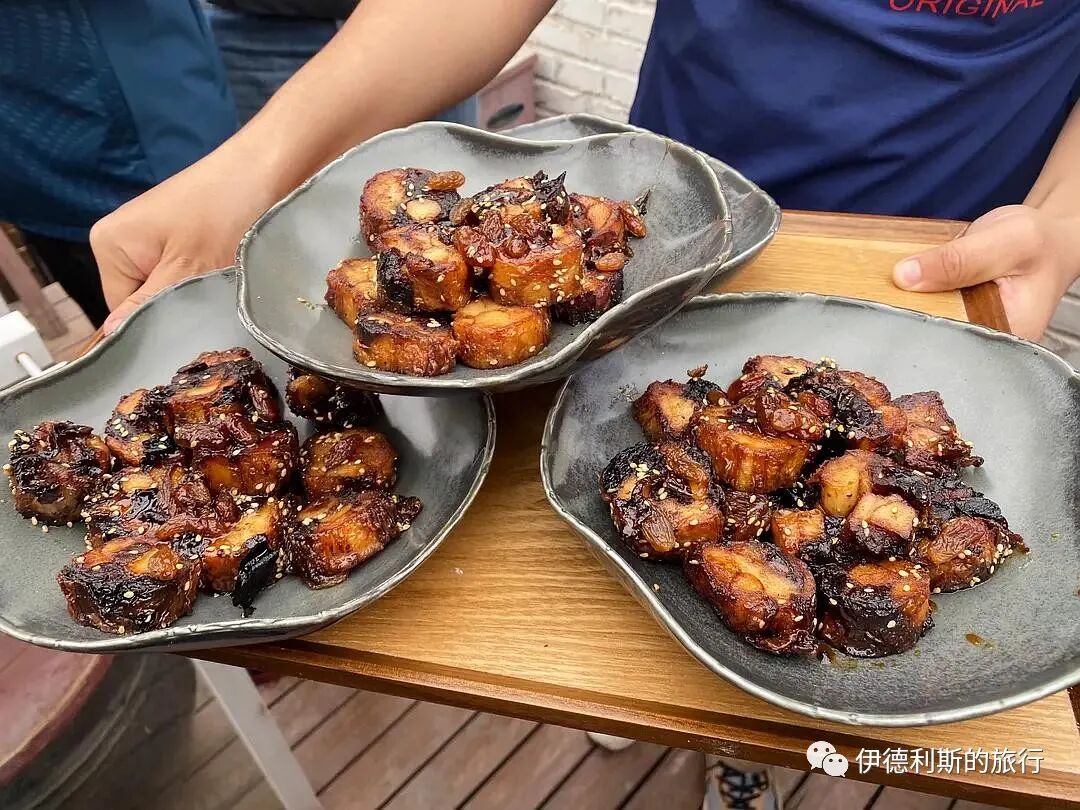
I spent Eid al-Fitr in Beijing in 2021. After the Eid prayers, everyone gathered on the roof of the century-old Jian'an Zhai shop on Yangmeizhu Xiejie outside Qianmen for a buffet. The 21st-generation successor of the Wang Hui family from Jian'an Tang fried the dough (youxiang) for us himself. It was super delicious, with a chewy texture that wasn't hard at all. We also ate old Beijing Hui-style beef stew and sugar-rolled fruit (tangjuanguo). The beef is brought from Niujie every morning and stewed fresh, never kept overnight. The sugar-rolled fruit (tangjuanguo) is made of yam, dates, and raisins, which are steamed and then stir-fried in sugar, a very time-consuming process.
Besides old Beijing specialties, there was chicken curry, tomato pasta, fried cod fillets, fruit salad, and cream cakes. It was a very satisfying meal!
10th day of the 12th month of the Islamic calendar: Eid al-Adha.
Eid al-Adha is also called the Festival of Sacrifice or the Festival of Loyalty and Filial Piety. In Singapore and Malaysia, it is called Hari Raya Haji. It commemorates the story of the Prophet Ibrahim following Allah's command to sacrifice his beloved son Ismail. Just as the knife touched his throat, Allah sent an angel with a black-headed ram to take his place. Muslims who can afford it perform a sacrifice every year during Eid al-Adha, choosing between a camel, cow, or sheep depending on their situation. After the sacrifice, the meat is usually divided into three parts: one for the family to eat, one for relatives, and one to give to the poor.
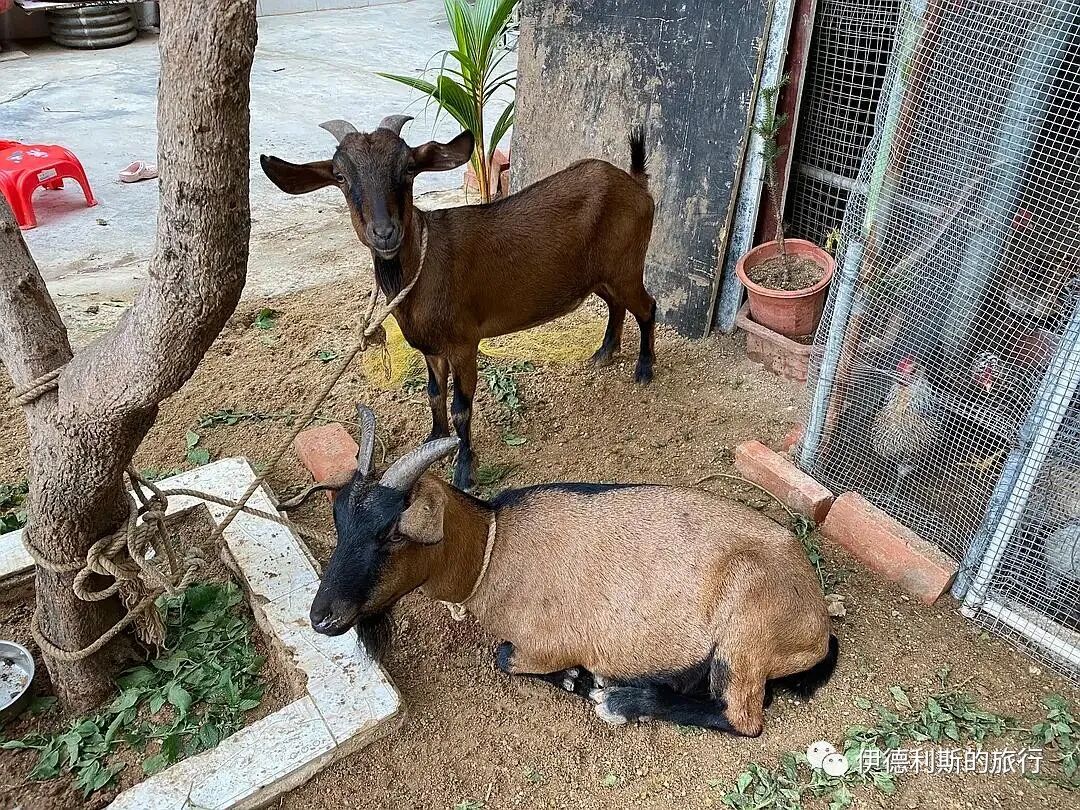
In 2020, I spent Eid al-Adha in Sanya, Hainan, and the sheep we sacrificed was a Dongshan goat (Dongshan yang) bought by my friend Muning.
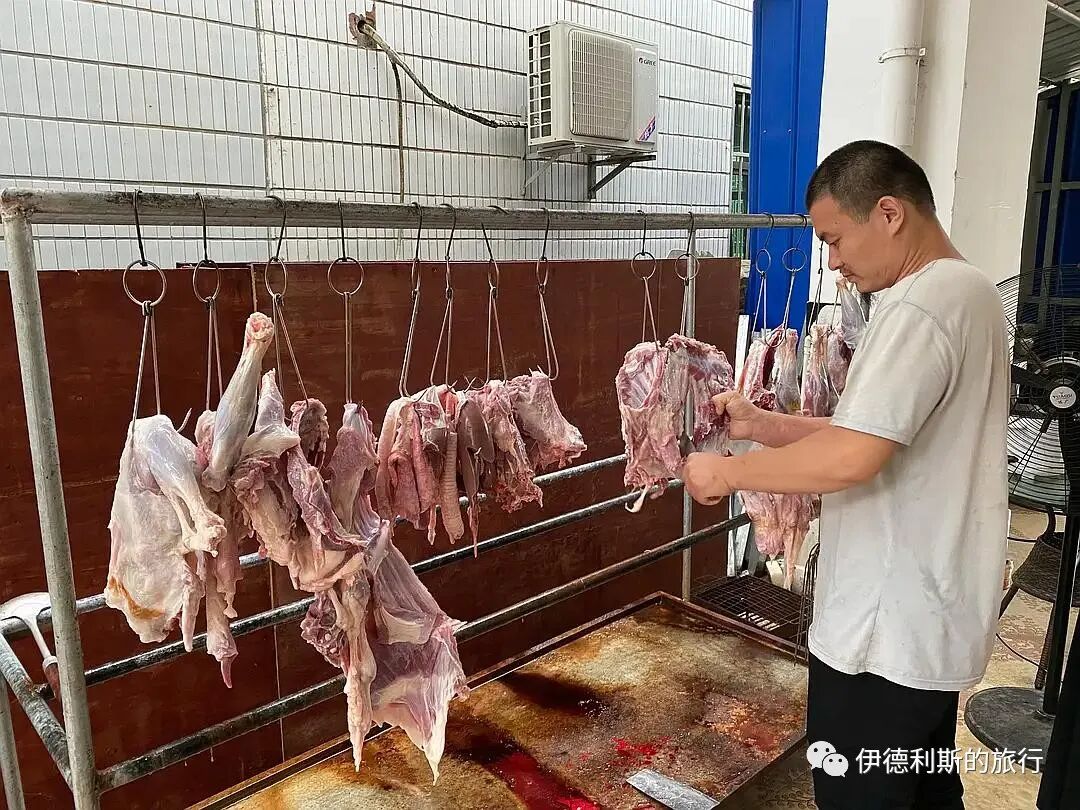
We asked a neighbor to make us some dry-fried lamb (ganbian yangrou) in the local Sanya style. Their family usually sells roast duck next to the Southern Mosque (Nan Si) in Huixin Village, but they were on holiday for Eid al-Adha.
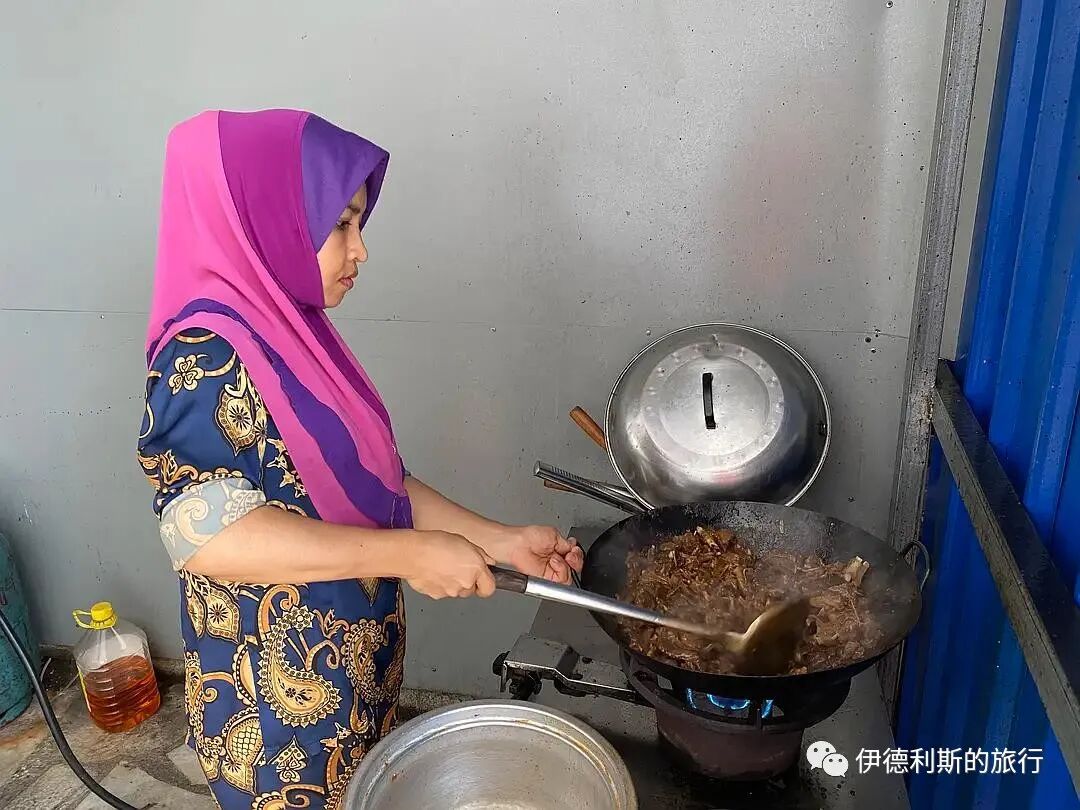
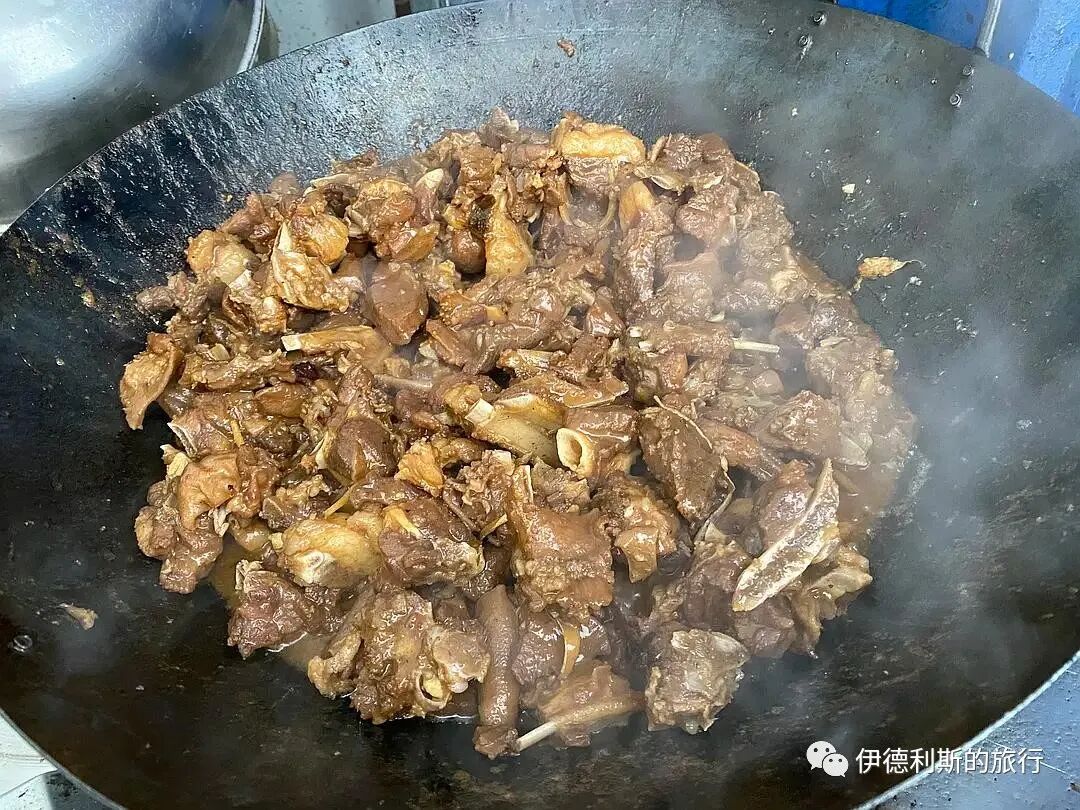
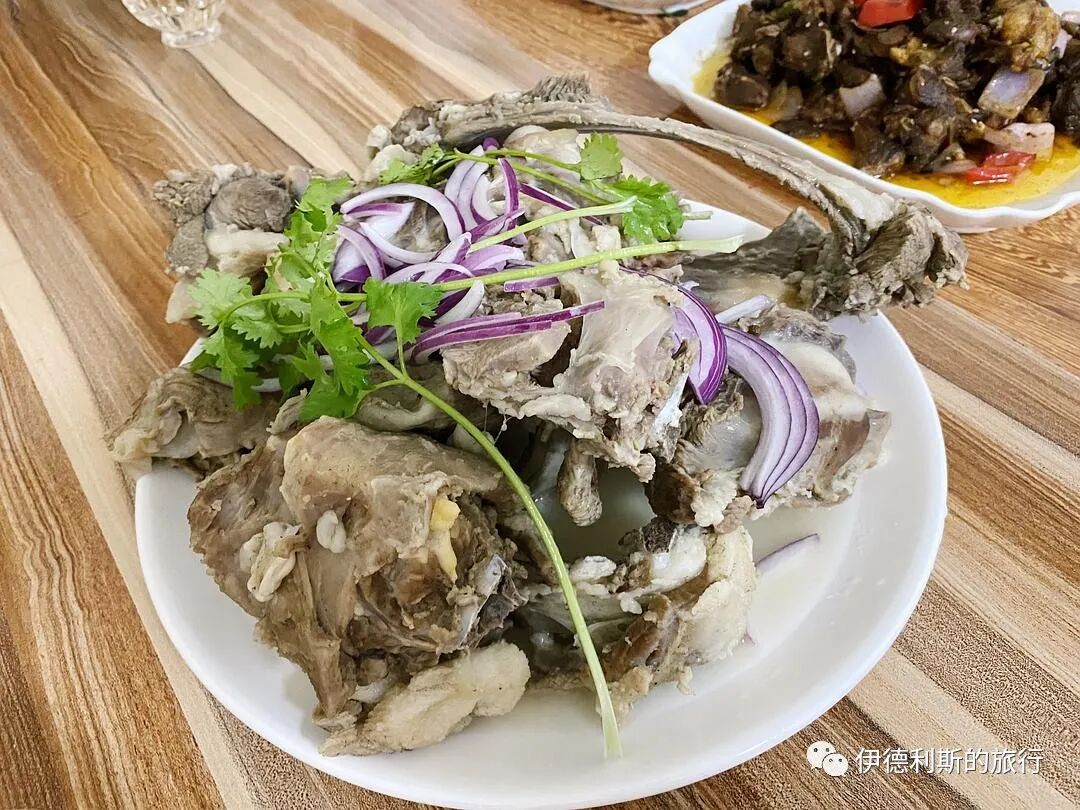
The imam from Turpan, Xinjiang, who performed the sacrifice for us, made a Xinjiang-style clear-stewed lamb (qingdun yangrou). It was super delicious, and the lamb broth was great too.
After the meal, I helped Muning distribute the rest of the meat to friends.
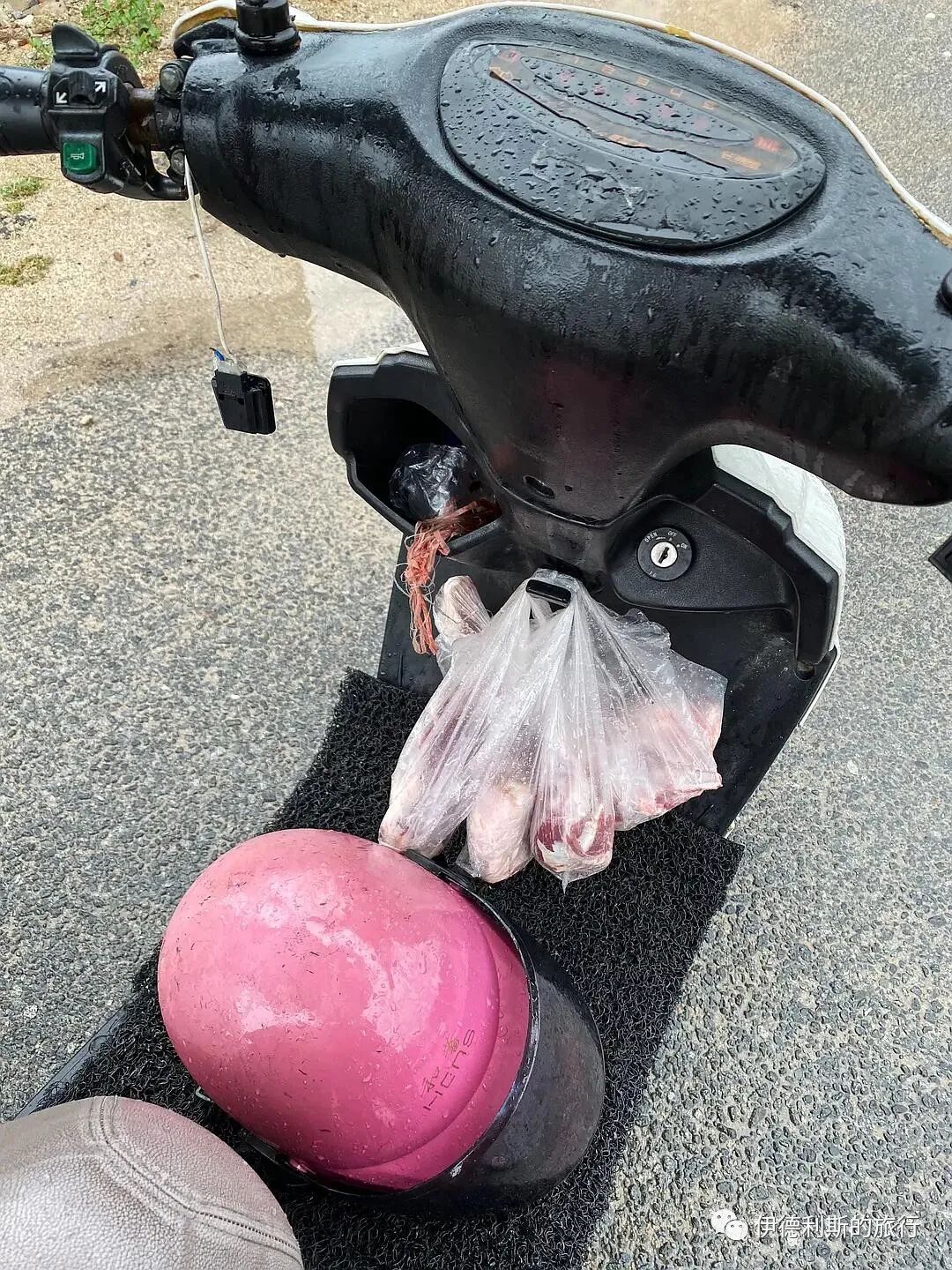
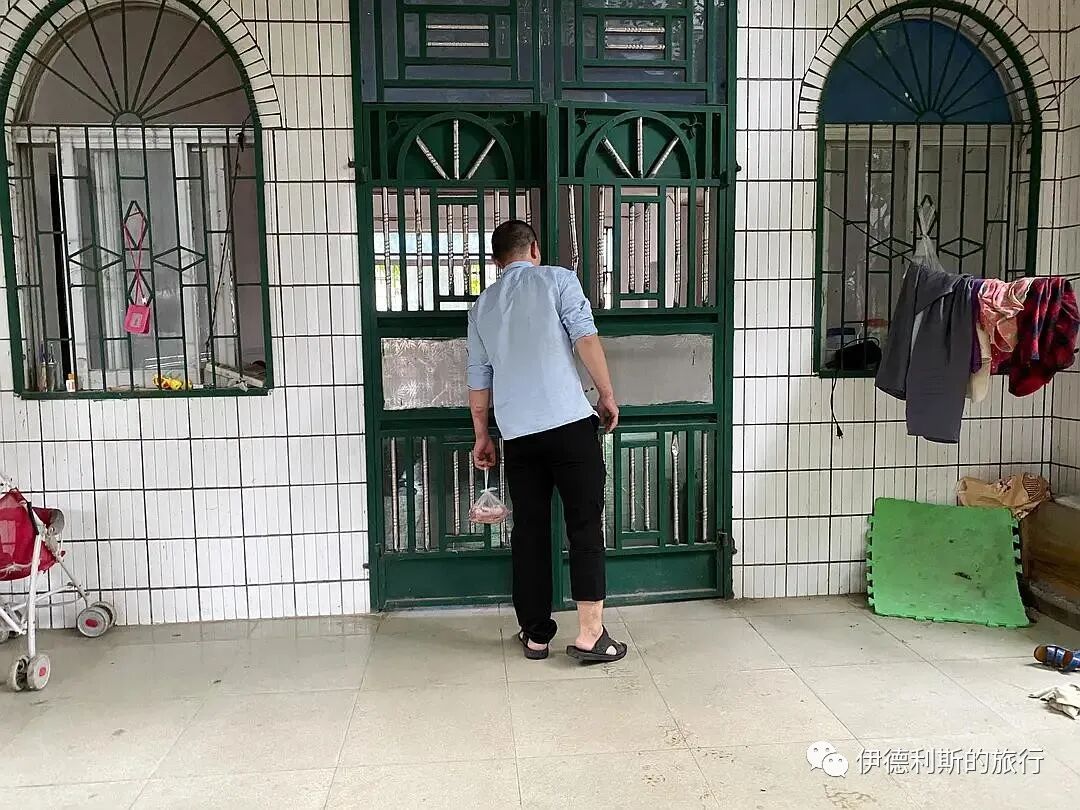
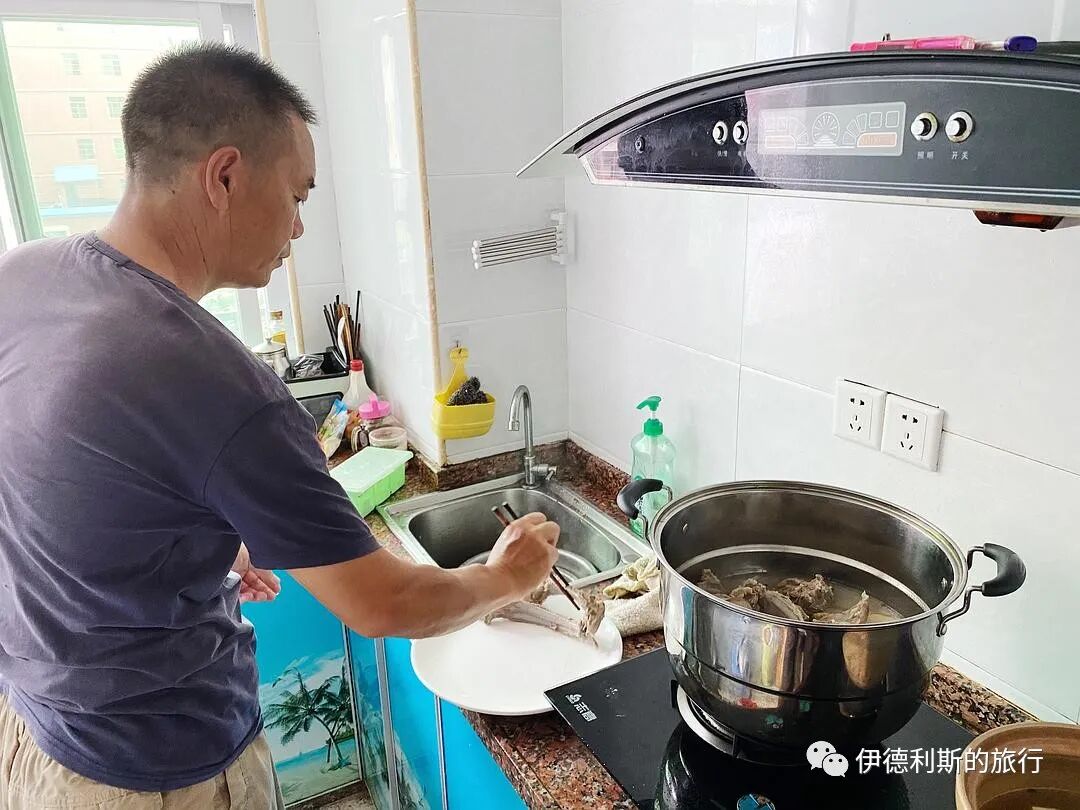
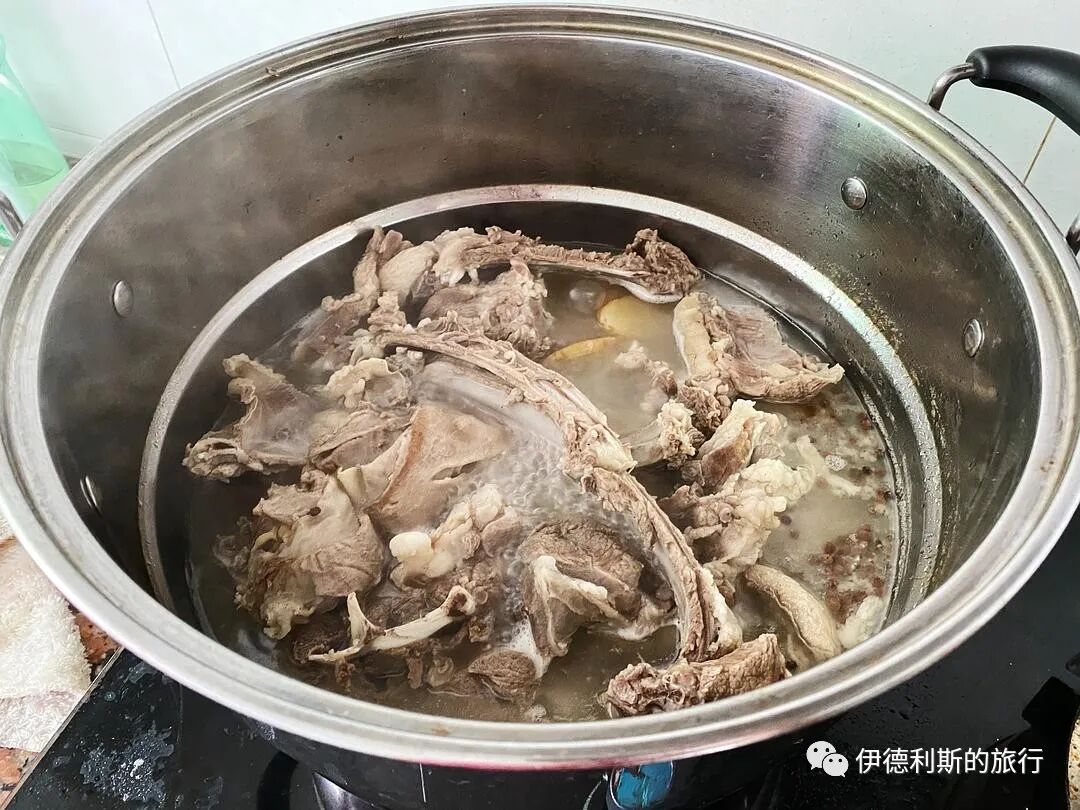
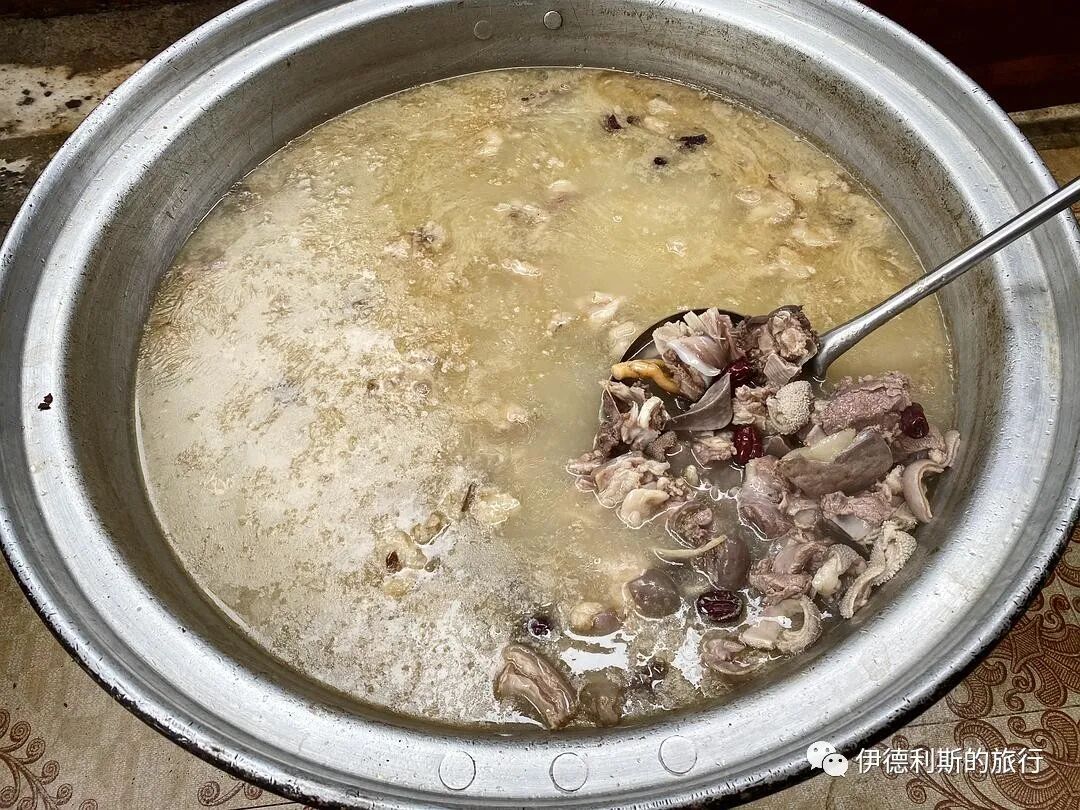
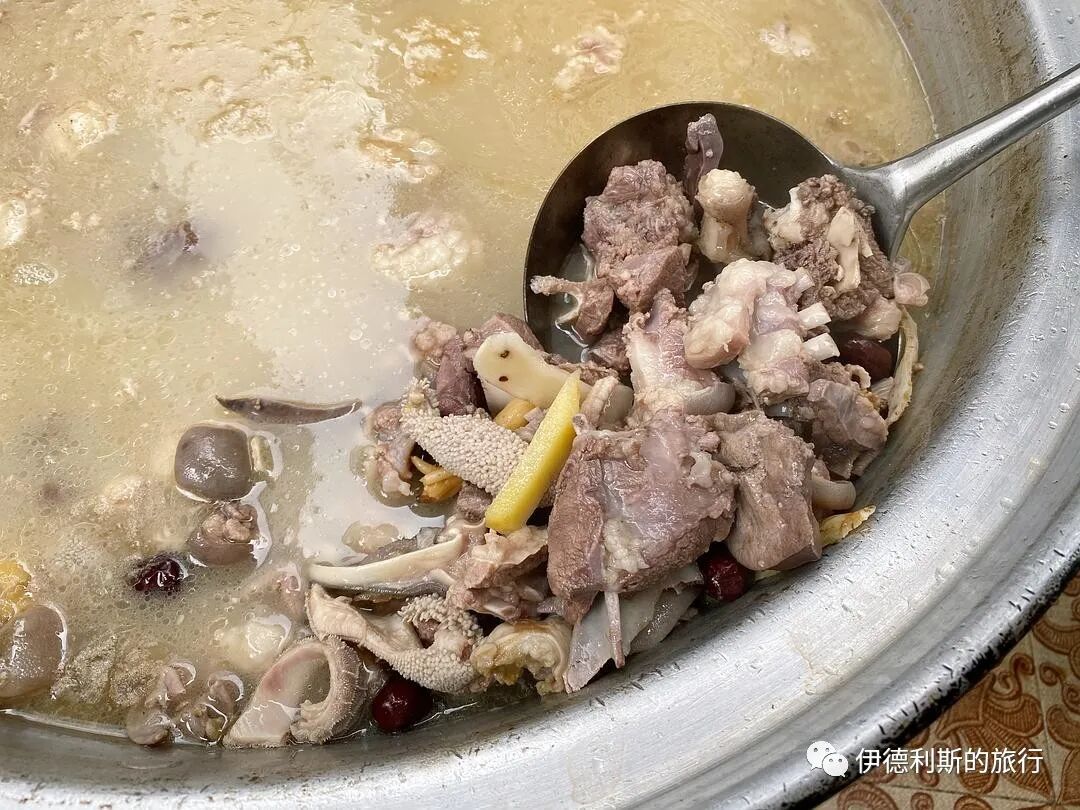
This is the lamb offal soup (yangza tang) stewed by our downstairs neighbors, who are Hui people from Huihui Village. Hui people in Huihui Village rarely eat lamb; they basically only eat the Dongshan goats they sacrifice themselves once a year during Eid al-Adha. After slaughtering the sheep, the Hui people scrape off the hair because they think lamb tastes best with the skin on.
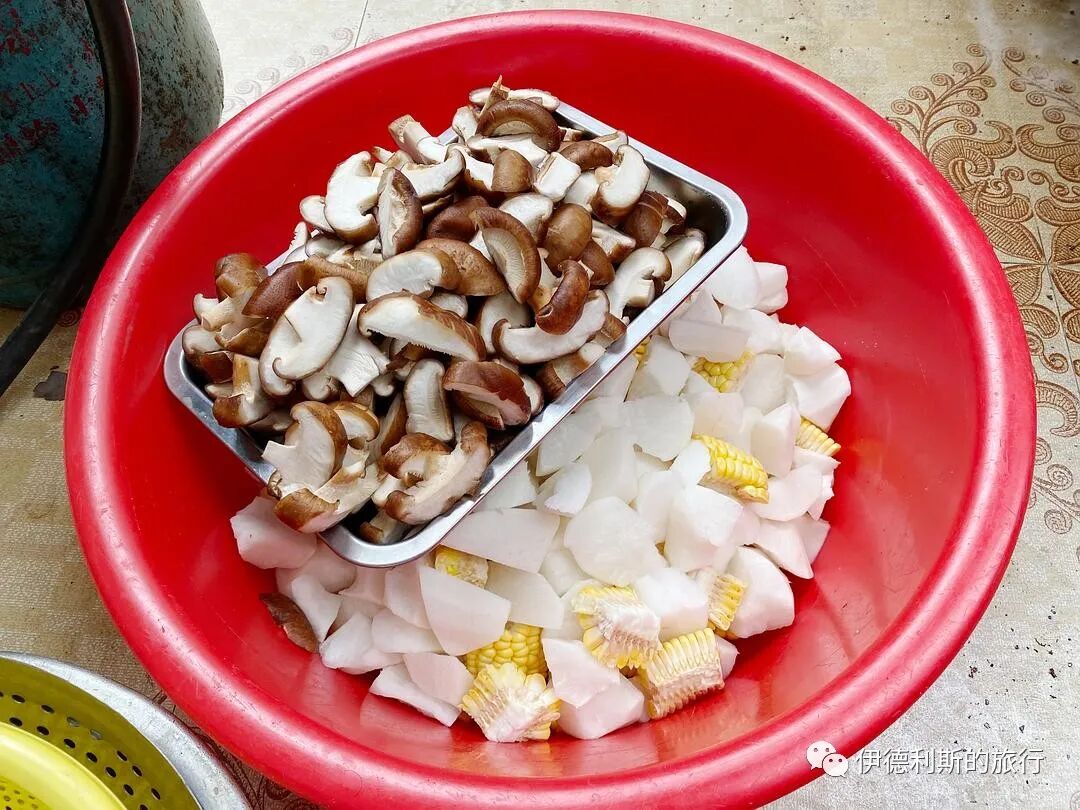
When stewing the lamb offal, they include the sheep's feet and cook it from morning until afternoon, adding various spices. Finally, they add radishes, corn, and mushrooms. The taste is completely different from northern lamb soup; it is a unique and delicious flavor.
Besides holiday foods based on the Islamic calendar, I also eat traditional seasonal foods based on the lunar calendar.
Jingzhe (Awakening of Insects): Oil tea eggs (youcha dan).
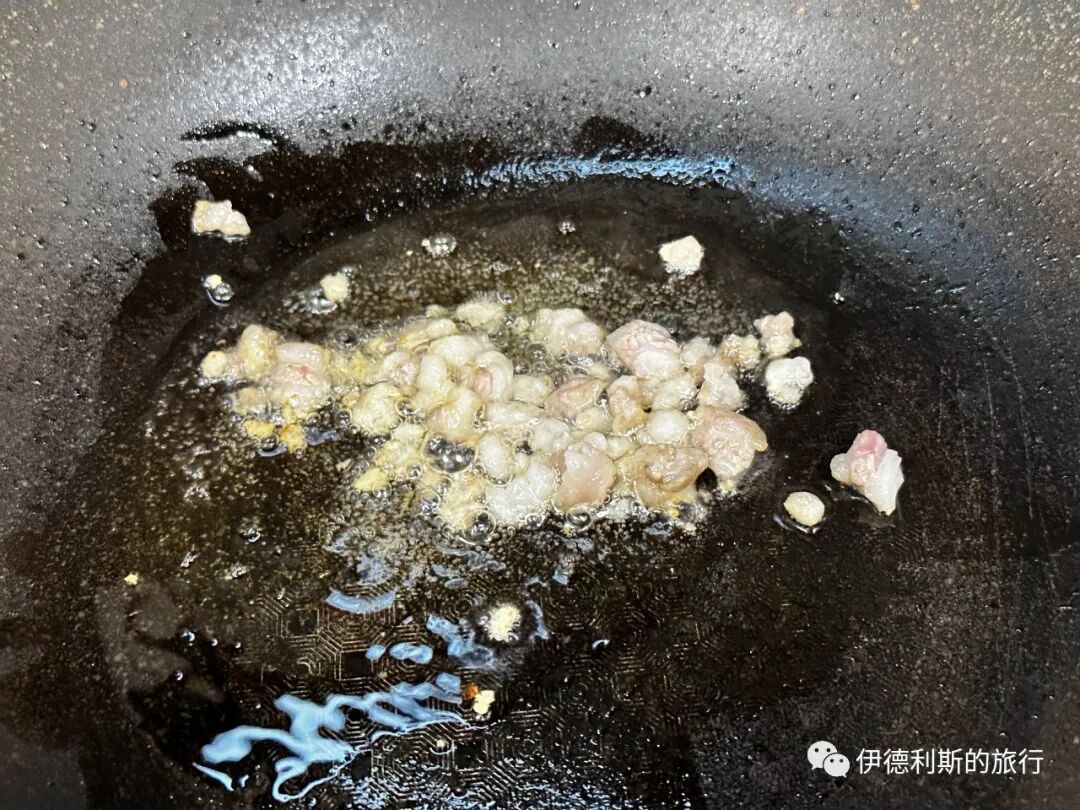
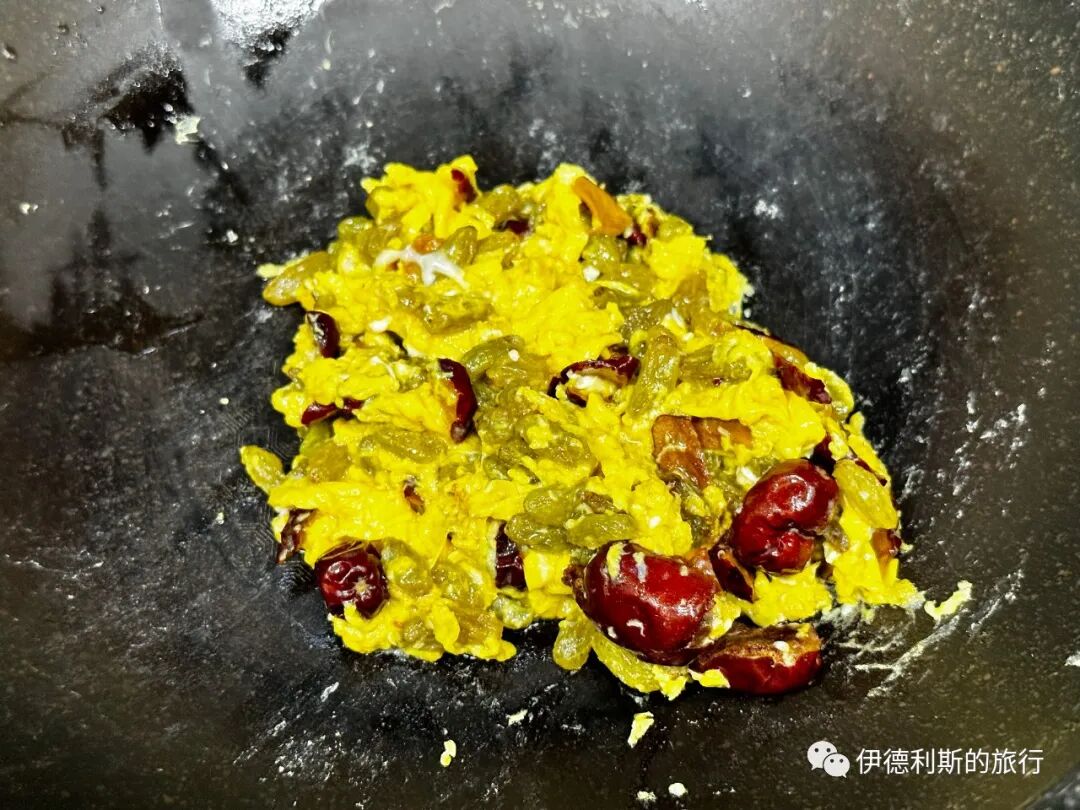
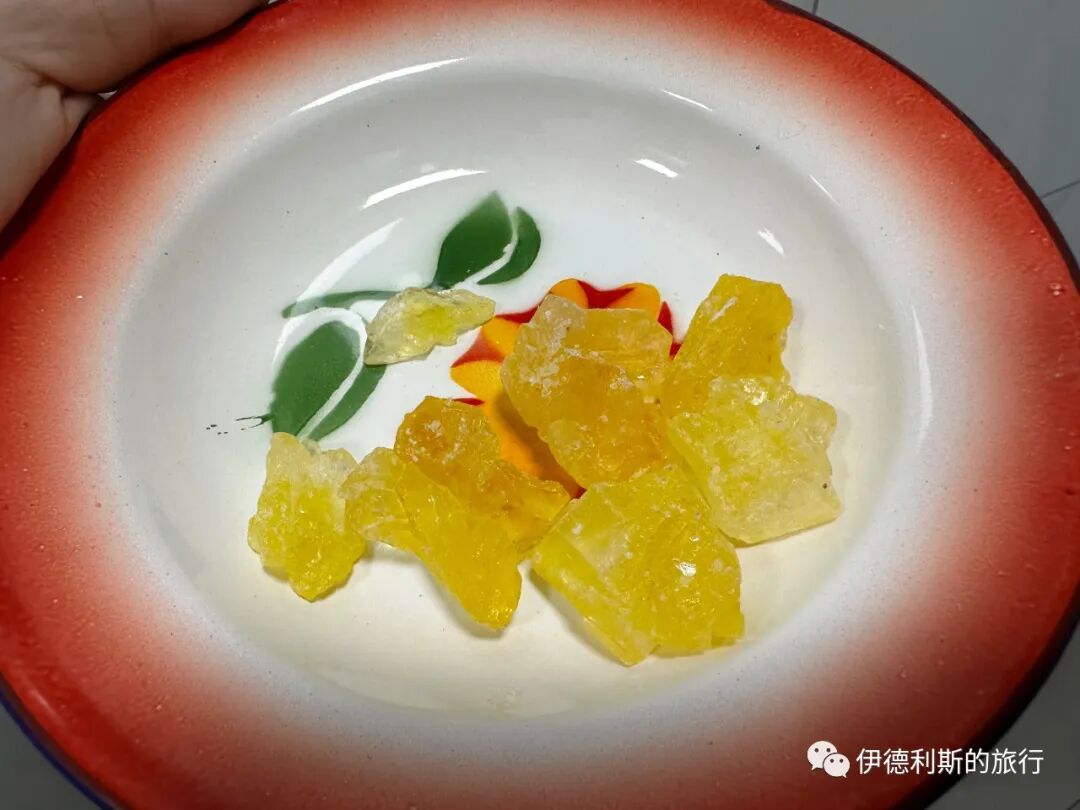
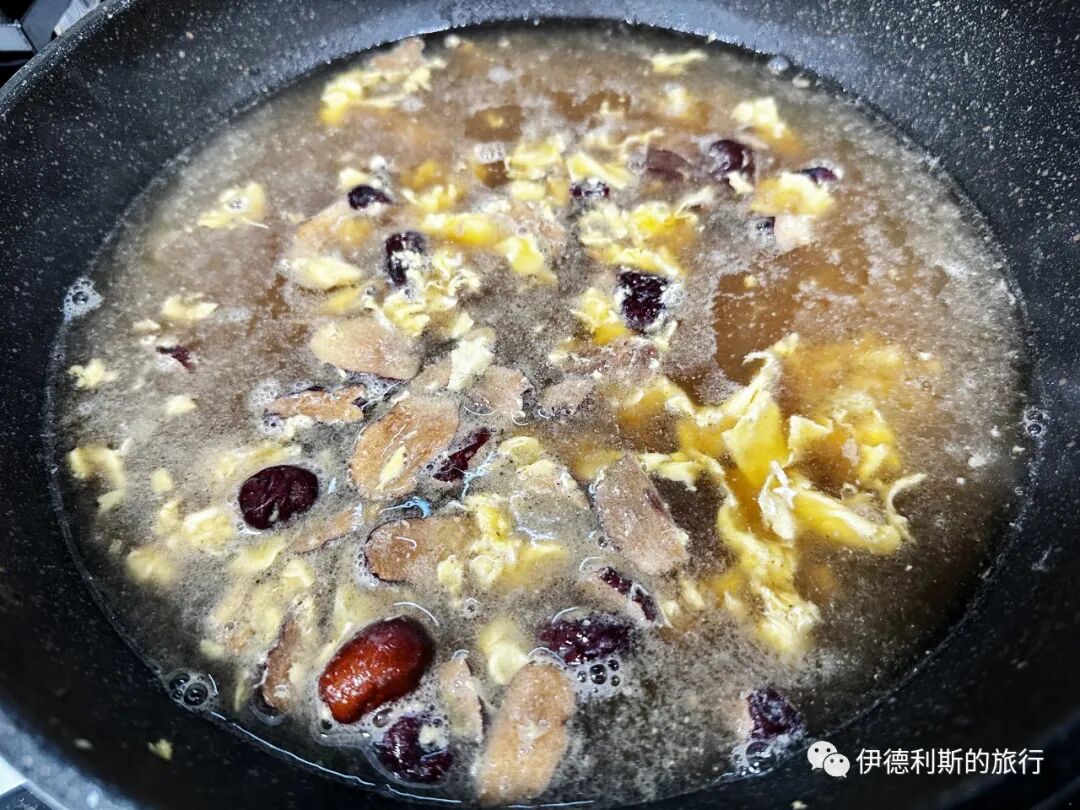
Oil tea eggs are a seasonal food unique to Xinjiang Hui Muslims on the day of Jingzhe. The method is simple: first brew brick tea (zhuancha), then render some lamb fat. Stir-fry eggs in the lamb fat, then add raisins, sliced dates, and walnuts. After the eggs are fried, strain the tea leaves, pour the brick tea into the pot, and finally add rock sugar.
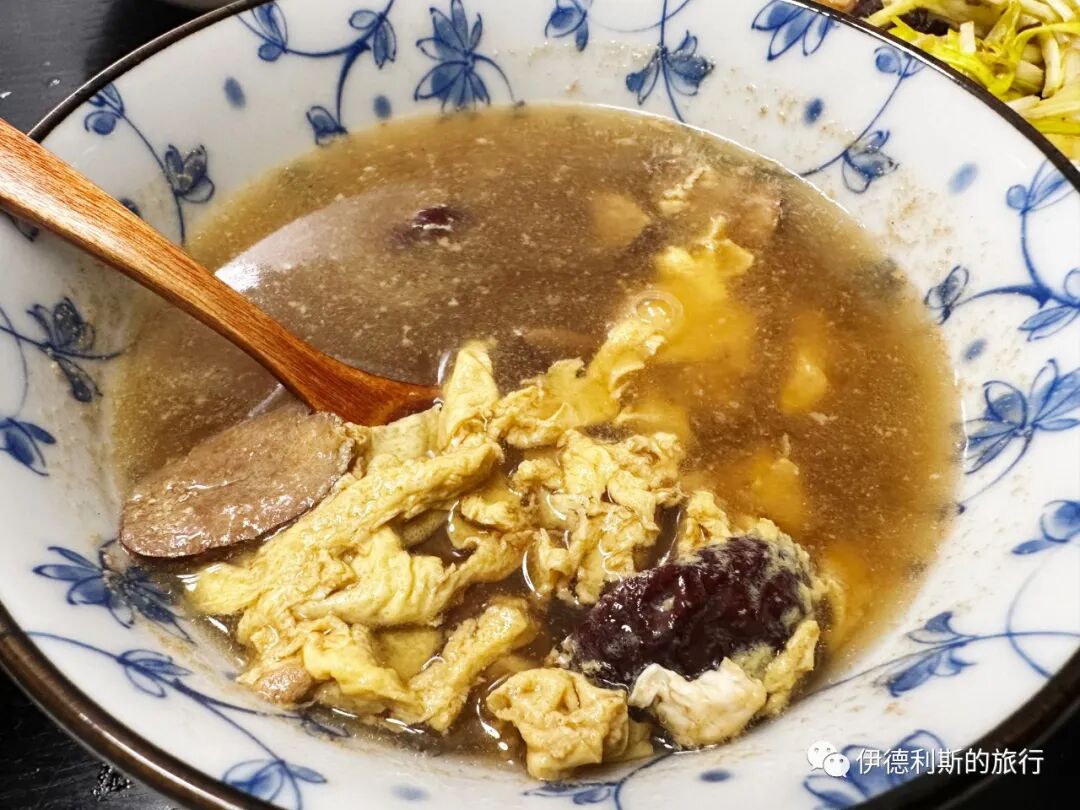
Summer Solstice: Cold noodles (lengtao mian).
Beijingers have a saying, 'Wonton for Winter Solstice, noodles for Summer Solstice.' On the Summer Solstice, we eat cold noodles, which are boiled and then rinsed in cold water. You can serve them with eggplant sauce, fried soybean paste (zhajiang), or sesame paste. According to the 'Dijing Suishi Jisheng,' 'On this day, every family eats cold noodles, which is what people commonly call rinsed noodles...'
Let me share how I make fried soybean paste noodles (zhajiang mian). It is actually simple. First, stir-fry meat with green onions, ginger, and garlic over high heat. Use plenty of oil (sometimes I render some lamb fat to add in). Then add yellow soybean paste (huangjiang)—if it's dry, dilute it with water, though I usually buy the wet version—and sweet bean paste (tianmianjiang). Simmer on low heat, adding salt and sugar to your own taste. I usually use a ratio of three parts sweet bean paste to seven parts yellow soybean paste, then add a little sugar.
Winter Solstice: Wonton.
The night of the Winter Solstice is the longest of the year. It is also Yalda Night in Iranian culture, where people like to eat pomegranates, as the red color represents the light of dawn.
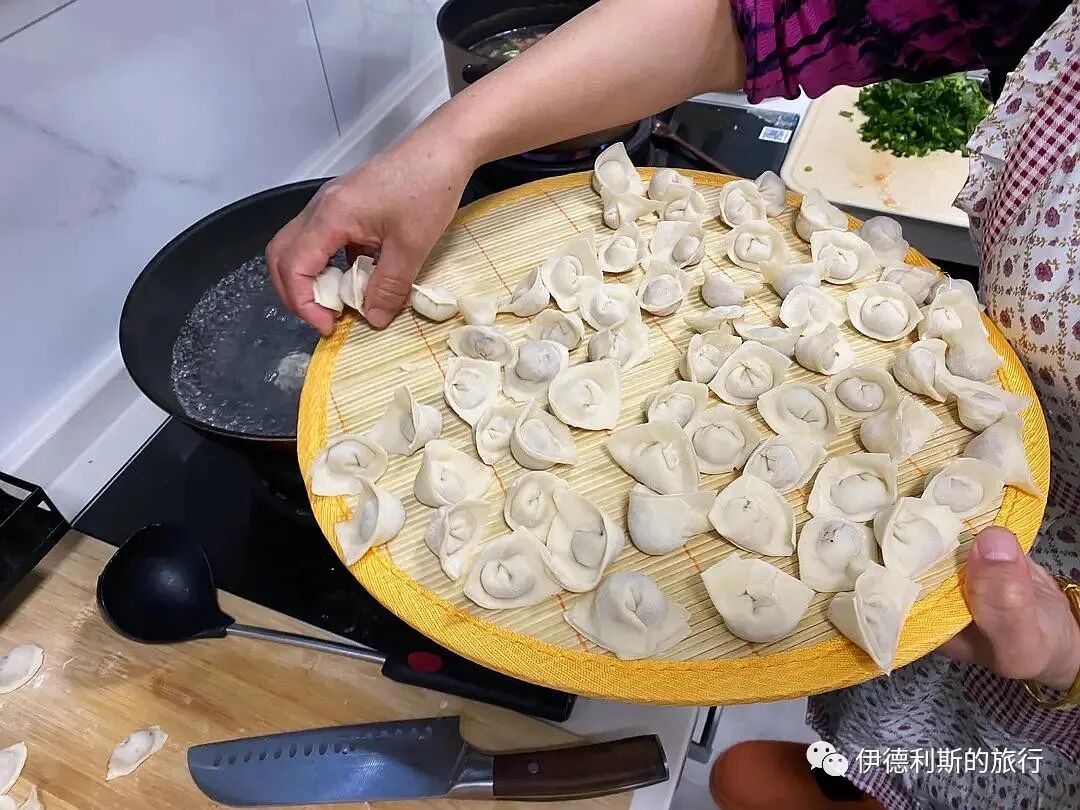
Old Beijingers make a point of eating wonton on the Winter Solstice. The 'Yanjing Suishi Ji' records: 'The shape of a wonton is like a chicken egg, resembling the chaos of heaven and earth, so we eat them on the Winter Solstice.' There is also the saying, 'Wonton for Winter Solstice, noodles for Summer Solstice.' Additionally, the 'Chunming Caifeng Zhi' records: 'Yuanbao soup is wonton. Beijing families often eat this on the Winter Solstice, as the proverb says, Wonton for Winter Solstice, noodles for Summer Solstice, which is appropriate for the season.'
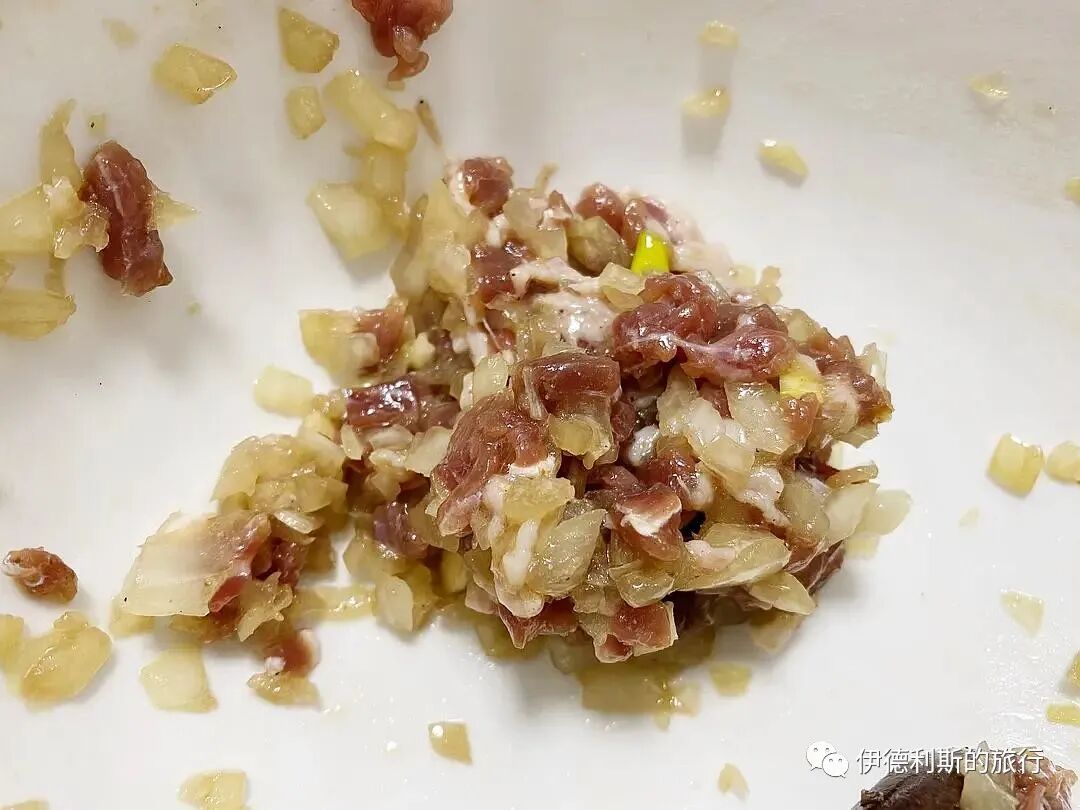
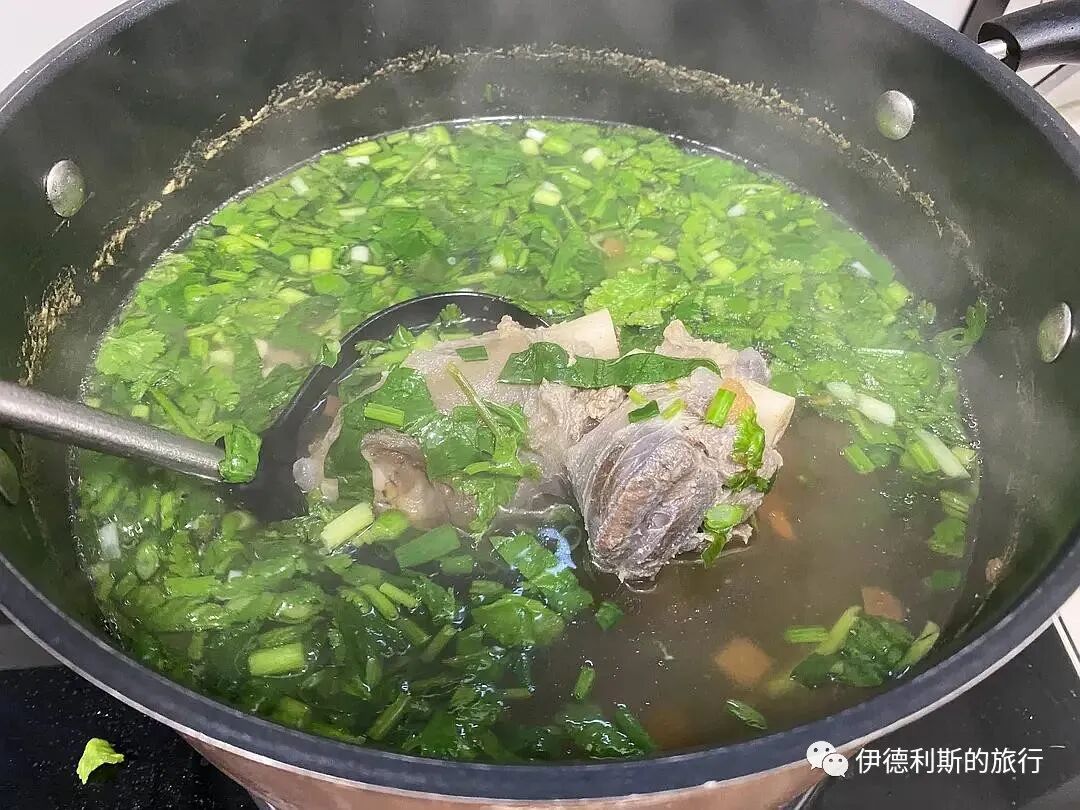
My family makes traditional Urumqi Hui-style lamb sour soup wonton (hong dong). After the lamb is stewed, we add tomatoes, spinach, green onions, and cilantro. The wontons are filled with the classic lamb and onion (piyazi) filling.
Summary: Halal Food Guide: Hui Muslim Seasonal Dishes and Eid Food is presented here as a firsthand travel account in clear English, beginning with this scene: In the daily life of Muslims, certain foods are closely tied to holidays. Foods like bean rice for Ashura, fried dough (youxiang) for Mawlid, dates for breaking the fast, and lamb for Eid al-Adha are all important parts. The account keeps its focus on Hui Muslim Food, Eid Food, Halal Traditions while preserving the names, places, food, and historical details from the Chinese source.
In the daily life of Muslims, certain foods are closely tied to holidays. Foods like bean rice for Ashura, fried dough (youxiang) for Mawlid, dates for breaking the fast, and lamb for Eid al-Adha are all important parts of these holidays. I will share some of the holiday foods I have eaten.
10th of the first month of the Islamic calendar: Ashura.
The 10th of the first month is the honorable Ashura, the first important day after the Islamic New Year. To commemorate the day the ship of Nuh (Noah's Ark) docked, Hui Muslims traditionally make Ashura bean porridge.
Every year, my family makes the Urumqi Hui version of Ashura lamb and bean rice. We prepare seven types of beans, boil them in a pressure cooker, then dice lamb from the Eid al-Adha sacrifice (Qurbani), fry it with scallions in rendered lamb fat, and add salt and Sichuan peppercorn powder. After the beans are cooked, we add rice and glutinous rice, then the fried meat, and simmer until the rice is done. When eating, it has both the fresh scent of beans and the savory taste of lamb; I could eat two big bowls and still want more.
I am sharing the origin of Ashura porridge as told by Imam An from the Jingjue Mosque in Nanjing: On Ashura, the Prophet Nuh and his followers got off the boat and fasted that day to thank Allah. At that time, they had almost no food left. One person took out a handful of wheat, another a handful of mung beans, and another a handful of fava beans. After the Prophet Nuh gathered seven types of seeds, he boiled them so everyone could break their fast. By the will of Allah and the miracle (mu'jiza) of the Prophet. This small amount of food was enough to feed everyone who came off the boat. This was the first meal cooked on land after the flood covered the earth, so people treat it as a blessing from the Prophet Nuh. The Prophet Nuh is known as the second ancestor of humanity.
12th of the third month of the Islamic calendar: Mawlid.
The 12th of the third month is the birthday of the Prophet (Mawlid), and Muslims everywhere commemorate him during this time. Mawlid celebrations first appeared in Baghdad during the Abbasid Caliphate and grew into grand festivals in the Middle East through the Sufis in the 13th century, then spread around the world. In places like Indonesia, the scale of Mawlid even exceeds that of Eid al-Fitr and Eid al-Adha.
Hui Muslims in China hold Mawlid events at the mosque during this time, also called the Holy Gathering or Holy Birthday. After listening to sermons (wa'z), scripture recitations, and saying dua in the main hall, everyone goes downstairs for a communal meal, which is called "koudao." In North China, the most important foods for the Holy Gathering are fried dough (youxiang) and meat porridge. The fried dough in North China is relatively soft, with a texture a bit like bread. The lamb porridge is made with lamb bones, letting the marrow melt into the porridge, making it very fragrant.
Below is the Holy Gathering I attended in Nanxiapo, Beijing, in 2021; although it was smaller than in previous years, I still had the fried dough and meat porridge.
15th of the eighth month of the Islamic calendar: Night of Bara'at.
The night of the 15th of the eighth month is called the night of Bara'at, meaning the night of forgiveness. People say Hu Dengzhou Baba in Shaanxi during the Ming Dynasty started the practice of observing Bara'at, also called the Night Prayer or the Walking Festival. During the first half of the eighth month, everyone gathers to invite the imam and elders to recite scriptures and praise for Bara'at, welcoming the arrival of Ramadan through seeking forgiveness.
In 2022, our family visited Bulate. My mother-in-law made lamb noodle soup (yangrou fensi tang), fried dough (youxiang), braised meatballs (hui wanzi), braised beef steak, and spicy chicken (jiaoma ji). It felt like we were back in Urumqi.
To make lamb noodle soup, first braise the lamb. Then, stir pea starch, let it set overnight, and cut it into blocks. Next, make a topping with cabbage, small radishes, sliced meat, and tomatoes. When eating, you must soak fried dough in the soup.
The ninth month of the Islamic calendar: Ramadan.
The ninth month of the Islamic calendar is the holy month of Ramadan, the month when the Quran was revealed. Fasting, also called holding the fast, is one of the five pillars of the faith. Muslims abstain from food during the day this month. They eat a pre-dawn meal called Suhur and break their fast after sunset with a meal called Iftar.
Eating dates to break the fast is a Sunnah, so many people choose to use dates to break their fast. These are the three types of Medina dates I ate during Ramadan in 2022.
On the left are Mabroom dates, which are long, dark brown, and have a moderate, candy-like sweetness. In the middle are Safawi dates, which are rectangular, dark black, and relatively soft. These are also commonly eaten by pilgrims during Hajj. On the right are Ajwa dates, which are round, dark black, chewy, and very sweet. This is also the most famous type of date, mentioned in the Hadith. Records state that all Ajwa dates originally came from a date palm tree planted by the Prophet Muhammad.
Breaking the fast with everyone at the mosque is a very atmospheric experience. Some mosques in Beijing prepare pastries and fruit for Iftar.
Below is when I was at Nanxiapo Mosque in Beijing in 2021.
This was at the Nandouyacai Mosque in Beijing in 2021.
This was at the Dongzhimenwai Mosque in Beijing in 2021.
In Beijing, some foreign halal restaurants offer Iftar buffets during Ramadan, where you can taste specialty foods from different countries. For details, see my previous article, 'Eating Turkish, Tunisian, Jordanian, and Pakistani Buffets during Ramadan in Beijing'.
The first place is Dardanelles, a long-standing Ramadan Iftar buffet restaurant on Ritan Upper Street. It is a Turkish restaurant run by Azerbaijanis, so it features both Turkish and Azerbaijani flavors.
The best part is the unlimited supply of meat from the open-fire grill, including roast chicken, roast lamb chops, and kebab meat paste. You can eat your fill! There are also various types of flatbread (nang) and bread, plus Levantine appetizers and stews. They have lentil soup made from three colors of lentils. Drinks include lemonade, salty yogurt drink (ayran), and Turkish black tea. For dessert, there is classic baklava and milk pudding, plus various fruits. In short, their selection is very rich.
Baklava is the most famous dessert of the Ottoman Empire, developed by royal chefs at the Topkapi Palace. Every year on the 15th day of Ramadan, the Ottoman Sultan would attend a ceremony called 'Baklava Alayı,' where he would distribute trays of baklava to the Janissaries.
Baklava is a pastry made by layering very thin unleavened dough (filo) with crushed pistachios, crushed walnuts, syrup, or honey.
The second stop is the Tunisian restaurant La Medina at Liangma River. First, follow the Sunnah by eating dates, then drink Harissa soup. The first plate I took included North African sausage (merguez), kebab, six types of Levantine and Maghreb appetizers (meze), fried chickpea balls (falafel), and fried meat balls (kibbeh). Meze and falafel can be stuffed into pita bread.
The second plate was the classic North African Berber dish couscous served with a clay pot stew (tajine). Couscous is a staple food for the Berbers. It is made by rubbing semolina flour into millet-sized grains, which are then dried. A clay pot (tajine) is a cooking vessel with a round, flat bottom and a conical or domed top. This design lets evaporated steam return to the bottom, and you can add water through the hole in the lid.
The third stop is the Levantine restaurant Al Safir at Sanyuanqiao, owned by a Palestinian from Jordan.
The three Ramadan iftar buffets I have tried so far each have their own unique features. Dardanelles has the widest variety, and the open-flame grilled meat is unlimited. La Medina is the only place in Beijing to get a Maghreb buffet, which makes it very unique. Al Safir has the richest selection of Levantine appetizers (Meze), and their falafel and grilled chicken wraps are the best.
At Al Safir, you can eat the most classic Ramadan snack for Arabs, lamb fried pastry triangles (Sambousek). This snack started as the Iranian Sanbosag and spread everywhere as Persian culture traveled. It entered Arab cuisine after the 10th century, reached South Asia with the Delhi Sultanate after the 13th century, and later spread to China, Indonesia, and Africa with Muslim merchants.
The fourth stop is the Pakistani restaurant Khan Baba in Sanlitun. First came dates and water, then Zainab chose flatbread (naan) as her main, while I picked the classic biryani rice with masala chicken, grilled chicken chunks (tikka), and grilled fish. The drink was rose syrup water, and dessert was milk pudding (Kheer). Their yogurt tasted very authentic and tart.
1st day of the 10th month of the Islamic calendar: Eid al-Fitr.
A month of fasting ends, welcoming the important Eid al-Fitr, also called 'Guo'erde'. 'Eid' is Arabic for 'festival,' and Hui Muslims in Urumqi pronounce it 'Erdi'.
I spent Eid al-Fitr in Urumqi in 2020. Hui Muslims in Urumqi usually follow three main steps for Eid al-Fitr: go to the mosque in the morning for prayers, visit graves, and then visit relatives. There are four must-have foods for Eid al-Fitr: noodle soup (fentang), fried dough (youxiang), fried dough twists (sanzi), and small pastries (diediezi). The noodle soup and fried dough must be homemade.
Our family's fried dough twists (sanzi) and small pastries (diediezi).
Hand-pulled fried dough twists (sanzi) made with eggs.
After finishing my first bowl of noodle soup (fentang), my father-in-law and I set off for Zainab's uncle's house, where I had a second bowl. The fried dough (youxiang) at the uncle's house was made with scalded flour.
The uncle's fried dough twists (sanzi) and small pastries (diediezi), which included twisted sugar snacks (tangningningzi) and pastries from the Ma family shop on Shanxi Alley. The twisted sugar snacks (tangningningzi) were soft and delicious.
After visiting the graves, we went to visit Zainab's great-uncle.
The great-uncle's fried dough twists (sanzi) and various snacks.
I spent Eid al-Fitr in Beijing in 2021. After the Eid prayers, everyone gathered on the roof of the century-old Jian'an Zhai shop on Yangmeizhu Xiejie outside Qianmen for a buffet. The 21st-generation successor of the Wang Hui family from Jian'an Tang fried the dough (youxiang) for us himself. It was super delicious, with a chewy texture that wasn't hard at all. We also ate old Beijing Hui-style beef stew and sugar-rolled fruit (tangjuanguo). The beef is brought from Niujie every morning and stewed fresh, never kept overnight. The sugar-rolled fruit (tangjuanguo) is made of yam, dates, and raisins, which are steamed and then stir-fried in sugar, a very time-consuming process.
Besides old Beijing specialties, there was chicken curry, tomato pasta, fried cod fillets, fruit salad, and cream cakes. It was a very satisfying meal!
10th day of the 12th month of the Islamic calendar: Eid al-Adha.
Eid al-Adha is also called the Festival of Sacrifice or the Festival of Loyalty and Filial Piety. In Singapore and Malaysia, it is called Hari Raya Haji. It commemorates the story of the Prophet Ibrahim following Allah's command to sacrifice his beloved son Ismail. Just as the knife touched his throat, Allah sent an angel with a black-headed ram to take his place. Muslims who can afford it perform a sacrifice every year during Eid al-Adha, choosing between a camel, cow, or sheep depending on their situation. After the sacrifice, the meat is usually divided into three parts: one for the family to eat, one for relatives, and one to give to the poor.
In 2020, I spent Eid al-Adha in Sanya, Hainan, and the sheep we sacrificed was a Dongshan goat (Dongshan yang) bought by my friend Muning.
We asked a neighbor to make us some dry-fried lamb (ganbian yangrou) in the local Sanya style. Their family usually sells roast duck next to the Southern Mosque (Nan Si) in Huixin Village, but they were on holiday for Eid al-Adha.
The imam from Turpan, Xinjiang, who performed the sacrifice for us, made a Xinjiang-style clear-stewed lamb (qingdun yangrou). It was super delicious, and the lamb broth was great too.
After the meal, I helped Muning distribute the rest of the meat to friends.
This is the lamb offal soup (yangza tang) stewed by our downstairs neighbors, who are Hui people from Huihui Village. Hui people in Huihui Village rarely eat lamb; they basically only eat the Dongshan goats they sacrifice themselves once a year during Eid al-Adha. After slaughtering the sheep, the Hui people scrape off the hair because they think lamb tastes best with the skin on.
When stewing the lamb offal, they include the sheep's feet and cook it from morning until afternoon, adding various spices. Finally, they add radishes, corn, and mushrooms. The taste is completely different from northern lamb soup; it is a unique and delicious flavor.
Besides holiday foods based on the Islamic calendar, I also eat traditional seasonal foods based on the lunar calendar.
Jingzhe (Awakening of Insects): Oil tea eggs (youcha dan).
Oil tea eggs are a seasonal food unique to Xinjiang Hui Muslims on the day of Jingzhe. The method is simple: first brew brick tea (zhuancha), then render some lamb fat. Stir-fry eggs in the lamb fat, then add raisins, sliced dates, and walnuts. After the eggs are fried, strain the tea leaves, pour the brick tea into the pot, and finally add rock sugar.
Summer Solstice: Cold noodles (lengtao mian).
Beijingers have a saying, 'Wonton for Winter Solstice, noodles for Summer Solstice.' On the Summer Solstice, we eat cold noodles, which are boiled and then rinsed in cold water. You can serve them with eggplant sauce, fried soybean paste (zhajiang), or sesame paste. According to the 'Dijing Suishi Jisheng,' 'On this day, every family eats cold noodles, which is what people commonly call rinsed noodles...'
Let me share how I make fried soybean paste noodles (zhajiang mian). It is actually simple. First, stir-fry meat with green onions, ginger, and garlic over high heat. Use plenty of oil (sometimes I render some lamb fat to add in). Then add yellow soybean paste (huangjiang)—if it's dry, dilute it with water, though I usually buy the wet version—and sweet bean paste (tianmianjiang). Simmer on low heat, adding salt and sugar to your own taste. I usually use a ratio of three parts sweet bean paste to seven parts yellow soybean paste, then add a little sugar.
Winter Solstice: Wonton.
The night of the Winter Solstice is the longest of the year. It is also Yalda Night in Iranian culture, where people like to eat pomegranates, as the red color represents the light of dawn.
Old Beijingers make a point of eating wonton on the Winter Solstice. The 'Yanjing Suishi Ji' records: 'The shape of a wonton is like a chicken egg, resembling the chaos of heaven and earth, so we eat them on the Winter Solstice.' There is also the saying, 'Wonton for Winter Solstice, noodles for Summer Solstice.' Additionally, the 'Chunming Caifeng Zhi' records: 'Yuanbao soup is wonton. Beijing families often eat this on the Winter Solstice, as the proverb says, Wonton for Winter Solstice, noodles for Summer Solstice, which is appropriate for the season.'
My family makes traditional Urumqi Hui-style lamb sour soup wonton (hong dong). After the lamb is stewed, we add tomatoes, spinach, green onions, and cilantro. The wontons are filled with the classic lamb and onion (piyazi) filling.
Halal Food Guide: Hui Muslim Seasonal Dishes and Eid Food
Articles • ali2007fr posted the article • 0 comments • 145 views • 2026-05-18 21:14
Reposted from the web
Summary: Halal Food Guide: Hui Muslim Seasonal Dishes and Eid Food is presented here as a firsthand travel account in clear English, beginning with this scene: In the daily life of Muslims, certain foods are closely tied to holidays. Foods like bean rice for Ashura, fried dough (youxiang) for Mawlid, dates for breaking the fast, and lamb for Eid al-Adha are all important parts. The account keeps its focus on Hui Muslim Food, Eid Food, Halal Traditions while preserving the names, places, food, and historical details from the Chinese source.
In the daily life of Muslims, certain foods are closely tied to holidays. Foods like bean rice for Ashura, fried dough (youxiang) for Mawlid, dates for breaking the fast, and lamb for Eid al-Adha are all important parts of these holidays. I will share some of the holiday foods I have eaten.
10th of the first month of the Islamic calendar: Ashura.
The 10th of the first month is the honorable Ashura, the first important day after the Islamic New Year. To commemorate the day the ship of Nuh (Noah's Ark) docked, Hui Muslims traditionally make Ashura bean porridge.
Every year, my family makes the Urumqi Hui version of Ashura lamb and bean rice. We prepare seven types of beans, boil them in a pressure cooker, then dice lamb from the Eid al-Adha sacrifice (Qurbani), fry it with scallions in rendered lamb fat, and add salt and Sichuan peppercorn powder. After the beans are cooked, we add rice and glutinous rice, then the fried meat, and simmer until the rice is done. When eating, it has both the fresh scent of beans and the savory taste of lamb; I could eat two big bowls and still want more.
I am sharing the origin of Ashura porridge as told by Imam An from the Jingjue Mosque in Nanjing: On Ashura, the Prophet Nuh and his followers got off the boat and fasted that day to thank Allah. At that time, they had almost no food left. One person took out a handful of wheat, another a handful of mung beans, and another a handful of fava beans. After the Prophet Nuh gathered seven types of seeds, he boiled them so everyone could break their fast. By the will of Allah and the miracle (mu'jiza) of the Prophet. This small amount of food was enough to feed everyone who came off the boat. This was the first meal cooked on land after the flood covered the earth, so people treat it as a blessing from the Prophet Nuh. The Prophet Nuh is known as the second ancestor of humanity.
12th of the third month of the Islamic calendar: Mawlid.
The 12th of the third month is the birthday of the Prophet (Mawlid), and Muslims everywhere commemorate him during this time. Mawlid celebrations first appeared in Baghdad during the Abbasid Caliphate and grew into grand festivals in the Middle East through the Sufis in the 13th century, then spread around the world. In places like Indonesia, the scale of Mawlid even exceeds that of Eid al-Fitr and Eid al-Adha.
Hui Muslims in China hold Mawlid events at the mosque during this time, also called the Holy Gathering or Holy Birthday. After listening to sermons (wa'z), scripture recitations, and saying dua in the main hall, everyone goes downstairs for a communal meal, which is called "koudao." In North China, the most important foods for the Holy Gathering are fried dough (youxiang) and meat porridge. The fried dough in North China is relatively soft, with a texture a bit like bread. The lamb porridge is made with lamb bones, letting the marrow melt into the porridge, making it very fragrant.
Below is the Holy Gathering I attended in Nanxiapo, Beijing, in 2021; although it was smaller than in previous years, I still had the fried dough and meat porridge.
15th of the eighth month of the Islamic calendar: Night of Bara'at.
The night of the 15th of the eighth month is called the night of Bara'at, meaning the night of forgiveness. People say Hu Dengzhou Baba in Shaanxi during the Ming Dynasty started the practice of observing Bara'at, also called the Night Prayer or the Walking Festival. During the first half of the eighth month, everyone gathers to invite the imam and elders to recite scriptures and praise for Bara'at, welcoming the arrival of Ramadan through seeking forgiveness.
In 2022, our family visited Bulate. My mother-in-law made lamb noodle soup (yangrou fensi tang), fried dough (youxiang), braised meatballs (hui wanzi), braised beef steak, and spicy chicken (jiaoma ji). It felt like we were back in Urumqi.
To make lamb noodle soup, first braise the lamb. Then, stir pea starch, let it set overnight, and cut it into blocks. Next, make a topping with cabbage, small radishes, sliced meat, and tomatoes. When eating, you must soak fried dough in the soup.
The ninth month of the Islamic calendar: Ramadan.
The ninth month of the Islamic calendar is the holy month of Ramadan, the month when the Quran was revealed. Fasting, also called holding the fast, is one of the five pillars of the faith. Muslims abstain from food during the day this month. They eat a pre-dawn meal called Suhur and break their fast after sunset with a meal called Iftar.
Eating dates to break the fast is a Sunnah, so many people choose to use dates to break their fast. These are the three types of Medina dates I ate during Ramadan in 2022.
On the left are Mabroom dates, which are long, dark brown, and have a moderate, candy-like sweetness. In the middle are Safawi dates, which are rectangular, dark black, and relatively soft. These are also commonly eaten by pilgrims during Hajj. On the right are Ajwa dates, which are round, dark black, chewy, and very sweet. This is also the most famous type of date, mentioned in the Hadith. Records state that all Ajwa dates originally came from a date palm tree planted by the Prophet Muhammad.
Breaking the fast with everyone at the mosque is a very atmospheric experience. Some mosques in Beijing prepare pastries and fruit for Iftar.
Below is when I was at Nanxiapo Mosque in Beijing in 2021.
This was at the Nandouyacai Mosque in Beijing in 2021.
This was at the Dongzhimenwai Mosque in Beijing in 2021.
In Beijing, some foreign halal restaurants offer Iftar buffets during Ramadan, where you can taste specialty foods from different countries. For details, see my previous article, 'Eating Turkish, Tunisian, Jordanian, and Pakistani Buffets during Ramadan in Beijing'.
The first place is Dardanelles, a long-standing Ramadan Iftar buffet restaurant on Ritan Upper Street. It is a Turkish restaurant run by Azerbaijanis, so it features both Turkish and Azerbaijani flavors.
The best part is the unlimited supply of meat from the open-fire grill, including roast chicken, roast lamb chops, and kebab meat paste. You can eat your fill! There are also various types of flatbread (nang) and bread, plus Levantine appetizers and stews. They have lentil soup made from three colors of lentils. Drinks include lemonade, salty yogurt drink (ayran), and Turkish black tea. For dessert, there is classic baklava and milk pudding, plus various fruits. In short, their selection is very rich.
Baklava is the most famous dessert of the Ottoman Empire, developed by royal chefs at the Topkapi Palace. Every year on the 15th day of Ramadan, the Ottoman Sultan would attend a ceremony called 'Baklava Alayı,' where he would distribute trays of baklava to the Janissaries.
Baklava is a pastry made by layering very thin unleavened dough (filo) with crushed pistachios, crushed walnuts, syrup, or honey.
The second stop is the Tunisian restaurant La Medina at Liangma River. First, follow the Sunnah by eating dates, then drink Harissa soup. The first plate I took included North African sausage (merguez), kebab, six types of Levantine and Maghreb appetizers (meze), fried chickpea balls (falafel), and fried meat balls (kibbeh). Meze and falafel can be stuffed into pita bread.
The second plate was the classic North African Berber dish couscous served with a clay pot stew (tajine). Couscous is a staple food for the Berbers. It is made by rubbing semolina flour into millet-sized grains, which are then dried. A clay pot (tajine) is a cooking vessel with a round, flat bottom and a conical or domed top. This design lets evaporated steam return to the bottom, and you can add water through the hole in the lid.
The third stop is the Levantine restaurant Al Safir at Sanyuanqiao, owned by a Palestinian from Jordan.
The three Ramadan iftar buffets I have tried so far each have their own unique features. Dardanelles has the widest variety, and the open-flame grilled meat is unlimited. La Medina is the only place in Beijing to get a Maghreb buffet, which makes it very unique. Al Safir has the richest selection of Levantine appetizers (Meze), and their falafel and grilled chicken wraps are the best.
At Al Safir, you can eat the most classic Ramadan snack for Arabs, lamb fried pastry triangles (Sambousek). This snack started as the Iranian Sanbosag and spread everywhere as Persian culture traveled. It entered Arab cuisine after the 10th century, reached South Asia with the Delhi Sultanate after the 13th century, and later spread to China, Indonesia, and Africa with Muslim merchants.
The fourth stop is the Pakistani restaurant Khan Baba in Sanlitun. First came dates and water, then Zainab chose flatbread (naan) as her main, while I picked the classic biryani rice with masala chicken, grilled chicken chunks (tikka), and grilled fish. The drink was rose syrup water, and dessert was milk pudding (Kheer). Their yogurt tasted very authentic and tart.
1st day of the 10th month of the Islamic calendar: Eid al-Fitr.
A month of fasting ends, welcoming the important Eid al-Fitr, also called 'Guo'erde'. 'Eid' is Arabic for 'festival,' and Hui Muslims in Urumqi pronounce it 'Erdi'.
I spent Eid al-Fitr in Urumqi in 2020. Hui Muslims in Urumqi usually follow three main steps for Eid al-Fitr: go to the mosque in the morning for prayers, visit graves, and then visit relatives. There are four must-have foods for Eid al-Fitr: noodle soup (fentang), fried dough (youxiang), fried dough twists (sanzi), and small pastries (diediezi). The noodle soup and fried dough must be homemade.
Our family's fried dough twists (sanzi) and small pastries (diediezi).
Hand-pulled fried dough twists (sanzi) made with eggs.
After finishing my first bowl of noodle soup (fentang), my father-in-law and I set off for Zainab's uncle's house, where I had a second bowl. The fried dough (youxiang) at the uncle's house was made with scalded flour.
The uncle's fried dough twists (sanzi) and small pastries (diediezi), which included twisted sugar snacks (tangningningzi) and pastries from the Ma family shop on Shanxi Alley. The twisted sugar snacks (tangningningzi) were soft and delicious.
After visiting the graves, we went to visit Zainab's great-uncle.
The great-uncle's fried dough twists (sanzi) and various snacks.
I spent Eid al-Fitr in Beijing in 2021. After the Eid prayers, everyone gathered on the roof of the century-old Jian'an Zhai shop on Yangmeizhu Xiejie outside Qianmen for a buffet. The 21st-generation successor of the Wang Hui family from Jian'an Tang fried the dough (youxiang) for us himself. It was super delicious, with a chewy texture that wasn't hard at all. We also ate old Beijing Hui-style beef stew and sugar-rolled fruit (tangjuanguo). The beef is brought from Niujie every morning and stewed fresh, never kept overnight. The sugar-rolled fruit (tangjuanguo) is made of yam, dates, and raisins, which are steamed and then stir-fried in sugar, a very time-consuming process.
Besides old Beijing specialties, there was chicken curry, tomato pasta, fried cod fillets, fruit salad, and cream cakes. It was a very satisfying meal!
10th day of the 12th month of the Islamic calendar: Eid al-Adha.
Eid al-Adha is also called the Festival of Sacrifice or the Festival of Loyalty and Filial Piety. In Singapore and Malaysia, it is called Hari Raya Haji. It commemorates the story of the Prophet Ibrahim following Allah's command to sacrifice his beloved son Ismail. Just as the knife touched his throat, Allah sent an angel with a black-headed ram to take his place. Muslims who can afford it perform a sacrifice every year during Eid al-Adha, choosing between a camel, cow, or sheep depending on their situation. After the sacrifice, the meat is usually divided into three parts: one for the family to eat, one for relatives, and one to give to the poor.
In 2020, I spent Eid al-Adha in Sanya, Hainan, and the sheep we sacrificed was a Dongshan goat (Dongshan yang) bought by my friend Muning.
We asked a neighbor to make us some dry-fried lamb (ganbian yangrou) in the local Sanya style. Their family usually sells roast duck next to the Southern Mosque (Nan Si) in Huixin Village, but they were on holiday for Eid al-Adha.
The imam from Turpan, Xinjiang, who performed the sacrifice for us, made a Xinjiang-style clear-stewed lamb (qingdun yangrou). It was super delicious, and the lamb broth was great too.
After the meal, I helped Muning distribute the rest of the meat to friends.
This is the lamb offal soup (yangza tang) stewed by our downstairs neighbors, who are Hui people from Huihui Village. Hui people in Huihui Village rarely eat lamb; they basically only eat the Dongshan goats they sacrifice themselves once a year during Eid al-Adha. After slaughtering the sheep, the Hui people scrape off the hair because they think lamb tastes best with the skin on.
When stewing the lamb offal, they include the sheep's feet and cook it from morning until afternoon, adding various spices. Finally, they add radishes, corn, and mushrooms. The taste is completely different from northern lamb soup; it is a unique and delicious flavor.
Besides holiday foods based on the Islamic calendar, I also eat traditional seasonal foods based on the lunar calendar.
Jingzhe (Awakening of Insects): Oil tea eggs (youcha dan).
Oil tea eggs are a seasonal food unique to Xinjiang Hui Muslims on the day of Jingzhe. The method is simple: first brew brick tea (zhuancha), then render some lamb fat. Stir-fry eggs in the lamb fat, then add raisins, sliced dates, and walnuts. After the eggs are fried, strain the tea leaves, pour the brick tea into the pot, and finally add rock sugar.
Summer Solstice: Cold noodles (lengtao mian).
Beijingers have a saying, 'Wonton for Winter Solstice, noodles for Summer Solstice.' On the Summer Solstice, we eat cold noodles, which are boiled and then rinsed in cold water. You can serve them with eggplant sauce, fried soybean paste (zhajiang), or sesame paste. According to the 'Dijing Suishi Jisheng,' 'On this day, every family eats cold noodles, which is what people commonly call rinsed noodles...'
Let me share how I make fried soybean paste noodles (zhajiang mian). It is actually simple. First, stir-fry meat with green onions, ginger, and garlic over high heat. Use plenty of oil (sometimes I render some lamb fat to add in). Then add yellow soybean paste (huangjiang)—if it's dry, dilute it with water, though I usually buy the wet version—and sweet bean paste (tianmianjiang). Simmer on low heat, adding salt and sugar to your own taste. I usually use a ratio of three parts sweet bean paste to seven parts yellow soybean paste, then add a little sugar.
Winter Solstice: Wonton.
The night of the Winter Solstice is the longest of the year. It is also Yalda Night in Iranian culture, where people like to eat pomegranates, as the red color represents the light of dawn.
Old Beijingers make a point of eating wonton on the Winter Solstice. The 'Yanjing Suishi Ji' records: 'The shape of a wonton is like a chicken egg, resembling the chaos of heaven and earth, so we eat them on the Winter Solstice.' There is also the saying, 'Wonton for Winter Solstice, noodles for Summer Solstice.' Additionally, the 'Chunming Caifeng Zhi' records: 'Yuanbao soup is wonton. Beijing families often eat this on the Winter Solstice, as the proverb says, Wonton for Winter Solstice, noodles for Summer Solstice, which is appropriate for the season.'
My family makes traditional Urumqi Hui-style lamb sour soup wonton (hong dong). After the lamb is stewed, we add tomatoes, spinach, green onions, and cilantro. The wontons are filled with the classic lamb and onion (piyazi) filling. view all
Summary: Halal Food Guide: Hui Muslim Seasonal Dishes and Eid Food is presented here as a firsthand travel account in clear English, beginning with this scene: In the daily life of Muslims, certain foods are closely tied to holidays. Foods like bean rice for Ashura, fried dough (youxiang) for Mawlid, dates for breaking the fast, and lamb for Eid al-Adha are all important parts. The account keeps its focus on Hui Muslim Food, Eid Food, Halal Traditions while preserving the names, places, food, and historical details from the Chinese source.
In the daily life of Muslims, certain foods are closely tied to holidays. Foods like bean rice for Ashura, fried dough (youxiang) for Mawlid, dates for breaking the fast, and lamb for Eid al-Adha are all important parts of these holidays. I will share some of the holiday foods I have eaten.
10th of the first month of the Islamic calendar: Ashura.
The 10th of the first month is the honorable Ashura, the first important day after the Islamic New Year. To commemorate the day the ship of Nuh (Noah's Ark) docked, Hui Muslims traditionally make Ashura bean porridge.
Every year, my family makes the Urumqi Hui version of Ashura lamb and bean rice. We prepare seven types of beans, boil them in a pressure cooker, then dice lamb from the Eid al-Adha sacrifice (Qurbani), fry it with scallions in rendered lamb fat, and add salt and Sichuan peppercorn powder. After the beans are cooked, we add rice and glutinous rice, then the fried meat, and simmer until the rice is done. When eating, it has both the fresh scent of beans and the savory taste of lamb; I could eat two big bowls and still want more.
I am sharing the origin of Ashura porridge as told by Imam An from the Jingjue Mosque in Nanjing: On Ashura, the Prophet Nuh and his followers got off the boat and fasted that day to thank Allah. At that time, they had almost no food left. One person took out a handful of wheat, another a handful of mung beans, and another a handful of fava beans. After the Prophet Nuh gathered seven types of seeds, he boiled them so everyone could break their fast. By the will of Allah and the miracle (mu'jiza) of the Prophet. This small amount of food was enough to feed everyone who came off the boat. This was the first meal cooked on land after the flood covered the earth, so people treat it as a blessing from the Prophet Nuh. The Prophet Nuh is known as the second ancestor of humanity.
12th of the third month of the Islamic calendar: Mawlid.
The 12th of the third month is the birthday of the Prophet (Mawlid), and Muslims everywhere commemorate him during this time. Mawlid celebrations first appeared in Baghdad during the Abbasid Caliphate and grew into grand festivals in the Middle East through the Sufis in the 13th century, then spread around the world. In places like Indonesia, the scale of Mawlid even exceeds that of Eid al-Fitr and Eid al-Adha.
Hui Muslims in China hold Mawlid events at the mosque during this time, also called the Holy Gathering or Holy Birthday. After listening to sermons (wa'z), scripture recitations, and saying dua in the main hall, everyone goes downstairs for a communal meal, which is called "koudao." In North China, the most important foods for the Holy Gathering are fried dough (youxiang) and meat porridge. The fried dough in North China is relatively soft, with a texture a bit like bread. The lamb porridge is made with lamb bones, letting the marrow melt into the porridge, making it very fragrant.
Below is the Holy Gathering I attended in Nanxiapo, Beijing, in 2021; although it was smaller than in previous years, I still had the fried dough and meat porridge.
15th of the eighth month of the Islamic calendar: Night of Bara'at.
The night of the 15th of the eighth month is called the night of Bara'at, meaning the night of forgiveness. People say Hu Dengzhou Baba in Shaanxi during the Ming Dynasty started the practice of observing Bara'at, also called the Night Prayer or the Walking Festival. During the first half of the eighth month, everyone gathers to invite the imam and elders to recite scriptures and praise for Bara'at, welcoming the arrival of Ramadan through seeking forgiveness.
In 2022, our family visited Bulate. My mother-in-law made lamb noodle soup (yangrou fensi tang), fried dough (youxiang), braised meatballs (hui wanzi), braised beef steak, and spicy chicken (jiaoma ji). It felt like we were back in Urumqi.
To make lamb noodle soup, first braise the lamb. Then, stir pea starch, let it set overnight, and cut it into blocks. Next, make a topping with cabbage, small radishes, sliced meat, and tomatoes. When eating, you must soak fried dough in the soup.
The ninth month of the Islamic calendar: Ramadan.
The ninth month of the Islamic calendar is the holy month of Ramadan, the month when the Quran was revealed. Fasting, also called holding the fast, is one of the five pillars of the faith. Muslims abstain from food during the day this month. They eat a pre-dawn meal called Suhur and break their fast after sunset with a meal called Iftar.
Eating dates to break the fast is a Sunnah, so many people choose to use dates to break their fast. These are the three types of Medina dates I ate during Ramadan in 2022.
On the left are Mabroom dates, which are long, dark brown, and have a moderate, candy-like sweetness. In the middle are Safawi dates, which are rectangular, dark black, and relatively soft. These are also commonly eaten by pilgrims during Hajj. On the right are Ajwa dates, which are round, dark black, chewy, and very sweet. This is also the most famous type of date, mentioned in the Hadith. Records state that all Ajwa dates originally came from a date palm tree planted by the Prophet Muhammad.
Breaking the fast with everyone at the mosque is a very atmospheric experience. Some mosques in Beijing prepare pastries and fruit for Iftar.
Below is when I was at Nanxiapo Mosque in Beijing in 2021.
This was at the Nandouyacai Mosque in Beijing in 2021.
This was at the Dongzhimenwai Mosque in Beijing in 2021.
In Beijing, some foreign halal restaurants offer Iftar buffets during Ramadan, where you can taste specialty foods from different countries. For details, see my previous article, 'Eating Turkish, Tunisian, Jordanian, and Pakistani Buffets during Ramadan in Beijing'.
The first place is Dardanelles, a long-standing Ramadan Iftar buffet restaurant on Ritan Upper Street. It is a Turkish restaurant run by Azerbaijanis, so it features both Turkish and Azerbaijani flavors.
The best part is the unlimited supply of meat from the open-fire grill, including roast chicken, roast lamb chops, and kebab meat paste. You can eat your fill! There are also various types of flatbread (nang) and bread, plus Levantine appetizers and stews. They have lentil soup made from three colors of lentils. Drinks include lemonade, salty yogurt drink (ayran), and Turkish black tea. For dessert, there is classic baklava and milk pudding, plus various fruits. In short, their selection is very rich.
Baklava is the most famous dessert of the Ottoman Empire, developed by royal chefs at the Topkapi Palace. Every year on the 15th day of Ramadan, the Ottoman Sultan would attend a ceremony called 'Baklava Alayı,' where he would distribute trays of baklava to the Janissaries.
Baklava is a pastry made by layering very thin unleavened dough (filo) with crushed pistachios, crushed walnuts, syrup, or honey.
The second stop is the Tunisian restaurant La Medina at Liangma River. First, follow the Sunnah by eating dates, then drink Harissa soup. The first plate I took included North African sausage (merguez), kebab, six types of Levantine and Maghreb appetizers (meze), fried chickpea balls (falafel), and fried meat balls (kibbeh). Meze and falafel can be stuffed into pita bread.
The second plate was the classic North African Berber dish couscous served with a clay pot stew (tajine). Couscous is a staple food for the Berbers. It is made by rubbing semolina flour into millet-sized grains, which are then dried. A clay pot (tajine) is a cooking vessel with a round, flat bottom and a conical or domed top. This design lets evaporated steam return to the bottom, and you can add water through the hole in the lid.
The third stop is the Levantine restaurant Al Safir at Sanyuanqiao, owned by a Palestinian from Jordan.
The three Ramadan iftar buffets I have tried so far each have their own unique features. Dardanelles has the widest variety, and the open-flame grilled meat is unlimited. La Medina is the only place in Beijing to get a Maghreb buffet, which makes it very unique. Al Safir has the richest selection of Levantine appetizers (Meze), and their falafel and grilled chicken wraps are the best.
At Al Safir, you can eat the most classic Ramadan snack for Arabs, lamb fried pastry triangles (Sambousek). This snack started as the Iranian Sanbosag and spread everywhere as Persian culture traveled. It entered Arab cuisine after the 10th century, reached South Asia with the Delhi Sultanate after the 13th century, and later spread to China, Indonesia, and Africa with Muslim merchants.
The fourth stop is the Pakistani restaurant Khan Baba in Sanlitun. First came dates and water, then Zainab chose flatbread (naan) as her main, while I picked the classic biryani rice with masala chicken, grilled chicken chunks (tikka), and grilled fish. The drink was rose syrup water, and dessert was milk pudding (Kheer). Their yogurt tasted very authentic and tart.
1st day of the 10th month of the Islamic calendar: Eid al-Fitr.
A month of fasting ends, welcoming the important Eid al-Fitr, also called 'Guo'erde'. 'Eid' is Arabic for 'festival,' and Hui Muslims in Urumqi pronounce it 'Erdi'.
I spent Eid al-Fitr in Urumqi in 2020. Hui Muslims in Urumqi usually follow three main steps for Eid al-Fitr: go to the mosque in the morning for prayers, visit graves, and then visit relatives. There are four must-have foods for Eid al-Fitr: noodle soup (fentang), fried dough (youxiang), fried dough twists (sanzi), and small pastries (diediezi). The noodle soup and fried dough must be homemade.
Our family's fried dough twists (sanzi) and small pastries (diediezi).
Hand-pulled fried dough twists (sanzi) made with eggs.
After finishing my first bowl of noodle soup (fentang), my father-in-law and I set off for Zainab's uncle's house, where I had a second bowl. The fried dough (youxiang) at the uncle's house was made with scalded flour.
The uncle's fried dough twists (sanzi) and small pastries (diediezi), which included twisted sugar snacks (tangningningzi) and pastries from the Ma family shop on Shanxi Alley. The twisted sugar snacks (tangningningzi) were soft and delicious.
After visiting the graves, we went to visit Zainab's great-uncle.
The great-uncle's fried dough twists (sanzi) and various snacks.
I spent Eid al-Fitr in Beijing in 2021. After the Eid prayers, everyone gathered on the roof of the century-old Jian'an Zhai shop on Yangmeizhu Xiejie outside Qianmen for a buffet. The 21st-generation successor of the Wang Hui family from Jian'an Tang fried the dough (youxiang) for us himself. It was super delicious, with a chewy texture that wasn't hard at all. We also ate old Beijing Hui-style beef stew and sugar-rolled fruit (tangjuanguo). The beef is brought from Niujie every morning and stewed fresh, never kept overnight. The sugar-rolled fruit (tangjuanguo) is made of yam, dates, and raisins, which are steamed and then stir-fried in sugar, a very time-consuming process.
Besides old Beijing specialties, there was chicken curry, tomato pasta, fried cod fillets, fruit salad, and cream cakes. It was a very satisfying meal!
10th day of the 12th month of the Islamic calendar: Eid al-Adha.
Eid al-Adha is also called the Festival of Sacrifice or the Festival of Loyalty and Filial Piety. In Singapore and Malaysia, it is called Hari Raya Haji. It commemorates the story of the Prophet Ibrahim following Allah's command to sacrifice his beloved son Ismail. Just as the knife touched his throat, Allah sent an angel with a black-headed ram to take his place. Muslims who can afford it perform a sacrifice every year during Eid al-Adha, choosing between a camel, cow, or sheep depending on their situation. After the sacrifice, the meat is usually divided into three parts: one for the family to eat, one for relatives, and one to give to the poor.
In 2020, I spent Eid al-Adha in Sanya, Hainan, and the sheep we sacrificed was a Dongshan goat (Dongshan yang) bought by my friend Muning.
We asked a neighbor to make us some dry-fried lamb (ganbian yangrou) in the local Sanya style. Their family usually sells roast duck next to the Southern Mosque (Nan Si) in Huixin Village, but they were on holiday for Eid al-Adha.
The imam from Turpan, Xinjiang, who performed the sacrifice for us, made a Xinjiang-style clear-stewed lamb (qingdun yangrou). It was super delicious, and the lamb broth was great too.
After the meal, I helped Muning distribute the rest of the meat to friends.
This is the lamb offal soup (yangza tang) stewed by our downstairs neighbors, who are Hui people from Huihui Village. Hui people in Huihui Village rarely eat lamb; they basically only eat the Dongshan goats they sacrifice themselves once a year during Eid al-Adha. After slaughtering the sheep, the Hui people scrape off the hair because they think lamb tastes best with the skin on.
When stewing the lamb offal, they include the sheep's feet and cook it from morning until afternoon, adding various spices. Finally, they add radishes, corn, and mushrooms. The taste is completely different from northern lamb soup; it is a unique and delicious flavor.
Besides holiday foods based on the Islamic calendar, I also eat traditional seasonal foods based on the lunar calendar.
Jingzhe (Awakening of Insects): Oil tea eggs (youcha dan).
Oil tea eggs are a seasonal food unique to Xinjiang Hui Muslims on the day of Jingzhe. The method is simple: first brew brick tea (zhuancha), then render some lamb fat. Stir-fry eggs in the lamb fat, then add raisins, sliced dates, and walnuts. After the eggs are fried, strain the tea leaves, pour the brick tea into the pot, and finally add rock sugar.
Summer Solstice: Cold noodles (lengtao mian).
Beijingers have a saying, 'Wonton for Winter Solstice, noodles for Summer Solstice.' On the Summer Solstice, we eat cold noodles, which are boiled and then rinsed in cold water. You can serve them with eggplant sauce, fried soybean paste (zhajiang), or sesame paste. According to the 'Dijing Suishi Jisheng,' 'On this day, every family eats cold noodles, which is what people commonly call rinsed noodles...'
Let me share how I make fried soybean paste noodles (zhajiang mian). It is actually simple. First, stir-fry meat with green onions, ginger, and garlic over high heat. Use plenty of oil (sometimes I render some lamb fat to add in). Then add yellow soybean paste (huangjiang)—if it's dry, dilute it with water, though I usually buy the wet version—and sweet bean paste (tianmianjiang). Simmer on low heat, adding salt and sugar to your own taste. I usually use a ratio of three parts sweet bean paste to seven parts yellow soybean paste, then add a little sugar.
Winter Solstice: Wonton.
The night of the Winter Solstice is the longest of the year. It is also Yalda Night in Iranian culture, where people like to eat pomegranates, as the red color represents the light of dawn.
Old Beijingers make a point of eating wonton on the Winter Solstice. The 'Yanjing Suishi Ji' records: 'The shape of a wonton is like a chicken egg, resembling the chaos of heaven and earth, so we eat them on the Winter Solstice.' There is also the saying, 'Wonton for Winter Solstice, noodles for Summer Solstice.' Additionally, the 'Chunming Caifeng Zhi' records: 'Yuanbao soup is wonton. Beijing families often eat this on the Winter Solstice, as the proverb says, Wonton for Winter Solstice, noodles for Summer Solstice, which is appropriate for the season.'
My family makes traditional Urumqi Hui-style lamb sour soup wonton (hong dong). After the lamb is stewed, we add tomatoes, spinach, green onions, and cilantro. The wontons are filled with the classic lamb and onion (piyazi) filling. view all
Reposted from the web
Summary: Halal Food Guide: Hui Muslim Seasonal Dishes and Eid Food is presented here as a firsthand travel account in clear English, beginning with this scene: In the daily life of Muslims, certain foods are closely tied to holidays. Foods like bean rice for Ashura, fried dough (youxiang) for Mawlid, dates for breaking the fast, and lamb for Eid al-Adha are all important parts. The account keeps its focus on Hui Muslim Food, Eid Food, Halal Traditions while preserving the names, places, food, and historical details from the Chinese source.
In the daily life of Muslims, certain foods are closely tied to holidays. Foods like bean rice for Ashura, fried dough (youxiang) for Mawlid, dates for breaking the fast, and lamb for Eid al-Adha are all important parts of these holidays. I will share some of the holiday foods I have eaten.
10th of the first month of the Islamic calendar: Ashura.
The 10th of the first month is the honorable Ashura, the first important day after the Islamic New Year. To commemorate the day the ship of Nuh (Noah's Ark) docked, Hui Muslims traditionally make Ashura bean porridge.
Every year, my family makes the Urumqi Hui version of Ashura lamb and bean rice. We prepare seven types of beans, boil them in a pressure cooker, then dice lamb from the Eid al-Adha sacrifice (Qurbani), fry it with scallions in rendered lamb fat, and add salt and Sichuan peppercorn powder. After the beans are cooked, we add rice and glutinous rice, then the fried meat, and simmer until the rice is done. When eating, it has both the fresh scent of beans and the savory taste of lamb; I could eat two big bowls and still want more.
I am sharing the origin of Ashura porridge as told by Imam An from the Jingjue Mosque in Nanjing: On Ashura, the Prophet Nuh and his followers got off the boat and fasted that day to thank Allah. At that time, they had almost no food left. One person took out a handful of wheat, another a handful of mung beans, and another a handful of fava beans. After the Prophet Nuh gathered seven types of seeds, he boiled them so everyone could break their fast. By the will of Allah and the miracle (mu'jiza) of the Prophet. This small amount of food was enough to feed everyone who came off the boat. This was the first meal cooked on land after the flood covered the earth, so people treat it as a blessing from the Prophet Nuh. The Prophet Nuh is known as the second ancestor of humanity.
12th of the third month of the Islamic calendar: Mawlid.
The 12th of the third month is the birthday of the Prophet (Mawlid), and Muslims everywhere commemorate him during this time. Mawlid celebrations first appeared in Baghdad during the Abbasid Caliphate and grew into grand festivals in the Middle East through the Sufis in the 13th century, then spread around the world. In places like Indonesia, the scale of Mawlid even exceeds that of Eid al-Fitr and Eid al-Adha.
Hui Muslims in China hold Mawlid events at the mosque during this time, also called the Holy Gathering or Holy Birthday. After listening to sermons (wa'z), scripture recitations, and saying dua in the main hall, everyone goes downstairs for a communal meal, which is called "koudao." In North China, the most important foods for the Holy Gathering are fried dough (youxiang) and meat porridge. The fried dough in North China is relatively soft, with a texture a bit like bread. The lamb porridge is made with lamb bones, letting the marrow melt into the porridge, making it very fragrant.
Below is the Holy Gathering I attended in Nanxiapo, Beijing, in 2021; although it was smaller than in previous years, I still had the fried dough and meat porridge.
15th of the eighth month of the Islamic calendar: Night of Bara'at.
The night of the 15th of the eighth month is called the night of Bara'at, meaning the night of forgiveness. People say Hu Dengzhou Baba in Shaanxi during the Ming Dynasty started the practice of observing Bara'at, also called the Night Prayer or the Walking Festival. During the first half of the eighth month, everyone gathers to invite the imam and elders to recite scriptures and praise for Bara'at, welcoming the arrival of Ramadan through seeking forgiveness.
In 2022, our family visited Bulate. My mother-in-law made lamb noodle soup (yangrou fensi tang), fried dough (youxiang), braised meatballs (hui wanzi), braised beef steak, and spicy chicken (jiaoma ji). It felt like we were back in Urumqi.
To make lamb noodle soup, first braise the lamb. Then, stir pea starch, let it set overnight, and cut it into blocks. Next, make a topping with cabbage, small radishes, sliced meat, and tomatoes. When eating, you must soak fried dough in the soup.
The ninth month of the Islamic calendar: Ramadan.
The ninth month of the Islamic calendar is the holy month of Ramadan, the month when the Quran was revealed. Fasting, also called holding the fast, is one of the five pillars of the faith. Muslims abstain from food during the day this month. They eat a pre-dawn meal called Suhur and break their fast after sunset with a meal called Iftar.
Eating dates to break the fast is a Sunnah, so many people choose to use dates to break their fast. These are the three types of Medina dates I ate during Ramadan in 2022.
On the left are Mabroom dates, which are long, dark brown, and have a moderate, candy-like sweetness. In the middle are Safawi dates, which are rectangular, dark black, and relatively soft. These are also commonly eaten by pilgrims during Hajj. On the right are Ajwa dates, which are round, dark black, chewy, and very sweet. This is also the most famous type of date, mentioned in the Hadith. Records state that all Ajwa dates originally came from a date palm tree planted by the Prophet Muhammad.
Breaking the fast with everyone at the mosque is a very atmospheric experience. Some mosques in Beijing prepare pastries and fruit for Iftar.
Below is when I was at Nanxiapo Mosque in Beijing in 2021.
This was at the Nandouyacai Mosque in Beijing in 2021.
This was at the Dongzhimenwai Mosque in Beijing in 2021.
In Beijing, some foreign halal restaurants offer Iftar buffets during Ramadan, where you can taste specialty foods from different countries. For details, see my previous article, 'Eating Turkish, Tunisian, Jordanian, and Pakistani Buffets during Ramadan in Beijing'.
The first place is Dardanelles, a long-standing Ramadan Iftar buffet restaurant on Ritan Upper Street. It is a Turkish restaurant run by Azerbaijanis, so it features both Turkish and Azerbaijani flavors.
The best part is the unlimited supply of meat from the open-fire grill, including roast chicken, roast lamb chops, and kebab meat paste. You can eat your fill! There are also various types of flatbread (nang) and bread, plus Levantine appetizers and stews. They have lentil soup made from three colors of lentils. Drinks include lemonade, salty yogurt drink (ayran), and Turkish black tea. For dessert, there is classic baklava and milk pudding, plus various fruits. In short, their selection is very rich.
Baklava is the most famous dessert of the Ottoman Empire, developed by royal chefs at the Topkapi Palace. Every year on the 15th day of Ramadan, the Ottoman Sultan would attend a ceremony called 'Baklava Alayı,' where he would distribute trays of baklava to the Janissaries.
Baklava is a pastry made by layering very thin unleavened dough (filo) with crushed pistachios, crushed walnuts, syrup, or honey.
The second stop is the Tunisian restaurant La Medina at Liangma River. First, follow the Sunnah by eating dates, then drink Harissa soup. The first plate I took included North African sausage (merguez), kebab, six types of Levantine and Maghreb appetizers (meze), fried chickpea balls (falafel), and fried meat balls (kibbeh). Meze and falafel can be stuffed into pita bread.
The second plate was the classic North African Berber dish couscous served with a clay pot stew (tajine). Couscous is a staple food for the Berbers. It is made by rubbing semolina flour into millet-sized grains, which are then dried. A clay pot (tajine) is a cooking vessel with a round, flat bottom and a conical or domed top. This design lets evaporated steam return to the bottom, and you can add water through the hole in the lid.
The third stop is the Levantine restaurant Al Safir at Sanyuanqiao, owned by a Palestinian from Jordan.
The three Ramadan iftar buffets I have tried so far each have their own unique features. Dardanelles has the widest variety, and the open-flame grilled meat is unlimited. La Medina is the only place in Beijing to get a Maghreb buffet, which makes it very unique. Al Safir has the richest selection of Levantine appetizers (Meze), and their falafel and grilled chicken wraps are the best.
At Al Safir, you can eat the most classic Ramadan snack for Arabs, lamb fried pastry triangles (Sambousek). This snack started as the Iranian Sanbosag and spread everywhere as Persian culture traveled. It entered Arab cuisine after the 10th century, reached South Asia with the Delhi Sultanate after the 13th century, and later spread to China, Indonesia, and Africa with Muslim merchants.
The fourth stop is the Pakistani restaurant Khan Baba in Sanlitun. First came dates and water, then Zainab chose flatbread (naan) as her main, while I picked the classic biryani rice with masala chicken, grilled chicken chunks (tikka), and grilled fish. The drink was rose syrup water, and dessert was milk pudding (Kheer). Their yogurt tasted very authentic and tart.
1st day of the 10th month of the Islamic calendar: Eid al-Fitr.
A month of fasting ends, welcoming the important Eid al-Fitr, also called 'Guo'erde'. 'Eid' is Arabic for 'festival,' and Hui Muslims in Urumqi pronounce it 'Erdi'.
I spent Eid al-Fitr in Urumqi in 2020. Hui Muslims in Urumqi usually follow three main steps for Eid al-Fitr: go to the mosque in the morning for prayers, visit graves, and then visit relatives. There are four must-have foods for Eid al-Fitr: noodle soup (fentang), fried dough (youxiang), fried dough twists (sanzi), and small pastries (diediezi). The noodle soup and fried dough must be homemade.
Our family's fried dough twists (sanzi) and small pastries (diediezi).
Hand-pulled fried dough twists (sanzi) made with eggs.
After finishing my first bowl of noodle soup (fentang), my father-in-law and I set off for Zainab's uncle's house, where I had a second bowl. The fried dough (youxiang) at the uncle's house was made with scalded flour.
The uncle's fried dough twists (sanzi) and small pastries (diediezi), which included twisted sugar snacks (tangningningzi) and pastries from the Ma family shop on Shanxi Alley. The twisted sugar snacks (tangningningzi) were soft and delicious.
After visiting the graves, we went to visit Zainab's great-uncle.
The great-uncle's fried dough twists (sanzi) and various snacks.
I spent Eid al-Fitr in Beijing in 2021. After the Eid prayers, everyone gathered on the roof of the century-old Jian'an Zhai shop on Yangmeizhu Xiejie outside Qianmen for a buffet. The 21st-generation successor of the Wang Hui family from Jian'an Tang fried the dough (youxiang) for us himself. It was super delicious, with a chewy texture that wasn't hard at all. We also ate old Beijing Hui-style beef stew and sugar-rolled fruit (tangjuanguo). The beef is brought from Niujie every morning and stewed fresh, never kept overnight. The sugar-rolled fruit (tangjuanguo) is made of yam, dates, and raisins, which are steamed and then stir-fried in sugar, a very time-consuming process.
Besides old Beijing specialties, there was chicken curry, tomato pasta, fried cod fillets, fruit salad, and cream cakes. It was a very satisfying meal!
10th day of the 12th month of the Islamic calendar: Eid al-Adha.
Eid al-Adha is also called the Festival of Sacrifice or the Festival of Loyalty and Filial Piety. In Singapore and Malaysia, it is called Hari Raya Haji. It commemorates the story of the Prophet Ibrahim following Allah's command to sacrifice his beloved son Ismail. Just as the knife touched his throat, Allah sent an angel with a black-headed ram to take his place. Muslims who can afford it perform a sacrifice every year during Eid al-Adha, choosing between a camel, cow, or sheep depending on their situation. After the sacrifice, the meat is usually divided into three parts: one for the family to eat, one for relatives, and one to give to the poor.
In 2020, I spent Eid al-Adha in Sanya, Hainan, and the sheep we sacrificed was a Dongshan goat (Dongshan yang) bought by my friend Muning.
We asked a neighbor to make us some dry-fried lamb (ganbian yangrou) in the local Sanya style. Their family usually sells roast duck next to the Southern Mosque (Nan Si) in Huixin Village, but they were on holiday for Eid al-Adha.
The imam from Turpan, Xinjiang, who performed the sacrifice for us, made a Xinjiang-style clear-stewed lamb (qingdun yangrou). It was super delicious, and the lamb broth was great too.
After the meal, I helped Muning distribute the rest of the meat to friends.
This is the lamb offal soup (yangza tang) stewed by our downstairs neighbors, who are Hui people from Huihui Village. Hui people in Huihui Village rarely eat lamb; they basically only eat the Dongshan goats they sacrifice themselves once a year during Eid al-Adha. After slaughtering the sheep, the Hui people scrape off the hair because they think lamb tastes best with the skin on.
When stewing the lamb offal, they include the sheep's feet and cook it from morning until afternoon, adding various spices. Finally, they add radishes, corn, and mushrooms. The taste is completely different from northern lamb soup; it is a unique and delicious flavor.
Besides holiday foods based on the Islamic calendar, I also eat traditional seasonal foods based on the lunar calendar.
Jingzhe (Awakening of Insects): Oil tea eggs (youcha dan).
Oil tea eggs are a seasonal food unique to Xinjiang Hui Muslims on the day of Jingzhe. The method is simple: first brew brick tea (zhuancha), then render some lamb fat. Stir-fry eggs in the lamb fat, then add raisins, sliced dates, and walnuts. After the eggs are fried, strain the tea leaves, pour the brick tea into the pot, and finally add rock sugar.
Summer Solstice: Cold noodles (lengtao mian).
Beijingers have a saying, 'Wonton for Winter Solstice, noodles for Summer Solstice.' On the Summer Solstice, we eat cold noodles, which are boiled and then rinsed in cold water. You can serve them with eggplant sauce, fried soybean paste (zhajiang), or sesame paste. According to the 'Dijing Suishi Jisheng,' 'On this day, every family eats cold noodles, which is what people commonly call rinsed noodles...'
Let me share how I make fried soybean paste noodles (zhajiang mian). It is actually simple. First, stir-fry meat with green onions, ginger, and garlic over high heat. Use plenty of oil (sometimes I render some lamb fat to add in). Then add yellow soybean paste (huangjiang)—if it's dry, dilute it with water, though I usually buy the wet version—and sweet bean paste (tianmianjiang). Simmer on low heat, adding salt and sugar to your own taste. I usually use a ratio of three parts sweet bean paste to seven parts yellow soybean paste, then add a little sugar.
Winter Solstice: Wonton.
The night of the Winter Solstice is the longest of the year. It is also Yalda Night in Iranian culture, where people like to eat pomegranates, as the red color represents the light of dawn.
Old Beijingers make a point of eating wonton on the Winter Solstice. The 'Yanjing Suishi Ji' records: 'The shape of a wonton is like a chicken egg, resembling the chaos of heaven and earth, so we eat them on the Winter Solstice.' There is also the saying, 'Wonton for Winter Solstice, noodles for Summer Solstice.' Additionally, the 'Chunming Caifeng Zhi' records: 'Yuanbao soup is wonton. Beijing families often eat this on the Winter Solstice, as the proverb says, Wonton for Winter Solstice, noodles for Summer Solstice, which is appropriate for the season.'
My family makes traditional Urumqi Hui-style lamb sour soup wonton (hong dong). After the lamb is stewed, we add tomatoes, spinach, green onions, and cilantro. The wontons are filled with the classic lamb and onion (piyazi) filling.
Summary: Halal Food Guide: Hui Muslim Seasonal Dishes and Eid Food is presented here as a firsthand travel account in clear English, beginning with this scene: In the daily life of Muslims, certain foods are closely tied to holidays. Foods like bean rice for Ashura, fried dough (youxiang) for Mawlid, dates for breaking the fast, and lamb for Eid al-Adha are all important parts. The account keeps its focus on Hui Muslim Food, Eid Food, Halal Traditions while preserving the names, places, food, and historical details from the Chinese source.
In the daily life of Muslims, certain foods are closely tied to holidays. Foods like bean rice for Ashura, fried dough (youxiang) for Mawlid, dates for breaking the fast, and lamb for Eid al-Adha are all important parts of these holidays. I will share some of the holiday foods I have eaten.
10th of the first month of the Islamic calendar: Ashura.
The 10th of the first month is the honorable Ashura, the first important day after the Islamic New Year. To commemorate the day the ship of Nuh (Noah's Ark) docked, Hui Muslims traditionally make Ashura bean porridge.
Every year, my family makes the Urumqi Hui version of Ashura lamb and bean rice. We prepare seven types of beans, boil them in a pressure cooker, then dice lamb from the Eid al-Adha sacrifice (Qurbani), fry it with scallions in rendered lamb fat, and add salt and Sichuan peppercorn powder. After the beans are cooked, we add rice and glutinous rice, then the fried meat, and simmer until the rice is done. When eating, it has both the fresh scent of beans and the savory taste of lamb; I could eat two big bowls and still want more.
I am sharing the origin of Ashura porridge as told by Imam An from the Jingjue Mosque in Nanjing: On Ashura, the Prophet Nuh and his followers got off the boat and fasted that day to thank Allah. At that time, they had almost no food left. One person took out a handful of wheat, another a handful of mung beans, and another a handful of fava beans. After the Prophet Nuh gathered seven types of seeds, he boiled them so everyone could break their fast. By the will of Allah and the miracle (mu'jiza) of the Prophet. This small amount of food was enough to feed everyone who came off the boat. This was the first meal cooked on land after the flood covered the earth, so people treat it as a blessing from the Prophet Nuh. The Prophet Nuh is known as the second ancestor of humanity.
12th of the third month of the Islamic calendar: Mawlid.
The 12th of the third month is the birthday of the Prophet (Mawlid), and Muslims everywhere commemorate him during this time. Mawlid celebrations first appeared in Baghdad during the Abbasid Caliphate and grew into grand festivals in the Middle East through the Sufis in the 13th century, then spread around the world. In places like Indonesia, the scale of Mawlid even exceeds that of Eid al-Fitr and Eid al-Adha.
Hui Muslims in China hold Mawlid events at the mosque during this time, also called the Holy Gathering or Holy Birthday. After listening to sermons (wa'z), scripture recitations, and saying dua in the main hall, everyone goes downstairs for a communal meal, which is called "koudao." In North China, the most important foods for the Holy Gathering are fried dough (youxiang) and meat porridge. The fried dough in North China is relatively soft, with a texture a bit like bread. The lamb porridge is made with lamb bones, letting the marrow melt into the porridge, making it very fragrant.
Below is the Holy Gathering I attended in Nanxiapo, Beijing, in 2021; although it was smaller than in previous years, I still had the fried dough and meat porridge.
15th of the eighth month of the Islamic calendar: Night of Bara'at.
The night of the 15th of the eighth month is called the night of Bara'at, meaning the night of forgiveness. People say Hu Dengzhou Baba in Shaanxi during the Ming Dynasty started the practice of observing Bara'at, also called the Night Prayer or the Walking Festival. During the first half of the eighth month, everyone gathers to invite the imam and elders to recite scriptures and praise for Bara'at, welcoming the arrival of Ramadan through seeking forgiveness.
In 2022, our family visited Bulate. My mother-in-law made lamb noodle soup (yangrou fensi tang), fried dough (youxiang), braised meatballs (hui wanzi), braised beef steak, and spicy chicken (jiaoma ji). It felt like we were back in Urumqi.
To make lamb noodle soup, first braise the lamb. Then, stir pea starch, let it set overnight, and cut it into blocks. Next, make a topping with cabbage, small radishes, sliced meat, and tomatoes. When eating, you must soak fried dough in the soup.
The ninth month of the Islamic calendar: Ramadan.
The ninth month of the Islamic calendar is the holy month of Ramadan, the month when the Quran was revealed. Fasting, also called holding the fast, is one of the five pillars of the faith. Muslims abstain from food during the day this month. They eat a pre-dawn meal called Suhur and break their fast after sunset with a meal called Iftar.
Eating dates to break the fast is a Sunnah, so many people choose to use dates to break their fast. These are the three types of Medina dates I ate during Ramadan in 2022.
On the left are Mabroom dates, which are long, dark brown, and have a moderate, candy-like sweetness. In the middle are Safawi dates, which are rectangular, dark black, and relatively soft. These are also commonly eaten by pilgrims during Hajj. On the right are Ajwa dates, which are round, dark black, chewy, and very sweet. This is also the most famous type of date, mentioned in the Hadith. Records state that all Ajwa dates originally came from a date palm tree planted by the Prophet Muhammad.
Breaking the fast with everyone at the mosque is a very atmospheric experience. Some mosques in Beijing prepare pastries and fruit for Iftar.
Below is when I was at Nanxiapo Mosque in Beijing in 2021.
This was at the Nandouyacai Mosque in Beijing in 2021.
This was at the Dongzhimenwai Mosque in Beijing in 2021.
In Beijing, some foreign halal restaurants offer Iftar buffets during Ramadan, where you can taste specialty foods from different countries. For details, see my previous article, 'Eating Turkish, Tunisian, Jordanian, and Pakistani Buffets during Ramadan in Beijing'.
The first place is Dardanelles, a long-standing Ramadan Iftar buffet restaurant on Ritan Upper Street. It is a Turkish restaurant run by Azerbaijanis, so it features both Turkish and Azerbaijani flavors.
The best part is the unlimited supply of meat from the open-fire grill, including roast chicken, roast lamb chops, and kebab meat paste. You can eat your fill! There are also various types of flatbread (nang) and bread, plus Levantine appetizers and stews. They have lentil soup made from three colors of lentils. Drinks include lemonade, salty yogurt drink (ayran), and Turkish black tea. For dessert, there is classic baklava and milk pudding, plus various fruits. In short, their selection is very rich.
Baklava is the most famous dessert of the Ottoman Empire, developed by royal chefs at the Topkapi Palace. Every year on the 15th day of Ramadan, the Ottoman Sultan would attend a ceremony called 'Baklava Alayı,' where he would distribute trays of baklava to the Janissaries.
Baklava is a pastry made by layering very thin unleavened dough (filo) with crushed pistachios, crushed walnuts, syrup, or honey.
The second stop is the Tunisian restaurant La Medina at Liangma River. First, follow the Sunnah by eating dates, then drink Harissa soup. The first plate I took included North African sausage (merguez), kebab, six types of Levantine and Maghreb appetizers (meze), fried chickpea balls (falafel), and fried meat balls (kibbeh). Meze and falafel can be stuffed into pita bread.
The second plate was the classic North African Berber dish couscous served with a clay pot stew (tajine). Couscous is a staple food for the Berbers. It is made by rubbing semolina flour into millet-sized grains, which are then dried. A clay pot (tajine) is a cooking vessel with a round, flat bottom and a conical or domed top. This design lets evaporated steam return to the bottom, and you can add water through the hole in the lid.
The third stop is the Levantine restaurant Al Safir at Sanyuanqiao, owned by a Palestinian from Jordan.
The three Ramadan iftar buffets I have tried so far each have their own unique features. Dardanelles has the widest variety, and the open-flame grilled meat is unlimited. La Medina is the only place in Beijing to get a Maghreb buffet, which makes it very unique. Al Safir has the richest selection of Levantine appetizers (Meze), and their falafel and grilled chicken wraps are the best.
At Al Safir, you can eat the most classic Ramadan snack for Arabs, lamb fried pastry triangles (Sambousek). This snack started as the Iranian Sanbosag and spread everywhere as Persian culture traveled. It entered Arab cuisine after the 10th century, reached South Asia with the Delhi Sultanate after the 13th century, and later spread to China, Indonesia, and Africa with Muslim merchants.
The fourth stop is the Pakistani restaurant Khan Baba in Sanlitun. First came dates and water, then Zainab chose flatbread (naan) as her main, while I picked the classic biryani rice with masala chicken, grilled chicken chunks (tikka), and grilled fish. The drink was rose syrup water, and dessert was milk pudding (Kheer). Their yogurt tasted very authentic and tart.
1st day of the 10th month of the Islamic calendar: Eid al-Fitr.
A month of fasting ends, welcoming the important Eid al-Fitr, also called 'Guo'erde'. 'Eid' is Arabic for 'festival,' and Hui Muslims in Urumqi pronounce it 'Erdi'.
I spent Eid al-Fitr in Urumqi in 2020. Hui Muslims in Urumqi usually follow three main steps for Eid al-Fitr: go to the mosque in the morning for prayers, visit graves, and then visit relatives. There are four must-have foods for Eid al-Fitr: noodle soup (fentang), fried dough (youxiang), fried dough twists (sanzi), and small pastries (diediezi). The noodle soup and fried dough must be homemade.
Our family's fried dough twists (sanzi) and small pastries (diediezi).
Hand-pulled fried dough twists (sanzi) made with eggs.
After finishing my first bowl of noodle soup (fentang), my father-in-law and I set off for Zainab's uncle's house, where I had a second bowl. The fried dough (youxiang) at the uncle's house was made with scalded flour.
The uncle's fried dough twists (sanzi) and small pastries (diediezi), which included twisted sugar snacks (tangningningzi) and pastries from the Ma family shop on Shanxi Alley. The twisted sugar snacks (tangningningzi) were soft and delicious.
After visiting the graves, we went to visit Zainab's great-uncle.
The great-uncle's fried dough twists (sanzi) and various snacks.
I spent Eid al-Fitr in Beijing in 2021. After the Eid prayers, everyone gathered on the roof of the century-old Jian'an Zhai shop on Yangmeizhu Xiejie outside Qianmen for a buffet. The 21st-generation successor of the Wang Hui family from Jian'an Tang fried the dough (youxiang) for us himself. It was super delicious, with a chewy texture that wasn't hard at all. We also ate old Beijing Hui-style beef stew and sugar-rolled fruit (tangjuanguo). The beef is brought from Niujie every morning and stewed fresh, never kept overnight. The sugar-rolled fruit (tangjuanguo) is made of yam, dates, and raisins, which are steamed and then stir-fried in sugar, a very time-consuming process.
Besides old Beijing specialties, there was chicken curry, tomato pasta, fried cod fillets, fruit salad, and cream cakes. It was a very satisfying meal!
10th day of the 12th month of the Islamic calendar: Eid al-Adha.
Eid al-Adha is also called the Festival of Sacrifice or the Festival of Loyalty and Filial Piety. In Singapore and Malaysia, it is called Hari Raya Haji. It commemorates the story of the Prophet Ibrahim following Allah's command to sacrifice his beloved son Ismail. Just as the knife touched his throat, Allah sent an angel with a black-headed ram to take his place. Muslims who can afford it perform a sacrifice every year during Eid al-Adha, choosing between a camel, cow, or sheep depending on their situation. After the sacrifice, the meat is usually divided into three parts: one for the family to eat, one for relatives, and one to give to the poor.
In 2020, I spent Eid al-Adha in Sanya, Hainan, and the sheep we sacrificed was a Dongshan goat (Dongshan yang) bought by my friend Muning.
We asked a neighbor to make us some dry-fried lamb (ganbian yangrou) in the local Sanya style. Their family usually sells roast duck next to the Southern Mosque (Nan Si) in Huixin Village, but they were on holiday for Eid al-Adha.
The imam from Turpan, Xinjiang, who performed the sacrifice for us, made a Xinjiang-style clear-stewed lamb (qingdun yangrou). It was super delicious, and the lamb broth was great too.
After the meal, I helped Muning distribute the rest of the meat to friends.
This is the lamb offal soup (yangza tang) stewed by our downstairs neighbors, who are Hui people from Huihui Village. Hui people in Huihui Village rarely eat lamb; they basically only eat the Dongshan goats they sacrifice themselves once a year during Eid al-Adha. After slaughtering the sheep, the Hui people scrape off the hair because they think lamb tastes best with the skin on.
When stewing the lamb offal, they include the sheep's feet and cook it from morning until afternoon, adding various spices. Finally, they add radishes, corn, and mushrooms. The taste is completely different from northern lamb soup; it is a unique and delicious flavor.
Besides holiday foods based on the Islamic calendar, I also eat traditional seasonal foods based on the lunar calendar.
Jingzhe (Awakening of Insects): Oil tea eggs (youcha dan).
Oil tea eggs are a seasonal food unique to Xinjiang Hui Muslims on the day of Jingzhe. The method is simple: first brew brick tea (zhuancha), then render some lamb fat. Stir-fry eggs in the lamb fat, then add raisins, sliced dates, and walnuts. After the eggs are fried, strain the tea leaves, pour the brick tea into the pot, and finally add rock sugar.
Summer Solstice: Cold noodles (lengtao mian).
Beijingers have a saying, 'Wonton for Winter Solstice, noodles for Summer Solstice.' On the Summer Solstice, we eat cold noodles, which are boiled and then rinsed in cold water. You can serve them with eggplant sauce, fried soybean paste (zhajiang), or sesame paste. According to the 'Dijing Suishi Jisheng,' 'On this day, every family eats cold noodles, which is what people commonly call rinsed noodles...'
Let me share how I make fried soybean paste noodles (zhajiang mian). It is actually simple. First, stir-fry meat with green onions, ginger, and garlic over high heat. Use plenty of oil (sometimes I render some lamb fat to add in). Then add yellow soybean paste (huangjiang)—if it's dry, dilute it with water, though I usually buy the wet version—and sweet bean paste (tianmianjiang). Simmer on low heat, adding salt and sugar to your own taste. I usually use a ratio of three parts sweet bean paste to seven parts yellow soybean paste, then add a little sugar.
Winter Solstice: Wonton.
The night of the Winter Solstice is the longest of the year. It is also Yalda Night in Iranian culture, where people like to eat pomegranates, as the red color represents the light of dawn.
Old Beijingers make a point of eating wonton on the Winter Solstice. The 'Yanjing Suishi Ji' records: 'The shape of a wonton is like a chicken egg, resembling the chaos of heaven and earth, so we eat them on the Winter Solstice.' There is also the saying, 'Wonton for Winter Solstice, noodles for Summer Solstice.' Additionally, the 'Chunming Caifeng Zhi' records: 'Yuanbao soup is wonton. Beijing families often eat this on the Winter Solstice, as the proverb says, Wonton for Winter Solstice, noodles for Summer Solstice, which is appropriate for the season.'
My family makes traditional Urumqi Hui-style lamb sour soup wonton (hong dong). After the lamb is stewed, we add tomatoes, spinach, green onions, and cilantro. The wontons are filled with the classic lamb and onion (piyazi) filling.