

Halal Food Rules
Halal Certified Food China: What Muslims Avoid in Quran, Hadith and Daily Eating
Articles • yusuf908 posted the article • 0 comments • 175 views • 2026-05-24 00:17
Reposted from the web
Summary: Halal Certified Food China: What Muslims Avoid in Quran, Hadith and Daily Eating is presented here as a clear English travel account for Muslim readers, beginning with this scene: Because in the WeChat group chat, I was often asked whether a certain food was halal. In order to speak rationally, I had to look through the screenshots of the information to explain every time. I was asked. The article keeps the original place names, food details, photographs, and cultural context while focusing on Halal Food Rules, Hadith, Muslim Diet.
Because in the WeChat group chat, I was often asked whether a certain food was halal. In order to speak rationally, I had to look through the screenshots of the information to explain every time. I was asked too many questions. For the sake of convenience, I felt it was necessary to open a special post to share with Dosti what I know about the teachings on halal food.
Islamic knowledge involves all aspects of life, but the teachings on eating only account for a very small part. There is no mention of "eating" in the prayers, rituals, fasting, lessons, and the Five Pillars of Hajj. Many teachings and books do not even touch on the issue of eating. Most of the content talks about merit and morality. However, as a Chinese, eating is a top priority. Chinese Muslims pay more attention to eating because of the influence of the environment, so it is very necessary to learn more about food teachings.
First of all, I would like to clarify a few questions. In daily life, you can always hear people say that the Hui Muslims only eat ruminant animals. Some popular science materials also introduce it this way. However, in my reading process, I did not find the Quran or the Six Sunni Hadiths, or even any book on Islamic law mentioned the concept of "rumination". I have only seen this concept in the "Bible Old Testament":
[You may eat any animal that has a split hoof and chews the cud... A camel, because it chews the cud without a split hoof, is unclean to you... A rabbit, because it chews the cud without a split hoof, is unclean to you. The pig is unclean to you because it has a two-parted hoof but does not chew the cud. (Leviticus 11:3)]
The previous passage clearly shows that rumination is a dietary taboo requirement for Jews. As for why it is so popular among the Hui Muslims in the mainland, I think it has something to do with the history of the Jews settling in China. Jews were once called Blue Hat Hui Hui in China. Later, some Jews integrated into the Hui Muslims. There are still synagogues in Tianjin, Kaifeng, Harbin and other places, so it is not surprising that the Hui Muslims in the mainland have this understanding. Similar content includes: Don’t eat fish without scales:
[Anything with fins and scales in the water, whether in the sea or in the river, can be eaten. (Leviticus 11:9)]
This is also the content of the Old Testament of the Bible. It is certain that this also comes from the dietary taboos of the Jews, but there is no relevant content in Islam.
Another common question is whether seafood such as shrimps and crabs can be eaten? Can horse meat be eaten? I want to answer whether food is legal or not. It should be based on scriptures. If there is no basis in scriptures, you can follow knowledgeable and rational scholars, but you cannot arbitrarily judge legal foods as illegal. Now I will use scriptures to explain which foods cannot be eaten?
△The six major hadiths of Sunniism, the content of the six major hadiths mentioned in the article all come from here
Pork, blood and animals that have not been slaughtered are not allowed to be eaten.
“It is forbidden for you to eat dead animals, blood, pork, and animals that have been killed for chanting names other than Allah’s name, strangled, hammered, fallen, gored, and leftovers eaten by wild animals. However, you may still eat animals that have died after being slaughtered. ” (Quranic Sura: 3)
Animals killed without reciting the name of Allah cannot be eaten.
Ibn Abbas (may Allah be pleased with him and his son) said: “If you forget to recite the name of Allah when you sacrifice the animal, then there is no harm.
Do not eat that which has been slaughtered without reciting the name of Allah, for that is indeed a sin. (Quran Surah: 121)
Whoever is forced by famine and has no intention of committing a sin, even if he eats forbidden food, does not commit any sin, for indeed Allah is Forgiving and Merciful. (Quranic Sura: 3)
Note: The above scriptures clearly state that meat that is not halal, even beef and mutton, cannot be eaten, so don’t go to halal restaurants to eat beef and mutton.
Niantai Simin can be eaten when you have doubts about the way the meat was slaughtered.
Aisha (may Allah be pleased with her) narrated that a group of people came to the Prophet (peace and blessings of Allah be upon him) and said: "Some people bring us meat, but we don't know whether the name of Allah is recited when slaughtering it. The Prophet said: "Recite the name of the Lord before it, and you can eat it." Ayesha said: "Those people are new to Christianity." ” (Bukhari, Nasa’i Hadith)
Note: This assumes that you know that the person serving the meat is a Muslim, but you are not sure whether he slaughtered the meat in a halal way.
Jews, Christians, etc. can eat meat that has been slaughtered by others
Today, you are allowed to eat all good food; What is lawful for you is food from those who were given the Book; Your food is also lawful for them. (Quranic Sura: 5)
"There is no harm in eating food that has been slaughtered by Arab Christians," Zuhri said. If you hear him chanting a name other than Allah's, don't eat it. If one does not hear, Allah has given permission to eat the food they have killed, and Allah knows that they will not believe. ” (Sahih Bukhari)
Hassan and Ibrahim said: “There is no harm in eating food that has been slaughtered by an uncircumcised person. ” (Sahih Bukhari)
You can cook with the utensils of a wise person
It was narrated by Abu Idris that Abu Sa'alaibai al-Husayni (may Allah be pleased with him) said: "O Prophet of Allah! We live in the land of the People of the Scripture (Jews and Christians). Can we eat from their utensils? We live in a hunting area and I hunt with a bow, an untrained dog and a trained dog, what should I do? The prophet said: "If you find someone else besides the Jews among the people you mentioned, do not use Jewish utensils to eat." If no other utensil can be found, wash it and eat from it. Eat what you have hunted with your bow, while you have recited the name of Allah; You may eat what you have hunted with a trained dog while you have recited the name of Allah. If you catch an untrained dog and kill it, you may eat it. ” (Sahih Bukhari)
Rabbits are edible
According to Anas ibn Malik (may Allah be pleased with him), when we were passing by Manlin Daran, we found a rabbit that was frightened and ran away. People hurriedly chased it until everyone was tired. I stepped forward and caught it and brought it to Abu Talha. He gave the Prophet (peace and blessings of Allah be upon him) two rabbit legs, and the Prophet accepted it. (Bukhari, Tirmidhi)
Locusts can be eaten
Narrated Ibn Abi Aufa: We fought seven wars with the Messenger of Allah (peace be upon him), and we ate locusts. [Sound](Tirmiz)
Non-potent, non-intoxicating juices are allowed
They ask you about drinking and gambling, and you say: "Both of these things involve great sins and have many benefits for the world, but the sins are greater than the benefits. (Quran 2:219)”
Ibn Abbas narrated: Someone once made juice for the Holy Prophet, and the Holy Prophet drank it for three days. If there is any leftover at noon on the third day, either give it to the servant to drink or pour it out. (Muslim hadith)
Abu Deirdah said of a drink made of wine, salt and fish: “The fish and the sun evaporate the flavor of the wine. ” (Sahih Bukhari)
The trace amount of alcohol contained in natural substances does not affect their halal properties. However, using alcohol as a food raw material is not allowed. According to the American Islamic Food and Nutrition Association’s argument, the alcohol content of the final product must evaporate to less than 0.1%. This conclusion has been allowed by most halal food certification agencies. (Page 139 of "Halal Food Production")
Note: Alcohol is absolutely prohibited. Those who drink alcohol and those who sell alcohol should be punished, and they should not even sit with people who drink alcohol. However, in today's society, it is not easy for Muslims to find restaurants that do not sell alcohol when they go out, especially in big cities such as Beijing and Shanghai. There are only a few ramen restaurants that do not sell alcohol. For this reason, Teacher Gerdawe mentioned in "Selected Contemporary Teaching Methods" that "the prerequisite for sharing a table with drinkers is to unite and help each other with other people, strengthen connections, and prevent isolation. In this case, you can participate in activities with alcohol.
But when most of the people in the environment are Muslims and there are alcohol-free halal restaurants everywhere, such as Xining, Lhasa, Linxia and other places, it is not right to eat in restaurants with alcohol.
Wild donkeys can be eaten
According to the narration of Abu Qatadai (may Allah be pleased with him), one time, I was traveling with the Prophet (peace and blessings of Allah be upon him) to Mecca and Medina. At that time, people were observing ihram, and I was the only person riding a horse who was not ihram. I was climbing a mountain, and suddenly I saw people looking up at something. When I went over, I saw it was a wild donkey, and I asked them: "What is this?" "We don't know," they said. "I said: "This is a wild donkey. "We can't help you hunt it down," they said. "I came down with a whip and chased it, and finally killed it. I came and said to them, “Go and carry it here. "We can't touch it," they said. "I had to drag it over. Some of them did not eat and some did. I said, “I will wait to ask the Prophet (peace be upon him). "Later, when we caught up with the Prophet, I told what happened, and he said to me: "That was a picnic hosted by Allah for you. ” (Sahih Bukhari)
Don't eat domestic donkeys
It was narrated by Selamat ibn Akwal (may Allah be pleased with him) that on the night of the capture of Khaybar, they lit a fire, and the Prophet (peace and blessings of Allah be upon him) asked: "What are you doing lighting the fire?" They said: "Cook donkey meat." He said: "Pour out the meat in the pot and smash the pot." "One of them stood up and said, "Shall we dump the meat out of the pot and wash it out? ” The Prophet (peace and blessings of Allaah be upon him) said: “It can also be done that way. ” (Sahih Bukhari)
Horse meat is edible
According to Jaber bin Abdullah (may Allah be pleased with him and his son), on the day of the Battle of Khaybar, the Prophet (peace and blessings of Allah be upon him) forbade the eating of donkey meat, but he allowed the eating of horse meat. (Sahih Bukhari)
Note: I have seen some information mentioning that some scholars prohibit eating horse meat. The reason is that the Quran mentions that Allah created horses for people to ride on, so horses are not for eating. I doubt this, because the Quran and Hadith also mention camels for people to ride, and the importance of camels to nomadic people is stronger than horses, but eating camels is a very common phenomenon and is not prohibited, so there is no reason to abstain from horse meat.
It is forbidden to eat animals with fangs
It was narrated by Abu Sa'alaba (may Allah be pleased with him) that the Messenger of Allah (peace and blessings of Allah be upon him) forbade eating any animal with canine teeth (tusks). (Collected Hadith of Bukhari and Abu Daoud)
Note: Beasts with fangs include tigers, lions, wolves, leopards, dogs, etc.
Lizards are edible
It was narrated by Ibn 'Umar (may Allah be pleased with him and his son) that the Prophet (peace and blessings of Allah be upon him) said: "I do not eat lizards, nor do I forbid the eating of them. ” (Bukhari, Abu Daoud’s Hadith Collection)
Frogs cannot be eaten
Abd al-Rahman bin Uthman narrated: A doctor mentioned in front of the Holy Prophet that he used frogs to prepare medicine. Therefore, the Holy Prophet prohibited the killing of frogs. (Nasa’i Hadith)
amphibians
Ibn Arabi said: “It is forbidden to eat amphibians because the evidence of prohibition and the evidence of permission exist at the same time. But as a precaution, eating amphibians is illegal.
Some scholars argue: "All amphibians living in the sea are legal, even if they can live on land. However, killing frogs is prohibited. ” (Islamic Law, p. 864)
Note: For controversial issues, you can act according to your own choice and follow the precedents you recognize. This kind of disagreement is not a serious issue and should not be taken to the line.
Hedgehogs are not edible
Someone asked Ibn Umar whether he could eat hedgehogs. He recited the following verses: "You said: In the revelation I received, I could not find any food that is forbidden for people to eat... (6:145)" Then, an elder beside him said: I heard Abu Hull say: Someone mentioned it in front of the Holy Prophet, and the Holy Prophet said that it is a dirty thing. Ibn Umar said: If the Holy Prophet said this, then follow the words of the Holy Prophet. ("Hadith of Ahmed")
Do not eat earthworms, snakes, rats and other poisonous insects
Shafir, Hanafi and other scholars advocate that eating earthworms, snakes, rats and other poisonous insects is not allowed. However, Malik maintained that there is no harm in eating earthworms, scorpions, larvae, bee eggs, cheese maggots and maggots born in dates, based on the hadith passed down by Ibn Anbas. Ahmed advocated: I think it is best not to eat broad beans that are infested with worms. He also suggested that there is no harm in picking up wormy dates. People say someone brought Chen dates to the Holy Prophet. The Holy Prophet checked out the worms in the dates, cleaned them and ate them. (Sharia, page 865)
It is forbidden to eat livestock and poultry that eat feces
Ibn al-Abbas narrated: The Holy Prophet strictly prohibited drinking the milk of livestock with feces. Amr, son of Shulbu, narrated: The Prophet prohibited eating the meat of domestic donkeys, and prohibited riding and eating the meat of livestock that eat dung. If an animal is forced to stop eating excrement and is allowed to eat clean feed, after a period of time, when the meat tastes normal, it is legal to eat its meat. (Sharia, page 867)
Animals that are killed under the command of fasting
Some scholars advocate that it is forbidden to eat animals that the Holy Prophet advocated and prohibited from destroying. There are five types of animals that the Holy Prophet ordered to be destroyed: crows, harriers, scorpions, rats, and vicious dogs. Narrated by Aisha: The Holy Prophet said: “Five kinds of pests can be killed even in forbidden places. Crows, harriers, scorpions, rats, and vicious dogs.
The animals prohibited by the Holy Prophet from being destroyed are ants, bees, hoopoe birds, and sparrow hawks. Ibn Ambas reported: The Holy Prophet strictly prohibited the killing of four animals: ants, bees, hoopoe birds, and sparrowhawks.
Shao Kani commented: The Prophet ordered the elimination of five pests and geckos, and prohibited the killing of five beneficial insects, ants, bees, hoopoe birds, sparrows, and frogs. It did not explain that the mere order of the Prophet to kill or prohibit could become evidence of fasting. If the animals that are ordered or forbidden to be killed are not unclean, then it is legal to eat them.
(Sharia, page 868)
Non-Muslims can eat vegetables
Aisha said: "Do not eat what is slaughtered on that day, but you may eat their (non-Muslims) vegetables." (Commentary on the Qur'an, al-Qalt Bin 2:224)
Note: Non-Muslims include people of scripture and polytheists, so there is no problem in eating Buddhist vegetarian food in places where halal restaurants are not available.
All animals in the sea are edible
The animals and food of the sea are lawful for you and may be enjoyed by you and the travelers. (Quranic Sura: 96)
Umar said: “Animals in the sea are those caught by people. Sea food refers to food thrown out by the sea.
Abu Bakr said: “It is also lawful to float.
Ibn Abbas said: “The food of the sea refers to the dead fish in the sea. Unless you find some of them dirty. Jews don’t eat eel, but we can eat it.
Shuraih, the companion of the Prophet (peace and blessings of Allaah be upon him), said: “Every animal in the sea has been slaughtered.
Ibn Jurayj said, I asked Atta: “Are the animals in the pits of rivers and tributaries considered animals in the sea? He said: "Forget it." Then he recited: "This sea is very sweet and delicious fresh water, and that sea is very bitter salt water." You may eat fresh meat from every sea. ” (Quran, Surah the Creator: 12)
Hassan thought there was no harm in eating the turtle.
Ibn Abbas said: “You may eat animals from the sea, whether caught by Christians, Jews, or Zoroastrians.
According to Jaber (may Allah be pleased with him), Abu Ubaid led our Thorn Army on an expedition. We were very hungry, and then a dead whale that we had never seen was thrown out of the sea, which fed us for half a month. Abu Ubaid lifted up one of its ribs, and a man rode a camel from underneath. (Sahih Bukhari)
Note: The above content about seafood comes from the Hadith of Bukhari. It can be seen that aquatic products such as shrimps and crabs are edible. However, scholars in some areas consider shrimps and crabs illegal. This may be related to the fact that the environment in which they live does not have a sea. Therefore, when they see shrimps and crabs, they will think they look strange. Muslims who live by the sea, such as Southeast Asian Muslims covered by Shafi’i teachings, regard seafood as their main food.
People who eat garlic should not enter the mosque
It was narrated by Abdul Aziz that Anas (may Allah be pleased with him) was asked: “Have you ever heard what the Prophet (peace and blessings of Allah be upon him) said about garlic? Anais said: "The prophet said that people who have eaten garlic should never approach our mosque."
△"Halal Food Production", one of the reference documents, introduces the process of halal food production in great detail, as well as the halal status of some molecular structure ingredients. view all
Summary: Halal Certified Food China: What Muslims Avoid in Quran, Hadith and Daily Eating is presented here as a clear English travel account for Muslim readers, beginning with this scene: Because in the WeChat group chat, I was often asked whether a certain food was halal. In order to speak rationally, I had to look through the screenshots of the information to explain every time. I was asked. The article keeps the original place names, food details, photographs, and cultural context while focusing on Halal Food Rules, Hadith, Muslim Diet.
Because in the WeChat group chat, I was often asked whether a certain food was halal. In order to speak rationally, I had to look through the screenshots of the information to explain every time. I was asked too many questions. For the sake of convenience, I felt it was necessary to open a special post to share with Dosti what I know about the teachings on halal food.
Islamic knowledge involves all aspects of life, but the teachings on eating only account for a very small part. There is no mention of "eating" in the prayers, rituals, fasting, lessons, and the Five Pillars of Hajj. Many teachings and books do not even touch on the issue of eating. Most of the content talks about merit and morality. However, as a Chinese, eating is a top priority. Chinese Muslims pay more attention to eating because of the influence of the environment, so it is very necessary to learn more about food teachings.
First of all, I would like to clarify a few questions. In daily life, you can always hear people say that the Hui Muslims only eat ruminant animals. Some popular science materials also introduce it this way. However, in my reading process, I did not find the Quran or the Six Sunni Hadiths, or even any book on Islamic law mentioned the concept of "rumination". I have only seen this concept in the "Bible Old Testament":
[You may eat any animal that has a split hoof and chews the cud... A camel, because it chews the cud without a split hoof, is unclean to you... A rabbit, because it chews the cud without a split hoof, is unclean to you. The pig is unclean to you because it has a two-parted hoof but does not chew the cud. (Leviticus 11:3)]
The previous passage clearly shows that rumination is a dietary taboo requirement for Jews. As for why it is so popular among the Hui Muslims in the mainland, I think it has something to do with the history of the Jews settling in China. Jews were once called Blue Hat Hui Hui in China. Later, some Jews integrated into the Hui Muslims. There are still synagogues in Tianjin, Kaifeng, Harbin and other places, so it is not surprising that the Hui Muslims in the mainland have this understanding. Similar content includes: Don’t eat fish without scales:
[Anything with fins and scales in the water, whether in the sea or in the river, can be eaten. (Leviticus 11:9)]
This is also the content of the Old Testament of the Bible. It is certain that this also comes from the dietary taboos of the Jews, but there is no relevant content in Islam.
Another common question is whether seafood such as shrimps and crabs can be eaten? Can horse meat be eaten? I want to answer whether food is legal or not. It should be based on scriptures. If there is no basis in scriptures, you can follow knowledgeable and rational scholars, but you cannot arbitrarily judge legal foods as illegal. Now I will use scriptures to explain which foods cannot be eaten?
△The six major hadiths of Sunniism, the content of the six major hadiths mentioned in the article all come from here
Pork, blood and animals that have not been slaughtered are not allowed to be eaten.
“It is forbidden for you to eat dead animals, blood, pork, and animals that have been killed for chanting names other than Allah’s name, strangled, hammered, fallen, gored, and leftovers eaten by wild animals. However, you may still eat animals that have died after being slaughtered. ” (Quranic Sura: 3)
Animals killed without reciting the name of Allah cannot be eaten.
Ibn Abbas (may Allah be pleased with him and his son) said: “If you forget to recite the name of Allah when you sacrifice the animal, then there is no harm.
Do not eat that which has been slaughtered without reciting the name of Allah, for that is indeed a sin. (Quran Surah: 121)
Whoever is forced by famine and has no intention of committing a sin, even if he eats forbidden food, does not commit any sin, for indeed Allah is Forgiving and Merciful. (Quranic Sura: 3)
Note: The above scriptures clearly state that meat that is not halal, even beef and mutton, cannot be eaten, so don’t go to halal restaurants to eat beef and mutton.
Niantai Simin can be eaten when you have doubts about the way the meat was slaughtered.
Aisha (may Allah be pleased with her) narrated that a group of people came to the Prophet (peace and blessings of Allah be upon him) and said: "Some people bring us meat, but we don't know whether the name of Allah is recited when slaughtering it. The Prophet said: "Recite the name of the Lord before it, and you can eat it." Ayesha said: "Those people are new to Christianity." ” (Bukhari, Nasa’i Hadith)
Note: This assumes that you know that the person serving the meat is a Muslim, but you are not sure whether he slaughtered the meat in a halal way.
Jews, Christians, etc. can eat meat that has been slaughtered by others
Today, you are allowed to eat all good food; What is lawful for you is food from those who were given the Book; Your food is also lawful for them. (Quranic Sura: 5)
"There is no harm in eating food that has been slaughtered by Arab Christians," Zuhri said. If you hear him chanting a name other than Allah's, don't eat it. If one does not hear, Allah has given permission to eat the food they have killed, and Allah knows that they will not believe. ” (Sahih Bukhari)
Hassan and Ibrahim said: “There is no harm in eating food that has been slaughtered by an uncircumcised person. ” (Sahih Bukhari)
You can cook with the utensils of a wise person
It was narrated by Abu Idris that Abu Sa'alaibai al-Husayni (may Allah be pleased with him) said: "O Prophet of Allah! We live in the land of the People of the Scripture (Jews and Christians). Can we eat from their utensils? We live in a hunting area and I hunt with a bow, an untrained dog and a trained dog, what should I do? The prophet said: "If you find someone else besides the Jews among the people you mentioned, do not use Jewish utensils to eat." If no other utensil can be found, wash it and eat from it. Eat what you have hunted with your bow, while you have recited the name of Allah; You may eat what you have hunted with a trained dog while you have recited the name of Allah. If you catch an untrained dog and kill it, you may eat it. ” (Sahih Bukhari)
Rabbits are edible
According to Anas ibn Malik (may Allah be pleased with him), when we were passing by Manlin Daran, we found a rabbit that was frightened and ran away. People hurriedly chased it until everyone was tired. I stepped forward and caught it and brought it to Abu Talha. He gave the Prophet (peace and blessings of Allah be upon him) two rabbit legs, and the Prophet accepted it. (Bukhari, Tirmidhi)
Locusts can be eaten
Narrated Ibn Abi Aufa: We fought seven wars with the Messenger of Allah (peace be upon him), and we ate locusts. [Sound](Tirmiz)
Non-potent, non-intoxicating juices are allowed
They ask you about drinking and gambling, and you say: "Both of these things involve great sins and have many benefits for the world, but the sins are greater than the benefits. (Quran 2:219)”
Ibn Abbas narrated: Someone once made juice for the Holy Prophet, and the Holy Prophet drank it for three days. If there is any leftover at noon on the third day, either give it to the servant to drink or pour it out. (Muslim hadith)
Abu Deirdah said of a drink made of wine, salt and fish: “The fish and the sun evaporate the flavor of the wine. ” (Sahih Bukhari)
The trace amount of alcohol contained in natural substances does not affect their halal properties. However, using alcohol as a food raw material is not allowed. According to the American Islamic Food and Nutrition Association’s argument, the alcohol content of the final product must evaporate to less than 0.1%. This conclusion has been allowed by most halal food certification agencies. (Page 139 of "Halal Food Production")
Note: Alcohol is absolutely prohibited. Those who drink alcohol and those who sell alcohol should be punished, and they should not even sit with people who drink alcohol. However, in today's society, it is not easy for Muslims to find restaurants that do not sell alcohol when they go out, especially in big cities such as Beijing and Shanghai. There are only a few ramen restaurants that do not sell alcohol. For this reason, Teacher Gerdawe mentioned in "Selected Contemporary Teaching Methods" that "the prerequisite for sharing a table with drinkers is to unite and help each other with other people, strengthen connections, and prevent isolation. In this case, you can participate in activities with alcohol.
But when most of the people in the environment are Muslims and there are alcohol-free halal restaurants everywhere, such as Xining, Lhasa, Linxia and other places, it is not right to eat in restaurants with alcohol.
Wild donkeys can be eaten
According to the narration of Abu Qatadai (may Allah be pleased with him), one time, I was traveling with the Prophet (peace and blessings of Allah be upon him) to Mecca and Medina. At that time, people were observing ihram, and I was the only person riding a horse who was not ihram. I was climbing a mountain, and suddenly I saw people looking up at something. When I went over, I saw it was a wild donkey, and I asked them: "What is this?" "We don't know," they said. "I said: "This is a wild donkey. "We can't help you hunt it down," they said. "I came down with a whip and chased it, and finally killed it. I came and said to them, “Go and carry it here. "We can't touch it," they said. "I had to drag it over. Some of them did not eat and some did. I said, “I will wait to ask the Prophet (peace be upon him). "Later, when we caught up with the Prophet, I told what happened, and he said to me: "That was a picnic hosted by Allah for you. ” (Sahih Bukhari)
Don't eat domestic donkeys
It was narrated by Selamat ibn Akwal (may Allah be pleased with him) that on the night of the capture of Khaybar, they lit a fire, and the Prophet (peace and blessings of Allah be upon him) asked: "What are you doing lighting the fire?" They said: "Cook donkey meat." He said: "Pour out the meat in the pot and smash the pot." "One of them stood up and said, "Shall we dump the meat out of the pot and wash it out? ” The Prophet (peace and blessings of Allaah be upon him) said: “It can also be done that way. ” (Sahih Bukhari)
Horse meat is edible
According to Jaber bin Abdullah (may Allah be pleased with him and his son), on the day of the Battle of Khaybar, the Prophet (peace and blessings of Allah be upon him) forbade the eating of donkey meat, but he allowed the eating of horse meat. (Sahih Bukhari)
Note: I have seen some information mentioning that some scholars prohibit eating horse meat. The reason is that the Quran mentions that Allah created horses for people to ride on, so horses are not for eating. I doubt this, because the Quran and Hadith also mention camels for people to ride, and the importance of camels to nomadic people is stronger than horses, but eating camels is a very common phenomenon and is not prohibited, so there is no reason to abstain from horse meat.
It is forbidden to eat animals with fangs
It was narrated by Abu Sa'alaba (may Allah be pleased with him) that the Messenger of Allah (peace and blessings of Allah be upon him) forbade eating any animal with canine teeth (tusks). (Collected Hadith of Bukhari and Abu Daoud)
Note: Beasts with fangs include tigers, lions, wolves, leopards, dogs, etc.
Lizards are edible
It was narrated by Ibn 'Umar (may Allah be pleased with him and his son) that the Prophet (peace and blessings of Allah be upon him) said: "I do not eat lizards, nor do I forbid the eating of them. ” (Bukhari, Abu Daoud’s Hadith Collection)
Frogs cannot be eaten
Abd al-Rahman bin Uthman narrated: A doctor mentioned in front of the Holy Prophet that he used frogs to prepare medicine. Therefore, the Holy Prophet prohibited the killing of frogs. (Nasa’i Hadith)
amphibians
Ibn Arabi said: “It is forbidden to eat amphibians because the evidence of prohibition and the evidence of permission exist at the same time. But as a precaution, eating amphibians is illegal.
Some scholars argue: "All amphibians living in the sea are legal, even if they can live on land. However, killing frogs is prohibited. ” (Islamic Law, p. 864)
Note: For controversial issues, you can act according to your own choice and follow the precedents you recognize. This kind of disagreement is not a serious issue and should not be taken to the line.
Hedgehogs are not edible
Someone asked Ibn Umar whether he could eat hedgehogs. He recited the following verses: "You said: In the revelation I received, I could not find any food that is forbidden for people to eat... (6:145)" Then, an elder beside him said: I heard Abu Hull say: Someone mentioned it in front of the Holy Prophet, and the Holy Prophet said that it is a dirty thing. Ibn Umar said: If the Holy Prophet said this, then follow the words of the Holy Prophet. ("Hadith of Ahmed")
Do not eat earthworms, snakes, rats and other poisonous insects
Shafir, Hanafi and other scholars advocate that eating earthworms, snakes, rats and other poisonous insects is not allowed. However, Malik maintained that there is no harm in eating earthworms, scorpions, larvae, bee eggs, cheese maggots and maggots born in dates, based on the hadith passed down by Ibn Anbas. Ahmed advocated: I think it is best not to eat broad beans that are infested with worms. He also suggested that there is no harm in picking up wormy dates. People say someone brought Chen dates to the Holy Prophet. The Holy Prophet checked out the worms in the dates, cleaned them and ate them. (Sharia, page 865)
It is forbidden to eat livestock and poultry that eat feces
Ibn al-Abbas narrated: The Holy Prophet strictly prohibited drinking the milk of livestock with feces. Amr, son of Shulbu, narrated: The Prophet prohibited eating the meat of domestic donkeys, and prohibited riding and eating the meat of livestock that eat dung. If an animal is forced to stop eating excrement and is allowed to eat clean feed, after a period of time, when the meat tastes normal, it is legal to eat its meat. (Sharia, page 867)
Animals that are killed under the command of fasting
Some scholars advocate that it is forbidden to eat animals that the Holy Prophet advocated and prohibited from destroying. There are five types of animals that the Holy Prophet ordered to be destroyed: crows, harriers, scorpions, rats, and vicious dogs. Narrated by Aisha: The Holy Prophet said: “Five kinds of pests can be killed even in forbidden places. Crows, harriers, scorpions, rats, and vicious dogs.
The animals prohibited by the Holy Prophet from being destroyed are ants, bees, hoopoe birds, and sparrow hawks. Ibn Ambas reported: The Holy Prophet strictly prohibited the killing of four animals: ants, bees, hoopoe birds, and sparrowhawks.
Shao Kani commented: The Prophet ordered the elimination of five pests and geckos, and prohibited the killing of five beneficial insects, ants, bees, hoopoe birds, sparrows, and frogs. It did not explain that the mere order of the Prophet to kill or prohibit could become evidence of fasting. If the animals that are ordered or forbidden to be killed are not unclean, then it is legal to eat them.
(Sharia, page 868)
Non-Muslims can eat vegetables
Aisha said: "Do not eat what is slaughtered on that day, but you may eat their (non-Muslims) vegetables." (Commentary on the Qur'an, al-Qalt Bin 2:224)
Note: Non-Muslims include people of scripture and polytheists, so there is no problem in eating Buddhist vegetarian food in places where halal restaurants are not available.
All animals in the sea are edible
The animals and food of the sea are lawful for you and may be enjoyed by you and the travelers. (Quranic Sura: 96)
Umar said: “Animals in the sea are those caught by people. Sea food refers to food thrown out by the sea.
Abu Bakr said: “It is also lawful to float.
Ibn Abbas said: “The food of the sea refers to the dead fish in the sea. Unless you find some of them dirty. Jews don’t eat eel, but we can eat it.
Shuraih, the companion of the Prophet (peace and blessings of Allaah be upon him), said: “Every animal in the sea has been slaughtered.
Ibn Jurayj said, I asked Atta: “Are the animals in the pits of rivers and tributaries considered animals in the sea? He said: "Forget it." Then he recited: "This sea is very sweet and delicious fresh water, and that sea is very bitter salt water." You may eat fresh meat from every sea. ” (Quran, Surah the Creator: 12)
Hassan thought there was no harm in eating the turtle.
Ibn Abbas said: “You may eat animals from the sea, whether caught by Christians, Jews, or Zoroastrians.
According to Jaber (may Allah be pleased with him), Abu Ubaid led our Thorn Army on an expedition. We were very hungry, and then a dead whale that we had never seen was thrown out of the sea, which fed us for half a month. Abu Ubaid lifted up one of its ribs, and a man rode a camel from underneath. (Sahih Bukhari)
Note: The above content about seafood comes from the Hadith of Bukhari. It can be seen that aquatic products such as shrimps and crabs are edible. However, scholars in some areas consider shrimps and crabs illegal. This may be related to the fact that the environment in which they live does not have a sea. Therefore, when they see shrimps and crabs, they will think they look strange. Muslims who live by the sea, such as Southeast Asian Muslims covered by Shafi’i teachings, regard seafood as their main food.
People who eat garlic should not enter the mosque
It was narrated by Abdul Aziz that Anas (may Allah be pleased with him) was asked: “Have you ever heard what the Prophet (peace and blessings of Allah be upon him) said about garlic? Anais said: "The prophet said that people who have eaten garlic should never approach our mosque."
△"Halal Food Production", one of the reference documents, introduces the process of halal food production in great detail, as well as the halal status of some molecular structure ingredients. view all
Reposted from the web
Summary: Halal Certified Food China: What Muslims Avoid in Quran, Hadith and Daily Eating is presented here as a clear English travel account for Muslim readers, beginning with this scene: Because in the WeChat group chat, I was often asked whether a certain food was halal. In order to speak rationally, I had to look through the screenshots of the information to explain every time. I was asked. The article keeps the original place names, food details, photographs, and cultural context while focusing on Halal Food Rules, Hadith, Muslim Diet.
Because in the WeChat group chat, I was often asked whether a certain food was halal. In order to speak rationally, I had to look through the screenshots of the information to explain every time. I was asked too many questions. For the sake of convenience, I felt it was necessary to open a special post to share with Dosti what I know about the teachings on halal food.
Islamic knowledge involves all aspects of life, but the teachings on eating only account for a very small part. There is no mention of "eating" in the prayers, rituals, fasting, lessons, and the Five Pillars of Hajj. Many teachings and books do not even touch on the issue of eating. Most of the content talks about merit and morality. However, as a Chinese, eating is a top priority. Chinese Muslims pay more attention to eating because of the influence of the environment, so it is very necessary to learn more about food teachings.
First of all, I would like to clarify a few questions. In daily life, you can always hear people say that the Hui Muslims only eat ruminant animals. Some popular science materials also introduce it this way. However, in my reading process, I did not find the Quran or the Six Sunni Hadiths, or even any book on Islamic law mentioned the concept of "rumination". I have only seen this concept in the "Bible Old Testament":
[You may eat any animal that has a split hoof and chews the cud... A camel, because it chews the cud without a split hoof, is unclean to you... A rabbit, because it chews the cud without a split hoof, is unclean to you. The pig is unclean to you because it has a two-parted hoof but does not chew the cud. (Leviticus 11:3)]
The previous passage clearly shows that rumination is a dietary taboo requirement for Jews. As for why it is so popular among the Hui Muslims in the mainland, I think it has something to do with the history of the Jews settling in China. Jews were once called Blue Hat Hui Hui in China. Later, some Jews integrated into the Hui Muslims. There are still synagogues in Tianjin, Kaifeng, Harbin and other places, so it is not surprising that the Hui Muslims in the mainland have this understanding. Similar content includes: Don’t eat fish without scales:
[Anything with fins and scales in the water, whether in the sea or in the river, can be eaten. (Leviticus 11:9)]
This is also the content of the Old Testament of the Bible. It is certain that this also comes from the dietary taboos of the Jews, but there is no relevant content in Islam.
Another common question is whether seafood such as shrimps and crabs can be eaten? Can horse meat be eaten? I want to answer whether food is legal or not. It should be based on scriptures. If there is no basis in scriptures, you can follow knowledgeable and rational scholars, but you cannot arbitrarily judge legal foods as illegal. Now I will use scriptures to explain which foods cannot be eaten?
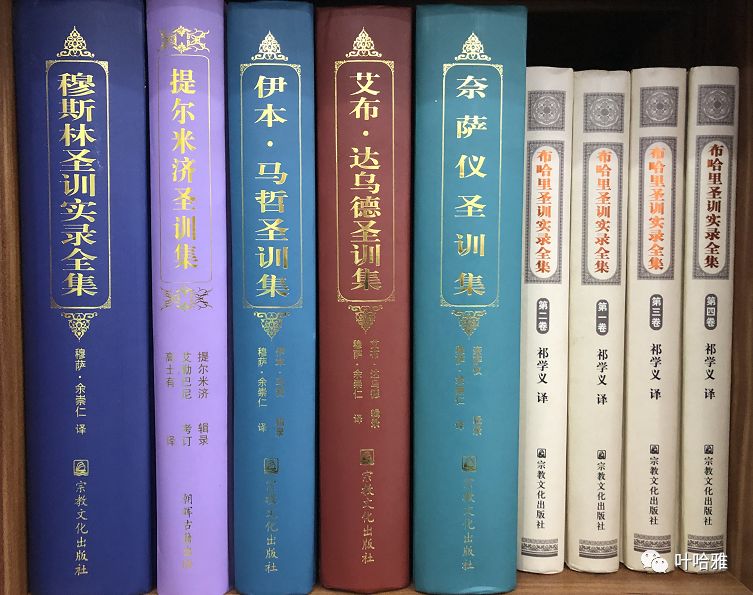
△The six major hadiths of Sunniism, the content of the six major hadiths mentioned in the article all come from here
Pork, blood and animals that have not been slaughtered are not allowed to be eaten.
“It is forbidden for you to eat dead animals, blood, pork, and animals that have been killed for chanting names other than Allah’s name, strangled, hammered, fallen, gored, and leftovers eaten by wild animals. However, you may still eat animals that have died after being slaughtered. ” (Quranic Sura: 3)
Animals killed without reciting the name of Allah cannot be eaten.
Ibn Abbas (may Allah be pleased with him and his son) said: “If you forget to recite the name of Allah when you sacrifice the animal, then there is no harm.
Do not eat that which has been slaughtered without reciting the name of Allah, for that is indeed a sin. (Quran Surah: 121)
Whoever is forced by famine and has no intention of committing a sin, even if he eats forbidden food, does not commit any sin, for indeed Allah is Forgiving and Merciful. (Quranic Sura: 3)
Note: The above scriptures clearly state that meat that is not halal, even beef and mutton, cannot be eaten, so don’t go to halal restaurants to eat beef and mutton.
Niantai Simin can be eaten when you have doubts about the way the meat was slaughtered.
Aisha (may Allah be pleased with her) narrated that a group of people came to the Prophet (peace and blessings of Allah be upon him) and said: "Some people bring us meat, but we don't know whether the name of Allah is recited when slaughtering it. The Prophet said: "Recite the name of the Lord before it, and you can eat it." Ayesha said: "Those people are new to Christianity." ” (Bukhari, Nasa’i Hadith)
Note: This assumes that you know that the person serving the meat is a Muslim, but you are not sure whether he slaughtered the meat in a halal way.
Jews, Christians, etc. can eat meat that has been slaughtered by others
Today, you are allowed to eat all good food; What is lawful for you is food from those who were given the Book; Your food is also lawful for them. (Quranic Sura: 5)
"There is no harm in eating food that has been slaughtered by Arab Christians," Zuhri said. If you hear him chanting a name other than Allah's, don't eat it. If one does not hear, Allah has given permission to eat the food they have killed, and Allah knows that they will not believe. ” (Sahih Bukhari)
Hassan and Ibrahim said: “There is no harm in eating food that has been slaughtered by an uncircumcised person. ” (Sahih Bukhari)
You can cook with the utensils of a wise person
It was narrated by Abu Idris that Abu Sa'alaibai al-Husayni (may Allah be pleased with him) said: "O Prophet of Allah! We live in the land of the People of the Scripture (Jews and Christians). Can we eat from their utensils? We live in a hunting area and I hunt with a bow, an untrained dog and a trained dog, what should I do? The prophet said: "If you find someone else besides the Jews among the people you mentioned, do not use Jewish utensils to eat." If no other utensil can be found, wash it and eat from it. Eat what you have hunted with your bow, while you have recited the name of Allah; You may eat what you have hunted with a trained dog while you have recited the name of Allah. If you catch an untrained dog and kill it, you may eat it. ” (Sahih Bukhari)
Rabbits are edible
According to Anas ibn Malik (may Allah be pleased with him), when we were passing by Manlin Daran, we found a rabbit that was frightened and ran away. People hurriedly chased it until everyone was tired. I stepped forward and caught it and brought it to Abu Talha. He gave the Prophet (peace and blessings of Allah be upon him) two rabbit legs, and the Prophet accepted it. (Bukhari, Tirmidhi)
Locusts can be eaten
Narrated Ibn Abi Aufa: We fought seven wars with the Messenger of Allah (peace be upon him), and we ate locusts. [Sound](Tirmiz)
Non-potent, non-intoxicating juices are allowed
They ask you about drinking and gambling, and you say: "Both of these things involve great sins and have many benefits for the world, but the sins are greater than the benefits. (Quran 2:219)”
Ibn Abbas narrated: Someone once made juice for the Holy Prophet, and the Holy Prophet drank it for three days. If there is any leftover at noon on the third day, either give it to the servant to drink or pour it out. (Muslim hadith)
Abu Deirdah said of a drink made of wine, salt and fish: “The fish and the sun evaporate the flavor of the wine. ” (Sahih Bukhari)
The trace amount of alcohol contained in natural substances does not affect their halal properties. However, using alcohol as a food raw material is not allowed. According to the American Islamic Food and Nutrition Association’s argument, the alcohol content of the final product must evaporate to less than 0.1%. This conclusion has been allowed by most halal food certification agencies. (Page 139 of "Halal Food Production")
Note: Alcohol is absolutely prohibited. Those who drink alcohol and those who sell alcohol should be punished, and they should not even sit with people who drink alcohol. However, in today's society, it is not easy for Muslims to find restaurants that do not sell alcohol when they go out, especially in big cities such as Beijing and Shanghai. There are only a few ramen restaurants that do not sell alcohol. For this reason, Teacher Gerdawe mentioned in "Selected Contemporary Teaching Methods" that "the prerequisite for sharing a table with drinkers is to unite and help each other with other people, strengthen connections, and prevent isolation. In this case, you can participate in activities with alcohol.
But when most of the people in the environment are Muslims and there are alcohol-free halal restaurants everywhere, such as Xining, Lhasa, Linxia and other places, it is not right to eat in restaurants with alcohol.
Wild donkeys can be eaten
According to the narration of Abu Qatadai (may Allah be pleased with him), one time, I was traveling with the Prophet (peace and blessings of Allah be upon him) to Mecca and Medina. At that time, people were observing ihram, and I was the only person riding a horse who was not ihram. I was climbing a mountain, and suddenly I saw people looking up at something. When I went over, I saw it was a wild donkey, and I asked them: "What is this?" "We don't know," they said. "I said: "This is a wild donkey. "We can't help you hunt it down," they said. "I came down with a whip and chased it, and finally killed it. I came and said to them, “Go and carry it here. "We can't touch it," they said. "I had to drag it over. Some of them did not eat and some did. I said, “I will wait to ask the Prophet (peace be upon him). "Later, when we caught up with the Prophet, I told what happened, and he said to me: "That was a picnic hosted by Allah for you. ” (Sahih Bukhari)
Don't eat domestic donkeys
It was narrated by Selamat ibn Akwal (may Allah be pleased with him) that on the night of the capture of Khaybar, they lit a fire, and the Prophet (peace and blessings of Allah be upon him) asked: "What are you doing lighting the fire?" They said: "Cook donkey meat." He said: "Pour out the meat in the pot and smash the pot." "One of them stood up and said, "Shall we dump the meat out of the pot and wash it out? ” The Prophet (peace and blessings of Allaah be upon him) said: “It can also be done that way. ” (Sahih Bukhari)
Horse meat is edible
According to Jaber bin Abdullah (may Allah be pleased with him and his son), on the day of the Battle of Khaybar, the Prophet (peace and blessings of Allah be upon him) forbade the eating of donkey meat, but he allowed the eating of horse meat. (Sahih Bukhari)
Note: I have seen some information mentioning that some scholars prohibit eating horse meat. The reason is that the Quran mentions that Allah created horses for people to ride on, so horses are not for eating. I doubt this, because the Quran and Hadith also mention camels for people to ride, and the importance of camels to nomadic people is stronger than horses, but eating camels is a very common phenomenon and is not prohibited, so there is no reason to abstain from horse meat.
It is forbidden to eat animals with fangs
It was narrated by Abu Sa'alaba (may Allah be pleased with him) that the Messenger of Allah (peace and blessings of Allah be upon him) forbade eating any animal with canine teeth (tusks). (Collected Hadith of Bukhari and Abu Daoud)
Note: Beasts with fangs include tigers, lions, wolves, leopards, dogs, etc.
Lizards are edible
It was narrated by Ibn 'Umar (may Allah be pleased with him and his son) that the Prophet (peace and blessings of Allah be upon him) said: "I do not eat lizards, nor do I forbid the eating of them. ” (Bukhari, Abu Daoud’s Hadith Collection)
Frogs cannot be eaten
Abd al-Rahman bin Uthman narrated: A doctor mentioned in front of the Holy Prophet that he used frogs to prepare medicine. Therefore, the Holy Prophet prohibited the killing of frogs. (Nasa’i Hadith)
amphibians
Ibn Arabi said: “It is forbidden to eat amphibians because the evidence of prohibition and the evidence of permission exist at the same time. But as a precaution, eating amphibians is illegal.
Some scholars argue: "All amphibians living in the sea are legal, even if they can live on land. However, killing frogs is prohibited. ” (Islamic Law, p. 864)
Note: For controversial issues, you can act according to your own choice and follow the precedents you recognize. This kind of disagreement is not a serious issue and should not be taken to the line.
Hedgehogs are not edible
Someone asked Ibn Umar whether he could eat hedgehogs. He recited the following verses: "You said: In the revelation I received, I could not find any food that is forbidden for people to eat... (6:145)" Then, an elder beside him said: I heard Abu Hull say: Someone mentioned it in front of the Holy Prophet, and the Holy Prophet said that it is a dirty thing. Ibn Umar said: If the Holy Prophet said this, then follow the words of the Holy Prophet. ("Hadith of Ahmed")
Do not eat earthworms, snakes, rats and other poisonous insects
Shafir, Hanafi and other scholars advocate that eating earthworms, snakes, rats and other poisonous insects is not allowed. However, Malik maintained that there is no harm in eating earthworms, scorpions, larvae, bee eggs, cheese maggots and maggots born in dates, based on the hadith passed down by Ibn Anbas. Ahmed advocated: I think it is best not to eat broad beans that are infested with worms. He also suggested that there is no harm in picking up wormy dates. People say someone brought Chen dates to the Holy Prophet. The Holy Prophet checked out the worms in the dates, cleaned them and ate them. (Sharia, page 865)
It is forbidden to eat livestock and poultry that eat feces
Ibn al-Abbas narrated: The Holy Prophet strictly prohibited drinking the milk of livestock with feces. Amr, son of Shulbu, narrated: The Prophet prohibited eating the meat of domestic donkeys, and prohibited riding and eating the meat of livestock that eat dung. If an animal is forced to stop eating excrement and is allowed to eat clean feed, after a period of time, when the meat tastes normal, it is legal to eat its meat. (Sharia, page 867)
Animals that are killed under the command of fasting
Some scholars advocate that it is forbidden to eat animals that the Holy Prophet advocated and prohibited from destroying. There are five types of animals that the Holy Prophet ordered to be destroyed: crows, harriers, scorpions, rats, and vicious dogs. Narrated by Aisha: The Holy Prophet said: “Five kinds of pests can be killed even in forbidden places. Crows, harriers, scorpions, rats, and vicious dogs.
The animals prohibited by the Holy Prophet from being destroyed are ants, bees, hoopoe birds, and sparrow hawks. Ibn Ambas reported: The Holy Prophet strictly prohibited the killing of four animals: ants, bees, hoopoe birds, and sparrowhawks.
Shao Kani commented: The Prophet ordered the elimination of five pests and geckos, and prohibited the killing of five beneficial insects, ants, bees, hoopoe birds, sparrows, and frogs. It did not explain that the mere order of the Prophet to kill or prohibit could become evidence of fasting. If the animals that are ordered or forbidden to be killed are not unclean, then it is legal to eat them.
(Sharia, page 868)
Non-Muslims can eat vegetables
Aisha said: "Do not eat what is slaughtered on that day, but you may eat their (non-Muslims) vegetables." (Commentary on the Qur'an, al-Qalt Bin 2:224)
Note: Non-Muslims include people of scripture and polytheists, so there is no problem in eating Buddhist vegetarian food in places where halal restaurants are not available.
All animals in the sea are edible
The animals and food of the sea are lawful for you and may be enjoyed by you and the travelers. (Quranic Sura: 96)
Umar said: “Animals in the sea are those caught by people. Sea food refers to food thrown out by the sea.
Abu Bakr said: “It is also lawful to float.
Ibn Abbas said: “The food of the sea refers to the dead fish in the sea. Unless you find some of them dirty. Jews don’t eat eel, but we can eat it.
Shuraih, the companion of the Prophet (peace and blessings of Allaah be upon him), said: “Every animal in the sea has been slaughtered.
Ibn Jurayj said, I asked Atta: “Are the animals in the pits of rivers and tributaries considered animals in the sea? He said: "Forget it." Then he recited: "This sea is very sweet and delicious fresh water, and that sea is very bitter salt water." You may eat fresh meat from every sea. ” (Quran, Surah the Creator: 12)
Hassan thought there was no harm in eating the turtle.
Ibn Abbas said: “You may eat animals from the sea, whether caught by Christians, Jews, or Zoroastrians.
According to Jaber (may Allah be pleased with him), Abu Ubaid led our Thorn Army on an expedition. We were very hungry, and then a dead whale that we had never seen was thrown out of the sea, which fed us for half a month. Abu Ubaid lifted up one of its ribs, and a man rode a camel from underneath. (Sahih Bukhari)
Note: The above content about seafood comes from the Hadith of Bukhari. It can be seen that aquatic products such as shrimps and crabs are edible. However, scholars in some areas consider shrimps and crabs illegal. This may be related to the fact that the environment in which they live does not have a sea. Therefore, when they see shrimps and crabs, they will think they look strange. Muslims who live by the sea, such as Southeast Asian Muslims covered by Shafi’i teachings, regard seafood as their main food.
People who eat garlic should not enter the mosque
It was narrated by Abdul Aziz that Anas (may Allah be pleased with him) was asked: “Have you ever heard what the Prophet (peace and blessings of Allah be upon him) said about garlic? Anais said: "The prophet said that people who have eaten garlic should never approach our mosque."
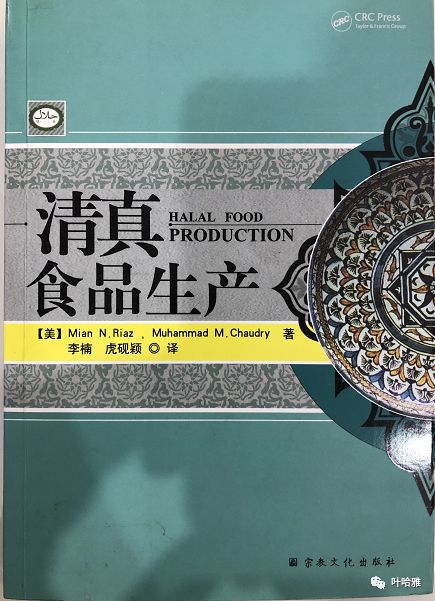
△"Halal Food Production", one of the reference documents, introduces the process of halal food production in great detail, as well as the halal status of some molecular structure ingredients.
Summary: Halal Certified Food China: What Muslims Avoid in Quran, Hadith and Daily Eating is presented here as a clear English travel account for Muslim readers, beginning with this scene: Because in the WeChat group chat, I was often asked whether a certain food was halal. In order to speak rationally, I had to look through the screenshots of the information to explain every time. I was asked. The article keeps the original place names, food details, photographs, and cultural context while focusing on Halal Food Rules, Hadith, Muslim Diet.
Because in the WeChat group chat, I was often asked whether a certain food was halal. In order to speak rationally, I had to look through the screenshots of the information to explain every time. I was asked too many questions. For the sake of convenience, I felt it was necessary to open a special post to share with Dosti what I know about the teachings on halal food.
Islamic knowledge involves all aspects of life, but the teachings on eating only account for a very small part. There is no mention of "eating" in the prayers, rituals, fasting, lessons, and the Five Pillars of Hajj. Many teachings and books do not even touch on the issue of eating. Most of the content talks about merit and morality. However, as a Chinese, eating is a top priority. Chinese Muslims pay more attention to eating because of the influence of the environment, so it is very necessary to learn more about food teachings.
First of all, I would like to clarify a few questions. In daily life, you can always hear people say that the Hui Muslims only eat ruminant animals. Some popular science materials also introduce it this way. However, in my reading process, I did not find the Quran or the Six Sunni Hadiths, or even any book on Islamic law mentioned the concept of "rumination". I have only seen this concept in the "Bible Old Testament":
[You may eat any animal that has a split hoof and chews the cud... A camel, because it chews the cud without a split hoof, is unclean to you... A rabbit, because it chews the cud without a split hoof, is unclean to you. The pig is unclean to you because it has a two-parted hoof but does not chew the cud. (Leviticus 11:3)]
The previous passage clearly shows that rumination is a dietary taboo requirement for Jews. As for why it is so popular among the Hui Muslims in the mainland, I think it has something to do with the history of the Jews settling in China. Jews were once called Blue Hat Hui Hui in China. Later, some Jews integrated into the Hui Muslims. There are still synagogues in Tianjin, Kaifeng, Harbin and other places, so it is not surprising that the Hui Muslims in the mainland have this understanding. Similar content includes: Don’t eat fish without scales:
[Anything with fins and scales in the water, whether in the sea or in the river, can be eaten. (Leviticus 11:9)]
This is also the content of the Old Testament of the Bible. It is certain that this also comes from the dietary taboos of the Jews, but there is no relevant content in Islam.
Another common question is whether seafood such as shrimps and crabs can be eaten? Can horse meat be eaten? I want to answer whether food is legal or not. It should be based on scriptures. If there is no basis in scriptures, you can follow knowledgeable and rational scholars, but you cannot arbitrarily judge legal foods as illegal. Now I will use scriptures to explain which foods cannot be eaten?
△The six major hadiths of Sunniism, the content of the six major hadiths mentioned in the article all come from here
Pork, blood and animals that have not been slaughtered are not allowed to be eaten.
“It is forbidden for you to eat dead animals, blood, pork, and animals that have been killed for chanting names other than Allah’s name, strangled, hammered, fallen, gored, and leftovers eaten by wild animals. However, you may still eat animals that have died after being slaughtered. ” (Quranic Sura: 3)
Animals killed without reciting the name of Allah cannot be eaten.
Ibn Abbas (may Allah be pleased with him and his son) said: “If you forget to recite the name of Allah when you sacrifice the animal, then there is no harm.
Do not eat that which has been slaughtered without reciting the name of Allah, for that is indeed a sin. (Quran Surah: 121)
Whoever is forced by famine and has no intention of committing a sin, even if he eats forbidden food, does not commit any sin, for indeed Allah is Forgiving and Merciful. (Quranic Sura: 3)
Note: The above scriptures clearly state that meat that is not halal, even beef and mutton, cannot be eaten, so don’t go to halal restaurants to eat beef and mutton.
Niantai Simin can be eaten when you have doubts about the way the meat was slaughtered.
Aisha (may Allah be pleased with her) narrated that a group of people came to the Prophet (peace and blessings of Allah be upon him) and said: "Some people bring us meat, but we don't know whether the name of Allah is recited when slaughtering it. The Prophet said: "Recite the name of the Lord before it, and you can eat it." Ayesha said: "Those people are new to Christianity." ” (Bukhari, Nasa’i Hadith)
Note: This assumes that you know that the person serving the meat is a Muslim, but you are not sure whether he slaughtered the meat in a halal way.
Jews, Christians, etc. can eat meat that has been slaughtered by others
Today, you are allowed to eat all good food; What is lawful for you is food from those who were given the Book; Your food is also lawful for them. (Quranic Sura: 5)
"There is no harm in eating food that has been slaughtered by Arab Christians," Zuhri said. If you hear him chanting a name other than Allah's, don't eat it. If one does not hear, Allah has given permission to eat the food they have killed, and Allah knows that they will not believe. ” (Sahih Bukhari)
Hassan and Ibrahim said: “There is no harm in eating food that has been slaughtered by an uncircumcised person. ” (Sahih Bukhari)
You can cook with the utensils of a wise person
It was narrated by Abu Idris that Abu Sa'alaibai al-Husayni (may Allah be pleased with him) said: "O Prophet of Allah! We live in the land of the People of the Scripture (Jews and Christians). Can we eat from their utensils? We live in a hunting area and I hunt with a bow, an untrained dog and a trained dog, what should I do? The prophet said: "If you find someone else besides the Jews among the people you mentioned, do not use Jewish utensils to eat." If no other utensil can be found, wash it and eat from it. Eat what you have hunted with your bow, while you have recited the name of Allah; You may eat what you have hunted with a trained dog while you have recited the name of Allah. If you catch an untrained dog and kill it, you may eat it. ” (Sahih Bukhari)
Rabbits are edible
According to Anas ibn Malik (may Allah be pleased with him), when we were passing by Manlin Daran, we found a rabbit that was frightened and ran away. People hurriedly chased it until everyone was tired. I stepped forward and caught it and brought it to Abu Talha. He gave the Prophet (peace and blessings of Allah be upon him) two rabbit legs, and the Prophet accepted it. (Bukhari, Tirmidhi)
Locusts can be eaten
Narrated Ibn Abi Aufa: We fought seven wars with the Messenger of Allah (peace be upon him), and we ate locusts. [Sound](Tirmiz)
Non-potent, non-intoxicating juices are allowed
They ask you about drinking and gambling, and you say: "Both of these things involve great sins and have many benefits for the world, but the sins are greater than the benefits. (Quran 2:219)”
Ibn Abbas narrated: Someone once made juice for the Holy Prophet, and the Holy Prophet drank it for three days. If there is any leftover at noon on the third day, either give it to the servant to drink or pour it out. (Muslim hadith)
Abu Deirdah said of a drink made of wine, salt and fish: “The fish and the sun evaporate the flavor of the wine. ” (Sahih Bukhari)
The trace amount of alcohol contained in natural substances does not affect their halal properties. However, using alcohol as a food raw material is not allowed. According to the American Islamic Food and Nutrition Association’s argument, the alcohol content of the final product must evaporate to less than 0.1%. This conclusion has been allowed by most halal food certification agencies. (Page 139 of "Halal Food Production")
Note: Alcohol is absolutely prohibited. Those who drink alcohol and those who sell alcohol should be punished, and they should not even sit with people who drink alcohol. However, in today's society, it is not easy for Muslims to find restaurants that do not sell alcohol when they go out, especially in big cities such as Beijing and Shanghai. There are only a few ramen restaurants that do not sell alcohol. For this reason, Teacher Gerdawe mentioned in "Selected Contemporary Teaching Methods" that "the prerequisite for sharing a table with drinkers is to unite and help each other with other people, strengthen connections, and prevent isolation. In this case, you can participate in activities with alcohol.
But when most of the people in the environment are Muslims and there are alcohol-free halal restaurants everywhere, such as Xining, Lhasa, Linxia and other places, it is not right to eat in restaurants with alcohol.
Wild donkeys can be eaten
According to the narration of Abu Qatadai (may Allah be pleased with him), one time, I was traveling with the Prophet (peace and blessings of Allah be upon him) to Mecca and Medina. At that time, people were observing ihram, and I was the only person riding a horse who was not ihram. I was climbing a mountain, and suddenly I saw people looking up at something. When I went over, I saw it was a wild donkey, and I asked them: "What is this?" "We don't know," they said. "I said: "This is a wild donkey. "We can't help you hunt it down," they said. "I came down with a whip and chased it, and finally killed it. I came and said to them, “Go and carry it here. "We can't touch it," they said. "I had to drag it over. Some of them did not eat and some did. I said, “I will wait to ask the Prophet (peace be upon him). "Later, when we caught up with the Prophet, I told what happened, and he said to me: "That was a picnic hosted by Allah for you. ” (Sahih Bukhari)
Don't eat domestic donkeys
It was narrated by Selamat ibn Akwal (may Allah be pleased with him) that on the night of the capture of Khaybar, they lit a fire, and the Prophet (peace and blessings of Allah be upon him) asked: "What are you doing lighting the fire?" They said: "Cook donkey meat." He said: "Pour out the meat in the pot and smash the pot." "One of them stood up and said, "Shall we dump the meat out of the pot and wash it out? ” The Prophet (peace and blessings of Allaah be upon him) said: “It can also be done that way. ” (Sahih Bukhari)
Horse meat is edible
According to Jaber bin Abdullah (may Allah be pleased with him and his son), on the day of the Battle of Khaybar, the Prophet (peace and blessings of Allah be upon him) forbade the eating of donkey meat, but he allowed the eating of horse meat. (Sahih Bukhari)
Note: I have seen some information mentioning that some scholars prohibit eating horse meat. The reason is that the Quran mentions that Allah created horses for people to ride on, so horses are not for eating. I doubt this, because the Quran and Hadith also mention camels for people to ride, and the importance of camels to nomadic people is stronger than horses, but eating camels is a very common phenomenon and is not prohibited, so there is no reason to abstain from horse meat.
It is forbidden to eat animals with fangs
It was narrated by Abu Sa'alaba (may Allah be pleased with him) that the Messenger of Allah (peace and blessings of Allah be upon him) forbade eating any animal with canine teeth (tusks). (Collected Hadith of Bukhari and Abu Daoud)
Note: Beasts with fangs include tigers, lions, wolves, leopards, dogs, etc.
Lizards are edible
It was narrated by Ibn 'Umar (may Allah be pleased with him and his son) that the Prophet (peace and blessings of Allah be upon him) said: "I do not eat lizards, nor do I forbid the eating of them. ” (Bukhari, Abu Daoud’s Hadith Collection)
Frogs cannot be eaten
Abd al-Rahman bin Uthman narrated: A doctor mentioned in front of the Holy Prophet that he used frogs to prepare medicine. Therefore, the Holy Prophet prohibited the killing of frogs. (Nasa’i Hadith)
amphibians
Ibn Arabi said: “It is forbidden to eat amphibians because the evidence of prohibition and the evidence of permission exist at the same time. But as a precaution, eating amphibians is illegal.
Some scholars argue: "All amphibians living in the sea are legal, even if they can live on land. However, killing frogs is prohibited. ” (Islamic Law, p. 864)
Note: For controversial issues, you can act according to your own choice and follow the precedents you recognize. This kind of disagreement is not a serious issue and should not be taken to the line.
Hedgehogs are not edible
Someone asked Ibn Umar whether he could eat hedgehogs. He recited the following verses: "You said: In the revelation I received, I could not find any food that is forbidden for people to eat... (6:145)" Then, an elder beside him said: I heard Abu Hull say: Someone mentioned it in front of the Holy Prophet, and the Holy Prophet said that it is a dirty thing. Ibn Umar said: If the Holy Prophet said this, then follow the words of the Holy Prophet. ("Hadith of Ahmed")
Do not eat earthworms, snakes, rats and other poisonous insects
Shafir, Hanafi and other scholars advocate that eating earthworms, snakes, rats and other poisonous insects is not allowed. However, Malik maintained that there is no harm in eating earthworms, scorpions, larvae, bee eggs, cheese maggots and maggots born in dates, based on the hadith passed down by Ibn Anbas. Ahmed advocated: I think it is best not to eat broad beans that are infested with worms. He also suggested that there is no harm in picking up wormy dates. People say someone brought Chen dates to the Holy Prophet. The Holy Prophet checked out the worms in the dates, cleaned them and ate them. (Sharia, page 865)
It is forbidden to eat livestock and poultry that eat feces
Ibn al-Abbas narrated: The Holy Prophet strictly prohibited drinking the milk of livestock with feces. Amr, son of Shulbu, narrated: The Prophet prohibited eating the meat of domestic donkeys, and prohibited riding and eating the meat of livestock that eat dung. If an animal is forced to stop eating excrement and is allowed to eat clean feed, after a period of time, when the meat tastes normal, it is legal to eat its meat. (Sharia, page 867)
Animals that are killed under the command of fasting
Some scholars advocate that it is forbidden to eat animals that the Holy Prophet advocated and prohibited from destroying. There are five types of animals that the Holy Prophet ordered to be destroyed: crows, harriers, scorpions, rats, and vicious dogs. Narrated by Aisha: The Holy Prophet said: “Five kinds of pests can be killed even in forbidden places. Crows, harriers, scorpions, rats, and vicious dogs.
The animals prohibited by the Holy Prophet from being destroyed are ants, bees, hoopoe birds, and sparrow hawks. Ibn Ambas reported: The Holy Prophet strictly prohibited the killing of four animals: ants, bees, hoopoe birds, and sparrowhawks.
Shao Kani commented: The Prophet ordered the elimination of five pests and geckos, and prohibited the killing of five beneficial insects, ants, bees, hoopoe birds, sparrows, and frogs. It did not explain that the mere order of the Prophet to kill or prohibit could become evidence of fasting. If the animals that are ordered or forbidden to be killed are not unclean, then it is legal to eat them.
(Sharia, page 868)
Non-Muslims can eat vegetables
Aisha said: "Do not eat what is slaughtered on that day, but you may eat their (non-Muslims) vegetables." (Commentary on the Qur'an, al-Qalt Bin 2:224)
Note: Non-Muslims include people of scripture and polytheists, so there is no problem in eating Buddhist vegetarian food in places where halal restaurants are not available.
All animals in the sea are edible
The animals and food of the sea are lawful for you and may be enjoyed by you and the travelers. (Quranic Sura: 96)
Umar said: “Animals in the sea are those caught by people. Sea food refers to food thrown out by the sea.
Abu Bakr said: “It is also lawful to float.
Ibn Abbas said: “The food of the sea refers to the dead fish in the sea. Unless you find some of them dirty. Jews don’t eat eel, but we can eat it.
Shuraih, the companion of the Prophet (peace and blessings of Allaah be upon him), said: “Every animal in the sea has been slaughtered.
Ibn Jurayj said, I asked Atta: “Are the animals in the pits of rivers and tributaries considered animals in the sea? He said: "Forget it." Then he recited: "This sea is very sweet and delicious fresh water, and that sea is very bitter salt water." You may eat fresh meat from every sea. ” (Quran, Surah the Creator: 12)
Hassan thought there was no harm in eating the turtle.
Ibn Abbas said: “You may eat animals from the sea, whether caught by Christians, Jews, or Zoroastrians.
According to Jaber (may Allah be pleased with him), Abu Ubaid led our Thorn Army on an expedition. We were very hungry, and then a dead whale that we had never seen was thrown out of the sea, which fed us for half a month. Abu Ubaid lifted up one of its ribs, and a man rode a camel from underneath. (Sahih Bukhari)
Note: The above content about seafood comes from the Hadith of Bukhari. It can be seen that aquatic products such as shrimps and crabs are edible. However, scholars in some areas consider shrimps and crabs illegal. This may be related to the fact that the environment in which they live does not have a sea. Therefore, when they see shrimps and crabs, they will think they look strange. Muslims who live by the sea, such as Southeast Asian Muslims covered by Shafi’i teachings, regard seafood as their main food.
People who eat garlic should not enter the mosque
It was narrated by Abdul Aziz that Anas (may Allah be pleased with him) was asked: “Have you ever heard what the Prophet (peace and blessings of Allah be upon him) said about garlic? Anais said: "The prophet said that people who have eaten garlic should never approach our mosque."
△"Halal Food Production", one of the reference documents, introduces the process of halal food production in great detail, as well as the halal status of some molecular structure ingredients.
Muslim Knowledge Guide China: Maliki School Halal Food Rules, Frogs, Seafood and Meat
Articles • yusuf908 posted the article • 0 comments • 311 views • 2026-05-23 02:37
Reposted from the web
Summary: This Muslim knowledge guide explains food rulings in the Maliki school, including halal and haram animals, frogs, sea creatures, domesticated and wild animals, slaughter rules, People of the Book, utensils, wine, vinegar, and food-related transactions.
Imam Malik (711-795) was from Medina. He was the teacher of Imam Shafi'i, and Shafi'i was the teacher of Imam Hanbali. Shafi'i once said that the book of hadith written by Malik, the Muwatta, was the most perfect book in the world after the Quran. Malik's teacher was the sixth Imam of the Shia, Jafar. Jafar also had a student named Abu Hanifa, who was the founder of the Hanafi school.
Malik's grandfather, Malik Abi Amir, was a student of Caliph Umar. He was also one of the people who collected the original parchment scrolls of the Quran during the time of Caliph Uthman.
From these lineages, we can see that the four major schools of jurisprudence come from the same source and influenced each other. I do not understand how people who claim we must only follow one school convince themselves of this. I am afraid even the four Imams themselves would not agree with that view.
The Maliki school and the Hanafi school are very closely related. The Abbasid Caliphate favored the Hanafi school, while the Umayyad Caliphate favored the Maliki school. The Maliki school was founded in the 8th century AD. It is mainly found in North Africa, West Africa, Chad, Sudan, Kuwait, Bahrain, Qatar, the UAE, and northeastern Saudi Arabia. In the Middle Ages, it also appeared in Spain and Sicily in Europe. The number of followers is about the same as the Shafi'i school and slightly less than the Hanafi school. Unlike other schools, the Maliki school considers the consensus of the people of Medina as one of the bases for Islamic law.
Malik did not place much importance on analogy. Instead, when the Quran and hadith did not provide clear guidance, he made rulings based on the principle of protecting the public interest. Regarding consensus, it is only considered a valid basis if it comes from the companions of the Prophet or the first three generations of Muslims from Medina. Analogy is only accepted when no answer can be found in other sources.
Title: Chapter On Food – Imam Ibn ‘Abdi’l-Barr Al-Qurtubi (Kitab Al-Kafi)
Author: Ibn ‘Abdi’l-Barr Al-Numayri Al-Qurtubi
Halal and haram animals
Domestic donkeys are not halal, whether they are slaughtered or not. People only want them for their meat or skin. If someone wants to purify a donkey skin, they must tan it. Malik said that wild donkeys cannot be eaten once they are tamed for work or riding because they have become domesticated. The Messenger of Allah forbade eating the meat of domestic donkeys. If a donkey remains wild, it is fine to eat. (From a reliable hadith narrated by Jabir)
Malik believed horses should not be eaten, but this was just a personal preference. Eating horse meat is not forbidden. The same ruling applies to mules. No one should eat elephants, rats, or geckos. It is not allowed to eat beasts with fangs. Any animal that hunts and eats meat is considered a beast. This is the well-known ruling of Malik. However, it is recorded that Malik said there is no harm in eating foxes and weasels. He did not consider these animals to be the same as lions, wolves, lynxes, leopards, and hyenas.
It is not allowed to eat cats, whether wild or domestic. Eating rabbits is allowed. Malik said any bird can be eaten, regardless of whether they are birds of prey, eat carrion, or have talons. You can eat lizards, jerboas, or monitor lizards. Malik allowed eating slaughtered snakes, including venomous ones. It is also fine to eat large lizards, hedgehogs, and frogs.
Other scholars in Medina forbade eating carrion-eaters or any animal that eats excrement. They also forbade eating snakes, geckos, rats, and similar animals. These scholars believed that if it is not allowed to kill these animals, then it is not allowed to eat them either.
You can eat dead fish, including those that are floating or at the bottom. All seafood is halal, although Malik disliked eating water pigs (dolphins). This also applies to sharks. In his view, there is no harm in eating crustaceans, sea turtles, and frogs. Fish caught by anyone can be eaten because fish do not require ritual slaughter. Malik said you cannot eat locusts that died from suffocation. You can eat locusts that died due to human action, such as being cut or thrown into a fire. Scholars outside the Maliki school allow eating locusts regardless of how they died, as they consider them the same as fish.
Food of the People of the Book
The food of those who follow the revealed scriptures is halal for us. (5:6) Animals slaughtered by the People of the Book and their other food are halal for us, and some do not require slaughtering. Out of personal preference, Malik disliked eating meat slaughtered by the People of the Book because there is better meat slaughtered by Muslims available as an alternative.
Malik disliked obtaining fat, camels, and slaughtered animals with claws from Jews, though most scholars believe there is nothing wrong with this since these items are not halal for Jews.
It is fine to eat food from idolaters, but you cannot eat the meat of animals they have slaughtered. Any food from idolaters that does not require slaughtering can be eaten, except for food that has rotted or spoiled.
A child's religious identity is based on the father's faith; if the father is an idolater, the animal slaughtered by the child is also not to be eaten. Other scholars believe that if either parent is an idolater, the animals slaughtered by the child are not to be eaten.
Malik disliked the food of non-believers (kafir) for fear that it might have been sacrificed in a name other than Allah. However, Malik believed that utensils used by non-believers are clean once washed, provided they are not made of gold, silver, or pigskin. Malik allows the use of pig bristles for stitching or making other tools. Pork, fat, and all other parts of the body are considered unclean, except for the hair.
Regarding drinks
Wine (khamr) is a drink made from fermented grapes. Any drink, whether in large or small amounts, that causes intoxication is considered wine. Any amount of wine, no matter how small or what type of drink it is, is forbidden. This is the position of some scholars in the Hejaz and Syria. Anything that contradicts this is rejected by the Prophet's hadith. When the Prophet was asked about honey wine, he said: Everything that intoxicates is wine, and everything that is wine is forbidden (Tirmidhi hadith). Grape juice does not cause intoxication regardless of the amount, so it is a halal drink until it ferments and becomes intoxicating.
Fruit juice that has been boiled is also halal if it does not cause intoxication. You do not need to boil away two-thirds of it, as long as it is not addictive.
No one should make vinegar from wine. If someone does this, it is a sin and they should repent. However, it is legal for a Christian to let wine turn into vinegar without human intervention.
A Muslim must not own any wine or intoxicating drinks. If they do, they should pour it out and break the container. A person who drinks alcohol should receive a punishment of 80 lashes. When someone becomes a Muslim and owns wine, they should pour it out. They will not be punished unless they knew the rules beforehand. A Muslim should not engage in any business related to wine. If they do, they should give away the money they earned as charity and repent to Allah.
Transaction
If a person buys goods from someone suspected of owning illegal property, the transaction itself is legal, unless the goods purchased are known to be illegal.
(End) view all
Summary: This Muslim knowledge guide explains food rulings in the Maliki school, including halal and haram animals, frogs, sea creatures, domesticated and wild animals, slaughter rules, People of the Book, utensils, wine, vinegar, and food-related transactions.
Imam Malik (711-795) was from Medina. He was the teacher of Imam Shafi'i, and Shafi'i was the teacher of Imam Hanbali. Shafi'i once said that the book of hadith written by Malik, the Muwatta, was the most perfect book in the world after the Quran. Malik's teacher was the sixth Imam of the Shia, Jafar. Jafar also had a student named Abu Hanifa, who was the founder of the Hanafi school.
Malik's grandfather, Malik Abi Amir, was a student of Caliph Umar. He was also one of the people who collected the original parchment scrolls of the Quran during the time of Caliph Uthman.
From these lineages, we can see that the four major schools of jurisprudence come from the same source and influenced each other. I do not understand how people who claim we must only follow one school convince themselves of this. I am afraid even the four Imams themselves would not agree with that view.
The Maliki school and the Hanafi school are very closely related. The Abbasid Caliphate favored the Hanafi school, while the Umayyad Caliphate favored the Maliki school. The Maliki school was founded in the 8th century AD. It is mainly found in North Africa, West Africa, Chad, Sudan, Kuwait, Bahrain, Qatar, the UAE, and northeastern Saudi Arabia. In the Middle Ages, it also appeared in Spain and Sicily in Europe. The number of followers is about the same as the Shafi'i school and slightly less than the Hanafi school. Unlike other schools, the Maliki school considers the consensus of the people of Medina as one of the bases for Islamic law.
Malik did not place much importance on analogy. Instead, when the Quran and hadith did not provide clear guidance, he made rulings based on the principle of protecting the public interest. Regarding consensus, it is only considered a valid basis if it comes from the companions of the Prophet or the first three generations of Muslims from Medina. Analogy is only accepted when no answer can be found in other sources.
Title: Chapter On Food – Imam Ibn ‘Abdi’l-Barr Al-Qurtubi (Kitab Al-Kafi)
Author: Ibn ‘Abdi’l-Barr Al-Numayri Al-Qurtubi
Halal and haram animals
Domestic donkeys are not halal, whether they are slaughtered or not. People only want them for their meat or skin. If someone wants to purify a donkey skin, they must tan it. Malik said that wild donkeys cannot be eaten once they are tamed for work or riding because they have become domesticated. The Messenger of Allah forbade eating the meat of domestic donkeys. If a donkey remains wild, it is fine to eat. (From a reliable hadith narrated by Jabir)
Malik believed horses should not be eaten, but this was just a personal preference. Eating horse meat is not forbidden. The same ruling applies to mules. No one should eat elephants, rats, or geckos. It is not allowed to eat beasts with fangs. Any animal that hunts and eats meat is considered a beast. This is the well-known ruling of Malik. However, it is recorded that Malik said there is no harm in eating foxes and weasels. He did not consider these animals to be the same as lions, wolves, lynxes, leopards, and hyenas.
It is not allowed to eat cats, whether wild or domestic. Eating rabbits is allowed. Malik said any bird can be eaten, regardless of whether they are birds of prey, eat carrion, or have talons. You can eat lizards, jerboas, or monitor lizards. Malik allowed eating slaughtered snakes, including venomous ones. It is also fine to eat large lizards, hedgehogs, and frogs.
Other scholars in Medina forbade eating carrion-eaters or any animal that eats excrement. They also forbade eating snakes, geckos, rats, and similar animals. These scholars believed that if it is not allowed to kill these animals, then it is not allowed to eat them either.
You can eat dead fish, including those that are floating or at the bottom. All seafood is halal, although Malik disliked eating water pigs (dolphins). This also applies to sharks. In his view, there is no harm in eating crustaceans, sea turtles, and frogs. Fish caught by anyone can be eaten because fish do not require ritual slaughter. Malik said you cannot eat locusts that died from suffocation. You can eat locusts that died due to human action, such as being cut or thrown into a fire. Scholars outside the Maliki school allow eating locusts regardless of how they died, as they consider them the same as fish.
Food of the People of the Book
The food of those who follow the revealed scriptures is halal for us. (5:6) Animals slaughtered by the People of the Book and their other food are halal for us, and some do not require slaughtering. Out of personal preference, Malik disliked eating meat slaughtered by the People of the Book because there is better meat slaughtered by Muslims available as an alternative.
Malik disliked obtaining fat, camels, and slaughtered animals with claws from Jews, though most scholars believe there is nothing wrong with this since these items are not halal for Jews.
It is fine to eat food from idolaters, but you cannot eat the meat of animals they have slaughtered. Any food from idolaters that does not require slaughtering can be eaten, except for food that has rotted or spoiled.
A child's religious identity is based on the father's faith; if the father is an idolater, the animal slaughtered by the child is also not to be eaten. Other scholars believe that if either parent is an idolater, the animals slaughtered by the child are not to be eaten.
Malik disliked the food of non-believers (kafir) for fear that it might have been sacrificed in a name other than Allah. However, Malik believed that utensils used by non-believers are clean once washed, provided they are not made of gold, silver, or pigskin. Malik allows the use of pig bristles for stitching or making other tools. Pork, fat, and all other parts of the body are considered unclean, except for the hair.
Regarding drinks
Wine (khamr) is a drink made from fermented grapes. Any drink, whether in large or small amounts, that causes intoxication is considered wine. Any amount of wine, no matter how small or what type of drink it is, is forbidden. This is the position of some scholars in the Hejaz and Syria. Anything that contradicts this is rejected by the Prophet's hadith. When the Prophet was asked about honey wine, he said: Everything that intoxicates is wine, and everything that is wine is forbidden (Tirmidhi hadith). Grape juice does not cause intoxication regardless of the amount, so it is a halal drink until it ferments and becomes intoxicating.
Fruit juice that has been boiled is also halal if it does not cause intoxication. You do not need to boil away two-thirds of it, as long as it is not addictive.
No one should make vinegar from wine. If someone does this, it is a sin and they should repent. However, it is legal for a Christian to let wine turn into vinegar without human intervention.
A Muslim must not own any wine or intoxicating drinks. If they do, they should pour it out and break the container. A person who drinks alcohol should receive a punishment of 80 lashes. When someone becomes a Muslim and owns wine, they should pour it out. They will not be punished unless they knew the rules beforehand. A Muslim should not engage in any business related to wine. If they do, they should give away the money they earned as charity and repent to Allah.
Transaction
If a person buys goods from someone suspected of owning illegal property, the transaction itself is legal, unless the goods purchased are known to be illegal.
(End) view all
Reposted from the web
Summary: This Muslim knowledge guide explains food rulings in the Maliki school, including halal and haram animals, frogs, sea creatures, domesticated and wild animals, slaughter rules, People of the Book, utensils, wine, vinegar, and food-related transactions.

Imam Malik (711-795) was from Medina. He was the teacher of Imam Shafi'i, and Shafi'i was the teacher of Imam Hanbali. Shafi'i once said that the book of hadith written by Malik, the Muwatta, was the most perfect book in the world after the Quran. Malik's teacher was the sixth Imam of the Shia, Jafar. Jafar also had a student named Abu Hanifa, who was the founder of the Hanafi school.
Malik's grandfather, Malik Abi Amir, was a student of Caliph Umar. He was also one of the people who collected the original parchment scrolls of the Quran during the time of Caliph Uthman.
From these lineages, we can see that the four major schools of jurisprudence come from the same source and influenced each other. I do not understand how people who claim we must only follow one school convince themselves of this. I am afraid even the four Imams themselves would not agree with that view.
The Maliki school and the Hanafi school are very closely related. The Abbasid Caliphate favored the Hanafi school, while the Umayyad Caliphate favored the Maliki school. The Maliki school was founded in the 8th century AD. It is mainly found in North Africa, West Africa, Chad, Sudan, Kuwait, Bahrain, Qatar, the UAE, and northeastern Saudi Arabia. In the Middle Ages, it also appeared in Spain and Sicily in Europe. The number of followers is about the same as the Shafi'i school and slightly less than the Hanafi school. Unlike other schools, the Maliki school considers the consensus of the people of Medina as one of the bases for Islamic law.
Malik did not place much importance on analogy. Instead, when the Quran and hadith did not provide clear guidance, he made rulings based on the principle of protecting the public interest. Regarding consensus, it is only considered a valid basis if it comes from the companions of the Prophet or the first three generations of Muslims from Medina. Analogy is only accepted when no answer can be found in other sources.
Title: Chapter On Food – Imam Ibn ‘Abdi’l-Barr Al-Qurtubi (Kitab Al-Kafi)
Author: Ibn ‘Abdi’l-Barr Al-Numayri Al-Qurtubi
Halal and haram animals
Domestic donkeys are not halal, whether they are slaughtered or not. People only want them for their meat or skin. If someone wants to purify a donkey skin, they must tan it. Malik said that wild donkeys cannot be eaten once they are tamed for work or riding because they have become domesticated. The Messenger of Allah forbade eating the meat of domestic donkeys. If a donkey remains wild, it is fine to eat. (From a reliable hadith narrated by Jabir)
Malik believed horses should not be eaten, but this was just a personal preference. Eating horse meat is not forbidden. The same ruling applies to mules. No one should eat elephants, rats, or geckos. It is not allowed to eat beasts with fangs. Any animal that hunts and eats meat is considered a beast. This is the well-known ruling of Malik. However, it is recorded that Malik said there is no harm in eating foxes and weasels. He did not consider these animals to be the same as lions, wolves, lynxes, leopards, and hyenas.
It is not allowed to eat cats, whether wild or domestic. Eating rabbits is allowed. Malik said any bird can be eaten, regardless of whether they are birds of prey, eat carrion, or have talons. You can eat lizards, jerboas, or monitor lizards. Malik allowed eating slaughtered snakes, including venomous ones. It is also fine to eat large lizards, hedgehogs, and frogs.
Other scholars in Medina forbade eating carrion-eaters or any animal that eats excrement. They also forbade eating snakes, geckos, rats, and similar animals. These scholars believed that if it is not allowed to kill these animals, then it is not allowed to eat them either.
You can eat dead fish, including those that are floating or at the bottom. All seafood is halal, although Malik disliked eating water pigs (dolphins). This also applies to sharks. In his view, there is no harm in eating crustaceans, sea turtles, and frogs. Fish caught by anyone can be eaten because fish do not require ritual slaughter. Malik said you cannot eat locusts that died from suffocation. You can eat locusts that died due to human action, such as being cut or thrown into a fire. Scholars outside the Maliki school allow eating locusts regardless of how they died, as they consider them the same as fish.
Food of the People of the Book
The food of those who follow the revealed scriptures is halal for us. (5:6) Animals slaughtered by the People of the Book and their other food are halal for us, and some do not require slaughtering. Out of personal preference, Malik disliked eating meat slaughtered by the People of the Book because there is better meat slaughtered by Muslims available as an alternative.
Malik disliked obtaining fat, camels, and slaughtered animals with claws from Jews, though most scholars believe there is nothing wrong with this since these items are not halal for Jews.
It is fine to eat food from idolaters, but you cannot eat the meat of animals they have slaughtered. Any food from idolaters that does not require slaughtering can be eaten, except for food that has rotted or spoiled.
A child's religious identity is based on the father's faith; if the father is an idolater, the animal slaughtered by the child is also not to be eaten. Other scholars believe that if either parent is an idolater, the animals slaughtered by the child are not to be eaten.
Malik disliked the food of non-believers (kafir) for fear that it might have been sacrificed in a name other than Allah. However, Malik believed that utensils used by non-believers are clean once washed, provided they are not made of gold, silver, or pigskin. Malik allows the use of pig bristles for stitching or making other tools. Pork, fat, and all other parts of the body are considered unclean, except for the hair.
Regarding drinks
Wine (khamr) is a drink made from fermented grapes. Any drink, whether in large or small amounts, that causes intoxication is considered wine. Any amount of wine, no matter how small or what type of drink it is, is forbidden. This is the position of some scholars in the Hejaz and Syria. Anything that contradicts this is rejected by the Prophet's hadith. When the Prophet was asked about honey wine, he said: Everything that intoxicates is wine, and everything that is wine is forbidden (Tirmidhi hadith). Grape juice does not cause intoxication regardless of the amount, so it is a halal drink until it ferments and becomes intoxicating.
Fruit juice that has been boiled is also halal if it does not cause intoxication. You do not need to boil away two-thirds of it, as long as it is not addictive.
No one should make vinegar from wine. If someone does this, it is a sin and they should repent. However, it is legal for a Christian to let wine turn into vinegar without human intervention.
A Muslim must not own any wine or intoxicating drinks. If they do, they should pour it out and break the container. A person who drinks alcohol should receive a punishment of 80 lashes. When someone becomes a Muslim and owns wine, they should pour it out. They will not be punished unless they knew the rules beforehand. A Muslim should not engage in any business related to wine. If they do, they should give away the money they earned as charity and repent to Allah.
Transaction
If a person buys goods from someone suspected of owning illegal property, the transaction itself is legal, unless the goods purchased are known to be illegal.
(End)
Summary: This Muslim knowledge guide explains food rulings in the Maliki school, including halal and haram animals, frogs, sea creatures, domesticated and wild animals, slaughter rules, People of the Book, utensils, wine, vinegar, and food-related transactions.
Imam Malik (711-795) was from Medina. He was the teacher of Imam Shafi'i, and Shafi'i was the teacher of Imam Hanbali. Shafi'i once said that the book of hadith written by Malik, the Muwatta, was the most perfect book in the world after the Quran. Malik's teacher was the sixth Imam of the Shia, Jafar. Jafar also had a student named Abu Hanifa, who was the founder of the Hanafi school.
Malik's grandfather, Malik Abi Amir, was a student of Caliph Umar. He was also one of the people who collected the original parchment scrolls of the Quran during the time of Caliph Uthman.
From these lineages, we can see that the four major schools of jurisprudence come from the same source and influenced each other. I do not understand how people who claim we must only follow one school convince themselves of this. I am afraid even the four Imams themselves would not agree with that view.
The Maliki school and the Hanafi school are very closely related. The Abbasid Caliphate favored the Hanafi school, while the Umayyad Caliphate favored the Maliki school. The Maliki school was founded in the 8th century AD. It is mainly found in North Africa, West Africa, Chad, Sudan, Kuwait, Bahrain, Qatar, the UAE, and northeastern Saudi Arabia. In the Middle Ages, it also appeared in Spain and Sicily in Europe. The number of followers is about the same as the Shafi'i school and slightly less than the Hanafi school. Unlike other schools, the Maliki school considers the consensus of the people of Medina as one of the bases for Islamic law.
Malik did not place much importance on analogy. Instead, when the Quran and hadith did not provide clear guidance, he made rulings based on the principle of protecting the public interest. Regarding consensus, it is only considered a valid basis if it comes from the companions of the Prophet or the first three generations of Muslims from Medina. Analogy is only accepted when no answer can be found in other sources.
Title: Chapter On Food – Imam Ibn ‘Abdi’l-Barr Al-Qurtubi (Kitab Al-Kafi)
Author: Ibn ‘Abdi’l-Barr Al-Numayri Al-Qurtubi
Halal and haram animals
Domestic donkeys are not halal, whether they are slaughtered or not. People only want them for their meat or skin. If someone wants to purify a donkey skin, they must tan it. Malik said that wild donkeys cannot be eaten once they are tamed for work or riding because they have become domesticated. The Messenger of Allah forbade eating the meat of domestic donkeys. If a donkey remains wild, it is fine to eat. (From a reliable hadith narrated by Jabir)
Malik believed horses should not be eaten, but this was just a personal preference. Eating horse meat is not forbidden. The same ruling applies to mules. No one should eat elephants, rats, or geckos. It is not allowed to eat beasts with fangs. Any animal that hunts and eats meat is considered a beast. This is the well-known ruling of Malik. However, it is recorded that Malik said there is no harm in eating foxes and weasels. He did not consider these animals to be the same as lions, wolves, lynxes, leopards, and hyenas.
It is not allowed to eat cats, whether wild or domestic. Eating rabbits is allowed. Malik said any bird can be eaten, regardless of whether they are birds of prey, eat carrion, or have talons. You can eat lizards, jerboas, or monitor lizards. Malik allowed eating slaughtered snakes, including venomous ones. It is also fine to eat large lizards, hedgehogs, and frogs.
Other scholars in Medina forbade eating carrion-eaters or any animal that eats excrement. They also forbade eating snakes, geckos, rats, and similar animals. These scholars believed that if it is not allowed to kill these animals, then it is not allowed to eat them either.
You can eat dead fish, including those that are floating or at the bottom. All seafood is halal, although Malik disliked eating water pigs (dolphins). This also applies to sharks. In his view, there is no harm in eating crustaceans, sea turtles, and frogs. Fish caught by anyone can be eaten because fish do not require ritual slaughter. Malik said you cannot eat locusts that died from suffocation. You can eat locusts that died due to human action, such as being cut or thrown into a fire. Scholars outside the Maliki school allow eating locusts regardless of how they died, as they consider them the same as fish.
Food of the People of the Book
The food of those who follow the revealed scriptures is halal for us. (5:6) Animals slaughtered by the People of the Book and their other food are halal for us, and some do not require slaughtering. Out of personal preference, Malik disliked eating meat slaughtered by the People of the Book because there is better meat slaughtered by Muslims available as an alternative.
Malik disliked obtaining fat, camels, and slaughtered animals with claws from Jews, though most scholars believe there is nothing wrong with this since these items are not halal for Jews.
It is fine to eat food from idolaters, but you cannot eat the meat of animals they have slaughtered. Any food from idolaters that does not require slaughtering can be eaten, except for food that has rotted or spoiled.
A child's religious identity is based on the father's faith; if the father is an idolater, the animal slaughtered by the child is also not to be eaten. Other scholars believe that if either parent is an idolater, the animals slaughtered by the child are not to be eaten.
Malik disliked the food of non-believers (kafir) for fear that it might have been sacrificed in a name other than Allah. However, Malik believed that utensils used by non-believers are clean once washed, provided they are not made of gold, silver, or pigskin. Malik allows the use of pig bristles for stitching or making other tools. Pork, fat, and all other parts of the body are considered unclean, except for the hair.
Regarding drinks
Wine (khamr) is a drink made from fermented grapes. Any drink, whether in large or small amounts, that causes intoxication is considered wine. Any amount of wine, no matter how small or what type of drink it is, is forbidden. This is the position of some scholars in the Hejaz and Syria. Anything that contradicts this is rejected by the Prophet's hadith. When the Prophet was asked about honey wine, he said: Everything that intoxicates is wine, and everything that is wine is forbidden (Tirmidhi hadith). Grape juice does not cause intoxication regardless of the amount, so it is a halal drink until it ferments and becomes intoxicating.
Fruit juice that has been boiled is also halal if it does not cause intoxication. You do not need to boil away two-thirds of it, as long as it is not addictive.
No one should make vinegar from wine. If someone does this, it is a sin and they should repent. However, it is legal for a Christian to let wine turn into vinegar without human intervention.
A Muslim must not own any wine or intoxicating drinks. If they do, they should pour it out and break the container. A person who drinks alcohol should receive a punishment of 80 lashes. When someone becomes a Muslim and owns wine, they should pour it out. They will not be punished unless they knew the rules beforehand. A Muslim should not engage in any business related to wine. If they do, they should give away the money they earned as charity and repent to Allah.
Transaction
If a person buys goods from someone suspected of owning illegal property, the transaction itself is legal, unless the goods purchased are known to be illegal.
(End)
Halal Certified Food China: What Muslims Avoid in Quran, Hadith and Daily Eating
Articles • ali2007fr posted the article • 0 comments • 270 views • 2026-05-21 13:02
Reposted from the web
Summary: Halal Certified Food China: What Muslims Avoid in Quran, Hadith and Daily Eating is presented here as a clear English travel account for Muslim readers, beginning with this scene: Because in the WeChat group chat, I was often asked whether a certain food was halal. In order to speak rationally, I had to look through the screenshots of the information to explain every time. I was asked. The article keeps the original place names, food details, photographs, and cultural context while focusing on Halal Food Rules, Hadith, Muslim Diet.
Because in the WeChat group chat, I was often asked whether a certain food was halal. In order to speak rationally, I had to look through the screenshots of the information to explain every time. I was asked too many questions. For the sake of convenience, I felt it was necessary to open a special post to share with Dosti what I know about the teachings on halal food.
Islamic knowledge involves all aspects of life, but the teachings on eating only account for a very small part. There is no mention of "eating" in the prayers, rituals, fasting, lessons, and the Five Pillars of Hajj. Many teachings and books do not even touch on the issue of eating. Most of the content talks about merit and morality. However, as a Chinese, eating is a top priority. Chinese Muslims pay more attention to eating because of the influence of the environment, so it is very necessary to learn more about food teachings.
First of all, I would like to clarify a few questions. In daily life, you can always hear people say that the Hui Muslims only eat ruminant animals. Some popular science materials also introduce it this way. However, in my reading process, I did not find the Quran or the Six Sunni Hadiths, or even any book on Islamic law mentioned the concept of "rumination". I have only seen this concept in the "Bible Old Testament":
[You may eat any animal that has a split hoof and chews the cud... A camel, because it chews the cud without a split hoof, is unclean to you... A rabbit, because it chews the cud without a split hoof, is unclean to you. The pig is unclean to you because it has a two-parted hoof but does not chew the cud. (Leviticus 11:3)]
The previous passage clearly shows that rumination is a dietary taboo requirement for Jews. As for why it is so popular among the Hui Muslims in the mainland, I think it has something to do with the history of the Jews settling in China. Jews were once called Blue Hat Hui Hui in China. Later, some Jews integrated into the Hui Muslims. There are still synagogues in Tianjin, Kaifeng, Harbin and other places, so it is not surprising that the Hui Muslims in the mainland have this understanding. Similar content includes: Don’t eat fish without scales:
[Anything with fins and scales in the water, whether in the sea or in the river, can be eaten. (Leviticus 11:9)]
This is also the content of the Old Testament of the Bible. It is certain that this also comes from the dietary taboos of the Jews, but there is no relevant content in Islam.
Another common question is whether seafood such as shrimps and crabs can be eaten? Can horse meat be eaten? I want to answer whether food is legal or not. It should be based on scriptures. If there is no basis in scriptures, you can follow knowledgeable and rational scholars, but you cannot arbitrarily judge legal foods as illegal. Now I will use scriptures to explain which foods cannot be eaten?
△The six major hadiths of Sunniism, the content of the six major hadiths mentioned in the article all come from here
Pork, blood and animals that have not been slaughtered are not allowed to be eaten.
“It is forbidden for you to eat dead animals, blood, pork, and animals that have been killed for chanting names other than Allah’s name, strangled, hammered, fallen, gored, and leftovers eaten by wild animals. However, you may still eat animals that have died after being slaughtered. ” (Quranic Sura: 3)
Animals killed without reciting the name of Allah cannot be eaten.
Ibn Abbas (may Allah be pleased with him and his son) said: “If you forget to recite the name of Allah when you sacrifice the animal, then there is no harm.
Do not eat that which has been slaughtered without reciting the name of Allah, for that is indeed a sin. (Quran Surah: 121)
Whoever is forced by famine and has no intention of committing a sin, even if he eats forbidden food, does not commit any sin, for indeed Allah is Forgiving and Merciful. (Quranic Sura: 3)
Note: The above scriptures clearly state that meat that is not halal, even beef and mutton, cannot be eaten, so don’t go to halal restaurants to eat beef and mutton.
Niantai Simin can be eaten when you have doubts about the way the meat was slaughtered.
Aisha (may Allah be pleased with her) narrated that a group of people came to the Prophet (peace and blessings of Allah be upon him) and said: "Some people bring us meat, but we don't know whether the name of Allah is recited when slaughtering it. The Prophet said: "Recite the name of the Lord before it, and you can eat it." Ayesha said: "Those people are new to Christianity." ” (Bukhari, Nasa’i Hadith)
Note: This assumes that you know that the person serving the meat is a Muslim, but you are not sure whether he slaughtered the meat in a halal way.
Jews, Christians, etc. can eat meat that has been slaughtered by others
Today, you are allowed to eat all good food; What is lawful for you is food from those who were given the Book; Your food is also lawful for them. (Quranic Sura: 5)
"There is no harm in eating food that has been slaughtered by Arab Christians," Zuhri said. If you hear him chanting a name other than Allah's, don't eat it. If one does not hear, Allah has given permission to eat the food they have killed, and Allah knows that they will not believe. ” (Sahih Bukhari)
Hassan and Ibrahim said: “There is no harm in eating food that has been slaughtered by an uncircumcised person. ” (Sahih Bukhari)
You can cook with the utensils of a wise person
It was narrated by Abu Idris that Abu Sa'alaibai al-Husayni (may Allah be pleased with him) said: "O Prophet of Allah! We live in the land of the People of the Scripture (Jews and Christians). Can we eat from their utensils? We live in a hunting area and I hunt with a bow, an untrained dog and a trained dog, what should I do? The prophet said: "If you find someone else besides the Jews among the people you mentioned, do not use Jewish utensils to eat." If no other utensil can be found, wash it and eat from it. Eat what you have hunted with your bow, while you have recited the name of Allah; You may eat what you have hunted with a trained dog while you have recited the name of Allah. If you catch an untrained dog and kill it, you may eat it. ” (Sahih Bukhari)
Rabbits are edible
According to Anas ibn Malik (may Allah be pleased with him), when we were passing by Manlin Daran, we found a rabbit that was frightened and ran away. People hurriedly chased it until everyone was tired. I stepped forward and caught it and brought it to Abu Talha. He gave the Prophet (peace and blessings of Allah be upon him) two rabbit legs, and the Prophet accepted it. (Bukhari, Tirmidhi)
Locusts can be eaten
Narrated Ibn Abi Aufa: We fought seven wars with the Messenger of Allah (peace be upon him), and we ate locusts. [Sound](Tirmiz)
Non-potent, non-intoxicating juices are allowed
They ask you about drinking and gambling, and you say: "Both of these things involve great sins and have many benefits for the world, but the sins are greater than the benefits. (Quran 2:219)”
Ibn Abbas narrated: Someone once made juice for the Holy Prophet, and the Holy Prophet drank it for three days. If there is any leftover at noon on the third day, either give it to the servant to drink or pour it out. (Muslim hadith)
Abu Deirdah said of a drink made of wine, salt and fish: “The fish and the sun evaporate the flavor of the wine. ” (Sahih Bukhari)
The trace amount of alcohol contained in natural substances does not affect their halal properties. However, using alcohol as a food raw material is not allowed. According to the American Islamic Food and Nutrition Association’s argument, the alcohol content of the final product must evaporate to less than 0.1%. This conclusion has been allowed by most halal food certification agencies. (Page 139 of "Halal Food Production")
Note: Alcohol is absolutely prohibited. Those who drink alcohol and those who sell alcohol should be punished, and they should not even sit with people who drink alcohol. However, in today's society, it is not easy for Muslims to find restaurants that do not sell alcohol when they go out, especially in big cities such as Beijing and Shanghai. There are only a few ramen restaurants that do not sell alcohol. For this reason, Teacher Gerdawe mentioned in "Selected Contemporary Teaching Methods" that "the prerequisite for sharing a table with drinkers is to unite and help each other with other people, strengthen connections, and prevent isolation. In this case, you can participate in activities with alcohol.
But when most of the people in the environment are Muslims and there are alcohol-free halal restaurants everywhere, such as Xining, Lhasa, Linxia and other places, it is not right to eat in restaurants with alcohol.
Wild donkeys can be eaten
According to the narration of Abu Qatadai (may Allah be pleased with him), one time, I was traveling with the Prophet (peace and blessings of Allah be upon him) to Mecca and Medina. At that time, people were observing ihram, and I was the only person riding a horse who was not ihram. I was climbing a mountain, and suddenly I saw people looking up at something. When I went over, I saw it was a wild donkey, and I asked them: "What is this?" "We don't know," they said. "I said: "This is a wild donkey. "We can't help you hunt it down," they said. "I came down with a whip and chased it, and finally killed it. I came and said to them, “Go and carry it here. "We can't touch it," they said. "I had to drag it over. Some of them did not eat and some did. I said, “I will wait to ask the Prophet (peace be upon him). "Later, when we caught up with the Prophet, I told what happened, and he said to me: "That was a picnic hosted by Allah for you. ” (Sahih Bukhari)
Don't eat domestic donkeys
It was narrated by Selamat ibn Akwal (may Allah be pleased with him) that on the night of the capture of Khaybar, they lit a fire, and the Prophet (peace and blessings of Allah be upon him) asked: "What are you doing lighting the fire?" They said: "Cook donkey meat." He said: "Pour out the meat in the pot and smash the pot." "One of them stood up and said, "Shall we dump the meat out of the pot and wash it out? ” The Prophet (peace and blessings of Allaah be upon him) said: “It can also be done that way. ” (Sahih Bukhari)
Horse meat is edible
According to Jaber bin Abdullah (may Allah be pleased with him and his son), on the day of the Battle of Khaybar, the Prophet (peace and blessings of Allah be upon him) forbade the eating of donkey meat, but he allowed the eating of horse meat. (Sahih Bukhari)
Note: I have seen some information mentioning that some scholars prohibit eating horse meat. The reason is that the Quran mentions that Allah created horses for people to ride on, so horses are not for eating. I doubt this, because the Quran and Hadith also mention camels for people to ride, and the importance of camels to nomadic people is stronger than horses, but eating camels is a very common phenomenon and is not prohibited, so there is no reason to abstain from horse meat.
It is forbidden to eat animals with fangs
It was narrated by Abu Sa'alaba (may Allah be pleased with him) that the Messenger of Allah (peace and blessings of Allah be upon him) forbade eating any animal with canine teeth (tusks). (Collected Hadith of Bukhari and Abu Daoud)
Note: Beasts with fangs include tigers, lions, wolves, leopards, dogs, etc.
Lizards are edible
It was narrated by Ibn 'Umar (may Allah be pleased with him and his son) that the Prophet (peace and blessings of Allah be upon him) said: "I do not eat lizards, nor do I forbid the eating of them. ” (Bukhari, Abu Daoud’s Hadith Collection)
Frogs cannot be eaten
Abd al-Rahman bin Uthman narrated: A doctor mentioned in front of the Holy Prophet that he used frogs to prepare medicine. Therefore, the Holy Prophet prohibited the killing of frogs. (Nasa’i Hadith)
amphibians
Ibn Arabi said: “It is forbidden to eat amphibians because the evidence of prohibition and the evidence of permission exist at the same time. But as a precaution, eating amphibians is illegal.
Some scholars argue: "All amphibians living in the sea are legal, even if they can live on land. However, killing frogs is prohibited. ” (Islamic Law, p. 864)
Note: For controversial issues, you can act according to your own choice and follow the precedents you recognize. This kind of disagreement is not a serious issue and should not be taken to the line.
Hedgehogs are not edible
Someone asked Ibn Umar whether he could eat hedgehogs. He recited the following verses: "You said: In the revelation I received, I could not find any food that is forbidden for people to eat... (6:145)" Then, an elder beside him said: I heard Abu Hull say: Someone mentioned it in front of the Holy Prophet, and the Holy Prophet said that it is a dirty thing. Ibn Umar said: If the Holy Prophet said this, then follow the words of the Holy Prophet. ("Hadith of Ahmed")
Do not eat earthworms, snakes, rats and other poisonous insects
Shafir, Hanafi and other scholars advocate that eating earthworms, snakes, rats and other poisonous insects is not allowed. However, Malik maintained that there is no harm in eating earthworms, scorpions, larvae, bee eggs, cheese maggots and maggots born in dates, based on the hadith passed down by Ibn Anbas. Ahmed advocated: I think it is best not to eat broad beans that are infested with worms. He also suggested that there is no harm in picking up wormy dates. People say someone brought Chen dates to the Holy Prophet. The Holy Prophet checked out the worms in the dates, cleaned them and ate them. (Sharia, page 865)
It is forbidden to eat livestock and poultry that eat feces
Ibn al-Abbas narrated: The Holy Prophet strictly prohibited drinking the milk of livestock with feces. Amr, son of Shulbu, narrated: The Prophet prohibited eating the meat of domestic donkeys, and prohibited riding and eating the meat of livestock that eat dung. If an animal is forced to stop eating excrement and is allowed to eat clean feed, after a period of time, when the meat tastes normal, it is legal to eat its meat. (Sharia, page 867)
Animals that are killed under the command of fasting
Some scholars advocate that it is forbidden to eat animals that the Holy Prophet advocated and prohibited from destroying. There are five types of animals that the Holy Prophet ordered to be destroyed: crows, harriers, scorpions, rats, and vicious dogs. Narrated by Aisha: The Holy Prophet said: “Five kinds of pests can be killed even in forbidden places. Crows, harriers, scorpions, rats, and vicious dogs.
The animals prohibited by the Holy Prophet from being destroyed are ants, bees, hoopoe birds, and sparrow hawks. Ibn Ambas reported: The Holy Prophet strictly prohibited the killing of four animals: ants, bees, hoopoe birds, and sparrowhawks.
Shao Kani commented: The Prophet ordered the elimination of five pests and geckos, and prohibited the killing of five beneficial insects, ants, bees, hoopoe birds, sparrows, and frogs. It did not explain that the mere order of the Prophet to kill or prohibit could become evidence of fasting. If the animals that are ordered or forbidden to be killed are not unclean, then it is legal to eat them.
(Sharia, page 868)
Non-Muslims can eat vegetables
Aisha said: "Do not eat what is slaughtered on that day, but you may eat their (non-Muslims) vegetables." (Commentary on the Qur'an, al-Qalt Bin 2:224)
Note: Non-Muslims include people of scripture and polytheists, so there is no problem in eating Buddhist vegetarian food in places where halal restaurants are not available.
All animals in the sea are edible
The animals and food of the sea are lawful for you and may be enjoyed by you and the travelers. (Quranic Sura: 96)
Umar said: “Animals in the sea are those caught by people. Sea food refers to food thrown out by the sea.
Abu Bakr said: “It is also lawful to float.
Ibn Abbas said: “The food of the sea refers to the dead fish in the sea. Unless you find some of them dirty. Jews don’t eat eel, but we can eat it.
Shuraih, the companion of the Prophet (peace and blessings of Allaah be upon him), said: “Every animal in the sea has been slaughtered.
Ibn Jurayj said, I asked Atta: “Are the animals in the pits of rivers and tributaries considered animals in the sea? He said: "Forget it." Then he recited: "This sea is very sweet and delicious fresh water, and that sea is very bitter salt water." You may eat fresh meat from every sea. ” (Quran, Surah the Creator: 12)
Hassan thought there was no harm in eating the turtle.
Ibn Abbas said: “You may eat animals from the sea, whether caught by Christians, Jews, or Zoroastrians.
According to Jaber (may Allah be pleased with him), Abu Ubaid led our Thorn Army on an expedition. We were very hungry, and then a dead whale that we had never seen was thrown out of the sea, which fed us for half a month. Abu Ubaid lifted up one of its ribs, and a man rode a camel from underneath. (Sahih Bukhari)
Note: The above content about seafood comes from the Hadith of Bukhari. It can be seen that aquatic products such as shrimps and crabs are edible. However, scholars in some areas consider shrimps and crabs illegal. This may be related to the fact that the environment in which they live does not have a sea. Therefore, when they see shrimps and crabs, they will think they look strange. Muslims who live by the sea, such as Southeast Asian Muslims covered by Shafi’i teachings, regard seafood as their main food.
People who eat garlic should not enter the mosque
It was narrated by Abdul Aziz that Anas (may Allah be pleased with him) was asked: “Have you ever heard what the Prophet (peace and blessings of Allah be upon him) said about garlic? Anais said: "The prophet said that people who have eaten garlic should never approach our mosque."
△"Halal Food Production", one of the reference documents, introduces the process of halal food production in great detail, as well as the halal status of some molecular structure ingredients. view all
Summary: Halal Certified Food China: What Muslims Avoid in Quran, Hadith and Daily Eating is presented here as a clear English travel account for Muslim readers, beginning with this scene: Because in the WeChat group chat, I was often asked whether a certain food was halal. In order to speak rationally, I had to look through the screenshots of the information to explain every time. I was asked. The article keeps the original place names, food details, photographs, and cultural context while focusing on Halal Food Rules, Hadith, Muslim Diet.
Because in the WeChat group chat, I was often asked whether a certain food was halal. In order to speak rationally, I had to look through the screenshots of the information to explain every time. I was asked too many questions. For the sake of convenience, I felt it was necessary to open a special post to share with Dosti what I know about the teachings on halal food.
Islamic knowledge involves all aspects of life, but the teachings on eating only account for a very small part. There is no mention of "eating" in the prayers, rituals, fasting, lessons, and the Five Pillars of Hajj. Many teachings and books do not even touch on the issue of eating. Most of the content talks about merit and morality. However, as a Chinese, eating is a top priority. Chinese Muslims pay more attention to eating because of the influence of the environment, so it is very necessary to learn more about food teachings.
First of all, I would like to clarify a few questions. In daily life, you can always hear people say that the Hui Muslims only eat ruminant animals. Some popular science materials also introduce it this way. However, in my reading process, I did not find the Quran or the Six Sunni Hadiths, or even any book on Islamic law mentioned the concept of "rumination". I have only seen this concept in the "Bible Old Testament":
[You may eat any animal that has a split hoof and chews the cud... A camel, because it chews the cud without a split hoof, is unclean to you... A rabbit, because it chews the cud without a split hoof, is unclean to you. The pig is unclean to you because it has a two-parted hoof but does not chew the cud. (Leviticus 11:3)]
The previous passage clearly shows that rumination is a dietary taboo requirement for Jews. As for why it is so popular among the Hui Muslims in the mainland, I think it has something to do with the history of the Jews settling in China. Jews were once called Blue Hat Hui Hui in China. Later, some Jews integrated into the Hui Muslims. There are still synagogues in Tianjin, Kaifeng, Harbin and other places, so it is not surprising that the Hui Muslims in the mainland have this understanding. Similar content includes: Don’t eat fish without scales:
[Anything with fins and scales in the water, whether in the sea or in the river, can be eaten. (Leviticus 11:9)]
This is also the content of the Old Testament of the Bible. It is certain that this also comes from the dietary taboos of the Jews, but there is no relevant content in Islam.
Another common question is whether seafood such as shrimps and crabs can be eaten? Can horse meat be eaten? I want to answer whether food is legal or not. It should be based on scriptures. If there is no basis in scriptures, you can follow knowledgeable and rational scholars, but you cannot arbitrarily judge legal foods as illegal. Now I will use scriptures to explain which foods cannot be eaten?
△The six major hadiths of Sunniism, the content of the six major hadiths mentioned in the article all come from here
Pork, blood and animals that have not been slaughtered are not allowed to be eaten.
“It is forbidden for you to eat dead animals, blood, pork, and animals that have been killed for chanting names other than Allah’s name, strangled, hammered, fallen, gored, and leftovers eaten by wild animals. However, you may still eat animals that have died after being slaughtered. ” (Quranic Sura: 3)
Animals killed without reciting the name of Allah cannot be eaten.
Ibn Abbas (may Allah be pleased with him and his son) said: “If you forget to recite the name of Allah when you sacrifice the animal, then there is no harm.
Do not eat that which has been slaughtered without reciting the name of Allah, for that is indeed a sin. (Quran Surah: 121)
Whoever is forced by famine and has no intention of committing a sin, even if he eats forbidden food, does not commit any sin, for indeed Allah is Forgiving and Merciful. (Quranic Sura: 3)
Note: The above scriptures clearly state that meat that is not halal, even beef and mutton, cannot be eaten, so don’t go to halal restaurants to eat beef and mutton.
Niantai Simin can be eaten when you have doubts about the way the meat was slaughtered.
Aisha (may Allah be pleased with her) narrated that a group of people came to the Prophet (peace and blessings of Allah be upon him) and said: "Some people bring us meat, but we don't know whether the name of Allah is recited when slaughtering it. The Prophet said: "Recite the name of the Lord before it, and you can eat it." Ayesha said: "Those people are new to Christianity." ” (Bukhari, Nasa’i Hadith)
Note: This assumes that you know that the person serving the meat is a Muslim, but you are not sure whether he slaughtered the meat in a halal way.
Jews, Christians, etc. can eat meat that has been slaughtered by others
Today, you are allowed to eat all good food; What is lawful for you is food from those who were given the Book; Your food is also lawful for them. (Quranic Sura: 5)
"There is no harm in eating food that has been slaughtered by Arab Christians," Zuhri said. If you hear him chanting a name other than Allah's, don't eat it. If one does not hear, Allah has given permission to eat the food they have killed, and Allah knows that they will not believe. ” (Sahih Bukhari)
Hassan and Ibrahim said: “There is no harm in eating food that has been slaughtered by an uncircumcised person. ” (Sahih Bukhari)
You can cook with the utensils of a wise person
It was narrated by Abu Idris that Abu Sa'alaibai al-Husayni (may Allah be pleased with him) said: "O Prophet of Allah! We live in the land of the People of the Scripture (Jews and Christians). Can we eat from their utensils? We live in a hunting area and I hunt with a bow, an untrained dog and a trained dog, what should I do? The prophet said: "If you find someone else besides the Jews among the people you mentioned, do not use Jewish utensils to eat." If no other utensil can be found, wash it and eat from it. Eat what you have hunted with your bow, while you have recited the name of Allah; You may eat what you have hunted with a trained dog while you have recited the name of Allah. If you catch an untrained dog and kill it, you may eat it. ” (Sahih Bukhari)
Rabbits are edible
According to Anas ibn Malik (may Allah be pleased with him), when we were passing by Manlin Daran, we found a rabbit that was frightened and ran away. People hurriedly chased it until everyone was tired. I stepped forward and caught it and brought it to Abu Talha. He gave the Prophet (peace and blessings of Allah be upon him) two rabbit legs, and the Prophet accepted it. (Bukhari, Tirmidhi)
Locusts can be eaten
Narrated Ibn Abi Aufa: We fought seven wars with the Messenger of Allah (peace be upon him), and we ate locusts. [Sound](Tirmiz)
Non-potent, non-intoxicating juices are allowed
They ask you about drinking and gambling, and you say: "Both of these things involve great sins and have many benefits for the world, but the sins are greater than the benefits. (Quran 2:219)”
Ibn Abbas narrated: Someone once made juice for the Holy Prophet, and the Holy Prophet drank it for three days. If there is any leftover at noon on the third day, either give it to the servant to drink or pour it out. (Muslim hadith)
Abu Deirdah said of a drink made of wine, salt and fish: “The fish and the sun evaporate the flavor of the wine. ” (Sahih Bukhari)
The trace amount of alcohol contained in natural substances does not affect their halal properties. However, using alcohol as a food raw material is not allowed. According to the American Islamic Food and Nutrition Association’s argument, the alcohol content of the final product must evaporate to less than 0.1%. This conclusion has been allowed by most halal food certification agencies. (Page 139 of "Halal Food Production")
Note: Alcohol is absolutely prohibited. Those who drink alcohol and those who sell alcohol should be punished, and they should not even sit with people who drink alcohol. However, in today's society, it is not easy for Muslims to find restaurants that do not sell alcohol when they go out, especially in big cities such as Beijing and Shanghai. There are only a few ramen restaurants that do not sell alcohol. For this reason, Teacher Gerdawe mentioned in "Selected Contemporary Teaching Methods" that "the prerequisite for sharing a table with drinkers is to unite and help each other with other people, strengthen connections, and prevent isolation. In this case, you can participate in activities with alcohol.
But when most of the people in the environment are Muslims and there are alcohol-free halal restaurants everywhere, such as Xining, Lhasa, Linxia and other places, it is not right to eat in restaurants with alcohol.
Wild donkeys can be eaten
According to the narration of Abu Qatadai (may Allah be pleased with him), one time, I was traveling with the Prophet (peace and blessings of Allah be upon him) to Mecca and Medina. At that time, people were observing ihram, and I was the only person riding a horse who was not ihram. I was climbing a mountain, and suddenly I saw people looking up at something. When I went over, I saw it was a wild donkey, and I asked them: "What is this?" "We don't know," they said. "I said: "This is a wild donkey. "We can't help you hunt it down," they said. "I came down with a whip and chased it, and finally killed it. I came and said to them, “Go and carry it here. "We can't touch it," they said. "I had to drag it over. Some of them did not eat and some did. I said, “I will wait to ask the Prophet (peace be upon him). "Later, when we caught up with the Prophet, I told what happened, and he said to me: "That was a picnic hosted by Allah for you. ” (Sahih Bukhari)
Don't eat domestic donkeys
It was narrated by Selamat ibn Akwal (may Allah be pleased with him) that on the night of the capture of Khaybar, they lit a fire, and the Prophet (peace and blessings of Allah be upon him) asked: "What are you doing lighting the fire?" They said: "Cook donkey meat." He said: "Pour out the meat in the pot and smash the pot." "One of them stood up and said, "Shall we dump the meat out of the pot and wash it out? ” The Prophet (peace and blessings of Allaah be upon him) said: “It can also be done that way. ” (Sahih Bukhari)
Horse meat is edible
According to Jaber bin Abdullah (may Allah be pleased with him and his son), on the day of the Battle of Khaybar, the Prophet (peace and blessings of Allah be upon him) forbade the eating of donkey meat, but he allowed the eating of horse meat. (Sahih Bukhari)
Note: I have seen some information mentioning that some scholars prohibit eating horse meat. The reason is that the Quran mentions that Allah created horses for people to ride on, so horses are not for eating. I doubt this, because the Quran and Hadith also mention camels for people to ride, and the importance of camels to nomadic people is stronger than horses, but eating camels is a very common phenomenon and is not prohibited, so there is no reason to abstain from horse meat.
It is forbidden to eat animals with fangs
It was narrated by Abu Sa'alaba (may Allah be pleased with him) that the Messenger of Allah (peace and blessings of Allah be upon him) forbade eating any animal with canine teeth (tusks). (Collected Hadith of Bukhari and Abu Daoud)
Note: Beasts with fangs include tigers, lions, wolves, leopards, dogs, etc.
Lizards are edible
It was narrated by Ibn 'Umar (may Allah be pleased with him and his son) that the Prophet (peace and blessings of Allah be upon him) said: "I do not eat lizards, nor do I forbid the eating of them. ” (Bukhari, Abu Daoud’s Hadith Collection)
Frogs cannot be eaten
Abd al-Rahman bin Uthman narrated: A doctor mentioned in front of the Holy Prophet that he used frogs to prepare medicine. Therefore, the Holy Prophet prohibited the killing of frogs. (Nasa’i Hadith)
amphibians
Ibn Arabi said: “It is forbidden to eat amphibians because the evidence of prohibition and the evidence of permission exist at the same time. But as a precaution, eating amphibians is illegal.
Some scholars argue: "All amphibians living in the sea are legal, even if they can live on land. However, killing frogs is prohibited. ” (Islamic Law, p. 864)
Note: For controversial issues, you can act according to your own choice and follow the precedents you recognize. This kind of disagreement is not a serious issue and should not be taken to the line.
Hedgehogs are not edible
Someone asked Ibn Umar whether he could eat hedgehogs. He recited the following verses: "You said: In the revelation I received, I could not find any food that is forbidden for people to eat... (6:145)" Then, an elder beside him said: I heard Abu Hull say: Someone mentioned it in front of the Holy Prophet, and the Holy Prophet said that it is a dirty thing. Ibn Umar said: If the Holy Prophet said this, then follow the words of the Holy Prophet. ("Hadith of Ahmed")
Do not eat earthworms, snakes, rats and other poisonous insects
Shafir, Hanafi and other scholars advocate that eating earthworms, snakes, rats and other poisonous insects is not allowed. However, Malik maintained that there is no harm in eating earthworms, scorpions, larvae, bee eggs, cheese maggots and maggots born in dates, based on the hadith passed down by Ibn Anbas. Ahmed advocated: I think it is best not to eat broad beans that are infested with worms. He also suggested that there is no harm in picking up wormy dates. People say someone brought Chen dates to the Holy Prophet. The Holy Prophet checked out the worms in the dates, cleaned them and ate them. (Sharia, page 865)
It is forbidden to eat livestock and poultry that eat feces
Ibn al-Abbas narrated: The Holy Prophet strictly prohibited drinking the milk of livestock with feces. Amr, son of Shulbu, narrated: The Prophet prohibited eating the meat of domestic donkeys, and prohibited riding and eating the meat of livestock that eat dung. If an animal is forced to stop eating excrement and is allowed to eat clean feed, after a period of time, when the meat tastes normal, it is legal to eat its meat. (Sharia, page 867)
Animals that are killed under the command of fasting
Some scholars advocate that it is forbidden to eat animals that the Holy Prophet advocated and prohibited from destroying. There are five types of animals that the Holy Prophet ordered to be destroyed: crows, harriers, scorpions, rats, and vicious dogs. Narrated by Aisha: The Holy Prophet said: “Five kinds of pests can be killed even in forbidden places. Crows, harriers, scorpions, rats, and vicious dogs.
The animals prohibited by the Holy Prophet from being destroyed are ants, bees, hoopoe birds, and sparrow hawks. Ibn Ambas reported: The Holy Prophet strictly prohibited the killing of four animals: ants, bees, hoopoe birds, and sparrowhawks.
Shao Kani commented: The Prophet ordered the elimination of five pests and geckos, and prohibited the killing of five beneficial insects, ants, bees, hoopoe birds, sparrows, and frogs. It did not explain that the mere order of the Prophet to kill or prohibit could become evidence of fasting. If the animals that are ordered or forbidden to be killed are not unclean, then it is legal to eat them.
(Sharia, page 868)
Non-Muslims can eat vegetables
Aisha said: "Do not eat what is slaughtered on that day, but you may eat their (non-Muslims) vegetables." (Commentary on the Qur'an, al-Qalt Bin 2:224)
Note: Non-Muslims include people of scripture and polytheists, so there is no problem in eating Buddhist vegetarian food in places where halal restaurants are not available.
All animals in the sea are edible
The animals and food of the sea are lawful for you and may be enjoyed by you and the travelers. (Quranic Sura: 96)
Umar said: “Animals in the sea are those caught by people. Sea food refers to food thrown out by the sea.
Abu Bakr said: “It is also lawful to float.
Ibn Abbas said: “The food of the sea refers to the dead fish in the sea. Unless you find some of them dirty. Jews don’t eat eel, but we can eat it.
Shuraih, the companion of the Prophet (peace and blessings of Allaah be upon him), said: “Every animal in the sea has been slaughtered.
Ibn Jurayj said, I asked Atta: “Are the animals in the pits of rivers and tributaries considered animals in the sea? He said: "Forget it." Then he recited: "This sea is very sweet and delicious fresh water, and that sea is very bitter salt water." You may eat fresh meat from every sea. ” (Quran, Surah the Creator: 12)
Hassan thought there was no harm in eating the turtle.
Ibn Abbas said: “You may eat animals from the sea, whether caught by Christians, Jews, or Zoroastrians.
According to Jaber (may Allah be pleased with him), Abu Ubaid led our Thorn Army on an expedition. We were very hungry, and then a dead whale that we had never seen was thrown out of the sea, which fed us for half a month. Abu Ubaid lifted up one of its ribs, and a man rode a camel from underneath. (Sahih Bukhari)
Note: The above content about seafood comes from the Hadith of Bukhari. It can be seen that aquatic products such as shrimps and crabs are edible. However, scholars in some areas consider shrimps and crabs illegal. This may be related to the fact that the environment in which they live does not have a sea. Therefore, when they see shrimps and crabs, they will think they look strange. Muslims who live by the sea, such as Southeast Asian Muslims covered by Shafi’i teachings, regard seafood as their main food.
People who eat garlic should not enter the mosque
It was narrated by Abdul Aziz that Anas (may Allah be pleased with him) was asked: “Have you ever heard what the Prophet (peace and blessings of Allah be upon him) said about garlic? Anais said: "The prophet said that people who have eaten garlic should never approach our mosque."
△"Halal Food Production", one of the reference documents, introduces the process of halal food production in great detail, as well as the halal status of some molecular structure ingredients. view all
Reposted from the web
Summary: Halal Certified Food China: What Muslims Avoid in Quran, Hadith and Daily Eating is presented here as a clear English travel account for Muslim readers, beginning with this scene: Because in the WeChat group chat, I was often asked whether a certain food was halal. In order to speak rationally, I had to look through the screenshots of the information to explain every time. I was asked. The article keeps the original place names, food details, photographs, and cultural context while focusing on Halal Food Rules, Hadith, Muslim Diet.
Because in the WeChat group chat, I was often asked whether a certain food was halal. In order to speak rationally, I had to look through the screenshots of the information to explain every time. I was asked too many questions. For the sake of convenience, I felt it was necessary to open a special post to share with Dosti what I know about the teachings on halal food.
Islamic knowledge involves all aspects of life, but the teachings on eating only account for a very small part. There is no mention of "eating" in the prayers, rituals, fasting, lessons, and the Five Pillars of Hajj. Many teachings and books do not even touch on the issue of eating. Most of the content talks about merit and morality. However, as a Chinese, eating is a top priority. Chinese Muslims pay more attention to eating because of the influence of the environment, so it is very necessary to learn more about food teachings.
First of all, I would like to clarify a few questions. In daily life, you can always hear people say that the Hui Muslims only eat ruminant animals. Some popular science materials also introduce it this way. However, in my reading process, I did not find the Quran or the Six Sunni Hadiths, or even any book on Islamic law mentioned the concept of "rumination". I have only seen this concept in the "Bible Old Testament":
[You may eat any animal that has a split hoof and chews the cud... A camel, because it chews the cud without a split hoof, is unclean to you... A rabbit, because it chews the cud without a split hoof, is unclean to you. The pig is unclean to you because it has a two-parted hoof but does not chew the cud. (Leviticus 11:3)]
The previous passage clearly shows that rumination is a dietary taboo requirement for Jews. As for why it is so popular among the Hui Muslims in the mainland, I think it has something to do with the history of the Jews settling in China. Jews were once called Blue Hat Hui Hui in China. Later, some Jews integrated into the Hui Muslims. There are still synagogues in Tianjin, Kaifeng, Harbin and other places, so it is not surprising that the Hui Muslims in the mainland have this understanding. Similar content includes: Don’t eat fish without scales:
[Anything with fins and scales in the water, whether in the sea or in the river, can be eaten. (Leviticus 11:9)]
This is also the content of the Old Testament of the Bible. It is certain that this also comes from the dietary taboos of the Jews, but there is no relevant content in Islam.
Another common question is whether seafood such as shrimps and crabs can be eaten? Can horse meat be eaten? I want to answer whether food is legal or not. It should be based on scriptures. If there is no basis in scriptures, you can follow knowledgeable and rational scholars, but you cannot arbitrarily judge legal foods as illegal. Now I will use scriptures to explain which foods cannot be eaten?
△The six major hadiths of Sunniism, the content of the six major hadiths mentioned in the article all come from here
Pork, blood and animals that have not been slaughtered are not allowed to be eaten.
“It is forbidden for you to eat dead animals, blood, pork, and animals that have been killed for chanting names other than Allah’s name, strangled, hammered, fallen, gored, and leftovers eaten by wild animals. However, you may still eat animals that have died after being slaughtered. ” (Quranic Sura: 3)
Animals killed without reciting the name of Allah cannot be eaten.
Ibn Abbas (may Allah be pleased with him and his son) said: “If you forget to recite the name of Allah when you sacrifice the animal, then there is no harm.
Do not eat that which has been slaughtered without reciting the name of Allah, for that is indeed a sin. (Quran Surah: 121)
Whoever is forced by famine and has no intention of committing a sin, even if he eats forbidden food, does not commit any sin, for indeed Allah is Forgiving and Merciful. (Quranic Sura: 3)
Note: The above scriptures clearly state that meat that is not halal, even beef and mutton, cannot be eaten, so don’t go to halal restaurants to eat beef and mutton.
Niantai Simin can be eaten when you have doubts about the way the meat was slaughtered.
Aisha (may Allah be pleased with her) narrated that a group of people came to the Prophet (peace and blessings of Allah be upon him) and said: "Some people bring us meat, but we don't know whether the name of Allah is recited when slaughtering it. The Prophet said: "Recite the name of the Lord before it, and you can eat it." Ayesha said: "Those people are new to Christianity." ” (Bukhari, Nasa’i Hadith)
Note: This assumes that you know that the person serving the meat is a Muslim, but you are not sure whether he slaughtered the meat in a halal way.
Jews, Christians, etc. can eat meat that has been slaughtered by others
Today, you are allowed to eat all good food; What is lawful for you is food from those who were given the Book; Your food is also lawful for them. (Quranic Sura: 5)
"There is no harm in eating food that has been slaughtered by Arab Christians," Zuhri said. If you hear him chanting a name other than Allah's, don't eat it. If one does not hear, Allah has given permission to eat the food they have killed, and Allah knows that they will not believe. ” (Sahih Bukhari)
Hassan and Ibrahim said: “There is no harm in eating food that has been slaughtered by an uncircumcised person. ” (Sahih Bukhari)
You can cook with the utensils of a wise person
It was narrated by Abu Idris that Abu Sa'alaibai al-Husayni (may Allah be pleased with him) said: "O Prophet of Allah! We live in the land of the People of the Scripture (Jews and Christians). Can we eat from their utensils? We live in a hunting area and I hunt with a bow, an untrained dog and a trained dog, what should I do? The prophet said: "If you find someone else besides the Jews among the people you mentioned, do not use Jewish utensils to eat." If no other utensil can be found, wash it and eat from it. Eat what you have hunted with your bow, while you have recited the name of Allah; You may eat what you have hunted with a trained dog while you have recited the name of Allah. If you catch an untrained dog and kill it, you may eat it. ” (Sahih Bukhari)
Rabbits are edible
According to Anas ibn Malik (may Allah be pleased with him), when we were passing by Manlin Daran, we found a rabbit that was frightened and ran away. People hurriedly chased it until everyone was tired. I stepped forward and caught it and brought it to Abu Talha. He gave the Prophet (peace and blessings of Allah be upon him) two rabbit legs, and the Prophet accepted it. (Bukhari, Tirmidhi)
Locusts can be eaten
Narrated Ibn Abi Aufa: We fought seven wars with the Messenger of Allah (peace be upon him), and we ate locusts. [Sound](Tirmiz)
Non-potent, non-intoxicating juices are allowed
They ask you about drinking and gambling, and you say: "Both of these things involve great sins and have many benefits for the world, but the sins are greater than the benefits. (Quran 2:219)”
Ibn Abbas narrated: Someone once made juice for the Holy Prophet, and the Holy Prophet drank it for three days. If there is any leftover at noon on the third day, either give it to the servant to drink or pour it out. (Muslim hadith)
Abu Deirdah said of a drink made of wine, salt and fish: “The fish and the sun evaporate the flavor of the wine. ” (Sahih Bukhari)
The trace amount of alcohol contained in natural substances does not affect their halal properties. However, using alcohol as a food raw material is not allowed. According to the American Islamic Food and Nutrition Association’s argument, the alcohol content of the final product must evaporate to less than 0.1%. This conclusion has been allowed by most halal food certification agencies. (Page 139 of "Halal Food Production")
Note: Alcohol is absolutely prohibited. Those who drink alcohol and those who sell alcohol should be punished, and they should not even sit with people who drink alcohol. However, in today's society, it is not easy for Muslims to find restaurants that do not sell alcohol when they go out, especially in big cities such as Beijing and Shanghai. There are only a few ramen restaurants that do not sell alcohol. For this reason, Teacher Gerdawe mentioned in "Selected Contemporary Teaching Methods" that "the prerequisite for sharing a table with drinkers is to unite and help each other with other people, strengthen connections, and prevent isolation. In this case, you can participate in activities with alcohol.
But when most of the people in the environment are Muslims and there are alcohol-free halal restaurants everywhere, such as Xining, Lhasa, Linxia and other places, it is not right to eat in restaurants with alcohol.
Wild donkeys can be eaten
According to the narration of Abu Qatadai (may Allah be pleased with him), one time, I was traveling with the Prophet (peace and blessings of Allah be upon him) to Mecca and Medina. At that time, people were observing ihram, and I was the only person riding a horse who was not ihram. I was climbing a mountain, and suddenly I saw people looking up at something. When I went over, I saw it was a wild donkey, and I asked them: "What is this?" "We don't know," they said. "I said: "This is a wild donkey. "We can't help you hunt it down," they said. "I came down with a whip and chased it, and finally killed it. I came and said to them, “Go and carry it here. "We can't touch it," they said. "I had to drag it over. Some of them did not eat and some did. I said, “I will wait to ask the Prophet (peace be upon him). "Later, when we caught up with the Prophet, I told what happened, and he said to me: "That was a picnic hosted by Allah for you. ” (Sahih Bukhari)
Don't eat domestic donkeys
It was narrated by Selamat ibn Akwal (may Allah be pleased with him) that on the night of the capture of Khaybar, they lit a fire, and the Prophet (peace and blessings of Allah be upon him) asked: "What are you doing lighting the fire?" They said: "Cook donkey meat." He said: "Pour out the meat in the pot and smash the pot." "One of them stood up and said, "Shall we dump the meat out of the pot and wash it out? ” The Prophet (peace and blessings of Allaah be upon him) said: “It can also be done that way. ” (Sahih Bukhari)
Horse meat is edible
According to Jaber bin Abdullah (may Allah be pleased with him and his son), on the day of the Battle of Khaybar, the Prophet (peace and blessings of Allah be upon him) forbade the eating of donkey meat, but he allowed the eating of horse meat. (Sahih Bukhari)
Note: I have seen some information mentioning that some scholars prohibit eating horse meat. The reason is that the Quran mentions that Allah created horses for people to ride on, so horses are not for eating. I doubt this, because the Quran and Hadith also mention camels for people to ride, and the importance of camels to nomadic people is stronger than horses, but eating camels is a very common phenomenon and is not prohibited, so there is no reason to abstain from horse meat.
It is forbidden to eat animals with fangs
It was narrated by Abu Sa'alaba (may Allah be pleased with him) that the Messenger of Allah (peace and blessings of Allah be upon him) forbade eating any animal with canine teeth (tusks). (Collected Hadith of Bukhari and Abu Daoud)
Note: Beasts with fangs include tigers, lions, wolves, leopards, dogs, etc.
Lizards are edible
It was narrated by Ibn 'Umar (may Allah be pleased with him and his son) that the Prophet (peace and blessings of Allah be upon him) said: "I do not eat lizards, nor do I forbid the eating of them. ” (Bukhari, Abu Daoud’s Hadith Collection)
Frogs cannot be eaten
Abd al-Rahman bin Uthman narrated: A doctor mentioned in front of the Holy Prophet that he used frogs to prepare medicine. Therefore, the Holy Prophet prohibited the killing of frogs. (Nasa’i Hadith)
amphibians
Ibn Arabi said: “It is forbidden to eat amphibians because the evidence of prohibition and the evidence of permission exist at the same time. But as a precaution, eating amphibians is illegal.
Some scholars argue: "All amphibians living in the sea are legal, even if they can live on land. However, killing frogs is prohibited. ” (Islamic Law, p. 864)
Note: For controversial issues, you can act according to your own choice and follow the precedents you recognize. This kind of disagreement is not a serious issue and should not be taken to the line.
Hedgehogs are not edible
Someone asked Ibn Umar whether he could eat hedgehogs. He recited the following verses: "You said: In the revelation I received, I could not find any food that is forbidden for people to eat... (6:145)" Then, an elder beside him said: I heard Abu Hull say: Someone mentioned it in front of the Holy Prophet, and the Holy Prophet said that it is a dirty thing. Ibn Umar said: If the Holy Prophet said this, then follow the words of the Holy Prophet. ("Hadith of Ahmed")
Do not eat earthworms, snakes, rats and other poisonous insects
Shafir, Hanafi and other scholars advocate that eating earthworms, snakes, rats and other poisonous insects is not allowed. However, Malik maintained that there is no harm in eating earthworms, scorpions, larvae, bee eggs, cheese maggots and maggots born in dates, based on the hadith passed down by Ibn Anbas. Ahmed advocated: I think it is best not to eat broad beans that are infested with worms. He also suggested that there is no harm in picking up wormy dates. People say someone brought Chen dates to the Holy Prophet. The Holy Prophet checked out the worms in the dates, cleaned them and ate them. (Sharia, page 865)
It is forbidden to eat livestock and poultry that eat feces
Ibn al-Abbas narrated: The Holy Prophet strictly prohibited drinking the milk of livestock with feces. Amr, son of Shulbu, narrated: The Prophet prohibited eating the meat of domestic donkeys, and prohibited riding and eating the meat of livestock that eat dung. If an animal is forced to stop eating excrement and is allowed to eat clean feed, after a period of time, when the meat tastes normal, it is legal to eat its meat. (Sharia, page 867)
Animals that are killed under the command of fasting
Some scholars advocate that it is forbidden to eat animals that the Holy Prophet advocated and prohibited from destroying. There are five types of animals that the Holy Prophet ordered to be destroyed: crows, harriers, scorpions, rats, and vicious dogs. Narrated by Aisha: The Holy Prophet said: “Five kinds of pests can be killed even in forbidden places. Crows, harriers, scorpions, rats, and vicious dogs.
The animals prohibited by the Holy Prophet from being destroyed are ants, bees, hoopoe birds, and sparrow hawks. Ibn Ambas reported: The Holy Prophet strictly prohibited the killing of four animals: ants, bees, hoopoe birds, and sparrowhawks.
Shao Kani commented: The Prophet ordered the elimination of five pests and geckos, and prohibited the killing of five beneficial insects, ants, bees, hoopoe birds, sparrows, and frogs. It did not explain that the mere order of the Prophet to kill or prohibit could become evidence of fasting. If the animals that are ordered or forbidden to be killed are not unclean, then it is legal to eat them.
(Sharia, page 868)
Non-Muslims can eat vegetables
Aisha said: "Do not eat what is slaughtered on that day, but you may eat their (non-Muslims) vegetables." (Commentary on the Qur'an, al-Qalt Bin 2:224)
Note: Non-Muslims include people of scripture and polytheists, so there is no problem in eating Buddhist vegetarian food in places where halal restaurants are not available.
All animals in the sea are edible
The animals and food of the sea are lawful for you and may be enjoyed by you and the travelers. (Quranic Sura: 96)
Umar said: “Animals in the sea are those caught by people. Sea food refers to food thrown out by the sea.
Abu Bakr said: “It is also lawful to float.
Ibn Abbas said: “The food of the sea refers to the dead fish in the sea. Unless you find some of them dirty. Jews don’t eat eel, but we can eat it.
Shuraih, the companion of the Prophet (peace and blessings of Allaah be upon him), said: “Every animal in the sea has been slaughtered.
Ibn Jurayj said, I asked Atta: “Are the animals in the pits of rivers and tributaries considered animals in the sea? He said: "Forget it." Then he recited: "This sea is very sweet and delicious fresh water, and that sea is very bitter salt water." You may eat fresh meat from every sea. ” (Quran, Surah the Creator: 12)
Hassan thought there was no harm in eating the turtle.
Ibn Abbas said: “You may eat animals from the sea, whether caught by Christians, Jews, or Zoroastrians.
According to Jaber (may Allah be pleased with him), Abu Ubaid led our Thorn Army on an expedition. We were very hungry, and then a dead whale that we had never seen was thrown out of the sea, which fed us for half a month. Abu Ubaid lifted up one of its ribs, and a man rode a camel from underneath. (Sahih Bukhari)
Note: The above content about seafood comes from the Hadith of Bukhari. It can be seen that aquatic products such as shrimps and crabs are edible. However, scholars in some areas consider shrimps and crabs illegal. This may be related to the fact that the environment in which they live does not have a sea. Therefore, when they see shrimps and crabs, they will think they look strange. Muslims who live by the sea, such as Southeast Asian Muslims covered by Shafi’i teachings, regard seafood as their main food.
People who eat garlic should not enter the mosque
It was narrated by Abdul Aziz that Anas (may Allah be pleased with him) was asked: “Have you ever heard what the Prophet (peace and blessings of Allah be upon him) said about garlic? Anais said: "The prophet said that people who have eaten garlic should never approach our mosque."
△"Halal Food Production", one of the reference documents, introduces the process of halal food production in great detail, as well as the halal status of some molecular structure ingredients.
Summary: Halal Certified Food China: What Muslims Avoid in Quran, Hadith and Daily Eating is presented here as a clear English travel account for Muslim readers, beginning with this scene: Because in the WeChat group chat, I was often asked whether a certain food was halal. In order to speak rationally, I had to look through the screenshots of the information to explain every time. I was asked. The article keeps the original place names, food details, photographs, and cultural context while focusing on Halal Food Rules, Hadith, Muslim Diet.
Because in the WeChat group chat, I was often asked whether a certain food was halal. In order to speak rationally, I had to look through the screenshots of the information to explain every time. I was asked too many questions. For the sake of convenience, I felt it was necessary to open a special post to share with Dosti what I know about the teachings on halal food.
Islamic knowledge involves all aspects of life, but the teachings on eating only account for a very small part. There is no mention of "eating" in the prayers, rituals, fasting, lessons, and the Five Pillars of Hajj. Many teachings and books do not even touch on the issue of eating. Most of the content talks about merit and morality. However, as a Chinese, eating is a top priority. Chinese Muslims pay more attention to eating because of the influence of the environment, so it is very necessary to learn more about food teachings.
First of all, I would like to clarify a few questions. In daily life, you can always hear people say that the Hui Muslims only eat ruminant animals. Some popular science materials also introduce it this way. However, in my reading process, I did not find the Quran or the Six Sunni Hadiths, or even any book on Islamic law mentioned the concept of "rumination". I have only seen this concept in the "Bible Old Testament":
[You may eat any animal that has a split hoof and chews the cud... A camel, because it chews the cud without a split hoof, is unclean to you... A rabbit, because it chews the cud without a split hoof, is unclean to you. The pig is unclean to you because it has a two-parted hoof but does not chew the cud. (Leviticus 11:3)]
The previous passage clearly shows that rumination is a dietary taboo requirement for Jews. As for why it is so popular among the Hui Muslims in the mainland, I think it has something to do with the history of the Jews settling in China. Jews were once called Blue Hat Hui Hui in China. Later, some Jews integrated into the Hui Muslims. There are still synagogues in Tianjin, Kaifeng, Harbin and other places, so it is not surprising that the Hui Muslims in the mainland have this understanding. Similar content includes: Don’t eat fish without scales:
[Anything with fins and scales in the water, whether in the sea or in the river, can be eaten. (Leviticus 11:9)]
This is also the content of the Old Testament of the Bible. It is certain that this also comes from the dietary taboos of the Jews, but there is no relevant content in Islam.
Another common question is whether seafood such as shrimps and crabs can be eaten? Can horse meat be eaten? I want to answer whether food is legal or not. It should be based on scriptures. If there is no basis in scriptures, you can follow knowledgeable and rational scholars, but you cannot arbitrarily judge legal foods as illegal. Now I will use scriptures to explain which foods cannot be eaten?
△The six major hadiths of Sunniism, the content of the six major hadiths mentioned in the article all come from here
Pork, blood and animals that have not been slaughtered are not allowed to be eaten.
“It is forbidden for you to eat dead animals, blood, pork, and animals that have been killed for chanting names other than Allah’s name, strangled, hammered, fallen, gored, and leftovers eaten by wild animals. However, you may still eat animals that have died after being slaughtered. ” (Quranic Sura: 3)
Animals killed without reciting the name of Allah cannot be eaten.
Ibn Abbas (may Allah be pleased with him and his son) said: “If you forget to recite the name of Allah when you sacrifice the animal, then there is no harm.
Do not eat that which has been slaughtered without reciting the name of Allah, for that is indeed a sin. (Quran Surah: 121)
Whoever is forced by famine and has no intention of committing a sin, even if he eats forbidden food, does not commit any sin, for indeed Allah is Forgiving and Merciful. (Quranic Sura: 3)
Note: The above scriptures clearly state that meat that is not halal, even beef and mutton, cannot be eaten, so don’t go to halal restaurants to eat beef and mutton.
Niantai Simin can be eaten when you have doubts about the way the meat was slaughtered.
Aisha (may Allah be pleased with her) narrated that a group of people came to the Prophet (peace and blessings of Allah be upon him) and said: "Some people bring us meat, but we don't know whether the name of Allah is recited when slaughtering it. The Prophet said: "Recite the name of the Lord before it, and you can eat it." Ayesha said: "Those people are new to Christianity." ” (Bukhari, Nasa’i Hadith)
Note: This assumes that you know that the person serving the meat is a Muslim, but you are not sure whether he slaughtered the meat in a halal way.
Jews, Christians, etc. can eat meat that has been slaughtered by others
Today, you are allowed to eat all good food; What is lawful for you is food from those who were given the Book; Your food is also lawful for them. (Quranic Sura: 5)
"There is no harm in eating food that has been slaughtered by Arab Christians," Zuhri said. If you hear him chanting a name other than Allah's, don't eat it. If one does not hear, Allah has given permission to eat the food they have killed, and Allah knows that they will not believe. ” (Sahih Bukhari)
Hassan and Ibrahim said: “There is no harm in eating food that has been slaughtered by an uncircumcised person. ” (Sahih Bukhari)
You can cook with the utensils of a wise person
It was narrated by Abu Idris that Abu Sa'alaibai al-Husayni (may Allah be pleased with him) said: "O Prophet of Allah! We live in the land of the People of the Scripture (Jews and Christians). Can we eat from their utensils? We live in a hunting area and I hunt with a bow, an untrained dog and a trained dog, what should I do? The prophet said: "If you find someone else besides the Jews among the people you mentioned, do not use Jewish utensils to eat." If no other utensil can be found, wash it and eat from it. Eat what you have hunted with your bow, while you have recited the name of Allah; You may eat what you have hunted with a trained dog while you have recited the name of Allah. If you catch an untrained dog and kill it, you may eat it. ” (Sahih Bukhari)
Rabbits are edible
According to Anas ibn Malik (may Allah be pleased with him), when we were passing by Manlin Daran, we found a rabbit that was frightened and ran away. People hurriedly chased it until everyone was tired. I stepped forward and caught it and brought it to Abu Talha. He gave the Prophet (peace and blessings of Allah be upon him) two rabbit legs, and the Prophet accepted it. (Bukhari, Tirmidhi)
Locusts can be eaten
Narrated Ibn Abi Aufa: We fought seven wars with the Messenger of Allah (peace be upon him), and we ate locusts. [Sound](Tirmiz)
Non-potent, non-intoxicating juices are allowed
They ask you about drinking and gambling, and you say: "Both of these things involve great sins and have many benefits for the world, but the sins are greater than the benefits. (Quran 2:219)”
Ibn Abbas narrated: Someone once made juice for the Holy Prophet, and the Holy Prophet drank it for three days. If there is any leftover at noon on the third day, either give it to the servant to drink or pour it out. (Muslim hadith)
Abu Deirdah said of a drink made of wine, salt and fish: “The fish and the sun evaporate the flavor of the wine. ” (Sahih Bukhari)
The trace amount of alcohol contained in natural substances does not affect their halal properties. However, using alcohol as a food raw material is not allowed. According to the American Islamic Food and Nutrition Association’s argument, the alcohol content of the final product must evaporate to less than 0.1%. This conclusion has been allowed by most halal food certification agencies. (Page 139 of "Halal Food Production")
Note: Alcohol is absolutely prohibited. Those who drink alcohol and those who sell alcohol should be punished, and they should not even sit with people who drink alcohol. However, in today's society, it is not easy for Muslims to find restaurants that do not sell alcohol when they go out, especially in big cities such as Beijing and Shanghai. There are only a few ramen restaurants that do not sell alcohol. For this reason, Teacher Gerdawe mentioned in "Selected Contemporary Teaching Methods" that "the prerequisite for sharing a table with drinkers is to unite and help each other with other people, strengthen connections, and prevent isolation. In this case, you can participate in activities with alcohol.
But when most of the people in the environment are Muslims and there are alcohol-free halal restaurants everywhere, such as Xining, Lhasa, Linxia and other places, it is not right to eat in restaurants with alcohol.
Wild donkeys can be eaten
According to the narration of Abu Qatadai (may Allah be pleased with him), one time, I was traveling with the Prophet (peace and blessings of Allah be upon him) to Mecca and Medina. At that time, people were observing ihram, and I was the only person riding a horse who was not ihram. I was climbing a mountain, and suddenly I saw people looking up at something. When I went over, I saw it was a wild donkey, and I asked them: "What is this?" "We don't know," they said. "I said: "This is a wild donkey. "We can't help you hunt it down," they said. "I came down with a whip and chased it, and finally killed it. I came and said to them, “Go and carry it here. "We can't touch it," they said. "I had to drag it over. Some of them did not eat and some did. I said, “I will wait to ask the Prophet (peace be upon him). "Later, when we caught up with the Prophet, I told what happened, and he said to me: "That was a picnic hosted by Allah for you. ” (Sahih Bukhari)
Don't eat domestic donkeys
It was narrated by Selamat ibn Akwal (may Allah be pleased with him) that on the night of the capture of Khaybar, they lit a fire, and the Prophet (peace and blessings of Allah be upon him) asked: "What are you doing lighting the fire?" They said: "Cook donkey meat." He said: "Pour out the meat in the pot and smash the pot." "One of them stood up and said, "Shall we dump the meat out of the pot and wash it out? ” The Prophet (peace and blessings of Allaah be upon him) said: “It can also be done that way. ” (Sahih Bukhari)
Horse meat is edible
According to Jaber bin Abdullah (may Allah be pleased with him and his son), on the day of the Battle of Khaybar, the Prophet (peace and blessings of Allah be upon him) forbade the eating of donkey meat, but he allowed the eating of horse meat. (Sahih Bukhari)
Note: I have seen some information mentioning that some scholars prohibit eating horse meat. The reason is that the Quran mentions that Allah created horses for people to ride on, so horses are not for eating. I doubt this, because the Quran and Hadith also mention camels for people to ride, and the importance of camels to nomadic people is stronger than horses, but eating camels is a very common phenomenon and is not prohibited, so there is no reason to abstain from horse meat.
It is forbidden to eat animals with fangs
It was narrated by Abu Sa'alaba (may Allah be pleased with him) that the Messenger of Allah (peace and blessings of Allah be upon him) forbade eating any animal with canine teeth (tusks). (Collected Hadith of Bukhari and Abu Daoud)
Note: Beasts with fangs include tigers, lions, wolves, leopards, dogs, etc.
Lizards are edible
It was narrated by Ibn 'Umar (may Allah be pleased with him and his son) that the Prophet (peace and blessings of Allah be upon him) said: "I do not eat lizards, nor do I forbid the eating of them. ” (Bukhari, Abu Daoud’s Hadith Collection)
Frogs cannot be eaten
Abd al-Rahman bin Uthman narrated: A doctor mentioned in front of the Holy Prophet that he used frogs to prepare medicine. Therefore, the Holy Prophet prohibited the killing of frogs. (Nasa’i Hadith)
amphibians
Ibn Arabi said: “It is forbidden to eat amphibians because the evidence of prohibition and the evidence of permission exist at the same time. But as a precaution, eating amphibians is illegal.
Some scholars argue: "All amphibians living in the sea are legal, even if they can live on land. However, killing frogs is prohibited. ” (Islamic Law, p. 864)
Note: For controversial issues, you can act according to your own choice and follow the precedents you recognize. This kind of disagreement is not a serious issue and should not be taken to the line.
Hedgehogs are not edible
Someone asked Ibn Umar whether he could eat hedgehogs. He recited the following verses: "You said: In the revelation I received, I could not find any food that is forbidden for people to eat... (6:145)" Then, an elder beside him said: I heard Abu Hull say: Someone mentioned it in front of the Holy Prophet, and the Holy Prophet said that it is a dirty thing. Ibn Umar said: If the Holy Prophet said this, then follow the words of the Holy Prophet. ("Hadith of Ahmed")
Do not eat earthworms, snakes, rats and other poisonous insects
Shafir, Hanafi and other scholars advocate that eating earthworms, snakes, rats and other poisonous insects is not allowed. However, Malik maintained that there is no harm in eating earthworms, scorpions, larvae, bee eggs, cheese maggots and maggots born in dates, based on the hadith passed down by Ibn Anbas. Ahmed advocated: I think it is best not to eat broad beans that are infested with worms. He also suggested that there is no harm in picking up wormy dates. People say someone brought Chen dates to the Holy Prophet. The Holy Prophet checked out the worms in the dates, cleaned them and ate them. (Sharia, page 865)
It is forbidden to eat livestock and poultry that eat feces
Ibn al-Abbas narrated: The Holy Prophet strictly prohibited drinking the milk of livestock with feces. Amr, son of Shulbu, narrated: The Prophet prohibited eating the meat of domestic donkeys, and prohibited riding and eating the meat of livestock that eat dung. If an animal is forced to stop eating excrement and is allowed to eat clean feed, after a period of time, when the meat tastes normal, it is legal to eat its meat. (Sharia, page 867)
Animals that are killed under the command of fasting
Some scholars advocate that it is forbidden to eat animals that the Holy Prophet advocated and prohibited from destroying. There are five types of animals that the Holy Prophet ordered to be destroyed: crows, harriers, scorpions, rats, and vicious dogs. Narrated by Aisha: The Holy Prophet said: “Five kinds of pests can be killed even in forbidden places. Crows, harriers, scorpions, rats, and vicious dogs.
The animals prohibited by the Holy Prophet from being destroyed are ants, bees, hoopoe birds, and sparrow hawks. Ibn Ambas reported: The Holy Prophet strictly prohibited the killing of four animals: ants, bees, hoopoe birds, and sparrowhawks.
Shao Kani commented: The Prophet ordered the elimination of five pests and geckos, and prohibited the killing of five beneficial insects, ants, bees, hoopoe birds, sparrows, and frogs. It did not explain that the mere order of the Prophet to kill or prohibit could become evidence of fasting. If the animals that are ordered or forbidden to be killed are not unclean, then it is legal to eat them.
(Sharia, page 868)
Non-Muslims can eat vegetables
Aisha said: "Do not eat what is slaughtered on that day, but you may eat their (non-Muslims) vegetables." (Commentary on the Qur'an, al-Qalt Bin 2:224)
Note: Non-Muslims include people of scripture and polytheists, so there is no problem in eating Buddhist vegetarian food in places where halal restaurants are not available.
All animals in the sea are edible
The animals and food of the sea are lawful for you and may be enjoyed by you and the travelers. (Quranic Sura: 96)
Umar said: “Animals in the sea are those caught by people. Sea food refers to food thrown out by the sea.
Abu Bakr said: “It is also lawful to float.
Ibn Abbas said: “The food of the sea refers to the dead fish in the sea. Unless you find some of them dirty. Jews don’t eat eel, but we can eat it.
Shuraih, the companion of the Prophet (peace and blessings of Allaah be upon him), said: “Every animal in the sea has been slaughtered.
Ibn Jurayj said, I asked Atta: “Are the animals in the pits of rivers and tributaries considered animals in the sea? He said: "Forget it." Then he recited: "This sea is very sweet and delicious fresh water, and that sea is very bitter salt water." You may eat fresh meat from every sea. ” (Quran, Surah the Creator: 12)
Hassan thought there was no harm in eating the turtle.
Ibn Abbas said: “You may eat animals from the sea, whether caught by Christians, Jews, or Zoroastrians.
According to Jaber (may Allah be pleased with him), Abu Ubaid led our Thorn Army on an expedition. We were very hungry, and then a dead whale that we had never seen was thrown out of the sea, which fed us for half a month. Abu Ubaid lifted up one of its ribs, and a man rode a camel from underneath. (Sahih Bukhari)
Note: The above content about seafood comes from the Hadith of Bukhari. It can be seen that aquatic products such as shrimps and crabs are edible. However, scholars in some areas consider shrimps and crabs illegal. This may be related to the fact that the environment in which they live does not have a sea. Therefore, when they see shrimps and crabs, they will think they look strange. Muslims who live by the sea, such as Southeast Asian Muslims covered by Shafi’i teachings, regard seafood as their main food.
People who eat garlic should not enter the mosque
It was narrated by Abdul Aziz that Anas (may Allah be pleased with him) was asked: “Have you ever heard what the Prophet (peace and blessings of Allah be upon him) said about garlic? Anais said: "The prophet said that people who have eaten garlic should never approach our mosque."
△"Halal Food Production", one of the reference documents, introduces the process of halal food production in great detail, as well as the halal status of some molecular structure ingredients.
Halal Certified Food China: What Muslims Avoid in Quran, Hadith and Daily Eating
Articles • yusuf908 posted the article • 0 comments • 175 views • 2026-05-24 00:17
Reposted from the web
Summary: Halal Certified Food China: What Muslims Avoid in Quran, Hadith and Daily Eating is presented here as a clear English travel account for Muslim readers, beginning with this scene: Because in the WeChat group chat, I was often asked whether a certain food was halal. In order to speak rationally, I had to look through the screenshots of the information to explain every time. I was asked. The article keeps the original place names, food details, photographs, and cultural context while focusing on Halal Food Rules, Hadith, Muslim Diet.
Because in the WeChat group chat, I was often asked whether a certain food was halal. In order to speak rationally, I had to look through the screenshots of the information to explain every time. I was asked too many questions. For the sake of convenience, I felt it was necessary to open a special post to share with Dosti what I know about the teachings on halal food.
Islamic knowledge involves all aspects of life, but the teachings on eating only account for a very small part. There is no mention of "eating" in the prayers, rituals, fasting, lessons, and the Five Pillars of Hajj. Many teachings and books do not even touch on the issue of eating. Most of the content talks about merit and morality. However, as a Chinese, eating is a top priority. Chinese Muslims pay more attention to eating because of the influence of the environment, so it is very necessary to learn more about food teachings.
First of all, I would like to clarify a few questions. In daily life, you can always hear people say that the Hui Muslims only eat ruminant animals. Some popular science materials also introduce it this way. However, in my reading process, I did not find the Quran or the Six Sunni Hadiths, or even any book on Islamic law mentioned the concept of "rumination". I have only seen this concept in the "Bible Old Testament":
[You may eat any animal that has a split hoof and chews the cud... A camel, because it chews the cud without a split hoof, is unclean to you... A rabbit, because it chews the cud without a split hoof, is unclean to you. The pig is unclean to you because it has a two-parted hoof but does not chew the cud. (Leviticus 11:3)]
The previous passage clearly shows that rumination is a dietary taboo requirement for Jews. As for why it is so popular among the Hui Muslims in the mainland, I think it has something to do with the history of the Jews settling in China. Jews were once called Blue Hat Hui Hui in China. Later, some Jews integrated into the Hui Muslims. There are still synagogues in Tianjin, Kaifeng, Harbin and other places, so it is not surprising that the Hui Muslims in the mainland have this understanding. Similar content includes: Don’t eat fish without scales:
[Anything with fins and scales in the water, whether in the sea or in the river, can be eaten. (Leviticus 11:9)]
This is also the content of the Old Testament of the Bible. It is certain that this also comes from the dietary taboos of the Jews, but there is no relevant content in Islam.
Another common question is whether seafood such as shrimps and crabs can be eaten? Can horse meat be eaten? I want to answer whether food is legal or not. It should be based on scriptures. If there is no basis in scriptures, you can follow knowledgeable and rational scholars, but you cannot arbitrarily judge legal foods as illegal. Now I will use scriptures to explain which foods cannot be eaten?
△The six major hadiths of Sunniism, the content of the six major hadiths mentioned in the article all come from here
Pork, blood and animals that have not been slaughtered are not allowed to be eaten.
“It is forbidden for you to eat dead animals, blood, pork, and animals that have been killed for chanting names other than Allah’s name, strangled, hammered, fallen, gored, and leftovers eaten by wild animals. However, you may still eat animals that have died after being slaughtered. ” (Quranic Sura: 3)
Animals killed without reciting the name of Allah cannot be eaten.
Ibn Abbas (may Allah be pleased with him and his son) said: “If you forget to recite the name of Allah when you sacrifice the animal, then there is no harm.
Do not eat that which has been slaughtered without reciting the name of Allah, for that is indeed a sin. (Quran Surah: 121)
Whoever is forced by famine and has no intention of committing a sin, even if he eats forbidden food, does not commit any sin, for indeed Allah is Forgiving and Merciful. (Quranic Sura: 3)
Note: The above scriptures clearly state that meat that is not halal, even beef and mutton, cannot be eaten, so don’t go to halal restaurants to eat beef and mutton.
Niantai Simin can be eaten when you have doubts about the way the meat was slaughtered.
Aisha (may Allah be pleased with her) narrated that a group of people came to the Prophet (peace and blessings of Allah be upon him) and said: "Some people bring us meat, but we don't know whether the name of Allah is recited when slaughtering it. The Prophet said: "Recite the name of the Lord before it, and you can eat it." Ayesha said: "Those people are new to Christianity." ” (Bukhari, Nasa’i Hadith)
Note: This assumes that you know that the person serving the meat is a Muslim, but you are not sure whether he slaughtered the meat in a halal way.
Jews, Christians, etc. can eat meat that has been slaughtered by others
Today, you are allowed to eat all good food; What is lawful for you is food from those who were given the Book; Your food is also lawful for them. (Quranic Sura: 5)
"There is no harm in eating food that has been slaughtered by Arab Christians," Zuhri said. If you hear him chanting a name other than Allah's, don't eat it. If one does not hear, Allah has given permission to eat the food they have killed, and Allah knows that they will not believe. ” (Sahih Bukhari)
Hassan and Ibrahim said: “There is no harm in eating food that has been slaughtered by an uncircumcised person. ” (Sahih Bukhari)
You can cook with the utensils of a wise person
It was narrated by Abu Idris that Abu Sa'alaibai al-Husayni (may Allah be pleased with him) said: "O Prophet of Allah! We live in the land of the People of the Scripture (Jews and Christians). Can we eat from their utensils? We live in a hunting area and I hunt with a bow, an untrained dog and a trained dog, what should I do? The prophet said: "If you find someone else besides the Jews among the people you mentioned, do not use Jewish utensils to eat." If no other utensil can be found, wash it and eat from it. Eat what you have hunted with your bow, while you have recited the name of Allah; You may eat what you have hunted with a trained dog while you have recited the name of Allah. If you catch an untrained dog and kill it, you may eat it. ” (Sahih Bukhari)
Rabbits are edible
According to Anas ibn Malik (may Allah be pleased with him), when we were passing by Manlin Daran, we found a rabbit that was frightened and ran away. People hurriedly chased it until everyone was tired. I stepped forward and caught it and brought it to Abu Talha. He gave the Prophet (peace and blessings of Allah be upon him) two rabbit legs, and the Prophet accepted it. (Bukhari, Tirmidhi)
Locusts can be eaten
Narrated Ibn Abi Aufa: We fought seven wars with the Messenger of Allah (peace be upon him), and we ate locusts. [Sound](Tirmiz)
Non-potent, non-intoxicating juices are allowed
They ask you about drinking and gambling, and you say: "Both of these things involve great sins and have many benefits for the world, but the sins are greater than the benefits. (Quran 2:219)”
Ibn Abbas narrated: Someone once made juice for the Holy Prophet, and the Holy Prophet drank it for three days. If there is any leftover at noon on the third day, either give it to the servant to drink or pour it out. (Muslim hadith)
Abu Deirdah said of a drink made of wine, salt and fish: “The fish and the sun evaporate the flavor of the wine. ” (Sahih Bukhari)
The trace amount of alcohol contained in natural substances does not affect their halal properties. However, using alcohol as a food raw material is not allowed. According to the American Islamic Food and Nutrition Association’s argument, the alcohol content of the final product must evaporate to less than 0.1%. This conclusion has been allowed by most halal food certification agencies. (Page 139 of "Halal Food Production")
Note: Alcohol is absolutely prohibited. Those who drink alcohol and those who sell alcohol should be punished, and they should not even sit with people who drink alcohol. However, in today's society, it is not easy for Muslims to find restaurants that do not sell alcohol when they go out, especially in big cities such as Beijing and Shanghai. There are only a few ramen restaurants that do not sell alcohol. For this reason, Teacher Gerdawe mentioned in "Selected Contemporary Teaching Methods" that "the prerequisite for sharing a table with drinkers is to unite and help each other with other people, strengthen connections, and prevent isolation. In this case, you can participate in activities with alcohol.
But when most of the people in the environment are Muslims and there are alcohol-free halal restaurants everywhere, such as Xining, Lhasa, Linxia and other places, it is not right to eat in restaurants with alcohol.
Wild donkeys can be eaten
According to the narration of Abu Qatadai (may Allah be pleased with him), one time, I was traveling with the Prophet (peace and blessings of Allah be upon him) to Mecca and Medina. At that time, people were observing ihram, and I was the only person riding a horse who was not ihram. I was climbing a mountain, and suddenly I saw people looking up at something. When I went over, I saw it was a wild donkey, and I asked them: "What is this?" "We don't know," they said. "I said: "This is a wild donkey. "We can't help you hunt it down," they said. "I came down with a whip and chased it, and finally killed it. I came and said to them, “Go and carry it here. "We can't touch it," they said. "I had to drag it over. Some of them did not eat and some did. I said, “I will wait to ask the Prophet (peace be upon him). "Later, when we caught up with the Prophet, I told what happened, and he said to me: "That was a picnic hosted by Allah for you. ” (Sahih Bukhari)
Don't eat domestic donkeys
It was narrated by Selamat ibn Akwal (may Allah be pleased with him) that on the night of the capture of Khaybar, they lit a fire, and the Prophet (peace and blessings of Allah be upon him) asked: "What are you doing lighting the fire?" They said: "Cook donkey meat." He said: "Pour out the meat in the pot and smash the pot." "One of them stood up and said, "Shall we dump the meat out of the pot and wash it out? ” The Prophet (peace and blessings of Allaah be upon him) said: “It can also be done that way. ” (Sahih Bukhari)
Horse meat is edible
According to Jaber bin Abdullah (may Allah be pleased with him and his son), on the day of the Battle of Khaybar, the Prophet (peace and blessings of Allah be upon him) forbade the eating of donkey meat, but he allowed the eating of horse meat. (Sahih Bukhari)
Note: I have seen some information mentioning that some scholars prohibit eating horse meat. The reason is that the Quran mentions that Allah created horses for people to ride on, so horses are not for eating. I doubt this, because the Quran and Hadith also mention camels for people to ride, and the importance of camels to nomadic people is stronger than horses, but eating camels is a very common phenomenon and is not prohibited, so there is no reason to abstain from horse meat.
It is forbidden to eat animals with fangs
It was narrated by Abu Sa'alaba (may Allah be pleased with him) that the Messenger of Allah (peace and blessings of Allah be upon him) forbade eating any animal with canine teeth (tusks). (Collected Hadith of Bukhari and Abu Daoud)
Note: Beasts with fangs include tigers, lions, wolves, leopards, dogs, etc.
Lizards are edible
It was narrated by Ibn 'Umar (may Allah be pleased with him and his son) that the Prophet (peace and blessings of Allah be upon him) said: "I do not eat lizards, nor do I forbid the eating of them. ” (Bukhari, Abu Daoud’s Hadith Collection)
Frogs cannot be eaten
Abd al-Rahman bin Uthman narrated: A doctor mentioned in front of the Holy Prophet that he used frogs to prepare medicine. Therefore, the Holy Prophet prohibited the killing of frogs. (Nasa’i Hadith)
amphibians
Ibn Arabi said: “It is forbidden to eat amphibians because the evidence of prohibition and the evidence of permission exist at the same time. But as a precaution, eating amphibians is illegal.
Some scholars argue: "All amphibians living in the sea are legal, even if they can live on land. However, killing frogs is prohibited. ” (Islamic Law, p. 864)
Note: For controversial issues, you can act according to your own choice and follow the precedents you recognize. This kind of disagreement is not a serious issue and should not be taken to the line.
Hedgehogs are not edible
Someone asked Ibn Umar whether he could eat hedgehogs. He recited the following verses: "You said: In the revelation I received, I could not find any food that is forbidden for people to eat... (6:145)" Then, an elder beside him said: I heard Abu Hull say: Someone mentioned it in front of the Holy Prophet, and the Holy Prophet said that it is a dirty thing. Ibn Umar said: If the Holy Prophet said this, then follow the words of the Holy Prophet. ("Hadith of Ahmed")
Do not eat earthworms, snakes, rats and other poisonous insects
Shafir, Hanafi and other scholars advocate that eating earthworms, snakes, rats and other poisonous insects is not allowed. However, Malik maintained that there is no harm in eating earthworms, scorpions, larvae, bee eggs, cheese maggots and maggots born in dates, based on the hadith passed down by Ibn Anbas. Ahmed advocated: I think it is best not to eat broad beans that are infested with worms. He also suggested that there is no harm in picking up wormy dates. People say someone brought Chen dates to the Holy Prophet. The Holy Prophet checked out the worms in the dates, cleaned them and ate them. (Sharia, page 865)
It is forbidden to eat livestock and poultry that eat feces
Ibn al-Abbas narrated: The Holy Prophet strictly prohibited drinking the milk of livestock with feces. Amr, son of Shulbu, narrated: The Prophet prohibited eating the meat of domestic donkeys, and prohibited riding and eating the meat of livestock that eat dung. If an animal is forced to stop eating excrement and is allowed to eat clean feed, after a period of time, when the meat tastes normal, it is legal to eat its meat. (Sharia, page 867)
Animals that are killed under the command of fasting
Some scholars advocate that it is forbidden to eat animals that the Holy Prophet advocated and prohibited from destroying. There are five types of animals that the Holy Prophet ordered to be destroyed: crows, harriers, scorpions, rats, and vicious dogs. Narrated by Aisha: The Holy Prophet said: “Five kinds of pests can be killed even in forbidden places. Crows, harriers, scorpions, rats, and vicious dogs.
The animals prohibited by the Holy Prophet from being destroyed are ants, bees, hoopoe birds, and sparrow hawks. Ibn Ambas reported: The Holy Prophet strictly prohibited the killing of four animals: ants, bees, hoopoe birds, and sparrowhawks.
Shao Kani commented: The Prophet ordered the elimination of five pests and geckos, and prohibited the killing of five beneficial insects, ants, bees, hoopoe birds, sparrows, and frogs. It did not explain that the mere order of the Prophet to kill or prohibit could become evidence of fasting. If the animals that are ordered or forbidden to be killed are not unclean, then it is legal to eat them.
(Sharia, page 868)
Non-Muslims can eat vegetables
Aisha said: "Do not eat what is slaughtered on that day, but you may eat their (non-Muslims) vegetables." (Commentary on the Qur'an, al-Qalt Bin 2:224)
Note: Non-Muslims include people of scripture and polytheists, so there is no problem in eating Buddhist vegetarian food in places where halal restaurants are not available.
All animals in the sea are edible
The animals and food of the sea are lawful for you and may be enjoyed by you and the travelers. (Quranic Sura: 96)
Umar said: “Animals in the sea are those caught by people. Sea food refers to food thrown out by the sea.
Abu Bakr said: “It is also lawful to float.
Ibn Abbas said: “The food of the sea refers to the dead fish in the sea. Unless you find some of them dirty. Jews don’t eat eel, but we can eat it.
Shuraih, the companion of the Prophet (peace and blessings of Allaah be upon him), said: “Every animal in the sea has been slaughtered.
Ibn Jurayj said, I asked Atta: “Are the animals in the pits of rivers and tributaries considered animals in the sea? He said: "Forget it." Then he recited: "This sea is very sweet and delicious fresh water, and that sea is very bitter salt water." You may eat fresh meat from every sea. ” (Quran, Surah the Creator: 12)
Hassan thought there was no harm in eating the turtle.
Ibn Abbas said: “You may eat animals from the sea, whether caught by Christians, Jews, or Zoroastrians.
According to Jaber (may Allah be pleased with him), Abu Ubaid led our Thorn Army on an expedition. We were very hungry, and then a dead whale that we had never seen was thrown out of the sea, which fed us for half a month. Abu Ubaid lifted up one of its ribs, and a man rode a camel from underneath. (Sahih Bukhari)
Note: The above content about seafood comes from the Hadith of Bukhari. It can be seen that aquatic products such as shrimps and crabs are edible. However, scholars in some areas consider shrimps and crabs illegal. This may be related to the fact that the environment in which they live does not have a sea. Therefore, when they see shrimps and crabs, they will think they look strange. Muslims who live by the sea, such as Southeast Asian Muslims covered by Shafi’i teachings, regard seafood as their main food.
People who eat garlic should not enter the mosque
It was narrated by Abdul Aziz that Anas (may Allah be pleased with him) was asked: “Have you ever heard what the Prophet (peace and blessings of Allah be upon him) said about garlic? Anais said: "The prophet said that people who have eaten garlic should never approach our mosque."
△"Halal Food Production", one of the reference documents, introduces the process of halal food production in great detail, as well as the halal status of some molecular structure ingredients. view all
Summary: Halal Certified Food China: What Muslims Avoid in Quran, Hadith and Daily Eating is presented here as a clear English travel account for Muslim readers, beginning with this scene: Because in the WeChat group chat, I was often asked whether a certain food was halal. In order to speak rationally, I had to look through the screenshots of the information to explain every time. I was asked. The article keeps the original place names, food details, photographs, and cultural context while focusing on Halal Food Rules, Hadith, Muslim Diet.
Because in the WeChat group chat, I was often asked whether a certain food was halal. In order to speak rationally, I had to look through the screenshots of the information to explain every time. I was asked too many questions. For the sake of convenience, I felt it was necessary to open a special post to share with Dosti what I know about the teachings on halal food.
Islamic knowledge involves all aspects of life, but the teachings on eating only account for a very small part. There is no mention of "eating" in the prayers, rituals, fasting, lessons, and the Five Pillars of Hajj. Many teachings and books do not even touch on the issue of eating. Most of the content talks about merit and morality. However, as a Chinese, eating is a top priority. Chinese Muslims pay more attention to eating because of the influence of the environment, so it is very necessary to learn more about food teachings.
First of all, I would like to clarify a few questions. In daily life, you can always hear people say that the Hui Muslims only eat ruminant animals. Some popular science materials also introduce it this way. However, in my reading process, I did not find the Quran or the Six Sunni Hadiths, or even any book on Islamic law mentioned the concept of "rumination". I have only seen this concept in the "Bible Old Testament":
[You may eat any animal that has a split hoof and chews the cud... A camel, because it chews the cud without a split hoof, is unclean to you... A rabbit, because it chews the cud without a split hoof, is unclean to you. The pig is unclean to you because it has a two-parted hoof but does not chew the cud. (Leviticus 11:3)]
The previous passage clearly shows that rumination is a dietary taboo requirement for Jews. As for why it is so popular among the Hui Muslims in the mainland, I think it has something to do with the history of the Jews settling in China. Jews were once called Blue Hat Hui Hui in China. Later, some Jews integrated into the Hui Muslims. There are still synagogues in Tianjin, Kaifeng, Harbin and other places, so it is not surprising that the Hui Muslims in the mainland have this understanding. Similar content includes: Don’t eat fish without scales:
[Anything with fins and scales in the water, whether in the sea or in the river, can be eaten. (Leviticus 11:9)]
This is also the content of the Old Testament of the Bible. It is certain that this also comes from the dietary taboos of the Jews, but there is no relevant content in Islam.
Another common question is whether seafood such as shrimps and crabs can be eaten? Can horse meat be eaten? I want to answer whether food is legal or not. It should be based on scriptures. If there is no basis in scriptures, you can follow knowledgeable and rational scholars, but you cannot arbitrarily judge legal foods as illegal. Now I will use scriptures to explain which foods cannot be eaten?
△The six major hadiths of Sunniism, the content of the six major hadiths mentioned in the article all come from here
Pork, blood and animals that have not been slaughtered are not allowed to be eaten.
“It is forbidden for you to eat dead animals, blood, pork, and animals that have been killed for chanting names other than Allah’s name, strangled, hammered, fallen, gored, and leftovers eaten by wild animals. However, you may still eat animals that have died after being slaughtered. ” (Quranic Sura: 3)
Animals killed without reciting the name of Allah cannot be eaten.
Ibn Abbas (may Allah be pleased with him and his son) said: “If you forget to recite the name of Allah when you sacrifice the animal, then there is no harm.
Do not eat that which has been slaughtered without reciting the name of Allah, for that is indeed a sin. (Quran Surah: 121)
Whoever is forced by famine and has no intention of committing a sin, even if he eats forbidden food, does not commit any sin, for indeed Allah is Forgiving and Merciful. (Quranic Sura: 3)
Note: The above scriptures clearly state that meat that is not halal, even beef and mutton, cannot be eaten, so don’t go to halal restaurants to eat beef and mutton.
Niantai Simin can be eaten when you have doubts about the way the meat was slaughtered.
Aisha (may Allah be pleased with her) narrated that a group of people came to the Prophet (peace and blessings of Allah be upon him) and said: "Some people bring us meat, but we don't know whether the name of Allah is recited when slaughtering it. The Prophet said: "Recite the name of the Lord before it, and you can eat it." Ayesha said: "Those people are new to Christianity." ” (Bukhari, Nasa’i Hadith)
Note: This assumes that you know that the person serving the meat is a Muslim, but you are not sure whether he slaughtered the meat in a halal way.
Jews, Christians, etc. can eat meat that has been slaughtered by others
Today, you are allowed to eat all good food; What is lawful for you is food from those who were given the Book; Your food is also lawful for them. (Quranic Sura: 5)
"There is no harm in eating food that has been slaughtered by Arab Christians," Zuhri said. If you hear him chanting a name other than Allah's, don't eat it. If one does not hear, Allah has given permission to eat the food they have killed, and Allah knows that they will not believe. ” (Sahih Bukhari)
Hassan and Ibrahim said: “There is no harm in eating food that has been slaughtered by an uncircumcised person. ” (Sahih Bukhari)
You can cook with the utensils of a wise person
It was narrated by Abu Idris that Abu Sa'alaibai al-Husayni (may Allah be pleased with him) said: "O Prophet of Allah! We live in the land of the People of the Scripture (Jews and Christians). Can we eat from their utensils? We live in a hunting area and I hunt with a bow, an untrained dog and a trained dog, what should I do? The prophet said: "If you find someone else besides the Jews among the people you mentioned, do not use Jewish utensils to eat." If no other utensil can be found, wash it and eat from it. Eat what you have hunted with your bow, while you have recited the name of Allah; You may eat what you have hunted with a trained dog while you have recited the name of Allah. If you catch an untrained dog and kill it, you may eat it. ” (Sahih Bukhari)
Rabbits are edible
According to Anas ibn Malik (may Allah be pleased with him), when we were passing by Manlin Daran, we found a rabbit that was frightened and ran away. People hurriedly chased it until everyone was tired. I stepped forward and caught it and brought it to Abu Talha. He gave the Prophet (peace and blessings of Allah be upon him) two rabbit legs, and the Prophet accepted it. (Bukhari, Tirmidhi)
Locusts can be eaten
Narrated Ibn Abi Aufa: We fought seven wars with the Messenger of Allah (peace be upon him), and we ate locusts. [Sound](Tirmiz)
Non-potent, non-intoxicating juices are allowed
They ask you about drinking and gambling, and you say: "Both of these things involve great sins and have many benefits for the world, but the sins are greater than the benefits. (Quran 2:219)”
Ibn Abbas narrated: Someone once made juice for the Holy Prophet, and the Holy Prophet drank it for three days. If there is any leftover at noon on the third day, either give it to the servant to drink or pour it out. (Muslim hadith)
Abu Deirdah said of a drink made of wine, salt and fish: “The fish and the sun evaporate the flavor of the wine. ” (Sahih Bukhari)
The trace amount of alcohol contained in natural substances does not affect their halal properties. However, using alcohol as a food raw material is not allowed. According to the American Islamic Food and Nutrition Association’s argument, the alcohol content of the final product must evaporate to less than 0.1%. This conclusion has been allowed by most halal food certification agencies. (Page 139 of "Halal Food Production")
Note: Alcohol is absolutely prohibited. Those who drink alcohol and those who sell alcohol should be punished, and they should not even sit with people who drink alcohol. However, in today's society, it is not easy for Muslims to find restaurants that do not sell alcohol when they go out, especially in big cities such as Beijing and Shanghai. There are only a few ramen restaurants that do not sell alcohol. For this reason, Teacher Gerdawe mentioned in "Selected Contemporary Teaching Methods" that "the prerequisite for sharing a table with drinkers is to unite and help each other with other people, strengthen connections, and prevent isolation. In this case, you can participate in activities with alcohol.
But when most of the people in the environment are Muslims and there are alcohol-free halal restaurants everywhere, such as Xining, Lhasa, Linxia and other places, it is not right to eat in restaurants with alcohol.
Wild donkeys can be eaten
According to the narration of Abu Qatadai (may Allah be pleased with him), one time, I was traveling with the Prophet (peace and blessings of Allah be upon him) to Mecca and Medina. At that time, people were observing ihram, and I was the only person riding a horse who was not ihram. I was climbing a mountain, and suddenly I saw people looking up at something. When I went over, I saw it was a wild donkey, and I asked them: "What is this?" "We don't know," they said. "I said: "This is a wild donkey. "We can't help you hunt it down," they said. "I came down with a whip and chased it, and finally killed it. I came and said to them, “Go and carry it here. "We can't touch it," they said. "I had to drag it over. Some of them did not eat and some did. I said, “I will wait to ask the Prophet (peace be upon him). "Later, when we caught up with the Prophet, I told what happened, and he said to me: "That was a picnic hosted by Allah for you. ” (Sahih Bukhari)
Don't eat domestic donkeys
It was narrated by Selamat ibn Akwal (may Allah be pleased with him) that on the night of the capture of Khaybar, they lit a fire, and the Prophet (peace and blessings of Allah be upon him) asked: "What are you doing lighting the fire?" They said: "Cook donkey meat." He said: "Pour out the meat in the pot and smash the pot." "One of them stood up and said, "Shall we dump the meat out of the pot and wash it out? ” The Prophet (peace and blessings of Allaah be upon him) said: “It can also be done that way. ” (Sahih Bukhari)
Horse meat is edible
According to Jaber bin Abdullah (may Allah be pleased with him and his son), on the day of the Battle of Khaybar, the Prophet (peace and blessings of Allah be upon him) forbade the eating of donkey meat, but he allowed the eating of horse meat. (Sahih Bukhari)
Note: I have seen some information mentioning that some scholars prohibit eating horse meat. The reason is that the Quran mentions that Allah created horses for people to ride on, so horses are not for eating. I doubt this, because the Quran and Hadith also mention camels for people to ride, and the importance of camels to nomadic people is stronger than horses, but eating camels is a very common phenomenon and is not prohibited, so there is no reason to abstain from horse meat.
It is forbidden to eat animals with fangs
It was narrated by Abu Sa'alaba (may Allah be pleased with him) that the Messenger of Allah (peace and blessings of Allah be upon him) forbade eating any animal with canine teeth (tusks). (Collected Hadith of Bukhari and Abu Daoud)
Note: Beasts with fangs include tigers, lions, wolves, leopards, dogs, etc.
Lizards are edible
It was narrated by Ibn 'Umar (may Allah be pleased with him and his son) that the Prophet (peace and blessings of Allah be upon him) said: "I do not eat lizards, nor do I forbid the eating of them. ” (Bukhari, Abu Daoud’s Hadith Collection)
Frogs cannot be eaten
Abd al-Rahman bin Uthman narrated: A doctor mentioned in front of the Holy Prophet that he used frogs to prepare medicine. Therefore, the Holy Prophet prohibited the killing of frogs. (Nasa’i Hadith)
amphibians
Ibn Arabi said: “It is forbidden to eat amphibians because the evidence of prohibition and the evidence of permission exist at the same time. But as a precaution, eating amphibians is illegal.
Some scholars argue: "All amphibians living in the sea are legal, even if they can live on land. However, killing frogs is prohibited. ” (Islamic Law, p. 864)
Note: For controversial issues, you can act according to your own choice and follow the precedents you recognize. This kind of disagreement is not a serious issue and should not be taken to the line.
Hedgehogs are not edible
Someone asked Ibn Umar whether he could eat hedgehogs. He recited the following verses: "You said: In the revelation I received, I could not find any food that is forbidden for people to eat... (6:145)" Then, an elder beside him said: I heard Abu Hull say: Someone mentioned it in front of the Holy Prophet, and the Holy Prophet said that it is a dirty thing. Ibn Umar said: If the Holy Prophet said this, then follow the words of the Holy Prophet. ("Hadith of Ahmed")
Do not eat earthworms, snakes, rats and other poisonous insects
Shafir, Hanafi and other scholars advocate that eating earthworms, snakes, rats and other poisonous insects is not allowed. However, Malik maintained that there is no harm in eating earthworms, scorpions, larvae, bee eggs, cheese maggots and maggots born in dates, based on the hadith passed down by Ibn Anbas. Ahmed advocated: I think it is best not to eat broad beans that are infested with worms. He also suggested that there is no harm in picking up wormy dates. People say someone brought Chen dates to the Holy Prophet. The Holy Prophet checked out the worms in the dates, cleaned them and ate them. (Sharia, page 865)
It is forbidden to eat livestock and poultry that eat feces
Ibn al-Abbas narrated: The Holy Prophet strictly prohibited drinking the milk of livestock with feces. Amr, son of Shulbu, narrated: The Prophet prohibited eating the meat of domestic donkeys, and prohibited riding and eating the meat of livestock that eat dung. If an animal is forced to stop eating excrement and is allowed to eat clean feed, after a period of time, when the meat tastes normal, it is legal to eat its meat. (Sharia, page 867)
Animals that are killed under the command of fasting
Some scholars advocate that it is forbidden to eat animals that the Holy Prophet advocated and prohibited from destroying. There are five types of animals that the Holy Prophet ordered to be destroyed: crows, harriers, scorpions, rats, and vicious dogs. Narrated by Aisha: The Holy Prophet said: “Five kinds of pests can be killed even in forbidden places. Crows, harriers, scorpions, rats, and vicious dogs.
The animals prohibited by the Holy Prophet from being destroyed are ants, bees, hoopoe birds, and sparrow hawks. Ibn Ambas reported: The Holy Prophet strictly prohibited the killing of four animals: ants, bees, hoopoe birds, and sparrowhawks.
Shao Kani commented: The Prophet ordered the elimination of five pests and geckos, and prohibited the killing of five beneficial insects, ants, bees, hoopoe birds, sparrows, and frogs. It did not explain that the mere order of the Prophet to kill or prohibit could become evidence of fasting. If the animals that are ordered or forbidden to be killed are not unclean, then it is legal to eat them.
(Sharia, page 868)
Non-Muslims can eat vegetables
Aisha said: "Do not eat what is slaughtered on that day, but you may eat their (non-Muslims) vegetables." (Commentary on the Qur'an, al-Qalt Bin 2:224)
Note: Non-Muslims include people of scripture and polytheists, so there is no problem in eating Buddhist vegetarian food in places where halal restaurants are not available.
All animals in the sea are edible
The animals and food of the sea are lawful for you and may be enjoyed by you and the travelers. (Quranic Sura: 96)
Umar said: “Animals in the sea are those caught by people. Sea food refers to food thrown out by the sea.
Abu Bakr said: “It is also lawful to float.
Ibn Abbas said: “The food of the sea refers to the dead fish in the sea. Unless you find some of them dirty. Jews don’t eat eel, but we can eat it.
Shuraih, the companion of the Prophet (peace and blessings of Allaah be upon him), said: “Every animal in the sea has been slaughtered.
Ibn Jurayj said, I asked Atta: “Are the animals in the pits of rivers and tributaries considered animals in the sea? He said: "Forget it." Then he recited: "This sea is very sweet and delicious fresh water, and that sea is very bitter salt water." You may eat fresh meat from every sea. ” (Quran, Surah the Creator: 12)
Hassan thought there was no harm in eating the turtle.
Ibn Abbas said: “You may eat animals from the sea, whether caught by Christians, Jews, or Zoroastrians.
According to Jaber (may Allah be pleased with him), Abu Ubaid led our Thorn Army on an expedition. We were very hungry, and then a dead whale that we had never seen was thrown out of the sea, which fed us for half a month. Abu Ubaid lifted up one of its ribs, and a man rode a camel from underneath. (Sahih Bukhari)
Note: The above content about seafood comes from the Hadith of Bukhari. It can be seen that aquatic products such as shrimps and crabs are edible. However, scholars in some areas consider shrimps and crabs illegal. This may be related to the fact that the environment in which they live does not have a sea. Therefore, when they see shrimps and crabs, they will think they look strange. Muslims who live by the sea, such as Southeast Asian Muslims covered by Shafi’i teachings, regard seafood as their main food.
People who eat garlic should not enter the mosque
It was narrated by Abdul Aziz that Anas (may Allah be pleased with him) was asked: “Have you ever heard what the Prophet (peace and blessings of Allah be upon him) said about garlic? Anais said: "The prophet said that people who have eaten garlic should never approach our mosque."
△"Halal Food Production", one of the reference documents, introduces the process of halal food production in great detail, as well as the halal status of some molecular structure ingredients. view all
Reposted from the web
Summary: Halal Certified Food China: What Muslims Avoid in Quran, Hadith and Daily Eating is presented here as a clear English travel account for Muslim readers, beginning with this scene: Because in the WeChat group chat, I was often asked whether a certain food was halal. In order to speak rationally, I had to look through the screenshots of the information to explain every time. I was asked. The article keeps the original place names, food details, photographs, and cultural context while focusing on Halal Food Rules, Hadith, Muslim Diet.
Because in the WeChat group chat, I was often asked whether a certain food was halal. In order to speak rationally, I had to look through the screenshots of the information to explain every time. I was asked too many questions. For the sake of convenience, I felt it was necessary to open a special post to share with Dosti what I know about the teachings on halal food.
Islamic knowledge involves all aspects of life, but the teachings on eating only account for a very small part. There is no mention of "eating" in the prayers, rituals, fasting, lessons, and the Five Pillars of Hajj. Many teachings and books do not even touch on the issue of eating. Most of the content talks about merit and morality. However, as a Chinese, eating is a top priority. Chinese Muslims pay more attention to eating because of the influence of the environment, so it is very necessary to learn more about food teachings.
First of all, I would like to clarify a few questions. In daily life, you can always hear people say that the Hui Muslims only eat ruminant animals. Some popular science materials also introduce it this way. However, in my reading process, I did not find the Quran or the Six Sunni Hadiths, or even any book on Islamic law mentioned the concept of "rumination". I have only seen this concept in the "Bible Old Testament":
[You may eat any animal that has a split hoof and chews the cud... A camel, because it chews the cud without a split hoof, is unclean to you... A rabbit, because it chews the cud without a split hoof, is unclean to you. The pig is unclean to you because it has a two-parted hoof but does not chew the cud. (Leviticus 11:3)]
The previous passage clearly shows that rumination is a dietary taboo requirement for Jews. As for why it is so popular among the Hui Muslims in the mainland, I think it has something to do with the history of the Jews settling in China. Jews were once called Blue Hat Hui Hui in China. Later, some Jews integrated into the Hui Muslims. There are still synagogues in Tianjin, Kaifeng, Harbin and other places, so it is not surprising that the Hui Muslims in the mainland have this understanding. Similar content includes: Don’t eat fish without scales:
[Anything with fins and scales in the water, whether in the sea or in the river, can be eaten. (Leviticus 11:9)]
This is also the content of the Old Testament of the Bible. It is certain that this also comes from the dietary taboos of the Jews, but there is no relevant content in Islam.
Another common question is whether seafood such as shrimps and crabs can be eaten? Can horse meat be eaten? I want to answer whether food is legal or not. It should be based on scriptures. If there is no basis in scriptures, you can follow knowledgeable and rational scholars, but you cannot arbitrarily judge legal foods as illegal. Now I will use scriptures to explain which foods cannot be eaten?
△The six major hadiths of Sunniism, the content of the six major hadiths mentioned in the article all come from here
Pork, blood and animals that have not been slaughtered are not allowed to be eaten.
“It is forbidden for you to eat dead animals, blood, pork, and animals that have been killed for chanting names other than Allah’s name, strangled, hammered, fallen, gored, and leftovers eaten by wild animals. However, you may still eat animals that have died after being slaughtered. ” (Quranic Sura: 3)
Animals killed without reciting the name of Allah cannot be eaten.
Ibn Abbas (may Allah be pleased with him and his son) said: “If you forget to recite the name of Allah when you sacrifice the animal, then there is no harm.
Do not eat that which has been slaughtered without reciting the name of Allah, for that is indeed a sin. (Quran Surah: 121)
Whoever is forced by famine and has no intention of committing a sin, even if he eats forbidden food, does not commit any sin, for indeed Allah is Forgiving and Merciful. (Quranic Sura: 3)
Note: The above scriptures clearly state that meat that is not halal, even beef and mutton, cannot be eaten, so don’t go to halal restaurants to eat beef and mutton.
Niantai Simin can be eaten when you have doubts about the way the meat was slaughtered.
Aisha (may Allah be pleased with her) narrated that a group of people came to the Prophet (peace and blessings of Allah be upon him) and said: "Some people bring us meat, but we don't know whether the name of Allah is recited when slaughtering it. The Prophet said: "Recite the name of the Lord before it, and you can eat it." Ayesha said: "Those people are new to Christianity." ” (Bukhari, Nasa’i Hadith)
Note: This assumes that you know that the person serving the meat is a Muslim, but you are not sure whether he slaughtered the meat in a halal way.
Jews, Christians, etc. can eat meat that has been slaughtered by others
Today, you are allowed to eat all good food; What is lawful for you is food from those who were given the Book; Your food is also lawful for them. (Quranic Sura: 5)
"There is no harm in eating food that has been slaughtered by Arab Christians," Zuhri said. If you hear him chanting a name other than Allah's, don't eat it. If one does not hear, Allah has given permission to eat the food they have killed, and Allah knows that they will not believe. ” (Sahih Bukhari)
Hassan and Ibrahim said: “There is no harm in eating food that has been slaughtered by an uncircumcised person. ” (Sahih Bukhari)
You can cook with the utensils of a wise person
It was narrated by Abu Idris that Abu Sa'alaibai al-Husayni (may Allah be pleased with him) said: "O Prophet of Allah! We live in the land of the People of the Scripture (Jews and Christians). Can we eat from their utensils? We live in a hunting area and I hunt with a bow, an untrained dog and a trained dog, what should I do? The prophet said: "If you find someone else besides the Jews among the people you mentioned, do not use Jewish utensils to eat." If no other utensil can be found, wash it and eat from it. Eat what you have hunted with your bow, while you have recited the name of Allah; You may eat what you have hunted with a trained dog while you have recited the name of Allah. If you catch an untrained dog and kill it, you may eat it. ” (Sahih Bukhari)
Rabbits are edible
According to Anas ibn Malik (may Allah be pleased with him), when we were passing by Manlin Daran, we found a rabbit that was frightened and ran away. People hurriedly chased it until everyone was tired. I stepped forward and caught it and brought it to Abu Talha. He gave the Prophet (peace and blessings of Allah be upon him) two rabbit legs, and the Prophet accepted it. (Bukhari, Tirmidhi)
Locusts can be eaten
Narrated Ibn Abi Aufa: We fought seven wars with the Messenger of Allah (peace be upon him), and we ate locusts. [Sound](Tirmiz)
Non-potent, non-intoxicating juices are allowed
They ask you about drinking and gambling, and you say: "Both of these things involve great sins and have many benefits for the world, but the sins are greater than the benefits. (Quran 2:219)”
Ibn Abbas narrated: Someone once made juice for the Holy Prophet, and the Holy Prophet drank it for three days. If there is any leftover at noon on the third day, either give it to the servant to drink or pour it out. (Muslim hadith)
Abu Deirdah said of a drink made of wine, salt and fish: “The fish and the sun evaporate the flavor of the wine. ” (Sahih Bukhari)
The trace amount of alcohol contained in natural substances does not affect their halal properties. However, using alcohol as a food raw material is not allowed. According to the American Islamic Food and Nutrition Association’s argument, the alcohol content of the final product must evaporate to less than 0.1%. This conclusion has been allowed by most halal food certification agencies. (Page 139 of "Halal Food Production")
Note: Alcohol is absolutely prohibited. Those who drink alcohol and those who sell alcohol should be punished, and they should not even sit with people who drink alcohol. However, in today's society, it is not easy for Muslims to find restaurants that do not sell alcohol when they go out, especially in big cities such as Beijing and Shanghai. There are only a few ramen restaurants that do not sell alcohol. For this reason, Teacher Gerdawe mentioned in "Selected Contemporary Teaching Methods" that "the prerequisite for sharing a table with drinkers is to unite and help each other with other people, strengthen connections, and prevent isolation. In this case, you can participate in activities with alcohol.
But when most of the people in the environment are Muslims and there are alcohol-free halal restaurants everywhere, such as Xining, Lhasa, Linxia and other places, it is not right to eat in restaurants with alcohol.
Wild donkeys can be eaten
According to the narration of Abu Qatadai (may Allah be pleased with him), one time, I was traveling with the Prophet (peace and blessings of Allah be upon him) to Mecca and Medina. At that time, people were observing ihram, and I was the only person riding a horse who was not ihram. I was climbing a mountain, and suddenly I saw people looking up at something. When I went over, I saw it was a wild donkey, and I asked them: "What is this?" "We don't know," they said. "I said: "This is a wild donkey. "We can't help you hunt it down," they said. "I came down with a whip and chased it, and finally killed it. I came and said to them, “Go and carry it here. "We can't touch it," they said. "I had to drag it over. Some of them did not eat and some did. I said, “I will wait to ask the Prophet (peace be upon him). "Later, when we caught up with the Prophet, I told what happened, and he said to me: "That was a picnic hosted by Allah for you. ” (Sahih Bukhari)
Don't eat domestic donkeys
It was narrated by Selamat ibn Akwal (may Allah be pleased with him) that on the night of the capture of Khaybar, they lit a fire, and the Prophet (peace and blessings of Allah be upon him) asked: "What are you doing lighting the fire?" They said: "Cook donkey meat." He said: "Pour out the meat in the pot and smash the pot." "One of them stood up and said, "Shall we dump the meat out of the pot and wash it out? ” The Prophet (peace and blessings of Allaah be upon him) said: “It can also be done that way. ” (Sahih Bukhari)
Horse meat is edible
According to Jaber bin Abdullah (may Allah be pleased with him and his son), on the day of the Battle of Khaybar, the Prophet (peace and blessings of Allah be upon him) forbade the eating of donkey meat, but he allowed the eating of horse meat. (Sahih Bukhari)
Note: I have seen some information mentioning that some scholars prohibit eating horse meat. The reason is that the Quran mentions that Allah created horses for people to ride on, so horses are not for eating. I doubt this, because the Quran and Hadith also mention camels for people to ride, and the importance of camels to nomadic people is stronger than horses, but eating camels is a very common phenomenon and is not prohibited, so there is no reason to abstain from horse meat.
It is forbidden to eat animals with fangs
It was narrated by Abu Sa'alaba (may Allah be pleased with him) that the Messenger of Allah (peace and blessings of Allah be upon him) forbade eating any animal with canine teeth (tusks). (Collected Hadith of Bukhari and Abu Daoud)
Note: Beasts with fangs include tigers, lions, wolves, leopards, dogs, etc.
Lizards are edible
It was narrated by Ibn 'Umar (may Allah be pleased with him and his son) that the Prophet (peace and blessings of Allah be upon him) said: "I do not eat lizards, nor do I forbid the eating of them. ” (Bukhari, Abu Daoud’s Hadith Collection)
Frogs cannot be eaten
Abd al-Rahman bin Uthman narrated: A doctor mentioned in front of the Holy Prophet that he used frogs to prepare medicine. Therefore, the Holy Prophet prohibited the killing of frogs. (Nasa’i Hadith)
amphibians
Ibn Arabi said: “It is forbidden to eat amphibians because the evidence of prohibition and the evidence of permission exist at the same time. But as a precaution, eating amphibians is illegal.
Some scholars argue: "All amphibians living in the sea are legal, even if they can live on land. However, killing frogs is prohibited. ” (Islamic Law, p. 864)
Note: For controversial issues, you can act according to your own choice and follow the precedents you recognize. This kind of disagreement is not a serious issue and should not be taken to the line.
Hedgehogs are not edible
Someone asked Ibn Umar whether he could eat hedgehogs. He recited the following verses: "You said: In the revelation I received, I could not find any food that is forbidden for people to eat... (6:145)" Then, an elder beside him said: I heard Abu Hull say: Someone mentioned it in front of the Holy Prophet, and the Holy Prophet said that it is a dirty thing. Ibn Umar said: If the Holy Prophet said this, then follow the words of the Holy Prophet. ("Hadith of Ahmed")
Do not eat earthworms, snakes, rats and other poisonous insects
Shafir, Hanafi and other scholars advocate that eating earthworms, snakes, rats and other poisonous insects is not allowed. However, Malik maintained that there is no harm in eating earthworms, scorpions, larvae, bee eggs, cheese maggots and maggots born in dates, based on the hadith passed down by Ibn Anbas. Ahmed advocated: I think it is best not to eat broad beans that are infested with worms. He also suggested that there is no harm in picking up wormy dates. People say someone brought Chen dates to the Holy Prophet. The Holy Prophet checked out the worms in the dates, cleaned them and ate them. (Sharia, page 865)
It is forbidden to eat livestock and poultry that eat feces
Ibn al-Abbas narrated: The Holy Prophet strictly prohibited drinking the milk of livestock with feces. Amr, son of Shulbu, narrated: The Prophet prohibited eating the meat of domestic donkeys, and prohibited riding and eating the meat of livestock that eat dung. If an animal is forced to stop eating excrement and is allowed to eat clean feed, after a period of time, when the meat tastes normal, it is legal to eat its meat. (Sharia, page 867)
Animals that are killed under the command of fasting
Some scholars advocate that it is forbidden to eat animals that the Holy Prophet advocated and prohibited from destroying. There are five types of animals that the Holy Prophet ordered to be destroyed: crows, harriers, scorpions, rats, and vicious dogs. Narrated by Aisha: The Holy Prophet said: “Five kinds of pests can be killed even in forbidden places. Crows, harriers, scorpions, rats, and vicious dogs.
The animals prohibited by the Holy Prophet from being destroyed are ants, bees, hoopoe birds, and sparrow hawks. Ibn Ambas reported: The Holy Prophet strictly prohibited the killing of four animals: ants, bees, hoopoe birds, and sparrowhawks.
Shao Kani commented: The Prophet ordered the elimination of five pests and geckos, and prohibited the killing of five beneficial insects, ants, bees, hoopoe birds, sparrows, and frogs. It did not explain that the mere order of the Prophet to kill or prohibit could become evidence of fasting. If the animals that are ordered or forbidden to be killed are not unclean, then it is legal to eat them.
(Sharia, page 868)
Non-Muslims can eat vegetables
Aisha said: "Do not eat what is slaughtered on that day, but you may eat their (non-Muslims) vegetables." (Commentary on the Qur'an, al-Qalt Bin 2:224)
Note: Non-Muslims include people of scripture and polytheists, so there is no problem in eating Buddhist vegetarian food in places where halal restaurants are not available.
All animals in the sea are edible
The animals and food of the sea are lawful for you and may be enjoyed by you and the travelers. (Quranic Sura: 96)
Umar said: “Animals in the sea are those caught by people. Sea food refers to food thrown out by the sea.
Abu Bakr said: “It is also lawful to float.
Ibn Abbas said: “The food of the sea refers to the dead fish in the sea. Unless you find some of them dirty. Jews don’t eat eel, but we can eat it.
Shuraih, the companion of the Prophet (peace and blessings of Allaah be upon him), said: “Every animal in the sea has been slaughtered.
Ibn Jurayj said, I asked Atta: “Are the animals in the pits of rivers and tributaries considered animals in the sea? He said: "Forget it." Then he recited: "This sea is very sweet and delicious fresh water, and that sea is very bitter salt water." You may eat fresh meat from every sea. ” (Quran, Surah the Creator: 12)
Hassan thought there was no harm in eating the turtle.
Ibn Abbas said: “You may eat animals from the sea, whether caught by Christians, Jews, or Zoroastrians.
According to Jaber (may Allah be pleased with him), Abu Ubaid led our Thorn Army on an expedition. We were very hungry, and then a dead whale that we had never seen was thrown out of the sea, which fed us for half a month. Abu Ubaid lifted up one of its ribs, and a man rode a camel from underneath. (Sahih Bukhari)
Note: The above content about seafood comes from the Hadith of Bukhari. It can be seen that aquatic products such as shrimps and crabs are edible. However, scholars in some areas consider shrimps and crabs illegal. This may be related to the fact that the environment in which they live does not have a sea. Therefore, when they see shrimps and crabs, they will think they look strange. Muslims who live by the sea, such as Southeast Asian Muslims covered by Shafi’i teachings, regard seafood as their main food.
People who eat garlic should not enter the mosque
It was narrated by Abdul Aziz that Anas (may Allah be pleased with him) was asked: “Have you ever heard what the Prophet (peace and blessings of Allah be upon him) said about garlic? Anais said: "The prophet said that people who have eaten garlic should never approach our mosque."
△"Halal Food Production", one of the reference documents, introduces the process of halal food production in great detail, as well as the halal status of some molecular structure ingredients.
Summary: Halal Certified Food China: What Muslims Avoid in Quran, Hadith and Daily Eating is presented here as a clear English travel account for Muslim readers, beginning with this scene: Because in the WeChat group chat, I was often asked whether a certain food was halal. In order to speak rationally, I had to look through the screenshots of the information to explain every time. I was asked. The article keeps the original place names, food details, photographs, and cultural context while focusing on Halal Food Rules, Hadith, Muslim Diet.
Because in the WeChat group chat, I was often asked whether a certain food was halal. In order to speak rationally, I had to look through the screenshots of the information to explain every time. I was asked too many questions. For the sake of convenience, I felt it was necessary to open a special post to share with Dosti what I know about the teachings on halal food.
Islamic knowledge involves all aspects of life, but the teachings on eating only account for a very small part. There is no mention of "eating" in the prayers, rituals, fasting, lessons, and the Five Pillars of Hajj. Many teachings and books do not even touch on the issue of eating. Most of the content talks about merit and morality. However, as a Chinese, eating is a top priority. Chinese Muslims pay more attention to eating because of the influence of the environment, so it is very necessary to learn more about food teachings.
First of all, I would like to clarify a few questions. In daily life, you can always hear people say that the Hui Muslims only eat ruminant animals. Some popular science materials also introduce it this way. However, in my reading process, I did not find the Quran or the Six Sunni Hadiths, or even any book on Islamic law mentioned the concept of "rumination". I have only seen this concept in the "Bible Old Testament":
[You may eat any animal that has a split hoof and chews the cud... A camel, because it chews the cud without a split hoof, is unclean to you... A rabbit, because it chews the cud without a split hoof, is unclean to you. The pig is unclean to you because it has a two-parted hoof but does not chew the cud. (Leviticus 11:3)]
The previous passage clearly shows that rumination is a dietary taboo requirement for Jews. As for why it is so popular among the Hui Muslims in the mainland, I think it has something to do with the history of the Jews settling in China. Jews were once called Blue Hat Hui Hui in China. Later, some Jews integrated into the Hui Muslims. There are still synagogues in Tianjin, Kaifeng, Harbin and other places, so it is not surprising that the Hui Muslims in the mainland have this understanding. Similar content includes: Don’t eat fish without scales:
[Anything with fins and scales in the water, whether in the sea or in the river, can be eaten. (Leviticus 11:9)]
This is also the content of the Old Testament of the Bible. It is certain that this also comes from the dietary taboos of the Jews, but there is no relevant content in Islam.
Another common question is whether seafood such as shrimps and crabs can be eaten? Can horse meat be eaten? I want to answer whether food is legal or not. It should be based on scriptures. If there is no basis in scriptures, you can follow knowledgeable and rational scholars, but you cannot arbitrarily judge legal foods as illegal. Now I will use scriptures to explain which foods cannot be eaten?
△The six major hadiths of Sunniism, the content of the six major hadiths mentioned in the article all come from here
Pork, blood and animals that have not been slaughtered are not allowed to be eaten.
“It is forbidden for you to eat dead animals, blood, pork, and animals that have been killed for chanting names other than Allah’s name, strangled, hammered, fallen, gored, and leftovers eaten by wild animals. However, you may still eat animals that have died after being slaughtered. ” (Quranic Sura: 3)
Animals killed without reciting the name of Allah cannot be eaten.
Ibn Abbas (may Allah be pleased with him and his son) said: “If you forget to recite the name of Allah when you sacrifice the animal, then there is no harm.
Do not eat that which has been slaughtered without reciting the name of Allah, for that is indeed a sin. (Quran Surah: 121)
Whoever is forced by famine and has no intention of committing a sin, even if he eats forbidden food, does not commit any sin, for indeed Allah is Forgiving and Merciful. (Quranic Sura: 3)
Note: The above scriptures clearly state that meat that is not halal, even beef and mutton, cannot be eaten, so don’t go to halal restaurants to eat beef and mutton.
Niantai Simin can be eaten when you have doubts about the way the meat was slaughtered.
Aisha (may Allah be pleased with her) narrated that a group of people came to the Prophet (peace and blessings of Allah be upon him) and said: "Some people bring us meat, but we don't know whether the name of Allah is recited when slaughtering it. The Prophet said: "Recite the name of the Lord before it, and you can eat it." Ayesha said: "Those people are new to Christianity." ” (Bukhari, Nasa’i Hadith)
Note: This assumes that you know that the person serving the meat is a Muslim, but you are not sure whether he slaughtered the meat in a halal way.
Jews, Christians, etc. can eat meat that has been slaughtered by others
Today, you are allowed to eat all good food; What is lawful for you is food from those who were given the Book; Your food is also lawful for them. (Quranic Sura: 5)
"There is no harm in eating food that has been slaughtered by Arab Christians," Zuhri said. If you hear him chanting a name other than Allah's, don't eat it. If one does not hear, Allah has given permission to eat the food they have killed, and Allah knows that they will not believe. ” (Sahih Bukhari)
Hassan and Ibrahim said: “There is no harm in eating food that has been slaughtered by an uncircumcised person. ” (Sahih Bukhari)
You can cook with the utensils of a wise person
It was narrated by Abu Idris that Abu Sa'alaibai al-Husayni (may Allah be pleased with him) said: "O Prophet of Allah! We live in the land of the People of the Scripture (Jews and Christians). Can we eat from their utensils? We live in a hunting area and I hunt with a bow, an untrained dog and a trained dog, what should I do? The prophet said: "If you find someone else besides the Jews among the people you mentioned, do not use Jewish utensils to eat." If no other utensil can be found, wash it and eat from it. Eat what you have hunted with your bow, while you have recited the name of Allah; You may eat what you have hunted with a trained dog while you have recited the name of Allah. If you catch an untrained dog and kill it, you may eat it. ” (Sahih Bukhari)
Rabbits are edible
According to Anas ibn Malik (may Allah be pleased with him), when we were passing by Manlin Daran, we found a rabbit that was frightened and ran away. People hurriedly chased it until everyone was tired. I stepped forward and caught it and brought it to Abu Talha. He gave the Prophet (peace and blessings of Allah be upon him) two rabbit legs, and the Prophet accepted it. (Bukhari, Tirmidhi)
Locusts can be eaten
Narrated Ibn Abi Aufa: We fought seven wars with the Messenger of Allah (peace be upon him), and we ate locusts. [Sound](Tirmiz)
Non-potent, non-intoxicating juices are allowed
They ask you about drinking and gambling, and you say: "Both of these things involve great sins and have many benefits for the world, but the sins are greater than the benefits. (Quran 2:219)”
Ibn Abbas narrated: Someone once made juice for the Holy Prophet, and the Holy Prophet drank it for three days. If there is any leftover at noon on the third day, either give it to the servant to drink or pour it out. (Muslim hadith)
Abu Deirdah said of a drink made of wine, salt and fish: “The fish and the sun evaporate the flavor of the wine. ” (Sahih Bukhari)
The trace amount of alcohol contained in natural substances does not affect their halal properties. However, using alcohol as a food raw material is not allowed. According to the American Islamic Food and Nutrition Association’s argument, the alcohol content of the final product must evaporate to less than 0.1%. This conclusion has been allowed by most halal food certification agencies. (Page 139 of "Halal Food Production")
Note: Alcohol is absolutely prohibited. Those who drink alcohol and those who sell alcohol should be punished, and they should not even sit with people who drink alcohol. However, in today's society, it is not easy for Muslims to find restaurants that do not sell alcohol when they go out, especially in big cities such as Beijing and Shanghai. There are only a few ramen restaurants that do not sell alcohol. For this reason, Teacher Gerdawe mentioned in "Selected Contemporary Teaching Methods" that "the prerequisite for sharing a table with drinkers is to unite and help each other with other people, strengthen connections, and prevent isolation. In this case, you can participate in activities with alcohol.
But when most of the people in the environment are Muslims and there are alcohol-free halal restaurants everywhere, such as Xining, Lhasa, Linxia and other places, it is not right to eat in restaurants with alcohol.
Wild donkeys can be eaten
According to the narration of Abu Qatadai (may Allah be pleased with him), one time, I was traveling with the Prophet (peace and blessings of Allah be upon him) to Mecca and Medina. At that time, people were observing ihram, and I was the only person riding a horse who was not ihram. I was climbing a mountain, and suddenly I saw people looking up at something. When I went over, I saw it was a wild donkey, and I asked them: "What is this?" "We don't know," they said. "I said: "This is a wild donkey. "We can't help you hunt it down," they said. "I came down with a whip and chased it, and finally killed it. I came and said to them, “Go and carry it here. "We can't touch it," they said. "I had to drag it over. Some of them did not eat and some did. I said, “I will wait to ask the Prophet (peace be upon him). "Later, when we caught up with the Prophet, I told what happened, and he said to me: "That was a picnic hosted by Allah for you. ” (Sahih Bukhari)
Don't eat domestic donkeys
It was narrated by Selamat ibn Akwal (may Allah be pleased with him) that on the night of the capture of Khaybar, they lit a fire, and the Prophet (peace and blessings of Allah be upon him) asked: "What are you doing lighting the fire?" They said: "Cook donkey meat." He said: "Pour out the meat in the pot and smash the pot." "One of them stood up and said, "Shall we dump the meat out of the pot and wash it out? ” The Prophet (peace and blessings of Allaah be upon him) said: “It can also be done that way. ” (Sahih Bukhari)
Horse meat is edible
According to Jaber bin Abdullah (may Allah be pleased with him and his son), on the day of the Battle of Khaybar, the Prophet (peace and blessings of Allah be upon him) forbade the eating of donkey meat, but he allowed the eating of horse meat. (Sahih Bukhari)
Note: I have seen some information mentioning that some scholars prohibit eating horse meat. The reason is that the Quran mentions that Allah created horses for people to ride on, so horses are not for eating. I doubt this, because the Quran and Hadith also mention camels for people to ride, and the importance of camels to nomadic people is stronger than horses, but eating camels is a very common phenomenon and is not prohibited, so there is no reason to abstain from horse meat.
It is forbidden to eat animals with fangs
It was narrated by Abu Sa'alaba (may Allah be pleased with him) that the Messenger of Allah (peace and blessings of Allah be upon him) forbade eating any animal with canine teeth (tusks). (Collected Hadith of Bukhari and Abu Daoud)
Note: Beasts with fangs include tigers, lions, wolves, leopards, dogs, etc.
Lizards are edible
It was narrated by Ibn 'Umar (may Allah be pleased with him and his son) that the Prophet (peace and blessings of Allah be upon him) said: "I do not eat lizards, nor do I forbid the eating of them. ” (Bukhari, Abu Daoud’s Hadith Collection)
Frogs cannot be eaten
Abd al-Rahman bin Uthman narrated: A doctor mentioned in front of the Holy Prophet that he used frogs to prepare medicine. Therefore, the Holy Prophet prohibited the killing of frogs. (Nasa’i Hadith)
amphibians
Ibn Arabi said: “It is forbidden to eat amphibians because the evidence of prohibition and the evidence of permission exist at the same time. But as a precaution, eating amphibians is illegal.
Some scholars argue: "All amphibians living in the sea are legal, even if they can live on land. However, killing frogs is prohibited. ” (Islamic Law, p. 864)
Note: For controversial issues, you can act according to your own choice and follow the precedents you recognize. This kind of disagreement is not a serious issue and should not be taken to the line.
Hedgehogs are not edible
Someone asked Ibn Umar whether he could eat hedgehogs. He recited the following verses: "You said: In the revelation I received, I could not find any food that is forbidden for people to eat... (6:145)" Then, an elder beside him said: I heard Abu Hull say: Someone mentioned it in front of the Holy Prophet, and the Holy Prophet said that it is a dirty thing. Ibn Umar said: If the Holy Prophet said this, then follow the words of the Holy Prophet. ("Hadith of Ahmed")
Do not eat earthworms, snakes, rats and other poisonous insects
Shafir, Hanafi and other scholars advocate that eating earthworms, snakes, rats and other poisonous insects is not allowed. However, Malik maintained that there is no harm in eating earthworms, scorpions, larvae, bee eggs, cheese maggots and maggots born in dates, based on the hadith passed down by Ibn Anbas. Ahmed advocated: I think it is best not to eat broad beans that are infested with worms. He also suggested that there is no harm in picking up wormy dates. People say someone brought Chen dates to the Holy Prophet. The Holy Prophet checked out the worms in the dates, cleaned them and ate them. (Sharia, page 865)
It is forbidden to eat livestock and poultry that eat feces
Ibn al-Abbas narrated: The Holy Prophet strictly prohibited drinking the milk of livestock with feces. Amr, son of Shulbu, narrated: The Prophet prohibited eating the meat of domestic donkeys, and prohibited riding and eating the meat of livestock that eat dung. If an animal is forced to stop eating excrement and is allowed to eat clean feed, after a period of time, when the meat tastes normal, it is legal to eat its meat. (Sharia, page 867)
Animals that are killed under the command of fasting
Some scholars advocate that it is forbidden to eat animals that the Holy Prophet advocated and prohibited from destroying. There are five types of animals that the Holy Prophet ordered to be destroyed: crows, harriers, scorpions, rats, and vicious dogs. Narrated by Aisha: The Holy Prophet said: “Five kinds of pests can be killed even in forbidden places. Crows, harriers, scorpions, rats, and vicious dogs.
The animals prohibited by the Holy Prophet from being destroyed are ants, bees, hoopoe birds, and sparrow hawks. Ibn Ambas reported: The Holy Prophet strictly prohibited the killing of four animals: ants, bees, hoopoe birds, and sparrowhawks.
Shao Kani commented: The Prophet ordered the elimination of five pests and geckos, and prohibited the killing of five beneficial insects, ants, bees, hoopoe birds, sparrows, and frogs. It did not explain that the mere order of the Prophet to kill or prohibit could become evidence of fasting. If the animals that are ordered or forbidden to be killed are not unclean, then it is legal to eat them.
(Sharia, page 868)
Non-Muslims can eat vegetables
Aisha said: "Do not eat what is slaughtered on that day, but you may eat their (non-Muslims) vegetables." (Commentary on the Qur'an, al-Qalt Bin 2:224)
Note: Non-Muslims include people of scripture and polytheists, so there is no problem in eating Buddhist vegetarian food in places where halal restaurants are not available.
All animals in the sea are edible
The animals and food of the sea are lawful for you and may be enjoyed by you and the travelers. (Quranic Sura: 96)
Umar said: “Animals in the sea are those caught by people. Sea food refers to food thrown out by the sea.
Abu Bakr said: “It is also lawful to float.
Ibn Abbas said: “The food of the sea refers to the dead fish in the sea. Unless you find some of them dirty. Jews don’t eat eel, but we can eat it.
Shuraih, the companion of the Prophet (peace and blessings of Allaah be upon him), said: “Every animal in the sea has been slaughtered.
Ibn Jurayj said, I asked Atta: “Are the animals in the pits of rivers and tributaries considered animals in the sea? He said: "Forget it." Then he recited: "This sea is very sweet and delicious fresh water, and that sea is very bitter salt water." You may eat fresh meat from every sea. ” (Quran, Surah the Creator: 12)
Hassan thought there was no harm in eating the turtle.
Ibn Abbas said: “You may eat animals from the sea, whether caught by Christians, Jews, or Zoroastrians.
According to Jaber (may Allah be pleased with him), Abu Ubaid led our Thorn Army on an expedition. We were very hungry, and then a dead whale that we had never seen was thrown out of the sea, which fed us for half a month. Abu Ubaid lifted up one of its ribs, and a man rode a camel from underneath. (Sahih Bukhari)
Note: The above content about seafood comes from the Hadith of Bukhari. It can be seen that aquatic products such as shrimps and crabs are edible. However, scholars in some areas consider shrimps and crabs illegal. This may be related to the fact that the environment in which they live does not have a sea. Therefore, when they see shrimps and crabs, they will think they look strange. Muslims who live by the sea, such as Southeast Asian Muslims covered by Shafi’i teachings, regard seafood as their main food.
People who eat garlic should not enter the mosque
It was narrated by Abdul Aziz that Anas (may Allah be pleased with him) was asked: “Have you ever heard what the Prophet (peace and blessings of Allah be upon him) said about garlic? Anais said: "The prophet said that people who have eaten garlic should never approach our mosque."
△"Halal Food Production", one of the reference documents, introduces the process of halal food production in great detail, as well as the halal status of some molecular structure ingredients.
Muslim Knowledge Guide China: Maliki School Halal Food Rules, Frogs, Seafood and Meat
Articles • yusuf908 posted the article • 0 comments • 311 views • 2026-05-23 02:37
Reposted from the web
Summary: This Muslim knowledge guide explains food rulings in the Maliki school, including halal and haram animals, frogs, sea creatures, domesticated and wild animals, slaughter rules, People of the Book, utensils, wine, vinegar, and food-related transactions.
Imam Malik (711-795) was from Medina. He was the teacher of Imam Shafi'i, and Shafi'i was the teacher of Imam Hanbali. Shafi'i once said that the book of hadith written by Malik, the Muwatta, was the most perfect book in the world after the Quran. Malik's teacher was the sixth Imam of the Shia, Jafar. Jafar also had a student named Abu Hanifa, who was the founder of the Hanafi school.
Malik's grandfather, Malik Abi Amir, was a student of Caliph Umar. He was also one of the people who collected the original parchment scrolls of the Quran during the time of Caliph Uthman.
From these lineages, we can see that the four major schools of jurisprudence come from the same source and influenced each other. I do not understand how people who claim we must only follow one school convince themselves of this. I am afraid even the four Imams themselves would not agree with that view.
The Maliki school and the Hanafi school are very closely related. The Abbasid Caliphate favored the Hanafi school, while the Umayyad Caliphate favored the Maliki school. The Maliki school was founded in the 8th century AD. It is mainly found in North Africa, West Africa, Chad, Sudan, Kuwait, Bahrain, Qatar, the UAE, and northeastern Saudi Arabia. In the Middle Ages, it also appeared in Spain and Sicily in Europe. The number of followers is about the same as the Shafi'i school and slightly less than the Hanafi school. Unlike other schools, the Maliki school considers the consensus of the people of Medina as one of the bases for Islamic law.
Malik did not place much importance on analogy. Instead, when the Quran and hadith did not provide clear guidance, he made rulings based on the principle of protecting the public interest. Regarding consensus, it is only considered a valid basis if it comes from the companions of the Prophet or the first three generations of Muslims from Medina. Analogy is only accepted when no answer can be found in other sources.
Title: Chapter On Food – Imam Ibn ‘Abdi’l-Barr Al-Qurtubi (Kitab Al-Kafi)
Author: Ibn ‘Abdi’l-Barr Al-Numayri Al-Qurtubi
Halal and haram animals
Domestic donkeys are not halal, whether they are slaughtered or not. People only want them for their meat or skin. If someone wants to purify a donkey skin, they must tan it. Malik said that wild donkeys cannot be eaten once they are tamed for work or riding because they have become domesticated. The Messenger of Allah forbade eating the meat of domestic donkeys. If a donkey remains wild, it is fine to eat. (From a reliable hadith narrated by Jabir)
Malik believed horses should not be eaten, but this was just a personal preference. Eating horse meat is not forbidden. The same ruling applies to mules. No one should eat elephants, rats, or geckos. It is not allowed to eat beasts with fangs. Any animal that hunts and eats meat is considered a beast. This is the well-known ruling of Malik. However, it is recorded that Malik said there is no harm in eating foxes and weasels. He did not consider these animals to be the same as lions, wolves, lynxes, leopards, and hyenas.
It is not allowed to eat cats, whether wild or domestic. Eating rabbits is allowed. Malik said any bird can be eaten, regardless of whether they are birds of prey, eat carrion, or have talons. You can eat lizards, jerboas, or monitor lizards. Malik allowed eating slaughtered snakes, including venomous ones. It is also fine to eat large lizards, hedgehogs, and frogs.
Other scholars in Medina forbade eating carrion-eaters or any animal that eats excrement. They also forbade eating snakes, geckos, rats, and similar animals. These scholars believed that if it is not allowed to kill these animals, then it is not allowed to eat them either.
You can eat dead fish, including those that are floating or at the bottom. All seafood is halal, although Malik disliked eating water pigs (dolphins). This also applies to sharks. In his view, there is no harm in eating crustaceans, sea turtles, and frogs. Fish caught by anyone can be eaten because fish do not require ritual slaughter. Malik said you cannot eat locusts that died from suffocation. You can eat locusts that died due to human action, such as being cut or thrown into a fire. Scholars outside the Maliki school allow eating locusts regardless of how they died, as they consider them the same as fish.
Food of the People of the Book
The food of those who follow the revealed scriptures is halal for us. (5:6) Animals slaughtered by the People of the Book and their other food are halal for us, and some do not require slaughtering. Out of personal preference, Malik disliked eating meat slaughtered by the People of the Book because there is better meat slaughtered by Muslims available as an alternative.
Malik disliked obtaining fat, camels, and slaughtered animals with claws from Jews, though most scholars believe there is nothing wrong with this since these items are not halal for Jews.
It is fine to eat food from idolaters, but you cannot eat the meat of animals they have slaughtered. Any food from idolaters that does not require slaughtering can be eaten, except for food that has rotted or spoiled.
A child's religious identity is based on the father's faith; if the father is an idolater, the animal slaughtered by the child is also not to be eaten. Other scholars believe that if either parent is an idolater, the animals slaughtered by the child are not to be eaten.
Malik disliked the food of non-believers (kafir) for fear that it might have been sacrificed in a name other than Allah. However, Malik believed that utensils used by non-believers are clean once washed, provided they are not made of gold, silver, or pigskin. Malik allows the use of pig bristles for stitching or making other tools. Pork, fat, and all other parts of the body are considered unclean, except for the hair.
Regarding drinks
Wine (khamr) is a drink made from fermented grapes. Any drink, whether in large or small amounts, that causes intoxication is considered wine. Any amount of wine, no matter how small or what type of drink it is, is forbidden. This is the position of some scholars in the Hejaz and Syria. Anything that contradicts this is rejected by the Prophet's hadith. When the Prophet was asked about honey wine, he said: Everything that intoxicates is wine, and everything that is wine is forbidden (Tirmidhi hadith). Grape juice does not cause intoxication regardless of the amount, so it is a halal drink until it ferments and becomes intoxicating.
Fruit juice that has been boiled is also halal if it does not cause intoxication. You do not need to boil away two-thirds of it, as long as it is not addictive.
No one should make vinegar from wine. If someone does this, it is a sin and they should repent. However, it is legal for a Christian to let wine turn into vinegar without human intervention.
A Muslim must not own any wine or intoxicating drinks. If they do, they should pour it out and break the container. A person who drinks alcohol should receive a punishment of 80 lashes. When someone becomes a Muslim and owns wine, they should pour it out. They will not be punished unless they knew the rules beforehand. A Muslim should not engage in any business related to wine. If they do, they should give away the money they earned as charity and repent to Allah.
Transaction
If a person buys goods from someone suspected of owning illegal property, the transaction itself is legal, unless the goods purchased are known to be illegal.
(End) view all
Summary: This Muslim knowledge guide explains food rulings in the Maliki school, including halal and haram animals, frogs, sea creatures, domesticated and wild animals, slaughter rules, People of the Book, utensils, wine, vinegar, and food-related transactions.
Imam Malik (711-795) was from Medina. He was the teacher of Imam Shafi'i, and Shafi'i was the teacher of Imam Hanbali. Shafi'i once said that the book of hadith written by Malik, the Muwatta, was the most perfect book in the world after the Quran. Malik's teacher was the sixth Imam of the Shia, Jafar. Jafar also had a student named Abu Hanifa, who was the founder of the Hanafi school.
Malik's grandfather, Malik Abi Amir, was a student of Caliph Umar. He was also one of the people who collected the original parchment scrolls of the Quran during the time of Caliph Uthman.
From these lineages, we can see that the four major schools of jurisprudence come from the same source and influenced each other. I do not understand how people who claim we must only follow one school convince themselves of this. I am afraid even the four Imams themselves would not agree with that view.
The Maliki school and the Hanafi school are very closely related. The Abbasid Caliphate favored the Hanafi school, while the Umayyad Caliphate favored the Maliki school. The Maliki school was founded in the 8th century AD. It is mainly found in North Africa, West Africa, Chad, Sudan, Kuwait, Bahrain, Qatar, the UAE, and northeastern Saudi Arabia. In the Middle Ages, it also appeared in Spain and Sicily in Europe. The number of followers is about the same as the Shafi'i school and slightly less than the Hanafi school. Unlike other schools, the Maliki school considers the consensus of the people of Medina as one of the bases for Islamic law.
Malik did not place much importance on analogy. Instead, when the Quran and hadith did not provide clear guidance, he made rulings based on the principle of protecting the public interest. Regarding consensus, it is only considered a valid basis if it comes from the companions of the Prophet or the first three generations of Muslims from Medina. Analogy is only accepted when no answer can be found in other sources.
Title: Chapter On Food – Imam Ibn ‘Abdi’l-Barr Al-Qurtubi (Kitab Al-Kafi)
Author: Ibn ‘Abdi’l-Barr Al-Numayri Al-Qurtubi
Halal and haram animals
Domestic donkeys are not halal, whether they are slaughtered or not. People only want them for their meat or skin. If someone wants to purify a donkey skin, they must tan it. Malik said that wild donkeys cannot be eaten once they are tamed for work or riding because they have become domesticated. The Messenger of Allah forbade eating the meat of domestic donkeys. If a donkey remains wild, it is fine to eat. (From a reliable hadith narrated by Jabir)
Malik believed horses should not be eaten, but this was just a personal preference. Eating horse meat is not forbidden. The same ruling applies to mules. No one should eat elephants, rats, or geckos. It is not allowed to eat beasts with fangs. Any animal that hunts and eats meat is considered a beast. This is the well-known ruling of Malik. However, it is recorded that Malik said there is no harm in eating foxes and weasels. He did not consider these animals to be the same as lions, wolves, lynxes, leopards, and hyenas.
It is not allowed to eat cats, whether wild or domestic. Eating rabbits is allowed. Malik said any bird can be eaten, regardless of whether they are birds of prey, eat carrion, or have talons. You can eat lizards, jerboas, or monitor lizards. Malik allowed eating slaughtered snakes, including venomous ones. It is also fine to eat large lizards, hedgehogs, and frogs.
Other scholars in Medina forbade eating carrion-eaters or any animal that eats excrement. They also forbade eating snakes, geckos, rats, and similar animals. These scholars believed that if it is not allowed to kill these animals, then it is not allowed to eat them either.
You can eat dead fish, including those that are floating or at the bottom. All seafood is halal, although Malik disliked eating water pigs (dolphins). This also applies to sharks. In his view, there is no harm in eating crustaceans, sea turtles, and frogs. Fish caught by anyone can be eaten because fish do not require ritual slaughter. Malik said you cannot eat locusts that died from suffocation. You can eat locusts that died due to human action, such as being cut or thrown into a fire. Scholars outside the Maliki school allow eating locusts regardless of how they died, as they consider them the same as fish.
Food of the People of the Book
The food of those who follow the revealed scriptures is halal for us. (5:6) Animals slaughtered by the People of the Book and their other food are halal for us, and some do not require slaughtering. Out of personal preference, Malik disliked eating meat slaughtered by the People of the Book because there is better meat slaughtered by Muslims available as an alternative.
Malik disliked obtaining fat, camels, and slaughtered animals with claws from Jews, though most scholars believe there is nothing wrong with this since these items are not halal for Jews.
It is fine to eat food from idolaters, but you cannot eat the meat of animals they have slaughtered. Any food from idolaters that does not require slaughtering can be eaten, except for food that has rotted or spoiled.
A child's religious identity is based on the father's faith; if the father is an idolater, the animal slaughtered by the child is also not to be eaten. Other scholars believe that if either parent is an idolater, the animals slaughtered by the child are not to be eaten.
Malik disliked the food of non-believers (kafir) for fear that it might have been sacrificed in a name other than Allah. However, Malik believed that utensils used by non-believers are clean once washed, provided they are not made of gold, silver, or pigskin. Malik allows the use of pig bristles for stitching or making other tools. Pork, fat, and all other parts of the body are considered unclean, except for the hair.
Regarding drinks
Wine (khamr) is a drink made from fermented grapes. Any drink, whether in large or small amounts, that causes intoxication is considered wine. Any amount of wine, no matter how small or what type of drink it is, is forbidden. This is the position of some scholars in the Hejaz and Syria. Anything that contradicts this is rejected by the Prophet's hadith. When the Prophet was asked about honey wine, he said: Everything that intoxicates is wine, and everything that is wine is forbidden (Tirmidhi hadith). Grape juice does not cause intoxication regardless of the amount, so it is a halal drink until it ferments and becomes intoxicating.
Fruit juice that has been boiled is also halal if it does not cause intoxication. You do not need to boil away two-thirds of it, as long as it is not addictive.
No one should make vinegar from wine. If someone does this, it is a sin and they should repent. However, it is legal for a Christian to let wine turn into vinegar without human intervention.
A Muslim must not own any wine or intoxicating drinks. If they do, they should pour it out and break the container. A person who drinks alcohol should receive a punishment of 80 lashes. When someone becomes a Muslim and owns wine, they should pour it out. They will not be punished unless they knew the rules beforehand. A Muslim should not engage in any business related to wine. If they do, they should give away the money they earned as charity and repent to Allah.
Transaction
If a person buys goods from someone suspected of owning illegal property, the transaction itself is legal, unless the goods purchased are known to be illegal.
(End) view all
Reposted from the web
Summary: This Muslim knowledge guide explains food rulings in the Maliki school, including halal and haram animals, frogs, sea creatures, domesticated and wild animals, slaughter rules, People of the Book, utensils, wine, vinegar, and food-related transactions.
Imam Malik (711-795) was from Medina. He was the teacher of Imam Shafi'i, and Shafi'i was the teacher of Imam Hanbali. Shafi'i once said that the book of hadith written by Malik, the Muwatta, was the most perfect book in the world after the Quran. Malik's teacher was the sixth Imam of the Shia, Jafar. Jafar also had a student named Abu Hanifa, who was the founder of the Hanafi school.
Malik's grandfather, Malik Abi Amir, was a student of Caliph Umar. He was also one of the people who collected the original parchment scrolls of the Quran during the time of Caliph Uthman.
From these lineages, we can see that the four major schools of jurisprudence come from the same source and influenced each other. I do not understand how people who claim we must only follow one school convince themselves of this. I am afraid even the four Imams themselves would not agree with that view.
The Maliki school and the Hanafi school are very closely related. The Abbasid Caliphate favored the Hanafi school, while the Umayyad Caliphate favored the Maliki school. The Maliki school was founded in the 8th century AD. It is mainly found in North Africa, West Africa, Chad, Sudan, Kuwait, Bahrain, Qatar, the UAE, and northeastern Saudi Arabia. In the Middle Ages, it also appeared in Spain and Sicily in Europe. The number of followers is about the same as the Shafi'i school and slightly less than the Hanafi school. Unlike other schools, the Maliki school considers the consensus of the people of Medina as one of the bases for Islamic law.
Malik did not place much importance on analogy. Instead, when the Quran and hadith did not provide clear guidance, he made rulings based on the principle of protecting the public interest. Regarding consensus, it is only considered a valid basis if it comes from the companions of the Prophet or the first three generations of Muslims from Medina. Analogy is only accepted when no answer can be found in other sources.
Title: Chapter On Food – Imam Ibn ‘Abdi’l-Barr Al-Qurtubi (Kitab Al-Kafi)
Author: Ibn ‘Abdi’l-Barr Al-Numayri Al-Qurtubi
Halal and haram animals
Domestic donkeys are not halal, whether they are slaughtered or not. People only want them for their meat or skin. If someone wants to purify a donkey skin, they must tan it. Malik said that wild donkeys cannot be eaten once they are tamed for work or riding because they have become domesticated. The Messenger of Allah forbade eating the meat of domestic donkeys. If a donkey remains wild, it is fine to eat. (From a reliable hadith narrated by Jabir)
Malik believed horses should not be eaten, but this was just a personal preference. Eating horse meat is not forbidden. The same ruling applies to mules. No one should eat elephants, rats, or geckos. It is not allowed to eat beasts with fangs. Any animal that hunts and eats meat is considered a beast. This is the well-known ruling of Malik. However, it is recorded that Malik said there is no harm in eating foxes and weasels. He did not consider these animals to be the same as lions, wolves, lynxes, leopards, and hyenas.
It is not allowed to eat cats, whether wild or domestic. Eating rabbits is allowed. Malik said any bird can be eaten, regardless of whether they are birds of prey, eat carrion, or have talons. You can eat lizards, jerboas, or monitor lizards. Malik allowed eating slaughtered snakes, including venomous ones. It is also fine to eat large lizards, hedgehogs, and frogs.
Other scholars in Medina forbade eating carrion-eaters or any animal that eats excrement. They also forbade eating snakes, geckos, rats, and similar animals. These scholars believed that if it is not allowed to kill these animals, then it is not allowed to eat them either.
You can eat dead fish, including those that are floating or at the bottom. All seafood is halal, although Malik disliked eating water pigs (dolphins). This also applies to sharks. In his view, there is no harm in eating crustaceans, sea turtles, and frogs. Fish caught by anyone can be eaten because fish do not require ritual slaughter. Malik said you cannot eat locusts that died from suffocation. You can eat locusts that died due to human action, such as being cut or thrown into a fire. Scholars outside the Maliki school allow eating locusts regardless of how they died, as they consider them the same as fish.
Food of the People of the Book
The food of those who follow the revealed scriptures is halal for us. (5:6) Animals slaughtered by the People of the Book and their other food are halal for us, and some do not require slaughtering. Out of personal preference, Malik disliked eating meat slaughtered by the People of the Book because there is better meat slaughtered by Muslims available as an alternative.
Malik disliked obtaining fat, camels, and slaughtered animals with claws from Jews, though most scholars believe there is nothing wrong with this since these items are not halal for Jews.
It is fine to eat food from idolaters, but you cannot eat the meat of animals they have slaughtered. Any food from idolaters that does not require slaughtering can be eaten, except for food that has rotted or spoiled.
A child's religious identity is based on the father's faith; if the father is an idolater, the animal slaughtered by the child is also not to be eaten. Other scholars believe that if either parent is an idolater, the animals slaughtered by the child are not to be eaten.
Malik disliked the food of non-believers (kafir) for fear that it might have been sacrificed in a name other than Allah. However, Malik believed that utensils used by non-believers are clean once washed, provided they are not made of gold, silver, or pigskin. Malik allows the use of pig bristles for stitching or making other tools. Pork, fat, and all other parts of the body are considered unclean, except for the hair.
Regarding drinks
Wine (khamr) is a drink made from fermented grapes. Any drink, whether in large or small amounts, that causes intoxication is considered wine. Any amount of wine, no matter how small or what type of drink it is, is forbidden. This is the position of some scholars in the Hejaz and Syria. Anything that contradicts this is rejected by the Prophet's hadith. When the Prophet was asked about honey wine, he said: Everything that intoxicates is wine, and everything that is wine is forbidden (Tirmidhi hadith). Grape juice does not cause intoxication regardless of the amount, so it is a halal drink until it ferments and becomes intoxicating.
Fruit juice that has been boiled is also halal if it does not cause intoxication. You do not need to boil away two-thirds of it, as long as it is not addictive.
No one should make vinegar from wine. If someone does this, it is a sin and they should repent. However, it is legal for a Christian to let wine turn into vinegar without human intervention.
A Muslim must not own any wine or intoxicating drinks. If they do, they should pour it out and break the container. A person who drinks alcohol should receive a punishment of 80 lashes. When someone becomes a Muslim and owns wine, they should pour it out. They will not be punished unless they knew the rules beforehand. A Muslim should not engage in any business related to wine. If they do, they should give away the money they earned as charity and repent to Allah.
Transaction
If a person buys goods from someone suspected of owning illegal property, the transaction itself is legal, unless the goods purchased are known to be illegal.
(End)
Summary: This Muslim knowledge guide explains food rulings in the Maliki school, including halal and haram animals, frogs, sea creatures, domesticated and wild animals, slaughter rules, People of the Book, utensils, wine, vinegar, and food-related transactions.
Imam Malik (711-795) was from Medina. He was the teacher of Imam Shafi'i, and Shafi'i was the teacher of Imam Hanbali. Shafi'i once said that the book of hadith written by Malik, the Muwatta, was the most perfect book in the world after the Quran. Malik's teacher was the sixth Imam of the Shia, Jafar. Jafar also had a student named Abu Hanifa, who was the founder of the Hanafi school.
Malik's grandfather, Malik Abi Amir, was a student of Caliph Umar. He was also one of the people who collected the original parchment scrolls of the Quran during the time of Caliph Uthman.
From these lineages, we can see that the four major schools of jurisprudence come from the same source and influenced each other. I do not understand how people who claim we must only follow one school convince themselves of this. I am afraid even the four Imams themselves would not agree with that view.
The Maliki school and the Hanafi school are very closely related. The Abbasid Caliphate favored the Hanafi school, while the Umayyad Caliphate favored the Maliki school. The Maliki school was founded in the 8th century AD. It is mainly found in North Africa, West Africa, Chad, Sudan, Kuwait, Bahrain, Qatar, the UAE, and northeastern Saudi Arabia. In the Middle Ages, it also appeared in Spain and Sicily in Europe. The number of followers is about the same as the Shafi'i school and slightly less than the Hanafi school. Unlike other schools, the Maliki school considers the consensus of the people of Medina as one of the bases for Islamic law.
Malik did not place much importance on analogy. Instead, when the Quran and hadith did not provide clear guidance, he made rulings based on the principle of protecting the public interest. Regarding consensus, it is only considered a valid basis if it comes from the companions of the Prophet or the first three generations of Muslims from Medina. Analogy is only accepted when no answer can be found in other sources.
Title: Chapter On Food – Imam Ibn ‘Abdi’l-Barr Al-Qurtubi (Kitab Al-Kafi)
Author: Ibn ‘Abdi’l-Barr Al-Numayri Al-Qurtubi
Halal and haram animals
Domestic donkeys are not halal, whether they are slaughtered or not. People only want them for their meat or skin. If someone wants to purify a donkey skin, they must tan it. Malik said that wild donkeys cannot be eaten once they are tamed for work or riding because they have become domesticated. The Messenger of Allah forbade eating the meat of domestic donkeys. If a donkey remains wild, it is fine to eat. (From a reliable hadith narrated by Jabir)
Malik believed horses should not be eaten, but this was just a personal preference. Eating horse meat is not forbidden. The same ruling applies to mules. No one should eat elephants, rats, or geckos. It is not allowed to eat beasts with fangs. Any animal that hunts and eats meat is considered a beast. This is the well-known ruling of Malik. However, it is recorded that Malik said there is no harm in eating foxes and weasels. He did not consider these animals to be the same as lions, wolves, lynxes, leopards, and hyenas.
It is not allowed to eat cats, whether wild or domestic. Eating rabbits is allowed. Malik said any bird can be eaten, regardless of whether they are birds of prey, eat carrion, or have talons. You can eat lizards, jerboas, or monitor lizards. Malik allowed eating slaughtered snakes, including venomous ones. It is also fine to eat large lizards, hedgehogs, and frogs.
Other scholars in Medina forbade eating carrion-eaters or any animal that eats excrement. They also forbade eating snakes, geckos, rats, and similar animals. These scholars believed that if it is not allowed to kill these animals, then it is not allowed to eat them either.
You can eat dead fish, including those that are floating or at the bottom. All seafood is halal, although Malik disliked eating water pigs (dolphins). This also applies to sharks. In his view, there is no harm in eating crustaceans, sea turtles, and frogs. Fish caught by anyone can be eaten because fish do not require ritual slaughter. Malik said you cannot eat locusts that died from suffocation. You can eat locusts that died due to human action, such as being cut or thrown into a fire. Scholars outside the Maliki school allow eating locusts regardless of how they died, as they consider them the same as fish.
Food of the People of the Book
The food of those who follow the revealed scriptures is halal for us. (5:6) Animals slaughtered by the People of the Book and their other food are halal for us, and some do not require slaughtering. Out of personal preference, Malik disliked eating meat slaughtered by the People of the Book because there is better meat slaughtered by Muslims available as an alternative.
Malik disliked obtaining fat, camels, and slaughtered animals with claws from Jews, though most scholars believe there is nothing wrong with this since these items are not halal for Jews.
It is fine to eat food from idolaters, but you cannot eat the meat of animals they have slaughtered. Any food from idolaters that does not require slaughtering can be eaten, except for food that has rotted or spoiled.
A child's religious identity is based on the father's faith; if the father is an idolater, the animal slaughtered by the child is also not to be eaten. Other scholars believe that if either parent is an idolater, the animals slaughtered by the child are not to be eaten.
Malik disliked the food of non-believers (kafir) for fear that it might have been sacrificed in a name other than Allah. However, Malik believed that utensils used by non-believers are clean once washed, provided they are not made of gold, silver, or pigskin. Malik allows the use of pig bristles for stitching or making other tools. Pork, fat, and all other parts of the body are considered unclean, except for the hair.
Regarding drinks
Wine (khamr) is a drink made from fermented grapes. Any drink, whether in large or small amounts, that causes intoxication is considered wine. Any amount of wine, no matter how small or what type of drink it is, is forbidden. This is the position of some scholars in the Hejaz and Syria. Anything that contradicts this is rejected by the Prophet's hadith. When the Prophet was asked about honey wine, he said: Everything that intoxicates is wine, and everything that is wine is forbidden (Tirmidhi hadith). Grape juice does not cause intoxication regardless of the amount, so it is a halal drink until it ferments and becomes intoxicating.
Fruit juice that has been boiled is also halal if it does not cause intoxication. You do not need to boil away two-thirds of it, as long as it is not addictive.
No one should make vinegar from wine. If someone does this, it is a sin and they should repent. However, it is legal for a Christian to let wine turn into vinegar without human intervention.
A Muslim must not own any wine or intoxicating drinks. If they do, they should pour it out and break the container. A person who drinks alcohol should receive a punishment of 80 lashes. When someone becomes a Muslim and owns wine, they should pour it out. They will not be punished unless they knew the rules beforehand. A Muslim should not engage in any business related to wine. If they do, they should give away the money they earned as charity and repent to Allah.
Transaction
If a person buys goods from someone suspected of owning illegal property, the transaction itself is legal, unless the goods purchased are known to be illegal.
(End)
Halal Certified Food China: What Muslims Avoid in Quran, Hadith and Daily Eating
Articles • ali2007fr posted the article • 0 comments • 270 views • 2026-05-21 13:02
Reposted from the web
Summary: Halal Certified Food China: What Muslims Avoid in Quran, Hadith and Daily Eating is presented here as a clear English travel account for Muslim readers, beginning with this scene: Because in the WeChat group chat, I was often asked whether a certain food was halal. In order to speak rationally, I had to look through the screenshots of the information to explain every time. I was asked. The article keeps the original place names, food details, photographs, and cultural context while focusing on Halal Food Rules, Hadith, Muslim Diet.
Because in the WeChat group chat, I was often asked whether a certain food was halal. In order to speak rationally, I had to look through the screenshots of the information to explain every time. I was asked too many questions. For the sake of convenience, I felt it was necessary to open a special post to share with Dosti what I know about the teachings on halal food.
Islamic knowledge involves all aspects of life, but the teachings on eating only account for a very small part. There is no mention of "eating" in the prayers, rituals, fasting, lessons, and the Five Pillars of Hajj. Many teachings and books do not even touch on the issue of eating. Most of the content talks about merit and morality. However, as a Chinese, eating is a top priority. Chinese Muslims pay more attention to eating because of the influence of the environment, so it is very necessary to learn more about food teachings.
First of all, I would like to clarify a few questions. In daily life, you can always hear people say that the Hui Muslims only eat ruminant animals. Some popular science materials also introduce it this way. However, in my reading process, I did not find the Quran or the Six Sunni Hadiths, or even any book on Islamic law mentioned the concept of "rumination". I have only seen this concept in the "Bible Old Testament":
[You may eat any animal that has a split hoof and chews the cud... A camel, because it chews the cud without a split hoof, is unclean to you... A rabbit, because it chews the cud without a split hoof, is unclean to you. The pig is unclean to you because it has a two-parted hoof but does not chew the cud. (Leviticus 11:3)]
The previous passage clearly shows that rumination is a dietary taboo requirement for Jews. As for why it is so popular among the Hui Muslims in the mainland, I think it has something to do with the history of the Jews settling in China. Jews were once called Blue Hat Hui Hui in China. Later, some Jews integrated into the Hui Muslims. There are still synagogues in Tianjin, Kaifeng, Harbin and other places, so it is not surprising that the Hui Muslims in the mainland have this understanding. Similar content includes: Don’t eat fish without scales:
[Anything with fins and scales in the water, whether in the sea or in the river, can be eaten. (Leviticus 11:9)]
This is also the content of the Old Testament of the Bible. It is certain that this also comes from the dietary taboos of the Jews, but there is no relevant content in Islam.
Another common question is whether seafood such as shrimps and crabs can be eaten? Can horse meat be eaten? I want to answer whether food is legal or not. It should be based on scriptures. If there is no basis in scriptures, you can follow knowledgeable and rational scholars, but you cannot arbitrarily judge legal foods as illegal. Now I will use scriptures to explain which foods cannot be eaten?
△The six major hadiths of Sunniism, the content of the six major hadiths mentioned in the article all come from here
Pork, blood and animals that have not been slaughtered are not allowed to be eaten.
“It is forbidden for you to eat dead animals, blood, pork, and animals that have been killed for chanting names other than Allah’s name, strangled, hammered, fallen, gored, and leftovers eaten by wild animals. However, you may still eat animals that have died after being slaughtered. ” (Quranic Sura: 3)
Animals killed without reciting the name of Allah cannot be eaten.
Ibn Abbas (may Allah be pleased with him and his son) said: “If you forget to recite the name of Allah when you sacrifice the animal, then there is no harm.
Do not eat that which has been slaughtered without reciting the name of Allah, for that is indeed a sin. (Quran Surah: 121)
Whoever is forced by famine and has no intention of committing a sin, even if he eats forbidden food, does not commit any sin, for indeed Allah is Forgiving and Merciful. (Quranic Sura: 3)
Note: The above scriptures clearly state that meat that is not halal, even beef and mutton, cannot be eaten, so don’t go to halal restaurants to eat beef and mutton.
Niantai Simin can be eaten when you have doubts about the way the meat was slaughtered.
Aisha (may Allah be pleased with her) narrated that a group of people came to the Prophet (peace and blessings of Allah be upon him) and said: "Some people bring us meat, but we don't know whether the name of Allah is recited when slaughtering it. The Prophet said: "Recite the name of the Lord before it, and you can eat it." Ayesha said: "Those people are new to Christianity." ” (Bukhari, Nasa’i Hadith)
Note: This assumes that you know that the person serving the meat is a Muslim, but you are not sure whether he slaughtered the meat in a halal way.
Jews, Christians, etc. can eat meat that has been slaughtered by others
Today, you are allowed to eat all good food; What is lawful for you is food from those who were given the Book; Your food is also lawful for them. (Quranic Sura: 5)
"There is no harm in eating food that has been slaughtered by Arab Christians," Zuhri said. If you hear him chanting a name other than Allah's, don't eat it. If one does not hear, Allah has given permission to eat the food they have killed, and Allah knows that they will not believe. ” (Sahih Bukhari)
Hassan and Ibrahim said: “There is no harm in eating food that has been slaughtered by an uncircumcised person. ” (Sahih Bukhari)
You can cook with the utensils of a wise person
It was narrated by Abu Idris that Abu Sa'alaibai al-Husayni (may Allah be pleased with him) said: "O Prophet of Allah! We live in the land of the People of the Scripture (Jews and Christians). Can we eat from their utensils? We live in a hunting area and I hunt with a bow, an untrained dog and a trained dog, what should I do? The prophet said: "If you find someone else besides the Jews among the people you mentioned, do not use Jewish utensils to eat." If no other utensil can be found, wash it and eat from it. Eat what you have hunted with your bow, while you have recited the name of Allah; You may eat what you have hunted with a trained dog while you have recited the name of Allah. If you catch an untrained dog and kill it, you may eat it. ” (Sahih Bukhari)
Rabbits are edible
According to Anas ibn Malik (may Allah be pleased with him), when we were passing by Manlin Daran, we found a rabbit that was frightened and ran away. People hurriedly chased it until everyone was tired. I stepped forward and caught it and brought it to Abu Talha. He gave the Prophet (peace and blessings of Allah be upon him) two rabbit legs, and the Prophet accepted it. (Bukhari, Tirmidhi)
Locusts can be eaten
Narrated Ibn Abi Aufa: We fought seven wars with the Messenger of Allah (peace be upon him), and we ate locusts. [Sound](Tirmiz)
Non-potent, non-intoxicating juices are allowed
They ask you about drinking and gambling, and you say: "Both of these things involve great sins and have many benefits for the world, but the sins are greater than the benefits. (Quran 2:219)”
Ibn Abbas narrated: Someone once made juice for the Holy Prophet, and the Holy Prophet drank it for three days. If there is any leftover at noon on the third day, either give it to the servant to drink or pour it out. (Muslim hadith)
Abu Deirdah said of a drink made of wine, salt and fish: “The fish and the sun evaporate the flavor of the wine. ” (Sahih Bukhari)
The trace amount of alcohol contained in natural substances does not affect their halal properties. However, using alcohol as a food raw material is not allowed. According to the American Islamic Food and Nutrition Association’s argument, the alcohol content of the final product must evaporate to less than 0.1%. This conclusion has been allowed by most halal food certification agencies. (Page 139 of "Halal Food Production")
Note: Alcohol is absolutely prohibited. Those who drink alcohol and those who sell alcohol should be punished, and they should not even sit with people who drink alcohol. However, in today's society, it is not easy for Muslims to find restaurants that do not sell alcohol when they go out, especially in big cities such as Beijing and Shanghai. There are only a few ramen restaurants that do not sell alcohol. For this reason, Teacher Gerdawe mentioned in "Selected Contemporary Teaching Methods" that "the prerequisite for sharing a table with drinkers is to unite and help each other with other people, strengthen connections, and prevent isolation. In this case, you can participate in activities with alcohol.
But when most of the people in the environment are Muslims and there are alcohol-free halal restaurants everywhere, such as Xining, Lhasa, Linxia and other places, it is not right to eat in restaurants with alcohol.
Wild donkeys can be eaten
According to the narration of Abu Qatadai (may Allah be pleased with him), one time, I was traveling with the Prophet (peace and blessings of Allah be upon him) to Mecca and Medina. At that time, people were observing ihram, and I was the only person riding a horse who was not ihram. I was climbing a mountain, and suddenly I saw people looking up at something. When I went over, I saw it was a wild donkey, and I asked them: "What is this?" "We don't know," they said. "I said: "This is a wild donkey. "We can't help you hunt it down," they said. "I came down with a whip and chased it, and finally killed it. I came and said to them, “Go and carry it here. "We can't touch it," they said. "I had to drag it over. Some of them did not eat and some did. I said, “I will wait to ask the Prophet (peace be upon him). "Later, when we caught up with the Prophet, I told what happened, and he said to me: "That was a picnic hosted by Allah for you. ” (Sahih Bukhari)
Don't eat domestic donkeys
It was narrated by Selamat ibn Akwal (may Allah be pleased with him) that on the night of the capture of Khaybar, they lit a fire, and the Prophet (peace and blessings of Allah be upon him) asked: "What are you doing lighting the fire?" They said: "Cook donkey meat." He said: "Pour out the meat in the pot and smash the pot." "One of them stood up and said, "Shall we dump the meat out of the pot and wash it out? ” The Prophet (peace and blessings of Allaah be upon him) said: “It can also be done that way. ” (Sahih Bukhari)
Horse meat is edible
According to Jaber bin Abdullah (may Allah be pleased with him and his son), on the day of the Battle of Khaybar, the Prophet (peace and blessings of Allah be upon him) forbade the eating of donkey meat, but he allowed the eating of horse meat. (Sahih Bukhari)
Note: I have seen some information mentioning that some scholars prohibit eating horse meat. The reason is that the Quran mentions that Allah created horses for people to ride on, so horses are not for eating. I doubt this, because the Quran and Hadith also mention camels for people to ride, and the importance of camels to nomadic people is stronger than horses, but eating camels is a very common phenomenon and is not prohibited, so there is no reason to abstain from horse meat.
It is forbidden to eat animals with fangs
It was narrated by Abu Sa'alaba (may Allah be pleased with him) that the Messenger of Allah (peace and blessings of Allah be upon him) forbade eating any animal with canine teeth (tusks). (Collected Hadith of Bukhari and Abu Daoud)
Note: Beasts with fangs include tigers, lions, wolves, leopards, dogs, etc.
Lizards are edible
It was narrated by Ibn 'Umar (may Allah be pleased with him and his son) that the Prophet (peace and blessings of Allah be upon him) said: "I do not eat lizards, nor do I forbid the eating of them. ” (Bukhari, Abu Daoud’s Hadith Collection)
Frogs cannot be eaten
Abd al-Rahman bin Uthman narrated: A doctor mentioned in front of the Holy Prophet that he used frogs to prepare medicine. Therefore, the Holy Prophet prohibited the killing of frogs. (Nasa’i Hadith)
amphibians
Ibn Arabi said: “It is forbidden to eat amphibians because the evidence of prohibition and the evidence of permission exist at the same time. But as a precaution, eating amphibians is illegal.
Some scholars argue: "All amphibians living in the sea are legal, even if they can live on land. However, killing frogs is prohibited. ” (Islamic Law, p. 864)
Note: For controversial issues, you can act according to your own choice and follow the precedents you recognize. This kind of disagreement is not a serious issue and should not be taken to the line.
Hedgehogs are not edible
Someone asked Ibn Umar whether he could eat hedgehogs. He recited the following verses: "You said: In the revelation I received, I could not find any food that is forbidden for people to eat... (6:145)" Then, an elder beside him said: I heard Abu Hull say: Someone mentioned it in front of the Holy Prophet, and the Holy Prophet said that it is a dirty thing. Ibn Umar said: If the Holy Prophet said this, then follow the words of the Holy Prophet. ("Hadith of Ahmed")
Do not eat earthworms, snakes, rats and other poisonous insects
Shafir, Hanafi and other scholars advocate that eating earthworms, snakes, rats and other poisonous insects is not allowed. However, Malik maintained that there is no harm in eating earthworms, scorpions, larvae, bee eggs, cheese maggots and maggots born in dates, based on the hadith passed down by Ibn Anbas. Ahmed advocated: I think it is best not to eat broad beans that are infested with worms. He also suggested that there is no harm in picking up wormy dates. People say someone brought Chen dates to the Holy Prophet. The Holy Prophet checked out the worms in the dates, cleaned them and ate them. (Sharia, page 865)
It is forbidden to eat livestock and poultry that eat feces
Ibn al-Abbas narrated: The Holy Prophet strictly prohibited drinking the milk of livestock with feces. Amr, son of Shulbu, narrated: The Prophet prohibited eating the meat of domestic donkeys, and prohibited riding and eating the meat of livestock that eat dung. If an animal is forced to stop eating excrement and is allowed to eat clean feed, after a period of time, when the meat tastes normal, it is legal to eat its meat. (Sharia, page 867)
Animals that are killed under the command of fasting
Some scholars advocate that it is forbidden to eat animals that the Holy Prophet advocated and prohibited from destroying. There are five types of animals that the Holy Prophet ordered to be destroyed: crows, harriers, scorpions, rats, and vicious dogs. Narrated by Aisha: The Holy Prophet said: “Five kinds of pests can be killed even in forbidden places. Crows, harriers, scorpions, rats, and vicious dogs.
The animals prohibited by the Holy Prophet from being destroyed are ants, bees, hoopoe birds, and sparrow hawks. Ibn Ambas reported: The Holy Prophet strictly prohibited the killing of four animals: ants, bees, hoopoe birds, and sparrowhawks.
Shao Kani commented: The Prophet ordered the elimination of five pests and geckos, and prohibited the killing of five beneficial insects, ants, bees, hoopoe birds, sparrows, and frogs. It did not explain that the mere order of the Prophet to kill or prohibit could become evidence of fasting. If the animals that are ordered or forbidden to be killed are not unclean, then it is legal to eat them.
(Sharia, page 868)
Non-Muslims can eat vegetables
Aisha said: "Do not eat what is slaughtered on that day, but you may eat their (non-Muslims) vegetables." (Commentary on the Qur'an, al-Qalt Bin 2:224)
Note: Non-Muslims include people of scripture and polytheists, so there is no problem in eating Buddhist vegetarian food in places where halal restaurants are not available.
All animals in the sea are edible
The animals and food of the sea are lawful for you and may be enjoyed by you and the travelers. (Quranic Sura: 96)
Umar said: “Animals in the sea are those caught by people. Sea food refers to food thrown out by the sea.
Abu Bakr said: “It is also lawful to float.
Ibn Abbas said: “The food of the sea refers to the dead fish in the sea. Unless you find some of them dirty. Jews don’t eat eel, but we can eat it.
Shuraih, the companion of the Prophet (peace and blessings of Allaah be upon him), said: “Every animal in the sea has been slaughtered.
Ibn Jurayj said, I asked Atta: “Are the animals in the pits of rivers and tributaries considered animals in the sea? He said: "Forget it." Then he recited: "This sea is very sweet and delicious fresh water, and that sea is very bitter salt water." You may eat fresh meat from every sea. ” (Quran, Surah the Creator: 12)
Hassan thought there was no harm in eating the turtle.
Ibn Abbas said: “You may eat animals from the sea, whether caught by Christians, Jews, or Zoroastrians.
According to Jaber (may Allah be pleased with him), Abu Ubaid led our Thorn Army on an expedition. We were very hungry, and then a dead whale that we had never seen was thrown out of the sea, which fed us for half a month. Abu Ubaid lifted up one of its ribs, and a man rode a camel from underneath. (Sahih Bukhari)
Note: The above content about seafood comes from the Hadith of Bukhari. It can be seen that aquatic products such as shrimps and crabs are edible. However, scholars in some areas consider shrimps and crabs illegal. This may be related to the fact that the environment in which they live does not have a sea. Therefore, when they see shrimps and crabs, they will think they look strange. Muslims who live by the sea, such as Southeast Asian Muslims covered by Shafi’i teachings, regard seafood as their main food.
People who eat garlic should not enter the mosque
It was narrated by Abdul Aziz that Anas (may Allah be pleased with him) was asked: “Have you ever heard what the Prophet (peace and blessings of Allah be upon him) said about garlic? Anais said: "The prophet said that people who have eaten garlic should never approach our mosque."
△"Halal Food Production", one of the reference documents, introduces the process of halal food production in great detail, as well as the halal status of some molecular structure ingredients. view all
Summary: Halal Certified Food China: What Muslims Avoid in Quran, Hadith and Daily Eating is presented here as a clear English travel account for Muslim readers, beginning with this scene: Because in the WeChat group chat, I was often asked whether a certain food was halal. In order to speak rationally, I had to look through the screenshots of the information to explain every time. I was asked. The article keeps the original place names, food details, photographs, and cultural context while focusing on Halal Food Rules, Hadith, Muslim Diet.
Because in the WeChat group chat, I was often asked whether a certain food was halal. In order to speak rationally, I had to look through the screenshots of the information to explain every time. I was asked too many questions. For the sake of convenience, I felt it was necessary to open a special post to share with Dosti what I know about the teachings on halal food.
Islamic knowledge involves all aspects of life, but the teachings on eating only account for a very small part. There is no mention of "eating" in the prayers, rituals, fasting, lessons, and the Five Pillars of Hajj. Many teachings and books do not even touch on the issue of eating. Most of the content talks about merit and morality. However, as a Chinese, eating is a top priority. Chinese Muslims pay more attention to eating because of the influence of the environment, so it is very necessary to learn more about food teachings.
First of all, I would like to clarify a few questions. In daily life, you can always hear people say that the Hui Muslims only eat ruminant animals. Some popular science materials also introduce it this way. However, in my reading process, I did not find the Quran or the Six Sunni Hadiths, or even any book on Islamic law mentioned the concept of "rumination". I have only seen this concept in the "Bible Old Testament":
[You may eat any animal that has a split hoof and chews the cud... A camel, because it chews the cud without a split hoof, is unclean to you... A rabbit, because it chews the cud without a split hoof, is unclean to you. The pig is unclean to you because it has a two-parted hoof but does not chew the cud. (Leviticus 11:3)]
The previous passage clearly shows that rumination is a dietary taboo requirement for Jews. As for why it is so popular among the Hui Muslims in the mainland, I think it has something to do with the history of the Jews settling in China. Jews were once called Blue Hat Hui Hui in China. Later, some Jews integrated into the Hui Muslims. There are still synagogues in Tianjin, Kaifeng, Harbin and other places, so it is not surprising that the Hui Muslims in the mainland have this understanding. Similar content includes: Don’t eat fish without scales:
[Anything with fins and scales in the water, whether in the sea or in the river, can be eaten. (Leviticus 11:9)]
This is also the content of the Old Testament of the Bible. It is certain that this also comes from the dietary taboos of the Jews, but there is no relevant content in Islam.
Another common question is whether seafood such as shrimps and crabs can be eaten? Can horse meat be eaten? I want to answer whether food is legal or not. It should be based on scriptures. If there is no basis in scriptures, you can follow knowledgeable and rational scholars, but you cannot arbitrarily judge legal foods as illegal. Now I will use scriptures to explain which foods cannot be eaten?
△The six major hadiths of Sunniism, the content of the six major hadiths mentioned in the article all come from here
Pork, blood and animals that have not been slaughtered are not allowed to be eaten.
“It is forbidden for you to eat dead animals, blood, pork, and animals that have been killed for chanting names other than Allah’s name, strangled, hammered, fallen, gored, and leftovers eaten by wild animals. However, you may still eat animals that have died after being slaughtered. ” (Quranic Sura: 3)
Animals killed without reciting the name of Allah cannot be eaten.
Ibn Abbas (may Allah be pleased with him and his son) said: “If you forget to recite the name of Allah when you sacrifice the animal, then there is no harm.
Do not eat that which has been slaughtered without reciting the name of Allah, for that is indeed a sin. (Quran Surah: 121)
Whoever is forced by famine and has no intention of committing a sin, even if he eats forbidden food, does not commit any sin, for indeed Allah is Forgiving and Merciful. (Quranic Sura: 3)
Note: The above scriptures clearly state that meat that is not halal, even beef and mutton, cannot be eaten, so don’t go to halal restaurants to eat beef and mutton.
Niantai Simin can be eaten when you have doubts about the way the meat was slaughtered.
Aisha (may Allah be pleased with her) narrated that a group of people came to the Prophet (peace and blessings of Allah be upon him) and said: "Some people bring us meat, but we don't know whether the name of Allah is recited when slaughtering it. The Prophet said: "Recite the name of the Lord before it, and you can eat it." Ayesha said: "Those people are new to Christianity." ” (Bukhari, Nasa’i Hadith)
Note: This assumes that you know that the person serving the meat is a Muslim, but you are not sure whether he slaughtered the meat in a halal way.
Jews, Christians, etc. can eat meat that has been slaughtered by others
Today, you are allowed to eat all good food; What is lawful for you is food from those who were given the Book; Your food is also lawful for them. (Quranic Sura: 5)
"There is no harm in eating food that has been slaughtered by Arab Christians," Zuhri said. If you hear him chanting a name other than Allah's, don't eat it. If one does not hear, Allah has given permission to eat the food they have killed, and Allah knows that they will not believe. ” (Sahih Bukhari)
Hassan and Ibrahim said: “There is no harm in eating food that has been slaughtered by an uncircumcised person. ” (Sahih Bukhari)
You can cook with the utensils of a wise person
It was narrated by Abu Idris that Abu Sa'alaibai al-Husayni (may Allah be pleased with him) said: "O Prophet of Allah! We live in the land of the People of the Scripture (Jews and Christians). Can we eat from their utensils? We live in a hunting area and I hunt with a bow, an untrained dog and a trained dog, what should I do? The prophet said: "If you find someone else besides the Jews among the people you mentioned, do not use Jewish utensils to eat." If no other utensil can be found, wash it and eat from it. Eat what you have hunted with your bow, while you have recited the name of Allah; You may eat what you have hunted with a trained dog while you have recited the name of Allah. If you catch an untrained dog and kill it, you may eat it. ” (Sahih Bukhari)
Rabbits are edible
According to Anas ibn Malik (may Allah be pleased with him), when we were passing by Manlin Daran, we found a rabbit that was frightened and ran away. People hurriedly chased it until everyone was tired. I stepped forward and caught it and brought it to Abu Talha. He gave the Prophet (peace and blessings of Allah be upon him) two rabbit legs, and the Prophet accepted it. (Bukhari, Tirmidhi)
Locusts can be eaten
Narrated Ibn Abi Aufa: We fought seven wars with the Messenger of Allah (peace be upon him), and we ate locusts. [Sound](Tirmiz)
Non-potent, non-intoxicating juices are allowed
They ask you about drinking and gambling, and you say: "Both of these things involve great sins and have many benefits for the world, but the sins are greater than the benefits. (Quran 2:219)”
Ibn Abbas narrated: Someone once made juice for the Holy Prophet, and the Holy Prophet drank it for three days. If there is any leftover at noon on the third day, either give it to the servant to drink or pour it out. (Muslim hadith)
Abu Deirdah said of a drink made of wine, salt and fish: “The fish and the sun evaporate the flavor of the wine. ” (Sahih Bukhari)
The trace amount of alcohol contained in natural substances does not affect their halal properties. However, using alcohol as a food raw material is not allowed. According to the American Islamic Food and Nutrition Association’s argument, the alcohol content of the final product must evaporate to less than 0.1%. This conclusion has been allowed by most halal food certification agencies. (Page 139 of "Halal Food Production")
Note: Alcohol is absolutely prohibited. Those who drink alcohol and those who sell alcohol should be punished, and they should not even sit with people who drink alcohol. However, in today's society, it is not easy for Muslims to find restaurants that do not sell alcohol when they go out, especially in big cities such as Beijing and Shanghai. There are only a few ramen restaurants that do not sell alcohol. For this reason, Teacher Gerdawe mentioned in "Selected Contemporary Teaching Methods" that "the prerequisite for sharing a table with drinkers is to unite and help each other with other people, strengthen connections, and prevent isolation. In this case, you can participate in activities with alcohol.
But when most of the people in the environment are Muslims and there are alcohol-free halal restaurants everywhere, such as Xining, Lhasa, Linxia and other places, it is not right to eat in restaurants with alcohol.
Wild donkeys can be eaten
According to the narration of Abu Qatadai (may Allah be pleased with him), one time, I was traveling with the Prophet (peace and blessings of Allah be upon him) to Mecca and Medina. At that time, people were observing ihram, and I was the only person riding a horse who was not ihram. I was climbing a mountain, and suddenly I saw people looking up at something. When I went over, I saw it was a wild donkey, and I asked them: "What is this?" "We don't know," they said. "I said: "This is a wild donkey. "We can't help you hunt it down," they said. "I came down with a whip and chased it, and finally killed it. I came and said to them, “Go and carry it here. "We can't touch it," they said. "I had to drag it over. Some of them did not eat and some did. I said, “I will wait to ask the Prophet (peace be upon him). "Later, when we caught up with the Prophet, I told what happened, and he said to me: "That was a picnic hosted by Allah for you. ” (Sahih Bukhari)
Don't eat domestic donkeys
It was narrated by Selamat ibn Akwal (may Allah be pleased with him) that on the night of the capture of Khaybar, they lit a fire, and the Prophet (peace and blessings of Allah be upon him) asked: "What are you doing lighting the fire?" They said: "Cook donkey meat." He said: "Pour out the meat in the pot and smash the pot." "One of them stood up and said, "Shall we dump the meat out of the pot and wash it out? ” The Prophet (peace and blessings of Allaah be upon him) said: “It can also be done that way. ” (Sahih Bukhari)
Horse meat is edible
According to Jaber bin Abdullah (may Allah be pleased with him and his son), on the day of the Battle of Khaybar, the Prophet (peace and blessings of Allah be upon him) forbade the eating of donkey meat, but he allowed the eating of horse meat. (Sahih Bukhari)
Note: I have seen some information mentioning that some scholars prohibit eating horse meat. The reason is that the Quran mentions that Allah created horses for people to ride on, so horses are not for eating. I doubt this, because the Quran and Hadith also mention camels for people to ride, and the importance of camels to nomadic people is stronger than horses, but eating camels is a very common phenomenon and is not prohibited, so there is no reason to abstain from horse meat.
It is forbidden to eat animals with fangs
It was narrated by Abu Sa'alaba (may Allah be pleased with him) that the Messenger of Allah (peace and blessings of Allah be upon him) forbade eating any animal with canine teeth (tusks). (Collected Hadith of Bukhari and Abu Daoud)
Note: Beasts with fangs include tigers, lions, wolves, leopards, dogs, etc.
Lizards are edible
It was narrated by Ibn 'Umar (may Allah be pleased with him and his son) that the Prophet (peace and blessings of Allah be upon him) said: "I do not eat lizards, nor do I forbid the eating of them. ” (Bukhari, Abu Daoud’s Hadith Collection)
Frogs cannot be eaten
Abd al-Rahman bin Uthman narrated: A doctor mentioned in front of the Holy Prophet that he used frogs to prepare medicine. Therefore, the Holy Prophet prohibited the killing of frogs. (Nasa’i Hadith)
amphibians
Ibn Arabi said: “It is forbidden to eat amphibians because the evidence of prohibition and the evidence of permission exist at the same time. But as a precaution, eating amphibians is illegal.
Some scholars argue: "All amphibians living in the sea are legal, even if they can live on land. However, killing frogs is prohibited. ” (Islamic Law, p. 864)
Note: For controversial issues, you can act according to your own choice and follow the precedents you recognize. This kind of disagreement is not a serious issue and should not be taken to the line.
Hedgehogs are not edible
Someone asked Ibn Umar whether he could eat hedgehogs. He recited the following verses: "You said: In the revelation I received, I could not find any food that is forbidden for people to eat... (6:145)" Then, an elder beside him said: I heard Abu Hull say: Someone mentioned it in front of the Holy Prophet, and the Holy Prophet said that it is a dirty thing. Ibn Umar said: If the Holy Prophet said this, then follow the words of the Holy Prophet. ("Hadith of Ahmed")
Do not eat earthworms, snakes, rats and other poisonous insects
Shafir, Hanafi and other scholars advocate that eating earthworms, snakes, rats and other poisonous insects is not allowed. However, Malik maintained that there is no harm in eating earthworms, scorpions, larvae, bee eggs, cheese maggots and maggots born in dates, based on the hadith passed down by Ibn Anbas. Ahmed advocated: I think it is best not to eat broad beans that are infested with worms. He also suggested that there is no harm in picking up wormy dates. People say someone brought Chen dates to the Holy Prophet. The Holy Prophet checked out the worms in the dates, cleaned them and ate them. (Sharia, page 865)
It is forbidden to eat livestock and poultry that eat feces
Ibn al-Abbas narrated: The Holy Prophet strictly prohibited drinking the milk of livestock with feces. Amr, son of Shulbu, narrated: The Prophet prohibited eating the meat of domestic donkeys, and prohibited riding and eating the meat of livestock that eat dung. If an animal is forced to stop eating excrement and is allowed to eat clean feed, after a period of time, when the meat tastes normal, it is legal to eat its meat. (Sharia, page 867)
Animals that are killed under the command of fasting
Some scholars advocate that it is forbidden to eat animals that the Holy Prophet advocated and prohibited from destroying. There are five types of animals that the Holy Prophet ordered to be destroyed: crows, harriers, scorpions, rats, and vicious dogs. Narrated by Aisha: The Holy Prophet said: “Five kinds of pests can be killed even in forbidden places. Crows, harriers, scorpions, rats, and vicious dogs.
The animals prohibited by the Holy Prophet from being destroyed are ants, bees, hoopoe birds, and sparrow hawks. Ibn Ambas reported: The Holy Prophet strictly prohibited the killing of four animals: ants, bees, hoopoe birds, and sparrowhawks.
Shao Kani commented: The Prophet ordered the elimination of five pests and geckos, and prohibited the killing of five beneficial insects, ants, bees, hoopoe birds, sparrows, and frogs. It did not explain that the mere order of the Prophet to kill or prohibit could become evidence of fasting. If the animals that are ordered or forbidden to be killed are not unclean, then it is legal to eat them.
(Sharia, page 868)
Non-Muslims can eat vegetables
Aisha said: "Do not eat what is slaughtered on that day, but you may eat their (non-Muslims) vegetables." (Commentary on the Qur'an, al-Qalt Bin 2:224)
Note: Non-Muslims include people of scripture and polytheists, so there is no problem in eating Buddhist vegetarian food in places where halal restaurants are not available.
All animals in the sea are edible
The animals and food of the sea are lawful for you and may be enjoyed by you and the travelers. (Quranic Sura: 96)
Umar said: “Animals in the sea are those caught by people. Sea food refers to food thrown out by the sea.
Abu Bakr said: “It is also lawful to float.
Ibn Abbas said: “The food of the sea refers to the dead fish in the sea. Unless you find some of them dirty. Jews don’t eat eel, but we can eat it.
Shuraih, the companion of the Prophet (peace and blessings of Allaah be upon him), said: “Every animal in the sea has been slaughtered.
Ibn Jurayj said, I asked Atta: “Are the animals in the pits of rivers and tributaries considered animals in the sea? He said: "Forget it." Then he recited: "This sea is very sweet and delicious fresh water, and that sea is very bitter salt water." You may eat fresh meat from every sea. ” (Quran, Surah the Creator: 12)
Hassan thought there was no harm in eating the turtle.
Ibn Abbas said: “You may eat animals from the sea, whether caught by Christians, Jews, or Zoroastrians.
According to Jaber (may Allah be pleased with him), Abu Ubaid led our Thorn Army on an expedition. We were very hungry, and then a dead whale that we had never seen was thrown out of the sea, which fed us for half a month. Abu Ubaid lifted up one of its ribs, and a man rode a camel from underneath. (Sahih Bukhari)
Note: The above content about seafood comes from the Hadith of Bukhari. It can be seen that aquatic products such as shrimps and crabs are edible. However, scholars in some areas consider shrimps and crabs illegal. This may be related to the fact that the environment in which they live does not have a sea. Therefore, when they see shrimps and crabs, they will think they look strange. Muslims who live by the sea, such as Southeast Asian Muslims covered by Shafi’i teachings, regard seafood as their main food.
People who eat garlic should not enter the mosque
It was narrated by Abdul Aziz that Anas (may Allah be pleased with him) was asked: “Have you ever heard what the Prophet (peace and blessings of Allah be upon him) said about garlic? Anais said: "The prophet said that people who have eaten garlic should never approach our mosque."
△"Halal Food Production", one of the reference documents, introduces the process of halal food production in great detail, as well as the halal status of some molecular structure ingredients. view all
Reposted from the web
Summary: Halal Certified Food China: What Muslims Avoid in Quran, Hadith and Daily Eating is presented here as a clear English travel account for Muslim readers, beginning with this scene: Because in the WeChat group chat, I was often asked whether a certain food was halal. In order to speak rationally, I had to look through the screenshots of the information to explain every time. I was asked. The article keeps the original place names, food details, photographs, and cultural context while focusing on Halal Food Rules, Hadith, Muslim Diet.
Because in the WeChat group chat, I was often asked whether a certain food was halal. In order to speak rationally, I had to look through the screenshots of the information to explain every time. I was asked too many questions. For the sake of convenience, I felt it was necessary to open a special post to share with Dosti what I know about the teachings on halal food.
Islamic knowledge involves all aspects of life, but the teachings on eating only account for a very small part. There is no mention of "eating" in the prayers, rituals, fasting, lessons, and the Five Pillars of Hajj. Many teachings and books do not even touch on the issue of eating. Most of the content talks about merit and morality. However, as a Chinese, eating is a top priority. Chinese Muslims pay more attention to eating because of the influence of the environment, so it is very necessary to learn more about food teachings.
First of all, I would like to clarify a few questions. In daily life, you can always hear people say that the Hui Muslims only eat ruminant animals. Some popular science materials also introduce it this way. However, in my reading process, I did not find the Quran or the Six Sunni Hadiths, or even any book on Islamic law mentioned the concept of "rumination". I have only seen this concept in the "Bible Old Testament":
[You may eat any animal that has a split hoof and chews the cud... A camel, because it chews the cud without a split hoof, is unclean to you... A rabbit, because it chews the cud without a split hoof, is unclean to you. The pig is unclean to you because it has a two-parted hoof but does not chew the cud. (Leviticus 11:3)]
The previous passage clearly shows that rumination is a dietary taboo requirement for Jews. As for why it is so popular among the Hui Muslims in the mainland, I think it has something to do with the history of the Jews settling in China. Jews were once called Blue Hat Hui Hui in China. Later, some Jews integrated into the Hui Muslims. There are still synagogues in Tianjin, Kaifeng, Harbin and other places, so it is not surprising that the Hui Muslims in the mainland have this understanding. Similar content includes: Don’t eat fish without scales:
[Anything with fins and scales in the water, whether in the sea or in the river, can be eaten. (Leviticus 11:9)]
This is also the content of the Old Testament of the Bible. It is certain that this also comes from the dietary taboos of the Jews, but there is no relevant content in Islam.
Another common question is whether seafood such as shrimps and crabs can be eaten? Can horse meat be eaten? I want to answer whether food is legal or not. It should be based on scriptures. If there is no basis in scriptures, you can follow knowledgeable and rational scholars, but you cannot arbitrarily judge legal foods as illegal. Now I will use scriptures to explain which foods cannot be eaten?
△The six major hadiths of Sunniism, the content of the six major hadiths mentioned in the article all come from here
Pork, blood and animals that have not been slaughtered are not allowed to be eaten.
“It is forbidden for you to eat dead animals, blood, pork, and animals that have been killed for chanting names other than Allah’s name, strangled, hammered, fallen, gored, and leftovers eaten by wild animals. However, you may still eat animals that have died after being slaughtered. ” (Quranic Sura: 3)
Animals killed without reciting the name of Allah cannot be eaten.
Ibn Abbas (may Allah be pleased with him and his son) said: “If you forget to recite the name of Allah when you sacrifice the animal, then there is no harm.
Do not eat that which has been slaughtered without reciting the name of Allah, for that is indeed a sin. (Quran Surah: 121)
Whoever is forced by famine and has no intention of committing a sin, even if he eats forbidden food, does not commit any sin, for indeed Allah is Forgiving and Merciful. (Quranic Sura: 3)
Note: The above scriptures clearly state that meat that is not halal, even beef and mutton, cannot be eaten, so don’t go to halal restaurants to eat beef and mutton.
Niantai Simin can be eaten when you have doubts about the way the meat was slaughtered.
Aisha (may Allah be pleased with her) narrated that a group of people came to the Prophet (peace and blessings of Allah be upon him) and said: "Some people bring us meat, but we don't know whether the name of Allah is recited when slaughtering it. The Prophet said: "Recite the name of the Lord before it, and you can eat it." Ayesha said: "Those people are new to Christianity." ” (Bukhari, Nasa’i Hadith)
Note: This assumes that you know that the person serving the meat is a Muslim, but you are not sure whether he slaughtered the meat in a halal way.
Jews, Christians, etc. can eat meat that has been slaughtered by others
Today, you are allowed to eat all good food; What is lawful for you is food from those who were given the Book; Your food is also lawful for them. (Quranic Sura: 5)
"There is no harm in eating food that has been slaughtered by Arab Christians," Zuhri said. If you hear him chanting a name other than Allah's, don't eat it. If one does not hear, Allah has given permission to eat the food they have killed, and Allah knows that they will not believe. ” (Sahih Bukhari)
Hassan and Ibrahim said: “There is no harm in eating food that has been slaughtered by an uncircumcised person. ” (Sahih Bukhari)
You can cook with the utensils of a wise person
It was narrated by Abu Idris that Abu Sa'alaibai al-Husayni (may Allah be pleased with him) said: "O Prophet of Allah! We live in the land of the People of the Scripture (Jews and Christians). Can we eat from their utensils? We live in a hunting area and I hunt with a bow, an untrained dog and a trained dog, what should I do? The prophet said: "If you find someone else besides the Jews among the people you mentioned, do not use Jewish utensils to eat." If no other utensil can be found, wash it and eat from it. Eat what you have hunted with your bow, while you have recited the name of Allah; You may eat what you have hunted with a trained dog while you have recited the name of Allah. If you catch an untrained dog and kill it, you may eat it. ” (Sahih Bukhari)
Rabbits are edible
According to Anas ibn Malik (may Allah be pleased with him), when we were passing by Manlin Daran, we found a rabbit that was frightened and ran away. People hurriedly chased it until everyone was tired. I stepped forward and caught it and brought it to Abu Talha. He gave the Prophet (peace and blessings of Allah be upon him) two rabbit legs, and the Prophet accepted it. (Bukhari, Tirmidhi)
Locusts can be eaten
Narrated Ibn Abi Aufa: We fought seven wars with the Messenger of Allah (peace be upon him), and we ate locusts. [Sound](Tirmiz)
Non-potent, non-intoxicating juices are allowed
They ask you about drinking and gambling, and you say: "Both of these things involve great sins and have many benefits for the world, but the sins are greater than the benefits. (Quran 2:219)”
Ibn Abbas narrated: Someone once made juice for the Holy Prophet, and the Holy Prophet drank it for three days. If there is any leftover at noon on the third day, either give it to the servant to drink or pour it out. (Muslim hadith)
Abu Deirdah said of a drink made of wine, salt and fish: “The fish and the sun evaporate the flavor of the wine. ” (Sahih Bukhari)
The trace amount of alcohol contained in natural substances does not affect their halal properties. However, using alcohol as a food raw material is not allowed. According to the American Islamic Food and Nutrition Association’s argument, the alcohol content of the final product must evaporate to less than 0.1%. This conclusion has been allowed by most halal food certification agencies. (Page 139 of "Halal Food Production")
Note: Alcohol is absolutely prohibited. Those who drink alcohol and those who sell alcohol should be punished, and they should not even sit with people who drink alcohol. However, in today's society, it is not easy for Muslims to find restaurants that do not sell alcohol when they go out, especially in big cities such as Beijing and Shanghai. There are only a few ramen restaurants that do not sell alcohol. For this reason, Teacher Gerdawe mentioned in "Selected Contemporary Teaching Methods" that "the prerequisite for sharing a table with drinkers is to unite and help each other with other people, strengthen connections, and prevent isolation. In this case, you can participate in activities with alcohol.
But when most of the people in the environment are Muslims and there are alcohol-free halal restaurants everywhere, such as Xining, Lhasa, Linxia and other places, it is not right to eat in restaurants with alcohol.
Wild donkeys can be eaten
According to the narration of Abu Qatadai (may Allah be pleased with him), one time, I was traveling with the Prophet (peace and blessings of Allah be upon him) to Mecca and Medina. At that time, people were observing ihram, and I was the only person riding a horse who was not ihram. I was climbing a mountain, and suddenly I saw people looking up at something. When I went over, I saw it was a wild donkey, and I asked them: "What is this?" "We don't know," they said. "I said: "This is a wild donkey. "We can't help you hunt it down," they said. "I came down with a whip and chased it, and finally killed it. I came and said to them, “Go and carry it here. "We can't touch it," they said. "I had to drag it over. Some of them did not eat and some did. I said, “I will wait to ask the Prophet (peace be upon him). "Later, when we caught up with the Prophet, I told what happened, and he said to me: "That was a picnic hosted by Allah for you. ” (Sahih Bukhari)
Don't eat domestic donkeys
It was narrated by Selamat ibn Akwal (may Allah be pleased with him) that on the night of the capture of Khaybar, they lit a fire, and the Prophet (peace and blessings of Allah be upon him) asked: "What are you doing lighting the fire?" They said: "Cook donkey meat." He said: "Pour out the meat in the pot and smash the pot." "One of them stood up and said, "Shall we dump the meat out of the pot and wash it out? ” The Prophet (peace and blessings of Allaah be upon him) said: “It can also be done that way. ” (Sahih Bukhari)
Horse meat is edible
According to Jaber bin Abdullah (may Allah be pleased with him and his son), on the day of the Battle of Khaybar, the Prophet (peace and blessings of Allah be upon him) forbade the eating of donkey meat, but he allowed the eating of horse meat. (Sahih Bukhari)
Note: I have seen some information mentioning that some scholars prohibit eating horse meat. The reason is that the Quran mentions that Allah created horses for people to ride on, so horses are not for eating. I doubt this, because the Quran and Hadith also mention camels for people to ride, and the importance of camels to nomadic people is stronger than horses, but eating camels is a very common phenomenon and is not prohibited, so there is no reason to abstain from horse meat.
It is forbidden to eat animals with fangs
It was narrated by Abu Sa'alaba (may Allah be pleased with him) that the Messenger of Allah (peace and blessings of Allah be upon him) forbade eating any animal with canine teeth (tusks). (Collected Hadith of Bukhari and Abu Daoud)
Note: Beasts with fangs include tigers, lions, wolves, leopards, dogs, etc.
Lizards are edible
It was narrated by Ibn 'Umar (may Allah be pleased with him and his son) that the Prophet (peace and blessings of Allah be upon him) said: "I do not eat lizards, nor do I forbid the eating of them. ” (Bukhari, Abu Daoud’s Hadith Collection)
Frogs cannot be eaten
Abd al-Rahman bin Uthman narrated: A doctor mentioned in front of the Holy Prophet that he used frogs to prepare medicine. Therefore, the Holy Prophet prohibited the killing of frogs. (Nasa’i Hadith)
amphibians
Ibn Arabi said: “It is forbidden to eat amphibians because the evidence of prohibition and the evidence of permission exist at the same time. But as a precaution, eating amphibians is illegal.
Some scholars argue: "All amphibians living in the sea are legal, even if they can live on land. However, killing frogs is prohibited. ” (Islamic Law, p. 864)
Note: For controversial issues, you can act according to your own choice and follow the precedents you recognize. This kind of disagreement is not a serious issue and should not be taken to the line.
Hedgehogs are not edible
Someone asked Ibn Umar whether he could eat hedgehogs. He recited the following verses: "You said: In the revelation I received, I could not find any food that is forbidden for people to eat... (6:145)" Then, an elder beside him said: I heard Abu Hull say: Someone mentioned it in front of the Holy Prophet, and the Holy Prophet said that it is a dirty thing. Ibn Umar said: If the Holy Prophet said this, then follow the words of the Holy Prophet. ("Hadith of Ahmed")
Do not eat earthworms, snakes, rats and other poisonous insects
Shafir, Hanafi and other scholars advocate that eating earthworms, snakes, rats and other poisonous insects is not allowed. However, Malik maintained that there is no harm in eating earthworms, scorpions, larvae, bee eggs, cheese maggots and maggots born in dates, based on the hadith passed down by Ibn Anbas. Ahmed advocated: I think it is best not to eat broad beans that are infested with worms. He also suggested that there is no harm in picking up wormy dates. People say someone brought Chen dates to the Holy Prophet. The Holy Prophet checked out the worms in the dates, cleaned them and ate them. (Sharia, page 865)
It is forbidden to eat livestock and poultry that eat feces
Ibn al-Abbas narrated: The Holy Prophet strictly prohibited drinking the milk of livestock with feces. Amr, son of Shulbu, narrated: The Prophet prohibited eating the meat of domestic donkeys, and prohibited riding and eating the meat of livestock that eat dung. If an animal is forced to stop eating excrement and is allowed to eat clean feed, after a period of time, when the meat tastes normal, it is legal to eat its meat. (Sharia, page 867)
Animals that are killed under the command of fasting
Some scholars advocate that it is forbidden to eat animals that the Holy Prophet advocated and prohibited from destroying. There are five types of animals that the Holy Prophet ordered to be destroyed: crows, harriers, scorpions, rats, and vicious dogs. Narrated by Aisha: The Holy Prophet said: “Five kinds of pests can be killed even in forbidden places. Crows, harriers, scorpions, rats, and vicious dogs.
The animals prohibited by the Holy Prophet from being destroyed are ants, bees, hoopoe birds, and sparrow hawks. Ibn Ambas reported: The Holy Prophet strictly prohibited the killing of four animals: ants, bees, hoopoe birds, and sparrowhawks.
Shao Kani commented: The Prophet ordered the elimination of five pests and geckos, and prohibited the killing of five beneficial insects, ants, bees, hoopoe birds, sparrows, and frogs. It did not explain that the mere order of the Prophet to kill or prohibit could become evidence of fasting. If the animals that are ordered or forbidden to be killed are not unclean, then it is legal to eat them.
(Sharia, page 868)
Non-Muslims can eat vegetables
Aisha said: "Do not eat what is slaughtered on that day, but you may eat their (non-Muslims) vegetables." (Commentary on the Qur'an, al-Qalt Bin 2:224)
Note: Non-Muslims include people of scripture and polytheists, so there is no problem in eating Buddhist vegetarian food in places where halal restaurants are not available.
All animals in the sea are edible
The animals and food of the sea are lawful for you and may be enjoyed by you and the travelers. (Quranic Sura: 96)
Umar said: “Animals in the sea are those caught by people. Sea food refers to food thrown out by the sea.
Abu Bakr said: “It is also lawful to float.
Ibn Abbas said: “The food of the sea refers to the dead fish in the sea. Unless you find some of them dirty. Jews don’t eat eel, but we can eat it.
Shuraih, the companion of the Prophet (peace and blessings of Allaah be upon him), said: “Every animal in the sea has been slaughtered.
Ibn Jurayj said, I asked Atta: “Are the animals in the pits of rivers and tributaries considered animals in the sea? He said: "Forget it." Then he recited: "This sea is very sweet and delicious fresh water, and that sea is very bitter salt water." You may eat fresh meat from every sea. ” (Quran, Surah the Creator: 12)
Hassan thought there was no harm in eating the turtle.
Ibn Abbas said: “You may eat animals from the sea, whether caught by Christians, Jews, or Zoroastrians.
According to Jaber (may Allah be pleased with him), Abu Ubaid led our Thorn Army on an expedition. We were very hungry, and then a dead whale that we had never seen was thrown out of the sea, which fed us for half a month. Abu Ubaid lifted up one of its ribs, and a man rode a camel from underneath. (Sahih Bukhari)
Note: The above content about seafood comes from the Hadith of Bukhari. It can be seen that aquatic products such as shrimps and crabs are edible. However, scholars in some areas consider shrimps and crabs illegal. This may be related to the fact that the environment in which they live does not have a sea. Therefore, when they see shrimps and crabs, they will think they look strange. Muslims who live by the sea, such as Southeast Asian Muslims covered by Shafi’i teachings, regard seafood as their main food.
People who eat garlic should not enter the mosque
It was narrated by Abdul Aziz that Anas (may Allah be pleased with him) was asked: “Have you ever heard what the Prophet (peace and blessings of Allah be upon him) said about garlic? Anais said: "The prophet said that people who have eaten garlic should never approach our mosque."
△"Halal Food Production", one of the reference documents, introduces the process of halal food production in great detail, as well as the halal status of some molecular structure ingredients.
Summary: Halal Certified Food China: What Muslims Avoid in Quran, Hadith and Daily Eating is presented here as a clear English travel account for Muslim readers, beginning with this scene: Because in the WeChat group chat, I was often asked whether a certain food was halal. In order to speak rationally, I had to look through the screenshots of the information to explain every time. I was asked. The article keeps the original place names, food details, photographs, and cultural context while focusing on Halal Food Rules, Hadith, Muslim Diet.
Because in the WeChat group chat, I was often asked whether a certain food was halal. In order to speak rationally, I had to look through the screenshots of the information to explain every time. I was asked too many questions. For the sake of convenience, I felt it was necessary to open a special post to share with Dosti what I know about the teachings on halal food.
Islamic knowledge involves all aspects of life, but the teachings on eating only account for a very small part. There is no mention of "eating" in the prayers, rituals, fasting, lessons, and the Five Pillars of Hajj. Many teachings and books do not even touch on the issue of eating. Most of the content talks about merit and morality. However, as a Chinese, eating is a top priority. Chinese Muslims pay more attention to eating because of the influence of the environment, so it is very necessary to learn more about food teachings.
First of all, I would like to clarify a few questions. In daily life, you can always hear people say that the Hui Muslims only eat ruminant animals. Some popular science materials also introduce it this way. However, in my reading process, I did not find the Quran or the Six Sunni Hadiths, or even any book on Islamic law mentioned the concept of "rumination". I have only seen this concept in the "Bible Old Testament":
[You may eat any animal that has a split hoof and chews the cud... A camel, because it chews the cud without a split hoof, is unclean to you... A rabbit, because it chews the cud without a split hoof, is unclean to you. The pig is unclean to you because it has a two-parted hoof but does not chew the cud. (Leviticus 11:3)]
The previous passage clearly shows that rumination is a dietary taboo requirement for Jews. As for why it is so popular among the Hui Muslims in the mainland, I think it has something to do with the history of the Jews settling in China. Jews were once called Blue Hat Hui Hui in China. Later, some Jews integrated into the Hui Muslims. There are still synagogues in Tianjin, Kaifeng, Harbin and other places, so it is not surprising that the Hui Muslims in the mainland have this understanding. Similar content includes: Don’t eat fish without scales:
[Anything with fins and scales in the water, whether in the sea or in the river, can be eaten. (Leviticus 11:9)]
This is also the content of the Old Testament of the Bible. It is certain that this also comes from the dietary taboos of the Jews, but there is no relevant content in Islam.
Another common question is whether seafood such as shrimps and crabs can be eaten? Can horse meat be eaten? I want to answer whether food is legal or not. It should be based on scriptures. If there is no basis in scriptures, you can follow knowledgeable and rational scholars, but you cannot arbitrarily judge legal foods as illegal. Now I will use scriptures to explain which foods cannot be eaten?
△The six major hadiths of Sunniism, the content of the six major hadiths mentioned in the article all come from here
Pork, blood and animals that have not been slaughtered are not allowed to be eaten.
“It is forbidden for you to eat dead animals, blood, pork, and animals that have been killed for chanting names other than Allah’s name, strangled, hammered, fallen, gored, and leftovers eaten by wild animals. However, you may still eat animals that have died after being slaughtered. ” (Quranic Sura: 3)
Animals killed without reciting the name of Allah cannot be eaten.
Ibn Abbas (may Allah be pleased with him and his son) said: “If you forget to recite the name of Allah when you sacrifice the animal, then there is no harm.
Do not eat that which has been slaughtered without reciting the name of Allah, for that is indeed a sin. (Quran Surah: 121)
Whoever is forced by famine and has no intention of committing a sin, even if he eats forbidden food, does not commit any sin, for indeed Allah is Forgiving and Merciful. (Quranic Sura: 3)
Note: The above scriptures clearly state that meat that is not halal, even beef and mutton, cannot be eaten, so don’t go to halal restaurants to eat beef and mutton.
Niantai Simin can be eaten when you have doubts about the way the meat was slaughtered.
Aisha (may Allah be pleased with her) narrated that a group of people came to the Prophet (peace and blessings of Allah be upon him) and said: "Some people bring us meat, but we don't know whether the name of Allah is recited when slaughtering it. The Prophet said: "Recite the name of the Lord before it, and you can eat it." Ayesha said: "Those people are new to Christianity." ” (Bukhari, Nasa’i Hadith)
Note: This assumes that you know that the person serving the meat is a Muslim, but you are not sure whether he slaughtered the meat in a halal way.
Jews, Christians, etc. can eat meat that has been slaughtered by others
Today, you are allowed to eat all good food; What is lawful for you is food from those who were given the Book; Your food is also lawful for them. (Quranic Sura: 5)
"There is no harm in eating food that has been slaughtered by Arab Christians," Zuhri said. If you hear him chanting a name other than Allah's, don't eat it. If one does not hear, Allah has given permission to eat the food they have killed, and Allah knows that they will not believe. ” (Sahih Bukhari)
Hassan and Ibrahim said: “There is no harm in eating food that has been slaughtered by an uncircumcised person. ” (Sahih Bukhari)
You can cook with the utensils of a wise person
It was narrated by Abu Idris that Abu Sa'alaibai al-Husayni (may Allah be pleased with him) said: "O Prophet of Allah! We live in the land of the People of the Scripture (Jews and Christians). Can we eat from their utensils? We live in a hunting area and I hunt with a bow, an untrained dog and a trained dog, what should I do? The prophet said: "If you find someone else besides the Jews among the people you mentioned, do not use Jewish utensils to eat." If no other utensil can be found, wash it and eat from it. Eat what you have hunted with your bow, while you have recited the name of Allah; You may eat what you have hunted with a trained dog while you have recited the name of Allah. If you catch an untrained dog and kill it, you may eat it. ” (Sahih Bukhari)
Rabbits are edible
According to Anas ibn Malik (may Allah be pleased with him), when we were passing by Manlin Daran, we found a rabbit that was frightened and ran away. People hurriedly chased it until everyone was tired. I stepped forward and caught it and brought it to Abu Talha. He gave the Prophet (peace and blessings of Allah be upon him) two rabbit legs, and the Prophet accepted it. (Bukhari, Tirmidhi)
Locusts can be eaten
Narrated Ibn Abi Aufa: We fought seven wars with the Messenger of Allah (peace be upon him), and we ate locusts. [Sound](Tirmiz)
Non-potent, non-intoxicating juices are allowed
They ask you about drinking and gambling, and you say: "Both of these things involve great sins and have many benefits for the world, but the sins are greater than the benefits. (Quran 2:219)”
Ibn Abbas narrated: Someone once made juice for the Holy Prophet, and the Holy Prophet drank it for three days. If there is any leftover at noon on the third day, either give it to the servant to drink or pour it out. (Muslim hadith)
Abu Deirdah said of a drink made of wine, salt and fish: “The fish and the sun evaporate the flavor of the wine. ” (Sahih Bukhari)
The trace amount of alcohol contained in natural substances does not affect their halal properties. However, using alcohol as a food raw material is not allowed. According to the American Islamic Food and Nutrition Association’s argument, the alcohol content of the final product must evaporate to less than 0.1%. This conclusion has been allowed by most halal food certification agencies. (Page 139 of "Halal Food Production")
Note: Alcohol is absolutely prohibited. Those who drink alcohol and those who sell alcohol should be punished, and they should not even sit with people who drink alcohol. However, in today's society, it is not easy for Muslims to find restaurants that do not sell alcohol when they go out, especially in big cities such as Beijing and Shanghai. There are only a few ramen restaurants that do not sell alcohol. For this reason, Teacher Gerdawe mentioned in "Selected Contemporary Teaching Methods" that "the prerequisite for sharing a table with drinkers is to unite and help each other with other people, strengthen connections, and prevent isolation. In this case, you can participate in activities with alcohol.
But when most of the people in the environment are Muslims and there are alcohol-free halal restaurants everywhere, such as Xining, Lhasa, Linxia and other places, it is not right to eat in restaurants with alcohol.
Wild donkeys can be eaten
According to the narration of Abu Qatadai (may Allah be pleased with him), one time, I was traveling with the Prophet (peace and blessings of Allah be upon him) to Mecca and Medina. At that time, people were observing ihram, and I was the only person riding a horse who was not ihram. I was climbing a mountain, and suddenly I saw people looking up at something. When I went over, I saw it was a wild donkey, and I asked them: "What is this?" "We don't know," they said. "I said: "This is a wild donkey. "We can't help you hunt it down," they said. "I came down with a whip and chased it, and finally killed it. I came and said to them, “Go and carry it here. "We can't touch it," they said. "I had to drag it over. Some of them did not eat and some did. I said, “I will wait to ask the Prophet (peace be upon him). "Later, when we caught up with the Prophet, I told what happened, and he said to me: "That was a picnic hosted by Allah for you. ” (Sahih Bukhari)
Don't eat domestic donkeys
It was narrated by Selamat ibn Akwal (may Allah be pleased with him) that on the night of the capture of Khaybar, they lit a fire, and the Prophet (peace and blessings of Allah be upon him) asked: "What are you doing lighting the fire?" They said: "Cook donkey meat." He said: "Pour out the meat in the pot and smash the pot." "One of them stood up and said, "Shall we dump the meat out of the pot and wash it out? ” The Prophet (peace and blessings of Allaah be upon him) said: “It can also be done that way. ” (Sahih Bukhari)
Horse meat is edible
According to Jaber bin Abdullah (may Allah be pleased with him and his son), on the day of the Battle of Khaybar, the Prophet (peace and blessings of Allah be upon him) forbade the eating of donkey meat, but he allowed the eating of horse meat. (Sahih Bukhari)
Note: I have seen some information mentioning that some scholars prohibit eating horse meat. The reason is that the Quran mentions that Allah created horses for people to ride on, so horses are not for eating. I doubt this, because the Quran and Hadith also mention camels for people to ride, and the importance of camels to nomadic people is stronger than horses, but eating camels is a very common phenomenon and is not prohibited, so there is no reason to abstain from horse meat.
It is forbidden to eat animals with fangs
It was narrated by Abu Sa'alaba (may Allah be pleased with him) that the Messenger of Allah (peace and blessings of Allah be upon him) forbade eating any animal with canine teeth (tusks). (Collected Hadith of Bukhari and Abu Daoud)
Note: Beasts with fangs include tigers, lions, wolves, leopards, dogs, etc.
Lizards are edible
It was narrated by Ibn 'Umar (may Allah be pleased with him and his son) that the Prophet (peace and blessings of Allah be upon him) said: "I do not eat lizards, nor do I forbid the eating of them. ” (Bukhari, Abu Daoud’s Hadith Collection)
Frogs cannot be eaten
Abd al-Rahman bin Uthman narrated: A doctor mentioned in front of the Holy Prophet that he used frogs to prepare medicine. Therefore, the Holy Prophet prohibited the killing of frogs. (Nasa’i Hadith)
amphibians
Ibn Arabi said: “It is forbidden to eat amphibians because the evidence of prohibition and the evidence of permission exist at the same time. But as a precaution, eating amphibians is illegal.
Some scholars argue: "All amphibians living in the sea are legal, even if they can live on land. However, killing frogs is prohibited. ” (Islamic Law, p. 864)
Note: For controversial issues, you can act according to your own choice and follow the precedents you recognize. This kind of disagreement is not a serious issue and should not be taken to the line.
Hedgehogs are not edible
Someone asked Ibn Umar whether he could eat hedgehogs. He recited the following verses: "You said: In the revelation I received, I could not find any food that is forbidden for people to eat... (6:145)" Then, an elder beside him said: I heard Abu Hull say: Someone mentioned it in front of the Holy Prophet, and the Holy Prophet said that it is a dirty thing. Ibn Umar said: If the Holy Prophet said this, then follow the words of the Holy Prophet. ("Hadith of Ahmed")
Do not eat earthworms, snakes, rats and other poisonous insects
Shafir, Hanafi and other scholars advocate that eating earthworms, snakes, rats and other poisonous insects is not allowed. However, Malik maintained that there is no harm in eating earthworms, scorpions, larvae, bee eggs, cheese maggots and maggots born in dates, based on the hadith passed down by Ibn Anbas. Ahmed advocated: I think it is best not to eat broad beans that are infested with worms. He also suggested that there is no harm in picking up wormy dates. People say someone brought Chen dates to the Holy Prophet. The Holy Prophet checked out the worms in the dates, cleaned them and ate them. (Sharia, page 865)
It is forbidden to eat livestock and poultry that eat feces
Ibn al-Abbas narrated: The Holy Prophet strictly prohibited drinking the milk of livestock with feces. Amr, son of Shulbu, narrated: The Prophet prohibited eating the meat of domestic donkeys, and prohibited riding and eating the meat of livestock that eat dung. If an animal is forced to stop eating excrement and is allowed to eat clean feed, after a period of time, when the meat tastes normal, it is legal to eat its meat. (Sharia, page 867)
Animals that are killed under the command of fasting
Some scholars advocate that it is forbidden to eat animals that the Holy Prophet advocated and prohibited from destroying. There are five types of animals that the Holy Prophet ordered to be destroyed: crows, harriers, scorpions, rats, and vicious dogs. Narrated by Aisha: The Holy Prophet said: “Five kinds of pests can be killed even in forbidden places. Crows, harriers, scorpions, rats, and vicious dogs.
The animals prohibited by the Holy Prophet from being destroyed are ants, bees, hoopoe birds, and sparrow hawks. Ibn Ambas reported: The Holy Prophet strictly prohibited the killing of four animals: ants, bees, hoopoe birds, and sparrowhawks.
Shao Kani commented: The Prophet ordered the elimination of five pests and geckos, and prohibited the killing of five beneficial insects, ants, bees, hoopoe birds, sparrows, and frogs. It did not explain that the mere order of the Prophet to kill or prohibit could become evidence of fasting. If the animals that are ordered or forbidden to be killed are not unclean, then it is legal to eat them.
(Sharia, page 868)
Non-Muslims can eat vegetables
Aisha said: "Do not eat what is slaughtered on that day, but you may eat their (non-Muslims) vegetables." (Commentary on the Qur'an, al-Qalt Bin 2:224)
Note: Non-Muslims include people of scripture and polytheists, so there is no problem in eating Buddhist vegetarian food in places where halal restaurants are not available.
All animals in the sea are edible
The animals and food of the sea are lawful for you and may be enjoyed by you and the travelers. (Quranic Sura: 96)
Umar said: “Animals in the sea are those caught by people. Sea food refers to food thrown out by the sea.
Abu Bakr said: “It is also lawful to float.
Ibn Abbas said: “The food of the sea refers to the dead fish in the sea. Unless you find some of them dirty. Jews don’t eat eel, but we can eat it.
Shuraih, the companion of the Prophet (peace and blessings of Allaah be upon him), said: “Every animal in the sea has been slaughtered.
Ibn Jurayj said, I asked Atta: “Are the animals in the pits of rivers and tributaries considered animals in the sea? He said: "Forget it." Then he recited: "This sea is very sweet and delicious fresh water, and that sea is very bitter salt water." You may eat fresh meat from every sea. ” (Quran, Surah the Creator: 12)
Hassan thought there was no harm in eating the turtle.
Ibn Abbas said: “You may eat animals from the sea, whether caught by Christians, Jews, or Zoroastrians.
According to Jaber (may Allah be pleased with him), Abu Ubaid led our Thorn Army on an expedition. We were very hungry, and then a dead whale that we had never seen was thrown out of the sea, which fed us for half a month. Abu Ubaid lifted up one of its ribs, and a man rode a camel from underneath. (Sahih Bukhari)
Note: The above content about seafood comes from the Hadith of Bukhari. It can be seen that aquatic products such as shrimps and crabs are edible. However, scholars in some areas consider shrimps and crabs illegal. This may be related to the fact that the environment in which they live does not have a sea. Therefore, when they see shrimps and crabs, they will think they look strange. Muslims who live by the sea, such as Southeast Asian Muslims covered by Shafi’i teachings, regard seafood as their main food.
People who eat garlic should not enter the mosque
It was narrated by Abdul Aziz that Anas (may Allah be pleased with him) was asked: “Have you ever heard what the Prophet (peace and blessings of Allah be upon him) said about garlic? Anais said: "The prophet said that people who have eaten garlic should never approach our mosque."
△"Halal Food Production", one of the reference documents, introduces the process of halal food production in great detail, as well as the halal status of some molecular structure ingredients.