

Halal Recipes
Xinjiang Home Cooking Guide: Zainab’s Halal Recipes and Uyghur Food
Articles • ali2007fr posted the article • 0 comments • 145 views • 2026-05-18 01:36
Reposted from the web
Summary: Xinjiang Home Cooking Guide: Zainab’s Halal Recipes and Uyghur Food is presented here as a firsthand travel account in clear English, beginning with this scene: Author: Zainab. The account keeps its focus on Xinjiang Food, Halal Recipes, Uyghur Food while preserving the names, places, food, and historical details from the Chinese source.
Author: Zainab
As a girl from Urumqi, I often cook Xinjiang home-style dishes. I have put together some simple recipes to share with everyone.
1. Hand-pulled noodles (latiaozi)
2. Lamb chop pilaf (yangpai zhuafan)
3. Minced meat pilaf (suirou zhuafan)
4. Uzbek black pilaf (Uzbek hei zhuafan)
5. Braised lamb bone (hongshao yangbanggu)
6. Braised beef steak (hongshao niupai)
7. Big plate chicken (dapanji)
8. Ashura bean rice (Ashura doudoufan)
9. Awakening of Insects oil tea egg (Jingzhe youcha dan)
10. Starch noodle soup (fentang)
11. Fried starch jelly (zhamenzi)
12. Soup noodles (tangfan)
13. Stir-fried barbecue meat (chao kaorou)
1. Hand-pulled noodles (latiaozi)
1. Preparation: One and a half bowls of flour (for three plates of noodles), half a small spoonful of salt, one bowl of water, a large mixing bowl, a large cutting board, and a rolling pin.
2. Start:
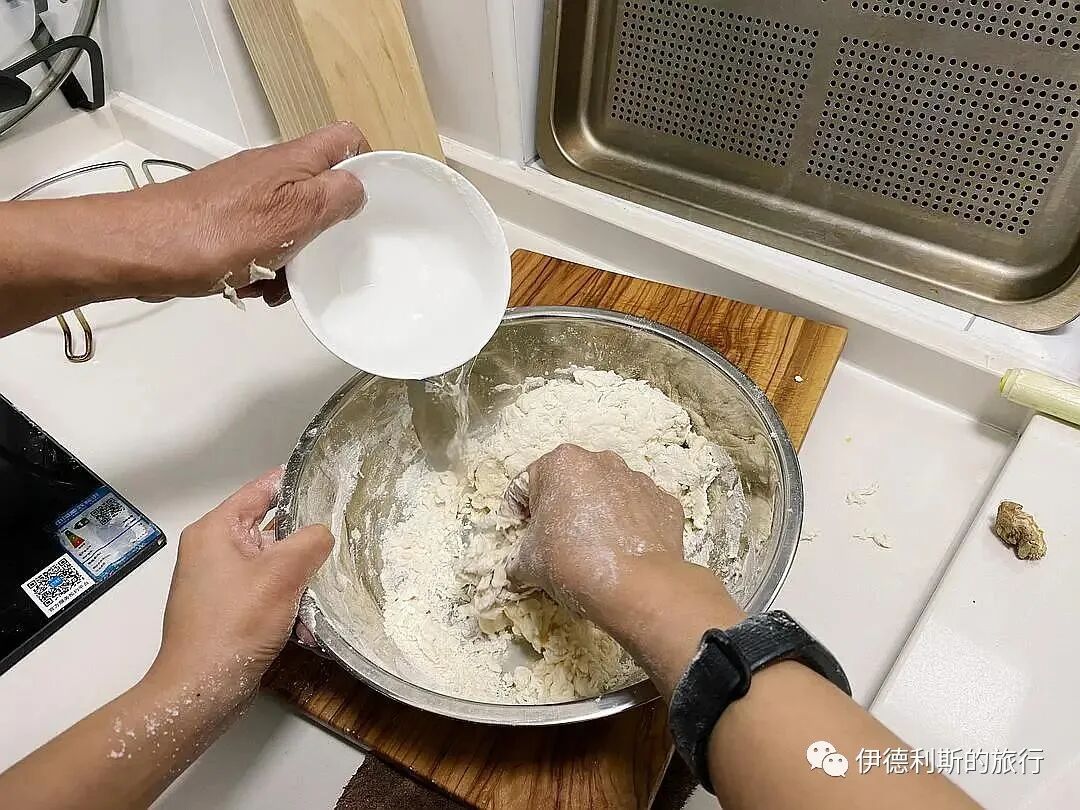
(1) Sprinkle: Put the flour into the mixing bowl and sprinkle in the salt.
(2) Swirl: Pour in a little water and use your fingers to swirl the flour that has touched the water until it forms small, loose crumbles.
(3) Gather: Gradually gather the crumbles into a ball. Swirling and gathering happen at the same time until all the crumbles are part of one single dough ball.
(4) Press: Take the dough out of the bowl. Use the heel of your right hand to press forward, pushing the dough against the board while your left hand guides the direction as the dough rolls forward.
(5) Rest: After about 10 presses, the surface should be smooth. Cover the dough with the mixing bowl and let it rest for 10 minutes.
(6) Knead: Repeat the action from step (4) but don't press as hard, or the surface of the dough might break and lose its smoothness. Then repeat step (5).
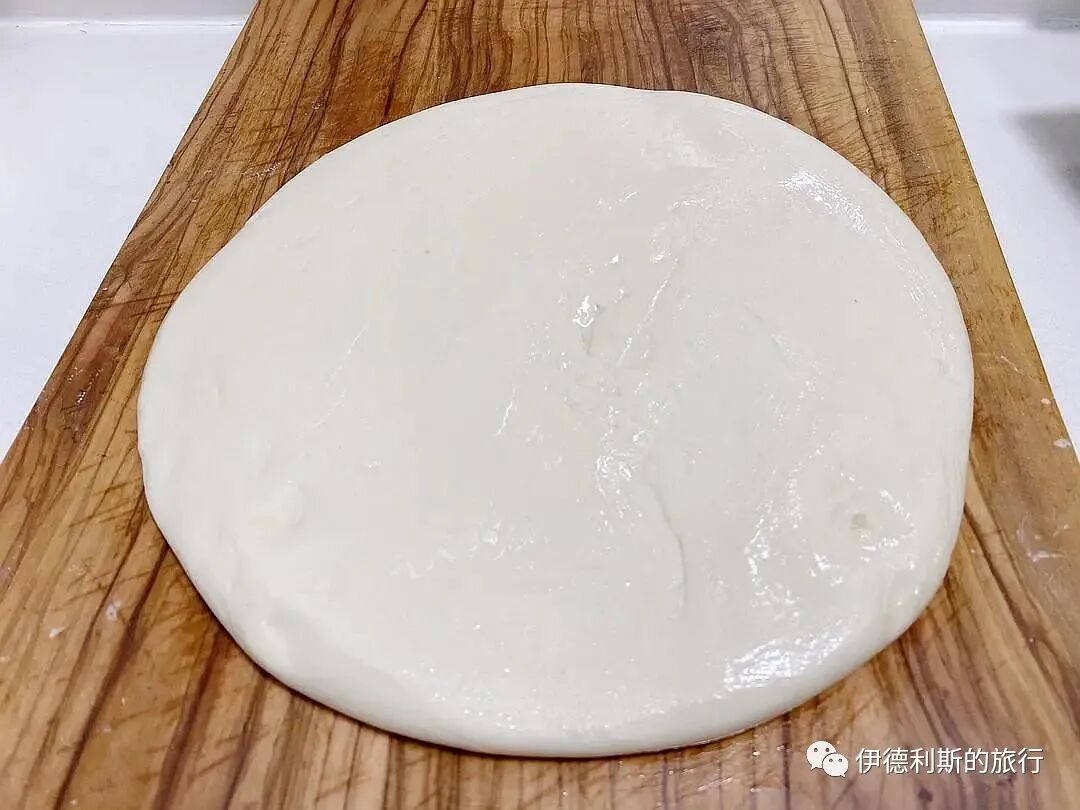
(7) Rolling: Repeat step (6) two or three times, then roll the dough into a large round flatbread about 1cm thick. Brush it with raw oil, cover it with a basin, and you can go cook your stir-fry.
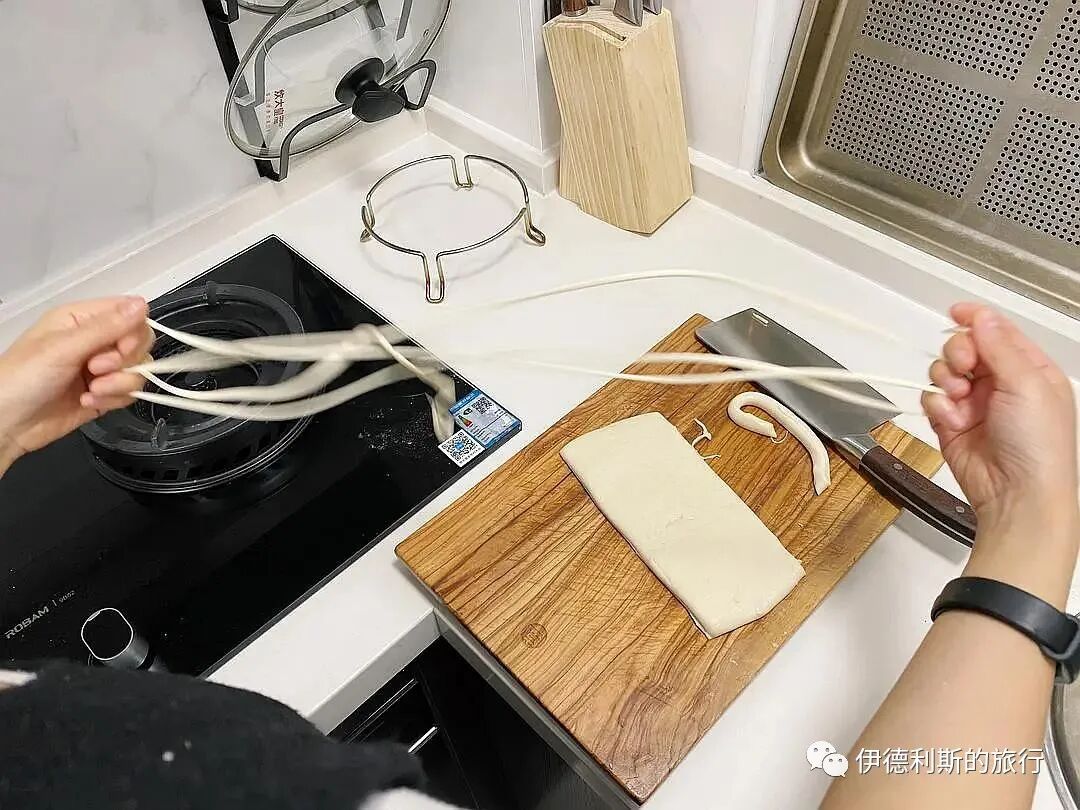
(8) Cutting, pulling, and stretching: When the stir-fry is almost ready, find a pot for the noodles and boil water. Meanwhile, cut the dough into strips about 1cm wide. Start from one side and pull them forward bit by bit. Once the diameter is halved, fold the noodles once or twice. Use both hands to stretch and slap them against the cutting board to make the noodles thinner and chewier.
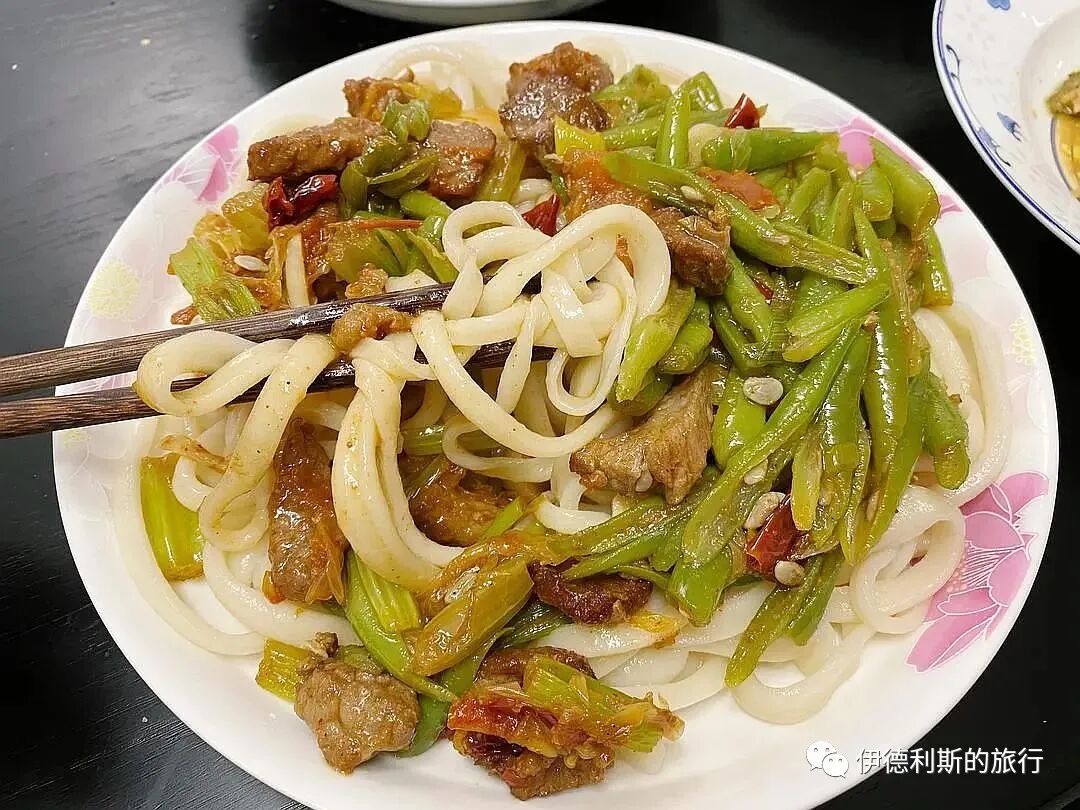
(9) Boiling: Drop them into the pot, cook for a while, and take them out. If you are making mixed noodles, rinse them in cold water. If you are serving them with big plate chicken (dapanji), you do not need cold water; just scoop them out and put them directly into the big plate chicken.
2. Lamb chop pilaf (yangpai zhuafan)
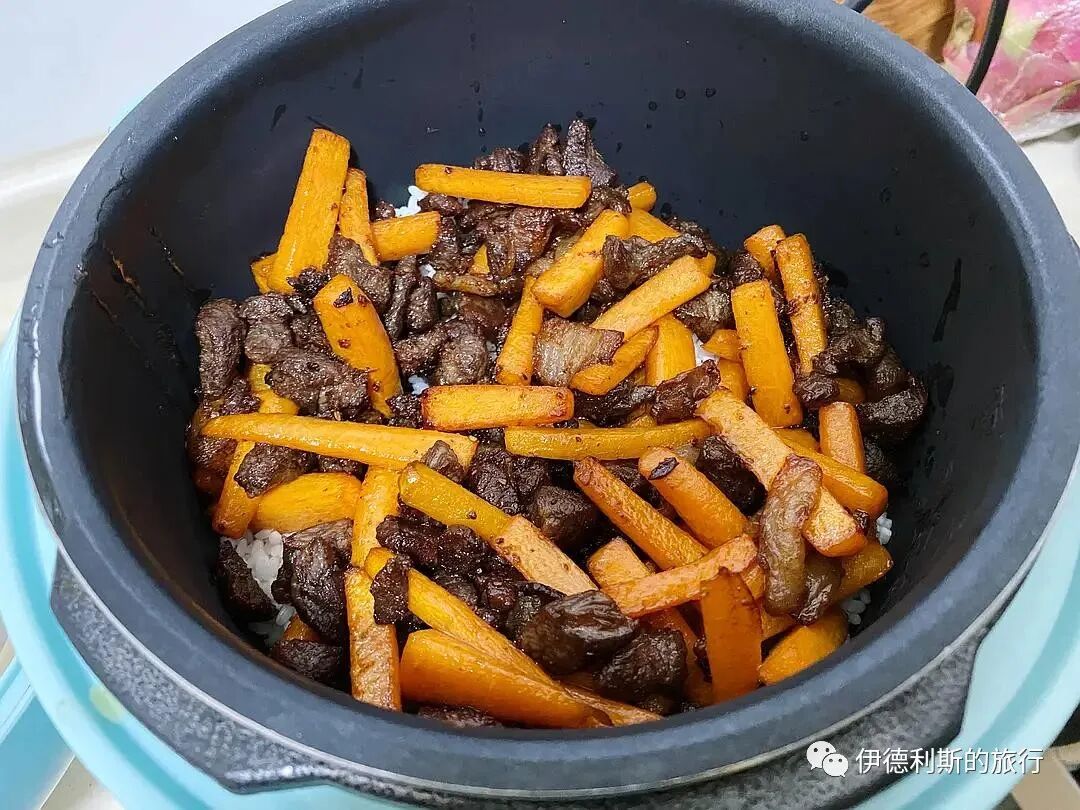
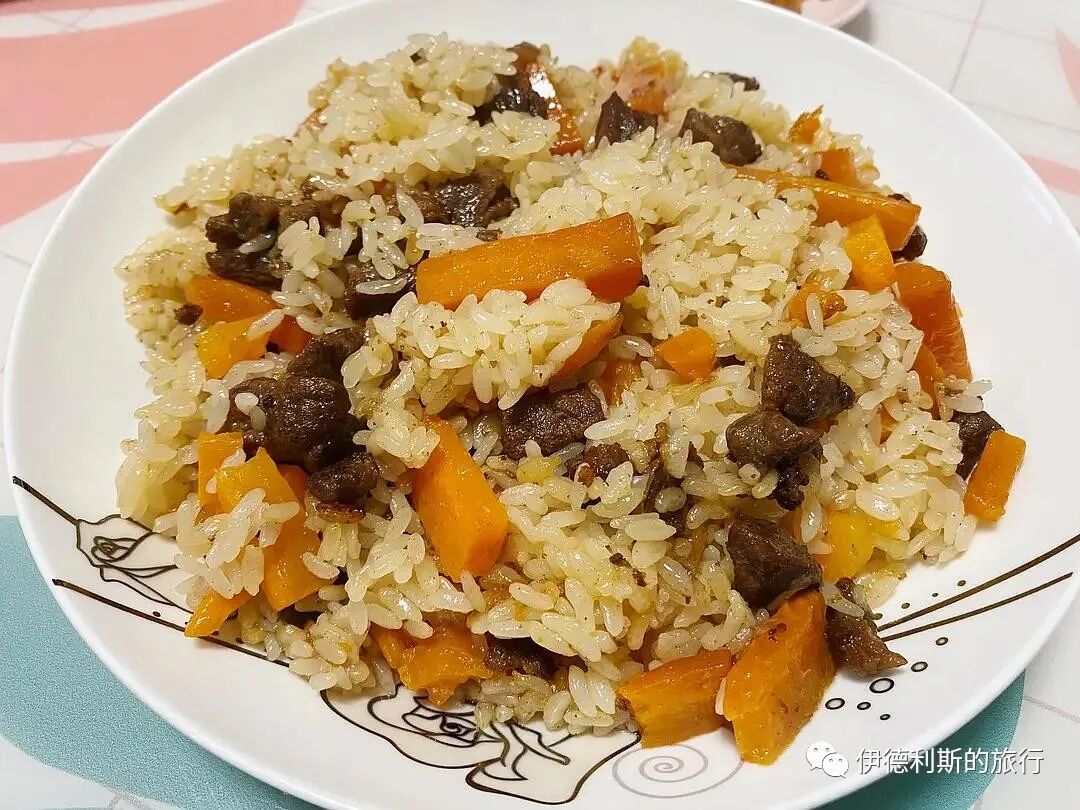
I tried an innovative way to make lamb chop pilaf (zhua fan) to save time and make the meat tender.
1. Pressure cook the lamb chops for 10 minutes (I used the rice cooking mode for 10 minutes).
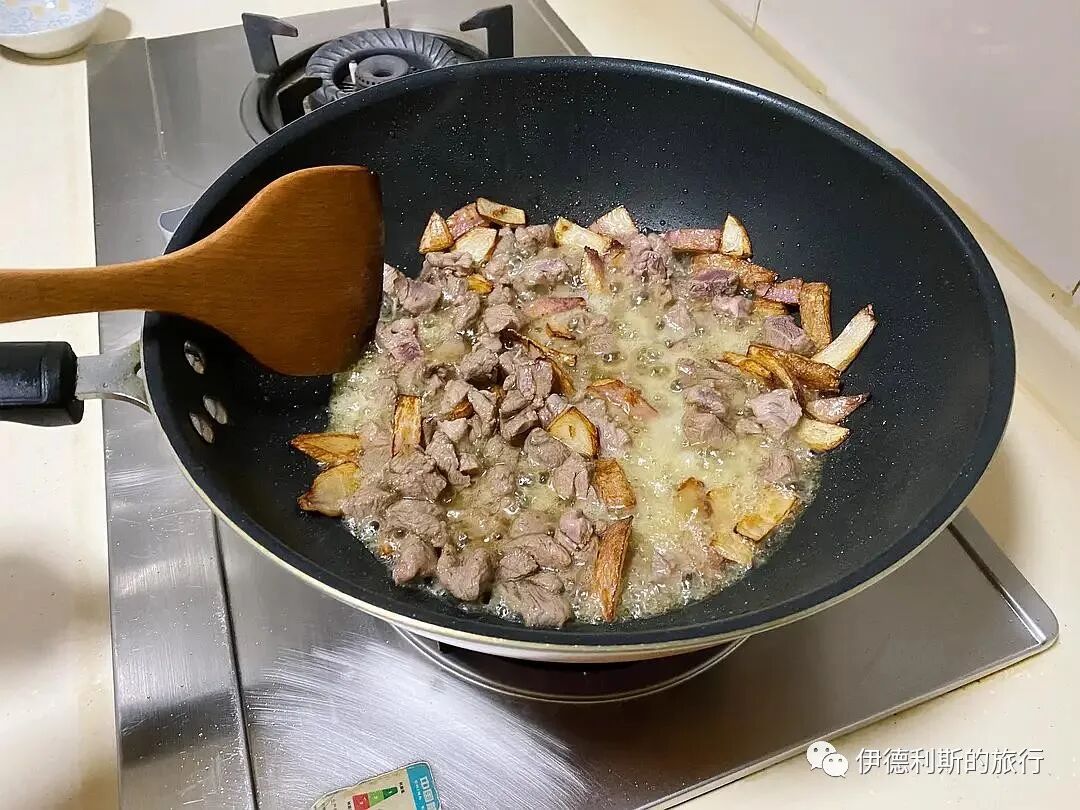
2. Heat oil in a wok (use plenty of oil, about 3-4 times the amount for regular stir-fry). Add onion slices, salt (make it slightly salty), and sugar. Then add half of the carrot strips. Once the carrots shrink, add the pressure-cooked lamb chops and stir for a while.
3. In the pressure cooker, layer from bottom to top: raw carrot strips, rice, and the stir-fried meat and oil mixture. Use the rice cooking mode.
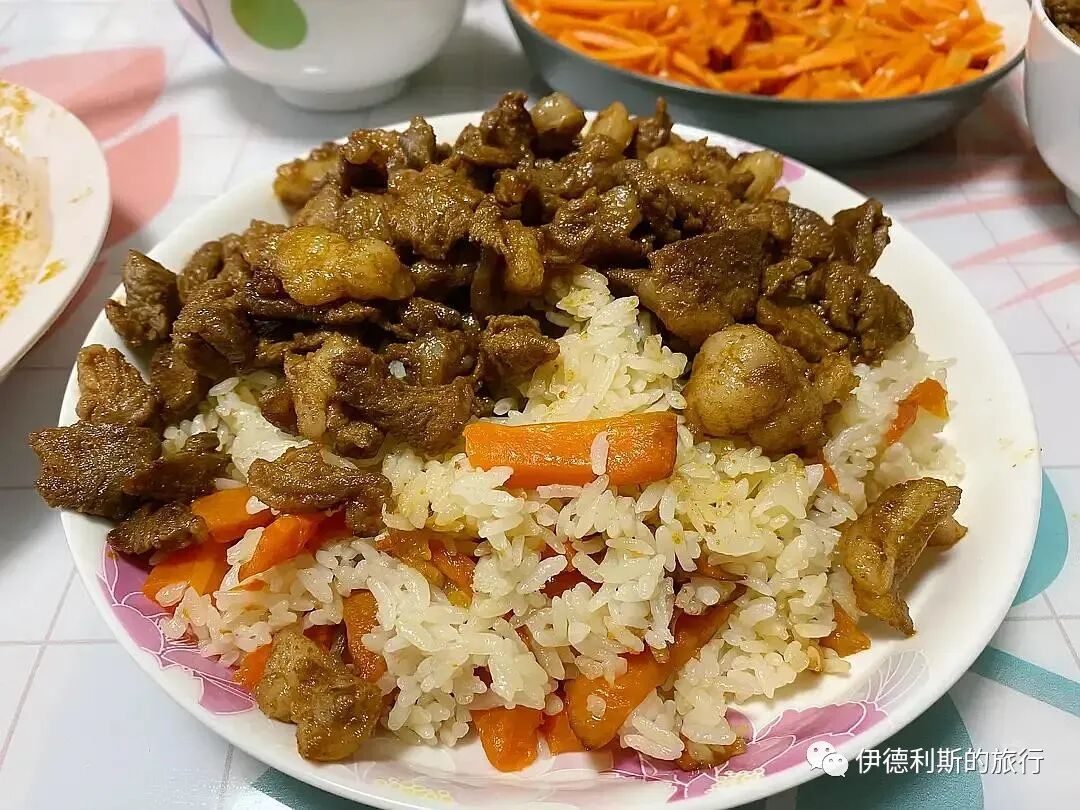
3. Minced meat pilaf (suirou zhuafan)
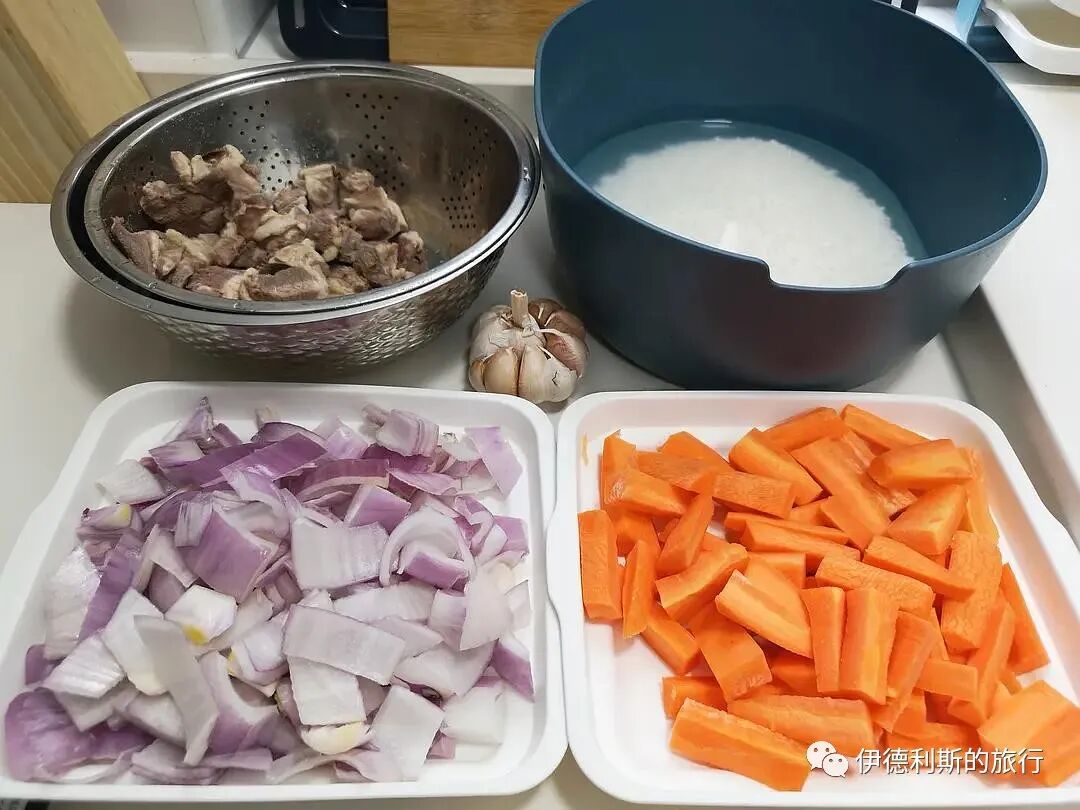
1. Preparation: Cut the boneless meat into pieces, cut carrots (2) into strips, cut onion (half) into chunks, wash and soak the rice (3/4 bowl for two people), and prepare salt, cumin, and sugar.
2. Start: Heat the oil, add the onion chunks, and stir-fry the meat. Add two spoons of salt and one spoon of cumin until the meat is dry. Add half of the carrot strips (I like to add a little sugar) and stir until they shrink. Pour the other half of the carrot strips, the rice, and the stir-fried meat and oil into the rice cooker. Add water (rice:water and oil = 1:1) and sugar (to make the pilaf shiny), then just steam the rice.
4. Uzbek black pilaf (Uzbek hei zhuafan)
I once made Uzbek black pilaf while working from home during the pandemic. Master Wang said he wanted to eat it, so I tried making it again, though I was a bit rusty:
1. Wash a bowl of rice and let it soak.
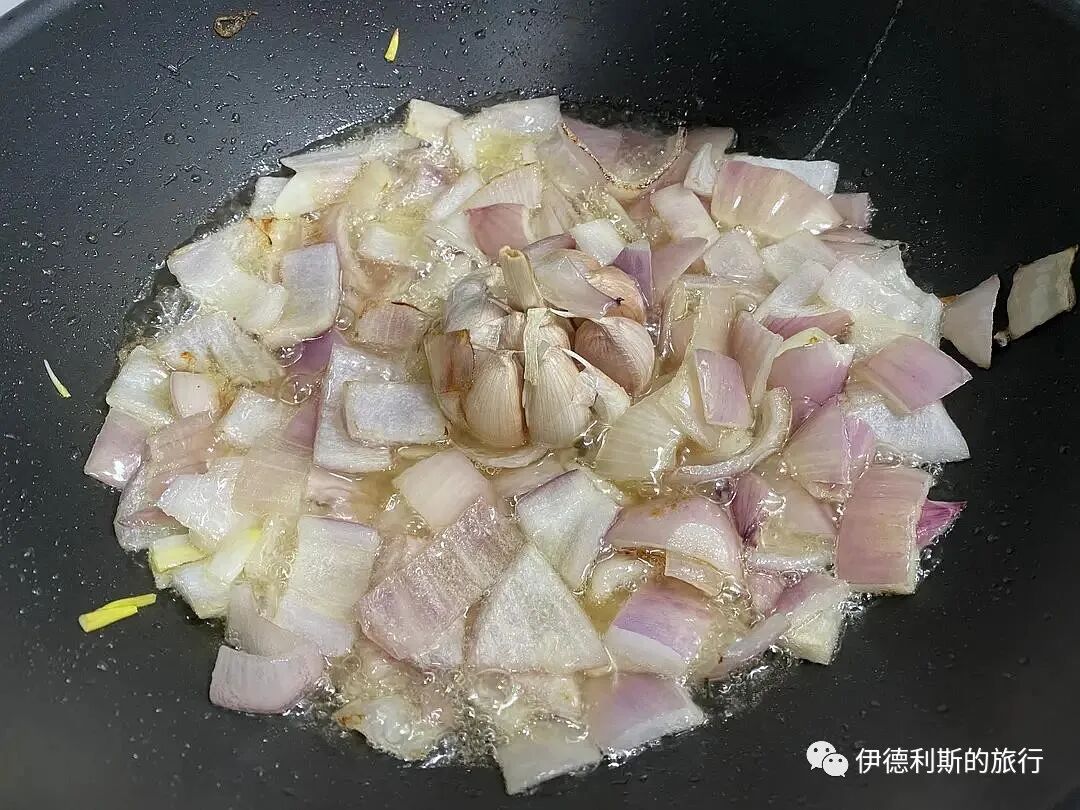
2. Heat the oil, add the onion chunks and a whole head of garlic. Once you smell the garlic, take it out and set it aside.
3. Continue to fry the onions until they are dry and dark brown. Stir-fry the meat, then add two spoons of salt and one spoon of cumin.
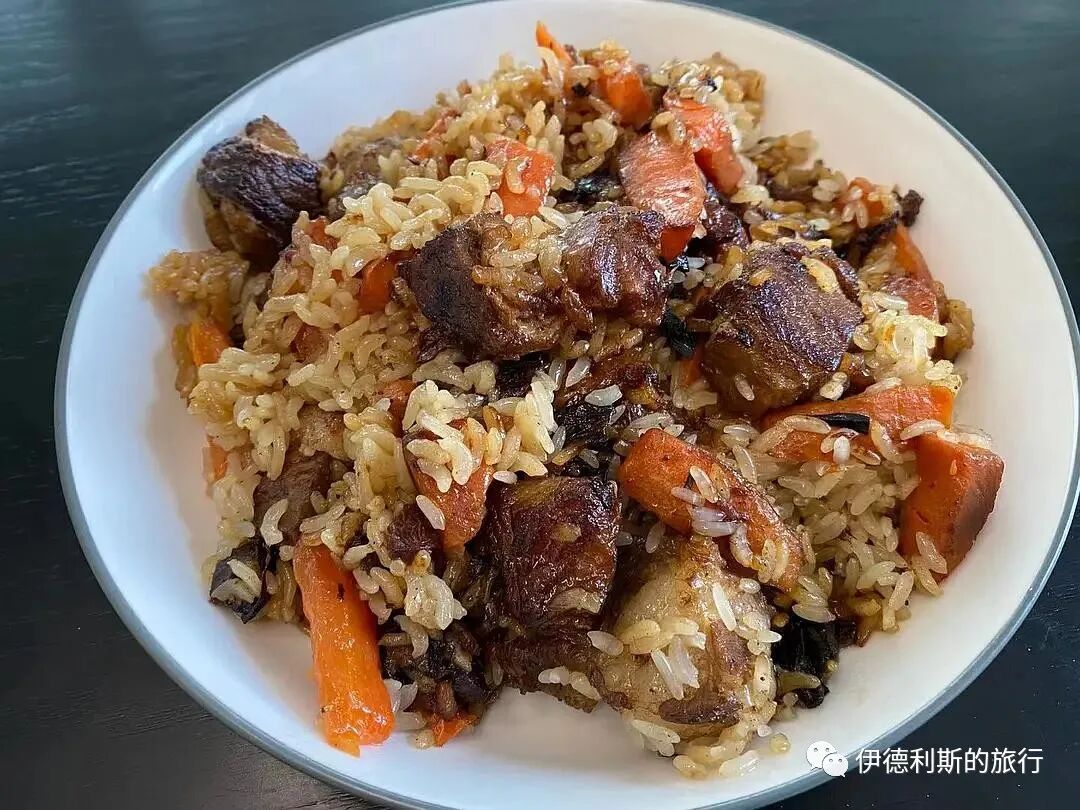
4. Once the meat is dry, add the carrot strips and stir until they shrink. Pour the stir-fried meat and oil into the rice cooker, add the rice and water (rice:water and oil = 1:1), sprinkle a little more cumin, and place the whole head of garlic you fried earlier on top. Use the rice steaming mode. *Note: Do not use too much oil, or the rice will be undercooked. That happened this time, so I poured out some oil, added half a bowl of water, and ran the rice steaming mode again to get it right.
5. Braised lamb bone (hongshao yangbanggu)
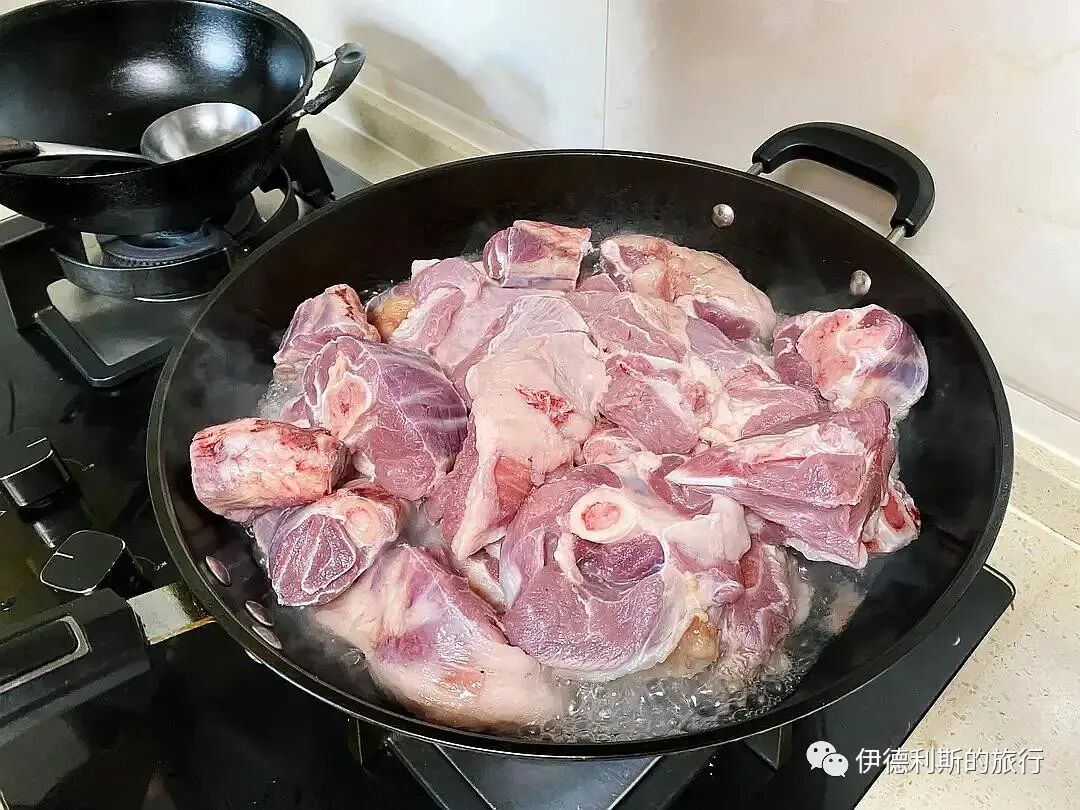
1. Wash 5-6 lamb bone marrow bones and ginger slices. Put them in a pot with half a bowl of water and boil over high heat. Keep stirring and add a spoon of salt during the process until the water boils away.
2. Add a quarter tablespoon of soy sauce and stir well.
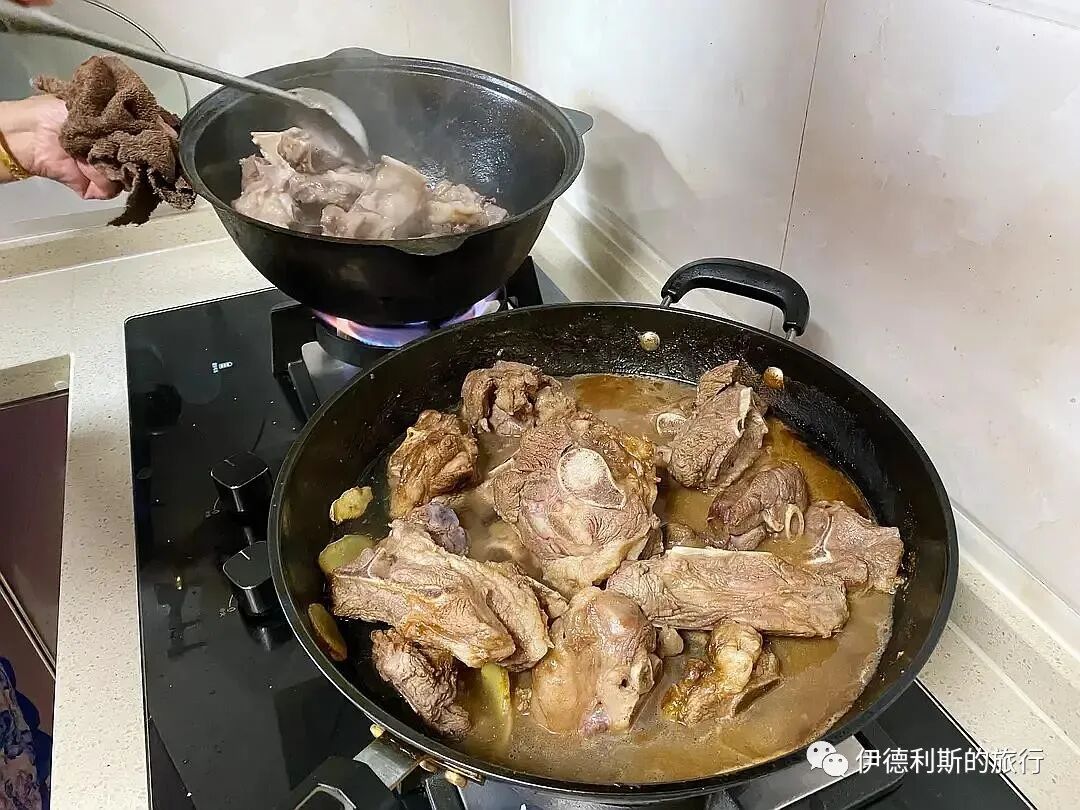
3. Add water until the bones are covered. Once it boils, turn to low heat and simmer. Stir occasionally. After about an hour, the water should be boiled away.
6. Braised beef steak (hongshao niupai)
First, blanch the beef ribs. Once they turn white, take them out. Heat oil, add the meat, ginger, a little cinnamon, star anise, and bean paste (doubanjiang). Stir-fry for a while, then add fresh chili peppers. Once the meat has dried out, put it in a pressure cooker and stew for 25 minutes.
7. Big plate chicken (dapanji)
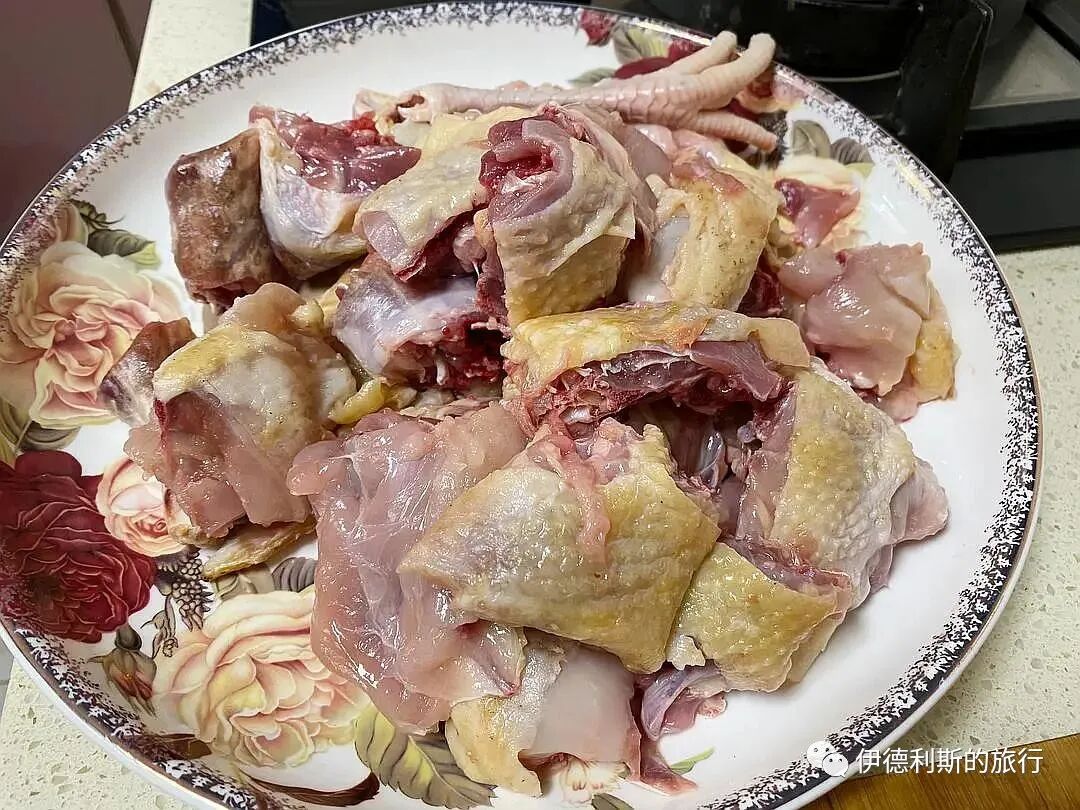
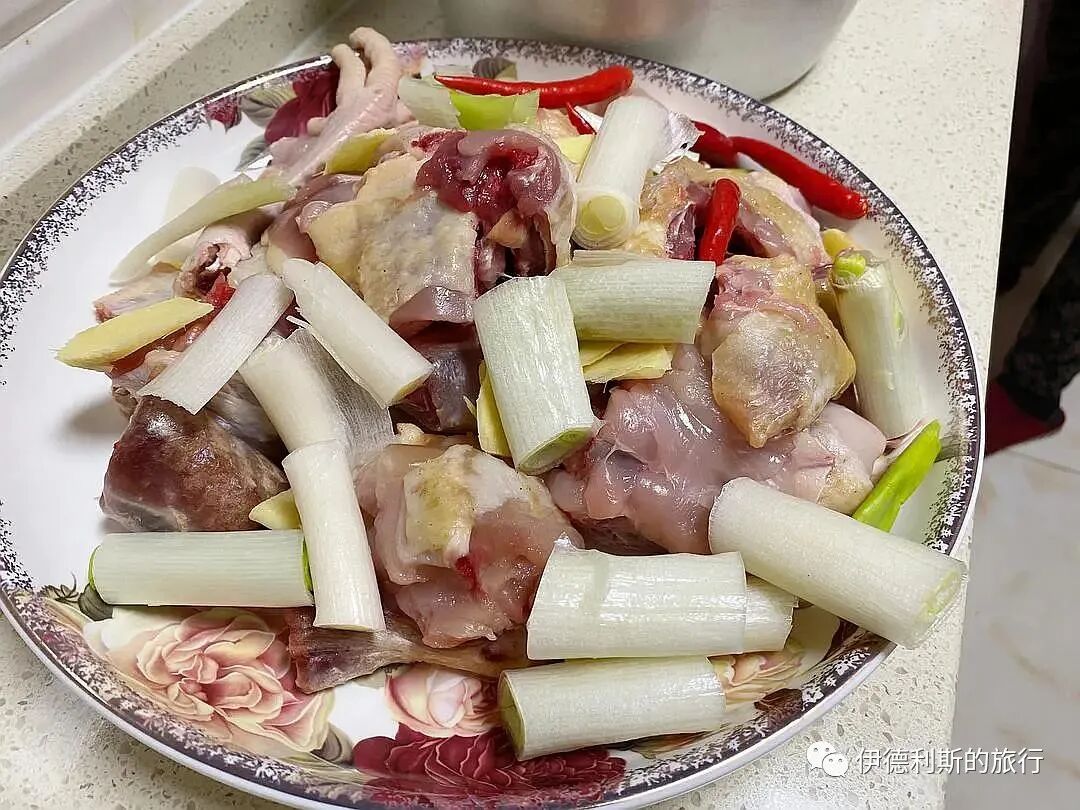
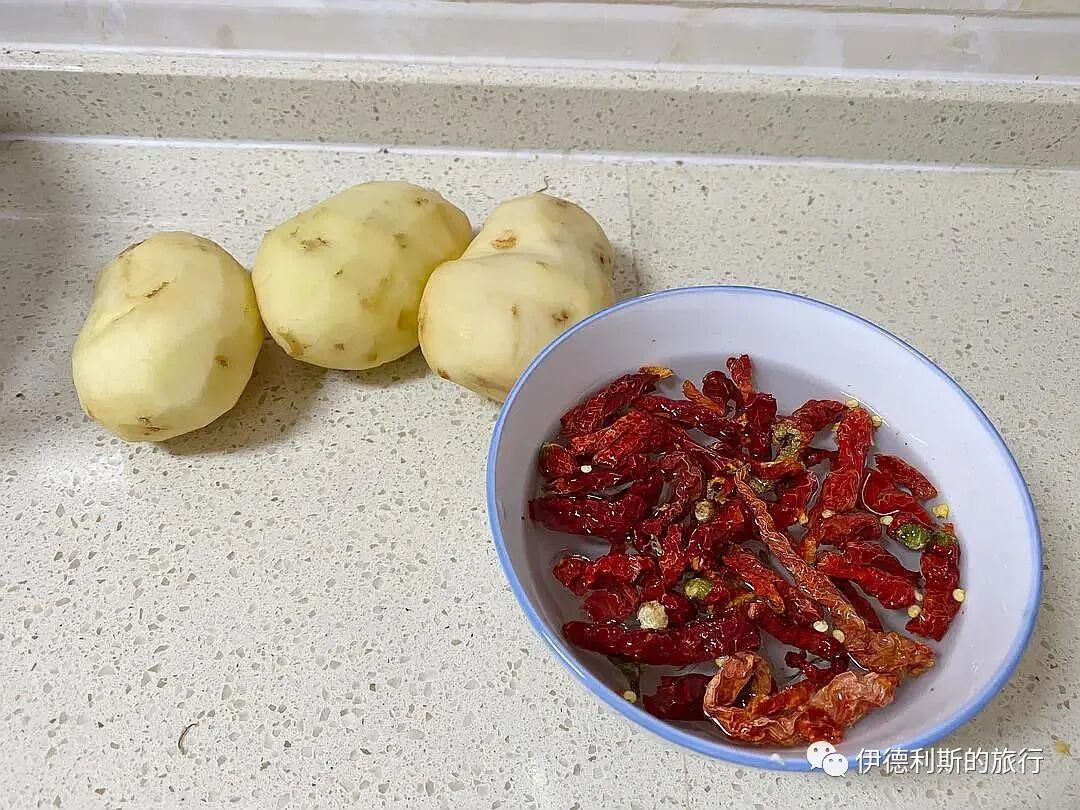
1. Preparation: half a chicken (use a layer hen or free-range chicken (chaiji) for a pressure cooker, or a Sanhuang chicken or broiler for a wok; we used a free-range chicken this time), 2 potatoes cut into chunks, 1 green onion cut into diagonal slices, 10 whole dried chili peppers (lapi-zi), 4 cloves of garlic sliced, sliced ginger, 2 small spoons of salt, 2 small spoons of Sichuan peppercorn powder, 2 small spoons of pepper powder, 1 small bag of tomato paste, 1 spoon of bean paste (doubanjiang), half a spoon of soy sauce, and vinegar.
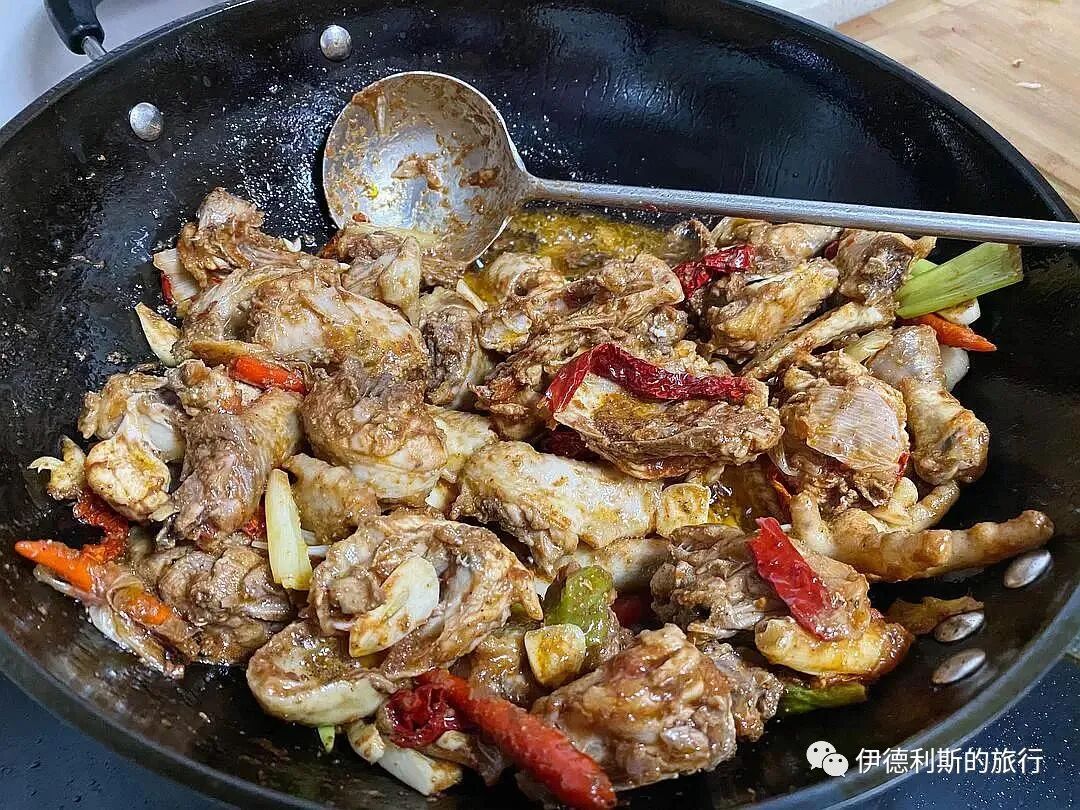
2. Start: Use plenty of oil. Add the chicken pieces, dried chili peppers, and ginger slices to the wok. Add salt, Sichuan peppercorn powder, pepper powder, tomato paste, a little bit of the green onion and garlic, and the bean paste. Stir-fry until the blood has dried out from the chicken, then add soy sauce and turn off the heat.
3a. If using a layer hen or free-range chicken, use an electric pressure cooker. Add the stir-fried chicken and water (about 4 cooking spoons of water, do not cover the chicken). Place the potato chunks on top. Pressure cook for 15 minutes, then open the lid. Take out the potatoes first, add the remaining green onion and garlic, add a drop of vinegar, stir, and serve.
3b. If using a Sanhuang chicken or broiler, add all the green onion, garlic, water, and potato chunks when adding seasonings in the wok. Cook until the potatoes are soft, add a drop of vinegar, and serve.
8. Ashura bean rice (Ashura doudoufan)
On the 10th day of the first month of the Islamic calendar, Ashura, Hui Muslims have a tradition of making a mixed grain porridge. This commemorates the legend that Prophet Nuh's (Noah) ark docked on Ashura, and he gathered the remaining grains in the cabin to make porridge.
Hui Muslims in different places make Ashura porridge in different ways. In Urumqi, it is also called Ashura bean rice.
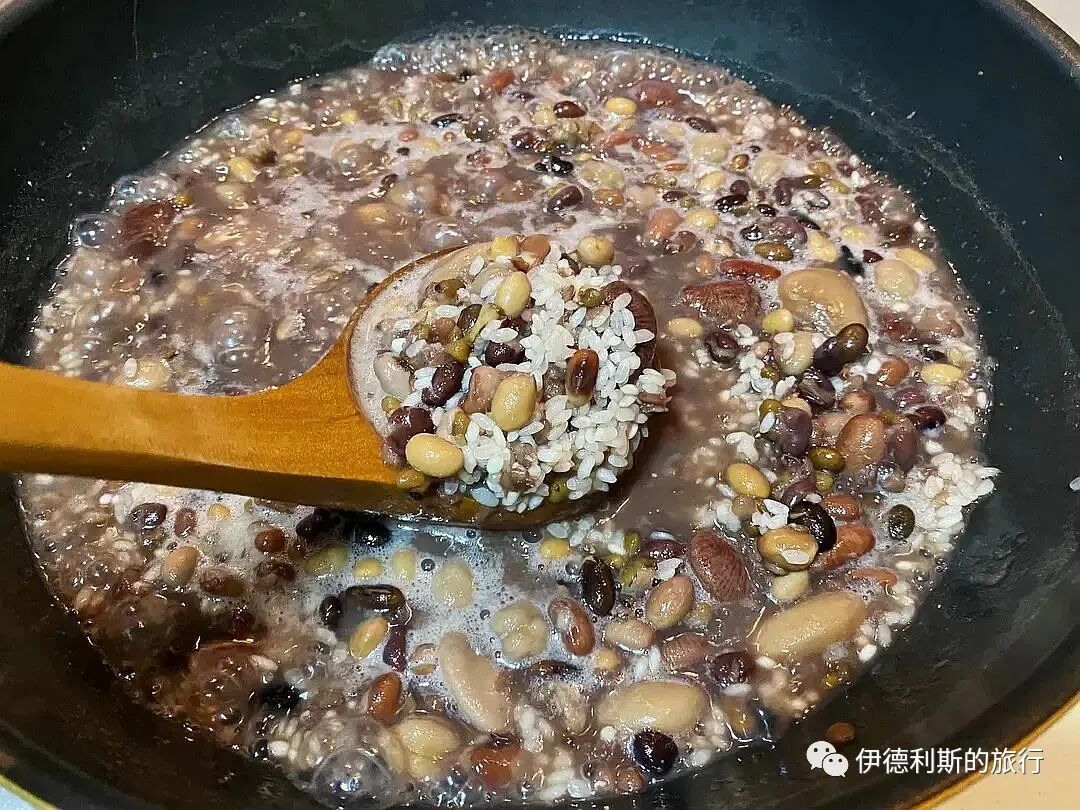
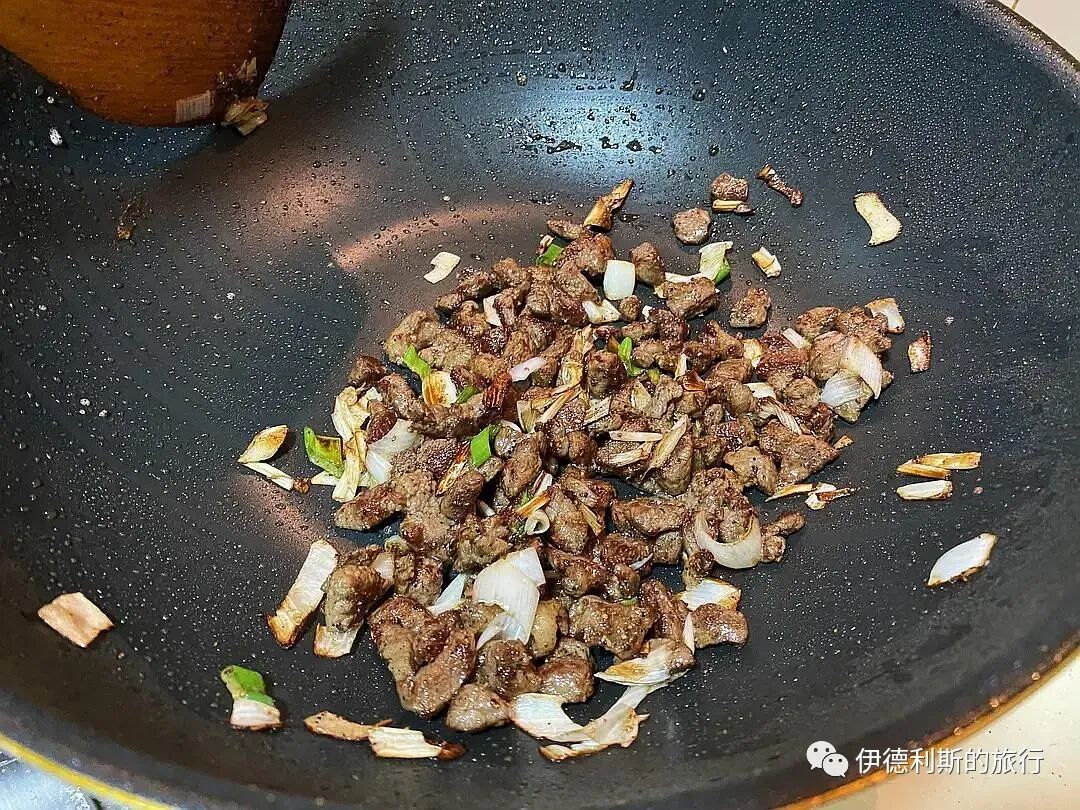
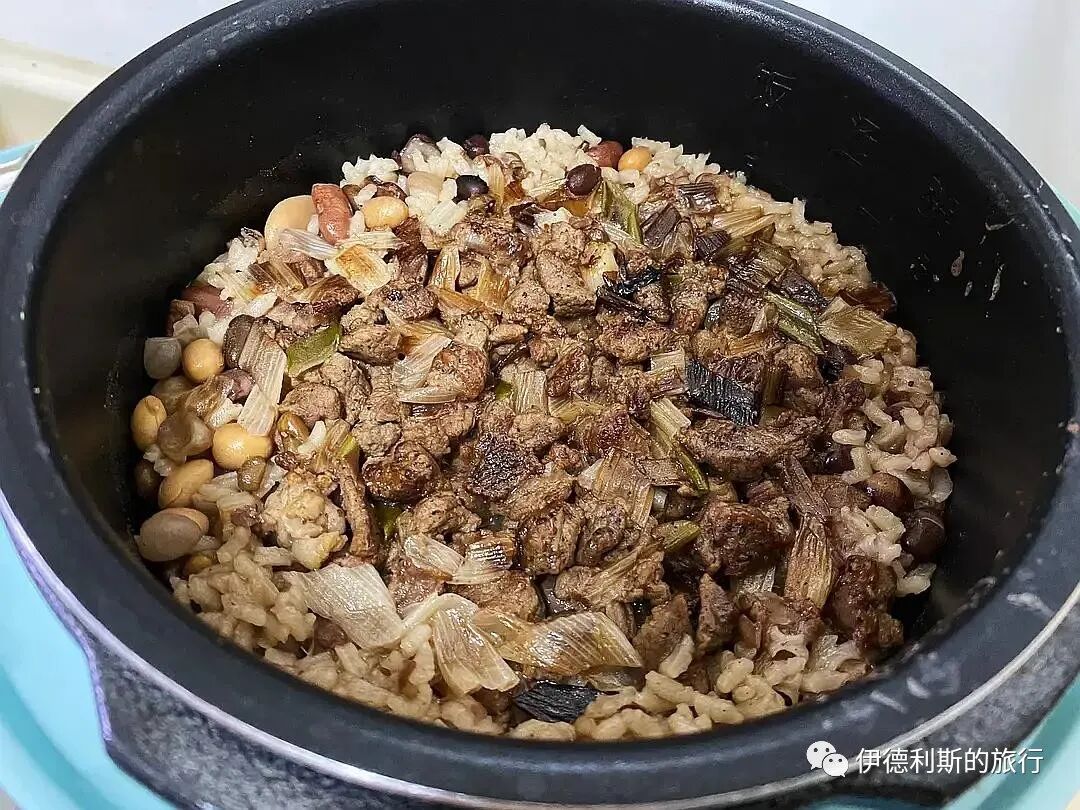
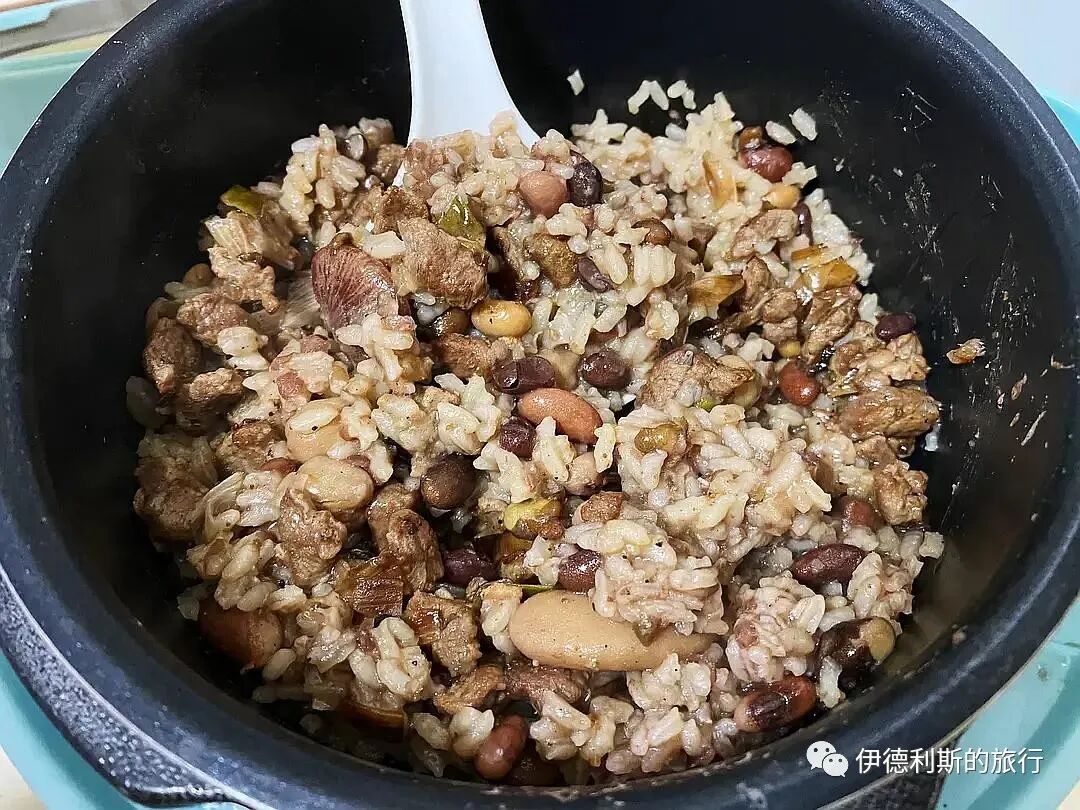
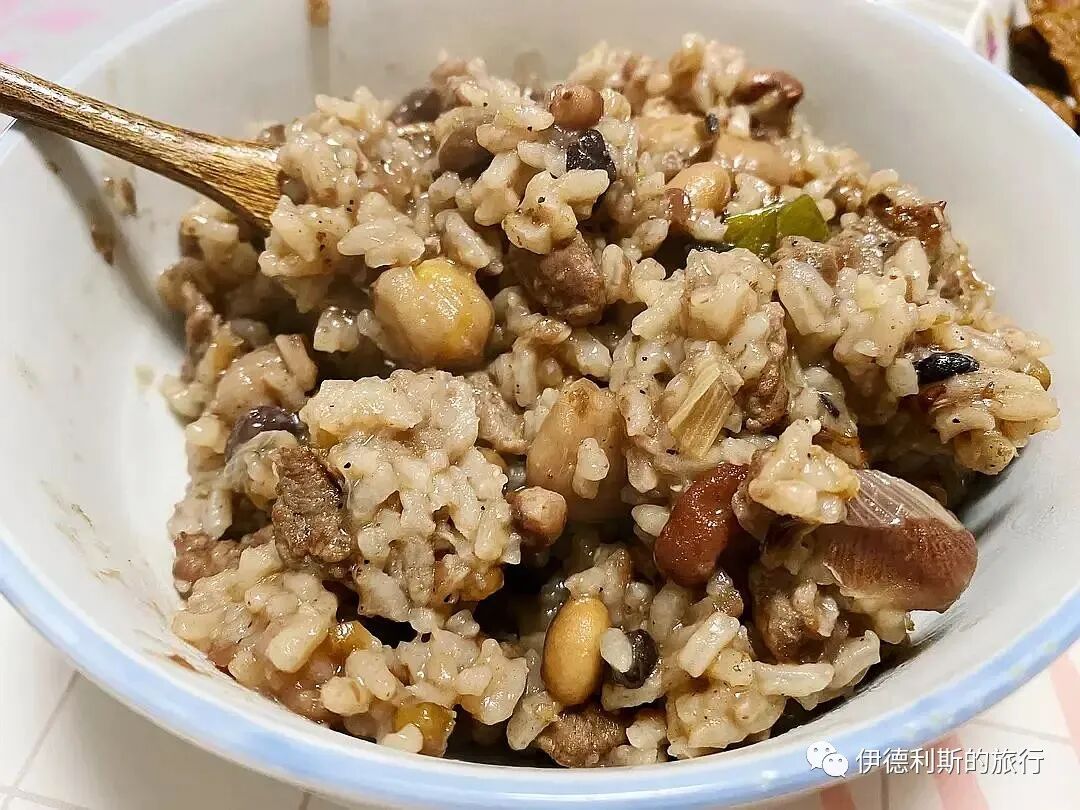
When making it, prepare at least 7 types of beans. We prepared 11. Use an electric pressure cooker to cook the beans until soft, then take them out and put them in a wok to stir with rice and glutinous rice. Then, put everything into the electric pressure cooker. Next, stir-fry diced lamb, add salt and Sichuan peppercorns, then add chopped green onion to make it fragrant. Put it all into the pressure cooker and add water until it covers the ingredients by one and a half finger-widths. After cooking and serving, the aroma of the beans mixes with the aroma of the meat. It is both a seasonal delicacy and very meaningful.
We made a simplified version. The truly traditional way is to soak the beans for two days beforehand. When cooking, you don't use a pressure cooker but keep stirring in a wok, which requires a lot of experience.
9. Awakening of Insects oil tea egg (Jingzhe youcha dan)
Before I was 18, as long as I was home during the Awakening of Insects (Jingzhe) solar term, breakfast would always be Jingzhe soup (oil tea egg). You could say it was my first memory of this solar term. I talked to my parents about it a few days ago and revisited the recipe. I didn't have time this morning, so I tried making it tonight and wanted to share it.
(1) Boil an appropriate amount of brick tea (if you don't have it, you can use black tea; today I tried using Pu'er tea).
(2) Beat 2 eggs into a liquid, and add raisins, chopped walnuts, and chopped red dates.
(3) Heat oil in a pot and stir-fry the dried fruits coated in egg liquid.
(4) Pour in the brewed tea and add rock sugar. The older generation would use lamb fat to fry the eggs for their parents' generation. In our generation, it is more common to use vegetable oil to fry the egg liquid coated with green raisins and walnut kernels. Adding a little more rock sugar makes it more popular with children.
10. Starch noodle soup (fentang)
1. First, stir-fry the meat slices, then add garlic, then add green onion, dried chili peppers, and tomatoes (yangshizi), and then add various vegetables. You can choose the vegetables as you like.
2. Add the lamb broth that was stewed and frozen earlier. After the broth melts, add pea flour blocks, then add the large pieces of stewed lamb, and finally add pepper and cilantro to enhance the flavor.
The classic way to eat starch noodle soup (fentang) is with fried dough (youxiang). After you finish the lamb, break the fried dough into the soup. This is the authentic way of life for Hui Muslims in Urumqi.
11. Fried starch jelly (zhamenzi)
Buy meat at the market and have the butcher grind it into filling (xianzi). The filling for steamed meat loaf (menzi) needs to go through the grinder twice so it is finer than the filling for fried meatballs. Once you get home, steam the filling into a meat loaf (menzi) and slice it up. To cook it, coat the slices in egg and starch, then fry them. Finally, sprinkle on cumin, chili powder, and salt.
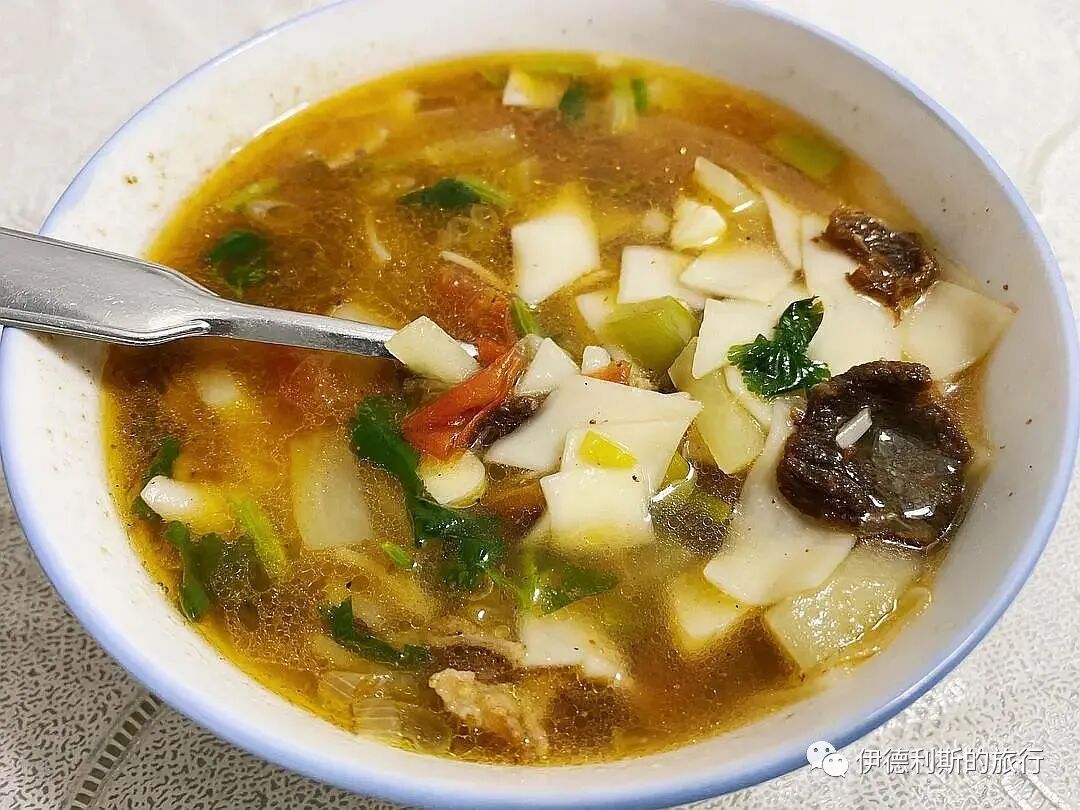
12. Soup noodles (tangfan)
1. Stir-fry lamb slices with salt and Sichuan peppercorn powder until they are a bit dry.
2. Sauté chopped green onions and tomato chunks, then add soy sauce.
3. Stir-fry potato slices, then add water after a short while.
4. When the water boils, add garlic slices and hand-tear dough pieces into the soup. Simmer for a bit, then add pepper powder and cilantro. Finish with a splash of vinegar before serving.
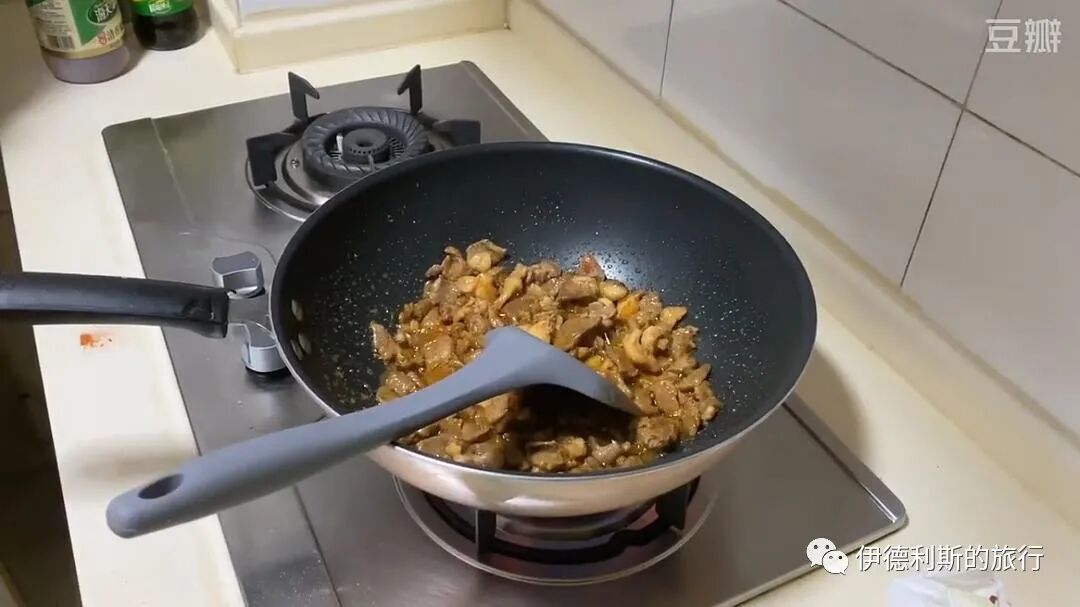
13. Stir-fried barbecue meat (chao kaorou)
1. Heat oil in a pot over high heat. Add lamb fat first, then the meat slices. Stir-fry for a while, add a small spoonful of salt for one bowl of meat, and stir.
2. Add one and a half spoonfuls of chili powder.
3. Add one spoonful of cumin powder. view all
Summary: Xinjiang Home Cooking Guide: Zainab’s Halal Recipes and Uyghur Food is presented here as a firsthand travel account in clear English, beginning with this scene: Author: Zainab. The account keeps its focus on Xinjiang Food, Halal Recipes, Uyghur Food while preserving the names, places, food, and historical details from the Chinese source.
Author: Zainab
As a girl from Urumqi, I often cook Xinjiang home-style dishes. I have put together some simple recipes to share with everyone.
1. Hand-pulled noodles (latiaozi)
2. Lamb chop pilaf (yangpai zhuafan)
3. Minced meat pilaf (suirou zhuafan)
4. Uzbek black pilaf (Uzbek hei zhuafan)
5. Braised lamb bone (hongshao yangbanggu)
6. Braised beef steak (hongshao niupai)
7. Big plate chicken (dapanji)
8. Ashura bean rice (Ashura doudoufan)
9. Awakening of Insects oil tea egg (Jingzhe youcha dan)
10. Starch noodle soup (fentang)
11. Fried starch jelly (zhamenzi)
12. Soup noodles (tangfan)
13. Stir-fried barbecue meat (chao kaorou)
1. Hand-pulled noodles (latiaozi)
1. Preparation: One and a half bowls of flour (for three plates of noodles), half a small spoonful of salt, one bowl of water, a large mixing bowl, a large cutting board, and a rolling pin.
2. Start:
(1) Sprinkle: Put the flour into the mixing bowl and sprinkle in the salt.
(2) Swirl: Pour in a little water and use your fingers to swirl the flour that has touched the water until it forms small, loose crumbles.
(3) Gather: Gradually gather the crumbles into a ball. Swirling and gathering happen at the same time until all the crumbles are part of one single dough ball.
(4) Press: Take the dough out of the bowl. Use the heel of your right hand to press forward, pushing the dough against the board while your left hand guides the direction as the dough rolls forward.
(5) Rest: After about 10 presses, the surface should be smooth. Cover the dough with the mixing bowl and let it rest for 10 minutes.
(6) Knead: Repeat the action from step (4) but don't press as hard, or the surface of the dough might break and lose its smoothness. Then repeat step (5).
(7) Rolling: Repeat step (6) two or three times, then roll the dough into a large round flatbread about 1cm thick. Brush it with raw oil, cover it with a basin, and you can go cook your stir-fry.
(8) Cutting, pulling, and stretching: When the stir-fry is almost ready, find a pot for the noodles and boil water. Meanwhile, cut the dough into strips about 1cm wide. Start from one side and pull them forward bit by bit. Once the diameter is halved, fold the noodles once or twice. Use both hands to stretch and slap them against the cutting board to make the noodles thinner and chewier.
(9) Boiling: Drop them into the pot, cook for a while, and take them out. If you are making mixed noodles, rinse them in cold water. If you are serving them with big plate chicken (dapanji), you do not need cold water; just scoop them out and put them directly into the big plate chicken.
2. Lamb chop pilaf (yangpai zhuafan)
I tried an innovative way to make lamb chop pilaf (zhua fan) to save time and make the meat tender.
1. Pressure cook the lamb chops for 10 minutes (I used the rice cooking mode for 10 minutes).
2. Heat oil in a wok (use plenty of oil, about 3-4 times the amount for regular stir-fry). Add onion slices, salt (make it slightly salty), and sugar. Then add half of the carrot strips. Once the carrots shrink, add the pressure-cooked lamb chops and stir for a while.
3. In the pressure cooker, layer from bottom to top: raw carrot strips, rice, and the stir-fried meat and oil mixture. Use the rice cooking mode.
3. Minced meat pilaf (suirou zhuafan)
1. Preparation: Cut the boneless meat into pieces, cut carrots (2) into strips, cut onion (half) into chunks, wash and soak the rice (3/4 bowl for two people), and prepare salt, cumin, and sugar.
2. Start: Heat the oil, add the onion chunks, and stir-fry the meat. Add two spoons of salt and one spoon of cumin until the meat is dry. Add half of the carrot strips (I like to add a little sugar) and stir until they shrink. Pour the other half of the carrot strips, the rice, and the stir-fried meat and oil into the rice cooker. Add water (rice:water and oil = 1:1) and sugar (to make the pilaf shiny), then just steam the rice.
4. Uzbek black pilaf (Uzbek hei zhuafan)
I once made Uzbek black pilaf while working from home during the pandemic. Master Wang said he wanted to eat it, so I tried making it again, though I was a bit rusty:
1. Wash a bowl of rice and let it soak.
2. Heat the oil, add the onion chunks and a whole head of garlic. Once you smell the garlic, take it out and set it aside.
3. Continue to fry the onions until they are dry and dark brown. Stir-fry the meat, then add two spoons of salt and one spoon of cumin.
4. Once the meat is dry, add the carrot strips and stir until they shrink. Pour the stir-fried meat and oil into the rice cooker, add the rice and water (rice:water and oil = 1:1), sprinkle a little more cumin, and place the whole head of garlic you fried earlier on top. Use the rice steaming mode. *Note: Do not use too much oil, or the rice will be undercooked. That happened this time, so I poured out some oil, added half a bowl of water, and ran the rice steaming mode again to get it right.
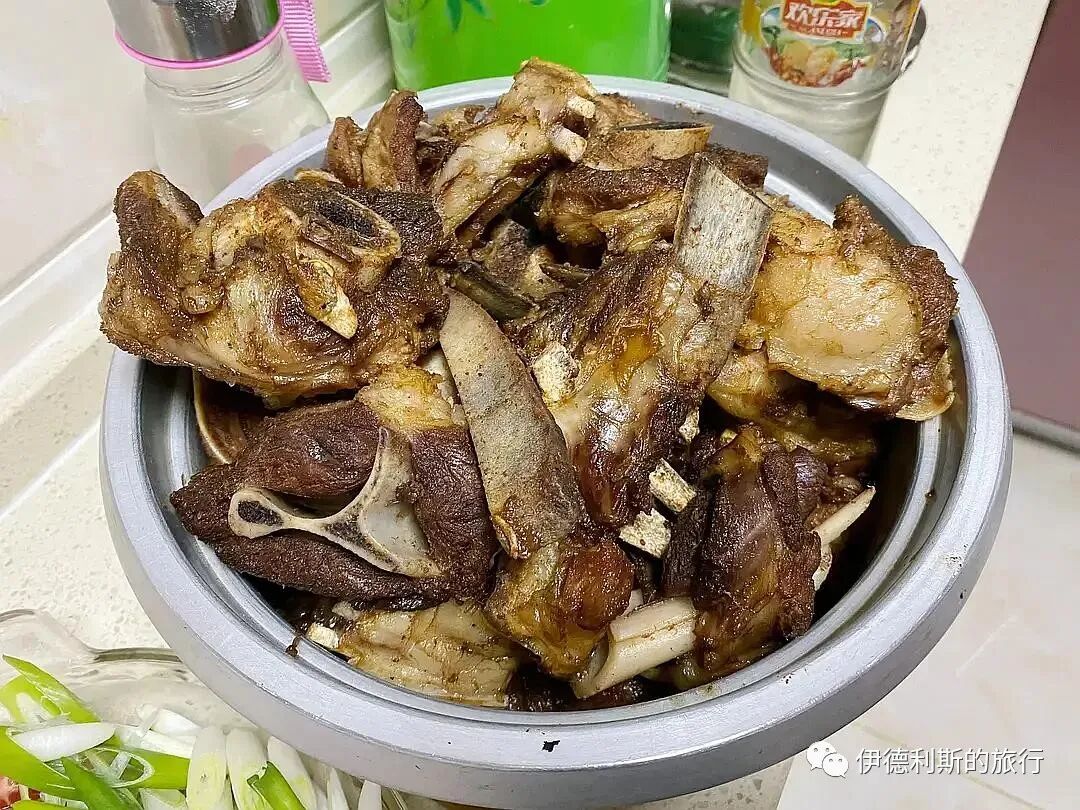
5. Braised lamb bone (hongshao yangbanggu)
1. Wash 5-6 lamb bone marrow bones and ginger slices. Put them in a pot with half a bowl of water and boil over high heat. Keep stirring and add a spoon of salt during the process until the water boils away.
2. Add a quarter tablespoon of soy sauce and stir well.
3. Add water until the bones are covered. Once it boils, turn to low heat and simmer. Stir occasionally. After about an hour, the water should be boiled away.
6. Braised beef steak (hongshao niupai)
First, blanch the beef ribs. Once they turn white, take them out. Heat oil, add the meat, ginger, a little cinnamon, star anise, and bean paste (doubanjiang). Stir-fry for a while, then add fresh chili peppers. Once the meat has dried out, put it in a pressure cooker and stew for 25 minutes.
7. Big plate chicken (dapanji)
1. Preparation: half a chicken (use a layer hen or free-range chicken (chaiji) for a pressure cooker, or a Sanhuang chicken or broiler for a wok; we used a free-range chicken this time), 2 potatoes cut into chunks, 1 green onion cut into diagonal slices, 10 whole dried chili peppers (lapi-zi), 4 cloves of garlic sliced, sliced ginger, 2 small spoons of salt, 2 small spoons of Sichuan peppercorn powder, 2 small spoons of pepper powder, 1 small bag of tomato paste, 1 spoon of bean paste (doubanjiang), half a spoon of soy sauce, and vinegar.
2. Start: Use plenty of oil. Add the chicken pieces, dried chili peppers, and ginger slices to the wok. Add salt, Sichuan peppercorn powder, pepper powder, tomato paste, a little bit of the green onion and garlic, and the bean paste. Stir-fry until the blood has dried out from the chicken, then add soy sauce and turn off the heat.
3a. If using a layer hen or free-range chicken, use an electric pressure cooker. Add the stir-fried chicken and water (about 4 cooking spoons of water, do not cover the chicken). Place the potato chunks on top. Pressure cook for 15 minutes, then open the lid. Take out the potatoes first, add the remaining green onion and garlic, add a drop of vinegar, stir, and serve.
3b. If using a Sanhuang chicken or broiler, add all the green onion, garlic, water, and potato chunks when adding seasonings in the wok. Cook until the potatoes are soft, add a drop of vinegar, and serve.
8. Ashura bean rice (Ashura doudoufan)
On the 10th day of the first month of the Islamic calendar, Ashura, Hui Muslims have a tradition of making a mixed grain porridge. This commemorates the legend that Prophet Nuh's (Noah) ark docked on Ashura, and he gathered the remaining grains in the cabin to make porridge.
Hui Muslims in different places make Ashura porridge in different ways. In Urumqi, it is also called Ashura bean rice.
When making it, prepare at least 7 types of beans. We prepared 11. Use an electric pressure cooker to cook the beans until soft, then take them out and put them in a wok to stir with rice and glutinous rice. Then, put everything into the electric pressure cooker. Next, stir-fry diced lamb, add salt and Sichuan peppercorns, then add chopped green onion to make it fragrant. Put it all into the pressure cooker and add water until it covers the ingredients by one and a half finger-widths. After cooking and serving, the aroma of the beans mixes with the aroma of the meat. It is both a seasonal delicacy and very meaningful.
We made a simplified version. The truly traditional way is to soak the beans for two days beforehand. When cooking, you don't use a pressure cooker but keep stirring in a wok, which requires a lot of experience.
9. Awakening of Insects oil tea egg (Jingzhe youcha dan)
Before I was 18, as long as I was home during the Awakening of Insects (Jingzhe) solar term, breakfast would always be Jingzhe soup (oil tea egg). You could say it was my first memory of this solar term. I talked to my parents about it a few days ago and revisited the recipe. I didn't have time this morning, so I tried making it tonight and wanted to share it.
(1) Boil an appropriate amount of brick tea (if you don't have it, you can use black tea; today I tried using Pu'er tea).
(2) Beat 2 eggs into a liquid, and add raisins, chopped walnuts, and chopped red dates.
(3) Heat oil in a pot and stir-fry the dried fruits coated in egg liquid.
(4) Pour in the brewed tea and add rock sugar. The older generation would use lamb fat to fry the eggs for their parents' generation. In our generation, it is more common to use vegetable oil to fry the egg liquid coated with green raisins and walnut kernels. Adding a little more rock sugar makes it more popular with children.
10. Starch noodle soup (fentang)
1. First, stir-fry the meat slices, then add garlic, then add green onion, dried chili peppers, and tomatoes (yangshizi), and then add various vegetables. You can choose the vegetables as you like.
2. Add the lamb broth that was stewed and frozen earlier. After the broth melts, add pea flour blocks, then add the large pieces of stewed lamb, and finally add pepper and cilantro to enhance the flavor.
The classic way to eat starch noodle soup (fentang) is with fried dough (youxiang). After you finish the lamb, break the fried dough into the soup. This is the authentic way of life for Hui Muslims in Urumqi.
11. Fried starch jelly (zhamenzi)
Buy meat at the market and have the butcher grind it into filling (xianzi). The filling for steamed meat loaf (menzi) needs to go through the grinder twice so it is finer than the filling for fried meatballs. Once you get home, steam the filling into a meat loaf (menzi) and slice it up. To cook it, coat the slices in egg and starch, then fry them. Finally, sprinkle on cumin, chili powder, and salt.
12. Soup noodles (tangfan)
1. Stir-fry lamb slices with salt and Sichuan peppercorn powder until they are a bit dry.
2. Sauté chopped green onions and tomato chunks, then add soy sauce.
3. Stir-fry potato slices, then add water after a short while.
4. When the water boils, add garlic slices and hand-tear dough pieces into the soup. Simmer for a bit, then add pepper powder and cilantro. Finish with a splash of vinegar before serving.
13. Stir-fried barbecue meat (chao kaorou)
1. Heat oil in a pot over high heat. Add lamb fat first, then the meat slices. Stir-fry for a while, add a small spoonful of salt for one bowl of meat, and stir.
2. Add one and a half spoonfuls of chili powder.
3. Add one spoonful of cumin powder. view all
Reposted from the web
Summary: Xinjiang Home Cooking Guide: Zainab’s Halal Recipes and Uyghur Food is presented here as a firsthand travel account in clear English, beginning with this scene: Author: Zainab. The account keeps its focus on Xinjiang Food, Halal Recipes, Uyghur Food while preserving the names, places, food, and historical details from the Chinese source.
Author: Zainab
As a girl from Urumqi, I often cook Xinjiang home-style dishes. I have put together some simple recipes to share with everyone.
1. Hand-pulled noodles (latiaozi)
2. Lamb chop pilaf (yangpai zhuafan)
3. Minced meat pilaf (suirou zhuafan)
4. Uzbek black pilaf (Uzbek hei zhuafan)
5. Braised lamb bone (hongshao yangbanggu)
6. Braised beef steak (hongshao niupai)
7. Big plate chicken (dapanji)
8. Ashura bean rice (Ashura doudoufan)
9. Awakening of Insects oil tea egg (Jingzhe youcha dan)
10. Starch noodle soup (fentang)
11. Fried starch jelly (zhamenzi)
12. Soup noodles (tangfan)
13. Stir-fried barbecue meat (chao kaorou)
1. Hand-pulled noodles (latiaozi)
1. Preparation: One and a half bowls of flour (for three plates of noodles), half a small spoonful of salt, one bowl of water, a large mixing bowl, a large cutting board, and a rolling pin.
2. Start:
(1) Sprinkle: Put the flour into the mixing bowl and sprinkle in the salt.
(2) Swirl: Pour in a little water and use your fingers to swirl the flour that has touched the water until it forms small, loose crumbles.
(3) Gather: Gradually gather the crumbles into a ball. Swirling and gathering happen at the same time until all the crumbles are part of one single dough ball.
(4) Press: Take the dough out of the bowl. Use the heel of your right hand to press forward, pushing the dough against the board while your left hand guides the direction as the dough rolls forward.
(5) Rest: After about 10 presses, the surface should be smooth. Cover the dough with the mixing bowl and let it rest for 10 minutes.
(6) Knead: Repeat the action from step (4) but don't press as hard, or the surface of the dough might break and lose its smoothness. Then repeat step (5).
(7) Rolling: Repeat step (6) two or three times, then roll the dough into a large round flatbread about 1cm thick. Brush it with raw oil, cover it with a basin, and you can go cook your stir-fry.
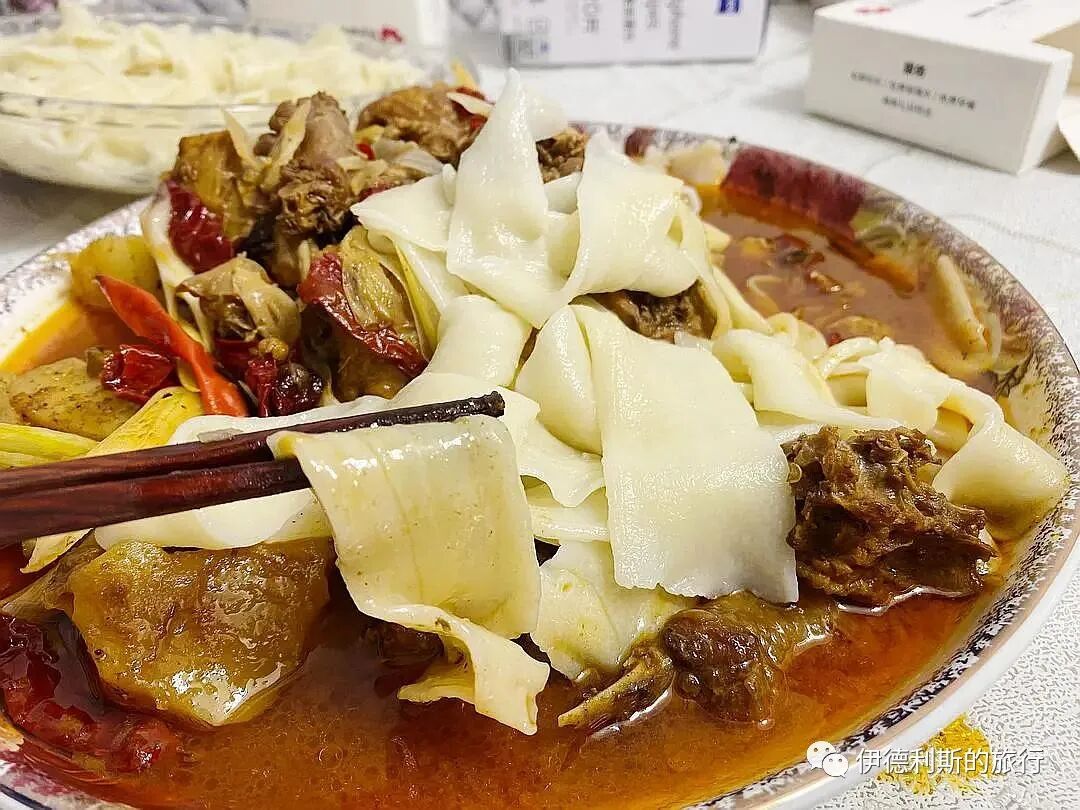
(8) Cutting, pulling, and stretching: When the stir-fry is almost ready, find a pot for the noodles and boil water. Meanwhile, cut the dough into strips about 1cm wide. Start from one side and pull them forward bit by bit. Once the diameter is halved, fold the noodles once or twice. Use both hands to stretch and slap them against the cutting board to make the noodles thinner and chewier.
(9) Boiling: Drop them into the pot, cook for a while, and take them out. If you are making mixed noodles, rinse them in cold water. If you are serving them with big plate chicken (dapanji), you do not need cold water; just scoop them out and put them directly into the big plate chicken.
2. Lamb chop pilaf (yangpai zhuafan)
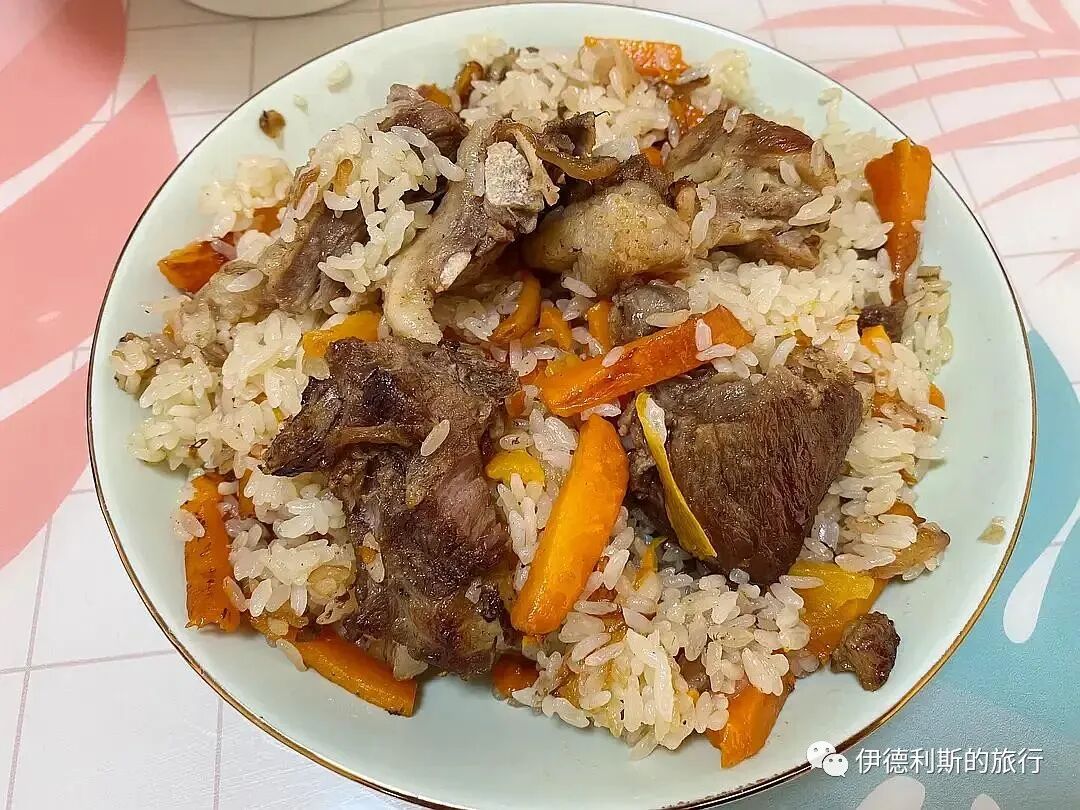
I tried an innovative way to make lamb chop pilaf (zhua fan) to save time and make the meat tender.
1. Pressure cook the lamb chops for 10 minutes (I used the rice cooking mode for 10 minutes).
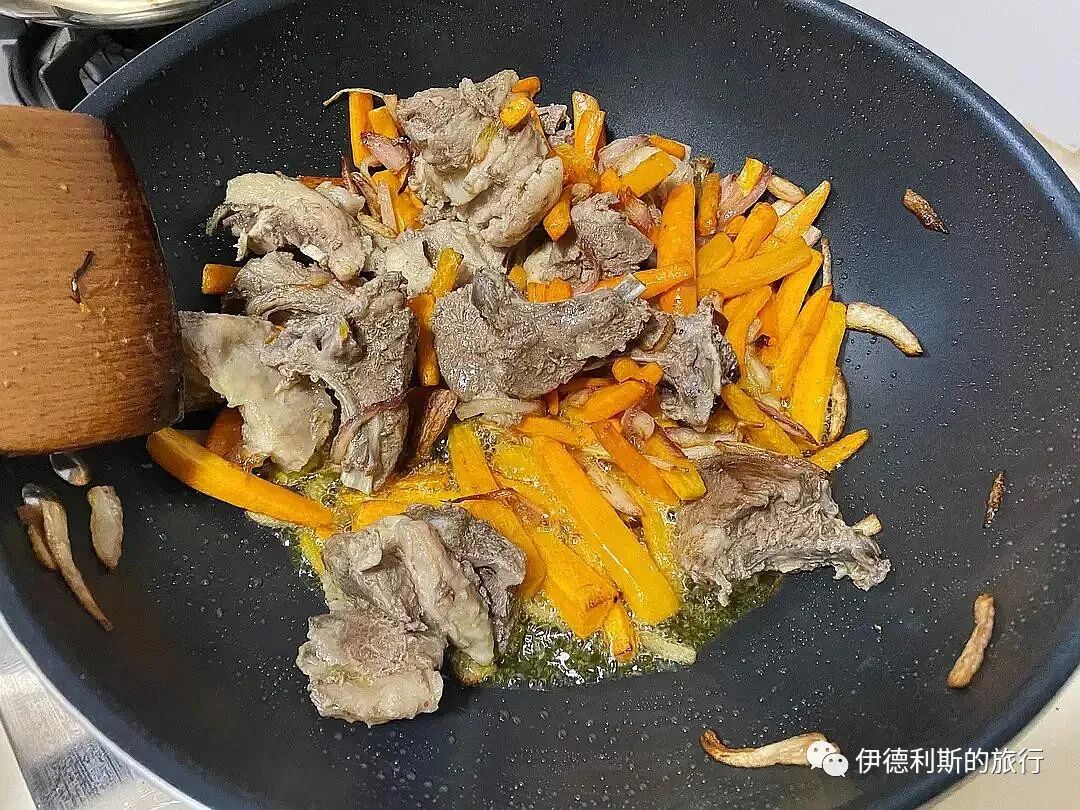
2. Heat oil in a wok (use plenty of oil, about 3-4 times the amount for regular stir-fry). Add onion slices, salt (make it slightly salty), and sugar. Then add half of the carrot strips. Once the carrots shrink, add the pressure-cooked lamb chops and stir for a while.
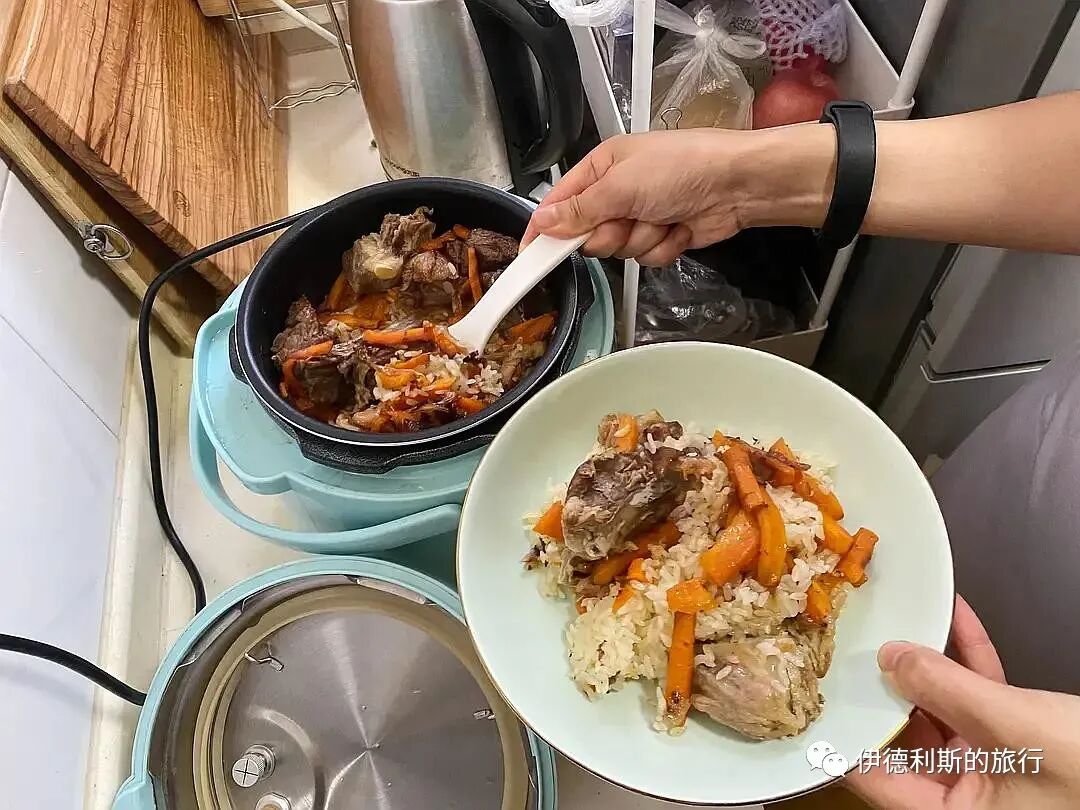
3. In the pressure cooker, layer from bottom to top: raw carrot strips, rice, and the stir-fried meat and oil mixture. Use the rice cooking mode.
3. Minced meat pilaf (suirou zhuafan)
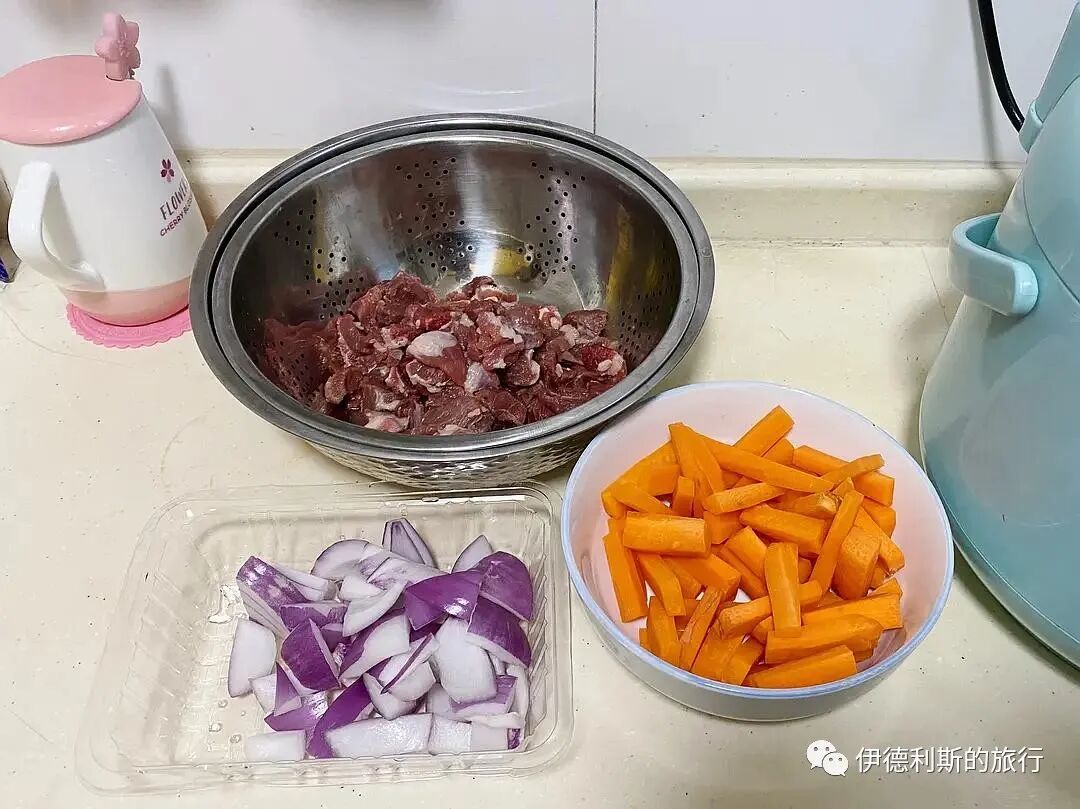
1. Preparation: Cut the boneless meat into pieces, cut carrots (2) into strips, cut onion (half) into chunks, wash and soak the rice (3/4 bowl for two people), and prepare salt, cumin, and sugar.
2. Start: Heat the oil, add the onion chunks, and stir-fry the meat. Add two spoons of salt and one spoon of cumin until the meat is dry. Add half of the carrot strips (I like to add a little sugar) and stir until they shrink. Pour the other half of the carrot strips, the rice, and the stir-fried meat and oil into the rice cooker. Add water (rice:water and oil = 1:1) and sugar (to make the pilaf shiny), then just steam the rice.
4. Uzbek black pilaf (Uzbek hei zhuafan)
I once made Uzbek black pilaf while working from home during the pandemic. Master Wang said he wanted to eat it, so I tried making it again, though I was a bit rusty:
1. Wash a bowl of rice and let it soak.
2. Heat the oil, add the onion chunks and a whole head of garlic. Once you smell the garlic, take it out and set it aside.
3. Continue to fry the onions until they are dry and dark brown. Stir-fry the meat, then add two spoons of salt and one spoon of cumin.
4. Once the meat is dry, add the carrot strips and stir until they shrink. Pour the stir-fried meat and oil into the rice cooker, add the rice and water (rice:water and oil = 1:1), sprinkle a little more cumin, and place the whole head of garlic you fried earlier on top. Use the rice steaming mode. *Note: Do not use too much oil, or the rice will be undercooked. That happened this time, so I poured out some oil, added half a bowl of water, and ran the rice steaming mode again to get it right.
5. Braised lamb bone (hongshao yangbanggu)
1. Wash 5-6 lamb bone marrow bones and ginger slices. Put them in a pot with half a bowl of water and boil over high heat. Keep stirring and add a spoon of salt during the process until the water boils away.
2. Add a quarter tablespoon of soy sauce and stir well.
3. Add water until the bones are covered. Once it boils, turn to low heat and simmer. Stir occasionally. After about an hour, the water should be boiled away.
6. Braised beef steak (hongshao niupai)
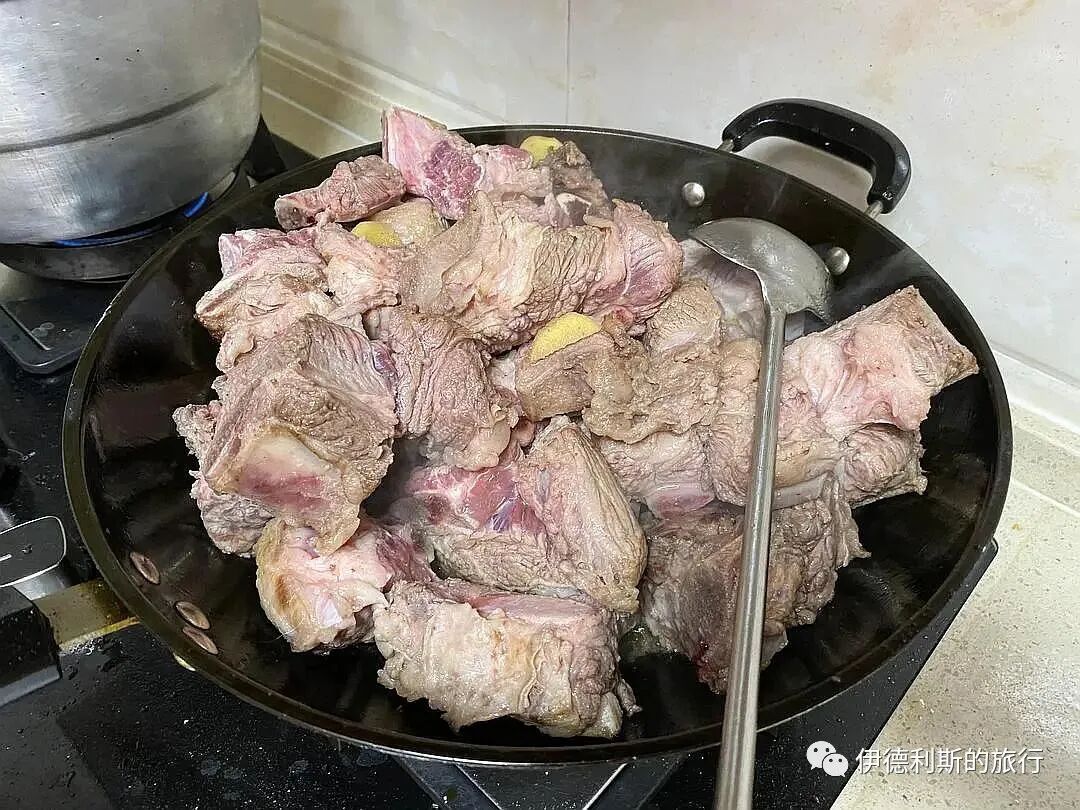
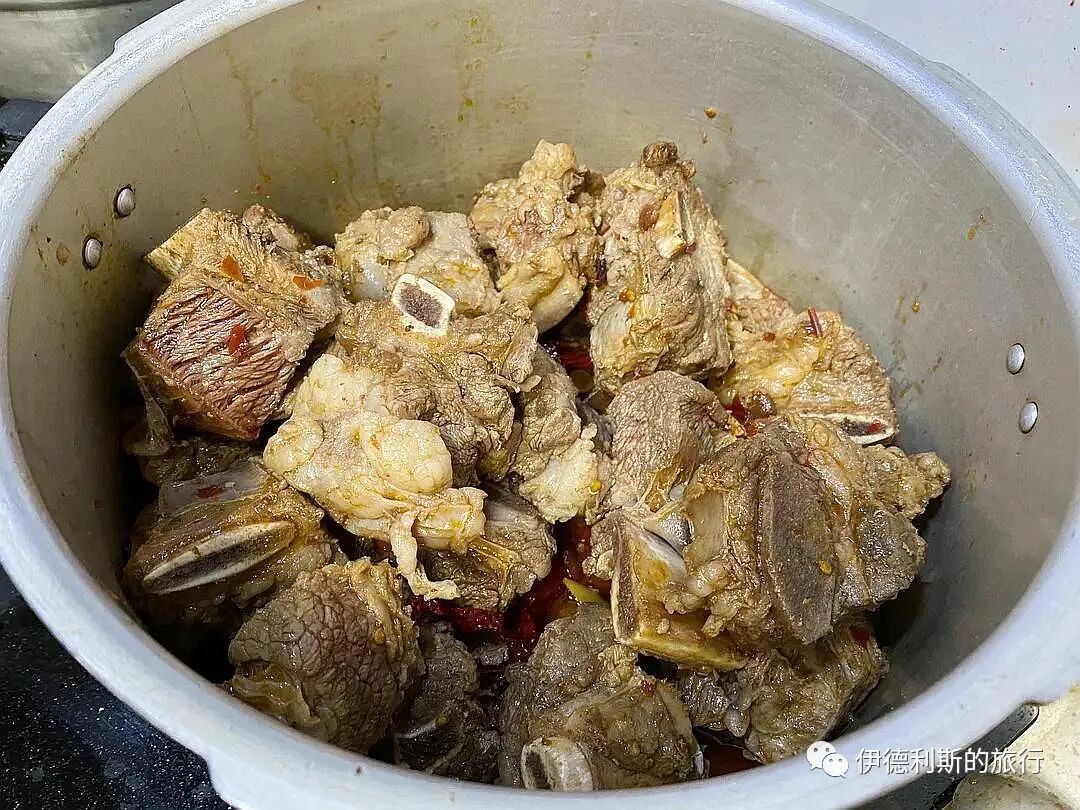
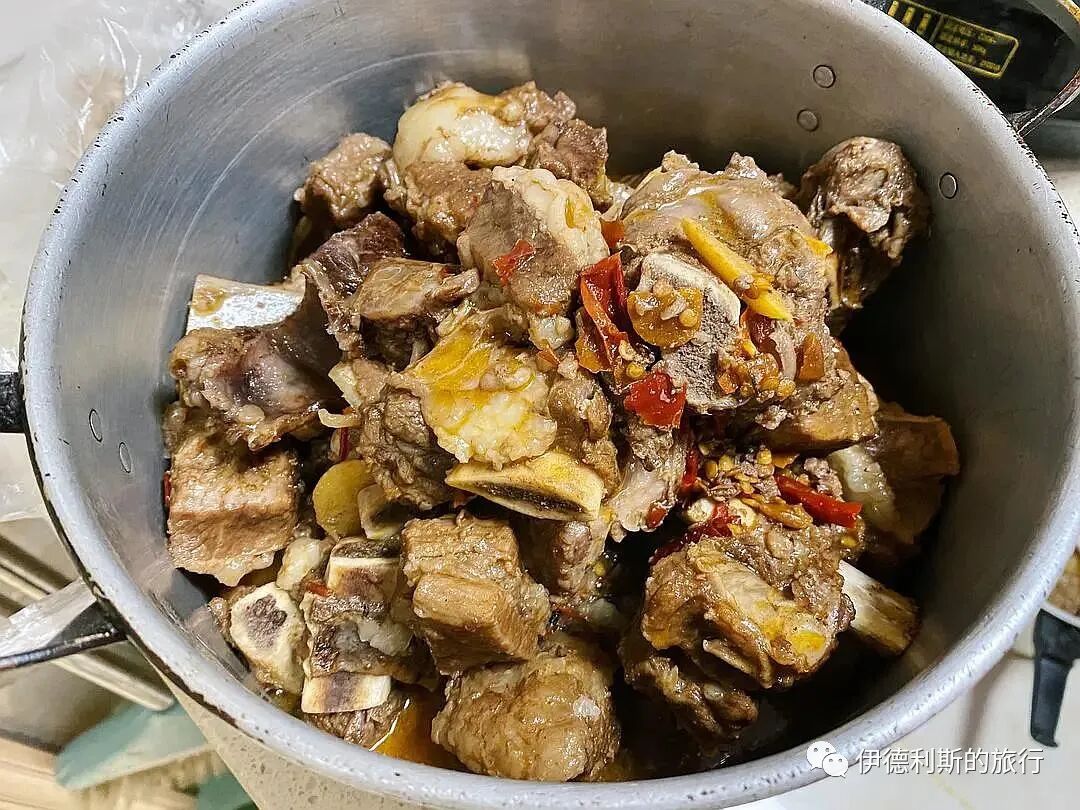
First, blanch the beef ribs. Once they turn white, take them out. Heat oil, add the meat, ginger, a little cinnamon, star anise, and bean paste (doubanjiang). Stir-fry for a while, then add fresh chili peppers. Once the meat has dried out, put it in a pressure cooker and stew for 25 minutes.
7. Big plate chicken (dapanji)
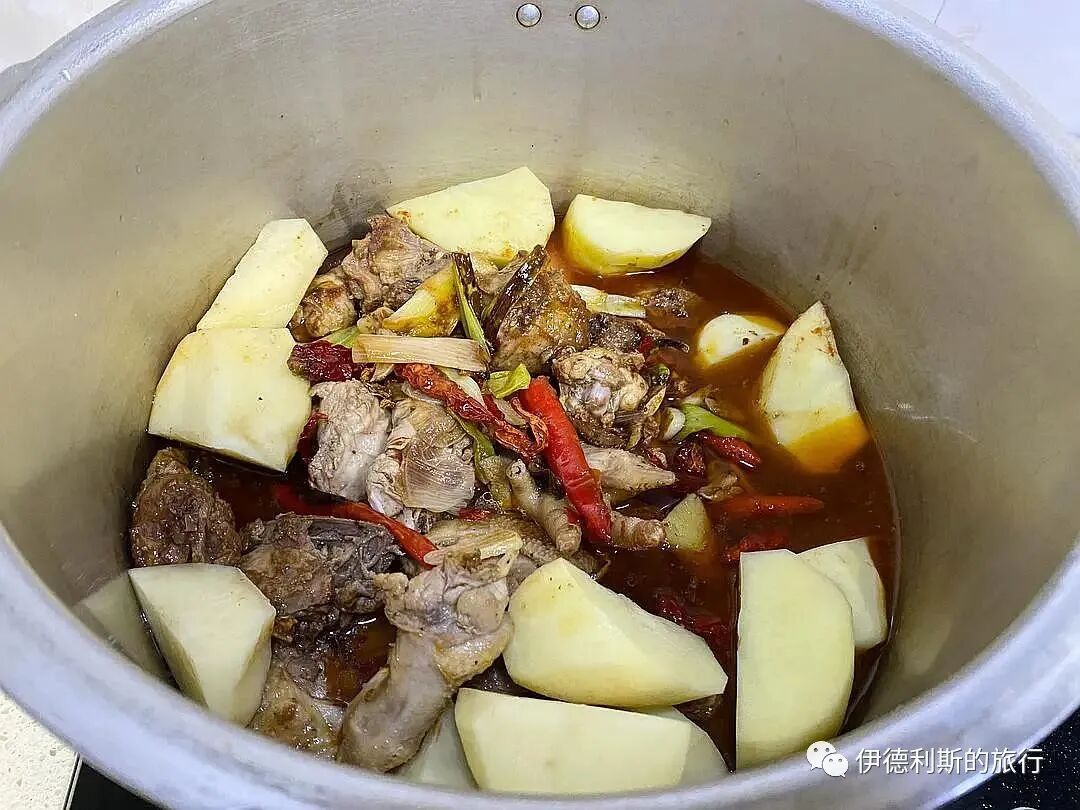
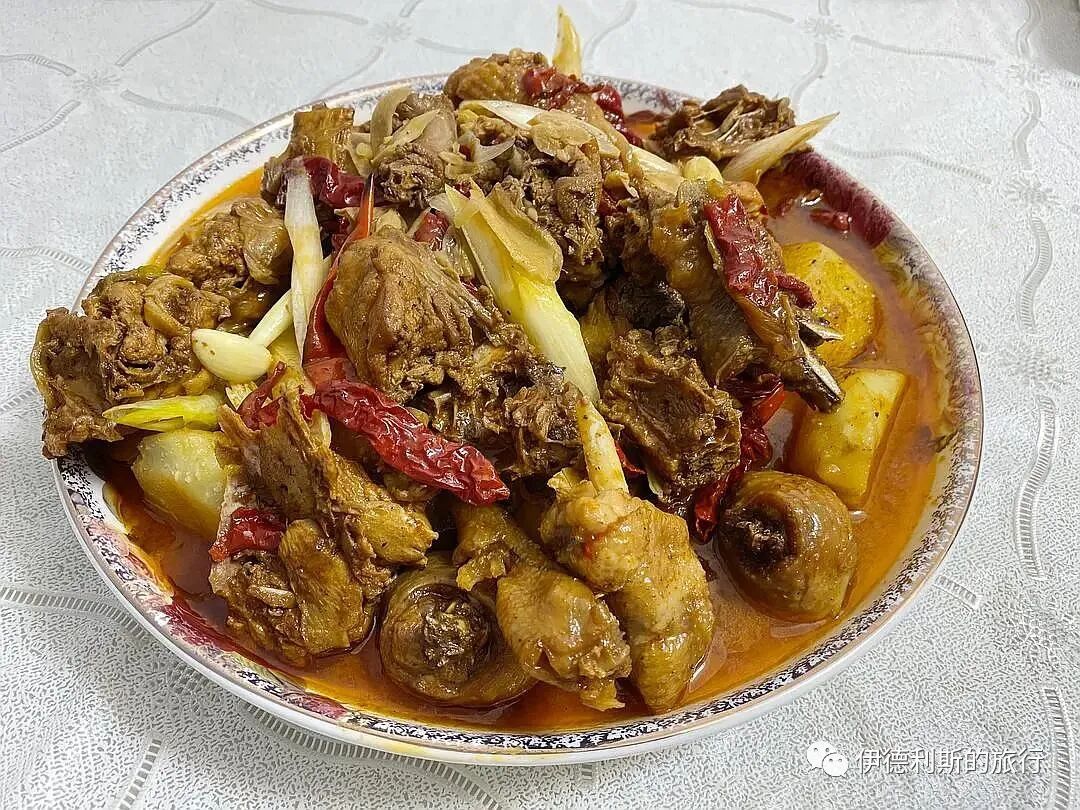
1. Preparation: half a chicken (use a layer hen or free-range chicken (chaiji) for a pressure cooker, or a Sanhuang chicken or broiler for a wok; we used a free-range chicken this time), 2 potatoes cut into chunks, 1 green onion cut into diagonal slices, 10 whole dried chili peppers (lapi-zi), 4 cloves of garlic sliced, sliced ginger, 2 small spoons of salt, 2 small spoons of Sichuan peppercorn powder, 2 small spoons of pepper powder, 1 small bag of tomato paste, 1 spoon of bean paste (doubanjiang), half a spoon of soy sauce, and vinegar.
2. Start: Use plenty of oil. Add the chicken pieces, dried chili peppers, and ginger slices to the wok. Add salt, Sichuan peppercorn powder, pepper powder, tomato paste, a little bit of the green onion and garlic, and the bean paste. Stir-fry until the blood has dried out from the chicken, then add soy sauce and turn off the heat.
3a. If using a layer hen or free-range chicken, use an electric pressure cooker. Add the stir-fried chicken and water (about 4 cooking spoons of water, do not cover the chicken). Place the potato chunks on top. Pressure cook for 15 minutes, then open the lid. Take out the potatoes first, add the remaining green onion and garlic, add a drop of vinegar, stir, and serve.
3b. If using a Sanhuang chicken or broiler, add all the green onion, garlic, water, and potato chunks when adding seasonings in the wok. Cook until the potatoes are soft, add a drop of vinegar, and serve.
8. Ashura bean rice (Ashura doudoufan)
On the 10th day of the first month of the Islamic calendar, Ashura, Hui Muslims have a tradition of making a mixed grain porridge. This commemorates the legend that Prophet Nuh's (Noah) ark docked on Ashura, and he gathered the remaining grains in the cabin to make porridge.
Hui Muslims in different places make Ashura porridge in different ways. In Urumqi, it is also called Ashura bean rice.
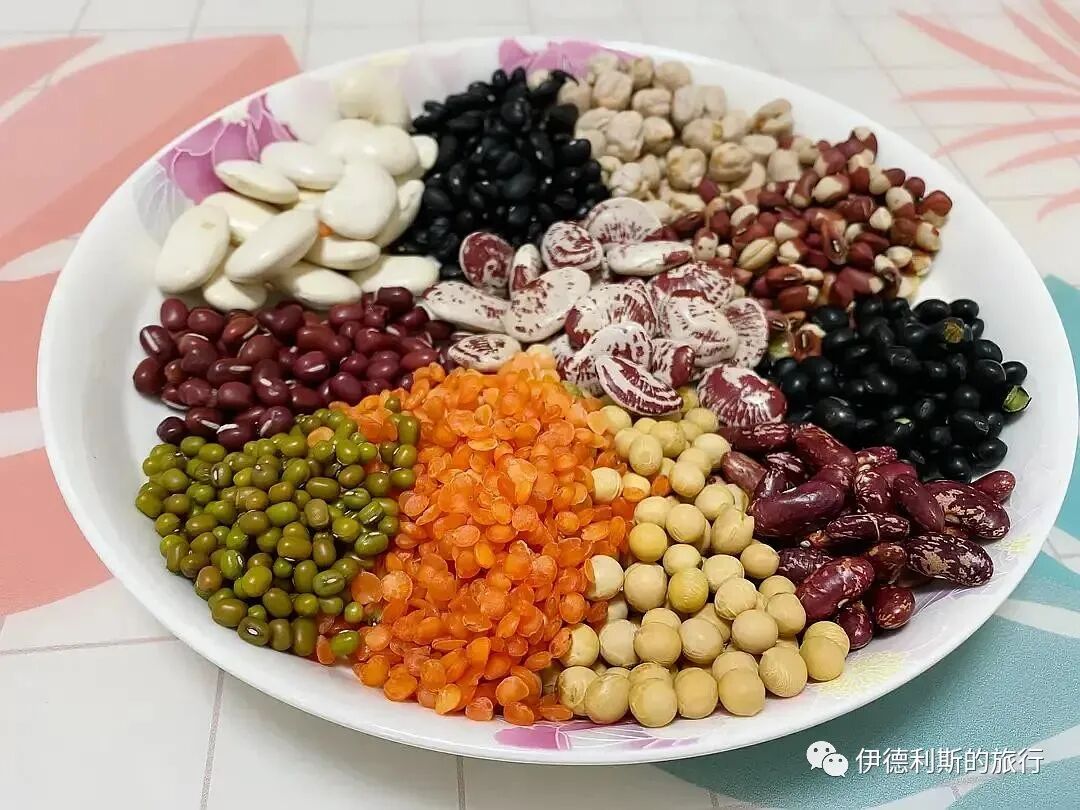
When making it, prepare at least 7 types of beans. We prepared 11. Use an electric pressure cooker to cook the beans until soft, then take them out and put them in a wok to stir with rice and glutinous rice. Then, put everything into the electric pressure cooker. Next, stir-fry diced lamb, add salt and Sichuan peppercorns, then add chopped green onion to make it fragrant. Put it all into the pressure cooker and add water until it covers the ingredients by one and a half finger-widths. After cooking and serving, the aroma of the beans mixes with the aroma of the meat. It is both a seasonal delicacy and very meaningful.
We made a simplified version. The truly traditional way is to soak the beans for two days beforehand. When cooking, you don't use a pressure cooker but keep stirring in a wok, which requires a lot of experience.
9. Awakening of Insects oil tea egg (Jingzhe youcha dan)
Before I was 18, as long as I was home during the Awakening of Insects (Jingzhe) solar term, breakfast would always be Jingzhe soup (oil tea egg). You could say it was my first memory of this solar term. I talked to my parents about it a few days ago and revisited the recipe. I didn't have time this morning, so I tried making it tonight and wanted to share it.
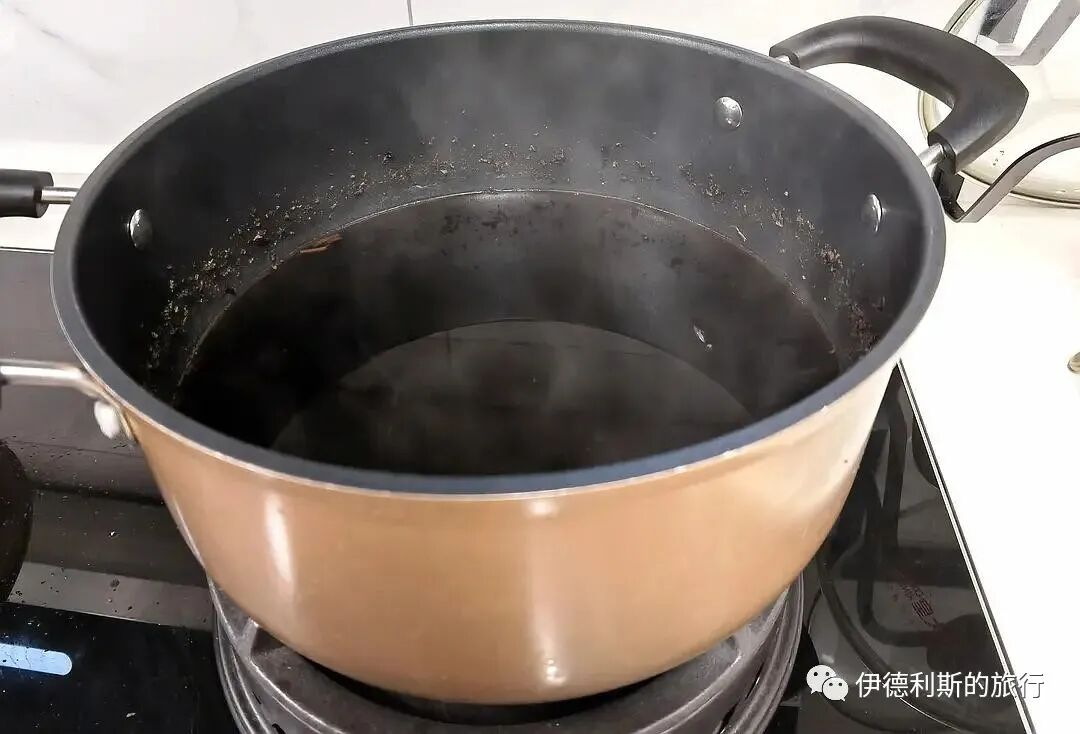
(1) Boil an appropriate amount of brick tea (if you don't have it, you can use black tea; today I tried using Pu'er tea).
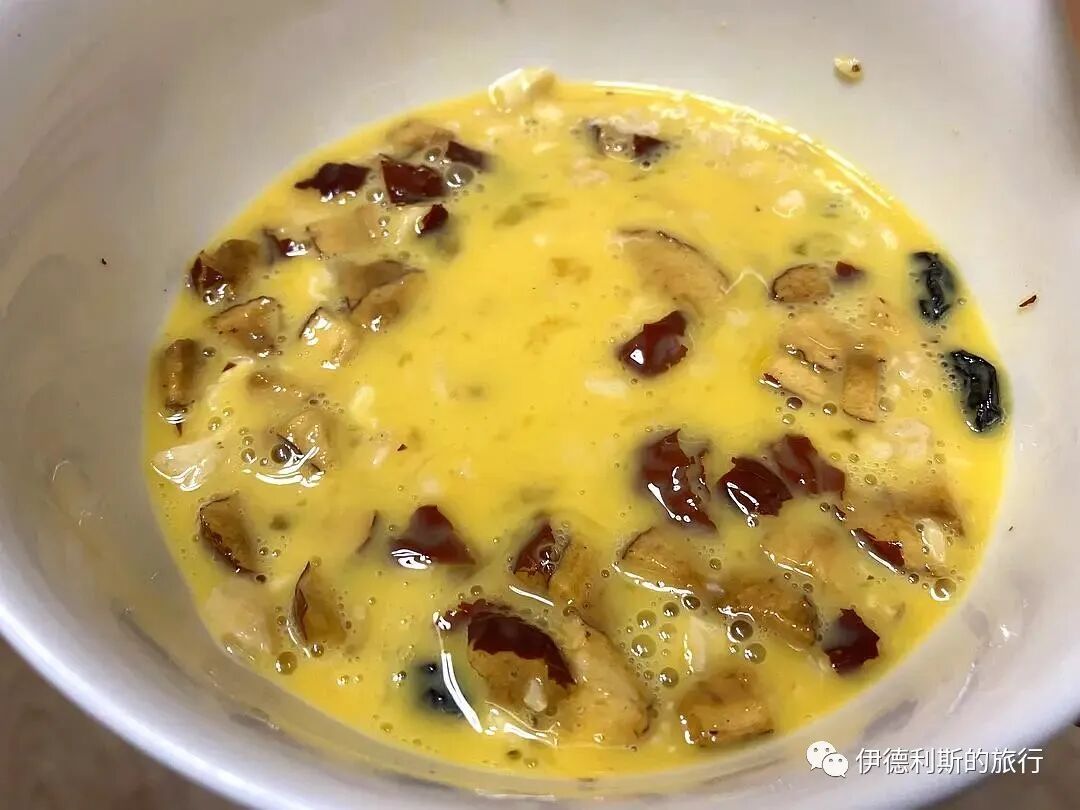
(2) Beat 2 eggs into a liquid, and add raisins, chopped walnuts, and chopped red dates.
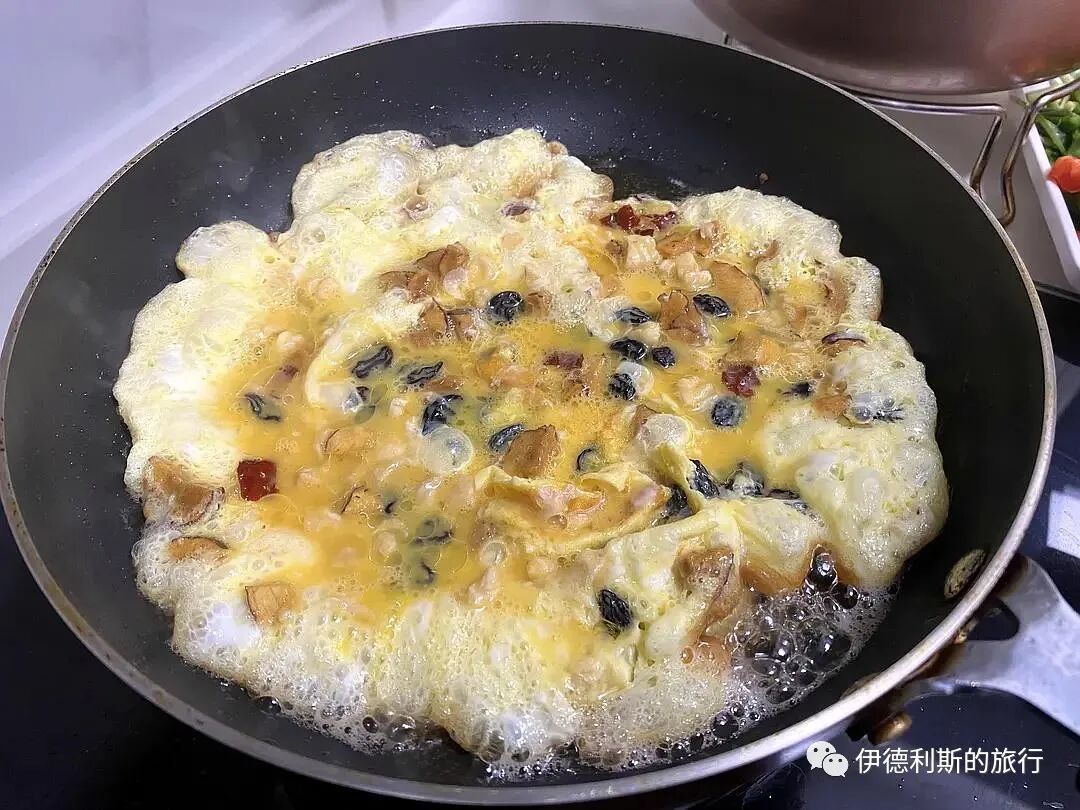
(3) Heat oil in a pot and stir-fry the dried fruits coated in egg liquid.
(4) Pour in the brewed tea and add rock sugar. The older generation would use lamb fat to fry the eggs for their parents' generation. In our generation, it is more common to use vegetable oil to fry the egg liquid coated with green raisins and walnut kernels. Adding a little more rock sugar makes it more popular with children.
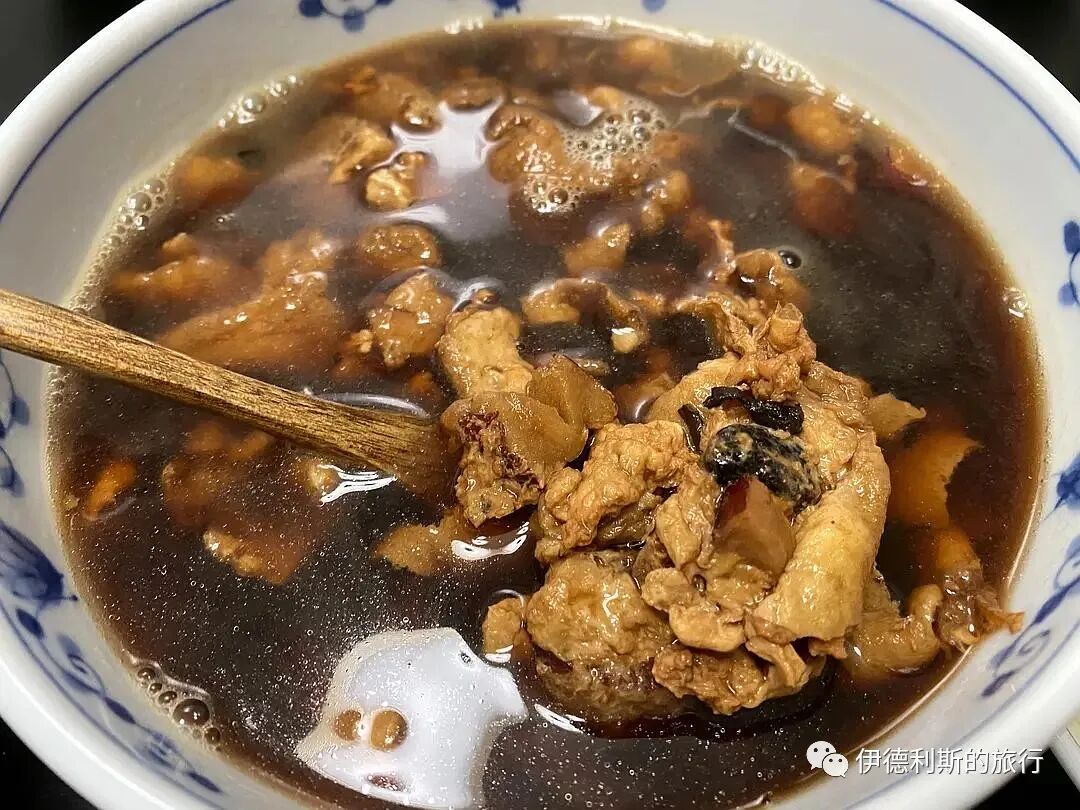
10. Starch noodle soup (fentang)
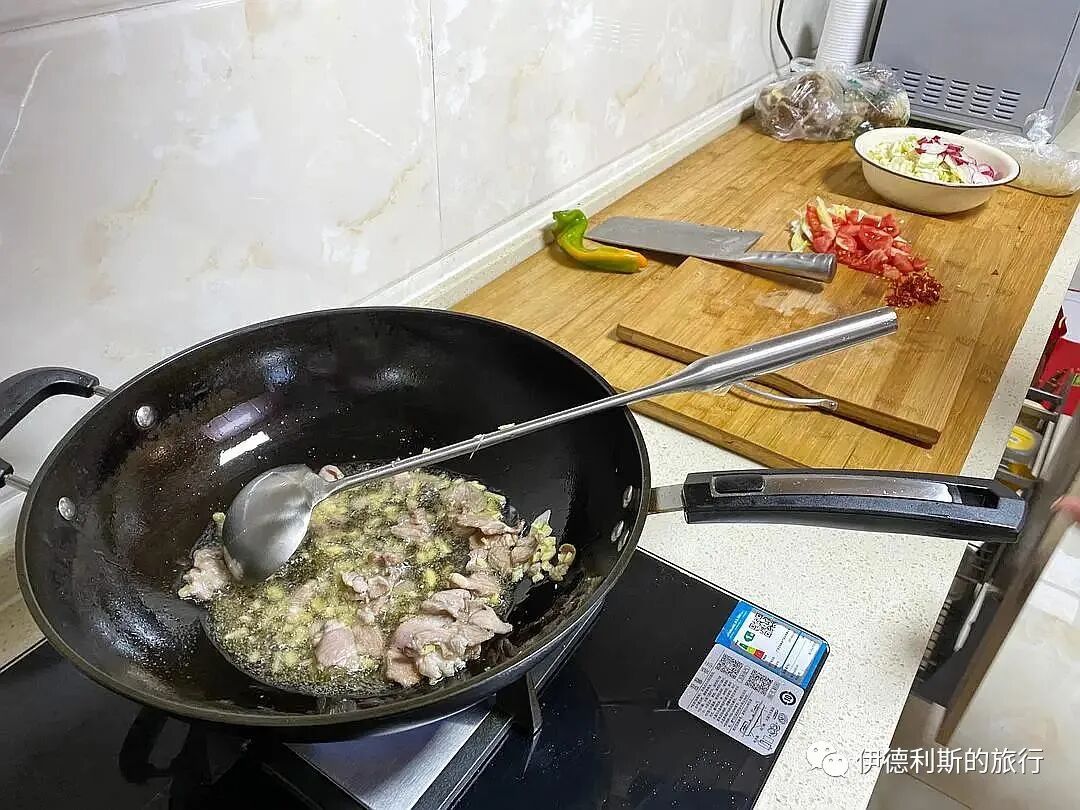
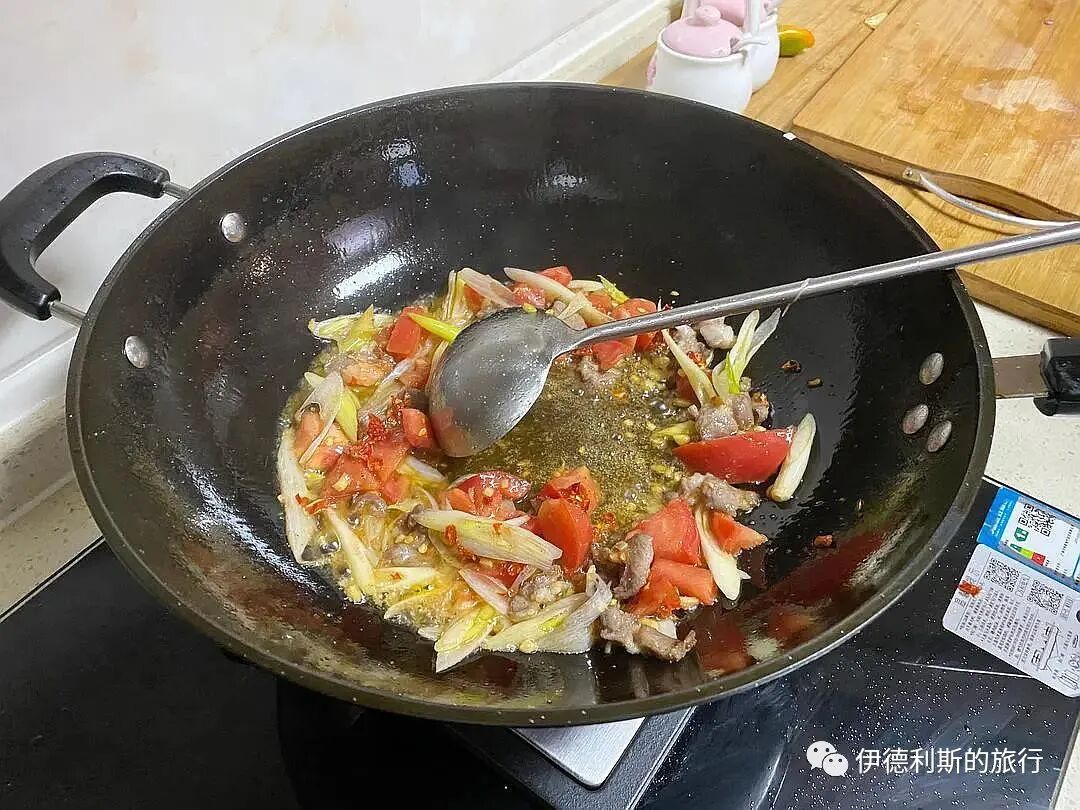
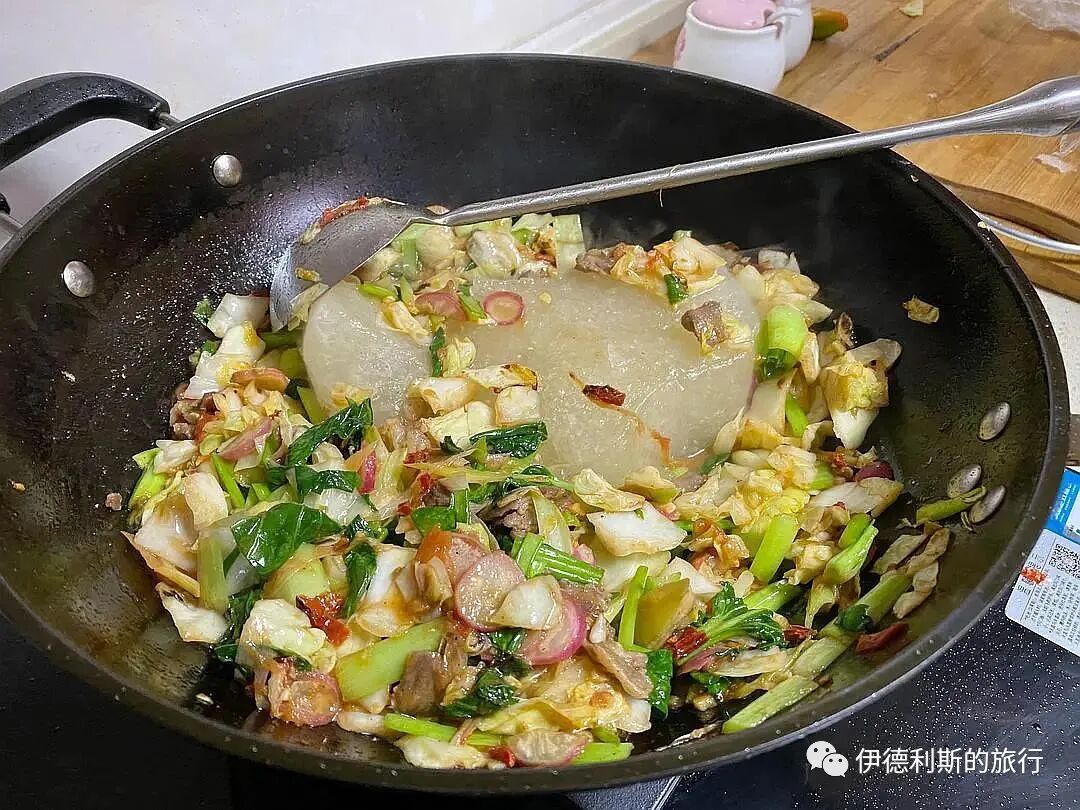
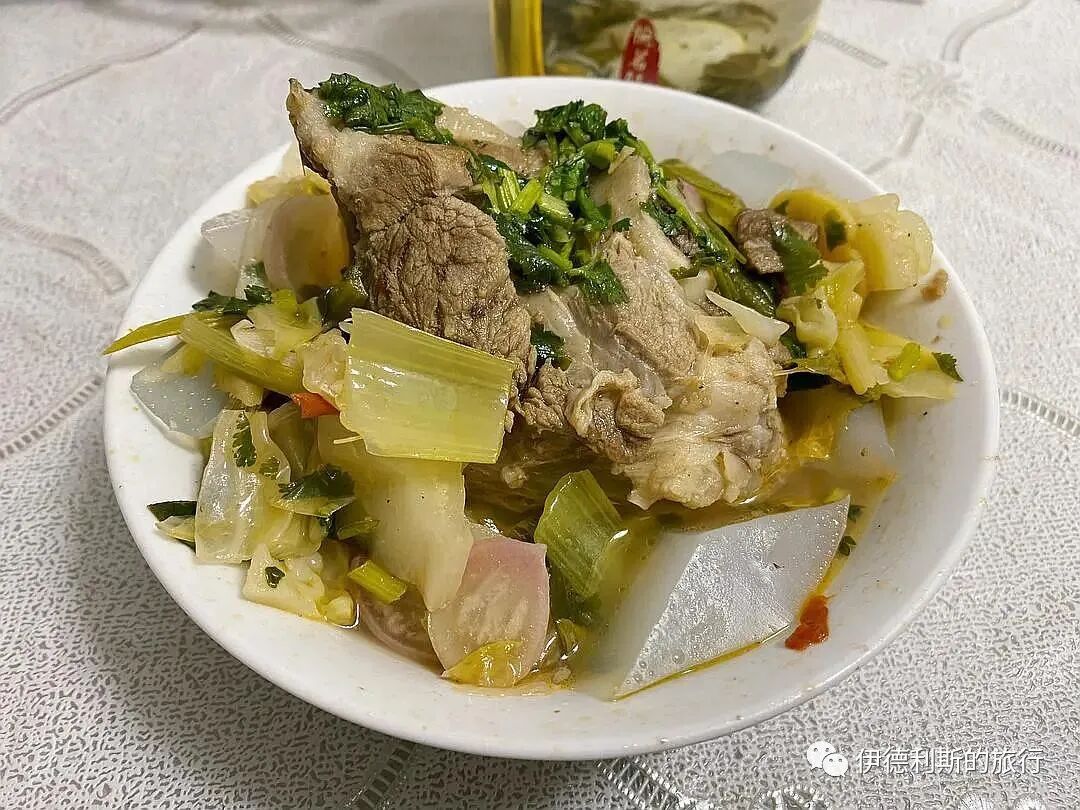
1. First, stir-fry the meat slices, then add garlic, then add green onion, dried chili peppers, and tomatoes (yangshizi), and then add various vegetables. You can choose the vegetables as you like.
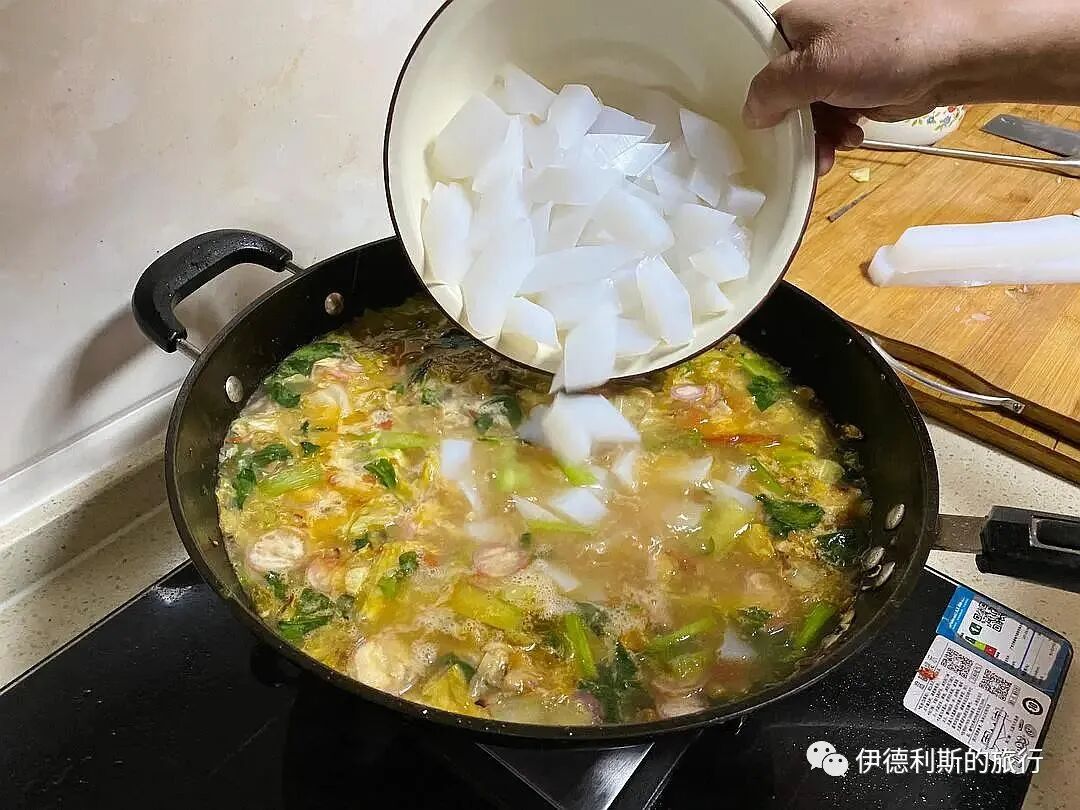
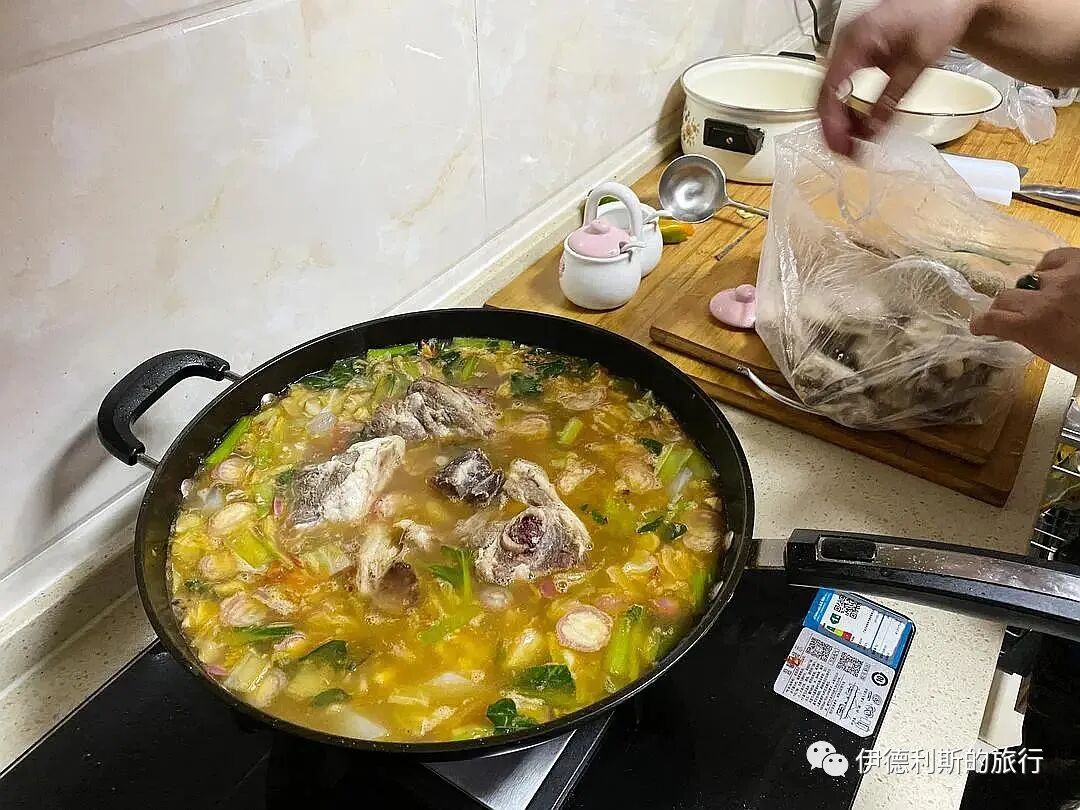
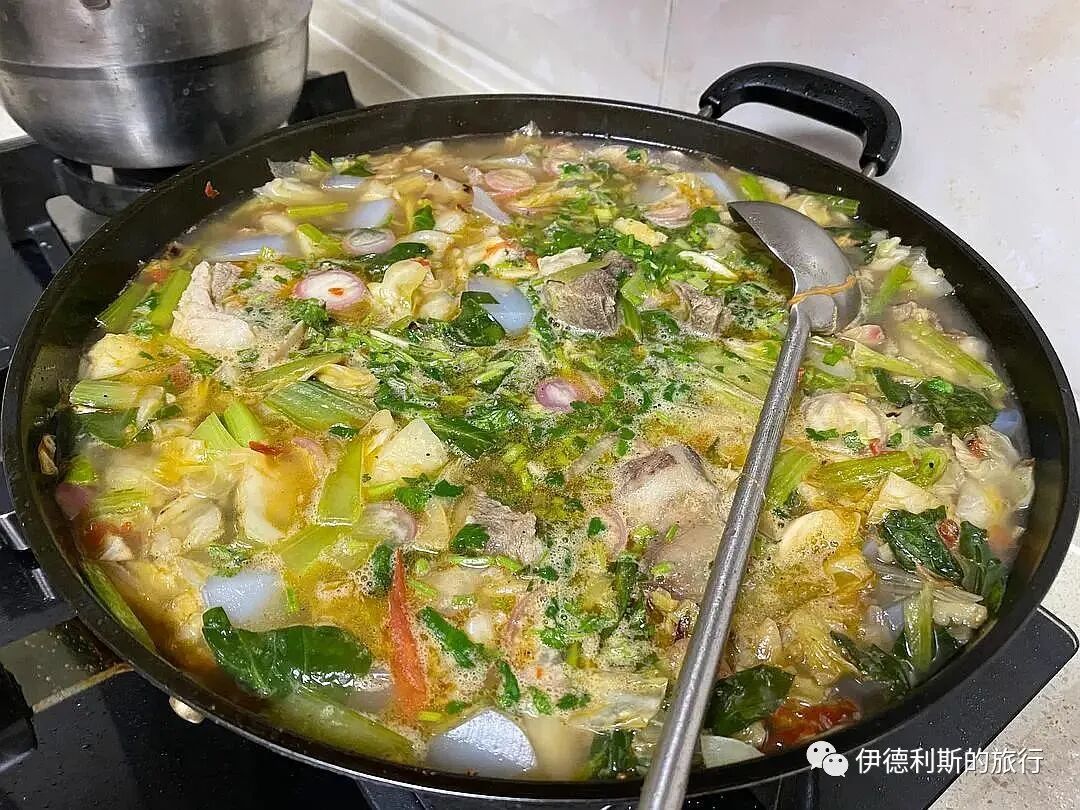
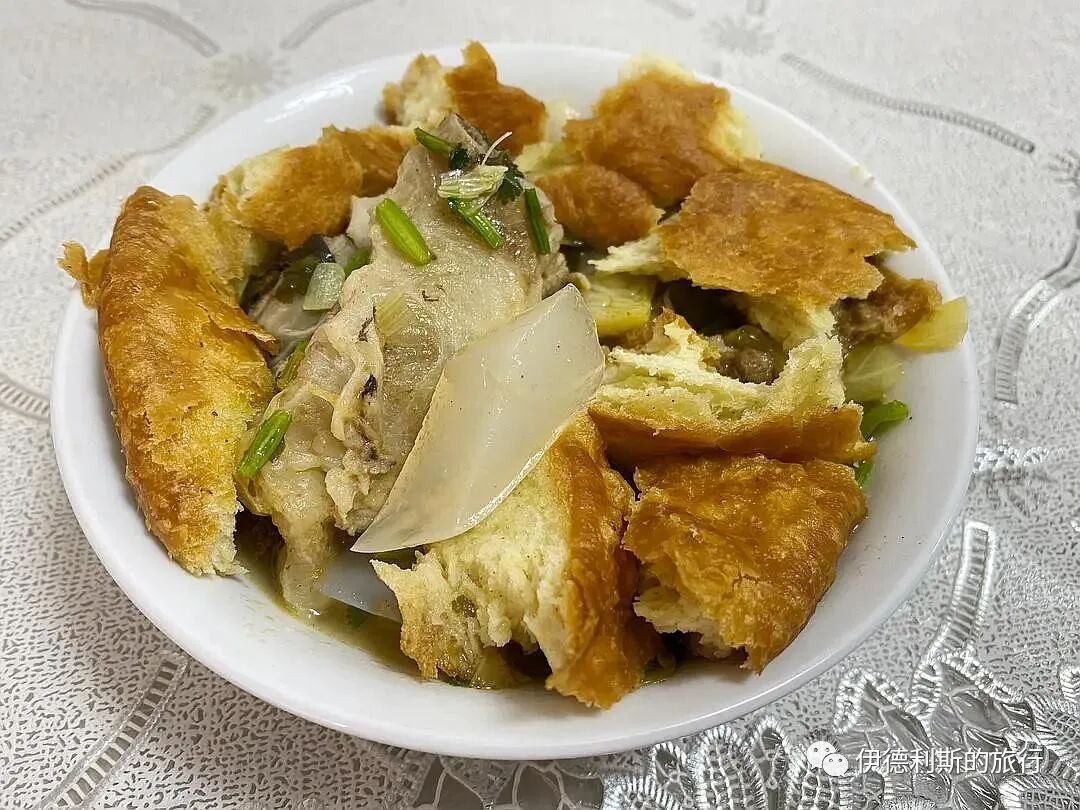
2. Add the lamb broth that was stewed and frozen earlier. After the broth melts, add pea flour blocks, then add the large pieces of stewed lamb, and finally add pepper and cilantro to enhance the flavor.
The classic way to eat starch noodle soup (fentang) is with fried dough (youxiang). After you finish the lamb, break the fried dough into the soup. This is the authentic way of life for Hui Muslims in Urumqi.
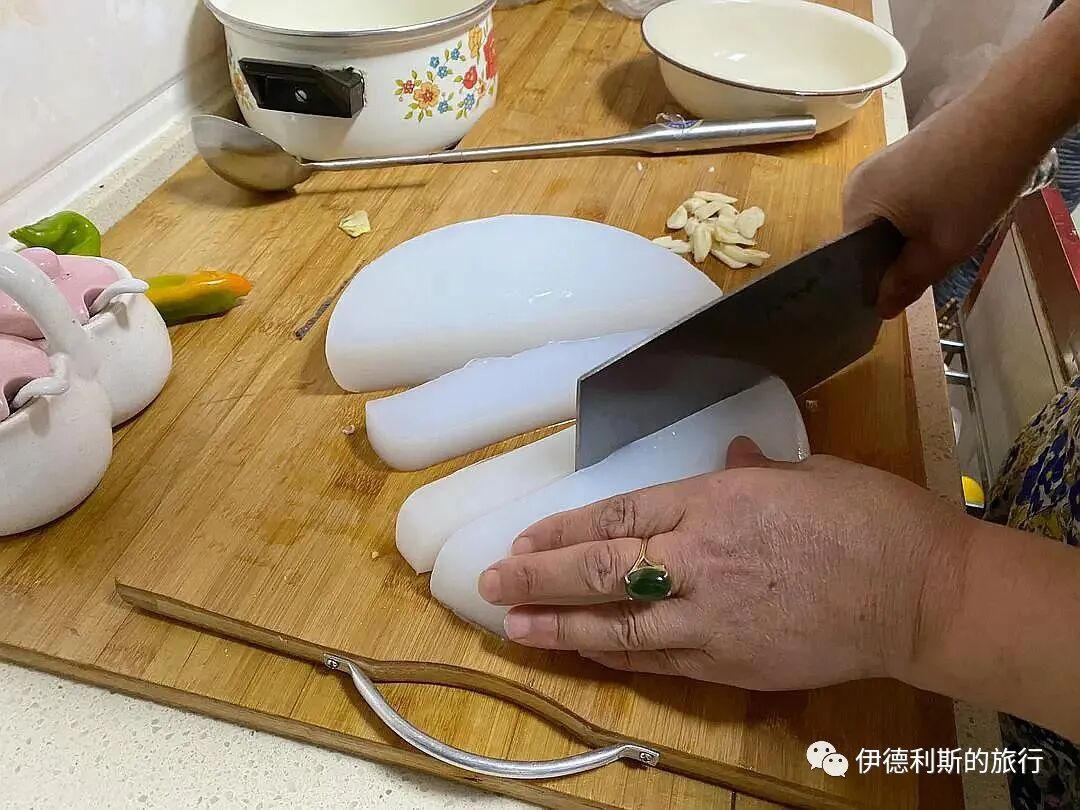
11. Fried starch jelly (zhamenzi)
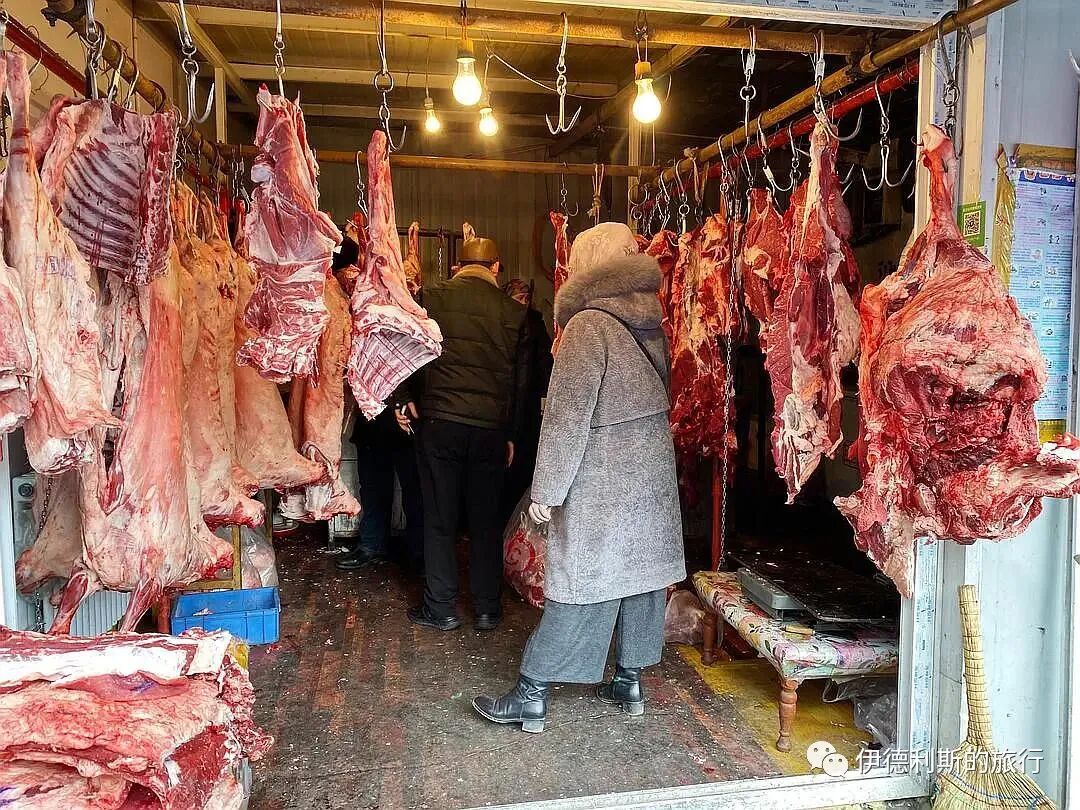
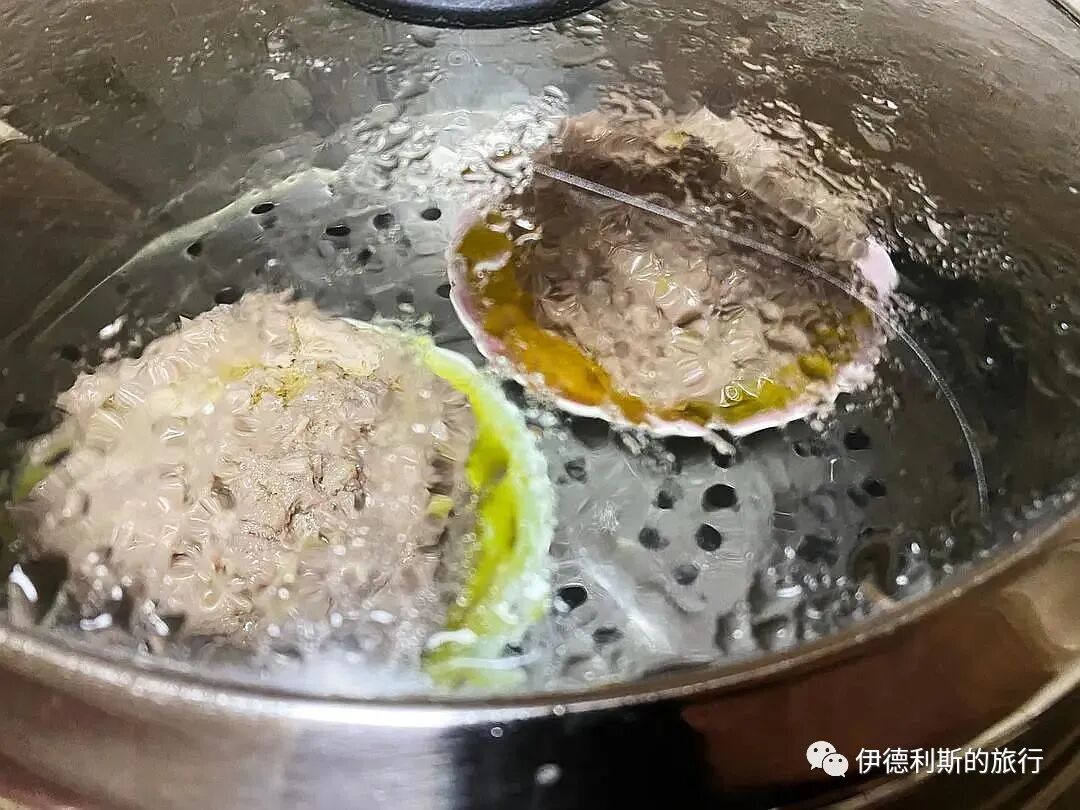
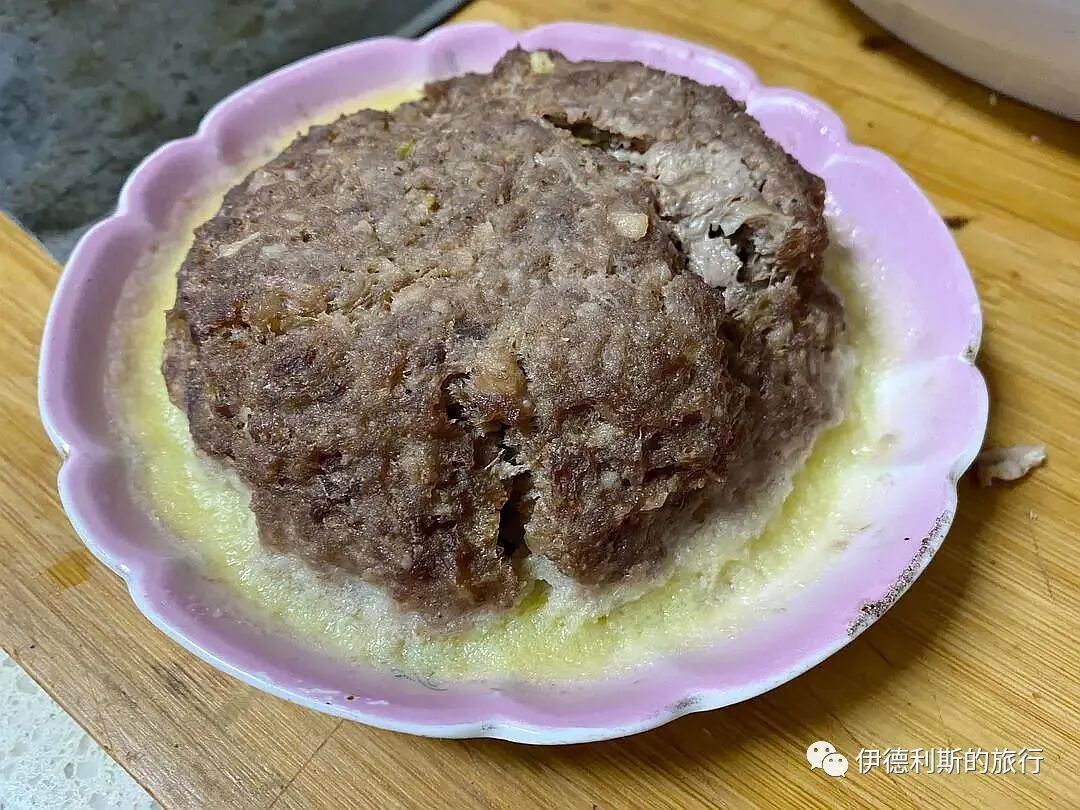
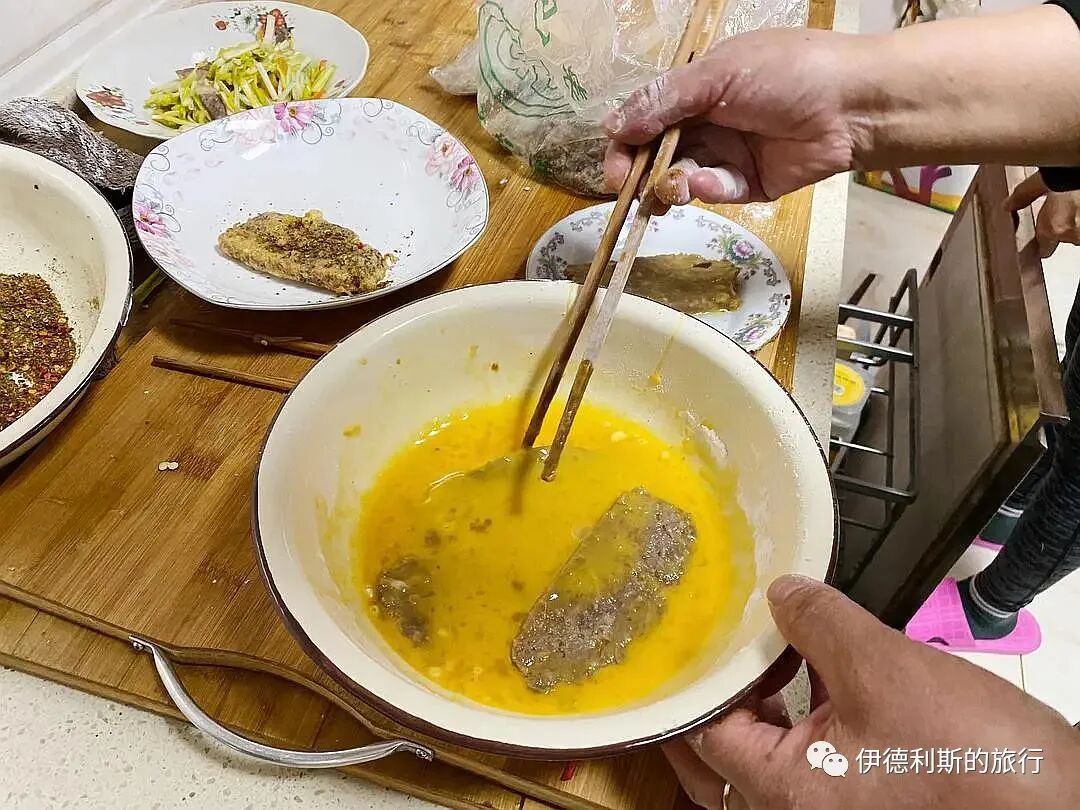
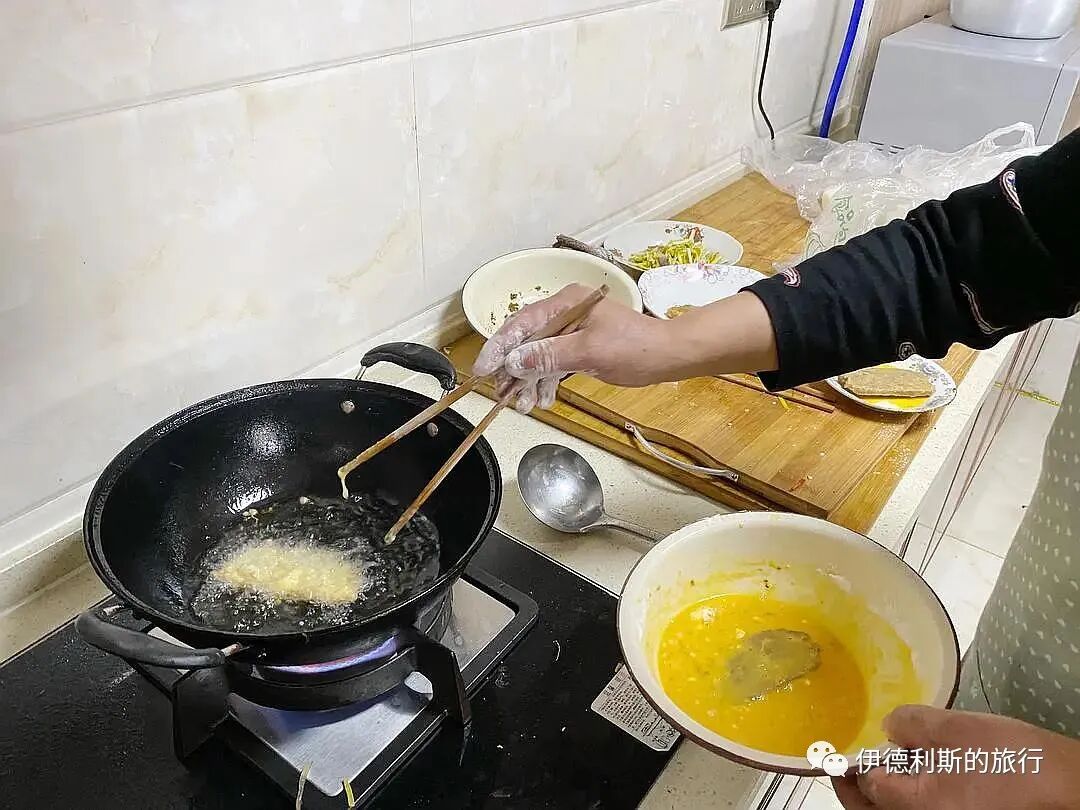
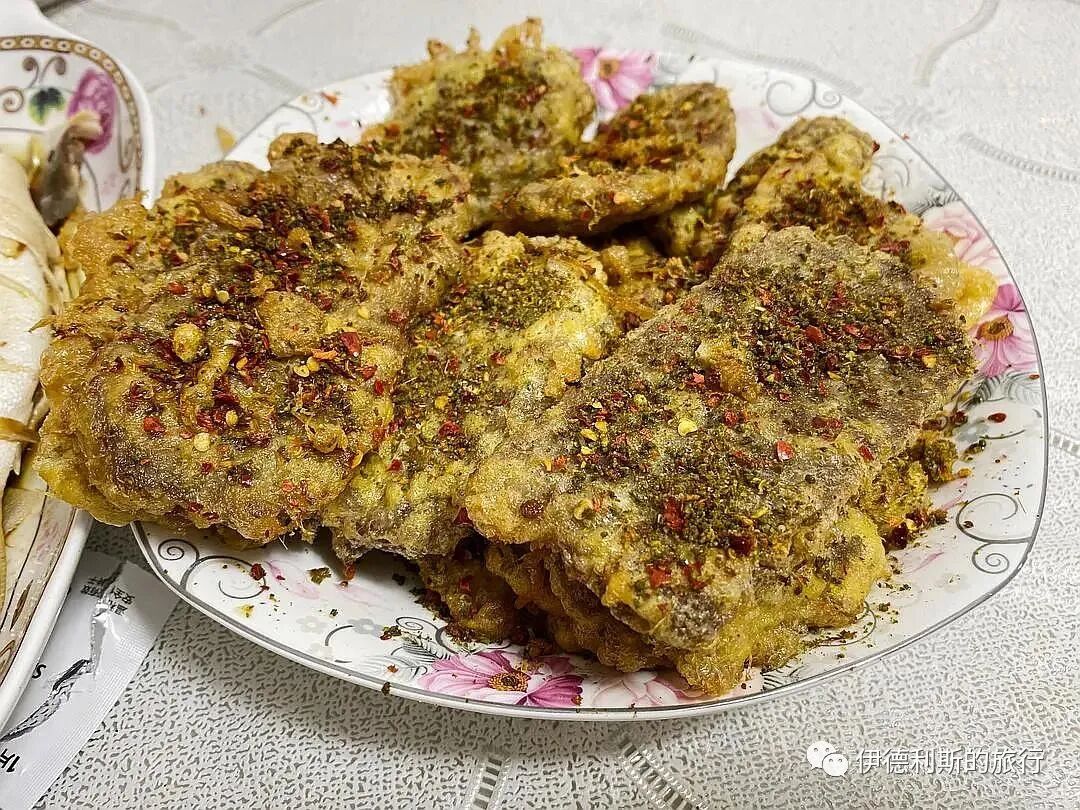
Buy meat at the market and have the butcher grind it into filling (xianzi). The filling for steamed meat loaf (menzi) needs to go through the grinder twice so it is finer than the filling for fried meatballs. Once you get home, steam the filling into a meat loaf (menzi) and slice it up. To cook it, coat the slices in egg and starch, then fry them. Finally, sprinkle on cumin, chili powder, and salt.
12. Soup noodles (tangfan)
1. Stir-fry lamb slices with salt and Sichuan peppercorn powder until they are a bit dry.
2. Sauté chopped green onions and tomato chunks, then add soy sauce.
3. Stir-fry potato slices, then add water after a short while.
4. When the water boils, add garlic slices and hand-tear dough pieces into the soup. Simmer for a bit, then add pepper powder and cilantro. Finish with a splash of vinegar before serving.
13. Stir-fried barbecue meat (chao kaorou)
1. Heat oil in a pot over high heat. Add lamb fat first, then the meat slices. Stir-fry for a while, add a small spoonful of salt for one bowl of meat, and stir.
2. Add one and a half spoonfuls of chili powder.
3. Add one spoonful of cumin powder.
Summary: Xinjiang Home Cooking Guide: Zainab’s Halal Recipes and Uyghur Food is presented here as a firsthand travel account in clear English, beginning with this scene: Author: Zainab. The account keeps its focus on Xinjiang Food, Halal Recipes, Uyghur Food while preserving the names, places, food, and historical details from the Chinese source.
Author: Zainab
As a girl from Urumqi, I often cook Xinjiang home-style dishes. I have put together some simple recipes to share with everyone.
1. Hand-pulled noodles (latiaozi)
2. Lamb chop pilaf (yangpai zhuafan)
3. Minced meat pilaf (suirou zhuafan)
4. Uzbek black pilaf (Uzbek hei zhuafan)
5. Braised lamb bone (hongshao yangbanggu)
6. Braised beef steak (hongshao niupai)
7. Big plate chicken (dapanji)
8. Ashura bean rice (Ashura doudoufan)
9. Awakening of Insects oil tea egg (Jingzhe youcha dan)
10. Starch noodle soup (fentang)
11. Fried starch jelly (zhamenzi)
12. Soup noodles (tangfan)
13. Stir-fried barbecue meat (chao kaorou)
1. Hand-pulled noodles (latiaozi)
1. Preparation: One and a half bowls of flour (for three plates of noodles), half a small spoonful of salt, one bowl of water, a large mixing bowl, a large cutting board, and a rolling pin.
2. Start:
(1) Sprinkle: Put the flour into the mixing bowl and sprinkle in the salt.
(2) Swirl: Pour in a little water and use your fingers to swirl the flour that has touched the water until it forms small, loose crumbles.
(3) Gather: Gradually gather the crumbles into a ball. Swirling and gathering happen at the same time until all the crumbles are part of one single dough ball.
(4) Press: Take the dough out of the bowl. Use the heel of your right hand to press forward, pushing the dough against the board while your left hand guides the direction as the dough rolls forward.
(5) Rest: After about 10 presses, the surface should be smooth. Cover the dough with the mixing bowl and let it rest for 10 minutes.
(6) Knead: Repeat the action from step (4) but don't press as hard, or the surface of the dough might break and lose its smoothness. Then repeat step (5).
(7) Rolling: Repeat step (6) two or three times, then roll the dough into a large round flatbread about 1cm thick. Brush it with raw oil, cover it with a basin, and you can go cook your stir-fry.
(8) Cutting, pulling, and stretching: When the stir-fry is almost ready, find a pot for the noodles and boil water. Meanwhile, cut the dough into strips about 1cm wide. Start from one side and pull them forward bit by bit. Once the diameter is halved, fold the noodles once or twice. Use both hands to stretch and slap them against the cutting board to make the noodles thinner and chewier.
(9) Boiling: Drop them into the pot, cook for a while, and take them out. If you are making mixed noodles, rinse them in cold water. If you are serving them with big plate chicken (dapanji), you do not need cold water; just scoop them out and put them directly into the big plate chicken.
2. Lamb chop pilaf (yangpai zhuafan)
I tried an innovative way to make lamb chop pilaf (zhua fan) to save time and make the meat tender.
1. Pressure cook the lamb chops for 10 minutes (I used the rice cooking mode for 10 minutes).
2. Heat oil in a wok (use plenty of oil, about 3-4 times the amount for regular stir-fry). Add onion slices, salt (make it slightly salty), and sugar. Then add half of the carrot strips. Once the carrots shrink, add the pressure-cooked lamb chops and stir for a while.
3. In the pressure cooker, layer from bottom to top: raw carrot strips, rice, and the stir-fried meat and oil mixture. Use the rice cooking mode.
3. Minced meat pilaf (suirou zhuafan)
1. Preparation: Cut the boneless meat into pieces, cut carrots (2) into strips, cut onion (half) into chunks, wash and soak the rice (3/4 bowl for two people), and prepare salt, cumin, and sugar.
2. Start: Heat the oil, add the onion chunks, and stir-fry the meat. Add two spoons of salt and one spoon of cumin until the meat is dry. Add half of the carrot strips (I like to add a little sugar) and stir until they shrink. Pour the other half of the carrot strips, the rice, and the stir-fried meat and oil into the rice cooker. Add water (rice:water and oil = 1:1) and sugar (to make the pilaf shiny), then just steam the rice.
4. Uzbek black pilaf (Uzbek hei zhuafan)
I once made Uzbek black pilaf while working from home during the pandemic. Master Wang said he wanted to eat it, so I tried making it again, though I was a bit rusty:
1. Wash a bowl of rice and let it soak.
2. Heat the oil, add the onion chunks and a whole head of garlic. Once you smell the garlic, take it out and set it aside.
3. Continue to fry the onions until they are dry and dark brown. Stir-fry the meat, then add two spoons of salt and one spoon of cumin.
4. Once the meat is dry, add the carrot strips and stir until they shrink. Pour the stir-fried meat and oil into the rice cooker, add the rice and water (rice:water and oil = 1:1), sprinkle a little more cumin, and place the whole head of garlic you fried earlier on top. Use the rice steaming mode. *Note: Do not use too much oil, or the rice will be undercooked. That happened this time, so I poured out some oil, added half a bowl of water, and ran the rice steaming mode again to get it right.
5. Braised lamb bone (hongshao yangbanggu)
1. Wash 5-6 lamb bone marrow bones and ginger slices. Put them in a pot with half a bowl of water and boil over high heat. Keep stirring and add a spoon of salt during the process until the water boils away.
2. Add a quarter tablespoon of soy sauce and stir well.
3. Add water until the bones are covered. Once it boils, turn to low heat and simmer. Stir occasionally. After about an hour, the water should be boiled away.
6. Braised beef steak (hongshao niupai)
First, blanch the beef ribs. Once they turn white, take them out. Heat oil, add the meat, ginger, a little cinnamon, star anise, and bean paste (doubanjiang). Stir-fry for a while, then add fresh chili peppers. Once the meat has dried out, put it in a pressure cooker and stew for 25 minutes.
7. Big plate chicken (dapanji)
1. Preparation: half a chicken (use a layer hen or free-range chicken (chaiji) for a pressure cooker, or a Sanhuang chicken or broiler for a wok; we used a free-range chicken this time), 2 potatoes cut into chunks, 1 green onion cut into diagonal slices, 10 whole dried chili peppers (lapi-zi), 4 cloves of garlic sliced, sliced ginger, 2 small spoons of salt, 2 small spoons of Sichuan peppercorn powder, 2 small spoons of pepper powder, 1 small bag of tomato paste, 1 spoon of bean paste (doubanjiang), half a spoon of soy sauce, and vinegar.
2. Start: Use plenty of oil. Add the chicken pieces, dried chili peppers, and ginger slices to the wok. Add salt, Sichuan peppercorn powder, pepper powder, tomato paste, a little bit of the green onion and garlic, and the bean paste. Stir-fry until the blood has dried out from the chicken, then add soy sauce and turn off the heat.
3a. If using a layer hen or free-range chicken, use an electric pressure cooker. Add the stir-fried chicken and water (about 4 cooking spoons of water, do not cover the chicken). Place the potato chunks on top. Pressure cook for 15 minutes, then open the lid. Take out the potatoes first, add the remaining green onion and garlic, add a drop of vinegar, stir, and serve.
3b. If using a Sanhuang chicken or broiler, add all the green onion, garlic, water, and potato chunks when adding seasonings in the wok. Cook until the potatoes are soft, add a drop of vinegar, and serve.
8. Ashura bean rice (Ashura doudoufan)
On the 10th day of the first month of the Islamic calendar, Ashura, Hui Muslims have a tradition of making a mixed grain porridge. This commemorates the legend that Prophet Nuh's (Noah) ark docked on Ashura, and he gathered the remaining grains in the cabin to make porridge.
Hui Muslims in different places make Ashura porridge in different ways. In Urumqi, it is also called Ashura bean rice.
When making it, prepare at least 7 types of beans. We prepared 11. Use an electric pressure cooker to cook the beans until soft, then take them out and put them in a wok to stir with rice and glutinous rice. Then, put everything into the electric pressure cooker. Next, stir-fry diced lamb, add salt and Sichuan peppercorns, then add chopped green onion to make it fragrant. Put it all into the pressure cooker and add water until it covers the ingredients by one and a half finger-widths. After cooking and serving, the aroma of the beans mixes with the aroma of the meat. It is both a seasonal delicacy and very meaningful.
We made a simplified version. The truly traditional way is to soak the beans for two days beforehand. When cooking, you don't use a pressure cooker but keep stirring in a wok, which requires a lot of experience.
9. Awakening of Insects oil tea egg (Jingzhe youcha dan)
Before I was 18, as long as I was home during the Awakening of Insects (Jingzhe) solar term, breakfast would always be Jingzhe soup (oil tea egg). You could say it was my first memory of this solar term. I talked to my parents about it a few days ago and revisited the recipe. I didn't have time this morning, so I tried making it tonight and wanted to share it.
(1) Boil an appropriate amount of brick tea (if you don't have it, you can use black tea; today I tried using Pu'er tea).
(2) Beat 2 eggs into a liquid, and add raisins, chopped walnuts, and chopped red dates.
(3) Heat oil in a pot and stir-fry the dried fruits coated in egg liquid.
(4) Pour in the brewed tea and add rock sugar. The older generation would use lamb fat to fry the eggs for their parents' generation. In our generation, it is more common to use vegetable oil to fry the egg liquid coated with green raisins and walnut kernels. Adding a little more rock sugar makes it more popular with children.
10. Starch noodle soup (fentang)
1. First, stir-fry the meat slices, then add garlic, then add green onion, dried chili peppers, and tomatoes (yangshizi), and then add various vegetables. You can choose the vegetables as you like.
2. Add the lamb broth that was stewed and frozen earlier. After the broth melts, add pea flour blocks, then add the large pieces of stewed lamb, and finally add pepper and cilantro to enhance the flavor.
The classic way to eat starch noodle soup (fentang) is with fried dough (youxiang). After you finish the lamb, break the fried dough into the soup. This is the authentic way of life for Hui Muslims in Urumqi.
11. Fried starch jelly (zhamenzi)
Buy meat at the market and have the butcher grind it into filling (xianzi). The filling for steamed meat loaf (menzi) needs to go through the grinder twice so it is finer than the filling for fried meatballs. Once you get home, steam the filling into a meat loaf (menzi) and slice it up. To cook it, coat the slices in egg and starch, then fry them. Finally, sprinkle on cumin, chili powder, and salt.
12. Soup noodles (tangfan)
1. Stir-fry lamb slices with salt and Sichuan peppercorn powder until they are a bit dry.
2. Sauté chopped green onions and tomato chunks, then add soy sauce.
3. Stir-fry potato slices, then add water after a short while.
4. When the water boils, add garlic slices and hand-tear dough pieces into the soup. Simmer for a bit, then add pepper powder and cilantro. Finish with a splash of vinegar before serving.
13. Stir-fried barbecue meat (chao kaorou)
1. Heat oil in a pot over high heat. Add lamb fat first, then the meat slices. Stir-fry for a while, add a small spoonful of salt for one bowl of meat, and stir.
2. Add one and a half spoonfuls of chili powder.
3. Add one spoonful of cumin powder.
Xinjiang Home Cooking Guide: Zainab’s Halal Recipes and Uyghur Food
Articles • ali2007fr posted the article • 0 comments • 143 views • 2026-05-18 01:30
Reposted from the web
Summary: Xinjiang Home Cooking Guide: Zainab’s Halal Recipes and Uyghur Food is presented here as a firsthand travel account in clear English, beginning with this scene: Author: Zainab. The account keeps its focus on Xinjiang Food, Halal Recipes, Uyghur Food while preserving the names, places, food, and historical details from the Chinese source.
Author: Zainab
As a girl from Urumqi, I often cook Xinjiang home-style dishes. I have put together some simple recipes to share with everyone.
1. Hand-pulled noodles (latiaozi)
2. Lamb chop pilaf (yangpai zhuafan)
3. Minced meat pilaf (suirou zhuafan)
4. Uzbek black pilaf (Uzbek hei zhuafan)
5. Braised lamb bone (hongshao yangbanggu)
6. Braised beef steak (hongshao niupai)
7. Big plate chicken (dapanji)
8. Ashura bean rice (Ashura doudoufan)
9. Awakening of Insects oil tea egg (Jingzhe youcha dan)
10. Starch noodle soup (fentang)
11. Fried starch jelly (zhamenzi)
12. Soup noodles (tangfan)
13. Stir-fried barbecue meat (chao kaorou)
1. Hand-pulled noodles (latiaozi)
1. Preparation: One and a half bowls of flour (for three plates of noodles), half a small spoonful of salt, one bowl of water, a large mixing bowl, a large cutting board, and a rolling pin.
2. Start:
(1) Sprinkle: Put the flour into the mixing bowl and sprinkle in the salt.
(2) Swirl: Pour in a little water and use your fingers to swirl the flour that has touched the water until it forms small, loose crumbles.
(3) Gather: Gradually gather the crumbles into a ball. Swirling and gathering happen at the same time until all the crumbles are part of one single dough ball.
(4) Press: Take the dough out of the bowl. Use the heel of your right hand to press forward, pushing the dough against the board while your left hand guides the direction as the dough rolls forward.
(5) Rest: After about 10 presses, the surface should be smooth. Cover the dough with the mixing bowl and let it rest for 10 minutes.
(6) Knead: Repeat the action from step (4) but don't press as hard, or the surface of the dough might break and lose its smoothness. Then repeat step (5).
(7) Rolling: Repeat step (6) two or three times, then roll the dough into a large round flatbread about 1cm thick. Brush it with raw oil, cover it with a basin, and you can go cook your stir-fry.
(8) Cutting, pulling, and stretching: When the stir-fry is almost ready, find a pot for the noodles and boil water. Meanwhile, cut the dough into strips about 1cm wide. Start from one side and pull them forward bit by bit. Once the diameter is halved, fold the noodles once or twice. Use both hands to stretch and slap them against the cutting board to make the noodles thinner and chewier.
(9) Boiling: Drop them into the pot, cook for a while, and take them out. If you are making mixed noodles, rinse them in cold water. If you are serving them with big plate chicken (dapanji), you do not need cold water; just scoop them out and put them directly into the big plate chicken.
2. Lamb chop pilaf (yangpai zhuafan)
I tried an innovative way to make lamb chop pilaf (zhua fan) to save time and make the meat tender.
1. Pressure cook the lamb chops for 10 minutes (I used the rice cooking mode for 10 minutes).
2. Heat oil in a wok (use plenty of oil, about 3-4 times the amount for regular stir-fry). Add onion slices, salt (make it slightly salty), and sugar. Then add half of the carrot strips. Once the carrots shrink, add the pressure-cooked lamb chops and stir for a while.
3. In the pressure cooker, layer from bottom to top: raw carrot strips, rice, and the stir-fried meat and oil mixture. Use the rice cooking mode.
3. Minced meat pilaf (suirou zhuafan)
1. Preparation: Cut the boneless meat into pieces, cut carrots (2) into strips, cut onion (half) into chunks, wash and soak the rice (3/4 bowl for two people), and prepare salt, cumin, and sugar.
2. Start: Heat the oil, add the onion chunks, and stir-fry the meat. Add two spoons of salt and one spoon of cumin until the meat is dry. Add half of the carrot strips (I like to add a little sugar) and stir until they shrink. Pour the other half of the carrot strips, the rice, and the stir-fried meat and oil into the rice cooker. Add water (rice:water and oil = 1:1) and sugar (to make the pilaf shiny), then just steam the rice.
4. Uzbek black pilaf (Uzbek hei zhuafan)
I once made Uzbek black pilaf while working from home during the pandemic. Master Wang said he wanted to eat it, so I tried making it again, though I was a bit rusty:
1. Wash a bowl of rice and let it soak.
2. Heat the oil, add the onion chunks and a whole head of garlic. Once you smell the garlic, take it out and set it aside.
3. Continue to fry the onions until they are dry and dark brown. Stir-fry the meat, then add two spoons of salt and one spoon of cumin.
4. Once the meat is dry, add the carrot strips and stir until they shrink. Pour the stir-fried meat and oil into the rice cooker, add the rice and water (rice:water and oil = 1:1), sprinkle a little more cumin, and place the whole head of garlic you fried earlier on top. Use the rice steaming mode. *Note: Do not use too much oil, or the rice will be undercooked. That happened this time, so I poured out some oil, added half a bowl of water, and ran the rice steaming mode again to get it right.
5. Braised lamb bone (hongshao yangbanggu)
1. Wash 5-6 lamb bone marrow bones and ginger slices. Put them in a pot with half a bowl of water and boil over high heat. Keep stirring and add a spoon of salt during the process until the water boils away.
2. Add a quarter tablespoon of soy sauce and stir well.
3. Add water until the bones are covered. Once it boils, turn to low heat and simmer. Stir occasionally. After about an hour, the water should be boiled away.
6. Braised beef steak (hongshao niupai)
First, blanch the beef ribs. Once they turn white, take them out. Heat oil, add the meat, ginger, a little cinnamon, star anise, and bean paste (doubanjiang). Stir-fry for a while, then add fresh chili peppers. Once the meat has dried out, put it in a pressure cooker and stew for 25 minutes.
7. Big plate chicken (dapanji)
1. Preparation: half a chicken (use a layer hen or free-range chicken (chaiji) for a pressure cooker, or a Sanhuang chicken or broiler for a wok; we used a free-range chicken this time), 2 potatoes cut into chunks, 1 green onion cut into diagonal slices, 10 whole dried chili peppers (lapi-zi), 4 cloves of garlic sliced, sliced ginger, 2 small spoons of salt, 2 small spoons of Sichuan peppercorn powder, 2 small spoons of pepper powder, 1 small bag of tomato paste, 1 spoon of bean paste (doubanjiang), half a spoon of soy sauce, and vinegar.
2. Start: Use plenty of oil. Add the chicken pieces, dried chili peppers, and ginger slices to the wok. Add salt, Sichuan peppercorn powder, pepper powder, tomato paste, a little bit of the green onion and garlic, and the bean paste. Stir-fry until the blood has dried out from the chicken, then add soy sauce and turn off the heat.
3a. If using a layer hen or free-range chicken, use an electric pressure cooker. Add the stir-fried chicken and water (about 4 cooking spoons of water, do not cover the chicken). Place the potato chunks on top. Pressure cook for 15 minutes, then open the lid. Take out the potatoes first, add the remaining green onion and garlic, add a drop of vinegar, stir, and serve.
3b. If using a Sanhuang chicken or broiler, add all the green onion, garlic, water, and potato chunks when adding seasonings in the wok. Cook until the potatoes are soft, add a drop of vinegar, and serve.
8. Ashura bean rice (Ashura doudoufan)
On the 10th day of the first month of the Islamic calendar, Ashura, Hui Muslims have a tradition of making a mixed grain porridge. This commemorates the legend that Prophet Nuh's (Noah) ark docked on Ashura, and he gathered the remaining grains in the cabin to make porridge.
Hui Muslims in different places make Ashura porridge in different ways. In Urumqi, it is also called Ashura bean rice.
When making it, prepare at least 7 types of beans. We prepared 11. Use an electric pressure cooker to cook the beans until soft, then take them out and put them in a wok to stir with rice and glutinous rice. Then, put everything into the electric pressure cooker. Next, stir-fry diced lamb, add salt and Sichuan peppercorns, then add chopped green onion to make it fragrant. Put it all into the pressure cooker and add water until it covers the ingredients by one and a half finger-widths. After cooking and serving, the aroma of the beans mixes with the aroma of the meat. It is both a seasonal delicacy and very meaningful.
We made a simplified version. The truly traditional way is to soak the beans for two days beforehand. When cooking, you don't use a pressure cooker but keep stirring in a wok, which requires a lot of experience.
9. Awakening of Insects oil tea egg (Jingzhe youcha dan)
Before I was 18, as long as I was home during the Awakening of Insects (Jingzhe) solar term, breakfast would always be Jingzhe soup (oil tea egg). You could say it was my first memory of this solar term. I talked to my parents about it a few days ago and revisited the recipe. I didn't have time this morning, so I tried making it tonight and wanted to share it.
(1) Boil an appropriate amount of brick tea (if you don't have it, you can use black tea; today I tried using Pu'er tea).
(2) Beat 2 eggs into a liquid, and add raisins, chopped walnuts, and chopped red dates.
(3) Heat oil in a pot and stir-fry the dried fruits coated in egg liquid.
(4) Pour in the brewed tea and add rock sugar. The older generation would use lamb fat to fry the eggs for their parents' generation. In our generation, it is more common to use vegetable oil to fry the egg liquid coated with green raisins and walnut kernels. Adding a little more rock sugar makes it more popular with children.
10. Starch noodle soup (fentang)
1. First, stir-fry the meat slices, then add garlic, then add green onion, dried chili peppers, and tomatoes (yangshizi), and then add various vegetables. You can choose the vegetables as you like.
2. Add the lamb broth that was stewed and frozen earlier. After the broth melts, add pea flour blocks, then add the large pieces of stewed lamb, and finally add pepper and cilantro to enhance the flavor.
The classic way to eat starch noodle soup (fentang) is with fried dough (youxiang). After you finish the lamb, break the fried dough into the soup. This is the authentic way of life for Hui Muslims in Urumqi.
11. Fried starch jelly (zhamenzi)
Buy meat at the market and have the butcher grind it into filling (xianzi). The filling for steamed meat loaf (menzi) needs to go through the grinder twice so it is finer than the filling for fried meatballs. Once you get home, steam the filling into a meat loaf (menzi) and slice it up. To cook it, coat the slices in egg and starch, then fry them. Finally, sprinkle on cumin, chili powder, and salt.
12. Soup noodles (tangfan)
1. Stir-fry lamb slices with salt and Sichuan peppercorn powder until they are a bit dry.
2. Sauté chopped green onions and tomato chunks, then add soy sauce.
3. Stir-fry potato slices, then add water after a short while.
4. When the water boils, add garlic slices and hand-tear dough pieces into the soup. Simmer for a bit, then add pepper powder and cilantro. Finish with a splash of vinegar before serving.
13. Stir-fried barbecue meat (chao kaorou)
1. Heat oil in a pot over high heat. Add lamb fat first, then the meat slices. Stir-fry for a while, add a small spoonful of salt for one bowl of meat, and stir.
2. Add one and a half spoonfuls of chili powder.
3. Add one spoonful of cumin powder. view all
Summary: Xinjiang Home Cooking Guide: Zainab’s Halal Recipes and Uyghur Food is presented here as a firsthand travel account in clear English, beginning with this scene: Author: Zainab. The account keeps its focus on Xinjiang Food, Halal Recipes, Uyghur Food while preserving the names, places, food, and historical details from the Chinese source.
Author: Zainab
As a girl from Urumqi, I often cook Xinjiang home-style dishes. I have put together some simple recipes to share with everyone.
1. Hand-pulled noodles (latiaozi)
2. Lamb chop pilaf (yangpai zhuafan)
3. Minced meat pilaf (suirou zhuafan)
4. Uzbek black pilaf (Uzbek hei zhuafan)
5. Braised lamb bone (hongshao yangbanggu)
6. Braised beef steak (hongshao niupai)
7. Big plate chicken (dapanji)
8. Ashura bean rice (Ashura doudoufan)
9. Awakening of Insects oil tea egg (Jingzhe youcha dan)
10. Starch noodle soup (fentang)
11. Fried starch jelly (zhamenzi)
12. Soup noodles (tangfan)
13. Stir-fried barbecue meat (chao kaorou)
1. Hand-pulled noodles (latiaozi)
1. Preparation: One and a half bowls of flour (for three plates of noodles), half a small spoonful of salt, one bowl of water, a large mixing bowl, a large cutting board, and a rolling pin.
2. Start:
(1) Sprinkle: Put the flour into the mixing bowl and sprinkle in the salt.
(2) Swirl: Pour in a little water and use your fingers to swirl the flour that has touched the water until it forms small, loose crumbles.
(3) Gather: Gradually gather the crumbles into a ball. Swirling and gathering happen at the same time until all the crumbles are part of one single dough ball.
(4) Press: Take the dough out of the bowl. Use the heel of your right hand to press forward, pushing the dough against the board while your left hand guides the direction as the dough rolls forward.
(5) Rest: After about 10 presses, the surface should be smooth. Cover the dough with the mixing bowl and let it rest for 10 minutes.
(6) Knead: Repeat the action from step (4) but don't press as hard, or the surface of the dough might break and lose its smoothness. Then repeat step (5).
(7) Rolling: Repeat step (6) two or three times, then roll the dough into a large round flatbread about 1cm thick. Brush it with raw oil, cover it with a basin, and you can go cook your stir-fry.
(8) Cutting, pulling, and stretching: When the stir-fry is almost ready, find a pot for the noodles and boil water. Meanwhile, cut the dough into strips about 1cm wide. Start from one side and pull them forward bit by bit. Once the diameter is halved, fold the noodles once or twice. Use both hands to stretch and slap them against the cutting board to make the noodles thinner and chewier.
(9) Boiling: Drop them into the pot, cook for a while, and take them out. If you are making mixed noodles, rinse them in cold water. If you are serving them with big plate chicken (dapanji), you do not need cold water; just scoop them out and put them directly into the big plate chicken.
2. Lamb chop pilaf (yangpai zhuafan)
I tried an innovative way to make lamb chop pilaf (zhua fan) to save time and make the meat tender.
1. Pressure cook the lamb chops for 10 minutes (I used the rice cooking mode for 10 minutes).
2. Heat oil in a wok (use plenty of oil, about 3-4 times the amount for regular stir-fry). Add onion slices, salt (make it slightly salty), and sugar. Then add half of the carrot strips. Once the carrots shrink, add the pressure-cooked lamb chops and stir for a while.
3. In the pressure cooker, layer from bottom to top: raw carrot strips, rice, and the stir-fried meat and oil mixture. Use the rice cooking mode.
3. Minced meat pilaf (suirou zhuafan)
1. Preparation: Cut the boneless meat into pieces, cut carrots (2) into strips, cut onion (half) into chunks, wash and soak the rice (3/4 bowl for two people), and prepare salt, cumin, and sugar.
2. Start: Heat the oil, add the onion chunks, and stir-fry the meat. Add two spoons of salt and one spoon of cumin until the meat is dry. Add half of the carrot strips (I like to add a little sugar) and stir until they shrink. Pour the other half of the carrot strips, the rice, and the stir-fried meat and oil into the rice cooker. Add water (rice:water and oil = 1:1) and sugar (to make the pilaf shiny), then just steam the rice.
4. Uzbek black pilaf (Uzbek hei zhuafan)
I once made Uzbek black pilaf while working from home during the pandemic. Master Wang said he wanted to eat it, so I tried making it again, though I was a bit rusty:
1. Wash a bowl of rice and let it soak.
2. Heat the oil, add the onion chunks and a whole head of garlic. Once you smell the garlic, take it out and set it aside.
3. Continue to fry the onions until they are dry and dark brown. Stir-fry the meat, then add two spoons of salt and one spoon of cumin.
4. Once the meat is dry, add the carrot strips and stir until they shrink. Pour the stir-fried meat and oil into the rice cooker, add the rice and water (rice:water and oil = 1:1), sprinkle a little more cumin, and place the whole head of garlic you fried earlier on top. Use the rice steaming mode. *Note: Do not use too much oil, or the rice will be undercooked. That happened this time, so I poured out some oil, added half a bowl of water, and ran the rice steaming mode again to get it right.
5. Braised lamb bone (hongshao yangbanggu)
1. Wash 5-6 lamb bone marrow bones and ginger slices. Put them in a pot with half a bowl of water and boil over high heat. Keep stirring and add a spoon of salt during the process until the water boils away.
2. Add a quarter tablespoon of soy sauce and stir well.
3. Add water until the bones are covered. Once it boils, turn to low heat and simmer. Stir occasionally. After about an hour, the water should be boiled away.
6. Braised beef steak (hongshao niupai)
First, blanch the beef ribs. Once they turn white, take them out. Heat oil, add the meat, ginger, a little cinnamon, star anise, and bean paste (doubanjiang). Stir-fry for a while, then add fresh chili peppers. Once the meat has dried out, put it in a pressure cooker and stew for 25 minutes.
7. Big plate chicken (dapanji)
1. Preparation: half a chicken (use a layer hen or free-range chicken (chaiji) for a pressure cooker, or a Sanhuang chicken or broiler for a wok; we used a free-range chicken this time), 2 potatoes cut into chunks, 1 green onion cut into diagonal slices, 10 whole dried chili peppers (lapi-zi), 4 cloves of garlic sliced, sliced ginger, 2 small spoons of salt, 2 small spoons of Sichuan peppercorn powder, 2 small spoons of pepper powder, 1 small bag of tomato paste, 1 spoon of bean paste (doubanjiang), half a spoon of soy sauce, and vinegar.
2. Start: Use plenty of oil. Add the chicken pieces, dried chili peppers, and ginger slices to the wok. Add salt, Sichuan peppercorn powder, pepper powder, tomato paste, a little bit of the green onion and garlic, and the bean paste. Stir-fry until the blood has dried out from the chicken, then add soy sauce and turn off the heat.
3a. If using a layer hen or free-range chicken, use an electric pressure cooker. Add the stir-fried chicken and water (about 4 cooking spoons of water, do not cover the chicken). Place the potato chunks on top. Pressure cook for 15 minutes, then open the lid. Take out the potatoes first, add the remaining green onion and garlic, add a drop of vinegar, stir, and serve.
3b. If using a Sanhuang chicken or broiler, add all the green onion, garlic, water, and potato chunks when adding seasonings in the wok. Cook until the potatoes are soft, add a drop of vinegar, and serve.
8. Ashura bean rice (Ashura doudoufan)
On the 10th day of the first month of the Islamic calendar, Ashura, Hui Muslims have a tradition of making a mixed grain porridge. This commemorates the legend that Prophet Nuh's (Noah) ark docked on Ashura, and he gathered the remaining grains in the cabin to make porridge.
Hui Muslims in different places make Ashura porridge in different ways. In Urumqi, it is also called Ashura bean rice.
When making it, prepare at least 7 types of beans. We prepared 11. Use an electric pressure cooker to cook the beans until soft, then take them out and put them in a wok to stir with rice and glutinous rice. Then, put everything into the electric pressure cooker. Next, stir-fry diced lamb, add salt and Sichuan peppercorns, then add chopped green onion to make it fragrant. Put it all into the pressure cooker and add water until it covers the ingredients by one and a half finger-widths. After cooking and serving, the aroma of the beans mixes with the aroma of the meat. It is both a seasonal delicacy and very meaningful.
We made a simplified version. The truly traditional way is to soak the beans for two days beforehand. When cooking, you don't use a pressure cooker but keep stirring in a wok, which requires a lot of experience.
9. Awakening of Insects oil tea egg (Jingzhe youcha dan)
Before I was 18, as long as I was home during the Awakening of Insects (Jingzhe) solar term, breakfast would always be Jingzhe soup (oil tea egg). You could say it was my first memory of this solar term. I talked to my parents about it a few days ago and revisited the recipe. I didn't have time this morning, so I tried making it tonight and wanted to share it.
(1) Boil an appropriate amount of brick tea (if you don't have it, you can use black tea; today I tried using Pu'er tea).
(2) Beat 2 eggs into a liquid, and add raisins, chopped walnuts, and chopped red dates.
(3) Heat oil in a pot and stir-fry the dried fruits coated in egg liquid.
(4) Pour in the brewed tea and add rock sugar. The older generation would use lamb fat to fry the eggs for their parents' generation. In our generation, it is more common to use vegetable oil to fry the egg liquid coated with green raisins and walnut kernels. Adding a little more rock sugar makes it more popular with children.
10. Starch noodle soup (fentang)
1. First, stir-fry the meat slices, then add garlic, then add green onion, dried chili peppers, and tomatoes (yangshizi), and then add various vegetables. You can choose the vegetables as you like.
2. Add the lamb broth that was stewed and frozen earlier. After the broth melts, add pea flour blocks, then add the large pieces of stewed lamb, and finally add pepper and cilantro to enhance the flavor.
The classic way to eat starch noodle soup (fentang) is with fried dough (youxiang). After you finish the lamb, break the fried dough into the soup. This is the authentic way of life for Hui Muslims in Urumqi.
11. Fried starch jelly (zhamenzi)
Buy meat at the market and have the butcher grind it into filling (xianzi). The filling for steamed meat loaf (menzi) needs to go through the grinder twice so it is finer than the filling for fried meatballs. Once you get home, steam the filling into a meat loaf (menzi) and slice it up. To cook it, coat the slices in egg and starch, then fry them. Finally, sprinkle on cumin, chili powder, and salt.
12. Soup noodles (tangfan)
1. Stir-fry lamb slices with salt and Sichuan peppercorn powder until they are a bit dry.
2. Sauté chopped green onions and tomato chunks, then add soy sauce.
3. Stir-fry potato slices, then add water after a short while.
4. When the water boils, add garlic slices and hand-tear dough pieces into the soup. Simmer for a bit, then add pepper powder and cilantro. Finish with a splash of vinegar before serving.
13. Stir-fried barbecue meat (chao kaorou)
1. Heat oil in a pot over high heat. Add lamb fat first, then the meat slices. Stir-fry for a while, add a small spoonful of salt for one bowl of meat, and stir.
2. Add one and a half spoonfuls of chili powder.
3. Add one spoonful of cumin powder. view all
Reposted from the web
Summary: Xinjiang Home Cooking Guide: Zainab’s Halal Recipes and Uyghur Food is presented here as a firsthand travel account in clear English, beginning with this scene: Author: Zainab. The account keeps its focus on Xinjiang Food, Halal Recipes, Uyghur Food while preserving the names, places, food, and historical details from the Chinese source.
Author: Zainab
As a girl from Urumqi, I often cook Xinjiang home-style dishes. I have put together some simple recipes to share with everyone.
1. Hand-pulled noodles (latiaozi)
2. Lamb chop pilaf (yangpai zhuafan)
3. Minced meat pilaf (suirou zhuafan)
4. Uzbek black pilaf (Uzbek hei zhuafan)
5. Braised lamb bone (hongshao yangbanggu)
6. Braised beef steak (hongshao niupai)
7. Big plate chicken (dapanji)
8. Ashura bean rice (Ashura doudoufan)
9. Awakening of Insects oil tea egg (Jingzhe youcha dan)
10. Starch noodle soup (fentang)
11. Fried starch jelly (zhamenzi)
12. Soup noodles (tangfan)
13. Stir-fried barbecue meat (chao kaorou)
1. Hand-pulled noodles (latiaozi)
1. Preparation: One and a half bowls of flour (for three plates of noodles), half a small spoonful of salt, one bowl of water, a large mixing bowl, a large cutting board, and a rolling pin.
2. Start:
(1) Sprinkle: Put the flour into the mixing bowl and sprinkle in the salt.
(2) Swirl: Pour in a little water and use your fingers to swirl the flour that has touched the water until it forms small, loose crumbles.
(3) Gather: Gradually gather the crumbles into a ball. Swirling and gathering happen at the same time until all the crumbles are part of one single dough ball.
(4) Press: Take the dough out of the bowl. Use the heel of your right hand to press forward, pushing the dough against the board while your left hand guides the direction as the dough rolls forward.
(5) Rest: After about 10 presses, the surface should be smooth. Cover the dough with the mixing bowl and let it rest for 10 minutes.
(6) Knead: Repeat the action from step (4) but don't press as hard, or the surface of the dough might break and lose its smoothness. Then repeat step (5).
(7) Rolling: Repeat step (6) two or three times, then roll the dough into a large round flatbread about 1cm thick. Brush it with raw oil, cover it with a basin, and you can go cook your stir-fry.
(8) Cutting, pulling, and stretching: When the stir-fry is almost ready, find a pot for the noodles and boil water. Meanwhile, cut the dough into strips about 1cm wide. Start from one side and pull them forward bit by bit. Once the diameter is halved, fold the noodles once or twice. Use both hands to stretch and slap them against the cutting board to make the noodles thinner and chewier.
(9) Boiling: Drop them into the pot, cook for a while, and take them out. If you are making mixed noodles, rinse them in cold water. If you are serving them with big plate chicken (dapanji), you do not need cold water; just scoop them out and put them directly into the big plate chicken.
2. Lamb chop pilaf (yangpai zhuafan)
I tried an innovative way to make lamb chop pilaf (zhua fan) to save time and make the meat tender.
1. Pressure cook the lamb chops for 10 minutes (I used the rice cooking mode for 10 minutes).
2. Heat oil in a wok (use plenty of oil, about 3-4 times the amount for regular stir-fry). Add onion slices, salt (make it slightly salty), and sugar. Then add half of the carrot strips. Once the carrots shrink, add the pressure-cooked lamb chops and stir for a while.
3. In the pressure cooker, layer from bottom to top: raw carrot strips, rice, and the stir-fried meat and oil mixture. Use the rice cooking mode.
3. Minced meat pilaf (suirou zhuafan)
1. Preparation: Cut the boneless meat into pieces, cut carrots (2) into strips, cut onion (half) into chunks, wash and soak the rice (3/4 bowl for two people), and prepare salt, cumin, and sugar.
2. Start: Heat the oil, add the onion chunks, and stir-fry the meat. Add two spoons of salt and one spoon of cumin until the meat is dry. Add half of the carrot strips (I like to add a little sugar) and stir until they shrink. Pour the other half of the carrot strips, the rice, and the stir-fried meat and oil into the rice cooker. Add water (rice:water and oil = 1:1) and sugar (to make the pilaf shiny), then just steam the rice.
4. Uzbek black pilaf (Uzbek hei zhuafan)
I once made Uzbek black pilaf while working from home during the pandemic. Master Wang said he wanted to eat it, so I tried making it again, though I was a bit rusty:
1. Wash a bowl of rice and let it soak.
2. Heat the oil, add the onion chunks and a whole head of garlic. Once you smell the garlic, take it out and set it aside.
3. Continue to fry the onions until they are dry and dark brown. Stir-fry the meat, then add two spoons of salt and one spoon of cumin.
4. Once the meat is dry, add the carrot strips and stir until they shrink. Pour the stir-fried meat and oil into the rice cooker, add the rice and water (rice:water and oil = 1:1), sprinkle a little more cumin, and place the whole head of garlic you fried earlier on top. Use the rice steaming mode. *Note: Do not use too much oil, or the rice will be undercooked. That happened this time, so I poured out some oil, added half a bowl of water, and ran the rice steaming mode again to get it right.
5. Braised lamb bone (hongshao yangbanggu)
1. Wash 5-6 lamb bone marrow bones and ginger slices. Put them in a pot with half a bowl of water and boil over high heat. Keep stirring and add a spoon of salt during the process until the water boils away.
2. Add a quarter tablespoon of soy sauce and stir well.
3. Add water until the bones are covered. Once it boils, turn to low heat and simmer. Stir occasionally. After about an hour, the water should be boiled away.
6. Braised beef steak (hongshao niupai)
First, blanch the beef ribs. Once they turn white, take them out. Heat oil, add the meat, ginger, a little cinnamon, star anise, and bean paste (doubanjiang). Stir-fry for a while, then add fresh chili peppers. Once the meat has dried out, put it in a pressure cooker and stew for 25 minutes.
7. Big plate chicken (dapanji)
1. Preparation: half a chicken (use a layer hen or free-range chicken (chaiji) for a pressure cooker, or a Sanhuang chicken or broiler for a wok; we used a free-range chicken this time), 2 potatoes cut into chunks, 1 green onion cut into diagonal slices, 10 whole dried chili peppers (lapi-zi), 4 cloves of garlic sliced, sliced ginger, 2 small spoons of salt, 2 small spoons of Sichuan peppercorn powder, 2 small spoons of pepper powder, 1 small bag of tomato paste, 1 spoon of bean paste (doubanjiang), half a spoon of soy sauce, and vinegar.
2. Start: Use plenty of oil. Add the chicken pieces, dried chili peppers, and ginger slices to the wok. Add salt, Sichuan peppercorn powder, pepper powder, tomato paste, a little bit of the green onion and garlic, and the bean paste. Stir-fry until the blood has dried out from the chicken, then add soy sauce and turn off the heat.
3a. If using a layer hen or free-range chicken, use an electric pressure cooker. Add the stir-fried chicken and water (about 4 cooking spoons of water, do not cover the chicken). Place the potato chunks on top. Pressure cook for 15 minutes, then open the lid. Take out the potatoes first, add the remaining green onion and garlic, add a drop of vinegar, stir, and serve.
3b. If using a Sanhuang chicken or broiler, add all the green onion, garlic, water, and potato chunks when adding seasonings in the wok. Cook until the potatoes are soft, add a drop of vinegar, and serve.
8. Ashura bean rice (Ashura doudoufan)
On the 10th day of the first month of the Islamic calendar, Ashura, Hui Muslims have a tradition of making a mixed grain porridge. This commemorates the legend that Prophet Nuh's (Noah) ark docked on Ashura, and he gathered the remaining grains in the cabin to make porridge.
Hui Muslims in different places make Ashura porridge in different ways. In Urumqi, it is also called Ashura bean rice.
When making it, prepare at least 7 types of beans. We prepared 11. Use an electric pressure cooker to cook the beans until soft, then take them out and put them in a wok to stir with rice and glutinous rice. Then, put everything into the electric pressure cooker. Next, stir-fry diced lamb, add salt and Sichuan peppercorns, then add chopped green onion to make it fragrant. Put it all into the pressure cooker and add water until it covers the ingredients by one and a half finger-widths. After cooking and serving, the aroma of the beans mixes with the aroma of the meat. It is both a seasonal delicacy and very meaningful.
We made a simplified version. The truly traditional way is to soak the beans for two days beforehand. When cooking, you don't use a pressure cooker but keep stirring in a wok, which requires a lot of experience.
9. Awakening of Insects oil tea egg (Jingzhe youcha dan)
Before I was 18, as long as I was home during the Awakening of Insects (Jingzhe) solar term, breakfast would always be Jingzhe soup (oil tea egg). You could say it was my first memory of this solar term. I talked to my parents about it a few days ago and revisited the recipe. I didn't have time this morning, so I tried making it tonight and wanted to share it.
(1) Boil an appropriate amount of brick tea (if you don't have it, you can use black tea; today I tried using Pu'er tea).
(2) Beat 2 eggs into a liquid, and add raisins, chopped walnuts, and chopped red dates.
(3) Heat oil in a pot and stir-fry the dried fruits coated in egg liquid.
(4) Pour in the brewed tea and add rock sugar. The older generation would use lamb fat to fry the eggs for their parents' generation. In our generation, it is more common to use vegetable oil to fry the egg liquid coated with green raisins and walnut kernels. Adding a little more rock sugar makes it more popular with children.
10. Starch noodle soup (fentang)
1. First, stir-fry the meat slices, then add garlic, then add green onion, dried chili peppers, and tomatoes (yangshizi), and then add various vegetables. You can choose the vegetables as you like.
2. Add the lamb broth that was stewed and frozen earlier. After the broth melts, add pea flour blocks, then add the large pieces of stewed lamb, and finally add pepper and cilantro to enhance the flavor.
The classic way to eat starch noodle soup (fentang) is with fried dough (youxiang). After you finish the lamb, break the fried dough into the soup. This is the authentic way of life for Hui Muslims in Urumqi.
11. Fried starch jelly (zhamenzi)
Buy meat at the market and have the butcher grind it into filling (xianzi). The filling for steamed meat loaf (menzi) needs to go through the grinder twice so it is finer than the filling for fried meatballs. Once you get home, steam the filling into a meat loaf (menzi) and slice it up. To cook it, coat the slices in egg and starch, then fry them. Finally, sprinkle on cumin, chili powder, and salt.
12. Soup noodles (tangfan)
1. Stir-fry lamb slices with salt and Sichuan peppercorn powder until they are a bit dry.
2. Sauté chopped green onions and tomato chunks, then add soy sauce.
3. Stir-fry potato slices, then add water after a short while.
4. When the water boils, add garlic slices and hand-tear dough pieces into the soup. Simmer for a bit, then add pepper powder and cilantro. Finish with a splash of vinegar before serving.
13. Stir-fried barbecue meat (chao kaorou)
1. Heat oil in a pot over high heat. Add lamb fat first, then the meat slices. Stir-fry for a while, add a small spoonful of salt for one bowl of meat, and stir.
2. Add one and a half spoonfuls of chili powder.
3. Add one spoonful of cumin powder.
Summary: Xinjiang Home Cooking Guide: Zainab’s Halal Recipes and Uyghur Food is presented here as a firsthand travel account in clear English, beginning with this scene: Author: Zainab. The account keeps its focus on Xinjiang Food, Halal Recipes, Uyghur Food while preserving the names, places, food, and historical details from the Chinese source.
Author: Zainab
As a girl from Urumqi, I often cook Xinjiang home-style dishes. I have put together some simple recipes to share with everyone.
1. Hand-pulled noodles (latiaozi)
2. Lamb chop pilaf (yangpai zhuafan)
3. Minced meat pilaf (suirou zhuafan)
4. Uzbek black pilaf (Uzbek hei zhuafan)
5. Braised lamb bone (hongshao yangbanggu)
6. Braised beef steak (hongshao niupai)
7. Big plate chicken (dapanji)
8. Ashura bean rice (Ashura doudoufan)
9. Awakening of Insects oil tea egg (Jingzhe youcha dan)
10. Starch noodle soup (fentang)
11. Fried starch jelly (zhamenzi)
12. Soup noodles (tangfan)
13. Stir-fried barbecue meat (chao kaorou)
1. Hand-pulled noodles (latiaozi)
1. Preparation: One and a half bowls of flour (for three plates of noodles), half a small spoonful of salt, one bowl of water, a large mixing bowl, a large cutting board, and a rolling pin.
2. Start:
(1) Sprinkle: Put the flour into the mixing bowl and sprinkle in the salt.
(2) Swirl: Pour in a little water and use your fingers to swirl the flour that has touched the water until it forms small, loose crumbles.
(3) Gather: Gradually gather the crumbles into a ball. Swirling and gathering happen at the same time until all the crumbles are part of one single dough ball.
(4) Press: Take the dough out of the bowl. Use the heel of your right hand to press forward, pushing the dough against the board while your left hand guides the direction as the dough rolls forward.
(5) Rest: After about 10 presses, the surface should be smooth. Cover the dough with the mixing bowl and let it rest for 10 minutes.
(6) Knead: Repeat the action from step (4) but don't press as hard, or the surface of the dough might break and lose its smoothness. Then repeat step (5).
(7) Rolling: Repeat step (6) two or three times, then roll the dough into a large round flatbread about 1cm thick. Brush it with raw oil, cover it with a basin, and you can go cook your stir-fry.
(8) Cutting, pulling, and stretching: When the stir-fry is almost ready, find a pot for the noodles and boil water. Meanwhile, cut the dough into strips about 1cm wide. Start from one side and pull them forward bit by bit. Once the diameter is halved, fold the noodles once or twice. Use both hands to stretch and slap them against the cutting board to make the noodles thinner and chewier.
(9) Boiling: Drop them into the pot, cook for a while, and take them out. If you are making mixed noodles, rinse them in cold water. If you are serving them with big plate chicken (dapanji), you do not need cold water; just scoop them out and put them directly into the big plate chicken.
2. Lamb chop pilaf (yangpai zhuafan)
I tried an innovative way to make lamb chop pilaf (zhua fan) to save time and make the meat tender.
1. Pressure cook the lamb chops for 10 minutes (I used the rice cooking mode for 10 minutes).
2. Heat oil in a wok (use plenty of oil, about 3-4 times the amount for regular stir-fry). Add onion slices, salt (make it slightly salty), and sugar. Then add half of the carrot strips. Once the carrots shrink, add the pressure-cooked lamb chops and stir for a while.
3. In the pressure cooker, layer from bottom to top: raw carrot strips, rice, and the stir-fried meat and oil mixture. Use the rice cooking mode.
3. Minced meat pilaf (suirou zhuafan)
1. Preparation: Cut the boneless meat into pieces, cut carrots (2) into strips, cut onion (half) into chunks, wash and soak the rice (3/4 bowl for two people), and prepare salt, cumin, and sugar.
2. Start: Heat the oil, add the onion chunks, and stir-fry the meat. Add two spoons of salt and one spoon of cumin until the meat is dry. Add half of the carrot strips (I like to add a little sugar) and stir until they shrink. Pour the other half of the carrot strips, the rice, and the stir-fried meat and oil into the rice cooker. Add water (rice:water and oil = 1:1) and sugar (to make the pilaf shiny), then just steam the rice.
4. Uzbek black pilaf (Uzbek hei zhuafan)
I once made Uzbek black pilaf while working from home during the pandemic. Master Wang said he wanted to eat it, so I tried making it again, though I was a bit rusty:
1. Wash a bowl of rice and let it soak.
2. Heat the oil, add the onion chunks and a whole head of garlic. Once you smell the garlic, take it out and set it aside.
3. Continue to fry the onions until they are dry and dark brown. Stir-fry the meat, then add two spoons of salt and one spoon of cumin.
4. Once the meat is dry, add the carrot strips and stir until they shrink. Pour the stir-fried meat and oil into the rice cooker, add the rice and water (rice:water and oil = 1:1), sprinkle a little more cumin, and place the whole head of garlic you fried earlier on top. Use the rice steaming mode. *Note: Do not use too much oil, or the rice will be undercooked. That happened this time, so I poured out some oil, added half a bowl of water, and ran the rice steaming mode again to get it right.
5. Braised lamb bone (hongshao yangbanggu)
1. Wash 5-6 lamb bone marrow bones and ginger slices. Put them in a pot with half a bowl of water and boil over high heat. Keep stirring and add a spoon of salt during the process until the water boils away.
2. Add a quarter tablespoon of soy sauce and stir well.
3. Add water until the bones are covered. Once it boils, turn to low heat and simmer. Stir occasionally. After about an hour, the water should be boiled away.
6. Braised beef steak (hongshao niupai)
First, blanch the beef ribs. Once they turn white, take them out. Heat oil, add the meat, ginger, a little cinnamon, star anise, and bean paste (doubanjiang). Stir-fry for a while, then add fresh chili peppers. Once the meat has dried out, put it in a pressure cooker and stew for 25 minutes.
7. Big plate chicken (dapanji)
1. Preparation: half a chicken (use a layer hen or free-range chicken (chaiji) for a pressure cooker, or a Sanhuang chicken or broiler for a wok; we used a free-range chicken this time), 2 potatoes cut into chunks, 1 green onion cut into diagonal slices, 10 whole dried chili peppers (lapi-zi), 4 cloves of garlic sliced, sliced ginger, 2 small spoons of salt, 2 small spoons of Sichuan peppercorn powder, 2 small spoons of pepper powder, 1 small bag of tomato paste, 1 spoon of bean paste (doubanjiang), half a spoon of soy sauce, and vinegar.
2. Start: Use plenty of oil. Add the chicken pieces, dried chili peppers, and ginger slices to the wok. Add salt, Sichuan peppercorn powder, pepper powder, tomato paste, a little bit of the green onion and garlic, and the bean paste. Stir-fry until the blood has dried out from the chicken, then add soy sauce and turn off the heat.
3a. If using a layer hen or free-range chicken, use an electric pressure cooker. Add the stir-fried chicken and water (about 4 cooking spoons of water, do not cover the chicken). Place the potato chunks on top. Pressure cook for 15 minutes, then open the lid. Take out the potatoes first, add the remaining green onion and garlic, add a drop of vinegar, stir, and serve.
3b. If using a Sanhuang chicken or broiler, add all the green onion, garlic, water, and potato chunks when adding seasonings in the wok. Cook until the potatoes are soft, add a drop of vinegar, and serve.
8. Ashura bean rice (Ashura doudoufan)
On the 10th day of the first month of the Islamic calendar, Ashura, Hui Muslims have a tradition of making a mixed grain porridge. This commemorates the legend that Prophet Nuh's (Noah) ark docked on Ashura, and he gathered the remaining grains in the cabin to make porridge.
Hui Muslims in different places make Ashura porridge in different ways. In Urumqi, it is also called Ashura bean rice.
When making it, prepare at least 7 types of beans. We prepared 11. Use an electric pressure cooker to cook the beans until soft, then take them out and put them in a wok to stir with rice and glutinous rice. Then, put everything into the electric pressure cooker. Next, stir-fry diced lamb, add salt and Sichuan peppercorns, then add chopped green onion to make it fragrant. Put it all into the pressure cooker and add water until it covers the ingredients by one and a half finger-widths. After cooking and serving, the aroma of the beans mixes with the aroma of the meat. It is both a seasonal delicacy and very meaningful.
We made a simplified version. The truly traditional way is to soak the beans for two days beforehand. When cooking, you don't use a pressure cooker but keep stirring in a wok, which requires a lot of experience.
9. Awakening of Insects oil tea egg (Jingzhe youcha dan)
Before I was 18, as long as I was home during the Awakening of Insects (Jingzhe) solar term, breakfast would always be Jingzhe soup (oil tea egg). You could say it was my first memory of this solar term. I talked to my parents about it a few days ago and revisited the recipe. I didn't have time this morning, so I tried making it tonight and wanted to share it.
(1) Boil an appropriate amount of brick tea (if you don't have it, you can use black tea; today I tried using Pu'er tea).
(2) Beat 2 eggs into a liquid, and add raisins, chopped walnuts, and chopped red dates.
(3) Heat oil in a pot and stir-fry the dried fruits coated in egg liquid.
(4) Pour in the brewed tea and add rock sugar. The older generation would use lamb fat to fry the eggs for their parents' generation. In our generation, it is more common to use vegetable oil to fry the egg liquid coated with green raisins and walnut kernels. Adding a little more rock sugar makes it more popular with children.
10. Starch noodle soup (fentang)
1. First, stir-fry the meat slices, then add garlic, then add green onion, dried chili peppers, and tomatoes (yangshizi), and then add various vegetables. You can choose the vegetables as you like.
2. Add the lamb broth that was stewed and frozen earlier. After the broth melts, add pea flour blocks, then add the large pieces of stewed lamb, and finally add pepper and cilantro to enhance the flavor.
The classic way to eat starch noodle soup (fentang) is with fried dough (youxiang). After you finish the lamb, break the fried dough into the soup. This is the authentic way of life for Hui Muslims in Urumqi.
11. Fried starch jelly (zhamenzi)
Buy meat at the market and have the butcher grind it into filling (xianzi). The filling for steamed meat loaf (menzi) needs to go through the grinder twice so it is finer than the filling for fried meatballs. Once you get home, steam the filling into a meat loaf (menzi) and slice it up. To cook it, coat the slices in egg and starch, then fry them. Finally, sprinkle on cumin, chili powder, and salt.
12. Soup noodles (tangfan)
1. Stir-fry lamb slices with salt and Sichuan peppercorn powder until they are a bit dry.
2. Sauté chopped green onions and tomato chunks, then add soy sauce.
3. Stir-fry potato slices, then add water after a short while.
4. When the water boils, add garlic slices and hand-tear dough pieces into the soup. Simmer for a bit, then add pepper powder and cilantro. Finish with a splash of vinegar before serving.
13. Stir-fried barbecue meat (chao kaorou)
1. Heat oil in a pot over high heat. Add lamb fat first, then the meat slices. Stir-fry for a while, add a small spoonful of salt for one bowl of meat, and stir.
2. Add one and a half spoonfuls of chili powder.
3. Add one spoonful of cumin powder.
Xinjiang Home Cooking Guide: Zainab’s Halal Recipes and Uyghur Food
Articles • ali2007fr posted the article • 0 comments • 145 views • 2026-05-18 01:36
Reposted from the web
Summary: Xinjiang Home Cooking Guide: Zainab’s Halal Recipes and Uyghur Food is presented here as a firsthand travel account in clear English, beginning with this scene: Author: Zainab. The account keeps its focus on Xinjiang Food, Halal Recipes, Uyghur Food while preserving the names, places, food, and historical details from the Chinese source.
Author: Zainab
As a girl from Urumqi, I often cook Xinjiang home-style dishes. I have put together some simple recipes to share with everyone.
1. Hand-pulled noodles (latiaozi)
2. Lamb chop pilaf (yangpai zhuafan)
3. Minced meat pilaf (suirou zhuafan)
4. Uzbek black pilaf (Uzbek hei zhuafan)
5. Braised lamb bone (hongshao yangbanggu)
6. Braised beef steak (hongshao niupai)
7. Big plate chicken (dapanji)
8. Ashura bean rice (Ashura doudoufan)
9. Awakening of Insects oil tea egg (Jingzhe youcha dan)
10. Starch noodle soup (fentang)
11. Fried starch jelly (zhamenzi)
12. Soup noodles (tangfan)
13. Stir-fried barbecue meat (chao kaorou)
1. Hand-pulled noodles (latiaozi)
1. Preparation: One and a half bowls of flour (for three plates of noodles), half a small spoonful of salt, one bowl of water, a large mixing bowl, a large cutting board, and a rolling pin.
2. Start:
(1) Sprinkle: Put the flour into the mixing bowl and sprinkle in the salt.
(2) Swirl: Pour in a little water and use your fingers to swirl the flour that has touched the water until it forms small, loose crumbles.
(3) Gather: Gradually gather the crumbles into a ball. Swirling and gathering happen at the same time until all the crumbles are part of one single dough ball.
(4) Press: Take the dough out of the bowl. Use the heel of your right hand to press forward, pushing the dough against the board while your left hand guides the direction as the dough rolls forward.
(5) Rest: After about 10 presses, the surface should be smooth. Cover the dough with the mixing bowl and let it rest for 10 minutes.
(6) Knead: Repeat the action from step (4) but don't press as hard, or the surface of the dough might break and lose its smoothness. Then repeat step (5).
(7) Rolling: Repeat step (6) two or three times, then roll the dough into a large round flatbread about 1cm thick. Brush it with raw oil, cover it with a basin, and you can go cook your stir-fry.
(8) Cutting, pulling, and stretching: When the stir-fry is almost ready, find a pot for the noodles and boil water. Meanwhile, cut the dough into strips about 1cm wide. Start from one side and pull them forward bit by bit. Once the diameter is halved, fold the noodles once or twice. Use both hands to stretch and slap them against the cutting board to make the noodles thinner and chewier.
(9) Boiling: Drop them into the pot, cook for a while, and take them out. If you are making mixed noodles, rinse them in cold water. If you are serving them with big plate chicken (dapanji), you do not need cold water; just scoop them out and put them directly into the big plate chicken.
2. Lamb chop pilaf (yangpai zhuafan)
I tried an innovative way to make lamb chop pilaf (zhua fan) to save time and make the meat tender.
1. Pressure cook the lamb chops for 10 minutes (I used the rice cooking mode for 10 minutes).
2. Heat oil in a wok (use plenty of oil, about 3-4 times the amount for regular stir-fry). Add onion slices, salt (make it slightly salty), and sugar. Then add half of the carrot strips. Once the carrots shrink, add the pressure-cooked lamb chops and stir for a while.
3. In the pressure cooker, layer from bottom to top: raw carrot strips, rice, and the stir-fried meat and oil mixture. Use the rice cooking mode.
3. Minced meat pilaf (suirou zhuafan)
1. Preparation: Cut the boneless meat into pieces, cut carrots (2) into strips, cut onion (half) into chunks, wash and soak the rice (3/4 bowl for two people), and prepare salt, cumin, and sugar.
2. Start: Heat the oil, add the onion chunks, and stir-fry the meat. Add two spoons of salt and one spoon of cumin until the meat is dry. Add half of the carrot strips (I like to add a little sugar) and stir until they shrink. Pour the other half of the carrot strips, the rice, and the stir-fried meat and oil into the rice cooker. Add water (rice:water and oil = 1:1) and sugar (to make the pilaf shiny), then just steam the rice.
4. Uzbek black pilaf (Uzbek hei zhuafan)
I once made Uzbek black pilaf while working from home during the pandemic. Master Wang said he wanted to eat it, so I tried making it again, though I was a bit rusty:
1. Wash a bowl of rice and let it soak.
2. Heat the oil, add the onion chunks and a whole head of garlic. Once you smell the garlic, take it out and set it aside.
3. Continue to fry the onions until they are dry and dark brown. Stir-fry the meat, then add two spoons of salt and one spoon of cumin.
4. Once the meat is dry, add the carrot strips and stir until they shrink. Pour the stir-fried meat and oil into the rice cooker, add the rice and water (rice:water and oil = 1:1), sprinkle a little more cumin, and place the whole head of garlic you fried earlier on top. Use the rice steaming mode. *Note: Do not use too much oil, or the rice will be undercooked. That happened this time, so I poured out some oil, added half a bowl of water, and ran the rice steaming mode again to get it right.
5. Braised lamb bone (hongshao yangbanggu)
1. Wash 5-6 lamb bone marrow bones and ginger slices. Put them in a pot with half a bowl of water and boil over high heat. Keep stirring and add a spoon of salt during the process until the water boils away.
2. Add a quarter tablespoon of soy sauce and stir well.
3. Add water until the bones are covered. Once it boils, turn to low heat and simmer. Stir occasionally. After about an hour, the water should be boiled away.
6. Braised beef steak (hongshao niupai)
First, blanch the beef ribs. Once they turn white, take them out. Heat oil, add the meat, ginger, a little cinnamon, star anise, and bean paste (doubanjiang). Stir-fry for a while, then add fresh chili peppers. Once the meat has dried out, put it in a pressure cooker and stew for 25 minutes.
7. Big plate chicken (dapanji)
1. Preparation: half a chicken (use a layer hen or free-range chicken (chaiji) for a pressure cooker, or a Sanhuang chicken or broiler for a wok; we used a free-range chicken this time), 2 potatoes cut into chunks, 1 green onion cut into diagonal slices, 10 whole dried chili peppers (lapi-zi), 4 cloves of garlic sliced, sliced ginger, 2 small spoons of salt, 2 small spoons of Sichuan peppercorn powder, 2 small spoons of pepper powder, 1 small bag of tomato paste, 1 spoon of bean paste (doubanjiang), half a spoon of soy sauce, and vinegar.
2. Start: Use plenty of oil. Add the chicken pieces, dried chili peppers, and ginger slices to the wok. Add salt, Sichuan peppercorn powder, pepper powder, tomato paste, a little bit of the green onion and garlic, and the bean paste. Stir-fry until the blood has dried out from the chicken, then add soy sauce and turn off the heat.
3a. If using a layer hen or free-range chicken, use an electric pressure cooker. Add the stir-fried chicken and water (about 4 cooking spoons of water, do not cover the chicken). Place the potato chunks on top. Pressure cook for 15 minutes, then open the lid. Take out the potatoes first, add the remaining green onion and garlic, add a drop of vinegar, stir, and serve.
3b. If using a Sanhuang chicken or broiler, add all the green onion, garlic, water, and potato chunks when adding seasonings in the wok. Cook until the potatoes are soft, add a drop of vinegar, and serve.
8. Ashura bean rice (Ashura doudoufan)
On the 10th day of the first month of the Islamic calendar, Ashura, Hui Muslims have a tradition of making a mixed grain porridge. This commemorates the legend that Prophet Nuh's (Noah) ark docked on Ashura, and he gathered the remaining grains in the cabin to make porridge.
Hui Muslims in different places make Ashura porridge in different ways. In Urumqi, it is also called Ashura bean rice.
When making it, prepare at least 7 types of beans. We prepared 11. Use an electric pressure cooker to cook the beans until soft, then take them out and put them in a wok to stir with rice and glutinous rice. Then, put everything into the electric pressure cooker. Next, stir-fry diced lamb, add salt and Sichuan peppercorns, then add chopped green onion to make it fragrant. Put it all into the pressure cooker and add water until it covers the ingredients by one and a half finger-widths. After cooking and serving, the aroma of the beans mixes with the aroma of the meat. It is both a seasonal delicacy and very meaningful.
We made a simplified version. The truly traditional way is to soak the beans for two days beforehand. When cooking, you don't use a pressure cooker but keep stirring in a wok, which requires a lot of experience.
9. Awakening of Insects oil tea egg (Jingzhe youcha dan)
Before I was 18, as long as I was home during the Awakening of Insects (Jingzhe) solar term, breakfast would always be Jingzhe soup (oil tea egg). You could say it was my first memory of this solar term. I talked to my parents about it a few days ago and revisited the recipe. I didn't have time this morning, so I tried making it tonight and wanted to share it.
(1) Boil an appropriate amount of brick tea (if you don't have it, you can use black tea; today I tried using Pu'er tea).
(2) Beat 2 eggs into a liquid, and add raisins, chopped walnuts, and chopped red dates.
(3) Heat oil in a pot and stir-fry the dried fruits coated in egg liquid.
(4) Pour in the brewed tea and add rock sugar. The older generation would use lamb fat to fry the eggs for their parents' generation. In our generation, it is more common to use vegetable oil to fry the egg liquid coated with green raisins and walnut kernels. Adding a little more rock sugar makes it more popular with children.
10. Starch noodle soup (fentang)
1. First, stir-fry the meat slices, then add garlic, then add green onion, dried chili peppers, and tomatoes (yangshizi), and then add various vegetables. You can choose the vegetables as you like.
2. Add the lamb broth that was stewed and frozen earlier. After the broth melts, add pea flour blocks, then add the large pieces of stewed lamb, and finally add pepper and cilantro to enhance the flavor.
The classic way to eat starch noodle soup (fentang) is with fried dough (youxiang). After you finish the lamb, break the fried dough into the soup. This is the authentic way of life for Hui Muslims in Urumqi.
11. Fried starch jelly (zhamenzi)
Buy meat at the market and have the butcher grind it into filling (xianzi). The filling for steamed meat loaf (menzi) needs to go through the grinder twice so it is finer than the filling for fried meatballs. Once you get home, steam the filling into a meat loaf (menzi) and slice it up. To cook it, coat the slices in egg and starch, then fry them. Finally, sprinkle on cumin, chili powder, and salt.
12. Soup noodles (tangfan)
1. Stir-fry lamb slices with salt and Sichuan peppercorn powder until they are a bit dry.
2. Sauté chopped green onions and tomato chunks, then add soy sauce.
3. Stir-fry potato slices, then add water after a short while.
4. When the water boils, add garlic slices and hand-tear dough pieces into the soup. Simmer for a bit, then add pepper powder and cilantro. Finish with a splash of vinegar before serving.
13. Stir-fried barbecue meat (chao kaorou)
1. Heat oil in a pot over high heat. Add lamb fat first, then the meat slices. Stir-fry for a while, add a small spoonful of salt for one bowl of meat, and stir.
2. Add one and a half spoonfuls of chili powder.
3. Add one spoonful of cumin powder. view all
Summary: Xinjiang Home Cooking Guide: Zainab’s Halal Recipes and Uyghur Food is presented here as a firsthand travel account in clear English, beginning with this scene: Author: Zainab. The account keeps its focus on Xinjiang Food, Halal Recipes, Uyghur Food while preserving the names, places, food, and historical details from the Chinese source.
Author: Zainab
As a girl from Urumqi, I often cook Xinjiang home-style dishes. I have put together some simple recipes to share with everyone.
1. Hand-pulled noodles (latiaozi)
2. Lamb chop pilaf (yangpai zhuafan)
3. Minced meat pilaf (suirou zhuafan)
4. Uzbek black pilaf (Uzbek hei zhuafan)
5. Braised lamb bone (hongshao yangbanggu)
6. Braised beef steak (hongshao niupai)
7. Big plate chicken (dapanji)
8. Ashura bean rice (Ashura doudoufan)
9. Awakening of Insects oil tea egg (Jingzhe youcha dan)
10. Starch noodle soup (fentang)
11. Fried starch jelly (zhamenzi)
12. Soup noodles (tangfan)
13. Stir-fried barbecue meat (chao kaorou)
1. Hand-pulled noodles (latiaozi)
1. Preparation: One and a half bowls of flour (for three plates of noodles), half a small spoonful of salt, one bowl of water, a large mixing bowl, a large cutting board, and a rolling pin.
2. Start:
(1) Sprinkle: Put the flour into the mixing bowl and sprinkle in the salt.
(2) Swirl: Pour in a little water and use your fingers to swirl the flour that has touched the water until it forms small, loose crumbles.
(3) Gather: Gradually gather the crumbles into a ball. Swirling and gathering happen at the same time until all the crumbles are part of one single dough ball.
(4) Press: Take the dough out of the bowl. Use the heel of your right hand to press forward, pushing the dough against the board while your left hand guides the direction as the dough rolls forward.
(5) Rest: After about 10 presses, the surface should be smooth. Cover the dough with the mixing bowl and let it rest for 10 minutes.
(6) Knead: Repeat the action from step (4) but don't press as hard, or the surface of the dough might break and lose its smoothness. Then repeat step (5).
(7) Rolling: Repeat step (6) two or three times, then roll the dough into a large round flatbread about 1cm thick. Brush it with raw oil, cover it with a basin, and you can go cook your stir-fry.
(8) Cutting, pulling, and stretching: When the stir-fry is almost ready, find a pot for the noodles and boil water. Meanwhile, cut the dough into strips about 1cm wide. Start from one side and pull them forward bit by bit. Once the diameter is halved, fold the noodles once or twice. Use both hands to stretch and slap them against the cutting board to make the noodles thinner and chewier.
(9) Boiling: Drop them into the pot, cook for a while, and take them out. If you are making mixed noodles, rinse them in cold water. If you are serving them with big plate chicken (dapanji), you do not need cold water; just scoop them out and put them directly into the big plate chicken.
2. Lamb chop pilaf (yangpai zhuafan)
I tried an innovative way to make lamb chop pilaf (zhua fan) to save time and make the meat tender.
1. Pressure cook the lamb chops for 10 minutes (I used the rice cooking mode for 10 minutes).
2. Heat oil in a wok (use plenty of oil, about 3-4 times the amount for regular stir-fry). Add onion slices, salt (make it slightly salty), and sugar. Then add half of the carrot strips. Once the carrots shrink, add the pressure-cooked lamb chops and stir for a while.
3. In the pressure cooker, layer from bottom to top: raw carrot strips, rice, and the stir-fried meat and oil mixture. Use the rice cooking mode.
3. Minced meat pilaf (suirou zhuafan)
1. Preparation: Cut the boneless meat into pieces, cut carrots (2) into strips, cut onion (half) into chunks, wash and soak the rice (3/4 bowl for two people), and prepare salt, cumin, and sugar.
2. Start: Heat the oil, add the onion chunks, and stir-fry the meat. Add two spoons of salt and one spoon of cumin until the meat is dry. Add half of the carrot strips (I like to add a little sugar) and stir until they shrink. Pour the other half of the carrot strips, the rice, and the stir-fried meat and oil into the rice cooker. Add water (rice:water and oil = 1:1) and sugar (to make the pilaf shiny), then just steam the rice.
4. Uzbek black pilaf (Uzbek hei zhuafan)
I once made Uzbek black pilaf while working from home during the pandemic. Master Wang said he wanted to eat it, so I tried making it again, though I was a bit rusty:
1. Wash a bowl of rice and let it soak.
2. Heat the oil, add the onion chunks and a whole head of garlic. Once you smell the garlic, take it out and set it aside.
3. Continue to fry the onions until they are dry and dark brown. Stir-fry the meat, then add two spoons of salt and one spoon of cumin.
4. Once the meat is dry, add the carrot strips and stir until they shrink. Pour the stir-fried meat and oil into the rice cooker, add the rice and water (rice:water and oil = 1:1), sprinkle a little more cumin, and place the whole head of garlic you fried earlier on top. Use the rice steaming mode. *Note: Do not use too much oil, or the rice will be undercooked. That happened this time, so I poured out some oil, added half a bowl of water, and ran the rice steaming mode again to get it right.
5. Braised lamb bone (hongshao yangbanggu)
1. Wash 5-6 lamb bone marrow bones and ginger slices. Put them in a pot with half a bowl of water and boil over high heat. Keep stirring and add a spoon of salt during the process until the water boils away.
2. Add a quarter tablespoon of soy sauce and stir well.
3. Add water until the bones are covered. Once it boils, turn to low heat and simmer. Stir occasionally. After about an hour, the water should be boiled away.
6. Braised beef steak (hongshao niupai)
First, blanch the beef ribs. Once they turn white, take them out. Heat oil, add the meat, ginger, a little cinnamon, star anise, and bean paste (doubanjiang). Stir-fry for a while, then add fresh chili peppers. Once the meat has dried out, put it in a pressure cooker and stew for 25 minutes.
7. Big plate chicken (dapanji)
1. Preparation: half a chicken (use a layer hen or free-range chicken (chaiji) for a pressure cooker, or a Sanhuang chicken or broiler for a wok; we used a free-range chicken this time), 2 potatoes cut into chunks, 1 green onion cut into diagonal slices, 10 whole dried chili peppers (lapi-zi), 4 cloves of garlic sliced, sliced ginger, 2 small spoons of salt, 2 small spoons of Sichuan peppercorn powder, 2 small spoons of pepper powder, 1 small bag of tomato paste, 1 spoon of bean paste (doubanjiang), half a spoon of soy sauce, and vinegar.
2. Start: Use plenty of oil. Add the chicken pieces, dried chili peppers, and ginger slices to the wok. Add salt, Sichuan peppercorn powder, pepper powder, tomato paste, a little bit of the green onion and garlic, and the bean paste. Stir-fry until the blood has dried out from the chicken, then add soy sauce and turn off the heat.
3a. If using a layer hen or free-range chicken, use an electric pressure cooker. Add the stir-fried chicken and water (about 4 cooking spoons of water, do not cover the chicken). Place the potato chunks on top. Pressure cook for 15 minutes, then open the lid. Take out the potatoes first, add the remaining green onion and garlic, add a drop of vinegar, stir, and serve.
3b. If using a Sanhuang chicken or broiler, add all the green onion, garlic, water, and potato chunks when adding seasonings in the wok. Cook until the potatoes are soft, add a drop of vinegar, and serve.
8. Ashura bean rice (Ashura doudoufan)
On the 10th day of the first month of the Islamic calendar, Ashura, Hui Muslims have a tradition of making a mixed grain porridge. This commemorates the legend that Prophet Nuh's (Noah) ark docked on Ashura, and he gathered the remaining grains in the cabin to make porridge.
Hui Muslims in different places make Ashura porridge in different ways. In Urumqi, it is also called Ashura bean rice.
When making it, prepare at least 7 types of beans. We prepared 11. Use an electric pressure cooker to cook the beans until soft, then take them out and put them in a wok to stir with rice and glutinous rice. Then, put everything into the electric pressure cooker. Next, stir-fry diced lamb, add salt and Sichuan peppercorns, then add chopped green onion to make it fragrant. Put it all into the pressure cooker and add water until it covers the ingredients by one and a half finger-widths. After cooking and serving, the aroma of the beans mixes with the aroma of the meat. It is both a seasonal delicacy and very meaningful.
We made a simplified version. The truly traditional way is to soak the beans for two days beforehand. When cooking, you don't use a pressure cooker but keep stirring in a wok, which requires a lot of experience.
9. Awakening of Insects oil tea egg (Jingzhe youcha dan)
Before I was 18, as long as I was home during the Awakening of Insects (Jingzhe) solar term, breakfast would always be Jingzhe soup (oil tea egg). You could say it was my first memory of this solar term. I talked to my parents about it a few days ago and revisited the recipe. I didn't have time this morning, so I tried making it tonight and wanted to share it.
(1) Boil an appropriate amount of brick tea (if you don't have it, you can use black tea; today I tried using Pu'er tea).
(2) Beat 2 eggs into a liquid, and add raisins, chopped walnuts, and chopped red dates.
(3) Heat oil in a pot and stir-fry the dried fruits coated in egg liquid.
(4) Pour in the brewed tea and add rock sugar. The older generation would use lamb fat to fry the eggs for their parents' generation. In our generation, it is more common to use vegetable oil to fry the egg liquid coated with green raisins and walnut kernels. Adding a little more rock sugar makes it more popular with children.
10. Starch noodle soup (fentang)
1. First, stir-fry the meat slices, then add garlic, then add green onion, dried chili peppers, and tomatoes (yangshizi), and then add various vegetables. You can choose the vegetables as you like.
2. Add the lamb broth that was stewed and frozen earlier. After the broth melts, add pea flour blocks, then add the large pieces of stewed lamb, and finally add pepper and cilantro to enhance the flavor.
The classic way to eat starch noodle soup (fentang) is with fried dough (youxiang). After you finish the lamb, break the fried dough into the soup. This is the authentic way of life for Hui Muslims in Urumqi.
11. Fried starch jelly (zhamenzi)
Buy meat at the market and have the butcher grind it into filling (xianzi). The filling for steamed meat loaf (menzi) needs to go through the grinder twice so it is finer than the filling for fried meatballs. Once you get home, steam the filling into a meat loaf (menzi) and slice it up. To cook it, coat the slices in egg and starch, then fry them. Finally, sprinkle on cumin, chili powder, and salt.
12. Soup noodles (tangfan)
1. Stir-fry lamb slices with salt and Sichuan peppercorn powder until they are a bit dry.
2. Sauté chopped green onions and tomato chunks, then add soy sauce.
3. Stir-fry potato slices, then add water after a short while.
4. When the water boils, add garlic slices and hand-tear dough pieces into the soup. Simmer for a bit, then add pepper powder and cilantro. Finish with a splash of vinegar before serving.
13. Stir-fried barbecue meat (chao kaorou)
1. Heat oil in a pot over high heat. Add lamb fat first, then the meat slices. Stir-fry for a while, add a small spoonful of salt for one bowl of meat, and stir.
2. Add one and a half spoonfuls of chili powder.
3. Add one spoonful of cumin powder. view all
Reposted from the web
Summary: Xinjiang Home Cooking Guide: Zainab’s Halal Recipes and Uyghur Food is presented here as a firsthand travel account in clear English, beginning with this scene: Author: Zainab. The account keeps its focus on Xinjiang Food, Halal Recipes, Uyghur Food while preserving the names, places, food, and historical details from the Chinese source.
Author: Zainab
As a girl from Urumqi, I often cook Xinjiang home-style dishes. I have put together some simple recipes to share with everyone.
1. Hand-pulled noodles (latiaozi)
2. Lamb chop pilaf (yangpai zhuafan)
3. Minced meat pilaf (suirou zhuafan)
4. Uzbek black pilaf (Uzbek hei zhuafan)
5. Braised lamb bone (hongshao yangbanggu)
6. Braised beef steak (hongshao niupai)
7. Big plate chicken (dapanji)
8. Ashura bean rice (Ashura doudoufan)
9. Awakening of Insects oil tea egg (Jingzhe youcha dan)
10. Starch noodle soup (fentang)
11. Fried starch jelly (zhamenzi)
12. Soup noodles (tangfan)
13. Stir-fried barbecue meat (chao kaorou)
1. Hand-pulled noodles (latiaozi)
1. Preparation: One and a half bowls of flour (for three plates of noodles), half a small spoonful of salt, one bowl of water, a large mixing bowl, a large cutting board, and a rolling pin.
2. Start:
(1) Sprinkle: Put the flour into the mixing bowl and sprinkle in the salt.
(2) Swirl: Pour in a little water and use your fingers to swirl the flour that has touched the water until it forms small, loose crumbles.
(3) Gather: Gradually gather the crumbles into a ball. Swirling and gathering happen at the same time until all the crumbles are part of one single dough ball.
(4) Press: Take the dough out of the bowl. Use the heel of your right hand to press forward, pushing the dough against the board while your left hand guides the direction as the dough rolls forward.
(5) Rest: After about 10 presses, the surface should be smooth. Cover the dough with the mixing bowl and let it rest for 10 minutes.
(6) Knead: Repeat the action from step (4) but don't press as hard, or the surface of the dough might break and lose its smoothness. Then repeat step (5).
(7) Rolling: Repeat step (6) two or three times, then roll the dough into a large round flatbread about 1cm thick. Brush it with raw oil, cover it with a basin, and you can go cook your stir-fry.
(8) Cutting, pulling, and stretching: When the stir-fry is almost ready, find a pot for the noodles and boil water. Meanwhile, cut the dough into strips about 1cm wide. Start from one side and pull them forward bit by bit. Once the diameter is halved, fold the noodles once or twice. Use both hands to stretch and slap them against the cutting board to make the noodles thinner and chewier.
(9) Boiling: Drop them into the pot, cook for a while, and take them out. If you are making mixed noodles, rinse them in cold water. If you are serving them with big plate chicken (dapanji), you do not need cold water; just scoop them out and put them directly into the big plate chicken.
2. Lamb chop pilaf (yangpai zhuafan)
I tried an innovative way to make lamb chop pilaf (zhua fan) to save time and make the meat tender.
1. Pressure cook the lamb chops for 10 minutes (I used the rice cooking mode for 10 minutes).
2. Heat oil in a wok (use plenty of oil, about 3-4 times the amount for regular stir-fry). Add onion slices, salt (make it slightly salty), and sugar. Then add half of the carrot strips. Once the carrots shrink, add the pressure-cooked lamb chops and stir for a while.
3. In the pressure cooker, layer from bottom to top: raw carrot strips, rice, and the stir-fried meat and oil mixture. Use the rice cooking mode.
3. Minced meat pilaf (suirou zhuafan)
1. Preparation: Cut the boneless meat into pieces, cut carrots (2) into strips, cut onion (half) into chunks, wash and soak the rice (3/4 bowl for two people), and prepare salt, cumin, and sugar.
2. Start: Heat the oil, add the onion chunks, and stir-fry the meat. Add two spoons of salt and one spoon of cumin until the meat is dry. Add half of the carrot strips (I like to add a little sugar) and stir until they shrink. Pour the other half of the carrot strips, the rice, and the stir-fried meat and oil into the rice cooker. Add water (rice:water and oil = 1:1) and sugar (to make the pilaf shiny), then just steam the rice.
4. Uzbek black pilaf (Uzbek hei zhuafan)
I once made Uzbek black pilaf while working from home during the pandemic. Master Wang said he wanted to eat it, so I tried making it again, though I was a bit rusty:
1. Wash a bowl of rice and let it soak.
2. Heat the oil, add the onion chunks and a whole head of garlic. Once you smell the garlic, take it out and set it aside.
3. Continue to fry the onions until they are dry and dark brown. Stir-fry the meat, then add two spoons of salt and one spoon of cumin.
4. Once the meat is dry, add the carrot strips and stir until they shrink. Pour the stir-fried meat and oil into the rice cooker, add the rice and water (rice:water and oil = 1:1), sprinkle a little more cumin, and place the whole head of garlic you fried earlier on top. Use the rice steaming mode. *Note: Do not use too much oil, or the rice will be undercooked. That happened this time, so I poured out some oil, added half a bowl of water, and ran the rice steaming mode again to get it right.
5. Braised lamb bone (hongshao yangbanggu)
1. Wash 5-6 lamb bone marrow bones and ginger slices. Put them in a pot with half a bowl of water and boil over high heat. Keep stirring and add a spoon of salt during the process until the water boils away.
2. Add a quarter tablespoon of soy sauce and stir well.
3. Add water until the bones are covered. Once it boils, turn to low heat and simmer. Stir occasionally. After about an hour, the water should be boiled away.
6. Braised beef steak (hongshao niupai)
First, blanch the beef ribs. Once they turn white, take them out. Heat oil, add the meat, ginger, a little cinnamon, star anise, and bean paste (doubanjiang). Stir-fry for a while, then add fresh chili peppers. Once the meat has dried out, put it in a pressure cooker and stew for 25 minutes.
7. Big plate chicken (dapanji)
1. Preparation: half a chicken (use a layer hen or free-range chicken (chaiji) for a pressure cooker, or a Sanhuang chicken or broiler for a wok; we used a free-range chicken this time), 2 potatoes cut into chunks, 1 green onion cut into diagonal slices, 10 whole dried chili peppers (lapi-zi), 4 cloves of garlic sliced, sliced ginger, 2 small spoons of salt, 2 small spoons of Sichuan peppercorn powder, 2 small spoons of pepper powder, 1 small bag of tomato paste, 1 spoon of bean paste (doubanjiang), half a spoon of soy sauce, and vinegar.
2. Start: Use plenty of oil. Add the chicken pieces, dried chili peppers, and ginger slices to the wok. Add salt, Sichuan peppercorn powder, pepper powder, tomato paste, a little bit of the green onion and garlic, and the bean paste. Stir-fry until the blood has dried out from the chicken, then add soy sauce and turn off the heat.
3a. If using a layer hen or free-range chicken, use an electric pressure cooker. Add the stir-fried chicken and water (about 4 cooking spoons of water, do not cover the chicken). Place the potato chunks on top. Pressure cook for 15 minutes, then open the lid. Take out the potatoes first, add the remaining green onion and garlic, add a drop of vinegar, stir, and serve.
3b. If using a Sanhuang chicken or broiler, add all the green onion, garlic, water, and potato chunks when adding seasonings in the wok. Cook until the potatoes are soft, add a drop of vinegar, and serve.
8. Ashura bean rice (Ashura doudoufan)
On the 10th day of the first month of the Islamic calendar, Ashura, Hui Muslims have a tradition of making a mixed grain porridge. This commemorates the legend that Prophet Nuh's (Noah) ark docked on Ashura, and he gathered the remaining grains in the cabin to make porridge.
Hui Muslims in different places make Ashura porridge in different ways. In Urumqi, it is also called Ashura bean rice.
When making it, prepare at least 7 types of beans. We prepared 11. Use an electric pressure cooker to cook the beans until soft, then take them out and put them in a wok to stir with rice and glutinous rice. Then, put everything into the electric pressure cooker. Next, stir-fry diced lamb, add salt and Sichuan peppercorns, then add chopped green onion to make it fragrant. Put it all into the pressure cooker and add water until it covers the ingredients by one and a half finger-widths. After cooking and serving, the aroma of the beans mixes with the aroma of the meat. It is both a seasonal delicacy and very meaningful.
We made a simplified version. The truly traditional way is to soak the beans for two days beforehand. When cooking, you don't use a pressure cooker but keep stirring in a wok, which requires a lot of experience.
9. Awakening of Insects oil tea egg (Jingzhe youcha dan)
Before I was 18, as long as I was home during the Awakening of Insects (Jingzhe) solar term, breakfast would always be Jingzhe soup (oil tea egg). You could say it was my first memory of this solar term. I talked to my parents about it a few days ago and revisited the recipe. I didn't have time this morning, so I tried making it tonight and wanted to share it.
(1) Boil an appropriate amount of brick tea (if you don't have it, you can use black tea; today I tried using Pu'er tea).
(2) Beat 2 eggs into a liquid, and add raisins, chopped walnuts, and chopped red dates.
(3) Heat oil in a pot and stir-fry the dried fruits coated in egg liquid.
(4) Pour in the brewed tea and add rock sugar. The older generation would use lamb fat to fry the eggs for their parents' generation. In our generation, it is more common to use vegetable oil to fry the egg liquid coated with green raisins and walnut kernels. Adding a little more rock sugar makes it more popular with children.
10. Starch noodle soup (fentang)
1. First, stir-fry the meat slices, then add garlic, then add green onion, dried chili peppers, and tomatoes (yangshizi), and then add various vegetables. You can choose the vegetables as you like.
2. Add the lamb broth that was stewed and frozen earlier. After the broth melts, add pea flour blocks, then add the large pieces of stewed lamb, and finally add pepper and cilantro to enhance the flavor.
The classic way to eat starch noodle soup (fentang) is with fried dough (youxiang). After you finish the lamb, break the fried dough into the soup. This is the authentic way of life for Hui Muslims in Urumqi.
11. Fried starch jelly (zhamenzi)
Buy meat at the market and have the butcher grind it into filling (xianzi). The filling for steamed meat loaf (menzi) needs to go through the grinder twice so it is finer than the filling for fried meatballs. Once you get home, steam the filling into a meat loaf (menzi) and slice it up. To cook it, coat the slices in egg and starch, then fry them. Finally, sprinkle on cumin, chili powder, and salt.
12. Soup noodles (tangfan)
1. Stir-fry lamb slices with salt and Sichuan peppercorn powder until they are a bit dry.
2. Sauté chopped green onions and tomato chunks, then add soy sauce.
3. Stir-fry potato slices, then add water after a short while.
4. When the water boils, add garlic slices and hand-tear dough pieces into the soup. Simmer for a bit, then add pepper powder and cilantro. Finish with a splash of vinegar before serving.
13. Stir-fried barbecue meat (chao kaorou)
1. Heat oil in a pot over high heat. Add lamb fat first, then the meat slices. Stir-fry for a while, add a small spoonful of salt for one bowl of meat, and stir.
2. Add one and a half spoonfuls of chili powder.
3. Add one spoonful of cumin powder.
Summary: Xinjiang Home Cooking Guide: Zainab’s Halal Recipes and Uyghur Food is presented here as a firsthand travel account in clear English, beginning with this scene: Author: Zainab. The account keeps its focus on Xinjiang Food, Halal Recipes, Uyghur Food while preserving the names, places, food, and historical details from the Chinese source.
Author: Zainab
As a girl from Urumqi, I often cook Xinjiang home-style dishes. I have put together some simple recipes to share with everyone.
1. Hand-pulled noodles (latiaozi)
2. Lamb chop pilaf (yangpai zhuafan)
3. Minced meat pilaf (suirou zhuafan)
4. Uzbek black pilaf (Uzbek hei zhuafan)
5. Braised lamb bone (hongshao yangbanggu)
6. Braised beef steak (hongshao niupai)
7. Big plate chicken (dapanji)
8. Ashura bean rice (Ashura doudoufan)
9. Awakening of Insects oil tea egg (Jingzhe youcha dan)
10. Starch noodle soup (fentang)
11. Fried starch jelly (zhamenzi)
12. Soup noodles (tangfan)
13. Stir-fried barbecue meat (chao kaorou)
1. Hand-pulled noodles (latiaozi)
1. Preparation: One and a half bowls of flour (for three plates of noodles), half a small spoonful of salt, one bowl of water, a large mixing bowl, a large cutting board, and a rolling pin.
2. Start:
(1) Sprinkle: Put the flour into the mixing bowl and sprinkle in the salt.
(2) Swirl: Pour in a little water and use your fingers to swirl the flour that has touched the water until it forms small, loose crumbles.
(3) Gather: Gradually gather the crumbles into a ball. Swirling and gathering happen at the same time until all the crumbles are part of one single dough ball.
(4) Press: Take the dough out of the bowl. Use the heel of your right hand to press forward, pushing the dough against the board while your left hand guides the direction as the dough rolls forward.
(5) Rest: After about 10 presses, the surface should be smooth. Cover the dough with the mixing bowl and let it rest for 10 minutes.
(6) Knead: Repeat the action from step (4) but don't press as hard, or the surface of the dough might break and lose its smoothness. Then repeat step (5).
(7) Rolling: Repeat step (6) two or three times, then roll the dough into a large round flatbread about 1cm thick. Brush it with raw oil, cover it with a basin, and you can go cook your stir-fry.
(8) Cutting, pulling, and stretching: When the stir-fry is almost ready, find a pot for the noodles and boil water. Meanwhile, cut the dough into strips about 1cm wide. Start from one side and pull them forward bit by bit. Once the diameter is halved, fold the noodles once or twice. Use both hands to stretch and slap them against the cutting board to make the noodles thinner and chewier.
(9) Boiling: Drop them into the pot, cook for a while, and take them out. If you are making mixed noodles, rinse them in cold water. If you are serving them with big plate chicken (dapanji), you do not need cold water; just scoop them out and put them directly into the big plate chicken.
2. Lamb chop pilaf (yangpai zhuafan)
I tried an innovative way to make lamb chop pilaf (zhua fan) to save time and make the meat tender.
1. Pressure cook the lamb chops for 10 minutes (I used the rice cooking mode for 10 minutes).
2. Heat oil in a wok (use plenty of oil, about 3-4 times the amount for regular stir-fry). Add onion slices, salt (make it slightly salty), and sugar. Then add half of the carrot strips. Once the carrots shrink, add the pressure-cooked lamb chops and stir for a while.
3. In the pressure cooker, layer from bottom to top: raw carrot strips, rice, and the stir-fried meat and oil mixture. Use the rice cooking mode.
3. Minced meat pilaf (suirou zhuafan)
1. Preparation: Cut the boneless meat into pieces, cut carrots (2) into strips, cut onion (half) into chunks, wash and soak the rice (3/4 bowl for two people), and prepare salt, cumin, and sugar.
2. Start: Heat the oil, add the onion chunks, and stir-fry the meat. Add two spoons of salt and one spoon of cumin until the meat is dry. Add half of the carrot strips (I like to add a little sugar) and stir until they shrink. Pour the other half of the carrot strips, the rice, and the stir-fried meat and oil into the rice cooker. Add water (rice:water and oil = 1:1) and sugar (to make the pilaf shiny), then just steam the rice.
4. Uzbek black pilaf (Uzbek hei zhuafan)
I once made Uzbek black pilaf while working from home during the pandemic. Master Wang said he wanted to eat it, so I tried making it again, though I was a bit rusty:
1. Wash a bowl of rice and let it soak.
2. Heat the oil, add the onion chunks and a whole head of garlic. Once you smell the garlic, take it out and set it aside.
3. Continue to fry the onions until they are dry and dark brown. Stir-fry the meat, then add two spoons of salt and one spoon of cumin.
4. Once the meat is dry, add the carrot strips and stir until they shrink. Pour the stir-fried meat and oil into the rice cooker, add the rice and water (rice:water and oil = 1:1), sprinkle a little more cumin, and place the whole head of garlic you fried earlier on top. Use the rice steaming mode. *Note: Do not use too much oil, or the rice will be undercooked. That happened this time, so I poured out some oil, added half a bowl of water, and ran the rice steaming mode again to get it right.
5. Braised lamb bone (hongshao yangbanggu)
1. Wash 5-6 lamb bone marrow bones and ginger slices. Put them in a pot with half a bowl of water and boil over high heat. Keep stirring and add a spoon of salt during the process until the water boils away.
2. Add a quarter tablespoon of soy sauce and stir well.
3. Add water until the bones are covered. Once it boils, turn to low heat and simmer. Stir occasionally. After about an hour, the water should be boiled away.
6. Braised beef steak (hongshao niupai)
First, blanch the beef ribs. Once they turn white, take them out. Heat oil, add the meat, ginger, a little cinnamon, star anise, and bean paste (doubanjiang). Stir-fry for a while, then add fresh chili peppers. Once the meat has dried out, put it in a pressure cooker and stew for 25 minutes.
7. Big plate chicken (dapanji)
1. Preparation: half a chicken (use a layer hen or free-range chicken (chaiji) for a pressure cooker, or a Sanhuang chicken or broiler for a wok; we used a free-range chicken this time), 2 potatoes cut into chunks, 1 green onion cut into diagonal slices, 10 whole dried chili peppers (lapi-zi), 4 cloves of garlic sliced, sliced ginger, 2 small spoons of salt, 2 small spoons of Sichuan peppercorn powder, 2 small spoons of pepper powder, 1 small bag of tomato paste, 1 spoon of bean paste (doubanjiang), half a spoon of soy sauce, and vinegar.
2. Start: Use plenty of oil. Add the chicken pieces, dried chili peppers, and ginger slices to the wok. Add salt, Sichuan peppercorn powder, pepper powder, tomato paste, a little bit of the green onion and garlic, and the bean paste. Stir-fry until the blood has dried out from the chicken, then add soy sauce and turn off the heat.
3a. If using a layer hen or free-range chicken, use an electric pressure cooker. Add the stir-fried chicken and water (about 4 cooking spoons of water, do not cover the chicken). Place the potato chunks on top. Pressure cook for 15 minutes, then open the lid. Take out the potatoes first, add the remaining green onion and garlic, add a drop of vinegar, stir, and serve.
3b. If using a Sanhuang chicken or broiler, add all the green onion, garlic, water, and potato chunks when adding seasonings in the wok. Cook until the potatoes are soft, add a drop of vinegar, and serve.
8. Ashura bean rice (Ashura doudoufan)
On the 10th day of the first month of the Islamic calendar, Ashura, Hui Muslims have a tradition of making a mixed grain porridge. This commemorates the legend that Prophet Nuh's (Noah) ark docked on Ashura, and he gathered the remaining grains in the cabin to make porridge.
Hui Muslims in different places make Ashura porridge in different ways. In Urumqi, it is also called Ashura bean rice.
When making it, prepare at least 7 types of beans. We prepared 11. Use an electric pressure cooker to cook the beans until soft, then take them out and put them in a wok to stir with rice and glutinous rice. Then, put everything into the electric pressure cooker. Next, stir-fry diced lamb, add salt and Sichuan peppercorns, then add chopped green onion to make it fragrant. Put it all into the pressure cooker and add water until it covers the ingredients by one and a half finger-widths. After cooking and serving, the aroma of the beans mixes with the aroma of the meat. It is both a seasonal delicacy and very meaningful.
We made a simplified version. The truly traditional way is to soak the beans for two days beforehand. When cooking, you don't use a pressure cooker but keep stirring in a wok, which requires a lot of experience.
9. Awakening of Insects oil tea egg (Jingzhe youcha dan)
Before I was 18, as long as I was home during the Awakening of Insects (Jingzhe) solar term, breakfast would always be Jingzhe soup (oil tea egg). You could say it was my first memory of this solar term. I talked to my parents about it a few days ago and revisited the recipe. I didn't have time this morning, so I tried making it tonight and wanted to share it.
(1) Boil an appropriate amount of brick tea (if you don't have it, you can use black tea; today I tried using Pu'er tea).
(2) Beat 2 eggs into a liquid, and add raisins, chopped walnuts, and chopped red dates.
(3) Heat oil in a pot and stir-fry the dried fruits coated in egg liquid.
(4) Pour in the brewed tea and add rock sugar. The older generation would use lamb fat to fry the eggs for their parents' generation. In our generation, it is more common to use vegetable oil to fry the egg liquid coated with green raisins and walnut kernels. Adding a little more rock sugar makes it more popular with children.
10. Starch noodle soup (fentang)
1. First, stir-fry the meat slices, then add garlic, then add green onion, dried chili peppers, and tomatoes (yangshizi), and then add various vegetables. You can choose the vegetables as you like.
2. Add the lamb broth that was stewed and frozen earlier. After the broth melts, add pea flour blocks, then add the large pieces of stewed lamb, and finally add pepper and cilantro to enhance the flavor.
The classic way to eat starch noodle soup (fentang) is with fried dough (youxiang). After you finish the lamb, break the fried dough into the soup. This is the authentic way of life for Hui Muslims in Urumqi.
11. Fried starch jelly (zhamenzi)
Buy meat at the market and have the butcher grind it into filling (xianzi). The filling for steamed meat loaf (menzi) needs to go through the grinder twice so it is finer than the filling for fried meatballs. Once you get home, steam the filling into a meat loaf (menzi) and slice it up. To cook it, coat the slices in egg and starch, then fry them. Finally, sprinkle on cumin, chili powder, and salt.
12. Soup noodles (tangfan)
1. Stir-fry lamb slices with salt and Sichuan peppercorn powder until they are a bit dry.
2. Sauté chopped green onions and tomato chunks, then add soy sauce.
3. Stir-fry potato slices, then add water after a short while.
4. When the water boils, add garlic slices and hand-tear dough pieces into the soup. Simmer for a bit, then add pepper powder and cilantro. Finish with a splash of vinegar before serving.
13. Stir-fried barbecue meat (chao kaorou)
1. Heat oil in a pot over high heat. Add lamb fat first, then the meat slices. Stir-fry for a while, add a small spoonful of salt for one bowl of meat, and stir.
2. Add one and a half spoonfuls of chili powder.
3. Add one spoonful of cumin powder.
Xinjiang Home Cooking Guide: Zainab’s Halal Recipes and Uyghur Food
Articles • ali2007fr posted the article • 0 comments • 143 views • 2026-05-18 01:30
Reposted from the web
Summary: Xinjiang Home Cooking Guide: Zainab’s Halal Recipes and Uyghur Food is presented here as a firsthand travel account in clear English, beginning with this scene: Author: Zainab. The account keeps its focus on Xinjiang Food, Halal Recipes, Uyghur Food while preserving the names, places, food, and historical details from the Chinese source.
Author: Zainab
As a girl from Urumqi, I often cook Xinjiang home-style dishes. I have put together some simple recipes to share with everyone.
1. Hand-pulled noodles (latiaozi)
2. Lamb chop pilaf (yangpai zhuafan)
3. Minced meat pilaf (suirou zhuafan)
4. Uzbek black pilaf (Uzbek hei zhuafan)
5. Braised lamb bone (hongshao yangbanggu)
6. Braised beef steak (hongshao niupai)
7. Big plate chicken (dapanji)
8. Ashura bean rice (Ashura doudoufan)
9. Awakening of Insects oil tea egg (Jingzhe youcha dan)
10. Starch noodle soup (fentang)
11. Fried starch jelly (zhamenzi)
12. Soup noodles (tangfan)
13. Stir-fried barbecue meat (chao kaorou)
1. Hand-pulled noodles (latiaozi)
1. Preparation: One and a half bowls of flour (for three plates of noodles), half a small spoonful of salt, one bowl of water, a large mixing bowl, a large cutting board, and a rolling pin.
2. Start:
(1) Sprinkle: Put the flour into the mixing bowl and sprinkle in the salt.
(2) Swirl: Pour in a little water and use your fingers to swirl the flour that has touched the water until it forms small, loose crumbles.
(3) Gather: Gradually gather the crumbles into a ball. Swirling and gathering happen at the same time until all the crumbles are part of one single dough ball.
(4) Press: Take the dough out of the bowl. Use the heel of your right hand to press forward, pushing the dough against the board while your left hand guides the direction as the dough rolls forward.
(5) Rest: After about 10 presses, the surface should be smooth. Cover the dough with the mixing bowl and let it rest for 10 minutes.
(6) Knead: Repeat the action from step (4) but don't press as hard, or the surface of the dough might break and lose its smoothness. Then repeat step (5).
(7) Rolling: Repeat step (6) two or three times, then roll the dough into a large round flatbread about 1cm thick. Brush it with raw oil, cover it with a basin, and you can go cook your stir-fry.
(8) Cutting, pulling, and stretching: When the stir-fry is almost ready, find a pot for the noodles and boil water. Meanwhile, cut the dough into strips about 1cm wide. Start from one side and pull them forward bit by bit. Once the diameter is halved, fold the noodles once or twice. Use both hands to stretch and slap them against the cutting board to make the noodles thinner and chewier.
(9) Boiling: Drop them into the pot, cook for a while, and take them out. If you are making mixed noodles, rinse them in cold water. If you are serving them with big plate chicken (dapanji), you do not need cold water; just scoop them out and put them directly into the big plate chicken.
2. Lamb chop pilaf (yangpai zhuafan)
I tried an innovative way to make lamb chop pilaf (zhua fan) to save time and make the meat tender.
1. Pressure cook the lamb chops for 10 minutes (I used the rice cooking mode for 10 minutes).
2. Heat oil in a wok (use plenty of oil, about 3-4 times the amount for regular stir-fry). Add onion slices, salt (make it slightly salty), and sugar. Then add half of the carrot strips. Once the carrots shrink, add the pressure-cooked lamb chops and stir for a while.
3. In the pressure cooker, layer from bottom to top: raw carrot strips, rice, and the stir-fried meat and oil mixture. Use the rice cooking mode.
3. Minced meat pilaf (suirou zhuafan)
1. Preparation: Cut the boneless meat into pieces, cut carrots (2) into strips, cut onion (half) into chunks, wash and soak the rice (3/4 bowl for two people), and prepare salt, cumin, and sugar.
2. Start: Heat the oil, add the onion chunks, and stir-fry the meat. Add two spoons of salt and one spoon of cumin until the meat is dry. Add half of the carrot strips (I like to add a little sugar) and stir until they shrink. Pour the other half of the carrot strips, the rice, and the stir-fried meat and oil into the rice cooker. Add water (rice:water and oil = 1:1) and sugar (to make the pilaf shiny), then just steam the rice.
4. Uzbek black pilaf (Uzbek hei zhuafan)
I once made Uzbek black pilaf while working from home during the pandemic. Master Wang said he wanted to eat it, so I tried making it again, though I was a bit rusty:
1. Wash a bowl of rice and let it soak.
2. Heat the oil, add the onion chunks and a whole head of garlic. Once you smell the garlic, take it out and set it aside.
3. Continue to fry the onions until they are dry and dark brown. Stir-fry the meat, then add two spoons of salt and one spoon of cumin.
4. Once the meat is dry, add the carrot strips and stir until they shrink. Pour the stir-fried meat and oil into the rice cooker, add the rice and water (rice:water and oil = 1:1), sprinkle a little more cumin, and place the whole head of garlic you fried earlier on top. Use the rice steaming mode. *Note: Do not use too much oil, or the rice will be undercooked. That happened this time, so I poured out some oil, added half a bowl of water, and ran the rice steaming mode again to get it right.
5. Braised lamb bone (hongshao yangbanggu)
1. Wash 5-6 lamb bone marrow bones and ginger slices. Put them in a pot with half a bowl of water and boil over high heat. Keep stirring and add a spoon of salt during the process until the water boils away.
2. Add a quarter tablespoon of soy sauce and stir well.
3. Add water until the bones are covered. Once it boils, turn to low heat and simmer. Stir occasionally. After about an hour, the water should be boiled away.
6. Braised beef steak (hongshao niupai)
First, blanch the beef ribs. Once they turn white, take them out. Heat oil, add the meat, ginger, a little cinnamon, star anise, and bean paste (doubanjiang). Stir-fry for a while, then add fresh chili peppers. Once the meat has dried out, put it in a pressure cooker and stew for 25 minutes.
7. Big plate chicken (dapanji)
1. Preparation: half a chicken (use a layer hen or free-range chicken (chaiji) for a pressure cooker, or a Sanhuang chicken or broiler for a wok; we used a free-range chicken this time), 2 potatoes cut into chunks, 1 green onion cut into diagonal slices, 10 whole dried chili peppers (lapi-zi), 4 cloves of garlic sliced, sliced ginger, 2 small spoons of salt, 2 small spoons of Sichuan peppercorn powder, 2 small spoons of pepper powder, 1 small bag of tomato paste, 1 spoon of bean paste (doubanjiang), half a spoon of soy sauce, and vinegar.
2. Start: Use plenty of oil. Add the chicken pieces, dried chili peppers, and ginger slices to the wok. Add salt, Sichuan peppercorn powder, pepper powder, tomato paste, a little bit of the green onion and garlic, and the bean paste. Stir-fry until the blood has dried out from the chicken, then add soy sauce and turn off the heat.
3a. If using a layer hen or free-range chicken, use an electric pressure cooker. Add the stir-fried chicken and water (about 4 cooking spoons of water, do not cover the chicken). Place the potato chunks on top. Pressure cook for 15 minutes, then open the lid. Take out the potatoes first, add the remaining green onion and garlic, add a drop of vinegar, stir, and serve.
3b. If using a Sanhuang chicken or broiler, add all the green onion, garlic, water, and potato chunks when adding seasonings in the wok. Cook until the potatoes are soft, add a drop of vinegar, and serve.
8. Ashura bean rice (Ashura doudoufan)
On the 10th day of the first month of the Islamic calendar, Ashura, Hui Muslims have a tradition of making a mixed grain porridge. This commemorates the legend that Prophet Nuh's (Noah) ark docked on Ashura, and he gathered the remaining grains in the cabin to make porridge.
Hui Muslims in different places make Ashura porridge in different ways. In Urumqi, it is also called Ashura bean rice.
When making it, prepare at least 7 types of beans. We prepared 11. Use an electric pressure cooker to cook the beans until soft, then take them out and put them in a wok to stir with rice and glutinous rice. Then, put everything into the electric pressure cooker. Next, stir-fry diced lamb, add salt and Sichuan peppercorns, then add chopped green onion to make it fragrant. Put it all into the pressure cooker and add water until it covers the ingredients by one and a half finger-widths. After cooking and serving, the aroma of the beans mixes with the aroma of the meat. It is both a seasonal delicacy and very meaningful.
We made a simplified version. The truly traditional way is to soak the beans for two days beforehand. When cooking, you don't use a pressure cooker but keep stirring in a wok, which requires a lot of experience.
9. Awakening of Insects oil tea egg (Jingzhe youcha dan)
Before I was 18, as long as I was home during the Awakening of Insects (Jingzhe) solar term, breakfast would always be Jingzhe soup (oil tea egg). You could say it was my first memory of this solar term. I talked to my parents about it a few days ago and revisited the recipe. I didn't have time this morning, so I tried making it tonight and wanted to share it.
(1) Boil an appropriate amount of brick tea (if you don't have it, you can use black tea; today I tried using Pu'er tea).
(2) Beat 2 eggs into a liquid, and add raisins, chopped walnuts, and chopped red dates.
(3) Heat oil in a pot and stir-fry the dried fruits coated in egg liquid.
(4) Pour in the brewed tea and add rock sugar. The older generation would use lamb fat to fry the eggs for their parents' generation. In our generation, it is more common to use vegetable oil to fry the egg liquid coated with green raisins and walnut kernels. Adding a little more rock sugar makes it more popular with children.
10. Starch noodle soup (fentang)
1. First, stir-fry the meat slices, then add garlic, then add green onion, dried chili peppers, and tomatoes (yangshizi), and then add various vegetables. You can choose the vegetables as you like.
2. Add the lamb broth that was stewed and frozen earlier. After the broth melts, add pea flour blocks, then add the large pieces of stewed lamb, and finally add pepper and cilantro to enhance the flavor.
The classic way to eat starch noodle soup (fentang) is with fried dough (youxiang). After you finish the lamb, break the fried dough into the soup. This is the authentic way of life for Hui Muslims in Urumqi.
11. Fried starch jelly (zhamenzi)
Buy meat at the market and have the butcher grind it into filling (xianzi). The filling for steamed meat loaf (menzi) needs to go through the grinder twice so it is finer than the filling for fried meatballs. Once you get home, steam the filling into a meat loaf (menzi) and slice it up. To cook it, coat the slices in egg and starch, then fry them. Finally, sprinkle on cumin, chili powder, and salt.
12. Soup noodles (tangfan)
1. Stir-fry lamb slices with salt and Sichuan peppercorn powder until they are a bit dry.
2. Sauté chopped green onions and tomato chunks, then add soy sauce.
3. Stir-fry potato slices, then add water after a short while.
4. When the water boils, add garlic slices and hand-tear dough pieces into the soup. Simmer for a bit, then add pepper powder and cilantro. Finish with a splash of vinegar before serving.
13. Stir-fried barbecue meat (chao kaorou)
1. Heat oil in a pot over high heat. Add lamb fat first, then the meat slices. Stir-fry for a while, add a small spoonful of salt for one bowl of meat, and stir.
2. Add one and a half spoonfuls of chili powder.
3. Add one spoonful of cumin powder. view all
Summary: Xinjiang Home Cooking Guide: Zainab’s Halal Recipes and Uyghur Food is presented here as a firsthand travel account in clear English, beginning with this scene: Author: Zainab. The account keeps its focus on Xinjiang Food, Halal Recipes, Uyghur Food while preserving the names, places, food, and historical details from the Chinese source.
Author: Zainab
As a girl from Urumqi, I often cook Xinjiang home-style dishes. I have put together some simple recipes to share with everyone.
1. Hand-pulled noodles (latiaozi)
2. Lamb chop pilaf (yangpai zhuafan)
3. Minced meat pilaf (suirou zhuafan)
4. Uzbek black pilaf (Uzbek hei zhuafan)
5. Braised lamb bone (hongshao yangbanggu)
6. Braised beef steak (hongshao niupai)
7. Big plate chicken (dapanji)
8. Ashura bean rice (Ashura doudoufan)
9. Awakening of Insects oil tea egg (Jingzhe youcha dan)
10. Starch noodle soup (fentang)
11. Fried starch jelly (zhamenzi)
12. Soup noodles (tangfan)
13. Stir-fried barbecue meat (chao kaorou)
1. Hand-pulled noodles (latiaozi)
1. Preparation: One and a half bowls of flour (for three plates of noodles), half a small spoonful of salt, one bowl of water, a large mixing bowl, a large cutting board, and a rolling pin.
2. Start:
(1) Sprinkle: Put the flour into the mixing bowl and sprinkle in the salt.
(2) Swirl: Pour in a little water and use your fingers to swirl the flour that has touched the water until it forms small, loose crumbles.
(3) Gather: Gradually gather the crumbles into a ball. Swirling and gathering happen at the same time until all the crumbles are part of one single dough ball.
(4) Press: Take the dough out of the bowl. Use the heel of your right hand to press forward, pushing the dough against the board while your left hand guides the direction as the dough rolls forward.
(5) Rest: After about 10 presses, the surface should be smooth. Cover the dough with the mixing bowl and let it rest for 10 minutes.
(6) Knead: Repeat the action from step (4) but don't press as hard, or the surface of the dough might break and lose its smoothness. Then repeat step (5).
(7) Rolling: Repeat step (6) two or three times, then roll the dough into a large round flatbread about 1cm thick. Brush it with raw oil, cover it with a basin, and you can go cook your stir-fry.
(8) Cutting, pulling, and stretching: When the stir-fry is almost ready, find a pot for the noodles and boil water. Meanwhile, cut the dough into strips about 1cm wide. Start from one side and pull them forward bit by bit. Once the diameter is halved, fold the noodles once or twice. Use both hands to stretch and slap them against the cutting board to make the noodles thinner and chewier.
(9) Boiling: Drop them into the pot, cook for a while, and take them out. If you are making mixed noodles, rinse them in cold water. If you are serving them with big plate chicken (dapanji), you do not need cold water; just scoop them out and put them directly into the big plate chicken.
2. Lamb chop pilaf (yangpai zhuafan)
I tried an innovative way to make lamb chop pilaf (zhua fan) to save time and make the meat tender.
1. Pressure cook the lamb chops for 10 minutes (I used the rice cooking mode for 10 minutes).
2. Heat oil in a wok (use plenty of oil, about 3-4 times the amount for regular stir-fry). Add onion slices, salt (make it slightly salty), and sugar. Then add half of the carrot strips. Once the carrots shrink, add the pressure-cooked lamb chops and stir for a while.
3. In the pressure cooker, layer from bottom to top: raw carrot strips, rice, and the stir-fried meat and oil mixture. Use the rice cooking mode.
3. Minced meat pilaf (suirou zhuafan)
1. Preparation: Cut the boneless meat into pieces, cut carrots (2) into strips, cut onion (half) into chunks, wash and soak the rice (3/4 bowl for two people), and prepare salt, cumin, and sugar.
2. Start: Heat the oil, add the onion chunks, and stir-fry the meat. Add two spoons of salt and one spoon of cumin until the meat is dry. Add half of the carrot strips (I like to add a little sugar) and stir until they shrink. Pour the other half of the carrot strips, the rice, and the stir-fried meat and oil into the rice cooker. Add water (rice:water and oil = 1:1) and sugar (to make the pilaf shiny), then just steam the rice.
4. Uzbek black pilaf (Uzbek hei zhuafan)
I once made Uzbek black pilaf while working from home during the pandemic. Master Wang said he wanted to eat it, so I tried making it again, though I was a bit rusty:
1. Wash a bowl of rice and let it soak.
2. Heat the oil, add the onion chunks and a whole head of garlic. Once you smell the garlic, take it out and set it aside.
3. Continue to fry the onions until they are dry and dark brown. Stir-fry the meat, then add two spoons of salt and one spoon of cumin.
4. Once the meat is dry, add the carrot strips and stir until they shrink. Pour the stir-fried meat and oil into the rice cooker, add the rice and water (rice:water and oil = 1:1), sprinkle a little more cumin, and place the whole head of garlic you fried earlier on top. Use the rice steaming mode. *Note: Do not use too much oil, or the rice will be undercooked. That happened this time, so I poured out some oil, added half a bowl of water, and ran the rice steaming mode again to get it right.
5. Braised lamb bone (hongshao yangbanggu)
1. Wash 5-6 lamb bone marrow bones and ginger slices. Put them in a pot with half a bowl of water and boil over high heat. Keep stirring and add a spoon of salt during the process until the water boils away.
2. Add a quarter tablespoon of soy sauce and stir well.
3. Add water until the bones are covered. Once it boils, turn to low heat and simmer. Stir occasionally. After about an hour, the water should be boiled away.
6. Braised beef steak (hongshao niupai)
First, blanch the beef ribs. Once they turn white, take them out. Heat oil, add the meat, ginger, a little cinnamon, star anise, and bean paste (doubanjiang). Stir-fry for a while, then add fresh chili peppers. Once the meat has dried out, put it in a pressure cooker and stew for 25 minutes.
7. Big plate chicken (dapanji)
1. Preparation: half a chicken (use a layer hen or free-range chicken (chaiji) for a pressure cooker, or a Sanhuang chicken or broiler for a wok; we used a free-range chicken this time), 2 potatoes cut into chunks, 1 green onion cut into diagonal slices, 10 whole dried chili peppers (lapi-zi), 4 cloves of garlic sliced, sliced ginger, 2 small spoons of salt, 2 small spoons of Sichuan peppercorn powder, 2 small spoons of pepper powder, 1 small bag of tomato paste, 1 spoon of bean paste (doubanjiang), half a spoon of soy sauce, and vinegar.
2. Start: Use plenty of oil. Add the chicken pieces, dried chili peppers, and ginger slices to the wok. Add salt, Sichuan peppercorn powder, pepper powder, tomato paste, a little bit of the green onion and garlic, and the bean paste. Stir-fry until the blood has dried out from the chicken, then add soy sauce and turn off the heat.
3a. If using a layer hen or free-range chicken, use an electric pressure cooker. Add the stir-fried chicken and water (about 4 cooking spoons of water, do not cover the chicken). Place the potato chunks on top. Pressure cook for 15 minutes, then open the lid. Take out the potatoes first, add the remaining green onion and garlic, add a drop of vinegar, stir, and serve.
3b. If using a Sanhuang chicken or broiler, add all the green onion, garlic, water, and potato chunks when adding seasonings in the wok. Cook until the potatoes are soft, add a drop of vinegar, and serve.
8. Ashura bean rice (Ashura doudoufan)
On the 10th day of the first month of the Islamic calendar, Ashura, Hui Muslims have a tradition of making a mixed grain porridge. This commemorates the legend that Prophet Nuh's (Noah) ark docked on Ashura, and he gathered the remaining grains in the cabin to make porridge.
Hui Muslims in different places make Ashura porridge in different ways. In Urumqi, it is also called Ashura bean rice.
When making it, prepare at least 7 types of beans. We prepared 11. Use an electric pressure cooker to cook the beans until soft, then take them out and put them in a wok to stir with rice and glutinous rice. Then, put everything into the electric pressure cooker. Next, stir-fry diced lamb, add salt and Sichuan peppercorns, then add chopped green onion to make it fragrant. Put it all into the pressure cooker and add water until it covers the ingredients by one and a half finger-widths. After cooking and serving, the aroma of the beans mixes with the aroma of the meat. It is both a seasonal delicacy and very meaningful.
We made a simplified version. The truly traditional way is to soak the beans for two days beforehand. When cooking, you don't use a pressure cooker but keep stirring in a wok, which requires a lot of experience.
9. Awakening of Insects oil tea egg (Jingzhe youcha dan)
Before I was 18, as long as I was home during the Awakening of Insects (Jingzhe) solar term, breakfast would always be Jingzhe soup (oil tea egg). You could say it was my first memory of this solar term. I talked to my parents about it a few days ago and revisited the recipe. I didn't have time this morning, so I tried making it tonight and wanted to share it.
(1) Boil an appropriate amount of brick tea (if you don't have it, you can use black tea; today I tried using Pu'er tea).
(2) Beat 2 eggs into a liquid, and add raisins, chopped walnuts, and chopped red dates.
(3) Heat oil in a pot and stir-fry the dried fruits coated in egg liquid.
(4) Pour in the brewed tea and add rock sugar. The older generation would use lamb fat to fry the eggs for their parents' generation. In our generation, it is more common to use vegetable oil to fry the egg liquid coated with green raisins and walnut kernels. Adding a little more rock sugar makes it more popular with children.
10. Starch noodle soup (fentang)
1. First, stir-fry the meat slices, then add garlic, then add green onion, dried chili peppers, and tomatoes (yangshizi), and then add various vegetables. You can choose the vegetables as you like.
2. Add the lamb broth that was stewed and frozen earlier. After the broth melts, add pea flour blocks, then add the large pieces of stewed lamb, and finally add pepper and cilantro to enhance the flavor.
The classic way to eat starch noodle soup (fentang) is with fried dough (youxiang). After you finish the lamb, break the fried dough into the soup. This is the authentic way of life for Hui Muslims in Urumqi.
11. Fried starch jelly (zhamenzi)
Buy meat at the market and have the butcher grind it into filling (xianzi). The filling for steamed meat loaf (menzi) needs to go through the grinder twice so it is finer than the filling for fried meatballs. Once you get home, steam the filling into a meat loaf (menzi) and slice it up. To cook it, coat the slices in egg and starch, then fry them. Finally, sprinkle on cumin, chili powder, and salt.
12. Soup noodles (tangfan)
1. Stir-fry lamb slices with salt and Sichuan peppercorn powder until they are a bit dry.
2. Sauté chopped green onions and tomato chunks, then add soy sauce.
3. Stir-fry potato slices, then add water after a short while.
4. When the water boils, add garlic slices and hand-tear dough pieces into the soup. Simmer for a bit, then add pepper powder and cilantro. Finish with a splash of vinegar before serving.
13. Stir-fried barbecue meat (chao kaorou)
1. Heat oil in a pot over high heat. Add lamb fat first, then the meat slices. Stir-fry for a while, add a small spoonful of salt for one bowl of meat, and stir.
2. Add one and a half spoonfuls of chili powder.
3. Add one spoonful of cumin powder. view all
Reposted from the web
Summary: Xinjiang Home Cooking Guide: Zainab’s Halal Recipes and Uyghur Food is presented here as a firsthand travel account in clear English, beginning with this scene: Author: Zainab. The account keeps its focus on Xinjiang Food, Halal Recipes, Uyghur Food while preserving the names, places, food, and historical details from the Chinese source.
Author: Zainab
As a girl from Urumqi, I often cook Xinjiang home-style dishes. I have put together some simple recipes to share with everyone.
1. Hand-pulled noodles (latiaozi)
2. Lamb chop pilaf (yangpai zhuafan)
3. Minced meat pilaf (suirou zhuafan)
4. Uzbek black pilaf (Uzbek hei zhuafan)
5. Braised lamb bone (hongshao yangbanggu)
6. Braised beef steak (hongshao niupai)
7. Big plate chicken (dapanji)
8. Ashura bean rice (Ashura doudoufan)
9. Awakening of Insects oil tea egg (Jingzhe youcha dan)
10. Starch noodle soup (fentang)
11. Fried starch jelly (zhamenzi)
12. Soup noodles (tangfan)
13. Stir-fried barbecue meat (chao kaorou)
1. Hand-pulled noodles (latiaozi)
1. Preparation: One and a half bowls of flour (for three plates of noodles), half a small spoonful of salt, one bowl of water, a large mixing bowl, a large cutting board, and a rolling pin.
2. Start:
(1) Sprinkle: Put the flour into the mixing bowl and sprinkle in the salt.
(2) Swirl: Pour in a little water and use your fingers to swirl the flour that has touched the water until it forms small, loose crumbles.
(3) Gather: Gradually gather the crumbles into a ball. Swirling and gathering happen at the same time until all the crumbles are part of one single dough ball.
(4) Press: Take the dough out of the bowl. Use the heel of your right hand to press forward, pushing the dough against the board while your left hand guides the direction as the dough rolls forward.
(5) Rest: After about 10 presses, the surface should be smooth. Cover the dough with the mixing bowl and let it rest for 10 minutes.
(6) Knead: Repeat the action from step (4) but don't press as hard, or the surface of the dough might break and lose its smoothness. Then repeat step (5).
(7) Rolling: Repeat step (6) two or three times, then roll the dough into a large round flatbread about 1cm thick. Brush it with raw oil, cover it with a basin, and you can go cook your stir-fry.
(8) Cutting, pulling, and stretching: When the stir-fry is almost ready, find a pot for the noodles and boil water. Meanwhile, cut the dough into strips about 1cm wide. Start from one side and pull them forward bit by bit. Once the diameter is halved, fold the noodles once or twice. Use both hands to stretch and slap them against the cutting board to make the noodles thinner and chewier.
(9) Boiling: Drop them into the pot, cook for a while, and take them out. If you are making mixed noodles, rinse them in cold water. If you are serving them with big plate chicken (dapanji), you do not need cold water; just scoop them out and put them directly into the big plate chicken.
2. Lamb chop pilaf (yangpai zhuafan)
I tried an innovative way to make lamb chop pilaf (zhua fan) to save time and make the meat tender.
1. Pressure cook the lamb chops for 10 minutes (I used the rice cooking mode for 10 minutes).
2. Heat oil in a wok (use plenty of oil, about 3-4 times the amount for regular stir-fry). Add onion slices, salt (make it slightly salty), and sugar. Then add half of the carrot strips. Once the carrots shrink, add the pressure-cooked lamb chops and stir for a while.
3. In the pressure cooker, layer from bottom to top: raw carrot strips, rice, and the stir-fried meat and oil mixture. Use the rice cooking mode.
3. Minced meat pilaf (suirou zhuafan)
1. Preparation: Cut the boneless meat into pieces, cut carrots (2) into strips, cut onion (half) into chunks, wash and soak the rice (3/4 bowl for two people), and prepare salt, cumin, and sugar.
2. Start: Heat the oil, add the onion chunks, and stir-fry the meat. Add two spoons of salt and one spoon of cumin until the meat is dry. Add half of the carrot strips (I like to add a little sugar) and stir until they shrink. Pour the other half of the carrot strips, the rice, and the stir-fried meat and oil into the rice cooker. Add water (rice:water and oil = 1:1) and sugar (to make the pilaf shiny), then just steam the rice.
4. Uzbek black pilaf (Uzbek hei zhuafan)
I once made Uzbek black pilaf while working from home during the pandemic. Master Wang said he wanted to eat it, so I tried making it again, though I was a bit rusty:
1. Wash a bowl of rice and let it soak.
2. Heat the oil, add the onion chunks and a whole head of garlic. Once you smell the garlic, take it out and set it aside.
3. Continue to fry the onions until they are dry and dark brown. Stir-fry the meat, then add two spoons of salt and one spoon of cumin.
4. Once the meat is dry, add the carrot strips and stir until they shrink. Pour the stir-fried meat and oil into the rice cooker, add the rice and water (rice:water and oil = 1:1), sprinkle a little more cumin, and place the whole head of garlic you fried earlier on top. Use the rice steaming mode. *Note: Do not use too much oil, or the rice will be undercooked. That happened this time, so I poured out some oil, added half a bowl of water, and ran the rice steaming mode again to get it right.
5. Braised lamb bone (hongshao yangbanggu)
1. Wash 5-6 lamb bone marrow bones and ginger slices. Put them in a pot with half a bowl of water and boil over high heat. Keep stirring and add a spoon of salt during the process until the water boils away.
2. Add a quarter tablespoon of soy sauce and stir well.
3. Add water until the bones are covered. Once it boils, turn to low heat and simmer. Stir occasionally. After about an hour, the water should be boiled away.
6. Braised beef steak (hongshao niupai)
First, blanch the beef ribs. Once they turn white, take them out. Heat oil, add the meat, ginger, a little cinnamon, star anise, and bean paste (doubanjiang). Stir-fry for a while, then add fresh chili peppers. Once the meat has dried out, put it in a pressure cooker and stew for 25 minutes.
7. Big plate chicken (dapanji)
1. Preparation: half a chicken (use a layer hen or free-range chicken (chaiji) for a pressure cooker, or a Sanhuang chicken or broiler for a wok; we used a free-range chicken this time), 2 potatoes cut into chunks, 1 green onion cut into diagonal slices, 10 whole dried chili peppers (lapi-zi), 4 cloves of garlic sliced, sliced ginger, 2 small spoons of salt, 2 small spoons of Sichuan peppercorn powder, 2 small spoons of pepper powder, 1 small bag of tomato paste, 1 spoon of bean paste (doubanjiang), half a spoon of soy sauce, and vinegar.
2. Start: Use plenty of oil. Add the chicken pieces, dried chili peppers, and ginger slices to the wok. Add salt, Sichuan peppercorn powder, pepper powder, tomato paste, a little bit of the green onion and garlic, and the bean paste. Stir-fry until the blood has dried out from the chicken, then add soy sauce and turn off the heat.
3a. If using a layer hen or free-range chicken, use an electric pressure cooker. Add the stir-fried chicken and water (about 4 cooking spoons of water, do not cover the chicken). Place the potato chunks on top. Pressure cook for 15 minutes, then open the lid. Take out the potatoes first, add the remaining green onion and garlic, add a drop of vinegar, stir, and serve.
3b. If using a Sanhuang chicken or broiler, add all the green onion, garlic, water, and potato chunks when adding seasonings in the wok. Cook until the potatoes are soft, add a drop of vinegar, and serve.
8. Ashura bean rice (Ashura doudoufan)
On the 10th day of the first month of the Islamic calendar, Ashura, Hui Muslims have a tradition of making a mixed grain porridge. This commemorates the legend that Prophet Nuh's (Noah) ark docked on Ashura, and he gathered the remaining grains in the cabin to make porridge.
Hui Muslims in different places make Ashura porridge in different ways. In Urumqi, it is also called Ashura bean rice.
When making it, prepare at least 7 types of beans. We prepared 11. Use an electric pressure cooker to cook the beans until soft, then take them out and put them in a wok to stir with rice and glutinous rice. Then, put everything into the electric pressure cooker. Next, stir-fry diced lamb, add salt and Sichuan peppercorns, then add chopped green onion to make it fragrant. Put it all into the pressure cooker and add water until it covers the ingredients by one and a half finger-widths. After cooking and serving, the aroma of the beans mixes with the aroma of the meat. It is both a seasonal delicacy and very meaningful.
We made a simplified version. The truly traditional way is to soak the beans for two days beforehand. When cooking, you don't use a pressure cooker but keep stirring in a wok, which requires a lot of experience.
9. Awakening of Insects oil tea egg (Jingzhe youcha dan)
Before I was 18, as long as I was home during the Awakening of Insects (Jingzhe) solar term, breakfast would always be Jingzhe soup (oil tea egg). You could say it was my first memory of this solar term. I talked to my parents about it a few days ago and revisited the recipe. I didn't have time this morning, so I tried making it tonight and wanted to share it.
(1) Boil an appropriate amount of brick tea (if you don't have it, you can use black tea; today I tried using Pu'er tea).
(2) Beat 2 eggs into a liquid, and add raisins, chopped walnuts, and chopped red dates.
(3) Heat oil in a pot and stir-fry the dried fruits coated in egg liquid.
(4) Pour in the brewed tea and add rock sugar. The older generation would use lamb fat to fry the eggs for their parents' generation. In our generation, it is more common to use vegetable oil to fry the egg liquid coated with green raisins and walnut kernels. Adding a little more rock sugar makes it more popular with children.
10. Starch noodle soup (fentang)
1. First, stir-fry the meat slices, then add garlic, then add green onion, dried chili peppers, and tomatoes (yangshizi), and then add various vegetables. You can choose the vegetables as you like.
2. Add the lamb broth that was stewed and frozen earlier. After the broth melts, add pea flour blocks, then add the large pieces of stewed lamb, and finally add pepper and cilantro to enhance the flavor.
The classic way to eat starch noodle soup (fentang) is with fried dough (youxiang). After you finish the lamb, break the fried dough into the soup. This is the authentic way of life for Hui Muslims in Urumqi.
11. Fried starch jelly (zhamenzi)
Buy meat at the market and have the butcher grind it into filling (xianzi). The filling for steamed meat loaf (menzi) needs to go through the grinder twice so it is finer than the filling for fried meatballs. Once you get home, steam the filling into a meat loaf (menzi) and slice it up. To cook it, coat the slices in egg and starch, then fry them. Finally, sprinkle on cumin, chili powder, and salt.
12. Soup noodles (tangfan)
1. Stir-fry lamb slices with salt and Sichuan peppercorn powder until they are a bit dry.
2. Sauté chopped green onions and tomato chunks, then add soy sauce.
3. Stir-fry potato slices, then add water after a short while.
4. When the water boils, add garlic slices and hand-tear dough pieces into the soup. Simmer for a bit, then add pepper powder and cilantro. Finish with a splash of vinegar before serving.
13. Stir-fried barbecue meat (chao kaorou)
1. Heat oil in a pot over high heat. Add lamb fat first, then the meat slices. Stir-fry for a while, add a small spoonful of salt for one bowl of meat, and stir.
2. Add one and a half spoonfuls of chili powder.
3. Add one spoonful of cumin powder.
Summary: Xinjiang Home Cooking Guide: Zainab’s Halal Recipes and Uyghur Food is presented here as a firsthand travel account in clear English, beginning with this scene: Author: Zainab. The account keeps its focus on Xinjiang Food, Halal Recipes, Uyghur Food while preserving the names, places, food, and historical details from the Chinese source.
Author: Zainab
As a girl from Urumqi, I often cook Xinjiang home-style dishes. I have put together some simple recipes to share with everyone.
1. Hand-pulled noodles (latiaozi)
2. Lamb chop pilaf (yangpai zhuafan)
3. Minced meat pilaf (suirou zhuafan)
4. Uzbek black pilaf (Uzbek hei zhuafan)
5. Braised lamb bone (hongshao yangbanggu)
6. Braised beef steak (hongshao niupai)
7. Big plate chicken (dapanji)
8. Ashura bean rice (Ashura doudoufan)
9. Awakening of Insects oil tea egg (Jingzhe youcha dan)
10. Starch noodle soup (fentang)
11. Fried starch jelly (zhamenzi)
12. Soup noodles (tangfan)
13. Stir-fried barbecue meat (chao kaorou)
1. Hand-pulled noodles (latiaozi)
1. Preparation: One and a half bowls of flour (for three plates of noodles), half a small spoonful of salt, one bowl of water, a large mixing bowl, a large cutting board, and a rolling pin.
2. Start:
(1) Sprinkle: Put the flour into the mixing bowl and sprinkle in the salt.
(2) Swirl: Pour in a little water and use your fingers to swirl the flour that has touched the water until it forms small, loose crumbles.
(3) Gather: Gradually gather the crumbles into a ball. Swirling and gathering happen at the same time until all the crumbles are part of one single dough ball.
(4) Press: Take the dough out of the bowl. Use the heel of your right hand to press forward, pushing the dough against the board while your left hand guides the direction as the dough rolls forward.
(5) Rest: After about 10 presses, the surface should be smooth. Cover the dough with the mixing bowl and let it rest for 10 minutes.
(6) Knead: Repeat the action from step (4) but don't press as hard, or the surface of the dough might break and lose its smoothness. Then repeat step (5).
(7) Rolling: Repeat step (6) two or three times, then roll the dough into a large round flatbread about 1cm thick. Brush it with raw oil, cover it with a basin, and you can go cook your stir-fry.
(8) Cutting, pulling, and stretching: When the stir-fry is almost ready, find a pot for the noodles and boil water. Meanwhile, cut the dough into strips about 1cm wide. Start from one side and pull them forward bit by bit. Once the diameter is halved, fold the noodles once or twice. Use both hands to stretch and slap them against the cutting board to make the noodles thinner and chewier.
(9) Boiling: Drop them into the pot, cook for a while, and take them out. If you are making mixed noodles, rinse them in cold water. If you are serving them with big plate chicken (dapanji), you do not need cold water; just scoop them out and put them directly into the big plate chicken.
2. Lamb chop pilaf (yangpai zhuafan)
I tried an innovative way to make lamb chop pilaf (zhua fan) to save time and make the meat tender.
1. Pressure cook the lamb chops for 10 minutes (I used the rice cooking mode for 10 minutes).
2. Heat oil in a wok (use plenty of oil, about 3-4 times the amount for regular stir-fry). Add onion slices, salt (make it slightly salty), and sugar. Then add half of the carrot strips. Once the carrots shrink, add the pressure-cooked lamb chops and stir for a while.
3. In the pressure cooker, layer from bottom to top: raw carrot strips, rice, and the stir-fried meat and oil mixture. Use the rice cooking mode.
3. Minced meat pilaf (suirou zhuafan)
1. Preparation: Cut the boneless meat into pieces, cut carrots (2) into strips, cut onion (half) into chunks, wash and soak the rice (3/4 bowl for two people), and prepare salt, cumin, and sugar.
2. Start: Heat the oil, add the onion chunks, and stir-fry the meat. Add two spoons of salt and one spoon of cumin until the meat is dry. Add half of the carrot strips (I like to add a little sugar) and stir until they shrink. Pour the other half of the carrot strips, the rice, and the stir-fried meat and oil into the rice cooker. Add water (rice:water and oil = 1:1) and sugar (to make the pilaf shiny), then just steam the rice.
4. Uzbek black pilaf (Uzbek hei zhuafan)
I once made Uzbek black pilaf while working from home during the pandemic. Master Wang said he wanted to eat it, so I tried making it again, though I was a bit rusty:
1. Wash a bowl of rice and let it soak.
2. Heat the oil, add the onion chunks and a whole head of garlic. Once you smell the garlic, take it out and set it aside.
3. Continue to fry the onions until they are dry and dark brown. Stir-fry the meat, then add two spoons of salt and one spoon of cumin.
4. Once the meat is dry, add the carrot strips and stir until they shrink. Pour the stir-fried meat and oil into the rice cooker, add the rice and water (rice:water and oil = 1:1), sprinkle a little more cumin, and place the whole head of garlic you fried earlier on top. Use the rice steaming mode. *Note: Do not use too much oil, or the rice will be undercooked. That happened this time, so I poured out some oil, added half a bowl of water, and ran the rice steaming mode again to get it right.
5. Braised lamb bone (hongshao yangbanggu)
1. Wash 5-6 lamb bone marrow bones and ginger slices. Put them in a pot with half a bowl of water and boil over high heat. Keep stirring and add a spoon of salt during the process until the water boils away.
2. Add a quarter tablespoon of soy sauce and stir well.
3. Add water until the bones are covered. Once it boils, turn to low heat and simmer. Stir occasionally. After about an hour, the water should be boiled away.
6. Braised beef steak (hongshao niupai)
First, blanch the beef ribs. Once they turn white, take them out. Heat oil, add the meat, ginger, a little cinnamon, star anise, and bean paste (doubanjiang). Stir-fry for a while, then add fresh chili peppers. Once the meat has dried out, put it in a pressure cooker and stew for 25 minutes.
7. Big plate chicken (dapanji)
1. Preparation: half a chicken (use a layer hen or free-range chicken (chaiji) for a pressure cooker, or a Sanhuang chicken or broiler for a wok; we used a free-range chicken this time), 2 potatoes cut into chunks, 1 green onion cut into diagonal slices, 10 whole dried chili peppers (lapi-zi), 4 cloves of garlic sliced, sliced ginger, 2 small spoons of salt, 2 small spoons of Sichuan peppercorn powder, 2 small spoons of pepper powder, 1 small bag of tomato paste, 1 spoon of bean paste (doubanjiang), half a spoon of soy sauce, and vinegar.
2. Start: Use plenty of oil. Add the chicken pieces, dried chili peppers, and ginger slices to the wok. Add salt, Sichuan peppercorn powder, pepper powder, tomato paste, a little bit of the green onion and garlic, and the bean paste. Stir-fry until the blood has dried out from the chicken, then add soy sauce and turn off the heat.
3a. If using a layer hen or free-range chicken, use an electric pressure cooker. Add the stir-fried chicken and water (about 4 cooking spoons of water, do not cover the chicken). Place the potato chunks on top. Pressure cook for 15 minutes, then open the lid. Take out the potatoes first, add the remaining green onion and garlic, add a drop of vinegar, stir, and serve.
3b. If using a Sanhuang chicken or broiler, add all the green onion, garlic, water, and potato chunks when adding seasonings in the wok. Cook until the potatoes are soft, add a drop of vinegar, and serve.
8. Ashura bean rice (Ashura doudoufan)
On the 10th day of the first month of the Islamic calendar, Ashura, Hui Muslims have a tradition of making a mixed grain porridge. This commemorates the legend that Prophet Nuh's (Noah) ark docked on Ashura, and he gathered the remaining grains in the cabin to make porridge.
Hui Muslims in different places make Ashura porridge in different ways. In Urumqi, it is also called Ashura bean rice.
When making it, prepare at least 7 types of beans. We prepared 11. Use an electric pressure cooker to cook the beans until soft, then take them out and put them in a wok to stir with rice and glutinous rice. Then, put everything into the electric pressure cooker. Next, stir-fry diced lamb, add salt and Sichuan peppercorns, then add chopped green onion to make it fragrant. Put it all into the pressure cooker and add water until it covers the ingredients by one and a half finger-widths. After cooking and serving, the aroma of the beans mixes with the aroma of the meat. It is both a seasonal delicacy and very meaningful.
We made a simplified version. The truly traditional way is to soak the beans for two days beforehand. When cooking, you don't use a pressure cooker but keep stirring in a wok, which requires a lot of experience.
9. Awakening of Insects oil tea egg (Jingzhe youcha dan)
Before I was 18, as long as I was home during the Awakening of Insects (Jingzhe) solar term, breakfast would always be Jingzhe soup (oil tea egg). You could say it was my first memory of this solar term. I talked to my parents about it a few days ago and revisited the recipe. I didn't have time this morning, so I tried making it tonight and wanted to share it.
(1) Boil an appropriate amount of brick tea (if you don't have it, you can use black tea; today I tried using Pu'er tea).
(2) Beat 2 eggs into a liquid, and add raisins, chopped walnuts, and chopped red dates.
(3) Heat oil in a pot and stir-fry the dried fruits coated in egg liquid.
(4) Pour in the brewed tea and add rock sugar. The older generation would use lamb fat to fry the eggs for their parents' generation. In our generation, it is more common to use vegetable oil to fry the egg liquid coated with green raisins and walnut kernels. Adding a little more rock sugar makes it more popular with children.
10. Starch noodle soup (fentang)
1. First, stir-fry the meat slices, then add garlic, then add green onion, dried chili peppers, and tomatoes (yangshizi), and then add various vegetables. You can choose the vegetables as you like.
2. Add the lamb broth that was stewed and frozen earlier. After the broth melts, add pea flour blocks, then add the large pieces of stewed lamb, and finally add pepper and cilantro to enhance the flavor.
The classic way to eat starch noodle soup (fentang) is with fried dough (youxiang). After you finish the lamb, break the fried dough into the soup. This is the authentic way of life for Hui Muslims in Urumqi.
11. Fried starch jelly (zhamenzi)
Buy meat at the market and have the butcher grind it into filling (xianzi). The filling for steamed meat loaf (menzi) needs to go through the grinder twice so it is finer than the filling for fried meatballs. Once you get home, steam the filling into a meat loaf (menzi) and slice it up. To cook it, coat the slices in egg and starch, then fry them. Finally, sprinkle on cumin, chili powder, and salt.
12. Soup noodles (tangfan)
1. Stir-fry lamb slices with salt and Sichuan peppercorn powder until they are a bit dry.
2. Sauté chopped green onions and tomato chunks, then add soy sauce.
3. Stir-fry potato slices, then add water after a short while.
4. When the water boils, add garlic slices and hand-tear dough pieces into the soup. Simmer for a bit, then add pepper powder and cilantro. Finish with a splash of vinegar before serving.
13. Stir-fried barbecue meat (chao kaorou)
1. Heat oil in a pot over high heat. Add lamb fat first, then the meat slices. Stir-fry for a while, add a small spoonful of salt for one bowl of meat, and stir.
2. Add one and a half spoonfuls of chili powder.
3. Add one spoonful of cumin powder.