

Hankou Muslims
Halal Travel Guide: Hankou Hui Muslim Community — Mosques, Food and Lost Streets
Articles • ali2007fr posted the article • 0 comments • 151 views • 2026-05-18 02:27
Reposted from the web
Summary: Hankou Hui Muslim Community — Mosques, Food and Lost Streets is presented here as a firsthand travel account in clear English, beginning with this scene: After the middle of the Ming Dynasty, Hankou town began to grow. Hui Muslims from the Jiangsu and Zhejiang regions traveled up the Yangtze River, while those from the Shaanxi and Gansu regions traveled down the Han. The account keeps its focus on Hankou Muslims, Hubei Muslims, China Mosques while preserving the names, places, food, and historical details from the Chinese source.
The formation of the Muslim community in Hankou.
After the middle of the Ming Dynasty, Hankou town began to grow. Hui Muslims from the Jiangsu and Zhejiang regions traveled up the Yangtze River, while those from the Shaanxi and Gansu regions traveled down the Han River, all gathering in Hankou for trade and business. By the end of the Ming Dynasty, the number of Hui Muslims settling in Hankou grew, forming the earliest residential area for the community.
Guangyi Bridge Mosque (Guangyiqiao Qingzhensi).
Guangyi Bridge Mosque was first built in 1723 (the first year of the Yongzheng reign). It was burned down in 1900 (the 26th year of the Guangxu reign) and rebuilt in 1905 with funds raised by community elders like Jin Shihe and Jin Dinghe. During the Wuchang Uprising in 1911, the mosque was burned down again. It was repaired in 1916 with donations from the Shaanxi horse caravan group and the Hubei beef butcher guild (Choubang). The main prayer hall was funded entirely by a famous Hui merchant from Shanghai named Jiang Xingjie. It could hold a thousand people for namaz and featured beautiful bracket sets, curved eaves, and carved beams, making it very spectacular.
In 1905, Ma Ganghou, Yu Jingzhai, and others opened a school for Hui children inside the Wanshou Palace Mosque in Hankou. It was later renamed the Hankou Muslim Primary School and moved into the Guangyi Bridge Mosque, offering free enrollment to Hui children. The curriculum focused on religion, supplemented by Chinese language and abacus math, until it closed after the Battle of Wuhan in 1938.
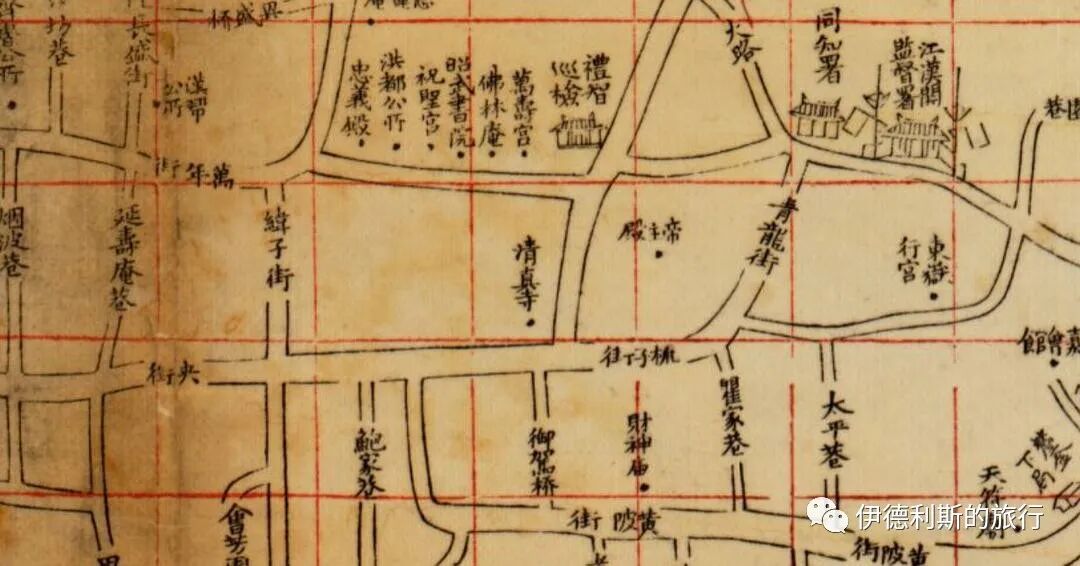
Guangyi Bridge Mosque in the 1864 Map of Wuhan Towns and Cities.
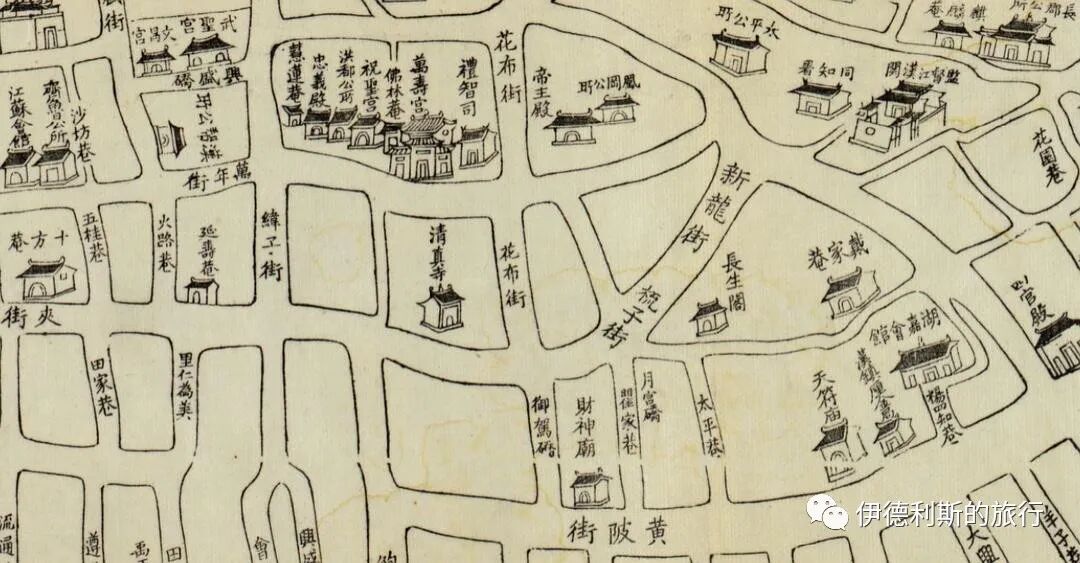
Guangyi Bridge Mosque in the 1877 Map of Streets in Hankou Town, Hubei.
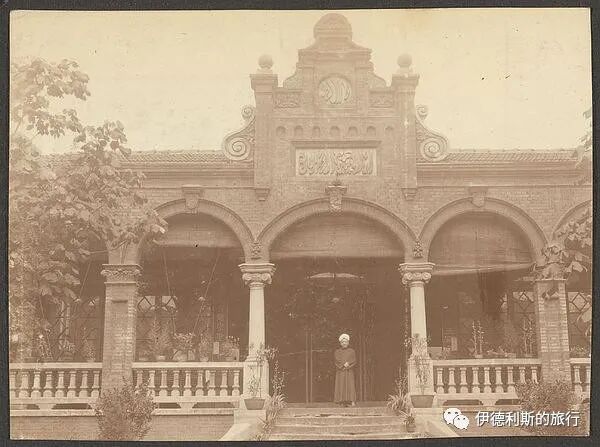
Guangyi Bridge Mosque before its demolition, photographed by Bi Jingshi before 1930. It is now in the collection of the Harvard-Yenching Library.
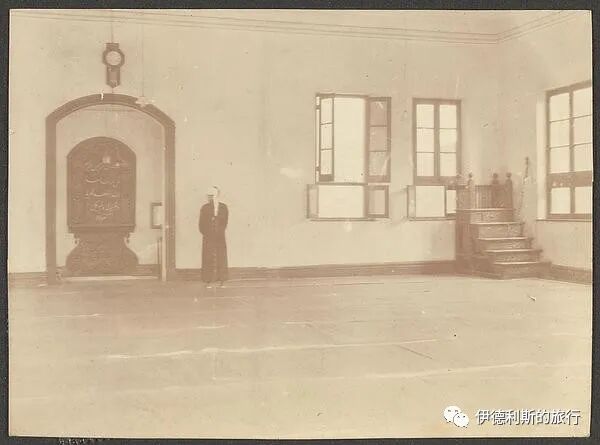
According to Wang Jianping in Old Photos of Islamic Culture in China's Interior and Frontier, this is Imam Wu Zhengming from Xi'an.
In 1930, the government renovated a large urban area from Wangjiaxiang to Liuduqiao in Hankou. They built new roads centered around the Sun Yat-sen bronze statue on Sanmin Road, which led to the demolition of the original Guangyi Bridge Mosque. Imam Ma Yiting and community elders like Tie Guoliang, Yu Jingzhai, Yang Shouting, and Ma Tingsheng traveled to Shanghai, Nanjing, and the Shaanxi-Gansu-Henan regions to raise funds. With these donations and contributions from local Hui Muslims, they raised 18,000 yuan. They built a three-story brick-and-concrete mosque on the newly constructed Minquan Road, modeled after the Xiaotaoyuan Mosque in Shanghai. Because it was on Minquan Road, it was also called the Minquan Road Mosque. The first floor of the new mosque held a reception room, a water room for washing, and a room for funeral preparations (maiti). The second floor had a room for reciting scriptures and a lecture hall, and the third floor was the main prayer hall.
The Minquan Road Mosque photographed by Bi Jingshi between 1934 and 1935. You can see the sign on the gate that reads: Hankou Branch of the China Islamic Association, Islamic Prayer Hall.
Notice from the Preparatory Committee of the Hankou Branch of the Chinese Islamic Association.
The true faith of the Hui people originated in Mecca (Tianfang).
It has spread to provinces in the interior, passed down through generations by representatives.
Mosques stand like a forest, bringing unity to even the most remote areas.
With the same path, same writing, and same assimilation, the five ethnic groups flourish together.
According to Wang Jianping in Old Photos of Islamic Culture in China's Interior and Frontier, this is the young Imam Ma from the Minquan Road Mosque. Ma Xiaoshun (born in 1924), the former director of the Minquan Road Mosque management committee, recalled that this was Ma Xun, the adopted son of the mosque's head Imam, Ma Yiting. He later followed Imam Ma Yiting to Shanghai and served as the head Imam at the Fuyou Road Mosque in Shanghai for many years during the 1980s.
A small halal snack shop in Hankou.
In 1986, the mosque was renovated and expanded into a five-story building. The first floor is the washroom, the second floor has a living room and a room for reciting scriptures, the third floor is the main prayer hall, the fourth floor is the office for the Wuhan Islamic Association, and the fifth floor is a meeting hall and an additional prayer hall for holidays.
In 2013, the Minquan Road Mosque, which was a designated excellent historical building in Wuhan, was demolished, leaving behind a permanent regret.
The Minquan Road Mosque I photographed in 2012 before it was demolished.
Hualou Street next to the Minquan Road Mosque, one year before the demolition.
The Minquan Road Mosque in October 2014, which became a parking lot after being torn down.
Jiang'an Mosque.
In 1906 (the 32nd year of the Guangxu reign), the Beijing-Hankou Railway officially opened. Many Hui Muslims from Zhoukou, Henan, traveled along the railway to Hankou to escape a drought, settling in the area around the Jiang'an Railway Station, the southernmost point of the line.
In 1918, the Henan Hui Muslims who settled in Liujiamiao built a simple mosque. This was the earliest Liujiamiao Mosque, also known as the Henan Mosque because it was mainly used by people from Henan. Later, when Wu Peifu's army was stationed there, they requisitioned the mosque to feed their horses, so in 1920, everyone had to raise money to buy a small building to use as a mosque.
Between 1934 and 1935, Bi Jingshi took photos of the Liujiamiao Mosque at that time.
Inside the mosque, the person shown is the imam (ahong) at the time, Elder Chang.
Elder Imam Chang.
Elder Imam Chang's eldest son, Imam Chang.
Elder Imam Chang's second son, Younger Imam Chang.
A photo of Elder Imam Chang and Younger Imam Chang together.
Elder Imam Chang and a foreign friend, Mr. G. K. Harris.
Elder Imam Chang shaving his beard.
Elder Imam Chang.
According to Wang Jianping in 'Old Photos of Islamic Culture in China's Inland and Frontier Regions,' an elderly resident named Wei Ruiyun, who lived near the Wuchang Uprising Street Mosque for over 60 years, recalled that this was Imam Ma Shanzhi, who had performed her nikah (marriage contract) when she got married.
Elder Imam Chang and some merchants who came to Hankou from Henan for business.
Merchants who came to do business in Henan at the Liujiamiao Mosque.
The imam of Liujiamiao Mosque.
The imam, community elders, and merchants from Henan on the roof of the mosque, preparing to perform namaz.
Performing namaz on the roof of Liujiamiao Mosque.
Old Imam Chang leads everyone in Jumu'ah prayer inside the main hall of Liujiamiao Mosque.
A friend (dosti) performs wudu (abdast) on the roof of Liujiamiao Mosque.
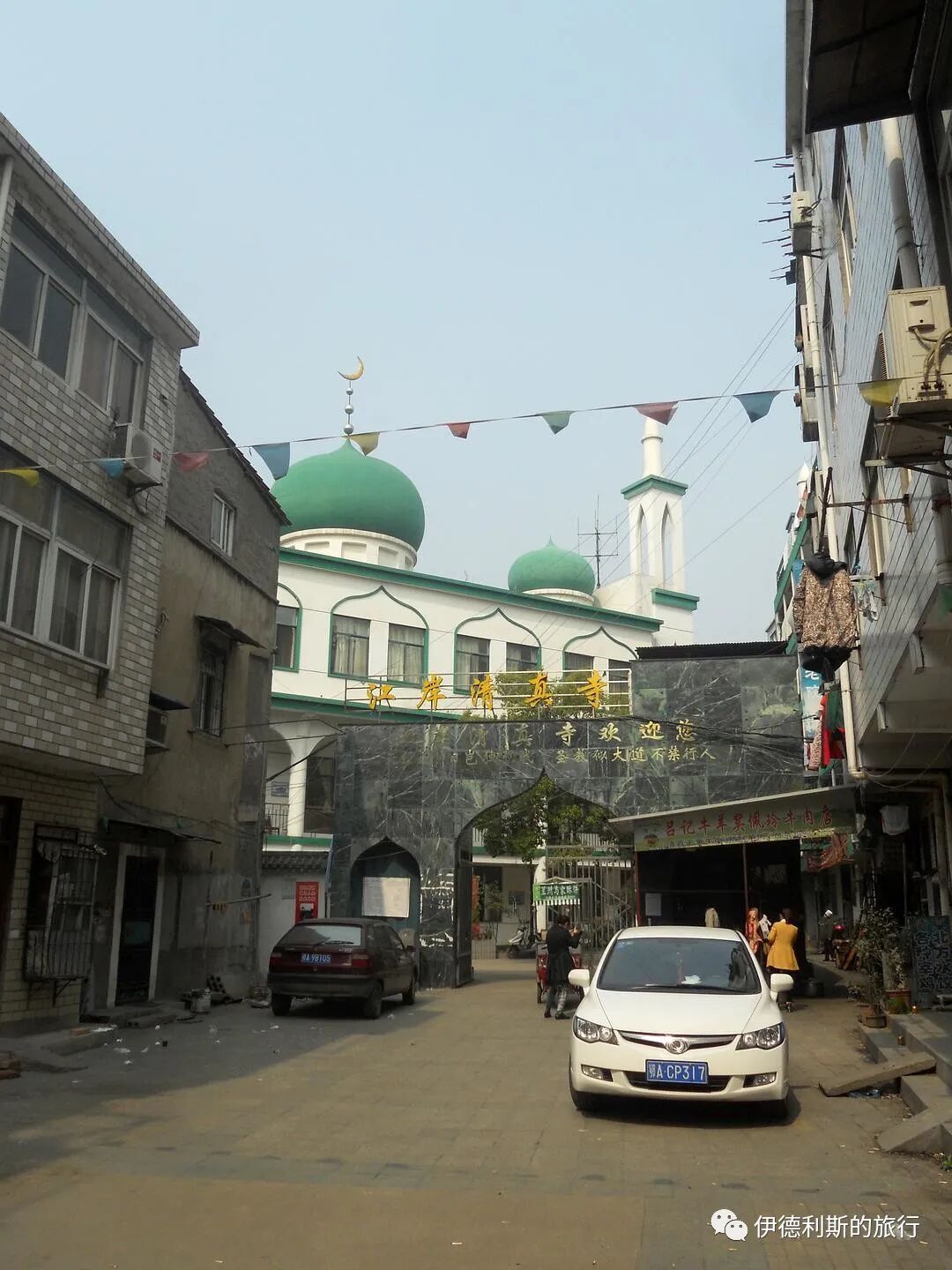
After the Battle of Wuhan in 1938, the mosque was damaged by war, and the land was taken for railway expansion, so local Hui Muslims raised money again to buy a new building for the mosque. Since then, the mosque has undergone several major renovations and was officially renamed Jiang'an Mosque. After a major renovation of the main hall in 1986, a second floor was added to the main hall and the north reception room, which caused the foundation to sink and cracks to appear in the walls. In 2005, the original Jiang'an Mosque was demolished to build a new one, and in 2007, a women's Islamic school (qingzhen nvxue) was built next to it.
Jiang'an Mosque as I photographed it in 2013.
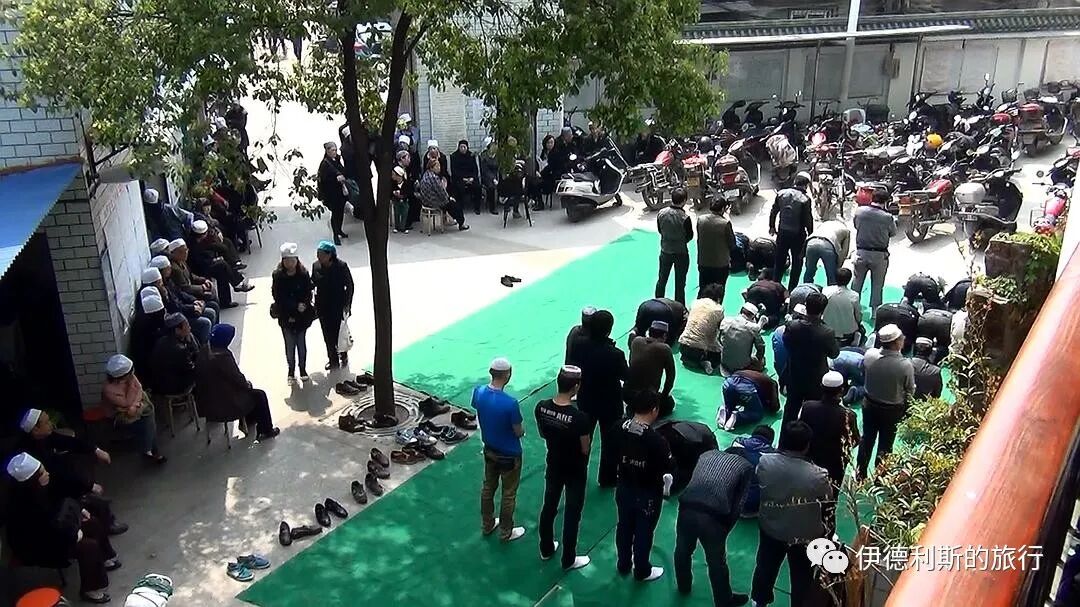
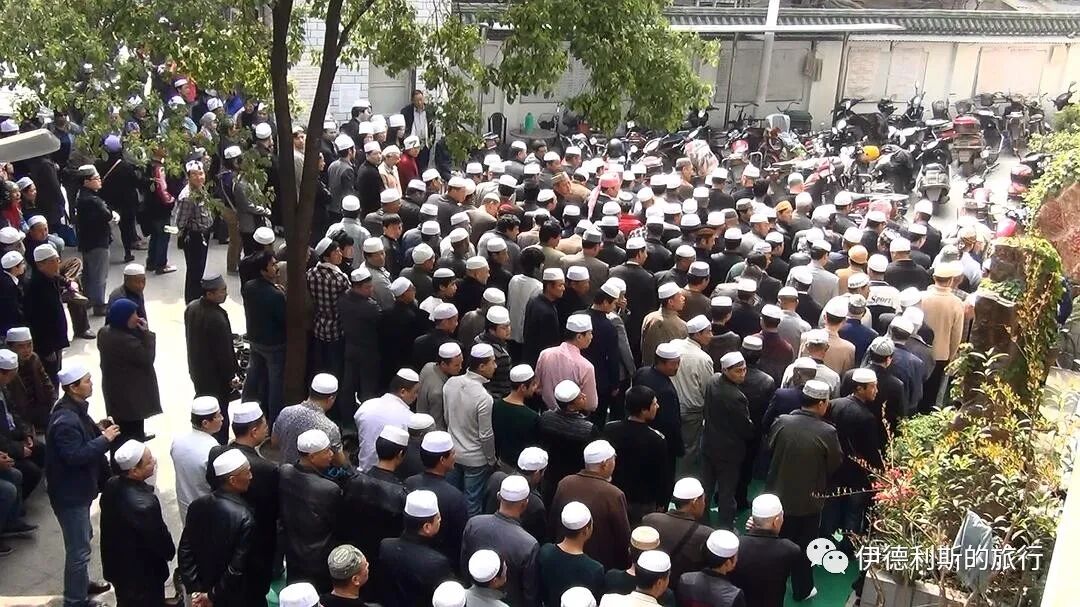
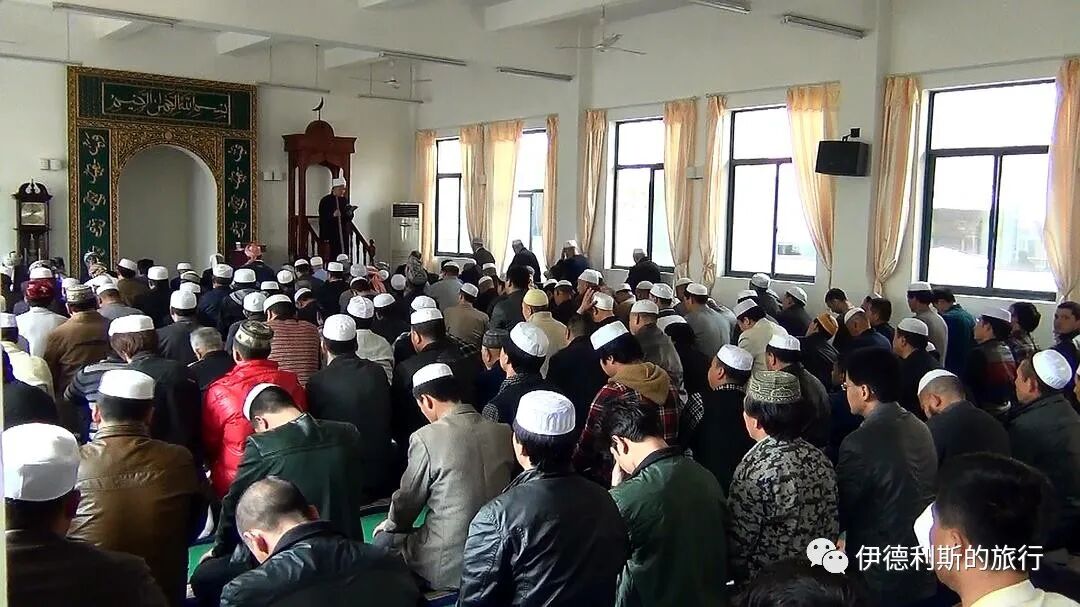
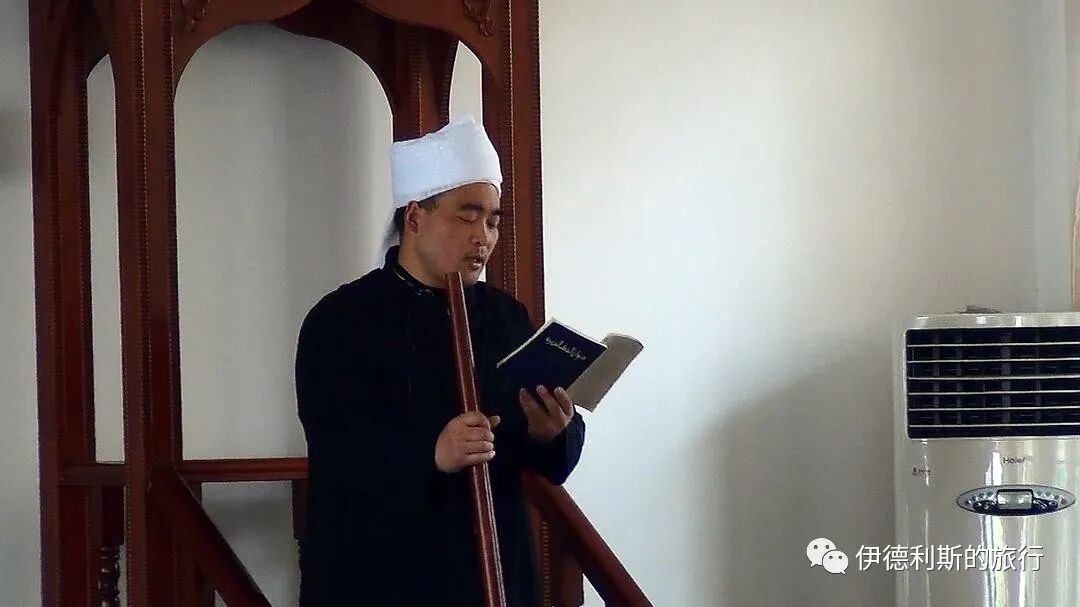
A Jumu'ah prayer in 2013.
The study group for middle-aged and elderly people at that time.
Jiang'an Station stopped operating in 2010, and demolition of the surrounding area began immediately. By 2014, the Muslim community around Jiang'an Mosque had been completely razed to the ground and now only exists in history.
In 2015, the community around the mosque was completely razed to the ground.
The former Hui Muslim grocery store has been closed for many years and is now razed to the ground.
The Jiang'an Station sign before it was demolished.
The abandoned station.
The building next to the station was about to be demolished when I photographed it in 2013, and it is now razed to the ground.
An even older century-old station.
A once-luxurious hotel.
A halal restaurant (qingzhen guanzi).
Although the traditional Hui Muslim community in Jiang'an was razed to the ground, Jiang'an Hui Muslims still run halal restaurants in Wuhan.
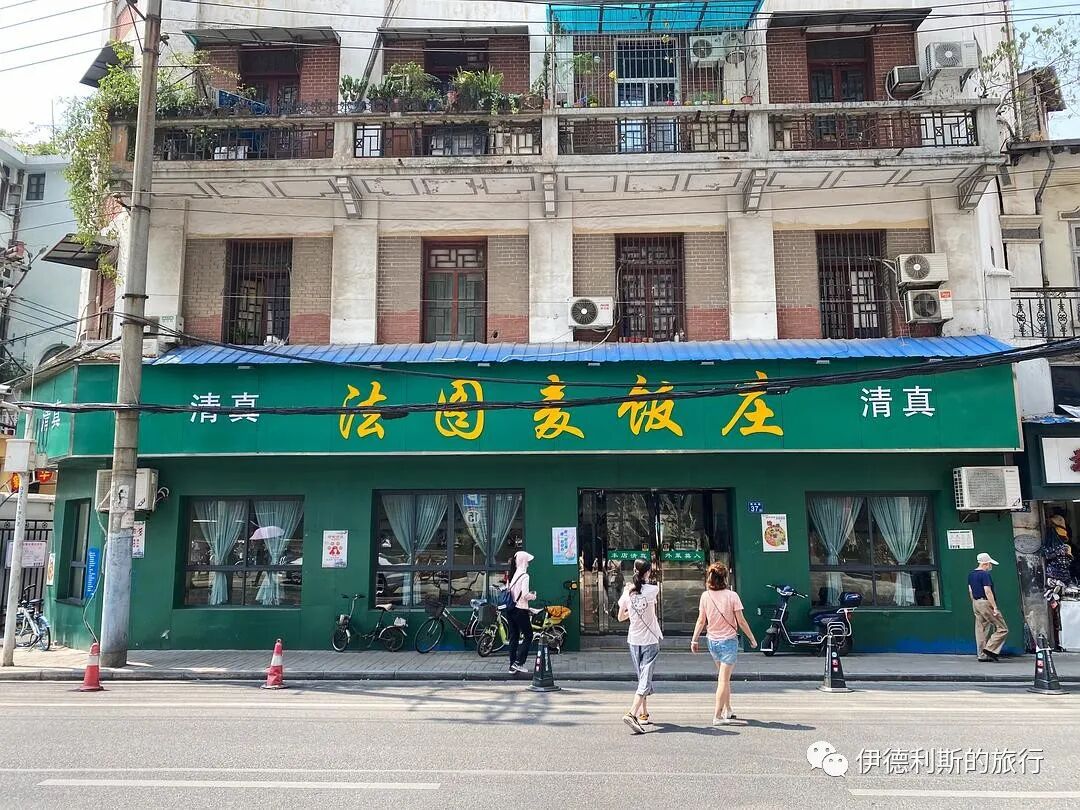
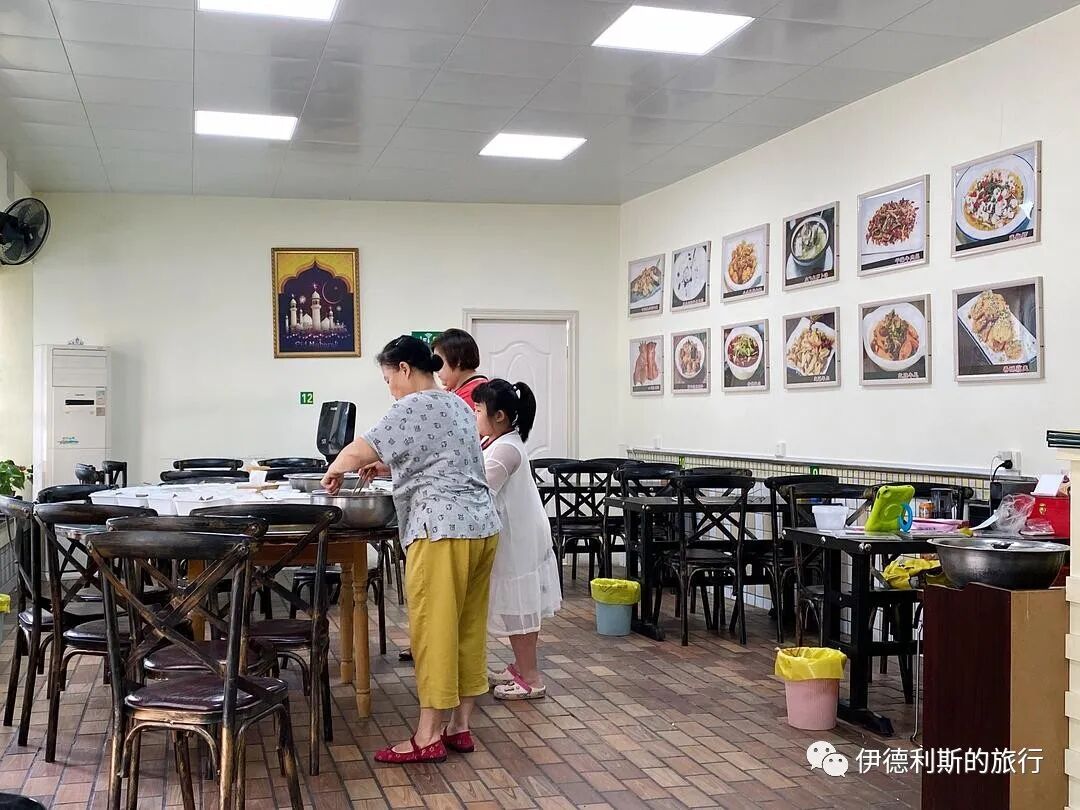
Fatumei Restaurant on Huangxing Road is a traditional local halal restaurant in Hankou. Owner Li's family are third-generation Hankou Hui Muslims who settled near the Dazhi Railway Station in Hankou during the Republic of China era.
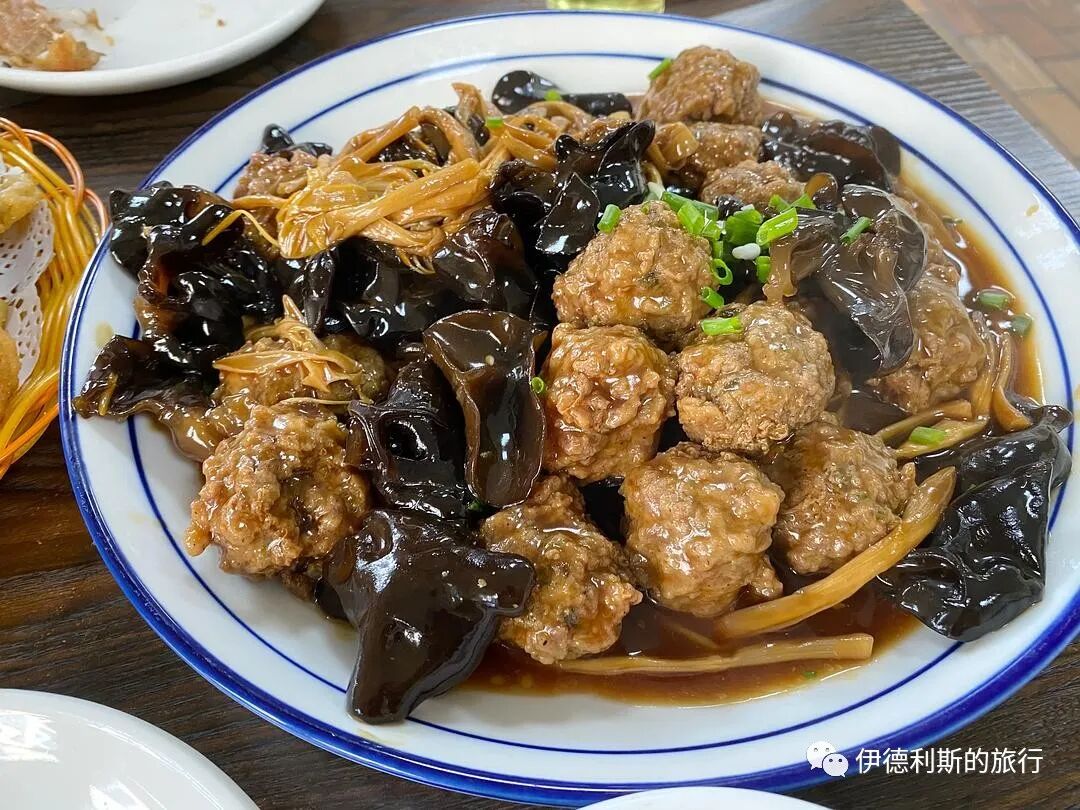
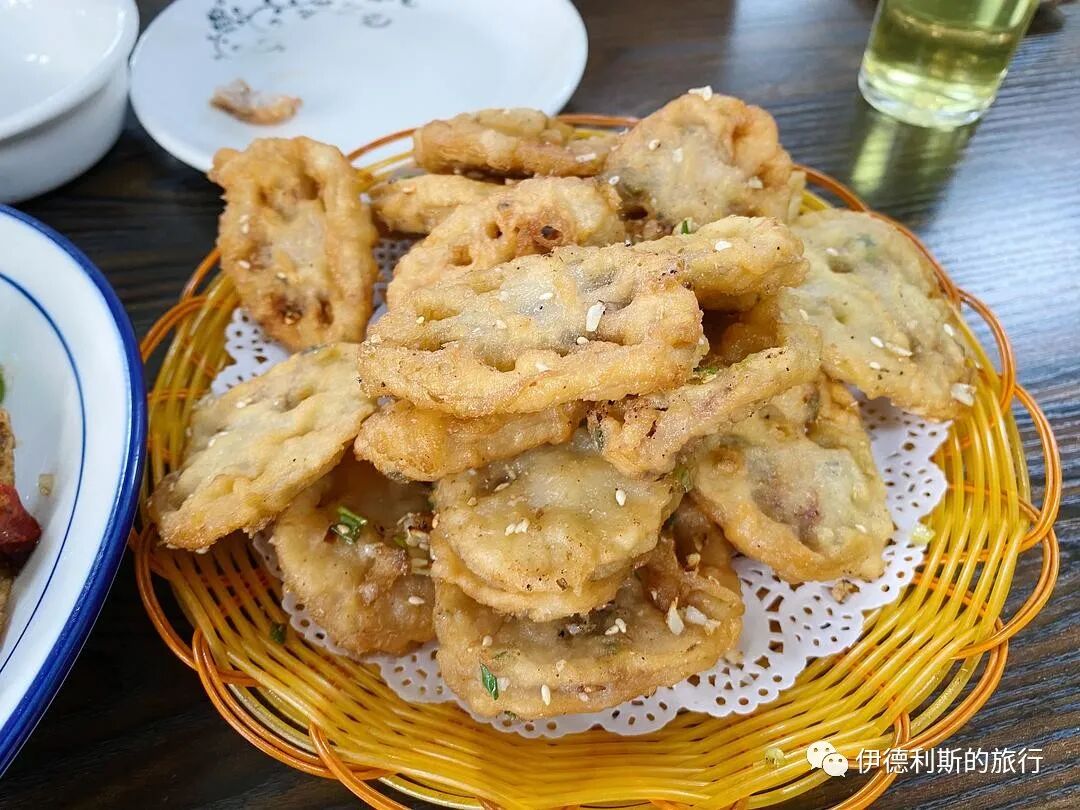
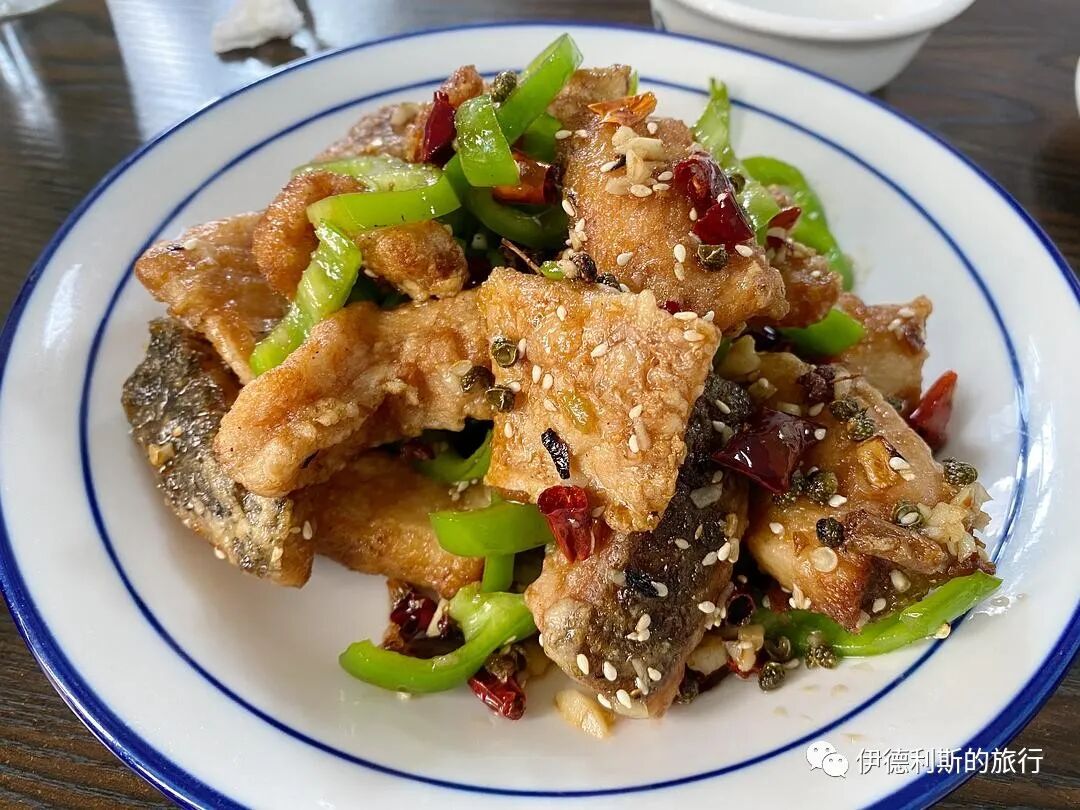
We ordered the most classic Hankou Hui Muslim dish, beef meatball soup (hui niurou yuanzi), as well as sticky rice fish (ciba yu) and fried lotus root sandwiches (zha oujia). Although they are only separated by a river, Hankou Hui Muslims and Wuchang Hui Muslims have different food cultures. Hui Muslims have lived in Wuchang for hundreds of years. While they focus on beef dishes, their diet has also been shaped by local Wuhan influences. Hui Muslims in Hankou mostly moved here from Henan over the last hundred years. Their food culture carries a Central Plains style, which is best seen when comparing the beef meatballs (niurou yuanzi) from both places. Hankou Hui Muslims make their beef meatballs (niurou yuanzi) with pure beef, and their method of stewing the meatballs is also more typical of the Central Plains. When we were eating, they were busy making boxed meals for community workers. The owner said 2020 was a very hard year. After reopening in May, business was very slow. There were few tourists, local Hui Muslims are not used to eating out, their shop is too small for banquets, and the university was locked down so students could not come out to eat. Luckily, their landlord waived three months of rent, and community members helped by often buying boxed meals from them, so they barely managed to keep going.
Pang's Hot Dry Noodles (Pangji reganmian)
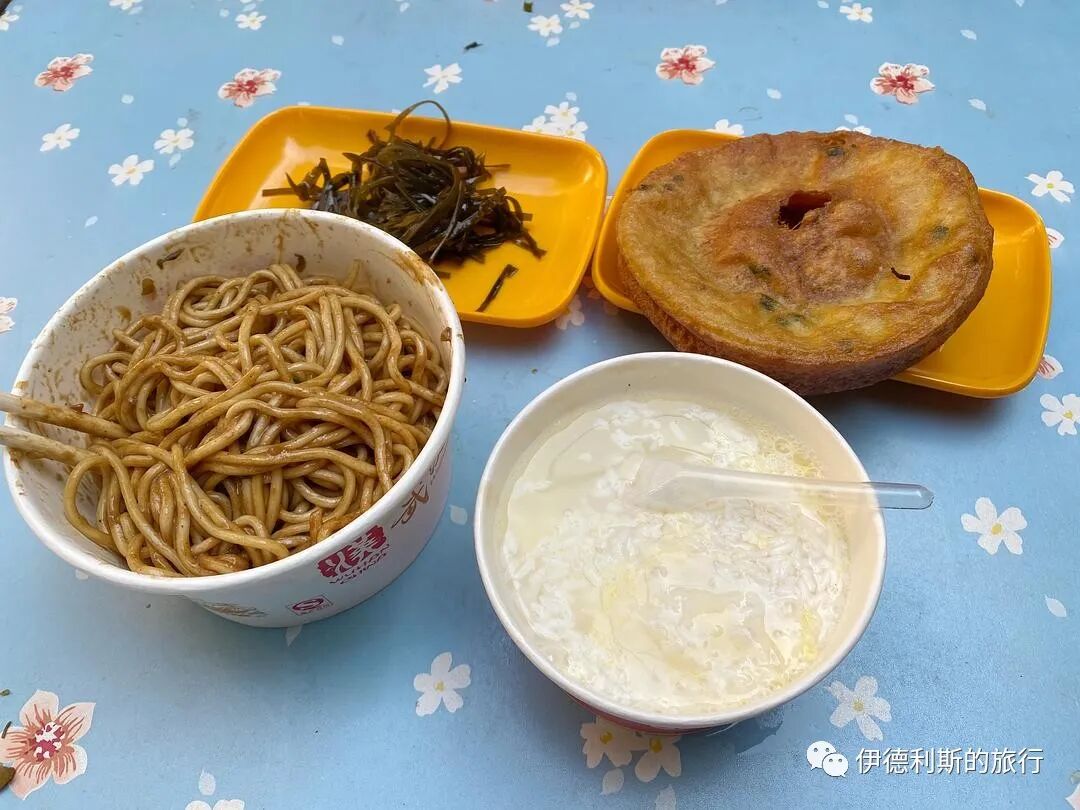
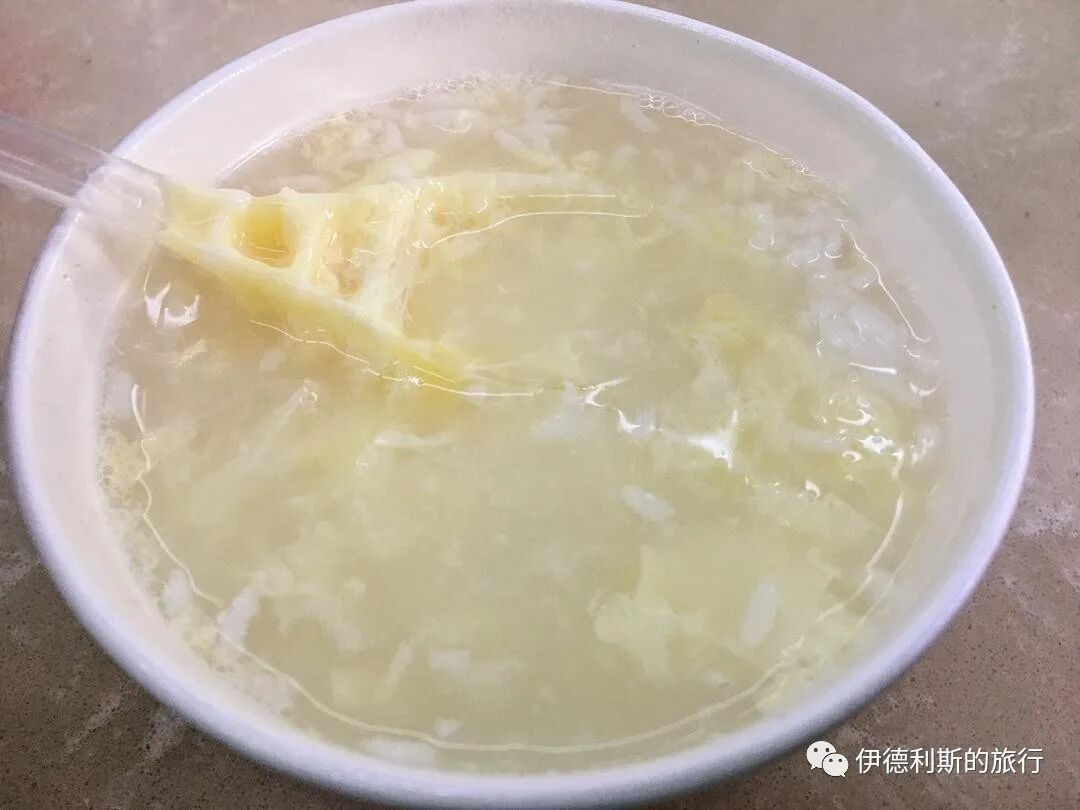
We ate hot dry noodles (reganmian), freshly fried savory donuts (mianwo), and egg fermented rice soup (jidan laozao) at Pang's Hot Dry Noodles on Yiyuan Road in Hankou. Pang's is the most famous halal hot dry noodle shop in Wuhan. It has been open for 46 years and is a must-visit spot for Muslims traveling in Wuhan. When I went in 2020, the owner said they would close in 2021 because the rent was high and business was bad that year, so they could no longer keep the business running. I heard a while ago that they reopened under the new name Pang Meiling Hot Dry Noodles.
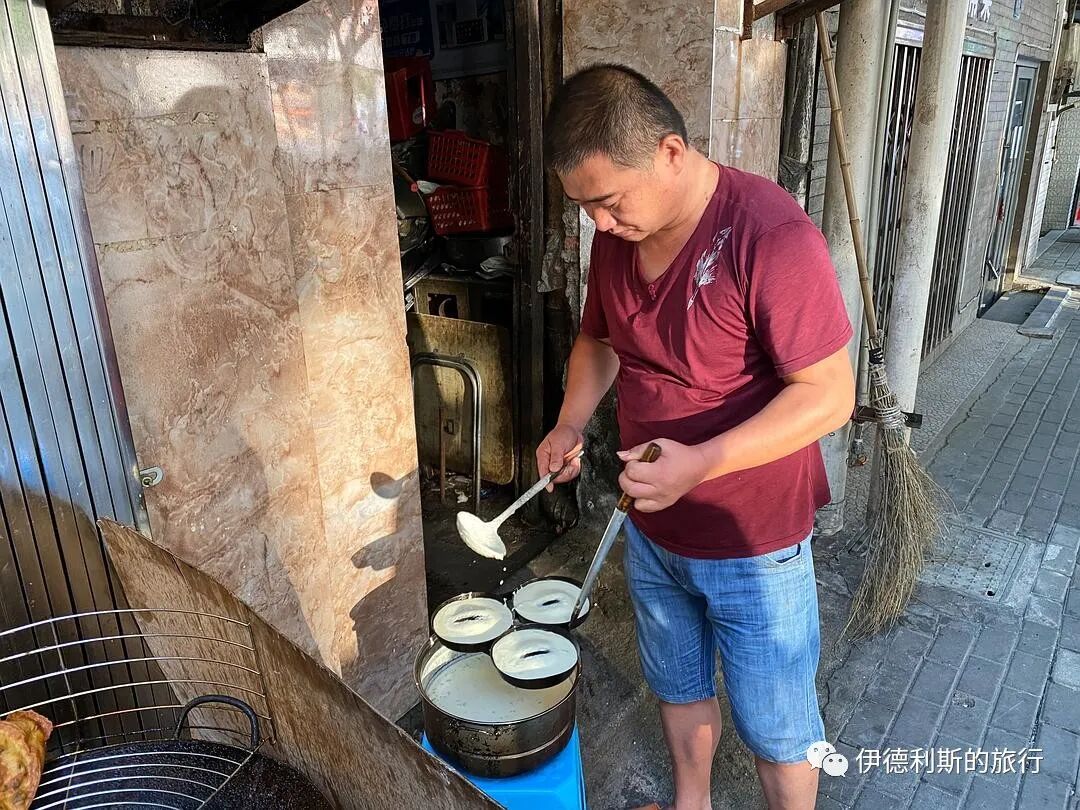
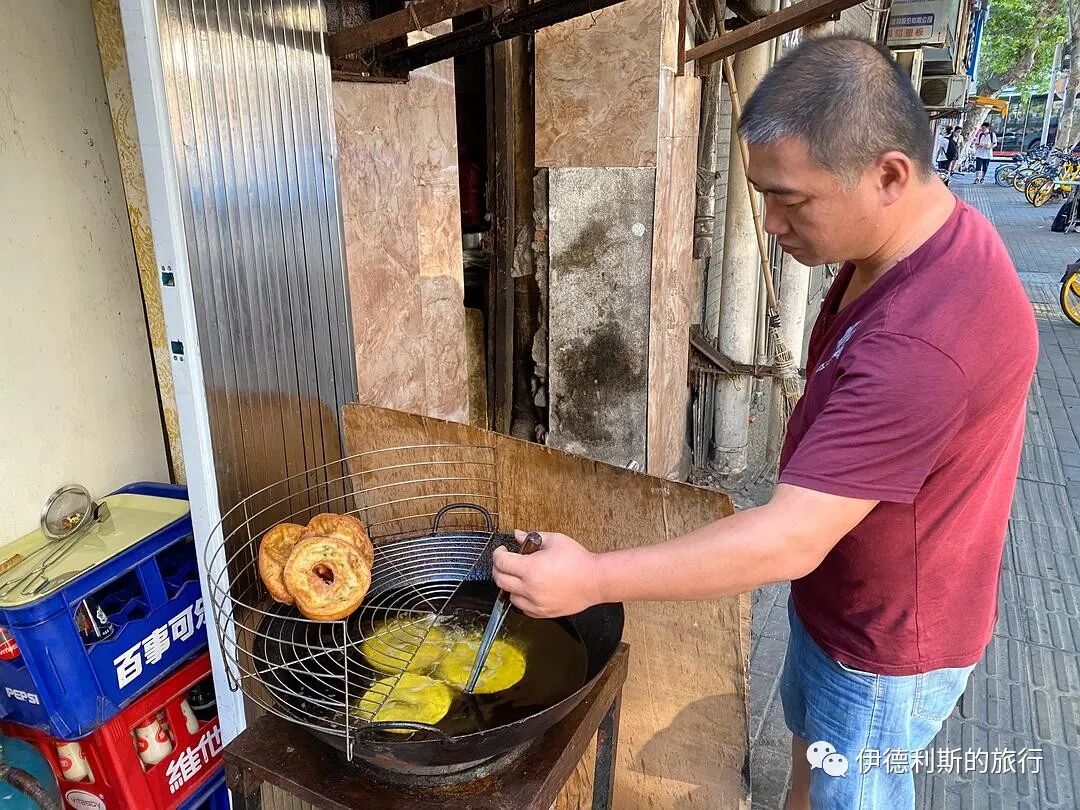
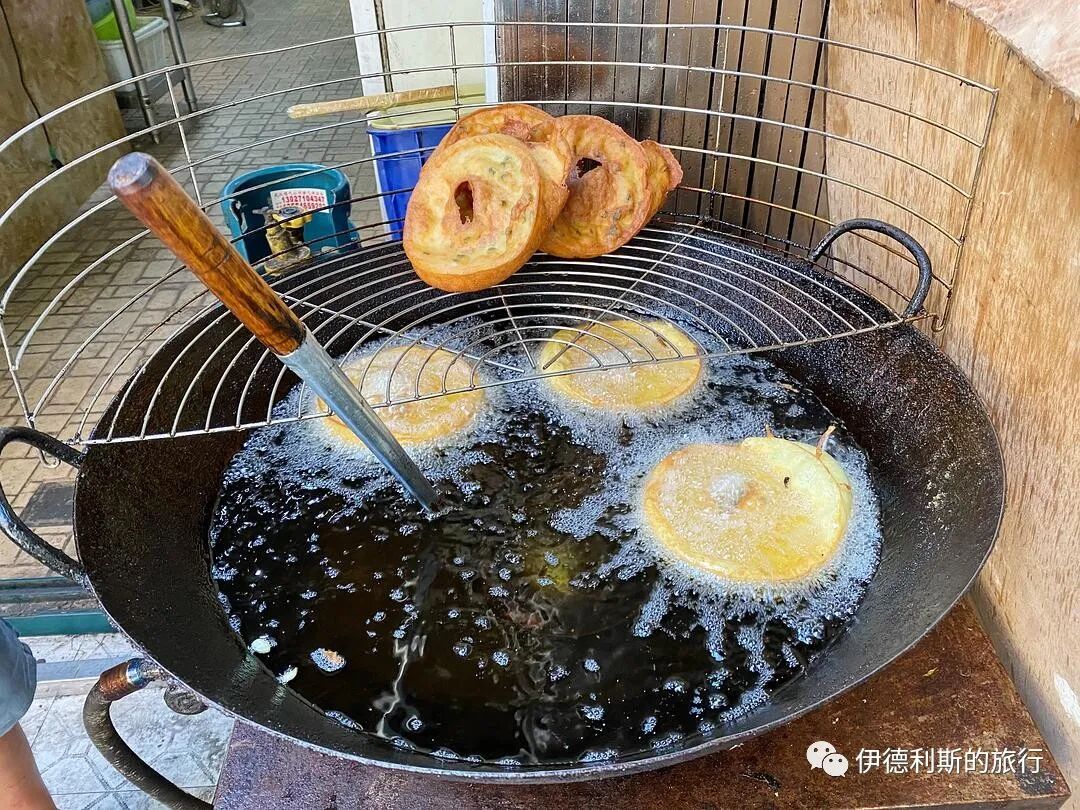
Freshly made savory donuts (mianwo)
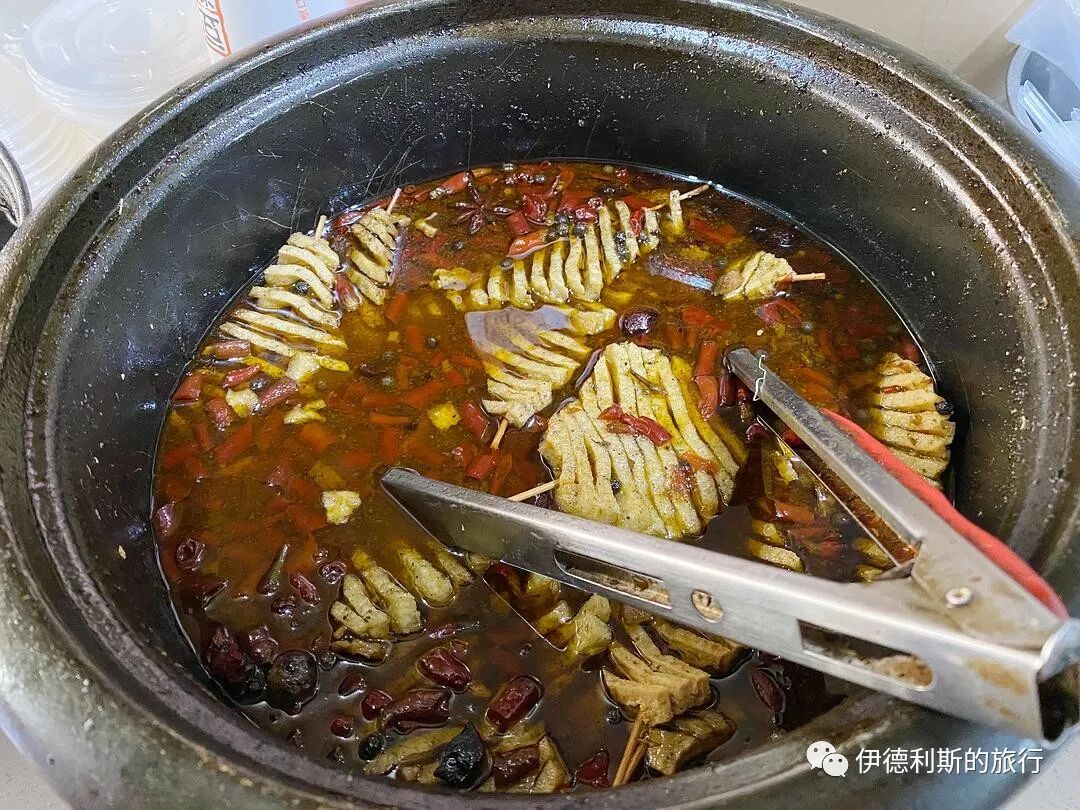
They also sell braised dried tofu (lu dougan), but it was super spicy so we did not dare to eat it.
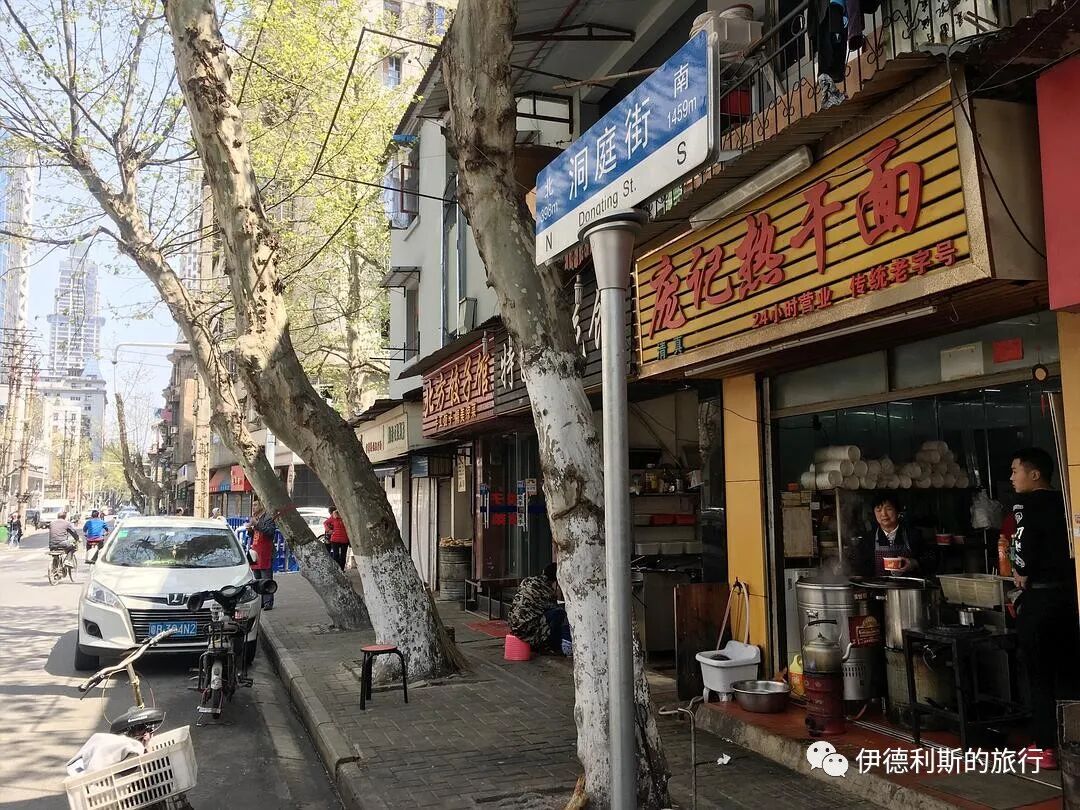
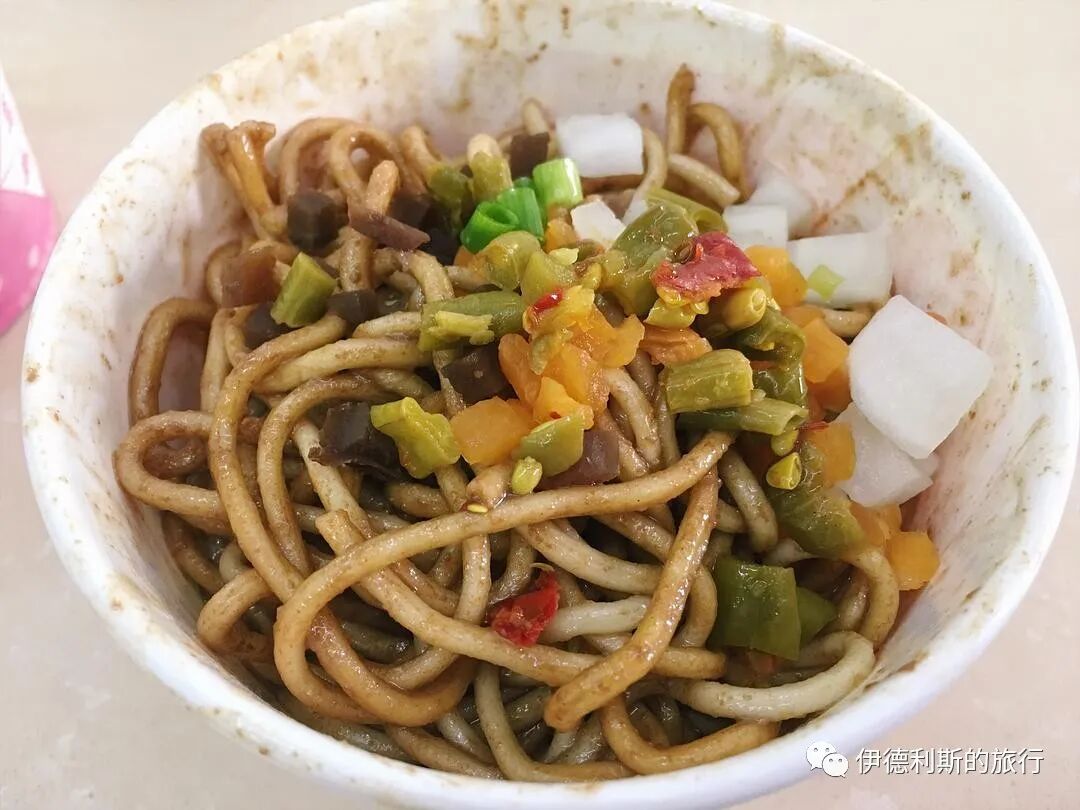
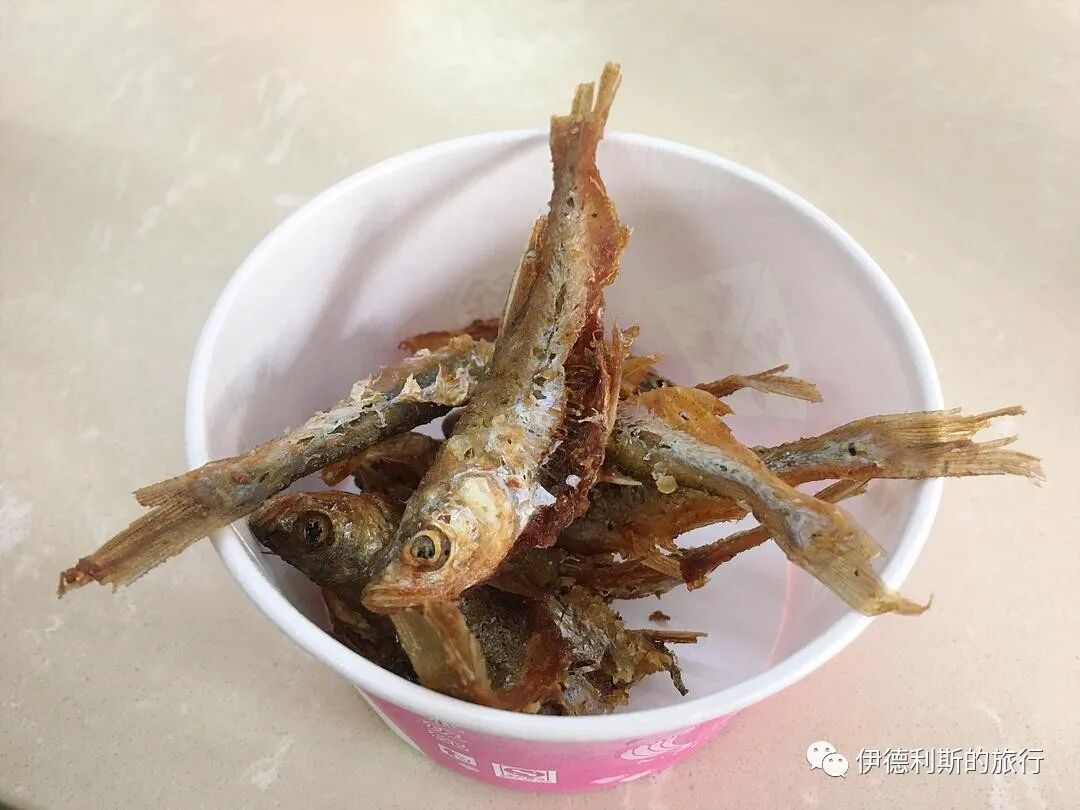
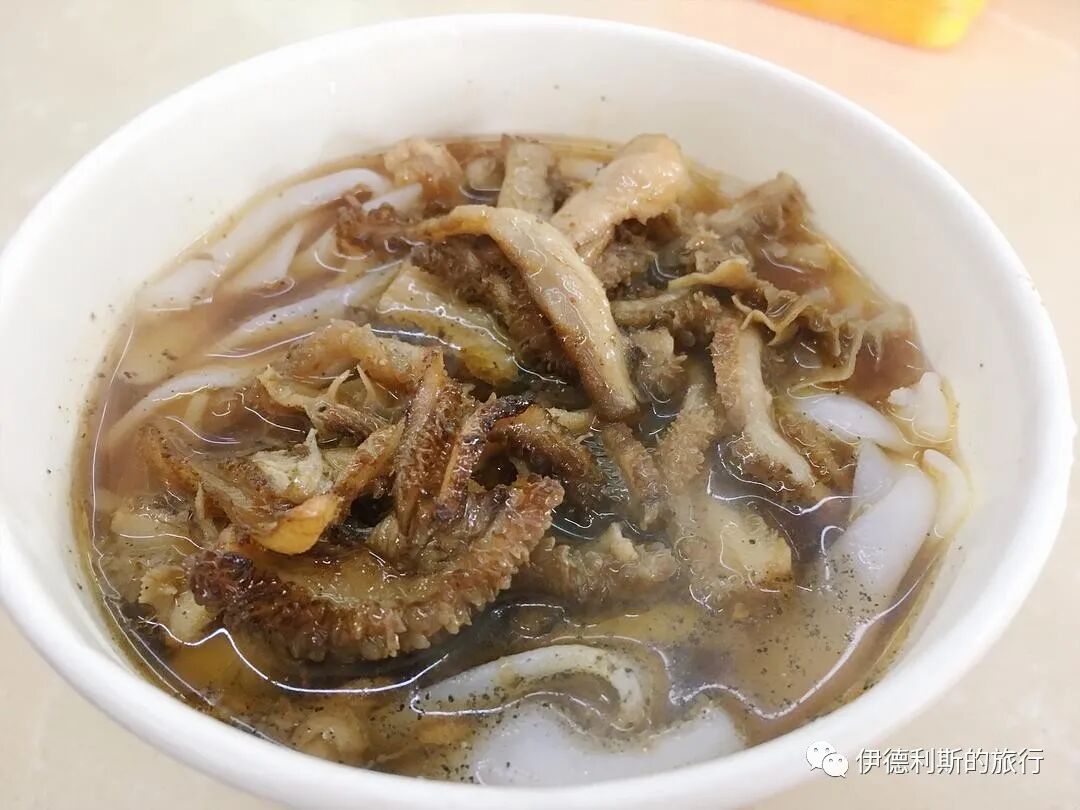
In 2017, I ate hot dry noodles (reganmian), small knife fish (xiaodaoyu), and beef tripe rice noodles (niudufen) at the Dongting Street shop. view all
Summary: Hankou Hui Muslim Community — Mosques, Food and Lost Streets is presented here as a firsthand travel account in clear English, beginning with this scene: After the middle of the Ming Dynasty, Hankou town began to grow. Hui Muslims from the Jiangsu and Zhejiang regions traveled up the Yangtze River, while those from the Shaanxi and Gansu regions traveled down the Han. The account keeps its focus on Hankou Muslims, Hubei Muslims, China Mosques while preserving the names, places, food, and historical details from the Chinese source.
The formation of the Muslim community in Hankou.
After the middle of the Ming Dynasty, Hankou town began to grow. Hui Muslims from the Jiangsu and Zhejiang regions traveled up the Yangtze River, while those from the Shaanxi and Gansu regions traveled down the Han River, all gathering in Hankou for trade and business. By the end of the Ming Dynasty, the number of Hui Muslims settling in Hankou grew, forming the earliest residential area for the community.
Guangyi Bridge Mosque (Guangyiqiao Qingzhensi).
Guangyi Bridge Mosque was first built in 1723 (the first year of the Yongzheng reign). It was burned down in 1900 (the 26th year of the Guangxu reign) and rebuilt in 1905 with funds raised by community elders like Jin Shihe and Jin Dinghe. During the Wuchang Uprising in 1911, the mosque was burned down again. It was repaired in 1916 with donations from the Shaanxi horse caravan group and the Hubei beef butcher guild (Choubang). The main prayer hall was funded entirely by a famous Hui merchant from Shanghai named Jiang Xingjie. It could hold a thousand people for namaz and featured beautiful bracket sets, curved eaves, and carved beams, making it very spectacular.
In 1905, Ma Ganghou, Yu Jingzhai, and others opened a school for Hui children inside the Wanshou Palace Mosque in Hankou. It was later renamed the Hankou Muslim Primary School and moved into the Guangyi Bridge Mosque, offering free enrollment to Hui children. The curriculum focused on religion, supplemented by Chinese language and abacus math, until it closed after the Battle of Wuhan in 1938.
Guangyi Bridge Mosque in the 1864 Map of Wuhan Towns and Cities.
Guangyi Bridge Mosque in the 1877 Map of Streets in Hankou Town, Hubei.
Guangyi Bridge Mosque before its demolition, photographed by Bi Jingshi before 1930. It is now in the collection of the Harvard-Yenching Library.
According to Wang Jianping in Old Photos of Islamic Culture in China's Interior and Frontier, this is Imam Wu Zhengming from Xi'an.
In 1930, the government renovated a large urban area from Wangjiaxiang to Liuduqiao in Hankou. They built new roads centered around the Sun Yat-sen bronze statue on Sanmin Road, which led to the demolition of the original Guangyi Bridge Mosque. Imam Ma Yiting and community elders like Tie Guoliang, Yu Jingzhai, Yang Shouting, and Ma Tingsheng traveled to Shanghai, Nanjing, and the Shaanxi-Gansu-Henan regions to raise funds. With these donations and contributions from local Hui Muslims, they raised 18,000 yuan. They built a three-story brick-and-concrete mosque on the newly constructed Minquan Road, modeled after the Xiaotaoyuan Mosque in Shanghai. Because it was on Minquan Road, it was also called the Minquan Road Mosque. The first floor of the new mosque held a reception room, a water room for washing, and a room for funeral preparations (maiti). The second floor had a room for reciting scriptures and a lecture hall, and the third floor was the main prayer hall.
The Minquan Road Mosque photographed by Bi Jingshi between 1934 and 1935. You can see the sign on the gate that reads: Hankou Branch of the China Islamic Association, Islamic Prayer Hall.
Notice from the Preparatory Committee of the Hankou Branch of the Chinese Islamic Association.
The true faith of the Hui people originated in Mecca (Tianfang).
It has spread to provinces in the interior, passed down through generations by representatives.
Mosques stand like a forest, bringing unity to even the most remote areas.
With the same path, same writing, and same assimilation, the five ethnic groups flourish together.
According to Wang Jianping in Old Photos of Islamic Culture in China's Interior and Frontier, this is the young Imam Ma from the Minquan Road Mosque. Ma Xiaoshun (born in 1924), the former director of the Minquan Road Mosque management committee, recalled that this was Ma Xun, the adopted son of the mosque's head Imam, Ma Yiting. He later followed Imam Ma Yiting to Shanghai and served as the head Imam at the Fuyou Road Mosque in Shanghai for many years during the 1980s.
A small halal snack shop in Hankou.
In 1986, the mosque was renovated and expanded into a five-story building. The first floor is the washroom, the second floor has a living room and a room for reciting scriptures, the third floor is the main prayer hall, the fourth floor is the office for the Wuhan Islamic Association, and the fifth floor is a meeting hall and an additional prayer hall for holidays.
In 2013, the Minquan Road Mosque, which was a designated excellent historical building in Wuhan, was demolished, leaving behind a permanent regret.
The Minquan Road Mosque I photographed in 2012 before it was demolished.
Hualou Street next to the Minquan Road Mosque, one year before the demolition.
The Minquan Road Mosque in October 2014, which became a parking lot after being torn down.
Jiang'an Mosque.
In 1906 (the 32nd year of the Guangxu reign), the Beijing-Hankou Railway officially opened. Many Hui Muslims from Zhoukou, Henan, traveled along the railway to Hankou to escape a drought, settling in the area around the Jiang'an Railway Station, the southernmost point of the line.
In 1918, the Henan Hui Muslims who settled in Liujiamiao built a simple mosque. This was the earliest Liujiamiao Mosque, also known as the Henan Mosque because it was mainly used by people from Henan. Later, when Wu Peifu's army was stationed there, they requisitioned the mosque to feed their horses, so in 1920, everyone had to raise money to buy a small building to use as a mosque.
Between 1934 and 1935, Bi Jingshi took photos of the Liujiamiao Mosque at that time.
Inside the mosque, the person shown is the imam (ahong) at the time, Elder Chang.
Elder Imam Chang.
Elder Imam Chang's eldest son, Imam Chang.
Elder Imam Chang's second son, Younger Imam Chang.
A photo of Elder Imam Chang and Younger Imam Chang together.
Elder Imam Chang and a foreign friend, Mr. G. K. Harris.
Elder Imam Chang shaving his beard.
Elder Imam Chang.
According to Wang Jianping in 'Old Photos of Islamic Culture in China's Inland and Frontier Regions,' an elderly resident named Wei Ruiyun, who lived near the Wuchang Uprising Street Mosque for over 60 years, recalled that this was Imam Ma Shanzhi, who had performed her nikah (marriage contract) when she got married.
Elder Imam Chang and some merchants who came to Hankou from Henan for business.
Merchants who came to do business in Henan at the Liujiamiao Mosque.
The imam of Liujiamiao Mosque.
The imam, community elders, and merchants from Henan on the roof of the mosque, preparing to perform namaz.
Performing namaz on the roof of Liujiamiao Mosque.
Old Imam Chang leads everyone in Jumu'ah prayer inside the main hall of Liujiamiao Mosque.
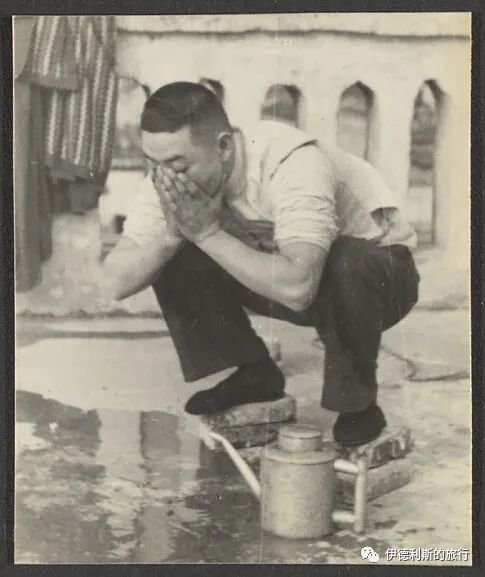
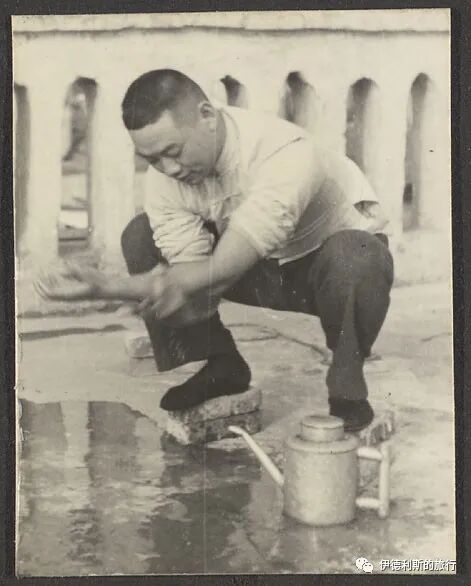
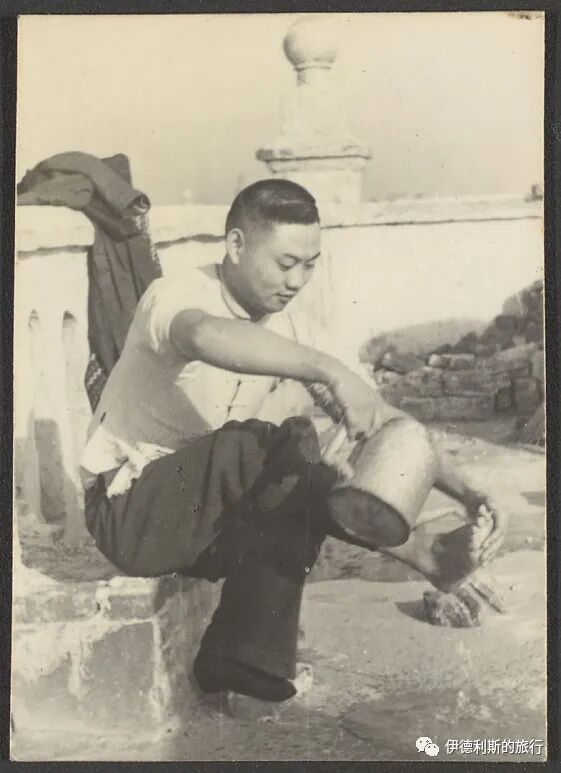
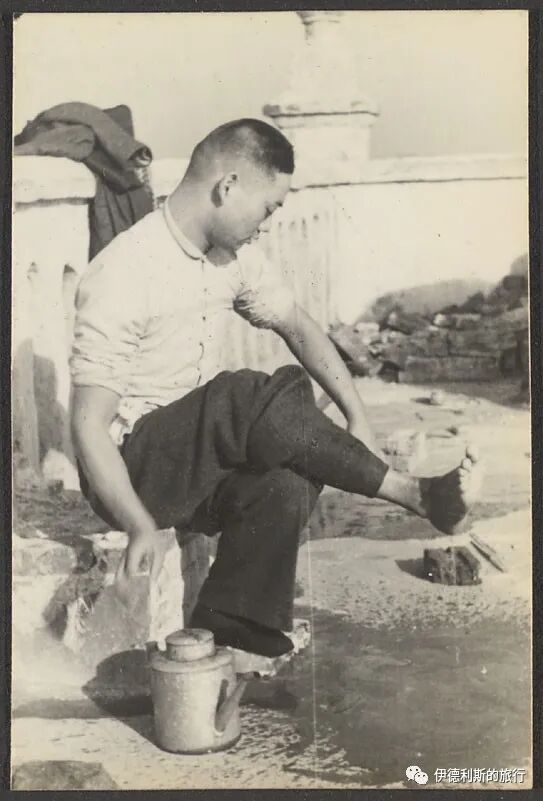
A friend (dosti) performs wudu (abdast) on the roof of Liujiamiao Mosque.
After the Battle of Wuhan in 1938, the mosque was damaged by war, and the land was taken for railway expansion, so local Hui Muslims raised money again to buy a new building for the mosque. Since then, the mosque has undergone several major renovations and was officially renamed Jiang'an Mosque. After a major renovation of the main hall in 1986, a second floor was added to the main hall and the north reception room, which caused the foundation to sink and cracks to appear in the walls. In 2005, the original Jiang'an Mosque was demolished to build a new one, and in 2007, a women's Islamic school (qingzhen nvxue) was built next to it.
Jiang'an Mosque as I photographed it in 2013.
A Jumu'ah prayer in 2013.
The study group for middle-aged and elderly people at that time.
Jiang'an Station stopped operating in 2010, and demolition of the surrounding area began immediately. By 2014, the Muslim community around Jiang'an Mosque had been completely razed to the ground and now only exists in history.
In 2015, the community around the mosque was completely razed to the ground.
The former Hui Muslim grocery store has been closed for many years and is now razed to the ground.
The Jiang'an Station sign before it was demolished.
The abandoned station.
The building next to the station was about to be demolished when I photographed it in 2013, and it is now razed to the ground.
An even older century-old station.
A once-luxurious hotel.
A halal restaurant (qingzhen guanzi).
Although the traditional Hui Muslim community in Jiang'an was razed to the ground, Jiang'an Hui Muslims still run halal restaurants in Wuhan.
Fatumei Restaurant on Huangxing Road is a traditional local halal restaurant in Hankou. Owner Li's family are third-generation Hankou Hui Muslims who settled near the Dazhi Railway Station in Hankou during the Republic of China era.
We ordered the most classic Hankou Hui Muslim dish, beef meatball soup (hui niurou yuanzi), as well as sticky rice fish (ciba yu) and fried lotus root sandwiches (zha oujia). Although they are only separated by a river, Hankou Hui Muslims and Wuchang Hui Muslims have different food cultures. Hui Muslims have lived in Wuchang for hundreds of years. While they focus on beef dishes, their diet has also been shaped by local Wuhan influences. Hui Muslims in Hankou mostly moved here from Henan over the last hundred years. Their food culture carries a Central Plains style, which is best seen when comparing the beef meatballs (niurou yuanzi) from both places. Hankou Hui Muslims make their beef meatballs (niurou yuanzi) with pure beef, and their method of stewing the meatballs is also more typical of the Central Plains. When we were eating, they were busy making boxed meals for community workers. The owner said 2020 was a very hard year. After reopening in May, business was very slow. There were few tourists, local Hui Muslims are not used to eating out, their shop is too small for banquets, and the university was locked down so students could not come out to eat. Luckily, their landlord waived three months of rent, and community members helped by often buying boxed meals from them, so they barely managed to keep going.
Pang's Hot Dry Noodles (Pangji reganmian)
We ate hot dry noodles (reganmian), freshly fried savory donuts (mianwo), and egg fermented rice soup (jidan laozao) at Pang's Hot Dry Noodles on Yiyuan Road in Hankou. Pang's is the most famous halal hot dry noodle shop in Wuhan. It has been open for 46 years and is a must-visit spot for Muslims traveling in Wuhan. When I went in 2020, the owner said they would close in 2021 because the rent was high and business was bad that year, so they could no longer keep the business running. I heard a while ago that they reopened under the new name Pang Meiling Hot Dry Noodles.
Freshly made savory donuts (mianwo)
They also sell braised dried tofu (lu dougan), but it was super spicy so we did not dare to eat it.
In 2017, I ate hot dry noodles (reganmian), small knife fish (xiaodaoyu), and beef tripe rice noodles (niudufen) at the Dongting Street shop. view all
Reposted from the web
Summary: Hankou Hui Muslim Community — Mosques, Food and Lost Streets is presented here as a firsthand travel account in clear English, beginning with this scene: After the middle of the Ming Dynasty, Hankou town began to grow. Hui Muslims from the Jiangsu and Zhejiang regions traveled up the Yangtze River, while those from the Shaanxi and Gansu regions traveled down the Han. The account keeps its focus on Hankou Muslims, Hubei Muslims, China Mosques while preserving the names, places, food, and historical details from the Chinese source.
The formation of the Muslim community in Hankou.
After the middle of the Ming Dynasty, Hankou town began to grow. Hui Muslims from the Jiangsu and Zhejiang regions traveled up the Yangtze River, while those from the Shaanxi and Gansu regions traveled down the Han River, all gathering in Hankou for trade and business. By the end of the Ming Dynasty, the number of Hui Muslims settling in Hankou grew, forming the earliest residential area for the community.
Guangyi Bridge Mosque (Guangyiqiao Qingzhensi).
Guangyi Bridge Mosque was first built in 1723 (the first year of the Yongzheng reign). It was burned down in 1900 (the 26th year of the Guangxu reign) and rebuilt in 1905 with funds raised by community elders like Jin Shihe and Jin Dinghe. During the Wuchang Uprising in 1911, the mosque was burned down again. It was repaired in 1916 with donations from the Shaanxi horse caravan group and the Hubei beef butcher guild (Choubang). The main prayer hall was funded entirely by a famous Hui merchant from Shanghai named Jiang Xingjie. It could hold a thousand people for namaz and featured beautiful bracket sets, curved eaves, and carved beams, making it very spectacular.
In 1905, Ma Ganghou, Yu Jingzhai, and others opened a school for Hui children inside the Wanshou Palace Mosque in Hankou. It was later renamed the Hankou Muslim Primary School and moved into the Guangyi Bridge Mosque, offering free enrollment to Hui children. The curriculum focused on religion, supplemented by Chinese language and abacus math, until it closed after the Battle of Wuhan in 1938.
Guangyi Bridge Mosque in the 1864 Map of Wuhan Towns and Cities.
Guangyi Bridge Mosque in the 1877 Map of Streets in Hankou Town, Hubei.
Guangyi Bridge Mosque before its demolition, photographed by Bi Jingshi before 1930. It is now in the collection of the Harvard-Yenching Library.
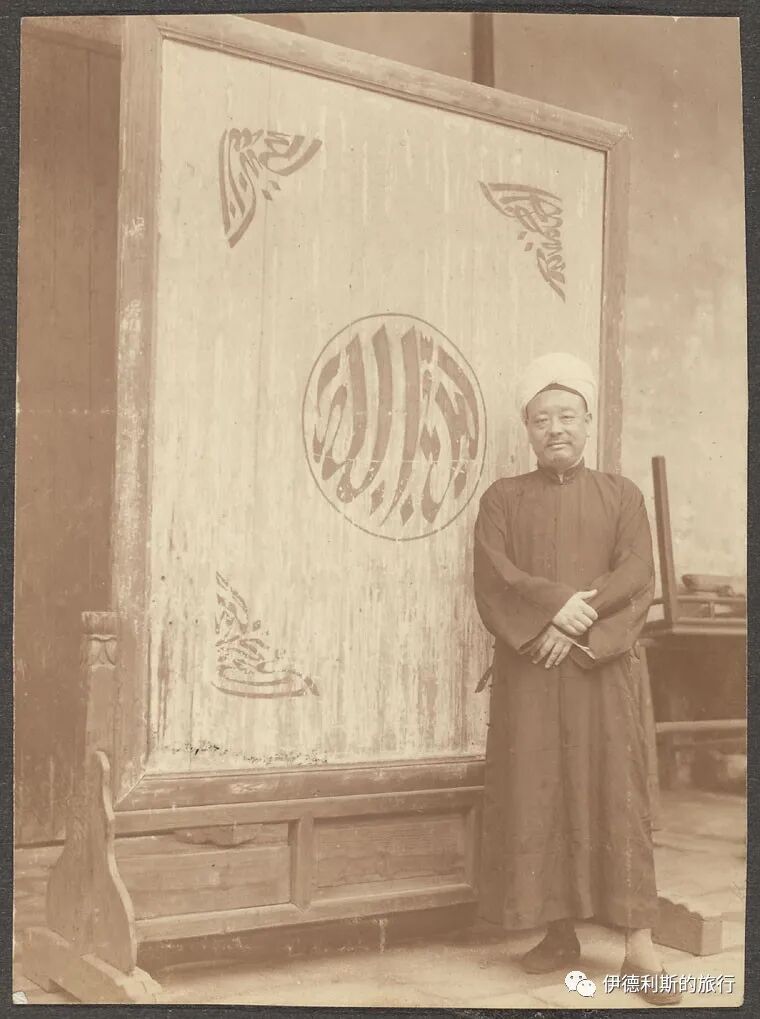
According to Wang Jianping in Old Photos of Islamic Culture in China's Interior and Frontier, this is Imam Wu Zhengming from Xi'an.
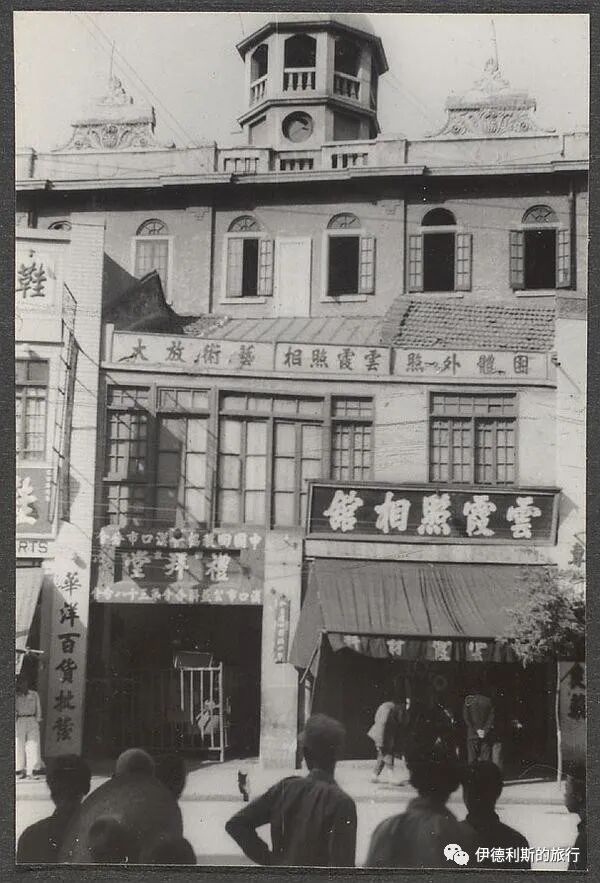
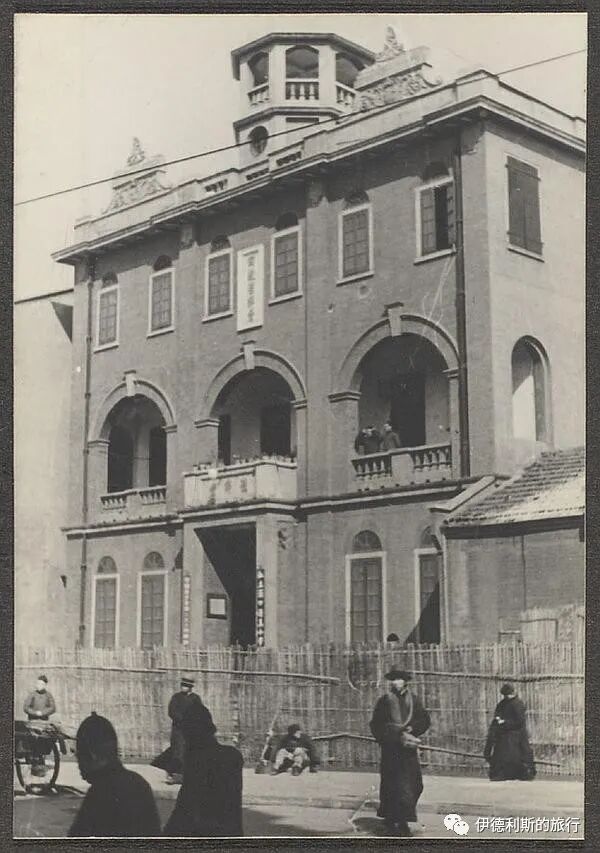
In 1930, the government renovated a large urban area from Wangjiaxiang to Liuduqiao in Hankou. They built new roads centered around the Sun Yat-sen bronze statue on Sanmin Road, which led to the demolition of the original Guangyi Bridge Mosque. Imam Ma Yiting and community elders like Tie Guoliang, Yu Jingzhai, Yang Shouting, and Ma Tingsheng traveled to Shanghai, Nanjing, and the Shaanxi-Gansu-Henan regions to raise funds. With these donations and contributions from local Hui Muslims, they raised 18,000 yuan. They built a three-story brick-and-concrete mosque on the newly constructed Minquan Road, modeled after the Xiaotaoyuan Mosque in Shanghai. Because it was on Minquan Road, it was also called the Minquan Road Mosque. The first floor of the new mosque held a reception room, a water room for washing, and a room for funeral preparations (maiti). The second floor had a room for reciting scriptures and a lecture hall, and the third floor was the main prayer hall.
The Minquan Road Mosque photographed by Bi Jingshi between 1934 and 1935. You can see the sign on the gate that reads: Hankou Branch of the China Islamic Association, Islamic Prayer Hall.
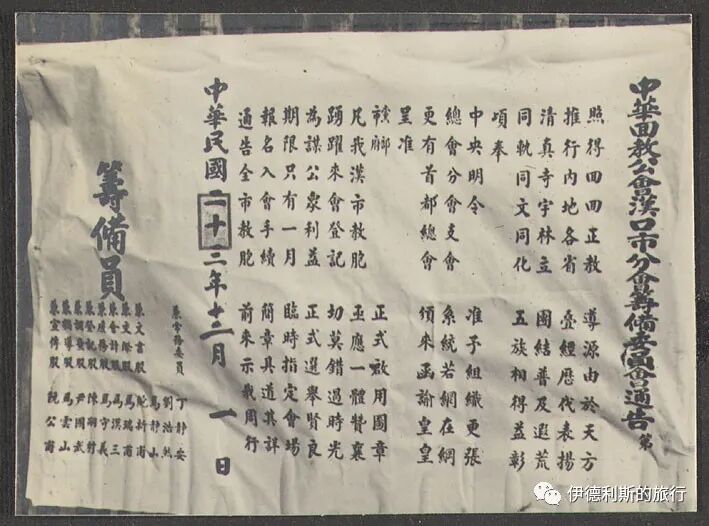
Notice from the Preparatory Committee of the Hankou Branch of the Chinese Islamic Association.
The true faith of the Hui people originated in Mecca (Tianfang).
It has spread to provinces in the interior, passed down through generations by representatives.
Mosques stand like a forest, bringing unity to even the most remote areas.
With the same path, same writing, and same assimilation, the five ethnic groups flourish together.
According to Wang Jianping in Old Photos of Islamic Culture in China's Interior and Frontier, this is the young Imam Ma from the Minquan Road Mosque. Ma Xiaoshun (born in 1924), the former director of the Minquan Road Mosque management committee, recalled that this was Ma Xun, the adopted son of the mosque's head Imam, Ma Yiting. He later followed Imam Ma Yiting to Shanghai and served as the head Imam at the Fuyou Road Mosque in Shanghai for many years during the 1980s.
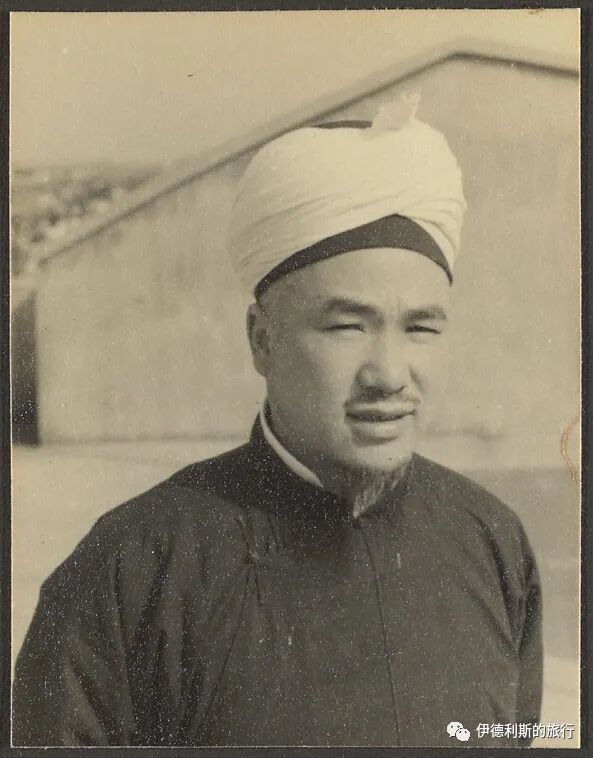
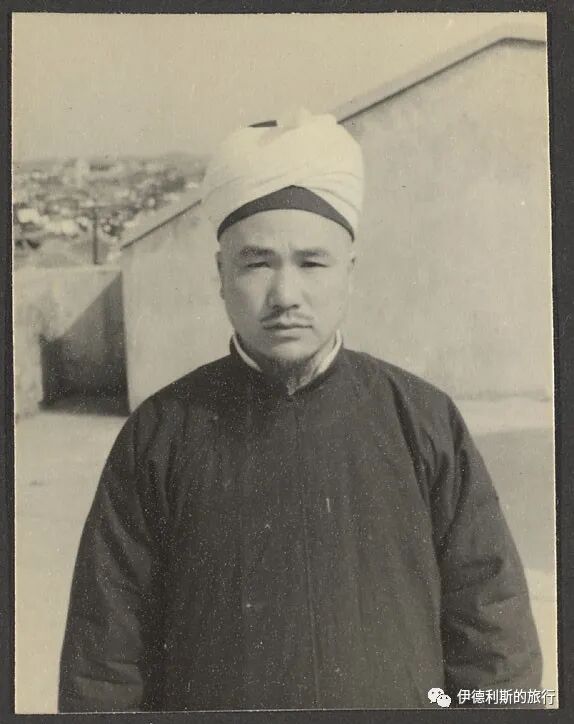
A small halal snack shop in Hankou.
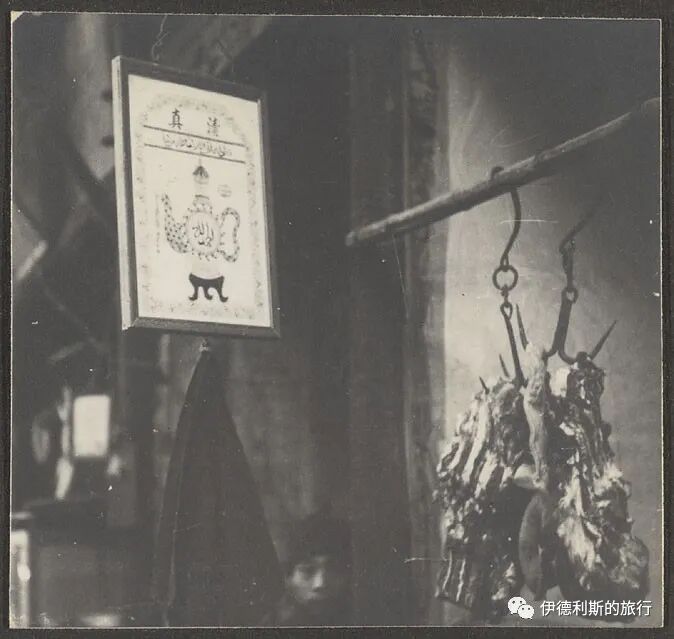
In 1986, the mosque was renovated and expanded into a five-story building. The first floor is the washroom, the second floor has a living room and a room for reciting scriptures, the third floor is the main prayer hall, the fourth floor is the office for the Wuhan Islamic Association, and the fifth floor is a meeting hall and an additional prayer hall for holidays.
In 2013, the Minquan Road Mosque, which was a designated excellent historical building in Wuhan, was demolished, leaving behind a permanent regret.
The Minquan Road Mosque I photographed in 2012 before it was demolished.
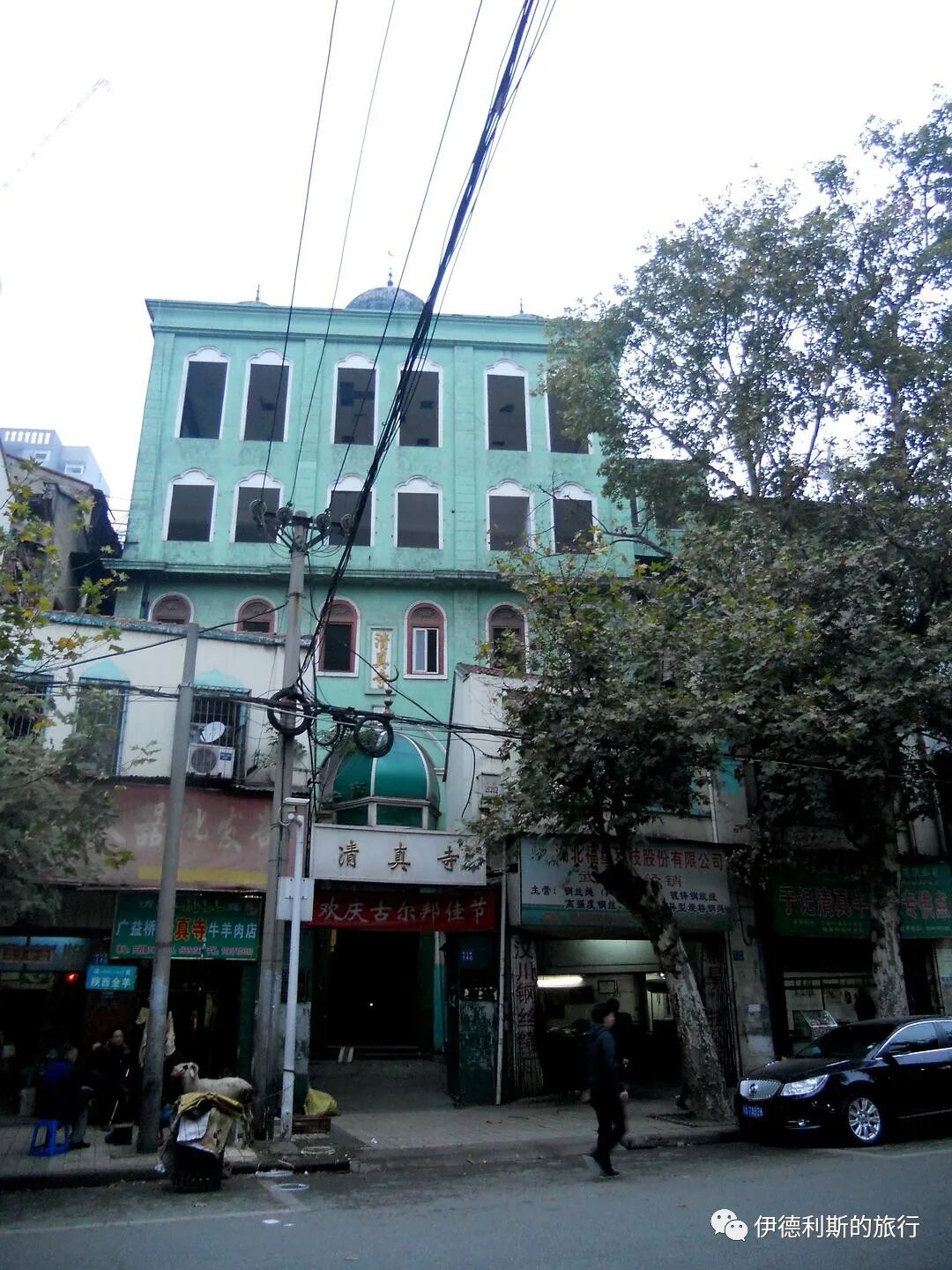
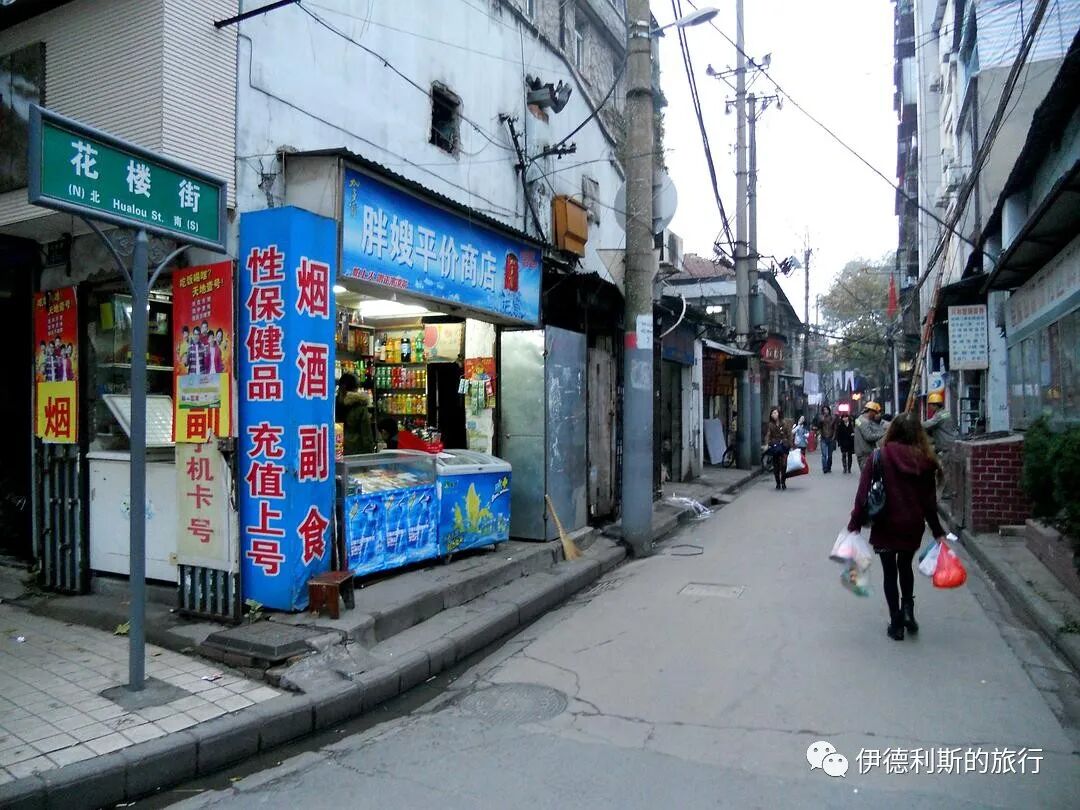
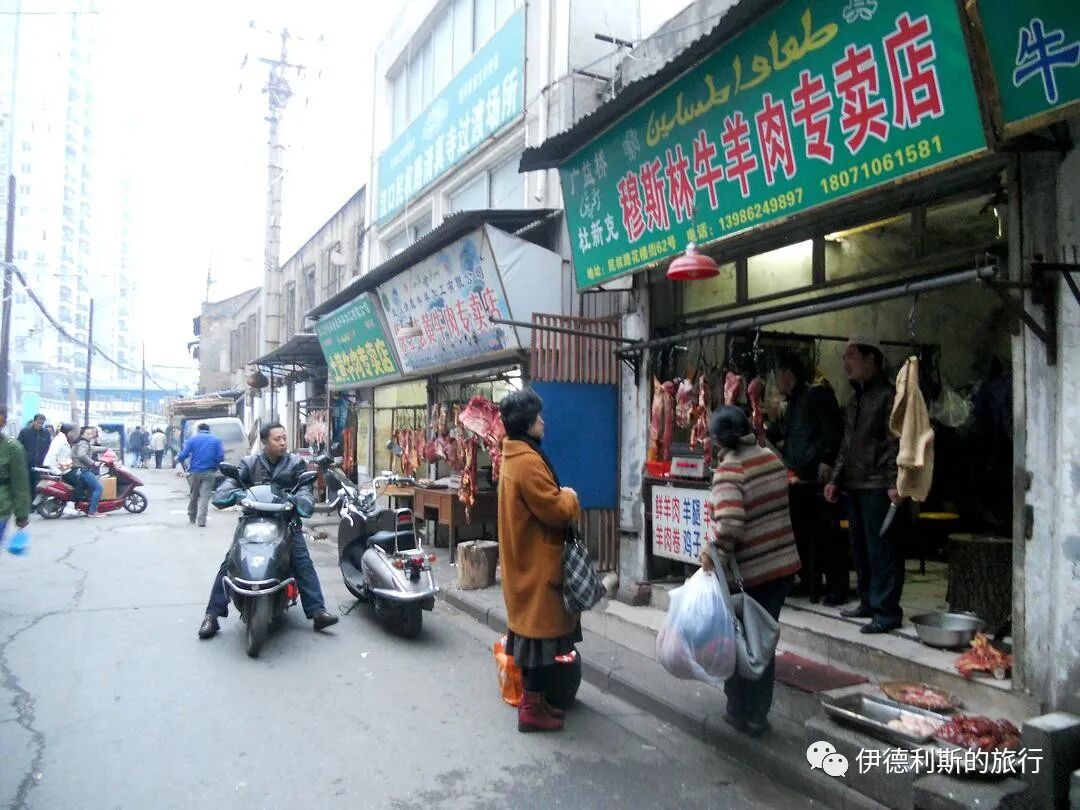
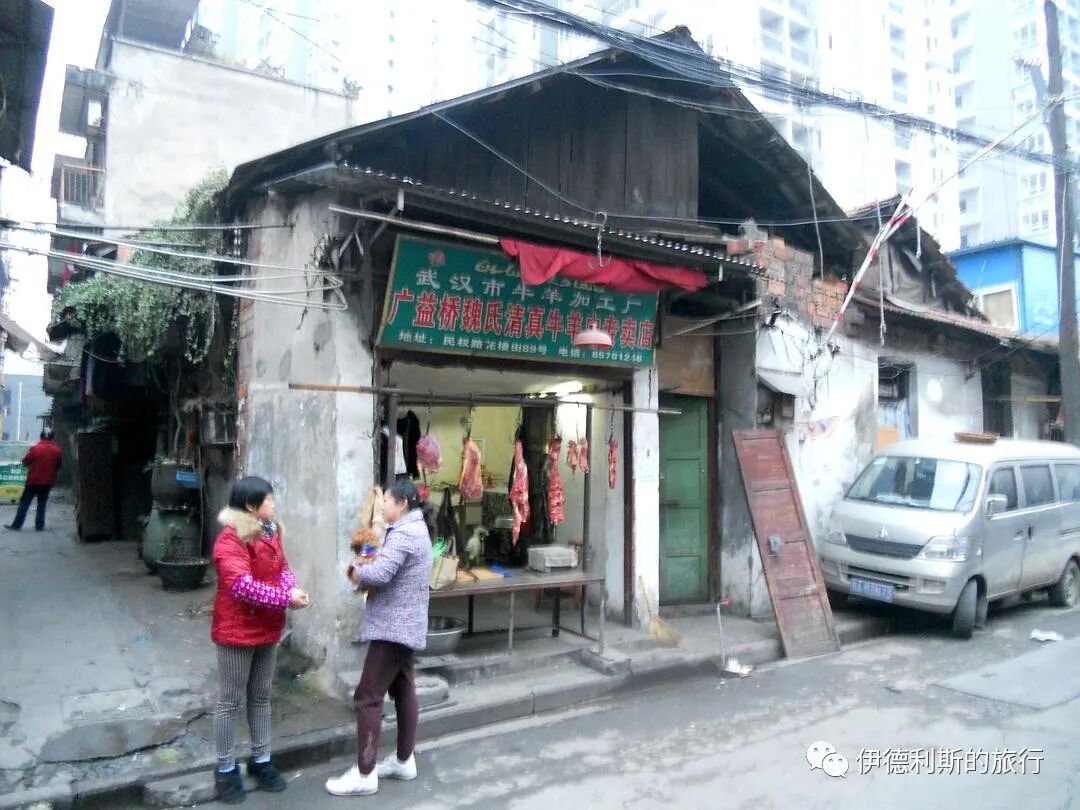
Hualou Street next to the Minquan Road Mosque, one year before the demolition.
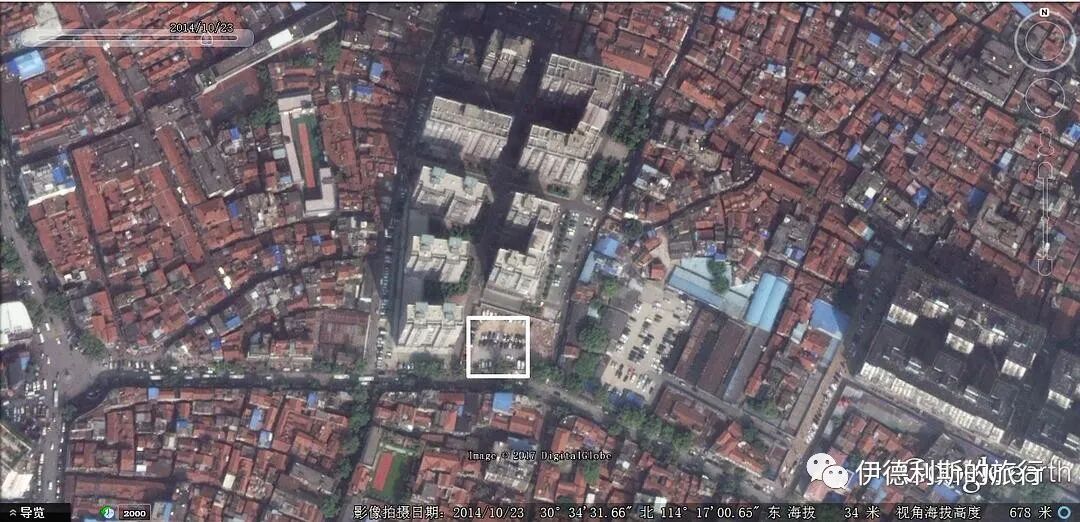
The Minquan Road Mosque in October 2014, which became a parking lot after being torn down.
Jiang'an Mosque.
In 1906 (the 32nd year of the Guangxu reign), the Beijing-Hankou Railway officially opened. Many Hui Muslims from Zhoukou, Henan, traveled along the railway to Hankou to escape a drought, settling in the area around the Jiang'an Railway Station, the southernmost point of the line.
In 1918, the Henan Hui Muslims who settled in Liujiamiao built a simple mosque. This was the earliest Liujiamiao Mosque, also known as the Henan Mosque because it was mainly used by people from Henan. Later, when Wu Peifu's army was stationed there, they requisitioned the mosque to feed their horses, so in 1920, everyone had to raise money to buy a small building to use as a mosque.
Between 1934 and 1935, Bi Jingshi took photos of the Liujiamiao Mosque at that time.
Inside the mosque, the person shown is the imam (ahong) at the time, Elder Chang.
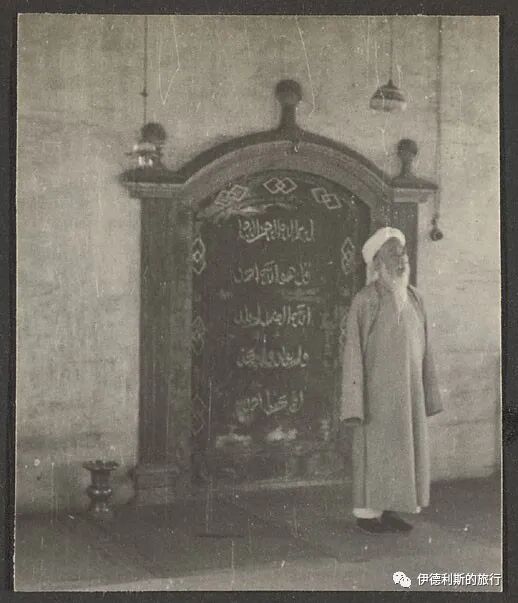
Elder Imam Chang.
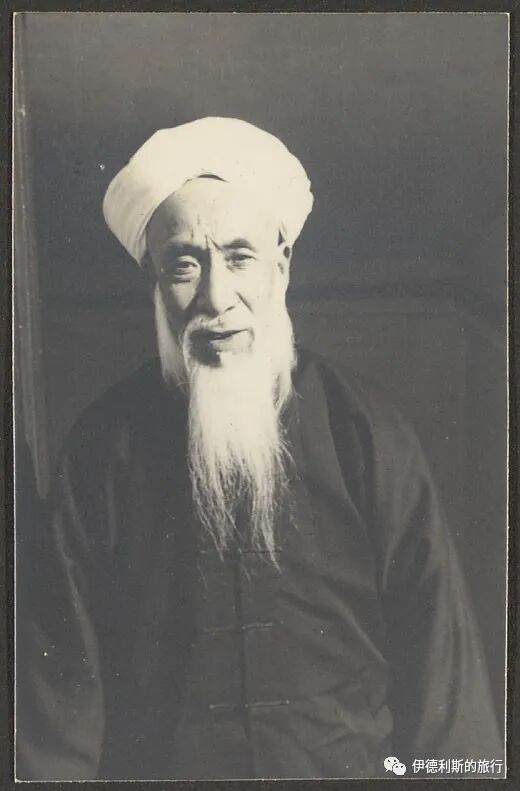
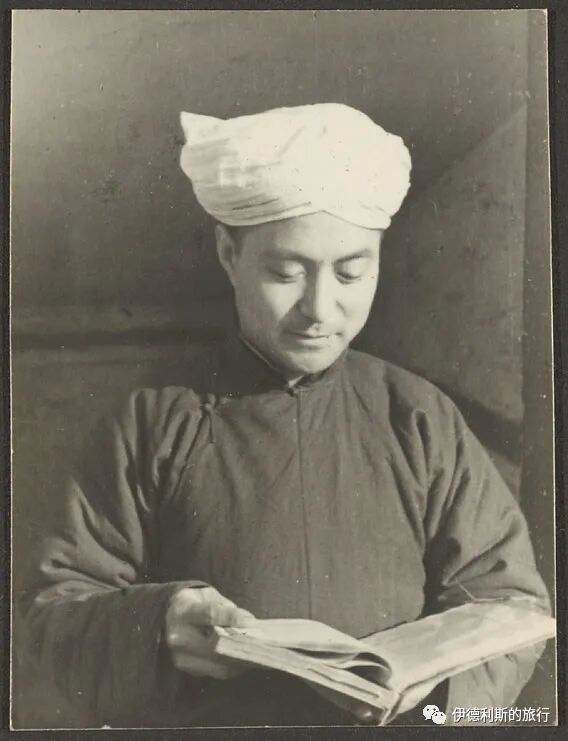
Elder Imam Chang's eldest son, Imam Chang.
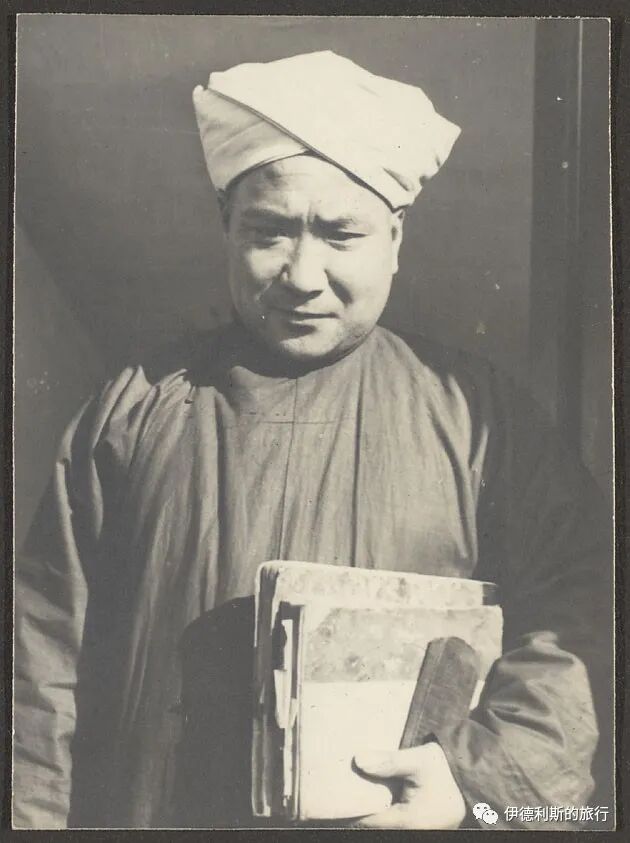
Elder Imam Chang's second son, Younger Imam Chang.
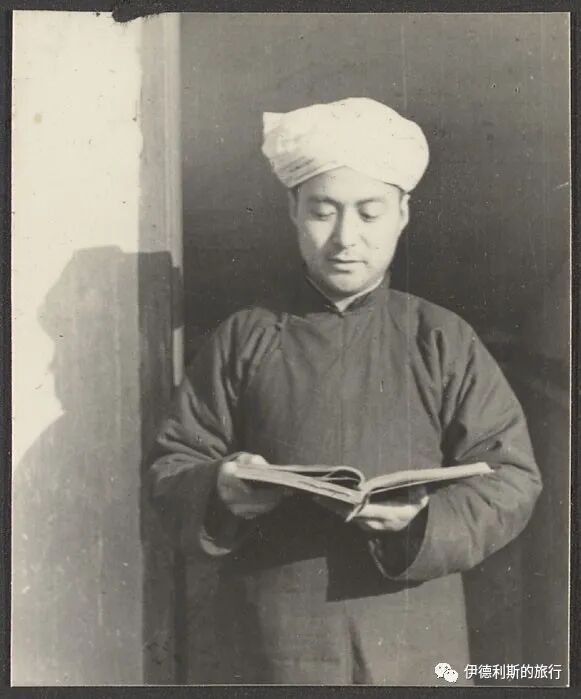
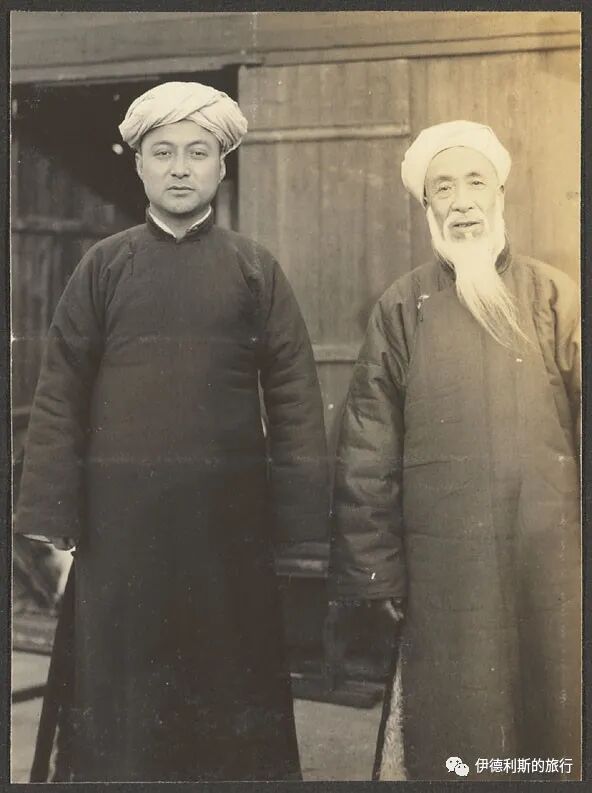
A photo of Elder Imam Chang and Younger Imam Chang together.
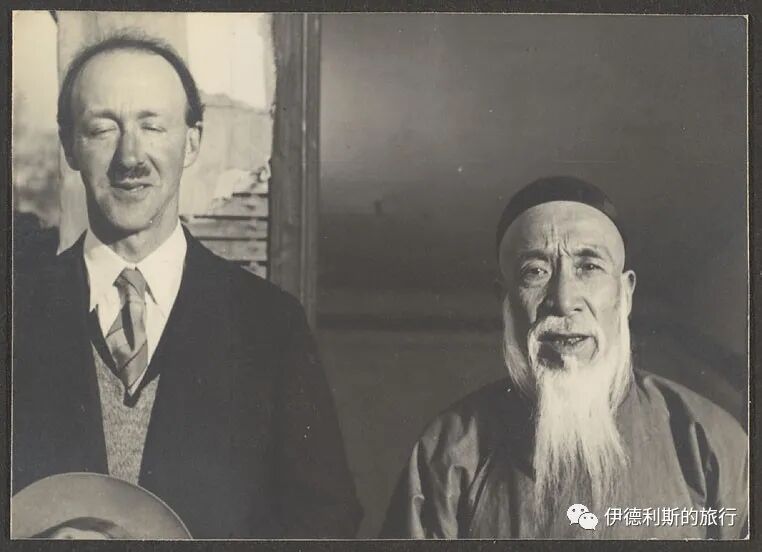
Elder Imam Chang and a foreign friend, Mr. G. K. Harris.
Elder Imam Chang shaving his beard.
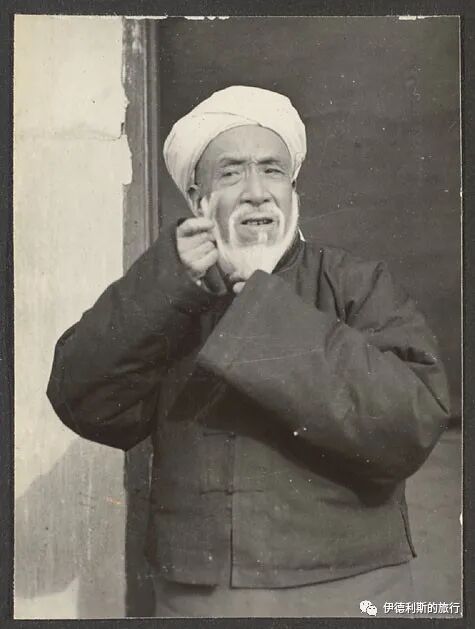
Elder Imam Chang.
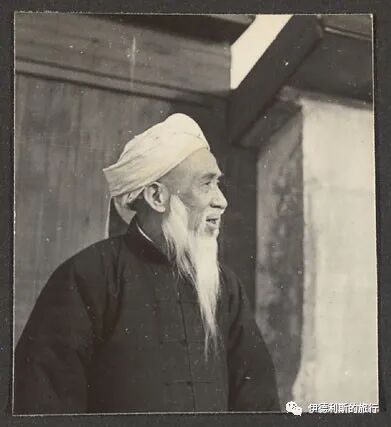
According to Wang Jianping in 'Old Photos of Islamic Culture in China's Inland and Frontier Regions,' an elderly resident named Wei Ruiyun, who lived near the Wuchang Uprising Street Mosque for over 60 years, recalled that this was Imam Ma Shanzhi, who had performed her nikah (marriage contract) when she got married.
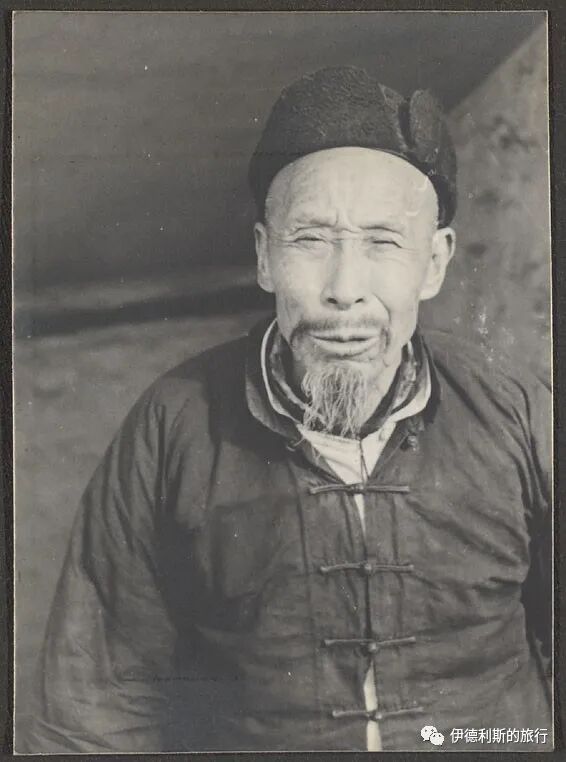
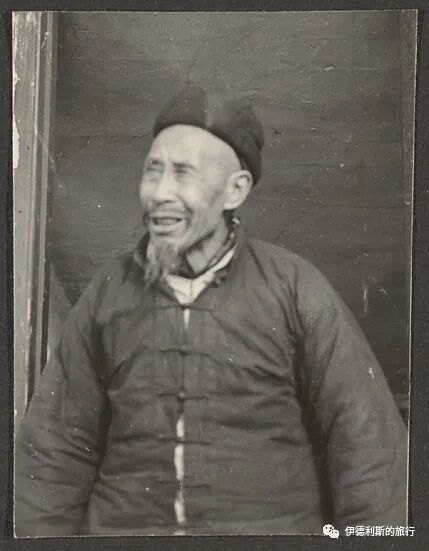
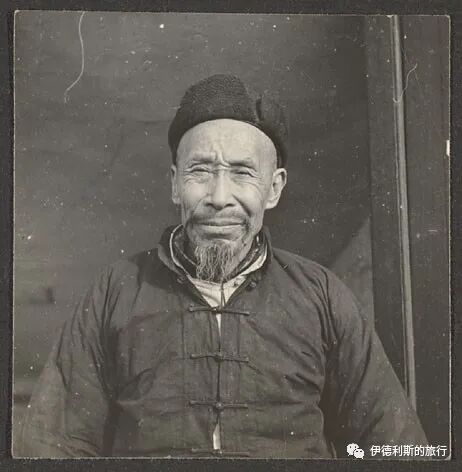
Elder Imam Chang and some merchants who came to Hankou from Henan for business.
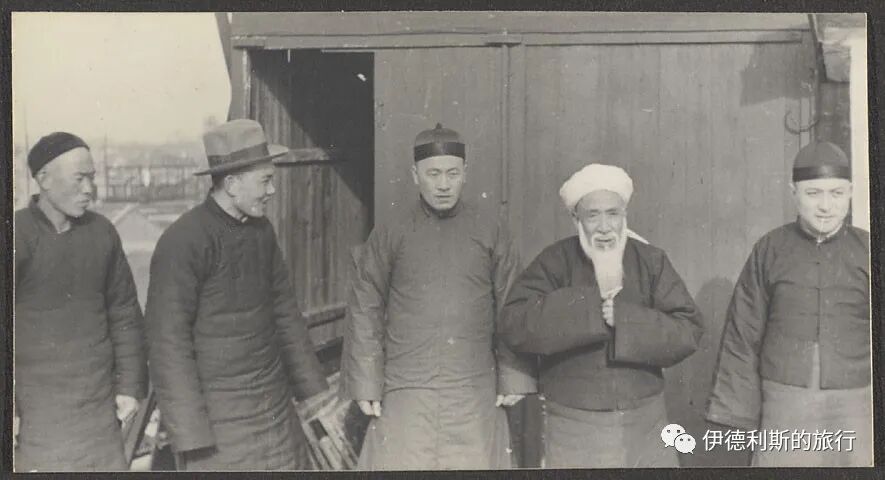
Merchants who came to do business in Henan at the Liujiamiao Mosque.
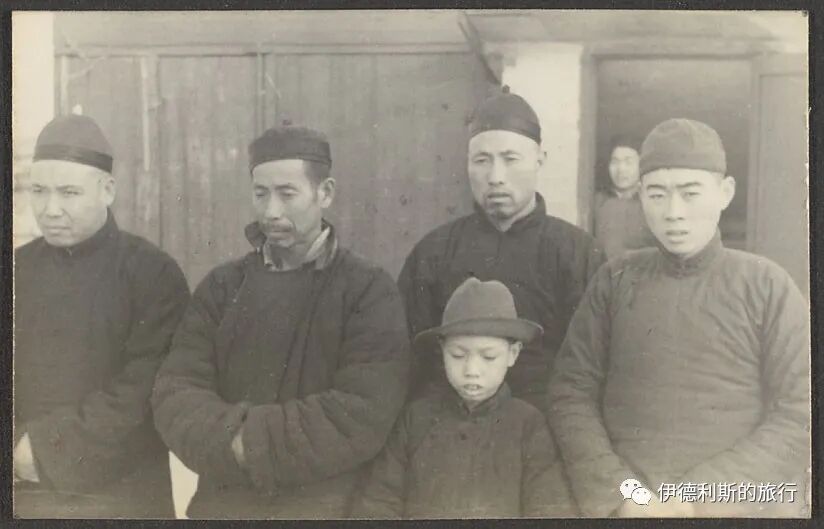
The imam of Liujiamiao Mosque.
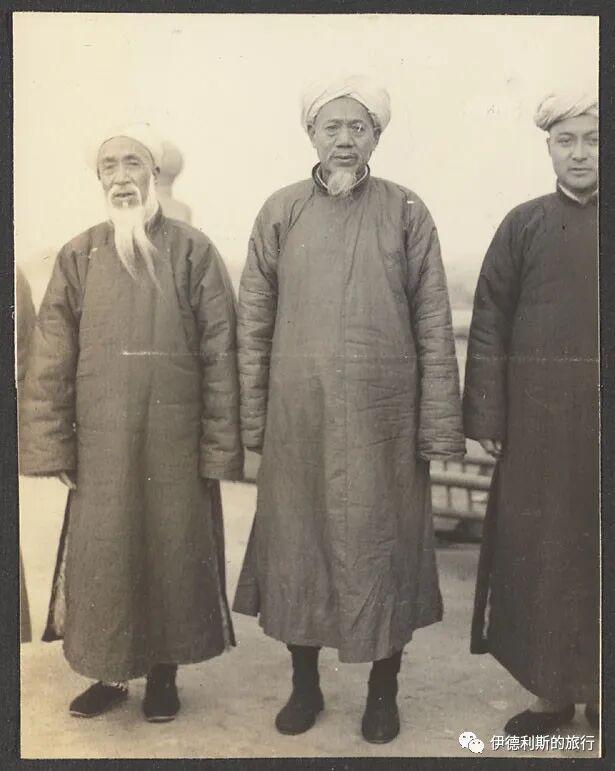
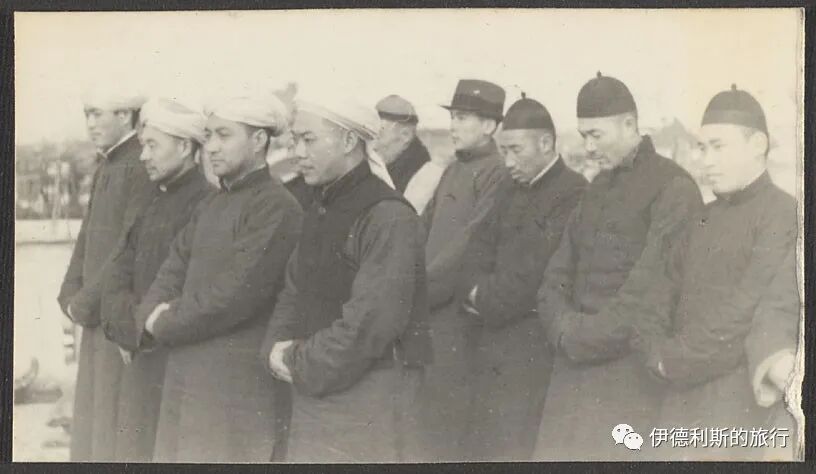
The imam, community elders, and merchants from Henan on the roof of the mosque, preparing to perform namaz.
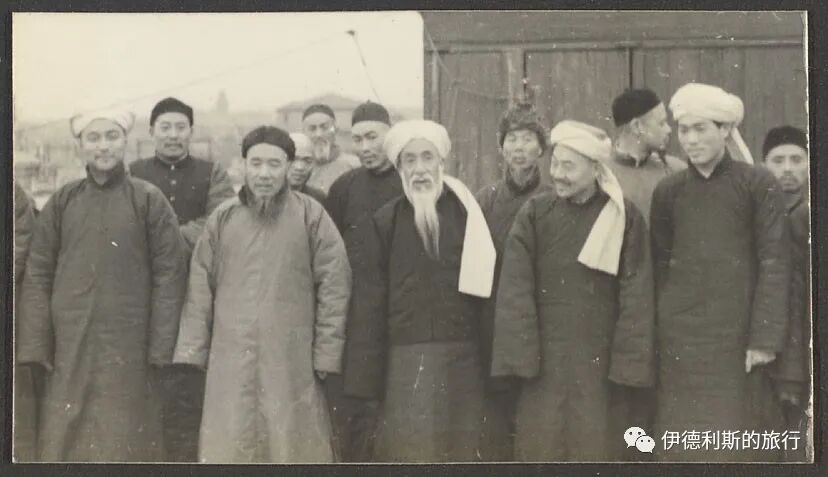
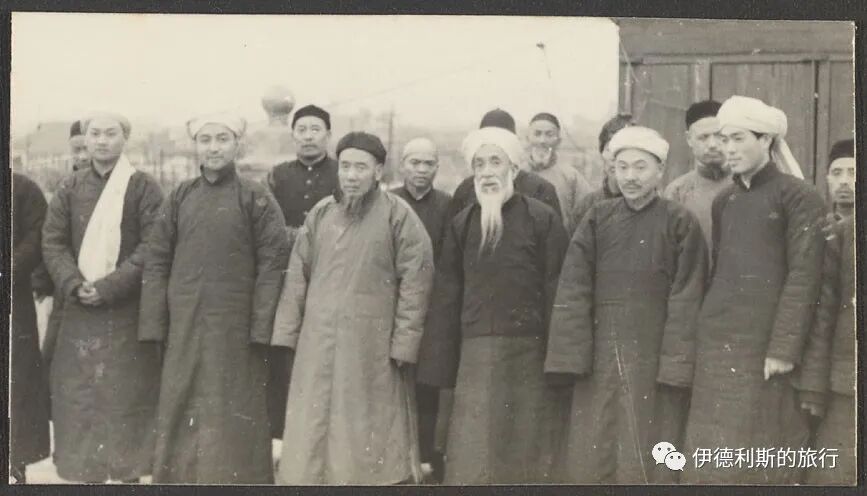
Performing namaz on the roof of Liujiamiao Mosque.
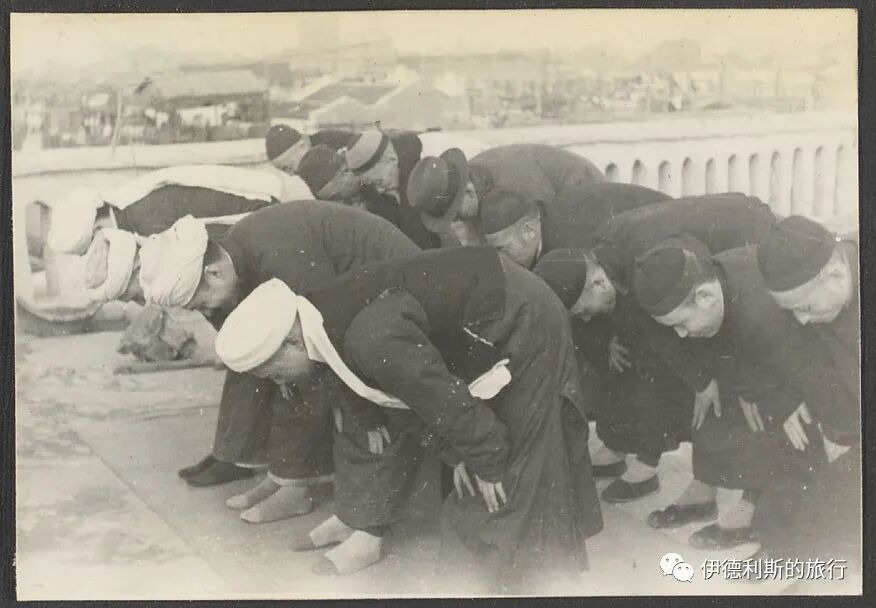
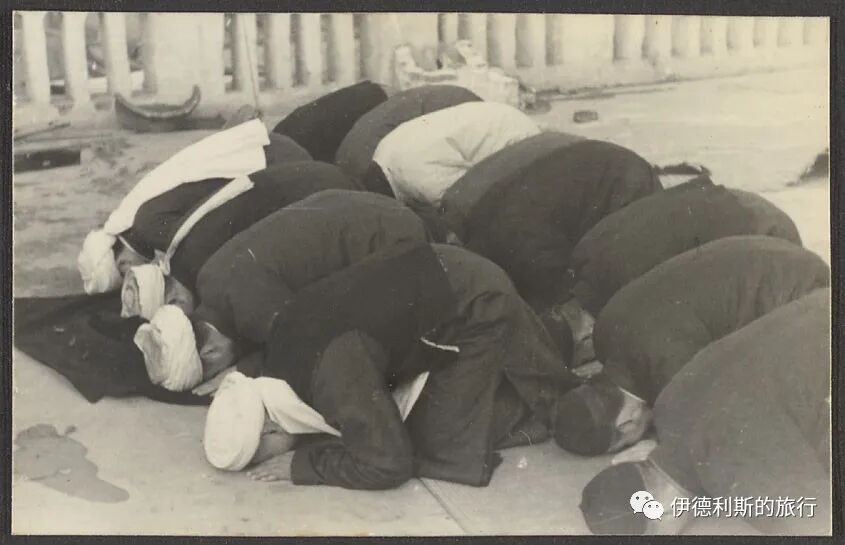
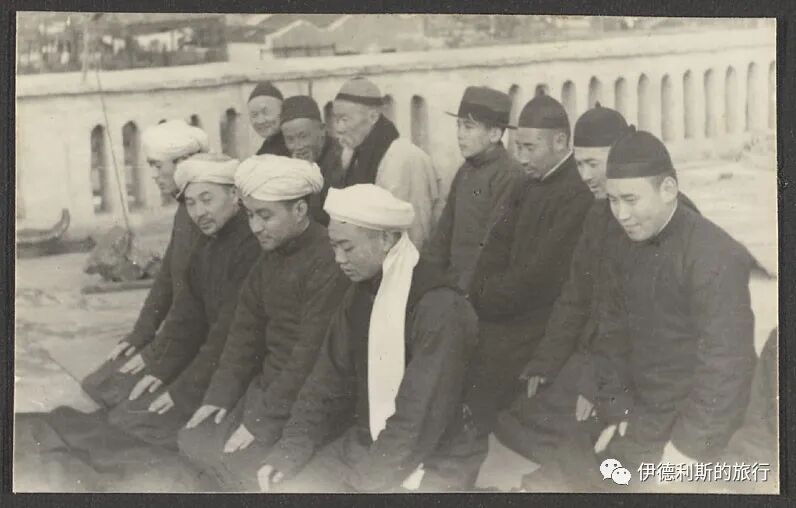
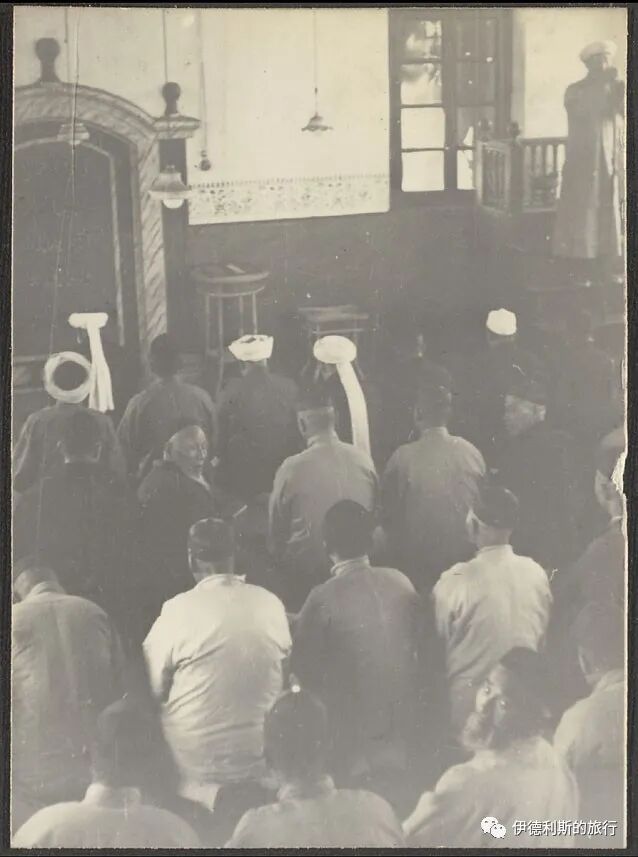
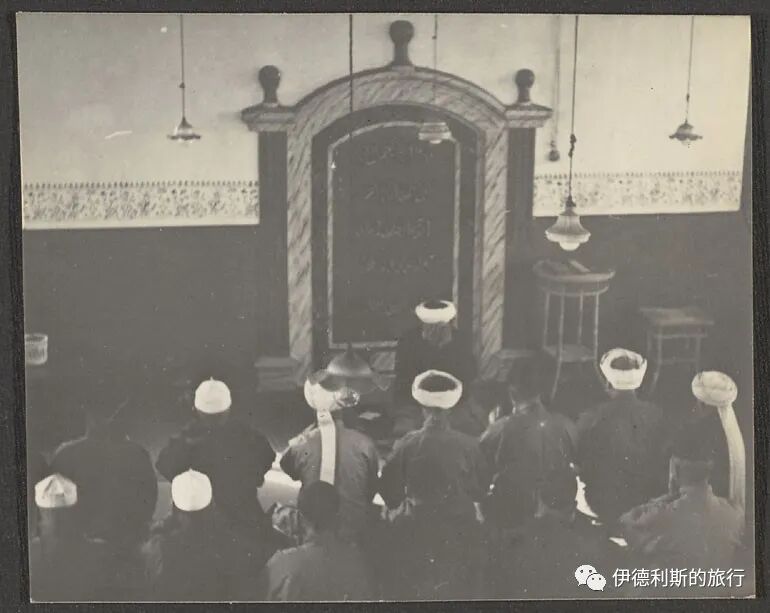
Old Imam Chang leads everyone in Jumu'ah prayer inside the main hall of Liujiamiao Mosque.
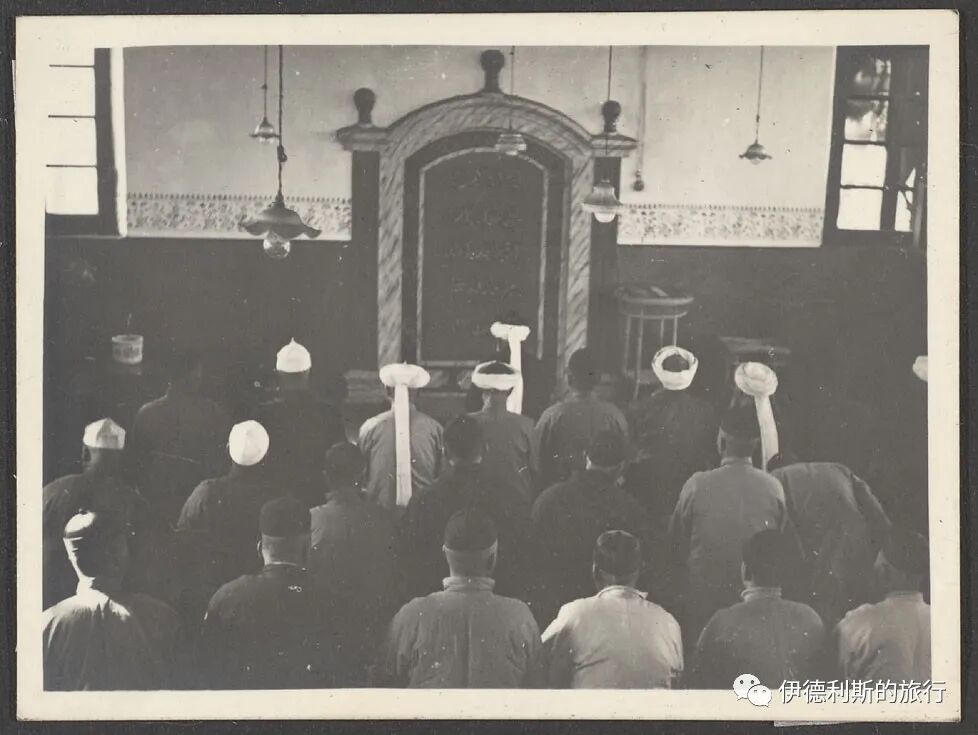
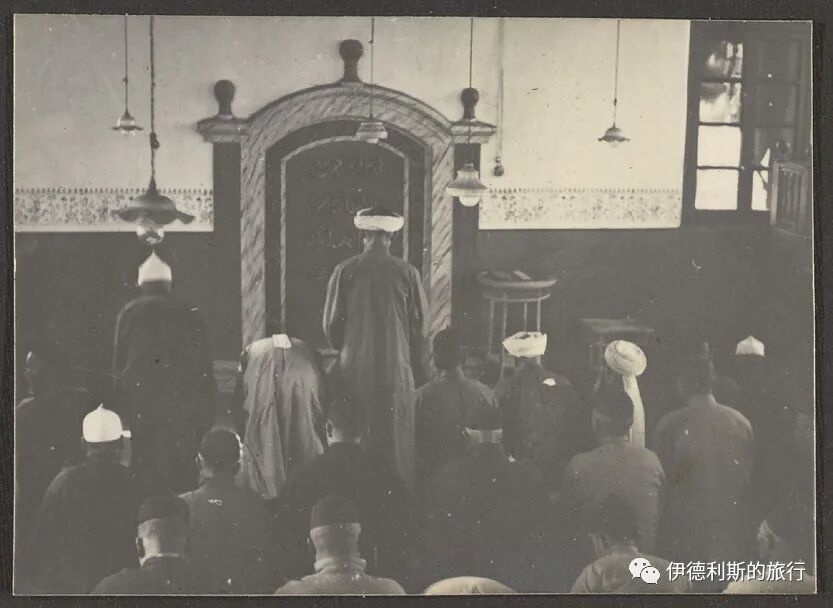
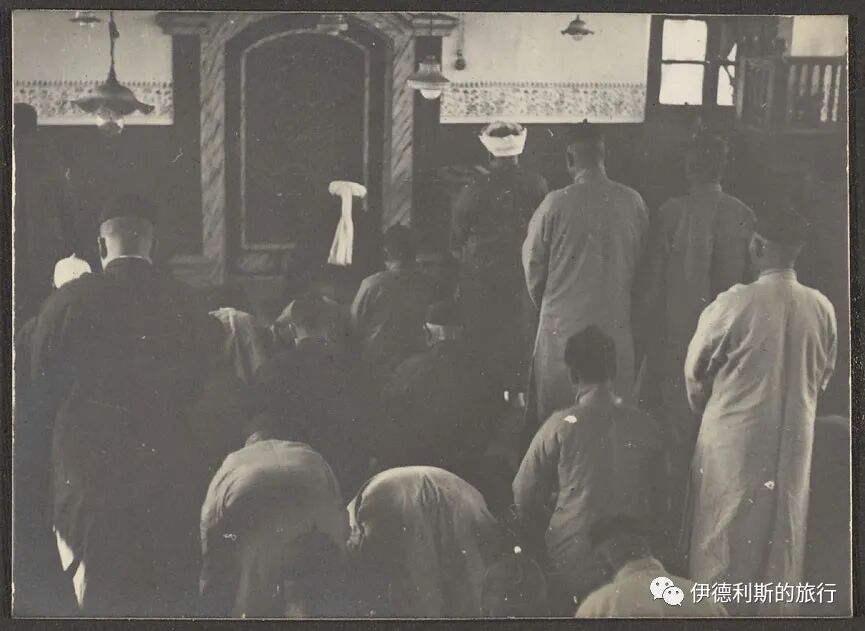
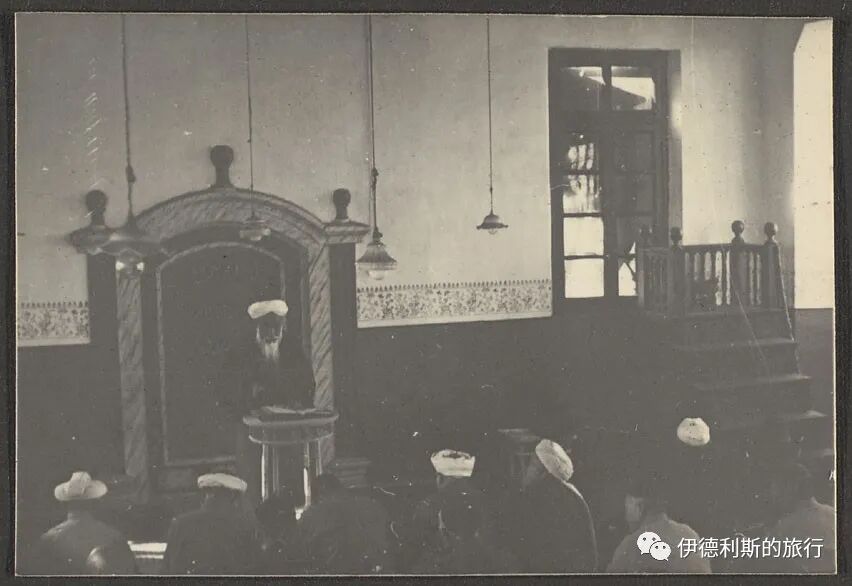
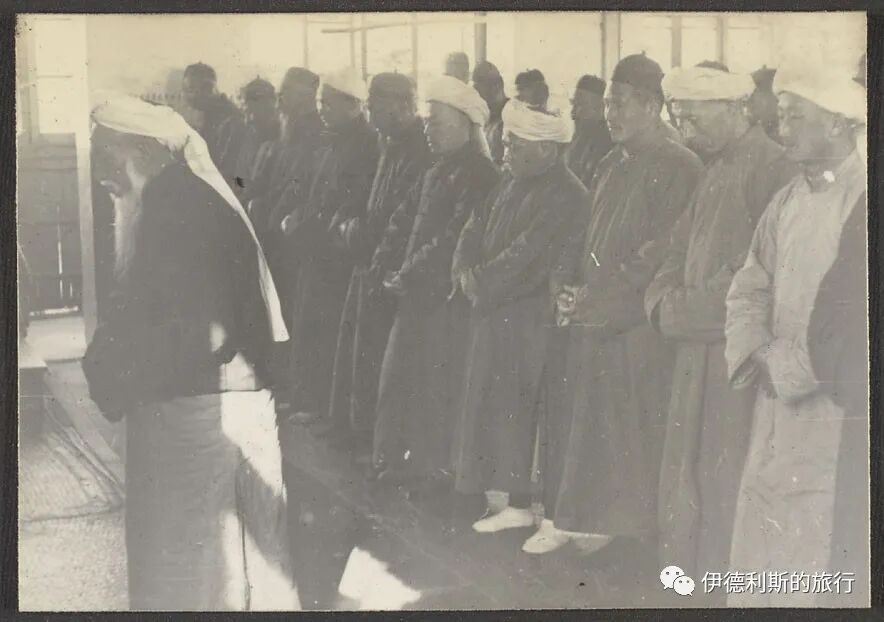
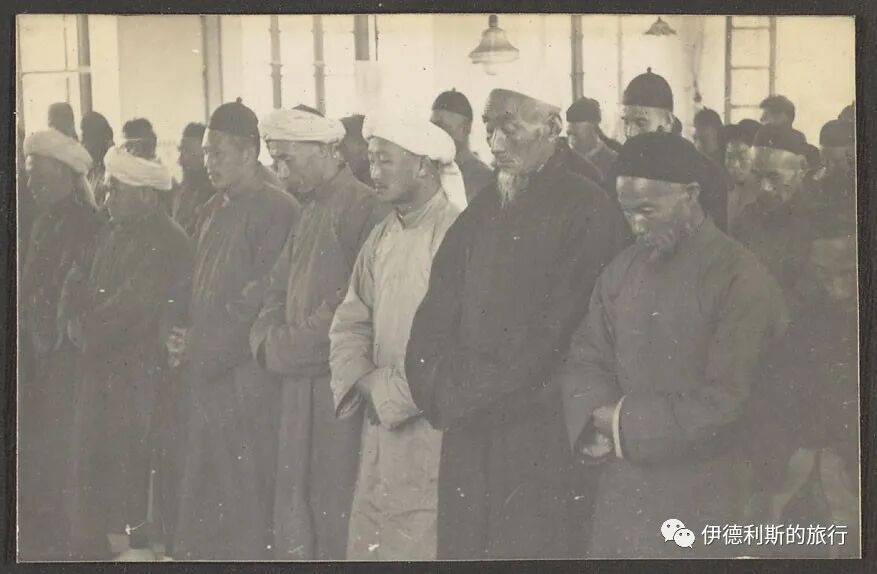
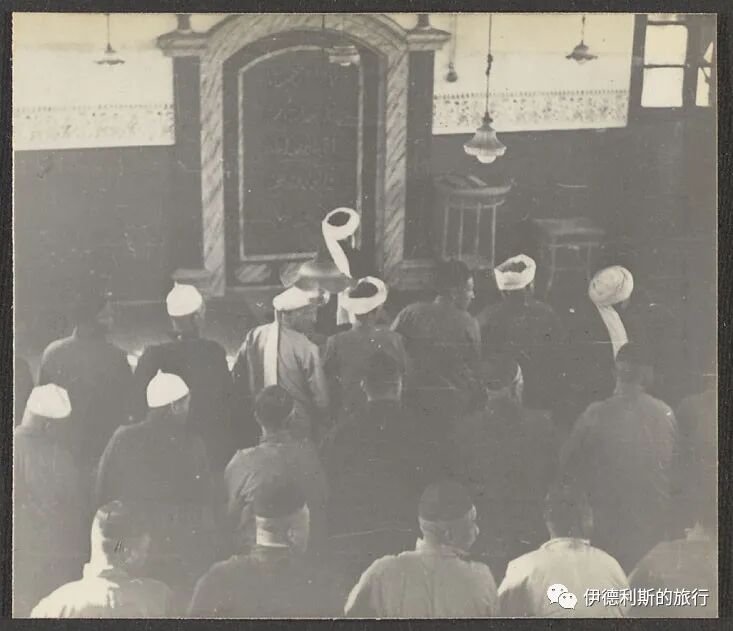
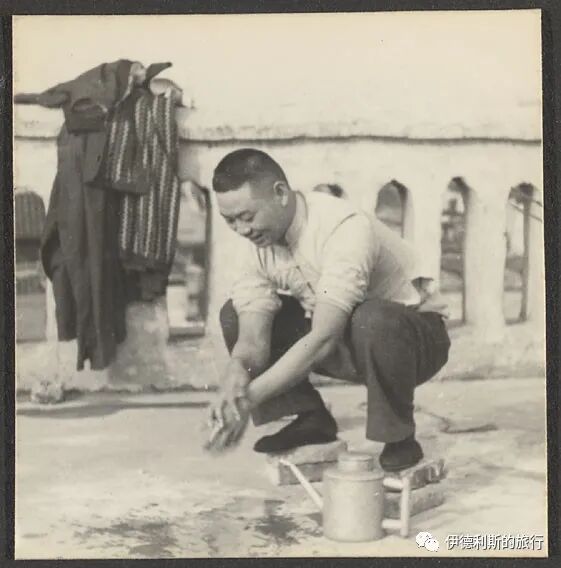
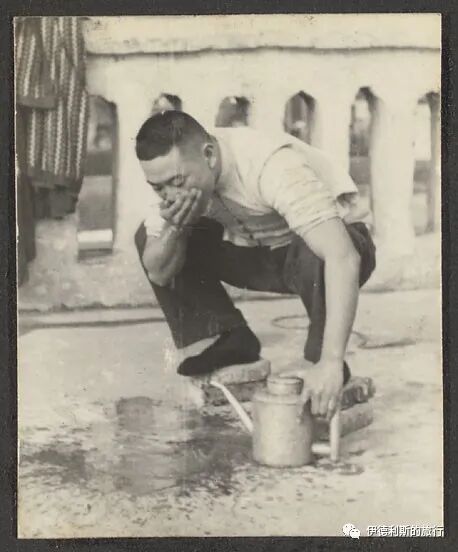
A friend (dosti) performs wudu (abdast) on the roof of Liujiamiao Mosque.
After the Battle of Wuhan in 1938, the mosque was damaged by war, and the land was taken for railway expansion, so local Hui Muslims raised money again to buy a new building for the mosque. Since then, the mosque has undergone several major renovations and was officially renamed Jiang'an Mosque. After a major renovation of the main hall in 1986, a second floor was added to the main hall and the north reception room, which caused the foundation to sink and cracks to appear in the walls. In 2005, the original Jiang'an Mosque was demolished to build a new one, and in 2007, a women's Islamic school (qingzhen nvxue) was built next to it.
Jiang'an Mosque as I photographed it in 2013.
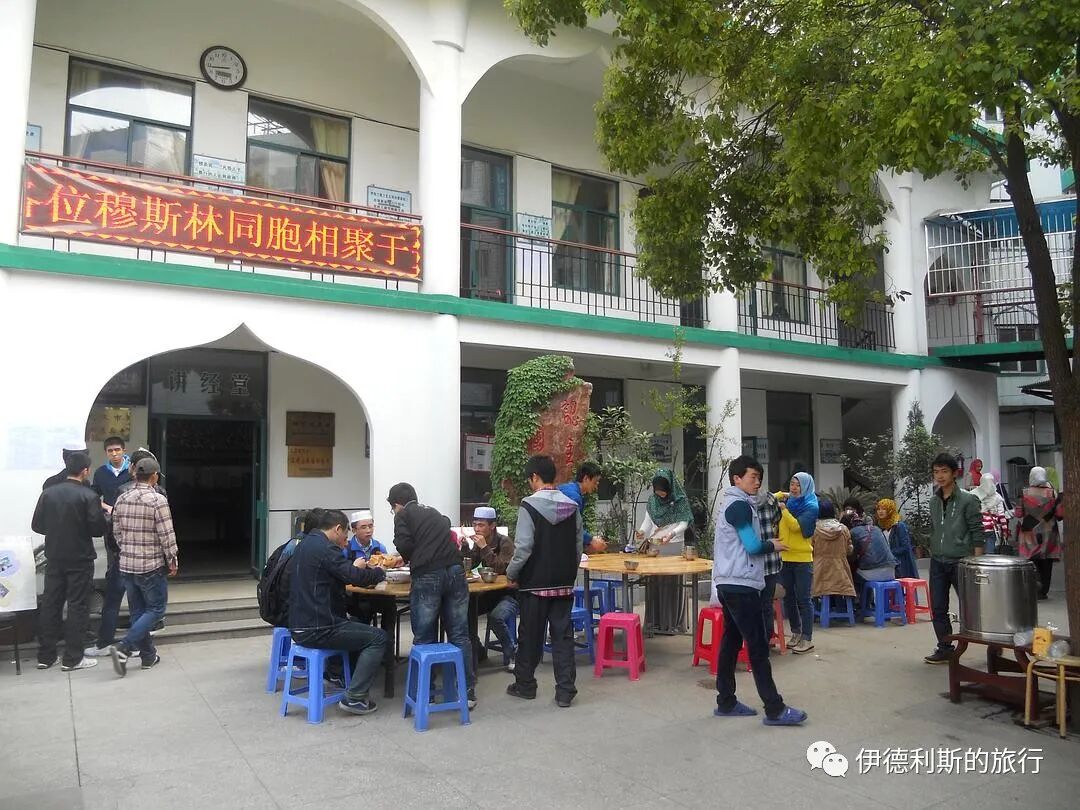
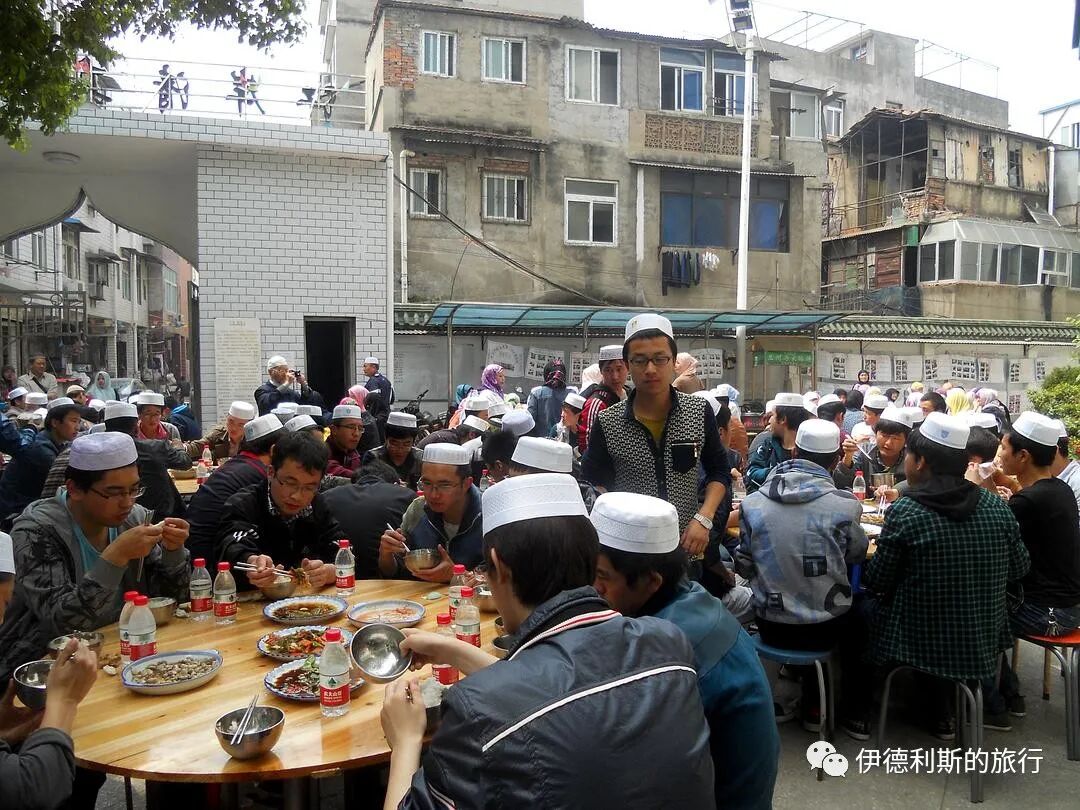
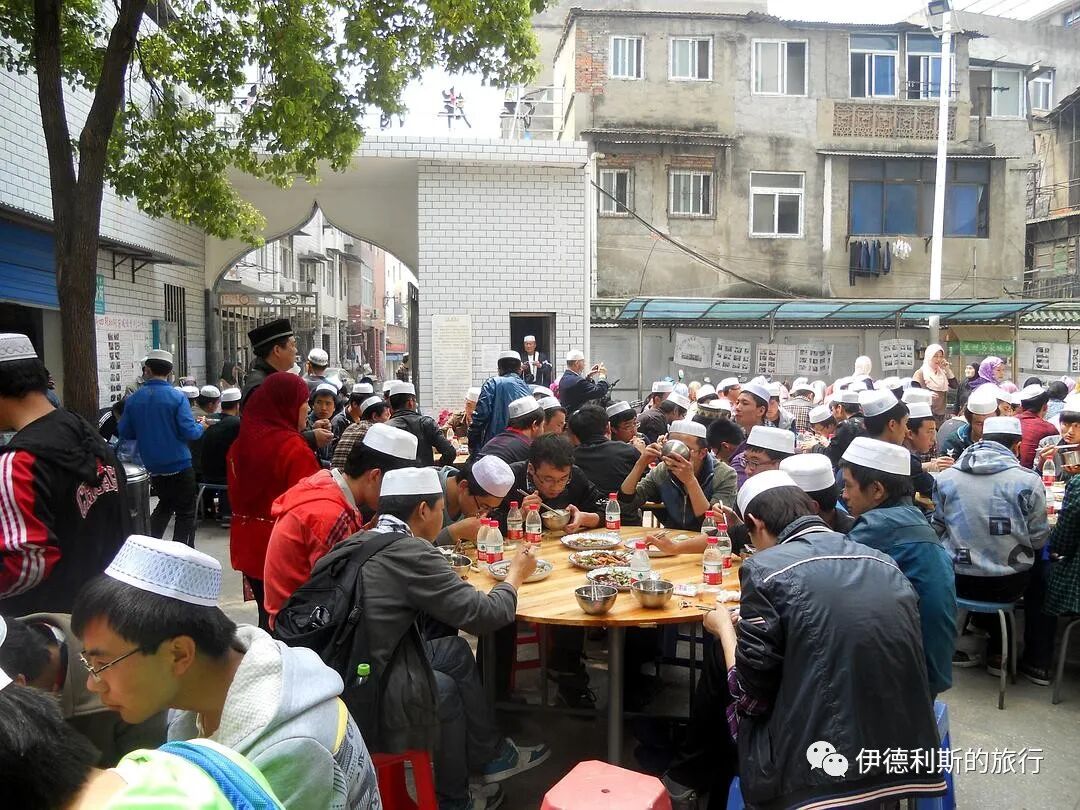
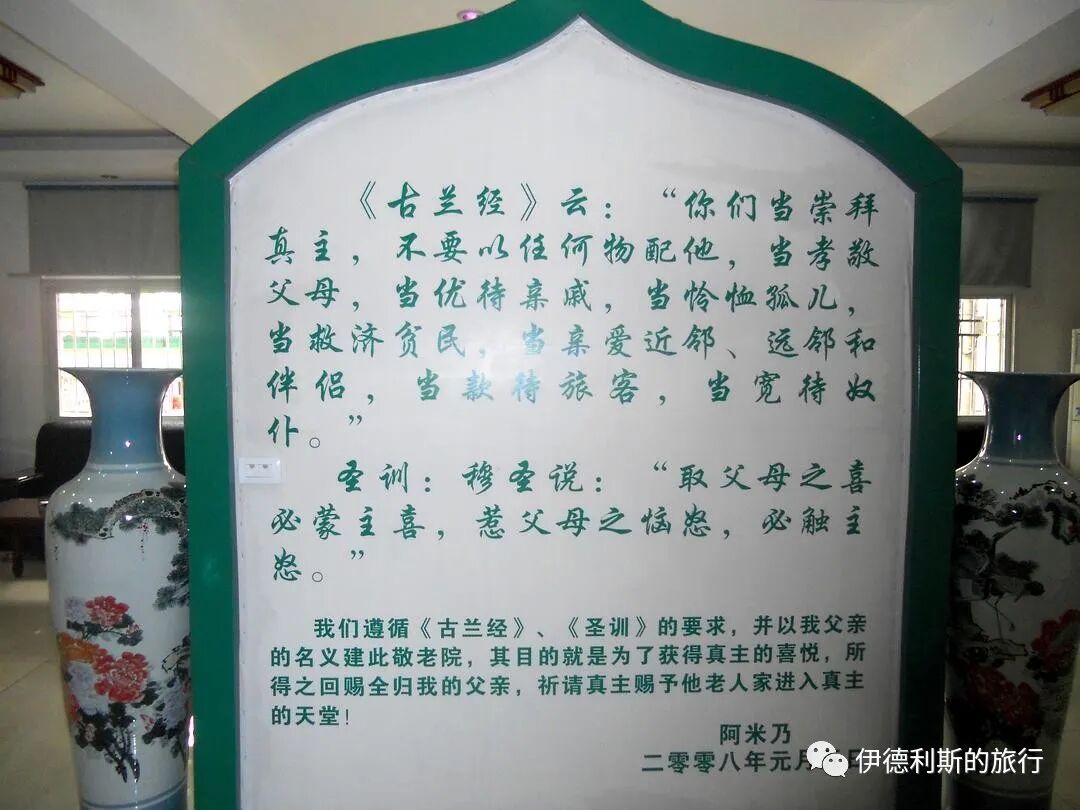
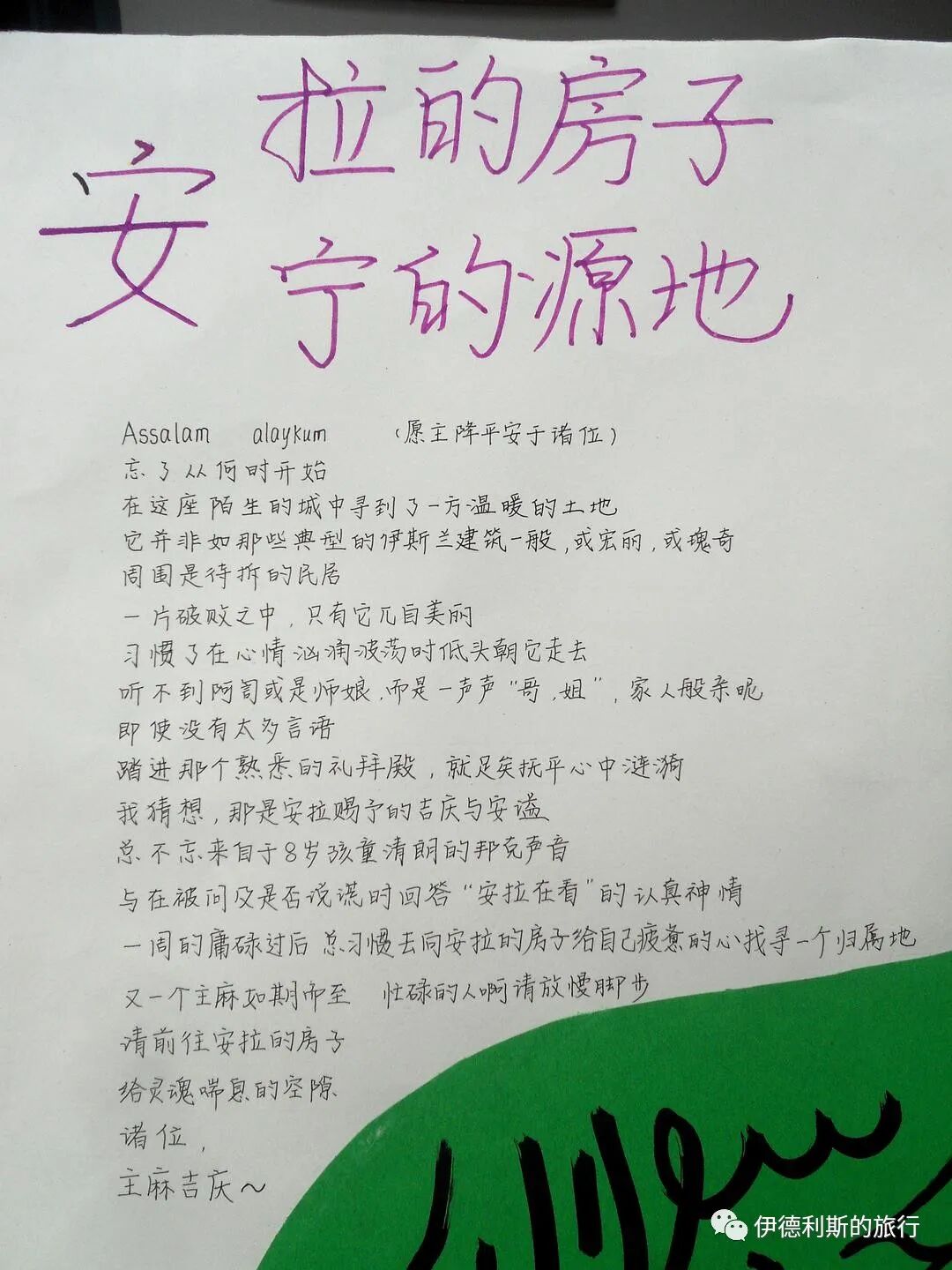
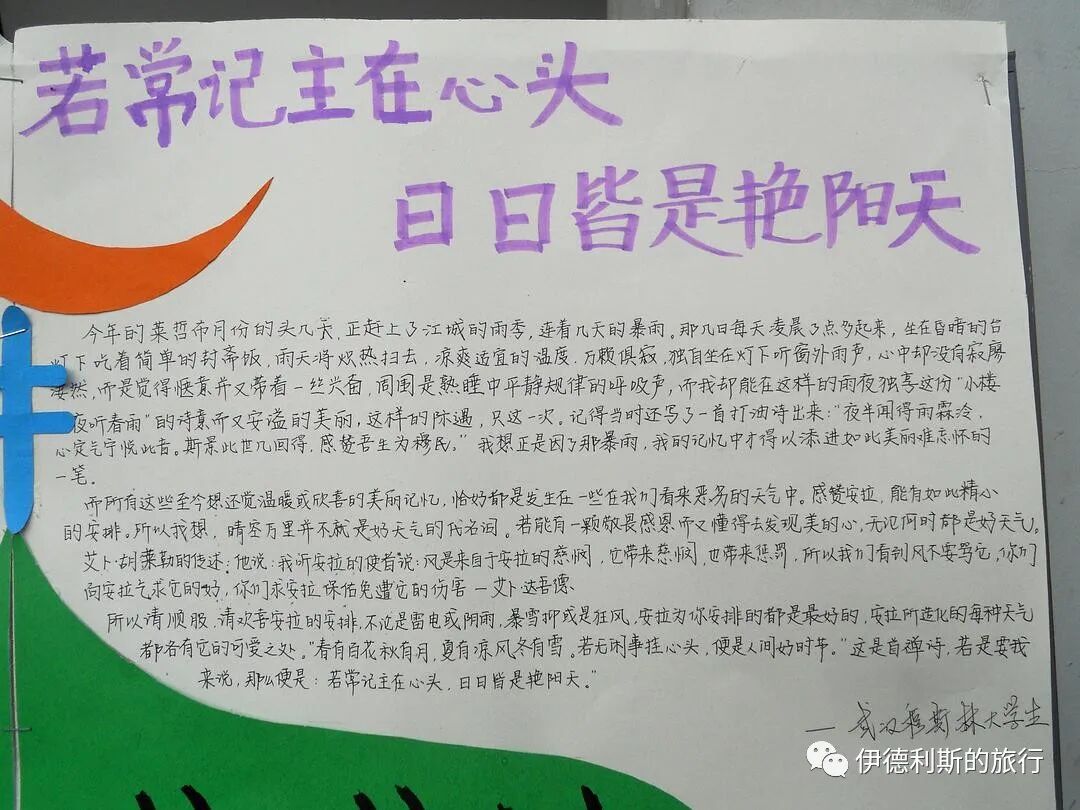
A Jumu'ah prayer in 2013.
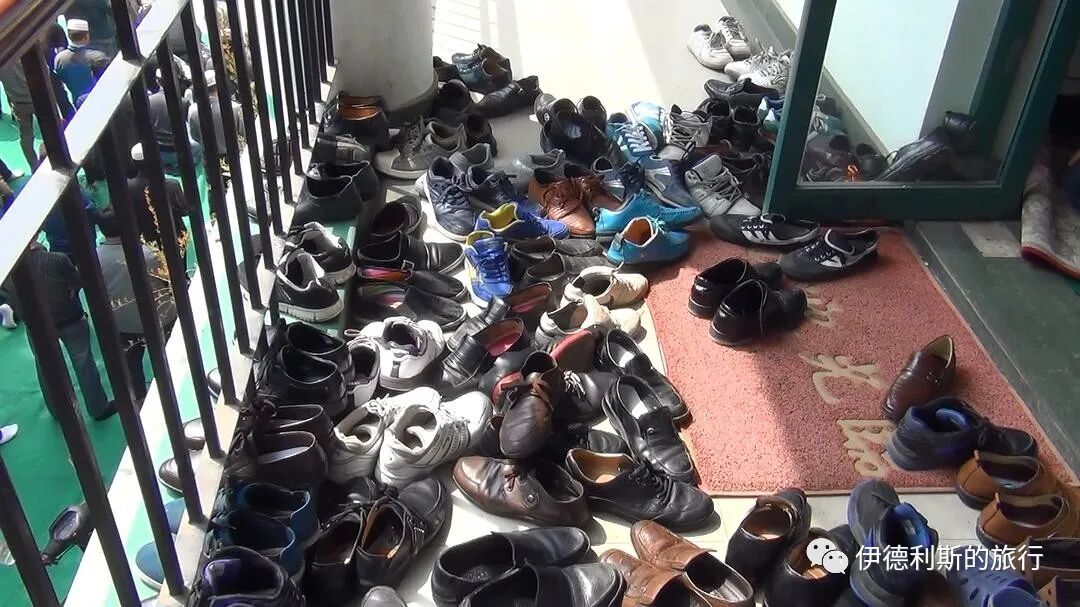
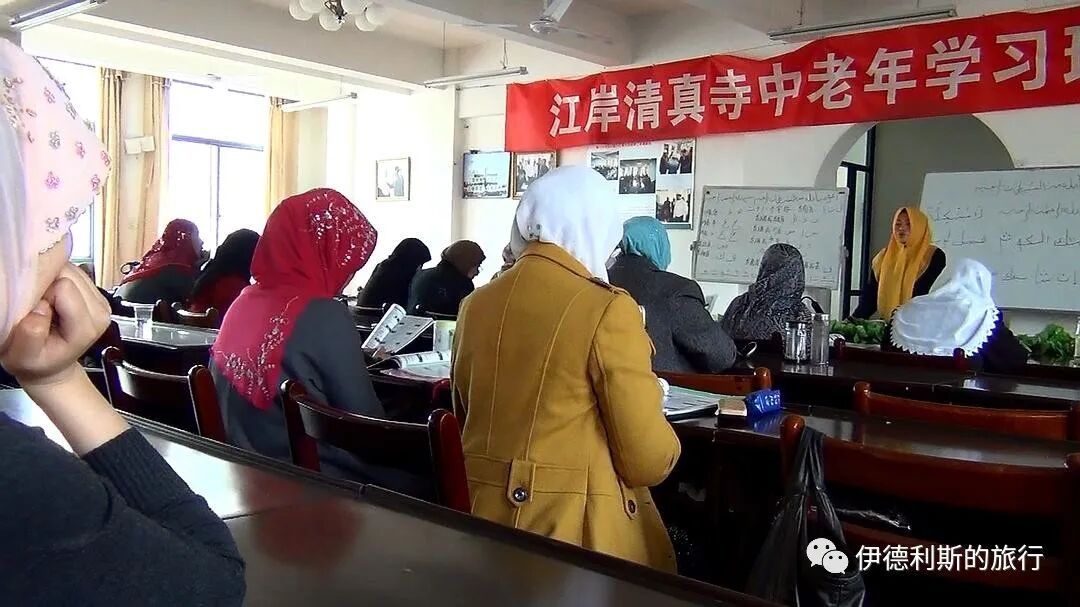
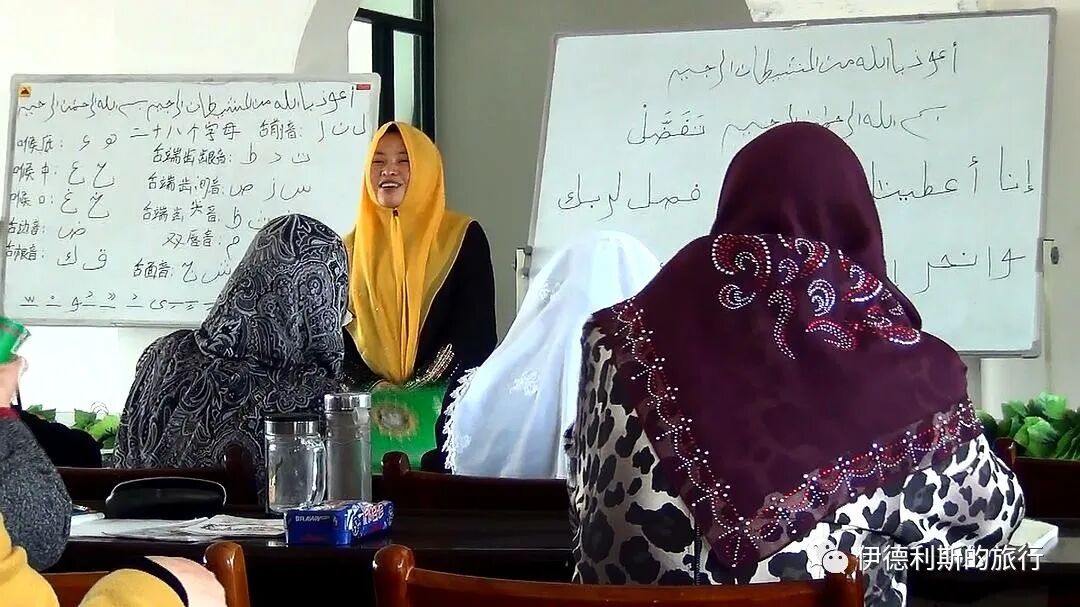
The study group for middle-aged and elderly people at that time.
Jiang'an Station stopped operating in 2010, and demolition of the surrounding area began immediately. By 2014, the Muslim community around Jiang'an Mosque had been completely razed to the ground and now only exists in history.
In 2015, the community around the mosque was completely razed to the ground.
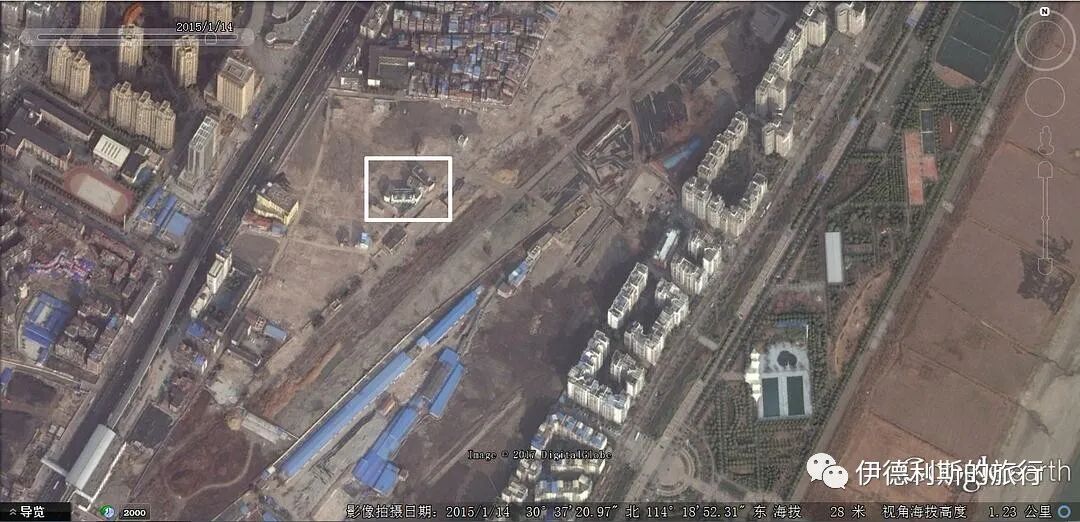
The former Hui Muslim grocery store has been closed for many years and is now razed to the ground.
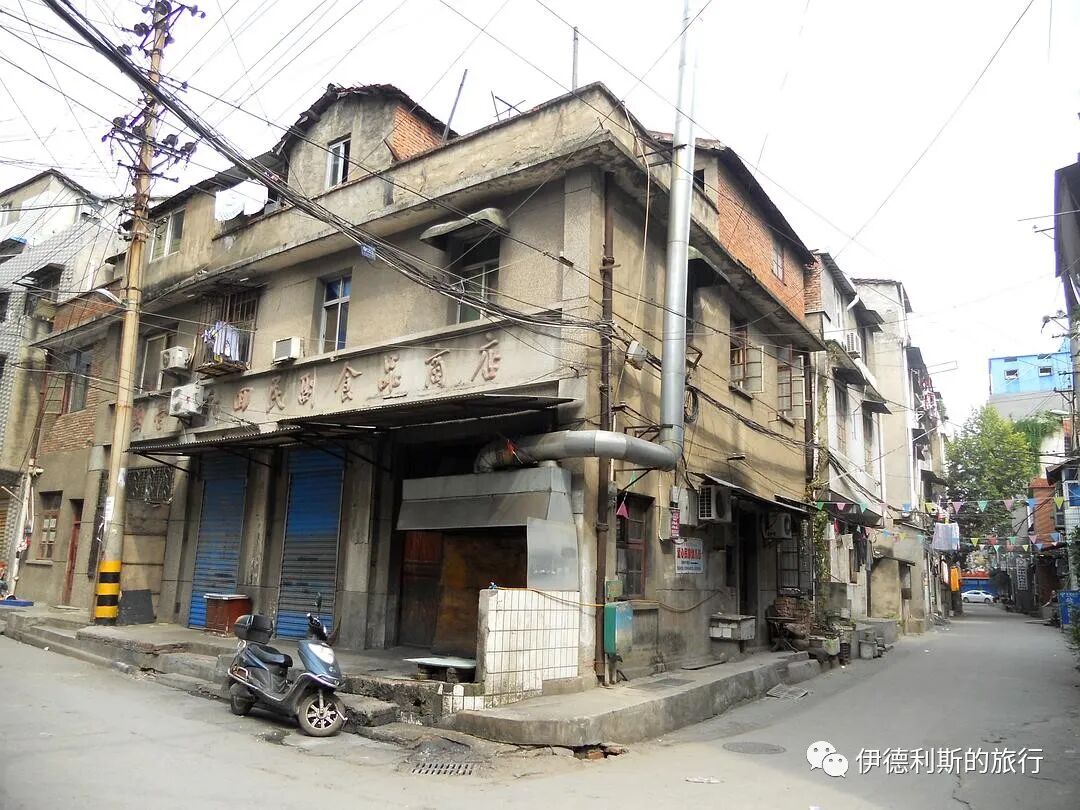
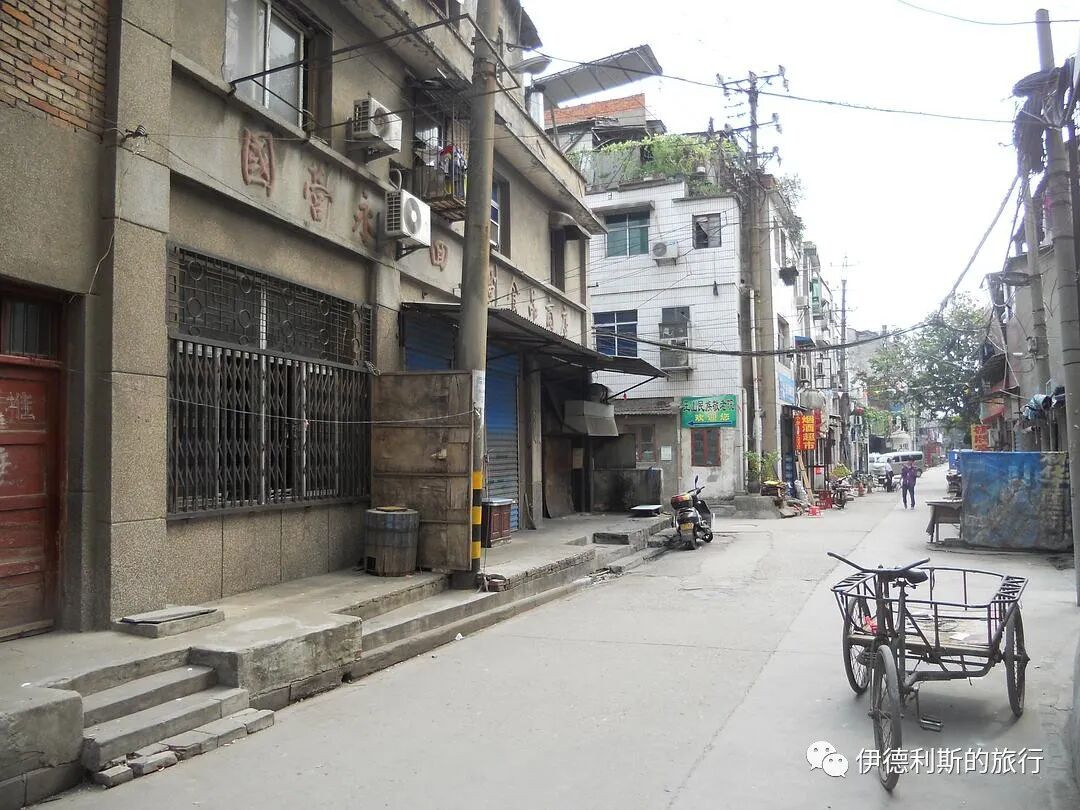
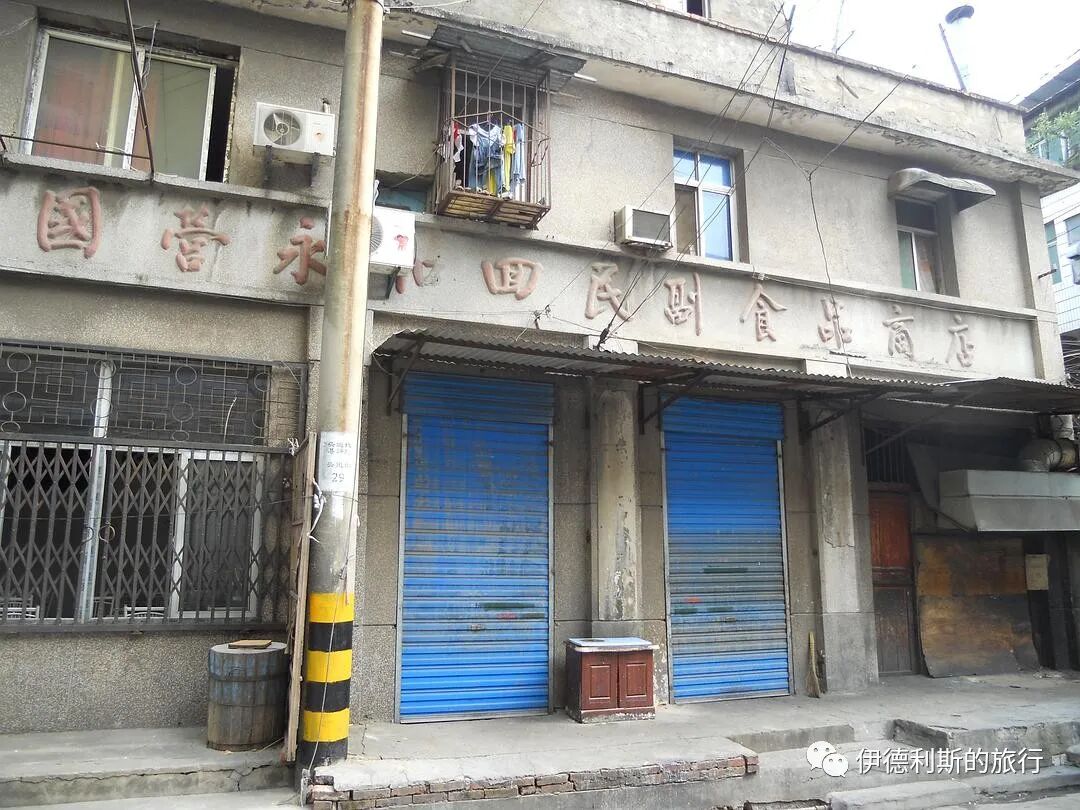
The Jiang'an Station sign before it was demolished.
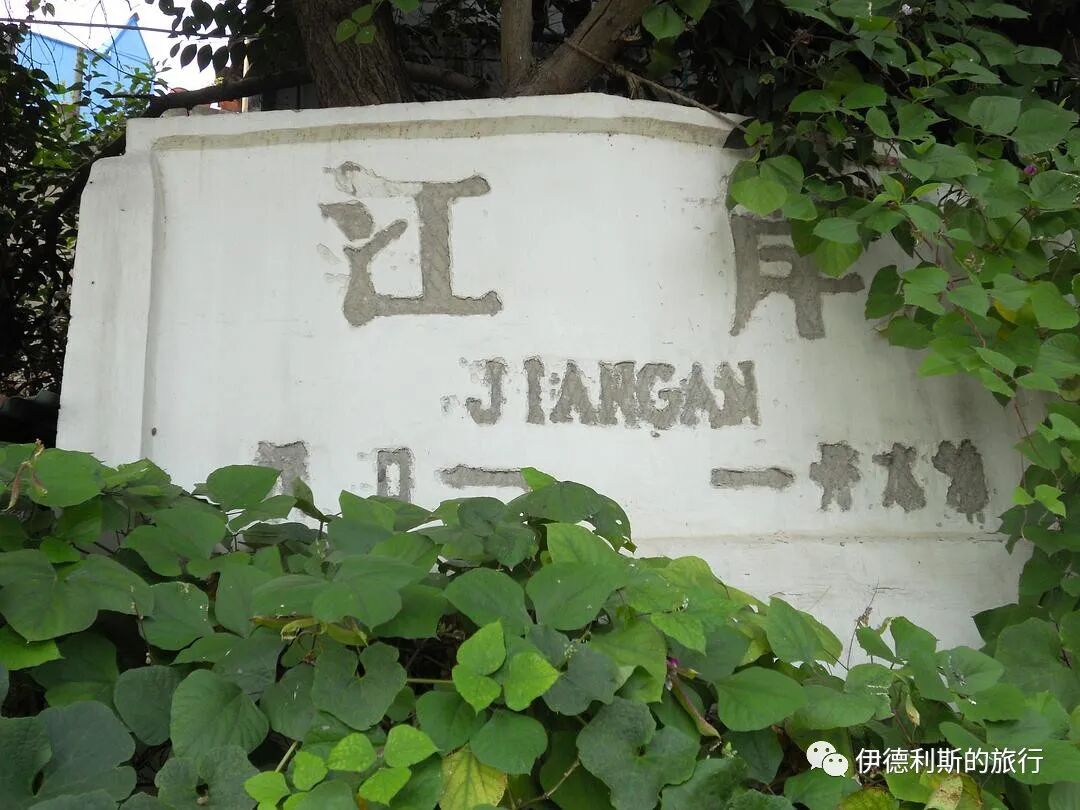
The abandoned station.
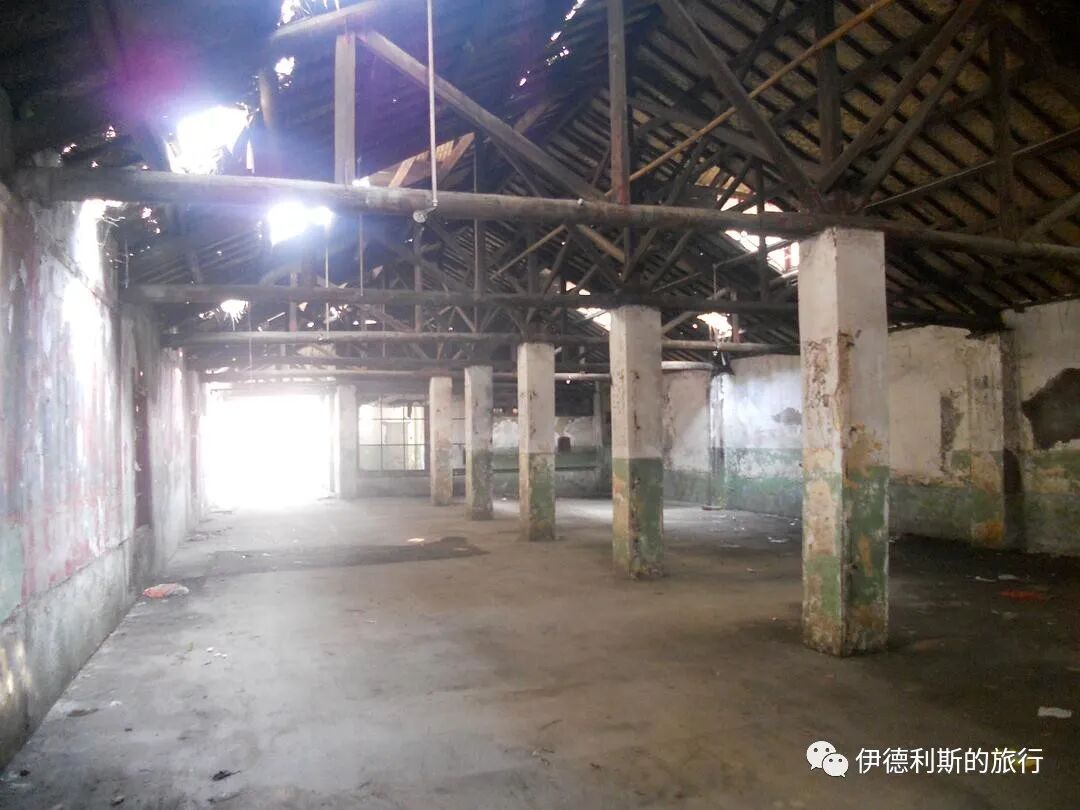
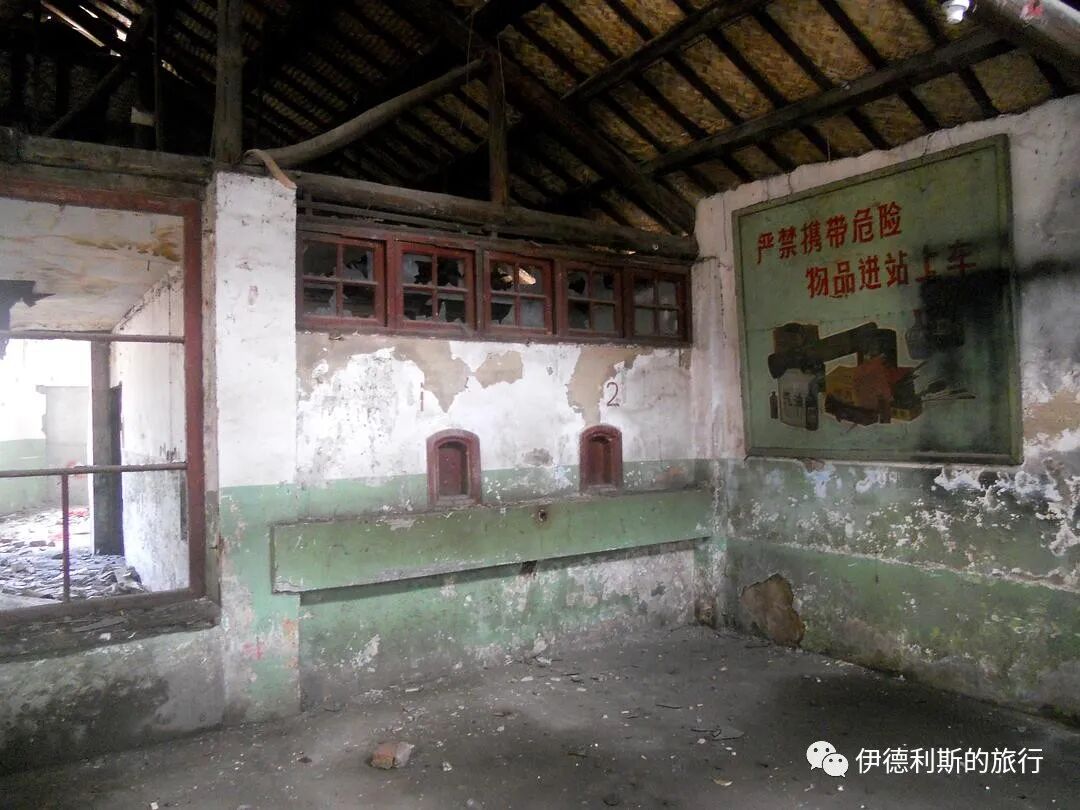
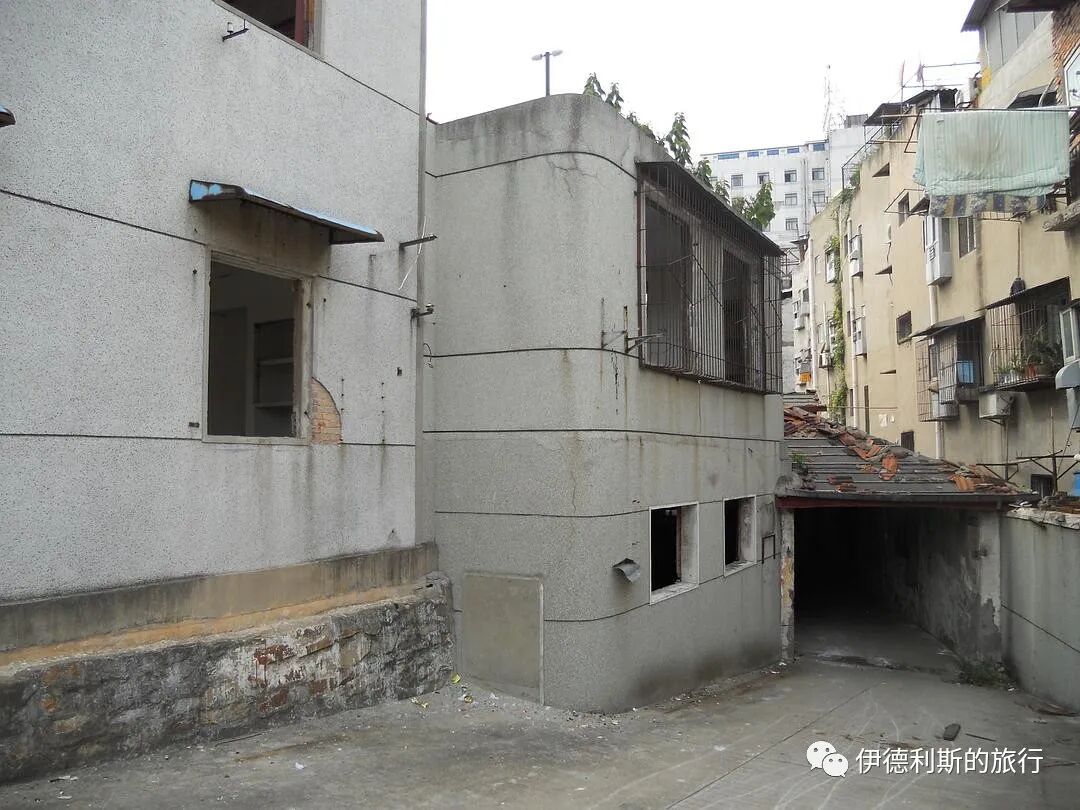
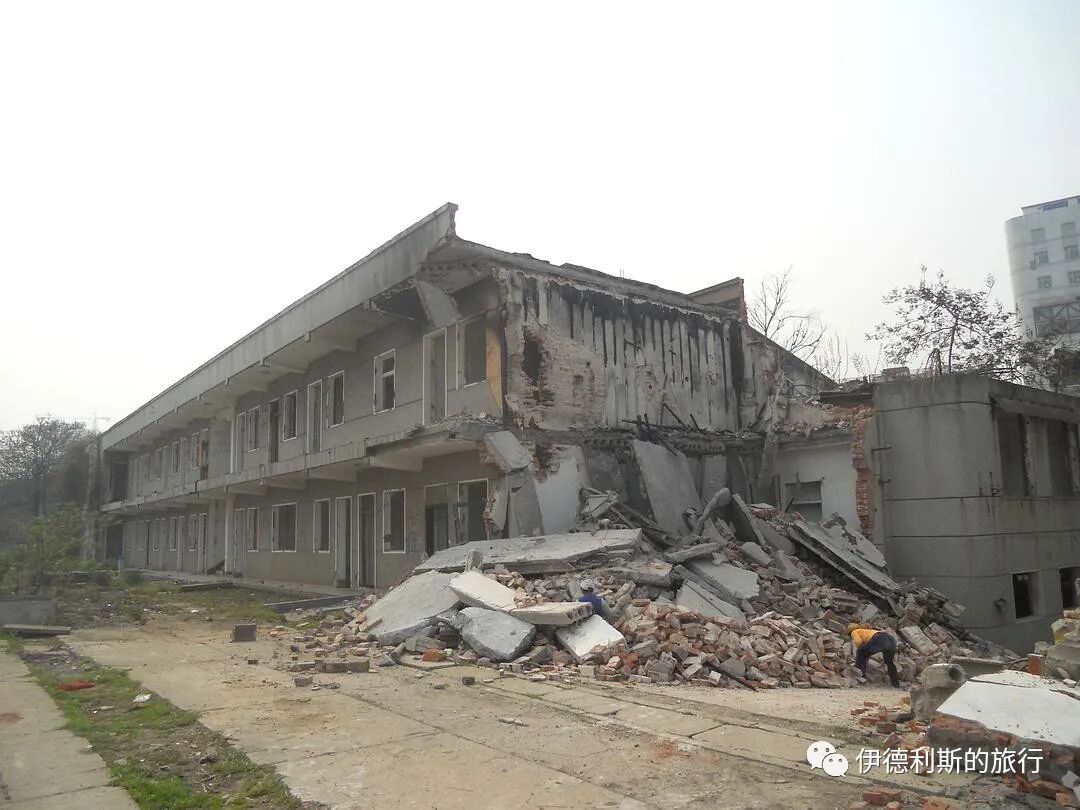
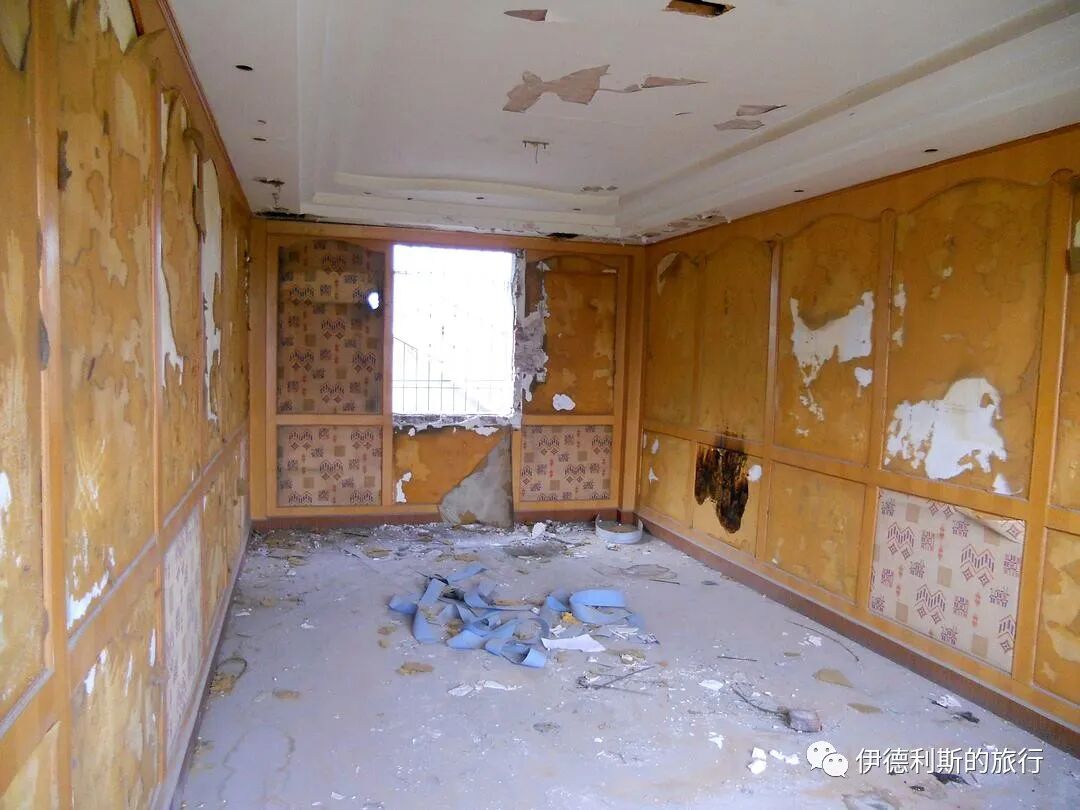
The building next to the station was about to be demolished when I photographed it in 2013, and it is now razed to the ground.
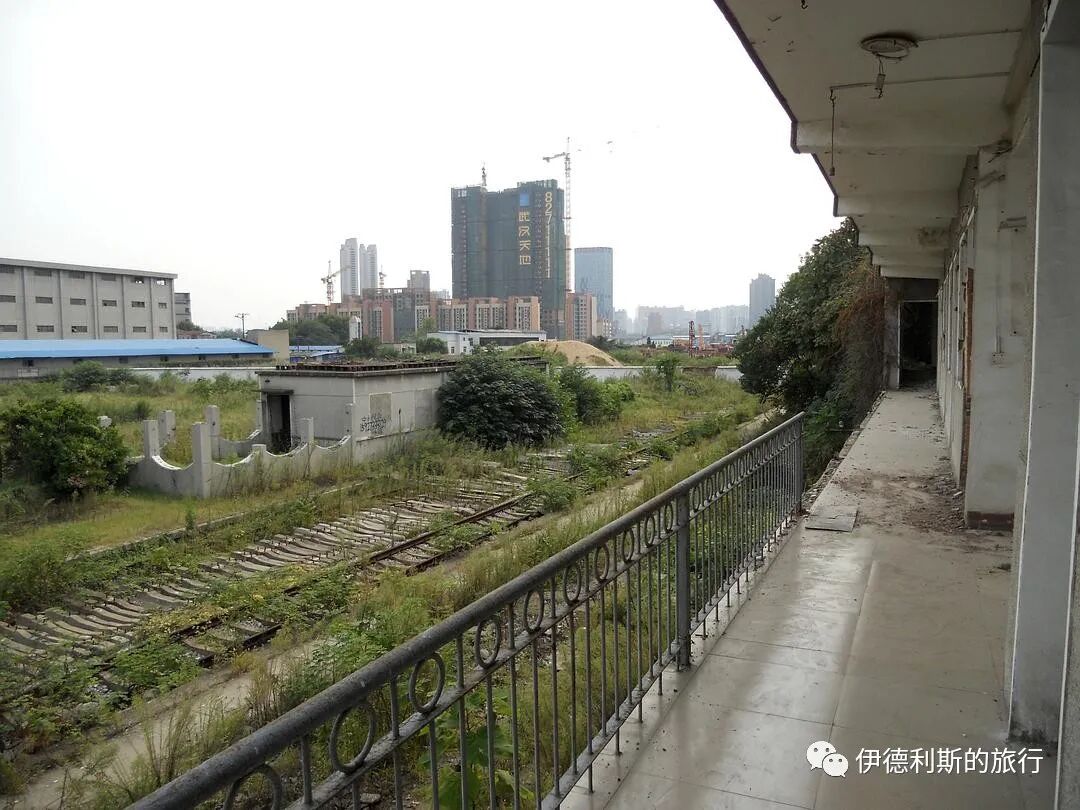
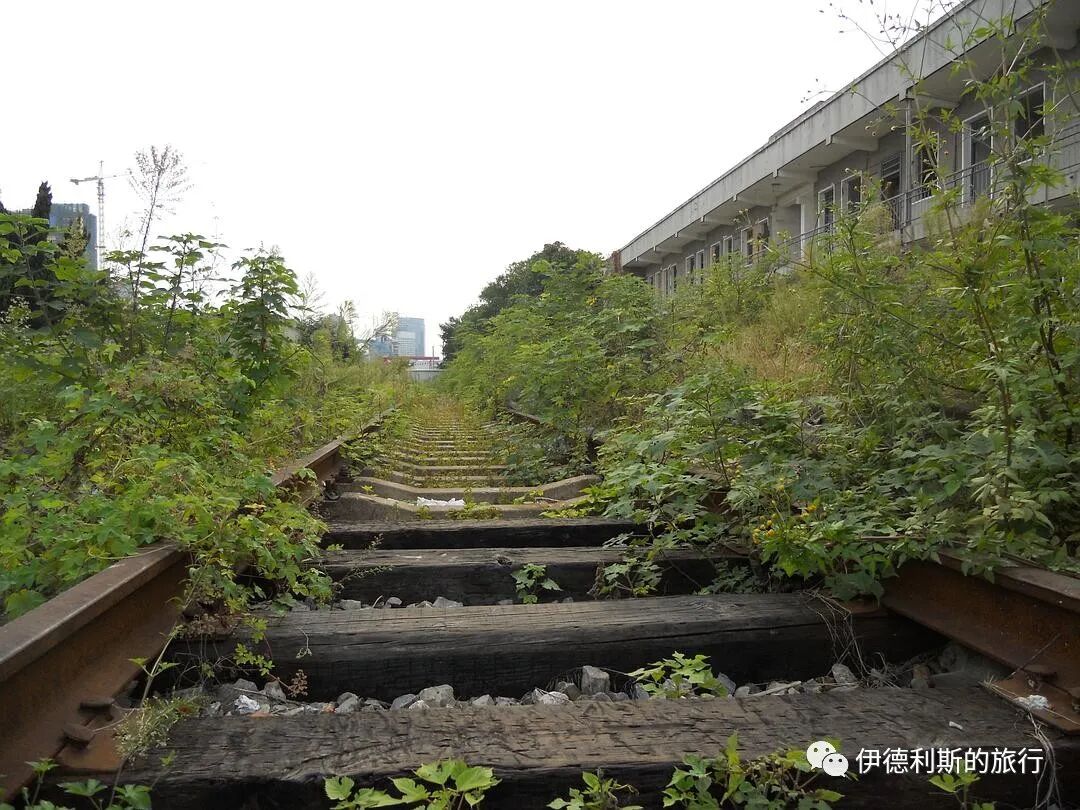
An even older century-old station.
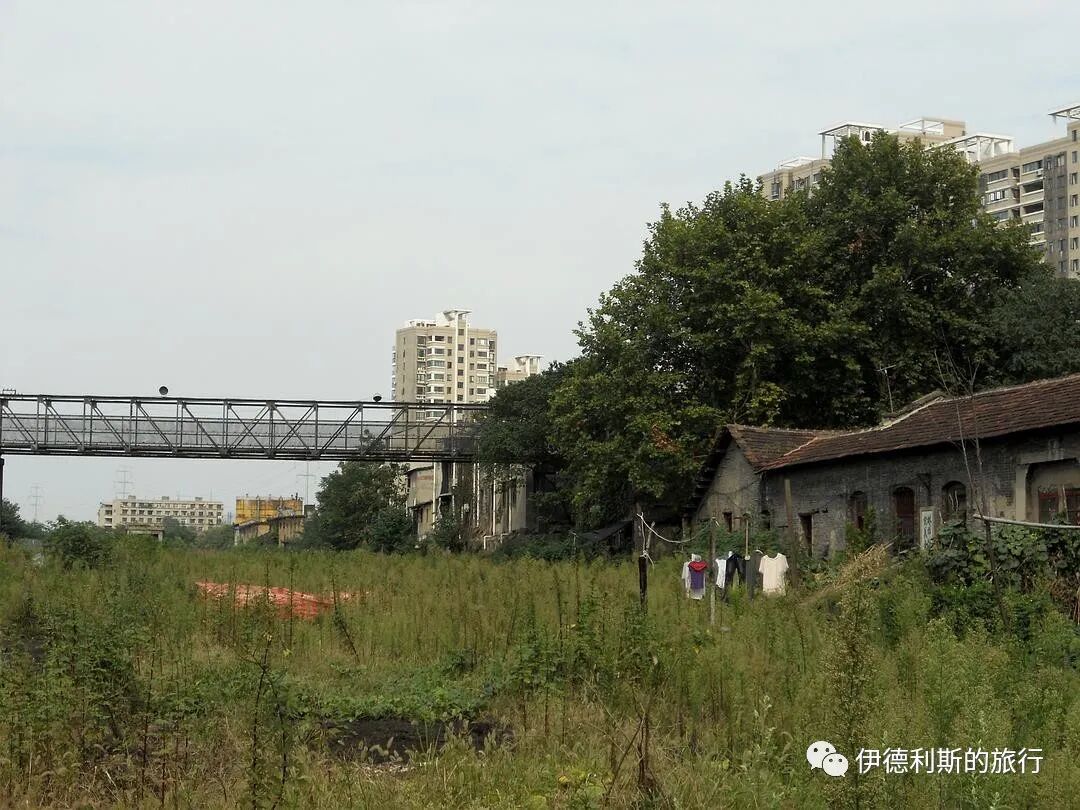
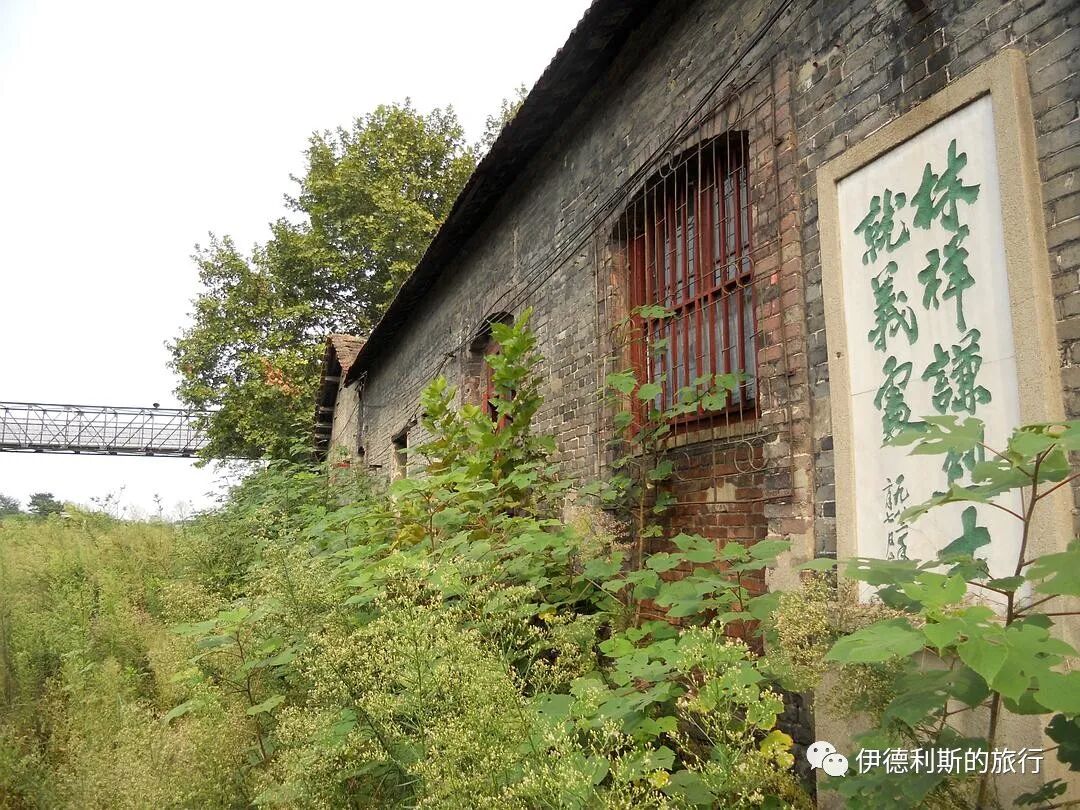
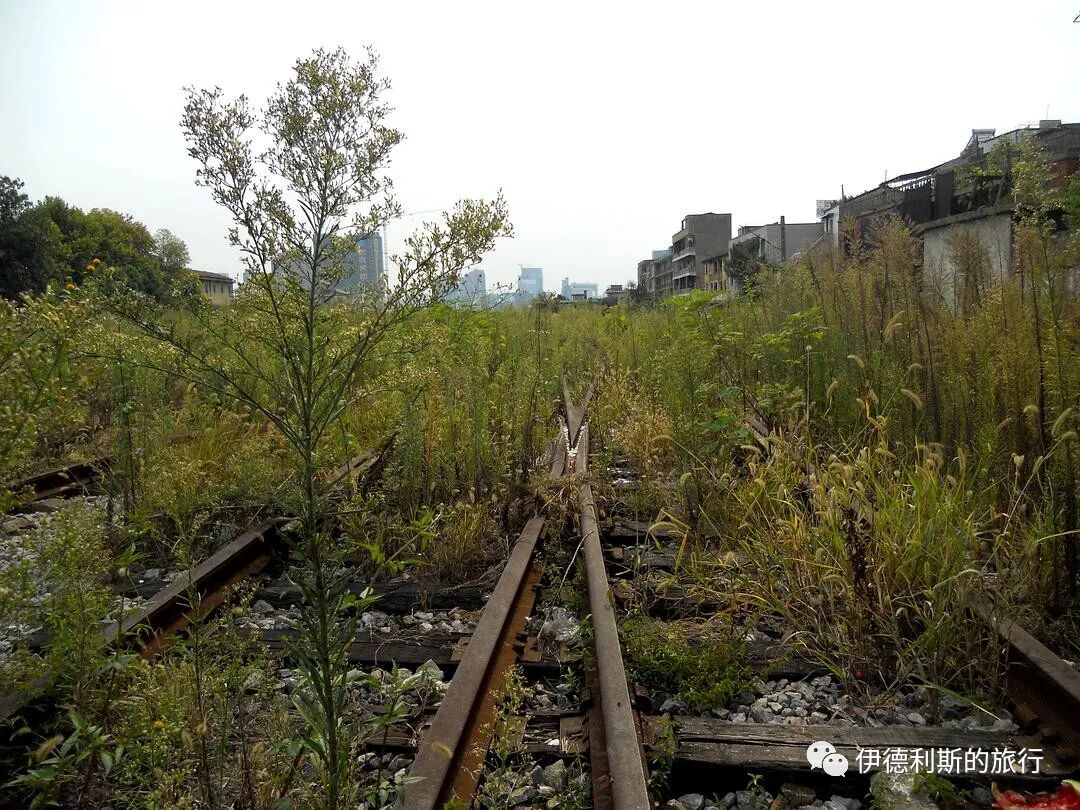
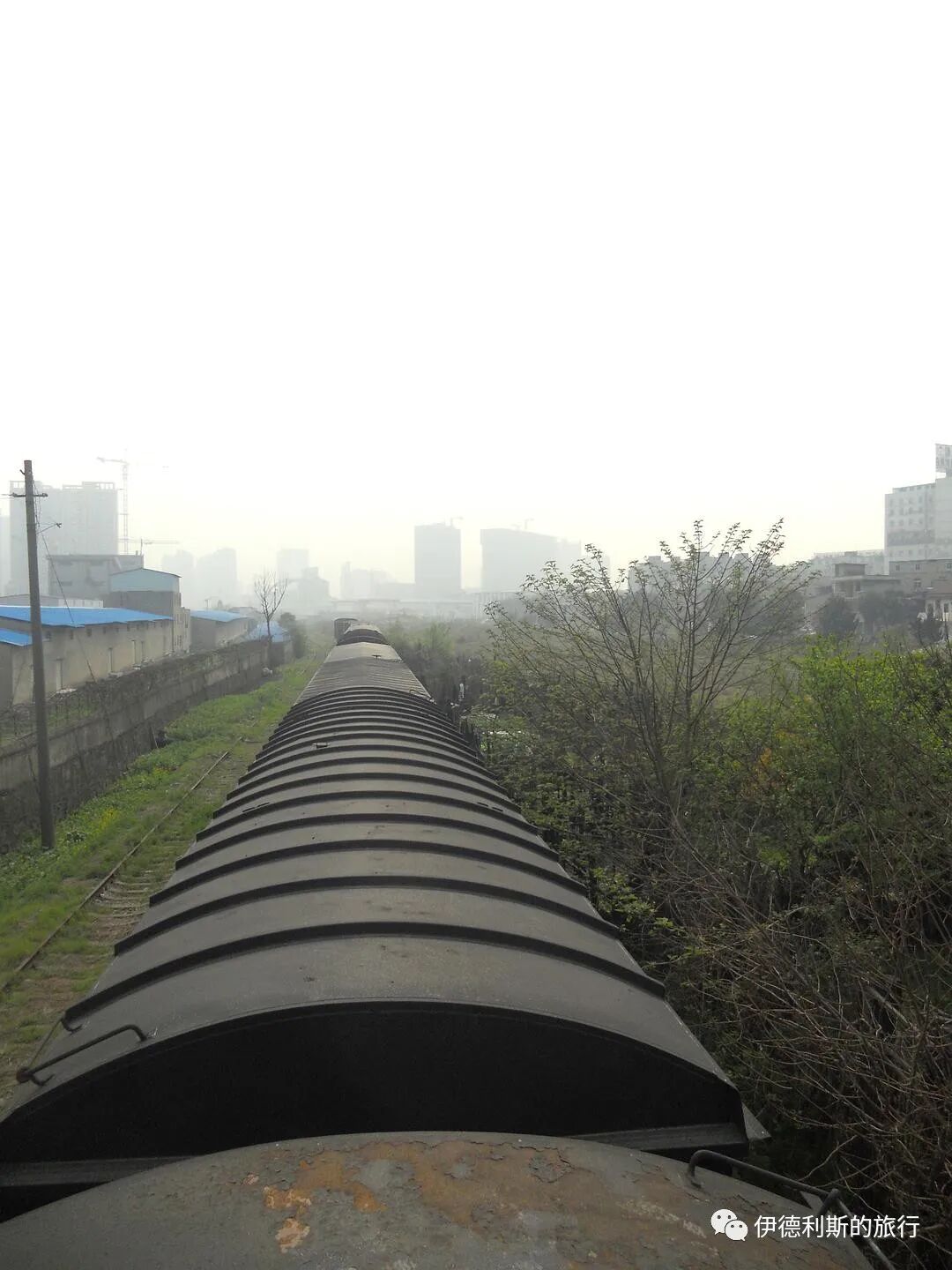
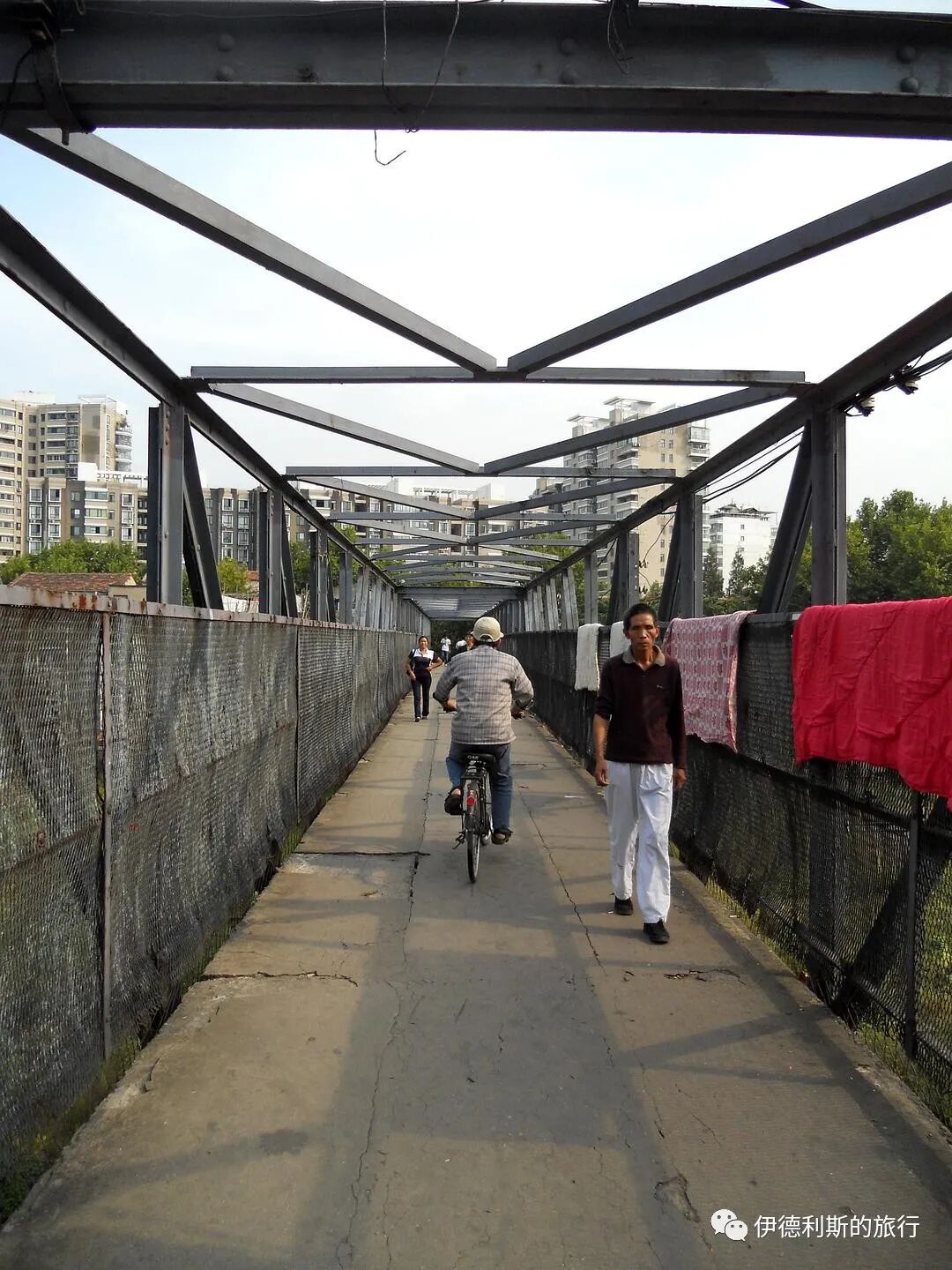
A once-luxurious hotel.
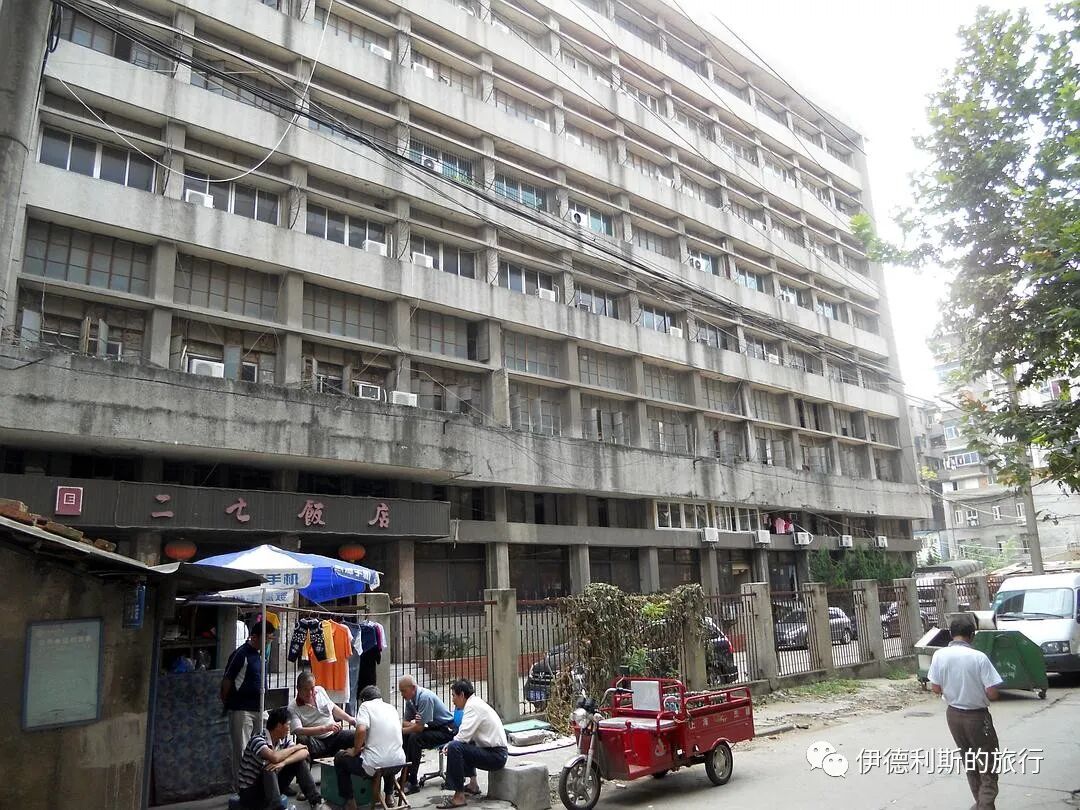
A halal restaurant (qingzhen guanzi).
Although the traditional Hui Muslim community in Jiang'an was razed to the ground, Jiang'an Hui Muslims still run halal restaurants in Wuhan.
Fatumei Restaurant on Huangxing Road is a traditional local halal restaurant in Hankou. Owner Li's family are third-generation Hankou Hui Muslims who settled near the Dazhi Railway Station in Hankou during the Republic of China era.
We ordered the most classic Hankou Hui Muslim dish, beef meatball soup (hui niurou yuanzi), as well as sticky rice fish (ciba yu) and fried lotus root sandwiches (zha oujia). Although they are only separated by a river, Hankou Hui Muslims and Wuchang Hui Muslims have different food cultures. Hui Muslims have lived in Wuchang for hundreds of years. While they focus on beef dishes, their diet has also been shaped by local Wuhan influences. Hui Muslims in Hankou mostly moved here from Henan over the last hundred years. Their food culture carries a Central Plains style, which is best seen when comparing the beef meatballs (niurou yuanzi) from both places. Hankou Hui Muslims make their beef meatballs (niurou yuanzi) with pure beef, and their method of stewing the meatballs is also more typical of the Central Plains. When we were eating, they were busy making boxed meals for community workers. The owner said 2020 was a very hard year. After reopening in May, business was very slow. There were few tourists, local Hui Muslims are not used to eating out, their shop is too small for banquets, and the university was locked down so students could not come out to eat. Luckily, their landlord waived three months of rent, and community members helped by often buying boxed meals from them, so they barely managed to keep going.
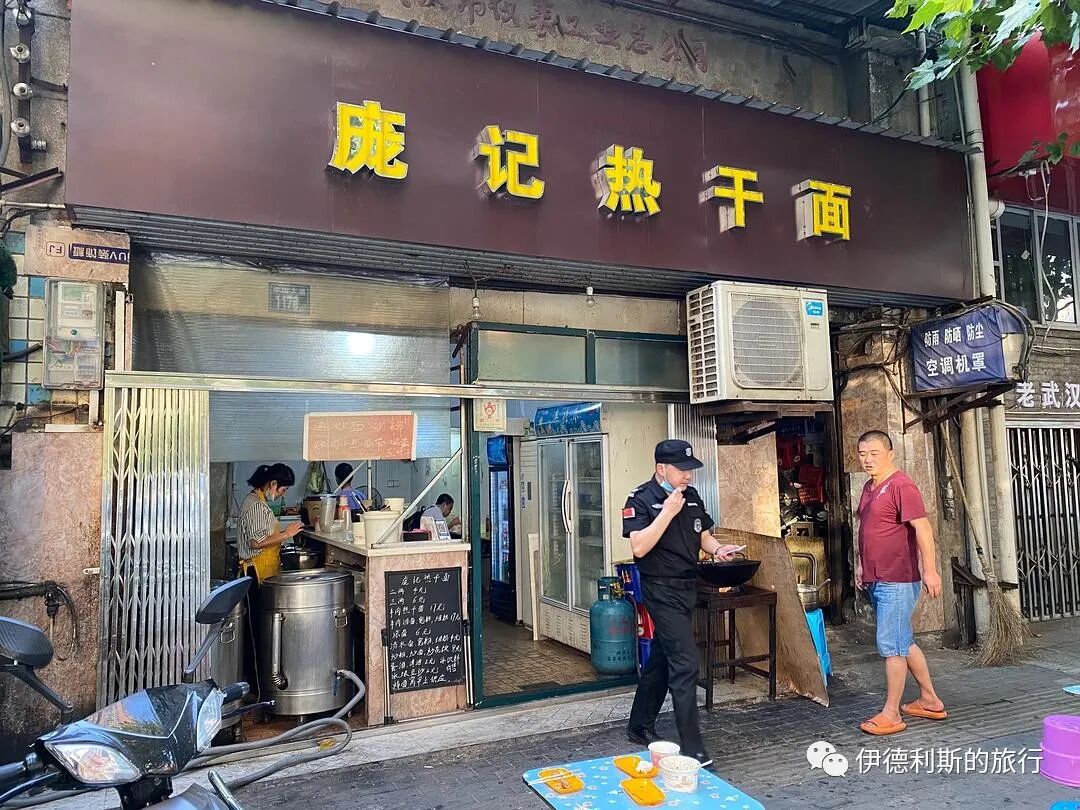
Pang's Hot Dry Noodles (Pangji reganmian)
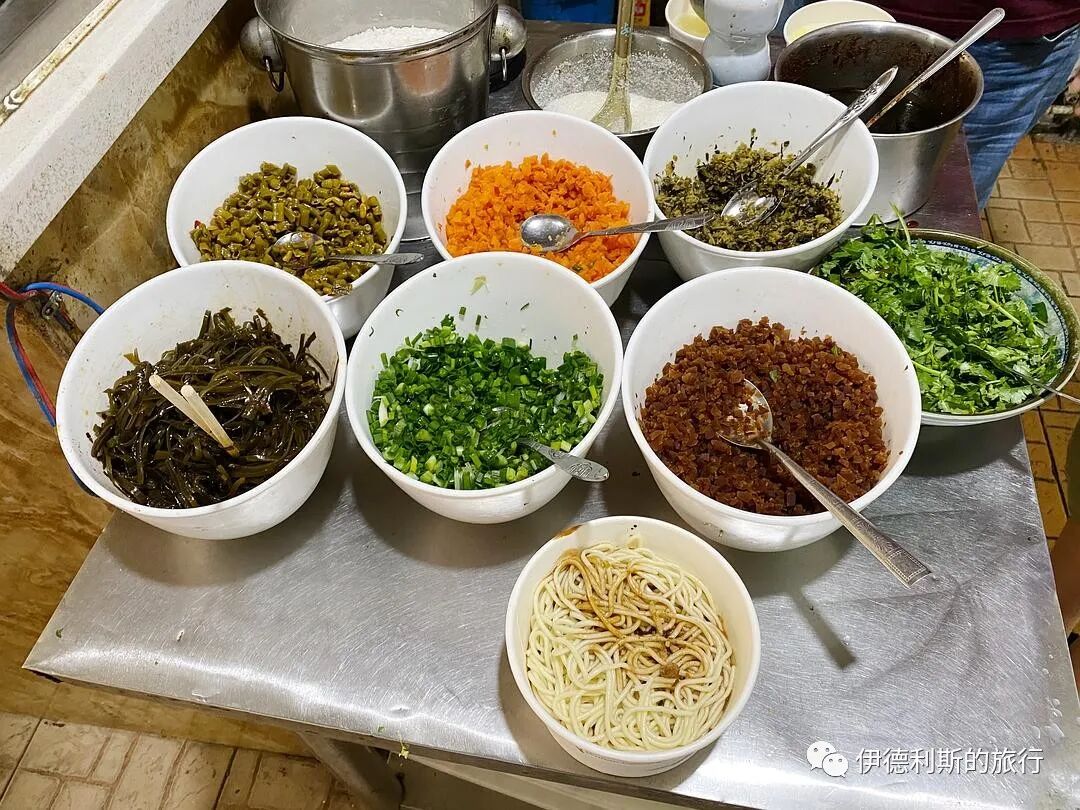
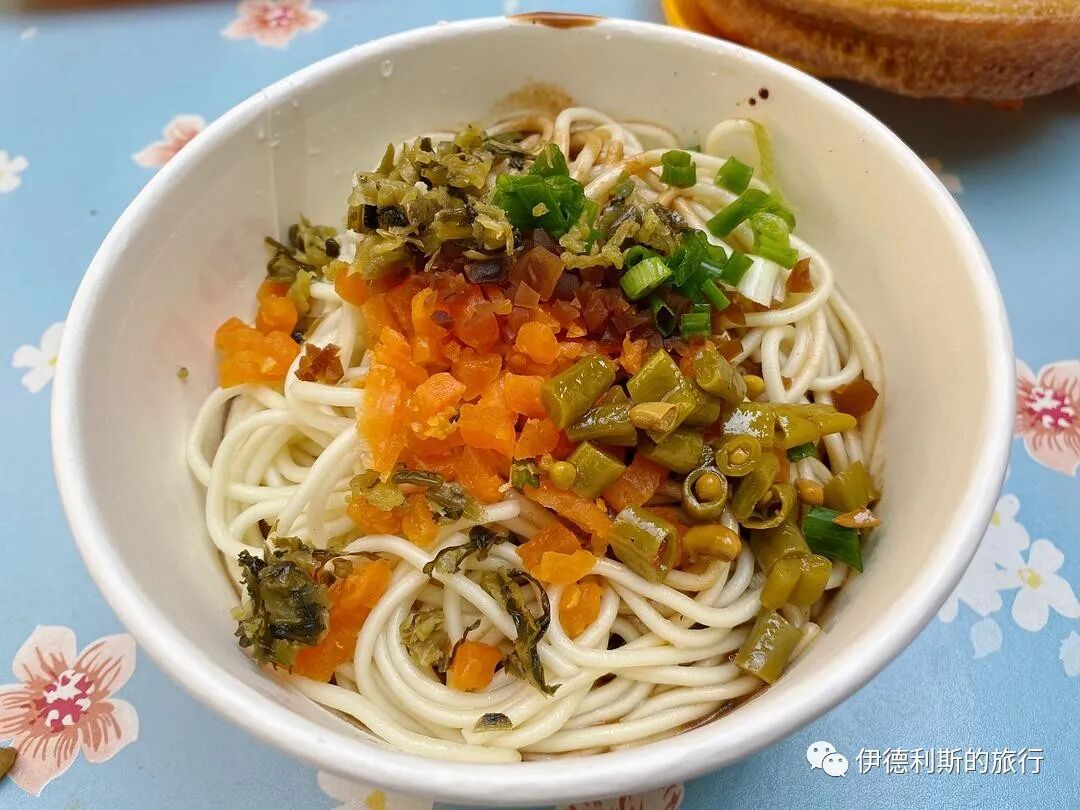
We ate hot dry noodles (reganmian), freshly fried savory donuts (mianwo), and egg fermented rice soup (jidan laozao) at Pang's Hot Dry Noodles on Yiyuan Road in Hankou. Pang's is the most famous halal hot dry noodle shop in Wuhan. It has been open for 46 years and is a must-visit spot for Muslims traveling in Wuhan. When I went in 2020, the owner said they would close in 2021 because the rent was high and business was bad that year, so they could no longer keep the business running. I heard a while ago that they reopened under the new name Pang Meiling Hot Dry Noodles.
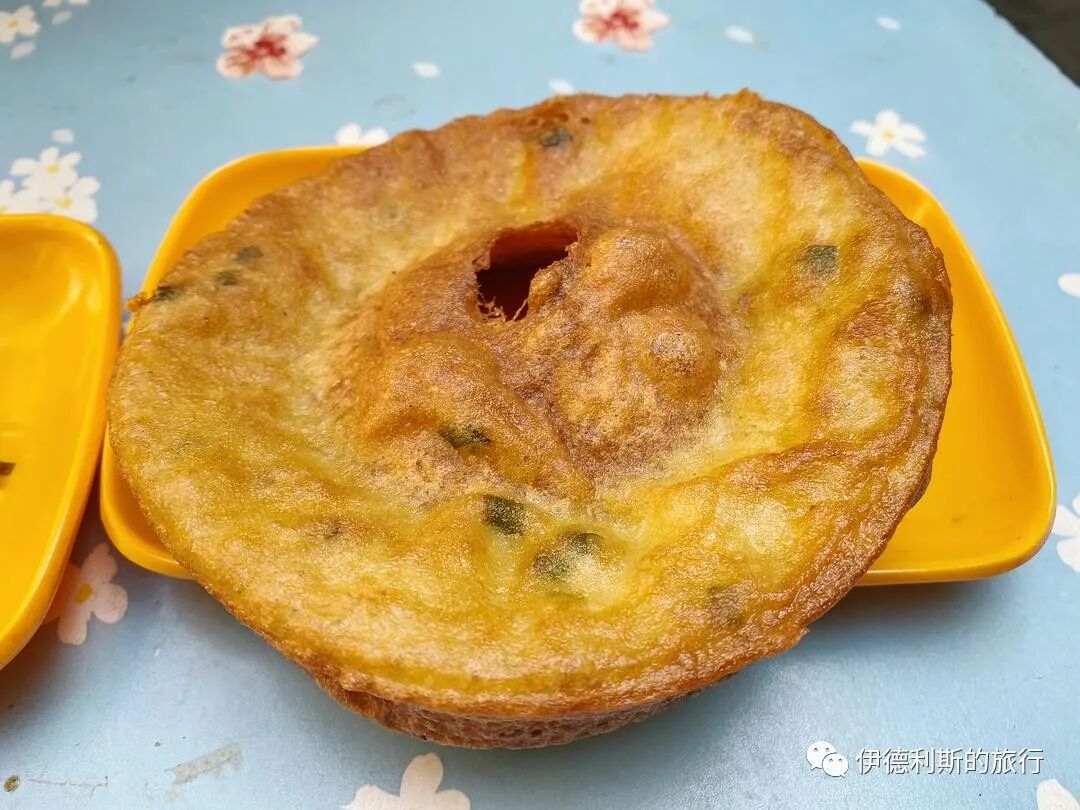
Freshly made savory donuts (mianwo)
They also sell braised dried tofu (lu dougan), but it was super spicy so we did not dare to eat it.
In 2017, I ate hot dry noodles (reganmian), small knife fish (xiaodaoyu), and beef tripe rice noodles (niudufen) at the Dongting Street shop.
Summary: Hankou Hui Muslim Community — Mosques, Food and Lost Streets is presented here as a firsthand travel account in clear English, beginning with this scene: After the middle of the Ming Dynasty, Hankou town began to grow. Hui Muslims from the Jiangsu and Zhejiang regions traveled up the Yangtze River, while those from the Shaanxi and Gansu regions traveled down the Han. The account keeps its focus on Hankou Muslims, Hubei Muslims, China Mosques while preserving the names, places, food, and historical details from the Chinese source.
The formation of the Muslim community in Hankou.
After the middle of the Ming Dynasty, Hankou town began to grow. Hui Muslims from the Jiangsu and Zhejiang regions traveled up the Yangtze River, while those from the Shaanxi and Gansu regions traveled down the Han River, all gathering in Hankou for trade and business. By the end of the Ming Dynasty, the number of Hui Muslims settling in Hankou grew, forming the earliest residential area for the community.
Guangyi Bridge Mosque (Guangyiqiao Qingzhensi).
Guangyi Bridge Mosque was first built in 1723 (the first year of the Yongzheng reign). It was burned down in 1900 (the 26th year of the Guangxu reign) and rebuilt in 1905 with funds raised by community elders like Jin Shihe and Jin Dinghe. During the Wuchang Uprising in 1911, the mosque was burned down again. It was repaired in 1916 with donations from the Shaanxi horse caravan group and the Hubei beef butcher guild (Choubang). The main prayer hall was funded entirely by a famous Hui merchant from Shanghai named Jiang Xingjie. It could hold a thousand people for namaz and featured beautiful bracket sets, curved eaves, and carved beams, making it very spectacular.
In 1905, Ma Ganghou, Yu Jingzhai, and others opened a school for Hui children inside the Wanshou Palace Mosque in Hankou. It was later renamed the Hankou Muslim Primary School and moved into the Guangyi Bridge Mosque, offering free enrollment to Hui children. The curriculum focused on religion, supplemented by Chinese language and abacus math, until it closed after the Battle of Wuhan in 1938.
Guangyi Bridge Mosque in the 1864 Map of Wuhan Towns and Cities.
Guangyi Bridge Mosque in the 1877 Map of Streets in Hankou Town, Hubei.
Guangyi Bridge Mosque before its demolition, photographed by Bi Jingshi before 1930. It is now in the collection of the Harvard-Yenching Library.
According to Wang Jianping in Old Photos of Islamic Culture in China's Interior and Frontier, this is Imam Wu Zhengming from Xi'an.
In 1930, the government renovated a large urban area from Wangjiaxiang to Liuduqiao in Hankou. They built new roads centered around the Sun Yat-sen bronze statue on Sanmin Road, which led to the demolition of the original Guangyi Bridge Mosque. Imam Ma Yiting and community elders like Tie Guoliang, Yu Jingzhai, Yang Shouting, and Ma Tingsheng traveled to Shanghai, Nanjing, and the Shaanxi-Gansu-Henan regions to raise funds. With these donations and contributions from local Hui Muslims, they raised 18,000 yuan. They built a three-story brick-and-concrete mosque on the newly constructed Minquan Road, modeled after the Xiaotaoyuan Mosque in Shanghai. Because it was on Minquan Road, it was also called the Minquan Road Mosque. The first floor of the new mosque held a reception room, a water room for washing, and a room for funeral preparations (maiti). The second floor had a room for reciting scriptures and a lecture hall, and the third floor was the main prayer hall.
The Minquan Road Mosque photographed by Bi Jingshi between 1934 and 1935. You can see the sign on the gate that reads: Hankou Branch of the China Islamic Association, Islamic Prayer Hall.
Notice from the Preparatory Committee of the Hankou Branch of the Chinese Islamic Association.
The true faith of the Hui people originated in Mecca (Tianfang).
It has spread to provinces in the interior, passed down through generations by representatives.
Mosques stand like a forest, bringing unity to even the most remote areas.
With the same path, same writing, and same assimilation, the five ethnic groups flourish together.
According to Wang Jianping in Old Photos of Islamic Culture in China's Interior and Frontier, this is the young Imam Ma from the Minquan Road Mosque. Ma Xiaoshun (born in 1924), the former director of the Minquan Road Mosque management committee, recalled that this was Ma Xun, the adopted son of the mosque's head Imam, Ma Yiting. He later followed Imam Ma Yiting to Shanghai and served as the head Imam at the Fuyou Road Mosque in Shanghai for many years during the 1980s.
A small halal snack shop in Hankou.
In 1986, the mosque was renovated and expanded into a five-story building. The first floor is the washroom, the second floor has a living room and a room for reciting scriptures, the third floor is the main prayer hall, the fourth floor is the office for the Wuhan Islamic Association, and the fifth floor is a meeting hall and an additional prayer hall for holidays.
In 2013, the Minquan Road Mosque, which was a designated excellent historical building in Wuhan, was demolished, leaving behind a permanent regret.
The Minquan Road Mosque I photographed in 2012 before it was demolished.
Hualou Street next to the Minquan Road Mosque, one year before the demolition.
The Minquan Road Mosque in October 2014, which became a parking lot after being torn down.
Jiang'an Mosque.
In 1906 (the 32nd year of the Guangxu reign), the Beijing-Hankou Railway officially opened. Many Hui Muslims from Zhoukou, Henan, traveled along the railway to Hankou to escape a drought, settling in the area around the Jiang'an Railway Station, the southernmost point of the line.
In 1918, the Henan Hui Muslims who settled in Liujiamiao built a simple mosque. This was the earliest Liujiamiao Mosque, also known as the Henan Mosque because it was mainly used by people from Henan. Later, when Wu Peifu's army was stationed there, they requisitioned the mosque to feed their horses, so in 1920, everyone had to raise money to buy a small building to use as a mosque.
Between 1934 and 1935, Bi Jingshi took photos of the Liujiamiao Mosque at that time.
Inside the mosque, the person shown is the imam (ahong) at the time, Elder Chang.
Elder Imam Chang.
Elder Imam Chang's eldest son, Imam Chang.
Elder Imam Chang's second son, Younger Imam Chang.
A photo of Elder Imam Chang and Younger Imam Chang together.
Elder Imam Chang and a foreign friend, Mr. G. K. Harris.
Elder Imam Chang shaving his beard.
Elder Imam Chang.
According to Wang Jianping in 'Old Photos of Islamic Culture in China's Inland and Frontier Regions,' an elderly resident named Wei Ruiyun, who lived near the Wuchang Uprising Street Mosque for over 60 years, recalled that this was Imam Ma Shanzhi, who had performed her nikah (marriage contract) when she got married.
Elder Imam Chang and some merchants who came to Hankou from Henan for business.
Merchants who came to do business in Henan at the Liujiamiao Mosque.
The imam of Liujiamiao Mosque.
The imam, community elders, and merchants from Henan on the roof of the mosque, preparing to perform namaz.
Performing namaz on the roof of Liujiamiao Mosque.
Old Imam Chang leads everyone in Jumu'ah prayer inside the main hall of Liujiamiao Mosque.
A friend (dosti) performs wudu (abdast) on the roof of Liujiamiao Mosque.
After the Battle of Wuhan in 1938, the mosque was damaged by war, and the land was taken for railway expansion, so local Hui Muslims raised money again to buy a new building for the mosque. Since then, the mosque has undergone several major renovations and was officially renamed Jiang'an Mosque. After a major renovation of the main hall in 1986, a second floor was added to the main hall and the north reception room, which caused the foundation to sink and cracks to appear in the walls. In 2005, the original Jiang'an Mosque was demolished to build a new one, and in 2007, a women's Islamic school (qingzhen nvxue) was built next to it.
Jiang'an Mosque as I photographed it in 2013.
A Jumu'ah prayer in 2013.
The study group for middle-aged and elderly people at that time.
Jiang'an Station stopped operating in 2010, and demolition of the surrounding area began immediately. By 2014, the Muslim community around Jiang'an Mosque had been completely razed to the ground and now only exists in history.
In 2015, the community around the mosque was completely razed to the ground.
The former Hui Muslim grocery store has been closed for many years and is now razed to the ground.
The Jiang'an Station sign before it was demolished.
The abandoned station.
The building next to the station was about to be demolished when I photographed it in 2013, and it is now razed to the ground.
An even older century-old station.
A once-luxurious hotel.
A halal restaurant (qingzhen guanzi).
Although the traditional Hui Muslim community in Jiang'an was razed to the ground, Jiang'an Hui Muslims still run halal restaurants in Wuhan.
Fatumei Restaurant on Huangxing Road is a traditional local halal restaurant in Hankou. Owner Li's family are third-generation Hankou Hui Muslims who settled near the Dazhi Railway Station in Hankou during the Republic of China era.
We ordered the most classic Hankou Hui Muslim dish, beef meatball soup (hui niurou yuanzi), as well as sticky rice fish (ciba yu) and fried lotus root sandwiches (zha oujia). Although they are only separated by a river, Hankou Hui Muslims and Wuchang Hui Muslims have different food cultures. Hui Muslims have lived in Wuchang for hundreds of years. While they focus on beef dishes, their diet has also been shaped by local Wuhan influences. Hui Muslims in Hankou mostly moved here from Henan over the last hundred years. Their food culture carries a Central Plains style, which is best seen when comparing the beef meatballs (niurou yuanzi) from both places. Hankou Hui Muslims make their beef meatballs (niurou yuanzi) with pure beef, and their method of stewing the meatballs is also more typical of the Central Plains. When we were eating, they were busy making boxed meals for community workers. The owner said 2020 was a very hard year. After reopening in May, business was very slow. There were few tourists, local Hui Muslims are not used to eating out, their shop is too small for banquets, and the university was locked down so students could not come out to eat. Luckily, their landlord waived three months of rent, and community members helped by often buying boxed meals from them, so they barely managed to keep going.
Pang's Hot Dry Noodles (Pangji reganmian)
We ate hot dry noodles (reganmian), freshly fried savory donuts (mianwo), and egg fermented rice soup (jidan laozao) at Pang's Hot Dry Noodles on Yiyuan Road in Hankou. Pang's is the most famous halal hot dry noodle shop in Wuhan. It has been open for 46 years and is a must-visit spot for Muslims traveling in Wuhan. When I went in 2020, the owner said they would close in 2021 because the rent was high and business was bad that year, so they could no longer keep the business running. I heard a while ago that they reopened under the new name Pang Meiling Hot Dry Noodles.
Freshly made savory donuts (mianwo)
They also sell braised dried tofu (lu dougan), but it was super spicy so we did not dare to eat it.
In 2017, I ate hot dry noodles (reganmian), small knife fish (xiaodaoyu), and beef tripe rice noodles (niudufen) at the Dongting Street shop.
Halal Travel Guide: Hankou Hui Muslim Community — Mosques, Food and Lost Streets
Articles • ali2007fr posted the article • 0 comments • 151 views • 2026-05-18 02:27
Reposted from the web
Summary: Hankou Hui Muslim Community — Mosques, Food and Lost Streets is presented here as a firsthand travel account in clear English, beginning with this scene: After the middle of the Ming Dynasty, Hankou town began to grow. Hui Muslims from the Jiangsu and Zhejiang regions traveled up the Yangtze River, while those from the Shaanxi and Gansu regions traveled down the Han. The account keeps its focus on Hankou Muslims, Hubei Muslims, China Mosques while preserving the names, places, food, and historical details from the Chinese source.
The formation of the Muslim community in Hankou.
After the middle of the Ming Dynasty, Hankou town began to grow. Hui Muslims from the Jiangsu and Zhejiang regions traveled up the Yangtze River, while those from the Shaanxi and Gansu regions traveled down the Han River, all gathering in Hankou for trade and business. By the end of the Ming Dynasty, the number of Hui Muslims settling in Hankou grew, forming the earliest residential area for the community.
Guangyi Bridge Mosque (Guangyiqiao Qingzhensi).
Guangyi Bridge Mosque was first built in 1723 (the first year of the Yongzheng reign). It was burned down in 1900 (the 26th year of the Guangxu reign) and rebuilt in 1905 with funds raised by community elders like Jin Shihe and Jin Dinghe. During the Wuchang Uprising in 1911, the mosque was burned down again. It was repaired in 1916 with donations from the Shaanxi horse caravan group and the Hubei beef butcher guild (Choubang). The main prayer hall was funded entirely by a famous Hui merchant from Shanghai named Jiang Xingjie. It could hold a thousand people for namaz and featured beautiful bracket sets, curved eaves, and carved beams, making it very spectacular.
In 1905, Ma Ganghou, Yu Jingzhai, and others opened a school for Hui children inside the Wanshou Palace Mosque in Hankou. It was later renamed the Hankou Muslim Primary School and moved into the Guangyi Bridge Mosque, offering free enrollment to Hui children. The curriculum focused on religion, supplemented by Chinese language and abacus math, until it closed after the Battle of Wuhan in 1938.
Guangyi Bridge Mosque in the 1864 Map of Wuhan Towns and Cities.
Guangyi Bridge Mosque in the 1877 Map of Streets in Hankou Town, Hubei.
Guangyi Bridge Mosque before its demolition, photographed by Bi Jingshi before 1930. It is now in the collection of the Harvard-Yenching Library.
According to Wang Jianping in Old Photos of Islamic Culture in China's Interior and Frontier, this is Imam Wu Zhengming from Xi'an.
In 1930, the government renovated a large urban area from Wangjiaxiang to Liuduqiao in Hankou. They built new roads centered around the Sun Yat-sen bronze statue on Sanmin Road, which led to the demolition of the original Guangyi Bridge Mosque. Imam Ma Yiting and community elders like Tie Guoliang, Yu Jingzhai, Yang Shouting, and Ma Tingsheng traveled to Shanghai, Nanjing, and the Shaanxi-Gansu-Henan regions to raise funds. With these donations and contributions from local Hui Muslims, they raised 18,000 yuan. They built a three-story brick-and-concrete mosque on the newly constructed Minquan Road, modeled after the Xiaotaoyuan Mosque in Shanghai. Because it was on Minquan Road, it was also called the Minquan Road Mosque. The first floor of the new mosque held a reception room, a water room for washing, and a room for funeral preparations (maiti). The second floor had a room for reciting scriptures and a lecture hall, and the third floor was the main prayer hall.
The Minquan Road Mosque photographed by Bi Jingshi between 1934 and 1935. You can see the sign on the gate that reads: Hankou Branch of the China Islamic Association, Islamic Prayer Hall.
Notice from the Preparatory Committee of the Hankou Branch of the Chinese Islamic Association.
The true faith of the Hui people originated in Mecca (Tianfang).
It has spread to provinces in the interior, passed down through generations by representatives.
Mosques stand like a forest, bringing unity to even the most remote areas.
With the same path, same writing, and same assimilation, the five ethnic groups flourish together.
According to Wang Jianping in Old Photos of Islamic Culture in China's Interior and Frontier, this is the young Imam Ma from the Minquan Road Mosque. Ma Xiaoshun (born in 1924), the former director of the Minquan Road Mosque management committee, recalled that this was Ma Xun, the adopted son of the mosque's head Imam, Ma Yiting. He later followed Imam Ma Yiting to Shanghai and served as the head Imam at the Fuyou Road Mosque in Shanghai for many years during the 1980s.
A small halal snack shop in Hankou.
In 1986, the mosque was renovated and expanded into a five-story building. The first floor is the washroom, the second floor has a living room and a room for reciting scriptures, the third floor is the main prayer hall, the fourth floor is the office for the Wuhan Islamic Association, and the fifth floor is a meeting hall and an additional prayer hall for holidays.
In 2013, the Minquan Road Mosque, which was a designated excellent historical building in Wuhan, was demolished, leaving behind a permanent regret.
The Minquan Road Mosque I photographed in 2012 before it was demolished.
Hualou Street next to the Minquan Road Mosque, one year before the demolition.
The Minquan Road Mosque in October 2014, which became a parking lot after being torn down.
Jiang'an Mosque.
In 1906 (the 32nd year of the Guangxu reign), the Beijing-Hankou Railway officially opened. Many Hui Muslims from Zhoukou, Henan, traveled along the railway to Hankou to escape a drought, settling in the area around the Jiang'an Railway Station, the southernmost point of the line.
In 1918, the Henan Hui Muslims who settled in Liujiamiao built a simple mosque. This was the earliest Liujiamiao Mosque, also known as the Henan Mosque because it was mainly used by people from Henan. Later, when Wu Peifu's army was stationed there, they requisitioned the mosque to feed their horses, so in 1920, everyone had to raise money to buy a small building to use as a mosque.
Between 1934 and 1935, Bi Jingshi took photos of the Liujiamiao Mosque at that time.
Inside the mosque, the person shown is the imam (ahong) at the time, Elder Chang.
Elder Imam Chang.
Elder Imam Chang's eldest son, Imam Chang.
Elder Imam Chang's second son, Younger Imam Chang.
A photo of Elder Imam Chang and Younger Imam Chang together.
Elder Imam Chang and a foreign friend, Mr. G. K. Harris.
Elder Imam Chang shaving his beard.
Elder Imam Chang.
According to Wang Jianping in 'Old Photos of Islamic Culture in China's Inland and Frontier Regions,' an elderly resident named Wei Ruiyun, who lived near the Wuchang Uprising Street Mosque for over 60 years, recalled that this was Imam Ma Shanzhi, who had performed her nikah (marriage contract) when she got married.
Elder Imam Chang and some merchants who came to Hankou from Henan for business.
Merchants who came to do business in Henan at the Liujiamiao Mosque.
The imam of Liujiamiao Mosque.
The imam, community elders, and merchants from Henan on the roof of the mosque, preparing to perform namaz.
Performing namaz on the roof of Liujiamiao Mosque.
Old Imam Chang leads everyone in Jumu'ah prayer inside the main hall of Liujiamiao Mosque.
A friend (dosti) performs wudu (abdast) on the roof of Liujiamiao Mosque.
After the Battle of Wuhan in 1938, the mosque was damaged by war, and the land was taken for railway expansion, so local Hui Muslims raised money again to buy a new building for the mosque. Since then, the mosque has undergone several major renovations and was officially renamed Jiang'an Mosque. After a major renovation of the main hall in 1986, a second floor was added to the main hall and the north reception room, which caused the foundation to sink and cracks to appear in the walls. In 2005, the original Jiang'an Mosque was demolished to build a new one, and in 2007, a women's Islamic school (qingzhen nvxue) was built next to it.
Jiang'an Mosque as I photographed it in 2013.
A Jumu'ah prayer in 2013.
The study group for middle-aged and elderly people at that time.
Jiang'an Station stopped operating in 2010, and demolition of the surrounding area began immediately. By 2014, the Muslim community around Jiang'an Mosque had been completely razed to the ground and now only exists in history.
In 2015, the community around the mosque was completely razed to the ground.
The former Hui Muslim grocery store has been closed for many years and is now razed to the ground.
The Jiang'an Station sign before it was demolished.
The abandoned station.
The building next to the station was about to be demolished when I photographed it in 2013, and it is now razed to the ground.
An even older century-old station.
A once-luxurious hotel.
A halal restaurant (qingzhen guanzi).
Although the traditional Hui Muslim community in Jiang'an was razed to the ground, Jiang'an Hui Muslims still run halal restaurants in Wuhan.
Fatumei Restaurant on Huangxing Road is a traditional local halal restaurant in Hankou. Owner Li's family are third-generation Hankou Hui Muslims who settled near the Dazhi Railway Station in Hankou during the Republic of China era.
We ordered the most classic Hankou Hui Muslim dish, beef meatball soup (hui niurou yuanzi), as well as sticky rice fish (ciba yu) and fried lotus root sandwiches (zha oujia). Although they are only separated by a river, Hankou Hui Muslims and Wuchang Hui Muslims have different food cultures. Hui Muslims have lived in Wuchang for hundreds of years. While they focus on beef dishes, their diet has also been shaped by local Wuhan influences. Hui Muslims in Hankou mostly moved here from Henan over the last hundred years. Their food culture carries a Central Plains style, which is best seen when comparing the beef meatballs (niurou yuanzi) from both places. Hankou Hui Muslims make their beef meatballs (niurou yuanzi) with pure beef, and their method of stewing the meatballs is also more typical of the Central Plains. When we were eating, they were busy making boxed meals for community workers. The owner said 2020 was a very hard year. After reopening in May, business was very slow. There were few tourists, local Hui Muslims are not used to eating out, their shop is too small for banquets, and the university was locked down so students could not come out to eat. Luckily, their landlord waived three months of rent, and community members helped by often buying boxed meals from them, so they barely managed to keep going.
Pang's Hot Dry Noodles (Pangji reganmian)
We ate hot dry noodles (reganmian), freshly fried savory donuts (mianwo), and egg fermented rice soup (jidan laozao) at Pang's Hot Dry Noodles on Yiyuan Road in Hankou. Pang's is the most famous halal hot dry noodle shop in Wuhan. It has been open for 46 years and is a must-visit spot for Muslims traveling in Wuhan. When I went in 2020, the owner said they would close in 2021 because the rent was high and business was bad that year, so they could no longer keep the business running. I heard a while ago that they reopened under the new name Pang Meiling Hot Dry Noodles.
Freshly made savory donuts (mianwo)
They also sell braised dried tofu (lu dougan), but it was super spicy so we did not dare to eat it.
In 2017, I ate hot dry noodles (reganmian), small knife fish (xiaodaoyu), and beef tripe rice noodles (niudufen) at the Dongting Street shop. view all
Summary: Hankou Hui Muslim Community — Mosques, Food and Lost Streets is presented here as a firsthand travel account in clear English, beginning with this scene: After the middle of the Ming Dynasty, Hankou town began to grow. Hui Muslims from the Jiangsu and Zhejiang regions traveled up the Yangtze River, while those from the Shaanxi and Gansu regions traveled down the Han. The account keeps its focus on Hankou Muslims, Hubei Muslims, China Mosques while preserving the names, places, food, and historical details from the Chinese source.
The formation of the Muslim community in Hankou.
After the middle of the Ming Dynasty, Hankou town began to grow. Hui Muslims from the Jiangsu and Zhejiang regions traveled up the Yangtze River, while those from the Shaanxi and Gansu regions traveled down the Han River, all gathering in Hankou for trade and business. By the end of the Ming Dynasty, the number of Hui Muslims settling in Hankou grew, forming the earliest residential area for the community.
Guangyi Bridge Mosque (Guangyiqiao Qingzhensi).
Guangyi Bridge Mosque was first built in 1723 (the first year of the Yongzheng reign). It was burned down in 1900 (the 26th year of the Guangxu reign) and rebuilt in 1905 with funds raised by community elders like Jin Shihe and Jin Dinghe. During the Wuchang Uprising in 1911, the mosque was burned down again. It was repaired in 1916 with donations from the Shaanxi horse caravan group and the Hubei beef butcher guild (Choubang). The main prayer hall was funded entirely by a famous Hui merchant from Shanghai named Jiang Xingjie. It could hold a thousand people for namaz and featured beautiful bracket sets, curved eaves, and carved beams, making it very spectacular.
In 1905, Ma Ganghou, Yu Jingzhai, and others opened a school for Hui children inside the Wanshou Palace Mosque in Hankou. It was later renamed the Hankou Muslim Primary School and moved into the Guangyi Bridge Mosque, offering free enrollment to Hui children. The curriculum focused on religion, supplemented by Chinese language and abacus math, until it closed after the Battle of Wuhan in 1938.
Guangyi Bridge Mosque in the 1864 Map of Wuhan Towns and Cities.
Guangyi Bridge Mosque in the 1877 Map of Streets in Hankou Town, Hubei.
Guangyi Bridge Mosque before its demolition, photographed by Bi Jingshi before 1930. It is now in the collection of the Harvard-Yenching Library.
According to Wang Jianping in Old Photos of Islamic Culture in China's Interior and Frontier, this is Imam Wu Zhengming from Xi'an.
In 1930, the government renovated a large urban area from Wangjiaxiang to Liuduqiao in Hankou. They built new roads centered around the Sun Yat-sen bronze statue on Sanmin Road, which led to the demolition of the original Guangyi Bridge Mosque. Imam Ma Yiting and community elders like Tie Guoliang, Yu Jingzhai, Yang Shouting, and Ma Tingsheng traveled to Shanghai, Nanjing, and the Shaanxi-Gansu-Henan regions to raise funds. With these donations and contributions from local Hui Muslims, they raised 18,000 yuan. They built a three-story brick-and-concrete mosque on the newly constructed Minquan Road, modeled after the Xiaotaoyuan Mosque in Shanghai. Because it was on Minquan Road, it was also called the Minquan Road Mosque. The first floor of the new mosque held a reception room, a water room for washing, and a room for funeral preparations (maiti). The second floor had a room for reciting scriptures and a lecture hall, and the third floor was the main prayer hall.
The Minquan Road Mosque photographed by Bi Jingshi between 1934 and 1935. You can see the sign on the gate that reads: Hankou Branch of the China Islamic Association, Islamic Prayer Hall.
Notice from the Preparatory Committee of the Hankou Branch of the Chinese Islamic Association.
The true faith of the Hui people originated in Mecca (Tianfang).
It has spread to provinces in the interior, passed down through generations by representatives.
Mosques stand like a forest, bringing unity to even the most remote areas.
With the same path, same writing, and same assimilation, the five ethnic groups flourish together.
According to Wang Jianping in Old Photos of Islamic Culture in China's Interior and Frontier, this is the young Imam Ma from the Minquan Road Mosque. Ma Xiaoshun (born in 1924), the former director of the Minquan Road Mosque management committee, recalled that this was Ma Xun, the adopted son of the mosque's head Imam, Ma Yiting. He later followed Imam Ma Yiting to Shanghai and served as the head Imam at the Fuyou Road Mosque in Shanghai for many years during the 1980s.
A small halal snack shop in Hankou.
In 1986, the mosque was renovated and expanded into a five-story building. The first floor is the washroom, the second floor has a living room and a room for reciting scriptures, the third floor is the main prayer hall, the fourth floor is the office for the Wuhan Islamic Association, and the fifth floor is a meeting hall and an additional prayer hall for holidays.
In 2013, the Minquan Road Mosque, which was a designated excellent historical building in Wuhan, was demolished, leaving behind a permanent regret.
The Minquan Road Mosque I photographed in 2012 before it was demolished.
Hualou Street next to the Minquan Road Mosque, one year before the demolition.
The Minquan Road Mosque in October 2014, which became a parking lot after being torn down.
Jiang'an Mosque.
In 1906 (the 32nd year of the Guangxu reign), the Beijing-Hankou Railway officially opened. Many Hui Muslims from Zhoukou, Henan, traveled along the railway to Hankou to escape a drought, settling in the area around the Jiang'an Railway Station, the southernmost point of the line.
In 1918, the Henan Hui Muslims who settled in Liujiamiao built a simple mosque. This was the earliest Liujiamiao Mosque, also known as the Henan Mosque because it was mainly used by people from Henan. Later, when Wu Peifu's army was stationed there, they requisitioned the mosque to feed their horses, so in 1920, everyone had to raise money to buy a small building to use as a mosque.
Between 1934 and 1935, Bi Jingshi took photos of the Liujiamiao Mosque at that time.
Inside the mosque, the person shown is the imam (ahong) at the time, Elder Chang.
Elder Imam Chang.
Elder Imam Chang's eldest son, Imam Chang.
Elder Imam Chang's second son, Younger Imam Chang.
A photo of Elder Imam Chang and Younger Imam Chang together.
Elder Imam Chang and a foreign friend, Mr. G. K. Harris.
Elder Imam Chang shaving his beard.
Elder Imam Chang.
According to Wang Jianping in 'Old Photos of Islamic Culture in China's Inland and Frontier Regions,' an elderly resident named Wei Ruiyun, who lived near the Wuchang Uprising Street Mosque for over 60 years, recalled that this was Imam Ma Shanzhi, who had performed her nikah (marriage contract) when she got married.
Elder Imam Chang and some merchants who came to Hankou from Henan for business.
Merchants who came to do business in Henan at the Liujiamiao Mosque.
The imam of Liujiamiao Mosque.
The imam, community elders, and merchants from Henan on the roof of the mosque, preparing to perform namaz.
Performing namaz on the roof of Liujiamiao Mosque.
Old Imam Chang leads everyone in Jumu'ah prayer inside the main hall of Liujiamiao Mosque.
A friend (dosti) performs wudu (abdast) on the roof of Liujiamiao Mosque.
After the Battle of Wuhan in 1938, the mosque was damaged by war, and the land was taken for railway expansion, so local Hui Muslims raised money again to buy a new building for the mosque. Since then, the mosque has undergone several major renovations and was officially renamed Jiang'an Mosque. After a major renovation of the main hall in 1986, a second floor was added to the main hall and the north reception room, which caused the foundation to sink and cracks to appear in the walls. In 2005, the original Jiang'an Mosque was demolished to build a new one, and in 2007, a women's Islamic school (qingzhen nvxue) was built next to it.
Jiang'an Mosque as I photographed it in 2013.
A Jumu'ah prayer in 2013.
The study group for middle-aged and elderly people at that time.
Jiang'an Station stopped operating in 2010, and demolition of the surrounding area began immediately. By 2014, the Muslim community around Jiang'an Mosque had been completely razed to the ground and now only exists in history.
In 2015, the community around the mosque was completely razed to the ground.
The former Hui Muslim grocery store has been closed for many years and is now razed to the ground.
The Jiang'an Station sign before it was demolished.
The abandoned station.
The building next to the station was about to be demolished when I photographed it in 2013, and it is now razed to the ground.
An even older century-old station.
A once-luxurious hotel.
A halal restaurant (qingzhen guanzi).
Although the traditional Hui Muslim community in Jiang'an was razed to the ground, Jiang'an Hui Muslims still run halal restaurants in Wuhan.
Fatumei Restaurant on Huangxing Road is a traditional local halal restaurant in Hankou. Owner Li's family are third-generation Hankou Hui Muslims who settled near the Dazhi Railway Station in Hankou during the Republic of China era.
We ordered the most classic Hankou Hui Muslim dish, beef meatball soup (hui niurou yuanzi), as well as sticky rice fish (ciba yu) and fried lotus root sandwiches (zha oujia). Although they are only separated by a river, Hankou Hui Muslims and Wuchang Hui Muslims have different food cultures. Hui Muslims have lived in Wuchang for hundreds of years. While they focus on beef dishes, their diet has also been shaped by local Wuhan influences. Hui Muslims in Hankou mostly moved here from Henan over the last hundred years. Their food culture carries a Central Plains style, which is best seen when comparing the beef meatballs (niurou yuanzi) from both places. Hankou Hui Muslims make their beef meatballs (niurou yuanzi) with pure beef, and their method of stewing the meatballs is also more typical of the Central Plains. When we were eating, they were busy making boxed meals for community workers. The owner said 2020 was a very hard year. After reopening in May, business was very slow. There were few tourists, local Hui Muslims are not used to eating out, their shop is too small for banquets, and the university was locked down so students could not come out to eat. Luckily, their landlord waived three months of rent, and community members helped by often buying boxed meals from them, so they barely managed to keep going.
Pang's Hot Dry Noodles (Pangji reganmian)
We ate hot dry noodles (reganmian), freshly fried savory donuts (mianwo), and egg fermented rice soup (jidan laozao) at Pang's Hot Dry Noodles on Yiyuan Road in Hankou. Pang's is the most famous halal hot dry noodle shop in Wuhan. It has been open for 46 years and is a must-visit spot for Muslims traveling in Wuhan. When I went in 2020, the owner said they would close in 2021 because the rent was high and business was bad that year, so they could no longer keep the business running. I heard a while ago that they reopened under the new name Pang Meiling Hot Dry Noodles.
Freshly made savory donuts (mianwo)
They also sell braised dried tofu (lu dougan), but it was super spicy so we did not dare to eat it.
In 2017, I ate hot dry noodles (reganmian), small knife fish (xiaodaoyu), and beef tripe rice noodles (niudufen) at the Dongting Street shop. view all
Reposted from the web
Summary: Hankou Hui Muslim Community — Mosques, Food and Lost Streets is presented here as a firsthand travel account in clear English, beginning with this scene: After the middle of the Ming Dynasty, Hankou town began to grow. Hui Muslims from the Jiangsu and Zhejiang regions traveled up the Yangtze River, while those from the Shaanxi and Gansu regions traveled down the Han. The account keeps its focus on Hankou Muslims, Hubei Muslims, China Mosques while preserving the names, places, food, and historical details from the Chinese source.
The formation of the Muslim community in Hankou.
After the middle of the Ming Dynasty, Hankou town began to grow. Hui Muslims from the Jiangsu and Zhejiang regions traveled up the Yangtze River, while those from the Shaanxi and Gansu regions traveled down the Han River, all gathering in Hankou for trade and business. By the end of the Ming Dynasty, the number of Hui Muslims settling in Hankou grew, forming the earliest residential area for the community.
Guangyi Bridge Mosque (Guangyiqiao Qingzhensi).
Guangyi Bridge Mosque was first built in 1723 (the first year of the Yongzheng reign). It was burned down in 1900 (the 26th year of the Guangxu reign) and rebuilt in 1905 with funds raised by community elders like Jin Shihe and Jin Dinghe. During the Wuchang Uprising in 1911, the mosque was burned down again. It was repaired in 1916 with donations from the Shaanxi horse caravan group and the Hubei beef butcher guild (Choubang). The main prayer hall was funded entirely by a famous Hui merchant from Shanghai named Jiang Xingjie. It could hold a thousand people for namaz and featured beautiful bracket sets, curved eaves, and carved beams, making it very spectacular.
In 1905, Ma Ganghou, Yu Jingzhai, and others opened a school for Hui children inside the Wanshou Palace Mosque in Hankou. It was later renamed the Hankou Muslim Primary School and moved into the Guangyi Bridge Mosque, offering free enrollment to Hui children. The curriculum focused on religion, supplemented by Chinese language and abacus math, until it closed after the Battle of Wuhan in 1938.
Guangyi Bridge Mosque in the 1864 Map of Wuhan Towns and Cities.
Guangyi Bridge Mosque in the 1877 Map of Streets in Hankou Town, Hubei.
Guangyi Bridge Mosque before its demolition, photographed by Bi Jingshi before 1930. It is now in the collection of the Harvard-Yenching Library.
According to Wang Jianping in Old Photos of Islamic Culture in China's Interior and Frontier, this is Imam Wu Zhengming from Xi'an.
In 1930, the government renovated a large urban area from Wangjiaxiang to Liuduqiao in Hankou. They built new roads centered around the Sun Yat-sen bronze statue on Sanmin Road, which led to the demolition of the original Guangyi Bridge Mosque. Imam Ma Yiting and community elders like Tie Guoliang, Yu Jingzhai, Yang Shouting, and Ma Tingsheng traveled to Shanghai, Nanjing, and the Shaanxi-Gansu-Henan regions to raise funds. With these donations and contributions from local Hui Muslims, they raised 18,000 yuan. They built a three-story brick-and-concrete mosque on the newly constructed Minquan Road, modeled after the Xiaotaoyuan Mosque in Shanghai. Because it was on Minquan Road, it was also called the Minquan Road Mosque. The first floor of the new mosque held a reception room, a water room for washing, and a room for funeral preparations (maiti). The second floor had a room for reciting scriptures and a lecture hall, and the third floor was the main prayer hall.
The Minquan Road Mosque photographed by Bi Jingshi between 1934 and 1935. You can see the sign on the gate that reads: Hankou Branch of the China Islamic Association, Islamic Prayer Hall.
Notice from the Preparatory Committee of the Hankou Branch of the Chinese Islamic Association.
The true faith of the Hui people originated in Mecca (Tianfang).
It has spread to provinces in the interior, passed down through generations by representatives.
Mosques stand like a forest, bringing unity to even the most remote areas.
With the same path, same writing, and same assimilation, the five ethnic groups flourish together.
According to Wang Jianping in Old Photos of Islamic Culture in China's Interior and Frontier, this is the young Imam Ma from the Minquan Road Mosque. Ma Xiaoshun (born in 1924), the former director of the Minquan Road Mosque management committee, recalled that this was Ma Xun, the adopted son of the mosque's head Imam, Ma Yiting. He later followed Imam Ma Yiting to Shanghai and served as the head Imam at the Fuyou Road Mosque in Shanghai for many years during the 1980s.
A small halal snack shop in Hankou.
In 1986, the mosque was renovated and expanded into a five-story building. The first floor is the washroom, the second floor has a living room and a room for reciting scriptures, the third floor is the main prayer hall, the fourth floor is the office for the Wuhan Islamic Association, and the fifth floor is a meeting hall and an additional prayer hall for holidays.
In 2013, the Minquan Road Mosque, which was a designated excellent historical building in Wuhan, was demolished, leaving behind a permanent regret.
The Minquan Road Mosque I photographed in 2012 before it was demolished.
Hualou Street next to the Minquan Road Mosque, one year before the demolition.
The Minquan Road Mosque in October 2014, which became a parking lot after being torn down.
Jiang'an Mosque.
In 1906 (the 32nd year of the Guangxu reign), the Beijing-Hankou Railway officially opened. Many Hui Muslims from Zhoukou, Henan, traveled along the railway to Hankou to escape a drought, settling in the area around the Jiang'an Railway Station, the southernmost point of the line.
In 1918, the Henan Hui Muslims who settled in Liujiamiao built a simple mosque. This was the earliest Liujiamiao Mosque, also known as the Henan Mosque because it was mainly used by people from Henan. Later, when Wu Peifu's army was stationed there, they requisitioned the mosque to feed their horses, so in 1920, everyone had to raise money to buy a small building to use as a mosque.
Between 1934 and 1935, Bi Jingshi took photos of the Liujiamiao Mosque at that time.
Inside the mosque, the person shown is the imam (ahong) at the time, Elder Chang.
Elder Imam Chang.
Elder Imam Chang's eldest son, Imam Chang.
Elder Imam Chang's second son, Younger Imam Chang.
A photo of Elder Imam Chang and Younger Imam Chang together.
Elder Imam Chang and a foreign friend, Mr. G. K. Harris.
Elder Imam Chang shaving his beard.
Elder Imam Chang.
According to Wang Jianping in 'Old Photos of Islamic Culture in China's Inland and Frontier Regions,' an elderly resident named Wei Ruiyun, who lived near the Wuchang Uprising Street Mosque for over 60 years, recalled that this was Imam Ma Shanzhi, who had performed her nikah (marriage contract) when she got married.
Elder Imam Chang and some merchants who came to Hankou from Henan for business.
Merchants who came to do business in Henan at the Liujiamiao Mosque.
The imam of Liujiamiao Mosque.
The imam, community elders, and merchants from Henan on the roof of the mosque, preparing to perform namaz.
Performing namaz on the roof of Liujiamiao Mosque.
Old Imam Chang leads everyone in Jumu'ah prayer inside the main hall of Liujiamiao Mosque.
A friend (dosti) performs wudu (abdast) on the roof of Liujiamiao Mosque.
After the Battle of Wuhan in 1938, the mosque was damaged by war, and the land was taken for railway expansion, so local Hui Muslims raised money again to buy a new building for the mosque. Since then, the mosque has undergone several major renovations and was officially renamed Jiang'an Mosque. After a major renovation of the main hall in 1986, a second floor was added to the main hall and the north reception room, which caused the foundation to sink and cracks to appear in the walls. In 2005, the original Jiang'an Mosque was demolished to build a new one, and in 2007, a women's Islamic school (qingzhen nvxue) was built next to it.
Jiang'an Mosque as I photographed it in 2013.
A Jumu'ah prayer in 2013.
The study group for middle-aged and elderly people at that time.
Jiang'an Station stopped operating in 2010, and demolition of the surrounding area began immediately. By 2014, the Muslim community around Jiang'an Mosque had been completely razed to the ground and now only exists in history.
In 2015, the community around the mosque was completely razed to the ground.
The former Hui Muslim grocery store has been closed for many years and is now razed to the ground.
The Jiang'an Station sign before it was demolished.
The abandoned station.
The building next to the station was about to be demolished when I photographed it in 2013, and it is now razed to the ground.
An even older century-old station.
A once-luxurious hotel.
A halal restaurant (qingzhen guanzi).
Although the traditional Hui Muslim community in Jiang'an was razed to the ground, Jiang'an Hui Muslims still run halal restaurants in Wuhan.
Fatumei Restaurant on Huangxing Road is a traditional local halal restaurant in Hankou. Owner Li's family are third-generation Hankou Hui Muslims who settled near the Dazhi Railway Station in Hankou during the Republic of China era.
We ordered the most classic Hankou Hui Muslim dish, beef meatball soup (hui niurou yuanzi), as well as sticky rice fish (ciba yu) and fried lotus root sandwiches (zha oujia). Although they are only separated by a river, Hankou Hui Muslims and Wuchang Hui Muslims have different food cultures. Hui Muslims have lived in Wuchang for hundreds of years. While they focus on beef dishes, their diet has also been shaped by local Wuhan influences. Hui Muslims in Hankou mostly moved here from Henan over the last hundred years. Their food culture carries a Central Plains style, which is best seen when comparing the beef meatballs (niurou yuanzi) from both places. Hankou Hui Muslims make their beef meatballs (niurou yuanzi) with pure beef, and their method of stewing the meatballs is also more typical of the Central Plains. When we were eating, they were busy making boxed meals for community workers. The owner said 2020 was a very hard year. After reopening in May, business was very slow. There were few tourists, local Hui Muslims are not used to eating out, their shop is too small for banquets, and the university was locked down so students could not come out to eat. Luckily, their landlord waived three months of rent, and community members helped by often buying boxed meals from them, so they barely managed to keep going.
Pang's Hot Dry Noodles (Pangji reganmian)
We ate hot dry noodles (reganmian), freshly fried savory donuts (mianwo), and egg fermented rice soup (jidan laozao) at Pang's Hot Dry Noodles on Yiyuan Road in Hankou. Pang's is the most famous halal hot dry noodle shop in Wuhan. It has been open for 46 years and is a must-visit spot for Muslims traveling in Wuhan. When I went in 2020, the owner said they would close in 2021 because the rent was high and business was bad that year, so they could no longer keep the business running. I heard a while ago that they reopened under the new name Pang Meiling Hot Dry Noodles.
Freshly made savory donuts (mianwo)
They also sell braised dried tofu (lu dougan), but it was super spicy so we did not dare to eat it.
In 2017, I ate hot dry noodles (reganmian), small knife fish (xiaodaoyu), and beef tripe rice noodles (niudufen) at the Dongting Street shop.
Summary: Hankou Hui Muslim Community — Mosques, Food and Lost Streets is presented here as a firsthand travel account in clear English, beginning with this scene: After the middle of the Ming Dynasty, Hankou town began to grow. Hui Muslims from the Jiangsu and Zhejiang regions traveled up the Yangtze River, while those from the Shaanxi and Gansu regions traveled down the Han. The account keeps its focus on Hankou Muslims, Hubei Muslims, China Mosques while preserving the names, places, food, and historical details from the Chinese source.
The formation of the Muslim community in Hankou.
After the middle of the Ming Dynasty, Hankou town began to grow. Hui Muslims from the Jiangsu and Zhejiang regions traveled up the Yangtze River, while those from the Shaanxi and Gansu regions traveled down the Han River, all gathering in Hankou for trade and business. By the end of the Ming Dynasty, the number of Hui Muslims settling in Hankou grew, forming the earliest residential area for the community.
Guangyi Bridge Mosque (Guangyiqiao Qingzhensi).
Guangyi Bridge Mosque was first built in 1723 (the first year of the Yongzheng reign). It was burned down in 1900 (the 26th year of the Guangxu reign) and rebuilt in 1905 with funds raised by community elders like Jin Shihe and Jin Dinghe. During the Wuchang Uprising in 1911, the mosque was burned down again. It was repaired in 1916 with donations from the Shaanxi horse caravan group and the Hubei beef butcher guild (Choubang). The main prayer hall was funded entirely by a famous Hui merchant from Shanghai named Jiang Xingjie. It could hold a thousand people for namaz and featured beautiful bracket sets, curved eaves, and carved beams, making it very spectacular.
In 1905, Ma Ganghou, Yu Jingzhai, and others opened a school for Hui children inside the Wanshou Palace Mosque in Hankou. It was later renamed the Hankou Muslim Primary School and moved into the Guangyi Bridge Mosque, offering free enrollment to Hui children. The curriculum focused on religion, supplemented by Chinese language and abacus math, until it closed after the Battle of Wuhan in 1938.
Guangyi Bridge Mosque in the 1864 Map of Wuhan Towns and Cities.
Guangyi Bridge Mosque in the 1877 Map of Streets in Hankou Town, Hubei.
Guangyi Bridge Mosque before its demolition, photographed by Bi Jingshi before 1930. It is now in the collection of the Harvard-Yenching Library.
According to Wang Jianping in Old Photos of Islamic Culture in China's Interior and Frontier, this is Imam Wu Zhengming from Xi'an.
In 1930, the government renovated a large urban area from Wangjiaxiang to Liuduqiao in Hankou. They built new roads centered around the Sun Yat-sen bronze statue on Sanmin Road, which led to the demolition of the original Guangyi Bridge Mosque. Imam Ma Yiting and community elders like Tie Guoliang, Yu Jingzhai, Yang Shouting, and Ma Tingsheng traveled to Shanghai, Nanjing, and the Shaanxi-Gansu-Henan regions to raise funds. With these donations and contributions from local Hui Muslims, they raised 18,000 yuan. They built a three-story brick-and-concrete mosque on the newly constructed Minquan Road, modeled after the Xiaotaoyuan Mosque in Shanghai. Because it was on Minquan Road, it was also called the Minquan Road Mosque. The first floor of the new mosque held a reception room, a water room for washing, and a room for funeral preparations (maiti). The second floor had a room for reciting scriptures and a lecture hall, and the third floor was the main prayer hall.
The Minquan Road Mosque photographed by Bi Jingshi between 1934 and 1935. You can see the sign on the gate that reads: Hankou Branch of the China Islamic Association, Islamic Prayer Hall.
Notice from the Preparatory Committee of the Hankou Branch of the Chinese Islamic Association.
The true faith of the Hui people originated in Mecca (Tianfang).
It has spread to provinces in the interior, passed down through generations by representatives.
Mosques stand like a forest, bringing unity to even the most remote areas.
With the same path, same writing, and same assimilation, the five ethnic groups flourish together.
According to Wang Jianping in Old Photos of Islamic Culture in China's Interior and Frontier, this is the young Imam Ma from the Minquan Road Mosque. Ma Xiaoshun (born in 1924), the former director of the Minquan Road Mosque management committee, recalled that this was Ma Xun, the adopted son of the mosque's head Imam, Ma Yiting. He later followed Imam Ma Yiting to Shanghai and served as the head Imam at the Fuyou Road Mosque in Shanghai for many years during the 1980s.
A small halal snack shop in Hankou.
In 1986, the mosque was renovated and expanded into a five-story building. The first floor is the washroom, the second floor has a living room and a room for reciting scriptures, the third floor is the main prayer hall, the fourth floor is the office for the Wuhan Islamic Association, and the fifth floor is a meeting hall and an additional prayer hall for holidays.
In 2013, the Minquan Road Mosque, which was a designated excellent historical building in Wuhan, was demolished, leaving behind a permanent regret.
The Minquan Road Mosque I photographed in 2012 before it was demolished.
Hualou Street next to the Minquan Road Mosque, one year before the demolition.
The Minquan Road Mosque in October 2014, which became a parking lot after being torn down.
Jiang'an Mosque.
In 1906 (the 32nd year of the Guangxu reign), the Beijing-Hankou Railway officially opened. Many Hui Muslims from Zhoukou, Henan, traveled along the railway to Hankou to escape a drought, settling in the area around the Jiang'an Railway Station, the southernmost point of the line.
In 1918, the Henan Hui Muslims who settled in Liujiamiao built a simple mosque. This was the earliest Liujiamiao Mosque, also known as the Henan Mosque because it was mainly used by people from Henan. Later, when Wu Peifu's army was stationed there, they requisitioned the mosque to feed their horses, so in 1920, everyone had to raise money to buy a small building to use as a mosque.
Between 1934 and 1935, Bi Jingshi took photos of the Liujiamiao Mosque at that time.
Inside the mosque, the person shown is the imam (ahong) at the time, Elder Chang.
Elder Imam Chang.
Elder Imam Chang's eldest son, Imam Chang.
Elder Imam Chang's second son, Younger Imam Chang.
A photo of Elder Imam Chang and Younger Imam Chang together.
Elder Imam Chang and a foreign friend, Mr. G. K. Harris.
Elder Imam Chang shaving his beard.
Elder Imam Chang.
According to Wang Jianping in 'Old Photos of Islamic Culture in China's Inland and Frontier Regions,' an elderly resident named Wei Ruiyun, who lived near the Wuchang Uprising Street Mosque for over 60 years, recalled that this was Imam Ma Shanzhi, who had performed her nikah (marriage contract) when she got married.
Elder Imam Chang and some merchants who came to Hankou from Henan for business.
Merchants who came to do business in Henan at the Liujiamiao Mosque.
The imam of Liujiamiao Mosque.
The imam, community elders, and merchants from Henan on the roof of the mosque, preparing to perform namaz.
Performing namaz on the roof of Liujiamiao Mosque.
Old Imam Chang leads everyone in Jumu'ah prayer inside the main hall of Liujiamiao Mosque.
A friend (dosti) performs wudu (abdast) on the roof of Liujiamiao Mosque.
After the Battle of Wuhan in 1938, the mosque was damaged by war, and the land was taken for railway expansion, so local Hui Muslims raised money again to buy a new building for the mosque. Since then, the mosque has undergone several major renovations and was officially renamed Jiang'an Mosque. After a major renovation of the main hall in 1986, a second floor was added to the main hall and the north reception room, which caused the foundation to sink and cracks to appear in the walls. In 2005, the original Jiang'an Mosque was demolished to build a new one, and in 2007, a women's Islamic school (qingzhen nvxue) was built next to it.
Jiang'an Mosque as I photographed it in 2013.
A Jumu'ah prayer in 2013.
The study group for middle-aged and elderly people at that time.
Jiang'an Station stopped operating in 2010, and demolition of the surrounding area began immediately. By 2014, the Muslim community around Jiang'an Mosque had been completely razed to the ground and now only exists in history.
In 2015, the community around the mosque was completely razed to the ground.
The former Hui Muslim grocery store has been closed for many years and is now razed to the ground.
The Jiang'an Station sign before it was demolished.
The abandoned station.
The building next to the station was about to be demolished when I photographed it in 2013, and it is now razed to the ground.
An even older century-old station.
A once-luxurious hotel.
A halal restaurant (qingzhen guanzi).
Although the traditional Hui Muslim community in Jiang'an was razed to the ground, Jiang'an Hui Muslims still run halal restaurants in Wuhan.
Fatumei Restaurant on Huangxing Road is a traditional local halal restaurant in Hankou. Owner Li's family are third-generation Hankou Hui Muslims who settled near the Dazhi Railway Station in Hankou during the Republic of China era.
We ordered the most classic Hankou Hui Muslim dish, beef meatball soup (hui niurou yuanzi), as well as sticky rice fish (ciba yu) and fried lotus root sandwiches (zha oujia). Although they are only separated by a river, Hankou Hui Muslims and Wuchang Hui Muslims have different food cultures. Hui Muslims have lived in Wuchang for hundreds of years. While they focus on beef dishes, their diet has also been shaped by local Wuhan influences. Hui Muslims in Hankou mostly moved here from Henan over the last hundred years. Their food culture carries a Central Plains style, which is best seen when comparing the beef meatballs (niurou yuanzi) from both places. Hankou Hui Muslims make their beef meatballs (niurou yuanzi) with pure beef, and their method of stewing the meatballs is also more typical of the Central Plains. When we were eating, they were busy making boxed meals for community workers. The owner said 2020 was a very hard year. After reopening in May, business was very slow. There were few tourists, local Hui Muslims are not used to eating out, their shop is too small for banquets, and the university was locked down so students could not come out to eat. Luckily, their landlord waived three months of rent, and community members helped by often buying boxed meals from them, so they barely managed to keep going.
Pang's Hot Dry Noodles (Pangji reganmian)
We ate hot dry noodles (reganmian), freshly fried savory donuts (mianwo), and egg fermented rice soup (jidan laozao) at Pang's Hot Dry Noodles on Yiyuan Road in Hankou. Pang's is the most famous halal hot dry noodle shop in Wuhan. It has been open for 46 years and is a must-visit spot for Muslims traveling in Wuhan. When I went in 2020, the owner said they would close in 2021 because the rent was high and business was bad that year, so they could no longer keep the business running. I heard a while ago that they reopened under the new name Pang Meiling Hot Dry Noodles.
Freshly made savory donuts (mianwo)
They also sell braised dried tofu (lu dougan), but it was super spicy so we did not dare to eat it.
In 2017, I ate hot dry noodles (reganmian), small knife fish (xiaodaoyu), and beef tripe rice noodles (niudufen) at the Dongting Street shop.