

Heritage Hotels
Authentic Damascus Heritage Hotels: Ottoman Mansions, Courtyards and Old City Restaurants
Articles • ali2007fr posted the article • 0 comments • 219 views • 2026-05-21 06:21
Reposted from the web
Summary: Damascus old city has heritage hotels and restaurants converted from Ottoman mansions, especially in the Christian Quarter east of the Umayyad Mosque. This guide keeps the source's nine hotel and restaurant notes, December 2025 prices, locations, bargaining details, and photographs.
In recent years, I have really enjoyed staying in heritage hotels while traveling. Even if some are a bit pricey or have thin walls, they let you fully experience the local history. Many people in Damascus choose Chinese-run guesthouses because they are cheaper and easier to communicate in. But if you really want to understand this thousand-year-old city, staying in an old Ottoman house inside the ancient city is a much better way to get close to history.
The east and west sides of the old city of Damascus are very different. The west has the busy Ottoman markets, the Umayyad Mosque, and the citadel. The east is the Christian Quarter, filled with churches and hotels or restaurants converted from old Ottoman mansions. I spent my days in Damascus staying in different mansions in the Christian Quarter. It is about a 1-kilometer walk to the Umayyad Mosque, but the road is full of shops, so it does not feel long.
Here are 9 places I stayed at or asked about, with prices from December 2025.
1. My top recommendation is Mamlouka Hotel, which has two locations: Dar Al Mamlouka and Beit al-Mamlouka. They asked for $122 for a single room, but I bargained it down to $110. I think this place offers the best value. The environment is great, it is the closest to the Umayyad Mosque, and it is right next to the market. The courtyard is a bit small. I only stayed at Dar Al Mamlouka this time because Beit al-Mamlouka had no rooms for two days.
2. Dar Al Yasmin Hotel asked for $140 for a single room, and I bargained it down to $125. It is in a small alley behind a church. It is very quiet and quite large inside.
3. Beit Zaman Hotel asked for $150 for a single room, and I bargained it down to $135. It is right on the East Gate street. There are many shops nearby, and many young people come here to take photos.
4. Beit Rumman has a great environment, but unfortunately, it has no Wi-Fi. I did not buy a SIM card, so I would have been disconnected. I missed out on it and did not ask for the price.
5. Beit Al Wali Hotel is the most popular mansion hotel in the old city of Damascus, and it is also the most expensive. When I asked on the first day, they only had a royal suite for $500. On the second day, they asked for $290 for a single room, and they would not go below $200, so I did not stay there.
6. Albal Hotel charges $80 for a single room. It is the cheapest, but the facilities are the worst. The power was weak, and my phone would barely charge.
7. Al Zaytouna Hotel has an average environment. When I went in, some men were watching a ball game, so I did not ask for the price.
8. Beit Zafran Hotel is very close to Beit Al Wali Hotel. It looked nice in photos, but it was full when I went, so I did not ask for the price.
9. Al Shahbandar Palace Hotel has a cafe in its courtyard. I had a coffee there, but I did not stay.
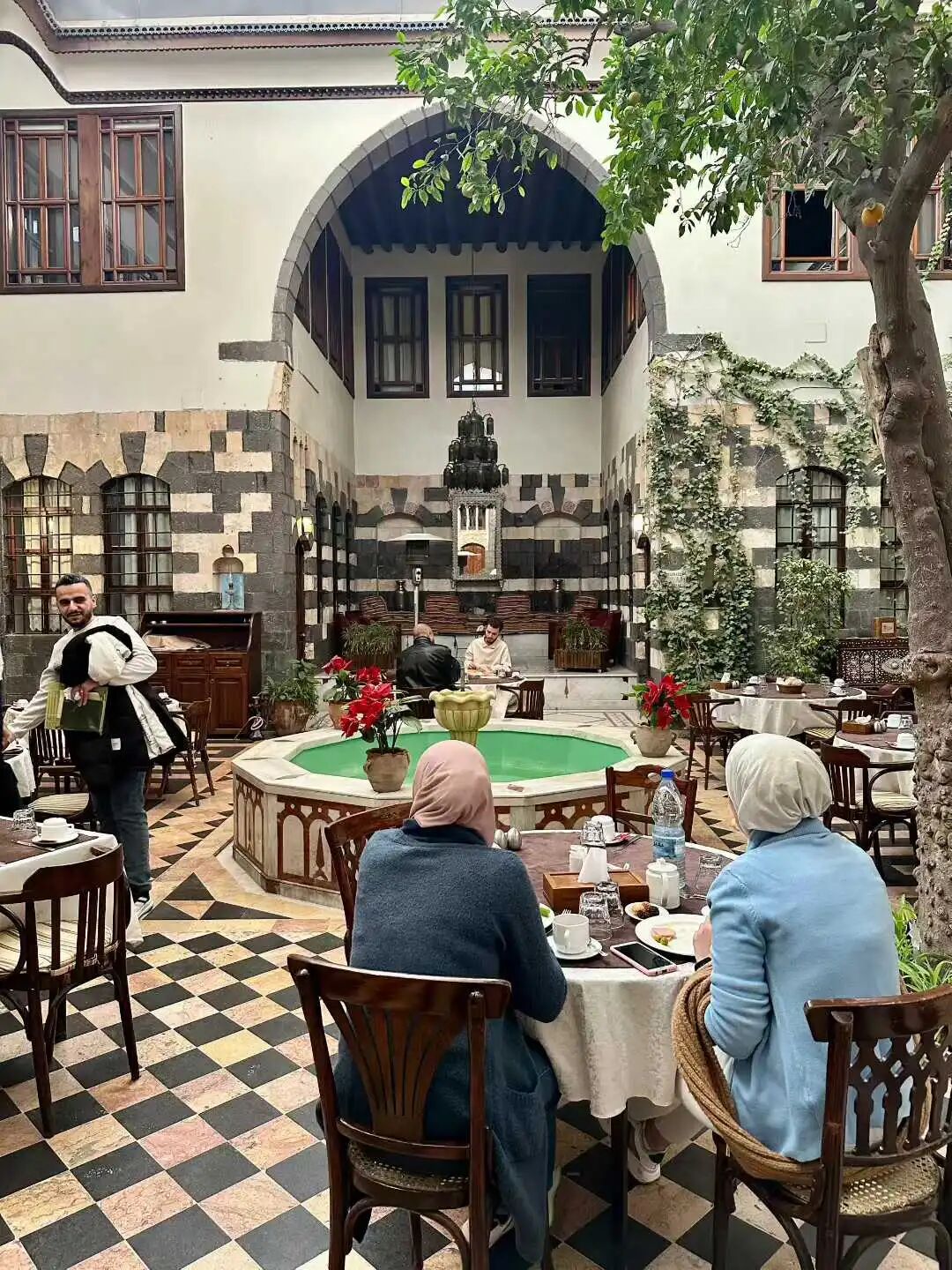
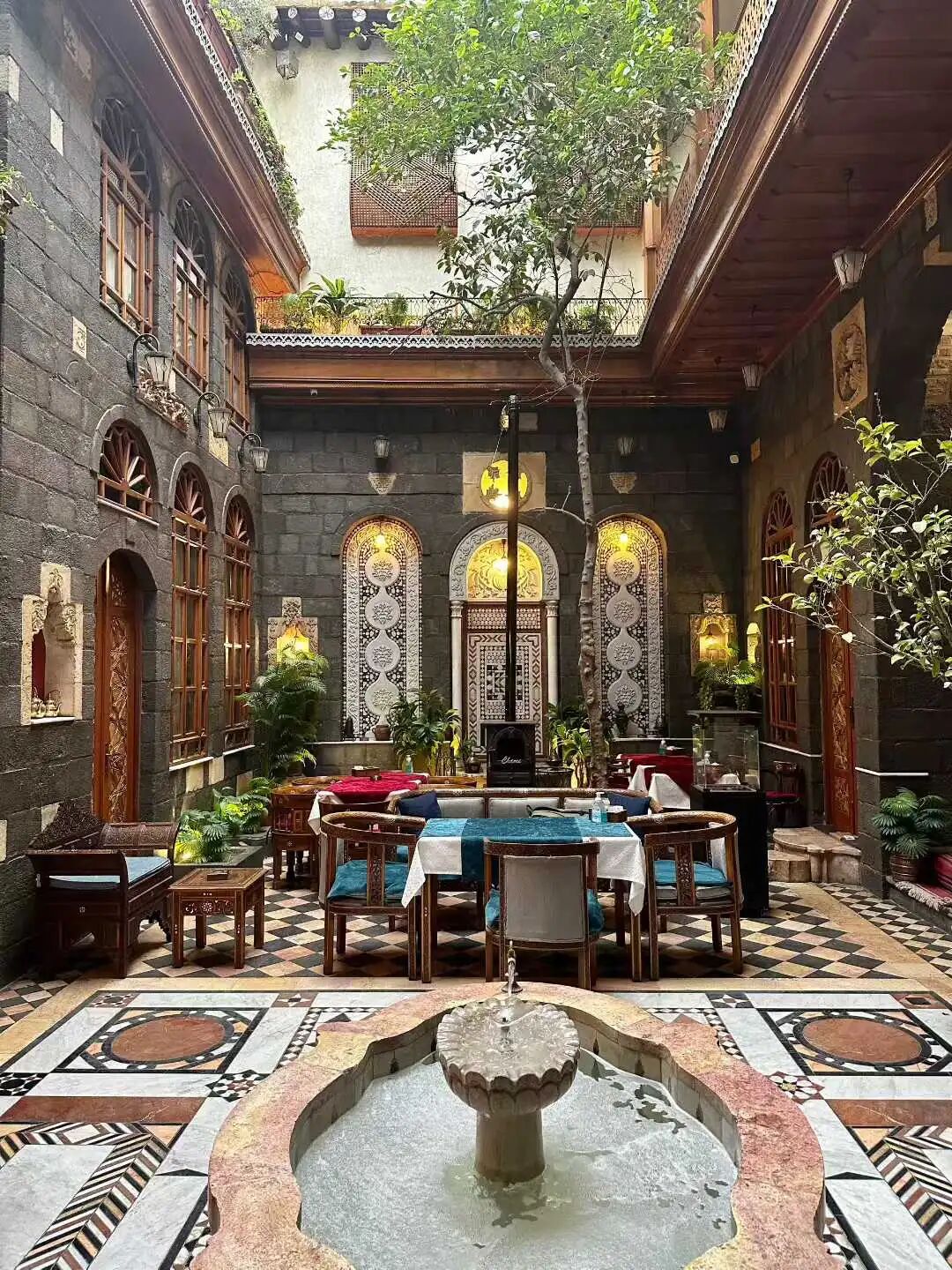
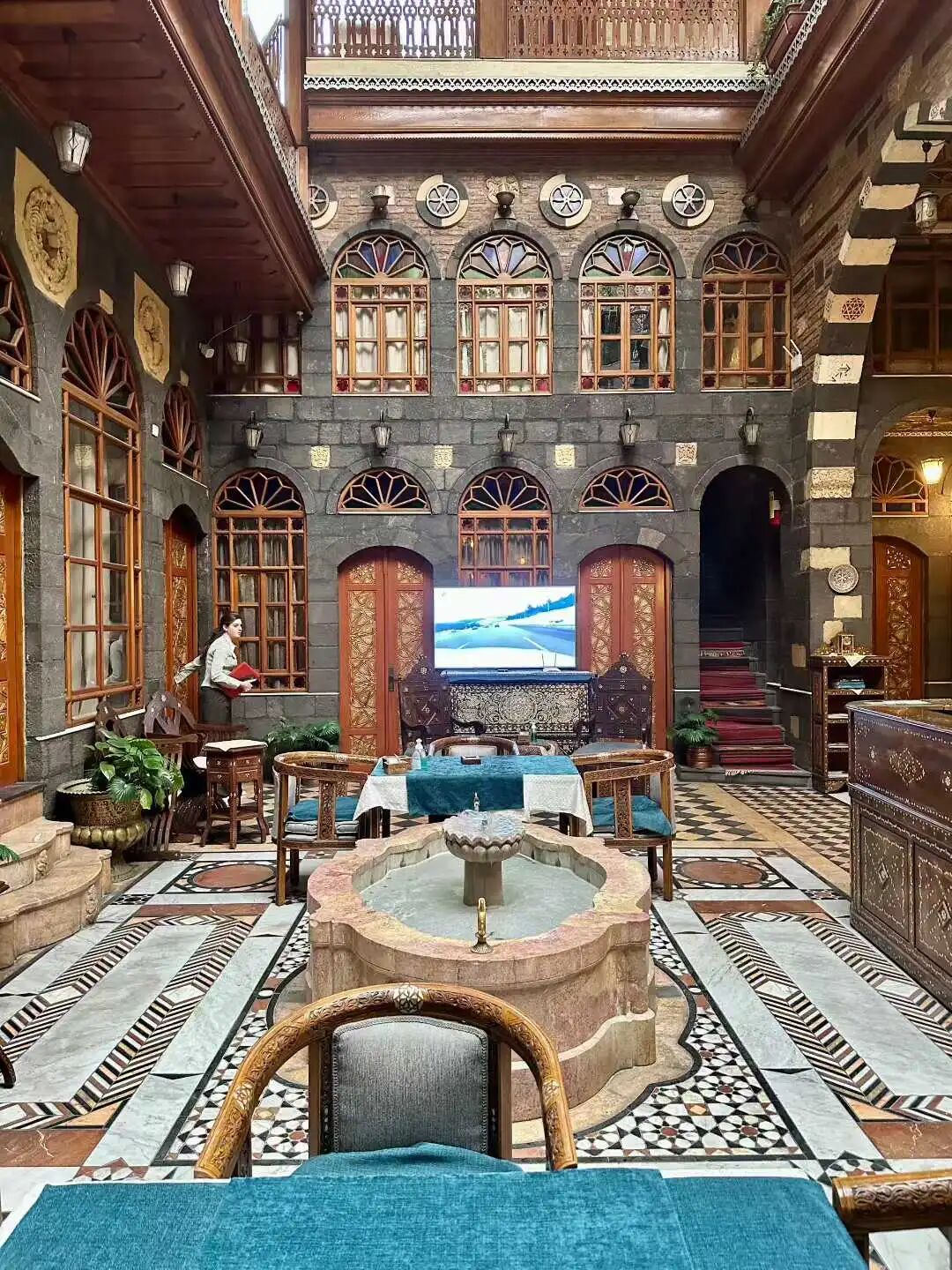
Dar Al Mamlouka is located on the far west side of the Bab Touma Christian Quarter in the old city of Damascus. The main building is a merchant mansion from the 17th-century Ottoman period, but it still has a strong 16th-century Mamluk style. The mansion has an inward-facing layout centered around a courtyard, with high ceilings on one side. The walls are built with alternating black basalt and white limestone bricks in the Mamluk style, and there is a marble fountain in the center of the courtyard.
Dar Al Mamlouka was turned into a hotel in 2005. It is run by the same management as another nearby mansion, Beit al-Mamlouka, but that one is often fully booked. The single room was listed at 122 dollars, but I bargained it down to 110 dollars. The hotel has electricity and Wi-Fi all night. The single room is nice, and a staff member brought me tea right after I checked in. There are orange and lemon trees in the courtyard, which makes it very relaxing.
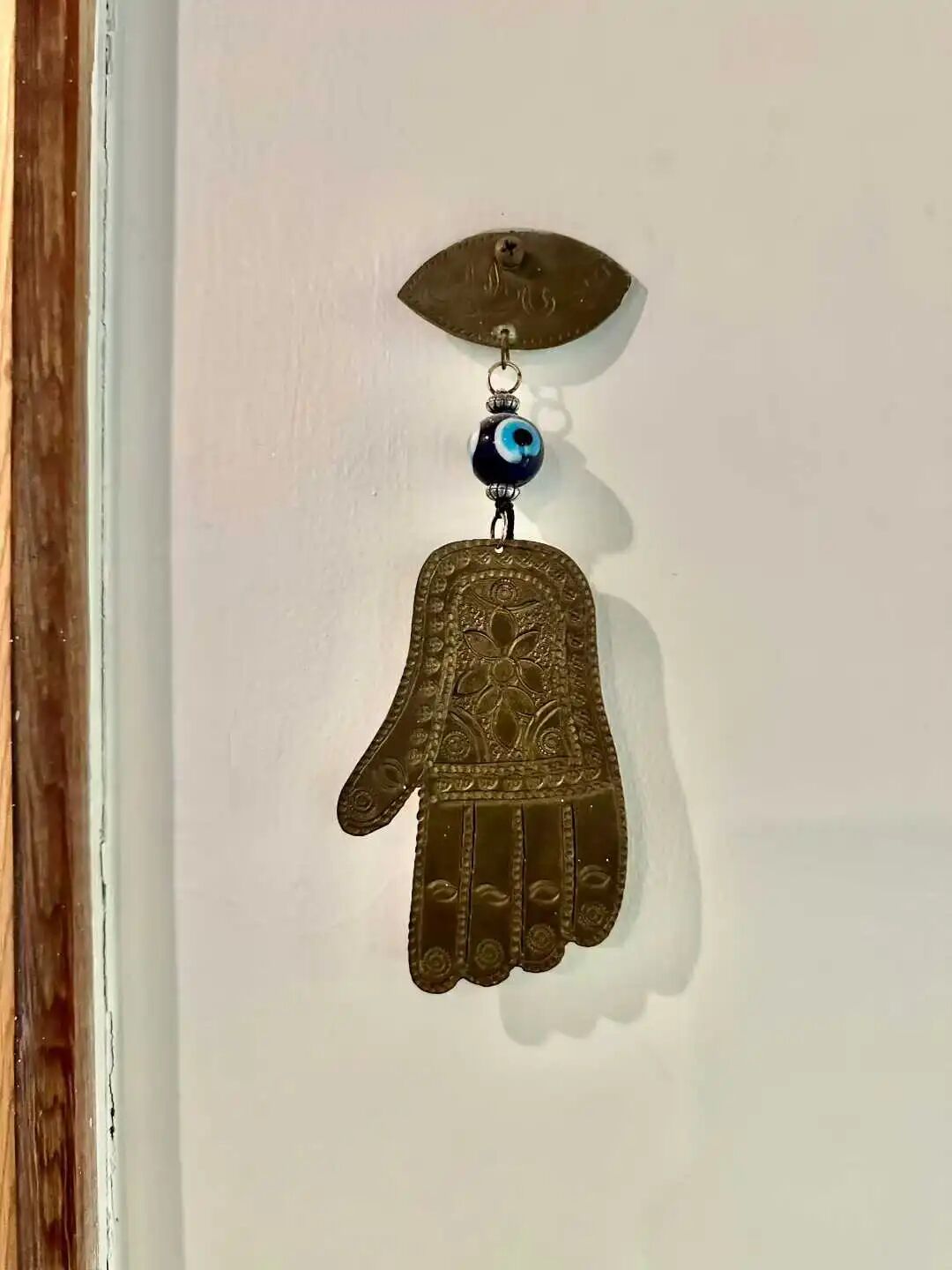
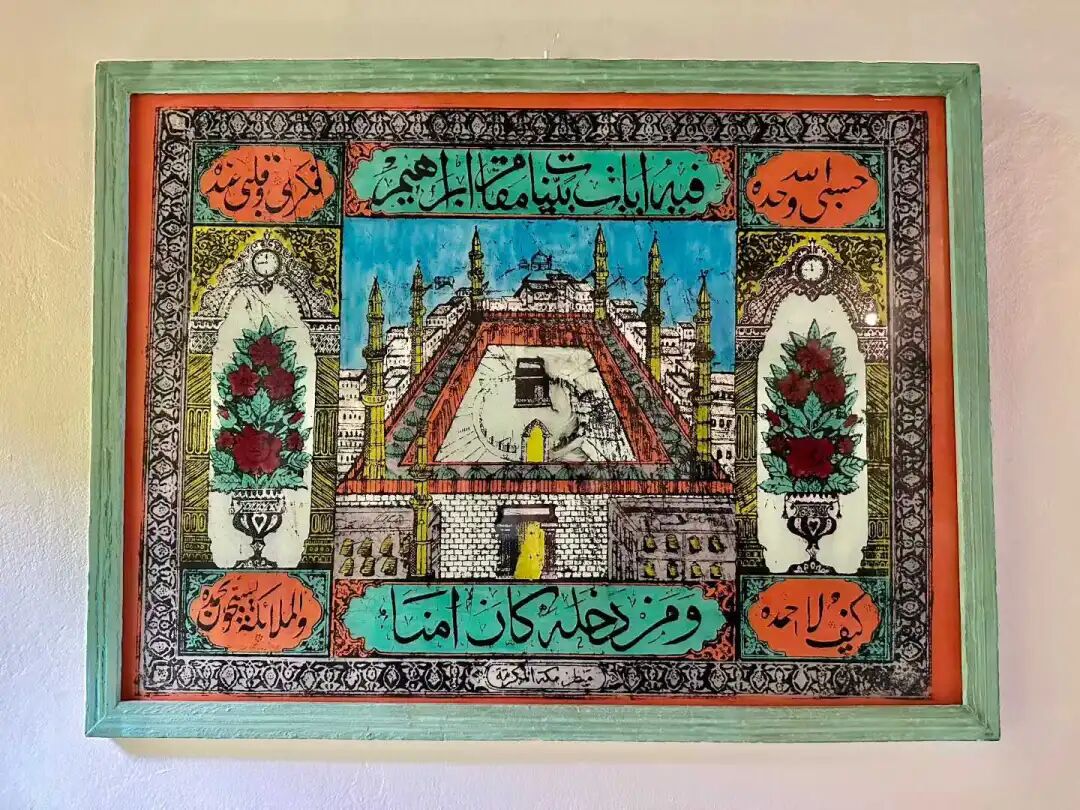
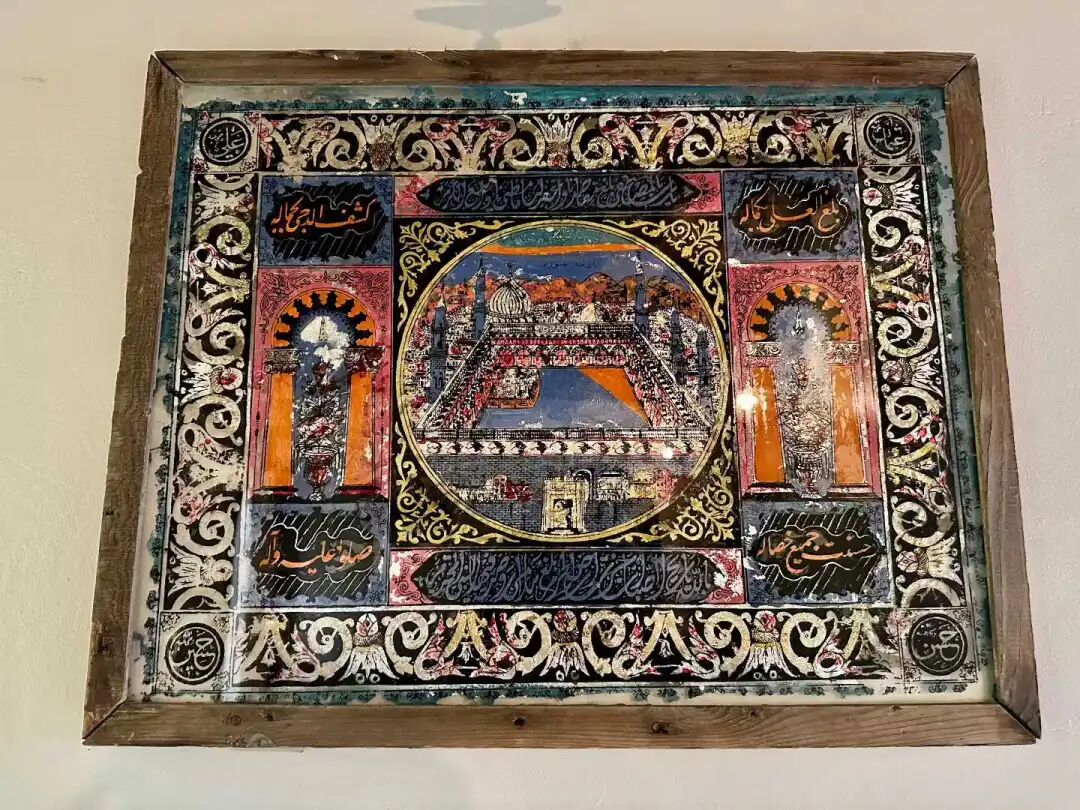
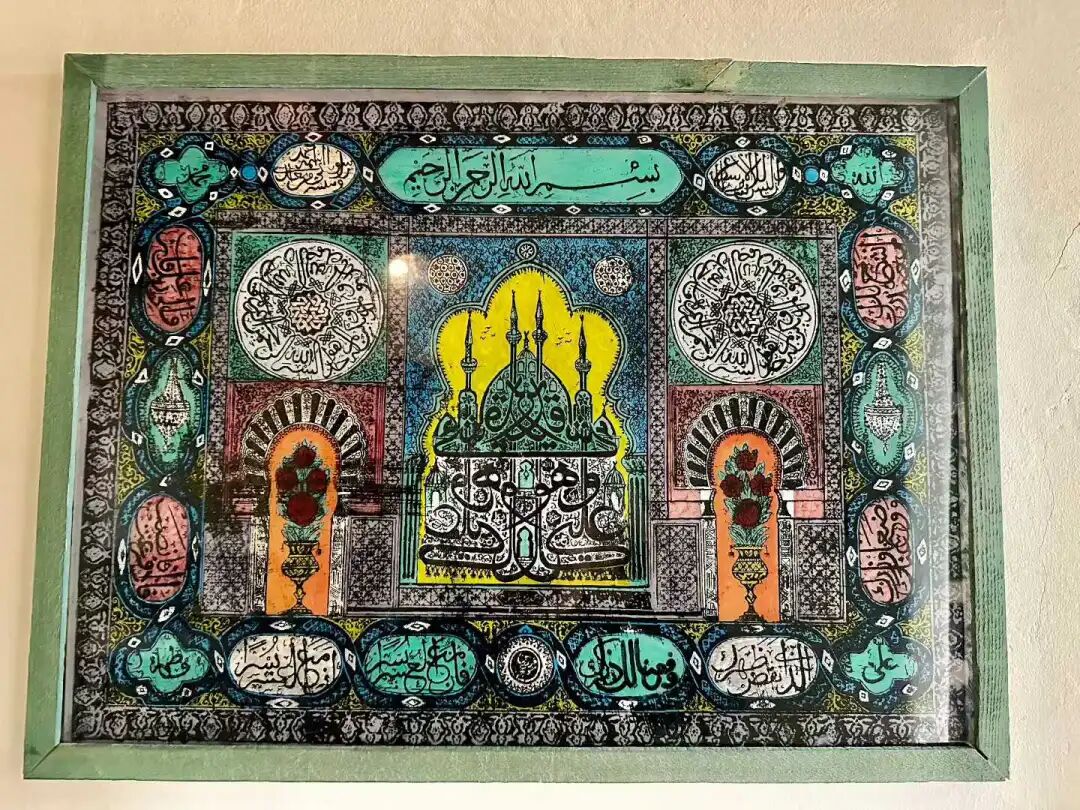
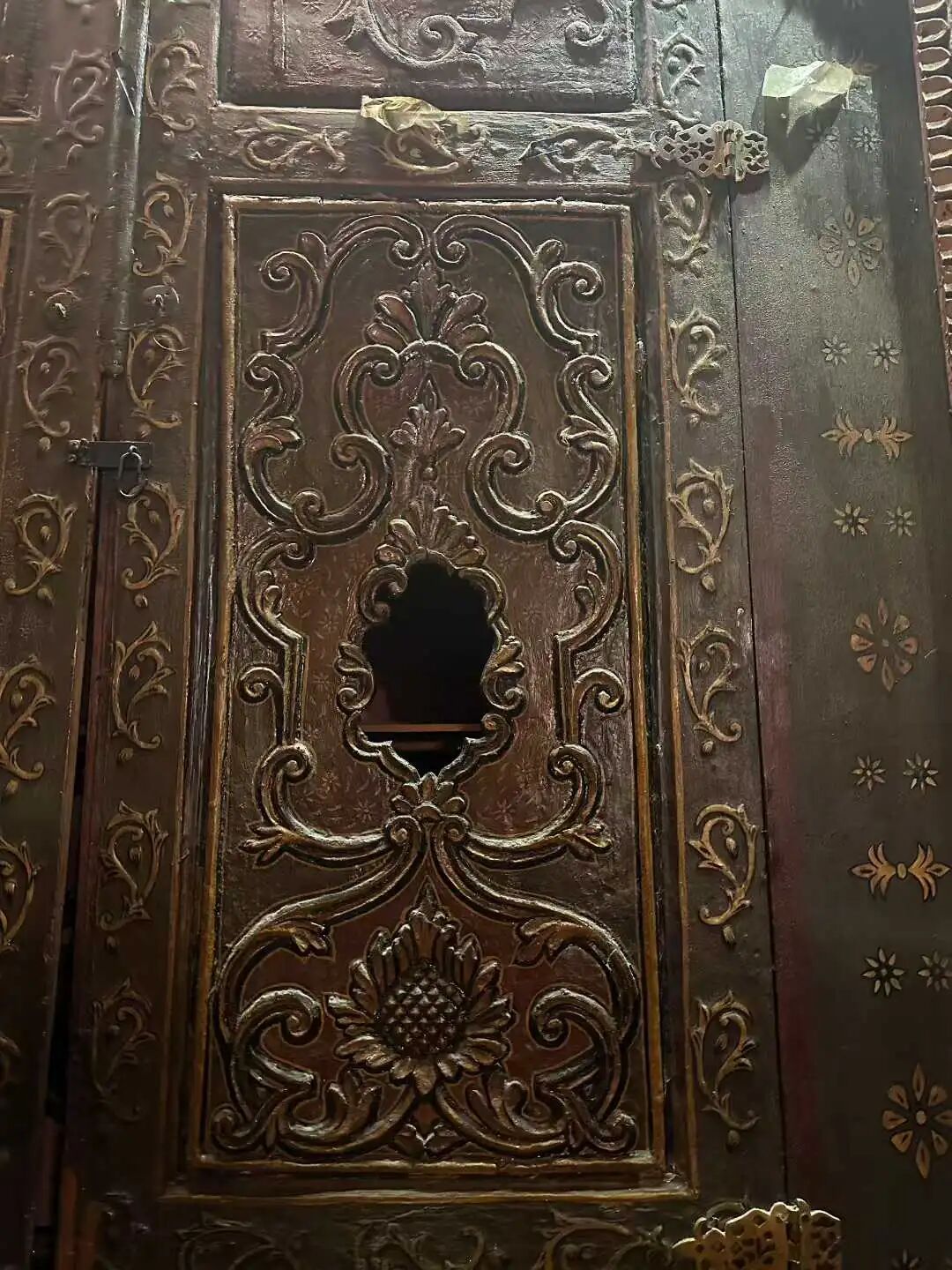
The Islamic decor at Dar Al Mamlouka includes the Hand of Fatima (Hamsa). Its five fingers represent the five pillars of the faith, and it is named after the Prophet's daughter, Fatima. During the Austro-Turkish War in 1788, the Ottoman Empire carried flags featuring the Hand of Fatima as the Grand Vizier led an army of 80,000 against Austria.
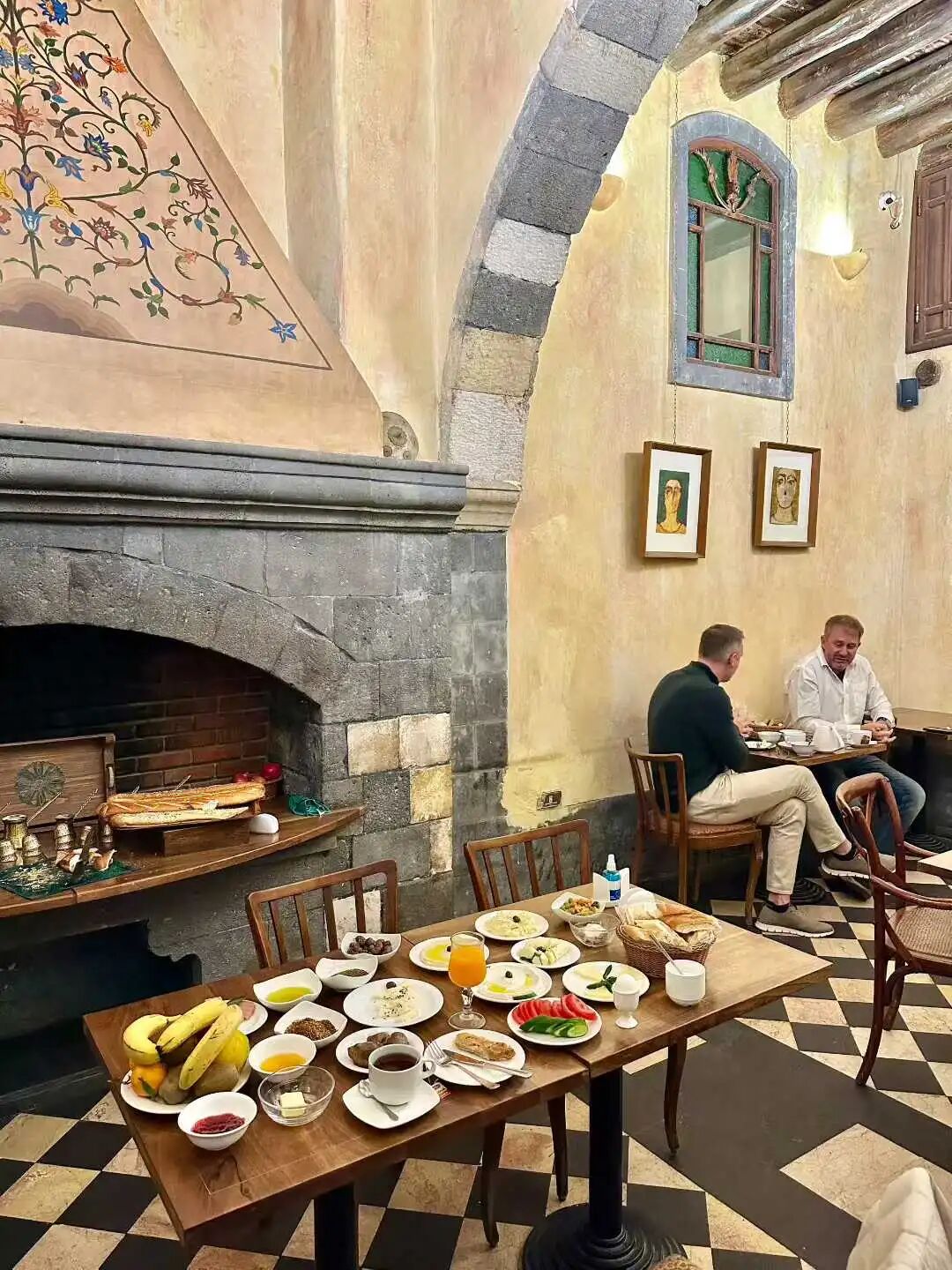
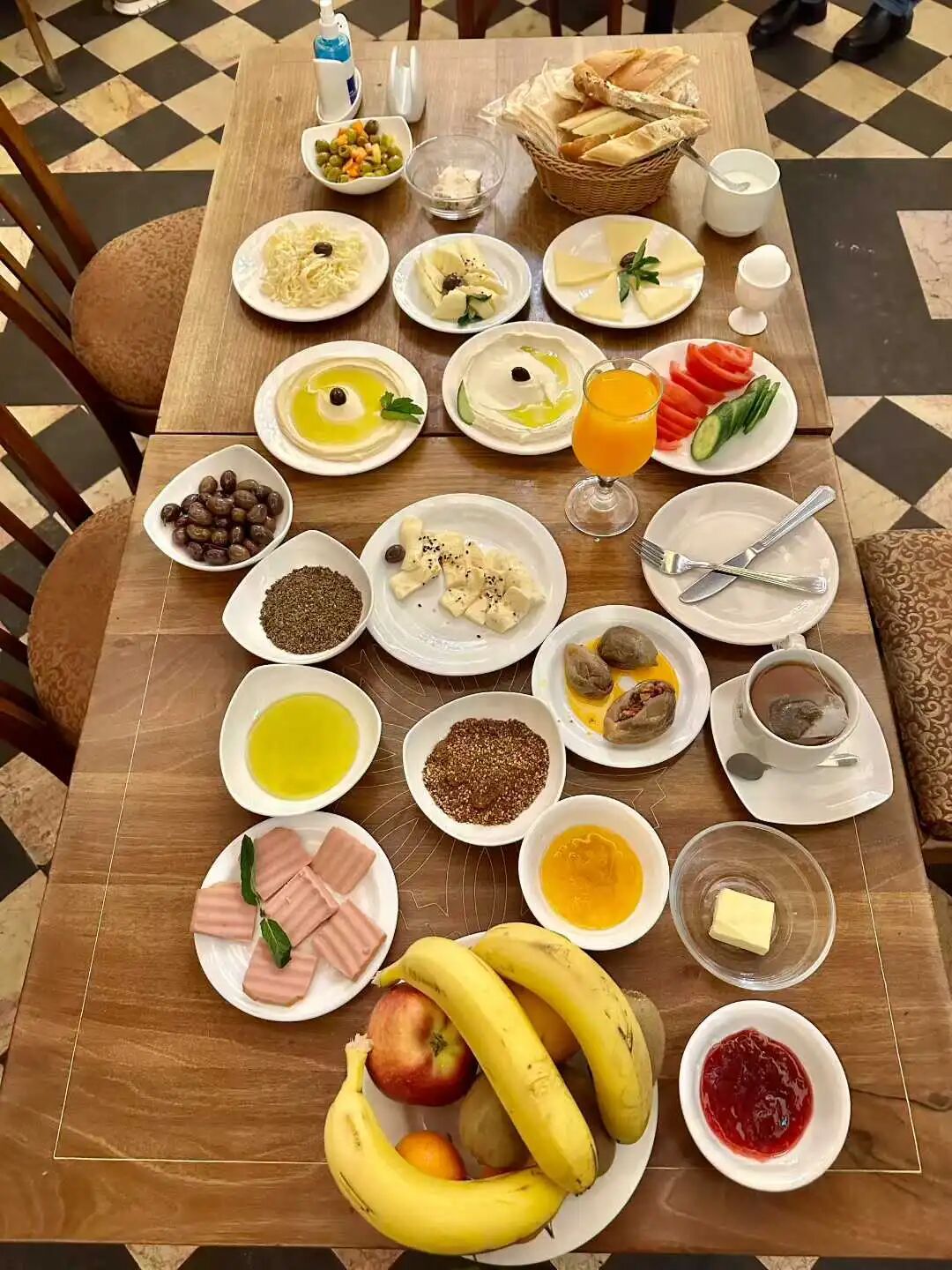
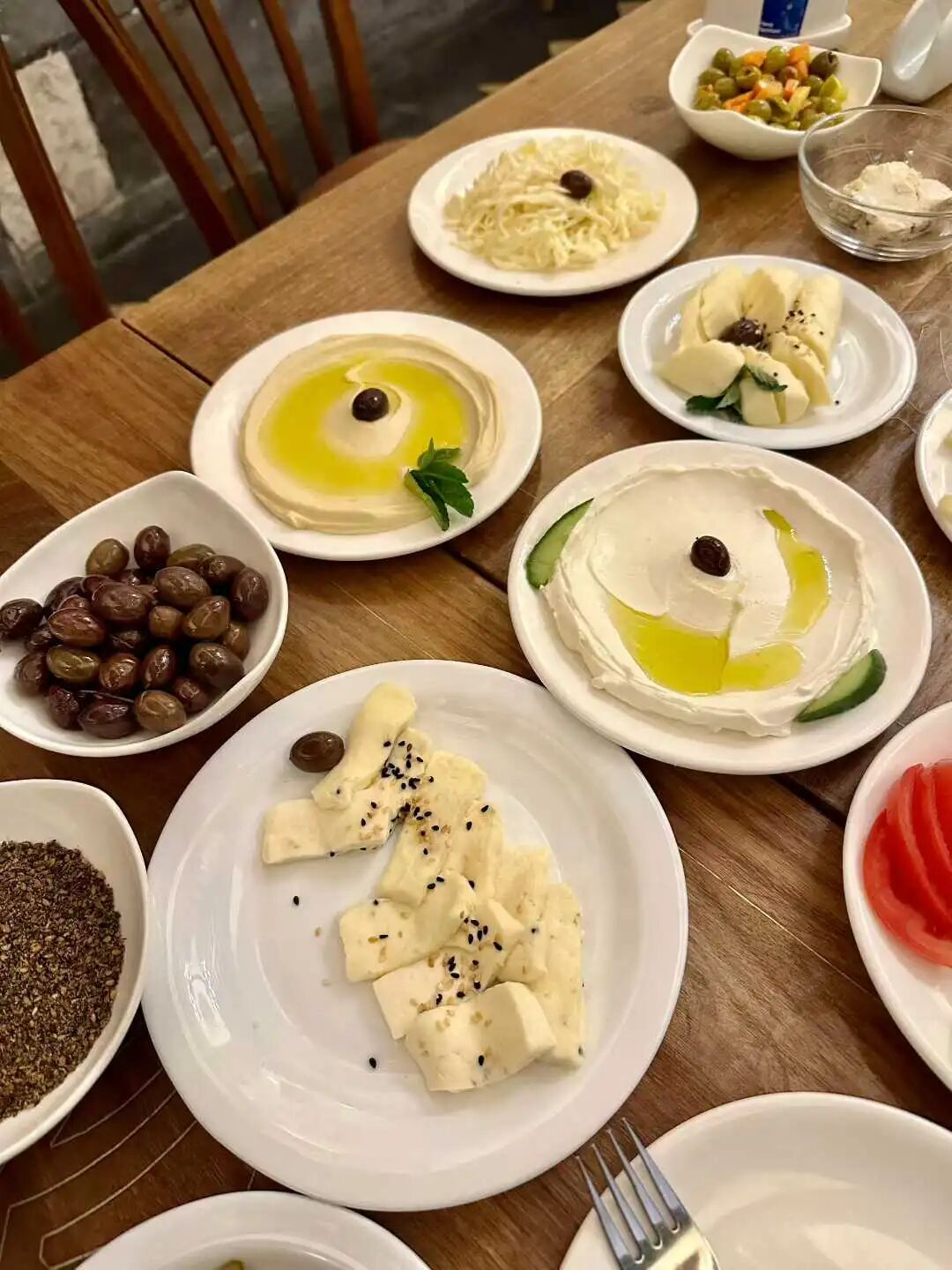
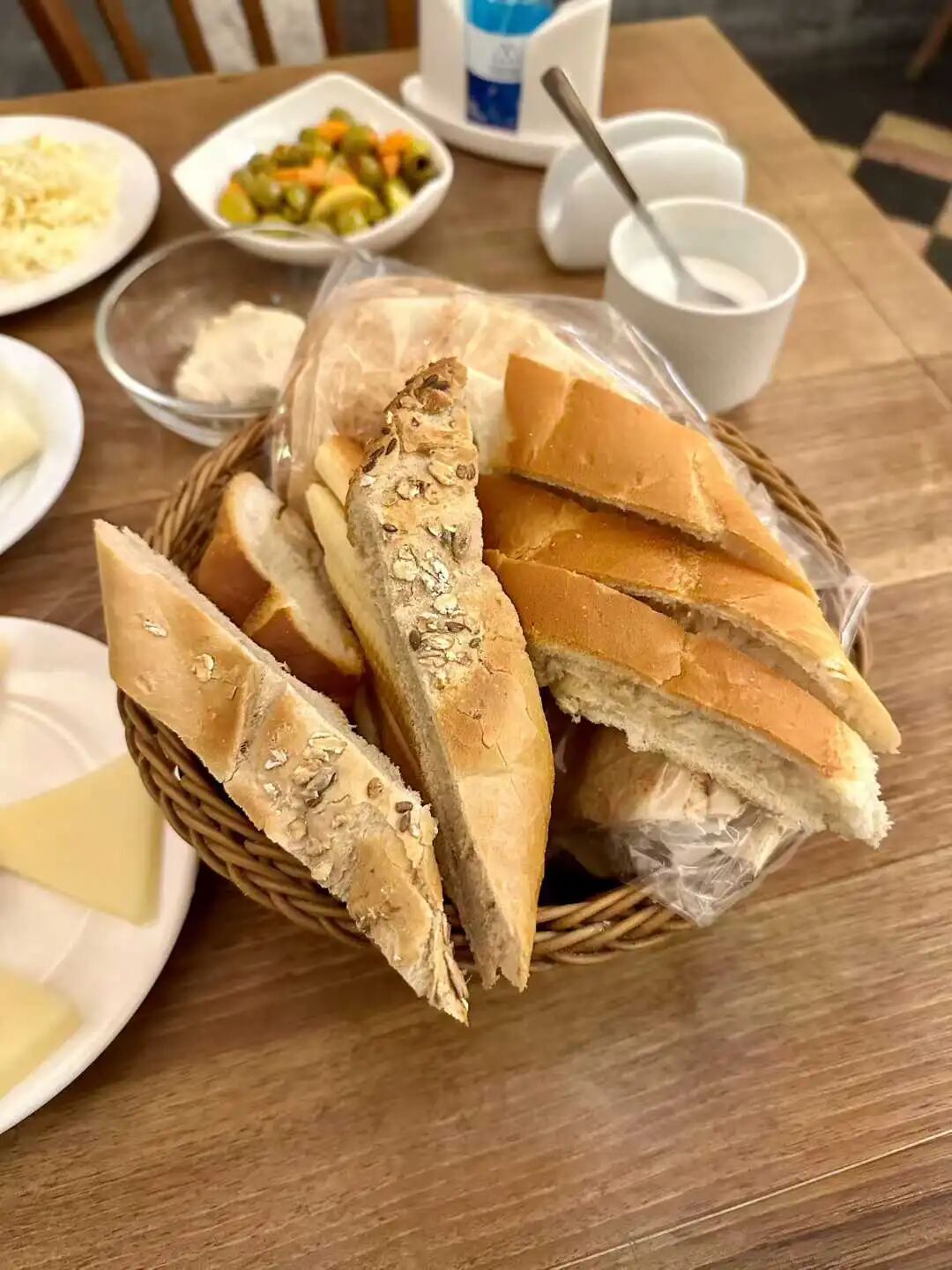
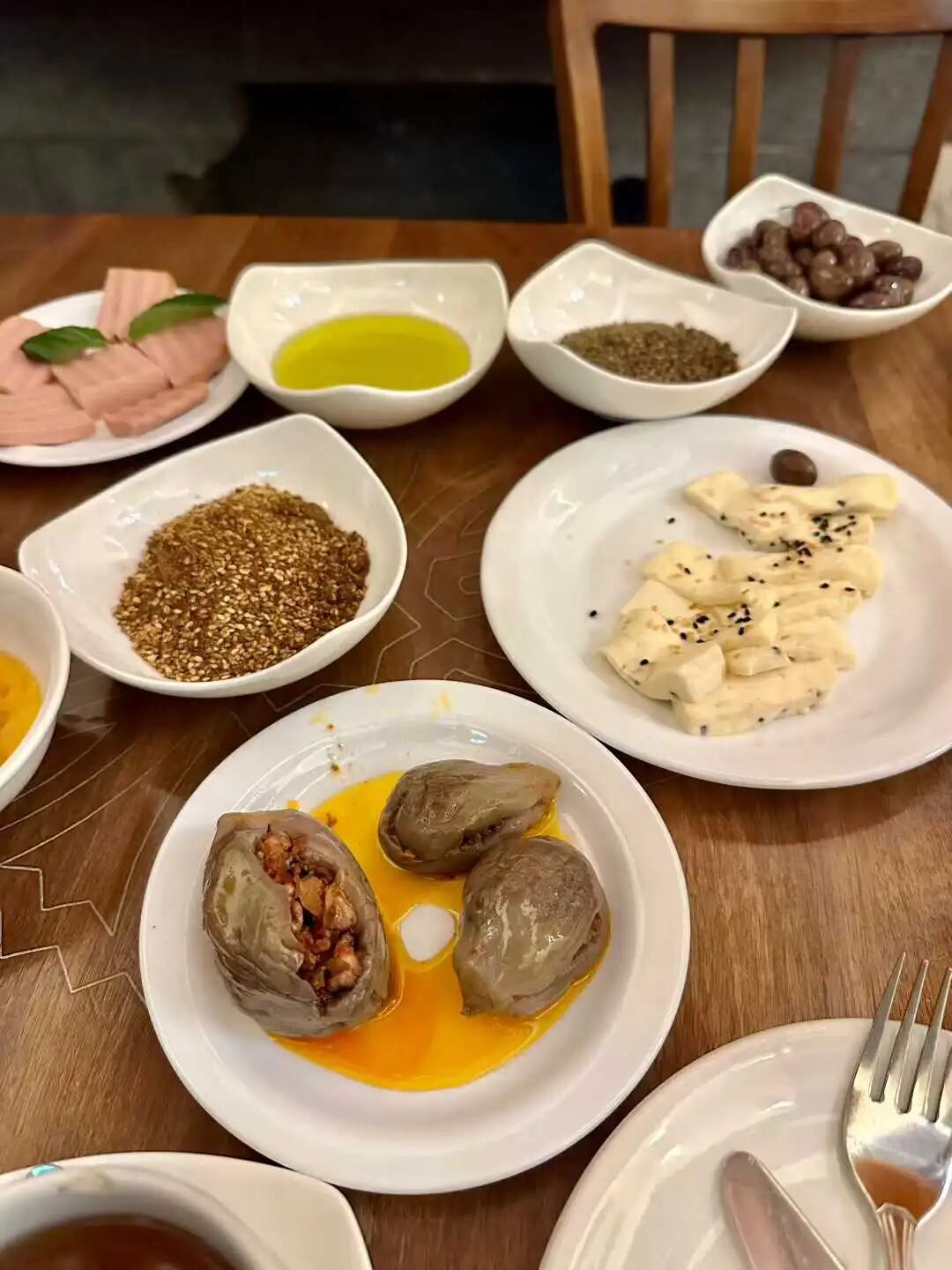
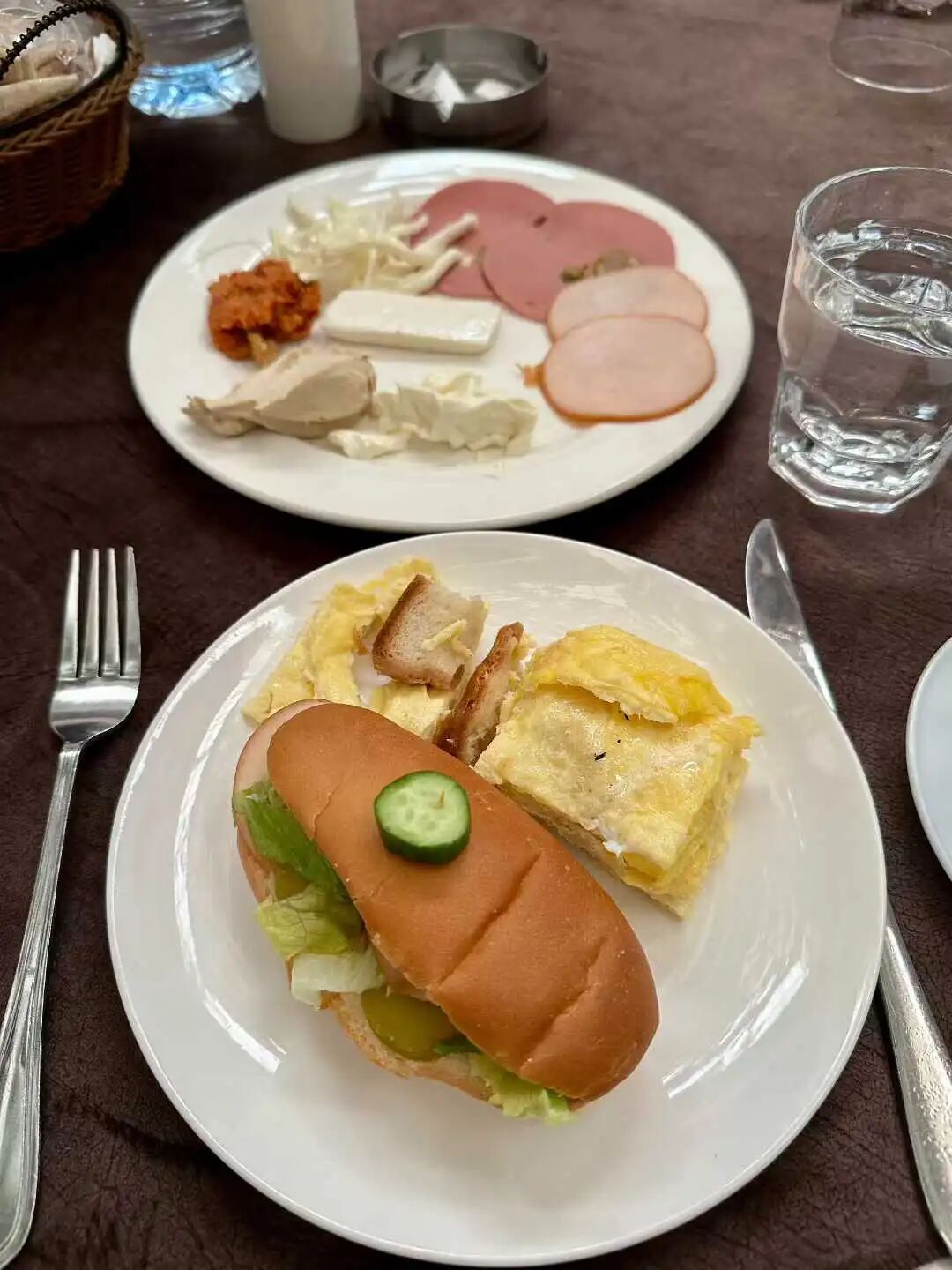
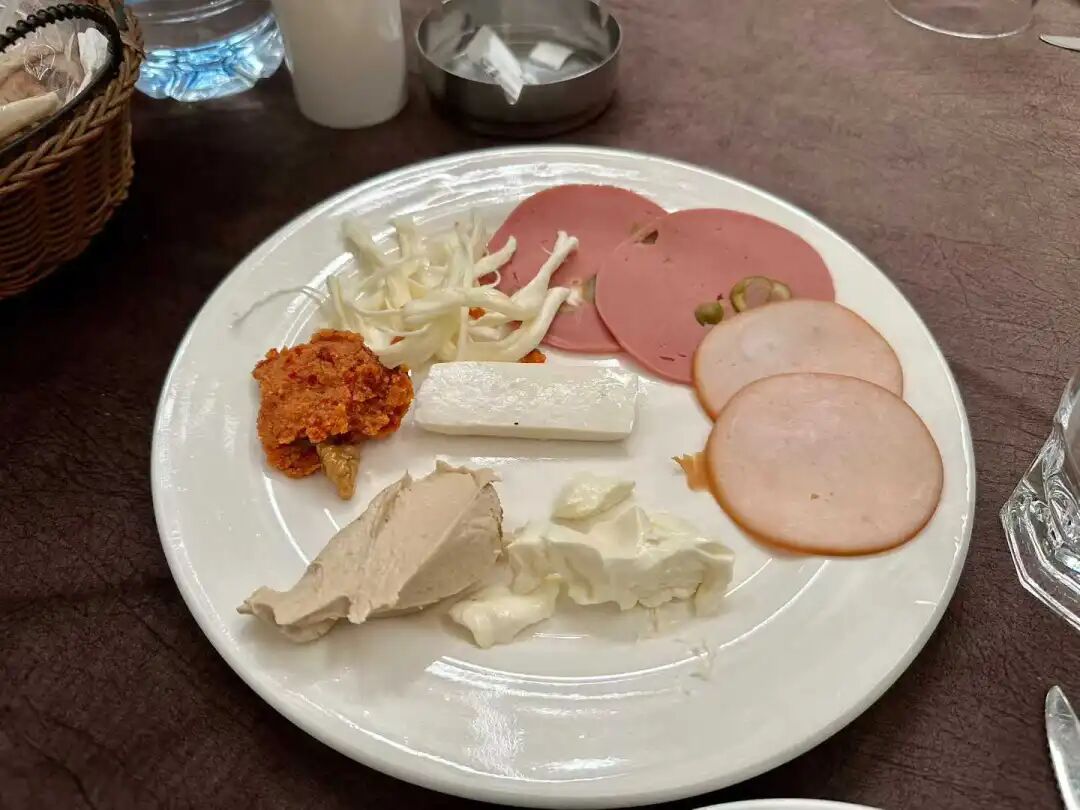
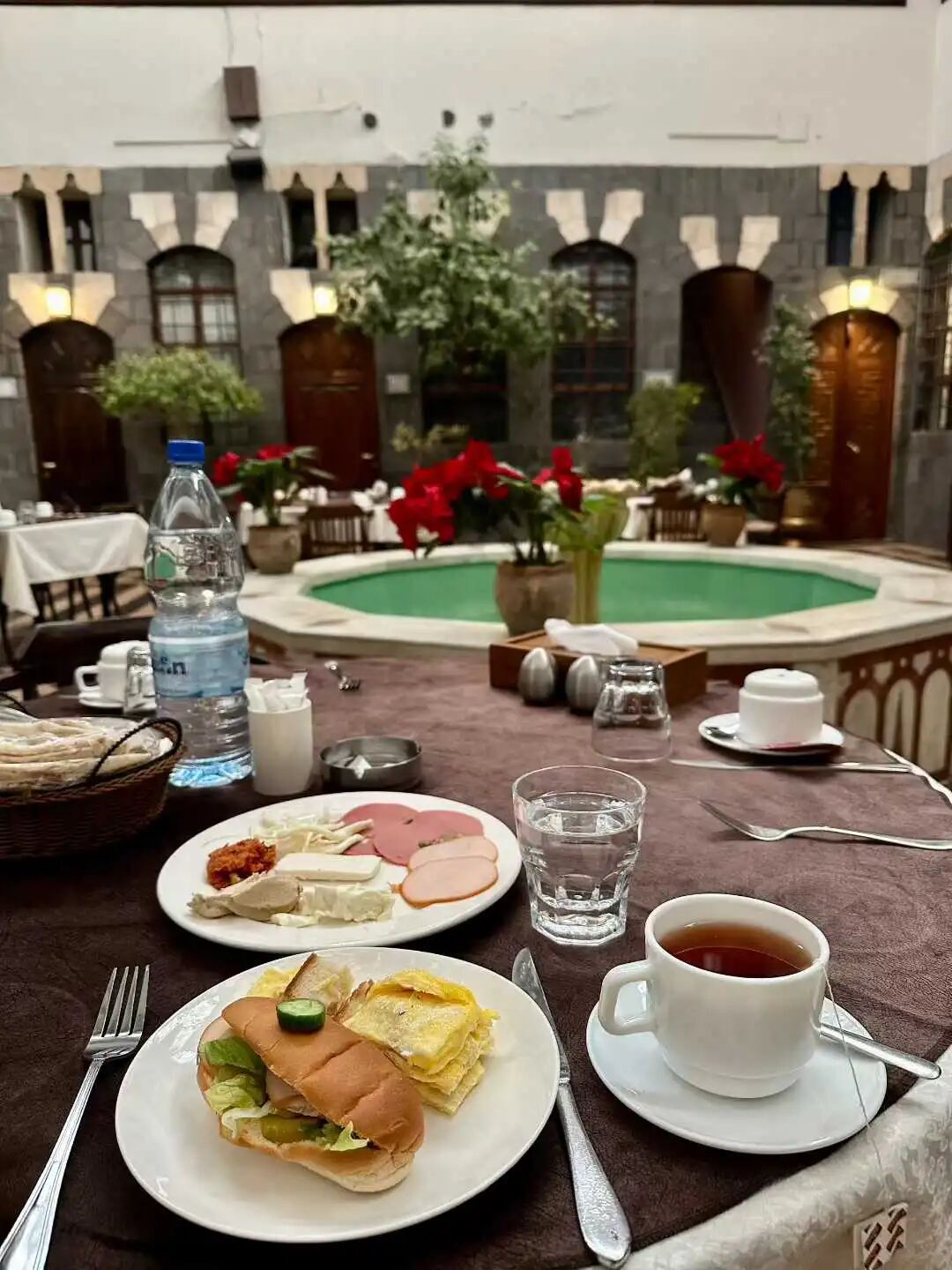
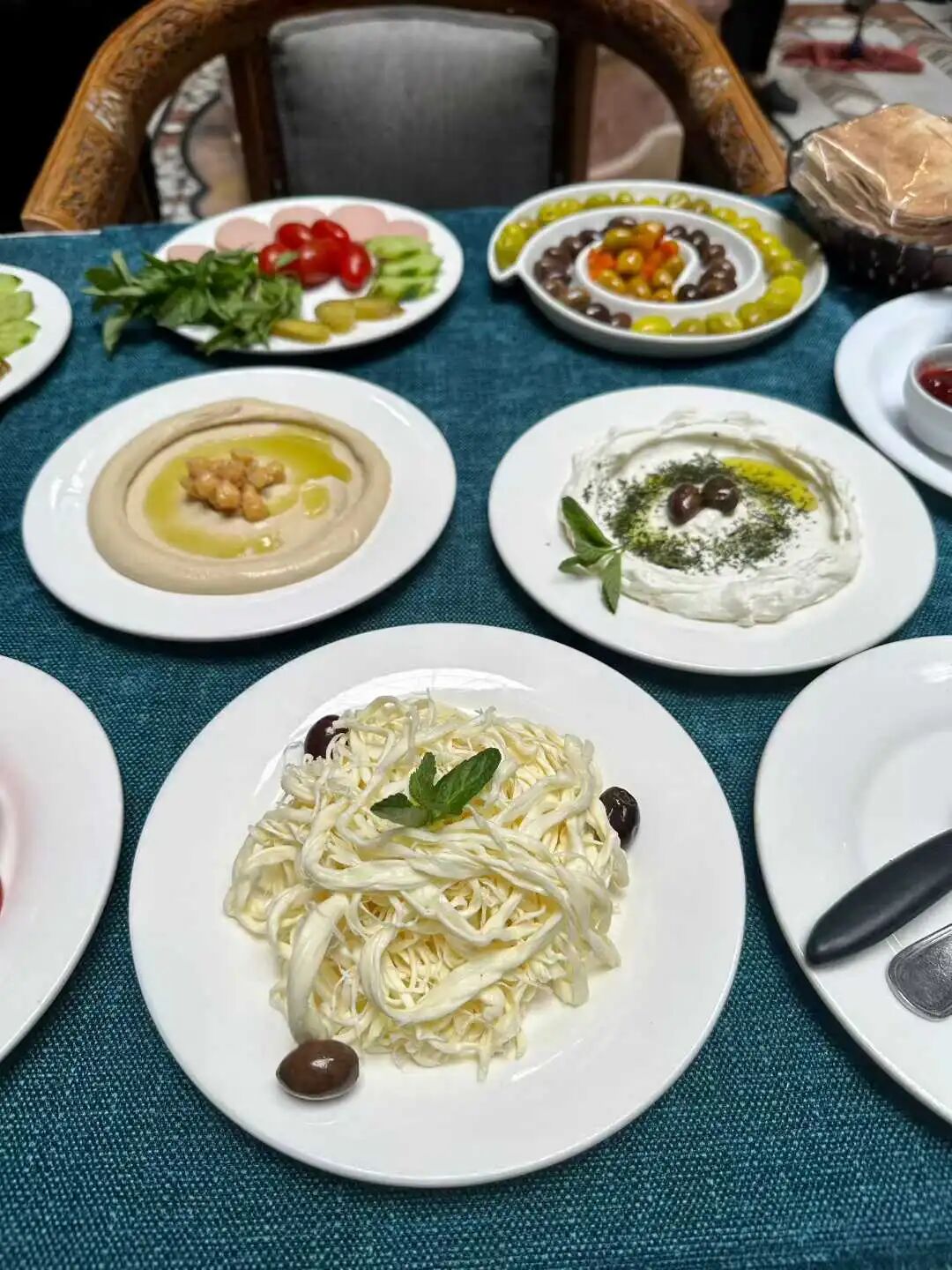
Breakfast at Dar Al Mamlouka is a typical Levantine cold platter served with bread and hot tea. They bring the full set even if you are eating alone. It mainly includes various cheeses, pickled olives, chickpea dip (hummus), jam, fresh cucumber and tomato, fruit juice, olive oil, and sausages. A special item is the pickled eggplant (makdous). These are miniature eggplants stuffed with walnuts, chili, garlic, olive oil, and salt. Syrians usually start pickling them in autumn to eat as an appetizer during winter. The powder on the table is the classic Levantine spice blend (za'atar). It is a mix of Syrian oregano, toasted sesame seeds, dried sumac, and thyme. It has an earthy taste with a hint of citrus and nuttiness, which is very unique.
Dar Al Yasmin Hotel is located in the heart of the Christian Quarter of Bab Touma in the Old City of Damascus. The hotel is tucked away in a small alley, and it feels like a hidden world once you step inside. The hotel is made up of three 18th-century Ottoman mansions—two large and one small. It features a central courtyard, a fountain, a reception area (liwan), hand-painted wooden ceilings, traditional brick and stone structures, and carved doors and windows. The mansion changed hands many times after the 19th century until the Jasmine Hotels group took it over in 2005. They restored and opened it, making it a classic example of revitalizing a traditional Middle Eastern residence.
The single room was listed at 140 dollars, but I bargained it down to 125 dollars. The small alley at the entrance can get flooded when it rains, but overall it is a great value.
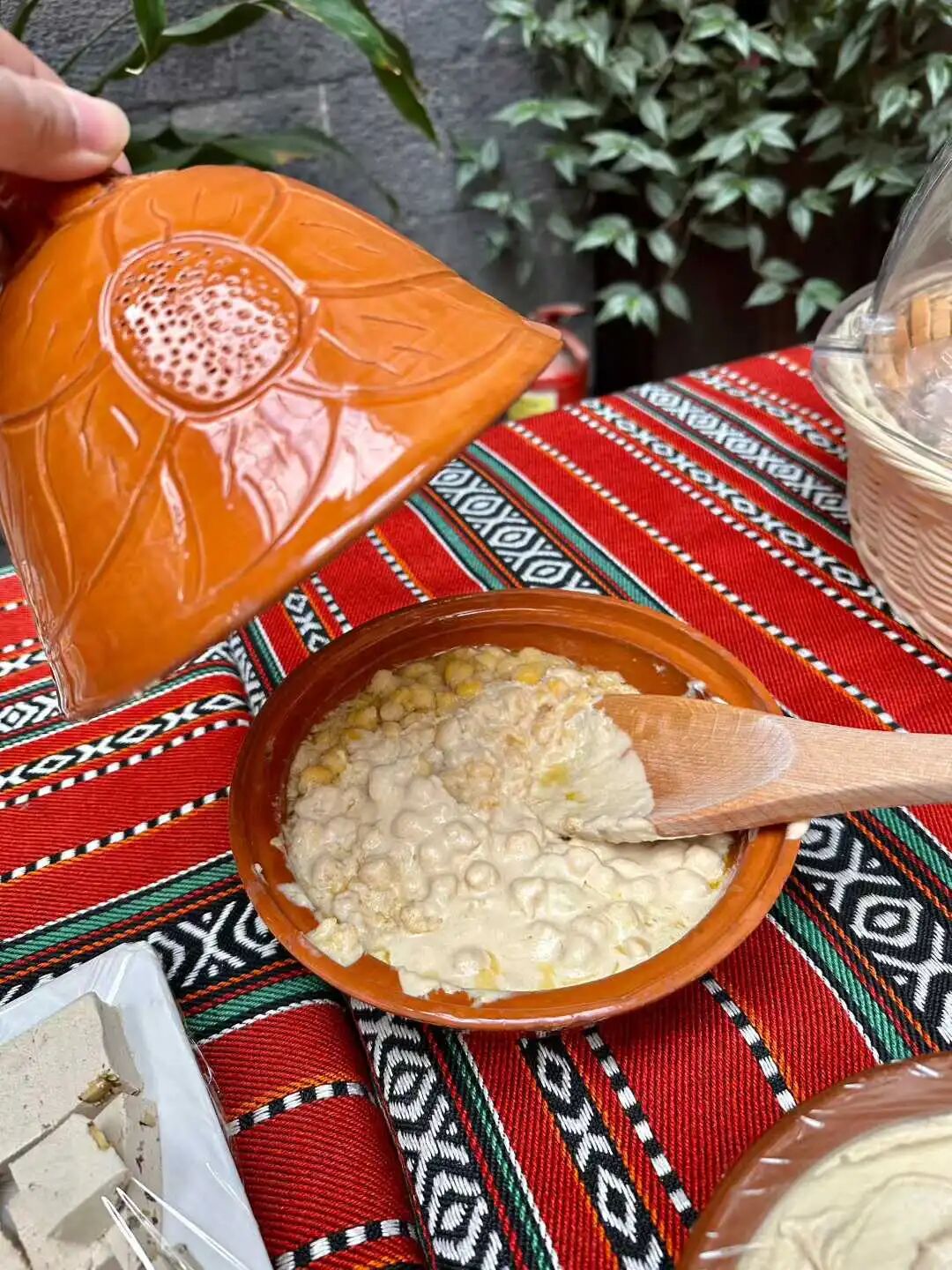
For breakfast at Dar Al Yasmin Hotel, the chickpea and sesame paste dip (hummus musabaha) is worth trying. Musabaha means swimming, as if the chickpeas are swimming in the sesame paste.
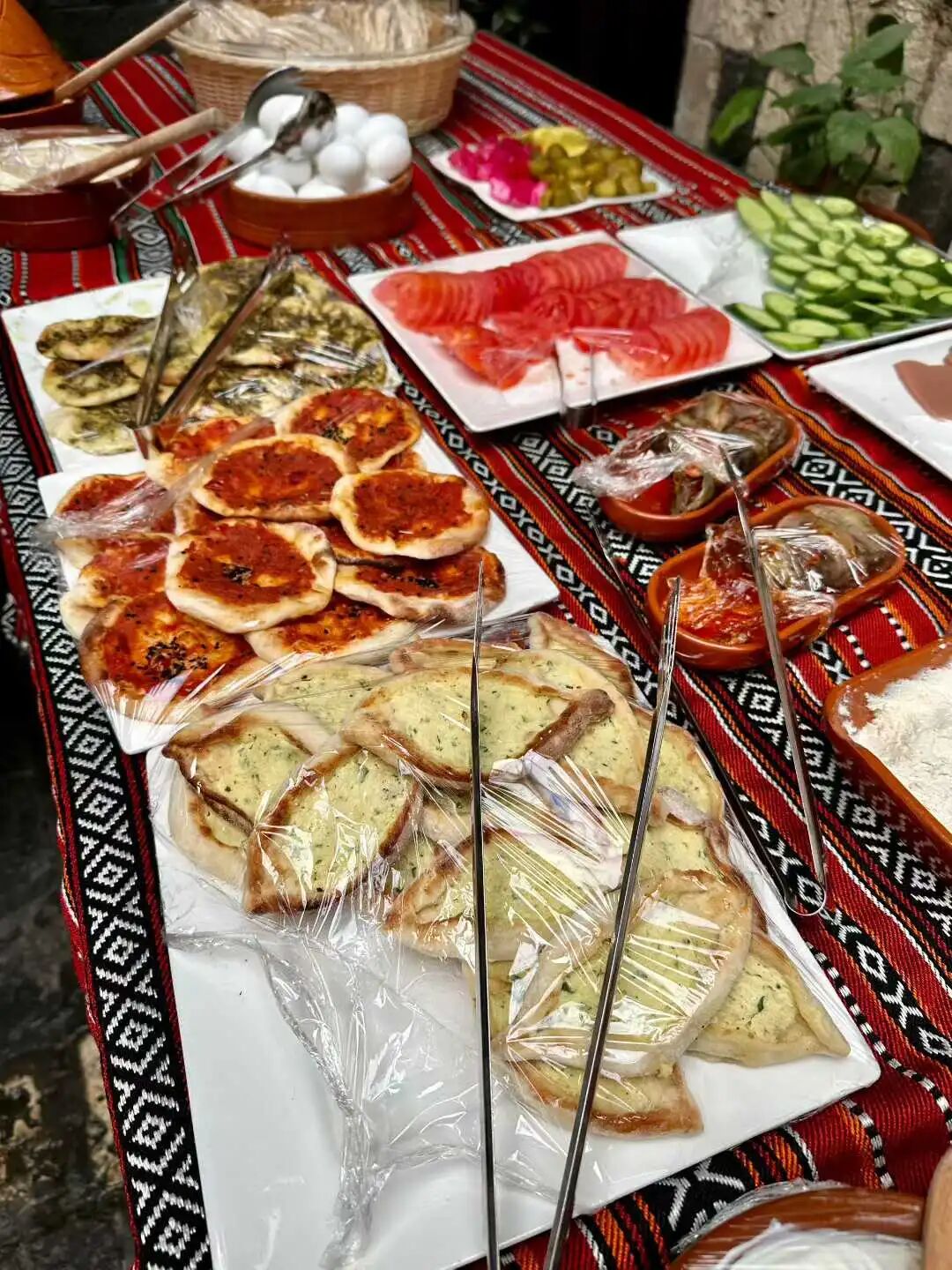
They also serve flatbread (manakish) in three varieties: with spice blend (za'atar), tomato, or cheese. Manakish originated from the traditional bread of the ancient Phoenicians and was added to the UNESCO Intangible Cultural Heritage list in 2023.
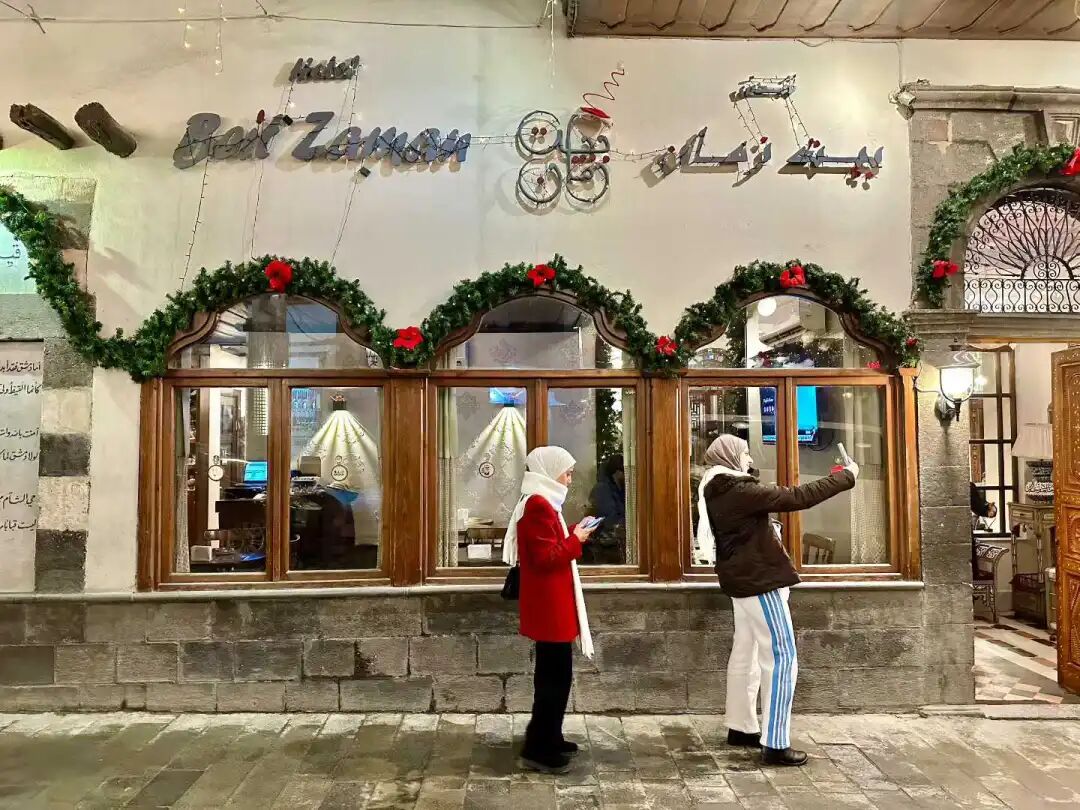
Beit Zaman Hotel is in the Christian Quarter of Bab Touma in the Old City of Damascus, right on the ancient Roman street (Via Recta). Their single room was listed at 150 dollars, but I bargained it down to 135 dollars.
The hotel opened in 2008 after five years of connecting and restoring three 17th-century Ottoman mansions. It kept original features like stone carvings, wood carvings, mosaics, and fountains. The wooden Ajami-style ceilings and the traditional courtyard layout are the most impressive parts.
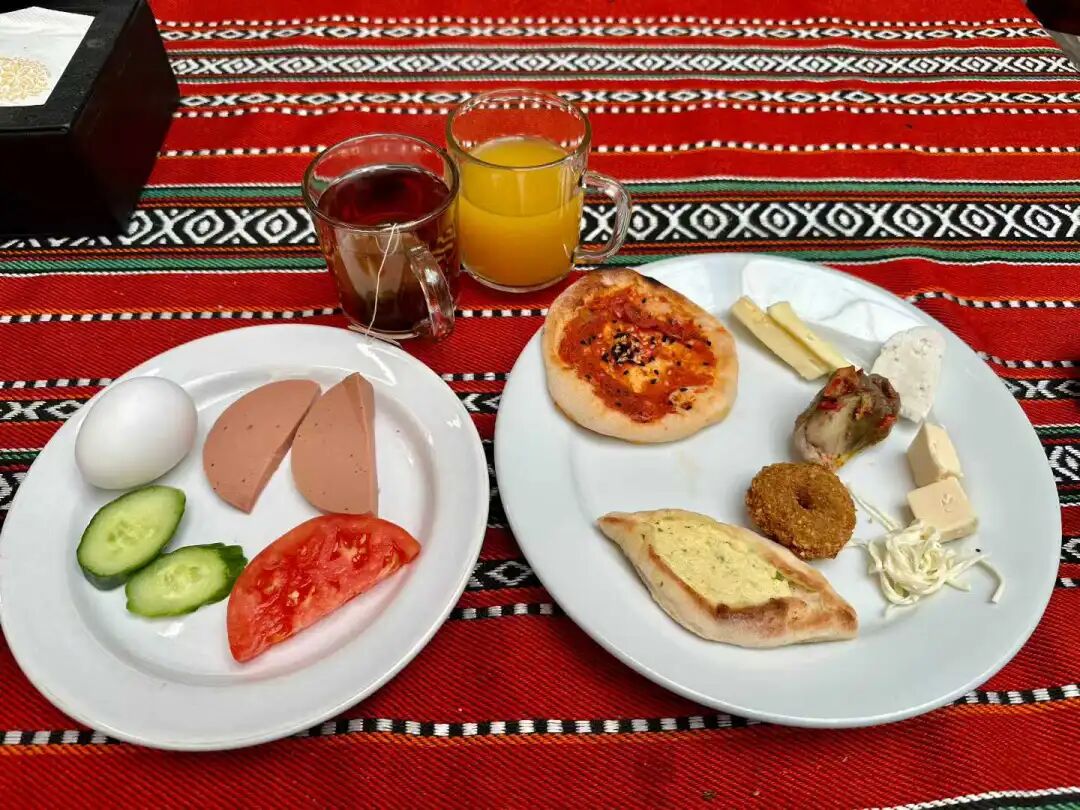
The buffet breakfast at Beit Zaman Hotel includes sausages, cheese, bread, olives, and chickpea dip (hummus). The red dipping sauce is called Muhammara. It is a Syrian appetizer made from walnuts, red bell peppers, pomegranate molasses, and breadcrumbs.
Albal Hotel is near the Bab Touma gate in the Old City of Damascus. It is likely the most convenient for transportation. A single room costs 80 dollars, which is the lowest price, but the power is weak and it is almost impossible to charge a phone. Choose carefully.
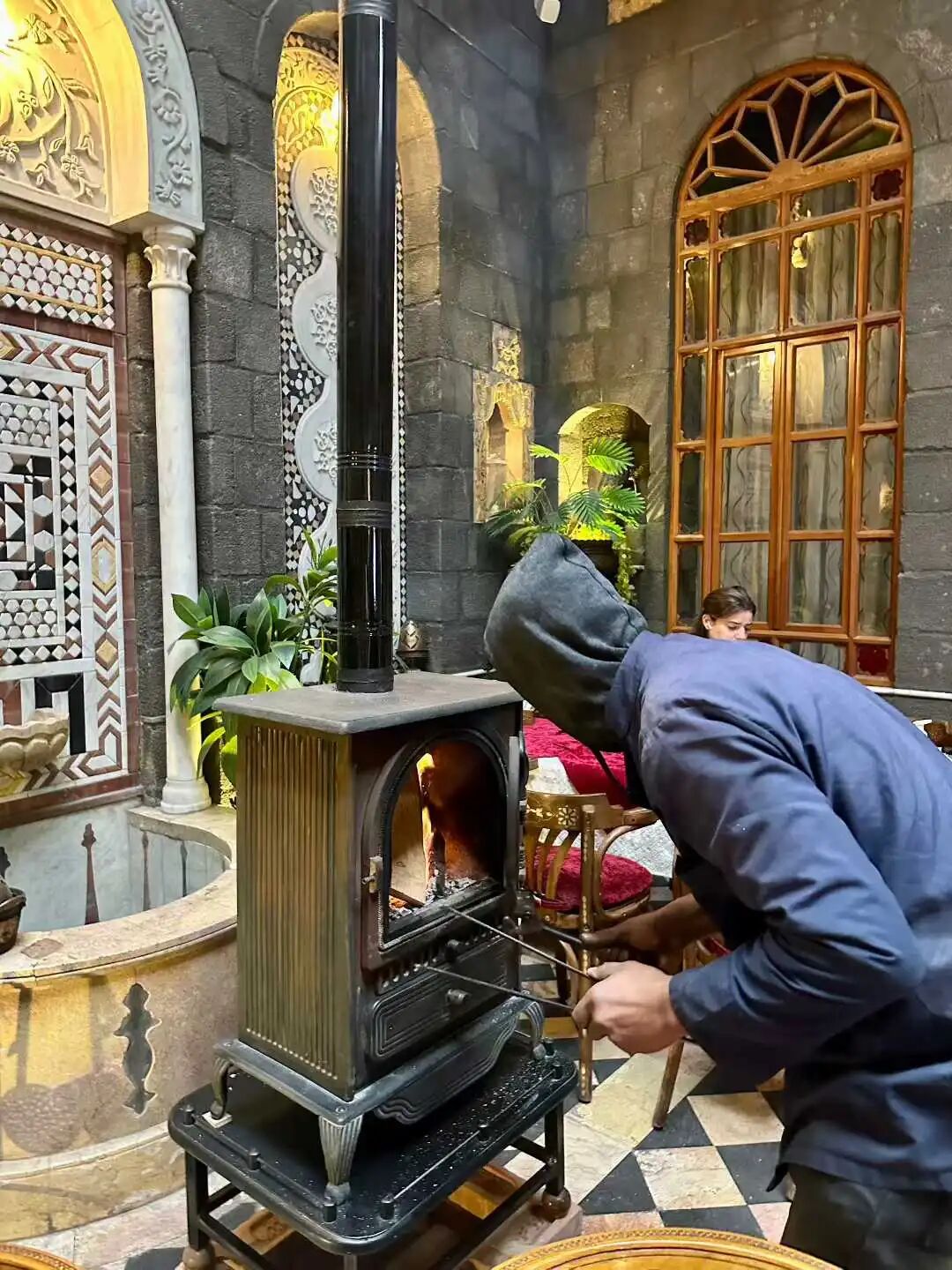
Albal Hotel is a converted Ottoman mansion rebuilt after the 1759 Damascus earthquake. It has a courtyard fountain and wood carvings. The breakfast is quite good, and they light a stove in the courtyard during winter.
Al Shahbandar Palace Hotel is on the west side of the Christian Quarter near Bab Touma in the Old City of Damascus, right on the busy Al Qemaryeh market street.
The hotel is inside an Ottoman noble mansion built in the 16th century. The Shahbandar family, a famous modern political family in Damascus, lived here for a long time. The famous nationalist leader Abdul Rahman Shahbandar came from this family. The Shahbandar family renovated the mansion on a large scale in the early 20th century and used it as a place to host guests for a long time. In 2007, it was converted into a historic hotel after adding private bathrooms, air conditioning, and electrical systems, while strictly preserving the facade, courtyard, and historical components.
Today, the mansion's courtyard is open as a cafe. You can drink coffee there, so you do not have to stay at the hotel to experience this Ottoman mansion.
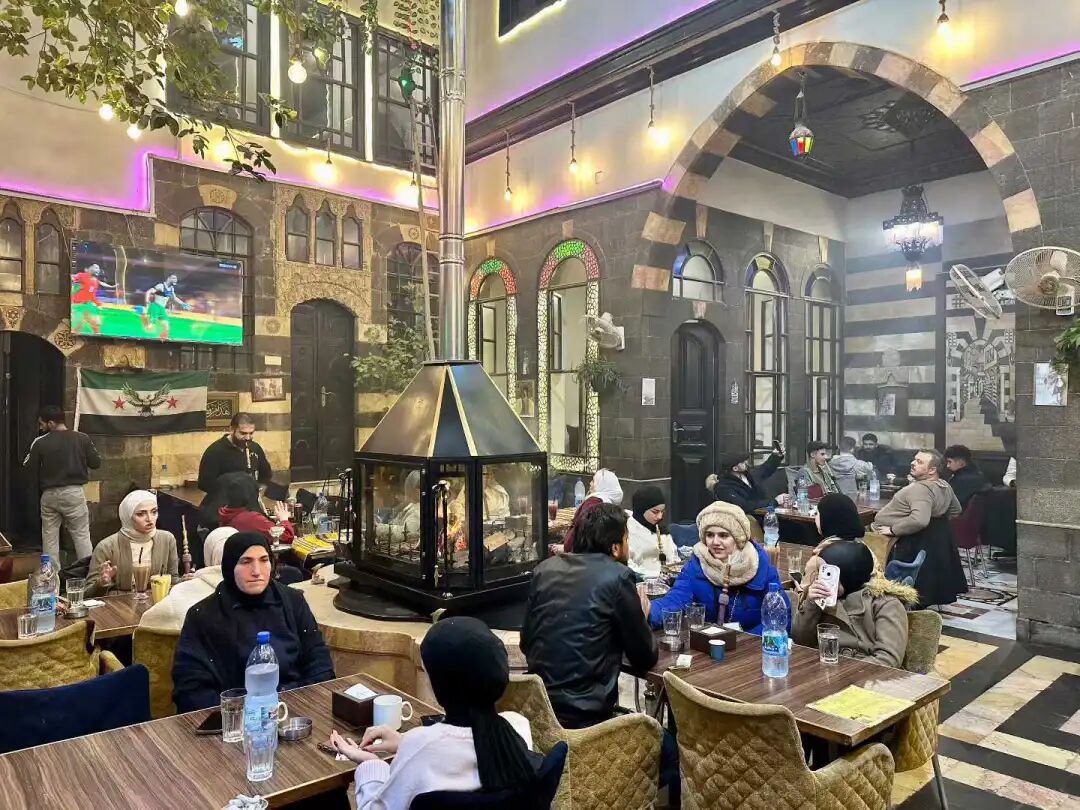
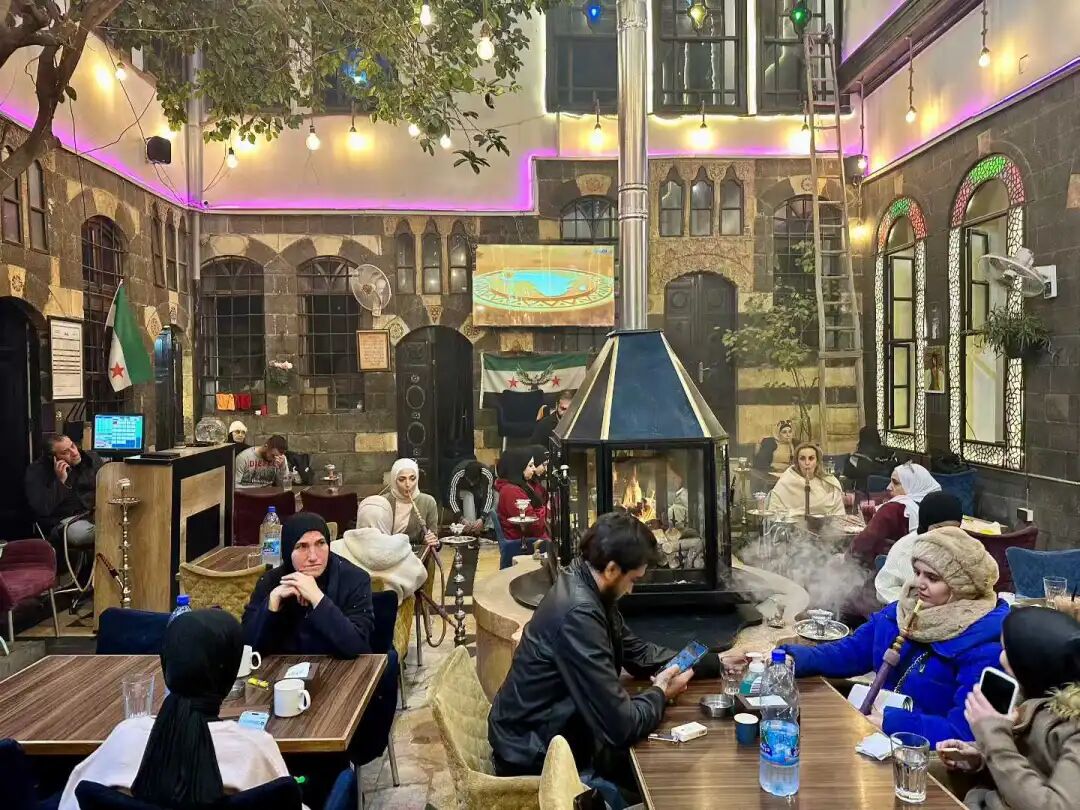
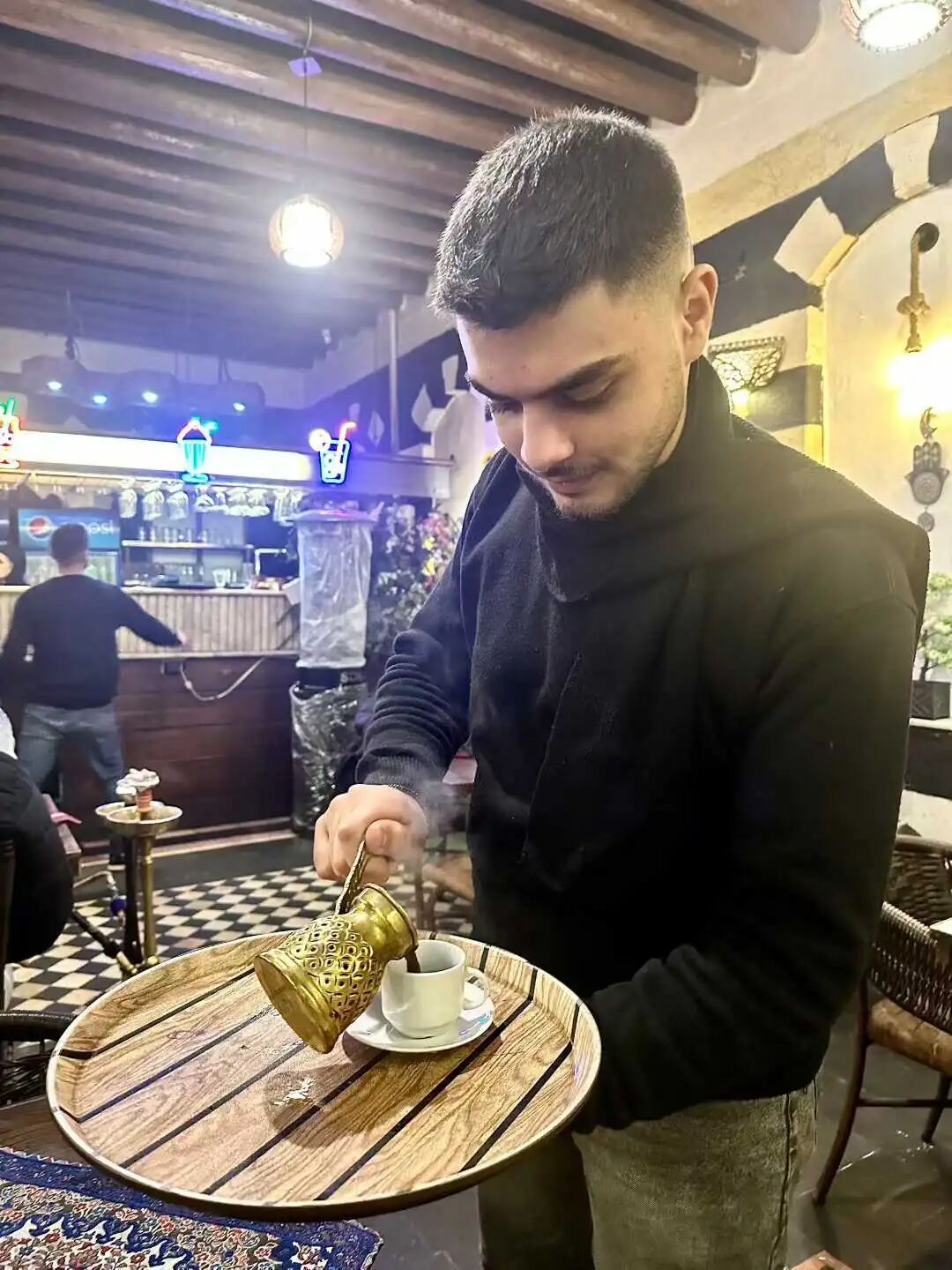
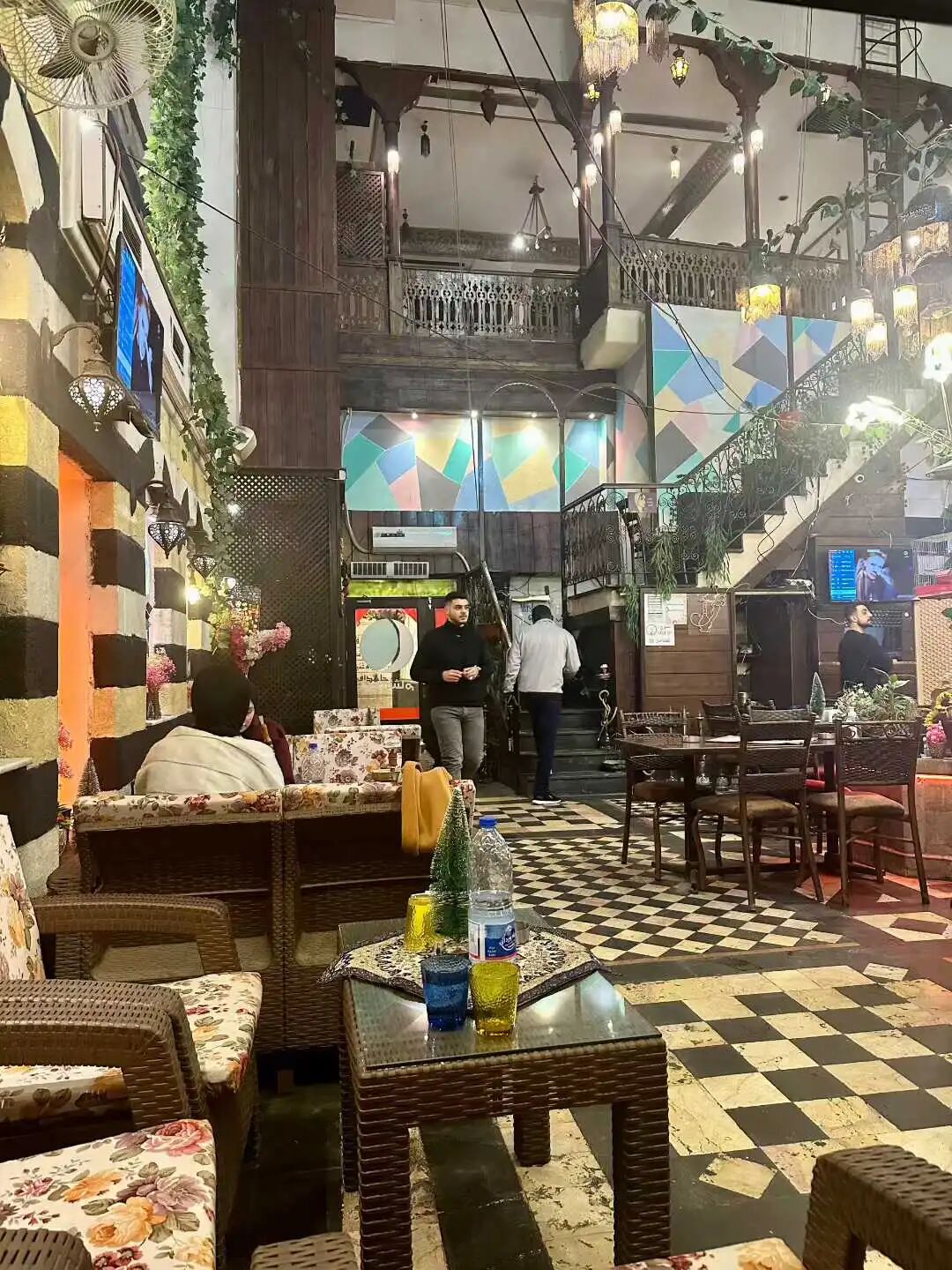
Besides historic hotels, many restaurants and cafes in the Old City of Damascus are also converted from Ottoman mansions. The first place I recommend had just opened when I visited, so you cannot even find it online. It is located on the road after entering the Old City of Damascus from the Bab Touma gate and turning west into Qanayet Al-Hatab street. They only had tea and coffee when I went, but the environment was quite nice. I ordered a cup of sand-brewed coffee. The owner speaks English. He was very enthusiastic and invited me to the second floor to see the old building.
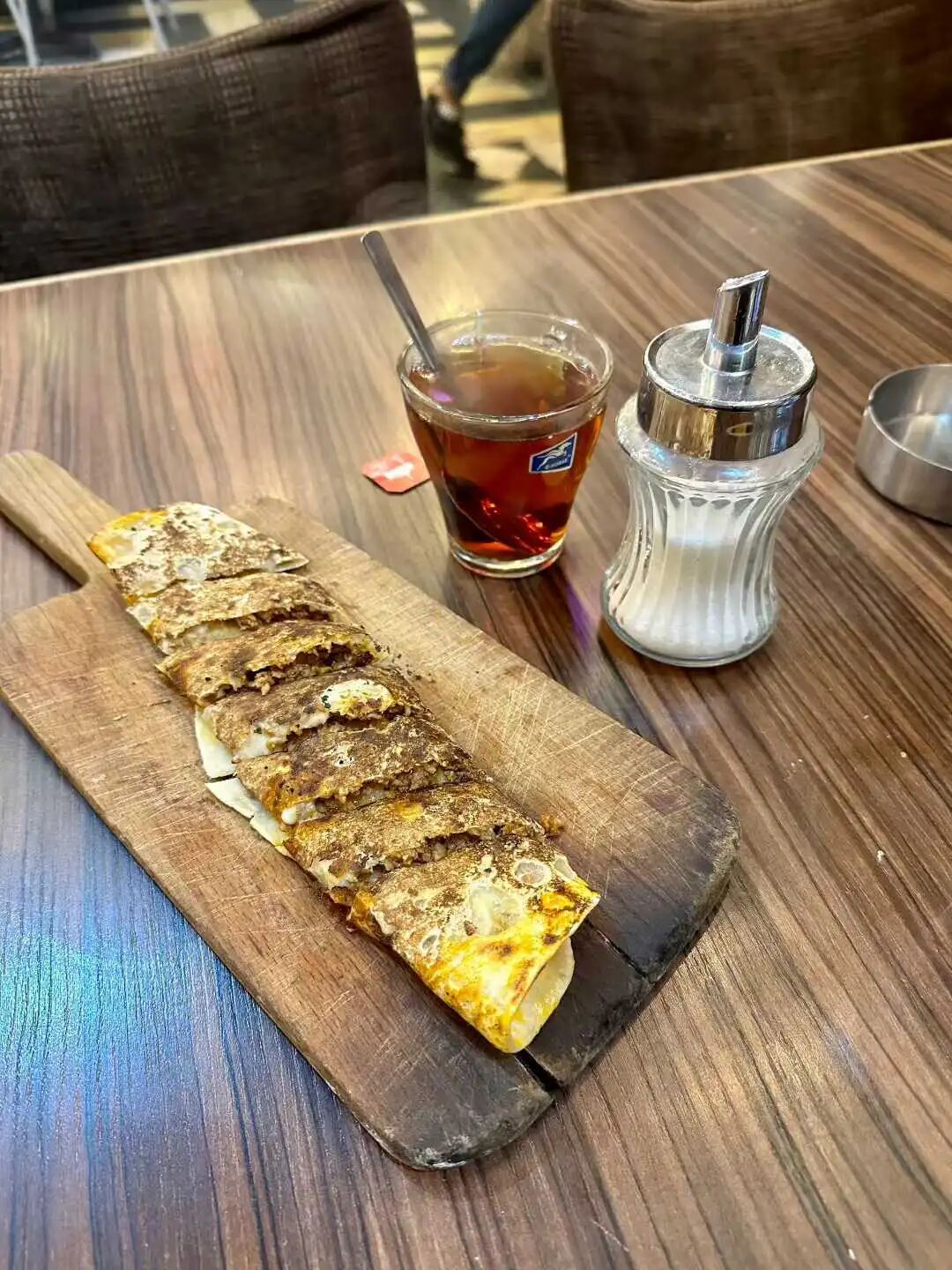
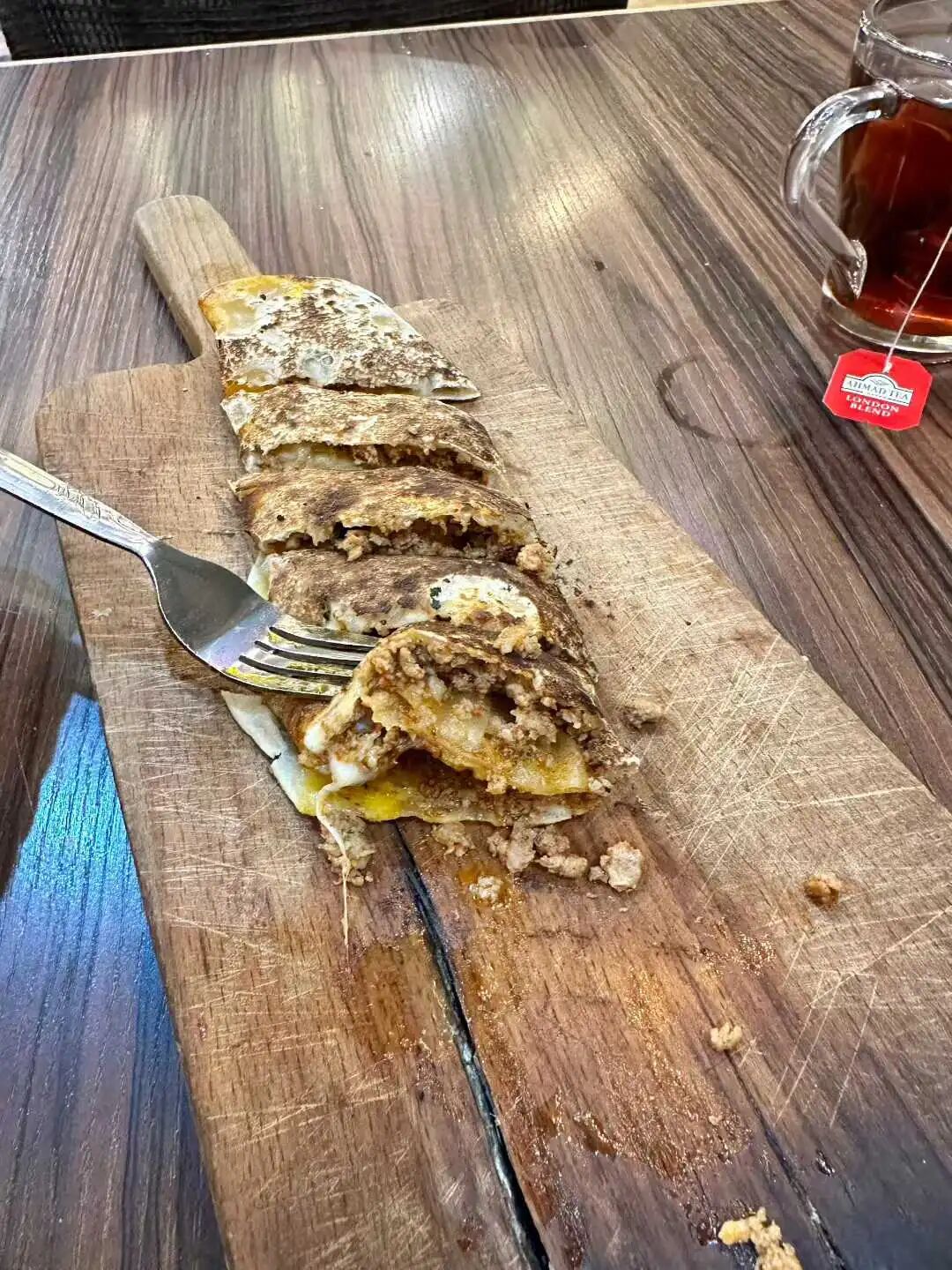
Lady Cafe is on the Al Nawfara pedestrian street outside the east gate of the Umayyad Mosque. It is very lively in the afternoon and evening. I ate a Damascus specialty snack called Toshka pie at the cafe. It is known as a national snack of Syria. Toshka is made by putting spicy sausage (Sujuk) and Kashkawan cheese inside pita bread, then pressing it on an iron griddle on both sides until the cheese melts and the bread is crispy. When you eat it, it is crispy on the outside and soft on the inside. The bread is charred and fragrant, and the meat and cheese are rich and stretchy.
Beit Jabri is on As Sawwaf street, southeast of the Umayyad Mosque. It is an Ottoman mansion restaurant in the Old City of Damascus that is well worth a visit.
This mansion was built in the early 18th century. The current owner Raad Jabri's grandfather bought the property in the late 19th century, and their family lived there from 1905 to 1973. The house was gradually abandoned after the 1970s and later became a workshop for carpenters and blacksmiths. Raad Jabri restored the place in the 1990s and turned it into a restaurant. He also hosts cultural seminars, poetry readings, and classical music evenings from time to time.
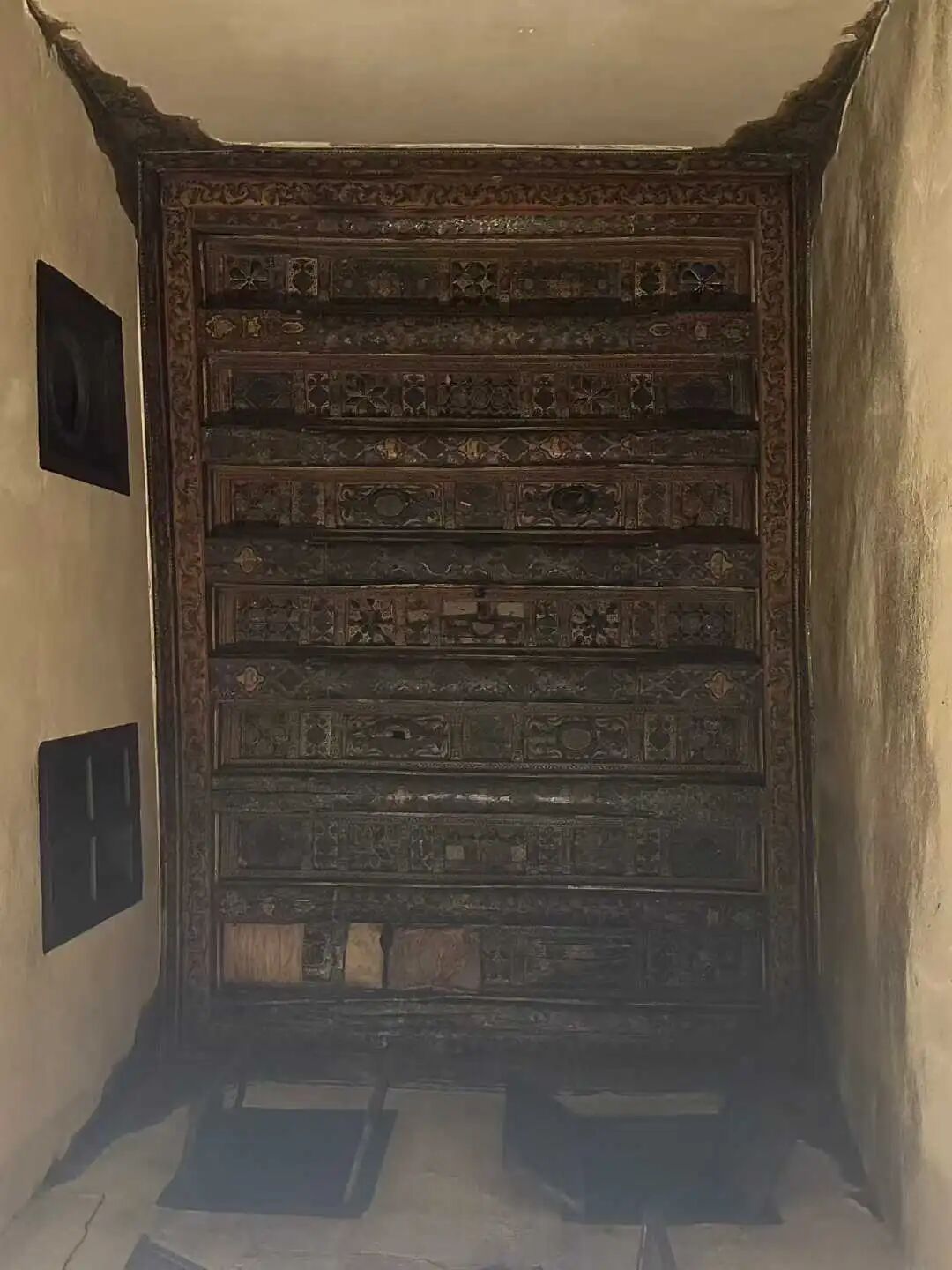
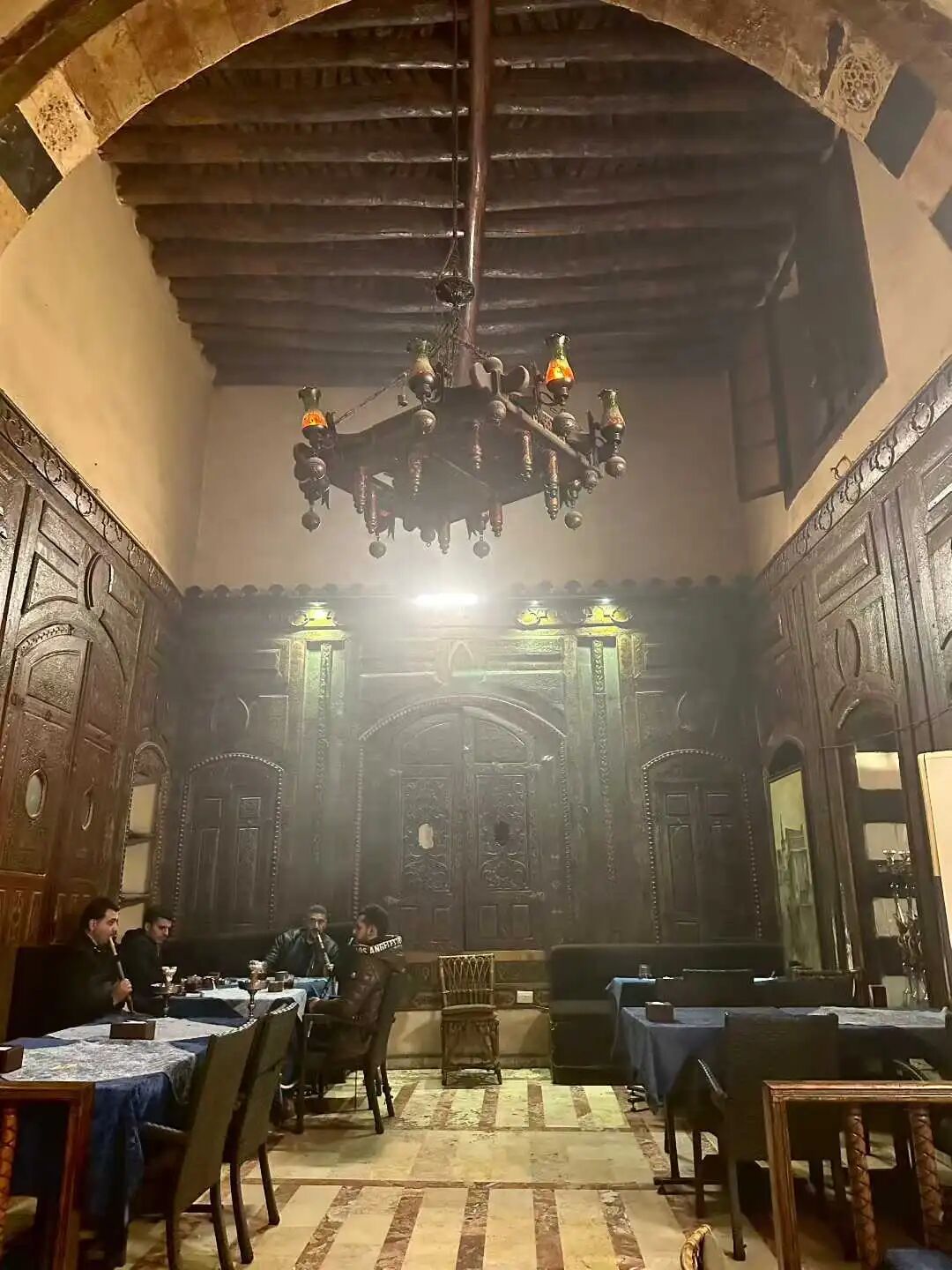
Beit Jabri is a classic three-courtyard Ottoman mansion in Damascus. The arched hall (Iwan) is a typical example of 18th-century Damascus architecture, and the exquisite Ajrum roof was built in the mid-19th century. Influenced by Europe and the Ottoman Empire in the 19th century, Damascus architecture generally tended to decorate exterior walls more gorgeously. This is especially obvious on the north wall of Beit Jabri. We can clearly see the transition from 18th-century decorative styles to 19th-century patterns on the north wall, with complex wall paintings layered over traditional stone masonry (Ablaq).
I ordered the iron pot cheesy baked chicken and mushrooms, served with Arabic pita bread and mint tea. The iron pot came straight to the table. The cheese on top was baked to a golden, crispy brown and stretched into long strings. The chicken was tender, and the mushrooms were soaked in the rich, creamy white sauce. It tasted quite good.
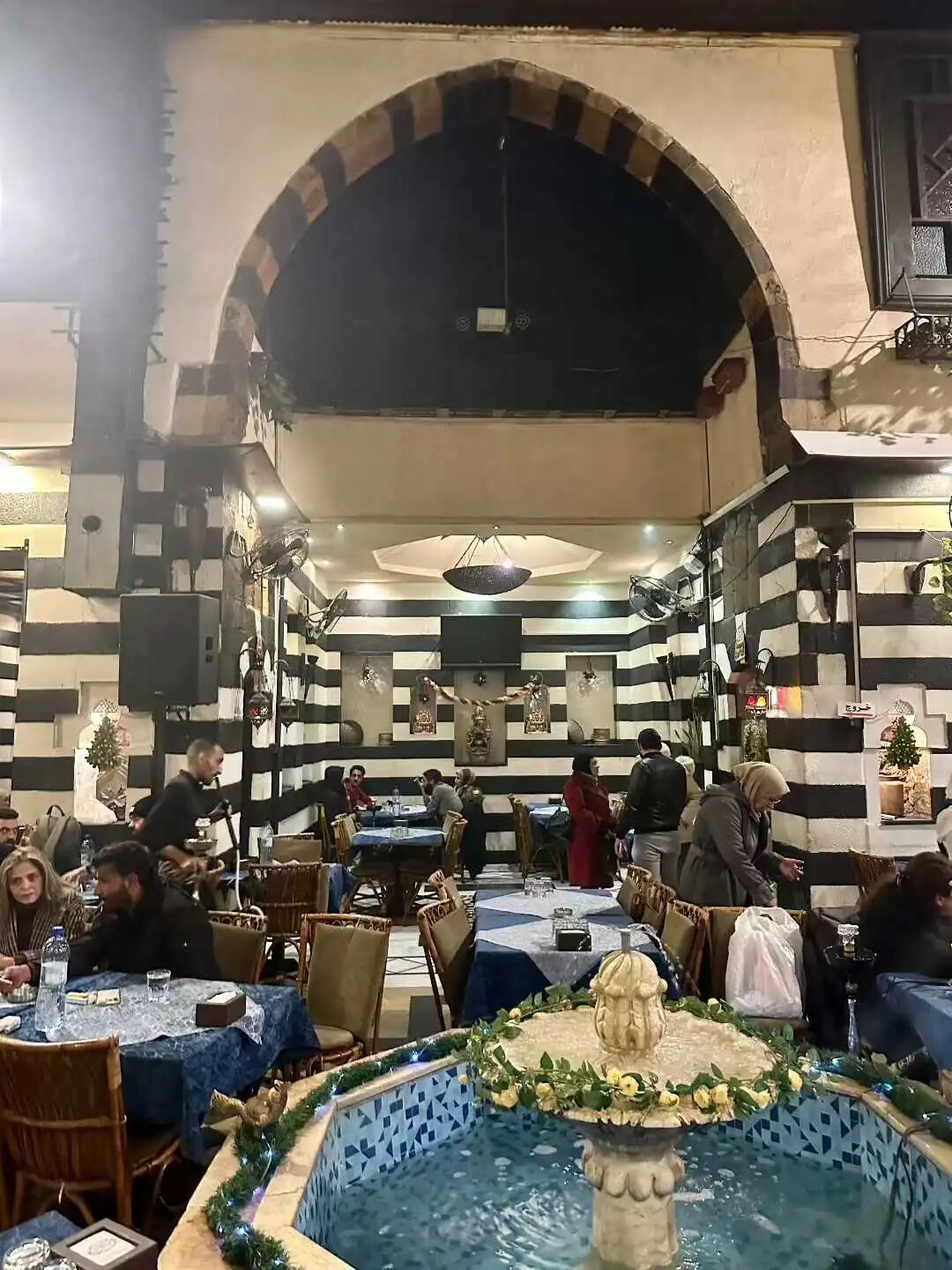
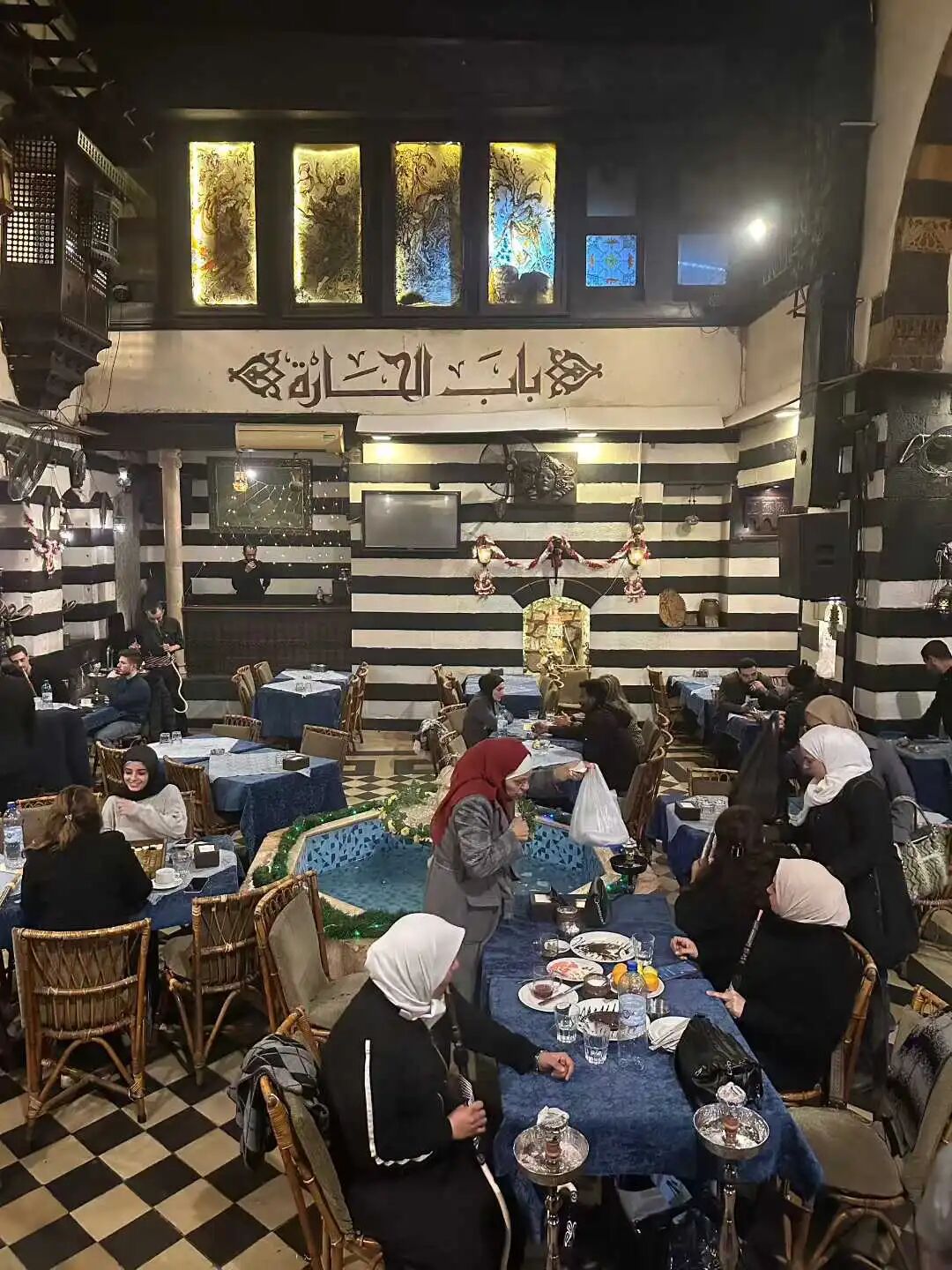
Bab Al Hara is located on Al Qaimarryeh pedestrian street, just outside the east gate of the Umayyad Mosque in Damascus. It is very lively every night. The restaurant is a converted traditional Ottoman mansion built in the late 19th century. It features a central courtyard with a fountain, wrap-around arcades, plaster carvings, and stained glass windows. This place was originally the home of a wealthy merchant. During the French Mandate period (1920–1946), it served as a community gathering spot. Later, it was used as a multi-family residence for a long time before gradually falling into disrepair in the late 20th century. The hit Syrian drama "Bab Al Hara" premiered in 2006, sparking a craze across the Arab world for the folk customs of the Old City of Damascus. The restaurant opened in 2007, starting as a cafe that focused on Syrian breakfast and snacks, then added full meals in 2010.
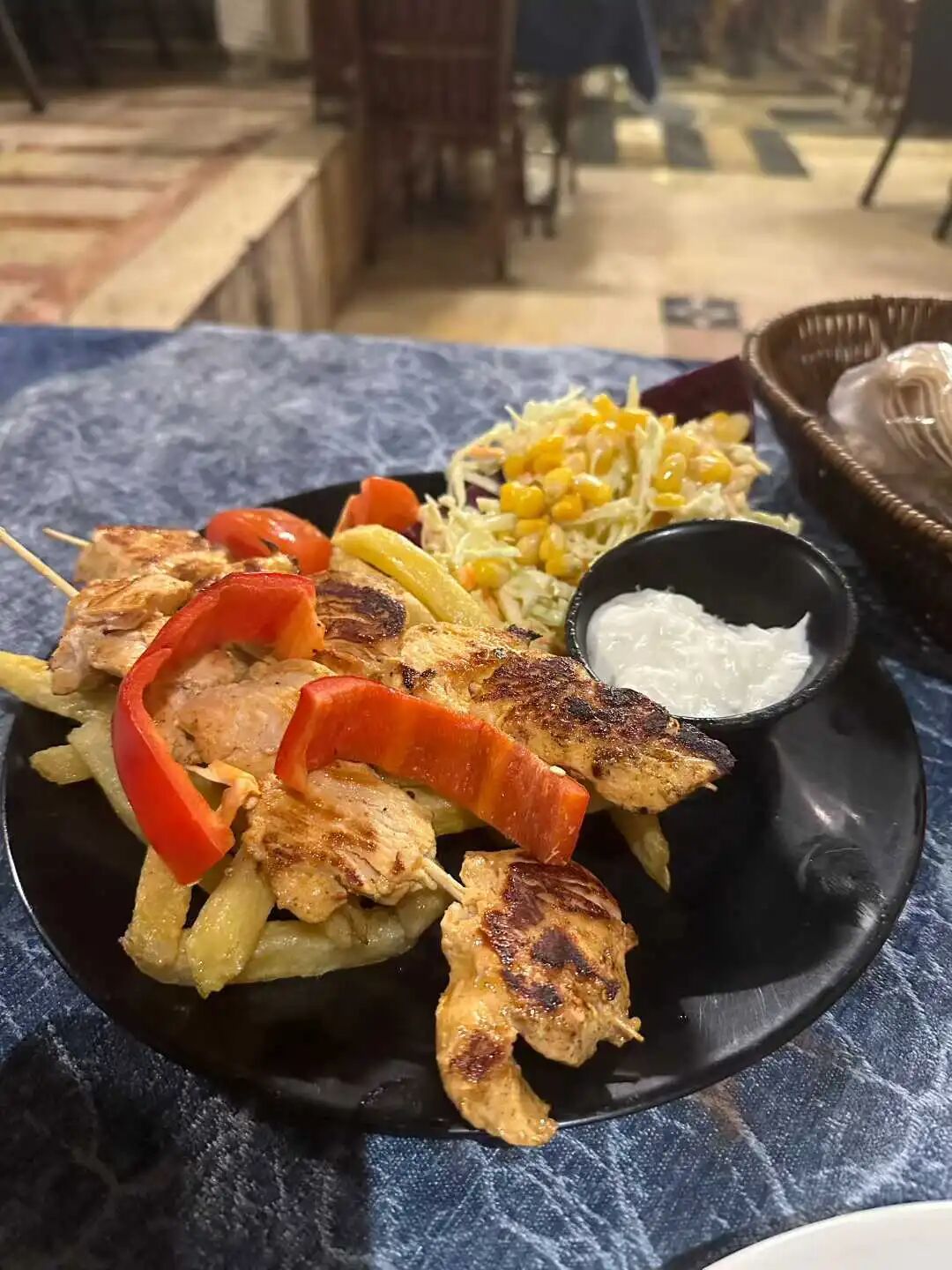
I had the grilled chicken skewers (Shish Taouk). The chicken was crispy on the outside and tender on the inside. It was very refreshing paired with garlic yogurt sauce (Tzatziki), along with a corn and cabbage salad and french fries. However, restaurants all over the Old City of Damascus are full of people smoking shisha at night. If you mind the shisha smoke, try to go at noon or in the afternoon.
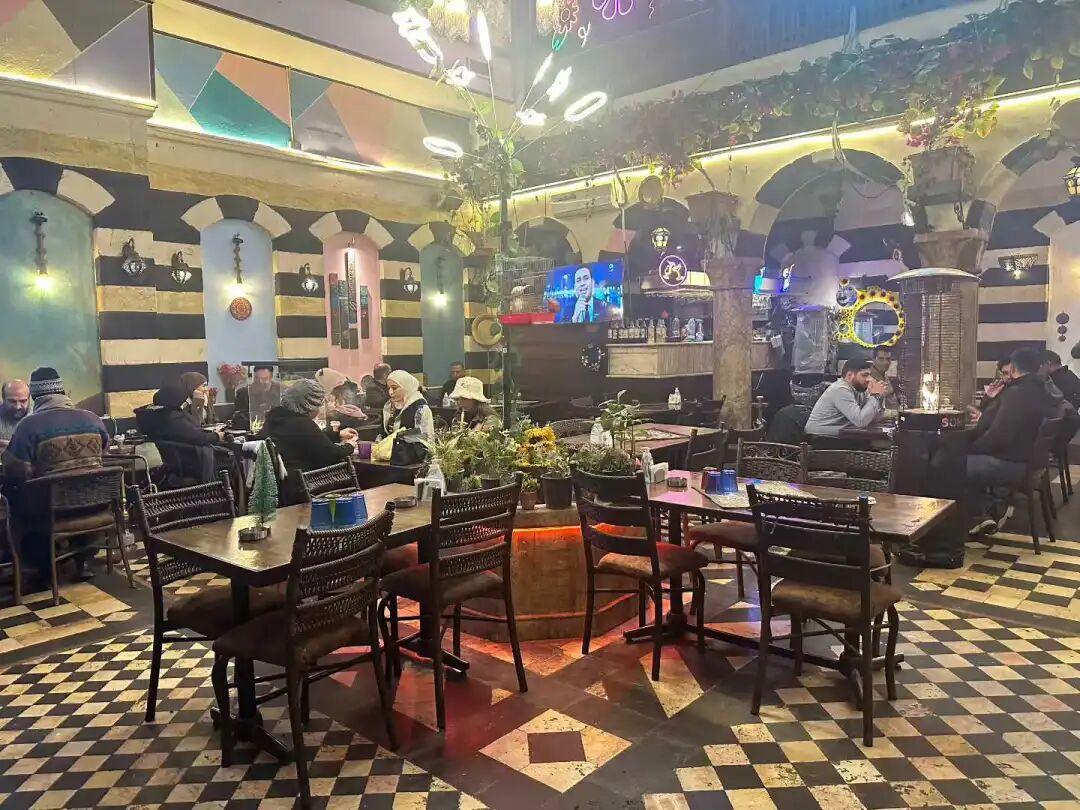
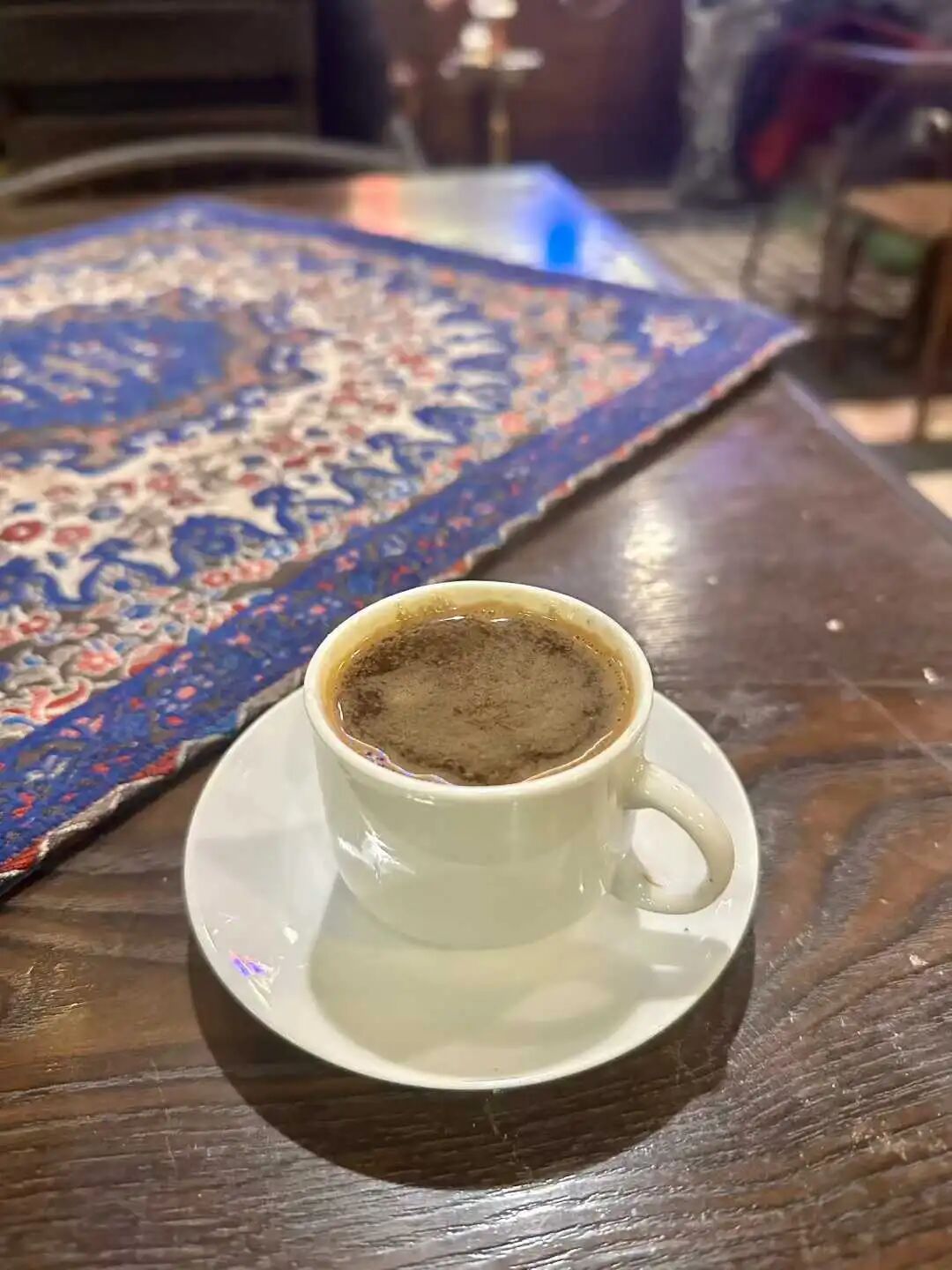
Finally, I had some sand-boiled coffee at Café Ishq Sharqi in Bab Touma, Damascus. The name translates to "Love of the Orient." There are dozens more restaurants and cafes converted from Ottoman mansions in the Old City of Damascus. I only visited a small portion this time, so there are plenty more for everyone to discover. view all
Summary: Damascus old city has heritage hotels and restaurants converted from Ottoman mansions, especially in the Christian Quarter east of the Umayyad Mosque. This guide keeps the source's nine hotel and restaurant notes, December 2025 prices, locations, bargaining details, and photographs.
In recent years, I have really enjoyed staying in heritage hotels while traveling. Even if some are a bit pricey or have thin walls, they let you fully experience the local history. Many people in Damascus choose Chinese-run guesthouses because they are cheaper and easier to communicate in. But if you really want to understand this thousand-year-old city, staying in an old Ottoman house inside the ancient city is a much better way to get close to history.
The east and west sides of the old city of Damascus are very different. The west has the busy Ottoman markets, the Umayyad Mosque, and the citadel. The east is the Christian Quarter, filled with churches and hotels or restaurants converted from old Ottoman mansions. I spent my days in Damascus staying in different mansions in the Christian Quarter. It is about a 1-kilometer walk to the Umayyad Mosque, but the road is full of shops, so it does not feel long.
Here are 9 places I stayed at or asked about, with prices from December 2025.
1. My top recommendation is Mamlouka Hotel, which has two locations: Dar Al Mamlouka and Beit al-Mamlouka. They asked for $122 for a single room, but I bargained it down to $110. I think this place offers the best value. The environment is great, it is the closest to the Umayyad Mosque, and it is right next to the market. The courtyard is a bit small. I only stayed at Dar Al Mamlouka this time because Beit al-Mamlouka had no rooms for two days.
2. Dar Al Yasmin Hotel asked for $140 for a single room, and I bargained it down to $125. It is in a small alley behind a church. It is very quiet and quite large inside.
3. Beit Zaman Hotel asked for $150 for a single room, and I bargained it down to $135. It is right on the East Gate street. There are many shops nearby, and many young people come here to take photos.
4. Beit Rumman has a great environment, but unfortunately, it has no Wi-Fi. I did not buy a SIM card, so I would have been disconnected. I missed out on it and did not ask for the price.
5. Beit Al Wali Hotel is the most popular mansion hotel in the old city of Damascus, and it is also the most expensive. When I asked on the first day, they only had a royal suite for $500. On the second day, they asked for $290 for a single room, and they would not go below $200, so I did not stay there.
6. Albal Hotel charges $80 for a single room. It is the cheapest, but the facilities are the worst. The power was weak, and my phone would barely charge.
7. Al Zaytouna Hotel has an average environment. When I went in, some men were watching a ball game, so I did not ask for the price.
8. Beit Zafran Hotel is very close to Beit Al Wali Hotel. It looked nice in photos, but it was full when I went, so I did not ask for the price.
9. Al Shahbandar Palace Hotel has a cafe in its courtyard. I had a coffee there, but I did not stay.
Dar Al Mamlouka is located on the far west side of the Bab Touma Christian Quarter in the old city of Damascus. The main building is a merchant mansion from the 17th-century Ottoman period, but it still has a strong 16th-century Mamluk style. The mansion has an inward-facing layout centered around a courtyard, with high ceilings on one side. The walls are built with alternating black basalt and white limestone bricks in the Mamluk style, and there is a marble fountain in the center of the courtyard.
Dar Al Mamlouka was turned into a hotel in 2005. It is run by the same management as another nearby mansion, Beit al-Mamlouka, but that one is often fully booked. The single room was listed at 122 dollars, but I bargained it down to 110 dollars. The hotel has electricity and Wi-Fi all night. The single room is nice, and a staff member brought me tea right after I checked in. There are orange and lemon trees in the courtyard, which makes it very relaxing.
The Islamic decor at Dar Al Mamlouka includes the Hand of Fatima (Hamsa). Its five fingers represent the five pillars of the faith, and it is named after the Prophet's daughter, Fatima. During the Austro-Turkish War in 1788, the Ottoman Empire carried flags featuring the Hand of Fatima as the Grand Vizier led an army of 80,000 against Austria.
Breakfast at Dar Al Mamlouka is a typical Levantine cold platter served with bread and hot tea. They bring the full set even if you are eating alone. It mainly includes various cheeses, pickled olives, chickpea dip (hummus), jam, fresh cucumber and tomato, fruit juice, olive oil, and sausages. A special item is the pickled eggplant (makdous). These are miniature eggplants stuffed with walnuts, chili, garlic, olive oil, and salt. Syrians usually start pickling them in autumn to eat as an appetizer during winter. The powder on the table is the classic Levantine spice blend (za'atar). It is a mix of Syrian oregano, toasted sesame seeds, dried sumac, and thyme. It has an earthy taste with a hint of citrus and nuttiness, which is very unique.
Dar Al Yasmin Hotel is located in the heart of the Christian Quarter of Bab Touma in the Old City of Damascus. The hotel is tucked away in a small alley, and it feels like a hidden world once you step inside. The hotel is made up of three 18th-century Ottoman mansions—two large and one small. It features a central courtyard, a fountain, a reception area (liwan), hand-painted wooden ceilings, traditional brick and stone structures, and carved doors and windows. The mansion changed hands many times after the 19th century until the Jasmine Hotels group took it over in 2005. They restored and opened it, making it a classic example of revitalizing a traditional Middle Eastern residence.
The single room was listed at 140 dollars, but I bargained it down to 125 dollars. The small alley at the entrance can get flooded when it rains, but overall it is a great value.
For breakfast at Dar Al Yasmin Hotel, the chickpea and sesame paste dip (hummus musabaha) is worth trying. Musabaha means swimming, as if the chickpeas are swimming in the sesame paste.
They also serve flatbread (manakish) in three varieties: with spice blend (za'atar), tomato, or cheese. Manakish originated from the traditional bread of the ancient Phoenicians and was added to the UNESCO Intangible Cultural Heritage list in 2023.
Beit Zaman Hotel is in the Christian Quarter of Bab Touma in the Old City of Damascus, right on the ancient Roman street (Via Recta). Their single room was listed at 150 dollars, but I bargained it down to 135 dollars.
The hotel opened in 2008 after five years of connecting and restoring three 17th-century Ottoman mansions. It kept original features like stone carvings, wood carvings, mosaics, and fountains. The wooden Ajami-style ceilings and the traditional courtyard layout are the most impressive parts.
The buffet breakfast at Beit Zaman Hotel includes sausages, cheese, bread, olives, and chickpea dip (hummus). The red dipping sauce is called Muhammara. It is a Syrian appetizer made from walnuts, red bell peppers, pomegranate molasses, and breadcrumbs.
Albal Hotel is near the Bab Touma gate in the Old City of Damascus. It is likely the most convenient for transportation. A single room costs 80 dollars, which is the lowest price, but the power is weak and it is almost impossible to charge a phone. Choose carefully.
Albal Hotel is a converted Ottoman mansion rebuilt after the 1759 Damascus earthquake. It has a courtyard fountain and wood carvings. The breakfast is quite good, and they light a stove in the courtyard during winter.
Al Shahbandar Palace Hotel is on the west side of the Christian Quarter near Bab Touma in the Old City of Damascus, right on the busy Al Qemaryeh market street.
The hotel is inside an Ottoman noble mansion built in the 16th century. The Shahbandar family, a famous modern political family in Damascus, lived here for a long time. The famous nationalist leader Abdul Rahman Shahbandar came from this family. The Shahbandar family renovated the mansion on a large scale in the early 20th century and used it as a place to host guests for a long time. In 2007, it was converted into a historic hotel after adding private bathrooms, air conditioning, and electrical systems, while strictly preserving the facade, courtyard, and historical components.
Today, the mansion's courtyard is open as a cafe. You can drink coffee there, so you do not have to stay at the hotel to experience this Ottoman mansion.
Besides historic hotels, many restaurants and cafes in the Old City of Damascus are also converted from Ottoman mansions. The first place I recommend had just opened when I visited, so you cannot even find it online. It is located on the road after entering the Old City of Damascus from the Bab Touma gate and turning west into Qanayet Al-Hatab street. They only had tea and coffee when I went, but the environment was quite nice. I ordered a cup of sand-brewed coffee. The owner speaks English. He was very enthusiastic and invited me to the second floor to see the old building.
Lady Cafe is on the Al Nawfara pedestrian street outside the east gate of the Umayyad Mosque. It is very lively in the afternoon and evening. I ate a Damascus specialty snack called Toshka pie at the cafe. It is known as a national snack of Syria. Toshka is made by putting spicy sausage (Sujuk) and Kashkawan cheese inside pita bread, then pressing it on an iron griddle on both sides until the cheese melts and the bread is crispy. When you eat it, it is crispy on the outside and soft on the inside. The bread is charred and fragrant, and the meat and cheese are rich and stretchy.
Beit Jabri is on As Sawwaf street, southeast of the Umayyad Mosque. It is an Ottoman mansion restaurant in the Old City of Damascus that is well worth a visit.
This mansion was built in the early 18th century. The current owner Raad Jabri's grandfather bought the property in the late 19th century, and their family lived there from 1905 to 1973. The house was gradually abandoned after the 1970s and later became a workshop for carpenters and blacksmiths. Raad Jabri restored the place in the 1990s and turned it into a restaurant. He also hosts cultural seminars, poetry readings, and classical music evenings from time to time.
Beit Jabri is a classic three-courtyard Ottoman mansion in Damascus. The arched hall (Iwan) is a typical example of 18th-century Damascus architecture, and the exquisite Ajrum roof was built in the mid-19th century. Influenced by Europe and the Ottoman Empire in the 19th century, Damascus architecture generally tended to decorate exterior walls more gorgeously. This is especially obvious on the north wall of Beit Jabri. We can clearly see the transition from 18th-century decorative styles to 19th-century patterns on the north wall, with complex wall paintings layered over traditional stone masonry (Ablaq).
I ordered the iron pot cheesy baked chicken and mushrooms, served with Arabic pita bread and mint tea. The iron pot came straight to the table. The cheese on top was baked to a golden, crispy brown and stretched into long strings. The chicken was tender, and the mushrooms were soaked in the rich, creamy white sauce. It tasted quite good.
Bab Al Hara is located on Al Qaimarryeh pedestrian street, just outside the east gate of the Umayyad Mosque in Damascus. It is very lively every night. The restaurant is a converted traditional Ottoman mansion built in the late 19th century. It features a central courtyard with a fountain, wrap-around arcades, plaster carvings, and stained glass windows. This place was originally the home of a wealthy merchant. During the French Mandate period (1920–1946), it served as a community gathering spot. Later, it was used as a multi-family residence for a long time before gradually falling into disrepair in the late 20th century. The hit Syrian drama "Bab Al Hara" premiered in 2006, sparking a craze across the Arab world for the folk customs of the Old City of Damascus. The restaurant opened in 2007, starting as a cafe that focused on Syrian breakfast and snacks, then added full meals in 2010.
I had the grilled chicken skewers (Shish Taouk). The chicken was crispy on the outside and tender on the inside. It was very refreshing paired with garlic yogurt sauce (Tzatziki), along with a corn and cabbage salad and french fries. However, restaurants all over the Old City of Damascus are full of people smoking shisha at night. If you mind the shisha smoke, try to go at noon or in the afternoon.
Finally, I had some sand-boiled coffee at Café Ishq Sharqi in Bab Touma, Damascus. The name translates to "Love of the Orient." There are dozens more restaurants and cafes converted from Ottoman mansions in the Old City of Damascus. I only visited a small portion this time, so there are plenty more for everyone to discover. view all
Reposted from the web
Summary: Damascus old city has heritage hotels and restaurants converted from Ottoman mansions, especially in the Christian Quarter east of the Umayyad Mosque. This guide keeps the source's nine hotel and restaurant notes, December 2025 prices, locations, bargaining details, and photographs.
In recent years, I have really enjoyed staying in heritage hotels while traveling. Even if some are a bit pricey or have thin walls, they let you fully experience the local history. Many people in Damascus choose Chinese-run guesthouses because they are cheaper and easier to communicate in. But if you really want to understand this thousand-year-old city, staying in an old Ottoman house inside the ancient city is a much better way to get close to history.
The east and west sides of the old city of Damascus are very different. The west has the busy Ottoman markets, the Umayyad Mosque, and the citadel. The east is the Christian Quarter, filled with churches and hotels or restaurants converted from old Ottoman mansions. I spent my days in Damascus staying in different mansions in the Christian Quarter. It is about a 1-kilometer walk to the Umayyad Mosque, but the road is full of shops, so it does not feel long.
Here are 9 places I stayed at or asked about, with prices from December 2025.
1. My top recommendation is Mamlouka Hotel, which has two locations: Dar Al Mamlouka and Beit al-Mamlouka. They asked for $122 for a single room, but I bargained it down to $110. I think this place offers the best value. The environment is great, it is the closest to the Umayyad Mosque, and it is right next to the market. The courtyard is a bit small. I only stayed at Dar Al Mamlouka this time because Beit al-Mamlouka had no rooms for two days.
2. Dar Al Yasmin Hotel asked for $140 for a single room, and I bargained it down to $125. It is in a small alley behind a church. It is very quiet and quite large inside.
3. Beit Zaman Hotel asked for $150 for a single room, and I bargained it down to $135. It is right on the East Gate street. There are many shops nearby, and many young people come here to take photos.
4. Beit Rumman has a great environment, but unfortunately, it has no Wi-Fi. I did not buy a SIM card, so I would have been disconnected. I missed out on it and did not ask for the price.
5. Beit Al Wali Hotel is the most popular mansion hotel in the old city of Damascus, and it is also the most expensive. When I asked on the first day, they only had a royal suite for $500. On the second day, they asked for $290 for a single room, and they would not go below $200, so I did not stay there.
6. Albal Hotel charges $80 for a single room. It is the cheapest, but the facilities are the worst. The power was weak, and my phone would barely charge.
7. Al Zaytouna Hotel has an average environment. When I went in, some men were watching a ball game, so I did not ask for the price.
8. Beit Zafran Hotel is very close to Beit Al Wali Hotel. It looked nice in photos, but it was full when I went, so I did not ask for the price.
9. Al Shahbandar Palace Hotel has a cafe in its courtyard. I had a coffee there, but I did not stay.
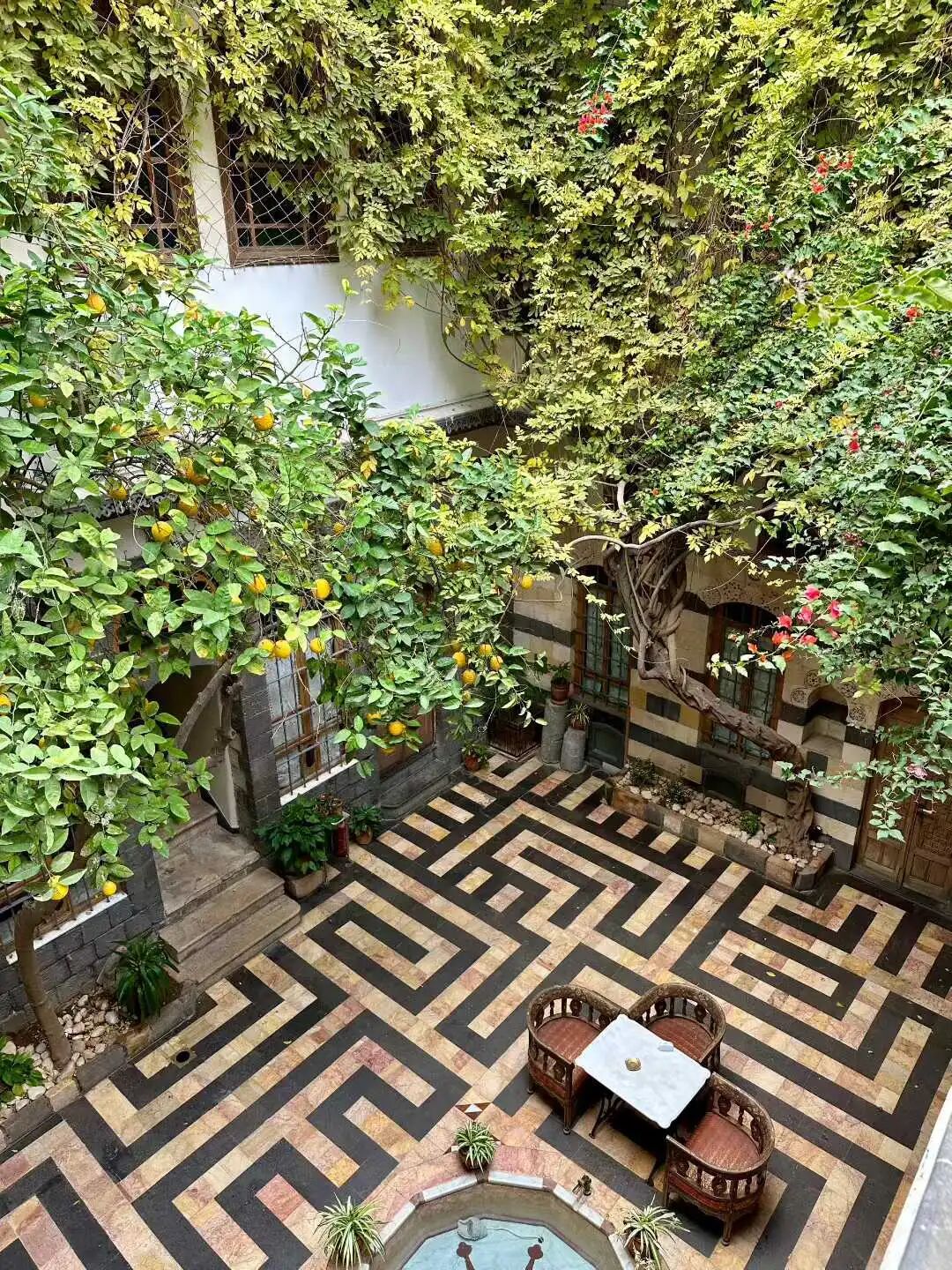
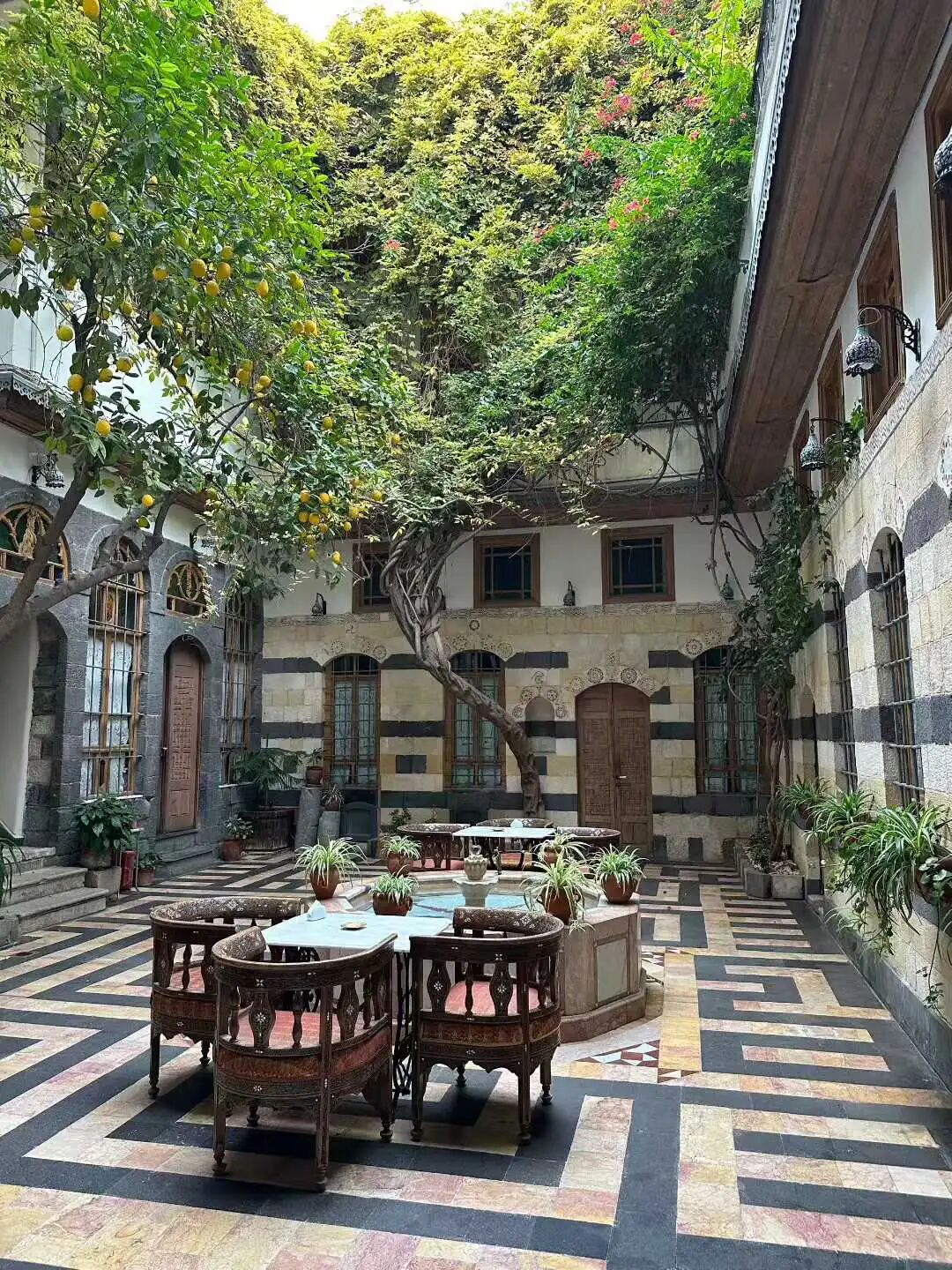
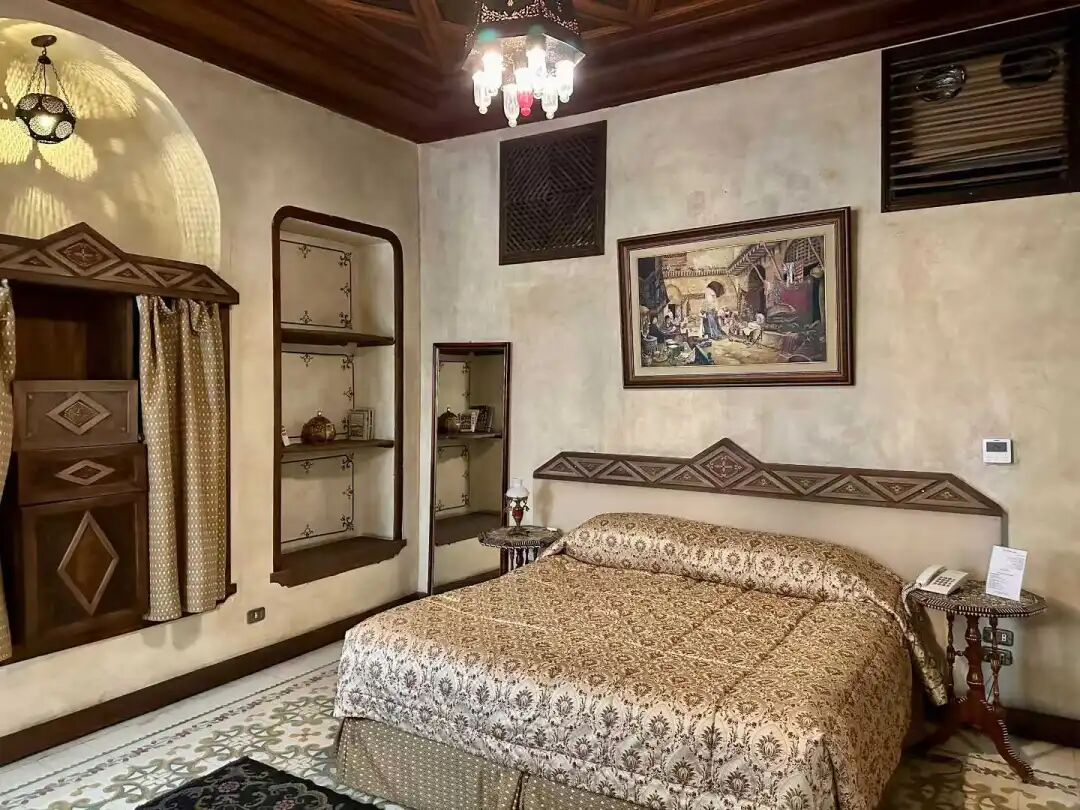
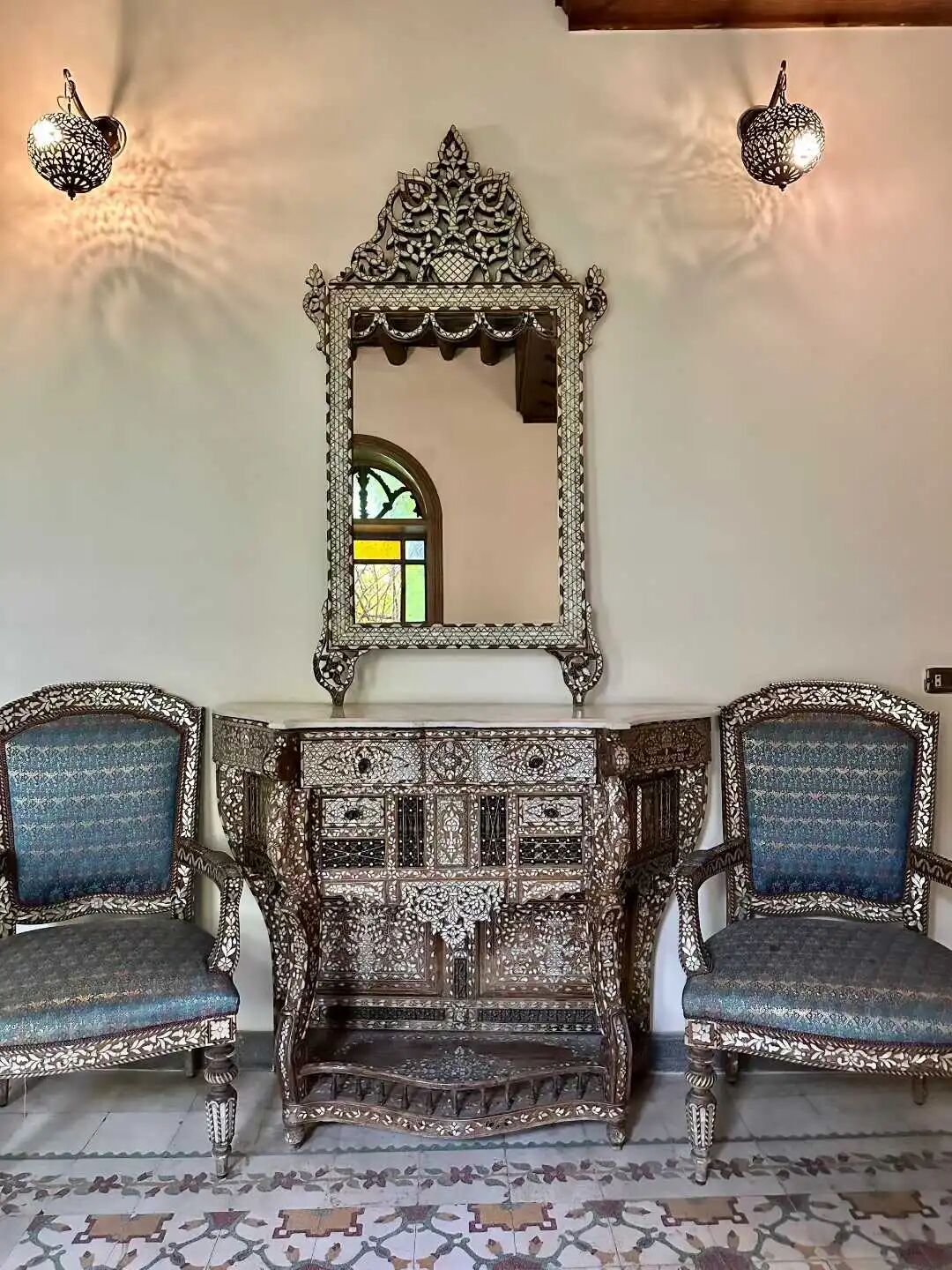
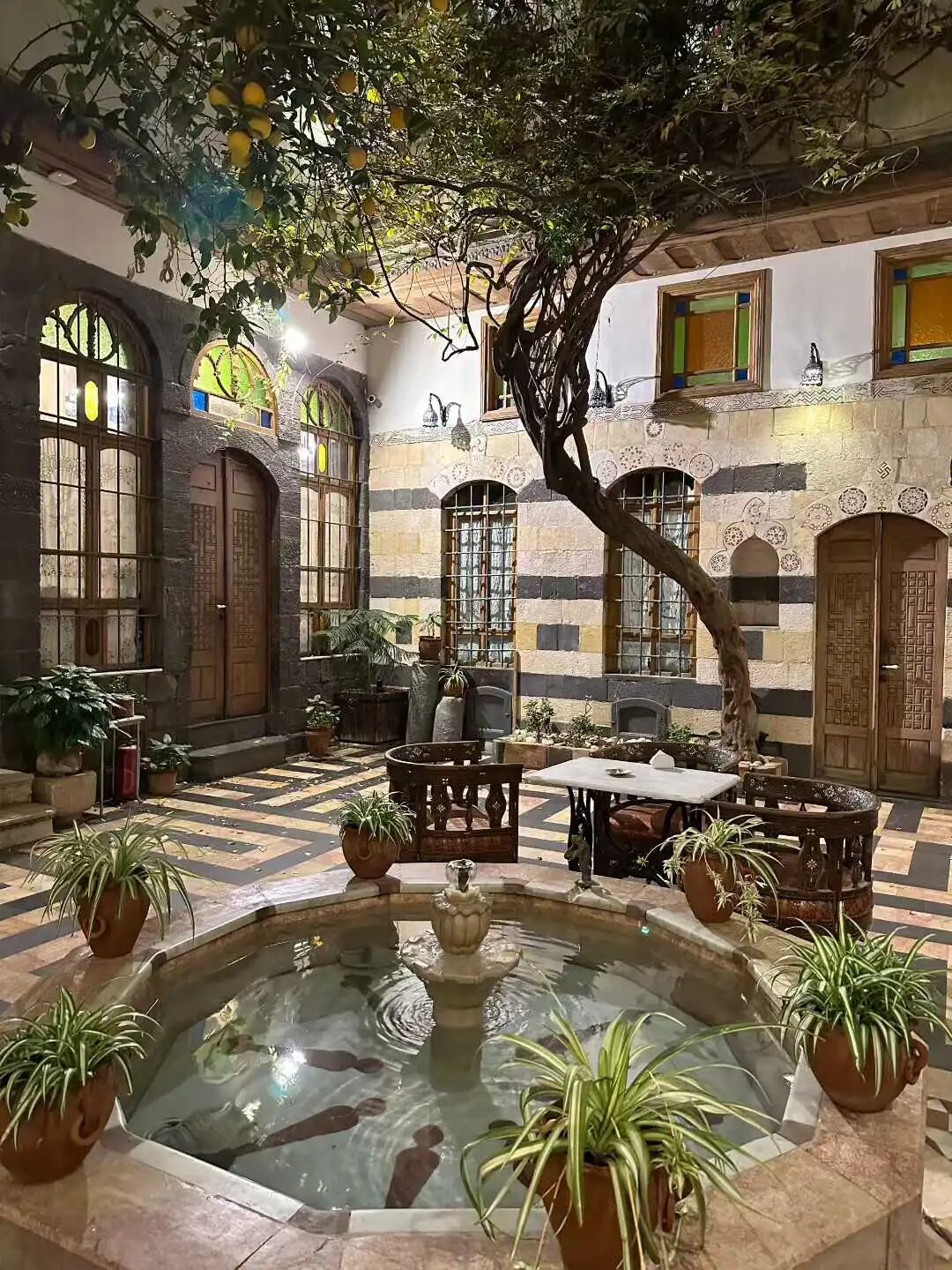
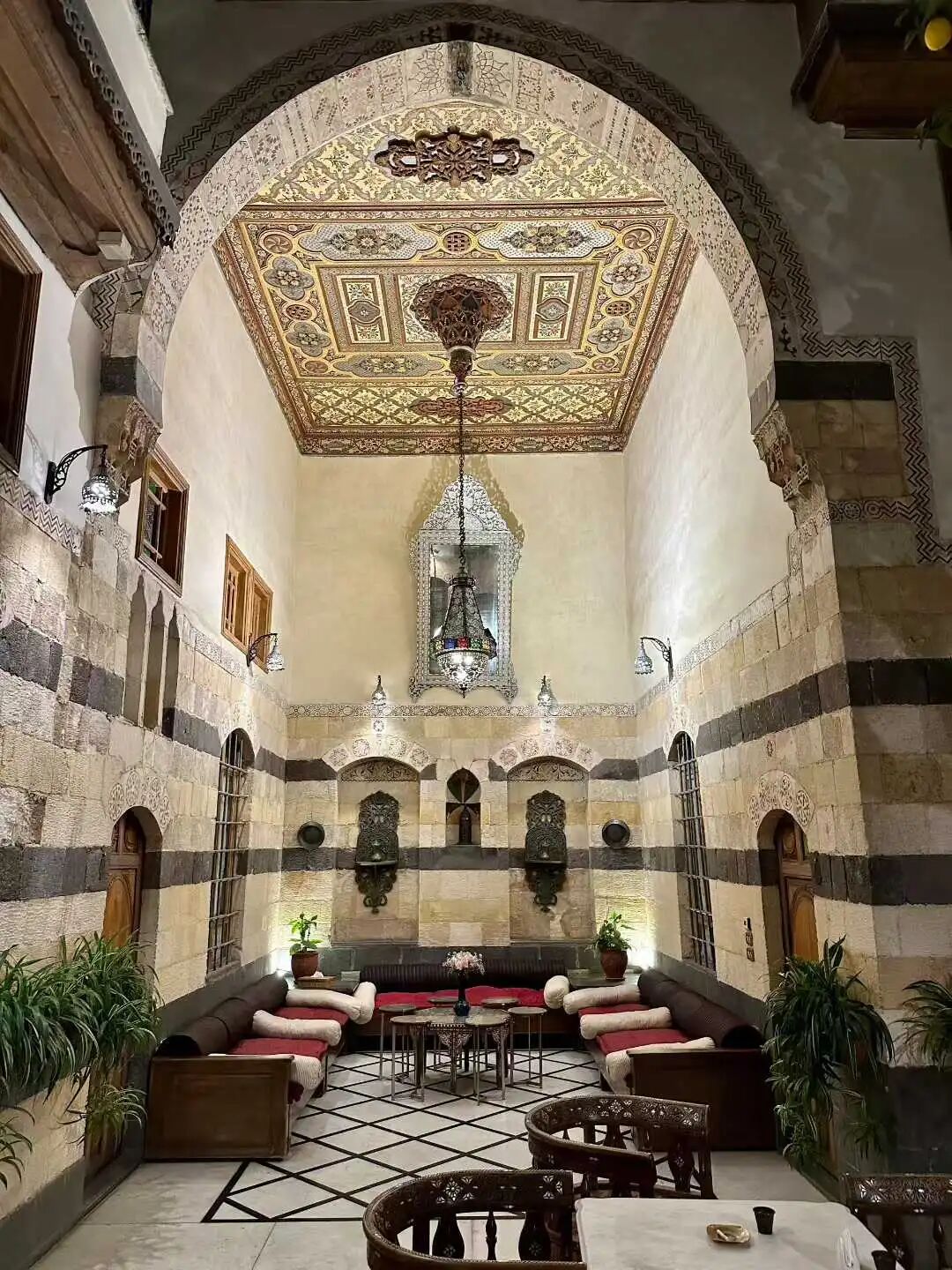
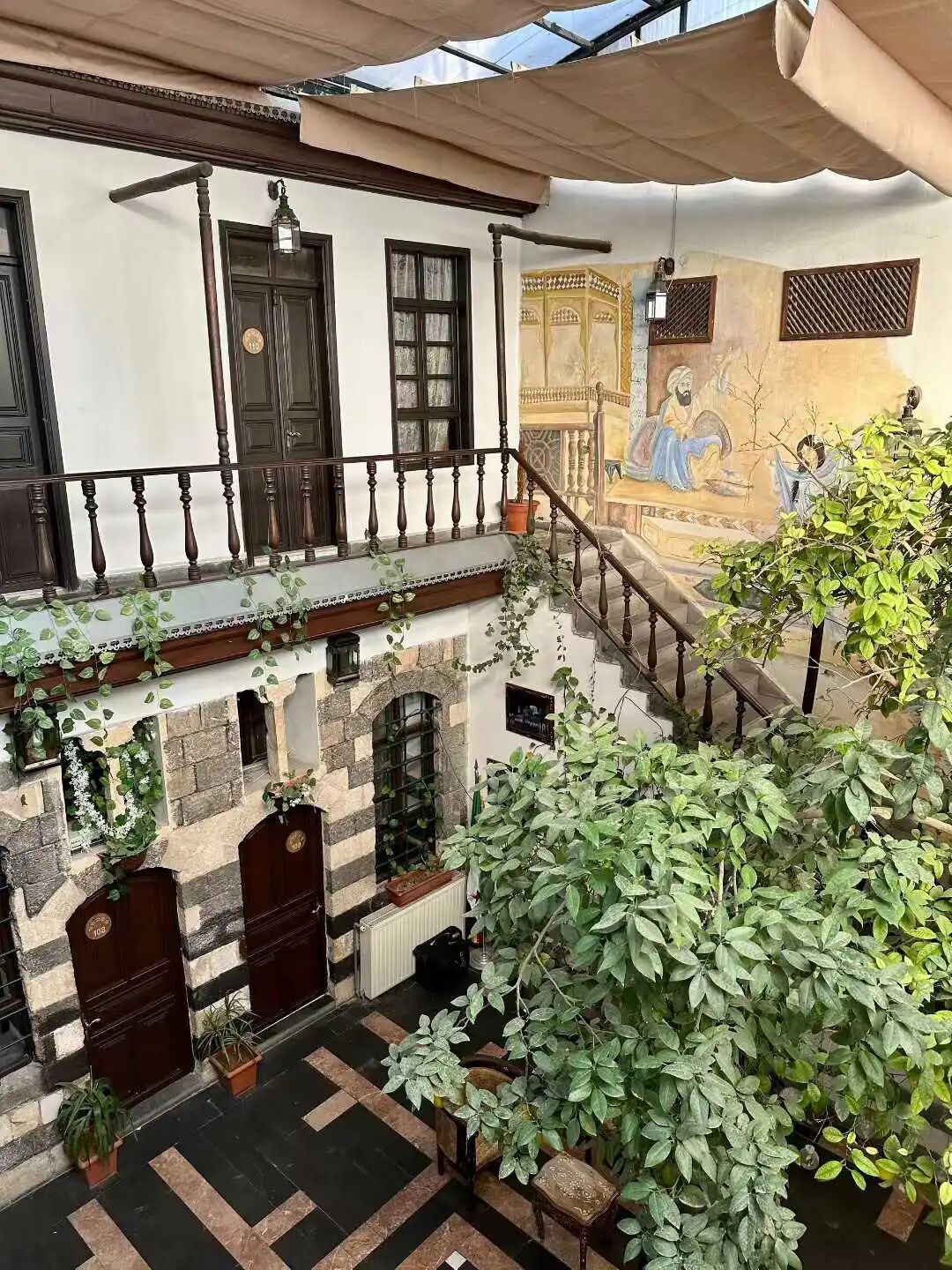
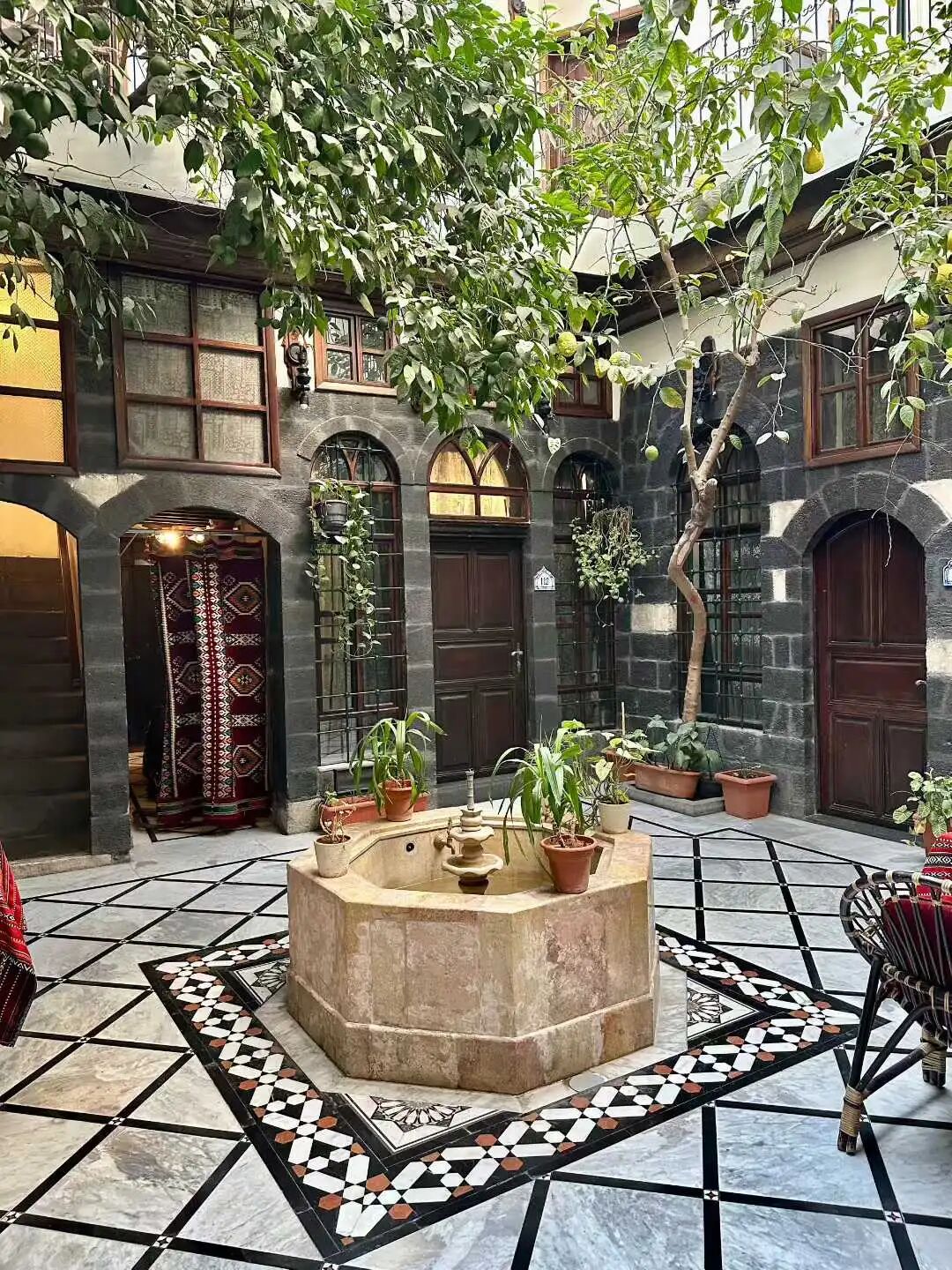
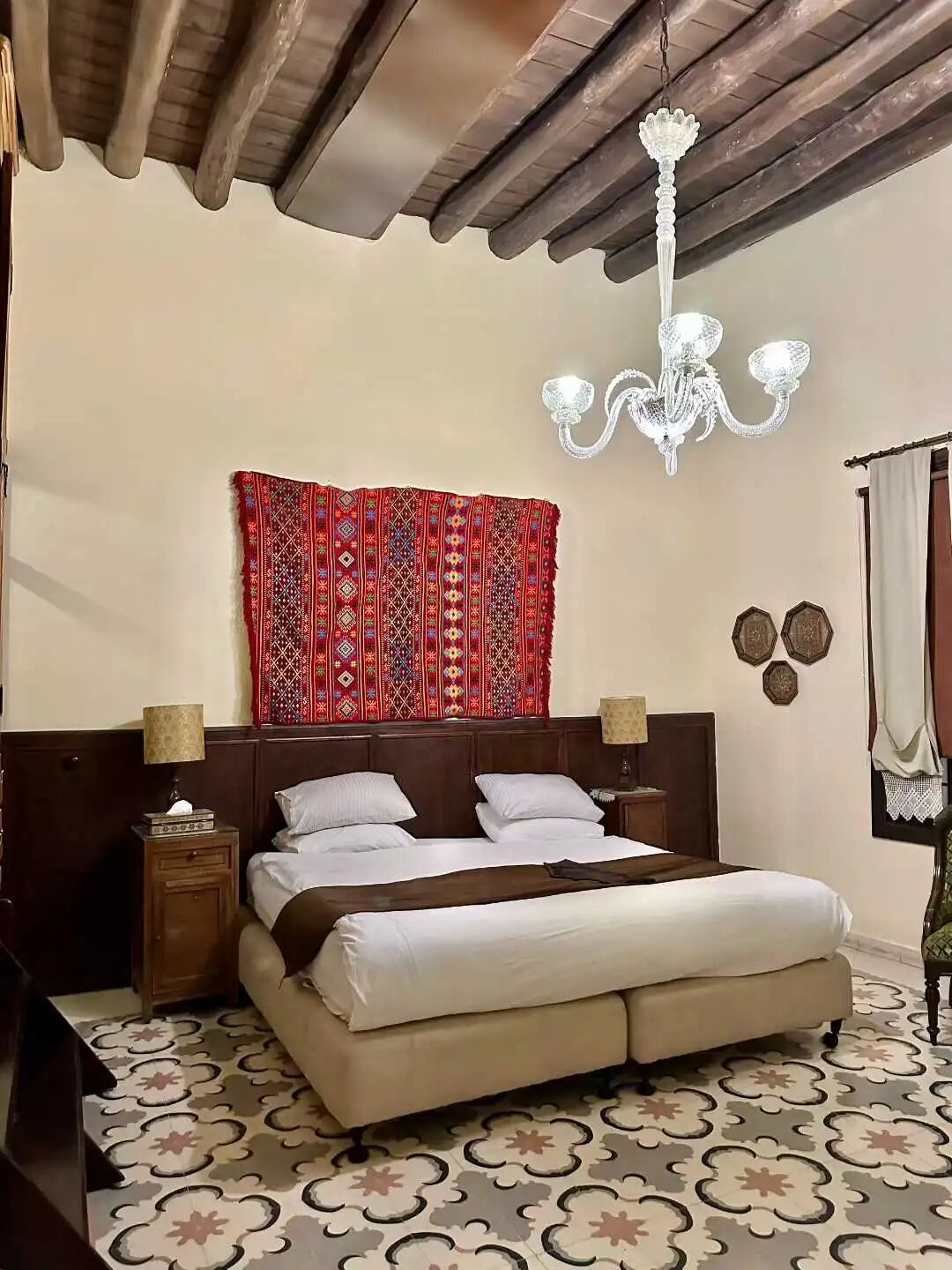
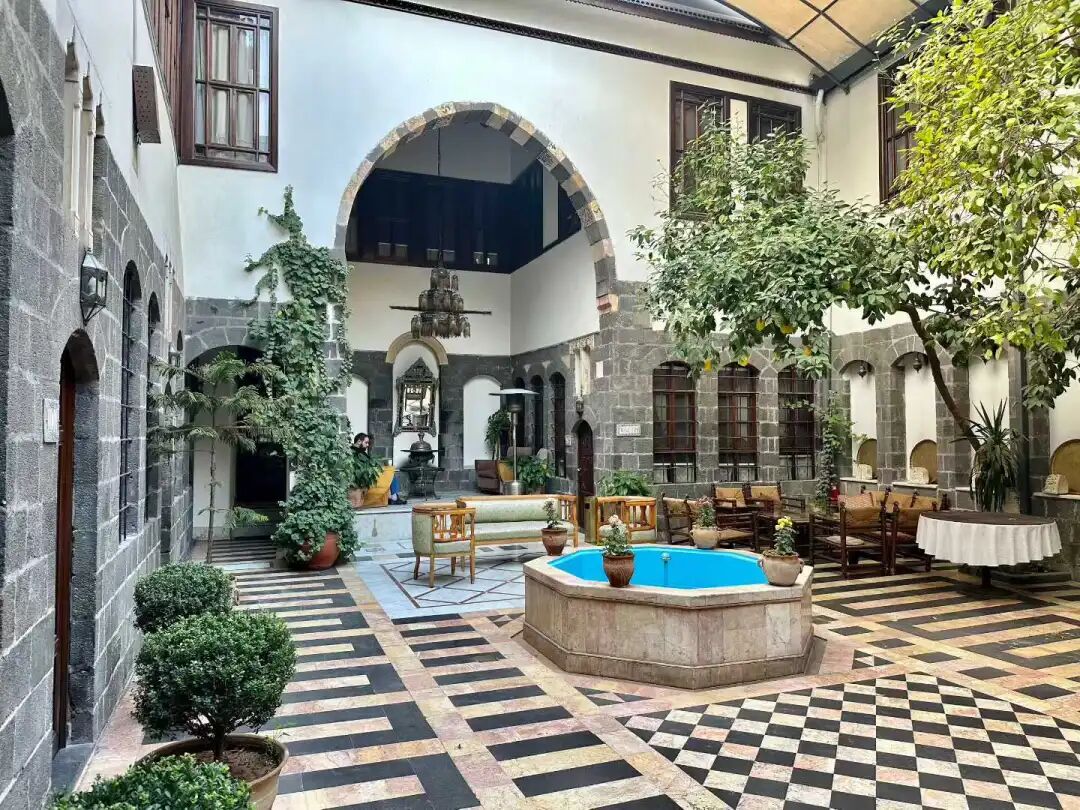
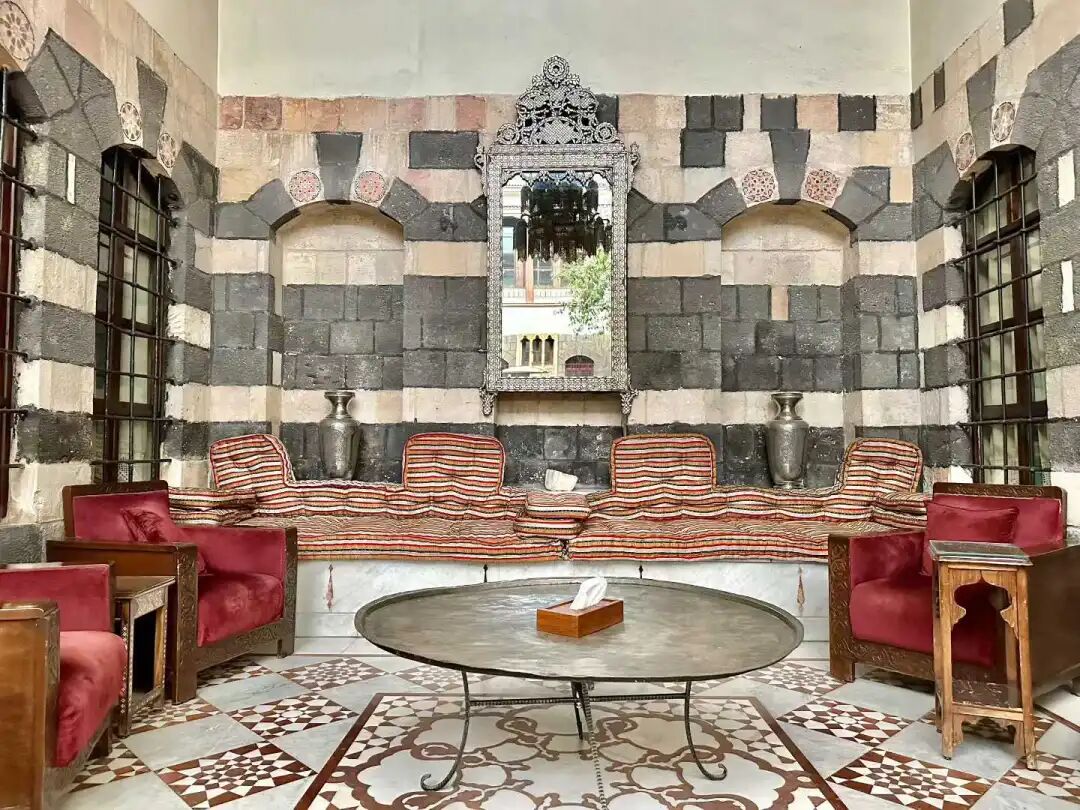
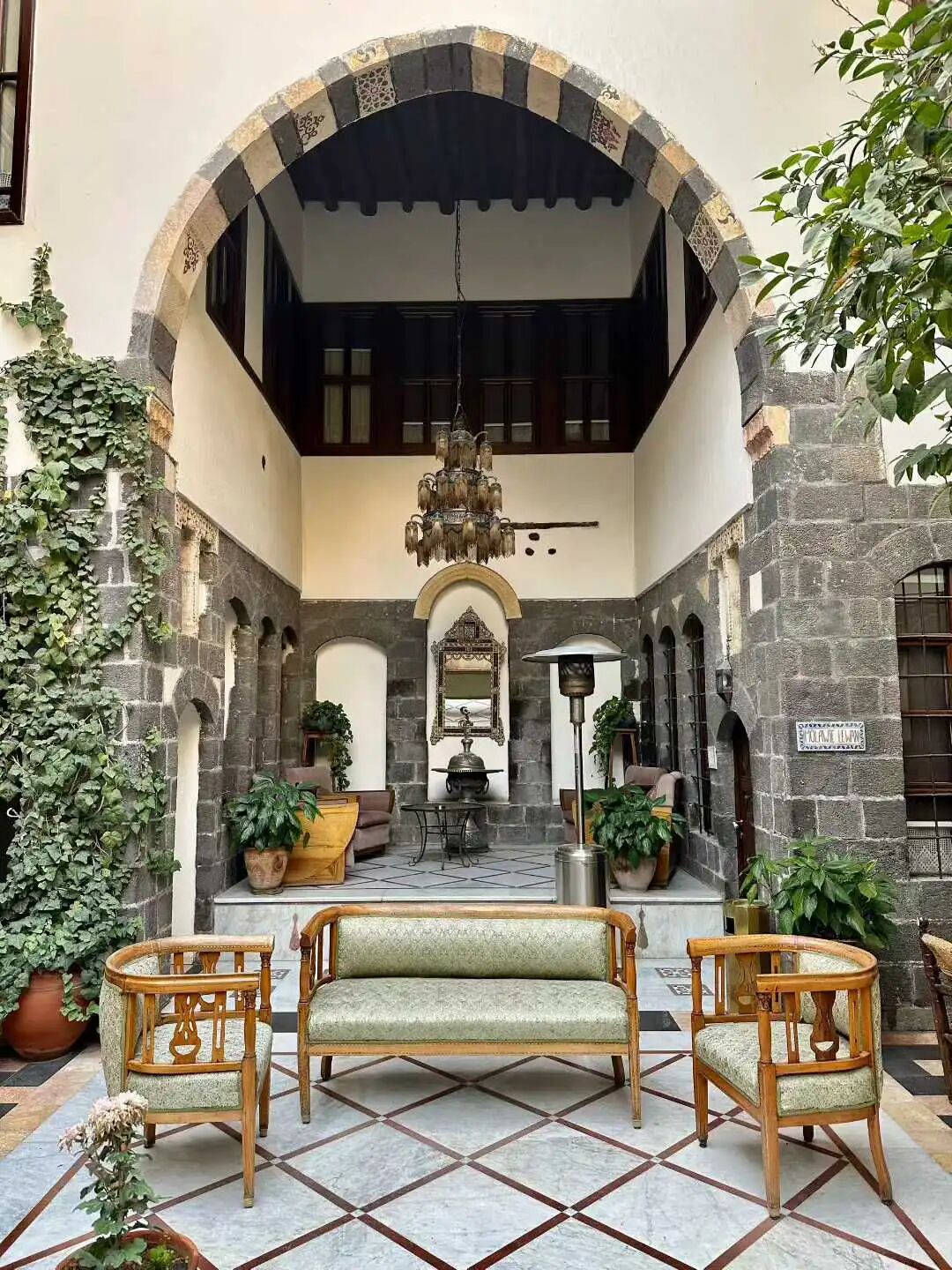
Dar Al Mamlouka is located on the far west side of the Bab Touma Christian Quarter in the old city of Damascus. The main building is a merchant mansion from the 17th-century Ottoman period, but it still has a strong 16th-century Mamluk style. The mansion has an inward-facing layout centered around a courtyard, with high ceilings on one side. The walls are built with alternating black basalt and white limestone bricks in the Mamluk style, and there is a marble fountain in the center of the courtyard.
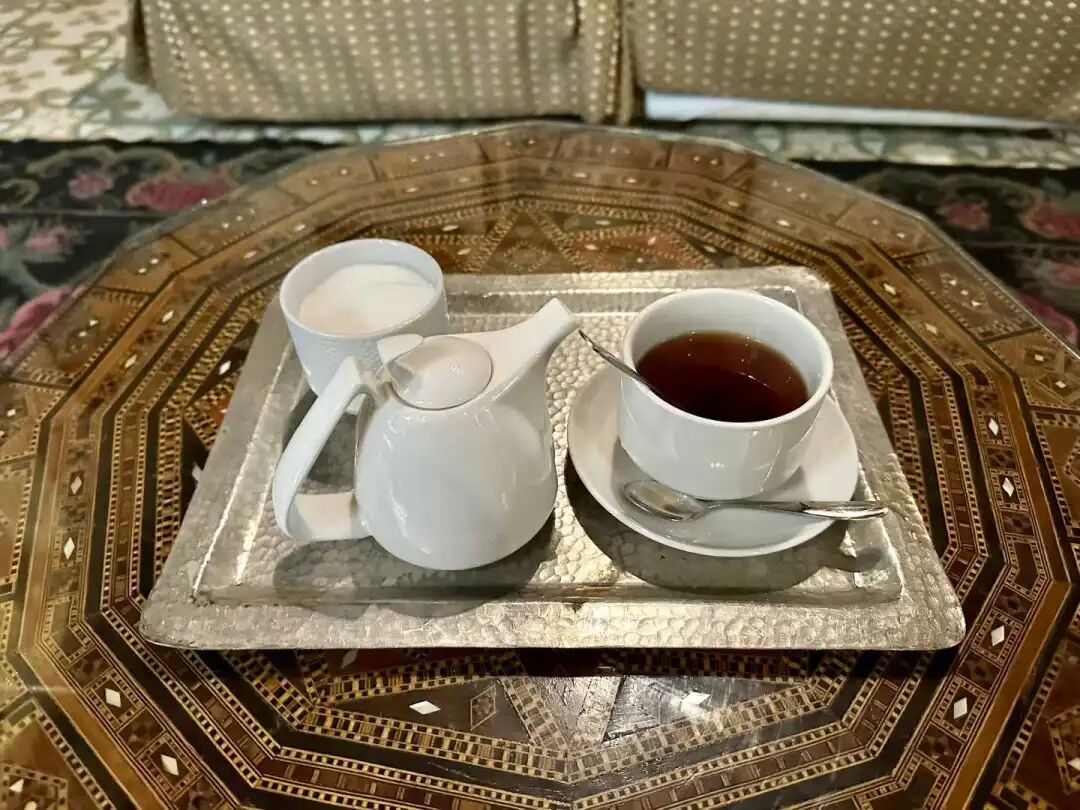
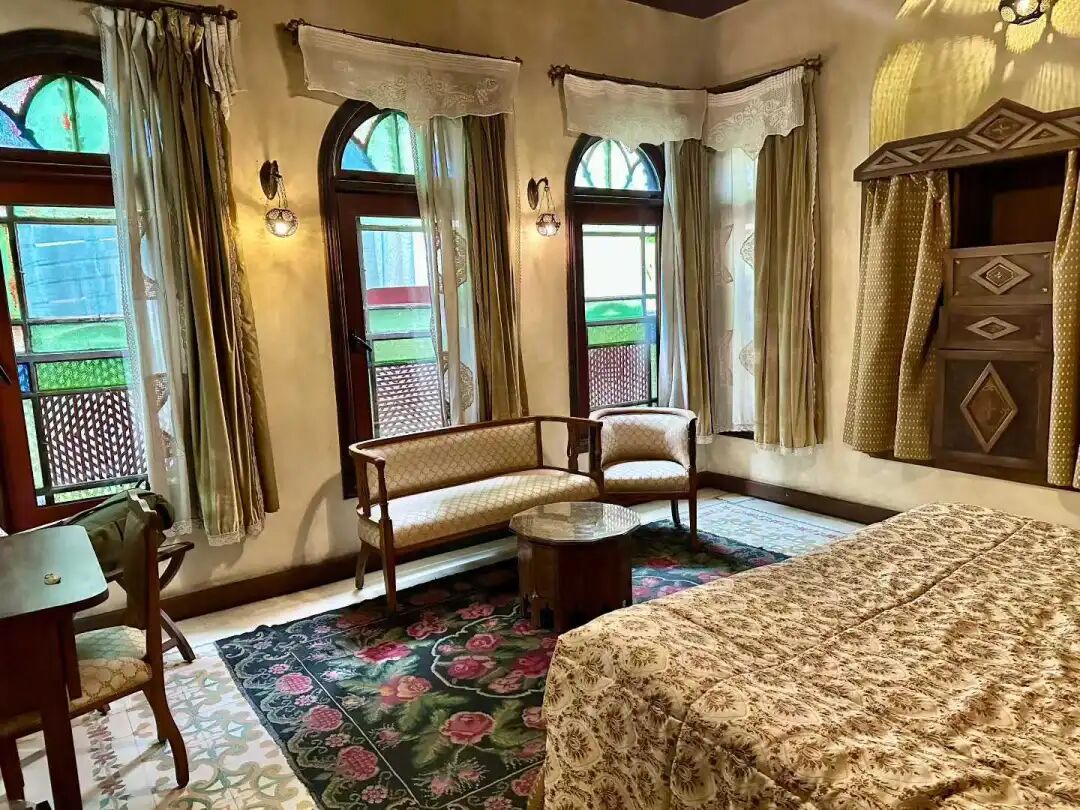
Dar Al Mamlouka was turned into a hotel in 2005. It is run by the same management as another nearby mansion, Beit al-Mamlouka, but that one is often fully booked. The single room was listed at 122 dollars, but I bargained it down to 110 dollars. The hotel has electricity and Wi-Fi all night. The single room is nice, and a staff member brought me tea right after I checked in. There are orange and lemon trees in the courtyard, which makes it very relaxing.
The Islamic decor at Dar Al Mamlouka includes the Hand of Fatima (Hamsa). Its five fingers represent the five pillars of the faith, and it is named after the Prophet's daughter, Fatima. During the Austro-Turkish War in 1788, the Ottoman Empire carried flags featuring the Hand of Fatima as the Grand Vizier led an army of 80,000 against Austria.
Breakfast at Dar Al Mamlouka is a typical Levantine cold platter served with bread and hot tea. They bring the full set even if you are eating alone. It mainly includes various cheeses, pickled olives, chickpea dip (hummus), jam, fresh cucumber and tomato, fruit juice, olive oil, and sausages. A special item is the pickled eggplant (makdous). These are miniature eggplants stuffed with walnuts, chili, garlic, olive oil, and salt. Syrians usually start pickling them in autumn to eat as an appetizer during winter. The powder on the table is the classic Levantine spice blend (za'atar). It is a mix of Syrian oregano, toasted sesame seeds, dried sumac, and thyme. It has an earthy taste with a hint of citrus and nuttiness, which is very unique.
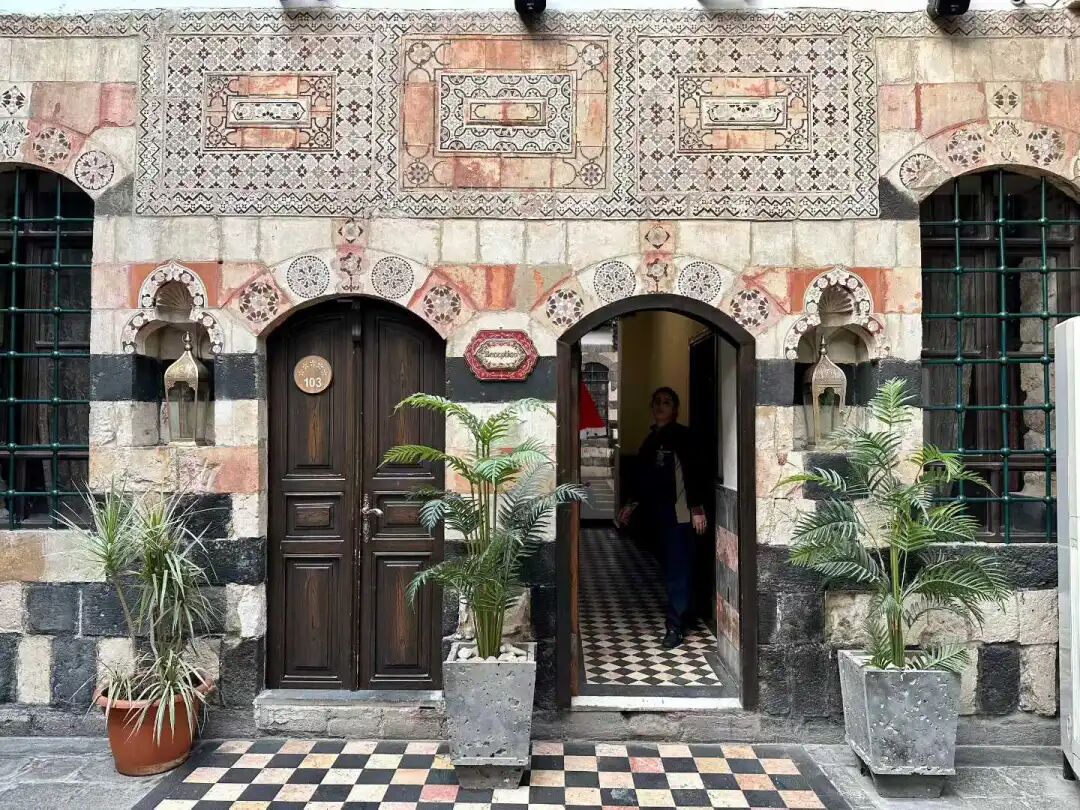
Dar Al Yasmin Hotel is located in the heart of the Christian Quarter of Bab Touma in the Old City of Damascus. The hotel is tucked away in a small alley, and it feels like a hidden world once you step inside. The hotel is made up of three 18th-century Ottoman mansions—two large and one small. It features a central courtyard, a fountain, a reception area (liwan), hand-painted wooden ceilings, traditional brick and stone structures, and carved doors and windows. The mansion changed hands many times after the 19th century until the Jasmine Hotels group took it over in 2005. They restored and opened it, making it a classic example of revitalizing a traditional Middle Eastern residence.
The single room was listed at 140 dollars, but I bargained it down to 125 dollars. The small alley at the entrance can get flooded when it rains, but overall it is a great value.
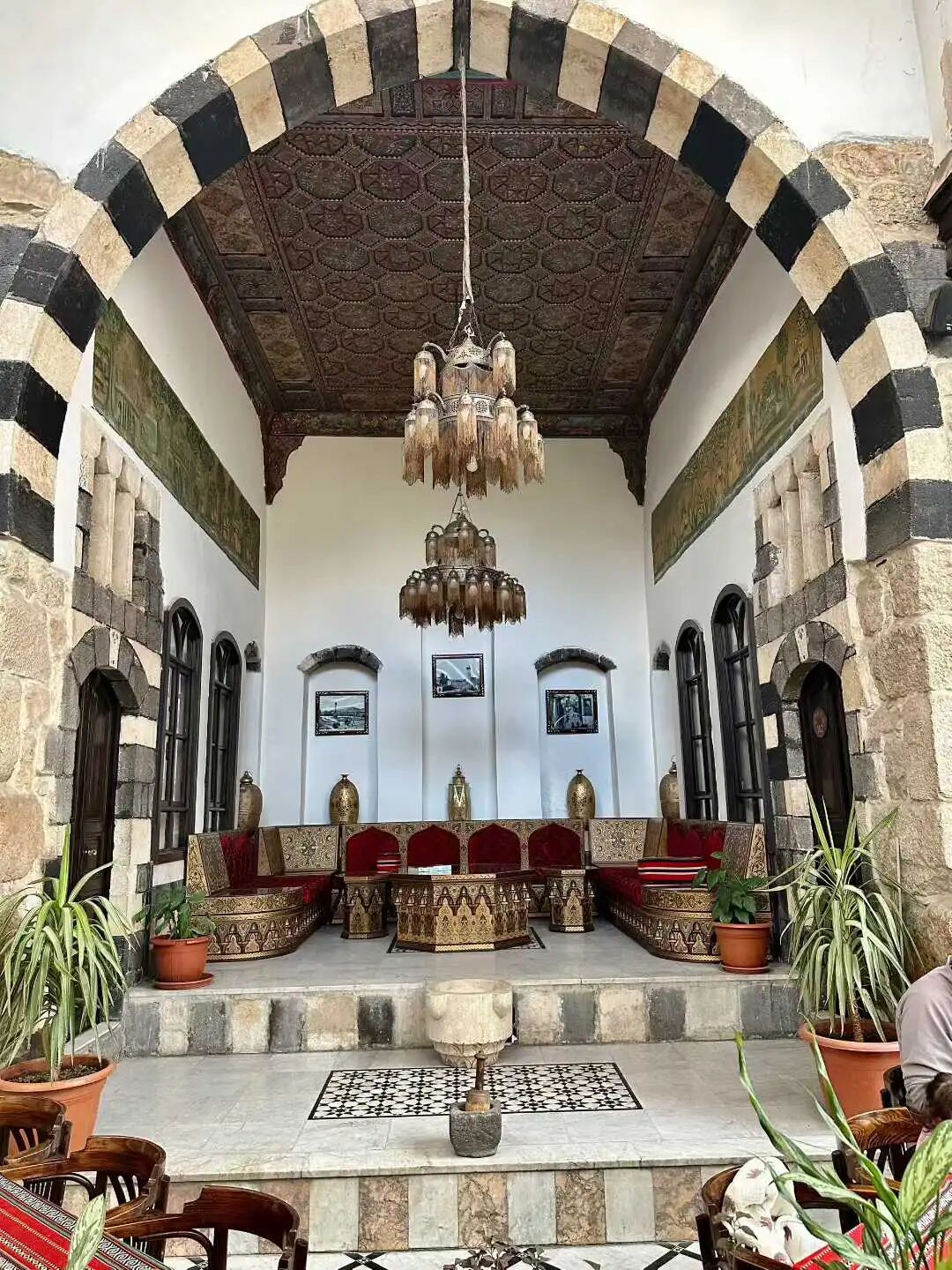
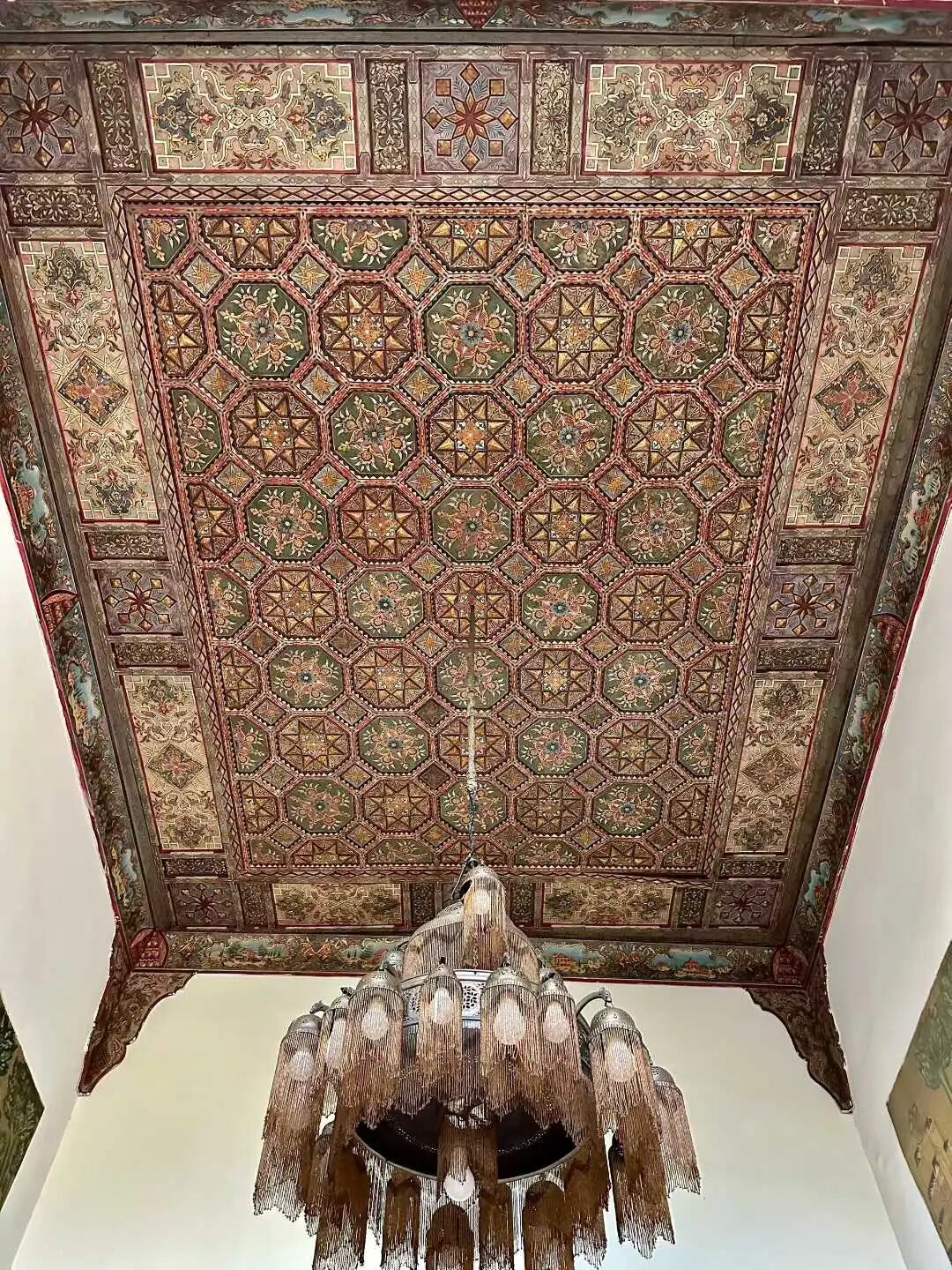
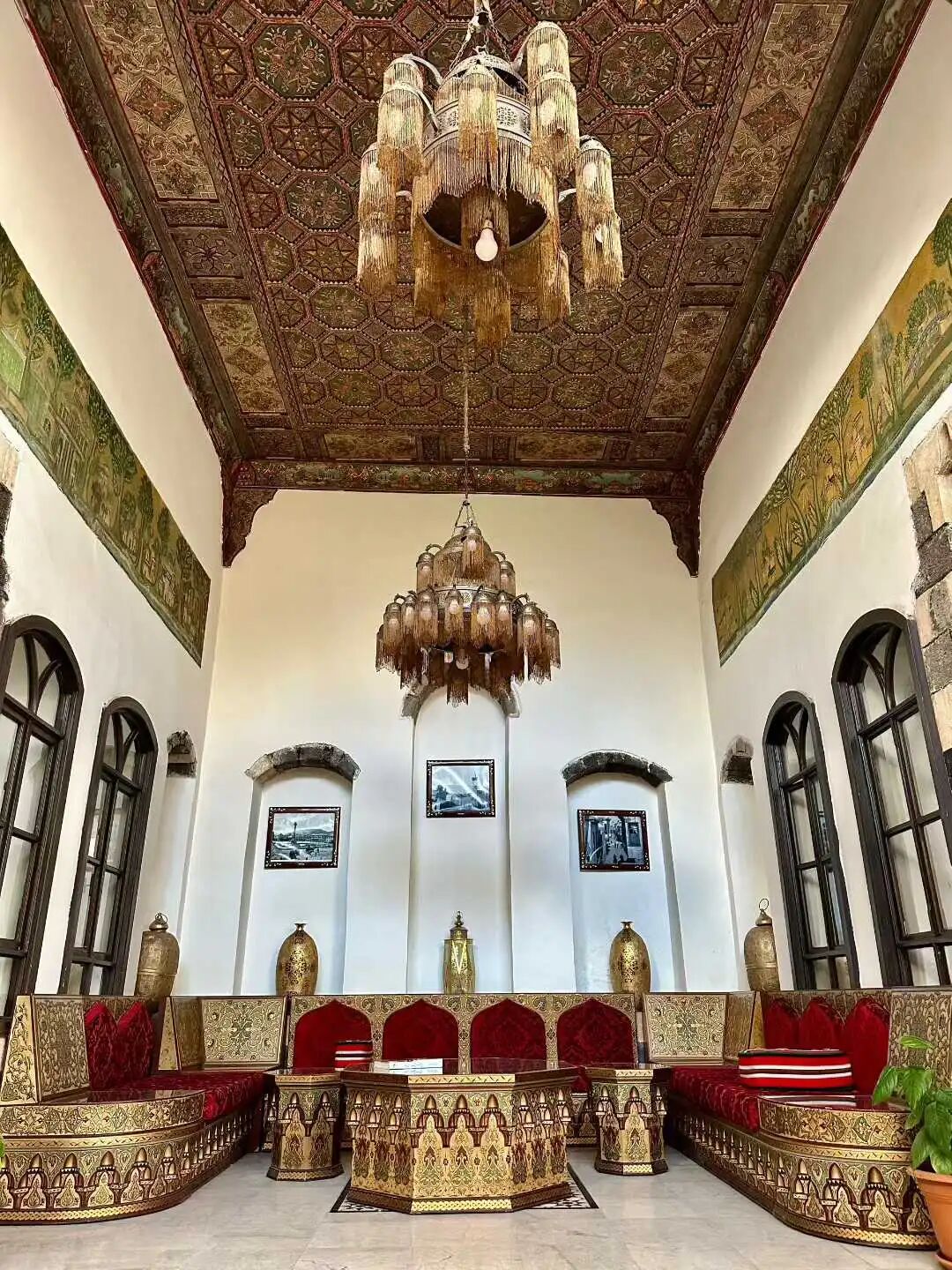
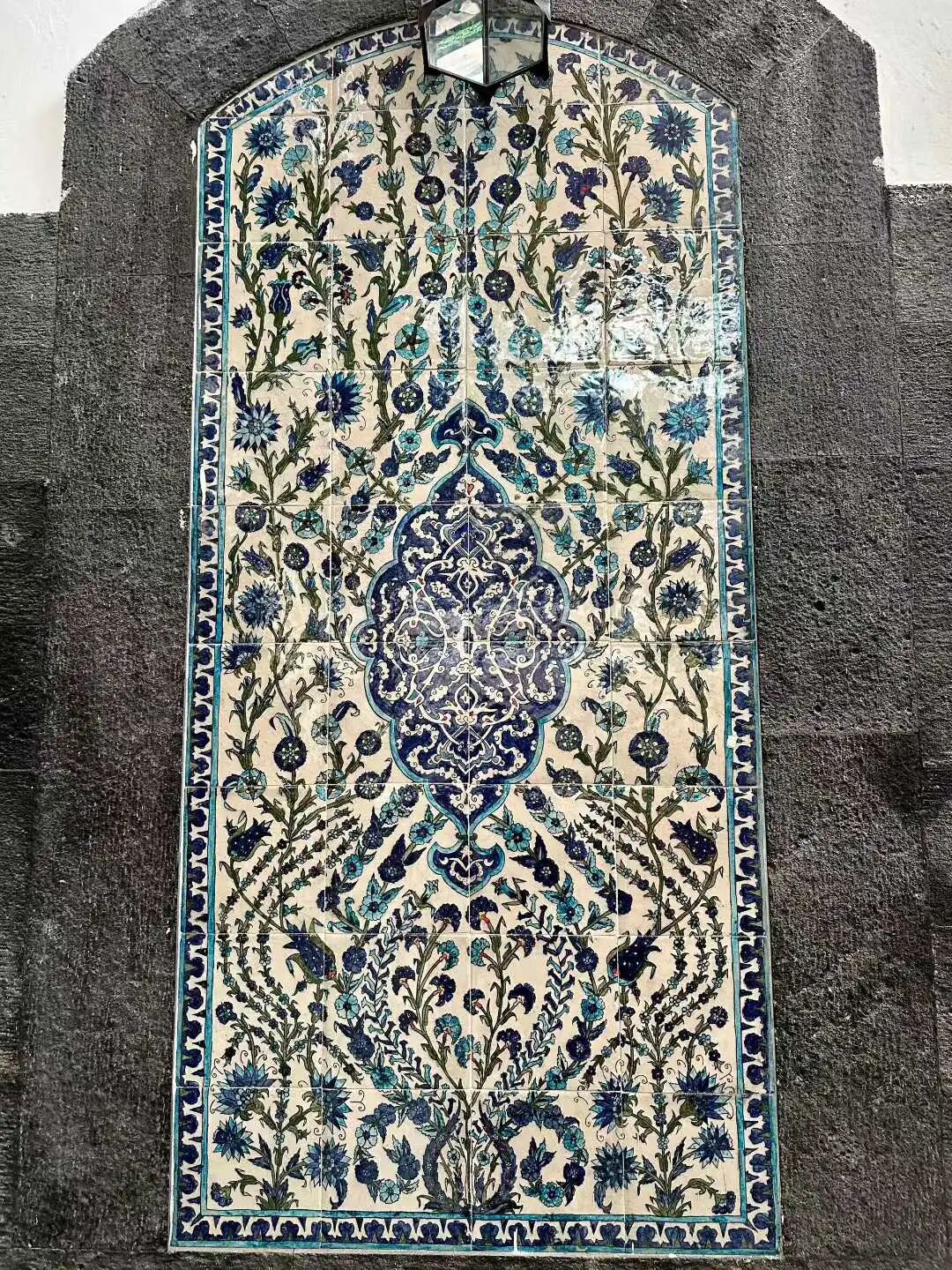
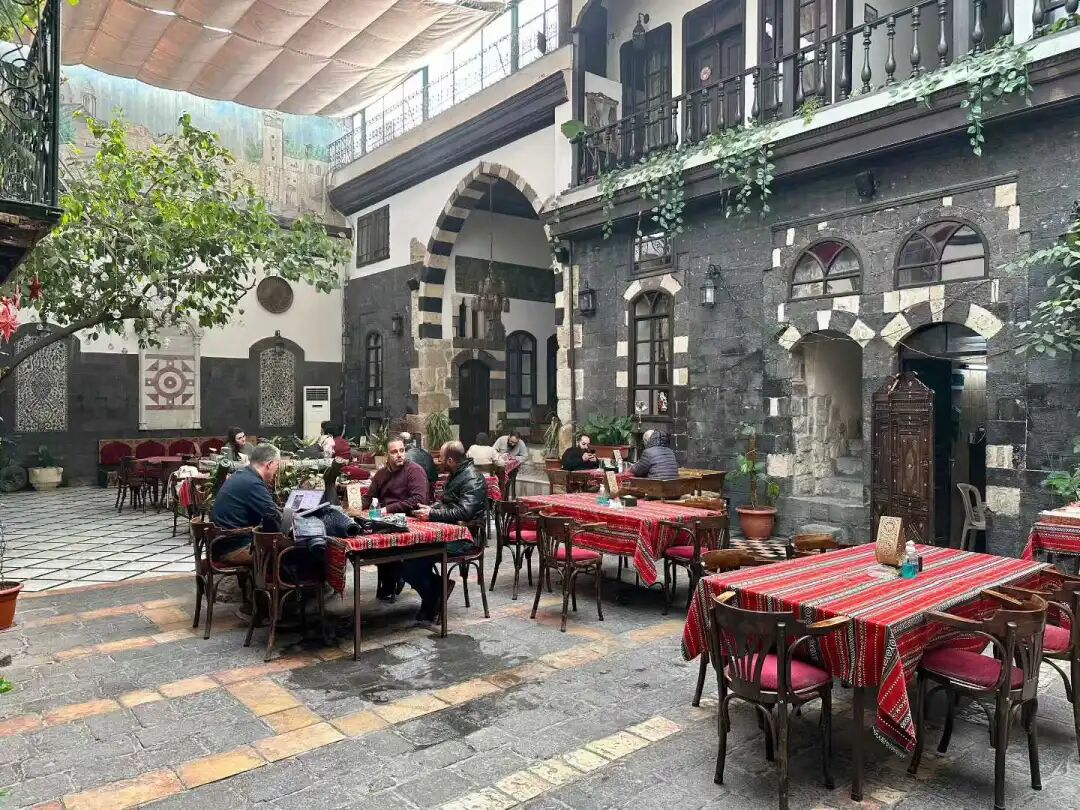
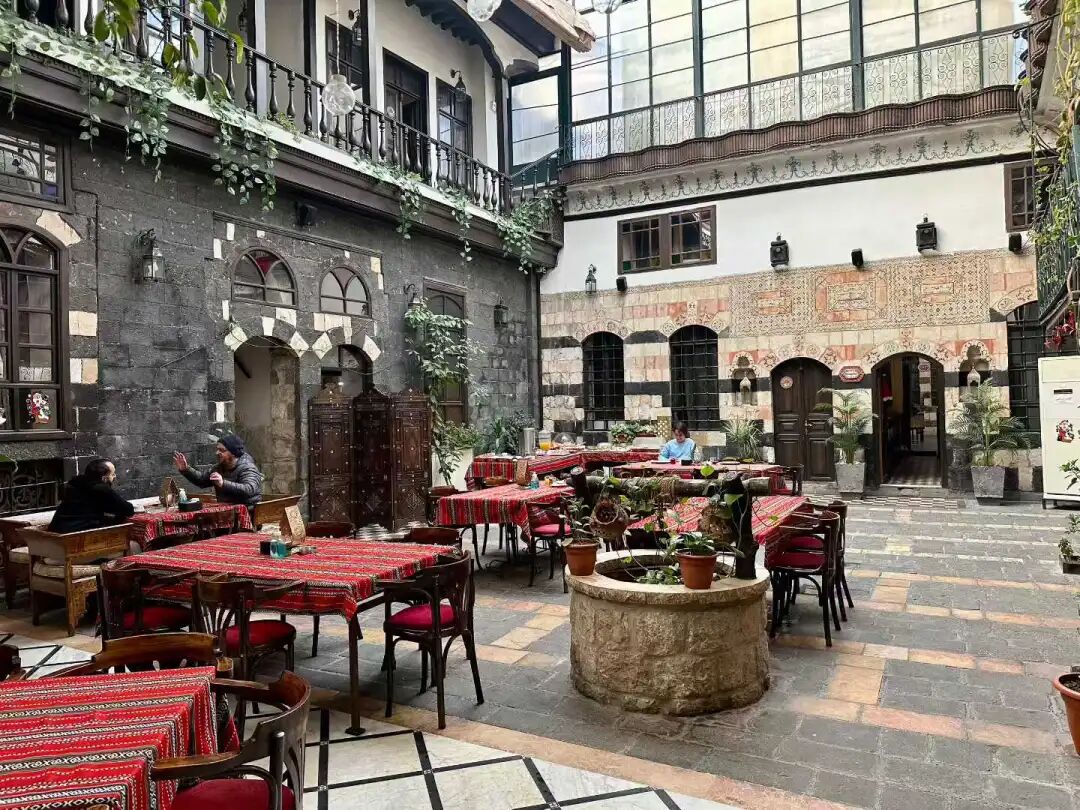
For breakfast at Dar Al Yasmin Hotel, the chickpea and sesame paste dip (hummus musabaha) is worth trying. Musabaha means swimming, as if the chickpeas are swimming in the sesame paste.
They also serve flatbread (manakish) in three varieties: with spice blend (za'atar), tomato, or cheese. Manakish originated from the traditional bread of the ancient Phoenicians and was added to the UNESCO Intangible Cultural Heritage list in 2023.
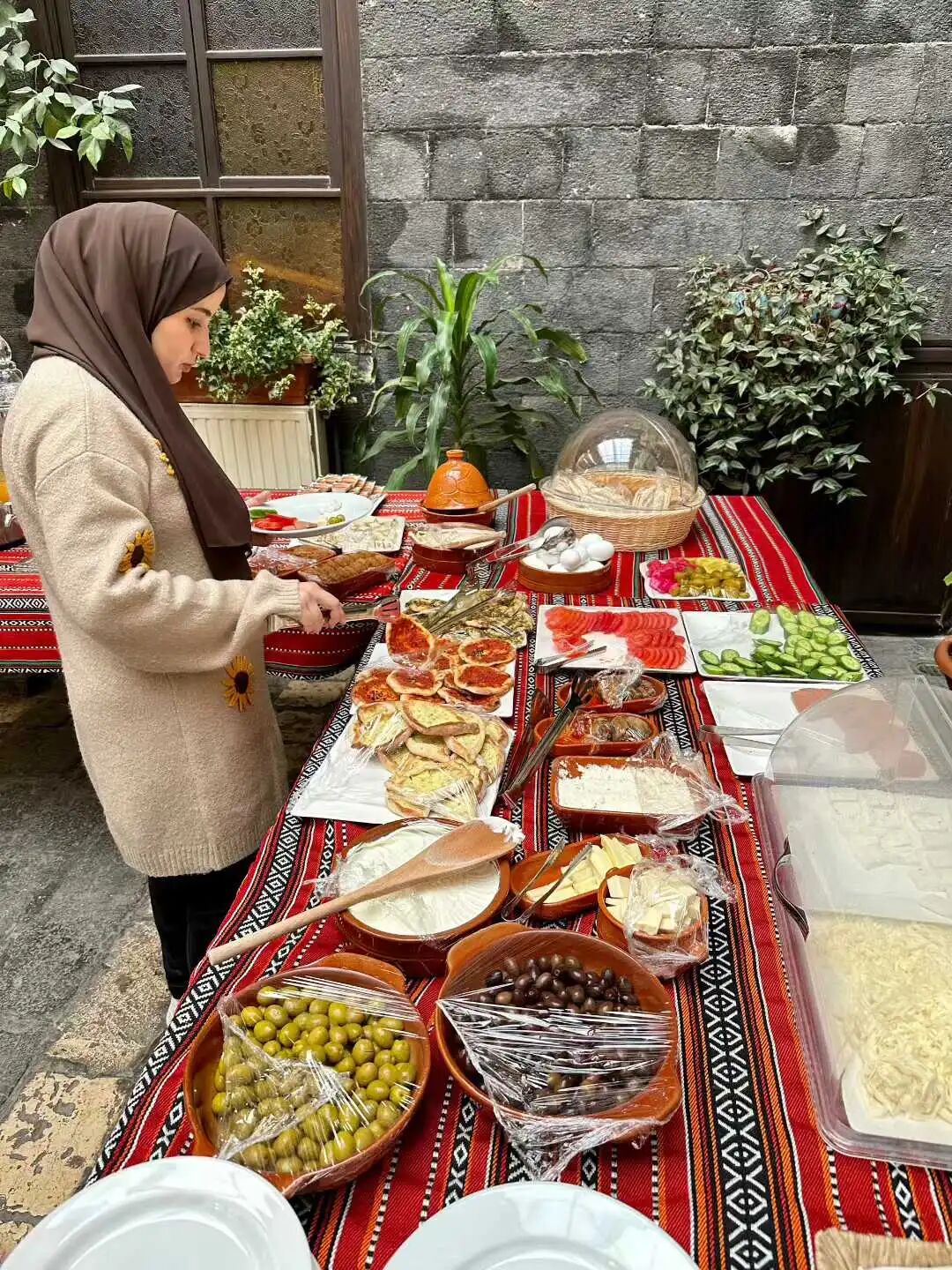
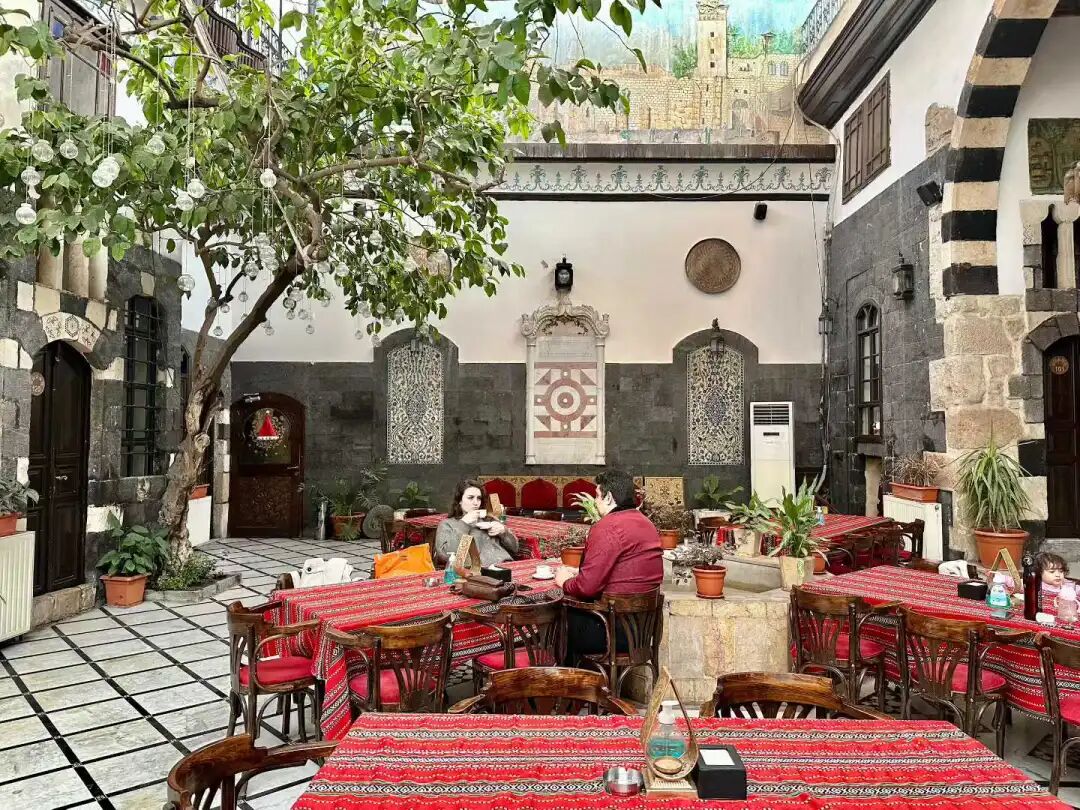
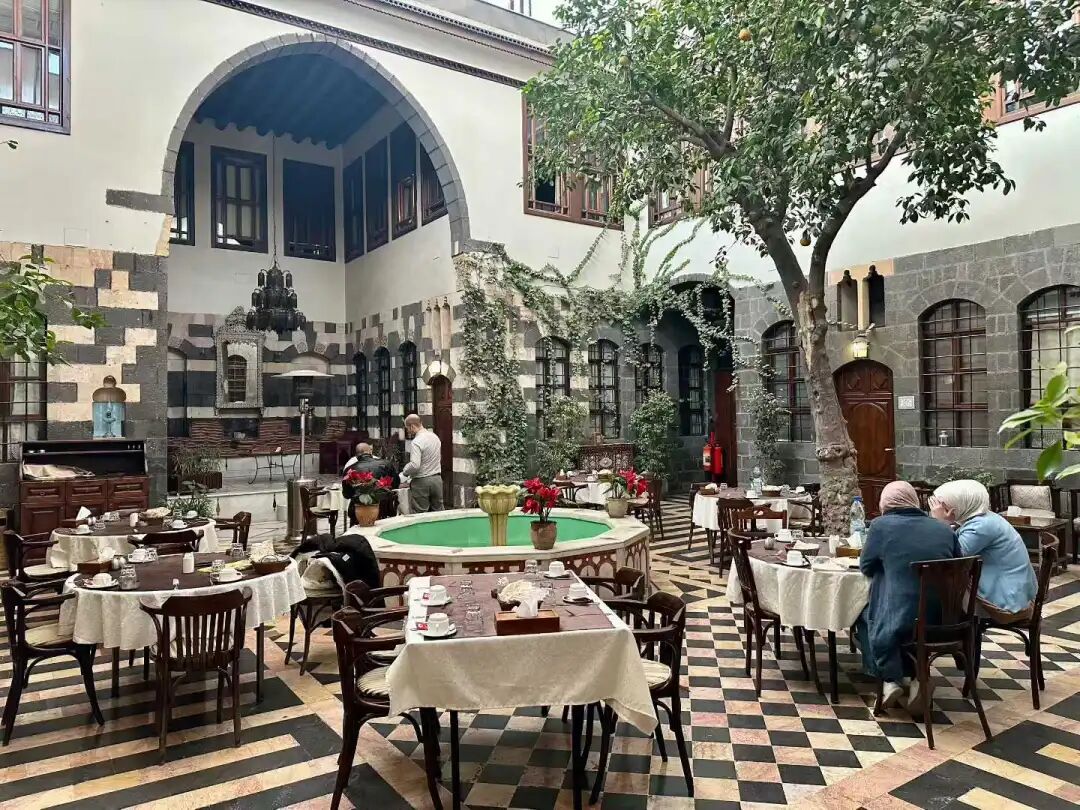
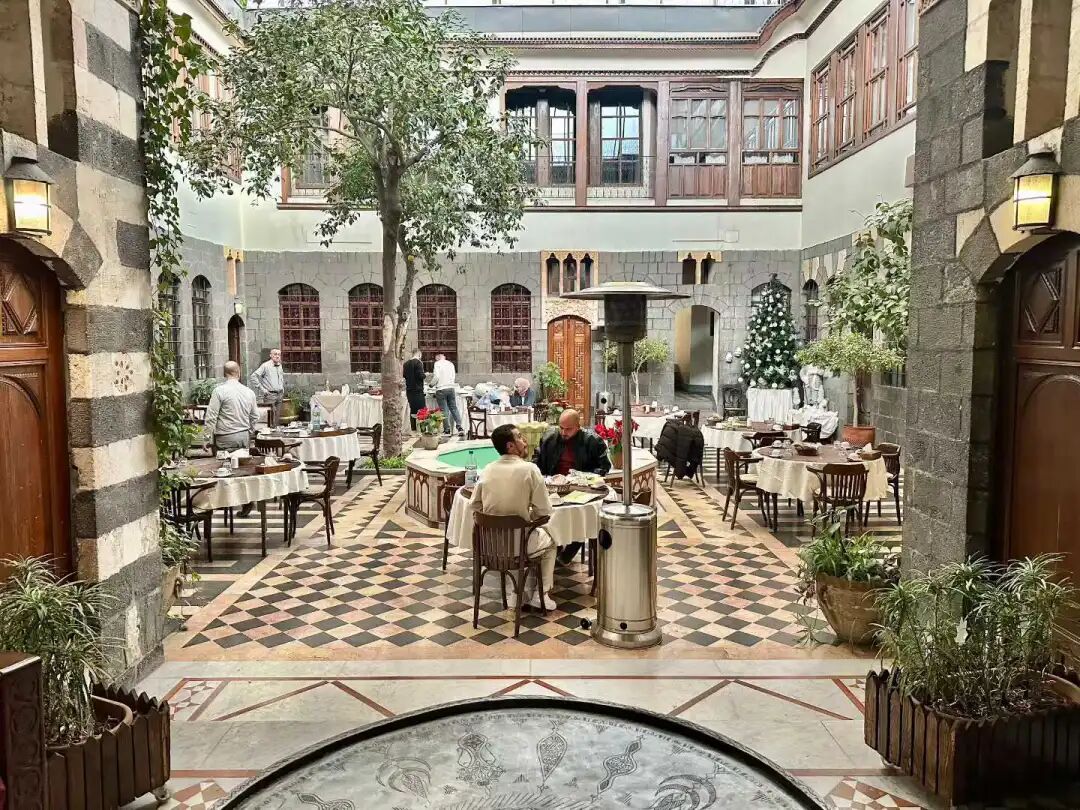
Beit Zaman Hotel is in the Christian Quarter of Bab Touma in the Old City of Damascus, right on the ancient Roman street (Via Recta). Their single room was listed at 150 dollars, but I bargained it down to 135 dollars.
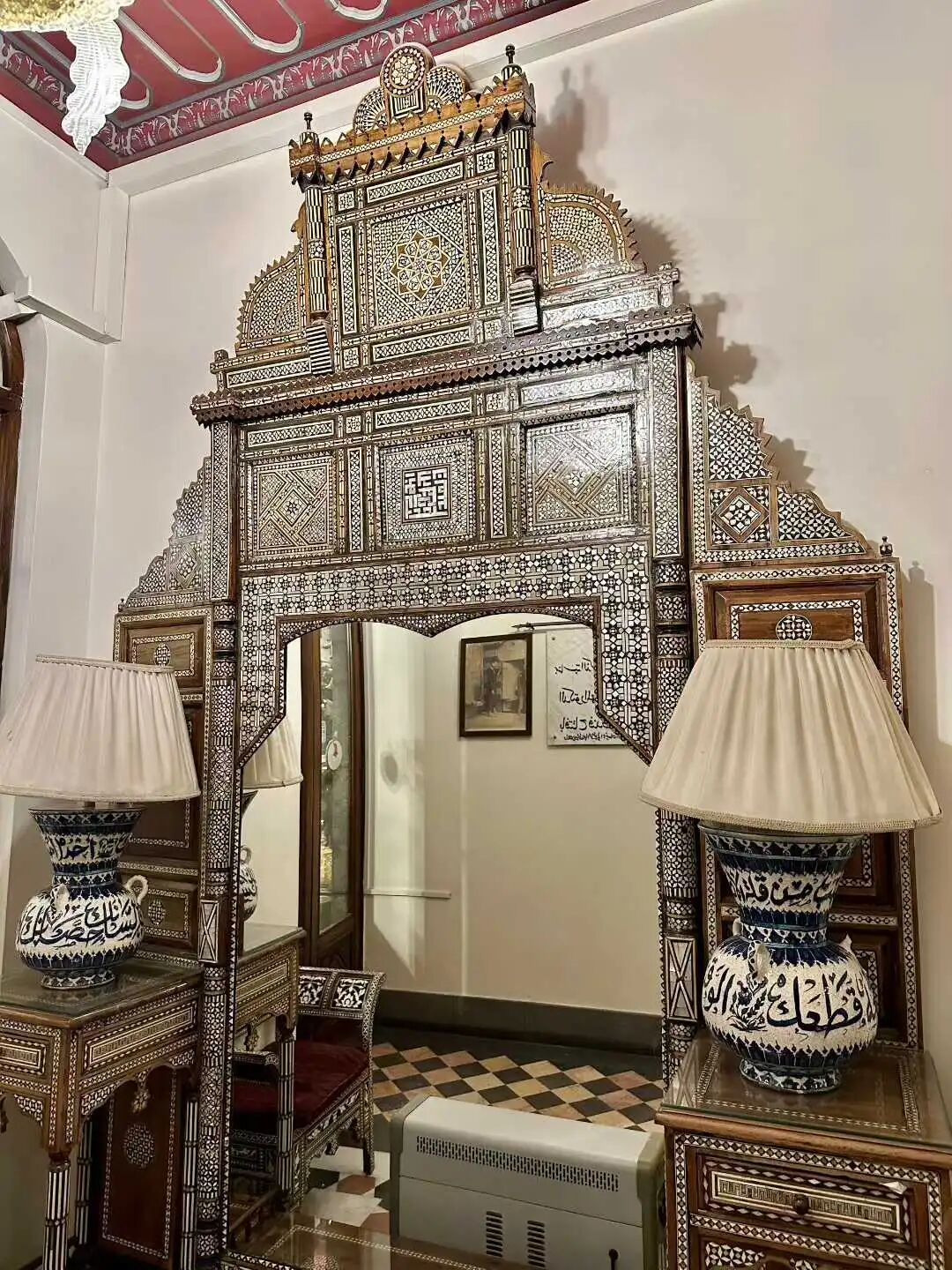
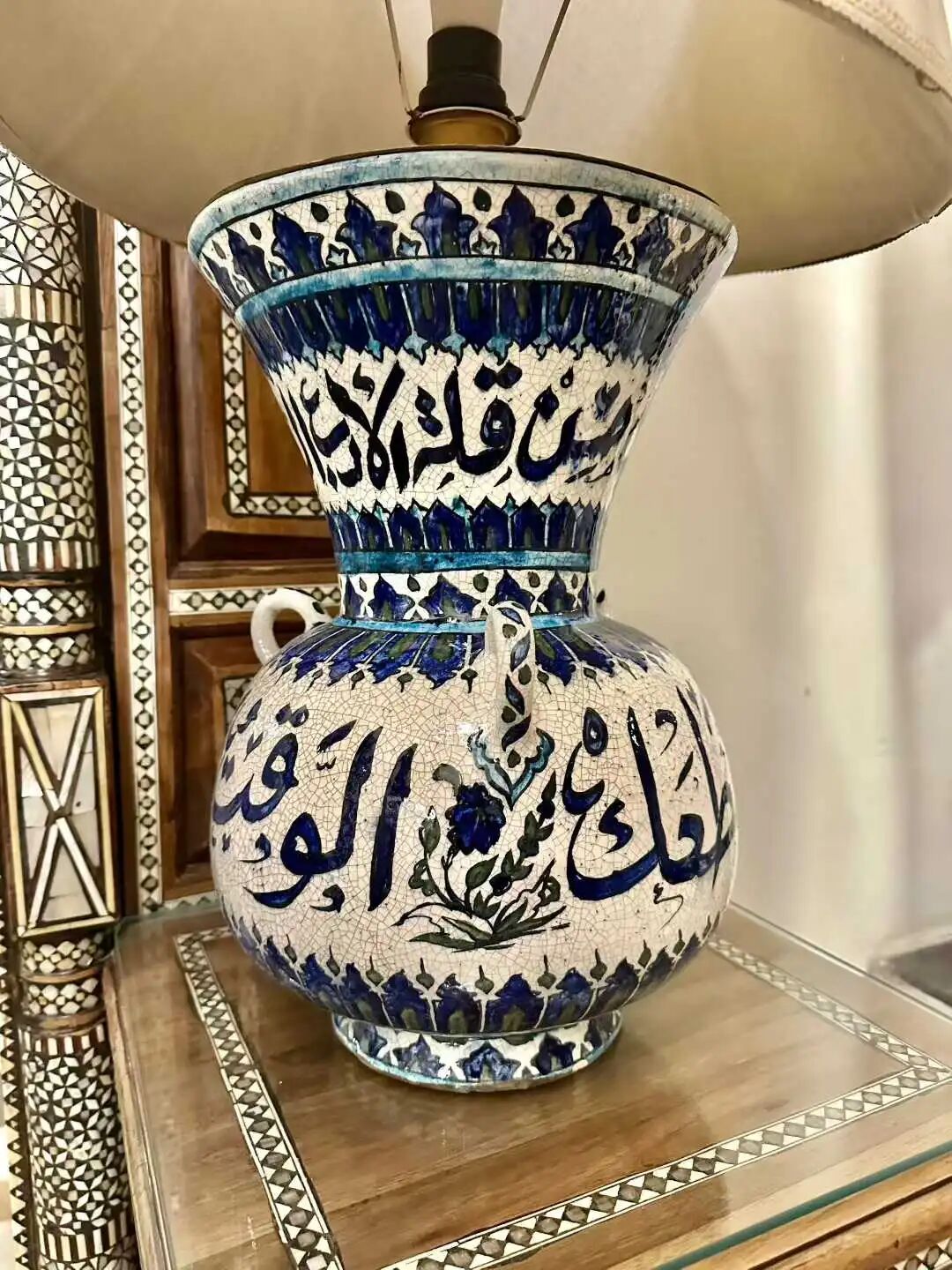
The hotel opened in 2008 after five years of connecting and restoring three 17th-century Ottoman mansions. It kept original features like stone carvings, wood carvings, mosaics, and fountains. The wooden Ajami-style ceilings and the traditional courtyard layout are the most impressive parts.
The buffet breakfast at Beit Zaman Hotel includes sausages, cheese, bread, olives, and chickpea dip (hummus). The red dipping sauce is called Muhammara. It is a Syrian appetizer made from walnuts, red bell peppers, pomegranate molasses, and breadcrumbs.
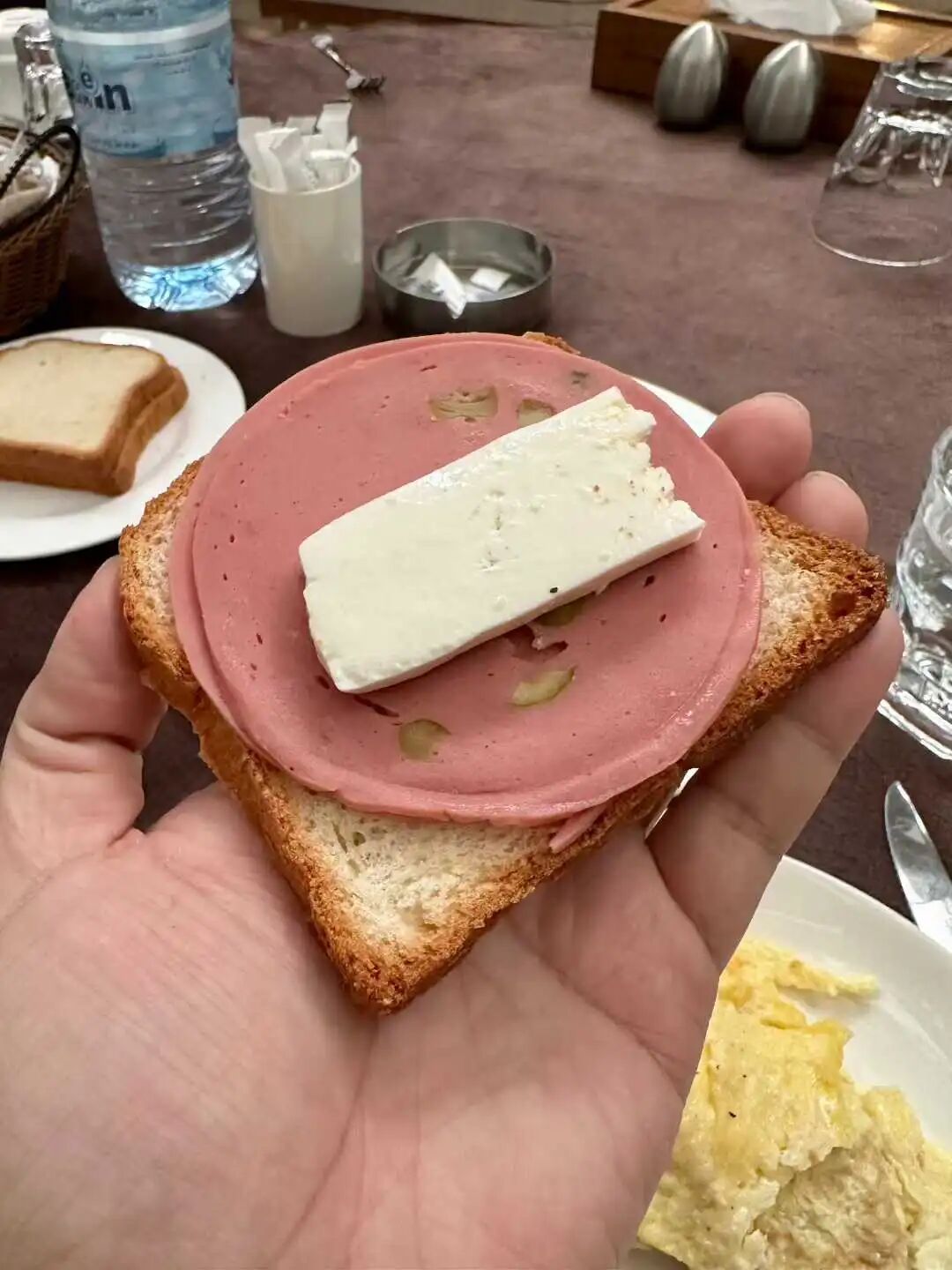
Albal Hotel is near the Bab Touma gate in the Old City of Damascus. It is likely the most convenient for transportation. A single room costs 80 dollars, which is the lowest price, but the power is weak and it is almost impossible to charge a phone. Choose carefully.
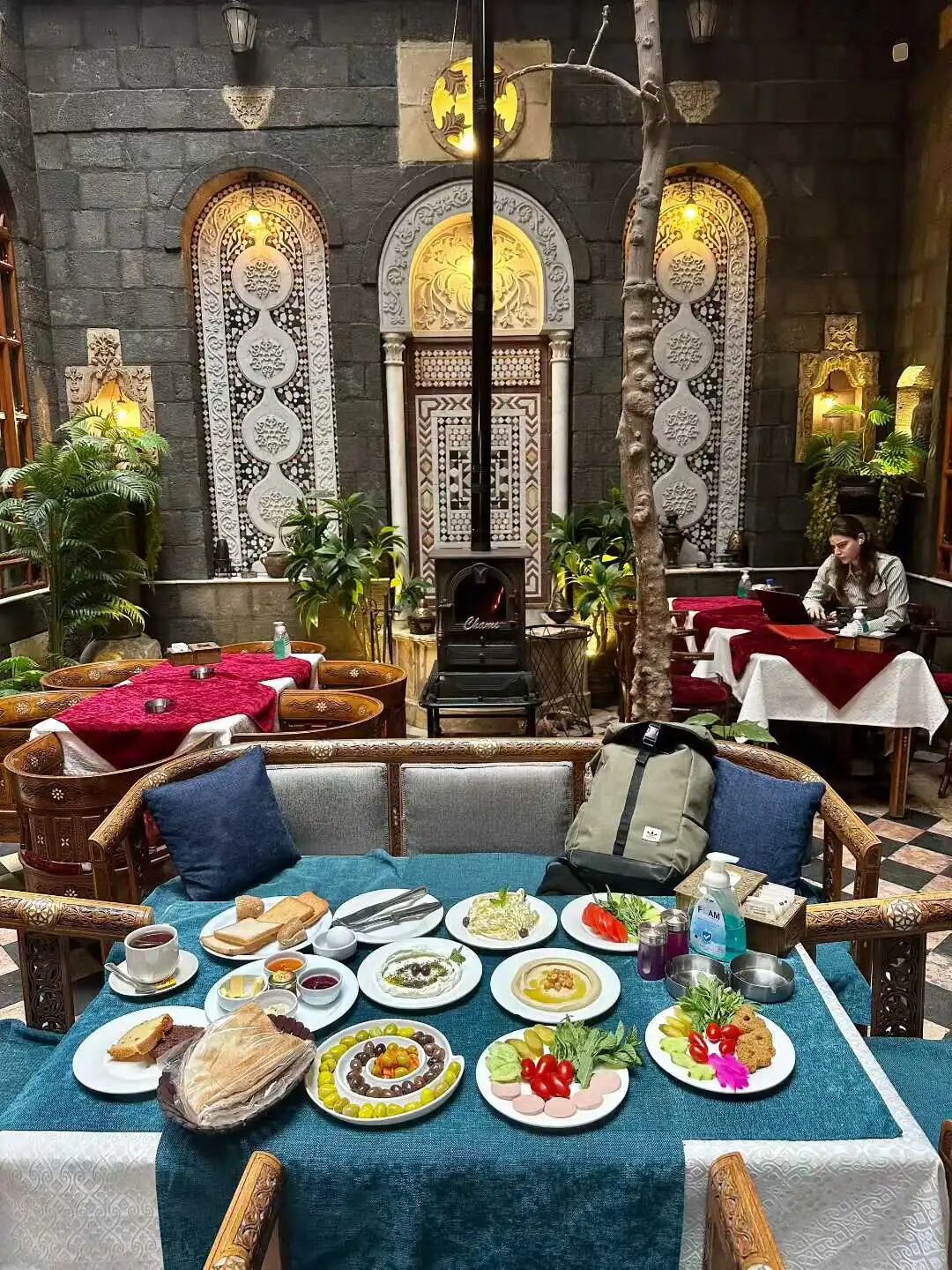
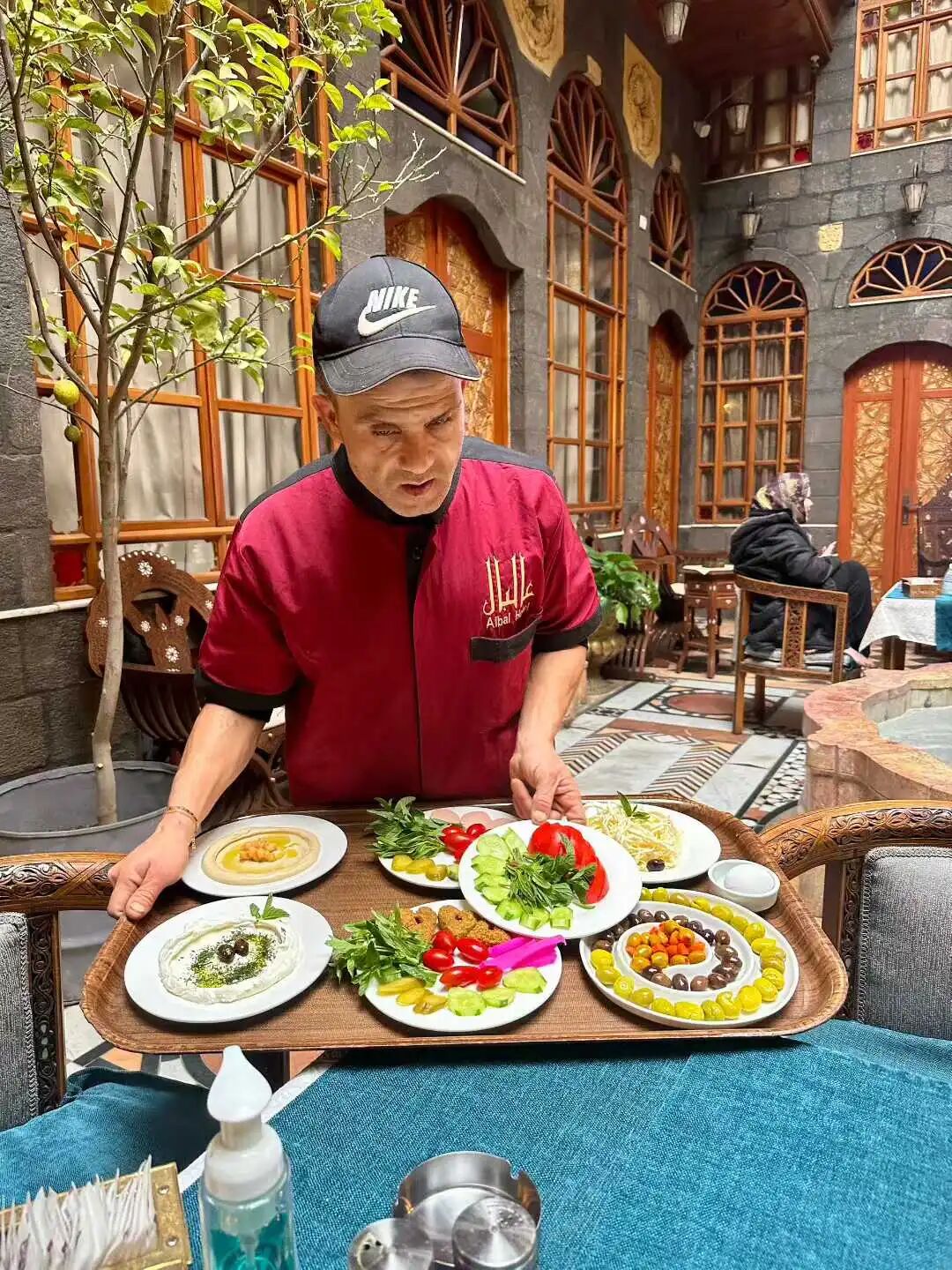
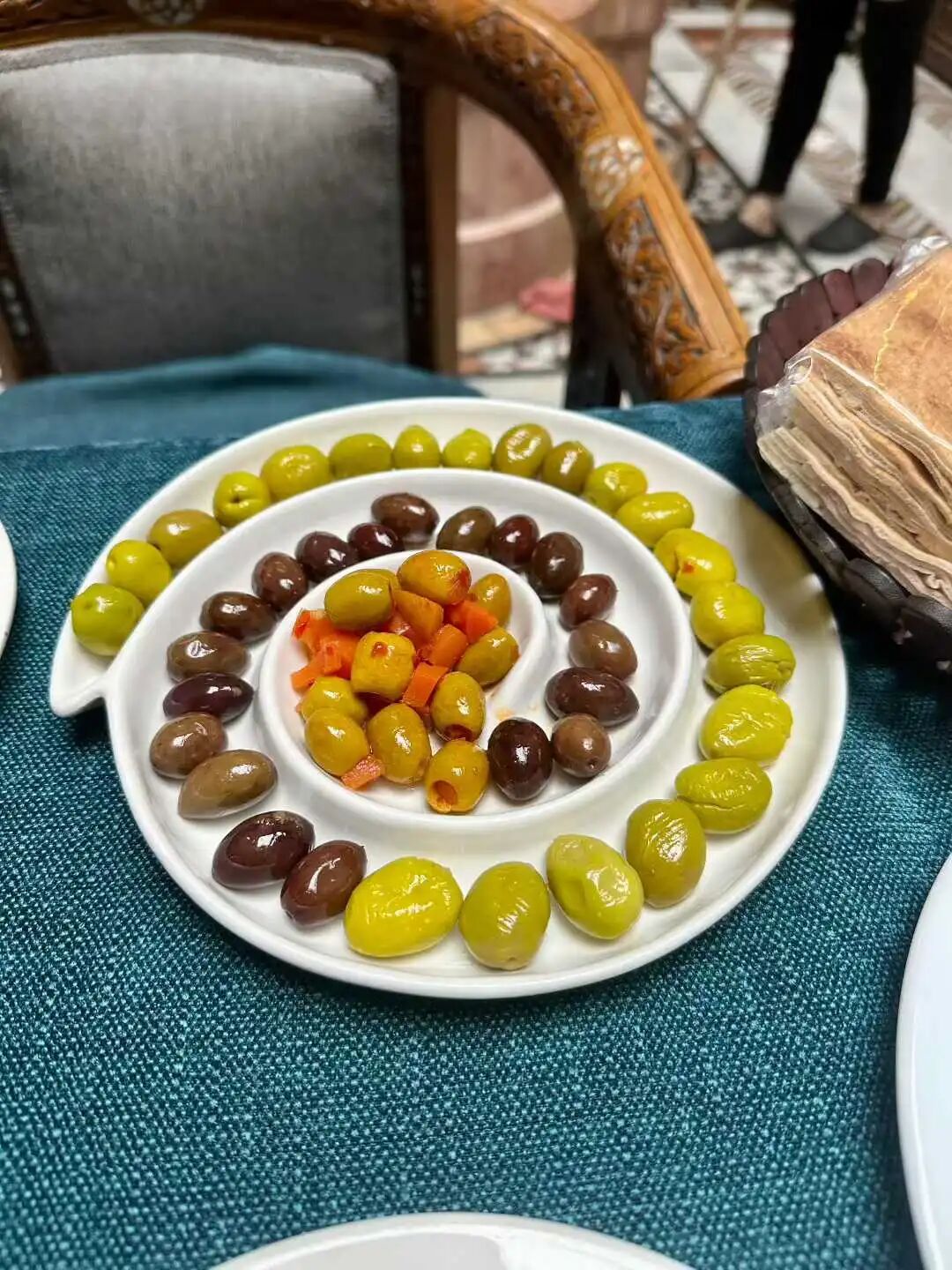
Albal Hotel is a converted Ottoman mansion rebuilt after the 1759 Damascus earthquake. It has a courtyard fountain and wood carvings. The breakfast is quite good, and they light a stove in the courtyard during winter.
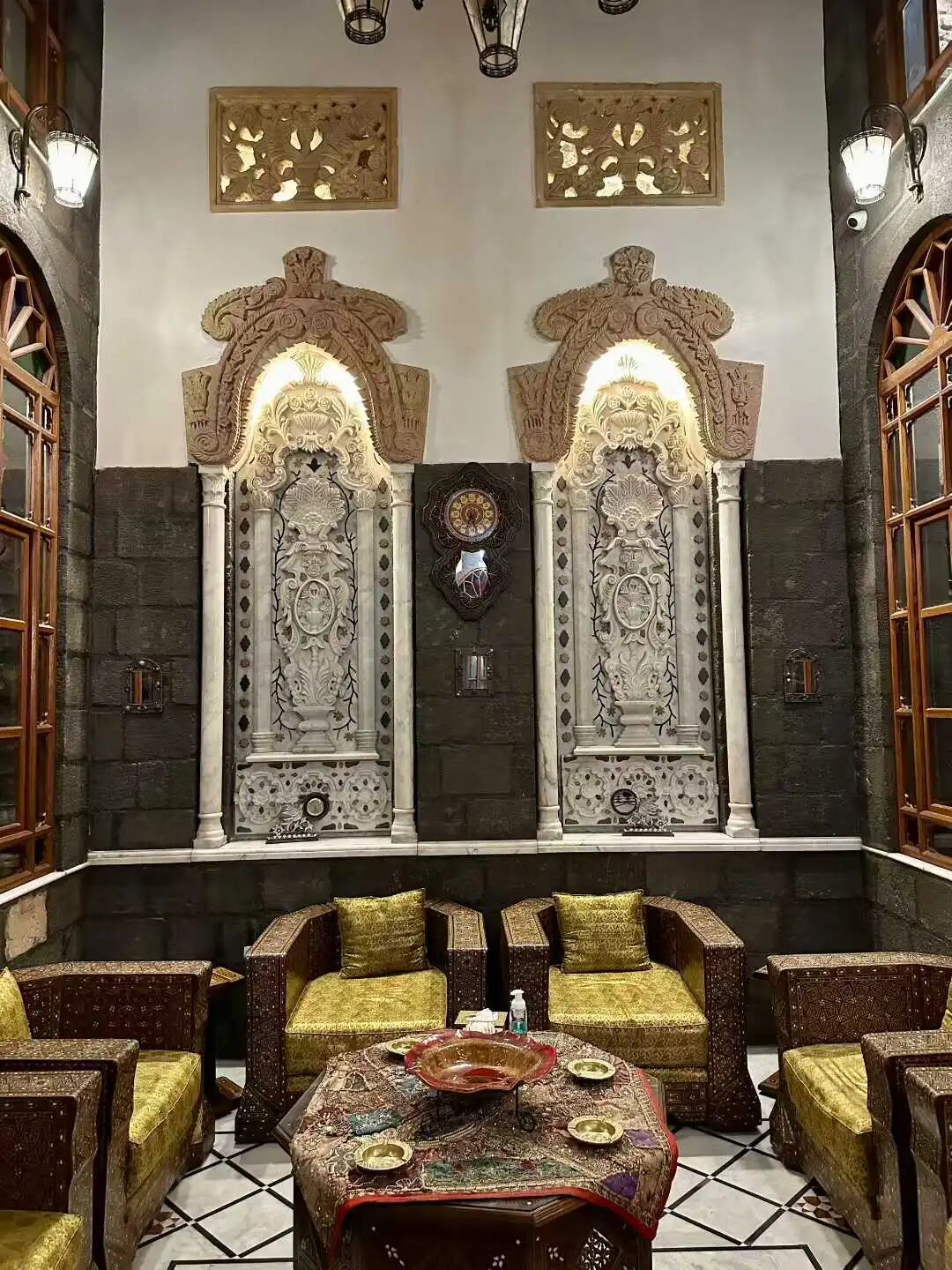
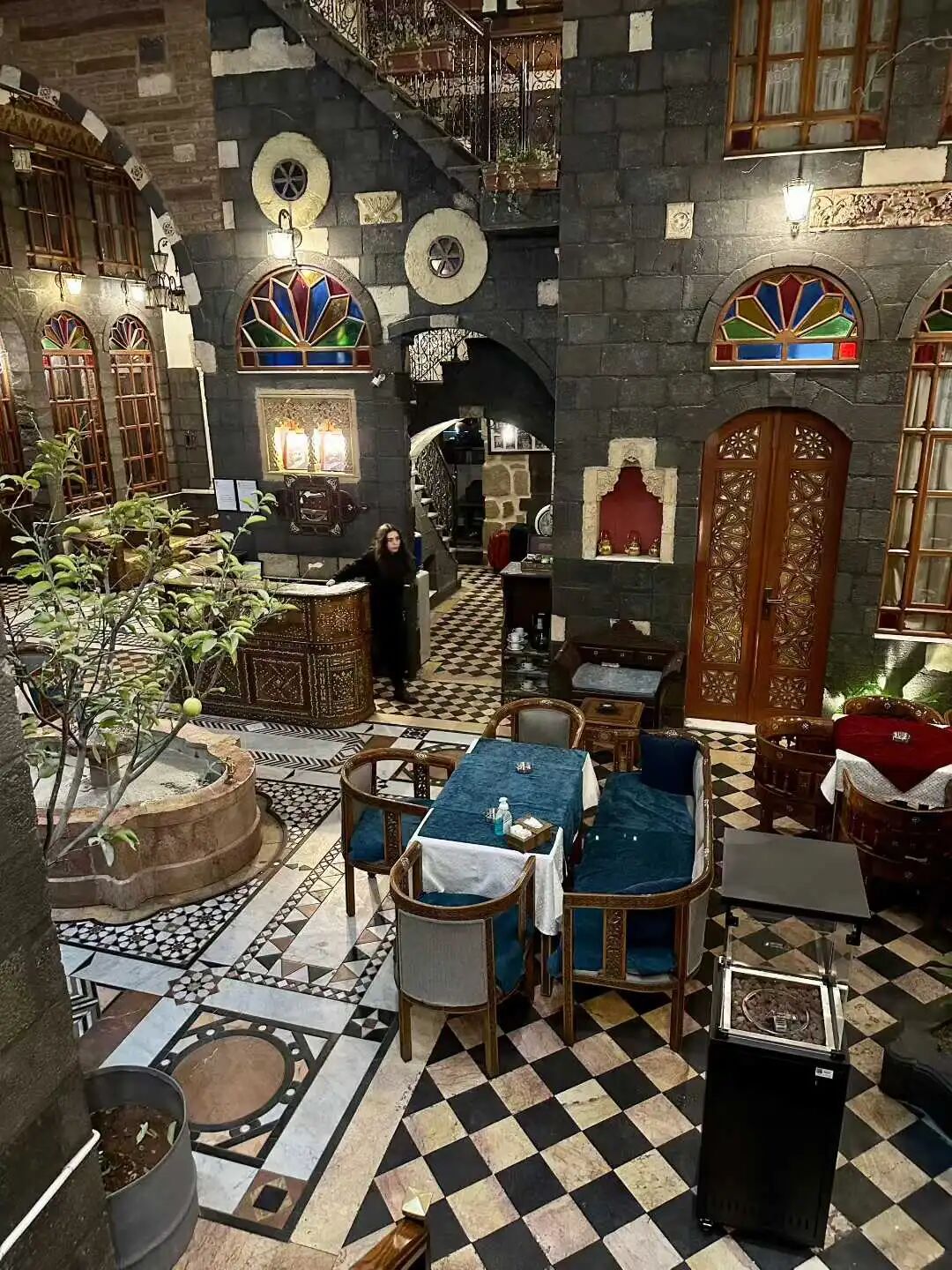
Al Shahbandar Palace Hotel is on the west side of the Christian Quarter near Bab Touma in the Old City of Damascus, right on the busy Al Qemaryeh market street.
The hotel is inside an Ottoman noble mansion built in the 16th century. The Shahbandar family, a famous modern political family in Damascus, lived here for a long time. The famous nationalist leader Abdul Rahman Shahbandar came from this family. The Shahbandar family renovated the mansion on a large scale in the early 20th century and used it as a place to host guests for a long time. In 2007, it was converted into a historic hotel after adding private bathrooms, air conditioning, and electrical systems, while strictly preserving the facade, courtyard, and historical components.
Today, the mansion's courtyard is open as a cafe. You can drink coffee there, so you do not have to stay at the hotel to experience this Ottoman mansion.
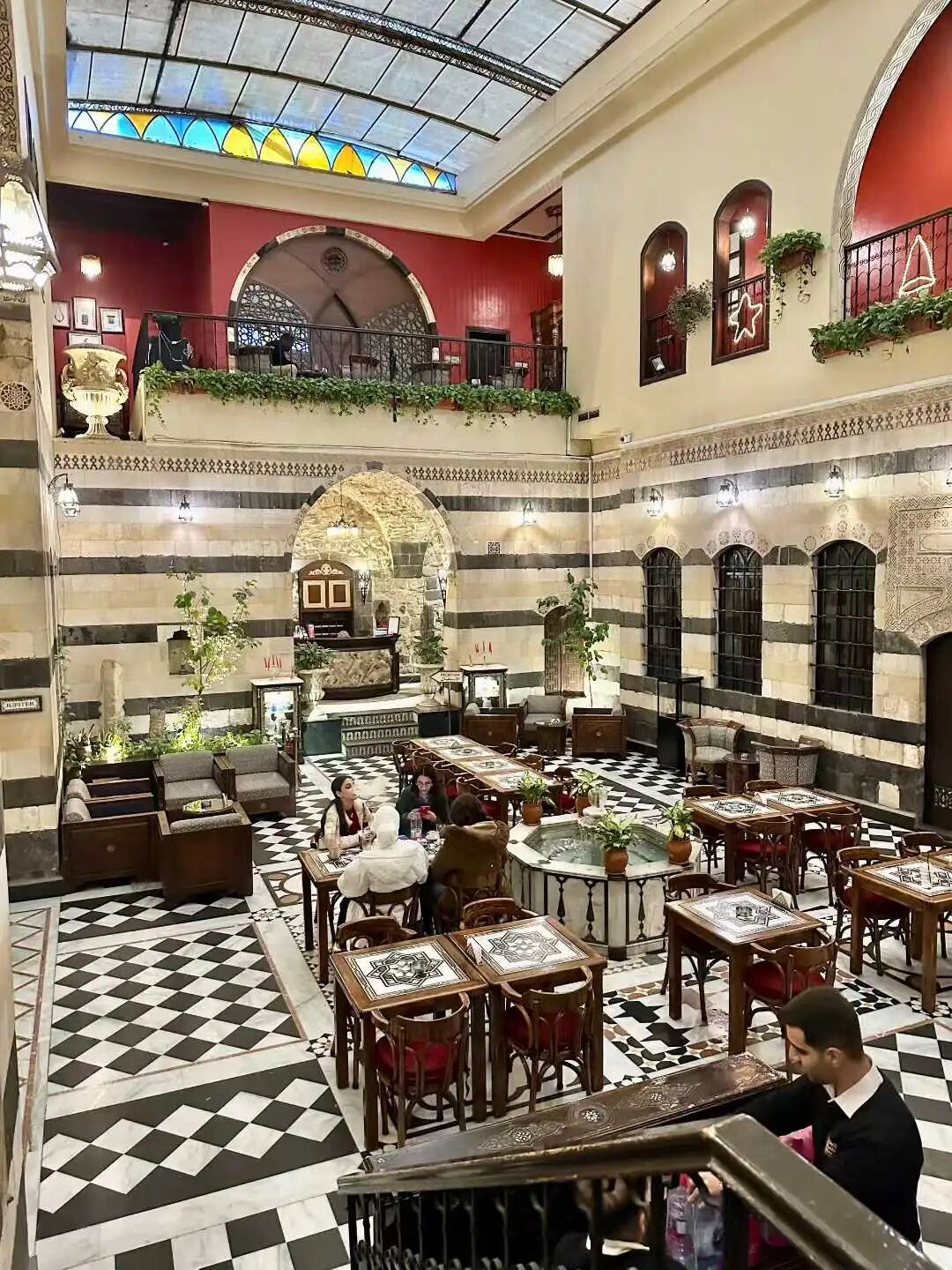
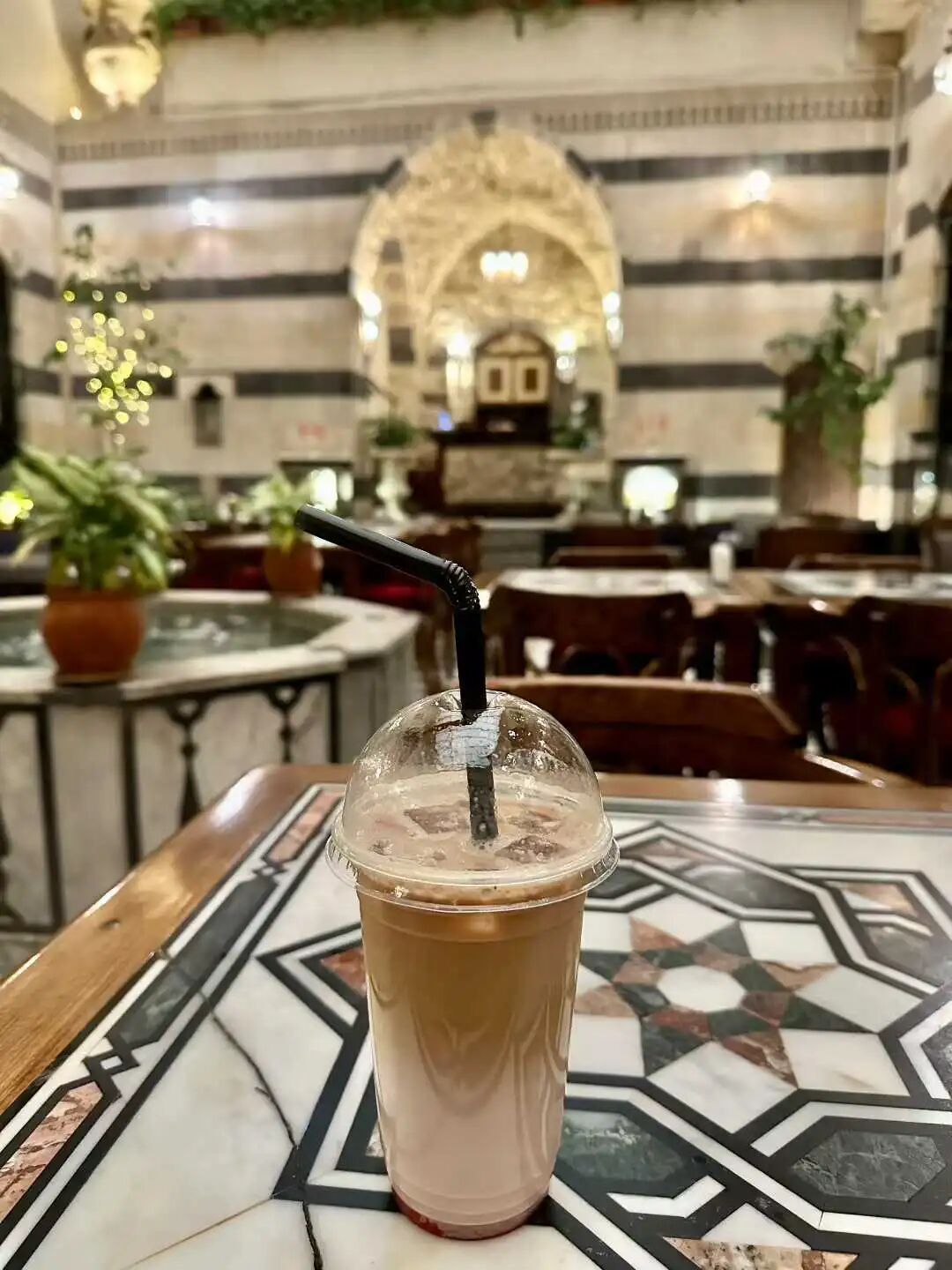
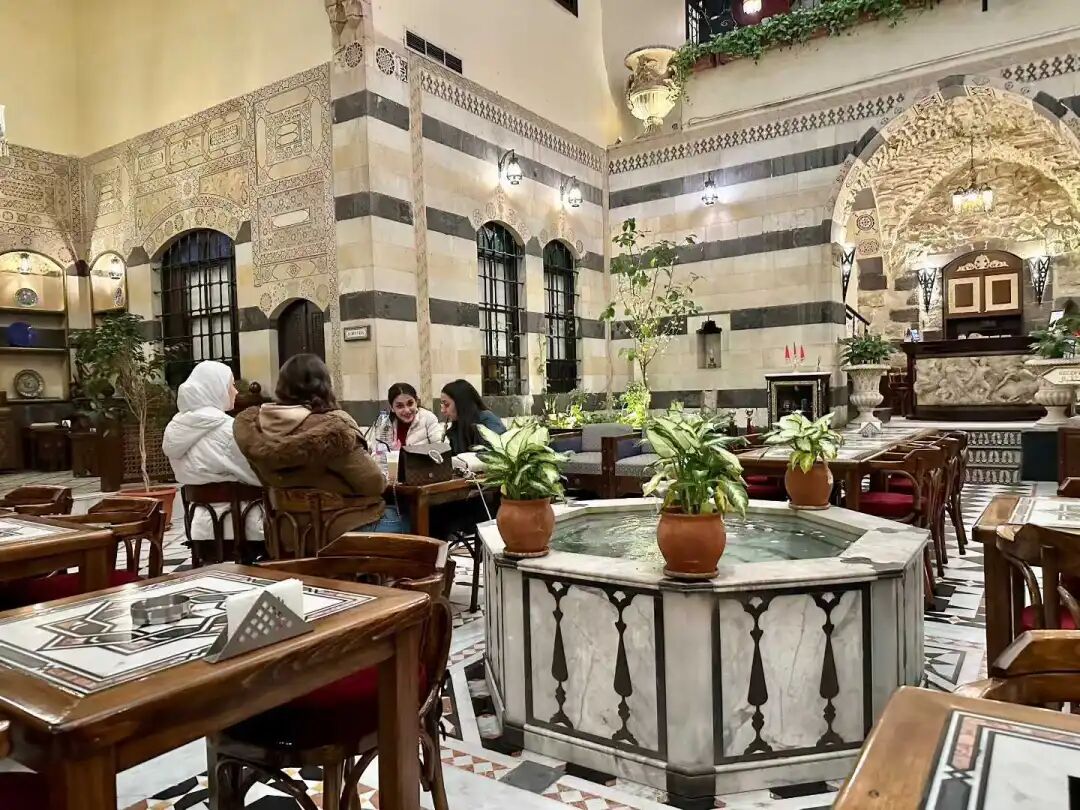
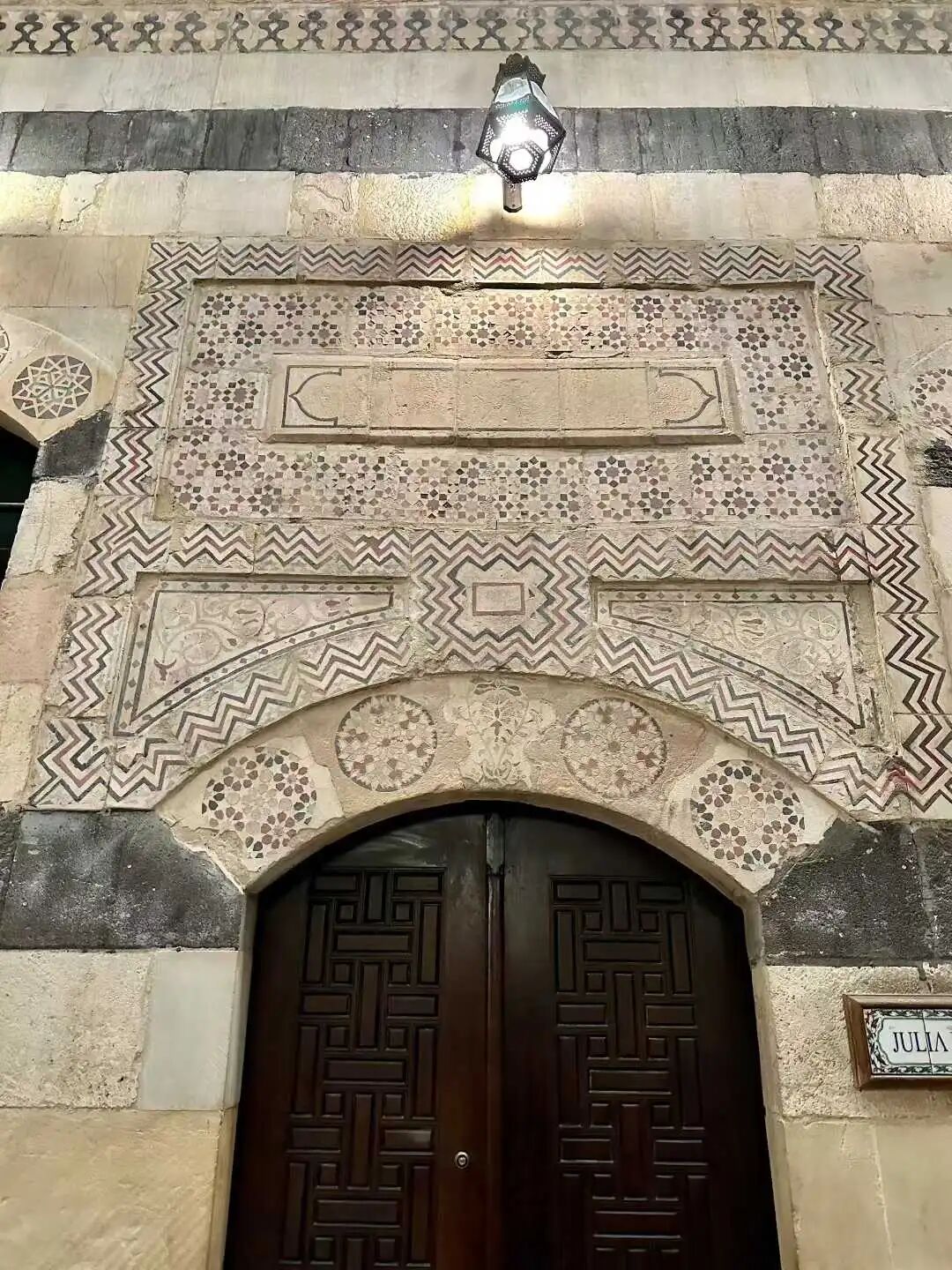
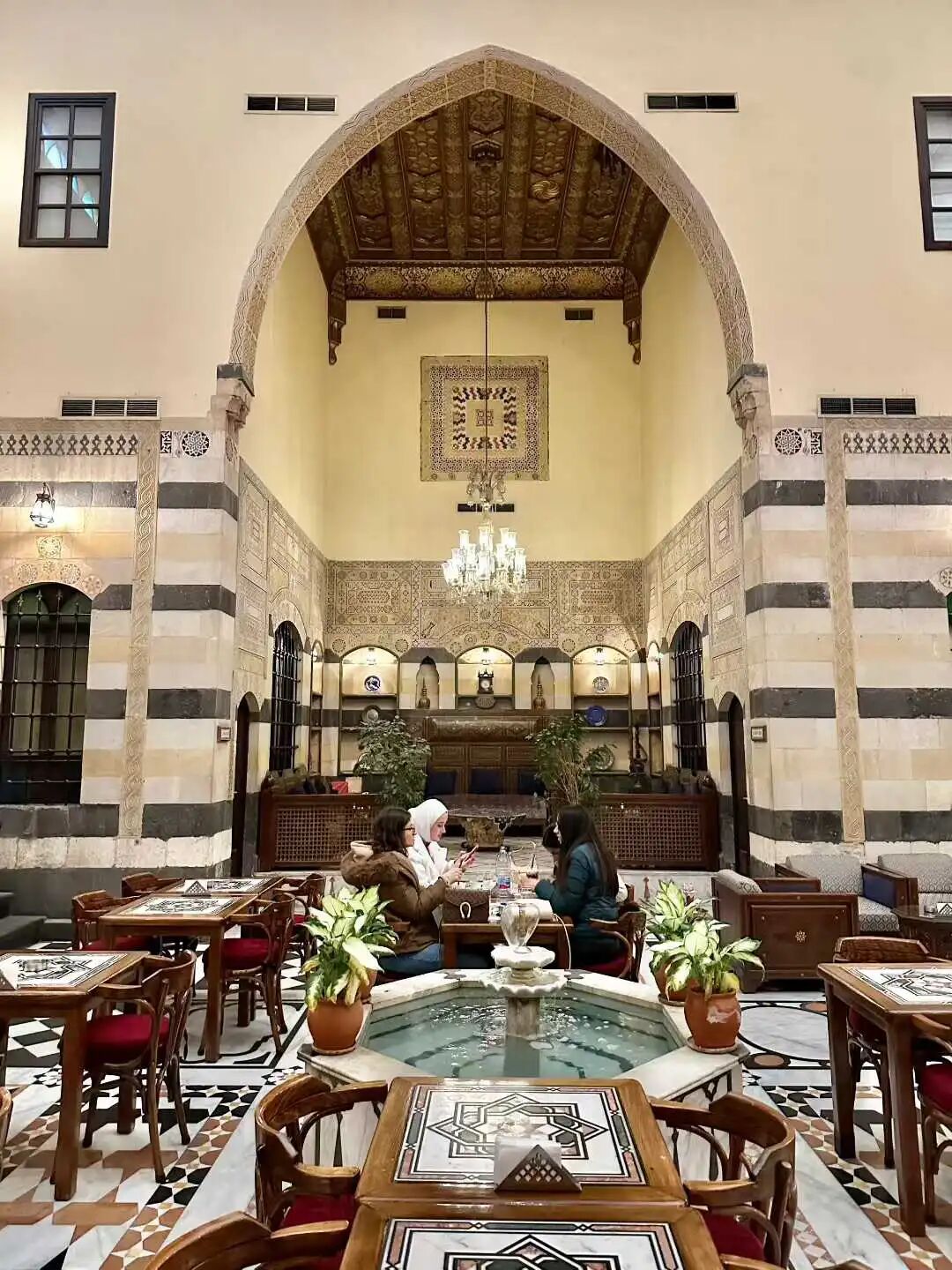
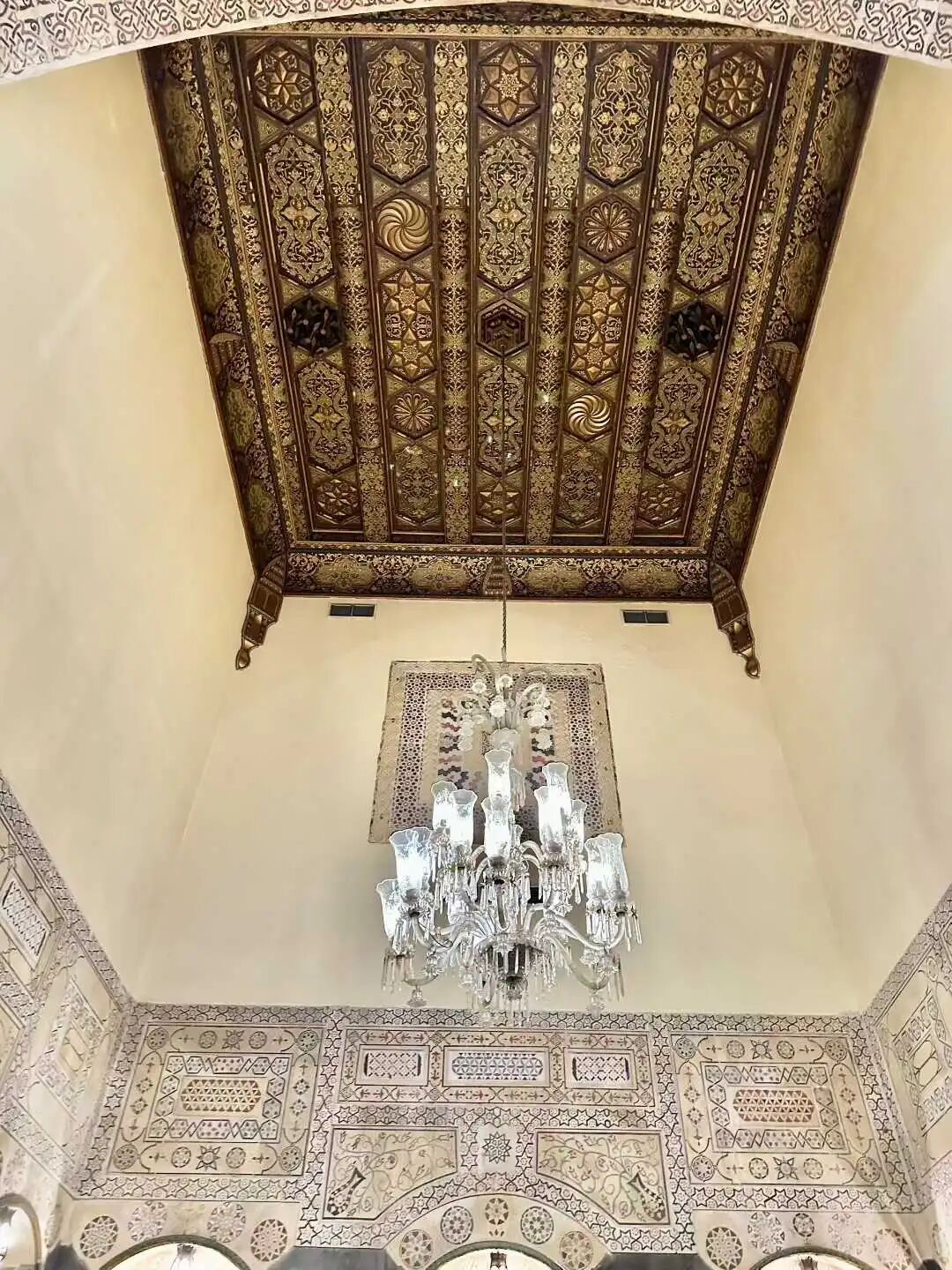
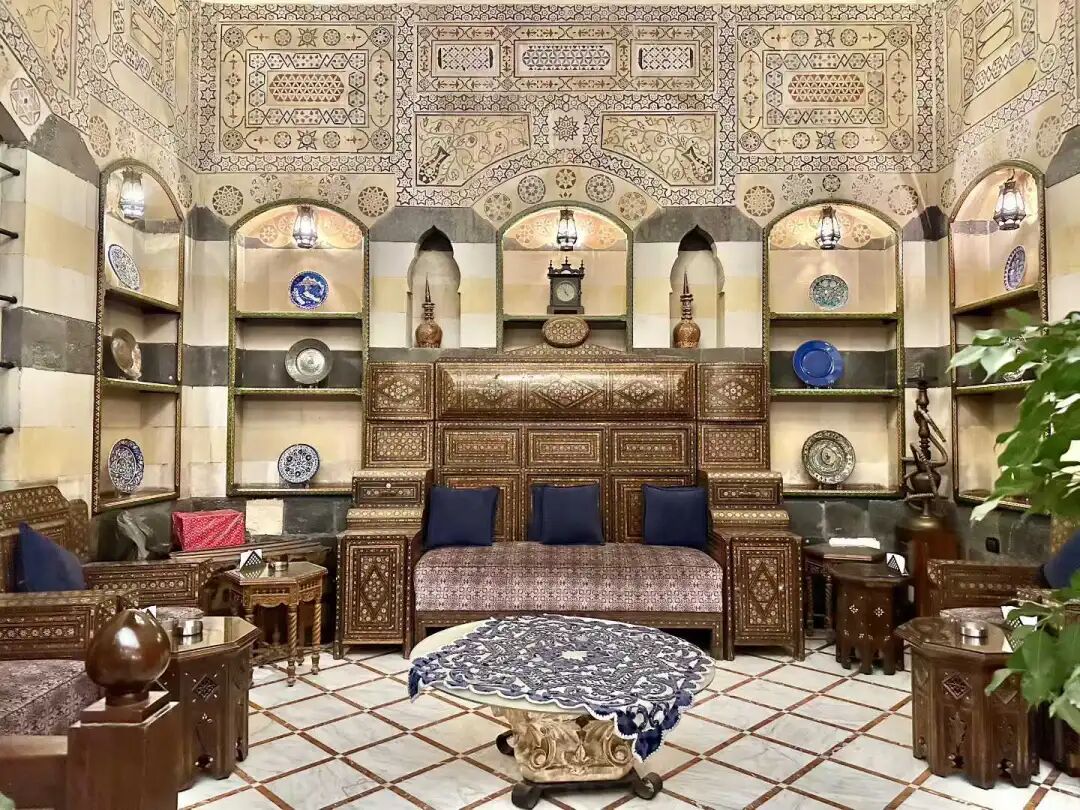
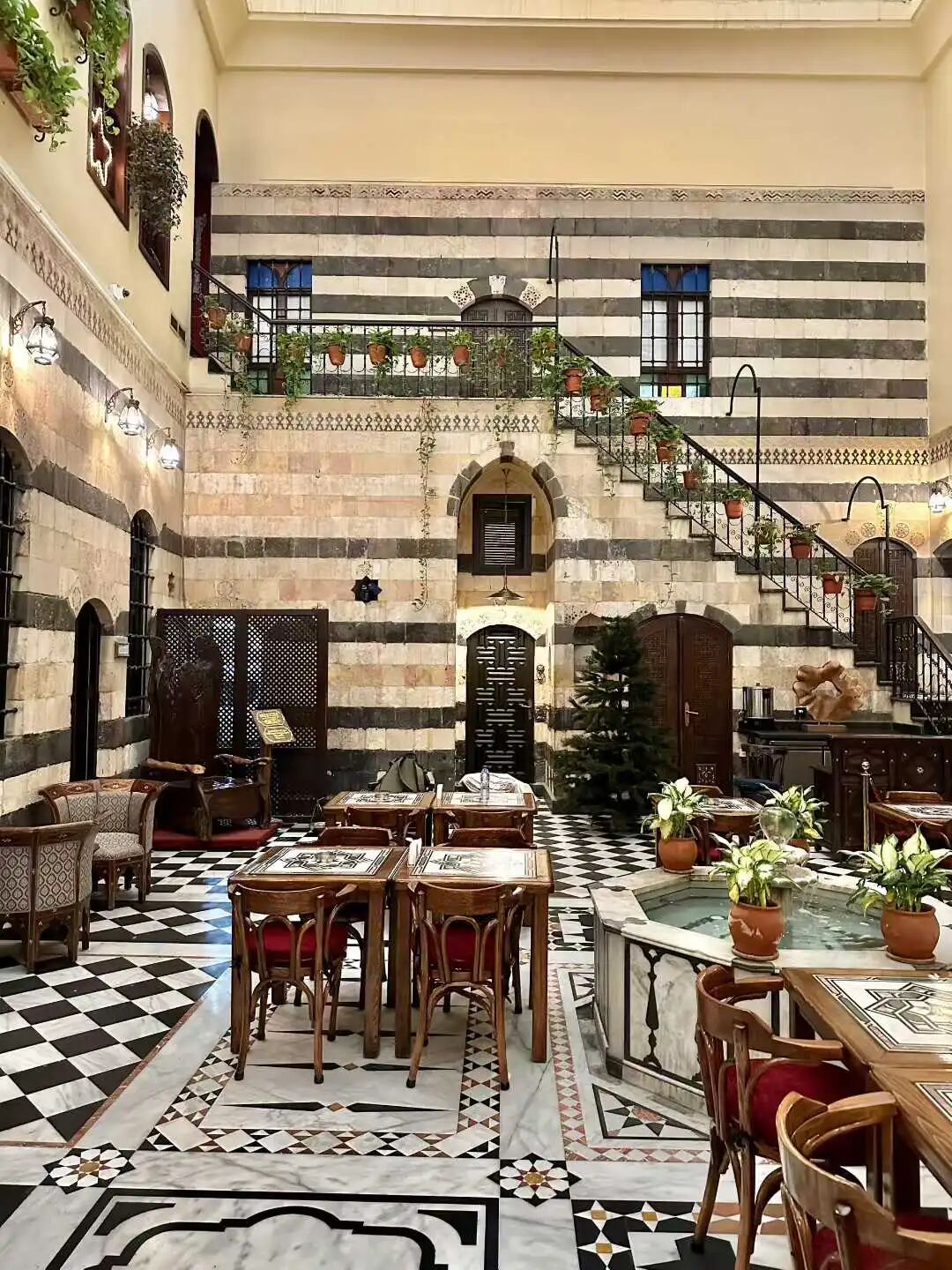
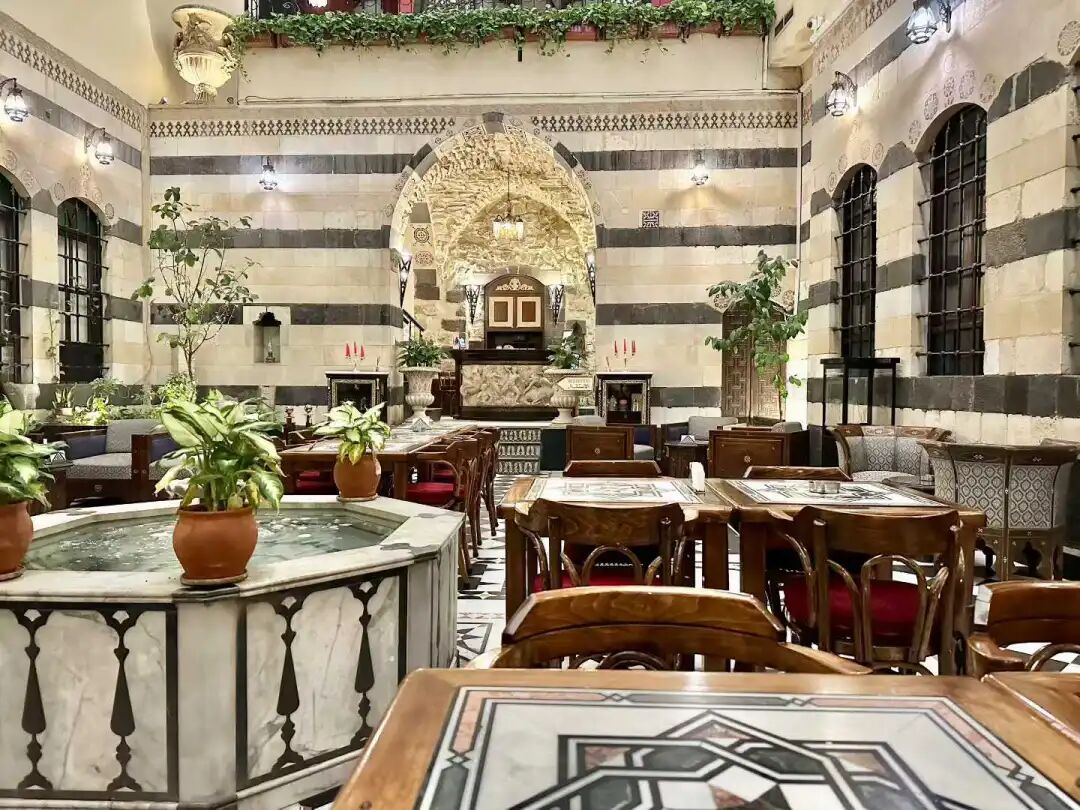
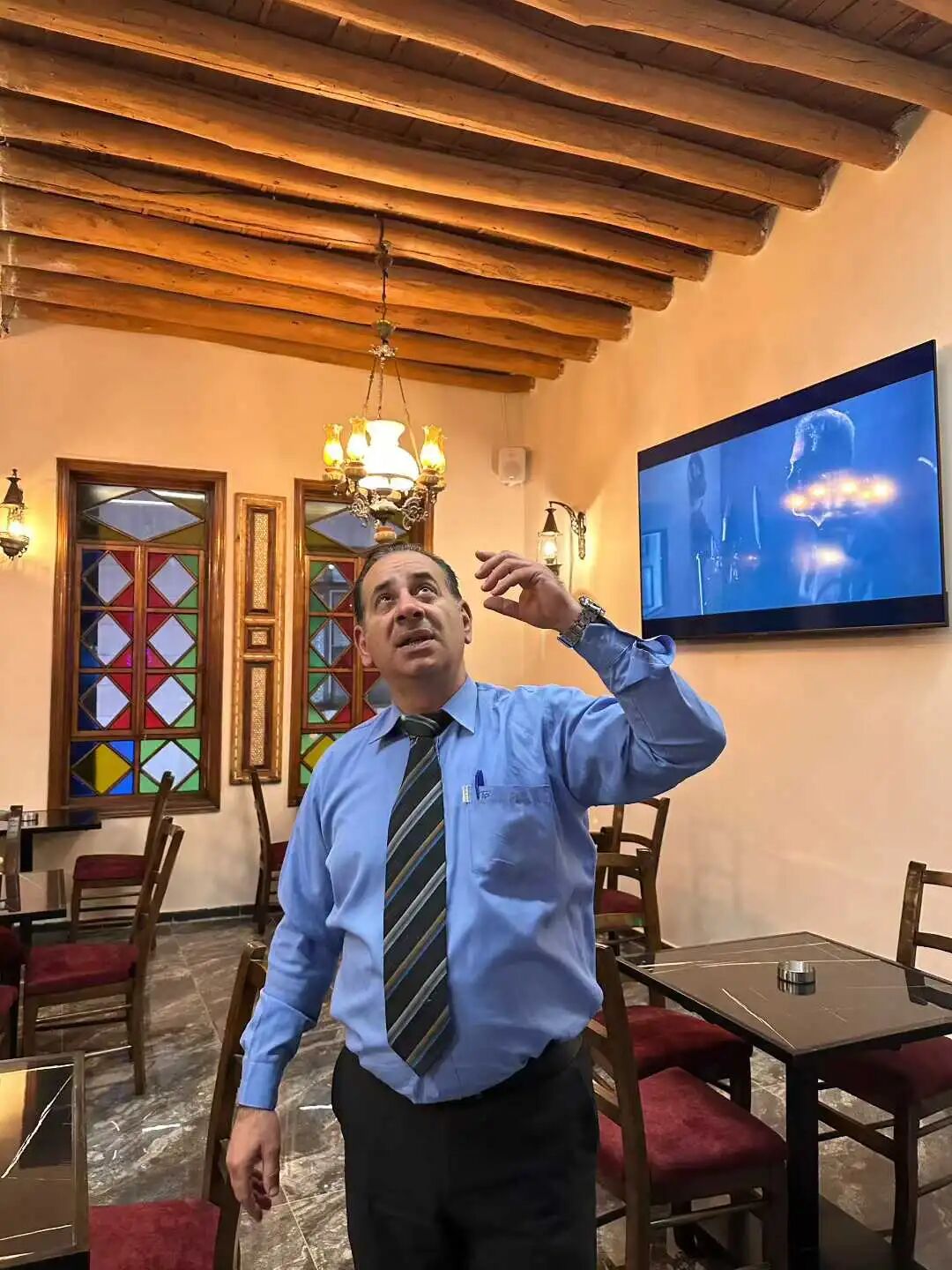
Besides historic hotels, many restaurants and cafes in the Old City of Damascus are also converted from Ottoman mansions. The first place I recommend had just opened when I visited, so you cannot even find it online. It is located on the road after entering the Old City of Damascus from the Bab Touma gate and turning west into Qanayet Al-Hatab street. They only had tea and coffee when I went, but the environment was quite nice. I ordered a cup of sand-brewed coffee. The owner speaks English. He was very enthusiastic and invited me to the second floor to see the old building.
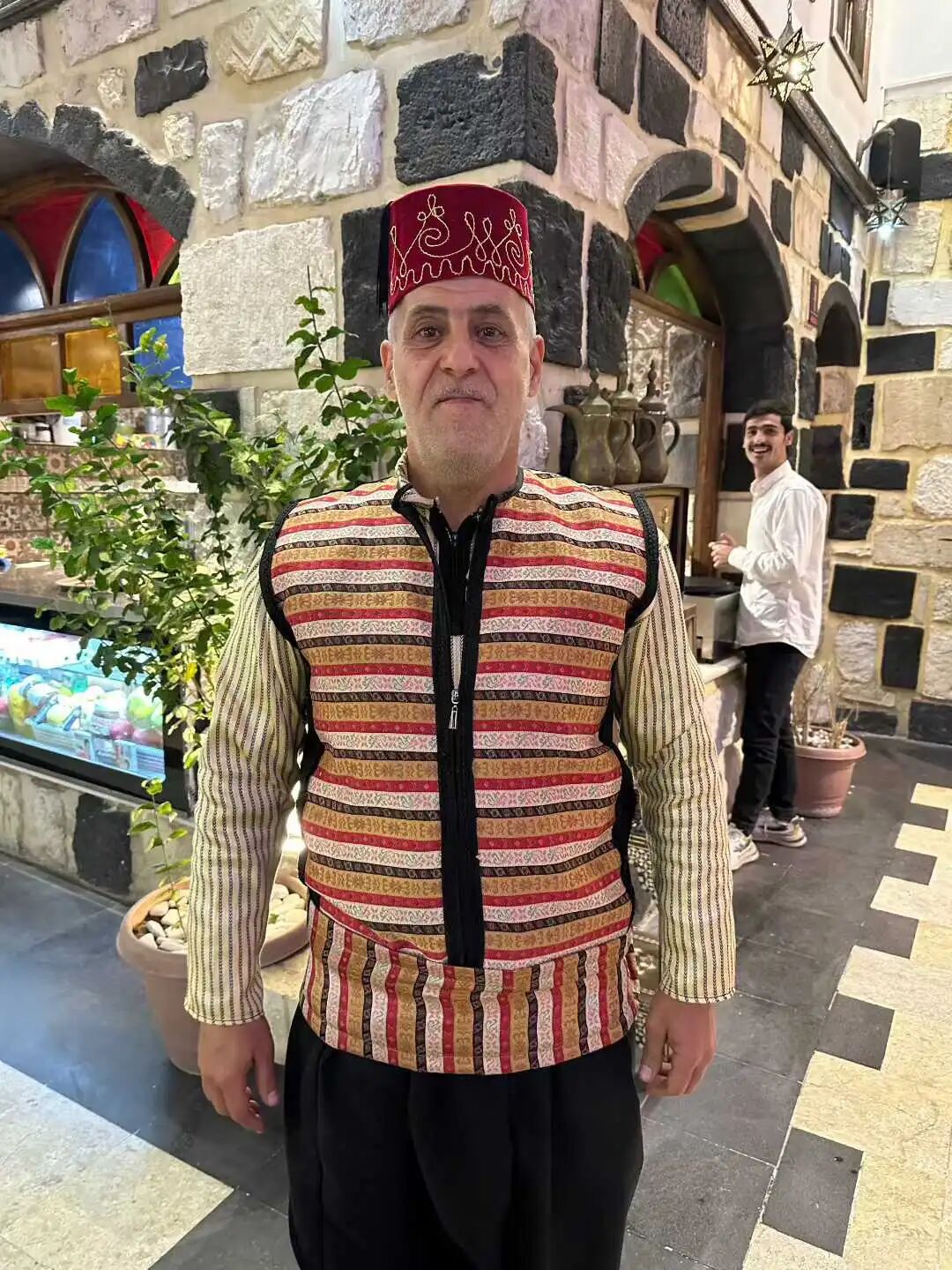
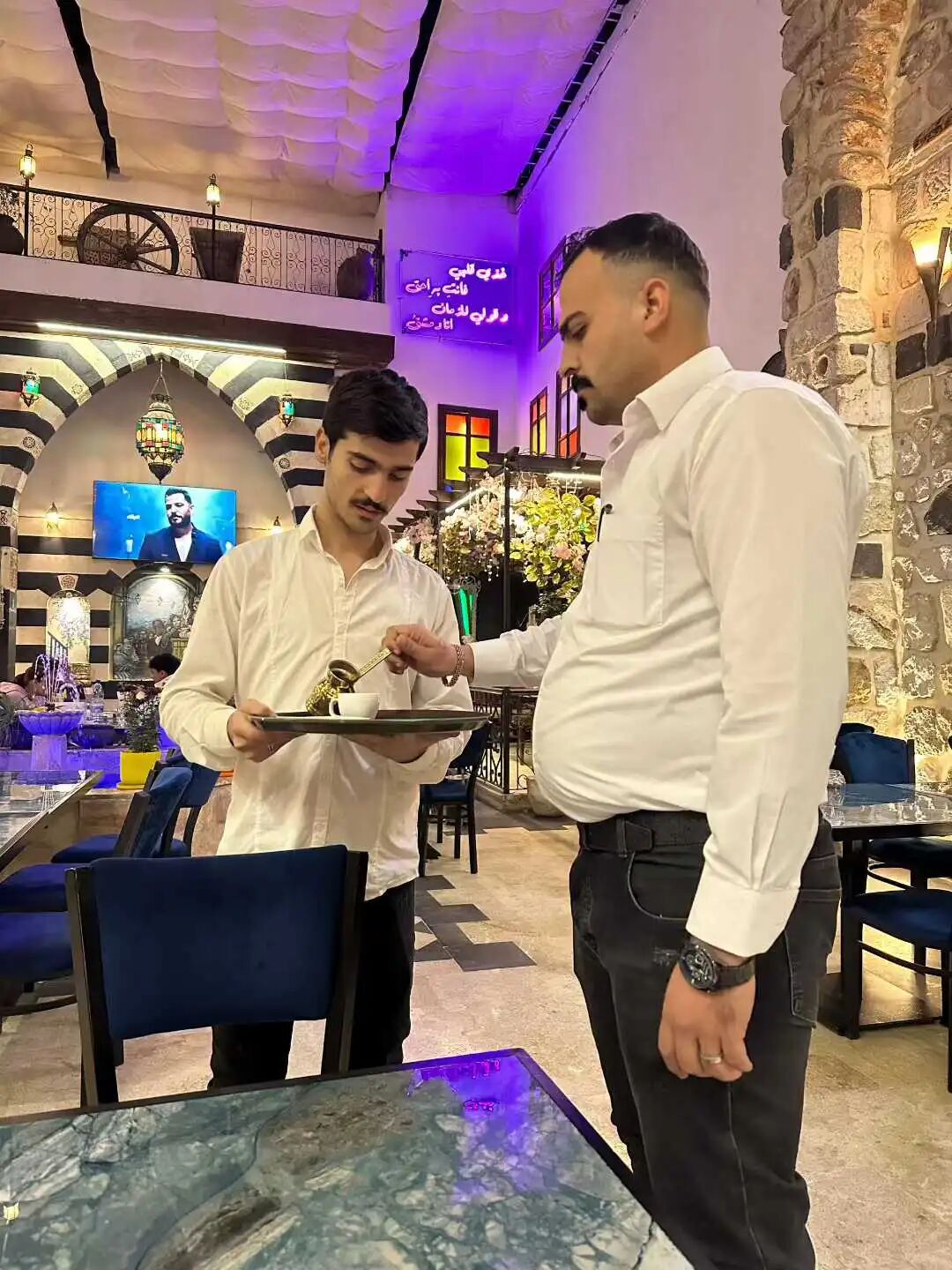
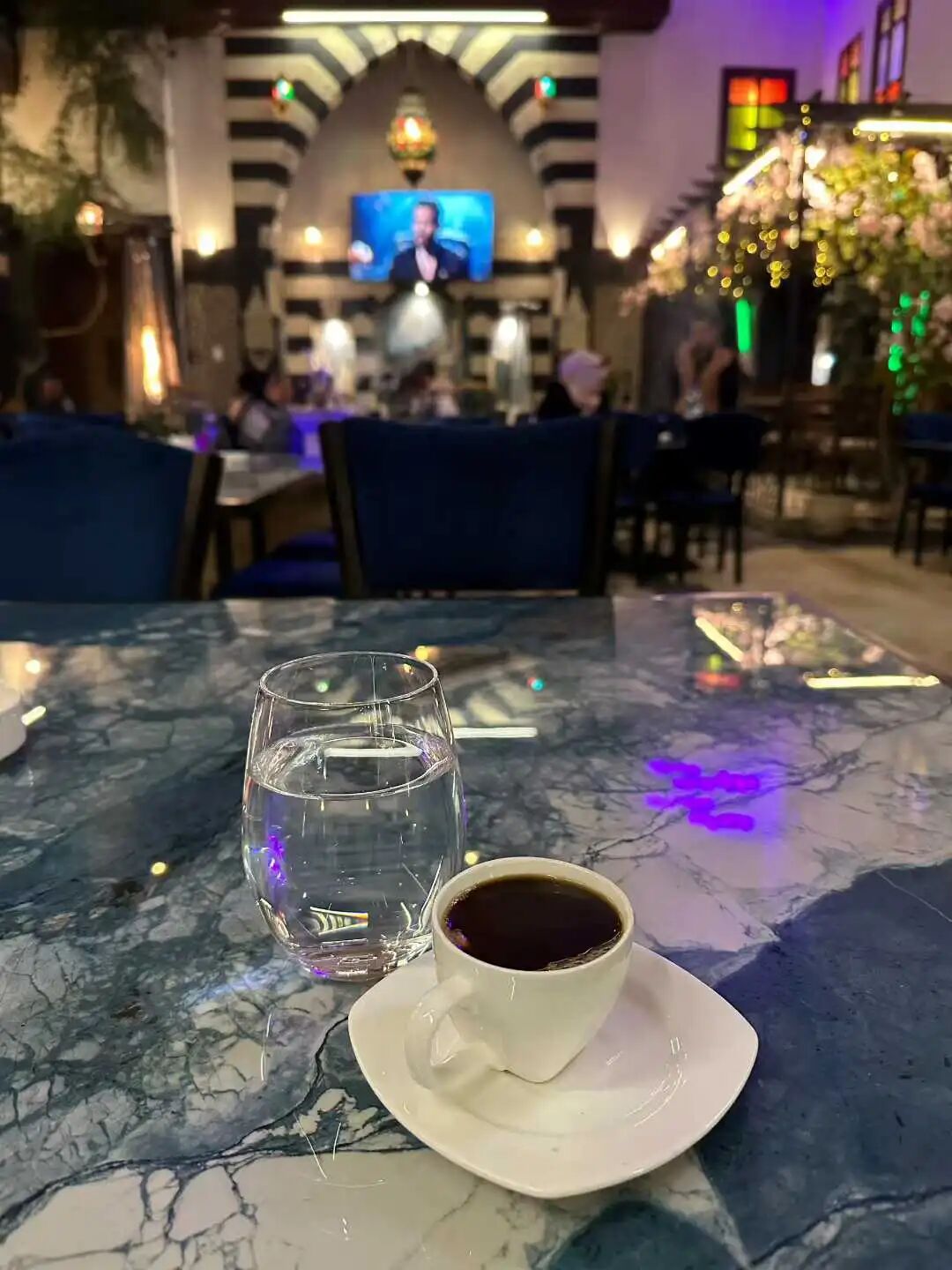
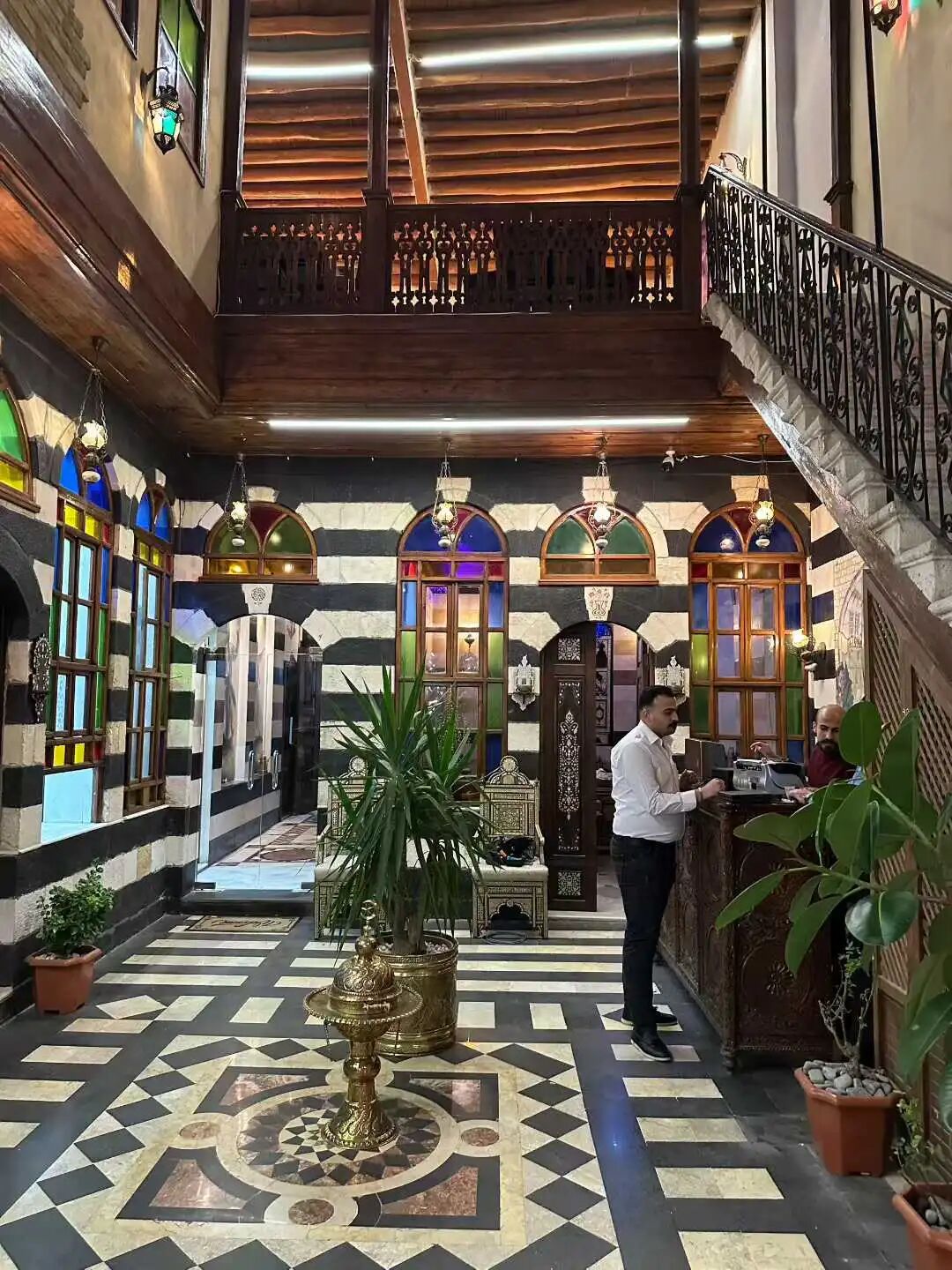
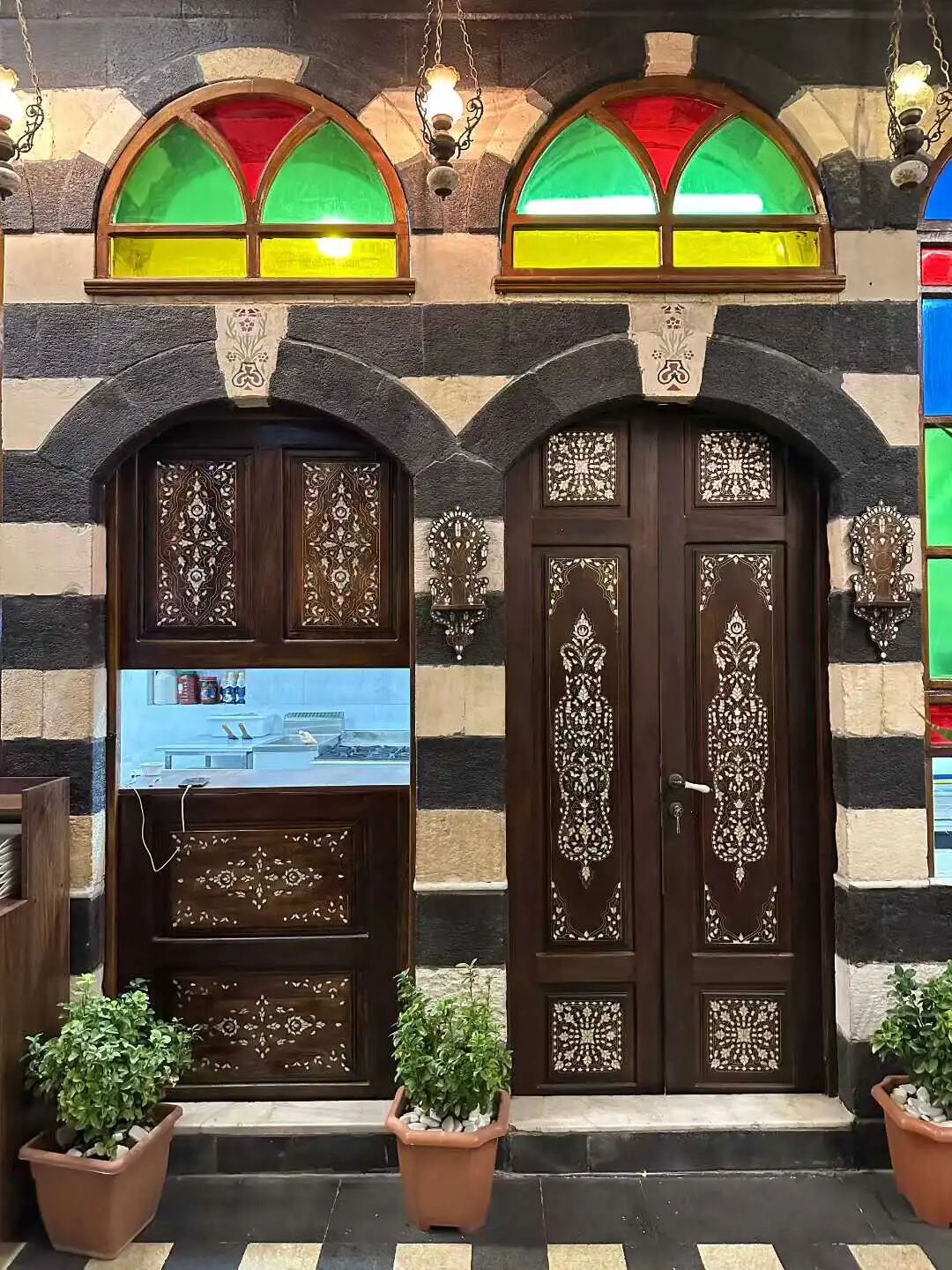
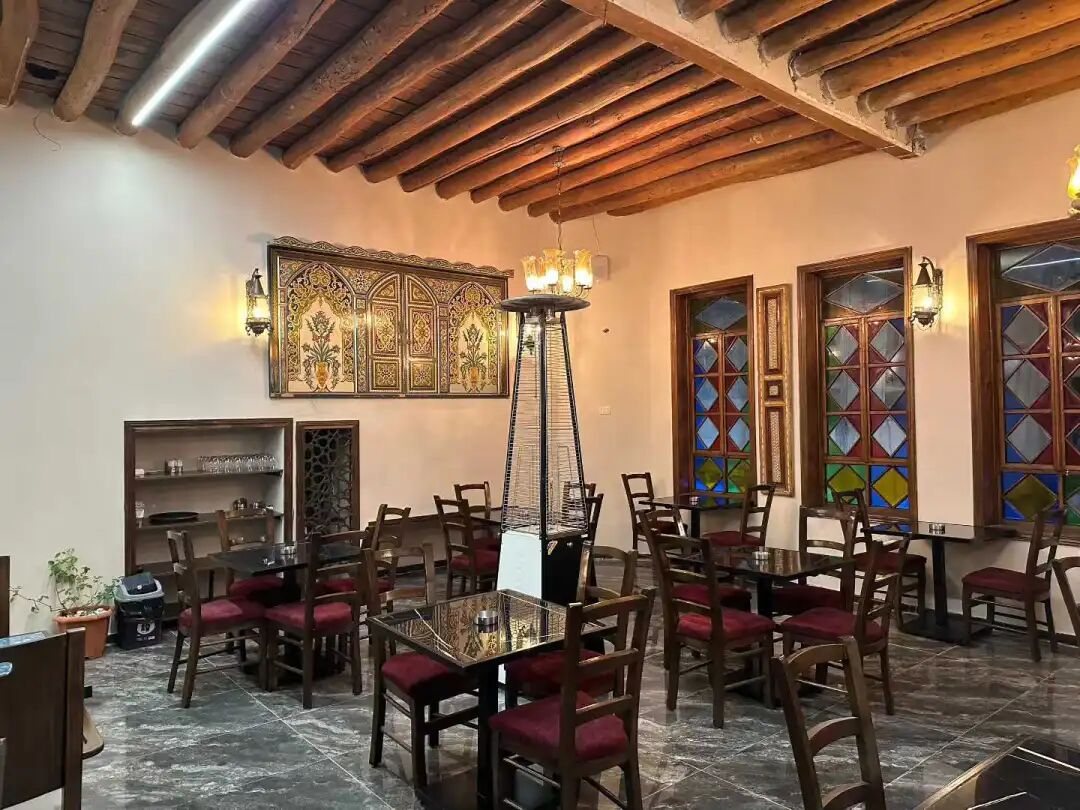
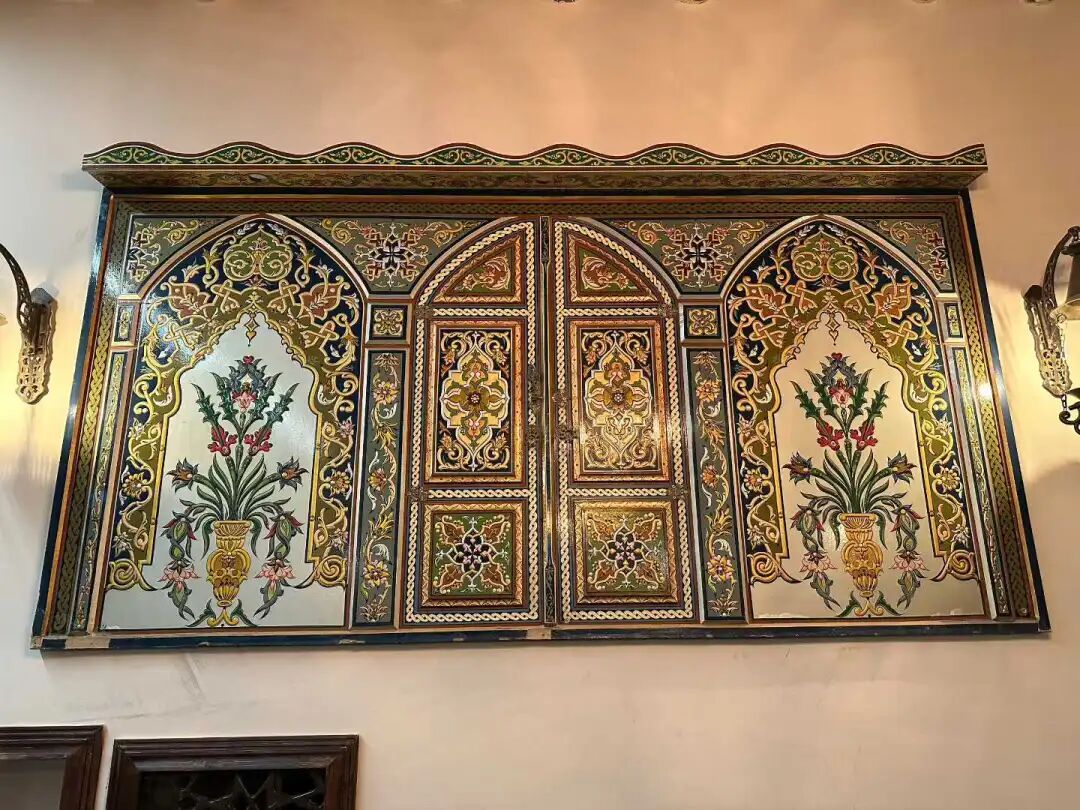
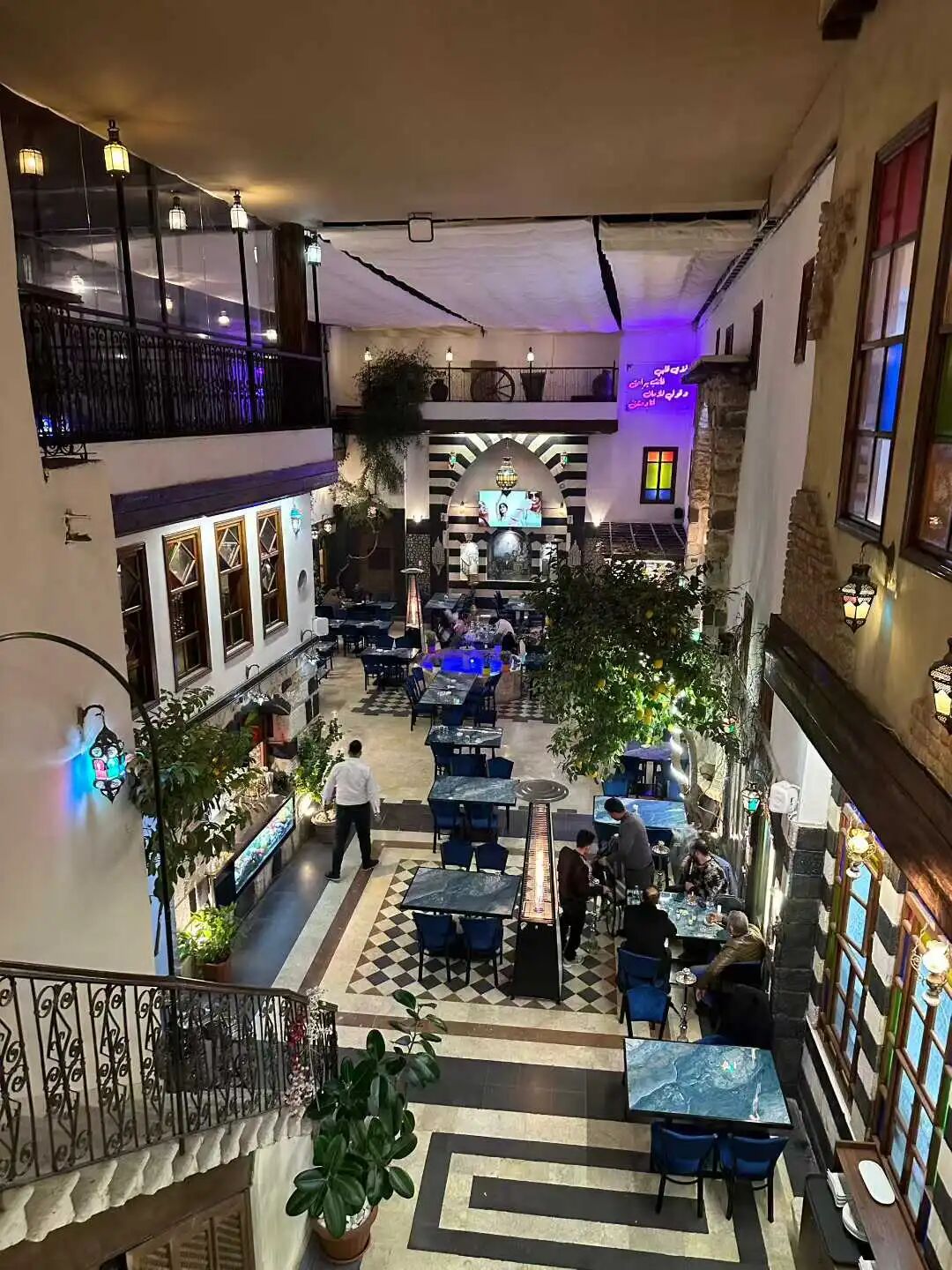
Lady Cafe is on the Al Nawfara pedestrian street outside the east gate of the Umayyad Mosque. It is very lively in the afternoon and evening. I ate a Damascus specialty snack called Toshka pie at the cafe. It is known as a national snack of Syria. Toshka is made by putting spicy sausage (Sujuk) and Kashkawan cheese inside pita bread, then pressing it on an iron griddle on both sides until the cheese melts and the bread is crispy. When you eat it, it is crispy on the outside and soft on the inside. The bread is charred and fragrant, and the meat and cheese are rich and stretchy.
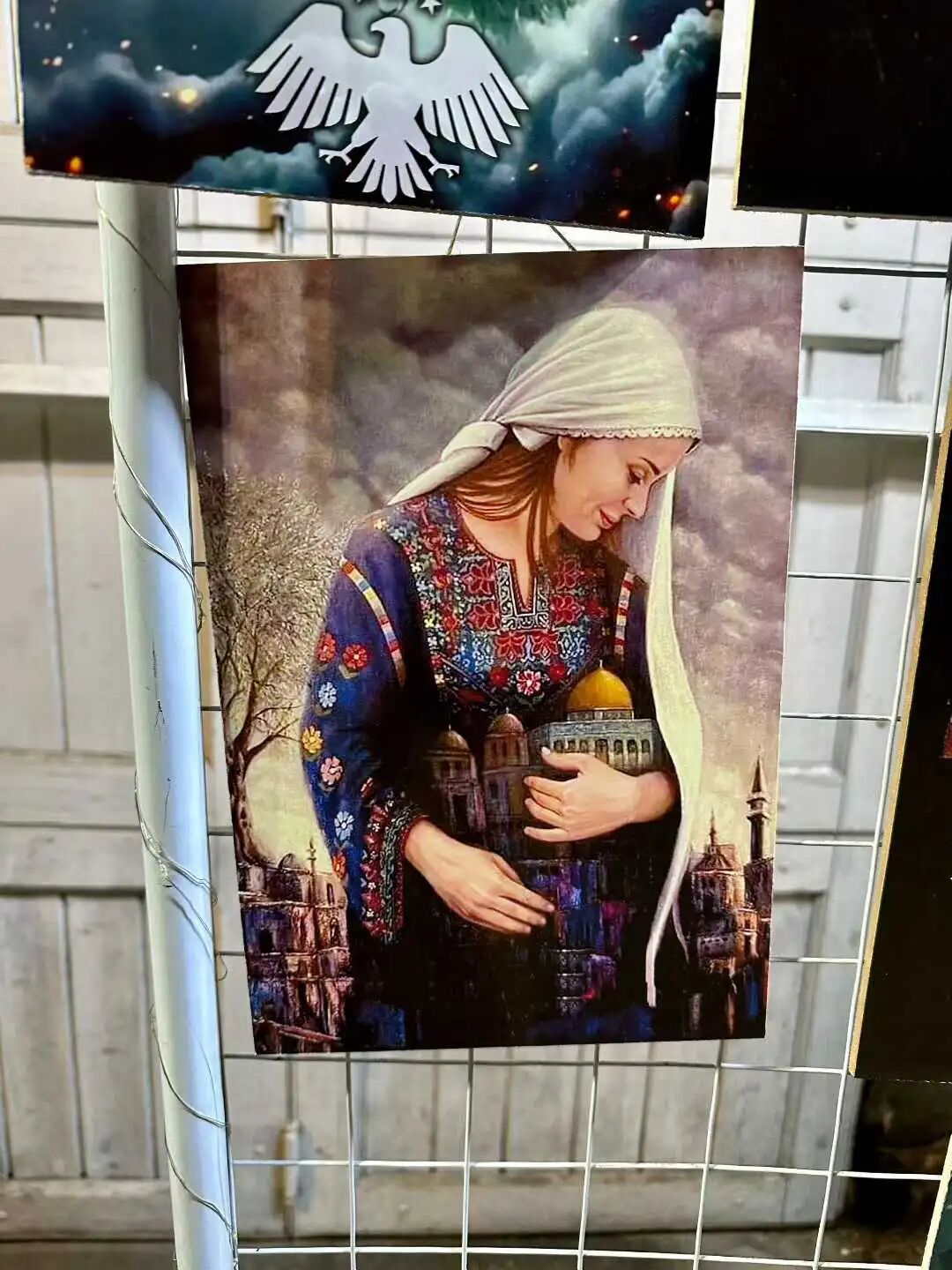
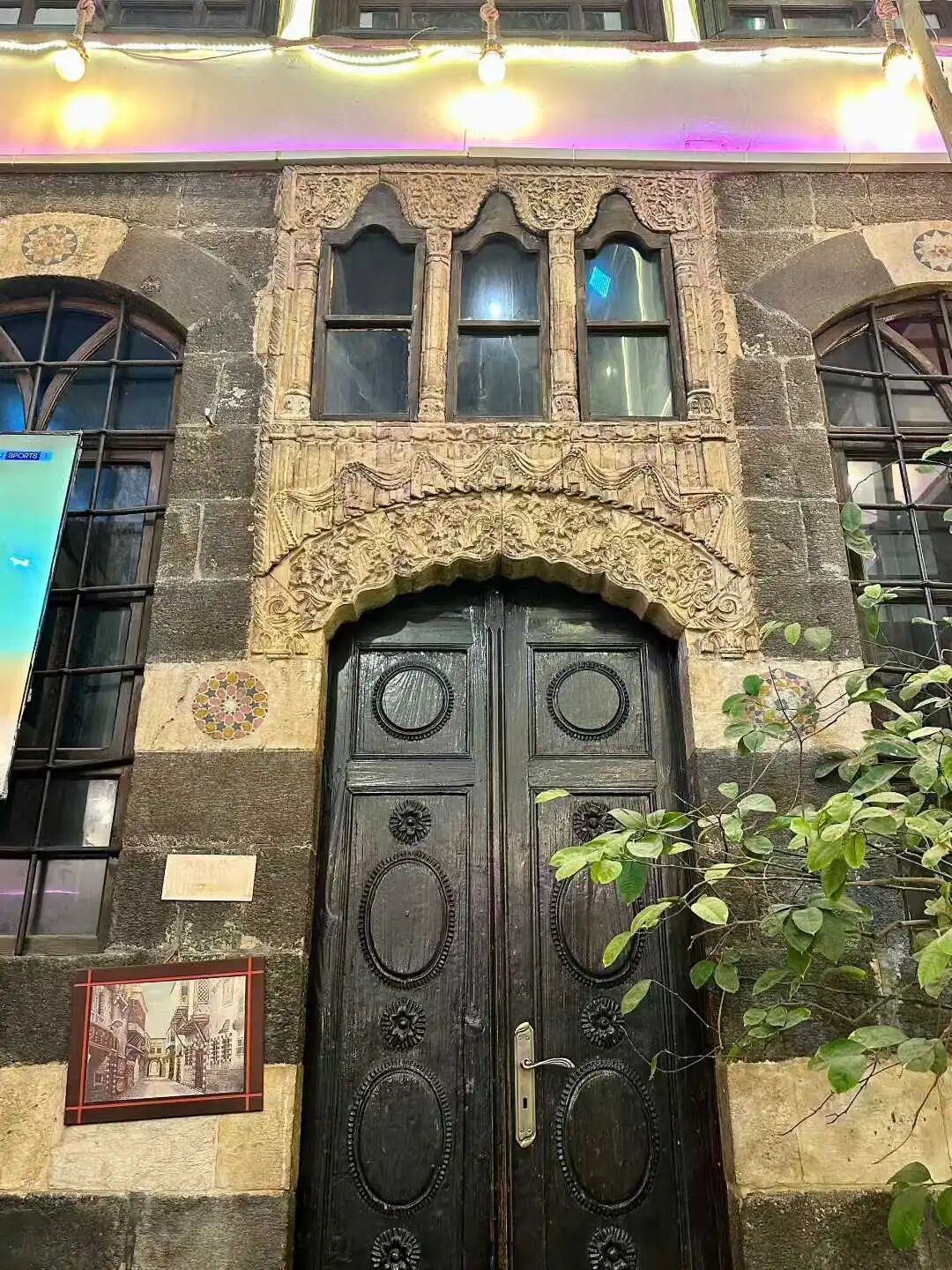
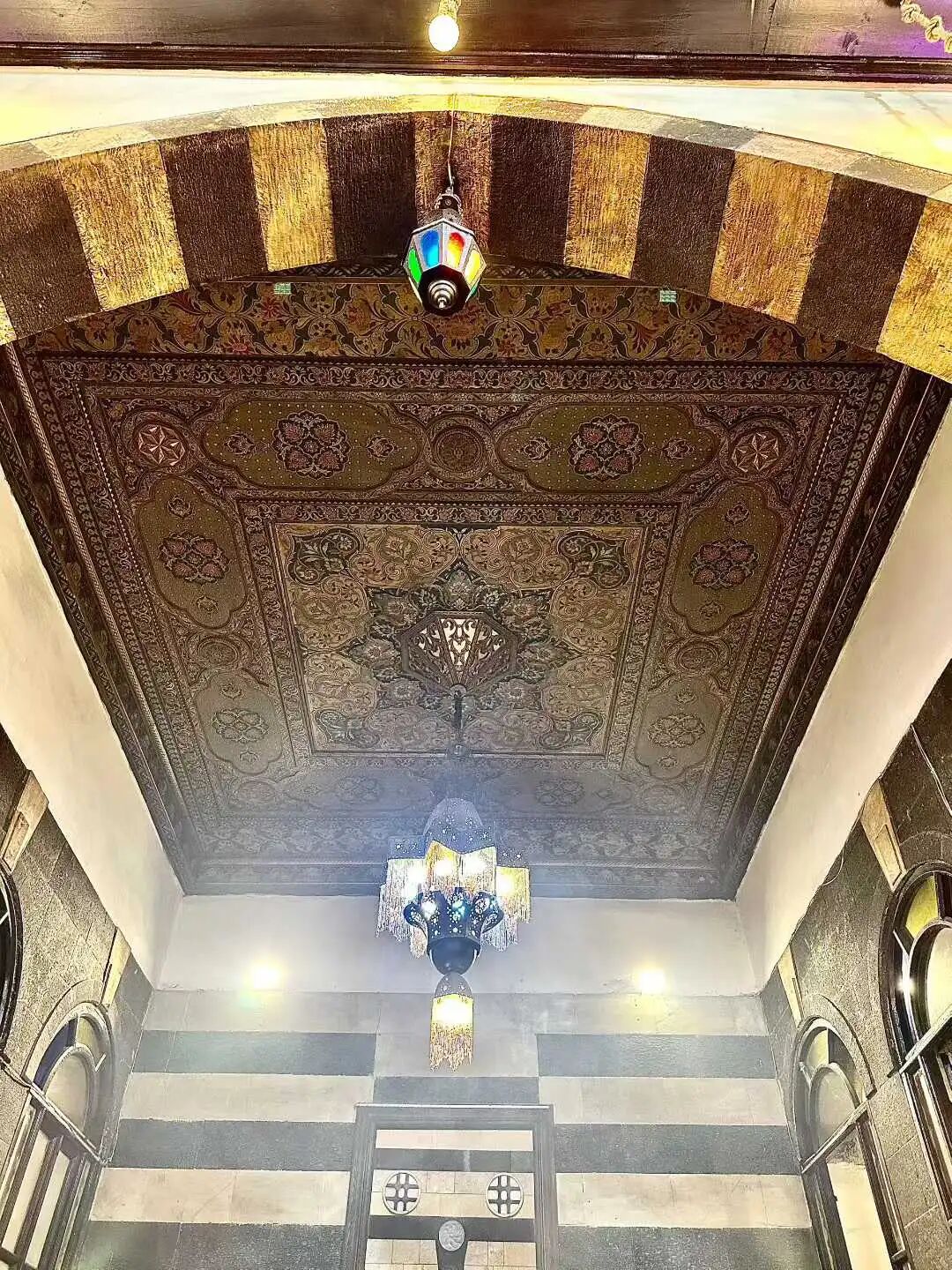
Beit Jabri is on As Sawwaf street, southeast of the Umayyad Mosque. It is an Ottoman mansion restaurant in the Old City of Damascus that is well worth a visit.
This mansion was built in the early 18th century. The current owner Raad Jabri's grandfather bought the property in the late 19th century, and their family lived there from 1905 to 1973. The house was gradually abandoned after the 1970s and later became a workshop for carpenters and blacksmiths. Raad Jabri restored the place in the 1990s and turned it into a restaurant. He also hosts cultural seminars, poetry readings, and classical music evenings from time to time.
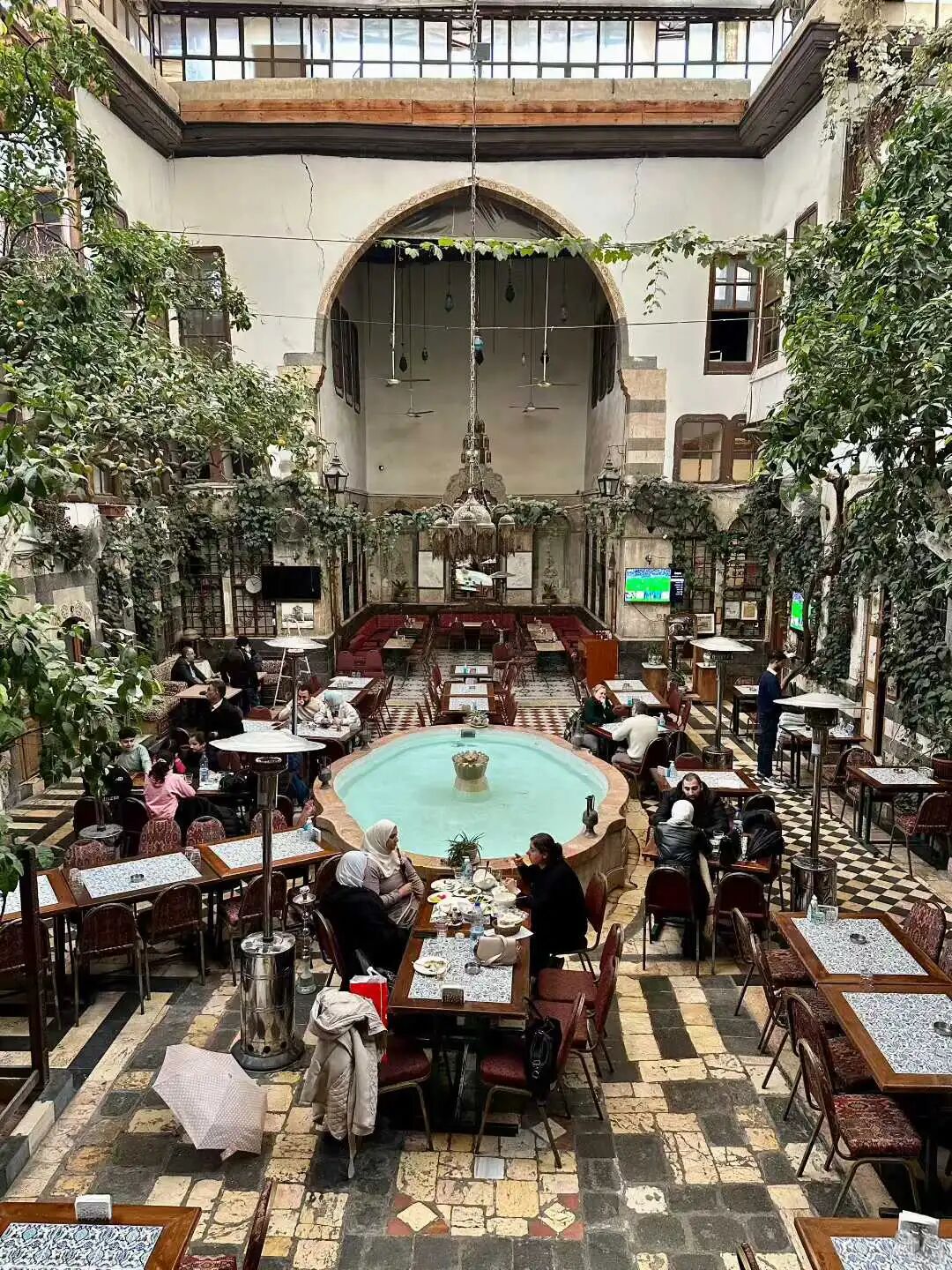
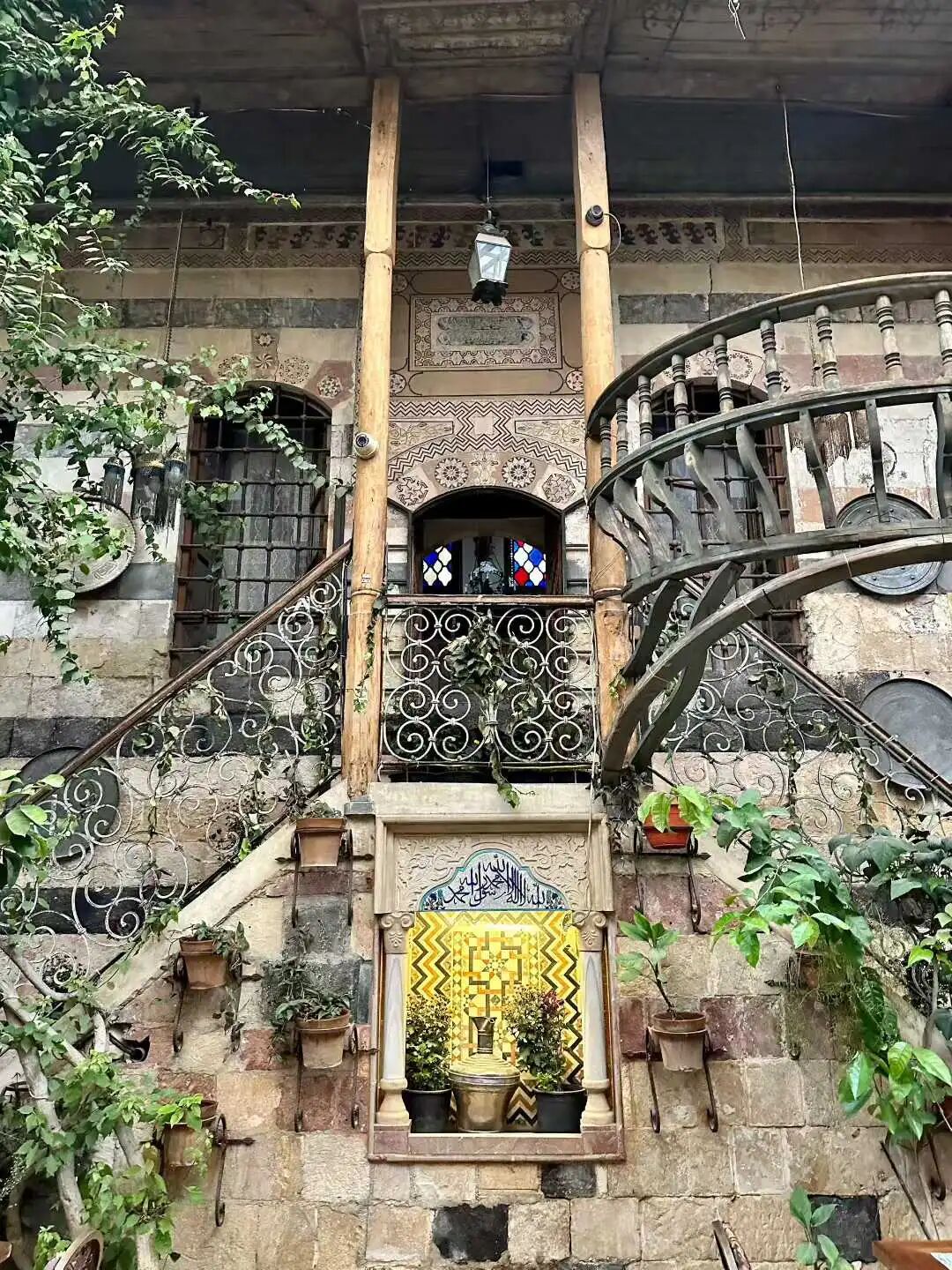
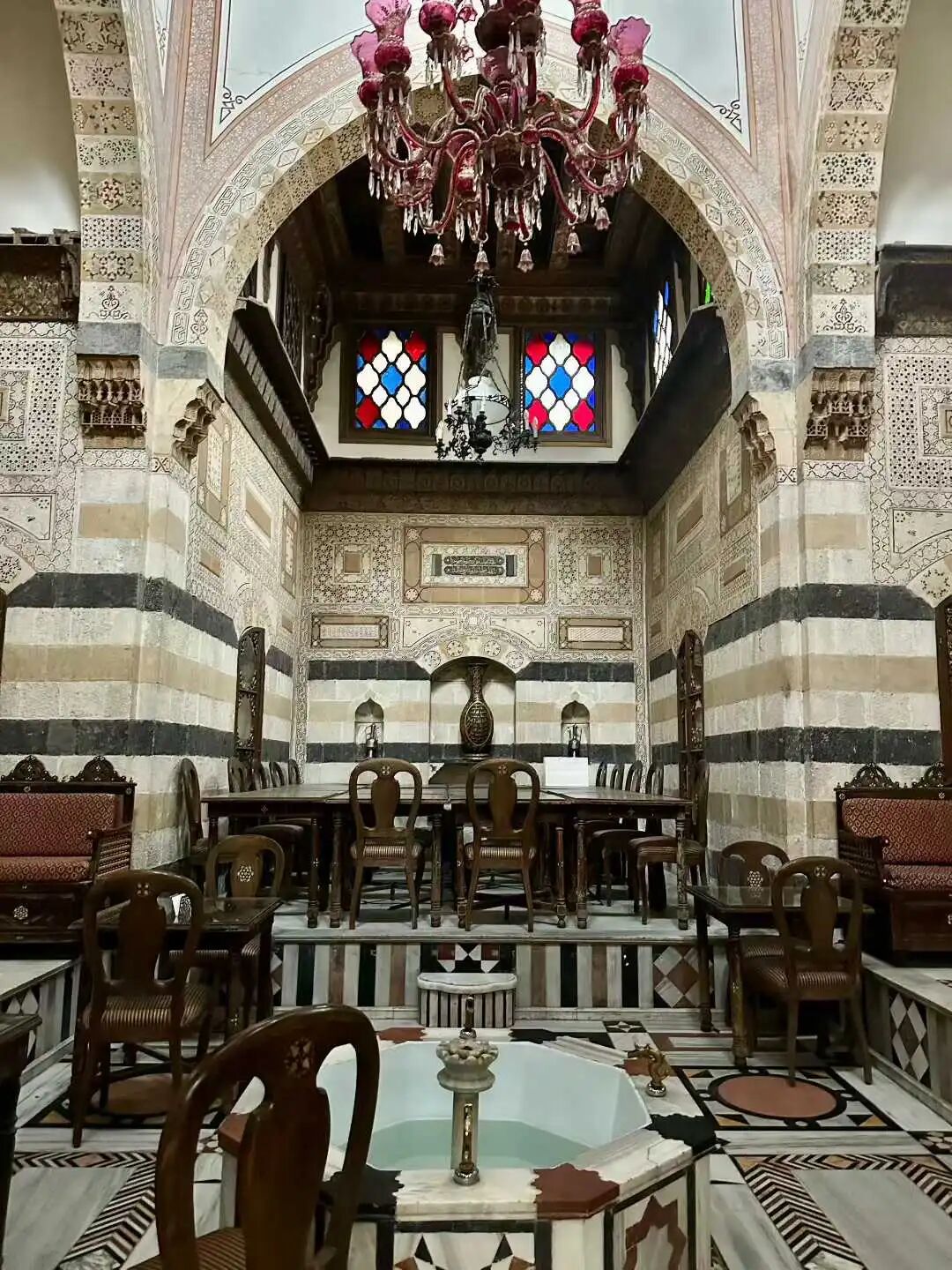
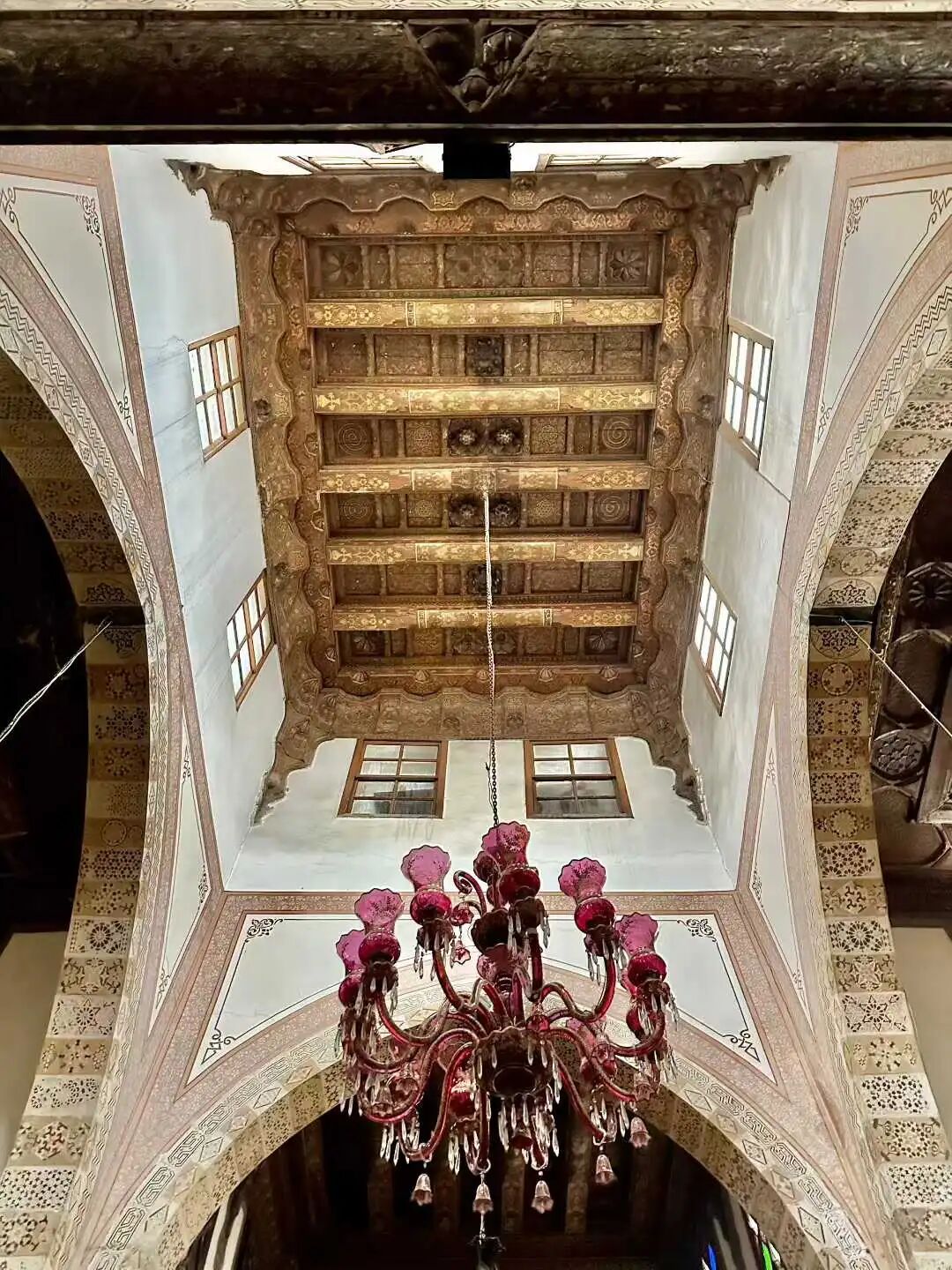
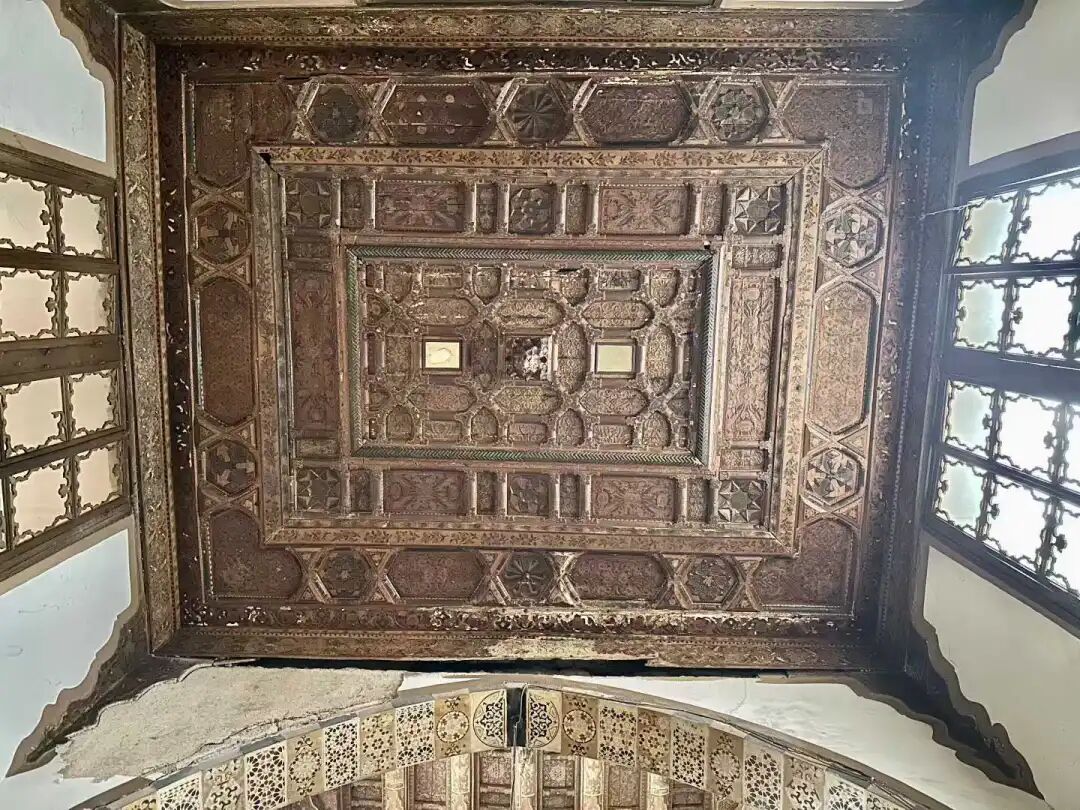
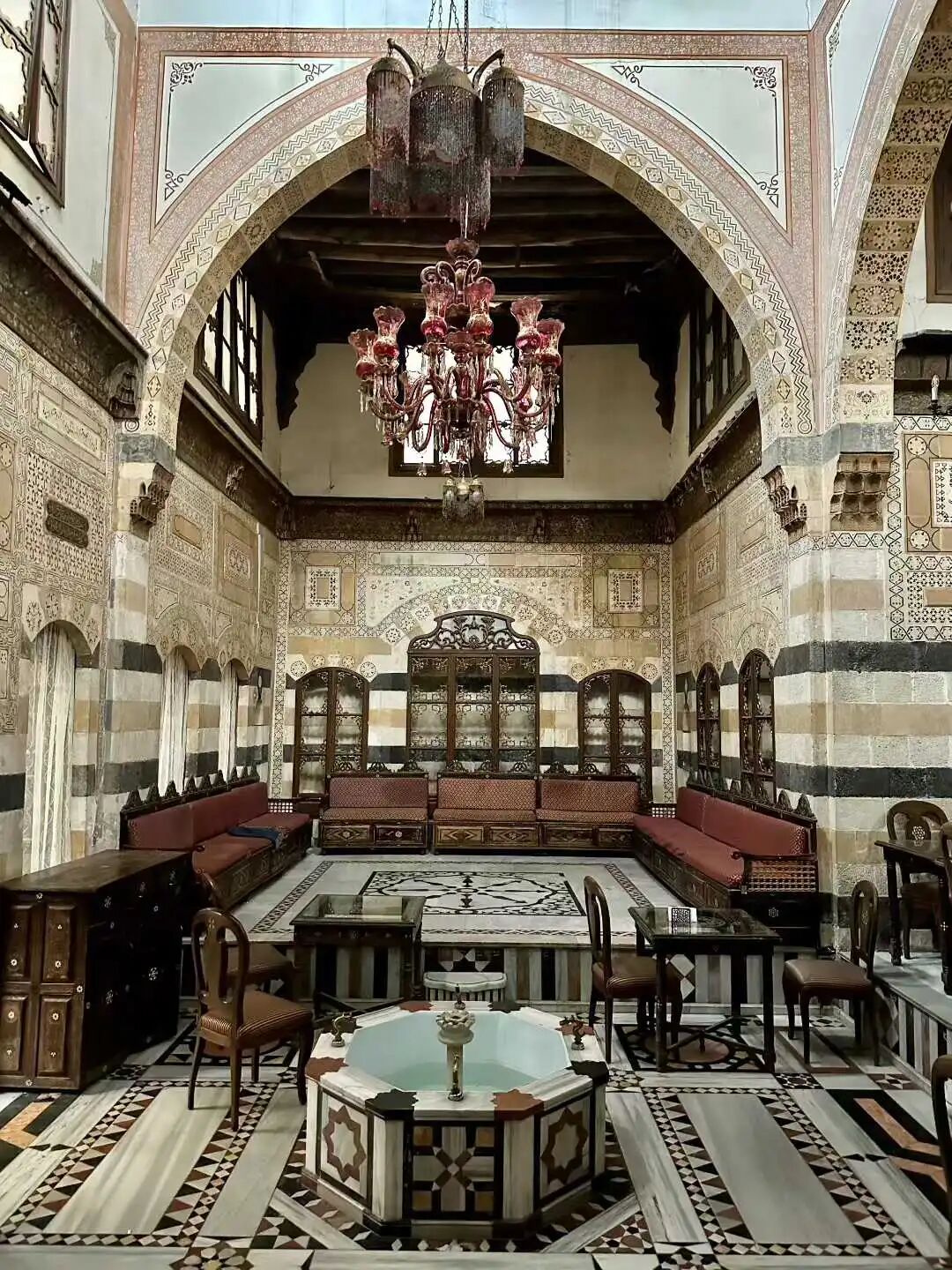
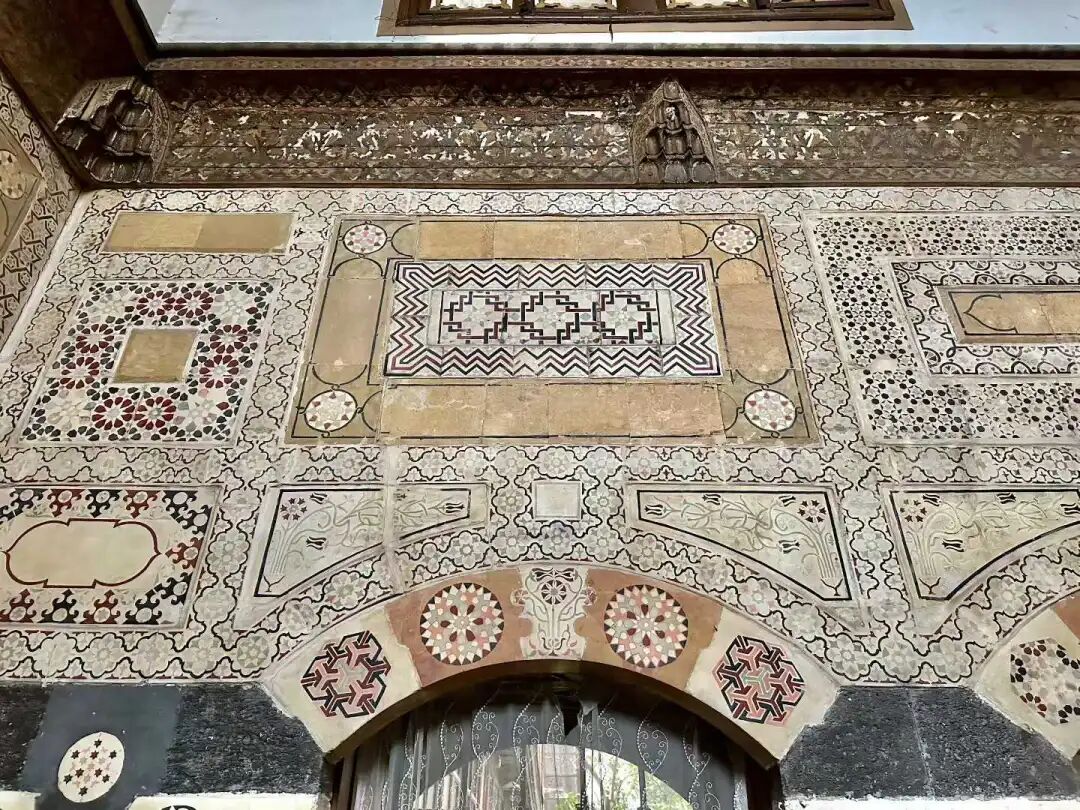
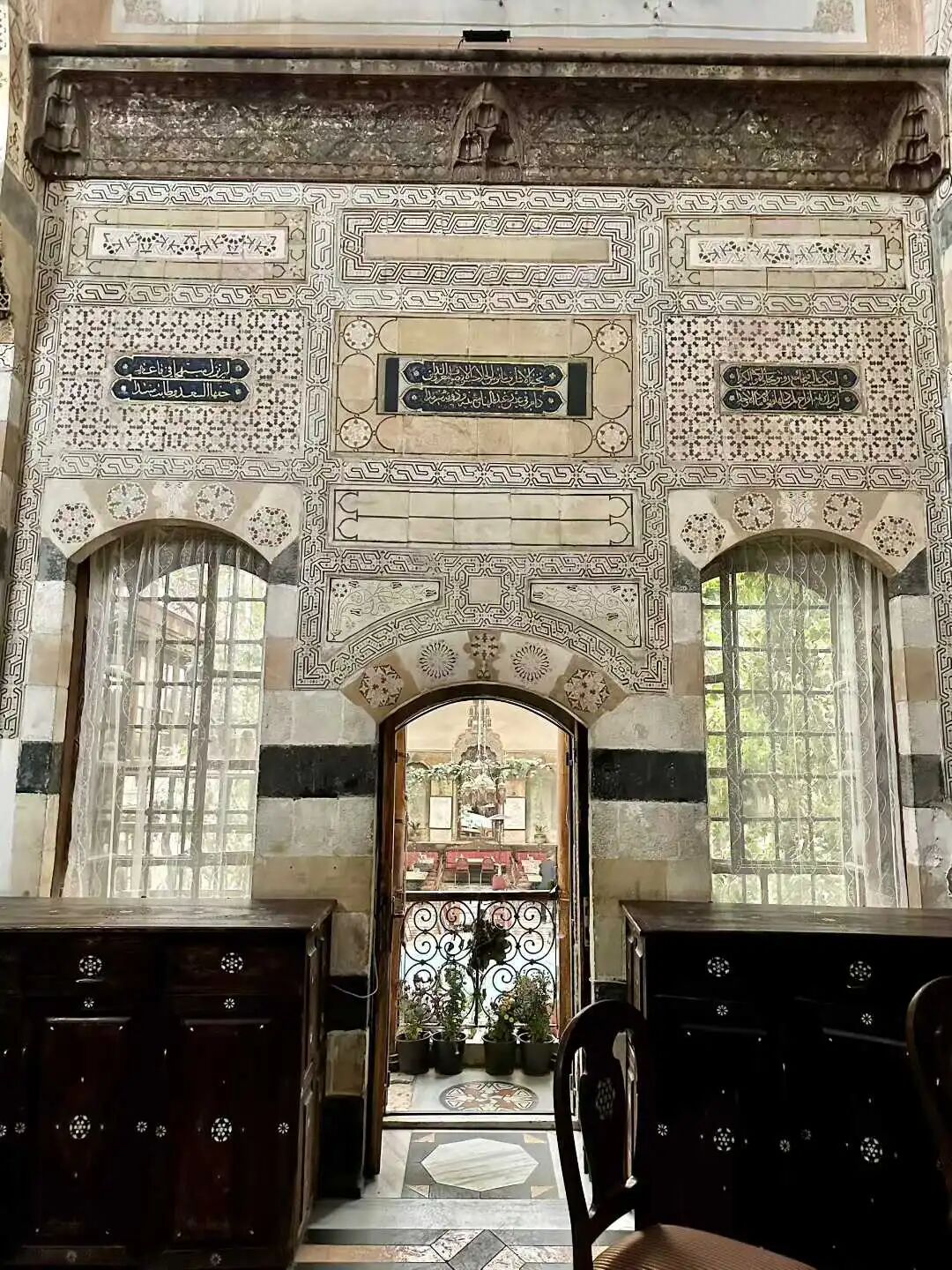
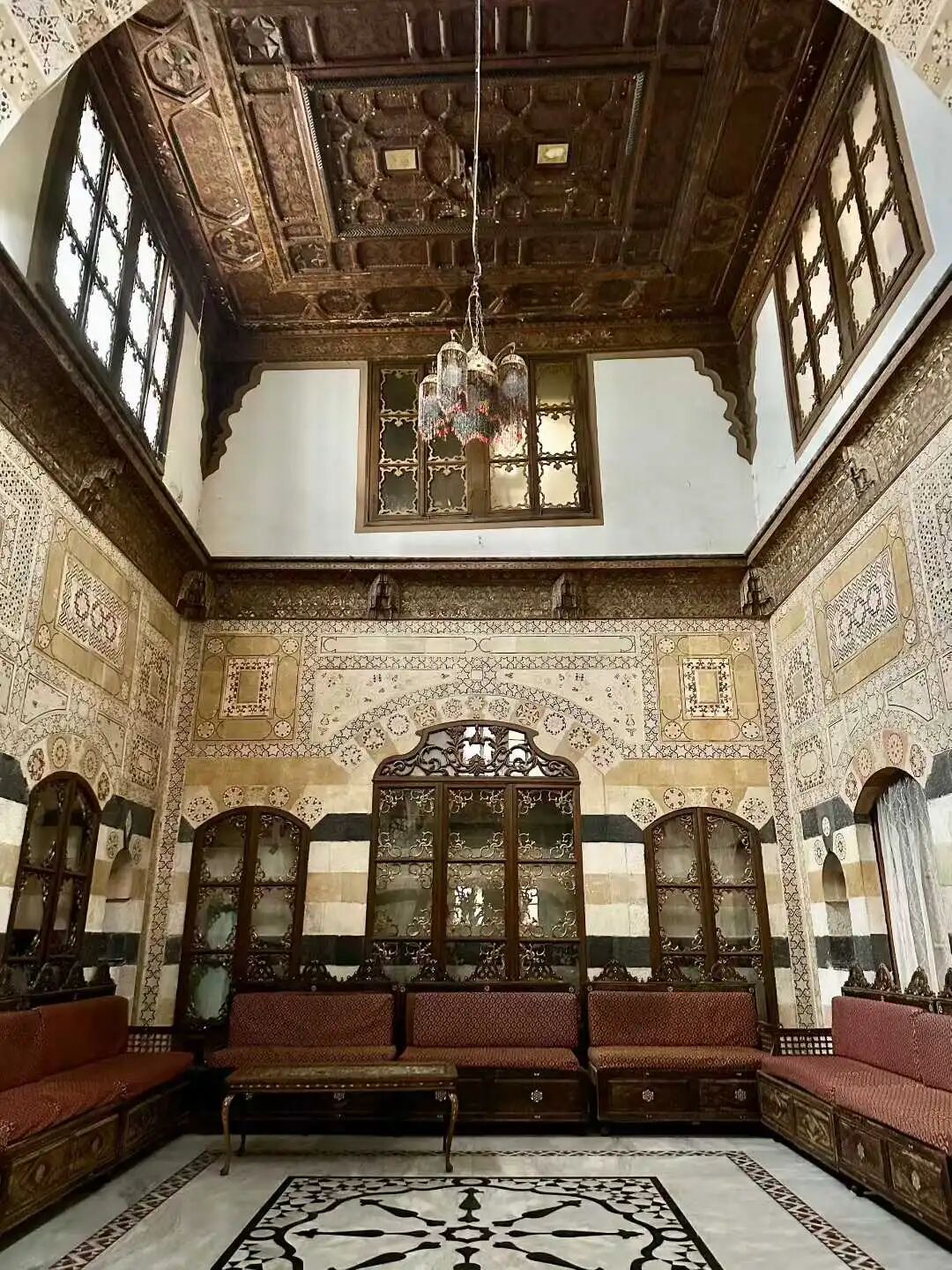
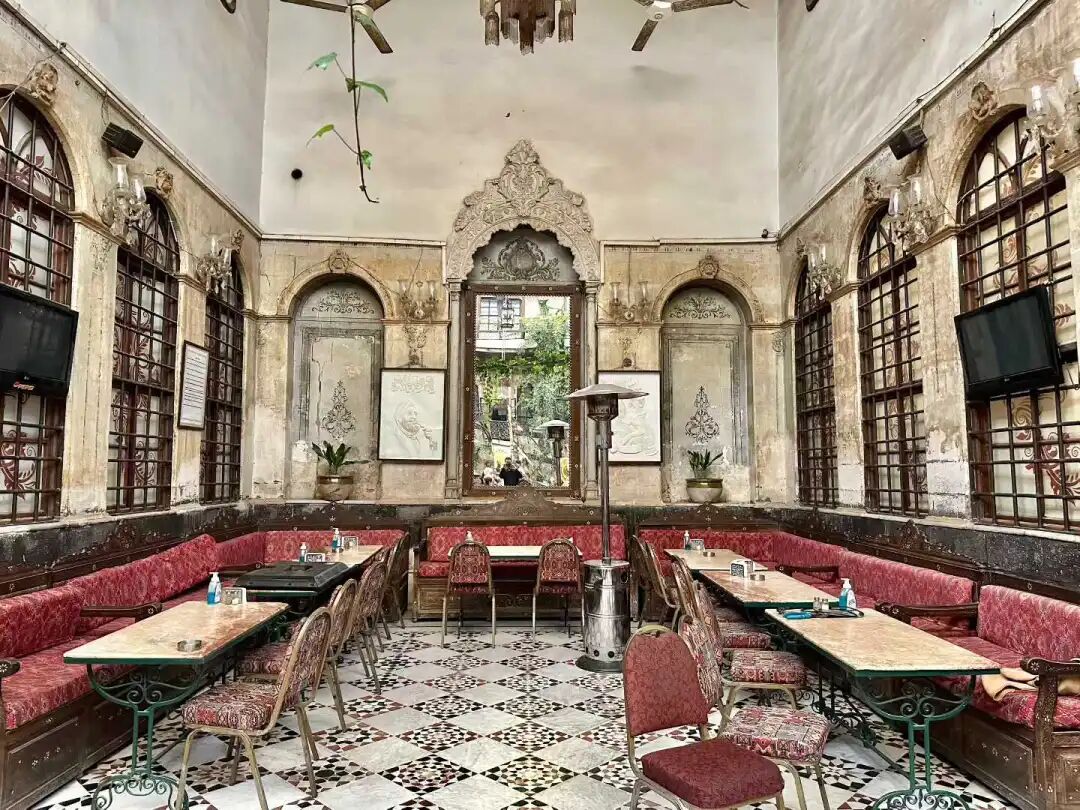
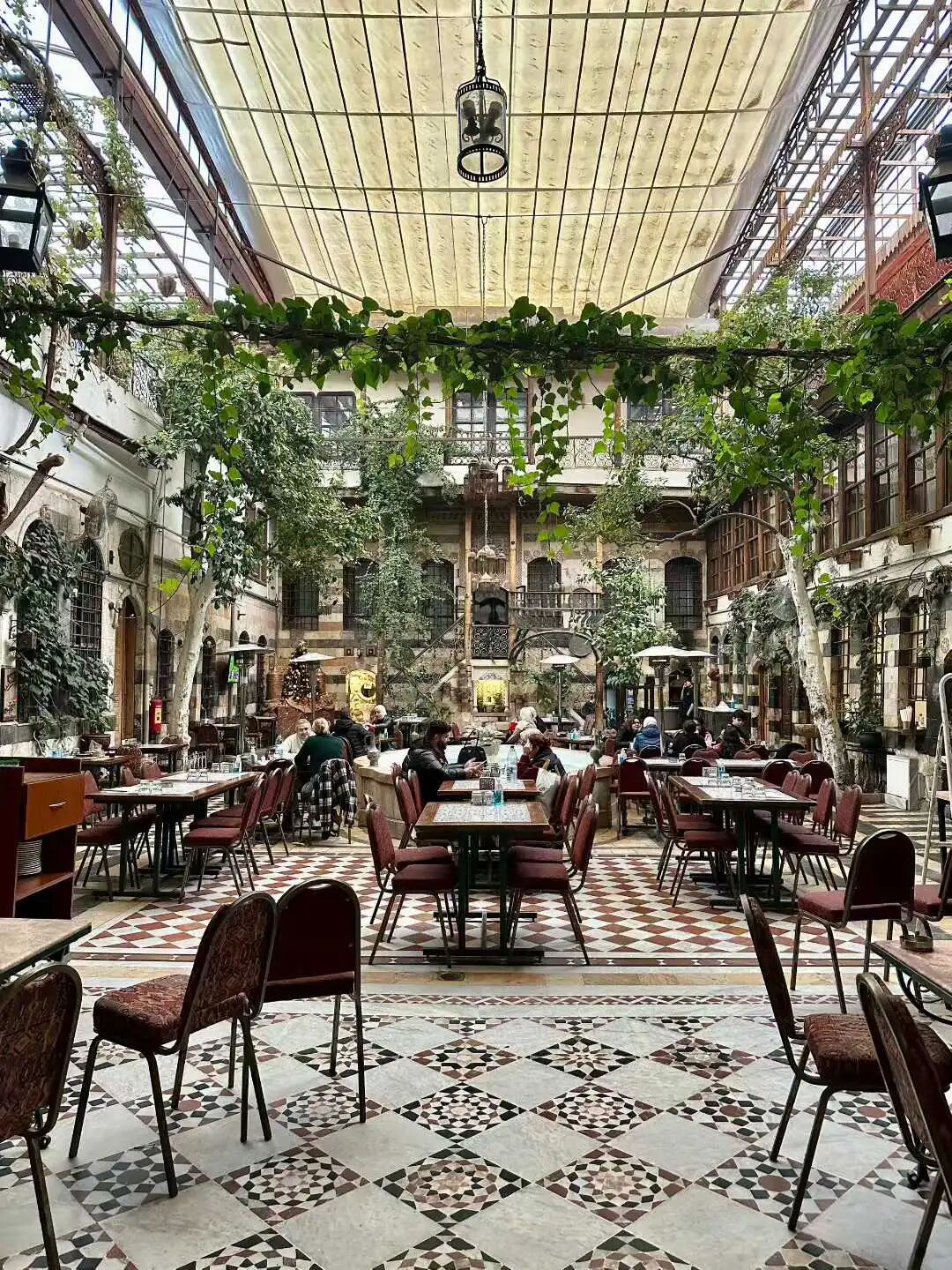
Beit Jabri is a classic three-courtyard Ottoman mansion in Damascus. The arched hall (Iwan) is a typical example of 18th-century Damascus architecture, and the exquisite Ajrum roof was built in the mid-19th century. Influenced by Europe and the Ottoman Empire in the 19th century, Damascus architecture generally tended to decorate exterior walls more gorgeously. This is especially obvious on the north wall of Beit Jabri. We can clearly see the transition from 18th-century decorative styles to 19th-century patterns on the north wall, with complex wall paintings layered over traditional stone masonry (Ablaq).
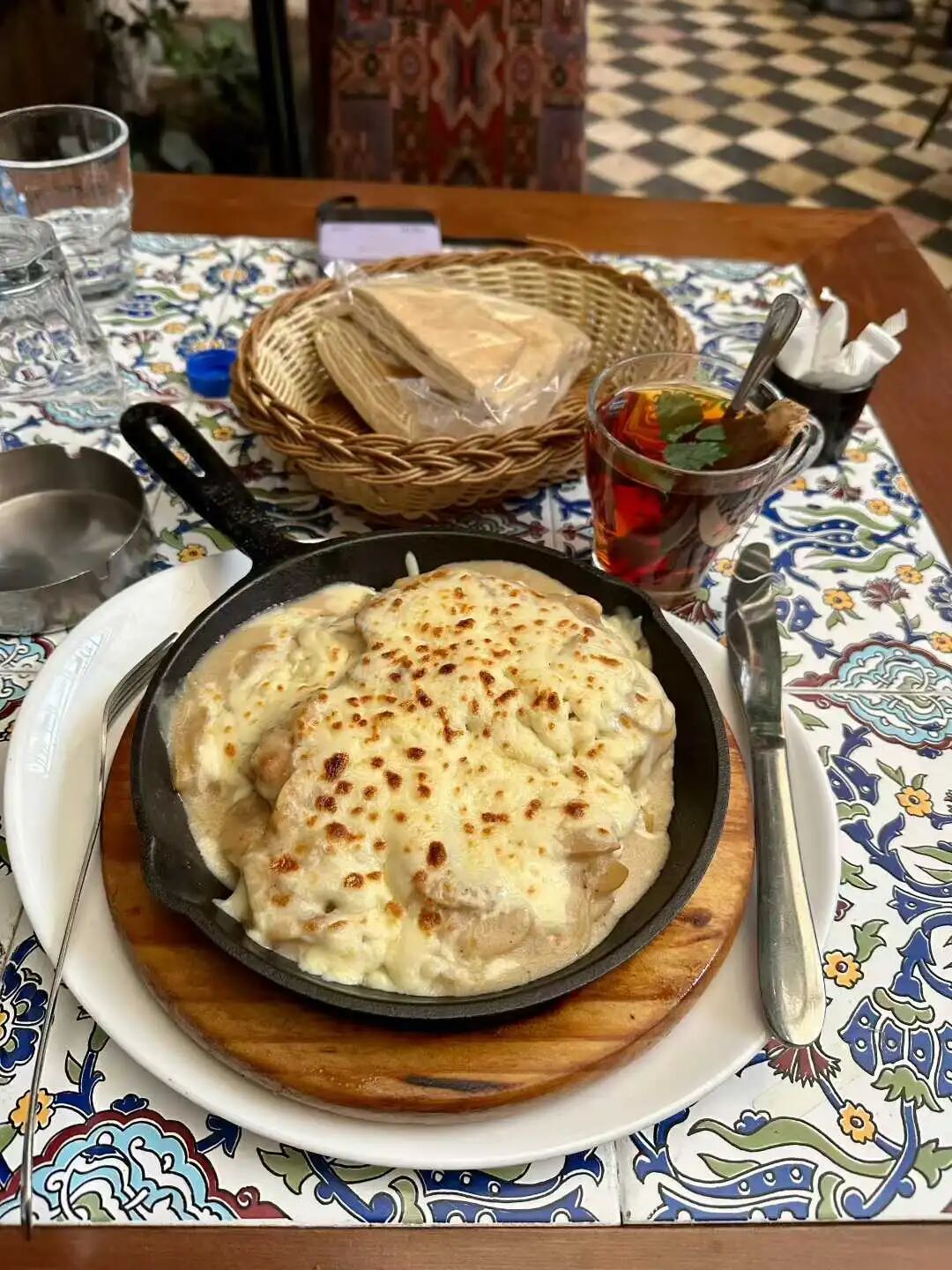
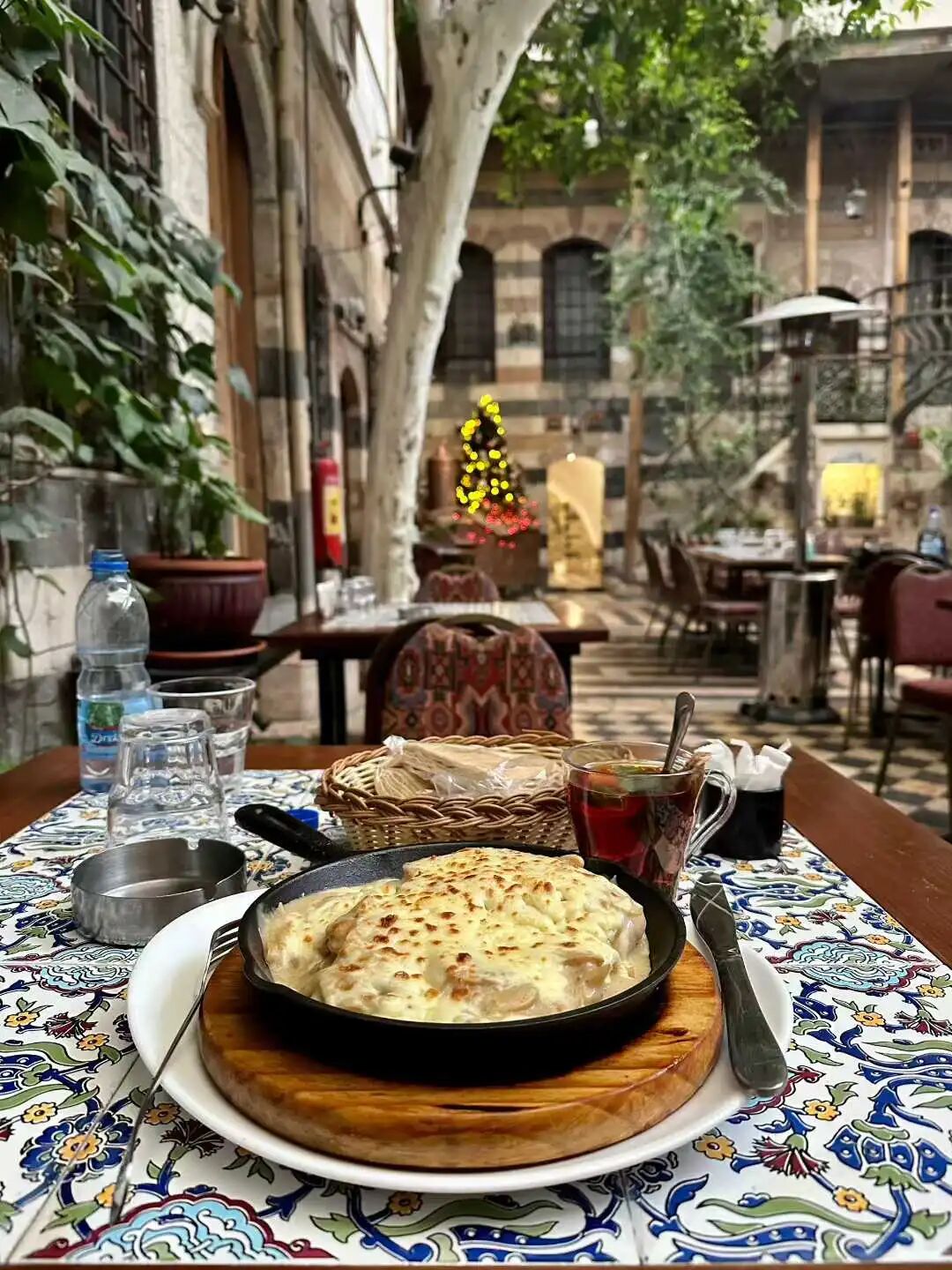
I ordered the iron pot cheesy baked chicken and mushrooms, served with Arabic pita bread and mint tea. The iron pot came straight to the table. The cheese on top was baked to a golden, crispy brown and stretched into long strings. The chicken was tender, and the mushrooms were soaked in the rich, creamy white sauce. It tasted quite good.
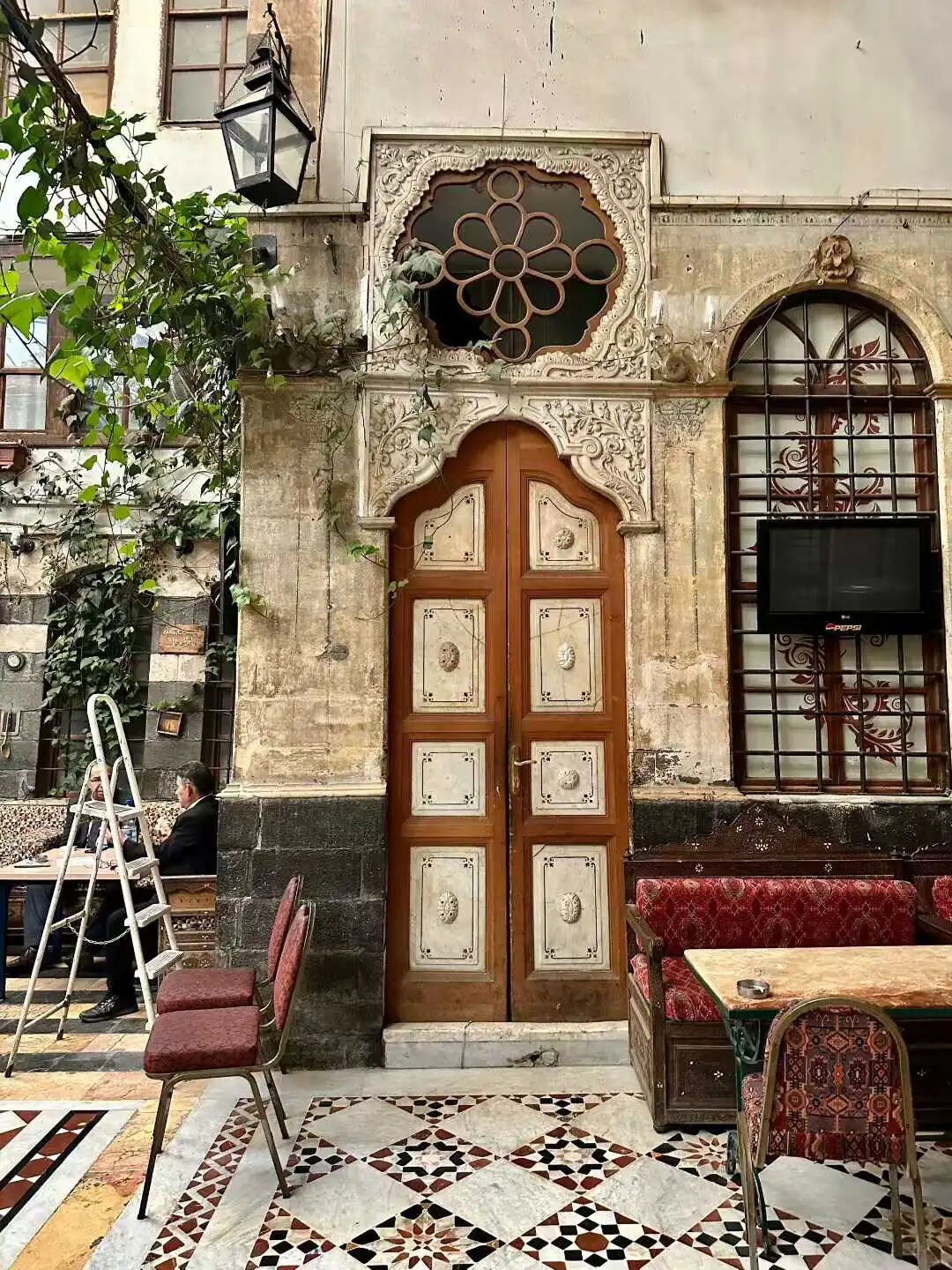
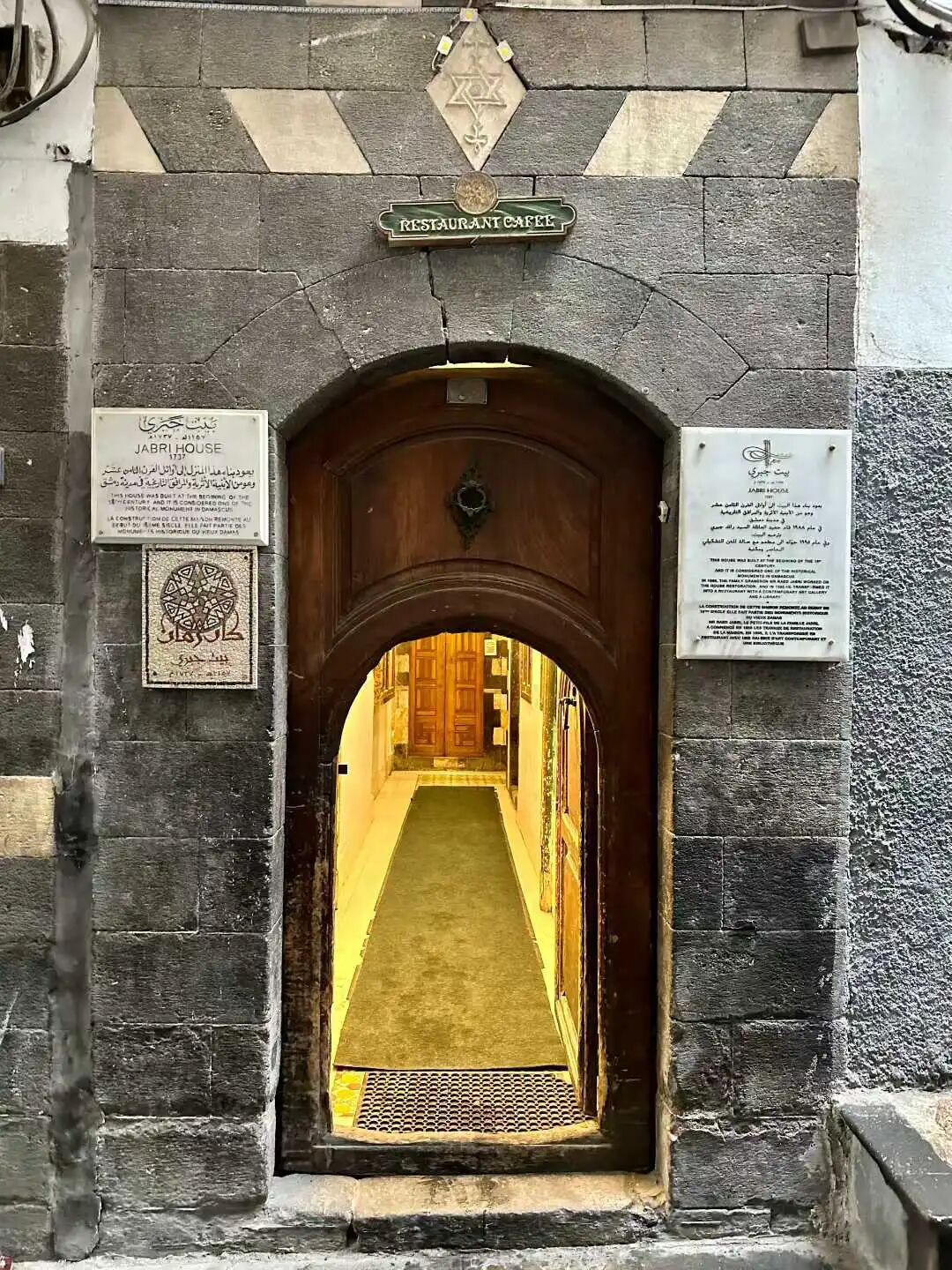
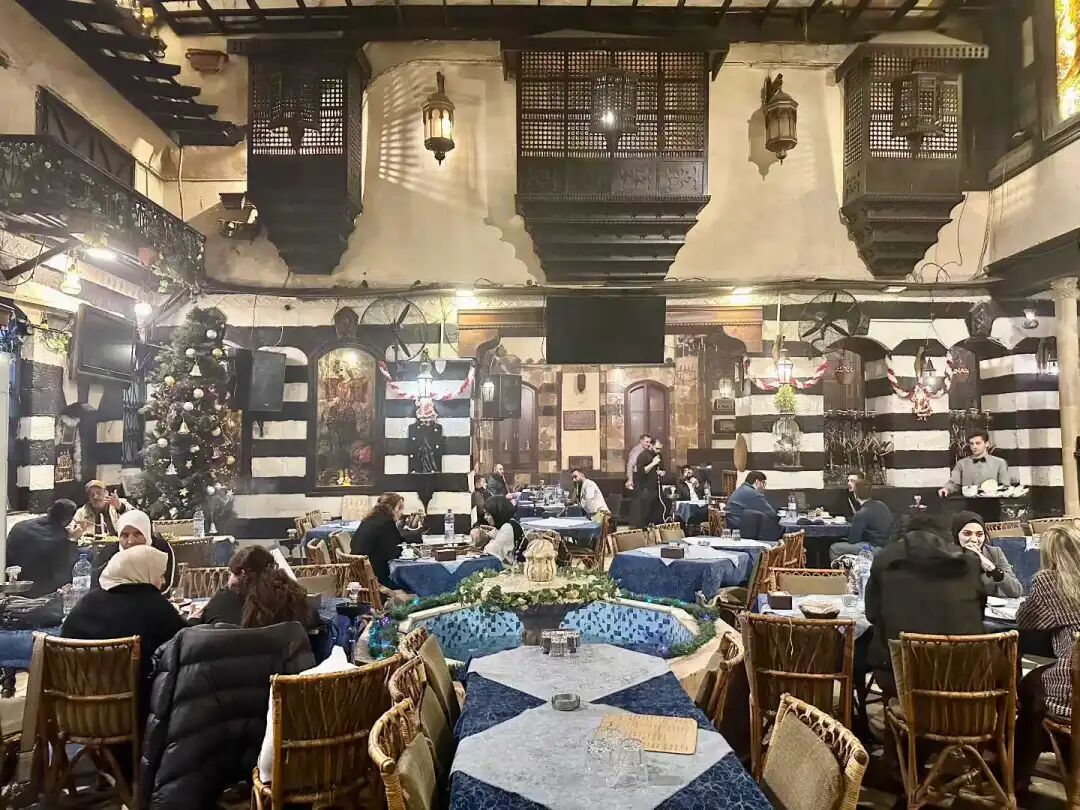
Bab Al Hara is located on Al Qaimarryeh pedestrian street, just outside the east gate of the Umayyad Mosque in Damascus. It is very lively every night. The restaurant is a converted traditional Ottoman mansion built in the late 19th century. It features a central courtyard with a fountain, wrap-around arcades, plaster carvings, and stained glass windows. This place was originally the home of a wealthy merchant. During the French Mandate period (1920–1946), it served as a community gathering spot. Later, it was used as a multi-family residence for a long time before gradually falling into disrepair in the late 20th century. The hit Syrian drama "Bab Al Hara" premiered in 2006, sparking a craze across the Arab world for the folk customs of the Old City of Damascus. The restaurant opened in 2007, starting as a cafe that focused on Syrian breakfast and snacks, then added full meals in 2010.
I had the grilled chicken skewers (Shish Taouk). The chicken was crispy on the outside and tender on the inside. It was very refreshing paired with garlic yogurt sauce (Tzatziki), along with a corn and cabbage salad and french fries. However, restaurants all over the Old City of Damascus are full of people smoking shisha at night. If you mind the shisha smoke, try to go at noon or in the afternoon.
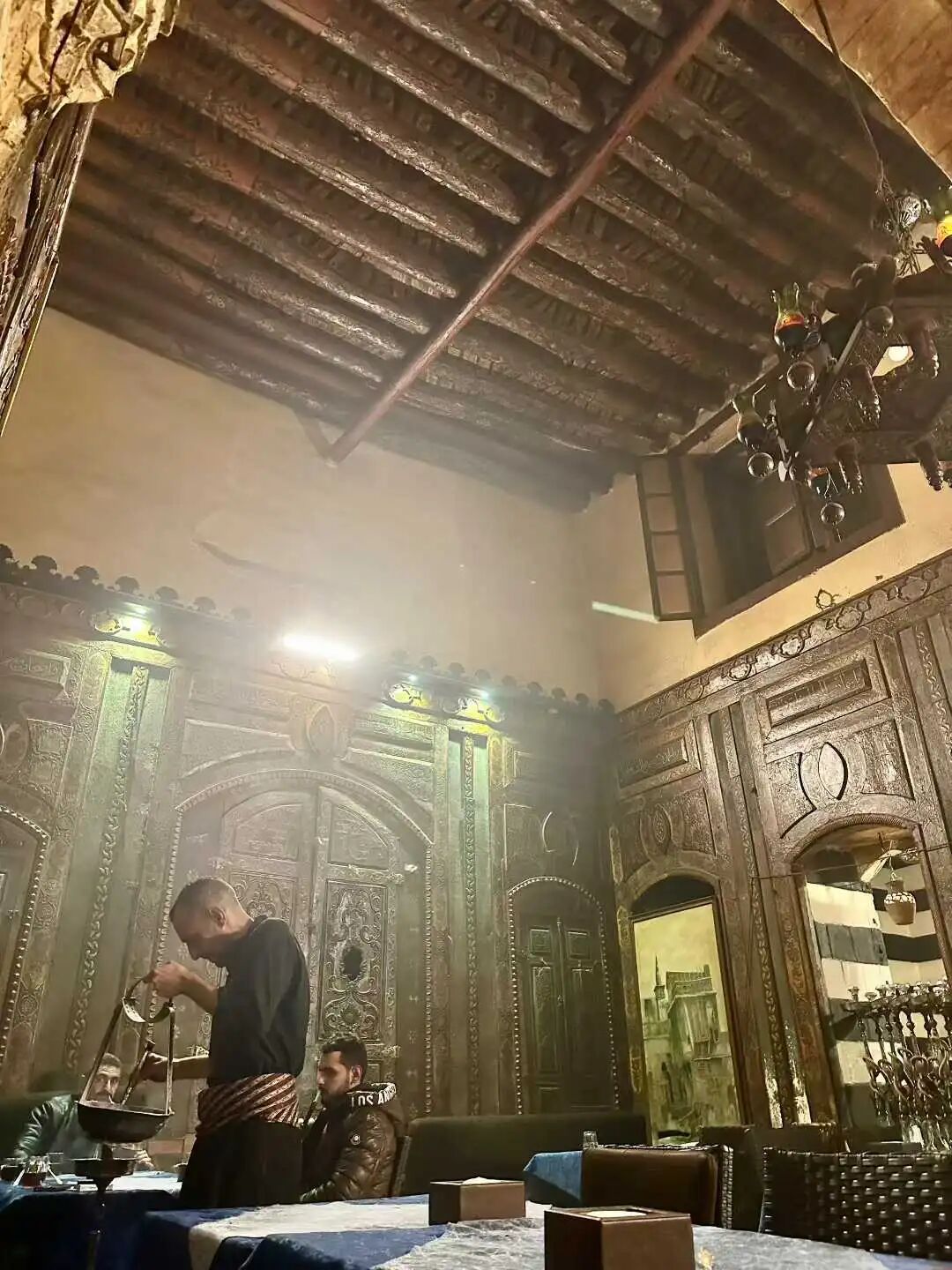
Finally, I had some sand-boiled coffee at Café Ishq Sharqi in Bab Touma, Damascus. The name translates to "Love of the Orient." There are dozens more restaurants and cafes converted from Ottoman mansions in the Old City of Damascus. I only visited a small portion this time, so there are plenty more for everyone to discover.
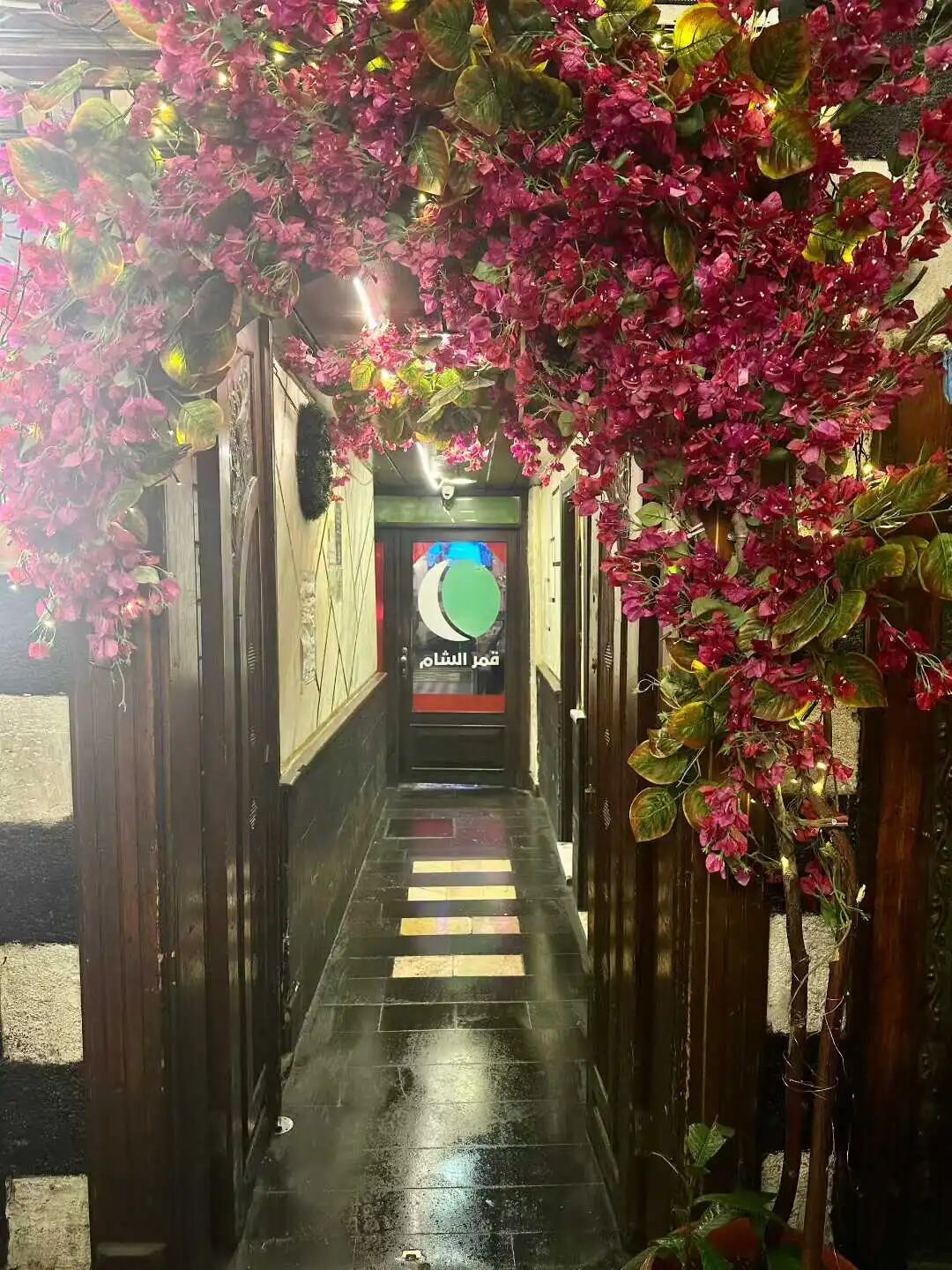
Summary: Damascus old city has heritage hotels and restaurants converted from Ottoman mansions, especially in the Christian Quarter east of the Umayyad Mosque. This guide keeps the source's nine hotel and restaurant notes, December 2025 prices, locations, bargaining details, and photographs.
In recent years, I have really enjoyed staying in heritage hotels while traveling. Even if some are a bit pricey or have thin walls, they let you fully experience the local history. Many people in Damascus choose Chinese-run guesthouses because they are cheaper and easier to communicate in. But if you really want to understand this thousand-year-old city, staying in an old Ottoman house inside the ancient city is a much better way to get close to history.
The east and west sides of the old city of Damascus are very different. The west has the busy Ottoman markets, the Umayyad Mosque, and the citadel. The east is the Christian Quarter, filled with churches and hotels or restaurants converted from old Ottoman mansions. I spent my days in Damascus staying in different mansions in the Christian Quarter. It is about a 1-kilometer walk to the Umayyad Mosque, but the road is full of shops, so it does not feel long.
Here are 9 places I stayed at or asked about, with prices from December 2025.
1. My top recommendation is Mamlouka Hotel, which has two locations: Dar Al Mamlouka and Beit al-Mamlouka. They asked for $122 for a single room, but I bargained it down to $110. I think this place offers the best value. The environment is great, it is the closest to the Umayyad Mosque, and it is right next to the market. The courtyard is a bit small. I only stayed at Dar Al Mamlouka this time because Beit al-Mamlouka had no rooms for two days.
2. Dar Al Yasmin Hotel asked for $140 for a single room, and I bargained it down to $125. It is in a small alley behind a church. It is very quiet and quite large inside.
3. Beit Zaman Hotel asked for $150 for a single room, and I bargained it down to $135. It is right on the East Gate street. There are many shops nearby, and many young people come here to take photos.
4. Beit Rumman has a great environment, but unfortunately, it has no Wi-Fi. I did not buy a SIM card, so I would have been disconnected. I missed out on it and did not ask for the price.
5. Beit Al Wali Hotel is the most popular mansion hotel in the old city of Damascus, and it is also the most expensive. When I asked on the first day, they only had a royal suite for $500. On the second day, they asked for $290 for a single room, and they would not go below $200, so I did not stay there.
6. Albal Hotel charges $80 for a single room. It is the cheapest, but the facilities are the worst. The power was weak, and my phone would barely charge.
7. Al Zaytouna Hotel has an average environment. When I went in, some men were watching a ball game, so I did not ask for the price.
8. Beit Zafran Hotel is very close to Beit Al Wali Hotel. It looked nice in photos, but it was full when I went, so I did not ask for the price.
9. Al Shahbandar Palace Hotel has a cafe in its courtyard. I had a coffee there, but I did not stay.
Dar Al Mamlouka is located on the far west side of the Bab Touma Christian Quarter in the old city of Damascus. The main building is a merchant mansion from the 17th-century Ottoman period, but it still has a strong 16th-century Mamluk style. The mansion has an inward-facing layout centered around a courtyard, with high ceilings on one side. The walls are built with alternating black basalt and white limestone bricks in the Mamluk style, and there is a marble fountain in the center of the courtyard.
Dar Al Mamlouka was turned into a hotel in 2005. It is run by the same management as another nearby mansion, Beit al-Mamlouka, but that one is often fully booked. The single room was listed at 122 dollars, but I bargained it down to 110 dollars. The hotel has electricity and Wi-Fi all night. The single room is nice, and a staff member brought me tea right after I checked in. There are orange and lemon trees in the courtyard, which makes it very relaxing.
The Islamic decor at Dar Al Mamlouka includes the Hand of Fatima (Hamsa). Its five fingers represent the five pillars of the faith, and it is named after the Prophet's daughter, Fatima. During the Austro-Turkish War in 1788, the Ottoman Empire carried flags featuring the Hand of Fatima as the Grand Vizier led an army of 80,000 against Austria.
Breakfast at Dar Al Mamlouka is a typical Levantine cold platter served with bread and hot tea. They bring the full set even if you are eating alone. It mainly includes various cheeses, pickled olives, chickpea dip (hummus), jam, fresh cucumber and tomato, fruit juice, olive oil, and sausages. A special item is the pickled eggplant (makdous). These are miniature eggplants stuffed with walnuts, chili, garlic, olive oil, and salt. Syrians usually start pickling them in autumn to eat as an appetizer during winter. The powder on the table is the classic Levantine spice blend (za'atar). It is a mix of Syrian oregano, toasted sesame seeds, dried sumac, and thyme. It has an earthy taste with a hint of citrus and nuttiness, which is very unique.
Dar Al Yasmin Hotel is located in the heart of the Christian Quarter of Bab Touma in the Old City of Damascus. The hotel is tucked away in a small alley, and it feels like a hidden world once you step inside. The hotel is made up of three 18th-century Ottoman mansions—two large and one small. It features a central courtyard, a fountain, a reception area (liwan), hand-painted wooden ceilings, traditional brick and stone structures, and carved doors and windows. The mansion changed hands many times after the 19th century until the Jasmine Hotels group took it over in 2005. They restored and opened it, making it a classic example of revitalizing a traditional Middle Eastern residence.
The single room was listed at 140 dollars, but I bargained it down to 125 dollars. The small alley at the entrance can get flooded when it rains, but overall it is a great value.
For breakfast at Dar Al Yasmin Hotel, the chickpea and sesame paste dip (hummus musabaha) is worth trying. Musabaha means swimming, as if the chickpeas are swimming in the sesame paste.
They also serve flatbread (manakish) in three varieties: with spice blend (za'atar), tomato, or cheese. Manakish originated from the traditional bread of the ancient Phoenicians and was added to the UNESCO Intangible Cultural Heritage list in 2023.
Beit Zaman Hotel is in the Christian Quarter of Bab Touma in the Old City of Damascus, right on the ancient Roman street (Via Recta). Their single room was listed at 150 dollars, but I bargained it down to 135 dollars.
The hotel opened in 2008 after five years of connecting and restoring three 17th-century Ottoman mansions. It kept original features like stone carvings, wood carvings, mosaics, and fountains. The wooden Ajami-style ceilings and the traditional courtyard layout are the most impressive parts.
The buffet breakfast at Beit Zaman Hotel includes sausages, cheese, bread, olives, and chickpea dip (hummus). The red dipping sauce is called Muhammara. It is a Syrian appetizer made from walnuts, red bell peppers, pomegranate molasses, and breadcrumbs.
Albal Hotel is near the Bab Touma gate in the Old City of Damascus. It is likely the most convenient for transportation. A single room costs 80 dollars, which is the lowest price, but the power is weak and it is almost impossible to charge a phone. Choose carefully.
Albal Hotel is a converted Ottoman mansion rebuilt after the 1759 Damascus earthquake. It has a courtyard fountain and wood carvings. The breakfast is quite good, and they light a stove in the courtyard during winter.
Al Shahbandar Palace Hotel is on the west side of the Christian Quarter near Bab Touma in the Old City of Damascus, right on the busy Al Qemaryeh market street.
The hotel is inside an Ottoman noble mansion built in the 16th century. The Shahbandar family, a famous modern political family in Damascus, lived here for a long time. The famous nationalist leader Abdul Rahman Shahbandar came from this family. The Shahbandar family renovated the mansion on a large scale in the early 20th century and used it as a place to host guests for a long time. In 2007, it was converted into a historic hotel after adding private bathrooms, air conditioning, and electrical systems, while strictly preserving the facade, courtyard, and historical components.
Today, the mansion's courtyard is open as a cafe. You can drink coffee there, so you do not have to stay at the hotel to experience this Ottoman mansion.
Besides historic hotels, many restaurants and cafes in the Old City of Damascus are also converted from Ottoman mansions. The first place I recommend had just opened when I visited, so you cannot even find it online. It is located on the road after entering the Old City of Damascus from the Bab Touma gate and turning west into Qanayet Al-Hatab street. They only had tea and coffee when I went, but the environment was quite nice. I ordered a cup of sand-brewed coffee. The owner speaks English. He was very enthusiastic and invited me to the second floor to see the old building.
Lady Cafe is on the Al Nawfara pedestrian street outside the east gate of the Umayyad Mosque. It is very lively in the afternoon and evening. I ate a Damascus specialty snack called Toshka pie at the cafe. It is known as a national snack of Syria. Toshka is made by putting spicy sausage (Sujuk) and Kashkawan cheese inside pita bread, then pressing it on an iron griddle on both sides until the cheese melts and the bread is crispy. When you eat it, it is crispy on the outside and soft on the inside. The bread is charred and fragrant, and the meat and cheese are rich and stretchy.
Beit Jabri is on As Sawwaf street, southeast of the Umayyad Mosque. It is an Ottoman mansion restaurant in the Old City of Damascus that is well worth a visit.
This mansion was built in the early 18th century. The current owner Raad Jabri's grandfather bought the property in the late 19th century, and their family lived there from 1905 to 1973. The house was gradually abandoned after the 1970s and later became a workshop for carpenters and blacksmiths. Raad Jabri restored the place in the 1990s and turned it into a restaurant. He also hosts cultural seminars, poetry readings, and classical music evenings from time to time.
Beit Jabri is a classic three-courtyard Ottoman mansion in Damascus. The arched hall (Iwan) is a typical example of 18th-century Damascus architecture, and the exquisite Ajrum roof was built in the mid-19th century. Influenced by Europe and the Ottoman Empire in the 19th century, Damascus architecture generally tended to decorate exterior walls more gorgeously. This is especially obvious on the north wall of Beit Jabri. We can clearly see the transition from 18th-century decorative styles to 19th-century patterns on the north wall, with complex wall paintings layered over traditional stone masonry (Ablaq).
I ordered the iron pot cheesy baked chicken and mushrooms, served with Arabic pita bread and mint tea. The iron pot came straight to the table. The cheese on top was baked to a golden, crispy brown and stretched into long strings. The chicken was tender, and the mushrooms were soaked in the rich, creamy white sauce. It tasted quite good.
Bab Al Hara is located on Al Qaimarryeh pedestrian street, just outside the east gate of the Umayyad Mosque in Damascus. It is very lively every night. The restaurant is a converted traditional Ottoman mansion built in the late 19th century. It features a central courtyard with a fountain, wrap-around arcades, plaster carvings, and stained glass windows. This place was originally the home of a wealthy merchant. During the French Mandate period (1920–1946), it served as a community gathering spot. Later, it was used as a multi-family residence for a long time before gradually falling into disrepair in the late 20th century. The hit Syrian drama "Bab Al Hara" premiered in 2006, sparking a craze across the Arab world for the folk customs of the Old City of Damascus. The restaurant opened in 2007, starting as a cafe that focused on Syrian breakfast and snacks, then added full meals in 2010.
I had the grilled chicken skewers (Shish Taouk). The chicken was crispy on the outside and tender on the inside. It was very refreshing paired with garlic yogurt sauce (Tzatziki), along with a corn and cabbage salad and french fries. However, restaurants all over the Old City of Damascus are full of people smoking shisha at night. If you mind the shisha smoke, try to go at noon or in the afternoon.
Finally, I had some sand-boiled coffee at Café Ishq Sharqi in Bab Touma, Damascus. The name translates to "Love of the Orient." There are dozens more restaurants and cafes converted from Ottoman mansions in the Old City of Damascus. I only visited a small portion this time, so there are plenty more for everyone to discover.
Halal Travel Guide: Heritage Hotels - History, Architecture and Muslim Travel
Articles • ali2007fr posted the article • 0 comments • 202 views • 2026-05-19 10:00
Reposted from the web
Summary: Halal Travel Guide: Heritage Hotels - History, Architecture and Muslim Travel is presented here as a firsthand travel account in clear, natural English. The account focuses on Heritage Hotels, Muslim Travel, Architecture while preserving the names, places, food, photos, and historical details from the Chinese source.
I am sharing 12 heritage hotels where I have stayed.
No. 21 Mansion (Ershiyi Hao Gongguan) in Dalian, Liaoning.
Xianting Boutique Resort (Xianting Jingpin Dujia Minsu) in Jianshui, Yunnan.
Xiulu Yuan branch of Xiushan Inn (Xiushan Kezhan Xiulu Yuan Dian) in Tonghai, Yunnan.
Sarang Paloh Heritage Stay & Event Hall in Ipoh, Malaysia.
23 Love Lane in Penang, Malaysia.
Hotel Puri in Malacca, Malaysia.
Omah Sinten Heritage Hotel & Resto in Solo, Indonesia.
Maristan Tarihi Konak in Mardin, Turkey.
Gamaleya Boutique Hotel in Cairo, Egypt.
Komil Hotel in Bukhara, Uzbekistan.
Bahitgul Boutique-Hotel in Bakhchysarai, Crimea (Russian-occupied).
Tatarskaya Usadba in Kazan, Russia.
No. 21 Mansion (Ershiyi Hao Gongguan) in Dalian, Liaoning.
In Dalian, we stayed at Number 21 Mansion (Ershiyi Hao Gongguan) on Russian Style Street. The hotel sits in a courtyard that is part of the Yantai Street Russian-style building complex, which includes 28 European-style villas and marks the starting point of Dalian's history. In 1898, Tsarist Russia leased Dalian Bay and began building Dalian city the following year. The first street built was called Engineer Street, which is now known as Russian Style Street. Soon after, Timov Street was built right next to Engineer Street, and it was renamed Yantai Street after 1946. Between the late 19th and early 20th centuries, Tsarist Russia hired German and Russian designers to build a series of European-style villas on Yantai Street, and 28 of them still stand today.
After the Russian-style building complex on Yantai Street was restored in 2011, several hotels and restaurants moved in. When we visited, several places were hosting weddings, which felt a bit like the Italian Style Street in Tianjin. Several villas in the courtyard belong to the Dalian Railway 1896 Garden Hotel, which you can stay in at any time. The No. 21 Mansion where we stayed is military property and only opens during holidays, but you can book it online.
Building No. 21 was built in 1903 and designed by the famous German architect Jan Hendel. In 1920, early labor movement leader and Manchurian Provincial Committee Secretary Wang Ligong lived here. The house we stayed in had windows on both the north and south sides, making the environment very pleasant. The courtyard was very quiet, which was a sharp contrast to the busy Russian-style street next door.
Xianting Boutique Resort (Xianting Jingpin Dujia Minsu) in Jianshui, Yunnan.
Jianshui is a famous historical and cultural city in Yunnan, known as the Zou and Lu of Southern Yunnan for its thriving Confucian studies. The Jianshui Xianting Boutique Homestay where we stayed is a typical three-courtyard house with one large central courtyard and four smaller ones. The main hall, courtyards, and side rooms are all connected, creating a very peaceful atmosphere. It is rare to find such elegant furnishings in the courtyard; walking through the door feels like stepping back into ancient times. Our room had traditional door bolts and wooden beds, which really satisfied our modern imagination of ancient times.
Xiulu Yuan branch of Xiushan Inn (Xiushan Kezhan Xiulu Yuan Dian) in Tonghai, Yunnan.
Tonghai Ancient City in Yuxi, Yunnan, is also a national historical and cultural city, and it preserves many ancient buildings from the Ming and Qing dynasties. We stayed at the Tonghai Xiushan Inn Xiulu Branch, which was converted from the old county committee compound. The compound itself is one of the first historical buildings in Tonghai County. After the renovation, it looks brand new, and the courtyard is filled with many lush potted plants.
Sarang Paloh Heritage Stay & Event Hall in Ipoh, Malaysia.
Ipoh is a historical and cultural city in Malaysia, known as the City of Tin. A fire broke out in Ipoh in 1892, destroying more than half of the original wooden shophouses. Later, a local Datuk led the reconstruction into arcade streets typical of the Straits region, which is now Ipoh Old Town. In 1907, Chinese community leader Yao Desheng funded the construction of a new street across the river from the Old Town. It is 1 kilometer long and consists of 216 arcade shophouses, which is now Ipoh New Town. Today, Ipoh has a large area of old streets with covered walkways (qilou) made up of the historic New Town and Old Town districts. Many of these buildings are decades or even centuries old and are well worth a visit.
We stayed at the Sarang Paloh Heritage Stay & Event Hall, a heritage hotel in the Old Town located inside the Yik Foong gold shop built in the 1930s. The hotel was converted from two buildings with covered walkways. The facade on the left is in the Art Deco style, while the right side is Neoclassical. Inside, it features traditional Malaysian Chinese decor.
Our room was on the second floor of the Yik Foong gold shop building. It had very high ceilings and looked out over the main road of Ipoh Old Town. Brewing two cups of the complimentary Ipoh white coffee felt like stepping back into the Nanyang of a hundred years ago.
23 Love Lane in Penang, Malaysia.
Penang is an island in northwestern Malaysia. In 1786, the Sultanate of Kedah ceded it to the British East India Company. George Town, which was established on the island shortly after, became the first British base in Southeast Asia. After George Town was built, the British East India Company kept encouraging people to move there. After the 19th century, the Chinese, Malay, Indian, Peranakan (local-born Chinese), Eurasian, and Siamese people living in Penang each formed their own communities.
Penang has many heritage hotels converted from grand mansions, and the one we stayed at, 23 Love Lane (Le Lin), is a very interesting example. The 23 Love Lane mansion was first built in the 1790s. British, Indian, and Chinese people have all been its owners, so the architecture is a mix of Eastern and Western styles, serving as a miniature reflection of Penang's cultural melting pot over the last century.
In the 1860s, it was an Anglo-Indian bungalow. A Straits Eclectic style building was added in the late 19th and early 20th centuries, and a Jack Roof Annex villa was built in the 1920s. Around the 1930s, an Indian shop house was built inside the courtyard. After the 1990s, the mansion became the budget Oasis Hotel, until it became the current 23 Love Lane heritage hotel in 2011.
We stayed in an Anglo-Indian shop house built before the war. This place used to be a shop and home for a Tamil merchant. Now it is a two-story vintage suite with a bathroom on each floor, making it perfect for trips with family and friends.
Hotel Puri in Malacca, Malaysia.
We stayed at the famous Hotel Puri in the old town of Malaysia, which is where the TV show The Little Nyonya was filmed.
Hotel Puri is a century-old mansion once owned by overseas Chinese in Southeast Asia. It is a classic three-section, two-story Baba Nyonya house. Malacca became quiet in the 20th century as many people moved to larger cities like Singapore or Kuala Lumpur. This old house sat abandoned for a long time until it was carefully renovated into the hotel it is today.
During the time it was abandoned, bats and swifts moved in. After the house became a hotel, the swifts in the third section refused to leave, so the hotel let them stay. They now build their nests right next to the old plaques.
Omah Sinten Heritage Hotel & Resto in Solo, Indonesia.
Solo is a historic cultural city in Central Java, Indonesia, and was the final capital of the once-powerful Mataram Sultanate on Java island. In 1755, at the direction of the Dutch East India Company, the Mataram Sultanate was split into the Yogyakarta Sultanate and the Surakarta Sunanate, with Surakarta city becoming the capital of the Surakarta Sunanate.
During the Dutch East Indies era, the Surakarta Sunanate held autonomous status just like the Yogyakarta Sultanate and was considered a vassal state of the Dutch Empire. The Republic of Indonesia was declared in 1945, and in 1946 the Surakarta Sunanate lost its ruling power and was incorporated into Central Java Province. Although it has no real power, the Surakarta Sunanate still holds royal authority and a special status for maintaining traditional Javanese culture.
In Surakarta, I stayed at the Omah Sinten Heritage Hotel & Resto across from the royal palace. The hotel uses traditional Javanese architectural style, and the breakfast area is a teak wood pavilion built in the 1930s, surrounded by many trees, making it very cool.
Maristan Tarihi Konak in Mardin, Turkey.
The ancient city of Mardin is located in southeastern Turkey, bordering Syria and Iraq, and sits in the Upper Mesopotamia region at the headwaters of the Tigris and Euphrates rivers. The entire ancient city is built on the southern slope of a ridge. At the very top of the cliff sits a thousand-year-old castle, with a terraced stone city built below it. Because of this, you can look out over the Mesopotamian plains from any terrace in the city, and the view is spectacular.
Our hotel, Maristan Tarihi Konak, is located in a 700-year-old building. It was originally built by Jewish people and is now run by Kurds. Five hundred years ago, many Armenians and Jews lived in the ancient city of Mardin. Today, it is mainly home to Kurds and Arabs, along with a significant number of Assyrian Christians.
The taxi drove into the maze-like alleys of the old city, weaving left and right up very steep slopes, which made us feel quite nervous. The car finally stopped on a slope. Idris, a young Kurdish man from the hotel, greeted us warmly by the side of the road. It was a coincidence that my name is also Idris, which is the name of a prophet.
Idris led us up the small stone steps until we finally reached the Maristan Tarihi Konak hotel. Before I went, I checked online and found that most hotels in the old city of Mardin feature stone houses. This one is relatively good value because it is not on the main road. The reviews also specifically mentioned that the staff are very friendly, and that turned out to be true.
The walls of our stone house are very thick. Even when it is 30 degrees outside in the summer, you do not need air conditioning inside. The only downside is that it does not get as much light as a wooden house because the windows are very small. It is very interesting that our room door is also very traditional. You have to insert the large key and turn it several times in the opposite direction, which feels especially ancient.
The breakfast we had on the hotel terrace was very rich. It included four types of cheese, yogurt, two kinds of olives, honey, fig jam, pomegranate jam, and grape jam. The main staple was not the bread common in Turkey, but Kurdish flatbread (nan).
The hotel manager is a Kurdish friend named Zahit. He took us for a walk through the old city bazaar and then pointed out the general direction of various historical sites on the main road, which was very thoughtful.
Gamaleya Boutique Hotel in Cairo, Egypt.
As a cultural metropolis with a history of over a thousand years and hundreds of historical sites, the ancient city of Cairo was listed as a World Cultural Heritage site as early as 1979. However, due to the noisy environment, traffic congestion, and worrying sanitary conditions, it seems that not many Chinese tourists are willing to explore it deeply, except for the Khan el-Khalili market which specializes in tourist souvenirs. I stayed in the old city of Cairo for four days this time and basically visited all the various mosques, shrines (gongbei), religious halls (daotang), mansions, inns, and madrasas in the city.
To make it easier to walk around the old city, I started looking for suitable accommodation online. Most tourists visiting Cairo choose to stay in the embassy district where the environment is a bit better, as there are almost no places suitable for tourists to stay inside the old city. However, I still managed to find the Gamaleya Heritage Hotel, which only opened in 2021.
The owner of Gamaleya, Ibrahim Kassissia, has had his family living here since the 1930s. He moved to Canada 40 years ago, but during a trip to China, he got the idea to return to his hometown to open a heritage hotel. He later bought back the long-abandoned old house and turned it into the hotel it is today.
The first floor of the hotel is a cultural workshop where master craftsmen in silver, copper, wood, and leather work and teach apprentices. Every morning when we head out, we see a group of students learning diligently from the masters. The second floor is where breakfast is served. It is a semi-buffet style where food is made fresh to order every morning based on what guests want. The third floor and above are the guest rooms. While the accommodations aren't as fancy as a big hotel, they are definitely a great choice for visiting Cairo's old city.
Komil Hotel in Bukhara, Uzbekistan.
In the ancient city of Bukhara, Uzbekistan, I stayed at the Komil Hotel, which is recommended by Lonely Planet. The hotel is in an alley in the center of the old city. It is a wealthy merchant's house built in the 19th century. Komil's grandfather bought it 50 years ago, and it opened as a hotel in 2000. The owner, Komil Kadirov, speaks fluent English and is very welcoming to guests.
The hotel still keeps the wood carvings and paintings of traditional 19th-century Bukhara architecture. My room was partially renovated, but the dining room where we ate breakfast is perfectly preserved. It feels like traveling back to 19th-century Bukhara. Their breakfast is very generous. Even for one person, they fill the whole table, which made me feel a bit embarrassed. Breakfast was a real highlight of my trip to Uzbekistan. Almost every hotel prepares more than ten dishes. They always ask if you want boiled or fried eggs, and black or green tea. The service is truly excellent.
Bahitgul Boutique-Hotel in Bakhchysarai, Crimea (Russian-occupied).
Bakhchisaray is an ancient mountain city on the Crimean Peninsula. It was the capital of the Crimean Khanate from 1532 to 1783 and is the cultural center of the Crimean Tatars. In May 1944, Stalin deported all 240,000 Crimean Tatars from the Crimean Peninsula to Uzbekistan and other remote regions. For nearly half a century after that, there were almost no Tatars on the Crimean Peninsula.
After 45 years of struggle by the Crimean Tatars, the Soviet Union finally declared the deportation illegal in 1989, and the Crimean Tatars finally gained the right to return to their homeland. Today, 250,000 Crimean Tatars have returned to the Crimean Peninsula, working hard to rebuild their lives, overcome social and economic obstacles, and keep their culture alive.
The hotel where I stayed in Bakhchysarai, Bahitgul Boutique-Hotel, is a beautiful traditional Crimean Tatar house. They serve traditional Crimean Tatar food, so I ate breakfast at my accommodation most days. The view while eating there is also excellent, as you can look out over the entire ancient capital.
Tatarskaya Usadba in Kazan, Russia.
As the former capital of the Kazan Khanate, the city of Kazan was completely destroyed after being captured by Ivan the Terrible in 1552. In 1556, the Russians built a new city of Kazan. Only Russians were allowed to live inside the city, so the Tatars settled by Lake Kaban to the southwest, which gradually became the Old Tatar Quarter.
The early Old Tatar Quarter was made of wooden houses, which caught fire very easily. During the reign of Catherine the Great (1762-1796), the city of Kazan was rebuilt with brick and stone, which gradually created the look of the current Old Tatar historical district.
Although part of the Old Tatar Quarter was turned into an industrial zone during the Soviet era, the historical district still covers 88 hectares today. It preserves 75 historical buildings from the 18th to 20th centuries, including mosques in the traditional Tatar style, estates of wealthy Tatar merchants, and theaters.
I stayed in a traditional Tatar estate by Lake Kaban this time, which was originally the home of 19th-century Tatar merchant Khamit Sabitov. The estate offers both lodging and meals. Since I did not book their dinner in advance, I only had breakfast, which was also in the traditional Tatar style.
I tasted a Tatar specialty meat pie (bekken), which is made with sour cream dough and filled with cabbage and eggs. I also ate a cake with frosting and Eastern European stuffed buns (pirozhki). view all
Summary: Halal Travel Guide: Heritage Hotels - History, Architecture and Muslim Travel is presented here as a firsthand travel account in clear, natural English. The account focuses on Heritage Hotels, Muslim Travel, Architecture while preserving the names, places, food, photos, and historical details from the Chinese source.
I am sharing 12 heritage hotels where I have stayed.
No. 21 Mansion (Ershiyi Hao Gongguan) in Dalian, Liaoning.
Xianting Boutique Resort (Xianting Jingpin Dujia Minsu) in Jianshui, Yunnan.
Xiulu Yuan branch of Xiushan Inn (Xiushan Kezhan Xiulu Yuan Dian) in Tonghai, Yunnan.
Sarang Paloh Heritage Stay & Event Hall in Ipoh, Malaysia.
23 Love Lane in Penang, Malaysia.
Hotel Puri in Malacca, Malaysia.
Omah Sinten Heritage Hotel & Resto in Solo, Indonesia.
Maristan Tarihi Konak in Mardin, Turkey.
Gamaleya Boutique Hotel in Cairo, Egypt.
Komil Hotel in Bukhara, Uzbekistan.
Bahitgul Boutique-Hotel in Bakhchysarai, Crimea (Russian-occupied).
Tatarskaya Usadba in Kazan, Russia.
No. 21 Mansion (Ershiyi Hao Gongguan) in Dalian, Liaoning.
In Dalian, we stayed at Number 21 Mansion (Ershiyi Hao Gongguan) on Russian Style Street. The hotel sits in a courtyard that is part of the Yantai Street Russian-style building complex, which includes 28 European-style villas and marks the starting point of Dalian's history. In 1898, Tsarist Russia leased Dalian Bay and began building Dalian city the following year. The first street built was called Engineer Street, which is now known as Russian Style Street. Soon after, Timov Street was built right next to Engineer Street, and it was renamed Yantai Street after 1946. Between the late 19th and early 20th centuries, Tsarist Russia hired German and Russian designers to build a series of European-style villas on Yantai Street, and 28 of them still stand today.
After the Russian-style building complex on Yantai Street was restored in 2011, several hotels and restaurants moved in. When we visited, several places were hosting weddings, which felt a bit like the Italian Style Street in Tianjin. Several villas in the courtyard belong to the Dalian Railway 1896 Garden Hotel, which you can stay in at any time. The No. 21 Mansion where we stayed is military property and only opens during holidays, but you can book it online.
Building No. 21 was built in 1903 and designed by the famous German architect Jan Hendel. In 1920, early labor movement leader and Manchurian Provincial Committee Secretary Wang Ligong lived here. The house we stayed in had windows on both the north and south sides, making the environment very pleasant. The courtyard was very quiet, which was a sharp contrast to the busy Russian-style street next door.
Xianting Boutique Resort (Xianting Jingpin Dujia Minsu) in Jianshui, Yunnan.
Jianshui is a famous historical and cultural city in Yunnan, known as the Zou and Lu of Southern Yunnan for its thriving Confucian studies. The Jianshui Xianting Boutique Homestay where we stayed is a typical three-courtyard house with one large central courtyard and four smaller ones. The main hall, courtyards, and side rooms are all connected, creating a very peaceful atmosphere. It is rare to find such elegant furnishings in the courtyard; walking through the door feels like stepping back into ancient times. Our room had traditional door bolts and wooden beds, which really satisfied our modern imagination of ancient times.
Xiulu Yuan branch of Xiushan Inn (Xiushan Kezhan Xiulu Yuan Dian) in Tonghai, Yunnan.
Tonghai Ancient City in Yuxi, Yunnan, is also a national historical and cultural city, and it preserves many ancient buildings from the Ming and Qing dynasties. We stayed at the Tonghai Xiushan Inn Xiulu Branch, which was converted from the old county committee compound. The compound itself is one of the first historical buildings in Tonghai County. After the renovation, it looks brand new, and the courtyard is filled with many lush potted plants.
Sarang Paloh Heritage Stay & Event Hall in Ipoh, Malaysia.
Ipoh is a historical and cultural city in Malaysia, known as the City of Tin. A fire broke out in Ipoh in 1892, destroying more than half of the original wooden shophouses. Later, a local Datuk led the reconstruction into arcade streets typical of the Straits region, which is now Ipoh Old Town. In 1907, Chinese community leader Yao Desheng funded the construction of a new street across the river from the Old Town. It is 1 kilometer long and consists of 216 arcade shophouses, which is now Ipoh New Town. Today, Ipoh has a large area of old streets with covered walkways (qilou) made up of the historic New Town and Old Town districts. Many of these buildings are decades or even centuries old and are well worth a visit.
We stayed at the Sarang Paloh Heritage Stay & Event Hall, a heritage hotel in the Old Town located inside the Yik Foong gold shop built in the 1930s. The hotel was converted from two buildings with covered walkways. The facade on the left is in the Art Deco style, while the right side is Neoclassical. Inside, it features traditional Malaysian Chinese decor.
Our room was on the second floor of the Yik Foong gold shop building. It had very high ceilings and looked out over the main road of Ipoh Old Town. Brewing two cups of the complimentary Ipoh white coffee felt like stepping back into the Nanyang of a hundred years ago.
23 Love Lane in Penang, Malaysia.
Penang is an island in northwestern Malaysia. In 1786, the Sultanate of Kedah ceded it to the British East India Company. George Town, which was established on the island shortly after, became the first British base in Southeast Asia. After George Town was built, the British East India Company kept encouraging people to move there. After the 19th century, the Chinese, Malay, Indian, Peranakan (local-born Chinese), Eurasian, and Siamese people living in Penang each formed their own communities.
Penang has many heritage hotels converted from grand mansions, and the one we stayed at, 23 Love Lane (Le Lin), is a very interesting example. The 23 Love Lane mansion was first built in the 1790s. British, Indian, and Chinese people have all been its owners, so the architecture is a mix of Eastern and Western styles, serving as a miniature reflection of Penang's cultural melting pot over the last century.
In the 1860s, it was an Anglo-Indian bungalow. A Straits Eclectic style building was added in the late 19th and early 20th centuries, and a Jack Roof Annex villa was built in the 1920s. Around the 1930s, an Indian shop house was built inside the courtyard. After the 1990s, the mansion became the budget Oasis Hotel, until it became the current 23 Love Lane heritage hotel in 2011.
We stayed in an Anglo-Indian shop house built before the war. This place used to be a shop and home for a Tamil merchant. Now it is a two-story vintage suite with a bathroom on each floor, making it perfect for trips with family and friends.
Hotel Puri in Malacca, Malaysia.
We stayed at the famous Hotel Puri in the old town of Malaysia, which is where the TV show The Little Nyonya was filmed.
Hotel Puri is a century-old mansion once owned by overseas Chinese in Southeast Asia. It is a classic three-section, two-story Baba Nyonya house. Malacca became quiet in the 20th century as many people moved to larger cities like Singapore or Kuala Lumpur. This old house sat abandoned for a long time until it was carefully renovated into the hotel it is today.
During the time it was abandoned, bats and swifts moved in. After the house became a hotel, the swifts in the third section refused to leave, so the hotel let them stay. They now build their nests right next to the old plaques.
Omah Sinten Heritage Hotel & Resto in Solo, Indonesia.
Solo is a historic cultural city in Central Java, Indonesia, and was the final capital of the once-powerful Mataram Sultanate on Java island. In 1755, at the direction of the Dutch East India Company, the Mataram Sultanate was split into the Yogyakarta Sultanate and the Surakarta Sunanate, with Surakarta city becoming the capital of the Surakarta Sunanate.
During the Dutch East Indies era, the Surakarta Sunanate held autonomous status just like the Yogyakarta Sultanate and was considered a vassal state of the Dutch Empire. The Republic of Indonesia was declared in 1945, and in 1946 the Surakarta Sunanate lost its ruling power and was incorporated into Central Java Province. Although it has no real power, the Surakarta Sunanate still holds royal authority and a special status for maintaining traditional Javanese culture.
In Surakarta, I stayed at the Omah Sinten Heritage Hotel & Resto across from the royal palace. The hotel uses traditional Javanese architectural style, and the breakfast area is a teak wood pavilion built in the 1930s, surrounded by many trees, making it very cool.
Maristan Tarihi Konak in Mardin, Turkey.
The ancient city of Mardin is located in southeastern Turkey, bordering Syria and Iraq, and sits in the Upper Mesopotamia region at the headwaters of the Tigris and Euphrates rivers. The entire ancient city is built on the southern slope of a ridge. At the very top of the cliff sits a thousand-year-old castle, with a terraced stone city built below it. Because of this, you can look out over the Mesopotamian plains from any terrace in the city, and the view is spectacular.
Our hotel, Maristan Tarihi Konak, is located in a 700-year-old building. It was originally built by Jewish people and is now run by Kurds. Five hundred years ago, many Armenians and Jews lived in the ancient city of Mardin. Today, it is mainly home to Kurds and Arabs, along with a significant number of Assyrian Christians.
The taxi drove into the maze-like alleys of the old city, weaving left and right up very steep slopes, which made us feel quite nervous. The car finally stopped on a slope. Idris, a young Kurdish man from the hotel, greeted us warmly by the side of the road. It was a coincidence that my name is also Idris, which is the name of a prophet.
Idris led us up the small stone steps until we finally reached the Maristan Tarihi Konak hotel. Before I went, I checked online and found that most hotels in the old city of Mardin feature stone houses. This one is relatively good value because it is not on the main road. The reviews also specifically mentioned that the staff are very friendly, and that turned out to be true.
The walls of our stone house are very thick. Even when it is 30 degrees outside in the summer, you do not need air conditioning inside. The only downside is that it does not get as much light as a wooden house because the windows are very small. It is very interesting that our room door is also very traditional. You have to insert the large key and turn it several times in the opposite direction, which feels especially ancient.
The breakfast we had on the hotel terrace was very rich. It included four types of cheese, yogurt, two kinds of olives, honey, fig jam, pomegranate jam, and grape jam. The main staple was not the bread common in Turkey, but Kurdish flatbread (nan).
The hotel manager is a Kurdish friend named Zahit. He took us for a walk through the old city bazaar and then pointed out the general direction of various historical sites on the main road, which was very thoughtful.
Gamaleya Boutique Hotel in Cairo, Egypt.
As a cultural metropolis with a history of over a thousand years and hundreds of historical sites, the ancient city of Cairo was listed as a World Cultural Heritage site as early as 1979. However, due to the noisy environment, traffic congestion, and worrying sanitary conditions, it seems that not many Chinese tourists are willing to explore it deeply, except for the Khan el-Khalili market which specializes in tourist souvenirs. I stayed in the old city of Cairo for four days this time and basically visited all the various mosques, shrines (gongbei), religious halls (daotang), mansions, inns, and madrasas in the city.
To make it easier to walk around the old city, I started looking for suitable accommodation online. Most tourists visiting Cairo choose to stay in the embassy district where the environment is a bit better, as there are almost no places suitable for tourists to stay inside the old city. However, I still managed to find the Gamaleya Heritage Hotel, which only opened in 2021.
The owner of Gamaleya, Ibrahim Kassissia, has had his family living here since the 1930s. He moved to Canada 40 years ago, but during a trip to China, he got the idea to return to his hometown to open a heritage hotel. He later bought back the long-abandoned old house and turned it into the hotel it is today.
The first floor of the hotel is a cultural workshop where master craftsmen in silver, copper, wood, and leather work and teach apprentices. Every morning when we head out, we see a group of students learning diligently from the masters. The second floor is where breakfast is served. It is a semi-buffet style where food is made fresh to order every morning based on what guests want. The third floor and above are the guest rooms. While the accommodations aren't as fancy as a big hotel, they are definitely a great choice for visiting Cairo's old city.
Komil Hotel in Bukhara, Uzbekistan.
In the ancient city of Bukhara, Uzbekistan, I stayed at the Komil Hotel, which is recommended by Lonely Planet. The hotel is in an alley in the center of the old city. It is a wealthy merchant's house built in the 19th century. Komil's grandfather bought it 50 years ago, and it opened as a hotel in 2000. The owner, Komil Kadirov, speaks fluent English and is very welcoming to guests.
The hotel still keeps the wood carvings and paintings of traditional 19th-century Bukhara architecture. My room was partially renovated, but the dining room where we ate breakfast is perfectly preserved. It feels like traveling back to 19th-century Bukhara. Their breakfast is very generous. Even for one person, they fill the whole table, which made me feel a bit embarrassed. Breakfast was a real highlight of my trip to Uzbekistan. Almost every hotel prepares more than ten dishes. They always ask if you want boiled or fried eggs, and black or green tea. The service is truly excellent.
Bahitgul Boutique-Hotel in Bakhchysarai, Crimea (Russian-occupied).
Bakhchisaray is an ancient mountain city on the Crimean Peninsula. It was the capital of the Crimean Khanate from 1532 to 1783 and is the cultural center of the Crimean Tatars. In May 1944, Stalin deported all 240,000 Crimean Tatars from the Crimean Peninsula to Uzbekistan and other remote regions. For nearly half a century after that, there were almost no Tatars on the Crimean Peninsula.
After 45 years of struggle by the Crimean Tatars, the Soviet Union finally declared the deportation illegal in 1989, and the Crimean Tatars finally gained the right to return to their homeland. Today, 250,000 Crimean Tatars have returned to the Crimean Peninsula, working hard to rebuild their lives, overcome social and economic obstacles, and keep their culture alive.
The hotel where I stayed in Bakhchysarai, Bahitgul Boutique-Hotel, is a beautiful traditional Crimean Tatar house. They serve traditional Crimean Tatar food, so I ate breakfast at my accommodation most days. The view while eating there is also excellent, as you can look out over the entire ancient capital.
Tatarskaya Usadba in Kazan, Russia.
As the former capital of the Kazan Khanate, the city of Kazan was completely destroyed after being captured by Ivan the Terrible in 1552. In 1556, the Russians built a new city of Kazan. Only Russians were allowed to live inside the city, so the Tatars settled by Lake Kaban to the southwest, which gradually became the Old Tatar Quarter.
The early Old Tatar Quarter was made of wooden houses, which caught fire very easily. During the reign of Catherine the Great (1762-1796), the city of Kazan was rebuilt with brick and stone, which gradually created the look of the current Old Tatar historical district.
Although part of the Old Tatar Quarter was turned into an industrial zone during the Soviet era, the historical district still covers 88 hectares today. It preserves 75 historical buildings from the 18th to 20th centuries, including mosques in the traditional Tatar style, estates of wealthy Tatar merchants, and theaters.
I stayed in a traditional Tatar estate by Lake Kaban this time, which was originally the home of 19th-century Tatar merchant Khamit Sabitov. The estate offers both lodging and meals. Since I did not book their dinner in advance, I only had breakfast, which was also in the traditional Tatar style.
I tasted a Tatar specialty meat pie (bekken), which is made with sour cream dough and filled with cabbage and eggs. I also ate a cake with frosting and Eastern European stuffed buns (pirozhki). view all
Reposted from the web
Summary: Halal Travel Guide: Heritage Hotels - History, Architecture and Muslim Travel is presented here as a firsthand travel account in clear, natural English. The account focuses on Heritage Hotels, Muslim Travel, Architecture while preserving the names, places, food, photos, and historical details from the Chinese source.
I am sharing 12 heritage hotels where I have stayed.
No. 21 Mansion (Ershiyi Hao Gongguan) in Dalian, Liaoning.
Xianting Boutique Resort (Xianting Jingpin Dujia Minsu) in Jianshui, Yunnan.
Xiulu Yuan branch of Xiushan Inn (Xiushan Kezhan Xiulu Yuan Dian) in Tonghai, Yunnan.
Sarang Paloh Heritage Stay & Event Hall in Ipoh, Malaysia.
23 Love Lane in Penang, Malaysia.
Hotel Puri in Malacca, Malaysia.
Omah Sinten Heritage Hotel & Resto in Solo, Indonesia.
Maristan Tarihi Konak in Mardin, Turkey.
Gamaleya Boutique Hotel in Cairo, Egypt.
Komil Hotel in Bukhara, Uzbekistan.
Bahitgul Boutique-Hotel in Bakhchysarai, Crimea (Russian-occupied).
Tatarskaya Usadba in Kazan, Russia.
No. 21 Mansion (Ershiyi Hao Gongguan) in Dalian, Liaoning.
In Dalian, we stayed at Number 21 Mansion (Ershiyi Hao Gongguan) on Russian Style Street. The hotel sits in a courtyard that is part of the Yantai Street Russian-style building complex, which includes 28 European-style villas and marks the starting point of Dalian's history. In 1898, Tsarist Russia leased Dalian Bay and began building Dalian city the following year. The first street built was called Engineer Street, which is now known as Russian Style Street. Soon after, Timov Street was built right next to Engineer Street, and it was renamed Yantai Street after 1946. Between the late 19th and early 20th centuries, Tsarist Russia hired German and Russian designers to build a series of European-style villas on Yantai Street, and 28 of them still stand today.
After the Russian-style building complex on Yantai Street was restored in 2011, several hotels and restaurants moved in. When we visited, several places were hosting weddings, which felt a bit like the Italian Style Street in Tianjin. Several villas in the courtyard belong to the Dalian Railway 1896 Garden Hotel, which you can stay in at any time. The No. 21 Mansion where we stayed is military property and only opens during holidays, but you can book it online.
Building No. 21 was built in 1903 and designed by the famous German architect Jan Hendel. In 1920, early labor movement leader and Manchurian Provincial Committee Secretary Wang Ligong lived here. The house we stayed in had windows on both the north and south sides, making the environment very pleasant. The courtyard was very quiet, which was a sharp contrast to the busy Russian-style street next door.
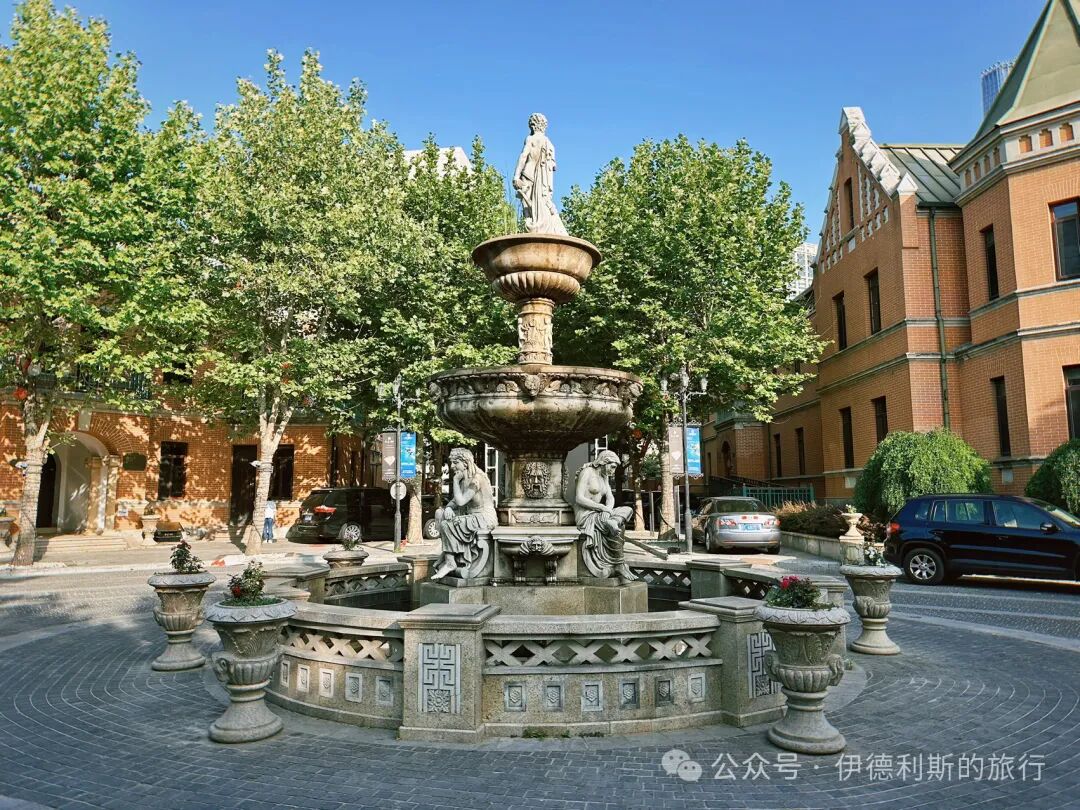
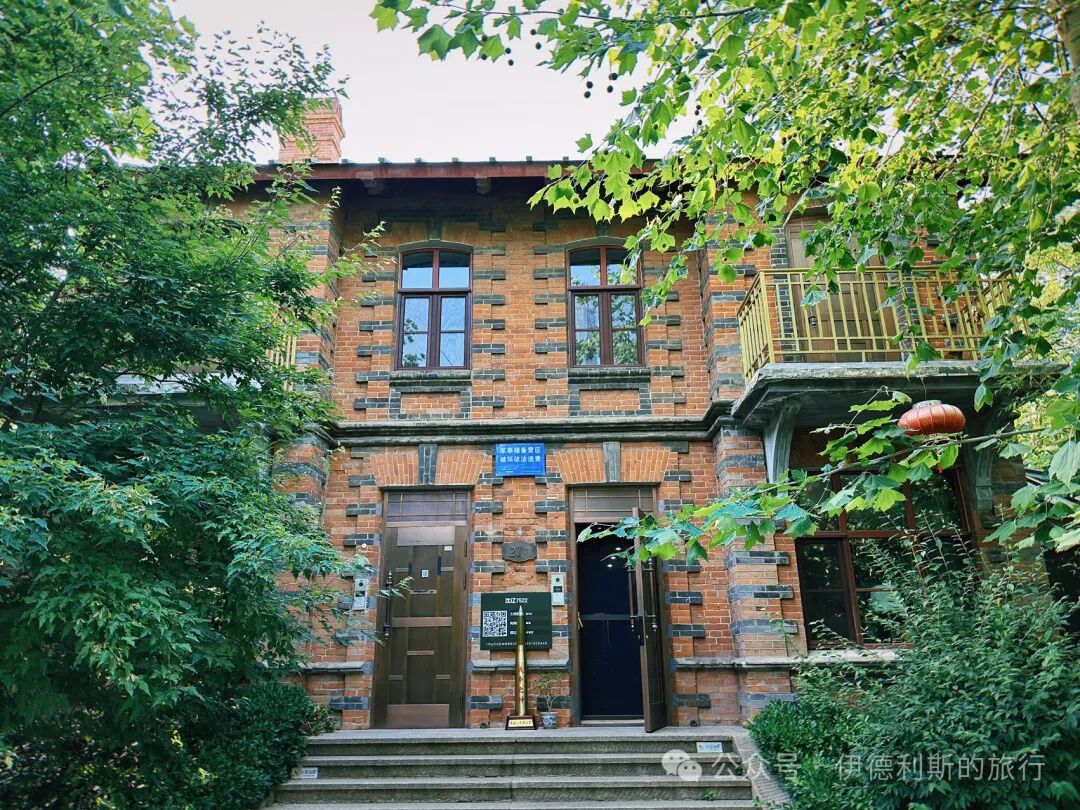
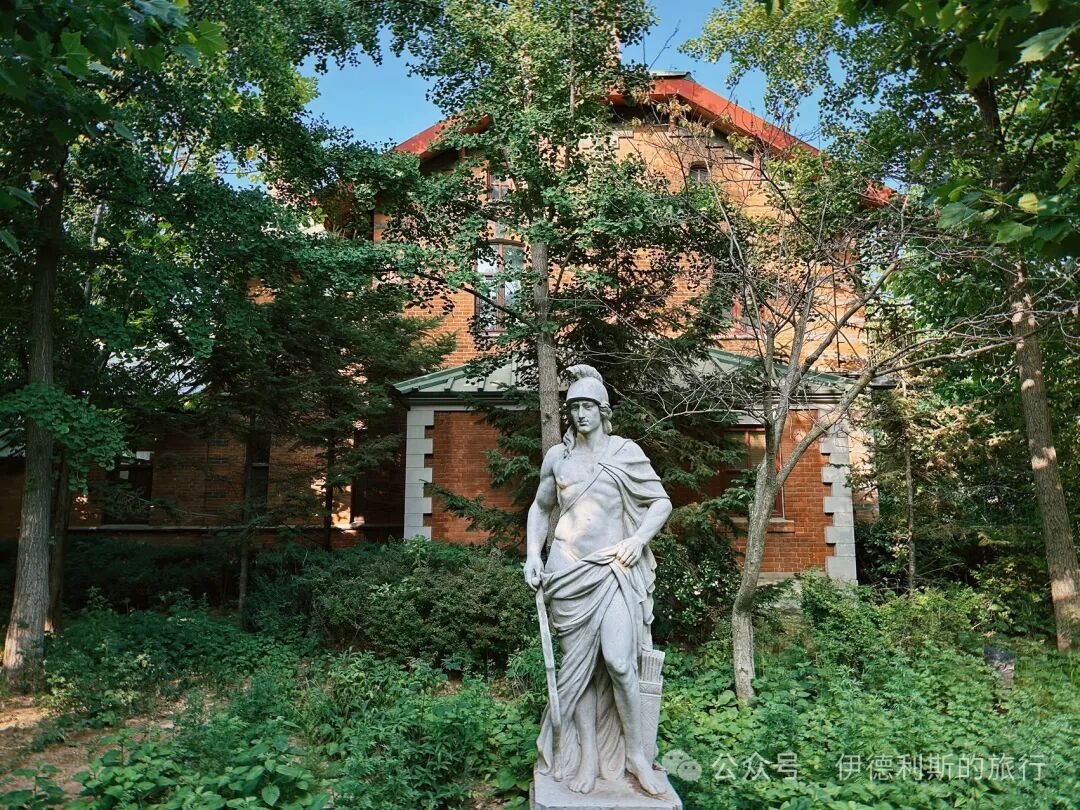
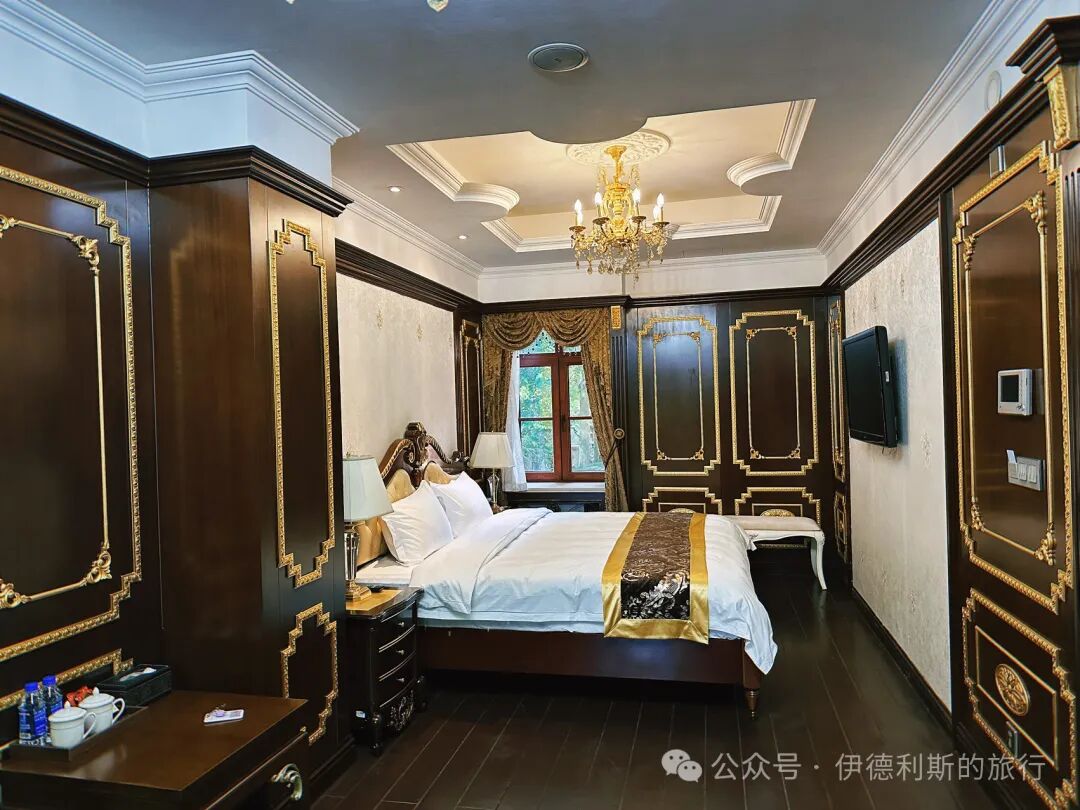
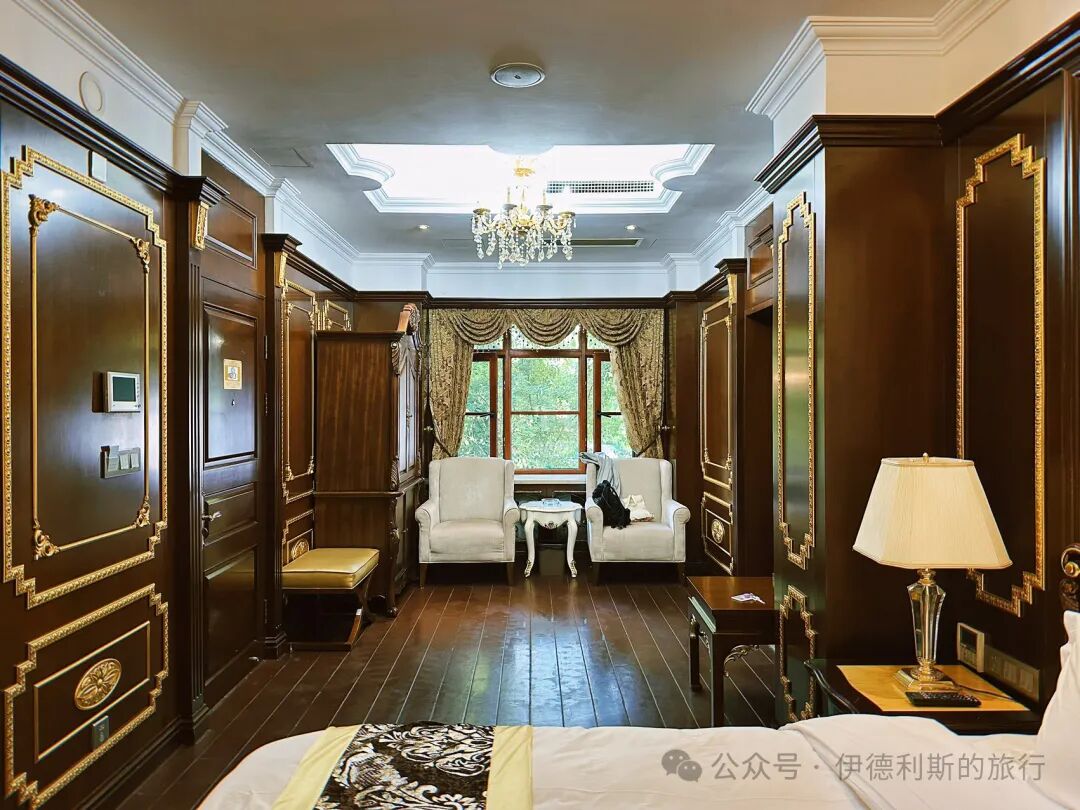
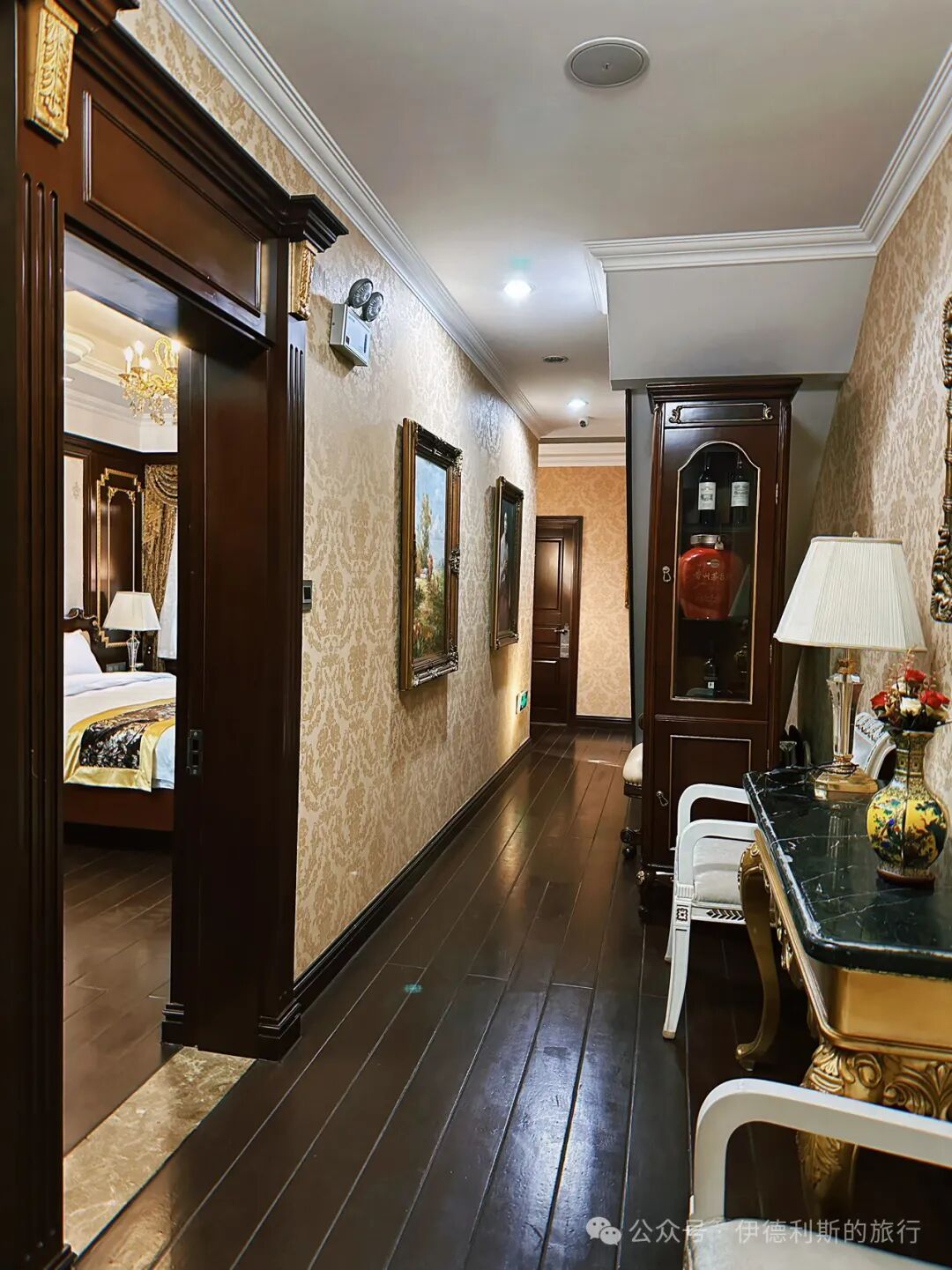
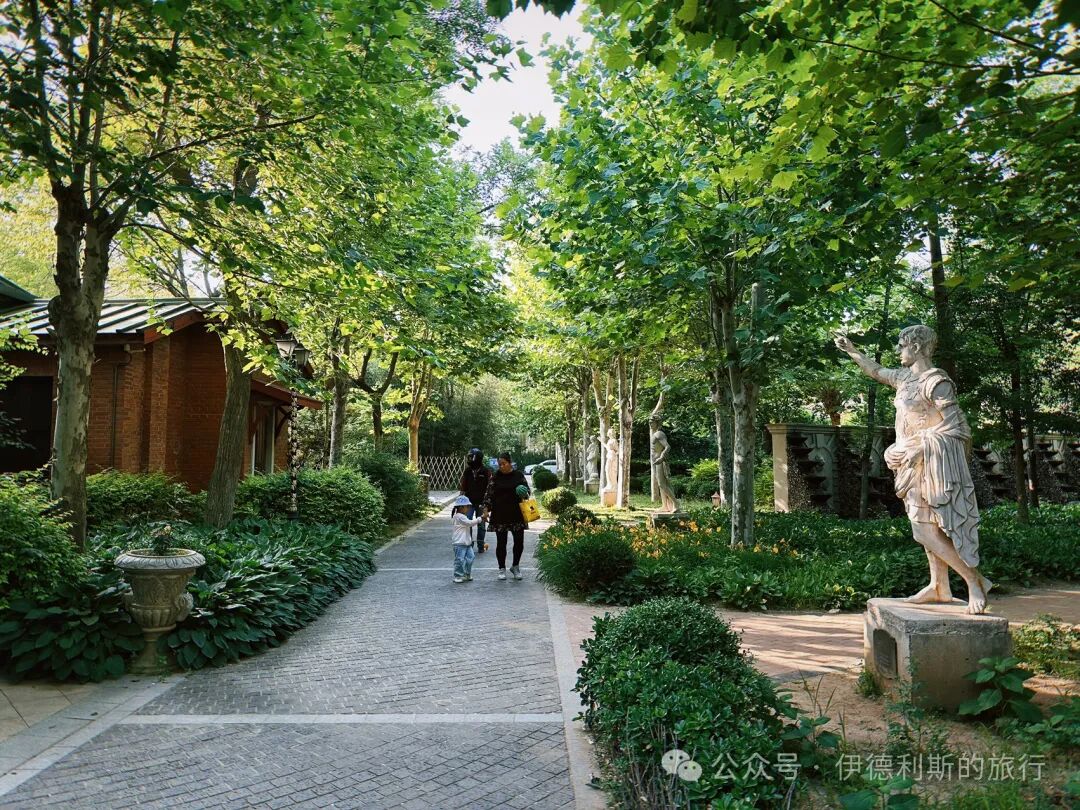
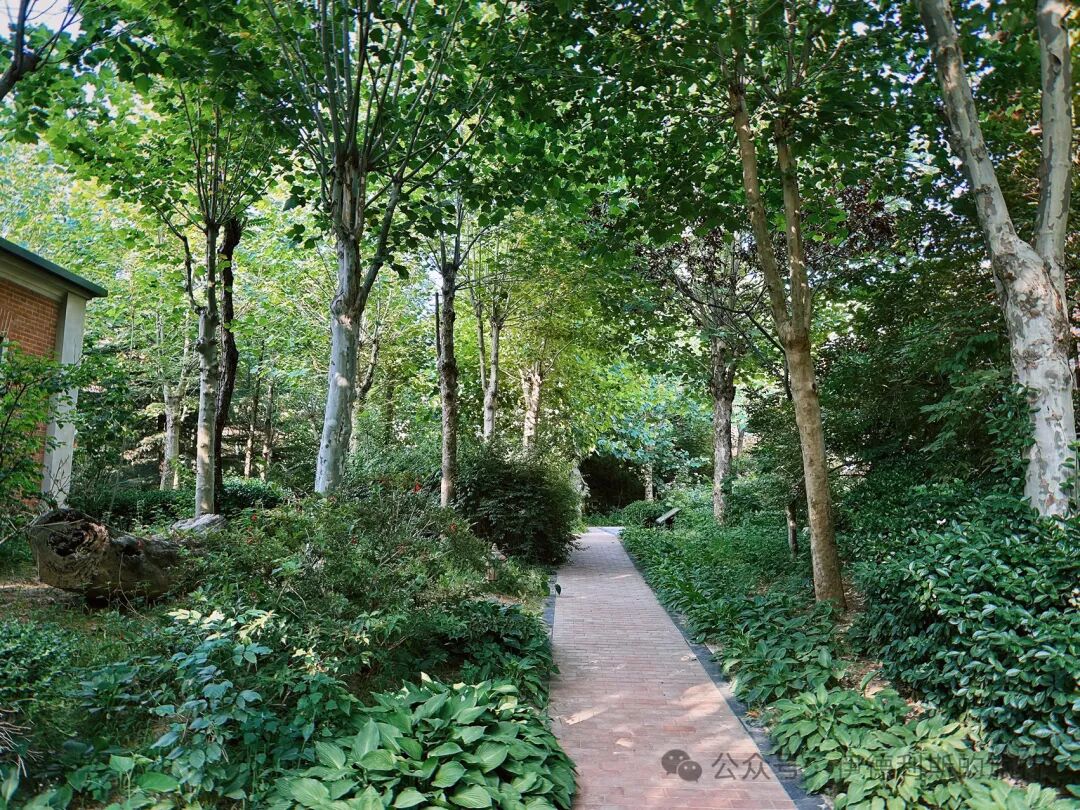
Xianting Boutique Resort (Xianting Jingpin Dujia Minsu) in Jianshui, Yunnan.
Jianshui is a famous historical and cultural city in Yunnan, known as the Zou and Lu of Southern Yunnan for its thriving Confucian studies. The Jianshui Xianting Boutique Homestay where we stayed is a typical three-courtyard house with one large central courtyard and four smaller ones. The main hall, courtyards, and side rooms are all connected, creating a very peaceful atmosphere. It is rare to find such elegant furnishings in the courtyard; walking through the door feels like stepping back into ancient times. Our room had traditional door bolts and wooden beds, which really satisfied our modern imagination of ancient times.
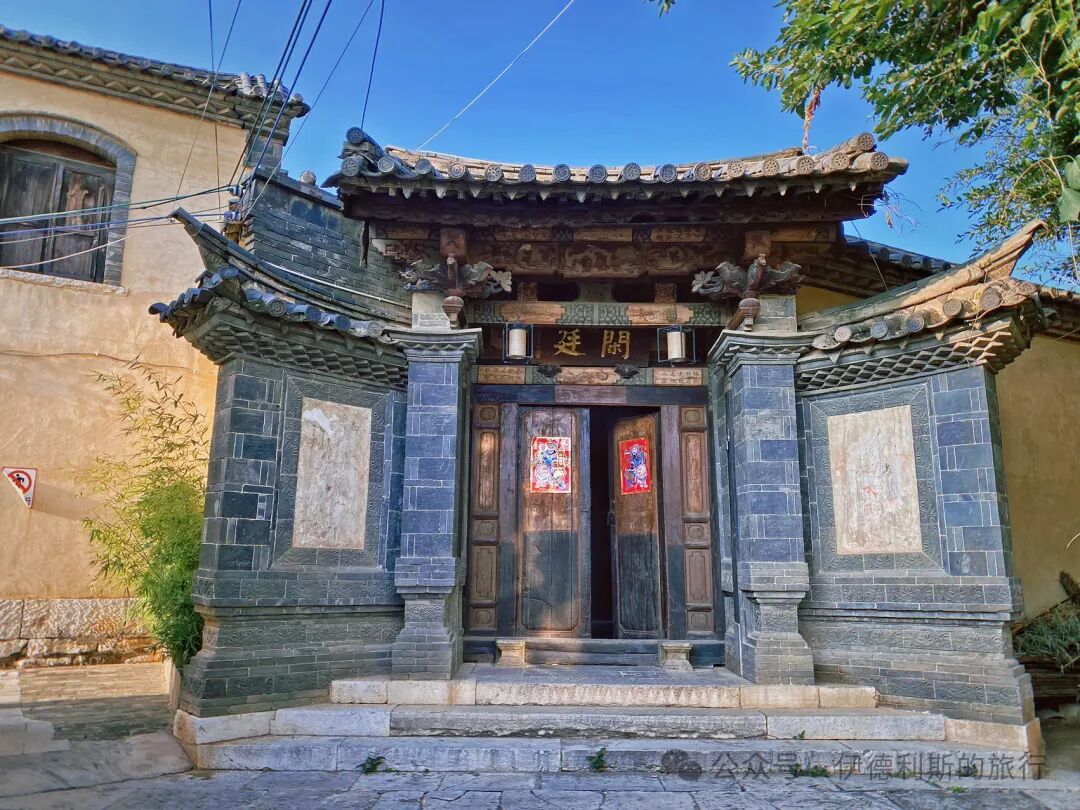
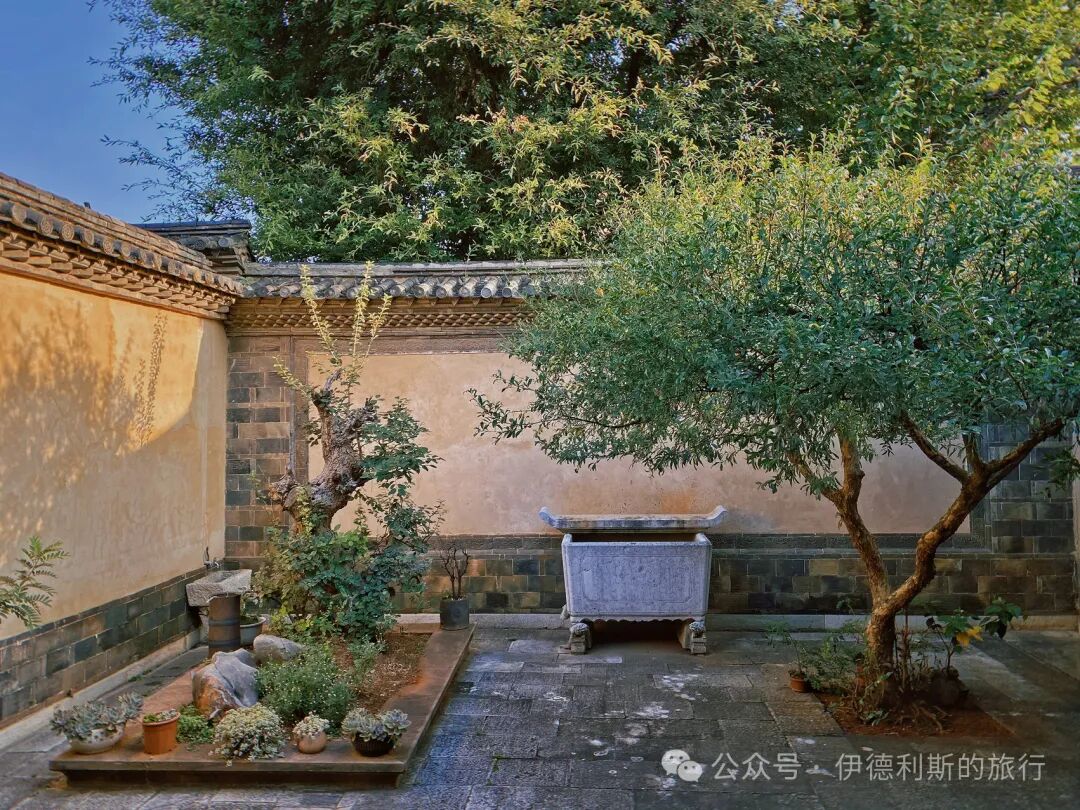
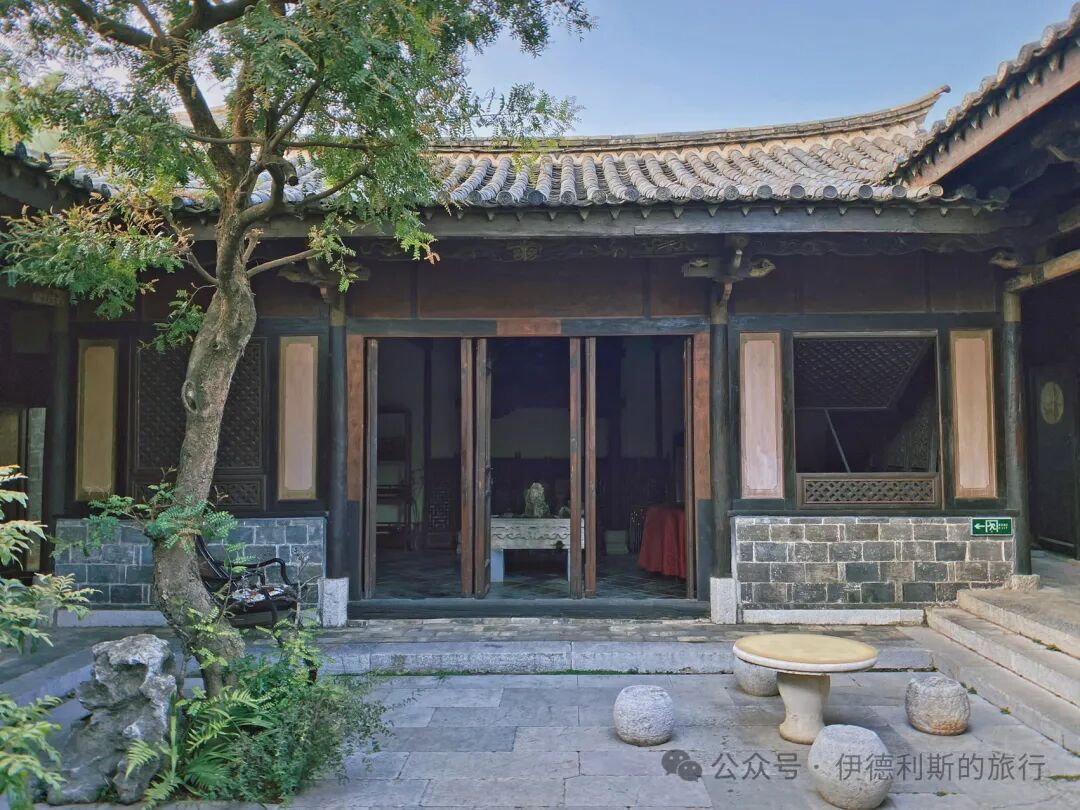
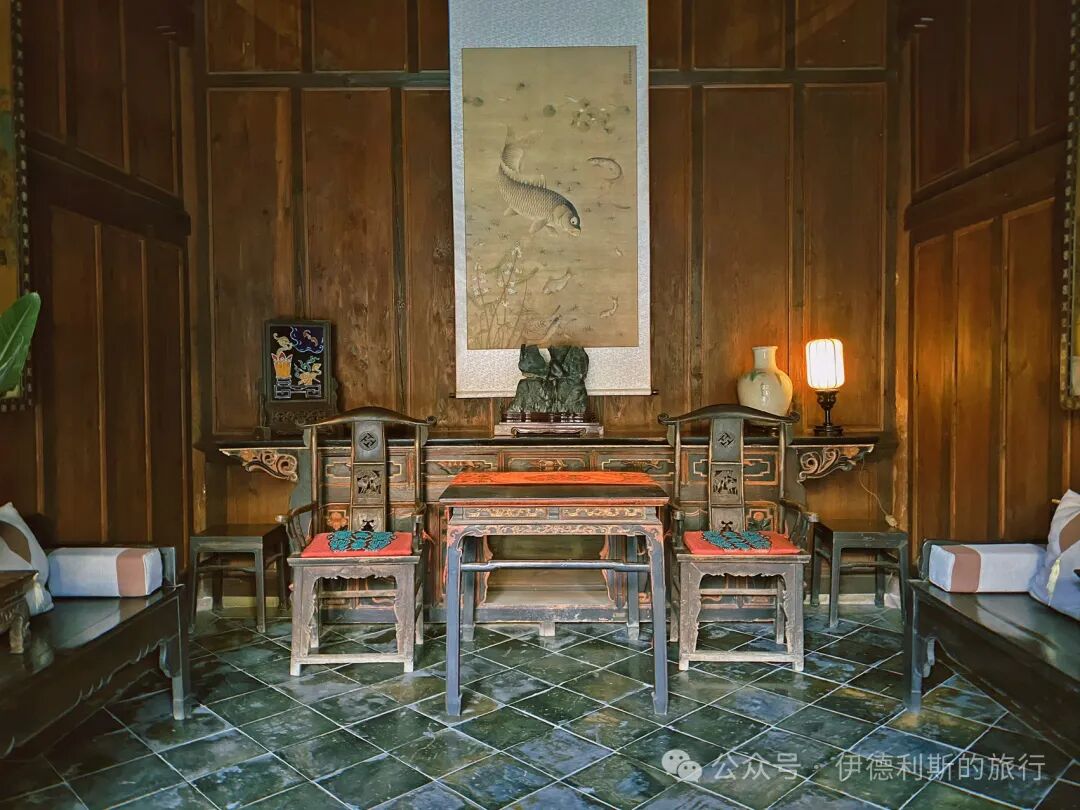
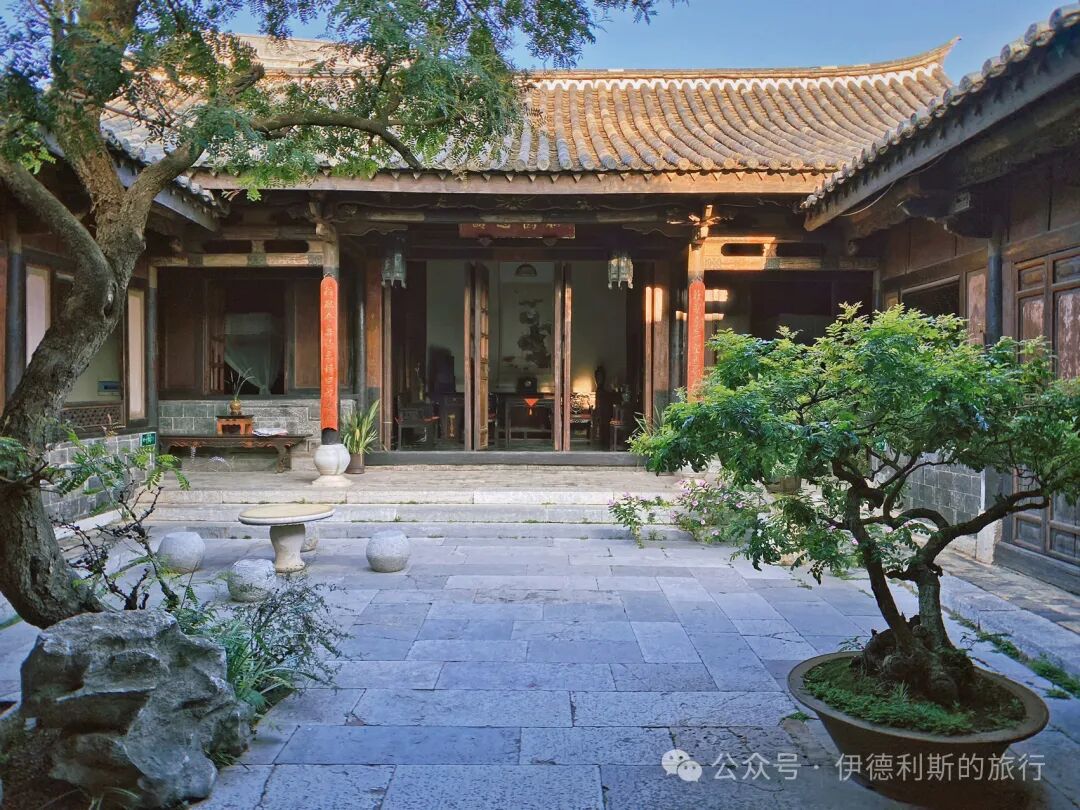
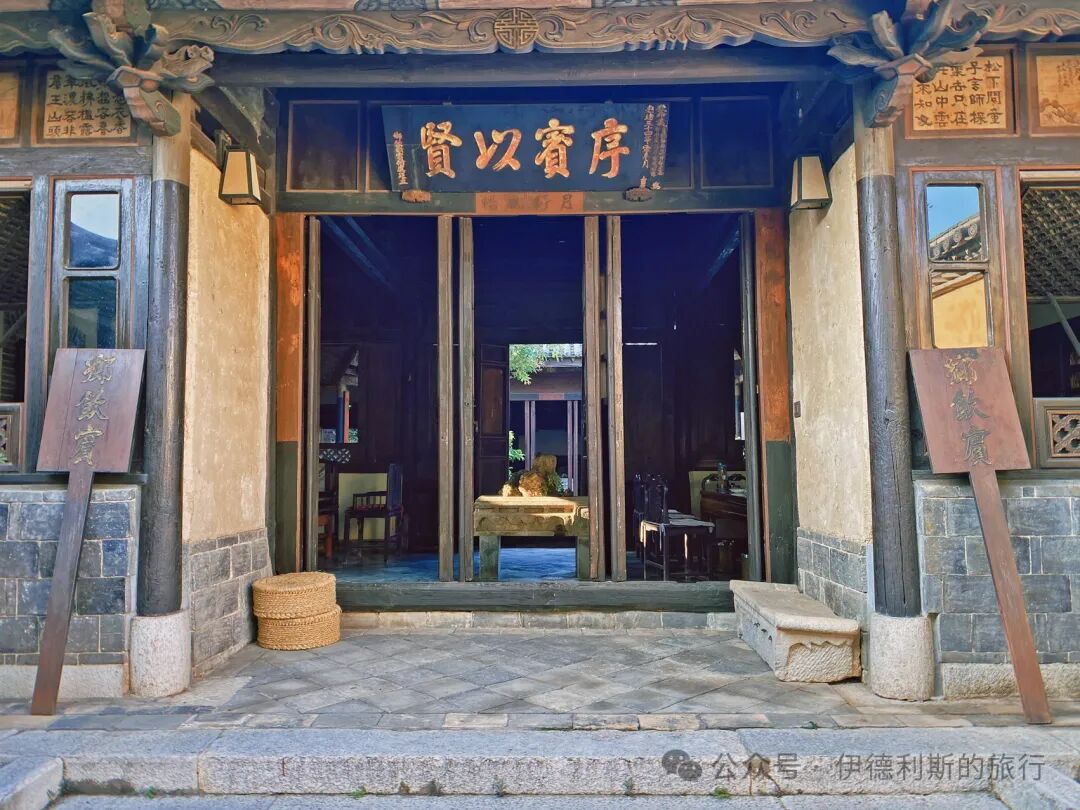
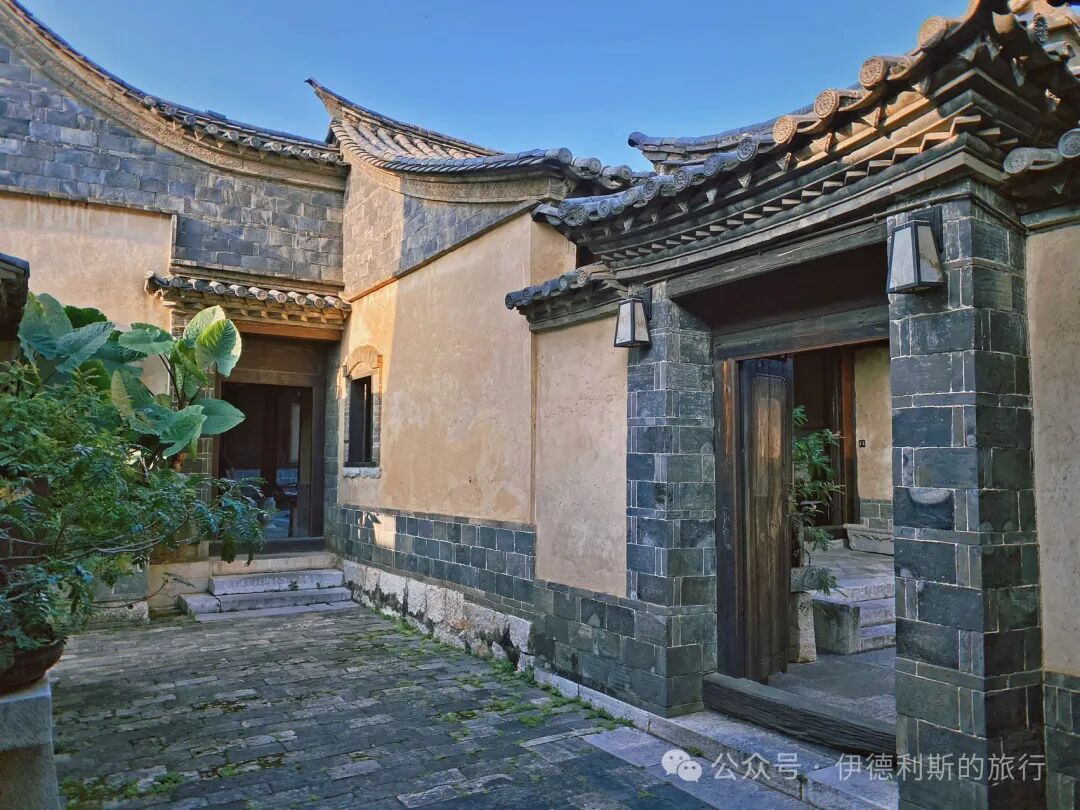
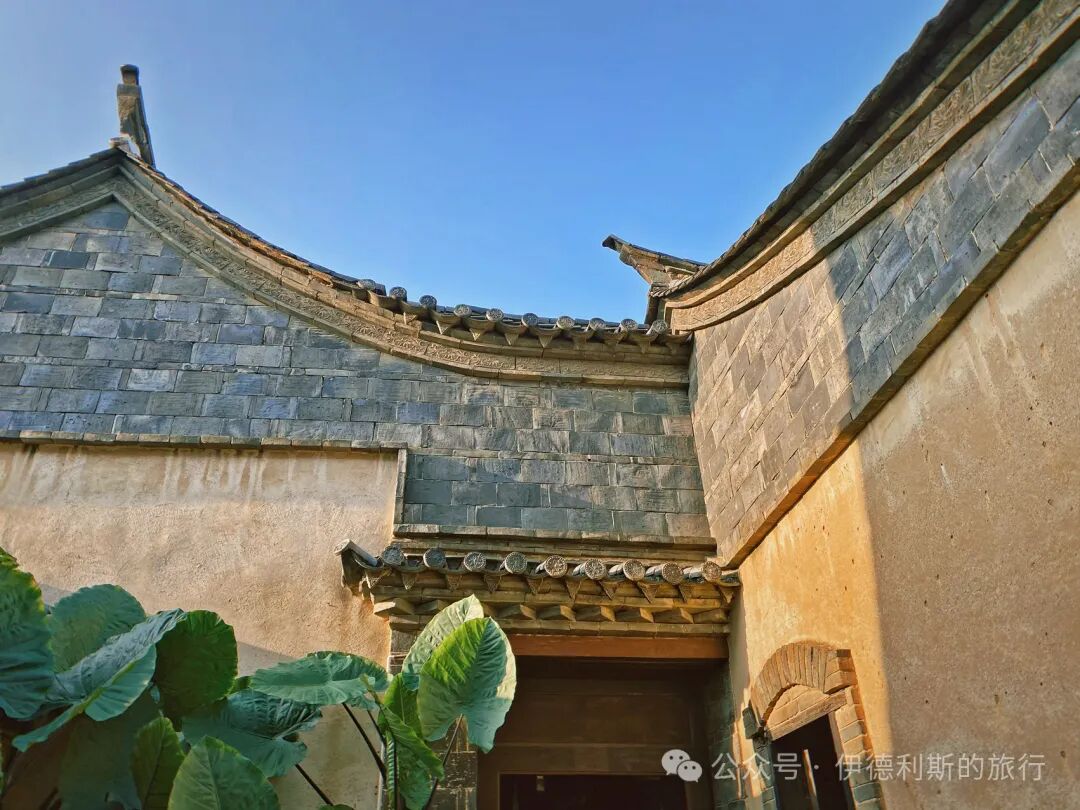
Xiulu Yuan branch of Xiushan Inn (Xiushan Kezhan Xiulu Yuan Dian) in Tonghai, Yunnan.
Tonghai Ancient City in Yuxi, Yunnan, is also a national historical and cultural city, and it preserves many ancient buildings from the Ming and Qing dynasties. We stayed at the Tonghai Xiushan Inn Xiulu Branch, which was converted from the old county committee compound. The compound itself is one of the first historical buildings in Tonghai County. After the renovation, it looks brand new, and the courtyard is filled with many lush potted plants.
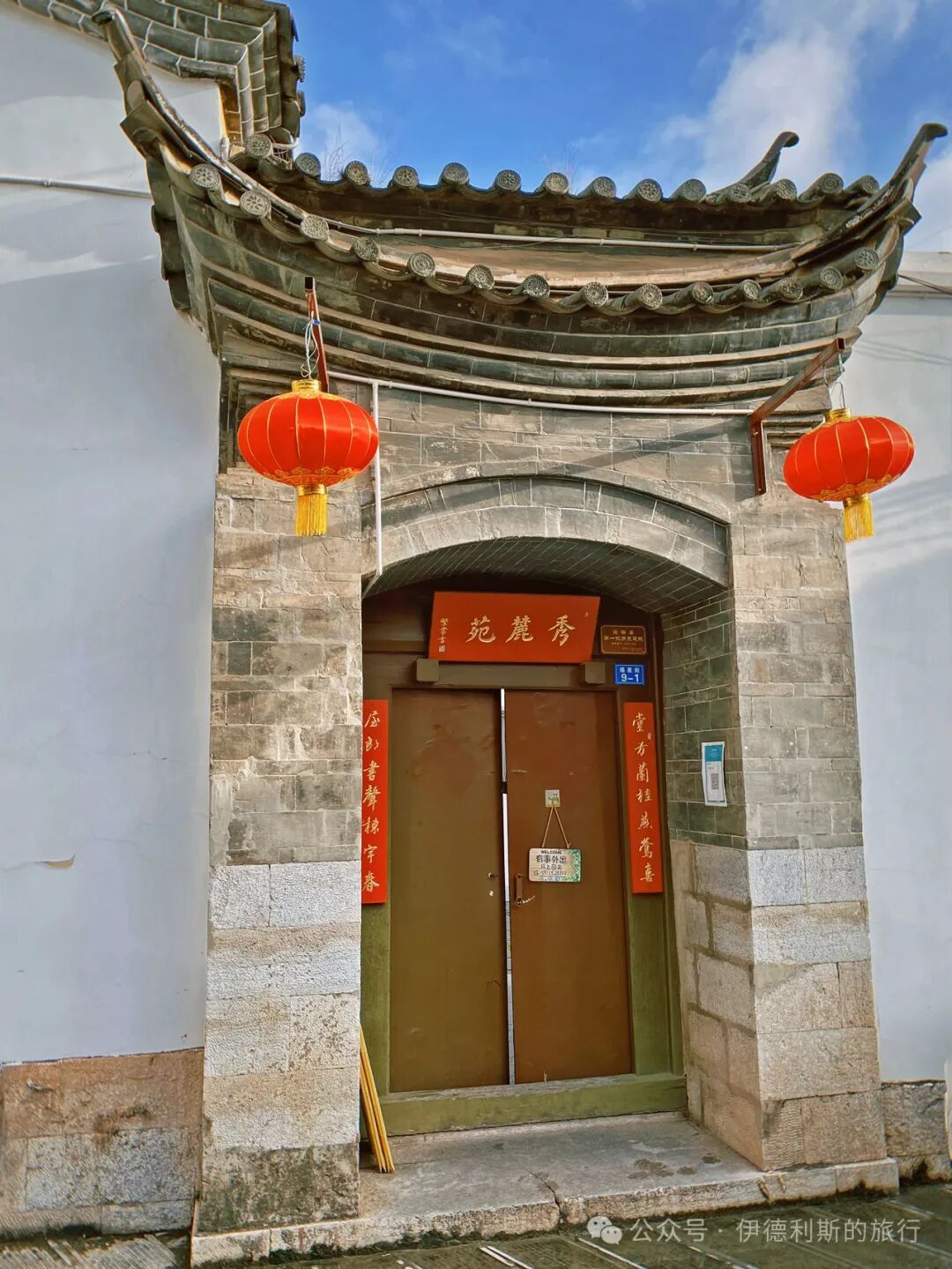
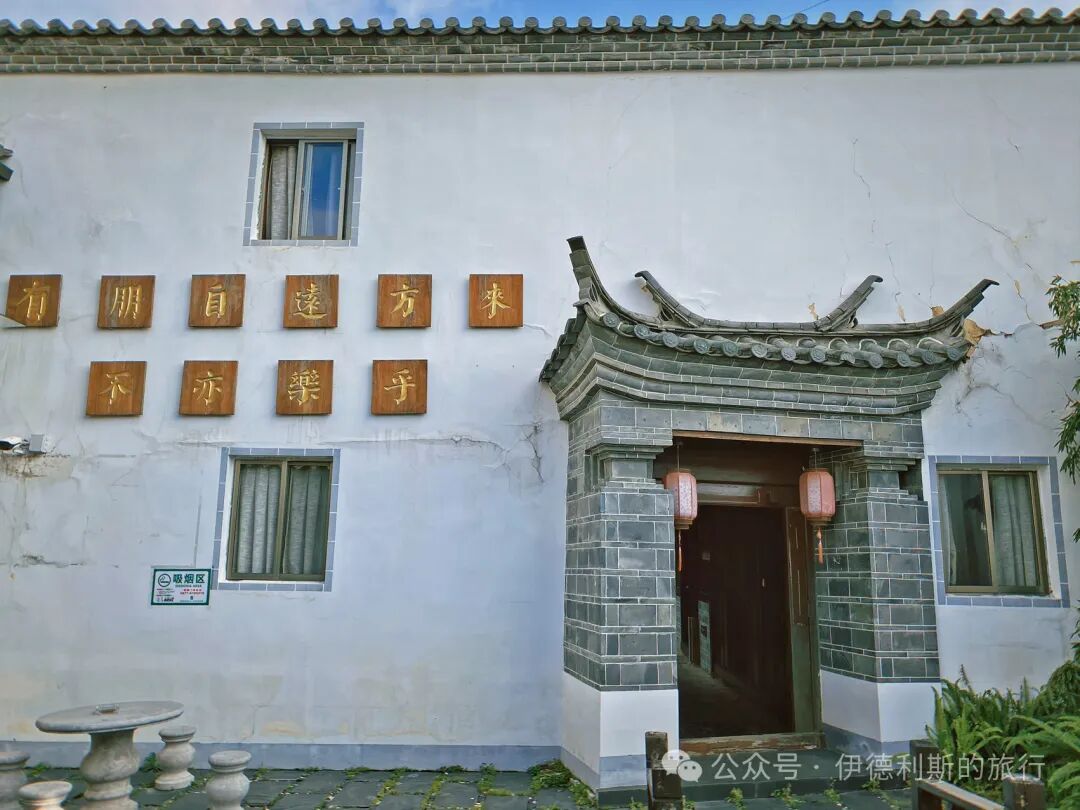
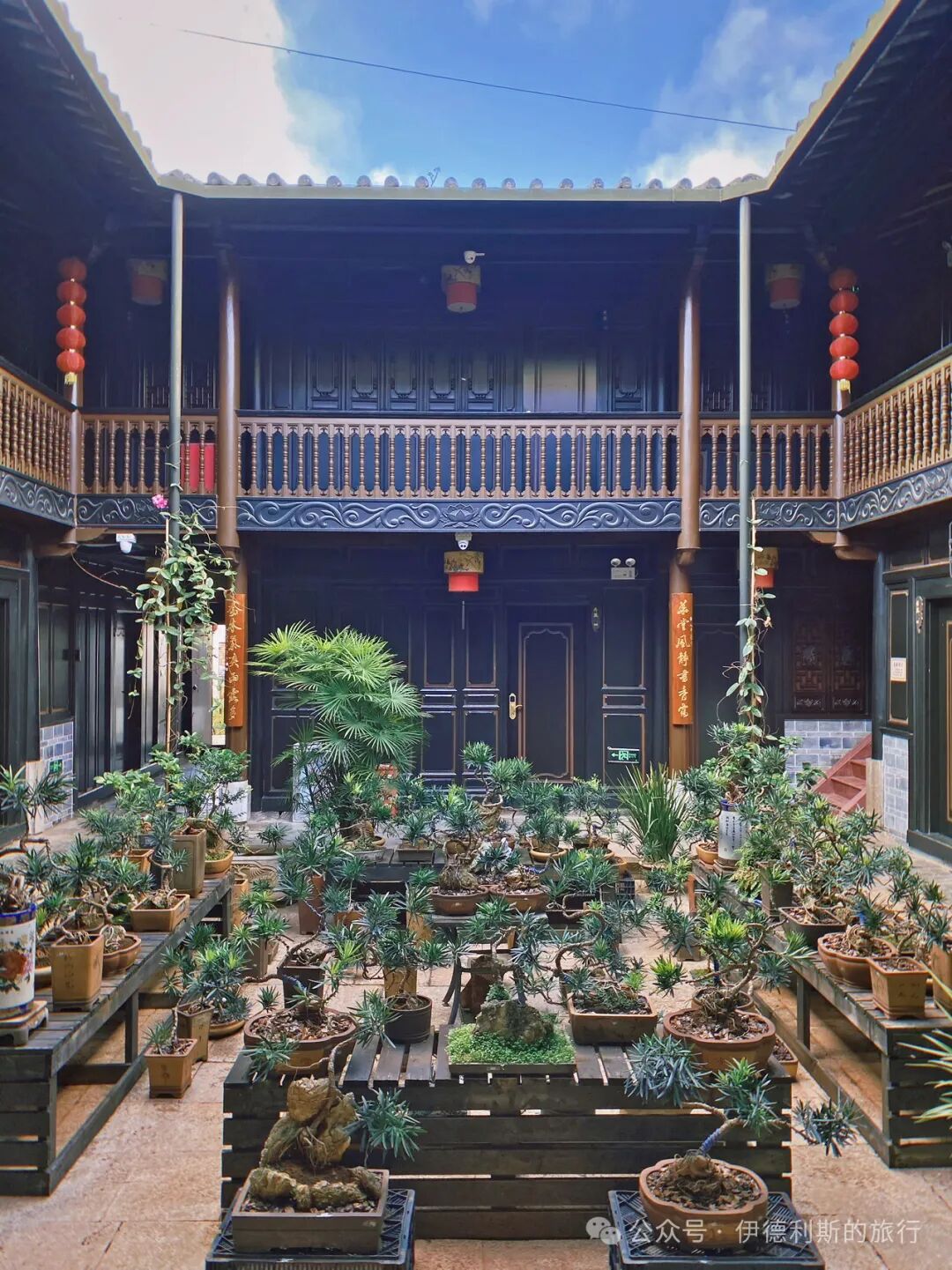
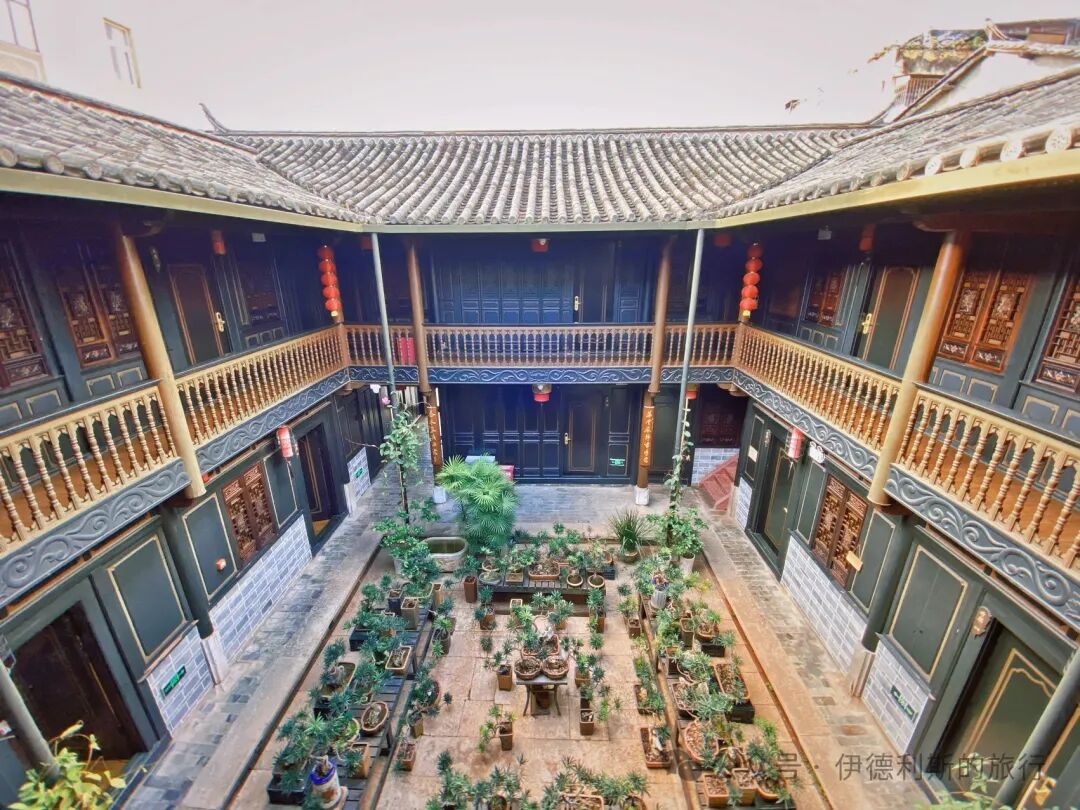
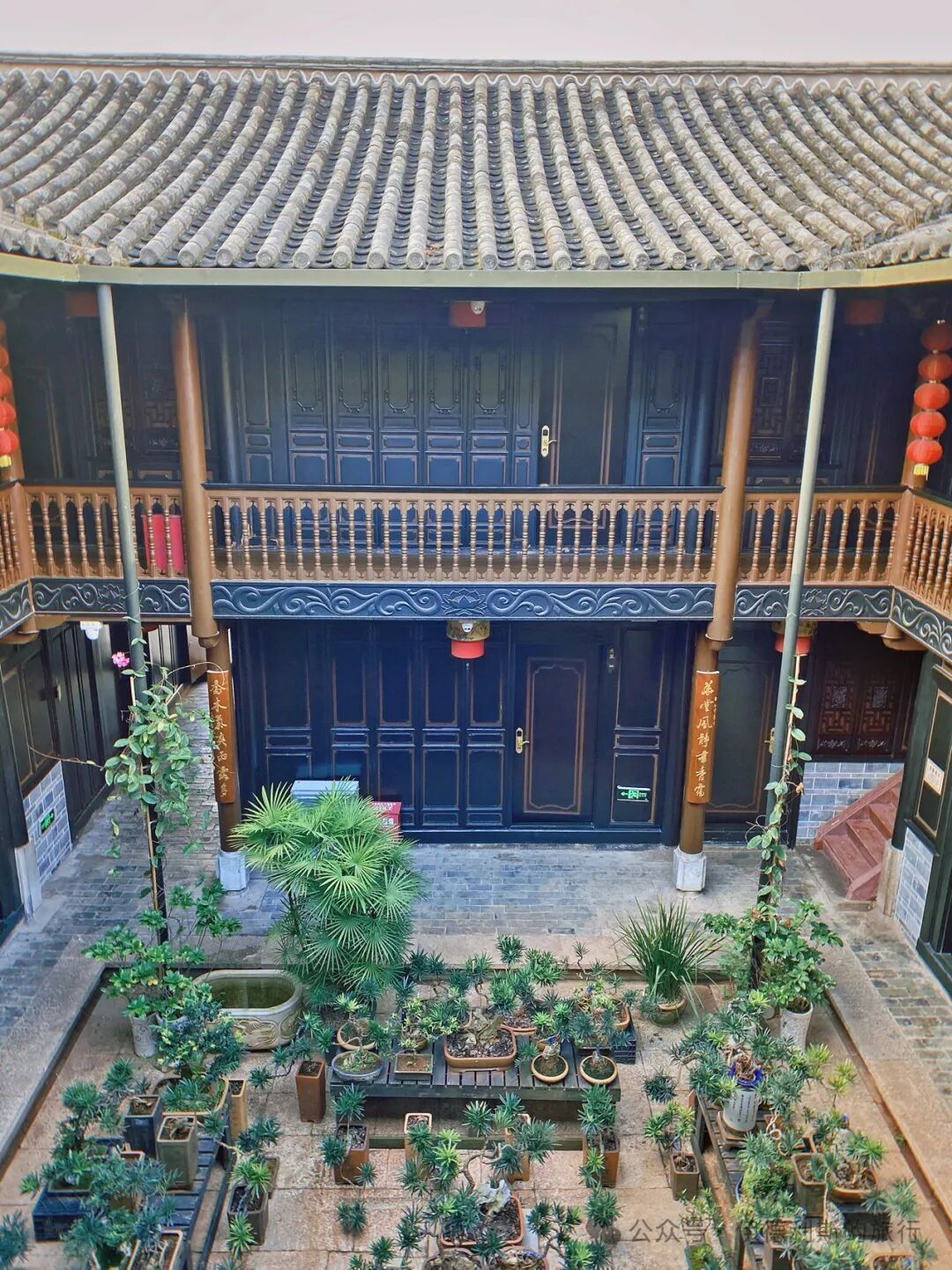
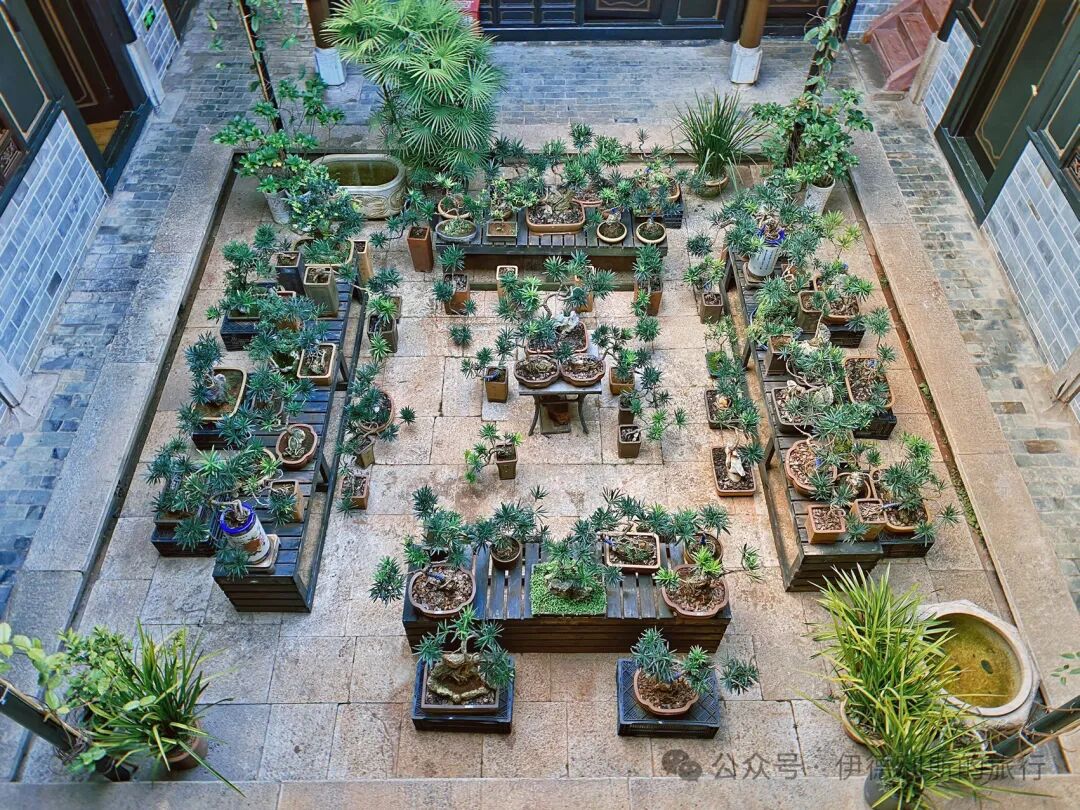
Sarang Paloh Heritage Stay & Event Hall in Ipoh, Malaysia.
Ipoh is a historical and cultural city in Malaysia, known as the City of Tin. A fire broke out in Ipoh in 1892, destroying more than half of the original wooden shophouses. Later, a local Datuk led the reconstruction into arcade streets typical of the Straits region, which is now Ipoh Old Town. In 1907, Chinese community leader Yao Desheng funded the construction of a new street across the river from the Old Town. It is 1 kilometer long and consists of 216 arcade shophouses, which is now Ipoh New Town. Today, Ipoh has a large area of old streets with covered walkways (qilou) made up of the historic New Town and Old Town districts. Many of these buildings are decades or even centuries old and are well worth a visit.
We stayed at the Sarang Paloh Heritage Stay & Event Hall, a heritage hotel in the Old Town located inside the Yik Foong gold shop built in the 1930s. The hotel was converted from two buildings with covered walkways. The facade on the left is in the Art Deco style, while the right side is Neoclassical. Inside, it features traditional Malaysian Chinese decor.
Our room was on the second floor of the Yik Foong gold shop building. It had very high ceilings and looked out over the main road of Ipoh Old Town. Brewing two cups of the complimentary Ipoh white coffee felt like stepping back into the Nanyang of a hundred years ago.
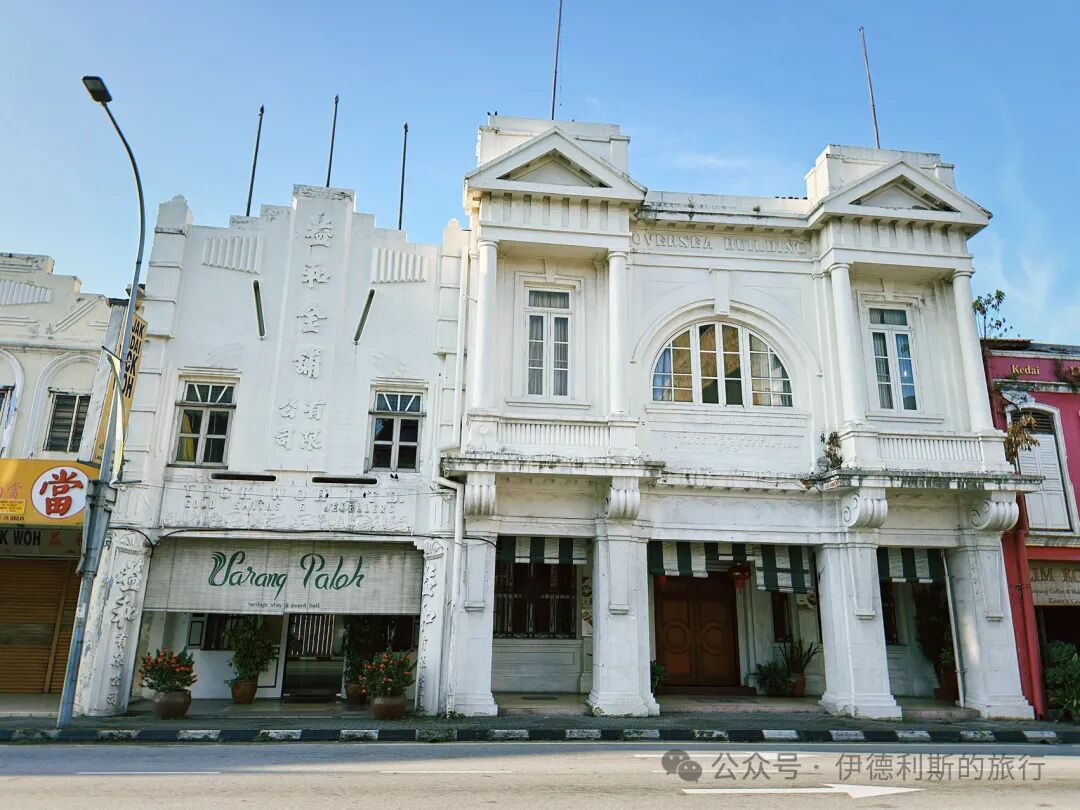
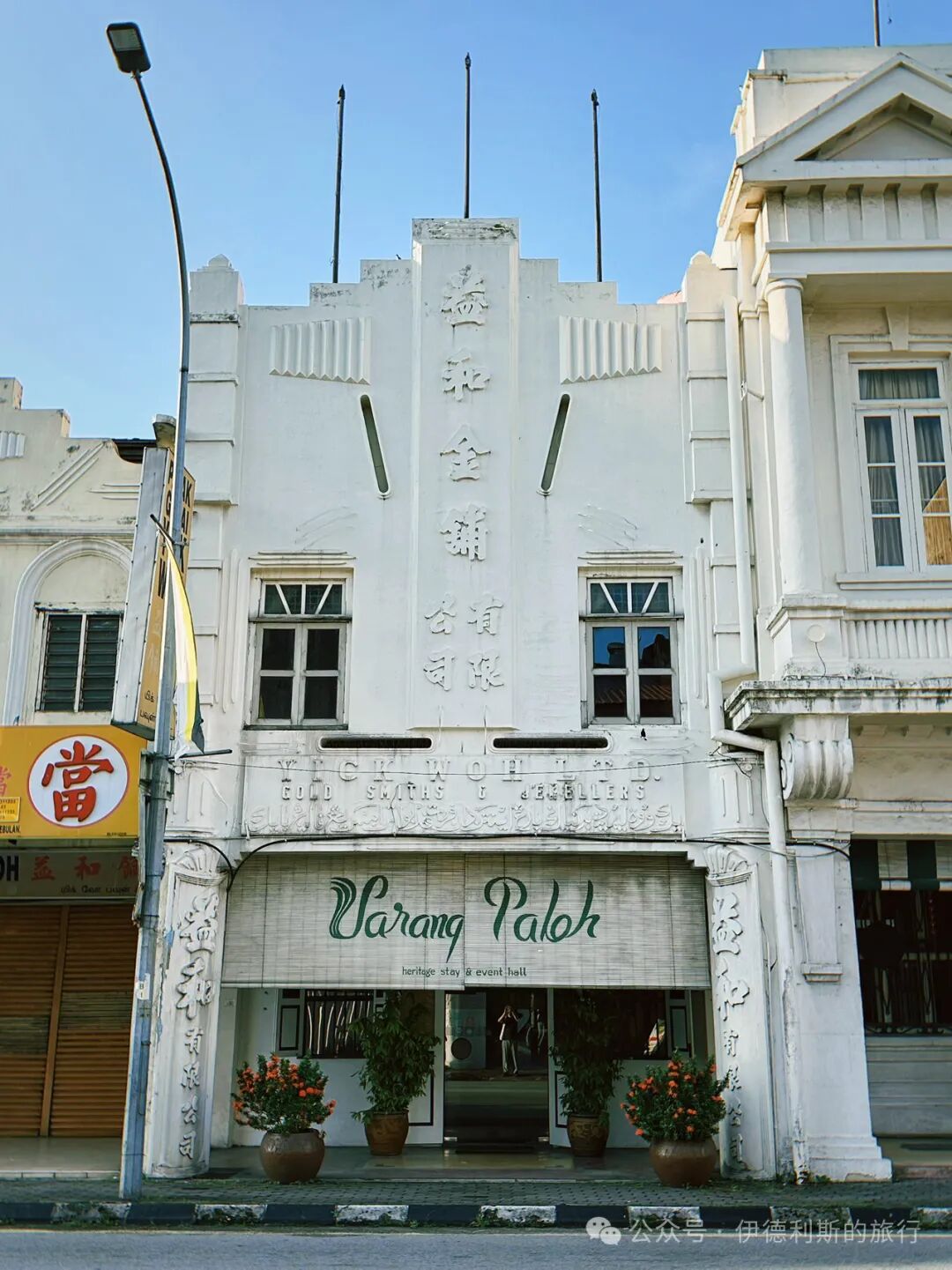
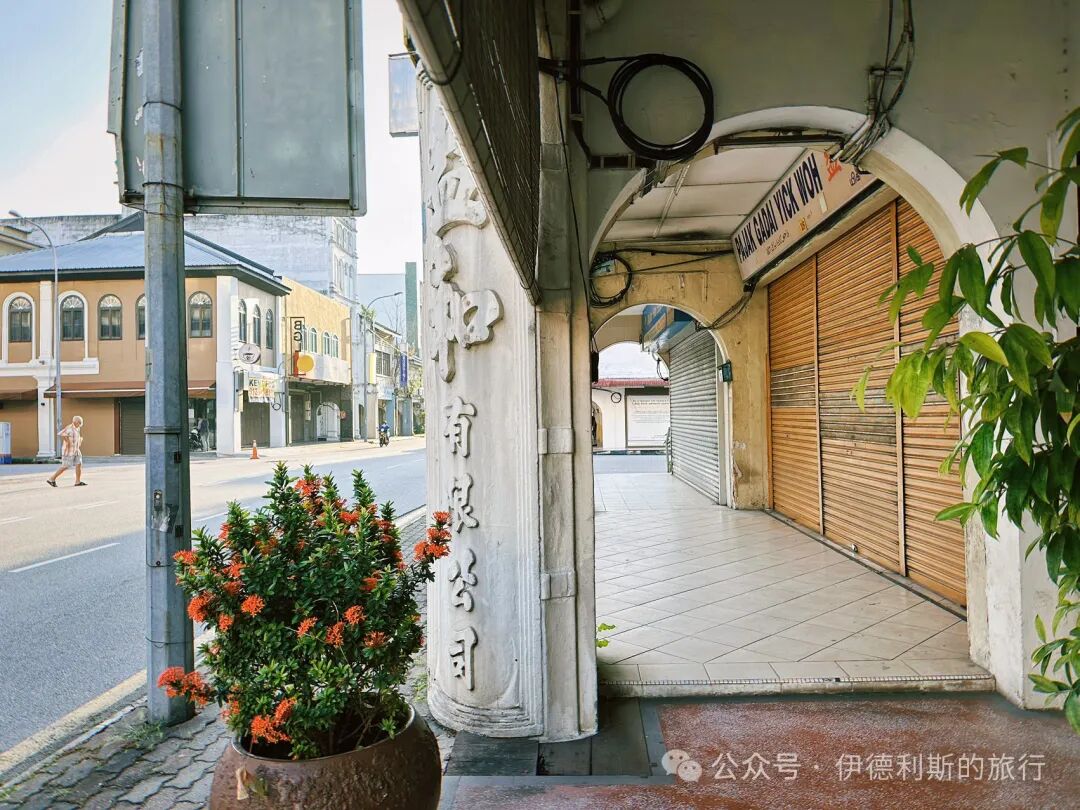
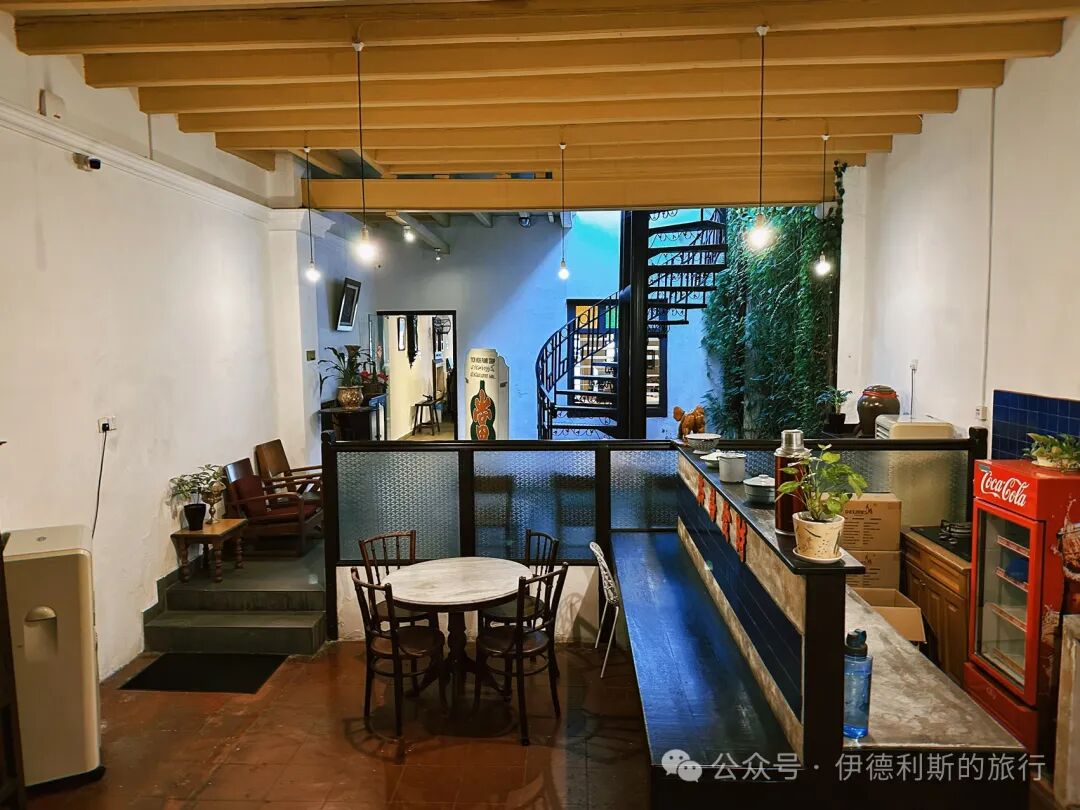
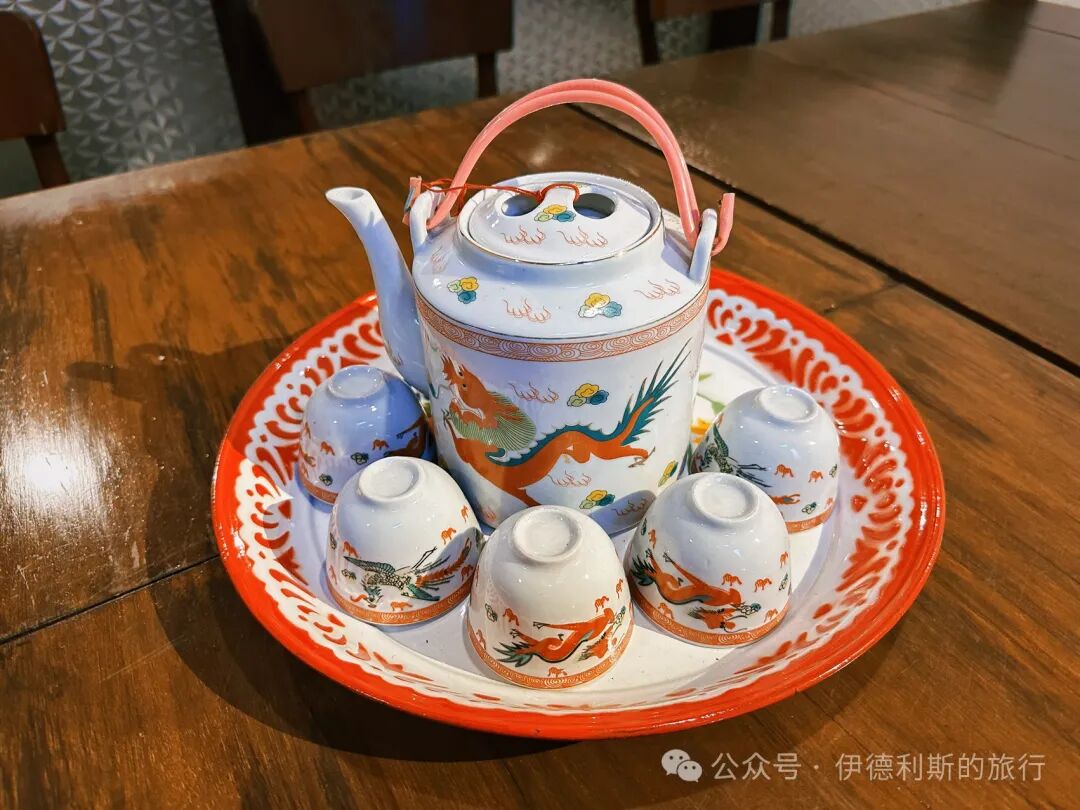
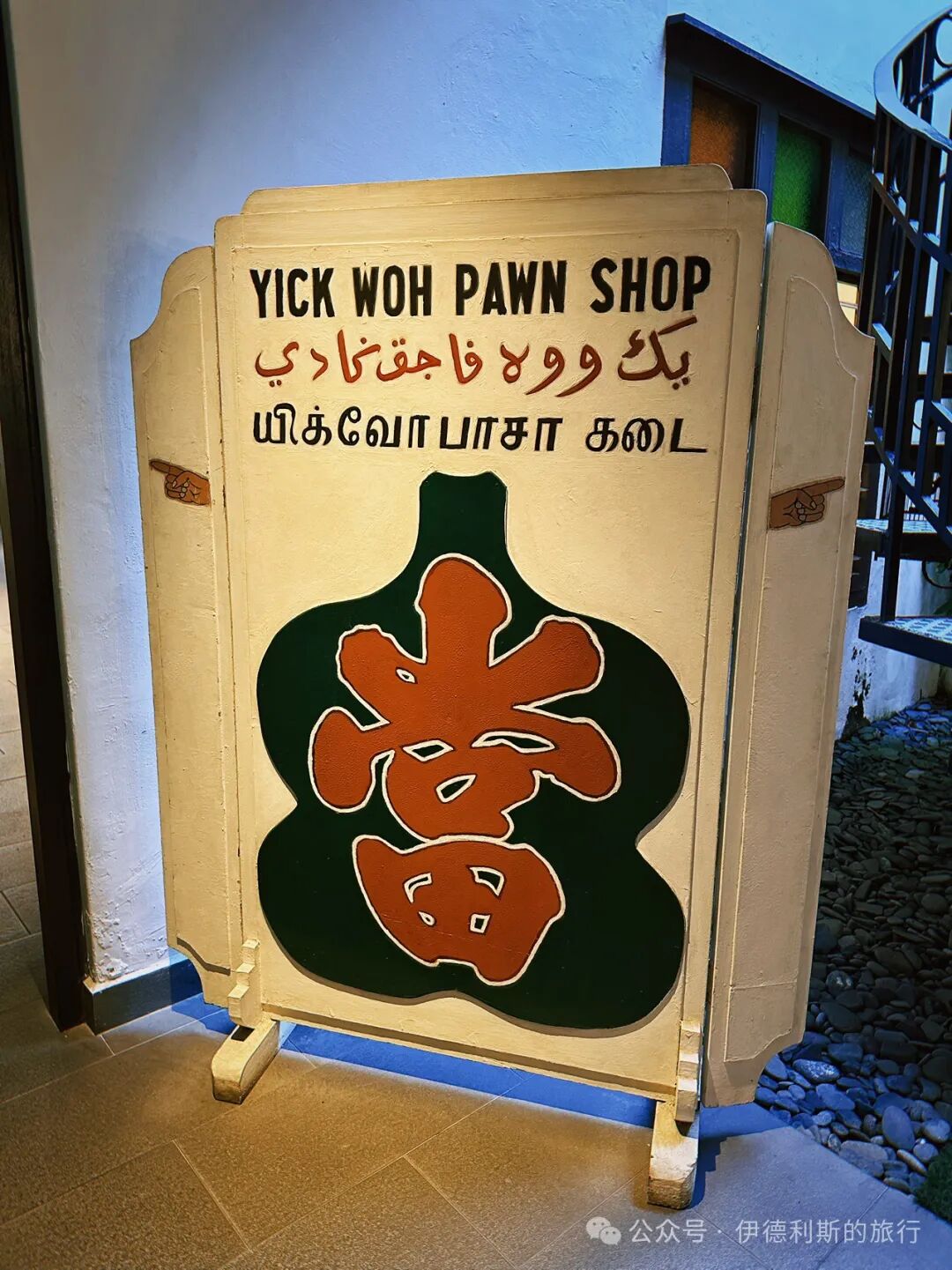
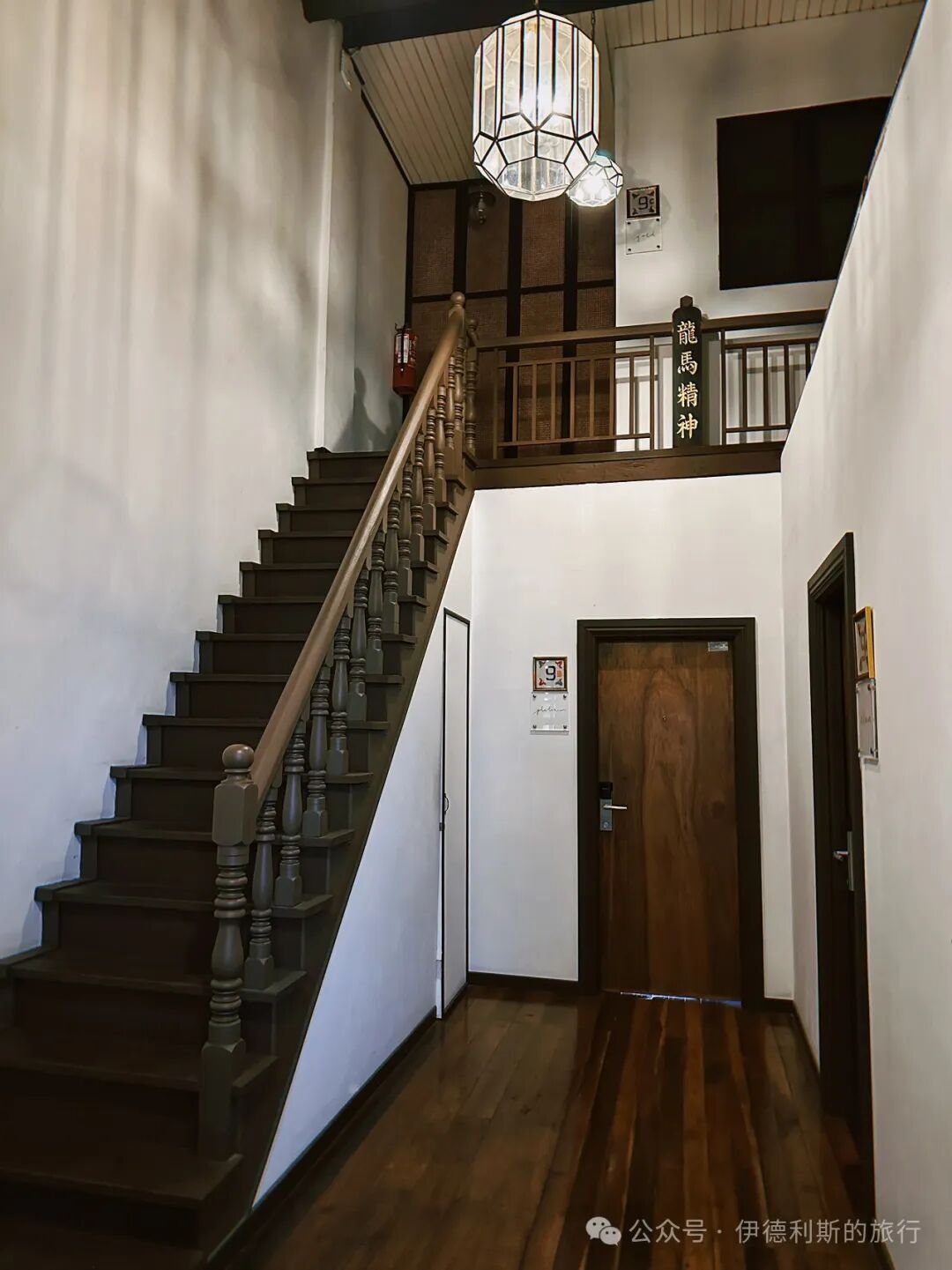
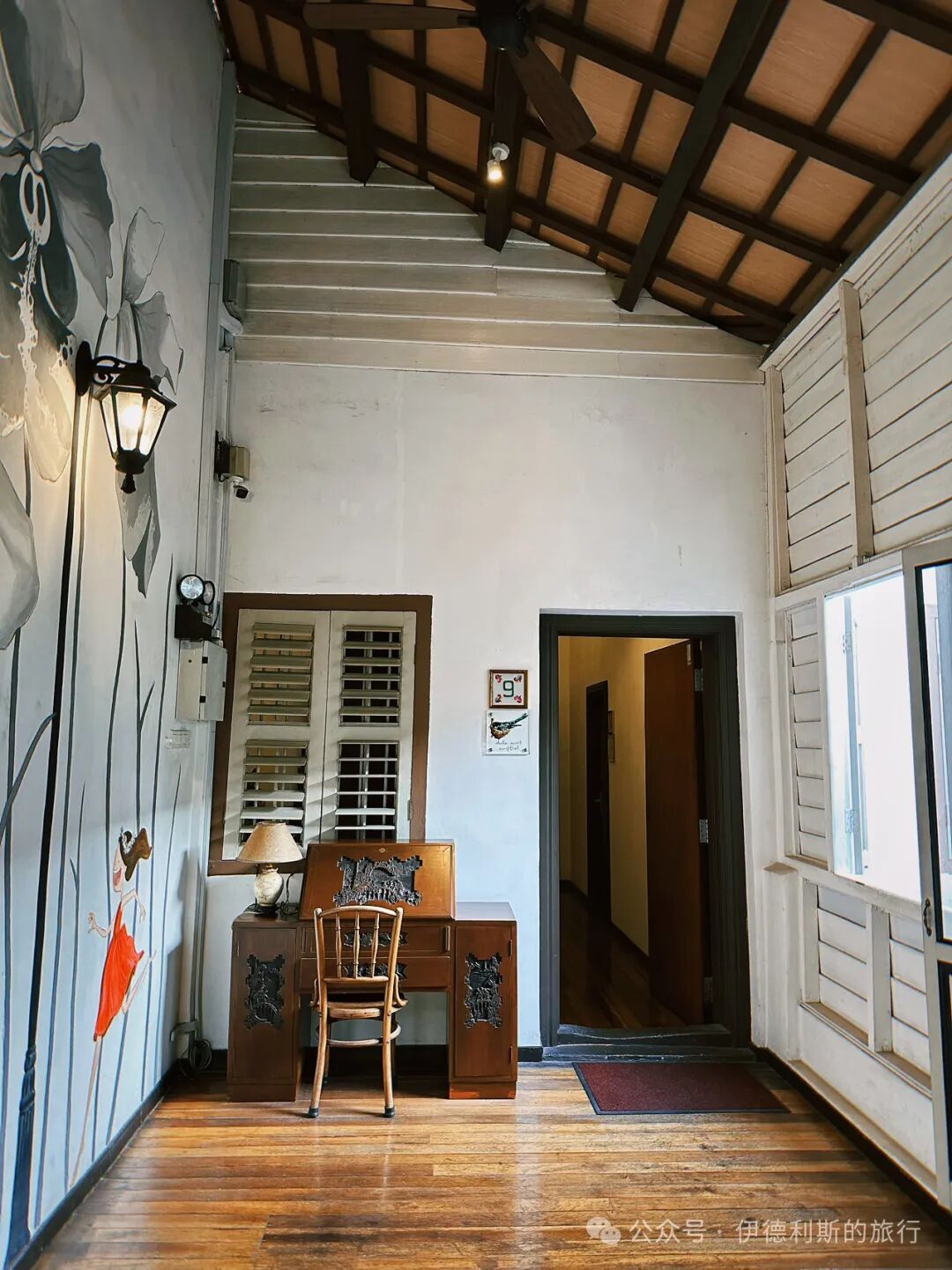
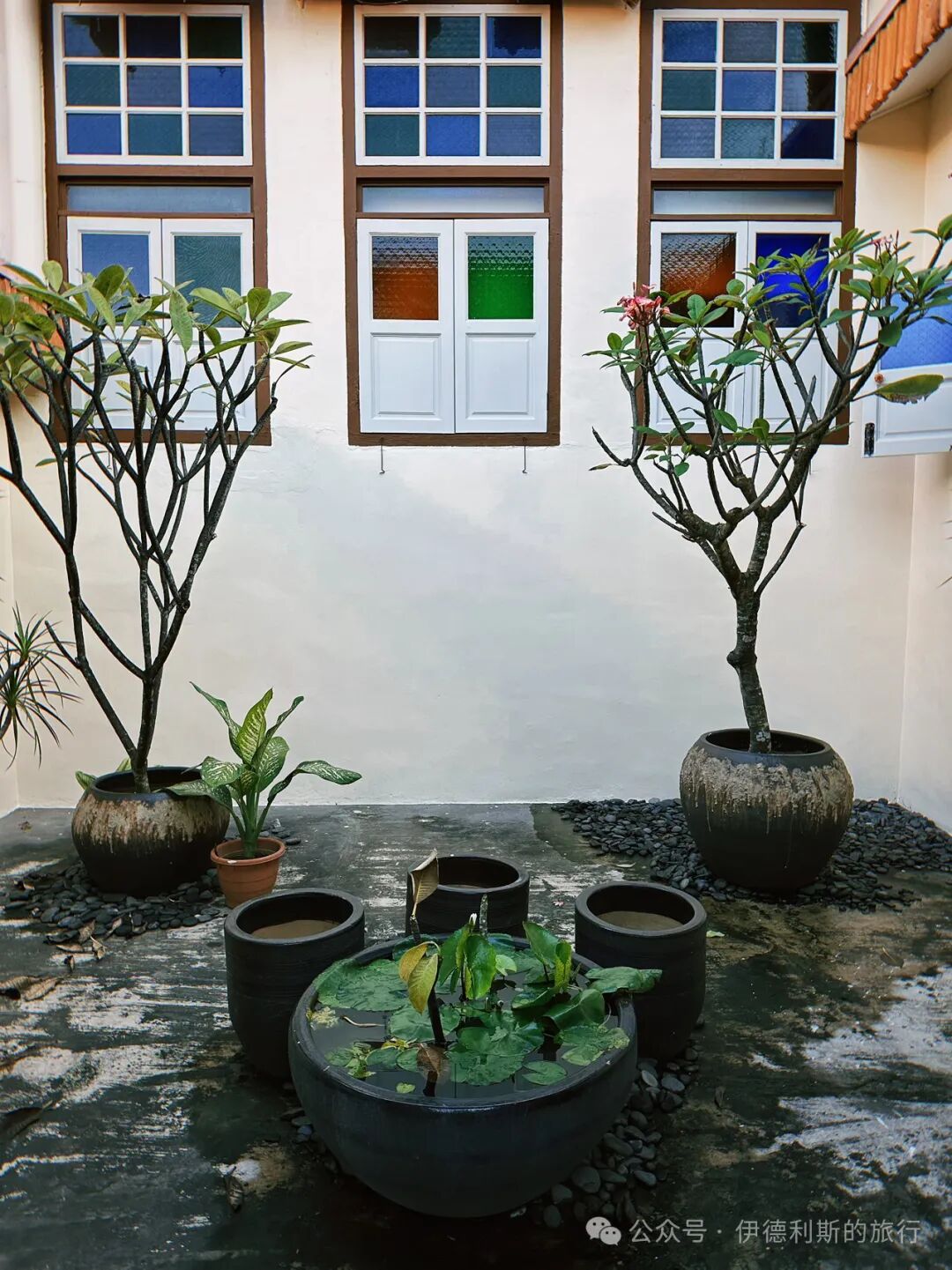
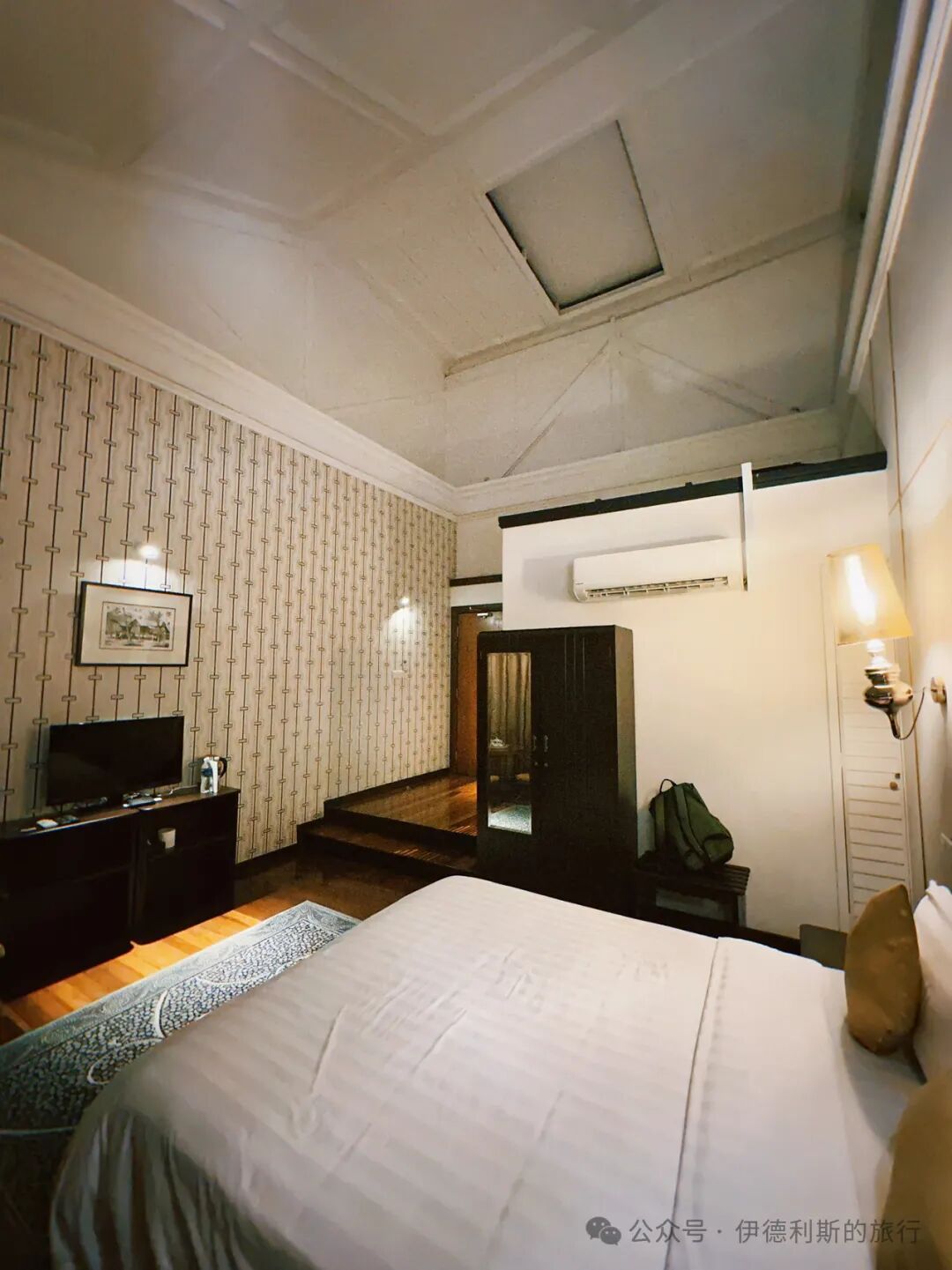
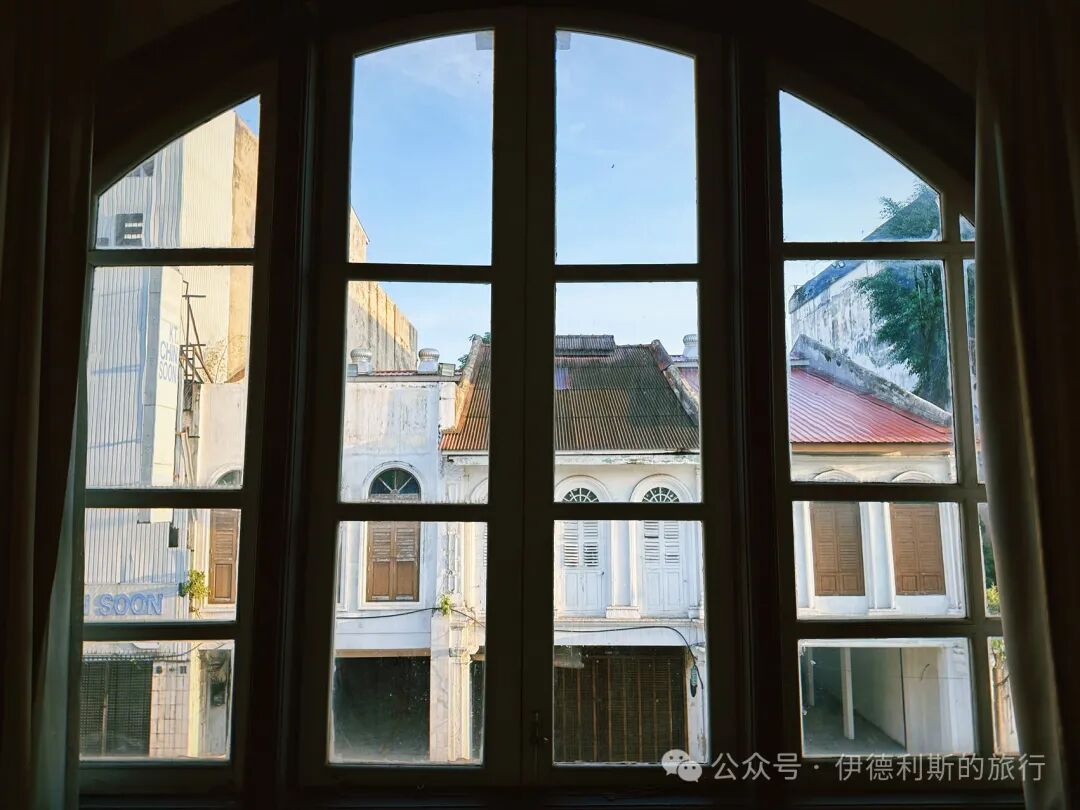
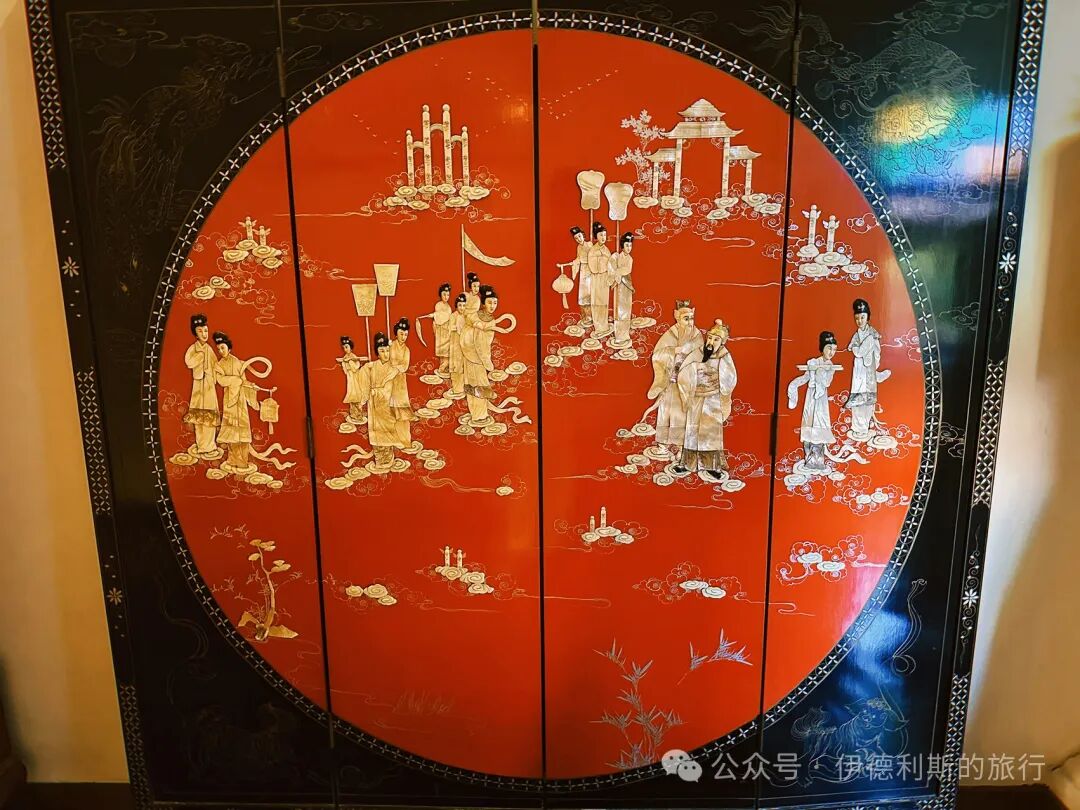
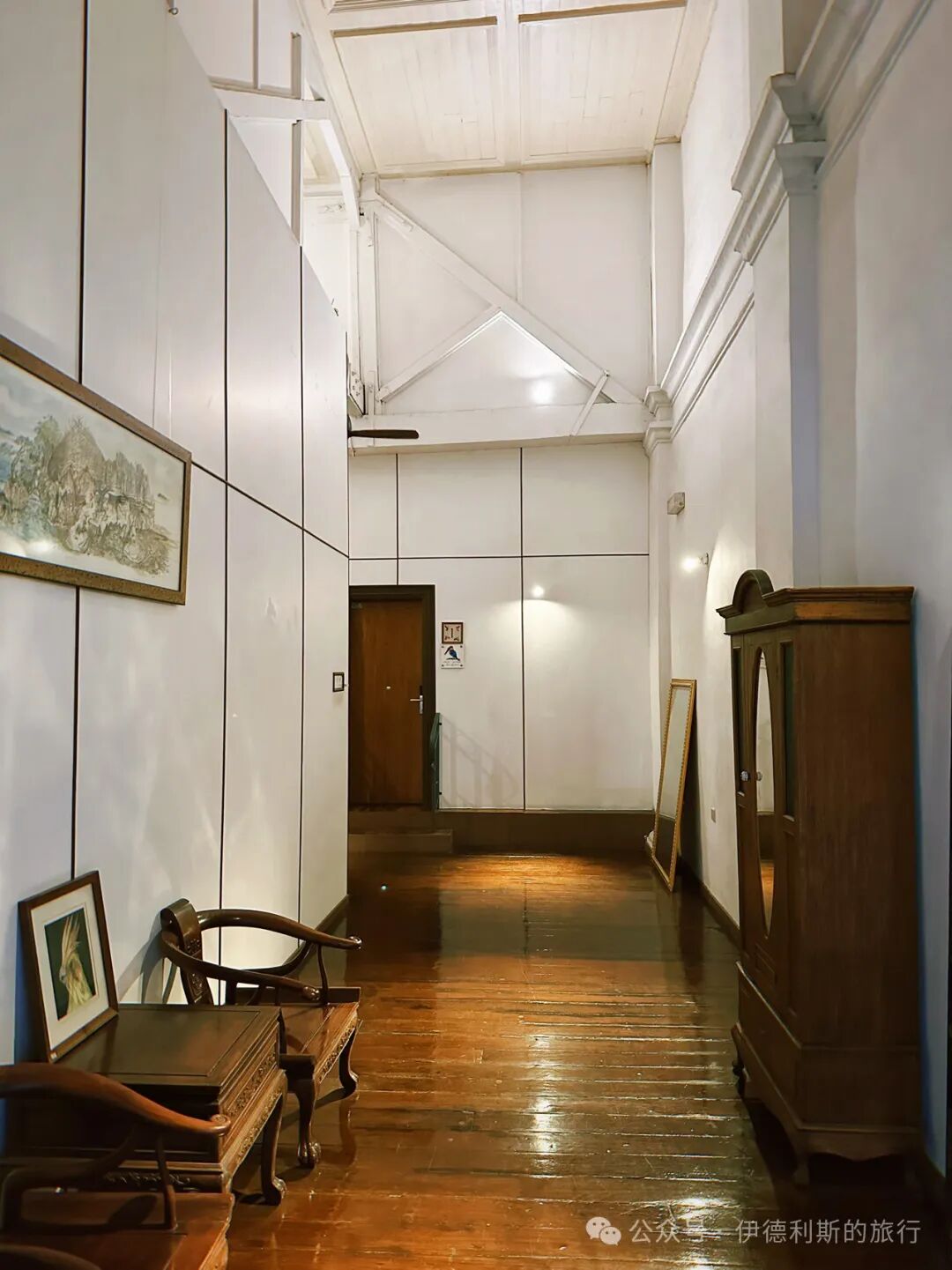
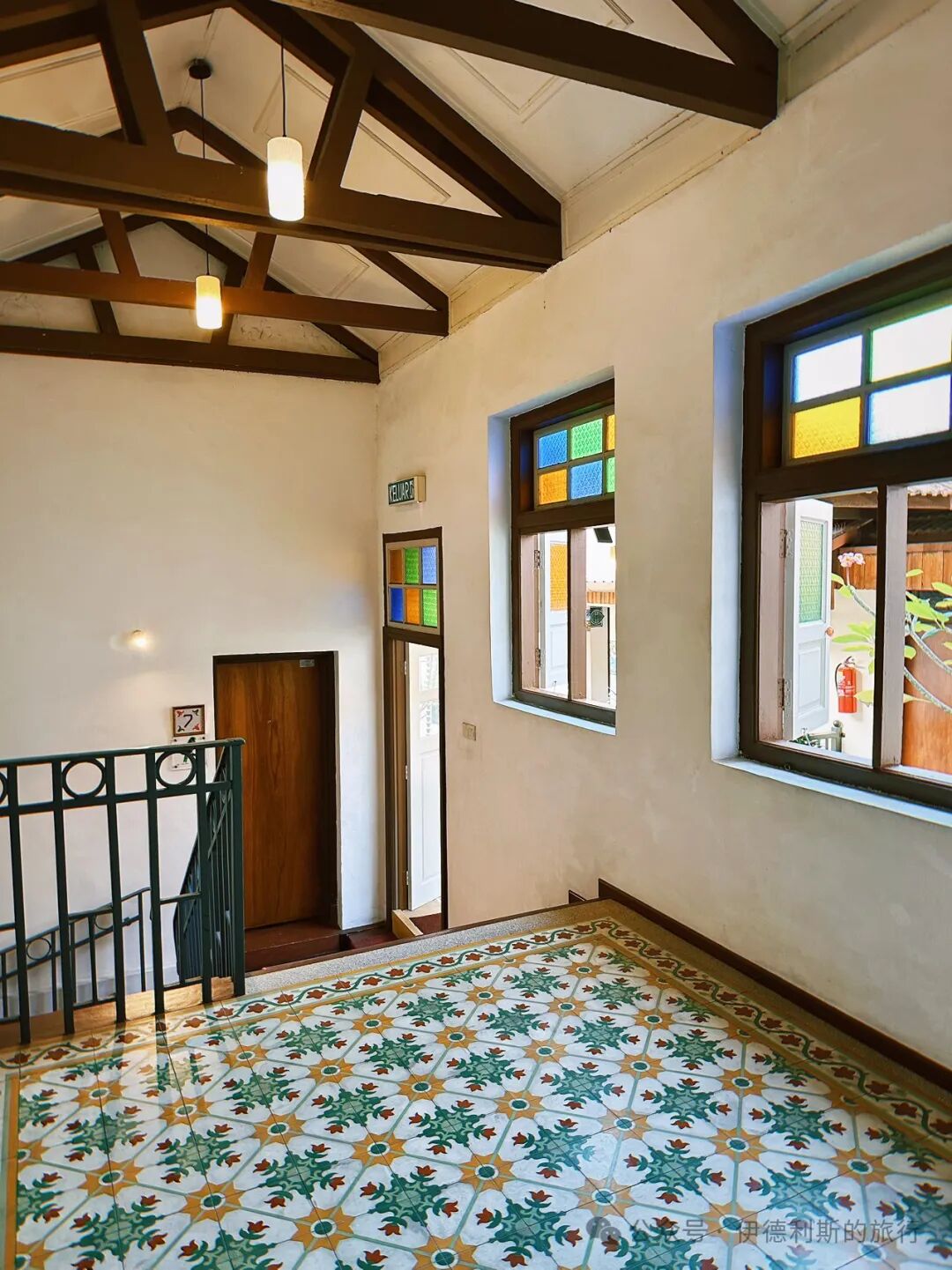
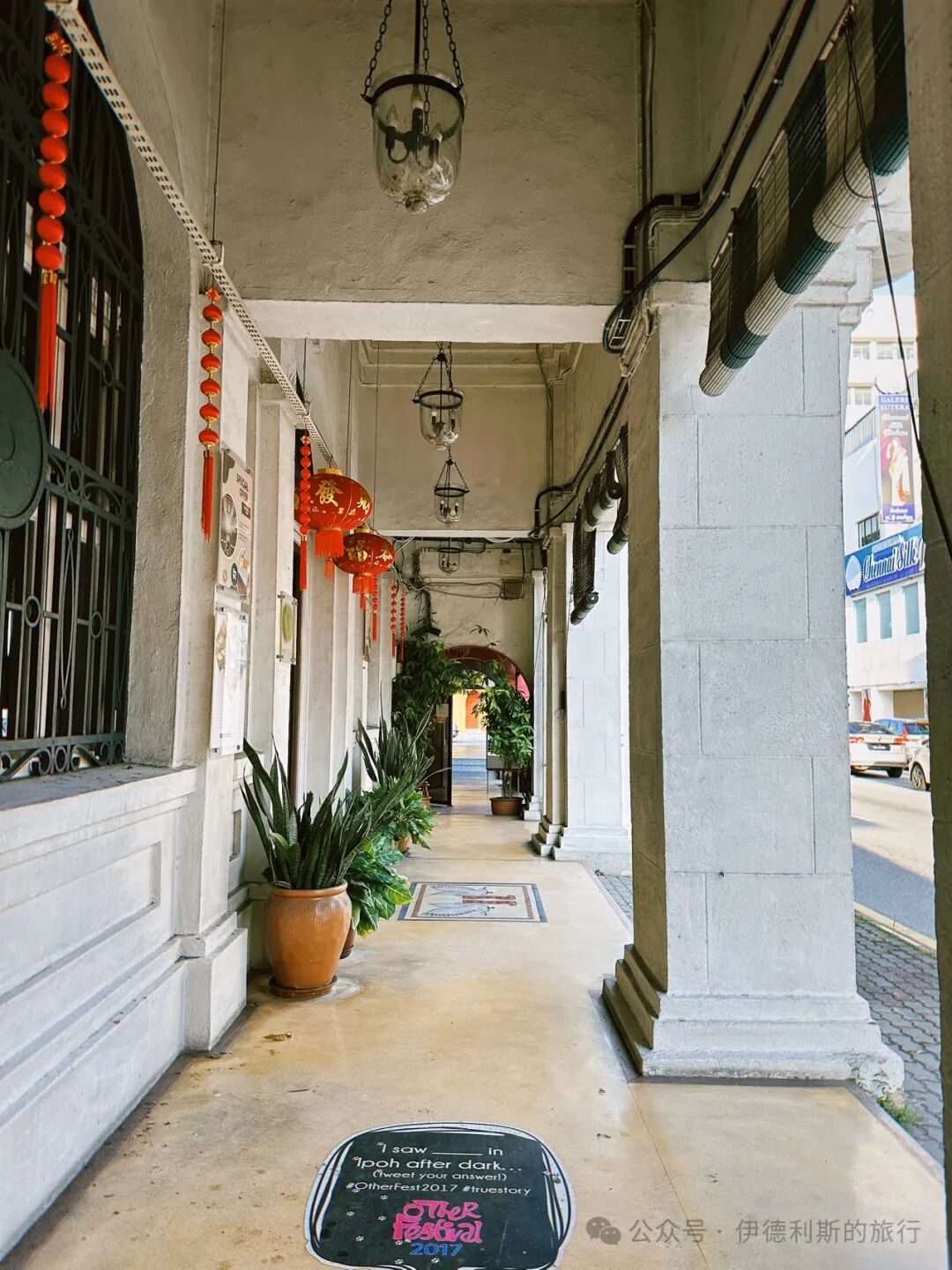
23 Love Lane in Penang, Malaysia.
Penang is an island in northwestern Malaysia. In 1786, the Sultanate of Kedah ceded it to the British East India Company. George Town, which was established on the island shortly after, became the first British base in Southeast Asia. After George Town was built, the British East India Company kept encouraging people to move there. After the 19th century, the Chinese, Malay, Indian, Peranakan (local-born Chinese), Eurasian, and Siamese people living in Penang each formed their own communities.
Penang has many heritage hotels converted from grand mansions, and the one we stayed at, 23 Love Lane (Le Lin), is a very interesting example. The 23 Love Lane mansion was first built in the 1790s. British, Indian, and Chinese people have all been its owners, so the architecture is a mix of Eastern and Western styles, serving as a miniature reflection of Penang's cultural melting pot over the last century.
In the 1860s, it was an Anglo-Indian bungalow. A Straits Eclectic style building was added in the late 19th and early 20th centuries, and a Jack Roof Annex villa was built in the 1920s. Around the 1930s, an Indian shop house was built inside the courtyard. After the 1990s, the mansion became the budget Oasis Hotel, until it became the current 23 Love Lane heritage hotel in 2011.
We stayed in an Anglo-Indian shop house built before the war. This place used to be a shop and home for a Tamil merchant. Now it is a two-story vintage suite with a bathroom on each floor, making it perfect for trips with family and friends.
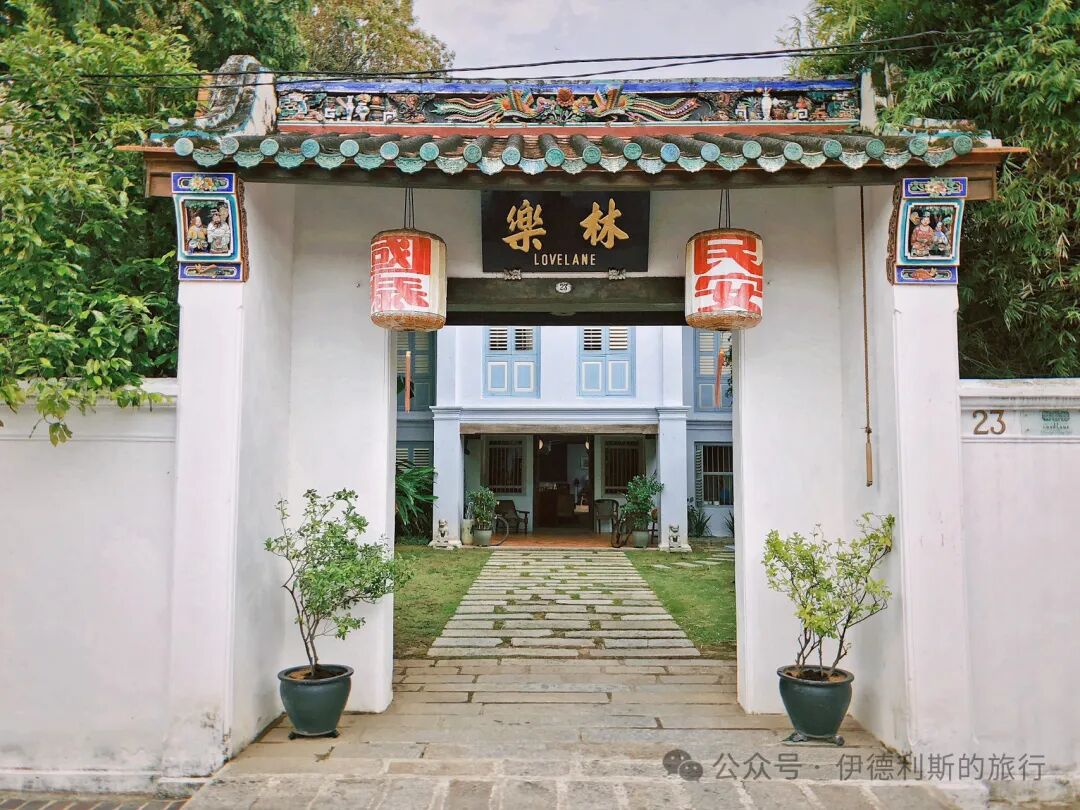
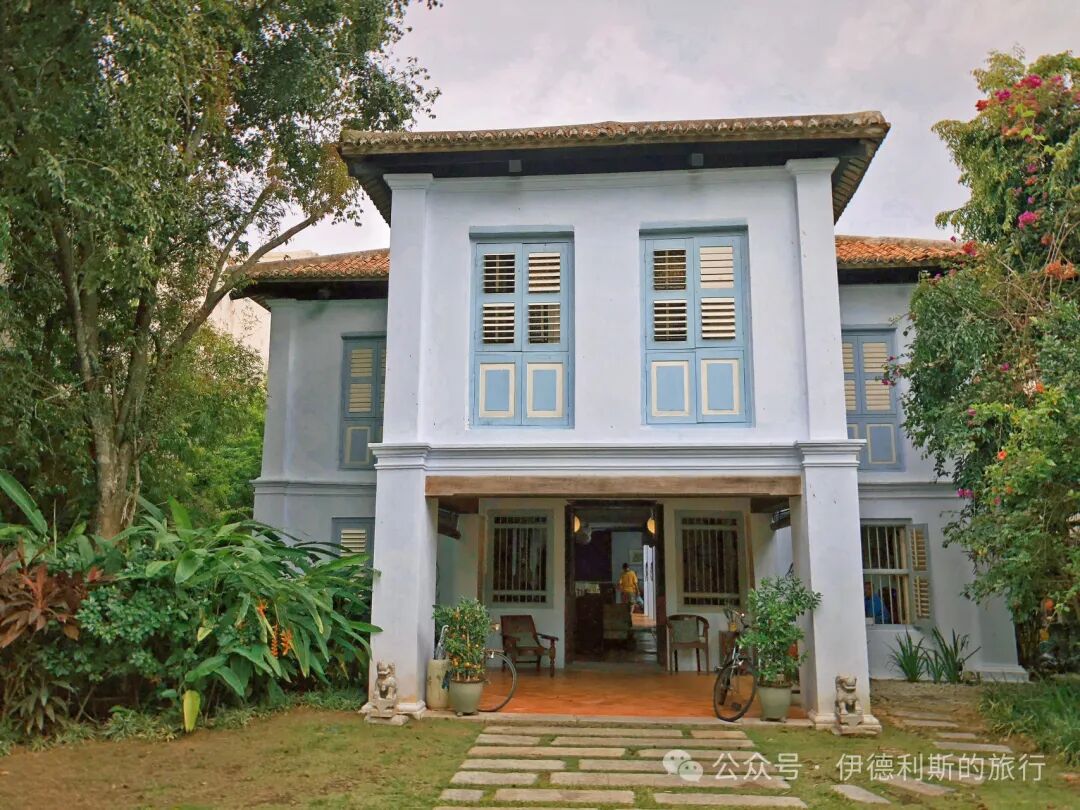
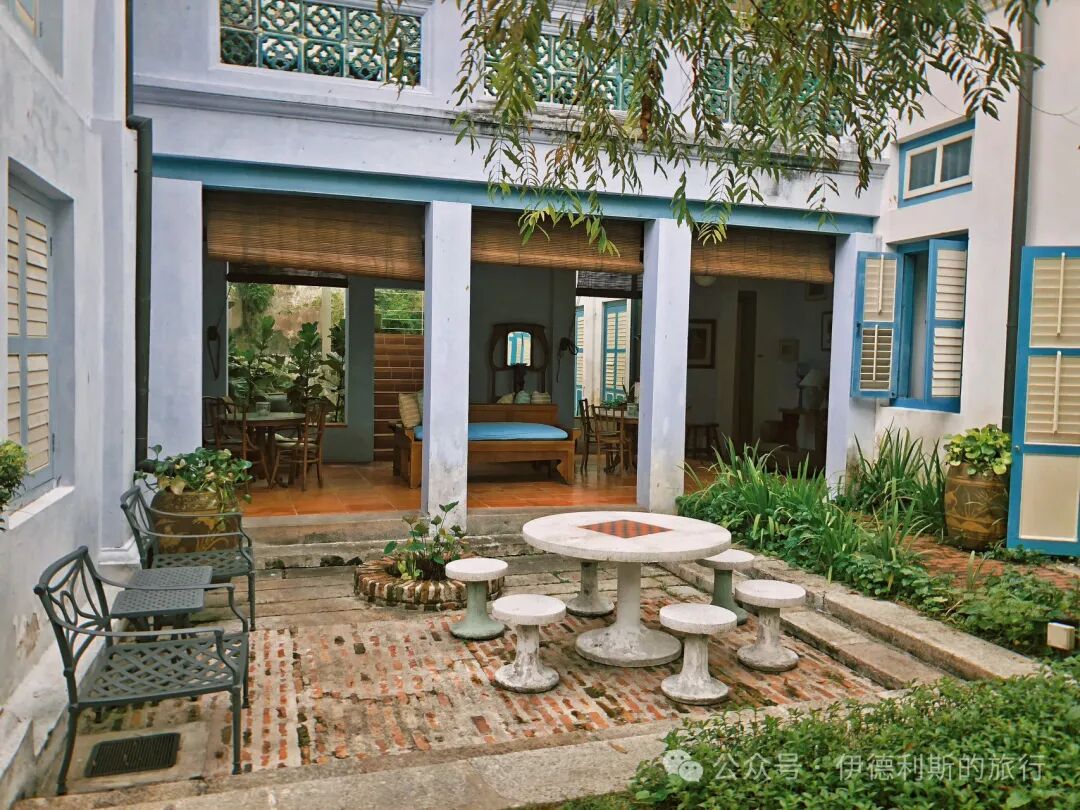
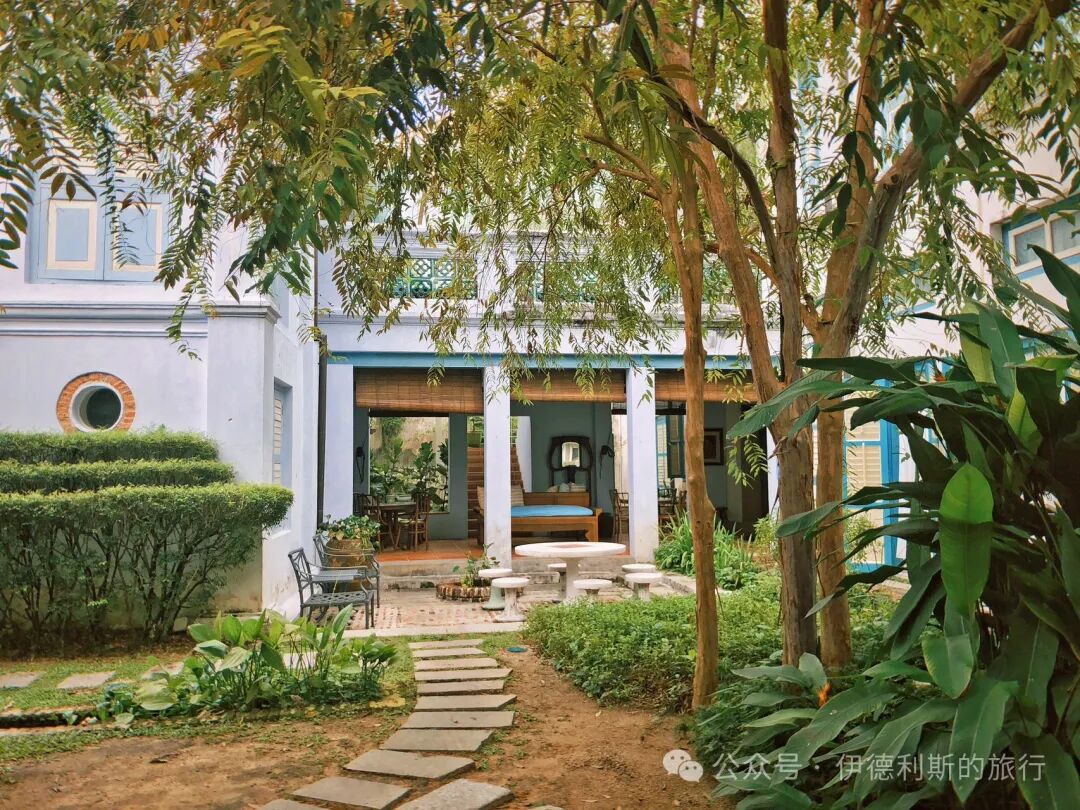
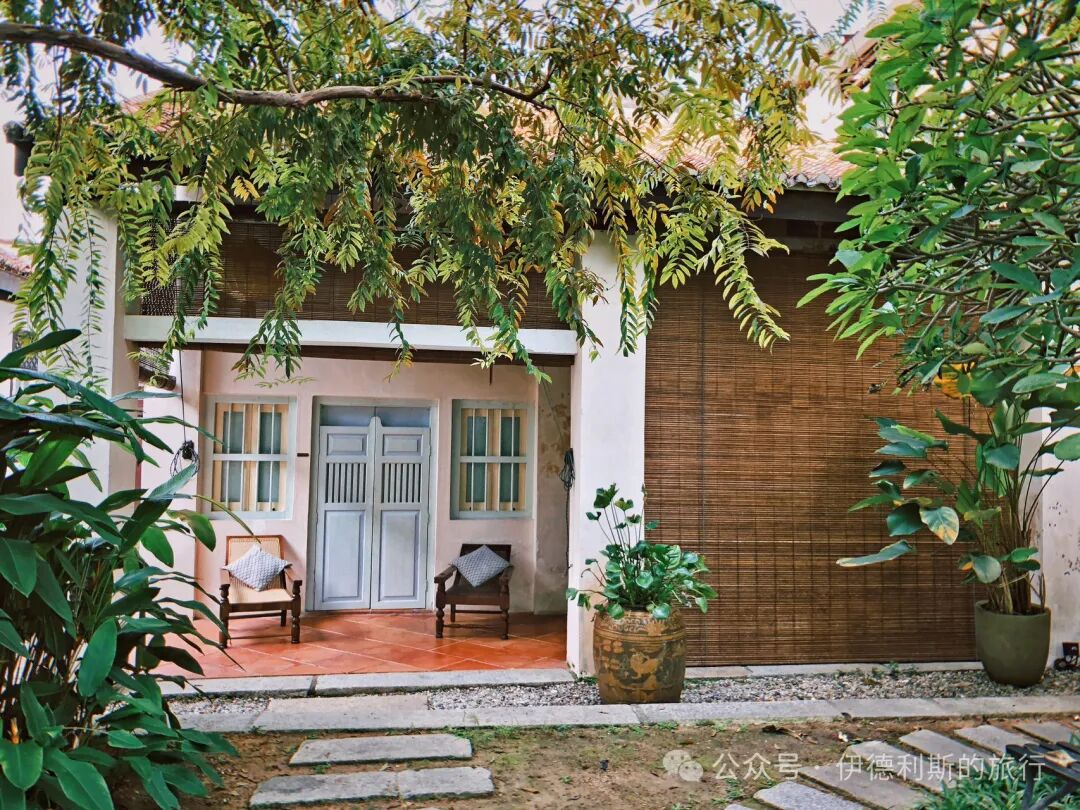
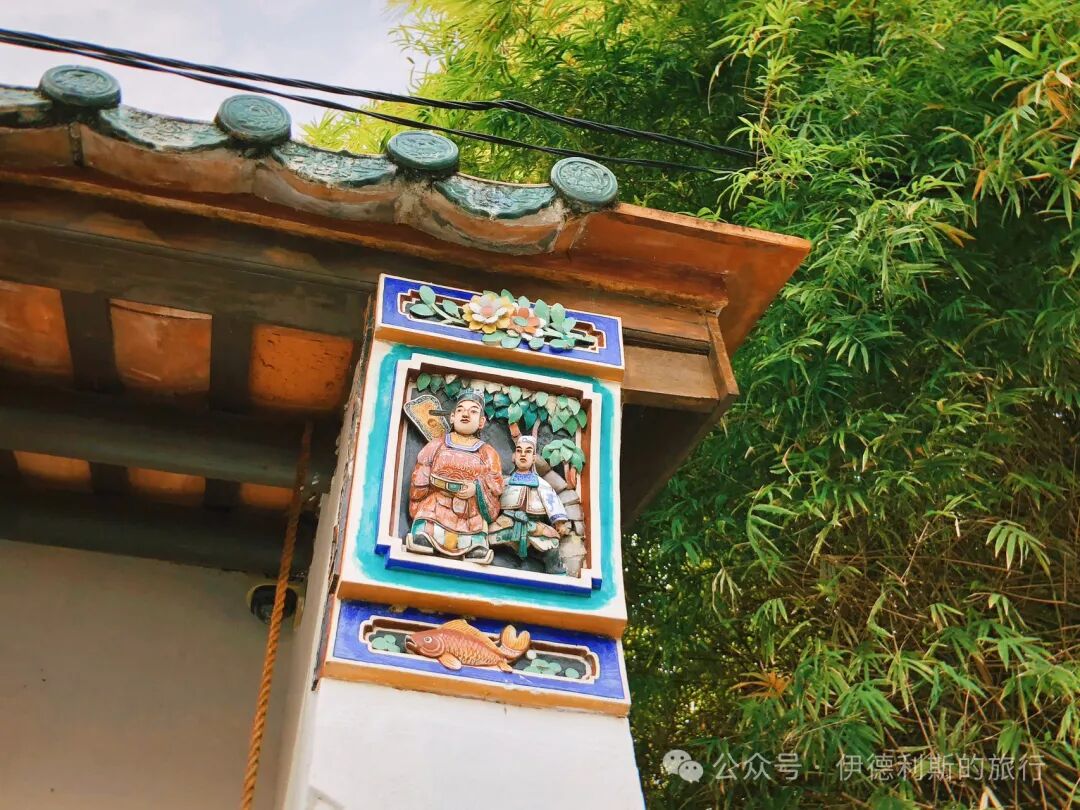
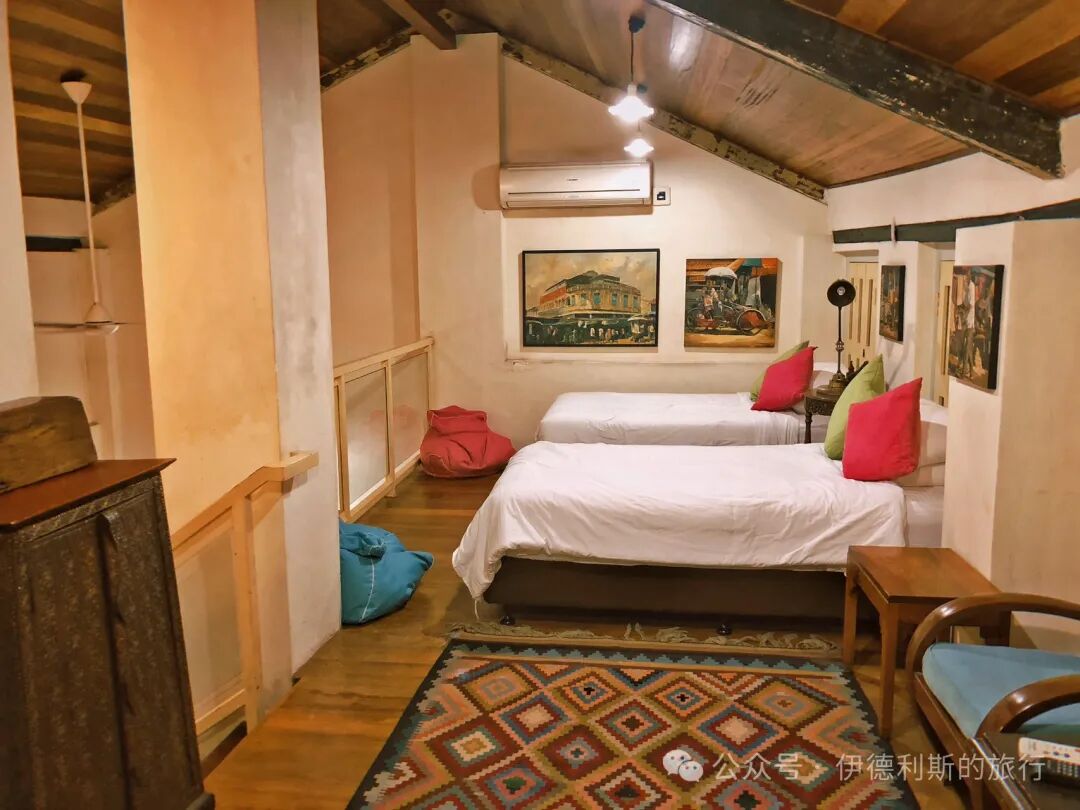
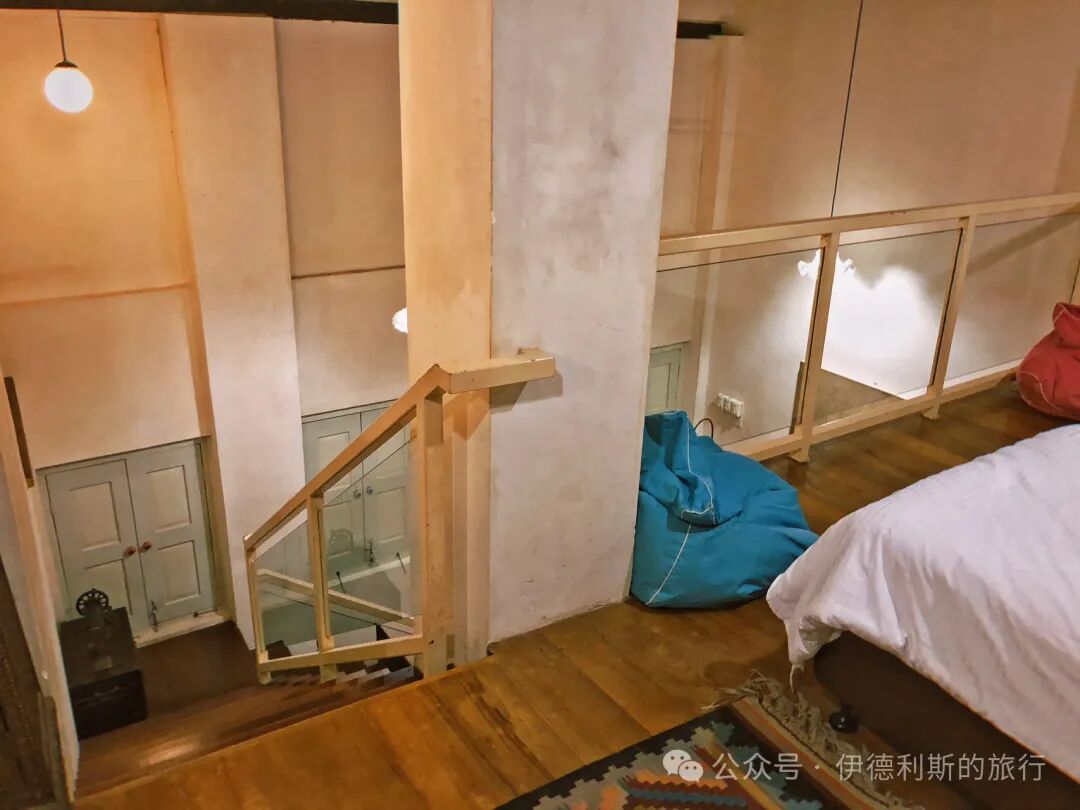
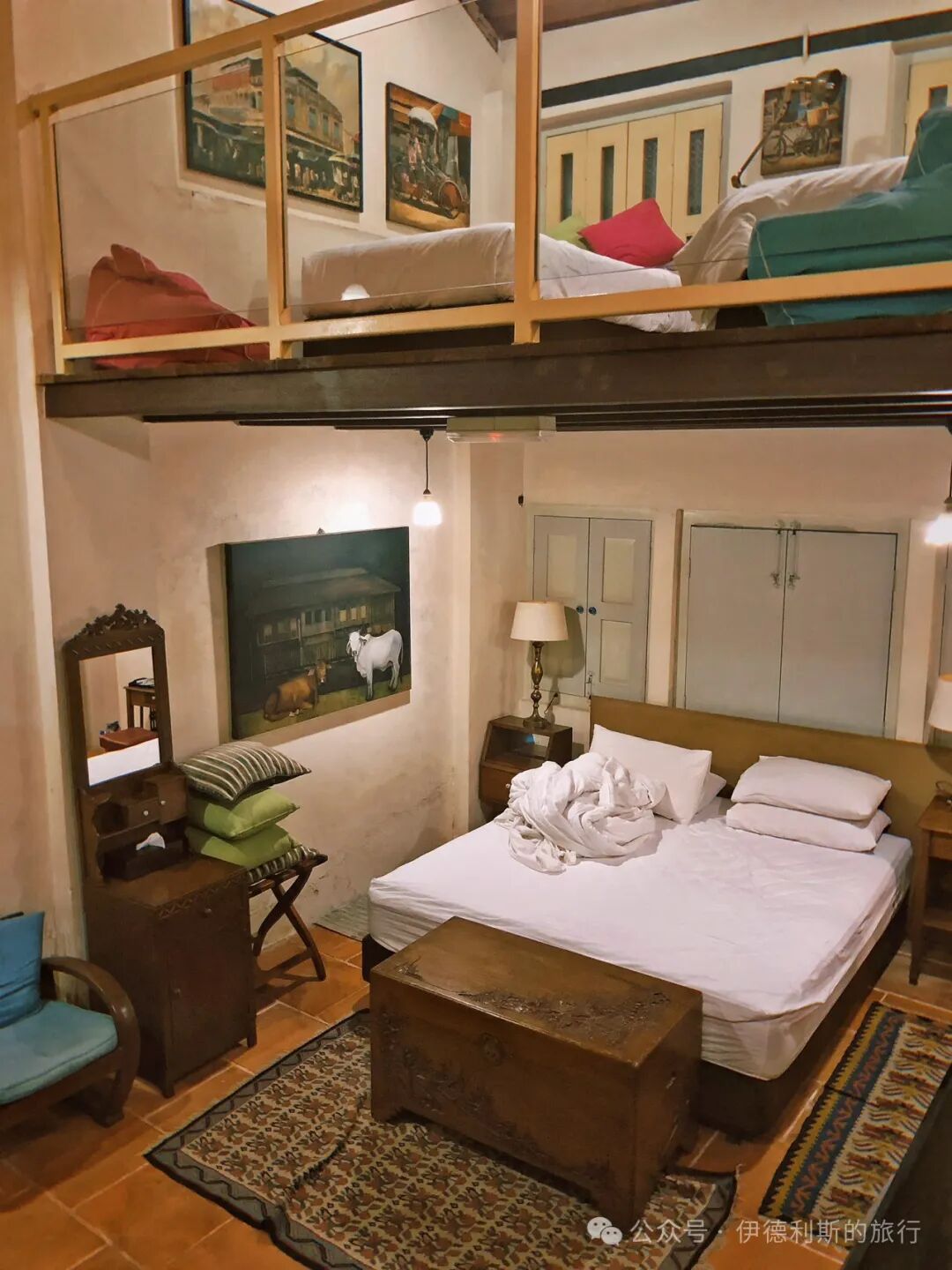
Hotel Puri in Malacca, Malaysia.
We stayed at the famous Hotel Puri in the old town of Malaysia, which is where the TV show The Little Nyonya was filmed.
Hotel Puri is a century-old mansion once owned by overseas Chinese in Southeast Asia. It is a classic three-section, two-story Baba Nyonya house. Malacca became quiet in the 20th century as many people moved to larger cities like Singapore or Kuala Lumpur. This old house sat abandoned for a long time until it was carefully renovated into the hotel it is today.
During the time it was abandoned, bats and swifts moved in. After the house became a hotel, the swifts in the third section refused to leave, so the hotel let them stay. They now build their nests right next to the old plaques.
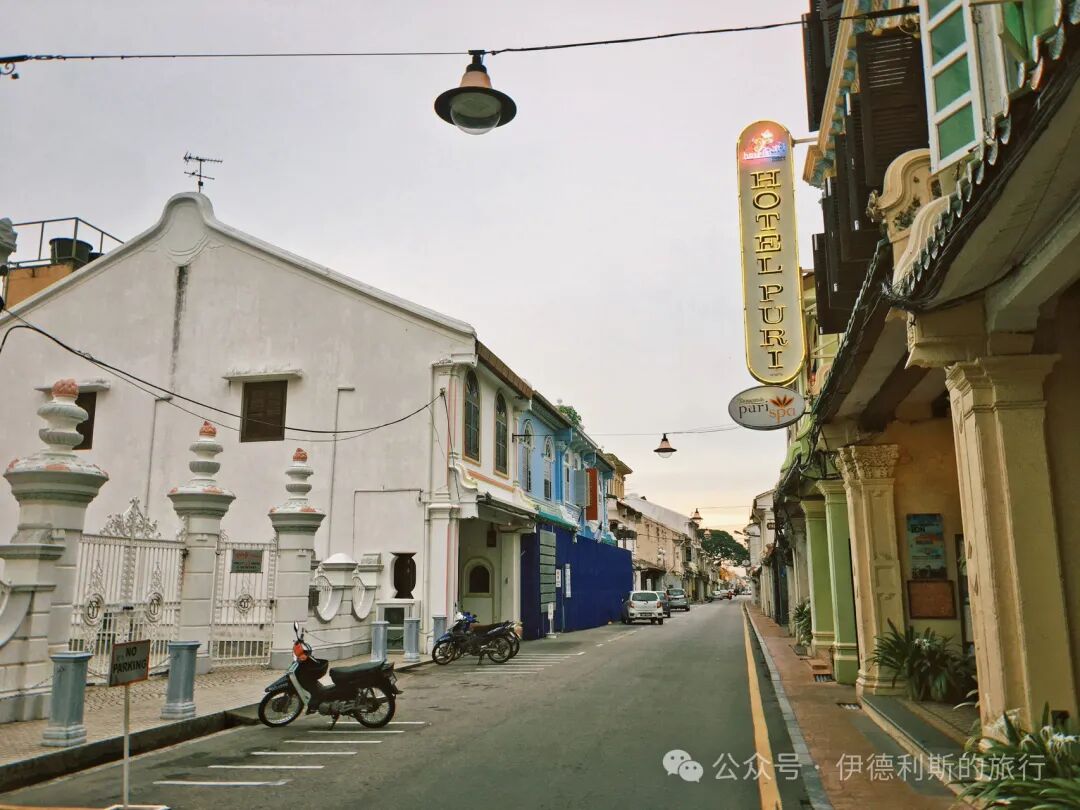
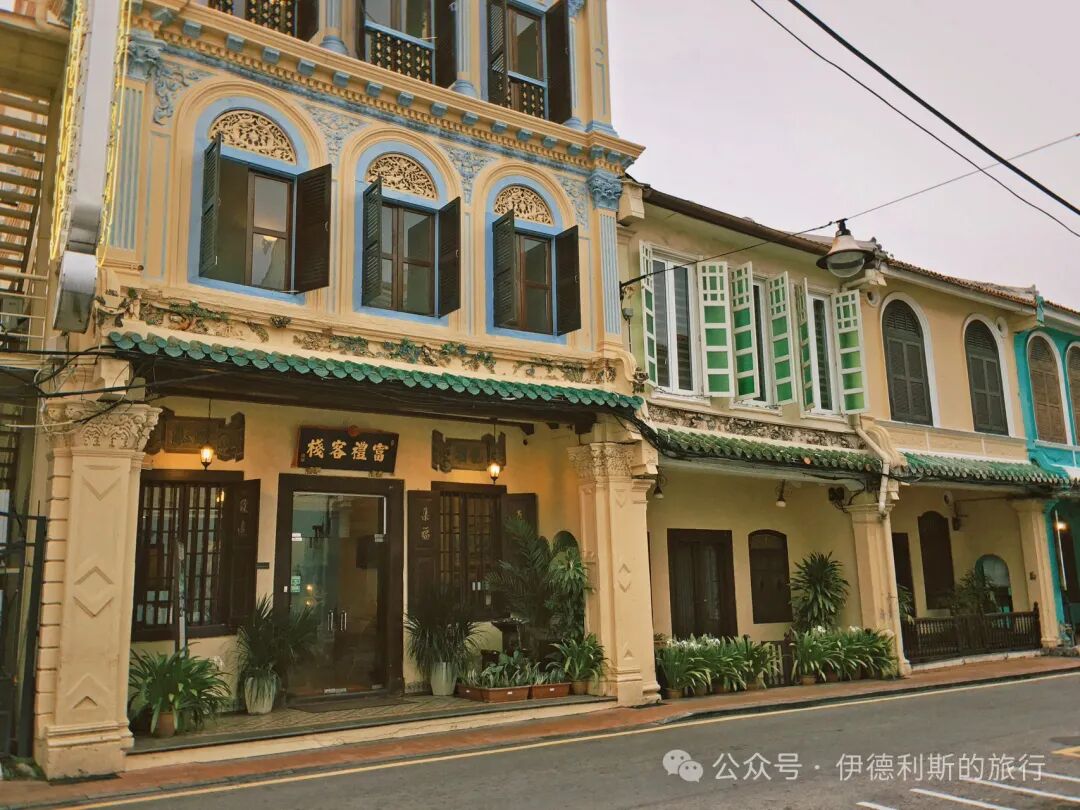
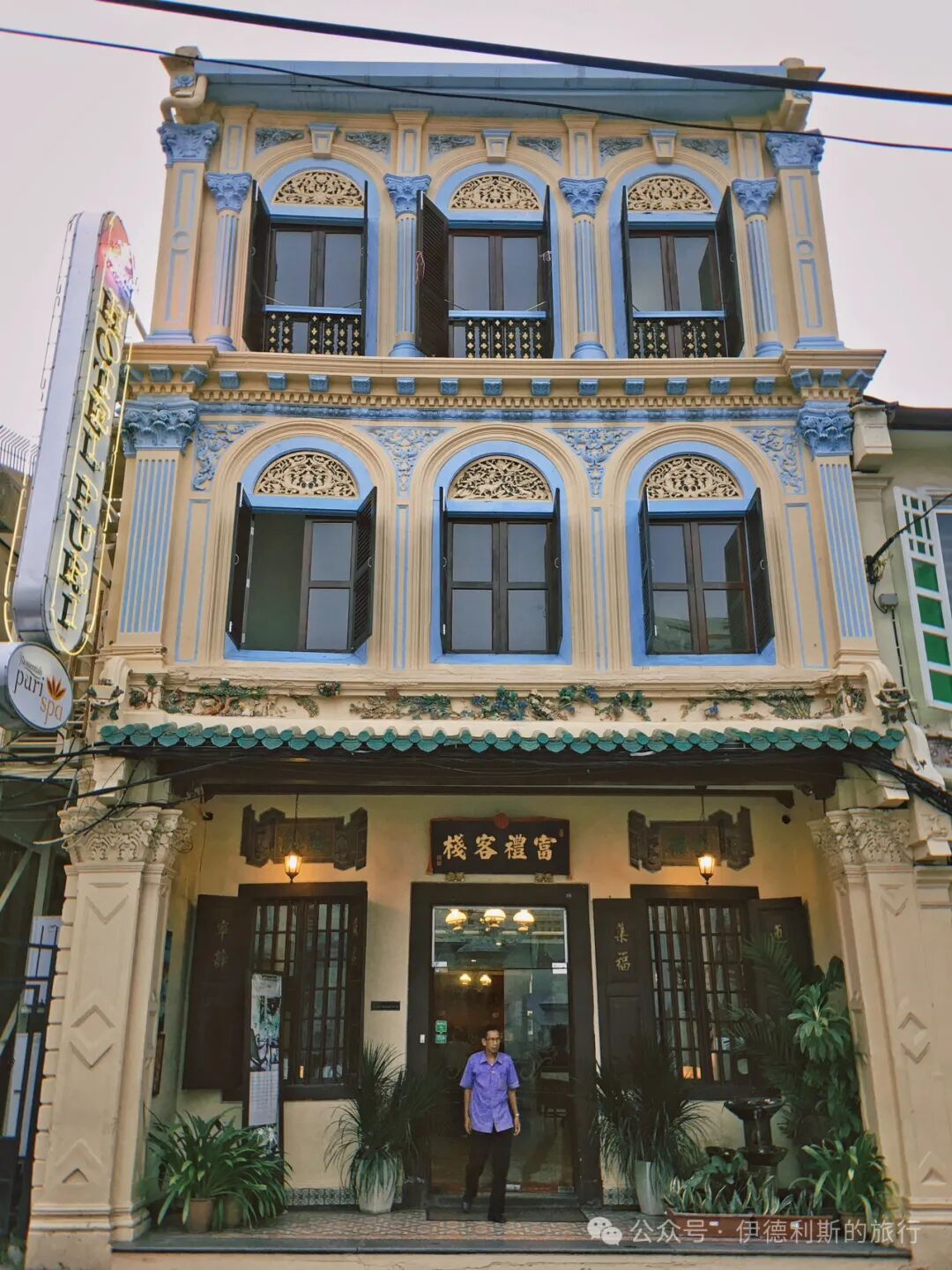
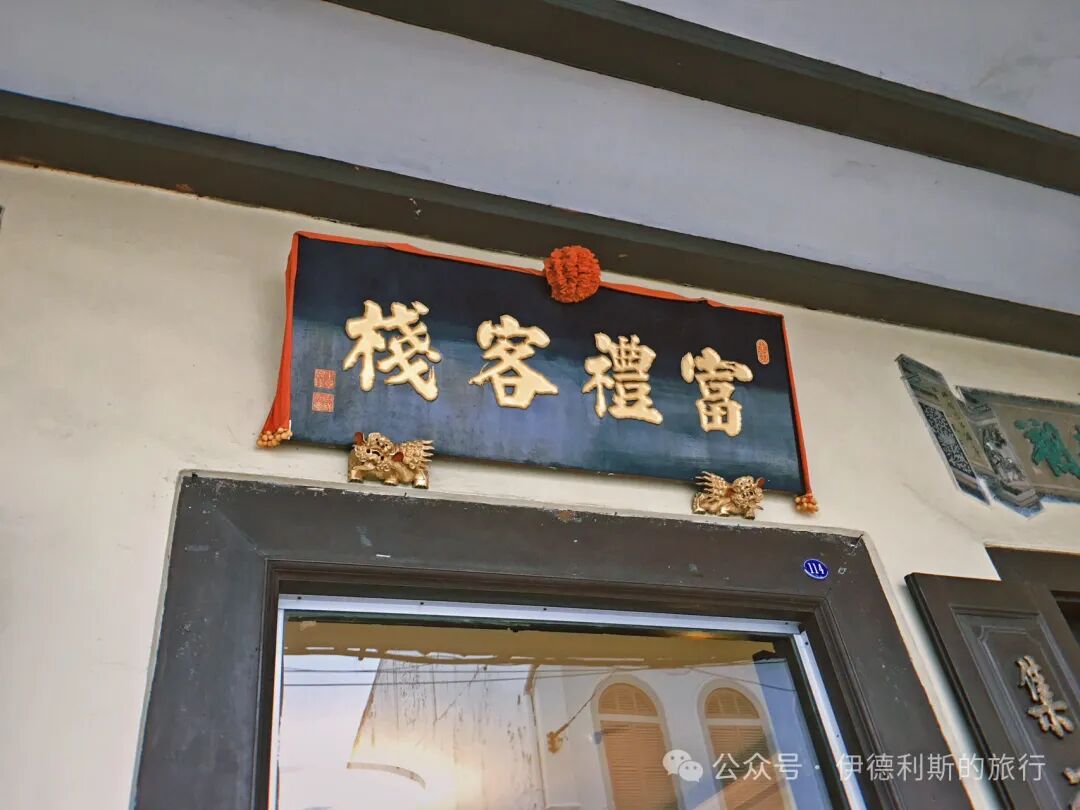
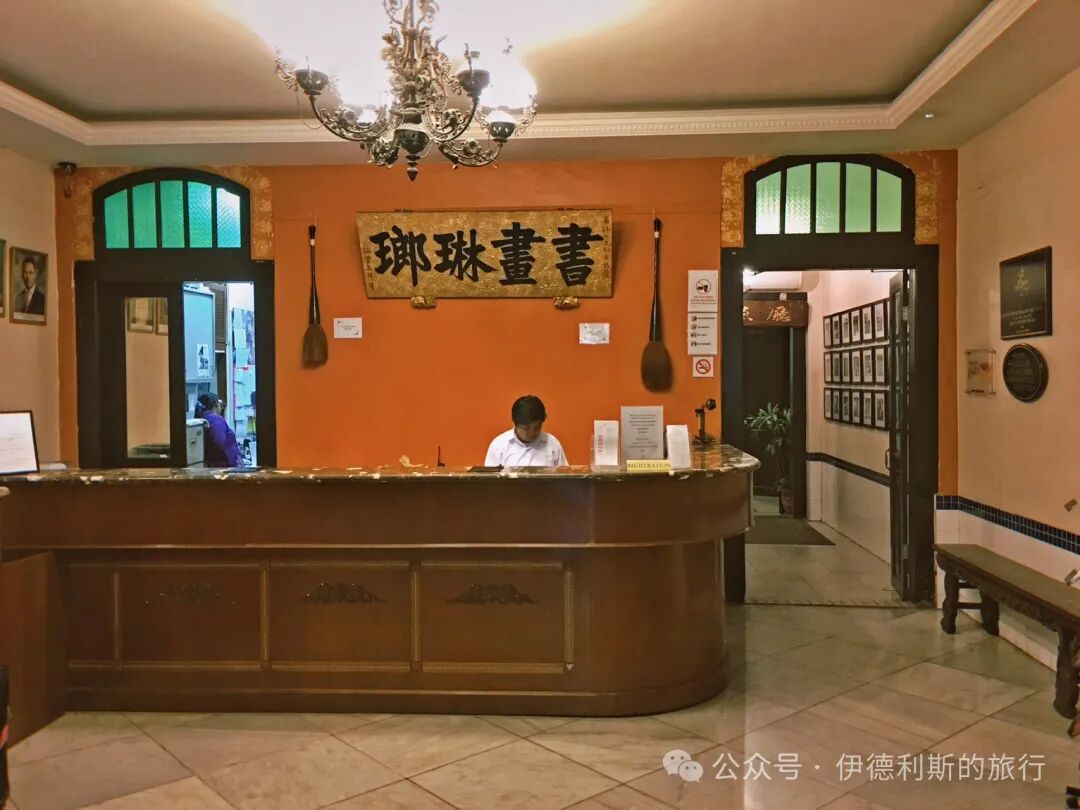
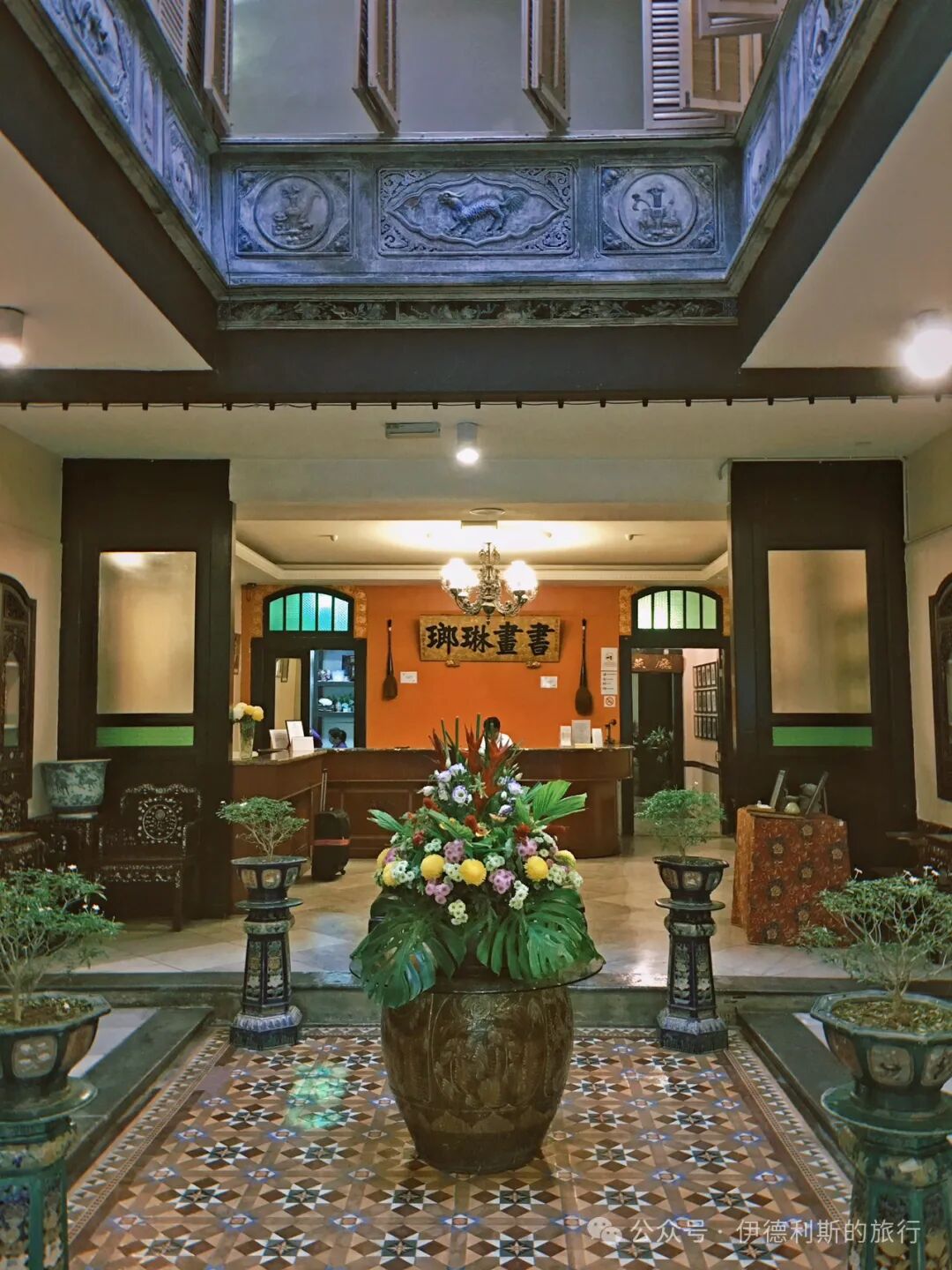
Omah Sinten Heritage Hotel & Resto in Solo, Indonesia.
Solo is a historic cultural city in Central Java, Indonesia, and was the final capital of the once-powerful Mataram Sultanate on Java island. In 1755, at the direction of the Dutch East India Company, the Mataram Sultanate was split into the Yogyakarta Sultanate and the Surakarta Sunanate, with Surakarta city becoming the capital of the Surakarta Sunanate.
During the Dutch East Indies era, the Surakarta Sunanate held autonomous status just like the Yogyakarta Sultanate and was considered a vassal state of the Dutch Empire. The Republic of Indonesia was declared in 1945, and in 1946 the Surakarta Sunanate lost its ruling power and was incorporated into Central Java Province. Although it has no real power, the Surakarta Sunanate still holds royal authority and a special status for maintaining traditional Javanese culture.
In Surakarta, I stayed at the Omah Sinten Heritage Hotel & Resto across from the royal palace. The hotel uses traditional Javanese architectural style, and the breakfast area is a teak wood pavilion built in the 1930s, surrounded by many trees, making it very cool.
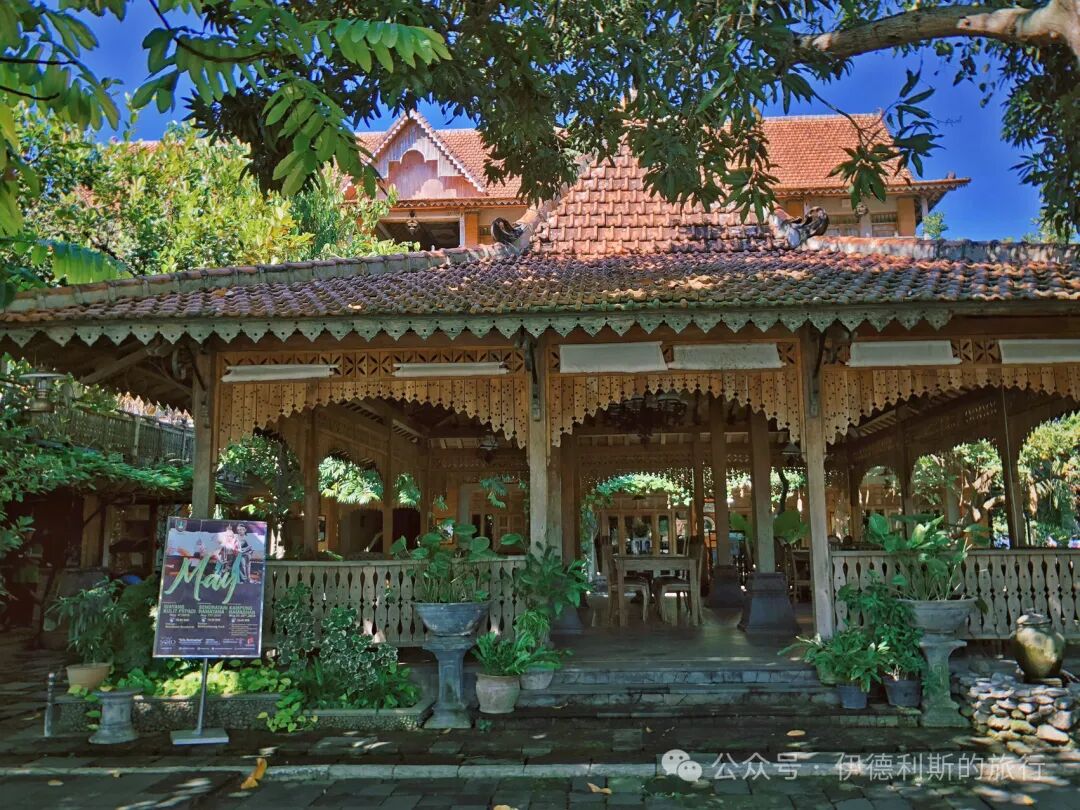
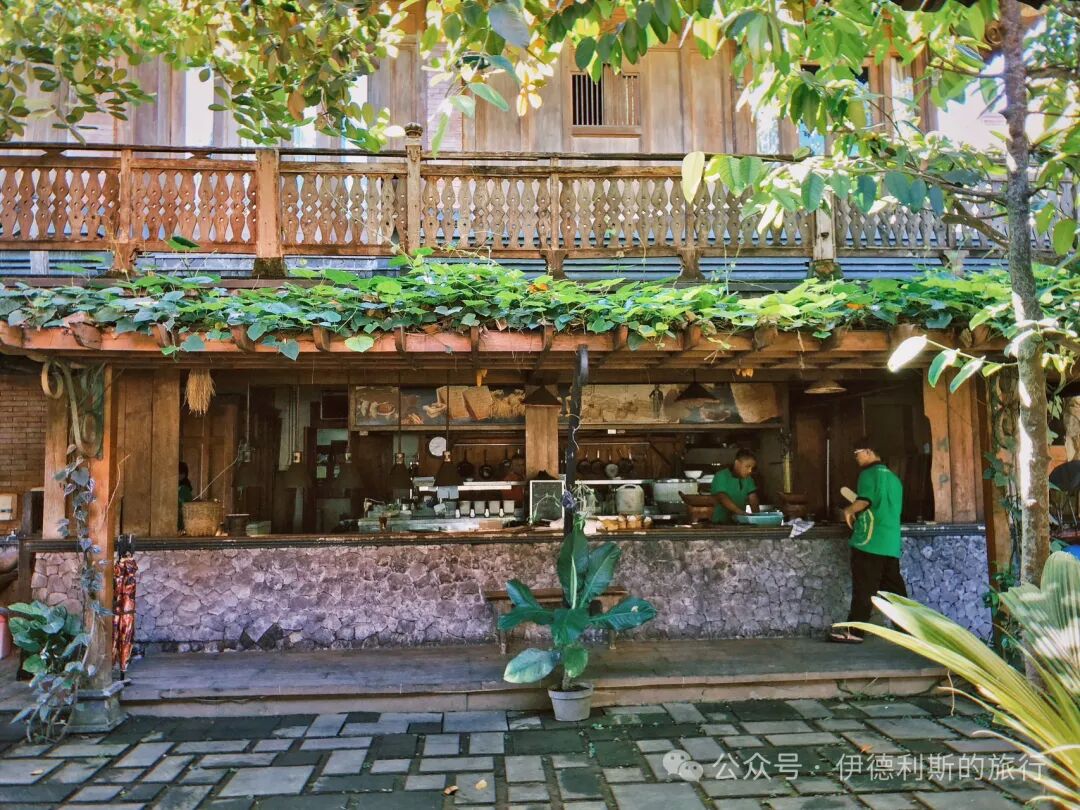
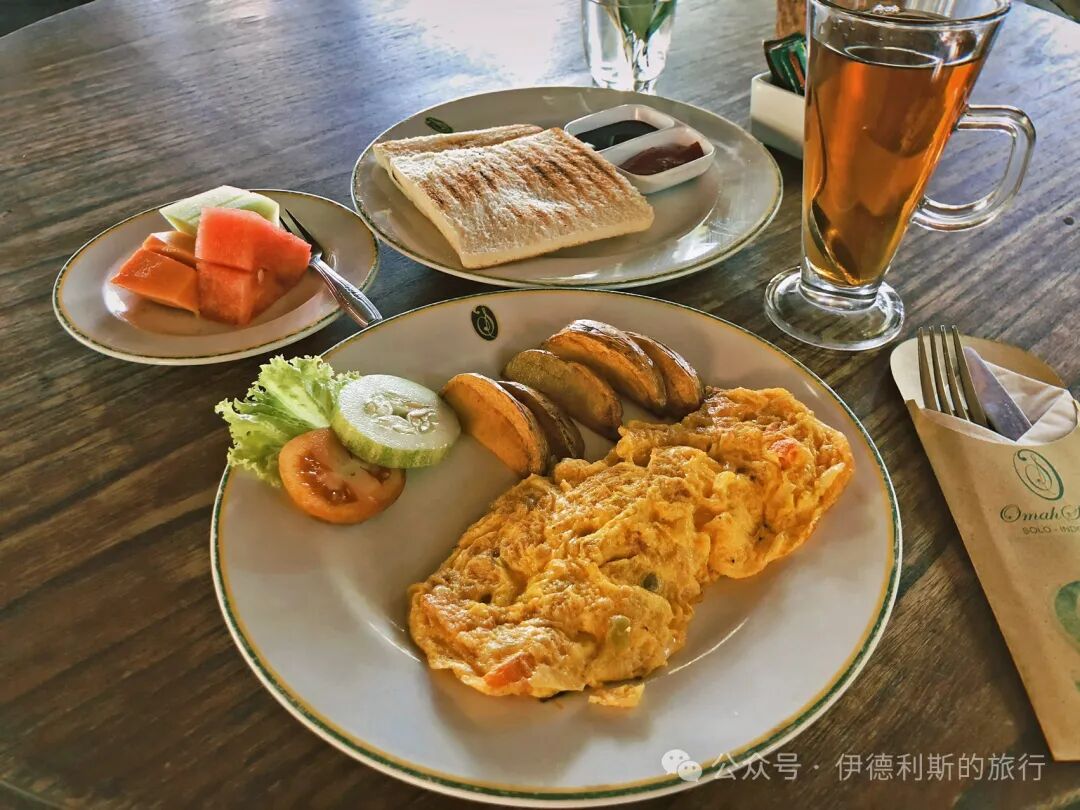
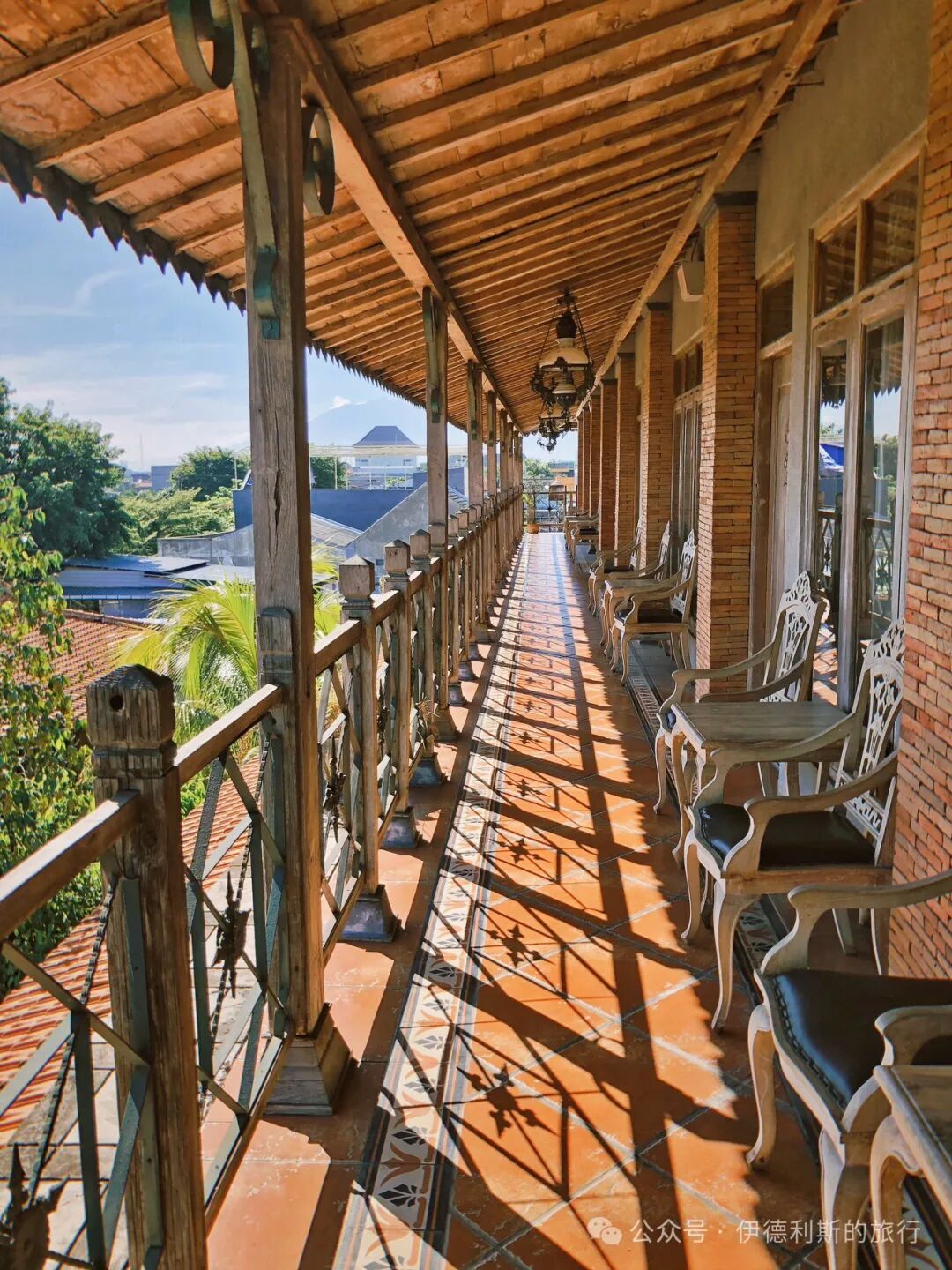
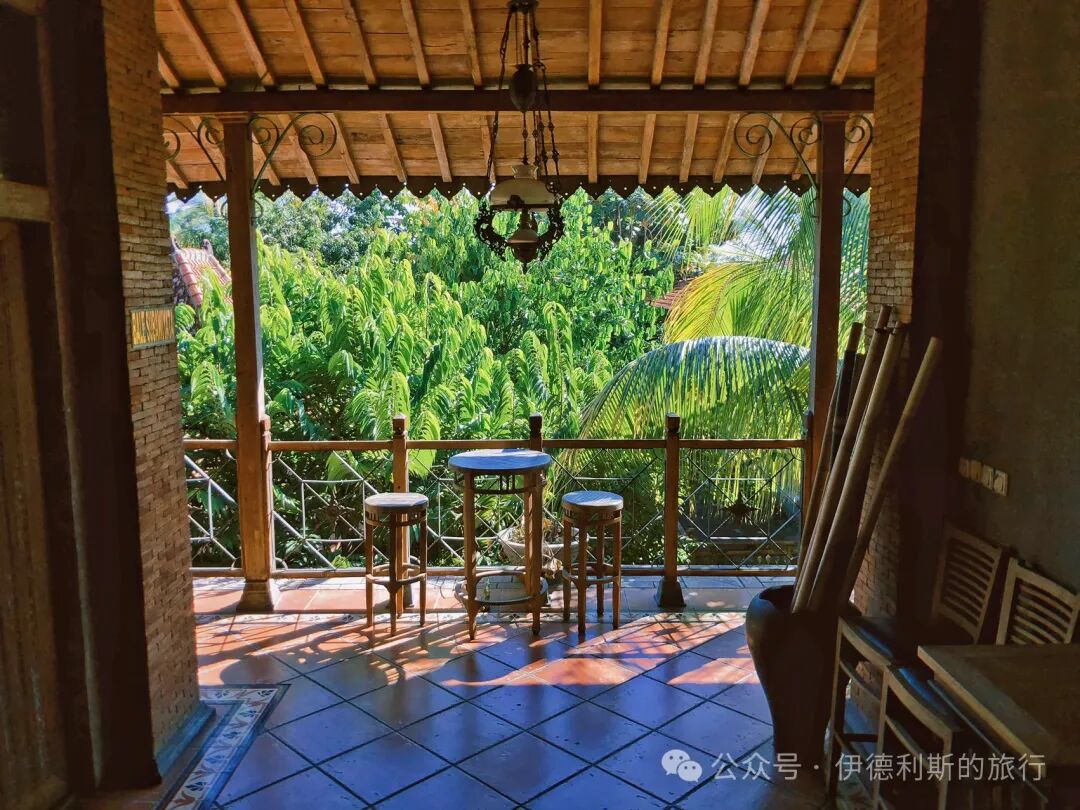
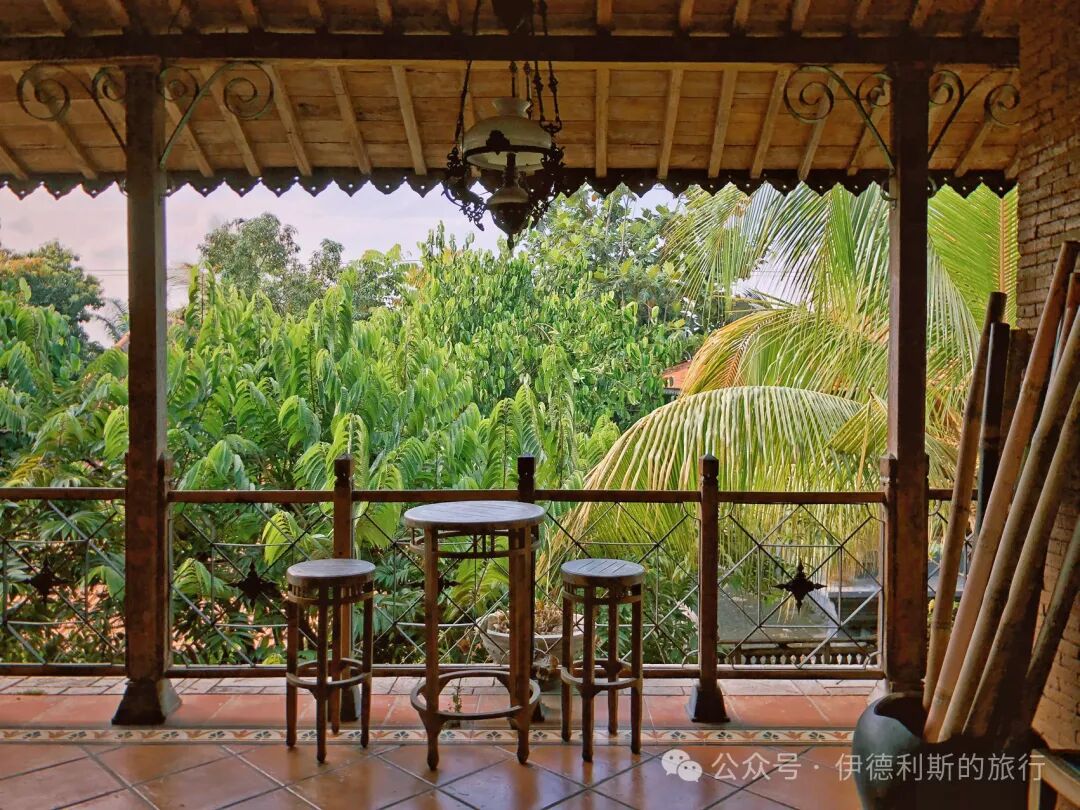
Maristan Tarihi Konak in Mardin, Turkey.
The ancient city of Mardin is located in southeastern Turkey, bordering Syria and Iraq, and sits in the Upper Mesopotamia region at the headwaters of the Tigris and Euphrates rivers. The entire ancient city is built on the southern slope of a ridge. At the very top of the cliff sits a thousand-year-old castle, with a terraced stone city built below it. Because of this, you can look out over the Mesopotamian plains from any terrace in the city, and the view is spectacular.
Our hotel, Maristan Tarihi Konak, is located in a 700-year-old building. It was originally built by Jewish people and is now run by Kurds. Five hundred years ago, many Armenians and Jews lived in the ancient city of Mardin. Today, it is mainly home to Kurds and Arabs, along with a significant number of Assyrian Christians.
The taxi drove into the maze-like alleys of the old city, weaving left and right up very steep slopes, which made us feel quite nervous. The car finally stopped on a slope. Idris, a young Kurdish man from the hotel, greeted us warmly by the side of the road. It was a coincidence that my name is also Idris, which is the name of a prophet.
Idris led us up the small stone steps until we finally reached the Maristan Tarihi Konak hotel. Before I went, I checked online and found that most hotels in the old city of Mardin feature stone houses. This one is relatively good value because it is not on the main road. The reviews also specifically mentioned that the staff are very friendly, and that turned out to be true.
The walls of our stone house are very thick. Even when it is 30 degrees outside in the summer, you do not need air conditioning inside. The only downside is that it does not get as much light as a wooden house because the windows are very small. It is very interesting that our room door is also very traditional. You have to insert the large key and turn it several times in the opposite direction, which feels especially ancient.
The breakfast we had on the hotel terrace was very rich. It included four types of cheese, yogurt, two kinds of olives, honey, fig jam, pomegranate jam, and grape jam. The main staple was not the bread common in Turkey, but Kurdish flatbread (nan).
The hotel manager is a Kurdish friend named Zahit. He took us for a walk through the old city bazaar and then pointed out the general direction of various historical sites on the main road, which was very thoughtful.
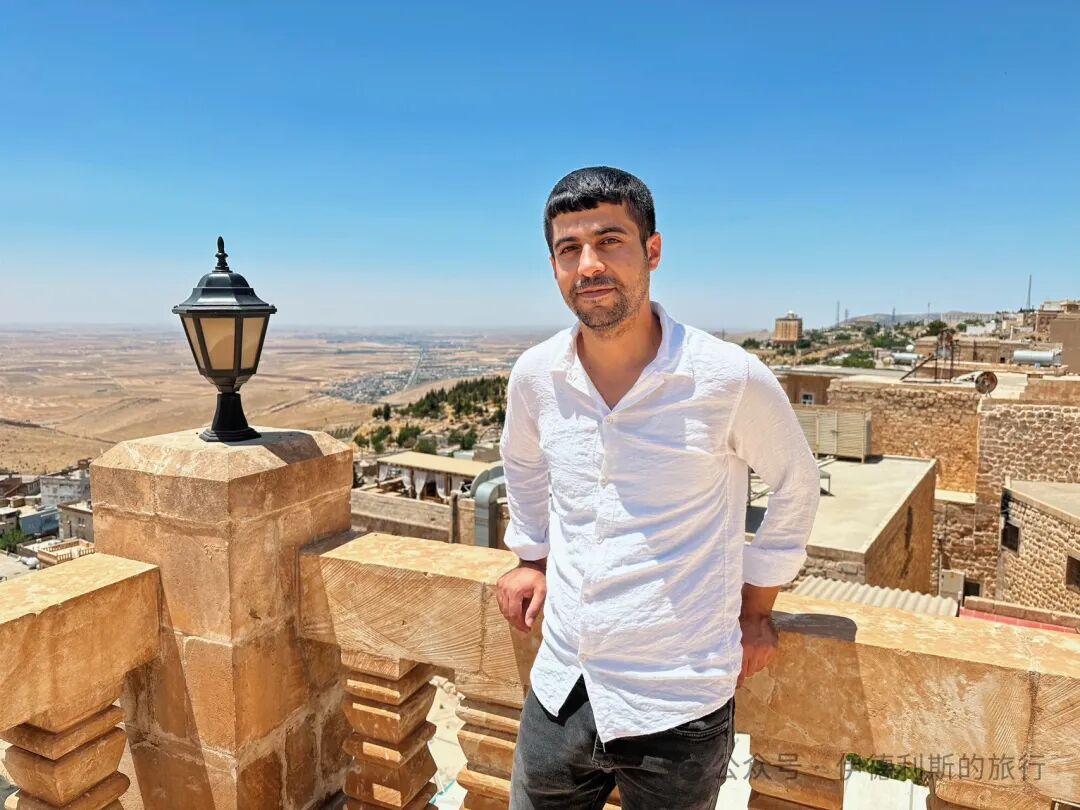
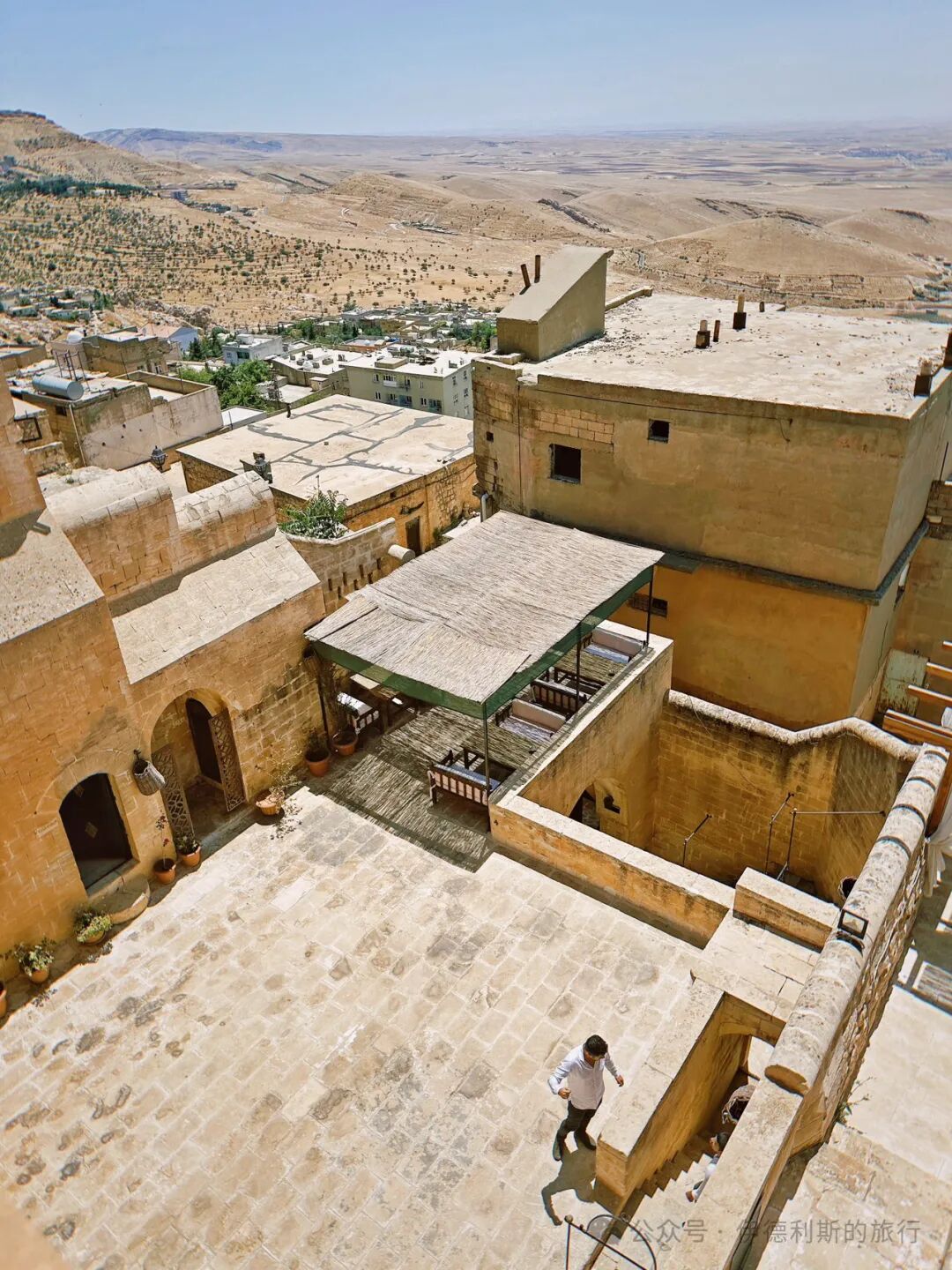
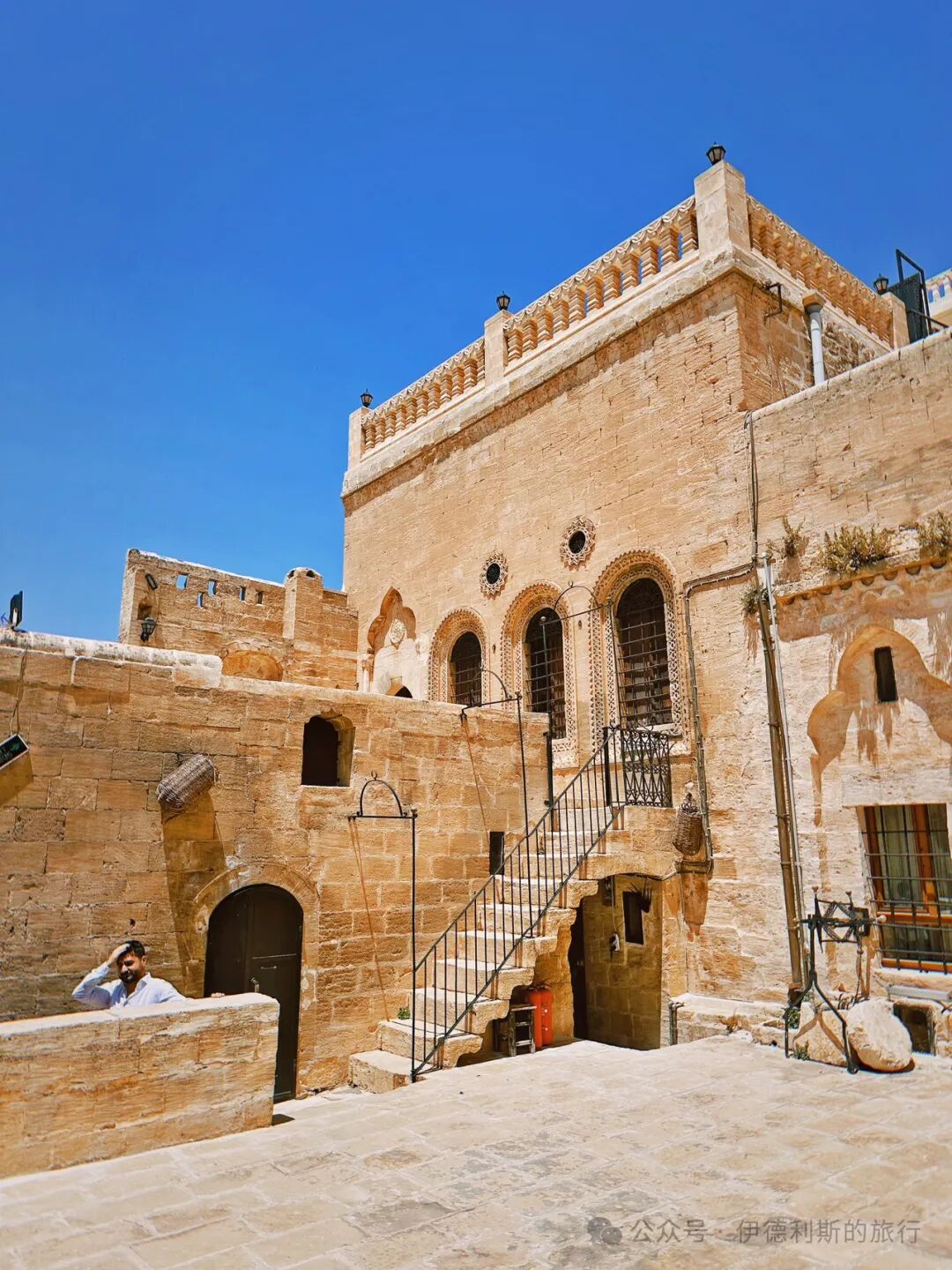
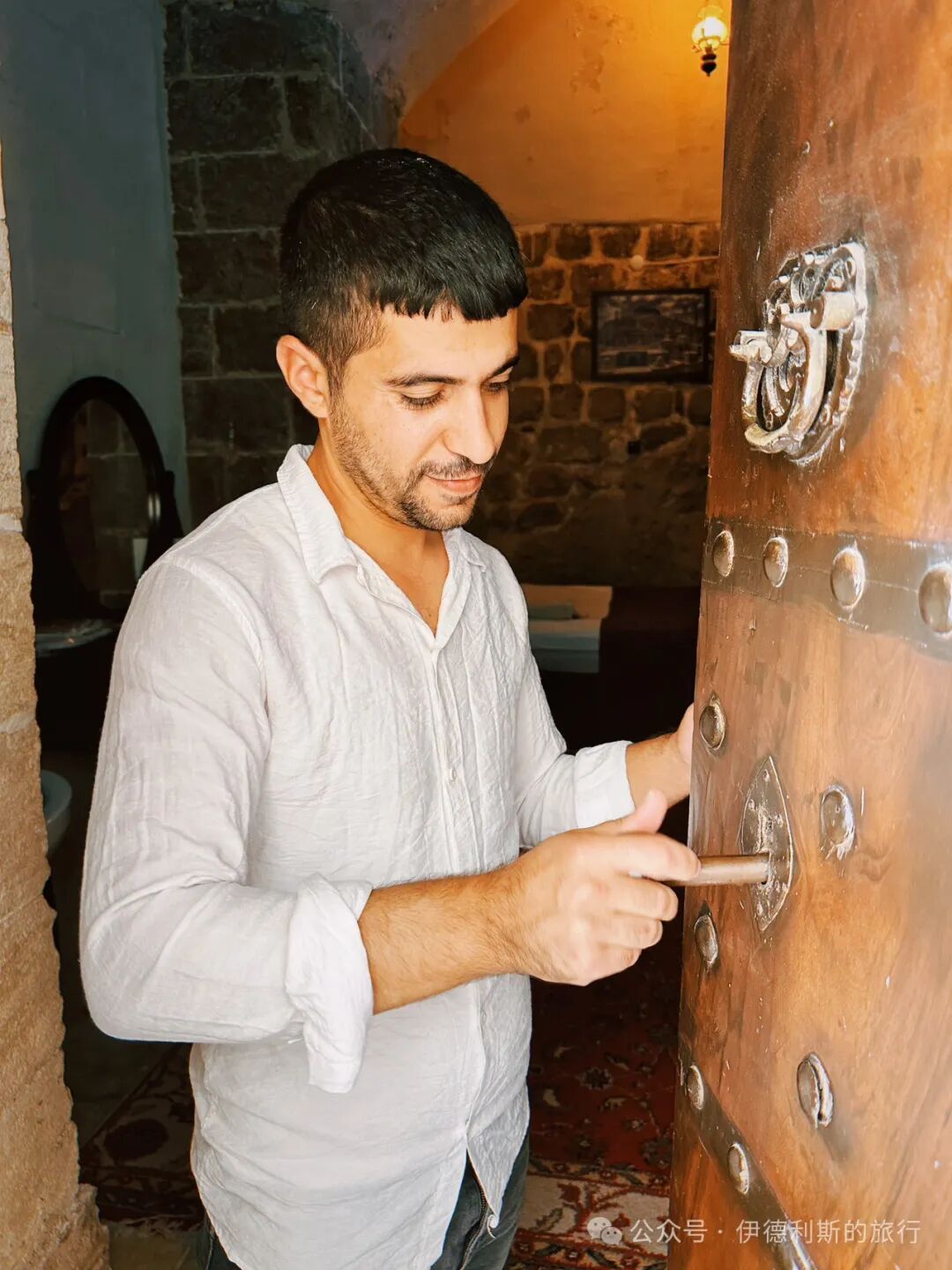
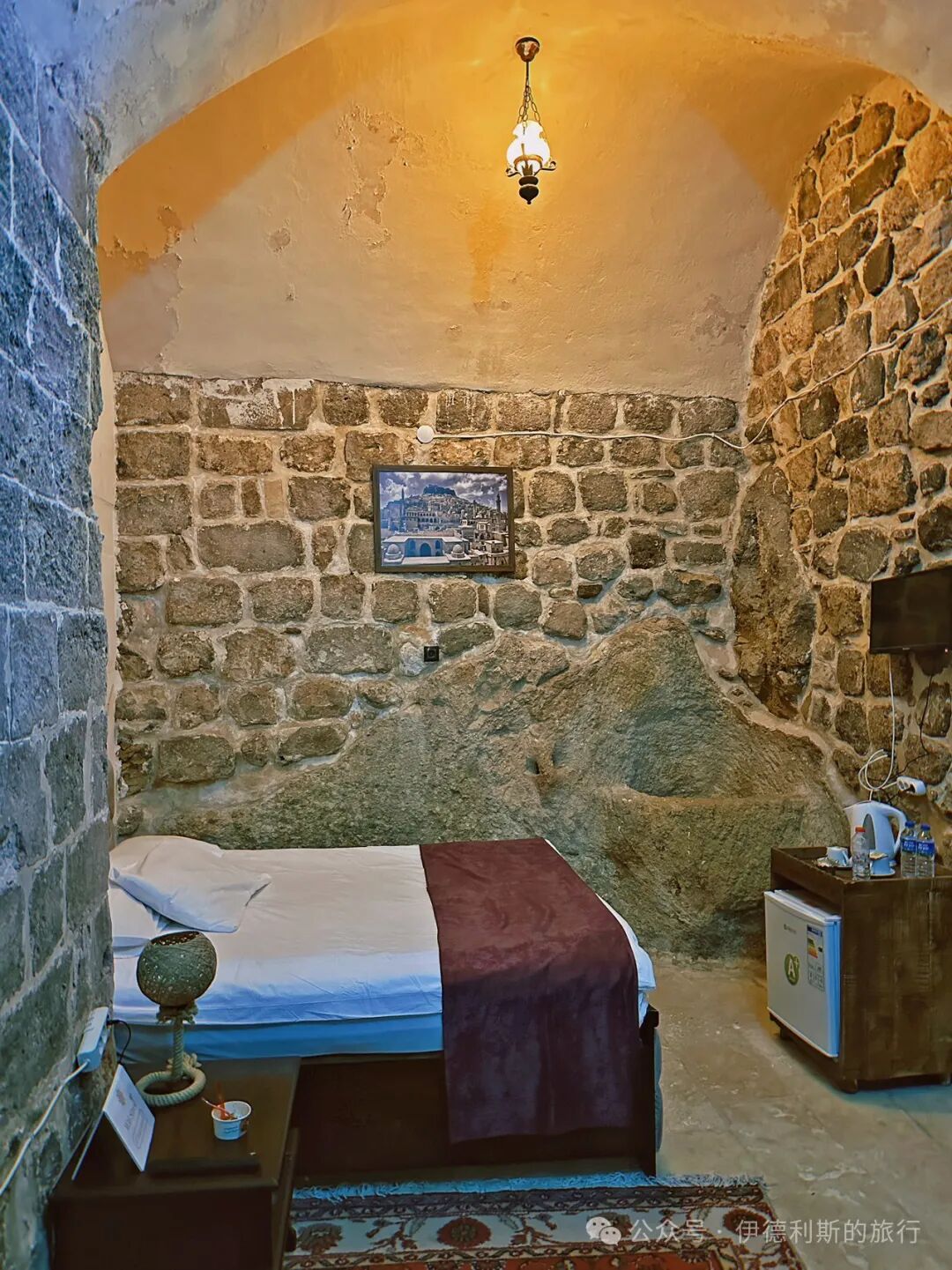
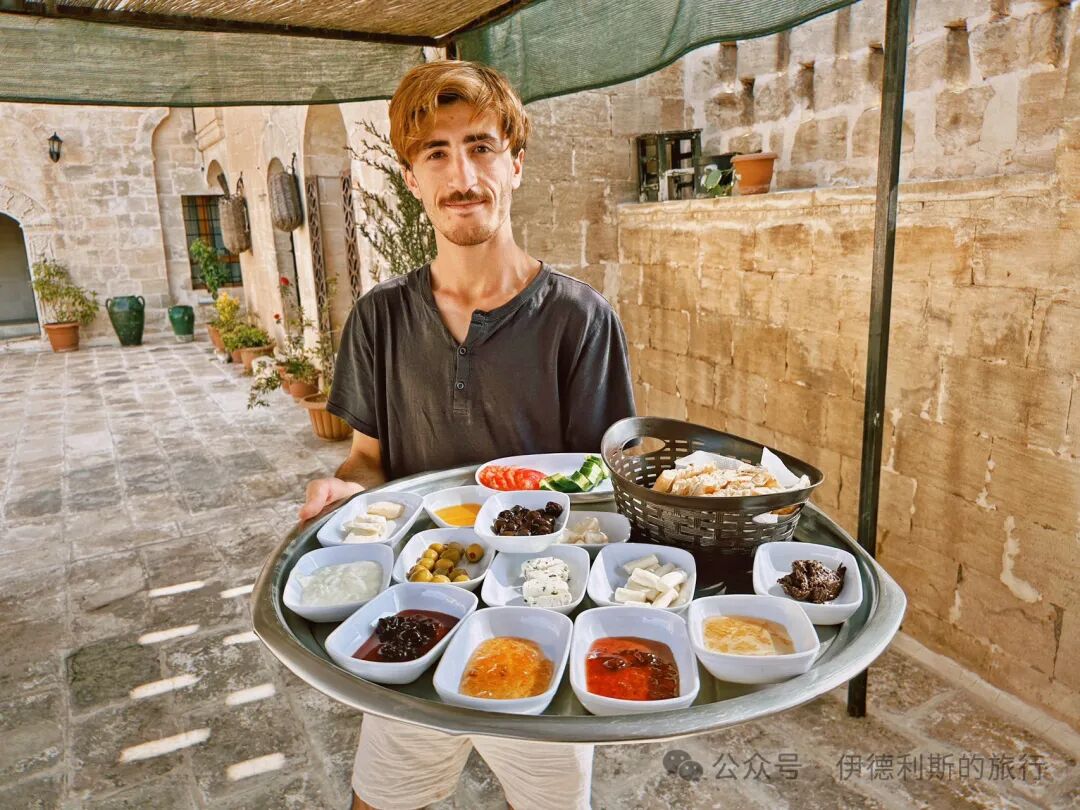
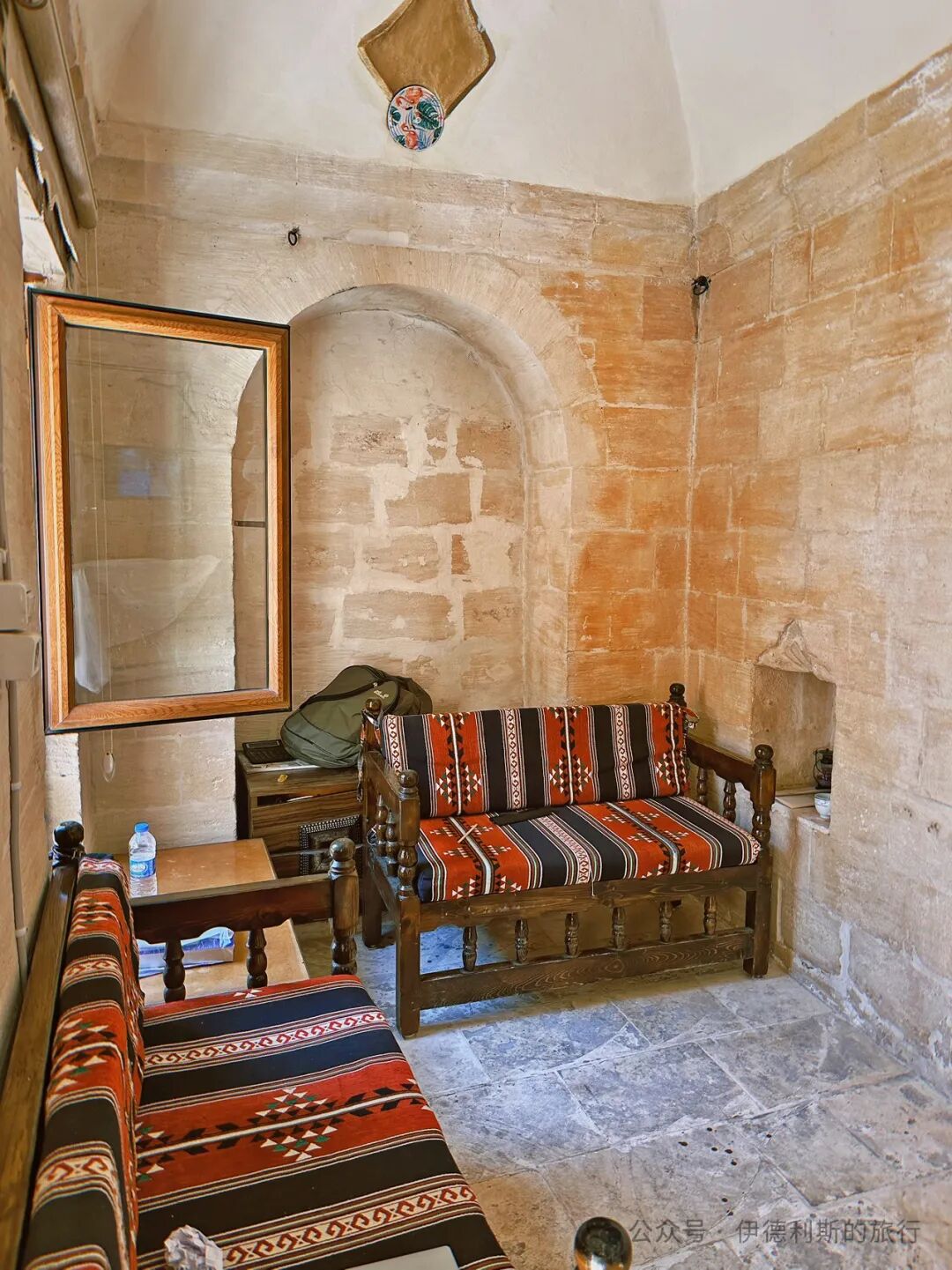
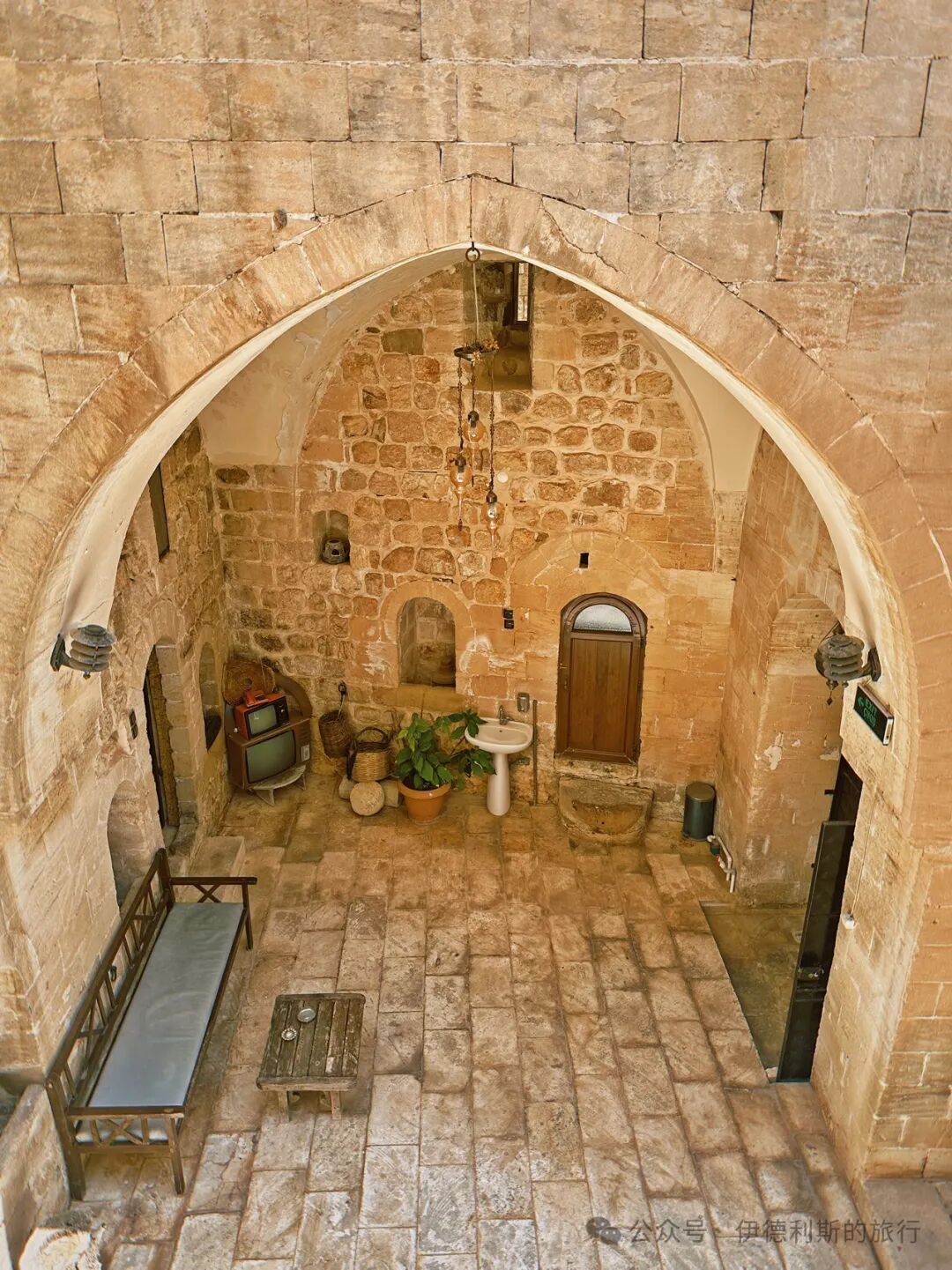
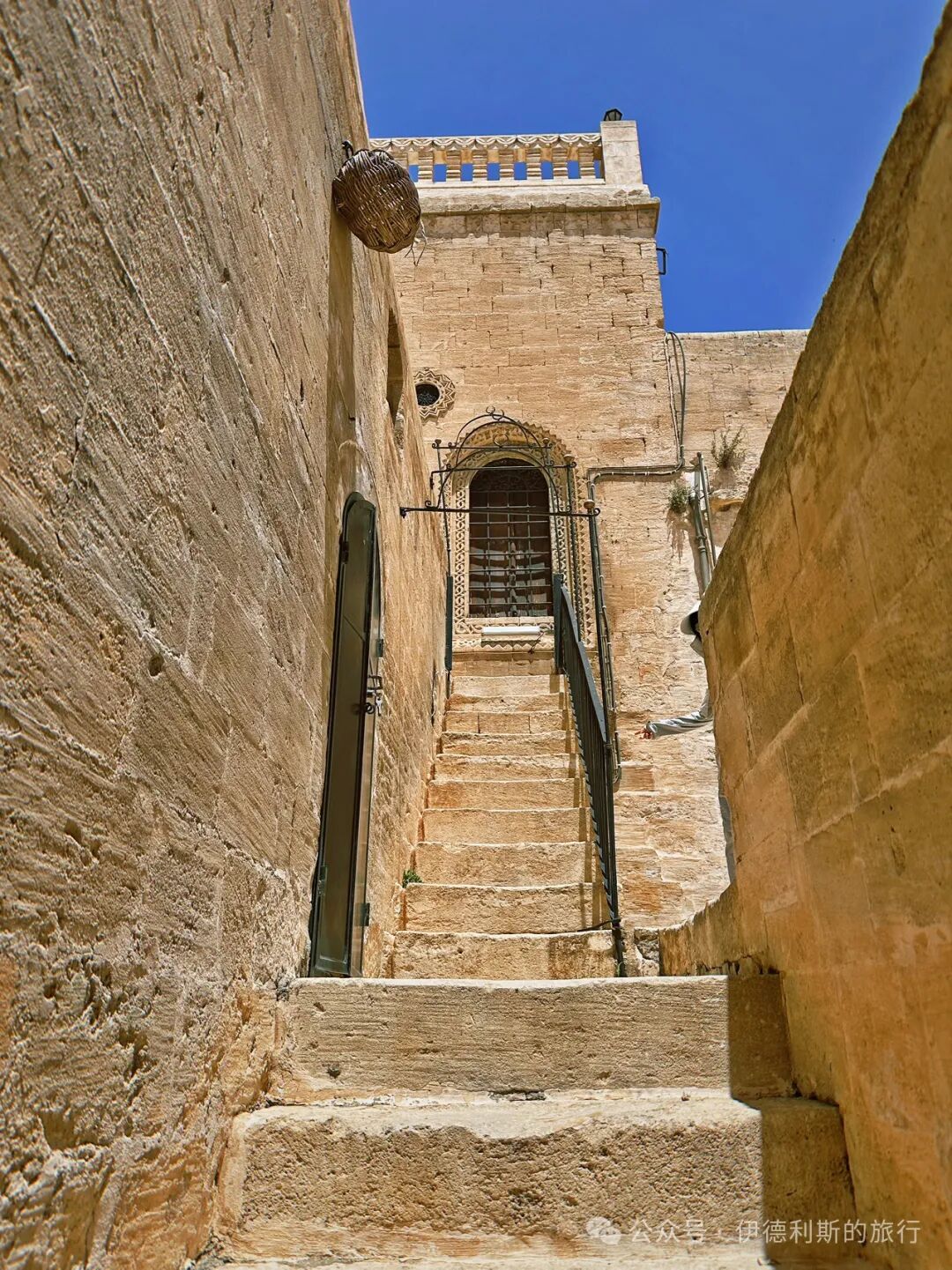
Gamaleya Boutique Hotel in Cairo, Egypt.
As a cultural metropolis with a history of over a thousand years and hundreds of historical sites, the ancient city of Cairo was listed as a World Cultural Heritage site as early as 1979. However, due to the noisy environment, traffic congestion, and worrying sanitary conditions, it seems that not many Chinese tourists are willing to explore it deeply, except for the Khan el-Khalili market which specializes in tourist souvenirs. I stayed in the old city of Cairo for four days this time and basically visited all the various mosques, shrines (gongbei), religious halls (daotang), mansions, inns, and madrasas in the city.
To make it easier to walk around the old city, I started looking for suitable accommodation online. Most tourists visiting Cairo choose to stay in the embassy district where the environment is a bit better, as there are almost no places suitable for tourists to stay inside the old city. However, I still managed to find the Gamaleya Heritage Hotel, which only opened in 2021.
The owner of Gamaleya, Ibrahim Kassissia, has had his family living here since the 1930s. He moved to Canada 40 years ago, but during a trip to China, he got the idea to return to his hometown to open a heritage hotel. He later bought back the long-abandoned old house and turned it into the hotel it is today.
The first floor of the hotel is a cultural workshop where master craftsmen in silver, copper, wood, and leather work and teach apprentices. Every morning when we head out, we see a group of students learning diligently from the masters. The second floor is where breakfast is served. It is a semi-buffet style where food is made fresh to order every morning based on what guests want. The third floor and above are the guest rooms. While the accommodations aren't as fancy as a big hotel, they are definitely a great choice for visiting Cairo's old city.
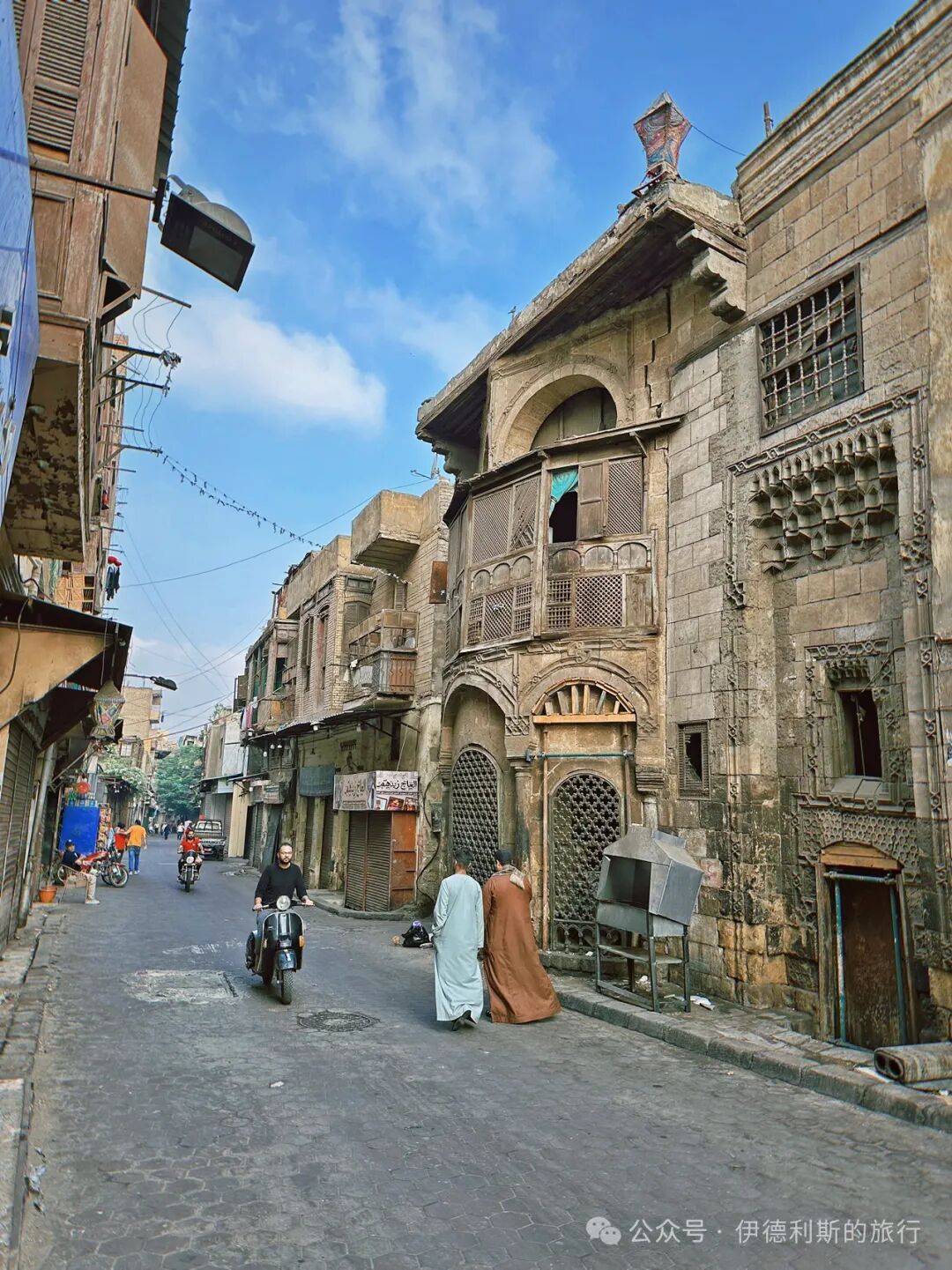
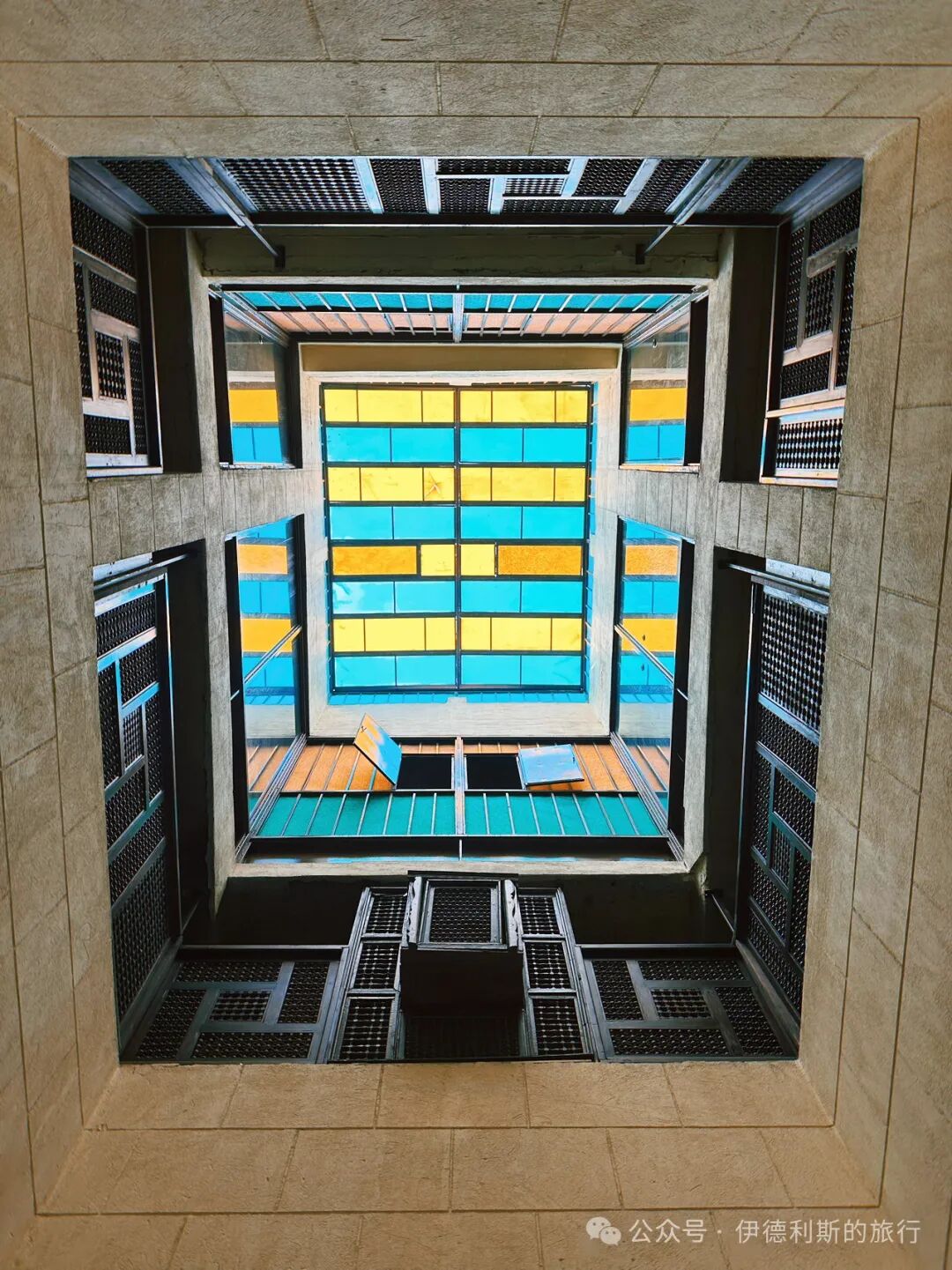
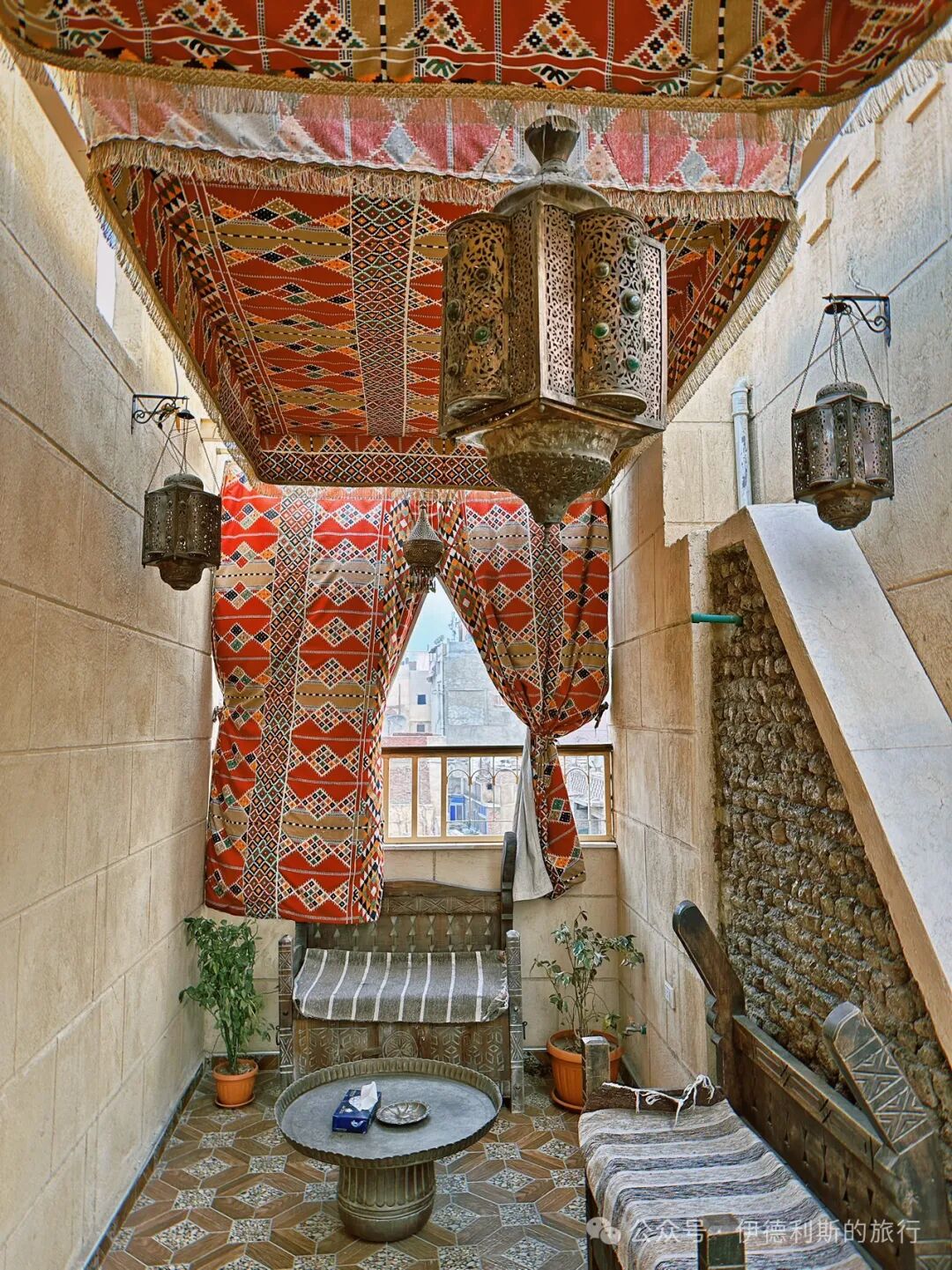
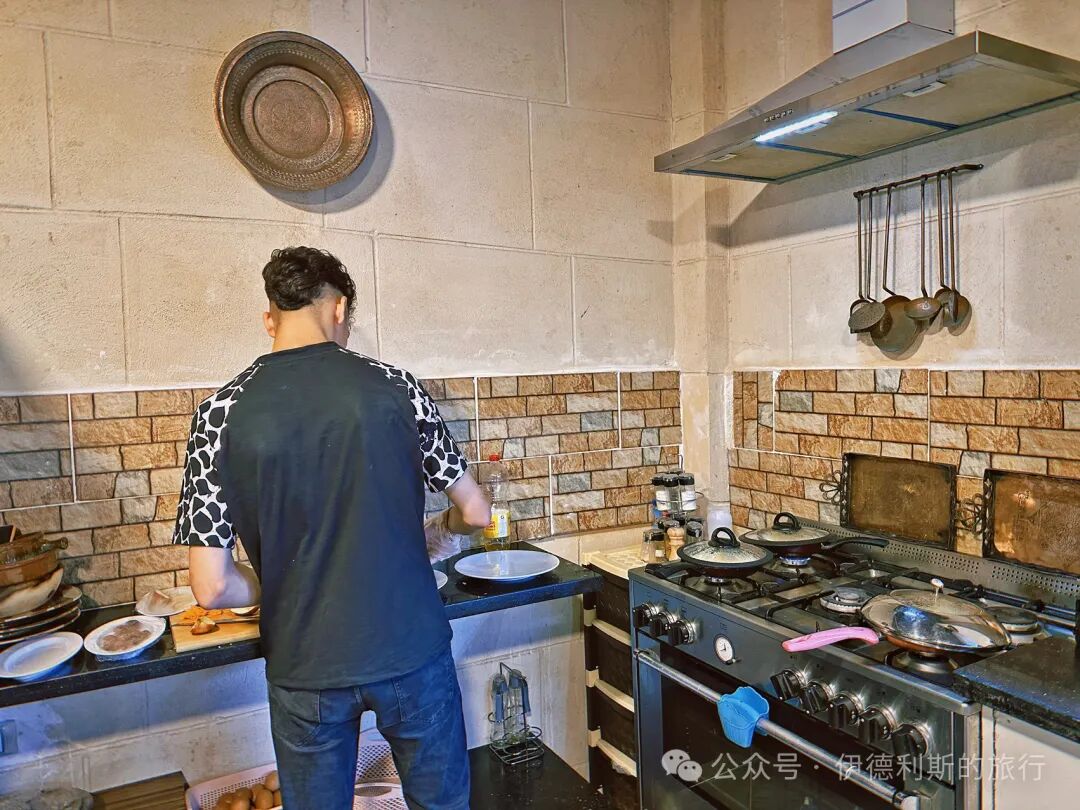
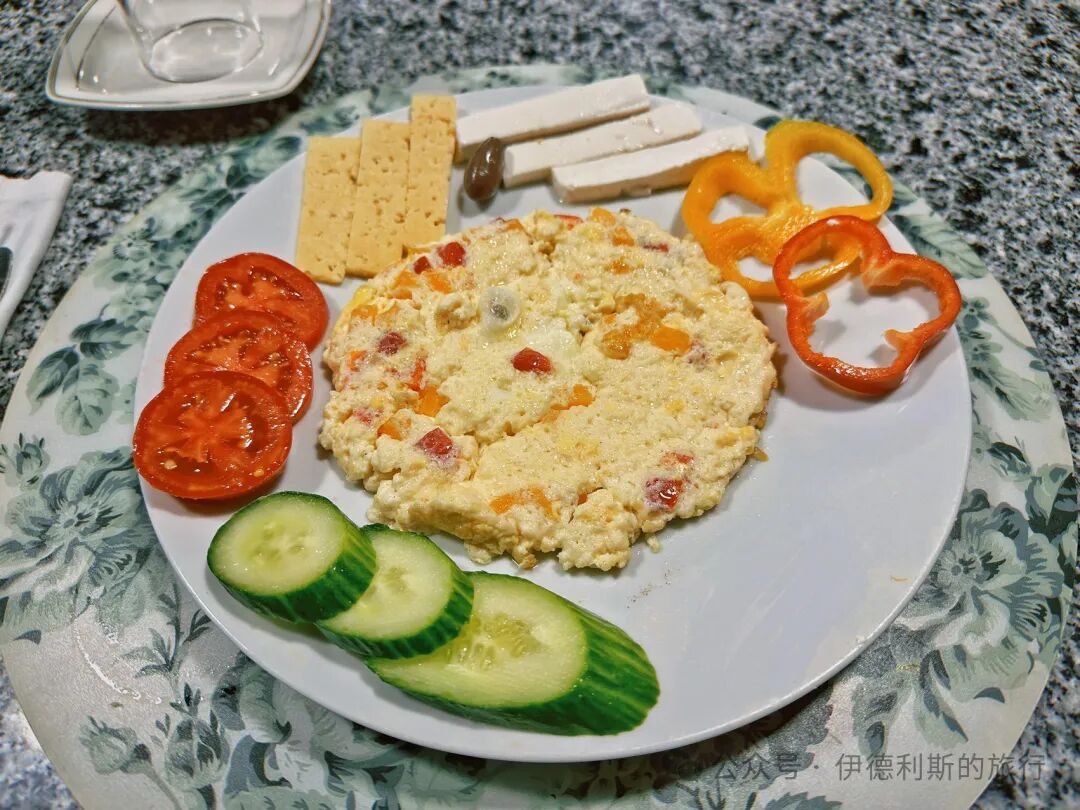
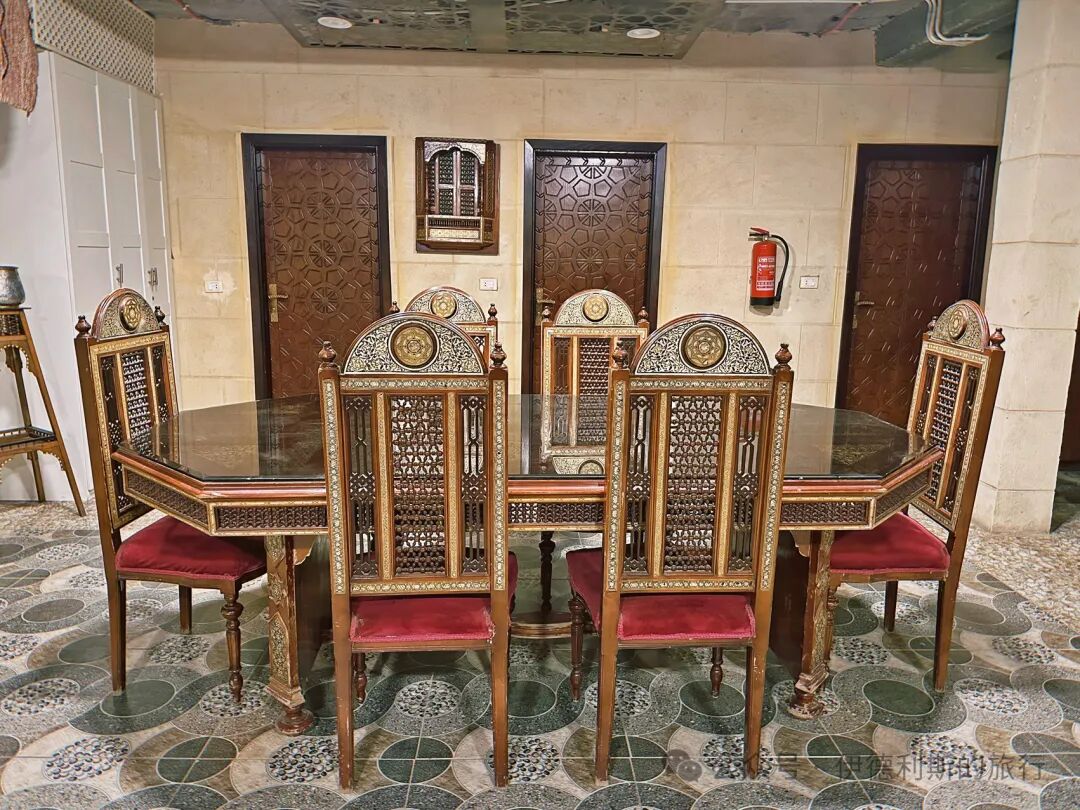
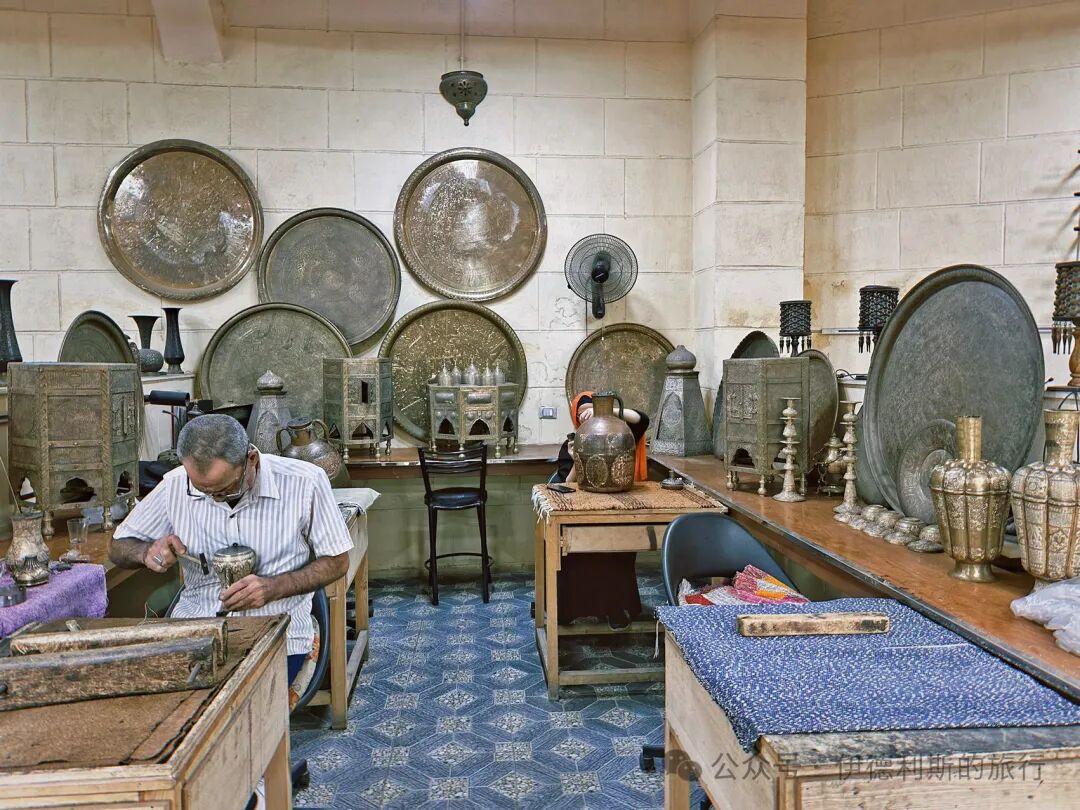
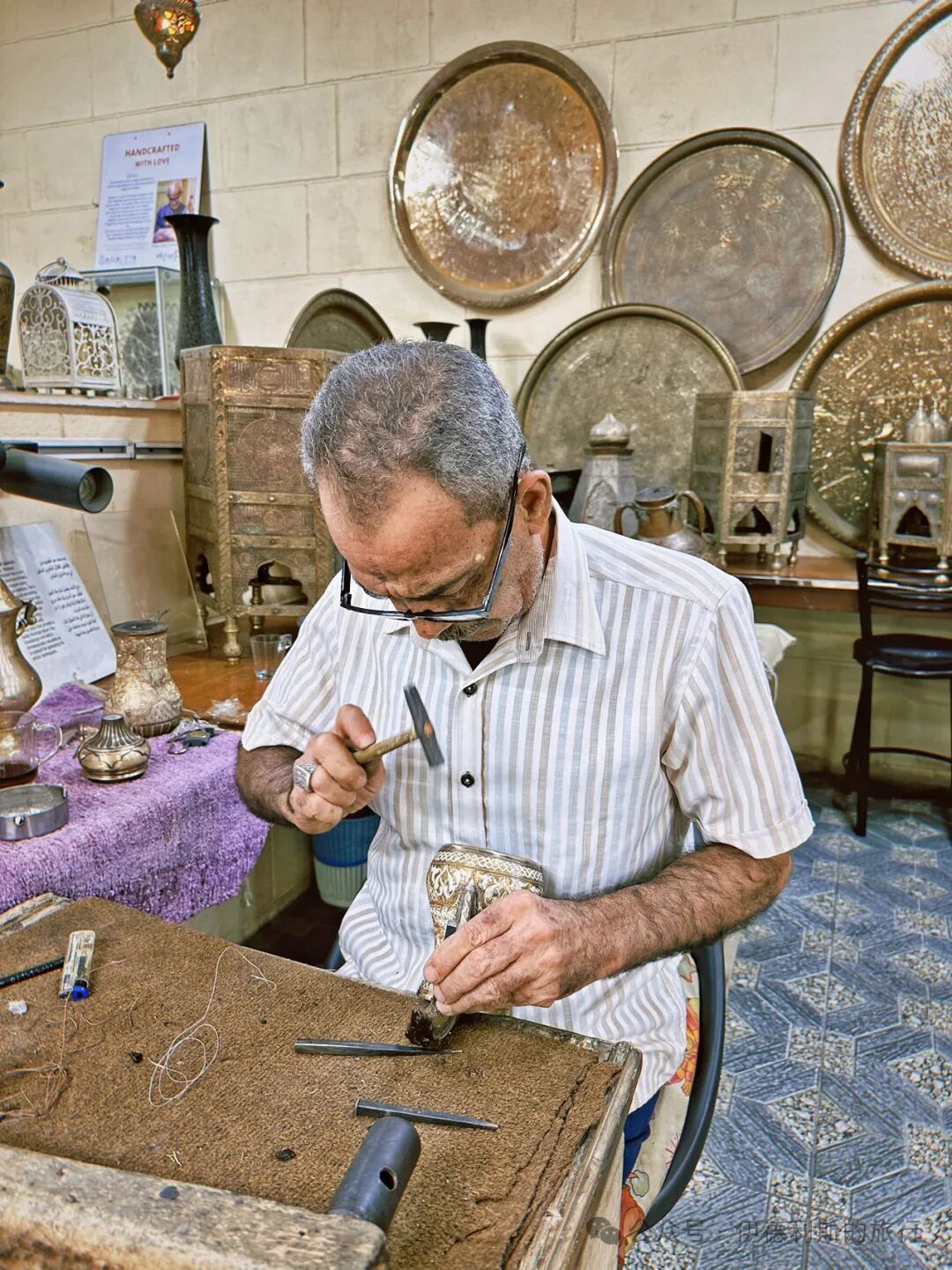
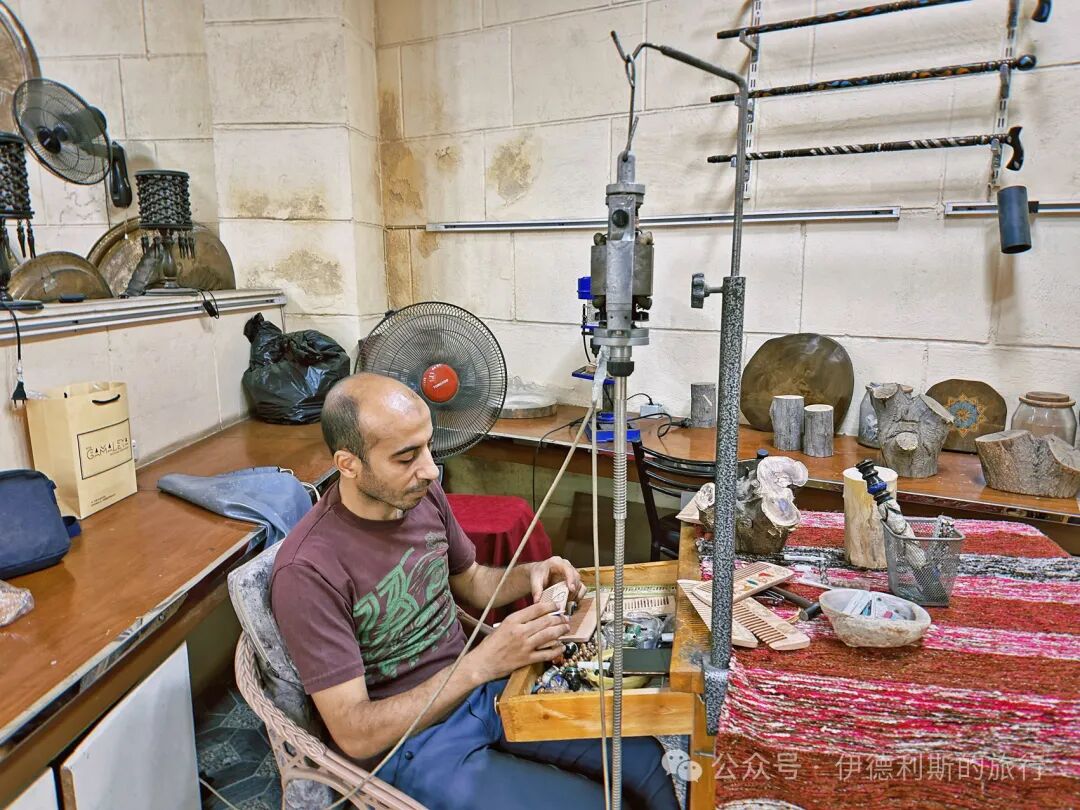
Komil Hotel in Bukhara, Uzbekistan.
In the ancient city of Bukhara, Uzbekistan, I stayed at the Komil Hotel, which is recommended by Lonely Planet. The hotel is in an alley in the center of the old city. It is a wealthy merchant's house built in the 19th century. Komil's grandfather bought it 50 years ago, and it opened as a hotel in 2000. The owner, Komil Kadirov, speaks fluent English and is very welcoming to guests.
The hotel still keeps the wood carvings and paintings of traditional 19th-century Bukhara architecture. My room was partially renovated, but the dining room where we ate breakfast is perfectly preserved. It feels like traveling back to 19th-century Bukhara. Their breakfast is very generous. Even for one person, they fill the whole table, which made me feel a bit embarrassed. Breakfast was a real highlight of my trip to Uzbekistan. Almost every hotel prepares more than ten dishes. They always ask if you want boiled or fried eggs, and black or green tea. The service is truly excellent.
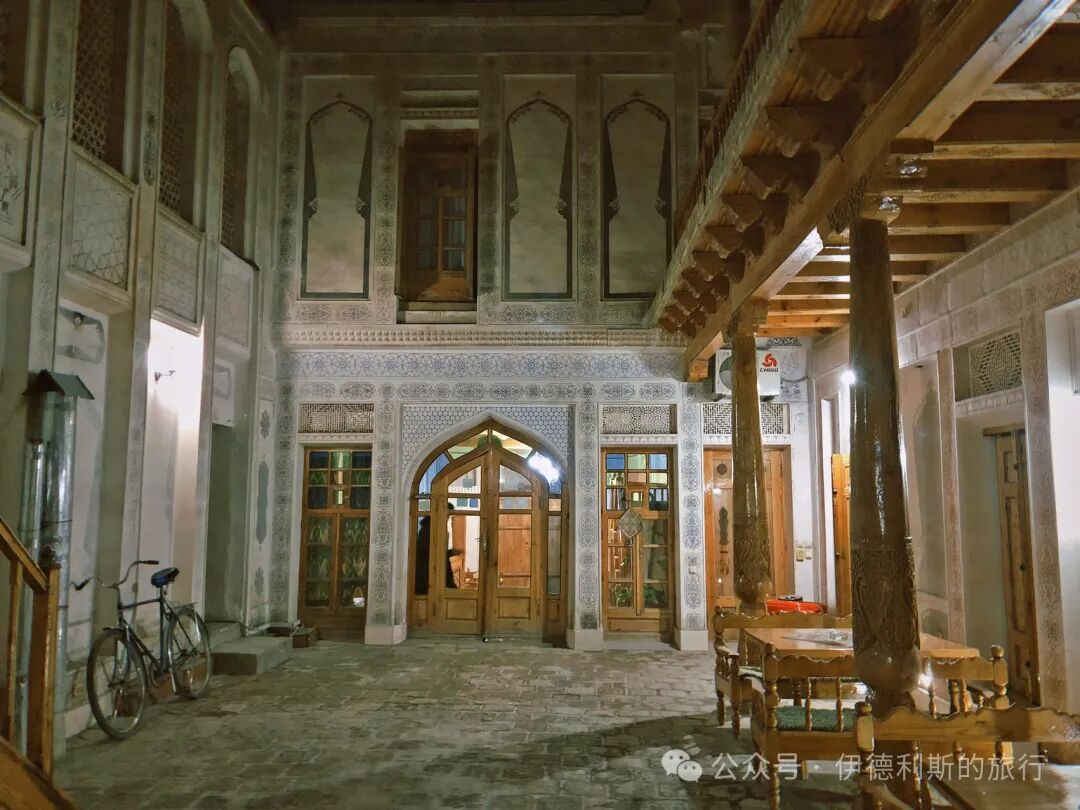
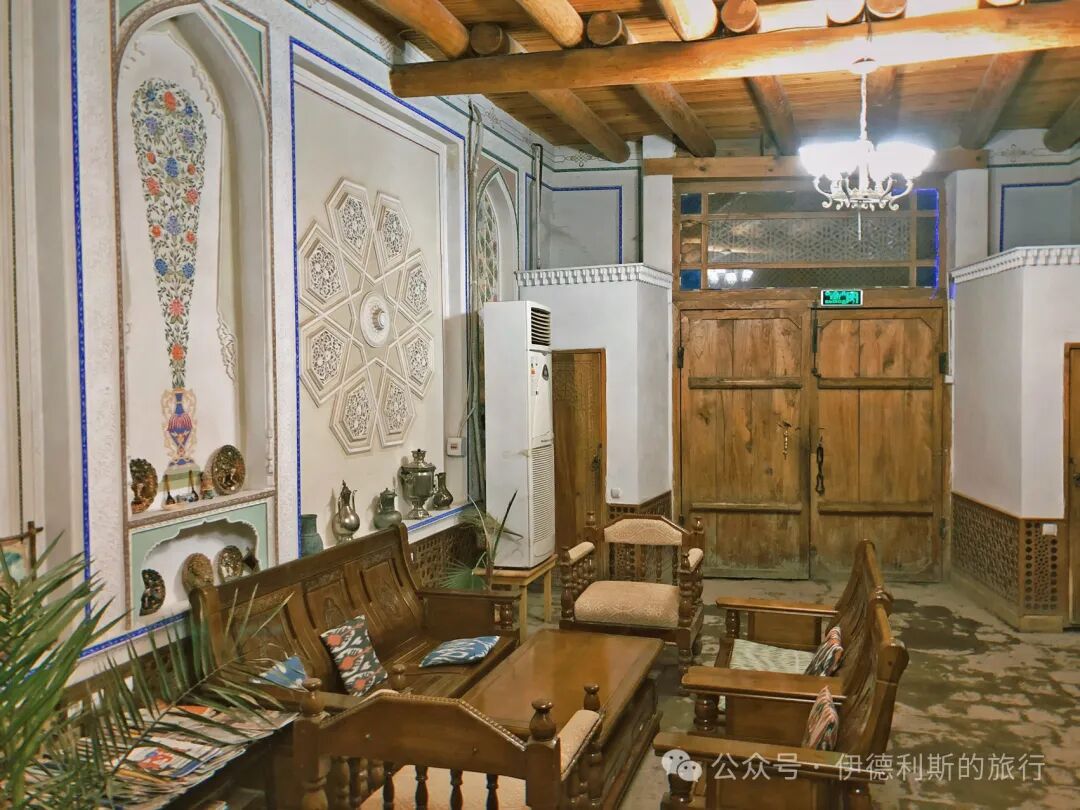
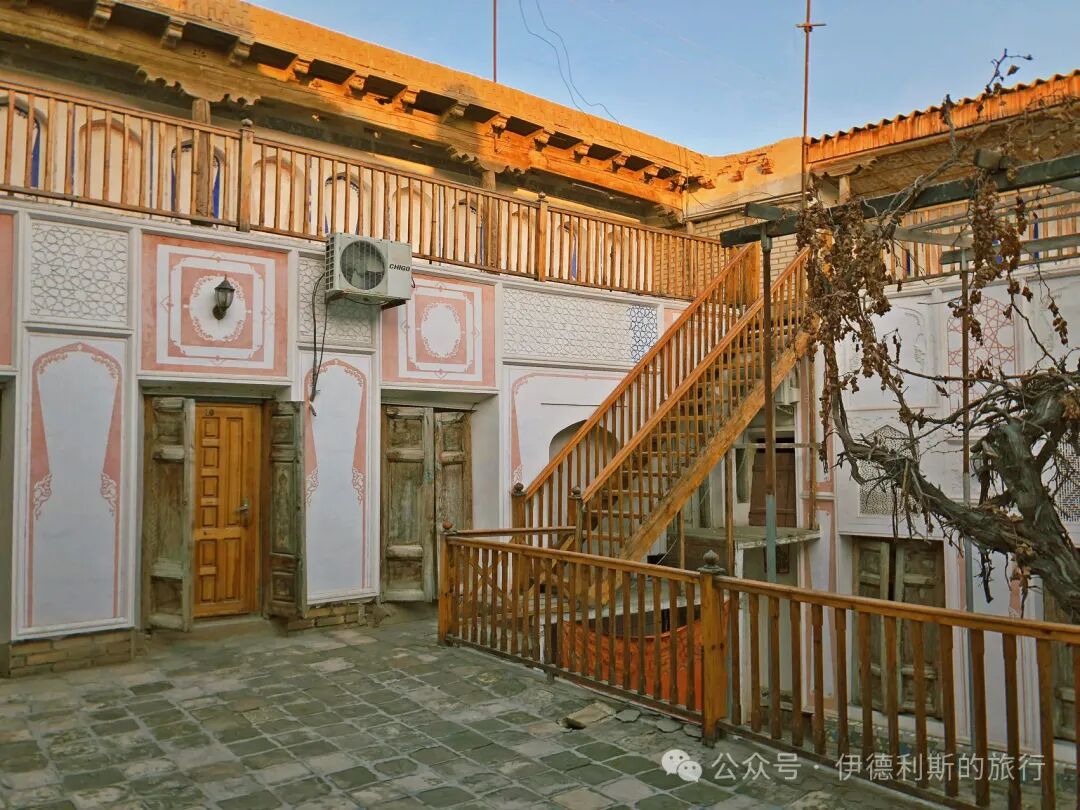
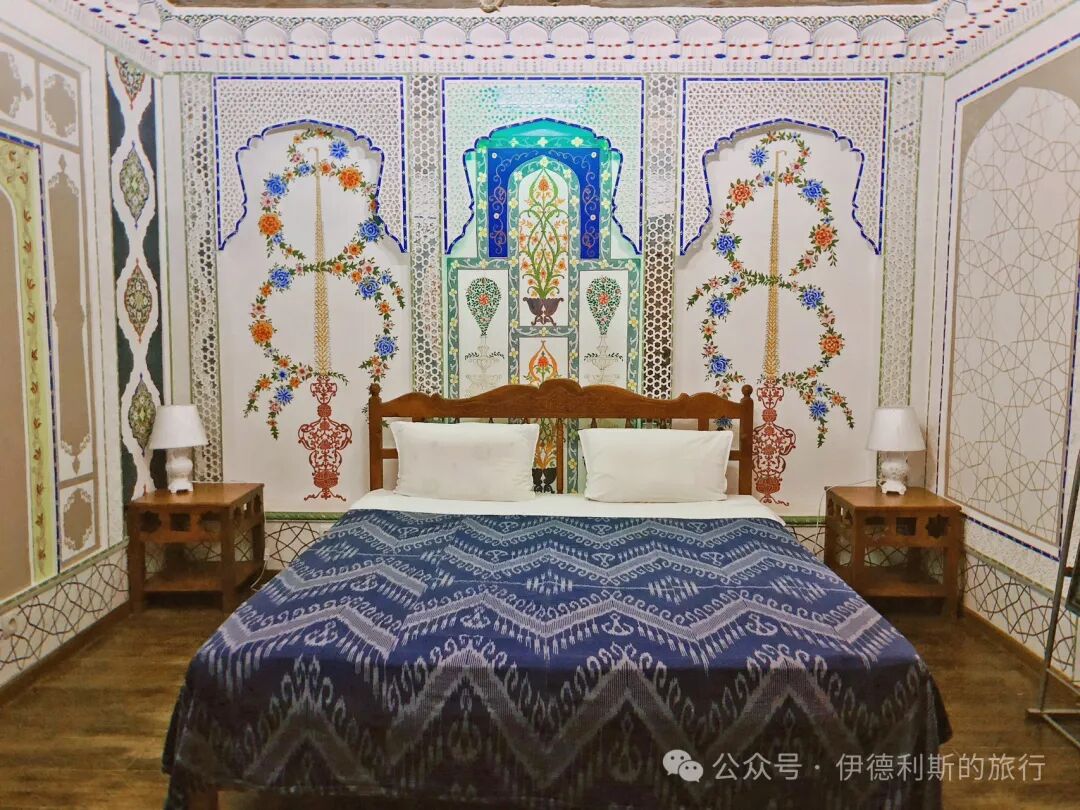
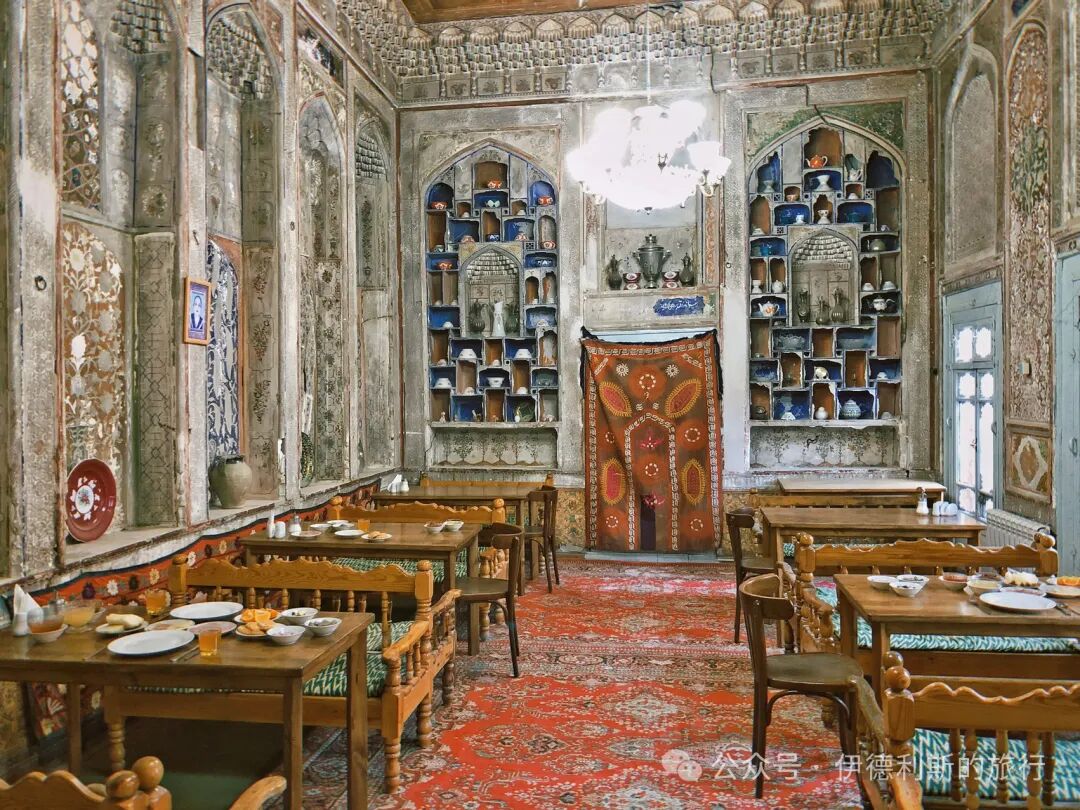
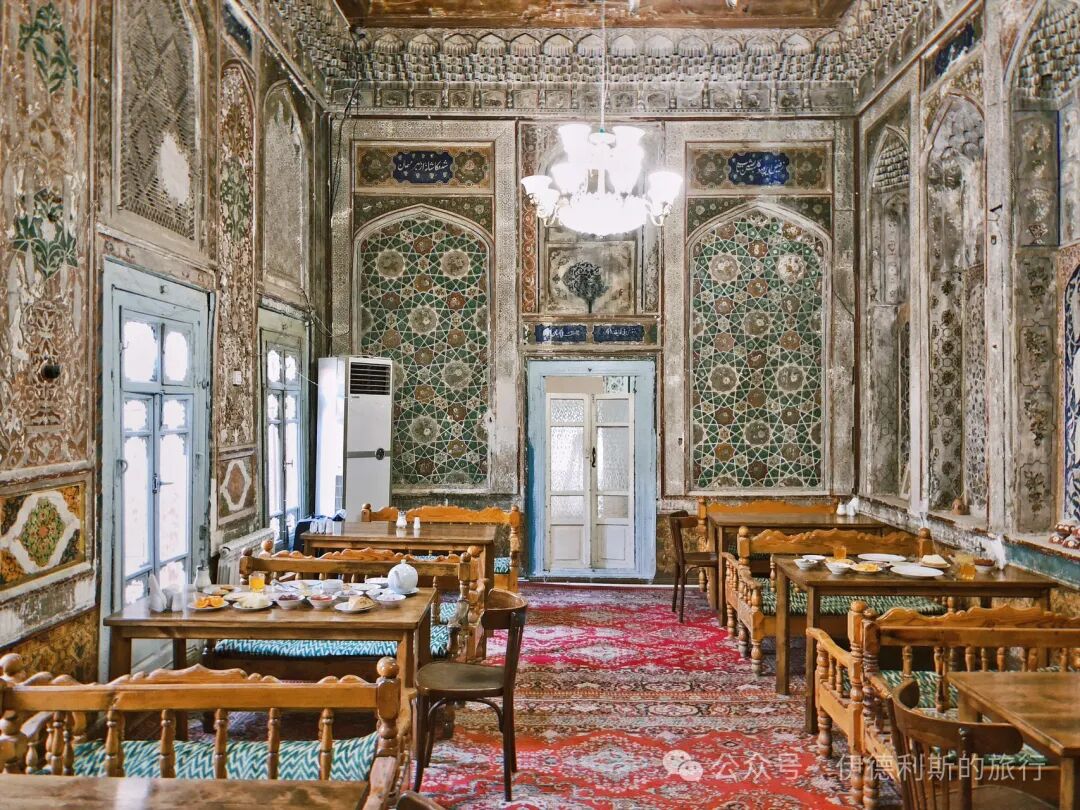
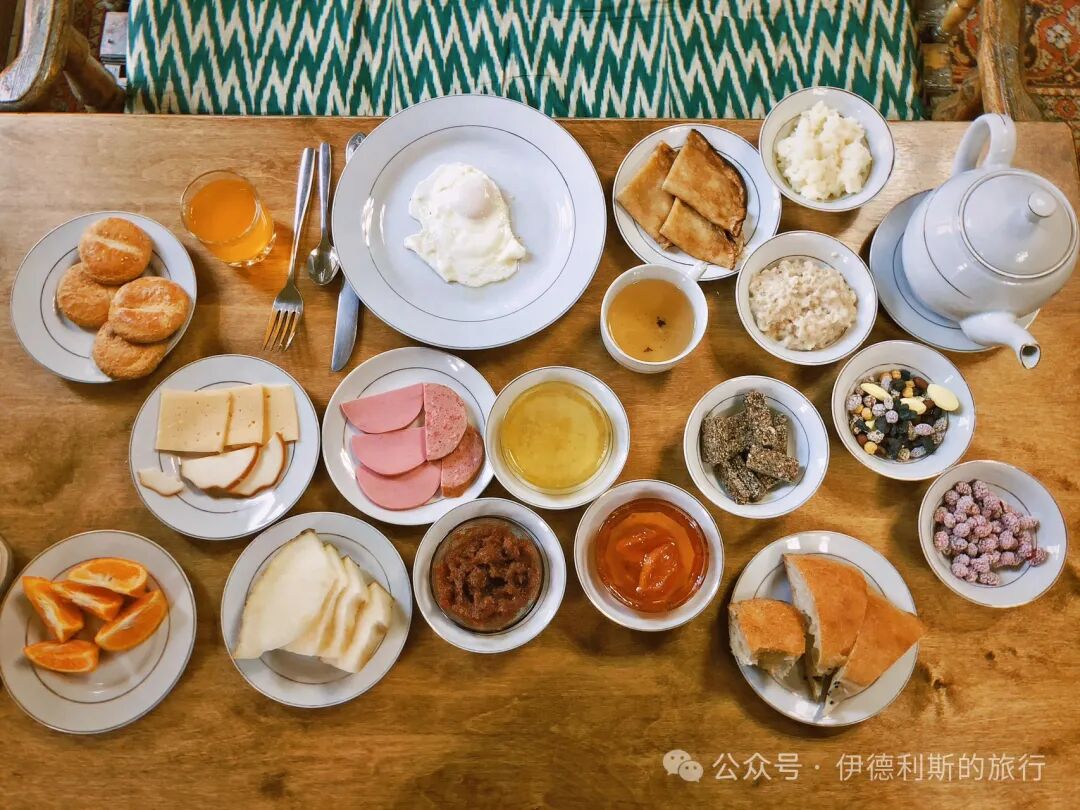
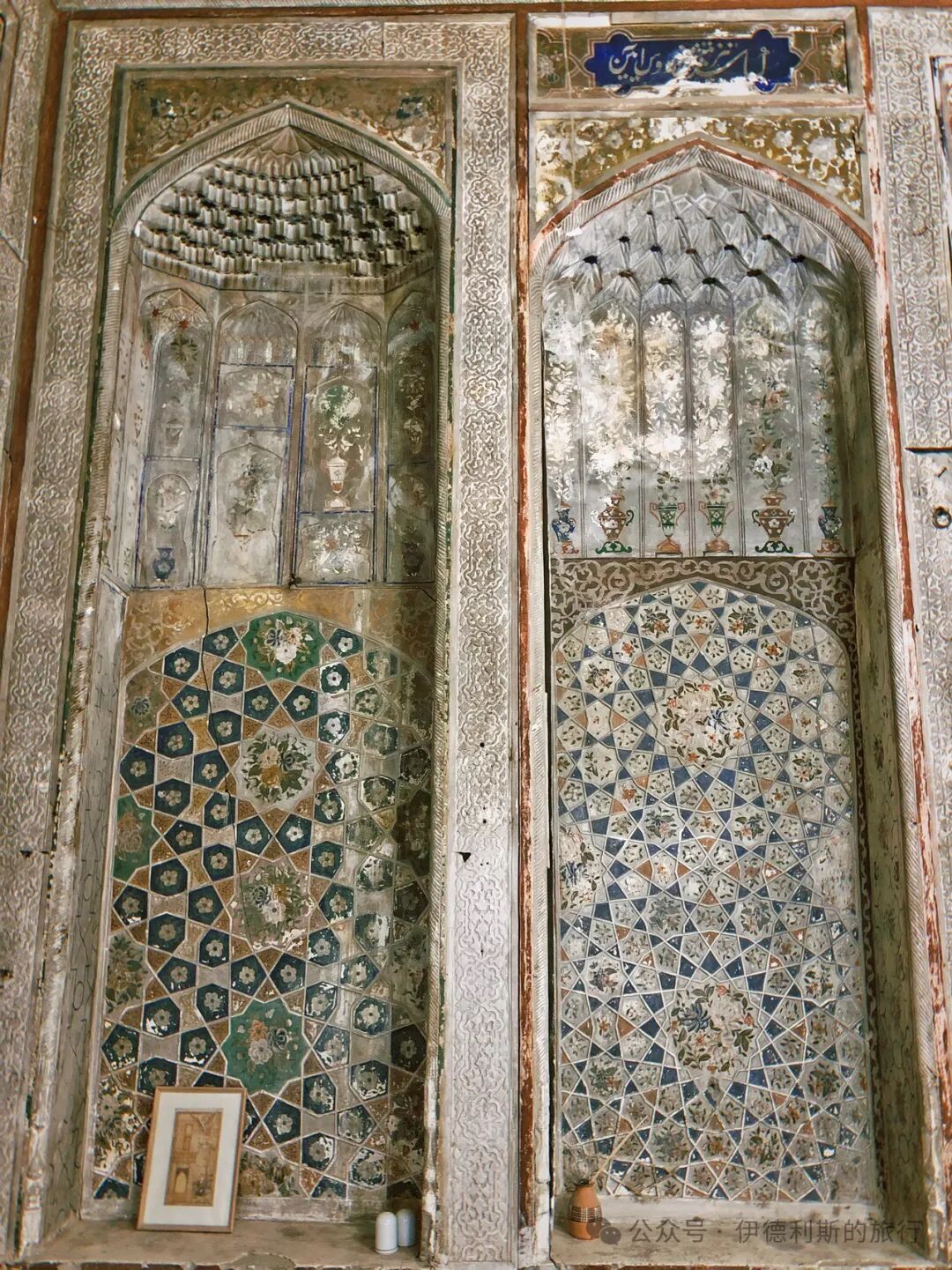
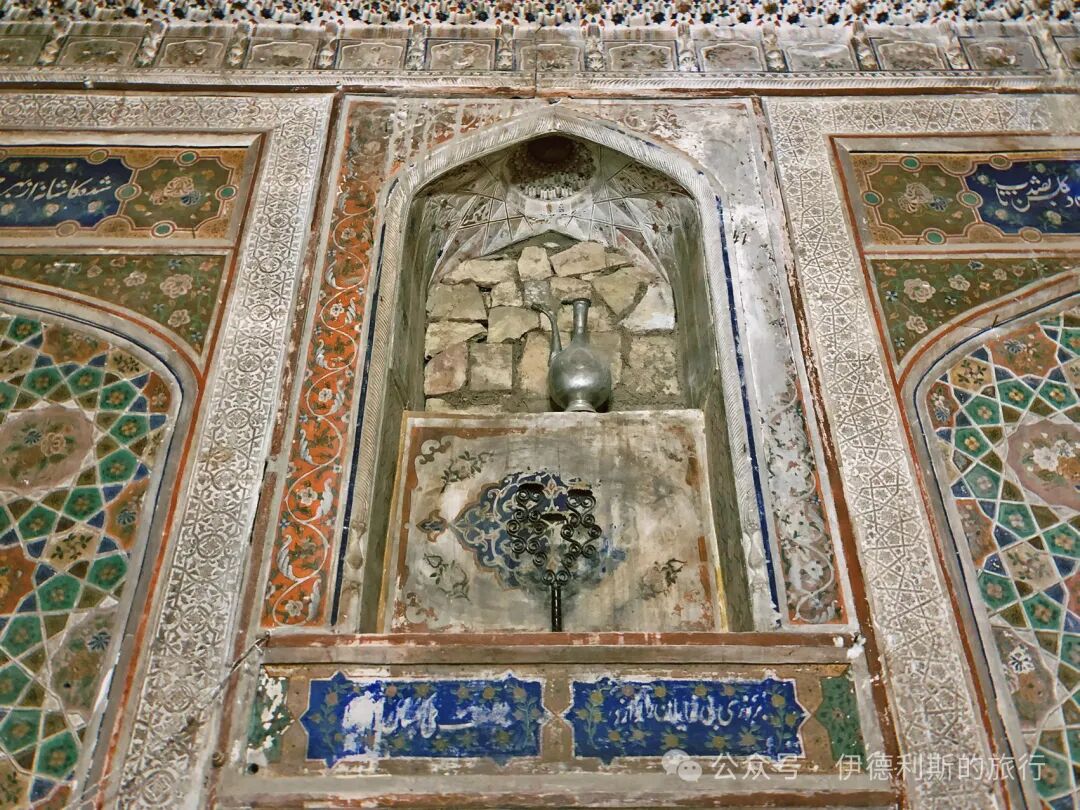
Bahitgul Boutique-Hotel in Bakhchysarai, Crimea (Russian-occupied).
Bakhchisaray is an ancient mountain city on the Crimean Peninsula. It was the capital of the Crimean Khanate from 1532 to 1783 and is the cultural center of the Crimean Tatars. In May 1944, Stalin deported all 240,000 Crimean Tatars from the Crimean Peninsula to Uzbekistan and other remote regions. For nearly half a century after that, there were almost no Tatars on the Crimean Peninsula.
After 45 years of struggle by the Crimean Tatars, the Soviet Union finally declared the deportation illegal in 1989, and the Crimean Tatars finally gained the right to return to their homeland. Today, 250,000 Crimean Tatars have returned to the Crimean Peninsula, working hard to rebuild their lives, overcome social and economic obstacles, and keep their culture alive.
The hotel where I stayed in Bakhchysarai, Bahitgul Boutique-Hotel, is a beautiful traditional Crimean Tatar house. They serve traditional Crimean Tatar food, so I ate breakfast at my accommodation most days. The view while eating there is also excellent, as you can look out over the entire ancient capital.
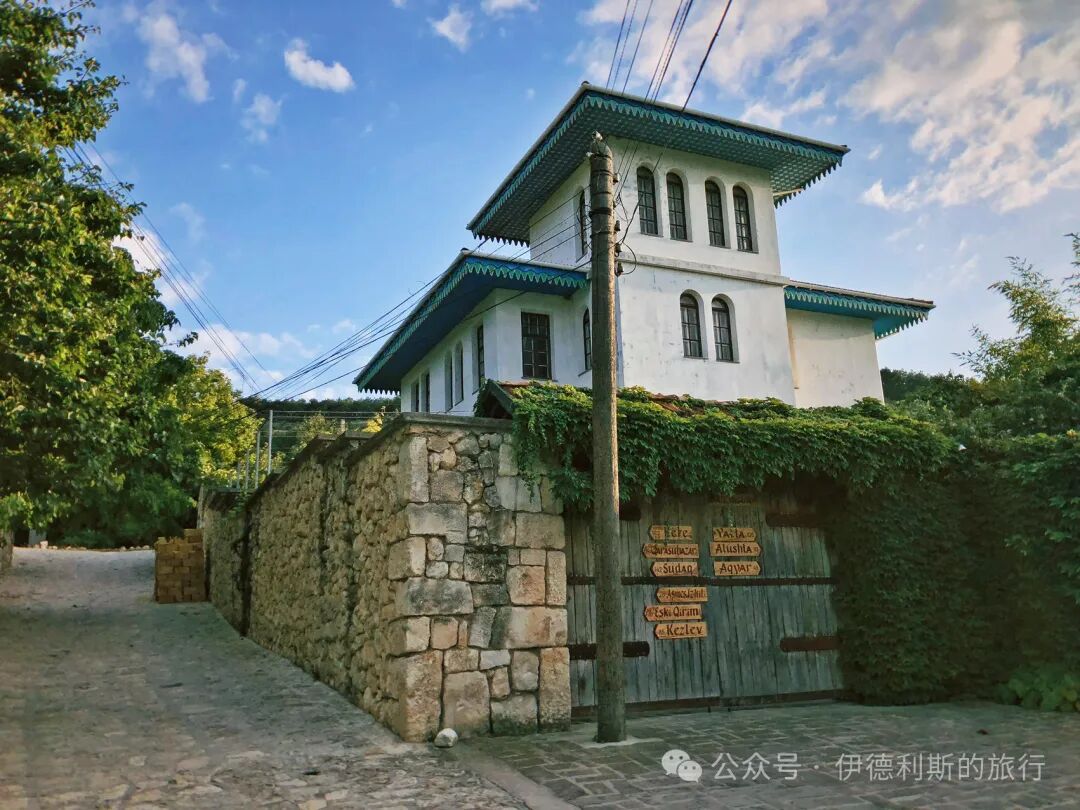
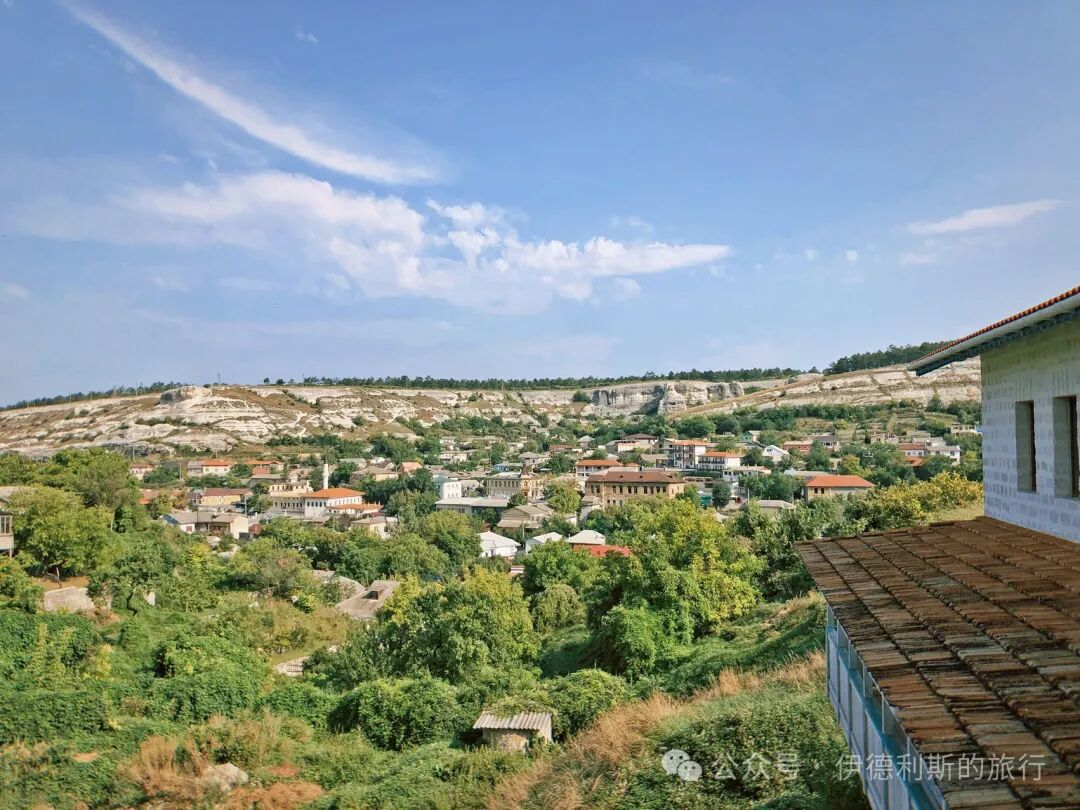
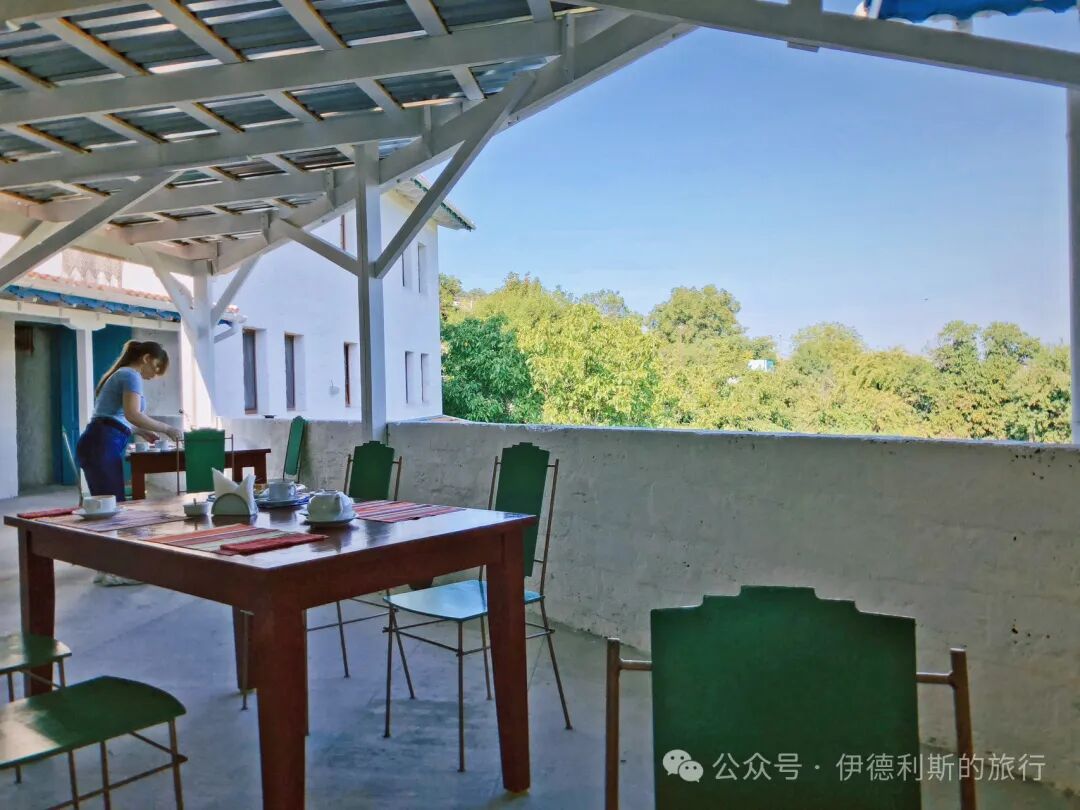
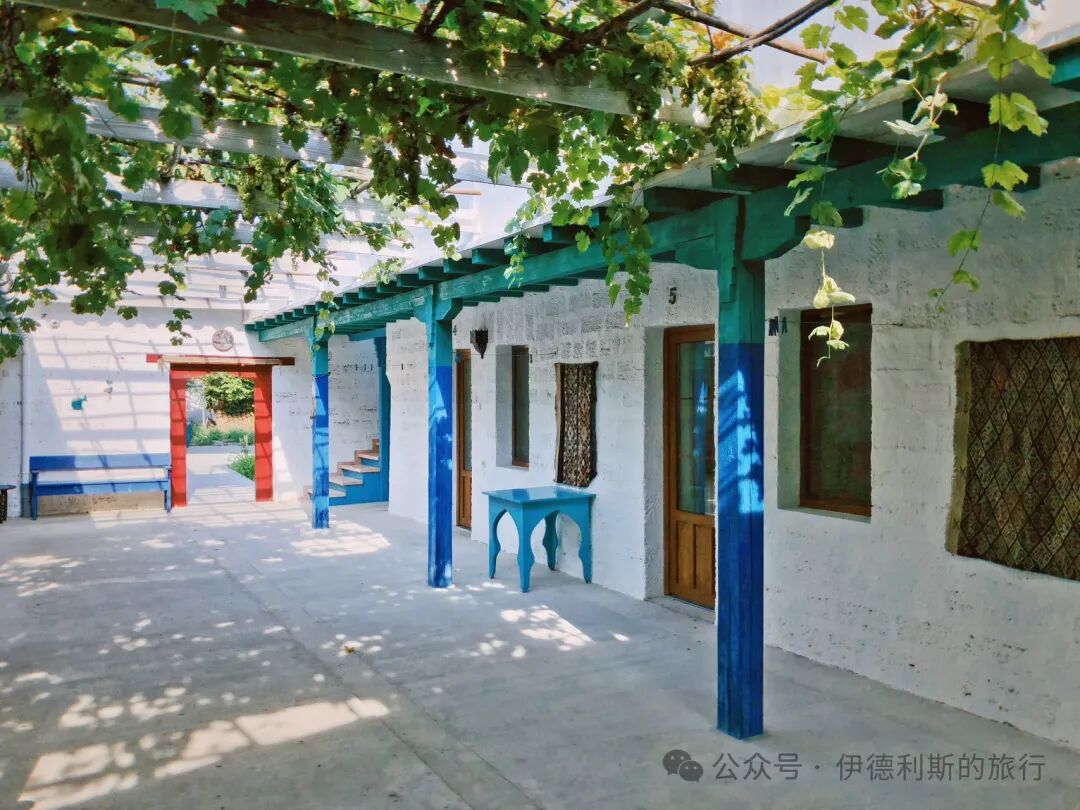
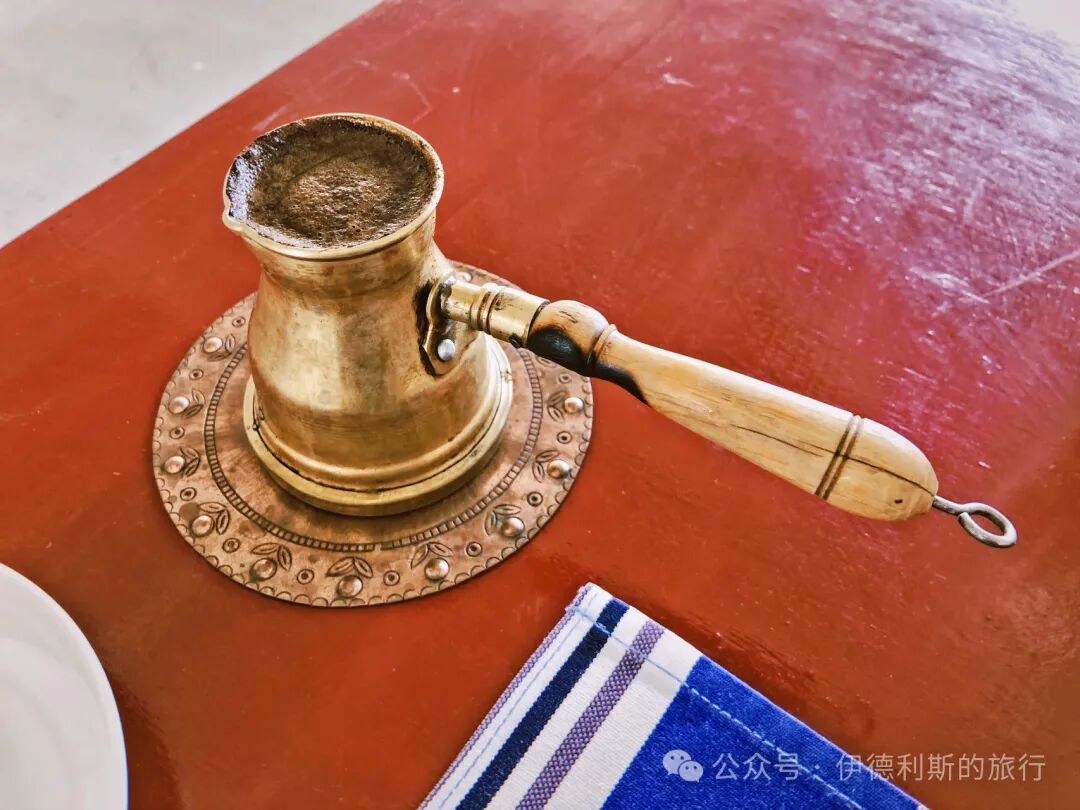
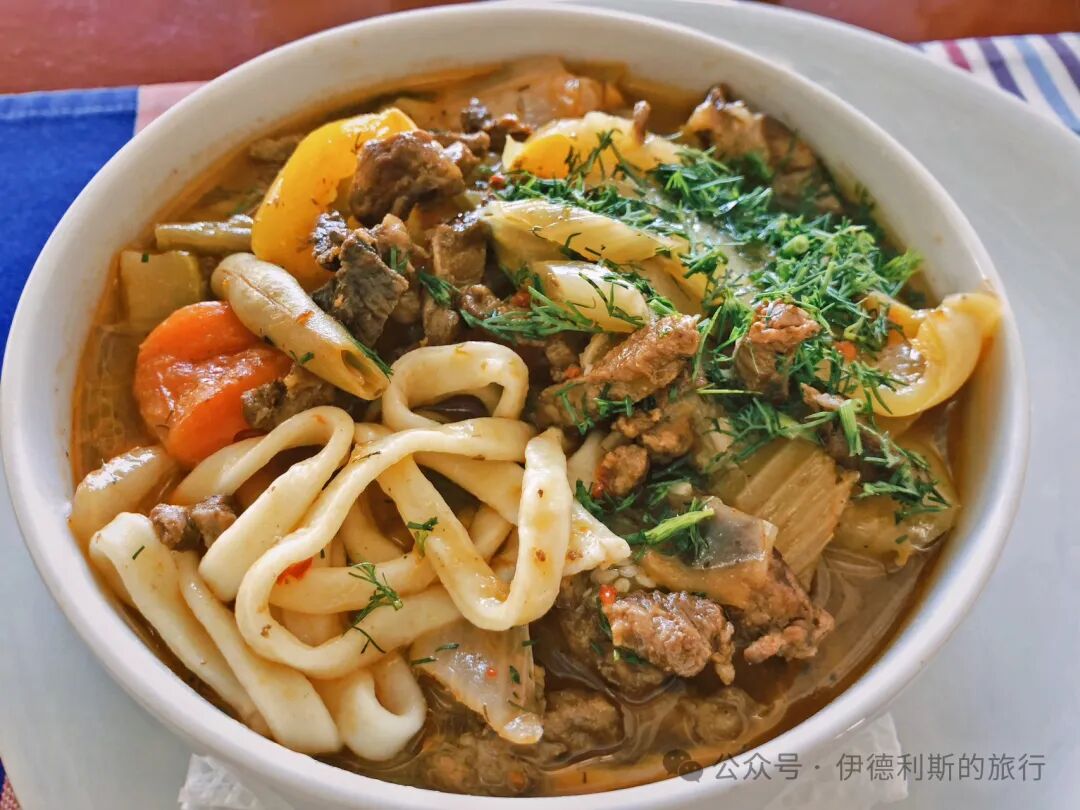
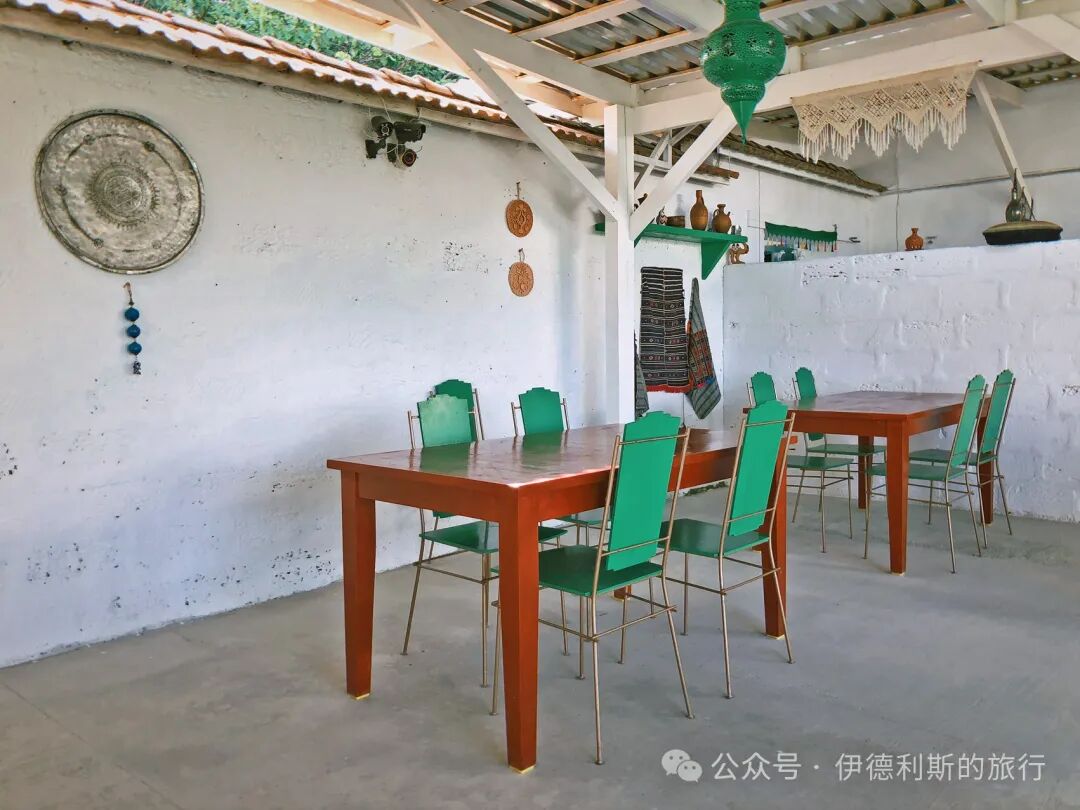
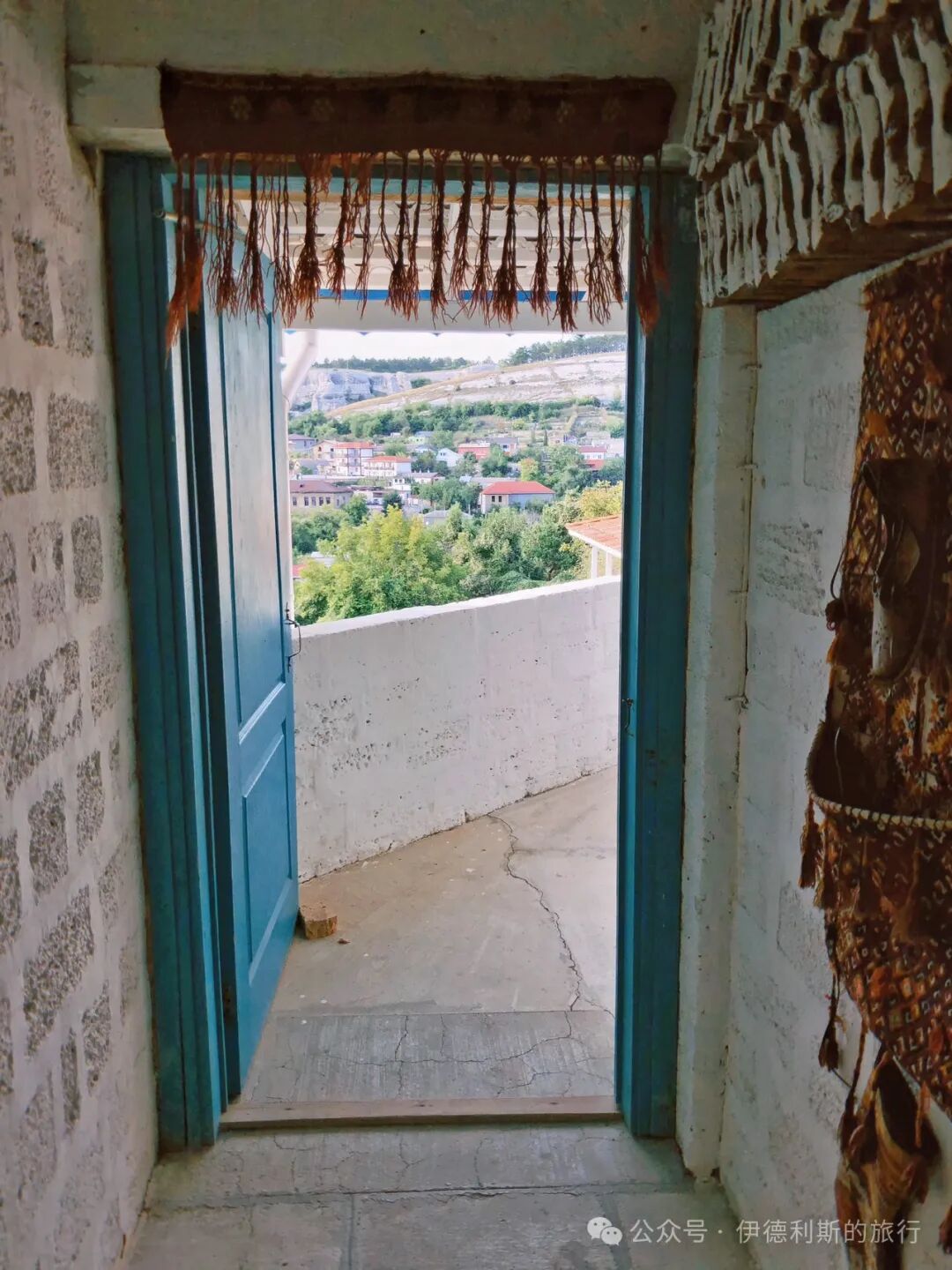
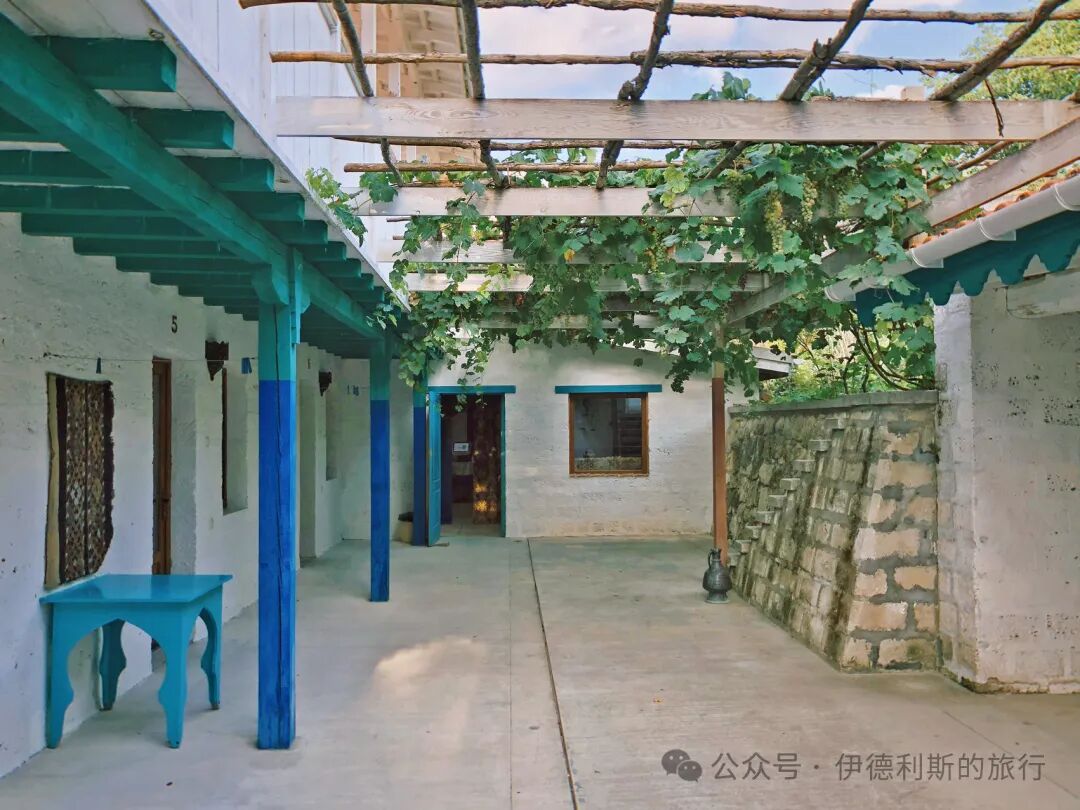
Tatarskaya Usadba in Kazan, Russia.
As the former capital of the Kazan Khanate, the city of Kazan was completely destroyed after being captured by Ivan the Terrible in 1552. In 1556, the Russians built a new city of Kazan. Only Russians were allowed to live inside the city, so the Tatars settled by Lake Kaban to the southwest, which gradually became the Old Tatar Quarter.
The early Old Tatar Quarter was made of wooden houses, which caught fire very easily. During the reign of Catherine the Great (1762-1796), the city of Kazan was rebuilt with brick and stone, which gradually created the look of the current Old Tatar historical district.
Although part of the Old Tatar Quarter was turned into an industrial zone during the Soviet era, the historical district still covers 88 hectares today. It preserves 75 historical buildings from the 18th to 20th centuries, including mosques in the traditional Tatar style, estates of wealthy Tatar merchants, and theaters.
I stayed in a traditional Tatar estate by Lake Kaban this time, which was originally the home of 19th-century Tatar merchant Khamit Sabitov. The estate offers both lodging and meals. Since I did not book their dinner in advance, I only had breakfast, which was also in the traditional Tatar style.
I tasted a Tatar specialty meat pie (bekken), which is made with sour cream dough and filled with cabbage and eggs. I also ate a cake with frosting and Eastern European stuffed buns (pirozhki).
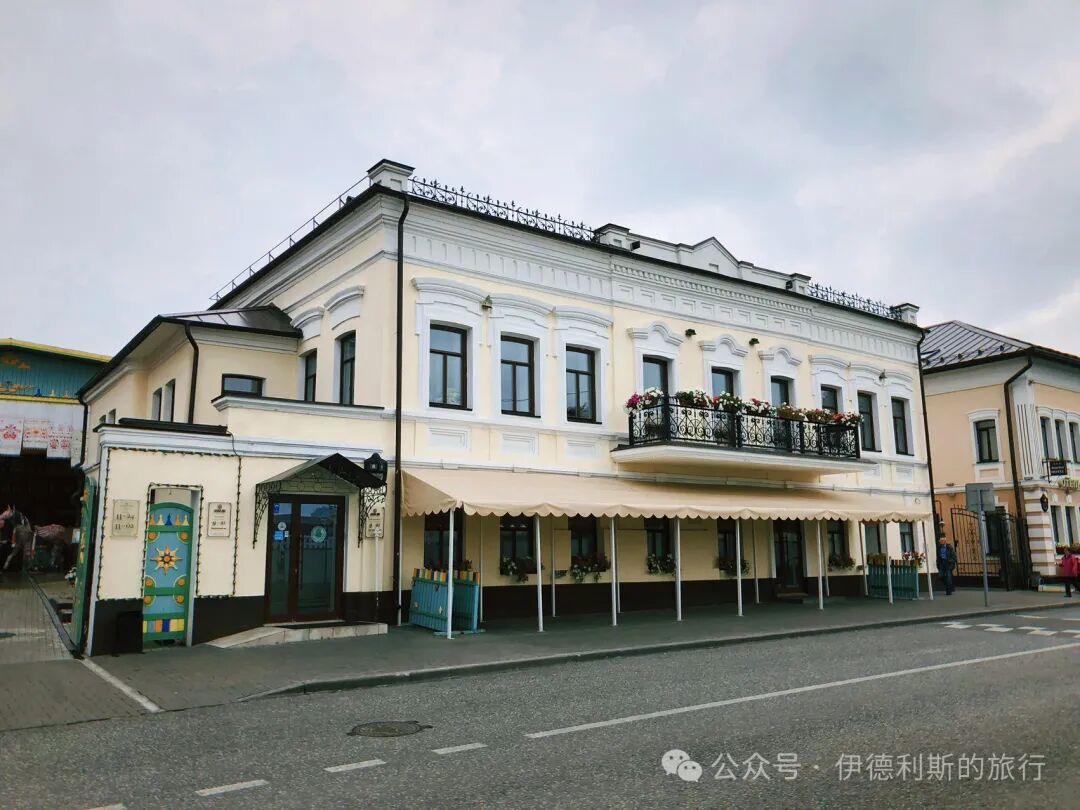
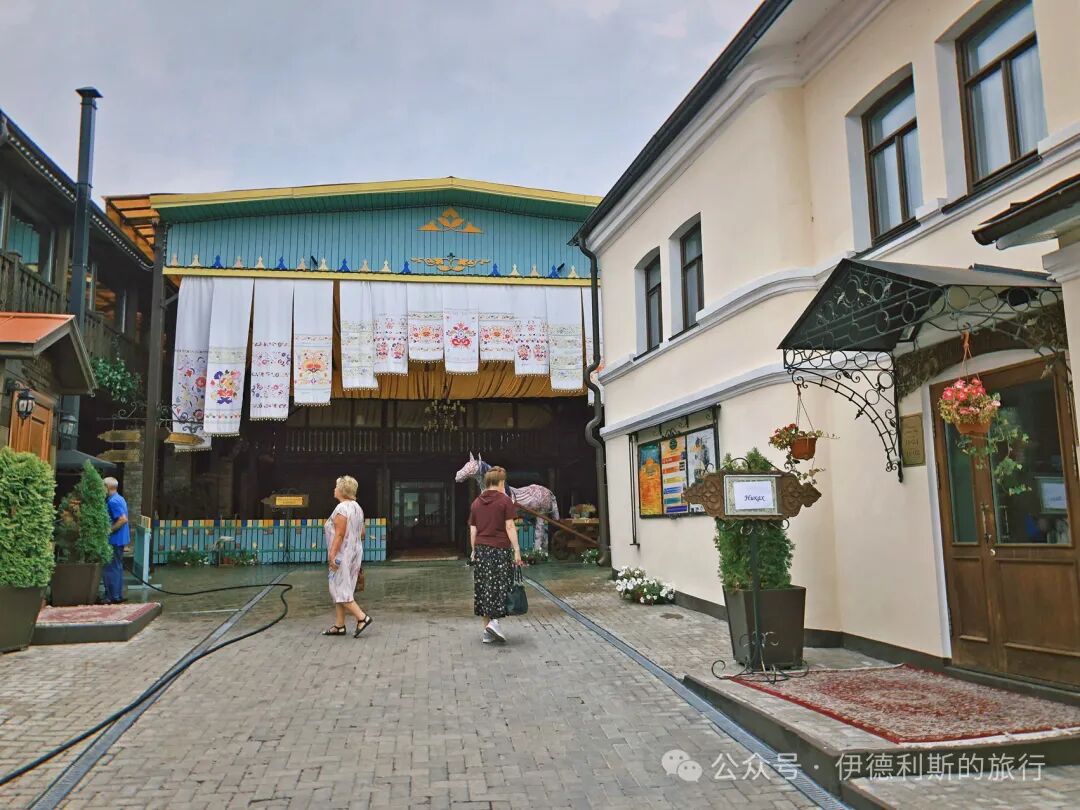
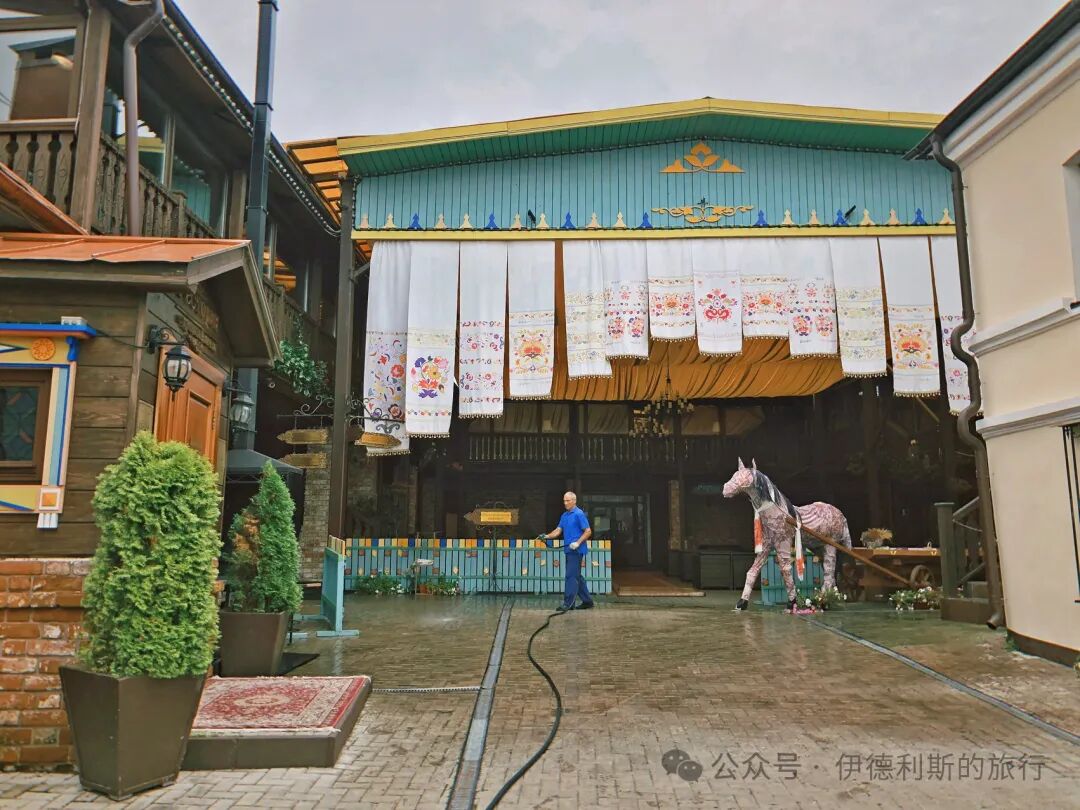
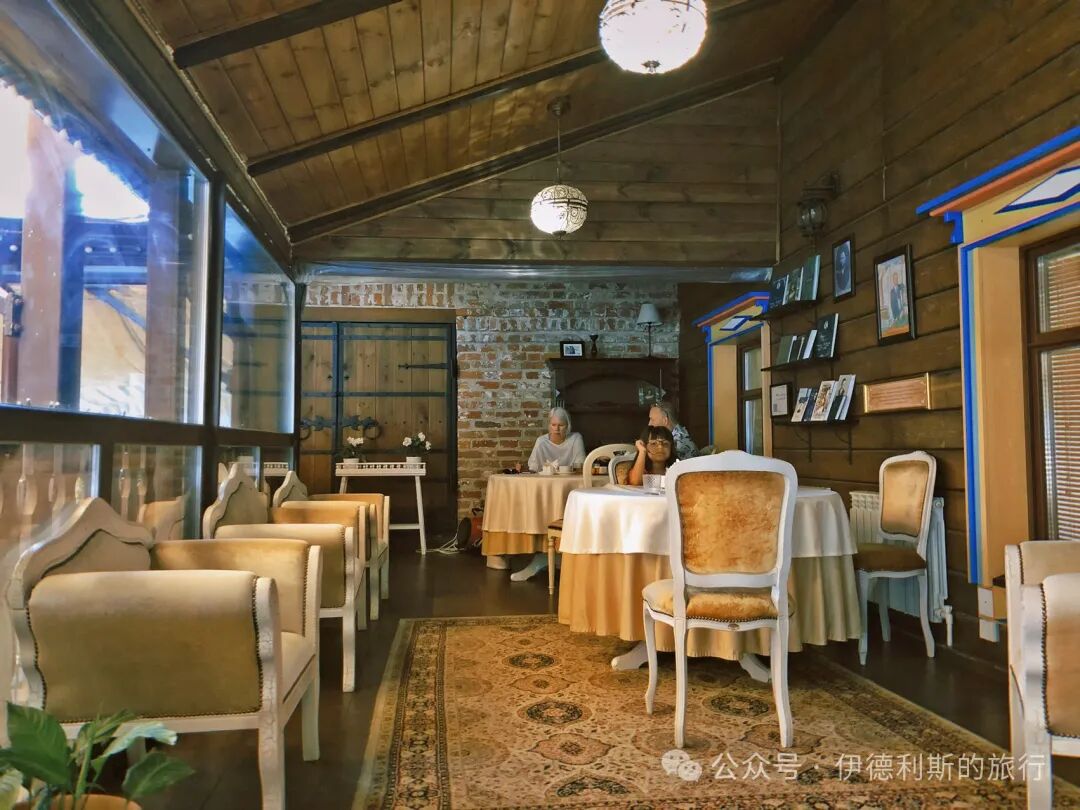
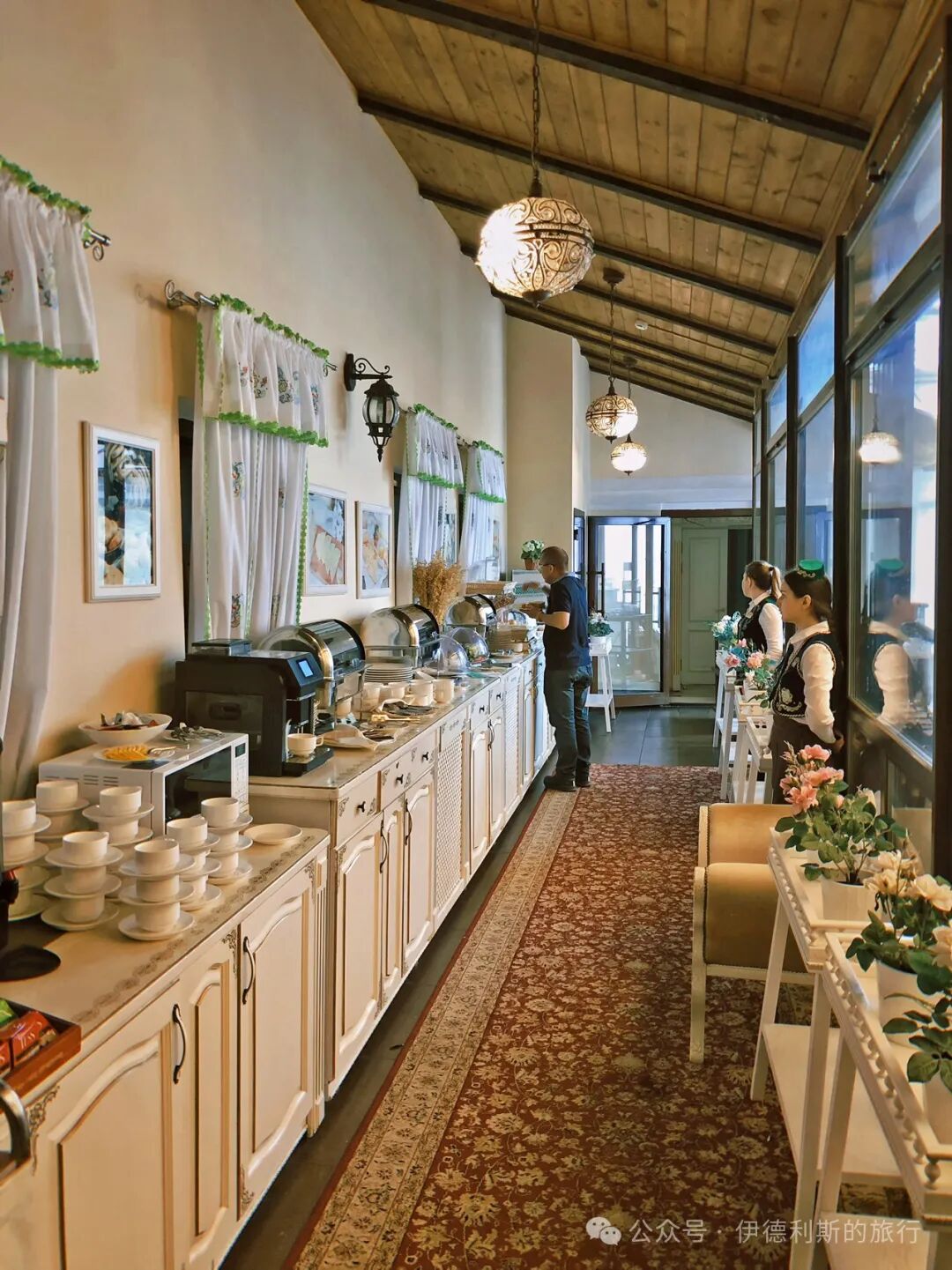
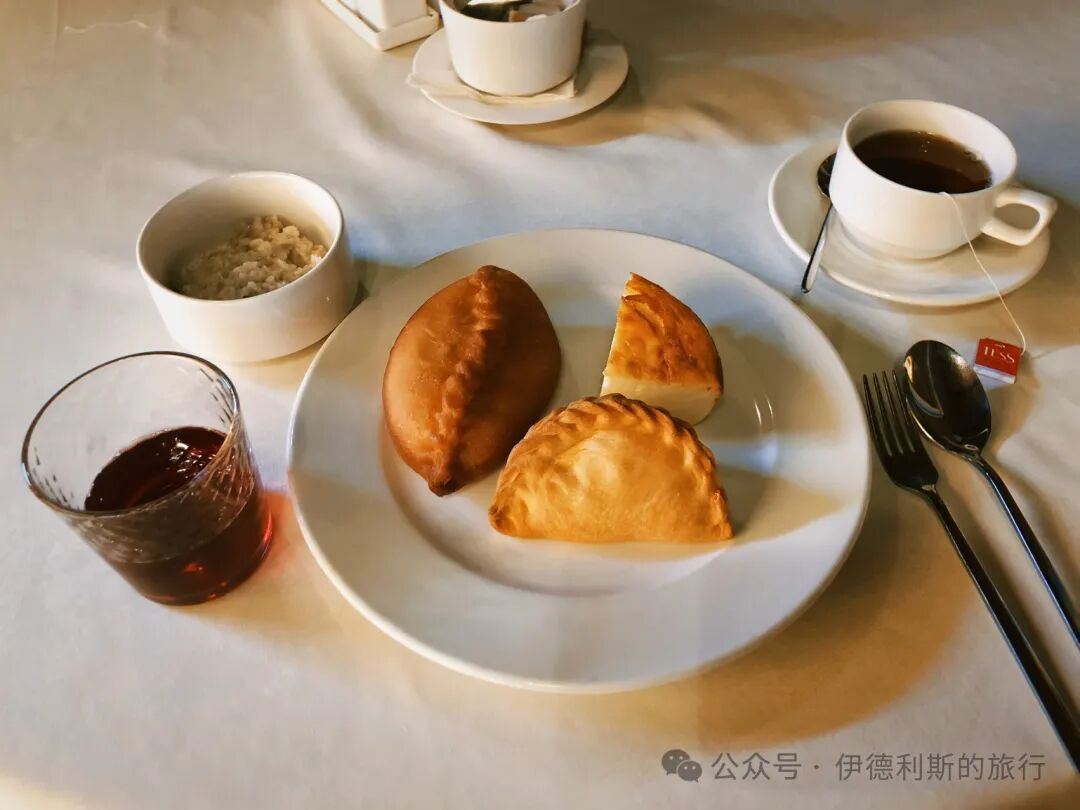
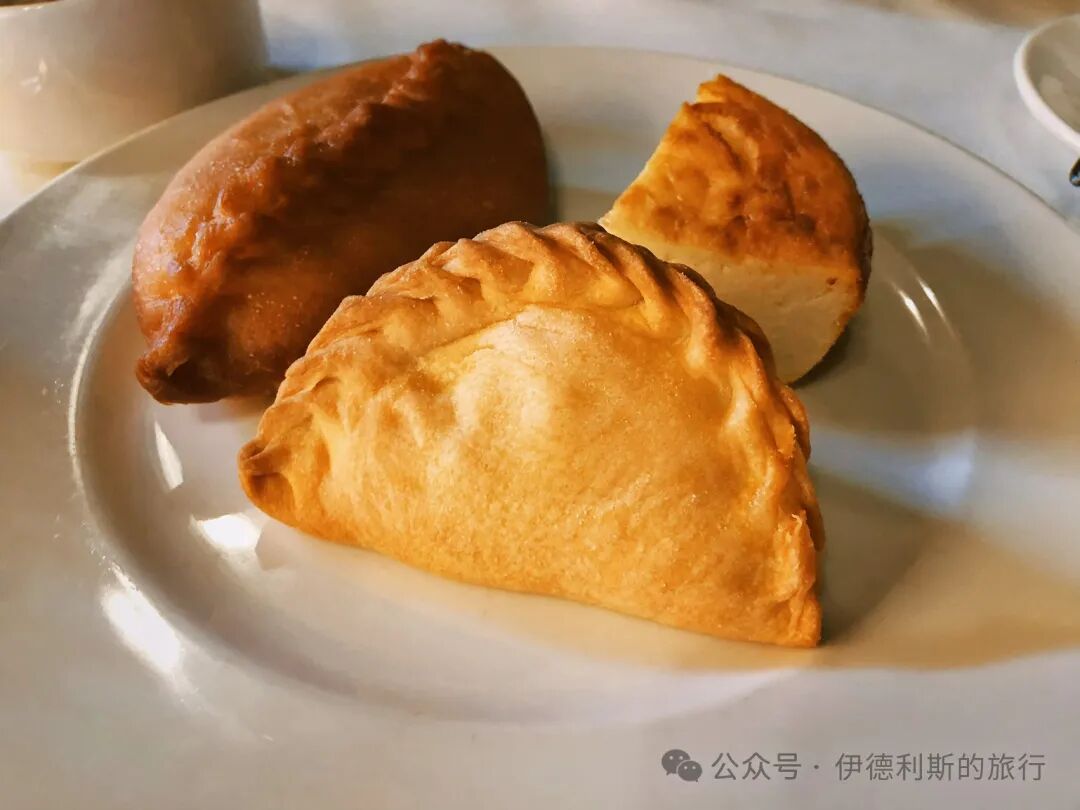
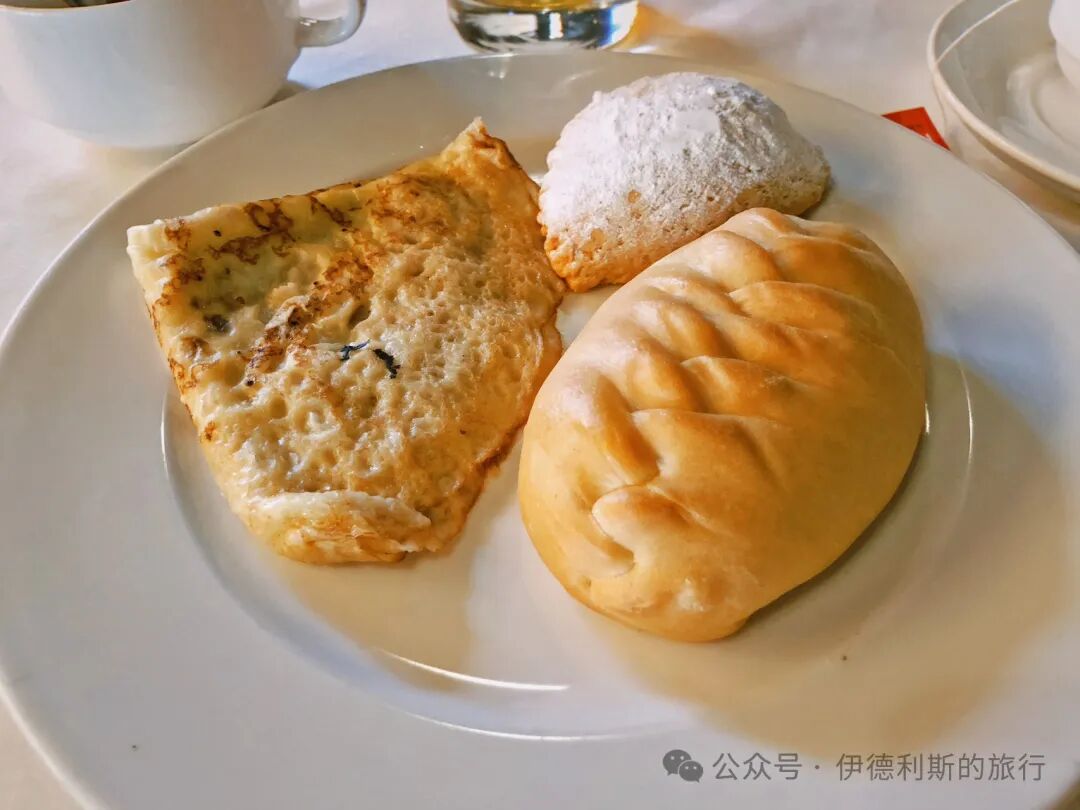
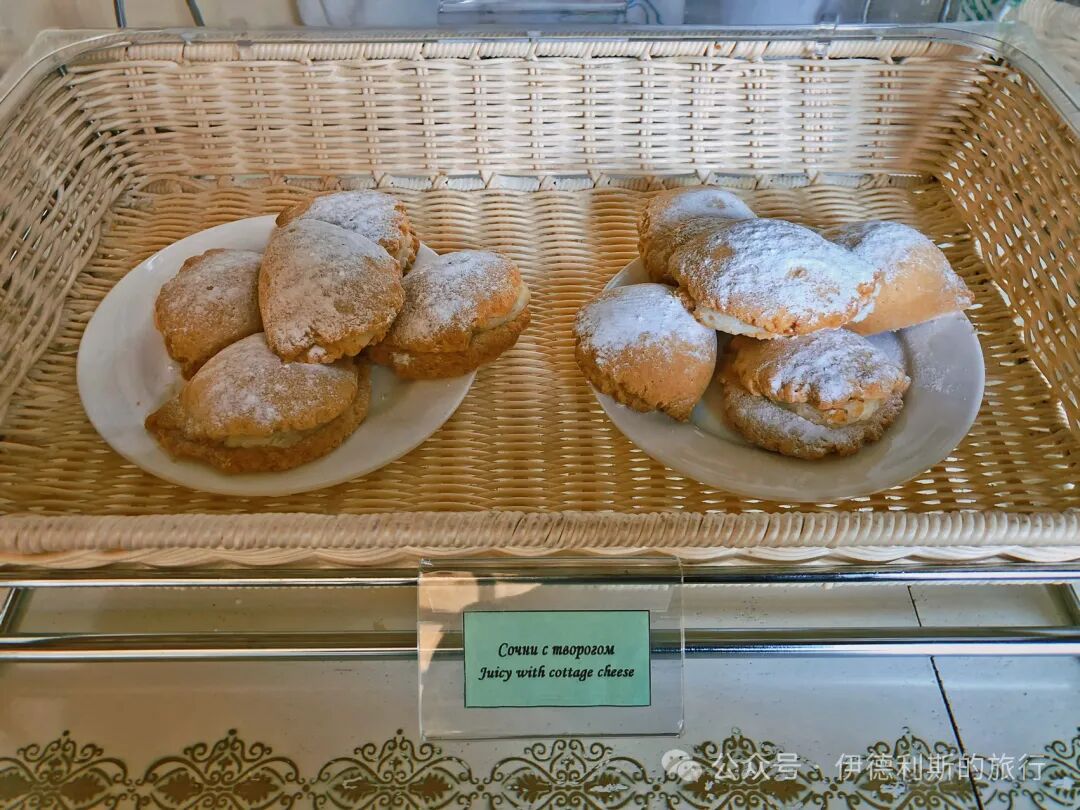
Summary: Halal Travel Guide: Heritage Hotels - History, Architecture and Muslim Travel is presented here as a firsthand travel account in clear, natural English. The account focuses on Heritage Hotels, Muslim Travel, Architecture while preserving the names, places, food, photos, and historical details from the Chinese source.
I am sharing 12 heritage hotels where I have stayed.
No. 21 Mansion (Ershiyi Hao Gongguan) in Dalian, Liaoning.
Xianting Boutique Resort (Xianting Jingpin Dujia Minsu) in Jianshui, Yunnan.
Xiulu Yuan branch of Xiushan Inn (Xiushan Kezhan Xiulu Yuan Dian) in Tonghai, Yunnan.
Sarang Paloh Heritage Stay & Event Hall in Ipoh, Malaysia.
23 Love Lane in Penang, Malaysia.
Hotel Puri in Malacca, Malaysia.
Omah Sinten Heritage Hotel & Resto in Solo, Indonesia.
Maristan Tarihi Konak in Mardin, Turkey.
Gamaleya Boutique Hotel in Cairo, Egypt.
Komil Hotel in Bukhara, Uzbekistan.
Bahitgul Boutique-Hotel in Bakhchysarai, Crimea (Russian-occupied).
Tatarskaya Usadba in Kazan, Russia.
No. 21 Mansion (Ershiyi Hao Gongguan) in Dalian, Liaoning.
In Dalian, we stayed at Number 21 Mansion (Ershiyi Hao Gongguan) on Russian Style Street. The hotel sits in a courtyard that is part of the Yantai Street Russian-style building complex, which includes 28 European-style villas and marks the starting point of Dalian's history. In 1898, Tsarist Russia leased Dalian Bay and began building Dalian city the following year. The first street built was called Engineer Street, which is now known as Russian Style Street. Soon after, Timov Street was built right next to Engineer Street, and it was renamed Yantai Street after 1946. Between the late 19th and early 20th centuries, Tsarist Russia hired German and Russian designers to build a series of European-style villas on Yantai Street, and 28 of them still stand today.
After the Russian-style building complex on Yantai Street was restored in 2011, several hotels and restaurants moved in. When we visited, several places were hosting weddings, which felt a bit like the Italian Style Street in Tianjin. Several villas in the courtyard belong to the Dalian Railway 1896 Garden Hotel, which you can stay in at any time. The No. 21 Mansion where we stayed is military property and only opens during holidays, but you can book it online.
Building No. 21 was built in 1903 and designed by the famous German architect Jan Hendel. In 1920, early labor movement leader and Manchurian Provincial Committee Secretary Wang Ligong lived here. The house we stayed in had windows on both the north and south sides, making the environment very pleasant. The courtyard was very quiet, which was a sharp contrast to the busy Russian-style street next door.
Xianting Boutique Resort (Xianting Jingpin Dujia Minsu) in Jianshui, Yunnan.
Jianshui is a famous historical and cultural city in Yunnan, known as the Zou and Lu of Southern Yunnan for its thriving Confucian studies. The Jianshui Xianting Boutique Homestay where we stayed is a typical three-courtyard house with one large central courtyard and four smaller ones. The main hall, courtyards, and side rooms are all connected, creating a very peaceful atmosphere. It is rare to find such elegant furnishings in the courtyard; walking through the door feels like stepping back into ancient times. Our room had traditional door bolts and wooden beds, which really satisfied our modern imagination of ancient times.
Xiulu Yuan branch of Xiushan Inn (Xiushan Kezhan Xiulu Yuan Dian) in Tonghai, Yunnan.
Tonghai Ancient City in Yuxi, Yunnan, is also a national historical and cultural city, and it preserves many ancient buildings from the Ming and Qing dynasties. We stayed at the Tonghai Xiushan Inn Xiulu Branch, which was converted from the old county committee compound. The compound itself is one of the first historical buildings in Tonghai County. After the renovation, it looks brand new, and the courtyard is filled with many lush potted plants.
Sarang Paloh Heritage Stay & Event Hall in Ipoh, Malaysia.
Ipoh is a historical and cultural city in Malaysia, known as the City of Tin. A fire broke out in Ipoh in 1892, destroying more than half of the original wooden shophouses. Later, a local Datuk led the reconstruction into arcade streets typical of the Straits region, which is now Ipoh Old Town. In 1907, Chinese community leader Yao Desheng funded the construction of a new street across the river from the Old Town. It is 1 kilometer long and consists of 216 arcade shophouses, which is now Ipoh New Town. Today, Ipoh has a large area of old streets with covered walkways (qilou) made up of the historic New Town and Old Town districts. Many of these buildings are decades or even centuries old and are well worth a visit.
We stayed at the Sarang Paloh Heritage Stay & Event Hall, a heritage hotel in the Old Town located inside the Yik Foong gold shop built in the 1930s. The hotel was converted from two buildings with covered walkways. The facade on the left is in the Art Deco style, while the right side is Neoclassical. Inside, it features traditional Malaysian Chinese decor.
Our room was on the second floor of the Yik Foong gold shop building. It had very high ceilings and looked out over the main road of Ipoh Old Town. Brewing two cups of the complimentary Ipoh white coffee felt like stepping back into the Nanyang of a hundred years ago.
23 Love Lane in Penang, Malaysia.
Penang is an island in northwestern Malaysia. In 1786, the Sultanate of Kedah ceded it to the British East India Company. George Town, which was established on the island shortly after, became the first British base in Southeast Asia. After George Town was built, the British East India Company kept encouraging people to move there. After the 19th century, the Chinese, Malay, Indian, Peranakan (local-born Chinese), Eurasian, and Siamese people living in Penang each formed their own communities.
Penang has many heritage hotels converted from grand mansions, and the one we stayed at, 23 Love Lane (Le Lin), is a very interesting example. The 23 Love Lane mansion was first built in the 1790s. British, Indian, and Chinese people have all been its owners, so the architecture is a mix of Eastern and Western styles, serving as a miniature reflection of Penang's cultural melting pot over the last century.
In the 1860s, it was an Anglo-Indian bungalow. A Straits Eclectic style building was added in the late 19th and early 20th centuries, and a Jack Roof Annex villa was built in the 1920s. Around the 1930s, an Indian shop house was built inside the courtyard. After the 1990s, the mansion became the budget Oasis Hotel, until it became the current 23 Love Lane heritage hotel in 2011.
We stayed in an Anglo-Indian shop house built before the war. This place used to be a shop and home for a Tamil merchant. Now it is a two-story vintage suite with a bathroom on each floor, making it perfect for trips with family and friends.
Hotel Puri in Malacca, Malaysia.
We stayed at the famous Hotel Puri in the old town of Malaysia, which is where the TV show The Little Nyonya was filmed.
Hotel Puri is a century-old mansion once owned by overseas Chinese in Southeast Asia. It is a classic three-section, two-story Baba Nyonya house. Malacca became quiet in the 20th century as many people moved to larger cities like Singapore or Kuala Lumpur. This old house sat abandoned for a long time until it was carefully renovated into the hotel it is today.
During the time it was abandoned, bats and swifts moved in. After the house became a hotel, the swifts in the third section refused to leave, so the hotel let them stay. They now build their nests right next to the old plaques.
Omah Sinten Heritage Hotel & Resto in Solo, Indonesia.
Solo is a historic cultural city in Central Java, Indonesia, and was the final capital of the once-powerful Mataram Sultanate on Java island. In 1755, at the direction of the Dutch East India Company, the Mataram Sultanate was split into the Yogyakarta Sultanate and the Surakarta Sunanate, with Surakarta city becoming the capital of the Surakarta Sunanate.
During the Dutch East Indies era, the Surakarta Sunanate held autonomous status just like the Yogyakarta Sultanate and was considered a vassal state of the Dutch Empire. The Republic of Indonesia was declared in 1945, and in 1946 the Surakarta Sunanate lost its ruling power and was incorporated into Central Java Province. Although it has no real power, the Surakarta Sunanate still holds royal authority and a special status for maintaining traditional Javanese culture.
In Surakarta, I stayed at the Omah Sinten Heritage Hotel & Resto across from the royal palace. The hotel uses traditional Javanese architectural style, and the breakfast area is a teak wood pavilion built in the 1930s, surrounded by many trees, making it very cool.
Maristan Tarihi Konak in Mardin, Turkey.
The ancient city of Mardin is located in southeastern Turkey, bordering Syria and Iraq, and sits in the Upper Mesopotamia region at the headwaters of the Tigris and Euphrates rivers. The entire ancient city is built on the southern slope of a ridge. At the very top of the cliff sits a thousand-year-old castle, with a terraced stone city built below it. Because of this, you can look out over the Mesopotamian plains from any terrace in the city, and the view is spectacular.
Our hotel, Maristan Tarihi Konak, is located in a 700-year-old building. It was originally built by Jewish people and is now run by Kurds. Five hundred years ago, many Armenians and Jews lived in the ancient city of Mardin. Today, it is mainly home to Kurds and Arabs, along with a significant number of Assyrian Christians.
The taxi drove into the maze-like alleys of the old city, weaving left and right up very steep slopes, which made us feel quite nervous. The car finally stopped on a slope. Idris, a young Kurdish man from the hotel, greeted us warmly by the side of the road. It was a coincidence that my name is also Idris, which is the name of a prophet.
Idris led us up the small stone steps until we finally reached the Maristan Tarihi Konak hotel. Before I went, I checked online and found that most hotels in the old city of Mardin feature stone houses. This one is relatively good value because it is not on the main road. The reviews also specifically mentioned that the staff are very friendly, and that turned out to be true.
The walls of our stone house are very thick. Even when it is 30 degrees outside in the summer, you do not need air conditioning inside. The only downside is that it does not get as much light as a wooden house because the windows are very small. It is very interesting that our room door is also very traditional. You have to insert the large key and turn it several times in the opposite direction, which feels especially ancient.
The breakfast we had on the hotel terrace was very rich. It included four types of cheese, yogurt, two kinds of olives, honey, fig jam, pomegranate jam, and grape jam. The main staple was not the bread common in Turkey, but Kurdish flatbread (nan).
The hotel manager is a Kurdish friend named Zahit. He took us for a walk through the old city bazaar and then pointed out the general direction of various historical sites on the main road, which was very thoughtful.
Gamaleya Boutique Hotel in Cairo, Egypt.
As a cultural metropolis with a history of over a thousand years and hundreds of historical sites, the ancient city of Cairo was listed as a World Cultural Heritage site as early as 1979. However, due to the noisy environment, traffic congestion, and worrying sanitary conditions, it seems that not many Chinese tourists are willing to explore it deeply, except for the Khan el-Khalili market which specializes in tourist souvenirs. I stayed in the old city of Cairo for four days this time and basically visited all the various mosques, shrines (gongbei), religious halls (daotang), mansions, inns, and madrasas in the city.
To make it easier to walk around the old city, I started looking for suitable accommodation online. Most tourists visiting Cairo choose to stay in the embassy district where the environment is a bit better, as there are almost no places suitable for tourists to stay inside the old city. However, I still managed to find the Gamaleya Heritage Hotel, which only opened in 2021.
The owner of Gamaleya, Ibrahim Kassissia, has had his family living here since the 1930s. He moved to Canada 40 years ago, but during a trip to China, he got the idea to return to his hometown to open a heritage hotel. He later bought back the long-abandoned old house and turned it into the hotel it is today.
The first floor of the hotel is a cultural workshop where master craftsmen in silver, copper, wood, and leather work and teach apprentices. Every morning when we head out, we see a group of students learning diligently from the masters. The second floor is where breakfast is served. It is a semi-buffet style where food is made fresh to order every morning based on what guests want. The third floor and above are the guest rooms. While the accommodations aren't as fancy as a big hotel, they are definitely a great choice for visiting Cairo's old city.
Komil Hotel in Bukhara, Uzbekistan.
In the ancient city of Bukhara, Uzbekistan, I stayed at the Komil Hotel, which is recommended by Lonely Planet. The hotel is in an alley in the center of the old city. It is a wealthy merchant's house built in the 19th century. Komil's grandfather bought it 50 years ago, and it opened as a hotel in 2000. The owner, Komil Kadirov, speaks fluent English and is very welcoming to guests.
The hotel still keeps the wood carvings and paintings of traditional 19th-century Bukhara architecture. My room was partially renovated, but the dining room where we ate breakfast is perfectly preserved. It feels like traveling back to 19th-century Bukhara. Their breakfast is very generous. Even for one person, they fill the whole table, which made me feel a bit embarrassed. Breakfast was a real highlight of my trip to Uzbekistan. Almost every hotel prepares more than ten dishes. They always ask if you want boiled or fried eggs, and black or green tea. The service is truly excellent.
Bahitgul Boutique-Hotel in Bakhchysarai, Crimea (Russian-occupied).
Bakhchisaray is an ancient mountain city on the Crimean Peninsula. It was the capital of the Crimean Khanate from 1532 to 1783 and is the cultural center of the Crimean Tatars. In May 1944, Stalin deported all 240,000 Crimean Tatars from the Crimean Peninsula to Uzbekistan and other remote regions. For nearly half a century after that, there were almost no Tatars on the Crimean Peninsula.
After 45 years of struggle by the Crimean Tatars, the Soviet Union finally declared the deportation illegal in 1989, and the Crimean Tatars finally gained the right to return to their homeland. Today, 250,000 Crimean Tatars have returned to the Crimean Peninsula, working hard to rebuild their lives, overcome social and economic obstacles, and keep their culture alive.
The hotel where I stayed in Bakhchysarai, Bahitgul Boutique-Hotel, is a beautiful traditional Crimean Tatar house. They serve traditional Crimean Tatar food, so I ate breakfast at my accommodation most days. The view while eating there is also excellent, as you can look out over the entire ancient capital.
Tatarskaya Usadba in Kazan, Russia.
As the former capital of the Kazan Khanate, the city of Kazan was completely destroyed after being captured by Ivan the Terrible in 1552. In 1556, the Russians built a new city of Kazan. Only Russians were allowed to live inside the city, so the Tatars settled by Lake Kaban to the southwest, which gradually became the Old Tatar Quarter.
The early Old Tatar Quarter was made of wooden houses, which caught fire very easily. During the reign of Catherine the Great (1762-1796), the city of Kazan was rebuilt with brick and stone, which gradually created the look of the current Old Tatar historical district.
Although part of the Old Tatar Quarter was turned into an industrial zone during the Soviet era, the historical district still covers 88 hectares today. It preserves 75 historical buildings from the 18th to 20th centuries, including mosques in the traditional Tatar style, estates of wealthy Tatar merchants, and theaters.
I stayed in a traditional Tatar estate by Lake Kaban this time, which was originally the home of 19th-century Tatar merchant Khamit Sabitov. The estate offers both lodging and meals. Since I did not book their dinner in advance, I only had breakfast, which was also in the traditional Tatar style.
I tasted a Tatar specialty meat pie (bekken), which is made with sour cream dough and filled with cabbage and eggs. I also ate a cake with frosting and Eastern European stuffed buns (pirozhki).
Authentic Damascus Heritage Hotels: Ottoman Mansions, Courtyards and Old City Restaurants
Articles • ali2007fr posted the article • 0 comments • 219 views • 2026-05-21 06:21
Reposted from the web
Summary: Damascus old city has heritage hotels and restaurants converted from Ottoman mansions, especially in the Christian Quarter east of the Umayyad Mosque. This guide keeps the source's nine hotel and restaurant notes, December 2025 prices, locations, bargaining details, and photographs.
In recent years, I have really enjoyed staying in heritage hotels while traveling. Even if some are a bit pricey or have thin walls, they let you fully experience the local history. Many people in Damascus choose Chinese-run guesthouses because they are cheaper and easier to communicate in. But if you really want to understand this thousand-year-old city, staying in an old Ottoman house inside the ancient city is a much better way to get close to history.
The east and west sides of the old city of Damascus are very different. The west has the busy Ottoman markets, the Umayyad Mosque, and the citadel. The east is the Christian Quarter, filled with churches and hotels or restaurants converted from old Ottoman mansions. I spent my days in Damascus staying in different mansions in the Christian Quarter. It is about a 1-kilometer walk to the Umayyad Mosque, but the road is full of shops, so it does not feel long.
Here are 9 places I stayed at or asked about, with prices from December 2025.
1. My top recommendation is Mamlouka Hotel, which has two locations: Dar Al Mamlouka and Beit al-Mamlouka. They asked for $122 for a single room, but I bargained it down to $110. I think this place offers the best value. The environment is great, it is the closest to the Umayyad Mosque, and it is right next to the market. The courtyard is a bit small. I only stayed at Dar Al Mamlouka this time because Beit al-Mamlouka had no rooms for two days.
2. Dar Al Yasmin Hotel asked for $140 for a single room, and I bargained it down to $125. It is in a small alley behind a church. It is very quiet and quite large inside.
3. Beit Zaman Hotel asked for $150 for a single room, and I bargained it down to $135. It is right on the East Gate street. There are many shops nearby, and many young people come here to take photos.
4. Beit Rumman has a great environment, but unfortunately, it has no Wi-Fi. I did not buy a SIM card, so I would have been disconnected. I missed out on it and did not ask for the price.
5. Beit Al Wali Hotel is the most popular mansion hotel in the old city of Damascus, and it is also the most expensive. When I asked on the first day, they only had a royal suite for $500. On the second day, they asked for $290 for a single room, and they would not go below $200, so I did not stay there.
6. Albal Hotel charges $80 for a single room. It is the cheapest, but the facilities are the worst. The power was weak, and my phone would barely charge.
7. Al Zaytouna Hotel has an average environment. When I went in, some men were watching a ball game, so I did not ask for the price.
8. Beit Zafran Hotel is very close to Beit Al Wali Hotel. It looked nice in photos, but it was full when I went, so I did not ask for the price.
9. Al Shahbandar Palace Hotel has a cafe in its courtyard. I had a coffee there, but I did not stay.
Dar Al Mamlouka is located on the far west side of the Bab Touma Christian Quarter in the old city of Damascus. The main building is a merchant mansion from the 17th-century Ottoman period, but it still has a strong 16th-century Mamluk style. The mansion has an inward-facing layout centered around a courtyard, with high ceilings on one side. The walls are built with alternating black basalt and white limestone bricks in the Mamluk style, and there is a marble fountain in the center of the courtyard.
Dar Al Mamlouka was turned into a hotel in 2005. It is run by the same management as another nearby mansion, Beit al-Mamlouka, but that one is often fully booked. The single room was listed at 122 dollars, but I bargained it down to 110 dollars. The hotel has electricity and Wi-Fi all night. The single room is nice, and a staff member brought me tea right after I checked in. There are orange and lemon trees in the courtyard, which makes it very relaxing.
The Islamic decor at Dar Al Mamlouka includes the Hand of Fatima (Hamsa). Its five fingers represent the five pillars of the faith, and it is named after the Prophet's daughter, Fatima. During the Austro-Turkish War in 1788, the Ottoman Empire carried flags featuring the Hand of Fatima as the Grand Vizier led an army of 80,000 against Austria.
Breakfast at Dar Al Mamlouka is a typical Levantine cold platter served with bread and hot tea. They bring the full set even if you are eating alone. It mainly includes various cheeses, pickled olives, chickpea dip (hummus), jam, fresh cucumber and tomato, fruit juice, olive oil, and sausages. A special item is the pickled eggplant (makdous). These are miniature eggplants stuffed with walnuts, chili, garlic, olive oil, and salt. Syrians usually start pickling them in autumn to eat as an appetizer during winter. The powder on the table is the classic Levantine spice blend (za'atar). It is a mix of Syrian oregano, toasted sesame seeds, dried sumac, and thyme. It has an earthy taste with a hint of citrus and nuttiness, which is very unique.
Dar Al Yasmin Hotel is located in the heart of the Christian Quarter of Bab Touma in the Old City of Damascus. The hotel is tucked away in a small alley, and it feels like a hidden world once you step inside. The hotel is made up of three 18th-century Ottoman mansions—two large and one small. It features a central courtyard, a fountain, a reception area (liwan), hand-painted wooden ceilings, traditional brick and stone structures, and carved doors and windows. The mansion changed hands many times after the 19th century until the Jasmine Hotels group took it over in 2005. They restored and opened it, making it a classic example of revitalizing a traditional Middle Eastern residence.
The single room was listed at 140 dollars, but I bargained it down to 125 dollars. The small alley at the entrance can get flooded when it rains, but overall it is a great value.
For breakfast at Dar Al Yasmin Hotel, the chickpea and sesame paste dip (hummus musabaha) is worth trying. Musabaha means swimming, as if the chickpeas are swimming in the sesame paste.
They also serve flatbread (manakish) in three varieties: with spice blend (za'atar), tomato, or cheese. Manakish originated from the traditional bread of the ancient Phoenicians and was added to the UNESCO Intangible Cultural Heritage list in 2023.
Beit Zaman Hotel is in the Christian Quarter of Bab Touma in the Old City of Damascus, right on the ancient Roman street (Via Recta). Their single room was listed at 150 dollars, but I bargained it down to 135 dollars.
The hotel opened in 2008 after five years of connecting and restoring three 17th-century Ottoman mansions. It kept original features like stone carvings, wood carvings, mosaics, and fountains. The wooden Ajami-style ceilings and the traditional courtyard layout are the most impressive parts.
The buffet breakfast at Beit Zaman Hotel includes sausages, cheese, bread, olives, and chickpea dip (hummus). The red dipping sauce is called Muhammara. It is a Syrian appetizer made from walnuts, red bell peppers, pomegranate molasses, and breadcrumbs.
Albal Hotel is near the Bab Touma gate in the Old City of Damascus. It is likely the most convenient for transportation. A single room costs 80 dollars, which is the lowest price, but the power is weak and it is almost impossible to charge a phone. Choose carefully.
Albal Hotel is a converted Ottoman mansion rebuilt after the 1759 Damascus earthquake. It has a courtyard fountain and wood carvings. The breakfast is quite good, and they light a stove in the courtyard during winter.
Al Shahbandar Palace Hotel is on the west side of the Christian Quarter near Bab Touma in the Old City of Damascus, right on the busy Al Qemaryeh market street.
The hotel is inside an Ottoman noble mansion built in the 16th century. The Shahbandar family, a famous modern political family in Damascus, lived here for a long time. The famous nationalist leader Abdul Rahman Shahbandar came from this family. The Shahbandar family renovated the mansion on a large scale in the early 20th century and used it as a place to host guests for a long time. In 2007, it was converted into a historic hotel after adding private bathrooms, air conditioning, and electrical systems, while strictly preserving the facade, courtyard, and historical components.
Today, the mansion's courtyard is open as a cafe. You can drink coffee there, so you do not have to stay at the hotel to experience this Ottoman mansion.
Besides historic hotels, many restaurants and cafes in the Old City of Damascus are also converted from Ottoman mansions. The first place I recommend had just opened when I visited, so you cannot even find it online. It is located on the road after entering the Old City of Damascus from the Bab Touma gate and turning west into Qanayet Al-Hatab street. They only had tea and coffee when I went, but the environment was quite nice. I ordered a cup of sand-brewed coffee. The owner speaks English. He was very enthusiastic and invited me to the second floor to see the old building.
Lady Cafe is on the Al Nawfara pedestrian street outside the east gate of the Umayyad Mosque. It is very lively in the afternoon and evening. I ate a Damascus specialty snack called Toshka pie at the cafe. It is known as a national snack of Syria. Toshka is made by putting spicy sausage (Sujuk) and Kashkawan cheese inside pita bread, then pressing it on an iron griddle on both sides until the cheese melts and the bread is crispy. When you eat it, it is crispy on the outside and soft on the inside. The bread is charred and fragrant, and the meat and cheese are rich and stretchy.
Beit Jabri is on As Sawwaf street, southeast of the Umayyad Mosque. It is an Ottoman mansion restaurant in the Old City of Damascus that is well worth a visit.
This mansion was built in the early 18th century. The current owner Raad Jabri's grandfather bought the property in the late 19th century, and their family lived there from 1905 to 1973. The house was gradually abandoned after the 1970s and later became a workshop for carpenters and blacksmiths. Raad Jabri restored the place in the 1990s and turned it into a restaurant. He also hosts cultural seminars, poetry readings, and classical music evenings from time to time.
Beit Jabri is a classic three-courtyard Ottoman mansion in Damascus. The arched hall (Iwan) is a typical example of 18th-century Damascus architecture, and the exquisite Ajrum roof was built in the mid-19th century. Influenced by Europe and the Ottoman Empire in the 19th century, Damascus architecture generally tended to decorate exterior walls more gorgeously. This is especially obvious on the north wall of Beit Jabri. We can clearly see the transition from 18th-century decorative styles to 19th-century patterns on the north wall, with complex wall paintings layered over traditional stone masonry (Ablaq).
I ordered the iron pot cheesy baked chicken and mushrooms, served with Arabic pita bread and mint tea. The iron pot came straight to the table. The cheese on top was baked to a golden, crispy brown and stretched into long strings. The chicken was tender, and the mushrooms were soaked in the rich, creamy white sauce. It tasted quite good.
Bab Al Hara is located on Al Qaimarryeh pedestrian street, just outside the east gate of the Umayyad Mosque in Damascus. It is very lively every night. The restaurant is a converted traditional Ottoman mansion built in the late 19th century. It features a central courtyard with a fountain, wrap-around arcades, plaster carvings, and stained glass windows. This place was originally the home of a wealthy merchant. During the French Mandate period (1920–1946), it served as a community gathering spot. Later, it was used as a multi-family residence for a long time before gradually falling into disrepair in the late 20th century. The hit Syrian drama "Bab Al Hara" premiered in 2006, sparking a craze across the Arab world for the folk customs of the Old City of Damascus. The restaurant opened in 2007, starting as a cafe that focused on Syrian breakfast and snacks, then added full meals in 2010.
I had the grilled chicken skewers (Shish Taouk). The chicken was crispy on the outside and tender on the inside. It was very refreshing paired with garlic yogurt sauce (Tzatziki), along with a corn and cabbage salad and french fries. However, restaurants all over the Old City of Damascus are full of people smoking shisha at night. If you mind the shisha smoke, try to go at noon or in the afternoon.
Finally, I had some sand-boiled coffee at Café Ishq Sharqi in Bab Touma, Damascus. The name translates to "Love of the Orient." There are dozens more restaurants and cafes converted from Ottoman mansions in the Old City of Damascus. I only visited a small portion this time, so there are plenty more for everyone to discover. view all
Summary: Damascus old city has heritage hotels and restaurants converted from Ottoman mansions, especially in the Christian Quarter east of the Umayyad Mosque. This guide keeps the source's nine hotel and restaurant notes, December 2025 prices, locations, bargaining details, and photographs.
In recent years, I have really enjoyed staying in heritage hotels while traveling. Even if some are a bit pricey or have thin walls, they let you fully experience the local history. Many people in Damascus choose Chinese-run guesthouses because they are cheaper and easier to communicate in. But if you really want to understand this thousand-year-old city, staying in an old Ottoman house inside the ancient city is a much better way to get close to history.
The east and west sides of the old city of Damascus are very different. The west has the busy Ottoman markets, the Umayyad Mosque, and the citadel. The east is the Christian Quarter, filled with churches and hotels or restaurants converted from old Ottoman mansions. I spent my days in Damascus staying in different mansions in the Christian Quarter. It is about a 1-kilometer walk to the Umayyad Mosque, but the road is full of shops, so it does not feel long.
Here are 9 places I stayed at or asked about, with prices from December 2025.
1. My top recommendation is Mamlouka Hotel, which has two locations: Dar Al Mamlouka and Beit al-Mamlouka. They asked for $122 for a single room, but I bargained it down to $110. I think this place offers the best value. The environment is great, it is the closest to the Umayyad Mosque, and it is right next to the market. The courtyard is a bit small. I only stayed at Dar Al Mamlouka this time because Beit al-Mamlouka had no rooms for two days.
2. Dar Al Yasmin Hotel asked for $140 for a single room, and I bargained it down to $125. It is in a small alley behind a church. It is very quiet and quite large inside.
3. Beit Zaman Hotel asked for $150 for a single room, and I bargained it down to $135. It is right on the East Gate street. There are many shops nearby, and many young people come here to take photos.
4. Beit Rumman has a great environment, but unfortunately, it has no Wi-Fi. I did not buy a SIM card, so I would have been disconnected. I missed out on it and did not ask for the price.
5. Beit Al Wali Hotel is the most popular mansion hotel in the old city of Damascus, and it is also the most expensive. When I asked on the first day, they only had a royal suite for $500. On the second day, they asked for $290 for a single room, and they would not go below $200, so I did not stay there.
6. Albal Hotel charges $80 for a single room. It is the cheapest, but the facilities are the worst. The power was weak, and my phone would barely charge.
7. Al Zaytouna Hotel has an average environment. When I went in, some men were watching a ball game, so I did not ask for the price.
8. Beit Zafran Hotel is very close to Beit Al Wali Hotel. It looked nice in photos, but it was full when I went, so I did not ask for the price.
9. Al Shahbandar Palace Hotel has a cafe in its courtyard. I had a coffee there, but I did not stay.
Dar Al Mamlouka is located on the far west side of the Bab Touma Christian Quarter in the old city of Damascus. The main building is a merchant mansion from the 17th-century Ottoman period, but it still has a strong 16th-century Mamluk style. The mansion has an inward-facing layout centered around a courtyard, with high ceilings on one side. The walls are built with alternating black basalt and white limestone bricks in the Mamluk style, and there is a marble fountain in the center of the courtyard.
Dar Al Mamlouka was turned into a hotel in 2005. It is run by the same management as another nearby mansion, Beit al-Mamlouka, but that one is often fully booked. The single room was listed at 122 dollars, but I bargained it down to 110 dollars. The hotel has electricity and Wi-Fi all night. The single room is nice, and a staff member brought me tea right after I checked in. There are orange and lemon trees in the courtyard, which makes it very relaxing.
The Islamic decor at Dar Al Mamlouka includes the Hand of Fatima (Hamsa). Its five fingers represent the five pillars of the faith, and it is named after the Prophet's daughter, Fatima. During the Austro-Turkish War in 1788, the Ottoman Empire carried flags featuring the Hand of Fatima as the Grand Vizier led an army of 80,000 against Austria.
Breakfast at Dar Al Mamlouka is a typical Levantine cold platter served with bread and hot tea. They bring the full set even if you are eating alone. It mainly includes various cheeses, pickled olives, chickpea dip (hummus), jam, fresh cucumber and tomato, fruit juice, olive oil, and sausages. A special item is the pickled eggplant (makdous). These are miniature eggplants stuffed with walnuts, chili, garlic, olive oil, and salt. Syrians usually start pickling them in autumn to eat as an appetizer during winter. The powder on the table is the classic Levantine spice blend (za'atar). It is a mix of Syrian oregano, toasted sesame seeds, dried sumac, and thyme. It has an earthy taste with a hint of citrus and nuttiness, which is very unique.
Dar Al Yasmin Hotel is located in the heart of the Christian Quarter of Bab Touma in the Old City of Damascus. The hotel is tucked away in a small alley, and it feels like a hidden world once you step inside. The hotel is made up of three 18th-century Ottoman mansions—two large and one small. It features a central courtyard, a fountain, a reception area (liwan), hand-painted wooden ceilings, traditional brick and stone structures, and carved doors and windows. The mansion changed hands many times after the 19th century until the Jasmine Hotels group took it over in 2005. They restored and opened it, making it a classic example of revitalizing a traditional Middle Eastern residence.
The single room was listed at 140 dollars, but I bargained it down to 125 dollars. The small alley at the entrance can get flooded when it rains, but overall it is a great value.
For breakfast at Dar Al Yasmin Hotel, the chickpea and sesame paste dip (hummus musabaha) is worth trying. Musabaha means swimming, as if the chickpeas are swimming in the sesame paste.
They also serve flatbread (manakish) in three varieties: with spice blend (za'atar), tomato, or cheese. Manakish originated from the traditional bread of the ancient Phoenicians and was added to the UNESCO Intangible Cultural Heritage list in 2023.
Beit Zaman Hotel is in the Christian Quarter of Bab Touma in the Old City of Damascus, right on the ancient Roman street (Via Recta). Their single room was listed at 150 dollars, but I bargained it down to 135 dollars.
The hotel opened in 2008 after five years of connecting and restoring three 17th-century Ottoman mansions. It kept original features like stone carvings, wood carvings, mosaics, and fountains. The wooden Ajami-style ceilings and the traditional courtyard layout are the most impressive parts.
The buffet breakfast at Beit Zaman Hotel includes sausages, cheese, bread, olives, and chickpea dip (hummus). The red dipping sauce is called Muhammara. It is a Syrian appetizer made from walnuts, red bell peppers, pomegranate molasses, and breadcrumbs.
Albal Hotel is near the Bab Touma gate in the Old City of Damascus. It is likely the most convenient for transportation. A single room costs 80 dollars, which is the lowest price, but the power is weak and it is almost impossible to charge a phone. Choose carefully.
Albal Hotel is a converted Ottoman mansion rebuilt after the 1759 Damascus earthquake. It has a courtyard fountain and wood carvings. The breakfast is quite good, and they light a stove in the courtyard during winter.
Al Shahbandar Palace Hotel is on the west side of the Christian Quarter near Bab Touma in the Old City of Damascus, right on the busy Al Qemaryeh market street.
The hotel is inside an Ottoman noble mansion built in the 16th century. The Shahbandar family, a famous modern political family in Damascus, lived here for a long time. The famous nationalist leader Abdul Rahman Shahbandar came from this family. The Shahbandar family renovated the mansion on a large scale in the early 20th century and used it as a place to host guests for a long time. In 2007, it was converted into a historic hotel after adding private bathrooms, air conditioning, and electrical systems, while strictly preserving the facade, courtyard, and historical components.
Today, the mansion's courtyard is open as a cafe. You can drink coffee there, so you do not have to stay at the hotel to experience this Ottoman mansion.
Besides historic hotels, many restaurants and cafes in the Old City of Damascus are also converted from Ottoman mansions. The first place I recommend had just opened when I visited, so you cannot even find it online. It is located on the road after entering the Old City of Damascus from the Bab Touma gate and turning west into Qanayet Al-Hatab street. They only had tea and coffee when I went, but the environment was quite nice. I ordered a cup of sand-brewed coffee. The owner speaks English. He was very enthusiastic and invited me to the second floor to see the old building.
Lady Cafe is on the Al Nawfara pedestrian street outside the east gate of the Umayyad Mosque. It is very lively in the afternoon and evening. I ate a Damascus specialty snack called Toshka pie at the cafe. It is known as a national snack of Syria. Toshka is made by putting spicy sausage (Sujuk) and Kashkawan cheese inside pita bread, then pressing it on an iron griddle on both sides until the cheese melts and the bread is crispy. When you eat it, it is crispy on the outside and soft on the inside. The bread is charred and fragrant, and the meat and cheese are rich and stretchy.
Beit Jabri is on As Sawwaf street, southeast of the Umayyad Mosque. It is an Ottoman mansion restaurant in the Old City of Damascus that is well worth a visit.
This mansion was built in the early 18th century. The current owner Raad Jabri's grandfather bought the property in the late 19th century, and their family lived there from 1905 to 1973. The house was gradually abandoned after the 1970s and later became a workshop for carpenters and blacksmiths. Raad Jabri restored the place in the 1990s and turned it into a restaurant. He also hosts cultural seminars, poetry readings, and classical music evenings from time to time.
Beit Jabri is a classic three-courtyard Ottoman mansion in Damascus. The arched hall (Iwan) is a typical example of 18th-century Damascus architecture, and the exquisite Ajrum roof was built in the mid-19th century. Influenced by Europe and the Ottoman Empire in the 19th century, Damascus architecture generally tended to decorate exterior walls more gorgeously. This is especially obvious on the north wall of Beit Jabri. We can clearly see the transition from 18th-century decorative styles to 19th-century patterns on the north wall, with complex wall paintings layered over traditional stone masonry (Ablaq).
I ordered the iron pot cheesy baked chicken and mushrooms, served with Arabic pita bread and mint tea. The iron pot came straight to the table. The cheese on top was baked to a golden, crispy brown and stretched into long strings. The chicken was tender, and the mushrooms were soaked in the rich, creamy white sauce. It tasted quite good.
Bab Al Hara is located on Al Qaimarryeh pedestrian street, just outside the east gate of the Umayyad Mosque in Damascus. It is very lively every night. The restaurant is a converted traditional Ottoman mansion built in the late 19th century. It features a central courtyard with a fountain, wrap-around arcades, plaster carvings, and stained glass windows. This place was originally the home of a wealthy merchant. During the French Mandate period (1920–1946), it served as a community gathering spot. Later, it was used as a multi-family residence for a long time before gradually falling into disrepair in the late 20th century. The hit Syrian drama "Bab Al Hara" premiered in 2006, sparking a craze across the Arab world for the folk customs of the Old City of Damascus. The restaurant opened in 2007, starting as a cafe that focused on Syrian breakfast and snacks, then added full meals in 2010.
I had the grilled chicken skewers (Shish Taouk). The chicken was crispy on the outside and tender on the inside. It was very refreshing paired with garlic yogurt sauce (Tzatziki), along with a corn and cabbage salad and french fries. However, restaurants all over the Old City of Damascus are full of people smoking shisha at night. If you mind the shisha smoke, try to go at noon or in the afternoon.
Finally, I had some sand-boiled coffee at Café Ishq Sharqi in Bab Touma, Damascus. The name translates to "Love of the Orient." There are dozens more restaurants and cafes converted from Ottoman mansions in the Old City of Damascus. I only visited a small portion this time, so there are plenty more for everyone to discover. view all
Reposted from the web
Summary: Damascus old city has heritage hotels and restaurants converted from Ottoman mansions, especially in the Christian Quarter east of the Umayyad Mosque. This guide keeps the source's nine hotel and restaurant notes, December 2025 prices, locations, bargaining details, and photographs.
In recent years, I have really enjoyed staying in heritage hotels while traveling. Even if some are a bit pricey or have thin walls, they let you fully experience the local history. Many people in Damascus choose Chinese-run guesthouses because they are cheaper and easier to communicate in. But if you really want to understand this thousand-year-old city, staying in an old Ottoman house inside the ancient city is a much better way to get close to history.
The east and west sides of the old city of Damascus are very different. The west has the busy Ottoman markets, the Umayyad Mosque, and the citadel. The east is the Christian Quarter, filled with churches and hotels or restaurants converted from old Ottoman mansions. I spent my days in Damascus staying in different mansions in the Christian Quarter. It is about a 1-kilometer walk to the Umayyad Mosque, but the road is full of shops, so it does not feel long.
Here are 9 places I stayed at or asked about, with prices from December 2025.
1. My top recommendation is Mamlouka Hotel, which has two locations: Dar Al Mamlouka and Beit al-Mamlouka. They asked for $122 for a single room, but I bargained it down to $110. I think this place offers the best value. The environment is great, it is the closest to the Umayyad Mosque, and it is right next to the market. The courtyard is a bit small. I only stayed at Dar Al Mamlouka this time because Beit al-Mamlouka had no rooms for two days.
2. Dar Al Yasmin Hotel asked for $140 for a single room, and I bargained it down to $125. It is in a small alley behind a church. It is very quiet and quite large inside.
3. Beit Zaman Hotel asked for $150 for a single room, and I bargained it down to $135. It is right on the East Gate street. There are many shops nearby, and many young people come here to take photos.
4. Beit Rumman has a great environment, but unfortunately, it has no Wi-Fi. I did not buy a SIM card, so I would have been disconnected. I missed out on it and did not ask for the price.
5. Beit Al Wali Hotel is the most popular mansion hotel in the old city of Damascus, and it is also the most expensive. When I asked on the first day, they only had a royal suite for $500. On the second day, they asked for $290 for a single room, and they would not go below $200, so I did not stay there.
6. Albal Hotel charges $80 for a single room. It is the cheapest, but the facilities are the worst. The power was weak, and my phone would barely charge.
7. Al Zaytouna Hotel has an average environment. When I went in, some men were watching a ball game, so I did not ask for the price.
8. Beit Zafran Hotel is very close to Beit Al Wali Hotel. It looked nice in photos, but it was full when I went, so I did not ask for the price.
9. Al Shahbandar Palace Hotel has a cafe in its courtyard. I had a coffee there, but I did not stay.
Dar Al Mamlouka is located on the far west side of the Bab Touma Christian Quarter in the old city of Damascus. The main building is a merchant mansion from the 17th-century Ottoman period, but it still has a strong 16th-century Mamluk style. The mansion has an inward-facing layout centered around a courtyard, with high ceilings on one side. The walls are built with alternating black basalt and white limestone bricks in the Mamluk style, and there is a marble fountain in the center of the courtyard.
Dar Al Mamlouka was turned into a hotel in 2005. It is run by the same management as another nearby mansion, Beit al-Mamlouka, but that one is often fully booked. The single room was listed at 122 dollars, but I bargained it down to 110 dollars. The hotel has electricity and Wi-Fi all night. The single room is nice, and a staff member brought me tea right after I checked in. There are orange and lemon trees in the courtyard, which makes it very relaxing.
The Islamic decor at Dar Al Mamlouka includes the Hand of Fatima (Hamsa). Its five fingers represent the five pillars of the faith, and it is named after the Prophet's daughter, Fatima. During the Austro-Turkish War in 1788, the Ottoman Empire carried flags featuring the Hand of Fatima as the Grand Vizier led an army of 80,000 against Austria.
Breakfast at Dar Al Mamlouka is a typical Levantine cold platter served with bread and hot tea. They bring the full set even if you are eating alone. It mainly includes various cheeses, pickled olives, chickpea dip (hummus), jam, fresh cucumber and tomato, fruit juice, olive oil, and sausages. A special item is the pickled eggplant (makdous). These are miniature eggplants stuffed with walnuts, chili, garlic, olive oil, and salt. Syrians usually start pickling them in autumn to eat as an appetizer during winter. The powder on the table is the classic Levantine spice blend (za'atar). It is a mix of Syrian oregano, toasted sesame seeds, dried sumac, and thyme. It has an earthy taste with a hint of citrus and nuttiness, which is very unique.
Dar Al Yasmin Hotel is located in the heart of the Christian Quarter of Bab Touma in the Old City of Damascus. The hotel is tucked away in a small alley, and it feels like a hidden world once you step inside. The hotel is made up of three 18th-century Ottoman mansions—two large and one small. It features a central courtyard, a fountain, a reception area (liwan), hand-painted wooden ceilings, traditional brick and stone structures, and carved doors and windows. The mansion changed hands many times after the 19th century until the Jasmine Hotels group took it over in 2005. They restored and opened it, making it a classic example of revitalizing a traditional Middle Eastern residence.
The single room was listed at 140 dollars, but I bargained it down to 125 dollars. The small alley at the entrance can get flooded when it rains, but overall it is a great value.
For breakfast at Dar Al Yasmin Hotel, the chickpea and sesame paste dip (hummus musabaha) is worth trying. Musabaha means swimming, as if the chickpeas are swimming in the sesame paste.
They also serve flatbread (manakish) in three varieties: with spice blend (za'atar), tomato, or cheese. Manakish originated from the traditional bread of the ancient Phoenicians and was added to the UNESCO Intangible Cultural Heritage list in 2023.
Beit Zaman Hotel is in the Christian Quarter of Bab Touma in the Old City of Damascus, right on the ancient Roman street (Via Recta). Their single room was listed at 150 dollars, but I bargained it down to 135 dollars.
The hotel opened in 2008 after five years of connecting and restoring three 17th-century Ottoman mansions. It kept original features like stone carvings, wood carvings, mosaics, and fountains. The wooden Ajami-style ceilings and the traditional courtyard layout are the most impressive parts.
The buffet breakfast at Beit Zaman Hotel includes sausages, cheese, bread, olives, and chickpea dip (hummus). The red dipping sauce is called Muhammara. It is a Syrian appetizer made from walnuts, red bell peppers, pomegranate molasses, and breadcrumbs.
Albal Hotel is near the Bab Touma gate in the Old City of Damascus. It is likely the most convenient for transportation. A single room costs 80 dollars, which is the lowest price, but the power is weak and it is almost impossible to charge a phone. Choose carefully.
Albal Hotel is a converted Ottoman mansion rebuilt after the 1759 Damascus earthquake. It has a courtyard fountain and wood carvings. The breakfast is quite good, and they light a stove in the courtyard during winter.
Al Shahbandar Palace Hotel is on the west side of the Christian Quarter near Bab Touma in the Old City of Damascus, right on the busy Al Qemaryeh market street.
The hotel is inside an Ottoman noble mansion built in the 16th century. The Shahbandar family, a famous modern political family in Damascus, lived here for a long time. The famous nationalist leader Abdul Rahman Shahbandar came from this family. The Shahbandar family renovated the mansion on a large scale in the early 20th century and used it as a place to host guests for a long time. In 2007, it was converted into a historic hotel after adding private bathrooms, air conditioning, and electrical systems, while strictly preserving the facade, courtyard, and historical components.
Today, the mansion's courtyard is open as a cafe. You can drink coffee there, so you do not have to stay at the hotel to experience this Ottoman mansion.
Besides historic hotels, many restaurants and cafes in the Old City of Damascus are also converted from Ottoman mansions. The first place I recommend had just opened when I visited, so you cannot even find it online. It is located on the road after entering the Old City of Damascus from the Bab Touma gate and turning west into Qanayet Al-Hatab street. They only had tea and coffee when I went, but the environment was quite nice. I ordered a cup of sand-brewed coffee. The owner speaks English. He was very enthusiastic and invited me to the second floor to see the old building.
Lady Cafe is on the Al Nawfara pedestrian street outside the east gate of the Umayyad Mosque. It is very lively in the afternoon and evening. I ate a Damascus specialty snack called Toshka pie at the cafe. It is known as a national snack of Syria. Toshka is made by putting spicy sausage (Sujuk) and Kashkawan cheese inside pita bread, then pressing it on an iron griddle on both sides until the cheese melts and the bread is crispy. When you eat it, it is crispy on the outside and soft on the inside. The bread is charred and fragrant, and the meat and cheese are rich and stretchy.
Beit Jabri is on As Sawwaf street, southeast of the Umayyad Mosque. It is an Ottoman mansion restaurant in the Old City of Damascus that is well worth a visit.
This mansion was built in the early 18th century. The current owner Raad Jabri's grandfather bought the property in the late 19th century, and their family lived there from 1905 to 1973. The house was gradually abandoned after the 1970s and later became a workshop for carpenters and blacksmiths. Raad Jabri restored the place in the 1990s and turned it into a restaurant. He also hosts cultural seminars, poetry readings, and classical music evenings from time to time.
Beit Jabri is a classic three-courtyard Ottoman mansion in Damascus. The arched hall (Iwan) is a typical example of 18th-century Damascus architecture, and the exquisite Ajrum roof was built in the mid-19th century. Influenced by Europe and the Ottoman Empire in the 19th century, Damascus architecture generally tended to decorate exterior walls more gorgeously. This is especially obvious on the north wall of Beit Jabri. We can clearly see the transition from 18th-century decorative styles to 19th-century patterns on the north wall, with complex wall paintings layered over traditional stone masonry (Ablaq).
I ordered the iron pot cheesy baked chicken and mushrooms, served with Arabic pita bread and mint tea. The iron pot came straight to the table. The cheese on top was baked to a golden, crispy brown and stretched into long strings. The chicken was tender, and the mushrooms were soaked in the rich, creamy white sauce. It tasted quite good.
Bab Al Hara is located on Al Qaimarryeh pedestrian street, just outside the east gate of the Umayyad Mosque in Damascus. It is very lively every night. The restaurant is a converted traditional Ottoman mansion built in the late 19th century. It features a central courtyard with a fountain, wrap-around arcades, plaster carvings, and stained glass windows. This place was originally the home of a wealthy merchant. During the French Mandate period (1920–1946), it served as a community gathering spot. Later, it was used as a multi-family residence for a long time before gradually falling into disrepair in the late 20th century. The hit Syrian drama "Bab Al Hara" premiered in 2006, sparking a craze across the Arab world for the folk customs of the Old City of Damascus. The restaurant opened in 2007, starting as a cafe that focused on Syrian breakfast and snacks, then added full meals in 2010.
I had the grilled chicken skewers (Shish Taouk). The chicken was crispy on the outside and tender on the inside. It was very refreshing paired with garlic yogurt sauce (Tzatziki), along with a corn and cabbage salad and french fries. However, restaurants all over the Old City of Damascus are full of people smoking shisha at night. If you mind the shisha smoke, try to go at noon or in the afternoon.
Finally, I had some sand-boiled coffee at Café Ishq Sharqi in Bab Touma, Damascus. The name translates to "Love of the Orient." There are dozens more restaurants and cafes converted from Ottoman mansions in the Old City of Damascus. I only visited a small portion this time, so there are plenty more for everyone to discover.
Summary: Damascus old city has heritage hotels and restaurants converted from Ottoman mansions, especially in the Christian Quarter east of the Umayyad Mosque. This guide keeps the source's nine hotel and restaurant notes, December 2025 prices, locations, bargaining details, and photographs.
In recent years, I have really enjoyed staying in heritage hotels while traveling. Even if some are a bit pricey or have thin walls, they let you fully experience the local history. Many people in Damascus choose Chinese-run guesthouses because they are cheaper and easier to communicate in. But if you really want to understand this thousand-year-old city, staying in an old Ottoman house inside the ancient city is a much better way to get close to history.
The east and west sides of the old city of Damascus are very different. The west has the busy Ottoman markets, the Umayyad Mosque, and the citadel. The east is the Christian Quarter, filled with churches and hotels or restaurants converted from old Ottoman mansions. I spent my days in Damascus staying in different mansions in the Christian Quarter. It is about a 1-kilometer walk to the Umayyad Mosque, but the road is full of shops, so it does not feel long.
Here are 9 places I stayed at or asked about, with prices from December 2025.
1. My top recommendation is Mamlouka Hotel, which has two locations: Dar Al Mamlouka and Beit al-Mamlouka. They asked for $122 for a single room, but I bargained it down to $110. I think this place offers the best value. The environment is great, it is the closest to the Umayyad Mosque, and it is right next to the market. The courtyard is a bit small. I only stayed at Dar Al Mamlouka this time because Beit al-Mamlouka had no rooms for two days.
2. Dar Al Yasmin Hotel asked for $140 for a single room, and I bargained it down to $125. It is in a small alley behind a church. It is very quiet and quite large inside.
3. Beit Zaman Hotel asked for $150 for a single room, and I bargained it down to $135. It is right on the East Gate street. There are many shops nearby, and many young people come here to take photos.
4. Beit Rumman has a great environment, but unfortunately, it has no Wi-Fi. I did not buy a SIM card, so I would have been disconnected. I missed out on it and did not ask for the price.
5. Beit Al Wali Hotel is the most popular mansion hotel in the old city of Damascus, and it is also the most expensive. When I asked on the first day, they only had a royal suite for $500. On the second day, they asked for $290 for a single room, and they would not go below $200, so I did not stay there.
6. Albal Hotel charges $80 for a single room. It is the cheapest, but the facilities are the worst. The power was weak, and my phone would barely charge.
7. Al Zaytouna Hotel has an average environment. When I went in, some men were watching a ball game, so I did not ask for the price.
8. Beit Zafran Hotel is very close to Beit Al Wali Hotel. It looked nice in photos, but it was full when I went, so I did not ask for the price.
9. Al Shahbandar Palace Hotel has a cafe in its courtyard. I had a coffee there, but I did not stay.
Dar Al Mamlouka is located on the far west side of the Bab Touma Christian Quarter in the old city of Damascus. The main building is a merchant mansion from the 17th-century Ottoman period, but it still has a strong 16th-century Mamluk style. The mansion has an inward-facing layout centered around a courtyard, with high ceilings on one side. The walls are built with alternating black basalt and white limestone bricks in the Mamluk style, and there is a marble fountain in the center of the courtyard.
Dar Al Mamlouka was turned into a hotel in 2005. It is run by the same management as another nearby mansion, Beit al-Mamlouka, but that one is often fully booked. The single room was listed at 122 dollars, but I bargained it down to 110 dollars. The hotel has electricity and Wi-Fi all night. The single room is nice, and a staff member brought me tea right after I checked in. There are orange and lemon trees in the courtyard, which makes it very relaxing.
The Islamic decor at Dar Al Mamlouka includes the Hand of Fatima (Hamsa). Its five fingers represent the five pillars of the faith, and it is named after the Prophet's daughter, Fatima. During the Austro-Turkish War in 1788, the Ottoman Empire carried flags featuring the Hand of Fatima as the Grand Vizier led an army of 80,000 against Austria.
Breakfast at Dar Al Mamlouka is a typical Levantine cold platter served with bread and hot tea. They bring the full set even if you are eating alone. It mainly includes various cheeses, pickled olives, chickpea dip (hummus), jam, fresh cucumber and tomato, fruit juice, olive oil, and sausages. A special item is the pickled eggplant (makdous). These are miniature eggplants stuffed with walnuts, chili, garlic, olive oil, and salt. Syrians usually start pickling them in autumn to eat as an appetizer during winter. The powder on the table is the classic Levantine spice blend (za'atar). It is a mix of Syrian oregano, toasted sesame seeds, dried sumac, and thyme. It has an earthy taste with a hint of citrus and nuttiness, which is very unique.
Dar Al Yasmin Hotel is located in the heart of the Christian Quarter of Bab Touma in the Old City of Damascus. The hotel is tucked away in a small alley, and it feels like a hidden world once you step inside. The hotel is made up of three 18th-century Ottoman mansions—two large and one small. It features a central courtyard, a fountain, a reception area (liwan), hand-painted wooden ceilings, traditional brick and stone structures, and carved doors and windows. The mansion changed hands many times after the 19th century until the Jasmine Hotels group took it over in 2005. They restored and opened it, making it a classic example of revitalizing a traditional Middle Eastern residence.
The single room was listed at 140 dollars, but I bargained it down to 125 dollars. The small alley at the entrance can get flooded when it rains, but overall it is a great value.
For breakfast at Dar Al Yasmin Hotel, the chickpea and sesame paste dip (hummus musabaha) is worth trying. Musabaha means swimming, as if the chickpeas are swimming in the sesame paste.
They also serve flatbread (manakish) in three varieties: with spice blend (za'atar), tomato, or cheese. Manakish originated from the traditional bread of the ancient Phoenicians and was added to the UNESCO Intangible Cultural Heritage list in 2023.
Beit Zaman Hotel is in the Christian Quarter of Bab Touma in the Old City of Damascus, right on the ancient Roman street (Via Recta). Their single room was listed at 150 dollars, but I bargained it down to 135 dollars.
The hotel opened in 2008 after five years of connecting and restoring three 17th-century Ottoman mansions. It kept original features like stone carvings, wood carvings, mosaics, and fountains. The wooden Ajami-style ceilings and the traditional courtyard layout are the most impressive parts.
The buffet breakfast at Beit Zaman Hotel includes sausages, cheese, bread, olives, and chickpea dip (hummus). The red dipping sauce is called Muhammara. It is a Syrian appetizer made from walnuts, red bell peppers, pomegranate molasses, and breadcrumbs.
Albal Hotel is near the Bab Touma gate in the Old City of Damascus. It is likely the most convenient for transportation. A single room costs 80 dollars, which is the lowest price, but the power is weak and it is almost impossible to charge a phone. Choose carefully.
Albal Hotel is a converted Ottoman mansion rebuilt after the 1759 Damascus earthquake. It has a courtyard fountain and wood carvings. The breakfast is quite good, and they light a stove in the courtyard during winter.
Al Shahbandar Palace Hotel is on the west side of the Christian Quarter near Bab Touma in the Old City of Damascus, right on the busy Al Qemaryeh market street.
The hotel is inside an Ottoman noble mansion built in the 16th century. The Shahbandar family, a famous modern political family in Damascus, lived here for a long time. The famous nationalist leader Abdul Rahman Shahbandar came from this family. The Shahbandar family renovated the mansion on a large scale in the early 20th century and used it as a place to host guests for a long time. In 2007, it was converted into a historic hotel after adding private bathrooms, air conditioning, and electrical systems, while strictly preserving the facade, courtyard, and historical components.
Today, the mansion's courtyard is open as a cafe. You can drink coffee there, so you do not have to stay at the hotel to experience this Ottoman mansion.
Besides historic hotels, many restaurants and cafes in the Old City of Damascus are also converted from Ottoman mansions. The first place I recommend had just opened when I visited, so you cannot even find it online. It is located on the road after entering the Old City of Damascus from the Bab Touma gate and turning west into Qanayet Al-Hatab street. They only had tea and coffee when I went, but the environment was quite nice. I ordered a cup of sand-brewed coffee. The owner speaks English. He was very enthusiastic and invited me to the second floor to see the old building.
Lady Cafe is on the Al Nawfara pedestrian street outside the east gate of the Umayyad Mosque. It is very lively in the afternoon and evening. I ate a Damascus specialty snack called Toshka pie at the cafe. It is known as a national snack of Syria. Toshka is made by putting spicy sausage (Sujuk) and Kashkawan cheese inside pita bread, then pressing it on an iron griddle on both sides until the cheese melts and the bread is crispy. When you eat it, it is crispy on the outside and soft on the inside. The bread is charred and fragrant, and the meat and cheese are rich and stretchy.
Beit Jabri is on As Sawwaf street, southeast of the Umayyad Mosque. It is an Ottoman mansion restaurant in the Old City of Damascus that is well worth a visit.
This mansion was built in the early 18th century. The current owner Raad Jabri's grandfather bought the property in the late 19th century, and their family lived there from 1905 to 1973. The house was gradually abandoned after the 1970s and later became a workshop for carpenters and blacksmiths. Raad Jabri restored the place in the 1990s and turned it into a restaurant. He also hosts cultural seminars, poetry readings, and classical music evenings from time to time.
Beit Jabri is a classic three-courtyard Ottoman mansion in Damascus. The arched hall (Iwan) is a typical example of 18th-century Damascus architecture, and the exquisite Ajrum roof was built in the mid-19th century. Influenced by Europe and the Ottoman Empire in the 19th century, Damascus architecture generally tended to decorate exterior walls more gorgeously. This is especially obvious on the north wall of Beit Jabri. We can clearly see the transition from 18th-century decorative styles to 19th-century patterns on the north wall, with complex wall paintings layered over traditional stone masonry (Ablaq).
I ordered the iron pot cheesy baked chicken and mushrooms, served with Arabic pita bread and mint tea. The iron pot came straight to the table. The cheese on top was baked to a golden, crispy brown and stretched into long strings. The chicken was tender, and the mushrooms were soaked in the rich, creamy white sauce. It tasted quite good.
Bab Al Hara is located on Al Qaimarryeh pedestrian street, just outside the east gate of the Umayyad Mosque in Damascus. It is very lively every night. The restaurant is a converted traditional Ottoman mansion built in the late 19th century. It features a central courtyard with a fountain, wrap-around arcades, plaster carvings, and stained glass windows. This place was originally the home of a wealthy merchant. During the French Mandate period (1920–1946), it served as a community gathering spot. Later, it was used as a multi-family residence for a long time before gradually falling into disrepair in the late 20th century. The hit Syrian drama "Bab Al Hara" premiered in 2006, sparking a craze across the Arab world for the folk customs of the Old City of Damascus. The restaurant opened in 2007, starting as a cafe that focused on Syrian breakfast and snacks, then added full meals in 2010.
I had the grilled chicken skewers (Shish Taouk). The chicken was crispy on the outside and tender on the inside. It was very refreshing paired with garlic yogurt sauce (Tzatziki), along with a corn and cabbage salad and french fries. However, restaurants all over the Old City of Damascus are full of people smoking shisha at night. If you mind the shisha smoke, try to go at noon or in the afternoon.
Finally, I had some sand-boiled coffee at Café Ishq Sharqi in Bab Touma, Damascus. The name translates to "Love of the Orient." There are dozens more restaurants and cafes converted from Ottoman mansions in the Old City of Damascus. I only visited a small portion this time, so there are plenty more for everyone to discover.
Halal Travel Guide: Heritage Hotels - History, Architecture and Muslim Travel
Articles • ali2007fr posted the article • 0 comments • 202 views • 2026-05-19 10:00
Reposted from the web
Summary: Halal Travel Guide: Heritage Hotels - History, Architecture and Muslim Travel is presented here as a firsthand travel account in clear, natural English. The account focuses on Heritage Hotels, Muslim Travel, Architecture while preserving the names, places, food, photos, and historical details from the Chinese source.
I am sharing 12 heritage hotels where I have stayed.
No. 21 Mansion (Ershiyi Hao Gongguan) in Dalian, Liaoning.
Xianting Boutique Resort (Xianting Jingpin Dujia Minsu) in Jianshui, Yunnan.
Xiulu Yuan branch of Xiushan Inn (Xiushan Kezhan Xiulu Yuan Dian) in Tonghai, Yunnan.
Sarang Paloh Heritage Stay & Event Hall in Ipoh, Malaysia.
23 Love Lane in Penang, Malaysia.
Hotel Puri in Malacca, Malaysia.
Omah Sinten Heritage Hotel & Resto in Solo, Indonesia.
Maristan Tarihi Konak in Mardin, Turkey.
Gamaleya Boutique Hotel in Cairo, Egypt.
Komil Hotel in Bukhara, Uzbekistan.
Bahitgul Boutique-Hotel in Bakhchysarai, Crimea (Russian-occupied).
Tatarskaya Usadba in Kazan, Russia.
No. 21 Mansion (Ershiyi Hao Gongguan) in Dalian, Liaoning.
In Dalian, we stayed at Number 21 Mansion (Ershiyi Hao Gongguan) on Russian Style Street. The hotel sits in a courtyard that is part of the Yantai Street Russian-style building complex, which includes 28 European-style villas and marks the starting point of Dalian's history. In 1898, Tsarist Russia leased Dalian Bay and began building Dalian city the following year. The first street built was called Engineer Street, which is now known as Russian Style Street. Soon after, Timov Street was built right next to Engineer Street, and it was renamed Yantai Street after 1946. Between the late 19th and early 20th centuries, Tsarist Russia hired German and Russian designers to build a series of European-style villas on Yantai Street, and 28 of them still stand today.
After the Russian-style building complex on Yantai Street was restored in 2011, several hotels and restaurants moved in. When we visited, several places were hosting weddings, which felt a bit like the Italian Style Street in Tianjin. Several villas in the courtyard belong to the Dalian Railway 1896 Garden Hotel, which you can stay in at any time. The No. 21 Mansion where we stayed is military property and only opens during holidays, but you can book it online.
Building No. 21 was built in 1903 and designed by the famous German architect Jan Hendel. In 1920, early labor movement leader and Manchurian Provincial Committee Secretary Wang Ligong lived here. The house we stayed in had windows on both the north and south sides, making the environment very pleasant. The courtyard was very quiet, which was a sharp contrast to the busy Russian-style street next door.
Xianting Boutique Resort (Xianting Jingpin Dujia Minsu) in Jianshui, Yunnan.
Jianshui is a famous historical and cultural city in Yunnan, known as the Zou and Lu of Southern Yunnan for its thriving Confucian studies. The Jianshui Xianting Boutique Homestay where we stayed is a typical three-courtyard house with one large central courtyard and four smaller ones. The main hall, courtyards, and side rooms are all connected, creating a very peaceful atmosphere. It is rare to find such elegant furnishings in the courtyard; walking through the door feels like stepping back into ancient times. Our room had traditional door bolts and wooden beds, which really satisfied our modern imagination of ancient times.
Xiulu Yuan branch of Xiushan Inn (Xiushan Kezhan Xiulu Yuan Dian) in Tonghai, Yunnan.
Tonghai Ancient City in Yuxi, Yunnan, is also a national historical and cultural city, and it preserves many ancient buildings from the Ming and Qing dynasties. We stayed at the Tonghai Xiushan Inn Xiulu Branch, which was converted from the old county committee compound. The compound itself is one of the first historical buildings in Tonghai County. After the renovation, it looks brand new, and the courtyard is filled with many lush potted plants.
Sarang Paloh Heritage Stay & Event Hall in Ipoh, Malaysia.
Ipoh is a historical and cultural city in Malaysia, known as the City of Tin. A fire broke out in Ipoh in 1892, destroying more than half of the original wooden shophouses. Later, a local Datuk led the reconstruction into arcade streets typical of the Straits region, which is now Ipoh Old Town. In 1907, Chinese community leader Yao Desheng funded the construction of a new street across the river from the Old Town. It is 1 kilometer long and consists of 216 arcade shophouses, which is now Ipoh New Town. Today, Ipoh has a large area of old streets with covered walkways (qilou) made up of the historic New Town and Old Town districts. Many of these buildings are decades or even centuries old and are well worth a visit.
We stayed at the Sarang Paloh Heritage Stay & Event Hall, a heritage hotel in the Old Town located inside the Yik Foong gold shop built in the 1930s. The hotel was converted from two buildings with covered walkways. The facade on the left is in the Art Deco style, while the right side is Neoclassical. Inside, it features traditional Malaysian Chinese decor.
Our room was on the second floor of the Yik Foong gold shop building. It had very high ceilings and looked out over the main road of Ipoh Old Town. Brewing two cups of the complimentary Ipoh white coffee felt like stepping back into the Nanyang of a hundred years ago.
23 Love Lane in Penang, Malaysia.
Penang is an island in northwestern Malaysia. In 1786, the Sultanate of Kedah ceded it to the British East India Company. George Town, which was established on the island shortly after, became the first British base in Southeast Asia. After George Town was built, the British East India Company kept encouraging people to move there. After the 19th century, the Chinese, Malay, Indian, Peranakan (local-born Chinese), Eurasian, and Siamese people living in Penang each formed their own communities.
Penang has many heritage hotels converted from grand mansions, and the one we stayed at, 23 Love Lane (Le Lin), is a very interesting example. The 23 Love Lane mansion was first built in the 1790s. British, Indian, and Chinese people have all been its owners, so the architecture is a mix of Eastern and Western styles, serving as a miniature reflection of Penang's cultural melting pot over the last century.
In the 1860s, it was an Anglo-Indian bungalow. A Straits Eclectic style building was added in the late 19th and early 20th centuries, and a Jack Roof Annex villa was built in the 1920s. Around the 1930s, an Indian shop house was built inside the courtyard. After the 1990s, the mansion became the budget Oasis Hotel, until it became the current 23 Love Lane heritage hotel in 2011.
We stayed in an Anglo-Indian shop house built before the war. This place used to be a shop and home for a Tamil merchant. Now it is a two-story vintage suite with a bathroom on each floor, making it perfect for trips with family and friends.
Hotel Puri in Malacca, Malaysia.
We stayed at the famous Hotel Puri in the old town of Malaysia, which is where the TV show The Little Nyonya was filmed.
Hotel Puri is a century-old mansion once owned by overseas Chinese in Southeast Asia. It is a classic three-section, two-story Baba Nyonya house. Malacca became quiet in the 20th century as many people moved to larger cities like Singapore or Kuala Lumpur. This old house sat abandoned for a long time until it was carefully renovated into the hotel it is today.
During the time it was abandoned, bats and swifts moved in. After the house became a hotel, the swifts in the third section refused to leave, so the hotel let them stay. They now build their nests right next to the old plaques.
Omah Sinten Heritage Hotel & Resto in Solo, Indonesia.
Solo is a historic cultural city in Central Java, Indonesia, and was the final capital of the once-powerful Mataram Sultanate on Java island. In 1755, at the direction of the Dutch East India Company, the Mataram Sultanate was split into the Yogyakarta Sultanate and the Surakarta Sunanate, with Surakarta city becoming the capital of the Surakarta Sunanate.
During the Dutch East Indies era, the Surakarta Sunanate held autonomous status just like the Yogyakarta Sultanate and was considered a vassal state of the Dutch Empire. The Republic of Indonesia was declared in 1945, and in 1946 the Surakarta Sunanate lost its ruling power and was incorporated into Central Java Province. Although it has no real power, the Surakarta Sunanate still holds royal authority and a special status for maintaining traditional Javanese culture.
In Surakarta, I stayed at the Omah Sinten Heritage Hotel & Resto across from the royal palace. The hotel uses traditional Javanese architectural style, and the breakfast area is a teak wood pavilion built in the 1930s, surrounded by many trees, making it very cool.
Maristan Tarihi Konak in Mardin, Turkey.
The ancient city of Mardin is located in southeastern Turkey, bordering Syria and Iraq, and sits in the Upper Mesopotamia region at the headwaters of the Tigris and Euphrates rivers. The entire ancient city is built on the southern slope of a ridge. At the very top of the cliff sits a thousand-year-old castle, with a terraced stone city built below it. Because of this, you can look out over the Mesopotamian plains from any terrace in the city, and the view is spectacular.
Our hotel, Maristan Tarihi Konak, is located in a 700-year-old building. It was originally built by Jewish people and is now run by Kurds. Five hundred years ago, many Armenians and Jews lived in the ancient city of Mardin. Today, it is mainly home to Kurds and Arabs, along with a significant number of Assyrian Christians.
The taxi drove into the maze-like alleys of the old city, weaving left and right up very steep slopes, which made us feel quite nervous. The car finally stopped on a slope. Idris, a young Kurdish man from the hotel, greeted us warmly by the side of the road. It was a coincidence that my name is also Idris, which is the name of a prophet.
Idris led us up the small stone steps until we finally reached the Maristan Tarihi Konak hotel. Before I went, I checked online and found that most hotels in the old city of Mardin feature stone houses. This one is relatively good value because it is not on the main road. The reviews also specifically mentioned that the staff are very friendly, and that turned out to be true.
The walls of our stone house are very thick. Even when it is 30 degrees outside in the summer, you do not need air conditioning inside. The only downside is that it does not get as much light as a wooden house because the windows are very small. It is very interesting that our room door is also very traditional. You have to insert the large key and turn it several times in the opposite direction, which feels especially ancient.
The breakfast we had on the hotel terrace was very rich. It included four types of cheese, yogurt, two kinds of olives, honey, fig jam, pomegranate jam, and grape jam. The main staple was not the bread common in Turkey, but Kurdish flatbread (nan).
The hotel manager is a Kurdish friend named Zahit. He took us for a walk through the old city bazaar and then pointed out the general direction of various historical sites on the main road, which was very thoughtful.
Gamaleya Boutique Hotel in Cairo, Egypt.
As a cultural metropolis with a history of over a thousand years and hundreds of historical sites, the ancient city of Cairo was listed as a World Cultural Heritage site as early as 1979. However, due to the noisy environment, traffic congestion, and worrying sanitary conditions, it seems that not many Chinese tourists are willing to explore it deeply, except for the Khan el-Khalili market which specializes in tourist souvenirs. I stayed in the old city of Cairo for four days this time and basically visited all the various mosques, shrines (gongbei), religious halls (daotang), mansions, inns, and madrasas in the city.
To make it easier to walk around the old city, I started looking for suitable accommodation online. Most tourists visiting Cairo choose to stay in the embassy district where the environment is a bit better, as there are almost no places suitable for tourists to stay inside the old city. However, I still managed to find the Gamaleya Heritage Hotel, which only opened in 2021.
The owner of Gamaleya, Ibrahim Kassissia, has had his family living here since the 1930s. He moved to Canada 40 years ago, but during a trip to China, he got the idea to return to his hometown to open a heritage hotel. He later bought back the long-abandoned old house and turned it into the hotel it is today.
The first floor of the hotel is a cultural workshop where master craftsmen in silver, copper, wood, and leather work and teach apprentices. Every morning when we head out, we see a group of students learning diligently from the masters. The second floor is where breakfast is served. It is a semi-buffet style where food is made fresh to order every morning based on what guests want. The third floor and above are the guest rooms. While the accommodations aren't as fancy as a big hotel, they are definitely a great choice for visiting Cairo's old city.
Komil Hotel in Bukhara, Uzbekistan.
In the ancient city of Bukhara, Uzbekistan, I stayed at the Komil Hotel, which is recommended by Lonely Planet. The hotel is in an alley in the center of the old city. It is a wealthy merchant's house built in the 19th century. Komil's grandfather bought it 50 years ago, and it opened as a hotel in 2000. The owner, Komil Kadirov, speaks fluent English and is very welcoming to guests.
The hotel still keeps the wood carvings and paintings of traditional 19th-century Bukhara architecture. My room was partially renovated, but the dining room where we ate breakfast is perfectly preserved. It feels like traveling back to 19th-century Bukhara. Their breakfast is very generous. Even for one person, they fill the whole table, which made me feel a bit embarrassed. Breakfast was a real highlight of my trip to Uzbekistan. Almost every hotel prepares more than ten dishes. They always ask if you want boiled or fried eggs, and black or green tea. The service is truly excellent.
Bahitgul Boutique-Hotel in Bakhchysarai, Crimea (Russian-occupied).
Bakhchisaray is an ancient mountain city on the Crimean Peninsula. It was the capital of the Crimean Khanate from 1532 to 1783 and is the cultural center of the Crimean Tatars. In May 1944, Stalin deported all 240,000 Crimean Tatars from the Crimean Peninsula to Uzbekistan and other remote regions. For nearly half a century after that, there were almost no Tatars on the Crimean Peninsula.
After 45 years of struggle by the Crimean Tatars, the Soviet Union finally declared the deportation illegal in 1989, and the Crimean Tatars finally gained the right to return to their homeland. Today, 250,000 Crimean Tatars have returned to the Crimean Peninsula, working hard to rebuild their lives, overcome social and economic obstacles, and keep their culture alive.
The hotel where I stayed in Bakhchysarai, Bahitgul Boutique-Hotel, is a beautiful traditional Crimean Tatar house. They serve traditional Crimean Tatar food, so I ate breakfast at my accommodation most days. The view while eating there is also excellent, as you can look out over the entire ancient capital.
Tatarskaya Usadba in Kazan, Russia.
As the former capital of the Kazan Khanate, the city of Kazan was completely destroyed after being captured by Ivan the Terrible in 1552. In 1556, the Russians built a new city of Kazan. Only Russians were allowed to live inside the city, so the Tatars settled by Lake Kaban to the southwest, which gradually became the Old Tatar Quarter.
The early Old Tatar Quarter was made of wooden houses, which caught fire very easily. During the reign of Catherine the Great (1762-1796), the city of Kazan was rebuilt with brick and stone, which gradually created the look of the current Old Tatar historical district.
Although part of the Old Tatar Quarter was turned into an industrial zone during the Soviet era, the historical district still covers 88 hectares today. It preserves 75 historical buildings from the 18th to 20th centuries, including mosques in the traditional Tatar style, estates of wealthy Tatar merchants, and theaters.
I stayed in a traditional Tatar estate by Lake Kaban this time, which was originally the home of 19th-century Tatar merchant Khamit Sabitov. The estate offers both lodging and meals. Since I did not book their dinner in advance, I only had breakfast, which was also in the traditional Tatar style.
I tasted a Tatar specialty meat pie (bekken), which is made with sour cream dough and filled with cabbage and eggs. I also ate a cake with frosting and Eastern European stuffed buns (pirozhki). view all
Summary: Halal Travel Guide: Heritage Hotels - History, Architecture and Muslim Travel is presented here as a firsthand travel account in clear, natural English. The account focuses on Heritage Hotels, Muslim Travel, Architecture while preserving the names, places, food, photos, and historical details from the Chinese source.
I am sharing 12 heritage hotels where I have stayed.
No. 21 Mansion (Ershiyi Hao Gongguan) in Dalian, Liaoning.
Xianting Boutique Resort (Xianting Jingpin Dujia Minsu) in Jianshui, Yunnan.
Xiulu Yuan branch of Xiushan Inn (Xiushan Kezhan Xiulu Yuan Dian) in Tonghai, Yunnan.
Sarang Paloh Heritage Stay & Event Hall in Ipoh, Malaysia.
23 Love Lane in Penang, Malaysia.
Hotel Puri in Malacca, Malaysia.
Omah Sinten Heritage Hotel & Resto in Solo, Indonesia.
Maristan Tarihi Konak in Mardin, Turkey.
Gamaleya Boutique Hotel in Cairo, Egypt.
Komil Hotel in Bukhara, Uzbekistan.
Bahitgul Boutique-Hotel in Bakhchysarai, Crimea (Russian-occupied).
Tatarskaya Usadba in Kazan, Russia.
No. 21 Mansion (Ershiyi Hao Gongguan) in Dalian, Liaoning.
In Dalian, we stayed at Number 21 Mansion (Ershiyi Hao Gongguan) on Russian Style Street. The hotel sits in a courtyard that is part of the Yantai Street Russian-style building complex, which includes 28 European-style villas and marks the starting point of Dalian's history. In 1898, Tsarist Russia leased Dalian Bay and began building Dalian city the following year. The first street built was called Engineer Street, which is now known as Russian Style Street. Soon after, Timov Street was built right next to Engineer Street, and it was renamed Yantai Street after 1946. Between the late 19th and early 20th centuries, Tsarist Russia hired German and Russian designers to build a series of European-style villas on Yantai Street, and 28 of them still stand today.
After the Russian-style building complex on Yantai Street was restored in 2011, several hotels and restaurants moved in. When we visited, several places were hosting weddings, which felt a bit like the Italian Style Street in Tianjin. Several villas in the courtyard belong to the Dalian Railway 1896 Garden Hotel, which you can stay in at any time. The No. 21 Mansion where we stayed is military property and only opens during holidays, but you can book it online.
Building No. 21 was built in 1903 and designed by the famous German architect Jan Hendel. In 1920, early labor movement leader and Manchurian Provincial Committee Secretary Wang Ligong lived here. The house we stayed in had windows on both the north and south sides, making the environment very pleasant. The courtyard was very quiet, which was a sharp contrast to the busy Russian-style street next door.
Xianting Boutique Resort (Xianting Jingpin Dujia Minsu) in Jianshui, Yunnan.
Jianshui is a famous historical and cultural city in Yunnan, known as the Zou and Lu of Southern Yunnan for its thriving Confucian studies. The Jianshui Xianting Boutique Homestay where we stayed is a typical three-courtyard house with one large central courtyard and four smaller ones. The main hall, courtyards, and side rooms are all connected, creating a very peaceful atmosphere. It is rare to find such elegant furnishings in the courtyard; walking through the door feels like stepping back into ancient times. Our room had traditional door bolts and wooden beds, which really satisfied our modern imagination of ancient times.
Xiulu Yuan branch of Xiushan Inn (Xiushan Kezhan Xiulu Yuan Dian) in Tonghai, Yunnan.
Tonghai Ancient City in Yuxi, Yunnan, is also a national historical and cultural city, and it preserves many ancient buildings from the Ming and Qing dynasties. We stayed at the Tonghai Xiushan Inn Xiulu Branch, which was converted from the old county committee compound. The compound itself is one of the first historical buildings in Tonghai County. After the renovation, it looks brand new, and the courtyard is filled with many lush potted plants.
Sarang Paloh Heritage Stay & Event Hall in Ipoh, Malaysia.
Ipoh is a historical and cultural city in Malaysia, known as the City of Tin. A fire broke out in Ipoh in 1892, destroying more than half of the original wooden shophouses. Later, a local Datuk led the reconstruction into arcade streets typical of the Straits region, which is now Ipoh Old Town. In 1907, Chinese community leader Yao Desheng funded the construction of a new street across the river from the Old Town. It is 1 kilometer long and consists of 216 arcade shophouses, which is now Ipoh New Town. Today, Ipoh has a large area of old streets with covered walkways (qilou) made up of the historic New Town and Old Town districts. Many of these buildings are decades or even centuries old and are well worth a visit.
We stayed at the Sarang Paloh Heritage Stay & Event Hall, a heritage hotel in the Old Town located inside the Yik Foong gold shop built in the 1930s. The hotel was converted from two buildings with covered walkways. The facade on the left is in the Art Deco style, while the right side is Neoclassical. Inside, it features traditional Malaysian Chinese decor.
Our room was on the second floor of the Yik Foong gold shop building. It had very high ceilings and looked out over the main road of Ipoh Old Town. Brewing two cups of the complimentary Ipoh white coffee felt like stepping back into the Nanyang of a hundred years ago.
23 Love Lane in Penang, Malaysia.
Penang is an island in northwestern Malaysia. In 1786, the Sultanate of Kedah ceded it to the British East India Company. George Town, which was established on the island shortly after, became the first British base in Southeast Asia. After George Town was built, the British East India Company kept encouraging people to move there. After the 19th century, the Chinese, Malay, Indian, Peranakan (local-born Chinese), Eurasian, and Siamese people living in Penang each formed their own communities.
Penang has many heritage hotels converted from grand mansions, and the one we stayed at, 23 Love Lane (Le Lin), is a very interesting example. The 23 Love Lane mansion was first built in the 1790s. British, Indian, and Chinese people have all been its owners, so the architecture is a mix of Eastern and Western styles, serving as a miniature reflection of Penang's cultural melting pot over the last century.
In the 1860s, it was an Anglo-Indian bungalow. A Straits Eclectic style building was added in the late 19th and early 20th centuries, and a Jack Roof Annex villa was built in the 1920s. Around the 1930s, an Indian shop house was built inside the courtyard. After the 1990s, the mansion became the budget Oasis Hotel, until it became the current 23 Love Lane heritage hotel in 2011.
We stayed in an Anglo-Indian shop house built before the war. This place used to be a shop and home for a Tamil merchant. Now it is a two-story vintage suite with a bathroom on each floor, making it perfect for trips with family and friends.
Hotel Puri in Malacca, Malaysia.
We stayed at the famous Hotel Puri in the old town of Malaysia, which is where the TV show The Little Nyonya was filmed.
Hotel Puri is a century-old mansion once owned by overseas Chinese in Southeast Asia. It is a classic three-section, two-story Baba Nyonya house. Malacca became quiet in the 20th century as many people moved to larger cities like Singapore or Kuala Lumpur. This old house sat abandoned for a long time until it was carefully renovated into the hotel it is today.
During the time it was abandoned, bats and swifts moved in. After the house became a hotel, the swifts in the third section refused to leave, so the hotel let them stay. They now build their nests right next to the old plaques.
Omah Sinten Heritage Hotel & Resto in Solo, Indonesia.
Solo is a historic cultural city in Central Java, Indonesia, and was the final capital of the once-powerful Mataram Sultanate on Java island. In 1755, at the direction of the Dutch East India Company, the Mataram Sultanate was split into the Yogyakarta Sultanate and the Surakarta Sunanate, with Surakarta city becoming the capital of the Surakarta Sunanate.
During the Dutch East Indies era, the Surakarta Sunanate held autonomous status just like the Yogyakarta Sultanate and was considered a vassal state of the Dutch Empire. The Republic of Indonesia was declared in 1945, and in 1946 the Surakarta Sunanate lost its ruling power and was incorporated into Central Java Province. Although it has no real power, the Surakarta Sunanate still holds royal authority and a special status for maintaining traditional Javanese culture.
In Surakarta, I stayed at the Omah Sinten Heritage Hotel & Resto across from the royal palace. The hotel uses traditional Javanese architectural style, and the breakfast area is a teak wood pavilion built in the 1930s, surrounded by many trees, making it very cool.
Maristan Tarihi Konak in Mardin, Turkey.
The ancient city of Mardin is located in southeastern Turkey, bordering Syria and Iraq, and sits in the Upper Mesopotamia region at the headwaters of the Tigris and Euphrates rivers. The entire ancient city is built on the southern slope of a ridge. At the very top of the cliff sits a thousand-year-old castle, with a terraced stone city built below it. Because of this, you can look out over the Mesopotamian plains from any terrace in the city, and the view is spectacular.
Our hotel, Maristan Tarihi Konak, is located in a 700-year-old building. It was originally built by Jewish people and is now run by Kurds. Five hundred years ago, many Armenians and Jews lived in the ancient city of Mardin. Today, it is mainly home to Kurds and Arabs, along with a significant number of Assyrian Christians.
The taxi drove into the maze-like alleys of the old city, weaving left and right up very steep slopes, which made us feel quite nervous. The car finally stopped on a slope. Idris, a young Kurdish man from the hotel, greeted us warmly by the side of the road. It was a coincidence that my name is also Idris, which is the name of a prophet.
Idris led us up the small stone steps until we finally reached the Maristan Tarihi Konak hotel. Before I went, I checked online and found that most hotels in the old city of Mardin feature stone houses. This one is relatively good value because it is not on the main road. The reviews also specifically mentioned that the staff are very friendly, and that turned out to be true.
The walls of our stone house are very thick. Even when it is 30 degrees outside in the summer, you do not need air conditioning inside. The only downside is that it does not get as much light as a wooden house because the windows are very small. It is very interesting that our room door is also very traditional. You have to insert the large key and turn it several times in the opposite direction, which feels especially ancient.
The breakfast we had on the hotel terrace was very rich. It included four types of cheese, yogurt, two kinds of olives, honey, fig jam, pomegranate jam, and grape jam. The main staple was not the bread common in Turkey, but Kurdish flatbread (nan).
The hotel manager is a Kurdish friend named Zahit. He took us for a walk through the old city bazaar and then pointed out the general direction of various historical sites on the main road, which was very thoughtful.
Gamaleya Boutique Hotel in Cairo, Egypt.
As a cultural metropolis with a history of over a thousand years and hundreds of historical sites, the ancient city of Cairo was listed as a World Cultural Heritage site as early as 1979. However, due to the noisy environment, traffic congestion, and worrying sanitary conditions, it seems that not many Chinese tourists are willing to explore it deeply, except for the Khan el-Khalili market which specializes in tourist souvenirs. I stayed in the old city of Cairo for four days this time and basically visited all the various mosques, shrines (gongbei), religious halls (daotang), mansions, inns, and madrasas in the city.
To make it easier to walk around the old city, I started looking for suitable accommodation online. Most tourists visiting Cairo choose to stay in the embassy district where the environment is a bit better, as there are almost no places suitable for tourists to stay inside the old city. However, I still managed to find the Gamaleya Heritage Hotel, which only opened in 2021.
The owner of Gamaleya, Ibrahim Kassissia, has had his family living here since the 1930s. He moved to Canada 40 years ago, but during a trip to China, he got the idea to return to his hometown to open a heritage hotel. He later bought back the long-abandoned old house and turned it into the hotel it is today.
The first floor of the hotel is a cultural workshop where master craftsmen in silver, copper, wood, and leather work and teach apprentices. Every morning when we head out, we see a group of students learning diligently from the masters. The second floor is where breakfast is served. It is a semi-buffet style where food is made fresh to order every morning based on what guests want. The third floor and above are the guest rooms. While the accommodations aren't as fancy as a big hotel, they are definitely a great choice for visiting Cairo's old city.
Komil Hotel in Bukhara, Uzbekistan.
In the ancient city of Bukhara, Uzbekistan, I stayed at the Komil Hotel, which is recommended by Lonely Planet. The hotel is in an alley in the center of the old city. It is a wealthy merchant's house built in the 19th century. Komil's grandfather bought it 50 years ago, and it opened as a hotel in 2000. The owner, Komil Kadirov, speaks fluent English and is very welcoming to guests.
The hotel still keeps the wood carvings and paintings of traditional 19th-century Bukhara architecture. My room was partially renovated, but the dining room where we ate breakfast is perfectly preserved. It feels like traveling back to 19th-century Bukhara. Their breakfast is very generous. Even for one person, they fill the whole table, which made me feel a bit embarrassed. Breakfast was a real highlight of my trip to Uzbekistan. Almost every hotel prepares more than ten dishes. They always ask if you want boiled or fried eggs, and black or green tea. The service is truly excellent.
Bahitgul Boutique-Hotel in Bakhchysarai, Crimea (Russian-occupied).
Bakhchisaray is an ancient mountain city on the Crimean Peninsula. It was the capital of the Crimean Khanate from 1532 to 1783 and is the cultural center of the Crimean Tatars. In May 1944, Stalin deported all 240,000 Crimean Tatars from the Crimean Peninsula to Uzbekistan and other remote regions. For nearly half a century after that, there were almost no Tatars on the Crimean Peninsula.
After 45 years of struggle by the Crimean Tatars, the Soviet Union finally declared the deportation illegal in 1989, and the Crimean Tatars finally gained the right to return to their homeland. Today, 250,000 Crimean Tatars have returned to the Crimean Peninsula, working hard to rebuild their lives, overcome social and economic obstacles, and keep their culture alive.
The hotel where I stayed in Bakhchysarai, Bahitgul Boutique-Hotel, is a beautiful traditional Crimean Tatar house. They serve traditional Crimean Tatar food, so I ate breakfast at my accommodation most days. The view while eating there is also excellent, as you can look out over the entire ancient capital.
Tatarskaya Usadba in Kazan, Russia.
As the former capital of the Kazan Khanate, the city of Kazan was completely destroyed after being captured by Ivan the Terrible in 1552. In 1556, the Russians built a new city of Kazan. Only Russians were allowed to live inside the city, so the Tatars settled by Lake Kaban to the southwest, which gradually became the Old Tatar Quarter.
The early Old Tatar Quarter was made of wooden houses, which caught fire very easily. During the reign of Catherine the Great (1762-1796), the city of Kazan was rebuilt with brick and stone, which gradually created the look of the current Old Tatar historical district.
Although part of the Old Tatar Quarter was turned into an industrial zone during the Soviet era, the historical district still covers 88 hectares today. It preserves 75 historical buildings from the 18th to 20th centuries, including mosques in the traditional Tatar style, estates of wealthy Tatar merchants, and theaters.
I stayed in a traditional Tatar estate by Lake Kaban this time, which was originally the home of 19th-century Tatar merchant Khamit Sabitov. The estate offers both lodging and meals. Since I did not book their dinner in advance, I only had breakfast, which was also in the traditional Tatar style.
I tasted a Tatar specialty meat pie (bekken), which is made with sour cream dough and filled with cabbage and eggs. I also ate a cake with frosting and Eastern European stuffed buns (pirozhki). view all
Reposted from the web
Summary: Halal Travel Guide: Heritage Hotels - History, Architecture and Muslim Travel is presented here as a firsthand travel account in clear, natural English. The account focuses on Heritage Hotels, Muslim Travel, Architecture while preserving the names, places, food, photos, and historical details from the Chinese source.
I am sharing 12 heritage hotels where I have stayed.
No. 21 Mansion (Ershiyi Hao Gongguan) in Dalian, Liaoning.
Xianting Boutique Resort (Xianting Jingpin Dujia Minsu) in Jianshui, Yunnan.
Xiulu Yuan branch of Xiushan Inn (Xiushan Kezhan Xiulu Yuan Dian) in Tonghai, Yunnan.
Sarang Paloh Heritage Stay & Event Hall in Ipoh, Malaysia.
23 Love Lane in Penang, Malaysia.
Hotel Puri in Malacca, Malaysia.
Omah Sinten Heritage Hotel & Resto in Solo, Indonesia.
Maristan Tarihi Konak in Mardin, Turkey.
Gamaleya Boutique Hotel in Cairo, Egypt.
Komil Hotel in Bukhara, Uzbekistan.
Bahitgul Boutique-Hotel in Bakhchysarai, Crimea (Russian-occupied).
Tatarskaya Usadba in Kazan, Russia.
No. 21 Mansion (Ershiyi Hao Gongguan) in Dalian, Liaoning.
In Dalian, we stayed at Number 21 Mansion (Ershiyi Hao Gongguan) on Russian Style Street. The hotel sits in a courtyard that is part of the Yantai Street Russian-style building complex, which includes 28 European-style villas and marks the starting point of Dalian's history. In 1898, Tsarist Russia leased Dalian Bay and began building Dalian city the following year. The first street built was called Engineer Street, which is now known as Russian Style Street. Soon after, Timov Street was built right next to Engineer Street, and it was renamed Yantai Street after 1946. Between the late 19th and early 20th centuries, Tsarist Russia hired German and Russian designers to build a series of European-style villas on Yantai Street, and 28 of them still stand today.
After the Russian-style building complex on Yantai Street was restored in 2011, several hotels and restaurants moved in. When we visited, several places were hosting weddings, which felt a bit like the Italian Style Street in Tianjin. Several villas in the courtyard belong to the Dalian Railway 1896 Garden Hotel, which you can stay in at any time. The No. 21 Mansion where we stayed is military property and only opens during holidays, but you can book it online.
Building No. 21 was built in 1903 and designed by the famous German architect Jan Hendel. In 1920, early labor movement leader and Manchurian Provincial Committee Secretary Wang Ligong lived here. The house we stayed in had windows on both the north and south sides, making the environment very pleasant. The courtyard was very quiet, which was a sharp contrast to the busy Russian-style street next door.
Xianting Boutique Resort (Xianting Jingpin Dujia Minsu) in Jianshui, Yunnan.
Jianshui is a famous historical and cultural city in Yunnan, known as the Zou and Lu of Southern Yunnan for its thriving Confucian studies. The Jianshui Xianting Boutique Homestay where we stayed is a typical three-courtyard house with one large central courtyard and four smaller ones. The main hall, courtyards, and side rooms are all connected, creating a very peaceful atmosphere. It is rare to find such elegant furnishings in the courtyard; walking through the door feels like stepping back into ancient times. Our room had traditional door bolts and wooden beds, which really satisfied our modern imagination of ancient times.
Xiulu Yuan branch of Xiushan Inn (Xiushan Kezhan Xiulu Yuan Dian) in Tonghai, Yunnan.
Tonghai Ancient City in Yuxi, Yunnan, is also a national historical and cultural city, and it preserves many ancient buildings from the Ming and Qing dynasties. We stayed at the Tonghai Xiushan Inn Xiulu Branch, which was converted from the old county committee compound. The compound itself is one of the first historical buildings in Tonghai County. After the renovation, it looks brand new, and the courtyard is filled with many lush potted plants.
Sarang Paloh Heritage Stay & Event Hall in Ipoh, Malaysia.
Ipoh is a historical and cultural city in Malaysia, known as the City of Tin. A fire broke out in Ipoh in 1892, destroying more than half of the original wooden shophouses. Later, a local Datuk led the reconstruction into arcade streets typical of the Straits region, which is now Ipoh Old Town. In 1907, Chinese community leader Yao Desheng funded the construction of a new street across the river from the Old Town. It is 1 kilometer long and consists of 216 arcade shophouses, which is now Ipoh New Town. Today, Ipoh has a large area of old streets with covered walkways (qilou) made up of the historic New Town and Old Town districts. Many of these buildings are decades or even centuries old and are well worth a visit.
We stayed at the Sarang Paloh Heritage Stay & Event Hall, a heritage hotel in the Old Town located inside the Yik Foong gold shop built in the 1930s. The hotel was converted from two buildings with covered walkways. The facade on the left is in the Art Deco style, while the right side is Neoclassical. Inside, it features traditional Malaysian Chinese decor.
Our room was on the second floor of the Yik Foong gold shop building. It had very high ceilings and looked out over the main road of Ipoh Old Town. Brewing two cups of the complimentary Ipoh white coffee felt like stepping back into the Nanyang of a hundred years ago.
23 Love Lane in Penang, Malaysia.
Penang is an island in northwestern Malaysia. In 1786, the Sultanate of Kedah ceded it to the British East India Company. George Town, which was established on the island shortly after, became the first British base in Southeast Asia. After George Town was built, the British East India Company kept encouraging people to move there. After the 19th century, the Chinese, Malay, Indian, Peranakan (local-born Chinese), Eurasian, and Siamese people living in Penang each formed their own communities.
Penang has many heritage hotels converted from grand mansions, and the one we stayed at, 23 Love Lane (Le Lin), is a very interesting example. The 23 Love Lane mansion was first built in the 1790s. British, Indian, and Chinese people have all been its owners, so the architecture is a mix of Eastern and Western styles, serving as a miniature reflection of Penang's cultural melting pot over the last century.
In the 1860s, it was an Anglo-Indian bungalow. A Straits Eclectic style building was added in the late 19th and early 20th centuries, and a Jack Roof Annex villa was built in the 1920s. Around the 1930s, an Indian shop house was built inside the courtyard. After the 1990s, the mansion became the budget Oasis Hotel, until it became the current 23 Love Lane heritage hotel in 2011.
We stayed in an Anglo-Indian shop house built before the war. This place used to be a shop and home for a Tamil merchant. Now it is a two-story vintage suite with a bathroom on each floor, making it perfect for trips with family and friends.
Hotel Puri in Malacca, Malaysia.
We stayed at the famous Hotel Puri in the old town of Malaysia, which is where the TV show The Little Nyonya was filmed.
Hotel Puri is a century-old mansion once owned by overseas Chinese in Southeast Asia. It is a classic three-section, two-story Baba Nyonya house. Malacca became quiet in the 20th century as many people moved to larger cities like Singapore or Kuala Lumpur. This old house sat abandoned for a long time until it was carefully renovated into the hotel it is today.
During the time it was abandoned, bats and swifts moved in. After the house became a hotel, the swifts in the third section refused to leave, so the hotel let them stay. They now build their nests right next to the old plaques.
Omah Sinten Heritage Hotel & Resto in Solo, Indonesia.
Solo is a historic cultural city in Central Java, Indonesia, and was the final capital of the once-powerful Mataram Sultanate on Java island. In 1755, at the direction of the Dutch East India Company, the Mataram Sultanate was split into the Yogyakarta Sultanate and the Surakarta Sunanate, with Surakarta city becoming the capital of the Surakarta Sunanate.
During the Dutch East Indies era, the Surakarta Sunanate held autonomous status just like the Yogyakarta Sultanate and was considered a vassal state of the Dutch Empire. The Republic of Indonesia was declared in 1945, and in 1946 the Surakarta Sunanate lost its ruling power and was incorporated into Central Java Province. Although it has no real power, the Surakarta Sunanate still holds royal authority and a special status for maintaining traditional Javanese culture.
In Surakarta, I stayed at the Omah Sinten Heritage Hotel & Resto across from the royal palace. The hotel uses traditional Javanese architectural style, and the breakfast area is a teak wood pavilion built in the 1930s, surrounded by many trees, making it very cool.
Maristan Tarihi Konak in Mardin, Turkey.
The ancient city of Mardin is located in southeastern Turkey, bordering Syria and Iraq, and sits in the Upper Mesopotamia region at the headwaters of the Tigris and Euphrates rivers. The entire ancient city is built on the southern slope of a ridge. At the very top of the cliff sits a thousand-year-old castle, with a terraced stone city built below it. Because of this, you can look out over the Mesopotamian plains from any terrace in the city, and the view is spectacular.
Our hotel, Maristan Tarihi Konak, is located in a 700-year-old building. It was originally built by Jewish people and is now run by Kurds. Five hundred years ago, many Armenians and Jews lived in the ancient city of Mardin. Today, it is mainly home to Kurds and Arabs, along with a significant number of Assyrian Christians.
The taxi drove into the maze-like alleys of the old city, weaving left and right up very steep slopes, which made us feel quite nervous. The car finally stopped on a slope. Idris, a young Kurdish man from the hotel, greeted us warmly by the side of the road. It was a coincidence that my name is also Idris, which is the name of a prophet.
Idris led us up the small stone steps until we finally reached the Maristan Tarihi Konak hotel. Before I went, I checked online and found that most hotels in the old city of Mardin feature stone houses. This one is relatively good value because it is not on the main road. The reviews also specifically mentioned that the staff are very friendly, and that turned out to be true.
The walls of our stone house are very thick. Even when it is 30 degrees outside in the summer, you do not need air conditioning inside. The only downside is that it does not get as much light as a wooden house because the windows are very small. It is very interesting that our room door is also very traditional. You have to insert the large key and turn it several times in the opposite direction, which feels especially ancient.
The breakfast we had on the hotel terrace was very rich. It included four types of cheese, yogurt, two kinds of olives, honey, fig jam, pomegranate jam, and grape jam. The main staple was not the bread common in Turkey, but Kurdish flatbread (nan).
The hotel manager is a Kurdish friend named Zahit. He took us for a walk through the old city bazaar and then pointed out the general direction of various historical sites on the main road, which was very thoughtful.
Gamaleya Boutique Hotel in Cairo, Egypt.
As a cultural metropolis with a history of over a thousand years and hundreds of historical sites, the ancient city of Cairo was listed as a World Cultural Heritage site as early as 1979. However, due to the noisy environment, traffic congestion, and worrying sanitary conditions, it seems that not many Chinese tourists are willing to explore it deeply, except for the Khan el-Khalili market which specializes in tourist souvenirs. I stayed in the old city of Cairo for four days this time and basically visited all the various mosques, shrines (gongbei), religious halls (daotang), mansions, inns, and madrasas in the city.
To make it easier to walk around the old city, I started looking for suitable accommodation online. Most tourists visiting Cairo choose to stay in the embassy district where the environment is a bit better, as there are almost no places suitable for tourists to stay inside the old city. However, I still managed to find the Gamaleya Heritage Hotel, which only opened in 2021.
The owner of Gamaleya, Ibrahim Kassissia, has had his family living here since the 1930s. He moved to Canada 40 years ago, but during a trip to China, he got the idea to return to his hometown to open a heritage hotel. He later bought back the long-abandoned old house and turned it into the hotel it is today.
The first floor of the hotel is a cultural workshop where master craftsmen in silver, copper, wood, and leather work and teach apprentices. Every morning when we head out, we see a group of students learning diligently from the masters. The second floor is where breakfast is served. It is a semi-buffet style where food is made fresh to order every morning based on what guests want. The third floor and above are the guest rooms. While the accommodations aren't as fancy as a big hotel, they are definitely a great choice for visiting Cairo's old city.
Komil Hotel in Bukhara, Uzbekistan.
In the ancient city of Bukhara, Uzbekistan, I stayed at the Komil Hotel, which is recommended by Lonely Planet. The hotel is in an alley in the center of the old city. It is a wealthy merchant's house built in the 19th century. Komil's grandfather bought it 50 years ago, and it opened as a hotel in 2000. The owner, Komil Kadirov, speaks fluent English and is very welcoming to guests.
The hotel still keeps the wood carvings and paintings of traditional 19th-century Bukhara architecture. My room was partially renovated, but the dining room where we ate breakfast is perfectly preserved. It feels like traveling back to 19th-century Bukhara. Their breakfast is very generous. Even for one person, they fill the whole table, which made me feel a bit embarrassed. Breakfast was a real highlight of my trip to Uzbekistan. Almost every hotel prepares more than ten dishes. They always ask if you want boiled or fried eggs, and black or green tea. The service is truly excellent.
Bahitgul Boutique-Hotel in Bakhchysarai, Crimea (Russian-occupied).
Bakhchisaray is an ancient mountain city on the Crimean Peninsula. It was the capital of the Crimean Khanate from 1532 to 1783 and is the cultural center of the Crimean Tatars. In May 1944, Stalin deported all 240,000 Crimean Tatars from the Crimean Peninsula to Uzbekistan and other remote regions. For nearly half a century after that, there were almost no Tatars on the Crimean Peninsula.
After 45 years of struggle by the Crimean Tatars, the Soviet Union finally declared the deportation illegal in 1989, and the Crimean Tatars finally gained the right to return to their homeland. Today, 250,000 Crimean Tatars have returned to the Crimean Peninsula, working hard to rebuild their lives, overcome social and economic obstacles, and keep their culture alive.
The hotel where I stayed in Bakhchysarai, Bahitgul Boutique-Hotel, is a beautiful traditional Crimean Tatar house. They serve traditional Crimean Tatar food, so I ate breakfast at my accommodation most days. The view while eating there is also excellent, as you can look out over the entire ancient capital.
Tatarskaya Usadba in Kazan, Russia.
As the former capital of the Kazan Khanate, the city of Kazan was completely destroyed after being captured by Ivan the Terrible in 1552. In 1556, the Russians built a new city of Kazan. Only Russians were allowed to live inside the city, so the Tatars settled by Lake Kaban to the southwest, which gradually became the Old Tatar Quarter.
The early Old Tatar Quarter was made of wooden houses, which caught fire very easily. During the reign of Catherine the Great (1762-1796), the city of Kazan was rebuilt with brick and stone, which gradually created the look of the current Old Tatar historical district.
Although part of the Old Tatar Quarter was turned into an industrial zone during the Soviet era, the historical district still covers 88 hectares today. It preserves 75 historical buildings from the 18th to 20th centuries, including mosques in the traditional Tatar style, estates of wealthy Tatar merchants, and theaters.
I stayed in a traditional Tatar estate by Lake Kaban this time, which was originally the home of 19th-century Tatar merchant Khamit Sabitov. The estate offers both lodging and meals. Since I did not book their dinner in advance, I only had breakfast, which was also in the traditional Tatar style.
I tasted a Tatar specialty meat pie (bekken), which is made with sour cream dough and filled with cabbage and eggs. I also ate a cake with frosting and Eastern European stuffed buns (pirozhki).
Summary: Halal Travel Guide: Heritage Hotels - History, Architecture and Muslim Travel is presented here as a firsthand travel account in clear, natural English. The account focuses on Heritage Hotels, Muslim Travel, Architecture while preserving the names, places, food, photos, and historical details from the Chinese source.
I am sharing 12 heritage hotels where I have stayed.
No. 21 Mansion (Ershiyi Hao Gongguan) in Dalian, Liaoning.
Xianting Boutique Resort (Xianting Jingpin Dujia Minsu) in Jianshui, Yunnan.
Xiulu Yuan branch of Xiushan Inn (Xiushan Kezhan Xiulu Yuan Dian) in Tonghai, Yunnan.
Sarang Paloh Heritage Stay & Event Hall in Ipoh, Malaysia.
23 Love Lane in Penang, Malaysia.
Hotel Puri in Malacca, Malaysia.
Omah Sinten Heritage Hotel & Resto in Solo, Indonesia.
Maristan Tarihi Konak in Mardin, Turkey.
Gamaleya Boutique Hotel in Cairo, Egypt.
Komil Hotel in Bukhara, Uzbekistan.
Bahitgul Boutique-Hotel in Bakhchysarai, Crimea (Russian-occupied).
Tatarskaya Usadba in Kazan, Russia.
No. 21 Mansion (Ershiyi Hao Gongguan) in Dalian, Liaoning.
In Dalian, we stayed at Number 21 Mansion (Ershiyi Hao Gongguan) on Russian Style Street. The hotel sits in a courtyard that is part of the Yantai Street Russian-style building complex, which includes 28 European-style villas and marks the starting point of Dalian's history. In 1898, Tsarist Russia leased Dalian Bay and began building Dalian city the following year. The first street built was called Engineer Street, which is now known as Russian Style Street. Soon after, Timov Street was built right next to Engineer Street, and it was renamed Yantai Street after 1946. Between the late 19th and early 20th centuries, Tsarist Russia hired German and Russian designers to build a series of European-style villas on Yantai Street, and 28 of them still stand today.
After the Russian-style building complex on Yantai Street was restored in 2011, several hotels and restaurants moved in. When we visited, several places were hosting weddings, which felt a bit like the Italian Style Street in Tianjin. Several villas in the courtyard belong to the Dalian Railway 1896 Garden Hotel, which you can stay in at any time. The No. 21 Mansion where we stayed is military property and only opens during holidays, but you can book it online.
Building No. 21 was built in 1903 and designed by the famous German architect Jan Hendel. In 1920, early labor movement leader and Manchurian Provincial Committee Secretary Wang Ligong lived here. The house we stayed in had windows on both the north and south sides, making the environment very pleasant. The courtyard was very quiet, which was a sharp contrast to the busy Russian-style street next door.
Xianting Boutique Resort (Xianting Jingpin Dujia Minsu) in Jianshui, Yunnan.
Jianshui is a famous historical and cultural city in Yunnan, known as the Zou and Lu of Southern Yunnan for its thriving Confucian studies. The Jianshui Xianting Boutique Homestay where we stayed is a typical three-courtyard house with one large central courtyard and four smaller ones. The main hall, courtyards, and side rooms are all connected, creating a very peaceful atmosphere. It is rare to find such elegant furnishings in the courtyard; walking through the door feels like stepping back into ancient times. Our room had traditional door bolts and wooden beds, which really satisfied our modern imagination of ancient times.
Xiulu Yuan branch of Xiushan Inn (Xiushan Kezhan Xiulu Yuan Dian) in Tonghai, Yunnan.
Tonghai Ancient City in Yuxi, Yunnan, is also a national historical and cultural city, and it preserves many ancient buildings from the Ming and Qing dynasties. We stayed at the Tonghai Xiushan Inn Xiulu Branch, which was converted from the old county committee compound. The compound itself is one of the first historical buildings in Tonghai County. After the renovation, it looks brand new, and the courtyard is filled with many lush potted plants.
Sarang Paloh Heritage Stay & Event Hall in Ipoh, Malaysia.
Ipoh is a historical and cultural city in Malaysia, known as the City of Tin. A fire broke out in Ipoh in 1892, destroying more than half of the original wooden shophouses. Later, a local Datuk led the reconstruction into arcade streets typical of the Straits region, which is now Ipoh Old Town. In 1907, Chinese community leader Yao Desheng funded the construction of a new street across the river from the Old Town. It is 1 kilometer long and consists of 216 arcade shophouses, which is now Ipoh New Town. Today, Ipoh has a large area of old streets with covered walkways (qilou) made up of the historic New Town and Old Town districts. Many of these buildings are decades or even centuries old and are well worth a visit.
We stayed at the Sarang Paloh Heritage Stay & Event Hall, a heritage hotel in the Old Town located inside the Yik Foong gold shop built in the 1930s. The hotel was converted from two buildings with covered walkways. The facade on the left is in the Art Deco style, while the right side is Neoclassical. Inside, it features traditional Malaysian Chinese decor.
Our room was on the second floor of the Yik Foong gold shop building. It had very high ceilings and looked out over the main road of Ipoh Old Town. Brewing two cups of the complimentary Ipoh white coffee felt like stepping back into the Nanyang of a hundred years ago.
23 Love Lane in Penang, Malaysia.
Penang is an island in northwestern Malaysia. In 1786, the Sultanate of Kedah ceded it to the British East India Company. George Town, which was established on the island shortly after, became the first British base in Southeast Asia. After George Town was built, the British East India Company kept encouraging people to move there. After the 19th century, the Chinese, Malay, Indian, Peranakan (local-born Chinese), Eurasian, and Siamese people living in Penang each formed their own communities.
Penang has many heritage hotels converted from grand mansions, and the one we stayed at, 23 Love Lane (Le Lin), is a very interesting example. The 23 Love Lane mansion was first built in the 1790s. British, Indian, and Chinese people have all been its owners, so the architecture is a mix of Eastern and Western styles, serving as a miniature reflection of Penang's cultural melting pot over the last century.
In the 1860s, it was an Anglo-Indian bungalow. A Straits Eclectic style building was added in the late 19th and early 20th centuries, and a Jack Roof Annex villa was built in the 1920s. Around the 1930s, an Indian shop house was built inside the courtyard. After the 1990s, the mansion became the budget Oasis Hotel, until it became the current 23 Love Lane heritage hotel in 2011.
We stayed in an Anglo-Indian shop house built before the war. This place used to be a shop and home for a Tamil merchant. Now it is a two-story vintage suite with a bathroom on each floor, making it perfect for trips with family and friends.
Hotel Puri in Malacca, Malaysia.
We stayed at the famous Hotel Puri in the old town of Malaysia, which is where the TV show The Little Nyonya was filmed.
Hotel Puri is a century-old mansion once owned by overseas Chinese in Southeast Asia. It is a classic three-section, two-story Baba Nyonya house. Malacca became quiet in the 20th century as many people moved to larger cities like Singapore or Kuala Lumpur. This old house sat abandoned for a long time until it was carefully renovated into the hotel it is today.
During the time it was abandoned, bats and swifts moved in. After the house became a hotel, the swifts in the third section refused to leave, so the hotel let them stay. They now build their nests right next to the old plaques.
Omah Sinten Heritage Hotel & Resto in Solo, Indonesia.
Solo is a historic cultural city in Central Java, Indonesia, and was the final capital of the once-powerful Mataram Sultanate on Java island. In 1755, at the direction of the Dutch East India Company, the Mataram Sultanate was split into the Yogyakarta Sultanate and the Surakarta Sunanate, with Surakarta city becoming the capital of the Surakarta Sunanate.
During the Dutch East Indies era, the Surakarta Sunanate held autonomous status just like the Yogyakarta Sultanate and was considered a vassal state of the Dutch Empire. The Republic of Indonesia was declared in 1945, and in 1946 the Surakarta Sunanate lost its ruling power and was incorporated into Central Java Province. Although it has no real power, the Surakarta Sunanate still holds royal authority and a special status for maintaining traditional Javanese culture.
In Surakarta, I stayed at the Omah Sinten Heritage Hotel & Resto across from the royal palace. The hotel uses traditional Javanese architectural style, and the breakfast area is a teak wood pavilion built in the 1930s, surrounded by many trees, making it very cool.
Maristan Tarihi Konak in Mardin, Turkey.
The ancient city of Mardin is located in southeastern Turkey, bordering Syria and Iraq, and sits in the Upper Mesopotamia region at the headwaters of the Tigris and Euphrates rivers. The entire ancient city is built on the southern slope of a ridge. At the very top of the cliff sits a thousand-year-old castle, with a terraced stone city built below it. Because of this, you can look out over the Mesopotamian plains from any terrace in the city, and the view is spectacular.
Our hotel, Maristan Tarihi Konak, is located in a 700-year-old building. It was originally built by Jewish people and is now run by Kurds. Five hundred years ago, many Armenians and Jews lived in the ancient city of Mardin. Today, it is mainly home to Kurds and Arabs, along with a significant number of Assyrian Christians.
The taxi drove into the maze-like alleys of the old city, weaving left and right up very steep slopes, which made us feel quite nervous. The car finally stopped on a slope. Idris, a young Kurdish man from the hotel, greeted us warmly by the side of the road. It was a coincidence that my name is also Idris, which is the name of a prophet.
Idris led us up the small stone steps until we finally reached the Maristan Tarihi Konak hotel. Before I went, I checked online and found that most hotels in the old city of Mardin feature stone houses. This one is relatively good value because it is not on the main road. The reviews also specifically mentioned that the staff are very friendly, and that turned out to be true.
The walls of our stone house are very thick. Even when it is 30 degrees outside in the summer, you do not need air conditioning inside. The only downside is that it does not get as much light as a wooden house because the windows are very small. It is very interesting that our room door is also very traditional. You have to insert the large key and turn it several times in the opposite direction, which feels especially ancient.
The breakfast we had on the hotel terrace was very rich. It included four types of cheese, yogurt, two kinds of olives, honey, fig jam, pomegranate jam, and grape jam. The main staple was not the bread common in Turkey, but Kurdish flatbread (nan).
The hotel manager is a Kurdish friend named Zahit. He took us for a walk through the old city bazaar and then pointed out the general direction of various historical sites on the main road, which was very thoughtful.
Gamaleya Boutique Hotel in Cairo, Egypt.
As a cultural metropolis with a history of over a thousand years and hundreds of historical sites, the ancient city of Cairo was listed as a World Cultural Heritage site as early as 1979. However, due to the noisy environment, traffic congestion, and worrying sanitary conditions, it seems that not many Chinese tourists are willing to explore it deeply, except for the Khan el-Khalili market which specializes in tourist souvenirs. I stayed in the old city of Cairo for four days this time and basically visited all the various mosques, shrines (gongbei), religious halls (daotang), mansions, inns, and madrasas in the city.
To make it easier to walk around the old city, I started looking for suitable accommodation online. Most tourists visiting Cairo choose to stay in the embassy district where the environment is a bit better, as there are almost no places suitable for tourists to stay inside the old city. However, I still managed to find the Gamaleya Heritage Hotel, which only opened in 2021.
The owner of Gamaleya, Ibrahim Kassissia, has had his family living here since the 1930s. He moved to Canada 40 years ago, but during a trip to China, he got the idea to return to his hometown to open a heritage hotel. He later bought back the long-abandoned old house and turned it into the hotel it is today.
The first floor of the hotel is a cultural workshop where master craftsmen in silver, copper, wood, and leather work and teach apprentices. Every morning when we head out, we see a group of students learning diligently from the masters. The second floor is where breakfast is served. It is a semi-buffet style where food is made fresh to order every morning based on what guests want. The third floor and above are the guest rooms. While the accommodations aren't as fancy as a big hotel, they are definitely a great choice for visiting Cairo's old city.
Komil Hotel in Bukhara, Uzbekistan.
In the ancient city of Bukhara, Uzbekistan, I stayed at the Komil Hotel, which is recommended by Lonely Planet. The hotel is in an alley in the center of the old city. It is a wealthy merchant's house built in the 19th century. Komil's grandfather bought it 50 years ago, and it opened as a hotel in 2000. The owner, Komil Kadirov, speaks fluent English and is very welcoming to guests.
The hotel still keeps the wood carvings and paintings of traditional 19th-century Bukhara architecture. My room was partially renovated, but the dining room where we ate breakfast is perfectly preserved. It feels like traveling back to 19th-century Bukhara. Their breakfast is very generous. Even for one person, they fill the whole table, which made me feel a bit embarrassed. Breakfast was a real highlight of my trip to Uzbekistan. Almost every hotel prepares more than ten dishes. They always ask if you want boiled or fried eggs, and black or green tea. The service is truly excellent.
Bahitgul Boutique-Hotel in Bakhchysarai, Crimea (Russian-occupied).
Bakhchisaray is an ancient mountain city on the Crimean Peninsula. It was the capital of the Crimean Khanate from 1532 to 1783 and is the cultural center of the Crimean Tatars. In May 1944, Stalin deported all 240,000 Crimean Tatars from the Crimean Peninsula to Uzbekistan and other remote regions. For nearly half a century after that, there were almost no Tatars on the Crimean Peninsula.
After 45 years of struggle by the Crimean Tatars, the Soviet Union finally declared the deportation illegal in 1989, and the Crimean Tatars finally gained the right to return to their homeland. Today, 250,000 Crimean Tatars have returned to the Crimean Peninsula, working hard to rebuild their lives, overcome social and economic obstacles, and keep their culture alive.
The hotel where I stayed in Bakhchysarai, Bahitgul Boutique-Hotel, is a beautiful traditional Crimean Tatar house. They serve traditional Crimean Tatar food, so I ate breakfast at my accommodation most days. The view while eating there is also excellent, as you can look out over the entire ancient capital.
Tatarskaya Usadba in Kazan, Russia.
As the former capital of the Kazan Khanate, the city of Kazan was completely destroyed after being captured by Ivan the Terrible in 1552. In 1556, the Russians built a new city of Kazan. Only Russians were allowed to live inside the city, so the Tatars settled by Lake Kaban to the southwest, which gradually became the Old Tatar Quarter.
The early Old Tatar Quarter was made of wooden houses, which caught fire very easily. During the reign of Catherine the Great (1762-1796), the city of Kazan was rebuilt with brick and stone, which gradually created the look of the current Old Tatar historical district.
Although part of the Old Tatar Quarter was turned into an industrial zone during the Soviet era, the historical district still covers 88 hectares today. It preserves 75 historical buildings from the 18th to 20th centuries, including mosques in the traditional Tatar style, estates of wealthy Tatar merchants, and theaters.
I stayed in a traditional Tatar estate by Lake Kaban this time, which was originally the home of 19th-century Tatar merchant Khamit Sabitov. The estate offers both lodging and meals. Since I did not book their dinner in advance, I only had breakfast, which was also in the traditional Tatar style.
I tasted a Tatar specialty meat pie (bekken), which is made with sour cream dough and filled with cabbage and eggs. I also ate a cake with frosting and Eastern European stuffed buns (pirozhki).