

Historical Mosques
Exploring Makam Sunan Sendang Duwur: Discovering East Java's Historic 16th-Century Syncretic Mosque and Tomb
Articles • Hasan09 posted the article • 0 comments • 49 views • 2026-10-30 01:11
[Internet Repost]
Take a deep dive through 39 high-definition photos exploring the Makam Sunan Sendang Duwur (Sunan Sendang Duwur Tomb) in East Java, Indonesia. We are breaking down this legendary 16th-century architectural complex that brilliantly blends Islamic, traditional Javanese, and classic stone and wood-carving art.
During this trip across Java, Indonesia, I checked out quite a few religious buildings, and the most locally unique Javanese one has got to be the Makam Sunan Sendang Duwur in East Java. This mosque and tomb complex blends Islamic, Buddhist, Hindu, and indigenous Javanese architectural styles, making it a major example of Javanese Kejawen (syncretic Javanese spiritualism).
Sunan Sendang (1520–1585), whose original name was Raden Noer Rahmat, had a father who was an Arab missionary who sailed across the sea from Baghdad to Java, and a mother who was the daughter of a local Javanese ruler. Sunan Sendang didn't care for court power struggles and wanted to focus entirely on his spiritual path, so he became a student of Sunan Drajat, one of the nine Wali Songo (Nine Saints of Java). Seeing his exceptional moral character, Sunan Drajat gave him the honorary title of Sunan.
In 1561, Sunan Sendang came to Mount Amitunon in East Java to clear the land. This mountainous area was dry, rocky, and tough to farm. He first taught the locals how to clear the land and channel water for farming, and after a successful harvest earned everyone's trust, he slowly began spreading the faith to the people. His teacher, Sunan Drajat, told him he should build a mosque here. According to generations of oral legends, this is how the famous miracle of the flying mosque came to be.
At that time, Mantingan in Jepara, Central Java, was ruled by the legendary Queen Ratu Kalinyamat. She had built an extremely exquisite mosque with gorgeous stone carvings. Sunan Sendang went to visit her and politely asked for her permission to relocate this mosque to Mount Amitunon. Wanting to test his spiritual rank, the Queen laid down a super tough condition: you can move this mosque, but you have to finish it in a single night, and not a single small rock or wood shaving can drop along the way—if even a single fragment falls on the road, it won't count as a success.
Sunan Sendang agreed, went back home to offer a sincere dua, and then the miracle happened. After nightfall, under Sunan's recitation, the entire mosque lifted into the air, flying from Jepara across the Central Java plains toward Mount Amitunon in East Java. Before dawn broke, the mosque landed solidly on the hilltop terrace without missing a single brick, tile, or carved component, and not a single chip dropped along the path. Early in the morning when the villagers went up the mountain, they were totally shocked to suddenly see an entire mosque sitting there out of nowhere, which is why this mosque was named Masjid Tiban, which means "suddenly descended" in Javanese.
The Tiban Mosque has completely preserved its four grand gates built in 1561, with each gate featuring its own unique style.
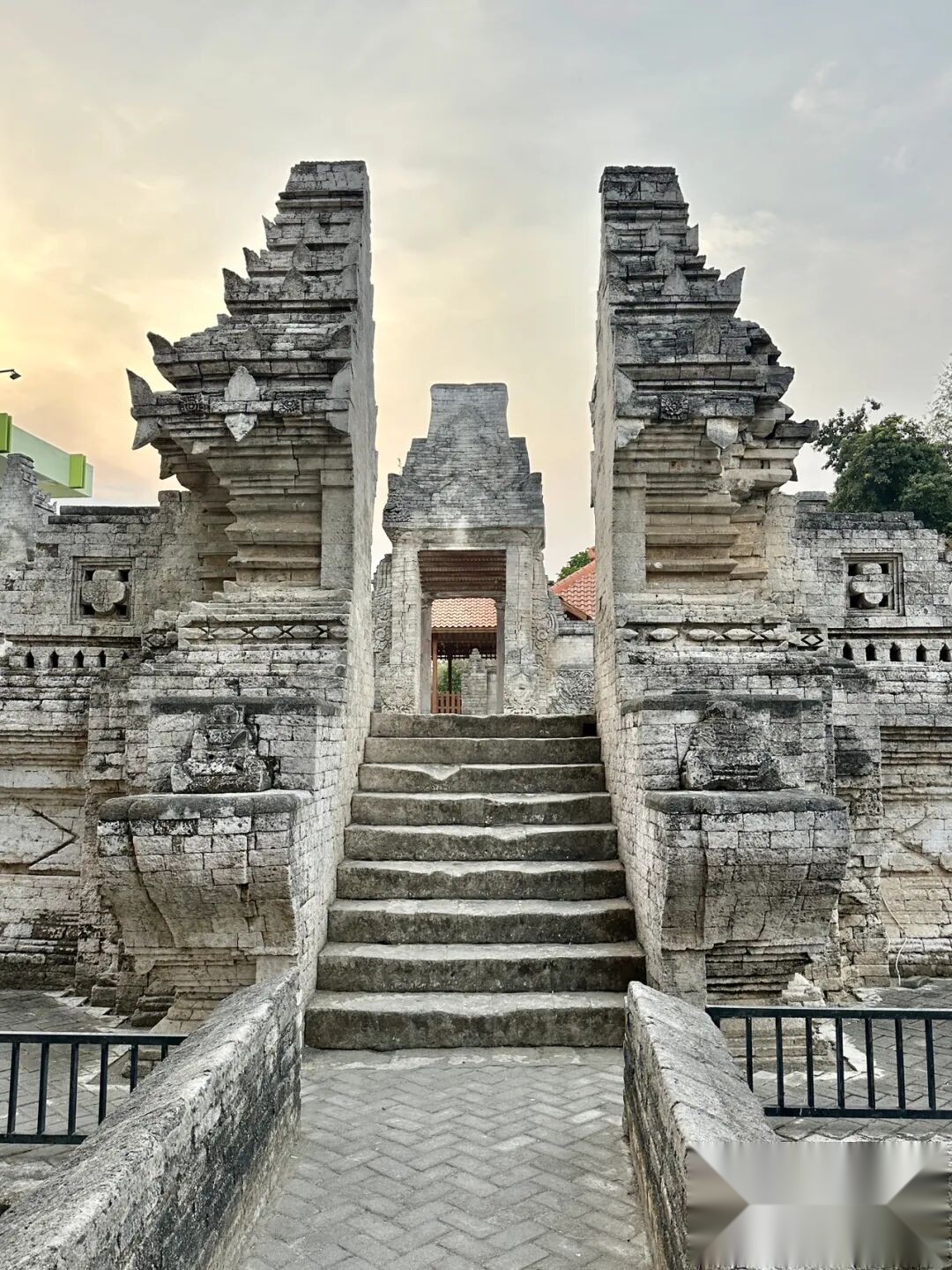
The first gate is the Gapura Bentar split gateway, which is the most classic outer gateway style of the Majapahit Empire. In traditional Javanese culture, Bentar means "open and welcoming," welcoming all incoming visitors regardless of their background. At the same time, it reminds people that once you arrive here, you should calm your mind, quiet down, and stop laughing or making a lot of noise, and many people make their initial intention right here.
Both the second and third gates are Gapura Paduraksa roofed gateway structures, representing the typical Majapahit Empire mosque gate style featuring multi-tiered, upward-tapering Meru roofs.
The fourth gate is the most important Gapura Paduraksa Bersayap or "winged gate," featuring a pair of massive wings growing out of the left and right sides. Right in the middle of the lintel is a Kala beast face, flanked by two pairs of Makara; the gate body and wings are completely covered in reliefs of lotuses, the Tree of Life, scrolling vines, and divine birds, with coiled dragon patterns on the back.
In Hinduism, the Kala beast face was originally the god of time who could devour everything, so it was often used to guard temple gates and ward off impurity. In Javanese Kejawen teachings, its meaning shifted into a warning symbol, reminding people to remember the afterlife, death, and judgment, and to let go of worldly greed. This is a major feature of Javanese syncretism, keeping the original form while transforming it with Islamic inner meaning.
Makara refers to the mythical water monster symbolizing water sources and life. The Makara originally featured an elephant trunk and a crocodile mouth, but one pair on this gate has transformed into a deer-head form, which is a unique variant exclusive to this tomb complex, reminding people that their inner hearts should remain alert, pure, and humble.
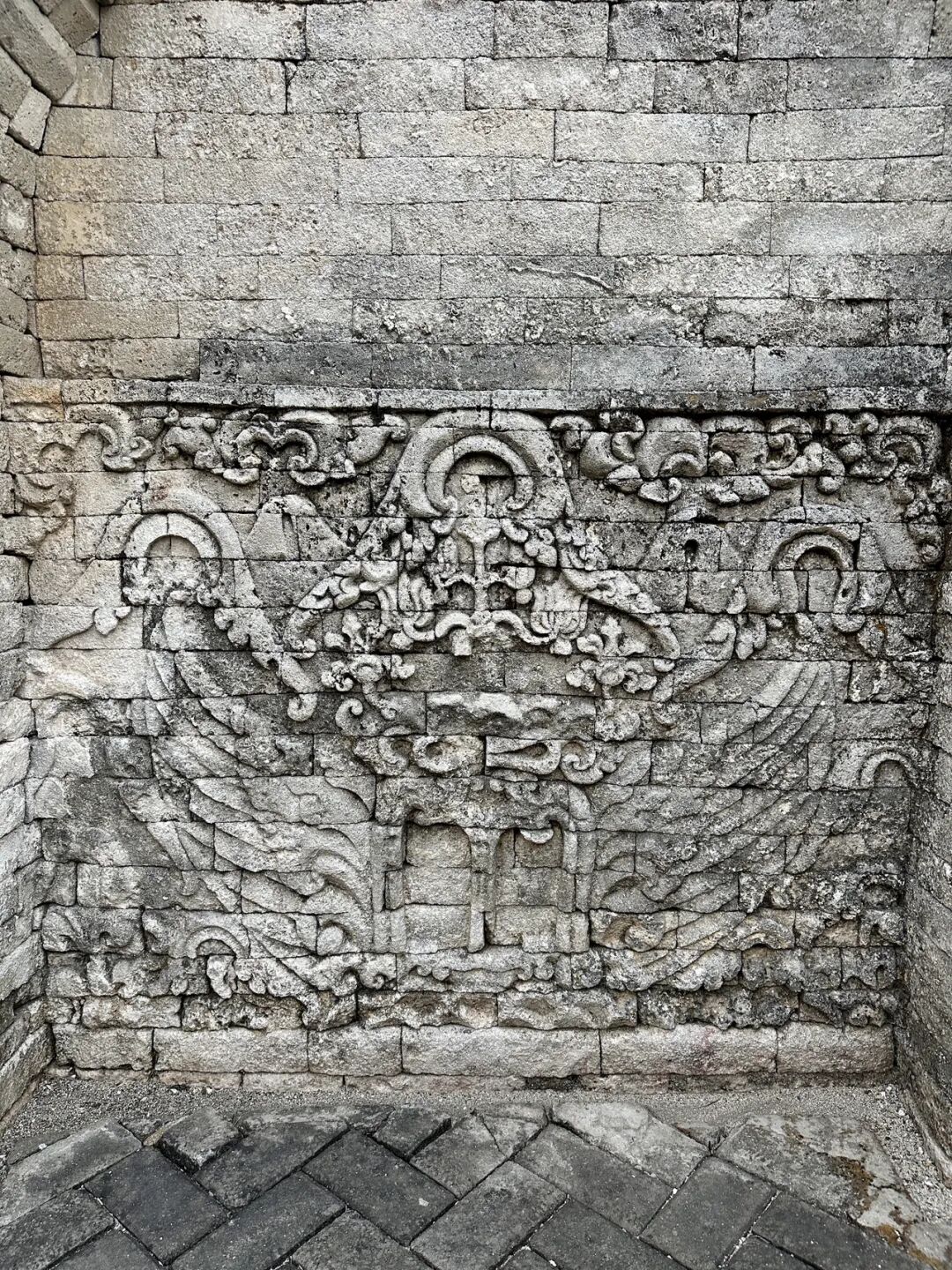
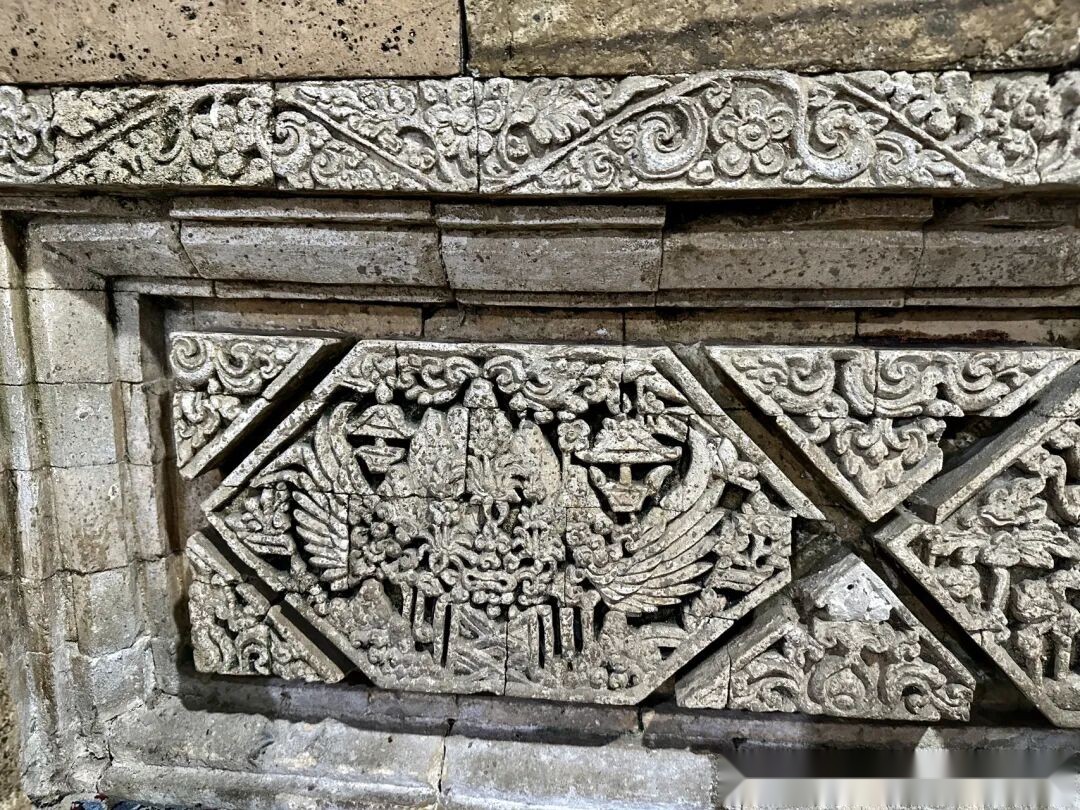
The divine bird imagery originally came from the Hindu Garuda bird, but in Javanese Kejawen teachings, its meaning was adapted into Buraq (the heavenly mount), echoing the miracle of the "flying mosque."
This is the doorway leading to the main prayer hall, though unfortunately, the main prayer hall has been rebuilt.
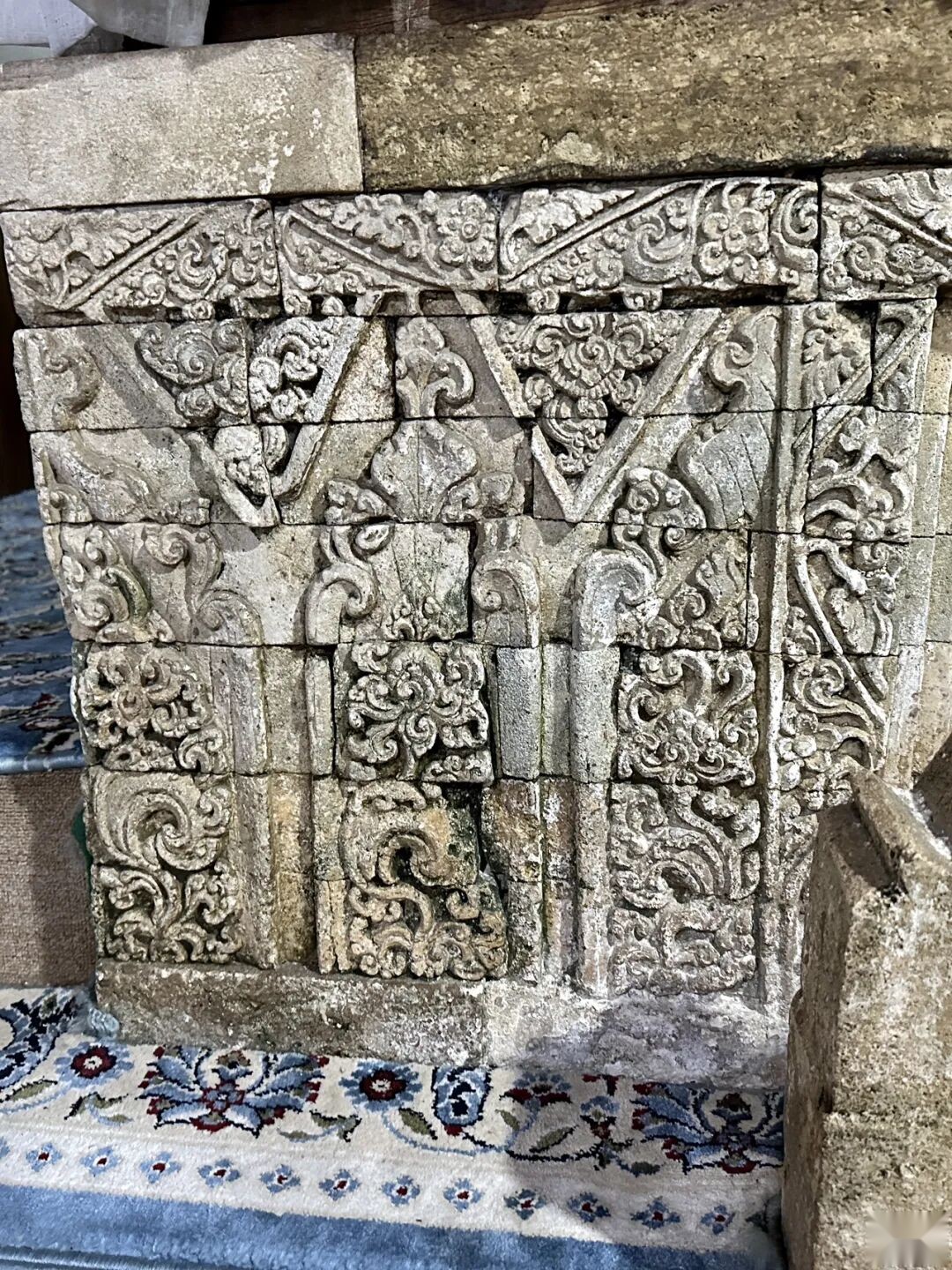
These are the stone carvings along the walls of the main prayer hall.
Directly opposite is the gateway leading to another cemetery area.
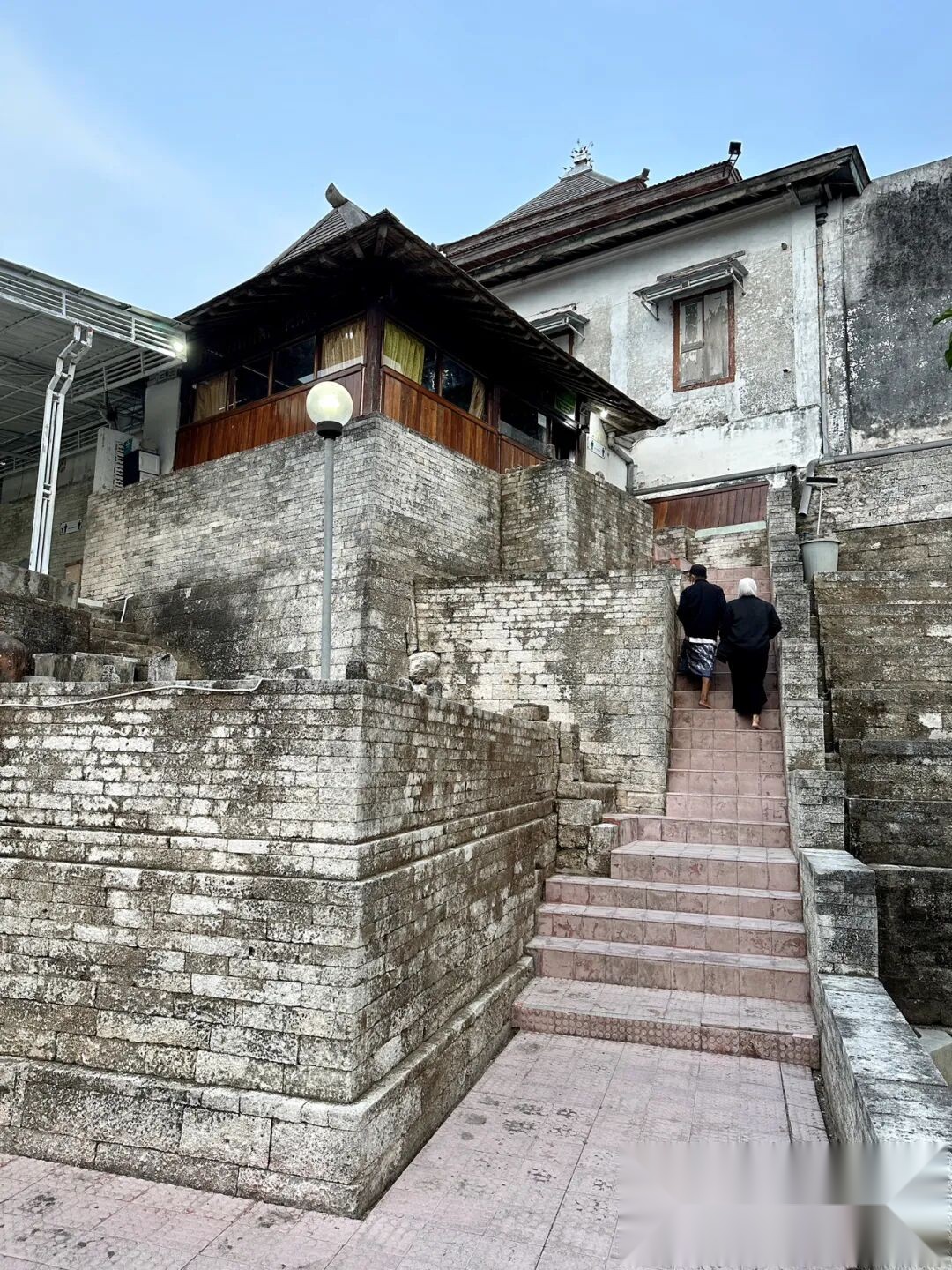
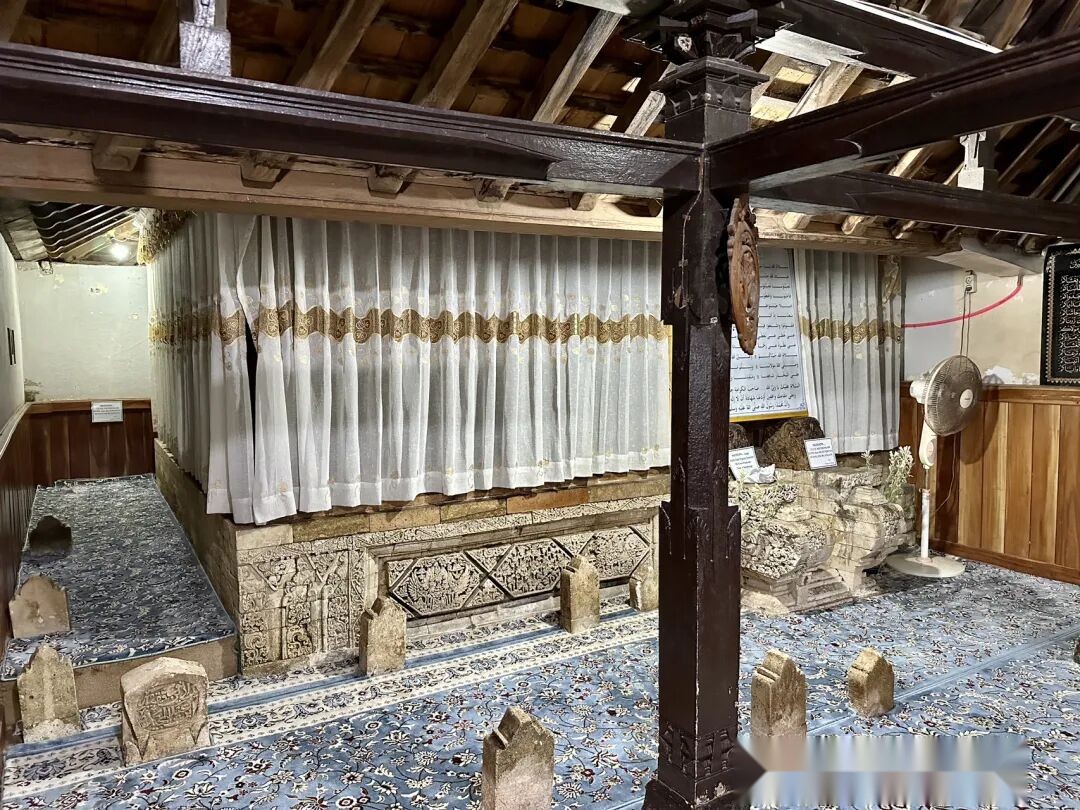
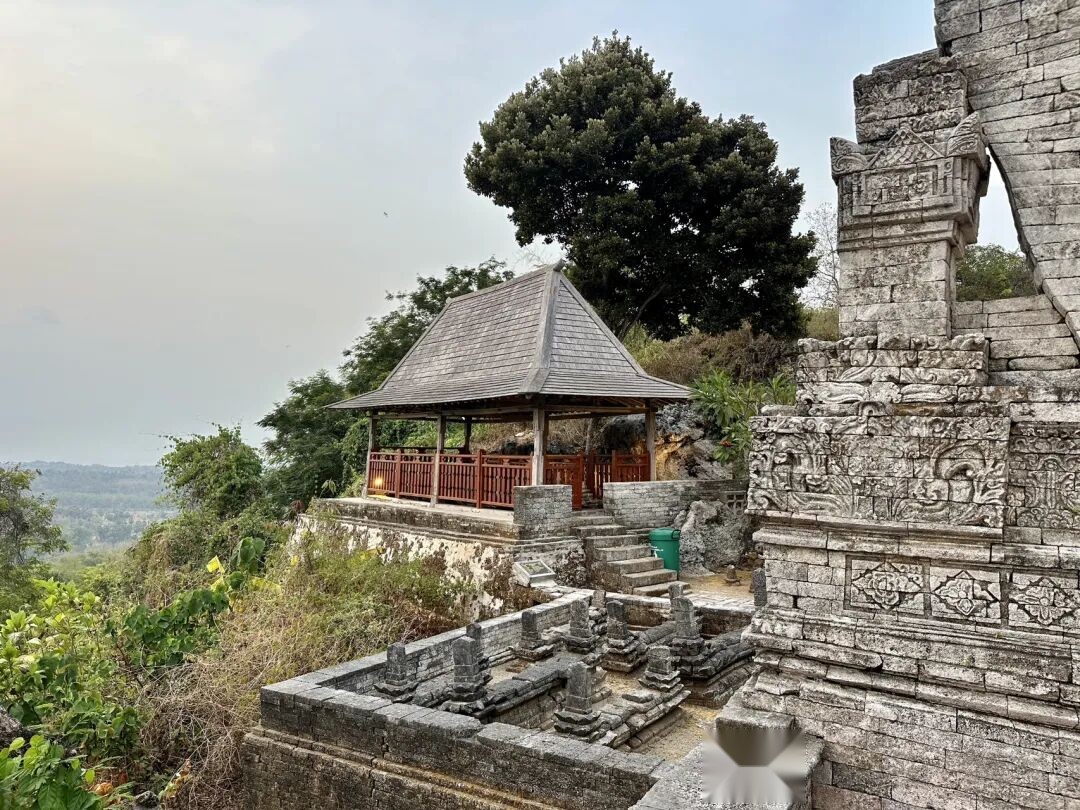
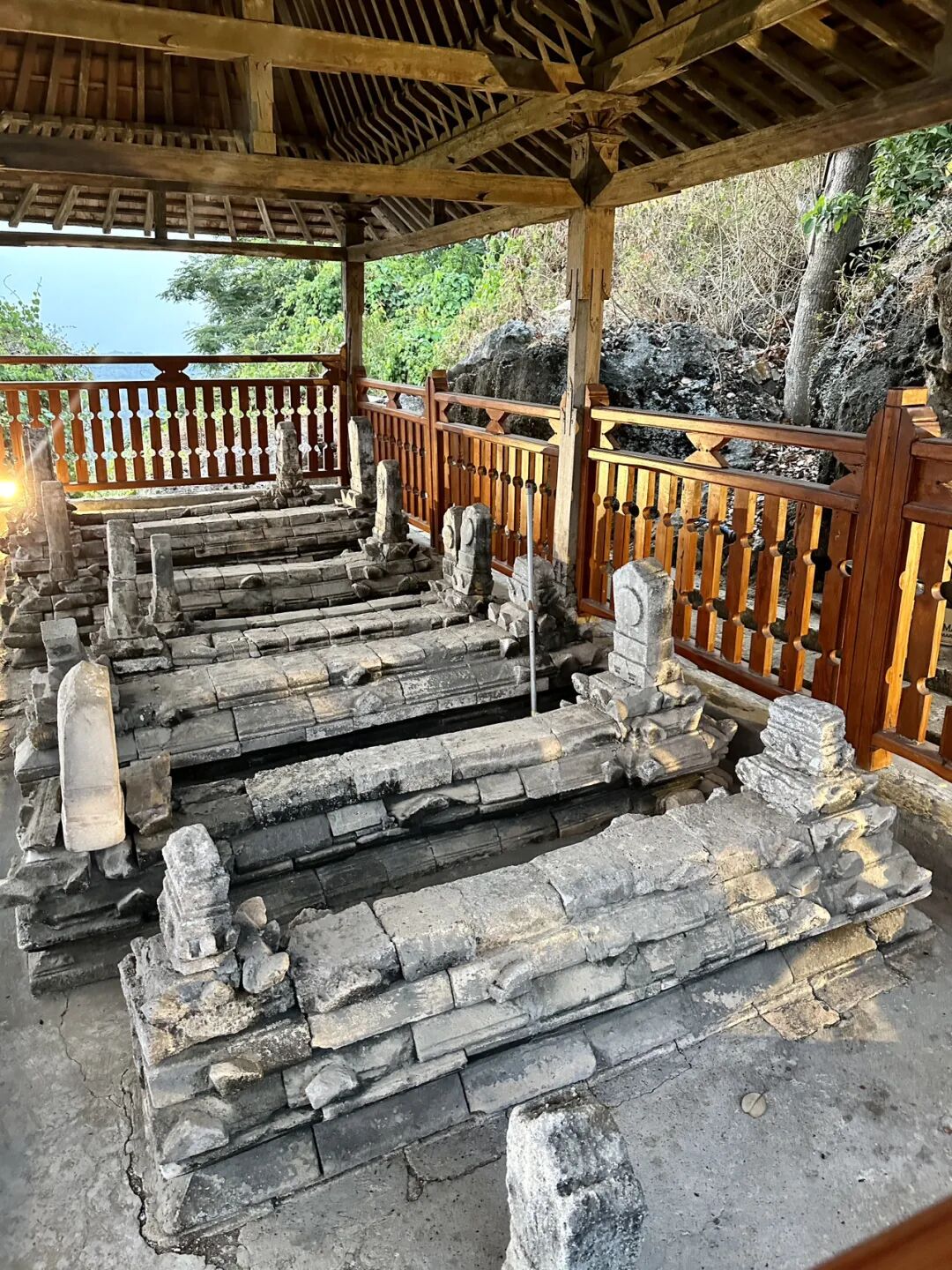
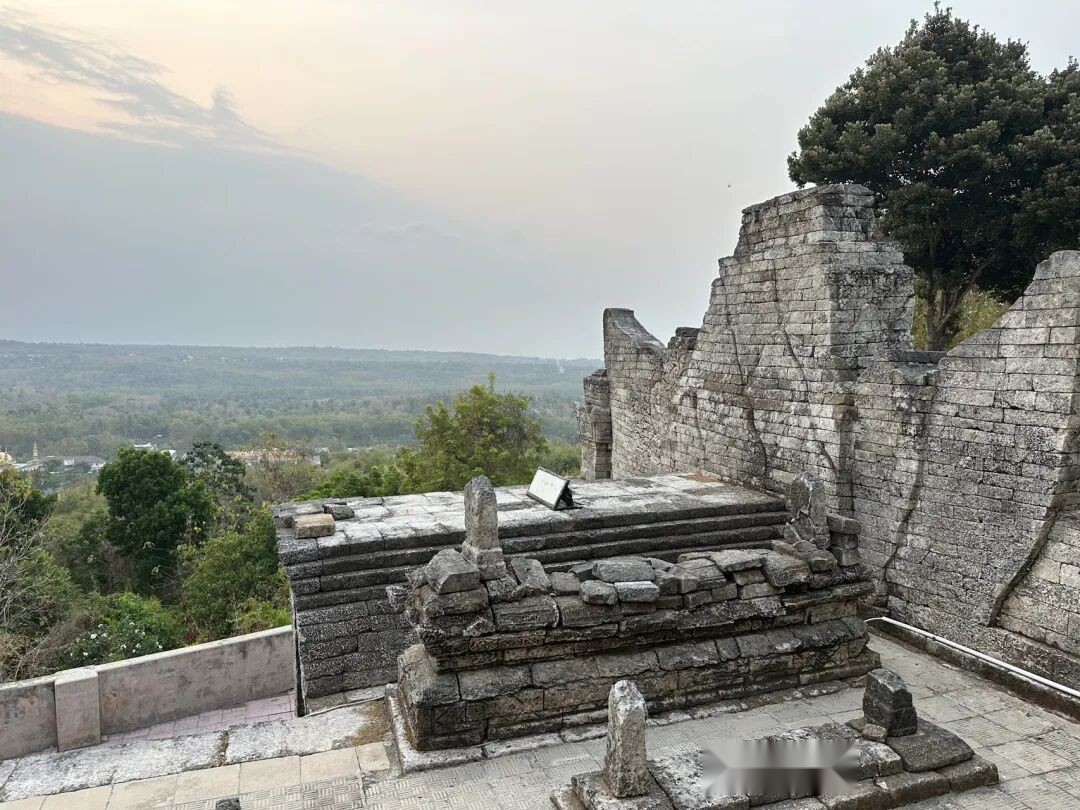
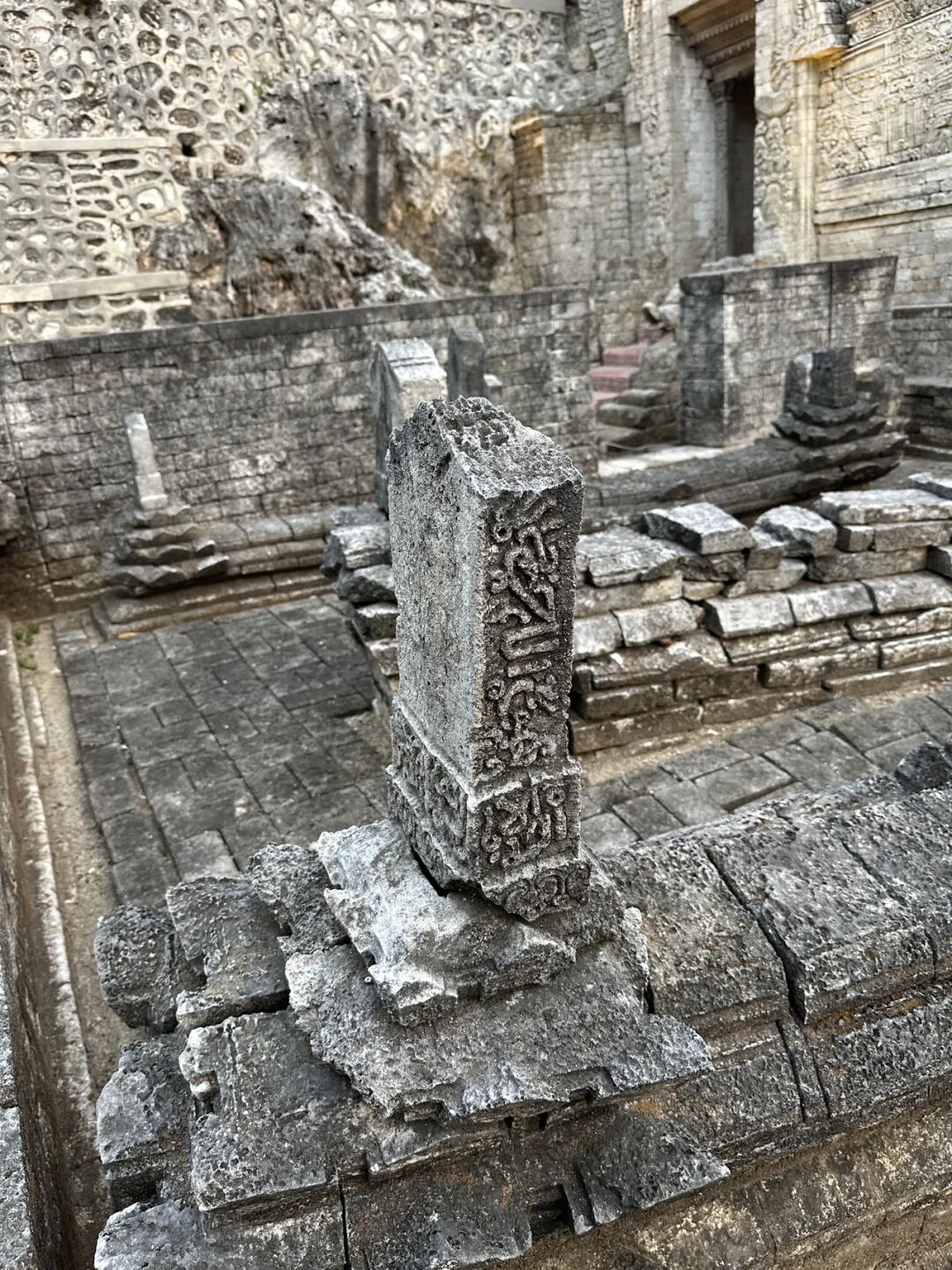
Sunan Sendang Duwur passed away in 1585, and his tomb complex is located on the west side of the flying mosque. His descendants were buried one after another on the three-tiered terrace below his tomb, forming an important Javanese tomb complex.
The lower part of the Sunan Sendang Duwur tomb consists of a carved stone platform, while the upper part features carved wooden doors and window shutters, though unfortunately, they are currently blocked off and cannot be seen. view all
[Internet Repost]
Take a deep dive through 39 high-definition photos exploring the Makam Sunan Sendang Duwur (Sunan Sendang Duwur Tomb) in East Java, Indonesia. We are breaking down this legendary 16th-century architectural complex that brilliantly blends Islamic, traditional Javanese, and classic stone and wood-carving art.
During this trip across Java, Indonesia, I checked out quite a few religious buildings, and the most locally unique Javanese one has got to be the Makam Sunan Sendang Duwur in East Java. This mosque and tomb complex blends Islamic, Buddhist, Hindu, and indigenous Javanese architectural styles, making it a major example of Javanese Kejawen (syncretic Javanese spiritualism).
Sunan Sendang (1520–1585), whose original name was Raden Noer Rahmat, had a father who was an Arab missionary who sailed across the sea from Baghdad to Java, and a mother who was the daughter of a local Javanese ruler. Sunan Sendang didn't care for court power struggles and wanted to focus entirely on his spiritual path, so he became a student of Sunan Drajat, one of the nine Wali Songo (Nine Saints of Java). Seeing his exceptional moral character, Sunan Drajat gave him the honorary title of Sunan.
In 1561, Sunan Sendang came to Mount Amitunon in East Java to clear the land. This mountainous area was dry, rocky, and tough to farm. He first taught the locals how to clear the land and channel water for farming, and after a successful harvest earned everyone's trust, he slowly began spreading the faith to the people. His teacher, Sunan Drajat, told him he should build a mosque here. According to generations of oral legends, this is how the famous miracle of the flying mosque came to be.
At that time, Mantingan in Jepara, Central Java, was ruled by the legendary Queen Ratu Kalinyamat. She had built an extremely exquisite mosque with gorgeous stone carvings. Sunan Sendang went to visit her and politely asked for her permission to relocate this mosque to Mount Amitunon. Wanting to test his spiritual rank, the Queen laid down a super tough condition: you can move this mosque, but you have to finish it in a single night, and not a single small rock or wood shaving can drop along the way—if even a single fragment falls on the road, it won't count as a success.
Sunan Sendang agreed, went back home to offer a sincere dua, and then the miracle happened. After nightfall, under Sunan's recitation, the entire mosque lifted into the air, flying from Jepara across the Central Java plains toward Mount Amitunon in East Java. Before dawn broke, the mosque landed solidly on the hilltop terrace without missing a single brick, tile, or carved component, and not a single chip dropped along the path. Early in the morning when the villagers went up the mountain, they were totally shocked to suddenly see an entire mosque sitting there out of nowhere, which is why this mosque was named Masjid Tiban, which means "suddenly descended" in Javanese.
The Tiban Mosque has completely preserved its four grand gates built in 1561, with each gate featuring its own unique style.
The first gate is the Gapura Bentar split gateway, which is the most classic outer gateway style of the Majapahit Empire. In traditional Javanese culture, Bentar means "open and welcoming," welcoming all incoming visitors regardless of their background. At the same time, it reminds people that once you arrive here, you should calm your mind, quiet down, and stop laughing or making a lot of noise, and many people make their initial intention right here.
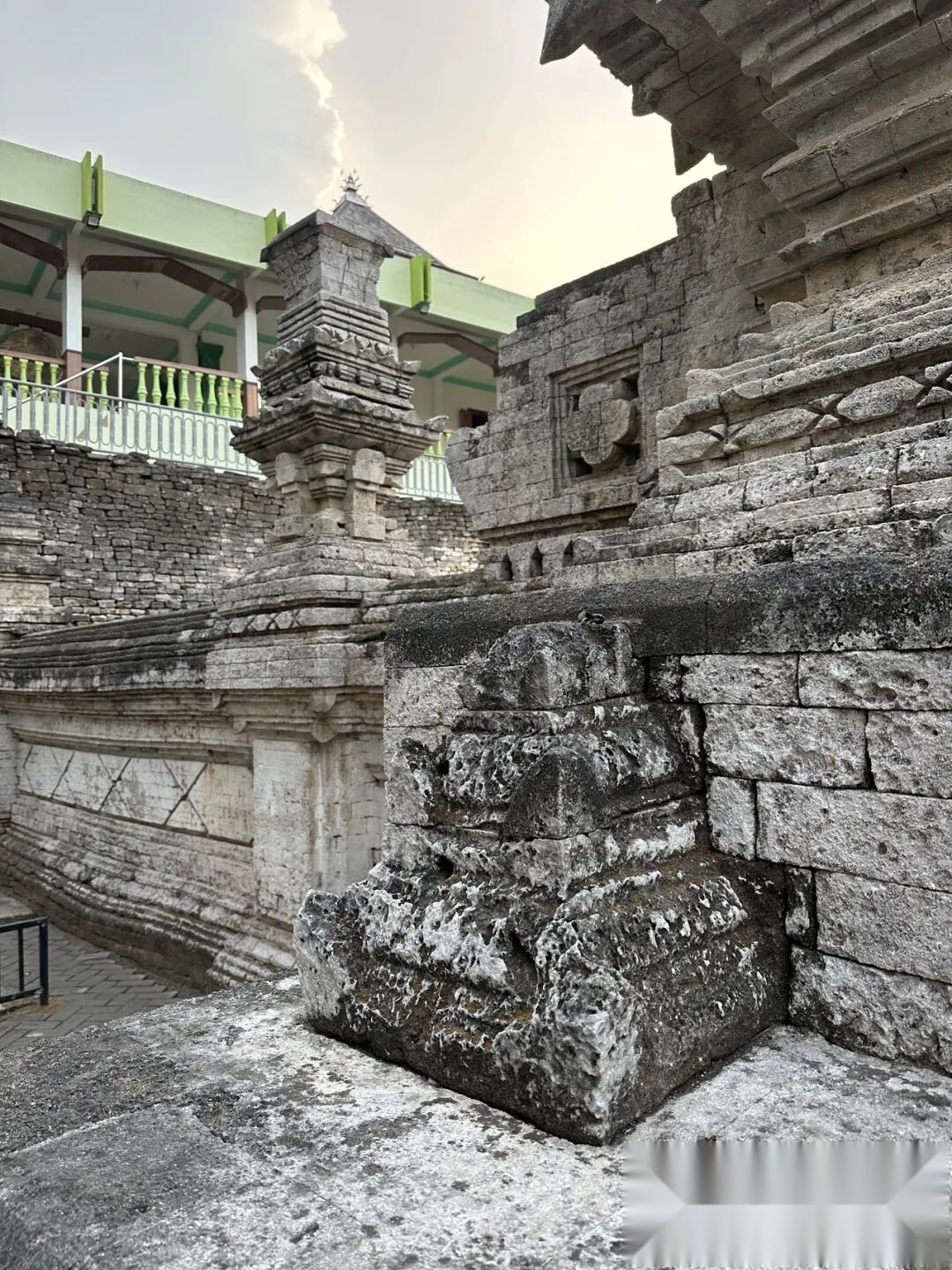
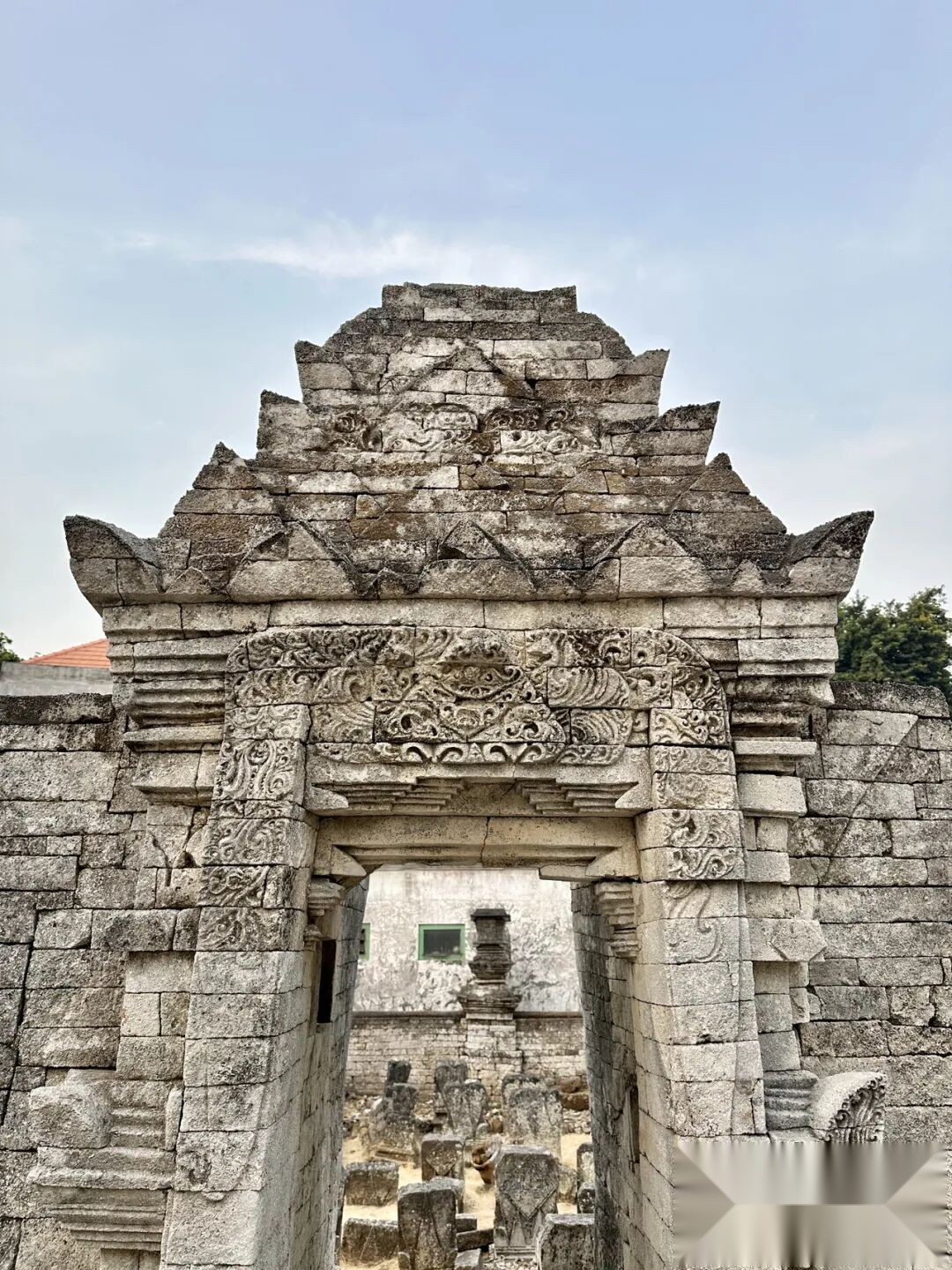
Both the second and third gates are Gapura Paduraksa roofed gateway structures, representing the typical Majapahit Empire mosque gate style featuring multi-tiered, upward-tapering Meru roofs.
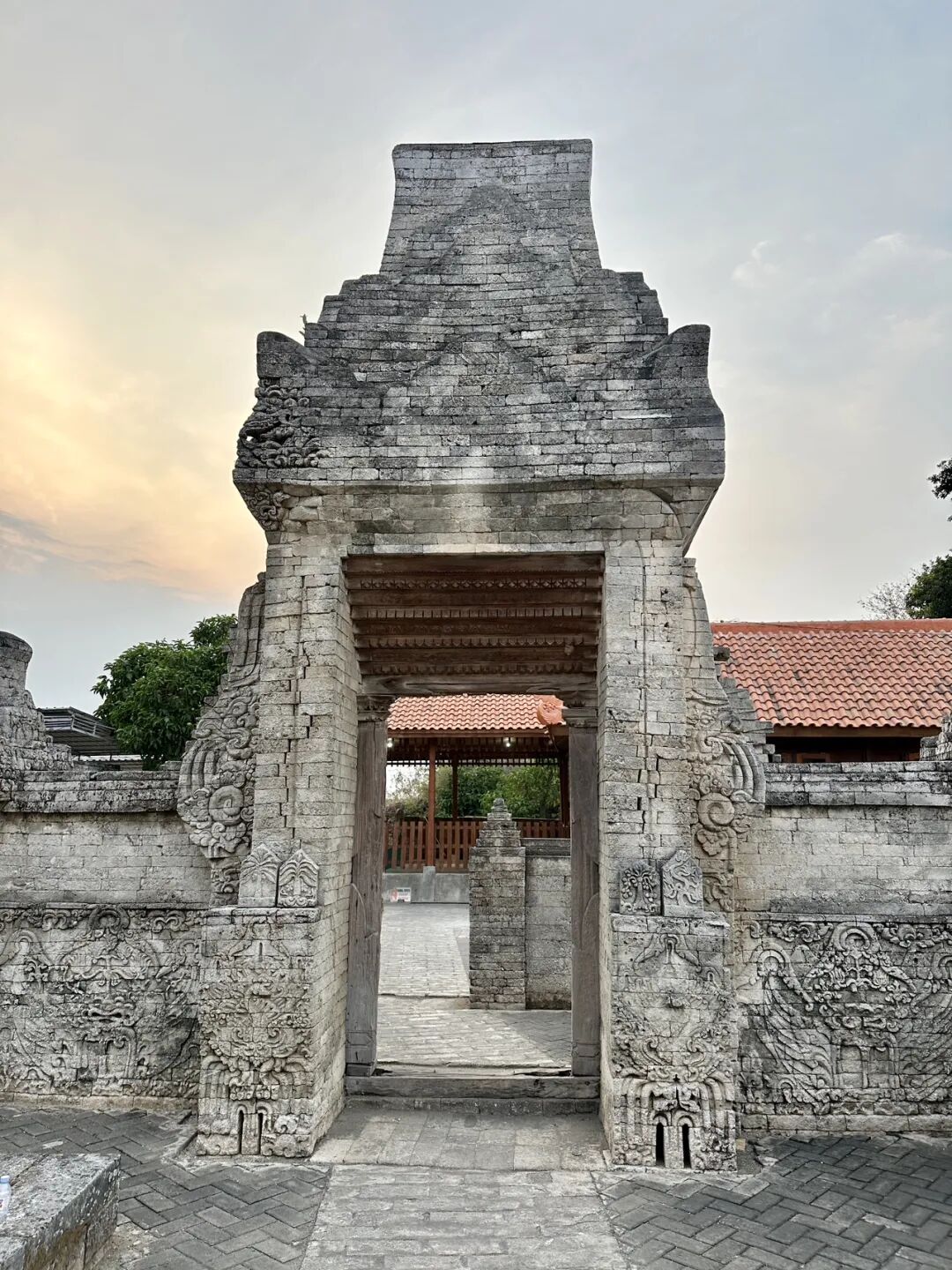
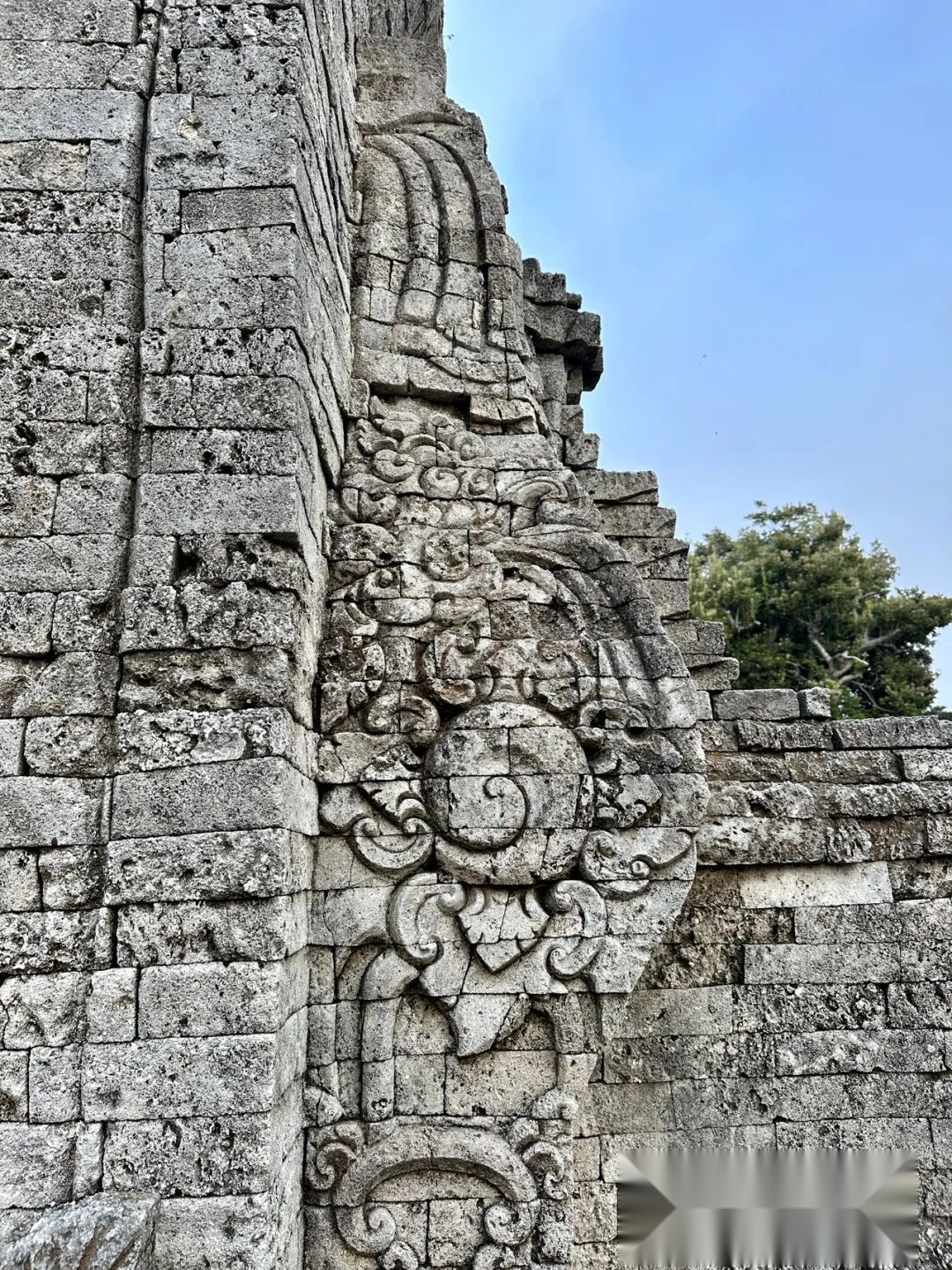
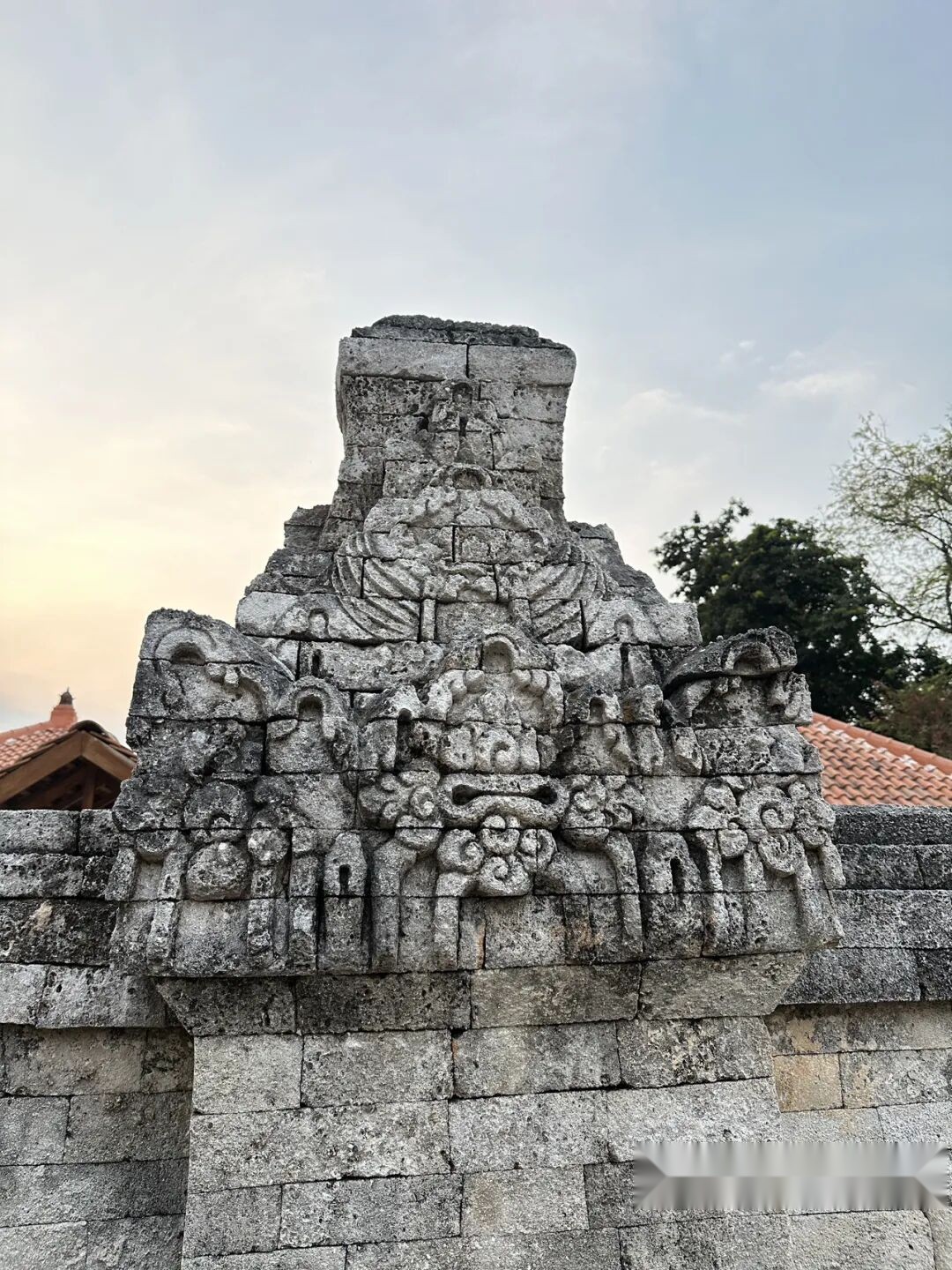
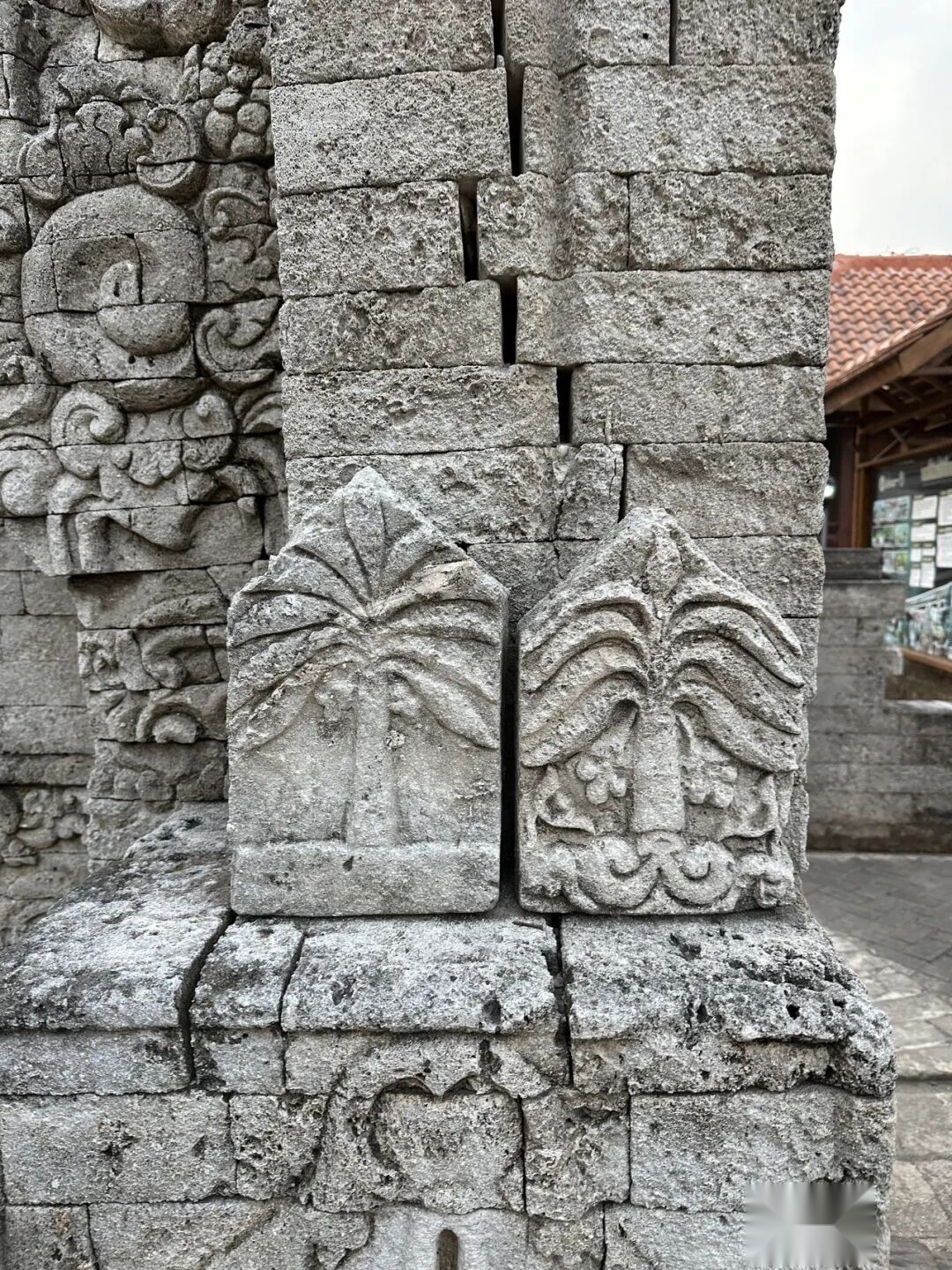
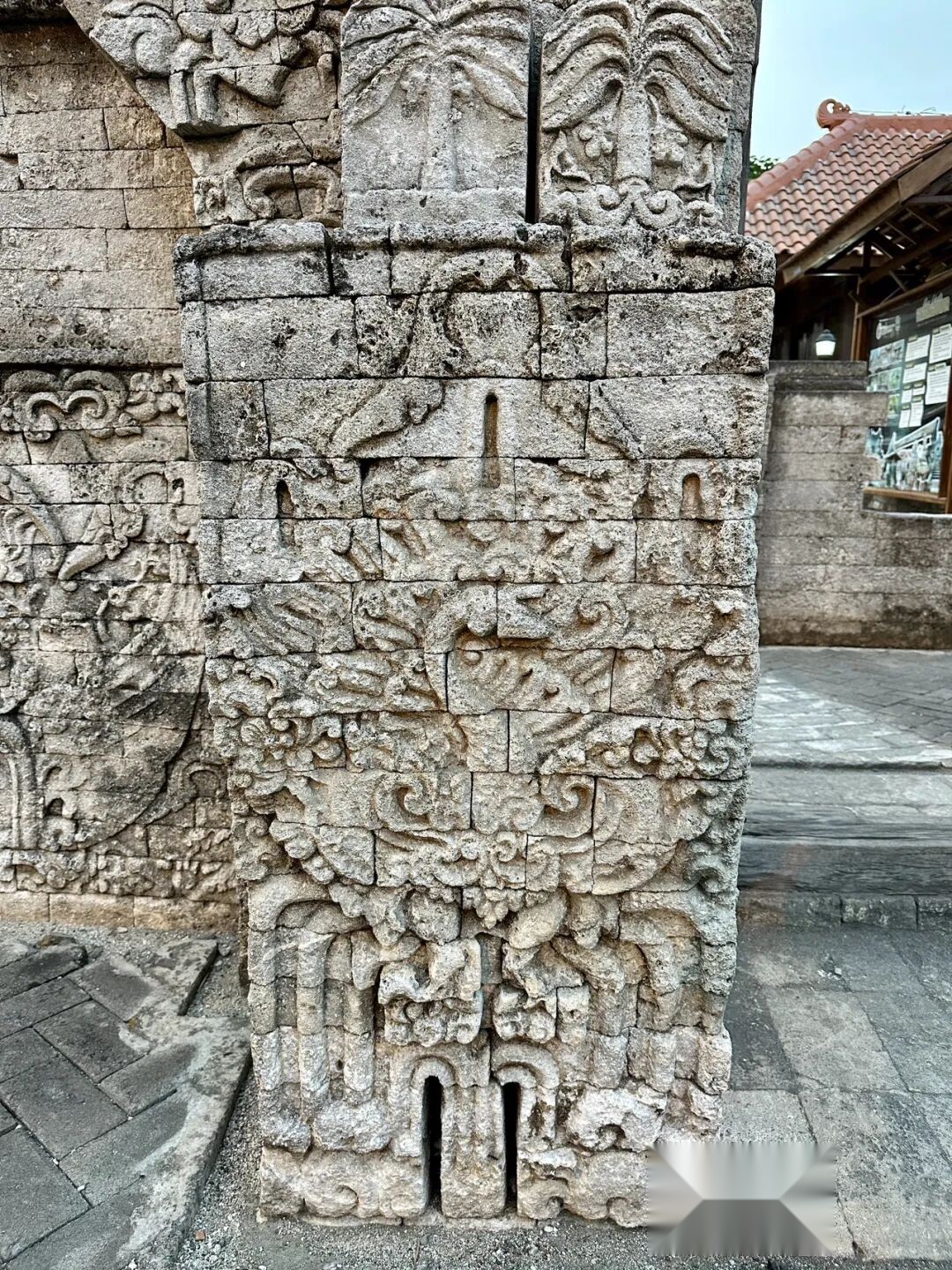
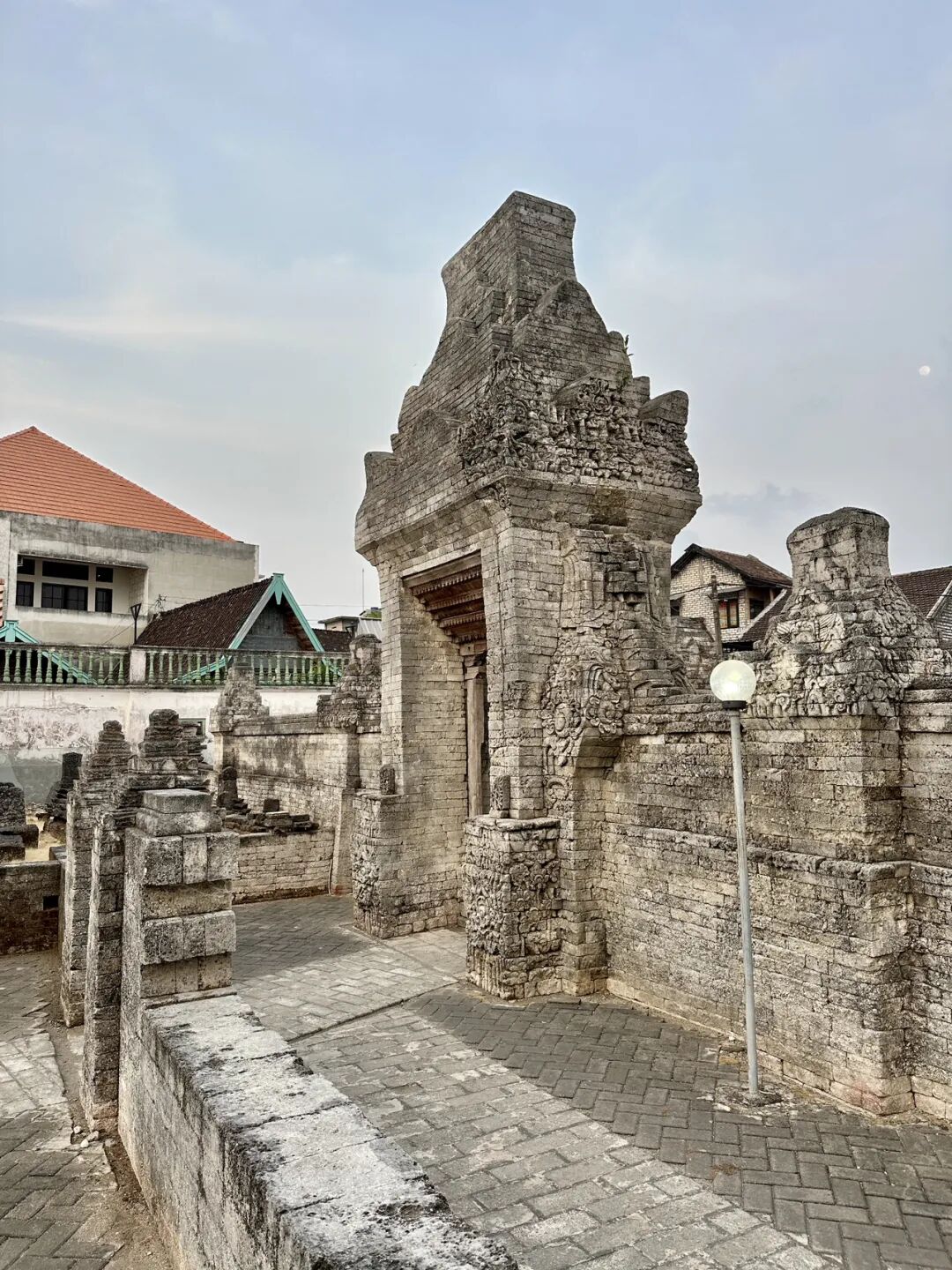
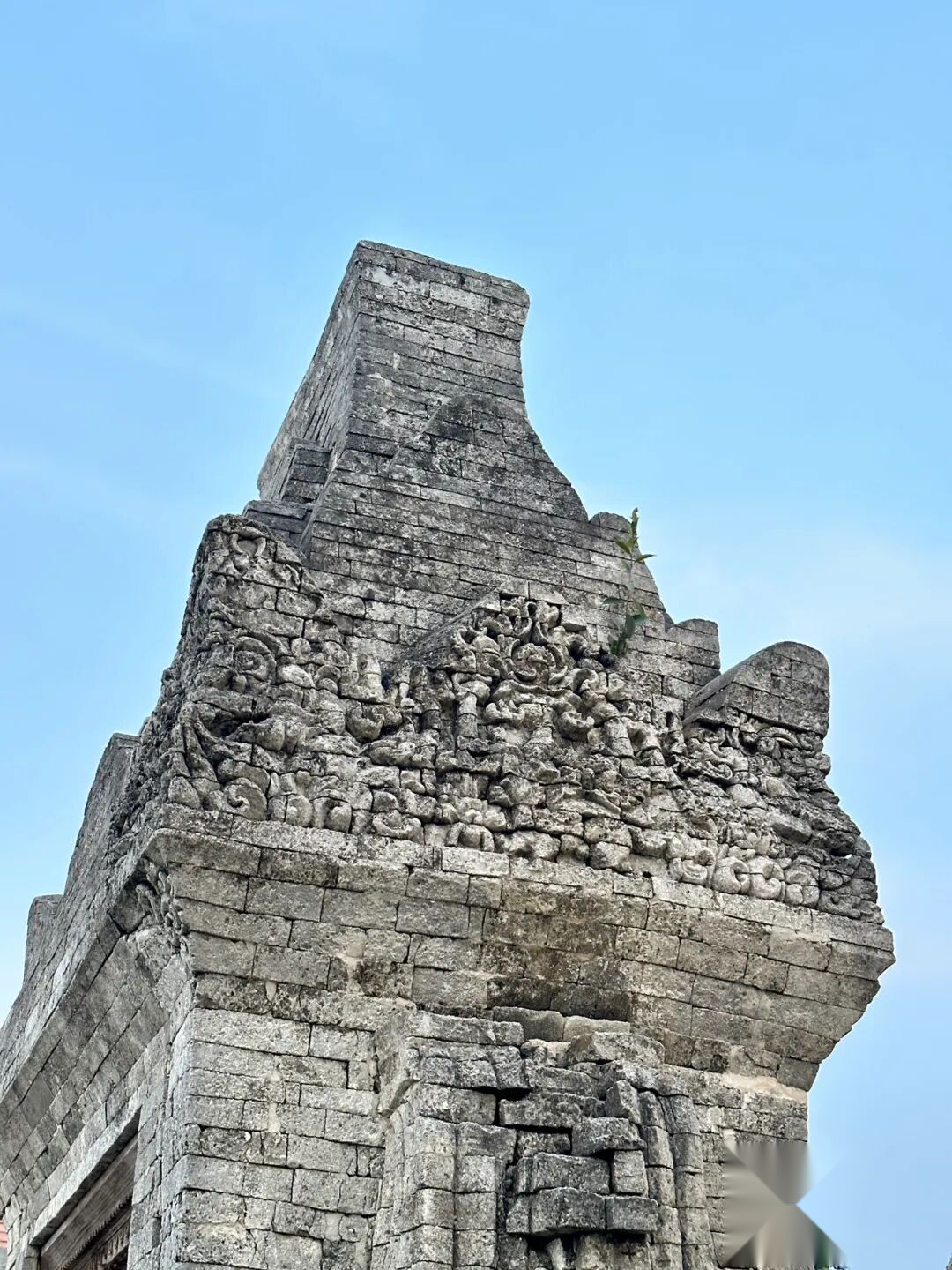
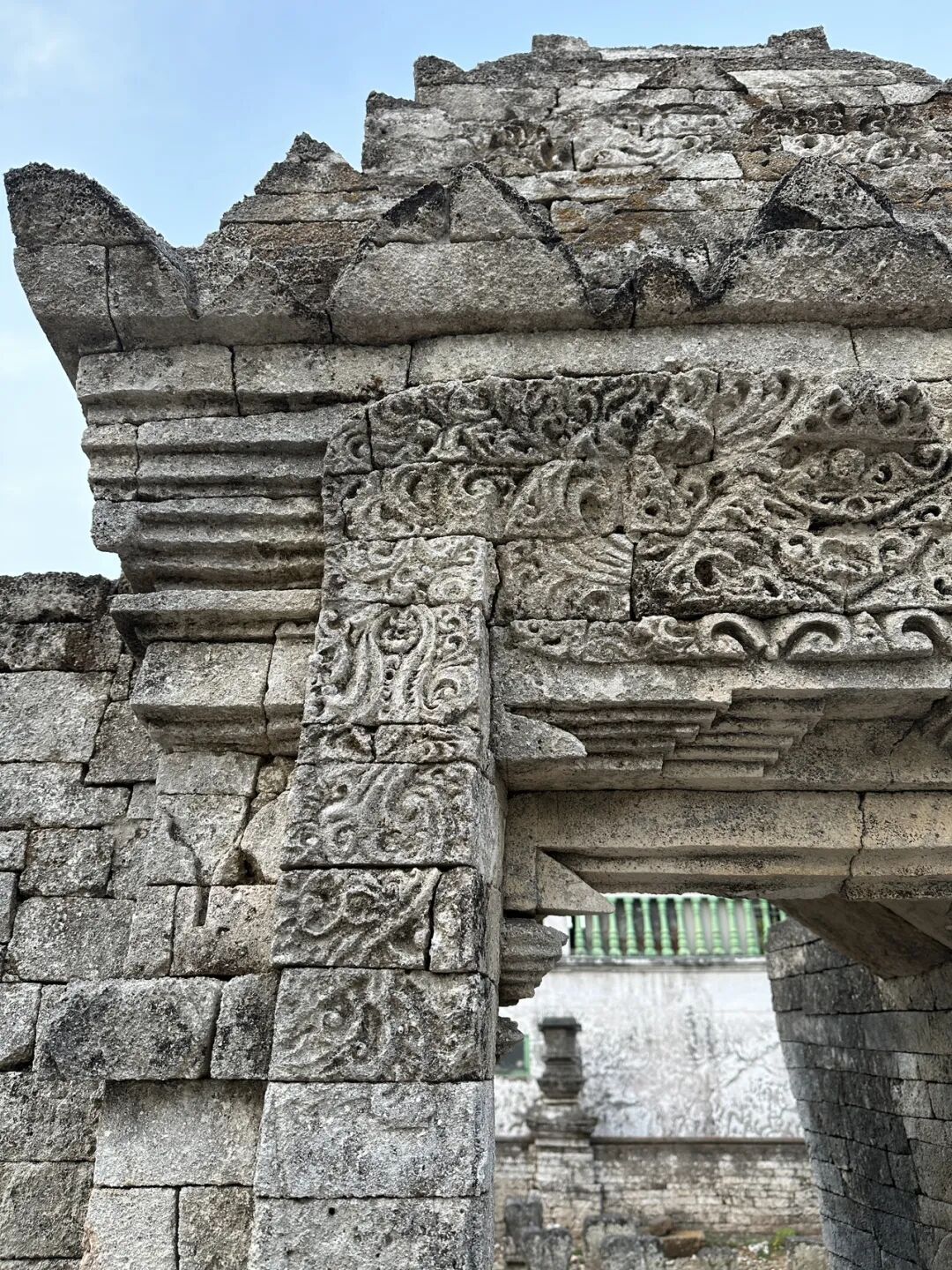
The fourth gate is the most important Gapura Paduraksa Bersayap or "winged gate," featuring a pair of massive wings growing out of the left and right sides. Right in the middle of the lintel is a Kala beast face, flanked by two pairs of Makara; the gate body and wings are completely covered in reliefs of lotuses, the Tree of Life, scrolling vines, and divine birds, with coiled dragon patterns on the back.
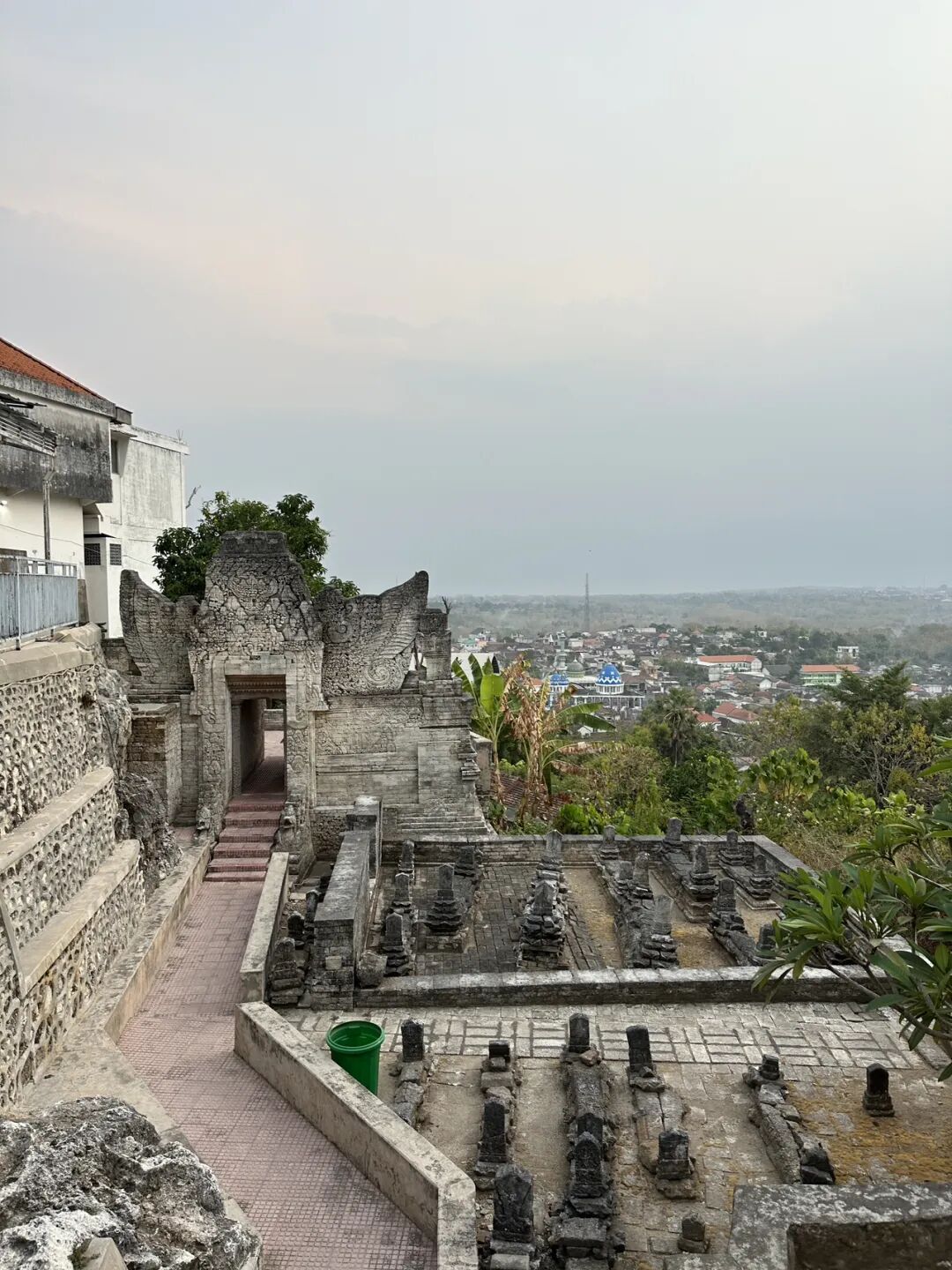
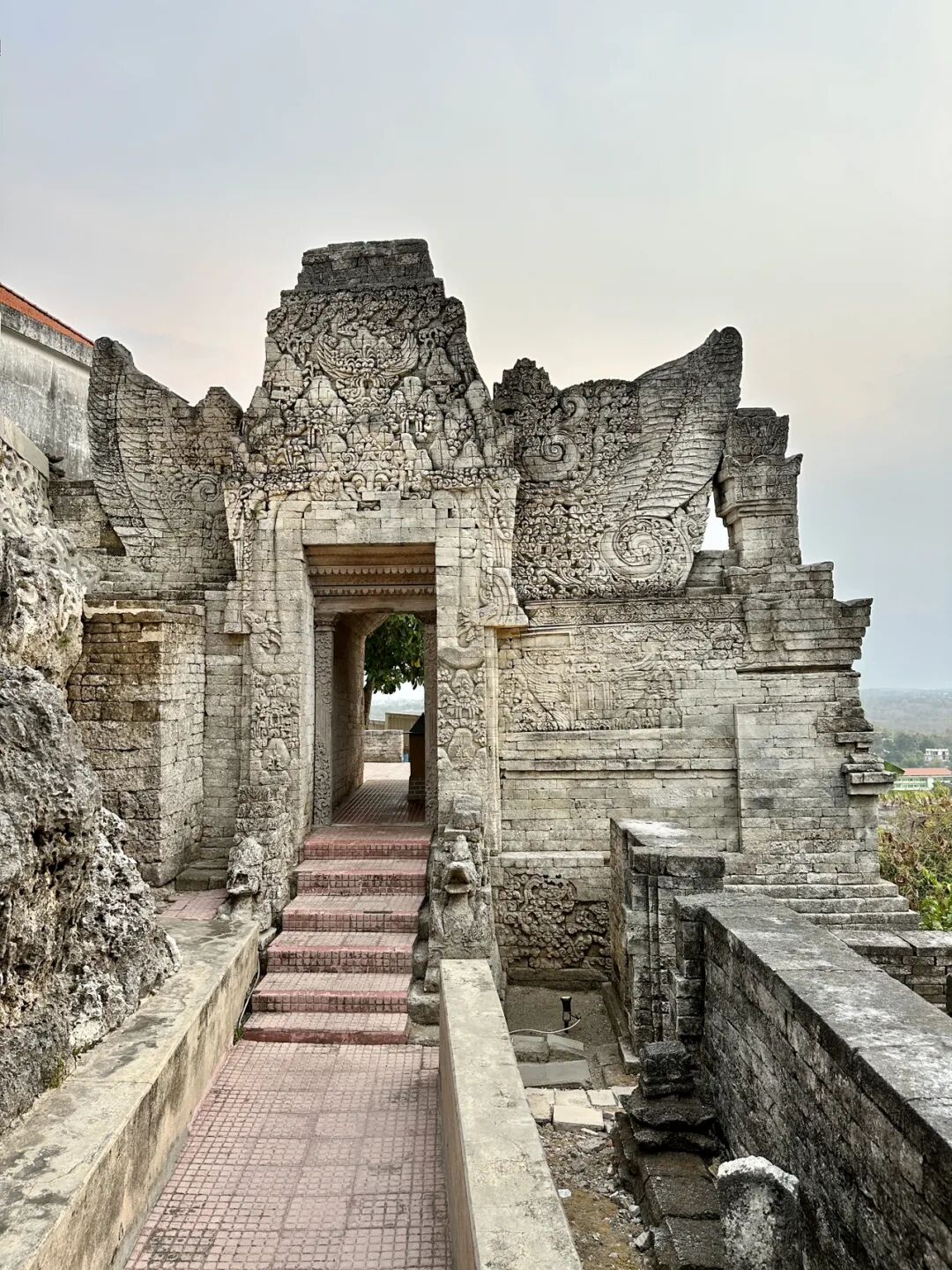
In Hinduism, the Kala beast face was originally the god of time who could devour everything, so it was often used to guard temple gates and ward off impurity. In Javanese Kejawen teachings, its meaning shifted into a warning symbol, reminding people to remember the afterlife, death, and judgment, and to let go of worldly greed. This is a major feature of Javanese syncretism, keeping the original form while transforming it with Islamic inner meaning.
Makara refers to the mythical water monster symbolizing water sources and life. The Makara originally featured an elephant trunk and a crocodile mouth, but one pair on this gate has transformed into a deer-head form, which is a unique variant exclusive to this tomb complex, reminding people that their inner hearts should remain alert, pure, and humble.
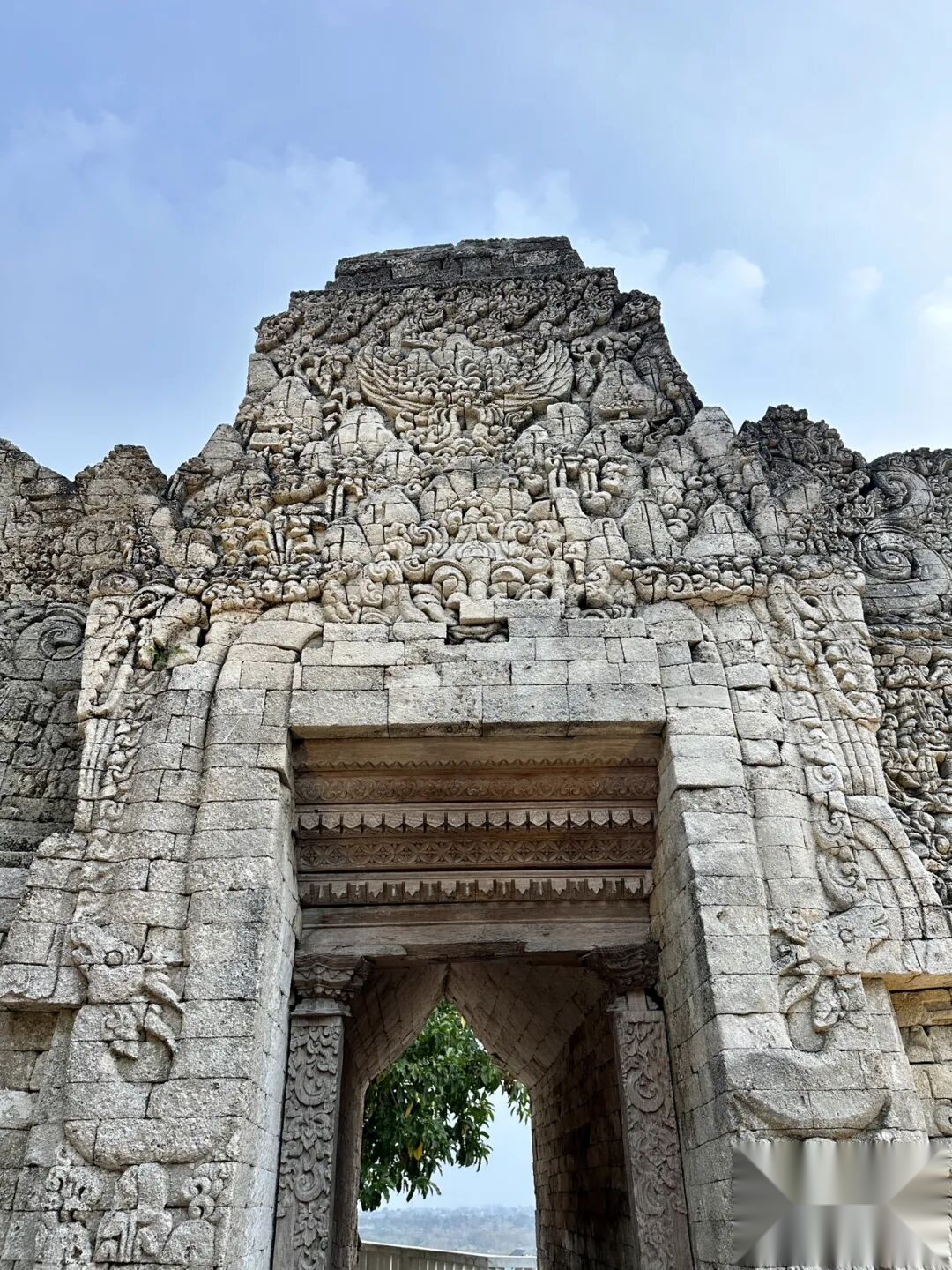
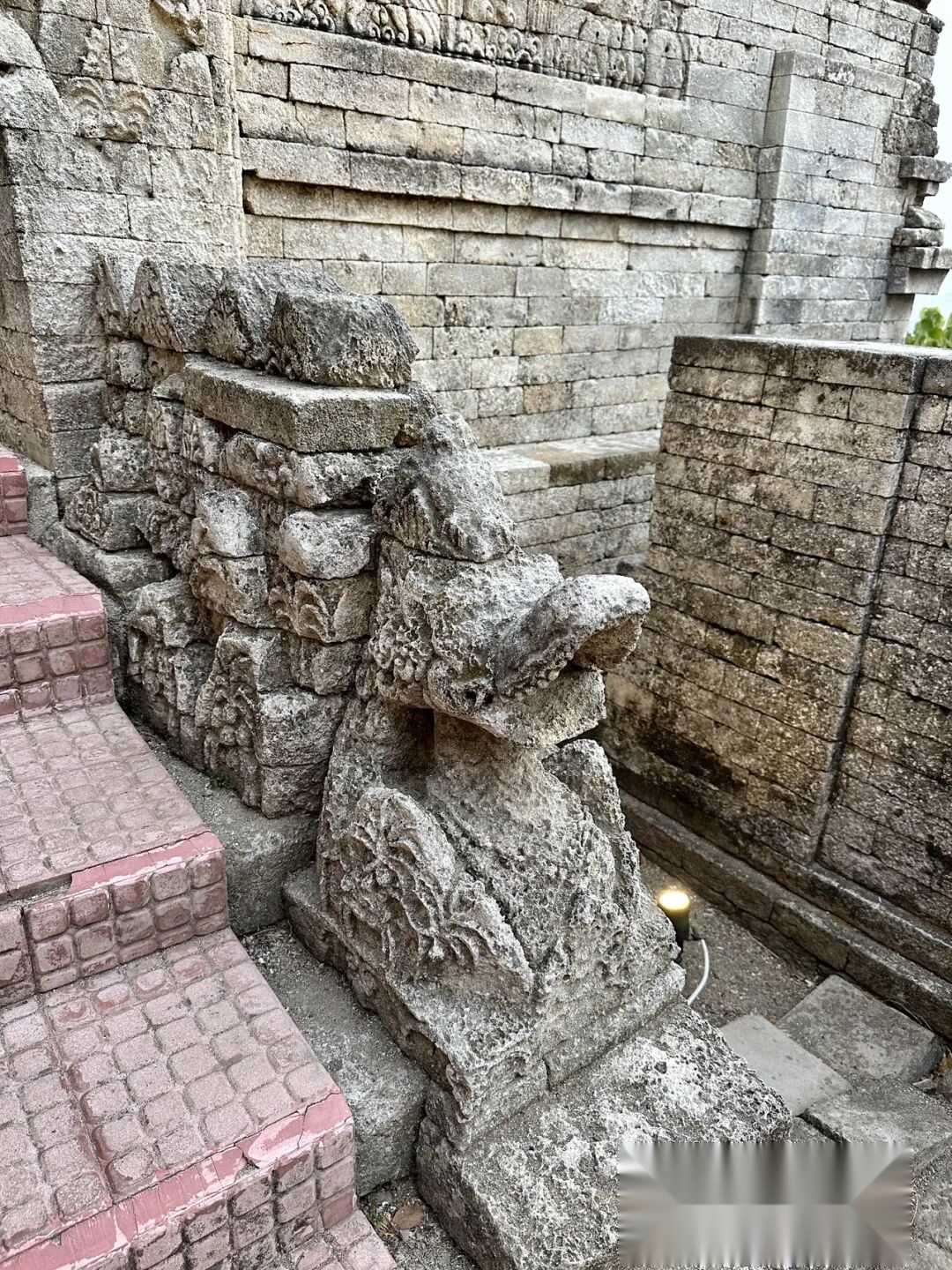
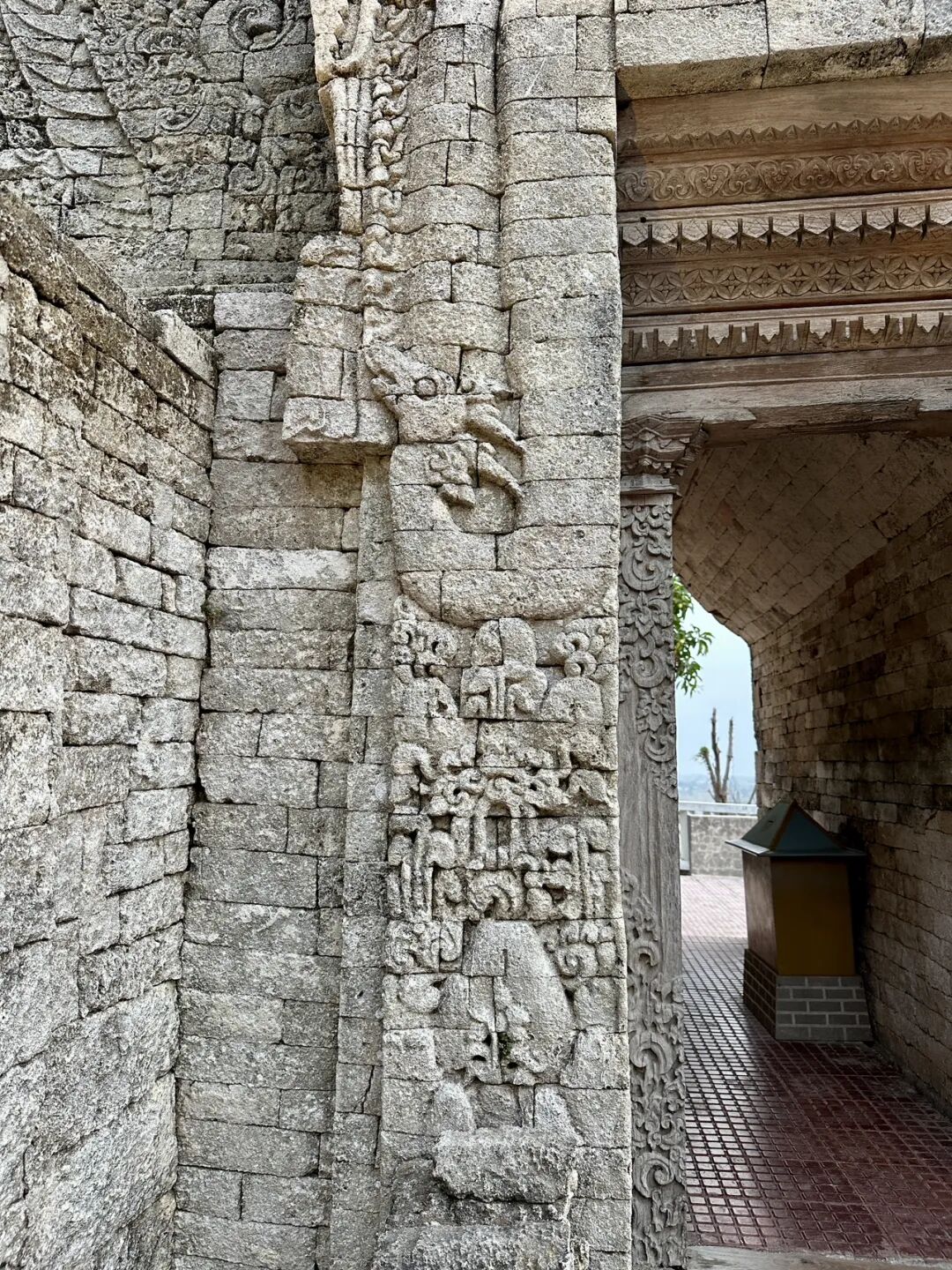
The divine bird imagery originally came from the Hindu Garuda bird, but in Javanese Kejawen teachings, its meaning was adapted into Buraq (the heavenly mount), echoing the miracle of the "flying mosque."
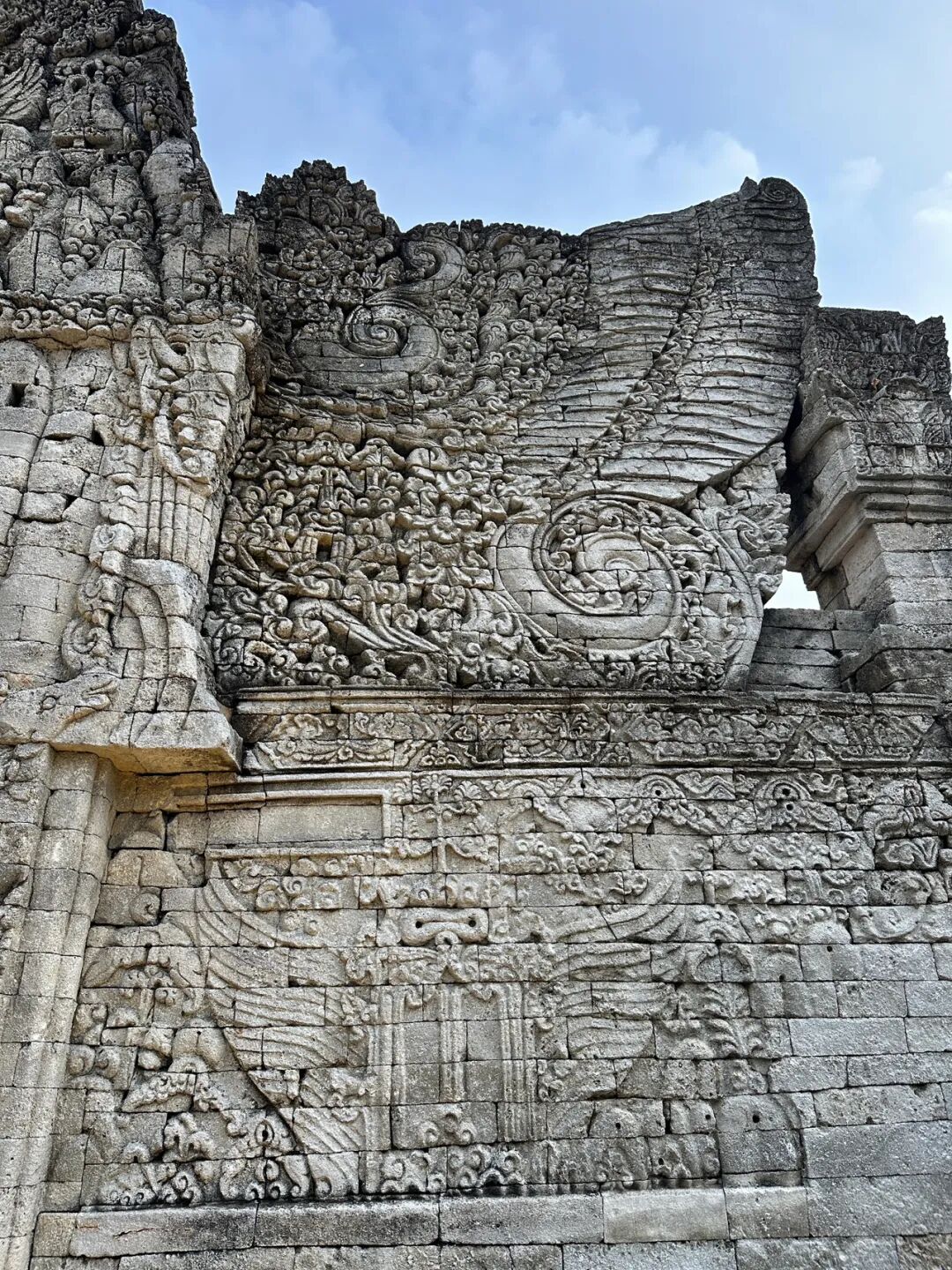
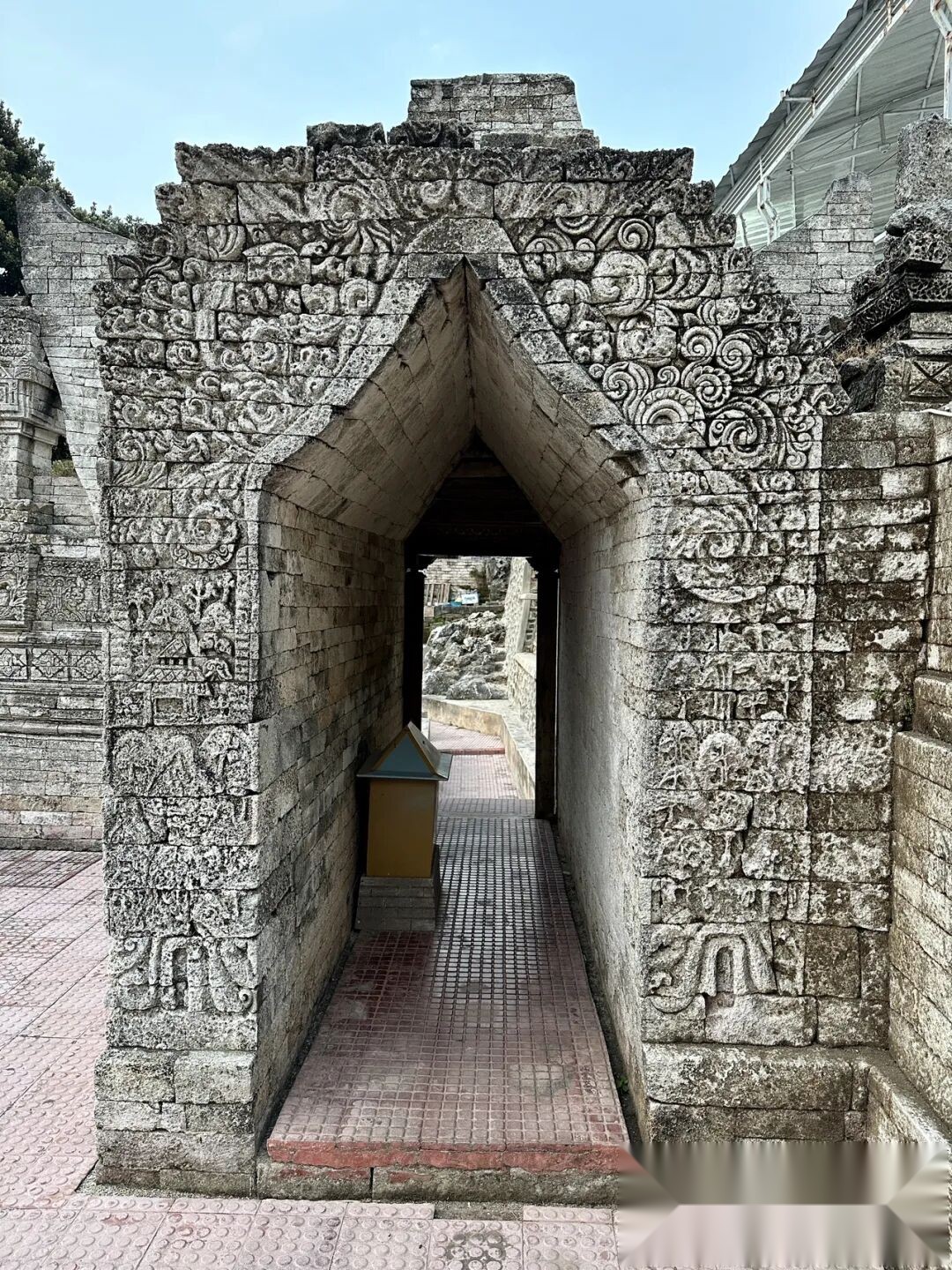
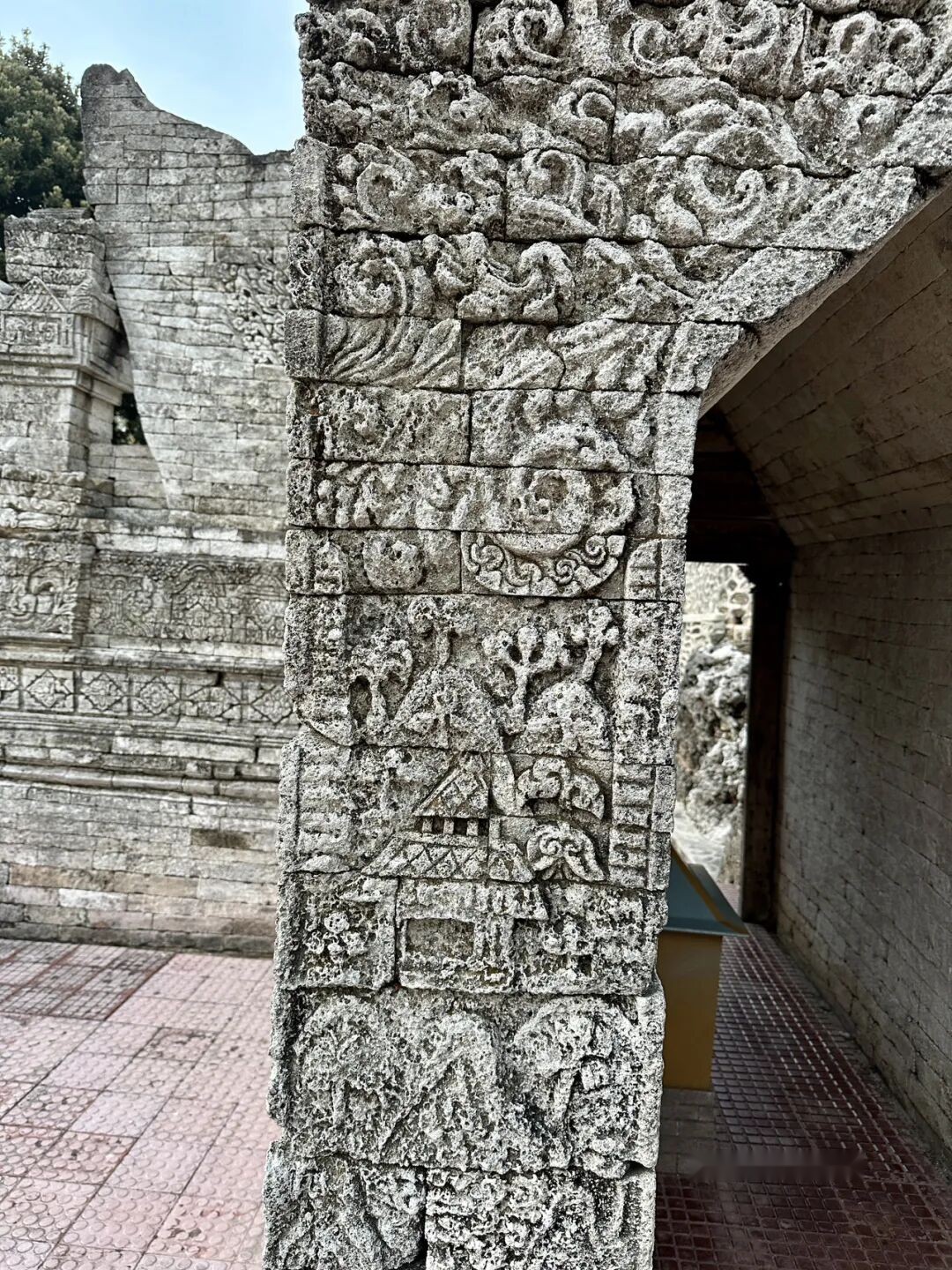
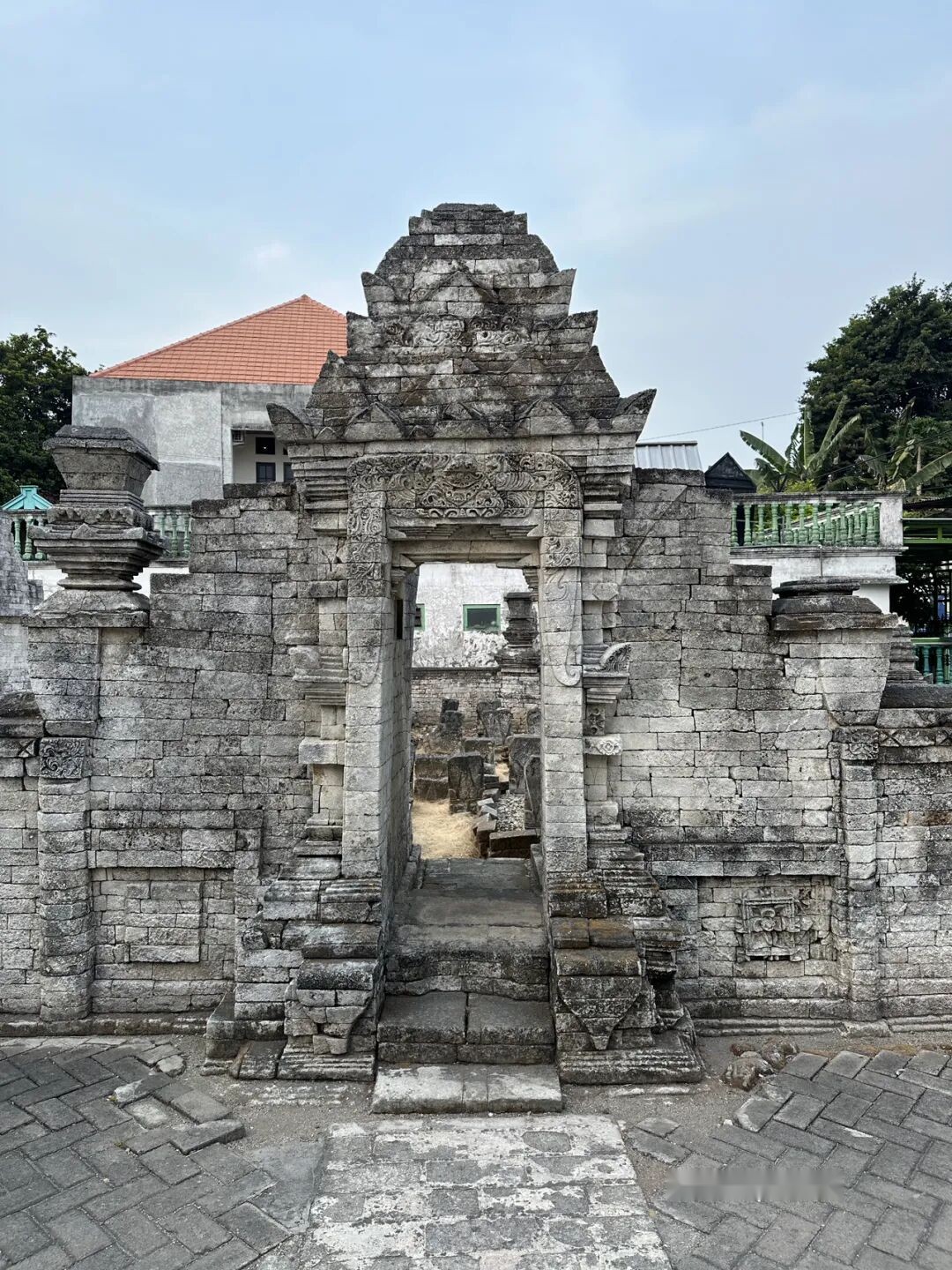
This is the doorway leading to the main prayer hall, though unfortunately, the main prayer hall has been rebuilt.
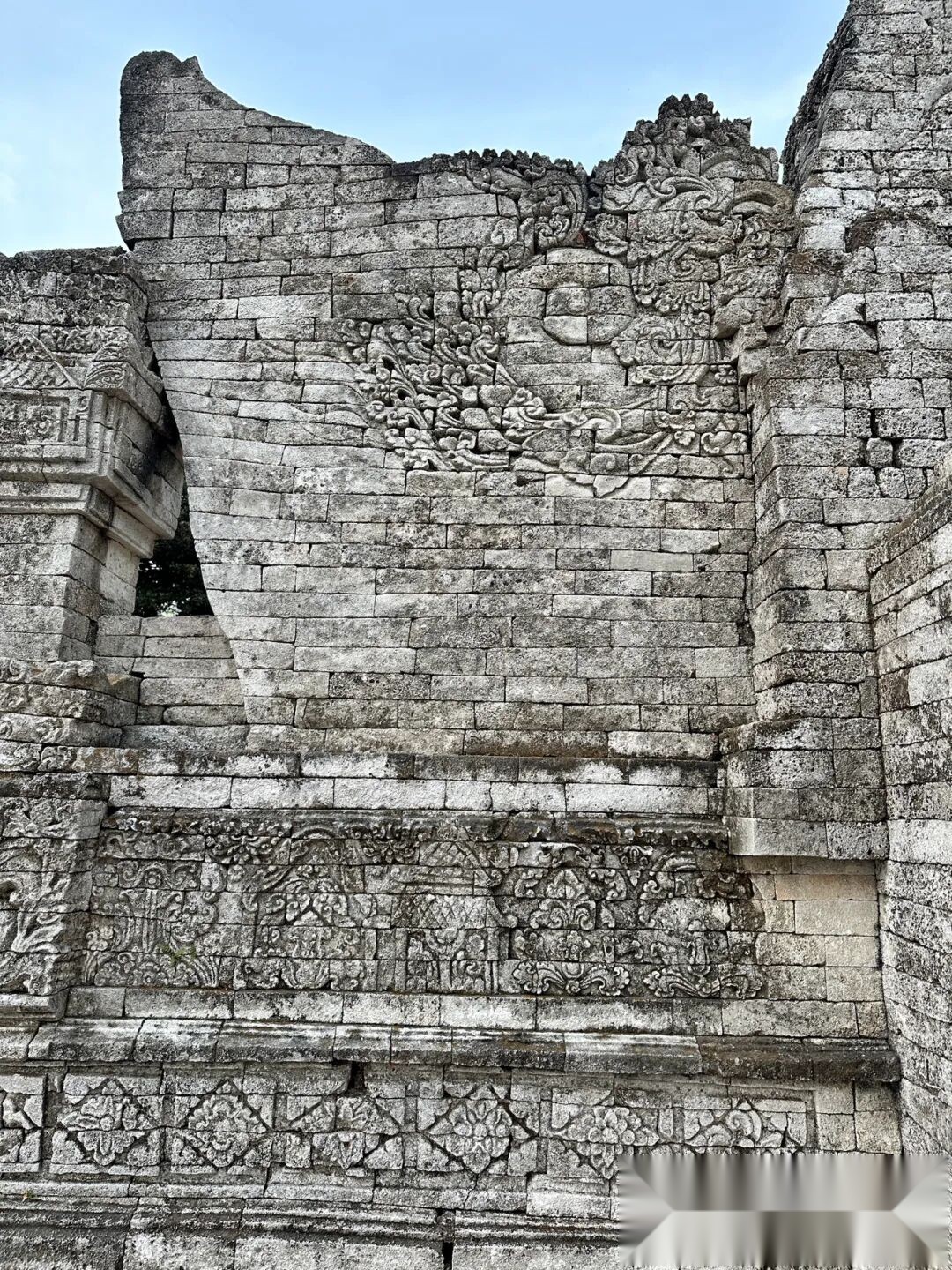
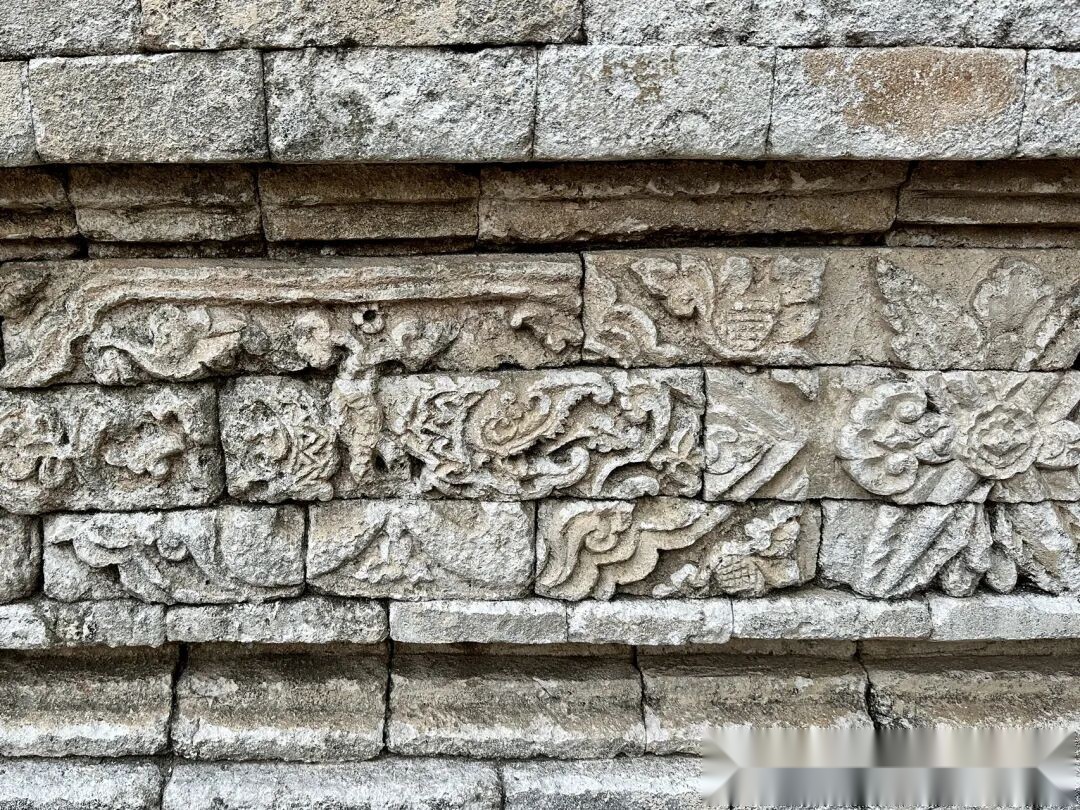
These are the stone carvings along the walls of the main prayer hall.
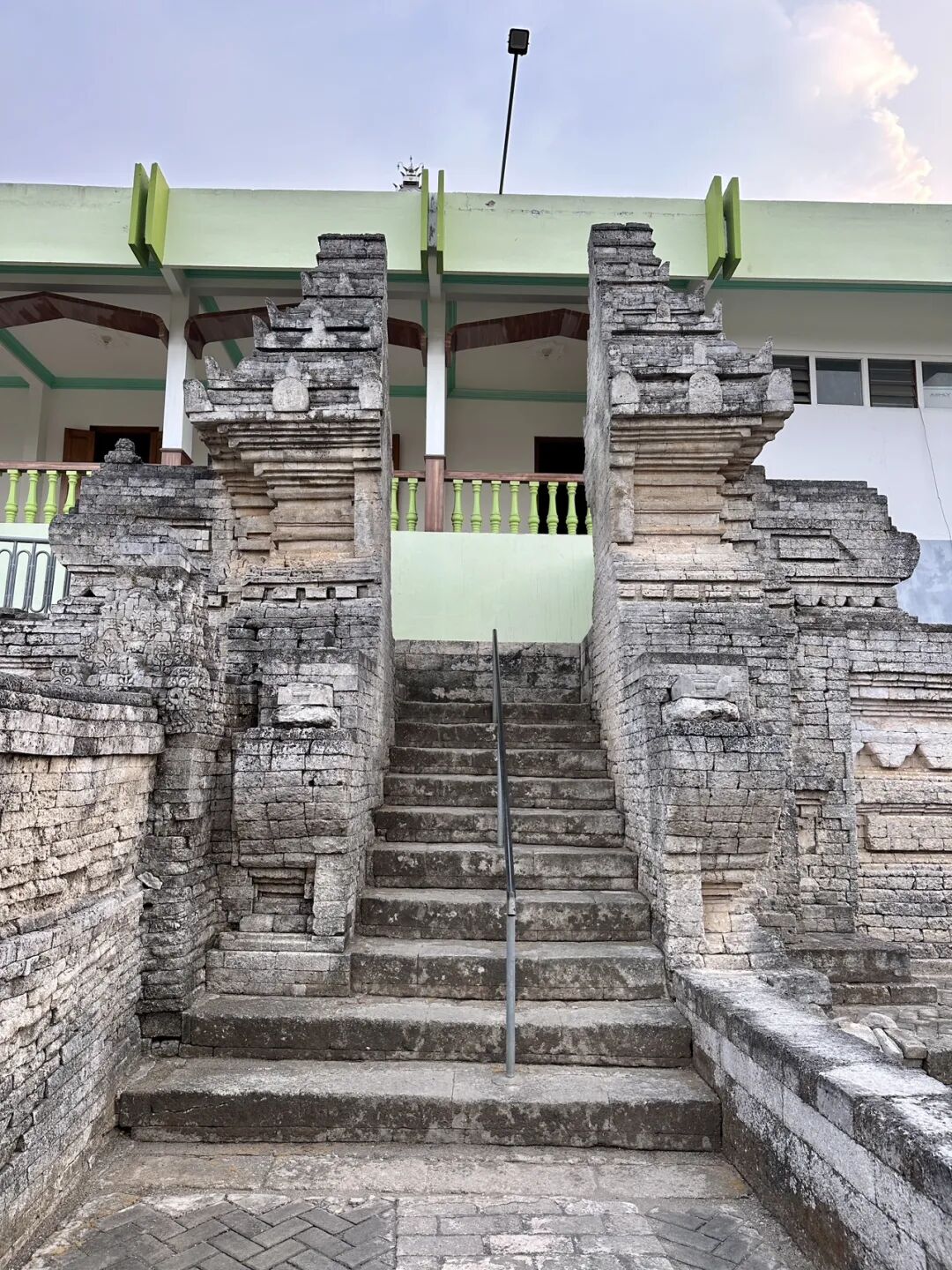
Directly opposite is the gateway leading to another cemetery area.
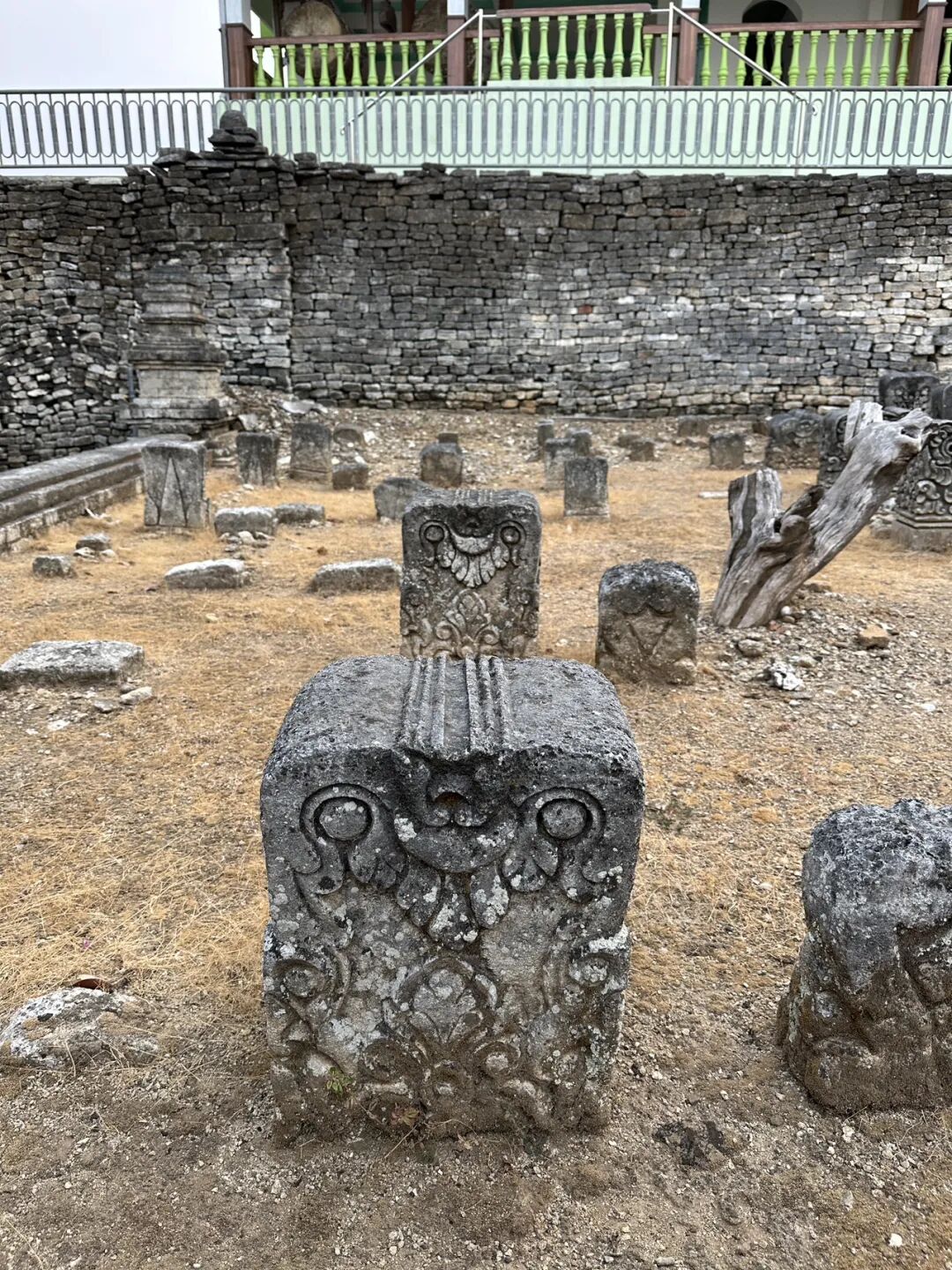
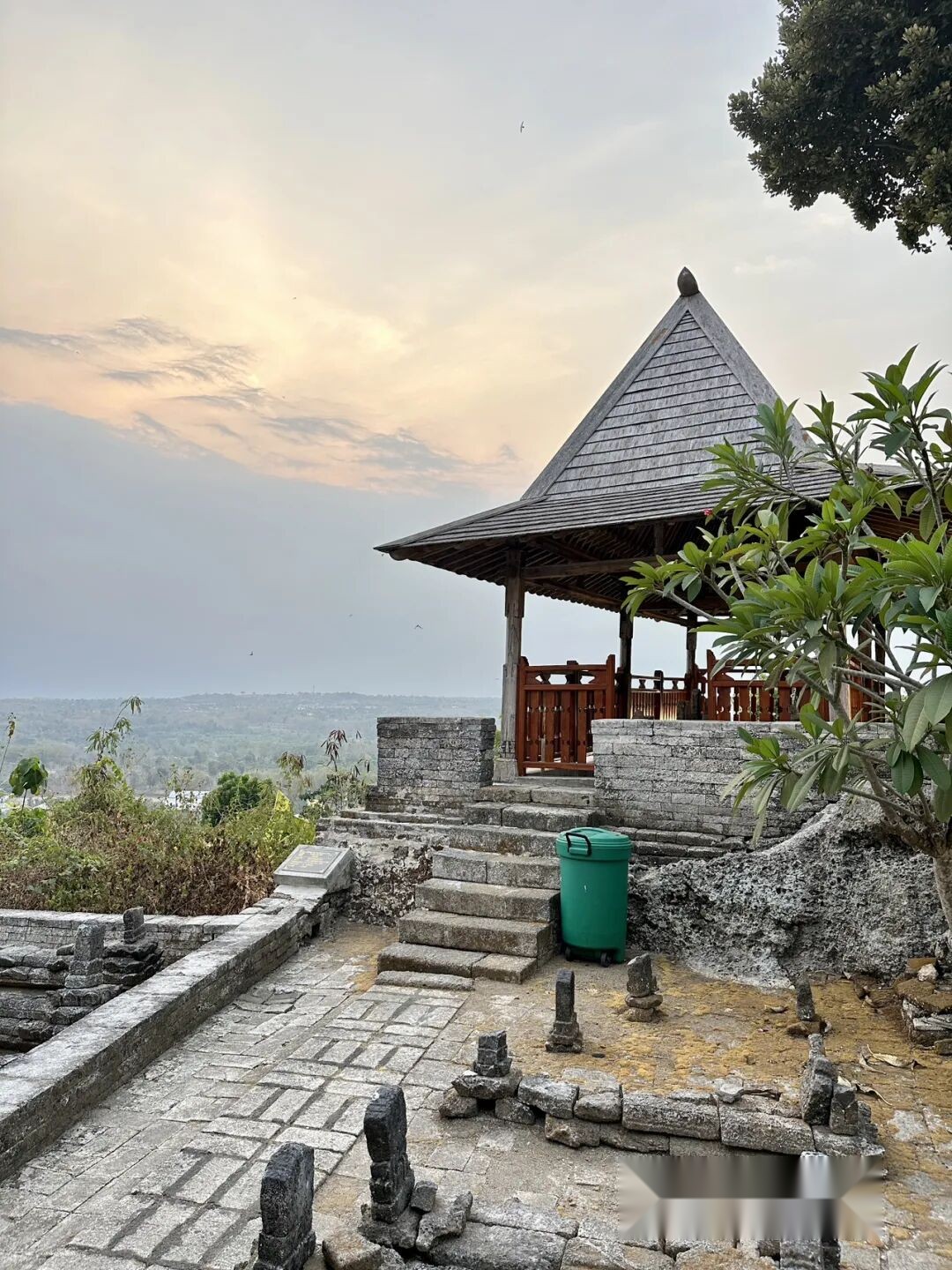
Sunan Sendang Duwur passed away in 1585, and his tomb complex is located on the west side of the flying mosque. His descendants were buried one after another on the three-tiered terrace below his tomb, forming an important Javanese tomb complex.
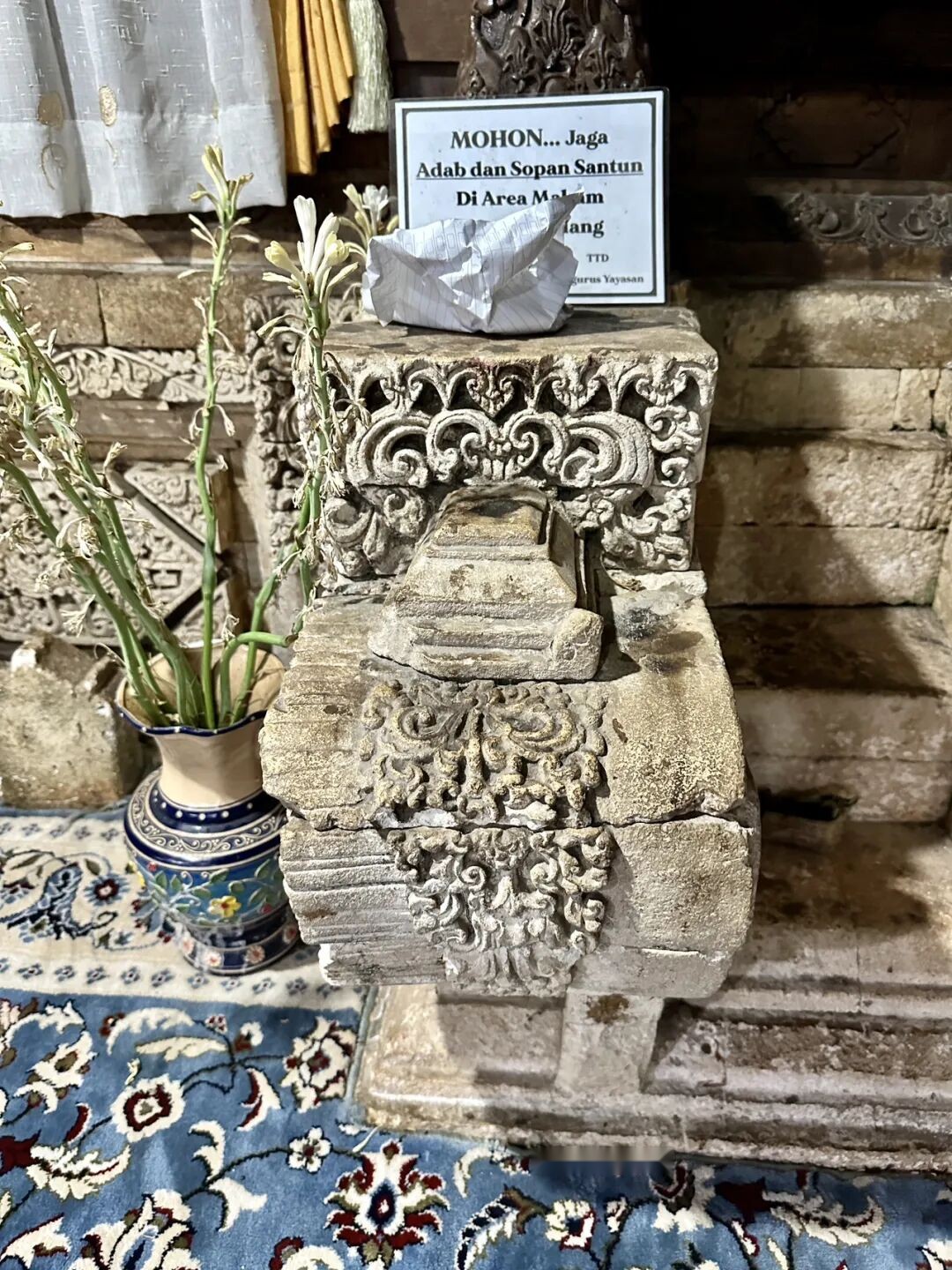
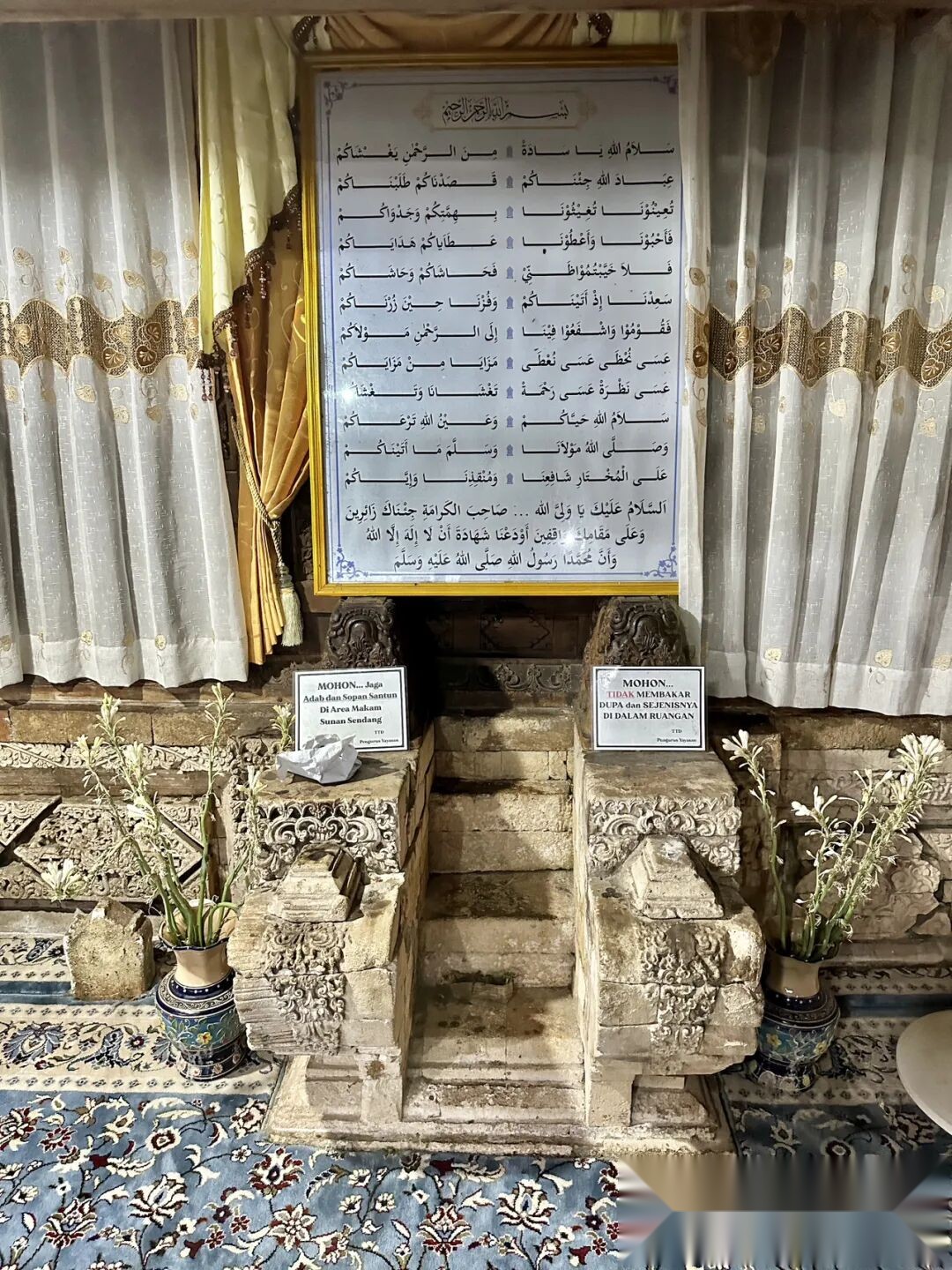
The lower part of the Sunan Sendang Duwur tomb consists of a carved stone platform, while the upper part features carved wooden doors and window shutters, though unfortunately, they are currently blocked off and cannot be seen.
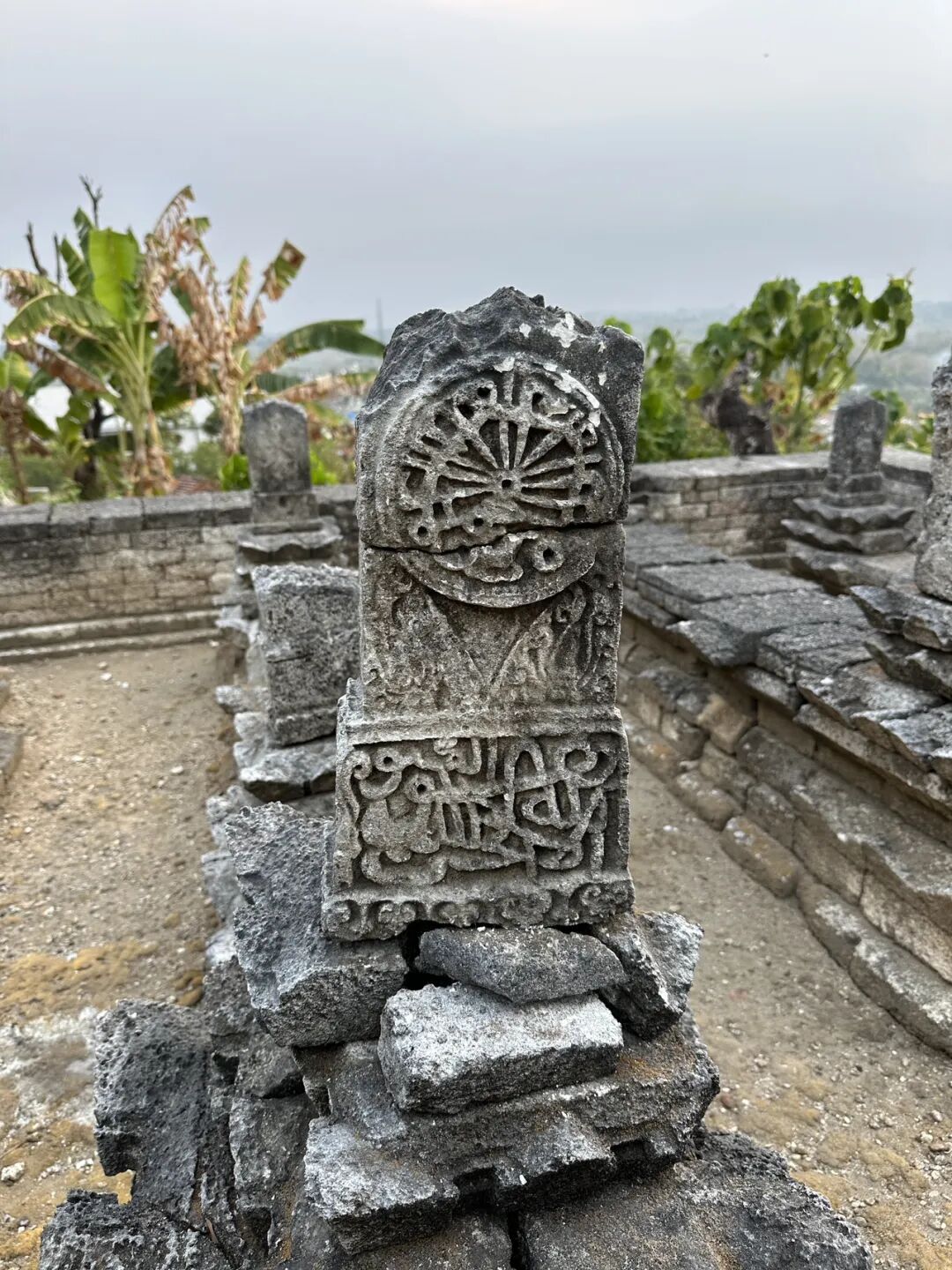
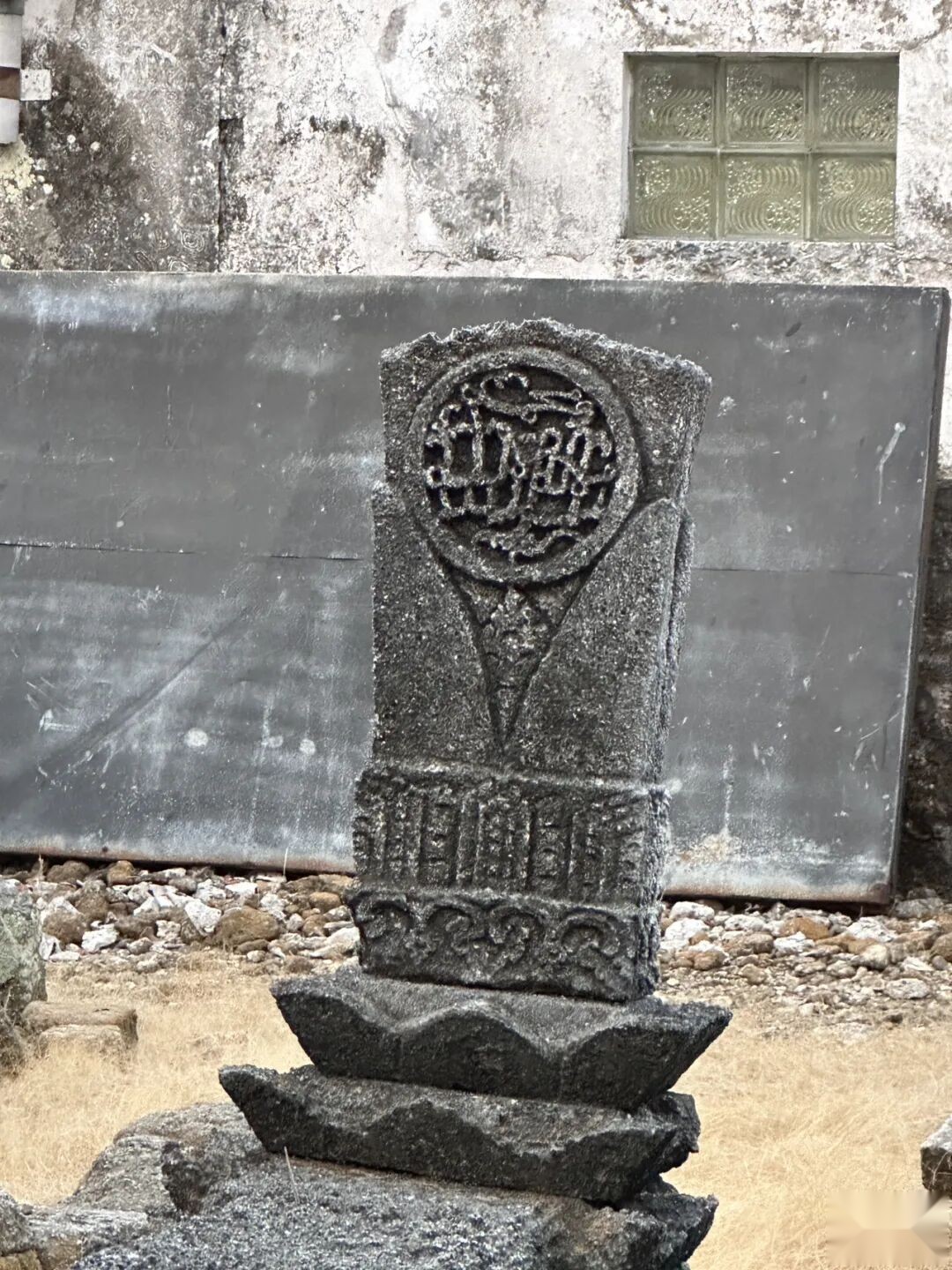
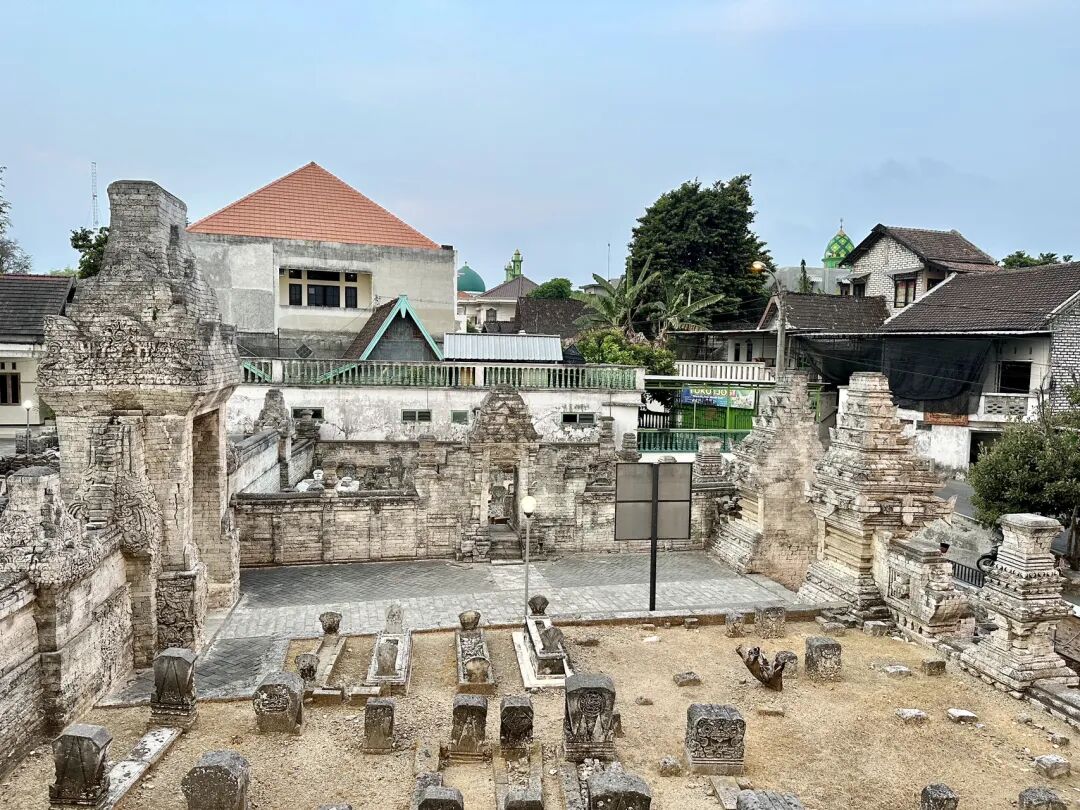
Take a deep dive through 39 high-definition photos exploring the Makam Sunan Sendang Duwur (Sunan Sendang Duwur Tomb) in East Java, Indonesia. We are breaking down this legendary 16th-century architectural complex that brilliantly blends Islamic, traditional Javanese, and classic stone and wood-carving art.
During this trip across Java, Indonesia, I checked out quite a few religious buildings, and the most locally unique Javanese one has got to be the Makam Sunan Sendang Duwur in East Java. This mosque and tomb complex blends Islamic, Buddhist, Hindu, and indigenous Javanese architectural styles, making it a major example of Javanese Kejawen (syncretic Javanese spiritualism).
Sunan Sendang (1520–1585), whose original name was Raden Noer Rahmat, had a father who was an Arab missionary who sailed across the sea from Baghdad to Java, and a mother who was the daughter of a local Javanese ruler. Sunan Sendang didn't care for court power struggles and wanted to focus entirely on his spiritual path, so he became a student of Sunan Drajat, one of the nine Wali Songo (Nine Saints of Java). Seeing his exceptional moral character, Sunan Drajat gave him the honorary title of Sunan.
In 1561, Sunan Sendang came to Mount Amitunon in East Java to clear the land. This mountainous area was dry, rocky, and tough to farm. He first taught the locals how to clear the land and channel water for farming, and after a successful harvest earned everyone's trust, he slowly began spreading the faith to the people. His teacher, Sunan Drajat, told him he should build a mosque here. According to generations of oral legends, this is how the famous miracle of the flying mosque came to be.
At that time, Mantingan in Jepara, Central Java, was ruled by the legendary Queen Ratu Kalinyamat. She had built an extremely exquisite mosque with gorgeous stone carvings. Sunan Sendang went to visit her and politely asked for her permission to relocate this mosque to Mount Amitunon. Wanting to test his spiritual rank, the Queen laid down a super tough condition: you can move this mosque, but you have to finish it in a single night, and not a single small rock or wood shaving can drop along the way—if even a single fragment falls on the road, it won't count as a success.
Sunan Sendang agreed, went back home to offer a sincere dua, and then the miracle happened. After nightfall, under Sunan's recitation, the entire mosque lifted into the air, flying from Jepara across the Central Java plains toward Mount Amitunon in East Java. Before dawn broke, the mosque landed solidly on the hilltop terrace without missing a single brick, tile, or carved component, and not a single chip dropped along the path. Early in the morning when the villagers went up the mountain, they were totally shocked to suddenly see an entire mosque sitting there out of nowhere, which is why this mosque was named Masjid Tiban, which means "suddenly descended" in Javanese.
The Tiban Mosque has completely preserved its four grand gates built in 1561, with each gate featuring its own unique style.
The first gate is the Gapura Bentar split gateway, which is the most classic outer gateway style of the Majapahit Empire. In traditional Javanese culture, Bentar means "open and welcoming," welcoming all incoming visitors regardless of their background. At the same time, it reminds people that once you arrive here, you should calm your mind, quiet down, and stop laughing or making a lot of noise, and many people make their initial intention right here.
Both the second and third gates are Gapura Paduraksa roofed gateway structures, representing the typical Majapahit Empire mosque gate style featuring multi-tiered, upward-tapering Meru roofs.
The fourth gate is the most important Gapura Paduraksa Bersayap or "winged gate," featuring a pair of massive wings growing out of the left and right sides. Right in the middle of the lintel is a Kala beast face, flanked by two pairs of Makara; the gate body and wings are completely covered in reliefs of lotuses, the Tree of Life, scrolling vines, and divine birds, with coiled dragon patterns on the back.
In Hinduism, the Kala beast face was originally the god of time who could devour everything, so it was often used to guard temple gates and ward off impurity. In Javanese Kejawen teachings, its meaning shifted into a warning symbol, reminding people to remember the afterlife, death, and judgment, and to let go of worldly greed. This is a major feature of Javanese syncretism, keeping the original form while transforming it with Islamic inner meaning.
Makara refers to the mythical water monster symbolizing water sources and life. The Makara originally featured an elephant trunk and a crocodile mouth, but one pair on this gate has transformed into a deer-head form, which is a unique variant exclusive to this tomb complex, reminding people that their inner hearts should remain alert, pure, and humble.
The divine bird imagery originally came from the Hindu Garuda bird, but in Javanese Kejawen teachings, its meaning was adapted into Buraq (the heavenly mount), echoing the miracle of the "flying mosque."
This is the doorway leading to the main prayer hall, though unfortunately, the main prayer hall has been rebuilt.
These are the stone carvings along the walls of the main prayer hall.
Directly opposite is the gateway leading to another cemetery area.
Sunan Sendang Duwur passed away in 1585, and his tomb complex is located on the west side of the flying mosque. His descendants were buried one after another on the three-tiered terrace below his tomb, forming an important Javanese tomb complex.
The lower part of the Sunan Sendang Duwur tomb consists of a carved stone platform, while the upper part features carved wooden doors and window shutters, though unfortunately, they are currently blocked off and cannot be seen.
Exploring Makam Sunan Sendang Duwur: Discovering East Java's Historic 16th-Century Syncretic Mosque and Tomb
Articles • Hasan09 posted the article • 0 comments • 49 views • 2026-10-30 01:11
[Internet Repost]
Take a deep dive through 39 high-definition photos exploring the Makam Sunan Sendang Duwur (Sunan Sendang Duwur Tomb) in East Java, Indonesia. We are breaking down this legendary 16th-century architectural complex that brilliantly blends Islamic, traditional Javanese, and classic stone and wood-carving art.
During this trip across Java, Indonesia, I checked out quite a few religious buildings, and the most locally unique Javanese one has got to be the Makam Sunan Sendang Duwur in East Java. This mosque and tomb complex blends Islamic, Buddhist, Hindu, and indigenous Javanese architectural styles, making it a major example of Javanese Kejawen (syncretic Javanese spiritualism).
Sunan Sendang (1520–1585), whose original name was Raden Noer Rahmat, had a father who was an Arab missionary who sailed across the sea from Baghdad to Java, and a mother who was the daughter of a local Javanese ruler. Sunan Sendang didn't care for court power struggles and wanted to focus entirely on his spiritual path, so he became a student of Sunan Drajat, one of the nine Wali Songo (Nine Saints of Java). Seeing his exceptional moral character, Sunan Drajat gave him the honorary title of Sunan.
In 1561, Sunan Sendang came to Mount Amitunon in East Java to clear the land. This mountainous area was dry, rocky, and tough to farm. He first taught the locals how to clear the land and channel water for farming, and after a successful harvest earned everyone's trust, he slowly began spreading the faith to the people. His teacher, Sunan Drajat, told him he should build a mosque here. According to generations of oral legends, this is how the famous miracle of the flying mosque came to be.
At that time, Mantingan in Jepara, Central Java, was ruled by the legendary Queen Ratu Kalinyamat. She had built an extremely exquisite mosque with gorgeous stone carvings. Sunan Sendang went to visit her and politely asked for her permission to relocate this mosque to Mount Amitunon. Wanting to test his spiritual rank, the Queen laid down a super tough condition: you can move this mosque, but you have to finish it in a single night, and not a single small rock or wood shaving can drop along the way—if even a single fragment falls on the road, it won't count as a success.
Sunan Sendang agreed, went back home to offer a sincere dua, and then the miracle happened. After nightfall, under Sunan's recitation, the entire mosque lifted into the air, flying from Jepara across the Central Java plains toward Mount Amitunon in East Java. Before dawn broke, the mosque landed solidly on the hilltop terrace without missing a single brick, tile, or carved component, and not a single chip dropped along the path. Early in the morning when the villagers went up the mountain, they were totally shocked to suddenly see an entire mosque sitting there out of nowhere, which is why this mosque was named Masjid Tiban, which means "suddenly descended" in Javanese.
The Tiban Mosque has completely preserved its four grand gates built in 1561, with each gate featuring its own unique style.
The first gate is the Gapura Bentar split gateway, which is the most classic outer gateway style of the Majapahit Empire. In traditional Javanese culture, Bentar means "open and welcoming," welcoming all incoming visitors regardless of their background. At the same time, it reminds people that once you arrive here, you should calm your mind, quiet down, and stop laughing or making a lot of noise, and many people make their initial intention right here.
Both the second and third gates are Gapura Paduraksa roofed gateway structures, representing the typical Majapahit Empire mosque gate style featuring multi-tiered, upward-tapering Meru roofs.
The fourth gate is the most important Gapura Paduraksa Bersayap or "winged gate," featuring a pair of massive wings growing out of the left and right sides. Right in the middle of the lintel is a Kala beast face, flanked by two pairs of Makara; the gate body and wings are completely covered in reliefs of lotuses, the Tree of Life, scrolling vines, and divine birds, with coiled dragon patterns on the back.
In Hinduism, the Kala beast face was originally the god of time who could devour everything, so it was often used to guard temple gates and ward off impurity. In Javanese Kejawen teachings, its meaning shifted into a warning symbol, reminding people to remember the afterlife, death, and judgment, and to let go of worldly greed. This is a major feature of Javanese syncretism, keeping the original form while transforming it with Islamic inner meaning.
Makara refers to the mythical water monster symbolizing water sources and life. The Makara originally featured an elephant trunk and a crocodile mouth, but one pair on this gate has transformed into a deer-head form, which is a unique variant exclusive to this tomb complex, reminding people that their inner hearts should remain alert, pure, and humble.
The divine bird imagery originally came from the Hindu Garuda bird, but in Javanese Kejawen teachings, its meaning was adapted into Buraq (the heavenly mount), echoing the miracle of the "flying mosque."
This is the doorway leading to the main prayer hall, though unfortunately, the main prayer hall has been rebuilt.
These are the stone carvings along the walls of the main prayer hall.
Directly opposite is the gateway leading to another cemetery area.
Sunan Sendang Duwur passed away in 1585, and his tomb complex is located on the west side of the flying mosque. His descendants were buried one after another on the three-tiered terrace below his tomb, forming an important Javanese tomb complex.
The lower part of the Sunan Sendang Duwur tomb consists of a carved stone platform, while the upper part features carved wooden doors and window shutters, though unfortunately, they are currently blocked off and cannot be seen. view all
Take a deep dive through 39 high-definition photos exploring the Makam Sunan Sendang Duwur (Sunan Sendang Duwur Tomb) in East Java, Indonesia. We are breaking down this legendary 16th-century architectural complex that brilliantly blends Islamic, traditional Javanese, and classic stone and wood-carving art.
During this trip across Java, Indonesia, I checked out quite a few religious buildings, and the most locally unique Javanese one has got to be the Makam Sunan Sendang Duwur in East Java. This mosque and tomb complex blends Islamic, Buddhist, Hindu, and indigenous Javanese architectural styles, making it a major example of Javanese Kejawen (syncretic Javanese spiritualism).
Sunan Sendang (1520–1585), whose original name was Raden Noer Rahmat, had a father who was an Arab missionary who sailed across the sea from Baghdad to Java, and a mother who was the daughter of a local Javanese ruler. Sunan Sendang didn't care for court power struggles and wanted to focus entirely on his spiritual path, so he became a student of Sunan Drajat, one of the nine Wali Songo (Nine Saints of Java). Seeing his exceptional moral character, Sunan Drajat gave him the honorary title of Sunan.
In 1561, Sunan Sendang came to Mount Amitunon in East Java to clear the land. This mountainous area was dry, rocky, and tough to farm. He first taught the locals how to clear the land and channel water for farming, and after a successful harvest earned everyone's trust, he slowly began spreading the faith to the people. His teacher, Sunan Drajat, told him he should build a mosque here. According to generations of oral legends, this is how the famous miracle of the flying mosque came to be.
At that time, Mantingan in Jepara, Central Java, was ruled by the legendary Queen Ratu Kalinyamat. She had built an extremely exquisite mosque with gorgeous stone carvings. Sunan Sendang went to visit her and politely asked for her permission to relocate this mosque to Mount Amitunon. Wanting to test his spiritual rank, the Queen laid down a super tough condition: you can move this mosque, but you have to finish it in a single night, and not a single small rock or wood shaving can drop along the way—if even a single fragment falls on the road, it won't count as a success.
Sunan Sendang agreed, went back home to offer a sincere dua, and then the miracle happened. After nightfall, under Sunan's recitation, the entire mosque lifted into the air, flying from Jepara across the Central Java plains toward Mount Amitunon in East Java. Before dawn broke, the mosque landed solidly on the hilltop terrace without missing a single brick, tile, or carved component, and not a single chip dropped along the path. Early in the morning when the villagers went up the mountain, they were totally shocked to suddenly see an entire mosque sitting there out of nowhere, which is why this mosque was named Masjid Tiban, which means "suddenly descended" in Javanese.
The Tiban Mosque has completely preserved its four grand gates built in 1561, with each gate featuring its own unique style.
The first gate is the Gapura Bentar split gateway, which is the most classic outer gateway style of the Majapahit Empire. In traditional Javanese culture, Bentar means "open and welcoming," welcoming all incoming visitors regardless of their background. At the same time, it reminds people that once you arrive here, you should calm your mind, quiet down, and stop laughing or making a lot of noise, and many people make their initial intention right here.
Both the second and third gates are Gapura Paduraksa roofed gateway structures, representing the typical Majapahit Empire mosque gate style featuring multi-tiered, upward-tapering Meru roofs.
The fourth gate is the most important Gapura Paduraksa Bersayap or "winged gate," featuring a pair of massive wings growing out of the left and right sides. Right in the middle of the lintel is a Kala beast face, flanked by two pairs of Makara; the gate body and wings are completely covered in reliefs of lotuses, the Tree of Life, scrolling vines, and divine birds, with coiled dragon patterns on the back.
In Hinduism, the Kala beast face was originally the god of time who could devour everything, so it was often used to guard temple gates and ward off impurity. In Javanese Kejawen teachings, its meaning shifted into a warning symbol, reminding people to remember the afterlife, death, and judgment, and to let go of worldly greed. This is a major feature of Javanese syncretism, keeping the original form while transforming it with Islamic inner meaning.
Makara refers to the mythical water monster symbolizing water sources and life. The Makara originally featured an elephant trunk and a crocodile mouth, but one pair on this gate has transformed into a deer-head form, which is a unique variant exclusive to this tomb complex, reminding people that their inner hearts should remain alert, pure, and humble.
The divine bird imagery originally came from the Hindu Garuda bird, but in Javanese Kejawen teachings, its meaning was adapted into Buraq (the heavenly mount), echoing the miracle of the "flying mosque."
This is the doorway leading to the main prayer hall, though unfortunately, the main prayer hall has been rebuilt.
These are the stone carvings along the walls of the main prayer hall.
Directly opposite is the gateway leading to another cemetery area.
Sunan Sendang Duwur passed away in 1585, and his tomb complex is located on the west side of the flying mosque. His descendants were buried one after another on the three-tiered terrace below his tomb, forming an important Javanese tomb complex.
The lower part of the Sunan Sendang Duwur tomb consists of a carved stone platform, while the upper part features carved wooden doors and window shutters, though unfortunately, they are currently blocked off and cannot be seen. view all
[Internet Repost]
Take a deep dive through 39 high-definition photos exploring the Makam Sunan Sendang Duwur (Sunan Sendang Duwur Tomb) in East Java, Indonesia. We are breaking down this legendary 16th-century architectural complex that brilliantly blends Islamic, traditional Javanese, and classic stone and wood-carving art.
During this trip across Java, Indonesia, I checked out quite a few religious buildings, and the most locally unique Javanese one has got to be the Makam Sunan Sendang Duwur in East Java. This mosque and tomb complex blends Islamic, Buddhist, Hindu, and indigenous Javanese architectural styles, making it a major example of Javanese Kejawen (syncretic Javanese spiritualism).
Sunan Sendang (1520–1585), whose original name was Raden Noer Rahmat, had a father who was an Arab missionary who sailed across the sea from Baghdad to Java, and a mother who was the daughter of a local Javanese ruler. Sunan Sendang didn't care for court power struggles and wanted to focus entirely on his spiritual path, so he became a student of Sunan Drajat, one of the nine Wali Songo (Nine Saints of Java). Seeing his exceptional moral character, Sunan Drajat gave him the honorary title of Sunan.
In 1561, Sunan Sendang came to Mount Amitunon in East Java to clear the land. This mountainous area was dry, rocky, and tough to farm. He first taught the locals how to clear the land and channel water for farming, and after a successful harvest earned everyone's trust, he slowly began spreading the faith to the people. His teacher, Sunan Drajat, told him he should build a mosque here. According to generations of oral legends, this is how the famous miracle of the flying mosque came to be.
At that time, Mantingan in Jepara, Central Java, was ruled by the legendary Queen Ratu Kalinyamat. She had built an extremely exquisite mosque with gorgeous stone carvings. Sunan Sendang went to visit her and politely asked for her permission to relocate this mosque to Mount Amitunon. Wanting to test his spiritual rank, the Queen laid down a super tough condition: you can move this mosque, but you have to finish it in a single night, and not a single small rock or wood shaving can drop along the way—if even a single fragment falls on the road, it won't count as a success.
Sunan Sendang agreed, went back home to offer a sincere dua, and then the miracle happened. After nightfall, under Sunan's recitation, the entire mosque lifted into the air, flying from Jepara across the Central Java plains toward Mount Amitunon in East Java. Before dawn broke, the mosque landed solidly on the hilltop terrace without missing a single brick, tile, or carved component, and not a single chip dropped along the path. Early in the morning when the villagers went up the mountain, they were totally shocked to suddenly see an entire mosque sitting there out of nowhere, which is why this mosque was named Masjid Tiban, which means "suddenly descended" in Javanese.
The Tiban Mosque has completely preserved its four grand gates built in 1561, with each gate featuring its own unique style.
The first gate is the Gapura Bentar split gateway, which is the most classic outer gateway style of the Majapahit Empire. In traditional Javanese culture, Bentar means "open and welcoming," welcoming all incoming visitors regardless of their background. At the same time, it reminds people that once you arrive here, you should calm your mind, quiet down, and stop laughing or making a lot of noise, and many people make their initial intention right here.
Both the second and third gates are Gapura Paduraksa roofed gateway structures, representing the typical Majapahit Empire mosque gate style featuring multi-tiered, upward-tapering Meru roofs.
The fourth gate is the most important Gapura Paduraksa Bersayap or "winged gate," featuring a pair of massive wings growing out of the left and right sides. Right in the middle of the lintel is a Kala beast face, flanked by two pairs of Makara; the gate body and wings are completely covered in reliefs of lotuses, the Tree of Life, scrolling vines, and divine birds, with coiled dragon patterns on the back.
In Hinduism, the Kala beast face was originally the god of time who could devour everything, so it was often used to guard temple gates and ward off impurity. In Javanese Kejawen teachings, its meaning shifted into a warning symbol, reminding people to remember the afterlife, death, and judgment, and to let go of worldly greed. This is a major feature of Javanese syncretism, keeping the original form while transforming it with Islamic inner meaning.
Makara refers to the mythical water monster symbolizing water sources and life. The Makara originally featured an elephant trunk and a crocodile mouth, but one pair on this gate has transformed into a deer-head form, which is a unique variant exclusive to this tomb complex, reminding people that their inner hearts should remain alert, pure, and humble.
The divine bird imagery originally came from the Hindu Garuda bird, but in Javanese Kejawen teachings, its meaning was adapted into Buraq (the heavenly mount), echoing the miracle of the "flying mosque."
This is the doorway leading to the main prayer hall, though unfortunately, the main prayer hall has been rebuilt.
These are the stone carvings along the walls of the main prayer hall.
Directly opposite is the gateway leading to another cemetery area.
Sunan Sendang Duwur passed away in 1585, and his tomb complex is located on the west side of the flying mosque. His descendants were buried one after another on the three-tiered terrace below his tomb, forming an important Javanese tomb complex.
The lower part of the Sunan Sendang Duwur tomb consists of a carved stone platform, while the upper part features carved wooden doors and window shutters, though unfortunately, they are currently blocked off and cannot be seen.