

Hohhot Great Mosque
Hohhot Great Mosque Guide: Discover Inner Mongolia's Historic Islamic Architecture and Silk Road Heritage
Articles • Hasan09 posted the article • 0 comments • 8 views • 9 hours ago
[Internet Repost]
Dive deep into the oldest and largest surviving mosque in Hohhot. Explore its historical roots tied to camel caravan merchants during the Kangxi reign of the Qing dynasty, and closely check out the three-courtyard layout, double-eaved Xieshan-style training pavilion, hexagonal roofed moon-sighting tower, and precious handwritten copies of the Quran from the Kangxi era.
Amidst the bustling streets of Tongdao South Street in Hohhot's Huimin District, where traffic and chatter never stop, a quick turn reveals vermilion gates and gray-blue ancient walls standing quietly, blocking out the city's lively hustle and bustle. This is the Hohhot Great Mosque, the city's oldest and largest existing mosque, and a Major Historical and Cultural Site Protected at the National Level. It is hailed as an architectural gem on the northern frontier that tells a rich story of cultural blending.
Push open the iron gate, and the loud noise instantly fades away. Three successive courtyards unfold before you, making time feel like it's slowing down.
The mosque was first built in the thirty-second year of the Kangxi reign of the Qing dynasty, in 1693 AD. Back then, merchants traveled back and forth through Guihua City, the camel bells of the Tea Horse Road rang out, and Hui Muslim ancestors settled in the frontier to build their initial place of worship. It went through several renovations later on: rebuilt in the fifty-fourth year of the Qianlong reign, expanded on a large scale through donations from believers in 1923, and saw its iconic moon-sighting tower completed in 1939, slowly shaping the complete layout we see today. Through over three hundred years of wind and rain, every single brick and tile holds memories of the past.
What makes it so touching is its unique blend of styles native to China's northern frontier.
The entire complex follows the central axis layout of traditional Chinese architecture, featuring Xieshan-style roofs, feiyan dougong (traditional flying eaves and brackets), and gray brick screen walls, presenting a familiar oriental courtyard aesthetic. Meanwhile, the patterns, calligraphy, and orientation strictly adhere to Islamic cultural traditions, as the mosque faces east-west toward Mecca with solemnity and devotion.
As the core structure, the main prayer hall is magnificent in scale. The building adopts an interlocking roof style with staggered layers, and its window frames and walls are covered in delicate brick carvings, where floral motifs and Arabic script calligraphy are interwoven with elegant, clean lines rather than complex clutter. The interior of the hall is spacious and solemn, holding hundreds of people praying at the same time. Red lacquered pillars stand quietly while sunlight streams through the window lattices onto the gray brick floor, creating a quiet and powerful atmosphere.
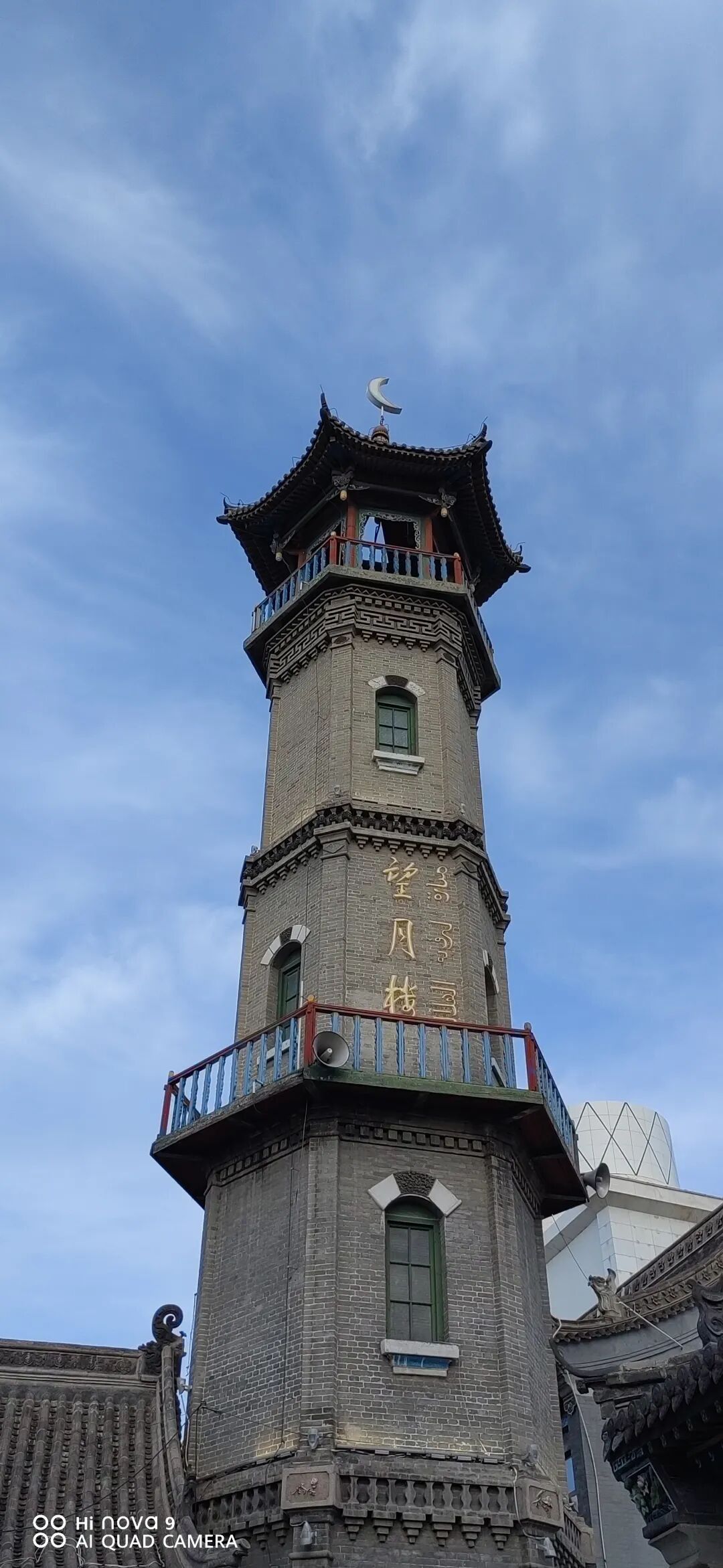
In the southeast corner of the courtyard, the moon-sighting tower stands as the visual pinnacle of the entire mosque. Rising about 33 meters high with a six-sided clustered-peak design, a wooden spiral staircase winds its way up. In ancient times when Ramadan arrived, the Imam would climb the tower to sight the moon to determine the start and end of fasting. Today, the breeze sweeps past the copper bells on the eaves, and their crisp sound echoes over the city. Standing downstairs and looking up, the crescent moon symbol atop the spire stands out sharply against the clear blue sky, which is the deepest impression many people have of the Great Mosque.
Between the stele corridors, ancient stone tablets are quietly displayed, recording the history of renovations down through the dynasties. The mosque also preserves ancient handwritten copies of the Quran, whose ink remains clear even after centuries. These stone steles, scriptures, woodwork, and brick carvings are not just cultural relics; they are living proof of multiple ethnic groups living and thriving together on the grasslands. Across the land of Hohhot, the chanting of Tibetan Buddhist temples, the prayers of ancient mosques, and grassland nomadic songs blend with one another, forming the city's rich cultural backdrop.
Stepping out of the mosque, right outside the door is the lively Islamic Style Street. The aromas of shaomai (steamed dumplings), beizi (baked flatbreads), and beef and lamb fill the alleys, buzzing with people in old shops and markets. The ancient mosque doesn't isolate itself from everyday life; instead, it coexists harmoniously and gently with the surrounding neighborhood. A solemn space for faith sits right next to the daily routines of ordinary people, and this exact kind of gentle inclusiveness is completely unique to Hohhot.
Address: No. 28, Tongdao South Street, Huimin District, Hohhot
Admission: Free to visit
✨ Visiting Etiquette: Because this is an active religious site, please keep your voice down, dress appropriately, do not wander into the prayer areas, and respect local religious customs.
⏰ Recommended Combo: You can pair your visit with a stroll down Islamic Style Street to soak in the old town's vibrant atmosphere. There are plenty of halal legacy eateries nearby, making it a great spot to try authentic Hohhot flavors.
The camel bells have faded away, but the ancient mosque remains.
For over three hundred years, this Great Mosque has guarded a quiet corner of Hohhot, bearing witness to generations of travelers coming and putting down roots. Traditional Chinese flying eaves hold up the Islamic star and crescent moon. This frontier grassland city is diverse, inclusive, gentle, and profoundly deep.
If you ever visit Hohhot, don't just rush off to the grasslands. Take half a day to step inside this ancient temple, listen to the wind blowing through the moon-sighting tower, and touch the chapters of time written by multi-ethnic harmony across the gray bricks.
#HohhotGreatMosque #HohhotCheckIn #HohhotCityWalk #SinoIslamicArchitecture #InnerMongoliaTourism view all
[Internet Repost]
Dive deep into the oldest and largest surviving mosque in Hohhot. Explore its historical roots tied to camel caravan merchants during the Kangxi reign of the Qing dynasty, and closely check out the three-courtyard layout, double-eaved Xieshan-style training pavilion, hexagonal roofed moon-sighting tower, and precious handwritten copies of the Quran from the Kangxi era.
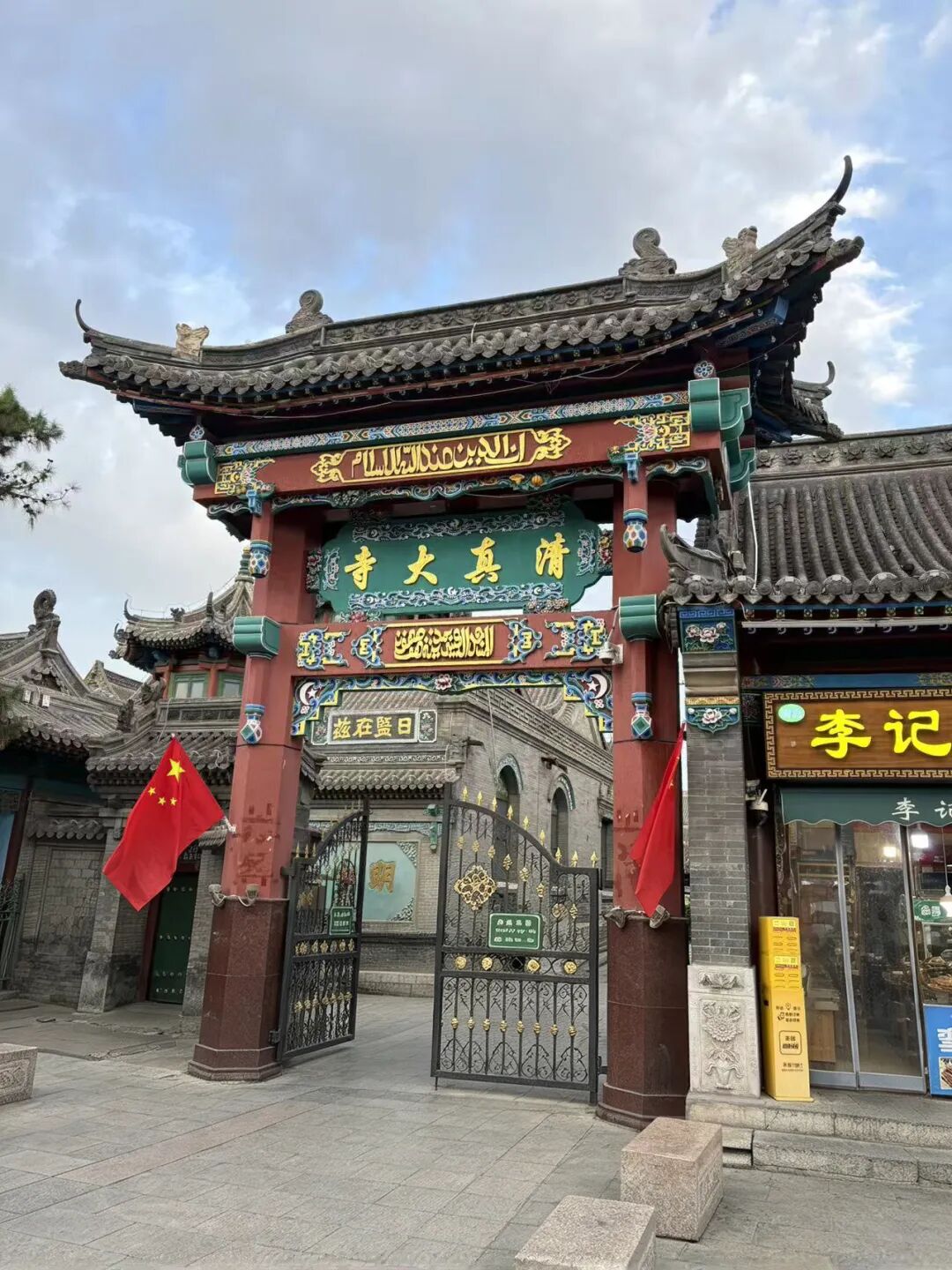
Amidst the bustling streets of Tongdao South Street in Hohhot's Huimin District, where traffic and chatter never stop, a quick turn reveals vermilion gates and gray-blue ancient walls standing quietly, blocking out the city's lively hustle and bustle. This is the Hohhot Great Mosque, the city's oldest and largest existing mosque, and a Major Historical and Cultural Site Protected at the National Level. It is hailed as an architectural gem on the northern frontier that tells a rich story of cultural blending.
Push open the iron gate, and the loud noise instantly fades away. Three successive courtyards unfold before you, making time feel like it's slowing down.
The mosque was first built in the thirty-second year of the Kangxi reign of the Qing dynasty, in 1693 AD. Back then, merchants traveled back and forth through Guihua City, the camel bells of the Tea Horse Road rang out, and Hui Muslim ancestors settled in the frontier to build their initial place of worship. It went through several renovations later on: rebuilt in the fifty-fourth year of the Qianlong reign, expanded on a large scale through donations from believers in 1923, and saw its iconic moon-sighting tower completed in 1939, slowly shaping the complete layout we see today. Through over three hundred years of wind and rain, every single brick and tile holds memories of the past.
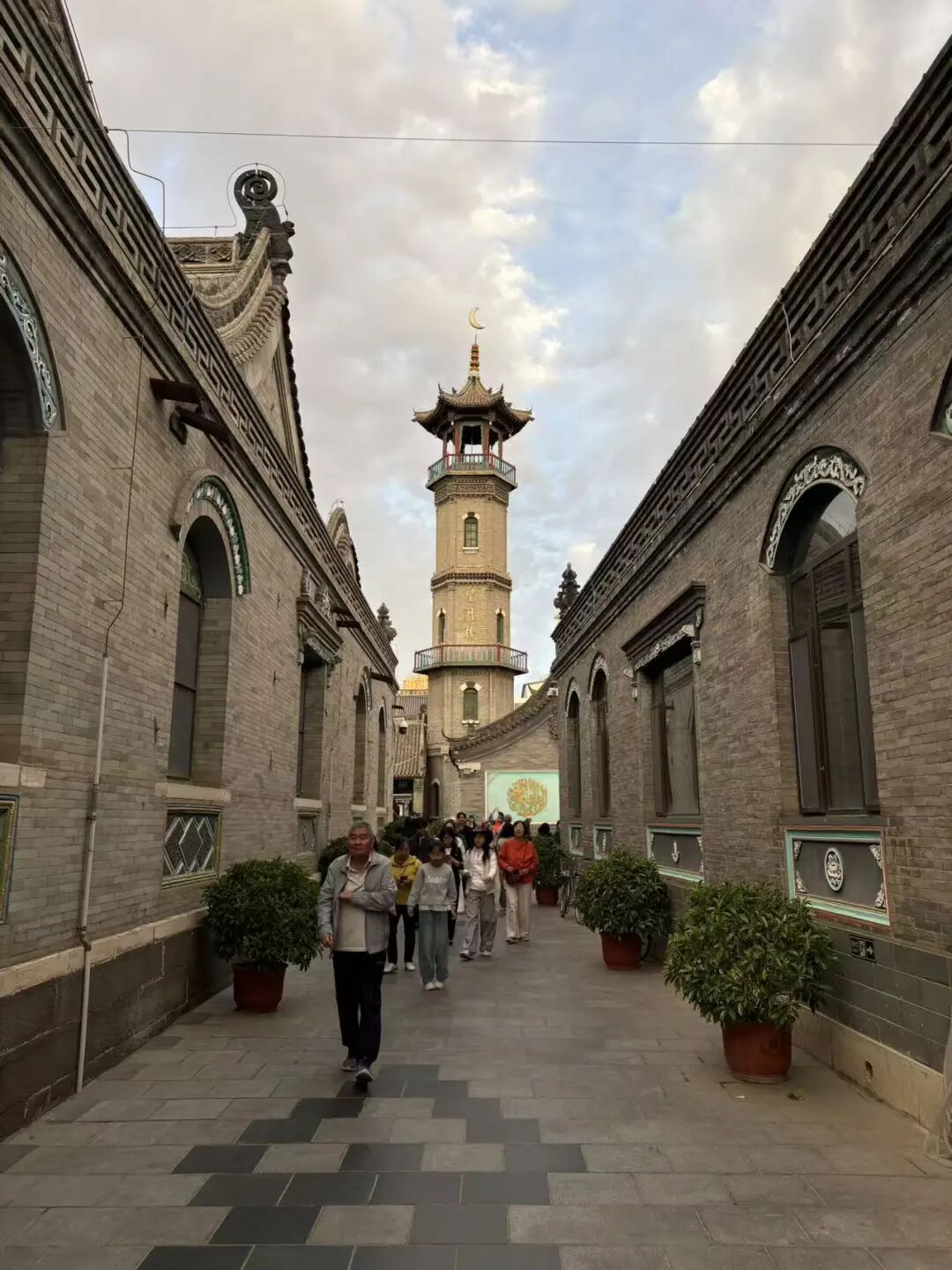
What makes it so touching is its unique blend of styles native to China's northern frontier.
The entire complex follows the central axis layout of traditional Chinese architecture, featuring Xieshan-style roofs, feiyan dougong (traditional flying eaves and brackets), and gray brick screen walls, presenting a familiar oriental courtyard aesthetic. Meanwhile, the patterns, calligraphy, and orientation strictly adhere to Islamic cultural traditions, as the mosque faces east-west toward Mecca with solemnity and devotion.
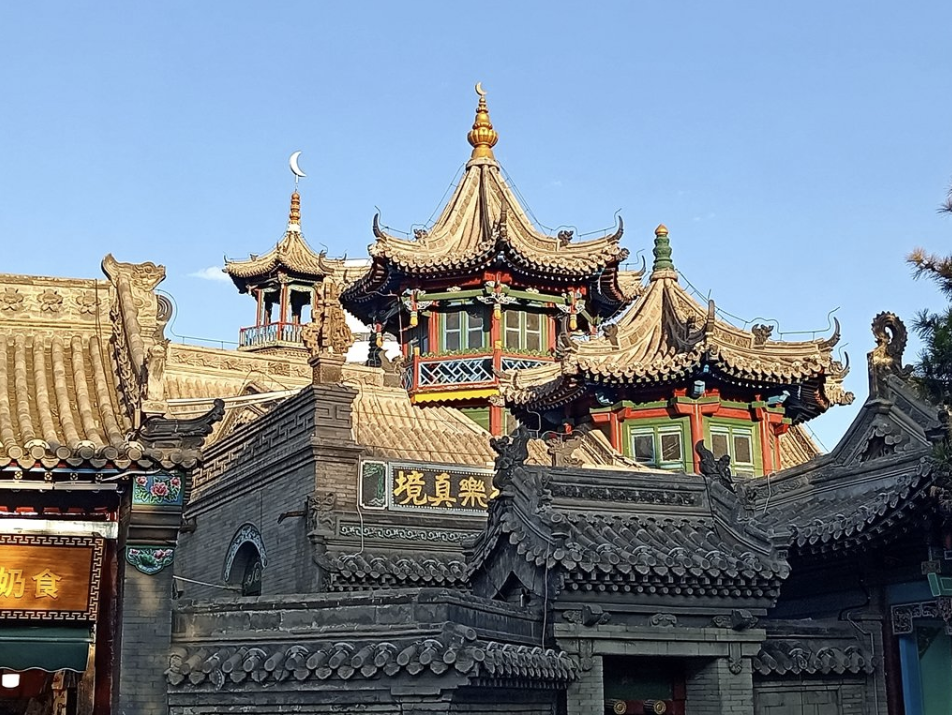
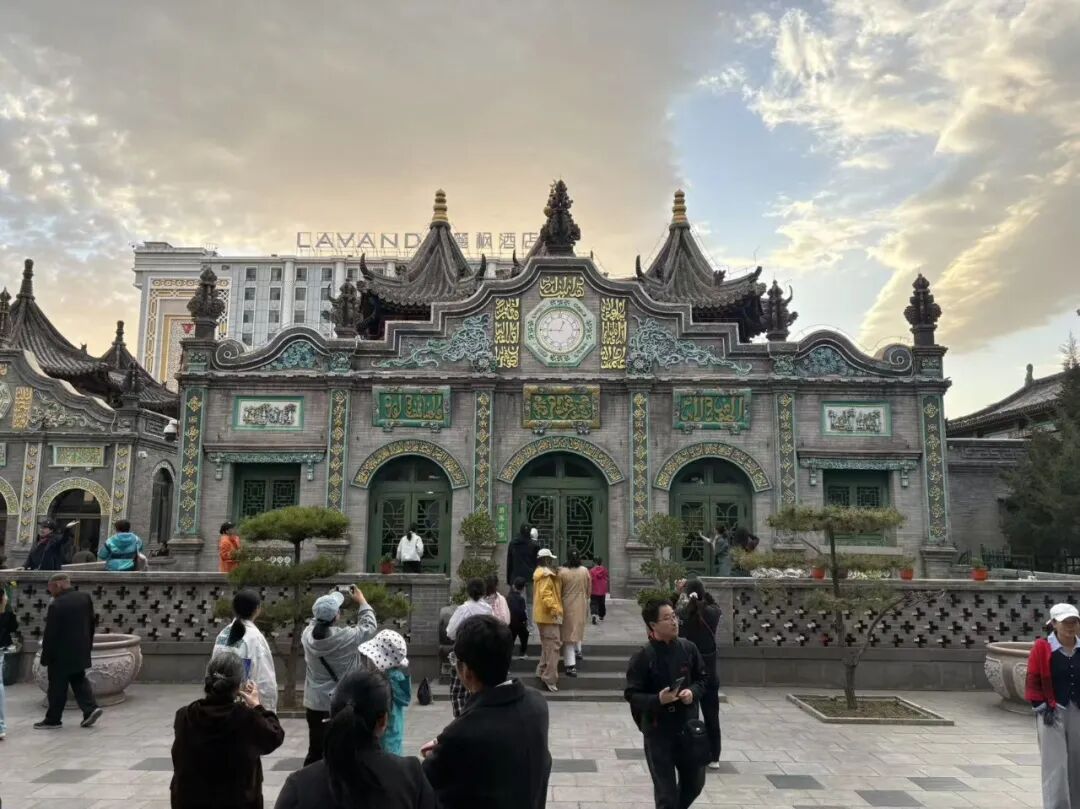
As the core structure, the main prayer hall is magnificent in scale. The building adopts an interlocking roof style with staggered layers, and its window frames and walls are covered in delicate brick carvings, where floral motifs and Arabic script calligraphy are interwoven with elegant, clean lines rather than complex clutter. The interior of the hall is spacious and solemn, holding hundreds of people praying at the same time. Red lacquered pillars stand quietly while sunlight streams through the window lattices onto the gray brick floor, creating a quiet and powerful atmosphere.

In the southeast corner of the courtyard, the moon-sighting tower stands as the visual pinnacle of the entire mosque. Rising about 33 meters high with a six-sided clustered-peak design, a wooden spiral staircase winds its way up. In ancient times when Ramadan arrived, the Imam would climb the tower to sight the moon to determine the start and end of fasting. Today, the breeze sweeps past the copper bells on the eaves, and their crisp sound echoes over the city. Standing downstairs and looking up, the crescent moon symbol atop the spire stands out sharply against the clear blue sky, which is the deepest impression many people have of the Great Mosque.

Between the stele corridors, ancient stone tablets are quietly displayed, recording the history of renovations down through the dynasties. The mosque also preserves ancient handwritten copies of the Quran, whose ink remains clear even after centuries. These stone steles, scriptures, woodwork, and brick carvings are not just cultural relics; they are living proof of multiple ethnic groups living and thriving together on the grasslands. Across the land of Hohhot, the chanting of Tibetan Buddhist temples, the prayers of ancient mosques, and grassland nomadic songs blend with one another, forming the city's rich cultural backdrop.
Stepping out of the mosque, right outside the door is the lively Islamic Style Street. The aromas of shaomai (steamed dumplings), beizi (baked flatbreads), and beef and lamb fill the alleys, buzzing with people in old shops and markets. The ancient mosque doesn't isolate itself from everyday life; instead, it coexists harmoniously and gently with the surrounding neighborhood. A solemn space for faith sits right next to the daily routines of ordinary people, and this exact kind of gentle inclusiveness is completely unique to Hohhot.
Address: No. 28, Tongdao South Street, Huimin District, Hohhot
Admission: Free to visit
✨ Visiting Etiquette: Because this is an active religious site, please keep your voice down, dress appropriately, do not wander into the prayer areas, and respect local religious customs.
⏰ Recommended Combo: You can pair your visit with a stroll down Islamic Style Street to soak in the old town's vibrant atmosphere. There are plenty of halal legacy eateries nearby, making it a great spot to try authentic Hohhot flavors.
The camel bells have faded away, but the ancient mosque remains.
For over three hundred years, this Great Mosque has guarded a quiet corner of Hohhot, bearing witness to generations of travelers coming and putting down roots. Traditional Chinese flying eaves hold up the Islamic star and crescent moon. This frontier grassland city is diverse, inclusive, gentle, and profoundly deep.
If you ever visit Hohhot, don't just rush off to the grasslands. Take half a day to step inside this ancient temple, listen to the wind blowing through the moon-sighting tower, and touch the chapters of time written by multi-ethnic harmony across the gray bricks.
#HohhotGreatMosque #HohhotCheckIn #HohhotCityWalk #SinoIslamicArchitecture #InnerMongoliaTourism
Dive deep into the oldest and largest surviving mosque in Hohhot. Explore its historical roots tied to camel caravan merchants during the Kangxi reign of the Qing dynasty, and closely check out the three-courtyard layout, double-eaved Xieshan-style training pavilion, hexagonal roofed moon-sighting tower, and precious handwritten copies of the Quran from the Kangxi era.
Amidst the bustling streets of Tongdao South Street in Hohhot's Huimin District, where traffic and chatter never stop, a quick turn reveals vermilion gates and gray-blue ancient walls standing quietly, blocking out the city's lively hustle and bustle. This is the Hohhot Great Mosque, the city's oldest and largest existing mosque, and a Major Historical and Cultural Site Protected at the National Level. It is hailed as an architectural gem on the northern frontier that tells a rich story of cultural blending.
Push open the iron gate, and the loud noise instantly fades away. Three successive courtyards unfold before you, making time feel like it's slowing down.
The mosque was first built in the thirty-second year of the Kangxi reign of the Qing dynasty, in 1693 AD. Back then, merchants traveled back and forth through Guihua City, the camel bells of the Tea Horse Road rang out, and Hui Muslim ancestors settled in the frontier to build their initial place of worship. It went through several renovations later on: rebuilt in the fifty-fourth year of the Qianlong reign, expanded on a large scale through donations from believers in 1923, and saw its iconic moon-sighting tower completed in 1939, slowly shaping the complete layout we see today. Through over three hundred years of wind and rain, every single brick and tile holds memories of the past.
What makes it so touching is its unique blend of styles native to China's northern frontier.
The entire complex follows the central axis layout of traditional Chinese architecture, featuring Xieshan-style roofs, feiyan dougong (traditional flying eaves and brackets), and gray brick screen walls, presenting a familiar oriental courtyard aesthetic. Meanwhile, the patterns, calligraphy, and orientation strictly adhere to Islamic cultural traditions, as the mosque faces east-west toward Mecca with solemnity and devotion.
As the core structure, the main prayer hall is magnificent in scale. The building adopts an interlocking roof style with staggered layers, and its window frames and walls are covered in delicate brick carvings, where floral motifs and Arabic script calligraphy are interwoven with elegant, clean lines rather than complex clutter. The interior of the hall is spacious and solemn, holding hundreds of people praying at the same time. Red lacquered pillars stand quietly while sunlight streams through the window lattices onto the gray brick floor, creating a quiet and powerful atmosphere.
In the southeast corner of the courtyard, the moon-sighting tower stands as the visual pinnacle of the entire mosque. Rising about 33 meters high with a six-sided clustered-peak design, a wooden spiral staircase winds its way up. In ancient times when Ramadan arrived, the Imam would climb the tower to sight the moon to determine the start and end of fasting. Today, the breeze sweeps past the copper bells on the eaves, and their crisp sound echoes over the city. Standing downstairs and looking up, the crescent moon symbol atop the spire stands out sharply against the clear blue sky, which is the deepest impression many people have of the Great Mosque.
Between the stele corridors, ancient stone tablets are quietly displayed, recording the history of renovations down through the dynasties. The mosque also preserves ancient handwritten copies of the Quran, whose ink remains clear even after centuries. These stone steles, scriptures, woodwork, and brick carvings are not just cultural relics; they are living proof of multiple ethnic groups living and thriving together on the grasslands. Across the land of Hohhot, the chanting of Tibetan Buddhist temples, the prayers of ancient mosques, and grassland nomadic songs blend with one another, forming the city's rich cultural backdrop.
Stepping out of the mosque, right outside the door is the lively Islamic Style Street. The aromas of shaomai (steamed dumplings), beizi (baked flatbreads), and beef and lamb fill the alleys, buzzing with people in old shops and markets. The ancient mosque doesn't isolate itself from everyday life; instead, it coexists harmoniously and gently with the surrounding neighborhood. A solemn space for faith sits right next to the daily routines of ordinary people, and this exact kind of gentle inclusiveness is completely unique to Hohhot.
Address: No. 28, Tongdao South Street, Huimin District, Hohhot
Admission: Free to visit
✨ Visiting Etiquette: Because this is an active religious site, please keep your voice down, dress appropriately, do not wander into the prayer areas, and respect local religious customs.
⏰ Recommended Combo: You can pair your visit with a stroll down Islamic Style Street to soak in the old town's vibrant atmosphere. There are plenty of halal legacy eateries nearby, making it a great spot to try authentic Hohhot flavors.
The camel bells have faded away, but the ancient mosque remains.
For over three hundred years, this Great Mosque has guarded a quiet corner of Hohhot, bearing witness to generations of travelers coming and putting down roots. Traditional Chinese flying eaves hold up the Islamic star and crescent moon. This frontier grassland city is diverse, inclusive, gentle, and profoundly deep.
If you ever visit Hohhot, don't just rush off to the grasslands. Take half a day to step inside this ancient temple, listen to the wind blowing through the moon-sighting tower, and touch the chapters of time written by multi-ethnic harmony across the gray bricks.
#HohhotGreatMosque #HohhotCheckIn #HohhotCityWalk #SinoIslamicArchitecture #InnerMongoliaTourism
Hohhot Great Mosque at Night: Exploring the Kangxi-Era National Heritage Site and Architecture in Inner Mongolia
Articles • Hasan09 posted the article • 0 comments • 9 views • 9 hours ago
[Internet Repost]
Taking a night trip to the Hohhot Great Mosque, a major historical and cultural site protected at the national level, located on South Tongdao Street in Hohhot's Huimin District. We captured the solemn silhouettes of the layered ancient roofs, the moon-sighting tower, and the brick-carved gate tower built back in the 32nd year of the Kangxi reign, all beautifully lit up by warm yellow lights.
Stopping by the Great Mosque at dusk, located at No. 28 South Tongdao Street in Hohhot's Huimin District, the stacked ancient rooftops are outlined against the warm glow of the yellow lights. First built during the 32nd year of the Kangxi reign, this ancient architectural complex is a national-level protected cultural relic and a super iconic historical landmark in the Huimin District. view all
[Internet Repost]
Taking a night trip to the Hohhot Great Mosque, a major historical and cultural site protected at the national level, located on South Tongdao Street in Hohhot's Huimin District. We captured the solemn silhouettes of the layered ancient roofs, the moon-sighting tower, and the brick-carved gate tower built back in the 32nd year of the Kangxi reign, all beautifully lit up by warm yellow lights.

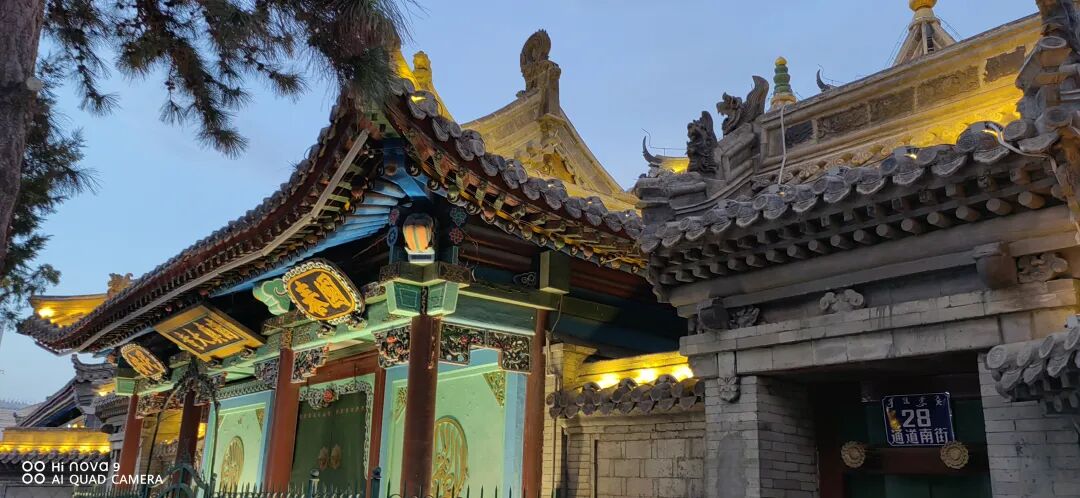
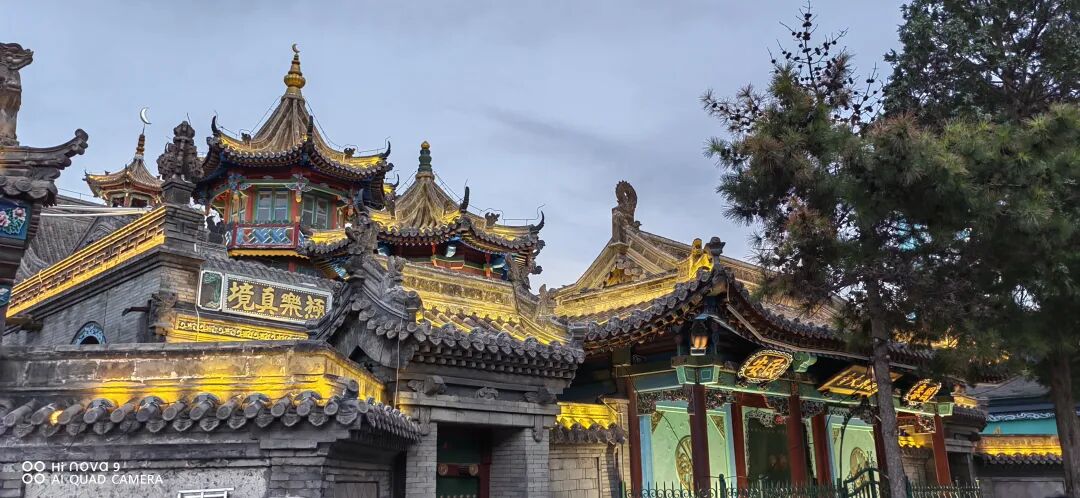
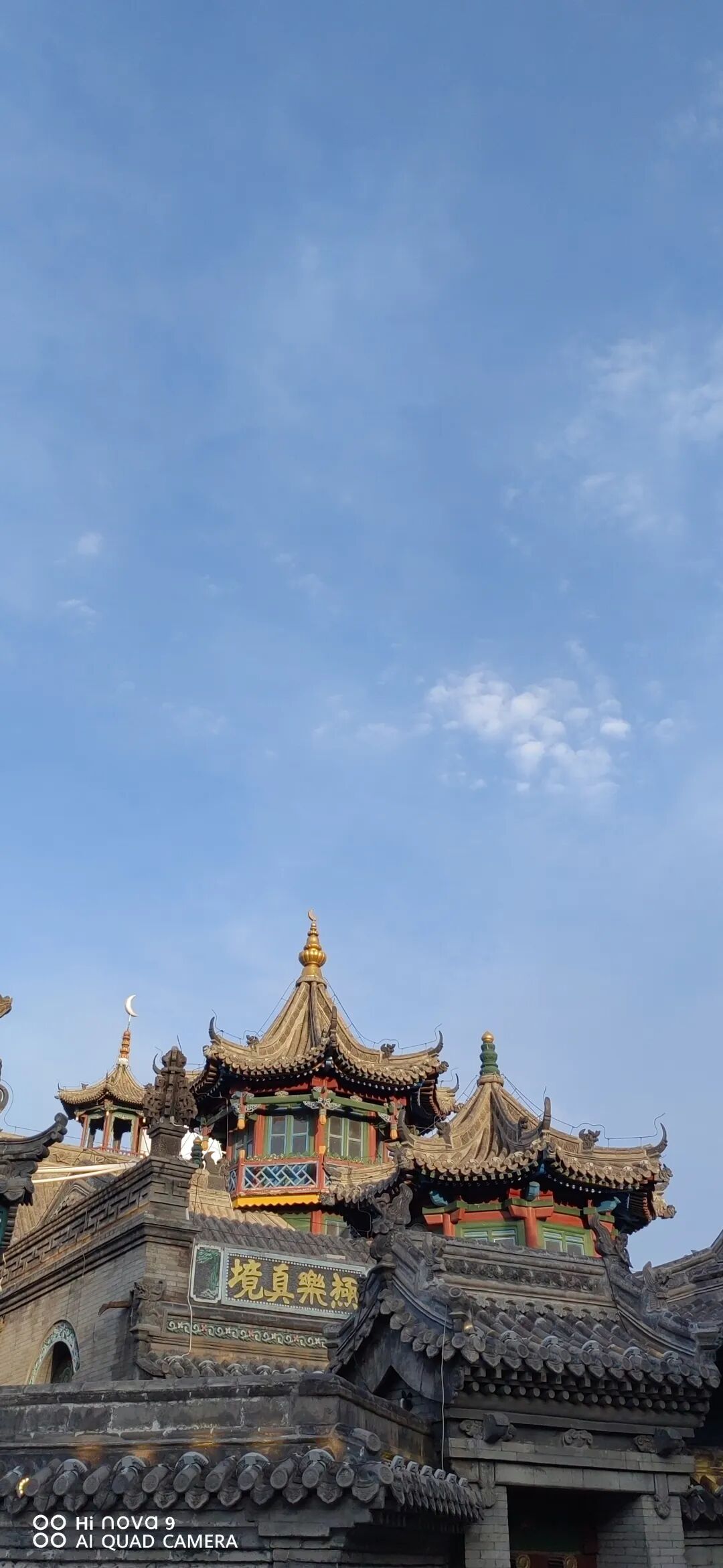
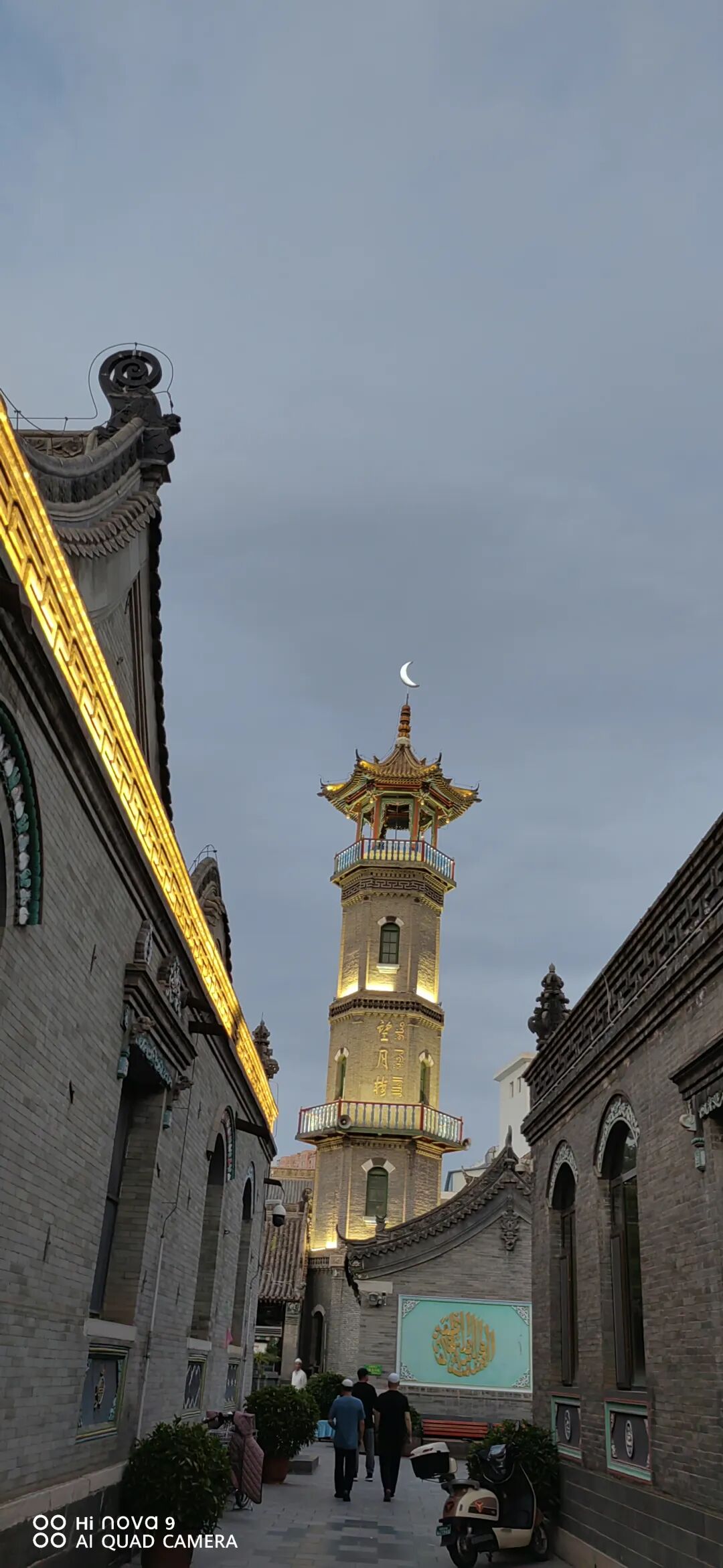
Stopping by the Great Mosque at dusk, located at No. 28 South Tongdao Street in Hohhot's Huimin District, the stacked ancient rooftops are outlined against the warm glow of the yellow lights. First built during the 32nd year of the Kangxi reign, this ancient architectural complex is a national-level protected cultural relic and a super iconic historical landmark in the Huimin District.
Taking a night trip to the Hohhot Great Mosque, a major historical and cultural site protected at the national level, located on South Tongdao Street in Hohhot's Huimin District. We captured the solemn silhouettes of the layered ancient roofs, the moon-sighting tower, and the brick-carved gate tower built back in the 32nd year of the Kangxi reign, all beautifully lit up by warm yellow lights.
Stopping by the Great Mosque at dusk, located at No. 28 South Tongdao Street in Hohhot's Huimin District, the stacked ancient rooftops are outlined against the warm glow of the yellow lights. First built during the 32nd year of the Kangxi reign, this ancient architectural complex is a national-level protected cultural relic and a super iconic historical landmark in the Huimin District.
Hohhot Great Mosque Guide: Discover Inner Mongolia's Historic Islamic Architecture and Silk Road Heritage
Articles • Hasan09 posted the article • 0 comments • 8 views • 9 hours ago
[Internet Repost]
Dive deep into the oldest and largest surviving mosque in Hohhot. Explore its historical roots tied to camel caravan merchants during the Kangxi reign of the Qing dynasty, and closely check out the three-courtyard layout, double-eaved Xieshan-style training pavilion, hexagonal roofed moon-sighting tower, and precious handwritten copies of the Quran from the Kangxi era.
Amidst the bustling streets of Tongdao South Street in Hohhot's Huimin District, where traffic and chatter never stop, a quick turn reveals vermilion gates and gray-blue ancient walls standing quietly, blocking out the city's lively hustle and bustle. This is the Hohhot Great Mosque, the city's oldest and largest existing mosque, and a Major Historical and Cultural Site Protected at the National Level. It is hailed as an architectural gem on the northern frontier that tells a rich story of cultural blending.
Push open the iron gate, and the loud noise instantly fades away. Three successive courtyards unfold before you, making time feel like it's slowing down.
The mosque was first built in the thirty-second year of the Kangxi reign of the Qing dynasty, in 1693 AD. Back then, merchants traveled back and forth through Guihua City, the camel bells of the Tea Horse Road rang out, and Hui Muslim ancestors settled in the frontier to build their initial place of worship. It went through several renovations later on: rebuilt in the fifty-fourth year of the Qianlong reign, expanded on a large scale through donations from believers in 1923, and saw its iconic moon-sighting tower completed in 1939, slowly shaping the complete layout we see today. Through over three hundred years of wind and rain, every single brick and tile holds memories of the past.
What makes it so touching is its unique blend of styles native to China's northern frontier.
The entire complex follows the central axis layout of traditional Chinese architecture, featuring Xieshan-style roofs, feiyan dougong (traditional flying eaves and brackets), and gray brick screen walls, presenting a familiar oriental courtyard aesthetic. Meanwhile, the patterns, calligraphy, and orientation strictly adhere to Islamic cultural traditions, as the mosque faces east-west toward Mecca with solemnity and devotion.
As the core structure, the main prayer hall is magnificent in scale. The building adopts an interlocking roof style with staggered layers, and its window frames and walls are covered in delicate brick carvings, where floral motifs and Arabic script calligraphy are interwoven with elegant, clean lines rather than complex clutter. The interior of the hall is spacious and solemn, holding hundreds of people praying at the same time. Red lacquered pillars stand quietly while sunlight streams through the window lattices onto the gray brick floor, creating a quiet and powerful atmosphere.
In the southeast corner of the courtyard, the moon-sighting tower stands as the visual pinnacle of the entire mosque. Rising about 33 meters high with a six-sided clustered-peak design, a wooden spiral staircase winds its way up. In ancient times when Ramadan arrived, the Imam would climb the tower to sight the moon to determine the start and end of fasting. Today, the breeze sweeps past the copper bells on the eaves, and their crisp sound echoes over the city. Standing downstairs and looking up, the crescent moon symbol atop the spire stands out sharply against the clear blue sky, which is the deepest impression many people have of the Great Mosque.
Between the stele corridors, ancient stone tablets are quietly displayed, recording the history of renovations down through the dynasties. The mosque also preserves ancient handwritten copies of the Quran, whose ink remains clear even after centuries. These stone steles, scriptures, woodwork, and brick carvings are not just cultural relics; they are living proof of multiple ethnic groups living and thriving together on the grasslands. Across the land of Hohhot, the chanting of Tibetan Buddhist temples, the prayers of ancient mosques, and grassland nomadic songs blend with one another, forming the city's rich cultural backdrop.
Stepping out of the mosque, right outside the door is the lively Islamic Style Street. The aromas of shaomai (steamed dumplings), beizi (baked flatbreads), and beef and lamb fill the alleys, buzzing with people in old shops and markets. The ancient mosque doesn't isolate itself from everyday life; instead, it coexists harmoniously and gently with the surrounding neighborhood. A solemn space for faith sits right next to the daily routines of ordinary people, and this exact kind of gentle inclusiveness is completely unique to Hohhot.
Address: No. 28, Tongdao South Street, Huimin District, Hohhot
Admission: Free to visit
✨ Visiting Etiquette: Because this is an active religious site, please keep your voice down, dress appropriately, do not wander into the prayer areas, and respect local religious customs.
⏰ Recommended Combo: You can pair your visit with a stroll down Islamic Style Street to soak in the old town's vibrant atmosphere. There are plenty of halal legacy eateries nearby, making it a great spot to try authentic Hohhot flavors.
The camel bells have faded away, but the ancient mosque remains.
For over three hundred years, this Great Mosque has guarded a quiet corner of Hohhot, bearing witness to generations of travelers coming and putting down roots. Traditional Chinese flying eaves hold up the Islamic star and crescent moon. This frontier grassland city is diverse, inclusive, gentle, and profoundly deep.
If you ever visit Hohhot, don't just rush off to the grasslands. Take half a day to step inside this ancient temple, listen to the wind blowing through the moon-sighting tower, and touch the chapters of time written by multi-ethnic harmony across the gray bricks.
#HohhotGreatMosque #HohhotCheckIn #HohhotCityWalk #SinoIslamicArchitecture #InnerMongoliaTourism view all
Dive deep into the oldest and largest surviving mosque in Hohhot. Explore its historical roots tied to camel caravan merchants during the Kangxi reign of the Qing dynasty, and closely check out the three-courtyard layout, double-eaved Xieshan-style training pavilion, hexagonal roofed moon-sighting tower, and precious handwritten copies of the Quran from the Kangxi era.
Amidst the bustling streets of Tongdao South Street in Hohhot's Huimin District, where traffic and chatter never stop, a quick turn reveals vermilion gates and gray-blue ancient walls standing quietly, blocking out the city's lively hustle and bustle. This is the Hohhot Great Mosque, the city's oldest and largest existing mosque, and a Major Historical and Cultural Site Protected at the National Level. It is hailed as an architectural gem on the northern frontier that tells a rich story of cultural blending.
Push open the iron gate, and the loud noise instantly fades away. Three successive courtyards unfold before you, making time feel like it's slowing down.
The mosque was first built in the thirty-second year of the Kangxi reign of the Qing dynasty, in 1693 AD. Back then, merchants traveled back and forth through Guihua City, the camel bells of the Tea Horse Road rang out, and Hui Muslim ancestors settled in the frontier to build their initial place of worship. It went through several renovations later on: rebuilt in the fifty-fourth year of the Qianlong reign, expanded on a large scale through donations from believers in 1923, and saw its iconic moon-sighting tower completed in 1939, slowly shaping the complete layout we see today. Through over three hundred years of wind and rain, every single brick and tile holds memories of the past.
What makes it so touching is its unique blend of styles native to China's northern frontier.
The entire complex follows the central axis layout of traditional Chinese architecture, featuring Xieshan-style roofs, feiyan dougong (traditional flying eaves and brackets), and gray brick screen walls, presenting a familiar oriental courtyard aesthetic. Meanwhile, the patterns, calligraphy, and orientation strictly adhere to Islamic cultural traditions, as the mosque faces east-west toward Mecca with solemnity and devotion.
As the core structure, the main prayer hall is magnificent in scale. The building adopts an interlocking roof style with staggered layers, and its window frames and walls are covered in delicate brick carvings, where floral motifs and Arabic script calligraphy are interwoven with elegant, clean lines rather than complex clutter. The interior of the hall is spacious and solemn, holding hundreds of people praying at the same time. Red lacquered pillars stand quietly while sunlight streams through the window lattices onto the gray brick floor, creating a quiet and powerful atmosphere.
In the southeast corner of the courtyard, the moon-sighting tower stands as the visual pinnacle of the entire mosque. Rising about 33 meters high with a six-sided clustered-peak design, a wooden spiral staircase winds its way up. In ancient times when Ramadan arrived, the Imam would climb the tower to sight the moon to determine the start and end of fasting. Today, the breeze sweeps past the copper bells on the eaves, and their crisp sound echoes over the city. Standing downstairs and looking up, the crescent moon symbol atop the spire stands out sharply against the clear blue sky, which is the deepest impression many people have of the Great Mosque.
Between the stele corridors, ancient stone tablets are quietly displayed, recording the history of renovations down through the dynasties. The mosque also preserves ancient handwritten copies of the Quran, whose ink remains clear even after centuries. These stone steles, scriptures, woodwork, and brick carvings are not just cultural relics; they are living proof of multiple ethnic groups living and thriving together on the grasslands. Across the land of Hohhot, the chanting of Tibetan Buddhist temples, the prayers of ancient mosques, and grassland nomadic songs blend with one another, forming the city's rich cultural backdrop.
Stepping out of the mosque, right outside the door is the lively Islamic Style Street. The aromas of shaomai (steamed dumplings), beizi (baked flatbreads), and beef and lamb fill the alleys, buzzing with people in old shops and markets. The ancient mosque doesn't isolate itself from everyday life; instead, it coexists harmoniously and gently with the surrounding neighborhood. A solemn space for faith sits right next to the daily routines of ordinary people, and this exact kind of gentle inclusiveness is completely unique to Hohhot.
Address: No. 28, Tongdao South Street, Huimin District, Hohhot
Admission: Free to visit
✨ Visiting Etiquette: Because this is an active religious site, please keep your voice down, dress appropriately, do not wander into the prayer areas, and respect local religious customs.
⏰ Recommended Combo: You can pair your visit with a stroll down Islamic Style Street to soak in the old town's vibrant atmosphere. There are plenty of halal legacy eateries nearby, making it a great spot to try authentic Hohhot flavors.
The camel bells have faded away, but the ancient mosque remains.
For over three hundred years, this Great Mosque has guarded a quiet corner of Hohhot, bearing witness to generations of travelers coming and putting down roots. Traditional Chinese flying eaves hold up the Islamic star and crescent moon. This frontier grassland city is diverse, inclusive, gentle, and profoundly deep.
If you ever visit Hohhot, don't just rush off to the grasslands. Take half a day to step inside this ancient temple, listen to the wind blowing through the moon-sighting tower, and touch the chapters of time written by multi-ethnic harmony across the gray bricks.
#HohhotGreatMosque #HohhotCheckIn #HohhotCityWalk #SinoIslamicArchitecture #InnerMongoliaTourism view all
[Internet Repost]
Dive deep into the oldest and largest surviving mosque in Hohhot. Explore its historical roots tied to camel caravan merchants during the Kangxi reign of the Qing dynasty, and closely check out the three-courtyard layout, double-eaved Xieshan-style training pavilion, hexagonal roofed moon-sighting tower, and precious handwritten copies of the Quran from the Kangxi era.
Amidst the bustling streets of Tongdao South Street in Hohhot's Huimin District, where traffic and chatter never stop, a quick turn reveals vermilion gates and gray-blue ancient walls standing quietly, blocking out the city's lively hustle and bustle. This is the Hohhot Great Mosque, the city's oldest and largest existing mosque, and a Major Historical and Cultural Site Protected at the National Level. It is hailed as an architectural gem on the northern frontier that tells a rich story of cultural blending.
Push open the iron gate, and the loud noise instantly fades away. Three successive courtyards unfold before you, making time feel like it's slowing down.
The mosque was first built in the thirty-second year of the Kangxi reign of the Qing dynasty, in 1693 AD. Back then, merchants traveled back and forth through Guihua City, the camel bells of the Tea Horse Road rang out, and Hui Muslim ancestors settled in the frontier to build their initial place of worship. It went through several renovations later on: rebuilt in the fifty-fourth year of the Qianlong reign, expanded on a large scale through donations from believers in 1923, and saw its iconic moon-sighting tower completed in 1939, slowly shaping the complete layout we see today. Through over three hundred years of wind and rain, every single brick and tile holds memories of the past.
What makes it so touching is its unique blend of styles native to China's northern frontier.
The entire complex follows the central axis layout of traditional Chinese architecture, featuring Xieshan-style roofs, feiyan dougong (traditional flying eaves and brackets), and gray brick screen walls, presenting a familiar oriental courtyard aesthetic. Meanwhile, the patterns, calligraphy, and orientation strictly adhere to Islamic cultural traditions, as the mosque faces east-west toward Mecca with solemnity and devotion.
As the core structure, the main prayer hall is magnificent in scale. The building adopts an interlocking roof style with staggered layers, and its window frames and walls are covered in delicate brick carvings, where floral motifs and Arabic script calligraphy are interwoven with elegant, clean lines rather than complex clutter. The interior of the hall is spacious and solemn, holding hundreds of people praying at the same time. Red lacquered pillars stand quietly while sunlight streams through the window lattices onto the gray brick floor, creating a quiet and powerful atmosphere.
In the southeast corner of the courtyard, the moon-sighting tower stands as the visual pinnacle of the entire mosque. Rising about 33 meters high with a six-sided clustered-peak design, a wooden spiral staircase winds its way up. In ancient times when Ramadan arrived, the Imam would climb the tower to sight the moon to determine the start and end of fasting. Today, the breeze sweeps past the copper bells on the eaves, and their crisp sound echoes over the city. Standing downstairs and looking up, the crescent moon symbol atop the spire stands out sharply against the clear blue sky, which is the deepest impression many people have of the Great Mosque.
Between the stele corridors, ancient stone tablets are quietly displayed, recording the history of renovations down through the dynasties. The mosque also preserves ancient handwritten copies of the Quran, whose ink remains clear even after centuries. These stone steles, scriptures, woodwork, and brick carvings are not just cultural relics; they are living proof of multiple ethnic groups living and thriving together on the grasslands. Across the land of Hohhot, the chanting of Tibetan Buddhist temples, the prayers of ancient mosques, and grassland nomadic songs blend with one another, forming the city's rich cultural backdrop.
Stepping out of the mosque, right outside the door is the lively Islamic Style Street. The aromas of shaomai (steamed dumplings), beizi (baked flatbreads), and beef and lamb fill the alleys, buzzing with people in old shops and markets. The ancient mosque doesn't isolate itself from everyday life; instead, it coexists harmoniously and gently with the surrounding neighborhood. A solemn space for faith sits right next to the daily routines of ordinary people, and this exact kind of gentle inclusiveness is completely unique to Hohhot.
Address: No. 28, Tongdao South Street, Huimin District, Hohhot
Admission: Free to visit
✨ Visiting Etiquette: Because this is an active religious site, please keep your voice down, dress appropriately, do not wander into the prayer areas, and respect local religious customs.
⏰ Recommended Combo: You can pair your visit with a stroll down Islamic Style Street to soak in the old town's vibrant atmosphere. There are plenty of halal legacy eateries nearby, making it a great spot to try authentic Hohhot flavors.
The camel bells have faded away, but the ancient mosque remains.
For over three hundred years, this Great Mosque has guarded a quiet corner of Hohhot, bearing witness to generations of travelers coming and putting down roots. Traditional Chinese flying eaves hold up the Islamic star and crescent moon. This frontier grassland city is diverse, inclusive, gentle, and profoundly deep.
If you ever visit Hohhot, don't just rush off to the grasslands. Take half a day to step inside this ancient temple, listen to the wind blowing through the moon-sighting tower, and touch the chapters of time written by multi-ethnic harmony across the gray bricks.
#HohhotGreatMosque #HohhotCheckIn #HohhotCityWalk #SinoIslamicArchitecture #InnerMongoliaTourism
Hohhot Great Mosque at Night: Exploring the Kangxi-Era National Heritage Site and Architecture in Inner Mongolia
Articles • Hasan09 posted the article • 0 comments • 9 views • 9 hours ago
[Internet Repost]
Taking a night trip to the Hohhot Great Mosque, a major historical and cultural site protected at the national level, located on South Tongdao Street in Hohhot's Huimin District. We captured the solemn silhouettes of the layered ancient roofs, the moon-sighting tower, and the brick-carved gate tower built back in the 32nd year of the Kangxi reign, all beautifully lit up by warm yellow lights.
Stopping by the Great Mosque at dusk, located at No. 28 South Tongdao Street in Hohhot's Huimin District, the stacked ancient rooftops are outlined against the warm glow of the yellow lights. First built during the 32nd year of the Kangxi reign, this ancient architectural complex is a national-level protected cultural relic and a super iconic historical landmark in the Huimin District. view all
Taking a night trip to the Hohhot Great Mosque, a major historical and cultural site protected at the national level, located on South Tongdao Street in Hohhot's Huimin District. We captured the solemn silhouettes of the layered ancient roofs, the moon-sighting tower, and the brick-carved gate tower built back in the 32nd year of the Kangxi reign, all beautifully lit up by warm yellow lights.
Stopping by the Great Mosque at dusk, located at No. 28 South Tongdao Street in Hohhot's Huimin District, the stacked ancient rooftops are outlined against the warm glow of the yellow lights. First built during the 32nd year of the Kangxi reign, this ancient architectural complex is a national-level protected cultural relic and a super iconic historical landmark in the Huimin District. view all
[Internet Repost]
Taking a night trip to the Hohhot Great Mosque, a major historical and cultural site protected at the national level, located on South Tongdao Street in Hohhot's Huimin District. We captured the solemn silhouettes of the layered ancient roofs, the moon-sighting tower, and the brick-carved gate tower built back in the 32nd year of the Kangxi reign, all beautifully lit up by warm yellow lights.
Stopping by the Great Mosque at dusk, located at No. 28 South Tongdao Street in Hohhot's Huimin District, the stacked ancient rooftops are outlined against the warm glow of the yellow lights. First built during the 32nd year of the Kangxi reign, this ancient architectural complex is a national-level protected cultural relic and a super iconic historical landmark in the Huimin District.