

Hui Caravan Courtyards
Halal Travel Guide: Weishan, Dali — Donglianhua Hui Caravan Courtyards (Part 1)
Articles • ali2007fr posted the article • 0 comments • 136 views • 2026-05-18 22:05
Reposted from the web
Summary: Weishan, Dali — Donglianhua Hui Caravan Courtyards (Part 1) is presented here as a firsthand travel account in clear English, beginning with this scene: On the afternoon of January 30, 2023, I rode my electric scooter to Donglianhua Village in Weishan, Dali, to visit the three Hui Muslim caravan courtyards there for the second time. The account keeps its focus on Weishan Dali, Hui Caravan Courtyards, Muslim Travel while preserving the names, places, food, and historical details from the Chinese source.
On the afternoon of January 30, 2023, I rode my electric scooter to Donglianhua Village in Weishan, Dali, to visit the three Hui Muslim caravan courtyards there for the second time. In 2017, I focused on visiting the Ma Ruji Courtyard, took a quick look around the Ma Ruqi Courtyard, but could not get into the Ma Ruqing Courtyard, which left me wanting more. At that time, I hoped to have a meal in one of the courtyards and chat with the descendants of the Ma family, and this time, that wish finally came true.
After the Ming Dynasty took control of Yunnan, Zhu Yuanzhang ordered Mu Ying to guard the region. Mu Ying sent some Hui Muslim soldiers under his command to farm in Weishan, Dali. They merged with the Semu people who had come there to trade during the Yuan Dynasty, forming many Hui Muslim villages around Yongjian Town. Donglianhua Village is now mainly home to residents with the surnames Ma and Zhang. The Ma family is known as the Sai family Ma, said to be descendants of Masuhu, the fifth son of the Yuan Dynasty politician Sayyid Ajjal Shams al-Din. The Zhang family are descendants of Hui Muslims from the Jiangnan region who settled there after following Mu Ying during the Ming Dynasty.
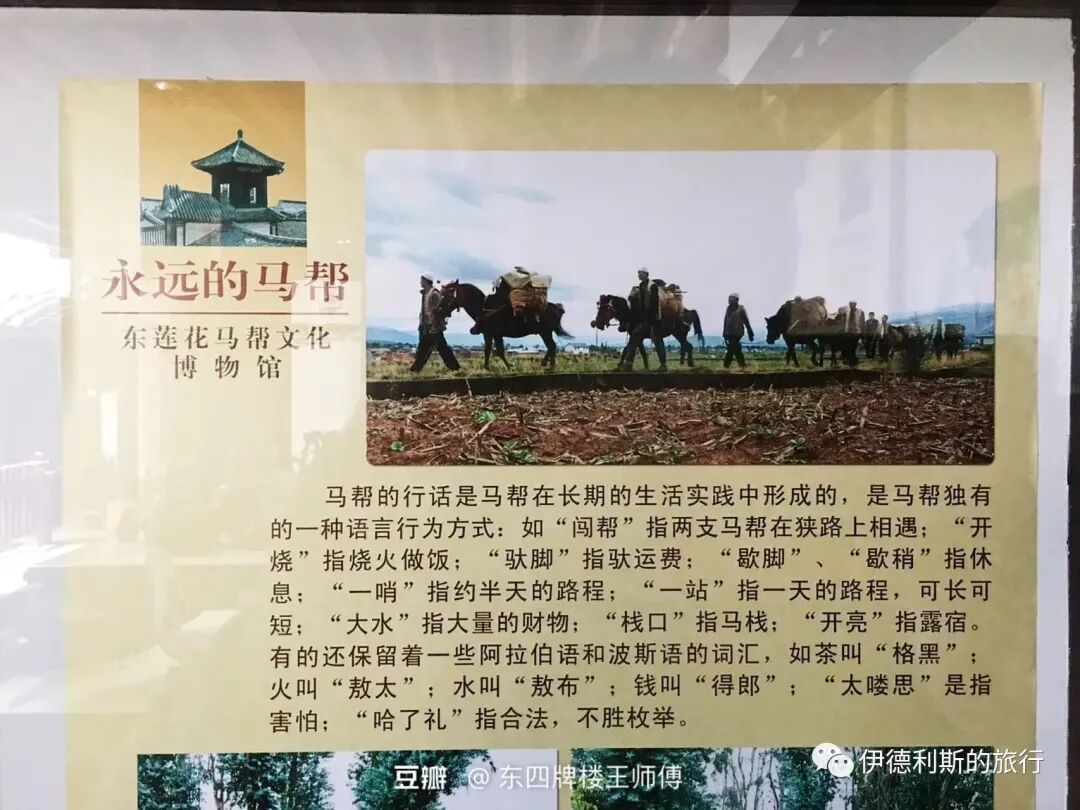
Donglianhua Village sits on the main route of the Ancient Tea Horse Road from Pu'er to Dali. Because the local Hui Muslims were skilled at raising horses, they started the business of running horse caravans. Around 1911, ten brothers from the Ma family in Donglianhua, including Ma Ruji, Ma Ruqi, and Ma Ruqing, began trading with horse caravans and gradually became famous caravan leaders (maguotou) in Southwest China. During the Republic of China era, almost every family in Donglianhua Village raised horses. The village had seven large horse caravans and frequent trade traffic, earning it the nickname Little Shanghai of Western Yunnan. In the 1940s, the Ma brothers' business reached its peak, and they competed to build exquisite Ma family courtyards.
After the 1940s, due to frequent caravan trade with Thailand and Myanmar, some people from Donglianhua Village began to settle in those countries, making Donglianhua a famous hometown for overseas Chinese in Yunnan. These overseas residents and their descendants have continuously donated money to protect the village and have made great contributions to Donglianhua.
Ma Ruqi Courtyard
Among the three Ma family courtyards in Donglianhua Village, only the Ma Ruqi Courtyard is still occupied by descendants of the Ma family today. They have opened a restaurant and a guesthouse there, which I think is a great starting point for understanding the modern history of Yunnan's Hui Muslims and caravan culture.
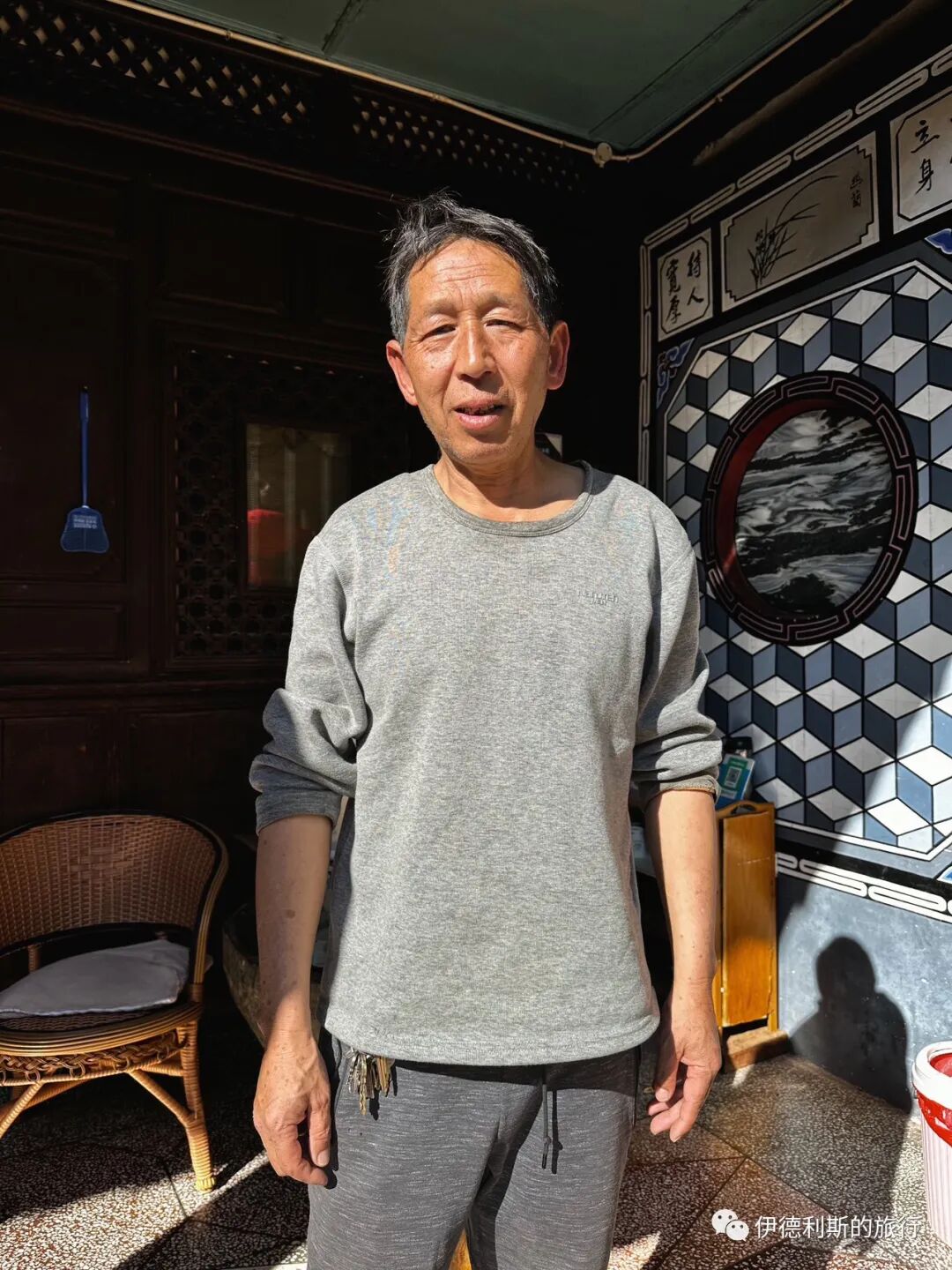
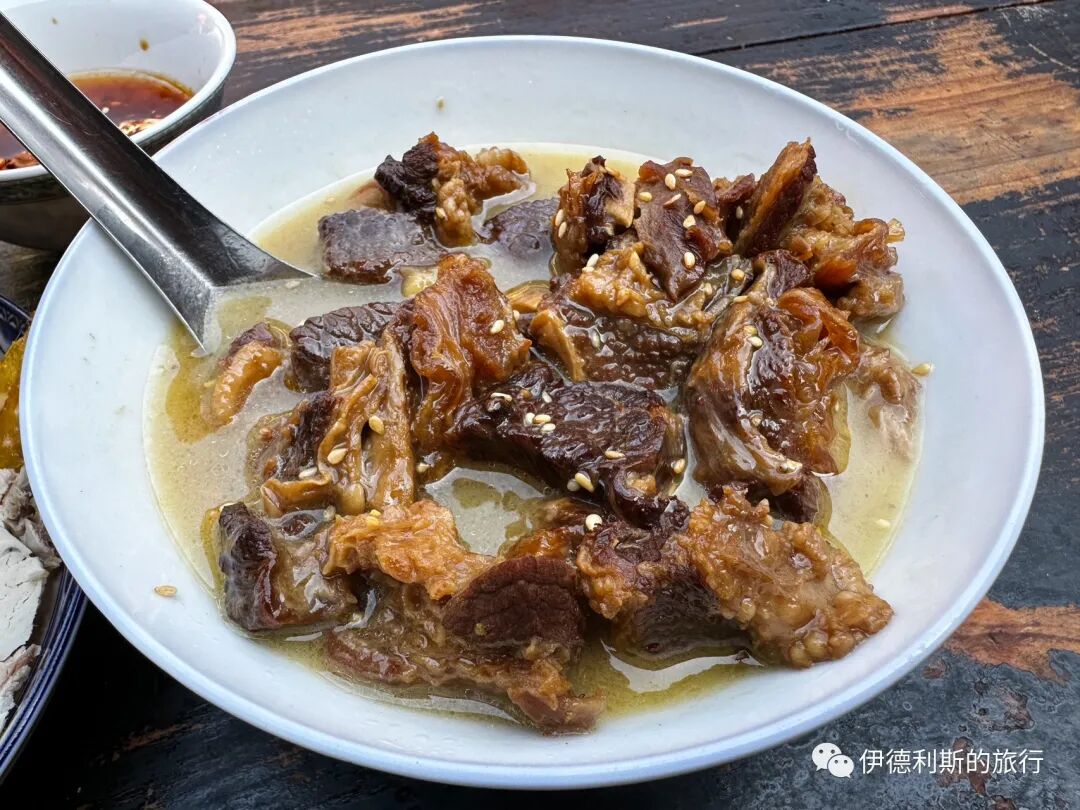
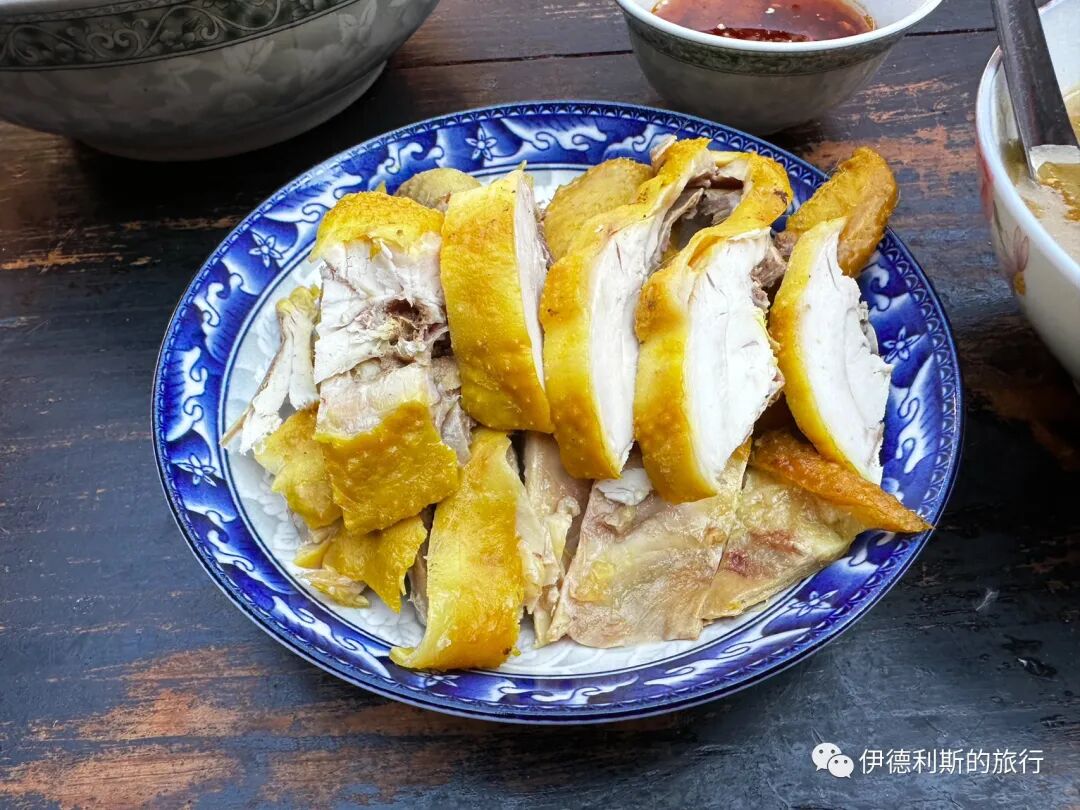
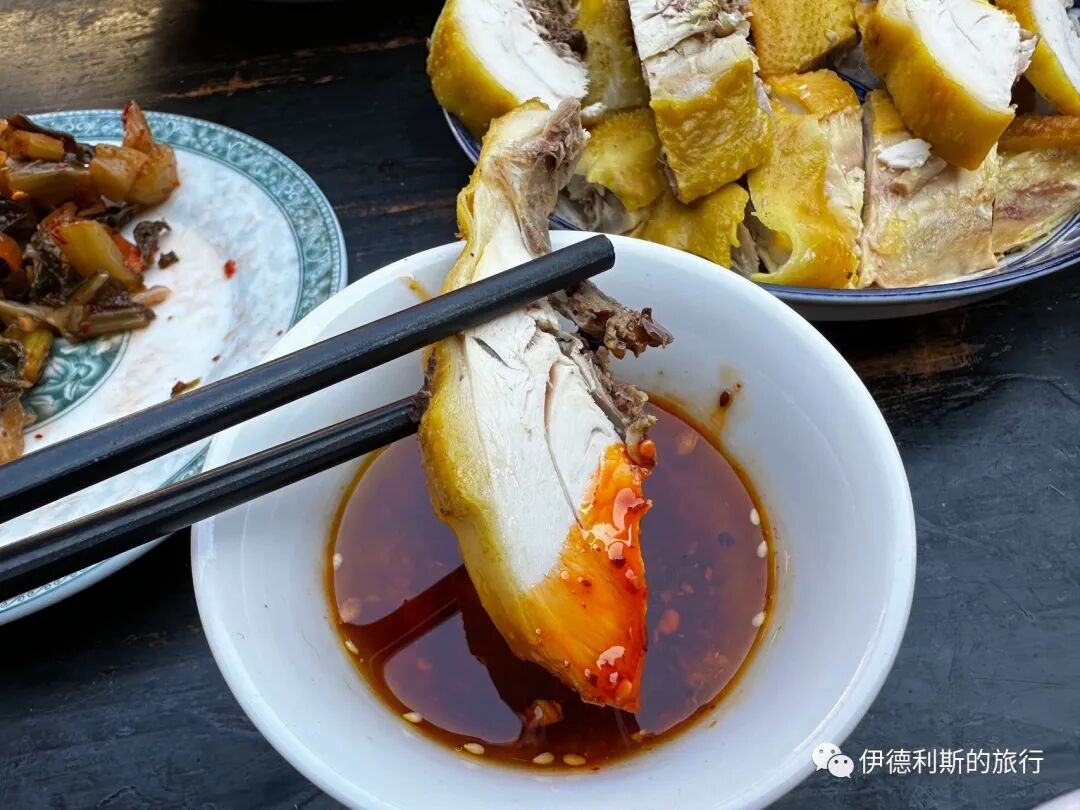
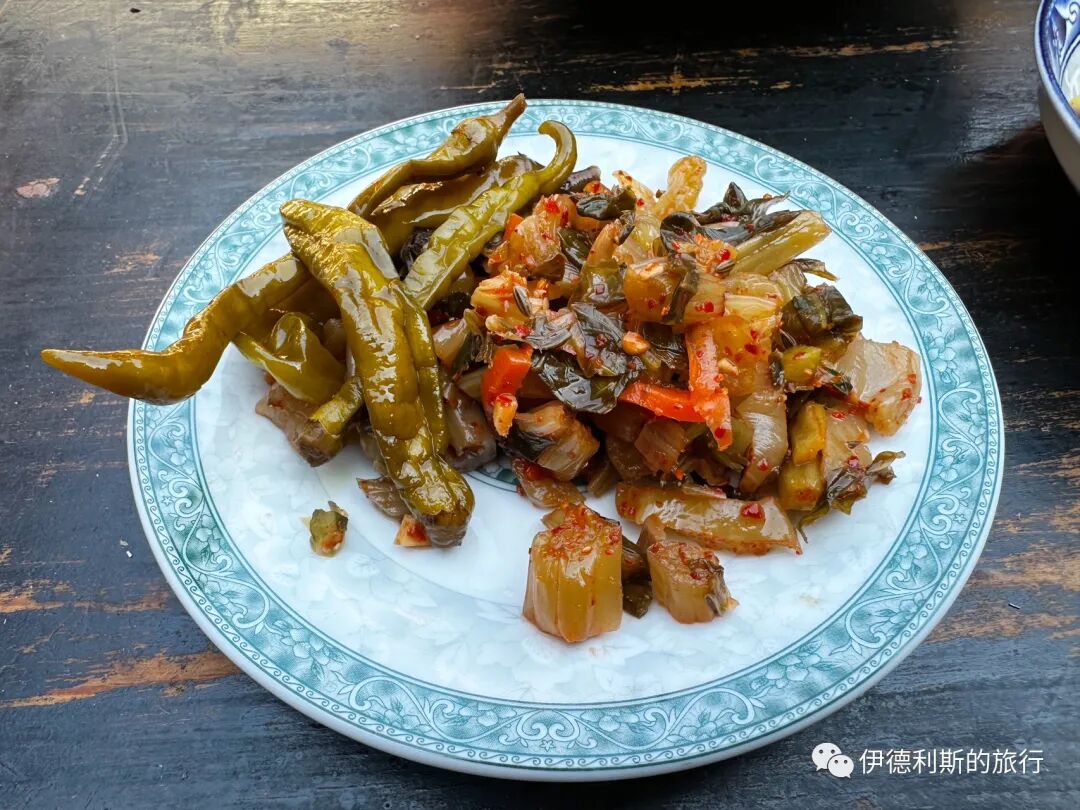
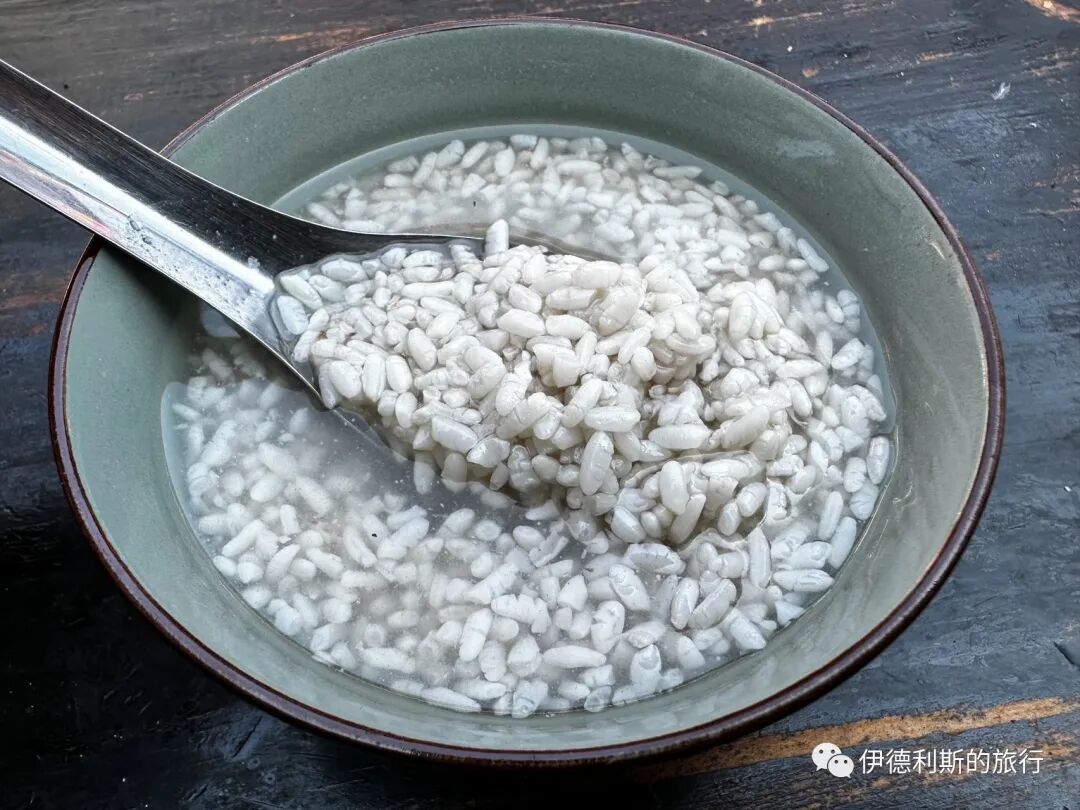
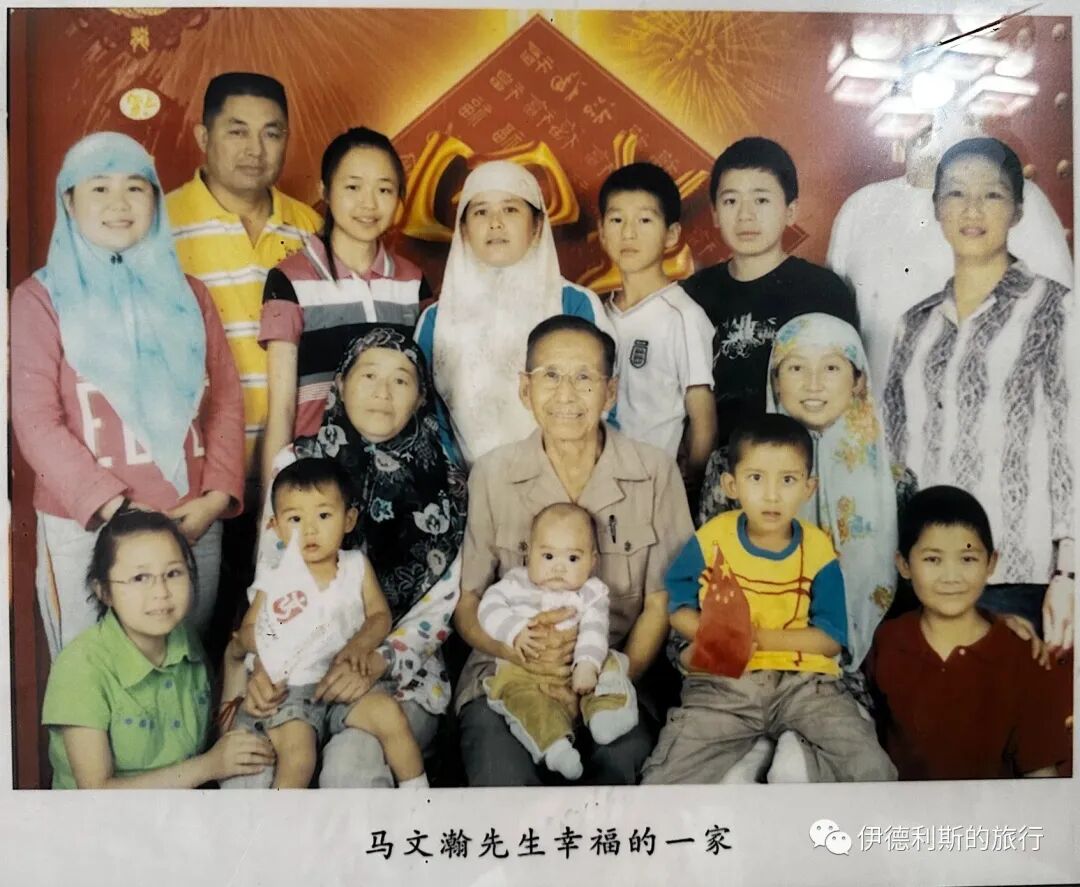
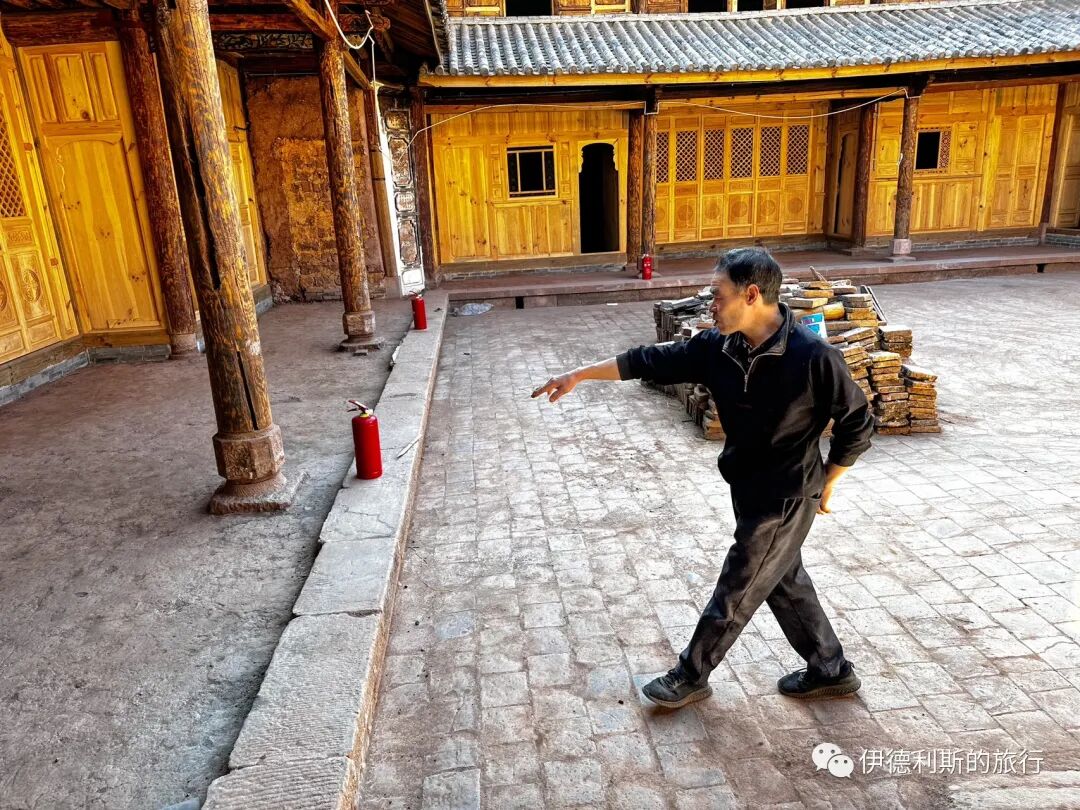
Uncle Ma Wenhong, a descendant of Ma Ruqi, welcomed me warmly. He prepared braised beef and white-cut chicken from the traditional Weishan Hui Muslim banquet known as the Eight Old Bowls (laobawan), as well as sticky rice with sugar, which is only eaten at local weddings. I felt very grateful (shukr).
I listened to Uncle Ma tell the history of the Ma Ruqi Courtyard while we ate. After the Tongzhi era disasters, a group of Hui Muslims with the surname Ma who survived moved from Xiaodonglianhua Village to the current Donglianhua Village. They rebuilt their homes together with a group of Hui Muslims with the surname Zhang who came with them, and Donglianhua Village gradually developed.
In the early years of the Republic of China, Ma Ruqi started his horse-trading business. After more than 20 years of hard work, he became a famous caravan leader (maguotou) in Sichuan, Guizhou, and Yunnan. The 1940s were the peak of the Ma brothers' business. Construction of the Ma Ruqi Courtyard began in 1942 and was officially completed in 1945 after three years.
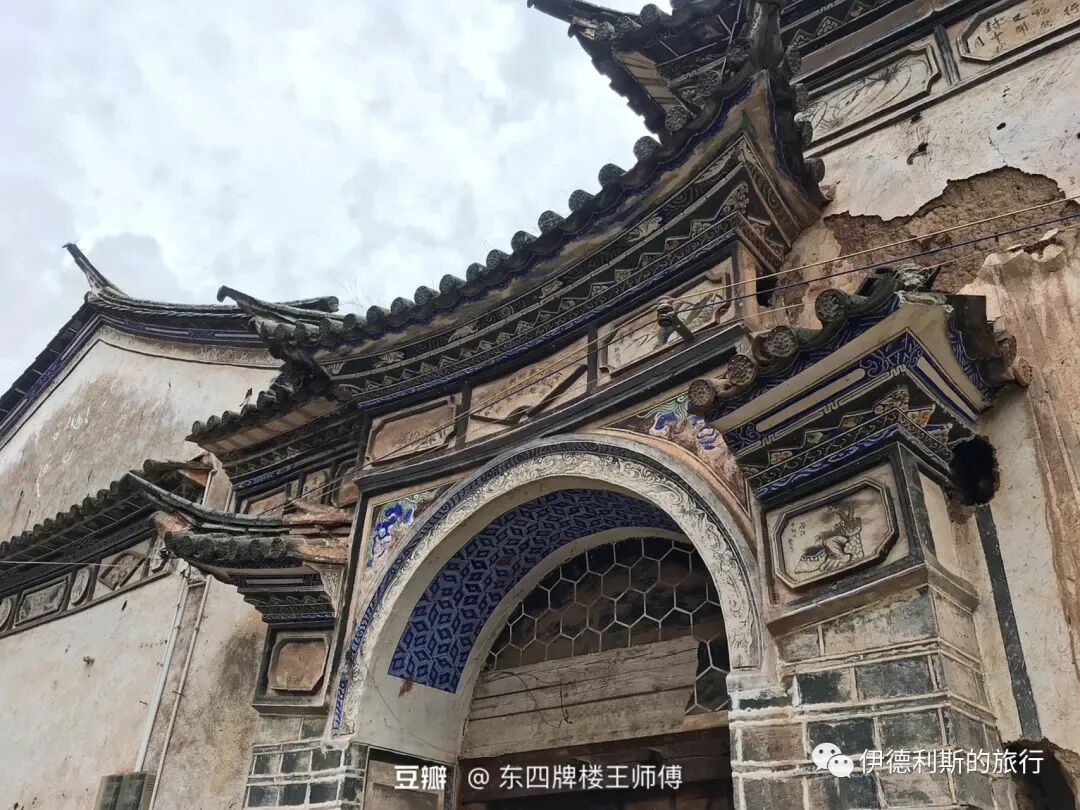
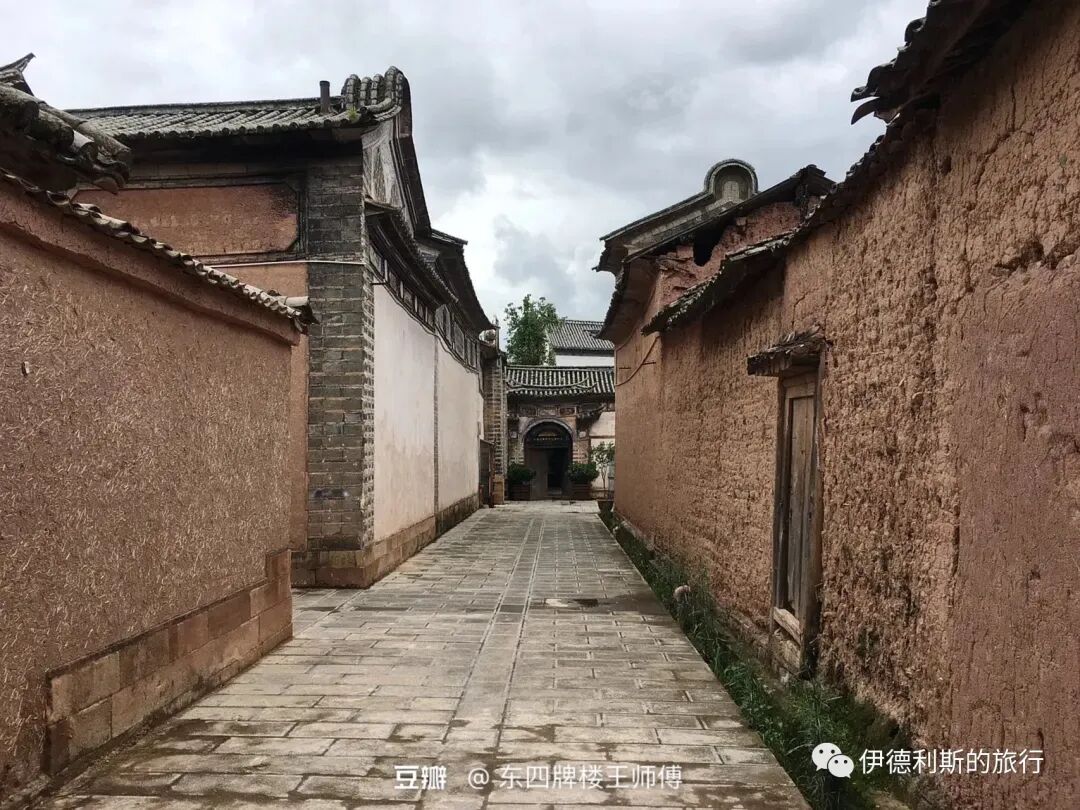
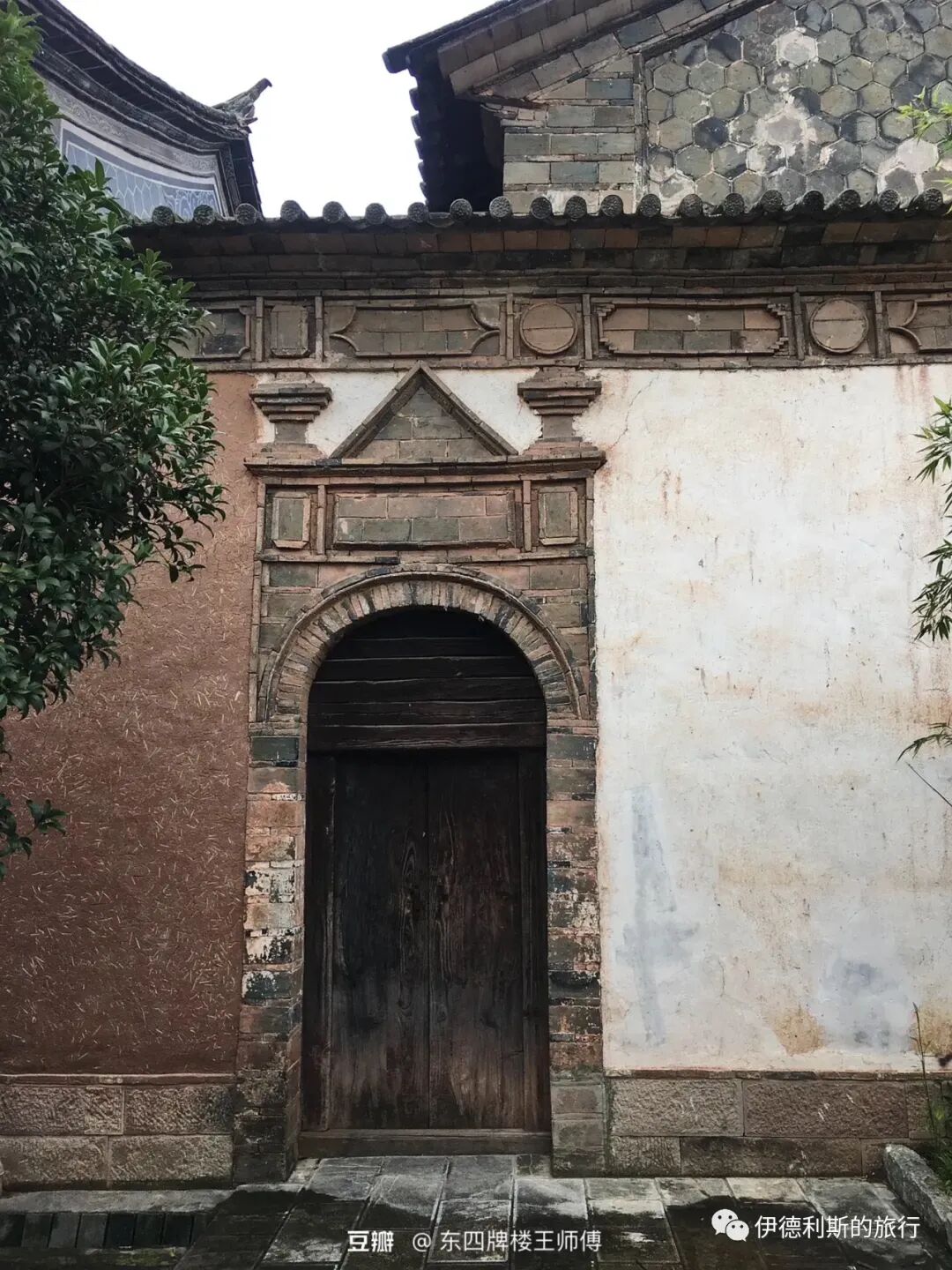
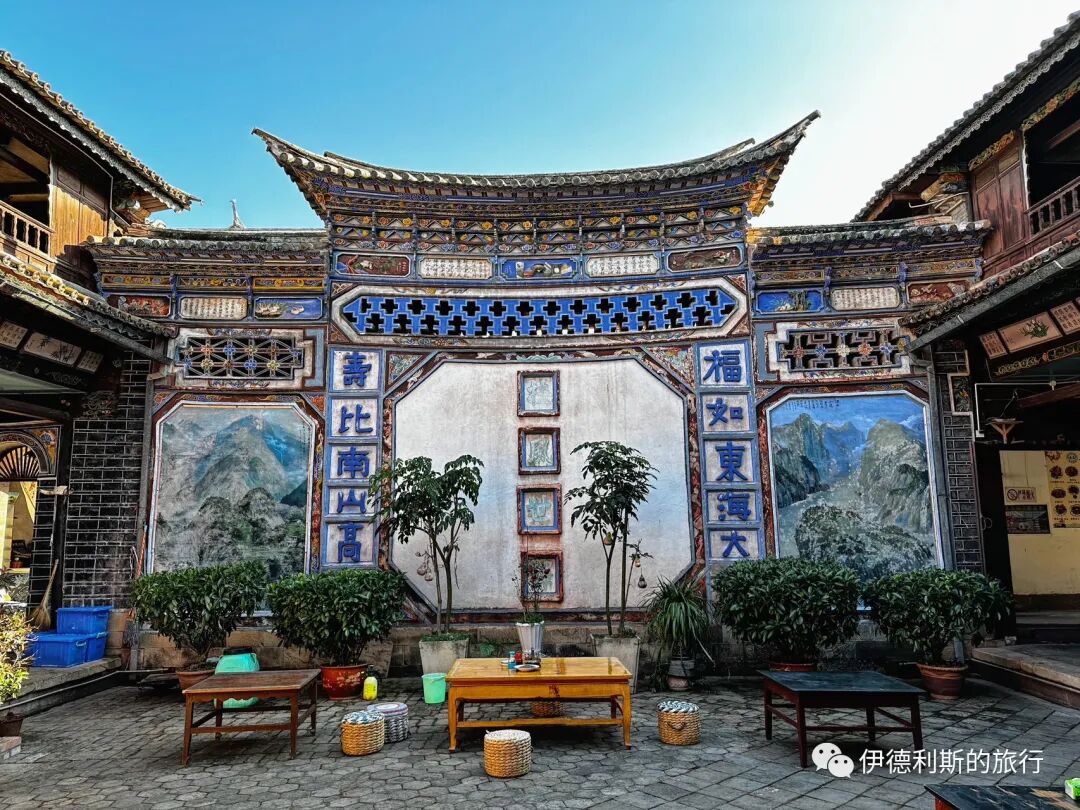
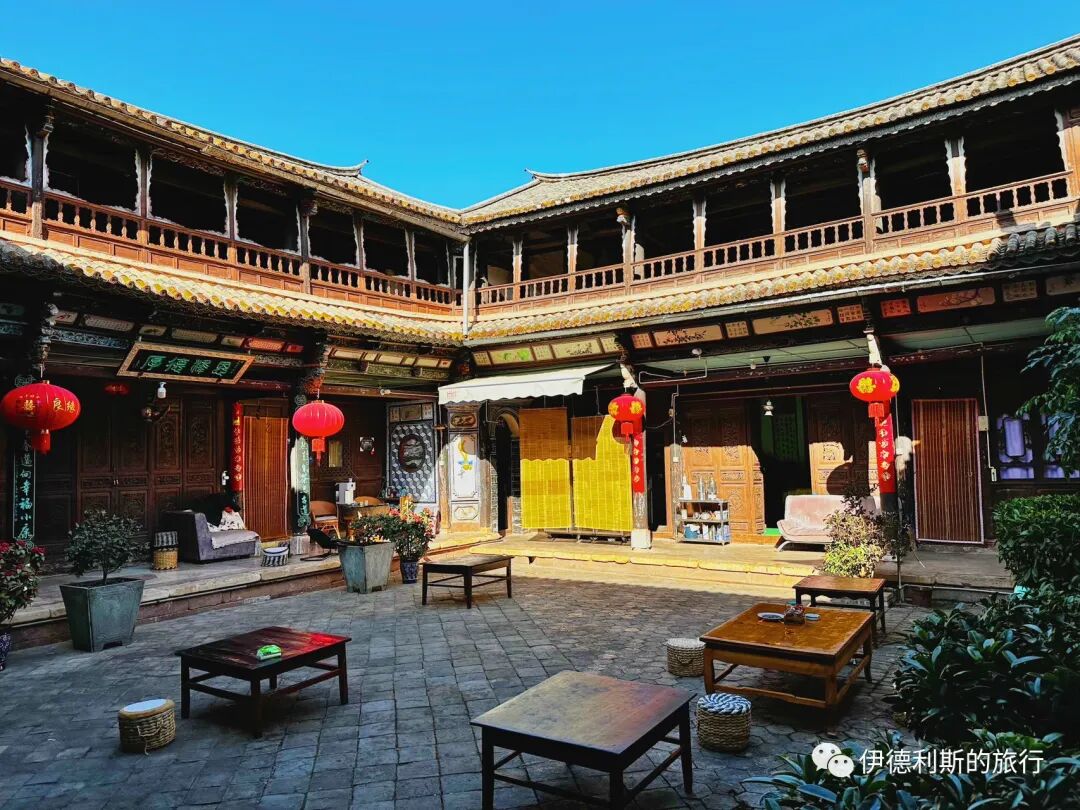
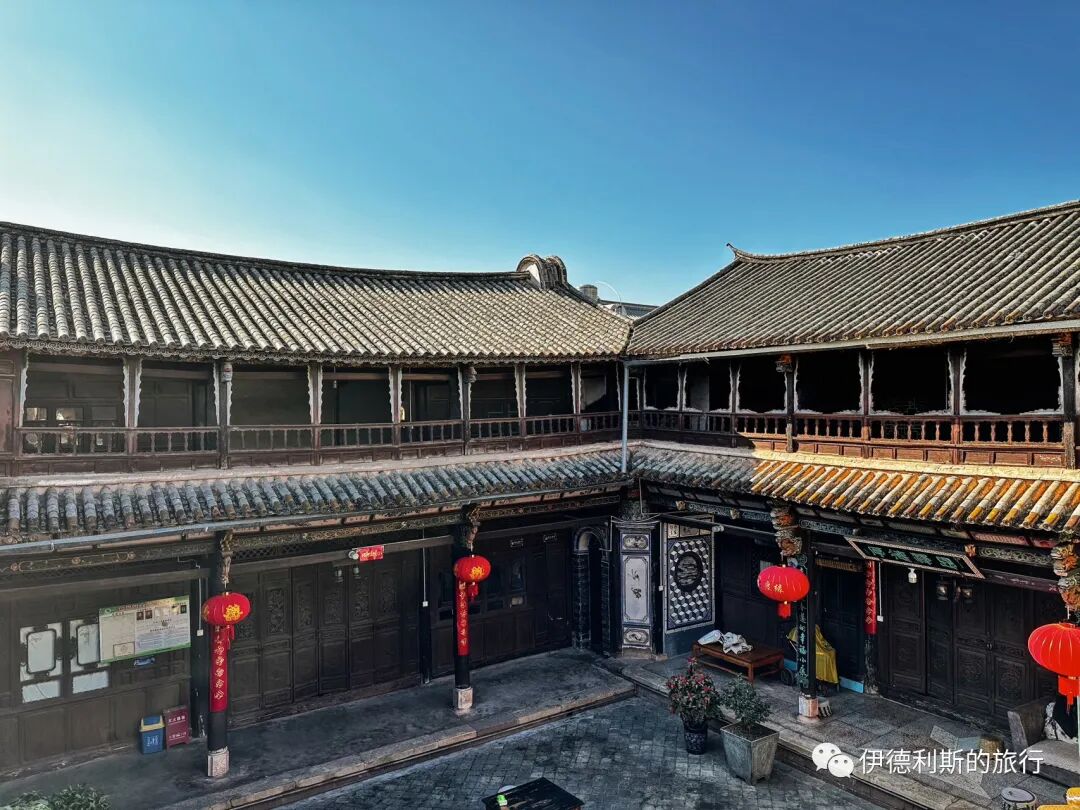
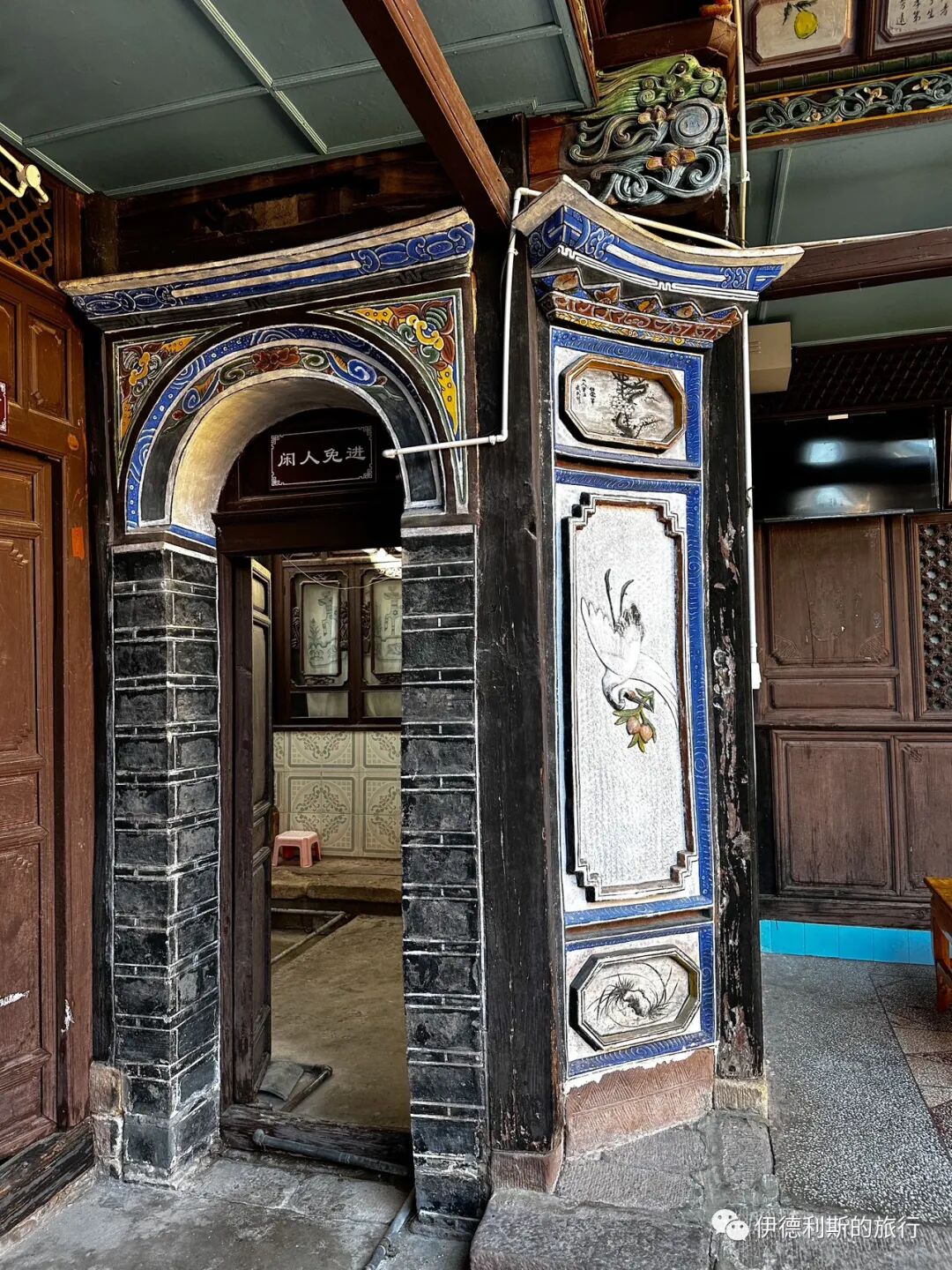
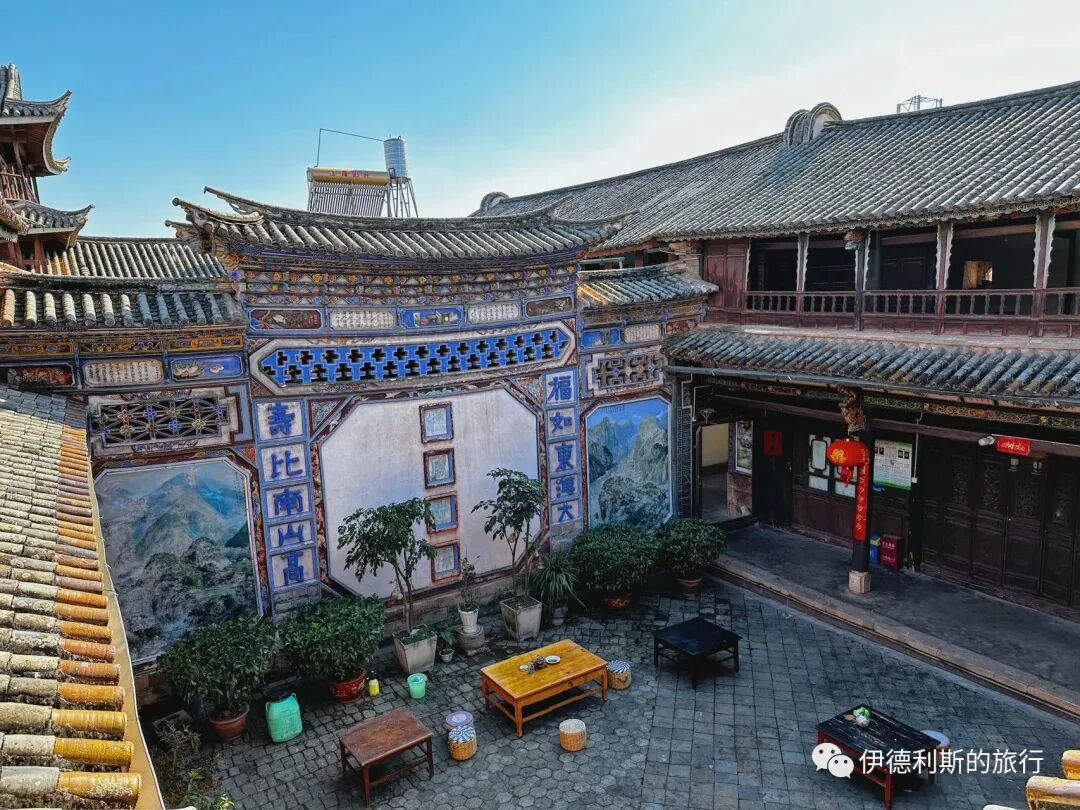
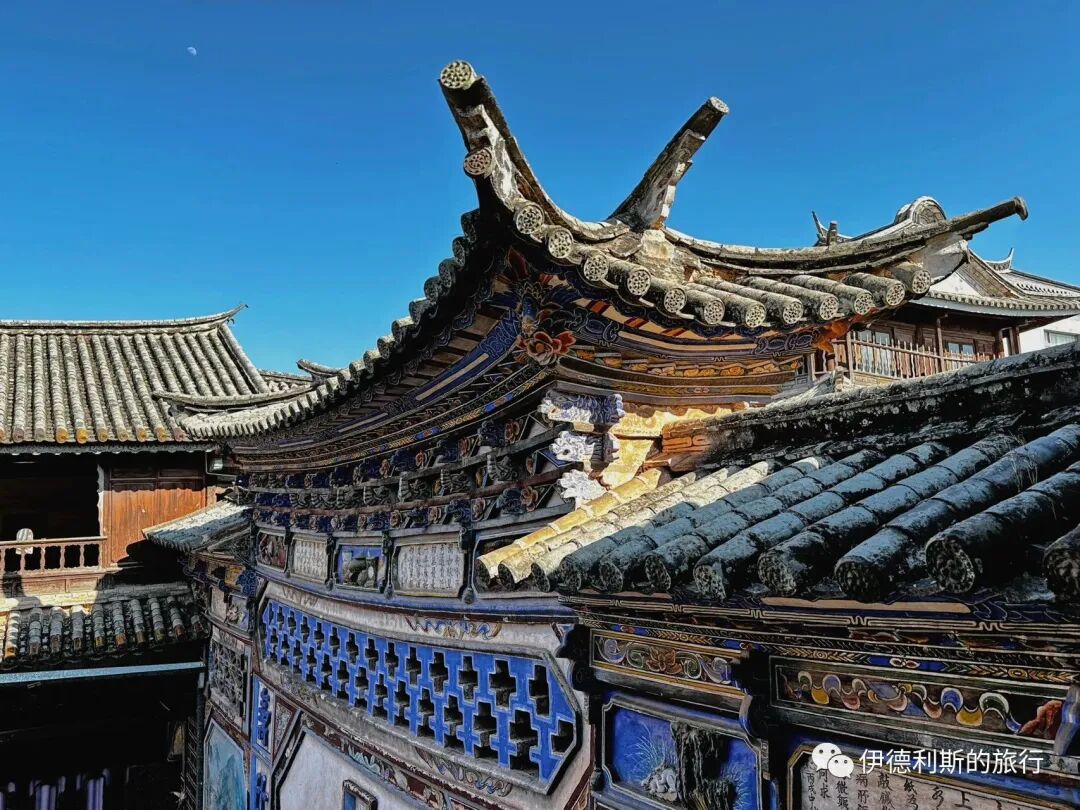
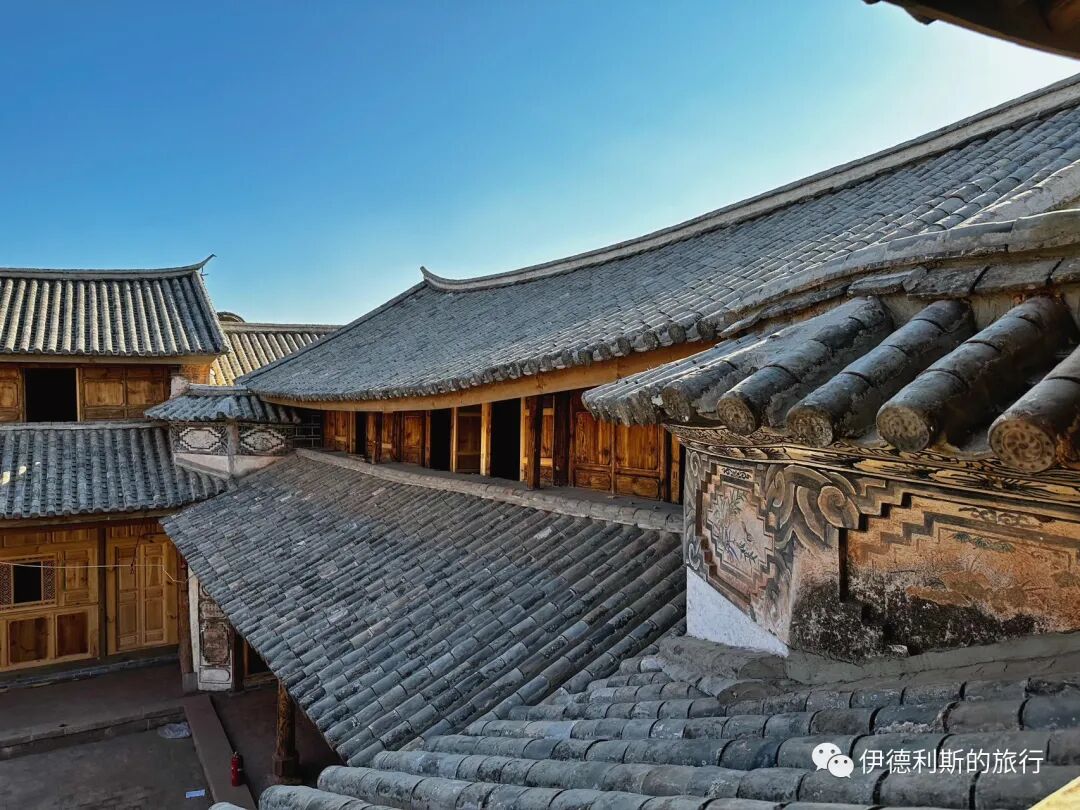
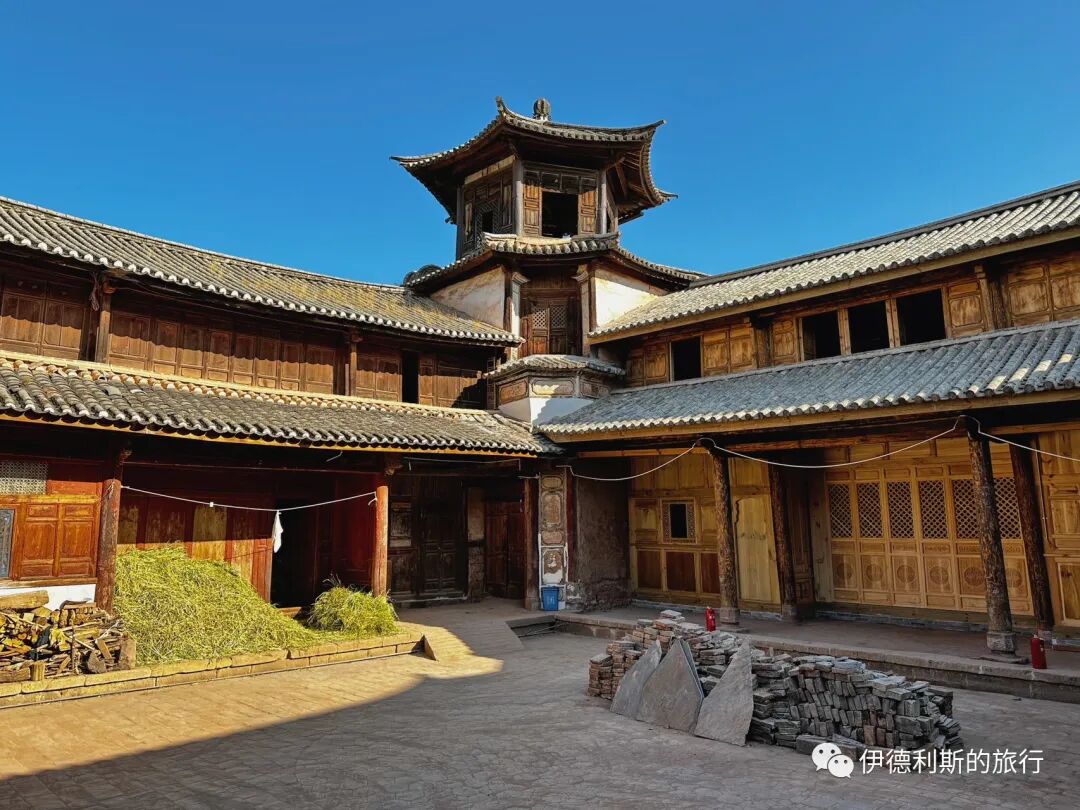
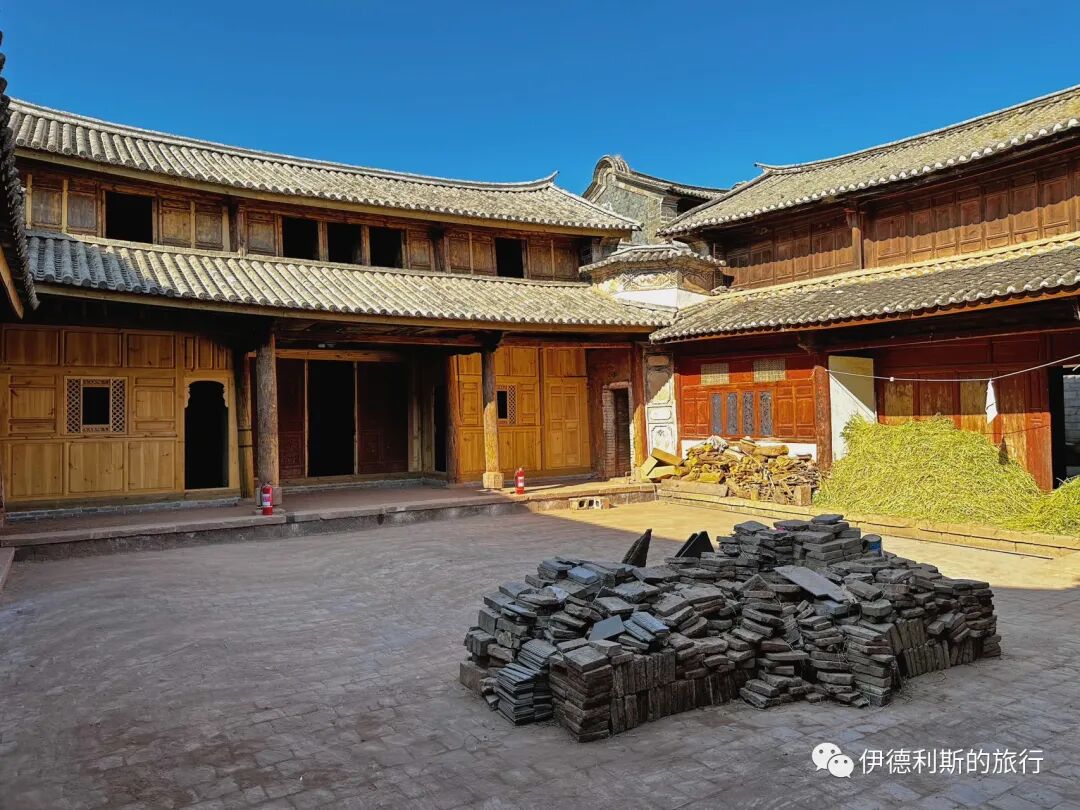
The Ma Ruqi Courtyard consists of two typical Dali-style three-sided courtyards with a screen wall (sanfang yizhaobi). Both courtyards share one large screen wall, creating a layout of one screen wall for two courtyards. The southern building is a three-story stable with a watchtower, which looks very impressive. The main gate is a relief-carved archway without a porch. The brick pillars on both sides are topped with stone lions, common in Bai ethnic homes. The arch is decorated with colorful paintings of flowers, birds, and landscapes, and the words Qilu are written in the center of the gate.
Ma Ruqi was a major caravan leader in Donglianhua Village. The north courtyard was home to Ma Ruqi's family, while the south courtyard was used to run the caravan business. The southern stable was used to feed the horses, the side rooms provided living space for the caravan workers (majiaozi), and the east side room served as a storage area for supplies. Because the courtyard is located at the southernmost end of Donglianhua Village, right next to the main road into the village, and has a wide view to the southeast, a watchtower was built on the third floor of the southern stable to keep watch and guard against bandits and horse thieves.
In August 1945, Wang Shaoheng led more than 30 bandits to rob Donglianhua Village, and the watchtower of the caravan courtyard played an important role. At that time, the Ma brothers organized the villagers to fight off the bandits, and Ma Ruqi shot and killed the bandit leader Wang Shaoheng. Afterward, the magistrate of Menghua County personally came to Donglianhua Village to commend the Ma brothers.
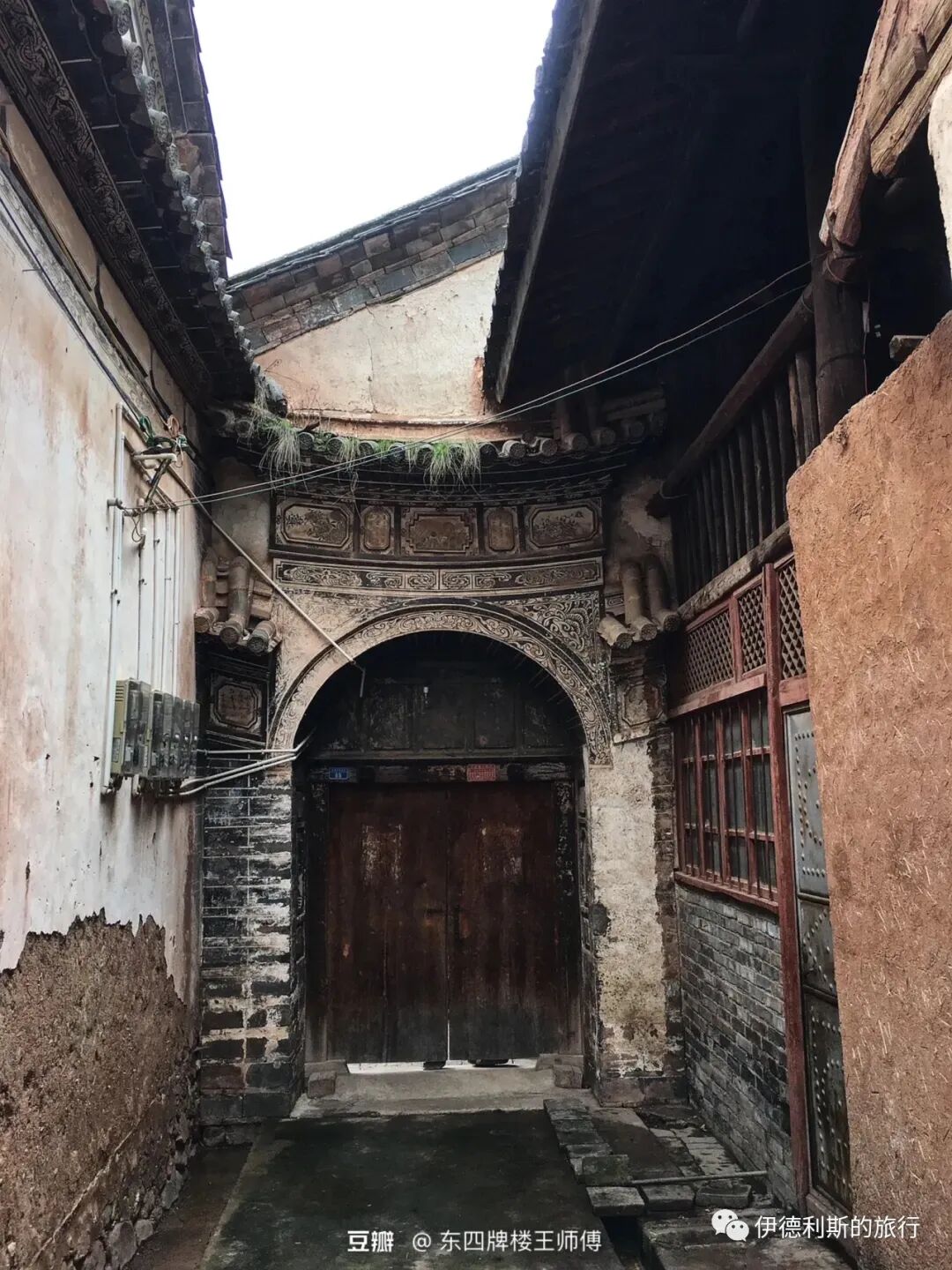
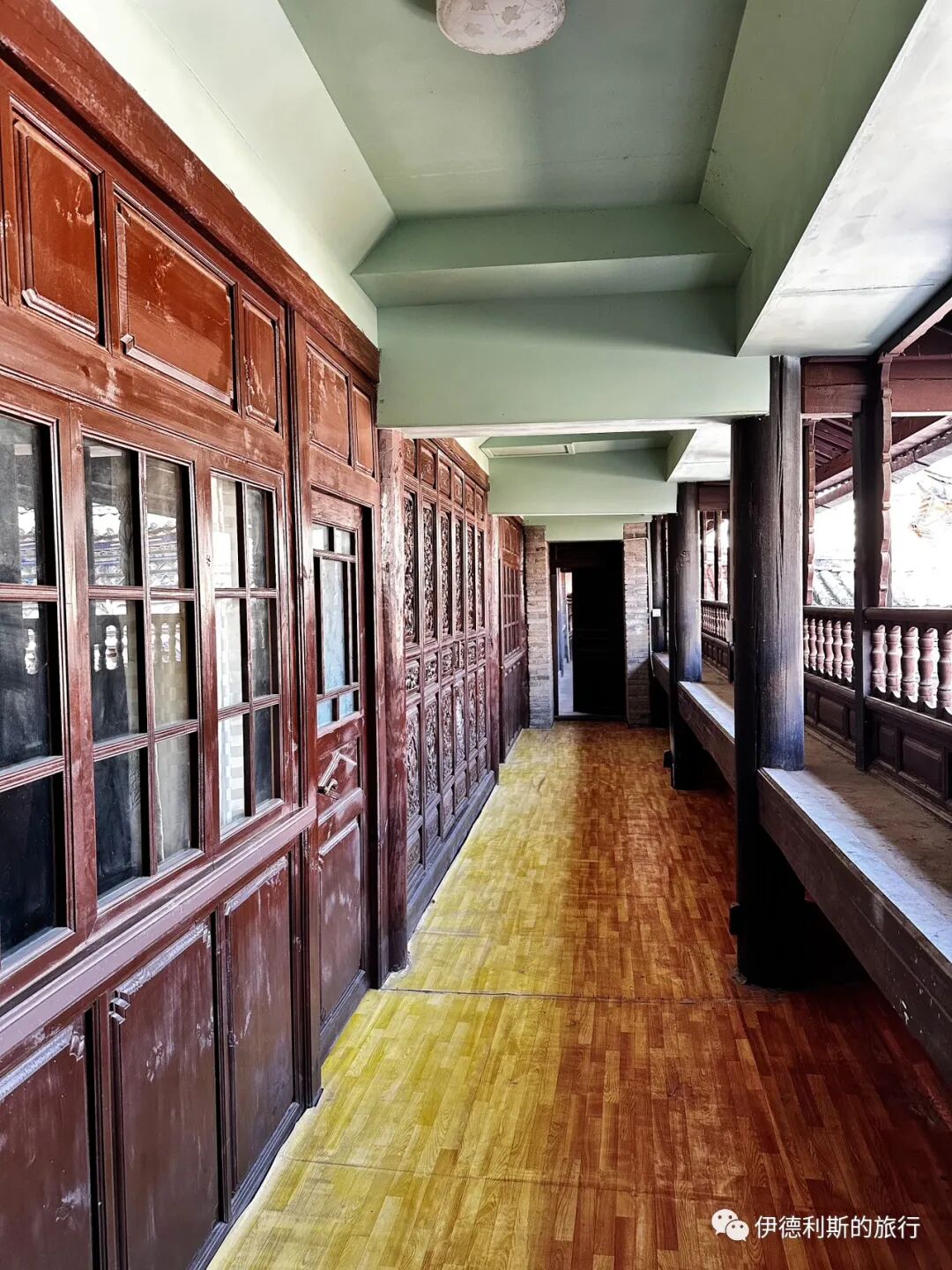
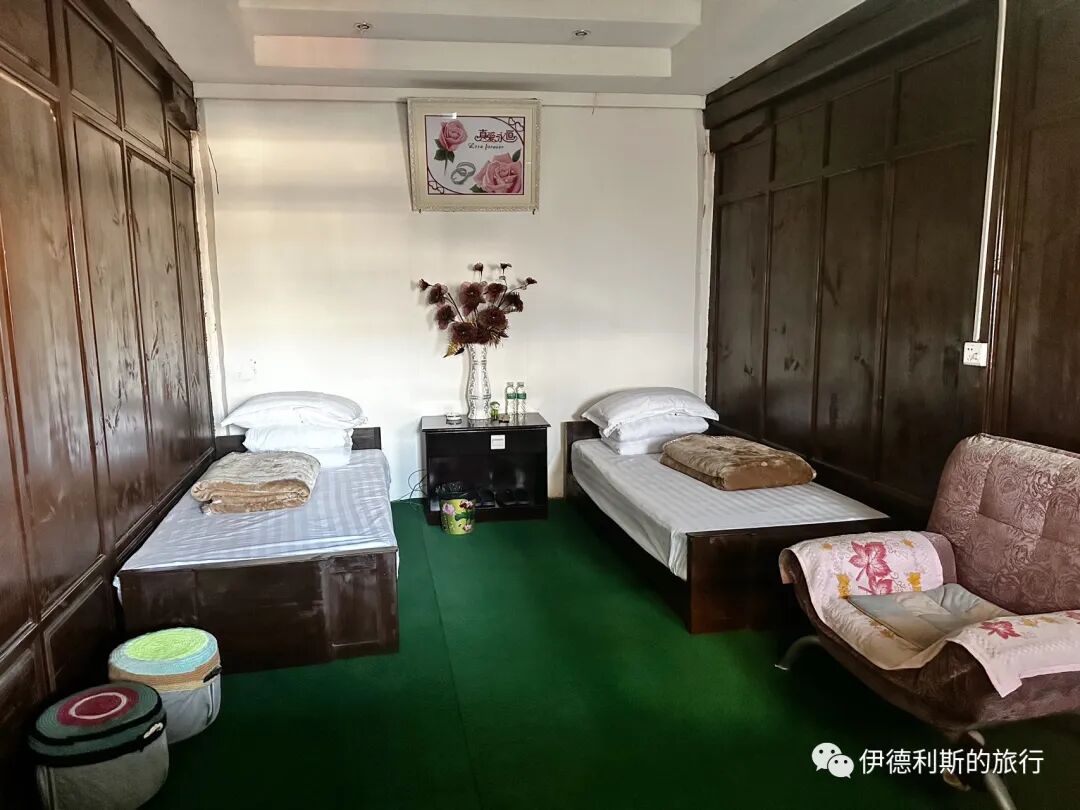
Architectural details and the guesthouse section of the Ma Ruqi Courtyard. Business at the courtyard was poor from 2020 to 2022, and it was basically half-closed. It has only started to get better this year. Uncle Ma says he will also make further improvements to the guesthouse to welcome more guests.
Since Ma Zaixing went on Hajj in 1948, becoming the first from Menghua to do so, many others from the Ma family, including Ma Ruqi, Ma Ruxiang, and Ma Wenhan, have also made the pilgrimage. Because of this, the Ma family is known as a family that has kept the faith for three generations of Hajj pilgrims (haji).
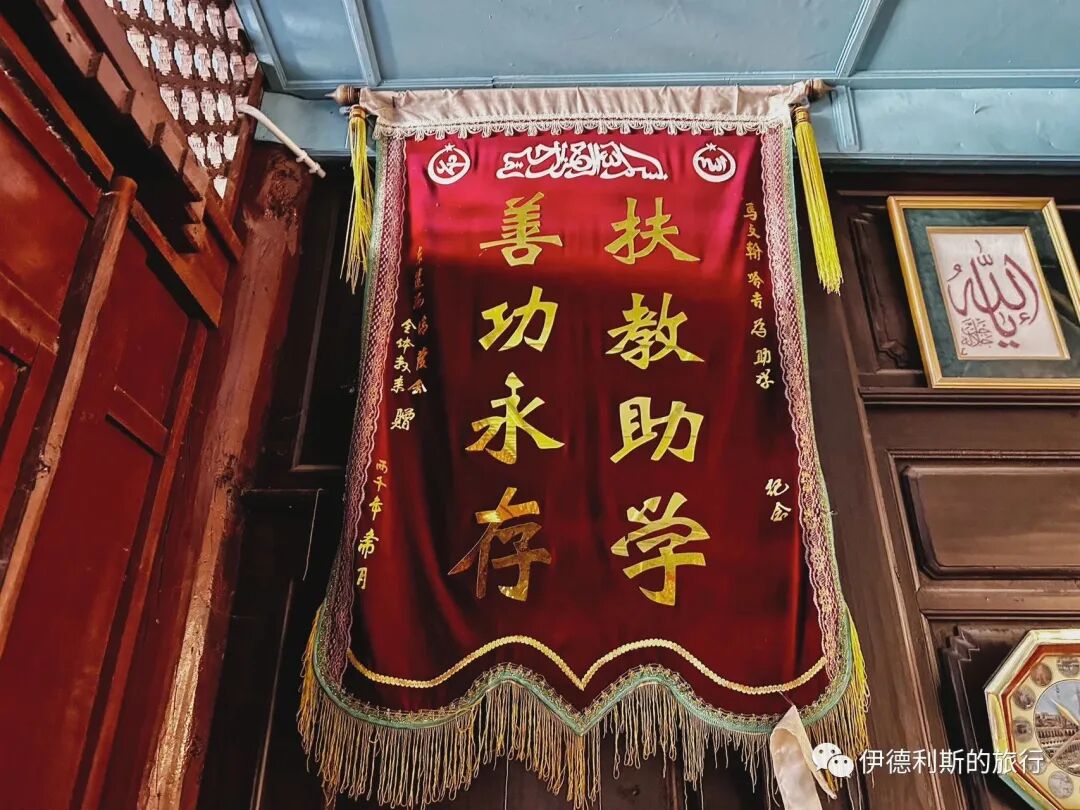
Today, souvenirs from Ma Wenhan Haji's three pilgrimages still hang on the walls of the Ma Ruqi Courtyard, where you can see traditional Arabic calligraphy in the style of Weishan, Dali. other parts of the Ma Ruqi Courtyard also reflect the traditions of the faith. For example, one door frame has a couplet that reads: The spring breeze is boundless, bringing joy to all the land; the Lord's grace is vast, continuing through the generations. The horizontal scroll reads: Always remember the Lord's grace. As you enter the main gate, you will see a Chinese translation of the Al-Fatiha on the wall.
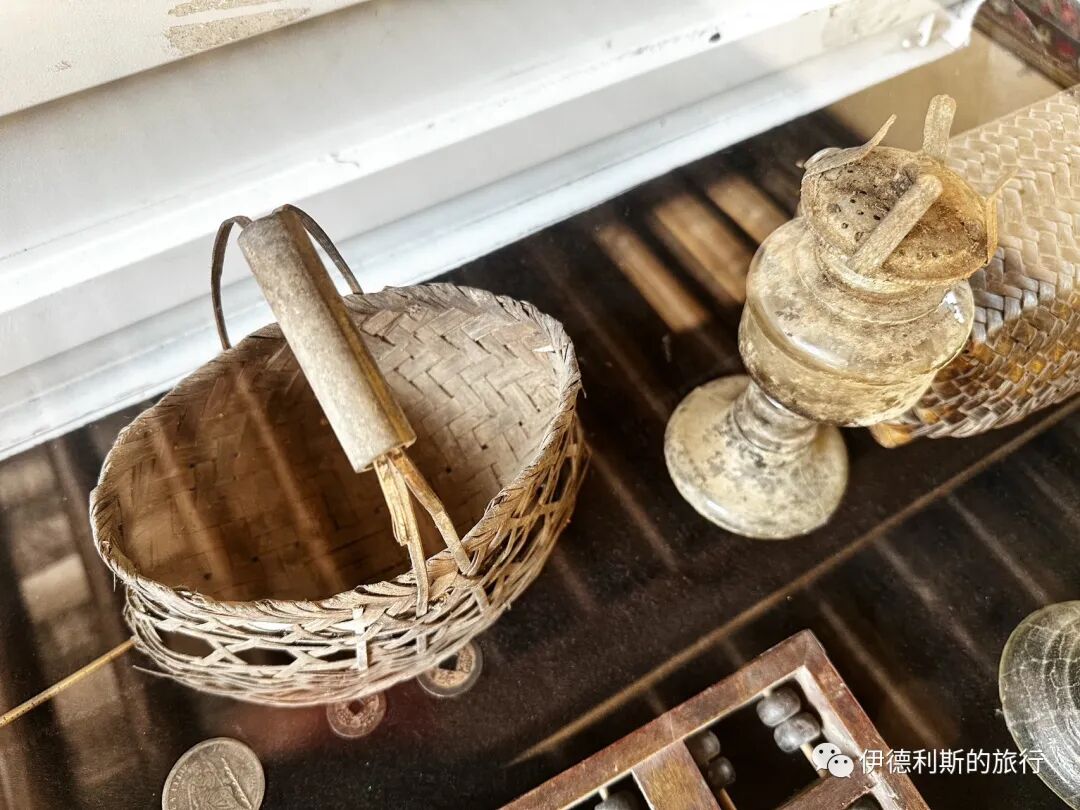
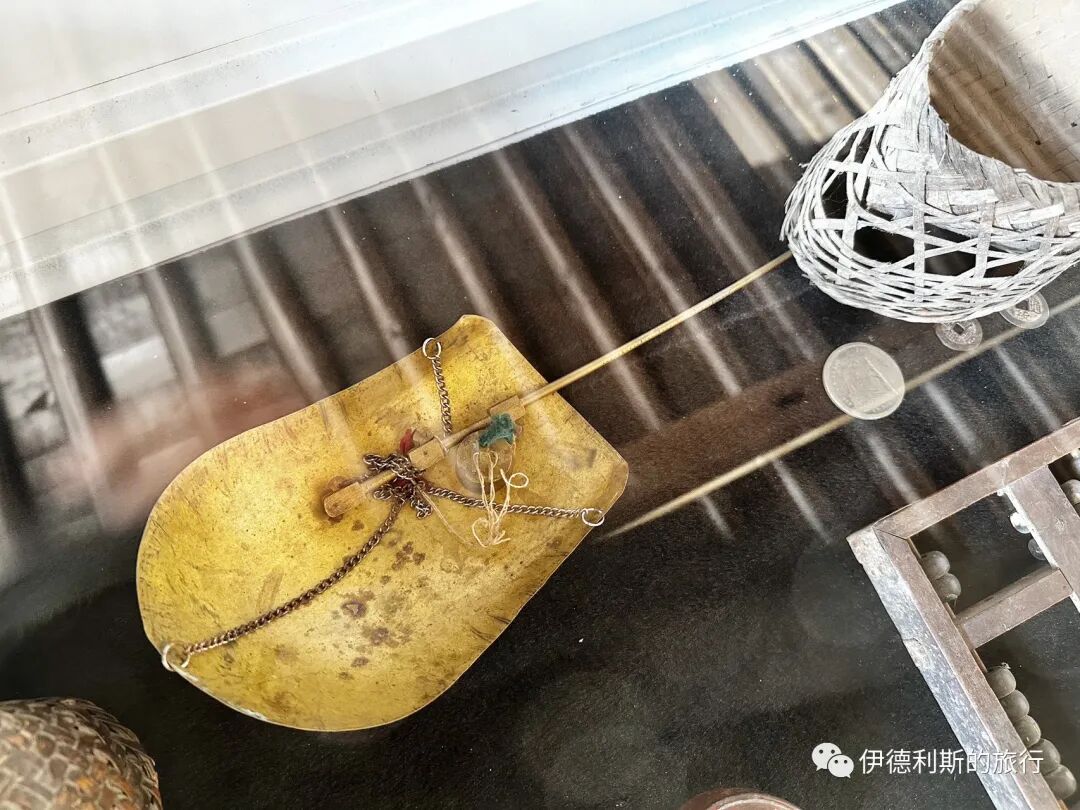
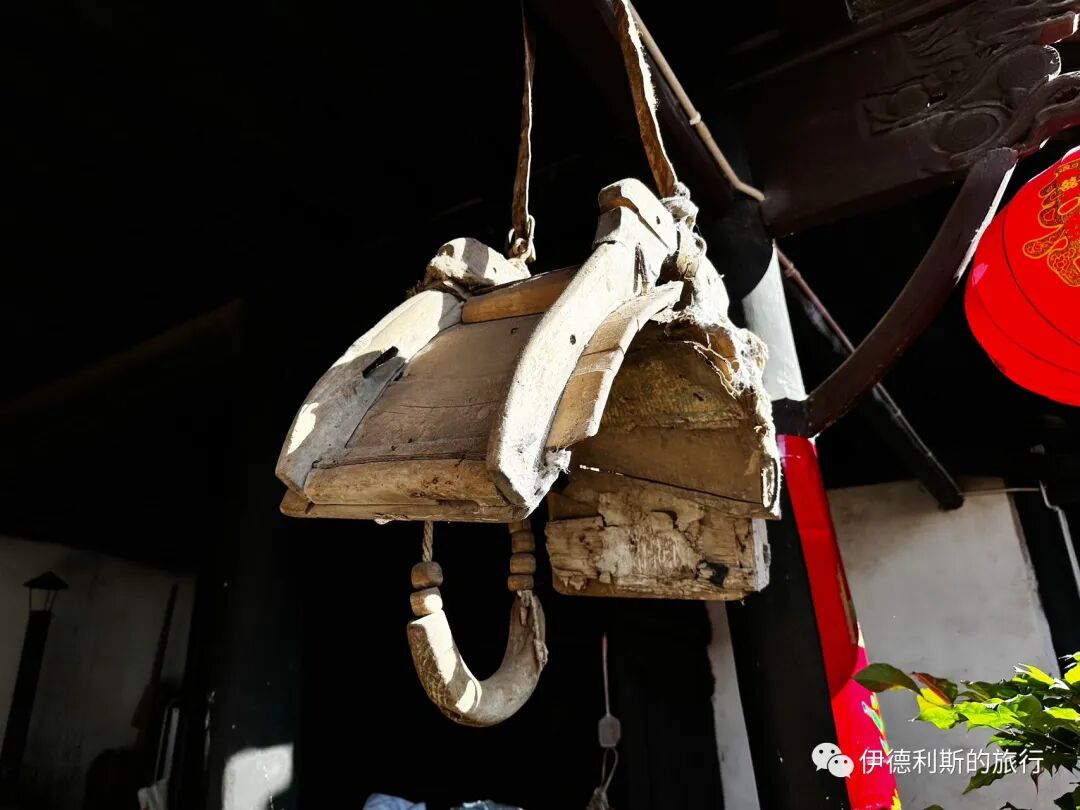
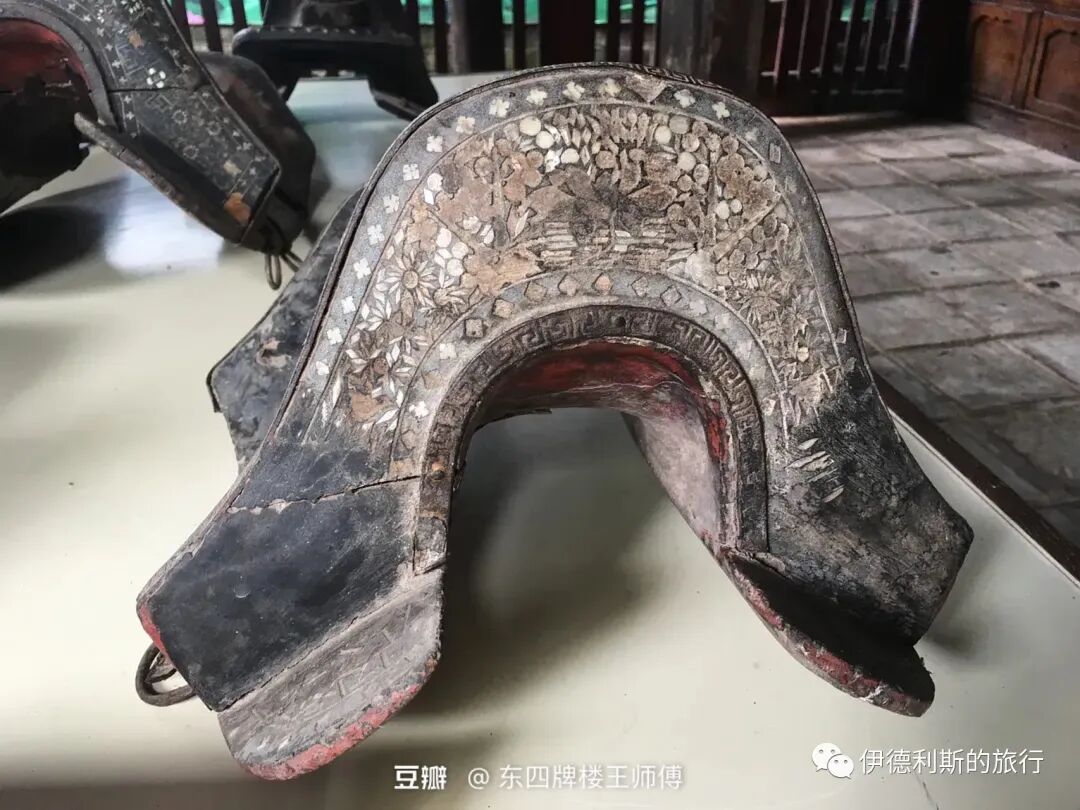
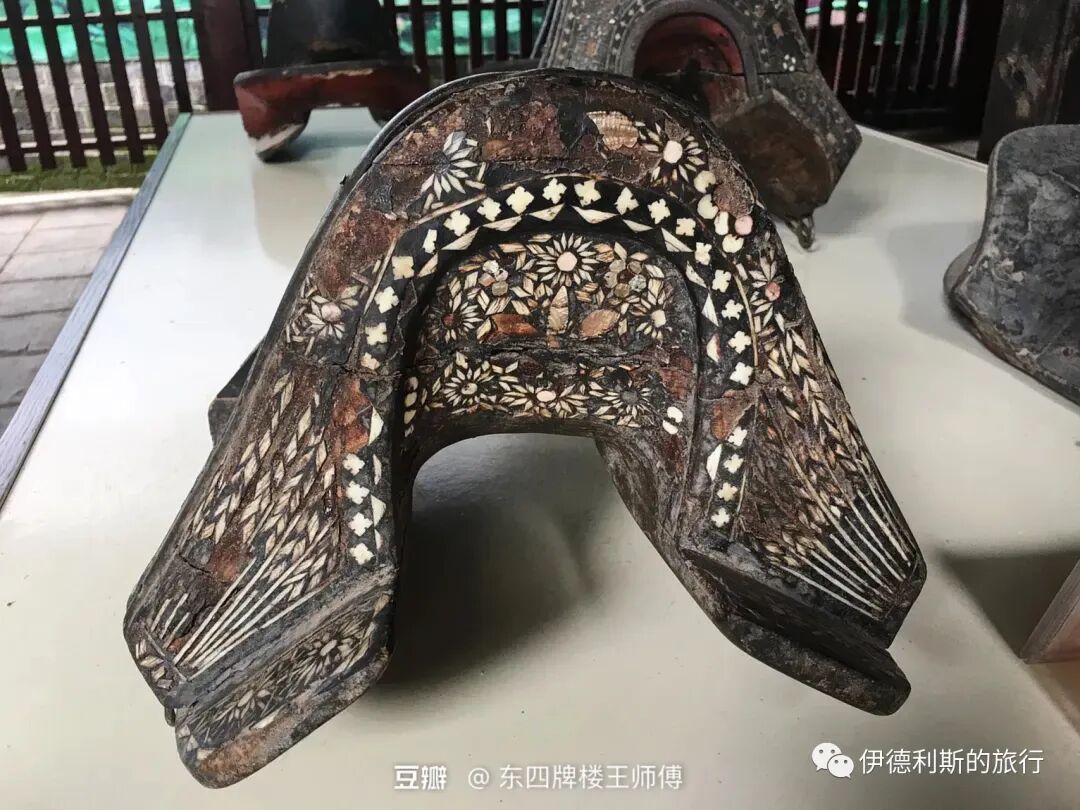
Beyond religious traditions, the Ma Ruqi Courtyard also keeps old items from the caravan era, including saddles, horse lanterns, and small scales (dengzi).
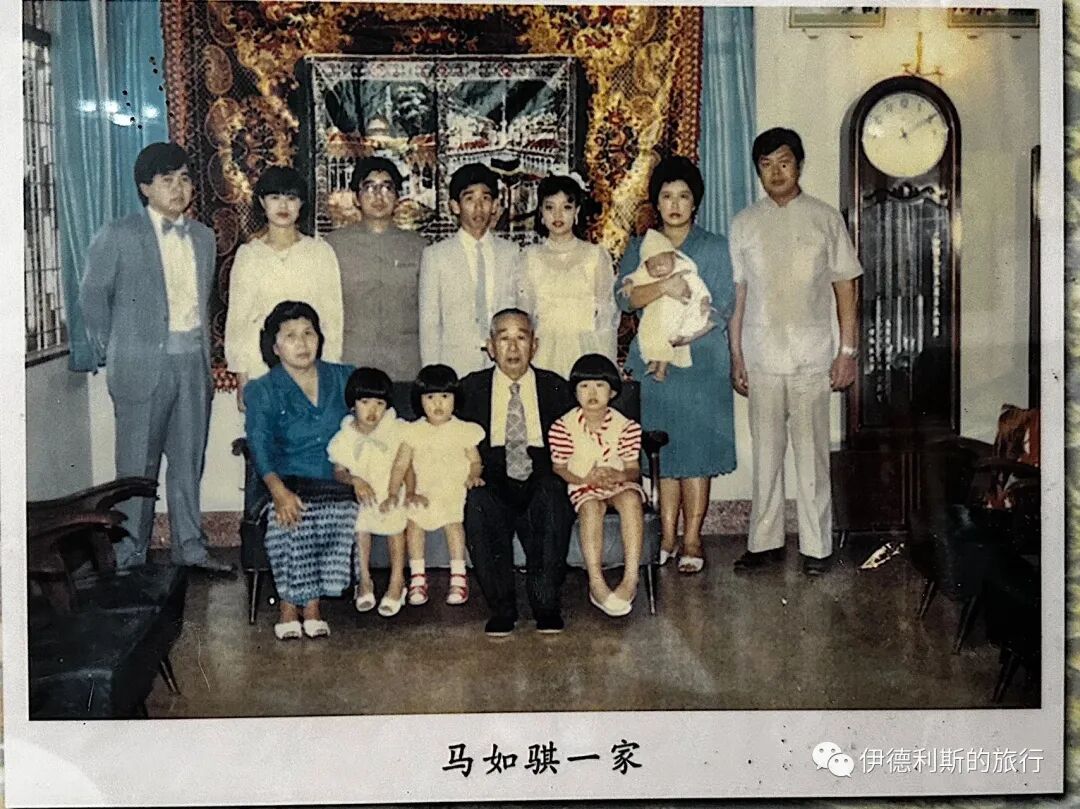
In the early 1950s, Ma Ruqi went to Myanmar to make a living, and after 1954 he settled in Chiang Mai, Thailand, where he worked in the local produce business and supported public welfare. He and his fellow Weishan native Hu Ranmao founded the Shandi Chinese School in Chiang Mai and helped renovate the Chiang Mai Wanghe Mosque. In 1974, Ma Ruqi was appointed president of the Thai-Chinese Chamber of Commerce. He later hosted many important guests from China and led the first delegation of Thai-Chinese to visit China for a tour in 1979. In 1987, when the Donglianhua Mosque was expanded, Ma Ruqi donated 1 million Thai baht.
After Ma Ruqi went abroad, the Ma Ruqi Courtyard was nationalized in the 1950s. His wife, Ma Huancai, who stayed in their hometown, remained devoted to her faith, managed the household, raised their son, and lived with her son Ma Wenhan. Ma Wenhan inherited the fine traditions of his elders; he was hardworking, frugal, kind, and passionate about public welfare. In 1993, following a change in policy, the Ma Ruqi Courtyard was finally returned to Ma Wenhan. After Ma Wenhan renovated the courtyard, he was able to spend his later years there.
Today, the courtyard has passed to Ma Wenhan's son, Ma Yunhong, who opened a restaurant and guesthouse inside so that guests can better understand and experience the local culture.
Ma Ruqing Courtyard
Built in 1945, the Ma Ruqing Courtyard consists of two watchtowers and three courtyards. At the main gate stands a three-story hexagonal watchtower, with a passageway on the ground floor. The east courtyard has a three-room-and-a-screen-wall (sanfang yizhaobi) layout, the west courtyard has a four-sided-enclosure-with-five-courtyards (sihe wutianjing) layout, and the middle courtyard serves as a garden, enclosed by the east and west halls and the north watchtower.
After Ma Ruqing followed his brothers Ma Ruji and Ma Ruqi to settle in Thailand in the 1950s, the Ma Ruqing Courtyard was nationalized. Today, the west courtyard remains public property, while the middle and east courtyards were bought by local Hui Muslims. When I first visited in 2017, I could not enter the courtyard because it was under renovation. This time, a friend (dosti) living in the middle courtyard led me inside to visit the west courtyard. According to the dosti, Donglianhua Village recently cleared and restored the west courtyard, removing parts added after the 1950s. It is not yet decided when it will open to the public.
In the middle courtyard of the Ma Ruqing compound, you can see a three-story watchtower right at the entrance, which was once where the Ma family received guests. One regret this time was that the people in the east courtyard were not home, so I could not go in. It looks like I will have to visit a third time.
Ma Ruji Compound
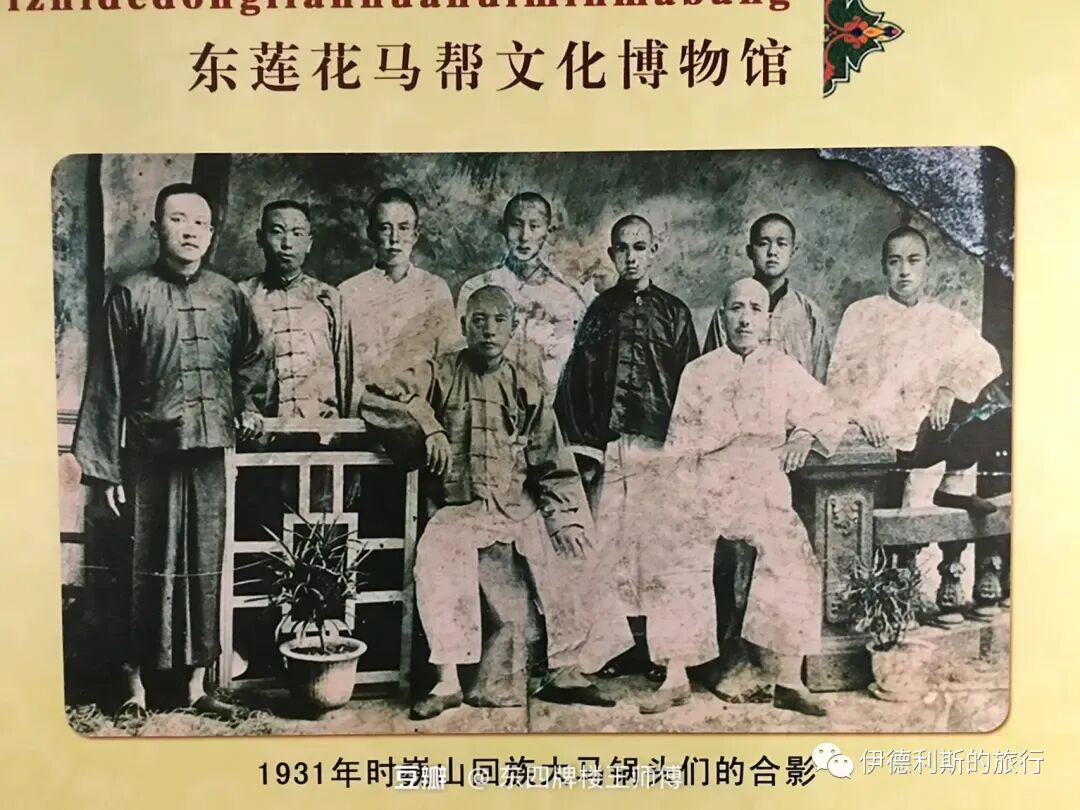
Built in 1941, the Ma Ruji compound is the most important Hui Muslim courtyard in Weishan and a witness to the prosperity of the Yunnan horse caravans (mabang). Ma Ruji was born in Donglianhua Village in 1897. He was the eldest of ten Ma brothers, so he was also called Uncle Ma (Ma Daye). In the late Republic of China era, Ma Ruji was the most famous local caravan leader (maguotou). He also served as a Menghua (Weishan) County councilor and head of Yongji Township (Yongjian Town), making him very wealthy and influential.
The Ma Ruji compound consists of three interconnected courtyards: the north, south, and west. The north and south courtyards were Ma Ruji's residence. They combine the traditional Dali architectural styles of a four-sided courtyard with five patios (sihe wutianjing) and a three-room layout with a screen wall (sanfang yizhaobi) to form a six-courtyard harmony (liuhe tongchun) layout.
Inside the main gate of the north and south courtyards, the screen wall (yingbi) is inscribed with the words "Forever Uphold the Pure Truth" (shishou qingzhen). This is the main difference between the traditional courtyards of the local Bai people and the Hui Muslims.
Visiting the Ma Ruji compound in 2017 and 2023, the biggest change is that the Arabic calligraphy unique to Weishan, Dali, which was on display indoors, has been replaced entirely by Chinese calligraphy. The original Arabic calligraphy had both exquisite artistic value and precious historical significance. These calligraphic works were presented to Ma Ruji in the autumn of 1945 by the then-Army General Bai Chongxi and the Menghua County Hui Muslim Anti-Japanese National Salvation Association.
In the 1930s, Long Yun selected caravan leaders (maguotou) from across the province to form the Long family horse caravan for trade with French merchants in Vietnam, and Ma Ruji was chosen to join. The Long family caravan traveled from Kunming through Baise and Guilin to trade in Vietnam. Once, while passing through Guilin, they happened to run into Bai Chongxi, who was celebrating his mother's birthday. Ma Ruji and his group were all invited as guests and received a warm welcome from Bai Chongxi, and from then on, Ma Ruji and Bai Chongxi became friends.
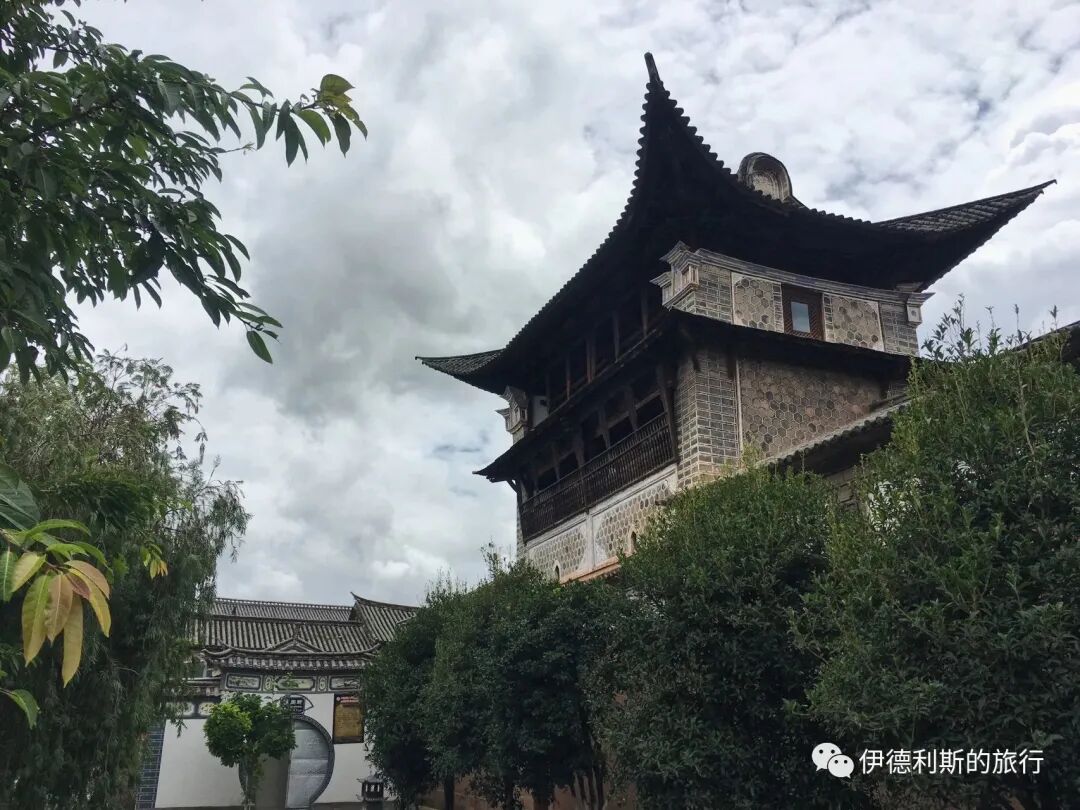
Above the east side room of the hall in the Ma Ruji courtyard stands a four-story watchtower. It serves for both keeping watch and enjoying the view, offering a full look at Donglianhua Village. The sunny photos were taken in 2023, and the cloudy ones were taken in 2017.
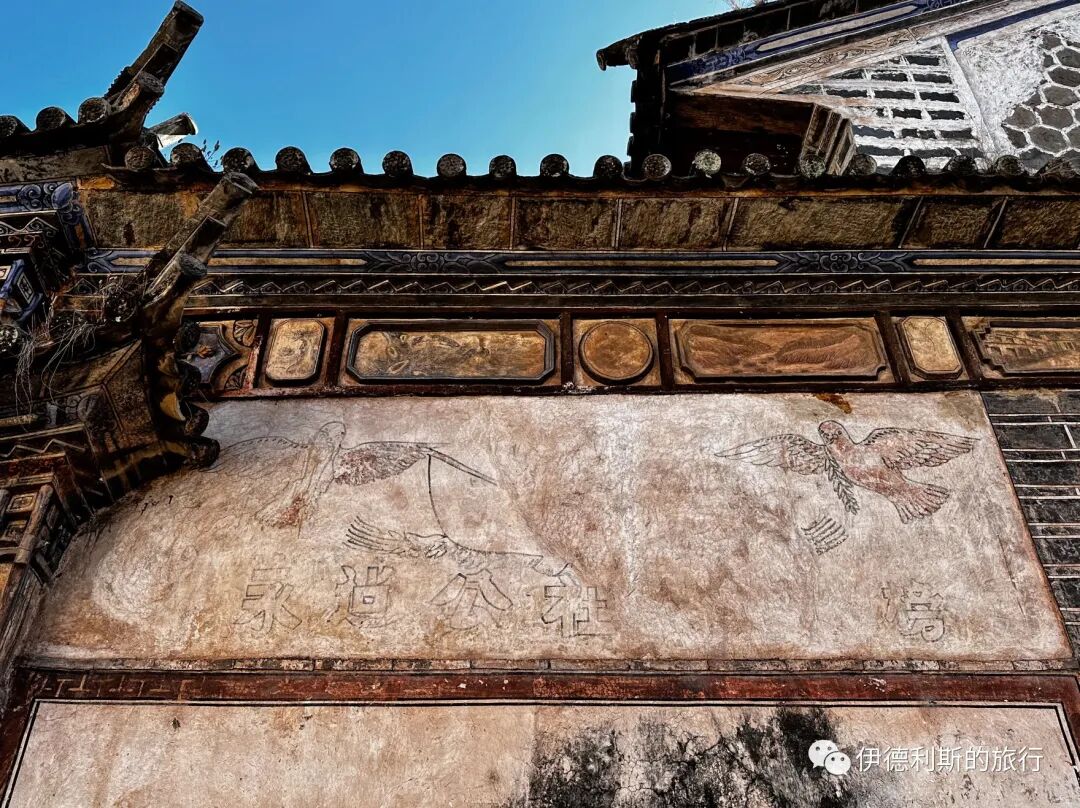
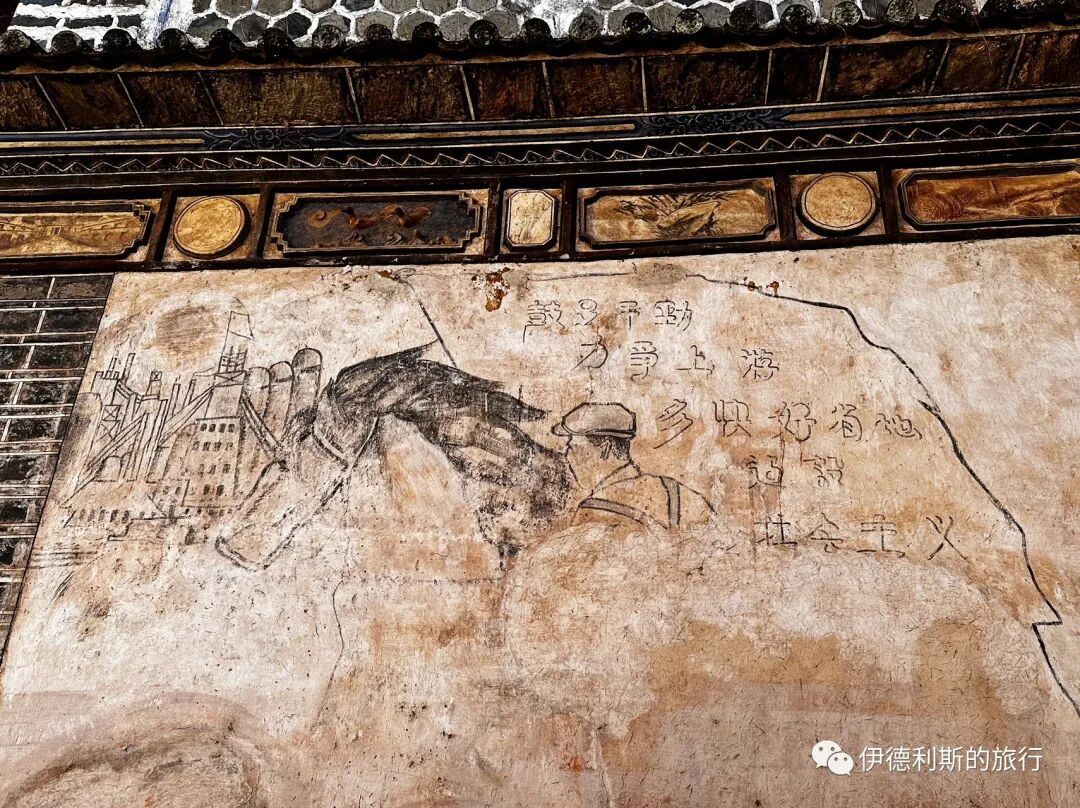
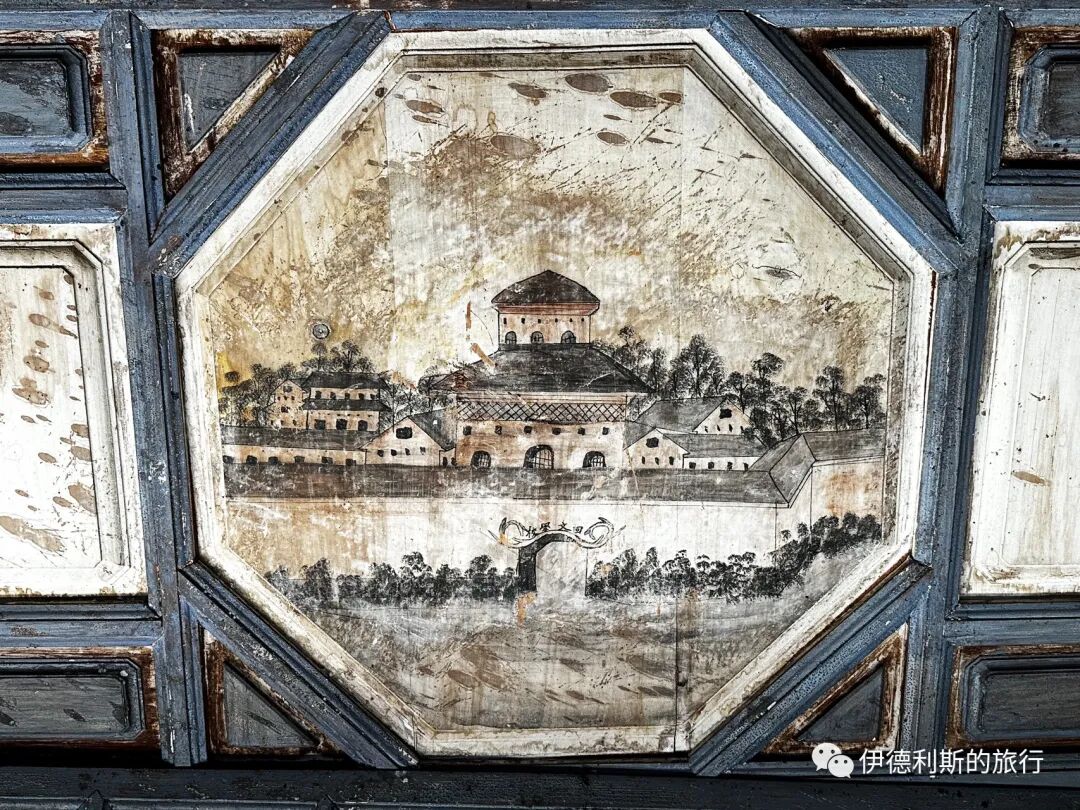
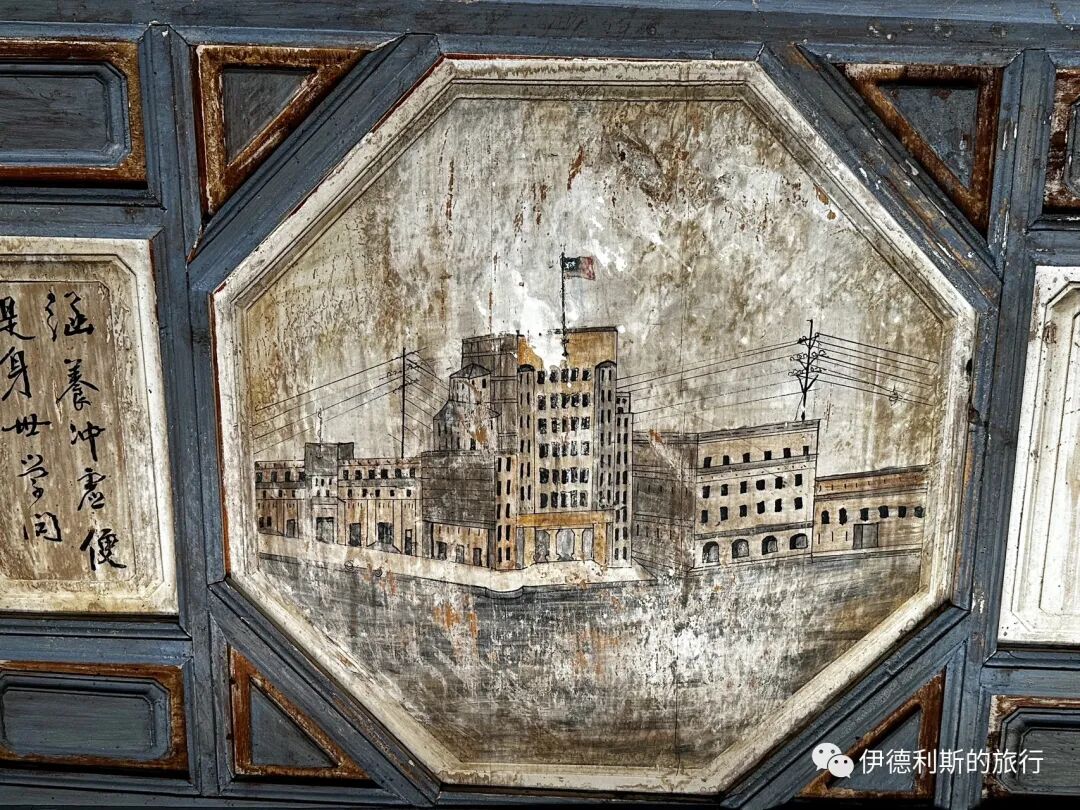
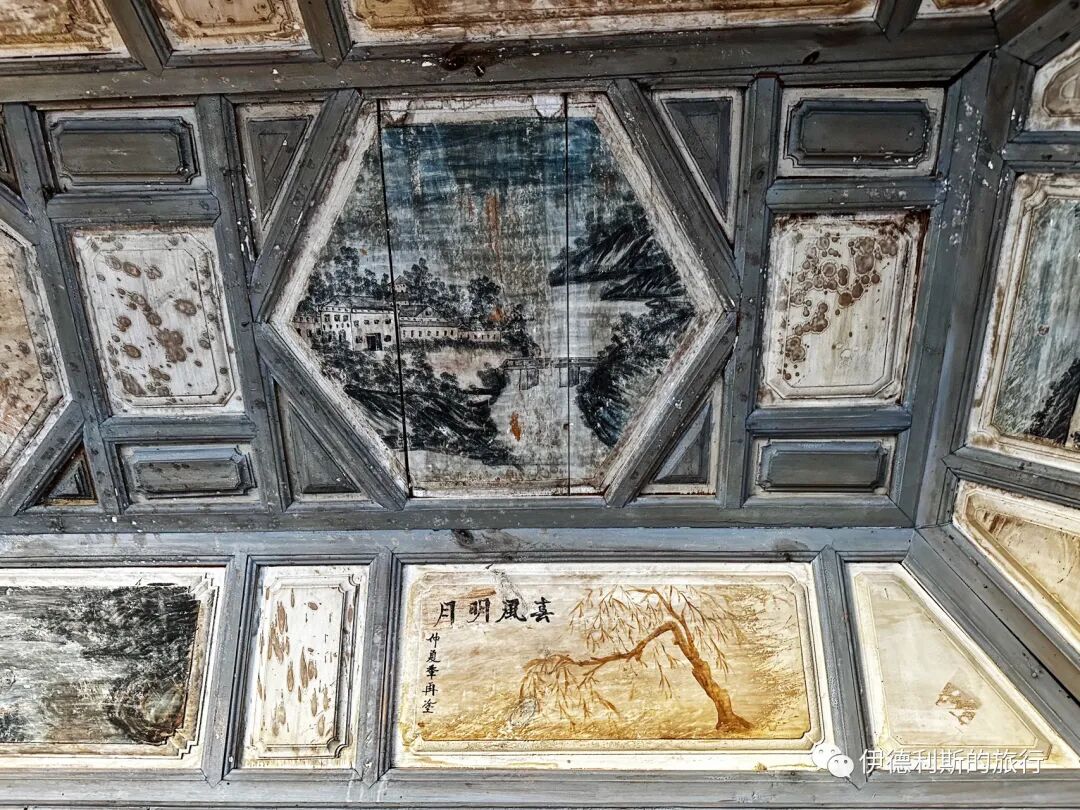
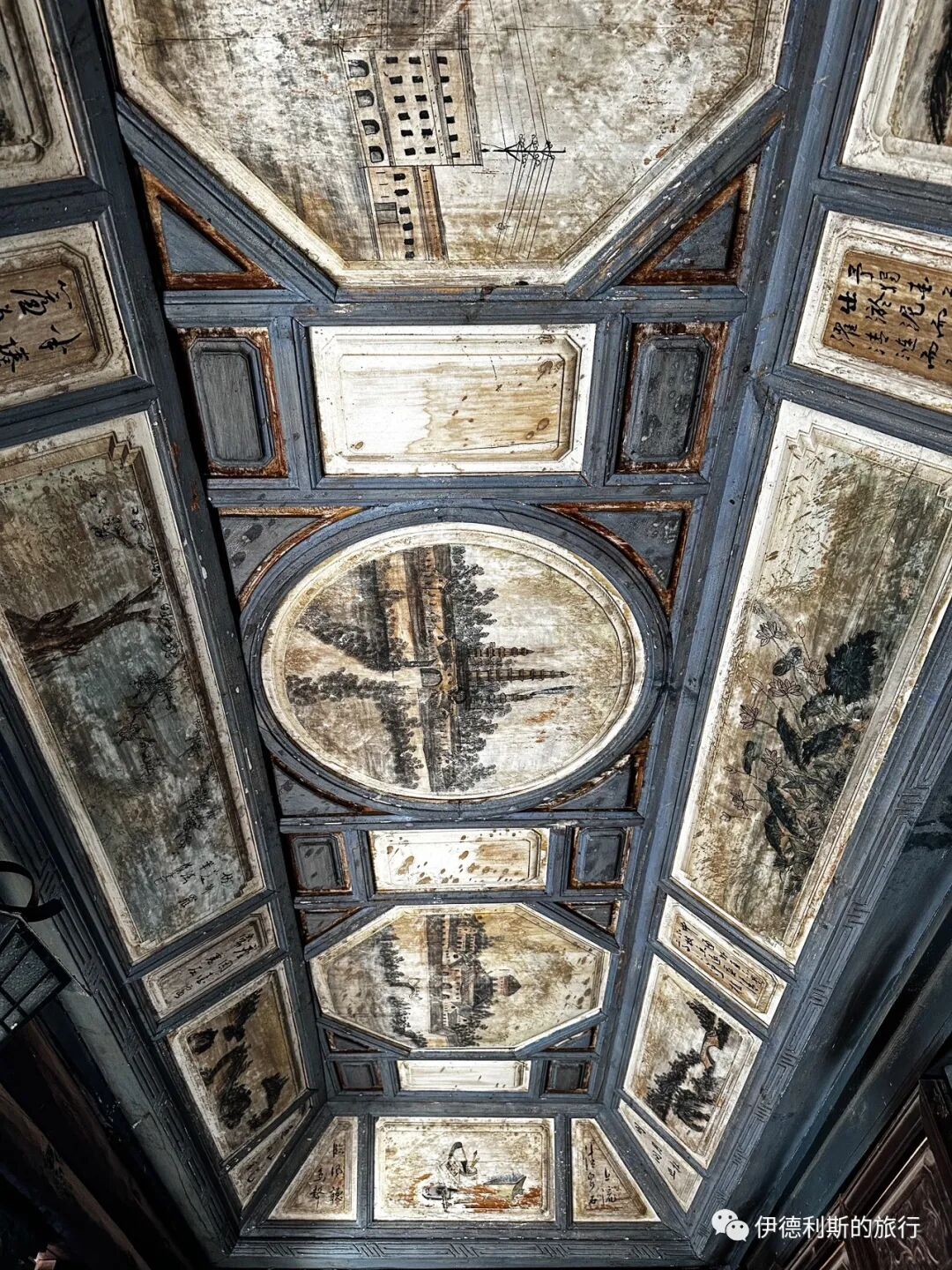
The murals in the Ma Ruji courtyard from different historical periods reflect the changes of the times.
In the early 1950s, Ma Ruji and several brothers went to northern Myanmar to make a living, and they settled in Thailand a few years later. In 1953, the Ma brothers and their fellow villager Hu Ranxian set out from Myanmar to perform the Hajj, becoming a Haji. After land reform, Ma Ruji's land and property in Yunnan were divided. The Ma Ruji courtyard and the back garden were taken for public use, serving as a commune, hospital, military camp, middle school, township government, and Islamic association office at different times. After 1996, the east and west rooms of the lower courtyard of the Ma Ruji compound were returned to the Ma family, while the watchtower of the upper courtyard and the back garden remained under the collective ownership of Donglianhua Village.
The west courtyard of the Ma Ruji compound was used to run the caravan business. It had its own north gate, a two-story row of 10 large horse stables, and a warehouse for caravan supplies. In the 1940s, Ma Ruji owned over 100 mules and horses and employed more than 30 caravan workers, making him very powerful.
Waist knife (yaodao).
Tools for shoeing horses.
Kerosene lamp (madeng).
The gong stick (manggun) and gong (mangluo) were used to send signals while the caravan was on the move. Experienced caravan leaders could tell which place and which family a caravan belonged to by the volume, speed, and rhythm of the gong, and they could tell if the signal meant danger, a request to pass, or a call for help.
Stirrup (madeng).
Bamboo woven bowl box (zhumiewanhe).
An exquisite saddle. view all
Summary: Weishan, Dali — Donglianhua Hui Caravan Courtyards (Part 1) is presented here as a firsthand travel account in clear English, beginning with this scene: On the afternoon of January 30, 2023, I rode my electric scooter to Donglianhua Village in Weishan, Dali, to visit the three Hui Muslim caravan courtyards there for the second time. The account keeps its focus on Weishan Dali, Hui Caravan Courtyards, Muslim Travel while preserving the names, places, food, and historical details from the Chinese source.
On the afternoon of January 30, 2023, I rode my electric scooter to Donglianhua Village in Weishan, Dali, to visit the three Hui Muslim caravan courtyards there for the second time. In 2017, I focused on visiting the Ma Ruji Courtyard, took a quick look around the Ma Ruqi Courtyard, but could not get into the Ma Ruqing Courtyard, which left me wanting more. At that time, I hoped to have a meal in one of the courtyards and chat with the descendants of the Ma family, and this time, that wish finally came true.
After the Ming Dynasty took control of Yunnan, Zhu Yuanzhang ordered Mu Ying to guard the region. Mu Ying sent some Hui Muslim soldiers under his command to farm in Weishan, Dali. They merged with the Semu people who had come there to trade during the Yuan Dynasty, forming many Hui Muslim villages around Yongjian Town. Donglianhua Village is now mainly home to residents with the surnames Ma and Zhang. The Ma family is known as the Sai family Ma, said to be descendants of Masuhu, the fifth son of the Yuan Dynasty politician Sayyid Ajjal Shams al-Din. The Zhang family are descendants of Hui Muslims from the Jiangnan region who settled there after following Mu Ying during the Ming Dynasty.
Donglianhua Village sits on the main route of the Ancient Tea Horse Road from Pu'er to Dali. Because the local Hui Muslims were skilled at raising horses, they started the business of running horse caravans. Around 1911, ten brothers from the Ma family in Donglianhua, including Ma Ruji, Ma Ruqi, and Ma Ruqing, began trading with horse caravans and gradually became famous caravan leaders (maguotou) in Southwest China. During the Republic of China era, almost every family in Donglianhua Village raised horses. The village had seven large horse caravans and frequent trade traffic, earning it the nickname Little Shanghai of Western Yunnan. In the 1940s, the Ma brothers' business reached its peak, and they competed to build exquisite Ma family courtyards.
After the 1940s, due to frequent caravan trade with Thailand and Myanmar, some people from Donglianhua Village began to settle in those countries, making Donglianhua a famous hometown for overseas Chinese in Yunnan. These overseas residents and their descendants have continuously donated money to protect the village and have made great contributions to Donglianhua.
Ma Ruqi Courtyard
Among the three Ma family courtyards in Donglianhua Village, only the Ma Ruqi Courtyard is still occupied by descendants of the Ma family today. They have opened a restaurant and a guesthouse there, which I think is a great starting point for understanding the modern history of Yunnan's Hui Muslims and caravan culture.
Uncle Ma Wenhong, a descendant of Ma Ruqi, welcomed me warmly. He prepared braised beef and white-cut chicken from the traditional Weishan Hui Muslim banquet known as the Eight Old Bowls (laobawan), as well as sticky rice with sugar, which is only eaten at local weddings. I felt very grateful (shukr).
I listened to Uncle Ma tell the history of the Ma Ruqi Courtyard while we ate. After the Tongzhi era disasters, a group of Hui Muslims with the surname Ma who survived moved from Xiaodonglianhua Village to the current Donglianhua Village. They rebuilt their homes together with a group of Hui Muslims with the surname Zhang who came with them, and Donglianhua Village gradually developed.
In the early years of the Republic of China, Ma Ruqi started his horse-trading business. After more than 20 years of hard work, he became a famous caravan leader (maguotou) in Sichuan, Guizhou, and Yunnan. The 1940s were the peak of the Ma brothers' business. Construction of the Ma Ruqi Courtyard began in 1942 and was officially completed in 1945 after three years.
The Ma Ruqi Courtyard consists of two typical Dali-style three-sided courtyards with a screen wall (sanfang yizhaobi). Both courtyards share one large screen wall, creating a layout of one screen wall for two courtyards. The southern building is a three-story stable with a watchtower, which looks very impressive. The main gate is a relief-carved archway without a porch. The brick pillars on both sides are topped with stone lions, common in Bai ethnic homes. The arch is decorated with colorful paintings of flowers, birds, and landscapes, and the words Qilu are written in the center of the gate.
Ma Ruqi was a major caravan leader in Donglianhua Village. The north courtyard was home to Ma Ruqi's family, while the south courtyard was used to run the caravan business. The southern stable was used to feed the horses, the side rooms provided living space for the caravan workers (majiaozi), and the east side room served as a storage area for supplies. Because the courtyard is located at the southernmost end of Donglianhua Village, right next to the main road into the village, and has a wide view to the southeast, a watchtower was built on the third floor of the southern stable to keep watch and guard against bandits and horse thieves.
In August 1945, Wang Shaoheng led more than 30 bandits to rob Donglianhua Village, and the watchtower of the caravan courtyard played an important role. At that time, the Ma brothers organized the villagers to fight off the bandits, and Ma Ruqi shot and killed the bandit leader Wang Shaoheng. Afterward, the magistrate of Menghua County personally came to Donglianhua Village to commend the Ma brothers.
Architectural details and the guesthouse section of the Ma Ruqi Courtyard. Business at the courtyard was poor from 2020 to 2022, and it was basically half-closed. It has only started to get better this year. Uncle Ma says he will also make further improvements to the guesthouse to welcome more guests.
Since Ma Zaixing went on Hajj in 1948, becoming the first from Menghua to do so, many others from the Ma family, including Ma Ruqi, Ma Ruxiang, and Ma Wenhan, have also made the pilgrimage. Because of this, the Ma family is known as a family that has kept the faith for three generations of Hajj pilgrims (haji).
Today, souvenirs from Ma Wenhan Haji's three pilgrimages still hang on the walls of the Ma Ruqi Courtyard, where you can see traditional Arabic calligraphy in the style of Weishan, Dali. other parts of the Ma Ruqi Courtyard also reflect the traditions of the faith. For example, one door frame has a couplet that reads: The spring breeze is boundless, bringing joy to all the land; the Lord's grace is vast, continuing through the generations. The horizontal scroll reads: Always remember the Lord's grace. As you enter the main gate, you will see a Chinese translation of the Al-Fatiha on the wall.
Beyond religious traditions, the Ma Ruqi Courtyard also keeps old items from the caravan era, including saddles, horse lanterns, and small scales (dengzi).
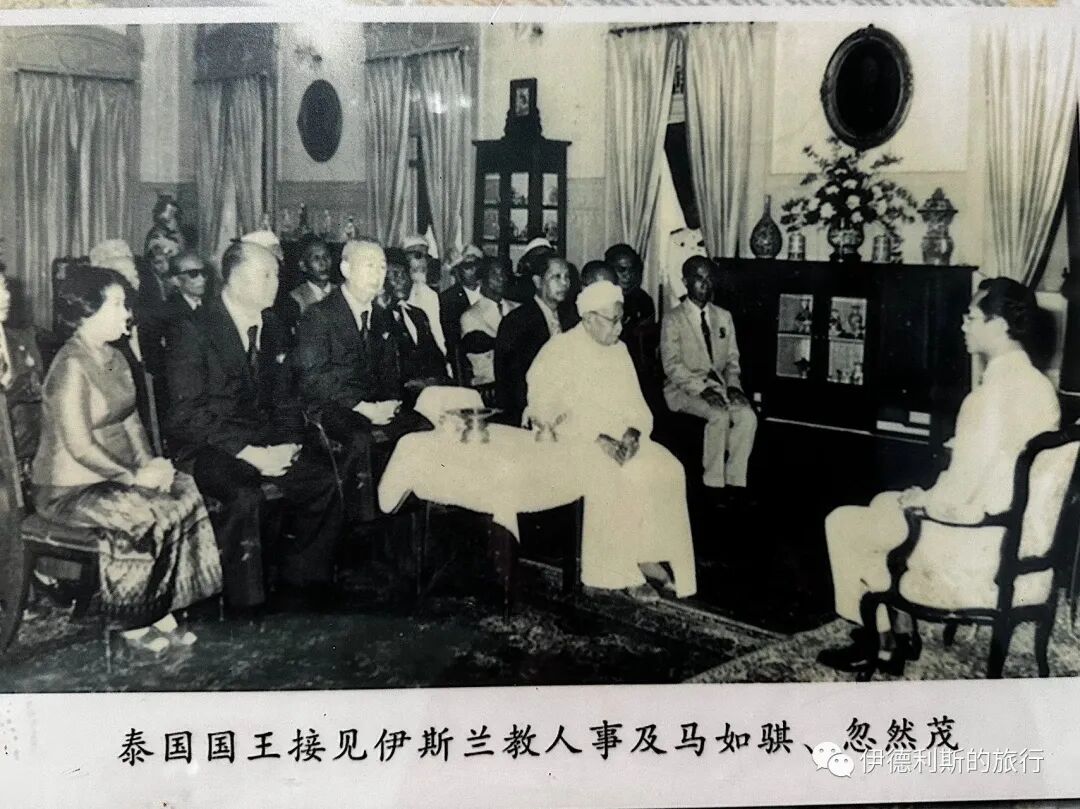
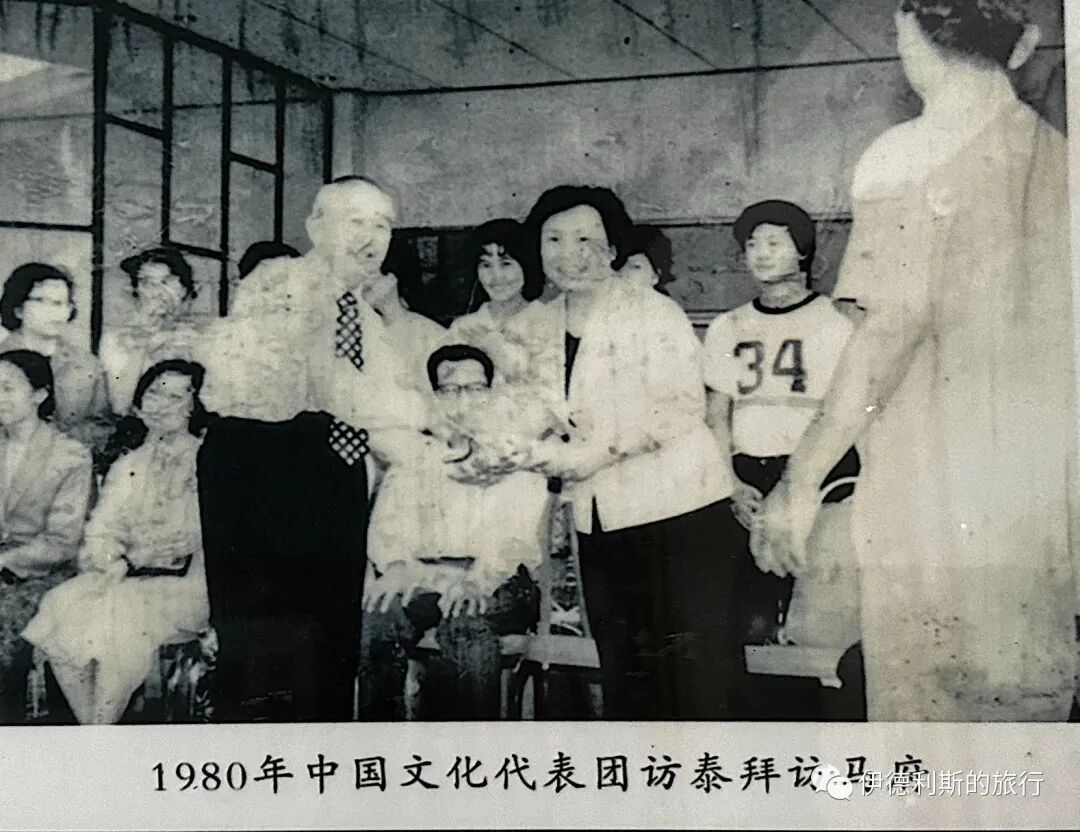
In the early 1950s, Ma Ruqi went to Myanmar to make a living, and after 1954 he settled in Chiang Mai, Thailand, where he worked in the local produce business and supported public welfare. He and his fellow Weishan native Hu Ranmao founded the Shandi Chinese School in Chiang Mai and helped renovate the Chiang Mai Wanghe Mosque. In 1974, Ma Ruqi was appointed president of the Thai-Chinese Chamber of Commerce. He later hosted many important guests from China and led the first delegation of Thai-Chinese to visit China for a tour in 1979. In 1987, when the Donglianhua Mosque was expanded, Ma Ruqi donated 1 million Thai baht.
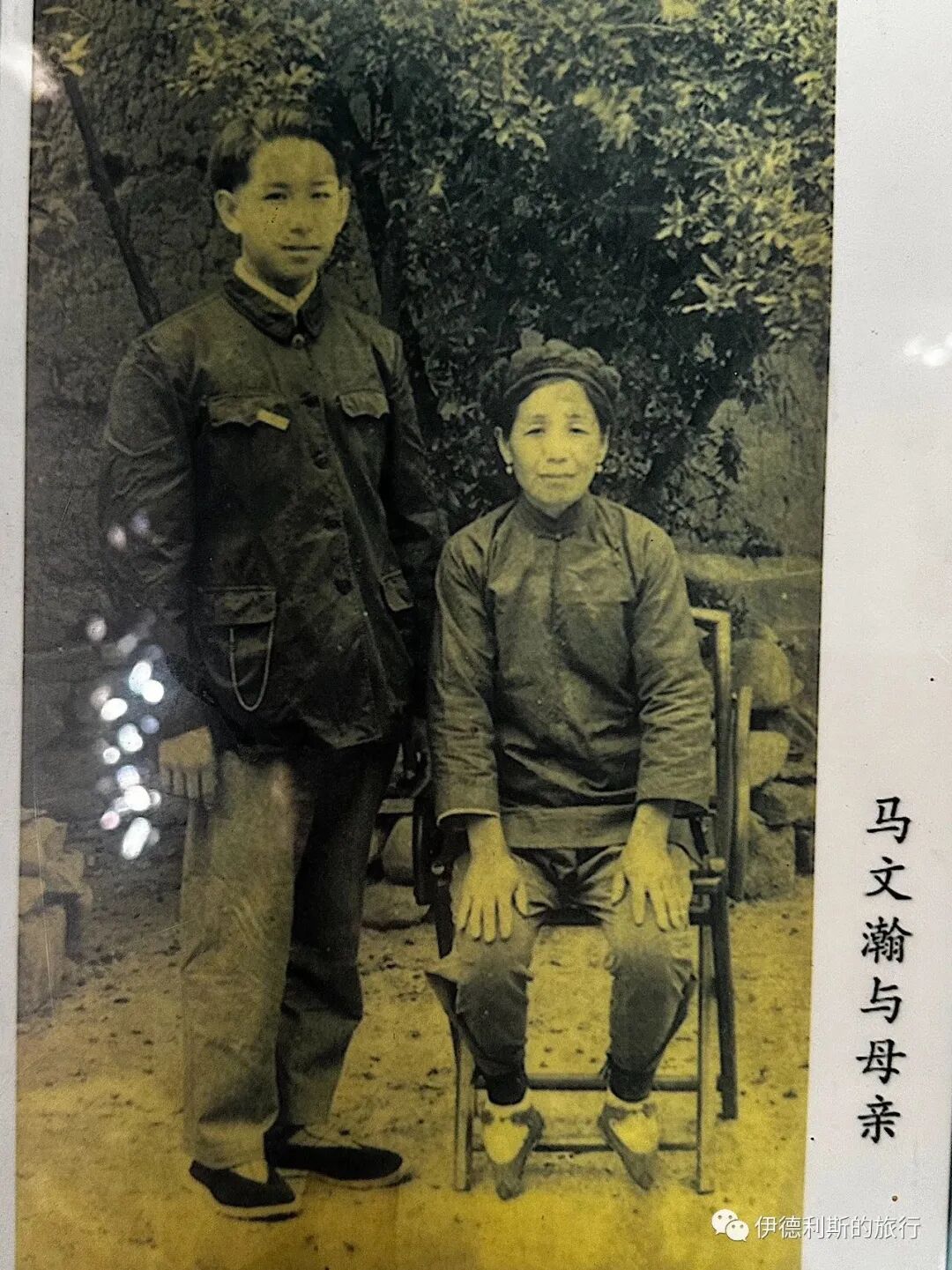
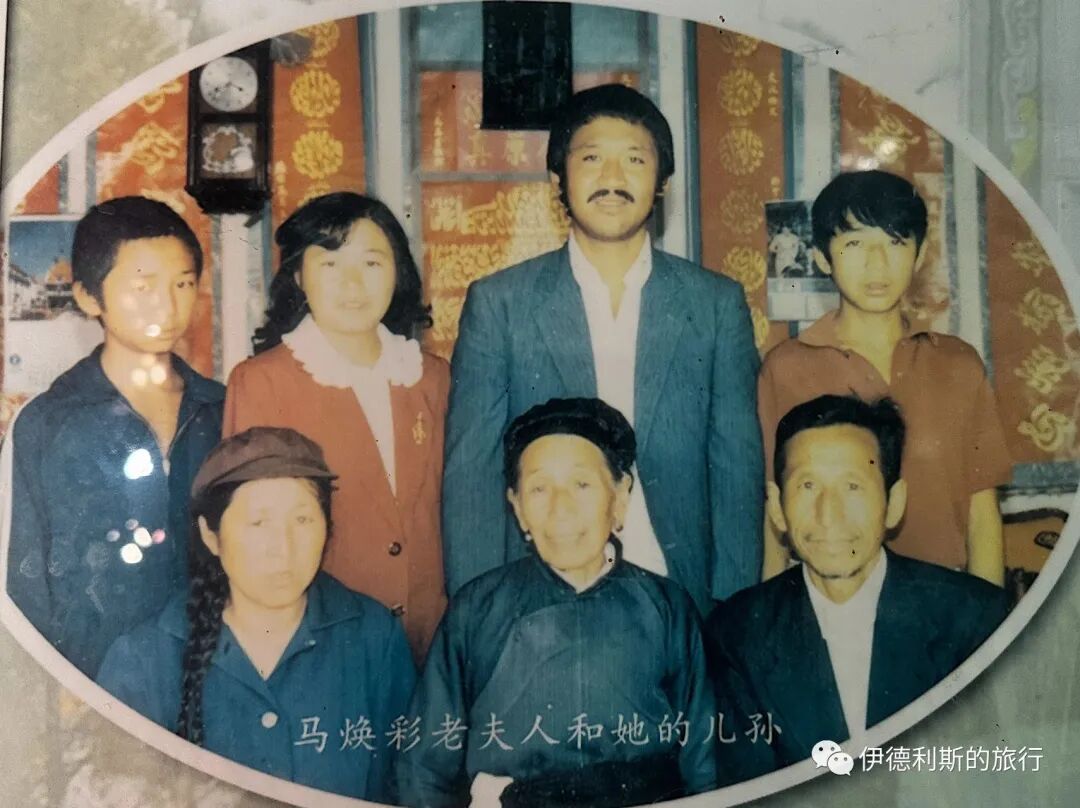
After Ma Ruqi went abroad, the Ma Ruqi Courtyard was nationalized in the 1950s. His wife, Ma Huancai, who stayed in their hometown, remained devoted to her faith, managed the household, raised their son, and lived with her son Ma Wenhan. Ma Wenhan inherited the fine traditions of his elders; he was hardworking, frugal, kind, and passionate about public welfare. In 1993, following a change in policy, the Ma Ruqi Courtyard was finally returned to Ma Wenhan. After Ma Wenhan renovated the courtyard, he was able to spend his later years there.
Today, the courtyard has passed to Ma Wenhan's son, Ma Yunhong, who opened a restaurant and guesthouse inside so that guests can better understand and experience the local culture.
Ma Ruqing Courtyard
Built in 1945, the Ma Ruqing Courtyard consists of two watchtowers and three courtyards. At the main gate stands a three-story hexagonal watchtower, with a passageway on the ground floor. The east courtyard has a three-room-and-a-screen-wall (sanfang yizhaobi) layout, the west courtyard has a four-sided-enclosure-with-five-courtyards (sihe wutianjing) layout, and the middle courtyard serves as a garden, enclosed by the east and west halls and the north watchtower.
After Ma Ruqing followed his brothers Ma Ruji and Ma Ruqi to settle in Thailand in the 1950s, the Ma Ruqing Courtyard was nationalized. Today, the west courtyard remains public property, while the middle and east courtyards were bought by local Hui Muslims. When I first visited in 2017, I could not enter the courtyard because it was under renovation. This time, a friend (dosti) living in the middle courtyard led me inside to visit the west courtyard. According to the dosti, Donglianhua Village recently cleared and restored the west courtyard, removing parts added after the 1950s. It is not yet decided when it will open to the public.
In the middle courtyard of the Ma Ruqing compound, you can see a three-story watchtower right at the entrance, which was once where the Ma family received guests. One regret this time was that the people in the east courtyard were not home, so I could not go in. It looks like I will have to visit a third time.
Ma Ruji Compound
Built in 1941, the Ma Ruji compound is the most important Hui Muslim courtyard in Weishan and a witness to the prosperity of the Yunnan horse caravans (mabang). Ma Ruji was born in Donglianhua Village in 1897. He was the eldest of ten Ma brothers, so he was also called Uncle Ma (Ma Daye). In the late Republic of China era, Ma Ruji was the most famous local caravan leader (maguotou). He also served as a Menghua (Weishan) County councilor and head of Yongji Township (Yongjian Town), making him very wealthy and influential.
The Ma Ruji compound consists of three interconnected courtyards: the north, south, and west. The north and south courtyards were Ma Ruji's residence. They combine the traditional Dali architectural styles of a four-sided courtyard with five patios (sihe wutianjing) and a three-room layout with a screen wall (sanfang yizhaobi) to form a six-courtyard harmony (liuhe tongchun) layout.
Inside the main gate of the north and south courtyards, the screen wall (yingbi) is inscribed with the words "Forever Uphold the Pure Truth" (shishou qingzhen). This is the main difference between the traditional courtyards of the local Bai people and the Hui Muslims.
Visiting the Ma Ruji compound in 2017 and 2023, the biggest change is that the Arabic calligraphy unique to Weishan, Dali, which was on display indoors, has been replaced entirely by Chinese calligraphy. The original Arabic calligraphy had both exquisite artistic value and precious historical significance. These calligraphic works were presented to Ma Ruji in the autumn of 1945 by the then-Army General Bai Chongxi and the Menghua County Hui Muslim Anti-Japanese National Salvation Association.
In the 1930s, Long Yun selected caravan leaders (maguotou) from across the province to form the Long family horse caravan for trade with French merchants in Vietnam, and Ma Ruji was chosen to join. The Long family caravan traveled from Kunming through Baise and Guilin to trade in Vietnam. Once, while passing through Guilin, they happened to run into Bai Chongxi, who was celebrating his mother's birthday. Ma Ruji and his group were all invited as guests and received a warm welcome from Bai Chongxi, and from then on, Ma Ruji and Bai Chongxi became friends.
Above the east side room of the hall in the Ma Ruji courtyard stands a four-story watchtower. It serves for both keeping watch and enjoying the view, offering a full look at Donglianhua Village. The sunny photos were taken in 2023, and the cloudy ones were taken in 2017.
The murals in the Ma Ruji courtyard from different historical periods reflect the changes of the times.
In the early 1950s, Ma Ruji and several brothers went to northern Myanmar to make a living, and they settled in Thailand a few years later. In 1953, the Ma brothers and their fellow villager Hu Ranxian set out from Myanmar to perform the Hajj, becoming a Haji. After land reform, Ma Ruji's land and property in Yunnan were divided. The Ma Ruji courtyard and the back garden were taken for public use, serving as a commune, hospital, military camp, middle school, township government, and Islamic association office at different times. After 1996, the east and west rooms of the lower courtyard of the Ma Ruji compound were returned to the Ma family, while the watchtower of the upper courtyard and the back garden remained under the collective ownership of Donglianhua Village.
The west courtyard of the Ma Ruji compound was used to run the caravan business. It had its own north gate, a two-story row of 10 large horse stables, and a warehouse for caravan supplies. In the 1940s, Ma Ruji owned over 100 mules and horses and employed more than 30 caravan workers, making him very powerful.
Waist knife (yaodao).
Tools for shoeing horses.
Kerosene lamp (madeng).
The gong stick (manggun) and gong (mangluo) were used to send signals while the caravan was on the move. Experienced caravan leaders could tell which place and which family a caravan belonged to by the volume, speed, and rhythm of the gong, and they could tell if the signal meant danger, a request to pass, or a call for help.
Stirrup (madeng).
Bamboo woven bowl box (zhumiewanhe).
An exquisite saddle. view all
Reposted from the web
Summary: Weishan, Dali — Donglianhua Hui Caravan Courtyards (Part 1) is presented here as a firsthand travel account in clear English, beginning with this scene: On the afternoon of January 30, 2023, I rode my electric scooter to Donglianhua Village in Weishan, Dali, to visit the three Hui Muslim caravan courtyards there for the second time. The account keeps its focus on Weishan Dali, Hui Caravan Courtyards, Muslim Travel while preserving the names, places, food, and historical details from the Chinese source.
On the afternoon of January 30, 2023, I rode my electric scooter to Donglianhua Village in Weishan, Dali, to visit the three Hui Muslim caravan courtyards there for the second time. In 2017, I focused on visiting the Ma Ruji Courtyard, took a quick look around the Ma Ruqi Courtyard, but could not get into the Ma Ruqing Courtyard, which left me wanting more. At that time, I hoped to have a meal in one of the courtyards and chat with the descendants of the Ma family, and this time, that wish finally came true.
After the Ming Dynasty took control of Yunnan, Zhu Yuanzhang ordered Mu Ying to guard the region. Mu Ying sent some Hui Muslim soldiers under his command to farm in Weishan, Dali. They merged with the Semu people who had come there to trade during the Yuan Dynasty, forming many Hui Muslim villages around Yongjian Town. Donglianhua Village is now mainly home to residents with the surnames Ma and Zhang. The Ma family is known as the Sai family Ma, said to be descendants of Masuhu, the fifth son of the Yuan Dynasty politician Sayyid Ajjal Shams al-Din. The Zhang family are descendants of Hui Muslims from the Jiangnan region who settled there after following Mu Ying during the Ming Dynasty.
Donglianhua Village sits on the main route of the Ancient Tea Horse Road from Pu'er to Dali. Because the local Hui Muslims were skilled at raising horses, they started the business of running horse caravans. Around 1911, ten brothers from the Ma family in Donglianhua, including Ma Ruji, Ma Ruqi, and Ma Ruqing, began trading with horse caravans and gradually became famous caravan leaders (maguotou) in Southwest China. During the Republic of China era, almost every family in Donglianhua Village raised horses. The village had seven large horse caravans and frequent trade traffic, earning it the nickname Little Shanghai of Western Yunnan. In the 1940s, the Ma brothers' business reached its peak, and they competed to build exquisite Ma family courtyards.
After the 1940s, due to frequent caravan trade with Thailand and Myanmar, some people from Donglianhua Village began to settle in those countries, making Donglianhua a famous hometown for overseas Chinese in Yunnan. These overseas residents and their descendants have continuously donated money to protect the village and have made great contributions to Donglianhua.
Ma Ruqi Courtyard
Among the three Ma family courtyards in Donglianhua Village, only the Ma Ruqi Courtyard is still occupied by descendants of the Ma family today. They have opened a restaurant and a guesthouse there, which I think is a great starting point for understanding the modern history of Yunnan's Hui Muslims and caravan culture.
Uncle Ma Wenhong, a descendant of Ma Ruqi, welcomed me warmly. He prepared braised beef and white-cut chicken from the traditional Weishan Hui Muslim banquet known as the Eight Old Bowls (laobawan), as well as sticky rice with sugar, which is only eaten at local weddings. I felt very grateful (shukr).
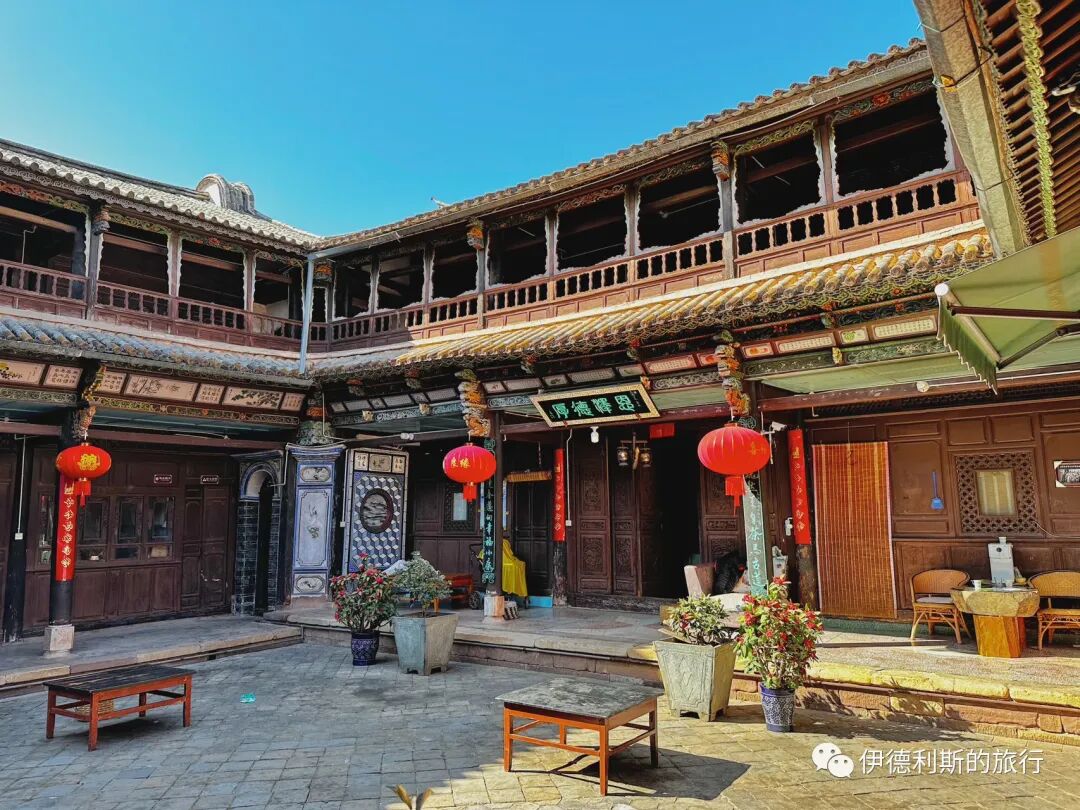
I listened to Uncle Ma tell the history of the Ma Ruqi Courtyard while we ate. After the Tongzhi era disasters, a group of Hui Muslims with the surname Ma who survived moved from Xiaodonglianhua Village to the current Donglianhua Village. They rebuilt their homes together with a group of Hui Muslims with the surname Zhang who came with them, and Donglianhua Village gradually developed.
In the early years of the Republic of China, Ma Ruqi started his horse-trading business. After more than 20 years of hard work, he became a famous caravan leader (maguotou) in Sichuan, Guizhou, and Yunnan. The 1940s were the peak of the Ma brothers' business. Construction of the Ma Ruqi Courtyard began in 1942 and was officially completed in 1945 after three years.
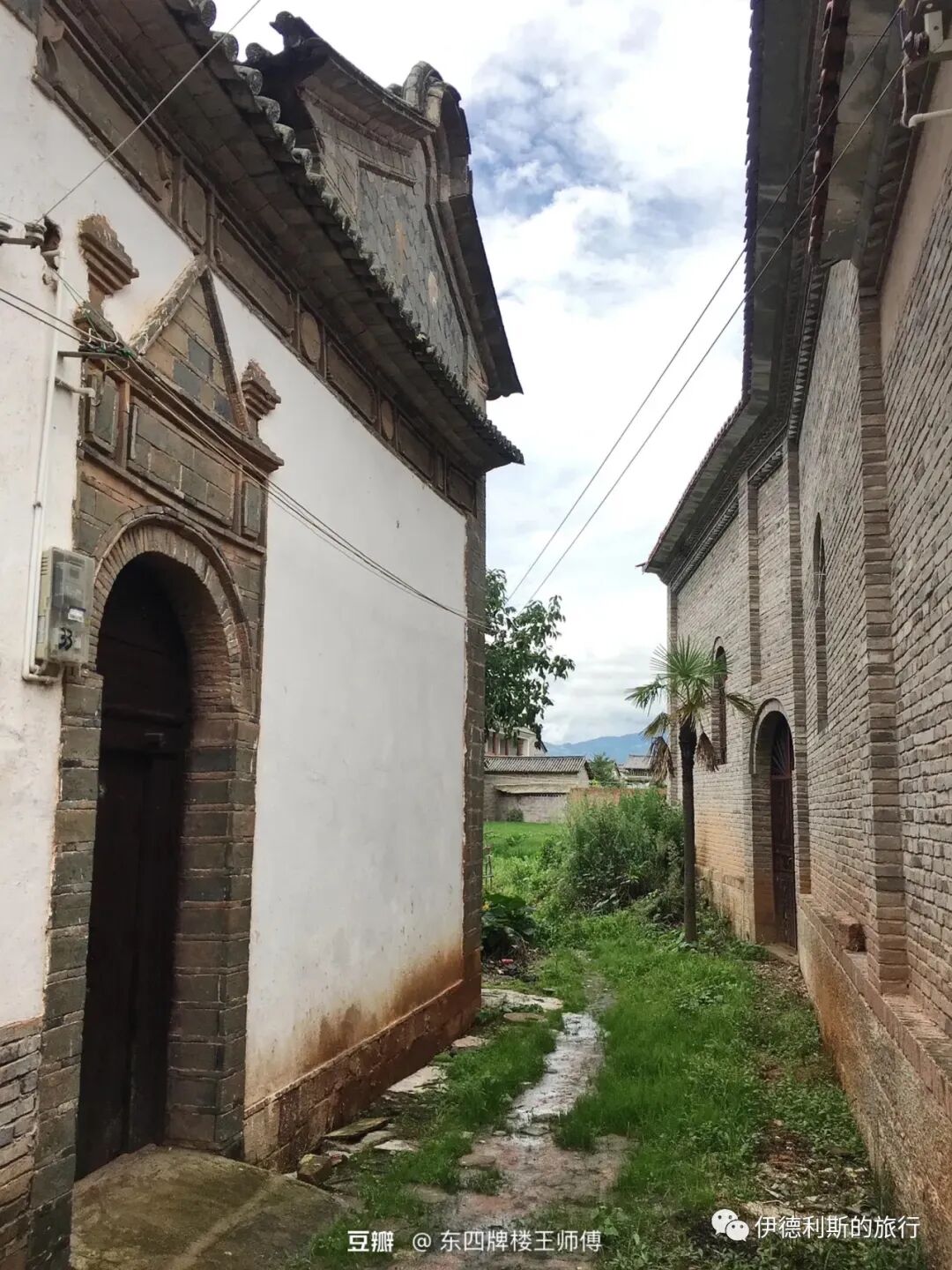
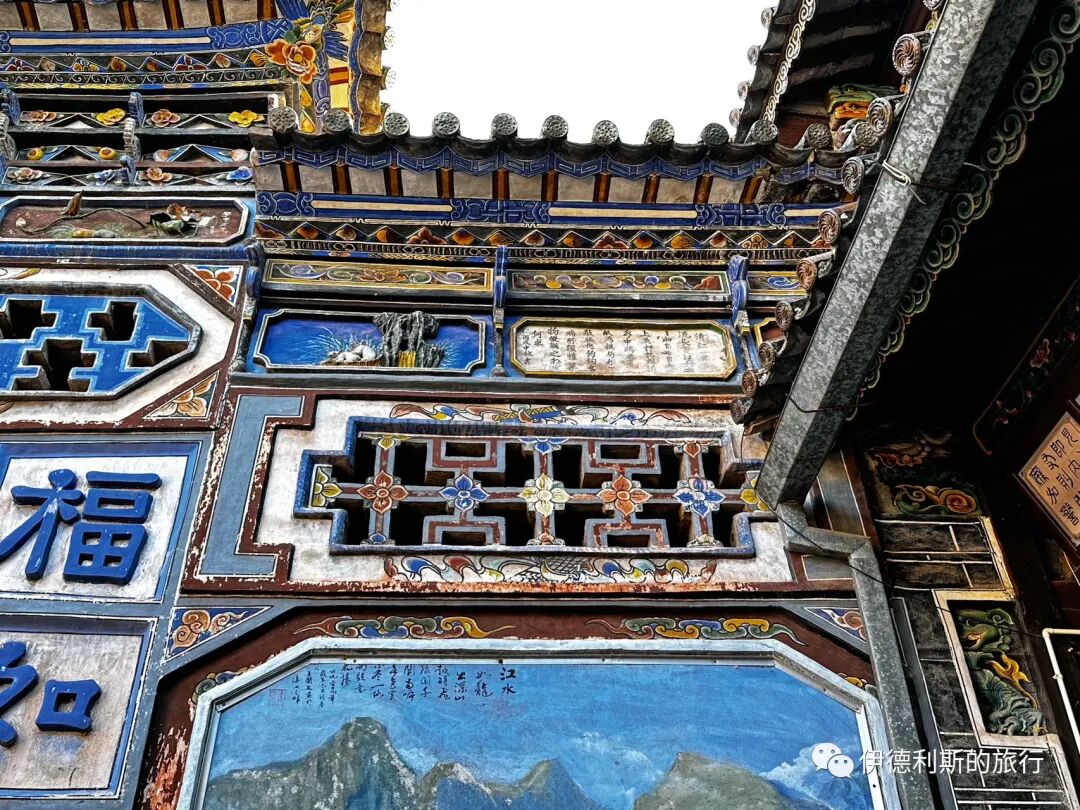
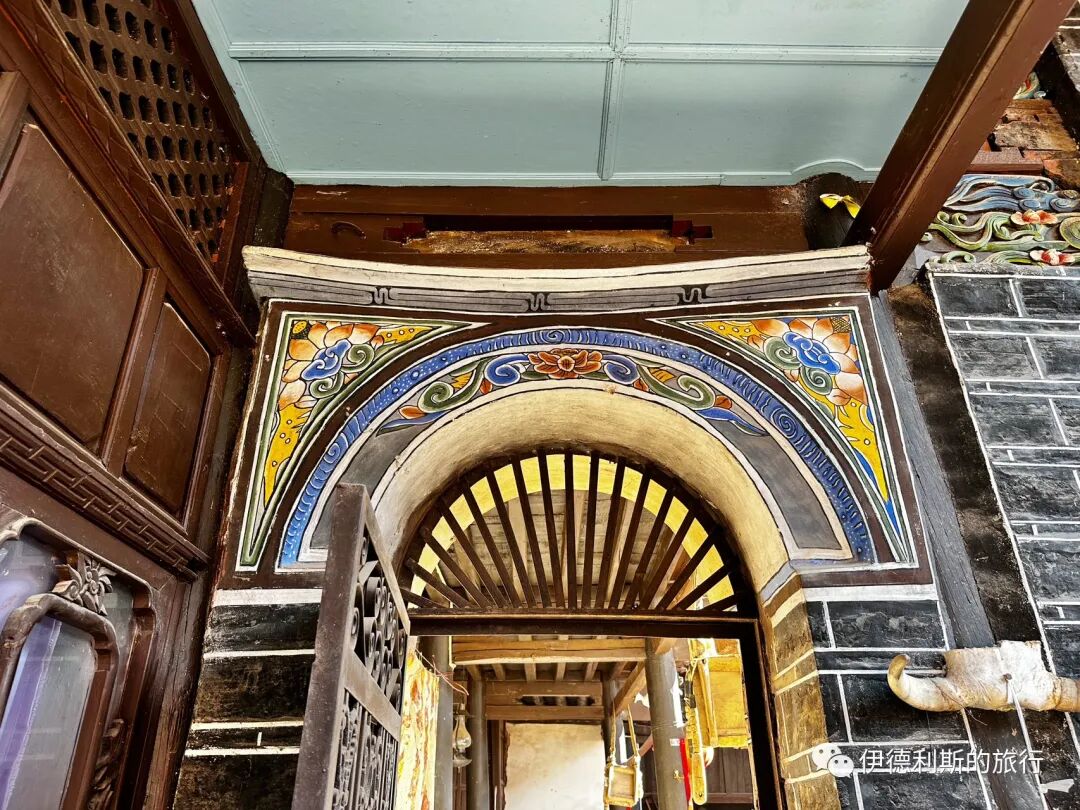
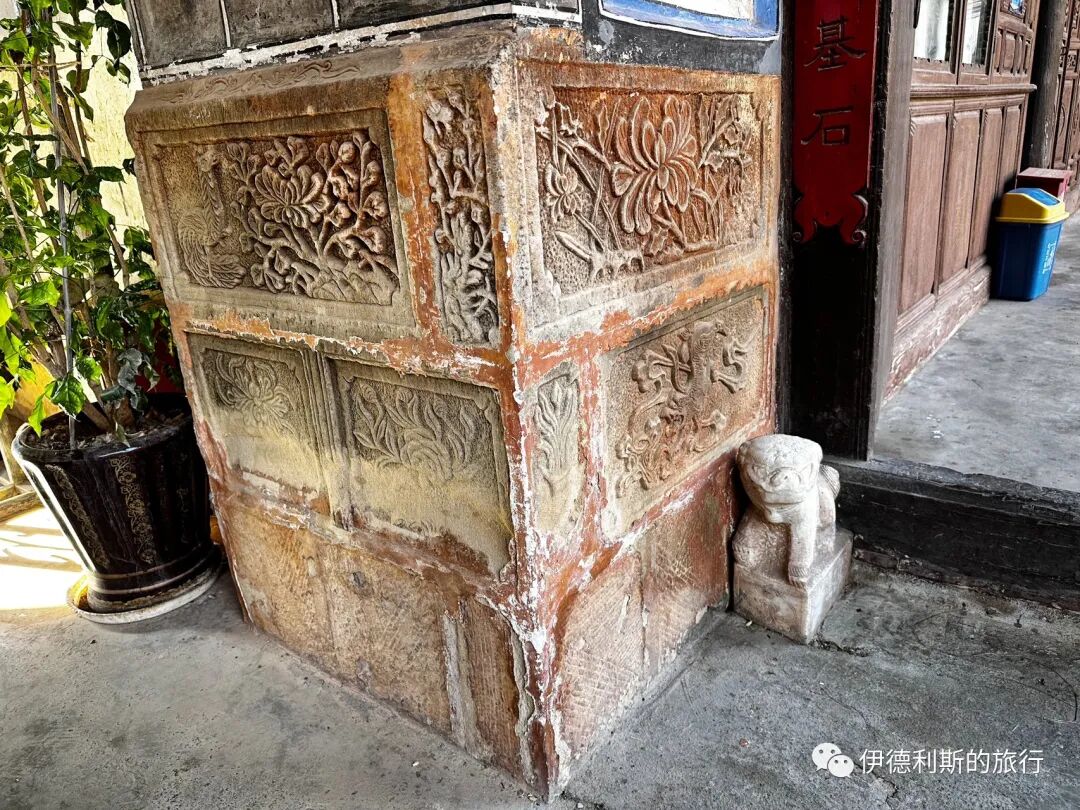
The Ma Ruqi Courtyard consists of two typical Dali-style three-sided courtyards with a screen wall (sanfang yizhaobi). Both courtyards share one large screen wall, creating a layout of one screen wall for two courtyards. The southern building is a three-story stable with a watchtower, which looks very impressive. The main gate is a relief-carved archway without a porch. The brick pillars on both sides are topped with stone lions, common in Bai ethnic homes. The arch is decorated with colorful paintings of flowers, birds, and landscapes, and the words Qilu are written in the center of the gate.
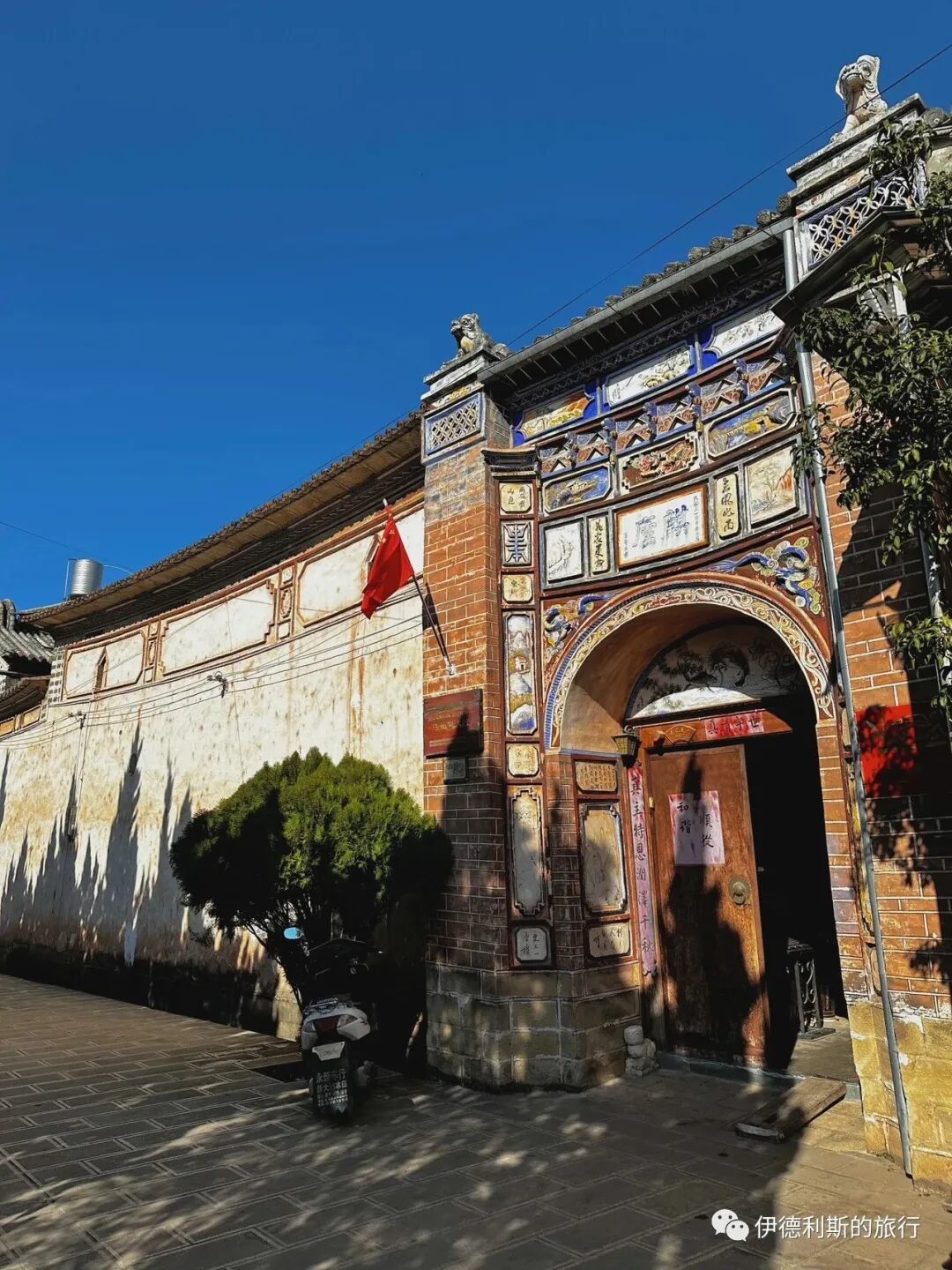
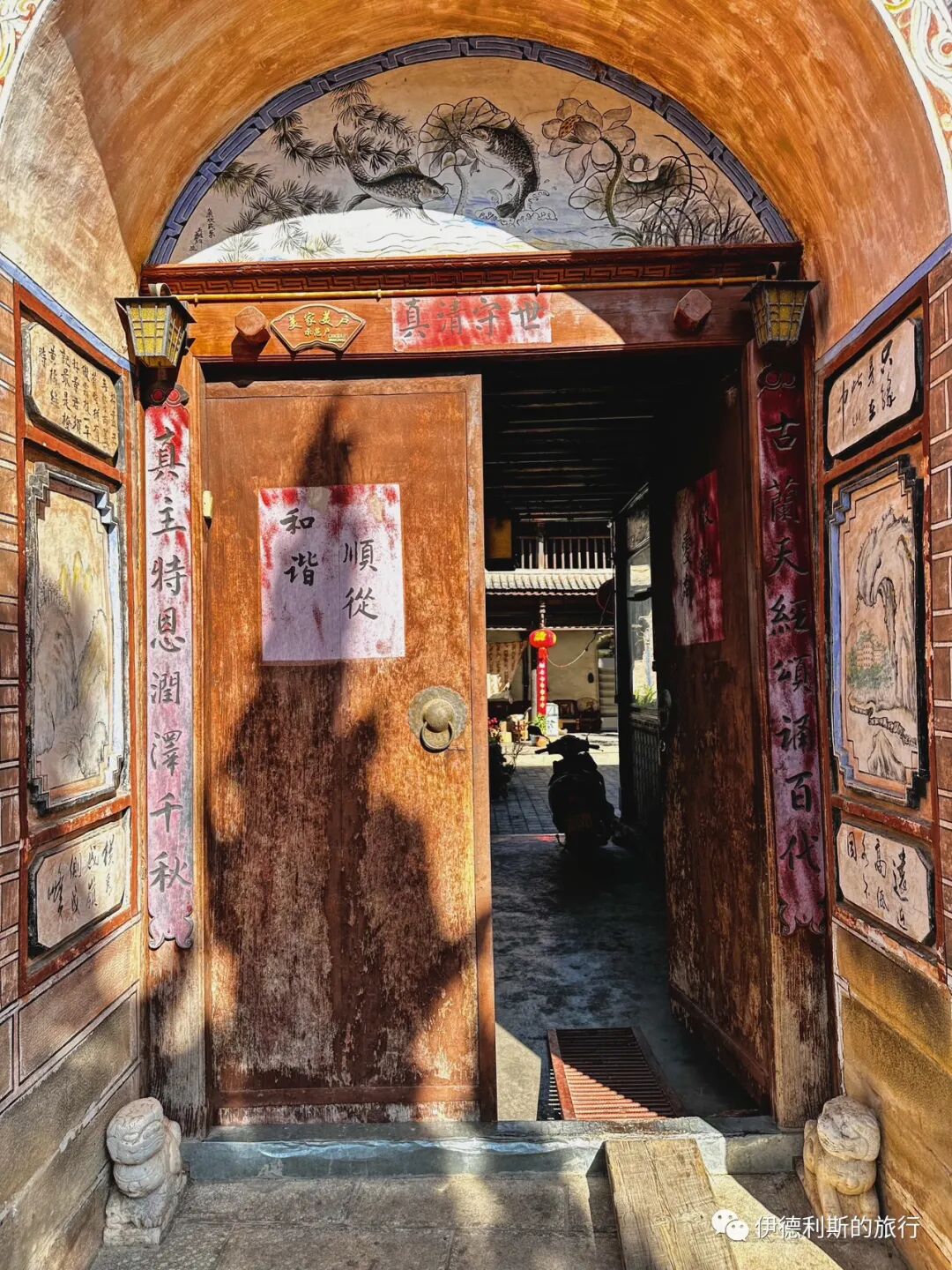
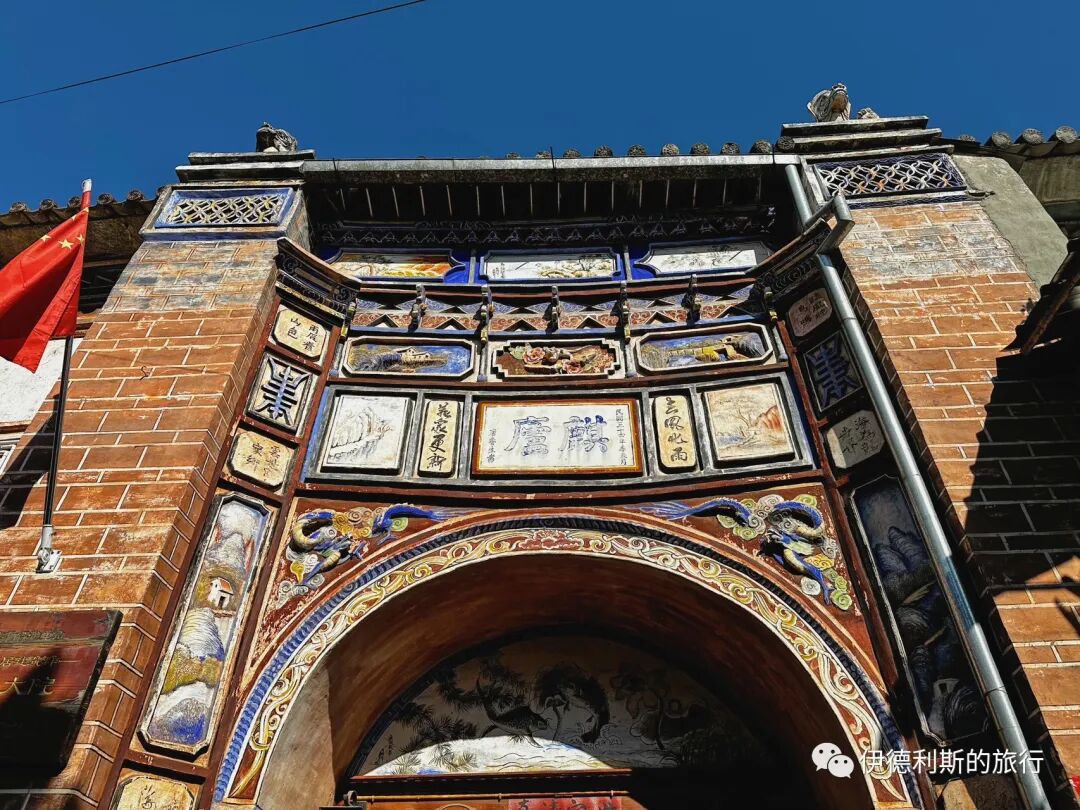
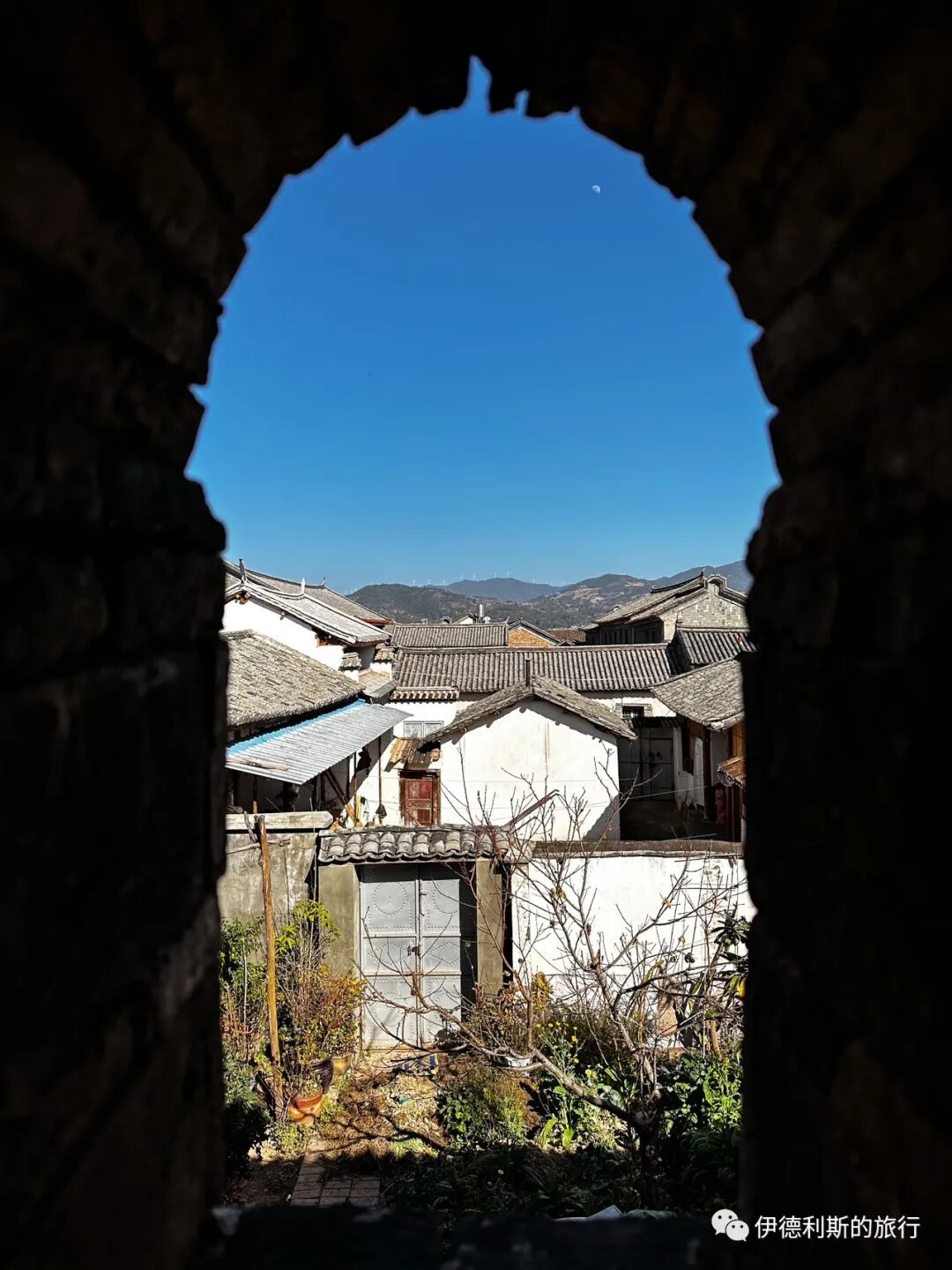
Ma Ruqi was a major caravan leader in Donglianhua Village. The north courtyard was home to Ma Ruqi's family, while the south courtyard was used to run the caravan business. The southern stable was used to feed the horses, the side rooms provided living space for the caravan workers (majiaozi), and the east side room served as a storage area for supplies. Because the courtyard is located at the southernmost end of Donglianhua Village, right next to the main road into the village, and has a wide view to the southeast, a watchtower was built on the third floor of the southern stable to keep watch and guard against bandits and horse thieves.
In August 1945, Wang Shaoheng led more than 30 bandits to rob Donglianhua Village, and the watchtower of the caravan courtyard played an important role. At that time, the Ma brothers organized the villagers to fight off the bandits, and Ma Ruqi shot and killed the bandit leader Wang Shaoheng. Afterward, the magistrate of Menghua County personally came to Donglianhua Village to commend the Ma brothers.
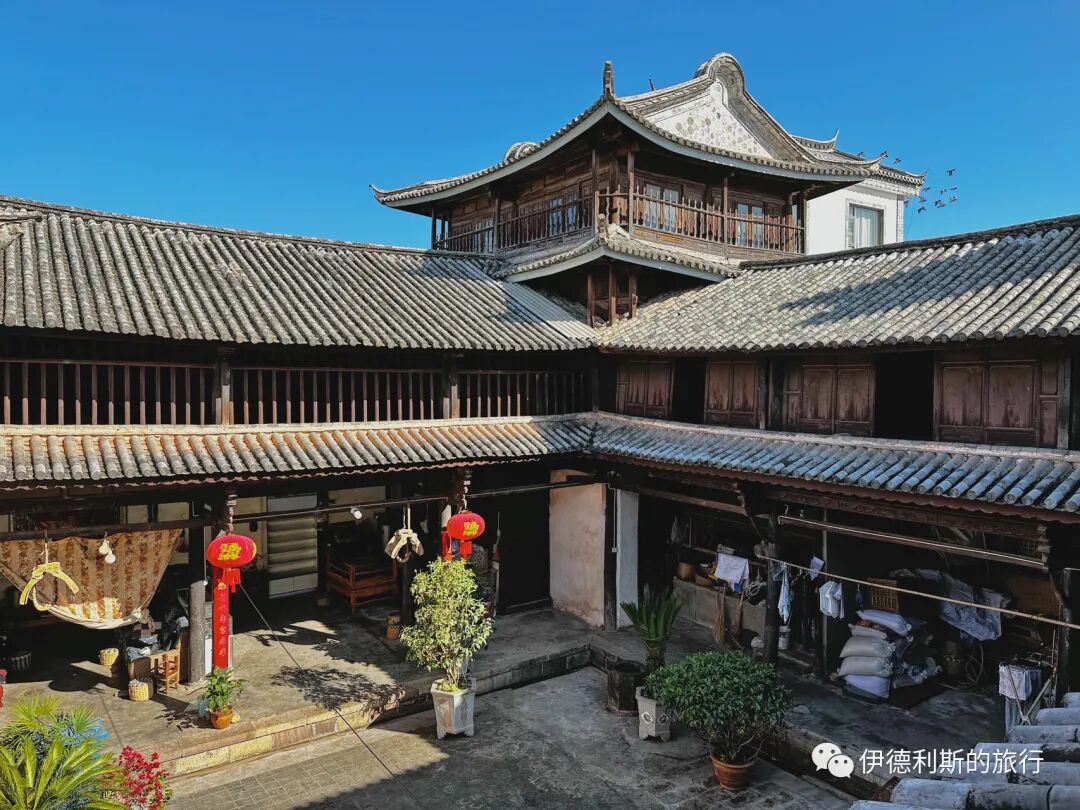
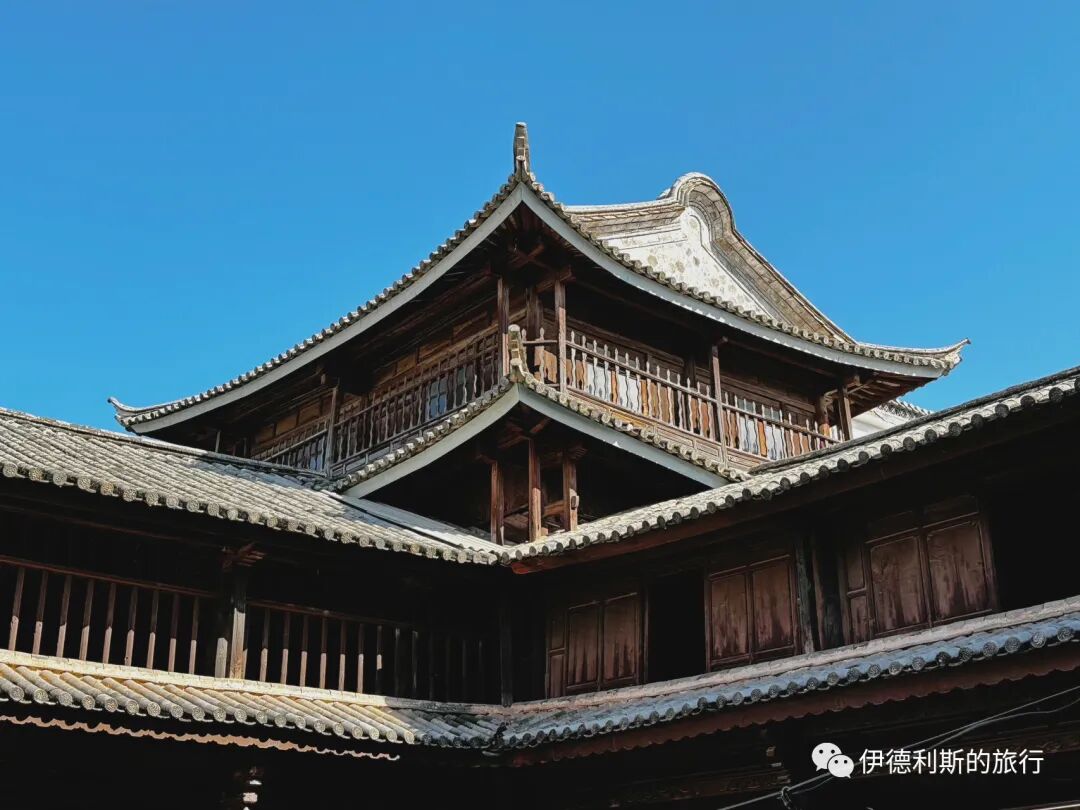
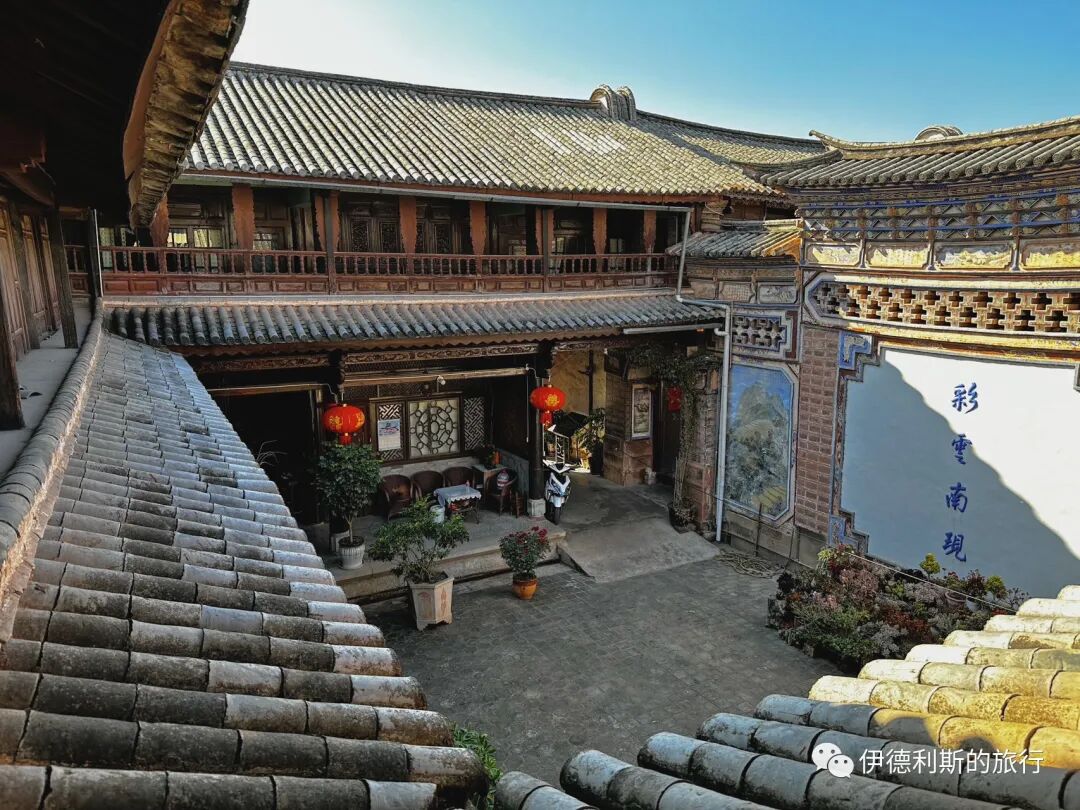
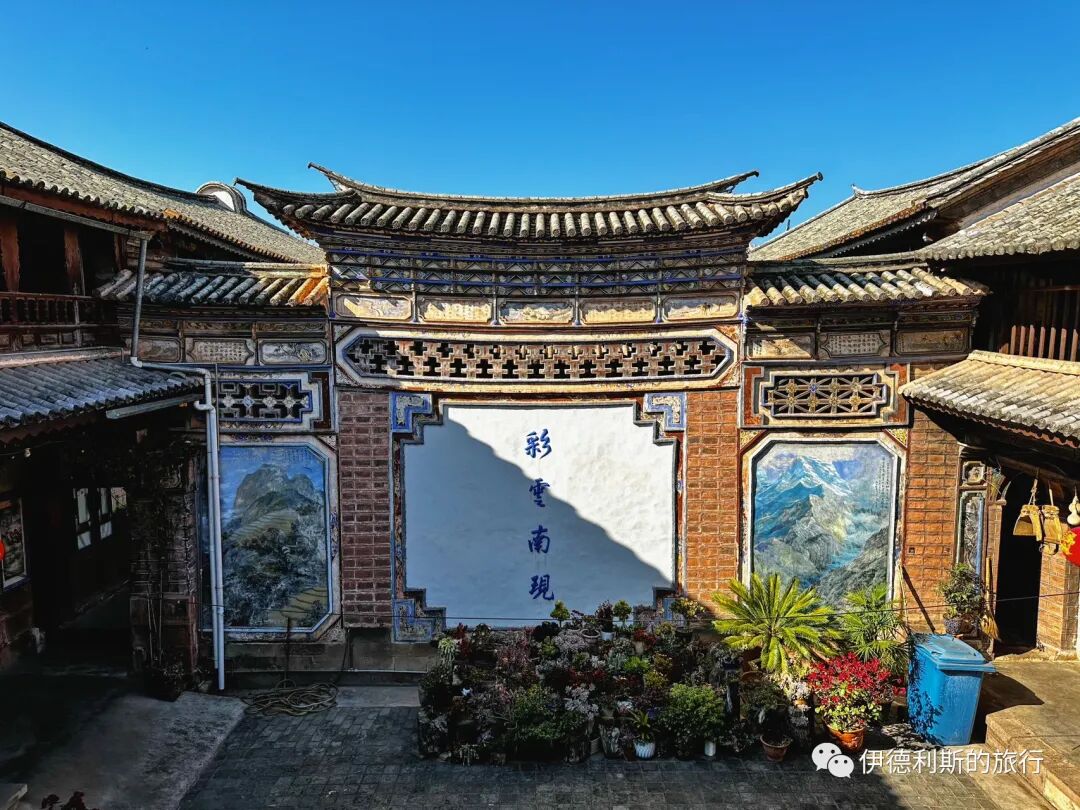
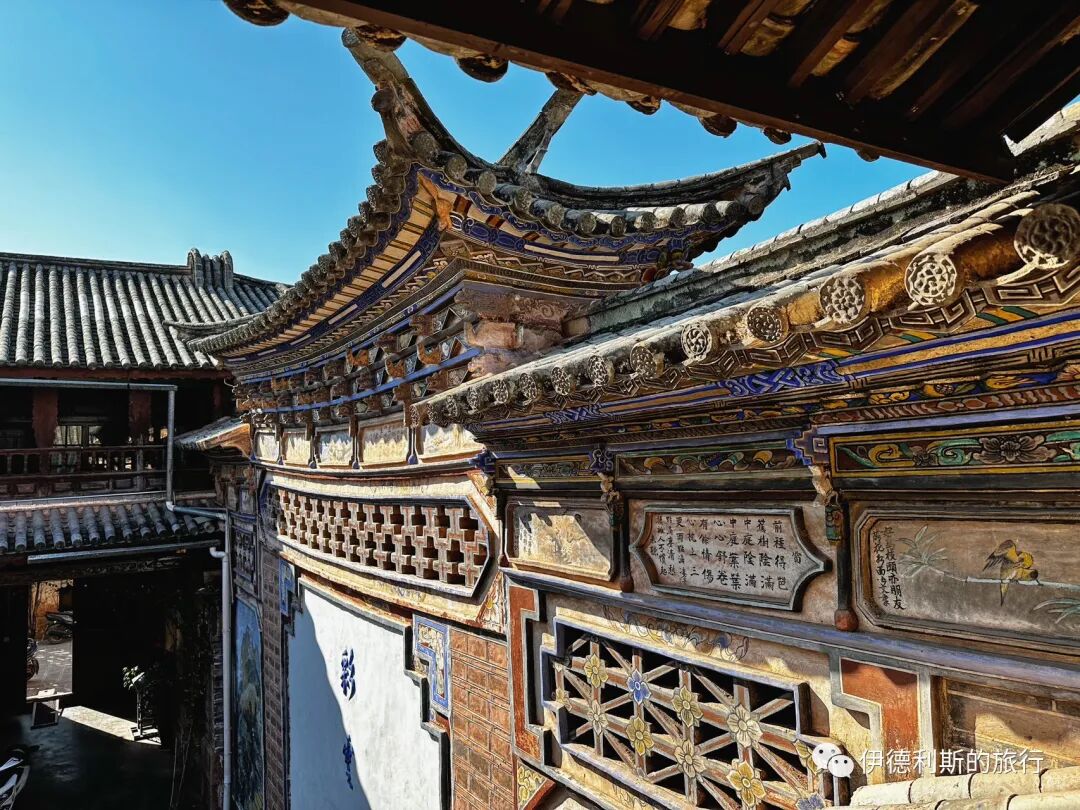
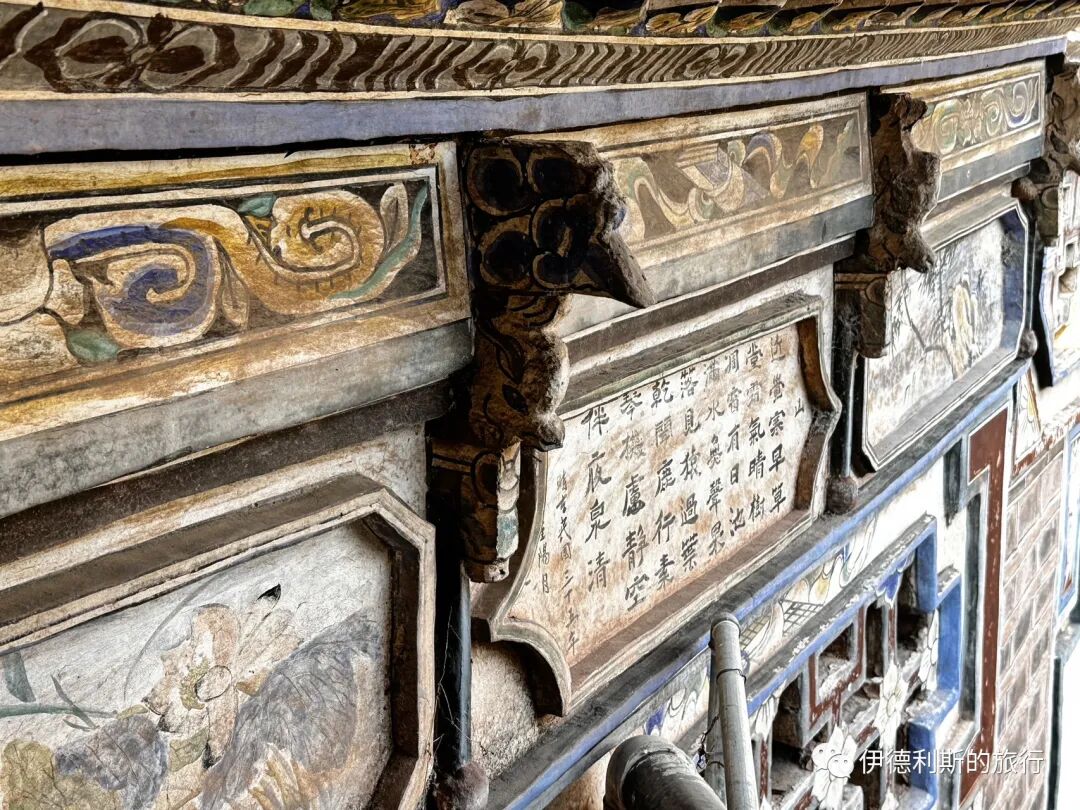
Architectural details and the guesthouse section of the Ma Ruqi Courtyard. Business at the courtyard was poor from 2020 to 2022, and it was basically half-closed. It has only started to get better this year. Uncle Ma says he will also make further improvements to the guesthouse to welcome more guests.
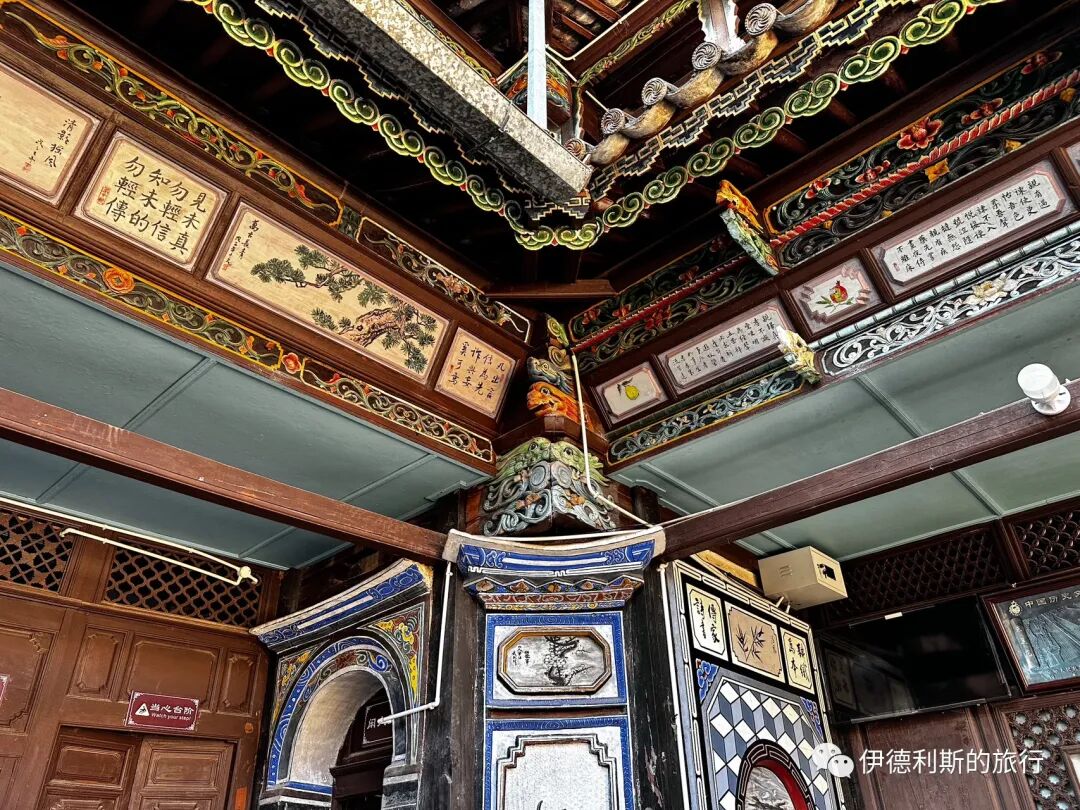
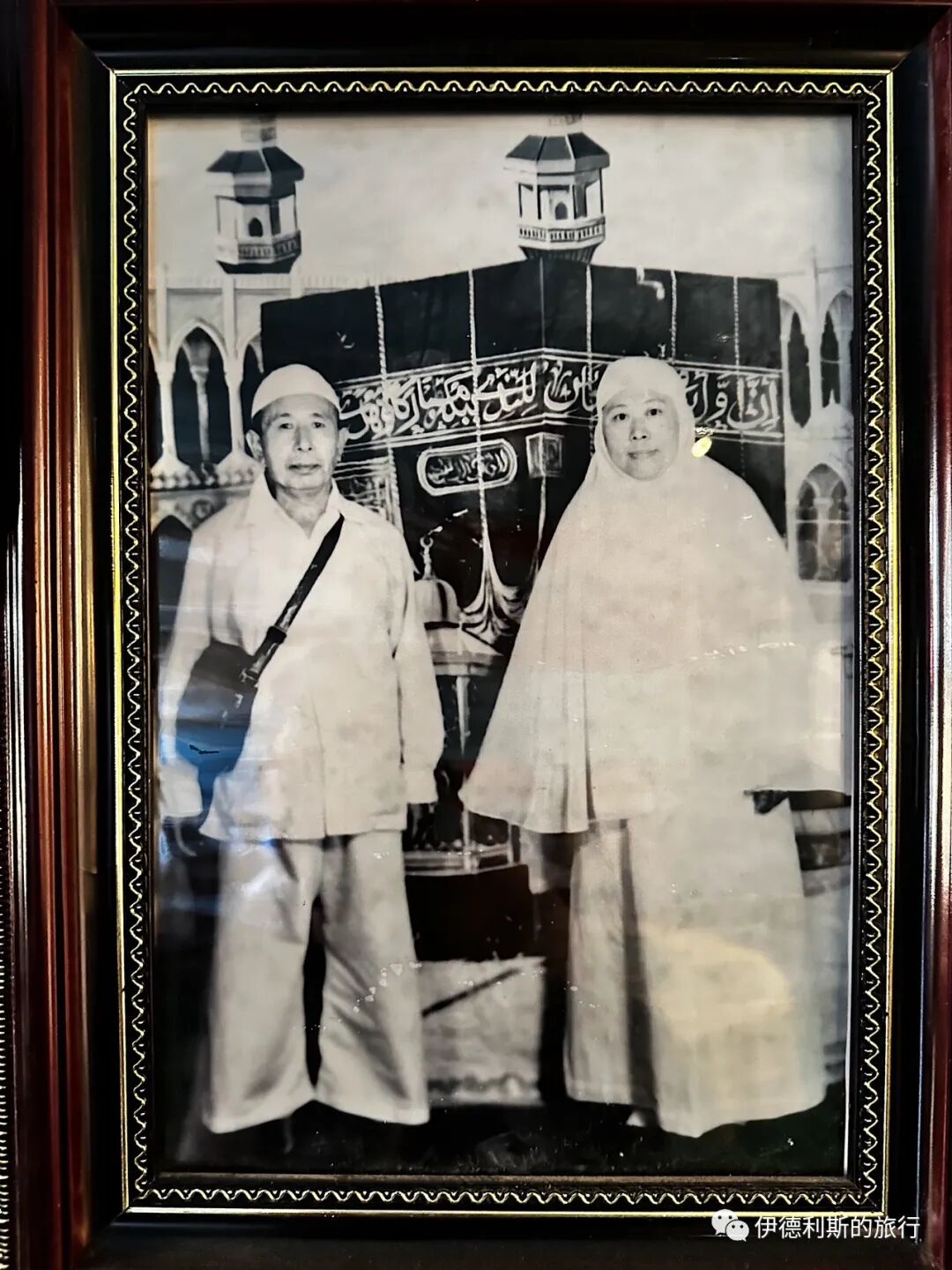
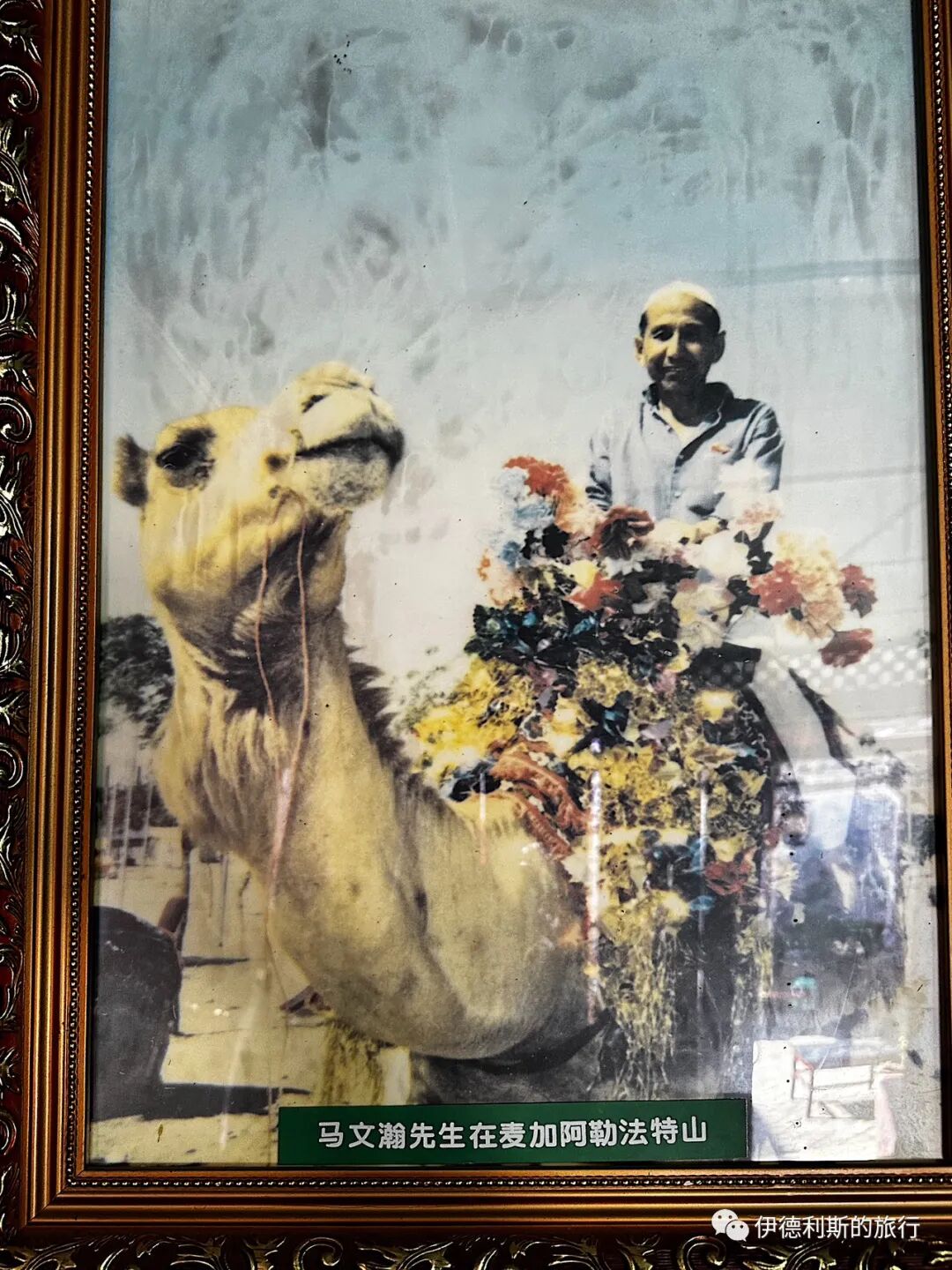
Since Ma Zaixing went on Hajj in 1948, becoming the first from Menghua to do so, many others from the Ma family, including Ma Ruqi, Ma Ruxiang, and Ma Wenhan, have also made the pilgrimage. Because of this, the Ma family is known as a family that has kept the faith for three generations of Hajj pilgrims (haji).
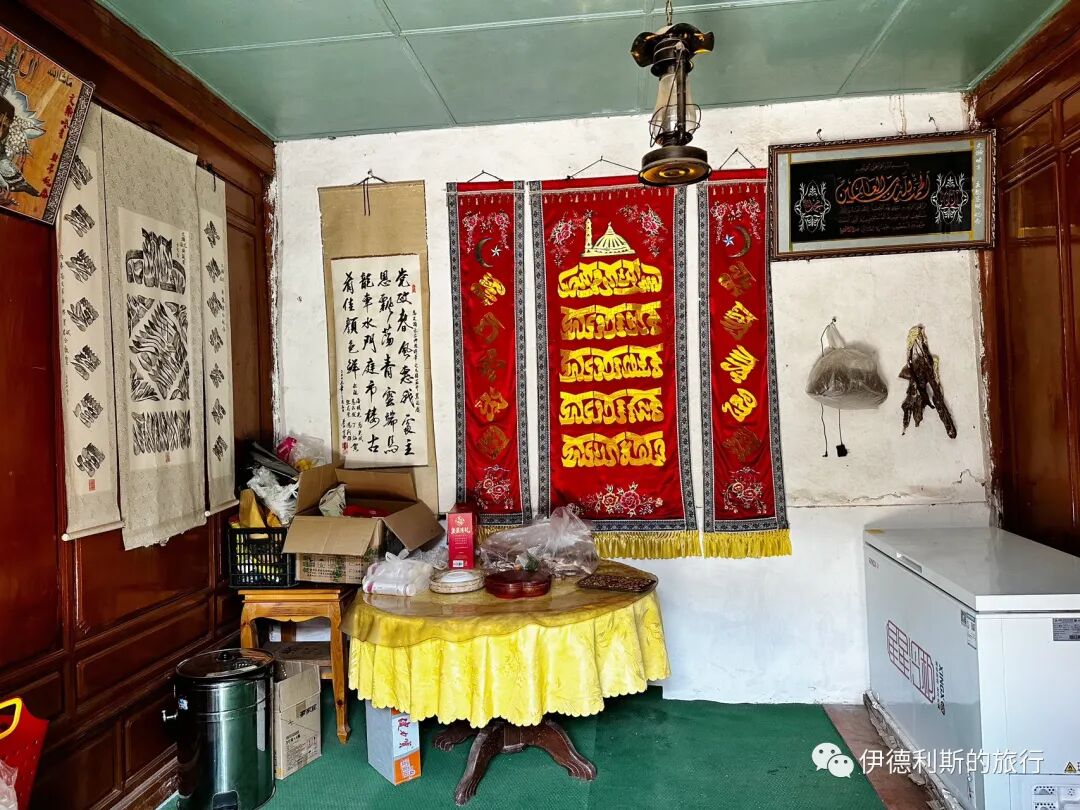
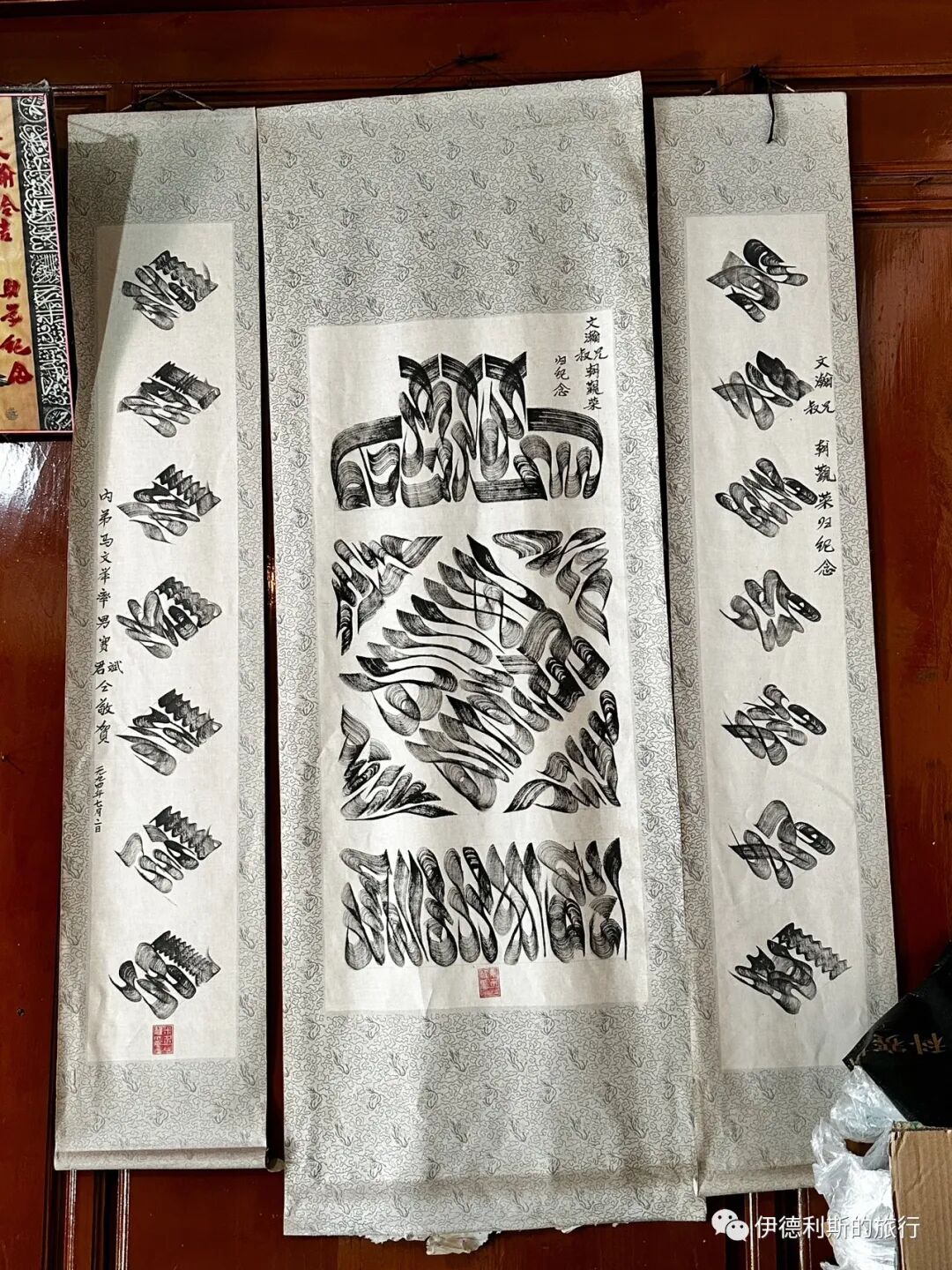
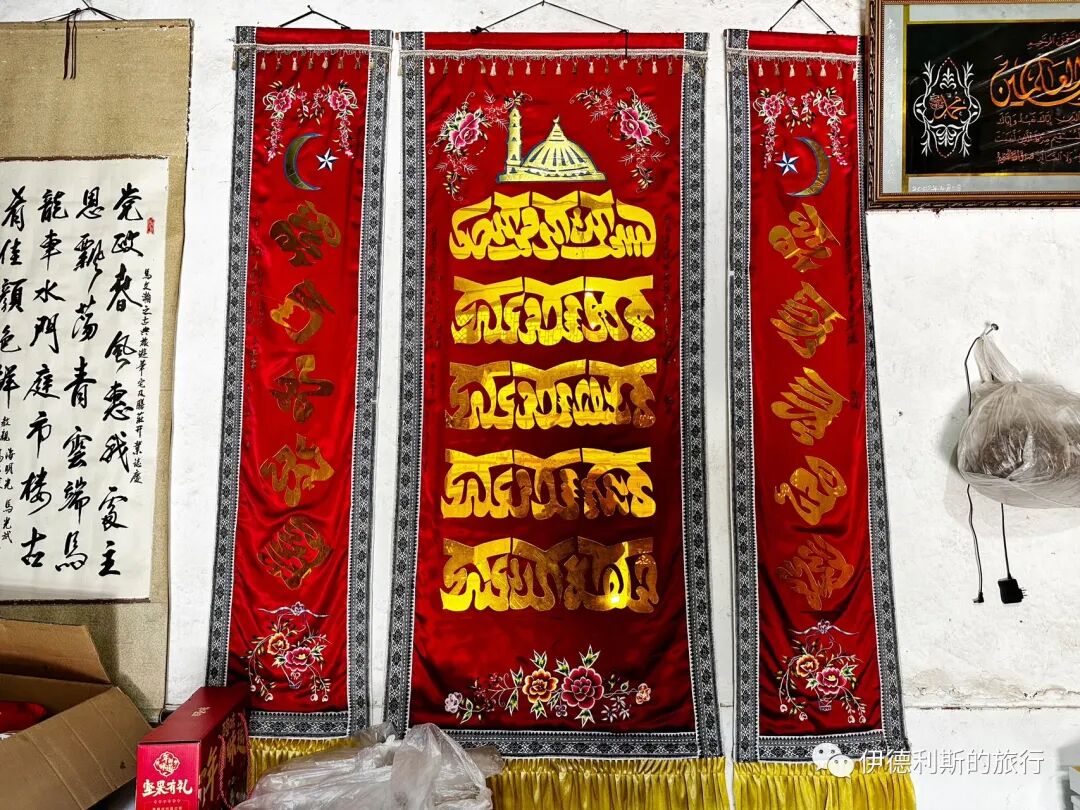
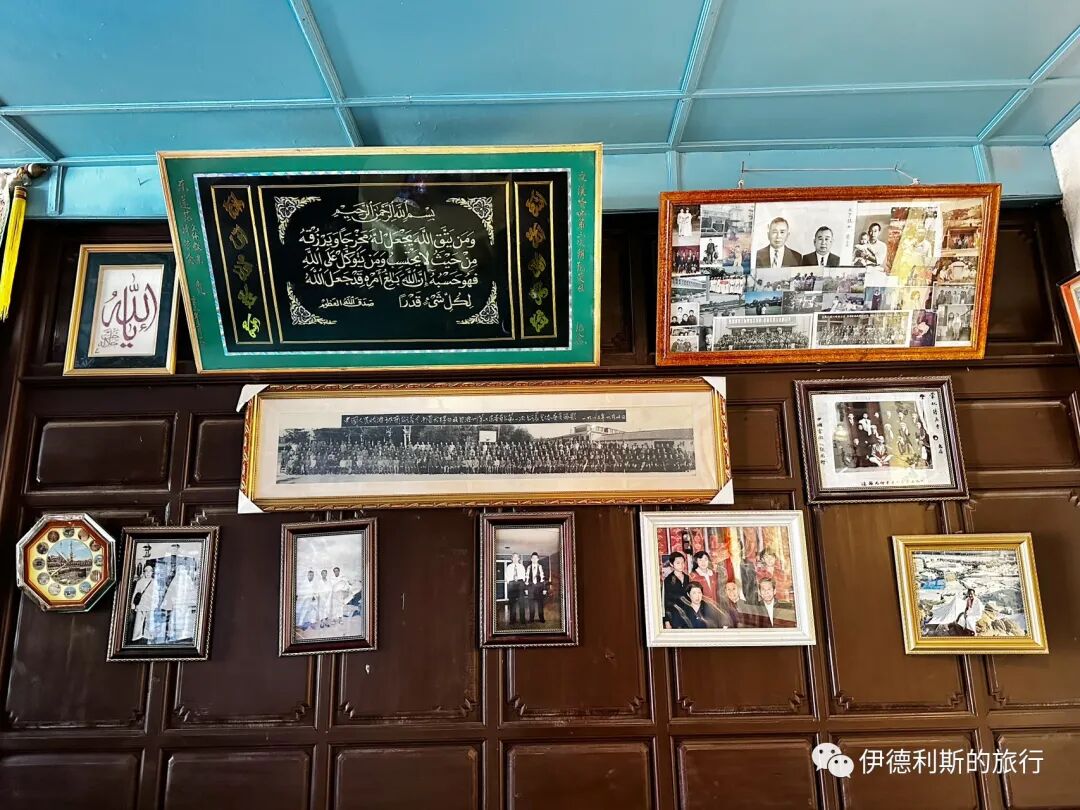
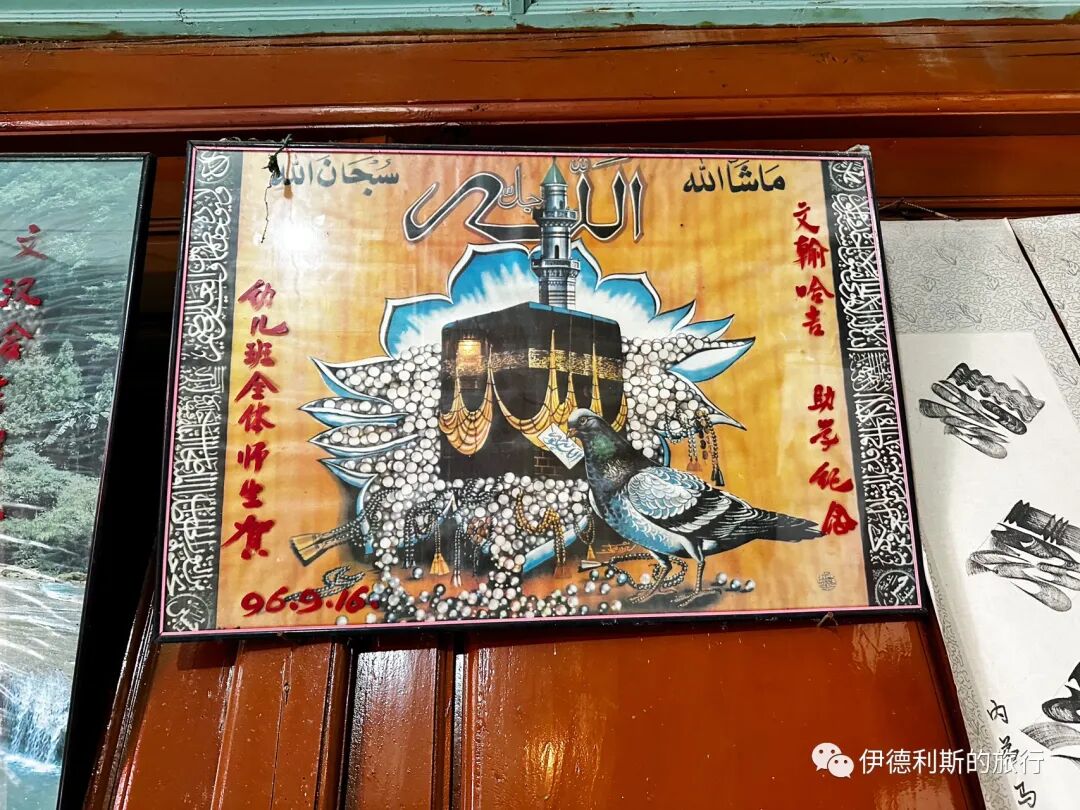
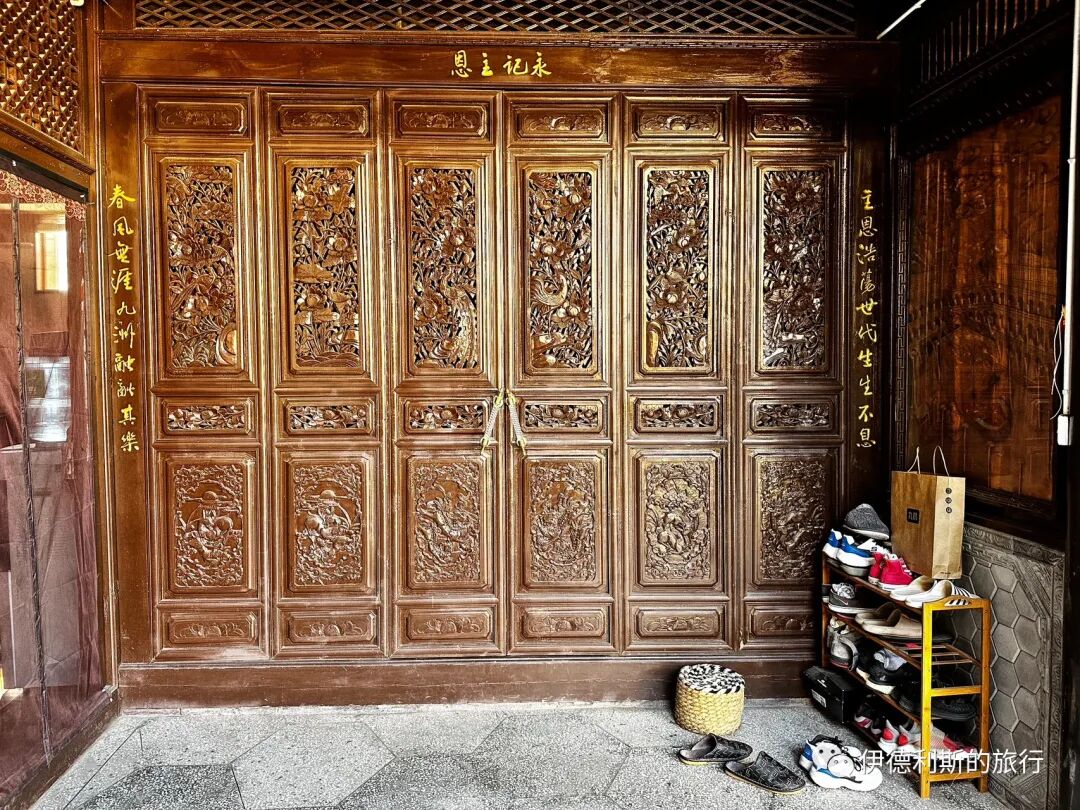
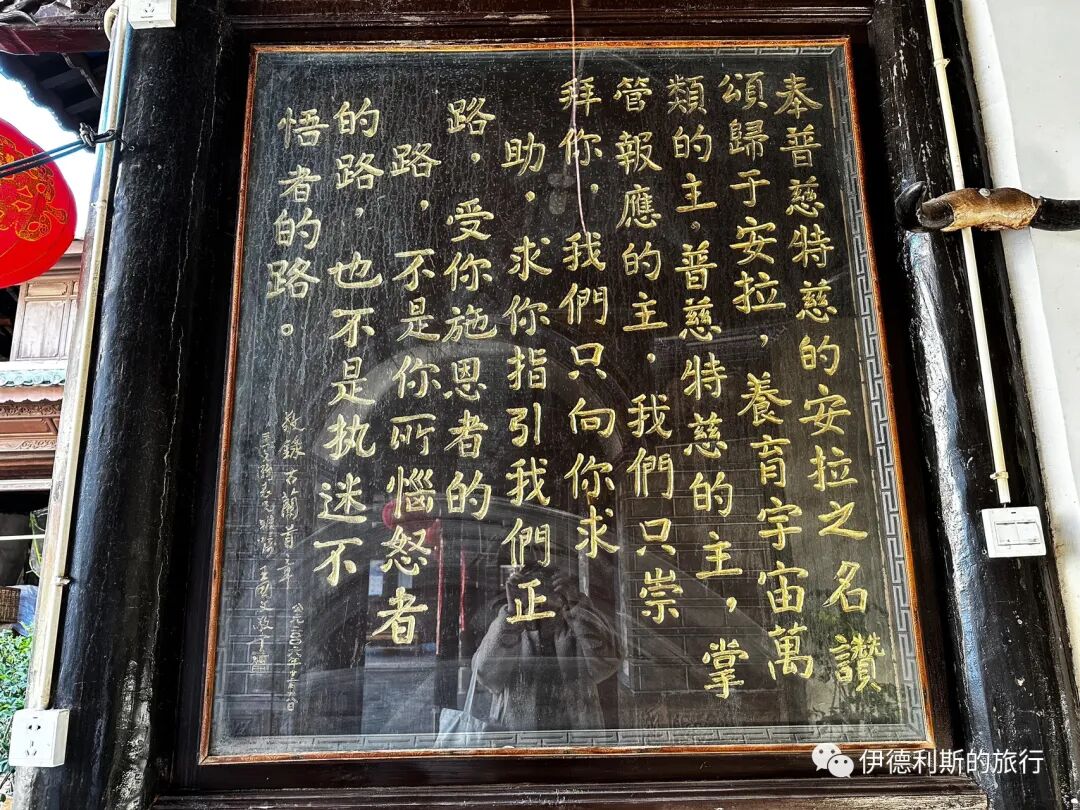
Today, souvenirs from Ma Wenhan Haji's three pilgrimages still hang on the walls of the Ma Ruqi Courtyard, where you can see traditional Arabic calligraphy in the style of Weishan, Dali. other parts of the Ma Ruqi Courtyard also reflect the traditions of the faith. For example, one door frame has a couplet that reads: The spring breeze is boundless, bringing joy to all the land; the Lord's grace is vast, continuing through the generations. The horizontal scroll reads: Always remember the Lord's grace. As you enter the main gate, you will see a Chinese translation of the Al-Fatiha on the wall.
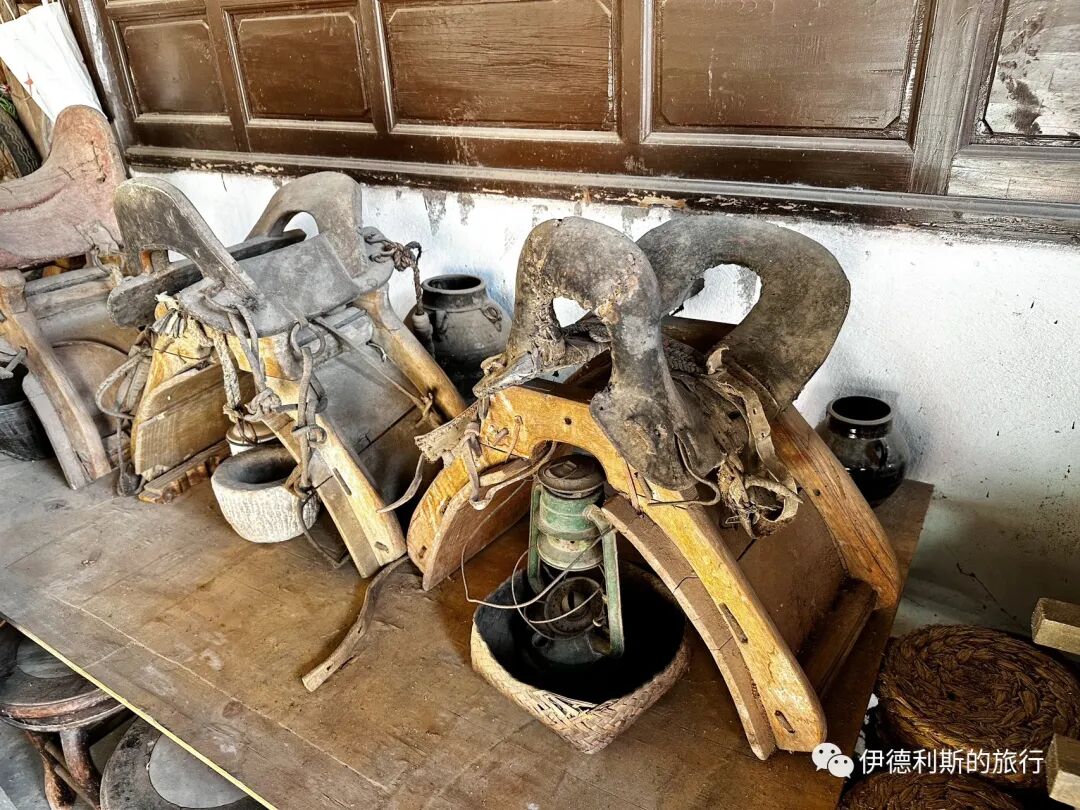
Beyond religious traditions, the Ma Ruqi Courtyard also keeps old items from the caravan era, including saddles, horse lanterns, and small scales (dengzi).
In the early 1950s, Ma Ruqi went to Myanmar to make a living, and after 1954 he settled in Chiang Mai, Thailand, where he worked in the local produce business and supported public welfare. He and his fellow Weishan native Hu Ranmao founded the Shandi Chinese School in Chiang Mai and helped renovate the Chiang Mai Wanghe Mosque. In 1974, Ma Ruqi was appointed president of the Thai-Chinese Chamber of Commerce. He later hosted many important guests from China and led the first delegation of Thai-Chinese to visit China for a tour in 1979. In 1987, when the Donglianhua Mosque was expanded, Ma Ruqi donated 1 million Thai baht.
After Ma Ruqi went abroad, the Ma Ruqi Courtyard was nationalized in the 1950s. His wife, Ma Huancai, who stayed in their hometown, remained devoted to her faith, managed the household, raised their son, and lived with her son Ma Wenhan. Ma Wenhan inherited the fine traditions of his elders; he was hardworking, frugal, kind, and passionate about public welfare. In 1993, following a change in policy, the Ma Ruqi Courtyard was finally returned to Ma Wenhan. After Ma Wenhan renovated the courtyard, he was able to spend his later years there.
Today, the courtyard has passed to Ma Wenhan's son, Ma Yunhong, who opened a restaurant and guesthouse inside so that guests can better understand and experience the local culture.
Ma Ruqing Courtyard
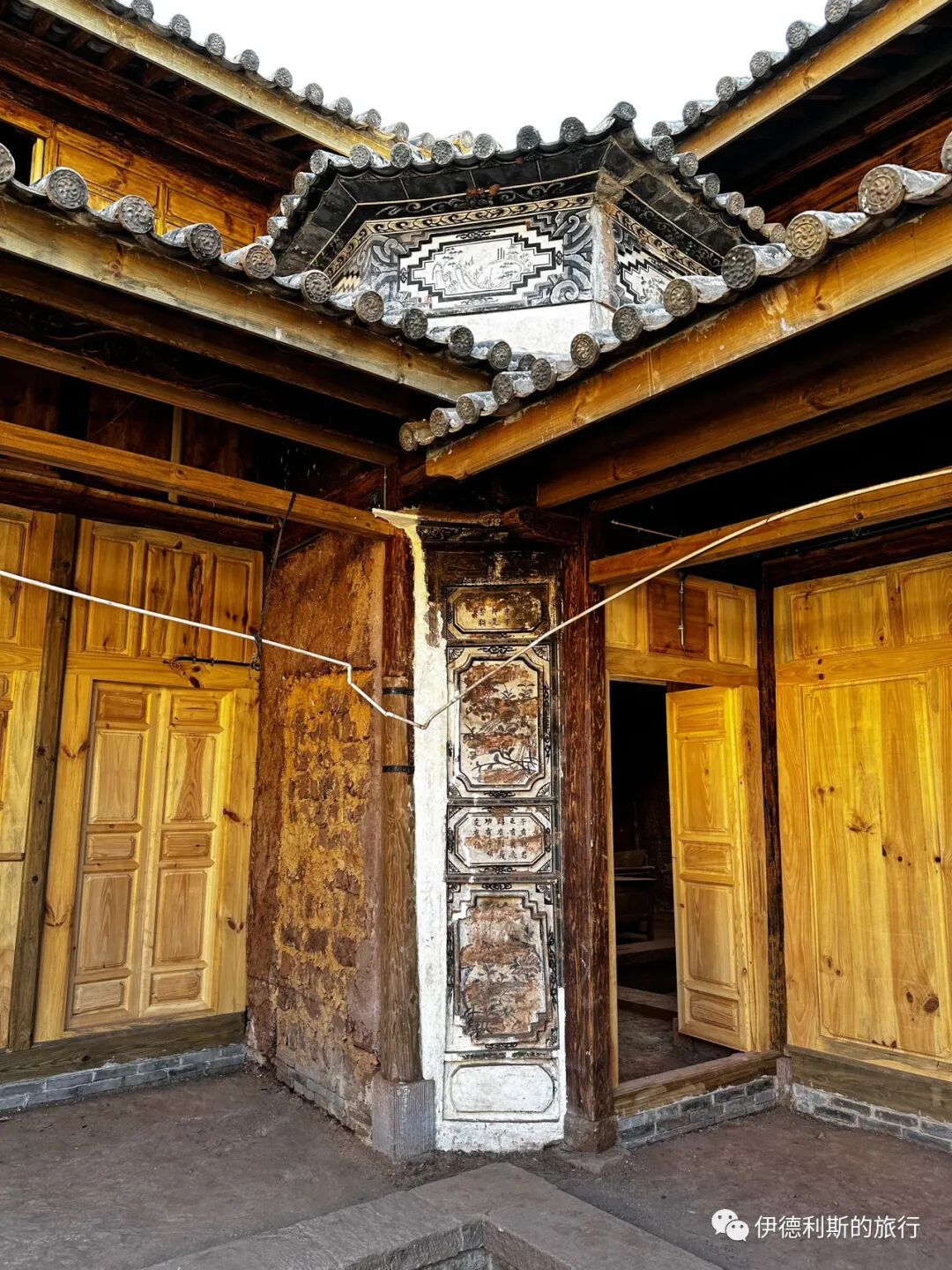
Built in 1945, the Ma Ruqing Courtyard consists of two watchtowers and three courtyards. At the main gate stands a three-story hexagonal watchtower, with a passageway on the ground floor. The east courtyard has a three-room-and-a-screen-wall (sanfang yizhaobi) layout, the west courtyard has a four-sided-enclosure-with-five-courtyards (sihe wutianjing) layout, and the middle courtyard serves as a garden, enclosed by the east and west halls and the north watchtower.
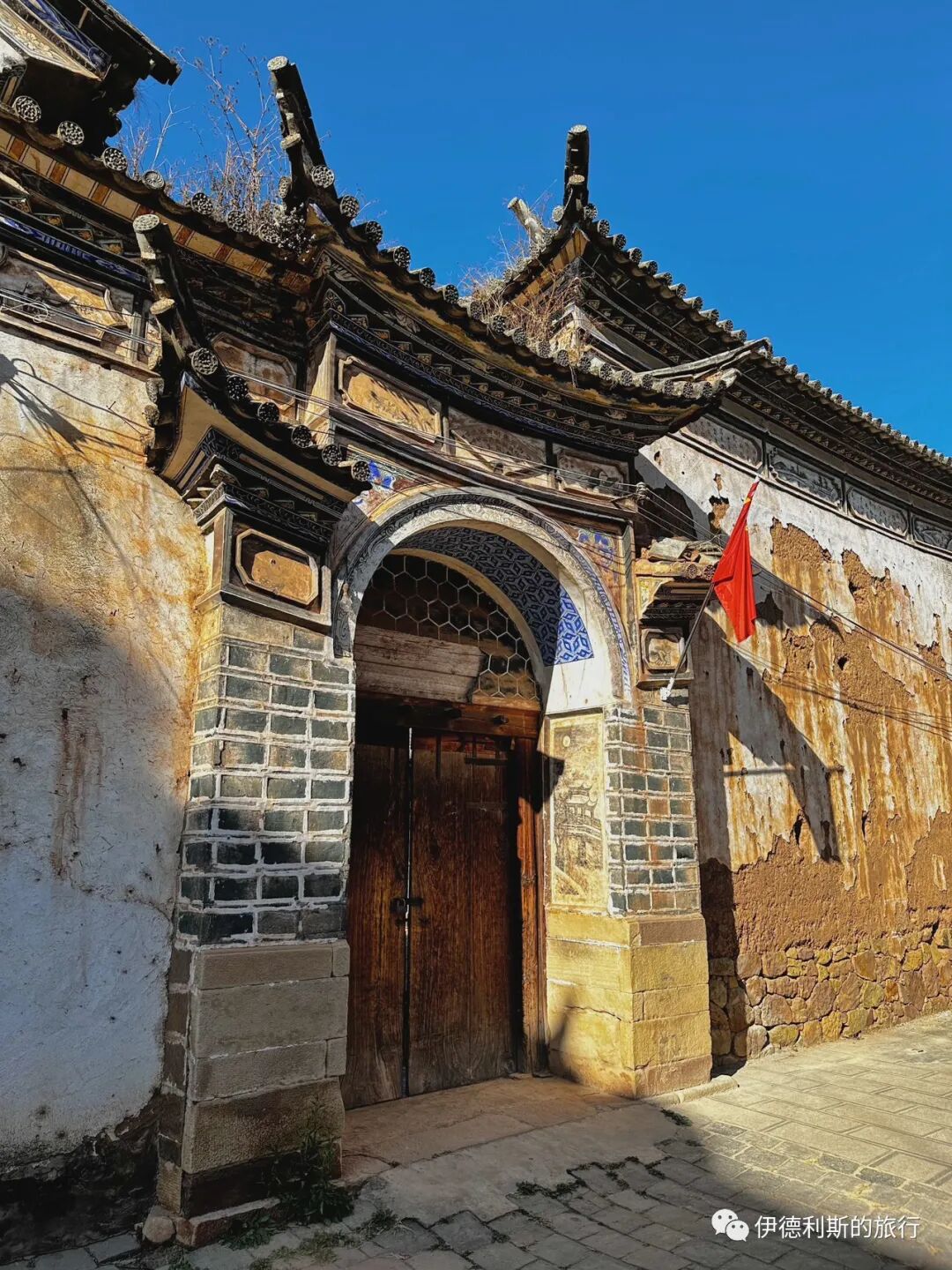
After Ma Ruqing followed his brothers Ma Ruji and Ma Ruqi to settle in Thailand in the 1950s, the Ma Ruqing Courtyard was nationalized. Today, the west courtyard remains public property, while the middle and east courtyards were bought by local Hui Muslims. When I first visited in 2017, I could not enter the courtyard because it was under renovation. This time, a friend (dosti) living in the middle courtyard led me inside to visit the west courtyard. According to the dosti, Donglianhua Village recently cleared and restored the west courtyard, removing parts added after the 1950s. It is not yet decided when it will open to the public.
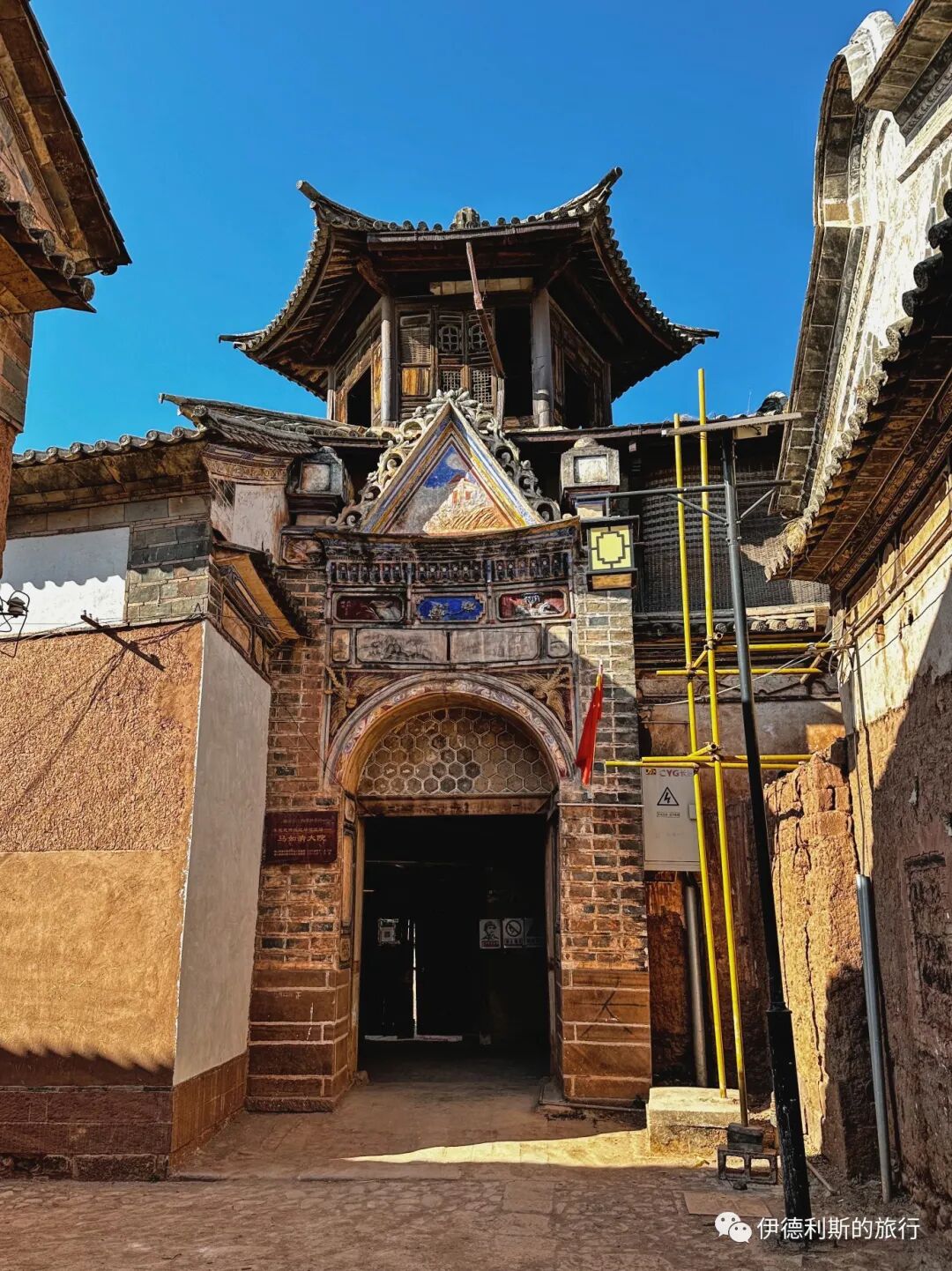
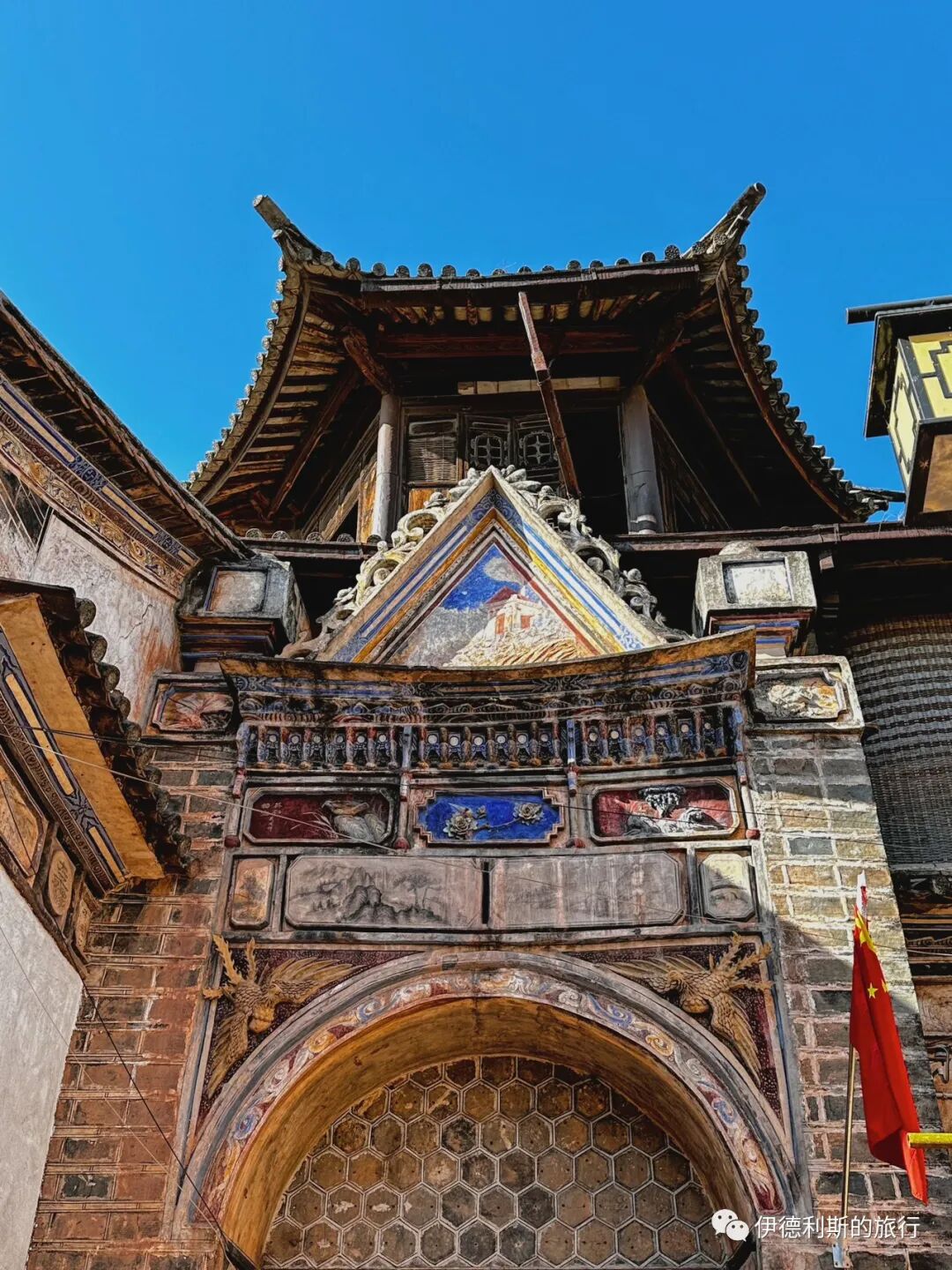
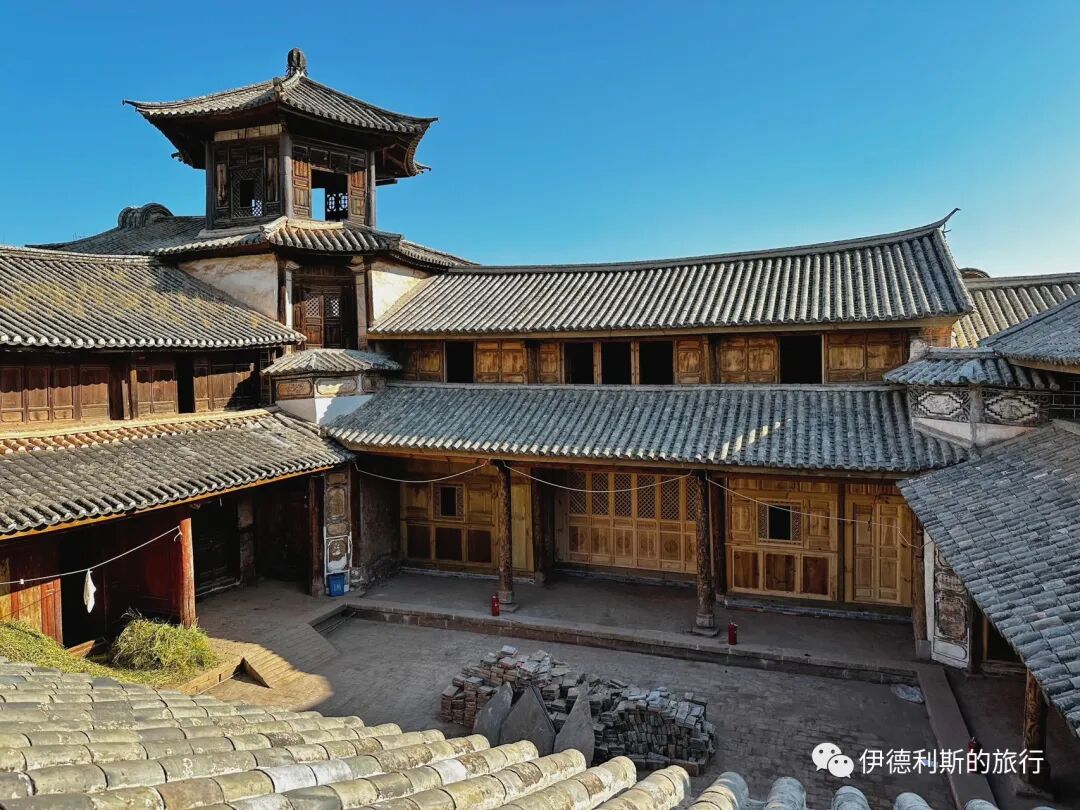
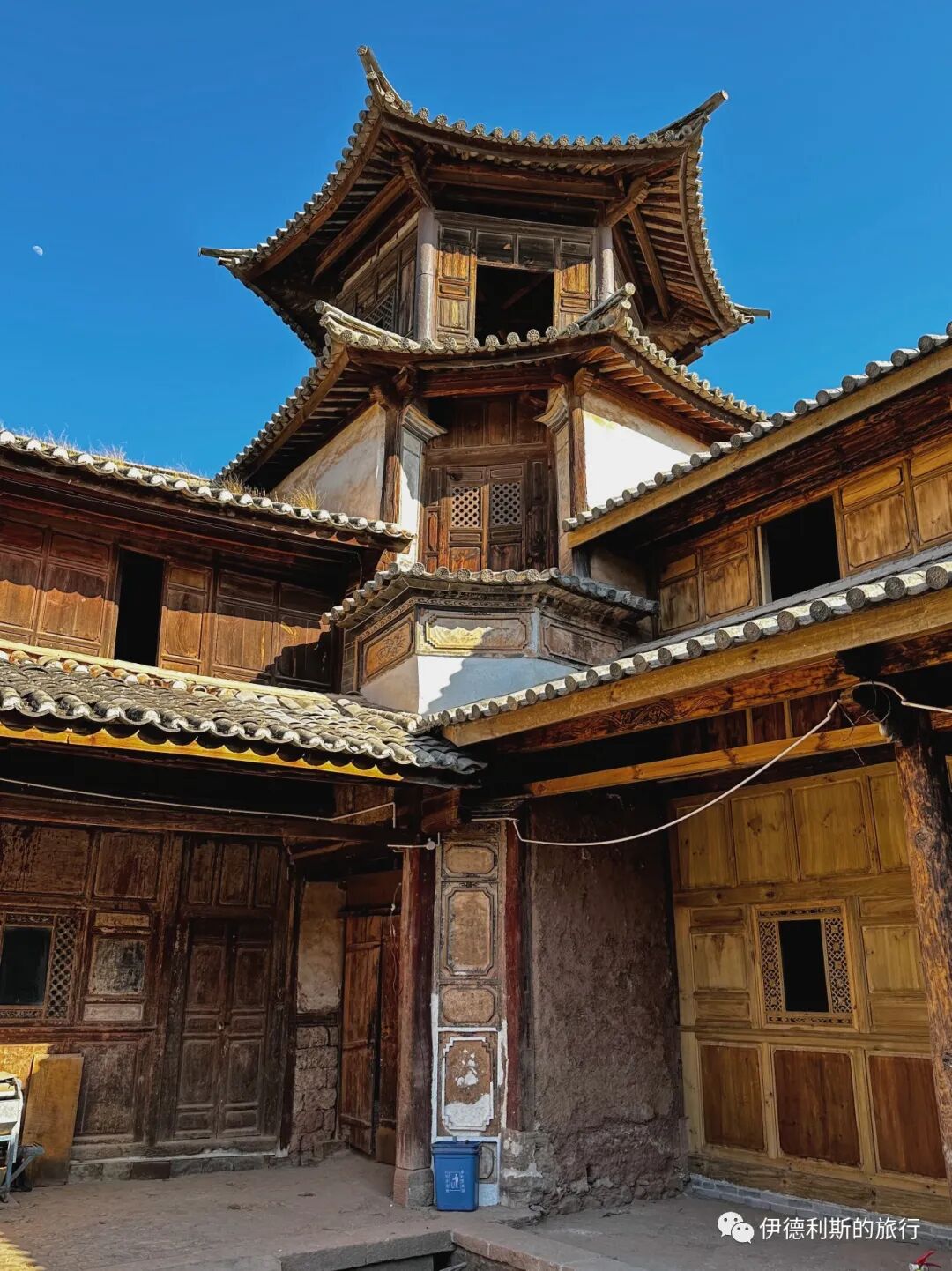
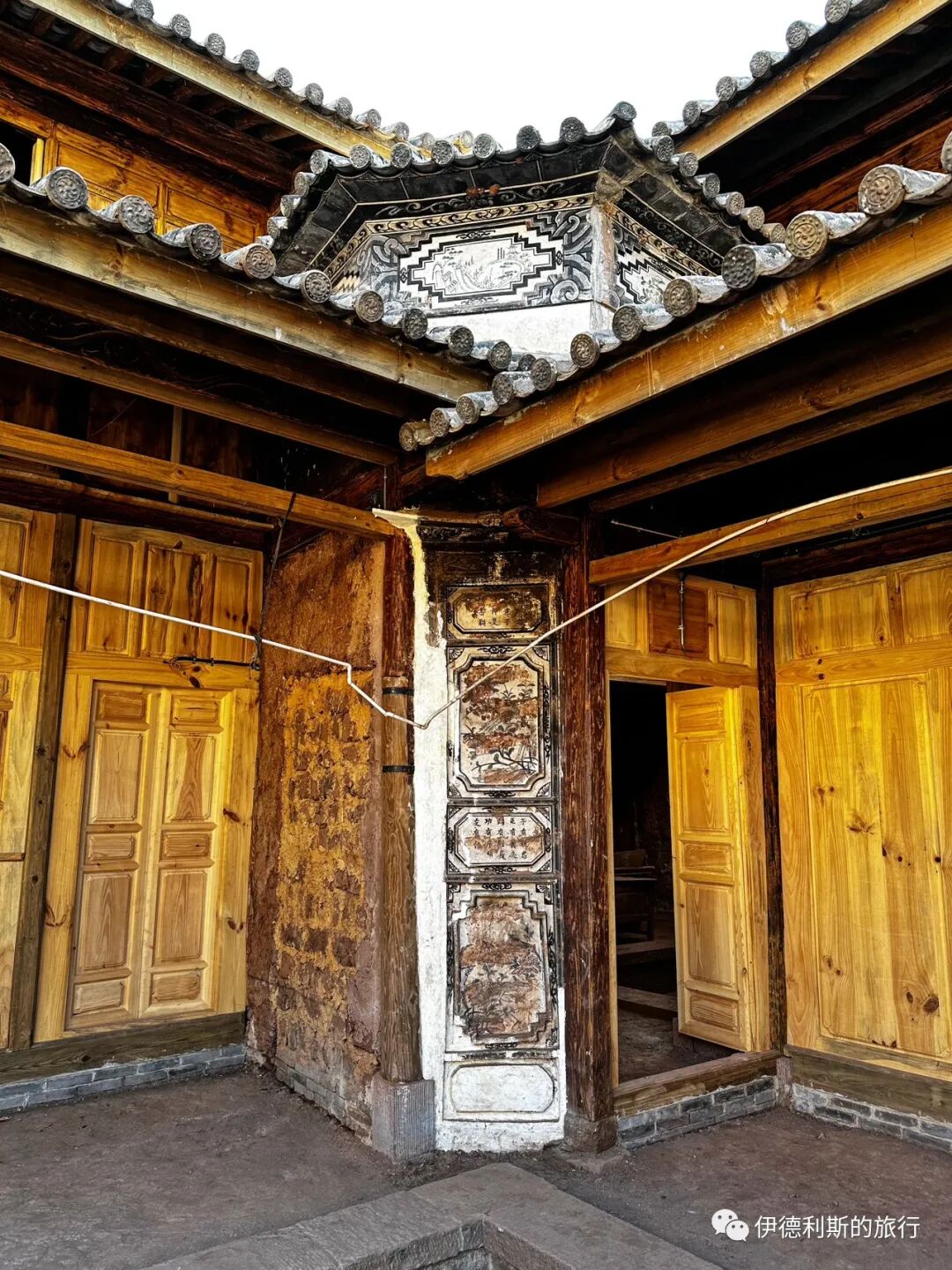
In the middle courtyard of the Ma Ruqing compound, you can see a three-story watchtower right at the entrance, which was once where the Ma family received guests. One regret this time was that the people in the east courtyard were not home, so I could not go in. It looks like I will have to visit a third time.
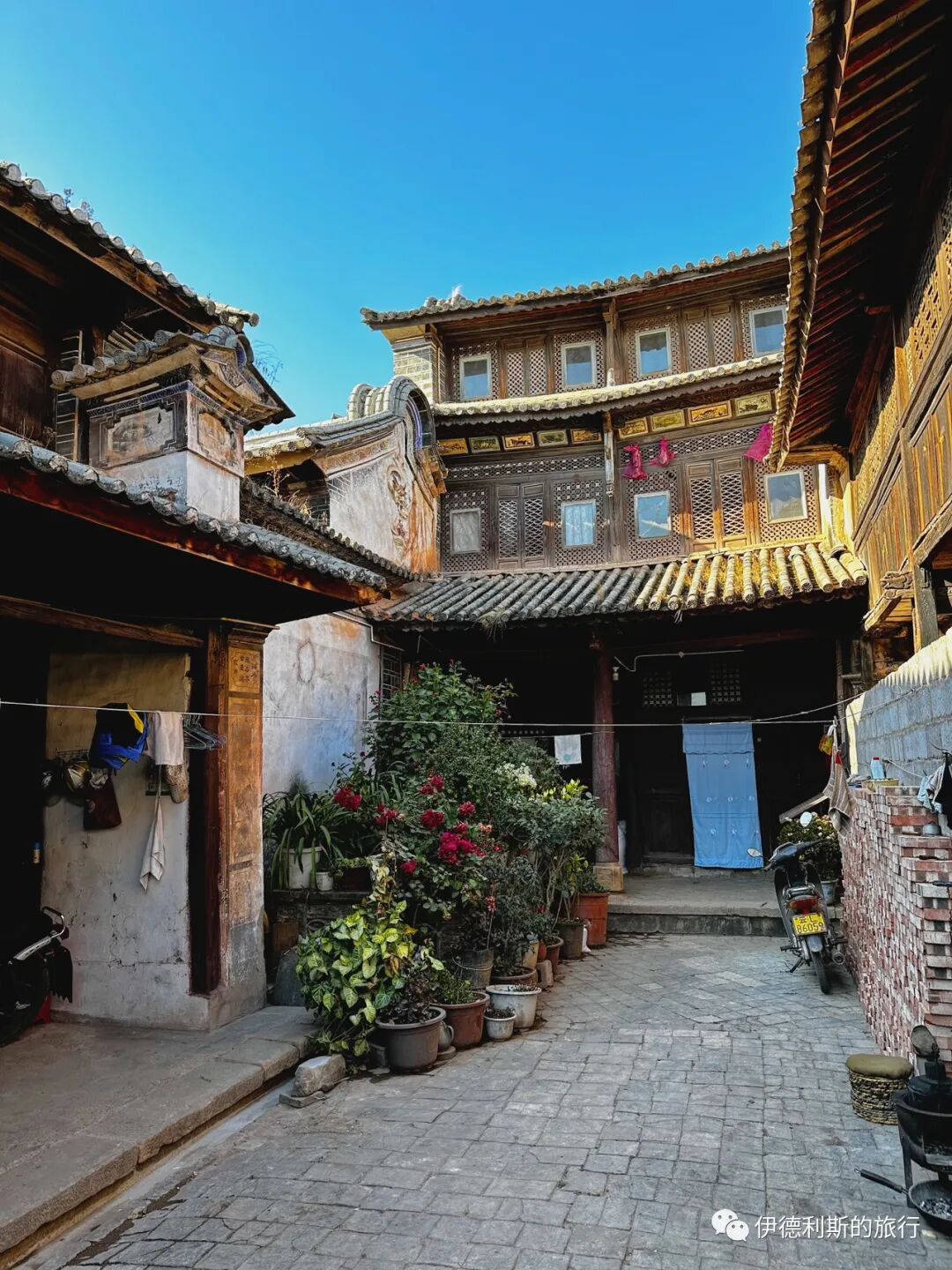
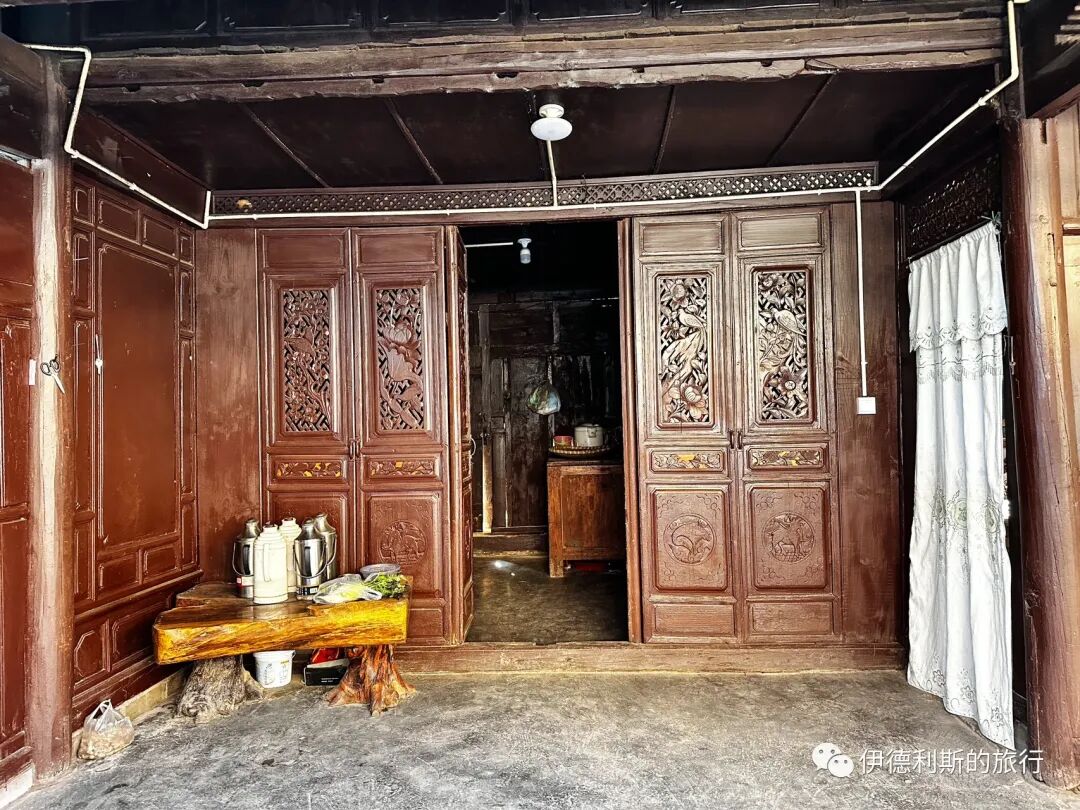
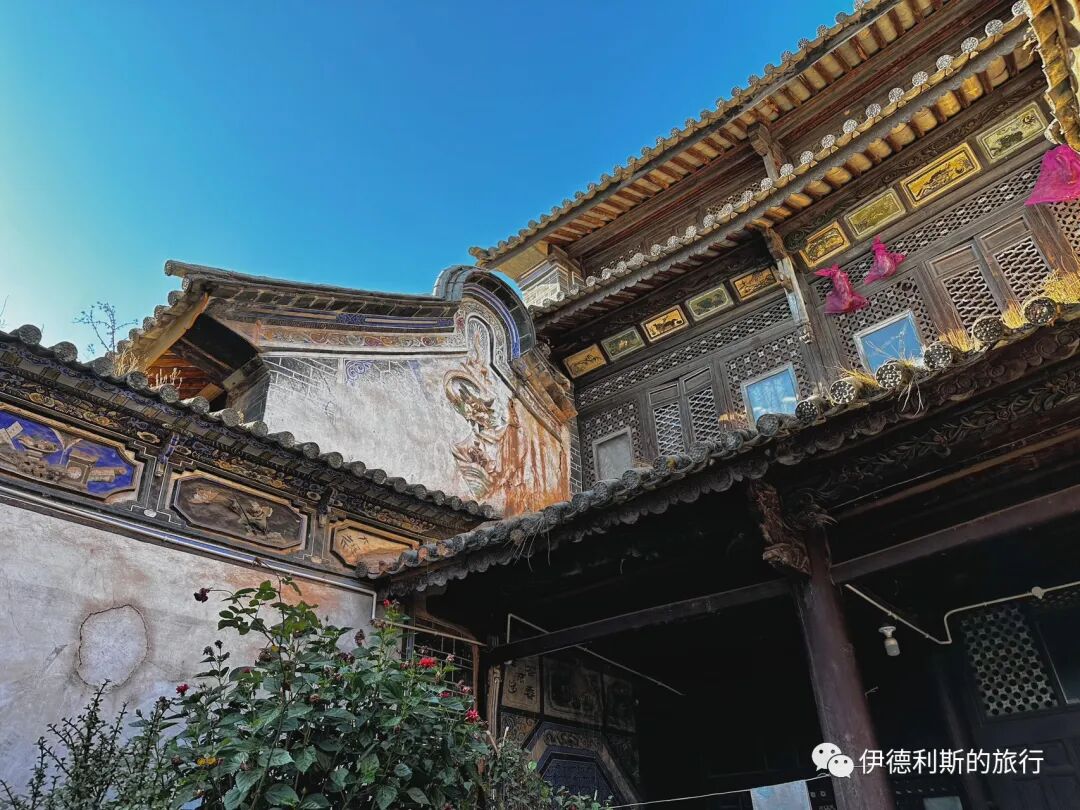
Ma Ruji Compound
Built in 1941, the Ma Ruji compound is the most important Hui Muslim courtyard in Weishan and a witness to the prosperity of the Yunnan horse caravans (mabang). Ma Ruji was born in Donglianhua Village in 1897. He was the eldest of ten Ma brothers, so he was also called Uncle Ma (Ma Daye). In the late Republic of China era, Ma Ruji was the most famous local caravan leader (maguotou). He also served as a Menghua (Weishan) County councilor and head of Yongji Township (Yongjian Town), making him very wealthy and influential.
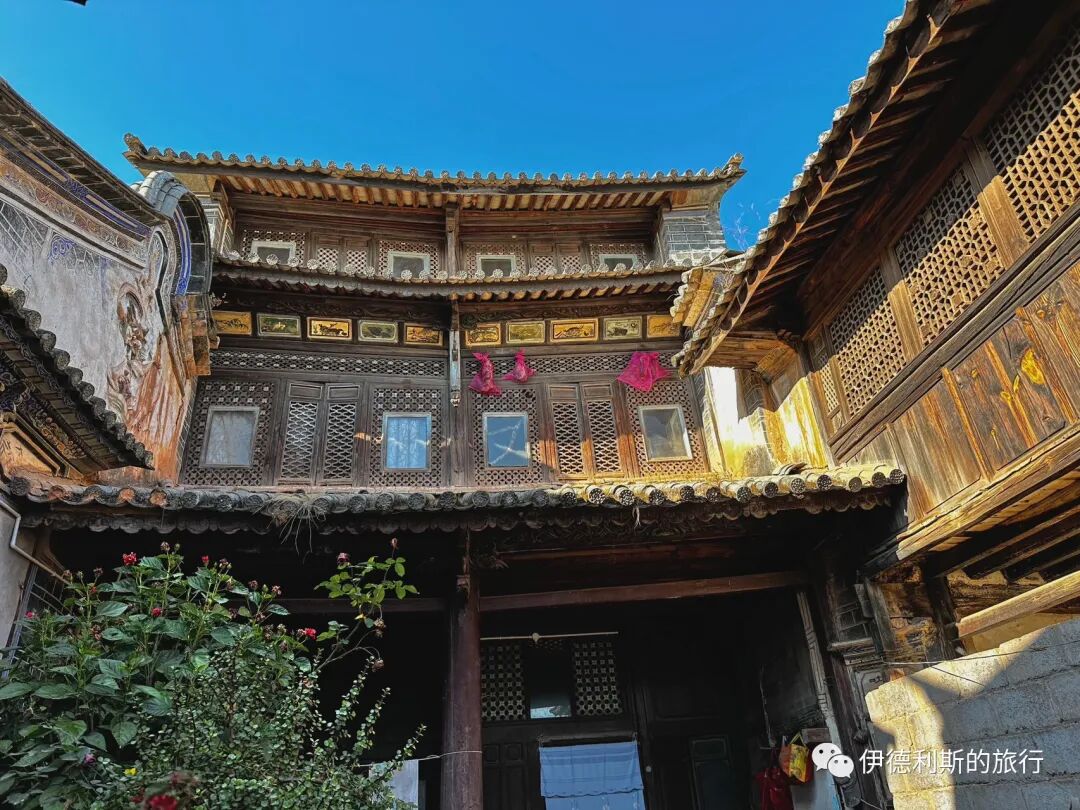
The Ma Ruji compound consists of three interconnected courtyards: the north, south, and west. The north and south courtyards were Ma Ruji's residence. They combine the traditional Dali architectural styles of a four-sided courtyard with five patios (sihe wutianjing) and a three-room layout with a screen wall (sanfang yizhaobi) to form a six-courtyard harmony (liuhe tongchun) layout.
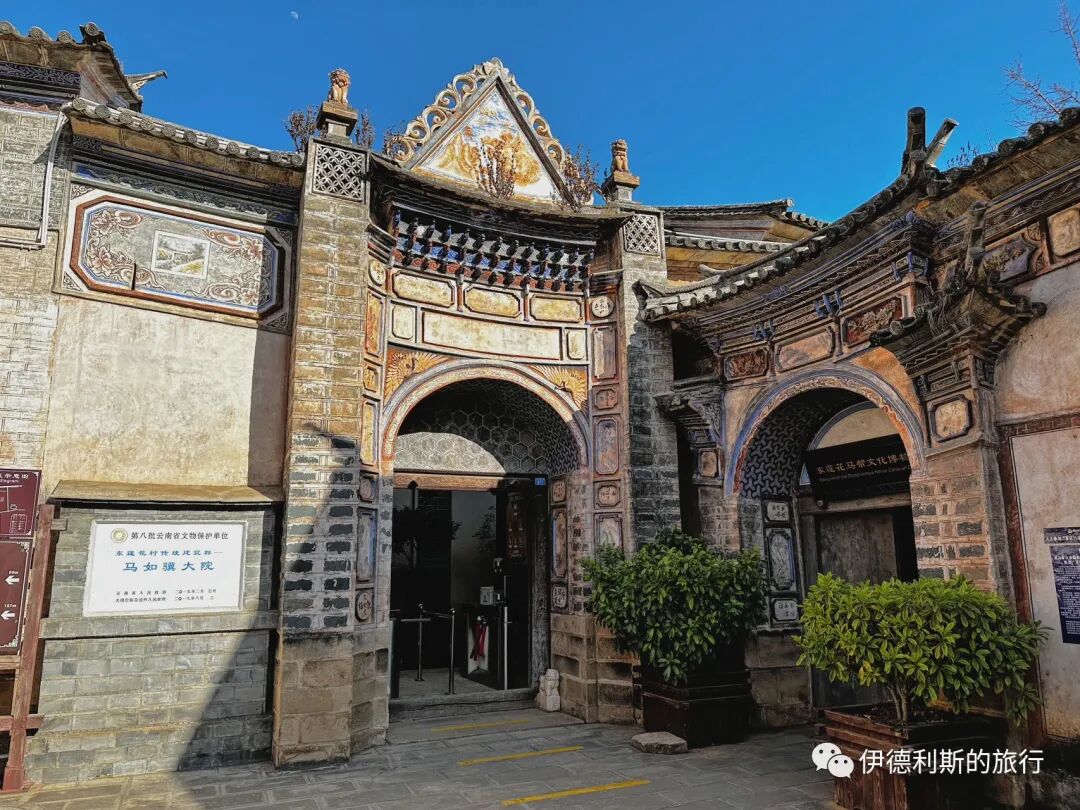
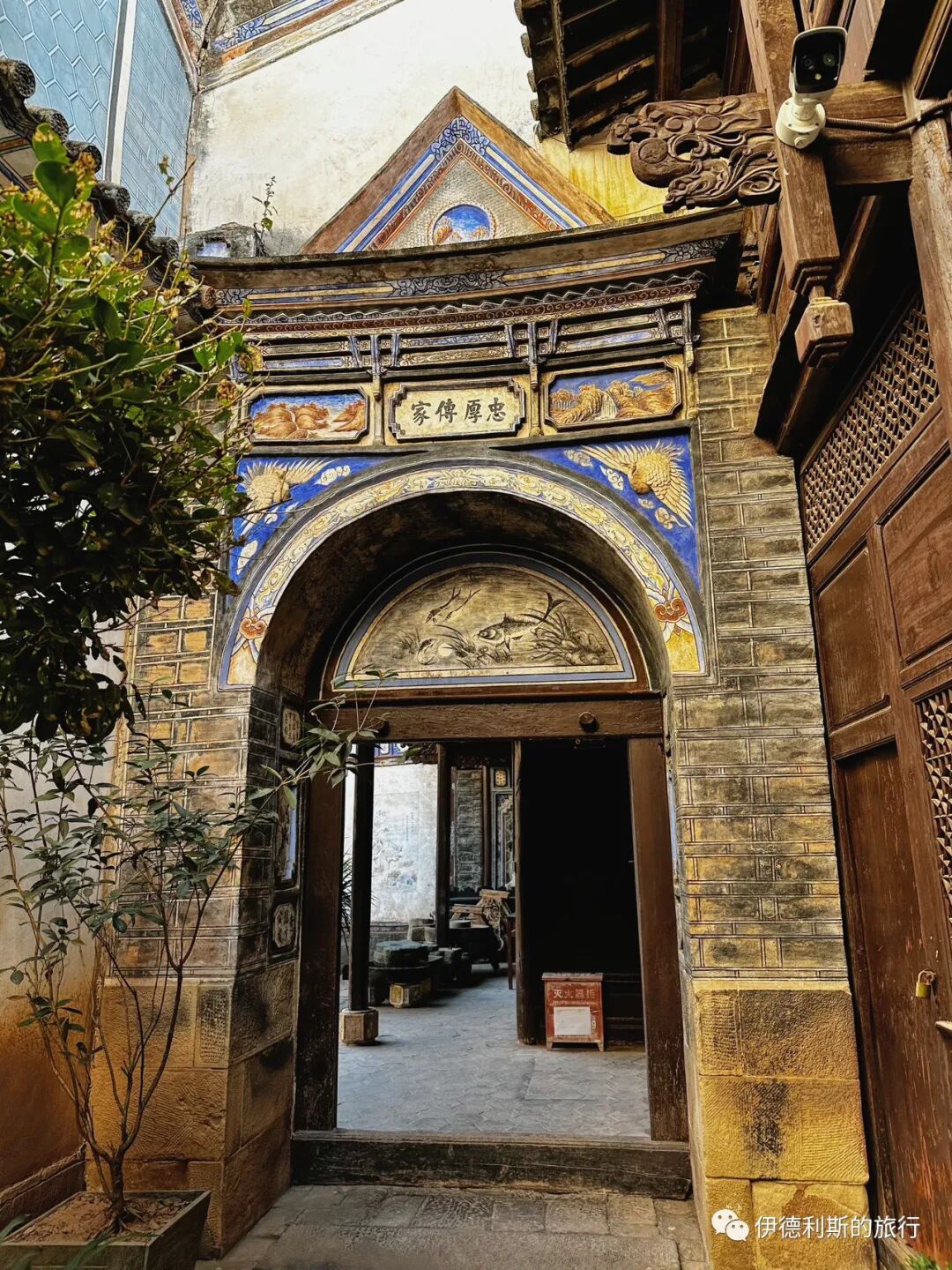
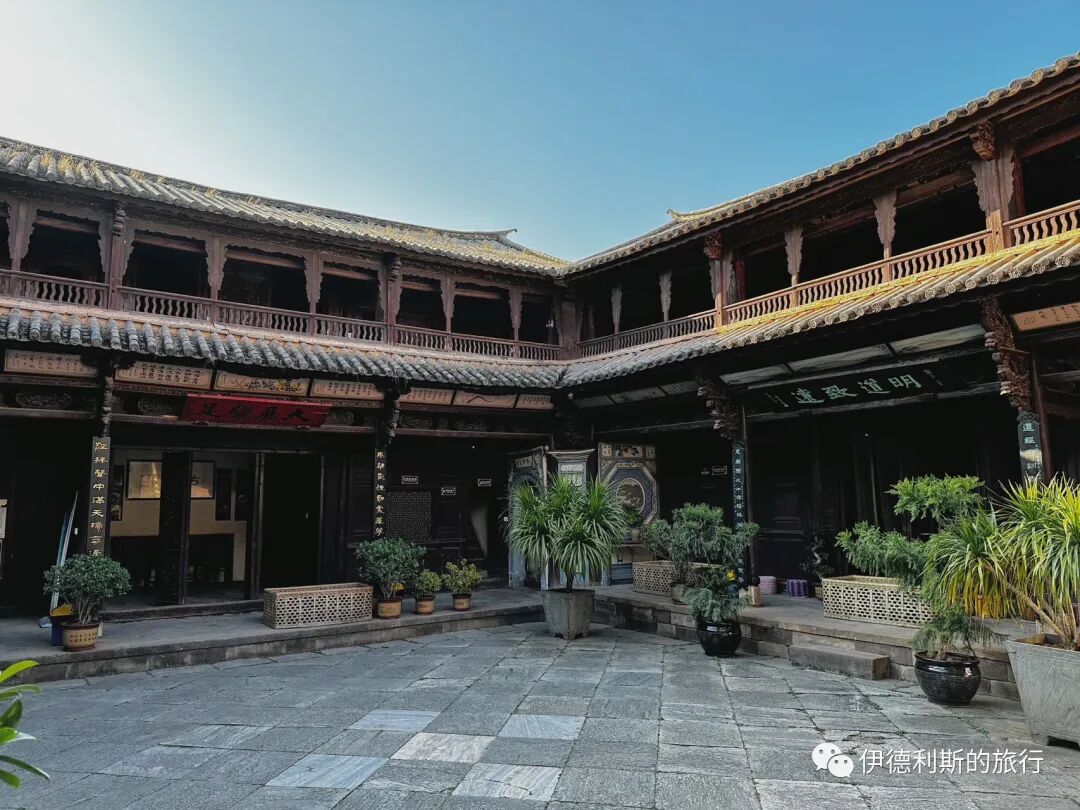
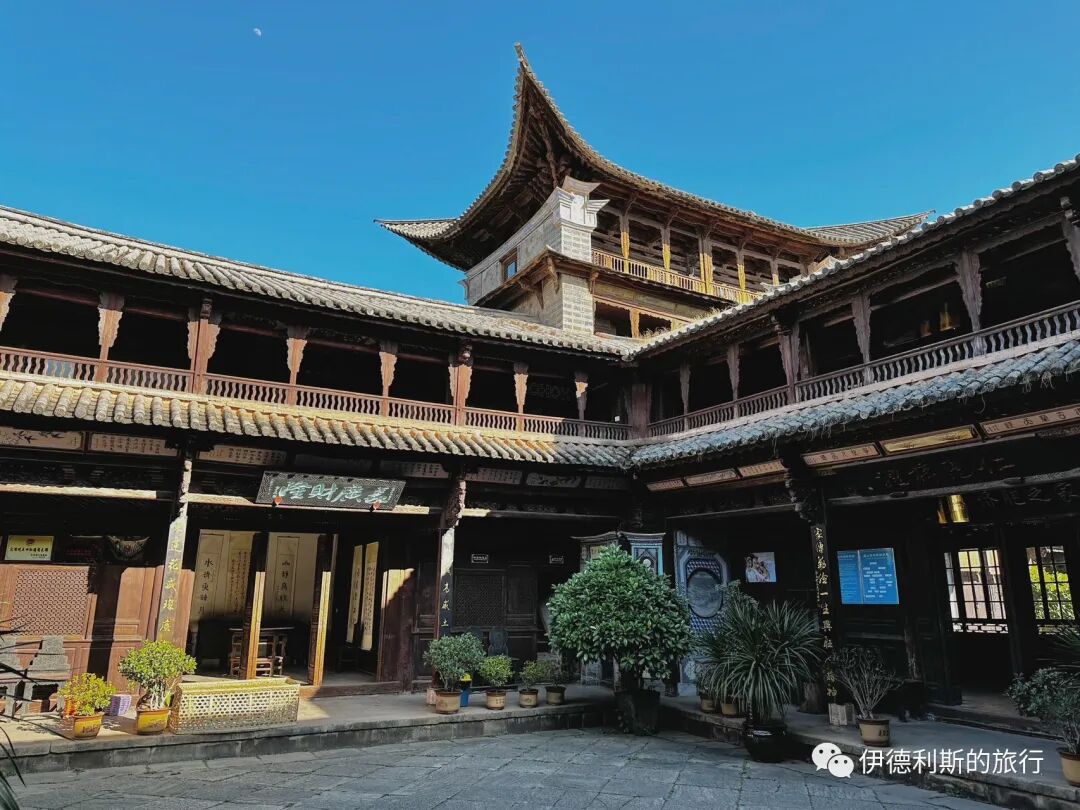
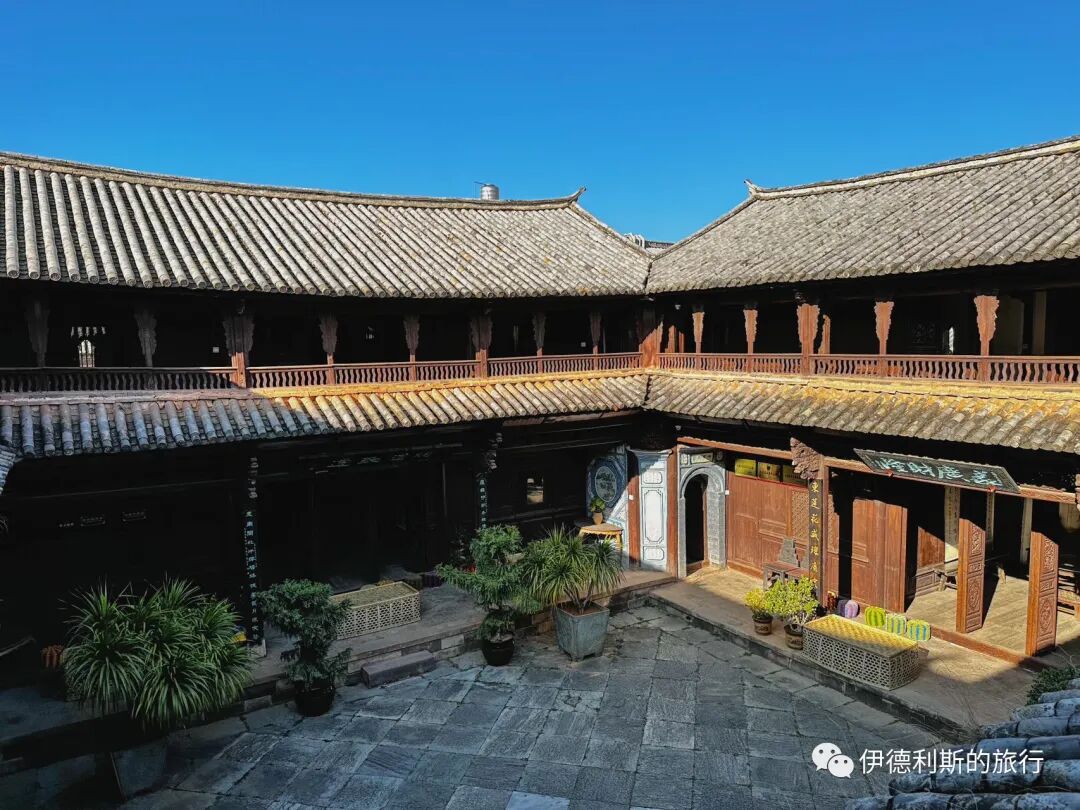
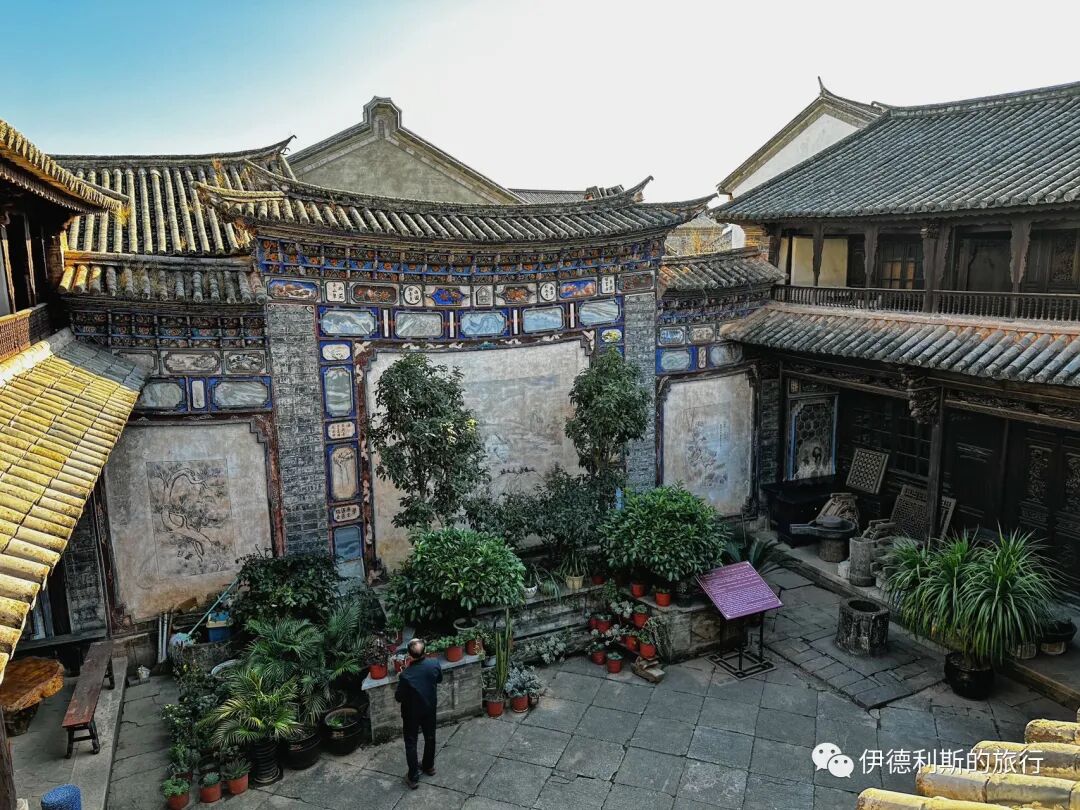
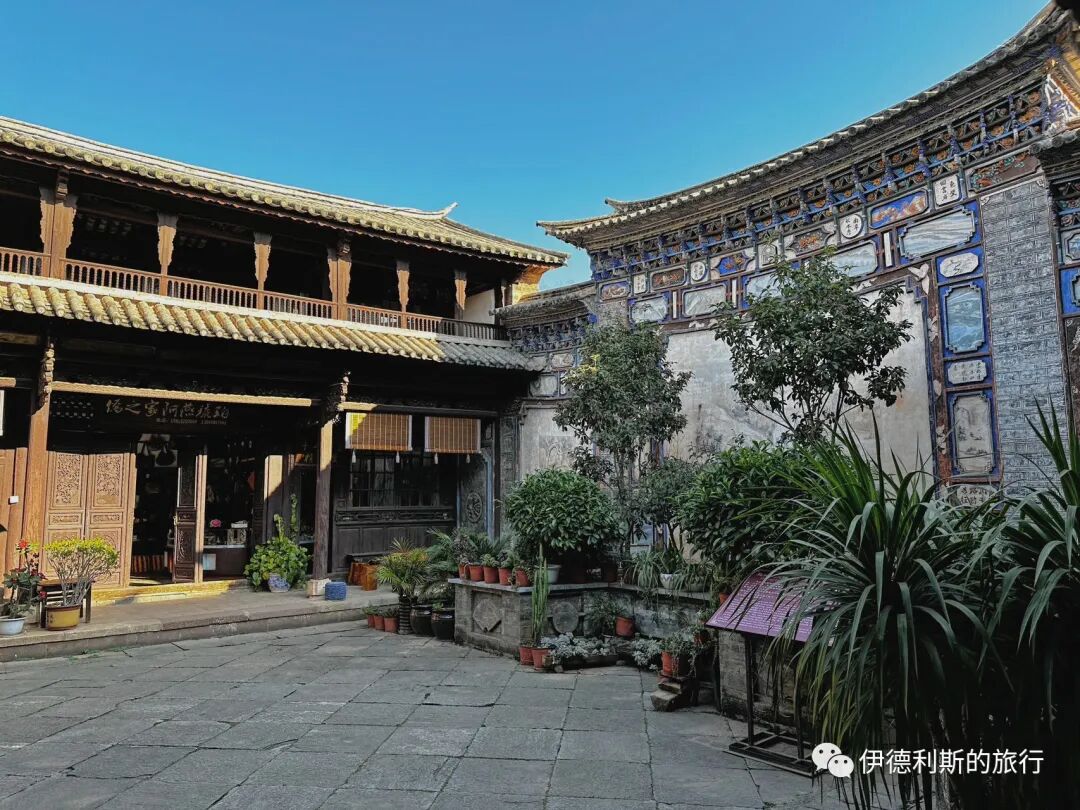
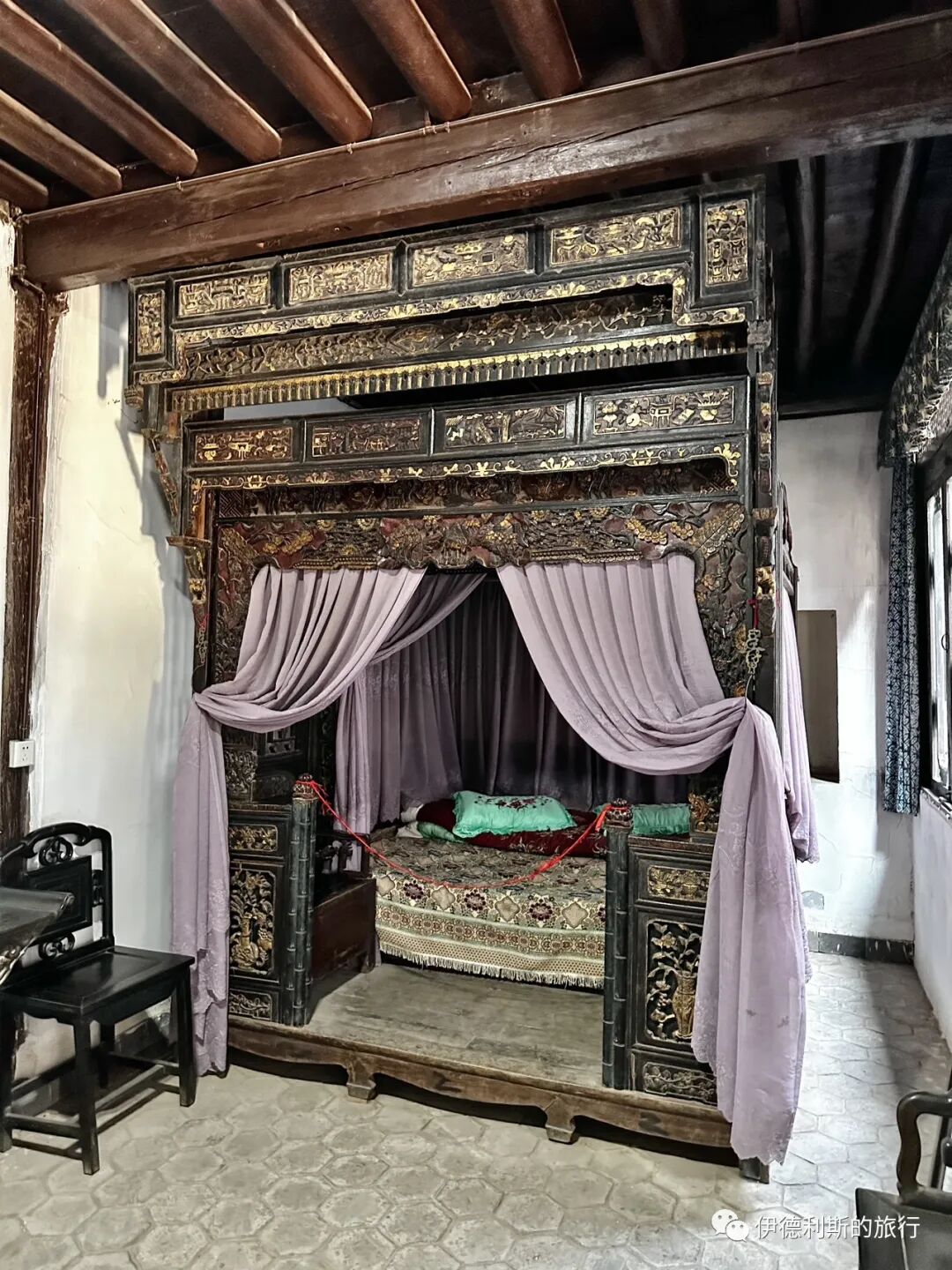
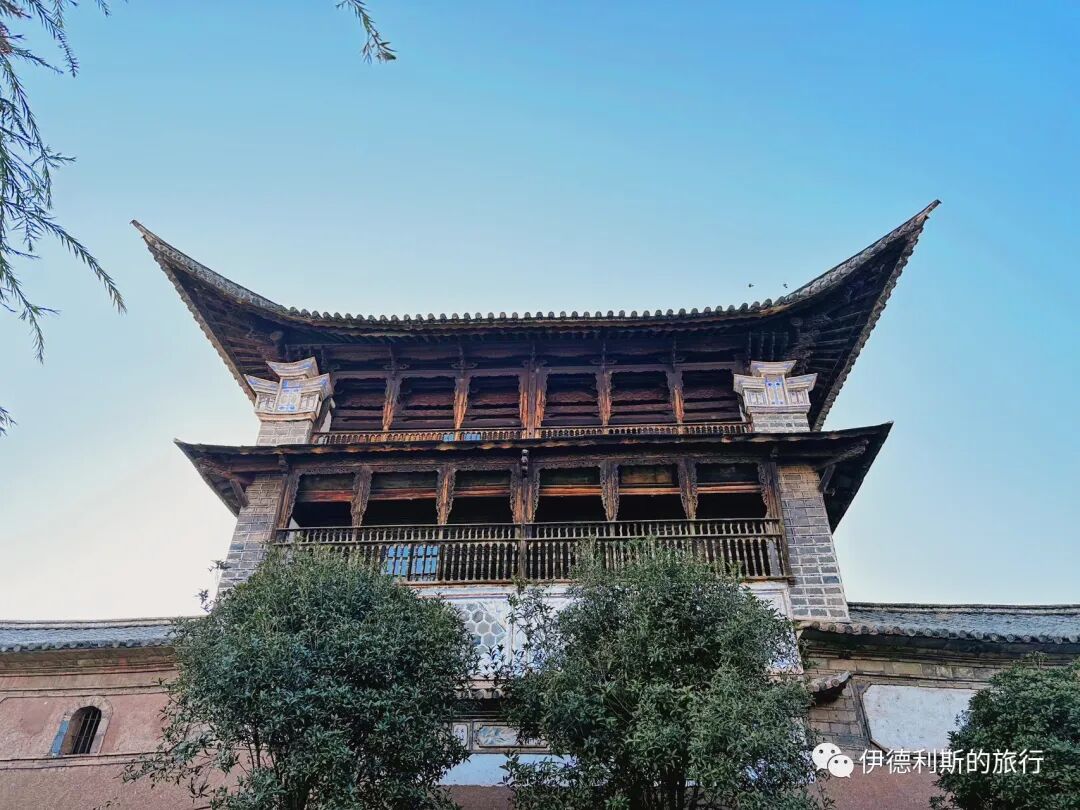
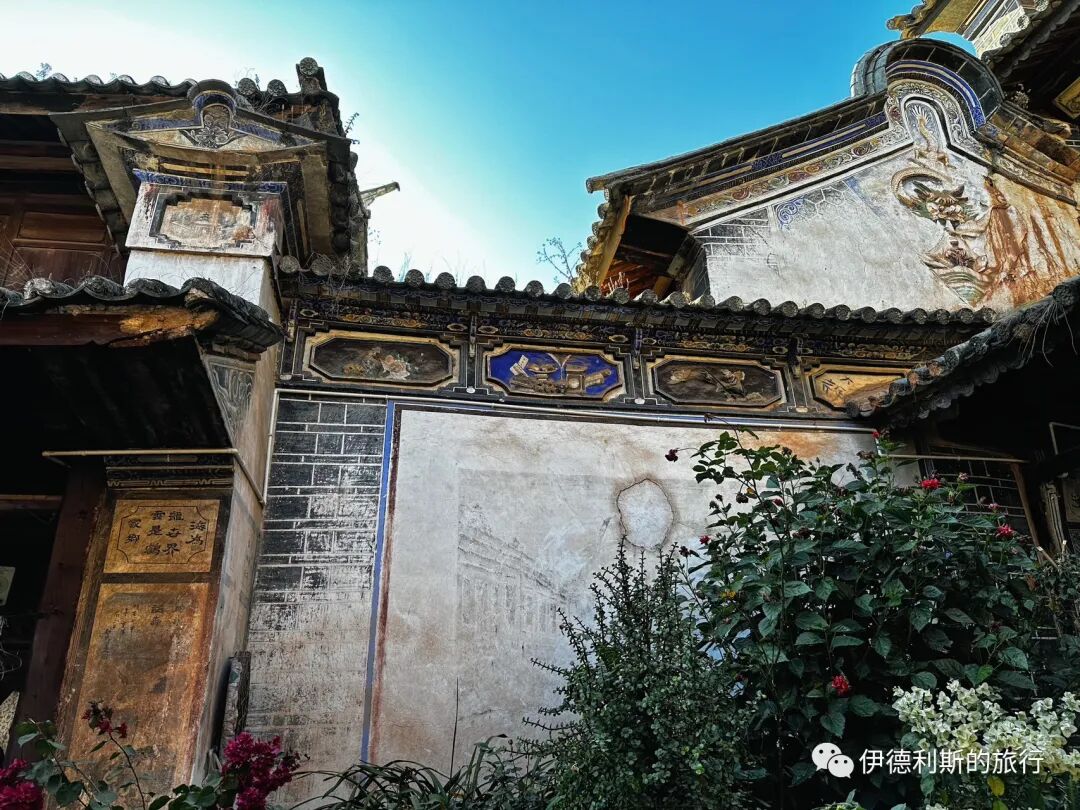
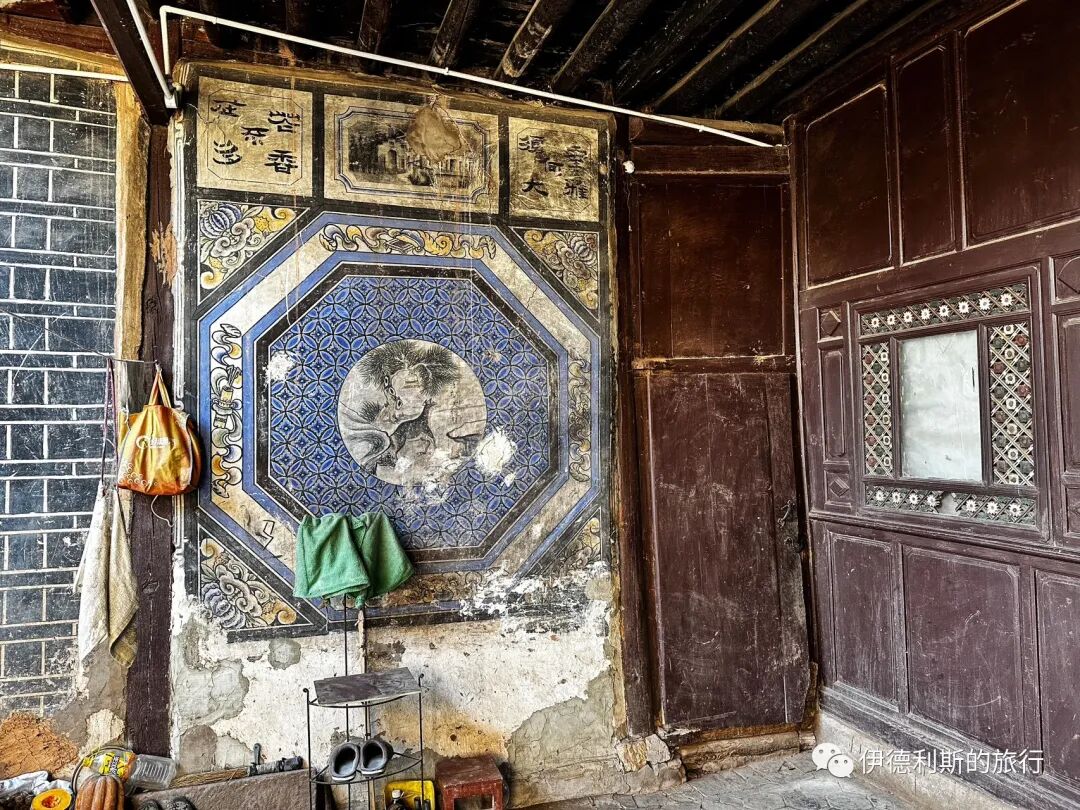
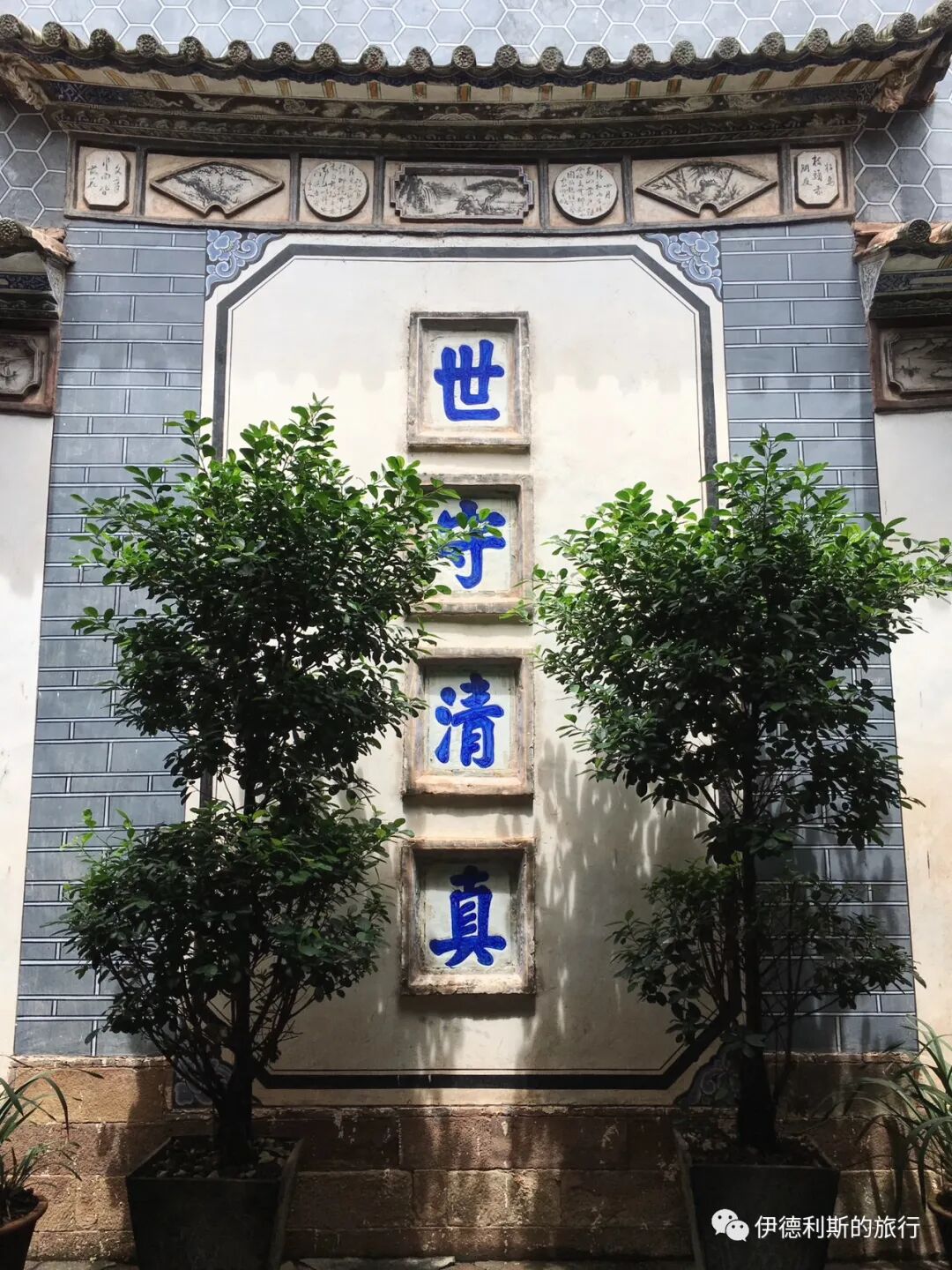
Inside the main gate of the north and south courtyards, the screen wall (yingbi) is inscribed with the words "Forever Uphold the Pure Truth" (shishou qingzhen). This is the main difference between the traditional courtyards of the local Bai people and the Hui Muslims.
Visiting the Ma Ruji compound in 2017 and 2023, the biggest change is that the Arabic calligraphy unique to Weishan, Dali, which was on display indoors, has been replaced entirely by Chinese calligraphy. The original Arabic calligraphy had both exquisite artistic value and precious historical significance. These calligraphic works were presented to Ma Ruji in the autumn of 1945 by the then-Army General Bai Chongxi and the Menghua County Hui Muslim Anti-Japanese National Salvation Association.
In the 1930s, Long Yun selected caravan leaders (maguotou) from across the province to form the Long family horse caravan for trade with French merchants in Vietnam, and Ma Ruji was chosen to join. The Long family caravan traveled from Kunming through Baise and Guilin to trade in Vietnam. Once, while passing through Guilin, they happened to run into Bai Chongxi, who was celebrating his mother's birthday. Ma Ruji and his group were all invited as guests and received a warm welcome from Bai Chongxi, and from then on, Ma Ruji and Bai Chongxi became friends.
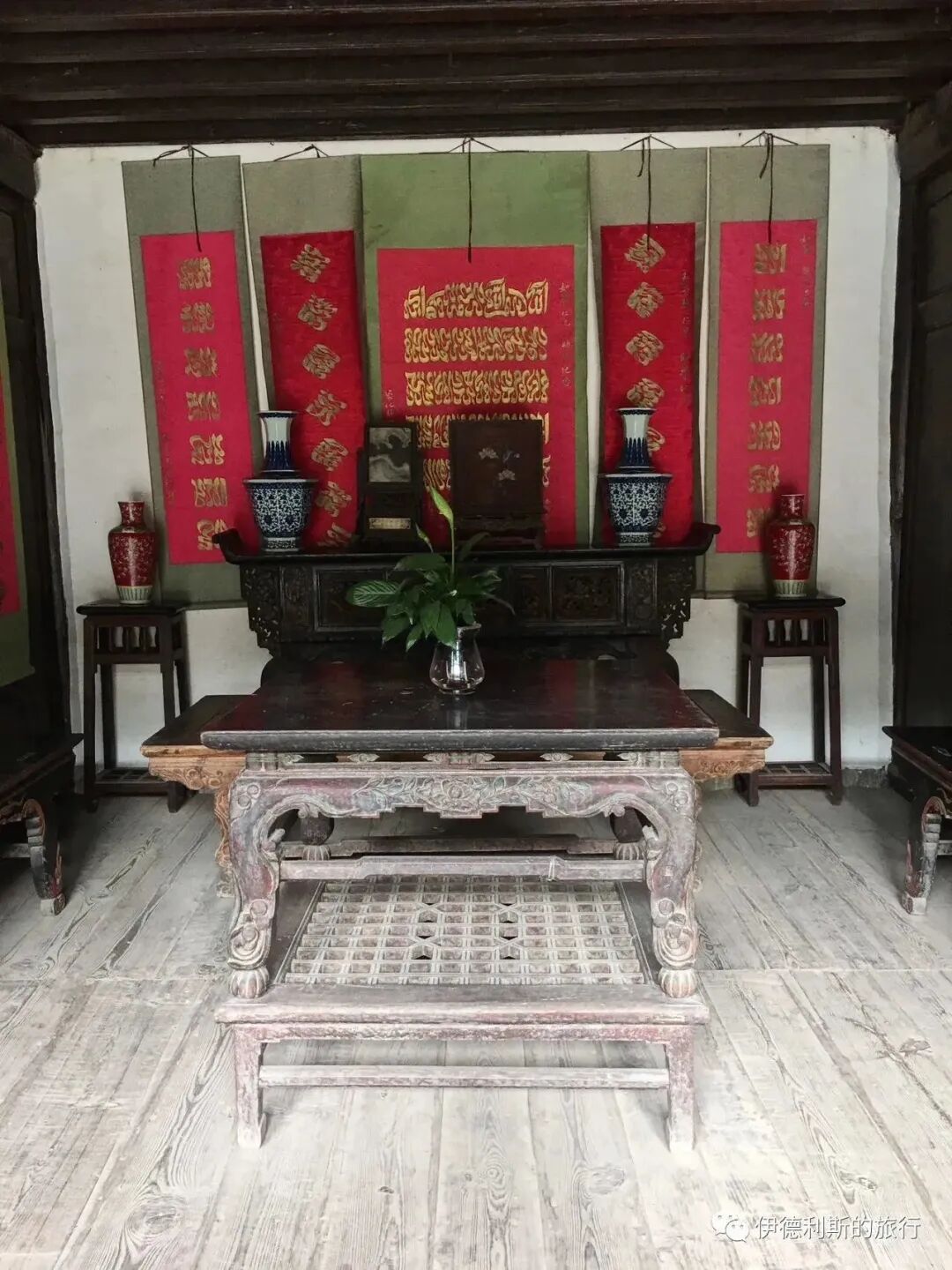
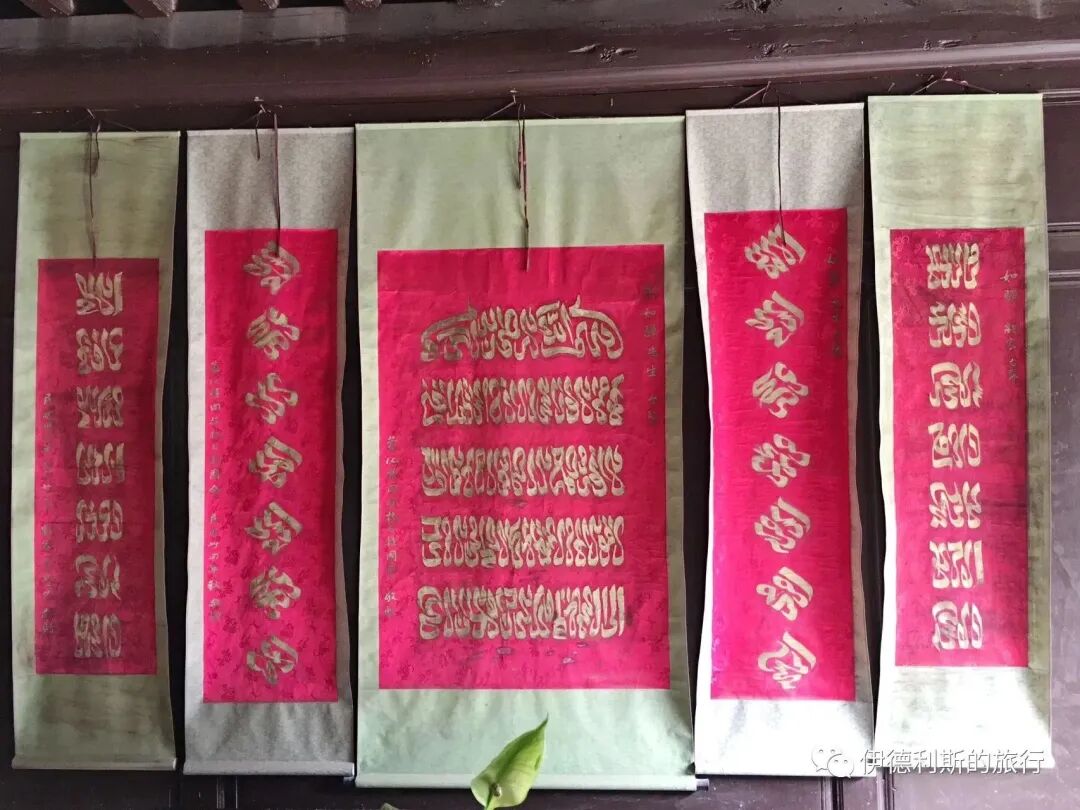
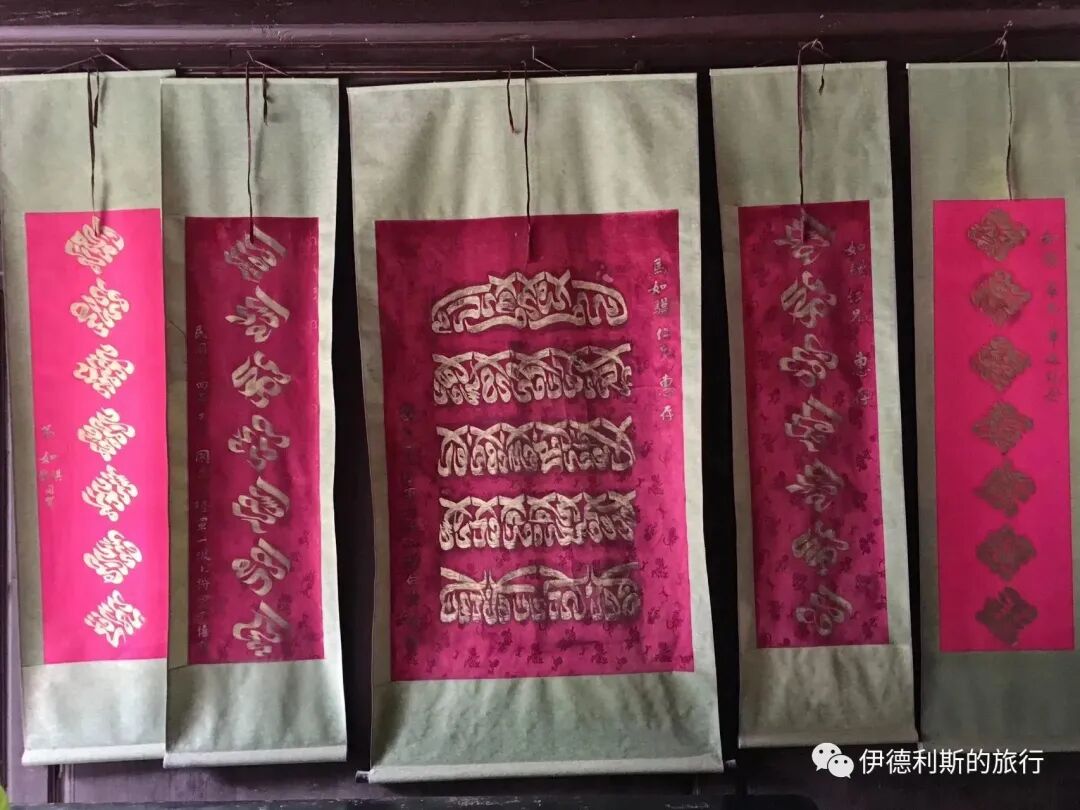
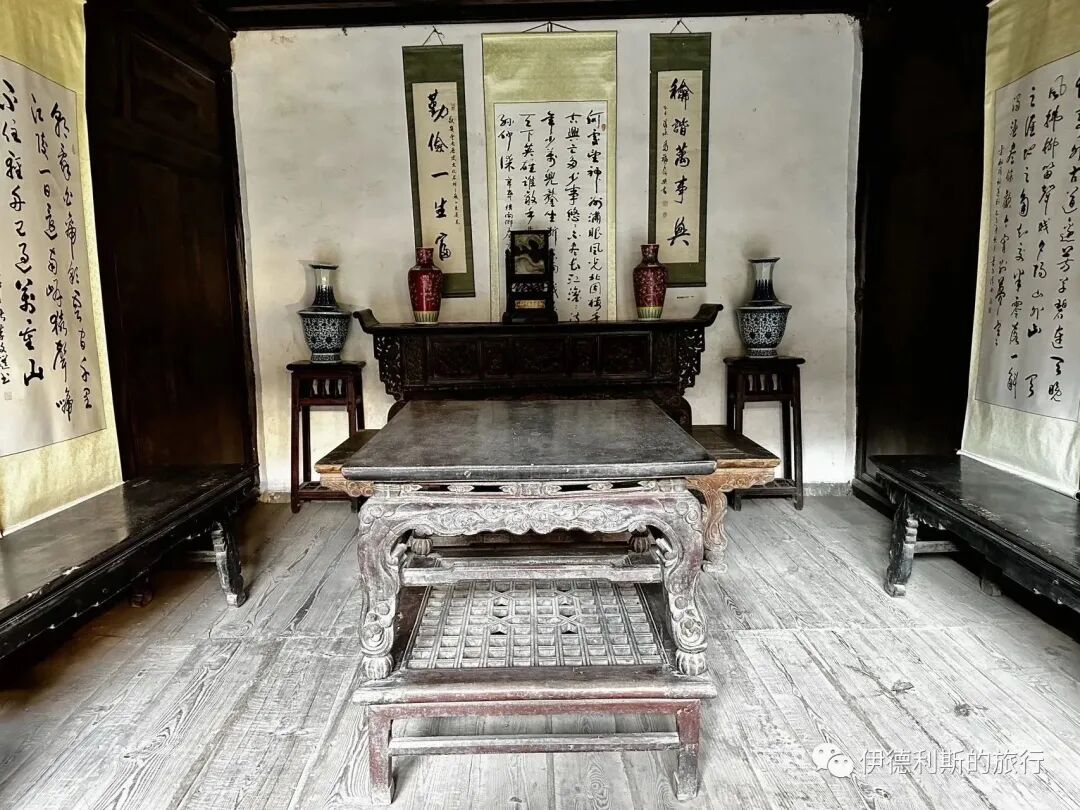
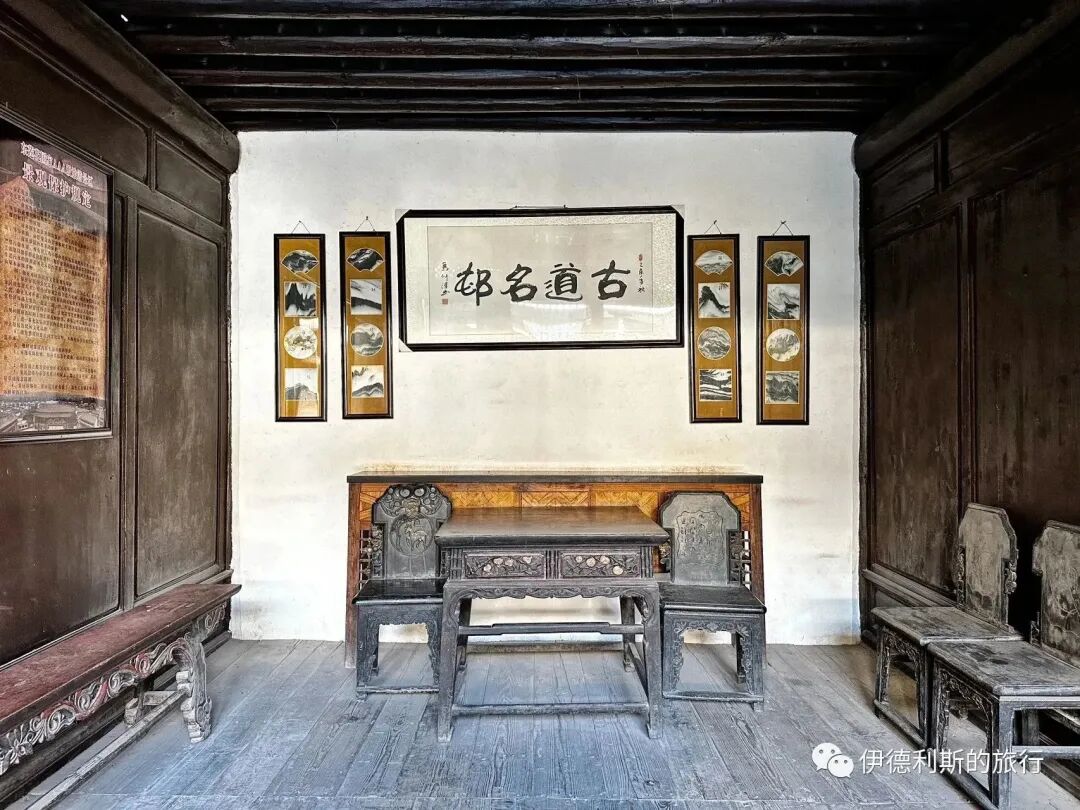
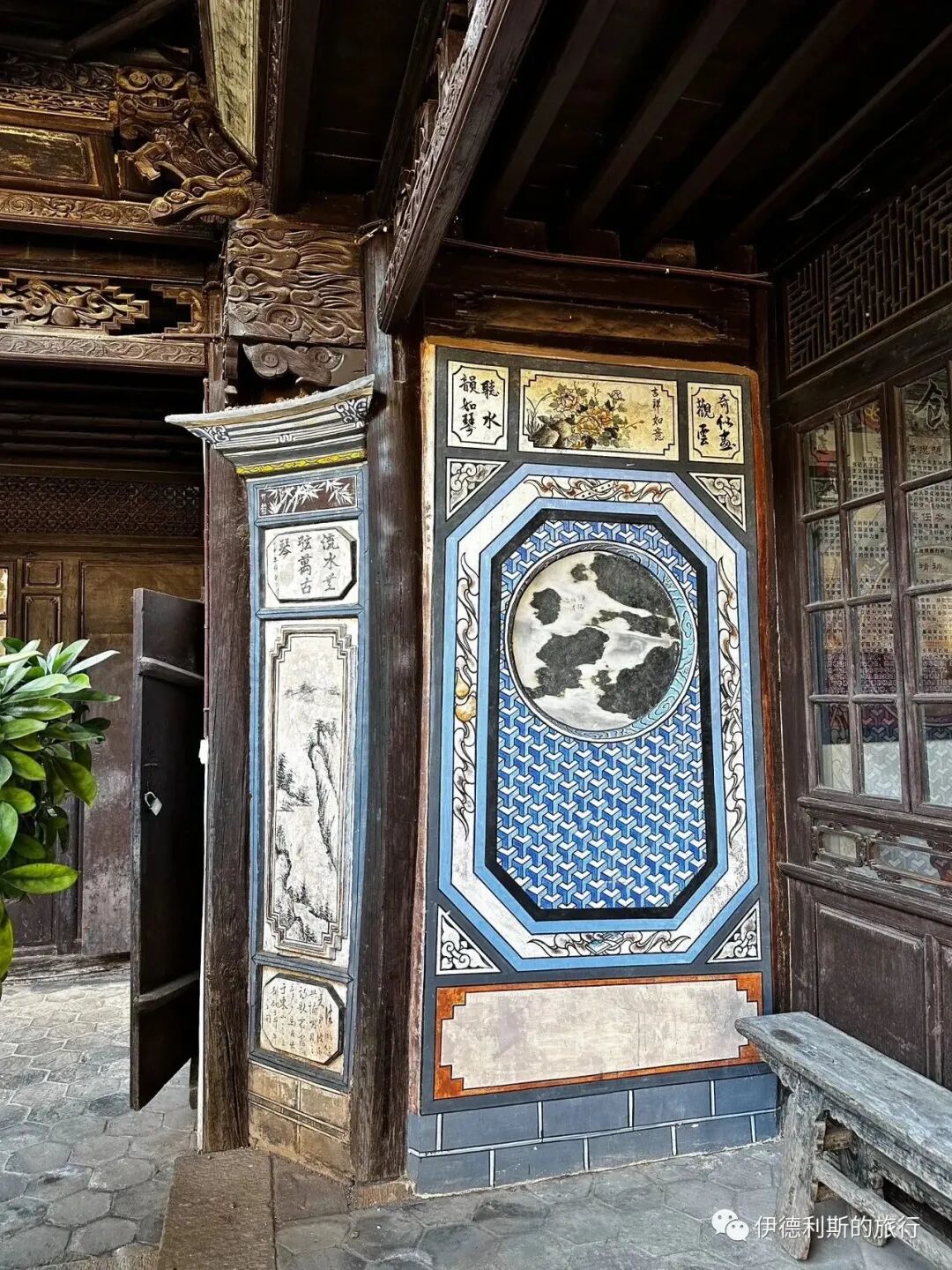
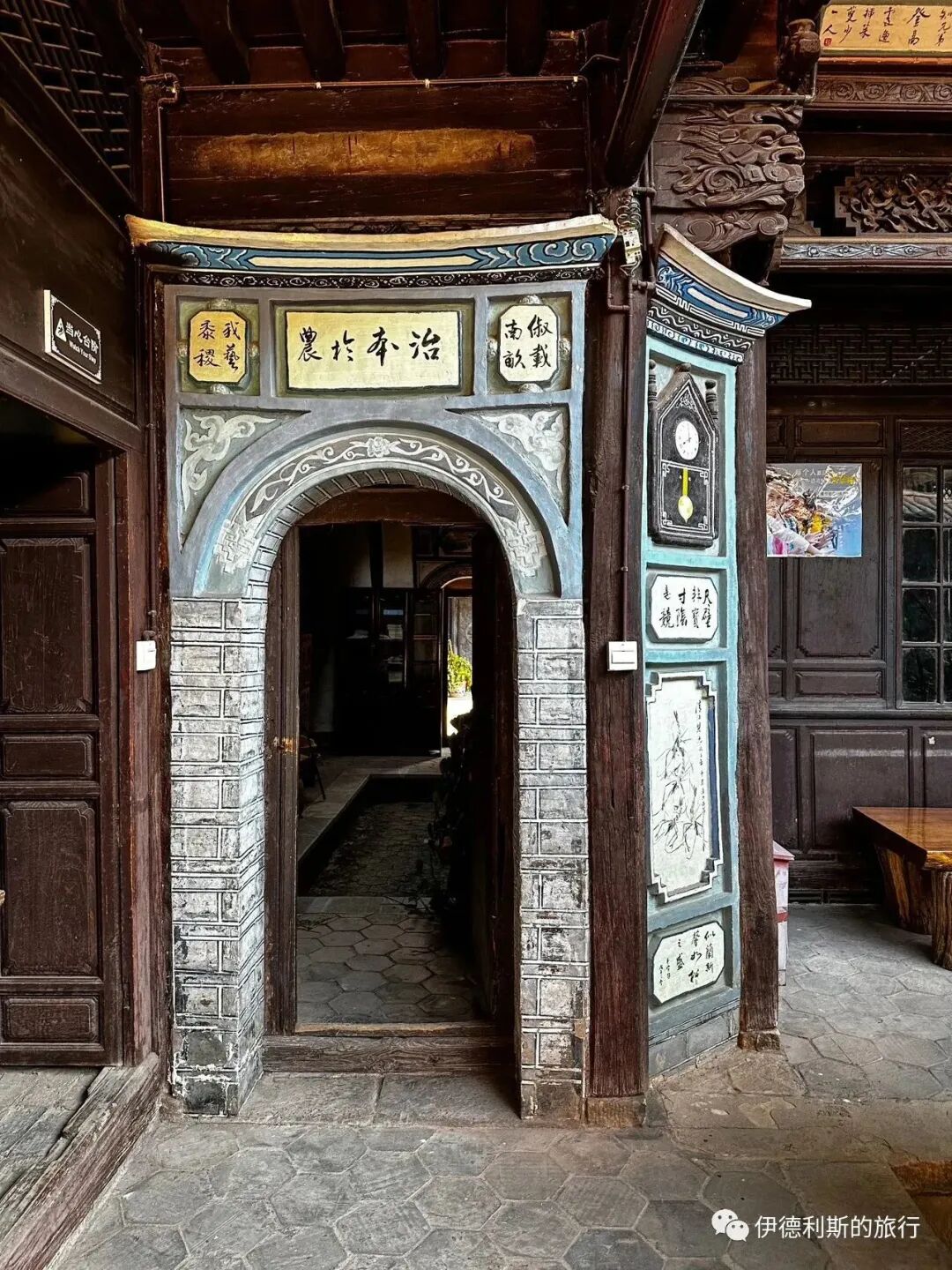
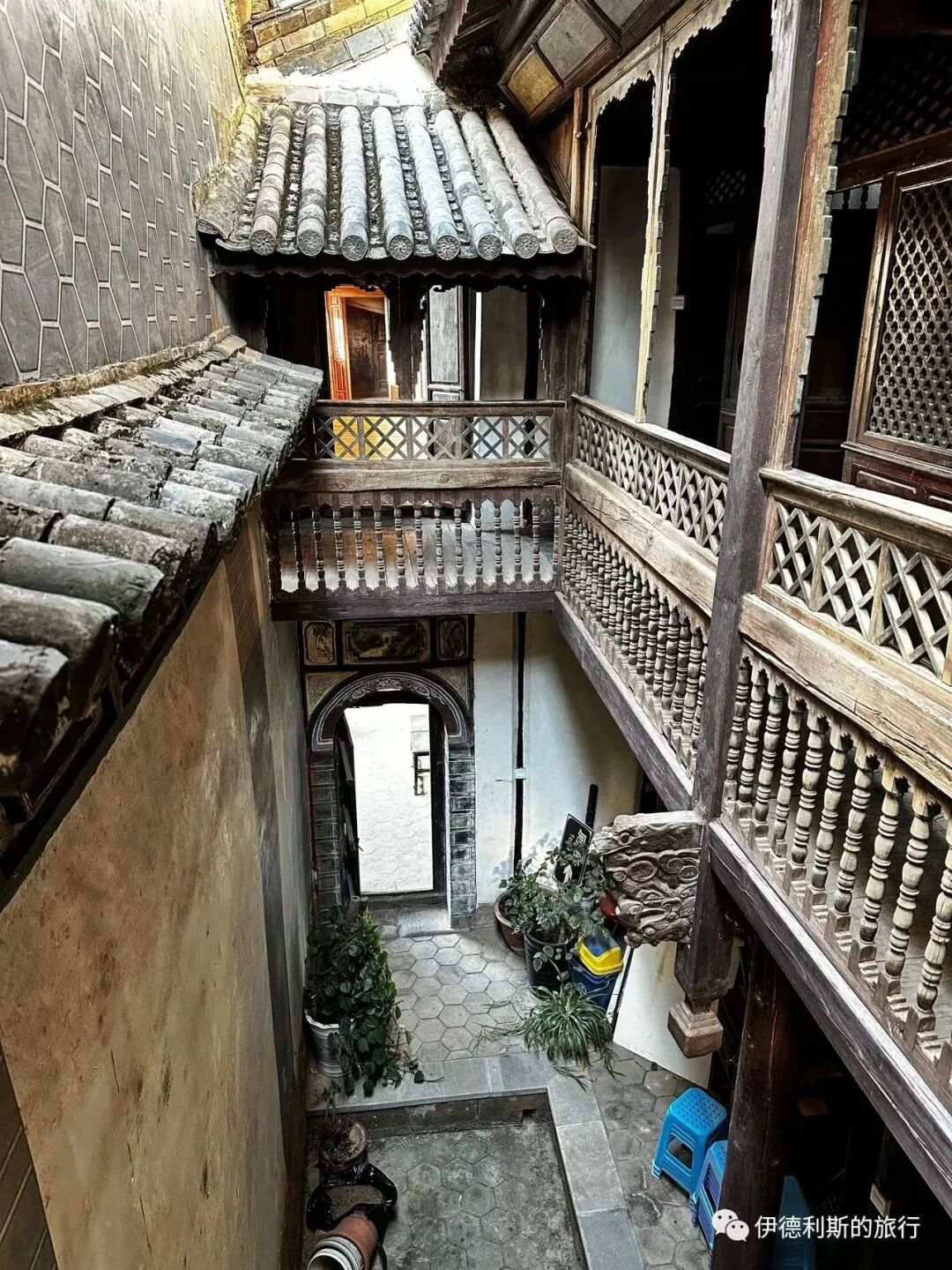
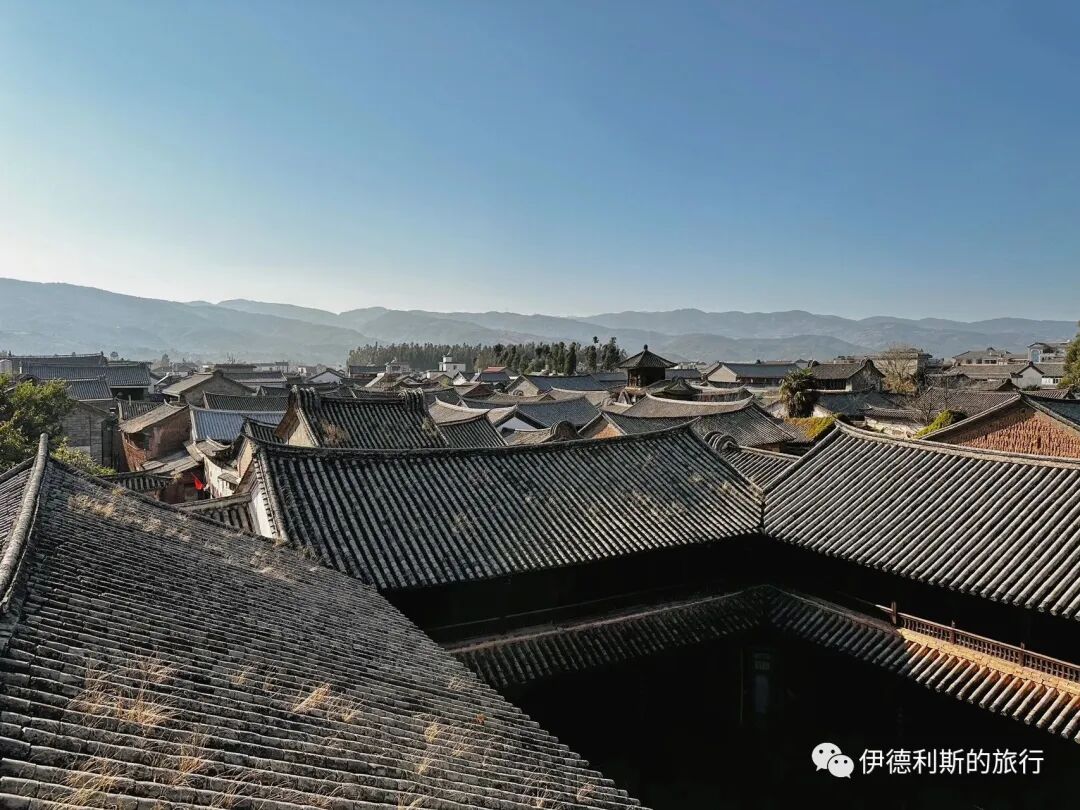
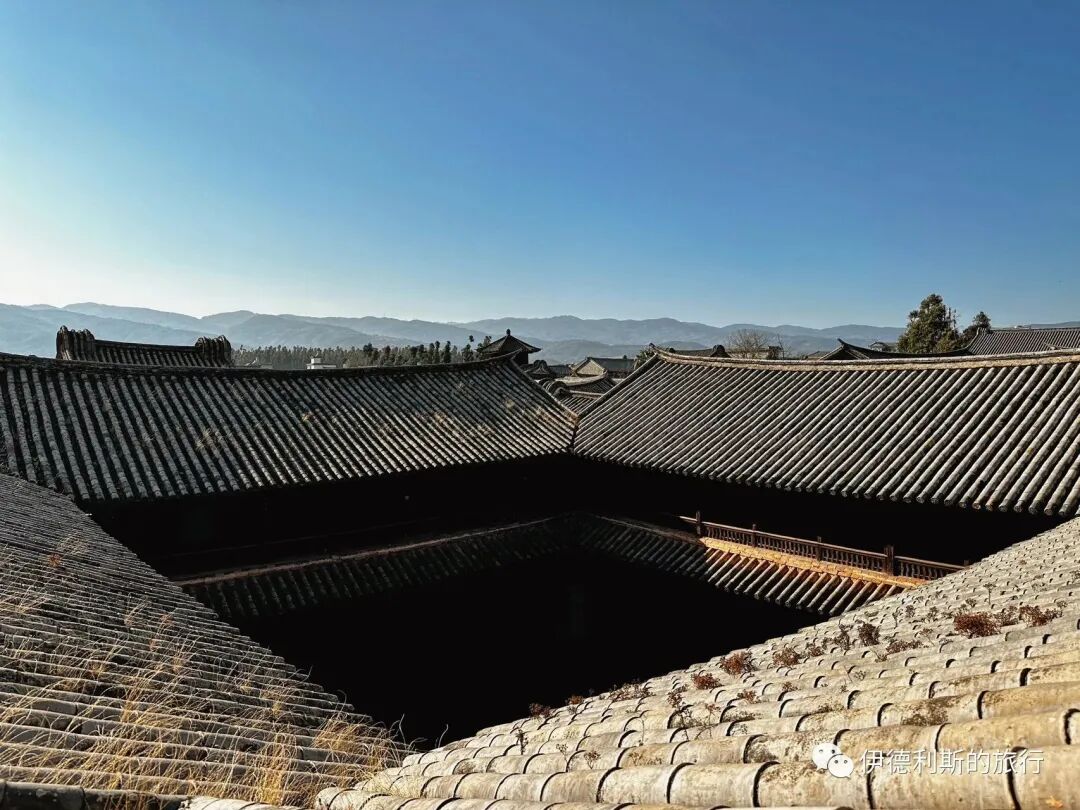
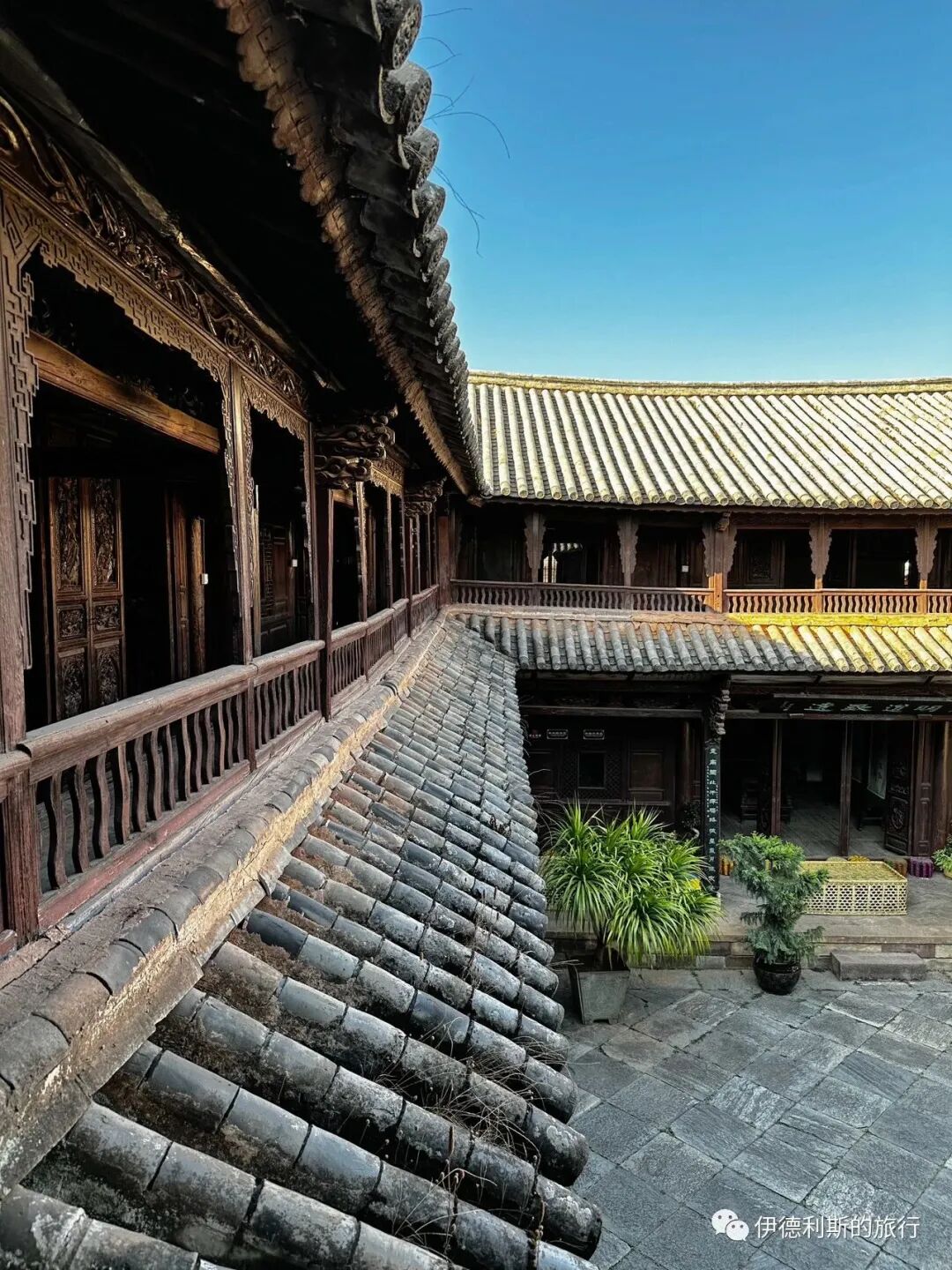
Above the east side room of the hall in the Ma Ruji courtyard stands a four-story watchtower. It serves for both keeping watch and enjoying the view, offering a full look at Donglianhua Village. The sunny photos were taken in 2023, and the cloudy ones were taken in 2017.
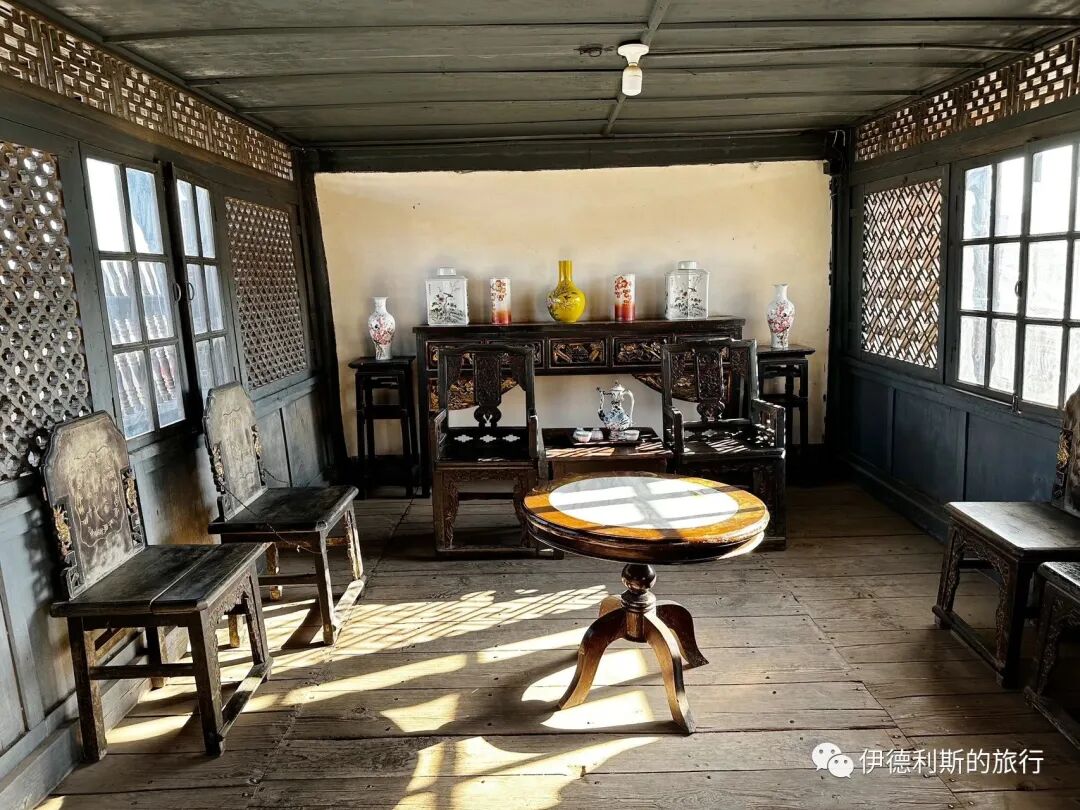
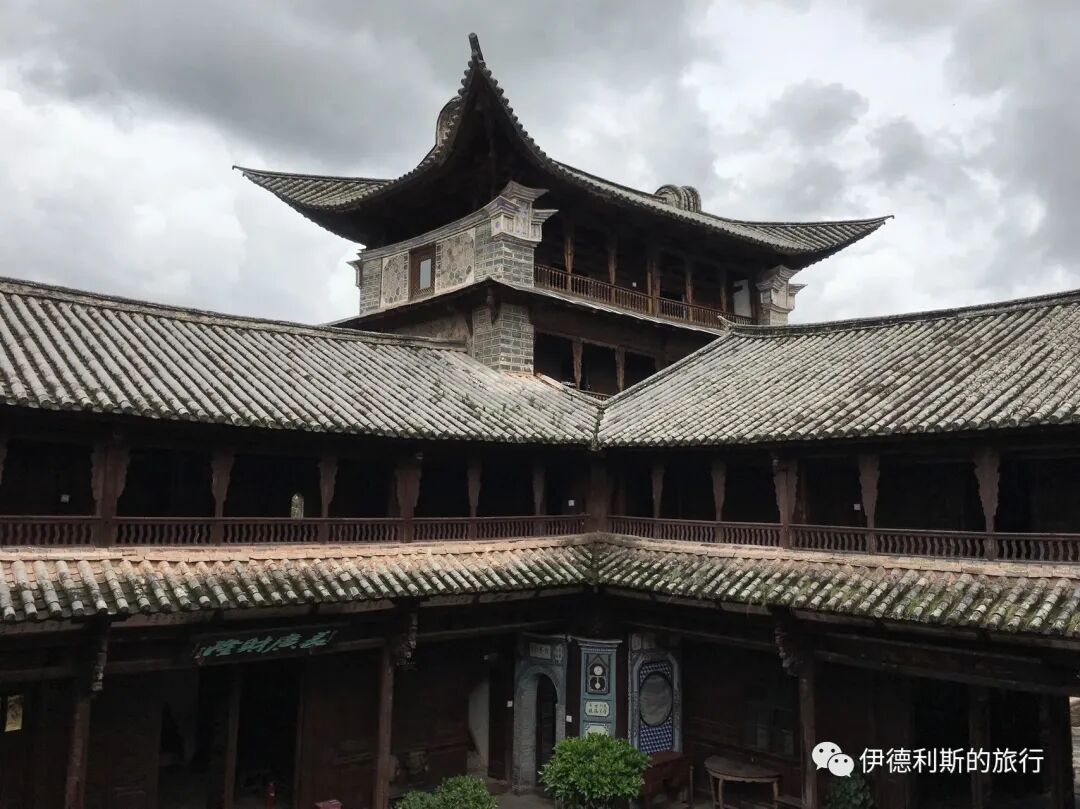
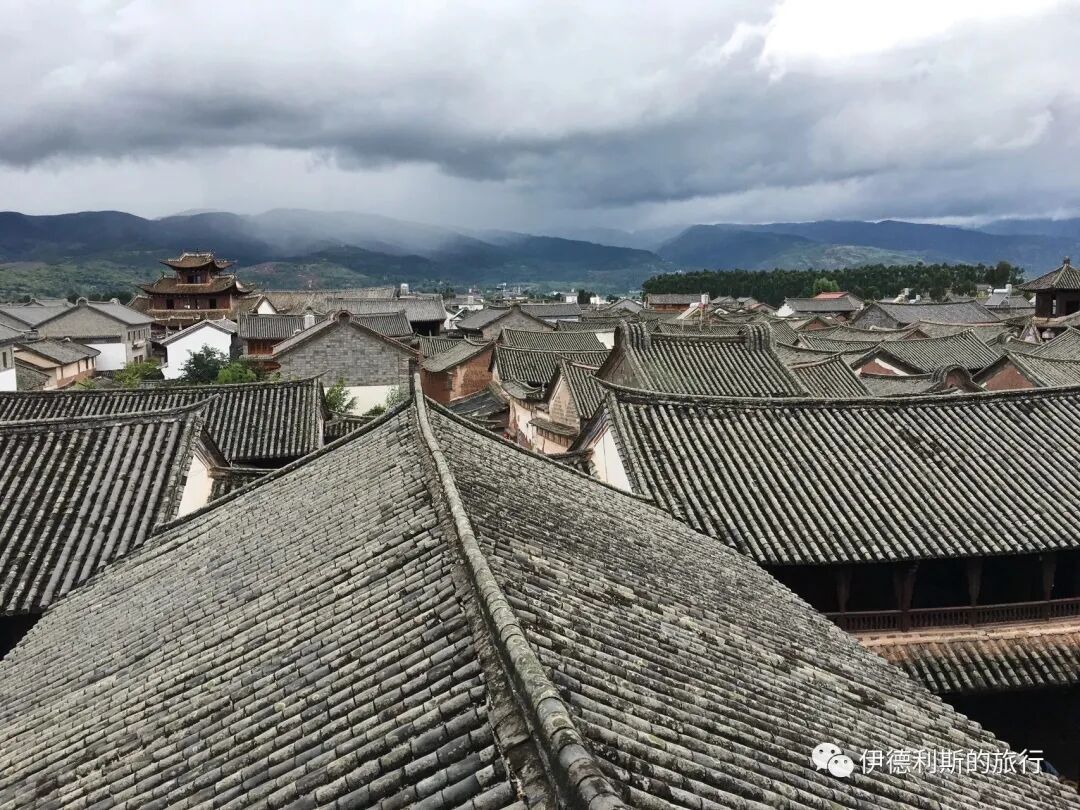
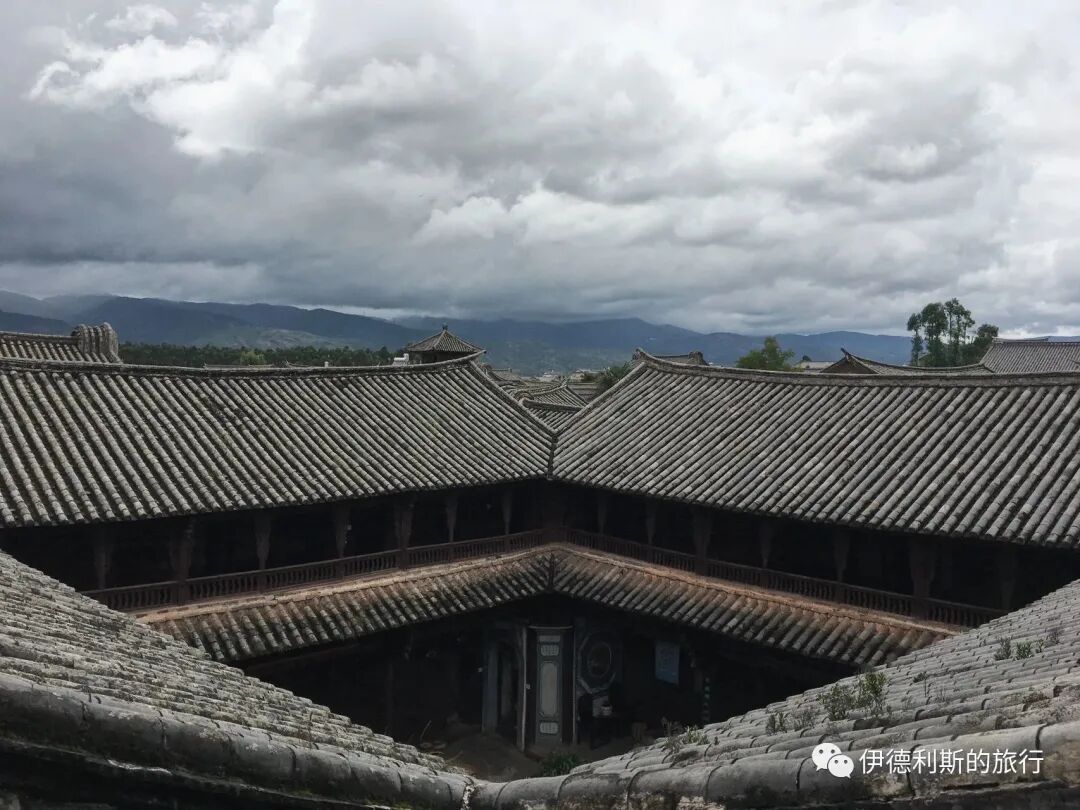
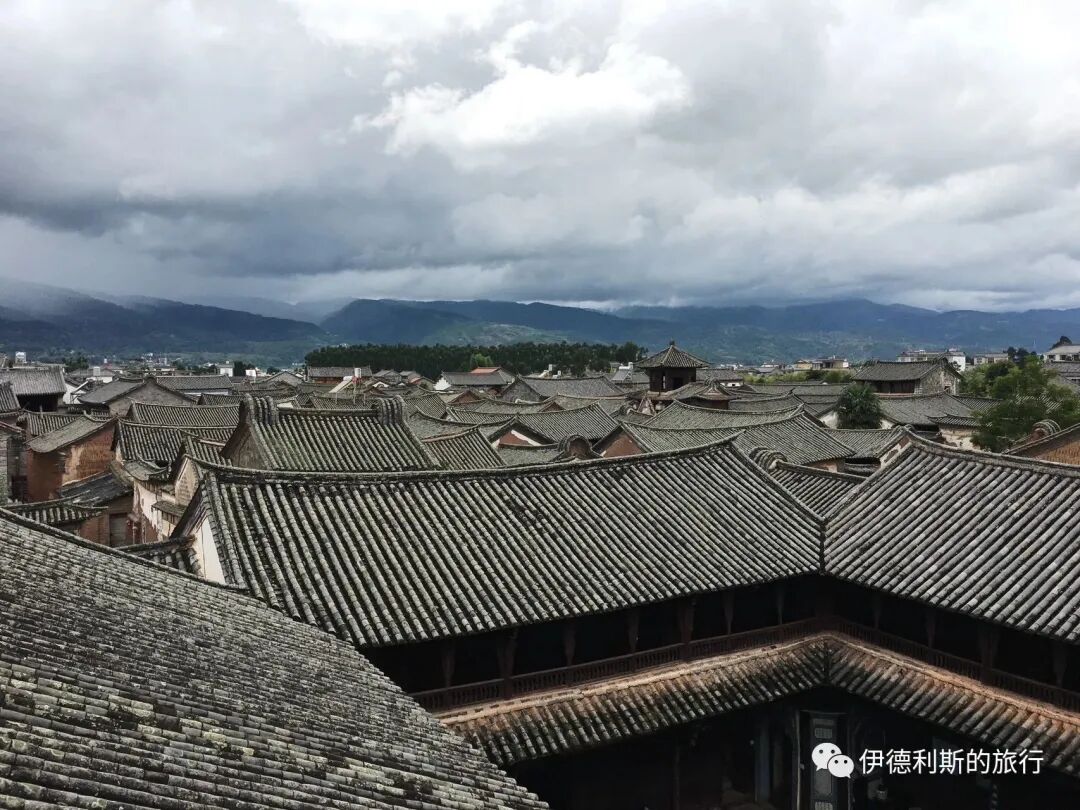
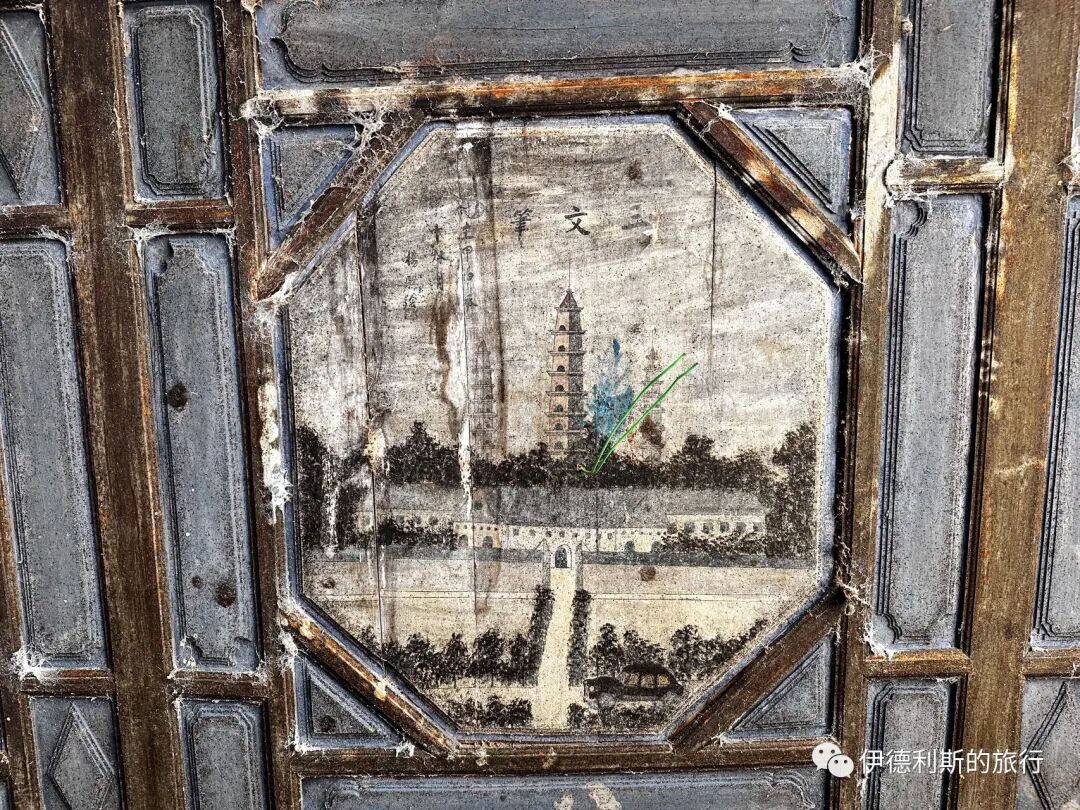
The murals in the Ma Ruji courtyard from different historical periods reflect the changes of the times.
In the early 1950s, Ma Ruji and several brothers went to northern Myanmar to make a living, and they settled in Thailand a few years later. In 1953, the Ma brothers and their fellow villager Hu Ranxian set out from Myanmar to perform the Hajj, becoming a Haji. After land reform, Ma Ruji's land and property in Yunnan were divided. The Ma Ruji courtyard and the back garden were taken for public use, serving as a commune, hospital, military camp, middle school, township government, and Islamic association office at different times. After 1996, the east and west rooms of the lower courtyard of the Ma Ruji compound were returned to the Ma family, while the watchtower of the upper courtyard and the back garden remained under the collective ownership of Donglianhua Village.
The west courtyard of the Ma Ruji compound was used to run the caravan business. It had its own north gate, a two-story row of 10 large horse stables, and a warehouse for caravan supplies. In the 1940s, Ma Ruji owned over 100 mules and horses and employed more than 30 caravan workers, making him very powerful.
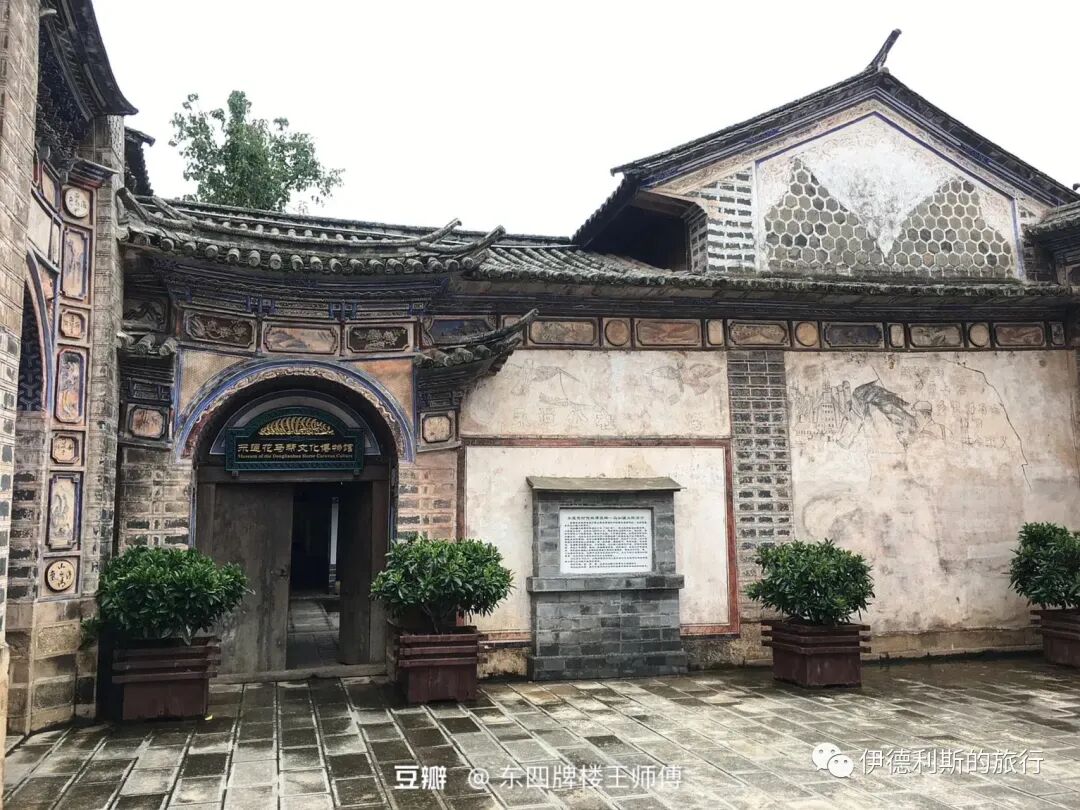
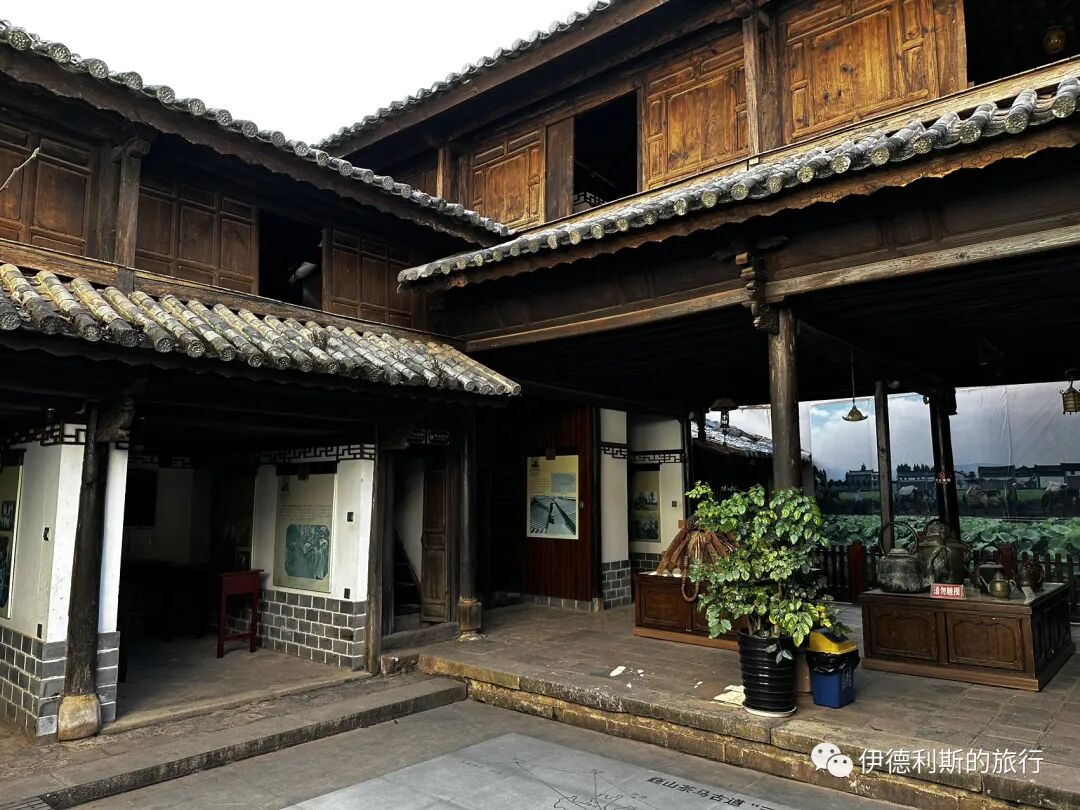
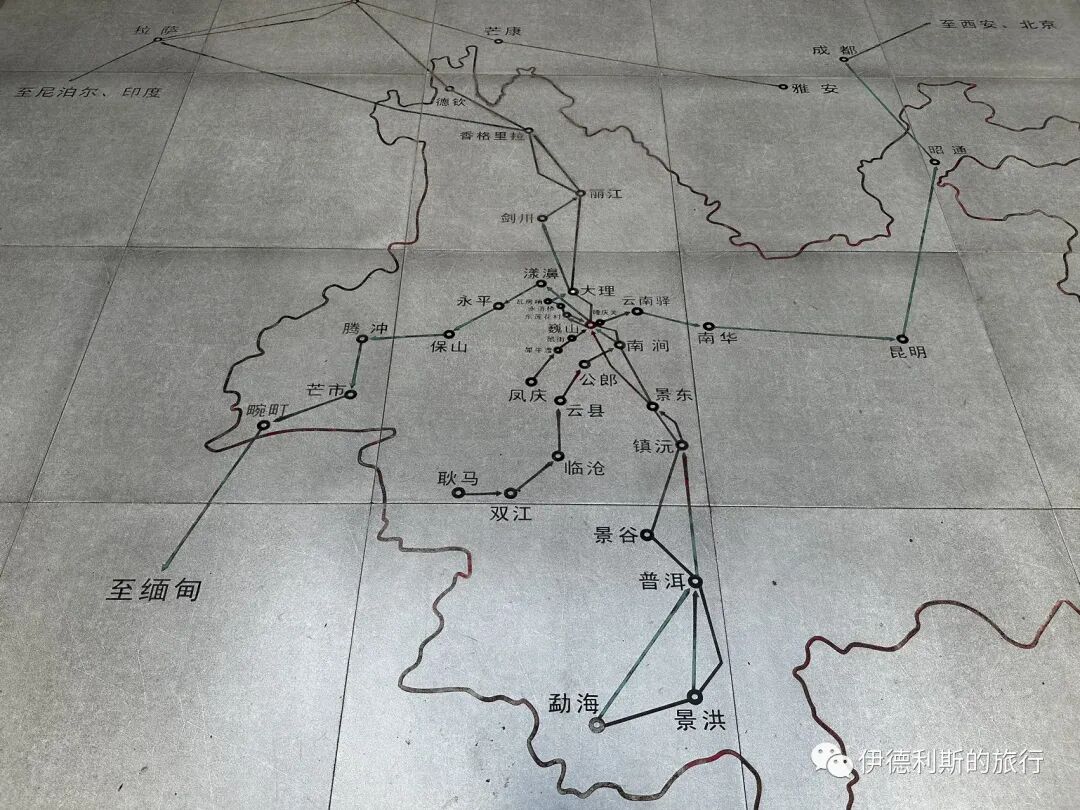
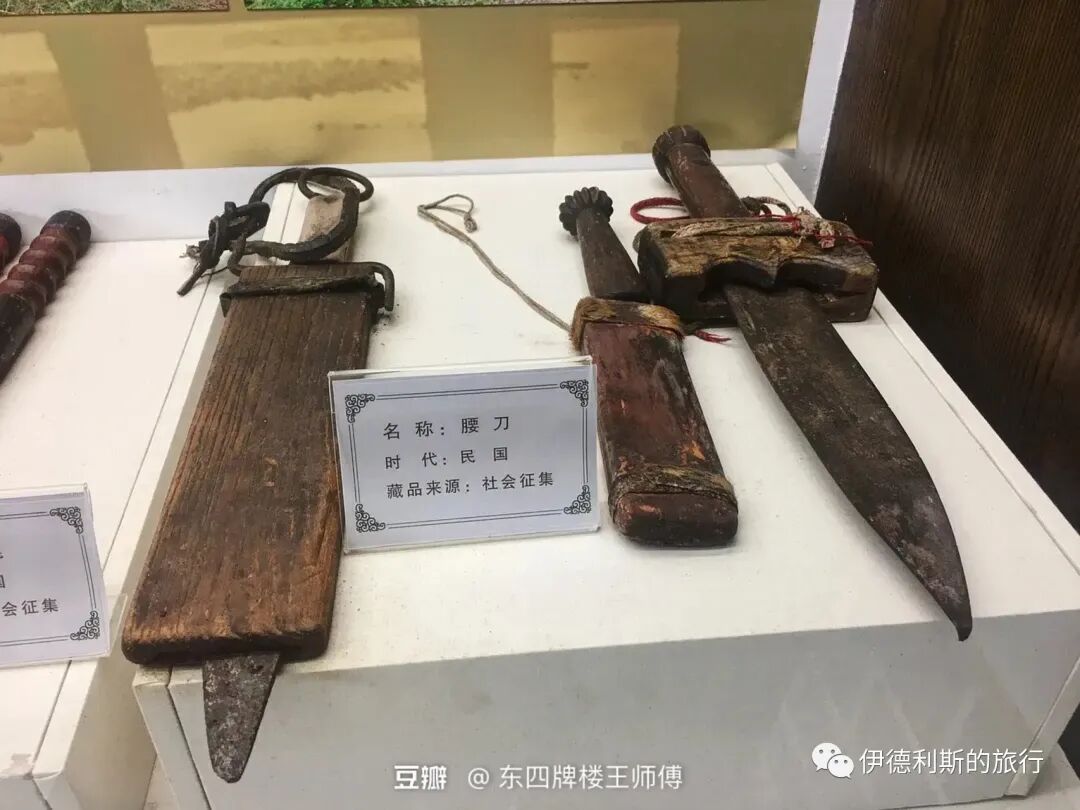
Waist knife (yaodao).
Tools for shoeing horses.
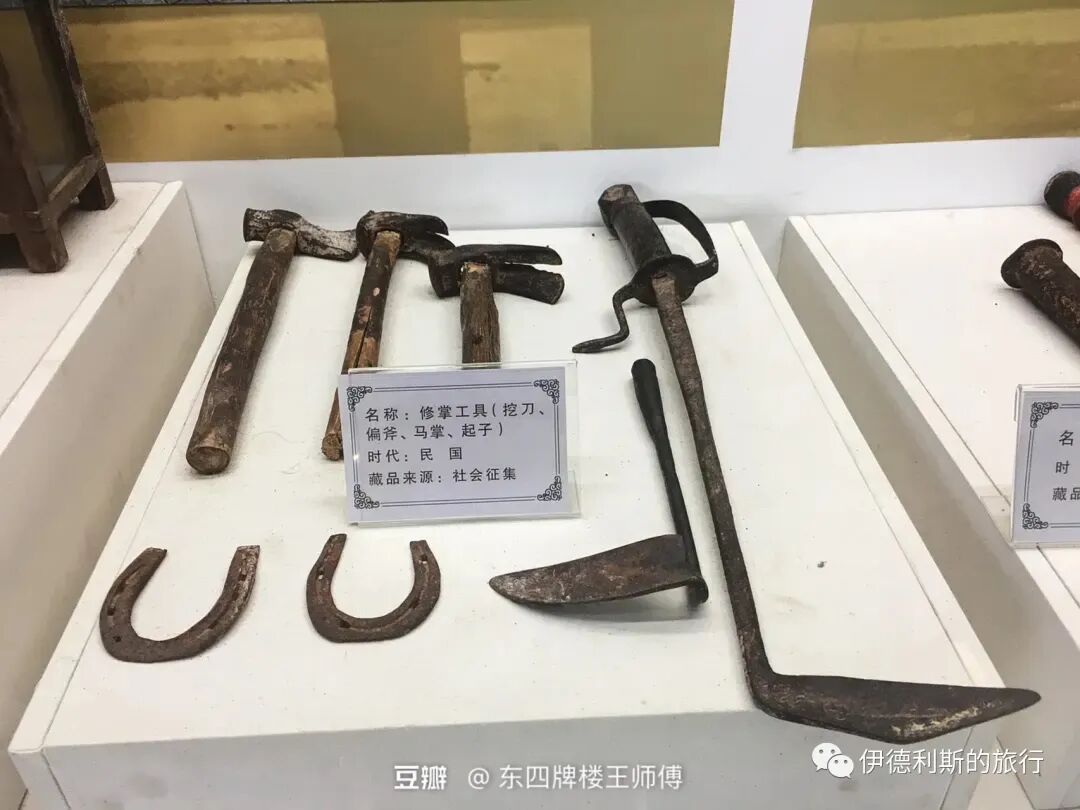
Kerosene lamp (madeng).
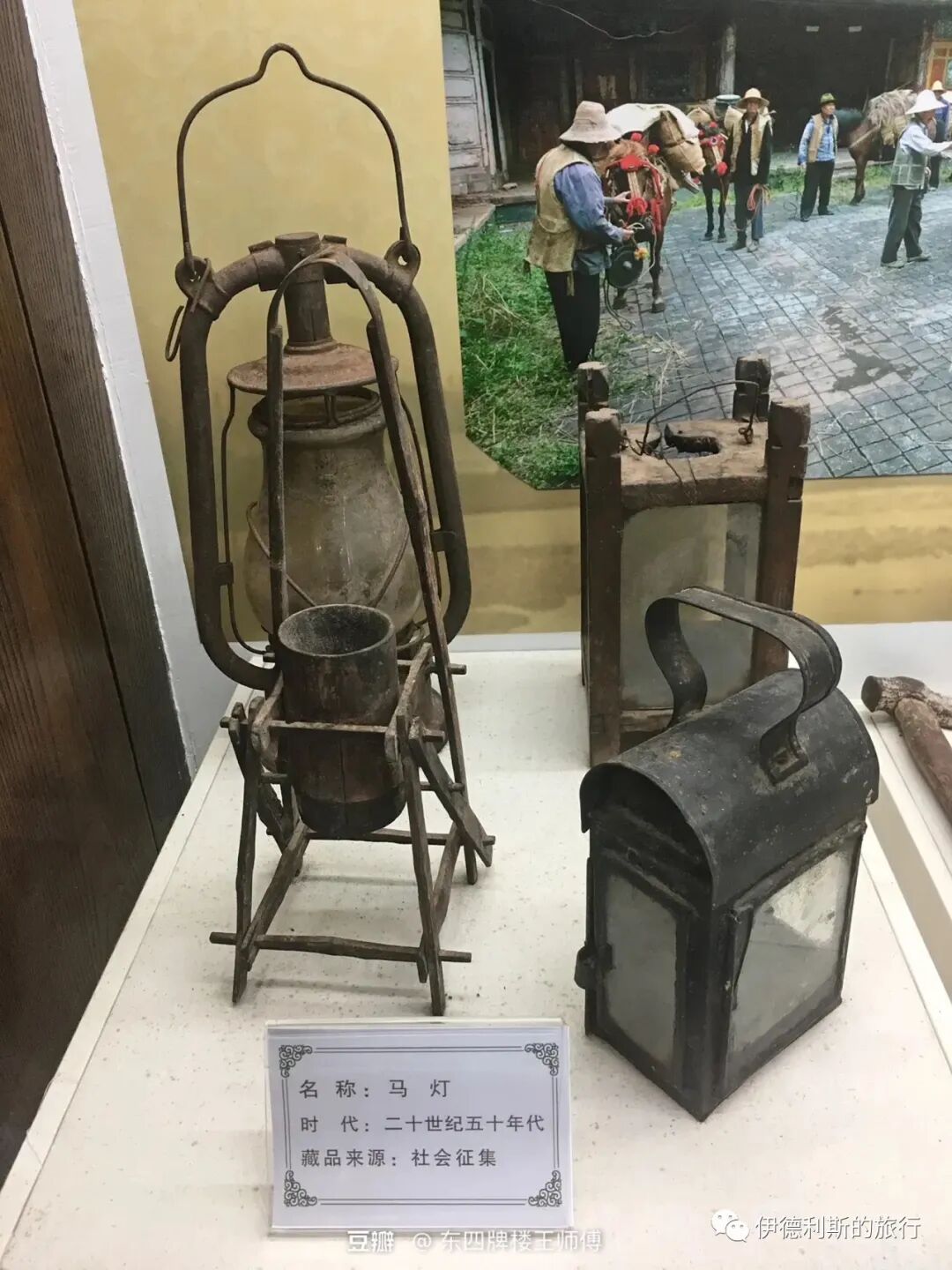
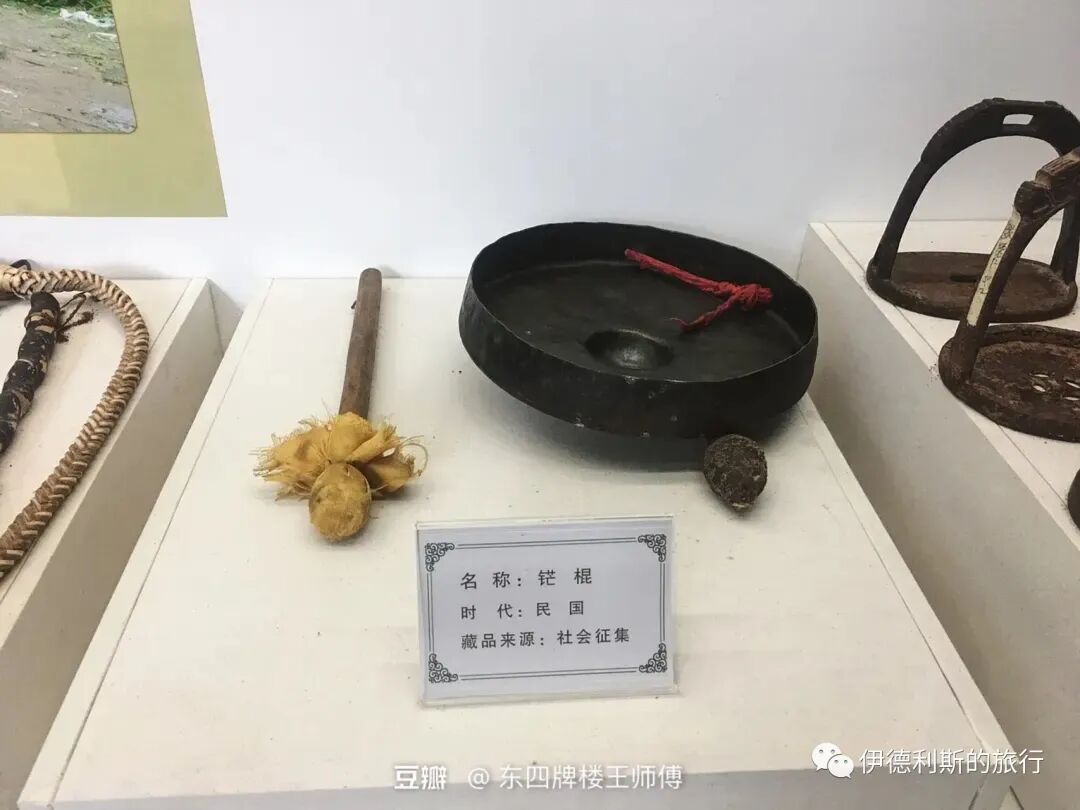
The gong stick (manggun) and gong (mangluo) were used to send signals while the caravan was on the move. Experienced caravan leaders could tell which place and which family a caravan belonged to by the volume, speed, and rhythm of the gong, and they could tell if the signal meant danger, a request to pass, or a call for help.
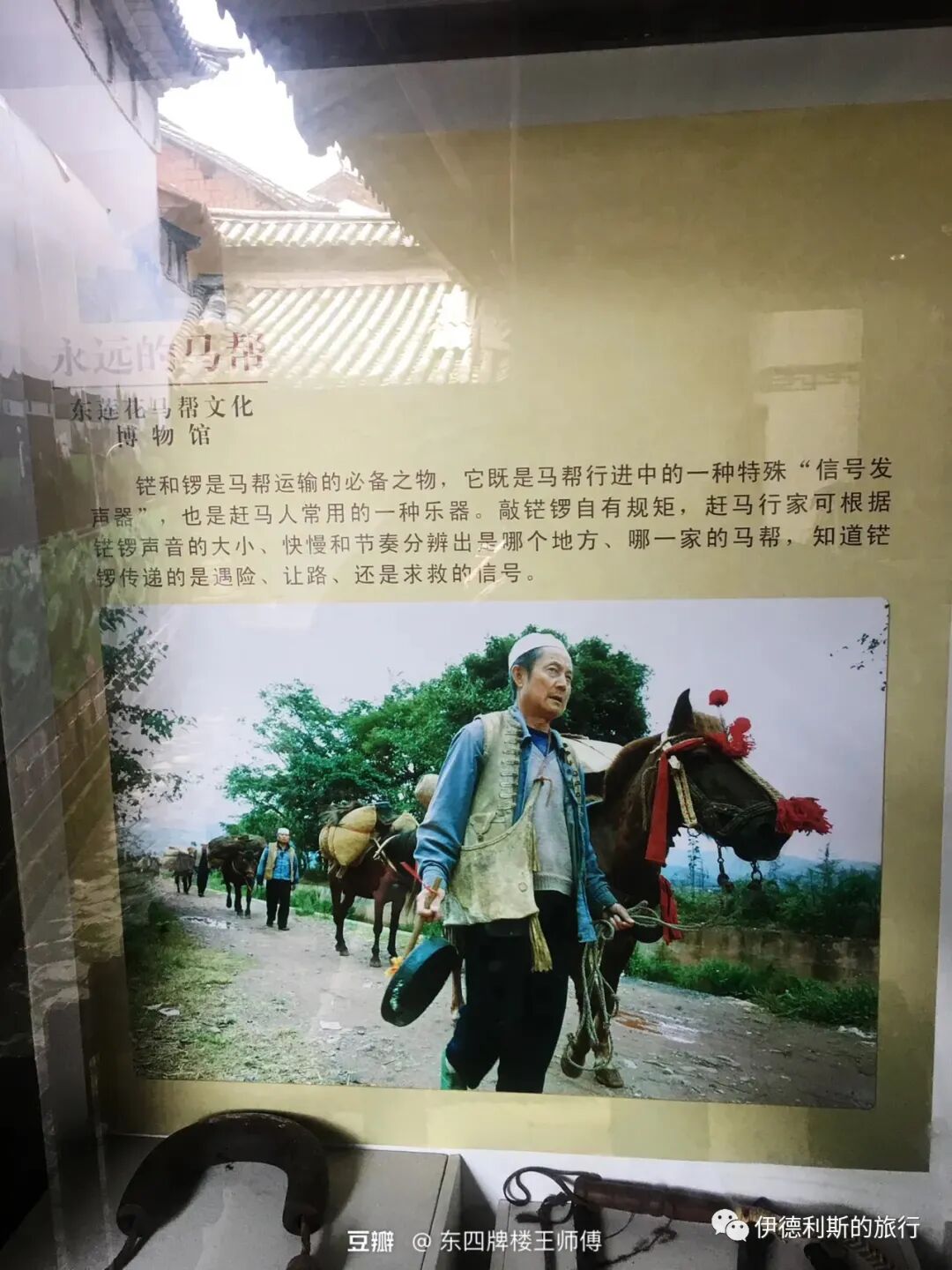
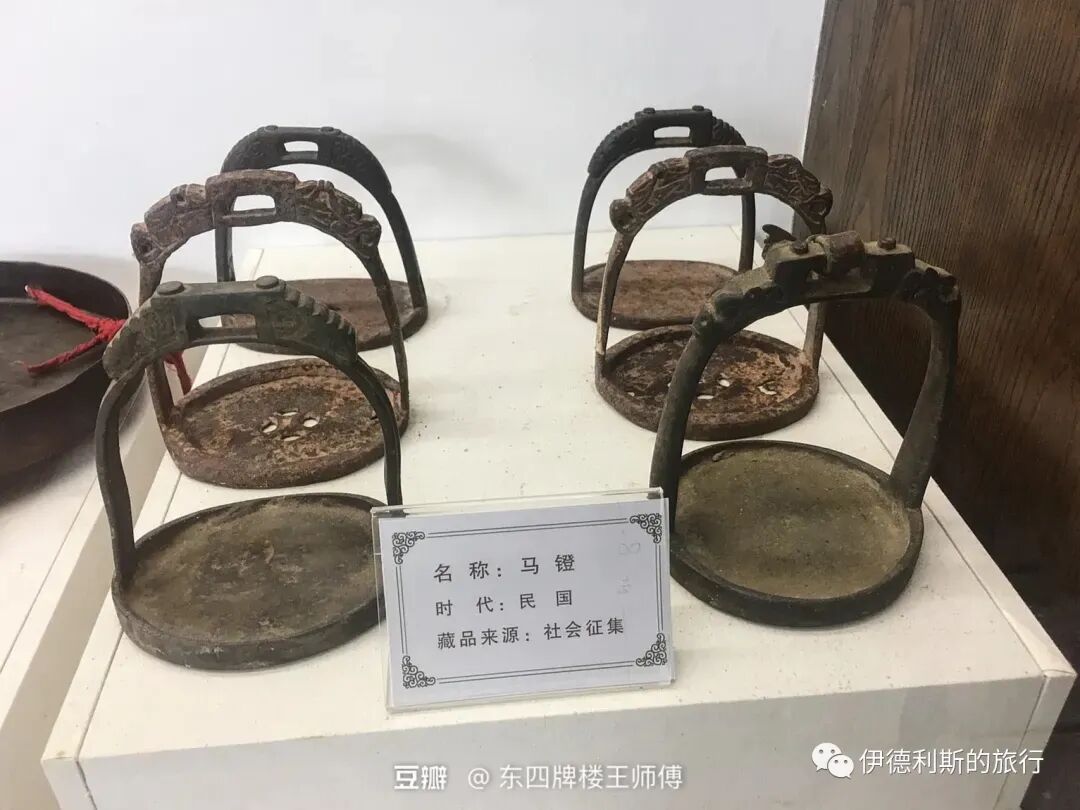
Stirrup (madeng).
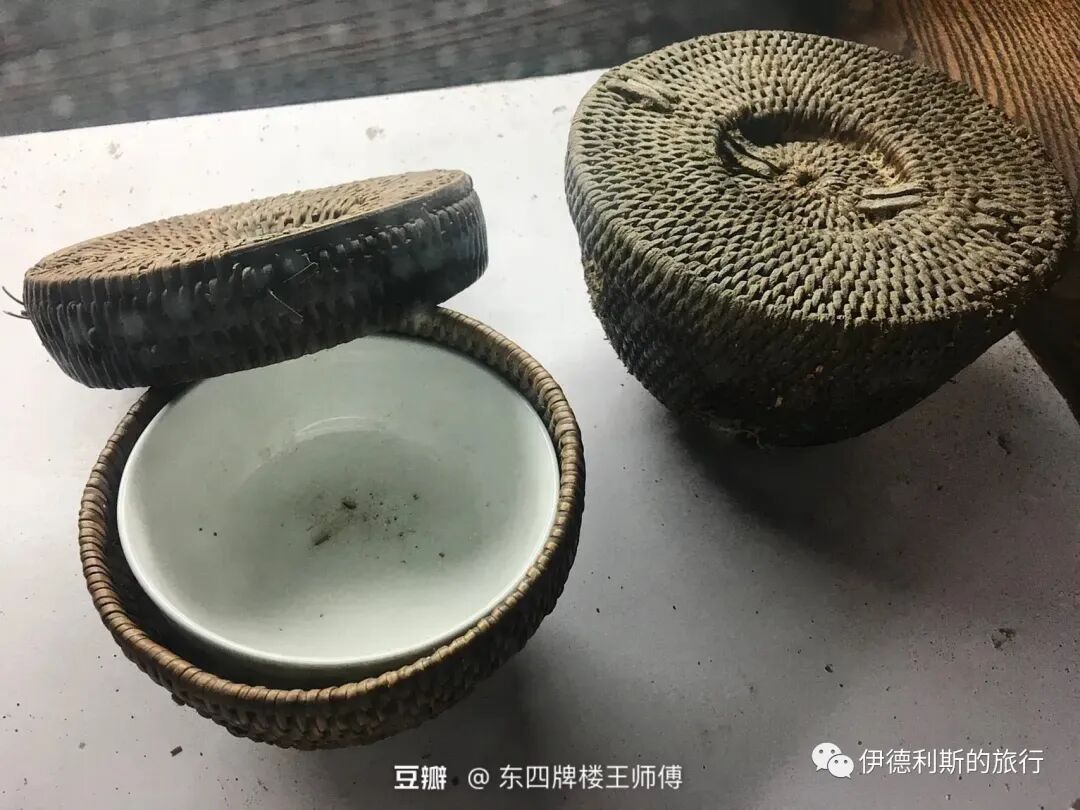
Bamboo woven bowl box (zhumiewanhe).
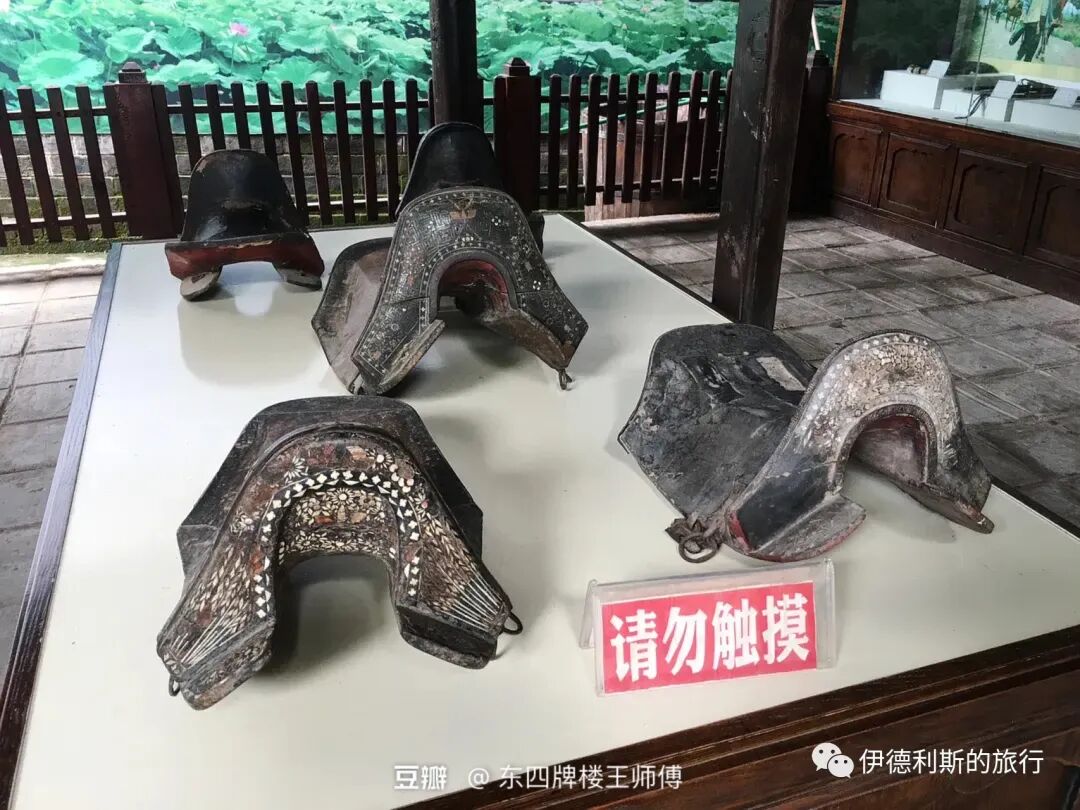
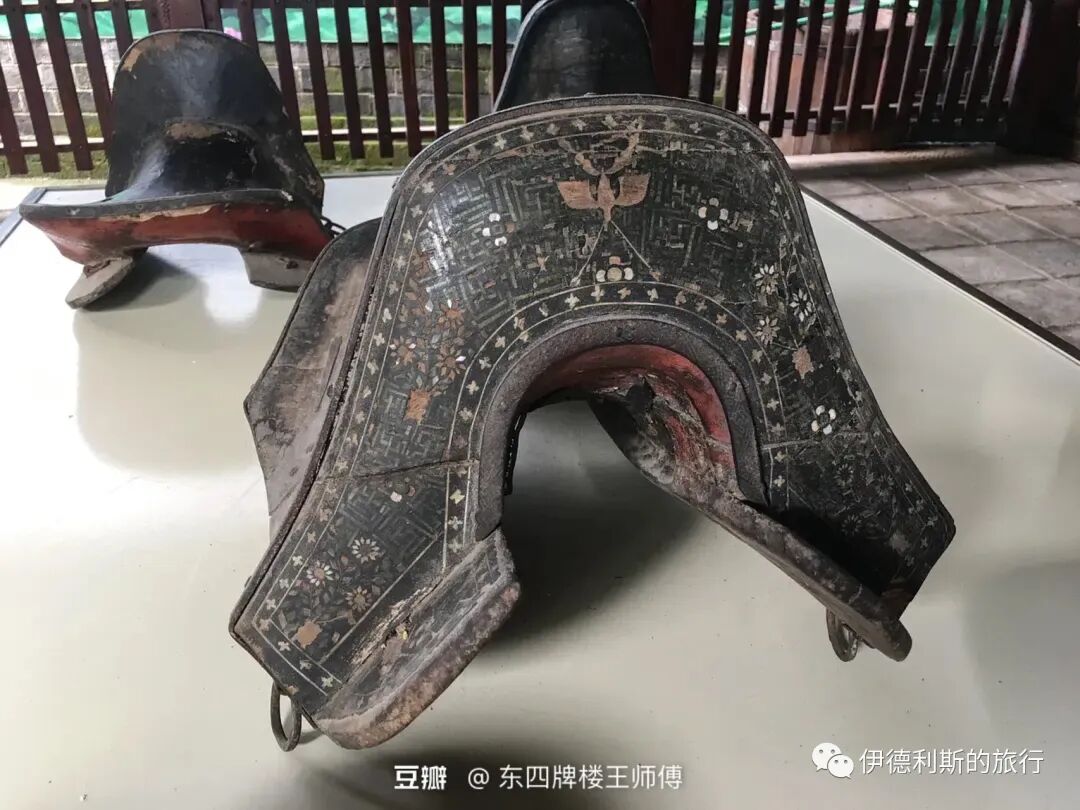
An exquisite saddle.
Summary: Weishan, Dali — Donglianhua Hui Caravan Courtyards (Part 1) is presented here as a firsthand travel account in clear English, beginning with this scene: On the afternoon of January 30, 2023, I rode my electric scooter to Donglianhua Village in Weishan, Dali, to visit the three Hui Muslim caravan courtyards there for the second time. The account keeps its focus on Weishan Dali, Hui Caravan Courtyards, Muslim Travel while preserving the names, places, food, and historical details from the Chinese source.
On the afternoon of January 30, 2023, I rode my electric scooter to Donglianhua Village in Weishan, Dali, to visit the three Hui Muslim caravan courtyards there for the second time. In 2017, I focused on visiting the Ma Ruji Courtyard, took a quick look around the Ma Ruqi Courtyard, but could not get into the Ma Ruqing Courtyard, which left me wanting more. At that time, I hoped to have a meal in one of the courtyards and chat with the descendants of the Ma family, and this time, that wish finally came true.
After the Ming Dynasty took control of Yunnan, Zhu Yuanzhang ordered Mu Ying to guard the region. Mu Ying sent some Hui Muslim soldiers under his command to farm in Weishan, Dali. They merged with the Semu people who had come there to trade during the Yuan Dynasty, forming many Hui Muslim villages around Yongjian Town. Donglianhua Village is now mainly home to residents with the surnames Ma and Zhang. The Ma family is known as the Sai family Ma, said to be descendants of Masuhu, the fifth son of the Yuan Dynasty politician Sayyid Ajjal Shams al-Din. The Zhang family are descendants of Hui Muslims from the Jiangnan region who settled there after following Mu Ying during the Ming Dynasty.
Donglianhua Village sits on the main route of the Ancient Tea Horse Road from Pu'er to Dali. Because the local Hui Muslims were skilled at raising horses, they started the business of running horse caravans. Around 1911, ten brothers from the Ma family in Donglianhua, including Ma Ruji, Ma Ruqi, and Ma Ruqing, began trading with horse caravans and gradually became famous caravan leaders (maguotou) in Southwest China. During the Republic of China era, almost every family in Donglianhua Village raised horses. The village had seven large horse caravans and frequent trade traffic, earning it the nickname Little Shanghai of Western Yunnan. In the 1940s, the Ma brothers' business reached its peak, and they competed to build exquisite Ma family courtyards.
After the 1940s, due to frequent caravan trade with Thailand and Myanmar, some people from Donglianhua Village began to settle in those countries, making Donglianhua a famous hometown for overseas Chinese in Yunnan. These overseas residents and their descendants have continuously donated money to protect the village and have made great contributions to Donglianhua.
Ma Ruqi Courtyard
Among the three Ma family courtyards in Donglianhua Village, only the Ma Ruqi Courtyard is still occupied by descendants of the Ma family today. They have opened a restaurant and a guesthouse there, which I think is a great starting point for understanding the modern history of Yunnan's Hui Muslims and caravan culture.
Uncle Ma Wenhong, a descendant of Ma Ruqi, welcomed me warmly. He prepared braised beef and white-cut chicken from the traditional Weishan Hui Muslim banquet known as the Eight Old Bowls (laobawan), as well as sticky rice with sugar, which is only eaten at local weddings. I felt very grateful (shukr).
I listened to Uncle Ma tell the history of the Ma Ruqi Courtyard while we ate. After the Tongzhi era disasters, a group of Hui Muslims with the surname Ma who survived moved from Xiaodonglianhua Village to the current Donglianhua Village. They rebuilt their homes together with a group of Hui Muslims with the surname Zhang who came with them, and Donglianhua Village gradually developed.
In the early years of the Republic of China, Ma Ruqi started his horse-trading business. After more than 20 years of hard work, he became a famous caravan leader (maguotou) in Sichuan, Guizhou, and Yunnan. The 1940s were the peak of the Ma brothers' business. Construction of the Ma Ruqi Courtyard began in 1942 and was officially completed in 1945 after three years.
The Ma Ruqi Courtyard consists of two typical Dali-style three-sided courtyards with a screen wall (sanfang yizhaobi). Both courtyards share one large screen wall, creating a layout of one screen wall for two courtyards. The southern building is a three-story stable with a watchtower, which looks very impressive. The main gate is a relief-carved archway without a porch. The brick pillars on both sides are topped with stone lions, common in Bai ethnic homes. The arch is decorated with colorful paintings of flowers, birds, and landscapes, and the words Qilu are written in the center of the gate.
Ma Ruqi was a major caravan leader in Donglianhua Village. The north courtyard was home to Ma Ruqi's family, while the south courtyard was used to run the caravan business. The southern stable was used to feed the horses, the side rooms provided living space for the caravan workers (majiaozi), and the east side room served as a storage area for supplies. Because the courtyard is located at the southernmost end of Donglianhua Village, right next to the main road into the village, and has a wide view to the southeast, a watchtower was built on the third floor of the southern stable to keep watch and guard against bandits and horse thieves.
In August 1945, Wang Shaoheng led more than 30 bandits to rob Donglianhua Village, and the watchtower of the caravan courtyard played an important role. At that time, the Ma brothers organized the villagers to fight off the bandits, and Ma Ruqi shot and killed the bandit leader Wang Shaoheng. Afterward, the magistrate of Menghua County personally came to Donglianhua Village to commend the Ma brothers.
Architectural details and the guesthouse section of the Ma Ruqi Courtyard. Business at the courtyard was poor from 2020 to 2022, and it was basically half-closed. It has only started to get better this year. Uncle Ma says he will also make further improvements to the guesthouse to welcome more guests.
Since Ma Zaixing went on Hajj in 1948, becoming the first from Menghua to do so, many others from the Ma family, including Ma Ruqi, Ma Ruxiang, and Ma Wenhan, have also made the pilgrimage. Because of this, the Ma family is known as a family that has kept the faith for three generations of Hajj pilgrims (haji).
Today, souvenirs from Ma Wenhan Haji's three pilgrimages still hang on the walls of the Ma Ruqi Courtyard, where you can see traditional Arabic calligraphy in the style of Weishan, Dali. other parts of the Ma Ruqi Courtyard also reflect the traditions of the faith. For example, one door frame has a couplet that reads: The spring breeze is boundless, bringing joy to all the land; the Lord's grace is vast, continuing through the generations. The horizontal scroll reads: Always remember the Lord's grace. As you enter the main gate, you will see a Chinese translation of the Al-Fatiha on the wall.
Beyond religious traditions, the Ma Ruqi Courtyard also keeps old items from the caravan era, including saddles, horse lanterns, and small scales (dengzi).
In the early 1950s, Ma Ruqi went to Myanmar to make a living, and after 1954 he settled in Chiang Mai, Thailand, where he worked in the local produce business and supported public welfare. He and his fellow Weishan native Hu Ranmao founded the Shandi Chinese School in Chiang Mai and helped renovate the Chiang Mai Wanghe Mosque. In 1974, Ma Ruqi was appointed president of the Thai-Chinese Chamber of Commerce. He later hosted many important guests from China and led the first delegation of Thai-Chinese to visit China for a tour in 1979. In 1987, when the Donglianhua Mosque was expanded, Ma Ruqi donated 1 million Thai baht.
After Ma Ruqi went abroad, the Ma Ruqi Courtyard was nationalized in the 1950s. His wife, Ma Huancai, who stayed in their hometown, remained devoted to her faith, managed the household, raised their son, and lived with her son Ma Wenhan. Ma Wenhan inherited the fine traditions of his elders; he was hardworking, frugal, kind, and passionate about public welfare. In 1993, following a change in policy, the Ma Ruqi Courtyard was finally returned to Ma Wenhan. After Ma Wenhan renovated the courtyard, he was able to spend his later years there.
Today, the courtyard has passed to Ma Wenhan's son, Ma Yunhong, who opened a restaurant and guesthouse inside so that guests can better understand and experience the local culture.
Ma Ruqing Courtyard
Built in 1945, the Ma Ruqing Courtyard consists of two watchtowers and three courtyards. At the main gate stands a three-story hexagonal watchtower, with a passageway on the ground floor. The east courtyard has a three-room-and-a-screen-wall (sanfang yizhaobi) layout, the west courtyard has a four-sided-enclosure-with-five-courtyards (sihe wutianjing) layout, and the middle courtyard serves as a garden, enclosed by the east and west halls and the north watchtower.
After Ma Ruqing followed his brothers Ma Ruji and Ma Ruqi to settle in Thailand in the 1950s, the Ma Ruqing Courtyard was nationalized. Today, the west courtyard remains public property, while the middle and east courtyards were bought by local Hui Muslims. When I first visited in 2017, I could not enter the courtyard because it was under renovation. This time, a friend (dosti) living in the middle courtyard led me inside to visit the west courtyard. According to the dosti, Donglianhua Village recently cleared and restored the west courtyard, removing parts added after the 1950s. It is not yet decided when it will open to the public.
In the middle courtyard of the Ma Ruqing compound, you can see a three-story watchtower right at the entrance, which was once where the Ma family received guests. One regret this time was that the people in the east courtyard were not home, so I could not go in. It looks like I will have to visit a third time.
Ma Ruji Compound
Built in 1941, the Ma Ruji compound is the most important Hui Muslim courtyard in Weishan and a witness to the prosperity of the Yunnan horse caravans (mabang). Ma Ruji was born in Donglianhua Village in 1897. He was the eldest of ten Ma brothers, so he was also called Uncle Ma (Ma Daye). In the late Republic of China era, Ma Ruji was the most famous local caravan leader (maguotou). He also served as a Menghua (Weishan) County councilor and head of Yongji Township (Yongjian Town), making him very wealthy and influential.
The Ma Ruji compound consists of three interconnected courtyards: the north, south, and west. The north and south courtyards were Ma Ruji's residence. They combine the traditional Dali architectural styles of a four-sided courtyard with five patios (sihe wutianjing) and a three-room layout with a screen wall (sanfang yizhaobi) to form a six-courtyard harmony (liuhe tongchun) layout.
Inside the main gate of the north and south courtyards, the screen wall (yingbi) is inscribed with the words "Forever Uphold the Pure Truth" (shishou qingzhen). This is the main difference between the traditional courtyards of the local Bai people and the Hui Muslims.
Visiting the Ma Ruji compound in 2017 and 2023, the biggest change is that the Arabic calligraphy unique to Weishan, Dali, which was on display indoors, has been replaced entirely by Chinese calligraphy. The original Arabic calligraphy had both exquisite artistic value and precious historical significance. These calligraphic works were presented to Ma Ruji in the autumn of 1945 by the then-Army General Bai Chongxi and the Menghua County Hui Muslim Anti-Japanese National Salvation Association.
In the 1930s, Long Yun selected caravan leaders (maguotou) from across the province to form the Long family horse caravan for trade with French merchants in Vietnam, and Ma Ruji was chosen to join. The Long family caravan traveled from Kunming through Baise and Guilin to trade in Vietnam. Once, while passing through Guilin, they happened to run into Bai Chongxi, who was celebrating his mother's birthday. Ma Ruji and his group were all invited as guests and received a warm welcome from Bai Chongxi, and from then on, Ma Ruji and Bai Chongxi became friends.
Above the east side room of the hall in the Ma Ruji courtyard stands a four-story watchtower. It serves for both keeping watch and enjoying the view, offering a full look at Donglianhua Village. The sunny photos were taken in 2023, and the cloudy ones were taken in 2017.
The murals in the Ma Ruji courtyard from different historical periods reflect the changes of the times.
In the early 1950s, Ma Ruji and several brothers went to northern Myanmar to make a living, and they settled in Thailand a few years later. In 1953, the Ma brothers and their fellow villager Hu Ranxian set out from Myanmar to perform the Hajj, becoming a Haji. After land reform, Ma Ruji's land and property in Yunnan were divided. The Ma Ruji courtyard and the back garden were taken for public use, serving as a commune, hospital, military camp, middle school, township government, and Islamic association office at different times. After 1996, the east and west rooms of the lower courtyard of the Ma Ruji compound were returned to the Ma family, while the watchtower of the upper courtyard and the back garden remained under the collective ownership of Donglianhua Village.
The west courtyard of the Ma Ruji compound was used to run the caravan business. It had its own north gate, a two-story row of 10 large horse stables, and a warehouse for caravan supplies. In the 1940s, Ma Ruji owned over 100 mules and horses and employed more than 30 caravan workers, making him very powerful.
Waist knife (yaodao).
Tools for shoeing horses.
Kerosene lamp (madeng).
The gong stick (manggun) and gong (mangluo) were used to send signals while the caravan was on the move. Experienced caravan leaders could tell which place and which family a caravan belonged to by the volume, speed, and rhythm of the gong, and they could tell if the signal meant danger, a request to pass, or a call for help.
Stirrup (madeng).
Bamboo woven bowl box (zhumiewanhe).
An exquisite saddle.
Halal Travel Guide: Weishan, Dali — Donglianhua Hui Caravan Courtyards (Part 2)
Articles • ali2007fr posted the article • 0 comments • 139 views • 2026-05-18 22:05
Reposted from the web
Summary: Weishan, Dali — Donglianhua Hui Caravan Courtyards (Part 2) is presented here as a firsthand travel account in clear English, beginning with this scene: Thawab. The account keeps its focus on Weishan Dali, Hui Caravan Courtyards, Muslim Travel while preserving the names, places, food, and historical details from the Chinese source.
Thawab view all
Summary: Weishan, Dali — Donglianhua Hui Caravan Courtyards (Part 2) is presented here as a firsthand travel account in clear English, beginning with this scene: Thawab. The account keeps its focus on Weishan Dali, Hui Caravan Courtyards, Muslim Travel while preserving the names, places, food, and historical details from the Chinese source.
Thawab view all
Reposted from the web
Summary: Weishan, Dali — Donglianhua Hui Caravan Courtyards (Part 2) is presented here as a firsthand travel account in clear English, beginning with this scene: Thawab. The account keeps its focus on Weishan Dali, Hui Caravan Courtyards, Muslim Travel while preserving the names, places, food, and historical details from the Chinese source.
Thawab

Summary: Weishan, Dali — Donglianhua Hui Caravan Courtyards (Part 2) is presented here as a firsthand travel account in clear English, beginning with this scene: Thawab. The account keeps its focus on Weishan Dali, Hui Caravan Courtyards, Muslim Travel while preserving the names, places, food, and historical details from the Chinese source.
Thawab
Halal Travel Guide: Weishan, Dali — Donglianhua Hui Caravan Courtyards (Part 1)
Articles • ali2007fr posted the article • 0 comments • 136 views • 2026-05-18 22:05
Reposted from the web
Summary: Weishan, Dali — Donglianhua Hui Caravan Courtyards (Part 1) is presented here as a firsthand travel account in clear English, beginning with this scene: On the afternoon of January 30, 2023, I rode my electric scooter to Donglianhua Village in Weishan, Dali, to visit the three Hui Muslim caravan courtyards there for the second time. The account keeps its focus on Weishan Dali, Hui Caravan Courtyards, Muslim Travel while preserving the names, places, food, and historical details from the Chinese source.
On the afternoon of January 30, 2023, I rode my electric scooter to Donglianhua Village in Weishan, Dali, to visit the three Hui Muslim caravan courtyards there for the second time. In 2017, I focused on visiting the Ma Ruji Courtyard, took a quick look around the Ma Ruqi Courtyard, but could not get into the Ma Ruqing Courtyard, which left me wanting more. At that time, I hoped to have a meal in one of the courtyards and chat with the descendants of the Ma family, and this time, that wish finally came true.
After the Ming Dynasty took control of Yunnan, Zhu Yuanzhang ordered Mu Ying to guard the region. Mu Ying sent some Hui Muslim soldiers under his command to farm in Weishan, Dali. They merged with the Semu people who had come there to trade during the Yuan Dynasty, forming many Hui Muslim villages around Yongjian Town. Donglianhua Village is now mainly home to residents with the surnames Ma and Zhang. The Ma family is known as the Sai family Ma, said to be descendants of Masuhu, the fifth son of the Yuan Dynasty politician Sayyid Ajjal Shams al-Din. The Zhang family are descendants of Hui Muslims from the Jiangnan region who settled there after following Mu Ying during the Ming Dynasty.
Donglianhua Village sits on the main route of the Ancient Tea Horse Road from Pu'er to Dali. Because the local Hui Muslims were skilled at raising horses, they started the business of running horse caravans. Around 1911, ten brothers from the Ma family in Donglianhua, including Ma Ruji, Ma Ruqi, and Ma Ruqing, began trading with horse caravans and gradually became famous caravan leaders (maguotou) in Southwest China. During the Republic of China era, almost every family in Donglianhua Village raised horses. The village had seven large horse caravans and frequent trade traffic, earning it the nickname Little Shanghai of Western Yunnan. In the 1940s, the Ma brothers' business reached its peak, and they competed to build exquisite Ma family courtyards.
After the 1940s, due to frequent caravan trade with Thailand and Myanmar, some people from Donglianhua Village began to settle in those countries, making Donglianhua a famous hometown for overseas Chinese in Yunnan. These overseas residents and their descendants have continuously donated money to protect the village and have made great contributions to Donglianhua.
Ma Ruqi Courtyard
Among the three Ma family courtyards in Donglianhua Village, only the Ma Ruqi Courtyard is still occupied by descendants of the Ma family today. They have opened a restaurant and a guesthouse there, which I think is a great starting point for understanding the modern history of Yunnan's Hui Muslims and caravan culture.
Uncle Ma Wenhong, a descendant of Ma Ruqi, welcomed me warmly. He prepared braised beef and white-cut chicken from the traditional Weishan Hui Muslim banquet known as the Eight Old Bowls (laobawan), as well as sticky rice with sugar, which is only eaten at local weddings. I felt very grateful (shukr).
I listened to Uncle Ma tell the history of the Ma Ruqi Courtyard while we ate. After the Tongzhi era disasters, a group of Hui Muslims with the surname Ma who survived moved from Xiaodonglianhua Village to the current Donglianhua Village. They rebuilt their homes together with a group of Hui Muslims with the surname Zhang who came with them, and Donglianhua Village gradually developed.
In the early years of the Republic of China, Ma Ruqi started his horse-trading business. After more than 20 years of hard work, he became a famous caravan leader (maguotou) in Sichuan, Guizhou, and Yunnan. The 1940s were the peak of the Ma brothers' business. Construction of the Ma Ruqi Courtyard began in 1942 and was officially completed in 1945 after three years.
The Ma Ruqi Courtyard consists of two typical Dali-style three-sided courtyards with a screen wall (sanfang yizhaobi). Both courtyards share one large screen wall, creating a layout of one screen wall for two courtyards. The southern building is a three-story stable with a watchtower, which looks very impressive. The main gate is a relief-carved archway without a porch. The brick pillars on both sides are topped with stone lions, common in Bai ethnic homes. The arch is decorated with colorful paintings of flowers, birds, and landscapes, and the words Qilu are written in the center of the gate.
Ma Ruqi was a major caravan leader in Donglianhua Village. The north courtyard was home to Ma Ruqi's family, while the south courtyard was used to run the caravan business. The southern stable was used to feed the horses, the side rooms provided living space for the caravan workers (majiaozi), and the east side room served as a storage area for supplies. Because the courtyard is located at the southernmost end of Donglianhua Village, right next to the main road into the village, and has a wide view to the southeast, a watchtower was built on the third floor of the southern stable to keep watch and guard against bandits and horse thieves.
In August 1945, Wang Shaoheng led more than 30 bandits to rob Donglianhua Village, and the watchtower of the caravan courtyard played an important role. At that time, the Ma brothers organized the villagers to fight off the bandits, and Ma Ruqi shot and killed the bandit leader Wang Shaoheng. Afterward, the magistrate of Menghua County personally came to Donglianhua Village to commend the Ma brothers.
Architectural details and the guesthouse section of the Ma Ruqi Courtyard. Business at the courtyard was poor from 2020 to 2022, and it was basically half-closed. It has only started to get better this year. Uncle Ma says he will also make further improvements to the guesthouse to welcome more guests.
Since Ma Zaixing went on Hajj in 1948, becoming the first from Menghua to do so, many others from the Ma family, including Ma Ruqi, Ma Ruxiang, and Ma Wenhan, have also made the pilgrimage. Because of this, the Ma family is known as a family that has kept the faith for three generations of Hajj pilgrims (haji).
Today, souvenirs from Ma Wenhan Haji's three pilgrimages still hang on the walls of the Ma Ruqi Courtyard, where you can see traditional Arabic calligraphy in the style of Weishan, Dali. other parts of the Ma Ruqi Courtyard also reflect the traditions of the faith. For example, one door frame has a couplet that reads: The spring breeze is boundless, bringing joy to all the land; the Lord's grace is vast, continuing through the generations. The horizontal scroll reads: Always remember the Lord's grace. As you enter the main gate, you will see a Chinese translation of the Al-Fatiha on the wall.
Beyond religious traditions, the Ma Ruqi Courtyard also keeps old items from the caravan era, including saddles, horse lanterns, and small scales (dengzi).
In the early 1950s, Ma Ruqi went to Myanmar to make a living, and after 1954 he settled in Chiang Mai, Thailand, where he worked in the local produce business and supported public welfare. He and his fellow Weishan native Hu Ranmao founded the Shandi Chinese School in Chiang Mai and helped renovate the Chiang Mai Wanghe Mosque. In 1974, Ma Ruqi was appointed president of the Thai-Chinese Chamber of Commerce. He later hosted many important guests from China and led the first delegation of Thai-Chinese to visit China for a tour in 1979. In 1987, when the Donglianhua Mosque was expanded, Ma Ruqi donated 1 million Thai baht.
After Ma Ruqi went abroad, the Ma Ruqi Courtyard was nationalized in the 1950s. His wife, Ma Huancai, who stayed in their hometown, remained devoted to her faith, managed the household, raised their son, and lived with her son Ma Wenhan. Ma Wenhan inherited the fine traditions of his elders; he was hardworking, frugal, kind, and passionate about public welfare. In 1993, following a change in policy, the Ma Ruqi Courtyard was finally returned to Ma Wenhan. After Ma Wenhan renovated the courtyard, he was able to spend his later years there.
Today, the courtyard has passed to Ma Wenhan's son, Ma Yunhong, who opened a restaurant and guesthouse inside so that guests can better understand and experience the local culture.
Ma Ruqing Courtyard
Built in 1945, the Ma Ruqing Courtyard consists of two watchtowers and three courtyards. At the main gate stands a three-story hexagonal watchtower, with a passageway on the ground floor. The east courtyard has a three-room-and-a-screen-wall (sanfang yizhaobi) layout, the west courtyard has a four-sided-enclosure-with-five-courtyards (sihe wutianjing) layout, and the middle courtyard serves as a garden, enclosed by the east and west halls and the north watchtower.
After Ma Ruqing followed his brothers Ma Ruji and Ma Ruqi to settle in Thailand in the 1950s, the Ma Ruqing Courtyard was nationalized. Today, the west courtyard remains public property, while the middle and east courtyards were bought by local Hui Muslims. When I first visited in 2017, I could not enter the courtyard because it was under renovation. This time, a friend (dosti) living in the middle courtyard led me inside to visit the west courtyard. According to the dosti, Donglianhua Village recently cleared and restored the west courtyard, removing parts added after the 1950s. It is not yet decided when it will open to the public.
In the middle courtyard of the Ma Ruqing compound, you can see a three-story watchtower right at the entrance, which was once where the Ma family received guests. One regret this time was that the people in the east courtyard were not home, so I could not go in. It looks like I will have to visit a third time.
Ma Ruji Compound
Built in 1941, the Ma Ruji compound is the most important Hui Muslim courtyard in Weishan and a witness to the prosperity of the Yunnan horse caravans (mabang). Ma Ruji was born in Donglianhua Village in 1897. He was the eldest of ten Ma brothers, so he was also called Uncle Ma (Ma Daye). In the late Republic of China era, Ma Ruji was the most famous local caravan leader (maguotou). He also served as a Menghua (Weishan) County councilor and head of Yongji Township (Yongjian Town), making him very wealthy and influential.
The Ma Ruji compound consists of three interconnected courtyards: the north, south, and west. The north and south courtyards were Ma Ruji's residence. They combine the traditional Dali architectural styles of a four-sided courtyard with five patios (sihe wutianjing) and a three-room layout with a screen wall (sanfang yizhaobi) to form a six-courtyard harmony (liuhe tongchun) layout.
Inside the main gate of the north and south courtyards, the screen wall (yingbi) is inscribed with the words "Forever Uphold the Pure Truth" (shishou qingzhen). This is the main difference between the traditional courtyards of the local Bai people and the Hui Muslims.
Visiting the Ma Ruji compound in 2017 and 2023, the biggest change is that the Arabic calligraphy unique to Weishan, Dali, which was on display indoors, has been replaced entirely by Chinese calligraphy. The original Arabic calligraphy had both exquisite artistic value and precious historical significance. These calligraphic works were presented to Ma Ruji in the autumn of 1945 by the then-Army General Bai Chongxi and the Menghua County Hui Muslim Anti-Japanese National Salvation Association.
In the 1930s, Long Yun selected caravan leaders (maguotou) from across the province to form the Long family horse caravan for trade with French merchants in Vietnam, and Ma Ruji was chosen to join. The Long family caravan traveled from Kunming through Baise and Guilin to trade in Vietnam. Once, while passing through Guilin, they happened to run into Bai Chongxi, who was celebrating his mother's birthday. Ma Ruji and his group were all invited as guests and received a warm welcome from Bai Chongxi, and from then on, Ma Ruji and Bai Chongxi became friends.
Above the east side room of the hall in the Ma Ruji courtyard stands a four-story watchtower. It serves for both keeping watch and enjoying the view, offering a full look at Donglianhua Village. The sunny photos were taken in 2023, and the cloudy ones were taken in 2017.
The murals in the Ma Ruji courtyard from different historical periods reflect the changes of the times.
In the early 1950s, Ma Ruji and several brothers went to northern Myanmar to make a living, and they settled in Thailand a few years later. In 1953, the Ma brothers and their fellow villager Hu Ranxian set out from Myanmar to perform the Hajj, becoming a Haji. After land reform, Ma Ruji's land and property in Yunnan were divided. The Ma Ruji courtyard and the back garden were taken for public use, serving as a commune, hospital, military camp, middle school, township government, and Islamic association office at different times. After 1996, the east and west rooms of the lower courtyard of the Ma Ruji compound were returned to the Ma family, while the watchtower of the upper courtyard and the back garden remained under the collective ownership of Donglianhua Village.
The west courtyard of the Ma Ruji compound was used to run the caravan business. It had its own north gate, a two-story row of 10 large horse stables, and a warehouse for caravan supplies. In the 1940s, Ma Ruji owned over 100 mules and horses and employed more than 30 caravan workers, making him very powerful.
Waist knife (yaodao).
Tools for shoeing horses.
Kerosene lamp (madeng).
The gong stick (manggun) and gong (mangluo) were used to send signals while the caravan was on the move. Experienced caravan leaders could tell which place and which family a caravan belonged to by the volume, speed, and rhythm of the gong, and they could tell if the signal meant danger, a request to pass, or a call for help.
Stirrup (madeng).
Bamboo woven bowl box (zhumiewanhe).
An exquisite saddle. view all
Summary: Weishan, Dali — Donglianhua Hui Caravan Courtyards (Part 1) is presented here as a firsthand travel account in clear English, beginning with this scene: On the afternoon of January 30, 2023, I rode my electric scooter to Donglianhua Village in Weishan, Dali, to visit the three Hui Muslim caravan courtyards there for the second time. The account keeps its focus on Weishan Dali, Hui Caravan Courtyards, Muslim Travel while preserving the names, places, food, and historical details from the Chinese source.
On the afternoon of January 30, 2023, I rode my electric scooter to Donglianhua Village in Weishan, Dali, to visit the three Hui Muslim caravan courtyards there for the second time. In 2017, I focused on visiting the Ma Ruji Courtyard, took a quick look around the Ma Ruqi Courtyard, but could not get into the Ma Ruqing Courtyard, which left me wanting more. At that time, I hoped to have a meal in one of the courtyards and chat with the descendants of the Ma family, and this time, that wish finally came true.
After the Ming Dynasty took control of Yunnan, Zhu Yuanzhang ordered Mu Ying to guard the region. Mu Ying sent some Hui Muslim soldiers under his command to farm in Weishan, Dali. They merged with the Semu people who had come there to trade during the Yuan Dynasty, forming many Hui Muslim villages around Yongjian Town. Donglianhua Village is now mainly home to residents with the surnames Ma and Zhang. The Ma family is known as the Sai family Ma, said to be descendants of Masuhu, the fifth son of the Yuan Dynasty politician Sayyid Ajjal Shams al-Din. The Zhang family are descendants of Hui Muslims from the Jiangnan region who settled there after following Mu Ying during the Ming Dynasty.
Donglianhua Village sits on the main route of the Ancient Tea Horse Road from Pu'er to Dali. Because the local Hui Muslims were skilled at raising horses, they started the business of running horse caravans. Around 1911, ten brothers from the Ma family in Donglianhua, including Ma Ruji, Ma Ruqi, and Ma Ruqing, began trading with horse caravans and gradually became famous caravan leaders (maguotou) in Southwest China. During the Republic of China era, almost every family in Donglianhua Village raised horses. The village had seven large horse caravans and frequent trade traffic, earning it the nickname Little Shanghai of Western Yunnan. In the 1940s, the Ma brothers' business reached its peak, and they competed to build exquisite Ma family courtyards.
After the 1940s, due to frequent caravan trade with Thailand and Myanmar, some people from Donglianhua Village began to settle in those countries, making Donglianhua a famous hometown for overseas Chinese in Yunnan. These overseas residents and their descendants have continuously donated money to protect the village and have made great contributions to Donglianhua.
Ma Ruqi Courtyard
Among the three Ma family courtyards in Donglianhua Village, only the Ma Ruqi Courtyard is still occupied by descendants of the Ma family today. They have opened a restaurant and a guesthouse there, which I think is a great starting point for understanding the modern history of Yunnan's Hui Muslims and caravan culture.
Uncle Ma Wenhong, a descendant of Ma Ruqi, welcomed me warmly. He prepared braised beef and white-cut chicken from the traditional Weishan Hui Muslim banquet known as the Eight Old Bowls (laobawan), as well as sticky rice with sugar, which is only eaten at local weddings. I felt very grateful (shukr).
I listened to Uncle Ma tell the history of the Ma Ruqi Courtyard while we ate. After the Tongzhi era disasters, a group of Hui Muslims with the surname Ma who survived moved from Xiaodonglianhua Village to the current Donglianhua Village. They rebuilt their homes together with a group of Hui Muslims with the surname Zhang who came with them, and Donglianhua Village gradually developed.
In the early years of the Republic of China, Ma Ruqi started his horse-trading business. After more than 20 years of hard work, he became a famous caravan leader (maguotou) in Sichuan, Guizhou, and Yunnan. The 1940s were the peak of the Ma brothers' business. Construction of the Ma Ruqi Courtyard began in 1942 and was officially completed in 1945 after three years.
The Ma Ruqi Courtyard consists of two typical Dali-style three-sided courtyards with a screen wall (sanfang yizhaobi). Both courtyards share one large screen wall, creating a layout of one screen wall for two courtyards. The southern building is a three-story stable with a watchtower, which looks very impressive. The main gate is a relief-carved archway without a porch. The brick pillars on both sides are topped with stone lions, common in Bai ethnic homes. The arch is decorated with colorful paintings of flowers, birds, and landscapes, and the words Qilu are written in the center of the gate.
Ma Ruqi was a major caravan leader in Donglianhua Village. The north courtyard was home to Ma Ruqi's family, while the south courtyard was used to run the caravan business. The southern stable was used to feed the horses, the side rooms provided living space for the caravan workers (majiaozi), and the east side room served as a storage area for supplies. Because the courtyard is located at the southernmost end of Donglianhua Village, right next to the main road into the village, and has a wide view to the southeast, a watchtower was built on the third floor of the southern stable to keep watch and guard against bandits and horse thieves.
In August 1945, Wang Shaoheng led more than 30 bandits to rob Donglianhua Village, and the watchtower of the caravan courtyard played an important role. At that time, the Ma brothers organized the villagers to fight off the bandits, and Ma Ruqi shot and killed the bandit leader Wang Shaoheng. Afterward, the magistrate of Menghua County personally came to Donglianhua Village to commend the Ma brothers.
Architectural details and the guesthouse section of the Ma Ruqi Courtyard. Business at the courtyard was poor from 2020 to 2022, and it was basically half-closed. It has only started to get better this year. Uncle Ma says he will also make further improvements to the guesthouse to welcome more guests.
Since Ma Zaixing went on Hajj in 1948, becoming the first from Menghua to do so, many others from the Ma family, including Ma Ruqi, Ma Ruxiang, and Ma Wenhan, have also made the pilgrimage. Because of this, the Ma family is known as a family that has kept the faith for three generations of Hajj pilgrims (haji).
Today, souvenirs from Ma Wenhan Haji's three pilgrimages still hang on the walls of the Ma Ruqi Courtyard, where you can see traditional Arabic calligraphy in the style of Weishan, Dali. other parts of the Ma Ruqi Courtyard also reflect the traditions of the faith. For example, one door frame has a couplet that reads: The spring breeze is boundless, bringing joy to all the land; the Lord's grace is vast, continuing through the generations. The horizontal scroll reads: Always remember the Lord's grace. As you enter the main gate, you will see a Chinese translation of the Al-Fatiha on the wall.
Beyond religious traditions, the Ma Ruqi Courtyard also keeps old items from the caravan era, including saddles, horse lanterns, and small scales (dengzi).
In the early 1950s, Ma Ruqi went to Myanmar to make a living, and after 1954 he settled in Chiang Mai, Thailand, where he worked in the local produce business and supported public welfare. He and his fellow Weishan native Hu Ranmao founded the Shandi Chinese School in Chiang Mai and helped renovate the Chiang Mai Wanghe Mosque. In 1974, Ma Ruqi was appointed president of the Thai-Chinese Chamber of Commerce. He later hosted many important guests from China and led the first delegation of Thai-Chinese to visit China for a tour in 1979. In 1987, when the Donglianhua Mosque was expanded, Ma Ruqi donated 1 million Thai baht.
After Ma Ruqi went abroad, the Ma Ruqi Courtyard was nationalized in the 1950s. His wife, Ma Huancai, who stayed in their hometown, remained devoted to her faith, managed the household, raised their son, and lived with her son Ma Wenhan. Ma Wenhan inherited the fine traditions of his elders; he was hardworking, frugal, kind, and passionate about public welfare. In 1993, following a change in policy, the Ma Ruqi Courtyard was finally returned to Ma Wenhan. After Ma Wenhan renovated the courtyard, he was able to spend his later years there.
Today, the courtyard has passed to Ma Wenhan's son, Ma Yunhong, who opened a restaurant and guesthouse inside so that guests can better understand and experience the local culture.
Ma Ruqing Courtyard
Built in 1945, the Ma Ruqing Courtyard consists of two watchtowers and three courtyards. At the main gate stands a three-story hexagonal watchtower, with a passageway on the ground floor. The east courtyard has a three-room-and-a-screen-wall (sanfang yizhaobi) layout, the west courtyard has a four-sided-enclosure-with-five-courtyards (sihe wutianjing) layout, and the middle courtyard serves as a garden, enclosed by the east and west halls and the north watchtower.
After Ma Ruqing followed his brothers Ma Ruji and Ma Ruqi to settle in Thailand in the 1950s, the Ma Ruqing Courtyard was nationalized. Today, the west courtyard remains public property, while the middle and east courtyards were bought by local Hui Muslims. When I first visited in 2017, I could not enter the courtyard because it was under renovation. This time, a friend (dosti) living in the middle courtyard led me inside to visit the west courtyard. According to the dosti, Donglianhua Village recently cleared and restored the west courtyard, removing parts added after the 1950s. It is not yet decided when it will open to the public.
In the middle courtyard of the Ma Ruqing compound, you can see a three-story watchtower right at the entrance, which was once where the Ma family received guests. One regret this time was that the people in the east courtyard were not home, so I could not go in. It looks like I will have to visit a third time.
Ma Ruji Compound
Built in 1941, the Ma Ruji compound is the most important Hui Muslim courtyard in Weishan and a witness to the prosperity of the Yunnan horse caravans (mabang). Ma Ruji was born in Donglianhua Village in 1897. He was the eldest of ten Ma brothers, so he was also called Uncle Ma (Ma Daye). In the late Republic of China era, Ma Ruji was the most famous local caravan leader (maguotou). He also served as a Menghua (Weishan) County councilor and head of Yongji Township (Yongjian Town), making him very wealthy and influential.
The Ma Ruji compound consists of three interconnected courtyards: the north, south, and west. The north and south courtyards were Ma Ruji's residence. They combine the traditional Dali architectural styles of a four-sided courtyard with five patios (sihe wutianjing) and a three-room layout with a screen wall (sanfang yizhaobi) to form a six-courtyard harmony (liuhe tongchun) layout.
Inside the main gate of the north and south courtyards, the screen wall (yingbi) is inscribed with the words "Forever Uphold the Pure Truth" (shishou qingzhen). This is the main difference between the traditional courtyards of the local Bai people and the Hui Muslims.
Visiting the Ma Ruji compound in 2017 and 2023, the biggest change is that the Arabic calligraphy unique to Weishan, Dali, which was on display indoors, has been replaced entirely by Chinese calligraphy. The original Arabic calligraphy had both exquisite artistic value and precious historical significance. These calligraphic works were presented to Ma Ruji in the autumn of 1945 by the then-Army General Bai Chongxi and the Menghua County Hui Muslim Anti-Japanese National Salvation Association.
In the 1930s, Long Yun selected caravan leaders (maguotou) from across the province to form the Long family horse caravan for trade with French merchants in Vietnam, and Ma Ruji was chosen to join. The Long family caravan traveled from Kunming through Baise and Guilin to trade in Vietnam. Once, while passing through Guilin, they happened to run into Bai Chongxi, who was celebrating his mother's birthday. Ma Ruji and his group were all invited as guests and received a warm welcome from Bai Chongxi, and from then on, Ma Ruji and Bai Chongxi became friends.
Above the east side room of the hall in the Ma Ruji courtyard stands a four-story watchtower. It serves for both keeping watch and enjoying the view, offering a full look at Donglianhua Village. The sunny photos were taken in 2023, and the cloudy ones were taken in 2017.
The murals in the Ma Ruji courtyard from different historical periods reflect the changes of the times.
In the early 1950s, Ma Ruji and several brothers went to northern Myanmar to make a living, and they settled in Thailand a few years later. In 1953, the Ma brothers and their fellow villager Hu Ranxian set out from Myanmar to perform the Hajj, becoming a Haji. After land reform, Ma Ruji's land and property in Yunnan were divided. The Ma Ruji courtyard and the back garden were taken for public use, serving as a commune, hospital, military camp, middle school, township government, and Islamic association office at different times. After 1996, the east and west rooms of the lower courtyard of the Ma Ruji compound were returned to the Ma family, while the watchtower of the upper courtyard and the back garden remained under the collective ownership of Donglianhua Village.
The west courtyard of the Ma Ruji compound was used to run the caravan business. It had its own north gate, a two-story row of 10 large horse stables, and a warehouse for caravan supplies. In the 1940s, Ma Ruji owned over 100 mules and horses and employed more than 30 caravan workers, making him very powerful.
Waist knife (yaodao).
Tools for shoeing horses.
Kerosene lamp (madeng).
The gong stick (manggun) and gong (mangluo) were used to send signals while the caravan was on the move. Experienced caravan leaders could tell which place and which family a caravan belonged to by the volume, speed, and rhythm of the gong, and they could tell if the signal meant danger, a request to pass, or a call for help.
Stirrup (madeng).
Bamboo woven bowl box (zhumiewanhe).
An exquisite saddle. view all
Reposted from the web
Summary: Weishan, Dali — Donglianhua Hui Caravan Courtyards (Part 1) is presented here as a firsthand travel account in clear English, beginning with this scene: On the afternoon of January 30, 2023, I rode my electric scooter to Donglianhua Village in Weishan, Dali, to visit the three Hui Muslim caravan courtyards there for the second time. The account keeps its focus on Weishan Dali, Hui Caravan Courtyards, Muslim Travel while preserving the names, places, food, and historical details from the Chinese source.
On the afternoon of January 30, 2023, I rode my electric scooter to Donglianhua Village in Weishan, Dali, to visit the three Hui Muslim caravan courtyards there for the second time. In 2017, I focused on visiting the Ma Ruji Courtyard, took a quick look around the Ma Ruqi Courtyard, but could not get into the Ma Ruqing Courtyard, which left me wanting more. At that time, I hoped to have a meal in one of the courtyards and chat with the descendants of the Ma family, and this time, that wish finally came true.
After the Ming Dynasty took control of Yunnan, Zhu Yuanzhang ordered Mu Ying to guard the region. Mu Ying sent some Hui Muslim soldiers under his command to farm in Weishan, Dali. They merged with the Semu people who had come there to trade during the Yuan Dynasty, forming many Hui Muslim villages around Yongjian Town. Donglianhua Village is now mainly home to residents with the surnames Ma and Zhang. The Ma family is known as the Sai family Ma, said to be descendants of Masuhu, the fifth son of the Yuan Dynasty politician Sayyid Ajjal Shams al-Din. The Zhang family are descendants of Hui Muslims from the Jiangnan region who settled there after following Mu Ying during the Ming Dynasty.
Donglianhua Village sits on the main route of the Ancient Tea Horse Road from Pu'er to Dali. Because the local Hui Muslims were skilled at raising horses, they started the business of running horse caravans. Around 1911, ten brothers from the Ma family in Donglianhua, including Ma Ruji, Ma Ruqi, and Ma Ruqing, began trading with horse caravans and gradually became famous caravan leaders (maguotou) in Southwest China. During the Republic of China era, almost every family in Donglianhua Village raised horses. The village had seven large horse caravans and frequent trade traffic, earning it the nickname Little Shanghai of Western Yunnan. In the 1940s, the Ma brothers' business reached its peak, and they competed to build exquisite Ma family courtyards.
After the 1940s, due to frequent caravan trade with Thailand and Myanmar, some people from Donglianhua Village began to settle in those countries, making Donglianhua a famous hometown for overseas Chinese in Yunnan. These overseas residents and their descendants have continuously donated money to protect the village and have made great contributions to Donglianhua.
Ma Ruqi Courtyard
Among the three Ma family courtyards in Donglianhua Village, only the Ma Ruqi Courtyard is still occupied by descendants of the Ma family today. They have opened a restaurant and a guesthouse there, which I think is a great starting point for understanding the modern history of Yunnan's Hui Muslims and caravan culture.
Uncle Ma Wenhong, a descendant of Ma Ruqi, welcomed me warmly. He prepared braised beef and white-cut chicken from the traditional Weishan Hui Muslim banquet known as the Eight Old Bowls (laobawan), as well as sticky rice with sugar, which is only eaten at local weddings. I felt very grateful (shukr).
I listened to Uncle Ma tell the history of the Ma Ruqi Courtyard while we ate. After the Tongzhi era disasters, a group of Hui Muslims with the surname Ma who survived moved from Xiaodonglianhua Village to the current Donglianhua Village. They rebuilt their homes together with a group of Hui Muslims with the surname Zhang who came with them, and Donglianhua Village gradually developed.
In the early years of the Republic of China, Ma Ruqi started his horse-trading business. After more than 20 years of hard work, he became a famous caravan leader (maguotou) in Sichuan, Guizhou, and Yunnan. The 1940s were the peak of the Ma brothers' business. Construction of the Ma Ruqi Courtyard began in 1942 and was officially completed in 1945 after three years.
The Ma Ruqi Courtyard consists of two typical Dali-style three-sided courtyards with a screen wall (sanfang yizhaobi). Both courtyards share one large screen wall, creating a layout of one screen wall for two courtyards. The southern building is a three-story stable with a watchtower, which looks very impressive. The main gate is a relief-carved archway without a porch. The brick pillars on both sides are topped with stone lions, common in Bai ethnic homes. The arch is decorated with colorful paintings of flowers, birds, and landscapes, and the words Qilu are written in the center of the gate.
Ma Ruqi was a major caravan leader in Donglianhua Village. The north courtyard was home to Ma Ruqi's family, while the south courtyard was used to run the caravan business. The southern stable was used to feed the horses, the side rooms provided living space for the caravan workers (majiaozi), and the east side room served as a storage area for supplies. Because the courtyard is located at the southernmost end of Donglianhua Village, right next to the main road into the village, and has a wide view to the southeast, a watchtower was built on the third floor of the southern stable to keep watch and guard against bandits and horse thieves.
In August 1945, Wang Shaoheng led more than 30 bandits to rob Donglianhua Village, and the watchtower of the caravan courtyard played an important role. At that time, the Ma brothers organized the villagers to fight off the bandits, and Ma Ruqi shot and killed the bandit leader Wang Shaoheng. Afterward, the magistrate of Menghua County personally came to Donglianhua Village to commend the Ma brothers.
Architectural details and the guesthouse section of the Ma Ruqi Courtyard. Business at the courtyard was poor from 2020 to 2022, and it was basically half-closed. It has only started to get better this year. Uncle Ma says he will also make further improvements to the guesthouse to welcome more guests.
Since Ma Zaixing went on Hajj in 1948, becoming the first from Menghua to do so, many others from the Ma family, including Ma Ruqi, Ma Ruxiang, and Ma Wenhan, have also made the pilgrimage. Because of this, the Ma family is known as a family that has kept the faith for three generations of Hajj pilgrims (haji).
Today, souvenirs from Ma Wenhan Haji's three pilgrimages still hang on the walls of the Ma Ruqi Courtyard, where you can see traditional Arabic calligraphy in the style of Weishan, Dali. other parts of the Ma Ruqi Courtyard also reflect the traditions of the faith. For example, one door frame has a couplet that reads: The spring breeze is boundless, bringing joy to all the land; the Lord's grace is vast, continuing through the generations. The horizontal scroll reads: Always remember the Lord's grace. As you enter the main gate, you will see a Chinese translation of the Al-Fatiha on the wall.
Beyond religious traditions, the Ma Ruqi Courtyard also keeps old items from the caravan era, including saddles, horse lanterns, and small scales (dengzi).
In the early 1950s, Ma Ruqi went to Myanmar to make a living, and after 1954 he settled in Chiang Mai, Thailand, where he worked in the local produce business and supported public welfare. He and his fellow Weishan native Hu Ranmao founded the Shandi Chinese School in Chiang Mai and helped renovate the Chiang Mai Wanghe Mosque. In 1974, Ma Ruqi was appointed president of the Thai-Chinese Chamber of Commerce. He later hosted many important guests from China and led the first delegation of Thai-Chinese to visit China for a tour in 1979. In 1987, when the Donglianhua Mosque was expanded, Ma Ruqi donated 1 million Thai baht.
After Ma Ruqi went abroad, the Ma Ruqi Courtyard was nationalized in the 1950s. His wife, Ma Huancai, who stayed in their hometown, remained devoted to her faith, managed the household, raised their son, and lived with her son Ma Wenhan. Ma Wenhan inherited the fine traditions of his elders; he was hardworking, frugal, kind, and passionate about public welfare. In 1993, following a change in policy, the Ma Ruqi Courtyard was finally returned to Ma Wenhan. After Ma Wenhan renovated the courtyard, he was able to spend his later years there.
Today, the courtyard has passed to Ma Wenhan's son, Ma Yunhong, who opened a restaurant and guesthouse inside so that guests can better understand and experience the local culture.
Ma Ruqing Courtyard
Built in 1945, the Ma Ruqing Courtyard consists of two watchtowers and three courtyards. At the main gate stands a three-story hexagonal watchtower, with a passageway on the ground floor. The east courtyard has a three-room-and-a-screen-wall (sanfang yizhaobi) layout, the west courtyard has a four-sided-enclosure-with-five-courtyards (sihe wutianjing) layout, and the middle courtyard serves as a garden, enclosed by the east and west halls and the north watchtower.
After Ma Ruqing followed his brothers Ma Ruji and Ma Ruqi to settle in Thailand in the 1950s, the Ma Ruqing Courtyard was nationalized. Today, the west courtyard remains public property, while the middle and east courtyards were bought by local Hui Muslims. When I first visited in 2017, I could not enter the courtyard because it was under renovation. This time, a friend (dosti) living in the middle courtyard led me inside to visit the west courtyard. According to the dosti, Donglianhua Village recently cleared and restored the west courtyard, removing parts added after the 1950s. It is not yet decided when it will open to the public.
In the middle courtyard of the Ma Ruqing compound, you can see a three-story watchtower right at the entrance, which was once where the Ma family received guests. One regret this time was that the people in the east courtyard were not home, so I could not go in. It looks like I will have to visit a third time.
Ma Ruji Compound
Built in 1941, the Ma Ruji compound is the most important Hui Muslim courtyard in Weishan and a witness to the prosperity of the Yunnan horse caravans (mabang). Ma Ruji was born in Donglianhua Village in 1897. He was the eldest of ten Ma brothers, so he was also called Uncle Ma (Ma Daye). In the late Republic of China era, Ma Ruji was the most famous local caravan leader (maguotou). He also served as a Menghua (Weishan) County councilor and head of Yongji Township (Yongjian Town), making him very wealthy and influential.
The Ma Ruji compound consists of three interconnected courtyards: the north, south, and west. The north and south courtyards were Ma Ruji's residence. They combine the traditional Dali architectural styles of a four-sided courtyard with five patios (sihe wutianjing) and a three-room layout with a screen wall (sanfang yizhaobi) to form a six-courtyard harmony (liuhe tongchun) layout.
Inside the main gate of the north and south courtyards, the screen wall (yingbi) is inscribed with the words "Forever Uphold the Pure Truth" (shishou qingzhen). This is the main difference between the traditional courtyards of the local Bai people and the Hui Muslims.
Visiting the Ma Ruji compound in 2017 and 2023, the biggest change is that the Arabic calligraphy unique to Weishan, Dali, which was on display indoors, has been replaced entirely by Chinese calligraphy. The original Arabic calligraphy had both exquisite artistic value and precious historical significance. These calligraphic works were presented to Ma Ruji in the autumn of 1945 by the then-Army General Bai Chongxi and the Menghua County Hui Muslim Anti-Japanese National Salvation Association.
In the 1930s, Long Yun selected caravan leaders (maguotou) from across the province to form the Long family horse caravan for trade with French merchants in Vietnam, and Ma Ruji was chosen to join. The Long family caravan traveled from Kunming through Baise and Guilin to trade in Vietnam. Once, while passing through Guilin, they happened to run into Bai Chongxi, who was celebrating his mother's birthday. Ma Ruji and his group were all invited as guests and received a warm welcome from Bai Chongxi, and from then on, Ma Ruji and Bai Chongxi became friends.
Above the east side room of the hall in the Ma Ruji courtyard stands a four-story watchtower. It serves for both keeping watch and enjoying the view, offering a full look at Donglianhua Village. The sunny photos were taken in 2023, and the cloudy ones were taken in 2017.
The murals in the Ma Ruji courtyard from different historical periods reflect the changes of the times.
In the early 1950s, Ma Ruji and several brothers went to northern Myanmar to make a living, and they settled in Thailand a few years later. In 1953, the Ma brothers and their fellow villager Hu Ranxian set out from Myanmar to perform the Hajj, becoming a Haji. After land reform, Ma Ruji's land and property in Yunnan were divided. The Ma Ruji courtyard and the back garden were taken for public use, serving as a commune, hospital, military camp, middle school, township government, and Islamic association office at different times. After 1996, the east and west rooms of the lower courtyard of the Ma Ruji compound were returned to the Ma family, while the watchtower of the upper courtyard and the back garden remained under the collective ownership of Donglianhua Village.
The west courtyard of the Ma Ruji compound was used to run the caravan business. It had its own north gate, a two-story row of 10 large horse stables, and a warehouse for caravan supplies. In the 1940s, Ma Ruji owned over 100 mules and horses and employed more than 30 caravan workers, making him very powerful.
Waist knife (yaodao).
Tools for shoeing horses.
Kerosene lamp (madeng).
The gong stick (manggun) and gong (mangluo) were used to send signals while the caravan was on the move. Experienced caravan leaders could tell which place and which family a caravan belonged to by the volume, speed, and rhythm of the gong, and they could tell if the signal meant danger, a request to pass, or a call for help.
Stirrup (madeng).
Bamboo woven bowl box (zhumiewanhe).
An exquisite saddle.
Summary: Weishan, Dali — Donglianhua Hui Caravan Courtyards (Part 1) is presented here as a firsthand travel account in clear English, beginning with this scene: On the afternoon of January 30, 2023, I rode my electric scooter to Donglianhua Village in Weishan, Dali, to visit the three Hui Muslim caravan courtyards there for the second time. The account keeps its focus on Weishan Dali, Hui Caravan Courtyards, Muslim Travel while preserving the names, places, food, and historical details from the Chinese source.
On the afternoon of January 30, 2023, I rode my electric scooter to Donglianhua Village in Weishan, Dali, to visit the three Hui Muslim caravan courtyards there for the second time. In 2017, I focused on visiting the Ma Ruji Courtyard, took a quick look around the Ma Ruqi Courtyard, but could not get into the Ma Ruqing Courtyard, which left me wanting more. At that time, I hoped to have a meal in one of the courtyards and chat with the descendants of the Ma family, and this time, that wish finally came true.
After the Ming Dynasty took control of Yunnan, Zhu Yuanzhang ordered Mu Ying to guard the region. Mu Ying sent some Hui Muslim soldiers under his command to farm in Weishan, Dali. They merged with the Semu people who had come there to trade during the Yuan Dynasty, forming many Hui Muslim villages around Yongjian Town. Donglianhua Village is now mainly home to residents with the surnames Ma and Zhang. The Ma family is known as the Sai family Ma, said to be descendants of Masuhu, the fifth son of the Yuan Dynasty politician Sayyid Ajjal Shams al-Din. The Zhang family are descendants of Hui Muslims from the Jiangnan region who settled there after following Mu Ying during the Ming Dynasty.
Donglianhua Village sits on the main route of the Ancient Tea Horse Road from Pu'er to Dali. Because the local Hui Muslims were skilled at raising horses, they started the business of running horse caravans. Around 1911, ten brothers from the Ma family in Donglianhua, including Ma Ruji, Ma Ruqi, and Ma Ruqing, began trading with horse caravans and gradually became famous caravan leaders (maguotou) in Southwest China. During the Republic of China era, almost every family in Donglianhua Village raised horses. The village had seven large horse caravans and frequent trade traffic, earning it the nickname Little Shanghai of Western Yunnan. In the 1940s, the Ma brothers' business reached its peak, and they competed to build exquisite Ma family courtyards.
After the 1940s, due to frequent caravan trade with Thailand and Myanmar, some people from Donglianhua Village began to settle in those countries, making Donglianhua a famous hometown for overseas Chinese in Yunnan. These overseas residents and their descendants have continuously donated money to protect the village and have made great contributions to Donglianhua.
Ma Ruqi Courtyard
Among the three Ma family courtyards in Donglianhua Village, only the Ma Ruqi Courtyard is still occupied by descendants of the Ma family today. They have opened a restaurant and a guesthouse there, which I think is a great starting point for understanding the modern history of Yunnan's Hui Muslims and caravan culture.
Uncle Ma Wenhong, a descendant of Ma Ruqi, welcomed me warmly. He prepared braised beef and white-cut chicken from the traditional Weishan Hui Muslim banquet known as the Eight Old Bowls (laobawan), as well as sticky rice with sugar, which is only eaten at local weddings. I felt very grateful (shukr).
I listened to Uncle Ma tell the history of the Ma Ruqi Courtyard while we ate. After the Tongzhi era disasters, a group of Hui Muslims with the surname Ma who survived moved from Xiaodonglianhua Village to the current Donglianhua Village. They rebuilt their homes together with a group of Hui Muslims with the surname Zhang who came with them, and Donglianhua Village gradually developed.
In the early years of the Republic of China, Ma Ruqi started his horse-trading business. After more than 20 years of hard work, he became a famous caravan leader (maguotou) in Sichuan, Guizhou, and Yunnan. The 1940s were the peak of the Ma brothers' business. Construction of the Ma Ruqi Courtyard began in 1942 and was officially completed in 1945 after three years.
The Ma Ruqi Courtyard consists of two typical Dali-style three-sided courtyards with a screen wall (sanfang yizhaobi). Both courtyards share one large screen wall, creating a layout of one screen wall for two courtyards. The southern building is a three-story stable with a watchtower, which looks very impressive. The main gate is a relief-carved archway without a porch. The brick pillars on both sides are topped with stone lions, common in Bai ethnic homes. The arch is decorated with colorful paintings of flowers, birds, and landscapes, and the words Qilu are written in the center of the gate.
Ma Ruqi was a major caravan leader in Donglianhua Village. The north courtyard was home to Ma Ruqi's family, while the south courtyard was used to run the caravan business. The southern stable was used to feed the horses, the side rooms provided living space for the caravan workers (majiaozi), and the east side room served as a storage area for supplies. Because the courtyard is located at the southernmost end of Donglianhua Village, right next to the main road into the village, and has a wide view to the southeast, a watchtower was built on the third floor of the southern stable to keep watch and guard against bandits and horse thieves.
In August 1945, Wang Shaoheng led more than 30 bandits to rob Donglianhua Village, and the watchtower of the caravan courtyard played an important role. At that time, the Ma brothers organized the villagers to fight off the bandits, and Ma Ruqi shot and killed the bandit leader Wang Shaoheng. Afterward, the magistrate of Menghua County personally came to Donglianhua Village to commend the Ma brothers.
Architectural details and the guesthouse section of the Ma Ruqi Courtyard. Business at the courtyard was poor from 2020 to 2022, and it was basically half-closed. It has only started to get better this year. Uncle Ma says he will also make further improvements to the guesthouse to welcome more guests.
Since Ma Zaixing went on Hajj in 1948, becoming the first from Menghua to do so, many others from the Ma family, including Ma Ruqi, Ma Ruxiang, and Ma Wenhan, have also made the pilgrimage. Because of this, the Ma family is known as a family that has kept the faith for three generations of Hajj pilgrims (haji).
Today, souvenirs from Ma Wenhan Haji's three pilgrimages still hang on the walls of the Ma Ruqi Courtyard, where you can see traditional Arabic calligraphy in the style of Weishan, Dali. other parts of the Ma Ruqi Courtyard also reflect the traditions of the faith. For example, one door frame has a couplet that reads: The spring breeze is boundless, bringing joy to all the land; the Lord's grace is vast, continuing through the generations. The horizontal scroll reads: Always remember the Lord's grace. As you enter the main gate, you will see a Chinese translation of the Al-Fatiha on the wall.
Beyond religious traditions, the Ma Ruqi Courtyard also keeps old items from the caravan era, including saddles, horse lanterns, and small scales (dengzi).
In the early 1950s, Ma Ruqi went to Myanmar to make a living, and after 1954 he settled in Chiang Mai, Thailand, where he worked in the local produce business and supported public welfare. He and his fellow Weishan native Hu Ranmao founded the Shandi Chinese School in Chiang Mai and helped renovate the Chiang Mai Wanghe Mosque. In 1974, Ma Ruqi was appointed president of the Thai-Chinese Chamber of Commerce. He later hosted many important guests from China and led the first delegation of Thai-Chinese to visit China for a tour in 1979. In 1987, when the Donglianhua Mosque was expanded, Ma Ruqi donated 1 million Thai baht.
After Ma Ruqi went abroad, the Ma Ruqi Courtyard was nationalized in the 1950s. His wife, Ma Huancai, who stayed in their hometown, remained devoted to her faith, managed the household, raised their son, and lived with her son Ma Wenhan. Ma Wenhan inherited the fine traditions of his elders; he was hardworking, frugal, kind, and passionate about public welfare. In 1993, following a change in policy, the Ma Ruqi Courtyard was finally returned to Ma Wenhan. After Ma Wenhan renovated the courtyard, he was able to spend his later years there.
Today, the courtyard has passed to Ma Wenhan's son, Ma Yunhong, who opened a restaurant and guesthouse inside so that guests can better understand and experience the local culture.
Ma Ruqing Courtyard
Built in 1945, the Ma Ruqing Courtyard consists of two watchtowers and three courtyards. At the main gate stands a three-story hexagonal watchtower, with a passageway on the ground floor. The east courtyard has a three-room-and-a-screen-wall (sanfang yizhaobi) layout, the west courtyard has a four-sided-enclosure-with-five-courtyards (sihe wutianjing) layout, and the middle courtyard serves as a garden, enclosed by the east and west halls and the north watchtower.
After Ma Ruqing followed his brothers Ma Ruji and Ma Ruqi to settle in Thailand in the 1950s, the Ma Ruqing Courtyard was nationalized. Today, the west courtyard remains public property, while the middle and east courtyards were bought by local Hui Muslims. When I first visited in 2017, I could not enter the courtyard because it was under renovation. This time, a friend (dosti) living in the middle courtyard led me inside to visit the west courtyard. According to the dosti, Donglianhua Village recently cleared and restored the west courtyard, removing parts added after the 1950s. It is not yet decided when it will open to the public.
In the middle courtyard of the Ma Ruqing compound, you can see a three-story watchtower right at the entrance, which was once where the Ma family received guests. One regret this time was that the people in the east courtyard were not home, so I could not go in. It looks like I will have to visit a third time.
Ma Ruji Compound
Built in 1941, the Ma Ruji compound is the most important Hui Muslim courtyard in Weishan and a witness to the prosperity of the Yunnan horse caravans (mabang). Ma Ruji was born in Donglianhua Village in 1897. He was the eldest of ten Ma brothers, so he was also called Uncle Ma (Ma Daye). In the late Republic of China era, Ma Ruji was the most famous local caravan leader (maguotou). He also served as a Menghua (Weishan) County councilor and head of Yongji Township (Yongjian Town), making him very wealthy and influential.
The Ma Ruji compound consists of three interconnected courtyards: the north, south, and west. The north and south courtyards were Ma Ruji's residence. They combine the traditional Dali architectural styles of a four-sided courtyard with five patios (sihe wutianjing) and a three-room layout with a screen wall (sanfang yizhaobi) to form a six-courtyard harmony (liuhe tongchun) layout.
Inside the main gate of the north and south courtyards, the screen wall (yingbi) is inscribed with the words "Forever Uphold the Pure Truth" (shishou qingzhen). This is the main difference between the traditional courtyards of the local Bai people and the Hui Muslims.
Visiting the Ma Ruji compound in 2017 and 2023, the biggest change is that the Arabic calligraphy unique to Weishan, Dali, which was on display indoors, has been replaced entirely by Chinese calligraphy. The original Arabic calligraphy had both exquisite artistic value and precious historical significance. These calligraphic works were presented to Ma Ruji in the autumn of 1945 by the then-Army General Bai Chongxi and the Menghua County Hui Muslim Anti-Japanese National Salvation Association.
In the 1930s, Long Yun selected caravan leaders (maguotou) from across the province to form the Long family horse caravan for trade with French merchants in Vietnam, and Ma Ruji was chosen to join. The Long family caravan traveled from Kunming through Baise and Guilin to trade in Vietnam. Once, while passing through Guilin, they happened to run into Bai Chongxi, who was celebrating his mother's birthday. Ma Ruji and his group were all invited as guests and received a warm welcome from Bai Chongxi, and from then on, Ma Ruji and Bai Chongxi became friends.
Above the east side room of the hall in the Ma Ruji courtyard stands a four-story watchtower. It serves for both keeping watch and enjoying the view, offering a full look at Donglianhua Village. The sunny photos were taken in 2023, and the cloudy ones were taken in 2017.
The murals in the Ma Ruji courtyard from different historical periods reflect the changes of the times.
In the early 1950s, Ma Ruji and several brothers went to northern Myanmar to make a living, and they settled in Thailand a few years later. In 1953, the Ma brothers and their fellow villager Hu Ranxian set out from Myanmar to perform the Hajj, becoming a Haji. After land reform, Ma Ruji's land and property in Yunnan were divided. The Ma Ruji courtyard and the back garden were taken for public use, serving as a commune, hospital, military camp, middle school, township government, and Islamic association office at different times. After 1996, the east and west rooms of the lower courtyard of the Ma Ruji compound were returned to the Ma family, while the watchtower of the upper courtyard and the back garden remained under the collective ownership of Donglianhua Village.
The west courtyard of the Ma Ruji compound was used to run the caravan business. It had its own north gate, a two-story row of 10 large horse stables, and a warehouse for caravan supplies. In the 1940s, Ma Ruji owned over 100 mules and horses and employed more than 30 caravan workers, making him very powerful.
Waist knife (yaodao).
Tools for shoeing horses.
Kerosene lamp (madeng).
The gong stick (manggun) and gong (mangluo) were used to send signals while the caravan was on the move. Experienced caravan leaders could tell which place and which family a caravan belonged to by the volume, speed, and rhythm of the gong, and they could tell if the signal meant danger, a request to pass, or a call for help.
Stirrup (madeng).
Bamboo woven bowl box (zhumiewanhe).
An exquisite saddle.
Halal Travel Guide: Weishan, Dali — Donglianhua Hui Caravan Courtyards (Part 2)
Articles • ali2007fr posted the article • 0 comments • 139 views • 2026-05-18 22:05
Reposted from the web
Summary: Weishan, Dali — Donglianhua Hui Caravan Courtyards (Part 2) is presented here as a firsthand travel account in clear English, beginning with this scene: Thawab. The account keeps its focus on Weishan Dali, Hui Caravan Courtyards, Muslim Travel while preserving the names, places, food, and historical details from the Chinese source.
Thawab view all
Summary: Weishan, Dali — Donglianhua Hui Caravan Courtyards (Part 2) is presented here as a firsthand travel account in clear English, beginning with this scene: Thawab. The account keeps its focus on Weishan Dali, Hui Caravan Courtyards, Muslim Travel while preserving the names, places, food, and historical details from the Chinese source.
Thawab view all
Reposted from the web
Summary: Weishan, Dali — Donglianhua Hui Caravan Courtyards (Part 2) is presented here as a firsthand travel account in clear English, beginning with this scene: Thawab. The account keeps its focus on Weishan Dali, Hui Caravan Courtyards, Muslim Travel while preserving the names, places, food, and historical details from the Chinese source.
Thawab
Summary: Weishan, Dali — Donglianhua Hui Caravan Courtyards (Part 2) is presented here as a firsthand travel account in clear English, beginning with this scene: Thawab. The account keeps its focus on Weishan Dali, Hui Caravan Courtyards, Muslim Travel while preserving the names, places, food, and historical details from the Chinese source.
Thawab