

Hui Muslim Life
Muslim Travel Guide Urumqi Spring Festival: Hui Muslim Life, Jumu'ah and Family Visits
Articles • yusuf908 posted the article • 0 comments • 142 views • 2026-05-23 23:22
Reposted from the web
Summary: This Urumqi article records Hui Muslim life during the Spring Festival, including nianye, luohuali, Jumuah prayer, and visiting relatives and friends. It preserves the original religious customs, family scenes, food details, and community observations in natural English.
Night of Prayer (nianye).
During the 2024 Spring Festival holiday, I took Suleiman to visit his grandparents (anai aye) in Urumqi, just in time for the noble month of Sha'ban (the eighth month of the Islamic calendar). The evening of the 15th day of the eighth month is the Night of Bara'at, which means the Night of Atonement. On this night, the two angels on our shoulders replace the scrolls that record our good and bad deeds for the year. They seal the old scrolls and open new ones, which serve as evidence for questioning when we enter the afterlife, so it is also called the Night of Exchanging Scrolls. In the traditions of Hui Muslims in some regions, when the month of Sha'ban arrives, everyone takes turns inviting the imam and friends and family to their homes for a Night of Prayer. The main process includes reciting scriptures, praising the Prophet, performing repentance (tawbah), and asking for forgiveness for family members and the deceased. Afterward, everyone eats a rich meal to strengthen bonds, boost faith, and prepare for the noble month of Ramadan.
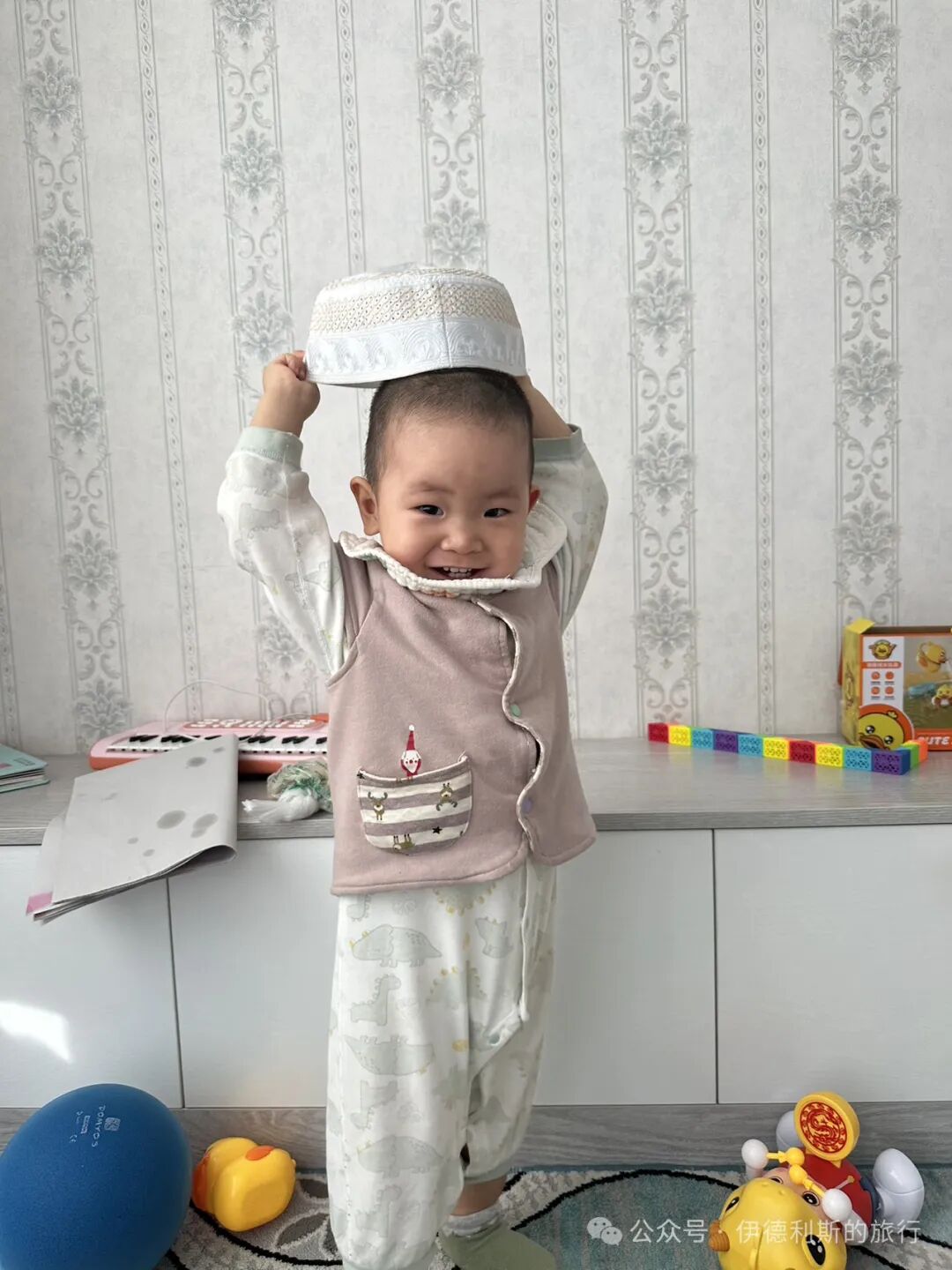
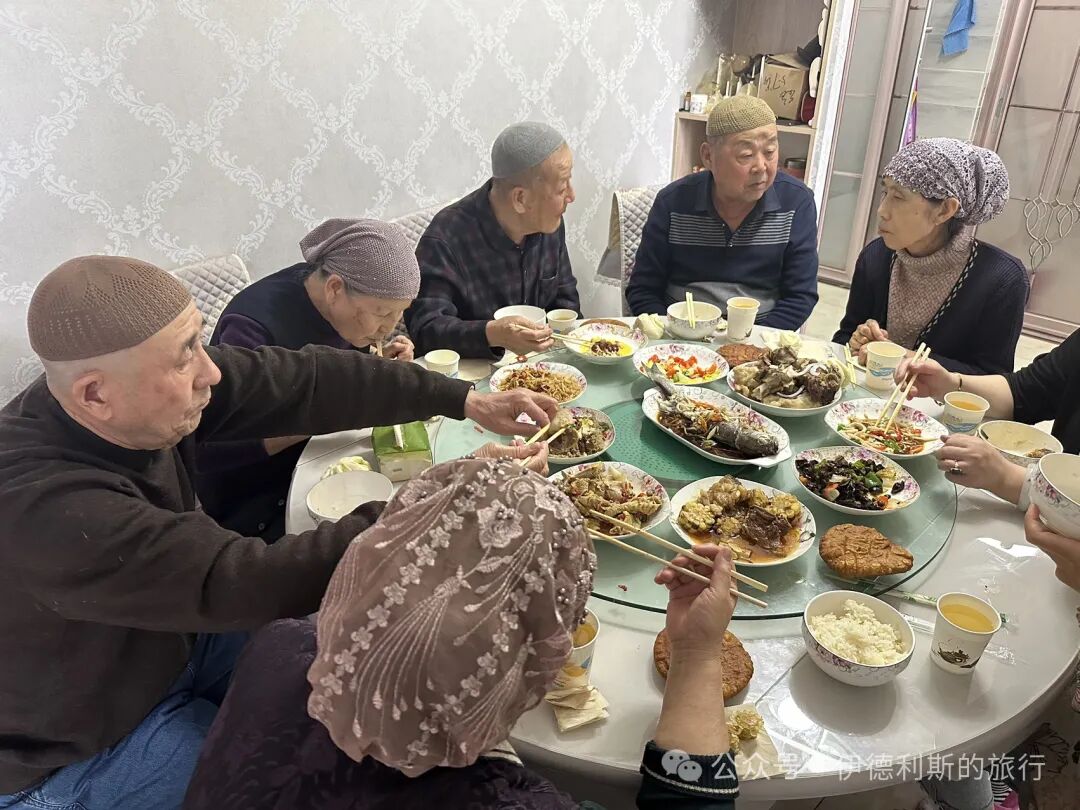
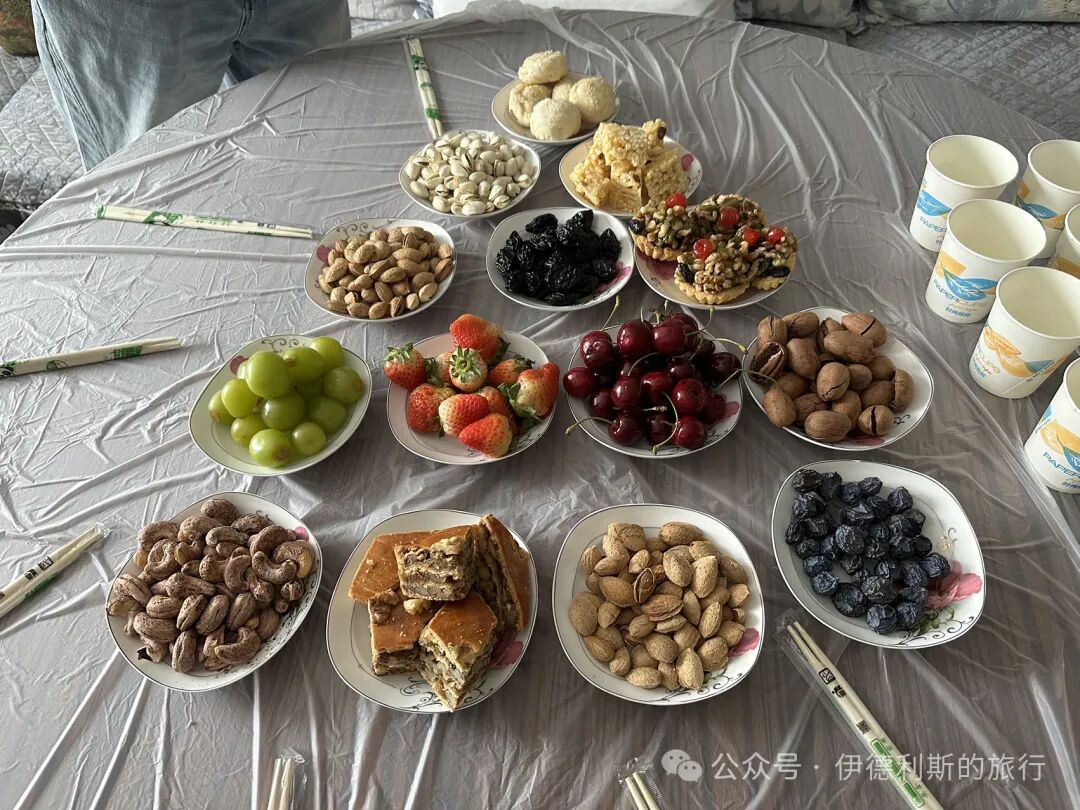
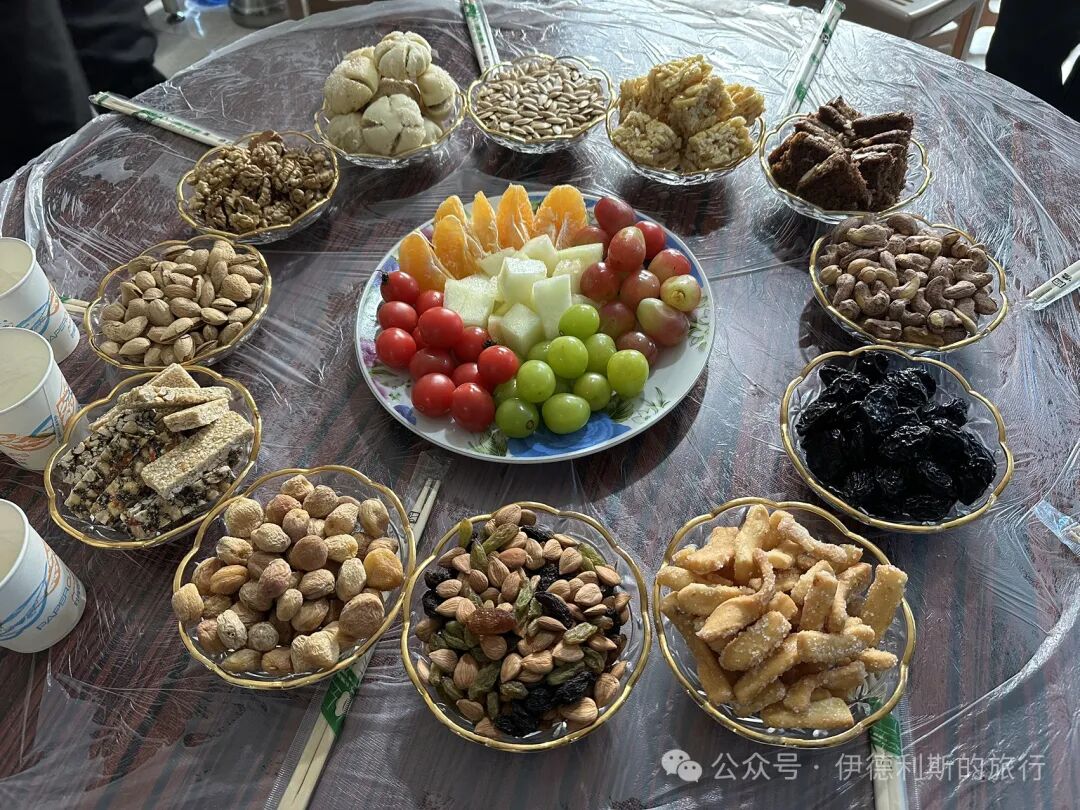
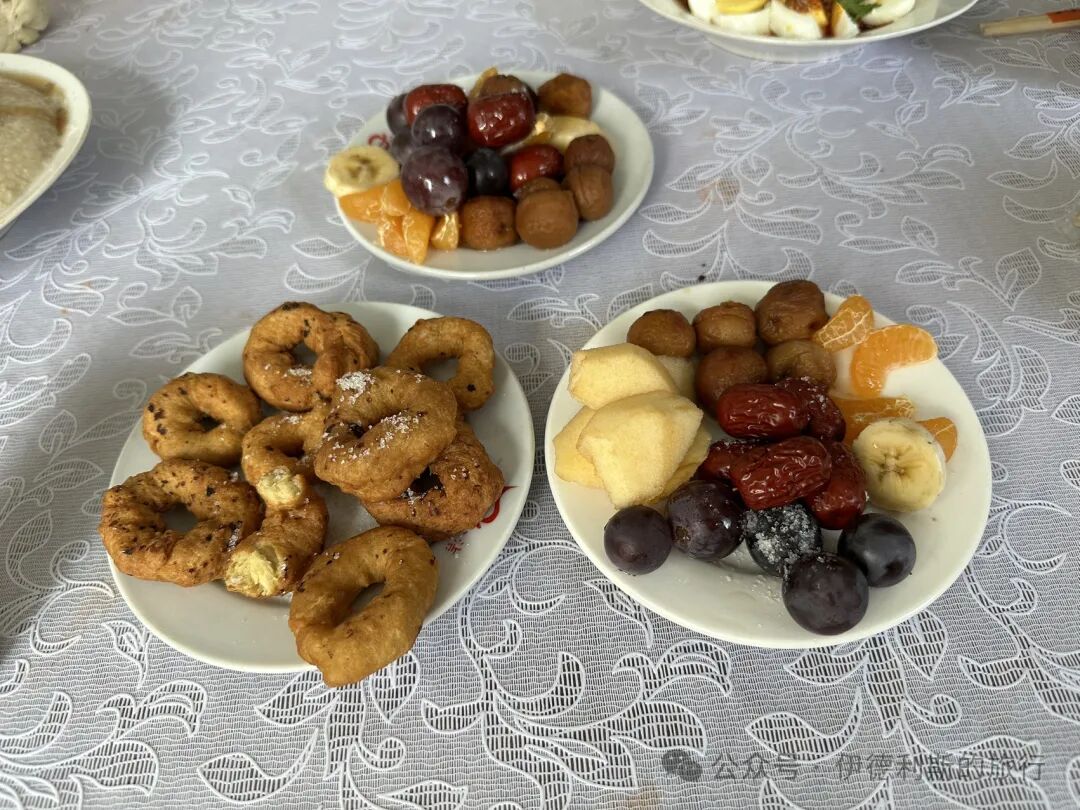
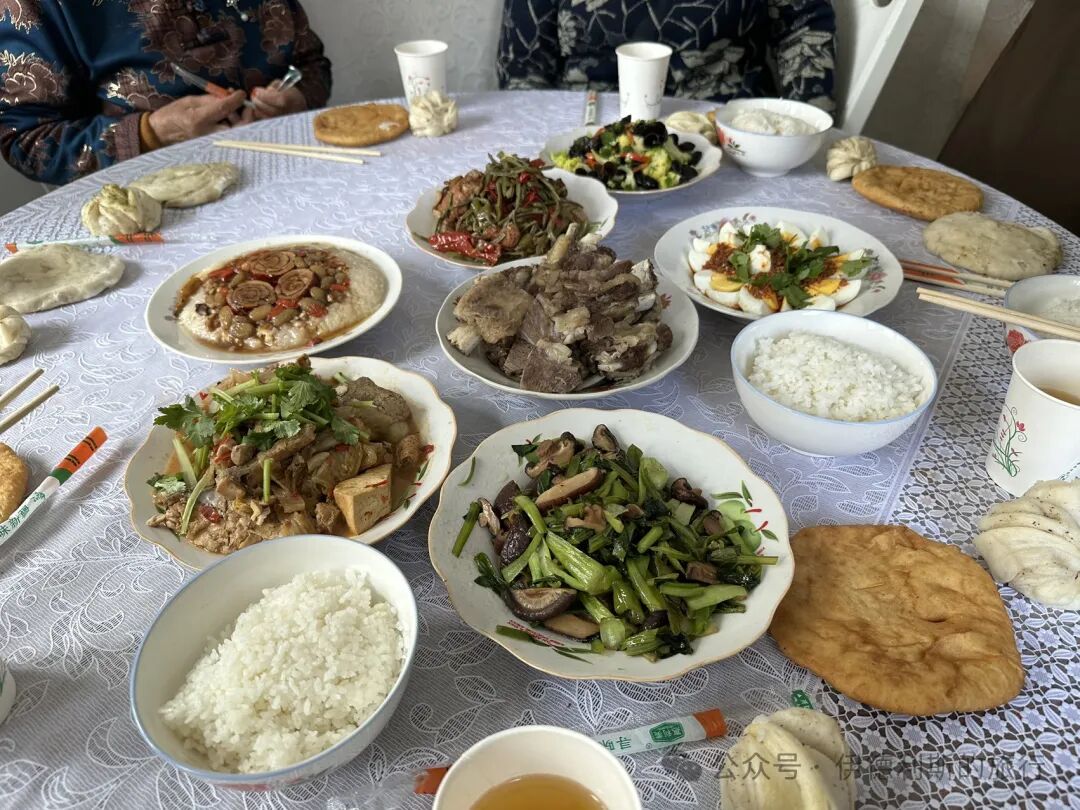
February 17 was our family's Night of Prayer, and we also celebrated Suleiman's first birthday (suisuizi). We invited four imams and a large group of relatives to recite surahs, recite the Bara'at praise, perform repentance, and receive dua, followed by a meal. First, we served appetizers (diediezi) and tea. The appetizers included nut tarts and baklava we bought at a Uyghur pastry shop on Hetian Street, as well as traditional flaky pastries and fried flour cakes (saqima) made by my aunt. After everyone chatted for a while, we cleared the appetizers and brought out the main dishes to officially start the feast.
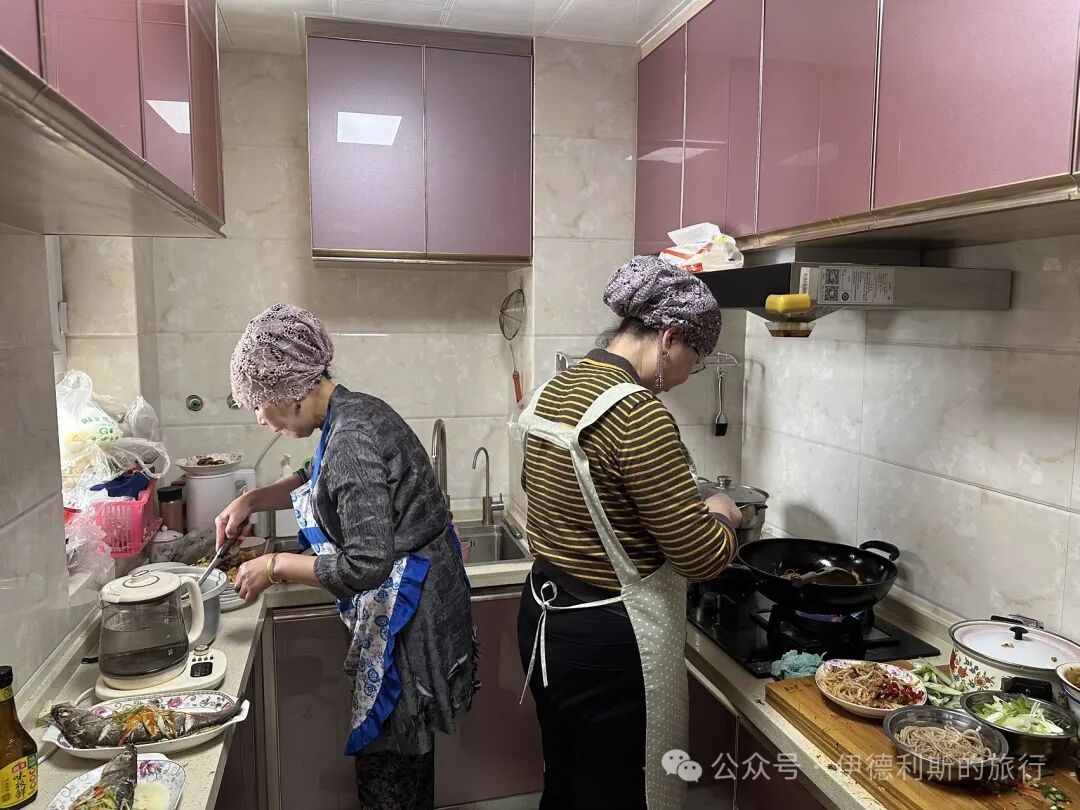
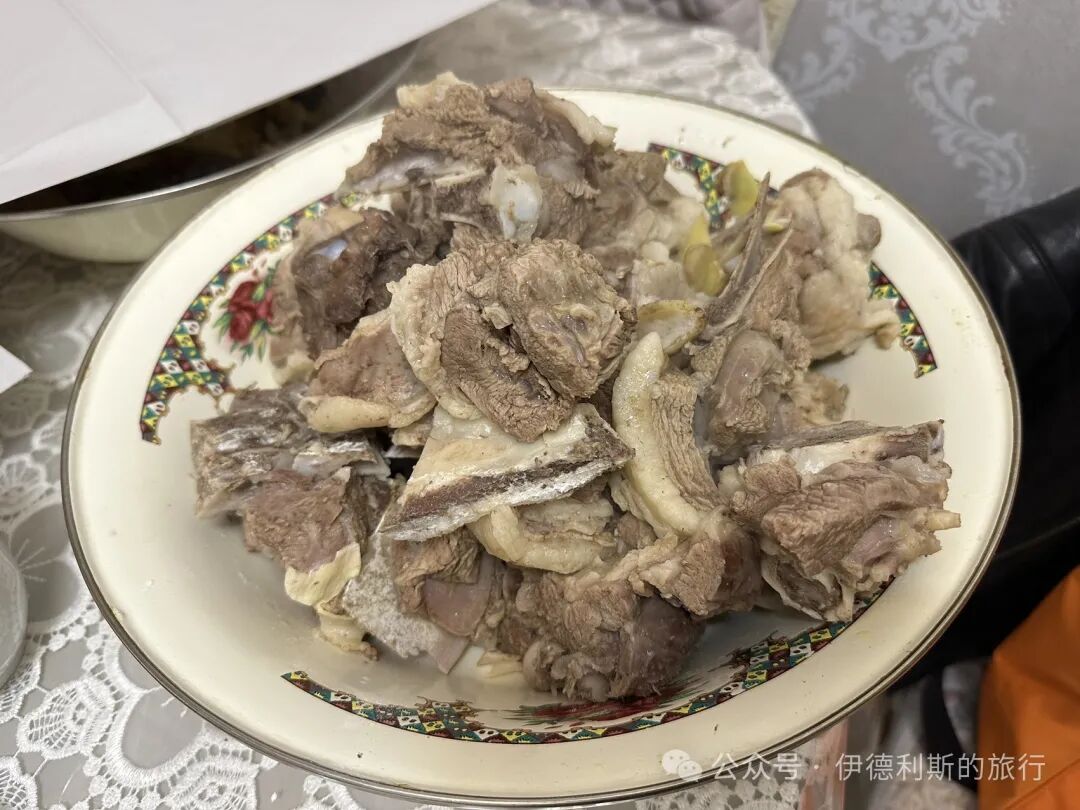
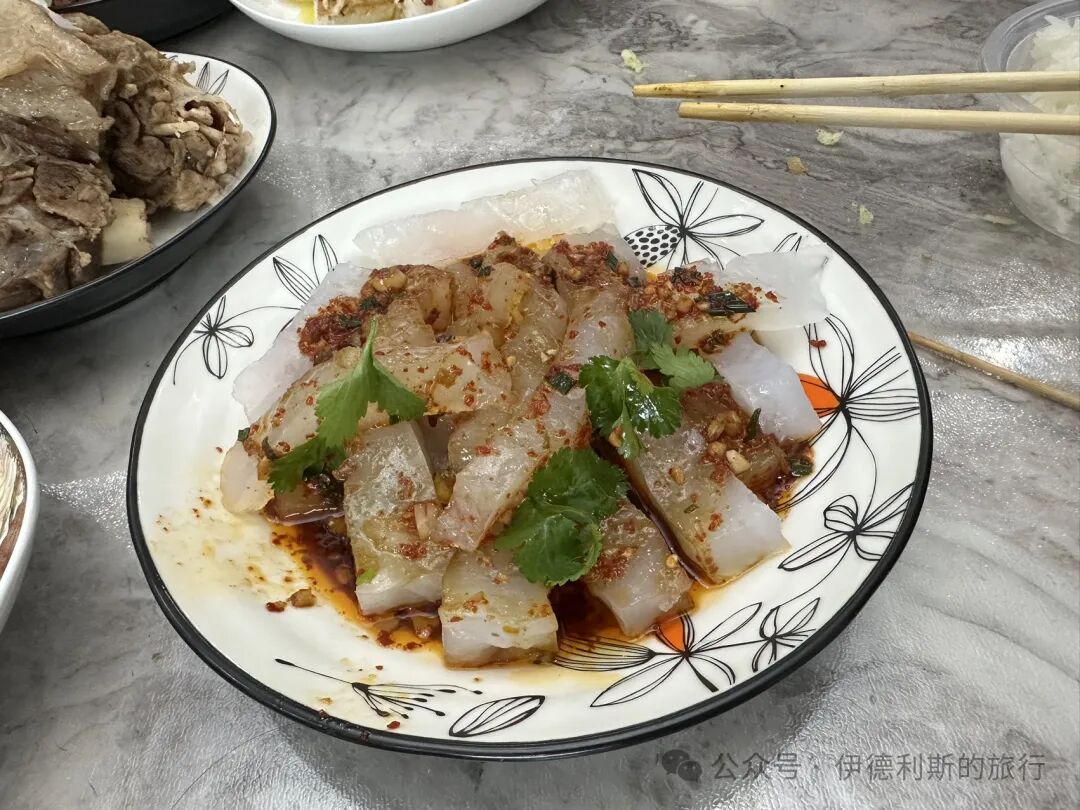
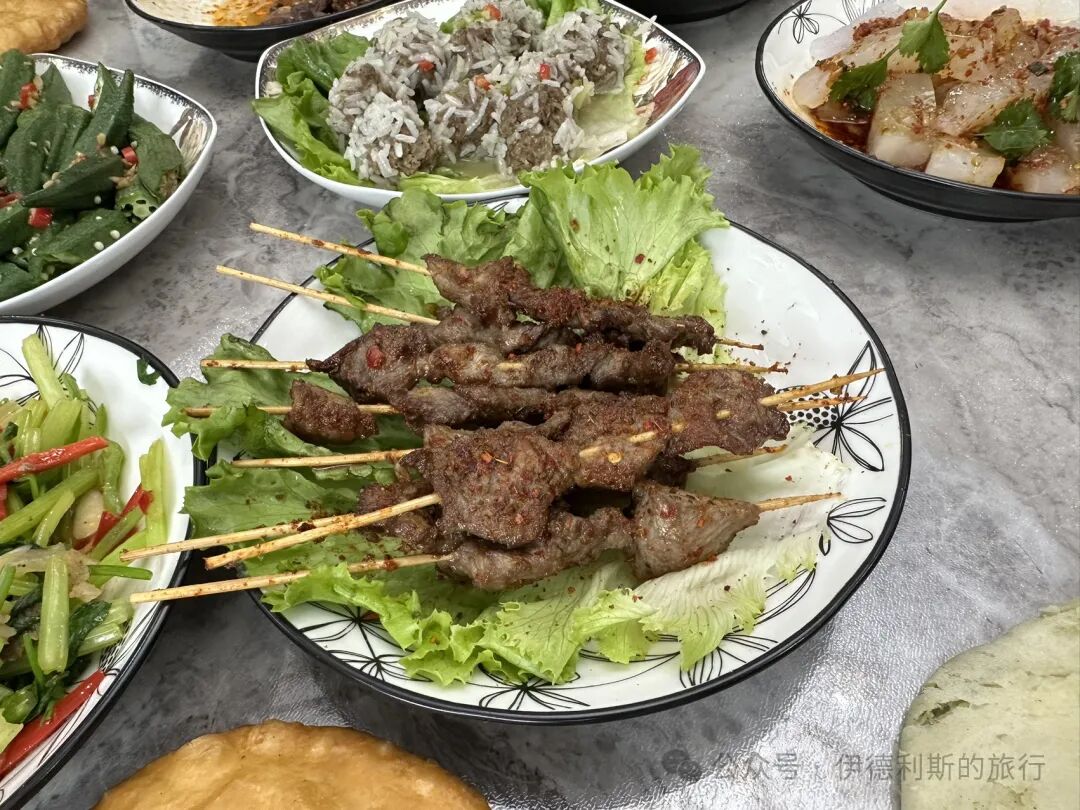
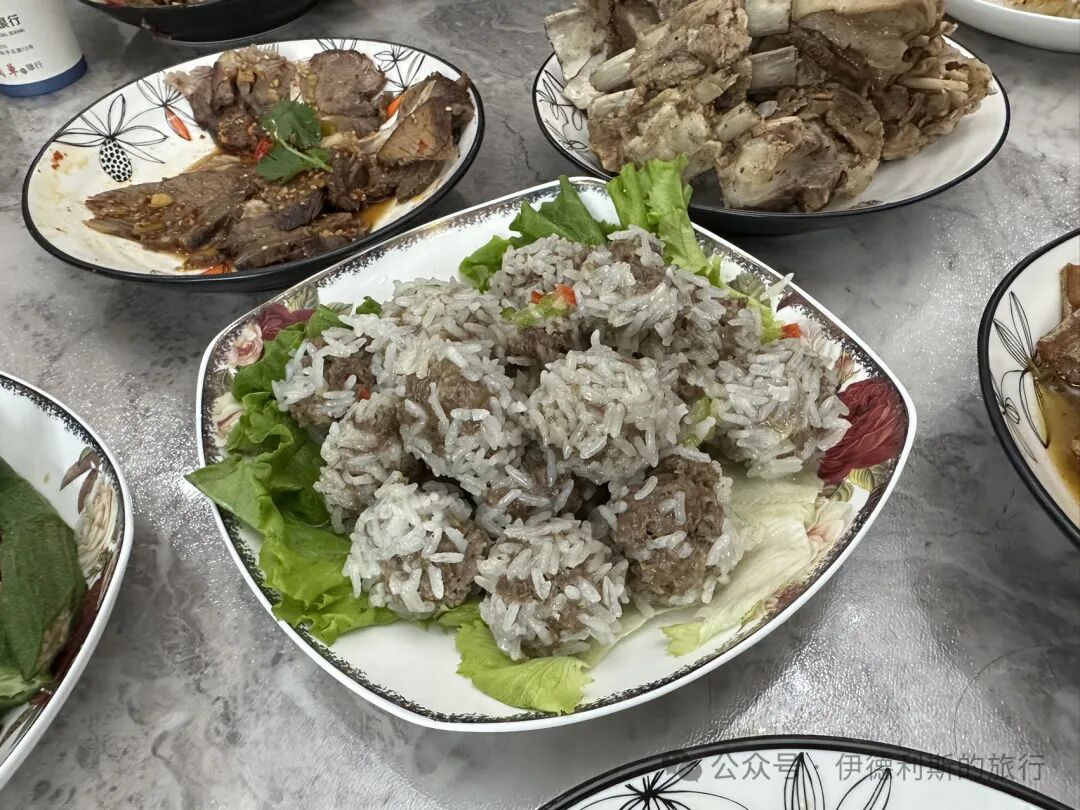
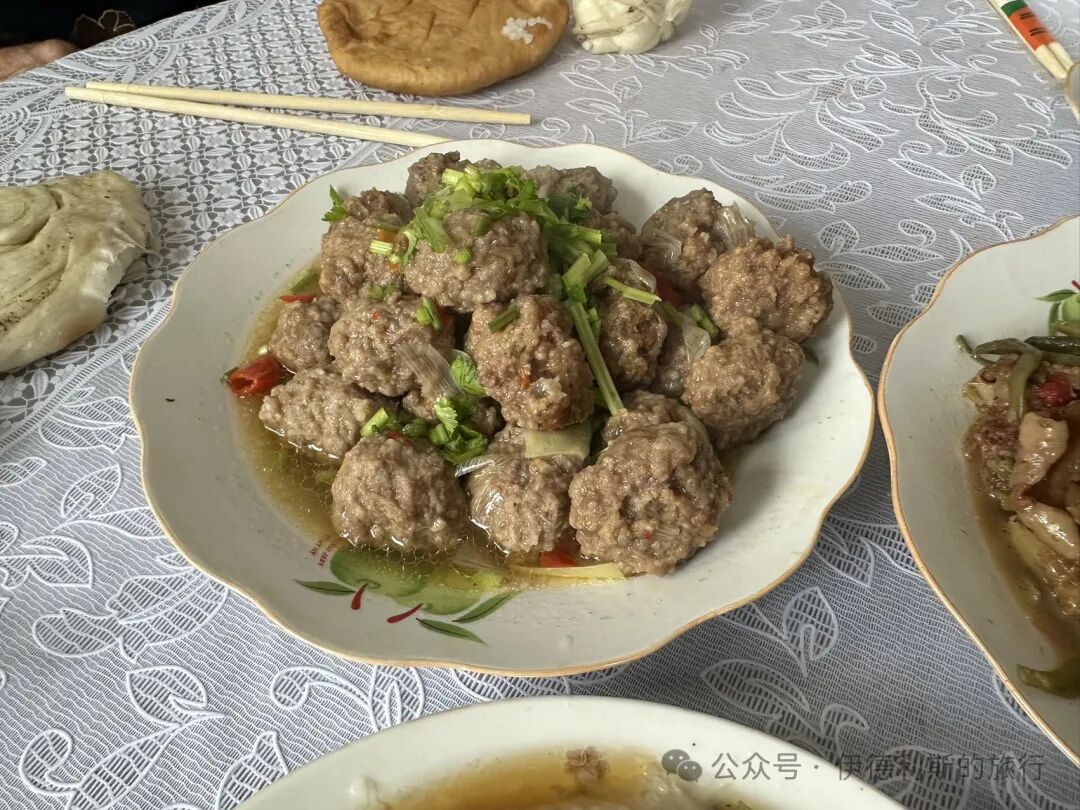
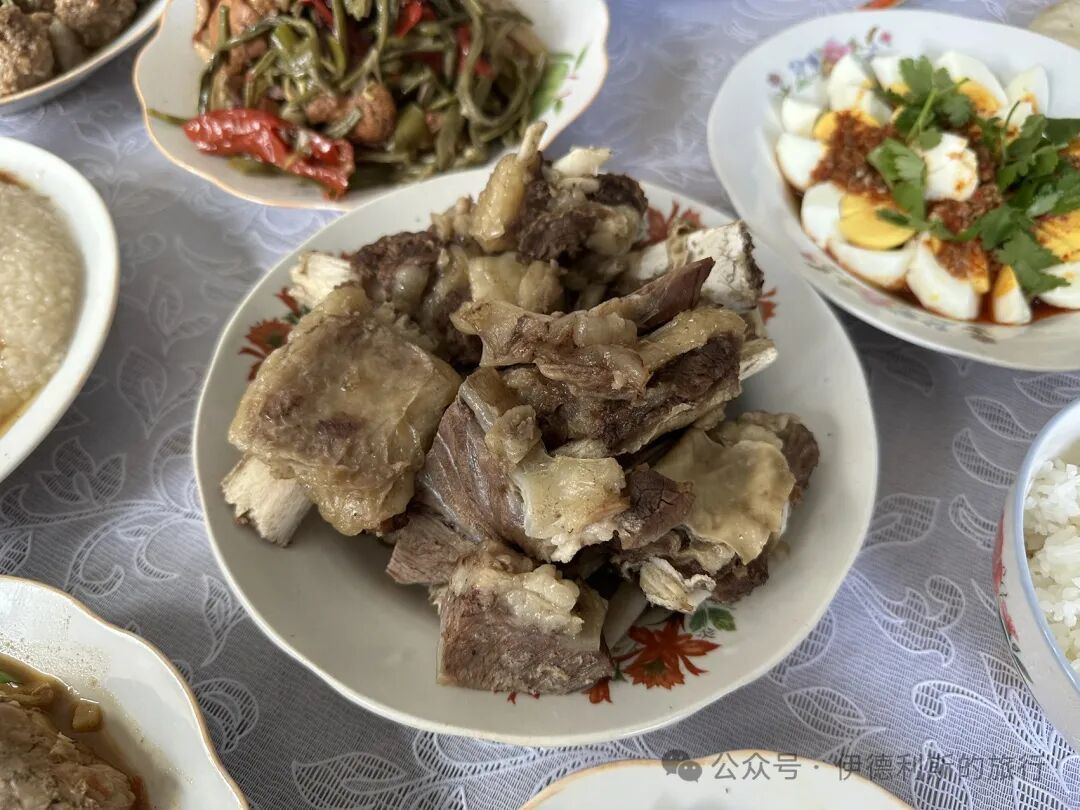
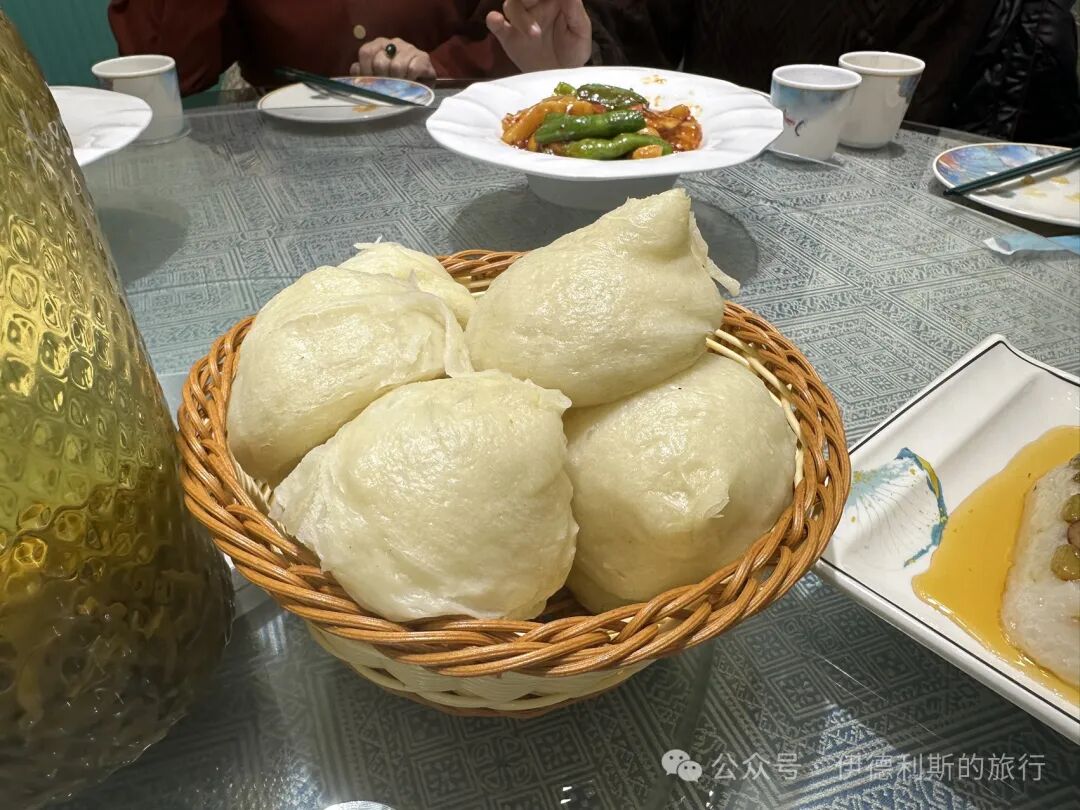
With the help of my aunts, we prepared a rich feast. The main dishes were clear-stewed lamb, braised beef steak, followed by steamed starch jelly (mengzi), pearl meatballs, peppercorn chicken, steamed fish, sweet rice platter (tianpanzi), and various stir-fried dishes. The staples were fried dough (youxiang), steamed buns (momo), and rice.
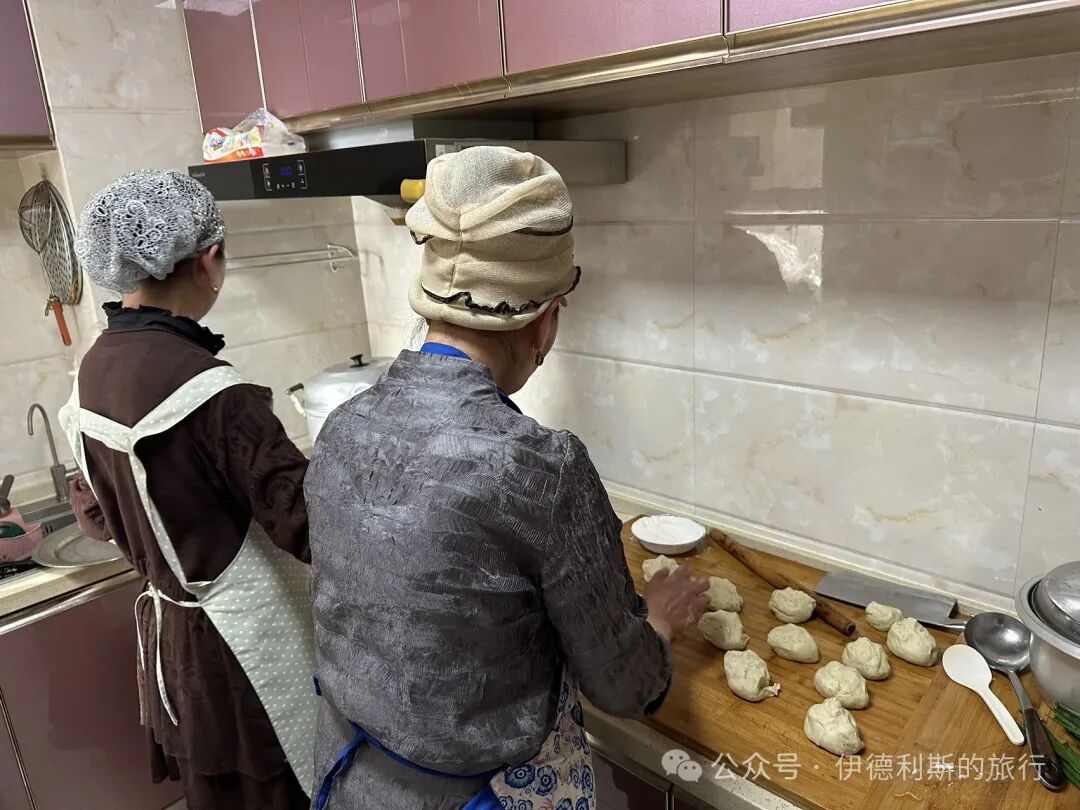
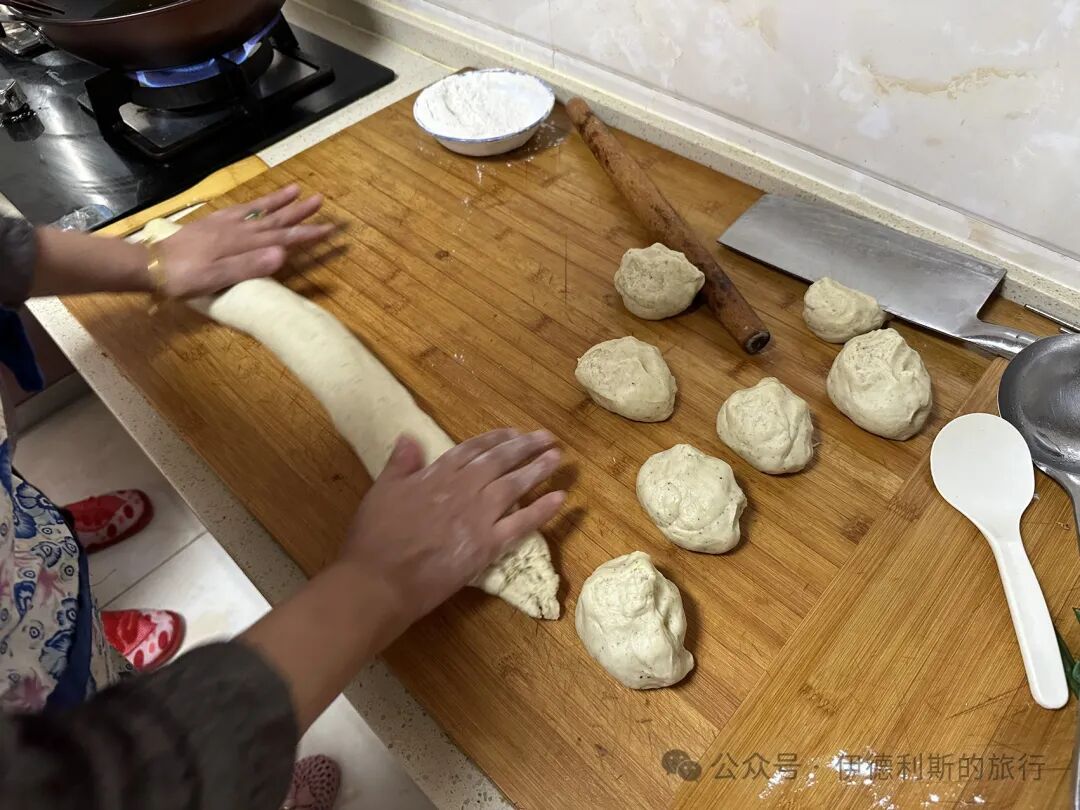
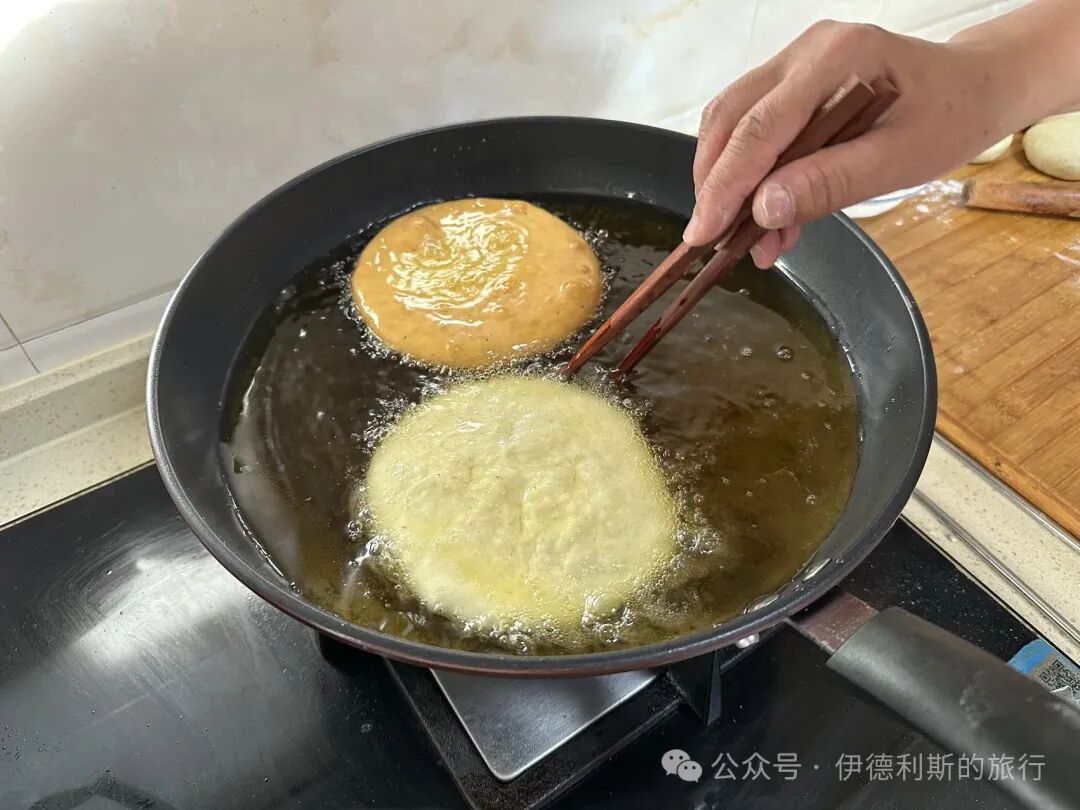
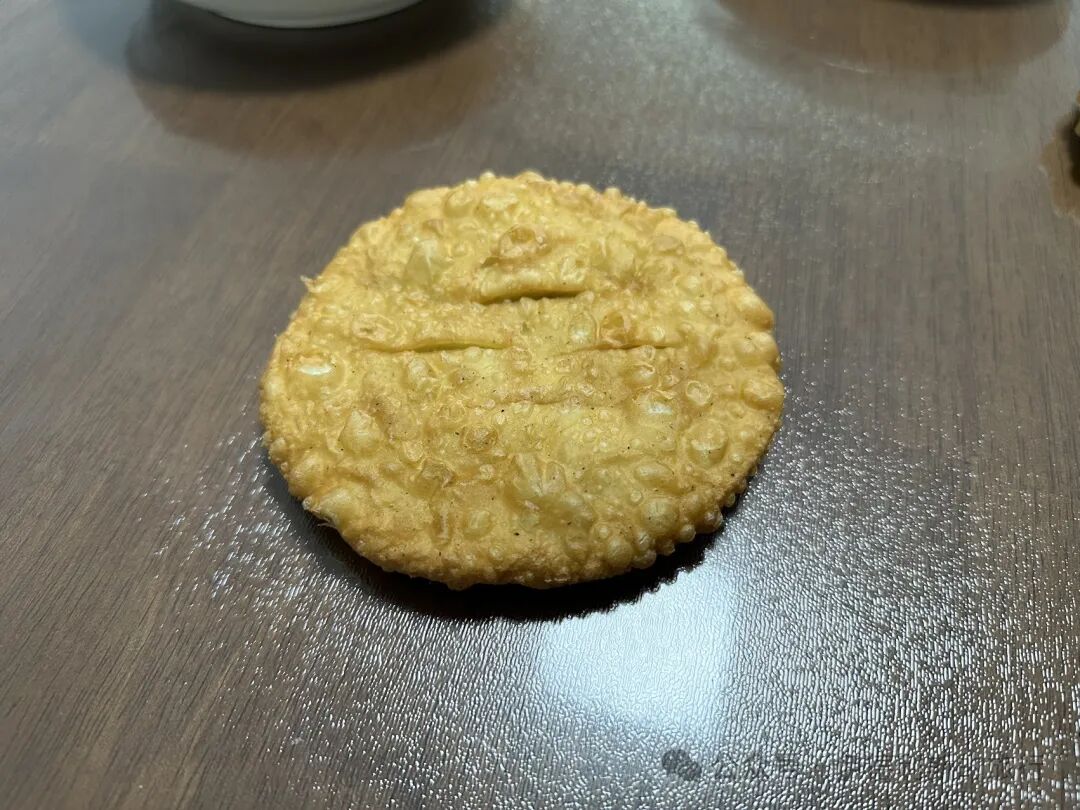
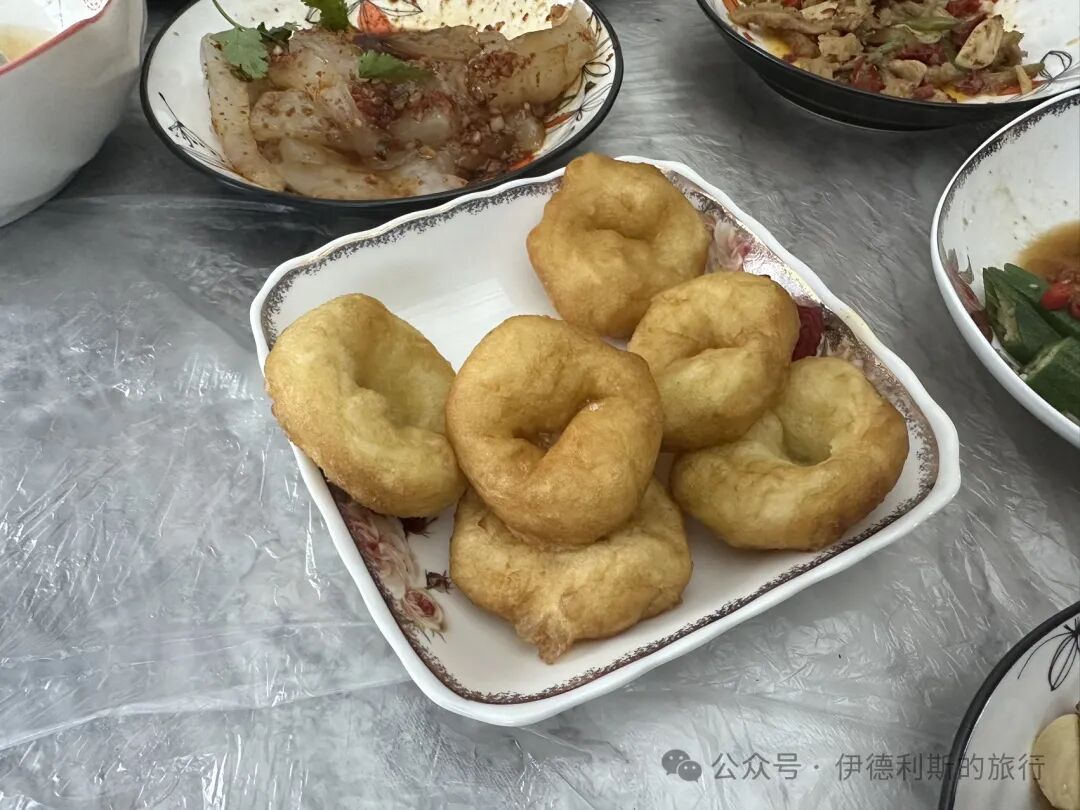
The fried dough was deep-fried a day in advance. Before frying, we first performed ablution (wudu), then leavened the dough. After it rose, we scalded a small portion with hot oil and mixed in a little baking soda and fenugreek powder. We kneaded the scalded dough into the leavened dough, covered the basin, and let it rest for 15 minutes. After resting, we rolled it into a long shape, pinched off pieces, rolled them into flat cakes, cut four small slits with a knife, and it was ready to be fried. When putting them into the pot, we recited the Tasmiyah. We fried them for a while, flipped them, and tapped the edges with chopsticks; once they were firm, they were done.
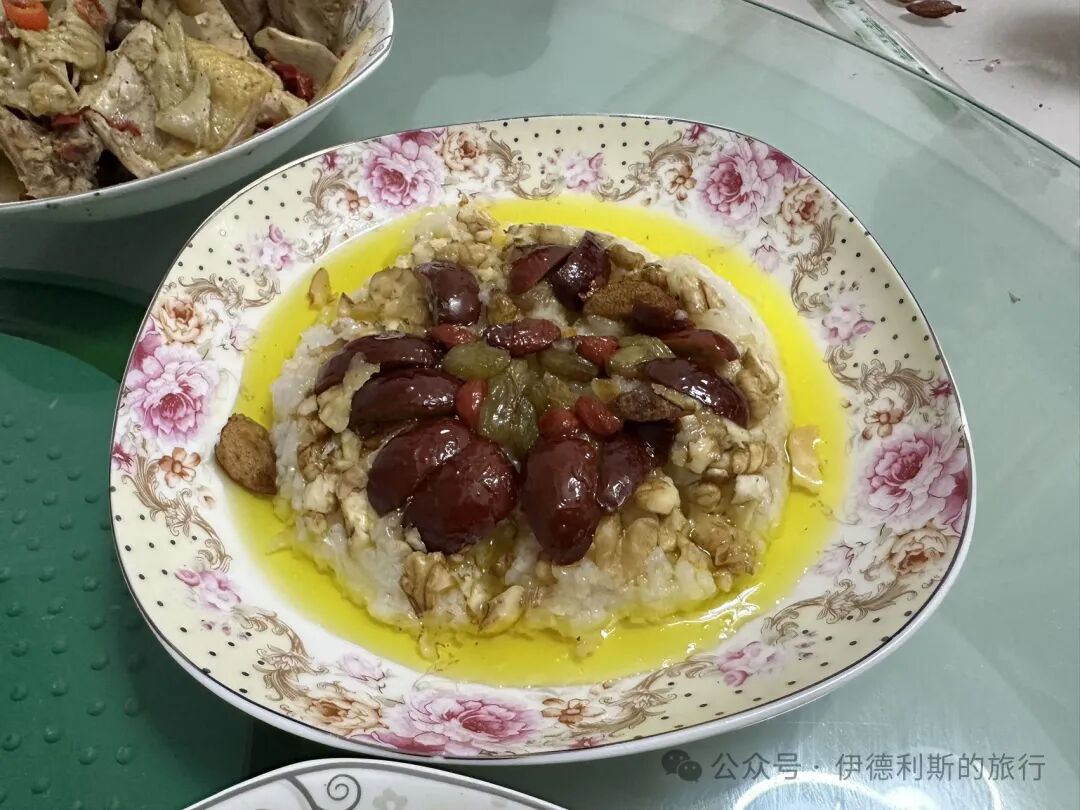
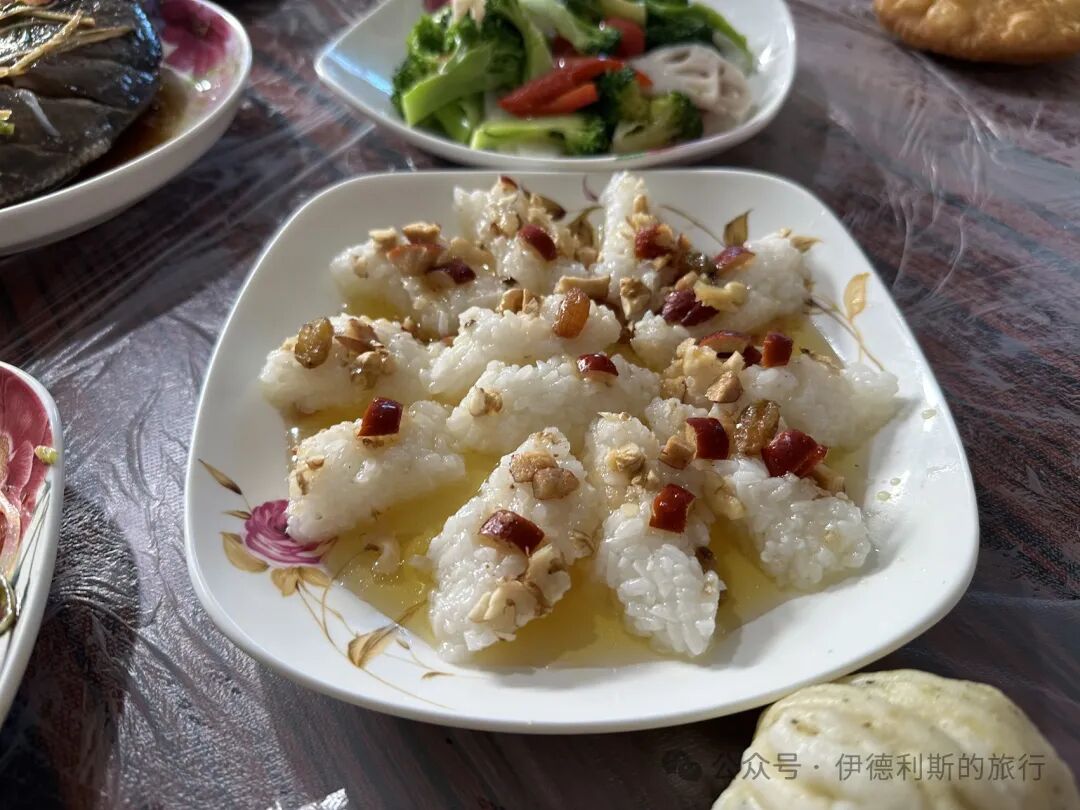
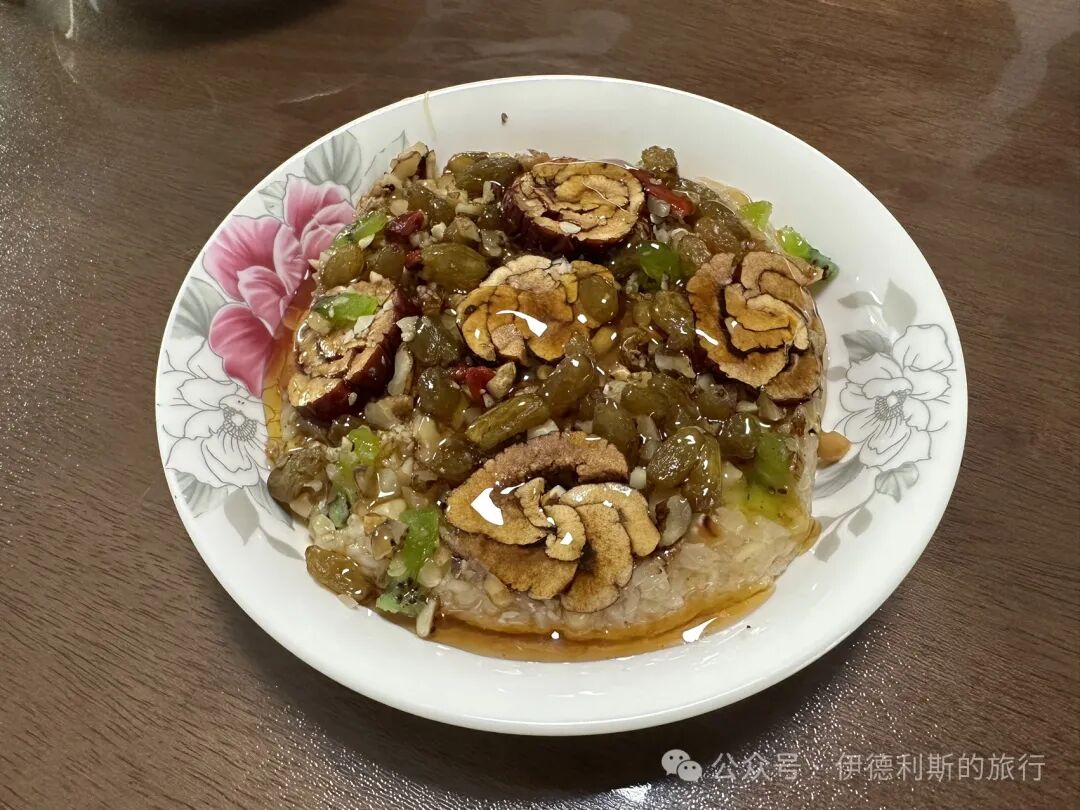
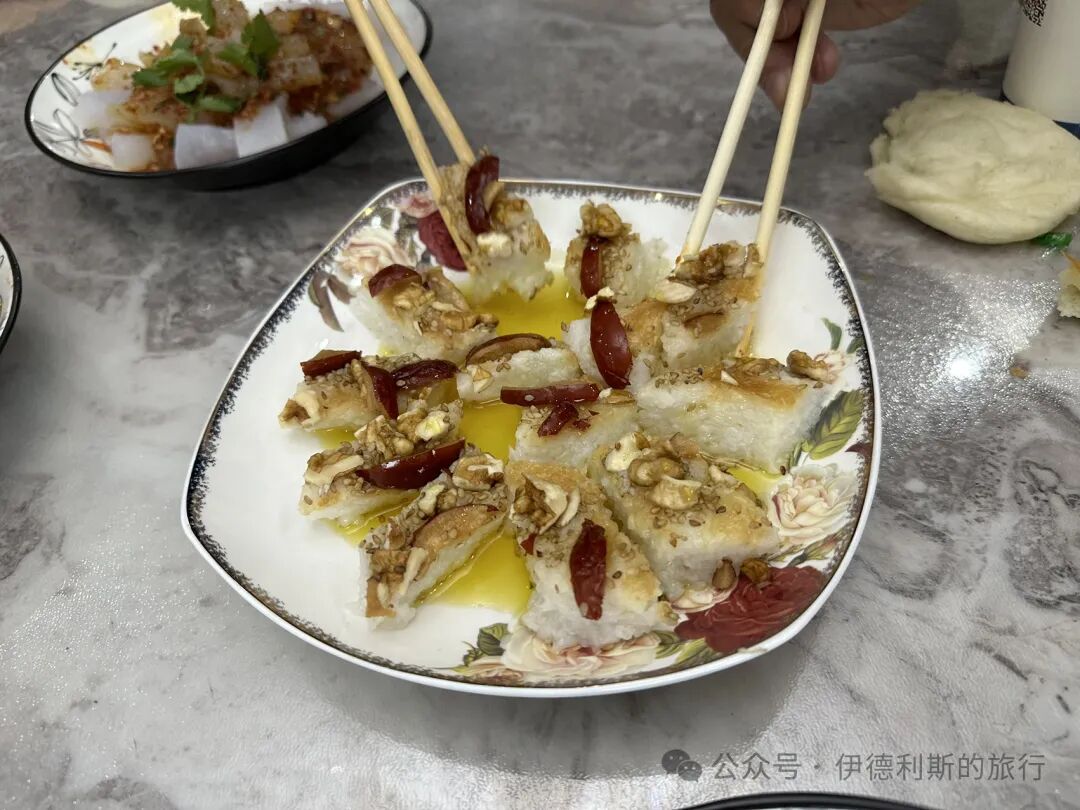
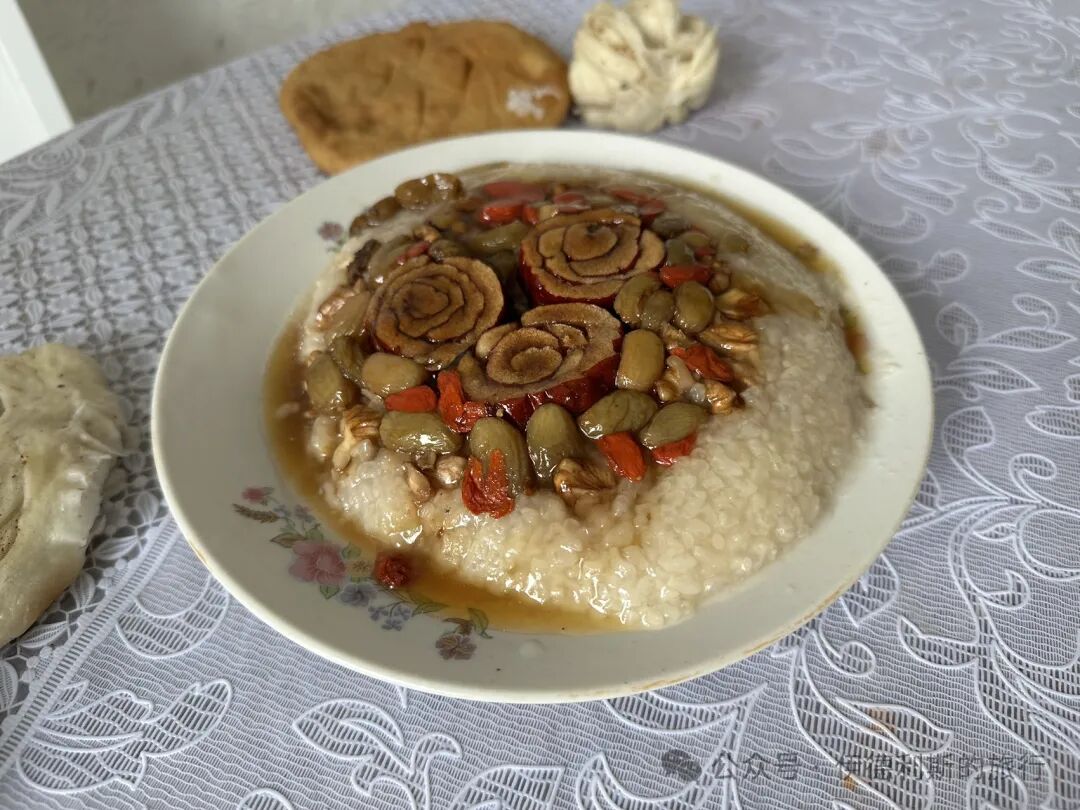
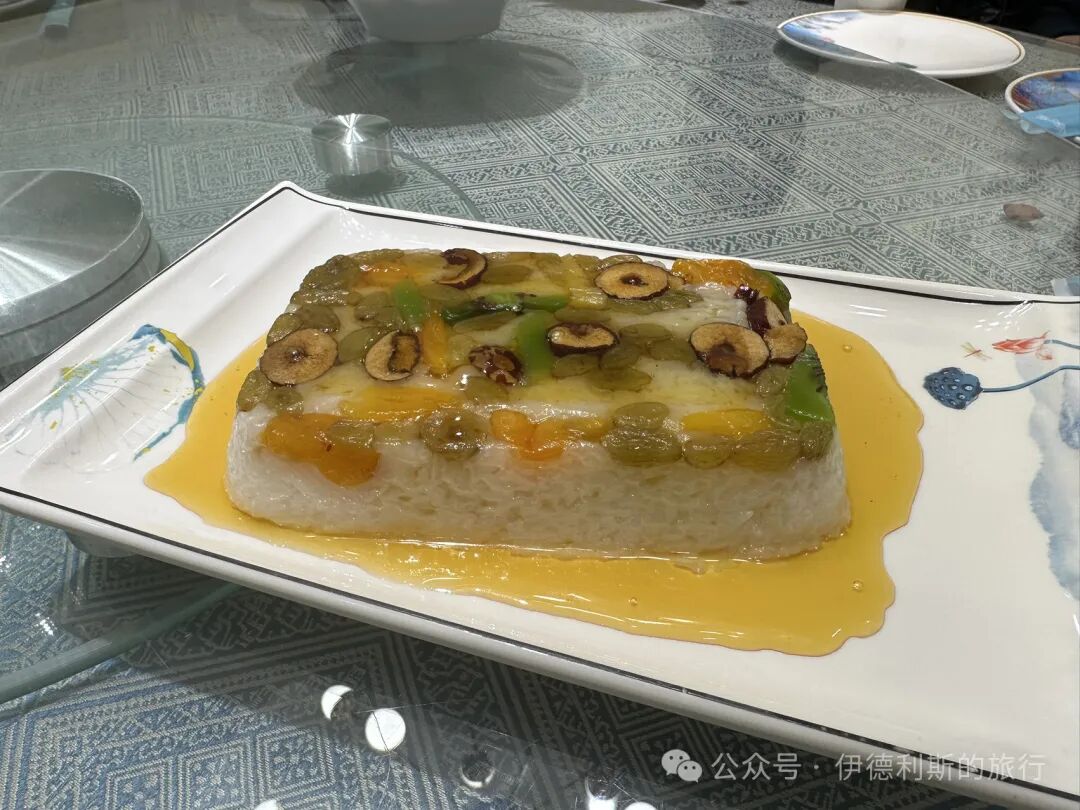
To make sweet rice platter (tianpanzi), first wash the glutinous rice and soak it for three days. Then, add a little brown sugar (shazitang) and steam it, using more water than you would for regular rice. Next, wash red dates, walnut kernels, and raisins, and spread them at the bottom of a bowl. Cover them with the steamed glutinous rice and let it cool. After that, boil rock sugar to make a syrup. Finally, flip the bowl of rice onto a plate and pour the syrup over it.
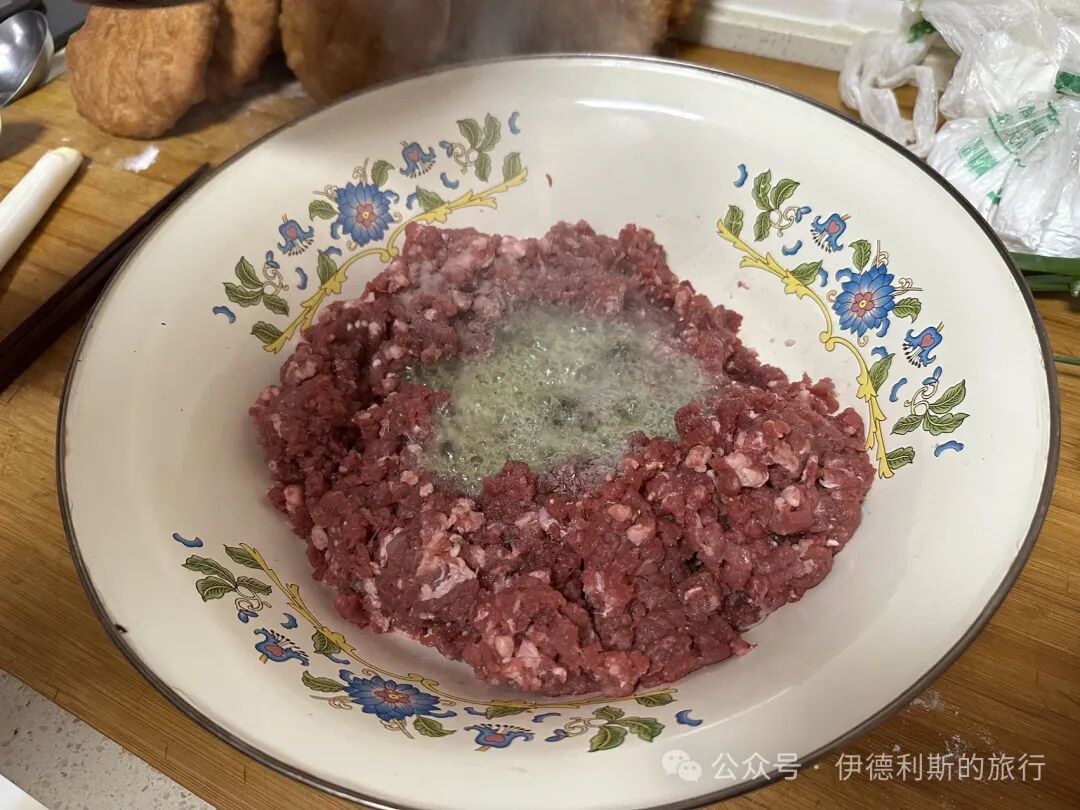
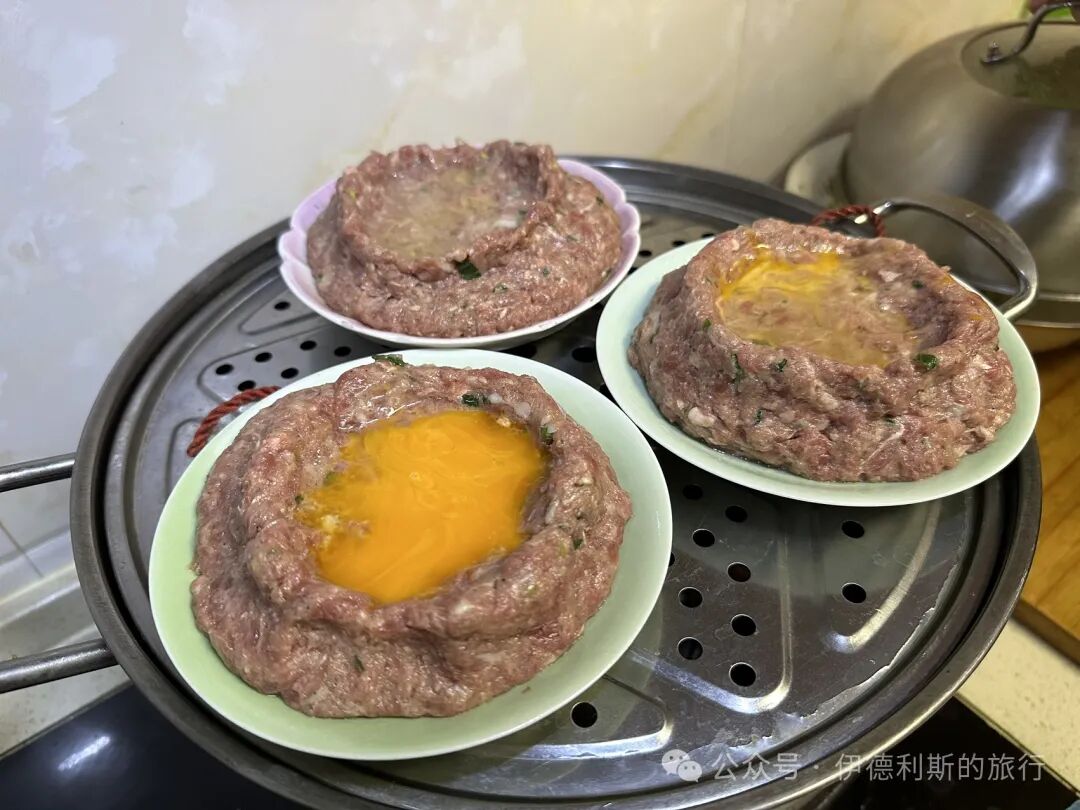
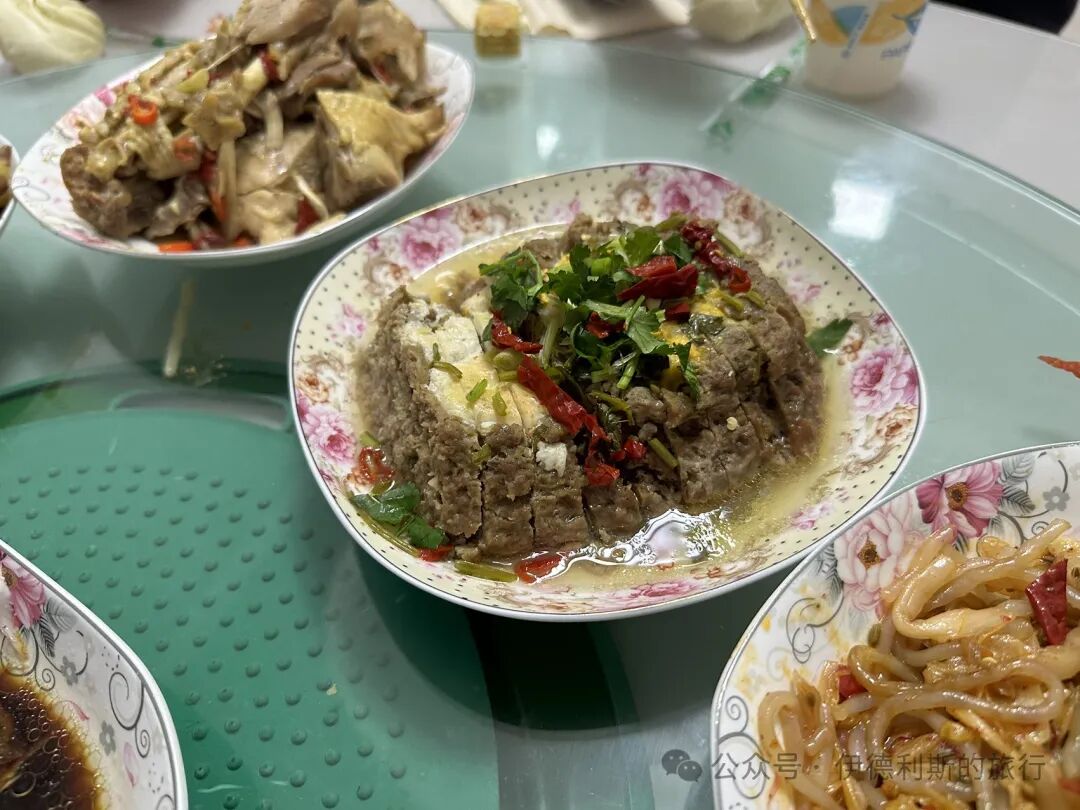
Meatloaf (munzi) is made with ground beef. When mixing the filling, beat it repeatedly, then shape it into a cylinder. Pinch the top to look like a railing, pour an egg into the center, and steam it.
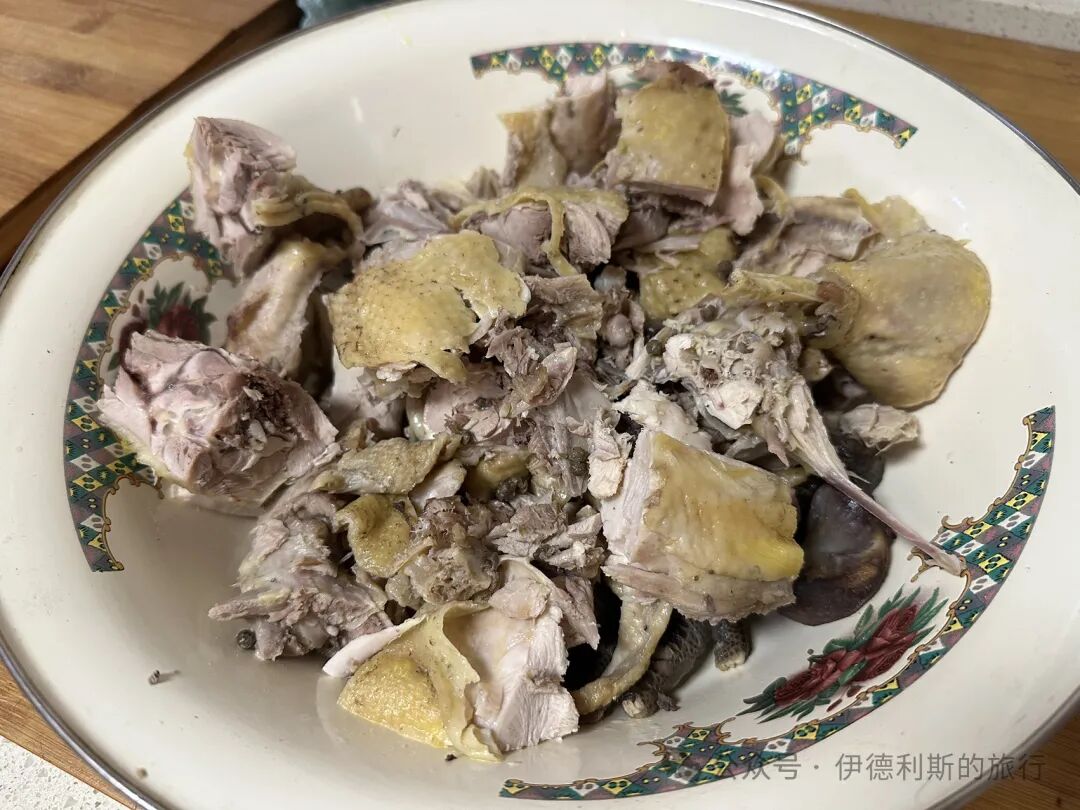
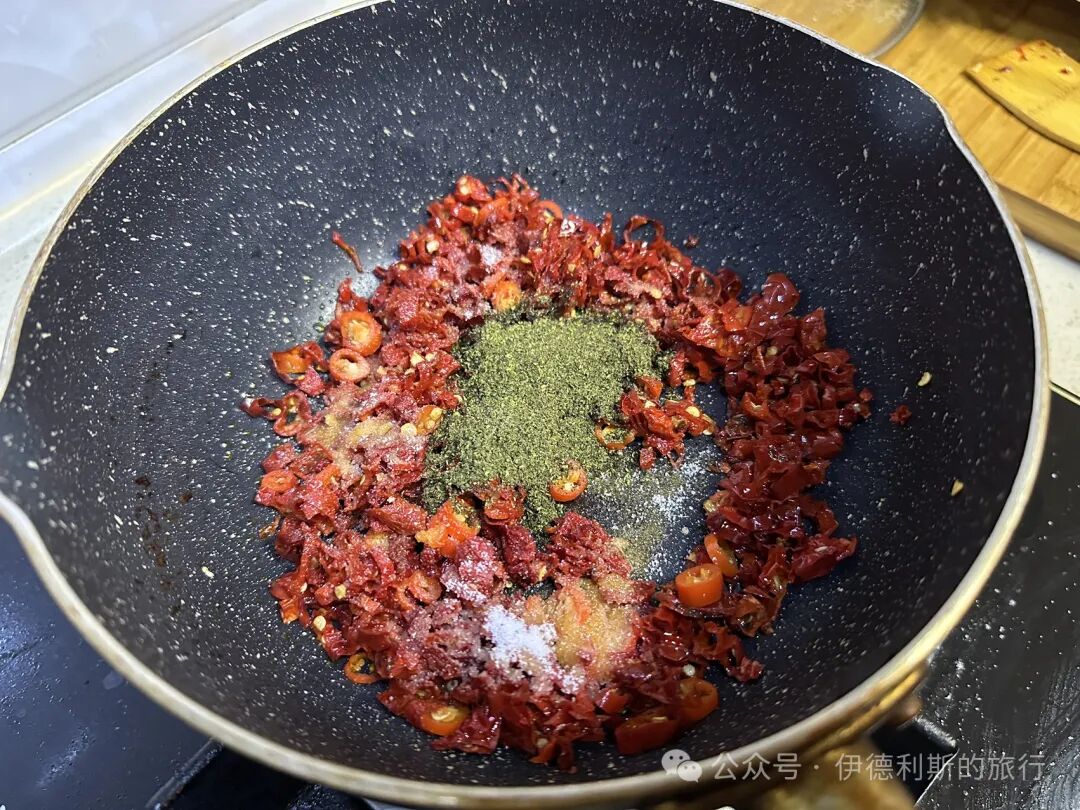
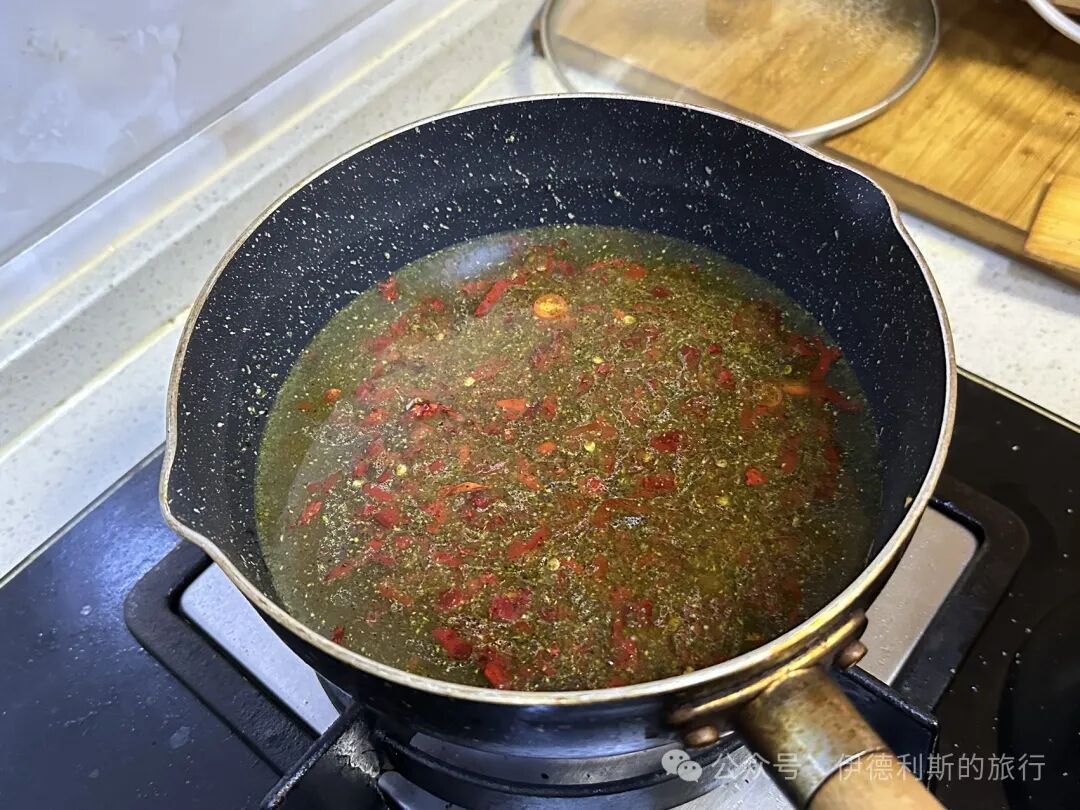
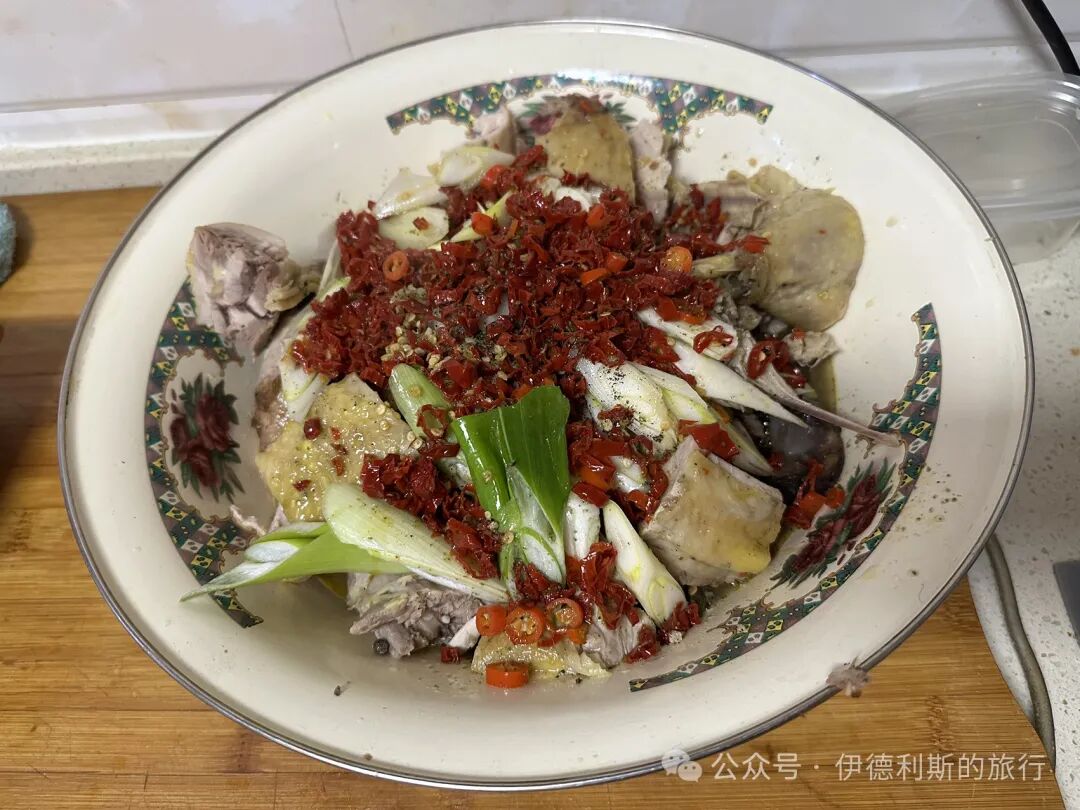
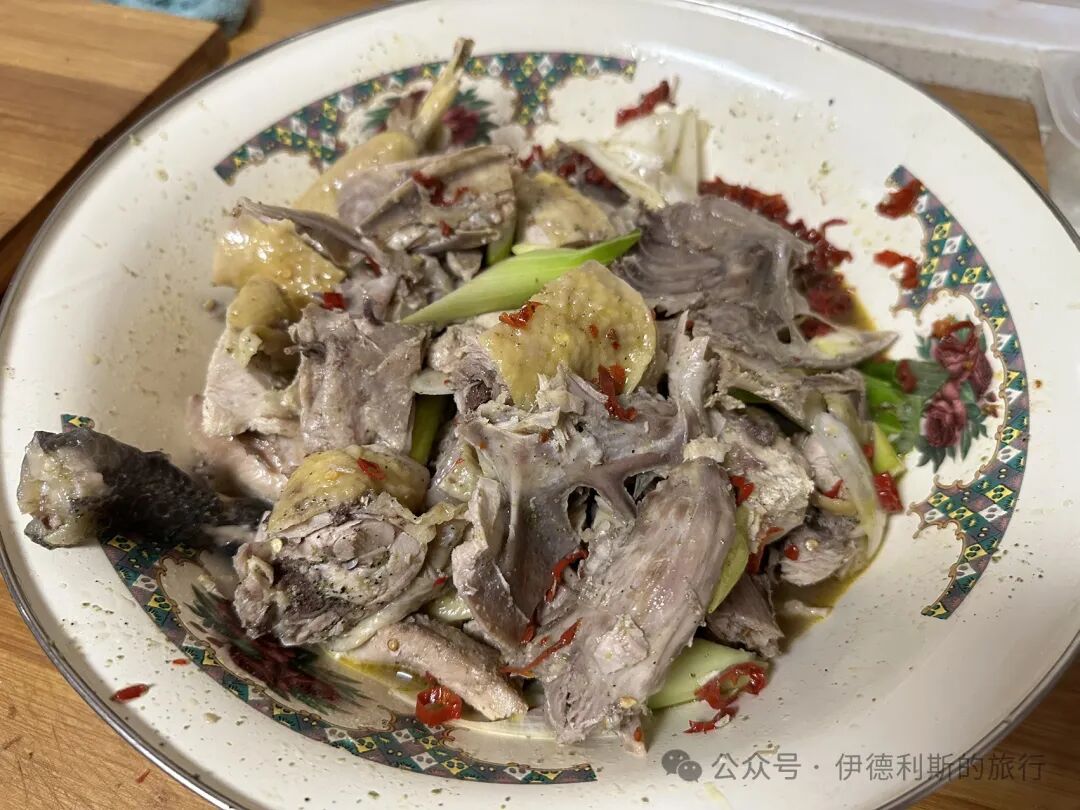
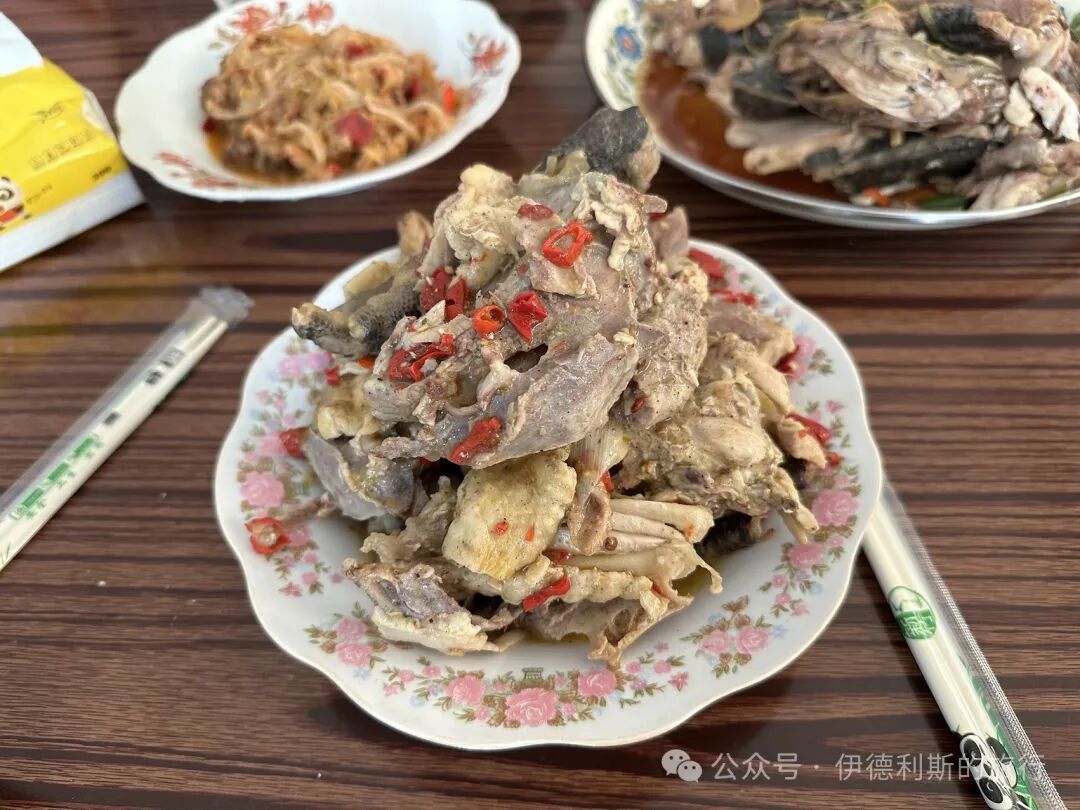
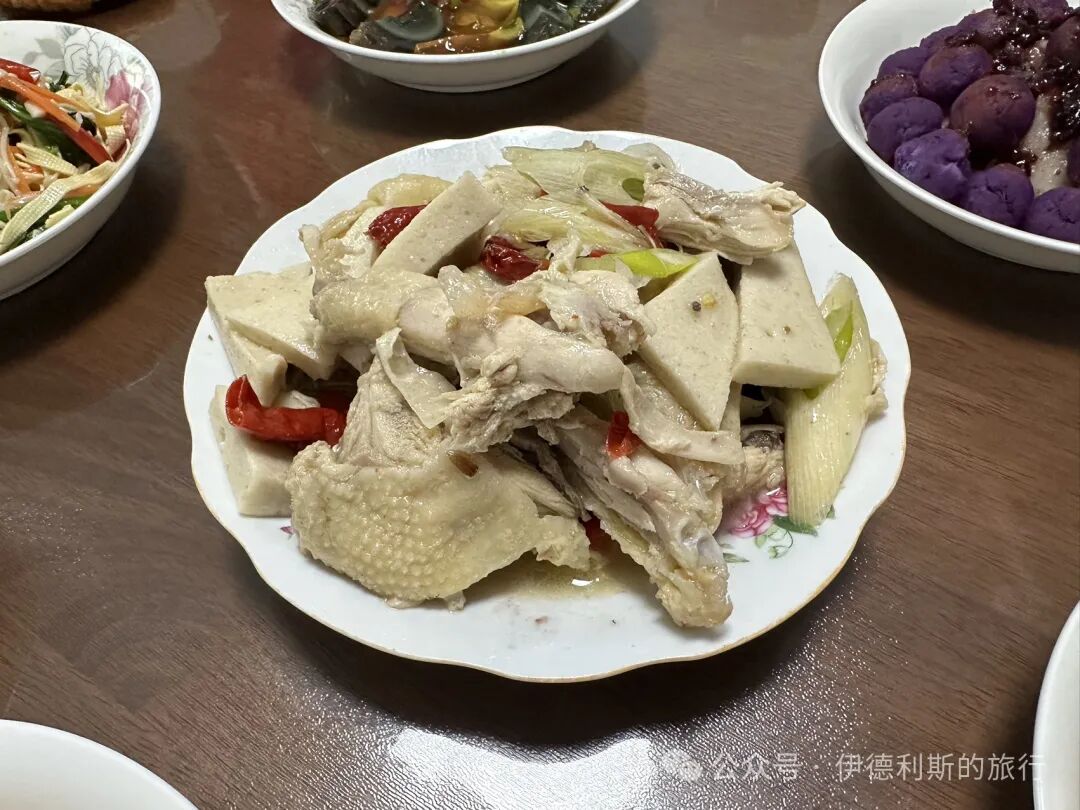
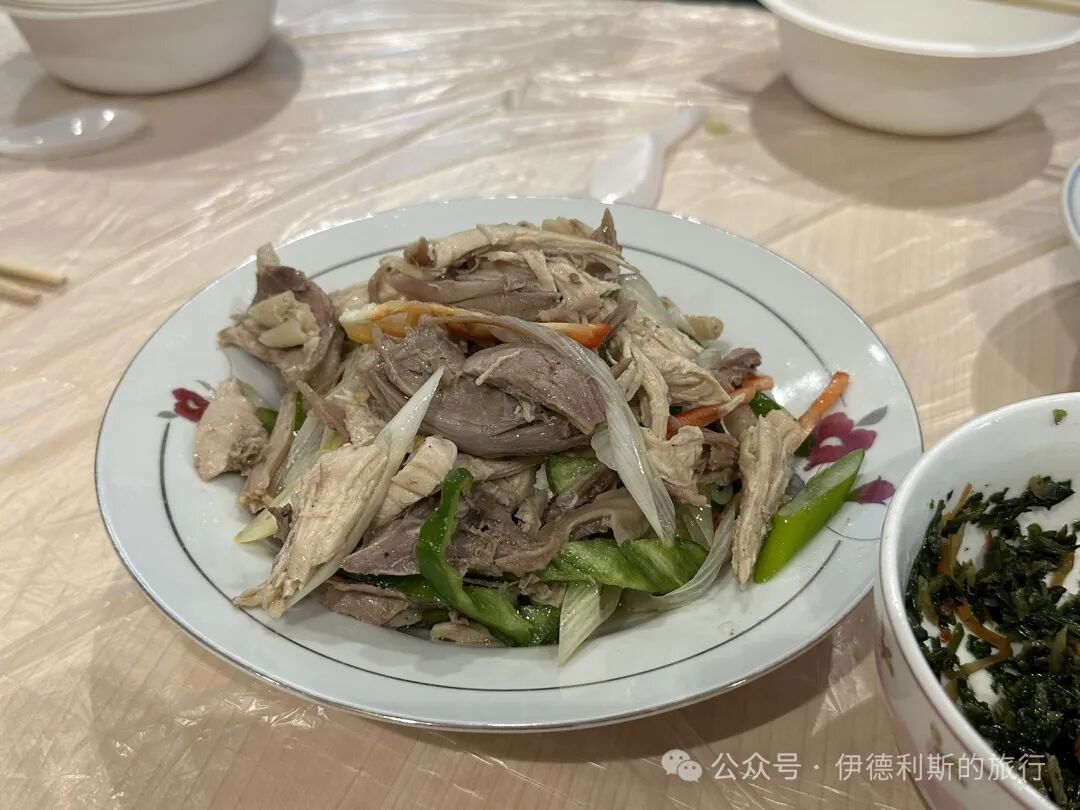
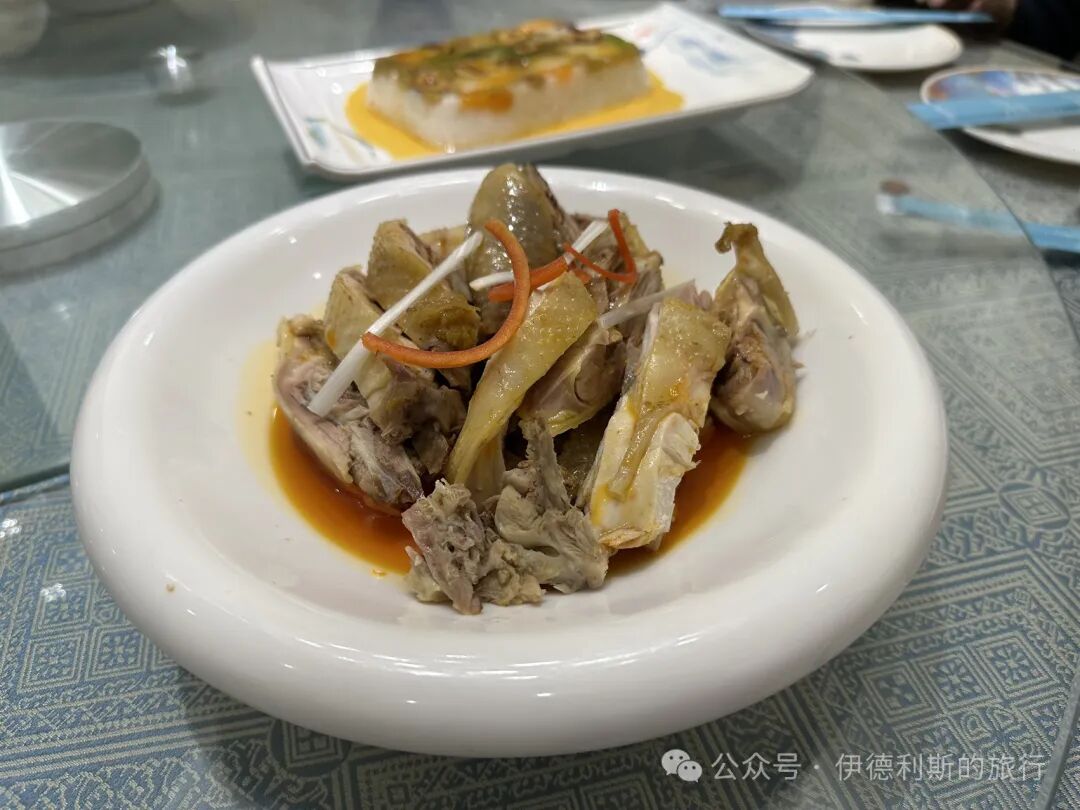
For spicy peppercorn chicken (jiaomaji), first wash a free-range chicken, cut it in half, and put it in a pressure cooker. Add water to cover it, along with red chili, Sichuan peppercorns, salt, bay leaves, cinnamon, and ginger slices. Once cooked, take it out, let it cool in a basin, tear the meat into strips, and top with green onions. Heat oil in a pan. Once hot, turn off the heat and add dried chili skins (lapizi), Sichuan peppercorns, salt, and white pepper. Stir well, pour in some chicken broth, and then pour everything over the chicken in the basin and mix well.
We spent the night at my aunt's house near the cement factory. My uncle is an imam at a small mosque in Shanxi, and we are very grateful (zhigan) for that.
The main dishes were definitely braised beef steak and clear-stewed lamb. The chicken was raised by my uncle himself, and the lamb was from the southern mountains of Urumqi.
We spent the night at my second aunt's house in the New City District. My aunt is the recognized master chef of our family. She makes authentic home-style stir-fries, meatloaf (munzi), stuffed meat slices (jiasha), and tripe.
We spent the night at my aunt's house near the flour mill and had basin meat (penpenrou) with fried dough (youxiang) for breakfast.
We hosted our guests at Lanpin Banquet. It is currently the most popular restaurant in Urumqi for Hui Muslims to hold religious gatherings (niansuoer). They don't sell alcohol, the food is refined, and the owner is warm and attentive. It is usually packed on weekends and holidays, so you must book in advance. On the day we went, they hosted 30 tables for a circumcision ceremony and 15 tables for a special occasion.
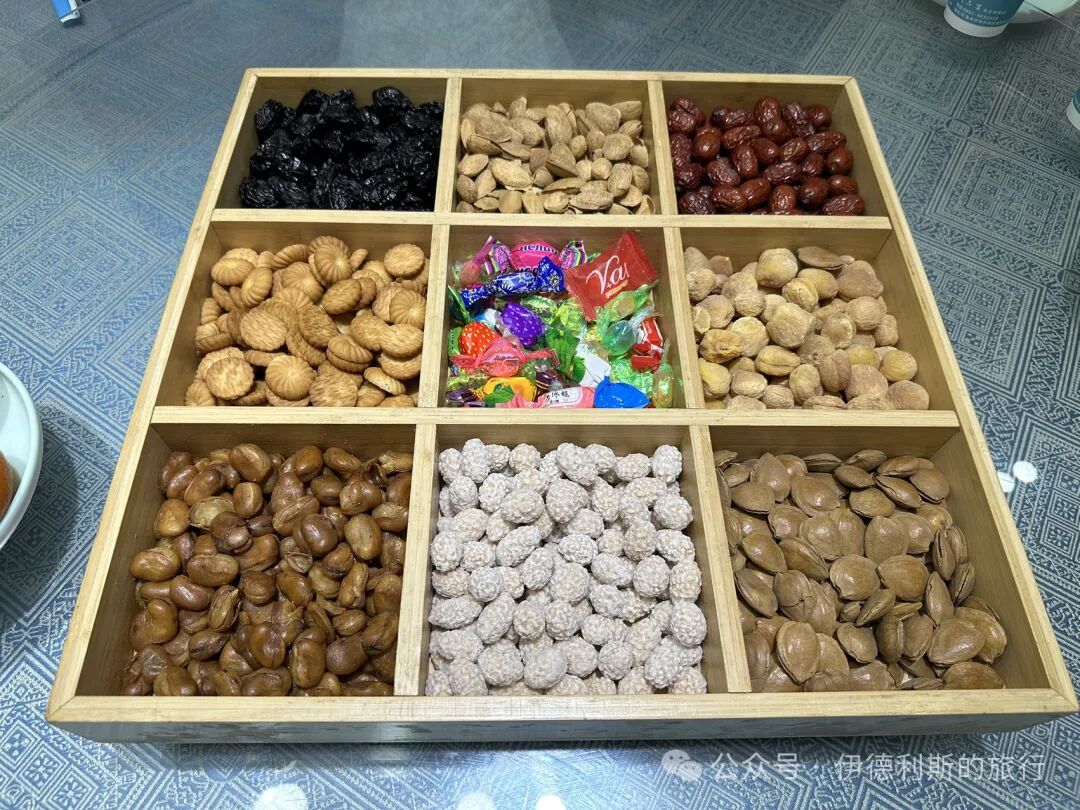
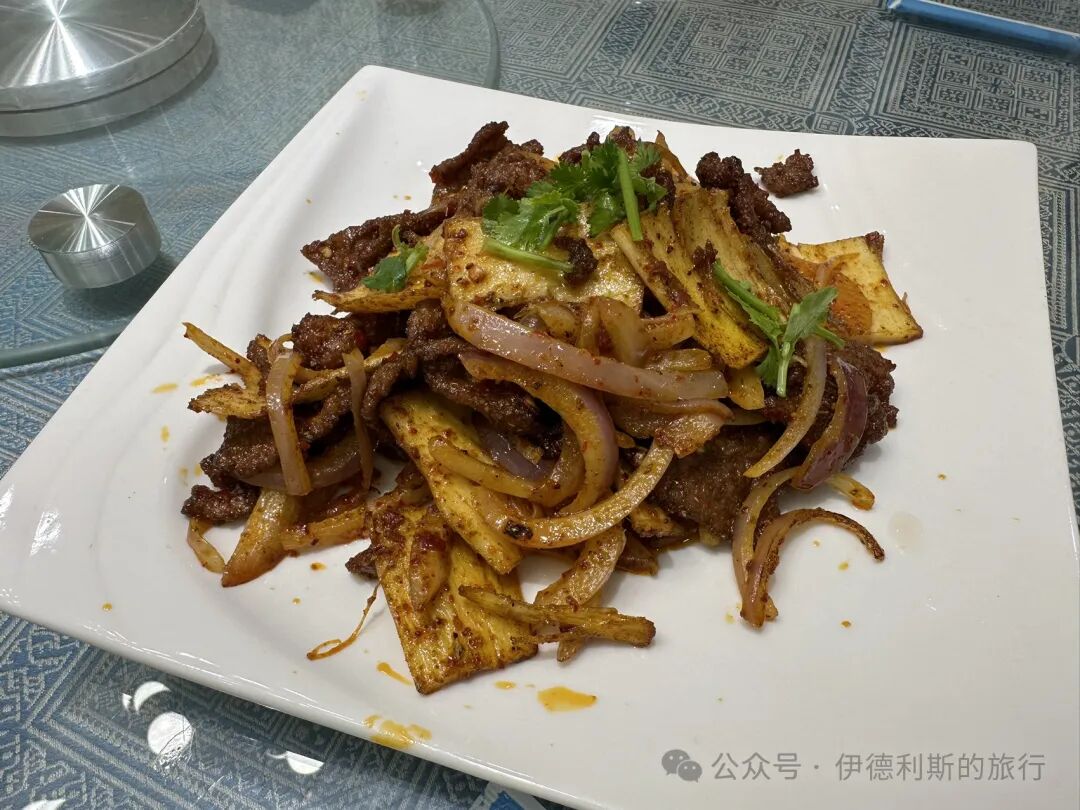
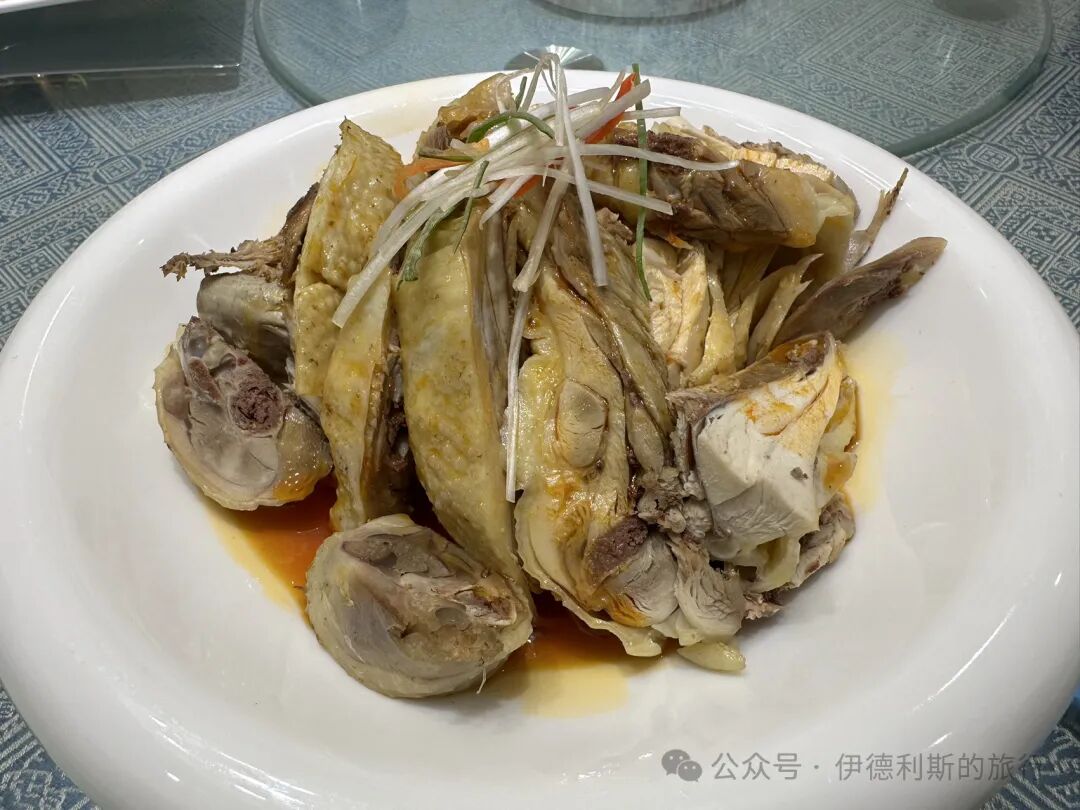
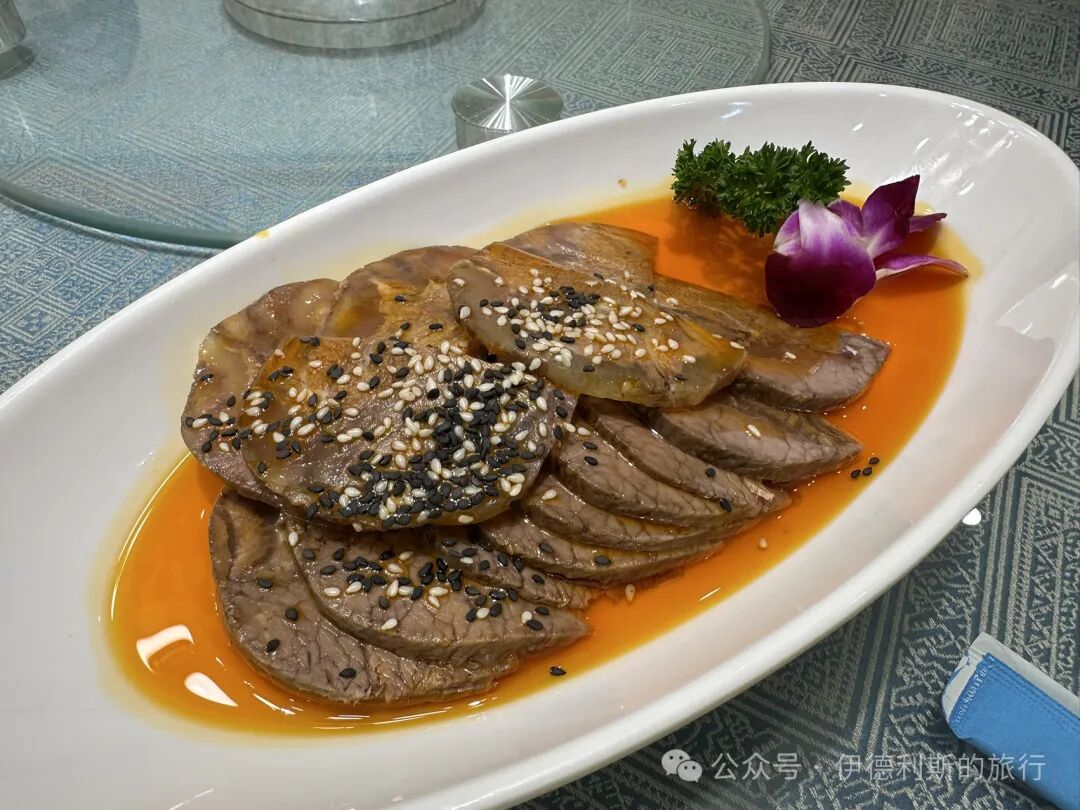
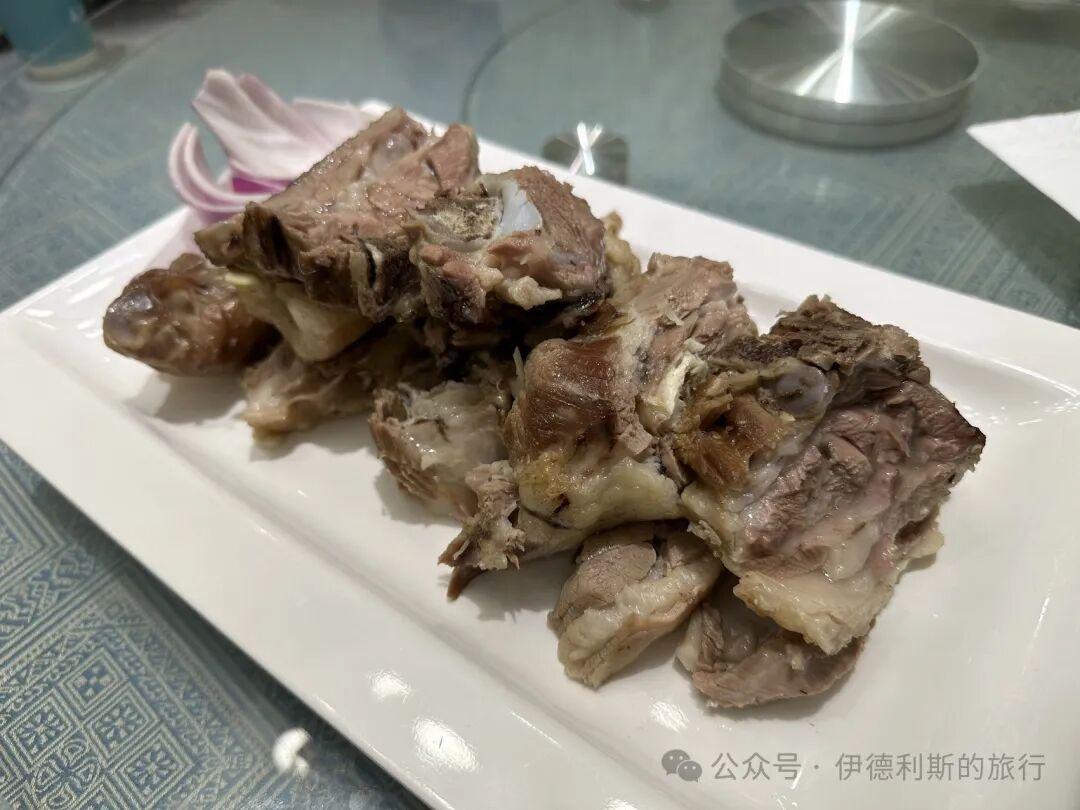
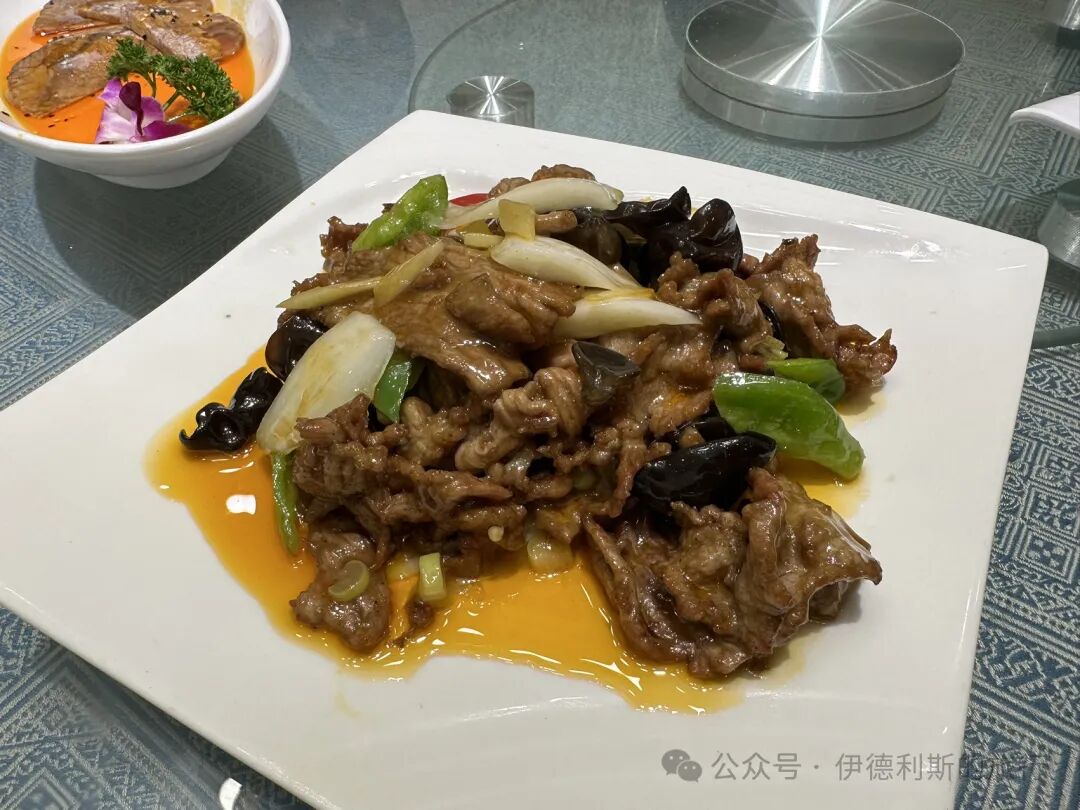
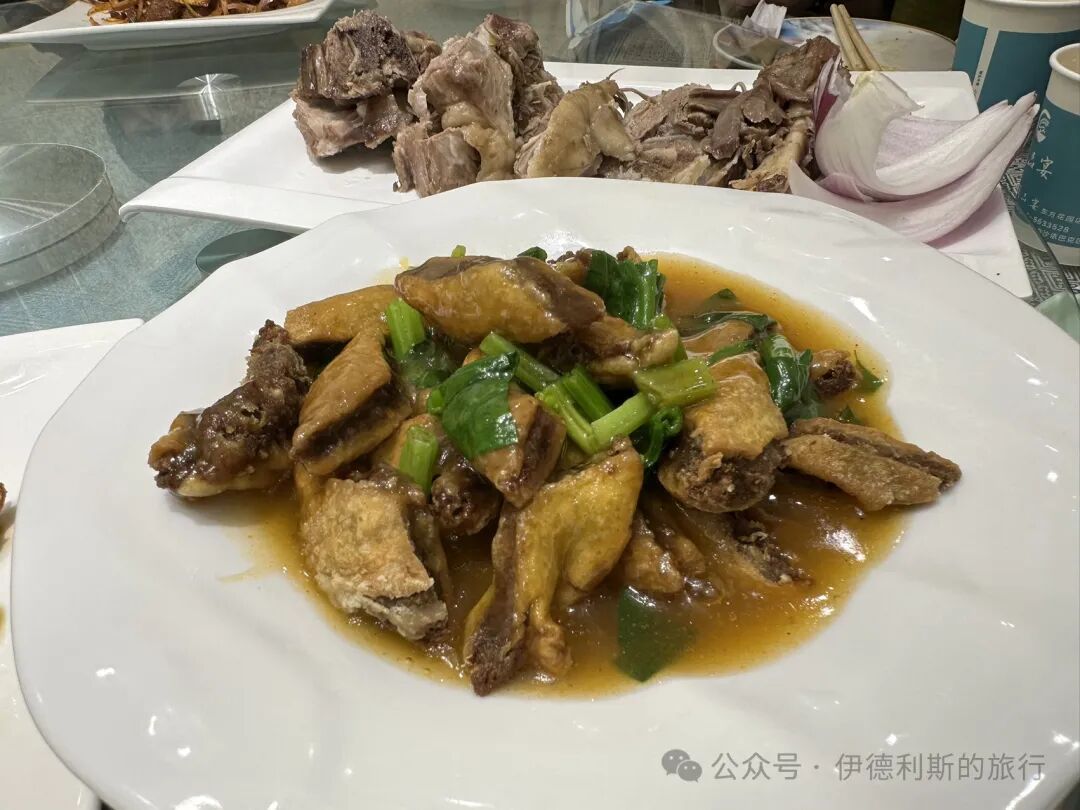
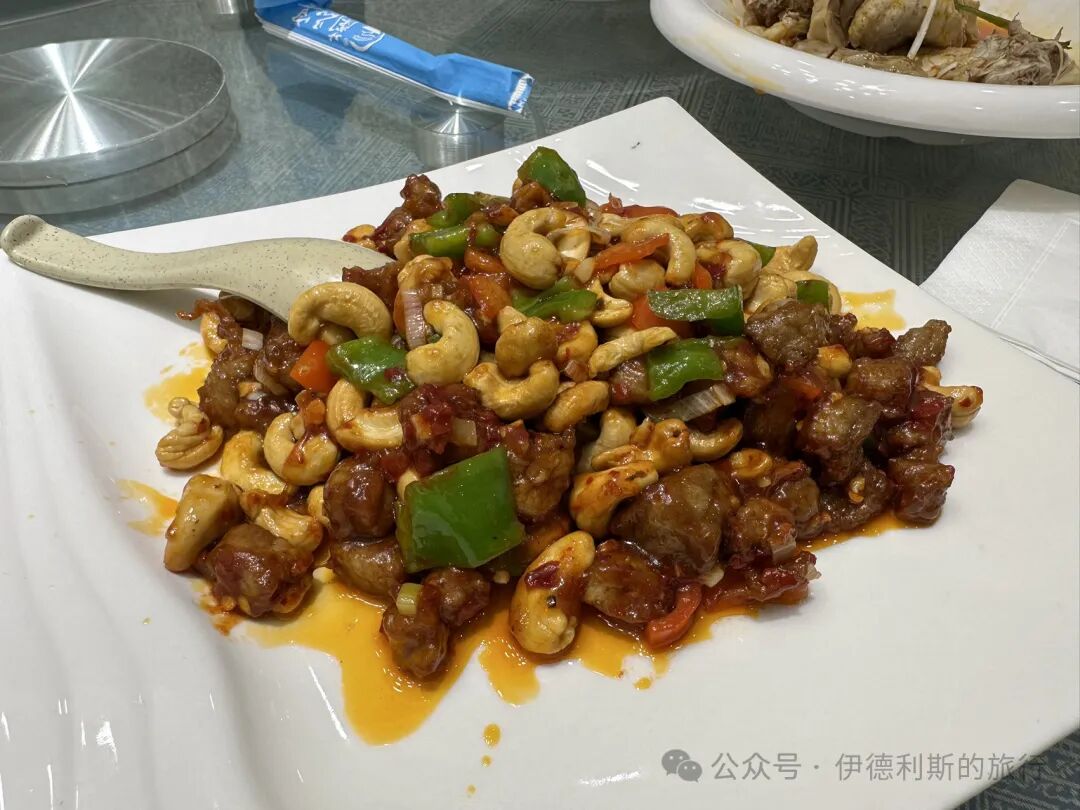
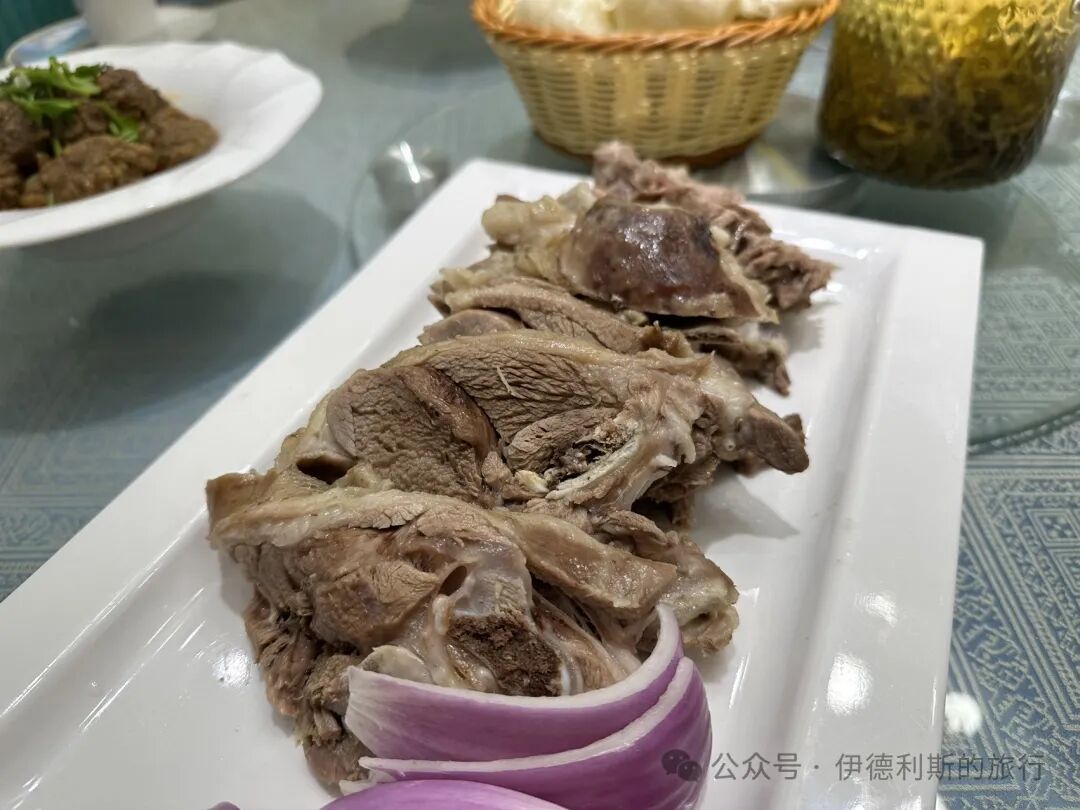
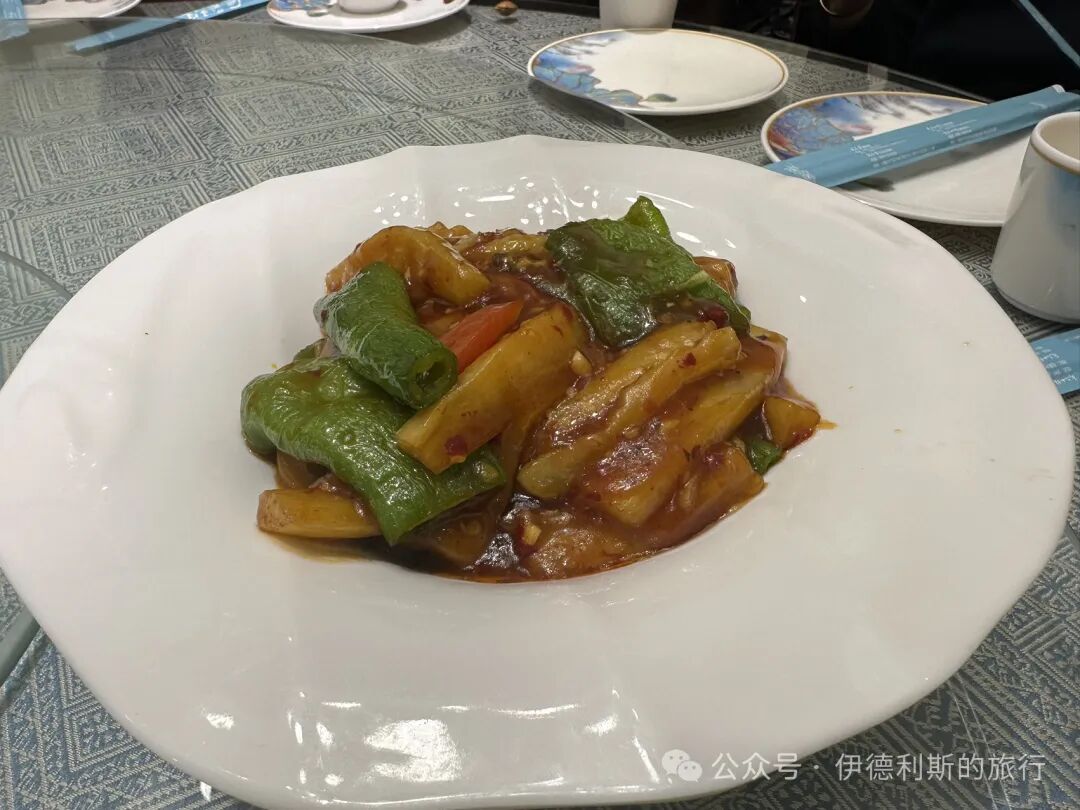
We ate stir-fried beef tendon, spicy peppercorn chicken (jiaomaji), cold-dressed beef, hand-grabbed lamb (shoubarou), sauced stuffed meat slices (jiasha), pearl meatballs, and flatfish, along with complimentary side dishes. These are the most popular dishes for Hui Muslim gatherings in Urumqi right now. Their hand-grabbed lamb (shoubarou) is excellent; the meat is tender and fragrant, making it perfect for elderly people to eat.
I spent the night at Uncle Saisai's house in the Changsheng Brigade in the southern suburbs of Urumqi. The hospitality was generous, with dishes like sweet platter (tianpanzi), fried dough snacks (youguozi), pearl meatballs (zhenzhu wanzi), braised ribbonfish, clear-stewed meat, and braised lamb. I also met many relatives.
Engagement acceptance ceremony (luohuali)
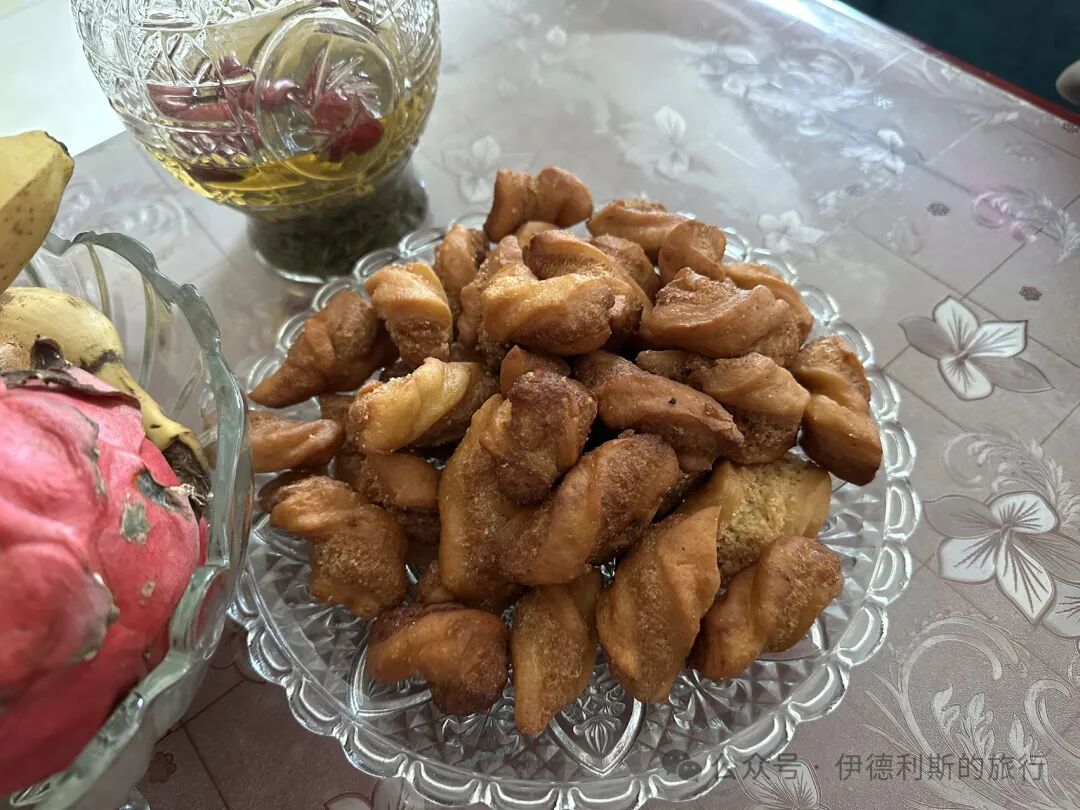
This time, I arrived just in time for my brother-in-law's engagement acceptance ceremony (luohuali). We had a feast at a small community (xiaofang) of the Jahriyya order (Zhepai) in Anningqu, in the northern suburbs of Urumqi, where I ate some homemade fried twisted sugar dough (tangningningzi). The feast started with small appetizer plates, which were then cleared to make room for the main dishes, including clear-stewed meat, braised meatballs, braised fish, and beef head meat.
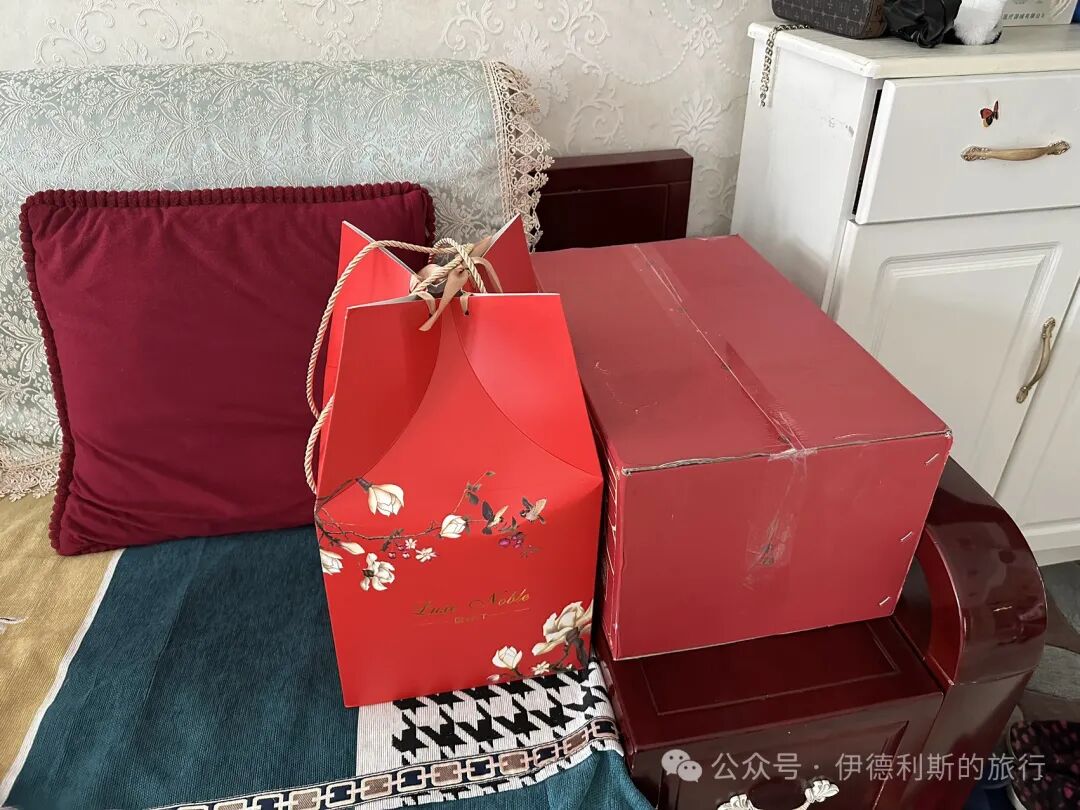
The traditional wedding customs of Hui Muslims in Xinjiang are very specific. Before a formal marriage proposal, there is a 'preliminary inquiry' where the man's family learns about the woman's family. Then, they send a matchmaker with four types of gifts—tea leaves, sugar cubes, red dates, and walnuts (or pastries)—wrapped in four colors, known as the 'four-color gift' (sese li). The first time a matchmaker brings the four-color gift to propose, it is called the 'opening gift' (kaikouli). The matchmaker gives the red-cloth-wrapped gifts to the woman's family, but they do not give an answer right away. After careful consideration, the woman's family sends a message through the matchmaker. The man's family then sends the four-color gift again, which is called the 'engagement acceptance ceremony' (luohuali), and after that, they enter the engagement stage.
Friday prayer (Jumu'ah)
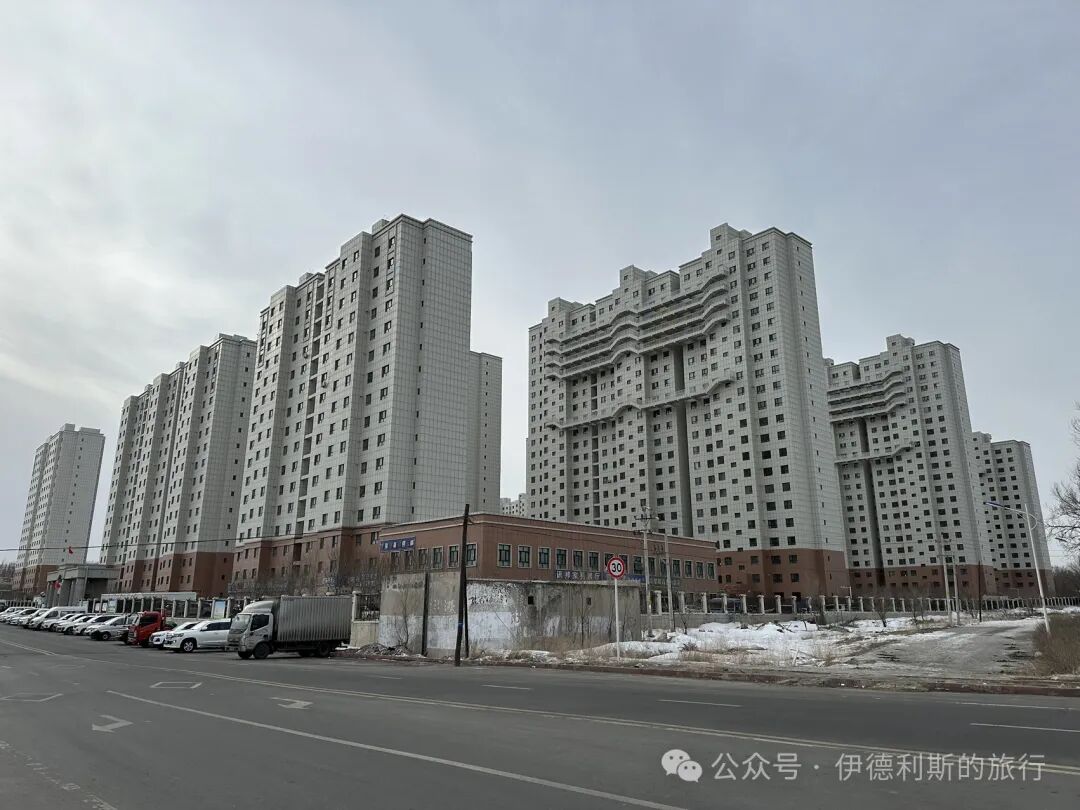
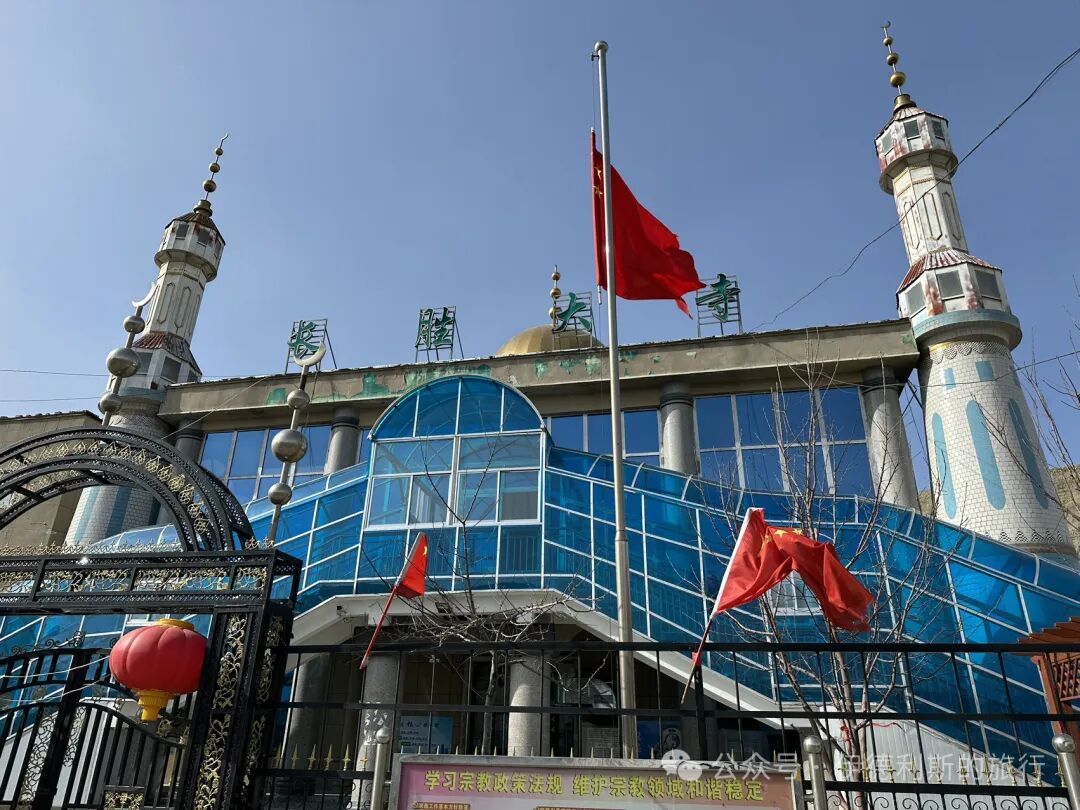
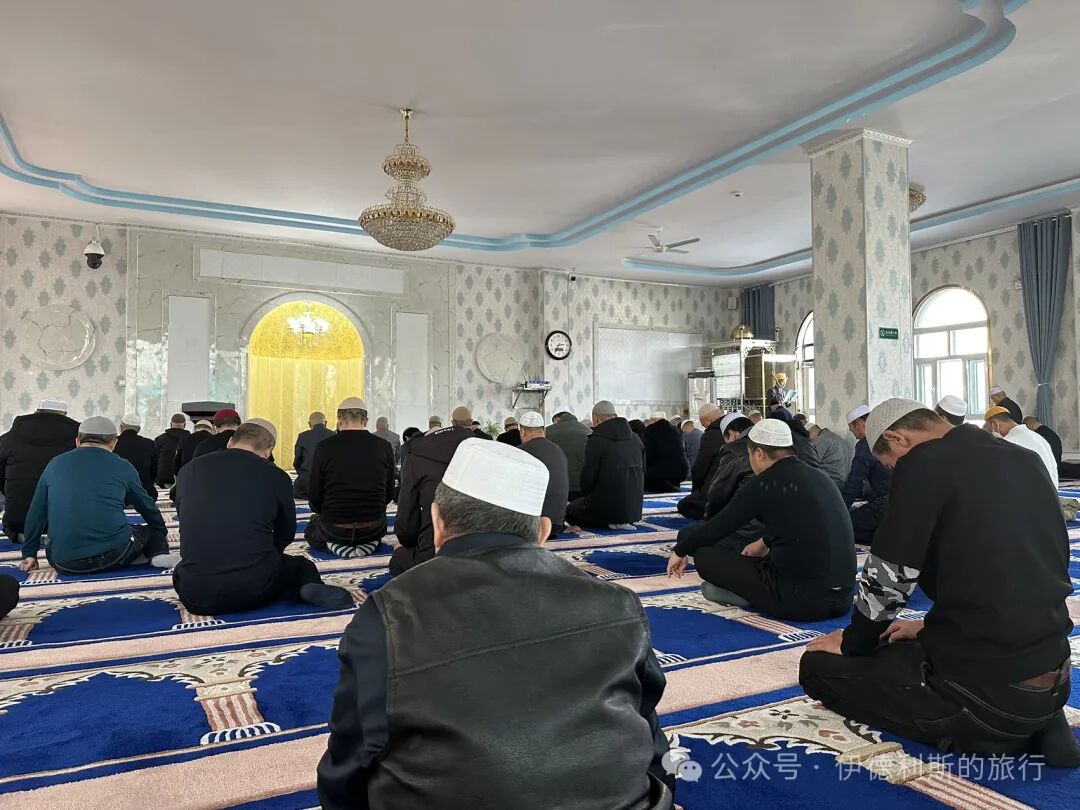
At noon, I attended the Friday prayer (Jumu'ah) at the Changsheng Grand Mosque. The Changsheng Grand Mosque is located in the Changsheng Brigade at the foot of Yaomo Mountain (Yamalike Mountain) in the southern suburbs of Urumqi. It has the highest number of congregants among the Hui Muslim mosques in the Saybagh District, with over a hundred people attending the Friday prayer (Jumu'ah). The Changsheng Brigade used to be a series of large courtyards where everyone farmed. Now, everyone has moved collectively to the Fumin Anju residential area, and the houses are very spacious.
Imam Fanta of the Changsheng Grand Mosque is my wife's uncle. Uncle Fanta is the one who performed our marriage contract (nikah). Uncle Fanta's surname is Su. The Su family is a large clan in Changsheng. Over three hundred years ago, they left Ankang, Shaanxi, and traveled through Ningxia and Jimsar to Urumqi to do business. Later, their business failed, and they eventually moved to Changsheng to farm, where they have lived ever since.
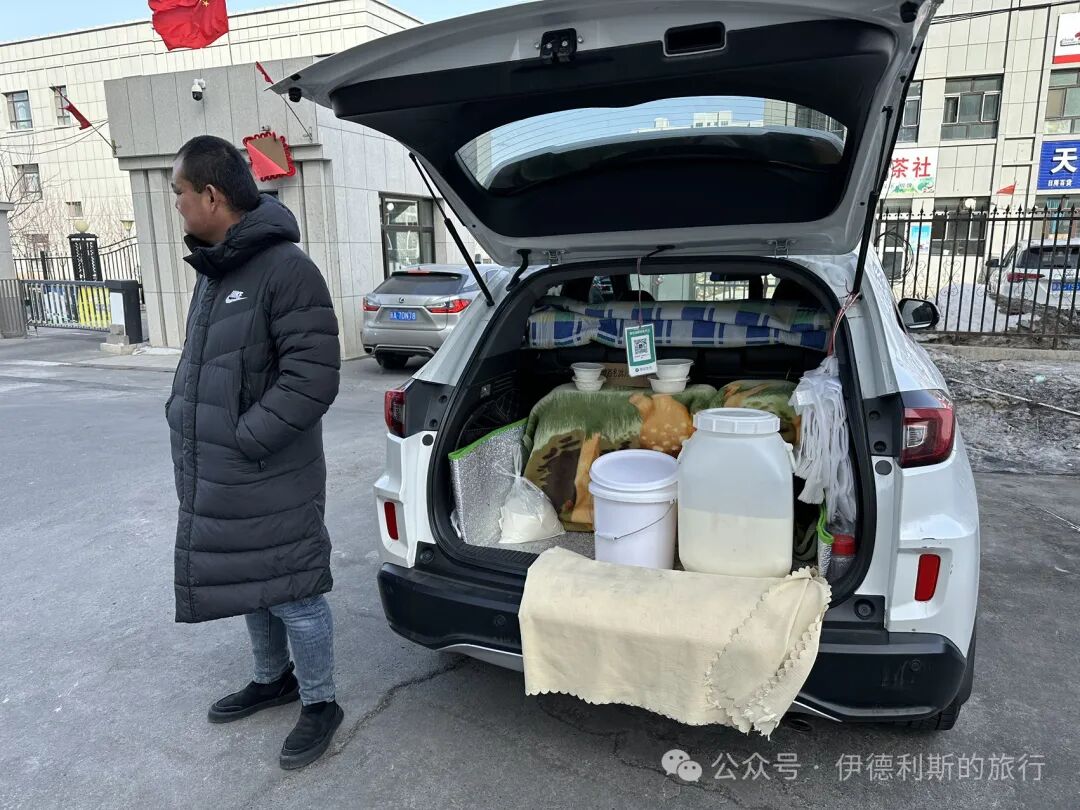
I bought fresh milk and handmade yogurt at the entrance of the Changsheng residential area. A large bucket of fresh milk only cost 20 yuan. After boiling it and adding two spoonfuls of milk skin (naipizi) I bought earlier on Hetian Street, it tasted amazing. The handmade yogurt comes with its own layer of milk skin (naipizi) and has a very rich milky flavor.
Visiting relatives and friends.
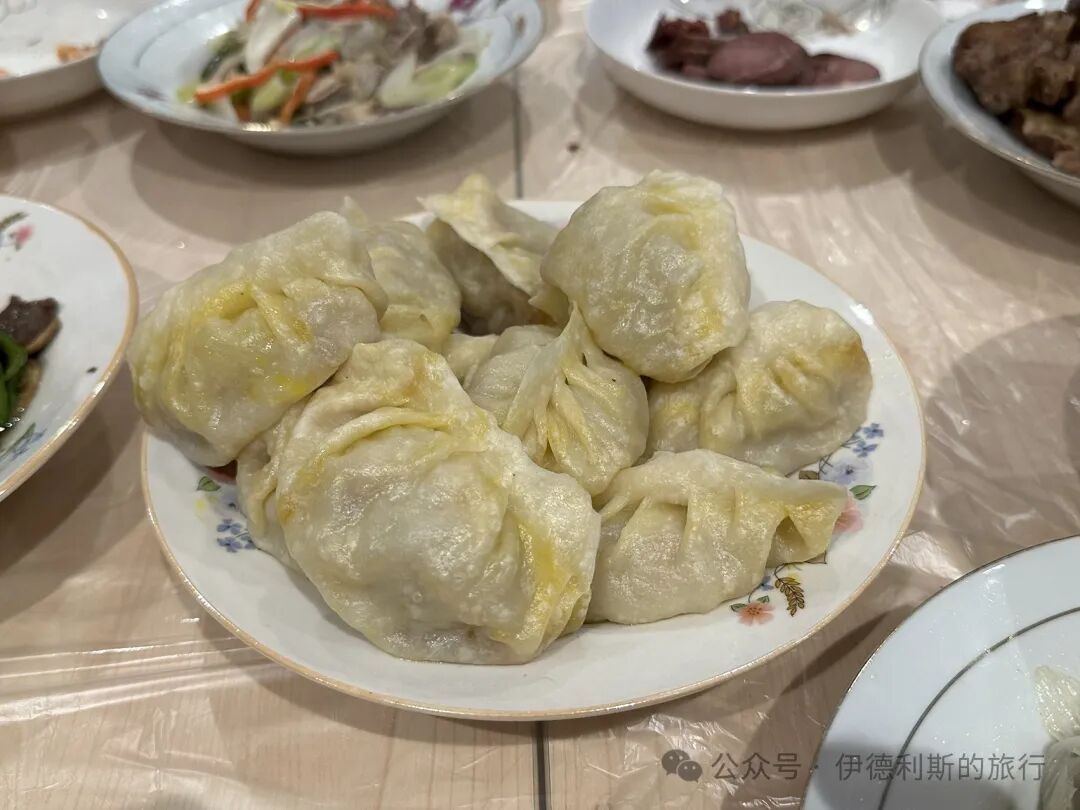
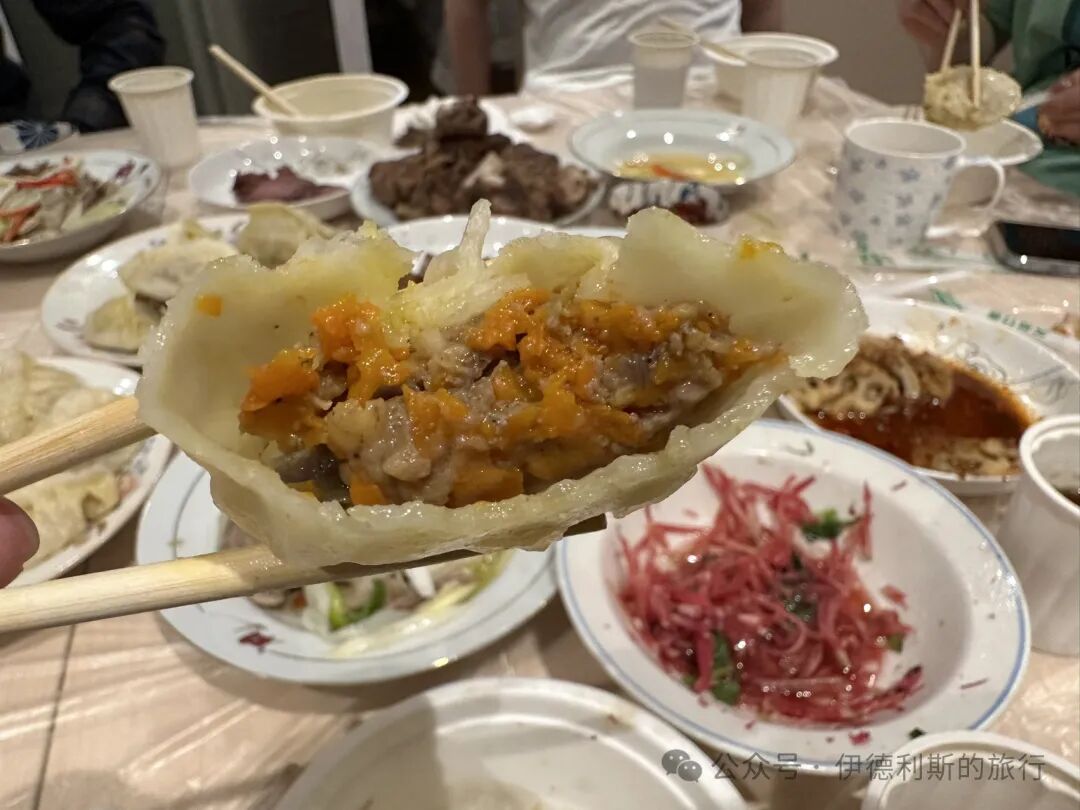
I visited my second aunt's house and had a lunch of Hui Muslim-style lamb dumpling soup (fentang yangrou jiaozi). The soup is the version Hui Muslims in Xinjiang make for Eid, and the dumplings are filled with lamb, onions (piyanzi), and pickled cabbage. They were small and delicate, and everyone loved them.
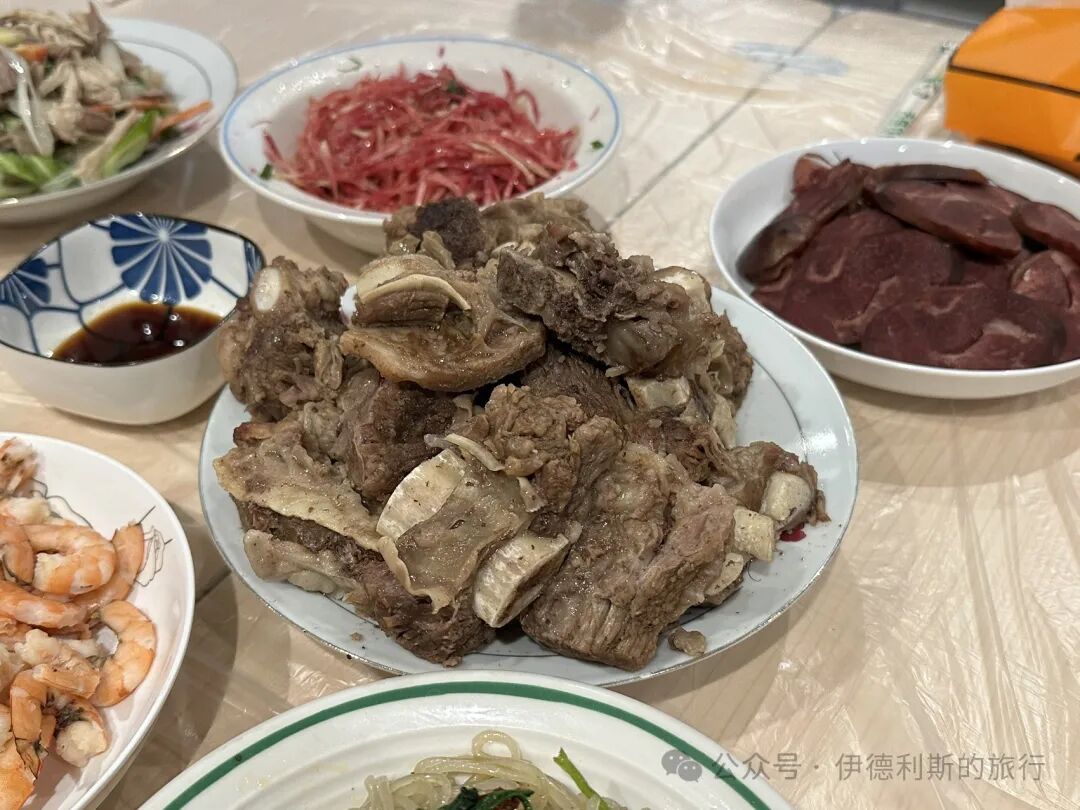
I attended a family dinner at my older sister's place. My brother-in-law is a great cook and made beef steak stew, spicy numbing chicken (jiaoma ji), pumpkin buns (kawa baozi), and smoked horse sausage. My brother-in-law makes amazing rice pilaf (zhuafan), so I made sure to ask him for his tips during the meal. Don't stir-fry the yellow carrots for the rice pilaf all the way through. Stewing them in water brings out their sweetness, so you don't need to add extra sugar. You must use plenty of oil for the rice pilaf. If you use too much, just tilt the pot and scoop the excess out. The extra oil from the rice pilaf is great for making cabbage and meat mixed noodles (banmian) because it adds so much flavor.
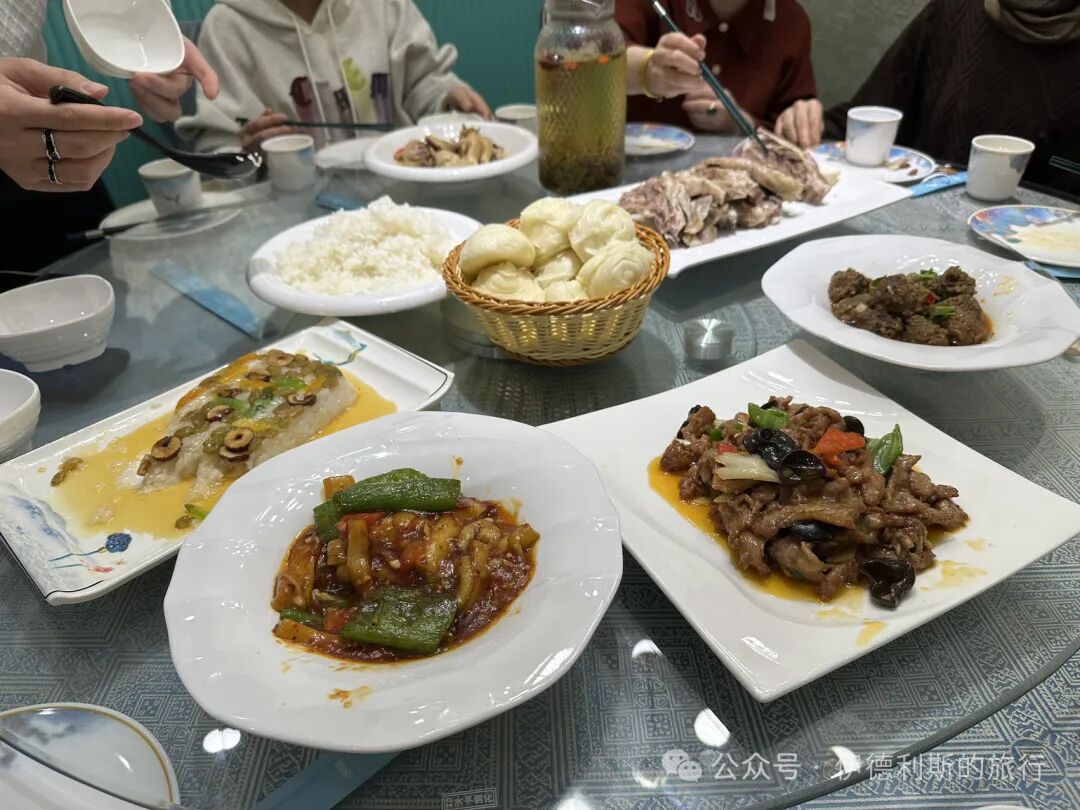
My great-aunt in Wusu invited us out to eat at Lanpin Banquet on Zhujiang Road. It shows how popular this place is among the older generation of Hui Muslims in Urumqi. As soon as we walked in, a young waiter greeted us with a salaam and showed us to our table. We have only been here twice, but the service is always excellent.
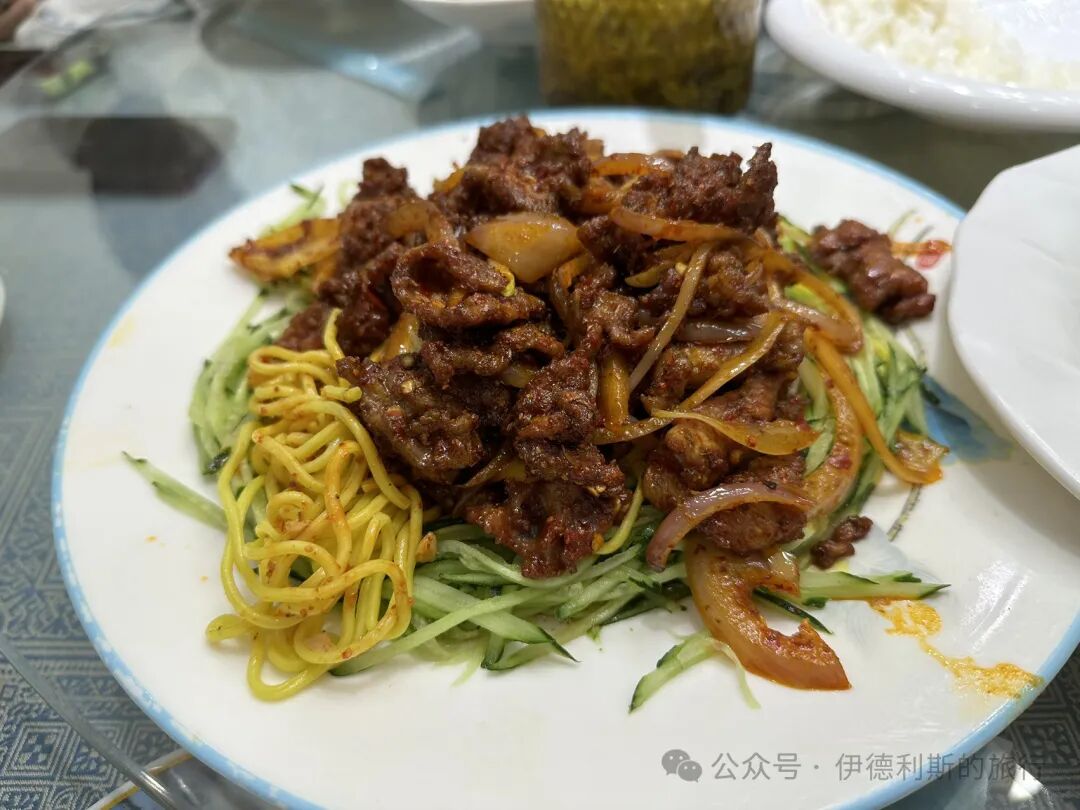
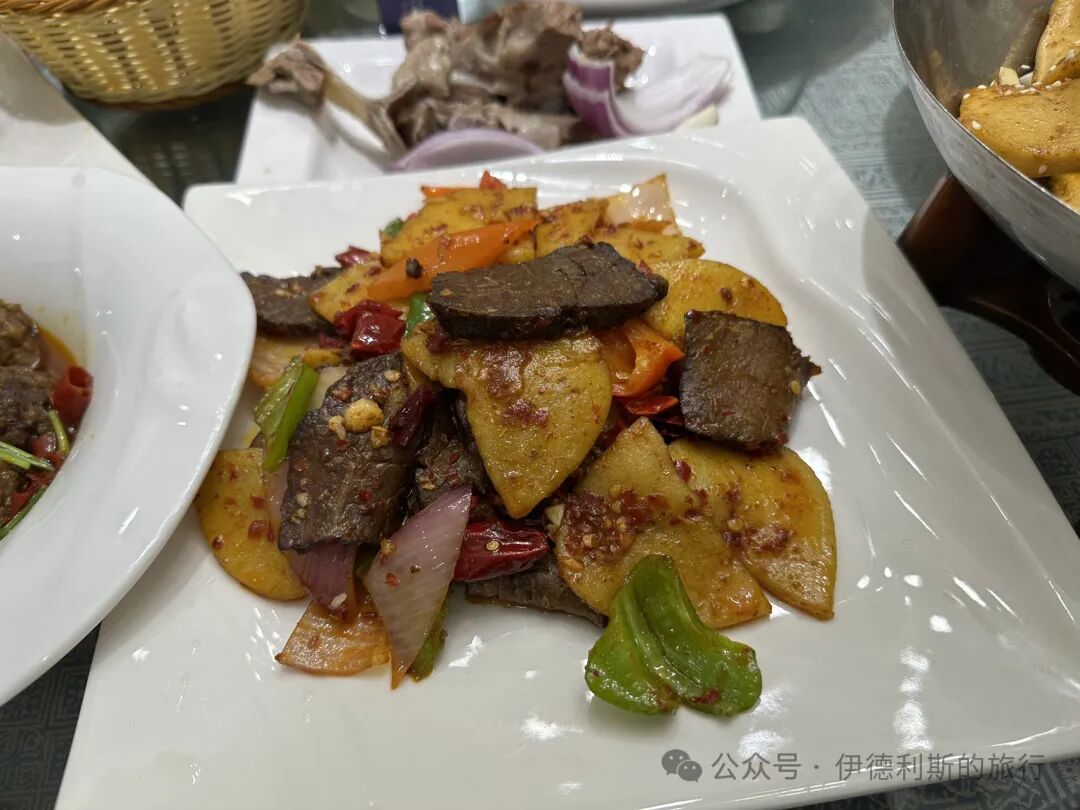
This time we had stir-fried black and white lung, yellow noodles with grilled meat (huangmian kaorou), sweet platter (tianpanzi), layered steamed bread (youtazi), spicy numbing chicken, and clear-stewed meat. Everyone loved these traditional dishes. view all
Summary: This Urumqi article records Hui Muslim life during the Spring Festival, including nianye, luohuali, Jumuah prayer, and visiting relatives and friends. It preserves the original religious customs, family scenes, food details, and community observations in natural English.
Night of Prayer (nianye).
During the 2024 Spring Festival holiday, I took Suleiman to visit his grandparents (anai aye) in Urumqi, just in time for the noble month of Sha'ban (the eighth month of the Islamic calendar). The evening of the 15th day of the eighth month is the Night of Bara'at, which means the Night of Atonement. On this night, the two angels on our shoulders replace the scrolls that record our good and bad deeds for the year. They seal the old scrolls and open new ones, which serve as evidence for questioning when we enter the afterlife, so it is also called the Night of Exchanging Scrolls. In the traditions of Hui Muslims in some regions, when the month of Sha'ban arrives, everyone takes turns inviting the imam and friends and family to their homes for a Night of Prayer. The main process includes reciting scriptures, praising the Prophet, performing repentance (tawbah), and asking for forgiveness for family members and the deceased. Afterward, everyone eats a rich meal to strengthen bonds, boost faith, and prepare for the noble month of Ramadan.
February 17 was our family's Night of Prayer, and we also celebrated Suleiman's first birthday (suisuizi). We invited four imams and a large group of relatives to recite surahs, recite the Bara'at praise, perform repentance, and receive dua, followed by a meal. First, we served appetizers (diediezi) and tea. The appetizers included nut tarts and baklava we bought at a Uyghur pastry shop on Hetian Street, as well as traditional flaky pastries and fried flour cakes (saqima) made by my aunt. After everyone chatted for a while, we cleared the appetizers and brought out the main dishes to officially start the feast.
With the help of my aunts, we prepared a rich feast. The main dishes were clear-stewed lamb, braised beef steak, followed by steamed starch jelly (mengzi), pearl meatballs, peppercorn chicken, steamed fish, sweet rice platter (tianpanzi), and various stir-fried dishes. The staples were fried dough (youxiang), steamed buns (momo), and rice.
The fried dough was deep-fried a day in advance. Before frying, we first performed ablution (wudu), then leavened the dough. After it rose, we scalded a small portion with hot oil and mixed in a little baking soda and fenugreek powder. We kneaded the scalded dough into the leavened dough, covered the basin, and let it rest for 15 minutes. After resting, we rolled it into a long shape, pinched off pieces, rolled them into flat cakes, cut four small slits with a knife, and it was ready to be fried. When putting them into the pot, we recited the Tasmiyah. We fried them for a while, flipped them, and tapped the edges with chopsticks; once they were firm, they were done.
To make sweet rice platter (tianpanzi), first wash the glutinous rice and soak it for three days. Then, add a little brown sugar (shazitang) and steam it, using more water than you would for regular rice. Next, wash red dates, walnut kernels, and raisins, and spread them at the bottom of a bowl. Cover them with the steamed glutinous rice and let it cool. After that, boil rock sugar to make a syrup. Finally, flip the bowl of rice onto a plate and pour the syrup over it.
Meatloaf (munzi) is made with ground beef. When mixing the filling, beat it repeatedly, then shape it into a cylinder. Pinch the top to look like a railing, pour an egg into the center, and steam it.
For spicy peppercorn chicken (jiaomaji), first wash a free-range chicken, cut it in half, and put it in a pressure cooker. Add water to cover it, along with red chili, Sichuan peppercorns, salt, bay leaves, cinnamon, and ginger slices. Once cooked, take it out, let it cool in a basin, tear the meat into strips, and top with green onions. Heat oil in a pan. Once hot, turn off the heat and add dried chili skins (lapizi), Sichuan peppercorns, salt, and white pepper. Stir well, pour in some chicken broth, and then pour everything over the chicken in the basin and mix well.
We spent the night at my aunt's house near the cement factory. My uncle is an imam at a small mosque in Shanxi, and we are very grateful (zhigan) for that.
The main dishes were definitely braised beef steak and clear-stewed lamb. The chicken was raised by my uncle himself, and the lamb was from the southern mountains of Urumqi.
We spent the night at my second aunt's house in the New City District. My aunt is the recognized master chef of our family. She makes authentic home-style stir-fries, meatloaf (munzi), stuffed meat slices (jiasha), and tripe.
We spent the night at my aunt's house near the flour mill and had basin meat (penpenrou) with fried dough (youxiang) for breakfast.
We hosted our guests at Lanpin Banquet. It is currently the most popular restaurant in Urumqi for Hui Muslims to hold religious gatherings (niansuoer). They don't sell alcohol, the food is refined, and the owner is warm and attentive. It is usually packed on weekends and holidays, so you must book in advance. On the day we went, they hosted 30 tables for a circumcision ceremony and 15 tables for a special occasion.
We ate stir-fried beef tendon, spicy peppercorn chicken (jiaomaji), cold-dressed beef, hand-grabbed lamb (shoubarou), sauced stuffed meat slices (jiasha), pearl meatballs, and flatfish, along with complimentary side dishes. These are the most popular dishes for Hui Muslim gatherings in Urumqi right now. Their hand-grabbed lamb (shoubarou) is excellent; the meat is tender and fragrant, making it perfect for elderly people to eat.
I spent the night at Uncle Saisai's house in the Changsheng Brigade in the southern suburbs of Urumqi. The hospitality was generous, with dishes like sweet platter (tianpanzi), fried dough snacks (youguozi), pearl meatballs (zhenzhu wanzi), braised ribbonfish, clear-stewed meat, and braised lamb. I also met many relatives.
Engagement acceptance ceremony (luohuali)
This time, I arrived just in time for my brother-in-law's engagement acceptance ceremony (luohuali). We had a feast at a small community (xiaofang) of the Jahriyya order (Zhepai) in Anningqu, in the northern suburbs of Urumqi, where I ate some homemade fried twisted sugar dough (tangningningzi). The feast started with small appetizer plates, which were then cleared to make room for the main dishes, including clear-stewed meat, braised meatballs, braised fish, and beef head meat.
The traditional wedding customs of Hui Muslims in Xinjiang are very specific. Before a formal marriage proposal, there is a 'preliminary inquiry' where the man's family learns about the woman's family. Then, they send a matchmaker with four types of gifts—tea leaves, sugar cubes, red dates, and walnuts (or pastries)—wrapped in four colors, known as the 'four-color gift' (sese li). The first time a matchmaker brings the four-color gift to propose, it is called the 'opening gift' (kaikouli). The matchmaker gives the red-cloth-wrapped gifts to the woman's family, but they do not give an answer right away. After careful consideration, the woman's family sends a message through the matchmaker. The man's family then sends the four-color gift again, which is called the 'engagement acceptance ceremony' (luohuali), and after that, they enter the engagement stage.
Friday prayer (Jumu'ah)
At noon, I attended the Friday prayer (Jumu'ah) at the Changsheng Grand Mosque. The Changsheng Grand Mosque is located in the Changsheng Brigade at the foot of Yaomo Mountain (Yamalike Mountain) in the southern suburbs of Urumqi. It has the highest number of congregants among the Hui Muslim mosques in the Saybagh District, with over a hundred people attending the Friday prayer (Jumu'ah). The Changsheng Brigade used to be a series of large courtyards where everyone farmed. Now, everyone has moved collectively to the Fumin Anju residential area, and the houses are very spacious.
Imam Fanta of the Changsheng Grand Mosque is my wife's uncle. Uncle Fanta is the one who performed our marriage contract (nikah). Uncle Fanta's surname is Su. The Su family is a large clan in Changsheng. Over three hundred years ago, they left Ankang, Shaanxi, and traveled through Ningxia and Jimsar to Urumqi to do business. Later, their business failed, and they eventually moved to Changsheng to farm, where they have lived ever since.
I bought fresh milk and handmade yogurt at the entrance of the Changsheng residential area. A large bucket of fresh milk only cost 20 yuan. After boiling it and adding two spoonfuls of milk skin (naipizi) I bought earlier on Hetian Street, it tasted amazing. The handmade yogurt comes with its own layer of milk skin (naipizi) and has a very rich milky flavor.
Visiting relatives and friends.
I visited my second aunt's house and had a lunch of Hui Muslim-style lamb dumpling soup (fentang yangrou jiaozi). The soup is the version Hui Muslims in Xinjiang make for Eid, and the dumplings are filled with lamb, onions (piyanzi), and pickled cabbage. They were small and delicate, and everyone loved them.
I attended a family dinner at my older sister's place. My brother-in-law is a great cook and made beef steak stew, spicy numbing chicken (jiaoma ji), pumpkin buns (kawa baozi), and smoked horse sausage. My brother-in-law makes amazing rice pilaf (zhuafan), so I made sure to ask him for his tips during the meal. Don't stir-fry the yellow carrots for the rice pilaf all the way through. Stewing them in water brings out their sweetness, so you don't need to add extra sugar. You must use plenty of oil for the rice pilaf. If you use too much, just tilt the pot and scoop the excess out. The extra oil from the rice pilaf is great for making cabbage and meat mixed noodles (banmian) because it adds so much flavor.
My great-aunt in Wusu invited us out to eat at Lanpin Banquet on Zhujiang Road. It shows how popular this place is among the older generation of Hui Muslims in Urumqi. As soon as we walked in, a young waiter greeted us with a salaam and showed us to our table. We have only been here twice, but the service is always excellent.
This time we had stir-fried black and white lung, yellow noodles with grilled meat (huangmian kaorou), sweet platter (tianpanzi), layered steamed bread (youtazi), spicy numbing chicken, and clear-stewed meat. Everyone loved these traditional dishes. view all
Reposted from the web
Summary: This Urumqi article records Hui Muslim life during the Spring Festival, including nianye, luohuali, Jumuah prayer, and visiting relatives and friends. It preserves the original religious customs, family scenes, food details, and community observations in natural English.
Night of Prayer (nianye).
During the 2024 Spring Festival holiday, I took Suleiman to visit his grandparents (anai aye) in Urumqi, just in time for the noble month of Sha'ban (the eighth month of the Islamic calendar). The evening of the 15th day of the eighth month is the Night of Bara'at, which means the Night of Atonement. On this night, the two angels on our shoulders replace the scrolls that record our good and bad deeds for the year. They seal the old scrolls and open new ones, which serve as evidence for questioning when we enter the afterlife, so it is also called the Night of Exchanging Scrolls. In the traditions of Hui Muslims in some regions, when the month of Sha'ban arrives, everyone takes turns inviting the imam and friends and family to their homes for a Night of Prayer. The main process includes reciting scriptures, praising the Prophet, performing repentance (tawbah), and asking for forgiveness for family members and the deceased. Afterward, everyone eats a rich meal to strengthen bonds, boost faith, and prepare for the noble month of Ramadan.
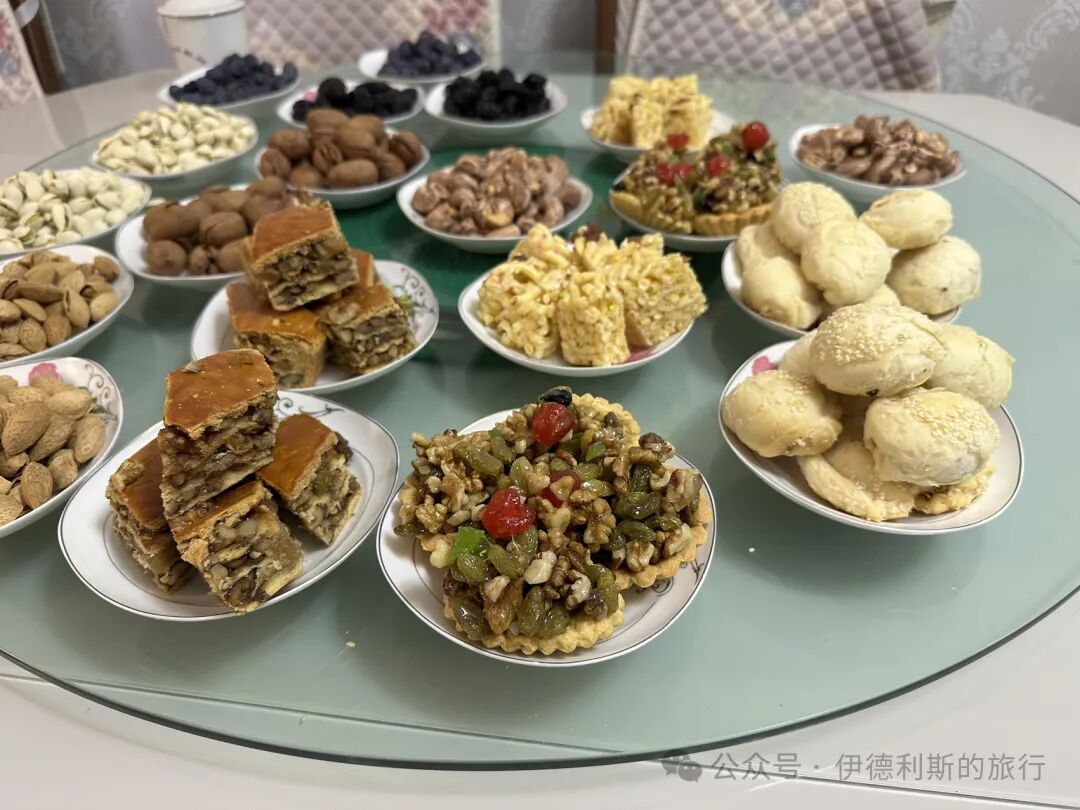
February 17 was our family's Night of Prayer, and we also celebrated Suleiman's first birthday (suisuizi). We invited four imams and a large group of relatives to recite surahs, recite the Bara'at praise, perform repentance, and receive dua, followed by a meal. First, we served appetizers (diediezi) and tea. The appetizers included nut tarts and baklava we bought at a Uyghur pastry shop on Hetian Street, as well as traditional flaky pastries and fried flour cakes (saqima) made by my aunt. After everyone chatted for a while, we cleared the appetizers and brought out the main dishes to officially start the feast.
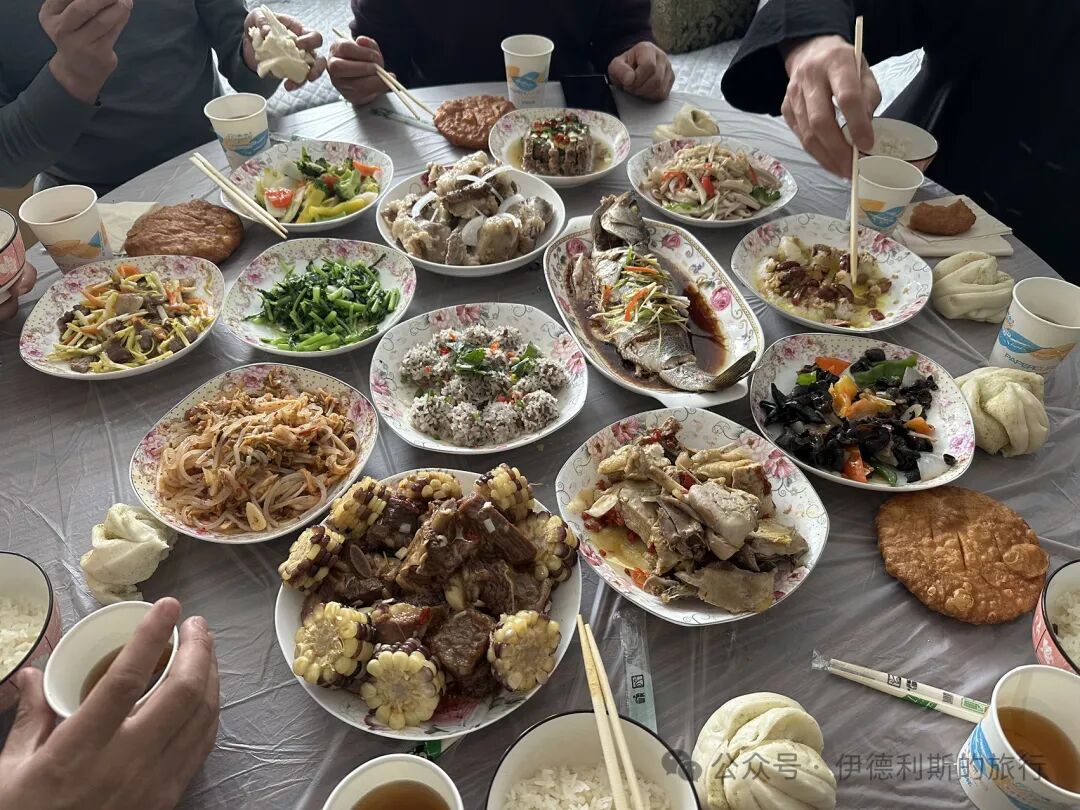
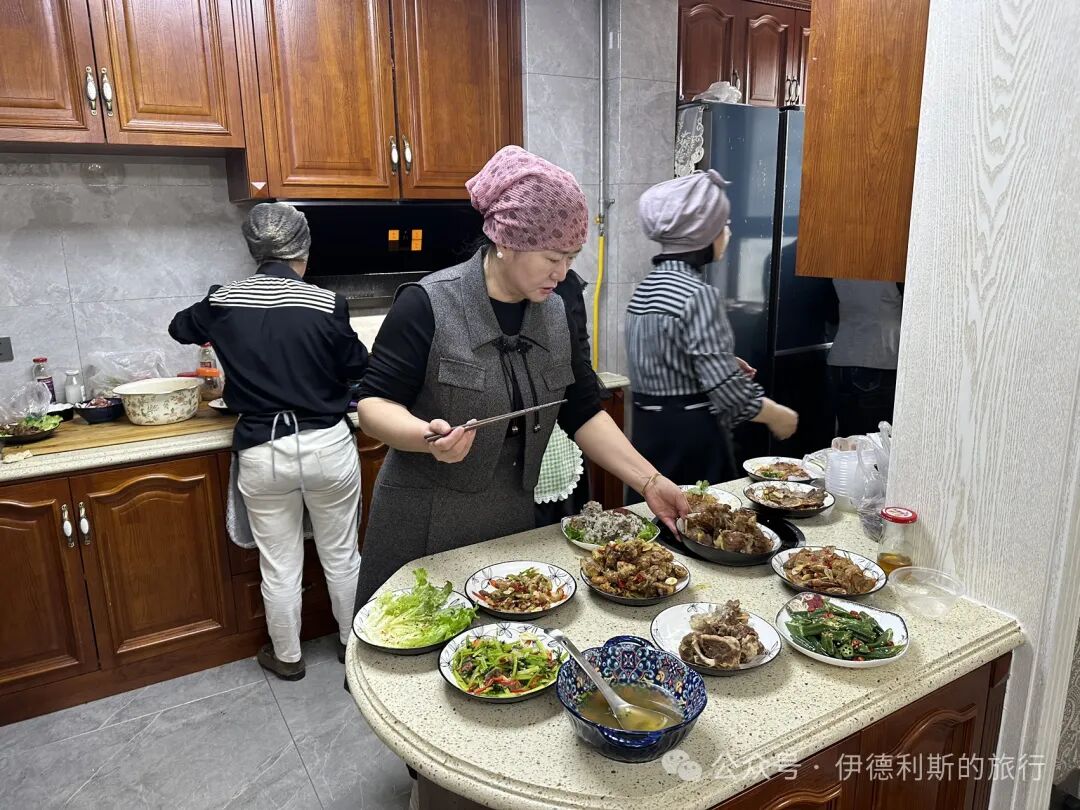
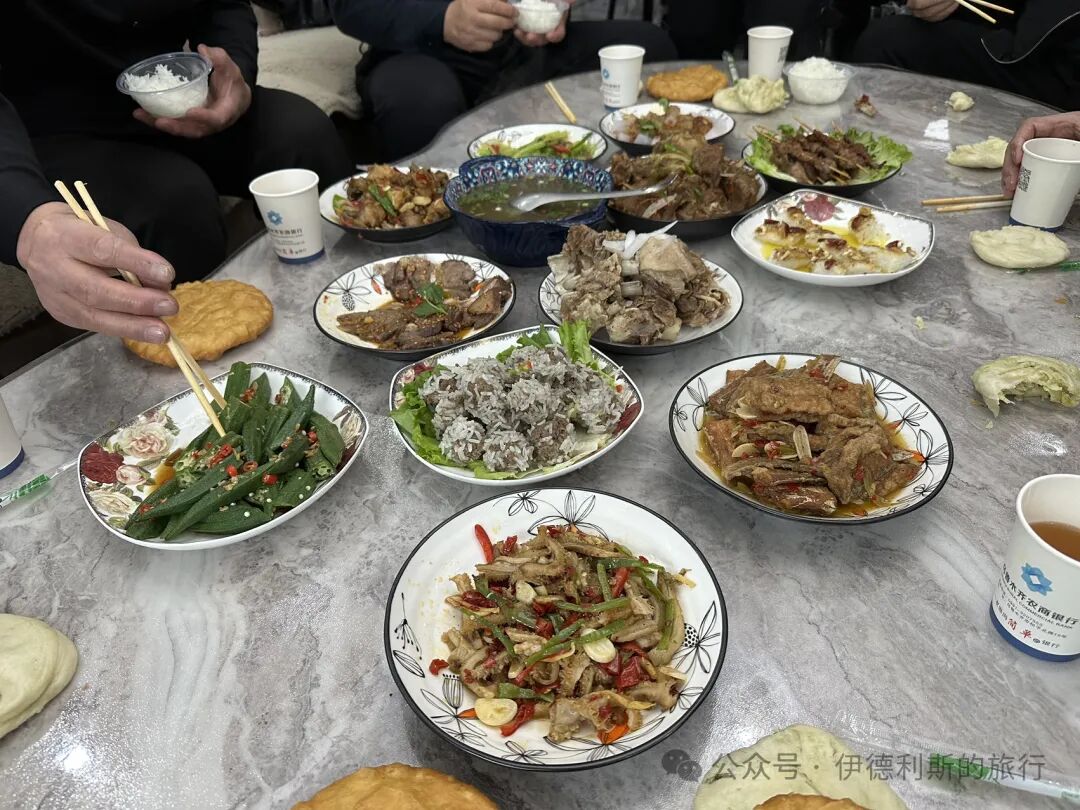
With the help of my aunts, we prepared a rich feast. The main dishes were clear-stewed lamb, braised beef steak, followed by steamed starch jelly (mengzi), pearl meatballs, peppercorn chicken, steamed fish, sweet rice platter (tianpanzi), and various stir-fried dishes. The staples were fried dough (youxiang), steamed buns (momo), and rice.
The fried dough was deep-fried a day in advance. Before frying, we first performed ablution (wudu), then leavened the dough. After it rose, we scalded a small portion with hot oil and mixed in a little baking soda and fenugreek powder. We kneaded the scalded dough into the leavened dough, covered the basin, and let it rest for 15 minutes. After resting, we rolled it into a long shape, pinched off pieces, rolled them into flat cakes, cut four small slits with a knife, and it was ready to be fried. When putting them into the pot, we recited the Tasmiyah. We fried them for a while, flipped them, and tapped the edges with chopsticks; once they were firm, they were done.
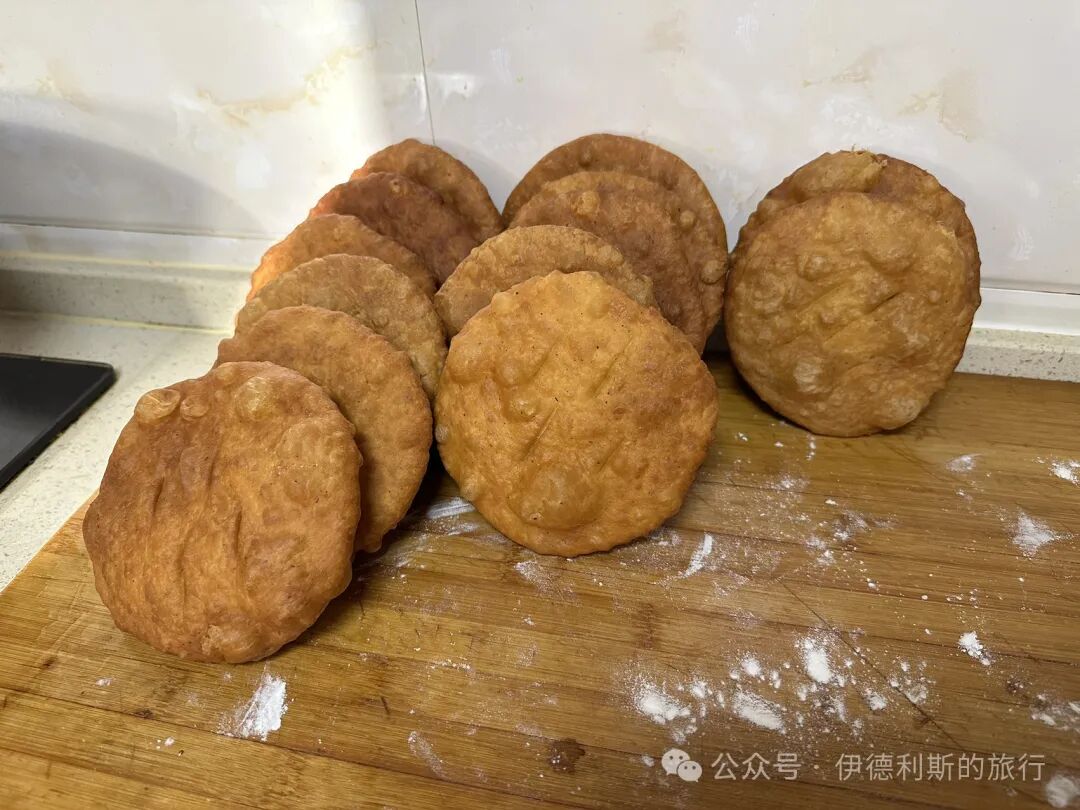
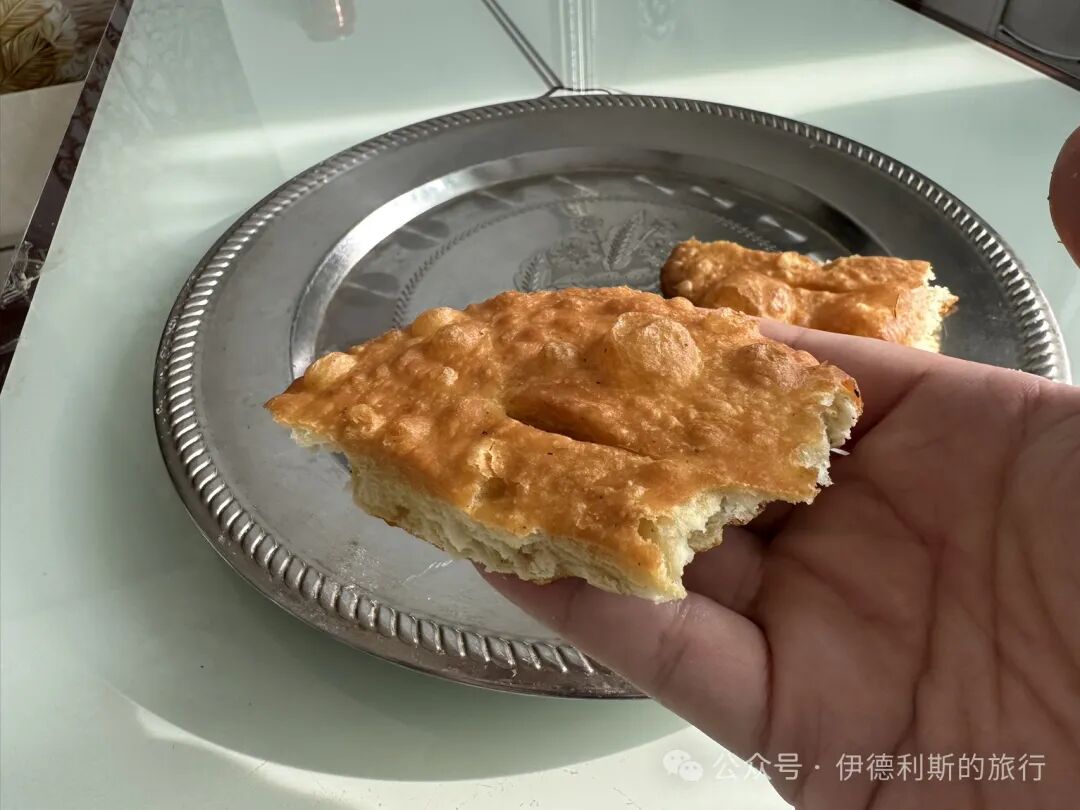
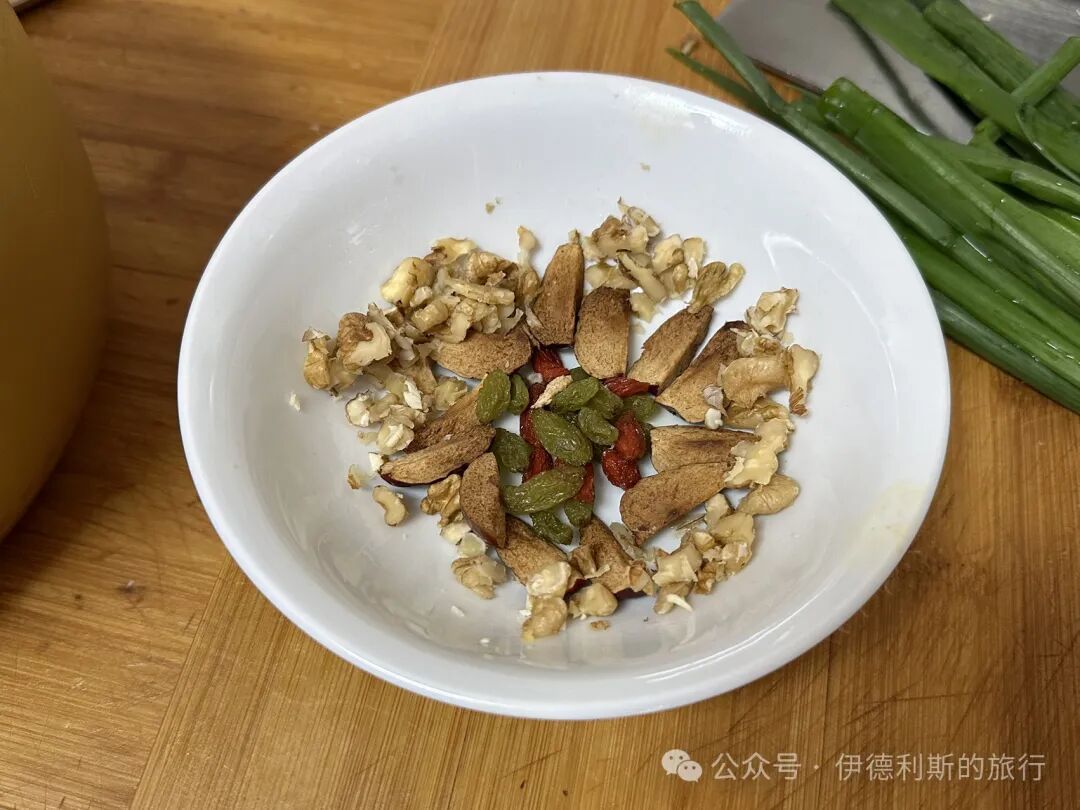
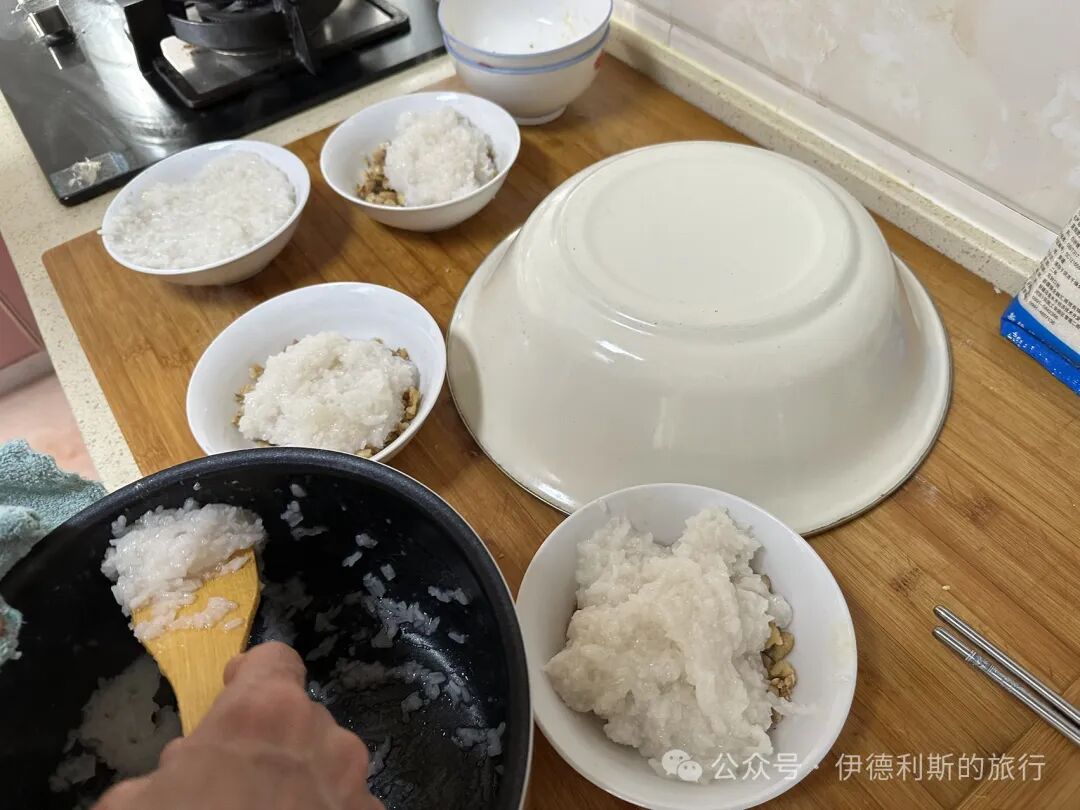
To make sweet rice platter (tianpanzi), first wash the glutinous rice and soak it for three days. Then, add a little brown sugar (shazitang) and steam it, using more water than you would for regular rice. Next, wash red dates, walnut kernels, and raisins, and spread them at the bottom of a bowl. Cover them with the steamed glutinous rice and let it cool. After that, boil rock sugar to make a syrup. Finally, flip the bowl of rice onto a plate and pour the syrup over it.
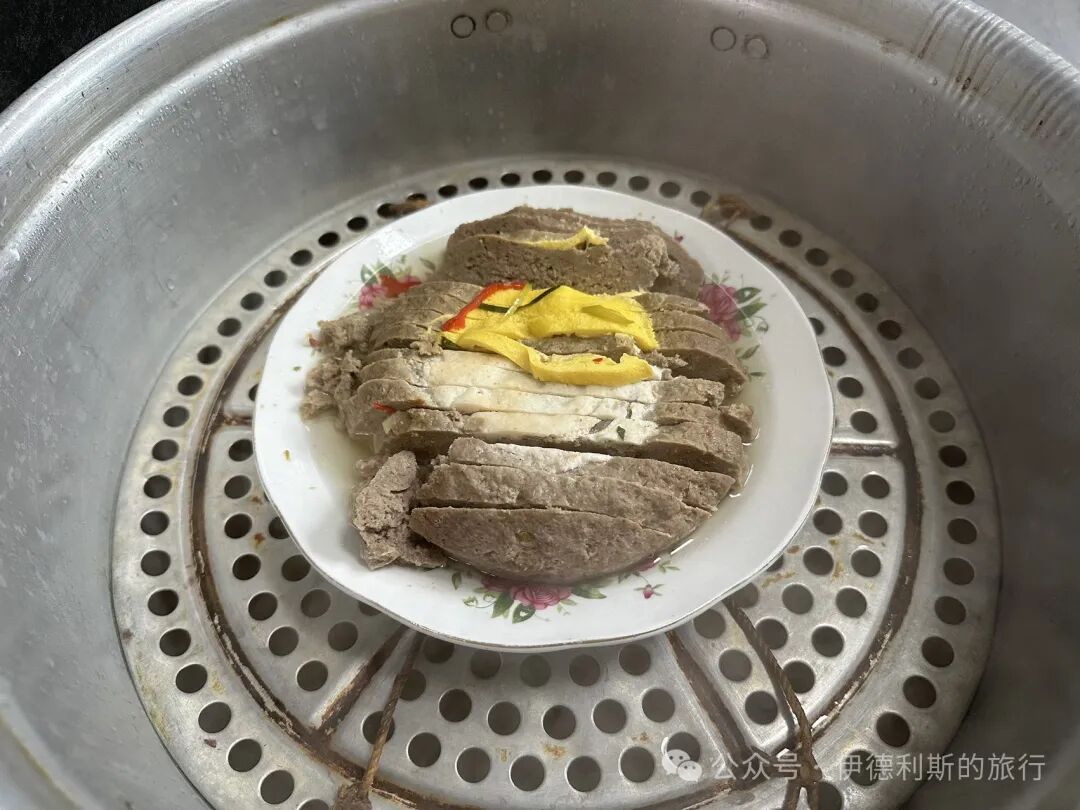
Meatloaf (munzi) is made with ground beef. When mixing the filling, beat it repeatedly, then shape it into a cylinder. Pinch the top to look like a railing, pour an egg into the center, and steam it.
For spicy peppercorn chicken (jiaomaji), first wash a free-range chicken, cut it in half, and put it in a pressure cooker. Add water to cover it, along with red chili, Sichuan peppercorns, salt, bay leaves, cinnamon, and ginger slices. Once cooked, take it out, let it cool in a basin, tear the meat into strips, and top with green onions. Heat oil in a pan. Once hot, turn off the heat and add dried chili skins (lapizi), Sichuan peppercorns, salt, and white pepper. Stir well, pour in some chicken broth, and then pour everything over the chicken in the basin and mix well.
We spent the night at my aunt's house near the cement factory. My uncle is an imam at a small mosque in Shanxi, and we are very grateful (zhigan) for that.
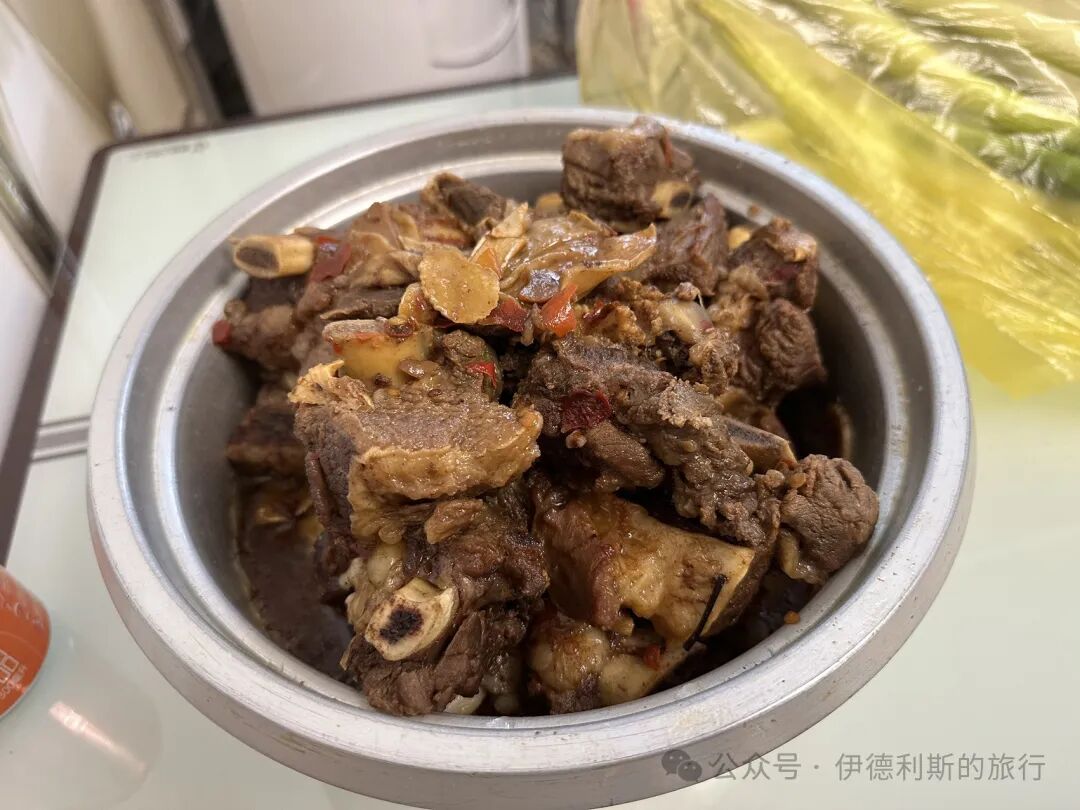
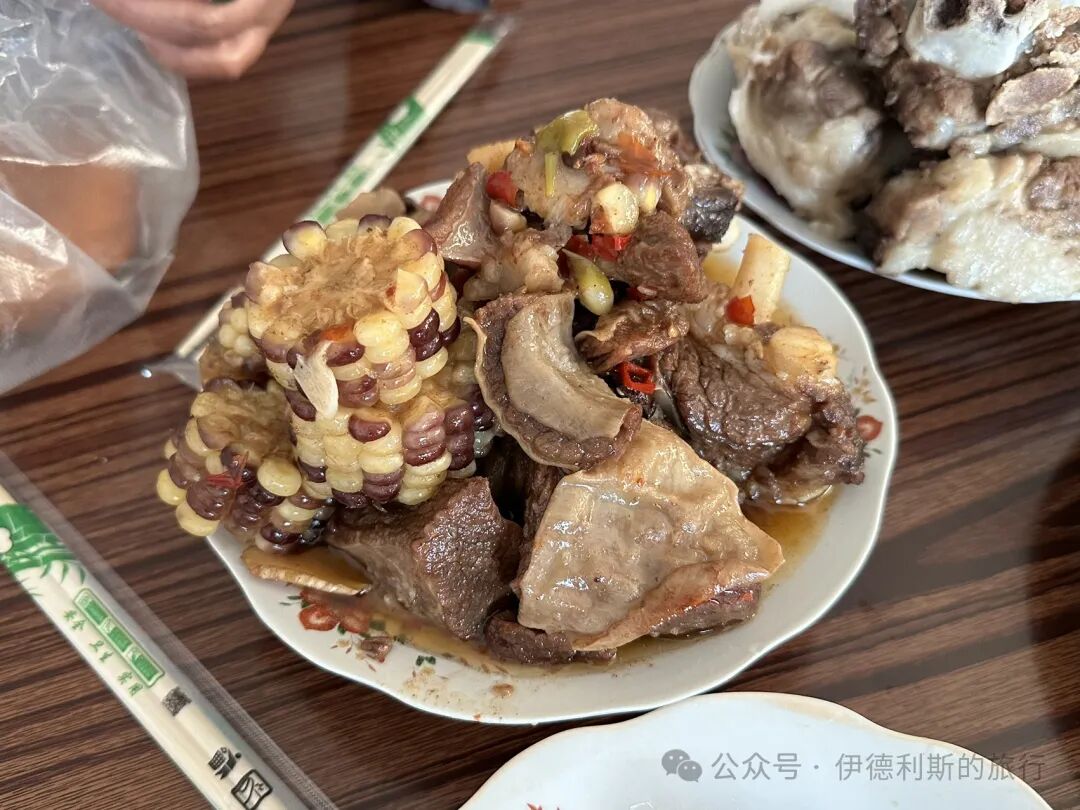
The main dishes were definitely braised beef steak and clear-stewed lamb. The chicken was raised by my uncle himself, and the lamb was from the southern mountains of Urumqi.
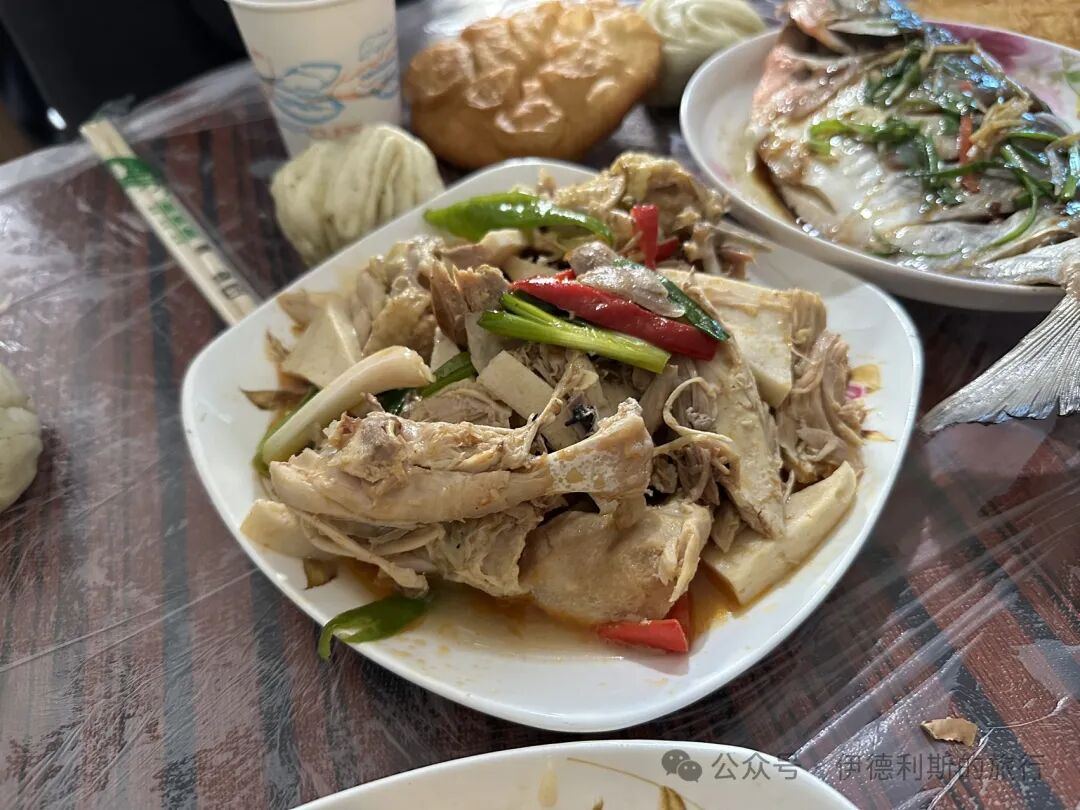
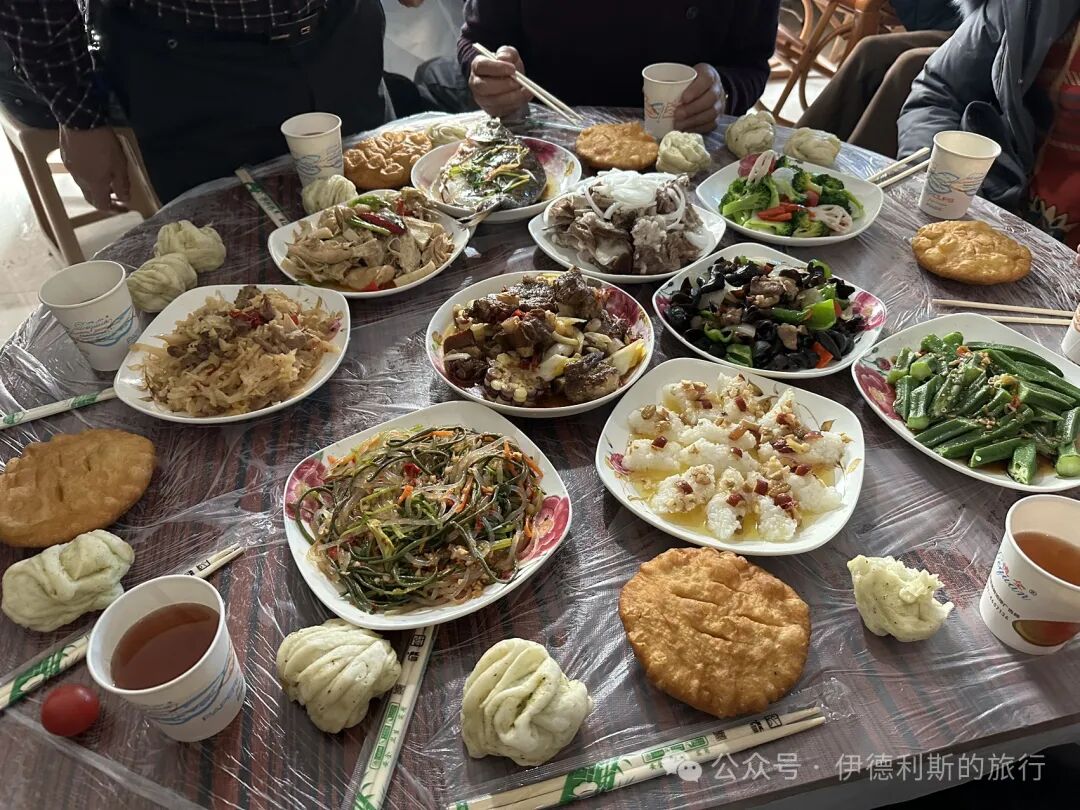
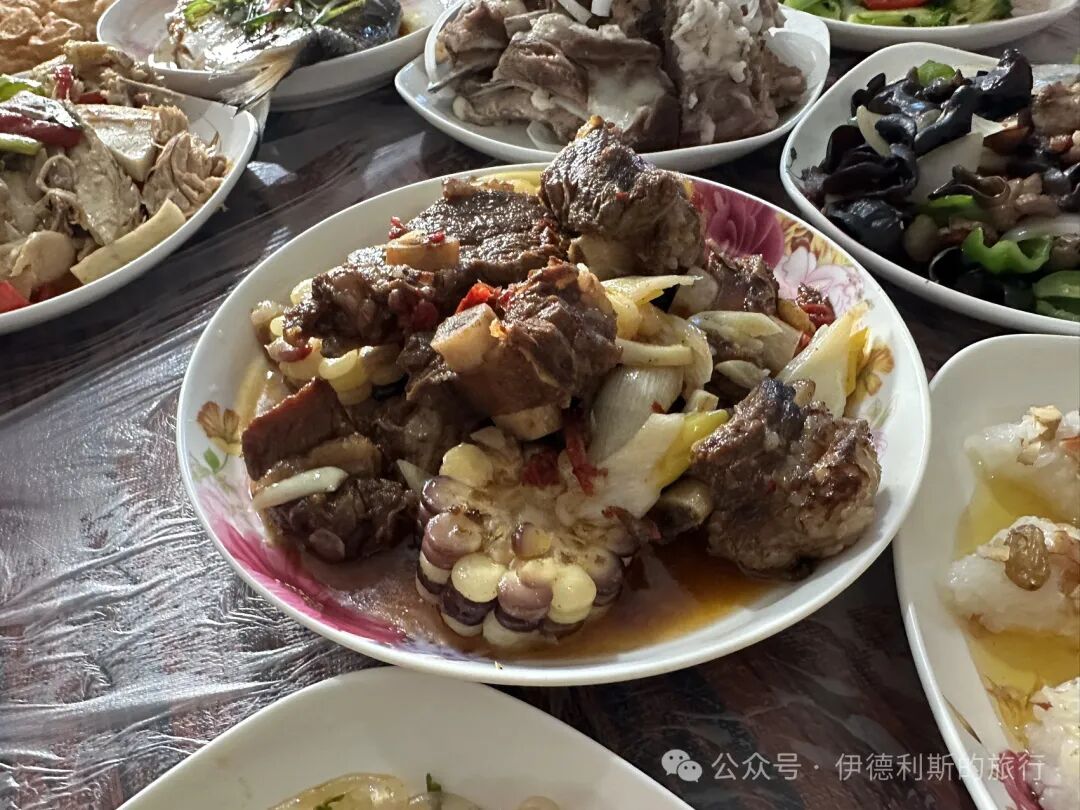
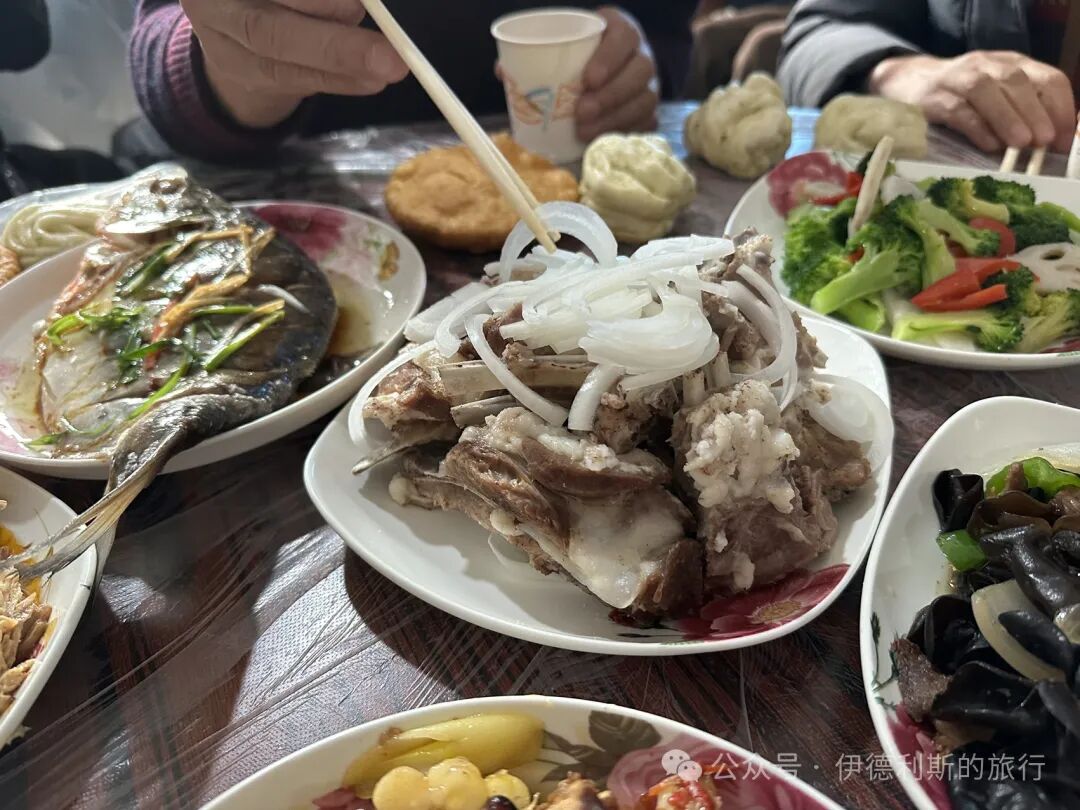
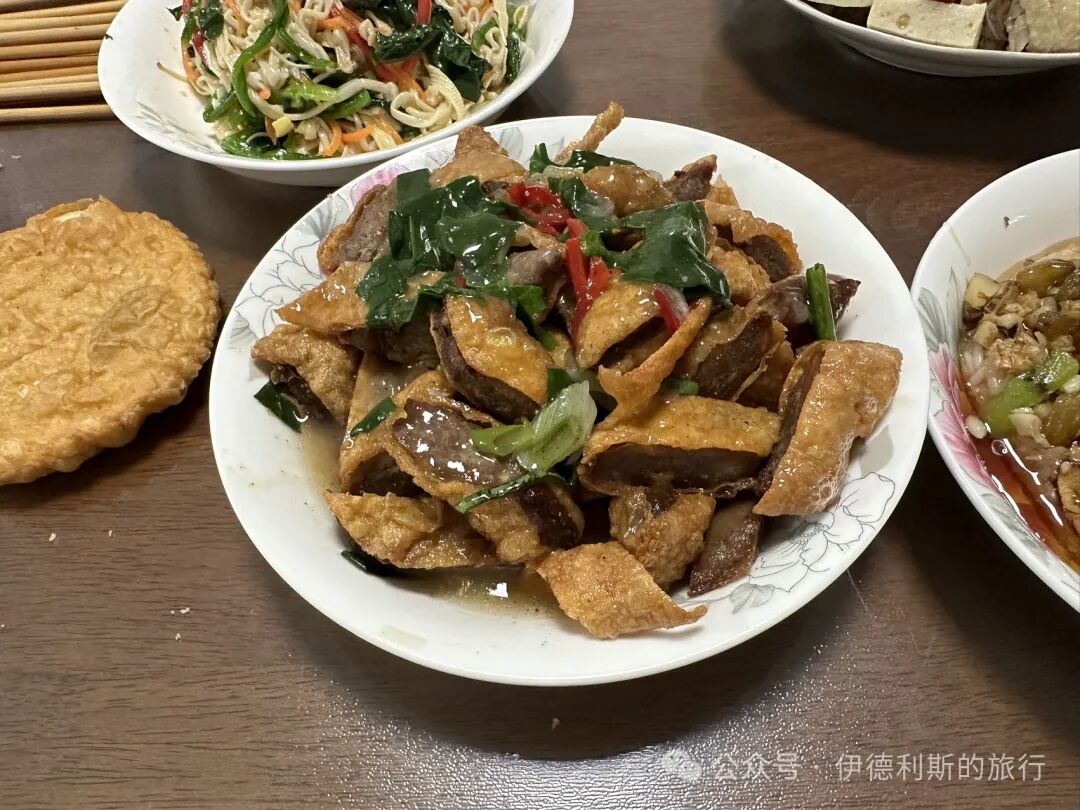
We spent the night at my second aunt's house in the New City District. My aunt is the recognized master chef of our family. She makes authentic home-style stir-fries, meatloaf (munzi), stuffed meat slices (jiasha), and tripe.
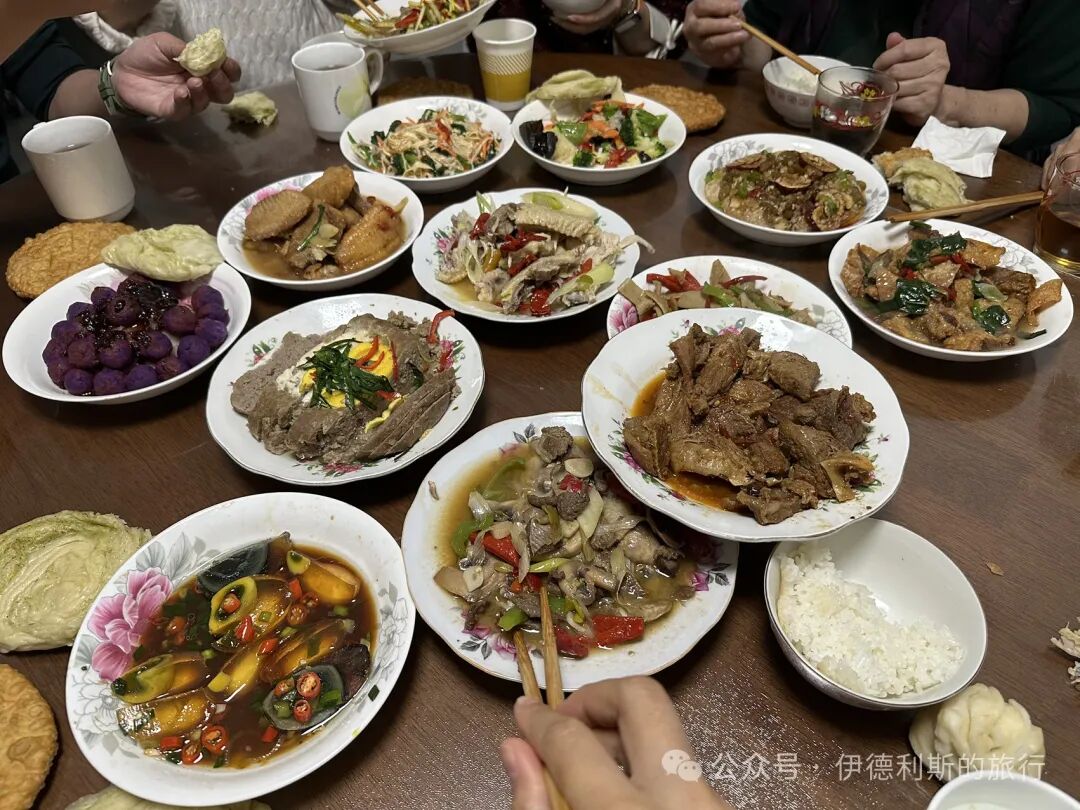
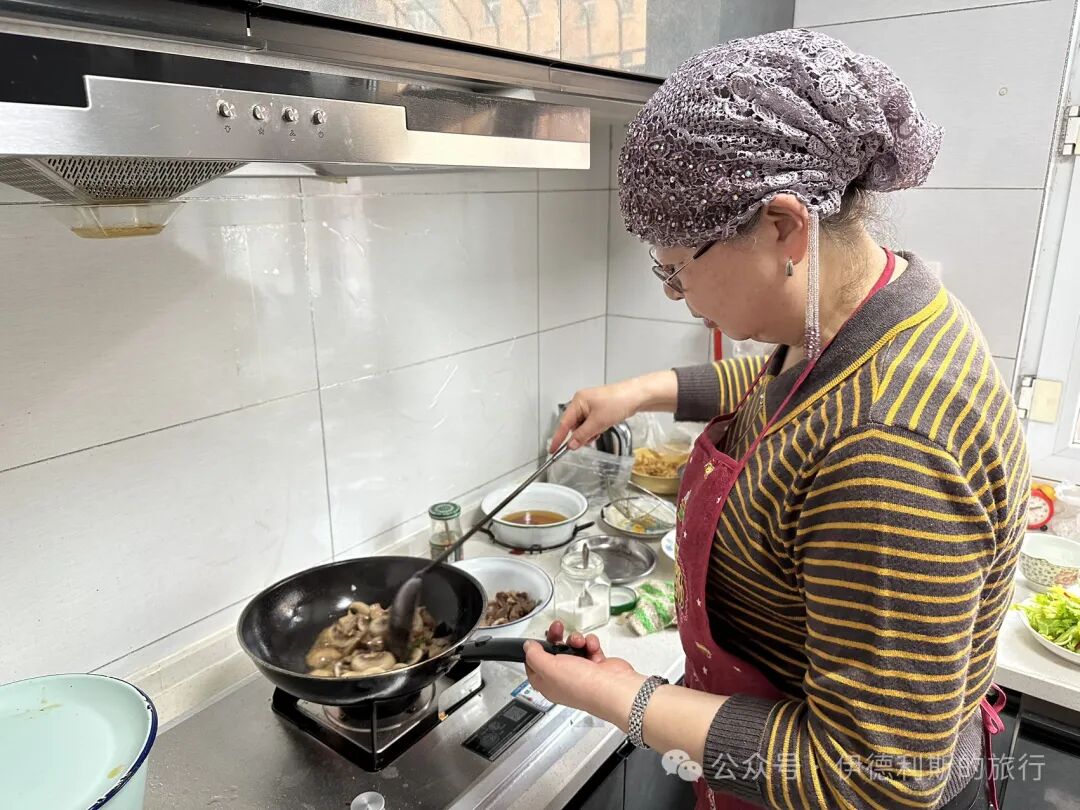
We spent the night at my aunt's house near the flour mill and had basin meat (penpenrou) with fried dough (youxiang) for breakfast.
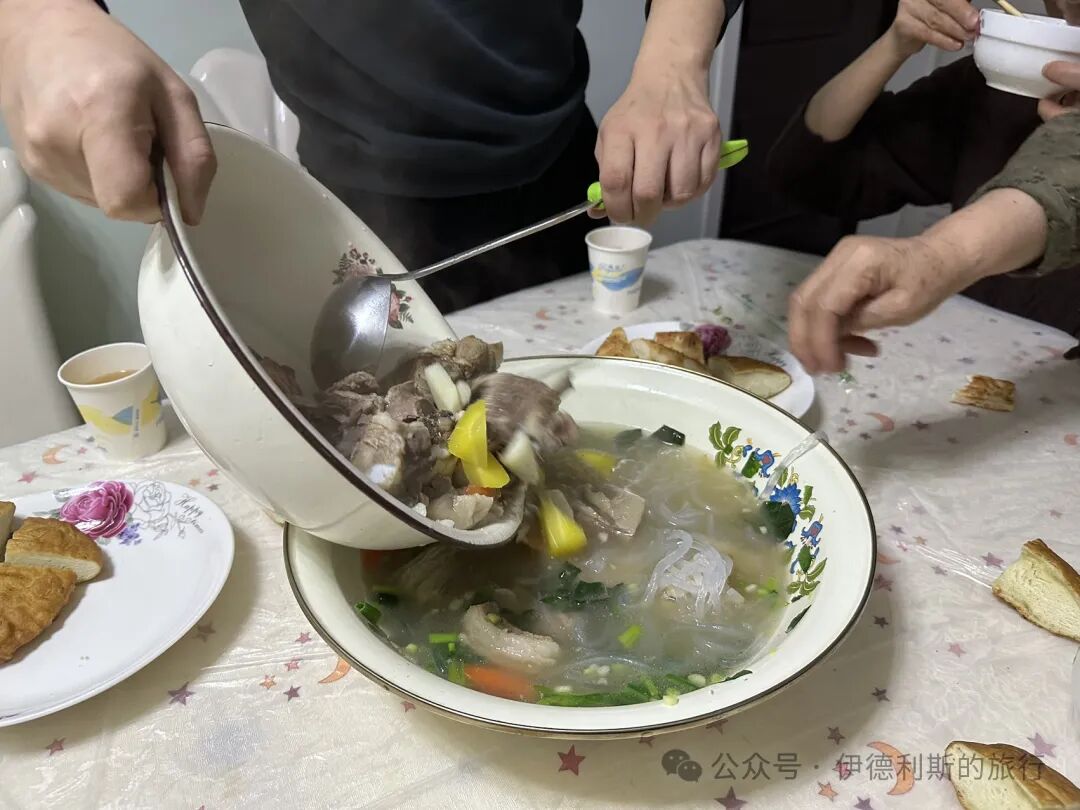
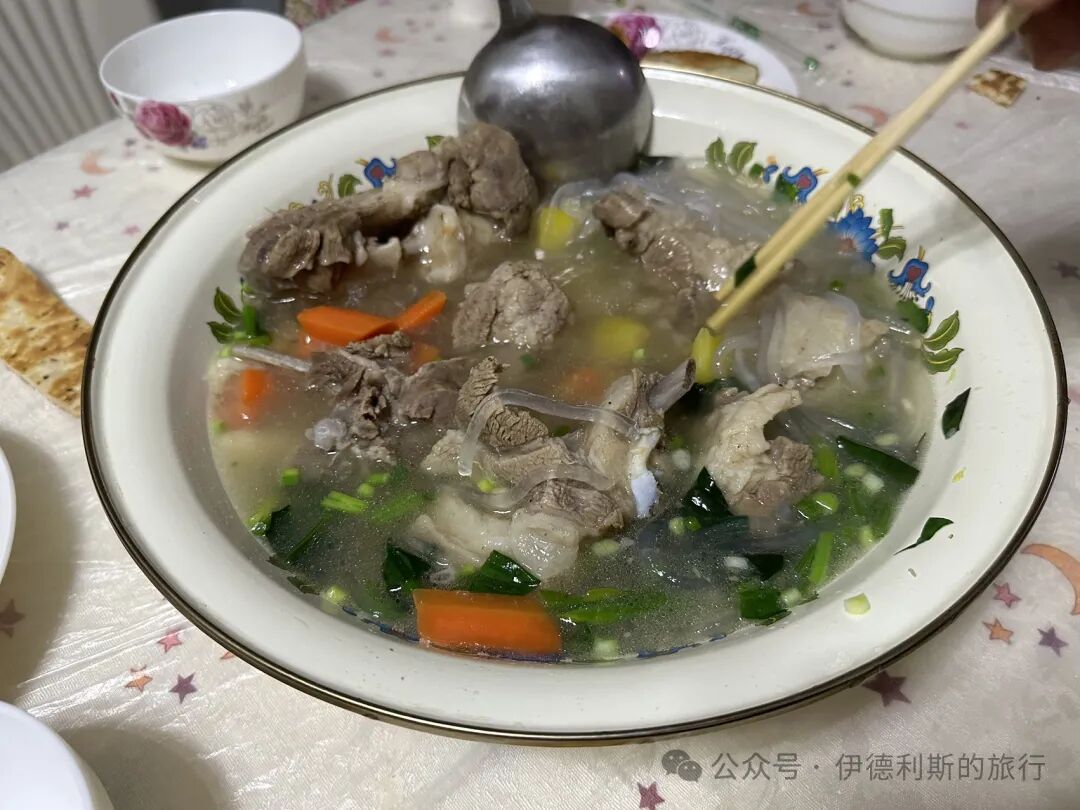
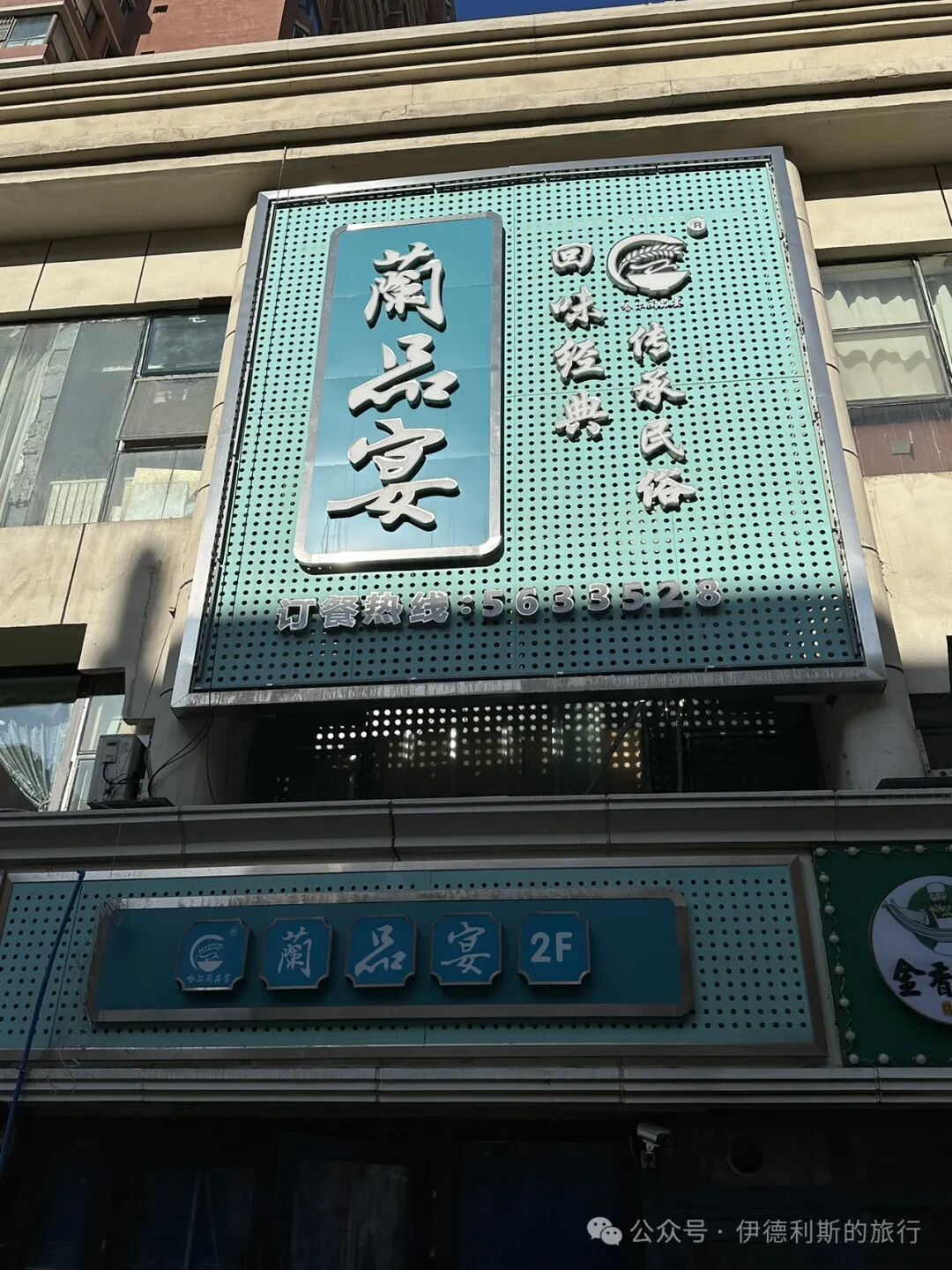
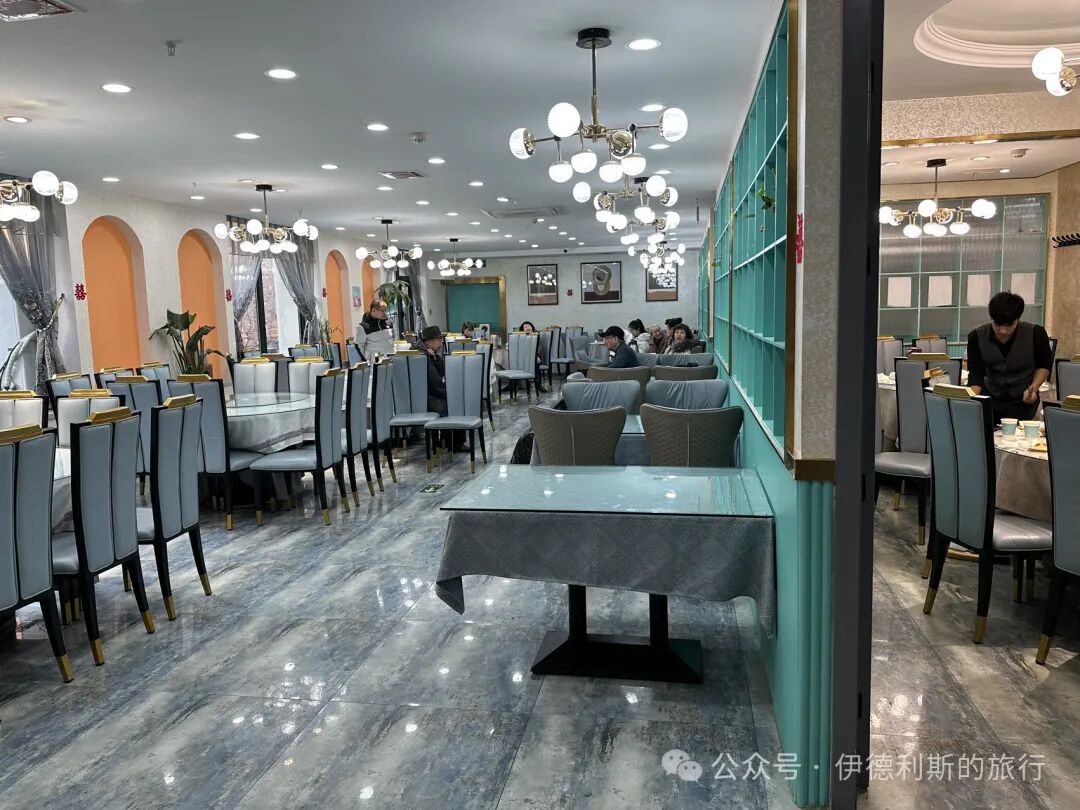
We hosted our guests at Lanpin Banquet. It is currently the most popular restaurant in Urumqi for Hui Muslims to hold religious gatherings (niansuoer). They don't sell alcohol, the food is refined, and the owner is warm and attentive. It is usually packed on weekends and holidays, so you must book in advance. On the day we went, they hosted 30 tables for a circumcision ceremony and 15 tables for a special occasion.
We ate stir-fried beef tendon, spicy peppercorn chicken (jiaomaji), cold-dressed beef, hand-grabbed lamb (shoubarou), sauced stuffed meat slices (jiasha), pearl meatballs, and flatfish, along with complimentary side dishes. These are the most popular dishes for Hui Muslim gatherings in Urumqi right now. Their hand-grabbed lamb (shoubarou) is excellent; the meat is tender and fragrant, making it perfect for elderly people to eat.
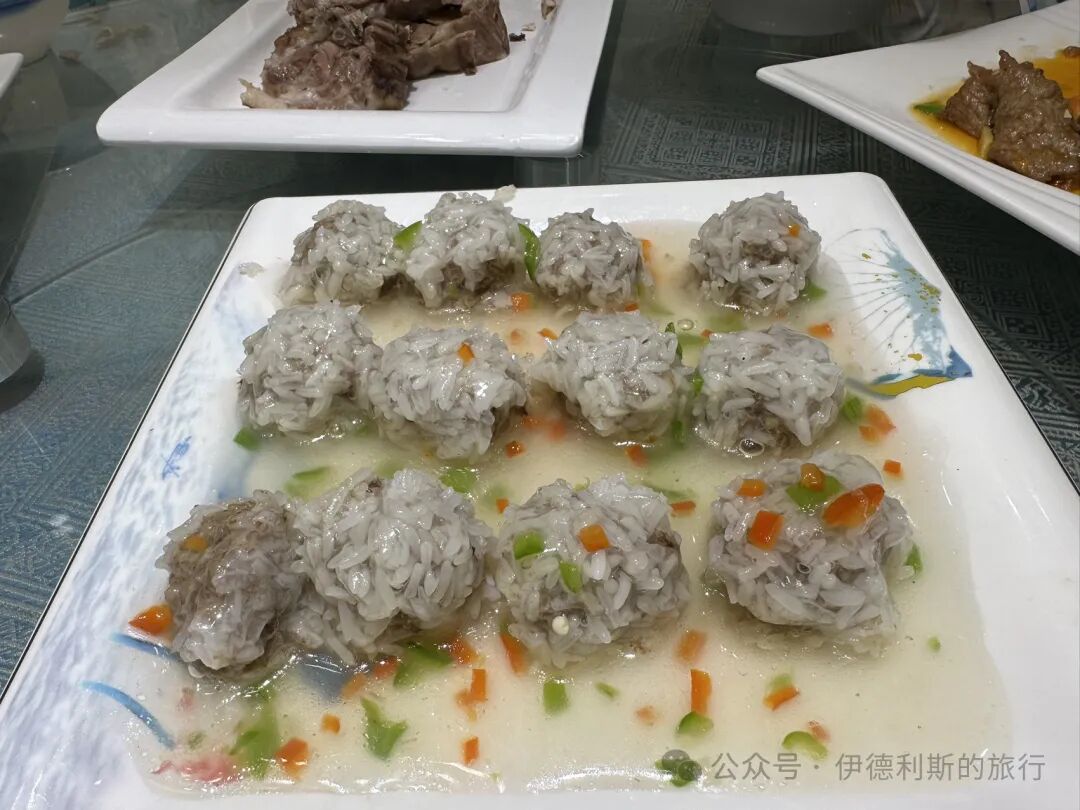
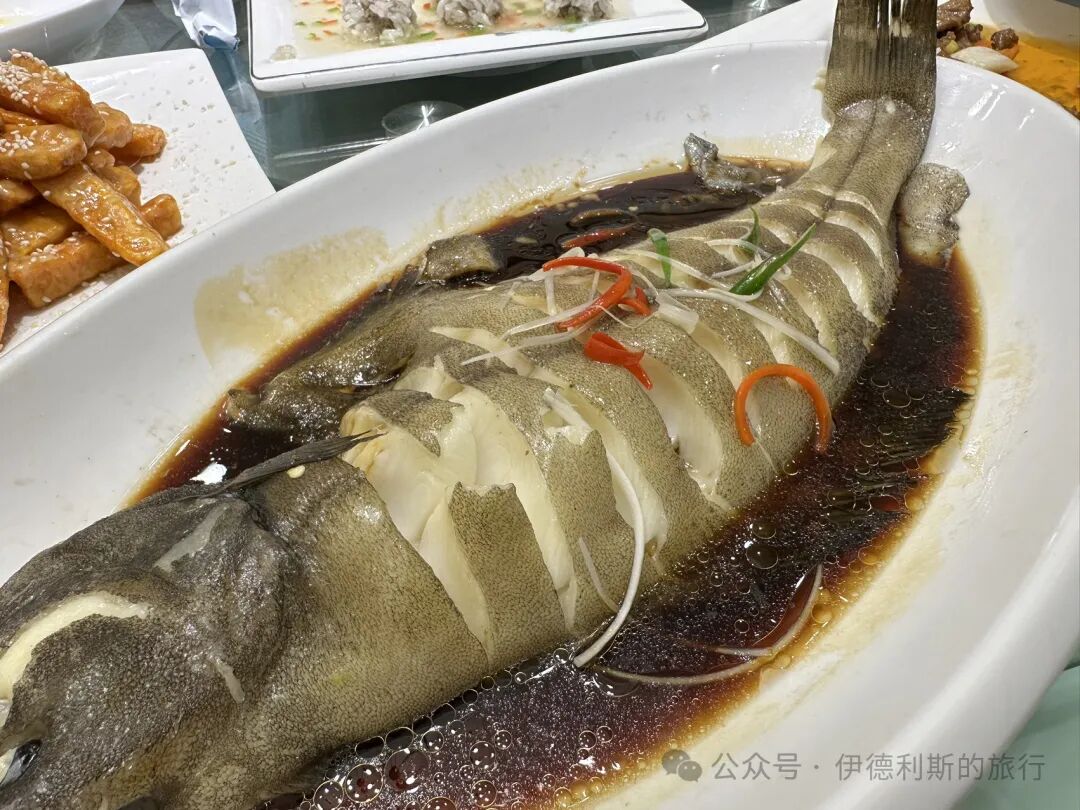
I spent the night at Uncle Saisai's house in the Changsheng Brigade in the southern suburbs of Urumqi. The hospitality was generous, with dishes like sweet platter (tianpanzi), fried dough snacks (youguozi), pearl meatballs (zhenzhu wanzi), braised ribbonfish, clear-stewed meat, and braised lamb. I also met many relatives.
Engagement acceptance ceremony (luohuali)
This time, I arrived just in time for my brother-in-law's engagement acceptance ceremony (luohuali). We had a feast at a small community (xiaofang) of the Jahriyya order (Zhepai) in Anningqu, in the northern suburbs of Urumqi, where I ate some homemade fried twisted sugar dough (tangningningzi). The feast started with small appetizer plates, which were then cleared to make room for the main dishes, including clear-stewed meat, braised meatballs, braised fish, and beef head meat.
The traditional wedding customs of Hui Muslims in Xinjiang are very specific. Before a formal marriage proposal, there is a 'preliminary inquiry' where the man's family learns about the woman's family. Then, they send a matchmaker with four types of gifts—tea leaves, sugar cubes, red dates, and walnuts (or pastries)—wrapped in four colors, known as the 'four-color gift' (sese li). The first time a matchmaker brings the four-color gift to propose, it is called the 'opening gift' (kaikouli). The matchmaker gives the red-cloth-wrapped gifts to the woman's family, but they do not give an answer right away. After careful consideration, the woman's family sends a message through the matchmaker. The man's family then sends the four-color gift again, which is called the 'engagement acceptance ceremony' (luohuali), and after that, they enter the engagement stage.
Friday prayer (Jumu'ah)
At noon, I attended the Friday prayer (Jumu'ah) at the Changsheng Grand Mosque. The Changsheng Grand Mosque is located in the Changsheng Brigade at the foot of Yaomo Mountain (Yamalike Mountain) in the southern suburbs of Urumqi. It has the highest number of congregants among the Hui Muslim mosques in the Saybagh District, with over a hundred people attending the Friday prayer (Jumu'ah). The Changsheng Brigade used to be a series of large courtyards where everyone farmed. Now, everyone has moved collectively to the Fumin Anju residential area, and the houses are very spacious.
Imam Fanta of the Changsheng Grand Mosque is my wife's uncle. Uncle Fanta is the one who performed our marriage contract (nikah). Uncle Fanta's surname is Su. The Su family is a large clan in Changsheng. Over three hundred years ago, they left Ankang, Shaanxi, and traveled through Ningxia and Jimsar to Urumqi to do business. Later, their business failed, and they eventually moved to Changsheng to farm, where they have lived ever since.
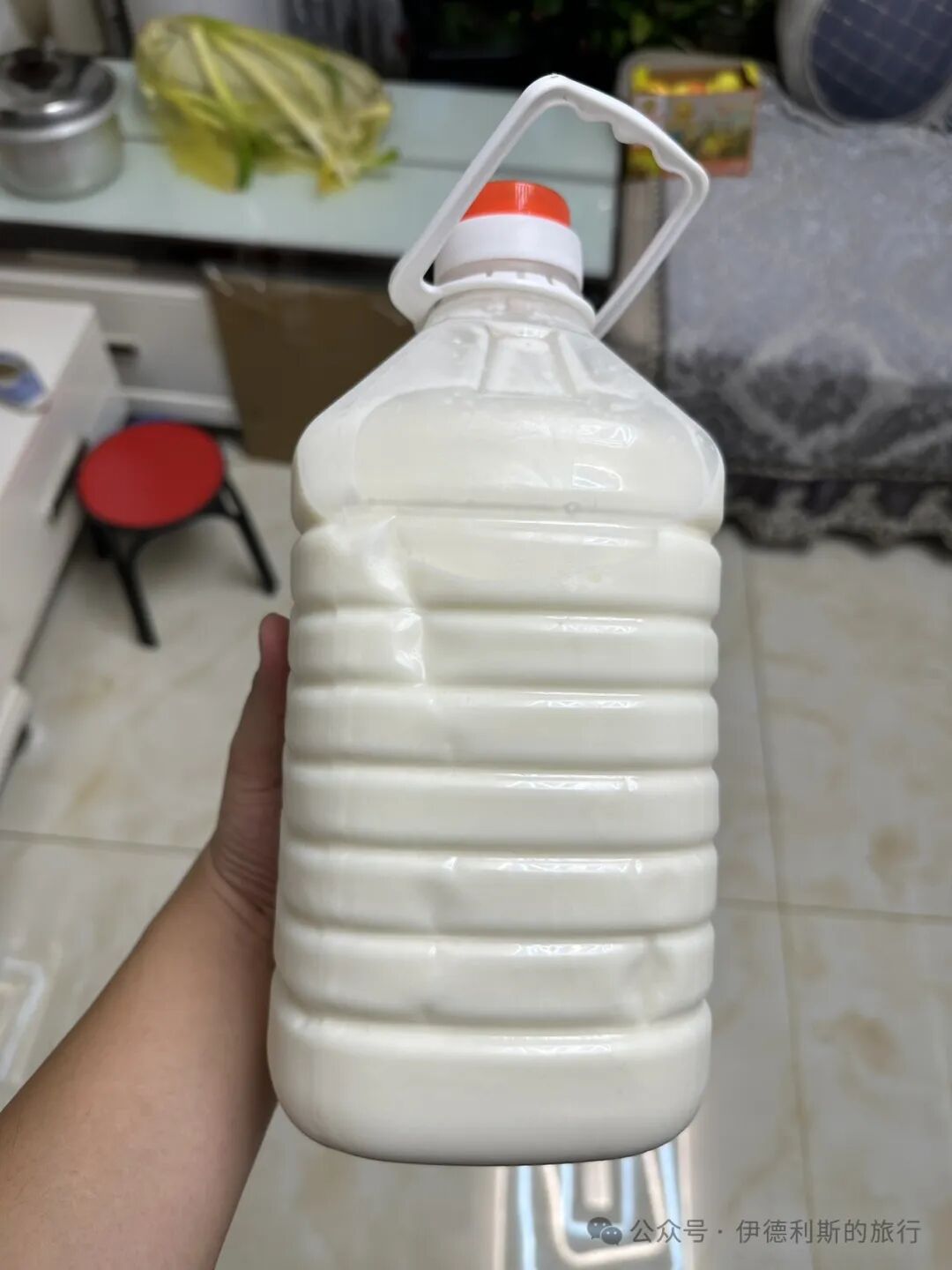
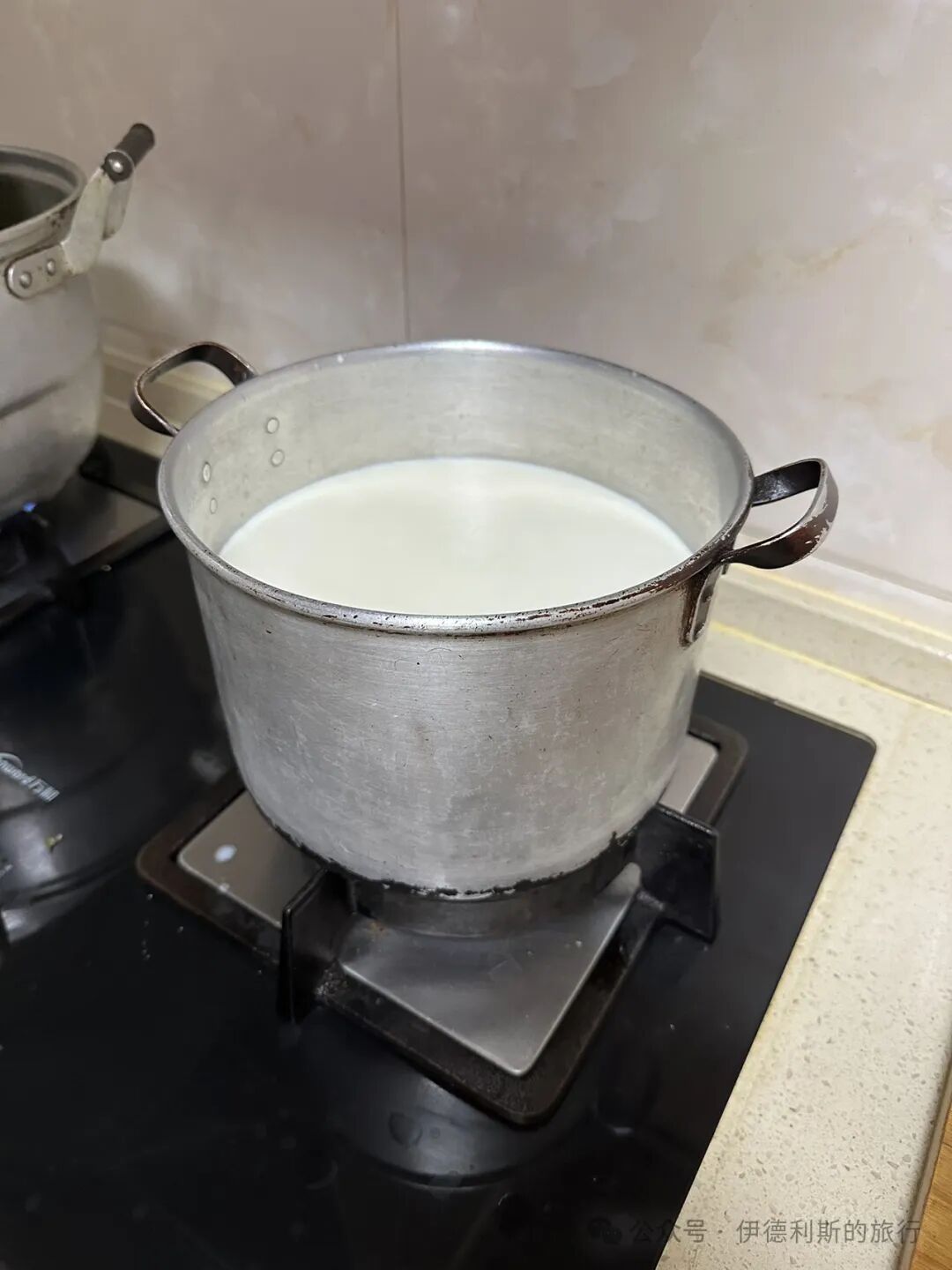
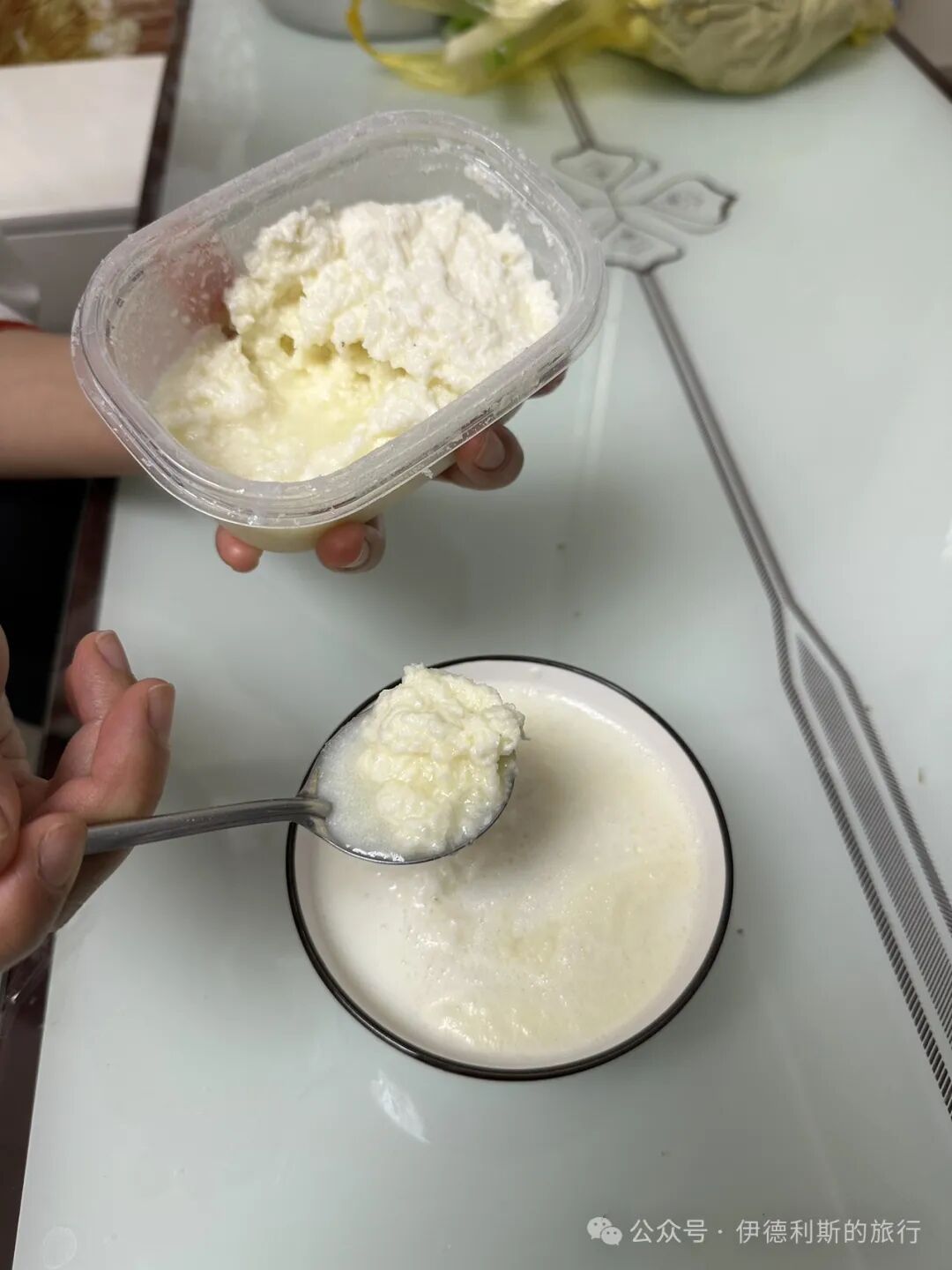
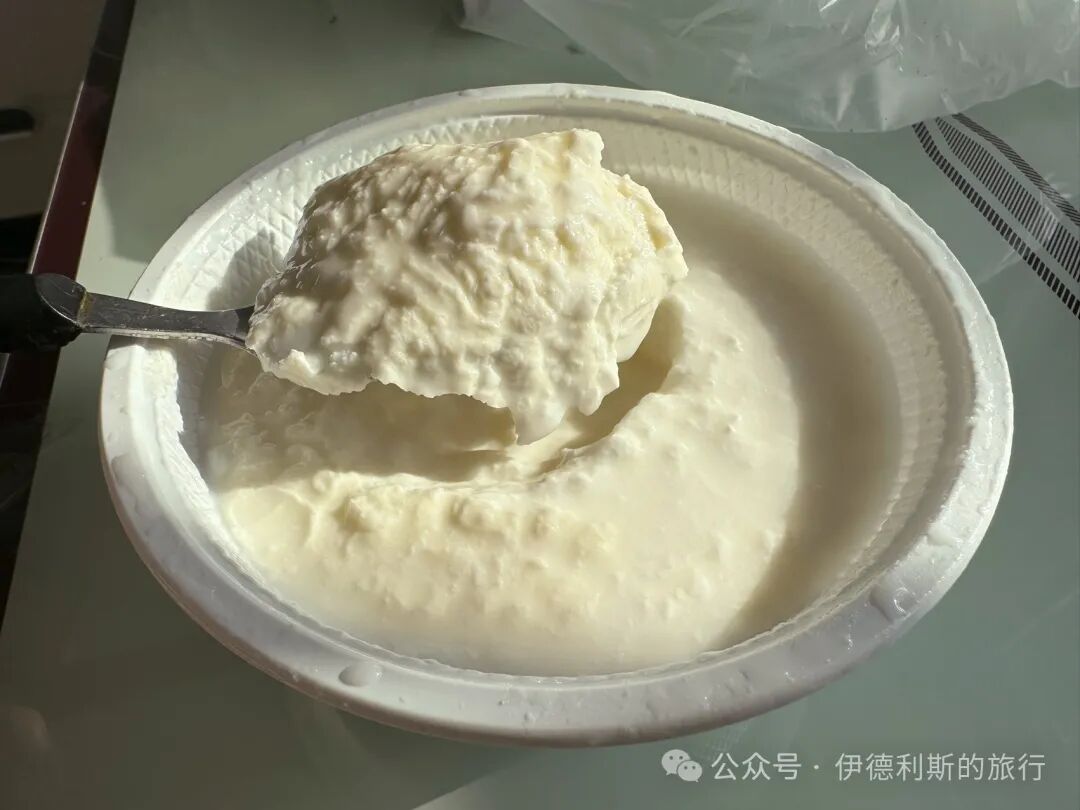
I bought fresh milk and handmade yogurt at the entrance of the Changsheng residential area. A large bucket of fresh milk only cost 20 yuan. After boiling it and adding two spoonfuls of milk skin (naipizi) I bought earlier on Hetian Street, it tasted amazing. The handmade yogurt comes with its own layer of milk skin (naipizi) and has a very rich milky flavor.
Visiting relatives and friends.
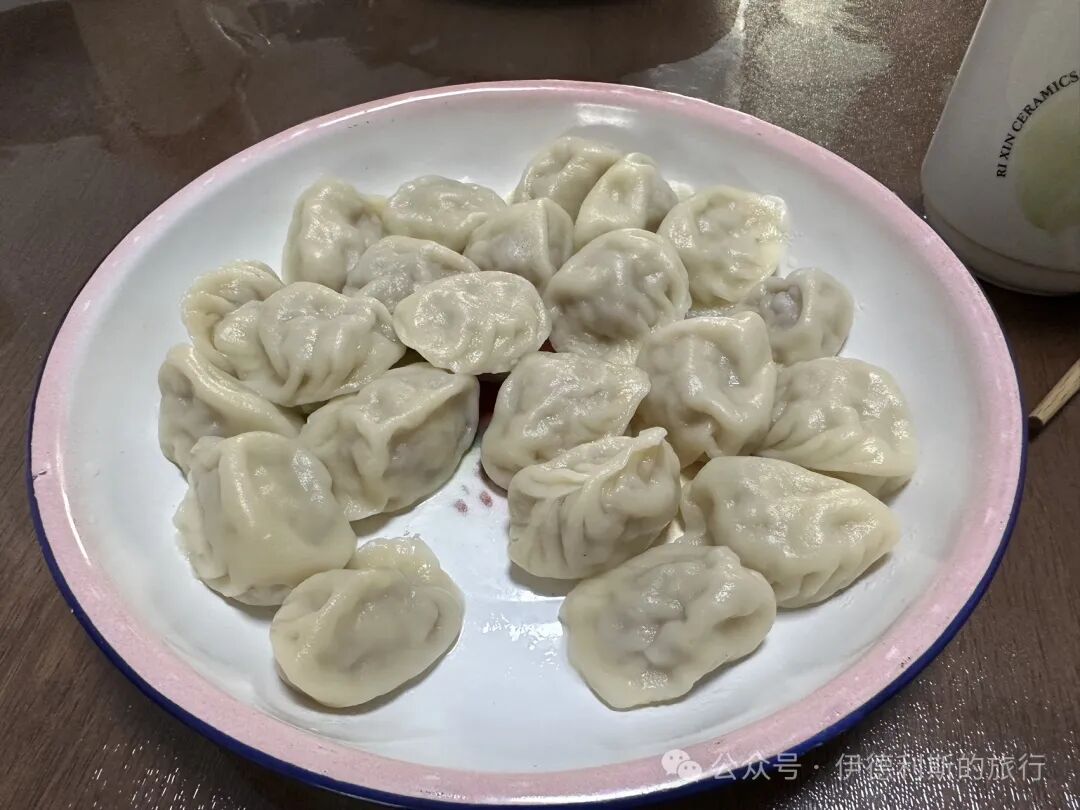
I visited my second aunt's house and had a lunch of Hui Muslim-style lamb dumpling soup (fentang yangrou jiaozi). The soup is the version Hui Muslims in Xinjiang make for Eid, and the dumplings are filled with lamb, onions (piyanzi), and pickled cabbage. They were small and delicate, and everyone loved them.
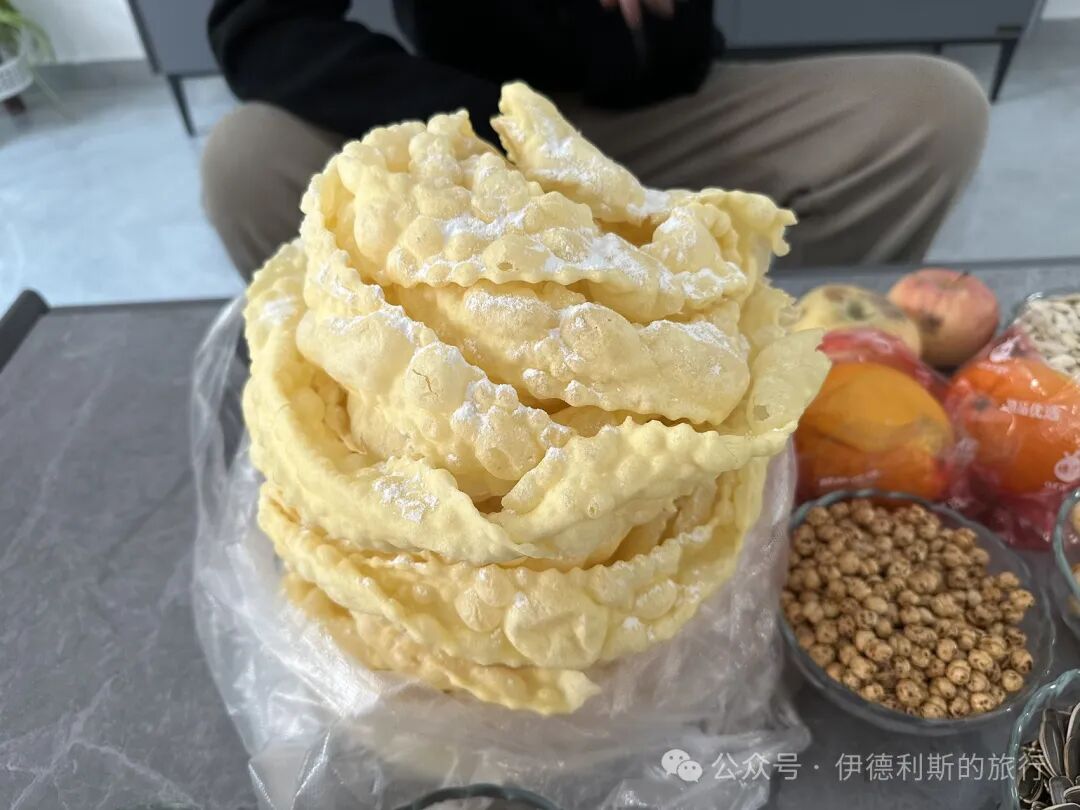
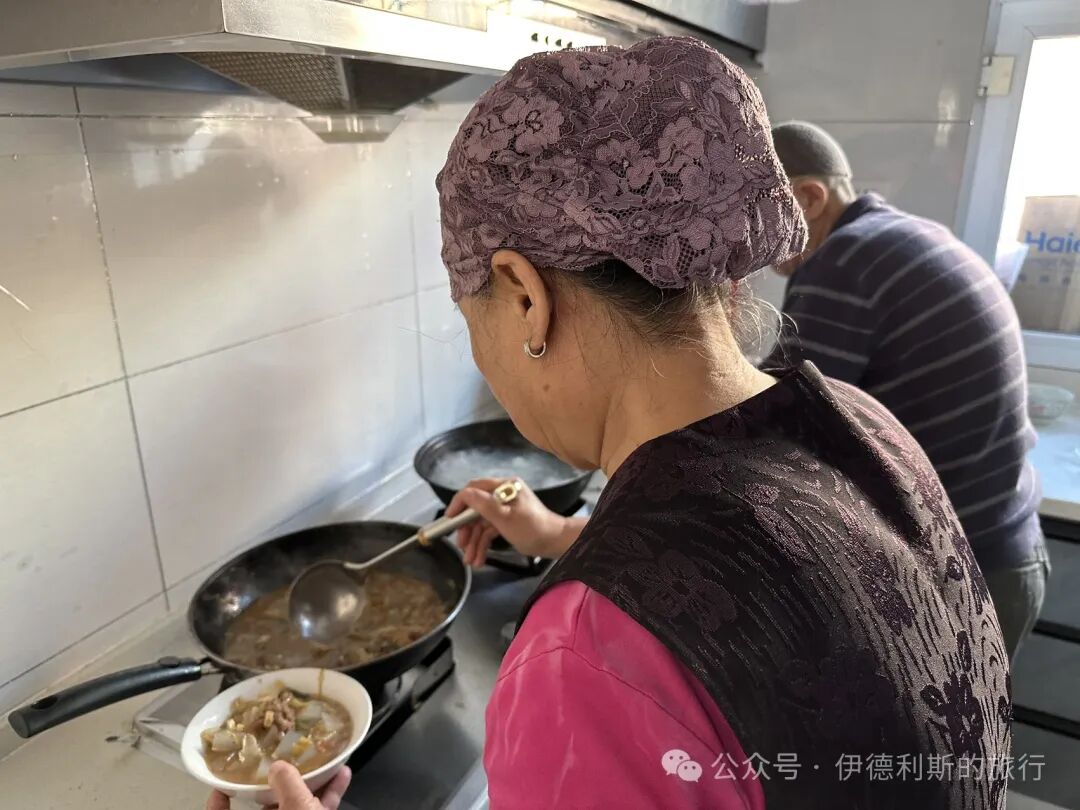
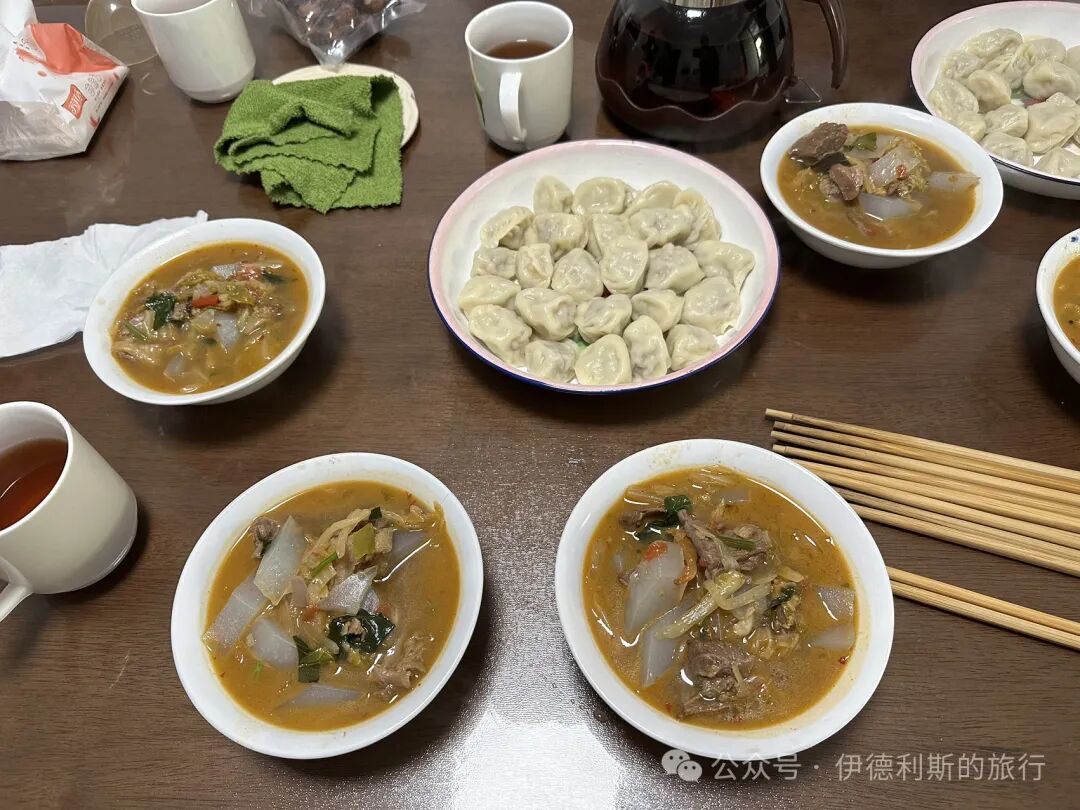
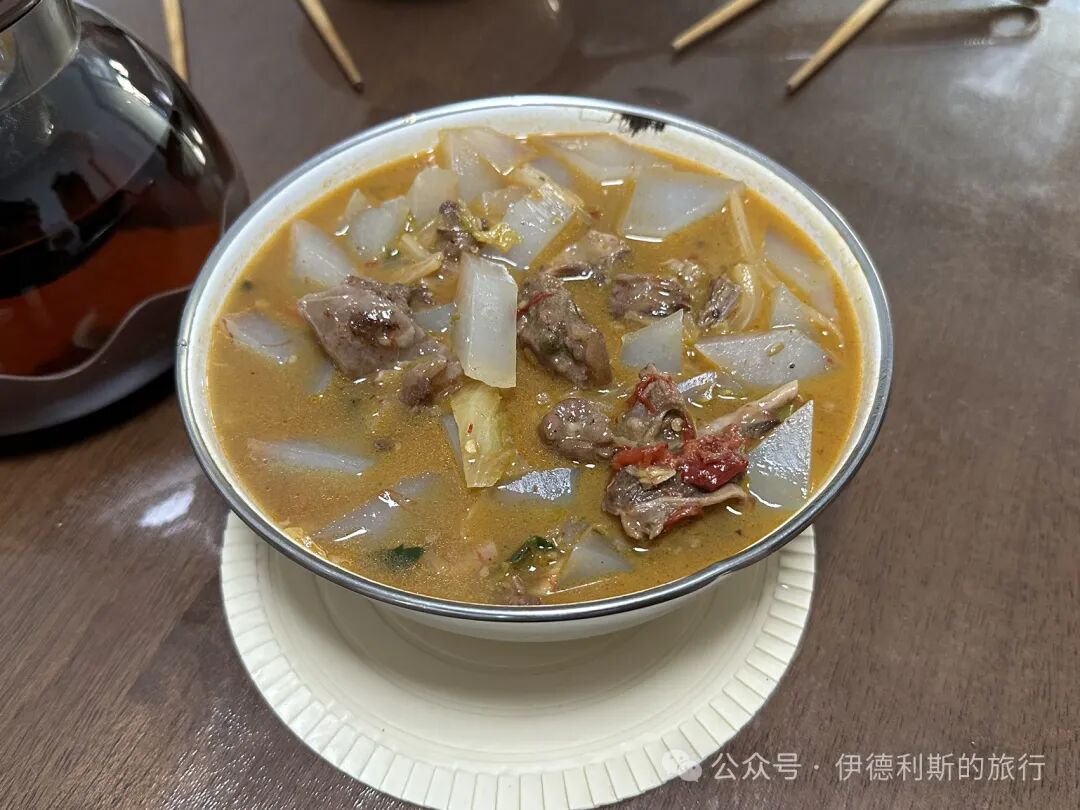
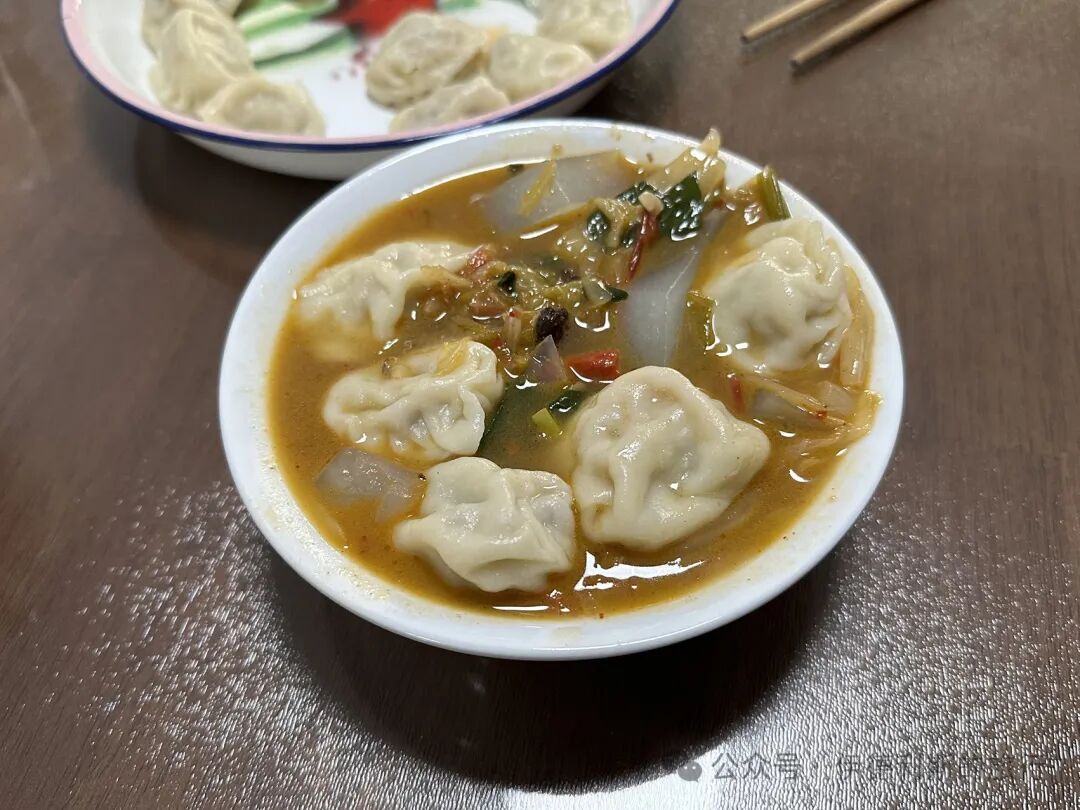
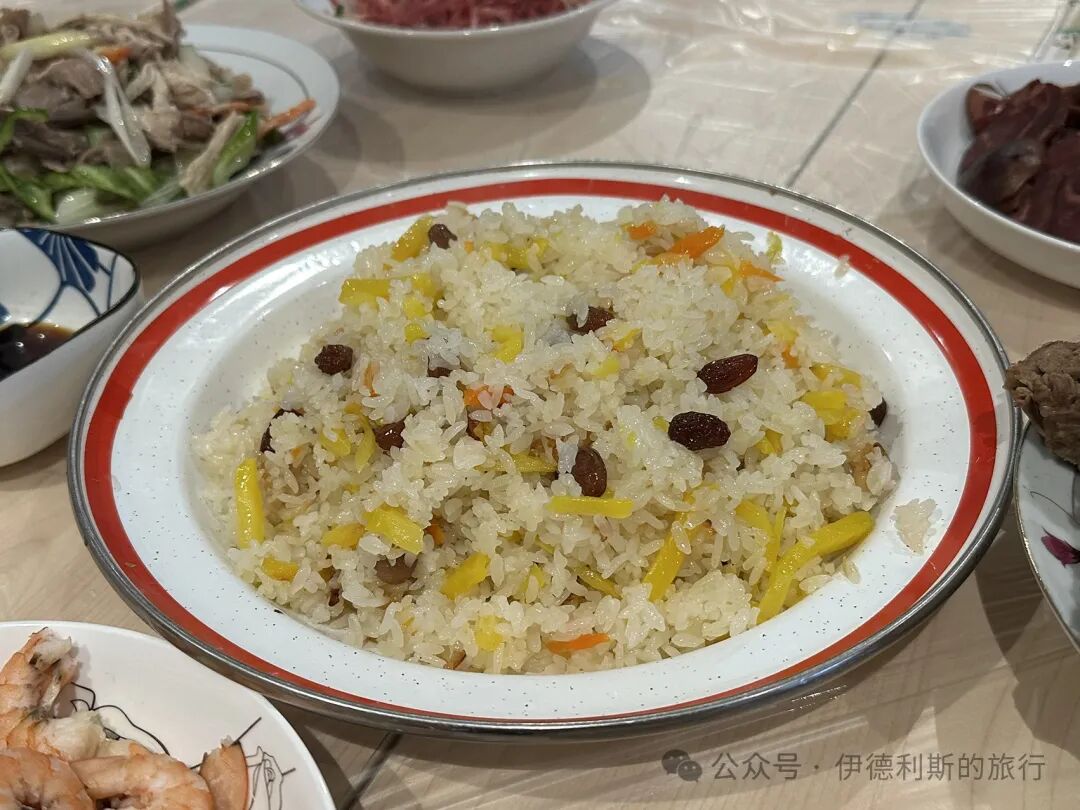
I attended a family dinner at my older sister's place. My brother-in-law is a great cook and made beef steak stew, spicy numbing chicken (jiaoma ji), pumpkin buns (kawa baozi), and smoked horse sausage. My brother-in-law makes amazing rice pilaf (zhuafan), so I made sure to ask him for his tips during the meal. Don't stir-fry the yellow carrots for the rice pilaf all the way through. Stewing them in water brings out their sweetness, so you don't need to add extra sugar. You must use plenty of oil for the rice pilaf. If you use too much, just tilt the pot and scoop the excess out. The extra oil from the rice pilaf is great for making cabbage and meat mixed noodles (banmian) because it adds so much flavor.
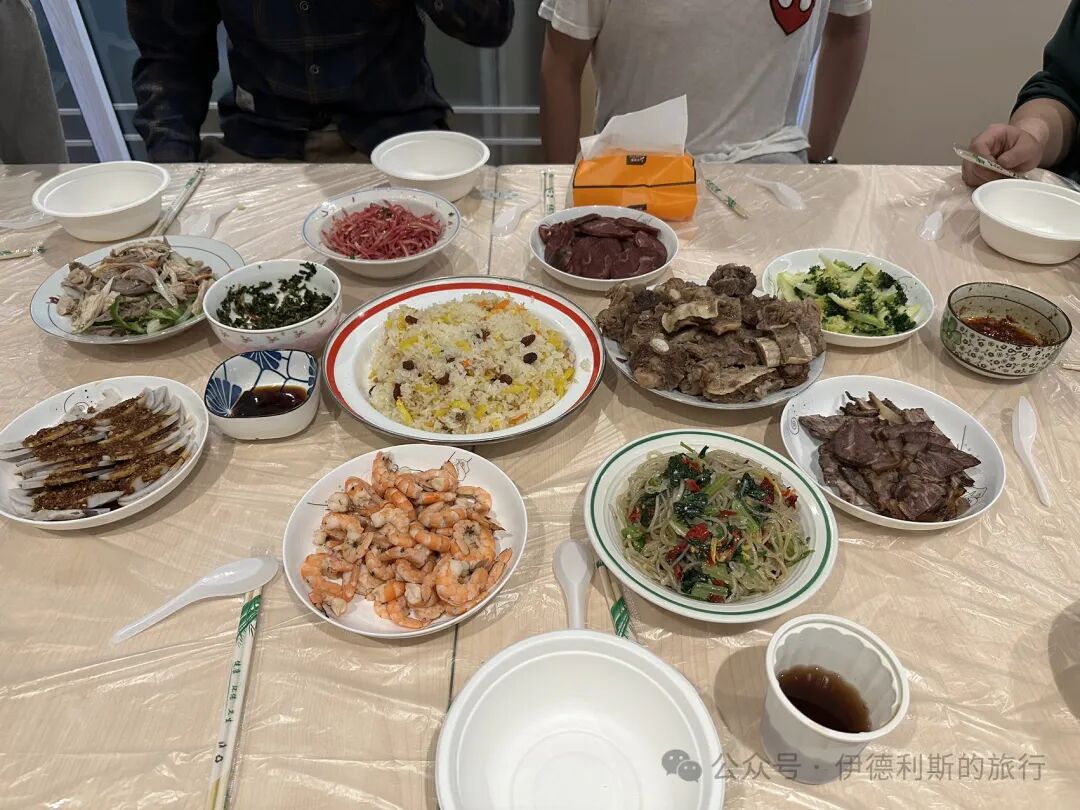
My great-aunt in Wusu invited us out to eat at Lanpin Banquet on Zhujiang Road. It shows how popular this place is among the older generation of Hui Muslims in Urumqi. As soon as we walked in, a young waiter greeted us with a salaam and showed us to our table. We have only been here twice, but the service is always excellent.
This time we had stir-fried black and white lung, yellow noodles with grilled meat (huangmian kaorou), sweet platter (tianpanzi), layered steamed bread (youtazi), spicy numbing chicken, and clear-stewed meat. Everyone loved these traditional dishes.
Summary: This Urumqi article records Hui Muslim life during the Spring Festival, including nianye, luohuali, Jumuah prayer, and visiting relatives and friends. It preserves the original religious customs, family scenes, food details, and community observations in natural English.
Night of Prayer (nianye).
During the 2024 Spring Festival holiday, I took Suleiman to visit his grandparents (anai aye) in Urumqi, just in time for the noble month of Sha'ban (the eighth month of the Islamic calendar). The evening of the 15th day of the eighth month is the Night of Bara'at, which means the Night of Atonement. On this night, the two angels on our shoulders replace the scrolls that record our good and bad deeds for the year. They seal the old scrolls and open new ones, which serve as evidence for questioning when we enter the afterlife, so it is also called the Night of Exchanging Scrolls. In the traditions of Hui Muslims in some regions, when the month of Sha'ban arrives, everyone takes turns inviting the imam and friends and family to their homes for a Night of Prayer. The main process includes reciting scriptures, praising the Prophet, performing repentance (tawbah), and asking for forgiveness for family members and the deceased. Afterward, everyone eats a rich meal to strengthen bonds, boost faith, and prepare for the noble month of Ramadan.
February 17 was our family's Night of Prayer, and we also celebrated Suleiman's first birthday (suisuizi). We invited four imams and a large group of relatives to recite surahs, recite the Bara'at praise, perform repentance, and receive dua, followed by a meal. First, we served appetizers (diediezi) and tea. The appetizers included nut tarts and baklava we bought at a Uyghur pastry shop on Hetian Street, as well as traditional flaky pastries and fried flour cakes (saqima) made by my aunt. After everyone chatted for a while, we cleared the appetizers and brought out the main dishes to officially start the feast.
With the help of my aunts, we prepared a rich feast. The main dishes were clear-stewed lamb, braised beef steak, followed by steamed starch jelly (mengzi), pearl meatballs, peppercorn chicken, steamed fish, sweet rice platter (tianpanzi), and various stir-fried dishes. The staples were fried dough (youxiang), steamed buns (momo), and rice.
The fried dough was deep-fried a day in advance. Before frying, we first performed ablution (wudu), then leavened the dough. After it rose, we scalded a small portion with hot oil and mixed in a little baking soda and fenugreek powder. We kneaded the scalded dough into the leavened dough, covered the basin, and let it rest for 15 minutes. After resting, we rolled it into a long shape, pinched off pieces, rolled them into flat cakes, cut four small slits with a knife, and it was ready to be fried. When putting them into the pot, we recited the Tasmiyah. We fried them for a while, flipped them, and tapped the edges with chopsticks; once they were firm, they were done.
To make sweet rice platter (tianpanzi), first wash the glutinous rice and soak it for three days. Then, add a little brown sugar (shazitang) and steam it, using more water than you would for regular rice. Next, wash red dates, walnut kernels, and raisins, and spread them at the bottom of a bowl. Cover them with the steamed glutinous rice and let it cool. After that, boil rock sugar to make a syrup. Finally, flip the bowl of rice onto a plate and pour the syrup over it.
Meatloaf (munzi) is made with ground beef. When mixing the filling, beat it repeatedly, then shape it into a cylinder. Pinch the top to look like a railing, pour an egg into the center, and steam it.
For spicy peppercorn chicken (jiaomaji), first wash a free-range chicken, cut it in half, and put it in a pressure cooker. Add water to cover it, along with red chili, Sichuan peppercorns, salt, bay leaves, cinnamon, and ginger slices. Once cooked, take it out, let it cool in a basin, tear the meat into strips, and top with green onions. Heat oil in a pan. Once hot, turn off the heat and add dried chili skins (lapizi), Sichuan peppercorns, salt, and white pepper. Stir well, pour in some chicken broth, and then pour everything over the chicken in the basin and mix well.
We spent the night at my aunt's house near the cement factory. My uncle is an imam at a small mosque in Shanxi, and we are very grateful (zhigan) for that.
The main dishes were definitely braised beef steak and clear-stewed lamb. The chicken was raised by my uncle himself, and the lamb was from the southern mountains of Urumqi.
We spent the night at my second aunt's house in the New City District. My aunt is the recognized master chef of our family. She makes authentic home-style stir-fries, meatloaf (munzi), stuffed meat slices (jiasha), and tripe.
We spent the night at my aunt's house near the flour mill and had basin meat (penpenrou) with fried dough (youxiang) for breakfast.
We hosted our guests at Lanpin Banquet. It is currently the most popular restaurant in Urumqi for Hui Muslims to hold religious gatherings (niansuoer). They don't sell alcohol, the food is refined, and the owner is warm and attentive. It is usually packed on weekends and holidays, so you must book in advance. On the day we went, they hosted 30 tables for a circumcision ceremony and 15 tables for a special occasion.
We ate stir-fried beef tendon, spicy peppercorn chicken (jiaomaji), cold-dressed beef, hand-grabbed lamb (shoubarou), sauced stuffed meat slices (jiasha), pearl meatballs, and flatfish, along with complimentary side dishes. These are the most popular dishes for Hui Muslim gatherings in Urumqi right now. Their hand-grabbed lamb (shoubarou) is excellent; the meat is tender and fragrant, making it perfect for elderly people to eat.
I spent the night at Uncle Saisai's house in the Changsheng Brigade in the southern suburbs of Urumqi. The hospitality was generous, with dishes like sweet platter (tianpanzi), fried dough snacks (youguozi), pearl meatballs (zhenzhu wanzi), braised ribbonfish, clear-stewed meat, and braised lamb. I also met many relatives.
Engagement acceptance ceremony (luohuali)
This time, I arrived just in time for my brother-in-law's engagement acceptance ceremony (luohuali). We had a feast at a small community (xiaofang) of the Jahriyya order (Zhepai) in Anningqu, in the northern suburbs of Urumqi, where I ate some homemade fried twisted sugar dough (tangningningzi). The feast started with small appetizer plates, which were then cleared to make room for the main dishes, including clear-stewed meat, braised meatballs, braised fish, and beef head meat.
The traditional wedding customs of Hui Muslims in Xinjiang are very specific. Before a formal marriage proposal, there is a 'preliminary inquiry' where the man's family learns about the woman's family. Then, they send a matchmaker with four types of gifts—tea leaves, sugar cubes, red dates, and walnuts (or pastries)—wrapped in four colors, known as the 'four-color gift' (sese li). The first time a matchmaker brings the four-color gift to propose, it is called the 'opening gift' (kaikouli). The matchmaker gives the red-cloth-wrapped gifts to the woman's family, but they do not give an answer right away. After careful consideration, the woman's family sends a message through the matchmaker. The man's family then sends the four-color gift again, which is called the 'engagement acceptance ceremony' (luohuali), and after that, they enter the engagement stage.
Friday prayer (Jumu'ah)
At noon, I attended the Friday prayer (Jumu'ah) at the Changsheng Grand Mosque. The Changsheng Grand Mosque is located in the Changsheng Brigade at the foot of Yaomo Mountain (Yamalike Mountain) in the southern suburbs of Urumqi. It has the highest number of congregants among the Hui Muslim mosques in the Saybagh District, with over a hundred people attending the Friday prayer (Jumu'ah). The Changsheng Brigade used to be a series of large courtyards where everyone farmed. Now, everyone has moved collectively to the Fumin Anju residential area, and the houses are very spacious.
Imam Fanta of the Changsheng Grand Mosque is my wife's uncle. Uncle Fanta is the one who performed our marriage contract (nikah). Uncle Fanta's surname is Su. The Su family is a large clan in Changsheng. Over three hundred years ago, they left Ankang, Shaanxi, and traveled through Ningxia and Jimsar to Urumqi to do business. Later, their business failed, and they eventually moved to Changsheng to farm, where they have lived ever since.
I bought fresh milk and handmade yogurt at the entrance of the Changsheng residential area. A large bucket of fresh milk only cost 20 yuan. After boiling it and adding two spoonfuls of milk skin (naipizi) I bought earlier on Hetian Street, it tasted amazing. The handmade yogurt comes with its own layer of milk skin (naipizi) and has a very rich milky flavor.
Visiting relatives and friends.
I visited my second aunt's house and had a lunch of Hui Muslim-style lamb dumpling soup (fentang yangrou jiaozi). The soup is the version Hui Muslims in Xinjiang make for Eid, and the dumplings are filled with lamb, onions (piyanzi), and pickled cabbage. They were small and delicate, and everyone loved them.
I attended a family dinner at my older sister's place. My brother-in-law is a great cook and made beef steak stew, spicy numbing chicken (jiaoma ji), pumpkin buns (kawa baozi), and smoked horse sausage. My brother-in-law makes amazing rice pilaf (zhuafan), so I made sure to ask him for his tips during the meal. Don't stir-fry the yellow carrots for the rice pilaf all the way through. Stewing them in water brings out their sweetness, so you don't need to add extra sugar. You must use plenty of oil for the rice pilaf. If you use too much, just tilt the pot and scoop the excess out. The extra oil from the rice pilaf is great for making cabbage and meat mixed noodles (banmian) because it adds so much flavor.
My great-aunt in Wusu invited us out to eat at Lanpin Banquet on Zhujiang Road. It shows how popular this place is among the older generation of Hui Muslims in Urumqi. As soon as we walked in, a young waiter greeted us with a salaam and showed us to our table. We have only been here twice, but the service is always excellent.
This time we had stir-fried black and white lung, yellow noodles with grilled meat (huangmian kaorou), sweet platter (tianpanzi), layered steamed bread (youtazi), spicy numbing chicken, and clear-stewed meat. Everyone loved these traditional dishes.
Muslim Travel Guide China Hebei Botou: Old Mosques, Hui Streets and Local Muslim Memories
Articles • yusuf908 posted the article • 0 comments • 170 views • 2026-05-23 23:17
Reposted from the web
Summary: This Muslim travel guide China 2026 update keeps the original 2017 Botou travel notes intact and readable. It also supports readers searching for halal food in China, Chinese Muslim food, China Muslim travel tips, and local mosque history in Hebei.
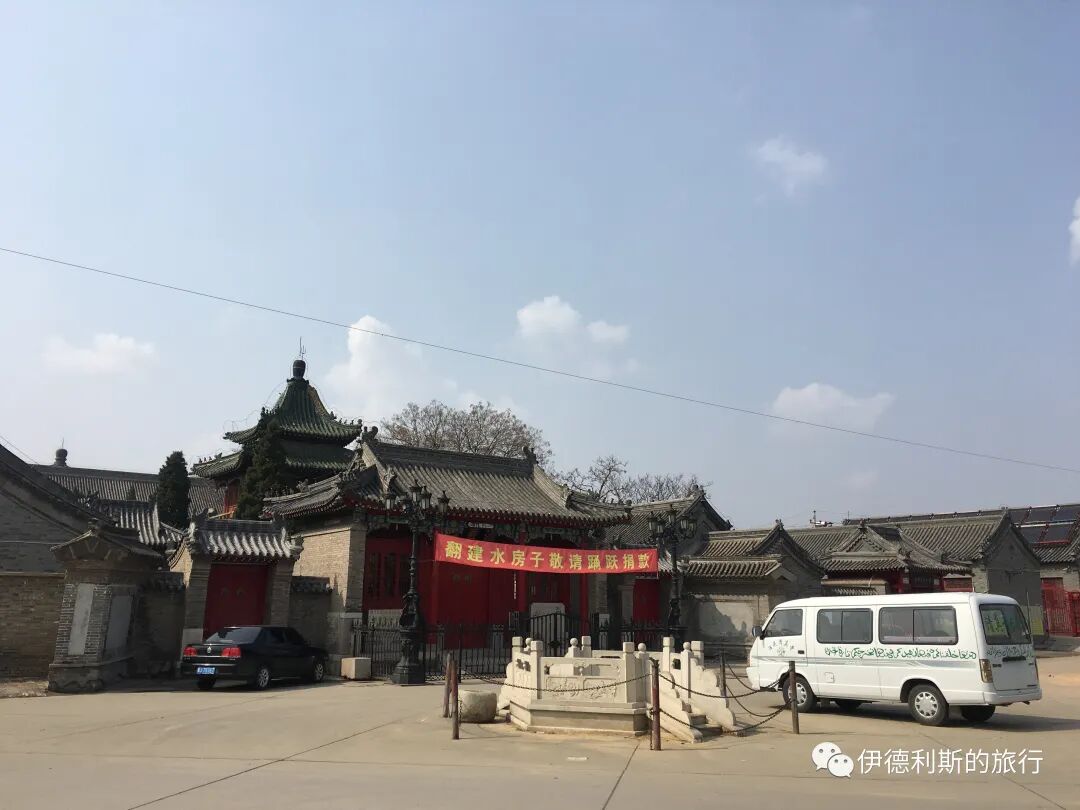
On March 25, 2017, I visited the ancient canal town of Botou in Cangzhou, Hebei, to explore its food and culture. The information in this article comes from the History of Botou Canal and the Records of Botou Mosque.
The formation of the Hui Muslim community in Botou
In 1392, the 25th year of the Hongwu reign, the Ming Dynasty set up a canal administration office in Botou to manage shipping between Tianjin and Dezhou, and Botou gradually became an important canal town. In 1399, the first year of the Jianwen reign, during the Jingnan Campaign, Prince Yan Zhu Di attacked and captured the old city of Cangzhou. He killed thousands of surrendered soldiers and tens of thousands of residents. Eastern Hebei suffered greatly, and Botou was hit hard, causing its population to drop sharply.
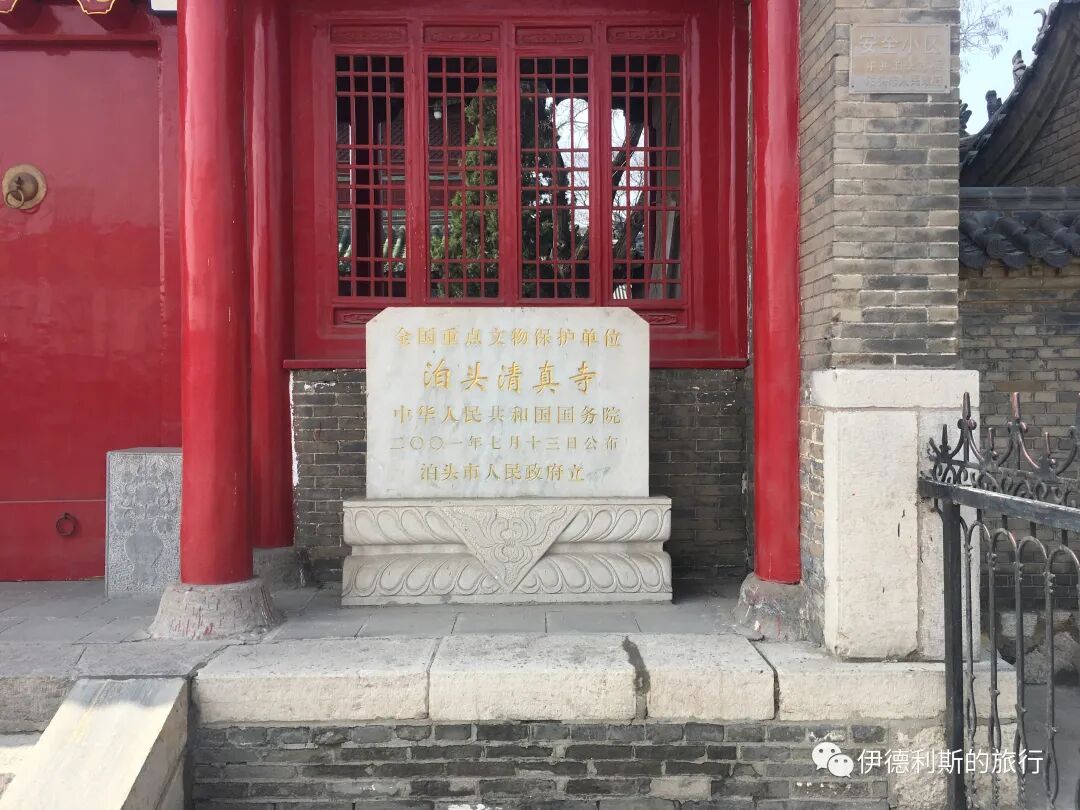
In 1404, the second year of the Yongle reign, Zhu Di, who had become the Yongle Emperor, ordered residents to move to Cangzhou. Many Hui Muslims came to Botou as a result. Records show that Hui Muslims with the surnames Yang, Cao, Dai, Hui, Zhang, Wang, and Shi all moved to Botou in 1404 by imperial decree from Erlanggang in Shangyuan County, Yingtian Prefecture, Nanjing. Research suggests that Erlanggang was a camp for Semu people who had surrendered to the Ming from the Yuan Dynasty. The first mosque in Botou was built that same year.
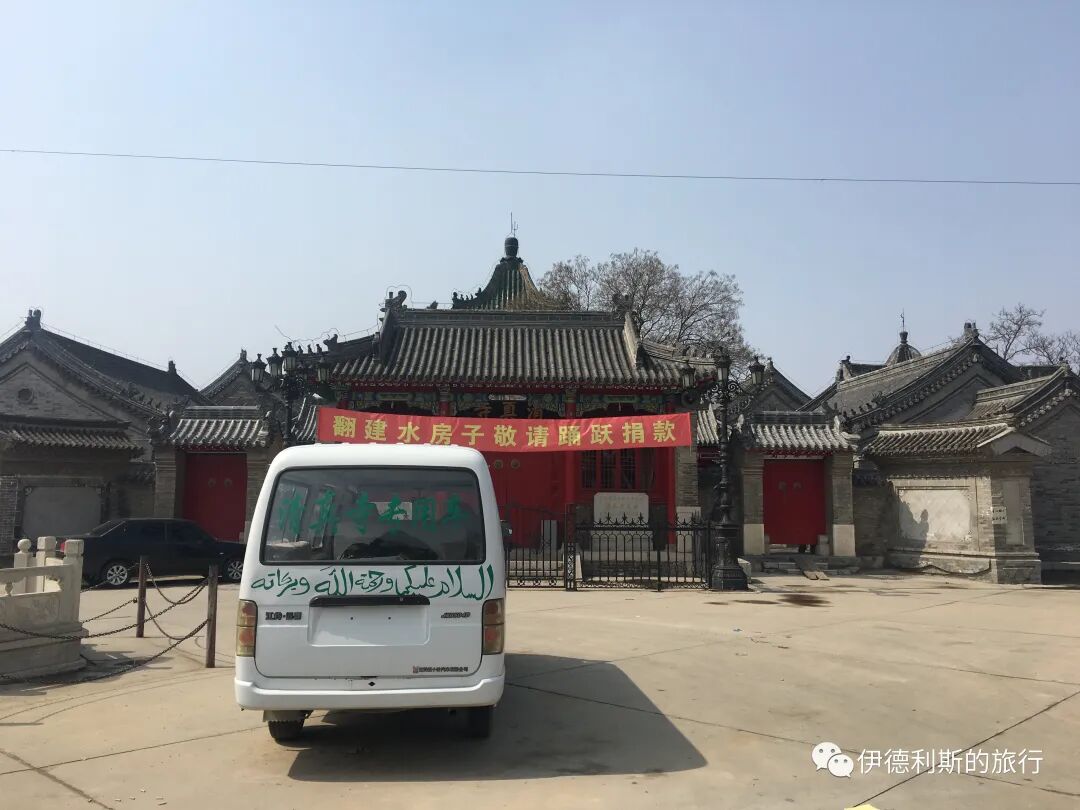
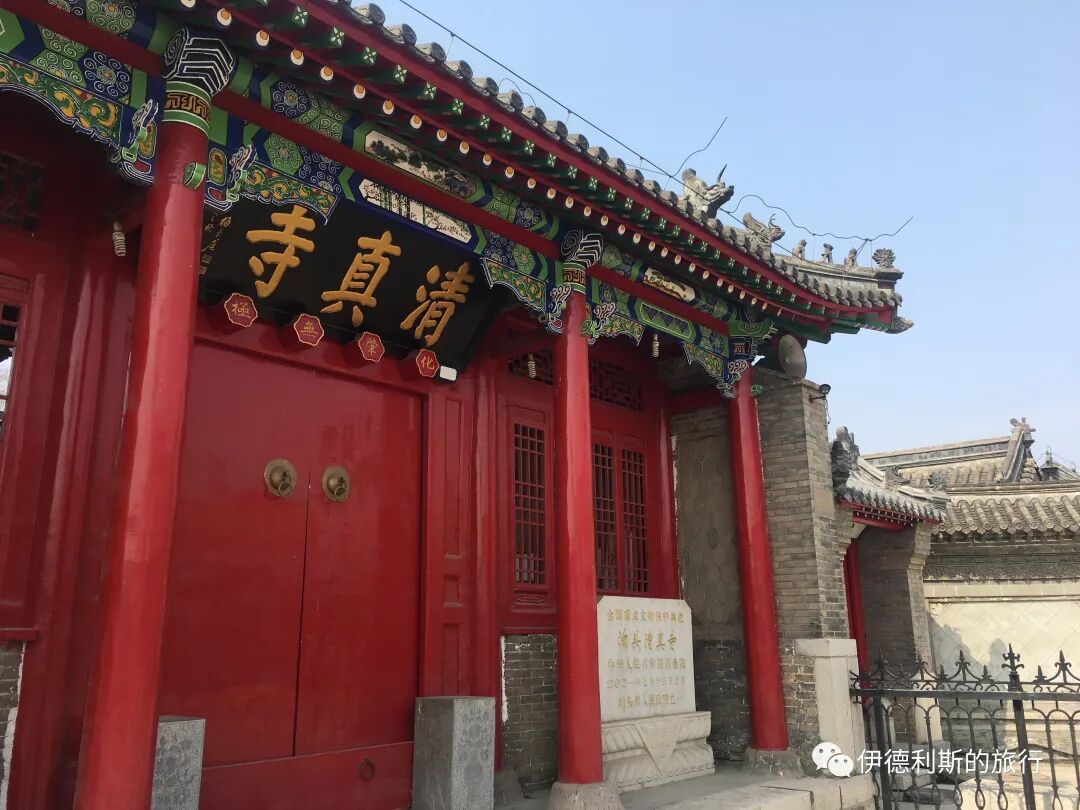
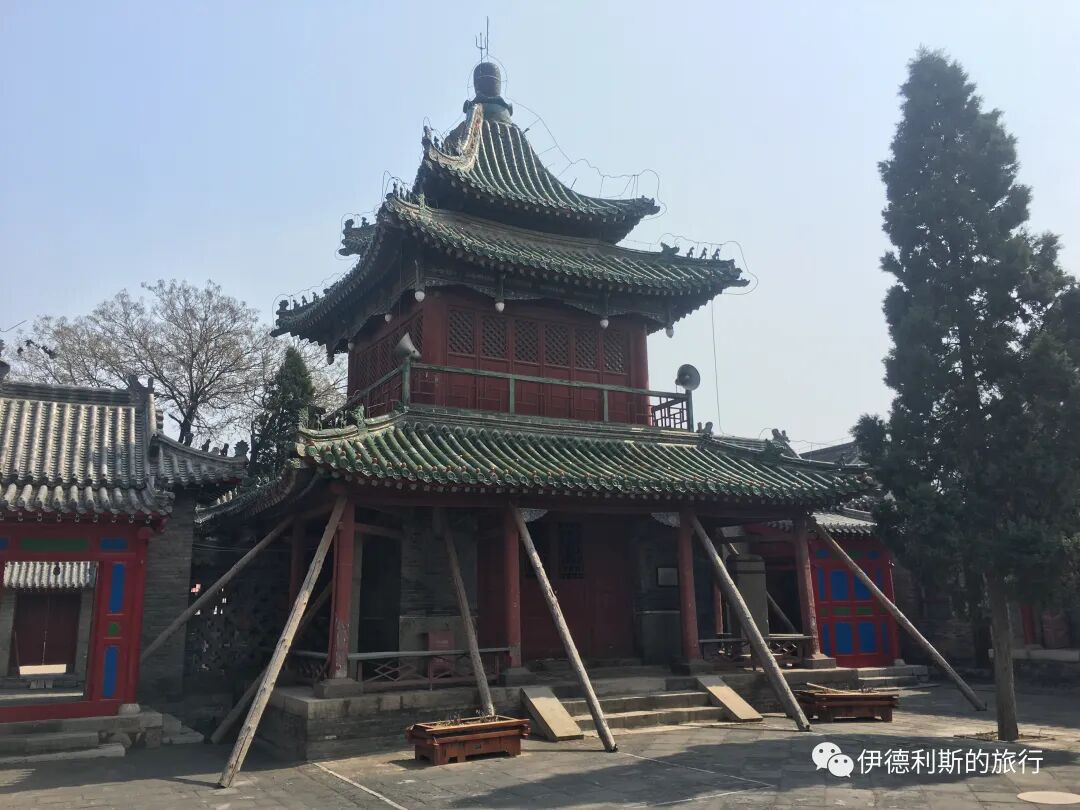
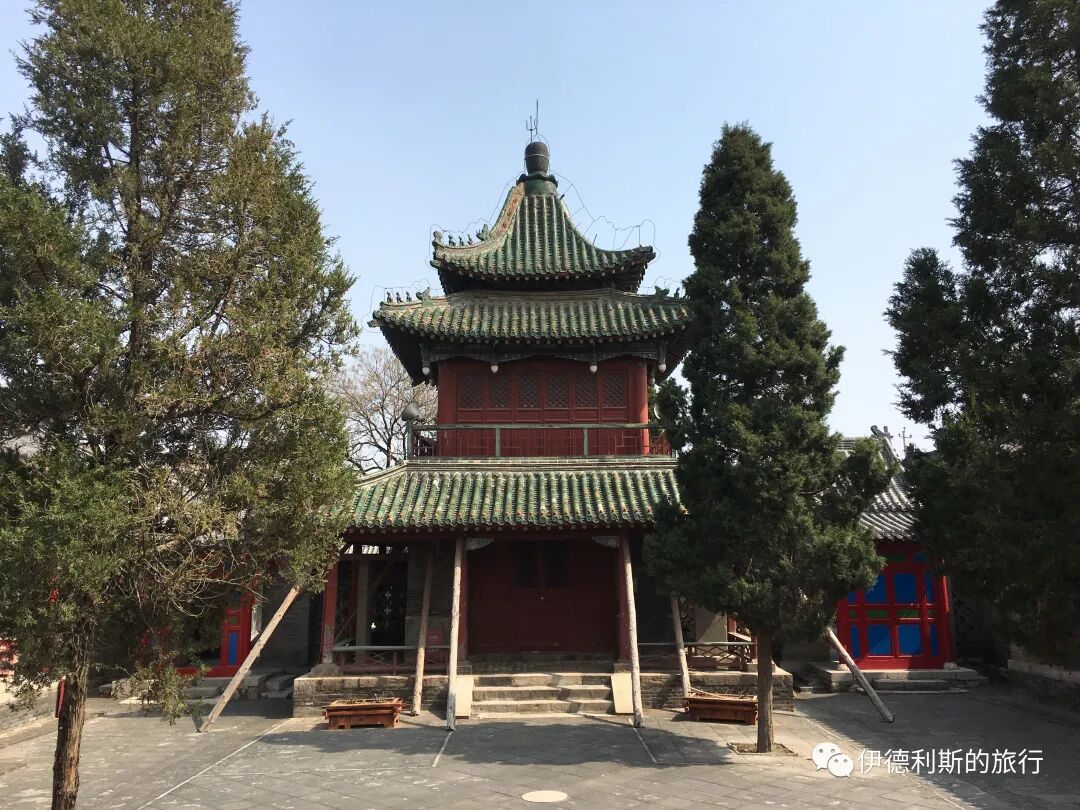
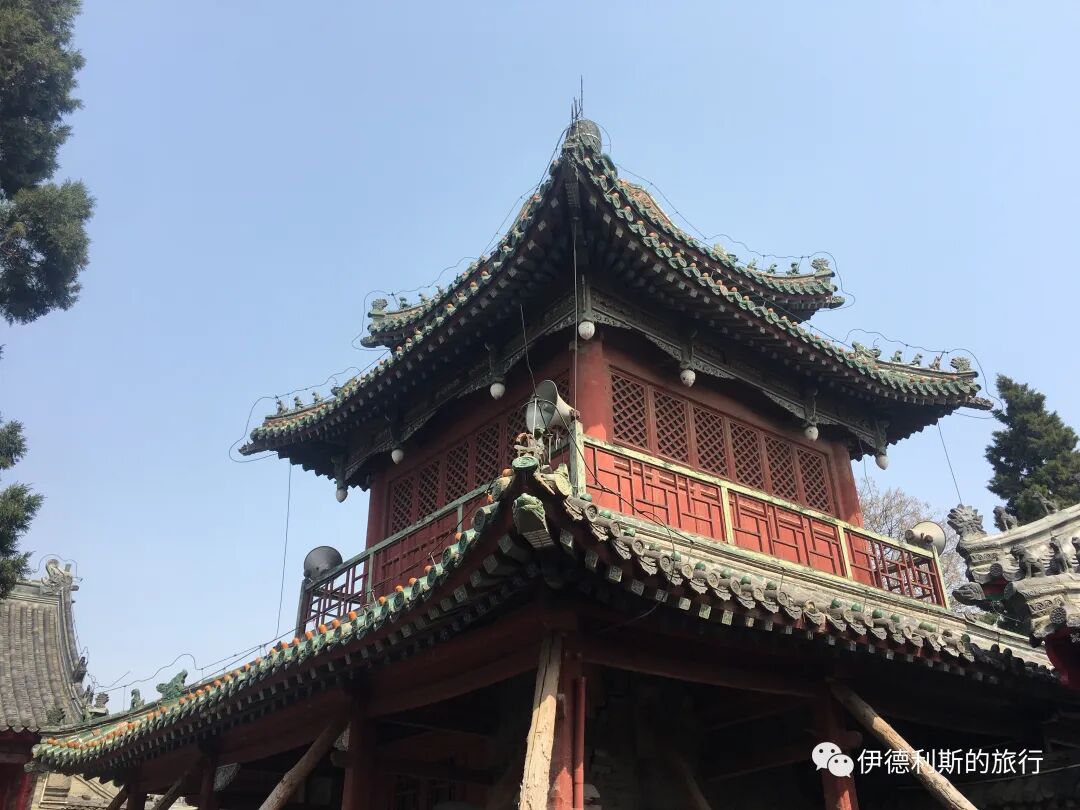
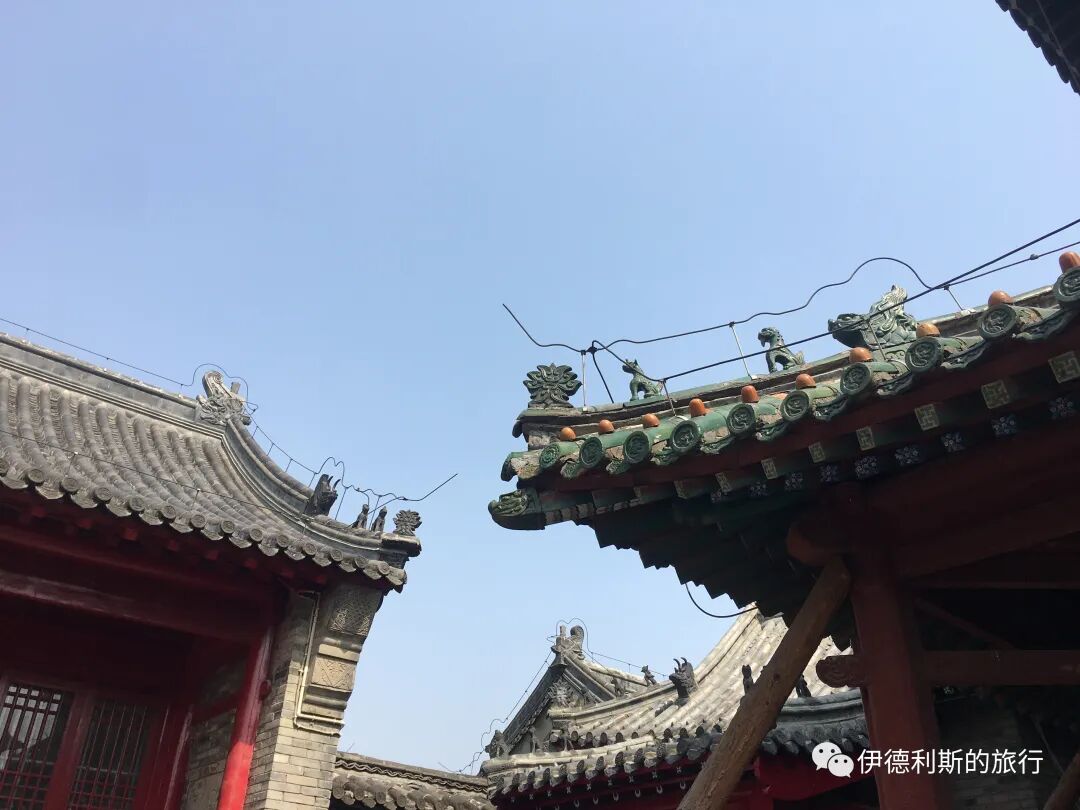
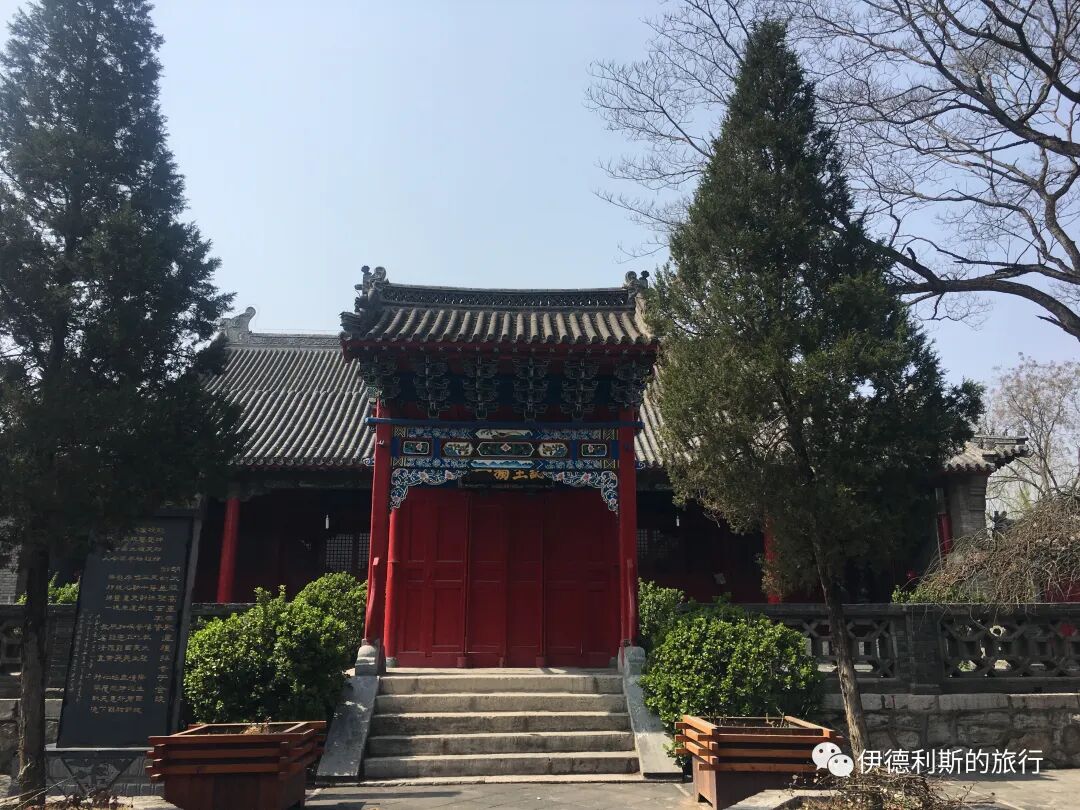
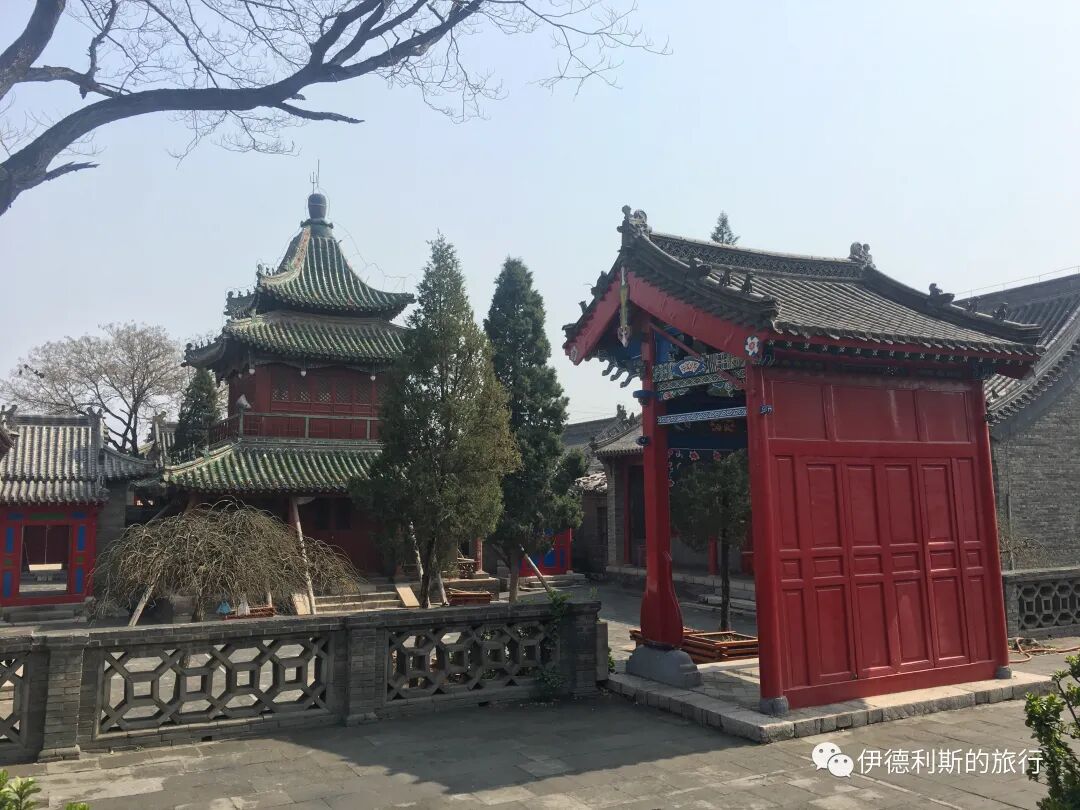
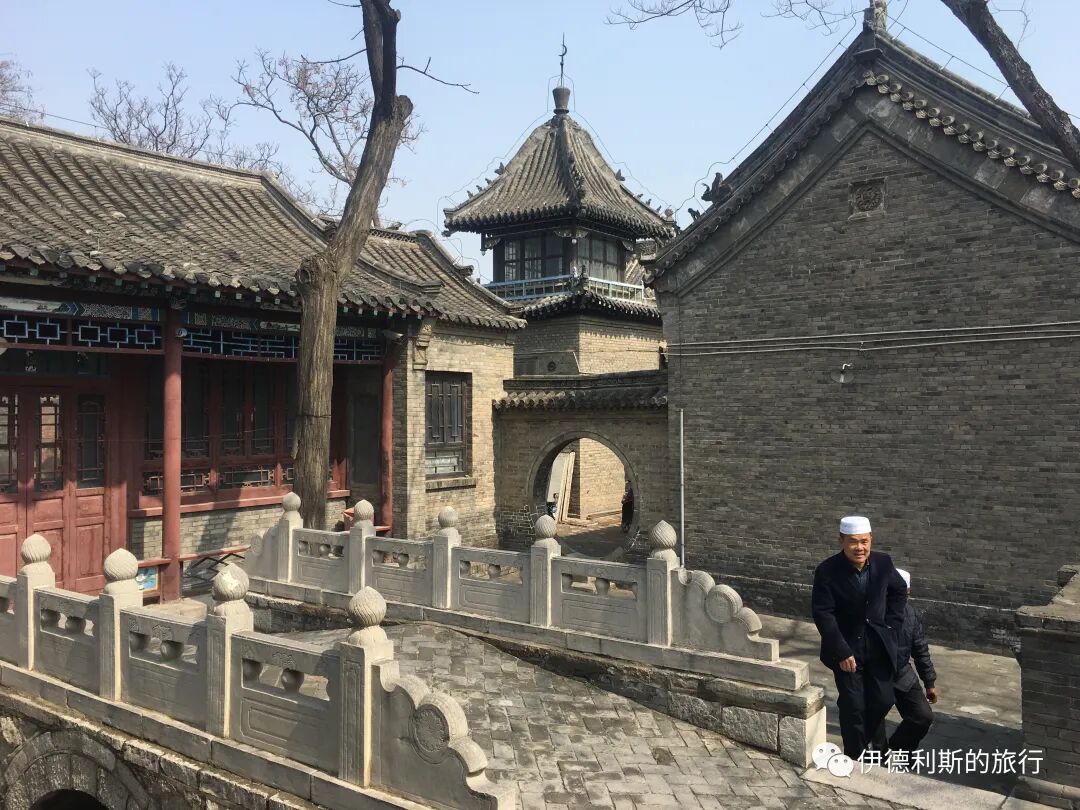
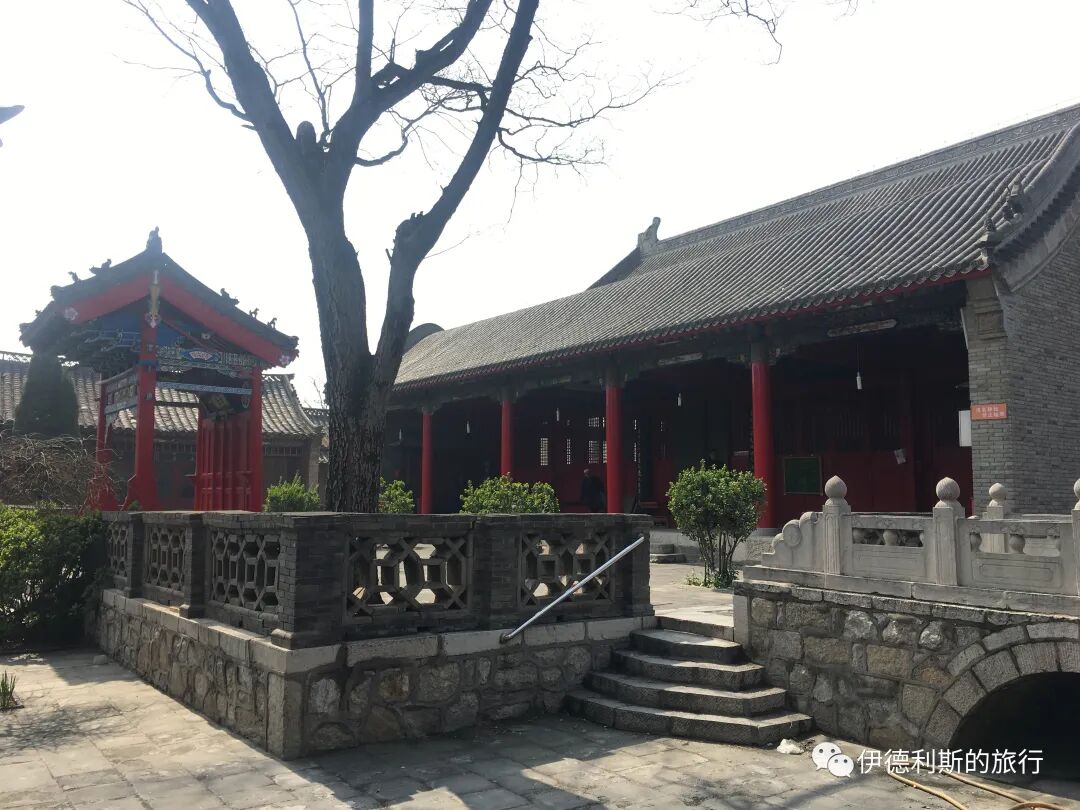
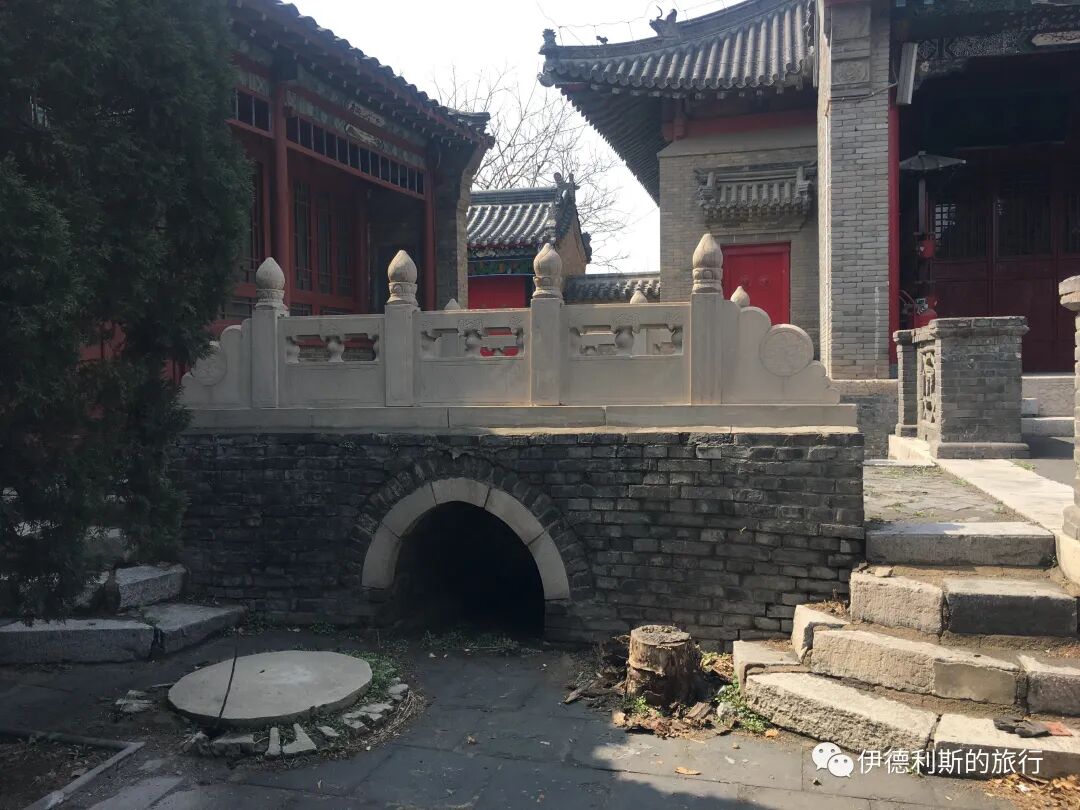
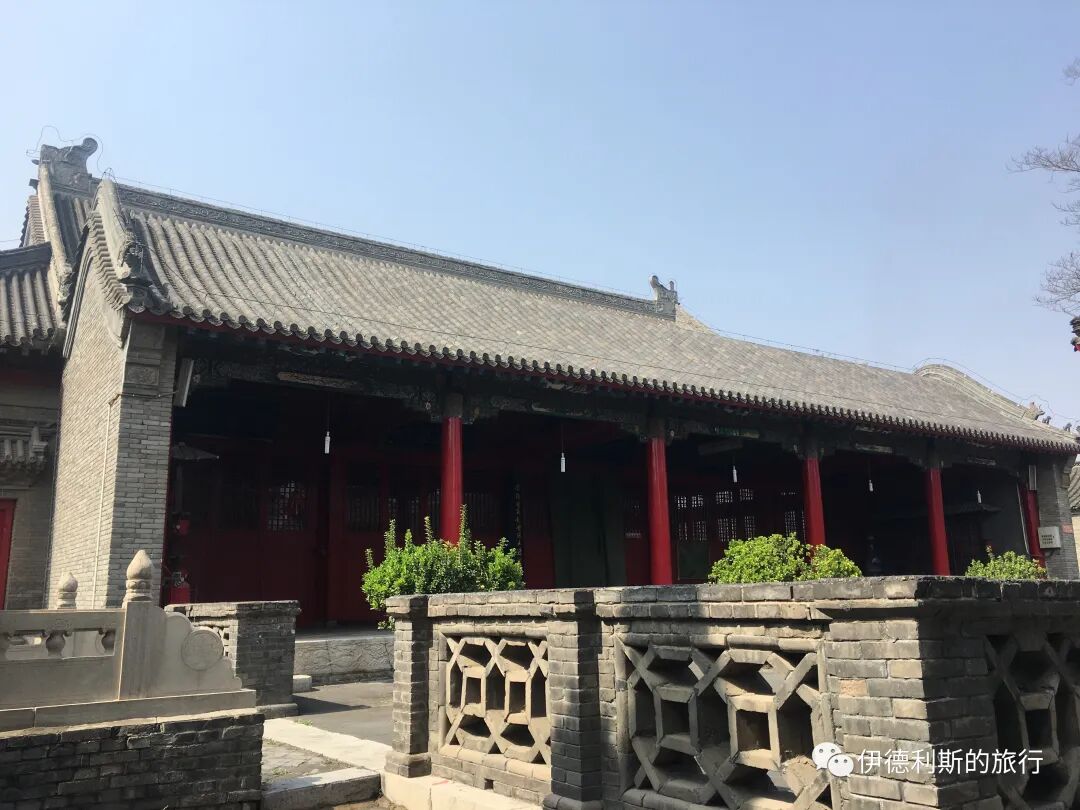
Later, more Hui Muslims moved here from Shandong, Shanxi, and Anhui, and the Botou Hui Muslim community was officially formed. In 1551, the 30th year of the Jiajing reign, Botou began building city walls. They used earth for three sides, and on the east side facing the canal, they added parapets to the houses and opened six city gates. The Hui Muslim community was located inside the south gate. The Botou Mosque underwent large-scale expansion during the late Ming and early Qing dynasties, taking on its current form.
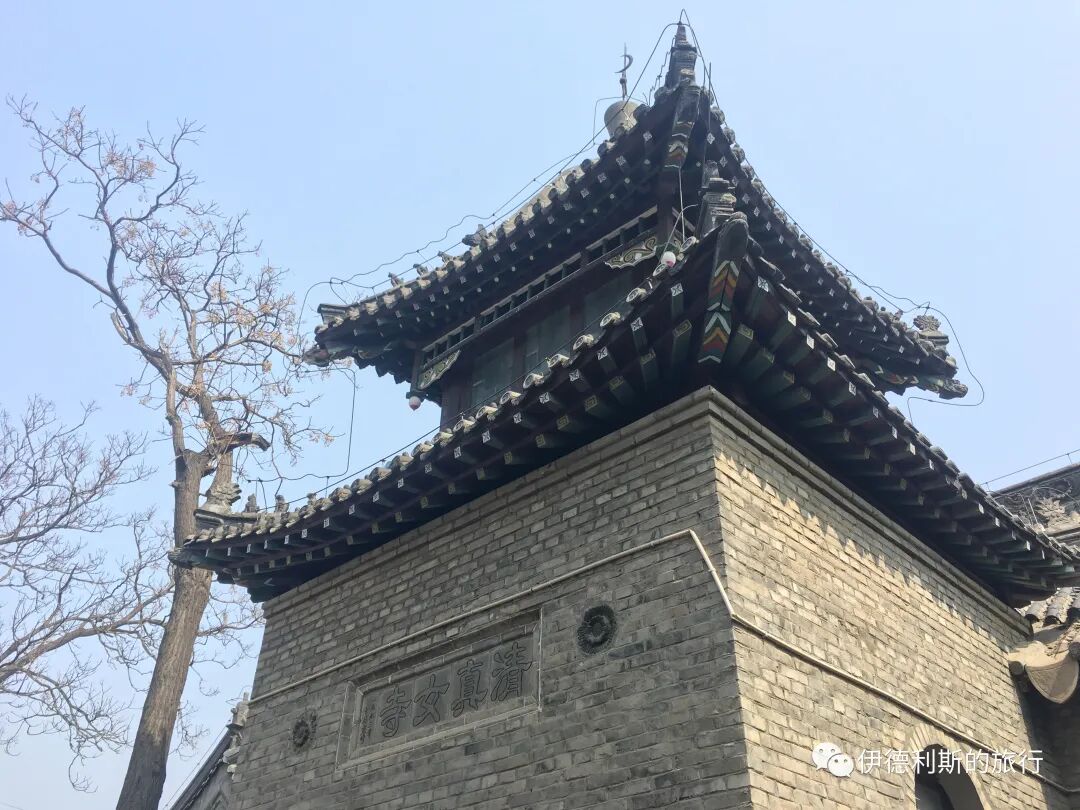
Moon-Sighting Tower (Wangyuelou)
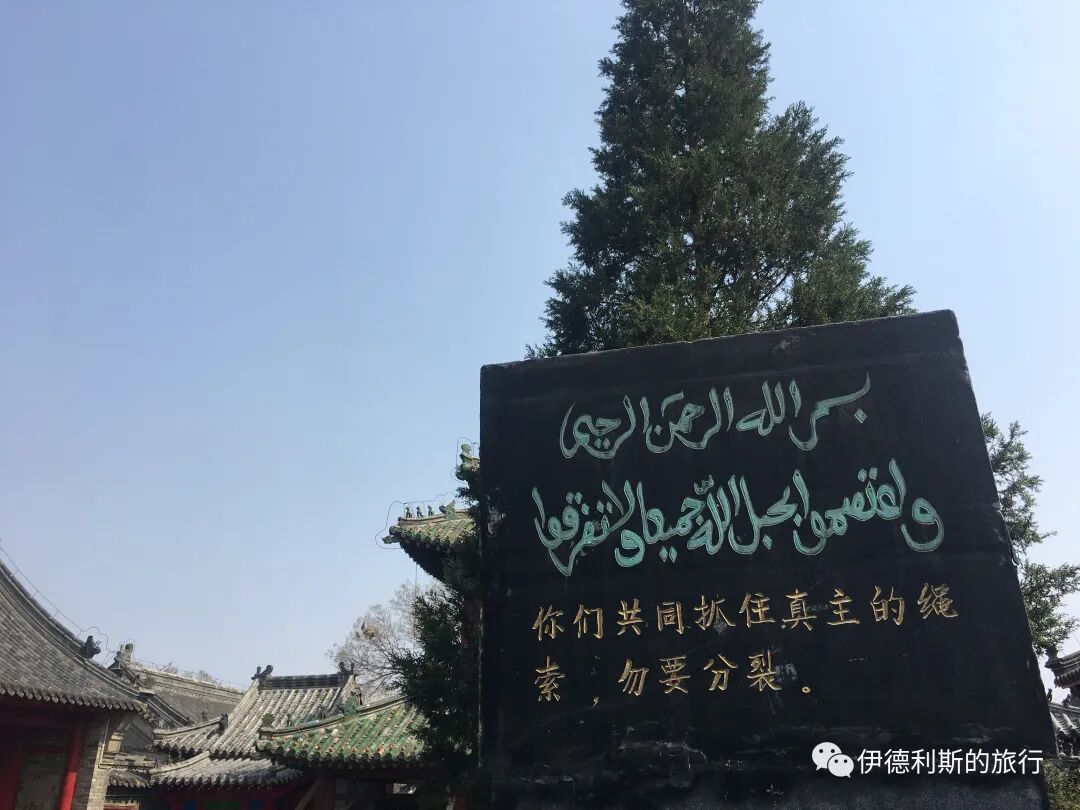
In the eyes of Allah, the most honorable among you is the one who is most pious. (49:13)
After 1966, the Botou Mosque stopped its activities. Religious staff were publicly denounced, and scriptures were burned. The head of the mosque, Zhang Zizhen, was driven away and passed away the following year. The imam, Ha Fuling, was sent back to his hometown in Xinzhuang, Xian County.
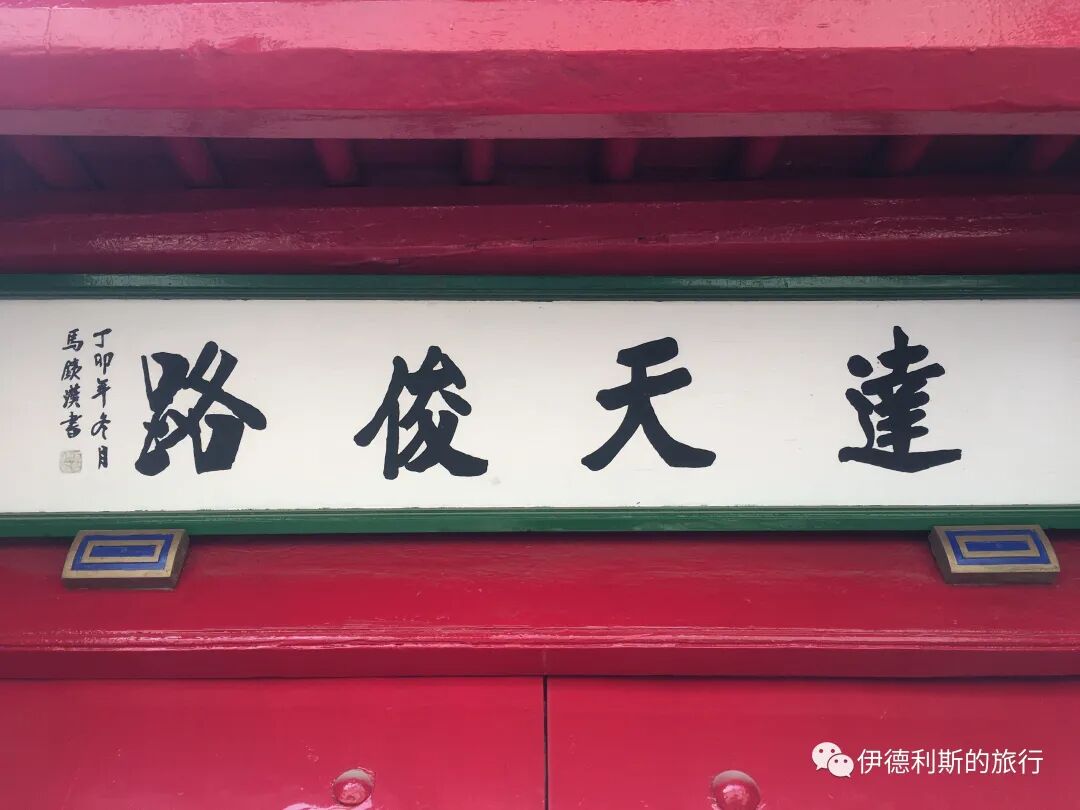
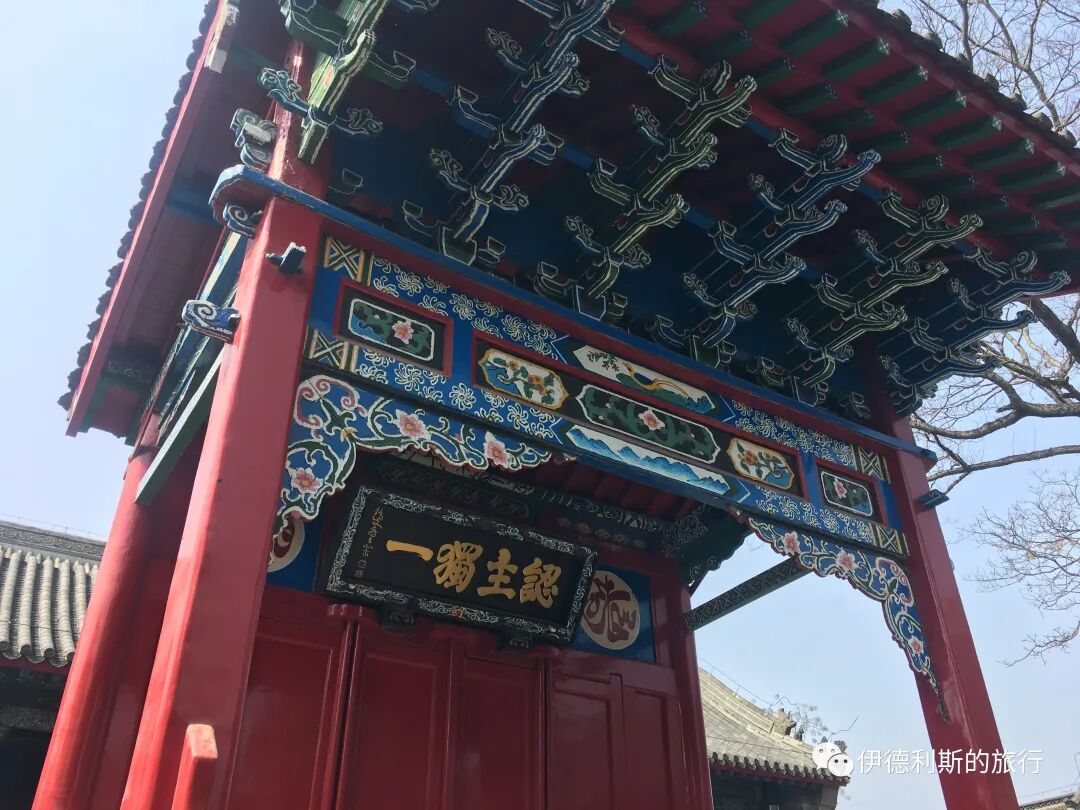
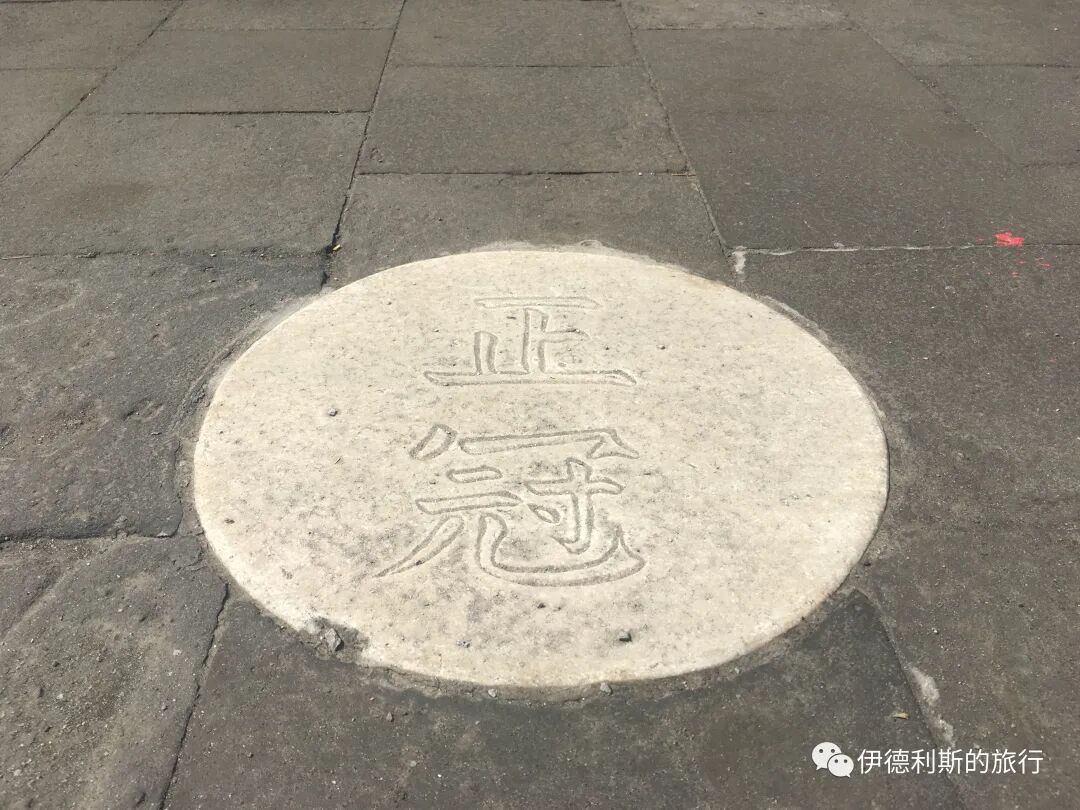
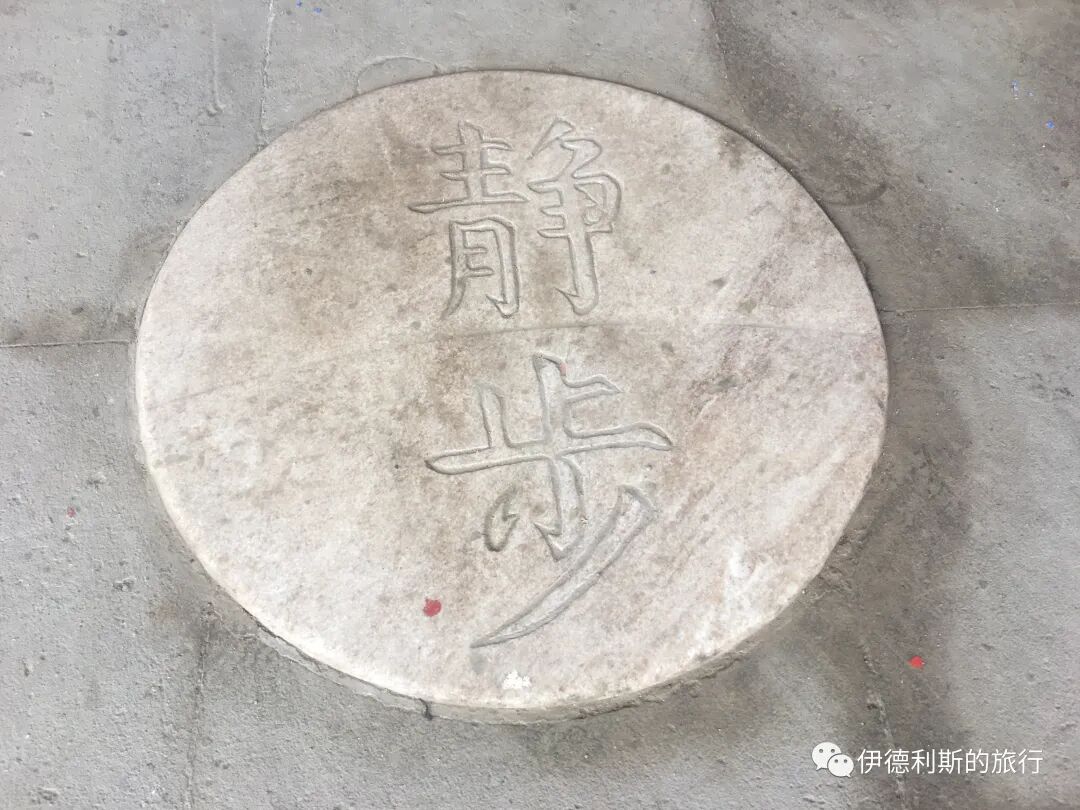
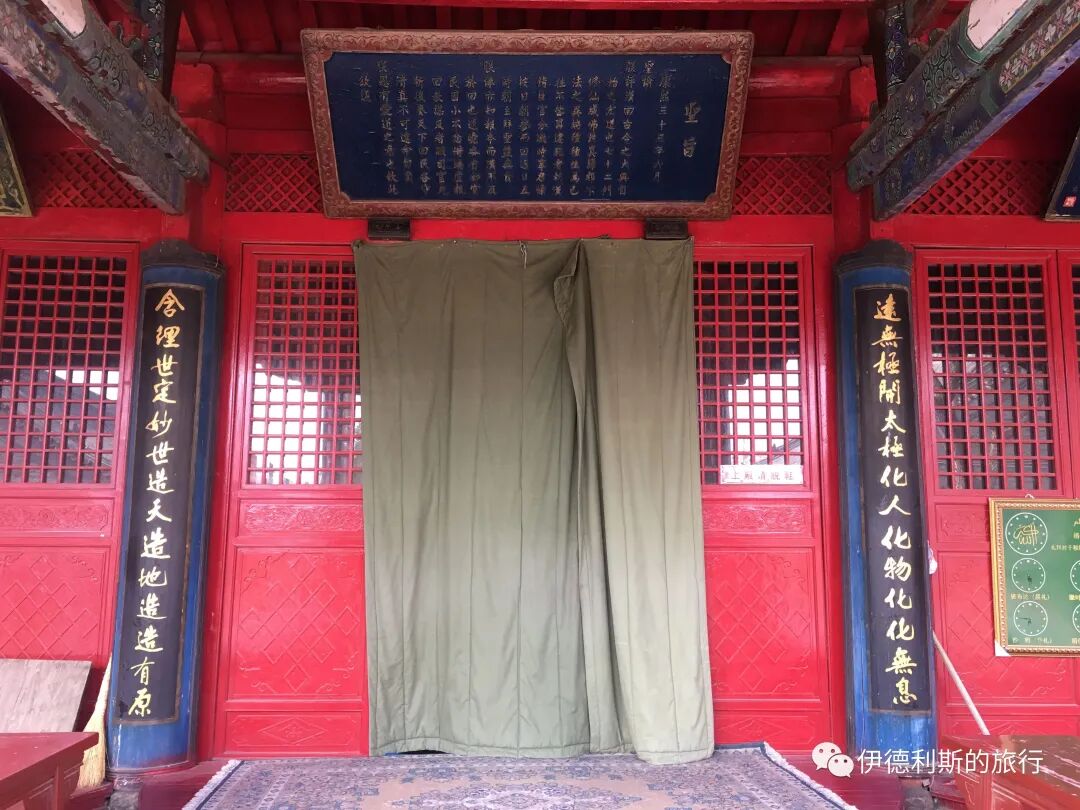
After the denunciations, Jin Laiguang set up a flour mill. Older religious staff worked as millers, and the younger ones went to work in factories. The main hall of the mosque was occupied by an embroidery factory, an oilcloth factory, a straw hat factory, and a sack thread factory as workshops. The water room was used by an agricultural production team as a machine shop. The side gates of the main entrance, the charity school, the side halls, and the south lecture hall all collapsed. The spire of the Moon-Sighting Tower was smashed, its first-floor walls collapsed, and the base walls of the main hall also fell. Eighteen original plaques inscribed by figures like Ji Xiaolan and Zhang Zhidong were lost. Only a damaged plaque reading "Pure and Bright" (Qingzhen Guangming), inscribed by the 75th Duke Yansheng, Kong Xiangke, in 1864, the third year of the Tongzhi reign, was found. In 1982, a calligrapher repaired the damaged parts based on the original style.
On the canal bank directly east of the Botou Mosque, there used to be a brick and wood archway, commonly known by locals as the Big Round Gate (Dayuanmen), with the words "Muslim Lane" (Qingzhen Xiang) written on it. In 1953, a major flood on the canal led to the demolition of the Big Round Gate to block the riverbank. In the old days, Hui Muslim merchant ships traveling on the canal knew they had reached the Hui Muslim residential area as soon as they saw the "Muslim Lane" plaque.
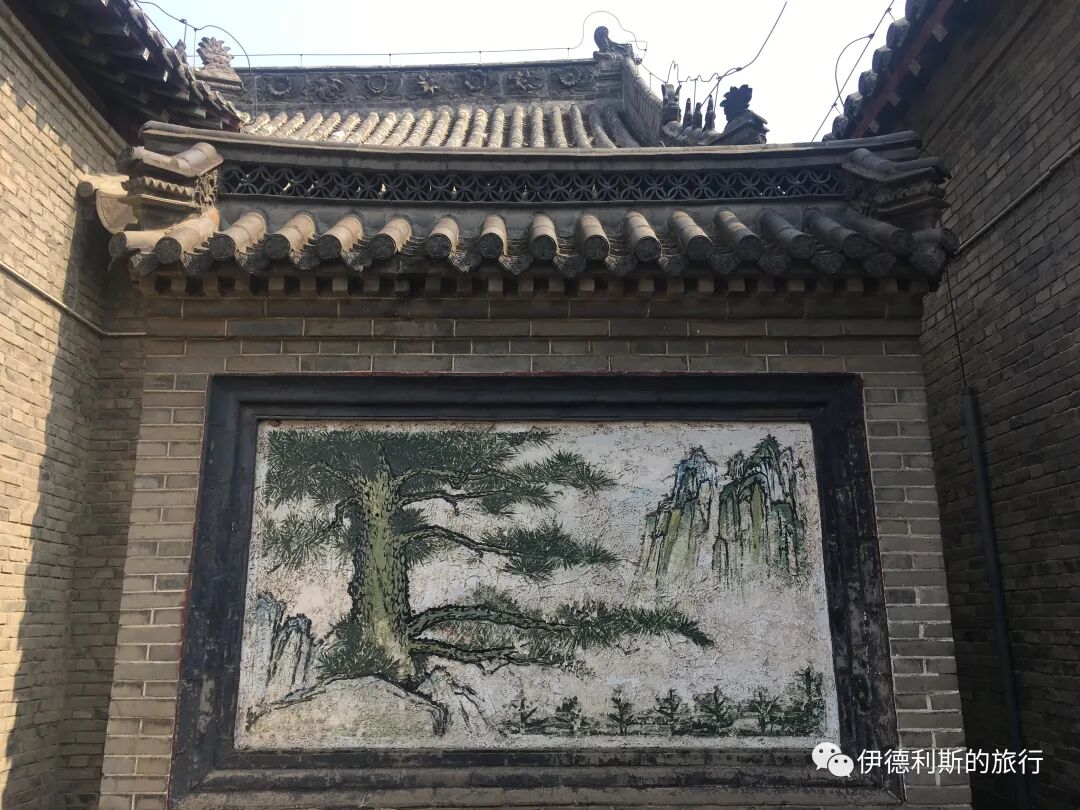
There was once a stone archway next to the Big Round Gate that collapsed in the 1960s. When the Botou Mosque was rebuilt in 1982, two stone lintels from the top of the archway were moved to the mosque's main hall to serve as a foundation. The left side featured a dragon head and phoenix tail, and the right side featured a qilin delivering a child.
The women's mosque was built in 1953. It was originally the Huizhen Production Cooperative, built under the leadership of Imam Zhang Zizhen, and was rebuilt in 1993.
Halal food
During the Qing Dynasty and the Republic of China era, the most famous halal restaurants in Botou were Taihe Restaurant on Shunhe Street, which opened during the Tongzhi reign, and Shunfu Restaurant and Xingshenghe on Gulou Street, which opened during the Guangxu reign. Xiyu Restaurant was on East Street. The small and medium-sized restaurants around Shunhe Street were all halal, offering a wide variety of halal snacks.
Taihe Restaurant opened in 1870 (the ninth year of the Tongzhi reign). It was founded by Hui Muslim brothers Dai Ruiwu and Dai Bin. The building had the shop in the front and the restaurant in the back, with both open seating and private rooms, including standard and premium options. The menu focused on beef, lamb, fish, and shrimp. Dishes included clear-stewed beef, oil-fried tripe, braised cabbage, stir-fried lamb brains, stir-fried shrimp, stewed beef tongue and tail, braised beef tendon, and sweet and sour fish. The third-generation chef, Dai Shengheng, went to Tianjin in 1921 at age 15 to apprentice at the halal Hongbinlou Restaurant. He learned to cook elaborate whole-lamb feasts and river seafood. After returning to the restaurant, he became the head chef. He cooked high-end dishes like shark fin, bird's nest, and whole lamb, as well as home-style dishes like stir-fried, braised, and stewed beef and lamb. His signature dishes included deboned chicken, deboned fish, steamed chicken, candied peaches (basi tao), braised cabbage, various sweet dishes, and oil-poached sauces. His shredded meat noodle soup was considered the best. The noodles in Taihe Restaurant's shredded meat noodle soup were thin and translucent like silk threads, and the shredded meat was as thin as bean sprouts. The soup came in chicken or meatball varieties, served with large broad beans, preserved vegetables (nancai), wood ear mushrooms, and fried tofu puffs. It tasted delicious.
In 1937, Dai Shengheng went to Jinan to open the new Majia Restaurant, and Taihe Restaurant closed.
Xingshenghe Maji was founded during the Guangxu reign by Hui Muslim Ma Chunbo. It was located on Gulou Street outside Chaoyang Gate and was famous for its five-spice roast beef. Ma's roast meat contained no beef fat or mixed scraps. Before roasting, the meat was soaked in cold water for several hours to remove blood. It was seasoned with five spices: cinnamon, star anise, Sichuan peppercorns, fennel seeds, and cloves. No soy sauce or sugar coloring was used. It was simmered in old broth over low heat for six hours. When finished, it was sweet, moist, and brownish-red, with a chewy texture that held together. It could stay fresh for three to five days.
Before 1937, Ma Doutai, a Hui Muslim from Xinzhuang in Xian County, came to Gulou Street in Botou to open the Juxingheng Pastry Shop. It had the shop in the front and the factory in the back. They offered over 20 varieties of pastries that were sweet, salty, fragrant, soft, and crispy. They used various fillings like red hawthorn, white sugar, date paste, and red bean paste, making it the most famous halal pastry shop in Botou.
After 1937, 19 halal restaurants opened in Botou, nine of which were on Sanfu Street. The larger restaurants included Enshunlou, Qingzhen Restaurant, Fushun Restaurant, and Enyishun. Their signature dishes included braised sea cucumber, braised fish, steamed duck, and eight-treasure rice (babao fan). Eight-treasure rice is a sweet dish. The main ingredient is glutinous rice, supplemented with green silk, colorful cakes, lotus seeds, water chestnuts, melon strips, walnut kernels, raisins, and melon seeds. The rice is first made into a sticky consistency and mixed with white sugar. Then, the toppings are added, creating a colorful and uniquely shaped dish.
Lamb offal (yangzasui)
Stewed free-range chicken (dun benji)
Braised lamb offal (hui yangza)
Egg rolls (danjuan)
The pastries at this shop were all sourced from Tianjin.
Hui Muslims and the Grand Canal
Local shipping in Botou was mainly operated by Hui Muslims. The trade was divided into two groups: those who worked on the boats and those who owned the boats. Those who worked on the boats were the crew and trackers. Those who owned the boats were the boat owners, divided into those who owned large boats for renting out or hiring labor, and those who used their own small boats. Some small boat owners operated ferries for passengers, some transported fertilizer for riverside villages, and others ran long-distance transport routes from Tianjin in the north to Xinxiang, Henan in the south. The trough boats (caozichuan) used for long-distance transport were flat, long, and wide, with a shallow draft.
Long-distance boats from Botou carried salt south and returned with cotton, coal, and porcelain. The trip from Tianjin to Dezhou took eight or nine days, to Linqing took half a month, and to Daokou Town in Henan took over forty days.
In 1946, there were 31 Hui Muslim boat-owning households in Botou, primarily from the Shi, Li, Cao, Duo, and Mu families. Later, because the canal became heavily silted, the Mu family moved to Tianjin and switched to sea shipping. By July 1948, Botou had 231 wooden boats.
Trackers were at the bottom of the shipping industry. Boat owners chose the number of trackers based on the boat's size and cargo capacity, usually five or six, though some trips used as few as one or two, or as many as over ten. When traveling downstream, trackers stayed on the boat to row; when traveling upstream, they went ashore to pull the boat. When pulling, they used a main tow rope attached to a chest pad worn diagonally across the chest. The tracker at the front and the one at the back controlled the direction to keep the boat straight. When passing under a bridge, they had to unhook the rope. The boatmen on board would call out signals to the lead tracker, and they would reattach the rope to continue after passing the bridge.
During the voyage, trackers followed a schedule of three tea breaks and four meals a day. They started the boat at 5:00 a.m., ate breakfast at 8:00 or 9:00, had their first tea break after traveling a bit, ate lunch at noon, had their second tea break, ate dinner around 4:00 or 5:00 p.m., had their third tea break, and finally ate a late-night snack after docking at dark before resting. The tea for these breaks was usually plain water, and the meals consisted of steamed cornmeal buns (wotou), pickled vegetables, and millet porridge. The stoves on the boats were small, so the steamed cornmeal buns (wotou) came out thin and tall, and you could grab four or five in one hand. Besides this, when they reached Cangzhou, Dezhou, and Linqingzhou, they could have noodles in soup, which they called passing through a prefecture to eat noodles.
There were many types of tracker work songs, with different ones for going downstream, upstream, turning corners, and passing bridges. The head boatman directed the work. He stood at the bow to watch the current, used a pole to adjust the boat's direction, and used work songs to coordinate everyone. A song leader followed the trackers. He did not pull the rope but was responsible for responding to the head boatman's lead vocals. The lyrics included lines like, Big boats carry white grain, small boats carry green bamboo poles; Big boats can dock at Jiujiang port, small boats only rely on the riverbanks. After 1957, wooden boats on the South Canal were replaced by small tugboats, and the canal work songs gradually disappeared. The only person who can sing the full set of Botou canal work songs today is Li Shuyuan, a Hui Muslim born in 1935. He is the fourth-generation descendant of the Li family, a major boat-owning family in Botou. He started working on boats at age 14 and is the last person from those major families who witnessed the glory days of the South Canal.
In 1957, during the public-private partnership transition, Botou's fleets were assigned to Dezhou, Xinxiang, and Tianjin. Botou no longer had its own fleet, and many people left their boats to return to Botou, where they were assigned to brick factories and construction teams. During breaks, these workers would sing the work songs, which became the final echoes of the canal.
Derived from the shipping industry were the porter guilds, commonly known as the heavy lifters. The porter guilds in Botou were mainly Hui Muslims. They usually used a shoulder pole and a shoulder pad. Some families shared handcarts, and when unloading logs, they used levers with large, semicircular iron hooks at the front. At that time, each person carried one 90-kilogram sack of grain or one roll of paper or cardboard weighing over 100 kilograms. They carried four 22.5-kilogram bags of flour at a time. They tracked their work by receiving a bamboo tally for each load and counting them at the end. When lifting heavy items like logs, everyone would sing labor work songs. One person would lead, and the others would follow, creating a rhythmic, powerful, and responsive sound.
During the Republic of China era, there were three Hui Muslim porter groups in Botou. One was the Tongshun Shop porter group, commonly known as the South End porter group. Another was the Wuying porter group, and the third was the Gulou and East Street porter group. The three groups merged in 1947 to become the Wharf Second Labor Union, and in 1958, they became the Second Transport Team.
Before 1965, the Botou section of the Grand Canal had plenty of water. In the early summer of 1965, the canal dried up for the first time. After that, the water level dropped every year. By the first half of the 1970s, it was nearly dry, and shipping in Botou came to an end. view all
Summary: This Muslim travel guide China 2026 update keeps the original 2017 Botou travel notes intact and readable. It also supports readers searching for halal food in China, Chinese Muslim food, China Muslim travel tips, and local mosque history in Hebei.
On March 25, 2017, I visited the ancient canal town of Botou in Cangzhou, Hebei, to explore its food and culture. The information in this article comes from the History of Botou Canal and the Records of Botou Mosque.
The formation of the Hui Muslim community in Botou
In 1392, the 25th year of the Hongwu reign, the Ming Dynasty set up a canal administration office in Botou to manage shipping between Tianjin and Dezhou, and Botou gradually became an important canal town. In 1399, the first year of the Jianwen reign, during the Jingnan Campaign, Prince Yan Zhu Di attacked and captured the old city of Cangzhou. He killed thousands of surrendered soldiers and tens of thousands of residents. Eastern Hebei suffered greatly, and Botou was hit hard, causing its population to drop sharply.
In 1404, the second year of the Yongle reign, Zhu Di, who had become the Yongle Emperor, ordered residents to move to Cangzhou. Many Hui Muslims came to Botou as a result. Records show that Hui Muslims with the surnames Yang, Cao, Dai, Hui, Zhang, Wang, and Shi all moved to Botou in 1404 by imperial decree from Erlanggang in Shangyuan County, Yingtian Prefecture, Nanjing. Research suggests that Erlanggang was a camp for Semu people who had surrendered to the Ming from the Yuan Dynasty. The first mosque in Botou was built that same year.
Later, more Hui Muslims moved here from Shandong, Shanxi, and Anhui, and the Botou Hui Muslim community was officially formed. In 1551, the 30th year of the Jiajing reign, Botou began building city walls. They used earth for three sides, and on the east side facing the canal, they added parapets to the houses and opened six city gates. The Hui Muslim community was located inside the south gate. The Botou Mosque underwent large-scale expansion during the late Ming and early Qing dynasties, taking on its current form.
Moon-Sighting Tower (Wangyuelou)
In the eyes of Allah, the most honorable among you is the one who is most pious. (49:13)
After 1966, the Botou Mosque stopped its activities. Religious staff were publicly denounced, and scriptures were burned. The head of the mosque, Zhang Zizhen, was driven away and passed away the following year. The imam, Ha Fuling, was sent back to his hometown in Xinzhuang, Xian County.
After the denunciations, Jin Laiguang set up a flour mill. Older religious staff worked as millers, and the younger ones went to work in factories. The main hall of the mosque was occupied by an embroidery factory, an oilcloth factory, a straw hat factory, and a sack thread factory as workshops. The water room was used by an agricultural production team as a machine shop. The side gates of the main entrance, the charity school, the side halls, and the south lecture hall all collapsed. The spire of the Moon-Sighting Tower was smashed, its first-floor walls collapsed, and the base walls of the main hall also fell. Eighteen original plaques inscribed by figures like Ji Xiaolan and Zhang Zhidong were lost. Only a damaged plaque reading "Pure and Bright" (Qingzhen Guangming), inscribed by the 75th Duke Yansheng, Kong Xiangke, in 1864, the third year of the Tongzhi reign, was found. In 1982, a calligrapher repaired the damaged parts based on the original style.
On the canal bank directly east of the Botou Mosque, there used to be a brick and wood archway, commonly known by locals as the Big Round Gate (Dayuanmen), with the words "Muslim Lane" (Qingzhen Xiang) written on it. In 1953, a major flood on the canal led to the demolition of the Big Round Gate to block the riverbank. In the old days, Hui Muslim merchant ships traveling on the canal knew they had reached the Hui Muslim residential area as soon as they saw the "Muslim Lane" plaque.
There was once a stone archway next to the Big Round Gate that collapsed in the 1960s. When the Botou Mosque was rebuilt in 1982, two stone lintels from the top of the archway were moved to the mosque's main hall to serve as a foundation. The left side featured a dragon head and phoenix tail, and the right side featured a qilin delivering a child.
The women's mosque was built in 1953. It was originally the Huizhen Production Cooperative, built under the leadership of Imam Zhang Zizhen, and was rebuilt in 1993.
Halal food
During the Qing Dynasty and the Republic of China era, the most famous halal restaurants in Botou were Taihe Restaurant on Shunhe Street, which opened during the Tongzhi reign, and Shunfu Restaurant and Xingshenghe on Gulou Street, which opened during the Guangxu reign. Xiyu Restaurant was on East Street. The small and medium-sized restaurants around Shunhe Street were all halal, offering a wide variety of halal snacks.
Taihe Restaurant opened in 1870 (the ninth year of the Tongzhi reign). It was founded by Hui Muslim brothers Dai Ruiwu and Dai Bin. The building had the shop in the front and the restaurant in the back, with both open seating and private rooms, including standard and premium options. The menu focused on beef, lamb, fish, and shrimp. Dishes included clear-stewed beef, oil-fried tripe, braised cabbage, stir-fried lamb brains, stir-fried shrimp, stewed beef tongue and tail, braised beef tendon, and sweet and sour fish. The third-generation chef, Dai Shengheng, went to Tianjin in 1921 at age 15 to apprentice at the halal Hongbinlou Restaurant. He learned to cook elaborate whole-lamb feasts and river seafood. After returning to the restaurant, he became the head chef. He cooked high-end dishes like shark fin, bird's nest, and whole lamb, as well as home-style dishes like stir-fried, braised, and stewed beef and lamb. His signature dishes included deboned chicken, deboned fish, steamed chicken, candied peaches (basi tao), braised cabbage, various sweet dishes, and oil-poached sauces. His shredded meat noodle soup was considered the best. The noodles in Taihe Restaurant's shredded meat noodle soup were thin and translucent like silk threads, and the shredded meat was as thin as bean sprouts. The soup came in chicken or meatball varieties, served with large broad beans, preserved vegetables (nancai), wood ear mushrooms, and fried tofu puffs. It tasted delicious.
In 1937, Dai Shengheng went to Jinan to open the new Majia Restaurant, and Taihe Restaurant closed.
Xingshenghe Maji was founded during the Guangxu reign by Hui Muslim Ma Chunbo. It was located on Gulou Street outside Chaoyang Gate and was famous for its five-spice roast beef. Ma's roast meat contained no beef fat or mixed scraps. Before roasting, the meat was soaked in cold water for several hours to remove blood. It was seasoned with five spices: cinnamon, star anise, Sichuan peppercorns, fennel seeds, and cloves. No soy sauce or sugar coloring was used. It was simmered in old broth over low heat for six hours. When finished, it was sweet, moist, and brownish-red, with a chewy texture that held together. It could stay fresh for three to five days.
Before 1937, Ma Doutai, a Hui Muslim from Xinzhuang in Xian County, came to Gulou Street in Botou to open the Juxingheng Pastry Shop. It had the shop in the front and the factory in the back. They offered over 20 varieties of pastries that were sweet, salty, fragrant, soft, and crispy. They used various fillings like red hawthorn, white sugar, date paste, and red bean paste, making it the most famous halal pastry shop in Botou.
After 1937, 19 halal restaurants opened in Botou, nine of which were on Sanfu Street. The larger restaurants included Enshunlou, Qingzhen Restaurant, Fushun Restaurant, and Enyishun. Their signature dishes included braised sea cucumber, braised fish, steamed duck, and eight-treasure rice (babao fan). Eight-treasure rice is a sweet dish. The main ingredient is glutinous rice, supplemented with green silk, colorful cakes, lotus seeds, water chestnuts, melon strips, walnut kernels, raisins, and melon seeds. The rice is first made into a sticky consistency and mixed with white sugar. Then, the toppings are added, creating a colorful and uniquely shaped dish.
Lamb offal (yangzasui)
Stewed free-range chicken (dun benji)
Braised lamb offal (hui yangza)
Egg rolls (danjuan)
The pastries at this shop were all sourced from Tianjin.
Hui Muslims and the Grand Canal
Local shipping in Botou was mainly operated by Hui Muslims. The trade was divided into two groups: those who worked on the boats and those who owned the boats. Those who worked on the boats were the crew and trackers. Those who owned the boats were the boat owners, divided into those who owned large boats for renting out or hiring labor, and those who used their own small boats. Some small boat owners operated ferries for passengers, some transported fertilizer for riverside villages, and others ran long-distance transport routes from Tianjin in the north to Xinxiang, Henan in the south. The trough boats (caozichuan) used for long-distance transport were flat, long, and wide, with a shallow draft.
Long-distance boats from Botou carried salt south and returned with cotton, coal, and porcelain. The trip from Tianjin to Dezhou took eight or nine days, to Linqing took half a month, and to Daokou Town in Henan took over forty days.
In 1946, there were 31 Hui Muslim boat-owning households in Botou, primarily from the Shi, Li, Cao, Duo, and Mu families. Later, because the canal became heavily silted, the Mu family moved to Tianjin and switched to sea shipping. By July 1948, Botou had 231 wooden boats.
Trackers were at the bottom of the shipping industry. Boat owners chose the number of trackers based on the boat's size and cargo capacity, usually five or six, though some trips used as few as one or two, or as many as over ten. When traveling downstream, trackers stayed on the boat to row; when traveling upstream, they went ashore to pull the boat. When pulling, they used a main tow rope attached to a chest pad worn diagonally across the chest. The tracker at the front and the one at the back controlled the direction to keep the boat straight. When passing under a bridge, they had to unhook the rope. The boatmen on board would call out signals to the lead tracker, and they would reattach the rope to continue after passing the bridge.
During the voyage, trackers followed a schedule of three tea breaks and four meals a day. They started the boat at 5:00 a.m., ate breakfast at 8:00 or 9:00, had their first tea break after traveling a bit, ate lunch at noon, had their second tea break, ate dinner around 4:00 or 5:00 p.m., had their third tea break, and finally ate a late-night snack after docking at dark before resting. The tea for these breaks was usually plain water, and the meals consisted of steamed cornmeal buns (wotou), pickled vegetables, and millet porridge. The stoves on the boats were small, so the steamed cornmeal buns (wotou) came out thin and tall, and you could grab four or five in one hand. Besides this, when they reached Cangzhou, Dezhou, and Linqingzhou, they could have noodles in soup, which they called passing through a prefecture to eat noodles.
There were many types of tracker work songs, with different ones for going downstream, upstream, turning corners, and passing bridges. The head boatman directed the work. He stood at the bow to watch the current, used a pole to adjust the boat's direction, and used work songs to coordinate everyone. A song leader followed the trackers. He did not pull the rope but was responsible for responding to the head boatman's lead vocals. The lyrics included lines like, Big boats carry white grain, small boats carry green bamboo poles; Big boats can dock at Jiujiang port, small boats only rely on the riverbanks. After 1957, wooden boats on the South Canal were replaced by small tugboats, and the canal work songs gradually disappeared. The only person who can sing the full set of Botou canal work songs today is Li Shuyuan, a Hui Muslim born in 1935. He is the fourth-generation descendant of the Li family, a major boat-owning family in Botou. He started working on boats at age 14 and is the last person from those major families who witnessed the glory days of the South Canal.
In 1957, during the public-private partnership transition, Botou's fleets were assigned to Dezhou, Xinxiang, and Tianjin. Botou no longer had its own fleet, and many people left their boats to return to Botou, where they were assigned to brick factories and construction teams. During breaks, these workers would sing the work songs, which became the final echoes of the canal.
Derived from the shipping industry were the porter guilds, commonly known as the heavy lifters. The porter guilds in Botou were mainly Hui Muslims. They usually used a shoulder pole and a shoulder pad. Some families shared handcarts, and when unloading logs, they used levers with large, semicircular iron hooks at the front. At that time, each person carried one 90-kilogram sack of grain or one roll of paper or cardboard weighing over 100 kilograms. They carried four 22.5-kilogram bags of flour at a time. They tracked their work by receiving a bamboo tally for each load and counting them at the end. When lifting heavy items like logs, everyone would sing labor work songs. One person would lead, and the others would follow, creating a rhythmic, powerful, and responsive sound.
During the Republic of China era, there were three Hui Muslim porter groups in Botou. One was the Tongshun Shop porter group, commonly known as the South End porter group. Another was the Wuying porter group, and the third was the Gulou and East Street porter group. The three groups merged in 1947 to become the Wharf Second Labor Union, and in 1958, they became the Second Transport Team.
Before 1965, the Botou section of the Grand Canal had plenty of water. In the early summer of 1965, the canal dried up for the first time. After that, the water level dropped every year. By the first half of the 1970s, it was nearly dry, and shipping in Botou came to an end. view all
Reposted from the web
Summary: This Muslim travel guide China 2026 update keeps the original 2017 Botou travel notes intact and readable. It also supports readers searching for halal food in China, Chinese Muslim food, China Muslim travel tips, and local mosque history in Hebei.
On March 25, 2017, I visited the ancient canal town of Botou in Cangzhou, Hebei, to explore its food and culture. The information in this article comes from the History of Botou Canal and the Records of Botou Mosque.
The formation of the Hui Muslim community in Botou
In 1392, the 25th year of the Hongwu reign, the Ming Dynasty set up a canal administration office in Botou to manage shipping between Tianjin and Dezhou, and Botou gradually became an important canal town. In 1399, the first year of the Jianwen reign, during the Jingnan Campaign, Prince Yan Zhu Di attacked and captured the old city of Cangzhou. He killed thousands of surrendered soldiers and tens of thousands of residents. Eastern Hebei suffered greatly, and Botou was hit hard, causing its population to drop sharply.
In 1404, the second year of the Yongle reign, Zhu Di, who had become the Yongle Emperor, ordered residents to move to Cangzhou. Many Hui Muslims came to Botou as a result. Records show that Hui Muslims with the surnames Yang, Cao, Dai, Hui, Zhang, Wang, and Shi all moved to Botou in 1404 by imperial decree from Erlanggang in Shangyuan County, Yingtian Prefecture, Nanjing. Research suggests that Erlanggang was a camp for Semu people who had surrendered to the Ming from the Yuan Dynasty. The first mosque in Botou was built that same year.
Later, more Hui Muslims moved here from Shandong, Shanxi, and Anhui, and the Botou Hui Muslim community was officially formed. In 1551, the 30th year of the Jiajing reign, Botou began building city walls. They used earth for three sides, and on the east side facing the canal, they added parapets to the houses and opened six city gates. The Hui Muslim community was located inside the south gate. The Botou Mosque underwent large-scale expansion during the late Ming and early Qing dynasties, taking on its current form.
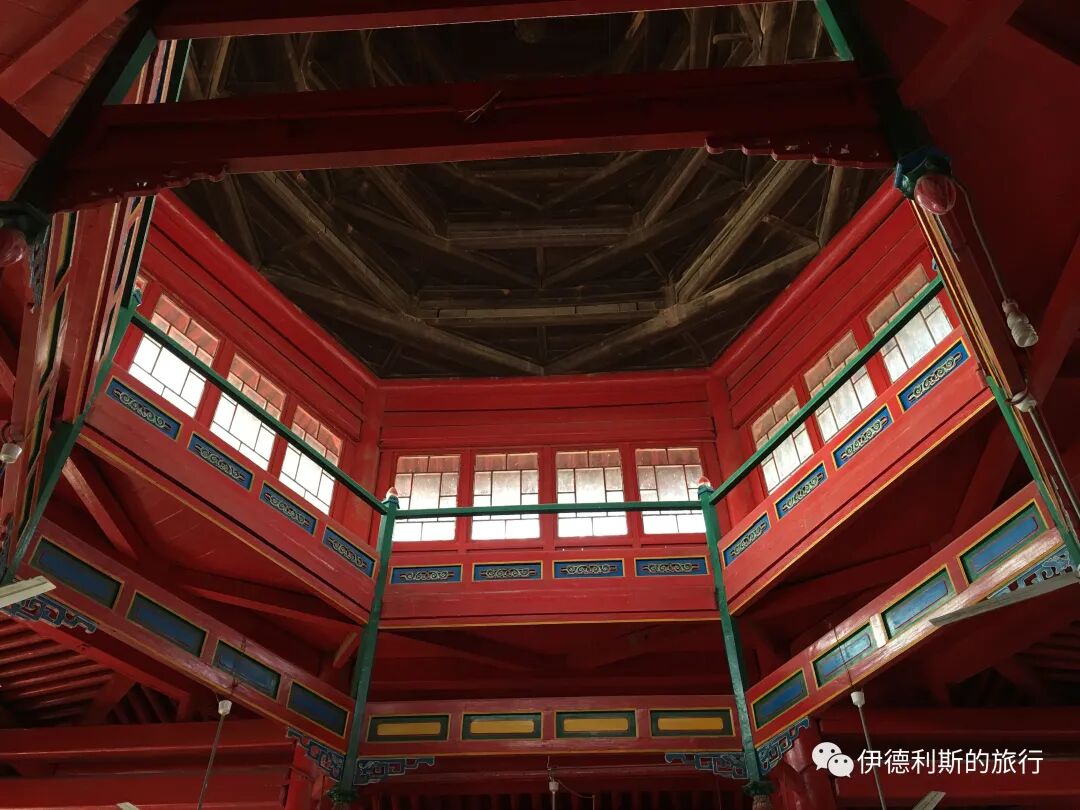
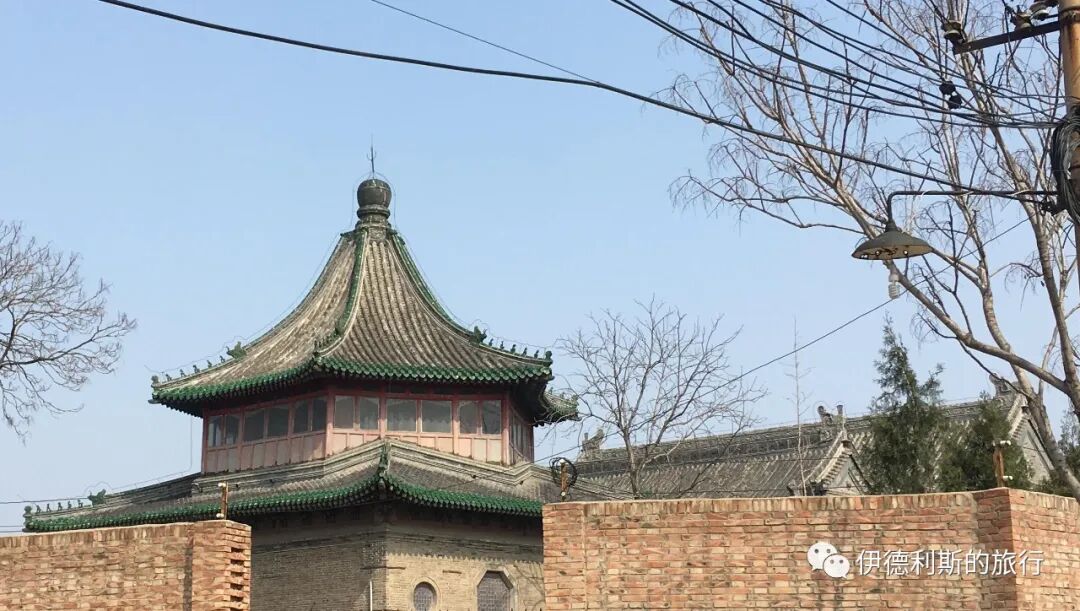
Moon-Sighting Tower (Wangyuelou)
In the eyes of Allah, the most honorable among you is the one who is most pious. (49:13)
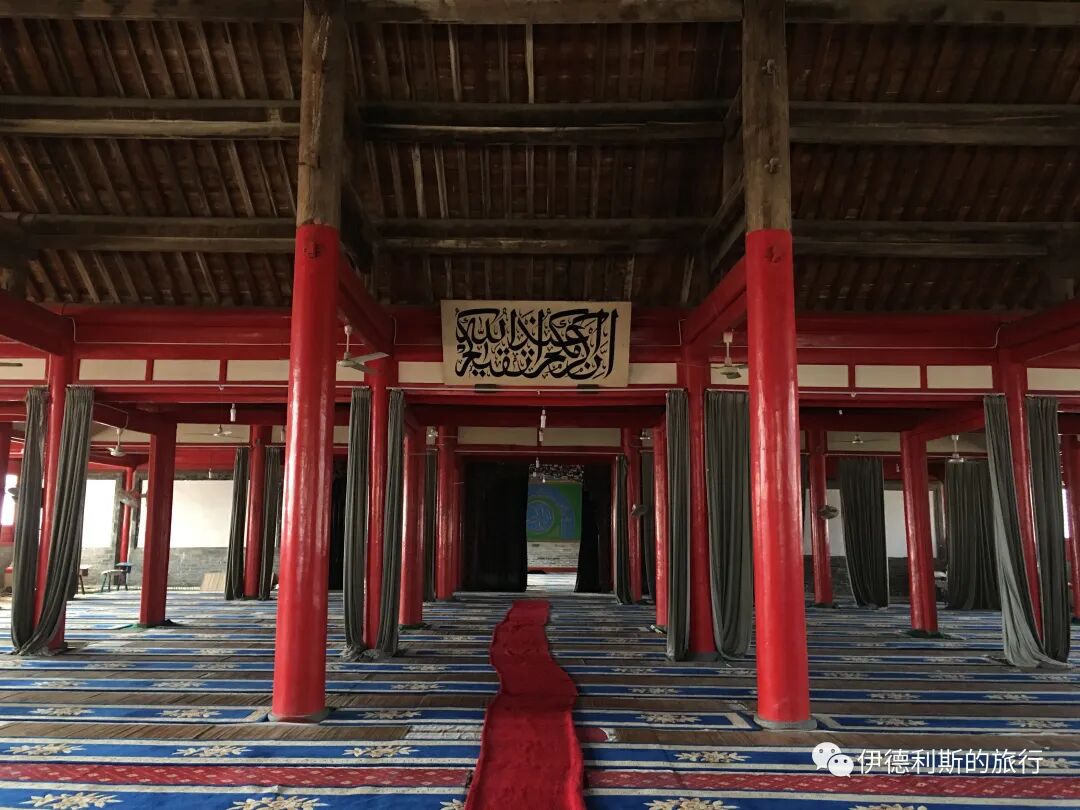
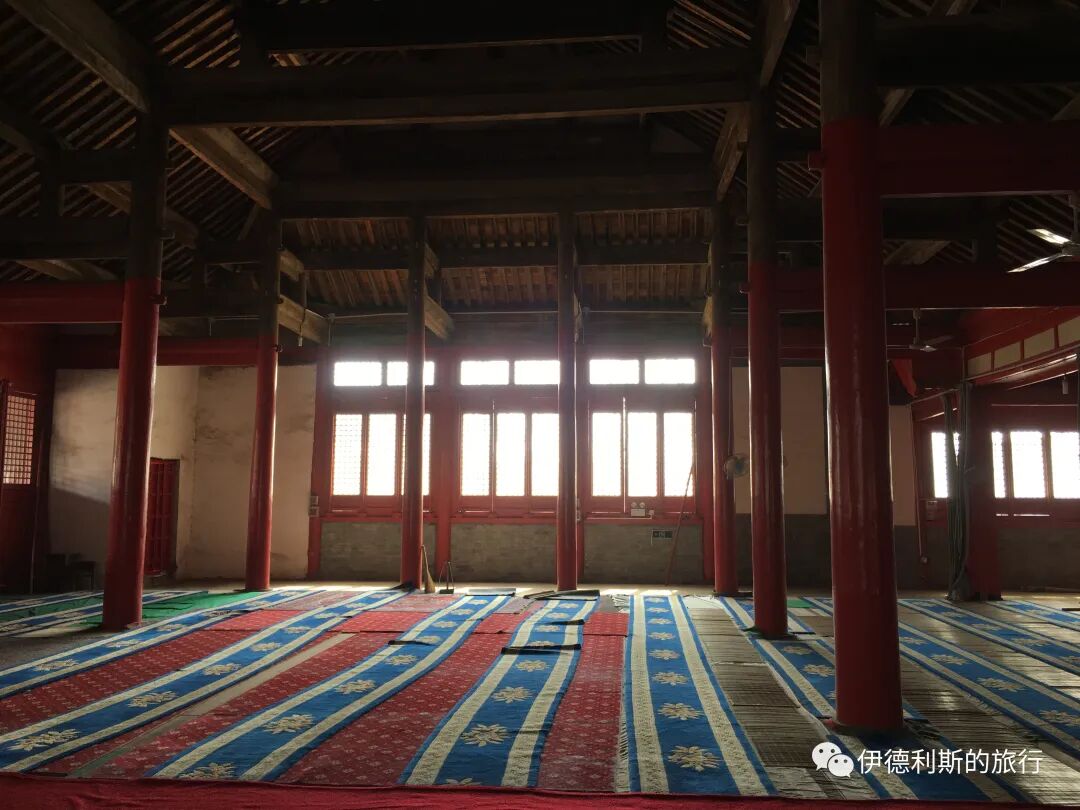
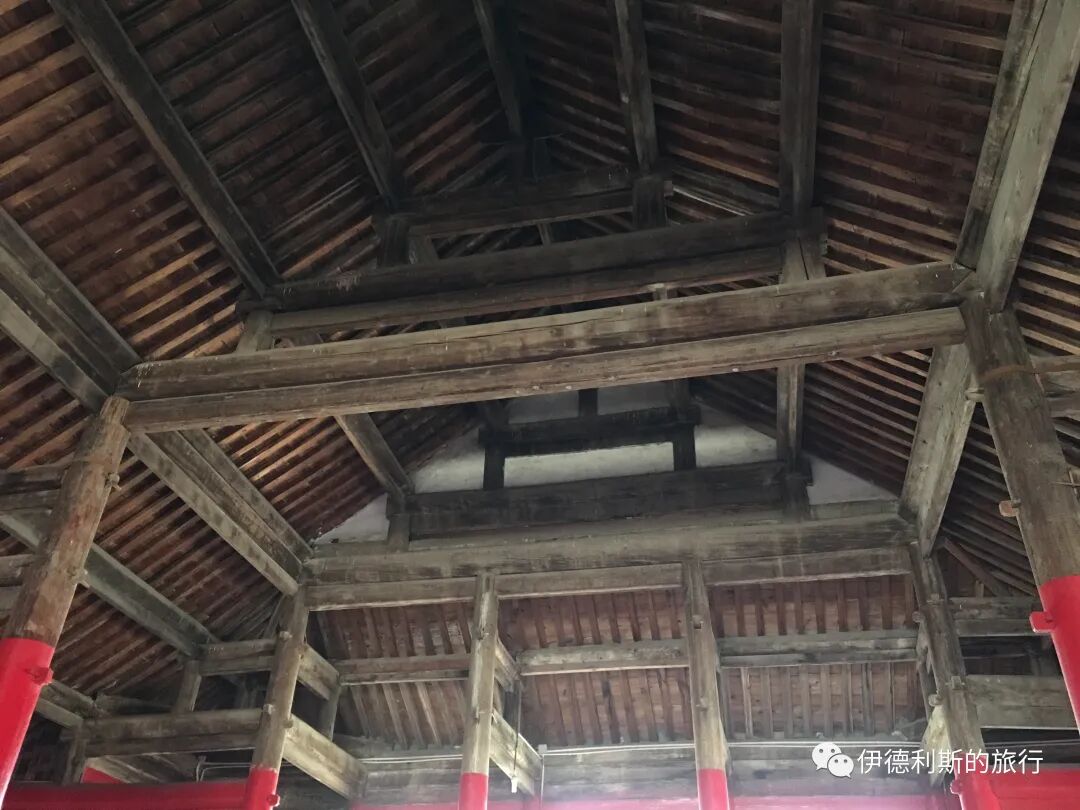
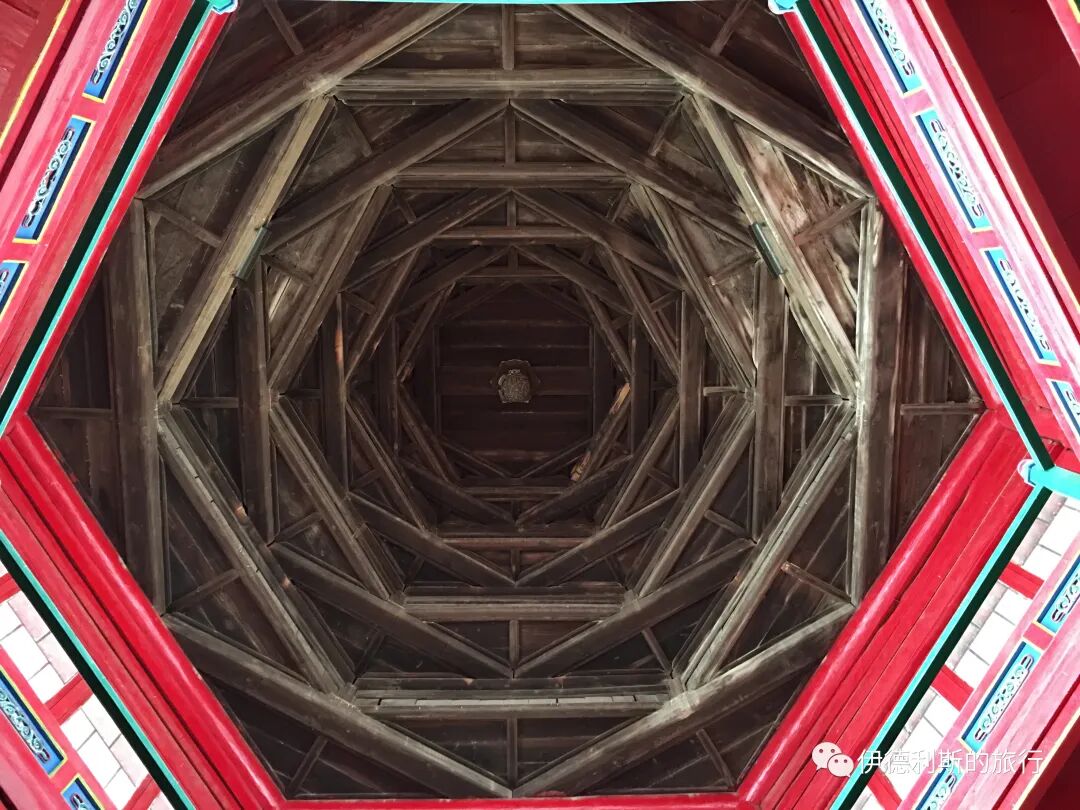
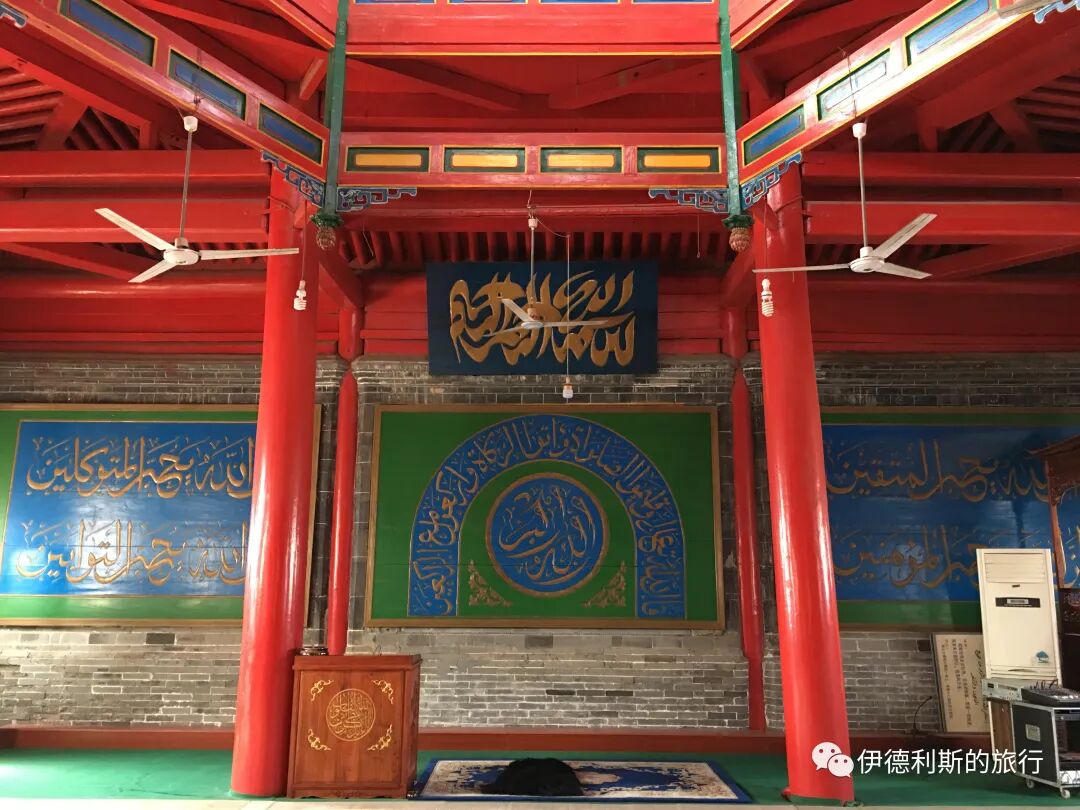
After 1966, the Botou Mosque stopped its activities. Religious staff were publicly denounced, and scriptures were burned. The head of the mosque, Zhang Zizhen, was driven away and passed away the following year. The imam, Ha Fuling, was sent back to his hometown in Xinzhuang, Xian County.
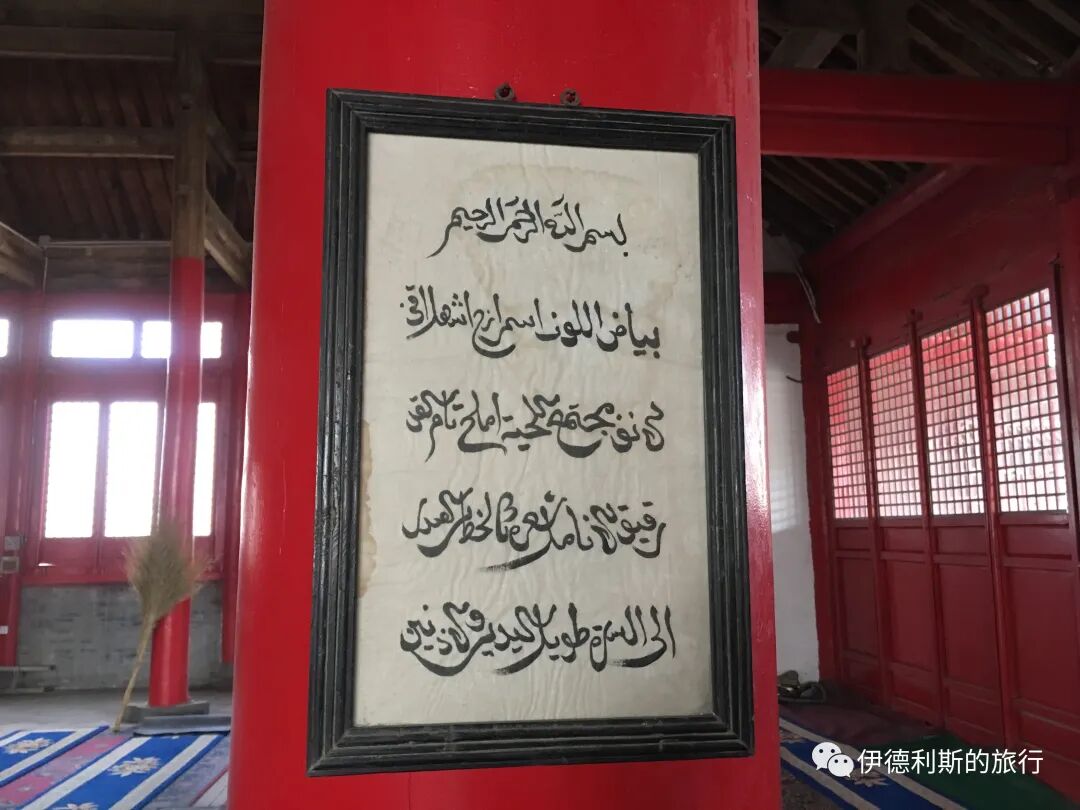
After the denunciations, Jin Laiguang set up a flour mill. Older religious staff worked as millers, and the younger ones went to work in factories. The main hall of the mosque was occupied by an embroidery factory, an oilcloth factory, a straw hat factory, and a sack thread factory as workshops. The water room was used by an agricultural production team as a machine shop. The side gates of the main entrance, the charity school, the side halls, and the south lecture hall all collapsed. The spire of the Moon-Sighting Tower was smashed, its first-floor walls collapsed, and the base walls of the main hall also fell. Eighteen original plaques inscribed by figures like Ji Xiaolan and Zhang Zhidong were lost. Only a damaged plaque reading "Pure and Bright" (Qingzhen Guangming), inscribed by the 75th Duke Yansheng, Kong Xiangke, in 1864, the third year of the Tongzhi reign, was found. In 1982, a calligrapher repaired the damaged parts based on the original style.
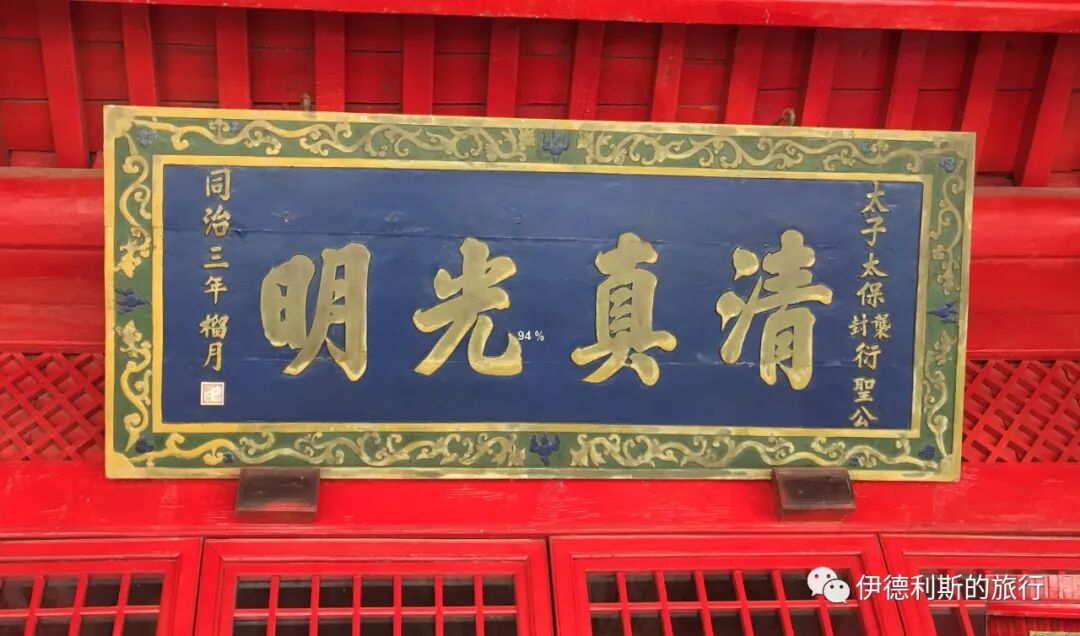
On the canal bank directly east of the Botou Mosque, there used to be a brick and wood archway, commonly known by locals as the Big Round Gate (Dayuanmen), with the words "Muslim Lane" (Qingzhen Xiang) written on it. In 1953, a major flood on the canal led to the demolition of the Big Round Gate to block the riverbank. In the old days, Hui Muslim merchant ships traveling on the canal knew they had reached the Hui Muslim residential area as soon as they saw the "Muslim Lane" plaque.
There was once a stone archway next to the Big Round Gate that collapsed in the 1960s. When the Botou Mosque was rebuilt in 1982, two stone lintels from the top of the archway were moved to the mosque's main hall to serve as a foundation. The left side featured a dragon head and phoenix tail, and the right side featured a qilin delivering a child.
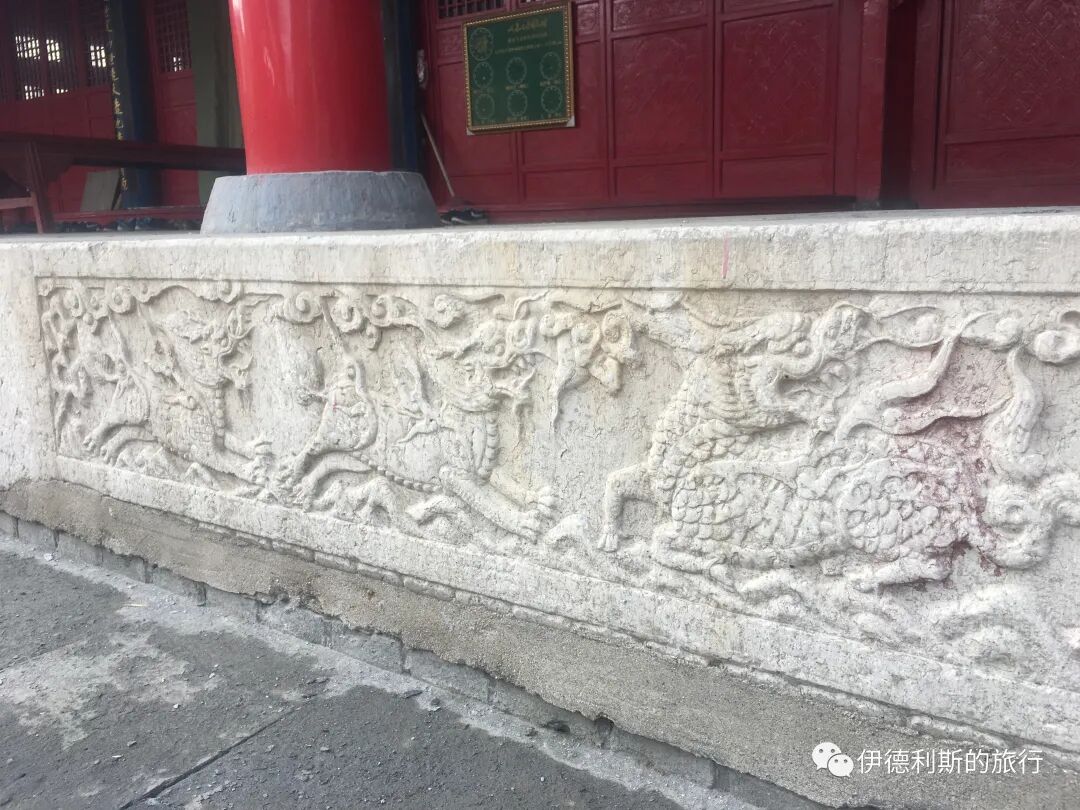
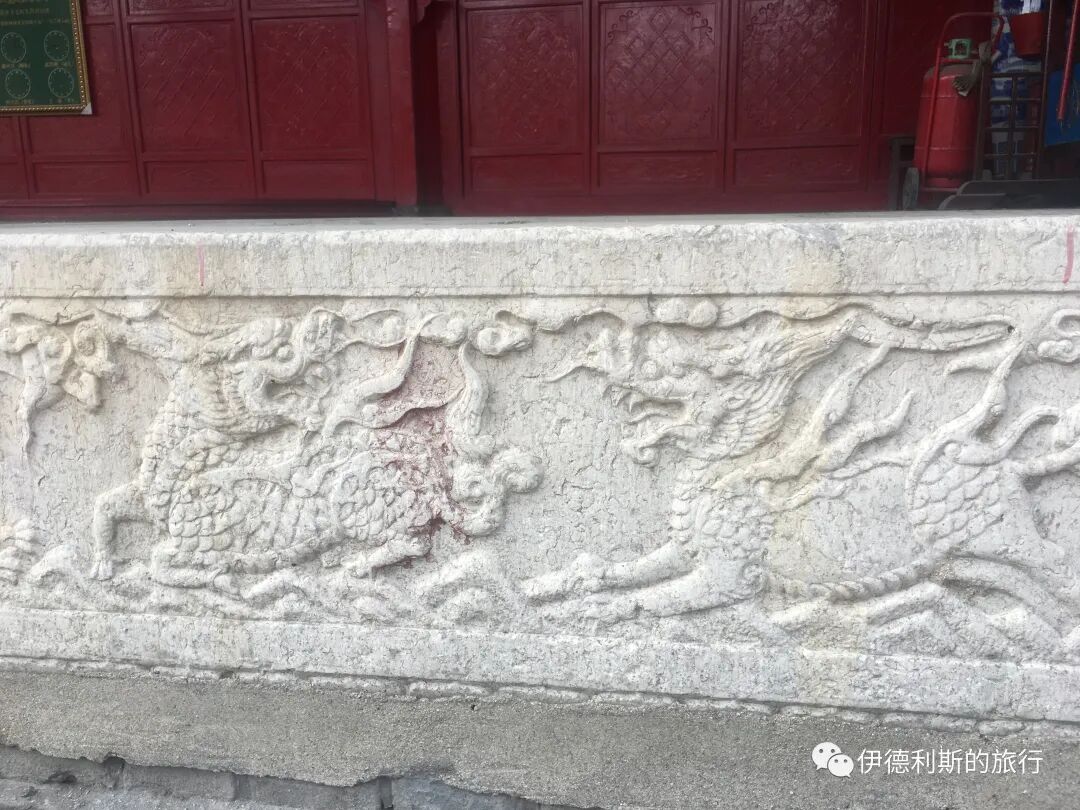
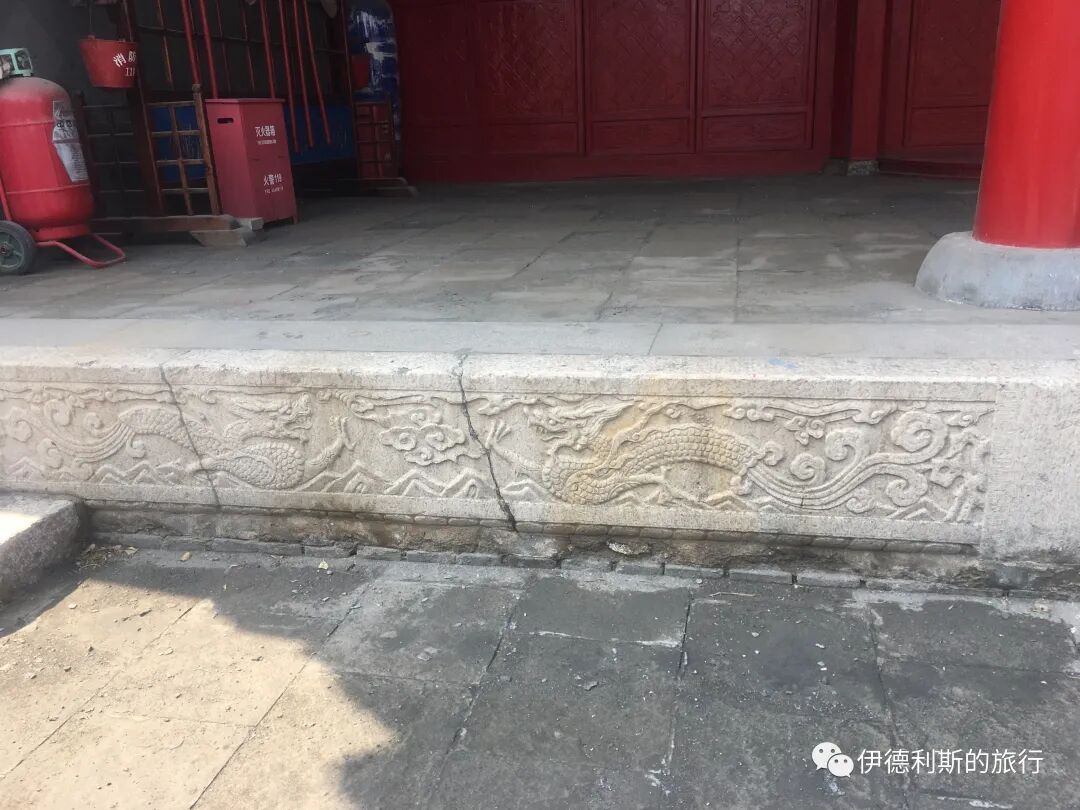
The women's mosque was built in 1953. It was originally the Huizhen Production Cooperative, built under the leadership of Imam Zhang Zizhen, and was rebuilt in 1993.
Halal food
During the Qing Dynasty and the Republic of China era, the most famous halal restaurants in Botou were Taihe Restaurant on Shunhe Street, which opened during the Tongzhi reign, and Shunfu Restaurant and Xingshenghe on Gulou Street, which opened during the Guangxu reign. Xiyu Restaurant was on East Street. The small and medium-sized restaurants around Shunhe Street were all halal, offering a wide variety of halal snacks.
Taihe Restaurant opened in 1870 (the ninth year of the Tongzhi reign). It was founded by Hui Muslim brothers Dai Ruiwu and Dai Bin. The building had the shop in the front and the restaurant in the back, with both open seating and private rooms, including standard and premium options. The menu focused on beef, lamb, fish, and shrimp. Dishes included clear-stewed beef, oil-fried tripe, braised cabbage, stir-fried lamb brains, stir-fried shrimp, stewed beef tongue and tail, braised beef tendon, and sweet and sour fish. The third-generation chef, Dai Shengheng, went to Tianjin in 1921 at age 15 to apprentice at the halal Hongbinlou Restaurant. He learned to cook elaborate whole-lamb feasts and river seafood. After returning to the restaurant, he became the head chef. He cooked high-end dishes like shark fin, bird's nest, and whole lamb, as well as home-style dishes like stir-fried, braised, and stewed beef and lamb. His signature dishes included deboned chicken, deboned fish, steamed chicken, candied peaches (basi tao), braised cabbage, various sweet dishes, and oil-poached sauces. His shredded meat noodle soup was considered the best. The noodles in Taihe Restaurant's shredded meat noodle soup were thin and translucent like silk threads, and the shredded meat was as thin as bean sprouts. The soup came in chicken or meatball varieties, served with large broad beans, preserved vegetables (nancai), wood ear mushrooms, and fried tofu puffs. It tasted delicious.
In 1937, Dai Shengheng went to Jinan to open the new Majia Restaurant, and Taihe Restaurant closed.
Xingshenghe Maji was founded during the Guangxu reign by Hui Muslim Ma Chunbo. It was located on Gulou Street outside Chaoyang Gate and was famous for its five-spice roast beef. Ma's roast meat contained no beef fat or mixed scraps. Before roasting, the meat was soaked in cold water for several hours to remove blood. It was seasoned with five spices: cinnamon, star anise, Sichuan peppercorns, fennel seeds, and cloves. No soy sauce or sugar coloring was used. It was simmered in old broth over low heat for six hours. When finished, it was sweet, moist, and brownish-red, with a chewy texture that held together. It could stay fresh for three to five days.
Before 1937, Ma Doutai, a Hui Muslim from Xinzhuang in Xian County, came to Gulou Street in Botou to open the Juxingheng Pastry Shop. It had the shop in the front and the factory in the back. They offered over 20 varieties of pastries that were sweet, salty, fragrant, soft, and crispy. They used various fillings like red hawthorn, white sugar, date paste, and red bean paste, making it the most famous halal pastry shop in Botou.
After 1937, 19 halal restaurants opened in Botou, nine of which were on Sanfu Street. The larger restaurants included Enshunlou, Qingzhen Restaurant, Fushun Restaurant, and Enyishun. Their signature dishes included braised sea cucumber, braised fish, steamed duck, and eight-treasure rice (babao fan). Eight-treasure rice is a sweet dish. The main ingredient is glutinous rice, supplemented with green silk, colorful cakes, lotus seeds, water chestnuts, melon strips, walnut kernels, raisins, and melon seeds. The rice is first made into a sticky consistency and mixed with white sugar. Then, the toppings are added, creating a colorful and uniquely shaped dish.
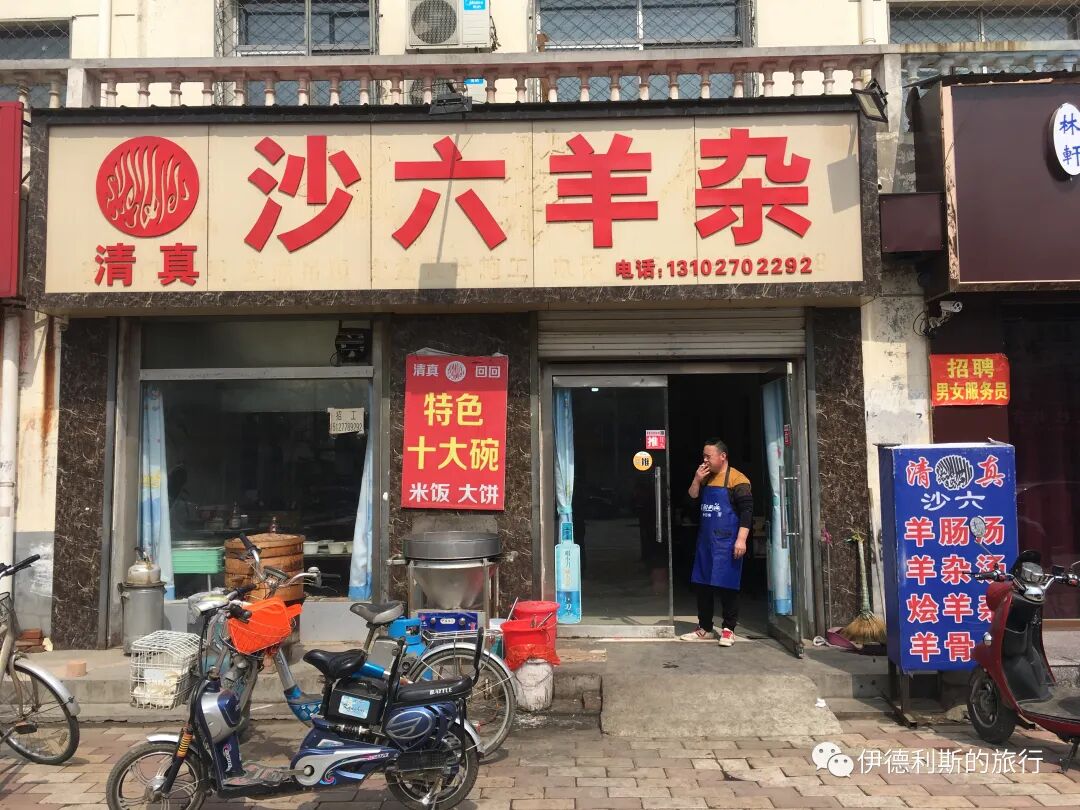
Lamb offal (yangzasui)
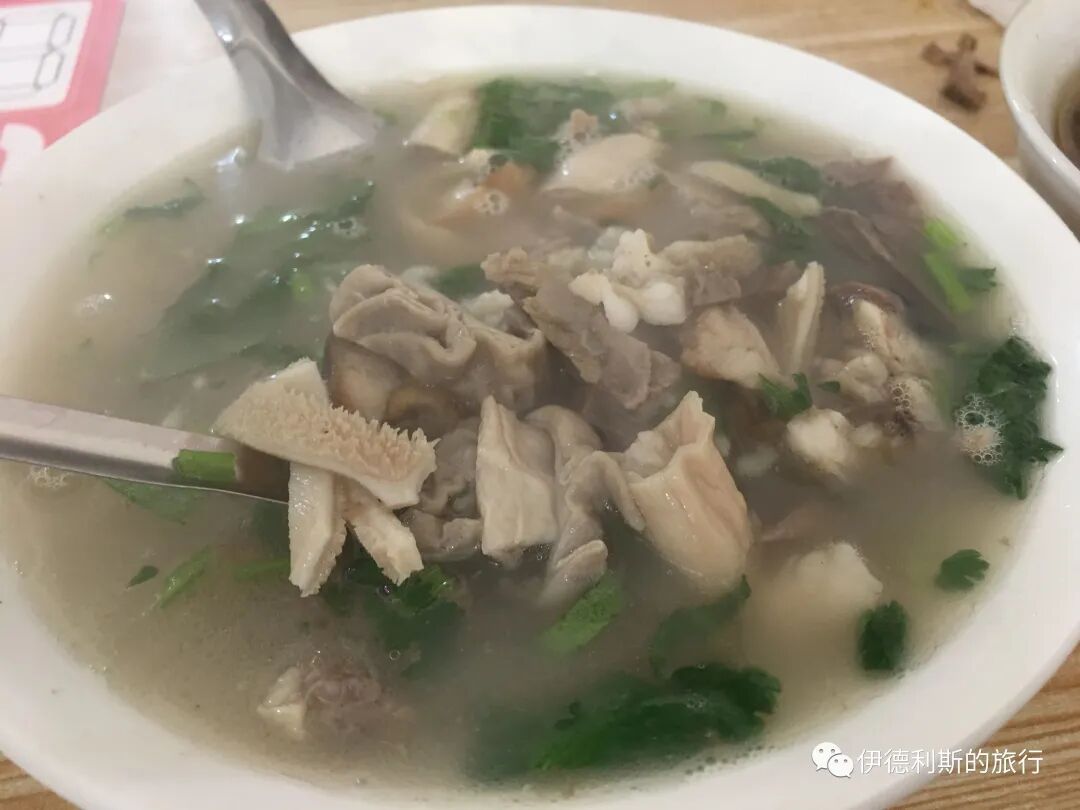
Stewed free-range chicken (dun benji)
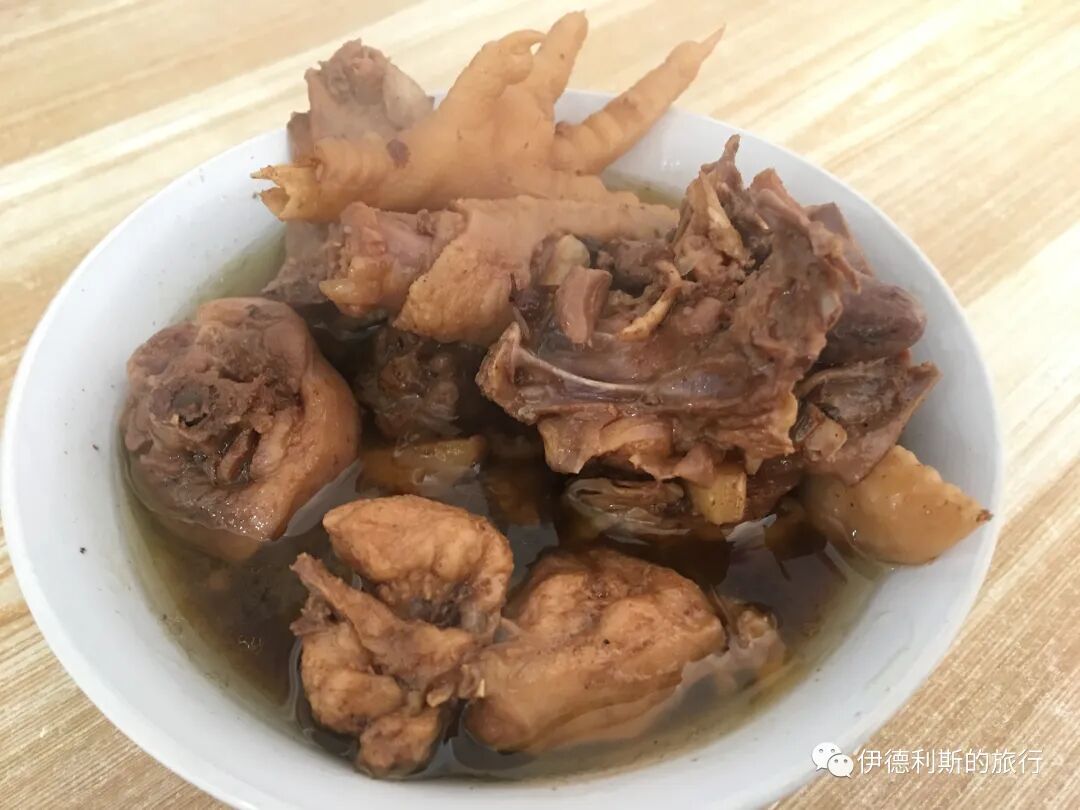
Braised lamb offal (hui yangza)
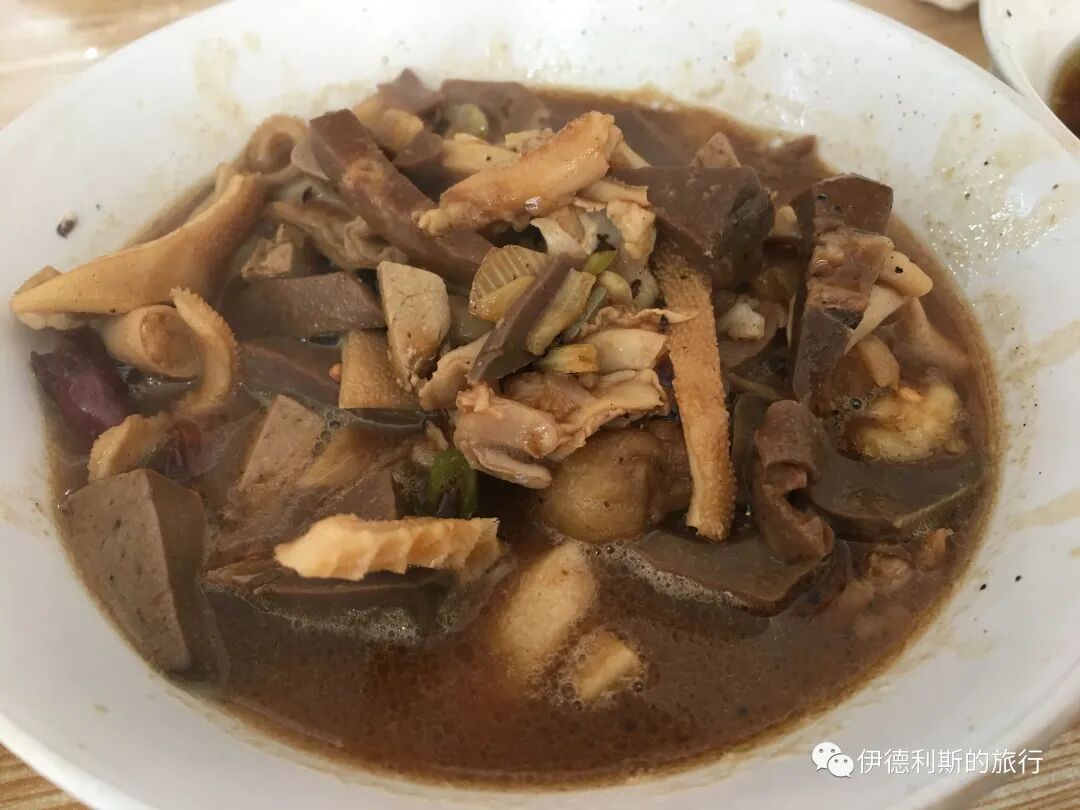
Egg rolls (danjuan)
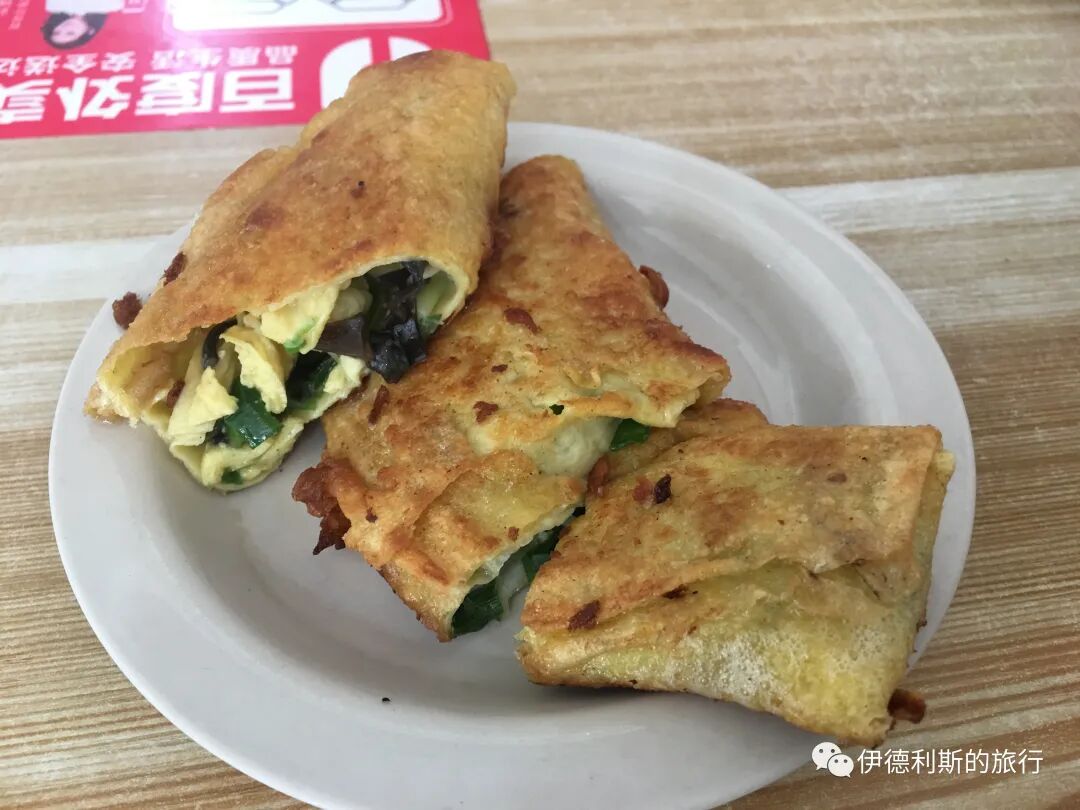
The pastries at this shop were all sourced from Tianjin.
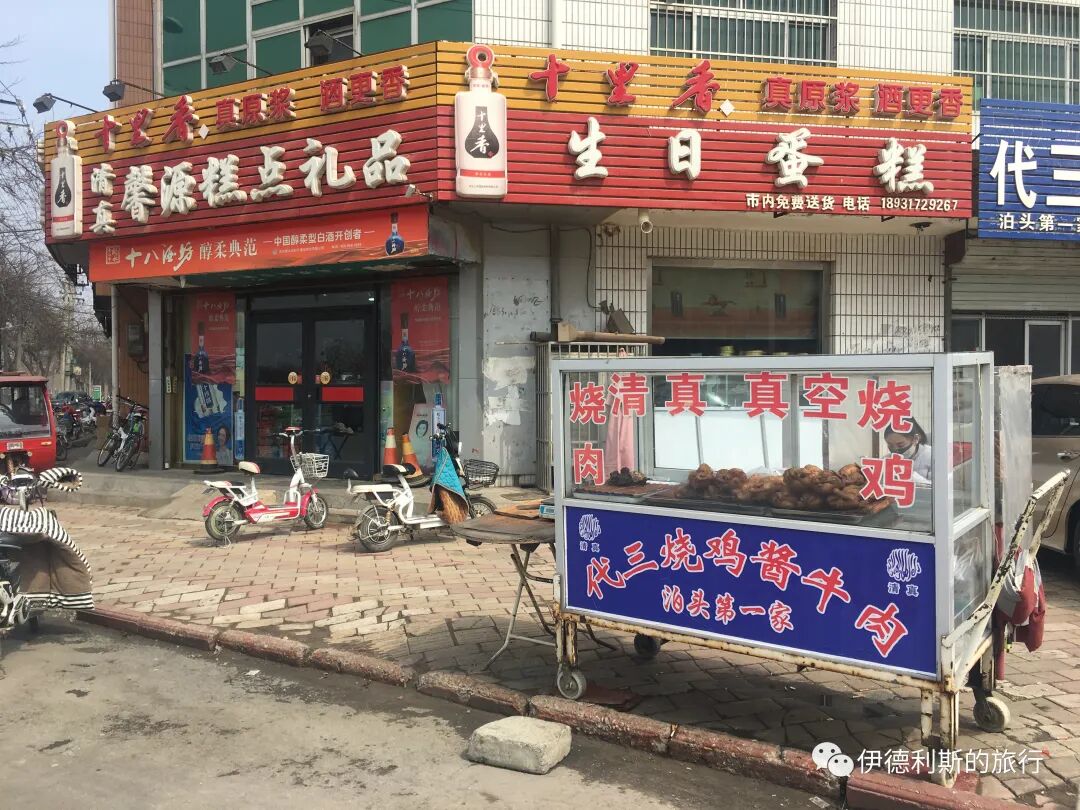
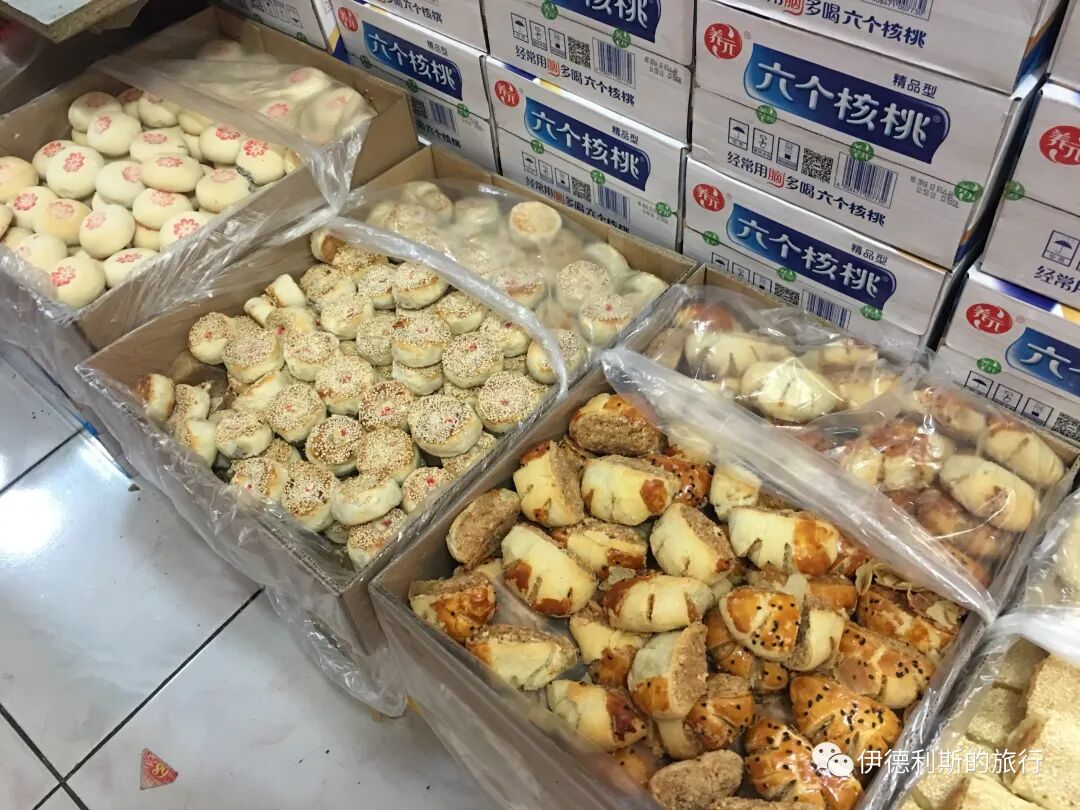
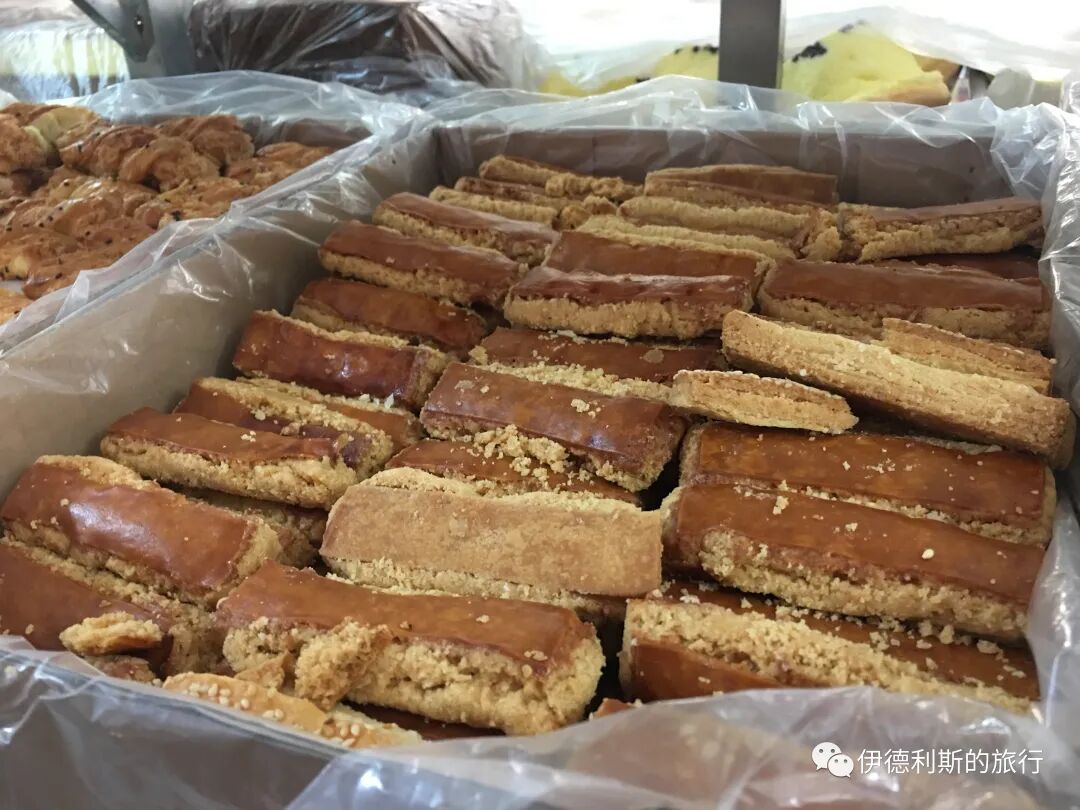
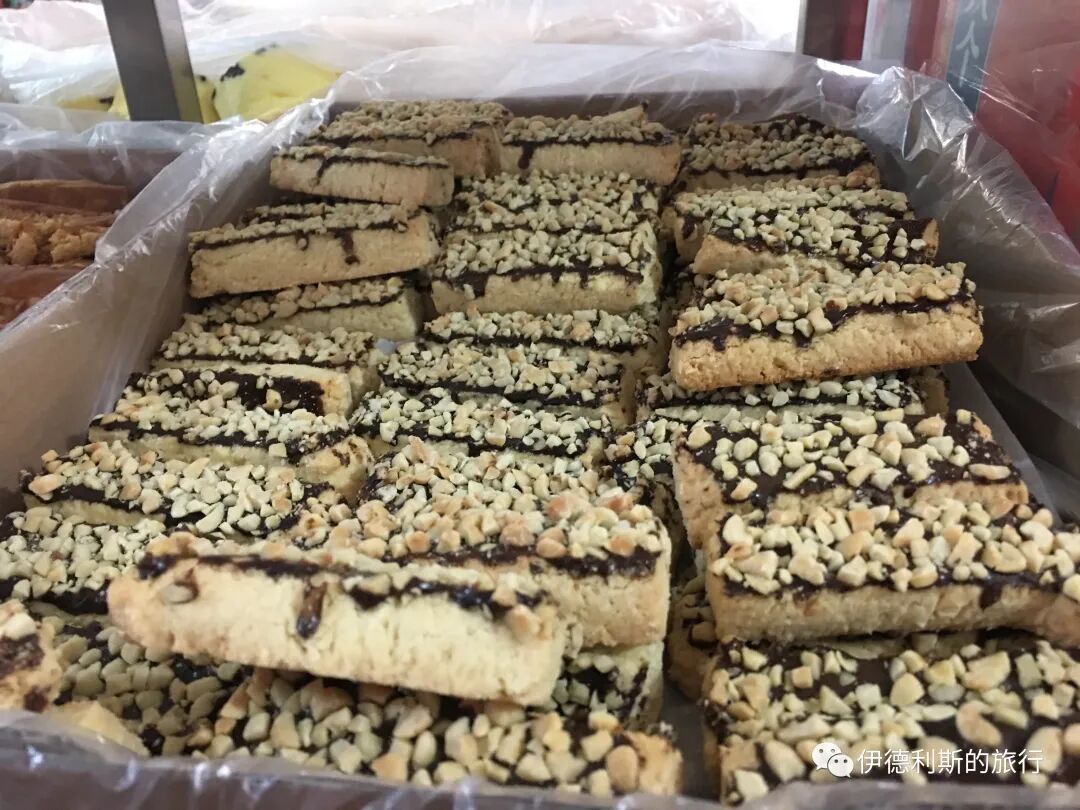
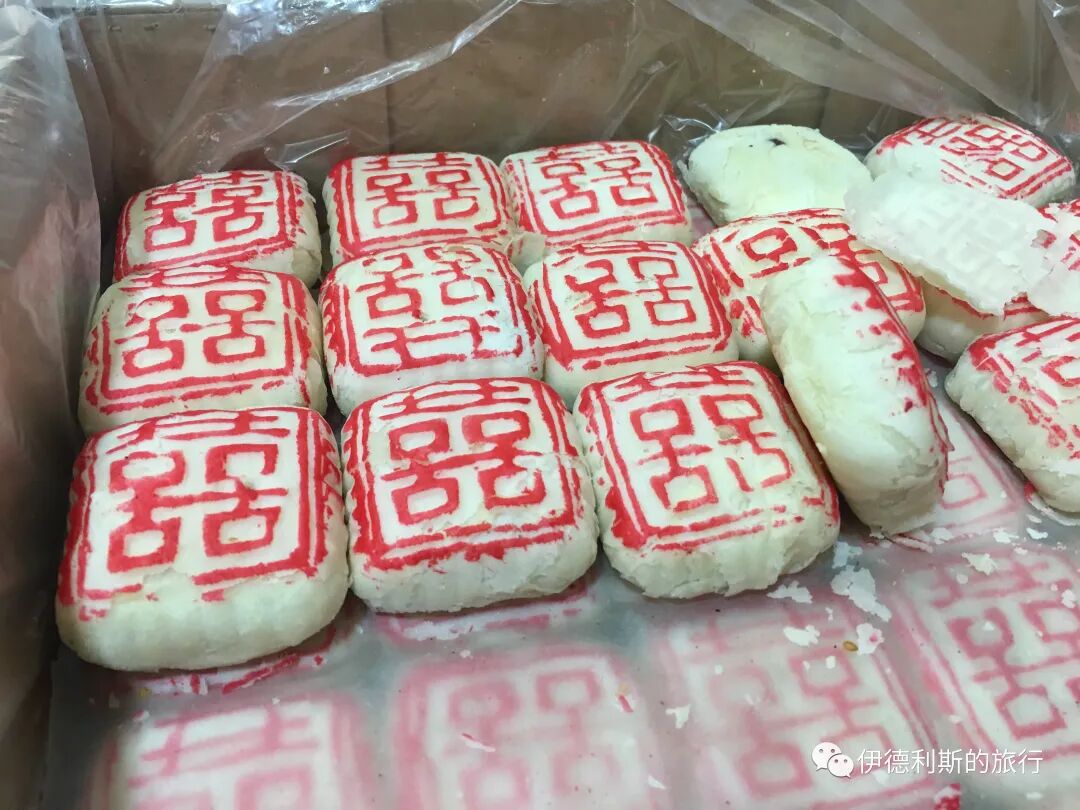
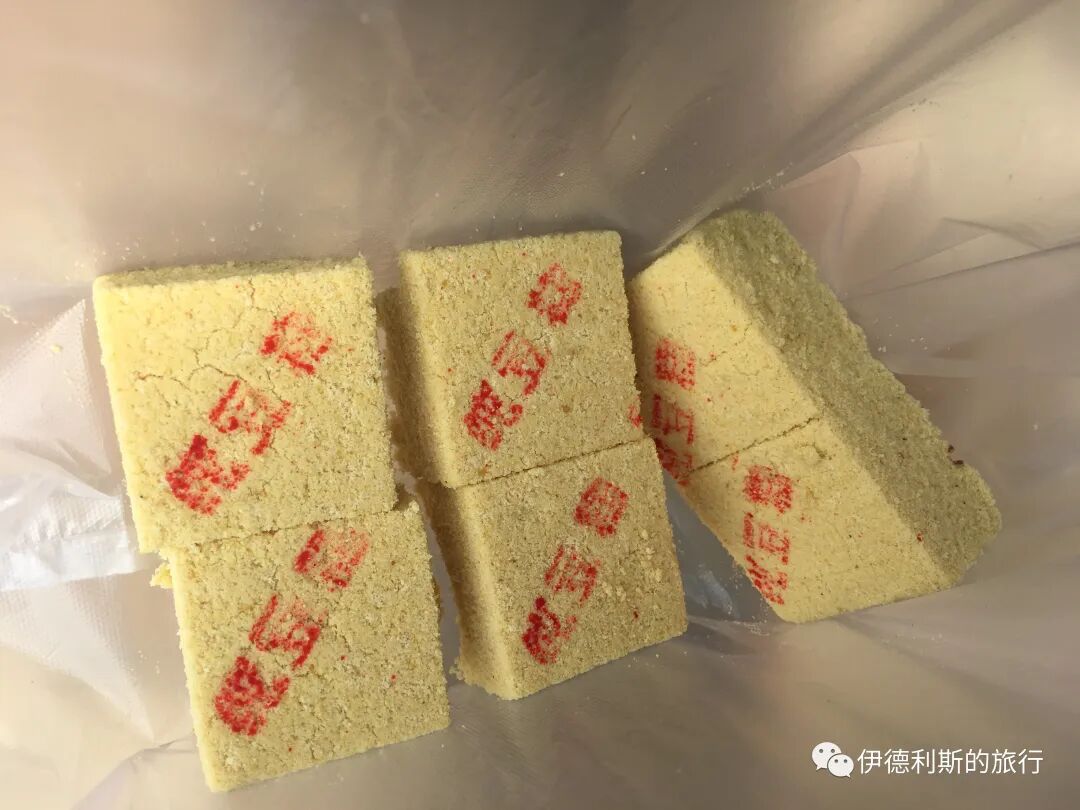
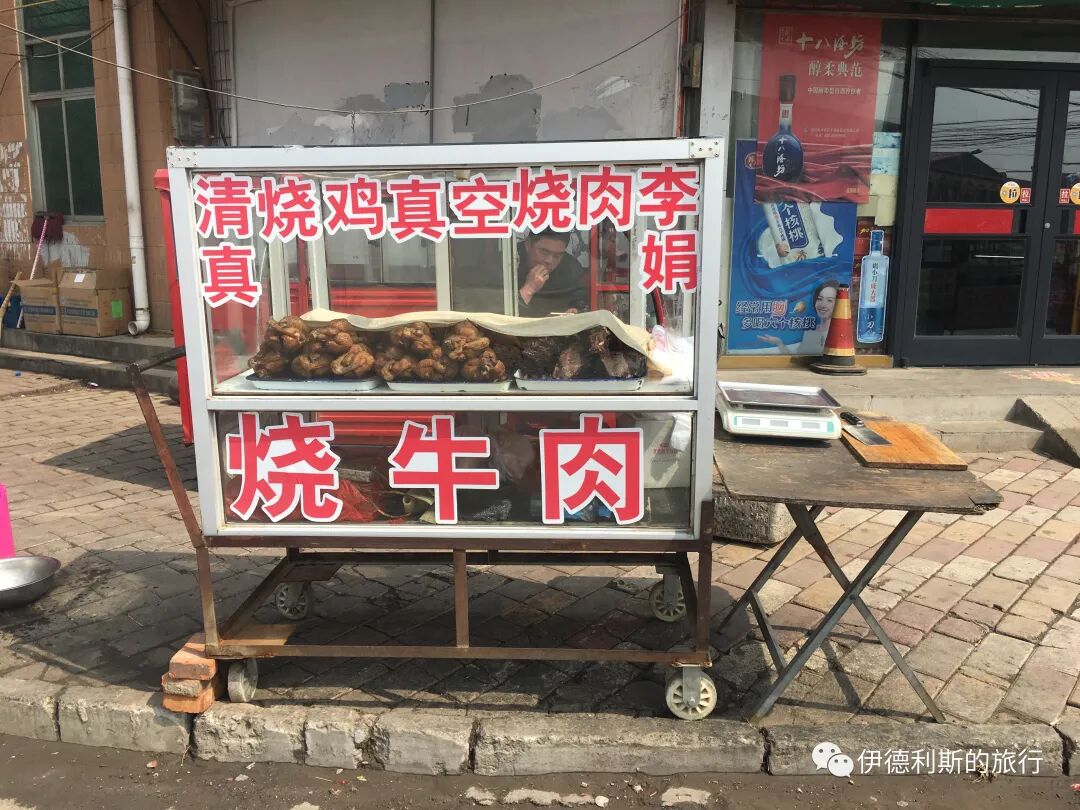
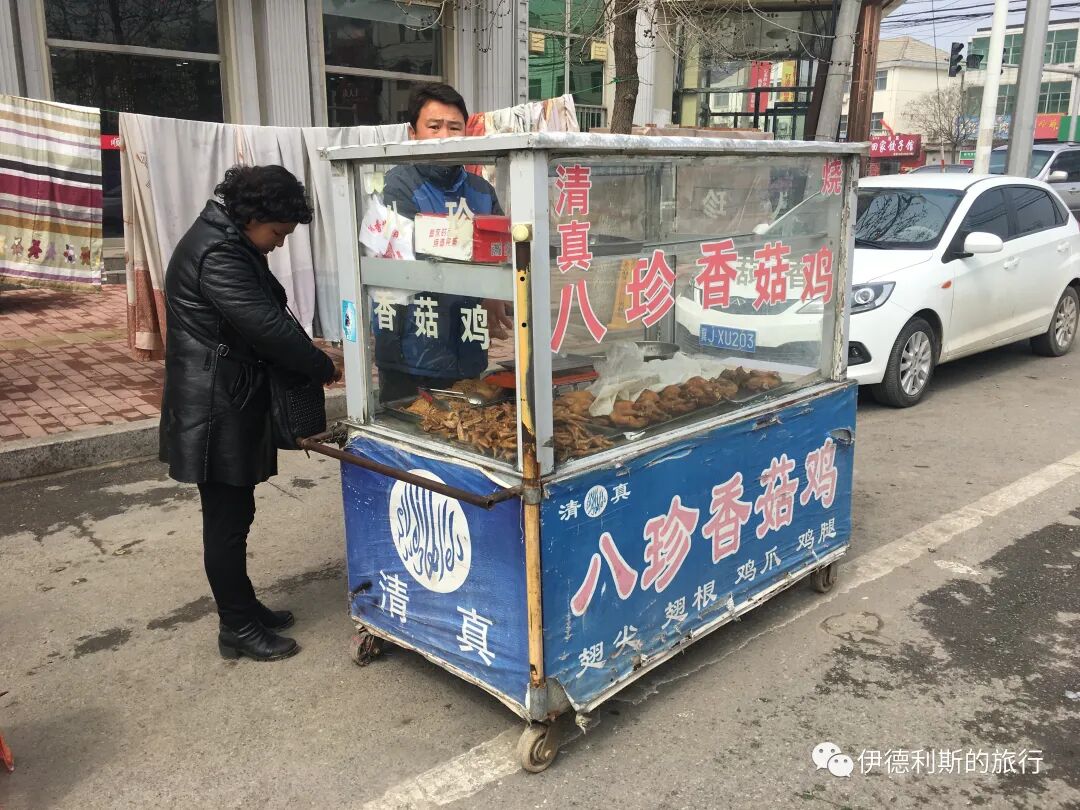
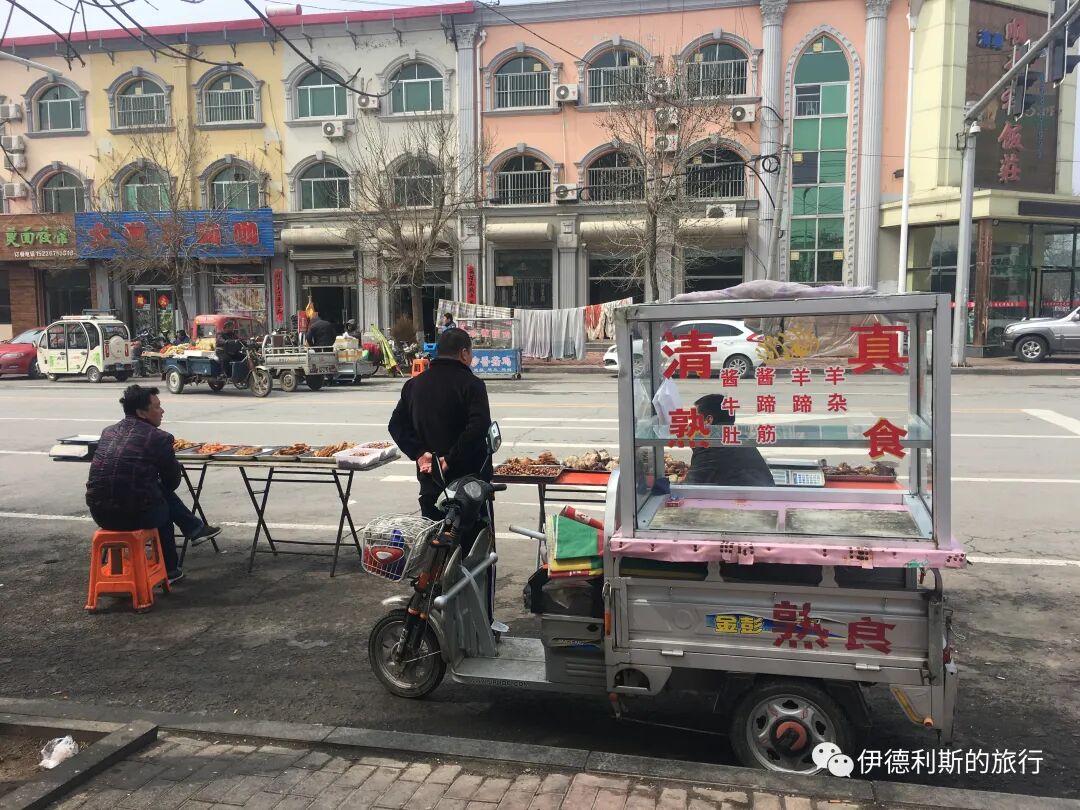
Hui Muslims and the Grand Canal
Local shipping in Botou was mainly operated by Hui Muslims. The trade was divided into two groups: those who worked on the boats and those who owned the boats. Those who worked on the boats were the crew and trackers. Those who owned the boats were the boat owners, divided into those who owned large boats for renting out or hiring labor, and those who used their own small boats. Some small boat owners operated ferries for passengers, some transported fertilizer for riverside villages, and others ran long-distance transport routes from Tianjin in the north to Xinxiang, Henan in the south. The trough boats (caozichuan) used for long-distance transport were flat, long, and wide, with a shallow draft.
Long-distance boats from Botou carried salt south and returned with cotton, coal, and porcelain. The trip from Tianjin to Dezhou took eight or nine days, to Linqing took half a month, and to Daokou Town in Henan took over forty days.
In 1946, there were 31 Hui Muslim boat-owning households in Botou, primarily from the Shi, Li, Cao, Duo, and Mu families. Later, because the canal became heavily silted, the Mu family moved to Tianjin and switched to sea shipping. By July 1948, Botou had 231 wooden boats.
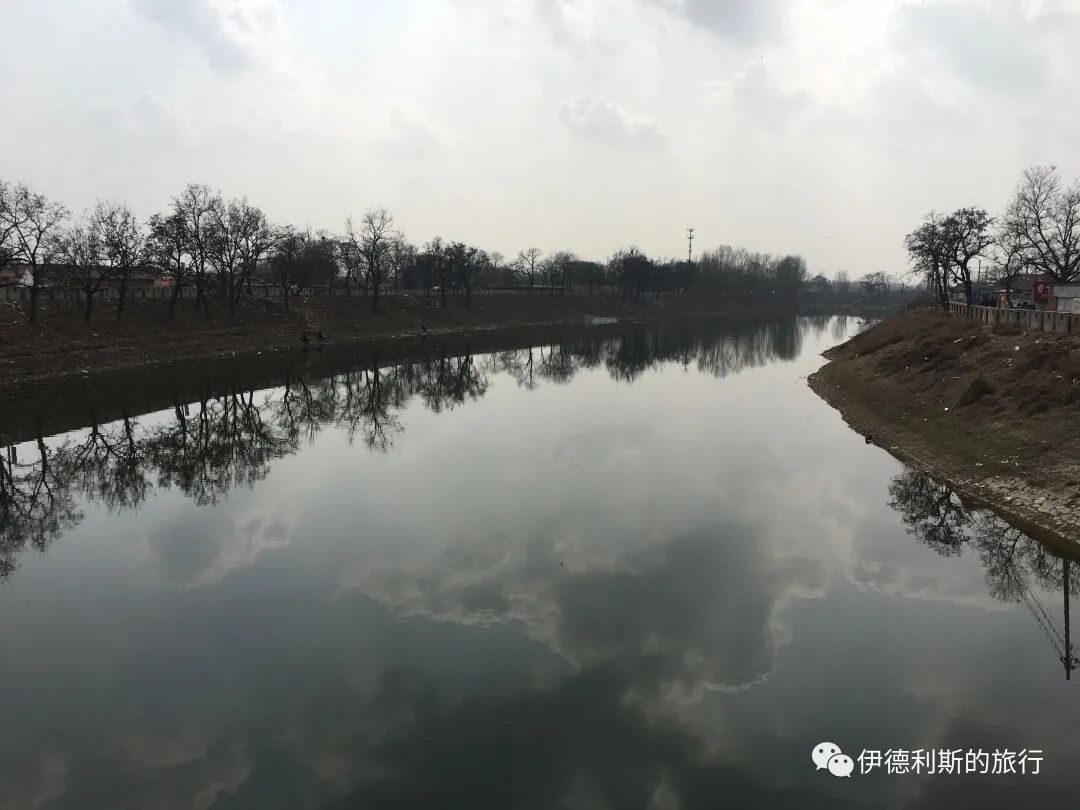
Trackers were at the bottom of the shipping industry. Boat owners chose the number of trackers based on the boat's size and cargo capacity, usually five or six, though some trips used as few as one or two, or as many as over ten. When traveling downstream, trackers stayed on the boat to row; when traveling upstream, they went ashore to pull the boat. When pulling, they used a main tow rope attached to a chest pad worn diagonally across the chest. The tracker at the front and the one at the back controlled the direction to keep the boat straight. When passing under a bridge, they had to unhook the rope. The boatmen on board would call out signals to the lead tracker, and they would reattach the rope to continue after passing the bridge.
During the voyage, trackers followed a schedule of three tea breaks and four meals a day. They started the boat at 5:00 a.m., ate breakfast at 8:00 or 9:00, had their first tea break after traveling a bit, ate lunch at noon, had their second tea break, ate dinner around 4:00 or 5:00 p.m., had their third tea break, and finally ate a late-night snack after docking at dark before resting. The tea for these breaks was usually plain water, and the meals consisted of steamed cornmeal buns (wotou), pickled vegetables, and millet porridge. The stoves on the boats were small, so the steamed cornmeal buns (wotou) came out thin and tall, and you could grab four or five in one hand. Besides this, when they reached Cangzhou, Dezhou, and Linqingzhou, they could have noodles in soup, which they called passing through a prefecture to eat noodles.
There were many types of tracker work songs, with different ones for going downstream, upstream, turning corners, and passing bridges. The head boatman directed the work. He stood at the bow to watch the current, used a pole to adjust the boat's direction, and used work songs to coordinate everyone. A song leader followed the trackers. He did not pull the rope but was responsible for responding to the head boatman's lead vocals. The lyrics included lines like, Big boats carry white grain, small boats carry green bamboo poles; Big boats can dock at Jiujiang port, small boats only rely on the riverbanks. After 1957, wooden boats on the South Canal were replaced by small tugboats, and the canal work songs gradually disappeared. The only person who can sing the full set of Botou canal work songs today is Li Shuyuan, a Hui Muslim born in 1935. He is the fourth-generation descendant of the Li family, a major boat-owning family in Botou. He started working on boats at age 14 and is the last person from those major families who witnessed the glory days of the South Canal.
In 1957, during the public-private partnership transition, Botou's fleets were assigned to Dezhou, Xinxiang, and Tianjin. Botou no longer had its own fleet, and many people left their boats to return to Botou, where they were assigned to brick factories and construction teams. During breaks, these workers would sing the work songs, which became the final echoes of the canal.
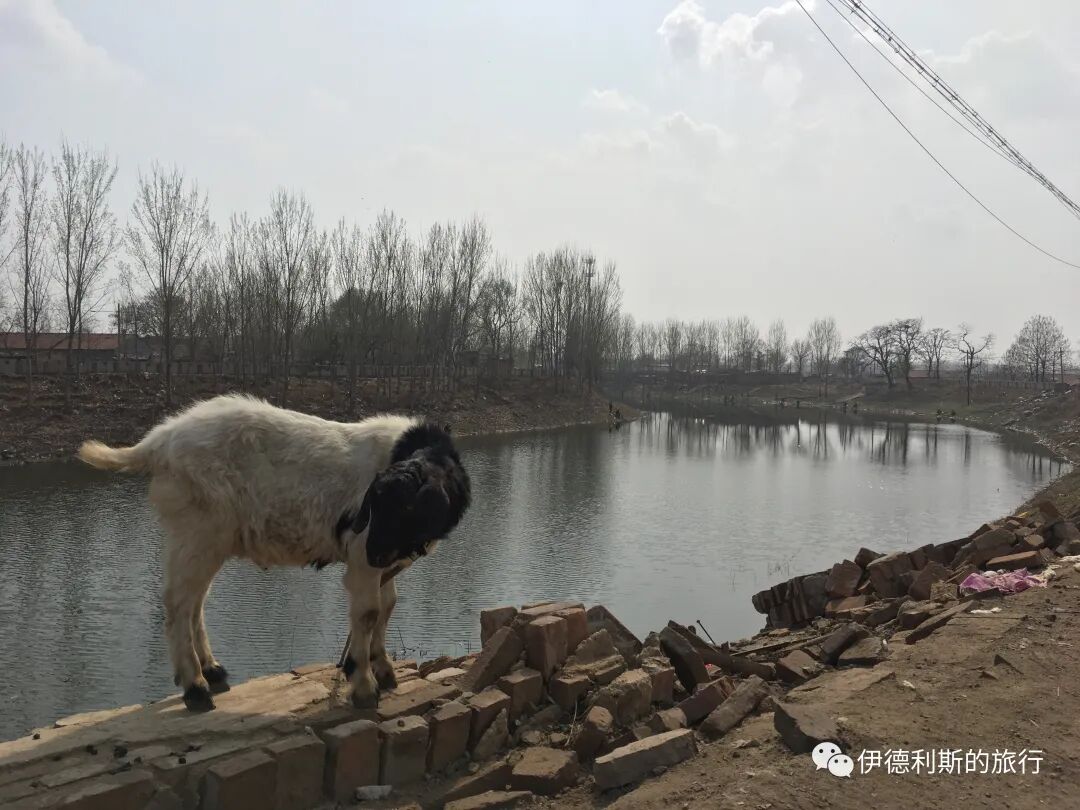
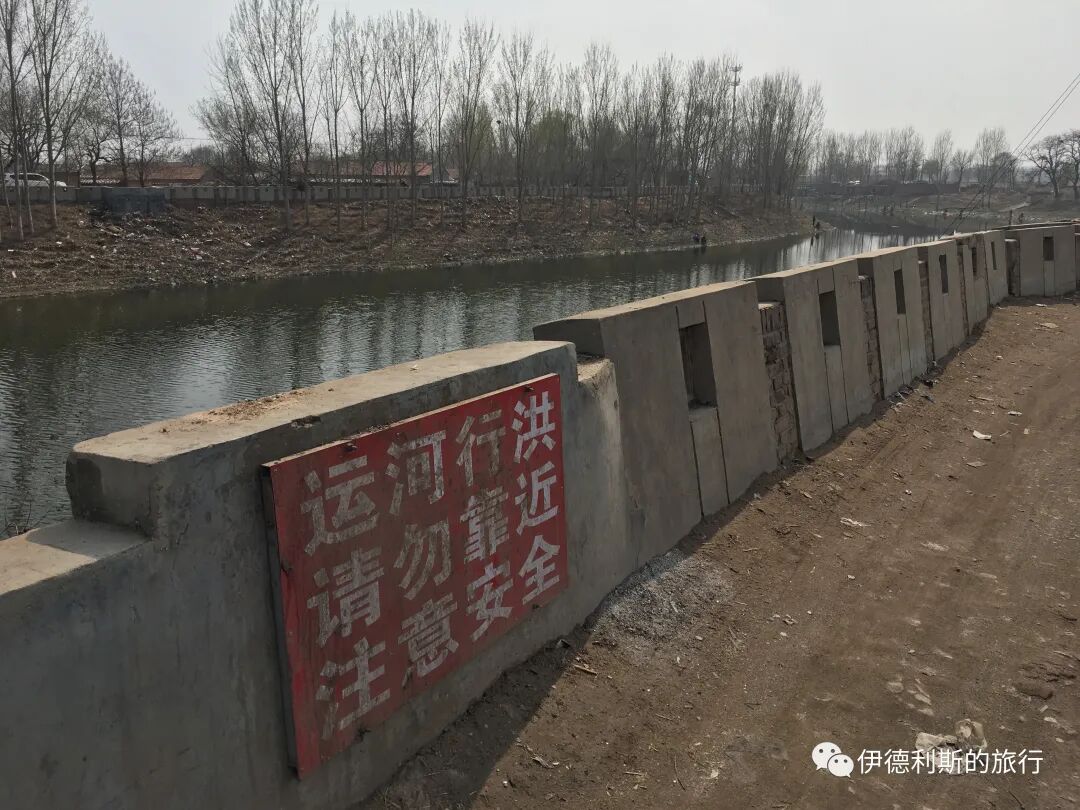
Derived from the shipping industry were the porter guilds, commonly known as the heavy lifters. The porter guilds in Botou were mainly Hui Muslims. They usually used a shoulder pole and a shoulder pad. Some families shared handcarts, and when unloading logs, they used levers with large, semicircular iron hooks at the front. At that time, each person carried one 90-kilogram sack of grain or one roll of paper or cardboard weighing over 100 kilograms. They carried four 22.5-kilogram bags of flour at a time. They tracked their work by receiving a bamboo tally for each load and counting them at the end. When lifting heavy items like logs, everyone would sing labor work songs. One person would lead, and the others would follow, creating a rhythmic, powerful, and responsive sound.
During the Republic of China era, there were three Hui Muslim porter groups in Botou. One was the Tongshun Shop porter group, commonly known as the South End porter group. Another was the Wuying porter group, and the third was the Gulou and East Street porter group. The three groups merged in 1947 to become the Wharf Second Labor Union, and in 1958, they became the Second Transport Team.
Before 1965, the Botou section of the Grand Canal had plenty of water. In the early summer of 1965, the canal dried up for the first time. After that, the water level dropped every year. By the first half of the 1970s, it was nearly dry, and shipping in Botou came to an end.
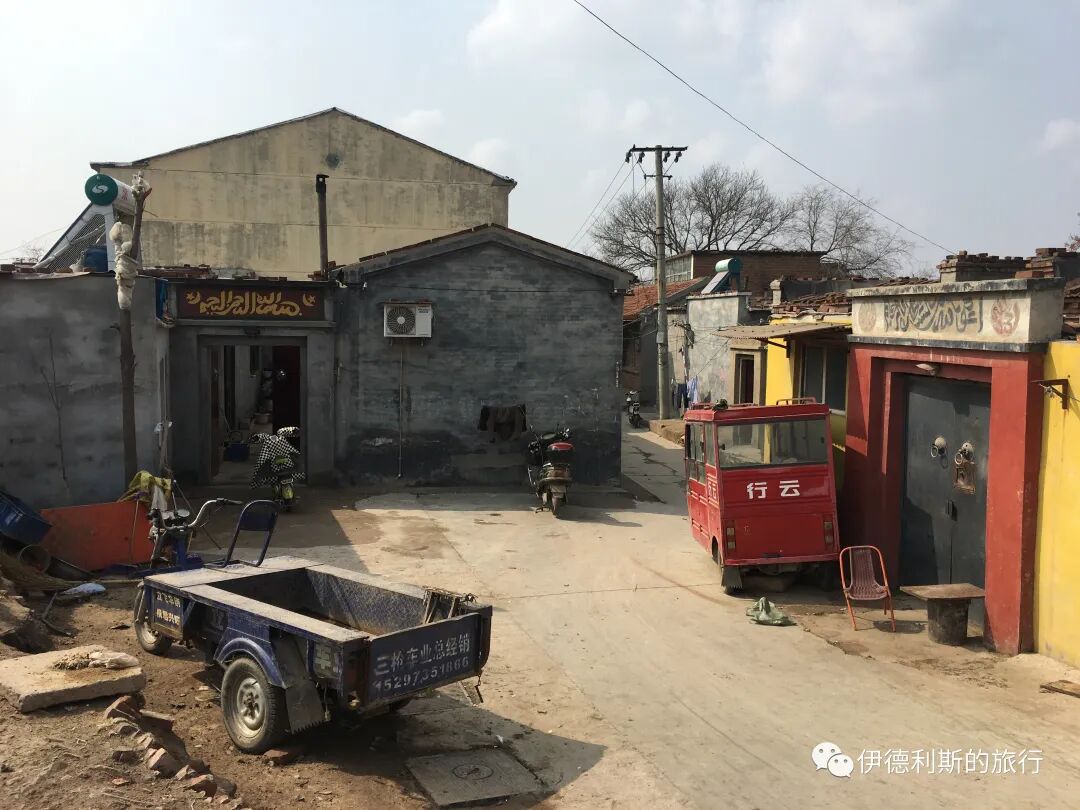
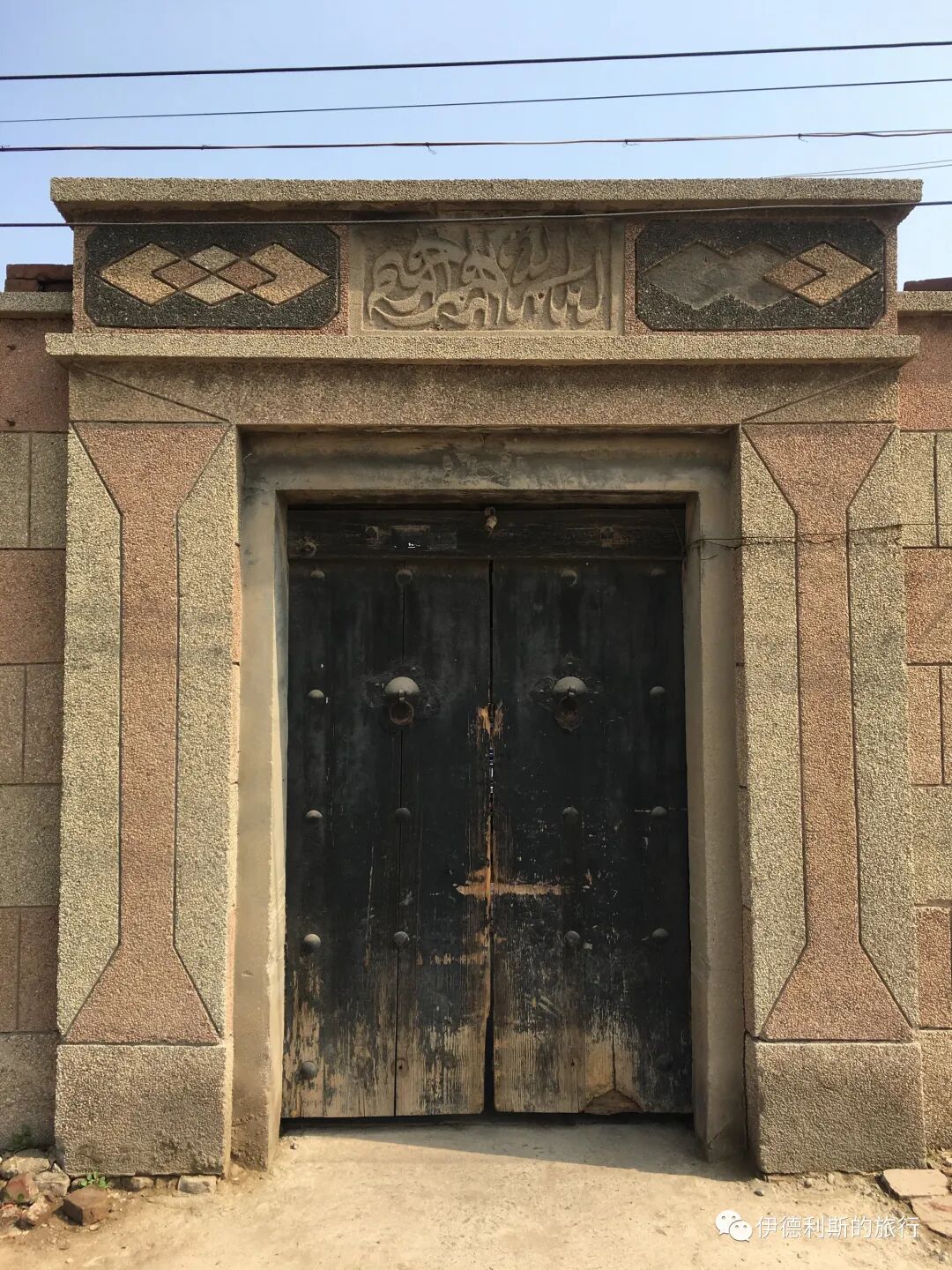
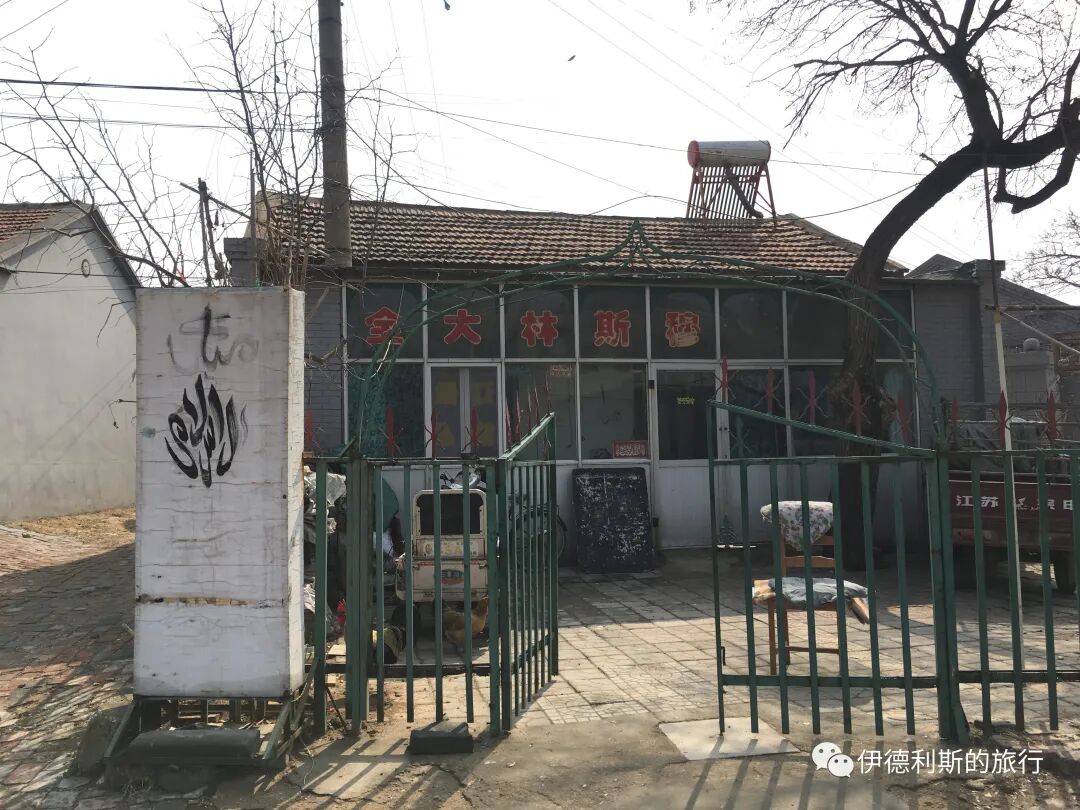
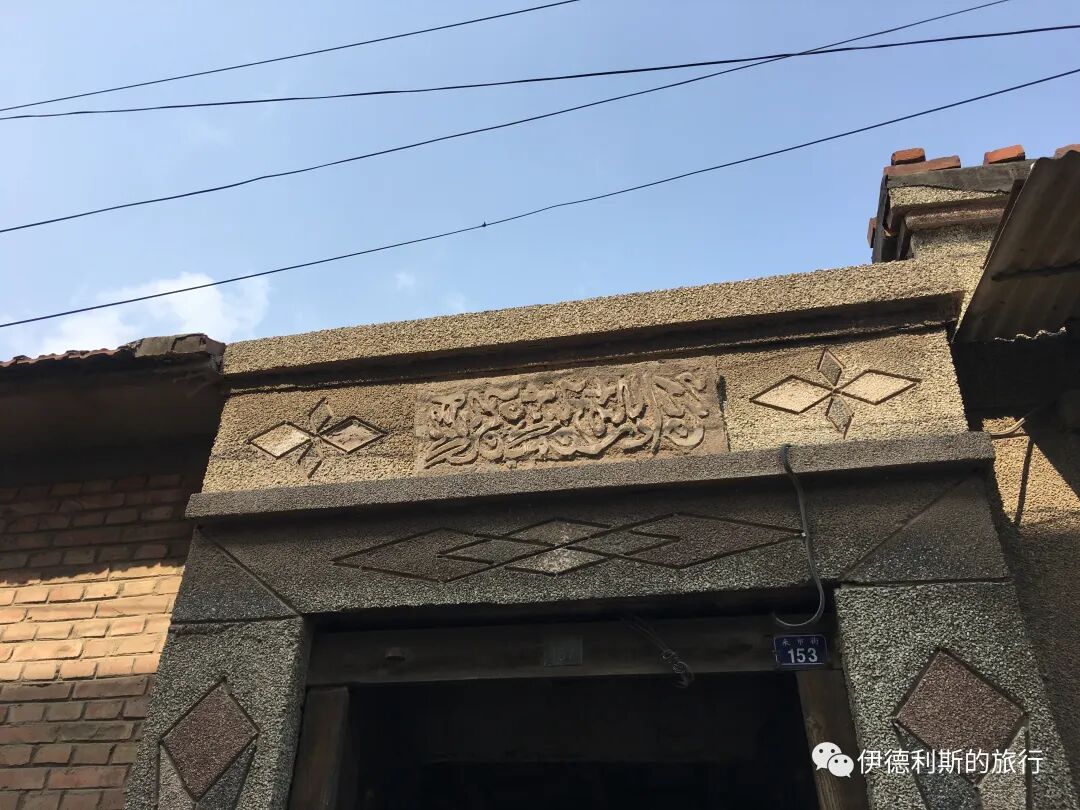
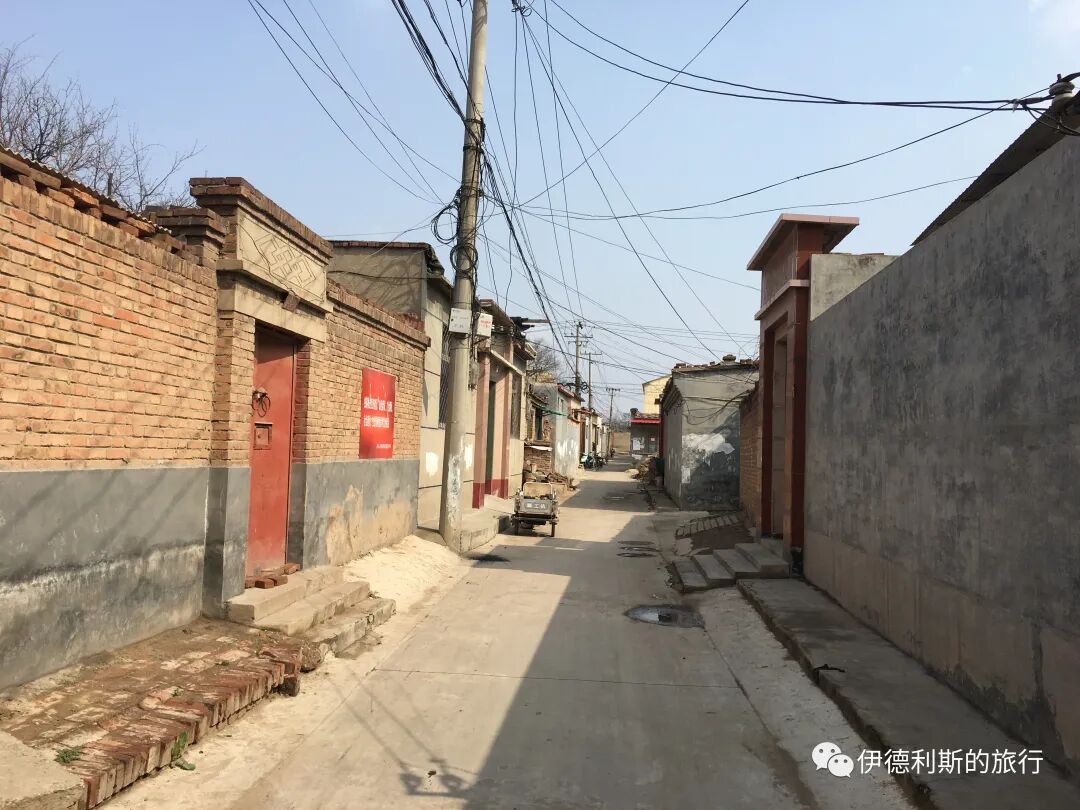
Summary: This Muslim travel guide China 2026 update keeps the original 2017 Botou travel notes intact and readable. It also supports readers searching for halal food in China, Chinese Muslim food, China Muslim travel tips, and local mosque history in Hebei.
On March 25, 2017, I visited the ancient canal town of Botou in Cangzhou, Hebei, to explore its food and culture. The information in this article comes from the History of Botou Canal and the Records of Botou Mosque.
The formation of the Hui Muslim community in Botou
In 1392, the 25th year of the Hongwu reign, the Ming Dynasty set up a canal administration office in Botou to manage shipping between Tianjin and Dezhou, and Botou gradually became an important canal town. In 1399, the first year of the Jianwen reign, during the Jingnan Campaign, Prince Yan Zhu Di attacked and captured the old city of Cangzhou. He killed thousands of surrendered soldiers and tens of thousands of residents. Eastern Hebei suffered greatly, and Botou was hit hard, causing its population to drop sharply.
In 1404, the second year of the Yongle reign, Zhu Di, who had become the Yongle Emperor, ordered residents to move to Cangzhou. Many Hui Muslims came to Botou as a result. Records show that Hui Muslims with the surnames Yang, Cao, Dai, Hui, Zhang, Wang, and Shi all moved to Botou in 1404 by imperial decree from Erlanggang in Shangyuan County, Yingtian Prefecture, Nanjing. Research suggests that Erlanggang was a camp for Semu people who had surrendered to the Ming from the Yuan Dynasty. The first mosque in Botou was built that same year.
Later, more Hui Muslims moved here from Shandong, Shanxi, and Anhui, and the Botou Hui Muslim community was officially formed. In 1551, the 30th year of the Jiajing reign, Botou began building city walls. They used earth for three sides, and on the east side facing the canal, they added parapets to the houses and opened six city gates. The Hui Muslim community was located inside the south gate. The Botou Mosque underwent large-scale expansion during the late Ming and early Qing dynasties, taking on its current form.
Moon-Sighting Tower (Wangyuelou)
In the eyes of Allah, the most honorable among you is the one who is most pious. (49:13)
After 1966, the Botou Mosque stopped its activities. Religious staff were publicly denounced, and scriptures were burned. The head of the mosque, Zhang Zizhen, was driven away and passed away the following year. The imam, Ha Fuling, was sent back to his hometown in Xinzhuang, Xian County.
After the denunciations, Jin Laiguang set up a flour mill. Older religious staff worked as millers, and the younger ones went to work in factories. The main hall of the mosque was occupied by an embroidery factory, an oilcloth factory, a straw hat factory, and a sack thread factory as workshops. The water room was used by an agricultural production team as a machine shop. The side gates of the main entrance, the charity school, the side halls, and the south lecture hall all collapsed. The spire of the Moon-Sighting Tower was smashed, its first-floor walls collapsed, and the base walls of the main hall also fell. Eighteen original plaques inscribed by figures like Ji Xiaolan and Zhang Zhidong were lost. Only a damaged plaque reading "Pure and Bright" (Qingzhen Guangming), inscribed by the 75th Duke Yansheng, Kong Xiangke, in 1864, the third year of the Tongzhi reign, was found. In 1982, a calligrapher repaired the damaged parts based on the original style.
On the canal bank directly east of the Botou Mosque, there used to be a brick and wood archway, commonly known by locals as the Big Round Gate (Dayuanmen), with the words "Muslim Lane" (Qingzhen Xiang) written on it. In 1953, a major flood on the canal led to the demolition of the Big Round Gate to block the riverbank. In the old days, Hui Muslim merchant ships traveling on the canal knew they had reached the Hui Muslim residential area as soon as they saw the "Muslim Lane" plaque.
There was once a stone archway next to the Big Round Gate that collapsed in the 1960s. When the Botou Mosque was rebuilt in 1982, two stone lintels from the top of the archway were moved to the mosque's main hall to serve as a foundation. The left side featured a dragon head and phoenix tail, and the right side featured a qilin delivering a child.
The women's mosque was built in 1953. It was originally the Huizhen Production Cooperative, built under the leadership of Imam Zhang Zizhen, and was rebuilt in 1993.
Halal food
During the Qing Dynasty and the Republic of China era, the most famous halal restaurants in Botou were Taihe Restaurant on Shunhe Street, which opened during the Tongzhi reign, and Shunfu Restaurant and Xingshenghe on Gulou Street, which opened during the Guangxu reign. Xiyu Restaurant was on East Street. The small and medium-sized restaurants around Shunhe Street were all halal, offering a wide variety of halal snacks.
Taihe Restaurant opened in 1870 (the ninth year of the Tongzhi reign). It was founded by Hui Muslim brothers Dai Ruiwu and Dai Bin. The building had the shop in the front and the restaurant in the back, with both open seating and private rooms, including standard and premium options. The menu focused on beef, lamb, fish, and shrimp. Dishes included clear-stewed beef, oil-fried tripe, braised cabbage, stir-fried lamb brains, stir-fried shrimp, stewed beef tongue and tail, braised beef tendon, and sweet and sour fish. The third-generation chef, Dai Shengheng, went to Tianjin in 1921 at age 15 to apprentice at the halal Hongbinlou Restaurant. He learned to cook elaborate whole-lamb feasts and river seafood. After returning to the restaurant, he became the head chef. He cooked high-end dishes like shark fin, bird's nest, and whole lamb, as well as home-style dishes like stir-fried, braised, and stewed beef and lamb. His signature dishes included deboned chicken, deboned fish, steamed chicken, candied peaches (basi tao), braised cabbage, various sweet dishes, and oil-poached sauces. His shredded meat noodle soup was considered the best. The noodles in Taihe Restaurant's shredded meat noodle soup were thin and translucent like silk threads, and the shredded meat was as thin as bean sprouts. The soup came in chicken or meatball varieties, served with large broad beans, preserved vegetables (nancai), wood ear mushrooms, and fried tofu puffs. It tasted delicious.
In 1937, Dai Shengheng went to Jinan to open the new Majia Restaurant, and Taihe Restaurant closed.
Xingshenghe Maji was founded during the Guangxu reign by Hui Muslim Ma Chunbo. It was located on Gulou Street outside Chaoyang Gate and was famous for its five-spice roast beef. Ma's roast meat contained no beef fat or mixed scraps. Before roasting, the meat was soaked in cold water for several hours to remove blood. It was seasoned with five spices: cinnamon, star anise, Sichuan peppercorns, fennel seeds, and cloves. No soy sauce or sugar coloring was used. It was simmered in old broth over low heat for six hours. When finished, it was sweet, moist, and brownish-red, with a chewy texture that held together. It could stay fresh for three to five days.
Before 1937, Ma Doutai, a Hui Muslim from Xinzhuang in Xian County, came to Gulou Street in Botou to open the Juxingheng Pastry Shop. It had the shop in the front and the factory in the back. They offered over 20 varieties of pastries that were sweet, salty, fragrant, soft, and crispy. They used various fillings like red hawthorn, white sugar, date paste, and red bean paste, making it the most famous halal pastry shop in Botou.
After 1937, 19 halal restaurants opened in Botou, nine of which were on Sanfu Street. The larger restaurants included Enshunlou, Qingzhen Restaurant, Fushun Restaurant, and Enyishun. Their signature dishes included braised sea cucumber, braised fish, steamed duck, and eight-treasure rice (babao fan). Eight-treasure rice is a sweet dish. The main ingredient is glutinous rice, supplemented with green silk, colorful cakes, lotus seeds, water chestnuts, melon strips, walnut kernels, raisins, and melon seeds. The rice is first made into a sticky consistency and mixed with white sugar. Then, the toppings are added, creating a colorful and uniquely shaped dish.
Lamb offal (yangzasui)
Stewed free-range chicken (dun benji)
Braised lamb offal (hui yangza)
Egg rolls (danjuan)
The pastries at this shop were all sourced from Tianjin.
Hui Muslims and the Grand Canal
Local shipping in Botou was mainly operated by Hui Muslims. The trade was divided into two groups: those who worked on the boats and those who owned the boats. Those who worked on the boats were the crew and trackers. Those who owned the boats were the boat owners, divided into those who owned large boats for renting out or hiring labor, and those who used their own small boats. Some small boat owners operated ferries for passengers, some transported fertilizer for riverside villages, and others ran long-distance transport routes from Tianjin in the north to Xinxiang, Henan in the south. The trough boats (caozichuan) used for long-distance transport were flat, long, and wide, with a shallow draft.
Long-distance boats from Botou carried salt south and returned with cotton, coal, and porcelain. The trip from Tianjin to Dezhou took eight or nine days, to Linqing took half a month, and to Daokou Town in Henan took over forty days.
In 1946, there were 31 Hui Muslim boat-owning households in Botou, primarily from the Shi, Li, Cao, Duo, and Mu families. Later, because the canal became heavily silted, the Mu family moved to Tianjin and switched to sea shipping. By July 1948, Botou had 231 wooden boats.
Trackers were at the bottom of the shipping industry. Boat owners chose the number of trackers based on the boat's size and cargo capacity, usually five or six, though some trips used as few as one or two, or as many as over ten. When traveling downstream, trackers stayed on the boat to row; when traveling upstream, they went ashore to pull the boat. When pulling, they used a main tow rope attached to a chest pad worn diagonally across the chest. The tracker at the front and the one at the back controlled the direction to keep the boat straight. When passing under a bridge, they had to unhook the rope. The boatmen on board would call out signals to the lead tracker, and they would reattach the rope to continue after passing the bridge.
During the voyage, trackers followed a schedule of three tea breaks and four meals a day. They started the boat at 5:00 a.m., ate breakfast at 8:00 or 9:00, had their first tea break after traveling a bit, ate lunch at noon, had their second tea break, ate dinner around 4:00 or 5:00 p.m., had their third tea break, and finally ate a late-night snack after docking at dark before resting. The tea for these breaks was usually plain water, and the meals consisted of steamed cornmeal buns (wotou), pickled vegetables, and millet porridge. The stoves on the boats were small, so the steamed cornmeal buns (wotou) came out thin and tall, and you could grab four or five in one hand. Besides this, when they reached Cangzhou, Dezhou, and Linqingzhou, they could have noodles in soup, which they called passing through a prefecture to eat noodles.
There were many types of tracker work songs, with different ones for going downstream, upstream, turning corners, and passing bridges. The head boatman directed the work. He stood at the bow to watch the current, used a pole to adjust the boat's direction, and used work songs to coordinate everyone. A song leader followed the trackers. He did not pull the rope but was responsible for responding to the head boatman's lead vocals. The lyrics included lines like, Big boats carry white grain, small boats carry green bamboo poles; Big boats can dock at Jiujiang port, small boats only rely on the riverbanks. After 1957, wooden boats on the South Canal were replaced by small tugboats, and the canal work songs gradually disappeared. The only person who can sing the full set of Botou canal work songs today is Li Shuyuan, a Hui Muslim born in 1935. He is the fourth-generation descendant of the Li family, a major boat-owning family in Botou. He started working on boats at age 14 and is the last person from those major families who witnessed the glory days of the South Canal.
In 1957, during the public-private partnership transition, Botou's fleets were assigned to Dezhou, Xinxiang, and Tianjin. Botou no longer had its own fleet, and many people left their boats to return to Botou, where they were assigned to brick factories and construction teams. During breaks, these workers would sing the work songs, which became the final echoes of the canal.
Derived from the shipping industry were the porter guilds, commonly known as the heavy lifters. The porter guilds in Botou were mainly Hui Muslims. They usually used a shoulder pole and a shoulder pad. Some families shared handcarts, and when unloading logs, they used levers with large, semicircular iron hooks at the front. At that time, each person carried one 90-kilogram sack of grain or one roll of paper or cardboard weighing over 100 kilograms. They carried four 22.5-kilogram bags of flour at a time. They tracked their work by receiving a bamboo tally for each load and counting them at the end. When lifting heavy items like logs, everyone would sing labor work songs. One person would lead, and the others would follow, creating a rhythmic, powerful, and responsive sound.
During the Republic of China era, there were three Hui Muslim porter groups in Botou. One was the Tongshun Shop porter group, commonly known as the South End porter group. Another was the Wuying porter group, and the third was the Gulou and East Street porter group. The three groups merged in 1947 to become the Wharf Second Labor Union, and in 1958, they became the Second Transport Team.
Before 1965, the Botou section of the Grand Canal had plenty of water. In the early summer of 1965, the canal dried up for the first time. After that, the water level dropped every year. By the first half of the 1970s, it was nearly dry, and shipping in Botou came to an end.
Muslim Travel Guide Urumqi Spring Festival: Hui Muslim Life, Jumu'ah and Family Visits
Articles • yusuf908 posted the article • 0 comments • 142 views • 2026-05-23 23:22
Reposted from the web
Summary: This Urumqi article records Hui Muslim life during the Spring Festival, including nianye, luohuali, Jumuah prayer, and visiting relatives and friends. It preserves the original religious customs, family scenes, food details, and community observations in natural English.
Night of Prayer (nianye).
During the 2024 Spring Festival holiday, I took Suleiman to visit his grandparents (anai aye) in Urumqi, just in time for the noble month of Sha'ban (the eighth month of the Islamic calendar). The evening of the 15th day of the eighth month is the Night of Bara'at, which means the Night of Atonement. On this night, the two angels on our shoulders replace the scrolls that record our good and bad deeds for the year. They seal the old scrolls and open new ones, which serve as evidence for questioning when we enter the afterlife, so it is also called the Night of Exchanging Scrolls. In the traditions of Hui Muslims in some regions, when the month of Sha'ban arrives, everyone takes turns inviting the imam and friends and family to their homes for a Night of Prayer. The main process includes reciting scriptures, praising the Prophet, performing repentance (tawbah), and asking for forgiveness for family members and the deceased. Afterward, everyone eats a rich meal to strengthen bonds, boost faith, and prepare for the noble month of Ramadan.
February 17 was our family's Night of Prayer, and we also celebrated Suleiman's first birthday (suisuizi). We invited four imams and a large group of relatives to recite surahs, recite the Bara'at praise, perform repentance, and receive dua, followed by a meal. First, we served appetizers (diediezi) and tea. The appetizers included nut tarts and baklava we bought at a Uyghur pastry shop on Hetian Street, as well as traditional flaky pastries and fried flour cakes (saqima) made by my aunt. After everyone chatted for a while, we cleared the appetizers and brought out the main dishes to officially start the feast.
With the help of my aunts, we prepared a rich feast. The main dishes were clear-stewed lamb, braised beef steak, followed by steamed starch jelly (mengzi), pearl meatballs, peppercorn chicken, steamed fish, sweet rice platter (tianpanzi), and various stir-fried dishes. The staples were fried dough (youxiang), steamed buns (momo), and rice.
The fried dough was deep-fried a day in advance. Before frying, we first performed ablution (wudu), then leavened the dough. After it rose, we scalded a small portion with hot oil and mixed in a little baking soda and fenugreek powder. We kneaded the scalded dough into the leavened dough, covered the basin, and let it rest for 15 minutes. After resting, we rolled it into a long shape, pinched off pieces, rolled them into flat cakes, cut four small slits with a knife, and it was ready to be fried. When putting them into the pot, we recited the Tasmiyah. We fried them for a while, flipped them, and tapped the edges with chopsticks; once they were firm, they were done.
To make sweet rice platter (tianpanzi), first wash the glutinous rice and soak it for three days. Then, add a little brown sugar (shazitang) and steam it, using more water than you would for regular rice. Next, wash red dates, walnut kernels, and raisins, and spread them at the bottom of a bowl. Cover them with the steamed glutinous rice and let it cool. After that, boil rock sugar to make a syrup. Finally, flip the bowl of rice onto a plate and pour the syrup over it.
Meatloaf (munzi) is made with ground beef. When mixing the filling, beat it repeatedly, then shape it into a cylinder. Pinch the top to look like a railing, pour an egg into the center, and steam it.
For spicy peppercorn chicken (jiaomaji), first wash a free-range chicken, cut it in half, and put it in a pressure cooker. Add water to cover it, along with red chili, Sichuan peppercorns, salt, bay leaves, cinnamon, and ginger slices. Once cooked, take it out, let it cool in a basin, tear the meat into strips, and top with green onions. Heat oil in a pan. Once hot, turn off the heat and add dried chili skins (lapizi), Sichuan peppercorns, salt, and white pepper. Stir well, pour in some chicken broth, and then pour everything over the chicken in the basin and mix well.
We spent the night at my aunt's house near the cement factory. My uncle is an imam at a small mosque in Shanxi, and we are very grateful (zhigan) for that.
The main dishes were definitely braised beef steak and clear-stewed lamb. The chicken was raised by my uncle himself, and the lamb was from the southern mountains of Urumqi.
We spent the night at my second aunt's house in the New City District. My aunt is the recognized master chef of our family. She makes authentic home-style stir-fries, meatloaf (munzi), stuffed meat slices (jiasha), and tripe.
We spent the night at my aunt's house near the flour mill and had basin meat (penpenrou) with fried dough (youxiang) for breakfast.
We hosted our guests at Lanpin Banquet. It is currently the most popular restaurant in Urumqi for Hui Muslims to hold religious gatherings (niansuoer). They don't sell alcohol, the food is refined, and the owner is warm and attentive. It is usually packed on weekends and holidays, so you must book in advance. On the day we went, they hosted 30 tables for a circumcision ceremony and 15 tables for a special occasion.
We ate stir-fried beef tendon, spicy peppercorn chicken (jiaomaji), cold-dressed beef, hand-grabbed lamb (shoubarou), sauced stuffed meat slices (jiasha), pearl meatballs, and flatfish, along with complimentary side dishes. These are the most popular dishes for Hui Muslim gatherings in Urumqi right now. Their hand-grabbed lamb (shoubarou) is excellent; the meat is tender and fragrant, making it perfect for elderly people to eat.
I spent the night at Uncle Saisai's house in the Changsheng Brigade in the southern suburbs of Urumqi. The hospitality was generous, with dishes like sweet platter (tianpanzi), fried dough snacks (youguozi), pearl meatballs (zhenzhu wanzi), braised ribbonfish, clear-stewed meat, and braised lamb. I also met many relatives.
Engagement acceptance ceremony (luohuali)
This time, I arrived just in time for my brother-in-law's engagement acceptance ceremony (luohuali). We had a feast at a small community (xiaofang) of the Jahriyya order (Zhepai) in Anningqu, in the northern suburbs of Urumqi, where I ate some homemade fried twisted sugar dough (tangningningzi). The feast started with small appetizer plates, which were then cleared to make room for the main dishes, including clear-stewed meat, braised meatballs, braised fish, and beef head meat.
The traditional wedding customs of Hui Muslims in Xinjiang are very specific. Before a formal marriage proposal, there is a 'preliminary inquiry' where the man's family learns about the woman's family. Then, they send a matchmaker with four types of gifts—tea leaves, sugar cubes, red dates, and walnuts (or pastries)—wrapped in four colors, known as the 'four-color gift' (sese li). The first time a matchmaker brings the four-color gift to propose, it is called the 'opening gift' (kaikouli). The matchmaker gives the red-cloth-wrapped gifts to the woman's family, but they do not give an answer right away. After careful consideration, the woman's family sends a message through the matchmaker. The man's family then sends the four-color gift again, which is called the 'engagement acceptance ceremony' (luohuali), and after that, they enter the engagement stage.
Friday prayer (Jumu'ah)
At noon, I attended the Friday prayer (Jumu'ah) at the Changsheng Grand Mosque. The Changsheng Grand Mosque is located in the Changsheng Brigade at the foot of Yaomo Mountain (Yamalike Mountain) in the southern suburbs of Urumqi. It has the highest number of congregants among the Hui Muslim mosques in the Saybagh District, with over a hundred people attending the Friday prayer (Jumu'ah). The Changsheng Brigade used to be a series of large courtyards where everyone farmed. Now, everyone has moved collectively to the Fumin Anju residential area, and the houses are very spacious.
Imam Fanta of the Changsheng Grand Mosque is my wife's uncle. Uncle Fanta is the one who performed our marriage contract (nikah). Uncle Fanta's surname is Su. The Su family is a large clan in Changsheng. Over three hundred years ago, they left Ankang, Shaanxi, and traveled through Ningxia and Jimsar to Urumqi to do business. Later, their business failed, and they eventually moved to Changsheng to farm, where they have lived ever since.
I bought fresh milk and handmade yogurt at the entrance of the Changsheng residential area. A large bucket of fresh milk only cost 20 yuan. After boiling it and adding two spoonfuls of milk skin (naipizi) I bought earlier on Hetian Street, it tasted amazing. The handmade yogurt comes with its own layer of milk skin (naipizi) and has a very rich milky flavor.
Visiting relatives and friends.
I visited my second aunt's house and had a lunch of Hui Muslim-style lamb dumpling soup (fentang yangrou jiaozi). The soup is the version Hui Muslims in Xinjiang make for Eid, and the dumplings are filled with lamb, onions (piyanzi), and pickled cabbage. They were small and delicate, and everyone loved them.
I attended a family dinner at my older sister's place. My brother-in-law is a great cook and made beef steak stew, spicy numbing chicken (jiaoma ji), pumpkin buns (kawa baozi), and smoked horse sausage. My brother-in-law makes amazing rice pilaf (zhuafan), so I made sure to ask him for his tips during the meal. Don't stir-fry the yellow carrots for the rice pilaf all the way through. Stewing them in water brings out their sweetness, so you don't need to add extra sugar. You must use plenty of oil for the rice pilaf. If you use too much, just tilt the pot and scoop the excess out. The extra oil from the rice pilaf is great for making cabbage and meat mixed noodles (banmian) because it adds so much flavor.
My great-aunt in Wusu invited us out to eat at Lanpin Banquet on Zhujiang Road. It shows how popular this place is among the older generation of Hui Muslims in Urumqi. As soon as we walked in, a young waiter greeted us with a salaam and showed us to our table. We have only been here twice, but the service is always excellent.
This time we had stir-fried black and white lung, yellow noodles with grilled meat (huangmian kaorou), sweet platter (tianpanzi), layered steamed bread (youtazi), spicy numbing chicken, and clear-stewed meat. Everyone loved these traditional dishes. view all
Summary: This Urumqi article records Hui Muslim life during the Spring Festival, including nianye, luohuali, Jumuah prayer, and visiting relatives and friends. It preserves the original religious customs, family scenes, food details, and community observations in natural English.
Night of Prayer (nianye).
During the 2024 Spring Festival holiday, I took Suleiman to visit his grandparents (anai aye) in Urumqi, just in time for the noble month of Sha'ban (the eighth month of the Islamic calendar). The evening of the 15th day of the eighth month is the Night of Bara'at, which means the Night of Atonement. On this night, the two angels on our shoulders replace the scrolls that record our good and bad deeds for the year. They seal the old scrolls and open new ones, which serve as evidence for questioning when we enter the afterlife, so it is also called the Night of Exchanging Scrolls. In the traditions of Hui Muslims in some regions, when the month of Sha'ban arrives, everyone takes turns inviting the imam and friends and family to their homes for a Night of Prayer. The main process includes reciting scriptures, praising the Prophet, performing repentance (tawbah), and asking for forgiveness for family members and the deceased. Afterward, everyone eats a rich meal to strengthen bonds, boost faith, and prepare for the noble month of Ramadan.
February 17 was our family's Night of Prayer, and we also celebrated Suleiman's first birthday (suisuizi). We invited four imams and a large group of relatives to recite surahs, recite the Bara'at praise, perform repentance, and receive dua, followed by a meal. First, we served appetizers (diediezi) and tea. The appetizers included nut tarts and baklava we bought at a Uyghur pastry shop on Hetian Street, as well as traditional flaky pastries and fried flour cakes (saqima) made by my aunt. After everyone chatted for a while, we cleared the appetizers and brought out the main dishes to officially start the feast.
With the help of my aunts, we prepared a rich feast. The main dishes were clear-stewed lamb, braised beef steak, followed by steamed starch jelly (mengzi), pearl meatballs, peppercorn chicken, steamed fish, sweet rice platter (tianpanzi), and various stir-fried dishes. The staples were fried dough (youxiang), steamed buns (momo), and rice.
The fried dough was deep-fried a day in advance. Before frying, we first performed ablution (wudu), then leavened the dough. After it rose, we scalded a small portion with hot oil and mixed in a little baking soda and fenugreek powder. We kneaded the scalded dough into the leavened dough, covered the basin, and let it rest for 15 minutes. After resting, we rolled it into a long shape, pinched off pieces, rolled them into flat cakes, cut four small slits with a knife, and it was ready to be fried. When putting them into the pot, we recited the Tasmiyah. We fried them for a while, flipped them, and tapped the edges with chopsticks; once they were firm, they were done.
To make sweet rice platter (tianpanzi), first wash the glutinous rice and soak it for three days. Then, add a little brown sugar (shazitang) and steam it, using more water than you would for regular rice. Next, wash red dates, walnut kernels, and raisins, and spread them at the bottom of a bowl. Cover them with the steamed glutinous rice and let it cool. After that, boil rock sugar to make a syrup. Finally, flip the bowl of rice onto a plate and pour the syrup over it.
Meatloaf (munzi) is made with ground beef. When mixing the filling, beat it repeatedly, then shape it into a cylinder. Pinch the top to look like a railing, pour an egg into the center, and steam it.
For spicy peppercorn chicken (jiaomaji), first wash a free-range chicken, cut it in half, and put it in a pressure cooker. Add water to cover it, along with red chili, Sichuan peppercorns, salt, bay leaves, cinnamon, and ginger slices. Once cooked, take it out, let it cool in a basin, tear the meat into strips, and top with green onions. Heat oil in a pan. Once hot, turn off the heat and add dried chili skins (lapizi), Sichuan peppercorns, salt, and white pepper. Stir well, pour in some chicken broth, and then pour everything over the chicken in the basin and mix well.
We spent the night at my aunt's house near the cement factory. My uncle is an imam at a small mosque in Shanxi, and we are very grateful (zhigan) for that.
The main dishes were definitely braised beef steak and clear-stewed lamb. The chicken was raised by my uncle himself, and the lamb was from the southern mountains of Urumqi.
We spent the night at my second aunt's house in the New City District. My aunt is the recognized master chef of our family. She makes authentic home-style stir-fries, meatloaf (munzi), stuffed meat slices (jiasha), and tripe.
We spent the night at my aunt's house near the flour mill and had basin meat (penpenrou) with fried dough (youxiang) for breakfast.
We hosted our guests at Lanpin Banquet. It is currently the most popular restaurant in Urumqi for Hui Muslims to hold religious gatherings (niansuoer). They don't sell alcohol, the food is refined, and the owner is warm and attentive. It is usually packed on weekends and holidays, so you must book in advance. On the day we went, they hosted 30 tables for a circumcision ceremony and 15 tables for a special occasion.
We ate stir-fried beef tendon, spicy peppercorn chicken (jiaomaji), cold-dressed beef, hand-grabbed lamb (shoubarou), sauced stuffed meat slices (jiasha), pearl meatballs, and flatfish, along with complimentary side dishes. These are the most popular dishes for Hui Muslim gatherings in Urumqi right now. Their hand-grabbed lamb (shoubarou) is excellent; the meat is tender and fragrant, making it perfect for elderly people to eat.
I spent the night at Uncle Saisai's house in the Changsheng Brigade in the southern suburbs of Urumqi. The hospitality was generous, with dishes like sweet platter (tianpanzi), fried dough snacks (youguozi), pearl meatballs (zhenzhu wanzi), braised ribbonfish, clear-stewed meat, and braised lamb. I also met many relatives.
Engagement acceptance ceremony (luohuali)
This time, I arrived just in time for my brother-in-law's engagement acceptance ceremony (luohuali). We had a feast at a small community (xiaofang) of the Jahriyya order (Zhepai) in Anningqu, in the northern suburbs of Urumqi, where I ate some homemade fried twisted sugar dough (tangningningzi). The feast started with small appetizer plates, which were then cleared to make room for the main dishes, including clear-stewed meat, braised meatballs, braised fish, and beef head meat.
The traditional wedding customs of Hui Muslims in Xinjiang are very specific. Before a formal marriage proposal, there is a 'preliminary inquiry' where the man's family learns about the woman's family. Then, they send a matchmaker with four types of gifts—tea leaves, sugar cubes, red dates, and walnuts (or pastries)—wrapped in four colors, known as the 'four-color gift' (sese li). The first time a matchmaker brings the four-color gift to propose, it is called the 'opening gift' (kaikouli). The matchmaker gives the red-cloth-wrapped gifts to the woman's family, but they do not give an answer right away. After careful consideration, the woman's family sends a message through the matchmaker. The man's family then sends the four-color gift again, which is called the 'engagement acceptance ceremony' (luohuali), and after that, they enter the engagement stage.
Friday prayer (Jumu'ah)
At noon, I attended the Friday prayer (Jumu'ah) at the Changsheng Grand Mosque. The Changsheng Grand Mosque is located in the Changsheng Brigade at the foot of Yaomo Mountain (Yamalike Mountain) in the southern suburbs of Urumqi. It has the highest number of congregants among the Hui Muslim mosques in the Saybagh District, with over a hundred people attending the Friday prayer (Jumu'ah). The Changsheng Brigade used to be a series of large courtyards where everyone farmed. Now, everyone has moved collectively to the Fumin Anju residential area, and the houses are very spacious.
Imam Fanta of the Changsheng Grand Mosque is my wife's uncle. Uncle Fanta is the one who performed our marriage contract (nikah). Uncle Fanta's surname is Su. The Su family is a large clan in Changsheng. Over three hundred years ago, they left Ankang, Shaanxi, and traveled through Ningxia and Jimsar to Urumqi to do business. Later, their business failed, and they eventually moved to Changsheng to farm, where they have lived ever since.
I bought fresh milk and handmade yogurt at the entrance of the Changsheng residential area. A large bucket of fresh milk only cost 20 yuan. After boiling it and adding two spoonfuls of milk skin (naipizi) I bought earlier on Hetian Street, it tasted amazing. The handmade yogurt comes with its own layer of milk skin (naipizi) and has a very rich milky flavor.
Visiting relatives and friends.
I visited my second aunt's house and had a lunch of Hui Muslim-style lamb dumpling soup (fentang yangrou jiaozi). The soup is the version Hui Muslims in Xinjiang make for Eid, and the dumplings are filled with lamb, onions (piyanzi), and pickled cabbage. They were small and delicate, and everyone loved them.
I attended a family dinner at my older sister's place. My brother-in-law is a great cook and made beef steak stew, spicy numbing chicken (jiaoma ji), pumpkin buns (kawa baozi), and smoked horse sausage. My brother-in-law makes amazing rice pilaf (zhuafan), so I made sure to ask him for his tips during the meal. Don't stir-fry the yellow carrots for the rice pilaf all the way through. Stewing them in water brings out their sweetness, so you don't need to add extra sugar. You must use plenty of oil for the rice pilaf. If you use too much, just tilt the pot and scoop the excess out. The extra oil from the rice pilaf is great for making cabbage and meat mixed noodles (banmian) because it adds so much flavor.
My great-aunt in Wusu invited us out to eat at Lanpin Banquet on Zhujiang Road. It shows how popular this place is among the older generation of Hui Muslims in Urumqi. As soon as we walked in, a young waiter greeted us with a salaam and showed us to our table. We have only been here twice, but the service is always excellent.
This time we had stir-fried black and white lung, yellow noodles with grilled meat (huangmian kaorou), sweet platter (tianpanzi), layered steamed bread (youtazi), spicy numbing chicken, and clear-stewed meat. Everyone loved these traditional dishes. view all
Reposted from the web
Summary: This Urumqi article records Hui Muslim life during the Spring Festival, including nianye, luohuali, Jumuah prayer, and visiting relatives and friends. It preserves the original religious customs, family scenes, food details, and community observations in natural English.
Night of Prayer (nianye).
During the 2024 Spring Festival holiday, I took Suleiman to visit his grandparents (anai aye) in Urumqi, just in time for the noble month of Sha'ban (the eighth month of the Islamic calendar). The evening of the 15th day of the eighth month is the Night of Bara'at, which means the Night of Atonement. On this night, the two angels on our shoulders replace the scrolls that record our good and bad deeds for the year. They seal the old scrolls and open new ones, which serve as evidence for questioning when we enter the afterlife, so it is also called the Night of Exchanging Scrolls. In the traditions of Hui Muslims in some regions, when the month of Sha'ban arrives, everyone takes turns inviting the imam and friends and family to their homes for a Night of Prayer. The main process includes reciting scriptures, praising the Prophet, performing repentance (tawbah), and asking for forgiveness for family members and the deceased. Afterward, everyone eats a rich meal to strengthen bonds, boost faith, and prepare for the noble month of Ramadan.
February 17 was our family's Night of Prayer, and we also celebrated Suleiman's first birthday (suisuizi). We invited four imams and a large group of relatives to recite surahs, recite the Bara'at praise, perform repentance, and receive dua, followed by a meal. First, we served appetizers (diediezi) and tea. The appetizers included nut tarts and baklava we bought at a Uyghur pastry shop on Hetian Street, as well as traditional flaky pastries and fried flour cakes (saqima) made by my aunt. After everyone chatted for a while, we cleared the appetizers and brought out the main dishes to officially start the feast.
With the help of my aunts, we prepared a rich feast. The main dishes were clear-stewed lamb, braised beef steak, followed by steamed starch jelly (mengzi), pearl meatballs, peppercorn chicken, steamed fish, sweet rice platter (tianpanzi), and various stir-fried dishes. The staples were fried dough (youxiang), steamed buns (momo), and rice.
The fried dough was deep-fried a day in advance. Before frying, we first performed ablution (wudu), then leavened the dough. After it rose, we scalded a small portion with hot oil and mixed in a little baking soda and fenugreek powder. We kneaded the scalded dough into the leavened dough, covered the basin, and let it rest for 15 minutes. After resting, we rolled it into a long shape, pinched off pieces, rolled them into flat cakes, cut four small slits with a knife, and it was ready to be fried. When putting them into the pot, we recited the Tasmiyah. We fried them for a while, flipped them, and tapped the edges with chopsticks; once they were firm, they were done.
To make sweet rice platter (tianpanzi), first wash the glutinous rice and soak it for three days. Then, add a little brown sugar (shazitang) and steam it, using more water than you would for regular rice. Next, wash red dates, walnut kernels, and raisins, and spread them at the bottom of a bowl. Cover them with the steamed glutinous rice and let it cool. After that, boil rock sugar to make a syrup. Finally, flip the bowl of rice onto a plate and pour the syrup over it.
Meatloaf (munzi) is made with ground beef. When mixing the filling, beat it repeatedly, then shape it into a cylinder. Pinch the top to look like a railing, pour an egg into the center, and steam it.
For spicy peppercorn chicken (jiaomaji), first wash a free-range chicken, cut it in half, and put it in a pressure cooker. Add water to cover it, along with red chili, Sichuan peppercorns, salt, bay leaves, cinnamon, and ginger slices. Once cooked, take it out, let it cool in a basin, tear the meat into strips, and top with green onions. Heat oil in a pan. Once hot, turn off the heat and add dried chili skins (lapizi), Sichuan peppercorns, salt, and white pepper. Stir well, pour in some chicken broth, and then pour everything over the chicken in the basin and mix well.
We spent the night at my aunt's house near the cement factory. My uncle is an imam at a small mosque in Shanxi, and we are very grateful (zhigan) for that.
The main dishes were definitely braised beef steak and clear-stewed lamb. The chicken was raised by my uncle himself, and the lamb was from the southern mountains of Urumqi.
We spent the night at my second aunt's house in the New City District. My aunt is the recognized master chef of our family. She makes authentic home-style stir-fries, meatloaf (munzi), stuffed meat slices (jiasha), and tripe.
We spent the night at my aunt's house near the flour mill and had basin meat (penpenrou) with fried dough (youxiang) for breakfast.
We hosted our guests at Lanpin Banquet. It is currently the most popular restaurant in Urumqi for Hui Muslims to hold religious gatherings (niansuoer). They don't sell alcohol, the food is refined, and the owner is warm and attentive. It is usually packed on weekends and holidays, so you must book in advance. On the day we went, they hosted 30 tables for a circumcision ceremony and 15 tables for a special occasion.
We ate stir-fried beef tendon, spicy peppercorn chicken (jiaomaji), cold-dressed beef, hand-grabbed lamb (shoubarou), sauced stuffed meat slices (jiasha), pearl meatballs, and flatfish, along with complimentary side dishes. These are the most popular dishes for Hui Muslim gatherings in Urumqi right now. Their hand-grabbed lamb (shoubarou) is excellent; the meat is tender and fragrant, making it perfect for elderly people to eat.
I spent the night at Uncle Saisai's house in the Changsheng Brigade in the southern suburbs of Urumqi. The hospitality was generous, with dishes like sweet platter (tianpanzi), fried dough snacks (youguozi), pearl meatballs (zhenzhu wanzi), braised ribbonfish, clear-stewed meat, and braised lamb. I also met many relatives.
Engagement acceptance ceremony (luohuali)
This time, I arrived just in time for my brother-in-law's engagement acceptance ceremony (luohuali). We had a feast at a small community (xiaofang) of the Jahriyya order (Zhepai) in Anningqu, in the northern suburbs of Urumqi, where I ate some homemade fried twisted sugar dough (tangningningzi). The feast started with small appetizer plates, which were then cleared to make room for the main dishes, including clear-stewed meat, braised meatballs, braised fish, and beef head meat.
The traditional wedding customs of Hui Muslims in Xinjiang are very specific. Before a formal marriage proposal, there is a 'preliminary inquiry' where the man's family learns about the woman's family. Then, they send a matchmaker with four types of gifts—tea leaves, sugar cubes, red dates, and walnuts (or pastries)—wrapped in four colors, known as the 'four-color gift' (sese li). The first time a matchmaker brings the four-color gift to propose, it is called the 'opening gift' (kaikouli). The matchmaker gives the red-cloth-wrapped gifts to the woman's family, but they do not give an answer right away. After careful consideration, the woman's family sends a message through the matchmaker. The man's family then sends the four-color gift again, which is called the 'engagement acceptance ceremony' (luohuali), and after that, they enter the engagement stage.
Friday prayer (Jumu'ah)
At noon, I attended the Friday prayer (Jumu'ah) at the Changsheng Grand Mosque. The Changsheng Grand Mosque is located in the Changsheng Brigade at the foot of Yaomo Mountain (Yamalike Mountain) in the southern suburbs of Urumqi. It has the highest number of congregants among the Hui Muslim mosques in the Saybagh District, with over a hundred people attending the Friday prayer (Jumu'ah). The Changsheng Brigade used to be a series of large courtyards where everyone farmed. Now, everyone has moved collectively to the Fumin Anju residential area, and the houses are very spacious.
Imam Fanta of the Changsheng Grand Mosque is my wife's uncle. Uncle Fanta is the one who performed our marriage contract (nikah). Uncle Fanta's surname is Su. The Su family is a large clan in Changsheng. Over three hundred years ago, they left Ankang, Shaanxi, and traveled through Ningxia and Jimsar to Urumqi to do business. Later, their business failed, and they eventually moved to Changsheng to farm, where they have lived ever since.
I bought fresh milk and handmade yogurt at the entrance of the Changsheng residential area. A large bucket of fresh milk only cost 20 yuan. After boiling it and adding two spoonfuls of milk skin (naipizi) I bought earlier on Hetian Street, it tasted amazing. The handmade yogurt comes with its own layer of milk skin (naipizi) and has a very rich milky flavor.
Visiting relatives and friends.
I visited my second aunt's house and had a lunch of Hui Muslim-style lamb dumpling soup (fentang yangrou jiaozi). The soup is the version Hui Muslims in Xinjiang make for Eid, and the dumplings are filled with lamb, onions (piyanzi), and pickled cabbage. They were small and delicate, and everyone loved them.
I attended a family dinner at my older sister's place. My brother-in-law is a great cook and made beef steak stew, spicy numbing chicken (jiaoma ji), pumpkin buns (kawa baozi), and smoked horse sausage. My brother-in-law makes amazing rice pilaf (zhuafan), so I made sure to ask him for his tips during the meal. Don't stir-fry the yellow carrots for the rice pilaf all the way through. Stewing them in water brings out their sweetness, so you don't need to add extra sugar. You must use plenty of oil for the rice pilaf. If you use too much, just tilt the pot and scoop the excess out. The extra oil from the rice pilaf is great for making cabbage and meat mixed noodles (banmian) because it adds so much flavor.
My great-aunt in Wusu invited us out to eat at Lanpin Banquet on Zhujiang Road. It shows how popular this place is among the older generation of Hui Muslims in Urumqi. As soon as we walked in, a young waiter greeted us with a salaam and showed us to our table. We have only been here twice, but the service is always excellent.
This time we had stir-fried black and white lung, yellow noodles with grilled meat (huangmian kaorou), sweet platter (tianpanzi), layered steamed bread (youtazi), spicy numbing chicken, and clear-stewed meat. Everyone loved these traditional dishes.
Summary: This Urumqi article records Hui Muslim life during the Spring Festival, including nianye, luohuali, Jumuah prayer, and visiting relatives and friends. It preserves the original religious customs, family scenes, food details, and community observations in natural English.
Night of Prayer (nianye).
During the 2024 Spring Festival holiday, I took Suleiman to visit his grandparents (anai aye) in Urumqi, just in time for the noble month of Sha'ban (the eighth month of the Islamic calendar). The evening of the 15th day of the eighth month is the Night of Bara'at, which means the Night of Atonement. On this night, the two angels on our shoulders replace the scrolls that record our good and bad deeds for the year. They seal the old scrolls and open new ones, which serve as evidence for questioning when we enter the afterlife, so it is also called the Night of Exchanging Scrolls. In the traditions of Hui Muslims in some regions, when the month of Sha'ban arrives, everyone takes turns inviting the imam and friends and family to their homes for a Night of Prayer. The main process includes reciting scriptures, praising the Prophet, performing repentance (tawbah), and asking for forgiveness for family members and the deceased. Afterward, everyone eats a rich meal to strengthen bonds, boost faith, and prepare for the noble month of Ramadan.
February 17 was our family's Night of Prayer, and we also celebrated Suleiman's first birthday (suisuizi). We invited four imams and a large group of relatives to recite surahs, recite the Bara'at praise, perform repentance, and receive dua, followed by a meal. First, we served appetizers (diediezi) and tea. The appetizers included nut tarts and baklava we bought at a Uyghur pastry shop on Hetian Street, as well as traditional flaky pastries and fried flour cakes (saqima) made by my aunt. After everyone chatted for a while, we cleared the appetizers and brought out the main dishes to officially start the feast.
With the help of my aunts, we prepared a rich feast. The main dishes were clear-stewed lamb, braised beef steak, followed by steamed starch jelly (mengzi), pearl meatballs, peppercorn chicken, steamed fish, sweet rice platter (tianpanzi), and various stir-fried dishes. The staples were fried dough (youxiang), steamed buns (momo), and rice.
The fried dough was deep-fried a day in advance. Before frying, we first performed ablution (wudu), then leavened the dough. After it rose, we scalded a small portion with hot oil and mixed in a little baking soda and fenugreek powder. We kneaded the scalded dough into the leavened dough, covered the basin, and let it rest for 15 minutes. After resting, we rolled it into a long shape, pinched off pieces, rolled them into flat cakes, cut four small slits with a knife, and it was ready to be fried. When putting them into the pot, we recited the Tasmiyah. We fried them for a while, flipped them, and tapped the edges with chopsticks; once they were firm, they were done.
To make sweet rice platter (tianpanzi), first wash the glutinous rice and soak it for three days. Then, add a little brown sugar (shazitang) and steam it, using more water than you would for regular rice. Next, wash red dates, walnut kernels, and raisins, and spread them at the bottom of a bowl. Cover them with the steamed glutinous rice and let it cool. After that, boil rock sugar to make a syrup. Finally, flip the bowl of rice onto a plate and pour the syrup over it.
Meatloaf (munzi) is made with ground beef. When mixing the filling, beat it repeatedly, then shape it into a cylinder. Pinch the top to look like a railing, pour an egg into the center, and steam it.
For spicy peppercorn chicken (jiaomaji), first wash a free-range chicken, cut it in half, and put it in a pressure cooker. Add water to cover it, along with red chili, Sichuan peppercorns, salt, bay leaves, cinnamon, and ginger slices. Once cooked, take it out, let it cool in a basin, tear the meat into strips, and top with green onions. Heat oil in a pan. Once hot, turn off the heat and add dried chili skins (lapizi), Sichuan peppercorns, salt, and white pepper. Stir well, pour in some chicken broth, and then pour everything over the chicken in the basin and mix well.
We spent the night at my aunt's house near the cement factory. My uncle is an imam at a small mosque in Shanxi, and we are very grateful (zhigan) for that.
The main dishes were definitely braised beef steak and clear-stewed lamb. The chicken was raised by my uncle himself, and the lamb was from the southern mountains of Urumqi.
We spent the night at my second aunt's house in the New City District. My aunt is the recognized master chef of our family. She makes authentic home-style stir-fries, meatloaf (munzi), stuffed meat slices (jiasha), and tripe.
We spent the night at my aunt's house near the flour mill and had basin meat (penpenrou) with fried dough (youxiang) for breakfast.
We hosted our guests at Lanpin Banquet. It is currently the most popular restaurant in Urumqi for Hui Muslims to hold religious gatherings (niansuoer). They don't sell alcohol, the food is refined, and the owner is warm and attentive. It is usually packed on weekends and holidays, so you must book in advance. On the day we went, they hosted 30 tables for a circumcision ceremony and 15 tables for a special occasion.
We ate stir-fried beef tendon, spicy peppercorn chicken (jiaomaji), cold-dressed beef, hand-grabbed lamb (shoubarou), sauced stuffed meat slices (jiasha), pearl meatballs, and flatfish, along with complimentary side dishes. These are the most popular dishes for Hui Muslim gatherings in Urumqi right now. Their hand-grabbed lamb (shoubarou) is excellent; the meat is tender and fragrant, making it perfect for elderly people to eat.
I spent the night at Uncle Saisai's house in the Changsheng Brigade in the southern suburbs of Urumqi. The hospitality was generous, with dishes like sweet platter (tianpanzi), fried dough snacks (youguozi), pearl meatballs (zhenzhu wanzi), braised ribbonfish, clear-stewed meat, and braised lamb. I also met many relatives.
Engagement acceptance ceremony (luohuali)
This time, I arrived just in time for my brother-in-law's engagement acceptance ceremony (luohuali). We had a feast at a small community (xiaofang) of the Jahriyya order (Zhepai) in Anningqu, in the northern suburbs of Urumqi, where I ate some homemade fried twisted sugar dough (tangningningzi). The feast started with small appetizer plates, which were then cleared to make room for the main dishes, including clear-stewed meat, braised meatballs, braised fish, and beef head meat.
The traditional wedding customs of Hui Muslims in Xinjiang are very specific. Before a formal marriage proposal, there is a 'preliminary inquiry' where the man's family learns about the woman's family. Then, they send a matchmaker with four types of gifts—tea leaves, sugar cubes, red dates, and walnuts (or pastries)—wrapped in four colors, known as the 'four-color gift' (sese li). The first time a matchmaker brings the four-color gift to propose, it is called the 'opening gift' (kaikouli). The matchmaker gives the red-cloth-wrapped gifts to the woman's family, but they do not give an answer right away. After careful consideration, the woman's family sends a message through the matchmaker. The man's family then sends the four-color gift again, which is called the 'engagement acceptance ceremony' (luohuali), and after that, they enter the engagement stage.
Friday prayer (Jumu'ah)
At noon, I attended the Friday prayer (Jumu'ah) at the Changsheng Grand Mosque. The Changsheng Grand Mosque is located in the Changsheng Brigade at the foot of Yaomo Mountain (Yamalike Mountain) in the southern suburbs of Urumqi. It has the highest number of congregants among the Hui Muslim mosques in the Saybagh District, with over a hundred people attending the Friday prayer (Jumu'ah). The Changsheng Brigade used to be a series of large courtyards where everyone farmed. Now, everyone has moved collectively to the Fumin Anju residential area, and the houses are very spacious.
Imam Fanta of the Changsheng Grand Mosque is my wife's uncle. Uncle Fanta is the one who performed our marriage contract (nikah). Uncle Fanta's surname is Su. The Su family is a large clan in Changsheng. Over three hundred years ago, they left Ankang, Shaanxi, and traveled through Ningxia and Jimsar to Urumqi to do business. Later, their business failed, and they eventually moved to Changsheng to farm, where they have lived ever since.
I bought fresh milk and handmade yogurt at the entrance of the Changsheng residential area. A large bucket of fresh milk only cost 20 yuan. After boiling it and adding two spoonfuls of milk skin (naipizi) I bought earlier on Hetian Street, it tasted amazing. The handmade yogurt comes with its own layer of milk skin (naipizi) and has a very rich milky flavor.
Visiting relatives and friends.
I visited my second aunt's house and had a lunch of Hui Muslim-style lamb dumpling soup (fentang yangrou jiaozi). The soup is the version Hui Muslims in Xinjiang make for Eid, and the dumplings are filled with lamb, onions (piyanzi), and pickled cabbage. They were small and delicate, and everyone loved them.
I attended a family dinner at my older sister's place. My brother-in-law is a great cook and made beef steak stew, spicy numbing chicken (jiaoma ji), pumpkin buns (kawa baozi), and smoked horse sausage. My brother-in-law makes amazing rice pilaf (zhuafan), so I made sure to ask him for his tips during the meal. Don't stir-fry the yellow carrots for the rice pilaf all the way through. Stewing them in water brings out their sweetness, so you don't need to add extra sugar. You must use plenty of oil for the rice pilaf. If you use too much, just tilt the pot and scoop the excess out. The extra oil from the rice pilaf is great for making cabbage and meat mixed noodles (banmian) because it adds so much flavor.
My great-aunt in Wusu invited us out to eat at Lanpin Banquet on Zhujiang Road. It shows how popular this place is among the older generation of Hui Muslims in Urumqi. As soon as we walked in, a young waiter greeted us with a salaam and showed us to our table. We have only been here twice, but the service is always excellent.
This time we had stir-fried black and white lung, yellow noodles with grilled meat (huangmian kaorou), sweet platter (tianpanzi), layered steamed bread (youtazi), spicy numbing chicken, and clear-stewed meat. Everyone loved these traditional dishes.
Muslim Travel Guide China Hebei Botou: Old Mosques, Hui Streets and Local Muslim Memories
Articles • yusuf908 posted the article • 0 comments • 170 views • 2026-05-23 23:17
Reposted from the web
Summary: This Muslim travel guide China 2026 update keeps the original 2017 Botou travel notes intact and readable. It also supports readers searching for halal food in China, Chinese Muslim food, China Muslim travel tips, and local mosque history in Hebei.
On March 25, 2017, I visited the ancient canal town of Botou in Cangzhou, Hebei, to explore its food and culture. The information in this article comes from the History of Botou Canal and the Records of Botou Mosque.
The formation of the Hui Muslim community in Botou
In 1392, the 25th year of the Hongwu reign, the Ming Dynasty set up a canal administration office in Botou to manage shipping between Tianjin and Dezhou, and Botou gradually became an important canal town. In 1399, the first year of the Jianwen reign, during the Jingnan Campaign, Prince Yan Zhu Di attacked and captured the old city of Cangzhou. He killed thousands of surrendered soldiers and tens of thousands of residents. Eastern Hebei suffered greatly, and Botou was hit hard, causing its population to drop sharply.
In 1404, the second year of the Yongle reign, Zhu Di, who had become the Yongle Emperor, ordered residents to move to Cangzhou. Many Hui Muslims came to Botou as a result. Records show that Hui Muslims with the surnames Yang, Cao, Dai, Hui, Zhang, Wang, and Shi all moved to Botou in 1404 by imperial decree from Erlanggang in Shangyuan County, Yingtian Prefecture, Nanjing. Research suggests that Erlanggang was a camp for Semu people who had surrendered to the Ming from the Yuan Dynasty. The first mosque in Botou was built that same year.
Later, more Hui Muslims moved here from Shandong, Shanxi, and Anhui, and the Botou Hui Muslim community was officially formed. In 1551, the 30th year of the Jiajing reign, Botou began building city walls. They used earth for three sides, and on the east side facing the canal, they added parapets to the houses and opened six city gates. The Hui Muslim community was located inside the south gate. The Botou Mosque underwent large-scale expansion during the late Ming and early Qing dynasties, taking on its current form.
Moon-Sighting Tower (Wangyuelou)
In the eyes of Allah, the most honorable among you is the one who is most pious. (49:13)
After 1966, the Botou Mosque stopped its activities. Religious staff were publicly denounced, and scriptures were burned. The head of the mosque, Zhang Zizhen, was driven away and passed away the following year. The imam, Ha Fuling, was sent back to his hometown in Xinzhuang, Xian County.
After the denunciations, Jin Laiguang set up a flour mill. Older religious staff worked as millers, and the younger ones went to work in factories. The main hall of the mosque was occupied by an embroidery factory, an oilcloth factory, a straw hat factory, and a sack thread factory as workshops. The water room was used by an agricultural production team as a machine shop. The side gates of the main entrance, the charity school, the side halls, and the south lecture hall all collapsed. The spire of the Moon-Sighting Tower was smashed, its first-floor walls collapsed, and the base walls of the main hall also fell. Eighteen original plaques inscribed by figures like Ji Xiaolan and Zhang Zhidong were lost. Only a damaged plaque reading "Pure and Bright" (Qingzhen Guangming), inscribed by the 75th Duke Yansheng, Kong Xiangke, in 1864, the third year of the Tongzhi reign, was found. In 1982, a calligrapher repaired the damaged parts based on the original style.
On the canal bank directly east of the Botou Mosque, there used to be a brick and wood archway, commonly known by locals as the Big Round Gate (Dayuanmen), with the words "Muslim Lane" (Qingzhen Xiang) written on it. In 1953, a major flood on the canal led to the demolition of the Big Round Gate to block the riverbank. In the old days, Hui Muslim merchant ships traveling on the canal knew they had reached the Hui Muslim residential area as soon as they saw the "Muslim Lane" plaque.
There was once a stone archway next to the Big Round Gate that collapsed in the 1960s. When the Botou Mosque was rebuilt in 1982, two stone lintels from the top of the archway were moved to the mosque's main hall to serve as a foundation. The left side featured a dragon head and phoenix tail, and the right side featured a qilin delivering a child.
The women's mosque was built in 1953. It was originally the Huizhen Production Cooperative, built under the leadership of Imam Zhang Zizhen, and was rebuilt in 1993.
Halal food
During the Qing Dynasty and the Republic of China era, the most famous halal restaurants in Botou were Taihe Restaurant on Shunhe Street, which opened during the Tongzhi reign, and Shunfu Restaurant and Xingshenghe on Gulou Street, which opened during the Guangxu reign. Xiyu Restaurant was on East Street. The small and medium-sized restaurants around Shunhe Street were all halal, offering a wide variety of halal snacks.
Taihe Restaurant opened in 1870 (the ninth year of the Tongzhi reign). It was founded by Hui Muslim brothers Dai Ruiwu and Dai Bin. The building had the shop in the front and the restaurant in the back, with both open seating and private rooms, including standard and premium options. The menu focused on beef, lamb, fish, and shrimp. Dishes included clear-stewed beef, oil-fried tripe, braised cabbage, stir-fried lamb brains, stir-fried shrimp, stewed beef tongue and tail, braised beef tendon, and sweet and sour fish. The third-generation chef, Dai Shengheng, went to Tianjin in 1921 at age 15 to apprentice at the halal Hongbinlou Restaurant. He learned to cook elaborate whole-lamb feasts and river seafood. After returning to the restaurant, he became the head chef. He cooked high-end dishes like shark fin, bird's nest, and whole lamb, as well as home-style dishes like stir-fried, braised, and stewed beef and lamb. His signature dishes included deboned chicken, deboned fish, steamed chicken, candied peaches (basi tao), braised cabbage, various sweet dishes, and oil-poached sauces. His shredded meat noodle soup was considered the best. The noodles in Taihe Restaurant's shredded meat noodle soup were thin and translucent like silk threads, and the shredded meat was as thin as bean sprouts. The soup came in chicken or meatball varieties, served with large broad beans, preserved vegetables (nancai), wood ear mushrooms, and fried tofu puffs. It tasted delicious.
In 1937, Dai Shengheng went to Jinan to open the new Majia Restaurant, and Taihe Restaurant closed.
Xingshenghe Maji was founded during the Guangxu reign by Hui Muslim Ma Chunbo. It was located on Gulou Street outside Chaoyang Gate and was famous for its five-spice roast beef. Ma's roast meat contained no beef fat or mixed scraps. Before roasting, the meat was soaked in cold water for several hours to remove blood. It was seasoned with five spices: cinnamon, star anise, Sichuan peppercorns, fennel seeds, and cloves. No soy sauce or sugar coloring was used. It was simmered in old broth over low heat for six hours. When finished, it was sweet, moist, and brownish-red, with a chewy texture that held together. It could stay fresh for three to five days.
Before 1937, Ma Doutai, a Hui Muslim from Xinzhuang in Xian County, came to Gulou Street in Botou to open the Juxingheng Pastry Shop. It had the shop in the front and the factory in the back. They offered over 20 varieties of pastries that were sweet, salty, fragrant, soft, and crispy. They used various fillings like red hawthorn, white sugar, date paste, and red bean paste, making it the most famous halal pastry shop in Botou.
After 1937, 19 halal restaurants opened in Botou, nine of which were on Sanfu Street. The larger restaurants included Enshunlou, Qingzhen Restaurant, Fushun Restaurant, and Enyishun. Their signature dishes included braised sea cucumber, braised fish, steamed duck, and eight-treasure rice (babao fan). Eight-treasure rice is a sweet dish. The main ingredient is glutinous rice, supplemented with green silk, colorful cakes, lotus seeds, water chestnuts, melon strips, walnut kernels, raisins, and melon seeds. The rice is first made into a sticky consistency and mixed with white sugar. Then, the toppings are added, creating a colorful and uniquely shaped dish.
Lamb offal (yangzasui)
Stewed free-range chicken (dun benji)
Braised lamb offal (hui yangza)
Egg rolls (danjuan)
The pastries at this shop were all sourced from Tianjin.
Hui Muslims and the Grand Canal
Local shipping in Botou was mainly operated by Hui Muslims. The trade was divided into two groups: those who worked on the boats and those who owned the boats. Those who worked on the boats were the crew and trackers. Those who owned the boats were the boat owners, divided into those who owned large boats for renting out or hiring labor, and those who used their own small boats. Some small boat owners operated ferries for passengers, some transported fertilizer for riverside villages, and others ran long-distance transport routes from Tianjin in the north to Xinxiang, Henan in the south. The trough boats (caozichuan) used for long-distance transport were flat, long, and wide, with a shallow draft.
Long-distance boats from Botou carried salt south and returned with cotton, coal, and porcelain. The trip from Tianjin to Dezhou took eight or nine days, to Linqing took half a month, and to Daokou Town in Henan took over forty days.
In 1946, there were 31 Hui Muslim boat-owning households in Botou, primarily from the Shi, Li, Cao, Duo, and Mu families. Later, because the canal became heavily silted, the Mu family moved to Tianjin and switched to sea shipping. By July 1948, Botou had 231 wooden boats.
Trackers were at the bottom of the shipping industry. Boat owners chose the number of trackers based on the boat's size and cargo capacity, usually five or six, though some trips used as few as one or two, or as many as over ten. When traveling downstream, trackers stayed on the boat to row; when traveling upstream, they went ashore to pull the boat. When pulling, they used a main tow rope attached to a chest pad worn diagonally across the chest. The tracker at the front and the one at the back controlled the direction to keep the boat straight. When passing under a bridge, they had to unhook the rope. The boatmen on board would call out signals to the lead tracker, and they would reattach the rope to continue after passing the bridge.
During the voyage, trackers followed a schedule of three tea breaks and four meals a day. They started the boat at 5:00 a.m., ate breakfast at 8:00 or 9:00, had their first tea break after traveling a bit, ate lunch at noon, had their second tea break, ate dinner around 4:00 or 5:00 p.m., had their third tea break, and finally ate a late-night snack after docking at dark before resting. The tea for these breaks was usually plain water, and the meals consisted of steamed cornmeal buns (wotou), pickled vegetables, and millet porridge. The stoves on the boats were small, so the steamed cornmeal buns (wotou) came out thin and tall, and you could grab four or five in one hand. Besides this, when they reached Cangzhou, Dezhou, and Linqingzhou, they could have noodles in soup, which they called passing through a prefecture to eat noodles.
There were many types of tracker work songs, with different ones for going downstream, upstream, turning corners, and passing bridges. The head boatman directed the work. He stood at the bow to watch the current, used a pole to adjust the boat's direction, and used work songs to coordinate everyone. A song leader followed the trackers. He did not pull the rope but was responsible for responding to the head boatman's lead vocals. The lyrics included lines like, Big boats carry white grain, small boats carry green bamboo poles; Big boats can dock at Jiujiang port, small boats only rely on the riverbanks. After 1957, wooden boats on the South Canal were replaced by small tugboats, and the canal work songs gradually disappeared. The only person who can sing the full set of Botou canal work songs today is Li Shuyuan, a Hui Muslim born in 1935. He is the fourth-generation descendant of the Li family, a major boat-owning family in Botou. He started working on boats at age 14 and is the last person from those major families who witnessed the glory days of the South Canal.
In 1957, during the public-private partnership transition, Botou's fleets were assigned to Dezhou, Xinxiang, and Tianjin. Botou no longer had its own fleet, and many people left their boats to return to Botou, where they were assigned to brick factories and construction teams. During breaks, these workers would sing the work songs, which became the final echoes of the canal.
Derived from the shipping industry were the porter guilds, commonly known as the heavy lifters. The porter guilds in Botou were mainly Hui Muslims. They usually used a shoulder pole and a shoulder pad. Some families shared handcarts, and when unloading logs, they used levers with large, semicircular iron hooks at the front. At that time, each person carried one 90-kilogram sack of grain or one roll of paper or cardboard weighing over 100 kilograms. They carried four 22.5-kilogram bags of flour at a time. They tracked their work by receiving a bamboo tally for each load and counting them at the end. When lifting heavy items like logs, everyone would sing labor work songs. One person would lead, and the others would follow, creating a rhythmic, powerful, and responsive sound.
During the Republic of China era, there were three Hui Muslim porter groups in Botou. One was the Tongshun Shop porter group, commonly known as the South End porter group. Another was the Wuying porter group, and the third was the Gulou and East Street porter group. The three groups merged in 1947 to become the Wharf Second Labor Union, and in 1958, they became the Second Transport Team.
Before 1965, the Botou section of the Grand Canal had plenty of water. In the early summer of 1965, the canal dried up for the first time. After that, the water level dropped every year. By the first half of the 1970s, it was nearly dry, and shipping in Botou came to an end. view all
Summary: This Muslim travel guide China 2026 update keeps the original 2017 Botou travel notes intact and readable. It also supports readers searching for halal food in China, Chinese Muslim food, China Muslim travel tips, and local mosque history in Hebei.
On March 25, 2017, I visited the ancient canal town of Botou in Cangzhou, Hebei, to explore its food and culture. The information in this article comes from the History of Botou Canal and the Records of Botou Mosque.
The formation of the Hui Muslim community in Botou
In 1392, the 25th year of the Hongwu reign, the Ming Dynasty set up a canal administration office in Botou to manage shipping between Tianjin and Dezhou, and Botou gradually became an important canal town. In 1399, the first year of the Jianwen reign, during the Jingnan Campaign, Prince Yan Zhu Di attacked and captured the old city of Cangzhou. He killed thousands of surrendered soldiers and tens of thousands of residents. Eastern Hebei suffered greatly, and Botou was hit hard, causing its population to drop sharply.
In 1404, the second year of the Yongle reign, Zhu Di, who had become the Yongle Emperor, ordered residents to move to Cangzhou. Many Hui Muslims came to Botou as a result. Records show that Hui Muslims with the surnames Yang, Cao, Dai, Hui, Zhang, Wang, and Shi all moved to Botou in 1404 by imperial decree from Erlanggang in Shangyuan County, Yingtian Prefecture, Nanjing. Research suggests that Erlanggang was a camp for Semu people who had surrendered to the Ming from the Yuan Dynasty. The first mosque in Botou was built that same year.
Later, more Hui Muslims moved here from Shandong, Shanxi, and Anhui, and the Botou Hui Muslim community was officially formed. In 1551, the 30th year of the Jiajing reign, Botou began building city walls. They used earth for three sides, and on the east side facing the canal, they added parapets to the houses and opened six city gates. The Hui Muslim community was located inside the south gate. The Botou Mosque underwent large-scale expansion during the late Ming and early Qing dynasties, taking on its current form.
Moon-Sighting Tower (Wangyuelou)
In the eyes of Allah, the most honorable among you is the one who is most pious. (49:13)
After 1966, the Botou Mosque stopped its activities. Religious staff were publicly denounced, and scriptures were burned. The head of the mosque, Zhang Zizhen, was driven away and passed away the following year. The imam, Ha Fuling, was sent back to his hometown in Xinzhuang, Xian County.
After the denunciations, Jin Laiguang set up a flour mill. Older religious staff worked as millers, and the younger ones went to work in factories. The main hall of the mosque was occupied by an embroidery factory, an oilcloth factory, a straw hat factory, and a sack thread factory as workshops. The water room was used by an agricultural production team as a machine shop. The side gates of the main entrance, the charity school, the side halls, and the south lecture hall all collapsed. The spire of the Moon-Sighting Tower was smashed, its first-floor walls collapsed, and the base walls of the main hall also fell. Eighteen original plaques inscribed by figures like Ji Xiaolan and Zhang Zhidong were lost. Only a damaged plaque reading "Pure and Bright" (Qingzhen Guangming), inscribed by the 75th Duke Yansheng, Kong Xiangke, in 1864, the third year of the Tongzhi reign, was found. In 1982, a calligrapher repaired the damaged parts based on the original style.
On the canal bank directly east of the Botou Mosque, there used to be a brick and wood archway, commonly known by locals as the Big Round Gate (Dayuanmen), with the words "Muslim Lane" (Qingzhen Xiang) written on it. In 1953, a major flood on the canal led to the demolition of the Big Round Gate to block the riverbank. In the old days, Hui Muslim merchant ships traveling on the canal knew they had reached the Hui Muslim residential area as soon as they saw the "Muslim Lane" plaque.
There was once a stone archway next to the Big Round Gate that collapsed in the 1960s. When the Botou Mosque was rebuilt in 1982, two stone lintels from the top of the archway were moved to the mosque's main hall to serve as a foundation. The left side featured a dragon head and phoenix tail, and the right side featured a qilin delivering a child.
The women's mosque was built in 1953. It was originally the Huizhen Production Cooperative, built under the leadership of Imam Zhang Zizhen, and was rebuilt in 1993.
Halal food
During the Qing Dynasty and the Republic of China era, the most famous halal restaurants in Botou were Taihe Restaurant on Shunhe Street, which opened during the Tongzhi reign, and Shunfu Restaurant and Xingshenghe on Gulou Street, which opened during the Guangxu reign. Xiyu Restaurant was on East Street. The small and medium-sized restaurants around Shunhe Street were all halal, offering a wide variety of halal snacks.
Taihe Restaurant opened in 1870 (the ninth year of the Tongzhi reign). It was founded by Hui Muslim brothers Dai Ruiwu and Dai Bin. The building had the shop in the front and the restaurant in the back, with both open seating and private rooms, including standard and premium options. The menu focused on beef, lamb, fish, and shrimp. Dishes included clear-stewed beef, oil-fried tripe, braised cabbage, stir-fried lamb brains, stir-fried shrimp, stewed beef tongue and tail, braised beef tendon, and sweet and sour fish. The third-generation chef, Dai Shengheng, went to Tianjin in 1921 at age 15 to apprentice at the halal Hongbinlou Restaurant. He learned to cook elaborate whole-lamb feasts and river seafood. After returning to the restaurant, he became the head chef. He cooked high-end dishes like shark fin, bird's nest, and whole lamb, as well as home-style dishes like stir-fried, braised, and stewed beef and lamb. His signature dishes included deboned chicken, deboned fish, steamed chicken, candied peaches (basi tao), braised cabbage, various sweet dishes, and oil-poached sauces. His shredded meat noodle soup was considered the best. The noodles in Taihe Restaurant's shredded meat noodle soup were thin and translucent like silk threads, and the shredded meat was as thin as bean sprouts. The soup came in chicken or meatball varieties, served with large broad beans, preserved vegetables (nancai), wood ear mushrooms, and fried tofu puffs. It tasted delicious.
In 1937, Dai Shengheng went to Jinan to open the new Majia Restaurant, and Taihe Restaurant closed.
Xingshenghe Maji was founded during the Guangxu reign by Hui Muslim Ma Chunbo. It was located on Gulou Street outside Chaoyang Gate and was famous for its five-spice roast beef. Ma's roast meat contained no beef fat or mixed scraps. Before roasting, the meat was soaked in cold water for several hours to remove blood. It was seasoned with five spices: cinnamon, star anise, Sichuan peppercorns, fennel seeds, and cloves. No soy sauce or sugar coloring was used. It was simmered in old broth over low heat for six hours. When finished, it was sweet, moist, and brownish-red, with a chewy texture that held together. It could stay fresh for three to five days.
Before 1937, Ma Doutai, a Hui Muslim from Xinzhuang in Xian County, came to Gulou Street in Botou to open the Juxingheng Pastry Shop. It had the shop in the front and the factory in the back. They offered over 20 varieties of pastries that were sweet, salty, fragrant, soft, and crispy. They used various fillings like red hawthorn, white sugar, date paste, and red bean paste, making it the most famous halal pastry shop in Botou.
After 1937, 19 halal restaurants opened in Botou, nine of which were on Sanfu Street. The larger restaurants included Enshunlou, Qingzhen Restaurant, Fushun Restaurant, and Enyishun. Their signature dishes included braised sea cucumber, braised fish, steamed duck, and eight-treasure rice (babao fan). Eight-treasure rice is a sweet dish. The main ingredient is glutinous rice, supplemented with green silk, colorful cakes, lotus seeds, water chestnuts, melon strips, walnut kernels, raisins, and melon seeds. The rice is first made into a sticky consistency and mixed with white sugar. Then, the toppings are added, creating a colorful and uniquely shaped dish.
Lamb offal (yangzasui)
Stewed free-range chicken (dun benji)
Braised lamb offal (hui yangza)
Egg rolls (danjuan)
The pastries at this shop were all sourced from Tianjin.
Hui Muslims and the Grand Canal
Local shipping in Botou was mainly operated by Hui Muslims. The trade was divided into two groups: those who worked on the boats and those who owned the boats. Those who worked on the boats were the crew and trackers. Those who owned the boats were the boat owners, divided into those who owned large boats for renting out or hiring labor, and those who used their own small boats. Some small boat owners operated ferries for passengers, some transported fertilizer for riverside villages, and others ran long-distance transport routes from Tianjin in the north to Xinxiang, Henan in the south. The trough boats (caozichuan) used for long-distance transport were flat, long, and wide, with a shallow draft.
Long-distance boats from Botou carried salt south and returned with cotton, coal, and porcelain. The trip from Tianjin to Dezhou took eight or nine days, to Linqing took half a month, and to Daokou Town in Henan took over forty days.
In 1946, there were 31 Hui Muslim boat-owning households in Botou, primarily from the Shi, Li, Cao, Duo, and Mu families. Later, because the canal became heavily silted, the Mu family moved to Tianjin and switched to sea shipping. By July 1948, Botou had 231 wooden boats.
Trackers were at the bottom of the shipping industry. Boat owners chose the number of trackers based on the boat's size and cargo capacity, usually five or six, though some trips used as few as one or two, or as many as over ten. When traveling downstream, trackers stayed on the boat to row; when traveling upstream, they went ashore to pull the boat. When pulling, they used a main tow rope attached to a chest pad worn diagonally across the chest. The tracker at the front and the one at the back controlled the direction to keep the boat straight. When passing under a bridge, they had to unhook the rope. The boatmen on board would call out signals to the lead tracker, and they would reattach the rope to continue after passing the bridge.
During the voyage, trackers followed a schedule of three tea breaks and four meals a day. They started the boat at 5:00 a.m., ate breakfast at 8:00 or 9:00, had their first tea break after traveling a bit, ate lunch at noon, had their second tea break, ate dinner around 4:00 or 5:00 p.m., had their third tea break, and finally ate a late-night snack after docking at dark before resting. The tea for these breaks was usually plain water, and the meals consisted of steamed cornmeal buns (wotou), pickled vegetables, and millet porridge. The stoves on the boats were small, so the steamed cornmeal buns (wotou) came out thin and tall, and you could grab four or five in one hand. Besides this, when they reached Cangzhou, Dezhou, and Linqingzhou, they could have noodles in soup, which they called passing through a prefecture to eat noodles.
There were many types of tracker work songs, with different ones for going downstream, upstream, turning corners, and passing bridges. The head boatman directed the work. He stood at the bow to watch the current, used a pole to adjust the boat's direction, and used work songs to coordinate everyone. A song leader followed the trackers. He did not pull the rope but was responsible for responding to the head boatman's lead vocals. The lyrics included lines like, Big boats carry white grain, small boats carry green bamboo poles; Big boats can dock at Jiujiang port, small boats only rely on the riverbanks. After 1957, wooden boats on the South Canal were replaced by small tugboats, and the canal work songs gradually disappeared. The only person who can sing the full set of Botou canal work songs today is Li Shuyuan, a Hui Muslim born in 1935. He is the fourth-generation descendant of the Li family, a major boat-owning family in Botou. He started working on boats at age 14 and is the last person from those major families who witnessed the glory days of the South Canal.
In 1957, during the public-private partnership transition, Botou's fleets were assigned to Dezhou, Xinxiang, and Tianjin. Botou no longer had its own fleet, and many people left their boats to return to Botou, where they were assigned to brick factories and construction teams. During breaks, these workers would sing the work songs, which became the final echoes of the canal.
Derived from the shipping industry were the porter guilds, commonly known as the heavy lifters. The porter guilds in Botou were mainly Hui Muslims. They usually used a shoulder pole and a shoulder pad. Some families shared handcarts, and when unloading logs, they used levers with large, semicircular iron hooks at the front. At that time, each person carried one 90-kilogram sack of grain or one roll of paper or cardboard weighing over 100 kilograms. They carried four 22.5-kilogram bags of flour at a time. They tracked their work by receiving a bamboo tally for each load and counting them at the end. When lifting heavy items like logs, everyone would sing labor work songs. One person would lead, and the others would follow, creating a rhythmic, powerful, and responsive sound.
During the Republic of China era, there were three Hui Muslim porter groups in Botou. One was the Tongshun Shop porter group, commonly known as the South End porter group. Another was the Wuying porter group, and the third was the Gulou and East Street porter group. The three groups merged in 1947 to become the Wharf Second Labor Union, and in 1958, they became the Second Transport Team.
Before 1965, the Botou section of the Grand Canal had plenty of water. In the early summer of 1965, the canal dried up for the first time. After that, the water level dropped every year. By the first half of the 1970s, it was nearly dry, and shipping in Botou came to an end. view all
Reposted from the web
Summary: This Muslim travel guide China 2026 update keeps the original 2017 Botou travel notes intact and readable. It also supports readers searching for halal food in China, Chinese Muslim food, China Muslim travel tips, and local mosque history in Hebei.
On March 25, 2017, I visited the ancient canal town of Botou in Cangzhou, Hebei, to explore its food and culture. The information in this article comes from the History of Botou Canal and the Records of Botou Mosque.
The formation of the Hui Muslim community in Botou
In 1392, the 25th year of the Hongwu reign, the Ming Dynasty set up a canal administration office in Botou to manage shipping between Tianjin and Dezhou, and Botou gradually became an important canal town. In 1399, the first year of the Jianwen reign, during the Jingnan Campaign, Prince Yan Zhu Di attacked and captured the old city of Cangzhou. He killed thousands of surrendered soldiers and tens of thousands of residents. Eastern Hebei suffered greatly, and Botou was hit hard, causing its population to drop sharply.
In 1404, the second year of the Yongle reign, Zhu Di, who had become the Yongle Emperor, ordered residents to move to Cangzhou. Many Hui Muslims came to Botou as a result. Records show that Hui Muslims with the surnames Yang, Cao, Dai, Hui, Zhang, Wang, and Shi all moved to Botou in 1404 by imperial decree from Erlanggang in Shangyuan County, Yingtian Prefecture, Nanjing. Research suggests that Erlanggang was a camp for Semu people who had surrendered to the Ming from the Yuan Dynasty. The first mosque in Botou was built that same year.
Later, more Hui Muslims moved here from Shandong, Shanxi, and Anhui, and the Botou Hui Muslim community was officially formed. In 1551, the 30th year of the Jiajing reign, Botou began building city walls. They used earth for three sides, and on the east side facing the canal, they added parapets to the houses and opened six city gates. The Hui Muslim community was located inside the south gate. The Botou Mosque underwent large-scale expansion during the late Ming and early Qing dynasties, taking on its current form.
Moon-Sighting Tower (Wangyuelou)
In the eyes of Allah, the most honorable among you is the one who is most pious. (49:13)
After 1966, the Botou Mosque stopped its activities. Religious staff were publicly denounced, and scriptures were burned. The head of the mosque, Zhang Zizhen, was driven away and passed away the following year. The imam, Ha Fuling, was sent back to his hometown in Xinzhuang, Xian County.
After the denunciations, Jin Laiguang set up a flour mill. Older religious staff worked as millers, and the younger ones went to work in factories. The main hall of the mosque was occupied by an embroidery factory, an oilcloth factory, a straw hat factory, and a sack thread factory as workshops. The water room was used by an agricultural production team as a machine shop. The side gates of the main entrance, the charity school, the side halls, and the south lecture hall all collapsed. The spire of the Moon-Sighting Tower was smashed, its first-floor walls collapsed, and the base walls of the main hall also fell. Eighteen original plaques inscribed by figures like Ji Xiaolan and Zhang Zhidong were lost. Only a damaged plaque reading "Pure and Bright" (Qingzhen Guangming), inscribed by the 75th Duke Yansheng, Kong Xiangke, in 1864, the third year of the Tongzhi reign, was found. In 1982, a calligrapher repaired the damaged parts based on the original style.
On the canal bank directly east of the Botou Mosque, there used to be a brick and wood archway, commonly known by locals as the Big Round Gate (Dayuanmen), with the words "Muslim Lane" (Qingzhen Xiang) written on it. In 1953, a major flood on the canal led to the demolition of the Big Round Gate to block the riverbank. In the old days, Hui Muslim merchant ships traveling on the canal knew they had reached the Hui Muslim residential area as soon as they saw the "Muslim Lane" plaque.
There was once a stone archway next to the Big Round Gate that collapsed in the 1960s. When the Botou Mosque was rebuilt in 1982, two stone lintels from the top of the archway were moved to the mosque's main hall to serve as a foundation. The left side featured a dragon head and phoenix tail, and the right side featured a qilin delivering a child.
The women's mosque was built in 1953. It was originally the Huizhen Production Cooperative, built under the leadership of Imam Zhang Zizhen, and was rebuilt in 1993.
Halal food
During the Qing Dynasty and the Republic of China era, the most famous halal restaurants in Botou were Taihe Restaurant on Shunhe Street, which opened during the Tongzhi reign, and Shunfu Restaurant and Xingshenghe on Gulou Street, which opened during the Guangxu reign. Xiyu Restaurant was on East Street. The small and medium-sized restaurants around Shunhe Street were all halal, offering a wide variety of halal snacks.
Taihe Restaurant opened in 1870 (the ninth year of the Tongzhi reign). It was founded by Hui Muslim brothers Dai Ruiwu and Dai Bin. The building had the shop in the front and the restaurant in the back, with both open seating and private rooms, including standard and premium options. The menu focused on beef, lamb, fish, and shrimp. Dishes included clear-stewed beef, oil-fried tripe, braised cabbage, stir-fried lamb brains, stir-fried shrimp, stewed beef tongue and tail, braised beef tendon, and sweet and sour fish. The third-generation chef, Dai Shengheng, went to Tianjin in 1921 at age 15 to apprentice at the halal Hongbinlou Restaurant. He learned to cook elaborate whole-lamb feasts and river seafood. After returning to the restaurant, he became the head chef. He cooked high-end dishes like shark fin, bird's nest, and whole lamb, as well as home-style dishes like stir-fried, braised, and stewed beef and lamb. His signature dishes included deboned chicken, deboned fish, steamed chicken, candied peaches (basi tao), braised cabbage, various sweet dishes, and oil-poached sauces. His shredded meat noodle soup was considered the best. The noodles in Taihe Restaurant's shredded meat noodle soup were thin and translucent like silk threads, and the shredded meat was as thin as bean sprouts. The soup came in chicken or meatball varieties, served with large broad beans, preserved vegetables (nancai), wood ear mushrooms, and fried tofu puffs. It tasted delicious.
In 1937, Dai Shengheng went to Jinan to open the new Majia Restaurant, and Taihe Restaurant closed.
Xingshenghe Maji was founded during the Guangxu reign by Hui Muslim Ma Chunbo. It was located on Gulou Street outside Chaoyang Gate and was famous for its five-spice roast beef. Ma's roast meat contained no beef fat or mixed scraps. Before roasting, the meat was soaked in cold water for several hours to remove blood. It was seasoned with five spices: cinnamon, star anise, Sichuan peppercorns, fennel seeds, and cloves. No soy sauce or sugar coloring was used. It was simmered in old broth over low heat for six hours. When finished, it was sweet, moist, and brownish-red, with a chewy texture that held together. It could stay fresh for three to five days.
Before 1937, Ma Doutai, a Hui Muslim from Xinzhuang in Xian County, came to Gulou Street in Botou to open the Juxingheng Pastry Shop. It had the shop in the front and the factory in the back. They offered over 20 varieties of pastries that were sweet, salty, fragrant, soft, and crispy. They used various fillings like red hawthorn, white sugar, date paste, and red bean paste, making it the most famous halal pastry shop in Botou.
After 1937, 19 halal restaurants opened in Botou, nine of which were on Sanfu Street. The larger restaurants included Enshunlou, Qingzhen Restaurant, Fushun Restaurant, and Enyishun. Their signature dishes included braised sea cucumber, braised fish, steamed duck, and eight-treasure rice (babao fan). Eight-treasure rice is a sweet dish. The main ingredient is glutinous rice, supplemented with green silk, colorful cakes, lotus seeds, water chestnuts, melon strips, walnut kernels, raisins, and melon seeds. The rice is first made into a sticky consistency and mixed with white sugar. Then, the toppings are added, creating a colorful and uniquely shaped dish.
Lamb offal (yangzasui)
Stewed free-range chicken (dun benji)
Braised lamb offal (hui yangza)
Egg rolls (danjuan)
The pastries at this shop were all sourced from Tianjin.
Hui Muslims and the Grand Canal
Local shipping in Botou was mainly operated by Hui Muslims. The trade was divided into two groups: those who worked on the boats and those who owned the boats. Those who worked on the boats were the crew and trackers. Those who owned the boats were the boat owners, divided into those who owned large boats for renting out or hiring labor, and those who used their own small boats. Some small boat owners operated ferries for passengers, some transported fertilizer for riverside villages, and others ran long-distance transport routes from Tianjin in the north to Xinxiang, Henan in the south. The trough boats (caozichuan) used for long-distance transport were flat, long, and wide, with a shallow draft.
Long-distance boats from Botou carried salt south and returned with cotton, coal, and porcelain. The trip from Tianjin to Dezhou took eight or nine days, to Linqing took half a month, and to Daokou Town in Henan took over forty days.
In 1946, there were 31 Hui Muslim boat-owning households in Botou, primarily from the Shi, Li, Cao, Duo, and Mu families. Later, because the canal became heavily silted, the Mu family moved to Tianjin and switched to sea shipping. By July 1948, Botou had 231 wooden boats.
Trackers were at the bottom of the shipping industry. Boat owners chose the number of trackers based on the boat's size and cargo capacity, usually five or six, though some trips used as few as one or two, or as many as over ten. When traveling downstream, trackers stayed on the boat to row; when traveling upstream, they went ashore to pull the boat. When pulling, they used a main tow rope attached to a chest pad worn diagonally across the chest. The tracker at the front and the one at the back controlled the direction to keep the boat straight. When passing under a bridge, they had to unhook the rope. The boatmen on board would call out signals to the lead tracker, and they would reattach the rope to continue after passing the bridge.
During the voyage, trackers followed a schedule of three tea breaks and four meals a day. They started the boat at 5:00 a.m., ate breakfast at 8:00 or 9:00, had their first tea break after traveling a bit, ate lunch at noon, had their second tea break, ate dinner around 4:00 or 5:00 p.m., had their third tea break, and finally ate a late-night snack after docking at dark before resting. The tea for these breaks was usually plain water, and the meals consisted of steamed cornmeal buns (wotou), pickled vegetables, and millet porridge. The stoves on the boats were small, so the steamed cornmeal buns (wotou) came out thin and tall, and you could grab four or five in one hand. Besides this, when they reached Cangzhou, Dezhou, and Linqingzhou, they could have noodles in soup, which they called passing through a prefecture to eat noodles.
There were many types of tracker work songs, with different ones for going downstream, upstream, turning corners, and passing bridges. The head boatman directed the work. He stood at the bow to watch the current, used a pole to adjust the boat's direction, and used work songs to coordinate everyone. A song leader followed the trackers. He did not pull the rope but was responsible for responding to the head boatman's lead vocals. The lyrics included lines like, Big boats carry white grain, small boats carry green bamboo poles; Big boats can dock at Jiujiang port, small boats only rely on the riverbanks. After 1957, wooden boats on the South Canal were replaced by small tugboats, and the canal work songs gradually disappeared. The only person who can sing the full set of Botou canal work songs today is Li Shuyuan, a Hui Muslim born in 1935. He is the fourth-generation descendant of the Li family, a major boat-owning family in Botou. He started working on boats at age 14 and is the last person from those major families who witnessed the glory days of the South Canal.
In 1957, during the public-private partnership transition, Botou's fleets were assigned to Dezhou, Xinxiang, and Tianjin. Botou no longer had its own fleet, and many people left their boats to return to Botou, where they were assigned to brick factories and construction teams. During breaks, these workers would sing the work songs, which became the final echoes of the canal.
Derived from the shipping industry were the porter guilds, commonly known as the heavy lifters. The porter guilds in Botou were mainly Hui Muslims. They usually used a shoulder pole and a shoulder pad. Some families shared handcarts, and when unloading logs, they used levers with large, semicircular iron hooks at the front. At that time, each person carried one 90-kilogram sack of grain or one roll of paper or cardboard weighing over 100 kilograms. They carried four 22.5-kilogram bags of flour at a time. They tracked their work by receiving a bamboo tally for each load and counting them at the end. When lifting heavy items like logs, everyone would sing labor work songs. One person would lead, and the others would follow, creating a rhythmic, powerful, and responsive sound.
During the Republic of China era, there were three Hui Muslim porter groups in Botou. One was the Tongshun Shop porter group, commonly known as the South End porter group. Another was the Wuying porter group, and the third was the Gulou and East Street porter group. The three groups merged in 1947 to become the Wharf Second Labor Union, and in 1958, they became the Second Transport Team.
Before 1965, the Botou section of the Grand Canal had plenty of water. In the early summer of 1965, the canal dried up for the first time. After that, the water level dropped every year. By the first half of the 1970s, it was nearly dry, and shipping in Botou came to an end.
Summary: This Muslim travel guide China 2026 update keeps the original 2017 Botou travel notes intact and readable. It also supports readers searching for halal food in China, Chinese Muslim food, China Muslim travel tips, and local mosque history in Hebei.
On March 25, 2017, I visited the ancient canal town of Botou in Cangzhou, Hebei, to explore its food and culture. The information in this article comes from the History of Botou Canal and the Records of Botou Mosque.
The formation of the Hui Muslim community in Botou
In 1392, the 25th year of the Hongwu reign, the Ming Dynasty set up a canal administration office in Botou to manage shipping between Tianjin and Dezhou, and Botou gradually became an important canal town. In 1399, the first year of the Jianwen reign, during the Jingnan Campaign, Prince Yan Zhu Di attacked and captured the old city of Cangzhou. He killed thousands of surrendered soldiers and tens of thousands of residents. Eastern Hebei suffered greatly, and Botou was hit hard, causing its population to drop sharply.
In 1404, the second year of the Yongle reign, Zhu Di, who had become the Yongle Emperor, ordered residents to move to Cangzhou. Many Hui Muslims came to Botou as a result. Records show that Hui Muslims with the surnames Yang, Cao, Dai, Hui, Zhang, Wang, and Shi all moved to Botou in 1404 by imperial decree from Erlanggang in Shangyuan County, Yingtian Prefecture, Nanjing. Research suggests that Erlanggang was a camp for Semu people who had surrendered to the Ming from the Yuan Dynasty. The first mosque in Botou was built that same year.
Later, more Hui Muslims moved here from Shandong, Shanxi, and Anhui, and the Botou Hui Muslim community was officially formed. In 1551, the 30th year of the Jiajing reign, Botou began building city walls. They used earth for three sides, and on the east side facing the canal, they added parapets to the houses and opened six city gates. The Hui Muslim community was located inside the south gate. The Botou Mosque underwent large-scale expansion during the late Ming and early Qing dynasties, taking on its current form.
Moon-Sighting Tower (Wangyuelou)
In the eyes of Allah, the most honorable among you is the one who is most pious. (49:13)
After 1966, the Botou Mosque stopped its activities. Religious staff were publicly denounced, and scriptures were burned. The head of the mosque, Zhang Zizhen, was driven away and passed away the following year. The imam, Ha Fuling, was sent back to his hometown in Xinzhuang, Xian County.
After the denunciations, Jin Laiguang set up a flour mill. Older religious staff worked as millers, and the younger ones went to work in factories. The main hall of the mosque was occupied by an embroidery factory, an oilcloth factory, a straw hat factory, and a sack thread factory as workshops. The water room was used by an agricultural production team as a machine shop. The side gates of the main entrance, the charity school, the side halls, and the south lecture hall all collapsed. The spire of the Moon-Sighting Tower was smashed, its first-floor walls collapsed, and the base walls of the main hall also fell. Eighteen original plaques inscribed by figures like Ji Xiaolan and Zhang Zhidong were lost. Only a damaged plaque reading "Pure and Bright" (Qingzhen Guangming), inscribed by the 75th Duke Yansheng, Kong Xiangke, in 1864, the third year of the Tongzhi reign, was found. In 1982, a calligrapher repaired the damaged parts based on the original style.
On the canal bank directly east of the Botou Mosque, there used to be a brick and wood archway, commonly known by locals as the Big Round Gate (Dayuanmen), with the words "Muslim Lane" (Qingzhen Xiang) written on it. In 1953, a major flood on the canal led to the demolition of the Big Round Gate to block the riverbank. In the old days, Hui Muslim merchant ships traveling on the canal knew they had reached the Hui Muslim residential area as soon as they saw the "Muslim Lane" plaque.
There was once a stone archway next to the Big Round Gate that collapsed in the 1960s. When the Botou Mosque was rebuilt in 1982, two stone lintels from the top of the archway were moved to the mosque's main hall to serve as a foundation. The left side featured a dragon head and phoenix tail, and the right side featured a qilin delivering a child.
The women's mosque was built in 1953. It was originally the Huizhen Production Cooperative, built under the leadership of Imam Zhang Zizhen, and was rebuilt in 1993.
Halal food
During the Qing Dynasty and the Republic of China era, the most famous halal restaurants in Botou were Taihe Restaurant on Shunhe Street, which opened during the Tongzhi reign, and Shunfu Restaurant and Xingshenghe on Gulou Street, which opened during the Guangxu reign. Xiyu Restaurant was on East Street. The small and medium-sized restaurants around Shunhe Street were all halal, offering a wide variety of halal snacks.
Taihe Restaurant opened in 1870 (the ninth year of the Tongzhi reign). It was founded by Hui Muslim brothers Dai Ruiwu and Dai Bin. The building had the shop in the front and the restaurant in the back, with both open seating and private rooms, including standard and premium options. The menu focused on beef, lamb, fish, and shrimp. Dishes included clear-stewed beef, oil-fried tripe, braised cabbage, stir-fried lamb brains, stir-fried shrimp, stewed beef tongue and tail, braised beef tendon, and sweet and sour fish. The third-generation chef, Dai Shengheng, went to Tianjin in 1921 at age 15 to apprentice at the halal Hongbinlou Restaurant. He learned to cook elaborate whole-lamb feasts and river seafood. After returning to the restaurant, he became the head chef. He cooked high-end dishes like shark fin, bird's nest, and whole lamb, as well as home-style dishes like stir-fried, braised, and stewed beef and lamb. His signature dishes included deboned chicken, deboned fish, steamed chicken, candied peaches (basi tao), braised cabbage, various sweet dishes, and oil-poached sauces. His shredded meat noodle soup was considered the best. The noodles in Taihe Restaurant's shredded meat noodle soup were thin and translucent like silk threads, and the shredded meat was as thin as bean sprouts. The soup came in chicken or meatball varieties, served with large broad beans, preserved vegetables (nancai), wood ear mushrooms, and fried tofu puffs. It tasted delicious.
In 1937, Dai Shengheng went to Jinan to open the new Majia Restaurant, and Taihe Restaurant closed.
Xingshenghe Maji was founded during the Guangxu reign by Hui Muslim Ma Chunbo. It was located on Gulou Street outside Chaoyang Gate and was famous for its five-spice roast beef. Ma's roast meat contained no beef fat or mixed scraps. Before roasting, the meat was soaked in cold water for several hours to remove blood. It was seasoned with five spices: cinnamon, star anise, Sichuan peppercorns, fennel seeds, and cloves. No soy sauce or sugar coloring was used. It was simmered in old broth over low heat for six hours. When finished, it was sweet, moist, and brownish-red, with a chewy texture that held together. It could stay fresh for three to five days.
Before 1937, Ma Doutai, a Hui Muslim from Xinzhuang in Xian County, came to Gulou Street in Botou to open the Juxingheng Pastry Shop. It had the shop in the front and the factory in the back. They offered over 20 varieties of pastries that were sweet, salty, fragrant, soft, and crispy. They used various fillings like red hawthorn, white sugar, date paste, and red bean paste, making it the most famous halal pastry shop in Botou.
After 1937, 19 halal restaurants opened in Botou, nine of which were on Sanfu Street. The larger restaurants included Enshunlou, Qingzhen Restaurant, Fushun Restaurant, and Enyishun. Their signature dishes included braised sea cucumber, braised fish, steamed duck, and eight-treasure rice (babao fan). Eight-treasure rice is a sweet dish. The main ingredient is glutinous rice, supplemented with green silk, colorful cakes, lotus seeds, water chestnuts, melon strips, walnut kernels, raisins, and melon seeds. The rice is first made into a sticky consistency and mixed with white sugar. Then, the toppings are added, creating a colorful and uniquely shaped dish.
Lamb offal (yangzasui)
Stewed free-range chicken (dun benji)
Braised lamb offal (hui yangza)
Egg rolls (danjuan)
The pastries at this shop were all sourced from Tianjin.
Hui Muslims and the Grand Canal
Local shipping in Botou was mainly operated by Hui Muslims. The trade was divided into two groups: those who worked on the boats and those who owned the boats. Those who worked on the boats were the crew and trackers. Those who owned the boats were the boat owners, divided into those who owned large boats for renting out or hiring labor, and those who used their own small boats. Some small boat owners operated ferries for passengers, some transported fertilizer for riverside villages, and others ran long-distance transport routes from Tianjin in the north to Xinxiang, Henan in the south. The trough boats (caozichuan) used for long-distance transport were flat, long, and wide, with a shallow draft.
Long-distance boats from Botou carried salt south and returned with cotton, coal, and porcelain. The trip from Tianjin to Dezhou took eight or nine days, to Linqing took half a month, and to Daokou Town in Henan took over forty days.
In 1946, there were 31 Hui Muslim boat-owning households in Botou, primarily from the Shi, Li, Cao, Duo, and Mu families. Later, because the canal became heavily silted, the Mu family moved to Tianjin and switched to sea shipping. By July 1948, Botou had 231 wooden boats.
Trackers were at the bottom of the shipping industry. Boat owners chose the number of trackers based on the boat's size and cargo capacity, usually five or six, though some trips used as few as one or two, or as many as over ten. When traveling downstream, trackers stayed on the boat to row; when traveling upstream, they went ashore to pull the boat. When pulling, they used a main tow rope attached to a chest pad worn diagonally across the chest. The tracker at the front and the one at the back controlled the direction to keep the boat straight. When passing under a bridge, they had to unhook the rope. The boatmen on board would call out signals to the lead tracker, and they would reattach the rope to continue after passing the bridge.
During the voyage, trackers followed a schedule of three tea breaks and four meals a day. They started the boat at 5:00 a.m., ate breakfast at 8:00 or 9:00, had their first tea break after traveling a bit, ate lunch at noon, had their second tea break, ate dinner around 4:00 or 5:00 p.m., had their third tea break, and finally ate a late-night snack after docking at dark before resting. The tea for these breaks was usually plain water, and the meals consisted of steamed cornmeal buns (wotou), pickled vegetables, and millet porridge. The stoves on the boats were small, so the steamed cornmeal buns (wotou) came out thin and tall, and you could grab four or five in one hand. Besides this, when they reached Cangzhou, Dezhou, and Linqingzhou, they could have noodles in soup, which they called passing through a prefecture to eat noodles.
There were many types of tracker work songs, with different ones for going downstream, upstream, turning corners, and passing bridges. The head boatman directed the work. He stood at the bow to watch the current, used a pole to adjust the boat's direction, and used work songs to coordinate everyone. A song leader followed the trackers. He did not pull the rope but was responsible for responding to the head boatman's lead vocals. The lyrics included lines like, Big boats carry white grain, small boats carry green bamboo poles; Big boats can dock at Jiujiang port, small boats only rely on the riverbanks. After 1957, wooden boats on the South Canal were replaced by small tugboats, and the canal work songs gradually disappeared. The only person who can sing the full set of Botou canal work songs today is Li Shuyuan, a Hui Muslim born in 1935. He is the fourth-generation descendant of the Li family, a major boat-owning family in Botou. He started working on boats at age 14 and is the last person from those major families who witnessed the glory days of the South Canal.
In 1957, during the public-private partnership transition, Botou's fleets were assigned to Dezhou, Xinxiang, and Tianjin. Botou no longer had its own fleet, and many people left their boats to return to Botou, where they were assigned to brick factories and construction teams. During breaks, these workers would sing the work songs, which became the final echoes of the canal.
Derived from the shipping industry were the porter guilds, commonly known as the heavy lifters. The porter guilds in Botou were mainly Hui Muslims. They usually used a shoulder pole and a shoulder pad. Some families shared handcarts, and when unloading logs, they used levers with large, semicircular iron hooks at the front. At that time, each person carried one 90-kilogram sack of grain or one roll of paper or cardboard weighing over 100 kilograms. They carried four 22.5-kilogram bags of flour at a time. They tracked their work by receiving a bamboo tally for each load and counting them at the end. When lifting heavy items like logs, everyone would sing labor work songs. One person would lead, and the others would follow, creating a rhythmic, powerful, and responsive sound.
During the Republic of China era, there were three Hui Muslim porter groups in Botou. One was the Tongshun Shop porter group, commonly known as the South End porter group. Another was the Wuying porter group, and the third was the Gulou and East Street porter group. The three groups merged in 1947 to become the Wharf Second Labor Union, and in 1958, they became the Second Transport Team.
Before 1965, the Botou section of the Grand Canal had plenty of water. In the early summer of 1965, the canal dried up for the first time. After that, the water level dropped every year. By the first half of the 1970s, it was nearly dry, and shipping in Botou came to an end.