

Huxi Mosque
Huxi Mosque Shanghai: A Century of Hui Muslim Heritage, Halal Food & Community History in Yaoshuilong
Articles • Hasan09 posted the article • 0 comments • 20 views • 19 hours ago
We're taking you on a visual tour, captured in 6 real photos, of Huxi Mosque, a historical gem located on Shanghai's Changde Road. This deep dive uncovers a century of change, tracing the tough lives of Hui Muslim textile factory workers in Yaoshuilong (Medicine Water Lane) by Suzhou Creek, and the inspiring solidarity of modern Shanghai's Hui Muslim business owners and laborers who stuck together and supported each other since the Xiaoshadu Mosque was first established in 1922, partly thanks to local gentry like Jin Zhian and Ma Yitang funding its construction.
As the Suzhou Creek flows towards Xiaoshadu in Putuo, old Shanghainese folks used to have a folk rhyme: 'Better to spend three years in jail than live in a lime kiln.'
That 'lime kiln' was Yaoshuilong. The name came about in 1907 when a British medicine factory moved there. Japanese companies like Naigaiwata opened factories nearby, with 11 textile mills operating by 1922. Over 15,000 residents lived in the lane, with makeshift shacks (gun dilong) packed tight along the canal — it was one of Shanghai's famous 'Three Bays and One Lane' slum areas.
Around 1914, textile workers from Hubei, Shandong, Henan, and northern Anhui gathered here. They'd trudge through mud to work before dawn and drink untreated water from Suzhou Creek. These laborers rented a small room to use as a temporary prayer space. After their night shifts, workers covered in oil and grime would stumble into that little room in the dark — one of the few places these wandering souls could catch their breath.
Just a few miles away, the jewelry counters at Chenghuangmiao (City God Temple) glowed with a soft, warm light. Sparkling jewels and leaky, drafty shacks coexisted in the same city, not far apart, yet they were two completely different worlds.
In 1921, Jin Zhian, Ma Yitang, and Jiang Xingjie, who were in the jewelry and antique business, along with the Shanghai Islamic Board, pooled together two thousand silver yuan. They leased eight fen of land in Yaoshuilong — it was rented, for ten years.
In July 1922, three main halls were completed on the muddy ground, initially named Xiaoshadu Mosque. The gun dilong workers couldn't afford to buy land, so their fellow merchants paid to rent it. The laborers, in turn, committed to gathering there day after day. In the oral histories of the old Putuo residents, no one is specifically praised; they simply say, 'Those folks, they really stuck together.'
In 1933, Ma Tianying, Li Yushu, and others oversaw its renovation. The main gate faced east, and inscribed above the entrance were eight large Chinese characters: 'Ancient Teaching from Heaven' and 'Emphasizing Education and Unity.' Times were tough during those 'solitary island' years, and after the Pacific War broke out in 1941, controls tightened in Yaoshuilong, causing the mosque's activities to gradually dwindle.
It wasn't until 1947 that Imam Ma Renbin launched a fundraising effort to finally buy the eight fen of land they had rented for twenty-five years. The mosque was then officially named Huxi Mosque.
This courtyard was more than just a place for prayer; it was also a hub for mutual aid among fellow community members. Li Yunsheng, manager of the Jinliyuan Wharf under the China Merchants Steam Navigation Company, donated funds to establish the Huxi Private Yunsheng Primary School, which was later renamed Xingjian Primary School. Ma Tianying and Ma Renbin successively served as principals, making it the predecessor of today's Putuo District Hui Muslim Primary School. Local lore has it that the mosque also ran a Hui Muslim martial arts team back then, and even helped neighbors with matchmaking, bringing education, martial arts training, and helping people start families all into this small courtyard.
Tucked away in the cramped spaces between the shacks, there was a small room piled high with lead type and woodblocks.
Mai Junsan, originally from Luoning, Henan, went on Hajj to Mecca in his youth and later studied in India. In the 1920s, he founded the China Islamic Scriptures Publishing House in Shanghai, initially specializing in original Arabic texts imported from Egypt. Later, he added translation, compilation, and printing services, officially renaming it the China Islamic Bookstore in 1934. Translations by scholars like Wang Jingzhai and Ma Jian flowed from this small room to mosques across the country. Textile workers would come after their night shifts to read the texts, and mosques nationwide would send letters to order books.
During the Battle of Shanghai in 1937, the printing workshop was destroyed by artillery fire. The remaining scriptures were relocated to Linxia, Gansu, where a branch office was set up, still managed by Mai Junsan. In 1956, due to the public-private partnership policy, the bookstore eventually closed. In 1967, an elderly Mai Junsan set off for Baoji to live with his daughter. The long journey wore him out, and he ultimately passed away, resting on a loess plateau in the Northwest.
He spent his entire life printing books for others, for those far from home, in Shanghai, but in the end, he couldn't remain in the city himself.
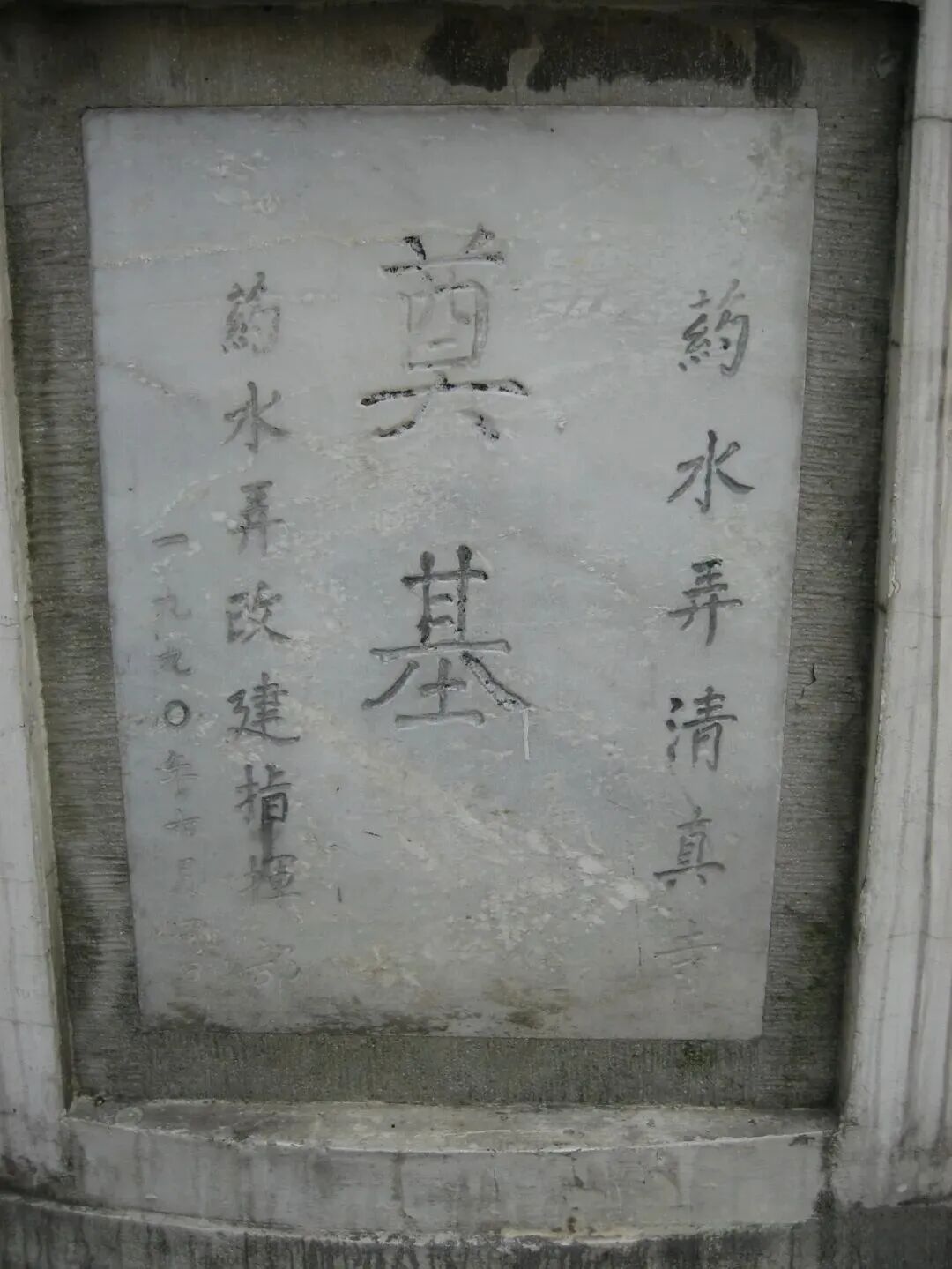
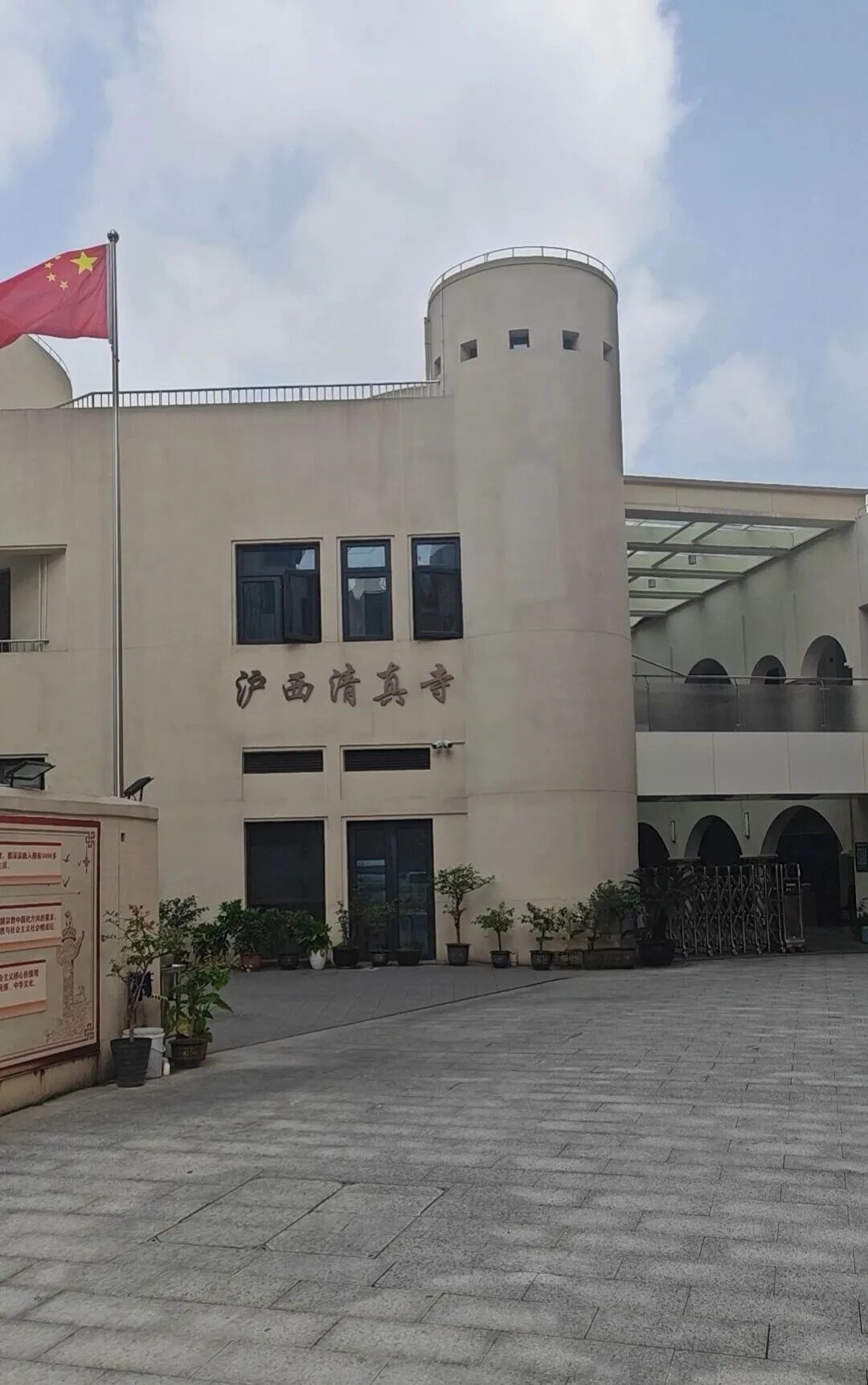
In the 1990s, a large-scale redevelopment project began in Yaoshuilong, relocating over 3,600 households and 75 businesses. The district government allocated two and a half mu (a traditional unit of land area) of land on Changde Road for reconstruction. The new mosque was completed on Eid al-Fitr in April 1992, making it one of the earliest mosques in Shanghai to be rebuilt at a new location after the liberation. Designed by the East China Architectural Design Institute, it features double-heart arches, a fan-shaped dome, and a minaret nearly 24 meters high. This architectural work received the Third Prize for Excellent Architectural Design from the Ministry of Construction in 1993.
Bai Runsheng, who took over the reins, was a born and raised Shanghainese who had pursued advanced studies at Al-Azhar University in Egypt. After seeing grand theological academies abroad, he returned to the local markets of Putuo. When he spoke about fasting, he never used obscure rules, only a simple, colloquial truth: 'Go hungry for a bit, and you'll know what life is like for the poor.'
That saying, set against the backdrop of the old Yaoshuilong site, carried immense weight. During his time leading the mosque, Eid al-Fitr attendance swelled from a few hundred people to several thousands. The main hall couldn't hold everyone, and crowds spilled onto Changde Road and Aomen Road, forcing buses to temporarily reroute. The Aomen Road market after the Friday Jumu'ah prayer would feature red tents stretching for two hundred meters, with the aroma of kao baozi (baked buns), shouzhua fan (hand-grabbed rice), and Napolyeon (Napoleon cake/layer cake) carrying far on the breeze from Suzhou Creek.
Later, as the Suzhou Creek banks underwent revitalization, the hustle and bustle of the long street gradually hushed down. Inside the mosque's gate, behind the fence, a small stall still remains. Visitors quietly line up, scan a QR code, and in a few minutes, food is handed out through a gap in the fence.
The lively buzz that once filled the whole street has now shrunk down to an iron fence and a single window.
The story is hidden in Mai Junsan's scattered lead type, in Bai Runsheng's simple wisdom, in the eight fen of land that was first rented then bought, and in the hands passing out kao baozi from behind the fence. Suzhou Creek is now connected, and the market has retreated behind the fence — the rented little hut from seventy years ago and today's window, across the long river of time, are doing the exact same thing.
Address: No. 3, Lane 1328, Changde Road, Putuo District (Huxi Mosque)
Are you an Old Putuo local? Ever been to the Aomen Road market? Do you still remember the taste of those kao baozi from back then? Chat in the comments! view all
We're taking you on a visual tour, captured in 6 real photos, of Huxi Mosque, a historical gem located on Shanghai's Changde Road. This deep dive uncovers a century of change, tracing the tough lives of Hui Muslim textile factory workers in Yaoshuilong (Medicine Water Lane) by Suzhou Creek, and the inspiring solidarity of modern Shanghai's Hui Muslim business owners and laborers who stuck together and supported each other since the Xiaoshadu Mosque was first established in 1922, partly thanks to local gentry like Jin Zhian and Ma Yitang funding its construction.
As the Suzhou Creek flows towards Xiaoshadu in Putuo, old Shanghainese folks used to have a folk rhyme: 'Better to spend three years in jail than live in a lime kiln.'
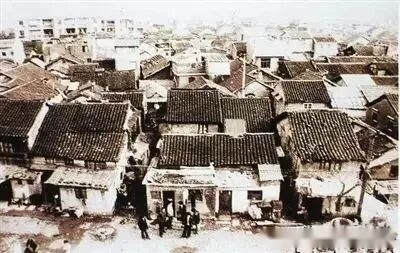
That 'lime kiln' was Yaoshuilong. The name came about in 1907 when a British medicine factory moved there. Japanese companies like Naigaiwata opened factories nearby, with 11 textile mills operating by 1922. Over 15,000 residents lived in the lane, with makeshift shacks (gun dilong) packed tight along the canal — it was one of Shanghai's famous 'Three Bays and One Lane' slum areas.
Around 1914, textile workers from Hubei, Shandong, Henan, and northern Anhui gathered here. They'd trudge through mud to work before dawn and drink untreated water from Suzhou Creek. These laborers rented a small room to use as a temporary prayer space. After their night shifts, workers covered in oil and grime would stumble into that little room in the dark — one of the few places these wandering souls could catch their breath.
Just a few miles away, the jewelry counters at Chenghuangmiao (City God Temple) glowed with a soft, warm light. Sparkling jewels and leaky, drafty shacks coexisted in the same city, not far apart, yet they were two completely different worlds.
In 1921, Jin Zhian, Ma Yitang, and Jiang Xingjie, who were in the jewelry and antique business, along with the Shanghai Islamic Board, pooled together two thousand silver yuan. They leased eight fen of land in Yaoshuilong — it was rented, for ten years.
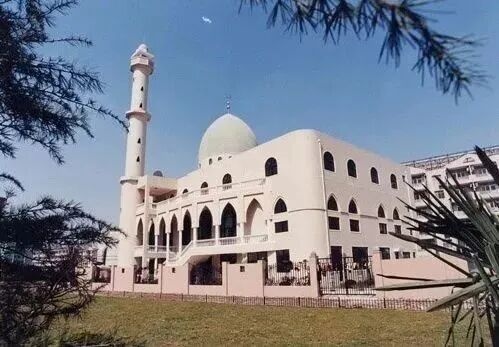
In July 1922, three main halls were completed on the muddy ground, initially named Xiaoshadu Mosque. The gun dilong workers couldn't afford to buy land, so their fellow merchants paid to rent it. The laborers, in turn, committed to gathering there day after day. In the oral histories of the old Putuo residents, no one is specifically praised; they simply say, 'Those folks, they really stuck together.'
In 1933, Ma Tianying, Li Yushu, and others oversaw its renovation. The main gate faced east, and inscribed above the entrance were eight large Chinese characters: 'Ancient Teaching from Heaven' and 'Emphasizing Education and Unity.' Times were tough during those 'solitary island' years, and after the Pacific War broke out in 1941, controls tightened in Yaoshuilong, causing the mosque's activities to gradually dwindle.
It wasn't until 1947 that Imam Ma Renbin launched a fundraising effort to finally buy the eight fen of land they had rented for twenty-five years. The mosque was then officially named Huxi Mosque.
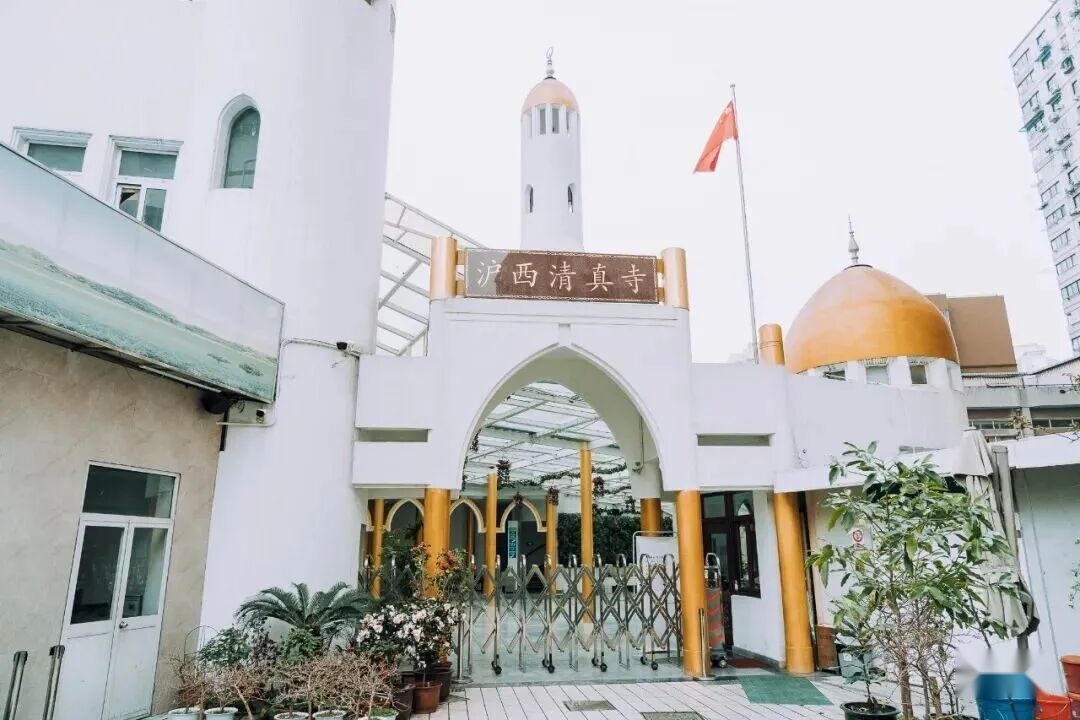
This courtyard was more than just a place for prayer; it was also a hub for mutual aid among fellow community members. Li Yunsheng, manager of the Jinliyuan Wharf under the China Merchants Steam Navigation Company, donated funds to establish the Huxi Private Yunsheng Primary School, which was later renamed Xingjian Primary School. Ma Tianying and Ma Renbin successively served as principals, making it the predecessor of today's Putuo District Hui Muslim Primary School. Local lore has it that the mosque also ran a Hui Muslim martial arts team back then, and even helped neighbors with matchmaking, bringing education, martial arts training, and helping people start families all into this small courtyard.
Tucked away in the cramped spaces between the shacks, there was a small room piled high with lead type and woodblocks.
Mai Junsan, originally from Luoning, Henan, went on Hajj to Mecca in his youth and later studied in India. In the 1920s, he founded the China Islamic Scriptures Publishing House in Shanghai, initially specializing in original Arabic texts imported from Egypt. Later, he added translation, compilation, and printing services, officially renaming it the China Islamic Bookstore in 1934. Translations by scholars like Wang Jingzhai and Ma Jian flowed from this small room to mosques across the country. Textile workers would come after their night shifts to read the texts, and mosques nationwide would send letters to order books.
During the Battle of Shanghai in 1937, the printing workshop was destroyed by artillery fire. The remaining scriptures were relocated to Linxia, Gansu, where a branch office was set up, still managed by Mai Junsan. In 1956, due to the public-private partnership policy, the bookstore eventually closed. In 1967, an elderly Mai Junsan set off for Baoji to live with his daughter. The long journey wore him out, and he ultimately passed away, resting on a loess plateau in the Northwest.
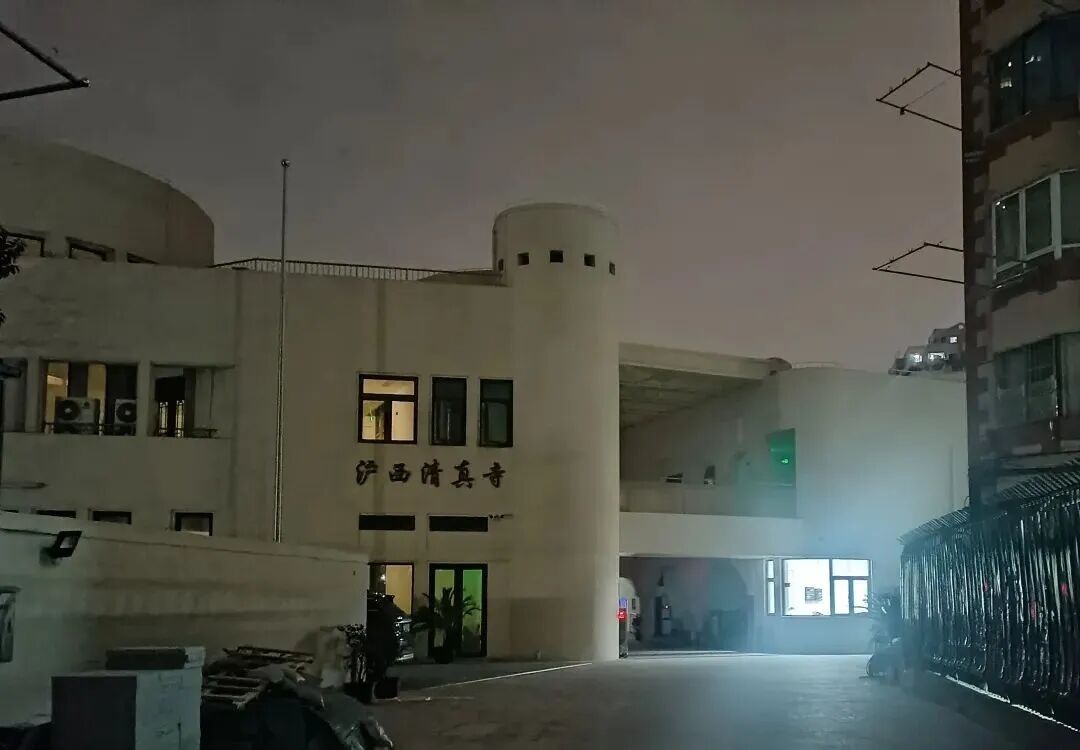
He spent his entire life printing books for others, for those far from home, in Shanghai, but in the end, he couldn't remain in the city himself.
In the 1990s, a large-scale redevelopment project began in Yaoshuilong, relocating over 3,600 households and 75 businesses. The district government allocated two and a half mu (a traditional unit of land area) of land on Changde Road for reconstruction. The new mosque was completed on Eid al-Fitr in April 1992, making it one of the earliest mosques in Shanghai to be rebuilt at a new location after the liberation. Designed by the East China Architectural Design Institute, it features double-heart arches, a fan-shaped dome, and a minaret nearly 24 meters high. This architectural work received the Third Prize for Excellent Architectural Design from the Ministry of Construction in 1993.
Bai Runsheng, who took over the reins, was a born and raised Shanghainese who had pursued advanced studies at Al-Azhar University in Egypt. After seeing grand theological academies abroad, he returned to the local markets of Putuo. When he spoke about fasting, he never used obscure rules, only a simple, colloquial truth: 'Go hungry for a bit, and you'll know what life is like for the poor.'
That saying, set against the backdrop of the old Yaoshuilong site, carried immense weight. During his time leading the mosque, Eid al-Fitr attendance swelled from a few hundred people to several thousands. The main hall couldn't hold everyone, and crowds spilled onto Changde Road and Aomen Road, forcing buses to temporarily reroute. The Aomen Road market after the Friday Jumu'ah prayer would feature red tents stretching for two hundred meters, with the aroma of kao baozi (baked buns), shouzhua fan (hand-grabbed rice), and Napolyeon (Napoleon cake/layer cake) carrying far on the breeze from Suzhou Creek.
Later, as the Suzhou Creek banks underwent revitalization, the hustle and bustle of the long street gradually hushed down. Inside the mosque's gate, behind the fence, a small stall still remains. Visitors quietly line up, scan a QR code, and in a few minutes, food is handed out through a gap in the fence.
The lively buzz that once filled the whole street has now shrunk down to an iron fence and a single window.
The story is hidden in Mai Junsan's scattered lead type, in Bai Runsheng's simple wisdom, in the eight fen of land that was first rented then bought, and in the hands passing out kao baozi from behind the fence. Suzhou Creek is now connected, and the market has retreated behind the fence — the rented little hut from seventy years ago and today's window, across the long river of time, are doing the exact same thing.
Address: No. 3, Lane 1328, Changde Road, Putuo District (Huxi Mosque)
Are you an Old Putuo local? Ever been to the Aomen Road market? Do you still remember the taste of those kao baozi from back then? Chat in the comments!
As the Suzhou Creek flows towards Xiaoshadu in Putuo, old Shanghainese folks used to have a folk rhyme: 'Better to spend three years in jail than live in a lime kiln.'
That 'lime kiln' was Yaoshuilong. The name came about in 1907 when a British medicine factory moved there. Japanese companies like Naigaiwata opened factories nearby, with 11 textile mills operating by 1922. Over 15,000 residents lived in the lane, with makeshift shacks (gun dilong) packed tight along the canal — it was one of Shanghai's famous 'Three Bays and One Lane' slum areas.
Around 1914, textile workers from Hubei, Shandong, Henan, and northern Anhui gathered here. They'd trudge through mud to work before dawn and drink untreated water from Suzhou Creek. These laborers rented a small room to use as a temporary prayer space. After their night shifts, workers covered in oil and grime would stumble into that little room in the dark — one of the few places these wandering souls could catch their breath.
Just a few miles away, the jewelry counters at Chenghuangmiao (City God Temple) glowed with a soft, warm light. Sparkling jewels and leaky, drafty shacks coexisted in the same city, not far apart, yet they were two completely different worlds.
In 1921, Jin Zhian, Ma Yitang, and Jiang Xingjie, who were in the jewelry and antique business, along with the Shanghai Islamic Board, pooled together two thousand silver yuan. They leased eight fen of land in Yaoshuilong — it was rented, for ten years.
In July 1922, three main halls were completed on the muddy ground, initially named Xiaoshadu Mosque. The gun dilong workers couldn't afford to buy land, so their fellow merchants paid to rent it. The laborers, in turn, committed to gathering there day after day. In the oral histories of the old Putuo residents, no one is specifically praised; they simply say, 'Those folks, they really stuck together.'
In 1933, Ma Tianying, Li Yushu, and others oversaw its renovation. The main gate faced east, and inscribed above the entrance were eight large Chinese characters: 'Ancient Teaching from Heaven' and 'Emphasizing Education and Unity.' Times were tough during those 'solitary island' years, and after the Pacific War broke out in 1941, controls tightened in Yaoshuilong, causing the mosque's activities to gradually dwindle.
It wasn't until 1947 that Imam Ma Renbin launched a fundraising effort to finally buy the eight fen of land they had rented for twenty-five years. The mosque was then officially named Huxi Mosque.
This courtyard was more than just a place for prayer; it was also a hub for mutual aid among fellow community members. Li Yunsheng, manager of the Jinliyuan Wharf under the China Merchants Steam Navigation Company, donated funds to establish the Huxi Private Yunsheng Primary School, which was later renamed Xingjian Primary School. Ma Tianying and Ma Renbin successively served as principals, making it the predecessor of today's Putuo District Hui Muslim Primary School. Local lore has it that the mosque also ran a Hui Muslim martial arts team back then, and even helped neighbors with matchmaking, bringing education, martial arts training, and helping people start families all into this small courtyard.
Tucked away in the cramped spaces between the shacks, there was a small room piled high with lead type and woodblocks.
Mai Junsan, originally from Luoning, Henan, went on Hajj to Mecca in his youth and later studied in India. In the 1920s, he founded the China Islamic Scriptures Publishing House in Shanghai, initially specializing in original Arabic texts imported from Egypt. Later, he added translation, compilation, and printing services, officially renaming it the China Islamic Bookstore in 1934. Translations by scholars like Wang Jingzhai and Ma Jian flowed from this small room to mosques across the country. Textile workers would come after their night shifts to read the texts, and mosques nationwide would send letters to order books.
During the Battle of Shanghai in 1937, the printing workshop was destroyed by artillery fire. The remaining scriptures were relocated to Linxia, Gansu, where a branch office was set up, still managed by Mai Junsan. In 1956, due to the public-private partnership policy, the bookstore eventually closed. In 1967, an elderly Mai Junsan set off for Baoji to live with his daughter. The long journey wore him out, and he ultimately passed away, resting on a loess plateau in the Northwest.
He spent his entire life printing books for others, for those far from home, in Shanghai, but in the end, he couldn't remain in the city himself.
In the 1990s, a large-scale redevelopment project began in Yaoshuilong, relocating over 3,600 households and 75 businesses. The district government allocated two and a half mu (a traditional unit of land area) of land on Changde Road for reconstruction. The new mosque was completed on Eid al-Fitr in April 1992, making it one of the earliest mosques in Shanghai to be rebuilt at a new location after the liberation. Designed by the East China Architectural Design Institute, it features double-heart arches, a fan-shaped dome, and a minaret nearly 24 meters high. This architectural work received the Third Prize for Excellent Architectural Design from the Ministry of Construction in 1993.
Bai Runsheng, who took over the reins, was a born and raised Shanghainese who had pursued advanced studies at Al-Azhar University in Egypt. After seeing grand theological academies abroad, he returned to the local markets of Putuo. When he spoke about fasting, he never used obscure rules, only a simple, colloquial truth: 'Go hungry for a bit, and you'll know what life is like for the poor.'
That saying, set against the backdrop of the old Yaoshuilong site, carried immense weight. During his time leading the mosque, Eid al-Fitr attendance swelled from a few hundred people to several thousands. The main hall couldn't hold everyone, and crowds spilled onto Changde Road and Aomen Road, forcing buses to temporarily reroute. The Aomen Road market after the Friday Jumu'ah prayer would feature red tents stretching for two hundred meters, with the aroma of kao baozi (baked buns), shouzhua fan (hand-grabbed rice), and Napolyeon (Napoleon cake/layer cake) carrying far on the breeze from Suzhou Creek.
Later, as the Suzhou Creek banks underwent revitalization, the hustle and bustle of the long street gradually hushed down. Inside the mosque's gate, behind the fence, a small stall still remains. Visitors quietly line up, scan a QR code, and in a few minutes, food is handed out through a gap in the fence.
The lively buzz that once filled the whole street has now shrunk down to an iron fence and a single window.
The story is hidden in Mai Junsan's scattered lead type, in Bai Runsheng's simple wisdom, in the eight fen of land that was first rented then bought, and in the hands passing out kao baozi from behind the fence. Suzhou Creek is now connected, and the market has retreated behind the fence — the rented little hut from seventy years ago and today's window, across the long river of time, are doing the exact same thing.
Address: No. 3, Lane 1328, Changde Road, Putuo District (Huxi Mosque)
Are you an Old Putuo local? Ever been to the Aomen Road market? Do you still remember the taste of those kao baozi from back then? Chat in the comments!
Huxi Mosque Shanghai: A Century of Hui Muslim Heritage, Halal Food & Community History in Yaoshuilong
Articles • Hasan09 posted the article • 0 comments • 20 views • 19 hours ago
We're taking you on a visual tour, captured in 6 real photos, of Huxi Mosque, a historical gem located on Shanghai's Changde Road. This deep dive uncovers a century of change, tracing the tough lives of Hui Muslim textile factory workers in Yaoshuilong (Medicine Water Lane) by Suzhou Creek, and the inspiring solidarity of modern Shanghai's Hui Muslim business owners and laborers who stuck together and supported each other since the Xiaoshadu Mosque was first established in 1922, partly thanks to local gentry like Jin Zhian and Ma Yitang funding its construction.
As the Suzhou Creek flows towards Xiaoshadu in Putuo, old Shanghainese folks used to have a folk rhyme: 'Better to spend three years in jail than live in a lime kiln.'
That 'lime kiln' was Yaoshuilong. The name came about in 1907 when a British medicine factory moved there. Japanese companies like Naigaiwata opened factories nearby, with 11 textile mills operating by 1922. Over 15,000 residents lived in the lane, with makeshift shacks (gun dilong) packed tight along the canal — it was one of Shanghai's famous 'Three Bays and One Lane' slum areas.
Around 1914, textile workers from Hubei, Shandong, Henan, and northern Anhui gathered here. They'd trudge through mud to work before dawn and drink untreated water from Suzhou Creek. These laborers rented a small room to use as a temporary prayer space. After their night shifts, workers covered in oil and grime would stumble into that little room in the dark — one of the few places these wandering souls could catch their breath.
Just a few miles away, the jewelry counters at Chenghuangmiao (City God Temple) glowed with a soft, warm light. Sparkling jewels and leaky, drafty shacks coexisted in the same city, not far apart, yet they were two completely different worlds.
In 1921, Jin Zhian, Ma Yitang, and Jiang Xingjie, who were in the jewelry and antique business, along with the Shanghai Islamic Board, pooled together two thousand silver yuan. They leased eight fen of land in Yaoshuilong — it was rented, for ten years.
In July 1922, three main halls were completed on the muddy ground, initially named Xiaoshadu Mosque. The gun dilong workers couldn't afford to buy land, so their fellow merchants paid to rent it. The laborers, in turn, committed to gathering there day after day. In the oral histories of the old Putuo residents, no one is specifically praised; they simply say, 'Those folks, they really stuck together.'
In 1933, Ma Tianying, Li Yushu, and others oversaw its renovation. The main gate faced east, and inscribed above the entrance were eight large Chinese characters: 'Ancient Teaching from Heaven' and 'Emphasizing Education and Unity.' Times were tough during those 'solitary island' years, and after the Pacific War broke out in 1941, controls tightened in Yaoshuilong, causing the mosque's activities to gradually dwindle.
It wasn't until 1947 that Imam Ma Renbin launched a fundraising effort to finally buy the eight fen of land they had rented for twenty-five years. The mosque was then officially named Huxi Mosque.
This courtyard was more than just a place for prayer; it was also a hub for mutual aid among fellow community members. Li Yunsheng, manager of the Jinliyuan Wharf under the China Merchants Steam Navigation Company, donated funds to establish the Huxi Private Yunsheng Primary School, which was later renamed Xingjian Primary School. Ma Tianying and Ma Renbin successively served as principals, making it the predecessor of today's Putuo District Hui Muslim Primary School. Local lore has it that the mosque also ran a Hui Muslim martial arts team back then, and even helped neighbors with matchmaking, bringing education, martial arts training, and helping people start families all into this small courtyard.
Tucked away in the cramped spaces between the shacks, there was a small room piled high with lead type and woodblocks.
Mai Junsan, originally from Luoning, Henan, went on Hajj to Mecca in his youth and later studied in India. In the 1920s, he founded the China Islamic Scriptures Publishing House in Shanghai, initially specializing in original Arabic texts imported from Egypt. Later, he added translation, compilation, and printing services, officially renaming it the China Islamic Bookstore in 1934. Translations by scholars like Wang Jingzhai and Ma Jian flowed from this small room to mosques across the country. Textile workers would come after their night shifts to read the texts, and mosques nationwide would send letters to order books.
During the Battle of Shanghai in 1937, the printing workshop was destroyed by artillery fire. The remaining scriptures were relocated to Linxia, Gansu, where a branch office was set up, still managed by Mai Junsan. In 1956, due to the public-private partnership policy, the bookstore eventually closed. In 1967, an elderly Mai Junsan set off for Baoji to live with his daughter. The long journey wore him out, and he ultimately passed away, resting on a loess plateau in the Northwest.
He spent his entire life printing books for others, for those far from home, in Shanghai, but in the end, he couldn't remain in the city himself.
In the 1990s, a large-scale redevelopment project began in Yaoshuilong, relocating over 3,600 households and 75 businesses. The district government allocated two and a half mu (a traditional unit of land area) of land on Changde Road for reconstruction. The new mosque was completed on Eid al-Fitr in April 1992, making it one of the earliest mosques in Shanghai to be rebuilt at a new location after the liberation. Designed by the East China Architectural Design Institute, it features double-heart arches, a fan-shaped dome, and a minaret nearly 24 meters high. This architectural work received the Third Prize for Excellent Architectural Design from the Ministry of Construction in 1993.
Bai Runsheng, who took over the reins, was a born and raised Shanghainese who had pursued advanced studies at Al-Azhar University in Egypt. After seeing grand theological academies abroad, he returned to the local markets of Putuo. When he spoke about fasting, he never used obscure rules, only a simple, colloquial truth: 'Go hungry for a bit, and you'll know what life is like for the poor.'
That saying, set against the backdrop of the old Yaoshuilong site, carried immense weight. During his time leading the mosque, Eid al-Fitr attendance swelled from a few hundred people to several thousands. The main hall couldn't hold everyone, and crowds spilled onto Changde Road and Aomen Road, forcing buses to temporarily reroute. The Aomen Road market after the Friday Jumu'ah prayer would feature red tents stretching for two hundred meters, with the aroma of kao baozi (baked buns), shouzhua fan (hand-grabbed rice), and Napolyeon (Napoleon cake/layer cake) carrying far on the breeze from Suzhou Creek.
Later, as the Suzhou Creek banks underwent revitalization, the hustle and bustle of the long street gradually hushed down. Inside the mosque's gate, behind the fence, a small stall still remains. Visitors quietly line up, scan a QR code, and in a few minutes, food is handed out through a gap in the fence.
The lively buzz that once filled the whole street has now shrunk down to an iron fence and a single window.
The story is hidden in Mai Junsan's scattered lead type, in Bai Runsheng's simple wisdom, in the eight fen of land that was first rented then bought, and in the hands passing out kao baozi from behind the fence. Suzhou Creek is now connected, and the market has retreated behind the fence — the rented little hut from seventy years ago and today's window, across the long river of time, are doing the exact same thing.
Address: No. 3, Lane 1328, Changde Road, Putuo District (Huxi Mosque)
Are you an Old Putuo local? Ever been to the Aomen Road market? Do you still remember the taste of those kao baozi from back then? Chat in the comments! view all
As the Suzhou Creek flows towards Xiaoshadu in Putuo, old Shanghainese folks used to have a folk rhyme: 'Better to spend three years in jail than live in a lime kiln.'
That 'lime kiln' was Yaoshuilong. The name came about in 1907 when a British medicine factory moved there. Japanese companies like Naigaiwata opened factories nearby, with 11 textile mills operating by 1922. Over 15,000 residents lived in the lane, with makeshift shacks (gun dilong) packed tight along the canal — it was one of Shanghai's famous 'Three Bays and One Lane' slum areas.
Around 1914, textile workers from Hubei, Shandong, Henan, and northern Anhui gathered here. They'd trudge through mud to work before dawn and drink untreated water from Suzhou Creek. These laborers rented a small room to use as a temporary prayer space. After their night shifts, workers covered in oil and grime would stumble into that little room in the dark — one of the few places these wandering souls could catch their breath.
Just a few miles away, the jewelry counters at Chenghuangmiao (City God Temple) glowed with a soft, warm light. Sparkling jewels and leaky, drafty shacks coexisted in the same city, not far apart, yet they were two completely different worlds.
In 1921, Jin Zhian, Ma Yitang, and Jiang Xingjie, who were in the jewelry and antique business, along with the Shanghai Islamic Board, pooled together two thousand silver yuan. They leased eight fen of land in Yaoshuilong — it was rented, for ten years.
In July 1922, three main halls were completed on the muddy ground, initially named Xiaoshadu Mosque. The gun dilong workers couldn't afford to buy land, so their fellow merchants paid to rent it. The laborers, in turn, committed to gathering there day after day. In the oral histories of the old Putuo residents, no one is specifically praised; they simply say, 'Those folks, they really stuck together.'
In 1933, Ma Tianying, Li Yushu, and others oversaw its renovation. The main gate faced east, and inscribed above the entrance were eight large Chinese characters: 'Ancient Teaching from Heaven' and 'Emphasizing Education and Unity.' Times were tough during those 'solitary island' years, and after the Pacific War broke out in 1941, controls tightened in Yaoshuilong, causing the mosque's activities to gradually dwindle.
It wasn't until 1947 that Imam Ma Renbin launched a fundraising effort to finally buy the eight fen of land they had rented for twenty-five years. The mosque was then officially named Huxi Mosque.
This courtyard was more than just a place for prayer; it was also a hub for mutual aid among fellow community members. Li Yunsheng, manager of the Jinliyuan Wharf under the China Merchants Steam Navigation Company, donated funds to establish the Huxi Private Yunsheng Primary School, which was later renamed Xingjian Primary School. Ma Tianying and Ma Renbin successively served as principals, making it the predecessor of today's Putuo District Hui Muslim Primary School. Local lore has it that the mosque also ran a Hui Muslim martial arts team back then, and even helped neighbors with matchmaking, bringing education, martial arts training, and helping people start families all into this small courtyard.
Tucked away in the cramped spaces between the shacks, there was a small room piled high with lead type and woodblocks.
Mai Junsan, originally from Luoning, Henan, went on Hajj to Mecca in his youth and later studied in India. In the 1920s, he founded the China Islamic Scriptures Publishing House in Shanghai, initially specializing in original Arabic texts imported from Egypt. Later, he added translation, compilation, and printing services, officially renaming it the China Islamic Bookstore in 1934. Translations by scholars like Wang Jingzhai and Ma Jian flowed from this small room to mosques across the country. Textile workers would come after their night shifts to read the texts, and mosques nationwide would send letters to order books.
During the Battle of Shanghai in 1937, the printing workshop was destroyed by artillery fire. The remaining scriptures were relocated to Linxia, Gansu, where a branch office was set up, still managed by Mai Junsan. In 1956, due to the public-private partnership policy, the bookstore eventually closed. In 1967, an elderly Mai Junsan set off for Baoji to live with his daughter. The long journey wore him out, and he ultimately passed away, resting on a loess plateau in the Northwest.
He spent his entire life printing books for others, for those far from home, in Shanghai, but in the end, he couldn't remain in the city himself.
In the 1990s, a large-scale redevelopment project began in Yaoshuilong, relocating over 3,600 households and 75 businesses. The district government allocated two and a half mu (a traditional unit of land area) of land on Changde Road for reconstruction. The new mosque was completed on Eid al-Fitr in April 1992, making it one of the earliest mosques in Shanghai to be rebuilt at a new location after the liberation. Designed by the East China Architectural Design Institute, it features double-heart arches, a fan-shaped dome, and a minaret nearly 24 meters high. This architectural work received the Third Prize for Excellent Architectural Design from the Ministry of Construction in 1993.
Bai Runsheng, who took over the reins, was a born and raised Shanghainese who had pursued advanced studies at Al-Azhar University in Egypt. After seeing grand theological academies abroad, he returned to the local markets of Putuo. When he spoke about fasting, he never used obscure rules, only a simple, colloquial truth: 'Go hungry for a bit, and you'll know what life is like for the poor.'
That saying, set against the backdrop of the old Yaoshuilong site, carried immense weight. During his time leading the mosque, Eid al-Fitr attendance swelled from a few hundred people to several thousands. The main hall couldn't hold everyone, and crowds spilled onto Changde Road and Aomen Road, forcing buses to temporarily reroute. The Aomen Road market after the Friday Jumu'ah prayer would feature red tents stretching for two hundred meters, with the aroma of kao baozi (baked buns), shouzhua fan (hand-grabbed rice), and Napolyeon (Napoleon cake/layer cake) carrying far on the breeze from Suzhou Creek.
Later, as the Suzhou Creek banks underwent revitalization, the hustle and bustle of the long street gradually hushed down. Inside the mosque's gate, behind the fence, a small stall still remains. Visitors quietly line up, scan a QR code, and in a few minutes, food is handed out through a gap in the fence.
The lively buzz that once filled the whole street has now shrunk down to an iron fence and a single window.
The story is hidden in Mai Junsan's scattered lead type, in Bai Runsheng's simple wisdom, in the eight fen of land that was first rented then bought, and in the hands passing out kao baozi from behind the fence. Suzhou Creek is now connected, and the market has retreated behind the fence — the rented little hut from seventy years ago and today's window, across the long river of time, are doing the exact same thing.
Address: No. 3, Lane 1328, Changde Road, Putuo District (Huxi Mosque)
Are you an Old Putuo local? Ever been to the Aomen Road market? Do you still remember the taste of those kao baozi from back then? Chat in the comments! view all
We're taking you on a visual tour, captured in 6 real photos, of Huxi Mosque, a historical gem located on Shanghai's Changde Road. This deep dive uncovers a century of change, tracing the tough lives of Hui Muslim textile factory workers in Yaoshuilong (Medicine Water Lane) by Suzhou Creek, and the inspiring solidarity of modern Shanghai's Hui Muslim business owners and laborers who stuck together and supported each other since the Xiaoshadu Mosque was first established in 1922, partly thanks to local gentry like Jin Zhian and Ma Yitang funding its construction.
As the Suzhou Creek flows towards Xiaoshadu in Putuo, old Shanghainese folks used to have a folk rhyme: 'Better to spend three years in jail than live in a lime kiln.'
That 'lime kiln' was Yaoshuilong. The name came about in 1907 when a British medicine factory moved there. Japanese companies like Naigaiwata opened factories nearby, with 11 textile mills operating by 1922. Over 15,000 residents lived in the lane, with makeshift shacks (gun dilong) packed tight along the canal — it was one of Shanghai's famous 'Three Bays and One Lane' slum areas.
Around 1914, textile workers from Hubei, Shandong, Henan, and northern Anhui gathered here. They'd trudge through mud to work before dawn and drink untreated water from Suzhou Creek. These laborers rented a small room to use as a temporary prayer space. After their night shifts, workers covered in oil and grime would stumble into that little room in the dark — one of the few places these wandering souls could catch their breath.
Just a few miles away, the jewelry counters at Chenghuangmiao (City God Temple) glowed with a soft, warm light. Sparkling jewels and leaky, drafty shacks coexisted in the same city, not far apart, yet they were two completely different worlds.
In 1921, Jin Zhian, Ma Yitang, and Jiang Xingjie, who were in the jewelry and antique business, along with the Shanghai Islamic Board, pooled together two thousand silver yuan. They leased eight fen of land in Yaoshuilong — it was rented, for ten years.
In July 1922, three main halls were completed on the muddy ground, initially named Xiaoshadu Mosque. The gun dilong workers couldn't afford to buy land, so their fellow merchants paid to rent it. The laborers, in turn, committed to gathering there day after day. In the oral histories of the old Putuo residents, no one is specifically praised; they simply say, 'Those folks, they really stuck together.'
In 1933, Ma Tianying, Li Yushu, and others oversaw its renovation. The main gate faced east, and inscribed above the entrance were eight large Chinese characters: 'Ancient Teaching from Heaven' and 'Emphasizing Education and Unity.' Times were tough during those 'solitary island' years, and after the Pacific War broke out in 1941, controls tightened in Yaoshuilong, causing the mosque's activities to gradually dwindle.
It wasn't until 1947 that Imam Ma Renbin launched a fundraising effort to finally buy the eight fen of land they had rented for twenty-five years. The mosque was then officially named Huxi Mosque.
This courtyard was more than just a place for prayer; it was also a hub for mutual aid among fellow community members. Li Yunsheng, manager of the Jinliyuan Wharf under the China Merchants Steam Navigation Company, donated funds to establish the Huxi Private Yunsheng Primary School, which was later renamed Xingjian Primary School. Ma Tianying and Ma Renbin successively served as principals, making it the predecessor of today's Putuo District Hui Muslim Primary School. Local lore has it that the mosque also ran a Hui Muslim martial arts team back then, and even helped neighbors with matchmaking, bringing education, martial arts training, and helping people start families all into this small courtyard.
Tucked away in the cramped spaces between the shacks, there was a small room piled high with lead type and woodblocks.
Mai Junsan, originally from Luoning, Henan, went on Hajj to Mecca in his youth and later studied in India. In the 1920s, he founded the China Islamic Scriptures Publishing House in Shanghai, initially specializing in original Arabic texts imported from Egypt. Later, he added translation, compilation, and printing services, officially renaming it the China Islamic Bookstore in 1934. Translations by scholars like Wang Jingzhai and Ma Jian flowed from this small room to mosques across the country. Textile workers would come after their night shifts to read the texts, and mosques nationwide would send letters to order books.
During the Battle of Shanghai in 1937, the printing workshop was destroyed by artillery fire. The remaining scriptures were relocated to Linxia, Gansu, where a branch office was set up, still managed by Mai Junsan. In 1956, due to the public-private partnership policy, the bookstore eventually closed. In 1967, an elderly Mai Junsan set off for Baoji to live with his daughter. The long journey wore him out, and he ultimately passed away, resting on a loess plateau in the Northwest.
He spent his entire life printing books for others, for those far from home, in Shanghai, but in the end, he couldn't remain in the city himself.
In the 1990s, a large-scale redevelopment project began in Yaoshuilong, relocating over 3,600 households and 75 businesses. The district government allocated two and a half mu (a traditional unit of land area) of land on Changde Road for reconstruction. The new mosque was completed on Eid al-Fitr in April 1992, making it one of the earliest mosques in Shanghai to be rebuilt at a new location after the liberation. Designed by the East China Architectural Design Institute, it features double-heart arches, a fan-shaped dome, and a minaret nearly 24 meters high. This architectural work received the Third Prize for Excellent Architectural Design from the Ministry of Construction in 1993.
Bai Runsheng, who took over the reins, was a born and raised Shanghainese who had pursued advanced studies at Al-Azhar University in Egypt. After seeing grand theological academies abroad, he returned to the local markets of Putuo. When he spoke about fasting, he never used obscure rules, only a simple, colloquial truth: 'Go hungry for a bit, and you'll know what life is like for the poor.'
That saying, set against the backdrop of the old Yaoshuilong site, carried immense weight. During his time leading the mosque, Eid al-Fitr attendance swelled from a few hundred people to several thousands. The main hall couldn't hold everyone, and crowds spilled onto Changde Road and Aomen Road, forcing buses to temporarily reroute. The Aomen Road market after the Friday Jumu'ah prayer would feature red tents stretching for two hundred meters, with the aroma of kao baozi (baked buns), shouzhua fan (hand-grabbed rice), and Napolyeon (Napoleon cake/layer cake) carrying far on the breeze from Suzhou Creek.
Later, as the Suzhou Creek banks underwent revitalization, the hustle and bustle of the long street gradually hushed down. Inside the mosque's gate, behind the fence, a small stall still remains. Visitors quietly line up, scan a QR code, and in a few minutes, food is handed out through a gap in the fence.
The lively buzz that once filled the whole street has now shrunk down to an iron fence and a single window.
The story is hidden in Mai Junsan's scattered lead type, in Bai Runsheng's simple wisdom, in the eight fen of land that was first rented then bought, and in the hands passing out kao baozi from behind the fence. Suzhou Creek is now connected, and the market has retreated behind the fence — the rented little hut from seventy years ago and today's window, across the long river of time, are doing the exact same thing.
Address: No. 3, Lane 1328, Changde Road, Putuo District (Huxi Mosque)
Are you an Old Putuo local? Ever been to the Aomen Road market? Do you still remember the taste of those kao baozi from back then? Chat in the comments!