

Indonesia Travel
Muslim Friendly Indonesia: A Chinese Hui Muslim Travel Account with Mosques and Halal Food
Articles • yusuf908 posted the article • 0 comments • 208 views • 2026-05-24 00:17
Reposted from the web
Summary: Muslim Friendly Indonesia: A Chinese Hui Muslim Travel Account with Mosques and Halal Food is presented here as a clear English travel account for Muslim readers, beginning with this scene: Indonesia is the country with the largest Muslim population in the world. The Muslim population exceeds 200 million. They mainly believe in the Shafi'i school of law. However, Indonesian Muslims have always. The article keeps the original place names, food details, photographs, and cultural context while focusing on Indonesia Travel, Hui Muslims, Halal Food.
Indonesia is the country with the largest Muslim population in the world. The Muslim population exceeds 200 million. They mainly believe in the Shafi'i school of law. However, Indonesian Muslims have always been marginalized in the Muslim world. However, since Indonesia became independent from the colonizers in 1945, this marginalized situation has gradually improved. Nowadays, hundreds of thousands of people in Indonesia go to Mecca for pilgrimage every year. They are called "the rice of Hijaz". Hijaz is Mecca and Medina.
Indonesia is currently visa-free for mainland China. You only need to bring your passport to enter the country by air. There is no need to apply in advance and it does not cost a penny. However, I saw many netizens complaining on the Internet about being asked for tips by the customs when entering Indonesia. I flew from Beijing to Jakarta and was not asked for tips. Maybe It is an isolated phenomenon. My consistent principle is that I will never give any customs tips. This kind of bribery and bribery are not allowed to be done by Muslims. The worst is the worst. Although the tip is only ten or twenty yuan, the issue of principle cannot be compromised. Moreover, this phenomenon only targets Chinese people, and we cannot encourage this unhealthy trend of discrimination.
When I went to Vietnam before, I heard that tipping was required, but I never encountered it. My approach was to prepare round-trip air tickets and hotel reservations in advance, print them out, and when I entered the country, the customs asked me what I was doing. I showed him the itinerary I had already prepared, which showed that my purpose of travel was clear. The customs officer knew immediately that he was an experienced driver, so he had no reason to ask for a tip before letting me enter the country.
Most of the online guides look at Indonesia from the perspective of non-Muslims. I read a lot of them and feel that they all use colored glasses to judge the main ethnic groups in Indonesia, which is neither superficial nor objective. Now I will introduce my halal trip to Indonesia from the perspective of a Chinese Hui.
Things you need to prepare before leaving for Indonesia:
1. Round-trip air tickets and hotel orders
, print it out for later use in case customs checks and asks for tips;
2. Mobile WiFi
, can be rented on all major travel websites, and the cost is about 10 yuan a day. Renting WiFi is more convenient than buying a local phone card. According to my past experience, mobile phone signals on many islands are not as good as WiFi. International roaming can be activated in advance, but its use is limited to receiving text messages. International roaming still cannot access websites such as Google when abroad, but mobile WiFi can. Google Maps is very important abroad;
3. Power conversion socket
, the power plug in Indonesia is wider than that in China and needs to be converted. You can buy a globally accepted multi-functional conversion power supply online;
4. Grab
, a popular taxi-hailing software APP in Southeast Asia, you must have this one, it is very easy to use, you can bind a credit card for payment, no cash is required, otherwise the probability of getting ripped off when taking a taxi is almost 100%;
5. Sunscreen, mosquito repellent, sunglasses, slippers
, are all necessities of tropical life.
6. Indonesian rupiah cash
, you can exchange it domestically or at the Indonesian airport. Indonesian money is relatively rough, 10,000 Indonesian rupiah is equivalent to about 5 yuan in RMB.
First stop Jakarta
Jakarta is the capital of Indonesia and the largest city in Indonesia. Many people only use Jakarta as a transit point for a short stay. In fact, there are many places to visit and play in Jakarta. It is a microcosm of Indonesia and you can experience various Indonesian cultures. If your schedule is not tight, you can choose to stay in Jakarta for a few more days. But for me, a food blogger, the most attractive thing about Jakarta is that you can eat halal versions of food from all over the world.
Xiamen Airlines halal meals
I need to praise Xiamen Airlines’ halal meals, which are better than the halal meals I’ve had on other domestic airlines. Here is a reminder: I did not book a halal meal in advance when I bought the Xiamen Airlines ticket this time. However, Xiamen Airlines will proactively provide halal and non-halal meal options for flights to Jakarta, so there is no need to book in advance.
In fact, except for low-cost airlines that do not actively provide catering services, almost all airlines have meal reservation services. There is no additional charge for reservations of religious meals, and the fees are included in the ticket. However, you need to make a reservation at least 24 hours in advance. You can use the airline's app to make reservations, you can also make reservations through the airline's customer service phone number, or you can also make reservations through the customer service of the platform where you buy air tickets. If you are not sure about the airline’s ingredients, you can also order a vegetarian meal. Some airlines can set food preferences in the app, so that whenever you buy a ticket from that company in the future, the system will automatically reserve halal meals.
DIGITAL AIRPORT CAPSULE HOTEL
After flying during the day, it was already 10pm when I arrived in Jakarta. My plan was to fly from Jakarta to Komodo Island early the day after tomorrow. In order to save time and money, I chose the capsule hotel on the first floor of Terminal 3 of the airport. This way I didn’t have to take a car to the city when I landed that night, and I didn’t have to get up early to catch the flight the day after tomorrow. It turned out that my choice was very correct. Although the capsule hotel is small and can only accommodate one person, the facilities inside are complete and clean, including bottled water, towels, lockers, charging power, and TVs. It is like lying in a space warehouse.
The lights in the space can be adjusted to change color, and there is also air conditioning.
The capsule hotel has a public bathroom. Although it is a public area, each room for bathing and washing is separate. The door is locked and it is like a separate bathroom. It does not feel awkward at all. I am very satisfied with my first experience in a capsule hotel. I hope this model can be promoted.
MALACCA TOAST airport fast food restaurant
egg sandwich
Halal paper in the bathroom
But it cannot be said that you cannot eat non-halal food in Indonesia. There are some restaurants in Indonesia run by non-Muslims such as Catholics and Hindus that sell alcohol, but they will prompt that the restaurant is a pork-free restaurant. There are also some hijab girls eating in such restaurants. I have only seen Chinese restaurants in Surabaya that sell pork. You will never see anyone wearing a hijab in such a restaurant. If the restaurant door is clearly marked with the HALAL certification mark, it must be a restaurant that does not sell alcohol.
Indonesian Halal Certification Mark
It looks like the picture above. The common halal certification mark in Indonesia is written in Arabic and Latin alphabet transliterations. HALAL also means halal in Indonesian. If the mark of some packaging is particularly small, it is better to simplify it and not write the letters HALAL, but also write حلال
, to help the identification of dostis in various countries.
SHABURI self-service Japanese hot pot restaurant
Located on the third floor of Soekarno Airport T3 terminal, a set meal costs RMB 60. It only has one plate of meat, vegetables, fruits, sushi, etc. You can eat as you like.
The service in Indonesian restaurants is generally warm and considerate, especially the waiters’ sweet smiles.
The single-person pot is very similar to the domestic Xiabuxiabu.
Indonesian restaurant in Terminal 2
Indonesian fried rice
The most popular fried rice in Indonesia is this kind of fried rice, which is also one of my favorite Indonesian delicacies. It can be eaten for breakfast. The price ranges from 6 yuan to 30 yuan. It is very popular in Southeast Asia. The method is to add sweet soy sauce, tamarind, shrimp, etc. to white rice and fry it. It is served with a variety of ingredients, including satay skewers, cucumbers, Indonesian shrimp cakes and fried eggs.
Istiqlal Mosque (MASJID ISTIQLAL)
Jakarta's Istiqlal Mosque (Indonesian: Masjid Istiqlal, Arabic for "Independence") was built to celebrate Indonesia's independence. The foundation stone was laid on August 24, 1961, and it was opened on February 22, 1978. The architect Frederic Siraban was a Christian. the mosque was built next to the Jakarta Cathedral to symbolize the peaceful coexistence of religions.
When I came here, the whole place was under repair. It was the rainy season in Indonesia, and Jakarta had just experienced a flood. Many places were flooded. However, after the flood, everything was as usual. What impressed me most was that on the way the driver took me here, he talked about the floods in Jakarta. He pointed at the traces of water on both sides of the street and smiled stupidly. I was surprised that they could be so optimistic. The love of laughter is my deepest impression of Indonesians. Although Indonesians are poor, they have a high sense of happiness.
It is free to enter the mosque, but you need to take off your shoes and store them. The uncle at the door warmly welcomed me into the mosque and asked me to write down which country I came from and my religious belief in the registration book.
I have learned about this mosque on TV before. It is considered the largest mosque in Southeast Asia and cost a huge amount of money to build. However, after visiting it on site, I did not find it as beautiful as I imagined. It turns out that during subsequent trips, I saw more unique Indonesian mosques.
old jakarta
(Kota Tua Jakarta)
The Old City of Jakarta covers an area of only 1.3 square kilometers, equivalent to the size of a square. There are many Dutch buildings in the Old City of Jakarta that were built in the 17th century. At that time, Jakarta was the headquarters of the Dutch East India Company for spice and other trade in Asia.
Let’s talk about the colonial history of Indonesia. A friend once asked me that there are so many Muslims in Indonesia. Why are their voices rarely heard in the world? The reason is that Indonesia has been colonized for a long time. From the 16th century to the 20th century, Indonesia has been colonized by the Netherlands. During World War II, the Japanese came and drove away the Dutch. Indonesia was colonized by Japan for several years. It was not until 1945 that Indonesia declared independence. Before that, Indonesia’s actual ruling class had never been Muslim, so Indonesian Muslims were marginalized internationally.
Jakarta old city street scene
Although Indonesia is considered a Muslim country, with more than 80% of the population being Muslims, it cannot be considered an Islamic country. Only countries whose state religion is Islam can be called Islamic countries, and Indonesia does not have a state religion. From this, we can also see the marginalized status of Indonesian Muslims in the history of the country. A country with 87% of the population being Muslim cannot actually establish Islam as the state religion. This can be done by Malaysia next door. The Muslim population in Malaysia is only 60%, but the state religion in Malaysia is Islam, so Malaysia is considered an Islamic country.
Performance in the Old Town Square
Indonesia’s constitution stipulates that citizens must have religious beliefs. The Jakarta Charter issued in 1905 clearly stated: “This country must be founded on the following principles: Believe in Shinto, and believers in Islam have the obligation to implement Sharia law in accordance with correct and moral humanitarian principles.
Indonesian citizens cannot believe in anything, otherwise they will be treated as materialistic XXists. You know, this is related to what people often say about anti-Chinese in Indonesia, because at that time, most Chinese in Indonesia were associated with that doctrine. The pro-Western Major General Suharto overthrew the pro-German Sukarno government, and then began the anti-German purge. When the incident occurred, it was against XXists, not specifically Chinese, so blindly emphasizing anti-Chinese ignores the background of the incident.
The Banda Aceh Special Administrative Region in Indonesia has implemented the second half of the "Jakarta Charter" and implemented Islamic law. Banda Aceh is in the northwest corner of Indonesia and is the city closest to Mecca in Indonesia. Indonesian people worship to the northwest, but it is not directly accessible by plane. Otherwise, I really want to go there to experience the atmosphere of Sharia.
Street food in the old town
There are a lot of street snacks in the old city. I am not used to eating these unfamiliar foods on the roadside. Friends who are interested can try it, but according to my guess, it will not taste too delicious. We may not be used to eating many specialties in Southeast Asia, and the hot weather may cause stomach upset.
Some poor toilets in Indonesia will put a mineral water bottle on the urinal. This bottle is used to flush the penis.
Grand Indonesia
Grand Indonesia is the largest shopping mall in Jakarta. It is really very big and is second to none in Asia. The mall has everything you need, including farmers' markets, and many restaurants and snacks. You can spend a day shopping here. If you don't want to walk around in the scorching sun, it is recommended to come here for shopping and leisure.
Supermarket on the ground floor
Indonesian specialty cat poop coffee beans
I carefully observed the products of various internationally renowned brands in the supermarket, and almost all the products I saw had halal certification marks.
Halal Yoshinoya
Japanese food in the mall
Japanese food is relatively common in Indonesia and is very popular among Indonesians. Often, you have to queue up to eat at such restaurants. The Japanese food in Indonesia is mostly related to Indonesia’s colonization by Japan during World War II. After the war, many Japanese companies still developed in Indonesia, bringing a large number of Japanese.
bookstore in shopping mall
There is a large section of the bookstore in the mall devoted to religious books. All major religious books are available. Islamic books are the most numerous, but they are mainly in Indonesian and cannot be read. Otherwise, I would buy a few books and take them back.
Italian Restaurant Popolamama
Among the Italian restaurants in shopping malls, Beijing has never seen a halal Italian restaurant, while the level of Western restaurants in Jakarta is world-famous.
italian pizza
A pizza, a salad, and a glass of juice cost about 60 yuan. This consumption level is relatively high in Indonesia. In some other small cities in Indonesia, the consumption will be even lower.
Second stop Komodo Island
Komodo Island is an important destination of my trip. I came here to fulfill my childhood wish as a natural science enthusiast. When I was in elementary school, my family gave me a set of natural encyclopedias. There are four volumes in total. The one I read the most is the natural science volume. I am deeply impressed by the various species of animals and plants in the world introduced in it. Komodo Island is a place with diverse species and frequently appears in animal world programs.
Komodo Island is located in the southeastern corner of Indonesia, and a little further south is Australia. It can be said that it is across the sea from Oceania. There is no direct flight to Komodo Island from China. You can only transfer from Jakarta or Bali. I took more than three hours of flight from Jakarta to reach the nearest Labuan Airport to Komodo Island. If I transfer from Bali to Lower Labuan, it only takes one hour.
The main road of Labuan Bajo town
From Labuan Airport, it takes half an hour to take a taxi to the town of Labuan Bajo, which is the most prosperous place in the surrounding area. The picture above shows the busiest neighborhood of this town. The town is sparsely populated and has backward commerce. It covers an area of only two square kilometers. Many residents still retain their original lifestyle. Most of the residents make a living from fishing and tourism. The most common shops on both sides of the street are diving shops. Komodo Island has many high-quality diving spots, but the ocean currents are complex and suitable for professional divers. Beginners are not recommended to go there.
Sylvia Hotel & Resort Komodo Komodo Sylvia Resort Hotel
The hotel I stayed in has a private beach. There are many hotels with private beaches here. The price is cheap and the environment is beautiful. You can stay in a very nice hotel for two to three hundred yuan a night. However, I do not recommend this hotel because it is far from the center of the town. There are no businesses or public transportation around. You can't go out for a walk at night. I suggest staying in the town next time is more convenient.
hotel swimming pool
The only restaurant in the hotel
A steak set
A steak costs less than RMB 100. There are no decent restaurants in Labuan Bajo Town. Most of them are street shops. It needs to be emphasized that there are many Christians living in this town. Most of the restaurants on the island are opened by Christians. They will also mark it as halal and do not have pork, but they sell alcohol.
MASJID AGUNG NURUL FALAQ LABUAN BAJO Mosque
I took a taxi from the hotel and asked the driver to take me to the largest mosque in the town. The driver took me here. This mosque is not comparable to other places in Indonesia. The distribution density of Muslims in Indonesia decreases from northwest to southeast. The Aceh Special Administrative Region in the northwest is the most halal, and Bali in the southeast is the territory of Hindus.
Muslims in Southeast Asia are mainly followers of the Shafi'i school. Their prayer movements can be seen with three hand raises, but whether it is three or one hand raises, there is a correct basis for the hadith.
Indonesian BBQ
The simple Indonesian meal on the island is grilled chicken skewers with rice. The chili seasoning is very spicy. The chili in Indonesia is comparable to that in Hunan.
After passing through a residential area, I found a small mosque in the village. The conditions were very simple, surrounded by villagers' houses and chickens eating bugs.
What’s interesting is that there is a Catholic tomb built next to this mosque. It is pink in color. This is the first time I have seen this combination.
The tombstone depicts the Virgin Mary and Jesus
After a night of rest, I reported a one-day tour on Ctrip for the next day. The itinerary included Padar Island, Komodo Island, Pink Beach, Takamakasa Island, Manta Ray Snorkeling Spot, and Kanawa Island. It included lunch, hotel pick-up and drop-off, and an English-speaking tour guide. The cost was 789 RMB.
Masks provided with the tour
Departing at 5:30 in the morning, the driver arrived at the hotel on time to pick up people. Before leaving, the tour guide distributed a mask to each tourist. It was 2020-01-27, and an epidemic had broken out in China, but Indonesia was not affected in any way, so the tourists did not care. The traveling groups came from various countries, including Japanese, Koreans, Sichuanese, Taiwanese, Europeans and Americans.
Padar Island
View from the top of Padar Island
It takes about an hour to take a boat to Padar Island. There are no residents on this island and it is in a primitive state. You can climb all the way to the top of the mountain along the seaside and overlook the entire territory. Some tourists have brought drones for aerial photography.
Panorama of Padar Island
After a short stay on the island, continue by boat to the small island of Takamakasa.
Takamakasa Island
The island is a crescent-shaped island, which may be submerged when the tide rises, but the island is very beautiful, with blue water. When viewed from the air, it looks like a gem set in the sea. The sand on the island can already be seen in light pink, which is a characteristic of the Komodo area.
Takamakasa Island
You can snorkel around, it's very shallow, because the water is too clear, you can't see many fish, so be careful about sun protection.
pink sand beach
The beaches around Komodo Island are generally pink because they contain tiny coral particles. Since it was developed here relatively late, it has always maintained its original natural state and the water is crystal clear.
fine pink sand
The sea view of Komodo Island is endlessly beautiful.
Underwater fishing video I took with GoPro
KOMODO NATIONAL PARK
Next, continue to Komodo National Park. When we are about to land, we see a dark cloud floating over Komodo Island from a distance, making the atmosphere on the island even more eerie. This island is home to the world's largest venomous reptile - the Komodo dragon.
Komodo National Park consists of many islands, the larger ones including Padar Island, Rinca Island and Komodo Island. There are about 3,000 monitor lizards living on the islands. Indonesia established a national park to protect the Komodo monitor lizards, and it was then listed as a World Heritage Site by UNESCO.
Entering the forest must be led by the park's ranger. Visitors cannot move alone, because all the monitor lizards on the island are wild, and the monitor lizards are poisonous and very dangerous. The long stick in the hand of the ranger can block the attack of the monitor lizards. It is said online that dragons like to eat carrion, so their saliva contains a lot of poisonous bacteria, which can cause infection and death after prey is bitten. This statement has been denied by scientists. In fact, Komodo dragons are born with venom glands, and it is the venom that kills their prey.
There was a reminder to keep quiet at the entrance of the park. Our group was cautious along the way, with our eyes wide open as we stared at the surrounding plants and trees.
The dead tree trunk, I imagined a picture of a dinosaur knocking down the tree trunk.
Komodo dragon nest
The tour guide reminded us that the dirt bag in the distance is the nest of the Komodo dragon, which is about one meter high and five or six meters wide. This scene looks too much like a scene from Jurassic Park.
Near a waterhole, the tour guide stopped and told everyone that monitor lizards often come here to drink water. Then I saw a deer limping towards the waterhole in the distance. The deer's head had been injured, probably by a monitor lizard. The tour guide said that deer are the main food of monitor lizards. This deer should die soon after being attacked.
monitor lizard in bush
We continued walking forward, and suddenly the tour guide stopped and reminded us that there was a monitor lizard in the bushes not far away. I followed the direction he pointed and took a photo of the back of the first monitor lizard I saw. This monitor lizard was about two meters long and lay motionless in the bushes. The panting of the monitor lizard could be clearly heard.
Then we saw three more monitor lizards in the rest area, lying in the corner of the pavilion where tourists were drinking tea. The crowd suddenly became commotion, and some people excitedly approached to take photos with the monitor lizards. At this time, the tour guide also became obviously vigilant and warned tourists in a stern tone not to get too close.
Komodo dragons are hermaphrodites and can reproduce parthenogenetically. They live in trees when they are young and move on the plains as adults. They can dive and run at a speed of 20 kilometers per hour. The mitochondria of Komodo dragons are different from ordinary cold-blooded animals. They can accelerate metabolism to the level of mammals, and then have amazing speed and endurance. It is rare for monitor lizards to attack people on the island. There have been cases of fishermen being attacked and killed by monitor lizards. Monitor lizards have no natural enemies on the island, but they will not attack humans when there is sufficient food.
The adult monitor lizard is more than 3 meters long. It uses its tongue to identify odors and can smell the smell of blood within a radius of 10 kilometers. For small prey, the monitor lizard will bite it directly to death. For larger prey, the monitor lizard will bite and release it until the prey is poisoned and dies. The monitor lizard will then find the body by following the smell of blood.
After leaving Komodo Forest Park, we headed to the next scenic spot to prepare for snorkeling. The snorkeling area was home to another ancient giant beast, the manta ray, which was the same generation as the dinosaurs. Its scientific name is the ghost bat. It is the largest of its kind and can be up to eight meters long. It is said to be uncommon. Whether you can see it depends on luck, but we were very lucky to see a group of about four or five on the bottom of the sea, swimming back and forth under our feet.
Giant, weird-looking creatures like ghost bats have not grown according to the rules of evolution. They have been what they are today since the age of dinosaurs. They are absolute living fossils. These ancient strange creatures are what attracts me the most about Komodo Island. Creatures that were once only seen in the animal world are now alive in front of me. This feeling is so exciting.
The actual effect you see is roughly what it looks like in the photo. The water quality in the water where manta rays appear is not particularly clear. If the water is clear, there will be no fish. The brother in the video is more courageous and dares to get close to manta rays. In fact, it is still a bit dangerous. Although manta rays have a gentle temperament, they are afraid of divers when they lose their temper. Its two wings can break the diver's ribs.
Komodo Island is only an hour's flight from Bali, an Indonesian Internet celebrity tourist destination. To travel from Komodo Island to other cities in Indonesia, you have to transfer from Bali. Although I am not very interested in Bali, since I am here, I still decided to go to the island.
Third stop Bali
The Hindu-style gate in Bali symbolizes the transition from the secular to the sacred.
Bali is the only Hindu-dominated island in Indonesia, and Hindu gods can be seen everywhere on the island. Since we are on a halal trip, we are not very interested in these pagan cultural relics. We come here mainly to eat a decent halal seafood meal. If Dosti plans to go to Bali for vacation, he does not need to worry too much about eating. Halal restaurants on the island are relatively easy to find. The indigenous residents here have the habit of eating roasted suckling pig. Most restaurants sell wine and the consumption is very high.
Jimbaran Beach
Bali Airport is about three kilometers from Jimbaran Beach. In Indonesia, you must be careful not to talk to the drivers around the airport. The probability of being ripped off is almost 100%. There are two options for taking a taxi. One is that there are regular taxi ticketing points at the airport. The fare is prepaid. Just tell the staff your destination. That’s it. After paying, you can get a slip. You can take the slip and follow the staff’s instructions to find a driver to take the bus. There will be no arbitrary charges. you can use Grab to call a taxi. I strongly recommend using this software. The price is cheaper, and you don’t have to pay cash. You don’t have to worry about language barriers, just like Didi Taxi.
Exterior view of Jimbaran beach restaurant
Since I just came from the pristine Komodo Island, when I saw these commercial beaches, I felt that the gap was a bit big visually, and the water was far less clear than Komodo.
Freshly picked crabs
I told a Hindu driver to take me to a halal restaurant. He took me to this restaurant and charged me more than 100 yuan for less than five kilometers. Before I got in the car, I listened to the 100 he said and interpreted it as 10 yuan, so I got on the bus. I was in a hurry and didn't bother with him. I only regretted that I didn't install the grab software in China earlier. As a result, I couldn't log in to download the software when I was in Indonesia. I could only install the software through a VPN.
A squid weighing more than one kilogram
This seafood meal costs about RMB 500. The price is clearly marked, but it is obviously not as affordable as eating in China. Rice and side dishes are provided, and the taste is average. The seafood is boiled in plain flavor. You can add some weird seasonings, or squeeze a little lemon juice and mix it with the rice.
The residents of the island like to grow flowers.
The reason why I don’t recommend Bali is that it really doesn’t live up to its name. Prices on the island are more than double that of other places in Indonesia, and it is heavily commercialized. Many friends around me don’t think highly of Bali after visiting it, so I think it is suitable for people who only like to vacation in hotels, commonly known as hotel partying. But everyone has their own ambitions. Compared with Komodo Island, the hotel quality in Bali is much higher. As long as you are not afraid of spending money, you can find a good hotel here to stay for a few days.
Fourth stop Yogyakarta
I temporarily added a trip to Yogyakarta and Surabaya because of the sudden outbreak of the epidemic and the extension of the holiday, and my flight back to my country was cancelled. I heard a sister who was traveling with me praise Yogyakarta and Surabaya as fun. Her family of three had just come over there and strongly suggested that I go to Yogyakarta to experience the Javanese culture. So I simply bought a flight ticket from Bali to Yogyakarta and arrived in Yogyakarta in about an hour.
Yogyakarta is a famous historical and cultural city in Indonesia. Its status is roughly equivalent to ancient capitals such as Nanjing and Xi'an in my country. All the court arts in Java originated here. Historically, Yogyakarta was ruled by the Sultan. After Indonesia became independent in 1945, the Sultan of Yogyakarta declared his allegiance to Indonesia. The Sultanate of Yogyakarta was changed to the Yogyakarta Special Zone under Indonesia. The Sultan served as the governor of Yogyakarta and retained the hereditary system.
Hotel gardens and swimming pool
It was really a comfortable journey from landing to checking into the hotel, and everyone I met was very friendly. I remember I was sitting in a taxi, staring at the road outside the window in a daze. At this time, the car drove slowly past two girls. I was not sure if one of them was a shemale, but she felt like a transvestite. This person saw me looking at her, and she gave me a look.
I came for breakfast in the morning and it seemed that I was the only guest. The waiter greeted me very warmly and asked me what kind of breakfast I would like to have. There were two options: Western style and Indonesian style. Of course I chose the Indonesian style.
While dining, enjoy the scenery outside the window. The spire in the distance is Prambanan, a famous Hindu resort in Yogyakarta.
I always eat Indonesian fried rice for breakfast. The hotel breakfast is included in the room rate. All kinds of consumption in Yogyakarta are very cheap. A five-star resort hotel only costs more than 300 yuan a night.
Some TV stations in Indonesia will automatically broadcast Bunker during church hours.
MASJID RAYA ALMUTTAQUN Mosque
MASJID RAYA ALMUTTAQUN Mosque
I originally planned to go to nearby Prambanan, but when I walked to the entrance of the mosque, I saw a traditional Javanese mosque across the road. My attention was completely attracted by this mosque, so I decisively gave up going to Prambanan and started my Javanese halal journey.
The interior of the mosque is made of wood. The disadvantage of this dark-colored wood is that it makes the hall look dark. I have observed this problem in several other mosques.
Since Indonesian worship faces northwest, but buildings generally face north and south, the carpets in the main hall are laid along the direction of Mecca, which looks diagonal.
The main hall of the mosque is on the second floor, and the first floor is a classroom. The children are learning Arabic under the guidance of the teacher. It is raining outside. January and February are the rainy season in Indonesia. It rains almost every day, but it is always a thunderstorm and stops after a while.
Candi Prambanan
Prambanan Ruins
Yogyakarta has two internet celebrity check-in attractions. One is Borobudur, the world's largest Buddhist architectural complex, and the other is Prambanan, the largest Hindu architectural complex in Southeast Asia. Both are world cultural heritage sites and were built at the same time. They were built around the 9th century AD. The builders were both ominous and were abandoned after completion. Prambanan People say Nan was probably built by the second king of the Mataram dynasty. Both building complexes were re-excavated and rebuilt in the early 20th century, so most of the buildings were newly built. Prambanan charges a 170 RMB entrance fee, and Borobudur is hundreds of kilometers away from me, so I only walked around at the entrance of Prambanan Temple.
You can see many tourists on the Internet taking some pictures of themselves in the temple, which I think is not good. After all, this is a religious holy place, and taking such pictures is a bit nondescript. A girl wrote in the guide that she was asked to take photos by many Indonesian girls in Prambanan. She felt that the Indonesian girls were interested in her hairstyle because they were envious of her freedom to show her hair. I really want to say, girl, you are overthinking. This is as ridiculous as some domestic rumors saying that the Hui Muslims envy the Han people for eating pork. Don’t you know that Indonesia does not force women to wear headscarves?
MASJID MATARAM
The cemetery of Suta Wijaya Senapati, the sultan of the Kingdom of Mataram, was found in Kota Gede, a suburb of Yogyakarta. Next to it was a mosque that combined Hindu architectural style and Javanese architectural style. The Kingdom of Mataram was the first Islamic kingdom established in Central Java, Indonesia.
Because the faith in Java was converted from Hinduism to Islam, the ancient buildings on the island retain many traces of Hinduism. The gate of this mosque is a type of Hindu architectural style.
It is said on the Internet that the Matalan Mosque charges an entrance fee, which is about 10 yuan. Anyway, I have not met anyone who asked me for entrance tickets. The mosque really should not charge tourists.
In the vestibule of the mosque, some tourists are taking a break from the summer heat. The main hall of the Matalan Mosque still adopts the Javanese architectural style. There is an vestibule, a main hall, and no minaret. Drums are played instead of the adhan.
Adhan drum
The muanli drum is usually played during gatherings or gatherings, and has distinctive Javanese characteristics.
Although the lights are turned on in the main hall, the light is actually very dark. I adjusted the photo to be brighter. This is indeed not as good as the lighting in a dome-shaped building.
The ritual of laying flowers in memory of the deceased is inherited from the Hindu tradition.
There is also a pond next to the cemetery, which is used as a bathhouse for washing and washing. It is probably no longer in use. There are many huge catfish in the pond, both black and white.
Yogyakarta Grand Mosque (Masjid Gedhe Kauman)
Yogyakarta Grand Mosque
The Yogyakarta Mosque (Masjid Gedhe Kauman) was built in 1773. It is located next to the Yogyakarta Royal Palace. It is a traditional Javanese-style building. When I went there, I happened to catch up with a bunch of students coming here to do activities. The teacher led the students to pray, and I followed him.
This architectural style in Java should also be influenced by the ancient Chinese architectural style. During the Ming Dynasty, Zheng He made many voyages to the West and came to Java Island, bringing many craftsmen with him and spreading Islamic culture and Chinese civilization.
lobby of the main hall
There is a sign in Javanese on the wall.
A group of religious school students worshiped, led by their teacher, with the boys in the front and the girls in a designated area at the back.
This is a place reserved for the Sultan to worship, and ordinary civilians cannot enter. By the way, this kind of privileged behavior is not advocated by Islam. Even the king should stand in a row with the people.
The Minbaer podium has a typical Javanese style pattern and is golden in color, the same color as the Thai Royal Palace.
Southeast Asian royal mihrab
Next to the mosque is the Royal Palace of Yogyakarta. The palace is divided into the South District and the North District. You have to buy tickets separately. Each ticket costs about three yuan. I went to the North District and I felt that it was not like the Royal Palace at all. It was too simple. There were only a few greenhouse-like buildings. I once doubted that this was really the Royal Palace?
Yogyakarta Royal Palace
Masjid Soko Tunggal Mosque
Masjid Soko Tunggal Mosque
Yogyakarta One Pillar Mosque (Masjid Soko Tunggal), Soko Tunggal means pillar in Indonesian, was built in 1972. The designer of this mosque was also the designer of Yogyakarta Royal Palace R. Ngabehi Mintobudoyo.
The main hall is supported by one pillar and four pillars, five in total, symbolizing the temptations of the five evil spirits from all directions. This is one of the characteristics of Javanese architecture. The flower patterns carved on the pillars indicate that praying in the mosque can obtain Allah's grace.
A pillar in the main hall
Yogyakarta is a city with a strong religious atmosphere. This can be felt from the hotel I stayed in in the suburbs. Every day when it is time to pray, the sound of bunker will be heard one after another around me. The sound can last for ten minutes intermittently. It may be because the clocks of various mosques are fast or slow.
I casually walked into a nearby village and wandered around. The sign at the head of the village said Selamat Datang. I thought it was the name of the village at first, but I thought it was wrong. I seemed to have seen this word in many places. After asking the villagers, I found out that it means welcome in Indonesian and is commonly used in Southeast Asia.
Masjid Nurul Falaq
The people in this village are very friendly. Everyone I meet on the road, regardless of gender, old or young, will smile and nod to say hello when they see me. The village loudspeaker was broadcasting the imam's sermon. I followed the sound and found the mosque. the mosque was not open. Before I could say anything, a villager next to me came over and opened the door for me. It turned out that the key was at the door.
Mosque nameplates, no matter how small the mosque is, are officially registered.
The details of the post are the same as those of Chinese temples.
BAITUSSALAM MADRAZA SCHOOL
BAITUSSALAM MADRAZA SCHOOL IN THE VILLAGE
There are many religious schools of this kind in Yogyakarta. The children inside look like primary school students. During class, the children are chasing each other and playing around, and some children are surrounding the teacher doing homework.
school main entrance
playground
Mosque inside the school
School mosque appearance
Masjid Nurul Iman Mosque in the same village
If this small mosque is in the city center, it can only be regarded as a Musholla, which means a dua room. Every mosque here has an official registration.
Masjid Jogokariyan Mosque
Masjid Jogokariyan Mosque
The mosque was built in 1967. Most people in this area are engaged in batik work, so the colors of the mosque are relatively bright. Note that the name of the mosque on the right side of the photo uses a variety of colors.
No matter what time of day, you can see people reading the Quran in the mosque, mostly women.
When I was sitting in a taxi heading to the mosque, the driver saw that I was only looking at the mosques along the way to take pictures, so he asked me if I was a Muslim. I blurted out Sailiang Mu, and he laughed when he replied, and then pointed at my beard and said that I looked like a Muslim. I said of course, having a beard is Sunni.
You don’t need to emphasize your Muslim identity when traveling in Indonesia. From my experience, even if the other person only knows that you are from China, you still won’t feel any difference. Anti-Chinese is too alarmist. There are still a large number of ethnic Chinese living in Indonesia today. Many of them have ancestors who settled in Indonesia hundreds of years ago. They have been intermarried for generations. It is difficult to distinguish the ethnic groups in appearance.
SIX SENSES Spanish Restaurant
I saw on TripAdvisor that there is a very beautiful Spanish restaurant nearby. The environment is really beautiful. The interior is a manor, with fountains and gardens. There is no halal Spanish restaurant in China. This taste bud gap needs to be filled in Yogyakarta.
restaurant front porch
restaurant interior
Creamy Mushroom Soup
I originally wanted to have a Spanish paella, but after looking at the menu, the paella required a large portion. It couldn't be eaten by one person, and I didn't want to waste it. After all, the weather was hot and people's appetites were smaller, so I ordered a cream of mushroom soup and salmon salad.
Salmon salad, salmon on the bottom of the plate
The tableware in this store is particularly exquisite, and the waiters are very gentlemanly.
Lemon juice, the small cup on the side is honey
For such a high-end restaurant, the checkout, including service charge and tax, is less than 100 yuan, which is considered high consumption in the local area. Yogyakarta is so down-to-earth.
Fried chicken set next to the mosque
This portion costs about 5 yuan. Indonesians love to eat fried food, and all kinds of things can be fried. The waiter gave me a set meal without tableware, because everyone eats it with their hands, so I followed suit and finished it.
Fifth stop Surabaya
It takes one hour to fly to Surabaya from Yogyakarta, but afterwards I suggested that it would be better to take a train or bus. The ticket I bought was canceled once, and then I experienced delays when I bought a new ticket. The weather on Java Island is unpredictable, so it is really better to take the land route from the beginning, and the land transportation only costs a few dozen yuan, while the air ticket costs more than 300.
Surabaya is the second largest city in Indonesia. Indonesians call it Surabaya. Remember this name to help you ask for directions. Zheng He landed here when he sailed to the West and reached Java Island. Now this is also the place with the largest number of Chinese in Indonesia.
In 1520, the first Islamic dynasty that arose in central Java, Indonesia, was called the Demak Dynasty. Sultan Laden Bada (1475-1518) was a Chinese and the ancestor of the fourth president of Indonesia, Wahid. His surname was Chen. Wahid said that he had Chinese ancestry. His ancestor, Chen Jinhan, went to Java Island in Indonesia with a fleet during Zheng He's fifth voyage to the West in the 15th year of Yongle in the Ming Dynasty (1417), and settled in Surabaya.
MASJID NASIONAL AL-AKBAR SURABAYA
akbar national mosque
The landmark building in Surabaya feels bigger and more beautiful than the Istiqlal Mosque in Jakarta. The foundation of the mosque was laid in 1995. Construction was suspended for two years during the 1997 Asian financial crisis. It was completed in 2000. The then Indonesian President Wahid presided over the inauguration ceremony. President Wahid was also the chairman of the Indonesian Islamic Federation and was considered a leader in the Indonesian religious community. The fact that a descendant of a Chinese ancestor could achieve such achievements in Indonesia is enough to explain a lot of problems.
A cat in the hall
Mihrab
Minbaer
Adhan drum
Sunan Ampel Arch
north(
Sunan Ampel Tomb
Sunan Ampere (1401-1481) Gongbei
The Sunan Ampel (1401-1481) Mosque in Surabaya was built in 1421. Sunan Ampel was one of the important founders of the spread of Islam in Java. He had a prominent status, roughly equivalent to my country's Hudengzhou Baba. His ancestor was the famous Sufi master Ahmed Muhaji, an Iraqi. Ampel once married a Chinese woman Nyi Gede Manila, and they had two sons and two daughters. After Ampel passed away in 1481, he was buried in the mosque. Now it has become a place of pilgrimage for believers. When I came, I happened to catch up with a school organizing a tomb tour, so I followed the students to Ermaili and listened to their hymns in various tones. Although this is a holy tomb, it looks very simple. There is no tomb, and it is not as luxurious as the Gongbei of our country.
Sunan Ampel Mosque Main Hall
As early as the 13th century AD, Islam had been introduced to Indonesia. Marco Polo mentioned in his travel notes that when he stayed in the Kingdom of Basak in Sumatra and the Kingdom of Balara in the Malay Peninsula in 1292, he found that the people there believed in Islam. At the same time, Chinese historian Ma Huan recorded what Zheng He saw in Sumatra during his voyage to the West. He said that at that time in Palembang, West Sumatra, Aceh and other places on the northeastern coast of Sumatra, "all the people in the king's country were Hui people", as well as businessmen from Guangzhou, Zhangzhou, Quanzhou and other places in China.
The students came one after another to sit on the floor and praise the Lord and Saints under the leadership of the teacher.
Indonesia established the first Islamic sultanate in the 13th century, on the island of Sumatra, named Samudera Pasai. The founder, Mirah Silau, was a descendant of the royal family and converted to Islam under the influence of the Arab businessman Sheikh Ismail and the South Indian mentor Sultan Muhammad.
After the boys finish reciting, the girls continue to recite
No matter whose tombstone it is, it is such a small space.
Zhenghe Mosque
There is a Zheng He Mosque named after Zheng He in Surabaya, which was built by Chinese Indonesians. There are more than 200,000 Chinese Indonesian Muslims. More Chinese Muslims have already integrated into the Indonesian community. Some have changed their Indonesian surnames and are difficult to distinguish from the outside. These phenomena show that it is difficult to succeed and unpopular in both theory and practice to exclude Chinese in Indonesia.
Zhenghe Mosque
The architectural style of the Zheng He Mosque was based on the style of the Niujie Mosque in Beijing. Since then, seven more Zheng He Mosques have been built in Indonesia. The groundbreaking ceremony was held on October 15, 2001, the day of the night walk to the sky.
Islam mainly spreads in Indonesia in a peaceful way. At present, academic circles believe that there are several main channels. The first is that Arab, Indian, and Chinese merchants brought Islam into Indonesia through business. On May 22, 2006, the British "Daily Telegraph" reported that after 18 months of salvage, Europe and Indonesia discovered about 250,000 cultural relics in an ancient shipwreck in the Java Sea. They came from China during the Tang and Song Dynasties. The cultural relics contained a large number of Islamic items. It can be seen that China has exerted an important influence on the Islamization of Indonesia. Zheng He had frequent activities in Southeast Asia, actively engaged in Islamic activities there, built mosques, and established Chinese Muslim communities. Even today, Chinese Muslims in Indonesia still commemorate Zheng He.
The second missionary channel is Sufi preaching. Sufi mysticism is easily accepted by local residents who believe in Hinduism. Before the introduction of Islam, Hinduism was the mainstream in Indonesia. As the activities of Sufi scholars became more frequent, a large number of residents and the upper-class ruling class gave up their original polytheistic worship and converted to Islam, which recognizes one God.
The red lanterns and muanja drums are a perfect combination of Chinese and Indian culture. view all
Summary: Muslim Friendly Indonesia: A Chinese Hui Muslim Travel Account with Mosques and Halal Food is presented here as a clear English travel account for Muslim readers, beginning with this scene: Indonesia is the country with the largest Muslim population in the world. The Muslim population exceeds 200 million. They mainly believe in the Shafi'i school of law. However, Indonesian Muslims have always. The article keeps the original place names, food details, photographs, and cultural context while focusing on Indonesia Travel, Hui Muslims, Halal Food.
Indonesia is the country with the largest Muslim population in the world. The Muslim population exceeds 200 million. They mainly believe in the Shafi'i school of law. However, Indonesian Muslims have always been marginalized in the Muslim world. However, since Indonesia became independent from the colonizers in 1945, this marginalized situation has gradually improved. Nowadays, hundreds of thousands of people in Indonesia go to Mecca for pilgrimage every year. They are called "the rice of Hijaz". Hijaz is Mecca and Medina.
Indonesia is currently visa-free for mainland China. You only need to bring your passport to enter the country by air. There is no need to apply in advance and it does not cost a penny. However, I saw many netizens complaining on the Internet about being asked for tips by the customs when entering Indonesia. I flew from Beijing to Jakarta and was not asked for tips. Maybe It is an isolated phenomenon. My consistent principle is that I will never give any customs tips. This kind of bribery and bribery are not allowed to be done by Muslims. The worst is the worst. Although the tip is only ten or twenty yuan, the issue of principle cannot be compromised. Moreover, this phenomenon only targets Chinese people, and we cannot encourage this unhealthy trend of discrimination.
When I went to Vietnam before, I heard that tipping was required, but I never encountered it. My approach was to prepare round-trip air tickets and hotel reservations in advance, print them out, and when I entered the country, the customs asked me what I was doing. I showed him the itinerary I had already prepared, which showed that my purpose of travel was clear. The customs officer knew immediately that he was an experienced driver, so he had no reason to ask for a tip before letting me enter the country.
Most of the online guides look at Indonesia from the perspective of non-Muslims. I read a lot of them and feel that they all use colored glasses to judge the main ethnic groups in Indonesia, which is neither superficial nor objective. Now I will introduce my halal trip to Indonesia from the perspective of a Chinese Hui.
Things you need to prepare before leaving for Indonesia:
1. Round-trip air tickets and hotel orders
, print it out for later use in case customs checks and asks for tips;
2. Mobile WiFi
, can be rented on all major travel websites, and the cost is about 10 yuan a day. Renting WiFi is more convenient than buying a local phone card. According to my past experience, mobile phone signals on many islands are not as good as WiFi. International roaming can be activated in advance, but its use is limited to receiving text messages. International roaming still cannot access websites such as Google when abroad, but mobile WiFi can. Google Maps is very important abroad;
3. Power conversion socket
, the power plug in Indonesia is wider than that in China and needs to be converted. You can buy a globally accepted multi-functional conversion power supply online;
4. Grab
, a popular taxi-hailing software APP in Southeast Asia, you must have this one, it is very easy to use, you can bind a credit card for payment, no cash is required, otherwise the probability of getting ripped off when taking a taxi is almost 100%;
5. Sunscreen, mosquito repellent, sunglasses, slippers
, are all necessities of tropical life.
6. Indonesian rupiah cash
, you can exchange it domestically or at the Indonesian airport. Indonesian money is relatively rough, 10,000 Indonesian rupiah is equivalent to about 5 yuan in RMB.
First stop Jakarta
Jakarta is the capital of Indonesia and the largest city in Indonesia. Many people only use Jakarta as a transit point for a short stay. In fact, there are many places to visit and play in Jakarta. It is a microcosm of Indonesia and you can experience various Indonesian cultures. If your schedule is not tight, you can choose to stay in Jakarta for a few more days. But for me, a food blogger, the most attractive thing about Jakarta is that you can eat halal versions of food from all over the world.
Xiamen Airlines halal meals
I need to praise Xiamen Airlines’ halal meals, which are better than the halal meals I’ve had on other domestic airlines. Here is a reminder: I did not book a halal meal in advance when I bought the Xiamen Airlines ticket this time. However, Xiamen Airlines will proactively provide halal and non-halal meal options for flights to Jakarta, so there is no need to book in advance.
In fact, except for low-cost airlines that do not actively provide catering services, almost all airlines have meal reservation services. There is no additional charge for reservations of religious meals, and the fees are included in the ticket. However, you need to make a reservation at least 24 hours in advance. You can use the airline's app to make reservations, you can also make reservations through the airline's customer service phone number, or you can also make reservations through the customer service of the platform where you buy air tickets. If you are not sure about the airline’s ingredients, you can also order a vegetarian meal. Some airlines can set food preferences in the app, so that whenever you buy a ticket from that company in the future, the system will automatically reserve halal meals.
DIGITAL AIRPORT CAPSULE HOTEL
After flying during the day, it was already 10pm when I arrived in Jakarta. My plan was to fly from Jakarta to Komodo Island early the day after tomorrow. In order to save time and money, I chose the capsule hotel on the first floor of Terminal 3 of the airport. This way I didn’t have to take a car to the city when I landed that night, and I didn’t have to get up early to catch the flight the day after tomorrow. It turned out that my choice was very correct. Although the capsule hotel is small and can only accommodate one person, the facilities inside are complete and clean, including bottled water, towels, lockers, charging power, and TVs. It is like lying in a space warehouse.
The lights in the space can be adjusted to change color, and there is also air conditioning.
The capsule hotel has a public bathroom. Although it is a public area, each room for bathing and washing is separate. The door is locked and it is like a separate bathroom. It does not feel awkward at all. I am very satisfied with my first experience in a capsule hotel. I hope this model can be promoted.
MALACCA TOAST airport fast food restaurant
egg sandwich
Halal paper in the bathroom
But it cannot be said that you cannot eat non-halal food in Indonesia. There are some restaurants in Indonesia run by non-Muslims such as Catholics and Hindus that sell alcohol, but they will prompt that the restaurant is a pork-free restaurant. There are also some hijab girls eating in such restaurants. I have only seen Chinese restaurants in Surabaya that sell pork. You will never see anyone wearing a hijab in such a restaurant. If the restaurant door is clearly marked with the HALAL certification mark, it must be a restaurant that does not sell alcohol.
Indonesian Halal Certification Mark
It looks like the picture above. The common halal certification mark in Indonesia is written in Arabic and Latin alphabet transliterations. HALAL also means halal in Indonesian. If the mark of some packaging is particularly small, it is better to simplify it and not write the letters HALAL, but also write حلال
, to help the identification of dostis in various countries.
SHABURI self-service Japanese hot pot restaurant
Located on the third floor of Soekarno Airport T3 terminal, a set meal costs RMB 60. It only has one plate of meat, vegetables, fruits, sushi, etc. You can eat as you like.
The service in Indonesian restaurants is generally warm and considerate, especially the waiters’ sweet smiles.
The single-person pot is very similar to the domestic Xiabuxiabu.
Indonesian restaurant in Terminal 2
Indonesian fried rice
The most popular fried rice in Indonesia is this kind of fried rice, which is also one of my favorite Indonesian delicacies. It can be eaten for breakfast. The price ranges from 6 yuan to 30 yuan. It is very popular in Southeast Asia. The method is to add sweet soy sauce, tamarind, shrimp, etc. to white rice and fry it. It is served with a variety of ingredients, including satay skewers, cucumbers, Indonesian shrimp cakes and fried eggs.
Istiqlal Mosque (MASJID ISTIQLAL)
Jakarta's Istiqlal Mosque (Indonesian: Masjid Istiqlal, Arabic for "Independence") was built to celebrate Indonesia's independence. The foundation stone was laid on August 24, 1961, and it was opened on February 22, 1978. The architect Frederic Siraban was a Christian. the mosque was built next to the Jakarta Cathedral to symbolize the peaceful coexistence of religions.
When I came here, the whole place was under repair. It was the rainy season in Indonesia, and Jakarta had just experienced a flood. Many places were flooded. However, after the flood, everything was as usual. What impressed me most was that on the way the driver took me here, he talked about the floods in Jakarta. He pointed at the traces of water on both sides of the street and smiled stupidly. I was surprised that they could be so optimistic. The love of laughter is my deepest impression of Indonesians. Although Indonesians are poor, they have a high sense of happiness.
It is free to enter the mosque, but you need to take off your shoes and store them. The uncle at the door warmly welcomed me into the mosque and asked me to write down which country I came from and my religious belief in the registration book.
I have learned about this mosque on TV before. It is considered the largest mosque in Southeast Asia and cost a huge amount of money to build. However, after visiting it on site, I did not find it as beautiful as I imagined. It turns out that during subsequent trips, I saw more unique Indonesian mosques.
old jakarta
(Kota Tua Jakarta)
The Old City of Jakarta covers an area of only 1.3 square kilometers, equivalent to the size of a square. There are many Dutch buildings in the Old City of Jakarta that were built in the 17th century. At that time, Jakarta was the headquarters of the Dutch East India Company for spice and other trade in Asia.
Let’s talk about the colonial history of Indonesia. A friend once asked me that there are so many Muslims in Indonesia. Why are their voices rarely heard in the world? The reason is that Indonesia has been colonized for a long time. From the 16th century to the 20th century, Indonesia has been colonized by the Netherlands. During World War II, the Japanese came and drove away the Dutch. Indonesia was colonized by Japan for several years. It was not until 1945 that Indonesia declared independence. Before that, Indonesia’s actual ruling class had never been Muslim, so Indonesian Muslims were marginalized internationally.
Jakarta old city street scene
Although Indonesia is considered a Muslim country, with more than 80% of the population being Muslims, it cannot be considered an Islamic country. Only countries whose state religion is Islam can be called Islamic countries, and Indonesia does not have a state religion. From this, we can also see the marginalized status of Indonesian Muslims in the history of the country. A country with 87% of the population being Muslim cannot actually establish Islam as the state religion. This can be done by Malaysia next door. The Muslim population in Malaysia is only 60%, but the state religion in Malaysia is Islam, so Malaysia is considered an Islamic country.
Performance in the Old Town Square
Indonesia’s constitution stipulates that citizens must have religious beliefs. The Jakarta Charter issued in 1905 clearly stated: “This country must be founded on the following principles: Believe in Shinto, and believers in Islam have the obligation to implement Sharia law in accordance with correct and moral humanitarian principles.
Indonesian citizens cannot believe in anything, otherwise they will be treated as materialistic XXists. You know, this is related to what people often say about anti-Chinese in Indonesia, because at that time, most Chinese in Indonesia were associated with that doctrine. The pro-Western Major General Suharto overthrew the pro-German Sukarno government, and then began the anti-German purge. When the incident occurred, it was against XXists, not specifically Chinese, so blindly emphasizing anti-Chinese ignores the background of the incident.
The Banda Aceh Special Administrative Region in Indonesia has implemented the second half of the "Jakarta Charter" and implemented Islamic law. Banda Aceh is in the northwest corner of Indonesia and is the city closest to Mecca in Indonesia. Indonesian people worship to the northwest, but it is not directly accessible by plane. Otherwise, I really want to go there to experience the atmosphere of Sharia.
Street food in the old town
There are a lot of street snacks in the old city. I am not used to eating these unfamiliar foods on the roadside. Friends who are interested can try it, but according to my guess, it will not taste too delicious. We may not be used to eating many specialties in Southeast Asia, and the hot weather may cause stomach upset.
Some poor toilets in Indonesia will put a mineral water bottle on the urinal. This bottle is used to flush the penis.
Grand Indonesia
Grand Indonesia is the largest shopping mall in Jakarta. It is really very big and is second to none in Asia. The mall has everything you need, including farmers' markets, and many restaurants and snacks. You can spend a day shopping here. If you don't want to walk around in the scorching sun, it is recommended to come here for shopping and leisure.
Supermarket on the ground floor
Indonesian specialty cat poop coffee beans
I carefully observed the products of various internationally renowned brands in the supermarket, and almost all the products I saw had halal certification marks.
Halal Yoshinoya
Japanese food in the mall
Japanese food is relatively common in Indonesia and is very popular among Indonesians. Often, you have to queue up to eat at such restaurants. The Japanese food in Indonesia is mostly related to Indonesia’s colonization by Japan during World War II. After the war, many Japanese companies still developed in Indonesia, bringing a large number of Japanese.
bookstore in shopping mall
There is a large section of the bookstore in the mall devoted to religious books. All major religious books are available. Islamic books are the most numerous, but they are mainly in Indonesian and cannot be read. Otherwise, I would buy a few books and take them back.
Italian Restaurant Popolamama
Among the Italian restaurants in shopping malls, Beijing has never seen a halal Italian restaurant, while the level of Western restaurants in Jakarta is world-famous.
italian pizza
A pizza, a salad, and a glass of juice cost about 60 yuan. This consumption level is relatively high in Indonesia. In some other small cities in Indonesia, the consumption will be even lower.
Second stop Komodo Island
Komodo Island is an important destination of my trip. I came here to fulfill my childhood wish as a natural science enthusiast. When I was in elementary school, my family gave me a set of natural encyclopedias. There are four volumes in total. The one I read the most is the natural science volume. I am deeply impressed by the various species of animals and plants in the world introduced in it. Komodo Island is a place with diverse species and frequently appears in animal world programs.
Komodo Island is located in the southeastern corner of Indonesia, and a little further south is Australia. It can be said that it is across the sea from Oceania. There is no direct flight to Komodo Island from China. You can only transfer from Jakarta or Bali. I took more than three hours of flight from Jakarta to reach the nearest Labuan Airport to Komodo Island. If I transfer from Bali to Lower Labuan, it only takes one hour.
The main road of Labuan Bajo town
From Labuan Airport, it takes half an hour to take a taxi to the town of Labuan Bajo, which is the most prosperous place in the surrounding area. The picture above shows the busiest neighborhood of this town. The town is sparsely populated and has backward commerce. It covers an area of only two square kilometers. Many residents still retain their original lifestyle. Most of the residents make a living from fishing and tourism. The most common shops on both sides of the street are diving shops. Komodo Island has many high-quality diving spots, but the ocean currents are complex and suitable for professional divers. Beginners are not recommended to go there.
Sylvia Hotel & Resort Komodo Komodo Sylvia Resort Hotel
The hotel I stayed in has a private beach. There are many hotels with private beaches here. The price is cheap and the environment is beautiful. You can stay in a very nice hotel for two to three hundred yuan a night. However, I do not recommend this hotel because it is far from the center of the town. There are no businesses or public transportation around. You can't go out for a walk at night. I suggest staying in the town next time is more convenient.
hotel swimming pool
The only restaurant in the hotel
A steak set
A steak costs less than RMB 100. There are no decent restaurants in Labuan Bajo Town. Most of them are street shops. It needs to be emphasized that there are many Christians living in this town. Most of the restaurants on the island are opened by Christians. They will also mark it as halal and do not have pork, but they sell alcohol.
MASJID AGUNG NURUL FALAQ LABUAN BAJO Mosque
I took a taxi from the hotel and asked the driver to take me to the largest mosque in the town. The driver took me here. This mosque is not comparable to other places in Indonesia. The distribution density of Muslims in Indonesia decreases from northwest to southeast. The Aceh Special Administrative Region in the northwest is the most halal, and Bali in the southeast is the territory of Hindus.
Muslims in Southeast Asia are mainly followers of the Shafi'i school. Their prayer movements can be seen with three hand raises, but whether it is three or one hand raises, there is a correct basis for the hadith.
Indonesian BBQ
The simple Indonesian meal on the island is grilled chicken skewers with rice. The chili seasoning is very spicy. The chili in Indonesia is comparable to that in Hunan.
After passing through a residential area, I found a small mosque in the village. The conditions were very simple, surrounded by villagers' houses and chickens eating bugs.
What’s interesting is that there is a Catholic tomb built next to this mosque. It is pink in color. This is the first time I have seen this combination.
The tombstone depicts the Virgin Mary and Jesus
After a night of rest, I reported a one-day tour on Ctrip for the next day. The itinerary included Padar Island, Komodo Island, Pink Beach, Takamakasa Island, Manta Ray Snorkeling Spot, and Kanawa Island. It included lunch, hotel pick-up and drop-off, and an English-speaking tour guide. The cost was 789 RMB.
Masks provided with the tour
Departing at 5:30 in the morning, the driver arrived at the hotel on time to pick up people. Before leaving, the tour guide distributed a mask to each tourist. It was 2020-01-27, and an epidemic had broken out in China, but Indonesia was not affected in any way, so the tourists did not care. The traveling groups came from various countries, including Japanese, Koreans, Sichuanese, Taiwanese, Europeans and Americans.
Padar Island
View from the top of Padar Island
It takes about an hour to take a boat to Padar Island. There are no residents on this island and it is in a primitive state. You can climb all the way to the top of the mountain along the seaside and overlook the entire territory. Some tourists have brought drones for aerial photography.
Panorama of Padar Island
After a short stay on the island, continue by boat to the small island of Takamakasa.
Takamakasa Island
The island is a crescent-shaped island, which may be submerged when the tide rises, but the island is very beautiful, with blue water. When viewed from the air, it looks like a gem set in the sea. The sand on the island can already be seen in light pink, which is a characteristic of the Komodo area.
Takamakasa Island
You can snorkel around, it's very shallow, because the water is too clear, you can't see many fish, so be careful about sun protection.
pink sand beach
The beaches around Komodo Island are generally pink because they contain tiny coral particles. Since it was developed here relatively late, it has always maintained its original natural state and the water is crystal clear.
fine pink sand
The sea view of Komodo Island is endlessly beautiful.
Underwater fishing video I took with GoPro
KOMODO NATIONAL PARK
Next, continue to Komodo National Park. When we are about to land, we see a dark cloud floating over Komodo Island from a distance, making the atmosphere on the island even more eerie. This island is home to the world's largest venomous reptile - the Komodo dragon.
Komodo National Park consists of many islands, the larger ones including Padar Island, Rinca Island and Komodo Island. There are about 3,000 monitor lizards living on the islands. Indonesia established a national park to protect the Komodo monitor lizards, and it was then listed as a World Heritage Site by UNESCO.
Entering the forest must be led by the park's ranger. Visitors cannot move alone, because all the monitor lizards on the island are wild, and the monitor lizards are poisonous and very dangerous. The long stick in the hand of the ranger can block the attack of the monitor lizards. It is said online that dragons like to eat carrion, so their saliva contains a lot of poisonous bacteria, which can cause infection and death after prey is bitten. This statement has been denied by scientists. In fact, Komodo dragons are born with venom glands, and it is the venom that kills their prey.
There was a reminder to keep quiet at the entrance of the park. Our group was cautious along the way, with our eyes wide open as we stared at the surrounding plants and trees.
The dead tree trunk, I imagined a picture of a dinosaur knocking down the tree trunk.
Komodo dragon nest
The tour guide reminded us that the dirt bag in the distance is the nest of the Komodo dragon, which is about one meter high and five or six meters wide. This scene looks too much like a scene from Jurassic Park.
Near a waterhole, the tour guide stopped and told everyone that monitor lizards often come here to drink water. Then I saw a deer limping towards the waterhole in the distance. The deer's head had been injured, probably by a monitor lizard. The tour guide said that deer are the main food of monitor lizards. This deer should die soon after being attacked.
monitor lizard in bush
We continued walking forward, and suddenly the tour guide stopped and reminded us that there was a monitor lizard in the bushes not far away. I followed the direction he pointed and took a photo of the back of the first monitor lizard I saw. This monitor lizard was about two meters long and lay motionless in the bushes. The panting of the monitor lizard could be clearly heard.
Then we saw three more monitor lizards in the rest area, lying in the corner of the pavilion where tourists were drinking tea. The crowd suddenly became commotion, and some people excitedly approached to take photos with the monitor lizards. At this time, the tour guide also became obviously vigilant and warned tourists in a stern tone not to get too close.
Komodo dragons are hermaphrodites and can reproduce parthenogenetically. They live in trees when they are young and move on the plains as adults. They can dive and run at a speed of 20 kilometers per hour. The mitochondria of Komodo dragons are different from ordinary cold-blooded animals. They can accelerate metabolism to the level of mammals, and then have amazing speed and endurance. It is rare for monitor lizards to attack people on the island. There have been cases of fishermen being attacked and killed by monitor lizards. Monitor lizards have no natural enemies on the island, but they will not attack humans when there is sufficient food.
The adult monitor lizard is more than 3 meters long. It uses its tongue to identify odors and can smell the smell of blood within a radius of 10 kilometers. For small prey, the monitor lizard will bite it directly to death. For larger prey, the monitor lizard will bite and release it until the prey is poisoned and dies. The monitor lizard will then find the body by following the smell of blood.
After leaving Komodo Forest Park, we headed to the next scenic spot to prepare for snorkeling. The snorkeling area was home to another ancient giant beast, the manta ray, which was the same generation as the dinosaurs. Its scientific name is the ghost bat. It is the largest of its kind and can be up to eight meters long. It is said to be uncommon. Whether you can see it depends on luck, but we were very lucky to see a group of about four or five on the bottom of the sea, swimming back and forth under our feet.
Giant, weird-looking creatures like ghost bats have not grown according to the rules of evolution. They have been what they are today since the age of dinosaurs. They are absolute living fossils. These ancient strange creatures are what attracts me the most about Komodo Island. Creatures that were once only seen in the animal world are now alive in front of me. This feeling is so exciting.
The actual effect you see is roughly what it looks like in the photo. The water quality in the water where manta rays appear is not particularly clear. If the water is clear, there will be no fish. The brother in the video is more courageous and dares to get close to manta rays. In fact, it is still a bit dangerous. Although manta rays have a gentle temperament, they are afraid of divers when they lose their temper. Its two wings can break the diver's ribs.
Komodo Island is only an hour's flight from Bali, an Indonesian Internet celebrity tourist destination. To travel from Komodo Island to other cities in Indonesia, you have to transfer from Bali. Although I am not very interested in Bali, since I am here, I still decided to go to the island.
Third stop Bali
The Hindu-style gate in Bali symbolizes the transition from the secular to the sacred.
Bali is the only Hindu-dominated island in Indonesia, and Hindu gods can be seen everywhere on the island. Since we are on a halal trip, we are not very interested in these pagan cultural relics. We come here mainly to eat a decent halal seafood meal. If Dosti plans to go to Bali for vacation, he does not need to worry too much about eating. Halal restaurants on the island are relatively easy to find. The indigenous residents here have the habit of eating roasted suckling pig. Most restaurants sell wine and the consumption is very high.
Jimbaran Beach
Bali Airport is about three kilometers from Jimbaran Beach. In Indonesia, you must be careful not to talk to the drivers around the airport. The probability of being ripped off is almost 100%. There are two options for taking a taxi. One is that there are regular taxi ticketing points at the airport. The fare is prepaid. Just tell the staff your destination. That’s it. After paying, you can get a slip. You can take the slip and follow the staff’s instructions to find a driver to take the bus. There will be no arbitrary charges. you can use Grab to call a taxi. I strongly recommend using this software. The price is cheaper, and you don’t have to pay cash. You don’t have to worry about language barriers, just like Didi Taxi.
Exterior view of Jimbaran beach restaurant
Since I just came from the pristine Komodo Island, when I saw these commercial beaches, I felt that the gap was a bit big visually, and the water was far less clear than Komodo.
Freshly picked crabs
I told a Hindu driver to take me to a halal restaurant. He took me to this restaurant and charged me more than 100 yuan for less than five kilometers. Before I got in the car, I listened to the 100 he said and interpreted it as 10 yuan, so I got on the bus. I was in a hurry and didn't bother with him. I only regretted that I didn't install the grab software in China earlier. As a result, I couldn't log in to download the software when I was in Indonesia. I could only install the software through a VPN.
A squid weighing more than one kilogram
This seafood meal costs about RMB 500. The price is clearly marked, but it is obviously not as affordable as eating in China. Rice and side dishes are provided, and the taste is average. The seafood is boiled in plain flavor. You can add some weird seasonings, or squeeze a little lemon juice and mix it with the rice.
The residents of the island like to grow flowers.
The reason why I don’t recommend Bali is that it really doesn’t live up to its name. Prices on the island are more than double that of other places in Indonesia, and it is heavily commercialized. Many friends around me don’t think highly of Bali after visiting it, so I think it is suitable for people who only like to vacation in hotels, commonly known as hotel partying. But everyone has their own ambitions. Compared with Komodo Island, the hotel quality in Bali is much higher. As long as you are not afraid of spending money, you can find a good hotel here to stay for a few days.
Fourth stop Yogyakarta
I temporarily added a trip to Yogyakarta and Surabaya because of the sudden outbreak of the epidemic and the extension of the holiday, and my flight back to my country was cancelled. I heard a sister who was traveling with me praise Yogyakarta and Surabaya as fun. Her family of three had just come over there and strongly suggested that I go to Yogyakarta to experience the Javanese culture. So I simply bought a flight ticket from Bali to Yogyakarta and arrived in Yogyakarta in about an hour.
Yogyakarta is a famous historical and cultural city in Indonesia. Its status is roughly equivalent to ancient capitals such as Nanjing and Xi'an in my country. All the court arts in Java originated here. Historically, Yogyakarta was ruled by the Sultan. After Indonesia became independent in 1945, the Sultan of Yogyakarta declared his allegiance to Indonesia. The Sultanate of Yogyakarta was changed to the Yogyakarta Special Zone under Indonesia. The Sultan served as the governor of Yogyakarta and retained the hereditary system.
Hotel gardens and swimming pool
It was really a comfortable journey from landing to checking into the hotel, and everyone I met was very friendly. I remember I was sitting in a taxi, staring at the road outside the window in a daze. At this time, the car drove slowly past two girls. I was not sure if one of them was a shemale, but she felt like a transvestite. This person saw me looking at her, and she gave me a look.
I came for breakfast in the morning and it seemed that I was the only guest. The waiter greeted me very warmly and asked me what kind of breakfast I would like to have. There were two options: Western style and Indonesian style. Of course I chose the Indonesian style.
While dining, enjoy the scenery outside the window. The spire in the distance is Prambanan, a famous Hindu resort in Yogyakarta.
I always eat Indonesian fried rice for breakfast. The hotel breakfast is included in the room rate. All kinds of consumption in Yogyakarta are very cheap. A five-star resort hotel only costs more than 300 yuan a night.
Some TV stations in Indonesia will automatically broadcast Bunker during church hours.
MASJID RAYA ALMUTTAQUN Mosque
MASJID RAYA ALMUTTAQUN Mosque
I originally planned to go to nearby Prambanan, but when I walked to the entrance of the mosque, I saw a traditional Javanese mosque across the road. My attention was completely attracted by this mosque, so I decisively gave up going to Prambanan and started my Javanese halal journey.
The interior of the mosque is made of wood. The disadvantage of this dark-colored wood is that it makes the hall look dark. I have observed this problem in several other mosques.
Since Indonesian worship faces northwest, but buildings generally face north and south, the carpets in the main hall are laid along the direction of Mecca, which looks diagonal.
The main hall of the mosque is on the second floor, and the first floor is a classroom. The children are learning Arabic under the guidance of the teacher. It is raining outside. January and February are the rainy season in Indonesia. It rains almost every day, but it is always a thunderstorm and stops after a while.
Candi Prambanan
Prambanan Ruins
Yogyakarta has two internet celebrity check-in attractions. One is Borobudur, the world's largest Buddhist architectural complex, and the other is Prambanan, the largest Hindu architectural complex in Southeast Asia. Both are world cultural heritage sites and were built at the same time. They were built around the 9th century AD. The builders were both ominous and were abandoned after completion. Prambanan People say Nan was probably built by the second king of the Mataram dynasty. Both building complexes were re-excavated and rebuilt in the early 20th century, so most of the buildings were newly built. Prambanan charges a 170 RMB entrance fee, and Borobudur is hundreds of kilometers away from me, so I only walked around at the entrance of Prambanan Temple.
You can see many tourists on the Internet taking some pictures of themselves in the temple, which I think is not good. After all, this is a religious holy place, and taking such pictures is a bit nondescript. A girl wrote in the guide that she was asked to take photos by many Indonesian girls in Prambanan. She felt that the Indonesian girls were interested in her hairstyle because they were envious of her freedom to show her hair. I really want to say, girl, you are overthinking. This is as ridiculous as some domestic rumors saying that the Hui Muslims envy the Han people for eating pork. Don’t you know that Indonesia does not force women to wear headscarves?
MASJID MATARAM
The cemetery of Suta Wijaya Senapati, the sultan of the Kingdom of Mataram, was found in Kota Gede, a suburb of Yogyakarta. Next to it was a mosque that combined Hindu architectural style and Javanese architectural style. The Kingdom of Mataram was the first Islamic kingdom established in Central Java, Indonesia.
Because the faith in Java was converted from Hinduism to Islam, the ancient buildings on the island retain many traces of Hinduism. The gate of this mosque is a type of Hindu architectural style.
It is said on the Internet that the Matalan Mosque charges an entrance fee, which is about 10 yuan. Anyway, I have not met anyone who asked me for entrance tickets. The mosque really should not charge tourists.
In the vestibule of the mosque, some tourists are taking a break from the summer heat. The main hall of the Matalan Mosque still adopts the Javanese architectural style. There is an vestibule, a main hall, and no minaret. Drums are played instead of the adhan.
Adhan drum
The muanli drum is usually played during gatherings or gatherings, and has distinctive Javanese characteristics.
Although the lights are turned on in the main hall, the light is actually very dark. I adjusted the photo to be brighter. This is indeed not as good as the lighting in a dome-shaped building.
The ritual of laying flowers in memory of the deceased is inherited from the Hindu tradition.
There is also a pond next to the cemetery, which is used as a bathhouse for washing and washing. It is probably no longer in use. There are many huge catfish in the pond, both black and white.
Yogyakarta Grand Mosque (Masjid Gedhe Kauman)
Yogyakarta Grand Mosque
The Yogyakarta Mosque (Masjid Gedhe Kauman) was built in 1773. It is located next to the Yogyakarta Royal Palace. It is a traditional Javanese-style building. When I went there, I happened to catch up with a bunch of students coming here to do activities. The teacher led the students to pray, and I followed him.
This architectural style in Java should also be influenced by the ancient Chinese architectural style. During the Ming Dynasty, Zheng He made many voyages to the West and came to Java Island, bringing many craftsmen with him and spreading Islamic culture and Chinese civilization.
lobby of the main hall
There is a sign in Javanese on the wall.
A group of religious school students worshiped, led by their teacher, with the boys in the front and the girls in a designated area at the back.
This is a place reserved for the Sultan to worship, and ordinary civilians cannot enter. By the way, this kind of privileged behavior is not advocated by Islam. Even the king should stand in a row with the people.
The Minbaer podium has a typical Javanese style pattern and is golden in color, the same color as the Thai Royal Palace.
Southeast Asian royal mihrab
Next to the mosque is the Royal Palace of Yogyakarta. The palace is divided into the South District and the North District. You have to buy tickets separately. Each ticket costs about three yuan. I went to the North District and I felt that it was not like the Royal Palace at all. It was too simple. There were only a few greenhouse-like buildings. I once doubted that this was really the Royal Palace?
Yogyakarta Royal Palace
Masjid Soko Tunggal Mosque
Masjid Soko Tunggal Mosque
Yogyakarta One Pillar Mosque (Masjid Soko Tunggal), Soko Tunggal means pillar in Indonesian, was built in 1972. The designer of this mosque was also the designer of Yogyakarta Royal Palace R. Ngabehi Mintobudoyo.
The main hall is supported by one pillar and four pillars, five in total, symbolizing the temptations of the five evil spirits from all directions. This is one of the characteristics of Javanese architecture. The flower patterns carved on the pillars indicate that praying in the mosque can obtain Allah's grace.
A pillar in the main hall
Yogyakarta is a city with a strong religious atmosphere. This can be felt from the hotel I stayed in in the suburbs. Every day when it is time to pray, the sound of bunker will be heard one after another around me. The sound can last for ten minutes intermittently. It may be because the clocks of various mosques are fast or slow.
I casually walked into a nearby village and wandered around. The sign at the head of the village said Selamat Datang. I thought it was the name of the village at first, but I thought it was wrong. I seemed to have seen this word in many places. After asking the villagers, I found out that it means welcome in Indonesian and is commonly used in Southeast Asia.
Masjid Nurul Falaq
The people in this village are very friendly. Everyone I meet on the road, regardless of gender, old or young, will smile and nod to say hello when they see me. The village loudspeaker was broadcasting the imam's sermon. I followed the sound and found the mosque. the mosque was not open. Before I could say anything, a villager next to me came over and opened the door for me. It turned out that the key was at the door.
Mosque nameplates, no matter how small the mosque is, are officially registered.
The details of the post are the same as those of Chinese temples.
BAITUSSALAM MADRAZA SCHOOL
BAITUSSALAM MADRAZA SCHOOL IN THE VILLAGE
There are many religious schools of this kind in Yogyakarta. The children inside look like primary school students. During class, the children are chasing each other and playing around, and some children are surrounding the teacher doing homework.
school main entrance
playground
Mosque inside the school
School mosque appearance
Masjid Nurul Iman Mosque in the same village
If this small mosque is in the city center, it can only be regarded as a Musholla, which means a dua room. Every mosque here has an official registration.
Masjid Jogokariyan Mosque
Masjid Jogokariyan Mosque
The mosque was built in 1967. Most people in this area are engaged in batik work, so the colors of the mosque are relatively bright. Note that the name of the mosque on the right side of the photo uses a variety of colors.
No matter what time of day, you can see people reading the Quran in the mosque, mostly women.
When I was sitting in a taxi heading to the mosque, the driver saw that I was only looking at the mosques along the way to take pictures, so he asked me if I was a Muslim. I blurted out Sailiang Mu, and he laughed when he replied, and then pointed at my beard and said that I looked like a Muslim. I said of course, having a beard is Sunni.
You don’t need to emphasize your Muslim identity when traveling in Indonesia. From my experience, even if the other person only knows that you are from China, you still won’t feel any difference. Anti-Chinese is too alarmist. There are still a large number of ethnic Chinese living in Indonesia today. Many of them have ancestors who settled in Indonesia hundreds of years ago. They have been intermarried for generations. It is difficult to distinguish the ethnic groups in appearance.
SIX SENSES Spanish Restaurant
I saw on TripAdvisor that there is a very beautiful Spanish restaurant nearby. The environment is really beautiful. The interior is a manor, with fountains and gardens. There is no halal Spanish restaurant in China. This taste bud gap needs to be filled in Yogyakarta.
restaurant front porch
restaurant interior
Creamy Mushroom Soup
I originally wanted to have a Spanish paella, but after looking at the menu, the paella required a large portion. It couldn't be eaten by one person, and I didn't want to waste it. After all, the weather was hot and people's appetites were smaller, so I ordered a cream of mushroom soup and salmon salad.
Salmon salad, salmon on the bottom of the plate
The tableware in this store is particularly exquisite, and the waiters are very gentlemanly.
Lemon juice, the small cup on the side is honey
For such a high-end restaurant, the checkout, including service charge and tax, is less than 100 yuan, which is considered high consumption in the local area. Yogyakarta is so down-to-earth.
Fried chicken set next to the mosque
This portion costs about 5 yuan. Indonesians love to eat fried food, and all kinds of things can be fried. The waiter gave me a set meal without tableware, because everyone eats it with their hands, so I followed suit and finished it.
Fifth stop Surabaya
It takes one hour to fly to Surabaya from Yogyakarta, but afterwards I suggested that it would be better to take a train or bus. The ticket I bought was canceled once, and then I experienced delays when I bought a new ticket. The weather on Java Island is unpredictable, so it is really better to take the land route from the beginning, and the land transportation only costs a few dozen yuan, while the air ticket costs more than 300.
Surabaya is the second largest city in Indonesia. Indonesians call it Surabaya. Remember this name to help you ask for directions. Zheng He landed here when he sailed to the West and reached Java Island. Now this is also the place with the largest number of Chinese in Indonesia.
In 1520, the first Islamic dynasty that arose in central Java, Indonesia, was called the Demak Dynasty. Sultan Laden Bada (1475-1518) was a Chinese and the ancestor of the fourth president of Indonesia, Wahid. His surname was Chen. Wahid said that he had Chinese ancestry. His ancestor, Chen Jinhan, went to Java Island in Indonesia with a fleet during Zheng He's fifth voyage to the West in the 15th year of Yongle in the Ming Dynasty (1417), and settled in Surabaya.
MASJID NASIONAL AL-AKBAR SURABAYA
akbar national mosque
The landmark building in Surabaya feels bigger and more beautiful than the Istiqlal Mosque in Jakarta. The foundation of the mosque was laid in 1995. Construction was suspended for two years during the 1997 Asian financial crisis. It was completed in 2000. The then Indonesian President Wahid presided over the inauguration ceremony. President Wahid was also the chairman of the Indonesian Islamic Federation and was considered a leader in the Indonesian religious community. The fact that a descendant of a Chinese ancestor could achieve such achievements in Indonesia is enough to explain a lot of problems.
A cat in the hall
Mihrab
Minbaer
Adhan drum
Sunan Ampel Arch
north(
Sunan Ampel Tomb
Sunan Ampere (1401-1481) Gongbei
The Sunan Ampel (1401-1481) Mosque in Surabaya was built in 1421. Sunan Ampel was one of the important founders of the spread of Islam in Java. He had a prominent status, roughly equivalent to my country's Hudengzhou Baba. His ancestor was the famous Sufi master Ahmed Muhaji, an Iraqi. Ampel once married a Chinese woman Nyi Gede Manila, and they had two sons and two daughters. After Ampel passed away in 1481, he was buried in the mosque. Now it has become a place of pilgrimage for believers. When I came, I happened to catch up with a school organizing a tomb tour, so I followed the students to Ermaili and listened to their hymns in various tones. Although this is a holy tomb, it looks very simple. There is no tomb, and it is not as luxurious as the Gongbei of our country.
Sunan Ampel Mosque Main Hall
As early as the 13th century AD, Islam had been introduced to Indonesia. Marco Polo mentioned in his travel notes that when he stayed in the Kingdom of Basak in Sumatra and the Kingdom of Balara in the Malay Peninsula in 1292, he found that the people there believed in Islam. At the same time, Chinese historian Ma Huan recorded what Zheng He saw in Sumatra during his voyage to the West. He said that at that time in Palembang, West Sumatra, Aceh and other places on the northeastern coast of Sumatra, "all the people in the king's country were Hui people", as well as businessmen from Guangzhou, Zhangzhou, Quanzhou and other places in China.
The students came one after another to sit on the floor and praise the Lord and Saints under the leadership of the teacher.
Indonesia established the first Islamic sultanate in the 13th century, on the island of Sumatra, named Samudera Pasai. The founder, Mirah Silau, was a descendant of the royal family and converted to Islam under the influence of the Arab businessman Sheikh Ismail and the South Indian mentor Sultan Muhammad.
After the boys finish reciting, the girls continue to recite
No matter whose tombstone it is, it is such a small space.
Zhenghe Mosque
There is a Zheng He Mosque named after Zheng He in Surabaya, which was built by Chinese Indonesians. There are more than 200,000 Chinese Indonesian Muslims. More Chinese Muslims have already integrated into the Indonesian community. Some have changed their Indonesian surnames and are difficult to distinguish from the outside. These phenomena show that it is difficult to succeed and unpopular in both theory and practice to exclude Chinese in Indonesia.
Zhenghe Mosque
The architectural style of the Zheng He Mosque was based on the style of the Niujie Mosque in Beijing. Since then, seven more Zheng He Mosques have been built in Indonesia. The groundbreaking ceremony was held on October 15, 2001, the day of the night walk to the sky.
Islam mainly spreads in Indonesia in a peaceful way. At present, academic circles believe that there are several main channels. The first is that Arab, Indian, and Chinese merchants brought Islam into Indonesia through business. On May 22, 2006, the British "Daily Telegraph" reported that after 18 months of salvage, Europe and Indonesia discovered about 250,000 cultural relics in an ancient shipwreck in the Java Sea. They came from China during the Tang and Song Dynasties. The cultural relics contained a large number of Islamic items. It can be seen that China has exerted an important influence on the Islamization of Indonesia. Zheng He had frequent activities in Southeast Asia, actively engaged in Islamic activities there, built mosques, and established Chinese Muslim communities. Even today, Chinese Muslims in Indonesia still commemorate Zheng He.
The second missionary channel is Sufi preaching. Sufi mysticism is easily accepted by local residents who believe in Hinduism. Before the introduction of Islam, Hinduism was the mainstream in Indonesia. As the activities of Sufi scholars became more frequent, a large number of residents and the upper-class ruling class gave up their original polytheistic worship and converted to Islam, which recognizes one God.
The red lanterns and muanja drums are a perfect combination of Chinese and Indian culture. view all
Reposted from the web
Summary: Muslim Friendly Indonesia: A Chinese Hui Muslim Travel Account with Mosques and Halal Food is presented here as a clear English travel account for Muslim readers, beginning with this scene: Indonesia is the country with the largest Muslim population in the world. The Muslim population exceeds 200 million. They mainly believe in the Shafi'i school of law. However, Indonesian Muslims have always. The article keeps the original place names, food details, photographs, and cultural context while focusing on Indonesia Travel, Hui Muslims, Halal Food.
Indonesia is the country with the largest Muslim population in the world. The Muslim population exceeds 200 million. They mainly believe in the Shafi'i school of law. However, Indonesian Muslims have always been marginalized in the Muslim world. However, since Indonesia became independent from the colonizers in 1945, this marginalized situation has gradually improved. Nowadays, hundreds of thousands of people in Indonesia go to Mecca for pilgrimage every year. They are called "the rice of Hijaz". Hijaz is Mecca and Medina.
Indonesia is currently visa-free for mainland China. You only need to bring your passport to enter the country by air. There is no need to apply in advance and it does not cost a penny. However, I saw many netizens complaining on the Internet about being asked for tips by the customs when entering Indonesia. I flew from Beijing to Jakarta and was not asked for tips. Maybe It is an isolated phenomenon. My consistent principle is that I will never give any customs tips. This kind of bribery and bribery are not allowed to be done by Muslims. The worst is the worst. Although the tip is only ten or twenty yuan, the issue of principle cannot be compromised. Moreover, this phenomenon only targets Chinese people, and we cannot encourage this unhealthy trend of discrimination.
When I went to Vietnam before, I heard that tipping was required, but I never encountered it. My approach was to prepare round-trip air tickets and hotel reservations in advance, print them out, and when I entered the country, the customs asked me what I was doing. I showed him the itinerary I had already prepared, which showed that my purpose of travel was clear. The customs officer knew immediately that he was an experienced driver, so he had no reason to ask for a tip before letting me enter the country.
Most of the online guides look at Indonesia from the perspective of non-Muslims. I read a lot of them and feel that they all use colored glasses to judge the main ethnic groups in Indonesia, which is neither superficial nor objective. Now I will introduce my halal trip to Indonesia from the perspective of a Chinese Hui.
Things you need to prepare before leaving for Indonesia:
1. Round-trip air tickets and hotel orders
, print it out for later use in case customs checks and asks for tips;
2. Mobile WiFi
, can be rented on all major travel websites, and the cost is about 10 yuan a day. Renting WiFi is more convenient than buying a local phone card. According to my past experience, mobile phone signals on many islands are not as good as WiFi. International roaming can be activated in advance, but its use is limited to receiving text messages. International roaming still cannot access websites such as Google when abroad, but mobile WiFi can. Google Maps is very important abroad;
3. Power conversion socket
, the power plug in Indonesia is wider than that in China and needs to be converted. You can buy a globally accepted multi-functional conversion power supply online;
4. Grab
, a popular taxi-hailing software APP in Southeast Asia, you must have this one, it is very easy to use, you can bind a credit card for payment, no cash is required, otherwise the probability of getting ripped off when taking a taxi is almost 100%;
5. Sunscreen, mosquito repellent, sunglasses, slippers
, are all necessities of tropical life.
6. Indonesian rupiah cash
, you can exchange it domestically or at the Indonesian airport. Indonesian money is relatively rough, 10,000 Indonesian rupiah is equivalent to about 5 yuan in RMB.
First stop Jakarta
Jakarta is the capital of Indonesia and the largest city in Indonesia. Many people only use Jakarta as a transit point for a short stay. In fact, there are many places to visit and play in Jakarta. It is a microcosm of Indonesia and you can experience various Indonesian cultures. If your schedule is not tight, you can choose to stay in Jakarta for a few more days. But for me, a food blogger, the most attractive thing about Jakarta is that you can eat halal versions of food from all over the world.
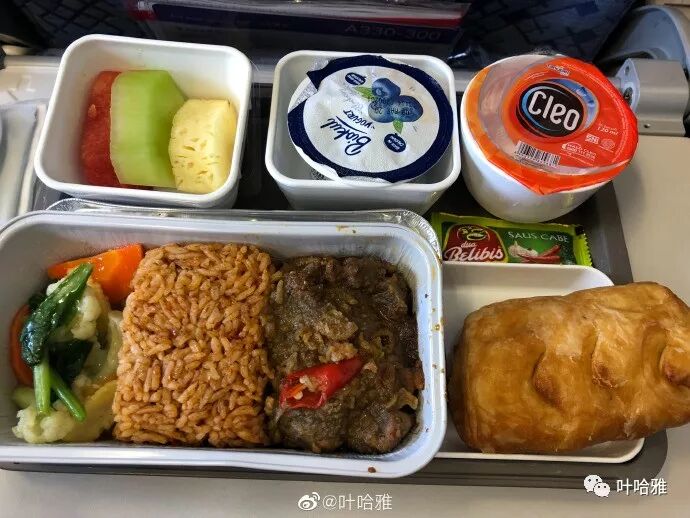
Xiamen Airlines halal meals
I need to praise Xiamen Airlines’ halal meals, which are better than the halal meals I’ve had on other domestic airlines. Here is a reminder: I did not book a halal meal in advance when I bought the Xiamen Airlines ticket this time. However, Xiamen Airlines will proactively provide halal and non-halal meal options for flights to Jakarta, so there is no need to book in advance.
In fact, except for low-cost airlines that do not actively provide catering services, almost all airlines have meal reservation services. There is no additional charge for reservations of religious meals, and the fees are included in the ticket. However, you need to make a reservation at least 24 hours in advance. You can use the airline's app to make reservations, you can also make reservations through the airline's customer service phone number, or you can also make reservations through the customer service of the platform where you buy air tickets. If you are not sure about the airline’s ingredients, you can also order a vegetarian meal. Some airlines can set food preferences in the app, so that whenever you buy a ticket from that company in the future, the system will automatically reserve halal meals.
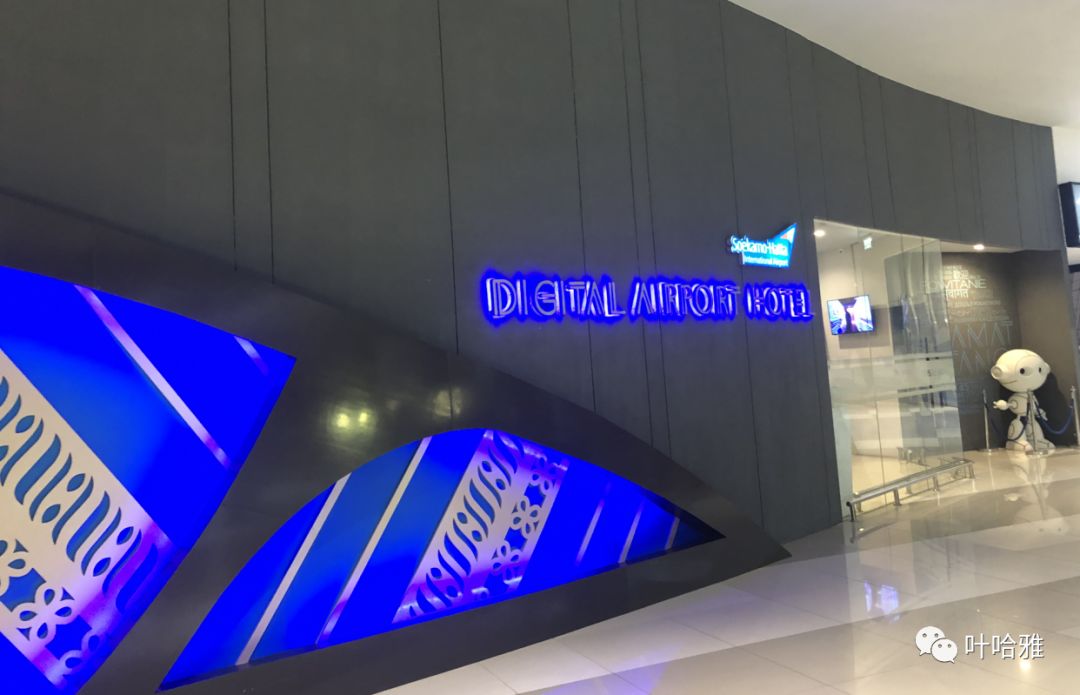
DIGITAL AIRPORT CAPSULE HOTEL
After flying during the day, it was already 10pm when I arrived in Jakarta. My plan was to fly from Jakarta to Komodo Island early the day after tomorrow. In order to save time and money, I chose the capsule hotel on the first floor of Terminal 3 of the airport. This way I didn’t have to take a car to the city when I landed that night, and I didn’t have to get up early to catch the flight the day after tomorrow. It turned out that my choice was very correct. Although the capsule hotel is small and can only accommodate one person, the facilities inside are complete and clean, including bottled water, towels, lockers, charging power, and TVs. It is like lying in a space warehouse.
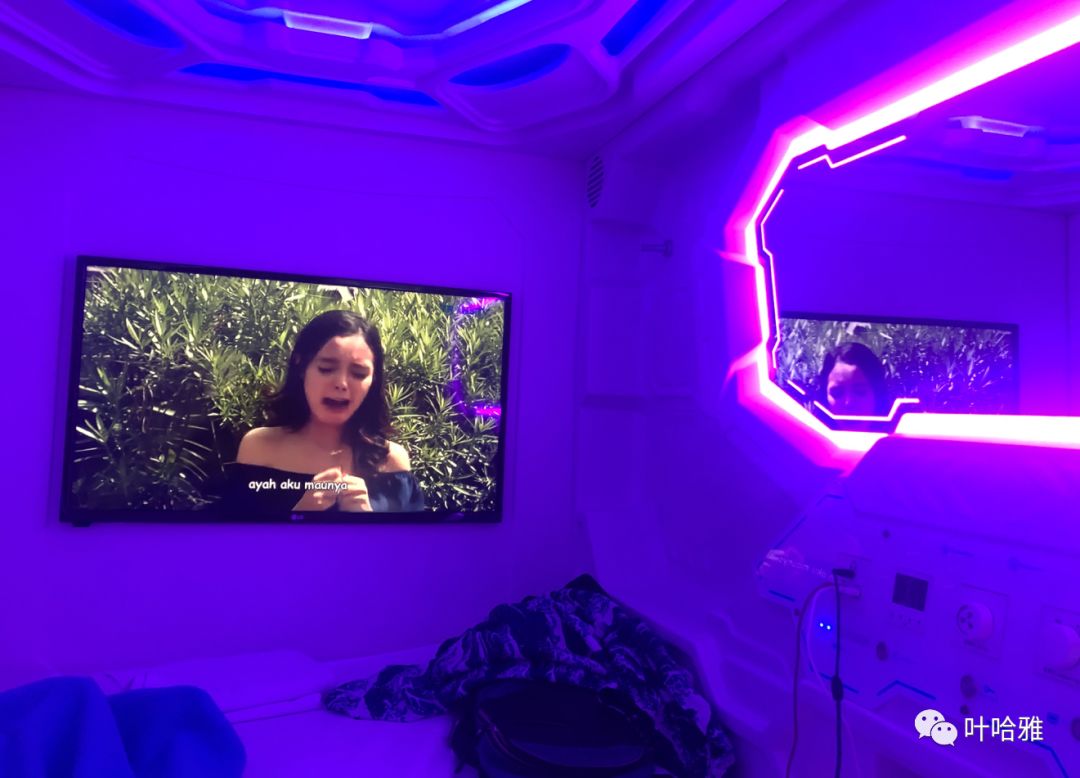
The lights in the space can be adjusted to change color, and there is also air conditioning.
The capsule hotel has a public bathroom. Although it is a public area, each room for bathing and washing is separate. The door is locked and it is like a separate bathroom. It does not feel awkward at all. I am very satisfied with my first experience in a capsule hotel. I hope this model can be promoted.
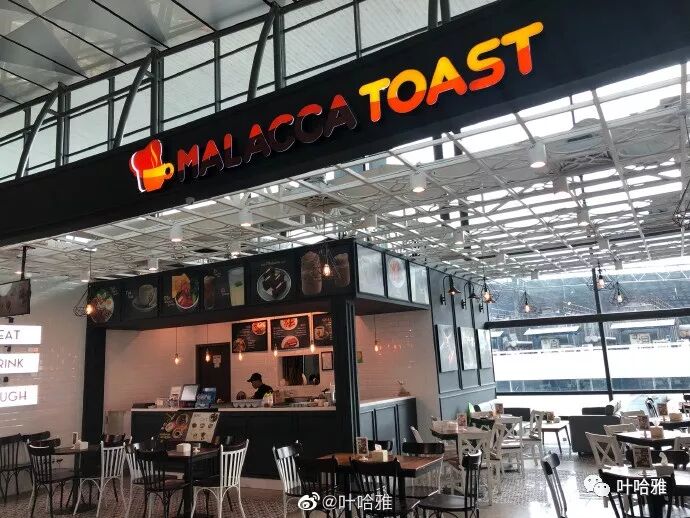
MALACCA TOAST airport fast food restaurant
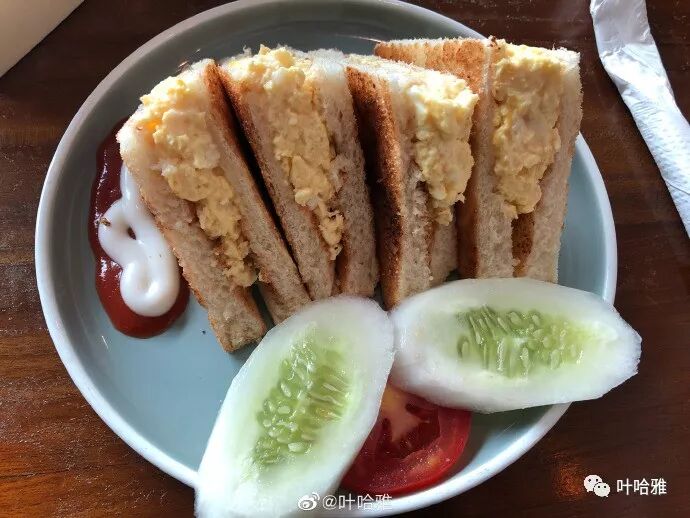
egg sandwich
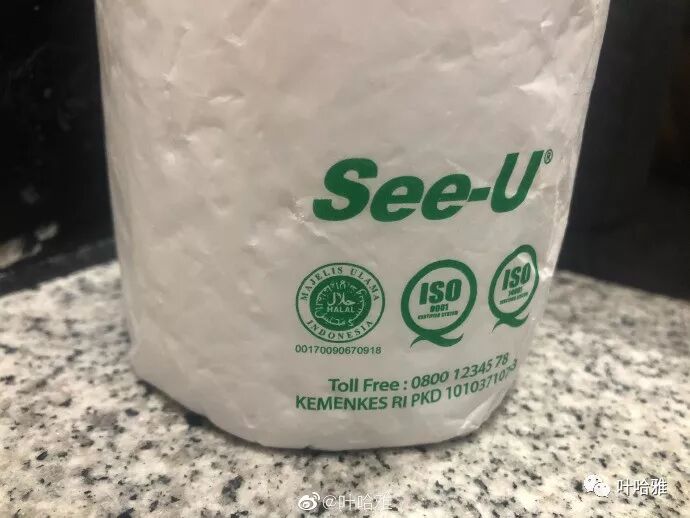
Halal paper in the bathroom
But it cannot be said that you cannot eat non-halal food in Indonesia. There are some restaurants in Indonesia run by non-Muslims such as Catholics and Hindus that sell alcohol, but they will prompt that the restaurant is a pork-free restaurant. There are also some hijab girls eating in such restaurants. I have only seen Chinese restaurants in Surabaya that sell pork. You will never see anyone wearing a hijab in such a restaurant. If the restaurant door is clearly marked with the HALAL certification mark, it must be a restaurant that does not sell alcohol.
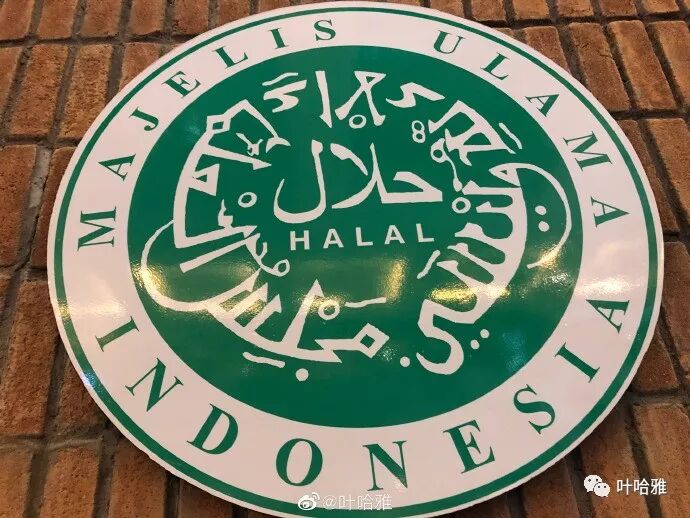
Indonesian Halal Certification Mark
It looks like the picture above. The common halal certification mark in Indonesia is written in Arabic and Latin alphabet transliterations. HALAL also means halal in Indonesian. If the mark of some packaging is particularly small, it is better to simplify it and not write the letters HALAL, but also write حلال
, to help the identification of dostis in various countries.
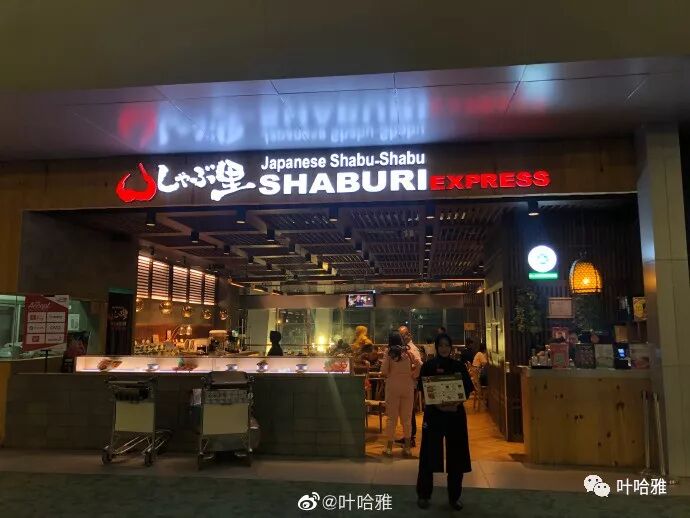
SHABURI self-service Japanese hot pot restaurant
Located on the third floor of Soekarno Airport T3 terminal, a set meal costs RMB 60. It only has one plate of meat, vegetables, fruits, sushi, etc. You can eat as you like.
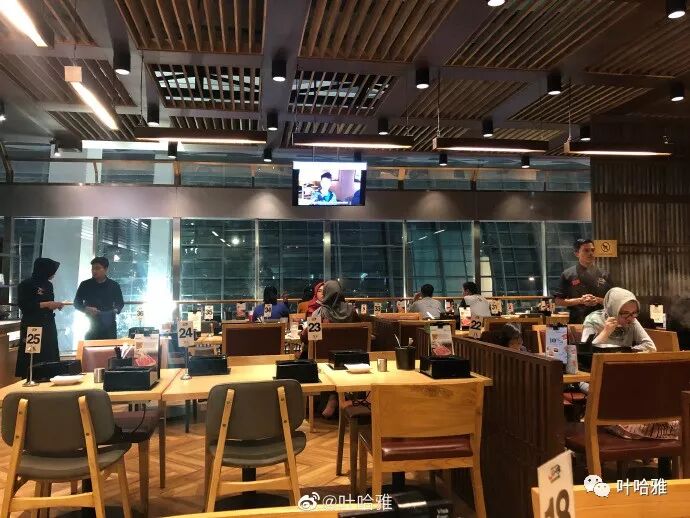
The service in Indonesian restaurants is generally warm and considerate, especially the waiters’ sweet smiles.
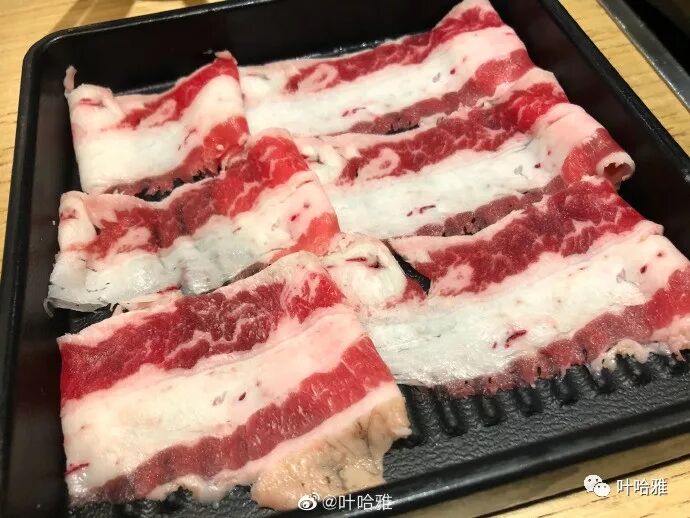
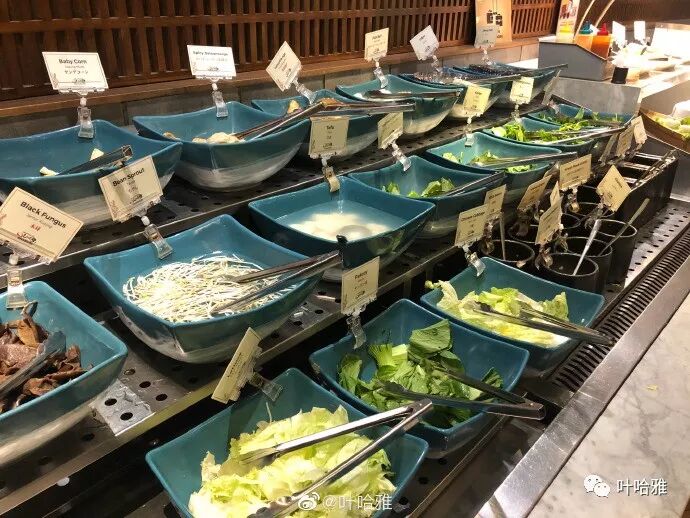
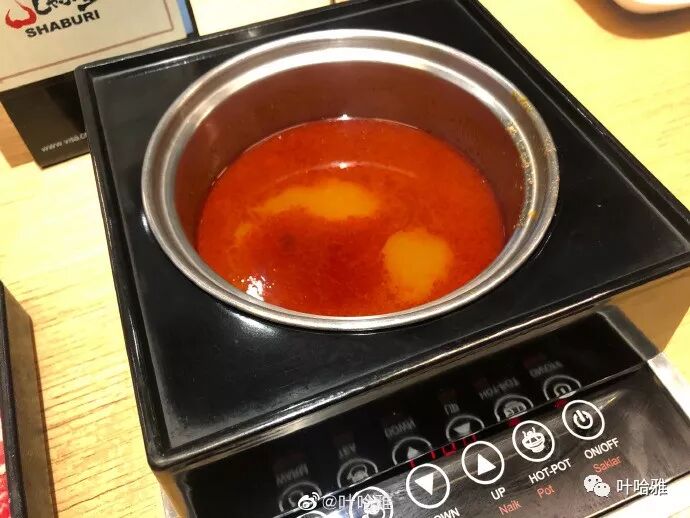
The single-person pot is very similar to the domestic Xiabuxiabu.
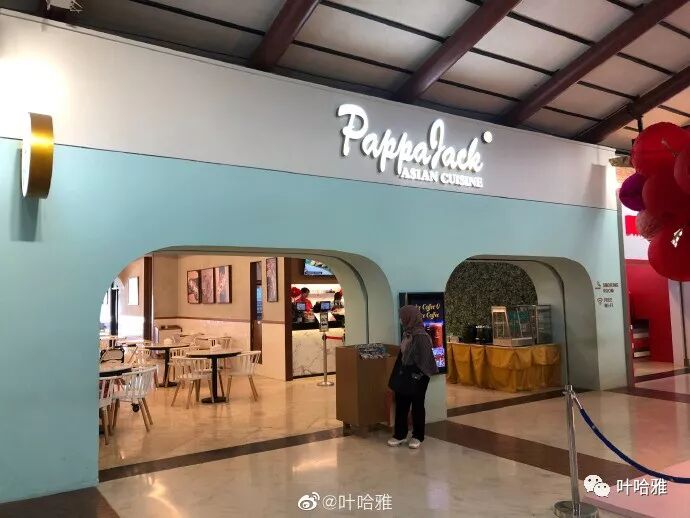
Indonesian restaurant in Terminal 2
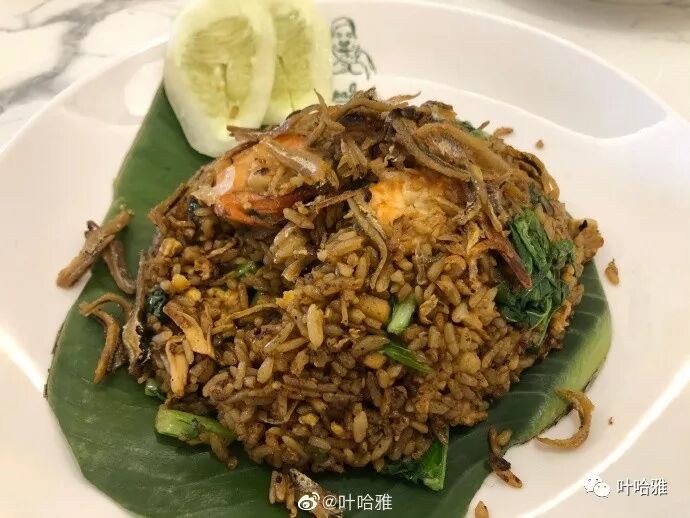
Indonesian fried rice
The most popular fried rice in Indonesia is this kind of fried rice, which is also one of my favorite Indonesian delicacies. It can be eaten for breakfast. The price ranges from 6 yuan to 30 yuan. It is very popular in Southeast Asia. The method is to add sweet soy sauce, tamarind, shrimp, etc. to white rice and fry it. It is served with a variety of ingredients, including satay skewers, cucumbers, Indonesian shrimp cakes and fried eggs.
Istiqlal Mosque (MASJID ISTIQLAL)
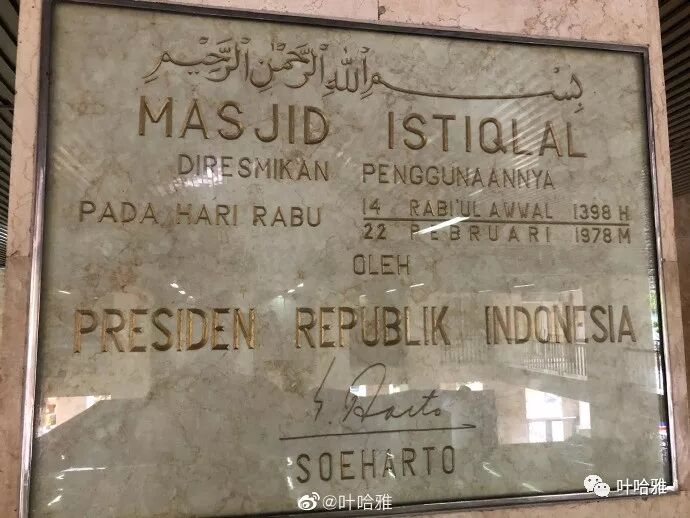
Jakarta's Istiqlal Mosque (Indonesian: Masjid Istiqlal, Arabic for "Independence") was built to celebrate Indonesia's independence. The foundation stone was laid on August 24, 1961, and it was opened on February 22, 1978. The architect Frederic Siraban was a Christian. the mosque was built next to the Jakarta Cathedral to symbolize the peaceful coexistence of religions.
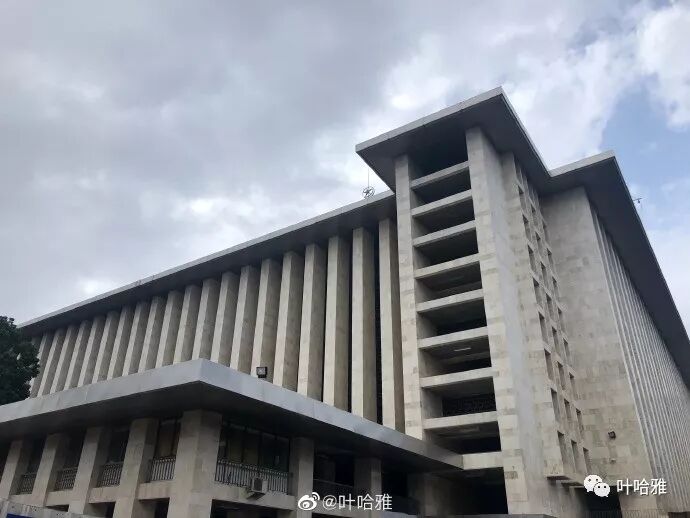
When I came here, the whole place was under repair. It was the rainy season in Indonesia, and Jakarta had just experienced a flood. Many places were flooded. However, after the flood, everything was as usual. What impressed me most was that on the way the driver took me here, he talked about the floods in Jakarta. He pointed at the traces of water on both sides of the street and smiled stupidly. I was surprised that they could be so optimistic. The love of laughter is my deepest impression of Indonesians. Although Indonesians are poor, they have a high sense of happiness.
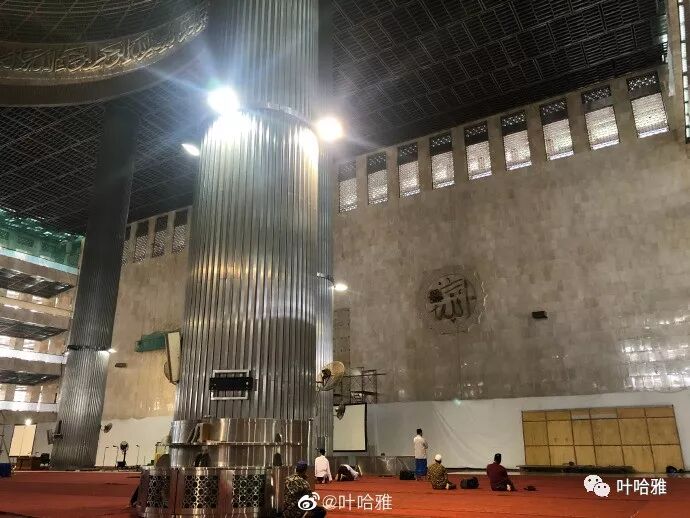
It is free to enter the mosque, but you need to take off your shoes and store them. The uncle at the door warmly welcomed me into the mosque and asked me to write down which country I came from and my religious belief in the registration book.
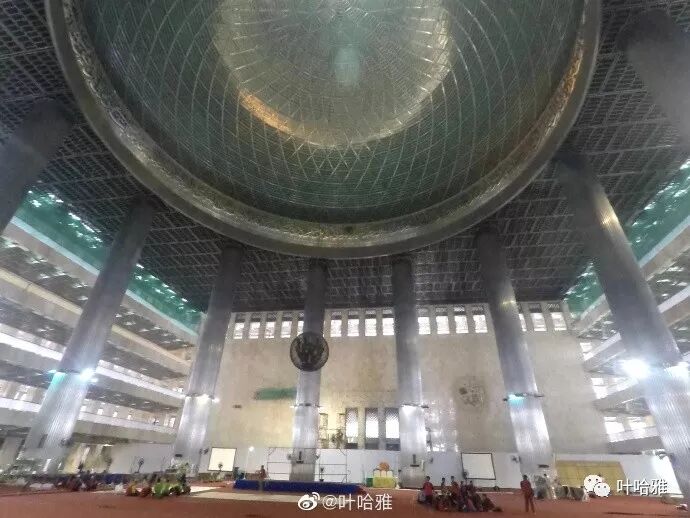
I have learned about this mosque on TV before. It is considered the largest mosque in Southeast Asia and cost a huge amount of money to build. However, after visiting it on site, I did not find it as beautiful as I imagined. It turns out that during subsequent trips, I saw more unique Indonesian mosques.
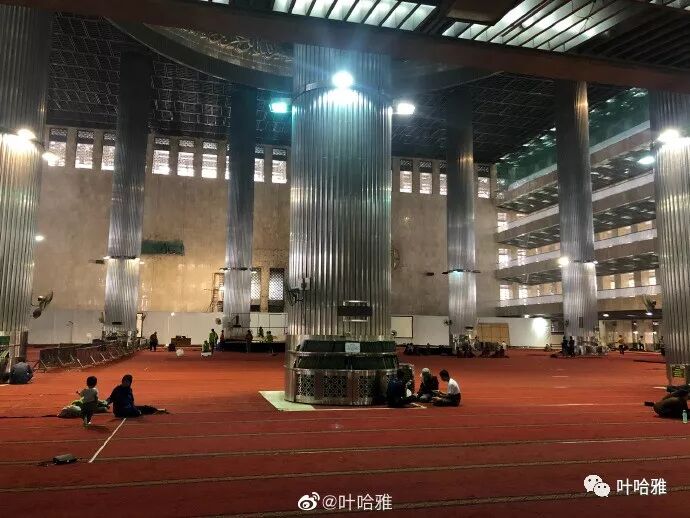
old jakarta
(Kota Tua Jakarta)
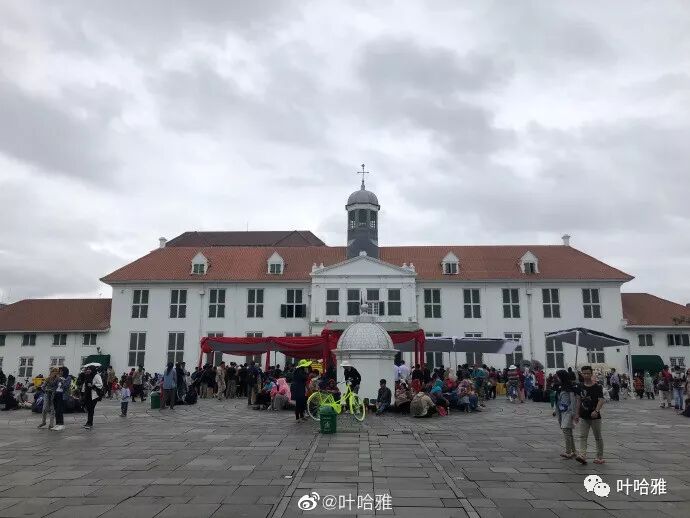
The Old City of Jakarta covers an area of only 1.3 square kilometers, equivalent to the size of a square. There are many Dutch buildings in the Old City of Jakarta that were built in the 17th century. At that time, Jakarta was the headquarters of the Dutch East India Company for spice and other trade in Asia.
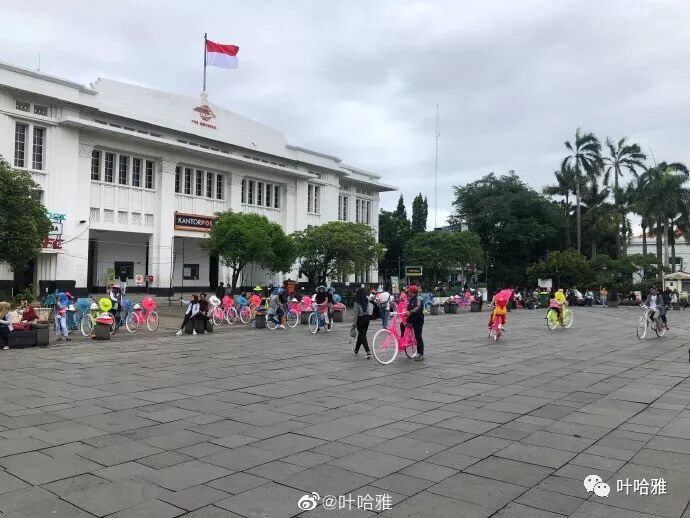
Let’s talk about the colonial history of Indonesia. A friend once asked me that there are so many Muslims in Indonesia. Why are their voices rarely heard in the world? The reason is that Indonesia has been colonized for a long time. From the 16th century to the 20th century, Indonesia has been colonized by the Netherlands. During World War II, the Japanese came and drove away the Dutch. Indonesia was colonized by Japan for several years. It was not until 1945 that Indonesia declared independence. Before that, Indonesia’s actual ruling class had never been Muslim, so Indonesian Muslims were marginalized internationally.
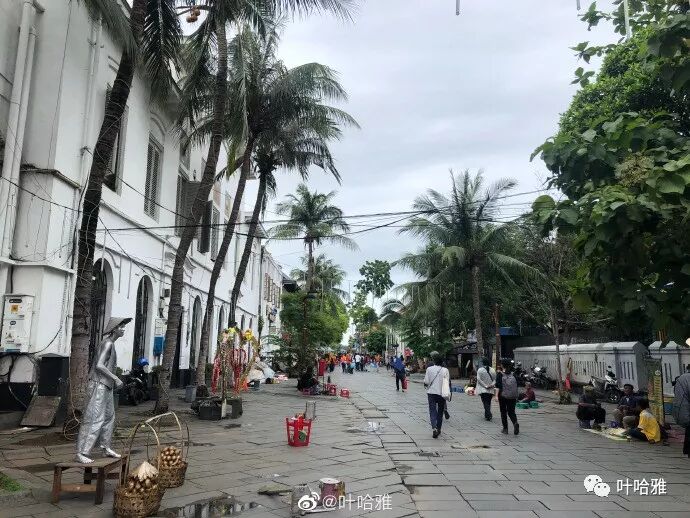
Jakarta old city street scene
Although Indonesia is considered a Muslim country, with more than 80% of the population being Muslims, it cannot be considered an Islamic country. Only countries whose state religion is Islam can be called Islamic countries, and Indonesia does not have a state religion. From this, we can also see the marginalized status of Indonesian Muslims in the history of the country. A country with 87% of the population being Muslim cannot actually establish Islam as the state religion. This can be done by Malaysia next door. The Muslim population in Malaysia is only 60%, but the state religion in Malaysia is Islam, so Malaysia is considered an Islamic country.
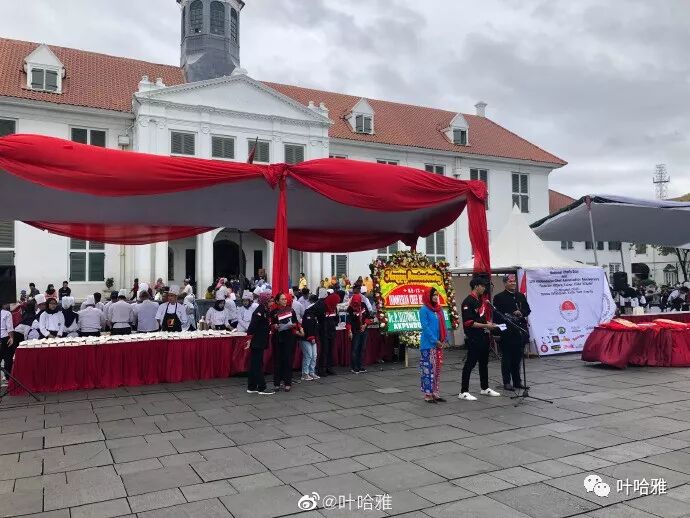
Performance in the Old Town Square
Indonesia’s constitution stipulates that citizens must have religious beliefs. The Jakarta Charter issued in 1905 clearly stated: “This country must be founded on the following principles: Believe in Shinto, and believers in Islam have the obligation to implement Sharia law in accordance with correct and moral humanitarian principles.
Indonesian citizens cannot believe in anything, otherwise they will be treated as materialistic XXists. You know, this is related to what people often say about anti-Chinese in Indonesia, because at that time, most Chinese in Indonesia were associated with that doctrine. The pro-Western Major General Suharto overthrew the pro-German Sukarno government, and then began the anti-German purge. When the incident occurred, it was against XXists, not specifically Chinese, so blindly emphasizing anti-Chinese ignores the background of the incident.
The Banda Aceh Special Administrative Region in Indonesia has implemented the second half of the "Jakarta Charter" and implemented Islamic law. Banda Aceh is in the northwest corner of Indonesia and is the city closest to Mecca in Indonesia. Indonesian people worship to the northwest, but it is not directly accessible by plane. Otherwise, I really want to go there to experience the atmosphere of Sharia.
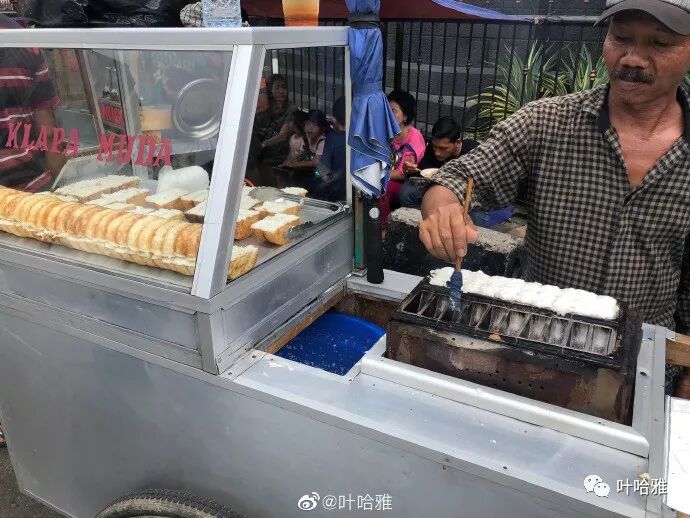
Street food in the old town
There are a lot of street snacks in the old city. I am not used to eating these unfamiliar foods on the roadside. Friends who are interested can try it, but according to my guess, it will not taste too delicious. We may not be used to eating many specialties in Southeast Asia, and the hot weather may cause stomach upset.

Some poor toilets in Indonesia will put a mineral water bottle on the urinal. This bottle is used to flush the penis.
Grand Indonesia
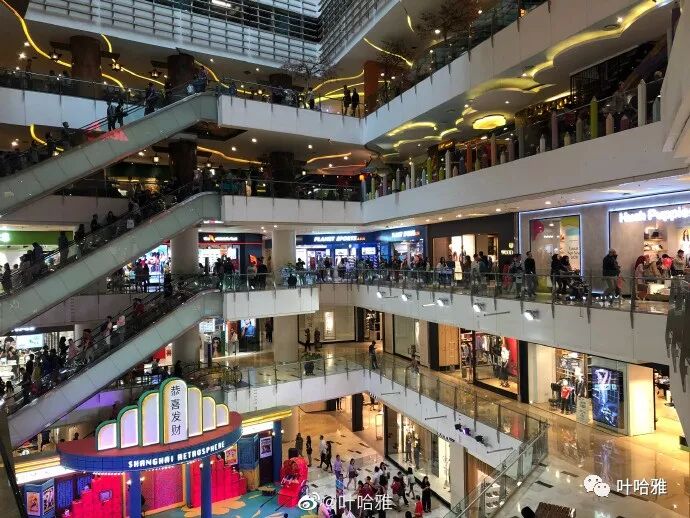
Grand Indonesia is the largest shopping mall in Jakarta. It is really very big and is second to none in Asia. The mall has everything you need, including farmers' markets, and many restaurants and snacks. You can spend a day shopping here. If you don't want to walk around in the scorching sun, it is recommended to come here for shopping and leisure.
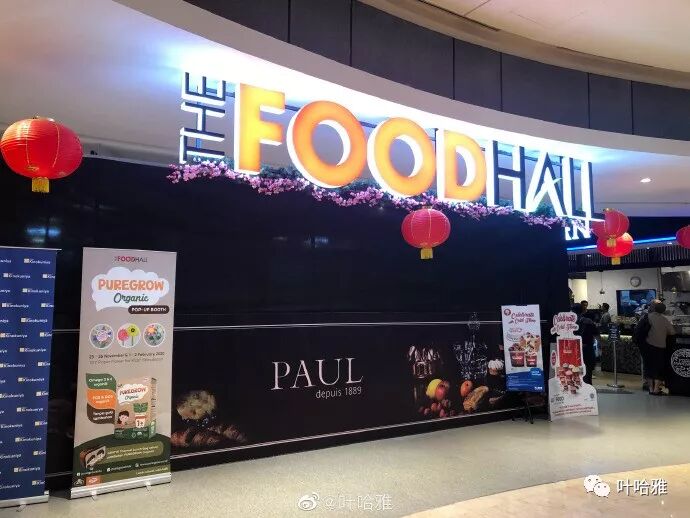
Supermarket on the ground floor
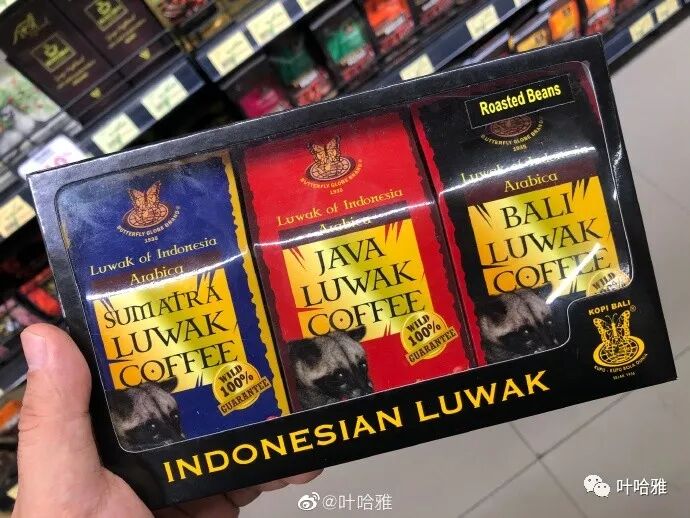
Indonesian specialty cat poop coffee beans
I carefully observed the products of various internationally renowned brands in the supermarket, and almost all the products I saw had halal certification marks.
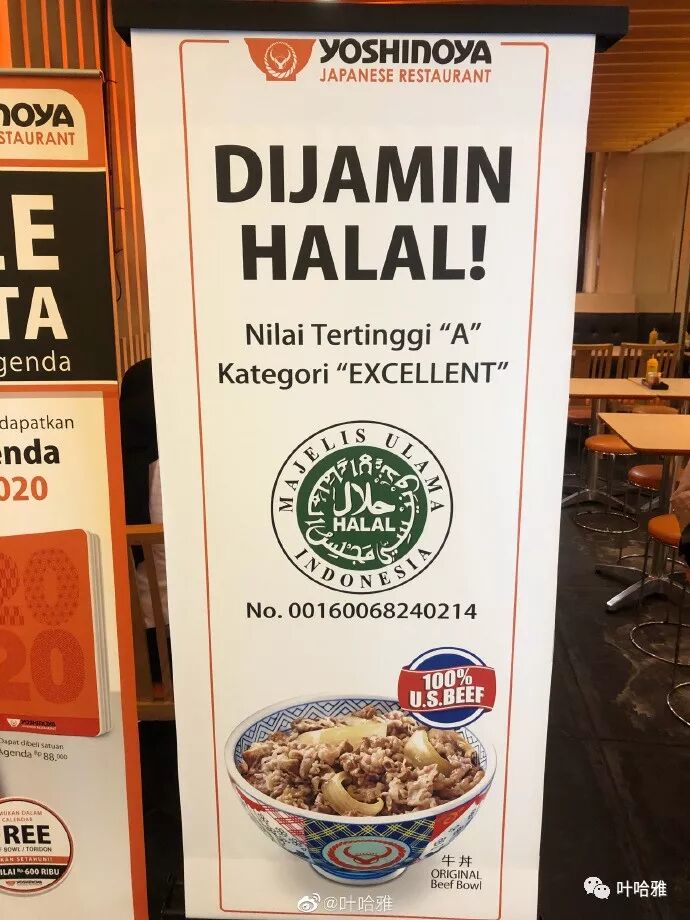
Halal Yoshinoya
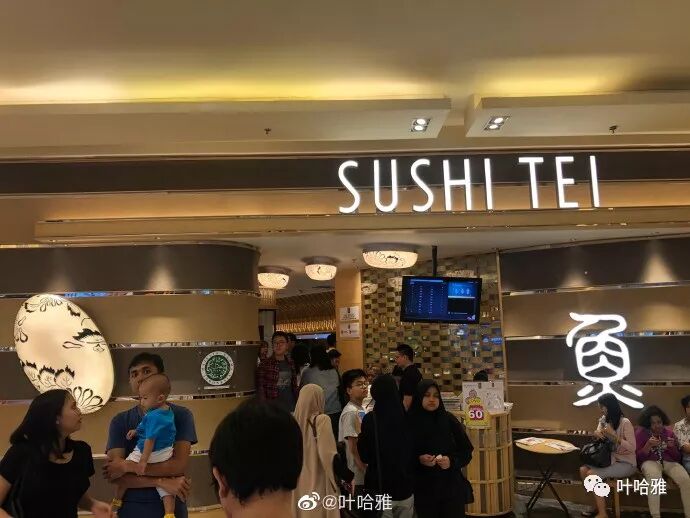
Japanese food in the mall
Japanese food is relatively common in Indonesia and is very popular among Indonesians. Often, you have to queue up to eat at such restaurants. The Japanese food in Indonesia is mostly related to Indonesia’s colonization by Japan during World War II. After the war, many Japanese companies still developed in Indonesia, bringing a large number of Japanese.
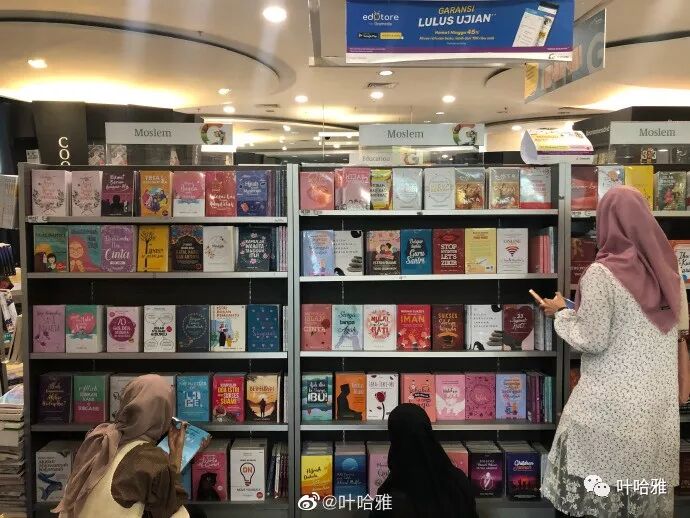
bookstore in shopping mall
There is a large section of the bookstore in the mall devoted to religious books. All major religious books are available. Islamic books are the most numerous, but they are mainly in Indonesian and cannot be read. Otherwise, I would buy a few books and take them back.
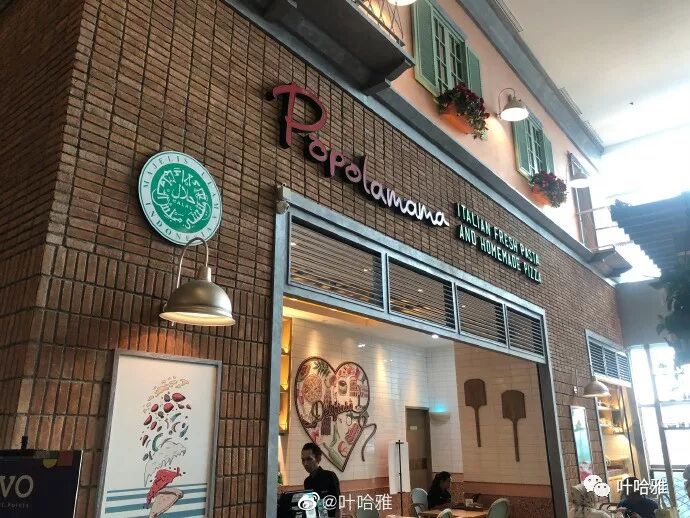
Italian Restaurant Popolamama
Among the Italian restaurants in shopping malls, Beijing has never seen a halal Italian restaurant, while the level of Western restaurants in Jakarta is world-famous.

italian pizza
A pizza, a salad, and a glass of juice cost about 60 yuan. This consumption level is relatively high in Indonesia. In some other small cities in Indonesia, the consumption will be even lower.
Second stop Komodo Island
Komodo Island is an important destination of my trip. I came here to fulfill my childhood wish as a natural science enthusiast. When I was in elementary school, my family gave me a set of natural encyclopedias. There are four volumes in total. The one I read the most is the natural science volume. I am deeply impressed by the various species of animals and plants in the world introduced in it. Komodo Island is a place with diverse species and frequently appears in animal world programs.
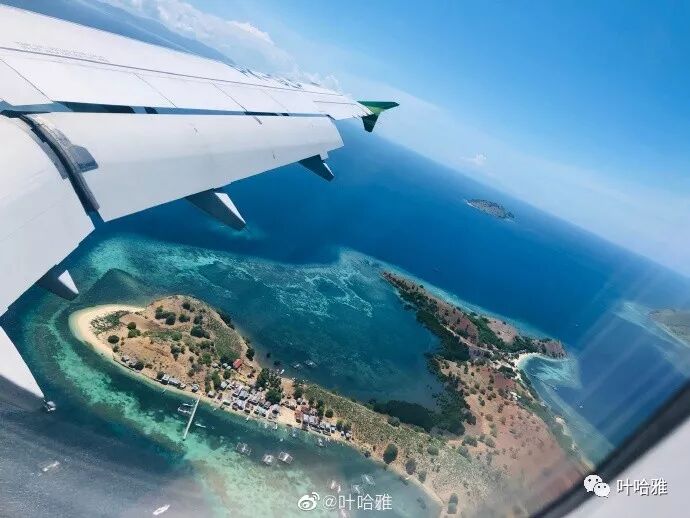
Komodo Island is located in the southeastern corner of Indonesia, and a little further south is Australia. It can be said that it is across the sea from Oceania. There is no direct flight to Komodo Island from China. You can only transfer from Jakarta or Bali. I took more than three hours of flight from Jakarta to reach the nearest Labuan Airport to Komodo Island. If I transfer from Bali to Lower Labuan, it only takes one hour.
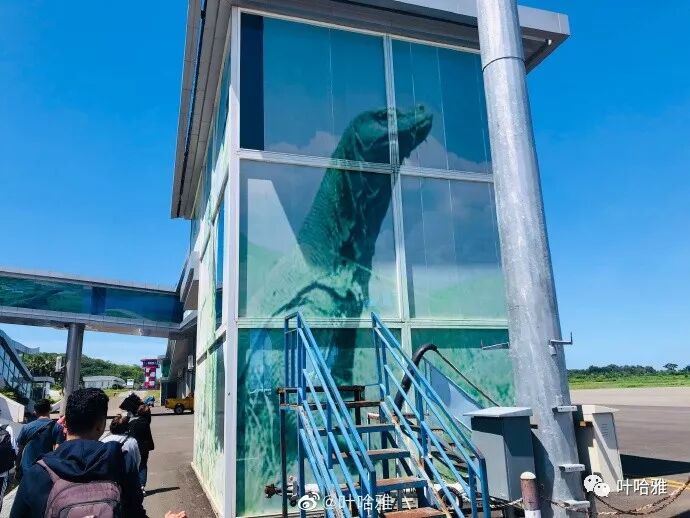
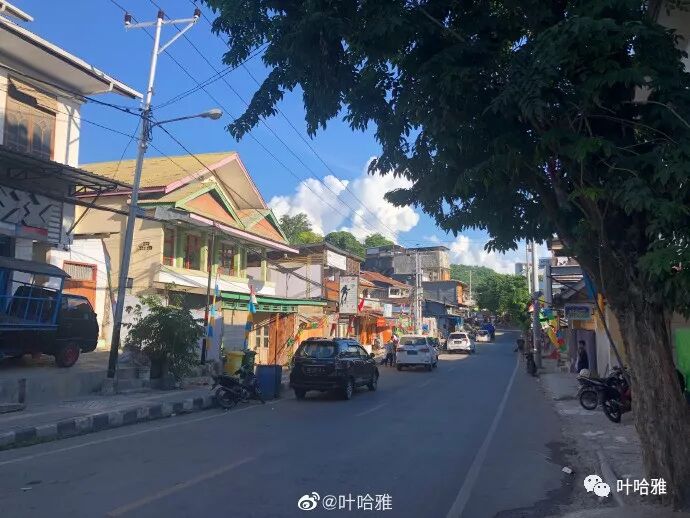
The main road of Labuan Bajo town
From Labuan Airport, it takes half an hour to take a taxi to the town of Labuan Bajo, which is the most prosperous place in the surrounding area. The picture above shows the busiest neighborhood of this town. The town is sparsely populated and has backward commerce. It covers an area of only two square kilometers. Many residents still retain their original lifestyle. Most of the residents make a living from fishing and tourism. The most common shops on both sides of the street are diving shops. Komodo Island has many high-quality diving spots, but the ocean currents are complex and suitable for professional divers. Beginners are not recommended to go there.
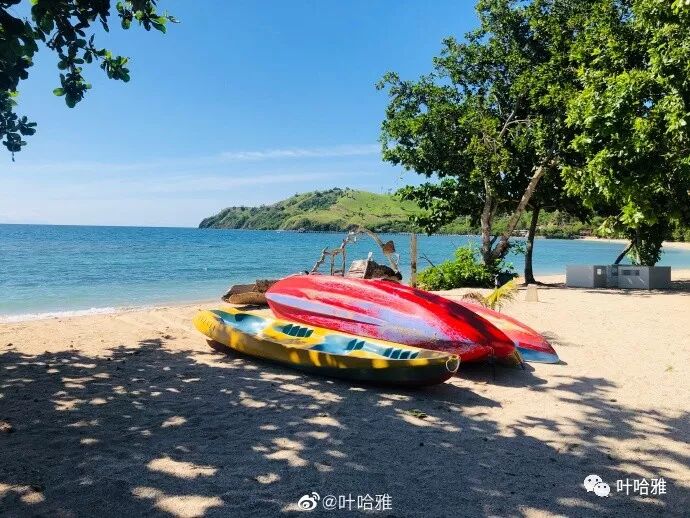
Sylvia Hotel & Resort Komodo Komodo Sylvia Resort Hotel
The hotel I stayed in has a private beach. There are many hotels with private beaches here. The price is cheap and the environment is beautiful. You can stay in a very nice hotel for two to three hundred yuan a night. However, I do not recommend this hotel because it is far from the center of the town. There are no businesses or public transportation around. You can't go out for a walk at night. I suggest staying in the town next time is more convenient.
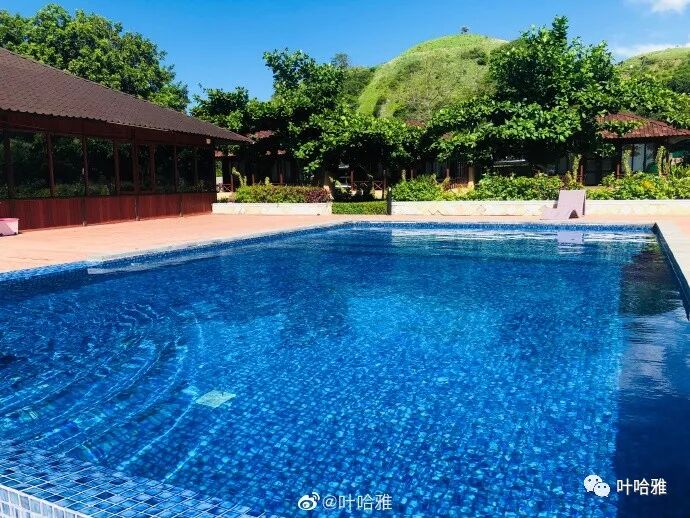
hotel swimming pool
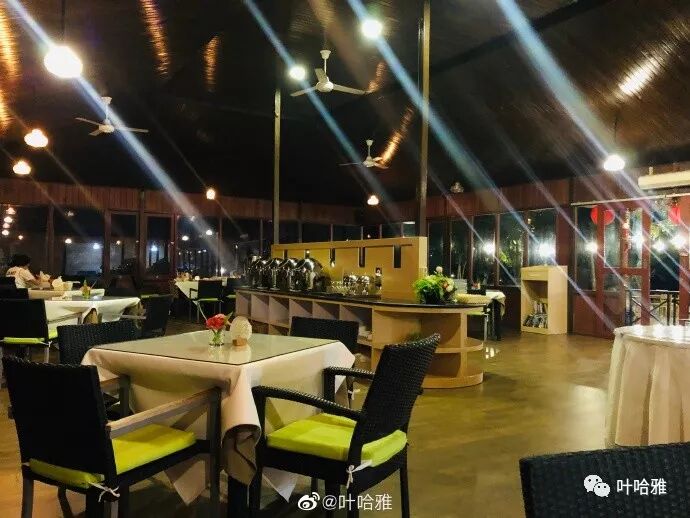
The only restaurant in the hotel
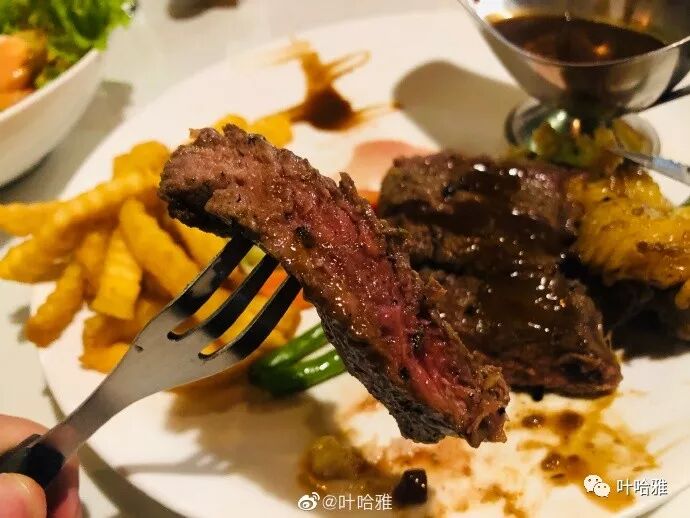
A steak set
A steak costs less than RMB 100. There are no decent restaurants in Labuan Bajo Town. Most of them are street shops. It needs to be emphasized that there are many Christians living in this town. Most of the restaurants on the island are opened by Christians. They will also mark it as halal and do not have pork, but they sell alcohol.
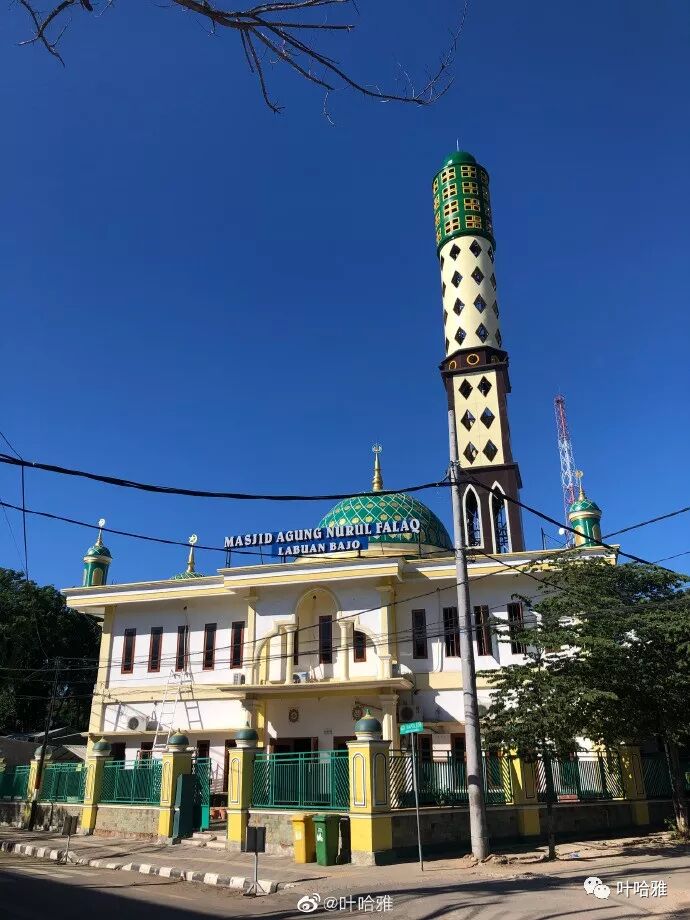
MASJID AGUNG NURUL FALAQ LABUAN BAJO Mosque
I took a taxi from the hotel and asked the driver to take me to the largest mosque in the town. The driver took me here. This mosque is not comparable to other places in Indonesia. The distribution density of Muslims in Indonesia decreases from northwest to southeast. The Aceh Special Administrative Region in the northwest is the most halal, and Bali in the southeast is the territory of Hindus.
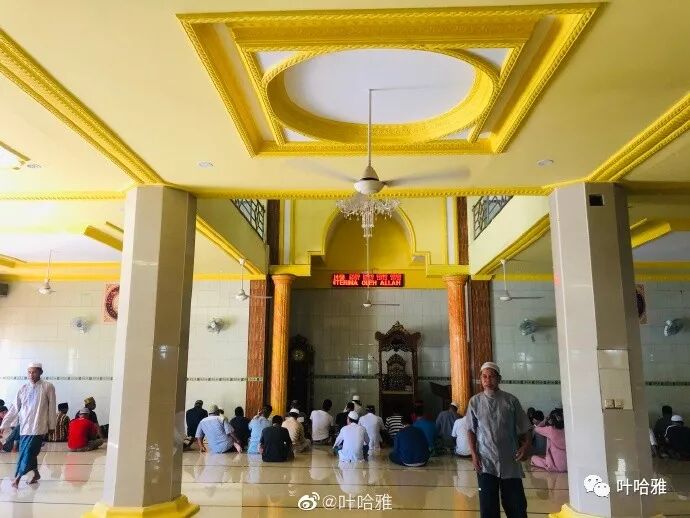
Muslims in Southeast Asia are mainly followers of the Shafi'i school. Their prayer movements can be seen with three hand raises, but whether it is three or one hand raises, there is a correct basis for the hadith.
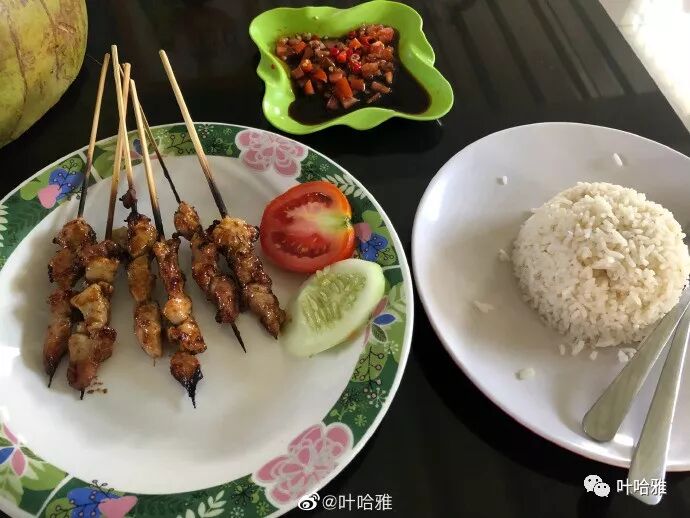
Indonesian BBQ
The simple Indonesian meal on the island is grilled chicken skewers with rice. The chili seasoning is very spicy. The chili in Indonesia is comparable to that in Hunan.
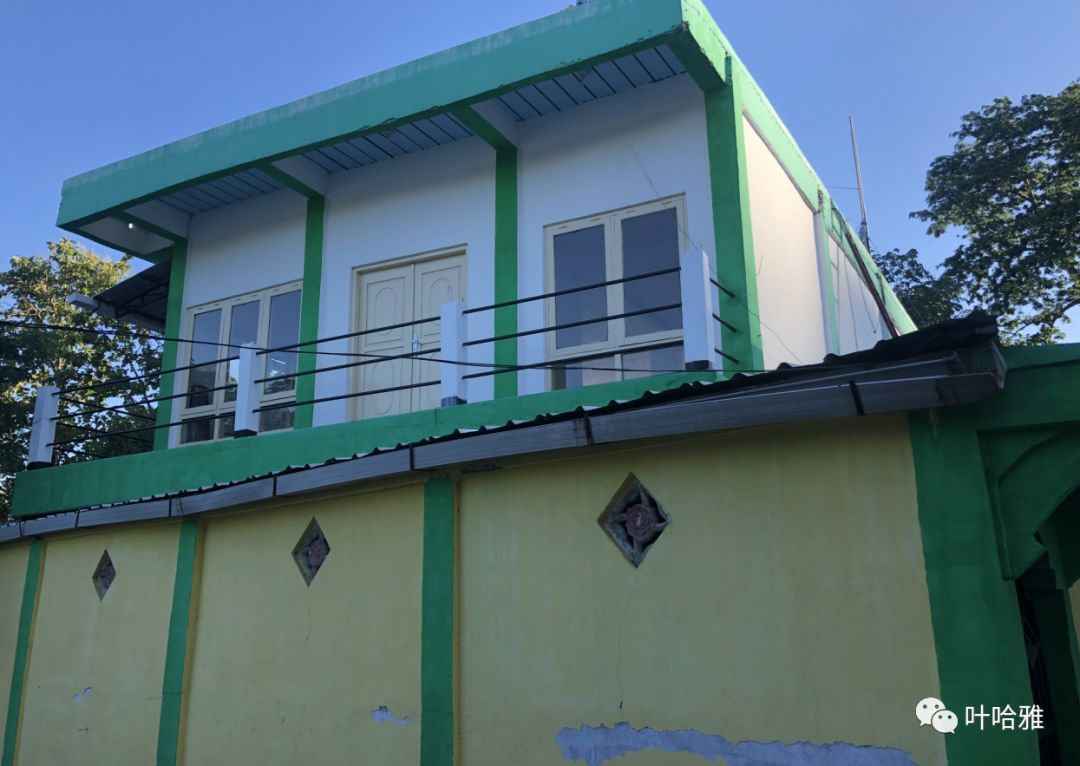
After passing through a residential area, I found a small mosque in the village. The conditions were very simple, surrounded by villagers' houses and chickens eating bugs.
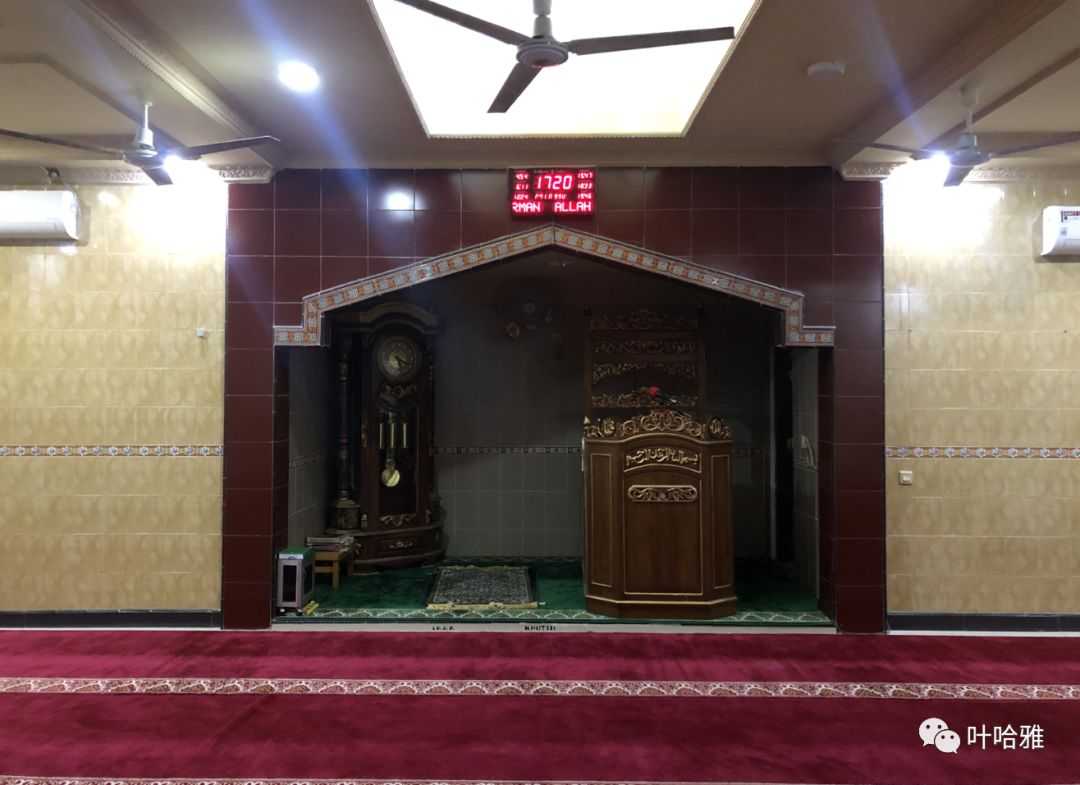
What’s interesting is that there is a Catholic tomb built next to this mosque. It is pink in color. This is the first time I have seen this combination.
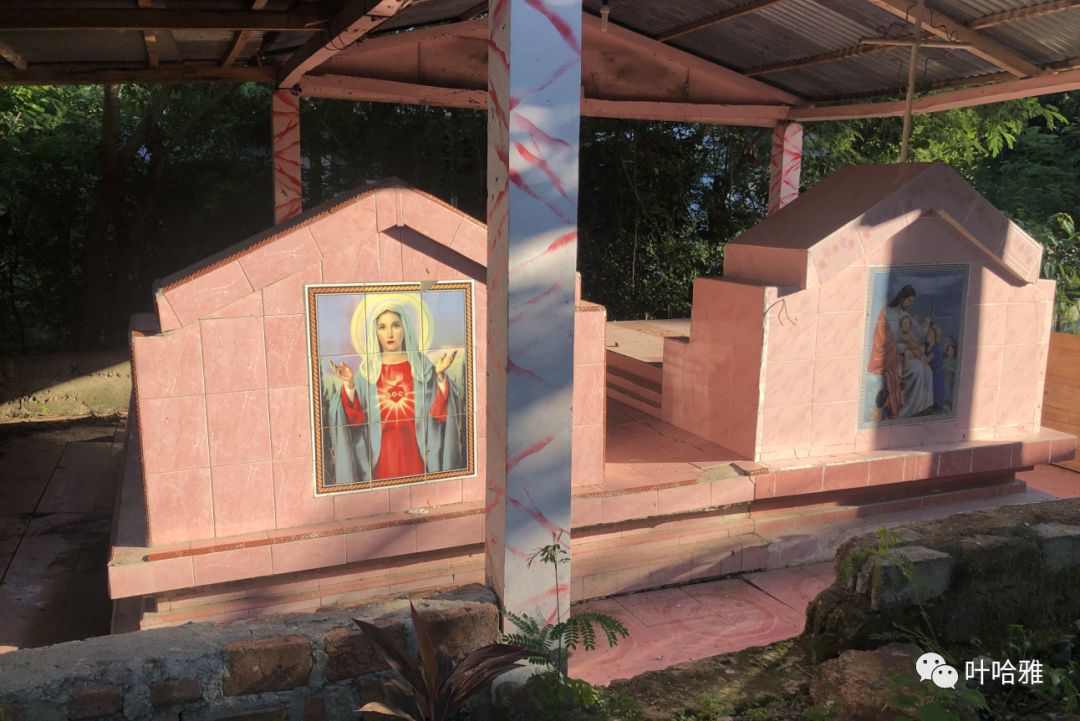
The tombstone depicts the Virgin Mary and Jesus
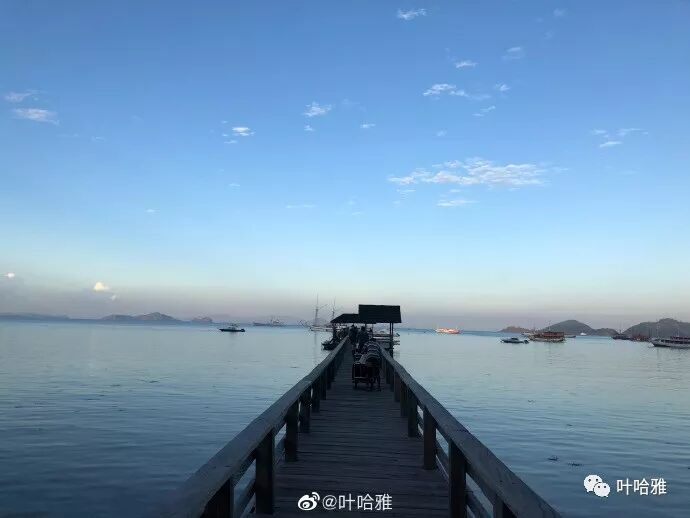
After a night of rest, I reported a one-day tour on Ctrip for the next day. The itinerary included Padar Island, Komodo Island, Pink Beach, Takamakasa Island, Manta Ray Snorkeling Spot, and Kanawa Island. It included lunch, hotel pick-up and drop-off, and an English-speaking tour guide. The cost was 789 RMB.
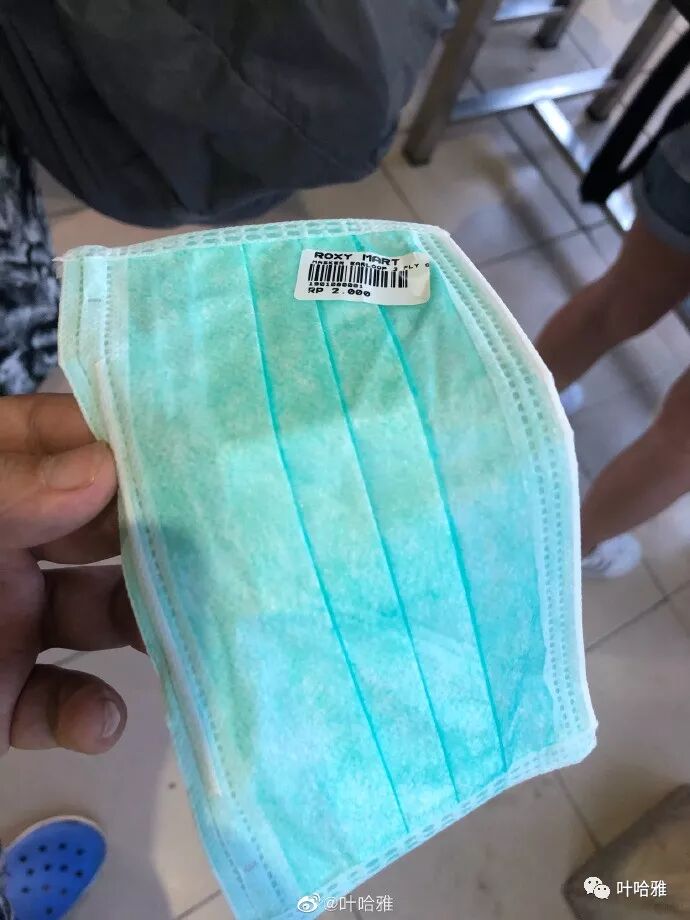
Masks provided with the tour
Departing at 5:30 in the morning, the driver arrived at the hotel on time to pick up people. Before leaving, the tour guide distributed a mask to each tourist. It was 2020-01-27, and an epidemic had broken out in China, but Indonesia was not affected in any way, so the tourists did not care. The traveling groups came from various countries, including Japanese, Koreans, Sichuanese, Taiwanese, Europeans and Americans.
Padar Island
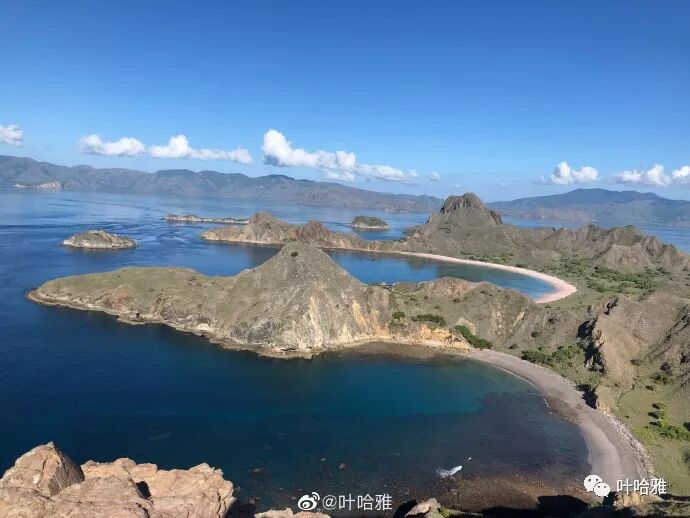
View from the top of Padar Island
It takes about an hour to take a boat to Padar Island. There are no residents on this island and it is in a primitive state. You can climb all the way to the top of the mountain along the seaside and overlook the entire territory. Some tourists have brought drones for aerial photography.
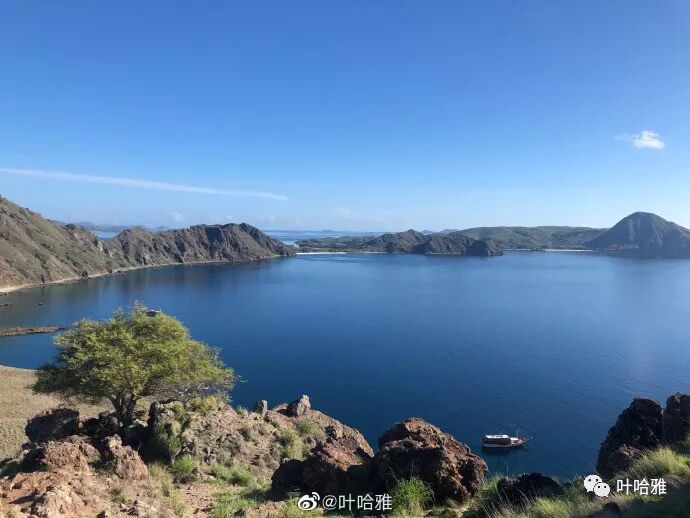
Panorama of Padar Island
After a short stay on the island, continue by boat to the small island of Takamakasa.
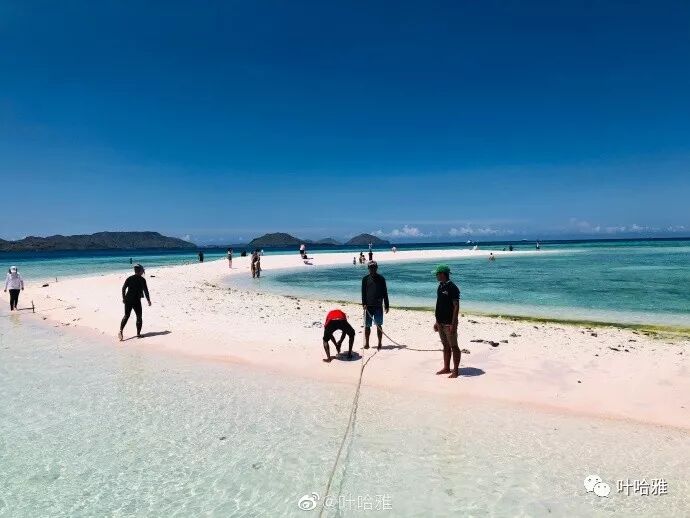
Takamakasa Island
The island is a crescent-shaped island, which may be submerged when the tide rises, but the island is very beautiful, with blue water. When viewed from the air, it looks like a gem set in the sea. The sand on the island can already be seen in light pink, which is a characteristic of the Komodo area.
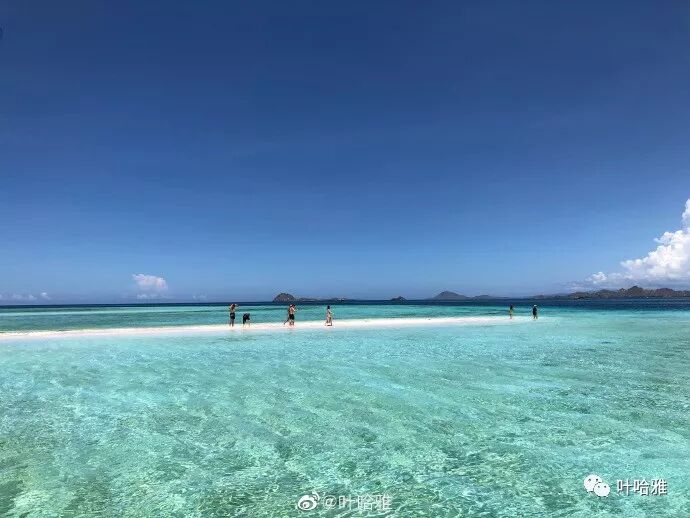
Takamakasa Island
You can snorkel around, it's very shallow, because the water is too clear, you can't see many fish, so be careful about sun protection.
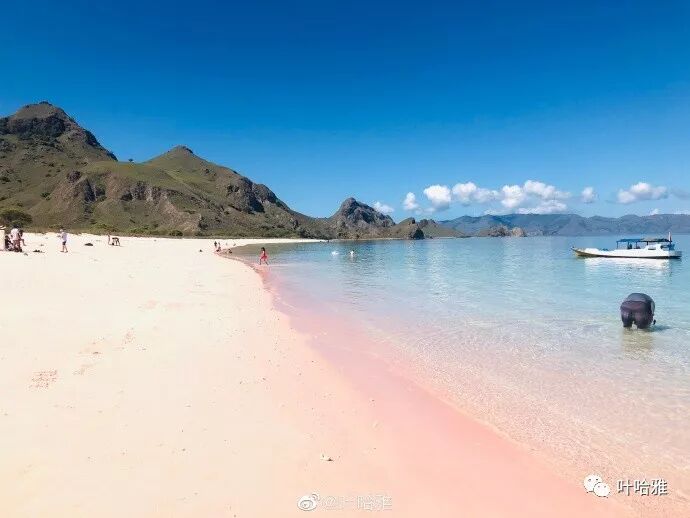
pink sand beach
The beaches around Komodo Island are generally pink because they contain tiny coral particles. Since it was developed here relatively late, it has always maintained its original natural state and the water is crystal clear.
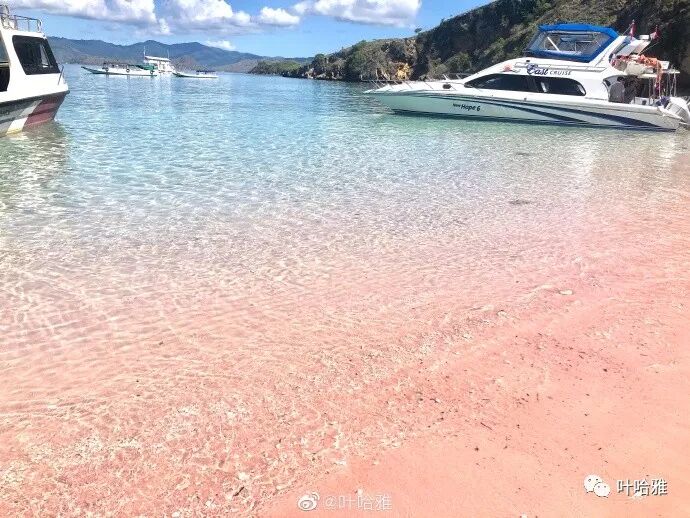

fine pink sand
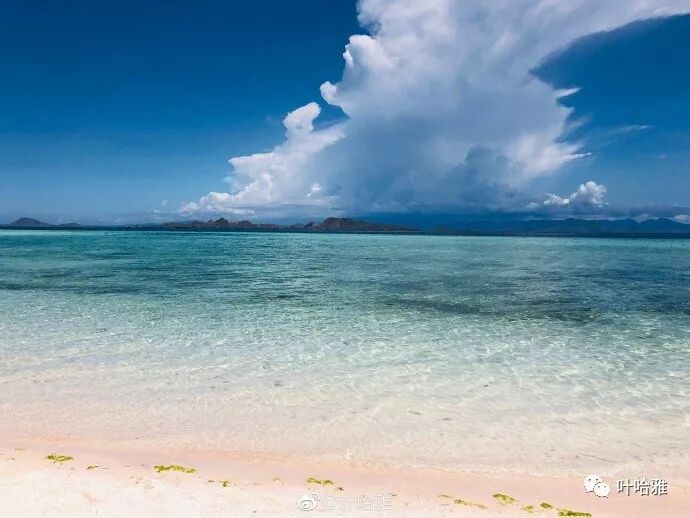
The sea view of Komodo Island is endlessly beautiful.
Underwater fishing video I took with GoPro
KOMODO NATIONAL PARK
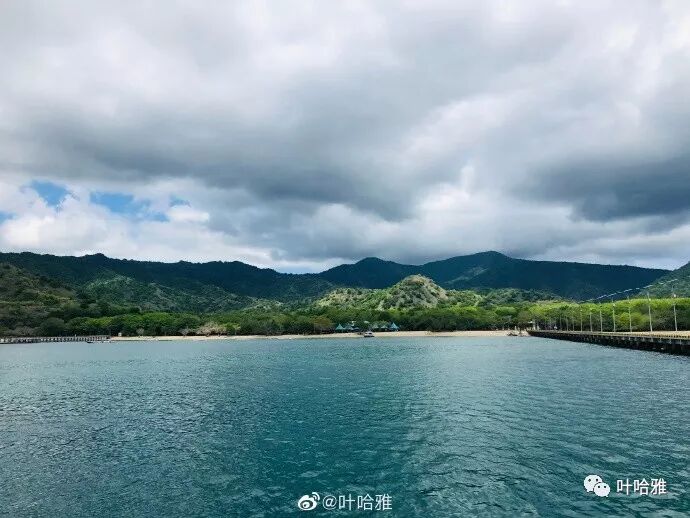
Next, continue to Komodo National Park. When we are about to land, we see a dark cloud floating over Komodo Island from a distance, making the atmosphere on the island even more eerie. This island is home to the world's largest venomous reptile - the Komodo dragon.
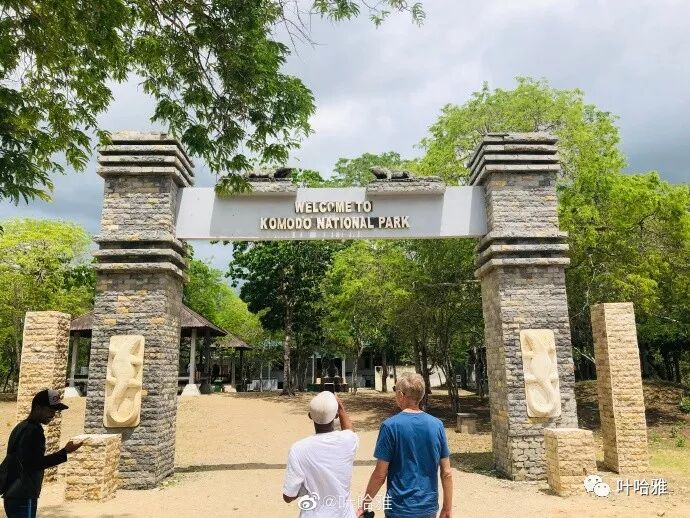
Komodo National Park consists of many islands, the larger ones including Padar Island, Rinca Island and Komodo Island. There are about 3,000 monitor lizards living on the islands. Indonesia established a national park to protect the Komodo monitor lizards, and it was then listed as a World Heritage Site by UNESCO.
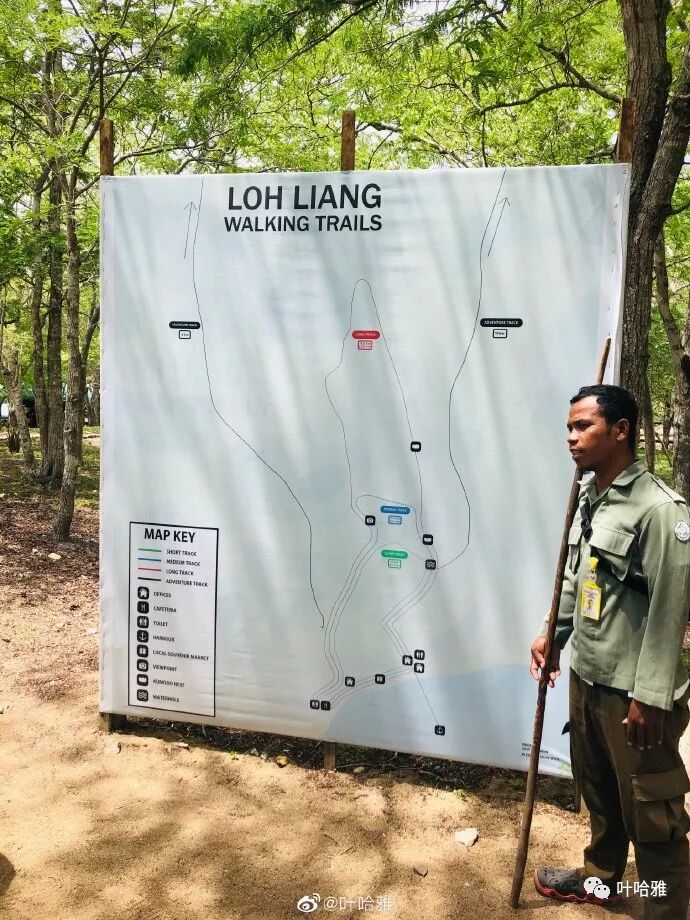
Entering the forest must be led by the park's ranger. Visitors cannot move alone, because all the monitor lizards on the island are wild, and the monitor lizards are poisonous and very dangerous. The long stick in the hand of the ranger can block the attack of the monitor lizards. It is said online that dragons like to eat carrion, so their saliva contains a lot of poisonous bacteria, which can cause infection and death after prey is bitten. This statement has been denied by scientists. In fact, Komodo dragons are born with venom glands, and it is the venom that kills their prey.
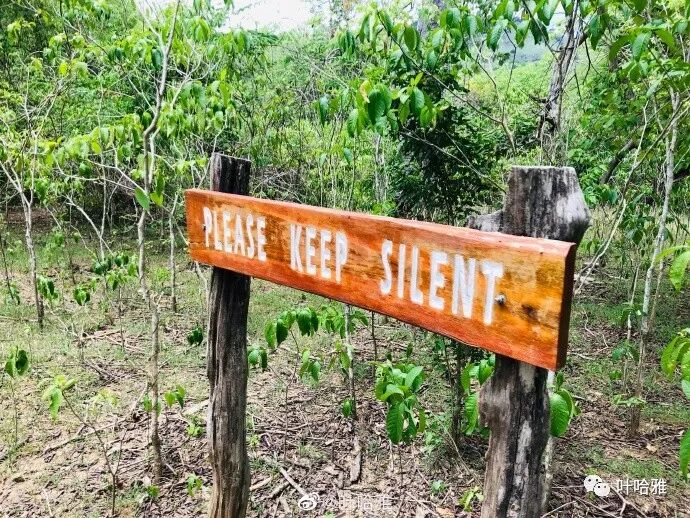
There was a reminder to keep quiet at the entrance of the park. Our group was cautious along the way, with our eyes wide open as we stared at the surrounding plants and trees.
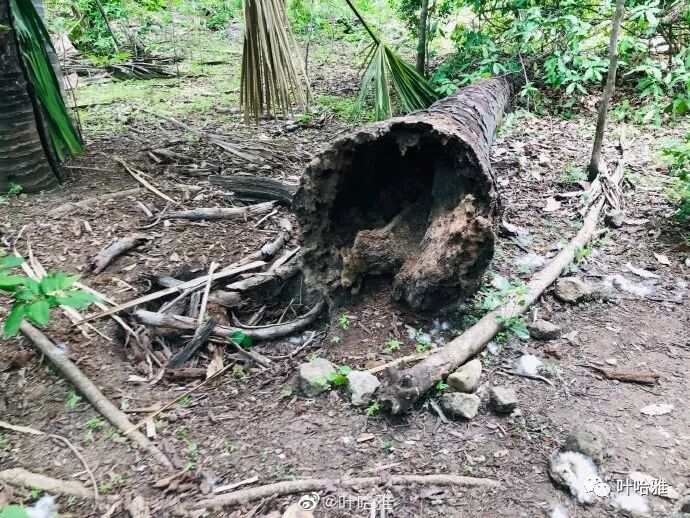
The dead tree trunk, I imagined a picture of a dinosaur knocking down the tree trunk.
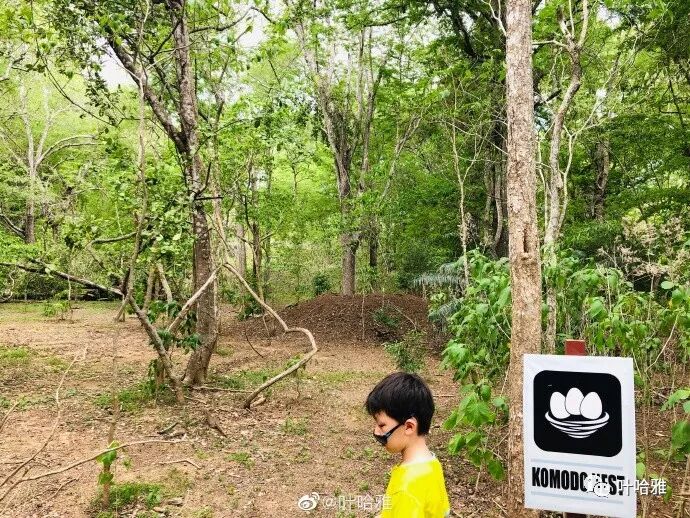
Komodo dragon nest
The tour guide reminded us that the dirt bag in the distance is the nest of the Komodo dragon, which is about one meter high and five or six meters wide. This scene looks too much like a scene from Jurassic Park.
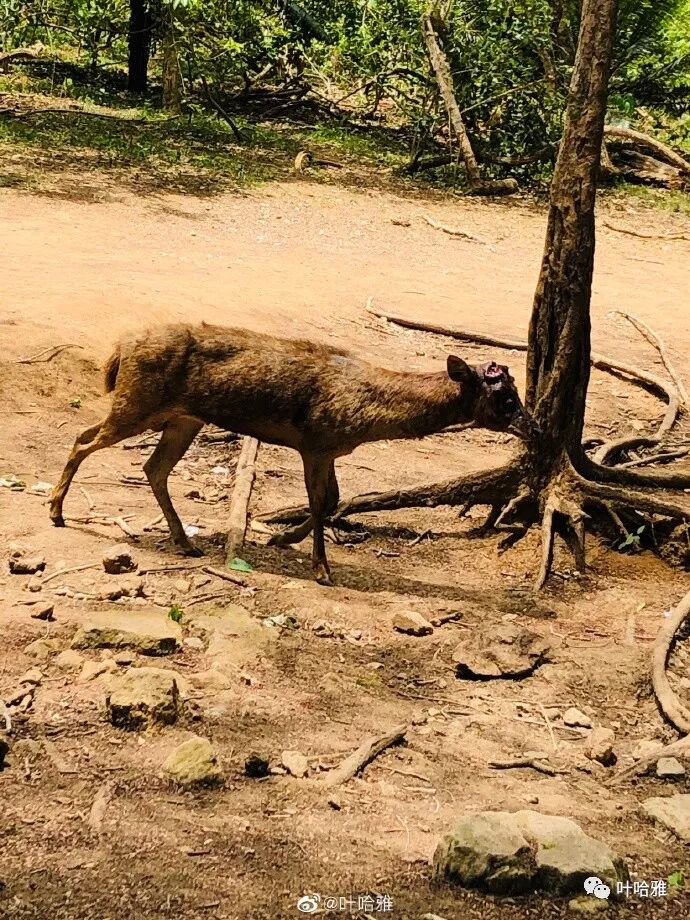
Near a waterhole, the tour guide stopped and told everyone that monitor lizards often come here to drink water. Then I saw a deer limping towards the waterhole in the distance. The deer's head had been injured, probably by a monitor lizard. The tour guide said that deer are the main food of monitor lizards. This deer should die soon after being attacked.
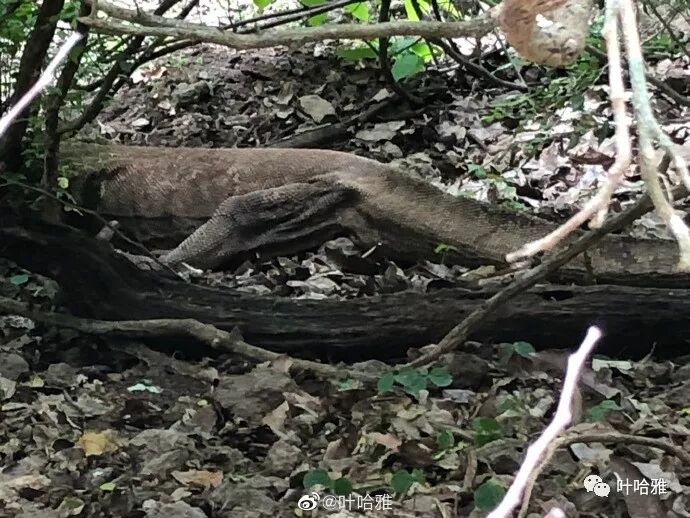
monitor lizard in bush
We continued walking forward, and suddenly the tour guide stopped and reminded us that there was a monitor lizard in the bushes not far away. I followed the direction he pointed and took a photo of the back of the first monitor lizard I saw. This monitor lizard was about two meters long and lay motionless in the bushes. The panting of the monitor lizard could be clearly heard.
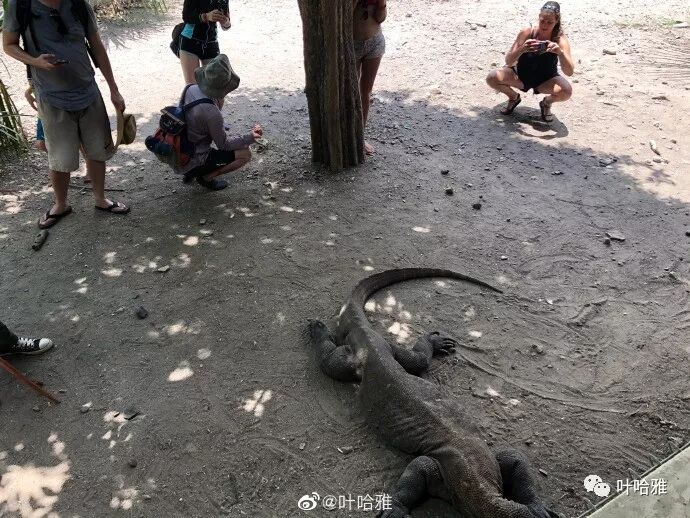
Then we saw three more monitor lizards in the rest area, lying in the corner of the pavilion where tourists were drinking tea. The crowd suddenly became commotion, and some people excitedly approached to take photos with the monitor lizards. At this time, the tour guide also became obviously vigilant and warned tourists in a stern tone not to get too close.

Komodo dragons are hermaphrodites and can reproduce parthenogenetically. They live in trees when they are young and move on the plains as adults. They can dive and run at a speed of 20 kilometers per hour. The mitochondria of Komodo dragons are different from ordinary cold-blooded animals. They can accelerate metabolism to the level of mammals, and then have amazing speed and endurance. It is rare for monitor lizards to attack people on the island. There have been cases of fishermen being attacked and killed by monitor lizards. Monitor lizards have no natural enemies on the island, but they will not attack humans when there is sufficient food.
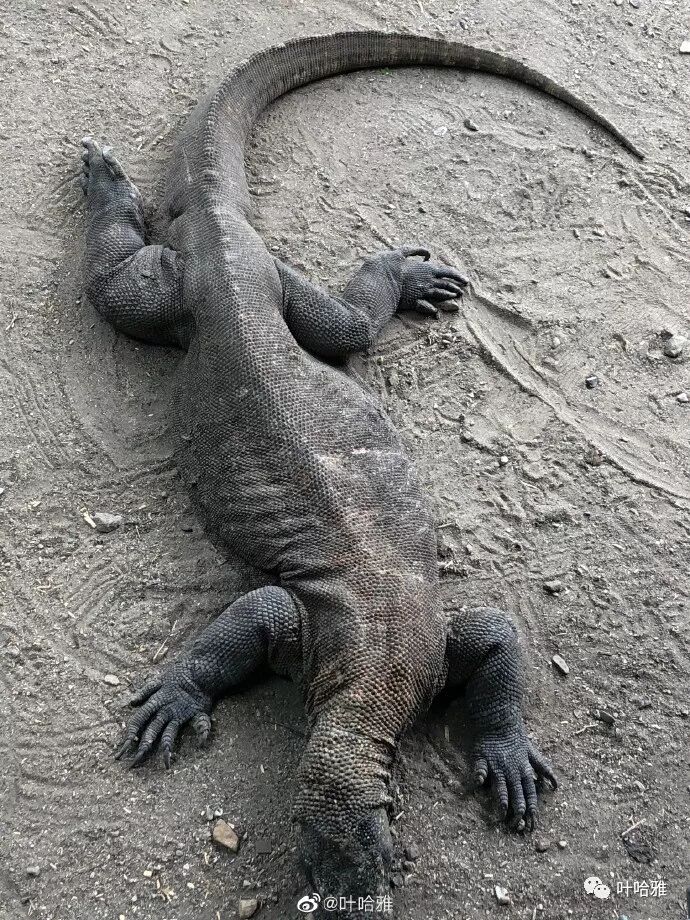
The adult monitor lizard is more than 3 meters long. It uses its tongue to identify odors and can smell the smell of blood within a radius of 10 kilometers. For small prey, the monitor lizard will bite it directly to death. For larger prey, the monitor lizard will bite and release it until the prey is poisoned and dies. The monitor lizard will then find the body by following the smell of blood.
After leaving Komodo Forest Park, we headed to the next scenic spot to prepare for snorkeling. The snorkeling area was home to another ancient giant beast, the manta ray, which was the same generation as the dinosaurs. Its scientific name is the ghost bat. It is the largest of its kind and can be up to eight meters long. It is said to be uncommon. Whether you can see it depends on luck, but we were very lucky to see a group of about four or five on the bottom of the sea, swimming back and forth under our feet.
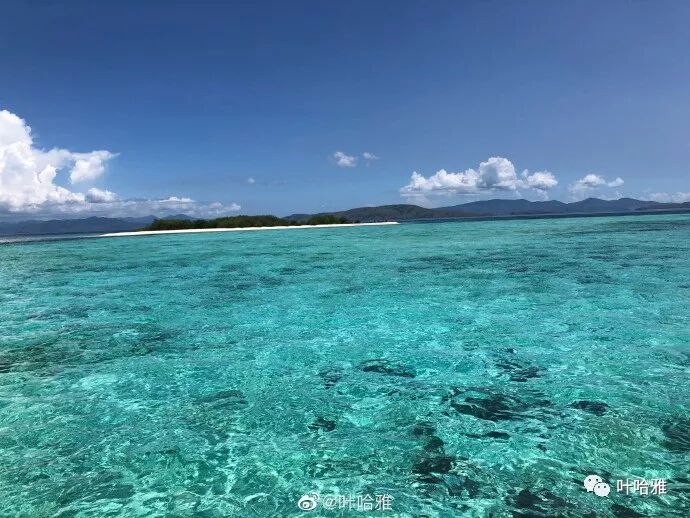
Giant, weird-looking creatures like ghost bats have not grown according to the rules of evolution. They have been what they are today since the age of dinosaurs. They are absolute living fossils. These ancient strange creatures are what attracts me the most about Komodo Island. Creatures that were once only seen in the animal world are now alive in front of me. This feeling is so exciting.
The actual effect you see is roughly what it looks like in the photo. The water quality in the water where manta rays appear is not particularly clear. If the water is clear, there will be no fish. The brother in the video is more courageous and dares to get close to manta rays. In fact, it is still a bit dangerous. Although manta rays have a gentle temperament, they are afraid of divers when they lose their temper. Its two wings can break the diver's ribs.

Komodo Island is only an hour's flight from Bali, an Indonesian Internet celebrity tourist destination. To travel from Komodo Island to other cities in Indonesia, you have to transfer from Bali. Although I am not very interested in Bali, since I am here, I still decided to go to the island.
Third stop Bali
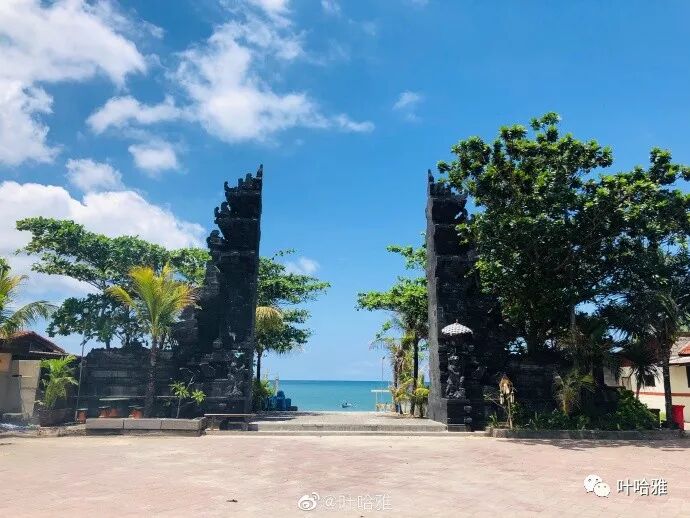
The Hindu-style gate in Bali symbolizes the transition from the secular to the sacred.
Bali is the only Hindu-dominated island in Indonesia, and Hindu gods can be seen everywhere on the island. Since we are on a halal trip, we are not very interested in these pagan cultural relics. We come here mainly to eat a decent halal seafood meal. If Dosti plans to go to Bali for vacation, he does not need to worry too much about eating. Halal restaurants on the island are relatively easy to find. The indigenous residents here have the habit of eating roasted suckling pig. Most restaurants sell wine and the consumption is very high.
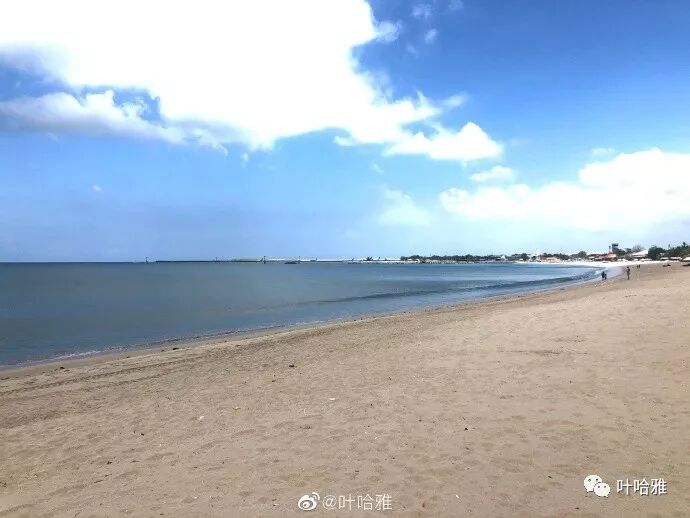
Jimbaran Beach
Bali Airport is about three kilometers from Jimbaran Beach. In Indonesia, you must be careful not to talk to the drivers around the airport. The probability of being ripped off is almost 100%. There are two options for taking a taxi. One is that there are regular taxi ticketing points at the airport. The fare is prepaid. Just tell the staff your destination. That’s it. After paying, you can get a slip. You can take the slip and follow the staff’s instructions to find a driver to take the bus. There will be no arbitrary charges. you can use Grab to call a taxi. I strongly recommend using this software. The price is cheaper, and you don’t have to pay cash. You don’t have to worry about language barriers, just like Didi Taxi.
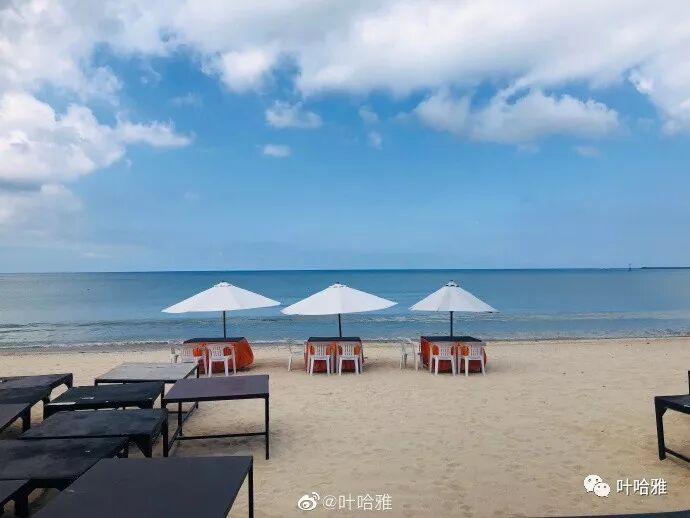
Exterior view of Jimbaran beach restaurant
Since I just came from the pristine Komodo Island, when I saw these commercial beaches, I felt that the gap was a bit big visually, and the water was far less clear than Komodo.
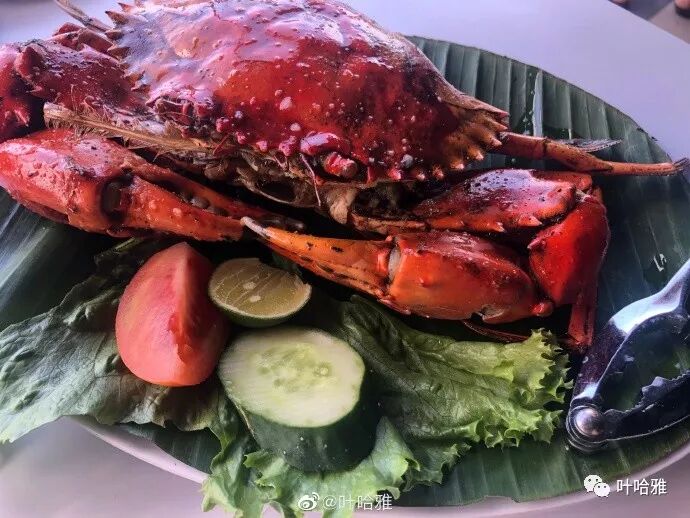
Freshly picked crabs
I told a Hindu driver to take me to a halal restaurant. He took me to this restaurant and charged me more than 100 yuan for less than five kilometers. Before I got in the car, I listened to the 100 he said and interpreted it as 10 yuan, so I got on the bus. I was in a hurry and didn't bother with him. I only regretted that I didn't install the grab software in China earlier. As a result, I couldn't log in to download the software when I was in Indonesia. I could only install the software through a VPN.
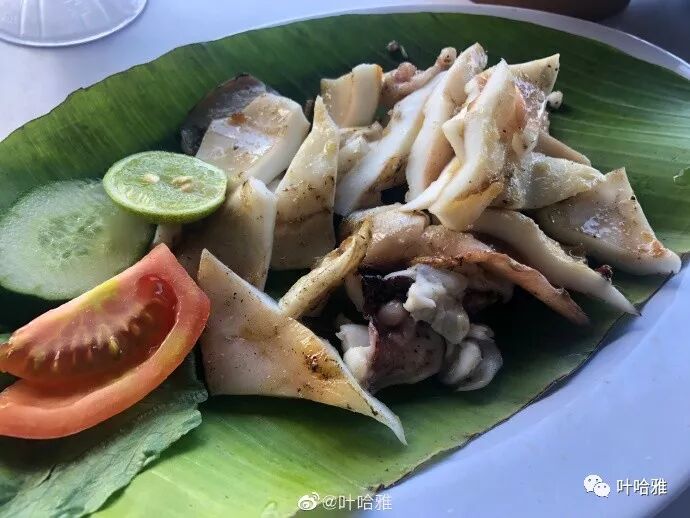
A squid weighing more than one kilogram
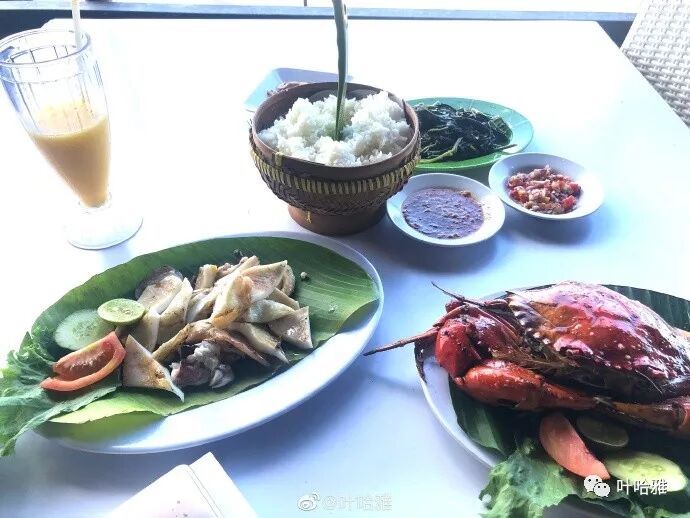
This seafood meal costs about RMB 500. The price is clearly marked, but it is obviously not as affordable as eating in China. Rice and side dishes are provided, and the taste is average. The seafood is boiled in plain flavor. You can add some weird seasonings, or squeeze a little lemon juice and mix it with the rice.
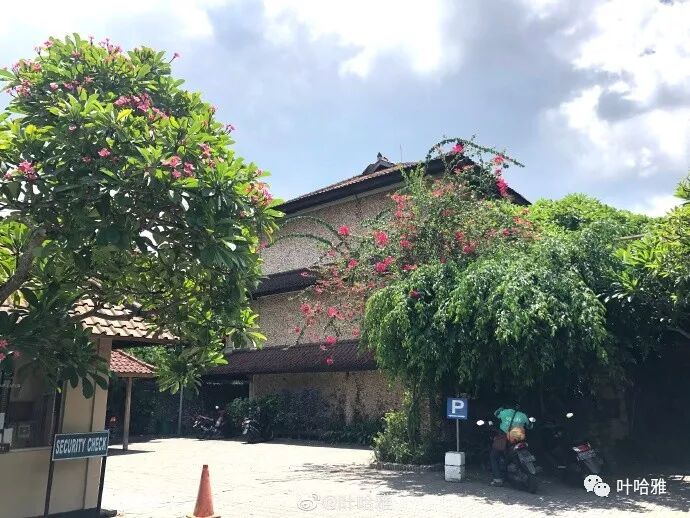
The residents of the island like to grow flowers.
The reason why I don’t recommend Bali is that it really doesn’t live up to its name. Prices on the island are more than double that of other places in Indonesia, and it is heavily commercialized. Many friends around me don’t think highly of Bali after visiting it, so I think it is suitable for people who only like to vacation in hotels, commonly known as hotel partying. But everyone has their own ambitions. Compared with Komodo Island, the hotel quality in Bali is much higher. As long as you are not afraid of spending money, you can find a good hotel here to stay for a few days.
Fourth stop Yogyakarta
I temporarily added a trip to Yogyakarta and Surabaya because of the sudden outbreak of the epidemic and the extension of the holiday, and my flight back to my country was cancelled. I heard a sister who was traveling with me praise Yogyakarta and Surabaya as fun. Her family of three had just come over there and strongly suggested that I go to Yogyakarta to experience the Javanese culture. So I simply bought a flight ticket from Bali to Yogyakarta and arrived in Yogyakarta in about an hour.
Yogyakarta is a famous historical and cultural city in Indonesia. Its status is roughly equivalent to ancient capitals such as Nanjing and Xi'an in my country. All the court arts in Java originated here. Historically, Yogyakarta was ruled by the Sultan. After Indonesia became independent in 1945, the Sultan of Yogyakarta declared his allegiance to Indonesia. The Sultanate of Yogyakarta was changed to the Yogyakarta Special Zone under Indonesia. The Sultan served as the governor of Yogyakarta and retained the hereditary system.
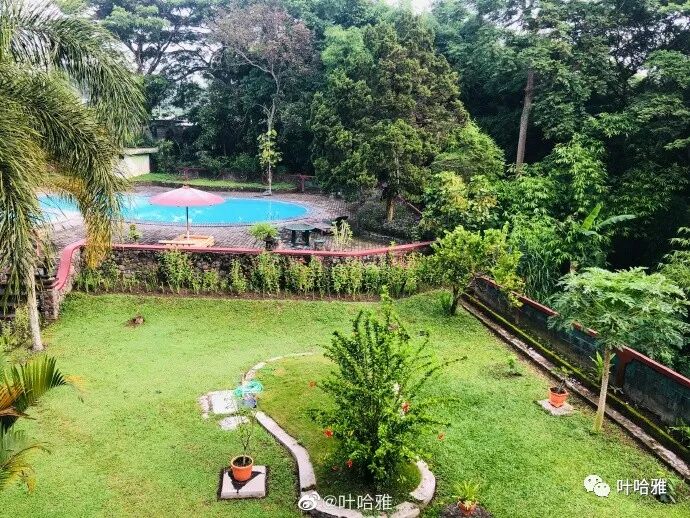
Hotel gardens and swimming pool
It was really a comfortable journey from landing to checking into the hotel, and everyone I met was very friendly. I remember I was sitting in a taxi, staring at the road outside the window in a daze. At this time, the car drove slowly past two girls. I was not sure if one of them was a shemale, but she felt like a transvestite. This person saw me looking at her, and she gave me a look.
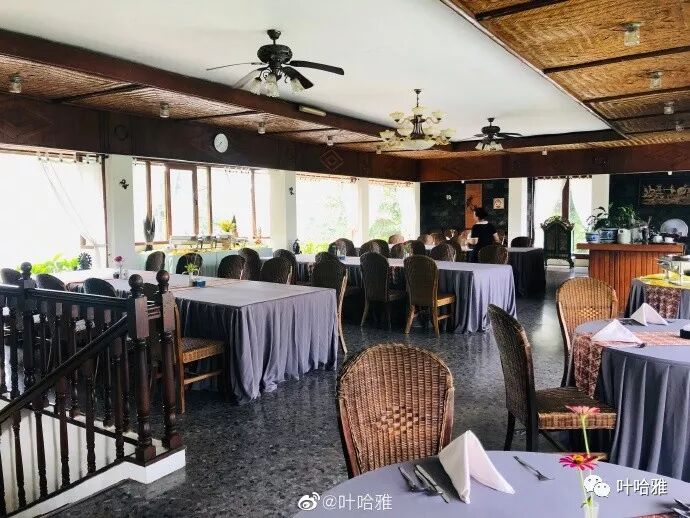
I came for breakfast in the morning and it seemed that I was the only guest. The waiter greeted me very warmly and asked me what kind of breakfast I would like to have. There were two options: Western style and Indonesian style. Of course I chose the Indonesian style.
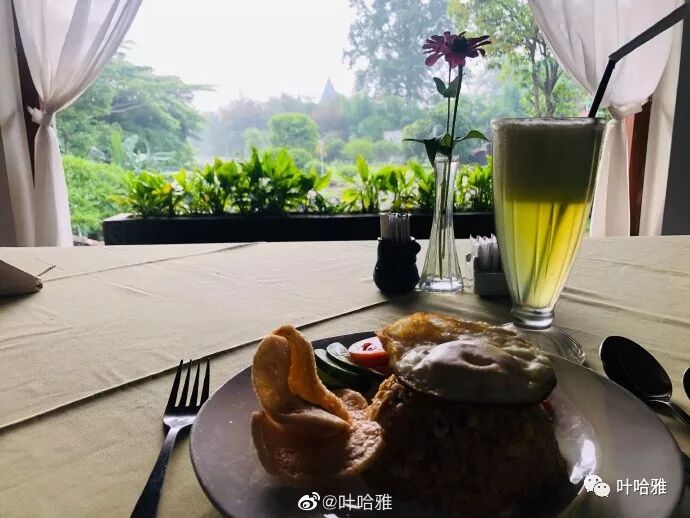
While dining, enjoy the scenery outside the window. The spire in the distance is Prambanan, a famous Hindu resort in Yogyakarta.
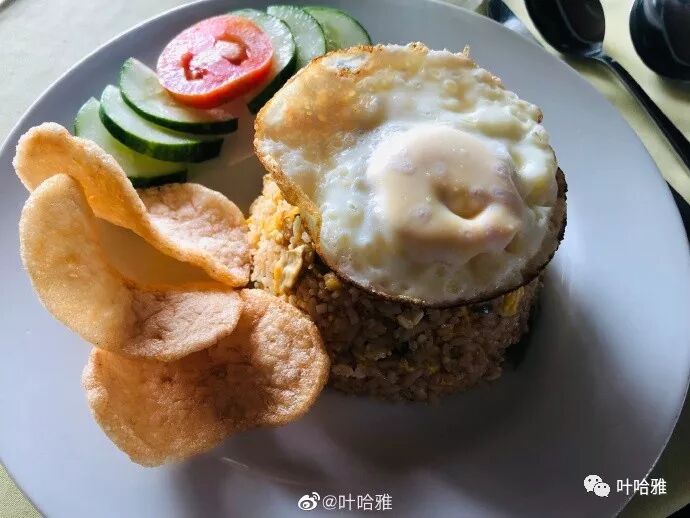
I always eat Indonesian fried rice for breakfast. The hotel breakfast is included in the room rate. All kinds of consumption in Yogyakarta are very cheap. A five-star resort hotel only costs more than 300 yuan a night.
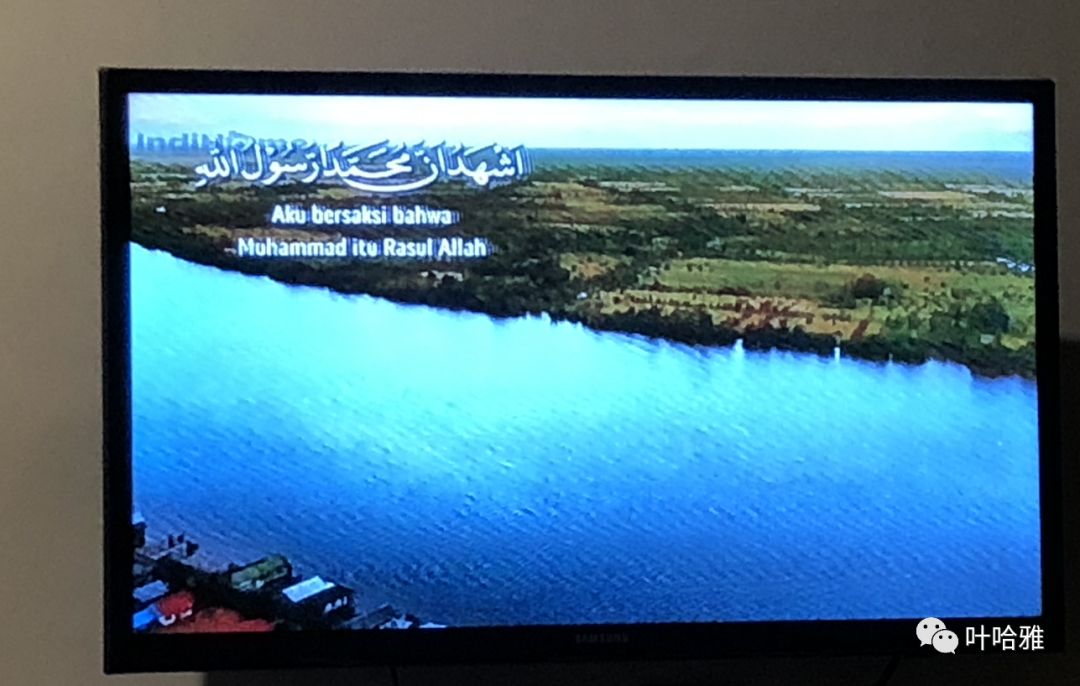
Some TV stations in Indonesia will automatically broadcast Bunker during church hours.
MASJID RAYA ALMUTTAQUN Mosque
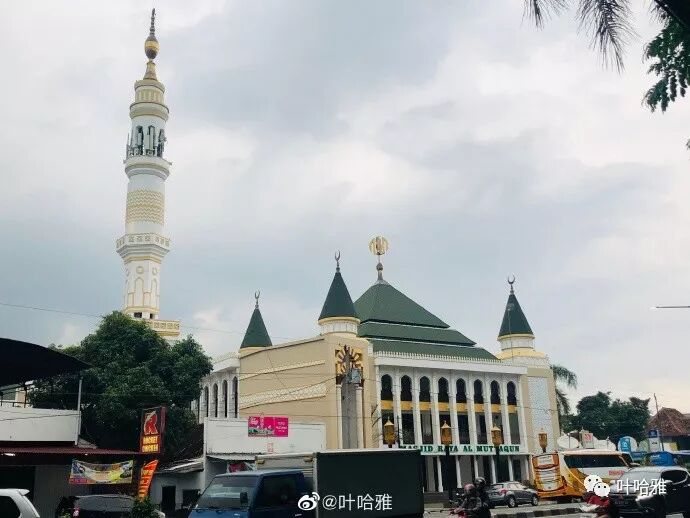
MASJID RAYA ALMUTTAQUN Mosque
I originally planned to go to nearby Prambanan, but when I walked to the entrance of the mosque, I saw a traditional Javanese mosque across the road. My attention was completely attracted by this mosque, so I decisively gave up going to Prambanan and started my Javanese halal journey.
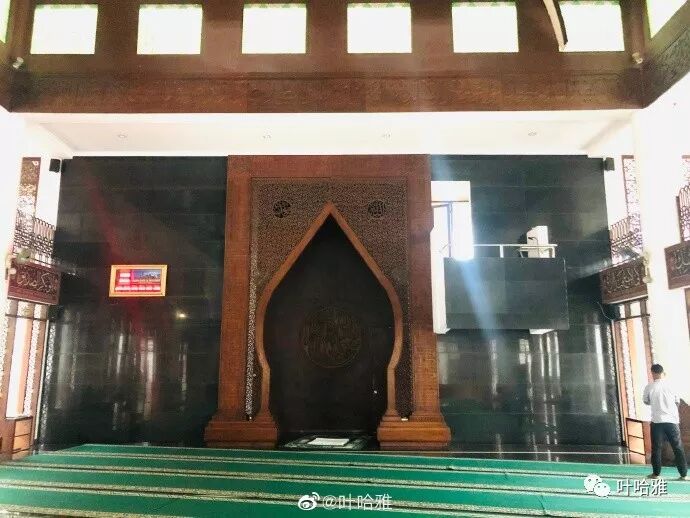
The interior of the mosque is made of wood. The disadvantage of this dark-colored wood is that it makes the hall look dark. I have observed this problem in several other mosques.
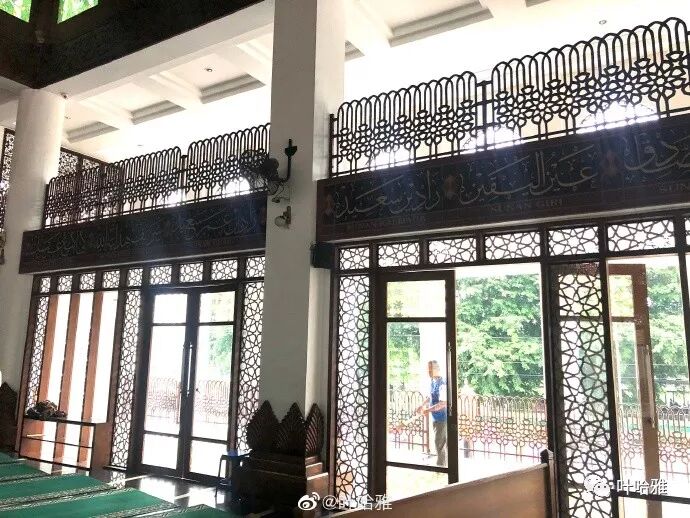
Since Indonesian worship faces northwest, but buildings generally face north and south, the carpets in the main hall are laid along the direction of Mecca, which looks diagonal.
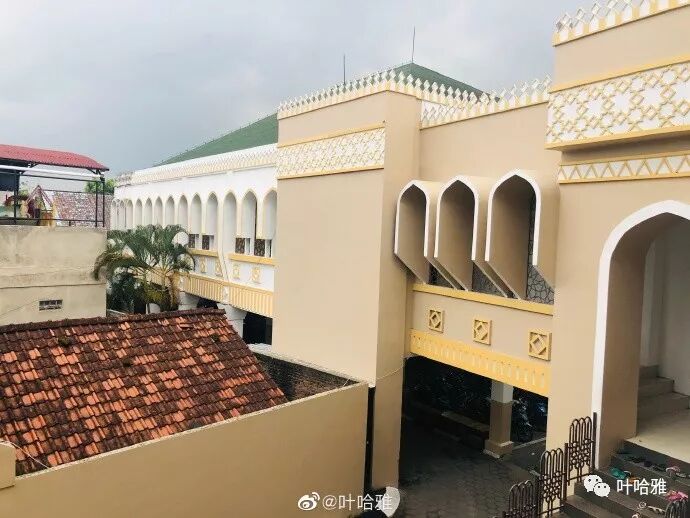
The main hall of the mosque is on the second floor, and the first floor is a classroom. The children are learning Arabic under the guidance of the teacher. It is raining outside. January and February are the rainy season in Indonesia. It rains almost every day, but it is always a thunderstorm and stops after a while.
Candi Prambanan
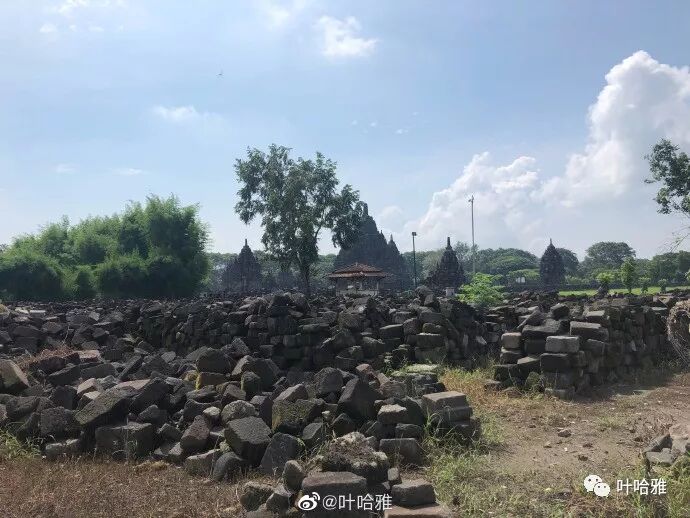
Prambanan Ruins
Yogyakarta has two internet celebrity check-in attractions. One is Borobudur, the world's largest Buddhist architectural complex, and the other is Prambanan, the largest Hindu architectural complex in Southeast Asia. Both are world cultural heritage sites and were built at the same time. They were built around the 9th century AD. The builders were both ominous and were abandoned after completion. Prambanan People say Nan was probably built by the second king of the Mataram dynasty. Both building complexes were re-excavated and rebuilt in the early 20th century, so most of the buildings were newly built. Prambanan charges a 170 RMB entrance fee, and Borobudur is hundreds of kilometers away from me, so I only walked around at the entrance of Prambanan Temple.
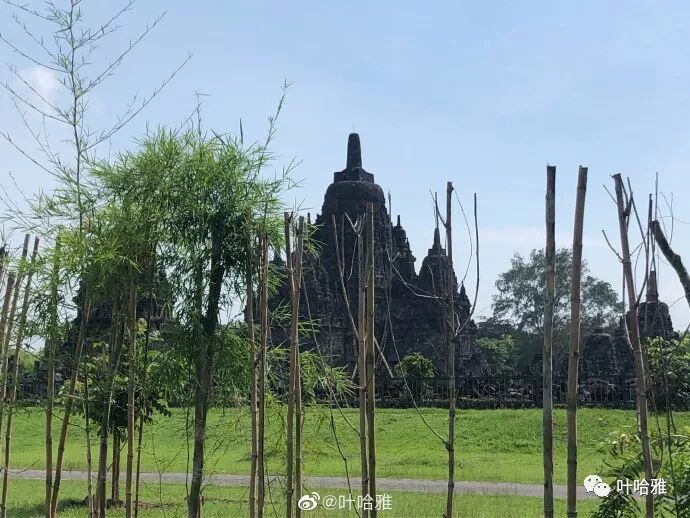
You can see many tourists on the Internet taking some pictures of themselves in the temple, which I think is not good. After all, this is a religious holy place, and taking such pictures is a bit nondescript. A girl wrote in the guide that she was asked to take photos by many Indonesian girls in Prambanan. She felt that the Indonesian girls were interested in her hairstyle because they were envious of her freedom to show her hair. I really want to say, girl, you are overthinking. This is as ridiculous as some domestic rumors saying that the Hui Muslims envy the Han people for eating pork. Don’t you know that Indonesia does not force women to wear headscarves?
MASJID MATARAM
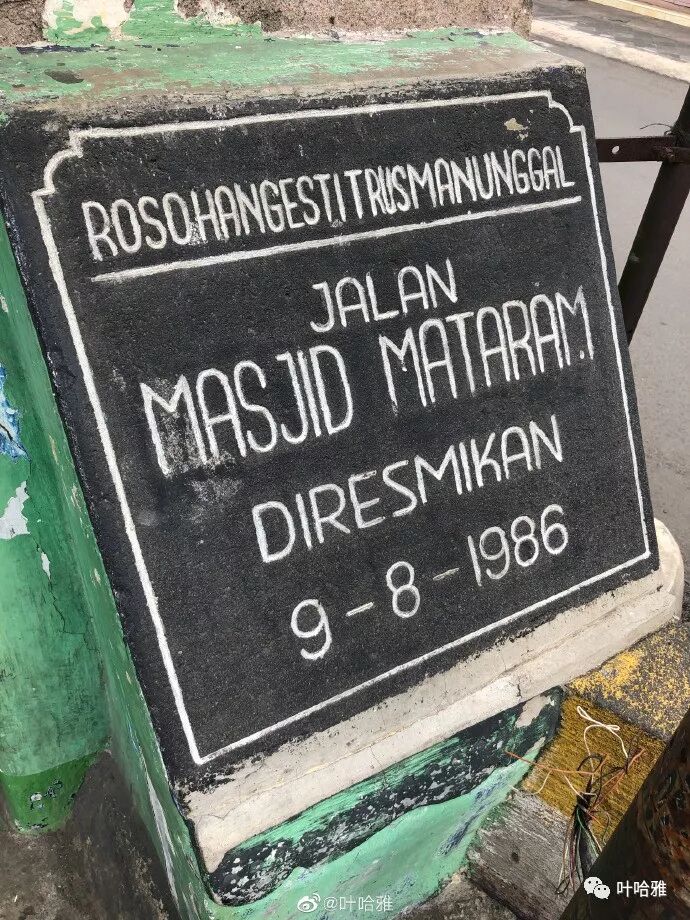
The cemetery of Suta Wijaya Senapati, the sultan of the Kingdom of Mataram, was found in Kota Gede, a suburb of Yogyakarta. Next to it was a mosque that combined Hindu architectural style and Javanese architectural style. The Kingdom of Mataram was the first Islamic kingdom established in Central Java, Indonesia.
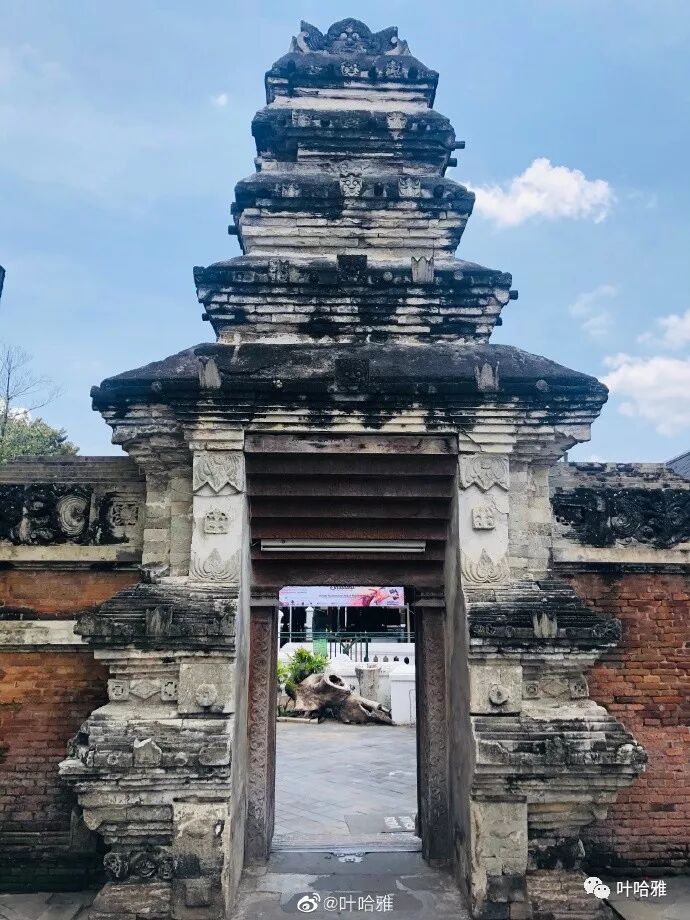
Because the faith in Java was converted from Hinduism to Islam, the ancient buildings on the island retain many traces of Hinduism. The gate of this mosque is a type of Hindu architectural style.
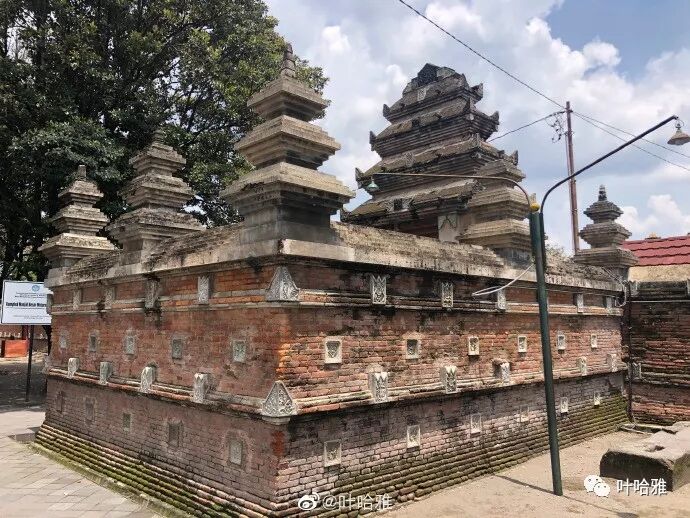
It is said on the Internet that the Matalan Mosque charges an entrance fee, which is about 10 yuan. Anyway, I have not met anyone who asked me for entrance tickets. The mosque really should not charge tourists.
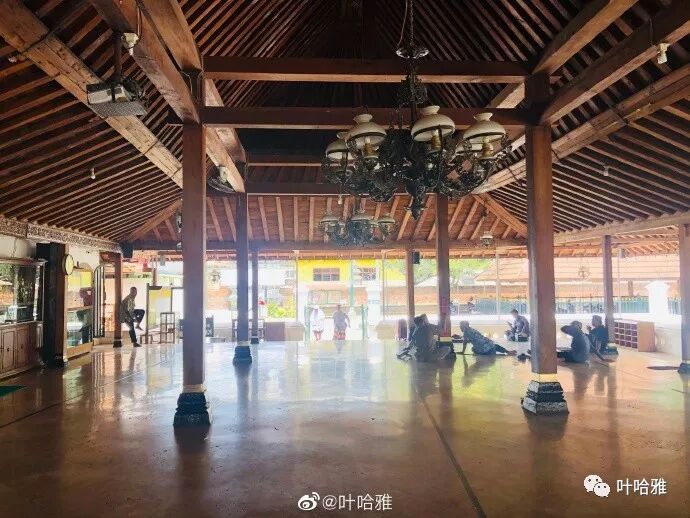
In the vestibule of the mosque, some tourists are taking a break from the summer heat. The main hall of the Matalan Mosque still adopts the Javanese architectural style. There is an vestibule, a main hall, and no minaret. Drums are played instead of the adhan.
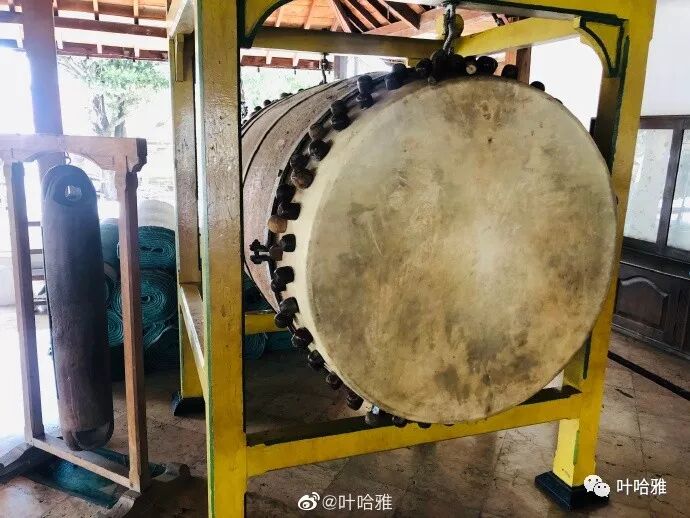
Adhan drum
The muanli drum is usually played during gatherings or gatherings, and has distinctive Javanese characteristics.
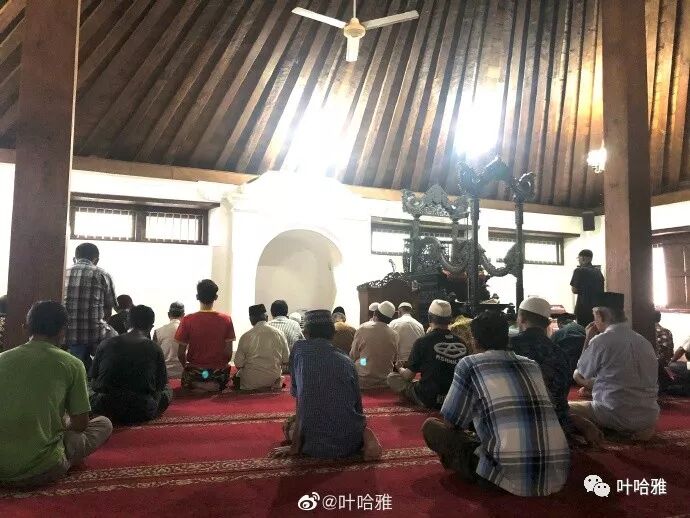
Although the lights are turned on in the main hall, the light is actually very dark. I adjusted the photo to be brighter. This is indeed not as good as the lighting in a dome-shaped building.
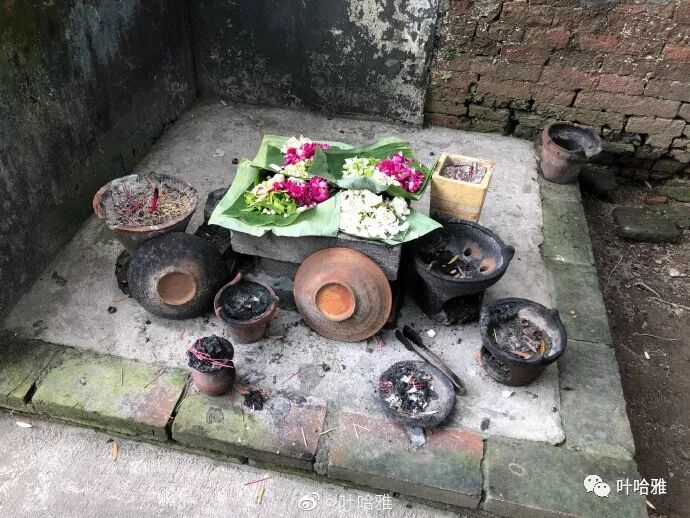
The ritual of laying flowers in memory of the deceased is inherited from the Hindu tradition.
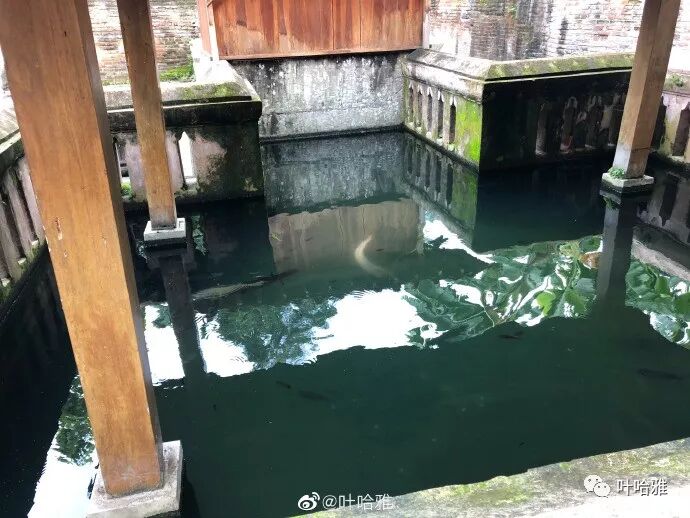
There is also a pond next to the cemetery, which is used as a bathhouse for washing and washing. It is probably no longer in use. There are many huge catfish in the pond, both black and white.
Yogyakarta Grand Mosque (Masjid Gedhe Kauman)
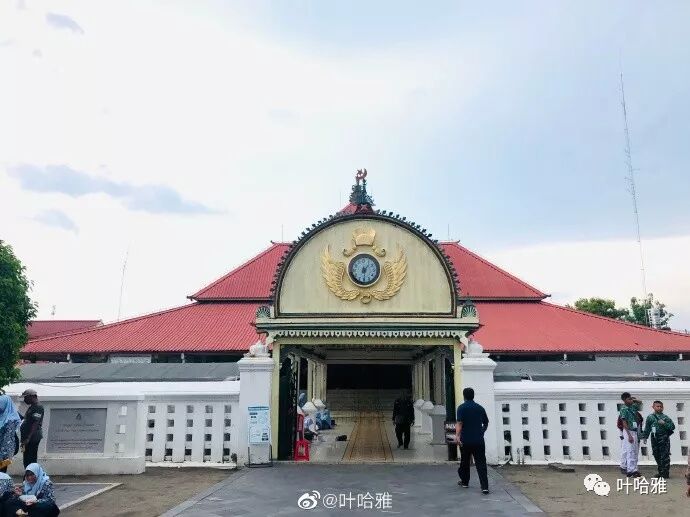
Yogyakarta Grand Mosque
The Yogyakarta Mosque (Masjid Gedhe Kauman) was built in 1773. It is located next to the Yogyakarta Royal Palace. It is a traditional Javanese-style building. When I went there, I happened to catch up with a bunch of students coming here to do activities. The teacher led the students to pray, and I followed him.
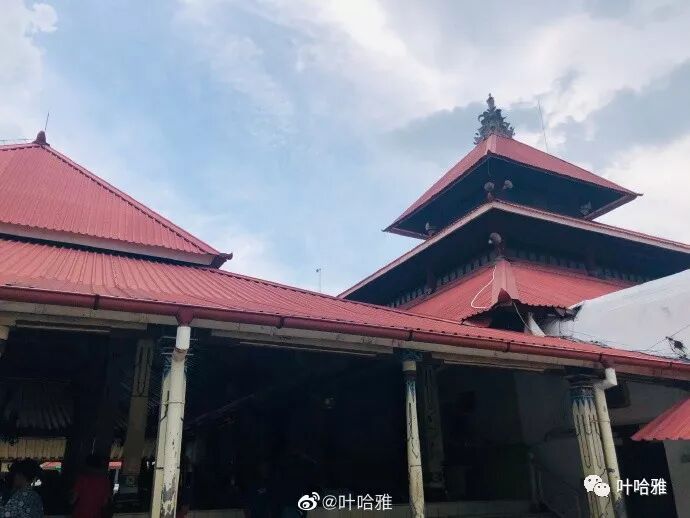
This architectural style in Java should also be influenced by the ancient Chinese architectural style. During the Ming Dynasty, Zheng He made many voyages to the West and came to Java Island, bringing many craftsmen with him and spreading Islamic culture and Chinese civilization.
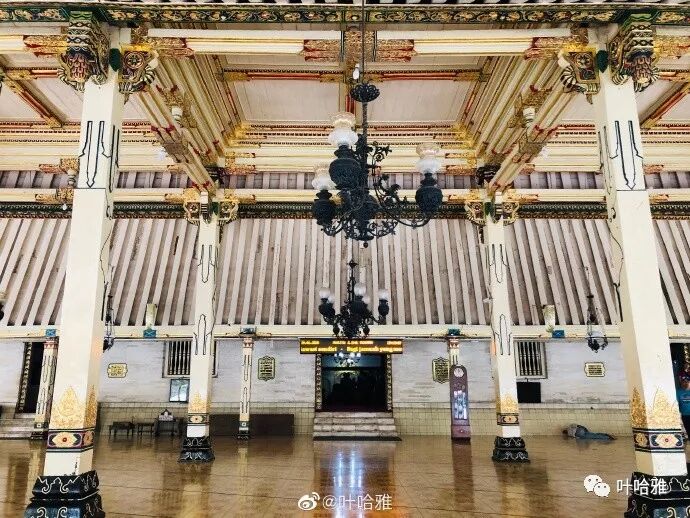
lobby of the main hall
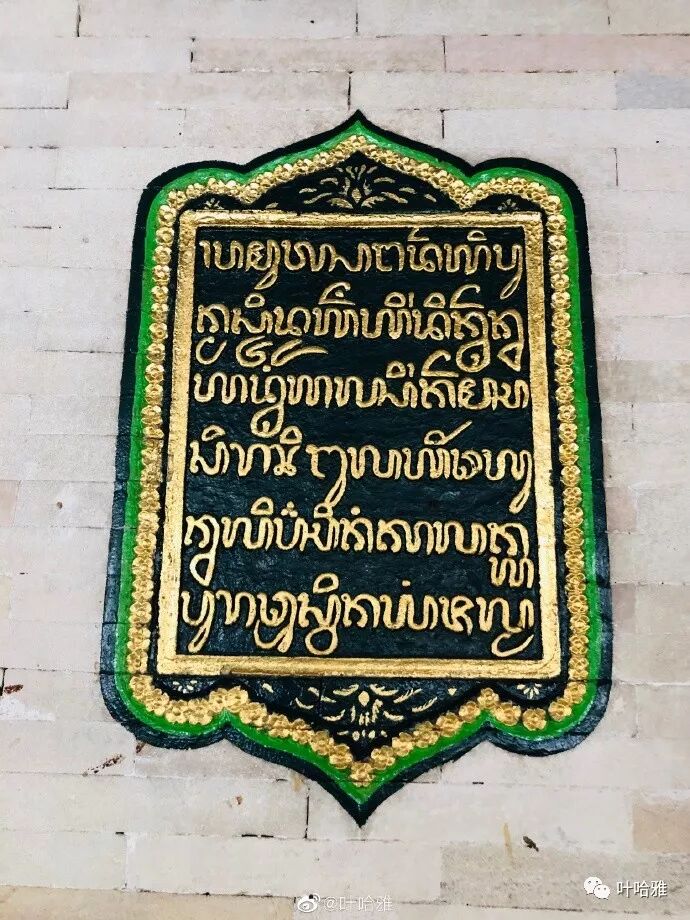
There is a sign in Javanese on the wall.
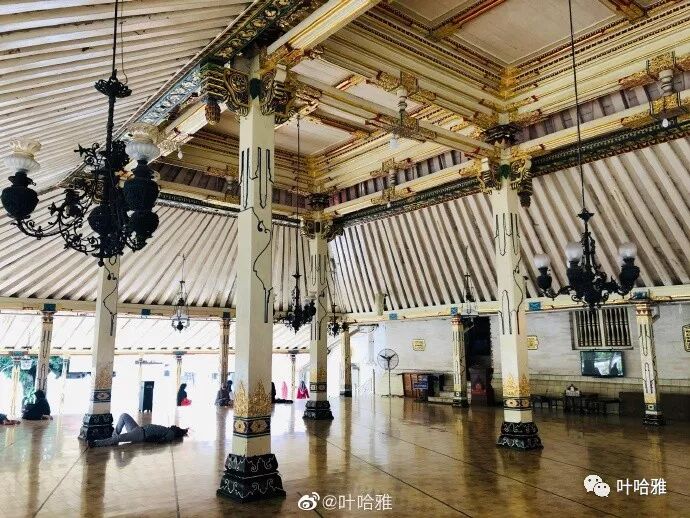
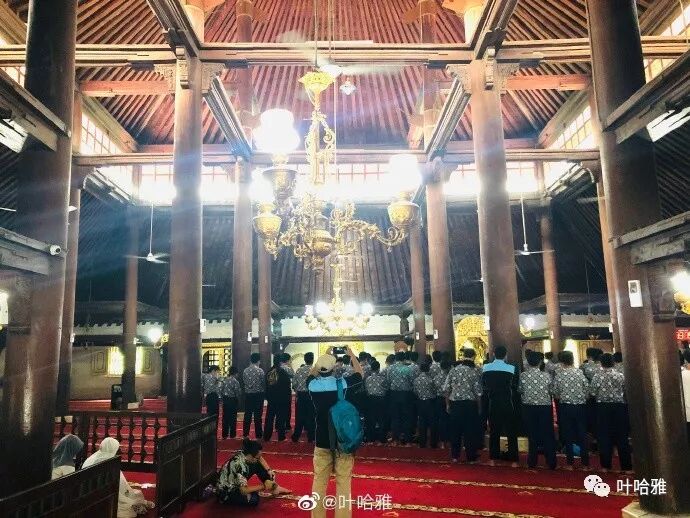
A group of religious school students worshiped, led by their teacher, with the boys in the front and the girls in a designated area at the back.
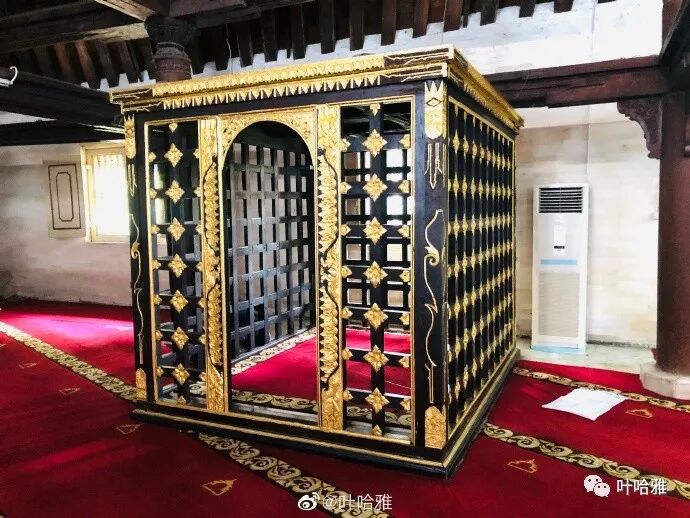
This is a place reserved for the Sultan to worship, and ordinary civilians cannot enter. By the way, this kind of privileged behavior is not advocated by Islam. Even the king should stand in a row with the people.
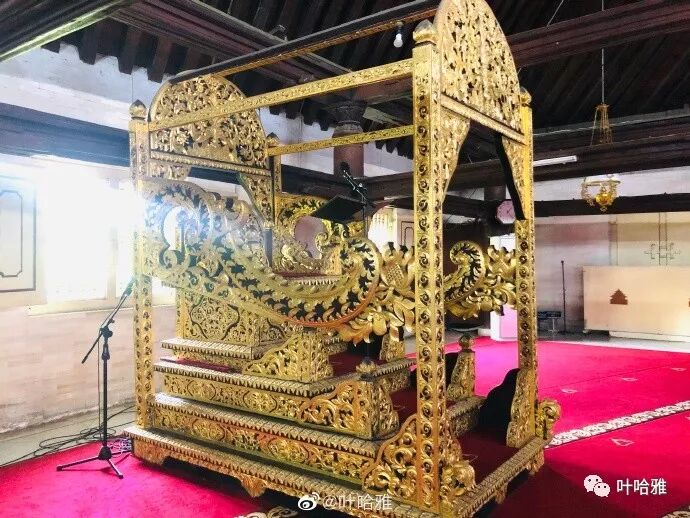
The Minbaer podium has a typical Javanese style pattern and is golden in color, the same color as the Thai Royal Palace.
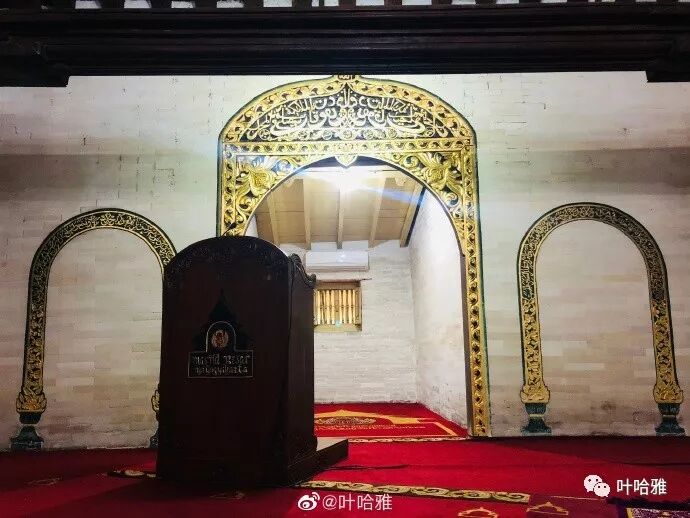
Southeast Asian royal mihrab
Next to the mosque is the Royal Palace of Yogyakarta. The palace is divided into the South District and the North District. You have to buy tickets separately. Each ticket costs about three yuan. I went to the North District and I felt that it was not like the Royal Palace at all. It was too simple. There were only a few greenhouse-like buildings. I once doubted that this was really the Royal Palace?
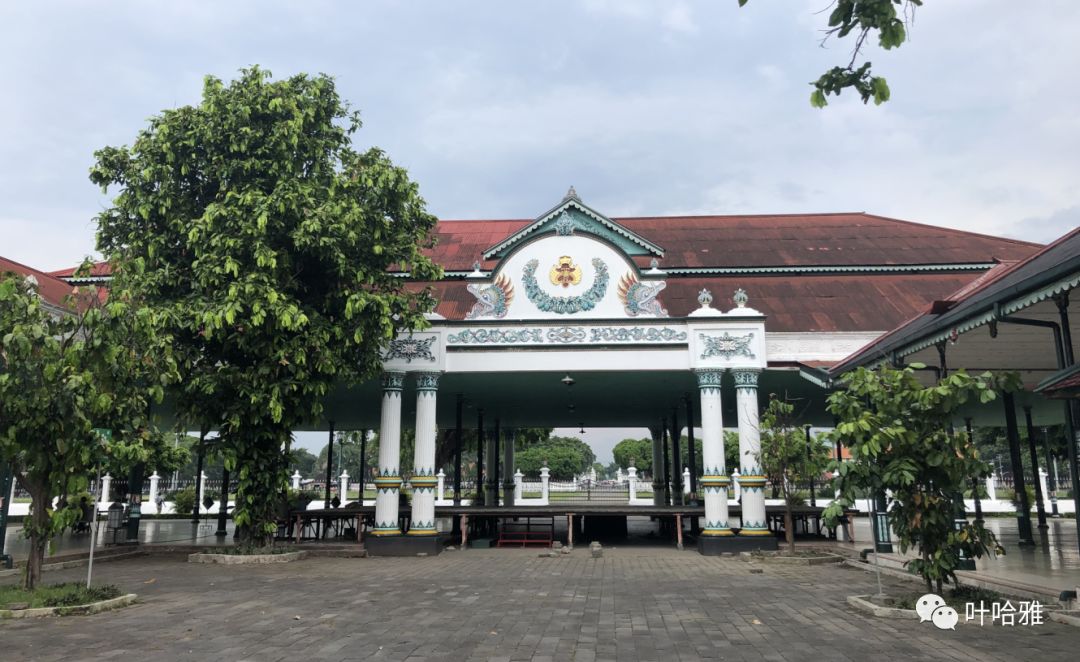
Yogyakarta Royal Palace
Masjid Soko Tunggal Mosque
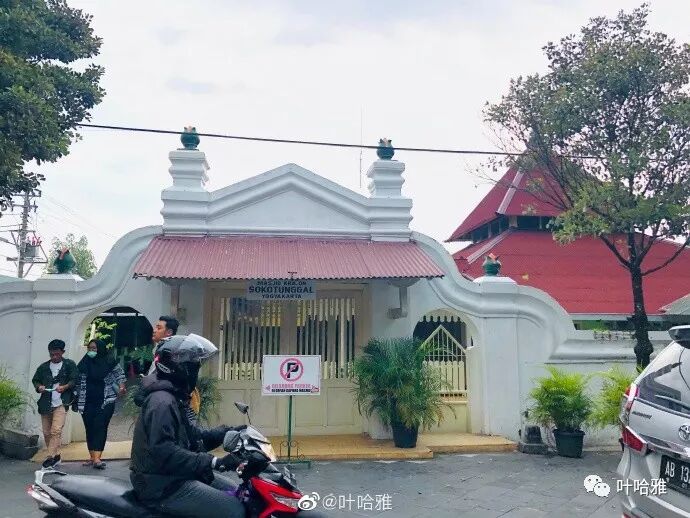
Masjid Soko Tunggal Mosque
Yogyakarta One Pillar Mosque (Masjid Soko Tunggal), Soko Tunggal means pillar in Indonesian, was built in 1972. The designer of this mosque was also the designer of Yogyakarta Royal Palace R. Ngabehi Mintobudoyo.
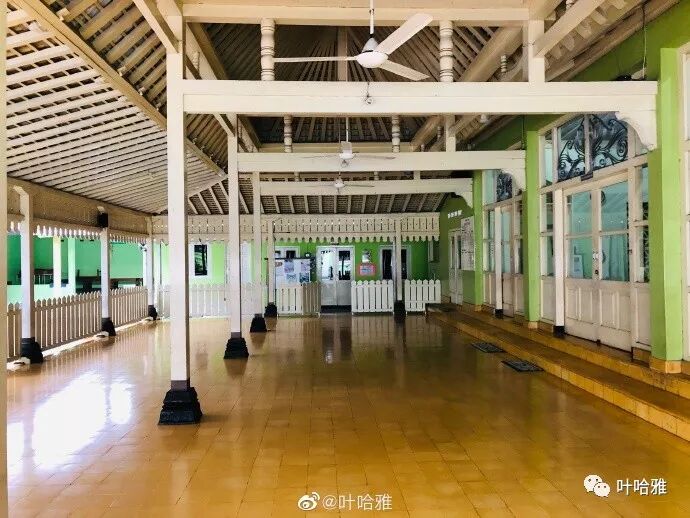
The main hall is supported by one pillar and four pillars, five in total, symbolizing the temptations of the five evil spirits from all directions. This is one of the characteristics of Javanese architecture. The flower patterns carved on the pillars indicate that praying in the mosque can obtain Allah's grace.
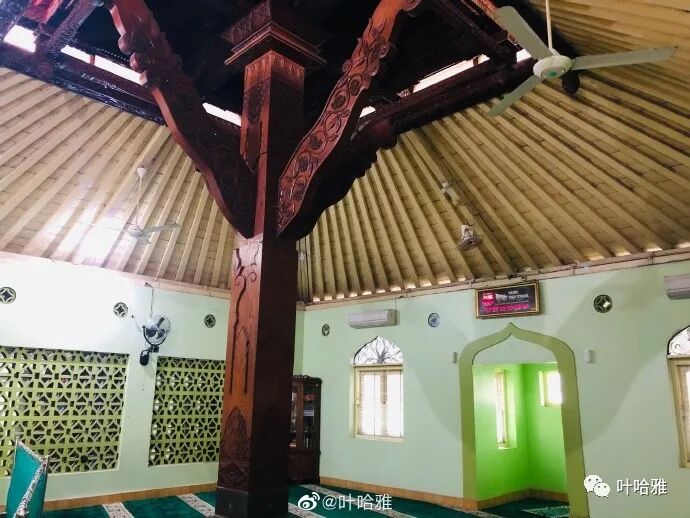
A pillar in the main hall
Yogyakarta is a city with a strong religious atmosphere. This can be felt from the hotel I stayed in in the suburbs. Every day when it is time to pray, the sound of bunker will be heard one after another around me. The sound can last for ten minutes intermittently. It may be because the clocks of various mosques are fast or slow.
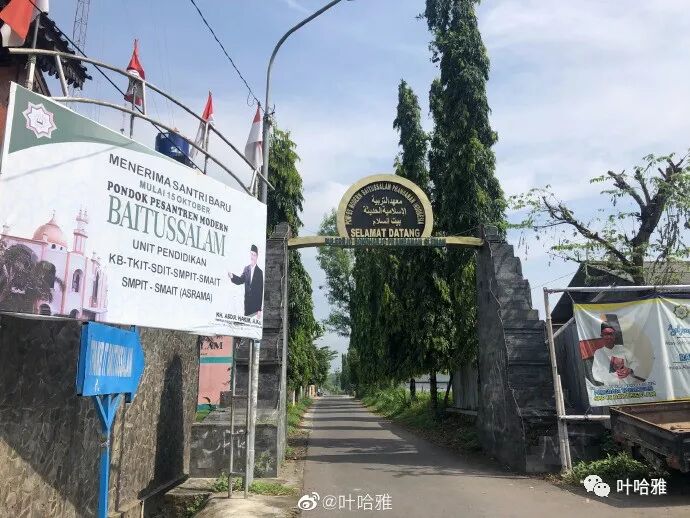
I casually walked into a nearby village and wandered around. The sign at the head of the village said Selamat Datang. I thought it was the name of the village at first, but I thought it was wrong. I seemed to have seen this word in many places. After asking the villagers, I found out that it means welcome in Indonesian and is commonly used in Southeast Asia.
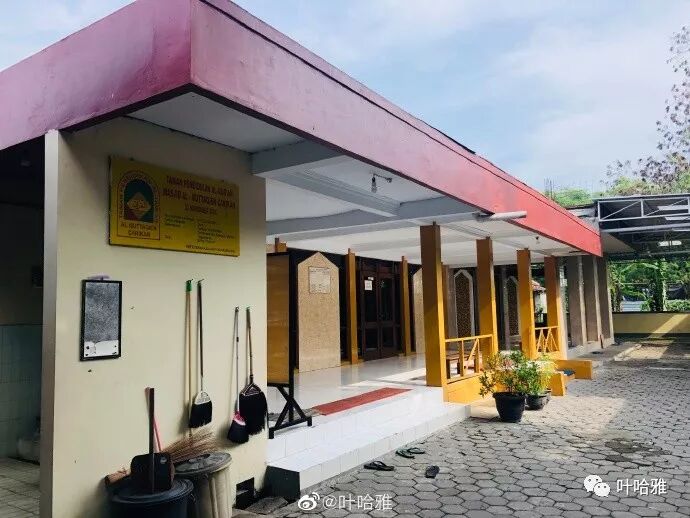
Masjid Nurul Falaq
The people in this village are very friendly. Everyone I meet on the road, regardless of gender, old or young, will smile and nod to say hello when they see me. The village loudspeaker was broadcasting the imam's sermon. I followed the sound and found the mosque. the mosque was not open. Before I could say anything, a villager next to me came over and opened the door for me. It turned out that the key was at the door.
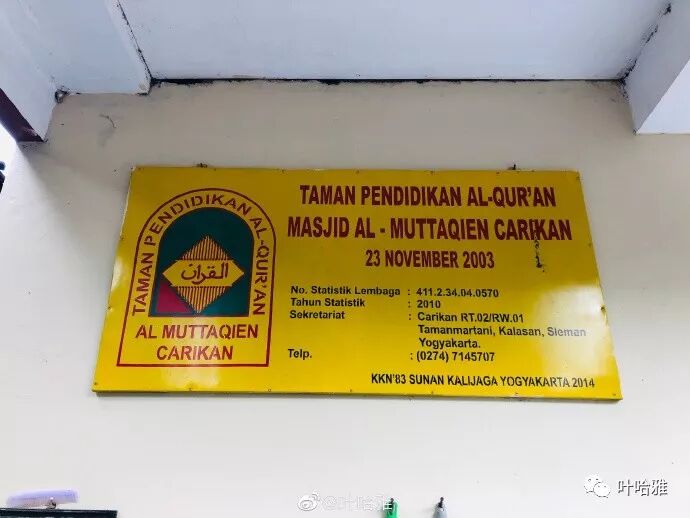
Mosque nameplates, no matter how small the mosque is, are officially registered.
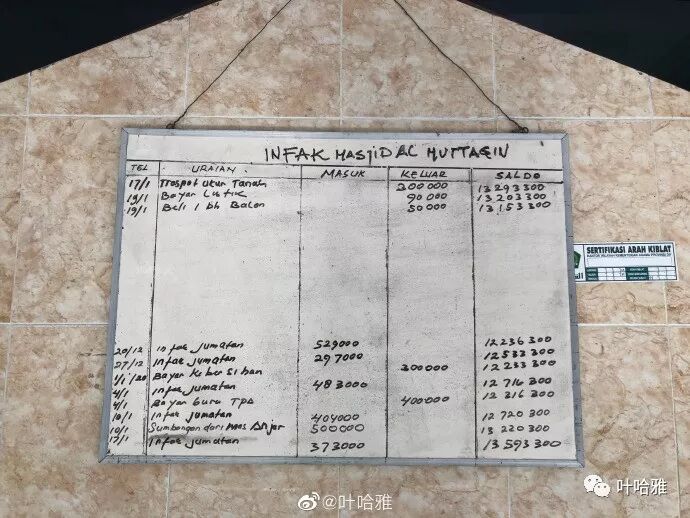
The details of the post are the same as those of Chinese temples.
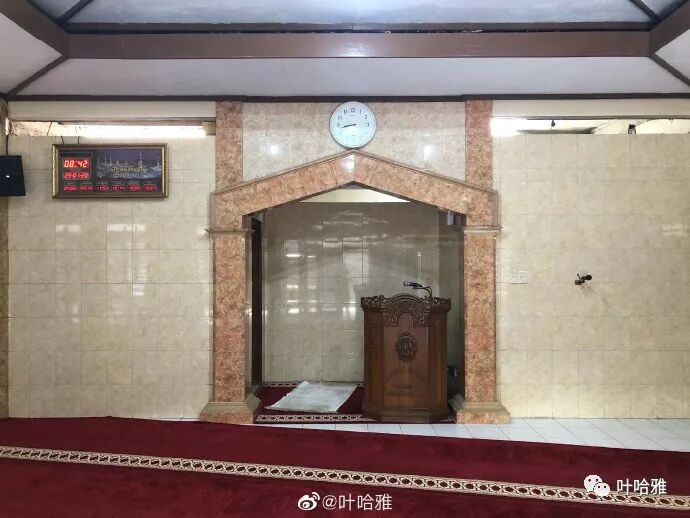
BAITUSSALAM MADRAZA SCHOOL
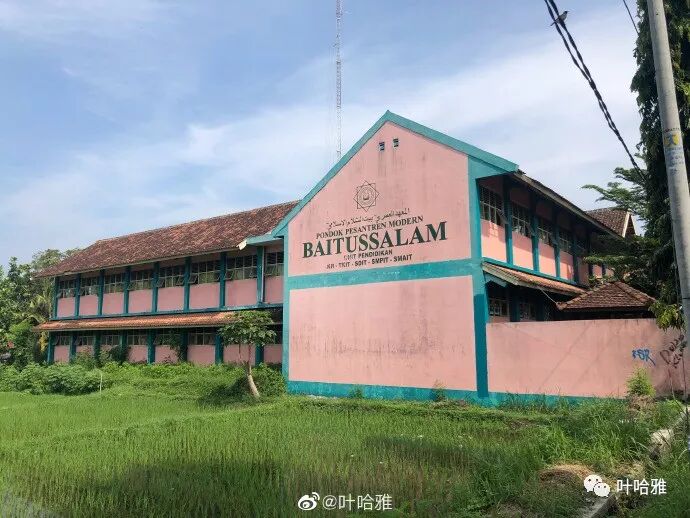
BAITUSSALAM MADRAZA SCHOOL IN THE VILLAGE
There are many religious schools of this kind in Yogyakarta. The children inside look like primary school students. During class, the children are chasing each other and playing around, and some children are surrounding the teacher doing homework.
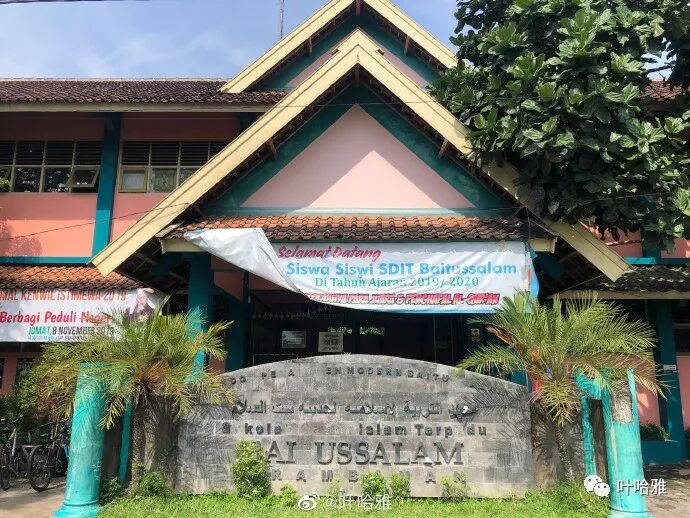
school main entrance
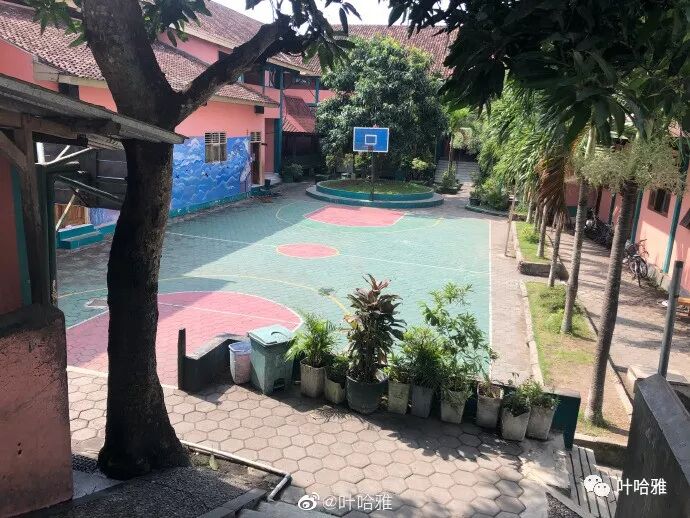
playground
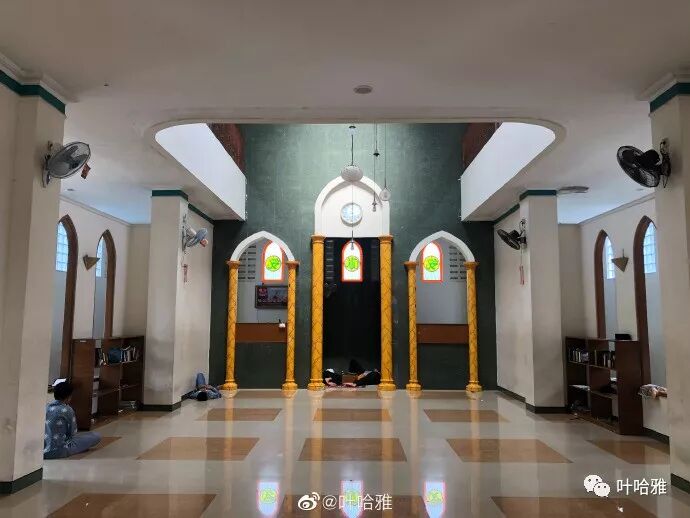
Mosque inside the school
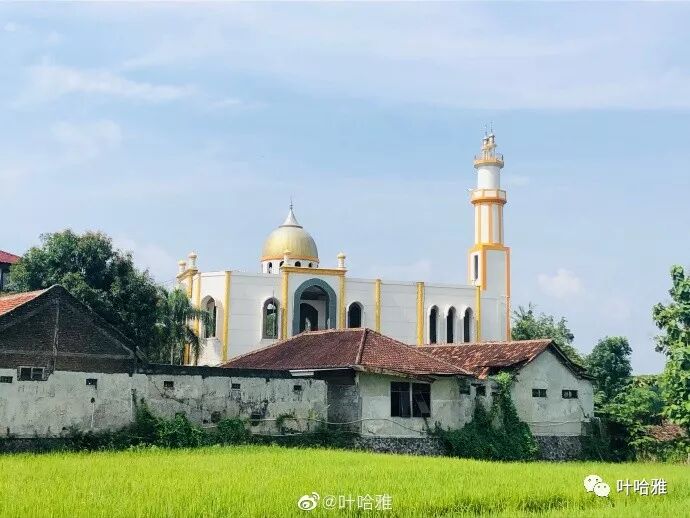
School mosque appearance
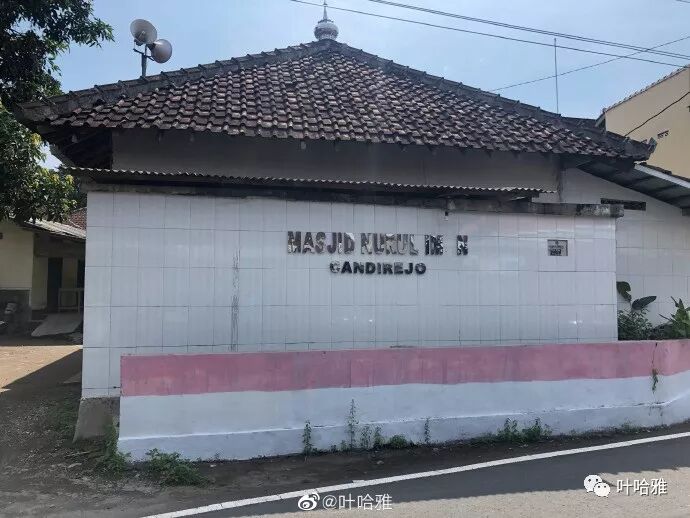
Masjid Nurul Iman Mosque in the same village
If this small mosque is in the city center, it can only be regarded as a Musholla, which means a dua room. Every mosque here has an official registration.
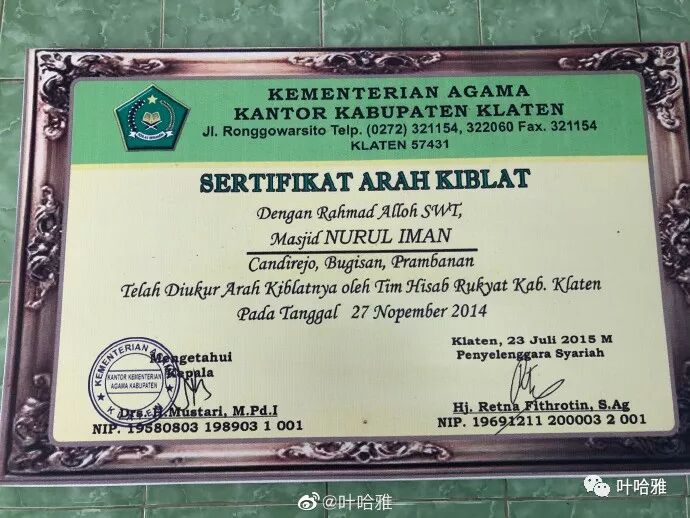
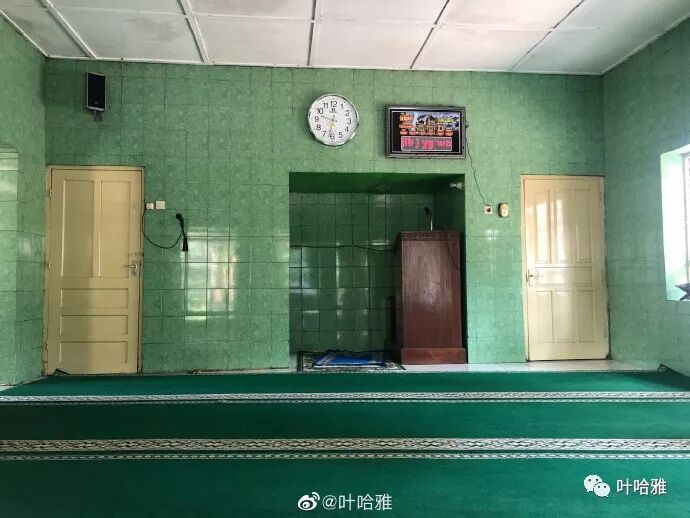
Masjid Jogokariyan Mosque
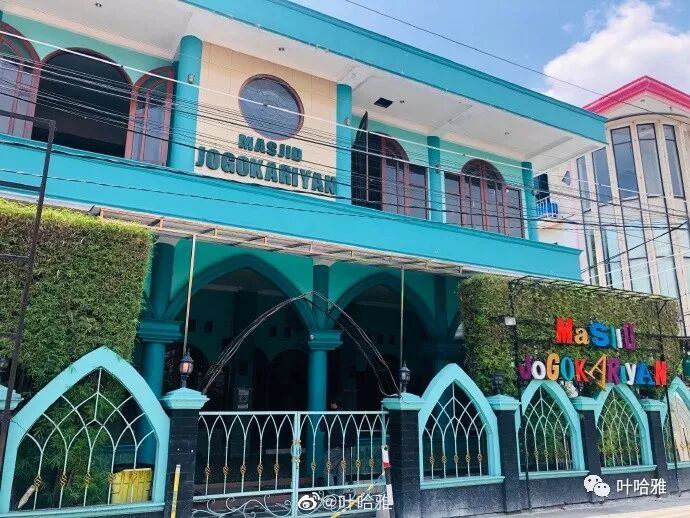
Masjid Jogokariyan Mosque
The mosque was built in 1967. Most people in this area are engaged in batik work, so the colors of the mosque are relatively bright. Note that the name of the mosque on the right side of the photo uses a variety of colors.
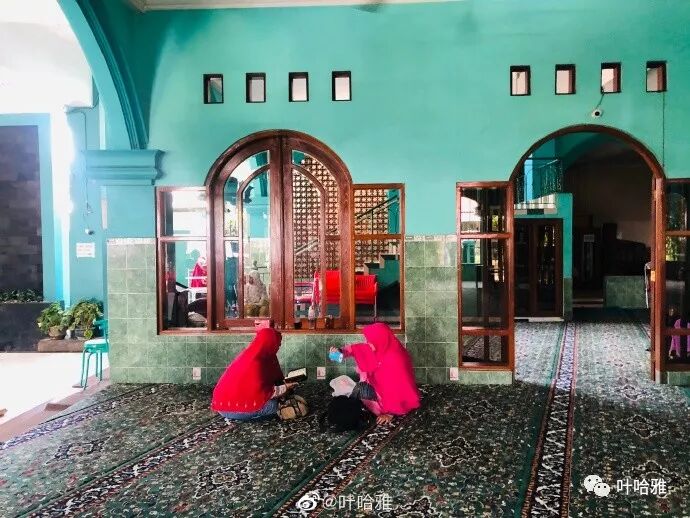
No matter what time of day, you can see people reading the Quran in the mosque, mostly women.
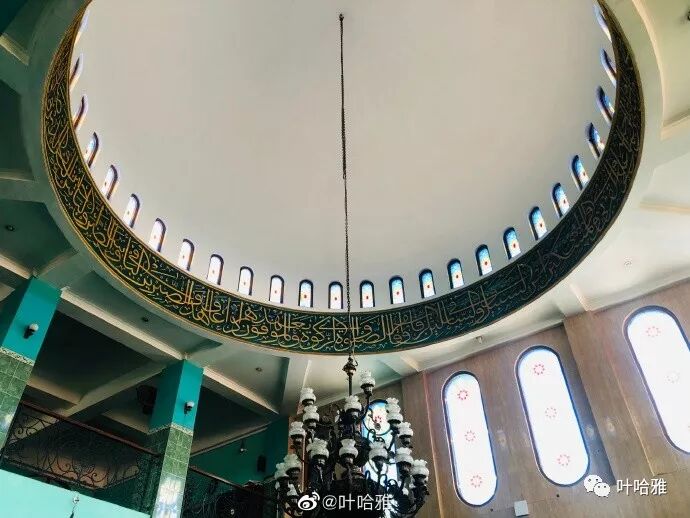
When I was sitting in a taxi heading to the mosque, the driver saw that I was only looking at the mosques along the way to take pictures, so he asked me if I was a Muslim. I blurted out Sailiang Mu, and he laughed when he replied, and then pointed at my beard and said that I looked like a Muslim. I said of course, having a beard is Sunni.
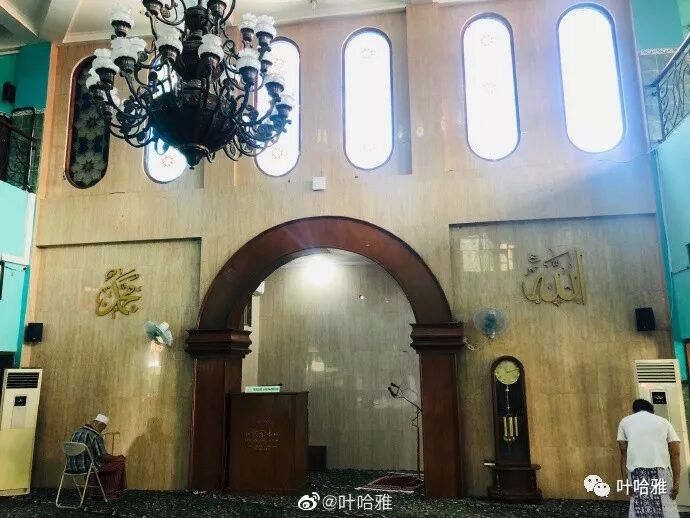
You don’t need to emphasize your Muslim identity when traveling in Indonesia. From my experience, even if the other person only knows that you are from China, you still won’t feel any difference. Anti-Chinese is too alarmist. There are still a large number of ethnic Chinese living in Indonesia today. Many of them have ancestors who settled in Indonesia hundreds of years ago. They have been intermarried for generations. It is difficult to distinguish the ethnic groups in appearance.
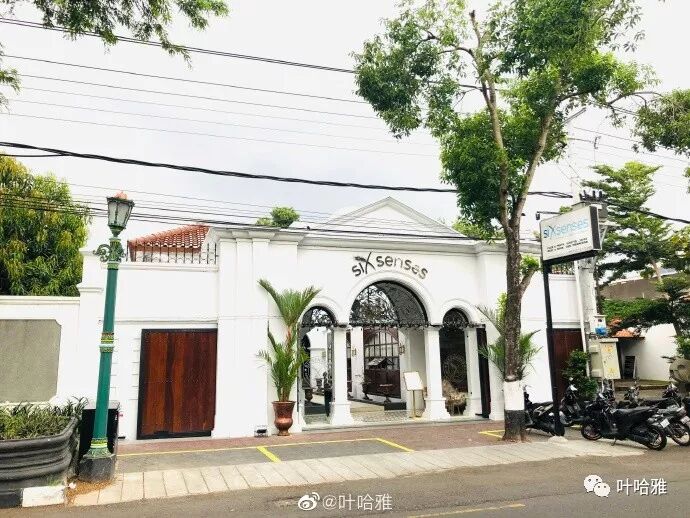
SIX SENSES Spanish Restaurant
I saw on TripAdvisor that there is a very beautiful Spanish restaurant nearby. The environment is really beautiful. The interior is a manor, with fountains and gardens. There is no halal Spanish restaurant in China. This taste bud gap needs to be filled in Yogyakarta.
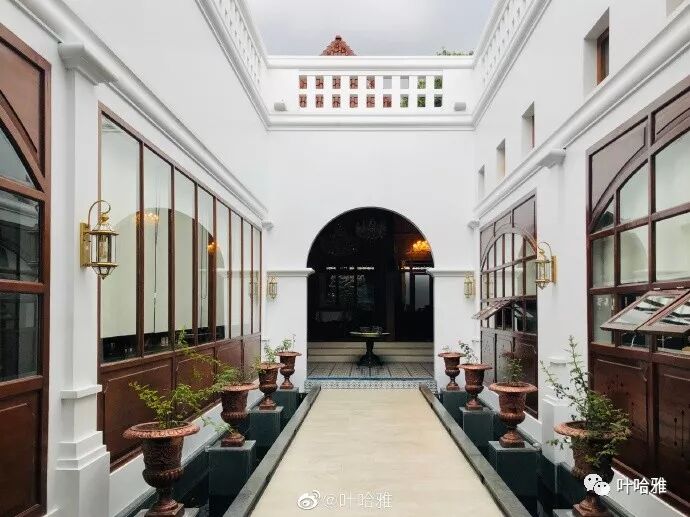
restaurant front porch
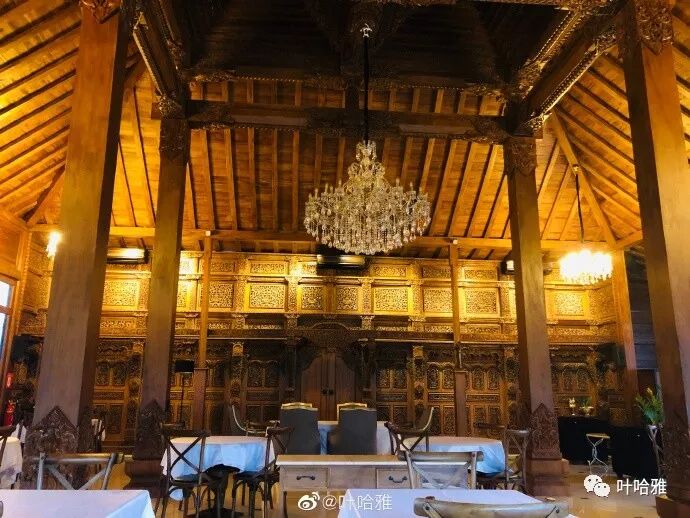
restaurant interior
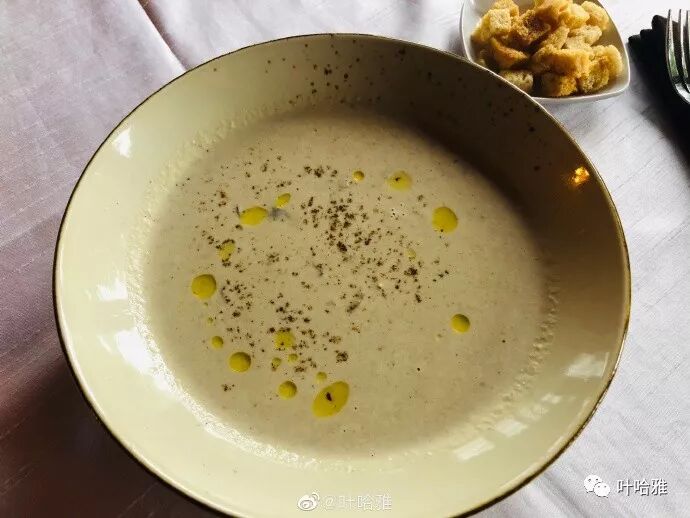
Creamy Mushroom Soup
I originally wanted to have a Spanish paella, but after looking at the menu, the paella required a large portion. It couldn't be eaten by one person, and I didn't want to waste it. After all, the weather was hot and people's appetites were smaller, so I ordered a cream of mushroom soup and salmon salad.
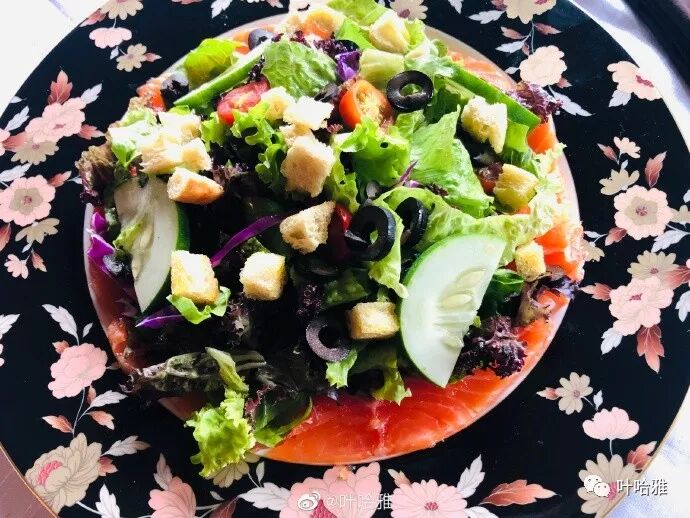
Salmon salad, salmon on the bottom of the plate
The tableware in this store is particularly exquisite, and the waiters are very gentlemanly.
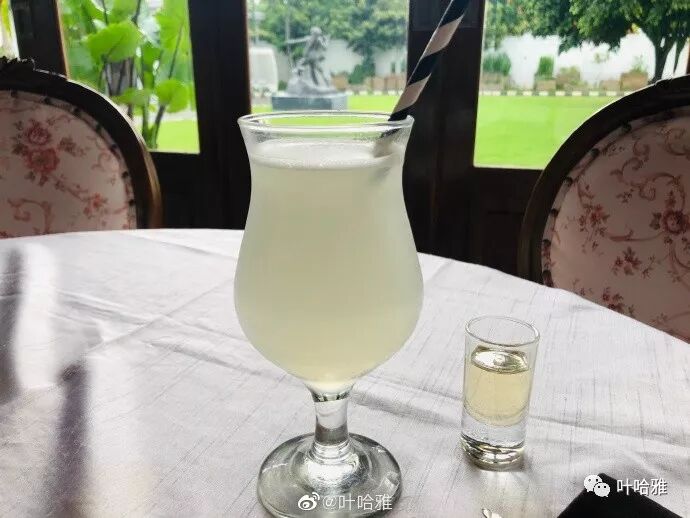
Lemon juice, the small cup on the side is honey
For such a high-end restaurant, the checkout, including service charge and tax, is less than 100 yuan, which is considered high consumption in the local area. Yogyakarta is so down-to-earth.
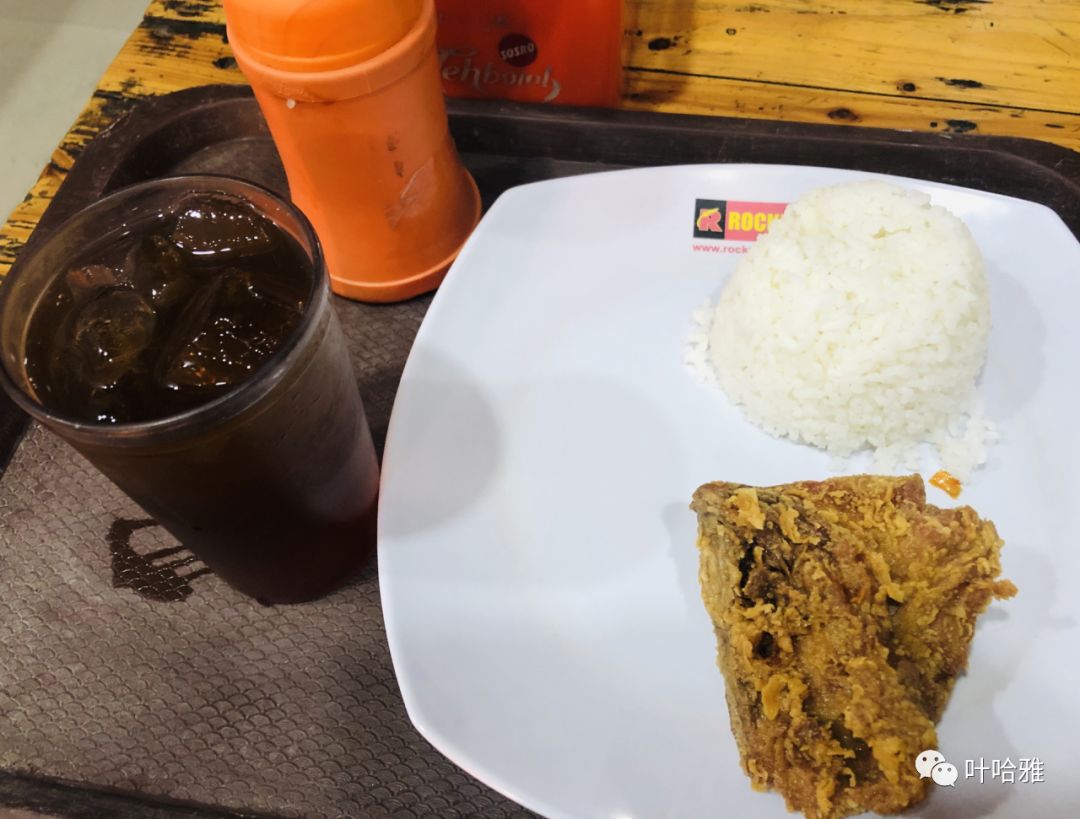
Fried chicken set next to the mosque
This portion costs about 5 yuan. Indonesians love to eat fried food, and all kinds of things can be fried. The waiter gave me a set meal without tableware, because everyone eats it with their hands, so I followed suit and finished it.
Fifth stop Surabaya
It takes one hour to fly to Surabaya from Yogyakarta, but afterwards I suggested that it would be better to take a train or bus. The ticket I bought was canceled once, and then I experienced delays when I bought a new ticket. The weather on Java Island is unpredictable, so it is really better to take the land route from the beginning, and the land transportation only costs a few dozen yuan, while the air ticket costs more than 300.
Surabaya is the second largest city in Indonesia. Indonesians call it Surabaya. Remember this name to help you ask for directions. Zheng He landed here when he sailed to the West and reached Java Island. Now this is also the place with the largest number of Chinese in Indonesia.
In 1520, the first Islamic dynasty that arose in central Java, Indonesia, was called the Demak Dynasty. Sultan Laden Bada (1475-1518) was a Chinese and the ancestor of the fourth president of Indonesia, Wahid. His surname was Chen. Wahid said that he had Chinese ancestry. His ancestor, Chen Jinhan, went to Java Island in Indonesia with a fleet during Zheng He's fifth voyage to the West in the 15th year of Yongle in the Ming Dynasty (1417), and settled in Surabaya.
MASJID NASIONAL AL-AKBAR SURABAYA
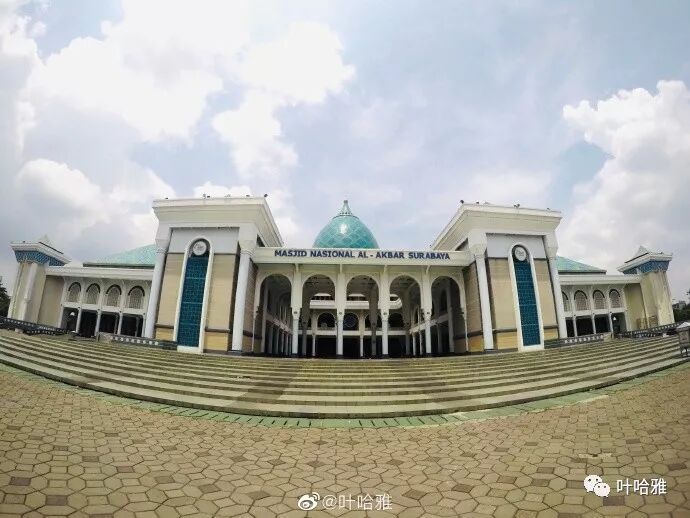
akbar national mosque
The landmark building in Surabaya feels bigger and more beautiful than the Istiqlal Mosque in Jakarta. The foundation of the mosque was laid in 1995. Construction was suspended for two years during the 1997 Asian financial crisis. It was completed in 2000. The then Indonesian President Wahid presided over the inauguration ceremony. President Wahid was also the chairman of the Indonesian Islamic Federation and was considered a leader in the Indonesian religious community. The fact that a descendant of a Chinese ancestor could achieve such achievements in Indonesia is enough to explain a lot of problems.
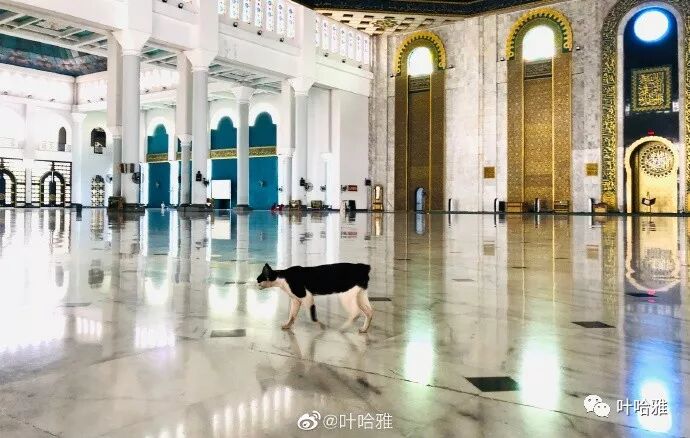
A cat in the hall
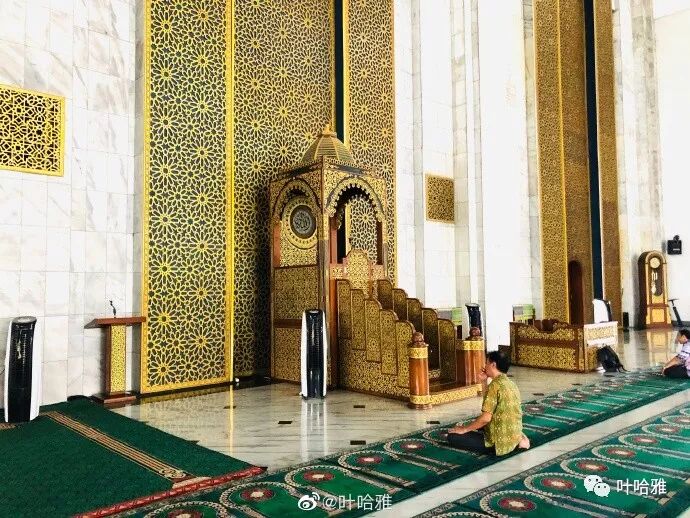
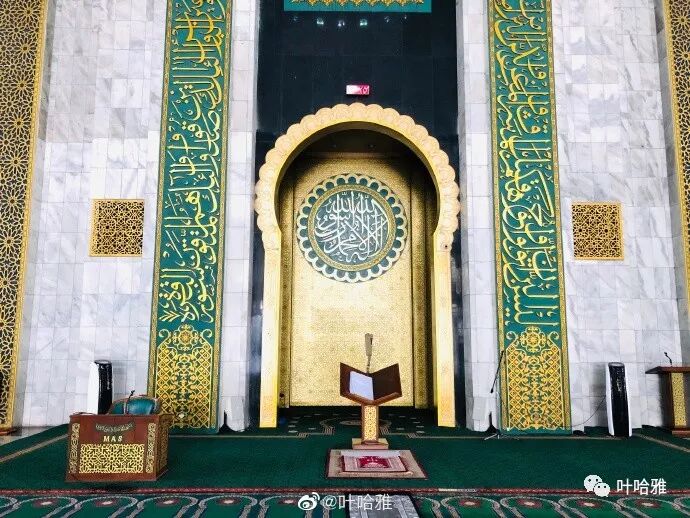
Mihrab
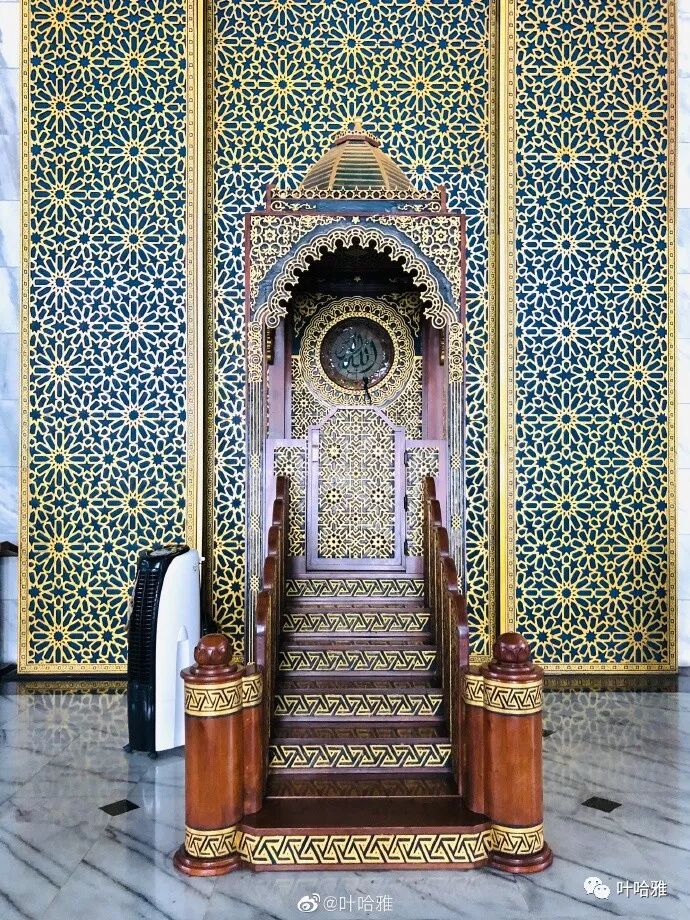
Minbaer
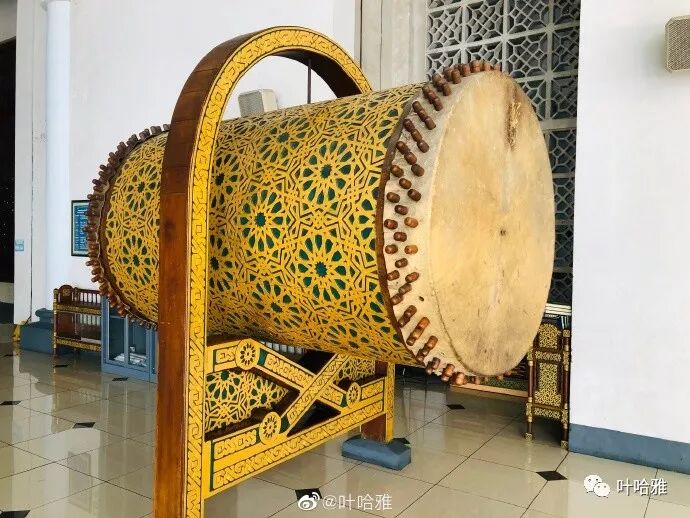
Adhan drum
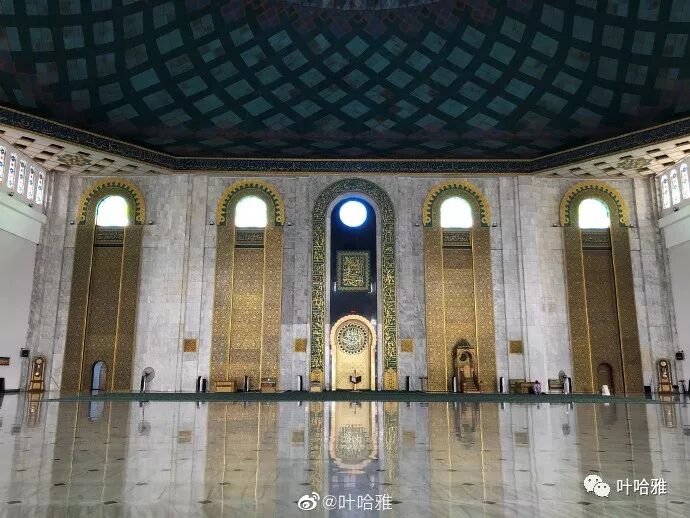
Sunan Ampel Arch
north(
Sunan Ampel Tomb
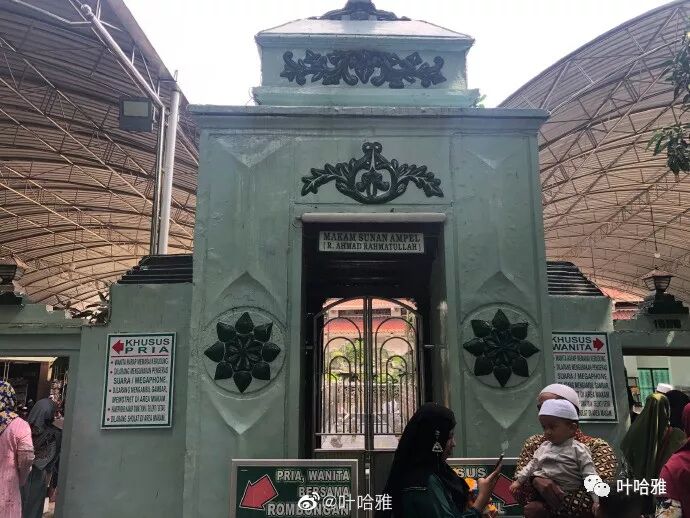
Sunan Ampere (1401-1481) Gongbei
The Sunan Ampel (1401-1481) Mosque in Surabaya was built in 1421. Sunan Ampel was one of the important founders of the spread of Islam in Java. He had a prominent status, roughly equivalent to my country's Hudengzhou Baba. His ancestor was the famous Sufi master Ahmed Muhaji, an Iraqi. Ampel once married a Chinese woman Nyi Gede Manila, and they had two sons and two daughters. After Ampel passed away in 1481, he was buried in the mosque. Now it has become a place of pilgrimage for believers. When I came, I happened to catch up with a school organizing a tomb tour, so I followed the students to Ermaili and listened to their hymns in various tones. Although this is a holy tomb, it looks very simple. There is no tomb, and it is not as luxurious as the Gongbei of our country.
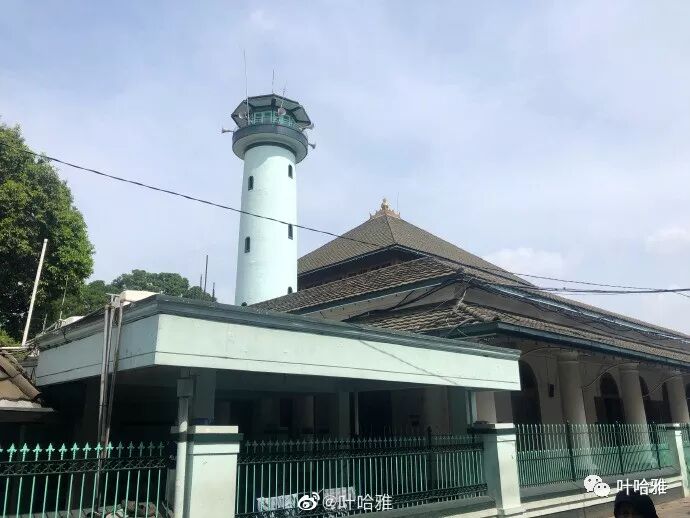
Sunan Ampel Mosque Main Hall
As early as the 13th century AD, Islam had been introduced to Indonesia. Marco Polo mentioned in his travel notes that when he stayed in the Kingdom of Basak in Sumatra and the Kingdom of Balara in the Malay Peninsula in 1292, he found that the people there believed in Islam. At the same time, Chinese historian Ma Huan recorded what Zheng He saw in Sumatra during his voyage to the West. He said that at that time in Palembang, West Sumatra, Aceh and other places on the northeastern coast of Sumatra, "all the people in the king's country were Hui people", as well as businessmen from Guangzhou, Zhangzhou, Quanzhou and other places in China.
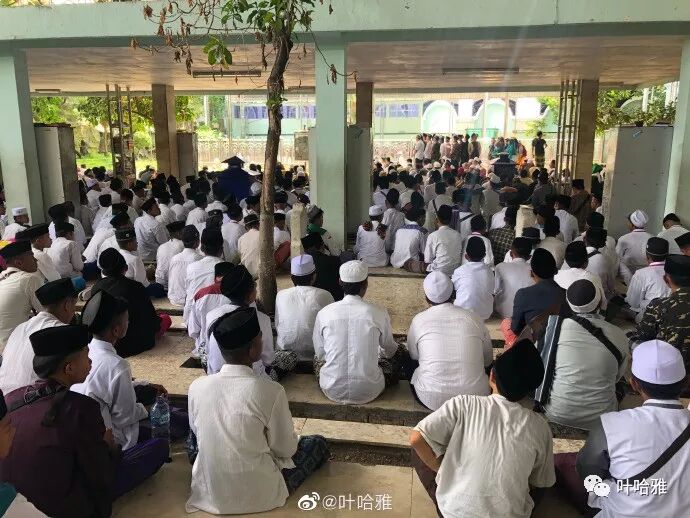
The students came one after another to sit on the floor and praise the Lord and Saints under the leadership of the teacher.
Indonesia established the first Islamic sultanate in the 13th century, on the island of Sumatra, named Samudera Pasai. The founder, Mirah Silau, was a descendant of the royal family and converted to Islam under the influence of the Arab businessman Sheikh Ismail and the South Indian mentor Sultan Muhammad.
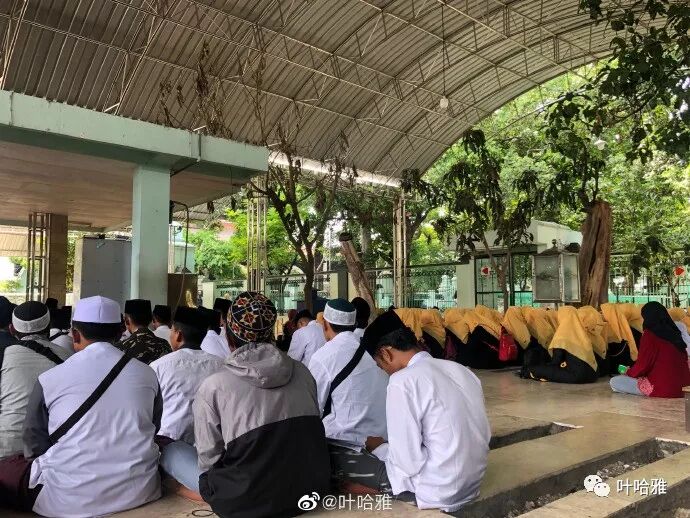
After the boys finish reciting, the girls continue to recite
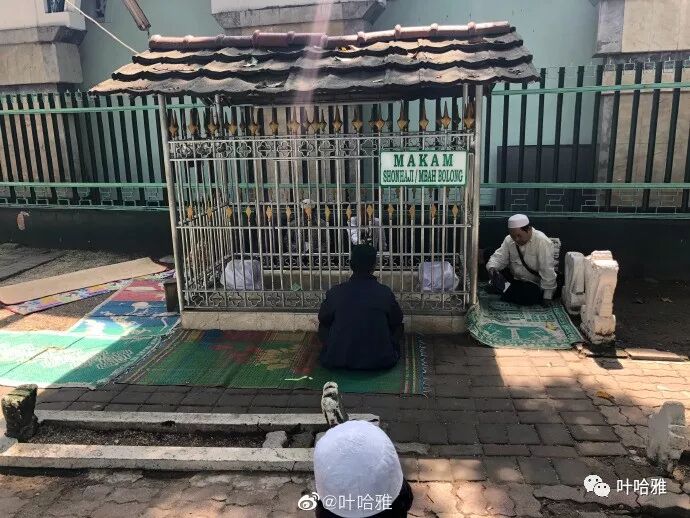
No matter whose tombstone it is, it is such a small space.
Zhenghe Mosque
There is a Zheng He Mosque named after Zheng He in Surabaya, which was built by Chinese Indonesians. There are more than 200,000 Chinese Indonesian Muslims. More Chinese Muslims have already integrated into the Indonesian community. Some have changed their Indonesian surnames and are difficult to distinguish from the outside. These phenomena show that it is difficult to succeed and unpopular in both theory and practice to exclude Chinese in Indonesia.
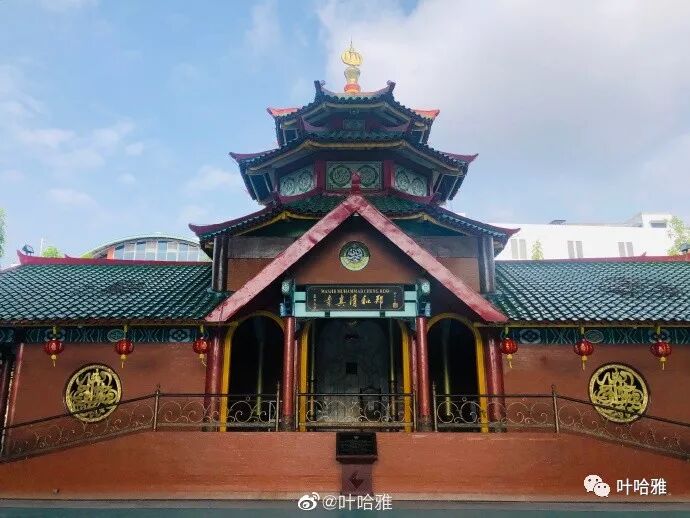
Zhenghe Mosque
The architectural style of the Zheng He Mosque was based on the style of the Niujie Mosque in Beijing. Since then, seven more Zheng He Mosques have been built in Indonesia. The groundbreaking ceremony was held on October 15, 2001, the day of the night walk to the sky.
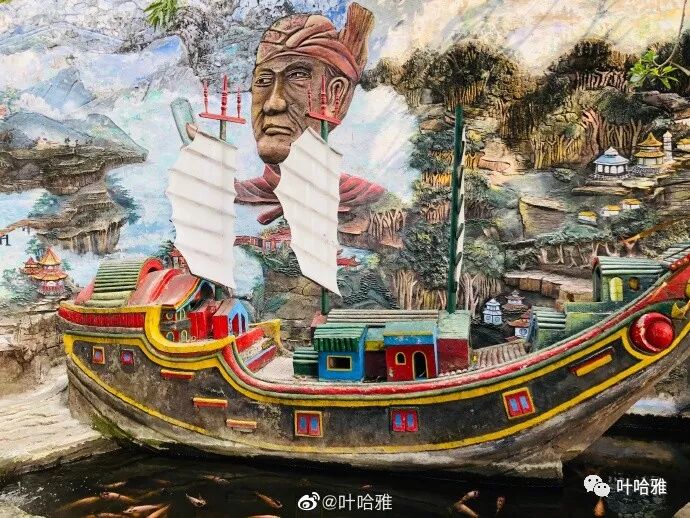
Islam mainly spreads in Indonesia in a peaceful way. At present, academic circles believe that there are several main channels. The first is that Arab, Indian, and Chinese merchants brought Islam into Indonesia through business. On May 22, 2006, the British "Daily Telegraph" reported that after 18 months of salvage, Europe and Indonesia discovered about 250,000 cultural relics in an ancient shipwreck in the Java Sea. They came from China during the Tang and Song Dynasties. The cultural relics contained a large number of Islamic items. It can be seen that China has exerted an important influence on the Islamization of Indonesia. Zheng He had frequent activities in Southeast Asia, actively engaged in Islamic activities there, built mosques, and established Chinese Muslim communities. Even today, Chinese Muslims in Indonesia still commemorate Zheng He.
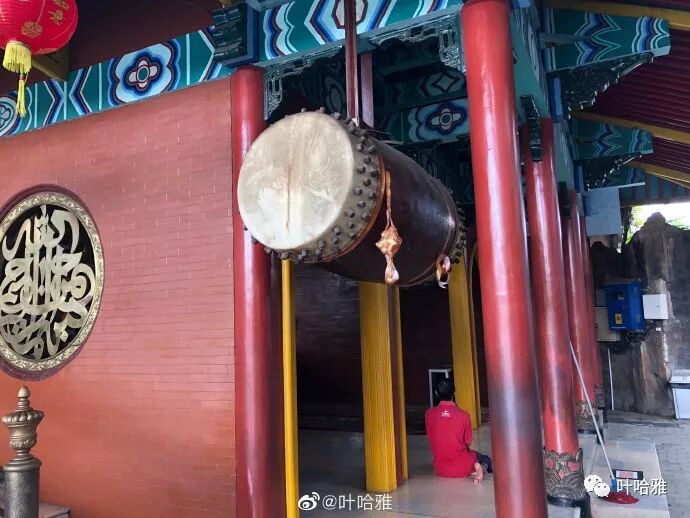
The second missionary channel is Sufi preaching. Sufi mysticism is easily accepted by local residents who believe in Hinduism. Before the introduction of Islam, Hinduism was the mainstream in Indonesia. As the activities of Sufi scholars became more frequent, a large number of residents and the upper-class ruling class gave up their original polytheistic worship and converted to Islam, which recognizes one God.
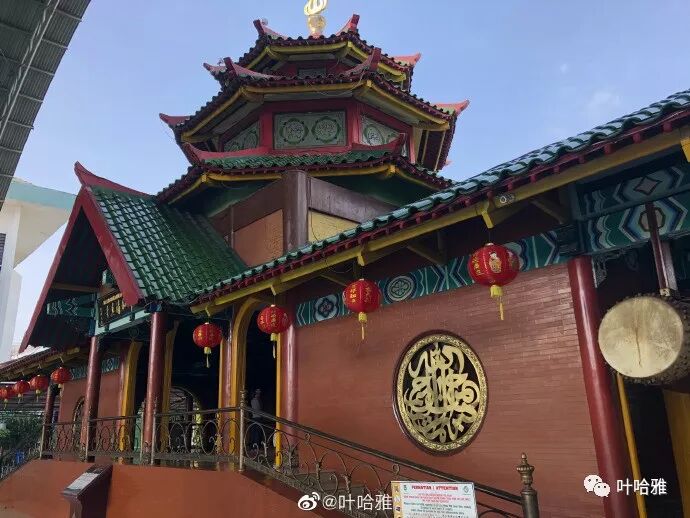
The red lanterns and muanja drums are a perfect combination of Chinese and Indian culture.
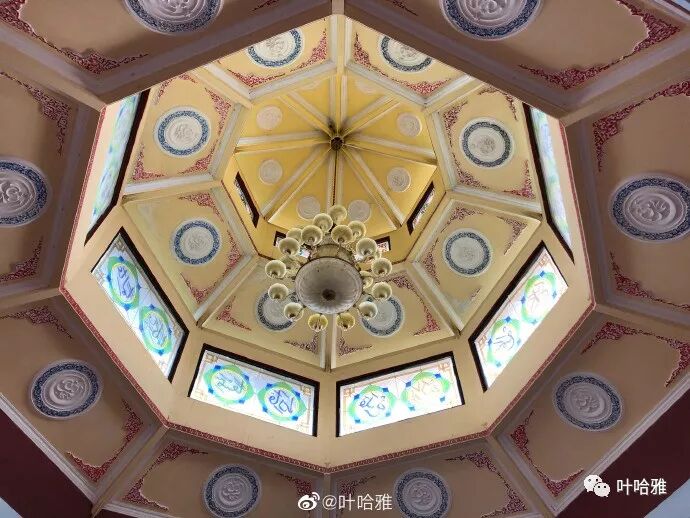
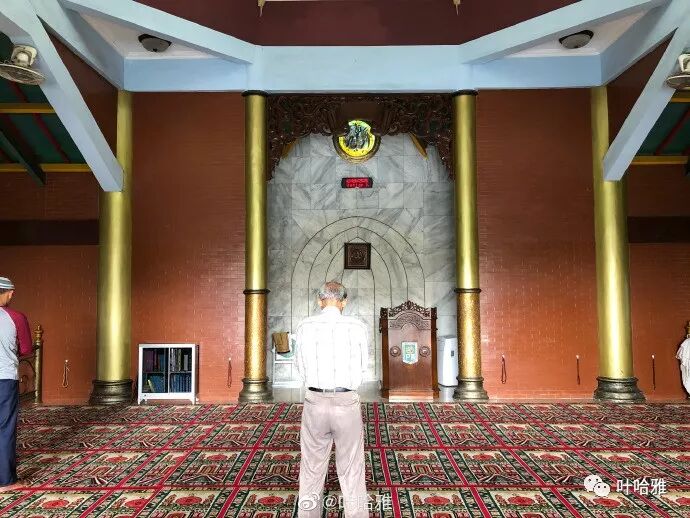
Summary: Muslim Friendly Indonesia: A Chinese Hui Muslim Travel Account with Mosques and Halal Food is presented here as a clear English travel account for Muslim readers, beginning with this scene: Indonesia is the country with the largest Muslim population in the world. The Muslim population exceeds 200 million. They mainly believe in the Shafi'i school of law. However, Indonesian Muslims have always. The article keeps the original place names, food details, photographs, and cultural context while focusing on Indonesia Travel, Hui Muslims, Halal Food.
Indonesia is the country with the largest Muslim population in the world. The Muslim population exceeds 200 million. They mainly believe in the Shafi'i school of law. However, Indonesian Muslims have always been marginalized in the Muslim world. However, since Indonesia became independent from the colonizers in 1945, this marginalized situation has gradually improved. Nowadays, hundreds of thousands of people in Indonesia go to Mecca for pilgrimage every year. They are called "the rice of Hijaz". Hijaz is Mecca and Medina.
Indonesia is currently visa-free for mainland China. You only need to bring your passport to enter the country by air. There is no need to apply in advance and it does not cost a penny. However, I saw many netizens complaining on the Internet about being asked for tips by the customs when entering Indonesia. I flew from Beijing to Jakarta and was not asked for tips. Maybe It is an isolated phenomenon. My consistent principle is that I will never give any customs tips. This kind of bribery and bribery are not allowed to be done by Muslims. The worst is the worst. Although the tip is only ten or twenty yuan, the issue of principle cannot be compromised. Moreover, this phenomenon only targets Chinese people, and we cannot encourage this unhealthy trend of discrimination.
When I went to Vietnam before, I heard that tipping was required, but I never encountered it. My approach was to prepare round-trip air tickets and hotel reservations in advance, print them out, and when I entered the country, the customs asked me what I was doing. I showed him the itinerary I had already prepared, which showed that my purpose of travel was clear. The customs officer knew immediately that he was an experienced driver, so he had no reason to ask for a tip before letting me enter the country.
Most of the online guides look at Indonesia from the perspective of non-Muslims. I read a lot of them and feel that they all use colored glasses to judge the main ethnic groups in Indonesia, which is neither superficial nor objective. Now I will introduce my halal trip to Indonesia from the perspective of a Chinese Hui.
Things you need to prepare before leaving for Indonesia:
1. Round-trip air tickets and hotel orders
, print it out for later use in case customs checks and asks for tips;
2. Mobile WiFi
, can be rented on all major travel websites, and the cost is about 10 yuan a day. Renting WiFi is more convenient than buying a local phone card. According to my past experience, mobile phone signals on many islands are not as good as WiFi. International roaming can be activated in advance, but its use is limited to receiving text messages. International roaming still cannot access websites such as Google when abroad, but mobile WiFi can. Google Maps is very important abroad;
3. Power conversion socket
, the power plug in Indonesia is wider than that in China and needs to be converted. You can buy a globally accepted multi-functional conversion power supply online;
4. Grab
, a popular taxi-hailing software APP in Southeast Asia, you must have this one, it is very easy to use, you can bind a credit card for payment, no cash is required, otherwise the probability of getting ripped off when taking a taxi is almost 100%;
5. Sunscreen, mosquito repellent, sunglasses, slippers
, are all necessities of tropical life.
6. Indonesian rupiah cash
, you can exchange it domestically or at the Indonesian airport. Indonesian money is relatively rough, 10,000 Indonesian rupiah is equivalent to about 5 yuan in RMB.
First stop Jakarta
Jakarta is the capital of Indonesia and the largest city in Indonesia. Many people only use Jakarta as a transit point for a short stay. In fact, there are many places to visit and play in Jakarta. It is a microcosm of Indonesia and you can experience various Indonesian cultures. If your schedule is not tight, you can choose to stay in Jakarta for a few more days. But for me, a food blogger, the most attractive thing about Jakarta is that you can eat halal versions of food from all over the world.
Xiamen Airlines halal meals
I need to praise Xiamen Airlines’ halal meals, which are better than the halal meals I’ve had on other domestic airlines. Here is a reminder: I did not book a halal meal in advance when I bought the Xiamen Airlines ticket this time. However, Xiamen Airlines will proactively provide halal and non-halal meal options for flights to Jakarta, so there is no need to book in advance.
In fact, except for low-cost airlines that do not actively provide catering services, almost all airlines have meal reservation services. There is no additional charge for reservations of religious meals, and the fees are included in the ticket. However, you need to make a reservation at least 24 hours in advance. You can use the airline's app to make reservations, you can also make reservations through the airline's customer service phone number, or you can also make reservations through the customer service of the platform where you buy air tickets. If you are not sure about the airline’s ingredients, you can also order a vegetarian meal. Some airlines can set food preferences in the app, so that whenever you buy a ticket from that company in the future, the system will automatically reserve halal meals.
DIGITAL AIRPORT CAPSULE HOTEL
After flying during the day, it was already 10pm when I arrived in Jakarta. My plan was to fly from Jakarta to Komodo Island early the day after tomorrow. In order to save time and money, I chose the capsule hotel on the first floor of Terminal 3 of the airport. This way I didn’t have to take a car to the city when I landed that night, and I didn’t have to get up early to catch the flight the day after tomorrow. It turned out that my choice was very correct. Although the capsule hotel is small and can only accommodate one person, the facilities inside are complete and clean, including bottled water, towels, lockers, charging power, and TVs. It is like lying in a space warehouse.
The lights in the space can be adjusted to change color, and there is also air conditioning.
The capsule hotel has a public bathroom. Although it is a public area, each room for bathing and washing is separate. The door is locked and it is like a separate bathroom. It does not feel awkward at all. I am very satisfied with my first experience in a capsule hotel. I hope this model can be promoted.
MALACCA TOAST airport fast food restaurant
egg sandwich
Halal paper in the bathroom
But it cannot be said that you cannot eat non-halal food in Indonesia. There are some restaurants in Indonesia run by non-Muslims such as Catholics and Hindus that sell alcohol, but they will prompt that the restaurant is a pork-free restaurant. There are also some hijab girls eating in such restaurants. I have only seen Chinese restaurants in Surabaya that sell pork. You will never see anyone wearing a hijab in such a restaurant. If the restaurant door is clearly marked with the HALAL certification mark, it must be a restaurant that does not sell alcohol.
Indonesian Halal Certification Mark
It looks like the picture above. The common halal certification mark in Indonesia is written in Arabic and Latin alphabet transliterations. HALAL also means halal in Indonesian. If the mark of some packaging is particularly small, it is better to simplify it and not write the letters HALAL, but also write حلال
, to help the identification of dostis in various countries.
SHABURI self-service Japanese hot pot restaurant
Located on the third floor of Soekarno Airport T3 terminal, a set meal costs RMB 60. It only has one plate of meat, vegetables, fruits, sushi, etc. You can eat as you like.
The service in Indonesian restaurants is generally warm and considerate, especially the waiters’ sweet smiles.
The single-person pot is very similar to the domestic Xiabuxiabu.
Indonesian restaurant in Terminal 2
Indonesian fried rice
The most popular fried rice in Indonesia is this kind of fried rice, which is also one of my favorite Indonesian delicacies. It can be eaten for breakfast. The price ranges from 6 yuan to 30 yuan. It is very popular in Southeast Asia. The method is to add sweet soy sauce, tamarind, shrimp, etc. to white rice and fry it. It is served with a variety of ingredients, including satay skewers, cucumbers, Indonesian shrimp cakes and fried eggs.
Istiqlal Mosque (MASJID ISTIQLAL)
Jakarta's Istiqlal Mosque (Indonesian: Masjid Istiqlal, Arabic for "Independence") was built to celebrate Indonesia's independence. The foundation stone was laid on August 24, 1961, and it was opened on February 22, 1978. The architect Frederic Siraban was a Christian. the mosque was built next to the Jakarta Cathedral to symbolize the peaceful coexistence of religions.
When I came here, the whole place was under repair. It was the rainy season in Indonesia, and Jakarta had just experienced a flood. Many places were flooded. However, after the flood, everything was as usual. What impressed me most was that on the way the driver took me here, he talked about the floods in Jakarta. He pointed at the traces of water on both sides of the street and smiled stupidly. I was surprised that they could be so optimistic. The love of laughter is my deepest impression of Indonesians. Although Indonesians are poor, they have a high sense of happiness.
It is free to enter the mosque, but you need to take off your shoes and store them. The uncle at the door warmly welcomed me into the mosque and asked me to write down which country I came from and my religious belief in the registration book.
I have learned about this mosque on TV before. It is considered the largest mosque in Southeast Asia and cost a huge amount of money to build. However, after visiting it on site, I did not find it as beautiful as I imagined. It turns out that during subsequent trips, I saw more unique Indonesian mosques.
old jakarta
(Kota Tua Jakarta)
The Old City of Jakarta covers an area of only 1.3 square kilometers, equivalent to the size of a square. There are many Dutch buildings in the Old City of Jakarta that were built in the 17th century. At that time, Jakarta was the headquarters of the Dutch East India Company for spice and other trade in Asia.
Let’s talk about the colonial history of Indonesia. A friend once asked me that there are so many Muslims in Indonesia. Why are their voices rarely heard in the world? The reason is that Indonesia has been colonized for a long time. From the 16th century to the 20th century, Indonesia has been colonized by the Netherlands. During World War II, the Japanese came and drove away the Dutch. Indonesia was colonized by Japan for several years. It was not until 1945 that Indonesia declared independence. Before that, Indonesia’s actual ruling class had never been Muslim, so Indonesian Muslims were marginalized internationally.
Jakarta old city street scene
Although Indonesia is considered a Muslim country, with more than 80% of the population being Muslims, it cannot be considered an Islamic country. Only countries whose state religion is Islam can be called Islamic countries, and Indonesia does not have a state religion. From this, we can also see the marginalized status of Indonesian Muslims in the history of the country. A country with 87% of the population being Muslim cannot actually establish Islam as the state religion. This can be done by Malaysia next door. The Muslim population in Malaysia is only 60%, but the state religion in Malaysia is Islam, so Malaysia is considered an Islamic country.
Performance in the Old Town Square
Indonesia’s constitution stipulates that citizens must have religious beliefs. The Jakarta Charter issued in 1905 clearly stated: “This country must be founded on the following principles: Believe in Shinto, and believers in Islam have the obligation to implement Sharia law in accordance with correct and moral humanitarian principles.
Indonesian citizens cannot believe in anything, otherwise they will be treated as materialistic XXists. You know, this is related to what people often say about anti-Chinese in Indonesia, because at that time, most Chinese in Indonesia were associated with that doctrine. The pro-Western Major General Suharto overthrew the pro-German Sukarno government, and then began the anti-German purge. When the incident occurred, it was against XXists, not specifically Chinese, so blindly emphasizing anti-Chinese ignores the background of the incident.
The Banda Aceh Special Administrative Region in Indonesia has implemented the second half of the "Jakarta Charter" and implemented Islamic law. Banda Aceh is in the northwest corner of Indonesia and is the city closest to Mecca in Indonesia. Indonesian people worship to the northwest, but it is not directly accessible by plane. Otherwise, I really want to go there to experience the atmosphere of Sharia.
Street food in the old town
There are a lot of street snacks in the old city. I am not used to eating these unfamiliar foods on the roadside. Friends who are interested can try it, but according to my guess, it will not taste too delicious. We may not be used to eating many specialties in Southeast Asia, and the hot weather may cause stomach upset.
Some poor toilets in Indonesia will put a mineral water bottle on the urinal. This bottle is used to flush the penis.
Grand Indonesia
Grand Indonesia is the largest shopping mall in Jakarta. It is really very big and is second to none in Asia. The mall has everything you need, including farmers' markets, and many restaurants and snacks. You can spend a day shopping here. If you don't want to walk around in the scorching sun, it is recommended to come here for shopping and leisure.
Supermarket on the ground floor
Indonesian specialty cat poop coffee beans
I carefully observed the products of various internationally renowned brands in the supermarket, and almost all the products I saw had halal certification marks.
Halal Yoshinoya
Japanese food in the mall
Japanese food is relatively common in Indonesia and is very popular among Indonesians. Often, you have to queue up to eat at such restaurants. The Japanese food in Indonesia is mostly related to Indonesia’s colonization by Japan during World War II. After the war, many Japanese companies still developed in Indonesia, bringing a large number of Japanese.
bookstore in shopping mall
There is a large section of the bookstore in the mall devoted to religious books. All major religious books are available. Islamic books are the most numerous, but they are mainly in Indonesian and cannot be read. Otherwise, I would buy a few books and take them back.
Italian Restaurant Popolamama
Among the Italian restaurants in shopping malls, Beijing has never seen a halal Italian restaurant, while the level of Western restaurants in Jakarta is world-famous.
italian pizza
A pizza, a salad, and a glass of juice cost about 60 yuan. This consumption level is relatively high in Indonesia. In some other small cities in Indonesia, the consumption will be even lower.
Second stop Komodo Island
Komodo Island is an important destination of my trip. I came here to fulfill my childhood wish as a natural science enthusiast. When I was in elementary school, my family gave me a set of natural encyclopedias. There are four volumes in total. The one I read the most is the natural science volume. I am deeply impressed by the various species of animals and plants in the world introduced in it. Komodo Island is a place with diverse species and frequently appears in animal world programs.
Komodo Island is located in the southeastern corner of Indonesia, and a little further south is Australia. It can be said that it is across the sea from Oceania. There is no direct flight to Komodo Island from China. You can only transfer from Jakarta or Bali. I took more than three hours of flight from Jakarta to reach the nearest Labuan Airport to Komodo Island. If I transfer from Bali to Lower Labuan, it only takes one hour.
The main road of Labuan Bajo town
From Labuan Airport, it takes half an hour to take a taxi to the town of Labuan Bajo, which is the most prosperous place in the surrounding area. The picture above shows the busiest neighborhood of this town. The town is sparsely populated and has backward commerce. It covers an area of only two square kilometers. Many residents still retain their original lifestyle. Most of the residents make a living from fishing and tourism. The most common shops on both sides of the street are diving shops. Komodo Island has many high-quality diving spots, but the ocean currents are complex and suitable for professional divers. Beginners are not recommended to go there.
Sylvia Hotel & Resort Komodo Komodo Sylvia Resort Hotel
The hotel I stayed in has a private beach. There are many hotels with private beaches here. The price is cheap and the environment is beautiful. You can stay in a very nice hotel for two to three hundred yuan a night. However, I do not recommend this hotel because it is far from the center of the town. There are no businesses or public transportation around. You can't go out for a walk at night. I suggest staying in the town next time is more convenient.
hotel swimming pool
The only restaurant in the hotel
A steak set
A steak costs less than RMB 100. There are no decent restaurants in Labuan Bajo Town. Most of them are street shops. It needs to be emphasized that there are many Christians living in this town. Most of the restaurants on the island are opened by Christians. They will also mark it as halal and do not have pork, but they sell alcohol.
MASJID AGUNG NURUL FALAQ LABUAN BAJO Mosque
I took a taxi from the hotel and asked the driver to take me to the largest mosque in the town. The driver took me here. This mosque is not comparable to other places in Indonesia. The distribution density of Muslims in Indonesia decreases from northwest to southeast. The Aceh Special Administrative Region in the northwest is the most halal, and Bali in the southeast is the territory of Hindus.
Muslims in Southeast Asia are mainly followers of the Shafi'i school. Their prayer movements can be seen with three hand raises, but whether it is three or one hand raises, there is a correct basis for the hadith.
Indonesian BBQ
The simple Indonesian meal on the island is grilled chicken skewers with rice. The chili seasoning is very spicy. The chili in Indonesia is comparable to that in Hunan.
After passing through a residential area, I found a small mosque in the village. The conditions were very simple, surrounded by villagers' houses and chickens eating bugs.
What’s interesting is that there is a Catholic tomb built next to this mosque. It is pink in color. This is the first time I have seen this combination.
The tombstone depicts the Virgin Mary and Jesus
After a night of rest, I reported a one-day tour on Ctrip for the next day. The itinerary included Padar Island, Komodo Island, Pink Beach, Takamakasa Island, Manta Ray Snorkeling Spot, and Kanawa Island. It included lunch, hotel pick-up and drop-off, and an English-speaking tour guide. The cost was 789 RMB.
Masks provided with the tour
Departing at 5:30 in the morning, the driver arrived at the hotel on time to pick up people. Before leaving, the tour guide distributed a mask to each tourist. It was 2020-01-27, and an epidemic had broken out in China, but Indonesia was not affected in any way, so the tourists did not care. The traveling groups came from various countries, including Japanese, Koreans, Sichuanese, Taiwanese, Europeans and Americans.
Padar Island
View from the top of Padar Island
It takes about an hour to take a boat to Padar Island. There are no residents on this island and it is in a primitive state. You can climb all the way to the top of the mountain along the seaside and overlook the entire territory. Some tourists have brought drones for aerial photography.
Panorama of Padar Island
After a short stay on the island, continue by boat to the small island of Takamakasa.
Takamakasa Island
The island is a crescent-shaped island, which may be submerged when the tide rises, but the island is very beautiful, with blue water. When viewed from the air, it looks like a gem set in the sea. The sand on the island can already be seen in light pink, which is a characteristic of the Komodo area.
Takamakasa Island
You can snorkel around, it's very shallow, because the water is too clear, you can't see many fish, so be careful about sun protection.
pink sand beach
The beaches around Komodo Island are generally pink because they contain tiny coral particles. Since it was developed here relatively late, it has always maintained its original natural state and the water is crystal clear.
fine pink sand
The sea view of Komodo Island is endlessly beautiful.
Underwater fishing video I took with GoPro
KOMODO NATIONAL PARK
Next, continue to Komodo National Park. When we are about to land, we see a dark cloud floating over Komodo Island from a distance, making the atmosphere on the island even more eerie. This island is home to the world's largest venomous reptile - the Komodo dragon.
Komodo National Park consists of many islands, the larger ones including Padar Island, Rinca Island and Komodo Island. There are about 3,000 monitor lizards living on the islands. Indonesia established a national park to protect the Komodo monitor lizards, and it was then listed as a World Heritage Site by UNESCO.
Entering the forest must be led by the park's ranger. Visitors cannot move alone, because all the monitor lizards on the island are wild, and the monitor lizards are poisonous and very dangerous. The long stick in the hand of the ranger can block the attack of the monitor lizards. It is said online that dragons like to eat carrion, so their saliva contains a lot of poisonous bacteria, which can cause infection and death after prey is bitten. This statement has been denied by scientists. In fact, Komodo dragons are born with venom glands, and it is the venom that kills their prey.
There was a reminder to keep quiet at the entrance of the park. Our group was cautious along the way, with our eyes wide open as we stared at the surrounding plants and trees.
The dead tree trunk, I imagined a picture of a dinosaur knocking down the tree trunk.
Komodo dragon nest
The tour guide reminded us that the dirt bag in the distance is the nest of the Komodo dragon, which is about one meter high and five or six meters wide. This scene looks too much like a scene from Jurassic Park.
Near a waterhole, the tour guide stopped and told everyone that monitor lizards often come here to drink water. Then I saw a deer limping towards the waterhole in the distance. The deer's head had been injured, probably by a monitor lizard. The tour guide said that deer are the main food of monitor lizards. This deer should die soon after being attacked.
monitor lizard in bush
We continued walking forward, and suddenly the tour guide stopped and reminded us that there was a monitor lizard in the bushes not far away. I followed the direction he pointed and took a photo of the back of the first monitor lizard I saw. This monitor lizard was about two meters long and lay motionless in the bushes. The panting of the monitor lizard could be clearly heard.
Then we saw three more monitor lizards in the rest area, lying in the corner of the pavilion where tourists were drinking tea. The crowd suddenly became commotion, and some people excitedly approached to take photos with the monitor lizards. At this time, the tour guide also became obviously vigilant and warned tourists in a stern tone not to get too close.
Komodo dragons are hermaphrodites and can reproduce parthenogenetically. They live in trees when they are young and move on the plains as adults. They can dive and run at a speed of 20 kilometers per hour. The mitochondria of Komodo dragons are different from ordinary cold-blooded animals. They can accelerate metabolism to the level of mammals, and then have amazing speed and endurance. It is rare for monitor lizards to attack people on the island. There have been cases of fishermen being attacked and killed by monitor lizards. Monitor lizards have no natural enemies on the island, but they will not attack humans when there is sufficient food.
The adult monitor lizard is more than 3 meters long. It uses its tongue to identify odors and can smell the smell of blood within a radius of 10 kilometers. For small prey, the monitor lizard will bite it directly to death. For larger prey, the monitor lizard will bite and release it until the prey is poisoned and dies. The monitor lizard will then find the body by following the smell of blood.
After leaving Komodo Forest Park, we headed to the next scenic spot to prepare for snorkeling. The snorkeling area was home to another ancient giant beast, the manta ray, which was the same generation as the dinosaurs. Its scientific name is the ghost bat. It is the largest of its kind and can be up to eight meters long. It is said to be uncommon. Whether you can see it depends on luck, but we were very lucky to see a group of about four or five on the bottom of the sea, swimming back and forth under our feet.
Giant, weird-looking creatures like ghost bats have not grown according to the rules of evolution. They have been what they are today since the age of dinosaurs. They are absolute living fossils. These ancient strange creatures are what attracts me the most about Komodo Island. Creatures that were once only seen in the animal world are now alive in front of me. This feeling is so exciting.
The actual effect you see is roughly what it looks like in the photo. The water quality in the water where manta rays appear is not particularly clear. If the water is clear, there will be no fish. The brother in the video is more courageous and dares to get close to manta rays. In fact, it is still a bit dangerous. Although manta rays have a gentle temperament, they are afraid of divers when they lose their temper. Its two wings can break the diver's ribs.
Komodo Island is only an hour's flight from Bali, an Indonesian Internet celebrity tourist destination. To travel from Komodo Island to other cities in Indonesia, you have to transfer from Bali. Although I am not very interested in Bali, since I am here, I still decided to go to the island.
Third stop Bali
The Hindu-style gate in Bali symbolizes the transition from the secular to the sacred.
Bali is the only Hindu-dominated island in Indonesia, and Hindu gods can be seen everywhere on the island. Since we are on a halal trip, we are not very interested in these pagan cultural relics. We come here mainly to eat a decent halal seafood meal. If Dosti plans to go to Bali for vacation, he does not need to worry too much about eating. Halal restaurants on the island are relatively easy to find. The indigenous residents here have the habit of eating roasted suckling pig. Most restaurants sell wine and the consumption is very high.
Jimbaran Beach
Bali Airport is about three kilometers from Jimbaran Beach. In Indonesia, you must be careful not to talk to the drivers around the airport. The probability of being ripped off is almost 100%. There are two options for taking a taxi. One is that there are regular taxi ticketing points at the airport. The fare is prepaid. Just tell the staff your destination. That’s it. After paying, you can get a slip. You can take the slip and follow the staff’s instructions to find a driver to take the bus. There will be no arbitrary charges. you can use Grab to call a taxi. I strongly recommend using this software. The price is cheaper, and you don’t have to pay cash. You don’t have to worry about language barriers, just like Didi Taxi.
Exterior view of Jimbaran beach restaurant
Since I just came from the pristine Komodo Island, when I saw these commercial beaches, I felt that the gap was a bit big visually, and the water was far less clear than Komodo.
Freshly picked crabs
I told a Hindu driver to take me to a halal restaurant. He took me to this restaurant and charged me more than 100 yuan for less than five kilometers. Before I got in the car, I listened to the 100 he said and interpreted it as 10 yuan, so I got on the bus. I was in a hurry and didn't bother with him. I only regretted that I didn't install the grab software in China earlier. As a result, I couldn't log in to download the software when I was in Indonesia. I could only install the software through a VPN.
A squid weighing more than one kilogram
This seafood meal costs about RMB 500. The price is clearly marked, but it is obviously not as affordable as eating in China. Rice and side dishes are provided, and the taste is average. The seafood is boiled in plain flavor. You can add some weird seasonings, or squeeze a little lemon juice and mix it with the rice.
The residents of the island like to grow flowers.
The reason why I don’t recommend Bali is that it really doesn’t live up to its name. Prices on the island are more than double that of other places in Indonesia, and it is heavily commercialized. Many friends around me don’t think highly of Bali after visiting it, so I think it is suitable for people who only like to vacation in hotels, commonly known as hotel partying. But everyone has their own ambitions. Compared with Komodo Island, the hotel quality in Bali is much higher. As long as you are not afraid of spending money, you can find a good hotel here to stay for a few days.
Fourth stop Yogyakarta
I temporarily added a trip to Yogyakarta and Surabaya because of the sudden outbreak of the epidemic and the extension of the holiday, and my flight back to my country was cancelled. I heard a sister who was traveling with me praise Yogyakarta and Surabaya as fun. Her family of three had just come over there and strongly suggested that I go to Yogyakarta to experience the Javanese culture. So I simply bought a flight ticket from Bali to Yogyakarta and arrived in Yogyakarta in about an hour.
Yogyakarta is a famous historical and cultural city in Indonesia. Its status is roughly equivalent to ancient capitals such as Nanjing and Xi'an in my country. All the court arts in Java originated here. Historically, Yogyakarta was ruled by the Sultan. After Indonesia became independent in 1945, the Sultan of Yogyakarta declared his allegiance to Indonesia. The Sultanate of Yogyakarta was changed to the Yogyakarta Special Zone under Indonesia. The Sultan served as the governor of Yogyakarta and retained the hereditary system.
Hotel gardens and swimming pool
It was really a comfortable journey from landing to checking into the hotel, and everyone I met was very friendly. I remember I was sitting in a taxi, staring at the road outside the window in a daze. At this time, the car drove slowly past two girls. I was not sure if one of them was a shemale, but she felt like a transvestite. This person saw me looking at her, and she gave me a look.
I came for breakfast in the morning and it seemed that I was the only guest. The waiter greeted me very warmly and asked me what kind of breakfast I would like to have. There were two options: Western style and Indonesian style. Of course I chose the Indonesian style.
While dining, enjoy the scenery outside the window. The spire in the distance is Prambanan, a famous Hindu resort in Yogyakarta.
I always eat Indonesian fried rice for breakfast. The hotel breakfast is included in the room rate. All kinds of consumption in Yogyakarta are very cheap. A five-star resort hotel only costs more than 300 yuan a night.
Some TV stations in Indonesia will automatically broadcast Bunker during church hours.
MASJID RAYA ALMUTTAQUN Mosque
MASJID RAYA ALMUTTAQUN Mosque
I originally planned to go to nearby Prambanan, but when I walked to the entrance of the mosque, I saw a traditional Javanese mosque across the road. My attention was completely attracted by this mosque, so I decisively gave up going to Prambanan and started my Javanese halal journey.
The interior of the mosque is made of wood. The disadvantage of this dark-colored wood is that it makes the hall look dark. I have observed this problem in several other mosques.
Since Indonesian worship faces northwest, but buildings generally face north and south, the carpets in the main hall are laid along the direction of Mecca, which looks diagonal.
The main hall of the mosque is on the second floor, and the first floor is a classroom. The children are learning Arabic under the guidance of the teacher. It is raining outside. January and February are the rainy season in Indonesia. It rains almost every day, but it is always a thunderstorm and stops after a while.
Candi Prambanan
Prambanan Ruins
Yogyakarta has two internet celebrity check-in attractions. One is Borobudur, the world's largest Buddhist architectural complex, and the other is Prambanan, the largest Hindu architectural complex in Southeast Asia. Both are world cultural heritage sites and were built at the same time. They were built around the 9th century AD. The builders were both ominous and were abandoned after completion. Prambanan People say Nan was probably built by the second king of the Mataram dynasty. Both building complexes were re-excavated and rebuilt in the early 20th century, so most of the buildings were newly built. Prambanan charges a 170 RMB entrance fee, and Borobudur is hundreds of kilometers away from me, so I only walked around at the entrance of Prambanan Temple.
You can see many tourists on the Internet taking some pictures of themselves in the temple, which I think is not good. After all, this is a religious holy place, and taking such pictures is a bit nondescript. A girl wrote in the guide that she was asked to take photos by many Indonesian girls in Prambanan. She felt that the Indonesian girls were interested in her hairstyle because they were envious of her freedom to show her hair. I really want to say, girl, you are overthinking. This is as ridiculous as some domestic rumors saying that the Hui Muslims envy the Han people for eating pork. Don’t you know that Indonesia does not force women to wear headscarves?
MASJID MATARAM
The cemetery of Suta Wijaya Senapati, the sultan of the Kingdom of Mataram, was found in Kota Gede, a suburb of Yogyakarta. Next to it was a mosque that combined Hindu architectural style and Javanese architectural style. The Kingdom of Mataram was the first Islamic kingdom established in Central Java, Indonesia.
Because the faith in Java was converted from Hinduism to Islam, the ancient buildings on the island retain many traces of Hinduism. The gate of this mosque is a type of Hindu architectural style.
It is said on the Internet that the Matalan Mosque charges an entrance fee, which is about 10 yuan. Anyway, I have not met anyone who asked me for entrance tickets. The mosque really should not charge tourists.
In the vestibule of the mosque, some tourists are taking a break from the summer heat. The main hall of the Matalan Mosque still adopts the Javanese architectural style. There is an vestibule, a main hall, and no minaret. Drums are played instead of the adhan.
Adhan drum
The muanli drum is usually played during gatherings or gatherings, and has distinctive Javanese characteristics.
Although the lights are turned on in the main hall, the light is actually very dark. I adjusted the photo to be brighter. This is indeed not as good as the lighting in a dome-shaped building.
The ritual of laying flowers in memory of the deceased is inherited from the Hindu tradition.
There is also a pond next to the cemetery, which is used as a bathhouse for washing and washing. It is probably no longer in use. There are many huge catfish in the pond, both black and white.
Yogyakarta Grand Mosque (Masjid Gedhe Kauman)
Yogyakarta Grand Mosque
The Yogyakarta Mosque (Masjid Gedhe Kauman) was built in 1773. It is located next to the Yogyakarta Royal Palace. It is a traditional Javanese-style building. When I went there, I happened to catch up with a bunch of students coming here to do activities. The teacher led the students to pray, and I followed him.
This architectural style in Java should also be influenced by the ancient Chinese architectural style. During the Ming Dynasty, Zheng He made many voyages to the West and came to Java Island, bringing many craftsmen with him and spreading Islamic culture and Chinese civilization.
lobby of the main hall
There is a sign in Javanese on the wall.
A group of religious school students worshiped, led by their teacher, with the boys in the front and the girls in a designated area at the back.
This is a place reserved for the Sultan to worship, and ordinary civilians cannot enter. By the way, this kind of privileged behavior is not advocated by Islam. Even the king should stand in a row with the people.
The Minbaer podium has a typical Javanese style pattern and is golden in color, the same color as the Thai Royal Palace.
Southeast Asian royal mihrab
Next to the mosque is the Royal Palace of Yogyakarta. The palace is divided into the South District and the North District. You have to buy tickets separately. Each ticket costs about three yuan. I went to the North District and I felt that it was not like the Royal Palace at all. It was too simple. There were only a few greenhouse-like buildings. I once doubted that this was really the Royal Palace?
Yogyakarta Royal Palace
Masjid Soko Tunggal Mosque
Masjid Soko Tunggal Mosque
Yogyakarta One Pillar Mosque (Masjid Soko Tunggal), Soko Tunggal means pillar in Indonesian, was built in 1972. The designer of this mosque was also the designer of Yogyakarta Royal Palace R. Ngabehi Mintobudoyo.
The main hall is supported by one pillar and four pillars, five in total, symbolizing the temptations of the five evil spirits from all directions. This is one of the characteristics of Javanese architecture. The flower patterns carved on the pillars indicate that praying in the mosque can obtain Allah's grace.
A pillar in the main hall
Yogyakarta is a city with a strong religious atmosphere. This can be felt from the hotel I stayed in in the suburbs. Every day when it is time to pray, the sound of bunker will be heard one after another around me. The sound can last for ten minutes intermittently. It may be because the clocks of various mosques are fast or slow.
I casually walked into a nearby village and wandered around. The sign at the head of the village said Selamat Datang. I thought it was the name of the village at first, but I thought it was wrong. I seemed to have seen this word in many places. After asking the villagers, I found out that it means welcome in Indonesian and is commonly used in Southeast Asia.
Masjid Nurul Falaq
The people in this village are very friendly. Everyone I meet on the road, regardless of gender, old or young, will smile and nod to say hello when they see me. The village loudspeaker was broadcasting the imam's sermon. I followed the sound and found the mosque. the mosque was not open. Before I could say anything, a villager next to me came over and opened the door for me. It turned out that the key was at the door.
Mosque nameplates, no matter how small the mosque is, are officially registered.
The details of the post are the same as those of Chinese temples.
BAITUSSALAM MADRAZA SCHOOL
BAITUSSALAM MADRAZA SCHOOL IN THE VILLAGE
There are many religious schools of this kind in Yogyakarta. The children inside look like primary school students. During class, the children are chasing each other and playing around, and some children are surrounding the teacher doing homework.
school main entrance
playground
Mosque inside the school
School mosque appearance
Masjid Nurul Iman Mosque in the same village
If this small mosque is in the city center, it can only be regarded as a Musholla, which means a dua room. Every mosque here has an official registration.
Masjid Jogokariyan Mosque
Masjid Jogokariyan Mosque
The mosque was built in 1967. Most people in this area are engaged in batik work, so the colors of the mosque are relatively bright. Note that the name of the mosque on the right side of the photo uses a variety of colors.
No matter what time of day, you can see people reading the Quran in the mosque, mostly women.
When I was sitting in a taxi heading to the mosque, the driver saw that I was only looking at the mosques along the way to take pictures, so he asked me if I was a Muslim. I blurted out Sailiang Mu, and he laughed when he replied, and then pointed at my beard and said that I looked like a Muslim. I said of course, having a beard is Sunni.
You don’t need to emphasize your Muslim identity when traveling in Indonesia. From my experience, even if the other person only knows that you are from China, you still won’t feel any difference. Anti-Chinese is too alarmist. There are still a large number of ethnic Chinese living in Indonesia today. Many of them have ancestors who settled in Indonesia hundreds of years ago. They have been intermarried for generations. It is difficult to distinguish the ethnic groups in appearance.
SIX SENSES Spanish Restaurant
I saw on TripAdvisor that there is a very beautiful Spanish restaurant nearby. The environment is really beautiful. The interior is a manor, with fountains and gardens. There is no halal Spanish restaurant in China. This taste bud gap needs to be filled in Yogyakarta.
restaurant front porch
restaurant interior
Creamy Mushroom Soup
I originally wanted to have a Spanish paella, but after looking at the menu, the paella required a large portion. It couldn't be eaten by one person, and I didn't want to waste it. After all, the weather was hot and people's appetites were smaller, so I ordered a cream of mushroom soup and salmon salad.
Salmon salad, salmon on the bottom of the plate
The tableware in this store is particularly exquisite, and the waiters are very gentlemanly.
Lemon juice, the small cup on the side is honey
For such a high-end restaurant, the checkout, including service charge and tax, is less than 100 yuan, which is considered high consumption in the local area. Yogyakarta is so down-to-earth.
Fried chicken set next to the mosque
This portion costs about 5 yuan. Indonesians love to eat fried food, and all kinds of things can be fried. The waiter gave me a set meal without tableware, because everyone eats it with their hands, so I followed suit and finished it.
Fifth stop Surabaya
It takes one hour to fly to Surabaya from Yogyakarta, but afterwards I suggested that it would be better to take a train or bus. The ticket I bought was canceled once, and then I experienced delays when I bought a new ticket. The weather on Java Island is unpredictable, so it is really better to take the land route from the beginning, and the land transportation only costs a few dozen yuan, while the air ticket costs more than 300.
Surabaya is the second largest city in Indonesia. Indonesians call it Surabaya. Remember this name to help you ask for directions. Zheng He landed here when he sailed to the West and reached Java Island. Now this is also the place with the largest number of Chinese in Indonesia.
In 1520, the first Islamic dynasty that arose in central Java, Indonesia, was called the Demak Dynasty. Sultan Laden Bada (1475-1518) was a Chinese and the ancestor of the fourth president of Indonesia, Wahid. His surname was Chen. Wahid said that he had Chinese ancestry. His ancestor, Chen Jinhan, went to Java Island in Indonesia with a fleet during Zheng He's fifth voyage to the West in the 15th year of Yongle in the Ming Dynasty (1417), and settled in Surabaya.
MASJID NASIONAL AL-AKBAR SURABAYA
akbar national mosque
The landmark building in Surabaya feels bigger and more beautiful than the Istiqlal Mosque in Jakarta. The foundation of the mosque was laid in 1995. Construction was suspended for two years during the 1997 Asian financial crisis. It was completed in 2000. The then Indonesian President Wahid presided over the inauguration ceremony. President Wahid was also the chairman of the Indonesian Islamic Federation and was considered a leader in the Indonesian religious community. The fact that a descendant of a Chinese ancestor could achieve such achievements in Indonesia is enough to explain a lot of problems.
A cat in the hall
Mihrab
Minbaer
Adhan drum
Sunan Ampel Arch
north(
Sunan Ampel Tomb
Sunan Ampere (1401-1481) Gongbei
The Sunan Ampel (1401-1481) Mosque in Surabaya was built in 1421. Sunan Ampel was one of the important founders of the spread of Islam in Java. He had a prominent status, roughly equivalent to my country's Hudengzhou Baba. His ancestor was the famous Sufi master Ahmed Muhaji, an Iraqi. Ampel once married a Chinese woman Nyi Gede Manila, and they had two sons and two daughters. After Ampel passed away in 1481, he was buried in the mosque. Now it has become a place of pilgrimage for believers. When I came, I happened to catch up with a school organizing a tomb tour, so I followed the students to Ermaili and listened to their hymns in various tones. Although this is a holy tomb, it looks very simple. There is no tomb, and it is not as luxurious as the Gongbei of our country.
Sunan Ampel Mosque Main Hall
As early as the 13th century AD, Islam had been introduced to Indonesia. Marco Polo mentioned in his travel notes that when he stayed in the Kingdom of Basak in Sumatra and the Kingdom of Balara in the Malay Peninsula in 1292, he found that the people there believed in Islam. At the same time, Chinese historian Ma Huan recorded what Zheng He saw in Sumatra during his voyage to the West. He said that at that time in Palembang, West Sumatra, Aceh and other places on the northeastern coast of Sumatra, "all the people in the king's country were Hui people", as well as businessmen from Guangzhou, Zhangzhou, Quanzhou and other places in China.
The students came one after another to sit on the floor and praise the Lord and Saints under the leadership of the teacher.
Indonesia established the first Islamic sultanate in the 13th century, on the island of Sumatra, named Samudera Pasai. The founder, Mirah Silau, was a descendant of the royal family and converted to Islam under the influence of the Arab businessman Sheikh Ismail and the South Indian mentor Sultan Muhammad.
After the boys finish reciting, the girls continue to recite
No matter whose tombstone it is, it is such a small space.
Zhenghe Mosque
There is a Zheng He Mosque named after Zheng He in Surabaya, which was built by Chinese Indonesians. There are more than 200,000 Chinese Indonesian Muslims. More Chinese Muslims have already integrated into the Indonesian community. Some have changed their Indonesian surnames and are difficult to distinguish from the outside. These phenomena show that it is difficult to succeed and unpopular in both theory and practice to exclude Chinese in Indonesia.
Zhenghe Mosque
The architectural style of the Zheng He Mosque was based on the style of the Niujie Mosque in Beijing. Since then, seven more Zheng He Mosques have been built in Indonesia. The groundbreaking ceremony was held on October 15, 2001, the day of the night walk to the sky.
Islam mainly spreads in Indonesia in a peaceful way. At present, academic circles believe that there are several main channels. The first is that Arab, Indian, and Chinese merchants brought Islam into Indonesia through business. On May 22, 2006, the British "Daily Telegraph" reported that after 18 months of salvage, Europe and Indonesia discovered about 250,000 cultural relics in an ancient shipwreck in the Java Sea. They came from China during the Tang and Song Dynasties. The cultural relics contained a large number of Islamic items. It can be seen that China has exerted an important influence on the Islamization of Indonesia. Zheng He had frequent activities in Southeast Asia, actively engaged in Islamic activities there, built mosques, and established Chinese Muslim communities. Even today, Chinese Muslims in Indonesia still commemorate Zheng He.
The second missionary channel is Sufi preaching. Sufi mysticism is easily accepted by local residents who believe in Hinduism. Before the introduction of Islam, Hinduism was the mainstream in Indonesia. As the activities of Sufi scholars became more frequent, a large number of residents and the upper-class ruling class gave up their original polytheistic worship and converted to Islam, which recognizes one God.
The red lanterns and muanja drums are a perfect combination of Chinese and Indian culture.
Muslim Friendly Indonesia: A Chinese Hui Muslim Travel Account with Mosques and Halal Food
Articles • ali2007fr posted the article • 0 comments • 317 views • 2026-05-21 13:02
Reposted from the web
Summary: Muslim Friendly Indonesia: A Chinese Hui Muslim Travel Account with Mosques and Halal Food is presented here as a clear English travel account for Muslim readers, beginning with this scene: Indonesia is the country with the largest Muslim population in the world. The Muslim population exceeds 200 million. They mainly believe in the Shafi'i school of law. However, Indonesian Muslims have always. The article keeps the original place names, food details, photographs, and cultural context while focusing on Indonesia Travel, Hui Muslims, Halal Food.
Indonesia is the country with the largest Muslim population in the world. The Muslim population exceeds 200 million. They mainly believe in the Shafi'i school of law. However, Indonesian Muslims have always been marginalized in the Muslim world. However, since Indonesia became independent from the colonizers in 1945, this marginalized situation has gradually improved. Nowadays, hundreds of thousands of people in Indonesia go to Mecca for pilgrimage every year. They are called "the rice of Hijaz". Hijaz is Mecca and Medina.
Indonesia is currently visa-free for mainland China. You only need to bring your passport to enter the country by air. There is no need to apply in advance and it does not cost a penny. However, I saw many netizens complaining on the Internet about being asked for tips by the customs when entering Indonesia. I flew from Beijing to Jakarta and was not asked for tips. Maybe It is an isolated phenomenon. My consistent principle is that I will never give any customs tips. This kind of bribery and bribery are not allowed to be done by Muslims. The worst is the worst. Although the tip is only ten or twenty yuan, the issue of principle cannot be compromised. Moreover, this phenomenon only targets Chinese people, and we cannot encourage this unhealthy trend of discrimination.
When I went to Vietnam before, I heard that tipping was required, but I never encountered it. My approach was to prepare round-trip air tickets and hotel reservations in advance, print them out, and when I entered the country, the customs asked me what I was doing. I showed him the itinerary I had already prepared, which showed that my purpose of travel was clear. The customs officer knew immediately that he was an experienced driver, so he had no reason to ask for a tip before letting me enter the country.
Most of the online guides look at Indonesia from the perspective of non-Muslims. I read a lot of them and feel that they all use colored glasses to judge the main ethnic groups in Indonesia, which is neither superficial nor objective. Now I will introduce my halal trip to Indonesia from the perspective of a Chinese Hui.
Things you need to prepare before leaving for Indonesia:
1. Round-trip air tickets and hotel orders
, print it out for later use in case customs checks and asks for tips;
2. Mobile WiFi
, can be rented on all major travel websites, and the cost is about 10 yuan a day. Renting WiFi is more convenient than buying a local phone card. According to my past experience, mobile phone signals on many islands are not as good as WiFi. International roaming can be activated in advance, but its use is limited to receiving text messages. International roaming still cannot access websites such as Google when abroad, but mobile WiFi can. Google Maps is very important abroad;
3. Power conversion socket
, the power plug in Indonesia is wider than that in China and needs to be converted. You can buy a globally accepted multi-functional conversion power supply online;
4. Grab
, a popular taxi-hailing software APP in Southeast Asia, you must have this one, it is very easy to use, you can bind a credit card for payment, no cash is required, otherwise the probability of getting ripped off when taking a taxi is almost 100%;
5. Sunscreen, mosquito repellent, sunglasses, slippers
, are all necessities of tropical life.
6. Indonesian rupiah cash
, you can exchange it domestically or at the Indonesian airport. Indonesian money is relatively rough, 10,000 Indonesian rupiah is equivalent to about 5 yuan in RMB.
First stop Jakarta
Jakarta is the capital of Indonesia and the largest city in Indonesia. Many people only use Jakarta as a transit point for a short stay. In fact, there are many places to visit and play in Jakarta. It is a microcosm of Indonesia and you can experience various Indonesian cultures. If your schedule is not tight, you can choose to stay in Jakarta for a few more days. But for me, a food blogger, the most attractive thing about Jakarta is that you can eat halal versions of food from all over the world.
Xiamen Airlines halal meals
I need to praise Xiamen Airlines’ halal meals, which are better than the halal meals I’ve had on other domestic airlines. Here is a reminder: I did not book a halal meal in advance when I bought the Xiamen Airlines ticket this time. However, Xiamen Airlines will proactively provide halal and non-halal meal options for flights to Jakarta, so there is no need to book in advance.
In fact, except for low-cost airlines that do not actively provide catering services, almost all airlines have meal reservation services. There is no additional charge for reservations of religious meals, and the fees are included in the ticket. However, you need to make a reservation at least 24 hours in advance. You can use the airline's app to make reservations, you can also make reservations through the airline's customer service phone number, or you can also make reservations through the customer service of the platform where you buy air tickets. If you are not sure about the airline’s ingredients, you can also order a vegetarian meal. Some airlines can set food preferences in the app, so that whenever you buy a ticket from that company in the future, the system will automatically reserve halal meals.
DIGITAL AIRPORT CAPSULE HOTEL
After flying during the day, it was already 10pm when I arrived in Jakarta. My plan was to fly from Jakarta to Komodo Island early the day after tomorrow. In order to save time and money, I chose the capsule hotel on the first floor of Terminal 3 of the airport. This way I didn’t have to take a car to the city when I landed that night, and I didn’t have to get up early to catch the flight the day after tomorrow. It turned out that my choice was very correct. Although the capsule hotel is small and can only accommodate one person, the facilities inside are complete and clean, including bottled water, towels, lockers, charging power, and TVs. It is like lying in a space warehouse.
The lights in the space can be adjusted to change color, and there is also air conditioning.
The capsule hotel has a public bathroom. Although it is a public area, each room for bathing and washing is separate. The door is locked and it is like a separate bathroom. It does not feel awkward at all. I am very satisfied with my first experience in a capsule hotel. I hope this model can be promoted.
MALACCA TOAST airport fast food restaurant
egg sandwich
Halal paper in the bathroom
But it cannot be said that you cannot eat non-halal food in Indonesia. There are some restaurants in Indonesia run by non-Muslims such as Catholics and Hindus that sell alcohol, but they will prompt that the restaurant is a pork-free restaurant. There are also some hijab girls eating in such restaurants. I have only seen Chinese restaurants in Surabaya that sell pork. You will never see anyone wearing a hijab in such a restaurant. If the restaurant door is clearly marked with the HALAL certification mark, it must be a restaurant that does not sell alcohol.
Indonesian Halal Certification Mark
It looks like the picture above. The common halal certification mark in Indonesia is written in Arabic and Latin alphabet transliterations. HALAL also means halal in Indonesian. If the mark of some packaging is particularly small, it is better to simplify it and not write the letters HALAL, but also write حلال
, to help the identification of dostis in various countries.
SHABURI self-service Japanese hot pot restaurant
Located on the third floor of Soekarno Airport T3 terminal, a set meal costs RMB 60. It only has one plate of meat, vegetables, fruits, sushi, etc. You can eat as you like.
The service in Indonesian restaurants is generally warm and considerate, especially the waiters’ sweet smiles.
The single-person pot is very similar to the domestic Xiabuxiabu.
Indonesian restaurant in Terminal 2
Indonesian fried rice
The most popular fried rice in Indonesia is this kind of fried rice, which is also one of my favorite Indonesian delicacies. It can be eaten for breakfast. The price ranges from 6 yuan to 30 yuan. It is very popular in Southeast Asia. The method is to add sweet soy sauce, tamarind, shrimp, etc. to white rice and fry it. It is served with a variety of ingredients, including satay skewers, cucumbers, Indonesian shrimp cakes and fried eggs.
Istiqlal Mosque (MASJID ISTIQLAL)
Jakarta's Istiqlal Mosque (Indonesian: Masjid Istiqlal, Arabic for "Independence") was built to celebrate Indonesia's independence. The foundation stone was laid on August 24, 1961, and it was opened on February 22, 1978. The architect Frederic Siraban was a Christian. the mosque was built next to the Jakarta Cathedral to symbolize the peaceful coexistence of religions.
When I came here, the whole place was under repair. It was the rainy season in Indonesia, and Jakarta had just experienced a flood. Many places were flooded. However, after the flood, everything was as usual. What impressed me most was that on the way the driver took me here, he talked about the floods in Jakarta. He pointed at the traces of water on both sides of the street and smiled stupidly. I was surprised that they could be so optimistic. The love of laughter is my deepest impression of Indonesians. Although Indonesians are poor, they have a high sense of happiness.
It is free to enter the mosque, but you need to take off your shoes and store them. The uncle at the door warmly welcomed me into the mosque and asked me to write down which country I came from and my religious belief in the registration book.
I have learned about this mosque on TV before. It is considered the largest mosque in Southeast Asia and cost a huge amount of money to build. However, after visiting it on site, I did not find it as beautiful as I imagined. It turns out that during subsequent trips, I saw more unique Indonesian mosques.
old jakarta
(Kota Tua Jakarta)
The Old City of Jakarta covers an area of only 1.3 square kilometers, equivalent to the size of a square. There are many Dutch buildings in the Old City of Jakarta that were built in the 17th century. At that time, Jakarta was the headquarters of the Dutch East India Company for spice and other trade in Asia.
Let’s talk about the colonial history of Indonesia. A friend once asked me that there are so many Muslims in Indonesia. Why are their voices rarely heard in the world? The reason is that Indonesia has been colonized for a long time. From the 16th century to the 20th century, Indonesia has been colonized by the Netherlands. During World War II, the Japanese came and drove away the Dutch. Indonesia was colonized by Japan for several years. It was not until 1945 that Indonesia declared independence. Before that, Indonesia’s actual ruling class had never been Muslim, so Indonesian Muslims were marginalized internationally.
Jakarta old city street scene
Although Indonesia is considered a Muslim country, with more than 80% of the population being Muslims, it cannot be considered an Islamic country. Only countries whose state religion is Islam can be called Islamic countries, and Indonesia does not have a state religion. From this, we can also see the marginalized status of Indonesian Muslims in the history of the country. A country with 87% of the population being Muslim cannot actually establish Islam as the state religion. This can be done by Malaysia next door. The Muslim population in Malaysia is only 60%, but the state religion in Malaysia is Islam, so Malaysia is considered an Islamic country.
Performance in the Old Town Square
Indonesia’s constitution stipulates that citizens must have religious beliefs. The Jakarta Charter issued in 1905 clearly stated: “This country must be founded on the following principles: Believe in Shinto, and believers in Islam have the obligation to implement Sharia law in accordance with correct and moral humanitarian principles.
Indonesian citizens cannot believe in anything, otherwise they will be treated as materialistic XXists. You know, this is related to what people often say about anti-Chinese in Indonesia, because at that time, most Chinese in Indonesia were associated with that doctrine. The pro-Western Major General Suharto overthrew the pro-German Sukarno government, and then began the anti-German purge. When the incident occurred, it was against XXists, not specifically Chinese, so blindly emphasizing anti-Chinese ignores the background of the incident.
The Banda Aceh Special Administrative Region in Indonesia has implemented the second half of the "Jakarta Charter" and implemented Islamic law. Banda Aceh is in the northwest corner of Indonesia and is the city closest to Mecca in Indonesia. Indonesian people worship to the northwest, but it is not directly accessible by plane. Otherwise, I really want to go there to experience the atmosphere of Sharia.
Street food in the old town
There are a lot of street snacks in the old city. I am not used to eating these unfamiliar foods on the roadside. Friends who are interested can try it, but according to my guess, it will not taste too delicious. We may not be used to eating many specialties in Southeast Asia, and the hot weather may cause stomach upset.
Some poor toilets in Indonesia will put a mineral water bottle on the urinal. This bottle is used to flush the penis.
Grand Indonesia
Grand Indonesia is the largest shopping mall in Jakarta. It is really very big and is second to none in Asia. The mall has everything you need, including farmers' markets, and many restaurants and snacks. You can spend a day shopping here. If you don't want to walk around in the scorching sun, it is recommended to come here for shopping and leisure.
Supermarket on the ground floor
Indonesian specialty cat poop coffee beans
I carefully observed the products of various internationally renowned brands in the supermarket, and almost all the products I saw had halal certification marks.
Halal Yoshinoya
Japanese food in the mall
Japanese food is relatively common in Indonesia and is very popular among Indonesians. Often, you have to queue up to eat at such restaurants. The Japanese food in Indonesia is mostly related to Indonesia’s colonization by Japan during World War II. After the war, many Japanese companies still developed in Indonesia, bringing a large number of Japanese.
bookstore in shopping mall
There is a large section of the bookstore in the mall devoted to religious books. All major religious books are available. Islamic books are the most numerous, but they are mainly in Indonesian and cannot be read. Otherwise, I would buy a few books and take them back.
Italian Restaurant Popolamama
Among the Italian restaurants in shopping malls, Beijing has never seen a halal Italian restaurant, while the level of Western restaurants in Jakarta is world-famous.
italian pizza
A pizza, a salad, and a glass of juice cost about 60 yuan. This consumption level is relatively high in Indonesia. In some other small cities in Indonesia, the consumption will be even lower.
Second stop Komodo Island
Komodo Island is an important destination of my trip. I came here to fulfill my childhood wish as a natural science enthusiast. When I was in elementary school, my family gave me a set of natural encyclopedias. There are four volumes in total. The one I read the most is the natural science volume. I am deeply impressed by the various species of animals and plants in the world introduced in it. Komodo Island is a place with diverse species and frequently appears in animal world programs.
Komodo Island is located in the southeastern corner of Indonesia, and a little further south is Australia. It can be said that it is across the sea from Oceania. There is no direct flight to Komodo Island from China. You can only transfer from Jakarta or Bali. I took more than three hours of flight from Jakarta to reach the nearest Labuan Airport to Komodo Island. If I transfer from Bali to Lower Labuan, it only takes one hour.
The main road of Labuan Bajo town
From Labuan Airport, it takes half an hour to take a taxi to the town of Labuan Bajo, which is the most prosperous place in the surrounding area. The picture above shows the busiest neighborhood of this town. The town is sparsely populated and has backward commerce. It covers an area of only two square kilometers. Many residents still retain their original lifestyle. Most of the residents make a living from fishing and tourism. The most common shops on both sides of the street are diving shops. Komodo Island has many high-quality diving spots, but the ocean currents are complex and suitable for professional divers. Beginners are not recommended to go there.
Sylvia Hotel & Resort Komodo Komodo Sylvia Resort Hotel
The hotel I stayed in has a private beach. There are many hotels with private beaches here. The price is cheap and the environment is beautiful. You can stay in a very nice hotel for two to three hundred yuan a night. However, I do not recommend this hotel because it is far from the center of the town. There are no businesses or public transportation around. You can't go out for a walk at night. I suggest staying in the town next time is more convenient.
hotel swimming pool
The only restaurant in the hotel
A steak set
A steak costs less than RMB 100. There are no decent restaurants in Labuan Bajo Town. Most of them are street shops. It needs to be emphasized that there are many Christians living in this town. Most of the restaurants on the island are opened by Christians. They will also mark it as halal and do not have pork, but they sell alcohol.
MASJID AGUNG NURUL FALAQ LABUAN BAJO Mosque
I took a taxi from the hotel and asked the driver to take me to the largest mosque in the town. The driver took me here. This mosque is not comparable to other places in Indonesia. The distribution density of Muslims in Indonesia decreases from northwest to southeast. The Aceh Special Administrative Region in the northwest is the most halal, and Bali in the southeast is the territory of Hindus.
Muslims in Southeast Asia are mainly followers of the Shafi'i school. Their prayer movements can be seen with three hand raises, but whether it is three or one hand raises, there is a correct basis for the hadith.
Indonesian BBQ
The simple Indonesian meal on the island is grilled chicken skewers with rice. The chili seasoning is very spicy. The chili in Indonesia is comparable to that in Hunan.
After passing through a residential area, I found a small mosque in the village. The conditions were very simple, surrounded by villagers' houses and chickens eating bugs.
What’s interesting is that there is a Catholic tomb built next to this mosque. It is pink in color. This is the first time I have seen this combination.
The tombstone depicts the Virgin Mary and Jesus
After a night of rest, I reported a one-day tour on Ctrip for the next day. The itinerary included Padar Island, Komodo Island, Pink Beach, Takamakasa Island, Manta Ray Snorkeling Spot, and Kanawa Island. It included lunch, hotel pick-up and drop-off, and an English-speaking tour guide. The cost was 789 RMB.
Masks provided with the tour
Departing at 5:30 in the morning, the driver arrived at the hotel on time to pick up people. Before leaving, the tour guide distributed a mask to each tourist. It was 2020-01-27, and an epidemic had broken out in China, but Indonesia was not affected in any way, so the tourists did not care. The traveling groups came from various countries, including Japanese, Koreans, Sichuanese, Taiwanese, Europeans and Americans.
Padar Island
View from the top of Padar Island
It takes about an hour to take a boat to Padar Island. There are no residents on this island and it is in a primitive state. You can climb all the way to the top of the mountain along the seaside and overlook the entire territory. Some tourists have brought drones for aerial photography.
Panorama of Padar Island
After a short stay on the island, continue by boat to the small island of Takamakasa.
Takamakasa Island
The island is a crescent-shaped island, which may be submerged when the tide rises, but the island is very beautiful, with blue water. When viewed from the air, it looks like a gem set in the sea. The sand on the island can already be seen in light pink, which is a characteristic of the Komodo area.
Takamakasa Island
You can snorkel around, it's very shallow, because the water is too clear, you can't see many fish, so be careful about sun protection.
pink sand beach
The beaches around Komodo Island are generally pink because they contain tiny coral particles. Since it was developed here relatively late, it has always maintained its original natural state and the water is crystal clear.
fine pink sand
The sea view of Komodo Island is endlessly beautiful.
Underwater fishing video I took with GoPro
KOMODO NATIONAL PARK
Next, continue to Komodo National Park. When we are about to land, we see a dark cloud floating over Komodo Island from a distance, making the atmosphere on the island even more eerie. This island is home to the world's largest venomous reptile - the Komodo dragon.
Komodo National Park consists of many islands, the larger ones including Padar Island, Rinca Island and Komodo Island. There are about 3,000 monitor lizards living on the islands. Indonesia established a national park to protect the Komodo monitor lizards, and it was then listed as a World Heritage Site by UNESCO.
Entering the forest must be led by the park's ranger. Visitors cannot move alone, because all the monitor lizards on the island are wild, and the monitor lizards are poisonous and very dangerous. The long stick in the hand of the ranger can block the attack of the monitor lizards. It is said online that dragons like to eat carrion, so their saliva contains a lot of poisonous bacteria, which can cause infection and death after prey is bitten. This statement has been denied by scientists. In fact, Komodo dragons are born with venom glands, and it is the venom that kills their prey.
There was a reminder to keep quiet at the entrance of the park. Our group was cautious along the way, with our eyes wide open as we stared at the surrounding plants and trees.
The dead tree trunk, I imagined a picture of a dinosaur knocking down the tree trunk.
Komodo dragon nest
The tour guide reminded us that the dirt bag in the distance is the nest of the Komodo dragon, which is about one meter high and five or six meters wide. This scene looks too much like a scene from Jurassic Park.
Near a waterhole, the tour guide stopped and told everyone that monitor lizards often come here to drink water. Then I saw a deer limping towards the waterhole in the distance. The deer's head had been injured, probably by a monitor lizard. The tour guide said that deer are the main food of monitor lizards. This deer should die soon after being attacked.
monitor lizard in bush
We continued walking forward, and suddenly the tour guide stopped and reminded us that there was a monitor lizard in the bushes not far away. I followed the direction he pointed and took a photo of the back of the first monitor lizard I saw. This monitor lizard was about two meters long and lay motionless in the bushes. The panting of the monitor lizard could be clearly heard.
Then we saw three more monitor lizards in the rest area, lying in the corner of the pavilion where tourists were drinking tea. The crowd suddenly became commotion, and some people excitedly approached to take photos with the monitor lizards. At this time, the tour guide also became obviously vigilant and warned tourists in a stern tone not to get too close.
Komodo dragons are hermaphrodites and can reproduce parthenogenetically. They live in trees when they are young and move on the plains as adults. They can dive and run at a speed of 20 kilometers per hour. The mitochondria of Komodo dragons are different from ordinary cold-blooded animals. They can accelerate metabolism to the level of mammals, and then have amazing speed and endurance. It is rare for monitor lizards to attack people on the island. There have been cases of fishermen being attacked and killed by monitor lizards. Monitor lizards have no natural enemies on the island, but they will not attack humans when there is sufficient food.
The adult monitor lizard is more than 3 meters long. It uses its tongue to identify odors and can smell the smell of blood within a radius of 10 kilometers. For small prey, the monitor lizard will bite it directly to death. For larger prey, the monitor lizard will bite and release it until the prey is poisoned and dies. The monitor lizard will then find the body by following the smell of blood.
After leaving Komodo Forest Park, we headed to the next scenic spot to prepare for snorkeling. The snorkeling area was home to another ancient giant beast, the manta ray, which was the same generation as the dinosaurs. Its scientific name is the ghost bat. It is the largest of its kind and can be up to eight meters long. It is said to be uncommon. Whether you can see it depends on luck, but we were very lucky to see a group of about four or five on the bottom of the sea, swimming back and forth under our feet.
Giant, weird-looking creatures like ghost bats have not grown according to the rules of evolution. They have been what they are today since the age of dinosaurs. They are absolute living fossils. These ancient strange creatures are what attracts me the most about Komodo Island. Creatures that were once only seen in the animal world are now alive in front of me. This feeling is so exciting.
The actual effect you see is roughly what it looks like in the photo. The water quality in the water where manta rays appear is not particularly clear. If the water is clear, there will be no fish. The brother in the video is more courageous and dares to get close to manta rays. In fact, it is still a bit dangerous. Although manta rays have a gentle temperament, they are afraid of divers when they lose their temper. Its two wings can break the diver's ribs.
Komodo Island is only an hour's flight from Bali, an Indonesian Internet celebrity tourist destination. To travel from Komodo Island to other cities in Indonesia, you have to transfer from Bali. Although I am not very interested in Bali, since I am here, I still decided to go to the island.
Third stop Bali
The Hindu-style gate in Bali symbolizes the transition from the secular to the sacred.
Bali is the only Hindu-dominated island in Indonesia, and Hindu gods can be seen everywhere on the island. Since we are on a halal trip, we are not very interested in these pagan cultural relics. We come here mainly to eat a decent halal seafood meal. If Dosti plans to go to Bali for vacation, he does not need to worry too much about eating. Halal restaurants on the island are relatively easy to find. The indigenous residents here have the habit of eating roasted suckling pig. Most restaurants sell wine and the consumption is very high.
Jimbaran Beach
Bali Airport is about three kilometers from Jimbaran Beach. In Indonesia, you must be careful not to talk to the drivers around the airport. The probability of being ripped off is almost 100%. There are two options for taking a taxi. One is that there are regular taxi ticketing points at the airport. The fare is prepaid. Just tell the staff your destination. That’s it. After paying, you can get a slip. You can take the slip and follow the staff’s instructions to find a driver to take the bus. There will be no arbitrary charges. you can use Grab to call a taxi. I strongly recommend using this software. The price is cheaper, and you don’t have to pay cash. You don’t have to worry about language barriers, just like Didi Taxi.
Exterior view of Jimbaran beach restaurant
Since I just came from the pristine Komodo Island, when I saw these commercial beaches, I felt that the gap was a bit big visually, and the water was far less clear than Komodo.
Freshly picked crabs
I told a Hindu driver to take me to a halal restaurant. He took me to this restaurant and charged me more than 100 yuan for less than five kilometers. Before I got in the car, I listened to the 100 he said and interpreted it as 10 yuan, so I got on the bus. I was in a hurry and didn't bother with him. I only regretted that I didn't install the grab software in China earlier. As a result, I couldn't log in to download the software when I was in Indonesia. I could only install the software through a VPN.
A squid weighing more than one kilogram
This seafood meal costs about RMB 500. The price is clearly marked, but it is obviously not as affordable as eating in China. Rice and side dishes are provided, and the taste is average. The seafood is boiled in plain flavor. You can add some weird seasonings, or squeeze a little lemon juice and mix it with the rice.
The residents of the island like to grow flowers.
The reason why I don’t recommend Bali is that it really doesn’t live up to its name. Prices on the island are more than double that of other places in Indonesia, and it is heavily commercialized. Many friends around me don’t think highly of Bali after visiting it, so I think it is suitable for people who only like to vacation in hotels, commonly known as hotel partying. But everyone has their own ambitions. Compared with Komodo Island, the hotel quality in Bali is much higher. As long as you are not afraid of spending money, you can find a good hotel here to stay for a few days.
Fourth stop Yogyakarta
I temporarily added a trip to Yogyakarta and Surabaya because of the sudden outbreak of the epidemic and the extension of the holiday, and my flight back to my country was cancelled. I heard a sister who was traveling with me praise Yogyakarta and Surabaya as fun. Her family of three had just come over there and strongly suggested that I go to Yogyakarta to experience the Javanese culture. So I simply bought a flight ticket from Bali to Yogyakarta and arrived in Yogyakarta in about an hour.
Yogyakarta is a famous historical and cultural city in Indonesia. Its status is roughly equivalent to ancient capitals such as Nanjing and Xi'an in my country. All the court arts in Java originated here. Historically, Yogyakarta was ruled by the Sultan. After Indonesia became independent in 1945, the Sultan of Yogyakarta declared his allegiance to Indonesia. The Sultanate of Yogyakarta was changed to the Yogyakarta Special Zone under Indonesia. The Sultan served as the governor of Yogyakarta and retained the hereditary system.
Hotel gardens and swimming pool
It was really a comfortable journey from landing to checking into the hotel, and everyone I met was very friendly. I remember I was sitting in a taxi, staring at the road outside the window in a daze. At this time, the car drove slowly past two girls. I was not sure if one of them was a shemale, but she felt like a transvestite. This person saw me looking at her, and she gave me a look.
I came for breakfast in the morning and it seemed that I was the only guest. The waiter greeted me very warmly and asked me what kind of breakfast I would like to have. There were two options: Western style and Indonesian style. Of course I chose the Indonesian style.
While dining, enjoy the scenery outside the window. The spire in the distance is Prambanan, a famous Hindu resort in Yogyakarta.
I always eat Indonesian fried rice for breakfast. The hotel breakfast is included in the room rate. All kinds of consumption in Yogyakarta are very cheap. A five-star resort hotel only costs more than 300 yuan a night.
Some TV stations in Indonesia will automatically broadcast Bunker during church hours.
MASJID RAYA ALMUTTAQUN Mosque
MASJID RAYA ALMUTTAQUN Mosque
I originally planned to go to nearby Prambanan, but when I walked to the entrance of the mosque, I saw a traditional Javanese mosque across the road. My attention was completely attracted by this mosque, so I decisively gave up going to Prambanan and started my Javanese halal journey.
The interior of the mosque is made of wood. The disadvantage of this dark-colored wood is that it makes the hall look dark. I have observed this problem in several other mosques.
Since Indonesian worship faces northwest, but buildings generally face north and south, the carpets in the main hall are laid along the direction of Mecca, which looks diagonal.
The main hall of the mosque is on the second floor, and the first floor is a classroom. The children are learning Arabic under the guidance of the teacher. It is raining outside. January and February are the rainy season in Indonesia. It rains almost every day, but it is always a thunderstorm and stops after a while.
Candi Prambanan
Prambanan Ruins
Yogyakarta has two internet celebrity check-in attractions. One is Borobudur, the world's largest Buddhist architectural complex, and the other is Prambanan, the largest Hindu architectural complex in Southeast Asia. Both are world cultural heritage sites and were built at the same time. They were built around the 9th century AD. The builders were both ominous and were abandoned after completion. Prambanan People say Nan was probably built by the second king of the Mataram dynasty. Both building complexes were re-excavated and rebuilt in the early 20th century, so most of the buildings were newly built. Prambanan charges a 170 RMB entrance fee, and Borobudur is hundreds of kilometers away from me, so I only walked around at the entrance of Prambanan Temple.
You can see many tourists on the Internet taking some pictures of themselves in the temple, which I think is not good. After all, this is a religious holy place, and taking such pictures is a bit nondescript. A girl wrote in the guide that she was asked to take photos by many Indonesian girls in Prambanan. She felt that the Indonesian girls were interested in her hairstyle because they were envious of her freedom to show her hair. I really want to say, girl, you are overthinking. This is as ridiculous as some domestic rumors saying that the Hui Muslims envy the Han people for eating pork. Don’t you know that Indonesia does not force women to wear headscarves?
MASJID MATARAM
The cemetery of Suta Wijaya Senapati, the sultan of the Kingdom of Mataram, was found in Kota Gede, a suburb of Yogyakarta. Next to it was a mosque that combined Hindu architectural style and Javanese architectural style. The Kingdom of Mataram was the first Islamic kingdom established in Central Java, Indonesia.
Because the faith in Java was converted from Hinduism to Islam, the ancient buildings on the island retain many traces of Hinduism. The gate of this mosque is a type of Hindu architectural style.
It is said on the Internet that the Matalan Mosque charges an entrance fee, which is about 10 yuan. Anyway, I have not met anyone who asked me for entrance tickets. The mosque really should not charge tourists.
In the vestibule of the mosque, some tourists are taking a break from the summer heat. The main hall of the Matalan Mosque still adopts the Javanese architectural style. There is an vestibule, a main hall, and no minaret. Drums are played instead of the adhan.
Adhan drum
The muanli drum is usually played during gatherings or gatherings, and has distinctive Javanese characteristics.
Although the lights are turned on in the main hall, the light is actually very dark. I adjusted the photo to be brighter. This is indeed not as good as the lighting in a dome-shaped building.
The ritual of laying flowers in memory of the deceased is inherited from the Hindu tradition.
There is also a pond next to the cemetery, which is used as a bathhouse for washing and washing. It is probably no longer in use. There are many huge catfish in the pond, both black and white.
Yogyakarta Grand Mosque (Masjid Gedhe Kauman)
Yogyakarta Grand Mosque
The Yogyakarta Mosque (Masjid Gedhe Kauman) was built in 1773. It is located next to the Yogyakarta Royal Palace. It is a traditional Javanese-style building. When I went there, I happened to catch up with a bunch of students coming here to do activities. The teacher led the students to pray, and I followed him.
This architectural style in Java should also be influenced by the ancient Chinese architectural style. During the Ming Dynasty, Zheng He made many voyages to the West and came to Java Island, bringing many craftsmen with him and spreading Islamic culture and Chinese civilization.
lobby of the main hall
There is a sign in Javanese on the wall.
A group of religious school students worshiped, led by their teacher, with the boys in the front and the girls in a designated area at the back.
This is a place reserved for the Sultan to worship, and ordinary civilians cannot enter. By the way, this kind of privileged behavior is not advocated by Islam. Even the king should stand in a row with the people.
The Minbaer podium has a typical Javanese style pattern and is golden in color, the same color as the Thai Royal Palace.
Southeast Asian royal mihrab
Next to the mosque is the Royal Palace of Yogyakarta. The palace is divided into the South District and the North District. You have to buy tickets separately. Each ticket costs about three yuan. I went to the North District and I felt that it was not like the Royal Palace at all. It was too simple. There were only a few greenhouse-like buildings. I once doubted that this was really the Royal Palace?
Yogyakarta Royal Palace
Masjid Soko Tunggal Mosque
Masjid Soko Tunggal Mosque
Yogyakarta One Pillar Mosque (Masjid Soko Tunggal), Soko Tunggal means pillar in Indonesian, was built in 1972. The designer of this mosque was also the designer of Yogyakarta Royal Palace R. Ngabehi Mintobudoyo.
The main hall is supported by one pillar and four pillars, five in total, symbolizing the temptations of the five evil spirits from all directions. This is one of the characteristics of Javanese architecture. The flower patterns carved on the pillars indicate that praying in the mosque can obtain Allah's grace.
A pillar in the main hall
Yogyakarta is a city with a strong religious atmosphere. This can be felt from the hotel I stayed in in the suburbs. Every day when it is time to pray, the sound of bunker will be heard one after another around me. The sound can last for ten minutes intermittently. It may be because the clocks of various mosques are fast or slow.
I casually walked into a nearby village and wandered around. The sign at the head of the village said Selamat Datang. I thought it was the name of the village at first, but I thought it was wrong. I seemed to have seen this word in many places. After asking the villagers, I found out that it means welcome in Indonesian and is commonly used in Southeast Asia.
Masjid Nurul Falaq
The people in this village are very friendly. Everyone I meet on the road, regardless of gender, old or young, will smile and nod to say hello when they see me. The village loudspeaker was broadcasting the imam's sermon. I followed the sound and found the mosque. the mosque was not open. Before I could say anything, a villager next to me came over and opened the door for me. It turned out that the key was at the door.
Mosque nameplates, no matter how small the mosque is, are officially registered.
The details of the post are the same as those of Chinese temples.
BAITUSSALAM MADRAZA SCHOOL
BAITUSSALAM MADRAZA SCHOOL IN THE VILLAGE
There are many religious schools of this kind in Yogyakarta. The children inside look like primary school students. During class, the children are chasing each other and playing around, and some children are surrounding the teacher doing homework.
school main entrance
playground
Mosque inside the school
School mosque appearance
Masjid Nurul Iman Mosque in the same village
If this small mosque is in the city center, it can only be regarded as a Musholla, which means a dua room. Every mosque here has an official registration.
Masjid Jogokariyan Mosque
Masjid Jogokariyan Mosque
The mosque was built in 1967. Most people in this area are engaged in batik work, so the colors of the mosque are relatively bright. Note that the name of the mosque on the right side of the photo uses a variety of colors.
No matter what time of day, you can see people reading the Quran in the mosque, mostly women.
When I was sitting in a taxi heading to the mosque, the driver saw that I was only looking at the mosques along the way to take pictures, so he asked me if I was a Muslim. I blurted out Sailiang Mu, and he laughed when he replied, and then pointed at my beard and said that I looked like a Muslim. I said of course, having a beard is Sunni.
You don’t need to emphasize your Muslim identity when traveling in Indonesia. From my experience, even if the other person only knows that you are from China, you still won’t feel any difference. Anti-Chinese is too alarmist. There are still a large number of ethnic Chinese living in Indonesia today. Many of them have ancestors who settled in Indonesia hundreds of years ago. They have been intermarried for generations. It is difficult to distinguish the ethnic groups in appearance.
SIX SENSES Spanish Restaurant
I saw on TripAdvisor that there is a very beautiful Spanish restaurant nearby. The environment is really beautiful. The interior is a manor, with fountains and gardens. There is no halal Spanish restaurant in China. This taste bud gap needs to be filled in Yogyakarta.
restaurant front porch
restaurant interior
Creamy Mushroom Soup
I originally wanted to have a Spanish paella, but after looking at the menu, the paella required a large portion. It couldn't be eaten by one person, and I didn't want to waste it. After all, the weather was hot and people's appetites were smaller, so I ordered a cream of mushroom soup and salmon salad.
Salmon salad, salmon on the bottom of the plate
The tableware in this store is particularly exquisite, and the waiters are very gentlemanly.
Lemon juice, the small cup on the side is honey
For such a high-end restaurant, the checkout, including service charge and tax, is less than 100 yuan, which is considered high consumption in the local area. Yogyakarta is so down-to-earth.
Fried chicken set next to the mosque
This portion costs about 5 yuan. Indonesians love to eat fried food, and all kinds of things can be fried. The waiter gave me a set meal without tableware, because everyone eats it with their hands, so I followed suit and finished it.
Fifth stop Surabaya
It takes one hour to fly to Surabaya from Yogyakarta, but afterwards I suggested that it would be better to take a train or bus. The ticket I bought was canceled once, and then I experienced delays when I bought a new ticket. The weather on Java Island is unpredictable, so it is really better to take the land route from the beginning, and the land transportation only costs a few dozen yuan, while the air ticket costs more than 300.
Surabaya is the second largest city in Indonesia. Indonesians call it Surabaya. Remember this name to help you ask for directions. Zheng He landed here when he sailed to the West and reached Java Island. Now this is also the place with the largest number of Chinese in Indonesia.
In 1520, the first Islamic dynasty that arose in central Java, Indonesia, was called the Demak Dynasty. Sultan Laden Bada (1475-1518) was a Chinese and the ancestor of the fourth president of Indonesia, Wahid. His surname was Chen. Wahid said that he had Chinese ancestry. His ancestor, Chen Jinhan, went to Java Island in Indonesia with a fleet during Zheng He's fifth voyage to the West in the 15th year of Yongle in the Ming Dynasty (1417), and settled in Surabaya.
MASJID NASIONAL AL-AKBAR SURABAYA
akbar national mosque
The landmark building in Surabaya feels bigger and more beautiful than the Istiqlal Mosque in Jakarta. The foundation of the mosque was laid in 1995. Construction was suspended for two years during the 1997 Asian financial crisis. It was completed in 2000. The then Indonesian President Wahid presided over the inauguration ceremony. President Wahid was also the chairman of the Indonesian Islamic Federation and was considered a leader in the Indonesian religious community. The fact that a descendant of a Chinese ancestor could achieve such achievements in Indonesia is enough to explain a lot of problems.
A cat in the hall
Mihrab
Minbaer
Adhan drum
Sunan Ampel Arch
north(
Sunan Ampel Tomb
Sunan Ampere (1401-1481) Gongbei
The Sunan Ampel (1401-1481) Mosque in Surabaya was built in 1421. Sunan Ampel was one of the important founders of the spread of Islam in Java. He had a prominent status, roughly equivalent to my country's Hudengzhou Baba. His ancestor was the famous Sufi master Ahmed Muhaji, an Iraqi. Ampel once married a Chinese woman Nyi Gede Manila, and they had two sons and two daughters. After Ampel passed away in 1481, he was buried in the mosque. Now it has become a place of pilgrimage for believers. When I came, I happened to catch up with a school organizing a tomb tour, so I followed the students to Ermaili and listened to their hymns in various tones. Although this is a holy tomb, it looks very simple. There is no tomb, and it is not as luxurious as the Gongbei of our country.
Sunan Ampel Mosque Main Hall
As early as the 13th century AD, Islam had been introduced to Indonesia. Marco Polo mentioned in his travel notes that when he stayed in the Kingdom of Basak in Sumatra and the Kingdom of Balara in the Malay Peninsula in 1292, he found that the people there believed in Islam. At the same time, Chinese historian Ma Huan recorded what Zheng He saw in Sumatra during his voyage to the West. He said that at that time in Palembang, West Sumatra, Aceh and other places on the northeastern coast of Sumatra, "all the people in the king's country were Hui people", as well as businessmen from Guangzhou, Zhangzhou, Quanzhou and other places in China.
The students came one after another to sit on the floor and praise the Lord and Saints under the leadership of the teacher.
Indonesia established the first Islamic sultanate in the 13th century, on the island of Sumatra, named Samudera Pasai. The founder, Mirah Silau, was a descendant of the royal family and converted to Islam under the influence of the Arab businessman Sheikh Ismail and the South Indian mentor Sultan Muhammad.
After the boys finish reciting, the girls continue to recite
No matter whose tombstone it is, it is such a small space.
Zhenghe Mosque
There is a Zheng He Mosque named after Zheng He in Surabaya, which was built by Chinese Indonesians. There are more than 200,000 Chinese Indonesian Muslims. More Chinese Muslims have already integrated into the Indonesian community. Some have changed their Indonesian surnames and are difficult to distinguish from the outside. These phenomena show that it is difficult to succeed and unpopular in both theory and practice to exclude Chinese in Indonesia.
Zhenghe Mosque
The architectural style of the Zheng He Mosque was based on the style of the Niujie Mosque in Beijing. Since then, seven more Zheng He Mosques have been built in Indonesia. The groundbreaking ceremony was held on October 15, 2001, the day of the night walk to the sky.
Islam mainly spreads in Indonesia in a peaceful way. At present, academic circles believe that there are several main channels. The first is that Arab, Indian, and Chinese merchants brought Islam into Indonesia through business. On May 22, 2006, the British "Daily Telegraph" reported that after 18 months of salvage, Europe and Indonesia discovered about 250,000 cultural relics in an ancient shipwreck in the Java Sea. They came from China during the Tang and Song Dynasties. The cultural relics contained a large number of Islamic items. It can be seen that China has exerted an important influence on the Islamization of Indonesia. Zheng He had frequent activities in Southeast Asia, actively engaged in Islamic activities there, built mosques, and established Chinese Muslim communities. Even today, Chinese Muslims in Indonesia still commemorate Zheng He.
The second missionary channel is Sufi preaching. Sufi mysticism is easily accepted by local residents who believe in Hinduism. Before the introduction of Islam, Hinduism was the mainstream in Indonesia. As the activities of Sufi scholars became more frequent, a large number of residents and the upper-class ruling class gave up their original polytheistic worship and converted to Islam, which recognizes one God.
The red lanterns and muanja drums are a perfect combination of Chinese and Indian culture. view all
Summary: Muslim Friendly Indonesia: A Chinese Hui Muslim Travel Account with Mosques and Halal Food is presented here as a clear English travel account for Muslim readers, beginning with this scene: Indonesia is the country with the largest Muslim population in the world. The Muslim population exceeds 200 million. They mainly believe in the Shafi'i school of law. However, Indonesian Muslims have always. The article keeps the original place names, food details, photographs, and cultural context while focusing on Indonesia Travel, Hui Muslims, Halal Food.
Indonesia is the country with the largest Muslim population in the world. The Muslim population exceeds 200 million. They mainly believe in the Shafi'i school of law. However, Indonesian Muslims have always been marginalized in the Muslim world. However, since Indonesia became independent from the colonizers in 1945, this marginalized situation has gradually improved. Nowadays, hundreds of thousands of people in Indonesia go to Mecca for pilgrimage every year. They are called "the rice of Hijaz". Hijaz is Mecca and Medina.
Indonesia is currently visa-free for mainland China. You only need to bring your passport to enter the country by air. There is no need to apply in advance and it does not cost a penny. However, I saw many netizens complaining on the Internet about being asked for tips by the customs when entering Indonesia. I flew from Beijing to Jakarta and was not asked for tips. Maybe It is an isolated phenomenon. My consistent principle is that I will never give any customs tips. This kind of bribery and bribery are not allowed to be done by Muslims. The worst is the worst. Although the tip is only ten or twenty yuan, the issue of principle cannot be compromised. Moreover, this phenomenon only targets Chinese people, and we cannot encourage this unhealthy trend of discrimination.
When I went to Vietnam before, I heard that tipping was required, but I never encountered it. My approach was to prepare round-trip air tickets and hotel reservations in advance, print them out, and when I entered the country, the customs asked me what I was doing. I showed him the itinerary I had already prepared, which showed that my purpose of travel was clear. The customs officer knew immediately that he was an experienced driver, so he had no reason to ask for a tip before letting me enter the country.
Most of the online guides look at Indonesia from the perspective of non-Muslims. I read a lot of them and feel that they all use colored glasses to judge the main ethnic groups in Indonesia, which is neither superficial nor objective. Now I will introduce my halal trip to Indonesia from the perspective of a Chinese Hui.
Things you need to prepare before leaving for Indonesia:
1. Round-trip air tickets and hotel orders
, print it out for later use in case customs checks and asks for tips;
2. Mobile WiFi
, can be rented on all major travel websites, and the cost is about 10 yuan a day. Renting WiFi is more convenient than buying a local phone card. According to my past experience, mobile phone signals on many islands are not as good as WiFi. International roaming can be activated in advance, but its use is limited to receiving text messages. International roaming still cannot access websites such as Google when abroad, but mobile WiFi can. Google Maps is very important abroad;
3. Power conversion socket
, the power plug in Indonesia is wider than that in China and needs to be converted. You can buy a globally accepted multi-functional conversion power supply online;
4. Grab
, a popular taxi-hailing software APP in Southeast Asia, you must have this one, it is very easy to use, you can bind a credit card for payment, no cash is required, otherwise the probability of getting ripped off when taking a taxi is almost 100%;
5. Sunscreen, mosquito repellent, sunglasses, slippers
, are all necessities of tropical life.
6. Indonesian rupiah cash
, you can exchange it domestically or at the Indonesian airport. Indonesian money is relatively rough, 10,000 Indonesian rupiah is equivalent to about 5 yuan in RMB.
First stop Jakarta
Jakarta is the capital of Indonesia and the largest city in Indonesia. Many people only use Jakarta as a transit point for a short stay. In fact, there are many places to visit and play in Jakarta. It is a microcosm of Indonesia and you can experience various Indonesian cultures. If your schedule is not tight, you can choose to stay in Jakarta for a few more days. But for me, a food blogger, the most attractive thing about Jakarta is that you can eat halal versions of food from all over the world.
Xiamen Airlines halal meals
I need to praise Xiamen Airlines’ halal meals, which are better than the halal meals I’ve had on other domestic airlines. Here is a reminder: I did not book a halal meal in advance when I bought the Xiamen Airlines ticket this time. However, Xiamen Airlines will proactively provide halal and non-halal meal options for flights to Jakarta, so there is no need to book in advance.
In fact, except for low-cost airlines that do not actively provide catering services, almost all airlines have meal reservation services. There is no additional charge for reservations of religious meals, and the fees are included in the ticket. However, you need to make a reservation at least 24 hours in advance. You can use the airline's app to make reservations, you can also make reservations through the airline's customer service phone number, or you can also make reservations through the customer service of the platform where you buy air tickets. If you are not sure about the airline’s ingredients, you can also order a vegetarian meal. Some airlines can set food preferences in the app, so that whenever you buy a ticket from that company in the future, the system will automatically reserve halal meals.
DIGITAL AIRPORT CAPSULE HOTEL
After flying during the day, it was already 10pm when I arrived in Jakarta. My plan was to fly from Jakarta to Komodo Island early the day after tomorrow. In order to save time and money, I chose the capsule hotel on the first floor of Terminal 3 of the airport. This way I didn’t have to take a car to the city when I landed that night, and I didn’t have to get up early to catch the flight the day after tomorrow. It turned out that my choice was very correct. Although the capsule hotel is small and can only accommodate one person, the facilities inside are complete and clean, including bottled water, towels, lockers, charging power, and TVs. It is like lying in a space warehouse.
The lights in the space can be adjusted to change color, and there is also air conditioning.
The capsule hotel has a public bathroom. Although it is a public area, each room for bathing and washing is separate. The door is locked and it is like a separate bathroom. It does not feel awkward at all. I am very satisfied with my first experience in a capsule hotel. I hope this model can be promoted.
MALACCA TOAST airport fast food restaurant
egg sandwich
Halal paper in the bathroom
But it cannot be said that you cannot eat non-halal food in Indonesia. There are some restaurants in Indonesia run by non-Muslims such as Catholics and Hindus that sell alcohol, but they will prompt that the restaurant is a pork-free restaurant. There are also some hijab girls eating in such restaurants. I have only seen Chinese restaurants in Surabaya that sell pork. You will never see anyone wearing a hijab in such a restaurant. If the restaurant door is clearly marked with the HALAL certification mark, it must be a restaurant that does not sell alcohol.
Indonesian Halal Certification Mark
It looks like the picture above. The common halal certification mark in Indonesia is written in Arabic and Latin alphabet transliterations. HALAL also means halal in Indonesian. If the mark of some packaging is particularly small, it is better to simplify it and not write the letters HALAL, but also write حلال
, to help the identification of dostis in various countries.
SHABURI self-service Japanese hot pot restaurant
Located on the third floor of Soekarno Airport T3 terminal, a set meal costs RMB 60. It only has one plate of meat, vegetables, fruits, sushi, etc. You can eat as you like.
The service in Indonesian restaurants is generally warm and considerate, especially the waiters’ sweet smiles.
The single-person pot is very similar to the domestic Xiabuxiabu.
Indonesian restaurant in Terminal 2
Indonesian fried rice
The most popular fried rice in Indonesia is this kind of fried rice, which is also one of my favorite Indonesian delicacies. It can be eaten for breakfast. The price ranges from 6 yuan to 30 yuan. It is very popular in Southeast Asia. The method is to add sweet soy sauce, tamarind, shrimp, etc. to white rice and fry it. It is served with a variety of ingredients, including satay skewers, cucumbers, Indonesian shrimp cakes and fried eggs.
Istiqlal Mosque (MASJID ISTIQLAL)
Jakarta's Istiqlal Mosque (Indonesian: Masjid Istiqlal, Arabic for "Independence") was built to celebrate Indonesia's independence. The foundation stone was laid on August 24, 1961, and it was opened on February 22, 1978. The architect Frederic Siraban was a Christian. the mosque was built next to the Jakarta Cathedral to symbolize the peaceful coexistence of religions.
When I came here, the whole place was under repair. It was the rainy season in Indonesia, and Jakarta had just experienced a flood. Many places were flooded. However, after the flood, everything was as usual. What impressed me most was that on the way the driver took me here, he talked about the floods in Jakarta. He pointed at the traces of water on both sides of the street and smiled stupidly. I was surprised that they could be so optimistic. The love of laughter is my deepest impression of Indonesians. Although Indonesians are poor, they have a high sense of happiness.
It is free to enter the mosque, but you need to take off your shoes and store them. The uncle at the door warmly welcomed me into the mosque and asked me to write down which country I came from and my religious belief in the registration book.
I have learned about this mosque on TV before. It is considered the largest mosque in Southeast Asia and cost a huge amount of money to build. However, after visiting it on site, I did not find it as beautiful as I imagined. It turns out that during subsequent trips, I saw more unique Indonesian mosques.
old jakarta
(Kota Tua Jakarta)
The Old City of Jakarta covers an area of only 1.3 square kilometers, equivalent to the size of a square. There are many Dutch buildings in the Old City of Jakarta that were built in the 17th century. At that time, Jakarta was the headquarters of the Dutch East India Company for spice and other trade in Asia.
Let’s talk about the colonial history of Indonesia. A friend once asked me that there are so many Muslims in Indonesia. Why are their voices rarely heard in the world? The reason is that Indonesia has been colonized for a long time. From the 16th century to the 20th century, Indonesia has been colonized by the Netherlands. During World War II, the Japanese came and drove away the Dutch. Indonesia was colonized by Japan for several years. It was not until 1945 that Indonesia declared independence. Before that, Indonesia’s actual ruling class had never been Muslim, so Indonesian Muslims were marginalized internationally.
Jakarta old city street scene
Although Indonesia is considered a Muslim country, with more than 80% of the population being Muslims, it cannot be considered an Islamic country. Only countries whose state religion is Islam can be called Islamic countries, and Indonesia does not have a state religion. From this, we can also see the marginalized status of Indonesian Muslims in the history of the country. A country with 87% of the population being Muslim cannot actually establish Islam as the state religion. This can be done by Malaysia next door. The Muslim population in Malaysia is only 60%, but the state religion in Malaysia is Islam, so Malaysia is considered an Islamic country.
Performance in the Old Town Square
Indonesia’s constitution stipulates that citizens must have religious beliefs. The Jakarta Charter issued in 1905 clearly stated: “This country must be founded on the following principles: Believe in Shinto, and believers in Islam have the obligation to implement Sharia law in accordance with correct and moral humanitarian principles.
Indonesian citizens cannot believe in anything, otherwise they will be treated as materialistic XXists. You know, this is related to what people often say about anti-Chinese in Indonesia, because at that time, most Chinese in Indonesia were associated with that doctrine. The pro-Western Major General Suharto overthrew the pro-German Sukarno government, and then began the anti-German purge. When the incident occurred, it was against XXists, not specifically Chinese, so blindly emphasizing anti-Chinese ignores the background of the incident.
The Banda Aceh Special Administrative Region in Indonesia has implemented the second half of the "Jakarta Charter" and implemented Islamic law. Banda Aceh is in the northwest corner of Indonesia and is the city closest to Mecca in Indonesia. Indonesian people worship to the northwest, but it is not directly accessible by plane. Otherwise, I really want to go there to experience the atmosphere of Sharia.
Street food in the old town
There are a lot of street snacks in the old city. I am not used to eating these unfamiliar foods on the roadside. Friends who are interested can try it, but according to my guess, it will not taste too delicious. We may not be used to eating many specialties in Southeast Asia, and the hot weather may cause stomach upset.
Some poor toilets in Indonesia will put a mineral water bottle on the urinal. This bottle is used to flush the penis.
Grand Indonesia
Grand Indonesia is the largest shopping mall in Jakarta. It is really very big and is second to none in Asia. The mall has everything you need, including farmers' markets, and many restaurants and snacks. You can spend a day shopping here. If you don't want to walk around in the scorching sun, it is recommended to come here for shopping and leisure.
Supermarket on the ground floor
Indonesian specialty cat poop coffee beans
I carefully observed the products of various internationally renowned brands in the supermarket, and almost all the products I saw had halal certification marks.
Halal Yoshinoya
Japanese food in the mall
Japanese food is relatively common in Indonesia and is very popular among Indonesians. Often, you have to queue up to eat at such restaurants. The Japanese food in Indonesia is mostly related to Indonesia’s colonization by Japan during World War II. After the war, many Japanese companies still developed in Indonesia, bringing a large number of Japanese.
bookstore in shopping mall
There is a large section of the bookstore in the mall devoted to religious books. All major religious books are available. Islamic books are the most numerous, but they are mainly in Indonesian and cannot be read. Otherwise, I would buy a few books and take them back.
Italian Restaurant Popolamama
Among the Italian restaurants in shopping malls, Beijing has never seen a halal Italian restaurant, while the level of Western restaurants in Jakarta is world-famous.
italian pizza
A pizza, a salad, and a glass of juice cost about 60 yuan. This consumption level is relatively high in Indonesia. In some other small cities in Indonesia, the consumption will be even lower.
Second stop Komodo Island
Komodo Island is an important destination of my trip. I came here to fulfill my childhood wish as a natural science enthusiast. When I was in elementary school, my family gave me a set of natural encyclopedias. There are four volumes in total. The one I read the most is the natural science volume. I am deeply impressed by the various species of animals and plants in the world introduced in it. Komodo Island is a place with diverse species and frequently appears in animal world programs.
Komodo Island is located in the southeastern corner of Indonesia, and a little further south is Australia. It can be said that it is across the sea from Oceania. There is no direct flight to Komodo Island from China. You can only transfer from Jakarta or Bali. I took more than three hours of flight from Jakarta to reach the nearest Labuan Airport to Komodo Island. If I transfer from Bali to Lower Labuan, it only takes one hour.
The main road of Labuan Bajo town
From Labuan Airport, it takes half an hour to take a taxi to the town of Labuan Bajo, which is the most prosperous place in the surrounding area. The picture above shows the busiest neighborhood of this town. The town is sparsely populated and has backward commerce. It covers an area of only two square kilometers. Many residents still retain their original lifestyle. Most of the residents make a living from fishing and tourism. The most common shops on both sides of the street are diving shops. Komodo Island has many high-quality diving spots, but the ocean currents are complex and suitable for professional divers. Beginners are not recommended to go there.
Sylvia Hotel & Resort Komodo Komodo Sylvia Resort Hotel
The hotel I stayed in has a private beach. There are many hotels with private beaches here. The price is cheap and the environment is beautiful. You can stay in a very nice hotel for two to three hundred yuan a night. However, I do not recommend this hotel because it is far from the center of the town. There are no businesses or public transportation around. You can't go out for a walk at night. I suggest staying in the town next time is more convenient.
hotel swimming pool
The only restaurant in the hotel
A steak set
A steak costs less than RMB 100. There are no decent restaurants in Labuan Bajo Town. Most of them are street shops. It needs to be emphasized that there are many Christians living in this town. Most of the restaurants on the island are opened by Christians. They will also mark it as halal and do not have pork, but they sell alcohol.
MASJID AGUNG NURUL FALAQ LABUAN BAJO Mosque
I took a taxi from the hotel and asked the driver to take me to the largest mosque in the town. The driver took me here. This mosque is not comparable to other places in Indonesia. The distribution density of Muslims in Indonesia decreases from northwest to southeast. The Aceh Special Administrative Region in the northwest is the most halal, and Bali in the southeast is the territory of Hindus.
Muslims in Southeast Asia are mainly followers of the Shafi'i school. Their prayer movements can be seen with three hand raises, but whether it is three or one hand raises, there is a correct basis for the hadith.
Indonesian BBQ
The simple Indonesian meal on the island is grilled chicken skewers with rice. The chili seasoning is very spicy. The chili in Indonesia is comparable to that in Hunan.
After passing through a residential area, I found a small mosque in the village. The conditions were very simple, surrounded by villagers' houses and chickens eating bugs.
What’s interesting is that there is a Catholic tomb built next to this mosque. It is pink in color. This is the first time I have seen this combination.
The tombstone depicts the Virgin Mary and Jesus
After a night of rest, I reported a one-day tour on Ctrip for the next day. The itinerary included Padar Island, Komodo Island, Pink Beach, Takamakasa Island, Manta Ray Snorkeling Spot, and Kanawa Island. It included lunch, hotel pick-up and drop-off, and an English-speaking tour guide. The cost was 789 RMB.
Masks provided with the tour
Departing at 5:30 in the morning, the driver arrived at the hotel on time to pick up people. Before leaving, the tour guide distributed a mask to each tourist. It was 2020-01-27, and an epidemic had broken out in China, but Indonesia was not affected in any way, so the tourists did not care. The traveling groups came from various countries, including Japanese, Koreans, Sichuanese, Taiwanese, Europeans and Americans.
Padar Island
View from the top of Padar Island
It takes about an hour to take a boat to Padar Island. There are no residents on this island and it is in a primitive state. You can climb all the way to the top of the mountain along the seaside and overlook the entire territory. Some tourists have brought drones for aerial photography.
Panorama of Padar Island
After a short stay on the island, continue by boat to the small island of Takamakasa.
Takamakasa Island
The island is a crescent-shaped island, which may be submerged when the tide rises, but the island is very beautiful, with blue water. When viewed from the air, it looks like a gem set in the sea. The sand on the island can already be seen in light pink, which is a characteristic of the Komodo area.
Takamakasa Island
You can snorkel around, it's very shallow, because the water is too clear, you can't see many fish, so be careful about sun protection.
pink sand beach
The beaches around Komodo Island are generally pink because they contain tiny coral particles. Since it was developed here relatively late, it has always maintained its original natural state and the water is crystal clear.
fine pink sand
The sea view of Komodo Island is endlessly beautiful.
Underwater fishing video I took with GoPro
KOMODO NATIONAL PARK
Next, continue to Komodo National Park. When we are about to land, we see a dark cloud floating over Komodo Island from a distance, making the atmosphere on the island even more eerie. This island is home to the world's largest venomous reptile - the Komodo dragon.
Komodo National Park consists of many islands, the larger ones including Padar Island, Rinca Island and Komodo Island. There are about 3,000 monitor lizards living on the islands. Indonesia established a national park to protect the Komodo monitor lizards, and it was then listed as a World Heritage Site by UNESCO.
Entering the forest must be led by the park's ranger. Visitors cannot move alone, because all the monitor lizards on the island are wild, and the monitor lizards are poisonous and very dangerous. The long stick in the hand of the ranger can block the attack of the monitor lizards. It is said online that dragons like to eat carrion, so their saliva contains a lot of poisonous bacteria, which can cause infection and death after prey is bitten. This statement has been denied by scientists. In fact, Komodo dragons are born with venom glands, and it is the venom that kills their prey.
There was a reminder to keep quiet at the entrance of the park. Our group was cautious along the way, with our eyes wide open as we stared at the surrounding plants and trees.
The dead tree trunk, I imagined a picture of a dinosaur knocking down the tree trunk.
Komodo dragon nest
The tour guide reminded us that the dirt bag in the distance is the nest of the Komodo dragon, which is about one meter high and five or six meters wide. This scene looks too much like a scene from Jurassic Park.
Near a waterhole, the tour guide stopped and told everyone that monitor lizards often come here to drink water. Then I saw a deer limping towards the waterhole in the distance. The deer's head had been injured, probably by a monitor lizard. The tour guide said that deer are the main food of monitor lizards. This deer should die soon after being attacked.
monitor lizard in bush
We continued walking forward, and suddenly the tour guide stopped and reminded us that there was a monitor lizard in the bushes not far away. I followed the direction he pointed and took a photo of the back of the first monitor lizard I saw. This monitor lizard was about two meters long and lay motionless in the bushes. The panting of the monitor lizard could be clearly heard.
Then we saw three more monitor lizards in the rest area, lying in the corner of the pavilion where tourists were drinking tea. The crowd suddenly became commotion, and some people excitedly approached to take photos with the monitor lizards. At this time, the tour guide also became obviously vigilant and warned tourists in a stern tone not to get too close.
Komodo dragons are hermaphrodites and can reproduce parthenogenetically. They live in trees when they are young and move on the plains as adults. They can dive and run at a speed of 20 kilometers per hour. The mitochondria of Komodo dragons are different from ordinary cold-blooded animals. They can accelerate metabolism to the level of mammals, and then have amazing speed and endurance. It is rare for monitor lizards to attack people on the island. There have been cases of fishermen being attacked and killed by monitor lizards. Monitor lizards have no natural enemies on the island, but they will not attack humans when there is sufficient food.
The adult monitor lizard is more than 3 meters long. It uses its tongue to identify odors and can smell the smell of blood within a radius of 10 kilometers. For small prey, the monitor lizard will bite it directly to death. For larger prey, the monitor lizard will bite and release it until the prey is poisoned and dies. The monitor lizard will then find the body by following the smell of blood.
After leaving Komodo Forest Park, we headed to the next scenic spot to prepare for snorkeling. The snorkeling area was home to another ancient giant beast, the manta ray, which was the same generation as the dinosaurs. Its scientific name is the ghost bat. It is the largest of its kind and can be up to eight meters long. It is said to be uncommon. Whether you can see it depends on luck, but we were very lucky to see a group of about four or five on the bottom of the sea, swimming back and forth under our feet.
Giant, weird-looking creatures like ghost bats have not grown according to the rules of evolution. They have been what they are today since the age of dinosaurs. They are absolute living fossils. These ancient strange creatures are what attracts me the most about Komodo Island. Creatures that were once only seen in the animal world are now alive in front of me. This feeling is so exciting.
The actual effect you see is roughly what it looks like in the photo. The water quality in the water where manta rays appear is not particularly clear. If the water is clear, there will be no fish. The brother in the video is more courageous and dares to get close to manta rays. In fact, it is still a bit dangerous. Although manta rays have a gentle temperament, they are afraid of divers when they lose their temper. Its two wings can break the diver's ribs.
Komodo Island is only an hour's flight from Bali, an Indonesian Internet celebrity tourist destination. To travel from Komodo Island to other cities in Indonesia, you have to transfer from Bali. Although I am not very interested in Bali, since I am here, I still decided to go to the island.
Third stop Bali
The Hindu-style gate in Bali symbolizes the transition from the secular to the sacred.
Bali is the only Hindu-dominated island in Indonesia, and Hindu gods can be seen everywhere on the island. Since we are on a halal trip, we are not very interested in these pagan cultural relics. We come here mainly to eat a decent halal seafood meal. If Dosti plans to go to Bali for vacation, he does not need to worry too much about eating. Halal restaurants on the island are relatively easy to find. The indigenous residents here have the habit of eating roasted suckling pig. Most restaurants sell wine and the consumption is very high.
Jimbaran Beach
Bali Airport is about three kilometers from Jimbaran Beach. In Indonesia, you must be careful not to talk to the drivers around the airport. The probability of being ripped off is almost 100%. There are two options for taking a taxi. One is that there are regular taxi ticketing points at the airport. The fare is prepaid. Just tell the staff your destination. That’s it. After paying, you can get a slip. You can take the slip and follow the staff’s instructions to find a driver to take the bus. There will be no arbitrary charges. you can use Grab to call a taxi. I strongly recommend using this software. The price is cheaper, and you don’t have to pay cash. You don’t have to worry about language barriers, just like Didi Taxi.
Exterior view of Jimbaran beach restaurant
Since I just came from the pristine Komodo Island, when I saw these commercial beaches, I felt that the gap was a bit big visually, and the water was far less clear than Komodo.
Freshly picked crabs
I told a Hindu driver to take me to a halal restaurant. He took me to this restaurant and charged me more than 100 yuan for less than five kilometers. Before I got in the car, I listened to the 100 he said and interpreted it as 10 yuan, so I got on the bus. I was in a hurry and didn't bother with him. I only regretted that I didn't install the grab software in China earlier. As a result, I couldn't log in to download the software when I was in Indonesia. I could only install the software through a VPN.
A squid weighing more than one kilogram
This seafood meal costs about RMB 500. The price is clearly marked, but it is obviously not as affordable as eating in China. Rice and side dishes are provided, and the taste is average. The seafood is boiled in plain flavor. You can add some weird seasonings, or squeeze a little lemon juice and mix it with the rice.
The residents of the island like to grow flowers.
The reason why I don’t recommend Bali is that it really doesn’t live up to its name. Prices on the island are more than double that of other places in Indonesia, and it is heavily commercialized. Many friends around me don’t think highly of Bali after visiting it, so I think it is suitable for people who only like to vacation in hotels, commonly known as hotel partying. But everyone has their own ambitions. Compared with Komodo Island, the hotel quality in Bali is much higher. As long as you are not afraid of spending money, you can find a good hotel here to stay for a few days.
Fourth stop Yogyakarta
I temporarily added a trip to Yogyakarta and Surabaya because of the sudden outbreak of the epidemic and the extension of the holiday, and my flight back to my country was cancelled. I heard a sister who was traveling with me praise Yogyakarta and Surabaya as fun. Her family of three had just come over there and strongly suggested that I go to Yogyakarta to experience the Javanese culture. So I simply bought a flight ticket from Bali to Yogyakarta and arrived in Yogyakarta in about an hour.
Yogyakarta is a famous historical and cultural city in Indonesia. Its status is roughly equivalent to ancient capitals such as Nanjing and Xi'an in my country. All the court arts in Java originated here. Historically, Yogyakarta was ruled by the Sultan. After Indonesia became independent in 1945, the Sultan of Yogyakarta declared his allegiance to Indonesia. The Sultanate of Yogyakarta was changed to the Yogyakarta Special Zone under Indonesia. The Sultan served as the governor of Yogyakarta and retained the hereditary system.
Hotel gardens and swimming pool
It was really a comfortable journey from landing to checking into the hotel, and everyone I met was very friendly. I remember I was sitting in a taxi, staring at the road outside the window in a daze. At this time, the car drove slowly past two girls. I was not sure if one of them was a shemale, but she felt like a transvestite. This person saw me looking at her, and she gave me a look.
I came for breakfast in the morning and it seemed that I was the only guest. The waiter greeted me very warmly and asked me what kind of breakfast I would like to have. There were two options: Western style and Indonesian style. Of course I chose the Indonesian style.
While dining, enjoy the scenery outside the window. The spire in the distance is Prambanan, a famous Hindu resort in Yogyakarta.
I always eat Indonesian fried rice for breakfast. The hotel breakfast is included in the room rate. All kinds of consumption in Yogyakarta are very cheap. A five-star resort hotel only costs more than 300 yuan a night.
Some TV stations in Indonesia will automatically broadcast Bunker during church hours.
MASJID RAYA ALMUTTAQUN Mosque
MASJID RAYA ALMUTTAQUN Mosque
I originally planned to go to nearby Prambanan, but when I walked to the entrance of the mosque, I saw a traditional Javanese mosque across the road. My attention was completely attracted by this mosque, so I decisively gave up going to Prambanan and started my Javanese halal journey.
The interior of the mosque is made of wood. The disadvantage of this dark-colored wood is that it makes the hall look dark. I have observed this problem in several other mosques.
Since Indonesian worship faces northwest, but buildings generally face north and south, the carpets in the main hall are laid along the direction of Mecca, which looks diagonal.
The main hall of the mosque is on the second floor, and the first floor is a classroom. The children are learning Arabic under the guidance of the teacher. It is raining outside. January and February are the rainy season in Indonesia. It rains almost every day, but it is always a thunderstorm and stops after a while.
Candi Prambanan
Prambanan Ruins
Yogyakarta has two internet celebrity check-in attractions. One is Borobudur, the world's largest Buddhist architectural complex, and the other is Prambanan, the largest Hindu architectural complex in Southeast Asia. Both are world cultural heritage sites and were built at the same time. They were built around the 9th century AD. The builders were both ominous and were abandoned after completion. Prambanan People say Nan was probably built by the second king of the Mataram dynasty. Both building complexes were re-excavated and rebuilt in the early 20th century, so most of the buildings were newly built. Prambanan charges a 170 RMB entrance fee, and Borobudur is hundreds of kilometers away from me, so I only walked around at the entrance of Prambanan Temple.
You can see many tourists on the Internet taking some pictures of themselves in the temple, which I think is not good. After all, this is a religious holy place, and taking such pictures is a bit nondescript. A girl wrote in the guide that she was asked to take photos by many Indonesian girls in Prambanan. She felt that the Indonesian girls were interested in her hairstyle because they were envious of her freedom to show her hair. I really want to say, girl, you are overthinking. This is as ridiculous as some domestic rumors saying that the Hui Muslims envy the Han people for eating pork. Don’t you know that Indonesia does not force women to wear headscarves?
MASJID MATARAM
The cemetery of Suta Wijaya Senapati, the sultan of the Kingdom of Mataram, was found in Kota Gede, a suburb of Yogyakarta. Next to it was a mosque that combined Hindu architectural style and Javanese architectural style. The Kingdom of Mataram was the first Islamic kingdom established in Central Java, Indonesia.
Because the faith in Java was converted from Hinduism to Islam, the ancient buildings on the island retain many traces of Hinduism. The gate of this mosque is a type of Hindu architectural style.
It is said on the Internet that the Matalan Mosque charges an entrance fee, which is about 10 yuan. Anyway, I have not met anyone who asked me for entrance tickets. The mosque really should not charge tourists.
In the vestibule of the mosque, some tourists are taking a break from the summer heat. The main hall of the Matalan Mosque still adopts the Javanese architectural style. There is an vestibule, a main hall, and no minaret. Drums are played instead of the adhan.
Adhan drum
The muanli drum is usually played during gatherings or gatherings, and has distinctive Javanese characteristics.
Although the lights are turned on in the main hall, the light is actually very dark. I adjusted the photo to be brighter. This is indeed not as good as the lighting in a dome-shaped building.
The ritual of laying flowers in memory of the deceased is inherited from the Hindu tradition.
There is also a pond next to the cemetery, which is used as a bathhouse for washing and washing. It is probably no longer in use. There are many huge catfish in the pond, both black and white.
Yogyakarta Grand Mosque (Masjid Gedhe Kauman)
Yogyakarta Grand Mosque
The Yogyakarta Mosque (Masjid Gedhe Kauman) was built in 1773. It is located next to the Yogyakarta Royal Palace. It is a traditional Javanese-style building. When I went there, I happened to catch up with a bunch of students coming here to do activities. The teacher led the students to pray, and I followed him.
This architectural style in Java should also be influenced by the ancient Chinese architectural style. During the Ming Dynasty, Zheng He made many voyages to the West and came to Java Island, bringing many craftsmen with him and spreading Islamic culture and Chinese civilization.
lobby of the main hall
There is a sign in Javanese on the wall.
A group of religious school students worshiped, led by their teacher, with the boys in the front and the girls in a designated area at the back.
This is a place reserved for the Sultan to worship, and ordinary civilians cannot enter. By the way, this kind of privileged behavior is not advocated by Islam. Even the king should stand in a row with the people.
The Minbaer podium has a typical Javanese style pattern and is golden in color, the same color as the Thai Royal Palace.
Southeast Asian royal mihrab
Next to the mosque is the Royal Palace of Yogyakarta. The palace is divided into the South District and the North District. You have to buy tickets separately. Each ticket costs about three yuan. I went to the North District and I felt that it was not like the Royal Palace at all. It was too simple. There were only a few greenhouse-like buildings. I once doubted that this was really the Royal Palace?
Yogyakarta Royal Palace
Masjid Soko Tunggal Mosque
Masjid Soko Tunggal Mosque
Yogyakarta One Pillar Mosque (Masjid Soko Tunggal), Soko Tunggal means pillar in Indonesian, was built in 1972. The designer of this mosque was also the designer of Yogyakarta Royal Palace R. Ngabehi Mintobudoyo.
The main hall is supported by one pillar and four pillars, five in total, symbolizing the temptations of the five evil spirits from all directions. This is one of the characteristics of Javanese architecture. The flower patterns carved on the pillars indicate that praying in the mosque can obtain Allah's grace.
A pillar in the main hall
Yogyakarta is a city with a strong religious atmosphere. This can be felt from the hotel I stayed in in the suburbs. Every day when it is time to pray, the sound of bunker will be heard one after another around me. The sound can last for ten minutes intermittently. It may be because the clocks of various mosques are fast or slow.
I casually walked into a nearby village and wandered around. The sign at the head of the village said Selamat Datang. I thought it was the name of the village at first, but I thought it was wrong. I seemed to have seen this word in many places. After asking the villagers, I found out that it means welcome in Indonesian and is commonly used in Southeast Asia.
Masjid Nurul Falaq
The people in this village are very friendly. Everyone I meet on the road, regardless of gender, old or young, will smile and nod to say hello when they see me. The village loudspeaker was broadcasting the imam's sermon. I followed the sound and found the mosque. the mosque was not open. Before I could say anything, a villager next to me came over and opened the door for me. It turned out that the key was at the door.
Mosque nameplates, no matter how small the mosque is, are officially registered.
The details of the post are the same as those of Chinese temples.
BAITUSSALAM MADRAZA SCHOOL
BAITUSSALAM MADRAZA SCHOOL IN THE VILLAGE
There are many religious schools of this kind in Yogyakarta. The children inside look like primary school students. During class, the children are chasing each other and playing around, and some children are surrounding the teacher doing homework.
school main entrance
playground
Mosque inside the school
School mosque appearance
Masjid Nurul Iman Mosque in the same village
If this small mosque is in the city center, it can only be regarded as a Musholla, which means a dua room. Every mosque here has an official registration.
Masjid Jogokariyan Mosque
Masjid Jogokariyan Mosque
The mosque was built in 1967. Most people in this area are engaged in batik work, so the colors of the mosque are relatively bright. Note that the name of the mosque on the right side of the photo uses a variety of colors.
No matter what time of day, you can see people reading the Quran in the mosque, mostly women.
When I was sitting in a taxi heading to the mosque, the driver saw that I was only looking at the mosques along the way to take pictures, so he asked me if I was a Muslim. I blurted out Sailiang Mu, and he laughed when he replied, and then pointed at my beard and said that I looked like a Muslim. I said of course, having a beard is Sunni.
You don’t need to emphasize your Muslim identity when traveling in Indonesia. From my experience, even if the other person only knows that you are from China, you still won’t feel any difference. Anti-Chinese is too alarmist. There are still a large number of ethnic Chinese living in Indonesia today. Many of them have ancestors who settled in Indonesia hundreds of years ago. They have been intermarried for generations. It is difficult to distinguish the ethnic groups in appearance.
SIX SENSES Spanish Restaurant
I saw on TripAdvisor that there is a very beautiful Spanish restaurant nearby. The environment is really beautiful. The interior is a manor, with fountains and gardens. There is no halal Spanish restaurant in China. This taste bud gap needs to be filled in Yogyakarta.
restaurant front porch
restaurant interior
Creamy Mushroom Soup
I originally wanted to have a Spanish paella, but after looking at the menu, the paella required a large portion. It couldn't be eaten by one person, and I didn't want to waste it. After all, the weather was hot and people's appetites were smaller, so I ordered a cream of mushroom soup and salmon salad.
Salmon salad, salmon on the bottom of the plate
The tableware in this store is particularly exquisite, and the waiters are very gentlemanly.
Lemon juice, the small cup on the side is honey
For such a high-end restaurant, the checkout, including service charge and tax, is less than 100 yuan, which is considered high consumption in the local area. Yogyakarta is so down-to-earth.
Fried chicken set next to the mosque
This portion costs about 5 yuan. Indonesians love to eat fried food, and all kinds of things can be fried. The waiter gave me a set meal without tableware, because everyone eats it with their hands, so I followed suit and finished it.
Fifth stop Surabaya
It takes one hour to fly to Surabaya from Yogyakarta, but afterwards I suggested that it would be better to take a train or bus. The ticket I bought was canceled once, and then I experienced delays when I bought a new ticket. The weather on Java Island is unpredictable, so it is really better to take the land route from the beginning, and the land transportation only costs a few dozen yuan, while the air ticket costs more than 300.
Surabaya is the second largest city in Indonesia. Indonesians call it Surabaya. Remember this name to help you ask for directions. Zheng He landed here when he sailed to the West and reached Java Island. Now this is also the place with the largest number of Chinese in Indonesia.
In 1520, the first Islamic dynasty that arose in central Java, Indonesia, was called the Demak Dynasty. Sultan Laden Bada (1475-1518) was a Chinese and the ancestor of the fourth president of Indonesia, Wahid. His surname was Chen. Wahid said that he had Chinese ancestry. His ancestor, Chen Jinhan, went to Java Island in Indonesia with a fleet during Zheng He's fifth voyage to the West in the 15th year of Yongle in the Ming Dynasty (1417), and settled in Surabaya.
MASJID NASIONAL AL-AKBAR SURABAYA
akbar national mosque
The landmark building in Surabaya feels bigger and more beautiful than the Istiqlal Mosque in Jakarta. The foundation of the mosque was laid in 1995. Construction was suspended for two years during the 1997 Asian financial crisis. It was completed in 2000. The then Indonesian President Wahid presided over the inauguration ceremony. President Wahid was also the chairman of the Indonesian Islamic Federation and was considered a leader in the Indonesian religious community. The fact that a descendant of a Chinese ancestor could achieve such achievements in Indonesia is enough to explain a lot of problems.
A cat in the hall
Mihrab
Minbaer
Adhan drum
Sunan Ampel Arch
north(
Sunan Ampel Tomb
Sunan Ampere (1401-1481) Gongbei
The Sunan Ampel (1401-1481) Mosque in Surabaya was built in 1421. Sunan Ampel was one of the important founders of the spread of Islam in Java. He had a prominent status, roughly equivalent to my country's Hudengzhou Baba. His ancestor was the famous Sufi master Ahmed Muhaji, an Iraqi. Ampel once married a Chinese woman Nyi Gede Manila, and they had two sons and two daughters. After Ampel passed away in 1481, he was buried in the mosque. Now it has become a place of pilgrimage for believers. When I came, I happened to catch up with a school organizing a tomb tour, so I followed the students to Ermaili and listened to their hymns in various tones. Although this is a holy tomb, it looks very simple. There is no tomb, and it is not as luxurious as the Gongbei of our country.
Sunan Ampel Mosque Main Hall
As early as the 13th century AD, Islam had been introduced to Indonesia. Marco Polo mentioned in his travel notes that when he stayed in the Kingdom of Basak in Sumatra and the Kingdom of Balara in the Malay Peninsula in 1292, he found that the people there believed in Islam. At the same time, Chinese historian Ma Huan recorded what Zheng He saw in Sumatra during his voyage to the West. He said that at that time in Palembang, West Sumatra, Aceh and other places on the northeastern coast of Sumatra, "all the people in the king's country were Hui people", as well as businessmen from Guangzhou, Zhangzhou, Quanzhou and other places in China.
The students came one after another to sit on the floor and praise the Lord and Saints under the leadership of the teacher.
Indonesia established the first Islamic sultanate in the 13th century, on the island of Sumatra, named Samudera Pasai. The founder, Mirah Silau, was a descendant of the royal family and converted to Islam under the influence of the Arab businessman Sheikh Ismail and the South Indian mentor Sultan Muhammad.
After the boys finish reciting, the girls continue to recite
No matter whose tombstone it is, it is such a small space.
Zhenghe Mosque
There is a Zheng He Mosque named after Zheng He in Surabaya, which was built by Chinese Indonesians. There are more than 200,000 Chinese Indonesian Muslims. More Chinese Muslims have already integrated into the Indonesian community. Some have changed their Indonesian surnames and are difficult to distinguish from the outside. These phenomena show that it is difficult to succeed and unpopular in both theory and practice to exclude Chinese in Indonesia.
Zhenghe Mosque
The architectural style of the Zheng He Mosque was based on the style of the Niujie Mosque in Beijing. Since then, seven more Zheng He Mosques have been built in Indonesia. The groundbreaking ceremony was held on October 15, 2001, the day of the night walk to the sky.
Islam mainly spreads in Indonesia in a peaceful way. At present, academic circles believe that there are several main channels. The first is that Arab, Indian, and Chinese merchants brought Islam into Indonesia through business. On May 22, 2006, the British "Daily Telegraph" reported that after 18 months of salvage, Europe and Indonesia discovered about 250,000 cultural relics in an ancient shipwreck in the Java Sea. They came from China during the Tang and Song Dynasties. The cultural relics contained a large number of Islamic items. It can be seen that China has exerted an important influence on the Islamization of Indonesia. Zheng He had frequent activities in Southeast Asia, actively engaged in Islamic activities there, built mosques, and established Chinese Muslim communities. Even today, Chinese Muslims in Indonesia still commemorate Zheng He.
The second missionary channel is Sufi preaching. Sufi mysticism is easily accepted by local residents who believe in Hinduism. Before the introduction of Islam, Hinduism was the mainstream in Indonesia. As the activities of Sufi scholars became more frequent, a large number of residents and the upper-class ruling class gave up their original polytheistic worship and converted to Islam, which recognizes one God.
The red lanterns and muanja drums are a perfect combination of Chinese and Indian culture. view all
Reposted from the web
Summary: Muslim Friendly Indonesia: A Chinese Hui Muslim Travel Account with Mosques and Halal Food is presented here as a clear English travel account for Muslim readers, beginning with this scene: Indonesia is the country with the largest Muslim population in the world. The Muslim population exceeds 200 million. They mainly believe in the Shafi'i school of law. However, Indonesian Muslims have always. The article keeps the original place names, food details, photographs, and cultural context while focusing on Indonesia Travel, Hui Muslims, Halal Food.
Indonesia is the country with the largest Muslim population in the world. The Muslim population exceeds 200 million. They mainly believe in the Shafi'i school of law. However, Indonesian Muslims have always been marginalized in the Muslim world. However, since Indonesia became independent from the colonizers in 1945, this marginalized situation has gradually improved. Nowadays, hundreds of thousands of people in Indonesia go to Mecca for pilgrimage every year. They are called "the rice of Hijaz". Hijaz is Mecca and Medina.
Indonesia is currently visa-free for mainland China. You only need to bring your passport to enter the country by air. There is no need to apply in advance and it does not cost a penny. However, I saw many netizens complaining on the Internet about being asked for tips by the customs when entering Indonesia. I flew from Beijing to Jakarta and was not asked for tips. Maybe It is an isolated phenomenon. My consistent principle is that I will never give any customs tips. This kind of bribery and bribery are not allowed to be done by Muslims. The worst is the worst. Although the tip is only ten or twenty yuan, the issue of principle cannot be compromised. Moreover, this phenomenon only targets Chinese people, and we cannot encourage this unhealthy trend of discrimination.
When I went to Vietnam before, I heard that tipping was required, but I never encountered it. My approach was to prepare round-trip air tickets and hotel reservations in advance, print them out, and when I entered the country, the customs asked me what I was doing. I showed him the itinerary I had already prepared, which showed that my purpose of travel was clear. The customs officer knew immediately that he was an experienced driver, so he had no reason to ask for a tip before letting me enter the country.
Most of the online guides look at Indonesia from the perspective of non-Muslims. I read a lot of them and feel that they all use colored glasses to judge the main ethnic groups in Indonesia, which is neither superficial nor objective. Now I will introduce my halal trip to Indonesia from the perspective of a Chinese Hui.
Things you need to prepare before leaving for Indonesia:
1. Round-trip air tickets and hotel orders
, print it out for later use in case customs checks and asks for tips;
2. Mobile WiFi
, can be rented on all major travel websites, and the cost is about 10 yuan a day. Renting WiFi is more convenient than buying a local phone card. According to my past experience, mobile phone signals on many islands are not as good as WiFi. International roaming can be activated in advance, but its use is limited to receiving text messages. International roaming still cannot access websites such as Google when abroad, but mobile WiFi can. Google Maps is very important abroad;
3. Power conversion socket
, the power plug in Indonesia is wider than that in China and needs to be converted. You can buy a globally accepted multi-functional conversion power supply online;
4. Grab
, a popular taxi-hailing software APP in Southeast Asia, you must have this one, it is very easy to use, you can bind a credit card for payment, no cash is required, otherwise the probability of getting ripped off when taking a taxi is almost 100%;
5. Sunscreen, mosquito repellent, sunglasses, slippers
, are all necessities of tropical life.
6. Indonesian rupiah cash
, you can exchange it domestically or at the Indonesian airport. Indonesian money is relatively rough, 10,000 Indonesian rupiah is equivalent to about 5 yuan in RMB.
First stop Jakarta
Jakarta is the capital of Indonesia and the largest city in Indonesia. Many people only use Jakarta as a transit point for a short stay. In fact, there are many places to visit and play in Jakarta. It is a microcosm of Indonesia and you can experience various Indonesian cultures. If your schedule is not tight, you can choose to stay in Jakarta for a few more days. But for me, a food blogger, the most attractive thing about Jakarta is that you can eat halal versions of food from all over the world.
Xiamen Airlines halal meals
I need to praise Xiamen Airlines’ halal meals, which are better than the halal meals I’ve had on other domestic airlines. Here is a reminder: I did not book a halal meal in advance when I bought the Xiamen Airlines ticket this time. However, Xiamen Airlines will proactively provide halal and non-halal meal options for flights to Jakarta, so there is no need to book in advance.
In fact, except for low-cost airlines that do not actively provide catering services, almost all airlines have meal reservation services. There is no additional charge for reservations of religious meals, and the fees are included in the ticket. However, you need to make a reservation at least 24 hours in advance. You can use the airline's app to make reservations, you can also make reservations through the airline's customer service phone number, or you can also make reservations through the customer service of the platform where you buy air tickets. If you are not sure about the airline’s ingredients, you can also order a vegetarian meal. Some airlines can set food preferences in the app, so that whenever you buy a ticket from that company in the future, the system will automatically reserve halal meals.
DIGITAL AIRPORT CAPSULE HOTEL
After flying during the day, it was already 10pm when I arrived in Jakarta. My plan was to fly from Jakarta to Komodo Island early the day after tomorrow. In order to save time and money, I chose the capsule hotel on the first floor of Terminal 3 of the airport. This way I didn’t have to take a car to the city when I landed that night, and I didn’t have to get up early to catch the flight the day after tomorrow. It turned out that my choice was very correct. Although the capsule hotel is small and can only accommodate one person, the facilities inside are complete and clean, including bottled water, towels, lockers, charging power, and TVs. It is like lying in a space warehouse.
The lights in the space can be adjusted to change color, and there is also air conditioning.
The capsule hotel has a public bathroom. Although it is a public area, each room for bathing and washing is separate. The door is locked and it is like a separate bathroom. It does not feel awkward at all. I am very satisfied with my first experience in a capsule hotel. I hope this model can be promoted.
MALACCA TOAST airport fast food restaurant
egg sandwich
Halal paper in the bathroom
But it cannot be said that you cannot eat non-halal food in Indonesia. There are some restaurants in Indonesia run by non-Muslims such as Catholics and Hindus that sell alcohol, but they will prompt that the restaurant is a pork-free restaurant. There are also some hijab girls eating in such restaurants. I have only seen Chinese restaurants in Surabaya that sell pork. You will never see anyone wearing a hijab in such a restaurant. If the restaurant door is clearly marked with the HALAL certification mark, it must be a restaurant that does not sell alcohol.
Indonesian Halal Certification Mark
It looks like the picture above. The common halal certification mark in Indonesia is written in Arabic and Latin alphabet transliterations. HALAL also means halal in Indonesian. If the mark of some packaging is particularly small, it is better to simplify it and not write the letters HALAL, but also write حلال
, to help the identification of dostis in various countries.
SHABURI self-service Japanese hot pot restaurant
Located on the third floor of Soekarno Airport T3 terminal, a set meal costs RMB 60. It only has one plate of meat, vegetables, fruits, sushi, etc. You can eat as you like.
The service in Indonesian restaurants is generally warm and considerate, especially the waiters’ sweet smiles.
The single-person pot is very similar to the domestic Xiabuxiabu.
Indonesian restaurant in Terminal 2
Indonesian fried rice
The most popular fried rice in Indonesia is this kind of fried rice, which is also one of my favorite Indonesian delicacies. It can be eaten for breakfast. The price ranges from 6 yuan to 30 yuan. It is very popular in Southeast Asia. The method is to add sweet soy sauce, tamarind, shrimp, etc. to white rice and fry it. It is served with a variety of ingredients, including satay skewers, cucumbers, Indonesian shrimp cakes and fried eggs.
Istiqlal Mosque (MASJID ISTIQLAL)
Jakarta's Istiqlal Mosque (Indonesian: Masjid Istiqlal, Arabic for "Independence") was built to celebrate Indonesia's independence. The foundation stone was laid on August 24, 1961, and it was opened on February 22, 1978. The architect Frederic Siraban was a Christian. the mosque was built next to the Jakarta Cathedral to symbolize the peaceful coexistence of religions.
When I came here, the whole place was under repair. It was the rainy season in Indonesia, and Jakarta had just experienced a flood. Many places were flooded. However, after the flood, everything was as usual. What impressed me most was that on the way the driver took me here, he talked about the floods in Jakarta. He pointed at the traces of water on both sides of the street and smiled stupidly. I was surprised that they could be so optimistic. The love of laughter is my deepest impression of Indonesians. Although Indonesians are poor, they have a high sense of happiness.
It is free to enter the mosque, but you need to take off your shoes and store them. The uncle at the door warmly welcomed me into the mosque and asked me to write down which country I came from and my religious belief in the registration book.
I have learned about this mosque on TV before. It is considered the largest mosque in Southeast Asia and cost a huge amount of money to build. However, after visiting it on site, I did not find it as beautiful as I imagined. It turns out that during subsequent trips, I saw more unique Indonesian mosques.
old jakarta
(Kota Tua Jakarta)
The Old City of Jakarta covers an area of only 1.3 square kilometers, equivalent to the size of a square. There are many Dutch buildings in the Old City of Jakarta that were built in the 17th century. At that time, Jakarta was the headquarters of the Dutch East India Company for spice and other trade in Asia.
Let’s talk about the colonial history of Indonesia. A friend once asked me that there are so many Muslims in Indonesia. Why are their voices rarely heard in the world? The reason is that Indonesia has been colonized for a long time. From the 16th century to the 20th century, Indonesia has been colonized by the Netherlands. During World War II, the Japanese came and drove away the Dutch. Indonesia was colonized by Japan for several years. It was not until 1945 that Indonesia declared independence. Before that, Indonesia’s actual ruling class had never been Muslim, so Indonesian Muslims were marginalized internationally.
Jakarta old city street scene
Although Indonesia is considered a Muslim country, with more than 80% of the population being Muslims, it cannot be considered an Islamic country. Only countries whose state religion is Islam can be called Islamic countries, and Indonesia does not have a state religion. From this, we can also see the marginalized status of Indonesian Muslims in the history of the country. A country with 87% of the population being Muslim cannot actually establish Islam as the state religion. This can be done by Malaysia next door. The Muslim population in Malaysia is only 60%, but the state religion in Malaysia is Islam, so Malaysia is considered an Islamic country.
Performance in the Old Town Square
Indonesia’s constitution stipulates that citizens must have religious beliefs. The Jakarta Charter issued in 1905 clearly stated: “This country must be founded on the following principles: Believe in Shinto, and believers in Islam have the obligation to implement Sharia law in accordance with correct and moral humanitarian principles.
Indonesian citizens cannot believe in anything, otherwise they will be treated as materialistic XXists. You know, this is related to what people often say about anti-Chinese in Indonesia, because at that time, most Chinese in Indonesia were associated with that doctrine. The pro-Western Major General Suharto overthrew the pro-German Sukarno government, and then began the anti-German purge. When the incident occurred, it was against XXists, not specifically Chinese, so blindly emphasizing anti-Chinese ignores the background of the incident.
The Banda Aceh Special Administrative Region in Indonesia has implemented the second half of the "Jakarta Charter" and implemented Islamic law. Banda Aceh is in the northwest corner of Indonesia and is the city closest to Mecca in Indonesia. Indonesian people worship to the northwest, but it is not directly accessible by plane. Otherwise, I really want to go there to experience the atmosphere of Sharia.
Street food in the old town
There are a lot of street snacks in the old city. I am not used to eating these unfamiliar foods on the roadside. Friends who are interested can try it, but according to my guess, it will not taste too delicious. We may not be used to eating many specialties in Southeast Asia, and the hot weather may cause stomach upset.
Some poor toilets in Indonesia will put a mineral water bottle on the urinal. This bottle is used to flush the penis.
Grand Indonesia
Grand Indonesia is the largest shopping mall in Jakarta. It is really very big and is second to none in Asia. The mall has everything you need, including farmers' markets, and many restaurants and snacks. You can spend a day shopping here. If you don't want to walk around in the scorching sun, it is recommended to come here for shopping and leisure.
Supermarket on the ground floor
Indonesian specialty cat poop coffee beans
I carefully observed the products of various internationally renowned brands in the supermarket, and almost all the products I saw had halal certification marks.
Halal Yoshinoya
Japanese food in the mall
Japanese food is relatively common in Indonesia and is very popular among Indonesians. Often, you have to queue up to eat at such restaurants. The Japanese food in Indonesia is mostly related to Indonesia’s colonization by Japan during World War II. After the war, many Japanese companies still developed in Indonesia, bringing a large number of Japanese.
bookstore in shopping mall
There is a large section of the bookstore in the mall devoted to religious books. All major religious books are available. Islamic books are the most numerous, but they are mainly in Indonesian and cannot be read. Otherwise, I would buy a few books and take them back.
Italian Restaurant Popolamama
Among the Italian restaurants in shopping malls, Beijing has never seen a halal Italian restaurant, while the level of Western restaurants in Jakarta is world-famous.
italian pizza
A pizza, a salad, and a glass of juice cost about 60 yuan. This consumption level is relatively high in Indonesia. In some other small cities in Indonesia, the consumption will be even lower.
Second stop Komodo Island
Komodo Island is an important destination of my trip. I came here to fulfill my childhood wish as a natural science enthusiast. When I was in elementary school, my family gave me a set of natural encyclopedias. There are four volumes in total. The one I read the most is the natural science volume. I am deeply impressed by the various species of animals and plants in the world introduced in it. Komodo Island is a place with diverse species and frequently appears in animal world programs.
Komodo Island is located in the southeastern corner of Indonesia, and a little further south is Australia. It can be said that it is across the sea from Oceania. There is no direct flight to Komodo Island from China. You can only transfer from Jakarta or Bali. I took more than three hours of flight from Jakarta to reach the nearest Labuan Airport to Komodo Island. If I transfer from Bali to Lower Labuan, it only takes one hour.
The main road of Labuan Bajo town
From Labuan Airport, it takes half an hour to take a taxi to the town of Labuan Bajo, which is the most prosperous place in the surrounding area. The picture above shows the busiest neighborhood of this town. The town is sparsely populated and has backward commerce. It covers an area of only two square kilometers. Many residents still retain their original lifestyle. Most of the residents make a living from fishing and tourism. The most common shops on both sides of the street are diving shops. Komodo Island has many high-quality diving spots, but the ocean currents are complex and suitable for professional divers. Beginners are not recommended to go there.
Sylvia Hotel & Resort Komodo Komodo Sylvia Resort Hotel
The hotel I stayed in has a private beach. There are many hotels with private beaches here. The price is cheap and the environment is beautiful. You can stay in a very nice hotel for two to three hundred yuan a night. However, I do not recommend this hotel because it is far from the center of the town. There are no businesses or public transportation around. You can't go out for a walk at night. I suggest staying in the town next time is more convenient.
hotel swimming pool
The only restaurant in the hotel
A steak set
A steak costs less than RMB 100. There are no decent restaurants in Labuan Bajo Town. Most of them are street shops. It needs to be emphasized that there are many Christians living in this town. Most of the restaurants on the island are opened by Christians. They will also mark it as halal and do not have pork, but they sell alcohol.
MASJID AGUNG NURUL FALAQ LABUAN BAJO Mosque
I took a taxi from the hotel and asked the driver to take me to the largest mosque in the town. The driver took me here. This mosque is not comparable to other places in Indonesia. The distribution density of Muslims in Indonesia decreases from northwest to southeast. The Aceh Special Administrative Region in the northwest is the most halal, and Bali in the southeast is the territory of Hindus.
Muslims in Southeast Asia are mainly followers of the Shafi'i school. Their prayer movements can be seen with three hand raises, but whether it is three or one hand raises, there is a correct basis for the hadith.
Indonesian BBQ
The simple Indonesian meal on the island is grilled chicken skewers with rice. The chili seasoning is very spicy. The chili in Indonesia is comparable to that in Hunan.
After passing through a residential area, I found a small mosque in the village. The conditions were very simple, surrounded by villagers' houses and chickens eating bugs.
What’s interesting is that there is a Catholic tomb built next to this mosque. It is pink in color. This is the first time I have seen this combination.
The tombstone depicts the Virgin Mary and Jesus
After a night of rest, I reported a one-day tour on Ctrip for the next day. The itinerary included Padar Island, Komodo Island, Pink Beach, Takamakasa Island, Manta Ray Snorkeling Spot, and Kanawa Island. It included lunch, hotel pick-up and drop-off, and an English-speaking tour guide. The cost was 789 RMB.
Masks provided with the tour
Departing at 5:30 in the morning, the driver arrived at the hotel on time to pick up people. Before leaving, the tour guide distributed a mask to each tourist. It was 2020-01-27, and an epidemic had broken out in China, but Indonesia was not affected in any way, so the tourists did not care. The traveling groups came from various countries, including Japanese, Koreans, Sichuanese, Taiwanese, Europeans and Americans.
Padar Island
View from the top of Padar Island
It takes about an hour to take a boat to Padar Island. There are no residents on this island and it is in a primitive state. You can climb all the way to the top of the mountain along the seaside and overlook the entire territory. Some tourists have brought drones for aerial photography.
Panorama of Padar Island
After a short stay on the island, continue by boat to the small island of Takamakasa.
Takamakasa Island
The island is a crescent-shaped island, which may be submerged when the tide rises, but the island is very beautiful, with blue water. When viewed from the air, it looks like a gem set in the sea. The sand on the island can already be seen in light pink, which is a characteristic of the Komodo area.
Takamakasa Island
You can snorkel around, it's very shallow, because the water is too clear, you can't see many fish, so be careful about sun protection.
pink sand beach
The beaches around Komodo Island are generally pink because they contain tiny coral particles. Since it was developed here relatively late, it has always maintained its original natural state and the water is crystal clear.
fine pink sand
The sea view of Komodo Island is endlessly beautiful.
Underwater fishing video I took with GoPro
KOMODO NATIONAL PARK
Next, continue to Komodo National Park. When we are about to land, we see a dark cloud floating over Komodo Island from a distance, making the atmosphere on the island even more eerie. This island is home to the world's largest venomous reptile - the Komodo dragon.
Komodo National Park consists of many islands, the larger ones including Padar Island, Rinca Island and Komodo Island. There are about 3,000 monitor lizards living on the islands. Indonesia established a national park to protect the Komodo monitor lizards, and it was then listed as a World Heritage Site by UNESCO.
Entering the forest must be led by the park's ranger. Visitors cannot move alone, because all the monitor lizards on the island are wild, and the monitor lizards are poisonous and very dangerous. The long stick in the hand of the ranger can block the attack of the monitor lizards. It is said online that dragons like to eat carrion, so their saliva contains a lot of poisonous bacteria, which can cause infection and death after prey is bitten. This statement has been denied by scientists. In fact, Komodo dragons are born with venom glands, and it is the venom that kills their prey.
There was a reminder to keep quiet at the entrance of the park. Our group was cautious along the way, with our eyes wide open as we stared at the surrounding plants and trees.
The dead tree trunk, I imagined a picture of a dinosaur knocking down the tree trunk.
Komodo dragon nest
The tour guide reminded us that the dirt bag in the distance is the nest of the Komodo dragon, which is about one meter high and five or six meters wide. This scene looks too much like a scene from Jurassic Park.
Near a waterhole, the tour guide stopped and told everyone that monitor lizards often come here to drink water. Then I saw a deer limping towards the waterhole in the distance. The deer's head had been injured, probably by a monitor lizard. The tour guide said that deer are the main food of monitor lizards. This deer should die soon after being attacked.
monitor lizard in bush
We continued walking forward, and suddenly the tour guide stopped and reminded us that there was a monitor lizard in the bushes not far away. I followed the direction he pointed and took a photo of the back of the first monitor lizard I saw. This monitor lizard was about two meters long and lay motionless in the bushes. The panting of the monitor lizard could be clearly heard.
Then we saw three more monitor lizards in the rest area, lying in the corner of the pavilion where tourists were drinking tea. The crowd suddenly became commotion, and some people excitedly approached to take photos with the monitor lizards. At this time, the tour guide also became obviously vigilant and warned tourists in a stern tone not to get too close.
Komodo dragons are hermaphrodites and can reproduce parthenogenetically. They live in trees when they are young and move on the plains as adults. They can dive and run at a speed of 20 kilometers per hour. The mitochondria of Komodo dragons are different from ordinary cold-blooded animals. They can accelerate metabolism to the level of mammals, and then have amazing speed and endurance. It is rare for monitor lizards to attack people on the island. There have been cases of fishermen being attacked and killed by monitor lizards. Monitor lizards have no natural enemies on the island, but they will not attack humans when there is sufficient food.
The adult monitor lizard is more than 3 meters long. It uses its tongue to identify odors and can smell the smell of blood within a radius of 10 kilometers. For small prey, the monitor lizard will bite it directly to death. For larger prey, the monitor lizard will bite and release it until the prey is poisoned and dies. The monitor lizard will then find the body by following the smell of blood.
After leaving Komodo Forest Park, we headed to the next scenic spot to prepare for snorkeling. The snorkeling area was home to another ancient giant beast, the manta ray, which was the same generation as the dinosaurs. Its scientific name is the ghost bat. It is the largest of its kind and can be up to eight meters long. It is said to be uncommon. Whether you can see it depends on luck, but we were very lucky to see a group of about four or five on the bottom of the sea, swimming back and forth under our feet.
Giant, weird-looking creatures like ghost bats have not grown according to the rules of evolution. They have been what they are today since the age of dinosaurs. They are absolute living fossils. These ancient strange creatures are what attracts me the most about Komodo Island. Creatures that were once only seen in the animal world are now alive in front of me. This feeling is so exciting.
The actual effect you see is roughly what it looks like in the photo. The water quality in the water where manta rays appear is not particularly clear. If the water is clear, there will be no fish. The brother in the video is more courageous and dares to get close to manta rays. In fact, it is still a bit dangerous. Although manta rays have a gentle temperament, they are afraid of divers when they lose their temper. Its two wings can break the diver's ribs.
Komodo Island is only an hour's flight from Bali, an Indonesian Internet celebrity tourist destination. To travel from Komodo Island to other cities in Indonesia, you have to transfer from Bali. Although I am not very interested in Bali, since I am here, I still decided to go to the island.
Third stop Bali
The Hindu-style gate in Bali symbolizes the transition from the secular to the sacred.
Bali is the only Hindu-dominated island in Indonesia, and Hindu gods can be seen everywhere on the island. Since we are on a halal trip, we are not very interested in these pagan cultural relics. We come here mainly to eat a decent halal seafood meal. If Dosti plans to go to Bali for vacation, he does not need to worry too much about eating. Halal restaurants on the island are relatively easy to find. The indigenous residents here have the habit of eating roasted suckling pig. Most restaurants sell wine and the consumption is very high.
Jimbaran Beach
Bali Airport is about three kilometers from Jimbaran Beach. In Indonesia, you must be careful not to talk to the drivers around the airport. The probability of being ripped off is almost 100%. There are two options for taking a taxi. One is that there are regular taxi ticketing points at the airport. The fare is prepaid. Just tell the staff your destination. That’s it. After paying, you can get a slip. You can take the slip and follow the staff’s instructions to find a driver to take the bus. There will be no arbitrary charges. you can use Grab to call a taxi. I strongly recommend using this software. The price is cheaper, and you don’t have to pay cash. You don’t have to worry about language barriers, just like Didi Taxi.
Exterior view of Jimbaran beach restaurant
Since I just came from the pristine Komodo Island, when I saw these commercial beaches, I felt that the gap was a bit big visually, and the water was far less clear than Komodo.
Freshly picked crabs
I told a Hindu driver to take me to a halal restaurant. He took me to this restaurant and charged me more than 100 yuan for less than five kilometers. Before I got in the car, I listened to the 100 he said and interpreted it as 10 yuan, so I got on the bus. I was in a hurry and didn't bother with him. I only regretted that I didn't install the grab software in China earlier. As a result, I couldn't log in to download the software when I was in Indonesia. I could only install the software through a VPN.
A squid weighing more than one kilogram
This seafood meal costs about RMB 500. The price is clearly marked, but it is obviously not as affordable as eating in China. Rice and side dishes are provided, and the taste is average. The seafood is boiled in plain flavor. You can add some weird seasonings, or squeeze a little lemon juice and mix it with the rice.
The residents of the island like to grow flowers.
The reason why I don’t recommend Bali is that it really doesn’t live up to its name. Prices on the island are more than double that of other places in Indonesia, and it is heavily commercialized. Many friends around me don’t think highly of Bali after visiting it, so I think it is suitable for people who only like to vacation in hotels, commonly known as hotel partying. But everyone has their own ambitions. Compared with Komodo Island, the hotel quality in Bali is much higher. As long as you are not afraid of spending money, you can find a good hotel here to stay for a few days.
Fourth stop Yogyakarta
I temporarily added a trip to Yogyakarta and Surabaya because of the sudden outbreak of the epidemic and the extension of the holiday, and my flight back to my country was cancelled. I heard a sister who was traveling with me praise Yogyakarta and Surabaya as fun. Her family of three had just come over there and strongly suggested that I go to Yogyakarta to experience the Javanese culture. So I simply bought a flight ticket from Bali to Yogyakarta and arrived in Yogyakarta in about an hour.
Yogyakarta is a famous historical and cultural city in Indonesia. Its status is roughly equivalent to ancient capitals such as Nanjing and Xi'an in my country. All the court arts in Java originated here. Historically, Yogyakarta was ruled by the Sultan. After Indonesia became independent in 1945, the Sultan of Yogyakarta declared his allegiance to Indonesia. The Sultanate of Yogyakarta was changed to the Yogyakarta Special Zone under Indonesia. The Sultan served as the governor of Yogyakarta and retained the hereditary system.
Hotel gardens and swimming pool
It was really a comfortable journey from landing to checking into the hotel, and everyone I met was very friendly. I remember I was sitting in a taxi, staring at the road outside the window in a daze. At this time, the car drove slowly past two girls. I was not sure if one of them was a shemale, but she felt like a transvestite. This person saw me looking at her, and she gave me a look.
I came for breakfast in the morning and it seemed that I was the only guest. The waiter greeted me very warmly and asked me what kind of breakfast I would like to have. There were two options: Western style and Indonesian style. Of course I chose the Indonesian style.
While dining, enjoy the scenery outside the window. The spire in the distance is Prambanan, a famous Hindu resort in Yogyakarta.
I always eat Indonesian fried rice for breakfast. The hotel breakfast is included in the room rate. All kinds of consumption in Yogyakarta are very cheap. A five-star resort hotel only costs more than 300 yuan a night.
Some TV stations in Indonesia will automatically broadcast Bunker during church hours.
MASJID RAYA ALMUTTAQUN Mosque
MASJID RAYA ALMUTTAQUN Mosque
I originally planned to go to nearby Prambanan, but when I walked to the entrance of the mosque, I saw a traditional Javanese mosque across the road. My attention was completely attracted by this mosque, so I decisively gave up going to Prambanan and started my Javanese halal journey.
The interior of the mosque is made of wood. The disadvantage of this dark-colored wood is that it makes the hall look dark. I have observed this problem in several other mosques.
Since Indonesian worship faces northwest, but buildings generally face north and south, the carpets in the main hall are laid along the direction of Mecca, which looks diagonal.
The main hall of the mosque is on the second floor, and the first floor is a classroom. The children are learning Arabic under the guidance of the teacher. It is raining outside. January and February are the rainy season in Indonesia. It rains almost every day, but it is always a thunderstorm and stops after a while.
Candi Prambanan
Prambanan Ruins
Yogyakarta has two internet celebrity check-in attractions. One is Borobudur, the world's largest Buddhist architectural complex, and the other is Prambanan, the largest Hindu architectural complex in Southeast Asia. Both are world cultural heritage sites and were built at the same time. They were built around the 9th century AD. The builders were both ominous and were abandoned after completion. Prambanan People say Nan was probably built by the second king of the Mataram dynasty. Both building complexes were re-excavated and rebuilt in the early 20th century, so most of the buildings were newly built. Prambanan charges a 170 RMB entrance fee, and Borobudur is hundreds of kilometers away from me, so I only walked around at the entrance of Prambanan Temple.
You can see many tourists on the Internet taking some pictures of themselves in the temple, which I think is not good. After all, this is a religious holy place, and taking such pictures is a bit nondescript. A girl wrote in the guide that she was asked to take photos by many Indonesian girls in Prambanan. She felt that the Indonesian girls were interested in her hairstyle because they were envious of her freedom to show her hair. I really want to say, girl, you are overthinking. This is as ridiculous as some domestic rumors saying that the Hui Muslims envy the Han people for eating pork. Don’t you know that Indonesia does not force women to wear headscarves?
MASJID MATARAM
The cemetery of Suta Wijaya Senapati, the sultan of the Kingdom of Mataram, was found in Kota Gede, a suburb of Yogyakarta. Next to it was a mosque that combined Hindu architectural style and Javanese architectural style. The Kingdom of Mataram was the first Islamic kingdom established in Central Java, Indonesia.
Because the faith in Java was converted from Hinduism to Islam, the ancient buildings on the island retain many traces of Hinduism. The gate of this mosque is a type of Hindu architectural style.
It is said on the Internet that the Matalan Mosque charges an entrance fee, which is about 10 yuan. Anyway, I have not met anyone who asked me for entrance tickets. The mosque really should not charge tourists.
In the vestibule of the mosque, some tourists are taking a break from the summer heat. The main hall of the Matalan Mosque still adopts the Javanese architectural style. There is an vestibule, a main hall, and no minaret. Drums are played instead of the adhan.
Adhan drum
The muanli drum is usually played during gatherings or gatherings, and has distinctive Javanese characteristics.
Although the lights are turned on in the main hall, the light is actually very dark. I adjusted the photo to be brighter. This is indeed not as good as the lighting in a dome-shaped building.
The ritual of laying flowers in memory of the deceased is inherited from the Hindu tradition.
There is also a pond next to the cemetery, which is used as a bathhouse for washing and washing. It is probably no longer in use. There are many huge catfish in the pond, both black and white.
Yogyakarta Grand Mosque (Masjid Gedhe Kauman)
Yogyakarta Grand Mosque
The Yogyakarta Mosque (Masjid Gedhe Kauman) was built in 1773. It is located next to the Yogyakarta Royal Palace. It is a traditional Javanese-style building. When I went there, I happened to catch up with a bunch of students coming here to do activities. The teacher led the students to pray, and I followed him.
This architectural style in Java should also be influenced by the ancient Chinese architectural style. During the Ming Dynasty, Zheng He made many voyages to the West and came to Java Island, bringing many craftsmen with him and spreading Islamic culture and Chinese civilization.
lobby of the main hall
There is a sign in Javanese on the wall.
A group of religious school students worshiped, led by their teacher, with the boys in the front and the girls in a designated area at the back.
This is a place reserved for the Sultan to worship, and ordinary civilians cannot enter. By the way, this kind of privileged behavior is not advocated by Islam. Even the king should stand in a row with the people.
The Minbaer podium has a typical Javanese style pattern and is golden in color, the same color as the Thai Royal Palace.
Southeast Asian royal mihrab
Next to the mosque is the Royal Palace of Yogyakarta. The palace is divided into the South District and the North District. You have to buy tickets separately. Each ticket costs about three yuan. I went to the North District and I felt that it was not like the Royal Palace at all. It was too simple. There were only a few greenhouse-like buildings. I once doubted that this was really the Royal Palace?
Yogyakarta Royal Palace
Masjid Soko Tunggal Mosque
Masjid Soko Tunggal Mosque
Yogyakarta One Pillar Mosque (Masjid Soko Tunggal), Soko Tunggal means pillar in Indonesian, was built in 1972. The designer of this mosque was also the designer of Yogyakarta Royal Palace R. Ngabehi Mintobudoyo.
The main hall is supported by one pillar and four pillars, five in total, symbolizing the temptations of the five evil spirits from all directions. This is one of the characteristics of Javanese architecture. The flower patterns carved on the pillars indicate that praying in the mosque can obtain Allah's grace.
A pillar in the main hall
Yogyakarta is a city with a strong religious atmosphere. This can be felt from the hotel I stayed in in the suburbs. Every day when it is time to pray, the sound of bunker will be heard one after another around me. The sound can last for ten minutes intermittently. It may be because the clocks of various mosques are fast or slow.
I casually walked into a nearby village and wandered around. The sign at the head of the village said Selamat Datang. I thought it was the name of the village at first, but I thought it was wrong. I seemed to have seen this word in many places. After asking the villagers, I found out that it means welcome in Indonesian and is commonly used in Southeast Asia.
Masjid Nurul Falaq
The people in this village are very friendly. Everyone I meet on the road, regardless of gender, old or young, will smile and nod to say hello when they see me. The village loudspeaker was broadcasting the imam's sermon. I followed the sound and found the mosque. the mosque was not open. Before I could say anything, a villager next to me came over and opened the door for me. It turned out that the key was at the door.
Mosque nameplates, no matter how small the mosque is, are officially registered.
The details of the post are the same as those of Chinese temples.
BAITUSSALAM MADRAZA SCHOOL
BAITUSSALAM MADRAZA SCHOOL IN THE VILLAGE
There are many religious schools of this kind in Yogyakarta. The children inside look like primary school students. During class, the children are chasing each other and playing around, and some children are surrounding the teacher doing homework.
school main entrance
playground
Mosque inside the school
School mosque appearance
Masjid Nurul Iman Mosque in the same village
If this small mosque is in the city center, it can only be regarded as a Musholla, which means a dua room. Every mosque here has an official registration.
Masjid Jogokariyan Mosque
Masjid Jogokariyan Mosque
The mosque was built in 1967. Most people in this area are engaged in batik work, so the colors of the mosque are relatively bright. Note that the name of the mosque on the right side of the photo uses a variety of colors.
No matter what time of day, you can see people reading the Quran in the mosque, mostly women.
When I was sitting in a taxi heading to the mosque, the driver saw that I was only looking at the mosques along the way to take pictures, so he asked me if I was a Muslim. I blurted out Sailiang Mu, and he laughed when he replied, and then pointed at my beard and said that I looked like a Muslim. I said of course, having a beard is Sunni.
You don’t need to emphasize your Muslim identity when traveling in Indonesia. From my experience, even if the other person only knows that you are from China, you still won’t feel any difference. Anti-Chinese is too alarmist. There are still a large number of ethnic Chinese living in Indonesia today. Many of them have ancestors who settled in Indonesia hundreds of years ago. They have been intermarried for generations. It is difficult to distinguish the ethnic groups in appearance.
SIX SENSES Spanish Restaurant
I saw on TripAdvisor that there is a very beautiful Spanish restaurant nearby. The environment is really beautiful. The interior is a manor, with fountains and gardens. There is no halal Spanish restaurant in China. This taste bud gap needs to be filled in Yogyakarta.
restaurant front porch
restaurant interior
Creamy Mushroom Soup
I originally wanted to have a Spanish paella, but after looking at the menu, the paella required a large portion. It couldn't be eaten by one person, and I didn't want to waste it. After all, the weather was hot and people's appetites were smaller, so I ordered a cream of mushroom soup and salmon salad.
Salmon salad, salmon on the bottom of the plate
The tableware in this store is particularly exquisite, and the waiters are very gentlemanly.
Lemon juice, the small cup on the side is honey
For such a high-end restaurant, the checkout, including service charge and tax, is less than 100 yuan, which is considered high consumption in the local area. Yogyakarta is so down-to-earth.
Fried chicken set next to the mosque
This portion costs about 5 yuan. Indonesians love to eat fried food, and all kinds of things can be fried. The waiter gave me a set meal without tableware, because everyone eats it with their hands, so I followed suit and finished it.
Fifth stop Surabaya
It takes one hour to fly to Surabaya from Yogyakarta, but afterwards I suggested that it would be better to take a train or bus. The ticket I bought was canceled once, and then I experienced delays when I bought a new ticket. The weather on Java Island is unpredictable, so it is really better to take the land route from the beginning, and the land transportation only costs a few dozen yuan, while the air ticket costs more than 300.
Surabaya is the second largest city in Indonesia. Indonesians call it Surabaya. Remember this name to help you ask for directions. Zheng He landed here when he sailed to the West and reached Java Island. Now this is also the place with the largest number of Chinese in Indonesia.
In 1520, the first Islamic dynasty that arose in central Java, Indonesia, was called the Demak Dynasty. Sultan Laden Bada (1475-1518) was a Chinese and the ancestor of the fourth president of Indonesia, Wahid. His surname was Chen. Wahid said that he had Chinese ancestry. His ancestor, Chen Jinhan, went to Java Island in Indonesia with a fleet during Zheng He's fifth voyage to the West in the 15th year of Yongle in the Ming Dynasty (1417), and settled in Surabaya.
MASJID NASIONAL AL-AKBAR SURABAYA
akbar national mosque
The landmark building in Surabaya feels bigger and more beautiful than the Istiqlal Mosque in Jakarta. The foundation of the mosque was laid in 1995. Construction was suspended for two years during the 1997 Asian financial crisis. It was completed in 2000. The then Indonesian President Wahid presided over the inauguration ceremony. President Wahid was also the chairman of the Indonesian Islamic Federation and was considered a leader in the Indonesian religious community. The fact that a descendant of a Chinese ancestor could achieve such achievements in Indonesia is enough to explain a lot of problems.
A cat in the hall
Mihrab
Minbaer
Adhan drum
Sunan Ampel Arch
north(
Sunan Ampel Tomb
Sunan Ampere (1401-1481) Gongbei
The Sunan Ampel (1401-1481) Mosque in Surabaya was built in 1421. Sunan Ampel was one of the important founders of the spread of Islam in Java. He had a prominent status, roughly equivalent to my country's Hudengzhou Baba. His ancestor was the famous Sufi master Ahmed Muhaji, an Iraqi. Ampel once married a Chinese woman Nyi Gede Manila, and they had two sons and two daughters. After Ampel passed away in 1481, he was buried in the mosque. Now it has become a place of pilgrimage for believers. When I came, I happened to catch up with a school organizing a tomb tour, so I followed the students to Ermaili and listened to their hymns in various tones. Although this is a holy tomb, it looks very simple. There is no tomb, and it is not as luxurious as the Gongbei of our country.
Sunan Ampel Mosque Main Hall
As early as the 13th century AD, Islam had been introduced to Indonesia. Marco Polo mentioned in his travel notes that when he stayed in the Kingdom of Basak in Sumatra and the Kingdom of Balara in the Malay Peninsula in 1292, he found that the people there believed in Islam. At the same time, Chinese historian Ma Huan recorded what Zheng He saw in Sumatra during his voyage to the West. He said that at that time in Palembang, West Sumatra, Aceh and other places on the northeastern coast of Sumatra, "all the people in the king's country were Hui people", as well as businessmen from Guangzhou, Zhangzhou, Quanzhou and other places in China.
The students came one after another to sit on the floor and praise the Lord and Saints under the leadership of the teacher.
Indonesia established the first Islamic sultanate in the 13th century, on the island of Sumatra, named Samudera Pasai. The founder, Mirah Silau, was a descendant of the royal family and converted to Islam under the influence of the Arab businessman Sheikh Ismail and the South Indian mentor Sultan Muhammad.
After the boys finish reciting, the girls continue to recite
No matter whose tombstone it is, it is such a small space.
Zhenghe Mosque
There is a Zheng He Mosque named after Zheng He in Surabaya, which was built by Chinese Indonesians. There are more than 200,000 Chinese Indonesian Muslims. More Chinese Muslims have already integrated into the Indonesian community. Some have changed their Indonesian surnames and are difficult to distinguish from the outside. These phenomena show that it is difficult to succeed and unpopular in both theory and practice to exclude Chinese in Indonesia.
Zhenghe Mosque
The architectural style of the Zheng He Mosque was based on the style of the Niujie Mosque in Beijing. Since then, seven more Zheng He Mosques have been built in Indonesia. The groundbreaking ceremony was held on October 15, 2001, the day of the night walk to the sky.
Islam mainly spreads in Indonesia in a peaceful way. At present, academic circles believe that there are several main channels. The first is that Arab, Indian, and Chinese merchants brought Islam into Indonesia through business. On May 22, 2006, the British "Daily Telegraph" reported that after 18 months of salvage, Europe and Indonesia discovered about 250,000 cultural relics in an ancient shipwreck in the Java Sea. They came from China during the Tang and Song Dynasties. The cultural relics contained a large number of Islamic items. It can be seen that China has exerted an important influence on the Islamization of Indonesia. Zheng He had frequent activities in Southeast Asia, actively engaged in Islamic activities there, built mosques, and established Chinese Muslim communities. Even today, Chinese Muslims in Indonesia still commemorate Zheng He.
The second missionary channel is Sufi preaching. Sufi mysticism is easily accepted by local residents who believe in Hinduism. Before the introduction of Islam, Hinduism was the mainstream in Indonesia. As the activities of Sufi scholars became more frequent, a large number of residents and the upper-class ruling class gave up their original polytheistic worship and converted to Islam, which recognizes one God.
The red lanterns and muanja drums are a perfect combination of Chinese and Indian culture.
Summary: Muslim Friendly Indonesia: A Chinese Hui Muslim Travel Account with Mosques and Halal Food is presented here as a clear English travel account for Muslim readers, beginning with this scene: Indonesia is the country with the largest Muslim population in the world. The Muslim population exceeds 200 million. They mainly believe in the Shafi'i school of law. However, Indonesian Muslims have always. The article keeps the original place names, food details, photographs, and cultural context while focusing on Indonesia Travel, Hui Muslims, Halal Food.
Indonesia is the country with the largest Muslim population in the world. The Muslim population exceeds 200 million. They mainly believe in the Shafi'i school of law. However, Indonesian Muslims have always been marginalized in the Muslim world. However, since Indonesia became independent from the colonizers in 1945, this marginalized situation has gradually improved. Nowadays, hundreds of thousands of people in Indonesia go to Mecca for pilgrimage every year. They are called "the rice of Hijaz". Hijaz is Mecca and Medina.
Indonesia is currently visa-free for mainland China. You only need to bring your passport to enter the country by air. There is no need to apply in advance and it does not cost a penny. However, I saw many netizens complaining on the Internet about being asked for tips by the customs when entering Indonesia. I flew from Beijing to Jakarta and was not asked for tips. Maybe It is an isolated phenomenon. My consistent principle is that I will never give any customs tips. This kind of bribery and bribery are not allowed to be done by Muslims. The worst is the worst. Although the tip is only ten or twenty yuan, the issue of principle cannot be compromised. Moreover, this phenomenon only targets Chinese people, and we cannot encourage this unhealthy trend of discrimination.
When I went to Vietnam before, I heard that tipping was required, but I never encountered it. My approach was to prepare round-trip air tickets and hotel reservations in advance, print them out, and when I entered the country, the customs asked me what I was doing. I showed him the itinerary I had already prepared, which showed that my purpose of travel was clear. The customs officer knew immediately that he was an experienced driver, so he had no reason to ask for a tip before letting me enter the country.
Most of the online guides look at Indonesia from the perspective of non-Muslims. I read a lot of them and feel that they all use colored glasses to judge the main ethnic groups in Indonesia, which is neither superficial nor objective. Now I will introduce my halal trip to Indonesia from the perspective of a Chinese Hui.
Things you need to prepare before leaving for Indonesia:
1. Round-trip air tickets and hotel orders
, print it out for later use in case customs checks and asks for tips;
2. Mobile WiFi
, can be rented on all major travel websites, and the cost is about 10 yuan a day. Renting WiFi is more convenient than buying a local phone card. According to my past experience, mobile phone signals on many islands are not as good as WiFi. International roaming can be activated in advance, but its use is limited to receiving text messages. International roaming still cannot access websites such as Google when abroad, but mobile WiFi can. Google Maps is very important abroad;
3. Power conversion socket
, the power plug in Indonesia is wider than that in China and needs to be converted. You can buy a globally accepted multi-functional conversion power supply online;
4. Grab
, a popular taxi-hailing software APP in Southeast Asia, you must have this one, it is very easy to use, you can bind a credit card for payment, no cash is required, otherwise the probability of getting ripped off when taking a taxi is almost 100%;
5. Sunscreen, mosquito repellent, sunglasses, slippers
, are all necessities of tropical life.
6. Indonesian rupiah cash
, you can exchange it domestically or at the Indonesian airport. Indonesian money is relatively rough, 10,000 Indonesian rupiah is equivalent to about 5 yuan in RMB.
First stop Jakarta
Jakarta is the capital of Indonesia and the largest city in Indonesia. Many people only use Jakarta as a transit point for a short stay. In fact, there are many places to visit and play in Jakarta. It is a microcosm of Indonesia and you can experience various Indonesian cultures. If your schedule is not tight, you can choose to stay in Jakarta for a few more days. But for me, a food blogger, the most attractive thing about Jakarta is that you can eat halal versions of food from all over the world.
Xiamen Airlines halal meals
I need to praise Xiamen Airlines’ halal meals, which are better than the halal meals I’ve had on other domestic airlines. Here is a reminder: I did not book a halal meal in advance when I bought the Xiamen Airlines ticket this time. However, Xiamen Airlines will proactively provide halal and non-halal meal options for flights to Jakarta, so there is no need to book in advance.
In fact, except for low-cost airlines that do not actively provide catering services, almost all airlines have meal reservation services. There is no additional charge for reservations of religious meals, and the fees are included in the ticket. However, you need to make a reservation at least 24 hours in advance. You can use the airline's app to make reservations, you can also make reservations through the airline's customer service phone number, or you can also make reservations through the customer service of the platform where you buy air tickets. If you are not sure about the airline’s ingredients, you can also order a vegetarian meal. Some airlines can set food preferences in the app, so that whenever you buy a ticket from that company in the future, the system will automatically reserve halal meals.
DIGITAL AIRPORT CAPSULE HOTEL
After flying during the day, it was already 10pm when I arrived in Jakarta. My plan was to fly from Jakarta to Komodo Island early the day after tomorrow. In order to save time and money, I chose the capsule hotel on the first floor of Terminal 3 of the airport. This way I didn’t have to take a car to the city when I landed that night, and I didn’t have to get up early to catch the flight the day after tomorrow. It turned out that my choice was very correct. Although the capsule hotel is small and can only accommodate one person, the facilities inside are complete and clean, including bottled water, towels, lockers, charging power, and TVs. It is like lying in a space warehouse.
The lights in the space can be adjusted to change color, and there is also air conditioning.
The capsule hotel has a public bathroom. Although it is a public area, each room for bathing and washing is separate. The door is locked and it is like a separate bathroom. It does not feel awkward at all. I am very satisfied with my first experience in a capsule hotel. I hope this model can be promoted.
MALACCA TOAST airport fast food restaurant
egg sandwich
Halal paper in the bathroom
But it cannot be said that you cannot eat non-halal food in Indonesia. There are some restaurants in Indonesia run by non-Muslims such as Catholics and Hindus that sell alcohol, but they will prompt that the restaurant is a pork-free restaurant. There are also some hijab girls eating in such restaurants. I have only seen Chinese restaurants in Surabaya that sell pork. You will never see anyone wearing a hijab in such a restaurant. If the restaurant door is clearly marked with the HALAL certification mark, it must be a restaurant that does not sell alcohol.
Indonesian Halal Certification Mark
It looks like the picture above. The common halal certification mark in Indonesia is written in Arabic and Latin alphabet transliterations. HALAL also means halal in Indonesian. If the mark of some packaging is particularly small, it is better to simplify it and not write the letters HALAL, but also write حلال
, to help the identification of dostis in various countries.
SHABURI self-service Japanese hot pot restaurant
Located on the third floor of Soekarno Airport T3 terminal, a set meal costs RMB 60. It only has one plate of meat, vegetables, fruits, sushi, etc. You can eat as you like.
The service in Indonesian restaurants is generally warm and considerate, especially the waiters’ sweet smiles.
The single-person pot is very similar to the domestic Xiabuxiabu.
Indonesian restaurant in Terminal 2
Indonesian fried rice
The most popular fried rice in Indonesia is this kind of fried rice, which is also one of my favorite Indonesian delicacies. It can be eaten for breakfast. The price ranges from 6 yuan to 30 yuan. It is very popular in Southeast Asia. The method is to add sweet soy sauce, tamarind, shrimp, etc. to white rice and fry it. It is served with a variety of ingredients, including satay skewers, cucumbers, Indonesian shrimp cakes and fried eggs.
Istiqlal Mosque (MASJID ISTIQLAL)
Jakarta's Istiqlal Mosque (Indonesian: Masjid Istiqlal, Arabic for "Independence") was built to celebrate Indonesia's independence. The foundation stone was laid on August 24, 1961, and it was opened on February 22, 1978. The architect Frederic Siraban was a Christian. the mosque was built next to the Jakarta Cathedral to symbolize the peaceful coexistence of religions.
When I came here, the whole place was under repair. It was the rainy season in Indonesia, and Jakarta had just experienced a flood. Many places were flooded. However, after the flood, everything was as usual. What impressed me most was that on the way the driver took me here, he talked about the floods in Jakarta. He pointed at the traces of water on both sides of the street and smiled stupidly. I was surprised that they could be so optimistic. The love of laughter is my deepest impression of Indonesians. Although Indonesians are poor, they have a high sense of happiness.
It is free to enter the mosque, but you need to take off your shoes and store them. The uncle at the door warmly welcomed me into the mosque and asked me to write down which country I came from and my religious belief in the registration book.
I have learned about this mosque on TV before. It is considered the largest mosque in Southeast Asia and cost a huge amount of money to build. However, after visiting it on site, I did not find it as beautiful as I imagined. It turns out that during subsequent trips, I saw more unique Indonesian mosques.
old jakarta
(Kota Tua Jakarta)
The Old City of Jakarta covers an area of only 1.3 square kilometers, equivalent to the size of a square. There are many Dutch buildings in the Old City of Jakarta that were built in the 17th century. At that time, Jakarta was the headquarters of the Dutch East India Company for spice and other trade in Asia.
Let’s talk about the colonial history of Indonesia. A friend once asked me that there are so many Muslims in Indonesia. Why are their voices rarely heard in the world? The reason is that Indonesia has been colonized for a long time. From the 16th century to the 20th century, Indonesia has been colonized by the Netherlands. During World War II, the Japanese came and drove away the Dutch. Indonesia was colonized by Japan for several years. It was not until 1945 that Indonesia declared independence. Before that, Indonesia’s actual ruling class had never been Muslim, so Indonesian Muslims were marginalized internationally.
Jakarta old city street scene
Although Indonesia is considered a Muslim country, with more than 80% of the population being Muslims, it cannot be considered an Islamic country. Only countries whose state religion is Islam can be called Islamic countries, and Indonesia does not have a state religion. From this, we can also see the marginalized status of Indonesian Muslims in the history of the country. A country with 87% of the population being Muslim cannot actually establish Islam as the state religion. This can be done by Malaysia next door. The Muslim population in Malaysia is only 60%, but the state religion in Malaysia is Islam, so Malaysia is considered an Islamic country.
Performance in the Old Town Square
Indonesia’s constitution stipulates that citizens must have religious beliefs. The Jakarta Charter issued in 1905 clearly stated: “This country must be founded on the following principles: Believe in Shinto, and believers in Islam have the obligation to implement Sharia law in accordance with correct and moral humanitarian principles.
Indonesian citizens cannot believe in anything, otherwise they will be treated as materialistic XXists. You know, this is related to what people often say about anti-Chinese in Indonesia, because at that time, most Chinese in Indonesia were associated with that doctrine. The pro-Western Major General Suharto overthrew the pro-German Sukarno government, and then began the anti-German purge. When the incident occurred, it was against XXists, not specifically Chinese, so blindly emphasizing anti-Chinese ignores the background of the incident.
The Banda Aceh Special Administrative Region in Indonesia has implemented the second half of the "Jakarta Charter" and implemented Islamic law. Banda Aceh is in the northwest corner of Indonesia and is the city closest to Mecca in Indonesia. Indonesian people worship to the northwest, but it is not directly accessible by plane. Otherwise, I really want to go there to experience the atmosphere of Sharia.
Street food in the old town
There are a lot of street snacks in the old city. I am not used to eating these unfamiliar foods on the roadside. Friends who are interested can try it, but according to my guess, it will not taste too delicious. We may not be used to eating many specialties in Southeast Asia, and the hot weather may cause stomach upset.
Some poor toilets in Indonesia will put a mineral water bottle on the urinal. This bottle is used to flush the penis.
Grand Indonesia
Grand Indonesia is the largest shopping mall in Jakarta. It is really very big and is second to none in Asia. The mall has everything you need, including farmers' markets, and many restaurants and snacks. You can spend a day shopping here. If you don't want to walk around in the scorching sun, it is recommended to come here for shopping and leisure.
Supermarket on the ground floor
Indonesian specialty cat poop coffee beans
I carefully observed the products of various internationally renowned brands in the supermarket, and almost all the products I saw had halal certification marks.
Halal Yoshinoya
Japanese food in the mall
Japanese food is relatively common in Indonesia and is very popular among Indonesians. Often, you have to queue up to eat at such restaurants. The Japanese food in Indonesia is mostly related to Indonesia’s colonization by Japan during World War II. After the war, many Japanese companies still developed in Indonesia, bringing a large number of Japanese.
bookstore in shopping mall
There is a large section of the bookstore in the mall devoted to religious books. All major religious books are available. Islamic books are the most numerous, but they are mainly in Indonesian and cannot be read. Otherwise, I would buy a few books and take them back.
Italian Restaurant Popolamama
Among the Italian restaurants in shopping malls, Beijing has never seen a halal Italian restaurant, while the level of Western restaurants in Jakarta is world-famous.
italian pizza
A pizza, a salad, and a glass of juice cost about 60 yuan. This consumption level is relatively high in Indonesia. In some other small cities in Indonesia, the consumption will be even lower.
Second stop Komodo Island
Komodo Island is an important destination of my trip. I came here to fulfill my childhood wish as a natural science enthusiast. When I was in elementary school, my family gave me a set of natural encyclopedias. There are four volumes in total. The one I read the most is the natural science volume. I am deeply impressed by the various species of animals and plants in the world introduced in it. Komodo Island is a place with diverse species and frequently appears in animal world programs.
Komodo Island is located in the southeastern corner of Indonesia, and a little further south is Australia. It can be said that it is across the sea from Oceania. There is no direct flight to Komodo Island from China. You can only transfer from Jakarta or Bali. I took more than three hours of flight from Jakarta to reach the nearest Labuan Airport to Komodo Island. If I transfer from Bali to Lower Labuan, it only takes one hour.
The main road of Labuan Bajo town
From Labuan Airport, it takes half an hour to take a taxi to the town of Labuan Bajo, which is the most prosperous place in the surrounding area. The picture above shows the busiest neighborhood of this town. The town is sparsely populated and has backward commerce. It covers an area of only two square kilometers. Many residents still retain their original lifestyle. Most of the residents make a living from fishing and tourism. The most common shops on both sides of the street are diving shops. Komodo Island has many high-quality diving spots, but the ocean currents are complex and suitable for professional divers. Beginners are not recommended to go there.
Sylvia Hotel & Resort Komodo Komodo Sylvia Resort Hotel
The hotel I stayed in has a private beach. There are many hotels with private beaches here. The price is cheap and the environment is beautiful. You can stay in a very nice hotel for two to three hundred yuan a night. However, I do not recommend this hotel because it is far from the center of the town. There are no businesses or public transportation around. You can't go out for a walk at night. I suggest staying in the town next time is more convenient.
hotel swimming pool
The only restaurant in the hotel
A steak set
A steak costs less than RMB 100. There are no decent restaurants in Labuan Bajo Town. Most of them are street shops. It needs to be emphasized that there are many Christians living in this town. Most of the restaurants on the island are opened by Christians. They will also mark it as halal and do not have pork, but they sell alcohol.
MASJID AGUNG NURUL FALAQ LABUAN BAJO Mosque
I took a taxi from the hotel and asked the driver to take me to the largest mosque in the town. The driver took me here. This mosque is not comparable to other places in Indonesia. The distribution density of Muslims in Indonesia decreases from northwest to southeast. The Aceh Special Administrative Region in the northwest is the most halal, and Bali in the southeast is the territory of Hindus.
Muslims in Southeast Asia are mainly followers of the Shafi'i school. Their prayer movements can be seen with three hand raises, but whether it is three or one hand raises, there is a correct basis for the hadith.
Indonesian BBQ
The simple Indonesian meal on the island is grilled chicken skewers with rice. The chili seasoning is very spicy. The chili in Indonesia is comparable to that in Hunan.
After passing through a residential area, I found a small mosque in the village. The conditions were very simple, surrounded by villagers' houses and chickens eating bugs.
What’s interesting is that there is a Catholic tomb built next to this mosque. It is pink in color. This is the first time I have seen this combination.
The tombstone depicts the Virgin Mary and Jesus
After a night of rest, I reported a one-day tour on Ctrip for the next day. The itinerary included Padar Island, Komodo Island, Pink Beach, Takamakasa Island, Manta Ray Snorkeling Spot, and Kanawa Island. It included lunch, hotel pick-up and drop-off, and an English-speaking tour guide. The cost was 789 RMB.
Masks provided with the tour
Departing at 5:30 in the morning, the driver arrived at the hotel on time to pick up people. Before leaving, the tour guide distributed a mask to each tourist. It was 2020-01-27, and an epidemic had broken out in China, but Indonesia was not affected in any way, so the tourists did not care. The traveling groups came from various countries, including Japanese, Koreans, Sichuanese, Taiwanese, Europeans and Americans.
Padar Island
View from the top of Padar Island
It takes about an hour to take a boat to Padar Island. There are no residents on this island and it is in a primitive state. You can climb all the way to the top of the mountain along the seaside and overlook the entire territory. Some tourists have brought drones for aerial photography.
Panorama of Padar Island
After a short stay on the island, continue by boat to the small island of Takamakasa.
Takamakasa Island
The island is a crescent-shaped island, which may be submerged when the tide rises, but the island is very beautiful, with blue water. When viewed from the air, it looks like a gem set in the sea. The sand on the island can already be seen in light pink, which is a characteristic of the Komodo area.
Takamakasa Island
You can snorkel around, it's very shallow, because the water is too clear, you can't see many fish, so be careful about sun protection.
pink sand beach
The beaches around Komodo Island are generally pink because they contain tiny coral particles. Since it was developed here relatively late, it has always maintained its original natural state and the water is crystal clear.
fine pink sand
The sea view of Komodo Island is endlessly beautiful.
Underwater fishing video I took with GoPro
KOMODO NATIONAL PARK
Next, continue to Komodo National Park. When we are about to land, we see a dark cloud floating over Komodo Island from a distance, making the atmosphere on the island even more eerie. This island is home to the world's largest venomous reptile - the Komodo dragon.
Komodo National Park consists of many islands, the larger ones including Padar Island, Rinca Island and Komodo Island. There are about 3,000 monitor lizards living on the islands. Indonesia established a national park to protect the Komodo monitor lizards, and it was then listed as a World Heritage Site by UNESCO.
Entering the forest must be led by the park's ranger. Visitors cannot move alone, because all the monitor lizards on the island are wild, and the monitor lizards are poisonous and very dangerous. The long stick in the hand of the ranger can block the attack of the monitor lizards. It is said online that dragons like to eat carrion, so their saliva contains a lot of poisonous bacteria, which can cause infection and death after prey is bitten. This statement has been denied by scientists. In fact, Komodo dragons are born with venom glands, and it is the venom that kills their prey.
There was a reminder to keep quiet at the entrance of the park. Our group was cautious along the way, with our eyes wide open as we stared at the surrounding plants and trees.
The dead tree trunk, I imagined a picture of a dinosaur knocking down the tree trunk.
Komodo dragon nest
The tour guide reminded us that the dirt bag in the distance is the nest of the Komodo dragon, which is about one meter high and five or six meters wide. This scene looks too much like a scene from Jurassic Park.
Near a waterhole, the tour guide stopped and told everyone that monitor lizards often come here to drink water. Then I saw a deer limping towards the waterhole in the distance. The deer's head had been injured, probably by a monitor lizard. The tour guide said that deer are the main food of monitor lizards. This deer should die soon after being attacked.
monitor lizard in bush
We continued walking forward, and suddenly the tour guide stopped and reminded us that there was a monitor lizard in the bushes not far away. I followed the direction he pointed and took a photo of the back of the first monitor lizard I saw. This monitor lizard was about two meters long and lay motionless in the bushes. The panting of the monitor lizard could be clearly heard.
Then we saw three more monitor lizards in the rest area, lying in the corner of the pavilion where tourists were drinking tea. The crowd suddenly became commotion, and some people excitedly approached to take photos with the monitor lizards. At this time, the tour guide also became obviously vigilant and warned tourists in a stern tone not to get too close.
Komodo dragons are hermaphrodites and can reproduce parthenogenetically. They live in trees when they are young and move on the plains as adults. They can dive and run at a speed of 20 kilometers per hour. The mitochondria of Komodo dragons are different from ordinary cold-blooded animals. They can accelerate metabolism to the level of mammals, and then have amazing speed and endurance. It is rare for monitor lizards to attack people on the island. There have been cases of fishermen being attacked and killed by monitor lizards. Monitor lizards have no natural enemies on the island, but they will not attack humans when there is sufficient food.
The adult monitor lizard is more than 3 meters long. It uses its tongue to identify odors and can smell the smell of blood within a radius of 10 kilometers. For small prey, the monitor lizard will bite it directly to death. For larger prey, the monitor lizard will bite and release it until the prey is poisoned and dies. The monitor lizard will then find the body by following the smell of blood.
After leaving Komodo Forest Park, we headed to the next scenic spot to prepare for snorkeling. The snorkeling area was home to another ancient giant beast, the manta ray, which was the same generation as the dinosaurs. Its scientific name is the ghost bat. It is the largest of its kind and can be up to eight meters long. It is said to be uncommon. Whether you can see it depends on luck, but we were very lucky to see a group of about four or five on the bottom of the sea, swimming back and forth under our feet.
Giant, weird-looking creatures like ghost bats have not grown according to the rules of evolution. They have been what they are today since the age of dinosaurs. They are absolute living fossils. These ancient strange creatures are what attracts me the most about Komodo Island. Creatures that were once only seen in the animal world are now alive in front of me. This feeling is so exciting.
The actual effect you see is roughly what it looks like in the photo. The water quality in the water where manta rays appear is not particularly clear. If the water is clear, there will be no fish. The brother in the video is more courageous and dares to get close to manta rays. In fact, it is still a bit dangerous. Although manta rays have a gentle temperament, they are afraid of divers when they lose their temper. Its two wings can break the diver's ribs.
Komodo Island is only an hour's flight from Bali, an Indonesian Internet celebrity tourist destination. To travel from Komodo Island to other cities in Indonesia, you have to transfer from Bali. Although I am not very interested in Bali, since I am here, I still decided to go to the island.
Third stop Bali
The Hindu-style gate in Bali symbolizes the transition from the secular to the sacred.
Bali is the only Hindu-dominated island in Indonesia, and Hindu gods can be seen everywhere on the island. Since we are on a halal trip, we are not very interested in these pagan cultural relics. We come here mainly to eat a decent halal seafood meal. If Dosti plans to go to Bali for vacation, he does not need to worry too much about eating. Halal restaurants on the island are relatively easy to find. The indigenous residents here have the habit of eating roasted suckling pig. Most restaurants sell wine and the consumption is very high.
Jimbaran Beach
Bali Airport is about three kilometers from Jimbaran Beach. In Indonesia, you must be careful not to talk to the drivers around the airport. The probability of being ripped off is almost 100%. There are two options for taking a taxi. One is that there are regular taxi ticketing points at the airport. The fare is prepaid. Just tell the staff your destination. That’s it. After paying, you can get a slip. You can take the slip and follow the staff’s instructions to find a driver to take the bus. There will be no arbitrary charges. you can use Grab to call a taxi. I strongly recommend using this software. The price is cheaper, and you don’t have to pay cash. You don’t have to worry about language barriers, just like Didi Taxi.
Exterior view of Jimbaran beach restaurant
Since I just came from the pristine Komodo Island, when I saw these commercial beaches, I felt that the gap was a bit big visually, and the water was far less clear than Komodo.
Freshly picked crabs
I told a Hindu driver to take me to a halal restaurant. He took me to this restaurant and charged me more than 100 yuan for less than five kilometers. Before I got in the car, I listened to the 100 he said and interpreted it as 10 yuan, so I got on the bus. I was in a hurry and didn't bother with him. I only regretted that I didn't install the grab software in China earlier. As a result, I couldn't log in to download the software when I was in Indonesia. I could only install the software through a VPN.
A squid weighing more than one kilogram
This seafood meal costs about RMB 500. The price is clearly marked, but it is obviously not as affordable as eating in China. Rice and side dishes are provided, and the taste is average. The seafood is boiled in plain flavor. You can add some weird seasonings, or squeeze a little lemon juice and mix it with the rice.
The residents of the island like to grow flowers.
The reason why I don’t recommend Bali is that it really doesn’t live up to its name. Prices on the island are more than double that of other places in Indonesia, and it is heavily commercialized. Many friends around me don’t think highly of Bali after visiting it, so I think it is suitable for people who only like to vacation in hotels, commonly known as hotel partying. But everyone has their own ambitions. Compared with Komodo Island, the hotel quality in Bali is much higher. As long as you are not afraid of spending money, you can find a good hotel here to stay for a few days.
Fourth stop Yogyakarta
I temporarily added a trip to Yogyakarta and Surabaya because of the sudden outbreak of the epidemic and the extension of the holiday, and my flight back to my country was cancelled. I heard a sister who was traveling with me praise Yogyakarta and Surabaya as fun. Her family of three had just come over there and strongly suggested that I go to Yogyakarta to experience the Javanese culture. So I simply bought a flight ticket from Bali to Yogyakarta and arrived in Yogyakarta in about an hour.
Yogyakarta is a famous historical and cultural city in Indonesia. Its status is roughly equivalent to ancient capitals such as Nanjing and Xi'an in my country. All the court arts in Java originated here. Historically, Yogyakarta was ruled by the Sultan. After Indonesia became independent in 1945, the Sultan of Yogyakarta declared his allegiance to Indonesia. The Sultanate of Yogyakarta was changed to the Yogyakarta Special Zone under Indonesia. The Sultan served as the governor of Yogyakarta and retained the hereditary system.
Hotel gardens and swimming pool
It was really a comfortable journey from landing to checking into the hotel, and everyone I met was very friendly. I remember I was sitting in a taxi, staring at the road outside the window in a daze. At this time, the car drove slowly past two girls. I was not sure if one of them was a shemale, but she felt like a transvestite. This person saw me looking at her, and she gave me a look.
I came for breakfast in the morning and it seemed that I was the only guest. The waiter greeted me very warmly and asked me what kind of breakfast I would like to have. There were two options: Western style and Indonesian style. Of course I chose the Indonesian style.
While dining, enjoy the scenery outside the window. The spire in the distance is Prambanan, a famous Hindu resort in Yogyakarta.
I always eat Indonesian fried rice for breakfast. The hotel breakfast is included in the room rate. All kinds of consumption in Yogyakarta are very cheap. A five-star resort hotel only costs more than 300 yuan a night.
Some TV stations in Indonesia will automatically broadcast Bunker during church hours.
MASJID RAYA ALMUTTAQUN Mosque
MASJID RAYA ALMUTTAQUN Mosque
I originally planned to go to nearby Prambanan, but when I walked to the entrance of the mosque, I saw a traditional Javanese mosque across the road. My attention was completely attracted by this mosque, so I decisively gave up going to Prambanan and started my Javanese halal journey.
The interior of the mosque is made of wood. The disadvantage of this dark-colored wood is that it makes the hall look dark. I have observed this problem in several other mosques.
Since Indonesian worship faces northwest, but buildings generally face north and south, the carpets in the main hall are laid along the direction of Mecca, which looks diagonal.
The main hall of the mosque is on the second floor, and the first floor is a classroom. The children are learning Arabic under the guidance of the teacher. It is raining outside. January and February are the rainy season in Indonesia. It rains almost every day, but it is always a thunderstorm and stops after a while.
Candi Prambanan
Prambanan Ruins
Yogyakarta has two internet celebrity check-in attractions. One is Borobudur, the world's largest Buddhist architectural complex, and the other is Prambanan, the largest Hindu architectural complex in Southeast Asia. Both are world cultural heritage sites and were built at the same time. They were built around the 9th century AD. The builders were both ominous and were abandoned after completion. Prambanan People say Nan was probably built by the second king of the Mataram dynasty. Both building complexes were re-excavated and rebuilt in the early 20th century, so most of the buildings were newly built. Prambanan charges a 170 RMB entrance fee, and Borobudur is hundreds of kilometers away from me, so I only walked around at the entrance of Prambanan Temple.
You can see many tourists on the Internet taking some pictures of themselves in the temple, which I think is not good. After all, this is a religious holy place, and taking such pictures is a bit nondescript. A girl wrote in the guide that she was asked to take photos by many Indonesian girls in Prambanan. She felt that the Indonesian girls were interested in her hairstyle because they were envious of her freedom to show her hair. I really want to say, girl, you are overthinking. This is as ridiculous as some domestic rumors saying that the Hui Muslims envy the Han people for eating pork. Don’t you know that Indonesia does not force women to wear headscarves?
MASJID MATARAM
The cemetery of Suta Wijaya Senapati, the sultan of the Kingdom of Mataram, was found in Kota Gede, a suburb of Yogyakarta. Next to it was a mosque that combined Hindu architectural style and Javanese architectural style. The Kingdom of Mataram was the first Islamic kingdom established in Central Java, Indonesia.
Because the faith in Java was converted from Hinduism to Islam, the ancient buildings on the island retain many traces of Hinduism. The gate of this mosque is a type of Hindu architectural style.
It is said on the Internet that the Matalan Mosque charges an entrance fee, which is about 10 yuan. Anyway, I have not met anyone who asked me for entrance tickets. The mosque really should not charge tourists.
In the vestibule of the mosque, some tourists are taking a break from the summer heat. The main hall of the Matalan Mosque still adopts the Javanese architectural style. There is an vestibule, a main hall, and no minaret. Drums are played instead of the adhan.
Adhan drum
The muanli drum is usually played during gatherings or gatherings, and has distinctive Javanese characteristics.
Although the lights are turned on in the main hall, the light is actually very dark. I adjusted the photo to be brighter. This is indeed not as good as the lighting in a dome-shaped building.
The ritual of laying flowers in memory of the deceased is inherited from the Hindu tradition.
There is also a pond next to the cemetery, which is used as a bathhouse for washing and washing. It is probably no longer in use. There are many huge catfish in the pond, both black and white.
Yogyakarta Grand Mosque (Masjid Gedhe Kauman)
Yogyakarta Grand Mosque
The Yogyakarta Mosque (Masjid Gedhe Kauman) was built in 1773. It is located next to the Yogyakarta Royal Palace. It is a traditional Javanese-style building. When I went there, I happened to catch up with a bunch of students coming here to do activities. The teacher led the students to pray, and I followed him.
This architectural style in Java should also be influenced by the ancient Chinese architectural style. During the Ming Dynasty, Zheng He made many voyages to the West and came to Java Island, bringing many craftsmen with him and spreading Islamic culture and Chinese civilization.
lobby of the main hall
There is a sign in Javanese on the wall.
A group of religious school students worshiped, led by their teacher, with the boys in the front and the girls in a designated area at the back.
This is a place reserved for the Sultan to worship, and ordinary civilians cannot enter. By the way, this kind of privileged behavior is not advocated by Islam. Even the king should stand in a row with the people.
The Minbaer podium has a typical Javanese style pattern and is golden in color, the same color as the Thai Royal Palace.
Southeast Asian royal mihrab
Next to the mosque is the Royal Palace of Yogyakarta. The palace is divided into the South District and the North District. You have to buy tickets separately. Each ticket costs about three yuan. I went to the North District and I felt that it was not like the Royal Palace at all. It was too simple. There were only a few greenhouse-like buildings. I once doubted that this was really the Royal Palace?
Yogyakarta Royal Palace
Masjid Soko Tunggal Mosque
Masjid Soko Tunggal Mosque
Yogyakarta One Pillar Mosque (Masjid Soko Tunggal), Soko Tunggal means pillar in Indonesian, was built in 1972. The designer of this mosque was also the designer of Yogyakarta Royal Palace R. Ngabehi Mintobudoyo.
The main hall is supported by one pillar and four pillars, five in total, symbolizing the temptations of the five evil spirits from all directions. This is one of the characteristics of Javanese architecture. The flower patterns carved on the pillars indicate that praying in the mosque can obtain Allah's grace.
A pillar in the main hall
Yogyakarta is a city with a strong religious atmosphere. This can be felt from the hotel I stayed in in the suburbs. Every day when it is time to pray, the sound of bunker will be heard one after another around me. The sound can last for ten minutes intermittently. It may be because the clocks of various mosques are fast or slow.
I casually walked into a nearby village and wandered around. The sign at the head of the village said Selamat Datang. I thought it was the name of the village at first, but I thought it was wrong. I seemed to have seen this word in many places. After asking the villagers, I found out that it means welcome in Indonesian and is commonly used in Southeast Asia.
Masjid Nurul Falaq
The people in this village are very friendly. Everyone I meet on the road, regardless of gender, old or young, will smile and nod to say hello when they see me. The village loudspeaker was broadcasting the imam's sermon. I followed the sound and found the mosque. the mosque was not open. Before I could say anything, a villager next to me came over and opened the door for me. It turned out that the key was at the door.
Mosque nameplates, no matter how small the mosque is, are officially registered.
The details of the post are the same as those of Chinese temples.
BAITUSSALAM MADRAZA SCHOOL
BAITUSSALAM MADRAZA SCHOOL IN THE VILLAGE
There are many religious schools of this kind in Yogyakarta. The children inside look like primary school students. During class, the children are chasing each other and playing around, and some children are surrounding the teacher doing homework.
school main entrance
playground
Mosque inside the school
School mosque appearance
Masjid Nurul Iman Mosque in the same village
If this small mosque is in the city center, it can only be regarded as a Musholla, which means a dua room. Every mosque here has an official registration.
Masjid Jogokariyan Mosque
Masjid Jogokariyan Mosque
The mosque was built in 1967. Most people in this area are engaged in batik work, so the colors of the mosque are relatively bright. Note that the name of the mosque on the right side of the photo uses a variety of colors.
No matter what time of day, you can see people reading the Quran in the mosque, mostly women.
When I was sitting in a taxi heading to the mosque, the driver saw that I was only looking at the mosques along the way to take pictures, so he asked me if I was a Muslim. I blurted out Sailiang Mu, and he laughed when he replied, and then pointed at my beard and said that I looked like a Muslim. I said of course, having a beard is Sunni.
You don’t need to emphasize your Muslim identity when traveling in Indonesia. From my experience, even if the other person only knows that you are from China, you still won’t feel any difference. Anti-Chinese is too alarmist. There are still a large number of ethnic Chinese living in Indonesia today. Many of them have ancestors who settled in Indonesia hundreds of years ago. They have been intermarried for generations. It is difficult to distinguish the ethnic groups in appearance.
SIX SENSES Spanish Restaurant
I saw on TripAdvisor that there is a very beautiful Spanish restaurant nearby. The environment is really beautiful. The interior is a manor, with fountains and gardens. There is no halal Spanish restaurant in China. This taste bud gap needs to be filled in Yogyakarta.
restaurant front porch
restaurant interior
Creamy Mushroom Soup
I originally wanted to have a Spanish paella, but after looking at the menu, the paella required a large portion. It couldn't be eaten by one person, and I didn't want to waste it. After all, the weather was hot and people's appetites were smaller, so I ordered a cream of mushroom soup and salmon salad.
Salmon salad, salmon on the bottom of the plate
The tableware in this store is particularly exquisite, and the waiters are very gentlemanly.
Lemon juice, the small cup on the side is honey
For such a high-end restaurant, the checkout, including service charge and tax, is less than 100 yuan, which is considered high consumption in the local area. Yogyakarta is so down-to-earth.
Fried chicken set next to the mosque
This portion costs about 5 yuan. Indonesians love to eat fried food, and all kinds of things can be fried. The waiter gave me a set meal without tableware, because everyone eats it with their hands, so I followed suit and finished it.
Fifth stop Surabaya
It takes one hour to fly to Surabaya from Yogyakarta, but afterwards I suggested that it would be better to take a train or bus. The ticket I bought was canceled once, and then I experienced delays when I bought a new ticket. The weather on Java Island is unpredictable, so it is really better to take the land route from the beginning, and the land transportation only costs a few dozen yuan, while the air ticket costs more than 300.
Surabaya is the second largest city in Indonesia. Indonesians call it Surabaya. Remember this name to help you ask for directions. Zheng He landed here when he sailed to the West and reached Java Island. Now this is also the place with the largest number of Chinese in Indonesia.
In 1520, the first Islamic dynasty that arose in central Java, Indonesia, was called the Demak Dynasty. Sultan Laden Bada (1475-1518) was a Chinese and the ancestor of the fourth president of Indonesia, Wahid. His surname was Chen. Wahid said that he had Chinese ancestry. His ancestor, Chen Jinhan, went to Java Island in Indonesia with a fleet during Zheng He's fifth voyage to the West in the 15th year of Yongle in the Ming Dynasty (1417), and settled in Surabaya.
MASJID NASIONAL AL-AKBAR SURABAYA
akbar national mosque
The landmark building in Surabaya feels bigger and more beautiful than the Istiqlal Mosque in Jakarta. The foundation of the mosque was laid in 1995. Construction was suspended for two years during the 1997 Asian financial crisis. It was completed in 2000. The then Indonesian President Wahid presided over the inauguration ceremony. President Wahid was also the chairman of the Indonesian Islamic Federation and was considered a leader in the Indonesian religious community. The fact that a descendant of a Chinese ancestor could achieve such achievements in Indonesia is enough to explain a lot of problems.
A cat in the hall
Mihrab
Minbaer
Adhan drum
Sunan Ampel Arch
north(
Sunan Ampel Tomb
Sunan Ampere (1401-1481) Gongbei
The Sunan Ampel (1401-1481) Mosque in Surabaya was built in 1421. Sunan Ampel was one of the important founders of the spread of Islam in Java. He had a prominent status, roughly equivalent to my country's Hudengzhou Baba. His ancestor was the famous Sufi master Ahmed Muhaji, an Iraqi. Ampel once married a Chinese woman Nyi Gede Manila, and they had two sons and two daughters. After Ampel passed away in 1481, he was buried in the mosque. Now it has become a place of pilgrimage for believers. When I came, I happened to catch up with a school organizing a tomb tour, so I followed the students to Ermaili and listened to their hymns in various tones. Although this is a holy tomb, it looks very simple. There is no tomb, and it is not as luxurious as the Gongbei of our country.
Sunan Ampel Mosque Main Hall
As early as the 13th century AD, Islam had been introduced to Indonesia. Marco Polo mentioned in his travel notes that when he stayed in the Kingdom of Basak in Sumatra and the Kingdom of Balara in the Malay Peninsula in 1292, he found that the people there believed in Islam. At the same time, Chinese historian Ma Huan recorded what Zheng He saw in Sumatra during his voyage to the West. He said that at that time in Palembang, West Sumatra, Aceh and other places on the northeastern coast of Sumatra, "all the people in the king's country were Hui people", as well as businessmen from Guangzhou, Zhangzhou, Quanzhou and other places in China.
The students came one after another to sit on the floor and praise the Lord and Saints under the leadership of the teacher.
Indonesia established the first Islamic sultanate in the 13th century, on the island of Sumatra, named Samudera Pasai. The founder, Mirah Silau, was a descendant of the royal family and converted to Islam under the influence of the Arab businessman Sheikh Ismail and the South Indian mentor Sultan Muhammad.
After the boys finish reciting, the girls continue to recite
No matter whose tombstone it is, it is such a small space.
Zhenghe Mosque
There is a Zheng He Mosque named after Zheng He in Surabaya, which was built by Chinese Indonesians. There are more than 200,000 Chinese Indonesian Muslims. More Chinese Muslims have already integrated into the Indonesian community. Some have changed their Indonesian surnames and are difficult to distinguish from the outside. These phenomena show that it is difficult to succeed and unpopular in both theory and practice to exclude Chinese in Indonesia.
Zhenghe Mosque
The architectural style of the Zheng He Mosque was based on the style of the Niujie Mosque in Beijing. Since then, seven more Zheng He Mosques have been built in Indonesia. The groundbreaking ceremony was held on October 15, 2001, the day of the night walk to the sky.
Islam mainly spreads in Indonesia in a peaceful way. At present, academic circles believe that there are several main channels. The first is that Arab, Indian, and Chinese merchants brought Islam into Indonesia through business. On May 22, 2006, the British "Daily Telegraph" reported that after 18 months of salvage, Europe and Indonesia discovered about 250,000 cultural relics in an ancient shipwreck in the Java Sea. They came from China during the Tang and Song Dynasties. The cultural relics contained a large number of Islamic items. It can be seen that China has exerted an important influence on the Islamization of Indonesia. Zheng He had frequent activities in Southeast Asia, actively engaged in Islamic activities there, built mosques, and established Chinese Muslim communities. Even today, Chinese Muslims in Indonesia still commemorate Zheng He.
The second missionary channel is Sufi preaching. Sufi mysticism is easily accepted by local residents who believe in Hinduism. Before the introduction of Islam, Hinduism was the mainstream in Indonesia. As the activities of Sufi scholars became more frequent, a large number of residents and the upper-class ruling class gave up their original polytheistic worship and converted to Islam, which recognizes one God.
The red lanterns and muanja drums are a perfect combination of Chinese and Indian culture.
Muslim Friendly Indonesia: A Chinese Hui Muslim Travel Account with Mosques and Halal Food
Articles • yusuf908 posted the article • 0 comments • 208 views • 2026-05-24 00:17
Reposted from the web
Summary: Muslim Friendly Indonesia: A Chinese Hui Muslim Travel Account with Mosques and Halal Food is presented here as a clear English travel account for Muslim readers, beginning with this scene: Indonesia is the country with the largest Muslim population in the world. The Muslim population exceeds 200 million. They mainly believe in the Shafi'i school of law. However, Indonesian Muslims have always. The article keeps the original place names, food details, photographs, and cultural context while focusing on Indonesia Travel, Hui Muslims, Halal Food.
Indonesia is the country with the largest Muslim population in the world. The Muslim population exceeds 200 million. They mainly believe in the Shafi'i school of law. However, Indonesian Muslims have always been marginalized in the Muslim world. However, since Indonesia became independent from the colonizers in 1945, this marginalized situation has gradually improved. Nowadays, hundreds of thousands of people in Indonesia go to Mecca for pilgrimage every year. They are called "the rice of Hijaz". Hijaz is Mecca and Medina.
Indonesia is currently visa-free for mainland China. You only need to bring your passport to enter the country by air. There is no need to apply in advance and it does not cost a penny. However, I saw many netizens complaining on the Internet about being asked for tips by the customs when entering Indonesia. I flew from Beijing to Jakarta and was not asked for tips. Maybe It is an isolated phenomenon. My consistent principle is that I will never give any customs tips. This kind of bribery and bribery are not allowed to be done by Muslims. The worst is the worst. Although the tip is only ten or twenty yuan, the issue of principle cannot be compromised. Moreover, this phenomenon only targets Chinese people, and we cannot encourage this unhealthy trend of discrimination.
When I went to Vietnam before, I heard that tipping was required, but I never encountered it. My approach was to prepare round-trip air tickets and hotel reservations in advance, print them out, and when I entered the country, the customs asked me what I was doing. I showed him the itinerary I had already prepared, which showed that my purpose of travel was clear. The customs officer knew immediately that he was an experienced driver, so he had no reason to ask for a tip before letting me enter the country.
Most of the online guides look at Indonesia from the perspective of non-Muslims. I read a lot of them and feel that they all use colored glasses to judge the main ethnic groups in Indonesia, which is neither superficial nor objective. Now I will introduce my halal trip to Indonesia from the perspective of a Chinese Hui.
Things you need to prepare before leaving for Indonesia:
1. Round-trip air tickets and hotel orders
, print it out for later use in case customs checks and asks for tips;
2. Mobile WiFi
, can be rented on all major travel websites, and the cost is about 10 yuan a day. Renting WiFi is more convenient than buying a local phone card. According to my past experience, mobile phone signals on many islands are not as good as WiFi. International roaming can be activated in advance, but its use is limited to receiving text messages. International roaming still cannot access websites such as Google when abroad, but mobile WiFi can. Google Maps is very important abroad;
3. Power conversion socket
, the power plug in Indonesia is wider than that in China and needs to be converted. You can buy a globally accepted multi-functional conversion power supply online;
4. Grab
, a popular taxi-hailing software APP in Southeast Asia, you must have this one, it is very easy to use, you can bind a credit card for payment, no cash is required, otherwise the probability of getting ripped off when taking a taxi is almost 100%;
5. Sunscreen, mosquito repellent, sunglasses, slippers
, are all necessities of tropical life.
6. Indonesian rupiah cash
, you can exchange it domestically or at the Indonesian airport. Indonesian money is relatively rough, 10,000 Indonesian rupiah is equivalent to about 5 yuan in RMB.
First stop Jakarta
Jakarta is the capital of Indonesia and the largest city in Indonesia. Many people only use Jakarta as a transit point for a short stay. In fact, there are many places to visit and play in Jakarta. It is a microcosm of Indonesia and you can experience various Indonesian cultures. If your schedule is not tight, you can choose to stay in Jakarta for a few more days. But for me, a food blogger, the most attractive thing about Jakarta is that you can eat halal versions of food from all over the world.
Xiamen Airlines halal meals
I need to praise Xiamen Airlines’ halal meals, which are better than the halal meals I’ve had on other domestic airlines. Here is a reminder: I did not book a halal meal in advance when I bought the Xiamen Airlines ticket this time. However, Xiamen Airlines will proactively provide halal and non-halal meal options for flights to Jakarta, so there is no need to book in advance.
In fact, except for low-cost airlines that do not actively provide catering services, almost all airlines have meal reservation services. There is no additional charge for reservations of religious meals, and the fees are included in the ticket. However, you need to make a reservation at least 24 hours in advance. You can use the airline's app to make reservations, you can also make reservations through the airline's customer service phone number, or you can also make reservations through the customer service of the platform where you buy air tickets. If you are not sure about the airline’s ingredients, you can also order a vegetarian meal. Some airlines can set food preferences in the app, so that whenever you buy a ticket from that company in the future, the system will automatically reserve halal meals.
DIGITAL AIRPORT CAPSULE HOTEL
After flying during the day, it was already 10pm when I arrived in Jakarta. My plan was to fly from Jakarta to Komodo Island early the day after tomorrow. In order to save time and money, I chose the capsule hotel on the first floor of Terminal 3 of the airport. This way I didn’t have to take a car to the city when I landed that night, and I didn’t have to get up early to catch the flight the day after tomorrow. It turned out that my choice was very correct. Although the capsule hotel is small and can only accommodate one person, the facilities inside are complete and clean, including bottled water, towels, lockers, charging power, and TVs. It is like lying in a space warehouse.
The lights in the space can be adjusted to change color, and there is also air conditioning.
The capsule hotel has a public bathroom. Although it is a public area, each room for bathing and washing is separate. The door is locked and it is like a separate bathroom. It does not feel awkward at all. I am very satisfied with my first experience in a capsule hotel. I hope this model can be promoted.
MALACCA TOAST airport fast food restaurant
egg sandwich
Halal paper in the bathroom
But it cannot be said that you cannot eat non-halal food in Indonesia. There are some restaurants in Indonesia run by non-Muslims such as Catholics and Hindus that sell alcohol, but they will prompt that the restaurant is a pork-free restaurant. There are also some hijab girls eating in such restaurants. I have only seen Chinese restaurants in Surabaya that sell pork. You will never see anyone wearing a hijab in such a restaurant. If the restaurant door is clearly marked with the HALAL certification mark, it must be a restaurant that does not sell alcohol.
Indonesian Halal Certification Mark
It looks like the picture above. The common halal certification mark in Indonesia is written in Arabic and Latin alphabet transliterations. HALAL also means halal in Indonesian. If the mark of some packaging is particularly small, it is better to simplify it and not write the letters HALAL, but also write حلال
, to help the identification of dostis in various countries.
SHABURI self-service Japanese hot pot restaurant
Located on the third floor of Soekarno Airport T3 terminal, a set meal costs RMB 60. It only has one plate of meat, vegetables, fruits, sushi, etc. You can eat as you like.
The service in Indonesian restaurants is generally warm and considerate, especially the waiters’ sweet smiles.
The single-person pot is very similar to the domestic Xiabuxiabu.
Indonesian restaurant in Terminal 2
Indonesian fried rice
The most popular fried rice in Indonesia is this kind of fried rice, which is also one of my favorite Indonesian delicacies. It can be eaten for breakfast. The price ranges from 6 yuan to 30 yuan. It is very popular in Southeast Asia. The method is to add sweet soy sauce, tamarind, shrimp, etc. to white rice and fry it. It is served with a variety of ingredients, including satay skewers, cucumbers, Indonesian shrimp cakes and fried eggs.
Istiqlal Mosque (MASJID ISTIQLAL)
Jakarta's Istiqlal Mosque (Indonesian: Masjid Istiqlal, Arabic for "Independence") was built to celebrate Indonesia's independence. The foundation stone was laid on August 24, 1961, and it was opened on February 22, 1978. The architect Frederic Siraban was a Christian. the mosque was built next to the Jakarta Cathedral to symbolize the peaceful coexistence of religions.
When I came here, the whole place was under repair. It was the rainy season in Indonesia, and Jakarta had just experienced a flood. Many places were flooded. However, after the flood, everything was as usual. What impressed me most was that on the way the driver took me here, he talked about the floods in Jakarta. He pointed at the traces of water on both sides of the street and smiled stupidly. I was surprised that they could be so optimistic. The love of laughter is my deepest impression of Indonesians. Although Indonesians are poor, they have a high sense of happiness.
It is free to enter the mosque, but you need to take off your shoes and store them. The uncle at the door warmly welcomed me into the mosque and asked me to write down which country I came from and my religious belief in the registration book.
I have learned about this mosque on TV before. It is considered the largest mosque in Southeast Asia and cost a huge amount of money to build. However, after visiting it on site, I did not find it as beautiful as I imagined. It turns out that during subsequent trips, I saw more unique Indonesian mosques.
old jakarta
(Kota Tua Jakarta)
The Old City of Jakarta covers an area of only 1.3 square kilometers, equivalent to the size of a square. There are many Dutch buildings in the Old City of Jakarta that were built in the 17th century. At that time, Jakarta was the headquarters of the Dutch East India Company for spice and other trade in Asia.
Let’s talk about the colonial history of Indonesia. A friend once asked me that there are so many Muslims in Indonesia. Why are their voices rarely heard in the world? The reason is that Indonesia has been colonized for a long time. From the 16th century to the 20th century, Indonesia has been colonized by the Netherlands. During World War II, the Japanese came and drove away the Dutch. Indonesia was colonized by Japan for several years. It was not until 1945 that Indonesia declared independence. Before that, Indonesia’s actual ruling class had never been Muslim, so Indonesian Muslims were marginalized internationally.
Jakarta old city street scene
Although Indonesia is considered a Muslim country, with more than 80% of the population being Muslims, it cannot be considered an Islamic country. Only countries whose state religion is Islam can be called Islamic countries, and Indonesia does not have a state religion. From this, we can also see the marginalized status of Indonesian Muslims in the history of the country. A country with 87% of the population being Muslim cannot actually establish Islam as the state religion. This can be done by Malaysia next door. The Muslim population in Malaysia is only 60%, but the state religion in Malaysia is Islam, so Malaysia is considered an Islamic country.
Performance in the Old Town Square
Indonesia’s constitution stipulates that citizens must have religious beliefs. The Jakarta Charter issued in 1905 clearly stated: “This country must be founded on the following principles: Believe in Shinto, and believers in Islam have the obligation to implement Sharia law in accordance with correct and moral humanitarian principles.
Indonesian citizens cannot believe in anything, otherwise they will be treated as materialistic XXists. You know, this is related to what people often say about anti-Chinese in Indonesia, because at that time, most Chinese in Indonesia were associated with that doctrine. The pro-Western Major General Suharto overthrew the pro-German Sukarno government, and then began the anti-German purge. When the incident occurred, it was against XXists, not specifically Chinese, so blindly emphasizing anti-Chinese ignores the background of the incident.
The Banda Aceh Special Administrative Region in Indonesia has implemented the second half of the "Jakarta Charter" and implemented Islamic law. Banda Aceh is in the northwest corner of Indonesia and is the city closest to Mecca in Indonesia. Indonesian people worship to the northwest, but it is not directly accessible by plane. Otherwise, I really want to go there to experience the atmosphere of Sharia.
Street food in the old town
There are a lot of street snacks in the old city. I am not used to eating these unfamiliar foods on the roadside. Friends who are interested can try it, but according to my guess, it will not taste too delicious. We may not be used to eating many specialties in Southeast Asia, and the hot weather may cause stomach upset.
Some poor toilets in Indonesia will put a mineral water bottle on the urinal. This bottle is used to flush the penis.
Grand Indonesia
Grand Indonesia is the largest shopping mall in Jakarta. It is really very big and is second to none in Asia. The mall has everything you need, including farmers' markets, and many restaurants and snacks. You can spend a day shopping here. If you don't want to walk around in the scorching sun, it is recommended to come here for shopping and leisure.
Supermarket on the ground floor
Indonesian specialty cat poop coffee beans
I carefully observed the products of various internationally renowned brands in the supermarket, and almost all the products I saw had halal certification marks.
Halal Yoshinoya
Japanese food in the mall
Japanese food is relatively common in Indonesia and is very popular among Indonesians. Often, you have to queue up to eat at such restaurants. The Japanese food in Indonesia is mostly related to Indonesia’s colonization by Japan during World War II. After the war, many Japanese companies still developed in Indonesia, bringing a large number of Japanese.
bookstore in shopping mall
There is a large section of the bookstore in the mall devoted to religious books. All major religious books are available. Islamic books are the most numerous, but they are mainly in Indonesian and cannot be read. Otherwise, I would buy a few books and take them back.
Italian Restaurant Popolamama
Among the Italian restaurants in shopping malls, Beijing has never seen a halal Italian restaurant, while the level of Western restaurants in Jakarta is world-famous.
italian pizza
A pizza, a salad, and a glass of juice cost about 60 yuan. This consumption level is relatively high in Indonesia. In some other small cities in Indonesia, the consumption will be even lower.
Second stop Komodo Island
Komodo Island is an important destination of my trip. I came here to fulfill my childhood wish as a natural science enthusiast. When I was in elementary school, my family gave me a set of natural encyclopedias. There are four volumes in total. The one I read the most is the natural science volume. I am deeply impressed by the various species of animals and plants in the world introduced in it. Komodo Island is a place with diverse species and frequently appears in animal world programs.
Komodo Island is located in the southeastern corner of Indonesia, and a little further south is Australia. It can be said that it is across the sea from Oceania. There is no direct flight to Komodo Island from China. You can only transfer from Jakarta or Bali. I took more than three hours of flight from Jakarta to reach the nearest Labuan Airport to Komodo Island. If I transfer from Bali to Lower Labuan, it only takes one hour.
The main road of Labuan Bajo town
From Labuan Airport, it takes half an hour to take a taxi to the town of Labuan Bajo, which is the most prosperous place in the surrounding area. The picture above shows the busiest neighborhood of this town. The town is sparsely populated and has backward commerce. It covers an area of only two square kilometers. Many residents still retain their original lifestyle. Most of the residents make a living from fishing and tourism. The most common shops on both sides of the street are diving shops. Komodo Island has many high-quality diving spots, but the ocean currents are complex and suitable for professional divers. Beginners are not recommended to go there.
Sylvia Hotel & Resort Komodo Komodo Sylvia Resort Hotel
The hotel I stayed in has a private beach. There are many hotels with private beaches here. The price is cheap and the environment is beautiful. You can stay in a very nice hotel for two to three hundred yuan a night. However, I do not recommend this hotel because it is far from the center of the town. There are no businesses or public transportation around. You can't go out for a walk at night. I suggest staying in the town next time is more convenient.
hotel swimming pool
The only restaurant in the hotel
A steak set
A steak costs less than RMB 100. There are no decent restaurants in Labuan Bajo Town. Most of them are street shops. It needs to be emphasized that there are many Christians living in this town. Most of the restaurants on the island are opened by Christians. They will also mark it as halal and do not have pork, but they sell alcohol.
MASJID AGUNG NURUL FALAQ LABUAN BAJO Mosque
I took a taxi from the hotel and asked the driver to take me to the largest mosque in the town. The driver took me here. This mosque is not comparable to other places in Indonesia. The distribution density of Muslims in Indonesia decreases from northwest to southeast. The Aceh Special Administrative Region in the northwest is the most halal, and Bali in the southeast is the territory of Hindus.
Muslims in Southeast Asia are mainly followers of the Shafi'i school. Their prayer movements can be seen with three hand raises, but whether it is three or one hand raises, there is a correct basis for the hadith.
Indonesian BBQ
The simple Indonesian meal on the island is grilled chicken skewers with rice. The chili seasoning is very spicy. The chili in Indonesia is comparable to that in Hunan.
After passing through a residential area, I found a small mosque in the village. The conditions were very simple, surrounded by villagers' houses and chickens eating bugs.
What’s interesting is that there is a Catholic tomb built next to this mosque. It is pink in color. This is the first time I have seen this combination.
The tombstone depicts the Virgin Mary and Jesus
After a night of rest, I reported a one-day tour on Ctrip for the next day. The itinerary included Padar Island, Komodo Island, Pink Beach, Takamakasa Island, Manta Ray Snorkeling Spot, and Kanawa Island. It included lunch, hotel pick-up and drop-off, and an English-speaking tour guide. The cost was 789 RMB.
Masks provided with the tour
Departing at 5:30 in the morning, the driver arrived at the hotel on time to pick up people. Before leaving, the tour guide distributed a mask to each tourist. It was 2020-01-27, and an epidemic had broken out in China, but Indonesia was not affected in any way, so the tourists did not care. The traveling groups came from various countries, including Japanese, Koreans, Sichuanese, Taiwanese, Europeans and Americans.
Padar Island
View from the top of Padar Island
It takes about an hour to take a boat to Padar Island. There are no residents on this island and it is in a primitive state. You can climb all the way to the top of the mountain along the seaside and overlook the entire territory. Some tourists have brought drones for aerial photography.
Panorama of Padar Island
After a short stay on the island, continue by boat to the small island of Takamakasa.
Takamakasa Island
The island is a crescent-shaped island, which may be submerged when the tide rises, but the island is very beautiful, with blue water. When viewed from the air, it looks like a gem set in the sea. The sand on the island can already be seen in light pink, which is a characteristic of the Komodo area.
Takamakasa Island
You can snorkel around, it's very shallow, because the water is too clear, you can't see many fish, so be careful about sun protection.
pink sand beach
The beaches around Komodo Island are generally pink because they contain tiny coral particles. Since it was developed here relatively late, it has always maintained its original natural state and the water is crystal clear.
fine pink sand
The sea view of Komodo Island is endlessly beautiful.
Underwater fishing video I took with GoPro
KOMODO NATIONAL PARK
Next, continue to Komodo National Park. When we are about to land, we see a dark cloud floating over Komodo Island from a distance, making the atmosphere on the island even more eerie. This island is home to the world's largest venomous reptile - the Komodo dragon.
Komodo National Park consists of many islands, the larger ones including Padar Island, Rinca Island and Komodo Island. There are about 3,000 monitor lizards living on the islands. Indonesia established a national park to protect the Komodo monitor lizards, and it was then listed as a World Heritage Site by UNESCO.
Entering the forest must be led by the park's ranger. Visitors cannot move alone, because all the monitor lizards on the island are wild, and the monitor lizards are poisonous and very dangerous. The long stick in the hand of the ranger can block the attack of the monitor lizards. It is said online that dragons like to eat carrion, so their saliva contains a lot of poisonous bacteria, which can cause infection and death after prey is bitten. This statement has been denied by scientists. In fact, Komodo dragons are born with venom glands, and it is the venom that kills their prey.
There was a reminder to keep quiet at the entrance of the park. Our group was cautious along the way, with our eyes wide open as we stared at the surrounding plants and trees.
The dead tree trunk, I imagined a picture of a dinosaur knocking down the tree trunk.
Komodo dragon nest
The tour guide reminded us that the dirt bag in the distance is the nest of the Komodo dragon, which is about one meter high and five or six meters wide. This scene looks too much like a scene from Jurassic Park.
Near a waterhole, the tour guide stopped and told everyone that monitor lizards often come here to drink water. Then I saw a deer limping towards the waterhole in the distance. The deer's head had been injured, probably by a monitor lizard. The tour guide said that deer are the main food of monitor lizards. This deer should die soon after being attacked.
monitor lizard in bush
We continued walking forward, and suddenly the tour guide stopped and reminded us that there was a monitor lizard in the bushes not far away. I followed the direction he pointed and took a photo of the back of the first monitor lizard I saw. This monitor lizard was about two meters long and lay motionless in the bushes. The panting of the monitor lizard could be clearly heard.
Then we saw three more monitor lizards in the rest area, lying in the corner of the pavilion where tourists were drinking tea. The crowd suddenly became commotion, and some people excitedly approached to take photos with the monitor lizards. At this time, the tour guide also became obviously vigilant and warned tourists in a stern tone not to get too close.
Komodo dragons are hermaphrodites and can reproduce parthenogenetically. They live in trees when they are young and move on the plains as adults. They can dive and run at a speed of 20 kilometers per hour. The mitochondria of Komodo dragons are different from ordinary cold-blooded animals. They can accelerate metabolism to the level of mammals, and then have amazing speed and endurance. It is rare for monitor lizards to attack people on the island. There have been cases of fishermen being attacked and killed by monitor lizards. Monitor lizards have no natural enemies on the island, but they will not attack humans when there is sufficient food.
The adult monitor lizard is more than 3 meters long. It uses its tongue to identify odors and can smell the smell of blood within a radius of 10 kilometers. For small prey, the monitor lizard will bite it directly to death. For larger prey, the monitor lizard will bite and release it until the prey is poisoned and dies. The monitor lizard will then find the body by following the smell of blood.
After leaving Komodo Forest Park, we headed to the next scenic spot to prepare for snorkeling. The snorkeling area was home to another ancient giant beast, the manta ray, which was the same generation as the dinosaurs. Its scientific name is the ghost bat. It is the largest of its kind and can be up to eight meters long. It is said to be uncommon. Whether you can see it depends on luck, but we were very lucky to see a group of about four or five on the bottom of the sea, swimming back and forth under our feet.
Giant, weird-looking creatures like ghost bats have not grown according to the rules of evolution. They have been what they are today since the age of dinosaurs. They are absolute living fossils. These ancient strange creatures are what attracts me the most about Komodo Island. Creatures that were once only seen in the animal world are now alive in front of me. This feeling is so exciting.
The actual effect you see is roughly what it looks like in the photo. The water quality in the water where manta rays appear is not particularly clear. If the water is clear, there will be no fish. The brother in the video is more courageous and dares to get close to manta rays. In fact, it is still a bit dangerous. Although manta rays have a gentle temperament, they are afraid of divers when they lose their temper. Its two wings can break the diver's ribs.
Komodo Island is only an hour's flight from Bali, an Indonesian Internet celebrity tourist destination. To travel from Komodo Island to other cities in Indonesia, you have to transfer from Bali. Although I am not very interested in Bali, since I am here, I still decided to go to the island.
Third stop Bali
The Hindu-style gate in Bali symbolizes the transition from the secular to the sacred.
Bali is the only Hindu-dominated island in Indonesia, and Hindu gods can be seen everywhere on the island. Since we are on a halal trip, we are not very interested in these pagan cultural relics. We come here mainly to eat a decent halal seafood meal. If Dosti plans to go to Bali for vacation, he does not need to worry too much about eating. Halal restaurants on the island are relatively easy to find. The indigenous residents here have the habit of eating roasted suckling pig. Most restaurants sell wine and the consumption is very high.
Jimbaran Beach
Bali Airport is about three kilometers from Jimbaran Beach. In Indonesia, you must be careful not to talk to the drivers around the airport. The probability of being ripped off is almost 100%. There are two options for taking a taxi. One is that there are regular taxi ticketing points at the airport. The fare is prepaid. Just tell the staff your destination. That’s it. After paying, you can get a slip. You can take the slip and follow the staff’s instructions to find a driver to take the bus. There will be no arbitrary charges. you can use Grab to call a taxi. I strongly recommend using this software. The price is cheaper, and you don’t have to pay cash. You don’t have to worry about language barriers, just like Didi Taxi.
Exterior view of Jimbaran beach restaurant
Since I just came from the pristine Komodo Island, when I saw these commercial beaches, I felt that the gap was a bit big visually, and the water was far less clear than Komodo.
Freshly picked crabs
I told a Hindu driver to take me to a halal restaurant. He took me to this restaurant and charged me more than 100 yuan for less than five kilometers. Before I got in the car, I listened to the 100 he said and interpreted it as 10 yuan, so I got on the bus. I was in a hurry and didn't bother with him. I only regretted that I didn't install the grab software in China earlier. As a result, I couldn't log in to download the software when I was in Indonesia. I could only install the software through a VPN.
A squid weighing more than one kilogram
This seafood meal costs about RMB 500. The price is clearly marked, but it is obviously not as affordable as eating in China. Rice and side dishes are provided, and the taste is average. The seafood is boiled in plain flavor. You can add some weird seasonings, or squeeze a little lemon juice and mix it with the rice.
The residents of the island like to grow flowers.
The reason why I don’t recommend Bali is that it really doesn’t live up to its name. Prices on the island are more than double that of other places in Indonesia, and it is heavily commercialized. Many friends around me don’t think highly of Bali after visiting it, so I think it is suitable for people who only like to vacation in hotels, commonly known as hotel partying. But everyone has their own ambitions. Compared with Komodo Island, the hotel quality in Bali is much higher. As long as you are not afraid of spending money, you can find a good hotel here to stay for a few days.
Fourth stop Yogyakarta
I temporarily added a trip to Yogyakarta and Surabaya because of the sudden outbreak of the epidemic and the extension of the holiday, and my flight back to my country was cancelled. I heard a sister who was traveling with me praise Yogyakarta and Surabaya as fun. Her family of three had just come over there and strongly suggested that I go to Yogyakarta to experience the Javanese culture. So I simply bought a flight ticket from Bali to Yogyakarta and arrived in Yogyakarta in about an hour.
Yogyakarta is a famous historical and cultural city in Indonesia. Its status is roughly equivalent to ancient capitals such as Nanjing and Xi'an in my country. All the court arts in Java originated here. Historically, Yogyakarta was ruled by the Sultan. After Indonesia became independent in 1945, the Sultan of Yogyakarta declared his allegiance to Indonesia. The Sultanate of Yogyakarta was changed to the Yogyakarta Special Zone under Indonesia. The Sultan served as the governor of Yogyakarta and retained the hereditary system.
Hotel gardens and swimming pool
It was really a comfortable journey from landing to checking into the hotel, and everyone I met was very friendly. I remember I was sitting in a taxi, staring at the road outside the window in a daze. At this time, the car drove slowly past two girls. I was not sure if one of them was a shemale, but she felt like a transvestite. This person saw me looking at her, and she gave me a look.
I came for breakfast in the morning and it seemed that I was the only guest. The waiter greeted me very warmly and asked me what kind of breakfast I would like to have. There were two options: Western style and Indonesian style. Of course I chose the Indonesian style.
While dining, enjoy the scenery outside the window. The spire in the distance is Prambanan, a famous Hindu resort in Yogyakarta.
I always eat Indonesian fried rice for breakfast. The hotel breakfast is included in the room rate. All kinds of consumption in Yogyakarta are very cheap. A five-star resort hotel only costs more than 300 yuan a night.
Some TV stations in Indonesia will automatically broadcast Bunker during church hours.
MASJID RAYA ALMUTTAQUN Mosque
MASJID RAYA ALMUTTAQUN Mosque
I originally planned to go to nearby Prambanan, but when I walked to the entrance of the mosque, I saw a traditional Javanese mosque across the road. My attention was completely attracted by this mosque, so I decisively gave up going to Prambanan and started my Javanese halal journey.
The interior of the mosque is made of wood. The disadvantage of this dark-colored wood is that it makes the hall look dark. I have observed this problem in several other mosques.
Since Indonesian worship faces northwest, but buildings generally face north and south, the carpets in the main hall are laid along the direction of Mecca, which looks diagonal.
The main hall of the mosque is on the second floor, and the first floor is a classroom. The children are learning Arabic under the guidance of the teacher. It is raining outside. January and February are the rainy season in Indonesia. It rains almost every day, but it is always a thunderstorm and stops after a while.
Candi Prambanan
Prambanan Ruins
Yogyakarta has two internet celebrity check-in attractions. One is Borobudur, the world's largest Buddhist architectural complex, and the other is Prambanan, the largest Hindu architectural complex in Southeast Asia. Both are world cultural heritage sites and were built at the same time. They were built around the 9th century AD. The builders were both ominous and were abandoned after completion. Prambanan People say Nan was probably built by the second king of the Mataram dynasty. Both building complexes were re-excavated and rebuilt in the early 20th century, so most of the buildings were newly built. Prambanan charges a 170 RMB entrance fee, and Borobudur is hundreds of kilometers away from me, so I only walked around at the entrance of Prambanan Temple.
You can see many tourists on the Internet taking some pictures of themselves in the temple, which I think is not good. After all, this is a religious holy place, and taking such pictures is a bit nondescript. A girl wrote in the guide that she was asked to take photos by many Indonesian girls in Prambanan. She felt that the Indonesian girls were interested in her hairstyle because they were envious of her freedom to show her hair. I really want to say, girl, you are overthinking. This is as ridiculous as some domestic rumors saying that the Hui Muslims envy the Han people for eating pork. Don’t you know that Indonesia does not force women to wear headscarves?
MASJID MATARAM
The cemetery of Suta Wijaya Senapati, the sultan of the Kingdom of Mataram, was found in Kota Gede, a suburb of Yogyakarta. Next to it was a mosque that combined Hindu architectural style and Javanese architectural style. The Kingdom of Mataram was the first Islamic kingdom established in Central Java, Indonesia.
Because the faith in Java was converted from Hinduism to Islam, the ancient buildings on the island retain many traces of Hinduism. The gate of this mosque is a type of Hindu architectural style.
It is said on the Internet that the Matalan Mosque charges an entrance fee, which is about 10 yuan. Anyway, I have not met anyone who asked me for entrance tickets. The mosque really should not charge tourists.
In the vestibule of the mosque, some tourists are taking a break from the summer heat. The main hall of the Matalan Mosque still adopts the Javanese architectural style. There is an vestibule, a main hall, and no minaret. Drums are played instead of the adhan.
Adhan drum
The muanli drum is usually played during gatherings or gatherings, and has distinctive Javanese characteristics.
Although the lights are turned on in the main hall, the light is actually very dark. I adjusted the photo to be brighter. This is indeed not as good as the lighting in a dome-shaped building.
The ritual of laying flowers in memory of the deceased is inherited from the Hindu tradition.
There is also a pond next to the cemetery, which is used as a bathhouse for washing and washing. It is probably no longer in use. There are many huge catfish in the pond, both black and white.
Yogyakarta Grand Mosque (Masjid Gedhe Kauman)
Yogyakarta Grand Mosque
The Yogyakarta Mosque (Masjid Gedhe Kauman) was built in 1773. It is located next to the Yogyakarta Royal Palace. It is a traditional Javanese-style building. When I went there, I happened to catch up with a bunch of students coming here to do activities. The teacher led the students to pray, and I followed him.
This architectural style in Java should also be influenced by the ancient Chinese architectural style. During the Ming Dynasty, Zheng He made many voyages to the West and came to Java Island, bringing many craftsmen with him and spreading Islamic culture and Chinese civilization.
lobby of the main hall
There is a sign in Javanese on the wall.
A group of religious school students worshiped, led by their teacher, with the boys in the front and the girls in a designated area at the back.
This is a place reserved for the Sultan to worship, and ordinary civilians cannot enter. By the way, this kind of privileged behavior is not advocated by Islam. Even the king should stand in a row with the people.
The Minbaer podium has a typical Javanese style pattern and is golden in color, the same color as the Thai Royal Palace.
Southeast Asian royal mihrab
Next to the mosque is the Royal Palace of Yogyakarta. The palace is divided into the South District and the North District. You have to buy tickets separately. Each ticket costs about three yuan. I went to the North District and I felt that it was not like the Royal Palace at all. It was too simple. There were only a few greenhouse-like buildings. I once doubted that this was really the Royal Palace?
Yogyakarta Royal Palace
Masjid Soko Tunggal Mosque
Masjid Soko Tunggal Mosque
Yogyakarta One Pillar Mosque (Masjid Soko Tunggal), Soko Tunggal means pillar in Indonesian, was built in 1972. The designer of this mosque was also the designer of Yogyakarta Royal Palace R. Ngabehi Mintobudoyo.
The main hall is supported by one pillar and four pillars, five in total, symbolizing the temptations of the five evil spirits from all directions. This is one of the characteristics of Javanese architecture. The flower patterns carved on the pillars indicate that praying in the mosque can obtain Allah's grace.
A pillar in the main hall
Yogyakarta is a city with a strong religious atmosphere. This can be felt from the hotel I stayed in in the suburbs. Every day when it is time to pray, the sound of bunker will be heard one after another around me. The sound can last for ten minutes intermittently. It may be because the clocks of various mosques are fast or slow.
I casually walked into a nearby village and wandered around. The sign at the head of the village said Selamat Datang. I thought it was the name of the village at first, but I thought it was wrong. I seemed to have seen this word in many places. After asking the villagers, I found out that it means welcome in Indonesian and is commonly used in Southeast Asia.
Masjid Nurul Falaq
The people in this village are very friendly. Everyone I meet on the road, regardless of gender, old or young, will smile and nod to say hello when they see me. The village loudspeaker was broadcasting the imam's sermon. I followed the sound and found the mosque. the mosque was not open. Before I could say anything, a villager next to me came over and opened the door for me. It turned out that the key was at the door.
Mosque nameplates, no matter how small the mosque is, are officially registered.
The details of the post are the same as those of Chinese temples.
BAITUSSALAM MADRAZA SCHOOL
BAITUSSALAM MADRAZA SCHOOL IN THE VILLAGE
There are many religious schools of this kind in Yogyakarta. The children inside look like primary school students. During class, the children are chasing each other and playing around, and some children are surrounding the teacher doing homework.
school main entrance
playground
Mosque inside the school
School mosque appearance
Masjid Nurul Iman Mosque in the same village
If this small mosque is in the city center, it can only be regarded as a Musholla, which means a dua room. Every mosque here has an official registration.
Masjid Jogokariyan Mosque
Masjid Jogokariyan Mosque
The mosque was built in 1967. Most people in this area are engaged in batik work, so the colors of the mosque are relatively bright. Note that the name of the mosque on the right side of the photo uses a variety of colors.
No matter what time of day, you can see people reading the Quran in the mosque, mostly women.
When I was sitting in a taxi heading to the mosque, the driver saw that I was only looking at the mosques along the way to take pictures, so he asked me if I was a Muslim. I blurted out Sailiang Mu, and he laughed when he replied, and then pointed at my beard and said that I looked like a Muslim. I said of course, having a beard is Sunni.
You don’t need to emphasize your Muslim identity when traveling in Indonesia. From my experience, even if the other person only knows that you are from China, you still won’t feel any difference. Anti-Chinese is too alarmist. There are still a large number of ethnic Chinese living in Indonesia today. Many of them have ancestors who settled in Indonesia hundreds of years ago. They have been intermarried for generations. It is difficult to distinguish the ethnic groups in appearance.
SIX SENSES Spanish Restaurant
I saw on TripAdvisor that there is a very beautiful Spanish restaurant nearby. The environment is really beautiful. The interior is a manor, with fountains and gardens. There is no halal Spanish restaurant in China. This taste bud gap needs to be filled in Yogyakarta.
restaurant front porch
restaurant interior
Creamy Mushroom Soup
I originally wanted to have a Spanish paella, but after looking at the menu, the paella required a large portion. It couldn't be eaten by one person, and I didn't want to waste it. After all, the weather was hot and people's appetites were smaller, so I ordered a cream of mushroom soup and salmon salad.
Salmon salad, salmon on the bottom of the plate
The tableware in this store is particularly exquisite, and the waiters are very gentlemanly.
Lemon juice, the small cup on the side is honey
For such a high-end restaurant, the checkout, including service charge and tax, is less than 100 yuan, which is considered high consumption in the local area. Yogyakarta is so down-to-earth.
Fried chicken set next to the mosque
This portion costs about 5 yuan. Indonesians love to eat fried food, and all kinds of things can be fried. The waiter gave me a set meal without tableware, because everyone eats it with their hands, so I followed suit and finished it.
Fifth stop Surabaya
It takes one hour to fly to Surabaya from Yogyakarta, but afterwards I suggested that it would be better to take a train or bus. The ticket I bought was canceled once, and then I experienced delays when I bought a new ticket. The weather on Java Island is unpredictable, so it is really better to take the land route from the beginning, and the land transportation only costs a few dozen yuan, while the air ticket costs more than 300.
Surabaya is the second largest city in Indonesia. Indonesians call it Surabaya. Remember this name to help you ask for directions. Zheng He landed here when he sailed to the West and reached Java Island. Now this is also the place with the largest number of Chinese in Indonesia.
In 1520, the first Islamic dynasty that arose in central Java, Indonesia, was called the Demak Dynasty. Sultan Laden Bada (1475-1518) was a Chinese and the ancestor of the fourth president of Indonesia, Wahid. His surname was Chen. Wahid said that he had Chinese ancestry. His ancestor, Chen Jinhan, went to Java Island in Indonesia with a fleet during Zheng He's fifth voyage to the West in the 15th year of Yongle in the Ming Dynasty (1417), and settled in Surabaya.
MASJID NASIONAL AL-AKBAR SURABAYA
akbar national mosque
The landmark building in Surabaya feels bigger and more beautiful than the Istiqlal Mosque in Jakarta. The foundation of the mosque was laid in 1995. Construction was suspended for two years during the 1997 Asian financial crisis. It was completed in 2000. The then Indonesian President Wahid presided over the inauguration ceremony. President Wahid was also the chairman of the Indonesian Islamic Federation and was considered a leader in the Indonesian religious community. The fact that a descendant of a Chinese ancestor could achieve such achievements in Indonesia is enough to explain a lot of problems.
A cat in the hall
Mihrab
Minbaer
Adhan drum
Sunan Ampel Arch
north(
Sunan Ampel Tomb
Sunan Ampere (1401-1481) Gongbei
The Sunan Ampel (1401-1481) Mosque in Surabaya was built in 1421. Sunan Ampel was one of the important founders of the spread of Islam in Java. He had a prominent status, roughly equivalent to my country's Hudengzhou Baba. His ancestor was the famous Sufi master Ahmed Muhaji, an Iraqi. Ampel once married a Chinese woman Nyi Gede Manila, and they had two sons and two daughters. After Ampel passed away in 1481, he was buried in the mosque. Now it has become a place of pilgrimage for believers. When I came, I happened to catch up with a school organizing a tomb tour, so I followed the students to Ermaili and listened to their hymns in various tones. Although this is a holy tomb, it looks very simple. There is no tomb, and it is not as luxurious as the Gongbei of our country.
Sunan Ampel Mosque Main Hall
As early as the 13th century AD, Islam had been introduced to Indonesia. Marco Polo mentioned in his travel notes that when he stayed in the Kingdom of Basak in Sumatra and the Kingdom of Balara in the Malay Peninsula in 1292, he found that the people there believed in Islam. At the same time, Chinese historian Ma Huan recorded what Zheng He saw in Sumatra during his voyage to the West. He said that at that time in Palembang, West Sumatra, Aceh and other places on the northeastern coast of Sumatra, "all the people in the king's country were Hui people", as well as businessmen from Guangzhou, Zhangzhou, Quanzhou and other places in China.
The students came one after another to sit on the floor and praise the Lord and Saints under the leadership of the teacher.
Indonesia established the first Islamic sultanate in the 13th century, on the island of Sumatra, named Samudera Pasai. The founder, Mirah Silau, was a descendant of the royal family and converted to Islam under the influence of the Arab businessman Sheikh Ismail and the South Indian mentor Sultan Muhammad.
After the boys finish reciting, the girls continue to recite
No matter whose tombstone it is, it is such a small space.
Zhenghe Mosque
There is a Zheng He Mosque named after Zheng He in Surabaya, which was built by Chinese Indonesians. There are more than 200,000 Chinese Indonesian Muslims. More Chinese Muslims have already integrated into the Indonesian community. Some have changed their Indonesian surnames and are difficult to distinguish from the outside. These phenomena show that it is difficult to succeed and unpopular in both theory and practice to exclude Chinese in Indonesia.
Zhenghe Mosque
The architectural style of the Zheng He Mosque was based on the style of the Niujie Mosque in Beijing. Since then, seven more Zheng He Mosques have been built in Indonesia. The groundbreaking ceremony was held on October 15, 2001, the day of the night walk to the sky.
Islam mainly spreads in Indonesia in a peaceful way. At present, academic circles believe that there are several main channels. The first is that Arab, Indian, and Chinese merchants brought Islam into Indonesia through business. On May 22, 2006, the British "Daily Telegraph" reported that after 18 months of salvage, Europe and Indonesia discovered about 250,000 cultural relics in an ancient shipwreck in the Java Sea. They came from China during the Tang and Song Dynasties. The cultural relics contained a large number of Islamic items. It can be seen that China has exerted an important influence on the Islamization of Indonesia. Zheng He had frequent activities in Southeast Asia, actively engaged in Islamic activities there, built mosques, and established Chinese Muslim communities. Even today, Chinese Muslims in Indonesia still commemorate Zheng He.
The second missionary channel is Sufi preaching. Sufi mysticism is easily accepted by local residents who believe in Hinduism. Before the introduction of Islam, Hinduism was the mainstream in Indonesia. As the activities of Sufi scholars became more frequent, a large number of residents and the upper-class ruling class gave up their original polytheistic worship and converted to Islam, which recognizes one God.
The red lanterns and muanja drums are a perfect combination of Chinese and Indian culture. view all
Summary: Muslim Friendly Indonesia: A Chinese Hui Muslim Travel Account with Mosques and Halal Food is presented here as a clear English travel account for Muslim readers, beginning with this scene: Indonesia is the country with the largest Muslim population in the world. The Muslim population exceeds 200 million. They mainly believe in the Shafi'i school of law. However, Indonesian Muslims have always. The article keeps the original place names, food details, photographs, and cultural context while focusing on Indonesia Travel, Hui Muslims, Halal Food.
Indonesia is the country with the largest Muslim population in the world. The Muslim population exceeds 200 million. They mainly believe in the Shafi'i school of law. However, Indonesian Muslims have always been marginalized in the Muslim world. However, since Indonesia became independent from the colonizers in 1945, this marginalized situation has gradually improved. Nowadays, hundreds of thousands of people in Indonesia go to Mecca for pilgrimage every year. They are called "the rice of Hijaz". Hijaz is Mecca and Medina.
Indonesia is currently visa-free for mainland China. You only need to bring your passport to enter the country by air. There is no need to apply in advance and it does not cost a penny. However, I saw many netizens complaining on the Internet about being asked for tips by the customs when entering Indonesia. I flew from Beijing to Jakarta and was not asked for tips. Maybe It is an isolated phenomenon. My consistent principle is that I will never give any customs tips. This kind of bribery and bribery are not allowed to be done by Muslims. The worst is the worst. Although the tip is only ten or twenty yuan, the issue of principle cannot be compromised. Moreover, this phenomenon only targets Chinese people, and we cannot encourage this unhealthy trend of discrimination.
When I went to Vietnam before, I heard that tipping was required, but I never encountered it. My approach was to prepare round-trip air tickets and hotel reservations in advance, print them out, and when I entered the country, the customs asked me what I was doing. I showed him the itinerary I had already prepared, which showed that my purpose of travel was clear. The customs officer knew immediately that he was an experienced driver, so he had no reason to ask for a tip before letting me enter the country.
Most of the online guides look at Indonesia from the perspective of non-Muslims. I read a lot of them and feel that they all use colored glasses to judge the main ethnic groups in Indonesia, which is neither superficial nor objective. Now I will introduce my halal trip to Indonesia from the perspective of a Chinese Hui.
Things you need to prepare before leaving for Indonesia:
1. Round-trip air tickets and hotel orders
, print it out for later use in case customs checks and asks for tips;
2. Mobile WiFi
, can be rented on all major travel websites, and the cost is about 10 yuan a day. Renting WiFi is more convenient than buying a local phone card. According to my past experience, mobile phone signals on many islands are not as good as WiFi. International roaming can be activated in advance, but its use is limited to receiving text messages. International roaming still cannot access websites such as Google when abroad, but mobile WiFi can. Google Maps is very important abroad;
3. Power conversion socket
, the power plug in Indonesia is wider than that in China and needs to be converted. You can buy a globally accepted multi-functional conversion power supply online;
4. Grab
, a popular taxi-hailing software APP in Southeast Asia, you must have this one, it is very easy to use, you can bind a credit card for payment, no cash is required, otherwise the probability of getting ripped off when taking a taxi is almost 100%;
5. Sunscreen, mosquito repellent, sunglasses, slippers
, are all necessities of tropical life.
6. Indonesian rupiah cash
, you can exchange it domestically or at the Indonesian airport. Indonesian money is relatively rough, 10,000 Indonesian rupiah is equivalent to about 5 yuan in RMB.
First stop Jakarta
Jakarta is the capital of Indonesia and the largest city in Indonesia. Many people only use Jakarta as a transit point for a short stay. In fact, there are many places to visit and play in Jakarta. It is a microcosm of Indonesia and you can experience various Indonesian cultures. If your schedule is not tight, you can choose to stay in Jakarta for a few more days. But for me, a food blogger, the most attractive thing about Jakarta is that you can eat halal versions of food from all over the world.
Xiamen Airlines halal meals
I need to praise Xiamen Airlines’ halal meals, which are better than the halal meals I’ve had on other domestic airlines. Here is a reminder: I did not book a halal meal in advance when I bought the Xiamen Airlines ticket this time. However, Xiamen Airlines will proactively provide halal and non-halal meal options for flights to Jakarta, so there is no need to book in advance.
In fact, except for low-cost airlines that do not actively provide catering services, almost all airlines have meal reservation services. There is no additional charge for reservations of religious meals, and the fees are included in the ticket. However, you need to make a reservation at least 24 hours in advance. You can use the airline's app to make reservations, you can also make reservations through the airline's customer service phone number, or you can also make reservations through the customer service of the platform where you buy air tickets. If you are not sure about the airline’s ingredients, you can also order a vegetarian meal. Some airlines can set food preferences in the app, so that whenever you buy a ticket from that company in the future, the system will automatically reserve halal meals.
DIGITAL AIRPORT CAPSULE HOTEL
After flying during the day, it was already 10pm when I arrived in Jakarta. My plan was to fly from Jakarta to Komodo Island early the day after tomorrow. In order to save time and money, I chose the capsule hotel on the first floor of Terminal 3 of the airport. This way I didn’t have to take a car to the city when I landed that night, and I didn’t have to get up early to catch the flight the day after tomorrow. It turned out that my choice was very correct. Although the capsule hotel is small and can only accommodate one person, the facilities inside are complete and clean, including bottled water, towels, lockers, charging power, and TVs. It is like lying in a space warehouse.
The lights in the space can be adjusted to change color, and there is also air conditioning.
The capsule hotel has a public bathroom. Although it is a public area, each room for bathing and washing is separate. The door is locked and it is like a separate bathroom. It does not feel awkward at all. I am very satisfied with my first experience in a capsule hotel. I hope this model can be promoted.
MALACCA TOAST airport fast food restaurant
egg sandwich
Halal paper in the bathroom
But it cannot be said that you cannot eat non-halal food in Indonesia. There are some restaurants in Indonesia run by non-Muslims such as Catholics and Hindus that sell alcohol, but they will prompt that the restaurant is a pork-free restaurant. There are also some hijab girls eating in such restaurants. I have only seen Chinese restaurants in Surabaya that sell pork. You will never see anyone wearing a hijab in such a restaurant. If the restaurant door is clearly marked with the HALAL certification mark, it must be a restaurant that does not sell alcohol.
Indonesian Halal Certification Mark
It looks like the picture above. The common halal certification mark in Indonesia is written in Arabic and Latin alphabet transliterations. HALAL also means halal in Indonesian. If the mark of some packaging is particularly small, it is better to simplify it and not write the letters HALAL, but also write حلال
, to help the identification of dostis in various countries.
SHABURI self-service Japanese hot pot restaurant
Located on the third floor of Soekarno Airport T3 terminal, a set meal costs RMB 60. It only has one plate of meat, vegetables, fruits, sushi, etc. You can eat as you like.
The service in Indonesian restaurants is generally warm and considerate, especially the waiters’ sweet smiles.
The single-person pot is very similar to the domestic Xiabuxiabu.
Indonesian restaurant in Terminal 2
Indonesian fried rice
The most popular fried rice in Indonesia is this kind of fried rice, which is also one of my favorite Indonesian delicacies. It can be eaten for breakfast. The price ranges from 6 yuan to 30 yuan. It is very popular in Southeast Asia. The method is to add sweet soy sauce, tamarind, shrimp, etc. to white rice and fry it. It is served with a variety of ingredients, including satay skewers, cucumbers, Indonesian shrimp cakes and fried eggs.
Istiqlal Mosque (MASJID ISTIQLAL)
Jakarta's Istiqlal Mosque (Indonesian: Masjid Istiqlal, Arabic for "Independence") was built to celebrate Indonesia's independence. The foundation stone was laid on August 24, 1961, and it was opened on February 22, 1978. The architect Frederic Siraban was a Christian. the mosque was built next to the Jakarta Cathedral to symbolize the peaceful coexistence of religions.
When I came here, the whole place was under repair. It was the rainy season in Indonesia, and Jakarta had just experienced a flood. Many places were flooded. However, after the flood, everything was as usual. What impressed me most was that on the way the driver took me here, he talked about the floods in Jakarta. He pointed at the traces of water on both sides of the street and smiled stupidly. I was surprised that they could be so optimistic. The love of laughter is my deepest impression of Indonesians. Although Indonesians are poor, they have a high sense of happiness.
It is free to enter the mosque, but you need to take off your shoes and store them. The uncle at the door warmly welcomed me into the mosque and asked me to write down which country I came from and my religious belief in the registration book.
I have learned about this mosque on TV before. It is considered the largest mosque in Southeast Asia and cost a huge amount of money to build. However, after visiting it on site, I did not find it as beautiful as I imagined. It turns out that during subsequent trips, I saw more unique Indonesian mosques.
old jakarta
(Kota Tua Jakarta)
The Old City of Jakarta covers an area of only 1.3 square kilometers, equivalent to the size of a square. There are many Dutch buildings in the Old City of Jakarta that were built in the 17th century. At that time, Jakarta was the headquarters of the Dutch East India Company for spice and other trade in Asia.
Let’s talk about the colonial history of Indonesia. A friend once asked me that there are so many Muslims in Indonesia. Why are their voices rarely heard in the world? The reason is that Indonesia has been colonized for a long time. From the 16th century to the 20th century, Indonesia has been colonized by the Netherlands. During World War II, the Japanese came and drove away the Dutch. Indonesia was colonized by Japan for several years. It was not until 1945 that Indonesia declared independence. Before that, Indonesia’s actual ruling class had never been Muslim, so Indonesian Muslims were marginalized internationally.
Jakarta old city street scene
Although Indonesia is considered a Muslim country, with more than 80% of the population being Muslims, it cannot be considered an Islamic country. Only countries whose state religion is Islam can be called Islamic countries, and Indonesia does not have a state religion. From this, we can also see the marginalized status of Indonesian Muslims in the history of the country. A country with 87% of the population being Muslim cannot actually establish Islam as the state religion. This can be done by Malaysia next door. The Muslim population in Malaysia is only 60%, but the state religion in Malaysia is Islam, so Malaysia is considered an Islamic country.
Performance in the Old Town Square
Indonesia’s constitution stipulates that citizens must have religious beliefs. The Jakarta Charter issued in 1905 clearly stated: “This country must be founded on the following principles: Believe in Shinto, and believers in Islam have the obligation to implement Sharia law in accordance with correct and moral humanitarian principles.
Indonesian citizens cannot believe in anything, otherwise they will be treated as materialistic XXists. You know, this is related to what people often say about anti-Chinese in Indonesia, because at that time, most Chinese in Indonesia were associated with that doctrine. The pro-Western Major General Suharto overthrew the pro-German Sukarno government, and then began the anti-German purge. When the incident occurred, it was against XXists, not specifically Chinese, so blindly emphasizing anti-Chinese ignores the background of the incident.
The Banda Aceh Special Administrative Region in Indonesia has implemented the second half of the "Jakarta Charter" and implemented Islamic law. Banda Aceh is in the northwest corner of Indonesia and is the city closest to Mecca in Indonesia. Indonesian people worship to the northwest, but it is not directly accessible by plane. Otherwise, I really want to go there to experience the atmosphere of Sharia.
Street food in the old town
There are a lot of street snacks in the old city. I am not used to eating these unfamiliar foods on the roadside. Friends who are interested can try it, but according to my guess, it will not taste too delicious. We may not be used to eating many specialties in Southeast Asia, and the hot weather may cause stomach upset.
Some poor toilets in Indonesia will put a mineral water bottle on the urinal. This bottle is used to flush the penis.
Grand Indonesia
Grand Indonesia is the largest shopping mall in Jakarta. It is really very big and is second to none in Asia. The mall has everything you need, including farmers' markets, and many restaurants and snacks. You can spend a day shopping here. If you don't want to walk around in the scorching sun, it is recommended to come here for shopping and leisure.
Supermarket on the ground floor
Indonesian specialty cat poop coffee beans
I carefully observed the products of various internationally renowned brands in the supermarket, and almost all the products I saw had halal certification marks.
Halal Yoshinoya
Japanese food in the mall
Japanese food is relatively common in Indonesia and is very popular among Indonesians. Often, you have to queue up to eat at such restaurants. The Japanese food in Indonesia is mostly related to Indonesia’s colonization by Japan during World War II. After the war, many Japanese companies still developed in Indonesia, bringing a large number of Japanese.
bookstore in shopping mall
There is a large section of the bookstore in the mall devoted to religious books. All major religious books are available. Islamic books are the most numerous, but they are mainly in Indonesian and cannot be read. Otherwise, I would buy a few books and take them back.
Italian Restaurant Popolamama
Among the Italian restaurants in shopping malls, Beijing has never seen a halal Italian restaurant, while the level of Western restaurants in Jakarta is world-famous.
italian pizza
A pizza, a salad, and a glass of juice cost about 60 yuan. This consumption level is relatively high in Indonesia. In some other small cities in Indonesia, the consumption will be even lower.
Second stop Komodo Island
Komodo Island is an important destination of my trip. I came here to fulfill my childhood wish as a natural science enthusiast. When I was in elementary school, my family gave me a set of natural encyclopedias. There are four volumes in total. The one I read the most is the natural science volume. I am deeply impressed by the various species of animals and plants in the world introduced in it. Komodo Island is a place with diverse species and frequently appears in animal world programs.
Komodo Island is located in the southeastern corner of Indonesia, and a little further south is Australia. It can be said that it is across the sea from Oceania. There is no direct flight to Komodo Island from China. You can only transfer from Jakarta or Bali. I took more than three hours of flight from Jakarta to reach the nearest Labuan Airport to Komodo Island. If I transfer from Bali to Lower Labuan, it only takes one hour.
The main road of Labuan Bajo town
From Labuan Airport, it takes half an hour to take a taxi to the town of Labuan Bajo, which is the most prosperous place in the surrounding area. The picture above shows the busiest neighborhood of this town. The town is sparsely populated and has backward commerce. It covers an area of only two square kilometers. Many residents still retain their original lifestyle. Most of the residents make a living from fishing and tourism. The most common shops on both sides of the street are diving shops. Komodo Island has many high-quality diving spots, but the ocean currents are complex and suitable for professional divers. Beginners are not recommended to go there.
Sylvia Hotel & Resort Komodo Komodo Sylvia Resort Hotel
The hotel I stayed in has a private beach. There are many hotels with private beaches here. The price is cheap and the environment is beautiful. You can stay in a very nice hotel for two to three hundred yuan a night. However, I do not recommend this hotel because it is far from the center of the town. There are no businesses or public transportation around. You can't go out for a walk at night. I suggest staying in the town next time is more convenient.
hotel swimming pool
The only restaurant in the hotel
A steak set
A steak costs less than RMB 100. There are no decent restaurants in Labuan Bajo Town. Most of them are street shops. It needs to be emphasized that there are many Christians living in this town. Most of the restaurants on the island are opened by Christians. They will also mark it as halal and do not have pork, but they sell alcohol.
MASJID AGUNG NURUL FALAQ LABUAN BAJO Mosque
I took a taxi from the hotel and asked the driver to take me to the largest mosque in the town. The driver took me here. This mosque is not comparable to other places in Indonesia. The distribution density of Muslims in Indonesia decreases from northwest to southeast. The Aceh Special Administrative Region in the northwest is the most halal, and Bali in the southeast is the territory of Hindus.
Muslims in Southeast Asia are mainly followers of the Shafi'i school. Their prayer movements can be seen with three hand raises, but whether it is three or one hand raises, there is a correct basis for the hadith.
Indonesian BBQ
The simple Indonesian meal on the island is grilled chicken skewers with rice. The chili seasoning is very spicy. The chili in Indonesia is comparable to that in Hunan.
After passing through a residential area, I found a small mosque in the village. The conditions were very simple, surrounded by villagers' houses and chickens eating bugs.
What’s interesting is that there is a Catholic tomb built next to this mosque. It is pink in color. This is the first time I have seen this combination.
The tombstone depicts the Virgin Mary and Jesus
After a night of rest, I reported a one-day tour on Ctrip for the next day. The itinerary included Padar Island, Komodo Island, Pink Beach, Takamakasa Island, Manta Ray Snorkeling Spot, and Kanawa Island. It included lunch, hotel pick-up and drop-off, and an English-speaking tour guide. The cost was 789 RMB.
Masks provided with the tour
Departing at 5:30 in the morning, the driver arrived at the hotel on time to pick up people. Before leaving, the tour guide distributed a mask to each tourist. It was 2020-01-27, and an epidemic had broken out in China, but Indonesia was not affected in any way, so the tourists did not care. The traveling groups came from various countries, including Japanese, Koreans, Sichuanese, Taiwanese, Europeans and Americans.
Padar Island
View from the top of Padar Island
It takes about an hour to take a boat to Padar Island. There are no residents on this island and it is in a primitive state. You can climb all the way to the top of the mountain along the seaside and overlook the entire territory. Some tourists have brought drones for aerial photography.
Panorama of Padar Island
After a short stay on the island, continue by boat to the small island of Takamakasa.
Takamakasa Island
The island is a crescent-shaped island, which may be submerged when the tide rises, but the island is very beautiful, with blue water. When viewed from the air, it looks like a gem set in the sea. The sand on the island can already be seen in light pink, which is a characteristic of the Komodo area.
Takamakasa Island
You can snorkel around, it's very shallow, because the water is too clear, you can't see many fish, so be careful about sun protection.
pink sand beach
The beaches around Komodo Island are generally pink because they contain tiny coral particles. Since it was developed here relatively late, it has always maintained its original natural state and the water is crystal clear.
fine pink sand
The sea view of Komodo Island is endlessly beautiful.
Underwater fishing video I took with GoPro
KOMODO NATIONAL PARK
Next, continue to Komodo National Park. When we are about to land, we see a dark cloud floating over Komodo Island from a distance, making the atmosphere on the island even more eerie. This island is home to the world's largest venomous reptile - the Komodo dragon.
Komodo National Park consists of many islands, the larger ones including Padar Island, Rinca Island and Komodo Island. There are about 3,000 monitor lizards living on the islands. Indonesia established a national park to protect the Komodo monitor lizards, and it was then listed as a World Heritage Site by UNESCO.
Entering the forest must be led by the park's ranger. Visitors cannot move alone, because all the monitor lizards on the island are wild, and the monitor lizards are poisonous and very dangerous. The long stick in the hand of the ranger can block the attack of the monitor lizards. It is said online that dragons like to eat carrion, so their saliva contains a lot of poisonous bacteria, which can cause infection and death after prey is bitten. This statement has been denied by scientists. In fact, Komodo dragons are born with venom glands, and it is the venom that kills their prey.
There was a reminder to keep quiet at the entrance of the park. Our group was cautious along the way, with our eyes wide open as we stared at the surrounding plants and trees.
The dead tree trunk, I imagined a picture of a dinosaur knocking down the tree trunk.
Komodo dragon nest
The tour guide reminded us that the dirt bag in the distance is the nest of the Komodo dragon, which is about one meter high and five or six meters wide. This scene looks too much like a scene from Jurassic Park.
Near a waterhole, the tour guide stopped and told everyone that monitor lizards often come here to drink water. Then I saw a deer limping towards the waterhole in the distance. The deer's head had been injured, probably by a monitor lizard. The tour guide said that deer are the main food of monitor lizards. This deer should die soon after being attacked.
monitor lizard in bush
We continued walking forward, and suddenly the tour guide stopped and reminded us that there was a monitor lizard in the bushes not far away. I followed the direction he pointed and took a photo of the back of the first monitor lizard I saw. This monitor lizard was about two meters long and lay motionless in the bushes. The panting of the monitor lizard could be clearly heard.
Then we saw three more monitor lizards in the rest area, lying in the corner of the pavilion where tourists were drinking tea. The crowd suddenly became commotion, and some people excitedly approached to take photos with the monitor lizards. At this time, the tour guide also became obviously vigilant and warned tourists in a stern tone not to get too close.
Komodo dragons are hermaphrodites and can reproduce parthenogenetically. They live in trees when they are young and move on the plains as adults. They can dive and run at a speed of 20 kilometers per hour. The mitochondria of Komodo dragons are different from ordinary cold-blooded animals. They can accelerate metabolism to the level of mammals, and then have amazing speed and endurance. It is rare for monitor lizards to attack people on the island. There have been cases of fishermen being attacked and killed by monitor lizards. Monitor lizards have no natural enemies on the island, but they will not attack humans when there is sufficient food.
The adult monitor lizard is more than 3 meters long. It uses its tongue to identify odors and can smell the smell of blood within a radius of 10 kilometers. For small prey, the monitor lizard will bite it directly to death. For larger prey, the monitor lizard will bite and release it until the prey is poisoned and dies. The monitor lizard will then find the body by following the smell of blood.
After leaving Komodo Forest Park, we headed to the next scenic spot to prepare for snorkeling. The snorkeling area was home to another ancient giant beast, the manta ray, which was the same generation as the dinosaurs. Its scientific name is the ghost bat. It is the largest of its kind and can be up to eight meters long. It is said to be uncommon. Whether you can see it depends on luck, but we were very lucky to see a group of about four or five on the bottom of the sea, swimming back and forth under our feet.
Giant, weird-looking creatures like ghost bats have not grown according to the rules of evolution. They have been what they are today since the age of dinosaurs. They are absolute living fossils. These ancient strange creatures are what attracts me the most about Komodo Island. Creatures that were once only seen in the animal world are now alive in front of me. This feeling is so exciting.
The actual effect you see is roughly what it looks like in the photo. The water quality in the water where manta rays appear is not particularly clear. If the water is clear, there will be no fish. The brother in the video is more courageous and dares to get close to manta rays. In fact, it is still a bit dangerous. Although manta rays have a gentle temperament, they are afraid of divers when they lose their temper. Its two wings can break the diver's ribs.
Komodo Island is only an hour's flight from Bali, an Indonesian Internet celebrity tourist destination. To travel from Komodo Island to other cities in Indonesia, you have to transfer from Bali. Although I am not very interested in Bali, since I am here, I still decided to go to the island.
Third stop Bali
The Hindu-style gate in Bali symbolizes the transition from the secular to the sacred.
Bali is the only Hindu-dominated island in Indonesia, and Hindu gods can be seen everywhere on the island. Since we are on a halal trip, we are not very interested in these pagan cultural relics. We come here mainly to eat a decent halal seafood meal. If Dosti plans to go to Bali for vacation, he does not need to worry too much about eating. Halal restaurants on the island are relatively easy to find. The indigenous residents here have the habit of eating roasted suckling pig. Most restaurants sell wine and the consumption is very high.
Jimbaran Beach
Bali Airport is about three kilometers from Jimbaran Beach. In Indonesia, you must be careful not to talk to the drivers around the airport. The probability of being ripped off is almost 100%. There are two options for taking a taxi. One is that there are regular taxi ticketing points at the airport. The fare is prepaid. Just tell the staff your destination. That’s it. After paying, you can get a slip. You can take the slip and follow the staff’s instructions to find a driver to take the bus. There will be no arbitrary charges. you can use Grab to call a taxi. I strongly recommend using this software. The price is cheaper, and you don’t have to pay cash. You don’t have to worry about language barriers, just like Didi Taxi.
Exterior view of Jimbaran beach restaurant
Since I just came from the pristine Komodo Island, when I saw these commercial beaches, I felt that the gap was a bit big visually, and the water was far less clear than Komodo.
Freshly picked crabs
I told a Hindu driver to take me to a halal restaurant. He took me to this restaurant and charged me more than 100 yuan for less than five kilometers. Before I got in the car, I listened to the 100 he said and interpreted it as 10 yuan, so I got on the bus. I was in a hurry and didn't bother with him. I only regretted that I didn't install the grab software in China earlier. As a result, I couldn't log in to download the software when I was in Indonesia. I could only install the software through a VPN.
A squid weighing more than one kilogram
This seafood meal costs about RMB 500. The price is clearly marked, but it is obviously not as affordable as eating in China. Rice and side dishes are provided, and the taste is average. The seafood is boiled in plain flavor. You can add some weird seasonings, or squeeze a little lemon juice and mix it with the rice.
The residents of the island like to grow flowers.
The reason why I don’t recommend Bali is that it really doesn’t live up to its name. Prices on the island are more than double that of other places in Indonesia, and it is heavily commercialized. Many friends around me don’t think highly of Bali after visiting it, so I think it is suitable for people who only like to vacation in hotels, commonly known as hotel partying. But everyone has their own ambitions. Compared with Komodo Island, the hotel quality in Bali is much higher. As long as you are not afraid of spending money, you can find a good hotel here to stay for a few days.
Fourth stop Yogyakarta
I temporarily added a trip to Yogyakarta and Surabaya because of the sudden outbreak of the epidemic and the extension of the holiday, and my flight back to my country was cancelled. I heard a sister who was traveling with me praise Yogyakarta and Surabaya as fun. Her family of three had just come over there and strongly suggested that I go to Yogyakarta to experience the Javanese culture. So I simply bought a flight ticket from Bali to Yogyakarta and arrived in Yogyakarta in about an hour.
Yogyakarta is a famous historical and cultural city in Indonesia. Its status is roughly equivalent to ancient capitals such as Nanjing and Xi'an in my country. All the court arts in Java originated here. Historically, Yogyakarta was ruled by the Sultan. After Indonesia became independent in 1945, the Sultan of Yogyakarta declared his allegiance to Indonesia. The Sultanate of Yogyakarta was changed to the Yogyakarta Special Zone under Indonesia. The Sultan served as the governor of Yogyakarta and retained the hereditary system.
Hotel gardens and swimming pool
It was really a comfortable journey from landing to checking into the hotel, and everyone I met was very friendly. I remember I was sitting in a taxi, staring at the road outside the window in a daze. At this time, the car drove slowly past two girls. I was not sure if one of them was a shemale, but she felt like a transvestite. This person saw me looking at her, and she gave me a look.
I came for breakfast in the morning and it seemed that I was the only guest. The waiter greeted me very warmly and asked me what kind of breakfast I would like to have. There were two options: Western style and Indonesian style. Of course I chose the Indonesian style.
While dining, enjoy the scenery outside the window. The spire in the distance is Prambanan, a famous Hindu resort in Yogyakarta.
I always eat Indonesian fried rice for breakfast. The hotel breakfast is included in the room rate. All kinds of consumption in Yogyakarta are very cheap. A five-star resort hotel only costs more than 300 yuan a night.
Some TV stations in Indonesia will automatically broadcast Bunker during church hours.
MASJID RAYA ALMUTTAQUN Mosque
MASJID RAYA ALMUTTAQUN Mosque
I originally planned to go to nearby Prambanan, but when I walked to the entrance of the mosque, I saw a traditional Javanese mosque across the road. My attention was completely attracted by this mosque, so I decisively gave up going to Prambanan and started my Javanese halal journey.
The interior of the mosque is made of wood. The disadvantage of this dark-colored wood is that it makes the hall look dark. I have observed this problem in several other mosques.
Since Indonesian worship faces northwest, but buildings generally face north and south, the carpets in the main hall are laid along the direction of Mecca, which looks diagonal.
The main hall of the mosque is on the second floor, and the first floor is a classroom. The children are learning Arabic under the guidance of the teacher. It is raining outside. January and February are the rainy season in Indonesia. It rains almost every day, but it is always a thunderstorm and stops after a while.
Candi Prambanan
Prambanan Ruins
Yogyakarta has two internet celebrity check-in attractions. One is Borobudur, the world's largest Buddhist architectural complex, and the other is Prambanan, the largest Hindu architectural complex in Southeast Asia. Both are world cultural heritage sites and were built at the same time. They were built around the 9th century AD. The builders were both ominous and were abandoned after completion. Prambanan People say Nan was probably built by the second king of the Mataram dynasty. Both building complexes were re-excavated and rebuilt in the early 20th century, so most of the buildings were newly built. Prambanan charges a 170 RMB entrance fee, and Borobudur is hundreds of kilometers away from me, so I only walked around at the entrance of Prambanan Temple.
You can see many tourists on the Internet taking some pictures of themselves in the temple, which I think is not good. After all, this is a religious holy place, and taking such pictures is a bit nondescript. A girl wrote in the guide that she was asked to take photos by many Indonesian girls in Prambanan. She felt that the Indonesian girls were interested in her hairstyle because they were envious of her freedom to show her hair. I really want to say, girl, you are overthinking. This is as ridiculous as some domestic rumors saying that the Hui Muslims envy the Han people for eating pork. Don’t you know that Indonesia does not force women to wear headscarves?
MASJID MATARAM
The cemetery of Suta Wijaya Senapati, the sultan of the Kingdom of Mataram, was found in Kota Gede, a suburb of Yogyakarta. Next to it was a mosque that combined Hindu architectural style and Javanese architectural style. The Kingdom of Mataram was the first Islamic kingdom established in Central Java, Indonesia.
Because the faith in Java was converted from Hinduism to Islam, the ancient buildings on the island retain many traces of Hinduism. The gate of this mosque is a type of Hindu architectural style.
It is said on the Internet that the Matalan Mosque charges an entrance fee, which is about 10 yuan. Anyway, I have not met anyone who asked me for entrance tickets. The mosque really should not charge tourists.
In the vestibule of the mosque, some tourists are taking a break from the summer heat. The main hall of the Matalan Mosque still adopts the Javanese architectural style. There is an vestibule, a main hall, and no minaret. Drums are played instead of the adhan.
Adhan drum
The muanli drum is usually played during gatherings or gatherings, and has distinctive Javanese characteristics.
Although the lights are turned on in the main hall, the light is actually very dark. I adjusted the photo to be brighter. This is indeed not as good as the lighting in a dome-shaped building.
The ritual of laying flowers in memory of the deceased is inherited from the Hindu tradition.
There is also a pond next to the cemetery, which is used as a bathhouse for washing and washing. It is probably no longer in use. There are many huge catfish in the pond, both black and white.
Yogyakarta Grand Mosque (Masjid Gedhe Kauman)
Yogyakarta Grand Mosque
The Yogyakarta Mosque (Masjid Gedhe Kauman) was built in 1773. It is located next to the Yogyakarta Royal Palace. It is a traditional Javanese-style building. When I went there, I happened to catch up with a bunch of students coming here to do activities. The teacher led the students to pray, and I followed him.
This architectural style in Java should also be influenced by the ancient Chinese architectural style. During the Ming Dynasty, Zheng He made many voyages to the West and came to Java Island, bringing many craftsmen with him and spreading Islamic culture and Chinese civilization.
lobby of the main hall
There is a sign in Javanese on the wall.
A group of religious school students worshiped, led by their teacher, with the boys in the front and the girls in a designated area at the back.
This is a place reserved for the Sultan to worship, and ordinary civilians cannot enter. By the way, this kind of privileged behavior is not advocated by Islam. Even the king should stand in a row with the people.
The Minbaer podium has a typical Javanese style pattern and is golden in color, the same color as the Thai Royal Palace.
Southeast Asian royal mihrab
Next to the mosque is the Royal Palace of Yogyakarta. The palace is divided into the South District and the North District. You have to buy tickets separately. Each ticket costs about three yuan. I went to the North District and I felt that it was not like the Royal Palace at all. It was too simple. There were only a few greenhouse-like buildings. I once doubted that this was really the Royal Palace?
Yogyakarta Royal Palace
Masjid Soko Tunggal Mosque
Masjid Soko Tunggal Mosque
Yogyakarta One Pillar Mosque (Masjid Soko Tunggal), Soko Tunggal means pillar in Indonesian, was built in 1972. The designer of this mosque was also the designer of Yogyakarta Royal Palace R. Ngabehi Mintobudoyo.
The main hall is supported by one pillar and four pillars, five in total, symbolizing the temptations of the five evil spirits from all directions. This is one of the characteristics of Javanese architecture. The flower patterns carved on the pillars indicate that praying in the mosque can obtain Allah's grace.
A pillar in the main hall
Yogyakarta is a city with a strong religious atmosphere. This can be felt from the hotel I stayed in in the suburbs. Every day when it is time to pray, the sound of bunker will be heard one after another around me. The sound can last for ten minutes intermittently. It may be because the clocks of various mosques are fast or slow.
I casually walked into a nearby village and wandered around. The sign at the head of the village said Selamat Datang. I thought it was the name of the village at first, but I thought it was wrong. I seemed to have seen this word in many places. After asking the villagers, I found out that it means welcome in Indonesian and is commonly used in Southeast Asia.
Masjid Nurul Falaq
The people in this village are very friendly. Everyone I meet on the road, regardless of gender, old or young, will smile and nod to say hello when they see me. The village loudspeaker was broadcasting the imam's sermon. I followed the sound and found the mosque. the mosque was not open. Before I could say anything, a villager next to me came over and opened the door for me. It turned out that the key was at the door.
Mosque nameplates, no matter how small the mosque is, are officially registered.
The details of the post are the same as those of Chinese temples.
BAITUSSALAM MADRAZA SCHOOL
BAITUSSALAM MADRAZA SCHOOL IN THE VILLAGE
There are many religious schools of this kind in Yogyakarta. The children inside look like primary school students. During class, the children are chasing each other and playing around, and some children are surrounding the teacher doing homework.
school main entrance
playground
Mosque inside the school
School mosque appearance
Masjid Nurul Iman Mosque in the same village
If this small mosque is in the city center, it can only be regarded as a Musholla, which means a dua room. Every mosque here has an official registration.
Masjid Jogokariyan Mosque
Masjid Jogokariyan Mosque
The mosque was built in 1967. Most people in this area are engaged in batik work, so the colors of the mosque are relatively bright. Note that the name of the mosque on the right side of the photo uses a variety of colors.
No matter what time of day, you can see people reading the Quran in the mosque, mostly women.
When I was sitting in a taxi heading to the mosque, the driver saw that I was only looking at the mosques along the way to take pictures, so he asked me if I was a Muslim. I blurted out Sailiang Mu, and he laughed when he replied, and then pointed at my beard and said that I looked like a Muslim. I said of course, having a beard is Sunni.
You don’t need to emphasize your Muslim identity when traveling in Indonesia. From my experience, even if the other person only knows that you are from China, you still won’t feel any difference. Anti-Chinese is too alarmist. There are still a large number of ethnic Chinese living in Indonesia today. Many of them have ancestors who settled in Indonesia hundreds of years ago. They have been intermarried for generations. It is difficult to distinguish the ethnic groups in appearance.
SIX SENSES Spanish Restaurant
I saw on TripAdvisor that there is a very beautiful Spanish restaurant nearby. The environment is really beautiful. The interior is a manor, with fountains and gardens. There is no halal Spanish restaurant in China. This taste bud gap needs to be filled in Yogyakarta.
restaurant front porch
restaurant interior
Creamy Mushroom Soup
I originally wanted to have a Spanish paella, but after looking at the menu, the paella required a large portion. It couldn't be eaten by one person, and I didn't want to waste it. After all, the weather was hot and people's appetites were smaller, so I ordered a cream of mushroom soup and salmon salad.
Salmon salad, salmon on the bottom of the plate
The tableware in this store is particularly exquisite, and the waiters are very gentlemanly.
Lemon juice, the small cup on the side is honey
For such a high-end restaurant, the checkout, including service charge and tax, is less than 100 yuan, which is considered high consumption in the local area. Yogyakarta is so down-to-earth.
Fried chicken set next to the mosque
This portion costs about 5 yuan. Indonesians love to eat fried food, and all kinds of things can be fried. The waiter gave me a set meal without tableware, because everyone eats it with their hands, so I followed suit and finished it.
Fifth stop Surabaya
It takes one hour to fly to Surabaya from Yogyakarta, but afterwards I suggested that it would be better to take a train or bus. The ticket I bought was canceled once, and then I experienced delays when I bought a new ticket. The weather on Java Island is unpredictable, so it is really better to take the land route from the beginning, and the land transportation only costs a few dozen yuan, while the air ticket costs more than 300.
Surabaya is the second largest city in Indonesia. Indonesians call it Surabaya. Remember this name to help you ask for directions. Zheng He landed here when he sailed to the West and reached Java Island. Now this is also the place with the largest number of Chinese in Indonesia.
In 1520, the first Islamic dynasty that arose in central Java, Indonesia, was called the Demak Dynasty. Sultan Laden Bada (1475-1518) was a Chinese and the ancestor of the fourth president of Indonesia, Wahid. His surname was Chen. Wahid said that he had Chinese ancestry. His ancestor, Chen Jinhan, went to Java Island in Indonesia with a fleet during Zheng He's fifth voyage to the West in the 15th year of Yongle in the Ming Dynasty (1417), and settled in Surabaya.
MASJID NASIONAL AL-AKBAR SURABAYA
akbar national mosque
The landmark building in Surabaya feels bigger and more beautiful than the Istiqlal Mosque in Jakarta. The foundation of the mosque was laid in 1995. Construction was suspended for two years during the 1997 Asian financial crisis. It was completed in 2000. The then Indonesian President Wahid presided over the inauguration ceremony. President Wahid was also the chairman of the Indonesian Islamic Federation and was considered a leader in the Indonesian religious community. The fact that a descendant of a Chinese ancestor could achieve such achievements in Indonesia is enough to explain a lot of problems.
A cat in the hall
Mihrab
Minbaer
Adhan drum
Sunan Ampel Arch
north(
Sunan Ampel Tomb
Sunan Ampere (1401-1481) Gongbei
The Sunan Ampel (1401-1481) Mosque in Surabaya was built in 1421. Sunan Ampel was one of the important founders of the spread of Islam in Java. He had a prominent status, roughly equivalent to my country's Hudengzhou Baba. His ancestor was the famous Sufi master Ahmed Muhaji, an Iraqi. Ampel once married a Chinese woman Nyi Gede Manila, and they had two sons and two daughters. After Ampel passed away in 1481, he was buried in the mosque. Now it has become a place of pilgrimage for believers. When I came, I happened to catch up with a school organizing a tomb tour, so I followed the students to Ermaili and listened to their hymns in various tones. Although this is a holy tomb, it looks very simple. There is no tomb, and it is not as luxurious as the Gongbei of our country.
Sunan Ampel Mosque Main Hall
As early as the 13th century AD, Islam had been introduced to Indonesia. Marco Polo mentioned in his travel notes that when he stayed in the Kingdom of Basak in Sumatra and the Kingdom of Balara in the Malay Peninsula in 1292, he found that the people there believed in Islam. At the same time, Chinese historian Ma Huan recorded what Zheng He saw in Sumatra during his voyage to the West. He said that at that time in Palembang, West Sumatra, Aceh and other places on the northeastern coast of Sumatra, "all the people in the king's country were Hui people", as well as businessmen from Guangzhou, Zhangzhou, Quanzhou and other places in China.
The students came one after another to sit on the floor and praise the Lord and Saints under the leadership of the teacher.
Indonesia established the first Islamic sultanate in the 13th century, on the island of Sumatra, named Samudera Pasai. The founder, Mirah Silau, was a descendant of the royal family and converted to Islam under the influence of the Arab businessman Sheikh Ismail and the South Indian mentor Sultan Muhammad.
After the boys finish reciting, the girls continue to recite
No matter whose tombstone it is, it is such a small space.
Zhenghe Mosque
There is a Zheng He Mosque named after Zheng He in Surabaya, which was built by Chinese Indonesians. There are more than 200,000 Chinese Indonesian Muslims. More Chinese Muslims have already integrated into the Indonesian community. Some have changed their Indonesian surnames and are difficult to distinguish from the outside. These phenomena show that it is difficult to succeed and unpopular in both theory and practice to exclude Chinese in Indonesia.
Zhenghe Mosque
The architectural style of the Zheng He Mosque was based on the style of the Niujie Mosque in Beijing. Since then, seven more Zheng He Mosques have been built in Indonesia. The groundbreaking ceremony was held on October 15, 2001, the day of the night walk to the sky.
Islam mainly spreads in Indonesia in a peaceful way. At present, academic circles believe that there are several main channels. The first is that Arab, Indian, and Chinese merchants brought Islam into Indonesia through business. On May 22, 2006, the British "Daily Telegraph" reported that after 18 months of salvage, Europe and Indonesia discovered about 250,000 cultural relics in an ancient shipwreck in the Java Sea. They came from China during the Tang and Song Dynasties. The cultural relics contained a large number of Islamic items. It can be seen that China has exerted an important influence on the Islamization of Indonesia. Zheng He had frequent activities in Southeast Asia, actively engaged in Islamic activities there, built mosques, and established Chinese Muslim communities. Even today, Chinese Muslims in Indonesia still commemorate Zheng He.
The second missionary channel is Sufi preaching. Sufi mysticism is easily accepted by local residents who believe in Hinduism. Before the introduction of Islam, Hinduism was the mainstream in Indonesia. As the activities of Sufi scholars became more frequent, a large number of residents and the upper-class ruling class gave up their original polytheistic worship and converted to Islam, which recognizes one God.
The red lanterns and muanja drums are a perfect combination of Chinese and Indian culture. view all
Reposted from the web
Summary: Muslim Friendly Indonesia: A Chinese Hui Muslim Travel Account with Mosques and Halal Food is presented here as a clear English travel account for Muslim readers, beginning with this scene: Indonesia is the country with the largest Muslim population in the world. The Muslim population exceeds 200 million. They mainly believe in the Shafi'i school of law. However, Indonesian Muslims have always. The article keeps the original place names, food details, photographs, and cultural context while focusing on Indonesia Travel, Hui Muslims, Halal Food.
Indonesia is the country with the largest Muslim population in the world. The Muslim population exceeds 200 million. They mainly believe in the Shafi'i school of law. However, Indonesian Muslims have always been marginalized in the Muslim world. However, since Indonesia became independent from the colonizers in 1945, this marginalized situation has gradually improved. Nowadays, hundreds of thousands of people in Indonesia go to Mecca for pilgrimage every year. They are called "the rice of Hijaz". Hijaz is Mecca and Medina.
Indonesia is currently visa-free for mainland China. You only need to bring your passport to enter the country by air. There is no need to apply in advance and it does not cost a penny. However, I saw many netizens complaining on the Internet about being asked for tips by the customs when entering Indonesia. I flew from Beijing to Jakarta and was not asked for tips. Maybe It is an isolated phenomenon. My consistent principle is that I will never give any customs tips. This kind of bribery and bribery are not allowed to be done by Muslims. The worst is the worst. Although the tip is only ten or twenty yuan, the issue of principle cannot be compromised. Moreover, this phenomenon only targets Chinese people, and we cannot encourage this unhealthy trend of discrimination.
When I went to Vietnam before, I heard that tipping was required, but I never encountered it. My approach was to prepare round-trip air tickets and hotel reservations in advance, print them out, and when I entered the country, the customs asked me what I was doing. I showed him the itinerary I had already prepared, which showed that my purpose of travel was clear. The customs officer knew immediately that he was an experienced driver, so he had no reason to ask for a tip before letting me enter the country.
Most of the online guides look at Indonesia from the perspective of non-Muslims. I read a lot of them and feel that they all use colored glasses to judge the main ethnic groups in Indonesia, which is neither superficial nor objective. Now I will introduce my halal trip to Indonesia from the perspective of a Chinese Hui.
Things you need to prepare before leaving for Indonesia:
1. Round-trip air tickets and hotel orders
, print it out for later use in case customs checks and asks for tips;
2. Mobile WiFi
, can be rented on all major travel websites, and the cost is about 10 yuan a day. Renting WiFi is more convenient than buying a local phone card. According to my past experience, mobile phone signals on many islands are not as good as WiFi. International roaming can be activated in advance, but its use is limited to receiving text messages. International roaming still cannot access websites such as Google when abroad, but mobile WiFi can. Google Maps is very important abroad;
3. Power conversion socket
, the power plug in Indonesia is wider than that in China and needs to be converted. You can buy a globally accepted multi-functional conversion power supply online;
4. Grab
, a popular taxi-hailing software APP in Southeast Asia, you must have this one, it is very easy to use, you can bind a credit card for payment, no cash is required, otherwise the probability of getting ripped off when taking a taxi is almost 100%;
5. Sunscreen, mosquito repellent, sunglasses, slippers
, are all necessities of tropical life.
6. Indonesian rupiah cash
, you can exchange it domestically or at the Indonesian airport. Indonesian money is relatively rough, 10,000 Indonesian rupiah is equivalent to about 5 yuan in RMB.
First stop Jakarta
Jakarta is the capital of Indonesia and the largest city in Indonesia. Many people only use Jakarta as a transit point for a short stay. In fact, there are many places to visit and play in Jakarta. It is a microcosm of Indonesia and you can experience various Indonesian cultures. If your schedule is not tight, you can choose to stay in Jakarta for a few more days. But for me, a food blogger, the most attractive thing about Jakarta is that you can eat halal versions of food from all over the world.
Xiamen Airlines halal meals
I need to praise Xiamen Airlines’ halal meals, which are better than the halal meals I’ve had on other domestic airlines. Here is a reminder: I did not book a halal meal in advance when I bought the Xiamen Airlines ticket this time. However, Xiamen Airlines will proactively provide halal and non-halal meal options for flights to Jakarta, so there is no need to book in advance.
In fact, except for low-cost airlines that do not actively provide catering services, almost all airlines have meal reservation services. There is no additional charge for reservations of religious meals, and the fees are included in the ticket. However, you need to make a reservation at least 24 hours in advance. You can use the airline's app to make reservations, you can also make reservations through the airline's customer service phone number, or you can also make reservations through the customer service of the platform where you buy air tickets. If you are not sure about the airline’s ingredients, you can also order a vegetarian meal. Some airlines can set food preferences in the app, so that whenever you buy a ticket from that company in the future, the system will automatically reserve halal meals.
DIGITAL AIRPORT CAPSULE HOTEL
After flying during the day, it was already 10pm when I arrived in Jakarta. My plan was to fly from Jakarta to Komodo Island early the day after tomorrow. In order to save time and money, I chose the capsule hotel on the first floor of Terminal 3 of the airport. This way I didn’t have to take a car to the city when I landed that night, and I didn’t have to get up early to catch the flight the day after tomorrow. It turned out that my choice was very correct. Although the capsule hotel is small and can only accommodate one person, the facilities inside are complete and clean, including bottled water, towels, lockers, charging power, and TVs. It is like lying in a space warehouse.
The lights in the space can be adjusted to change color, and there is also air conditioning.
The capsule hotel has a public bathroom. Although it is a public area, each room for bathing and washing is separate. The door is locked and it is like a separate bathroom. It does not feel awkward at all. I am very satisfied with my first experience in a capsule hotel. I hope this model can be promoted.
MALACCA TOAST airport fast food restaurant
egg sandwich
Halal paper in the bathroom
But it cannot be said that you cannot eat non-halal food in Indonesia. There are some restaurants in Indonesia run by non-Muslims such as Catholics and Hindus that sell alcohol, but they will prompt that the restaurant is a pork-free restaurant. There are also some hijab girls eating in such restaurants. I have only seen Chinese restaurants in Surabaya that sell pork. You will never see anyone wearing a hijab in such a restaurant. If the restaurant door is clearly marked with the HALAL certification mark, it must be a restaurant that does not sell alcohol.
Indonesian Halal Certification Mark
It looks like the picture above. The common halal certification mark in Indonesia is written in Arabic and Latin alphabet transliterations. HALAL also means halal in Indonesian. If the mark of some packaging is particularly small, it is better to simplify it and not write the letters HALAL, but also write حلال
, to help the identification of dostis in various countries.
SHABURI self-service Japanese hot pot restaurant
Located on the third floor of Soekarno Airport T3 terminal, a set meal costs RMB 60. It only has one plate of meat, vegetables, fruits, sushi, etc. You can eat as you like.
The service in Indonesian restaurants is generally warm and considerate, especially the waiters’ sweet smiles.
The single-person pot is very similar to the domestic Xiabuxiabu.
Indonesian restaurant in Terminal 2
Indonesian fried rice
The most popular fried rice in Indonesia is this kind of fried rice, which is also one of my favorite Indonesian delicacies. It can be eaten for breakfast. The price ranges from 6 yuan to 30 yuan. It is very popular in Southeast Asia. The method is to add sweet soy sauce, tamarind, shrimp, etc. to white rice and fry it. It is served with a variety of ingredients, including satay skewers, cucumbers, Indonesian shrimp cakes and fried eggs.
Istiqlal Mosque (MASJID ISTIQLAL)
Jakarta's Istiqlal Mosque (Indonesian: Masjid Istiqlal, Arabic for "Independence") was built to celebrate Indonesia's independence. The foundation stone was laid on August 24, 1961, and it was opened on February 22, 1978. The architect Frederic Siraban was a Christian. the mosque was built next to the Jakarta Cathedral to symbolize the peaceful coexistence of religions.
When I came here, the whole place was under repair. It was the rainy season in Indonesia, and Jakarta had just experienced a flood. Many places were flooded. However, after the flood, everything was as usual. What impressed me most was that on the way the driver took me here, he talked about the floods in Jakarta. He pointed at the traces of water on both sides of the street and smiled stupidly. I was surprised that they could be so optimistic. The love of laughter is my deepest impression of Indonesians. Although Indonesians are poor, they have a high sense of happiness.
It is free to enter the mosque, but you need to take off your shoes and store them. The uncle at the door warmly welcomed me into the mosque and asked me to write down which country I came from and my religious belief in the registration book.
I have learned about this mosque on TV before. It is considered the largest mosque in Southeast Asia and cost a huge amount of money to build. However, after visiting it on site, I did not find it as beautiful as I imagined. It turns out that during subsequent trips, I saw more unique Indonesian mosques.
old jakarta
(Kota Tua Jakarta)
The Old City of Jakarta covers an area of only 1.3 square kilometers, equivalent to the size of a square. There are many Dutch buildings in the Old City of Jakarta that were built in the 17th century. At that time, Jakarta was the headquarters of the Dutch East India Company for spice and other trade in Asia.
Let’s talk about the colonial history of Indonesia. A friend once asked me that there are so many Muslims in Indonesia. Why are their voices rarely heard in the world? The reason is that Indonesia has been colonized for a long time. From the 16th century to the 20th century, Indonesia has been colonized by the Netherlands. During World War II, the Japanese came and drove away the Dutch. Indonesia was colonized by Japan for several years. It was not until 1945 that Indonesia declared independence. Before that, Indonesia’s actual ruling class had never been Muslim, so Indonesian Muslims were marginalized internationally.
Jakarta old city street scene
Although Indonesia is considered a Muslim country, with more than 80% of the population being Muslims, it cannot be considered an Islamic country. Only countries whose state religion is Islam can be called Islamic countries, and Indonesia does not have a state religion. From this, we can also see the marginalized status of Indonesian Muslims in the history of the country. A country with 87% of the population being Muslim cannot actually establish Islam as the state religion. This can be done by Malaysia next door. The Muslim population in Malaysia is only 60%, but the state religion in Malaysia is Islam, so Malaysia is considered an Islamic country.
Performance in the Old Town Square
Indonesia’s constitution stipulates that citizens must have religious beliefs. The Jakarta Charter issued in 1905 clearly stated: “This country must be founded on the following principles: Believe in Shinto, and believers in Islam have the obligation to implement Sharia law in accordance with correct and moral humanitarian principles.
Indonesian citizens cannot believe in anything, otherwise they will be treated as materialistic XXists. You know, this is related to what people often say about anti-Chinese in Indonesia, because at that time, most Chinese in Indonesia were associated with that doctrine. The pro-Western Major General Suharto overthrew the pro-German Sukarno government, and then began the anti-German purge. When the incident occurred, it was against XXists, not specifically Chinese, so blindly emphasizing anti-Chinese ignores the background of the incident.
The Banda Aceh Special Administrative Region in Indonesia has implemented the second half of the "Jakarta Charter" and implemented Islamic law. Banda Aceh is in the northwest corner of Indonesia and is the city closest to Mecca in Indonesia. Indonesian people worship to the northwest, but it is not directly accessible by plane. Otherwise, I really want to go there to experience the atmosphere of Sharia.
Street food in the old town
There are a lot of street snacks in the old city. I am not used to eating these unfamiliar foods on the roadside. Friends who are interested can try it, but according to my guess, it will not taste too delicious. We may not be used to eating many specialties in Southeast Asia, and the hot weather may cause stomach upset.
Some poor toilets in Indonesia will put a mineral water bottle on the urinal. This bottle is used to flush the penis.
Grand Indonesia
Grand Indonesia is the largest shopping mall in Jakarta. It is really very big and is second to none in Asia. The mall has everything you need, including farmers' markets, and many restaurants and snacks. You can spend a day shopping here. If you don't want to walk around in the scorching sun, it is recommended to come here for shopping and leisure.
Supermarket on the ground floor
Indonesian specialty cat poop coffee beans
I carefully observed the products of various internationally renowned brands in the supermarket, and almost all the products I saw had halal certification marks.
Halal Yoshinoya
Japanese food in the mall
Japanese food is relatively common in Indonesia and is very popular among Indonesians. Often, you have to queue up to eat at such restaurants. The Japanese food in Indonesia is mostly related to Indonesia’s colonization by Japan during World War II. After the war, many Japanese companies still developed in Indonesia, bringing a large number of Japanese.
bookstore in shopping mall
There is a large section of the bookstore in the mall devoted to religious books. All major religious books are available. Islamic books are the most numerous, but they are mainly in Indonesian and cannot be read. Otherwise, I would buy a few books and take them back.
Italian Restaurant Popolamama
Among the Italian restaurants in shopping malls, Beijing has never seen a halal Italian restaurant, while the level of Western restaurants in Jakarta is world-famous.
italian pizza
A pizza, a salad, and a glass of juice cost about 60 yuan. This consumption level is relatively high in Indonesia. In some other small cities in Indonesia, the consumption will be even lower.
Second stop Komodo Island
Komodo Island is an important destination of my trip. I came here to fulfill my childhood wish as a natural science enthusiast. When I was in elementary school, my family gave me a set of natural encyclopedias. There are four volumes in total. The one I read the most is the natural science volume. I am deeply impressed by the various species of animals and plants in the world introduced in it. Komodo Island is a place with diverse species and frequently appears in animal world programs.
Komodo Island is located in the southeastern corner of Indonesia, and a little further south is Australia. It can be said that it is across the sea from Oceania. There is no direct flight to Komodo Island from China. You can only transfer from Jakarta or Bali. I took more than three hours of flight from Jakarta to reach the nearest Labuan Airport to Komodo Island. If I transfer from Bali to Lower Labuan, it only takes one hour.
The main road of Labuan Bajo town
From Labuan Airport, it takes half an hour to take a taxi to the town of Labuan Bajo, which is the most prosperous place in the surrounding area. The picture above shows the busiest neighborhood of this town. The town is sparsely populated and has backward commerce. It covers an area of only two square kilometers. Many residents still retain their original lifestyle. Most of the residents make a living from fishing and tourism. The most common shops on both sides of the street are diving shops. Komodo Island has many high-quality diving spots, but the ocean currents are complex and suitable for professional divers. Beginners are not recommended to go there.
Sylvia Hotel & Resort Komodo Komodo Sylvia Resort Hotel
The hotel I stayed in has a private beach. There are many hotels with private beaches here. The price is cheap and the environment is beautiful. You can stay in a very nice hotel for two to three hundred yuan a night. However, I do not recommend this hotel because it is far from the center of the town. There are no businesses or public transportation around. You can't go out for a walk at night. I suggest staying in the town next time is more convenient.
hotel swimming pool
The only restaurant in the hotel
A steak set
A steak costs less than RMB 100. There are no decent restaurants in Labuan Bajo Town. Most of them are street shops. It needs to be emphasized that there are many Christians living in this town. Most of the restaurants on the island are opened by Christians. They will also mark it as halal and do not have pork, but they sell alcohol.
MASJID AGUNG NURUL FALAQ LABUAN BAJO Mosque
I took a taxi from the hotel and asked the driver to take me to the largest mosque in the town. The driver took me here. This mosque is not comparable to other places in Indonesia. The distribution density of Muslims in Indonesia decreases from northwest to southeast. The Aceh Special Administrative Region in the northwest is the most halal, and Bali in the southeast is the territory of Hindus.
Muslims in Southeast Asia are mainly followers of the Shafi'i school. Their prayer movements can be seen with three hand raises, but whether it is three or one hand raises, there is a correct basis for the hadith.
Indonesian BBQ
The simple Indonesian meal on the island is grilled chicken skewers with rice. The chili seasoning is very spicy. The chili in Indonesia is comparable to that in Hunan.
After passing through a residential area, I found a small mosque in the village. The conditions were very simple, surrounded by villagers' houses and chickens eating bugs.
What’s interesting is that there is a Catholic tomb built next to this mosque. It is pink in color. This is the first time I have seen this combination.
The tombstone depicts the Virgin Mary and Jesus
After a night of rest, I reported a one-day tour on Ctrip for the next day. The itinerary included Padar Island, Komodo Island, Pink Beach, Takamakasa Island, Manta Ray Snorkeling Spot, and Kanawa Island. It included lunch, hotel pick-up and drop-off, and an English-speaking tour guide. The cost was 789 RMB.
Masks provided with the tour
Departing at 5:30 in the morning, the driver arrived at the hotel on time to pick up people. Before leaving, the tour guide distributed a mask to each tourist. It was 2020-01-27, and an epidemic had broken out in China, but Indonesia was not affected in any way, so the tourists did not care. The traveling groups came from various countries, including Japanese, Koreans, Sichuanese, Taiwanese, Europeans and Americans.
Padar Island
View from the top of Padar Island
It takes about an hour to take a boat to Padar Island. There are no residents on this island and it is in a primitive state. You can climb all the way to the top of the mountain along the seaside and overlook the entire territory. Some tourists have brought drones for aerial photography.
Panorama of Padar Island
After a short stay on the island, continue by boat to the small island of Takamakasa.
Takamakasa Island
The island is a crescent-shaped island, which may be submerged when the tide rises, but the island is very beautiful, with blue water. When viewed from the air, it looks like a gem set in the sea. The sand on the island can already be seen in light pink, which is a characteristic of the Komodo area.
Takamakasa Island
You can snorkel around, it's very shallow, because the water is too clear, you can't see many fish, so be careful about sun protection.
pink sand beach
The beaches around Komodo Island are generally pink because they contain tiny coral particles. Since it was developed here relatively late, it has always maintained its original natural state and the water is crystal clear.
fine pink sand
The sea view of Komodo Island is endlessly beautiful.
Underwater fishing video I took with GoPro
KOMODO NATIONAL PARK
Next, continue to Komodo National Park. When we are about to land, we see a dark cloud floating over Komodo Island from a distance, making the atmosphere on the island even more eerie. This island is home to the world's largest venomous reptile - the Komodo dragon.
Komodo National Park consists of many islands, the larger ones including Padar Island, Rinca Island and Komodo Island. There are about 3,000 monitor lizards living on the islands. Indonesia established a national park to protect the Komodo monitor lizards, and it was then listed as a World Heritage Site by UNESCO.
Entering the forest must be led by the park's ranger. Visitors cannot move alone, because all the monitor lizards on the island are wild, and the monitor lizards are poisonous and very dangerous. The long stick in the hand of the ranger can block the attack of the monitor lizards. It is said online that dragons like to eat carrion, so their saliva contains a lot of poisonous bacteria, which can cause infection and death after prey is bitten. This statement has been denied by scientists. In fact, Komodo dragons are born with venom glands, and it is the venom that kills their prey.
There was a reminder to keep quiet at the entrance of the park. Our group was cautious along the way, with our eyes wide open as we stared at the surrounding plants and trees.
The dead tree trunk, I imagined a picture of a dinosaur knocking down the tree trunk.
Komodo dragon nest
The tour guide reminded us that the dirt bag in the distance is the nest of the Komodo dragon, which is about one meter high and five or six meters wide. This scene looks too much like a scene from Jurassic Park.
Near a waterhole, the tour guide stopped and told everyone that monitor lizards often come here to drink water. Then I saw a deer limping towards the waterhole in the distance. The deer's head had been injured, probably by a monitor lizard. The tour guide said that deer are the main food of monitor lizards. This deer should die soon after being attacked.
monitor lizard in bush
We continued walking forward, and suddenly the tour guide stopped and reminded us that there was a monitor lizard in the bushes not far away. I followed the direction he pointed and took a photo of the back of the first monitor lizard I saw. This monitor lizard was about two meters long and lay motionless in the bushes. The panting of the monitor lizard could be clearly heard.
Then we saw three more monitor lizards in the rest area, lying in the corner of the pavilion where tourists were drinking tea. The crowd suddenly became commotion, and some people excitedly approached to take photos with the monitor lizards. At this time, the tour guide also became obviously vigilant and warned tourists in a stern tone not to get too close.
Komodo dragons are hermaphrodites and can reproduce parthenogenetically. They live in trees when they are young and move on the plains as adults. They can dive and run at a speed of 20 kilometers per hour. The mitochondria of Komodo dragons are different from ordinary cold-blooded animals. They can accelerate metabolism to the level of mammals, and then have amazing speed and endurance. It is rare for monitor lizards to attack people on the island. There have been cases of fishermen being attacked and killed by monitor lizards. Monitor lizards have no natural enemies on the island, but they will not attack humans when there is sufficient food.
The adult monitor lizard is more than 3 meters long. It uses its tongue to identify odors and can smell the smell of blood within a radius of 10 kilometers. For small prey, the monitor lizard will bite it directly to death. For larger prey, the monitor lizard will bite and release it until the prey is poisoned and dies. The monitor lizard will then find the body by following the smell of blood.
After leaving Komodo Forest Park, we headed to the next scenic spot to prepare for snorkeling. The snorkeling area was home to another ancient giant beast, the manta ray, which was the same generation as the dinosaurs. Its scientific name is the ghost bat. It is the largest of its kind and can be up to eight meters long. It is said to be uncommon. Whether you can see it depends on luck, but we were very lucky to see a group of about four or five on the bottom of the sea, swimming back and forth under our feet.
Giant, weird-looking creatures like ghost bats have not grown according to the rules of evolution. They have been what they are today since the age of dinosaurs. They are absolute living fossils. These ancient strange creatures are what attracts me the most about Komodo Island. Creatures that were once only seen in the animal world are now alive in front of me. This feeling is so exciting.
The actual effect you see is roughly what it looks like in the photo. The water quality in the water where manta rays appear is not particularly clear. If the water is clear, there will be no fish. The brother in the video is more courageous and dares to get close to manta rays. In fact, it is still a bit dangerous. Although manta rays have a gentle temperament, they are afraid of divers when they lose their temper. Its two wings can break the diver's ribs.
Komodo Island is only an hour's flight from Bali, an Indonesian Internet celebrity tourist destination. To travel from Komodo Island to other cities in Indonesia, you have to transfer from Bali. Although I am not very interested in Bali, since I am here, I still decided to go to the island.
Third stop Bali
The Hindu-style gate in Bali symbolizes the transition from the secular to the sacred.
Bali is the only Hindu-dominated island in Indonesia, and Hindu gods can be seen everywhere on the island. Since we are on a halal trip, we are not very interested in these pagan cultural relics. We come here mainly to eat a decent halal seafood meal. If Dosti plans to go to Bali for vacation, he does not need to worry too much about eating. Halal restaurants on the island are relatively easy to find. The indigenous residents here have the habit of eating roasted suckling pig. Most restaurants sell wine and the consumption is very high.
Jimbaran Beach
Bali Airport is about three kilometers from Jimbaran Beach. In Indonesia, you must be careful not to talk to the drivers around the airport. The probability of being ripped off is almost 100%. There are two options for taking a taxi. One is that there are regular taxi ticketing points at the airport. The fare is prepaid. Just tell the staff your destination. That’s it. After paying, you can get a slip. You can take the slip and follow the staff’s instructions to find a driver to take the bus. There will be no arbitrary charges. you can use Grab to call a taxi. I strongly recommend using this software. The price is cheaper, and you don’t have to pay cash. You don’t have to worry about language barriers, just like Didi Taxi.
Exterior view of Jimbaran beach restaurant
Since I just came from the pristine Komodo Island, when I saw these commercial beaches, I felt that the gap was a bit big visually, and the water was far less clear than Komodo.
Freshly picked crabs
I told a Hindu driver to take me to a halal restaurant. He took me to this restaurant and charged me more than 100 yuan for less than five kilometers. Before I got in the car, I listened to the 100 he said and interpreted it as 10 yuan, so I got on the bus. I was in a hurry and didn't bother with him. I only regretted that I didn't install the grab software in China earlier. As a result, I couldn't log in to download the software when I was in Indonesia. I could only install the software through a VPN.
A squid weighing more than one kilogram
This seafood meal costs about RMB 500. The price is clearly marked, but it is obviously not as affordable as eating in China. Rice and side dishes are provided, and the taste is average. The seafood is boiled in plain flavor. You can add some weird seasonings, or squeeze a little lemon juice and mix it with the rice.
The residents of the island like to grow flowers.
The reason why I don’t recommend Bali is that it really doesn’t live up to its name. Prices on the island are more than double that of other places in Indonesia, and it is heavily commercialized. Many friends around me don’t think highly of Bali after visiting it, so I think it is suitable for people who only like to vacation in hotels, commonly known as hotel partying. But everyone has their own ambitions. Compared with Komodo Island, the hotel quality in Bali is much higher. As long as you are not afraid of spending money, you can find a good hotel here to stay for a few days.
Fourth stop Yogyakarta
I temporarily added a trip to Yogyakarta and Surabaya because of the sudden outbreak of the epidemic and the extension of the holiday, and my flight back to my country was cancelled. I heard a sister who was traveling with me praise Yogyakarta and Surabaya as fun. Her family of three had just come over there and strongly suggested that I go to Yogyakarta to experience the Javanese culture. So I simply bought a flight ticket from Bali to Yogyakarta and arrived in Yogyakarta in about an hour.
Yogyakarta is a famous historical and cultural city in Indonesia. Its status is roughly equivalent to ancient capitals such as Nanjing and Xi'an in my country. All the court arts in Java originated here. Historically, Yogyakarta was ruled by the Sultan. After Indonesia became independent in 1945, the Sultan of Yogyakarta declared his allegiance to Indonesia. The Sultanate of Yogyakarta was changed to the Yogyakarta Special Zone under Indonesia. The Sultan served as the governor of Yogyakarta and retained the hereditary system.
Hotel gardens and swimming pool
It was really a comfortable journey from landing to checking into the hotel, and everyone I met was very friendly. I remember I was sitting in a taxi, staring at the road outside the window in a daze. At this time, the car drove slowly past two girls. I was not sure if one of them was a shemale, but she felt like a transvestite. This person saw me looking at her, and she gave me a look.
I came for breakfast in the morning and it seemed that I was the only guest. The waiter greeted me very warmly and asked me what kind of breakfast I would like to have. There were two options: Western style and Indonesian style. Of course I chose the Indonesian style.
While dining, enjoy the scenery outside the window. The spire in the distance is Prambanan, a famous Hindu resort in Yogyakarta.
I always eat Indonesian fried rice for breakfast. The hotel breakfast is included in the room rate. All kinds of consumption in Yogyakarta are very cheap. A five-star resort hotel only costs more than 300 yuan a night.
Some TV stations in Indonesia will automatically broadcast Bunker during church hours.
MASJID RAYA ALMUTTAQUN Mosque
MASJID RAYA ALMUTTAQUN Mosque
I originally planned to go to nearby Prambanan, but when I walked to the entrance of the mosque, I saw a traditional Javanese mosque across the road. My attention was completely attracted by this mosque, so I decisively gave up going to Prambanan and started my Javanese halal journey.
The interior of the mosque is made of wood. The disadvantage of this dark-colored wood is that it makes the hall look dark. I have observed this problem in several other mosques.
Since Indonesian worship faces northwest, but buildings generally face north and south, the carpets in the main hall are laid along the direction of Mecca, which looks diagonal.
The main hall of the mosque is on the second floor, and the first floor is a classroom. The children are learning Arabic under the guidance of the teacher. It is raining outside. January and February are the rainy season in Indonesia. It rains almost every day, but it is always a thunderstorm and stops after a while.
Candi Prambanan
Prambanan Ruins
Yogyakarta has two internet celebrity check-in attractions. One is Borobudur, the world's largest Buddhist architectural complex, and the other is Prambanan, the largest Hindu architectural complex in Southeast Asia. Both are world cultural heritage sites and were built at the same time. They were built around the 9th century AD. The builders were both ominous and were abandoned after completion. Prambanan People say Nan was probably built by the second king of the Mataram dynasty. Both building complexes were re-excavated and rebuilt in the early 20th century, so most of the buildings were newly built. Prambanan charges a 170 RMB entrance fee, and Borobudur is hundreds of kilometers away from me, so I only walked around at the entrance of Prambanan Temple.
You can see many tourists on the Internet taking some pictures of themselves in the temple, which I think is not good. After all, this is a religious holy place, and taking such pictures is a bit nondescript. A girl wrote in the guide that she was asked to take photos by many Indonesian girls in Prambanan. She felt that the Indonesian girls were interested in her hairstyle because they were envious of her freedom to show her hair. I really want to say, girl, you are overthinking. This is as ridiculous as some domestic rumors saying that the Hui Muslims envy the Han people for eating pork. Don’t you know that Indonesia does not force women to wear headscarves?
MASJID MATARAM
The cemetery of Suta Wijaya Senapati, the sultan of the Kingdom of Mataram, was found in Kota Gede, a suburb of Yogyakarta. Next to it was a mosque that combined Hindu architectural style and Javanese architectural style. The Kingdom of Mataram was the first Islamic kingdom established in Central Java, Indonesia.
Because the faith in Java was converted from Hinduism to Islam, the ancient buildings on the island retain many traces of Hinduism. The gate of this mosque is a type of Hindu architectural style.
It is said on the Internet that the Matalan Mosque charges an entrance fee, which is about 10 yuan. Anyway, I have not met anyone who asked me for entrance tickets. The mosque really should not charge tourists.
In the vestibule of the mosque, some tourists are taking a break from the summer heat. The main hall of the Matalan Mosque still adopts the Javanese architectural style. There is an vestibule, a main hall, and no minaret. Drums are played instead of the adhan.
Adhan drum
The muanli drum is usually played during gatherings or gatherings, and has distinctive Javanese characteristics.
Although the lights are turned on in the main hall, the light is actually very dark. I adjusted the photo to be brighter. This is indeed not as good as the lighting in a dome-shaped building.
The ritual of laying flowers in memory of the deceased is inherited from the Hindu tradition.
There is also a pond next to the cemetery, which is used as a bathhouse for washing and washing. It is probably no longer in use. There are many huge catfish in the pond, both black and white.
Yogyakarta Grand Mosque (Masjid Gedhe Kauman)
Yogyakarta Grand Mosque
The Yogyakarta Mosque (Masjid Gedhe Kauman) was built in 1773. It is located next to the Yogyakarta Royal Palace. It is a traditional Javanese-style building. When I went there, I happened to catch up with a bunch of students coming here to do activities. The teacher led the students to pray, and I followed him.
This architectural style in Java should also be influenced by the ancient Chinese architectural style. During the Ming Dynasty, Zheng He made many voyages to the West and came to Java Island, bringing many craftsmen with him and spreading Islamic culture and Chinese civilization.
lobby of the main hall
There is a sign in Javanese on the wall.
A group of religious school students worshiped, led by their teacher, with the boys in the front and the girls in a designated area at the back.
This is a place reserved for the Sultan to worship, and ordinary civilians cannot enter. By the way, this kind of privileged behavior is not advocated by Islam. Even the king should stand in a row with the people.
The Minbaer podium has a typical Javanese style pattern and is golden in color, the same color as the Thai Royal Palace.
Southeast Asian royal mihrab
Next to the mosque is the Royal Palace of Yogyakarta. The palace is divided into the South District and the North District. You have to buy tickets separately. Each ticket costs about three yuan. I went to the North District and I felt that it was not like the Royal Palace at all. It was too simple. There were only a few greenhouse-like buildings. I once doubted that this was really the Royal Palace?
Yogyakarta Royal Palace
Masjid Soko Tunggal Mosque
Masjid Soko Tunggal Mosque
Yogyakarta One Pillar Mosque (Masjid Soko Tunggal), Soko Tunggal means pillar in Indonesian, was built in 1972. The designer of this mosque was also the designer of Yogyakarta Royal Palace R. Ngabehi Mintobudoyo.
The main hall is supported by one pillar and four pillars, five in total, symbolizing the temptations of the five evil spirits from all directions. This is one of the characteristics of Javanese architecture. The flower patterns carved on the pillars indicate that praying in the mosque can obtain Allah's grace.
A pillar in the main hall
Yogyakarta is a city with a strong religious atmosphere. This can be felt from the hotel I stayed in in the suburbs. Every day when it is time to pray, the sound of bunker will be heard one after another around me. The sound can last for ten minutes intermittently. It may be because the clocks of various mosques are fast or slow.
I casually walked into a nearby village and wandered around. The sign at the head of the village said Selamat Datang. I thought it was the name of the village at first, but I thought it was wrong. I seemed to have seen this word in many places. After asking the villagers, I found out that it means welcome in Indonesian and is commonly used in Southeast Asia.
Masjid Nurul Falaq
The people in this village are very friendly. Everyone I meet on the road, regardless of gender, old or young, will smile and nod to say hello when they see me. The village loudspeaker was broadcasting the imam's sermon. I followed the sound and found the mosque. the mosque was not open. Before I could say anything, a villager next to me came over and opened the door for me. It turned out that the key was at the door.
Mosque nameplates, no matter how small the mosque is, are officially registered.
The details of the post are the same as those of Chinese temples.
BAITUSSALAM MADRAZA SCHOOL
BAITUSSALAM MADRAZA SCHOOL IN THE VILLAGE
There are many religious schools of this kind in Yogyakarta. The children inside look like primary school students. During class, the children are chasing each other and playing around, and some children are surrounding the teacher doing homework.
school main entrance
playground
Mosque inside the school
School mosque appearance
Masjid Nurul Iman Mosque in the same village
If this small mosque is in the city center, it can only be regarded as a Musholla, which means a dua room. Every mosque here has an official registration.
Masjid Jogokariyan Mosque
Masjid Jogokariyan Mosque
The mosque was built in 1967. Most people in this area are engaged in batik work, so the colors of the mosque are relatively bright. Note that the name of the mosque on the right side of the photo uses a variety of colors.
No matter what time of day, you can see people reading the Quran in the mosque, mostly women.
When I was sitting in a taxi heading to the mosque, the driver saw that I was only looking at the mosques along the way to take pictures, so he asked me if I was a Muslim. I blurted out Sailiang Mu, and he laughed when he replied, and then pointed at my beard and said that I looked like a Muslim. I said of course, having a beard is Sunni.
You don’t need to emphasize your Muslim identity when traveling in Indonesia. From my experience, even if the other person only knows that you are from China, you still won’t feel any difference. Anti-Chinese is too alarmist. There are still a large number of ethnic Chinese living in Indonesia today. Many of them have ancestors who settled in Indonesia hundreds of years ago. They have been intermarried for generations. It is difficult to distinguish the ethnic groups in appearance.
SIX SENSES Spanish Restaurant
I saw on TripAdvisor that there is a very beautiful Spanish restaurant nearby. The environment is really beautiful. The interior is a manor, with fountains and gardens. There is no halal Spanish restaurant in China. This taste bud gap needs to be filled in Yogyakarta.
restaurant front porch
restaurant interior
Creamy Mushroom Soup
I originally wanted to have a Spanish paella, but after looking at the menu, the paella required a large portion. It couldn't be eaten by one person, and I didn't want to waste it. After all, the weather was hot and people's appetites were smaller, so I ordered a cream of mushroom soup and salmon salad.
Salmon salad, salmon on the bottom of the plate
The tableware in this store is particularly exquisite, and the waiters are very gentlemanly.
Lemon juice, the small cup on the side is honey
For such a high-end restaurant, the checkout, including service charge and tax, is less than 100 yuan, which is considered high consumption in the local area. Yogyakarta is so down-to-earth.
Fried chicken set next to the mosque
This portion costs about 5 yuan. Indonesians love to eat fried food, and all kinds of things can be fried. The waiter gave me a set meal without tableware, because everyone eats it with their hands, so I followed suit and finished it.
Fifth stop Surabaya
It takes one hour to fly to Surabaya from Yogyakarta, but afterwards I suggested that it would be better to take a train or bus. The ticket I bought was canceled once, and then I experienced delays when I bought a new ticket. The weather on Java Island is unpredictable, so it is really better to take the land route from the beginning, and the land transportation only costs a few dozen yuan, while the air ticket costs more than 300.
Surabaya is the second largest city in Indonesia. Indonesians call it Surabaya. Remember this name to help you ask for directions. Zheng He landed here when he sailed to the West and reached Java Island. Now this is also the place with the largest number of Chinese in Indonesia.
In 1520, the first Islamic dynasty that arose in central Java, Indonesia, was called the Demak Dynasty. Sultan Laden Bada (1475-1518) was a Chinese and the ancestor of the fourth president of Indonesia, Wahid. His surname was Chen. Wahid said that he had Chinese ancestry. His ancestor, Chen Jinhan, went to Java Island in Indonesia with a fleet during Zheng He's fifth voyage to the West in the 15th year of Yongle in the Ming Dynasty (1417), and settled in Surabaya.
MASJID NASIONAL AL-AKBAR SURABAYA
akbar national mosque
The landmark building in Surabaya feels bigger and more beautiful than the Istiqlal Mosque in Jakarta. The foundation of the mosque was laid in 1995. Construction was suspended for two years during the 1997 Asian financial crisis. It was completed in 2000. The then Indonesian President Wahid presided over the inauguration ceremony. President Wahid was also the chairman of the Indonesian Islamic Federation and was considered a leader in the Indonesian religious community. The fact that a descendant of a Chinese ancestor could achieve such achievements in Indonesia is enough to explain a lot of problems.
A cat in the hall
Mihrab
Minbaer
Adhan drum
Sunan Ampel Arch
north(
Sunan Ampel Tomb
Sunan Ampere (1401-1481) Gongbei
The Sunan Ampel (1401-1481) Mosque in Surabaya was built in 1421. Sunan Ampel was one of the important founders of the spread of Islam in Java. He had a prominent status, roughly equivalent to my country's Hudengzhou Baba. His ancestor was the famous Sufi master Ahmed Muhaji, an Iraqi. Ampel once married a Chinese woman Nyi Gede Manila, and they had two sons and two daughters. After Ampel passed away in 1481, he was buried in the mosque. Now it has become a place of pilgrimage for believers. When I came, I happened to catch up with a school organizing a tomb tour, so I followed the students to Ermaili and listened to their hymns in various tones. Although this is a holy tomb, it looks very simple. There is no tomb, and it is not as luxurious as the Gongbei of our country.
Sunan Ampel Mosque Main Hall
As early as the 13th century AD, Islam had been introduced to Indonesia. Marco Polo mentioned in his travel notes that when he stayed in the Kingdom of Basak in Sumatra and the Kingdom of Balara in the Malay Peninsula in 1292, he found that the people there believed in Islam. At the same time, Chinese historian Ma Huan recorded what Zheng He saw in Sumatra during his voyage to the West. He said that at that time in Palembang, West Sumatra, Aceh and other places on the northeastern coast of Sumatra, "all the people in the king's country were Hui people", as well as businessmen from Guangzhou, Zhangzhou, Quanzhou and other places in China.
The students came one after another to sit on the floor and praise the Lord and Saints under the leadership of the teacher.
Indonesia established the first Islamic sultanate in the 13th century, on the island of Sumatra, named Samudera Pasai. The founder, Mirah Silau, was a descendant of the royal family and converted to Islam under the influence of the Arab businessman Sheikh Ismail and the South Indian mentor Sultan Muhammad.
After the boys finish reciting, the girls continue to recite
No matter whose tombstone it is, it is such a small space.
Zhenghe Mosque
There is a Zheng He Mosque named after Zheng He in Surabaya, which was built by Chinese Indonesians. There are more than 200,000 Chinese Indonesian Muslims. More Chinese Muslims have already integrated into the Indonesian community. Some have changed their Indonesian surnames and are difficult to distinguish from the outside. These phenomena show that it is difficult to succeed and unpopular in both theory and practice to exclude Chinese in Indonesia.
Zhenghe Mosque
The architectural style of the Zheng He Mosque was based on the style of the Niujie Mosque in Beijing. Since then, seven more Zheng He Mosques have been built in Indonesia. The groundbreaking ceremony was held on October 15, 2001, the day of the night walk to the sky.
Islam mainly spreads in Indonesia in a peaceful way. At present, academic circles believe that there are several main channels. The first is that Arab, Indian, and Chinese merchants brought Islam into Indonesia through business. On May 22, 2006, the British "Daily Telegraph" reported that after 18 months of salvage, Europe and Indonesia discovered about 250,000 cultural relics in an ancient shipwreck in the Java Sea. They came from China during the Tang and Song Dynasties. The cultural relics contained a large number of Islamic items. It can be seen that China has exerted an important influence on the Islamization of Indonesia. Zheng He had frequent activities in Southeast Asia, actively engaged in Islamic activities there, built mosques, and established Chinese Muslim communities. Even today, Chinese Muslims in Indonesia still commemorate Zheng He.
The second missionary channel is Sufi preaching. Sufi mysticism is easily accepted by local residents who believe in Hinduism. Before the introduction of Islam, Hinduism was the mainstream in Indonesia. As the activities of Sufi scholars became more frequent, a large number of residents and the upper-class ruling class gave up their original polytheistic worship and converted to Islam, which recognizes one God.
The red lanterns and muanja drums are a perfect combination of Chinese and Indian culture.
Summary: Muslim Friendly Indonesia: A Chinese Hui Muslim Travel Account with Mosques and Halal Food is presented here as a clear English travel account for Muslim readers, beginning with this scene: Indonesia is the country with the largest Muslim population in the world. The Muslim population exceeds 200 million. They mainly believe in the Shafi'i school of law. However, Indonesian Muslims have always. The article keeps the original place names, food details, photographs, and cultural context while focusing on Indonesia Travel, Hui Muslims, Halal Food.
Indonesia is the country with the largest Muslim population in the world. The Muslim population exceeds 200 million. They mainly believe in the Shafi'i school of law. However, Indonesian Muslims have always been marginalized in the Muslim world. However, since Indonesia became independent from the colonizers in 1945, this marginalized situation has gradually improved. Nowadays, hundreds of thousands of people in Indonesia go to Mecca for pilgrimage every year. They are called "the rice of Hijaz". Hijaz is Mecca and Medina.
Indonesia is currently visa-free for mainland China. You only need to bring your passport to enter the country by air. There is no need to apply in advance and it does not cost a penny. However, I saw many netizens complaining on the Internet about being asked for tips by the customs when entering Indonesia. I flew from Beijing to Jakarta and was not asked for tips. Maybe It is an isolated phenomenon. My consistent principle is that I will never give any customs tips. This kind of bribery and bribery are not allowed to be done by Muslims. The worst is the worst. Although the tip is only ten or twenty yuan, the issue of principle cannot be compromised. Moreover, this phenomenon only targets Chinese people, and we cannot encourage this unhealthy trend of discrimination.
When I went to Vietnam before, I heard that tipping was required, but I never encountered it. My approach was to prepare round-trip air tickets and hotel reservations in advance, print them out, and when I entered the country, the customs asked me what I was doing. I showed him the itinerary I had already prepared, which showed that my purpose of travel was clear. The customs officer knew immediately that he was an experienced driver, so he had no reason to ask for a tip before letting me enter the country.
Most of the online guides look at Indonesia from the perspective of non-Muslims. I read a lot of them and feel that they all use colored glasses to judge the main ethnic groups in Indonesia, which is neither superficial nor objective. Now I will introduce my halal trip to Indonesia from the perspective of a Chinese Hui.
Things you need to prepare before leaving for Indonesia:
1. Round-trip air tickets and hotel orders
, print it out for later use in case customs checks and asks for tips;
2. Mobile WiFi
, can be rented on all major travel websites, and the cost is about 10 yuan a day. Renting WiFi is more convenient than buying a local phone card. According to my past experience, mobile phone signals on many islands are not as good as WiFi. International roaming can be activated in advance, but its use is limited to receiving text messages. International roaming still cannot access websites such as Google when abroad, but mobile WiFi can. Google Maps is very important abroad;
3. Power conversion socket
, the power plug in Indonesia is wider than that in China and needs to be converted. You can buy a globally accepted multi-functional conversion power supply online;
4. Grab
, a popular taxi-hailing software APP in Southeast Asia, you must have this one, it is very easy to use, you can bind a credit card for payment, no cash is required, otherwise the probability of getting ripped off when taking a taxi is almost 100%;
5. Sunscreen, mosquito repellent, sunglasses, slippers
, are all necessities of tropical life.
6. Indonesian rupiah cash
, you can exchange it domestically or at the Indonesian airport. Indonesian money is relatively rough, 10,000 Indonesian rupiah is equivalent to about 5 yuan in RMB.
First stop Jakarta
Jakarta is the capital of Indonesia and the largest city in Indonesia. Many people only use Jakarta as a transit point for a short stay. In fact, there are many places to visit and play in Jakarta. It is a microcosm of Indonesia and you can experience various Indonesian cultures. If your schedule is not tight, you can choose to stay in Jakarta for a few more days. But for me, a food blogger, the most attractive thing about Jakarta is that you can eat halal versions of food from all over the world.
Xiamen Airlines halal meals
I need to praise Xiamen Airlines’ halal meals, which are better than the halal meals I’ve had on other domestic airlines. Here is a reminder: I did not book a halal meal in advance when I bought the Xiamen Airlines ticket this time. However, Xiamen Airlines will proactively provide halal and non-halal meal options for flights to Jakarta, so there is no need to book in advance.
In fact, except for low-cost airlines that do not actively provide catering services, almost all airlines have meal reservation services. There is no additional charge for reservations of religious meals, and the fees are included in the ticket. However, you need to make a reservation at least 24 hours in advance. You can use the airline's app to make reservations, you can also make reservations through the airline's customer service phone number, or you can also make reservations through the customer service of the platform where you buy air tickets. If you are not sure about the airline’s ingredients, you can also order a vegetarian meal. Some airlines can set food preferences in the app, so that whenever you buy a ticket from that company in the future, the system will automatically reserve halal meals.
DIGITAL AIRPORT CAPSULE HOTEL
After flying during the day, it was already 10pm when I arrived in Jakarta. My plan was to fly from Jakarta to Komodo Island early the day after tomorrow. In order to save time and money, I chose the capsule hotel on the first floor of Terminal 3 of the airport. This way I didn’t have to take a car to the city when I landed that night, and I didn’t have to get up early to catch the flight the day after tomorrow. It turned out that my choice was very correct. Although the capsule hotel is small and can only accommodate one person, the facilities inside are complete and clean, including bottled water, towels, lockers, charging power, and TVs. It is like lying in a space warehouse.
The lights in the space can be adjusted to change color, and there is also air conditioning.
The capsule hotel has a public bathroom. Although it is a public area, each room for bathing and washing is separate. The door is locked and it is like a separate bathroom. It does not feel awkward at all. I am very satisfied with my first experience in a capsule hotel. I hope this model can be promoted.
MALACCA TOAST airport fast food restaurant
egg sandwich
Halal paper in the bathroom
But it cannot be said that you cannot eat non-halal food in Indonesia. There are some restaurants in Indonesia run by non-Muslims such as Catholics and Hindus that sell alcohol, but they will prompt that the restaurant is a pork-free restaurant. There are also some hijab girls eating in such restaurants. I have only seen Chinese restaurants in Surabaya that sell pork. You will never see anyone wearing a hijab in such a restaurant. If the restaurant door is clearly marked with the HALAL certification mark, it must be a restaurant that does not sell alcohol.
Indonesian Halal Certification Mark
It looks like the picture above. The common halal certification mark in Indonesia is written in Arabic and Latin alphabet transliterations. HALAL also means halal in Indonesian. If the mark of some packaging is particularly small, it is better to simplify it and not write the letters HALAL, but also write حلال
, to help the identification of dostis in various countries.
SHABURI self-service Japanese hot pot restaurant
Located on the third floor of Soekarno Airport T3 terminal, a set meal costs RMB 60. It only has one plate of meat, vegetables, fruits, sushi, etc. You can eat as you like.
The service in Indonesian restaurants is generally warm and considerate, especially the waiters’ sweet smiles.
The single-person pot is very similar to the domestic Xiabuxiabu.
Indonesian restaurant in Terminal 2
Indonesian fried rice
The most popular fried rice in Indonesia is this kind of fried rice, which is also one of my favorite Indonesian delicacies. It can be eaten for breakfast. The price ranges from 6 yuan to 30 yuan. It is very popular in Southeast Asia. The method is to add sweet soy sauce, tamarind, shrimp, etc. to white rice and fry it. It is served with a variety of ingredients, including satay skewers, cucumbers, Indonesian shrimp cakes and fried eggs.
Istiqlal Mosque (MASJID ISTIQLAL)
Jakarta's Istiqlal Mosque (Indonesian: Masjid Istiqlal, Arabic for "Independence") was built to celebrate Indonesia's independence. The foundation stone was laid on August 24, 1961, and it was opened on February 22, 1978. The architect Frederic Siraban was a Christian. the mosque was built next to the Jakarta Cathedral to symbolize the peaceful coexistence of religions.
When I came here, the whole place was under repair. It was the rainy season in Indonesia, and Jakarta had just experienced a flood. Many places were flooded. However, after the flood, everything was as usual. What impressed me most was that on the way the driver took me here, he talked about the floods in Jakarta. He pointed at the traces of water on both sides of the street and smiled stupidly. I was surprised that they could be so optimistic. The love of laughter is my deepest impression of Indonesians. Although Indonesians are poor, they have a high sense of happiness.
It is free to enter the mosque, but you need to take off your shoes and store them. The uncle at the door warmly welcomed me into the mosque and asked me to write down which country I came from and my religious belief in the registration book.
I have learned about this mosque on TV before. It is considered the largest mosque in Southeast Asia and cost a huge amount of money to build. However, after visiting it on site, I did not find it as beautiful as I imagined. It turns out that during subsequent trips, I saw more unique Indonesian mosques.
old jakarta
(Kota Tua Jakarta)
The Old City of Jakarta covers an area of only 1.3 square kilometers, equivalent to the size of a square. There are many Dutch buildings in the Old City of Jakarta that were built in the 17th century. At that time, Jakarta was the headquarters of the Dutch East India Company for spice and other trade in Asia.
Let’s talk about the colonial history of Indonesia. A friend once asked me that there are so many Muslims in Indonesia. Why are their voices rarely heard in the world? The reason is that Indonesia has been colonized for a long time. From the 16th century to the 20th century, Indonesia has been colonized by the Netherlands. During World War II, the Japanese came and drove away the Dutch. Indonesia was colonized by Japan for several years. It was not until 1945 that Indonesia declared independence. Before that, Indonesia’s actual ruling class had never been Muslim, so Indonesian Muslims were marginalized internationally.
Jakarta old city street scene
Although Indonesia is considered a Muslim country, with more than 80% of the population being Muslims, it cannot be considered an Islamic country. Only countries whose state religion is Islam can be called Islamic countries, and Indonesia does not have a state religion. From this, we can also see the marginalized status of Indonesian Muslims in the history of the country. A country with 87% of the population being Muslim cannot actually establish Islam as the state religion. This can be done by Malaysia next door. The Muslim population in Malaysia is only 60%, but the state religion in Malaysia is Islam, so Malaysia is considered an Islamic country.
Performance in the Old Town Square
Indonesia’s constitution stipulates that citizens must have religious beliefs. The Jakarta Charter issued in 1905 clearly stated: “This country must be founded on the following principles: Believe in Shinto, and believers in Islam have the obligation to implement Sharia law in accordance with correct and moral humanitarian principles.
Indonesian citizens cannot believe in anything, otherwise they will be treated as materialistic XXists. You know, this is related to what people often say about anti-Chinese in Indonesia, because at that time, most Chinese in Indonesia were associated with that doctrine. The pro-Western Major General Suharto overthrew the pro-German Sukarno government, and then began the anti-German purge. When the incident occurred, it was against XXists, not specifically Chinese, so blindly emphasizing anti-Chinese ignores the background of the incident.
The Banda Aceh Special Administrative Region in Indonesia has implemented the second half of the "Jakarta Charter" and implemented Islamic law. Banda Aceh is in the northwest corner of Indonesia and is the city closest to Mecca in Indonesia. Indonesian people worship to the northwest, but it is not directly accessible by plane. Otherwise, I really want to go there to experience the atmosphere of Sharia.
Street food in the old town
There are a lot of street snacks in the old city. I am not used to eating these unfamiliar foods on the roadside. Friends who are interested can try it, but according to my guess, it will not taste too delicious. We may not be used to eating many specialties in Southeast Asia, and the hot weather may cause stomach upset.
Some poor toilets in Indonesia will put a mineral water bottle on the urinal. This bottle is used to flush the penis.
Grand Indonesia
Grand Indonesia is the largest shopping mall in Jakarta. It is really very big and is second to none in Asia. The mall has everything you need, including farmers' markets, and many restaurants and snacks. You can spend a day shopping here. If you don't want to walk around in the scorching sun, it is recommended to come here for shopping and leisure.
Supermarket on the ground floor
Indonesian specialty cat poop coffee beans
I carefully observed the products of various internationally renowned brands in the supermarket, and almost all the products I saw had halal certification marks.
Halal Yoshinoya
Japanese food in the mall
Japanese food is relatively common in Indonesia and is very popular among Indonesians. Often, you have to queue up to eat at such restaurants. The Japanese food in Indonesia is mostly related to Indonesia’s colonization by Japan during World War II. After the war, many Japanese companies still developed in Indonesia, bringing a large number of Japanese.
bookstore in shopping mall
There is a large section of the bookstore in the mall devoted to religious books. All major religious books are available. Islamic books are the most numerous, but they are mainly in Indonesian and cannot be read. Otherwise, I would buy a few books and take them back.
Italian Restaurant Popolamama
Among the Italian restaurants in shopping malls, Beijing has never seen a halal Italian restaurant, while the level of Western restaurants in Jakarta is world-famous.
italian pizza
A pizza, a salad, and a glass of juice cost about 60 yuan. This consumption level is relatively high in Indonesia. In some other small cities in Indonesia, the consumption will be even lower.
Second stop Komodo Island
Komodo Island is an important destination of my trip. I came here to fulfill my childhood wish as a natural science enthusiast. When I was in elementary school, my family gave me a set of natural encyclopedias. There are four volumes in total. The one I read the most is the natural science volume. I am deeply impressed by the various species of animals and plants in the world introduced in it. Komodo Island is a place with diverse species and frequently appears in animal world programs.
Komodo Island is located in the southeastern corner of Indonesia, and a little further south is Australia. It can be said that it is across the sea from Oceania. There is no direct flight to Komodo Island from China. You can only transfer from Jakarta or Bali. I took more than three hours of flight from Jakarta to reach the nearest Labuan Airport to Komodo Island. If I transfer from Bali to Lower Labuan, it only takes one hour.
The main road of Labuan Bajo town
From Labuan Airport, it takes half an hour to take a taxi to the town of Labuan Bajo, which is the most prosperous place in the surrounding area. The picture above shows the busiest neighborhood of this town. The town is sparsely populated and has backward commerce. It covers an area of only two square kilometers. Many residents still retain their original lifestyle. Most of the residents make a living from fishing and tourism. The most common shops on both sides of the street are diving shops. Komodo Island has many high-quality diving spots, but the ocean currents are complex and suitable for professional divers. Beginners are not recommended to go there.
Sylvia Hotel & Resort Komodo Komodo Sylvia Resort Hotel
The hotel I stayed in has a private beach. There are many hotels with private beaches here. The price is cheap and the environment is beautiful. You can stay in a very nice hotel for two to three hundred yuan a night. However, I do not recommend this hotel because it is far from the center of the town. There are no businesses or public transportation around. You can't go out for a walk at night. I suggest staying in the town next time is more convenient.
hotel swimming pool
The only restaurant in the hotel
A steak set
A steak costs less than RMB 100. There are no decent restaurants in Labuan Bajo Town. Most of them are street shops. It needs to be emphasized that there are many Christians living in this town. Most of the restaurants on the island are opened by Christians. They will also mark it as halal and do not have pork, but they sell alcohol.
MASJID AGUNG NURUL FALAQ LABUAN BAJO Mosque
I took a taxi from the hotel and asked the driver to take me to the largest mosque in the town. The driver took me here. This mosque is not comparable to other places in Indonesia. The distribution density of Muslims in Indonesia decreases from northwest to southeast. The Aceh Special Administrative Region in the northwest is the most halal, and Bali in the southeast is the territory of Hindus.
Muslims in Southeast Asia are mainly followers of the Shafi'i school. Their prayer movements can be seen with three hand raises, but whether it is three or one hand raises, there is a correct basis for the hadith.
Indonesian BBQ
The simple Indonesian meal on the island is grilled chicken skewers with rice. The chili seasoning is very spicy. The chili in Indonesia is comparable to that in Hunan.
After passing through a residential area, I found a small mosque in the village. The conditions were very simple, surrounded by villagers' houses and chickens eating bugs.
What’s interesting is that there is a Catholic tomb built next to this mosque. It is pink in color. This is the first time I have seen this combination.
The tombstone depicts the Virgin Mary and Jesus
After a night of rest, I reported a one-day tour on Ctrip for the next day. The itinerary included Padar Island, Komodo Island, Pink Beach, Takamakasa Island, Manta Ray Snorkeling Spot, and Kanawa Island. It included lunch, hotel pick-up and drop-off, and an English-speaking tour guide. The cost was 789 RMB.
Masks provided with the tour
Departing at 5:30 in the morning, the driver arrived at the hotel on time to pick up people. Before leaving, the tour guide distributed a mask to each tourist. It was 2020-01-27, and an epidemic had broken out in China, but Indonesia was not affected in any way, so the tourists did not care. The traveling groups came from various countries, including Japanese, Koreans, Sichuanese, Taiwanese, Europeans and Americans.
Padar Island
View from the top of Padar Island
It takes about an hour to take a boat to Padar Island. There are no residents on this island and it is in a primitive state. You can climb all the way to the top of the mountain along the seaside and overlook the entire territory. Some tourists have brought drones for aerial photography.
Panorama of Padar Island
After a short stay on the island, continue by boat to the small island of Takamakasa.
Takamakasa Island
The island is a crescent-shaped island, which may be submerged when the tide rises, but the island is very beautiful, with blue water. When viewed from the air, it looks like a gem set in the sea. The sand on the island can already be seen in light pink, which is a characteristic of the Komodo area.
Takamakasa Island
You can snorkel around, it's very shallow, because the water is too clear, you can't see many fish, so be careful about sun protection.
pink sand beach
The beaches around Komodo Island are generally pink because they contain tiny coral particles. Since it was developed here relatively late, it has always maintained its original natural state and the water is crystal clear.
fine pink sand
The sea view of Komodo Island is endlessly beautiful.
Underwater fishing video I took with GoPro
KOMODO NATIONAL PARK
Next, continue to Komodo National Park. When we are about to land, we see a dark cloud floating over Komodo Island from a distance, making the atmosphere on the island even more eerie. This island is home to the world's largest venomous reptile - the Komodo dragon.
Komodo National Park consists of many islands, the larger ones including Padar Island, Rinca Island and Komodo Island. There are about 3,000 monitor lizards living on the islands. Indonesia established a national park to protect the Komodo monitor lizards, and it was then listed as a World Heritage Site by UNESCO.
Entering the forest must be led by the park's ranger. Visitors cannot move alone, because all the monitor lizards on the island are wild, and the monitor lizards are poisonous and very dangerous. The long stick in the hand of the ranger can block the attack of the monitor lizards. It is said online that dragons like to eat carrion, so their saliva contains a lot of poisonous bacteria, which can cause infection and death after prey is bitten. This statement has been denied by scientists. In fact, Komodo dragons are born with venom glands, and it is the venom that kills their prey.
There was a reminder to keep quiet at the entrance of the park. Our group was cautious along the way, with our eyes wide open as we stared at the surrounding plants and trees.
The dead tree trunk, I imagined a picture of a dinosaur knocking down the tree trunk.
Komodo dragon nest
The tour guide reminded us that the dirt bag in the distance is the nest of the Komodo dragon, which is about one meter high and five or six meters wide. This scene looks too much like a scene from Jurassic Park.
Near a waterhole, the tour guide stopped and told everyone that monitor lizards often come here to drink water. Then I saw a deer limping towards the waterhole in the distance. The deer's head had been injured, probably by a monitor lizard. The tour guide said that deer are the main food of monitor lizards. This deer should die soon after being attacked.
monitor lizard in bush
We continued walking forward, and suddenly the tour guide stopped and reminded us that there was a monitor lizard in the bushes not far away. I followed the direction he pointed and took a photo of the back of the first monitor lizard I saw. This monitor lizard was about two meters long and lay motionless in the bushes. The panting of the monitor lizard could be clearly heard.
Then we saw three more monitor lizards in the rest area, lying in the corner of the pavilion where tourists were drinking tea. The crowd suddenly became commotion, and some people excitedly approached to take photos with the monitor lizards. At this time, the tour guide also became obviously vigilant and warned tourists in a stern tone not to get too close.
Komodo dragons are hermaphrodites and can reproduce parthenogenetically. They live in trees when they are young and move on the plains as adults. They can dive and run at a speed of 20 kilometers per hour. The mitochondria of Komodo dragons are different from ordinary cold-blooded animals. They can accelerate metabolism to the level of mammals, and then have amazing speed and endurance. It is rare for monitor lizards to attack people on the island. There have been cases of fishermen being attacked and killed by monitor lizards. Monitor lizards have no natural enemies on the island, but they will not attack humans when there is sufficient food.
The adult monitor lizard is more than 3 meters long. It uses its tongue to identify odors and can smell the smell of blood within a radius of 10 kilometers. For small prey, the monitor lizard will bite it directly to death. For larger prey, the monitor lizard will bite and release it until the prey is poisoned and dies. The monitor lizard will then find the body by following the smell of blood.
After leaving Komodo Forest Park, we headed to the next scenic spot to prepare for snorkeling. The snorkeling area was home to another ancient giant beast, the manta ray, which was the same generation as the dinosaurs. Its scientific name is the ghost bat. It is the largest of its kind and can be up to eight meters long. It is said to be uncommon. Whether you can see it depends on luck, but we were very lucky to see a group of about four or five on the bottom of the sea, swimming back and forth under our feet.
Giant, weird-looking creatures like ghost bats have not grown according to the rules of evolution. They have been what they are today since the age of dinosaurs. They are absolute living fossils. These ancient strange creatures are what attracts me the most about Komodo Island. Creatures that were once only seen in the animal world are now alive in front of me. This feeling is so exciting.
The actual effect you see is roughly what it looks like in the photo. The water quality in the water where manta rays appear is not particularly clear. If the water is clear, there will be no fish. The brother in the video is more courageous and dares to get close to manta rays. In fact, it is still a bit dangerous. Although manta rays have a gentle temperament, they are afraid of divers when they lose their temper. Its two wings can break the diver's ribs.
Komodo Island is only an hour's flight from Bali, an Indonesian Internet celebrity tourist destination. To travel from Komodo Island to other cities in Indonesia, you have to transfer from Bali. Although I am not very interested in Bali, since I am here, I still decided to go to the island.
Third stop Bali
The Hindu-style gate in Bali symbolizes the transition from the secular to the sacred.
Bali is the only Hindu-dominated island in Indonesia, and Hindu gods can be seen everywhere on the island. Since we are on a halal trip, we are not very interested in these pagan cultural relics. We come here mainly to eat a decent halal seafood meal. If Dosti plans to go to Bali for vacation, he does not need to worry too much about eating. Halal restaurants on the island are relatively easy to find. The indigenous residents here have the habit of eating roasted suckling pig. Most restaurants sell wine and the consumption is very high.
Jimbaran Beach
Bali Airport is about three kilometers from Jimbaran Beach. In Indonesia, you must be careful not to talk to the drivers around the airport. The probability of being ripped off is almost 100%. There are two options for taking a taxi. One is that there are regular taxi ticketing points at the airport. The fare is prepaid. Just tell the staff your destination. That’s it. After paying, you can get a slip. You can take the slip and follow the staff’s instructions to find a driver to take the bus. There will be no arbitrary charges. you can use Grab to call a taxi. I strongly recommend using this software. The price is cheaper, and you don’t have to pay cash. You don’t have to worry about language barriers, just like Didi Taxi.
Exterior view of Jimbaran beach restaurant
Since I just came from the pristine Komodo Island, when I saw these commercial beaches, I felt that the gap was a bit big visually, and the water was far less clear than Komodo.
Freshly picked crabs
I told a Hindu driver to take me to a halal restaurant. He took me to this restaurant and charged me more than 100 yuan for less than five kilometers. Before I got in the car, I listened to the 100 he said and interpreted it as 10 yuan, so I got on the bus. I was in a hurry and didn't bother with him. I only regretted that I didn't install the grab software in China earlier. As a result, I couldn't log in to download the software when I was in Indonesia. I could only install the software through a VPN.
A squid weighing more than one kilogram
This seafood meal costs about RMB 500. The price is clearly marked, but it is obviously not as affordable as eating in China. Rice and side dishes are provided, and the taste is average. The seafood is boiled in plain flavor. You can add some weird seasonings, or squeeze a little lemon juice and mix it with the rice.
The residents of the island like to grow flowers.
The reason why I don’t recommend Bali is that it really doesn’t live up to its name. Prices on the island are more than double that of other places in Indonesia, and it is heavily commercialized. Many friends around me don’t think highly of Bali after visiting it, so I think it is suitable for people who only like to vacation in hotels, commonly known as hotel partying. But everyone has their own ambitions. Compared with Komodo Island, the hotel quality in Bali is much higher. As long as you are not afraid of spending money, you can find a good hotel here to stay for a few days.
Fourth stop Yogyakarta
I temporarily added a trip to Yogyakarta and Surabaya because of the sudden outbreak of the epidemic and the extension of the holiday, and my flight back to my country was cancelled. I heard a sister who was traveling with me praise Yogyakarta and Surabaya as fun. Her family of three had just come over there and strongly suggested that I go to Yogyakarta to experience the Javanese culture. So I simply bought a flight ticket from Bali to Yogyakarta and arrived in Yogyakarta in about an hour.
Yogyakarta is a famous historical and cultural city in Indonesia. Its status is roughly equivalent to ancient capitals such as Nanjing and Xi'an in my country. All the court arts in Java originated here. Historically, Yogyakarta was ruled by the Sultan. After Indonesia became independent in 1945, the Sultan of Yogyakarta declared his allegiance to Indonesia. The Sultanate of Yogyakarta was changed to the Yogyakarta Special Zone under Indonesia. The Sultan served as the governor of Yogyakarta and retained the hereditary system.
Hotel gardens and swimming pool
It was really a comfortable journey from landing to checking into the hotel, and everyone I met was very friendly. I remember I was sitting in a taxi, staring at the road outside the window in a daze. At this time, the car drove slowly past two girls. I was not sure if one of them was a shemale, but she felt like a transvestite. This person saw me looking at her, and she gave me a look.
I came for breakfast in the morning and it seemed that I was the only guest. The waiter greeted me very warmly and asked me what kind of breakfast I would like to have. There were two options: Western style and Indonesian style. Of course I chose the Indonesian style.
While dining, enjoy the scenery outside the window. The spire in the distance is Prambanan, a famous Hindu resort in Yogyakarta.
I always eat Indonesian fried rice for breakfast. The hotel breakfast is included in the room rate. All kinds of consumption in Yogyakarta are very cheap. A five-star resort hotel only costs more than 300 yuan a night.
Some TV stations in Indonesia will automatically broadcast Bunker during church hours.
MASJID RAYA ALMUTTAQUN Mosque
MASJID RAYA ALMUTTAQUN Mosque
I originally planned to go to nearby Prambanan, but when I walked to the entrance of the mosque, I saw a traditional Javanese mosque across the road. My attention was completely attracted by this mosque, so I decisively gave up going to Prambanan and started my Javanese halal journey.
The interior of the mosque is made of wood. The disadvantage of this dark-colored wood is that it makes the hall look dark. I have observed this problem in several other mosques.
Since Indonesian worship faces northwest, but buildings generally face north and south, the carpets in the main hall are laid along the direction of Mecca, which looks diagonal.
The main hall of the mosque is on the second floor, and the first floor is a classroom. The children are learning Arabic under the guidance of the teacher. It is raining outside. January and February are the rainy season in Indonesia. It rains almost every day, but it is always a thunderstorm and stops after a while.
Candi Prambanan
Prambanan Ruins
Yogyakarta has two internet celebrity check-in attractions. One is Borobudur, the world's largest Buddhist architectural complex, and the other is Prambanan, the largest Hindu architectural complex in Southeast Asia. Both are world cultural heritage sites and were built at the same time. They were built around the 9th century AD. The builders were both ominous and were abandoned after completion. Prambanan People say Nan was probably built by the second king of the Mataram dynasty. Both building complexes were re-excavated and rebuilt in the early 20th century, so most of the buildings were newly built. Prambanan charges a 170 RMB entrance fee, and Borobudur is hundreds of kilometers away from me, so I only walked around at the entrance of Prambanan Temple.
You can see many tourists on the Internet taking some pictures of themselves in the temple, which I think is not good. After all, this is a religious holy place, and taking such pictures is a bit nondescript. A girl wrote in the guide that she was asked to take photos by many Indonesian girls in Prambanan. She felt that the Indonesian girls were interested in her hairstyle because they were envious of her freedom to show her hair. I really want to say, girl, you are overthinking. This is as ridiculous as some domestic rumors saying that the Hui Muslims envy the Han people for eating pork. Don’t you know that Indonesia does not force women to wear headscarves?
MASJID MATARAM
The cemetery of Suta Wijaya Senapati, the sultan of the Kingdom of Mataram, was found in Kota Gede, a suburb of Yogyakarta. Next to it was a mosque that combined Hindu architectural style and Javanese architectural style. The Kingdom of Mataram was the first Islamic kingdom established in Central Java, Indonesia.
Because the faith in Java was converted from Hinduism to Islam, the ancient buildings on the island retain many traces of Hinduism. The gate of this mosque is a type of Hindu architectural style.
It is said on the Internet that the Matalan Mosque charges an entrance fee, which is about 10 yuan. Anyway, I have not met anyone who asked me for entrance tickets. The mosque really should not charge tourists.
In the vestibule of the mosque, some tourists are taking a break from the summer heat. The main hall of the Matalan Mosque still adopts the Javanese architectural style. There is an vestibule, a main hall, and no minaret. Drums are played instead of the adhan.
Adhan drum
The muanli drum is usually played during gatherings or gatherings, and has distinctive Javanese characteristics.
Although the lights are turned on in the main hall, the light is actually very dark. I adjusted the photo to be brighter. This is indeed not as good as the lighting in a dome-shaped building.
The ritual of laying flowers in memory of the deceased is inherited from the Hindu tradition.
There is also a pond next to the cemetery, which is used as a bathhouse for washing and washing. It is probably no longer in use. There are many huge catfish in the pond, both black and white.
Yogyakarta Grand Mosque (Masjid Gedhe Kauman)
Yogyakarta Grand Mosque
The Yogyakarta Mosque (Masjid Gedhe Kauman) was built in 1773. It is located next to the Yogyakarta Royal Palace. It is a traditional Javanese-style building. When I went there, I happened to catch up with a bunch of students coming here to do activities. The teacher led the students to pray, and I followed him.
This architectural style in Java should also be influenced by the ancient Chinese architectural style. During the Ming Dynasty, Zheng He made many voyages to the West and came to Java Island, bringing many craftsmen with him and spreading Islamic culture and Chinese civilization.
lobby of the main hall
There is a sign in Javanese on the wall.
A group of religious school students worshiped, led by their teacher, with the boys in the front and the girls in a designated area at the back.
This is a place reserved for the Sultan to worship, and ordinary civilians cannot enter. By the way, this kind of privileged behavior is not advocated by Islam. Even the king should stand in a row with the people.
The Minbaer podium has a typical Javanese style pattern and is golden in color, the same color as the Thai Royal Palace.
Southeast Asian royal mihrab
Next to the mosque is the Royal Palace of Yogyakarta. The palace is divided into the South District and the North District. You have to buy tickets separately. Each ticket costs about three yuan. I went to the North District and I felt that it was not like the Royal Palace at all. It was too simple. There were only a few greenhouse-like buildings. I once doubted that this was really the Royal Palace?
Yogyakarta Royal Palace
Masjid Soko Tunggal Mosque
Masjid Soko Tunggal Mosque
Yogyakarta One Pillar Mosque (Masjid Soko Tunggal), Soko Tunggal means pillar in Indonesian, was built in 1972. The designer of this mosque was also the designer of Yogyakarta Royal Palace R. Ngabehi Mintobudoyo.
The main hall is supported by one pillar and four pillars, five in total, symbolizing the temptations of the five evil spirits from all directions. This is one of the characteristics of Javanese architecture. The flower patterns carved on the pillars indicate that praying in the mosque can obtain Allah's grace.
A pillar in the main hall
Yogyakarta is a city with a strong religious atmosphere. This can be felt from the hotel I stayed in in the suburbs. Every day when it is time to pray, the sound of bunker will be heard one after another around me. The sound can last for ten minutes intermittently. It may be because the clocks of various mosques are fast or slow.
I casually walked into a nearby village and wandered around. The sign at the head of the village said Selamat Datang. I thought it was the name of the village at first, but I thought it was wrong. I seemed to have seen this word in many places. After asking the villagers, I found out that it means welcome in Indonesian and is commonly used in Southeast Asia.
Masjid Nurul Falaq
The people in this village are very friendly. Everyone I meet on the road, regardless of gender, old or young, will smile and nod to say hello when they see me. The village loudspeaker was broadcasting the imam's sermon. I followed the sound and found the mosque. the mosque was not open. Before I could say anything, a villager next to me came over and opened the door for me. It turned out that the key was at the door.
Mosque nameplates, no matter how small the mosque is, are officially registered.
The details of the post are the same as those of Chinese temples.
BAITUSSALAM MADRAZA SCHOOL
BAITUSSALAM MADRAZA SCHOOL IN THE VILLAGE
There are many religious schools of this kind in Yogyakarta. The children inside look like primary school students. During class, the children are chasing each other and playing around, and some children are surrounding the teacher doing homework.
school main entrance
playground
Mosque inside the school
School mosque appearance
Masjid Nurul Iman Mosque in the same village
If this small mosque is in the city center, it can only be regarded as a Musholla, which means a dua room. Every mosque here has an official registration.
Masjid Jogokariyan Mosque
Masjid Jogokariyan Mosque
The mosque was built in 1967. Most people in this area are engaged in batik work, so the colors of the mosque are relatively bright. Note that the name of the mosque on the right side of the photo uses a variety of colors.
No matter what time of day, you can see people reading the Quran in the mosque, mostly women.
When I was sitting in a taxi heading to the mosque, the driver saw that I was only looking at the mosques along the way to take pictures, so he asked me if I was a Muslim. I blurted out Sailiang Mu, and he laughed when he replied, and then pointed at my beard and said that I looked like a Muslim. I said of course, having a beard is Sunni.
You don’t need to emphasize your Muslim identity when traveling in Indonesia. From my experience, even if the other person only knows that you are from China, you still won’t feel any difference. Anti-Chinese is too alarmist. There are still a large number of ethnic Chinese living in Indonesia today. Many of them have ancestors who settled in Indonesia hundreds of years ago. They have been intermarried for generations. It is difficult to distinguish the ethnic groups in appearance.
SIX SENSES Spanish Restaurant
I saw on TripAdvisor that there is a very beautiful Spanish restaurant nearby. The environment is really beautiful. The interior is a manor, with fountains and gardens. There is no halal Spanish restaurant in China. This taste bud gap needs to be filled in Yogyakarta.
restaurant front porch
restaurant interior
Creamy Mushroom Soup
I originally wanted to have a Spanish paella, but after looking at the menu, the paella required a large portion. It couldn't be eaten by one person, and I didn't want to waste it. After all, the weather was hot and people's appetites were smaller, so I ordered a cream of mushroom soup and salmon salad.
Salmon salad, salmon on the bottom of the plate
The tableware in this store is particularly exquisite, and the waiters are very gentlemanly.
Lemon juice, the small cup on the side is honey
For such a high-end restaurant, the checkout, including service charge and tax, is less than 100 yuan, which is considered high consumption in the local area. Yogyakarta is so down-to-earth.
Fried chicken set next to the mosque
This portion costs about 5 yuan. Indonesians love to eat fried food, and all kinds of things can be fried. The waiter gave me a set meal without tableware, because everyone eats it with their hands, so I followed suit and finished it.
Fifth stop Surabaya
It takes one hour to fly to Surabaya from Yogyakarta, but afterwards I suggested that it would be better to take a train or bus. The ticket I bought was canceled once, and then I experienced delays when I bought a new ticket. The weather on Java Island is unpredictable, so it is really better to take the land route from the beginning, and the land transportation only costs a few dozen yuan, while the air ticket costs more than 300.
Surabaya is the second largest city in Indonesia. Indonesians call it Surabaya. Remember this name to help you ask for directions. Zheng He landed here when he sailed to the West and reached Java Island. Now this is also the place with the largest number of Chinese in Indonesia.
In 1520, the first Islamic dynasty that arose in central Java, Indonesia, was called the Demak Dynasty. Sultan Laden Bada (1475-1518) was a Chinese and the ancestor of the fourth president of Indonesia, Wahid. His surname was Chen. Wahid said that he had Chinese ancestry. His ancestor, Chen Jinhan, went to Java Island in Indonesia with a fleet during Zheng He's fifth voyage to the West in the 15th year of Yongle in the Ming Dynasty (1417), and settled in Surabaya.
MASJID NASIONAL AL-AKBAR SURABAYA
akbar national mosque
The landmark building in Surabaya feels bigger and more beautiful than the Istiqlal Mosque in Jakarta. The foundation of the mosque was laid in 1995. Construction was suspended for two years during the 1997 Asian financial crisis. It was completed in 2000. The then Indonesian President Wahid presided over the inauguration ceremony. President Wahid was also the chairman of the Indonesian Islamic Federation and was considered a leader in the Indonesian religious community. The fact that a descendant of a Chinese ancestor could achieve such achievements in Indonesia is enough to explain a lot of problems.
A cat in the hall
Mihrab
Minbaer
Adhan drum
Sunan Ampel Arch
north(
Sunan Ampel Tomb
Sunan Ampere (1401-1481) Gongbei
The Sunan Ampel (1401-1481) Mosque in Surabaya was built in 1421. Sunan Ampel was one of the important founders of the spread of Islam in Java. He had a prominent status, roughly equivalent to my country's Hudengzhou Baba. His ancestor was the famous Sufi master Ahmed Muhaji, an Iraqi. Ampel once married a Chinese woman Nyi Gede Manila, and they had two sons and two daughters. After Ampel passed away in 1481, he was buried in the mosque. Now it has become a place of pilgrimage for believers. When I came, I happened to catch up with a school organizing a tomb tour, so I followed the students to Ermaili and listened to their hymns in various tones. Although this is a holy tomb, it looks very simple. There is no tomb, and it is not as luxurious as the Gongbei of our country.
Sunan Ampel Mosque Main Hall
As early as the 13th century AD, Islam had been introduced to Indonesia. Marco Polo mentioned in his travel notes that when he stayed in the Kingdom of Basak in Sumatra and the Kingdom of Balara in the Malay Peninsula in 1292, he found that the people there believed in Islam. At the same time, Chinese historian Ma Huan recorded what Zheng He saw in Sumatra during his voyage to the West. He said that at that time in Palembang, West Sumatra, Aceh and other places on the northeastern coast of Sumatra, "all the people in the king's country were Hui people", as well as businessmen from Guangzhou, Zhangzhou, Quanzhou and other places in China.
The students came one after another to sit on the floor and praise the Lord and Saints under the leadership of the teacher.
Indonesia established the first Islamic sultanate in the 13th century, on the island of Sumatra, named Samudera Pasai. The founder, Mirah Silau, was a descendant of the royal family and converted to Islam under the influence of the Arab businessman Sheikh Ismail and the South Indian mentor Sultan Muhammad.
After the boys finish reciting, the girls continue to recite
No matter whose tombstone it is, it is such a small space.
Zhenghe Mosque
There is a Zheng He Mosque named after Zheng He in Surabaya, which was built by Chinese Indonesians. There are more than 200,000 Chinese Indonesian Muslims. More Chinese Muslims have already integrated into the Indonesian community. Some have changed their Indonesian surnames and are difficult to distinguish from the outside. These phenomena show that it is difficult to succeed and unpopular in both theory and practice to exclude Chinese in Indonesia.
Zhenghe Mosque
The architectural style of the Zheng He Mosque was based on the style of the Niujie Mosque in Beijing. Since then, seven more Zheng He Mosques have been built in Indonesia. The groundbreaking ceremony was held on October 15, 2001, the day of the night walk to the sky.
Islam mainly spreads in Indonesia in a peaceful way. At present, academic circles believe that there are several main channels. The first is that Arab, Indian, and Chinese merchants brought Islam into Indonesia through business. On May 22, 2006, the British "Daily Telegraph" reported that after 18 months of salvage, Europe and Indonesia discovered about 250,000 cultural relics in an ancient shipwreck in the Java Sea. They came from China during the Tang and Song Dynasties. The cultural relics contained a large number of Islamic items. It can be seen that China has exerted an important influence on the Islamization of Indonesia. Zheng He had frequent activities in Southeast Asia, actively engaged in Islamic activities there, built mosques, and established Chinese Muslim communities. Even today, Chinese Muslims in Indonesia still commemorate Zheng He.
The second missionary channel is Sufi preaching. Sufi mysticism is easily accepted by local residents who believe in Hinduism. Before the introduction of Islam, Hinduism was the mainstream in Indonesia. As the activities of Sufi scholars became more frequent, a large number of residents and the upper-class ruling class gave up their original polytheistic worship and converted to Islam, which recognizes one God.
The red lanterns and muanja drums are a perfect combination of Chinese and Indian culture.
Muslim Friendly Indonesia: A Chinese Hui Muslim Travel Account with Mosques and Halal Food
Articles • ali2007fr posted the article • 0 comments • 317 views • 2026-05-21 13:02
Reposted from the web
Summary: Muslim Friendly Indonesia: A Chinese Hui Muslim Travel Account with Mosques and Halal Food is presented here as a clear English travel account for Muslim readers, beginning with this scene: Indonesia is the country with the largest Muslim population in the world. The Muslim population exceeds 200 million. They mainly believe in the Shafi'i school of law. However, Indonesian Muslims have always. The article keeps the original place names, food details, photographs, and cultural context while focusing on Indonesia Travel, Hui Muslims, Halal Food.
Indonesia is the country with the largest Muslim population in the world. The Muslim population exceeds 200 million. They mainly believe in the Shafi'i school of law. However, Indonesian Muslims have always been marginalized in the Muslim world. However, since Indonesia became independent from the colonizers in 1945, this marginalized situation has gradually improved. Nowadays, hundreds of thousands of people in Indonesia go to Mecca for pilgrimage every year. They are called "the rice of Hijaz". Hijaz is Mecca and Medina.
Indonesia is currently visa-free for mainland China. You only need to bring your passport to enter the country by air. There is no need to apply in advance and it does not cost a penny. However, I saw many netizens complaining on the Internet about being asked for tips by the customs when entering Indonesia. I flew from Beijing to Jakarta and was not asked for tips. Maybe It is an isolated phenomenon. My consistent principle is that I will never give any customs tips. This kind of bribery and bribery are not allowed to be done by Muslims. The worst is the worst. Although the tip is only ten or twenty yuan, the issue of principle cannot be compromised. Moreover, this phenomenon only targets Chinese people, and we cannot encourage this unhealthy trend of discrimination.
When I went to Vietnam before, I heard that tipping was required, but I never encountered it. My approach was to prepare round-trip air tickets and hotel reservations in advance, print them out, and when I entered the country, the customs asked me what I was doing. I showed him the itinerary I had already prepared, which showed that my purpose of travel was clear. The customs officer knew immediately that he was an experienced driver, so he had no reason to ask for a tip before letting me enter the country.
Most of the online guides look at Indonesia from the perspective of non-Muslims. I read a lot of them and feel that they all use colored glasses to judge the main ethnic groups in Indonesia, which is neither superficial nor objective. Now I will introduce my halal trip to Indonesia from the perspective of a Chinese Hui.
Things you need to prepare before leaving for Indonesia:
1. Round-trip air tickets and hotel orders
, print it out for later use in case customs checks and asks for tips;
2. Mobile WiFi
, can be rented on all major travel websites, and the cost is about 10 yuan a day. Renting WiFi is more convenient than buying a local phone card. According to my past experience, mobile phone signals on many islands are not as good as WiFi. International roaming can be activated in advance, but its use is limited to receiving text messages. International roaming still cannot access websites such as Google when abroad, but mobile WiFi can. Google Maps is very important abroad;
3. Power conversion socket
, the power plug in Indonesia is wider than that in China and needs to be converted. You can buy a globally accepted multi-functional conversion power supply online;
4. Grab
, a popular taxi-hailing software APP in Southeast Asia, you must have this one, it is very easy to use, you can bind a credit card for payment, no cash is required, otherwise the probability of getting ripped off when taking a taxi is almost 100%;
5. Sunscreen, mosquito repellent, sunglasses, slippers
, are all necessities of tropical life.
6. Indonesian rupiah cash
, you can exchange it domestically or at the Indonesian airport. Indonesian money is relatively rough, 10,000 Indonesian rupiah is equivalent to about 5 yuan in RMB.
First stop Jakarta
Jakarta is the capital of Indonesia and the largest city in Indonesia. Many people only use Jakarta as a transit point for a short stay. In fact, there are many places to visit and play in Jakarta. It is a microcosm of Indonesia and you can experience various Indonesian cultures. If your schedule is not tight, you can choose to stay in Jakarta for a few more days. But for me, a food blogger, the most attractive thing about Jakarta is that you can eat halal versions of food from all over the world.
Xiamen Airlines halal meals
I need to praise Xiamen Airlines’ halal meals, which are better than the halal meals I’ve had on other domestic airlines. Here is a reminder: I did not book a halal meal in advance when I bought the Xiamen Airlines ticket this time. However, Xiamen Airlines will proactively provide halal and non-halal meal options for flights to Jakarta, so there is no need to book in advance.
In fact, except for low-cost airlines that do not actively provide catering services, almost all airlines have meal reservation services. There is no additional charge for reservations of religious meals, and the fees are included in the ticket. However, you need to make a reservation at least 24 hours in advance. You can use the airline's app to make reservations, you can also make reservations through the airline's customer service phone number, or you can also make reservations through the customer service of the platform where you buy air tickets. If you are not sure about the airline’s ingredients, you can also order a vegetarian meal. Some airlines can set food preferences in the app, so that whenever you buy a ticket from that company in the future, the system will automatically reserve halal meals.
DIGITAL AIRPORT CAPSULE HOTEL
After flying during the day, it was already 10pm when I arrived in Jakarta. My plan was to fly from Jakarta to Komodo Island early the day after tomorrow. In order to save time and money, I chose the capsule hotel on the first floor of Terminal 3 of the airport. This way I didn’t have to take a car to the city when I landed that night, and I didn’t have to get up early to catch the flight the day after tomorrow. It turned out that my choice was very correct. Although the capsule hotel is small and can only accommodate one person, the facilities inside are complete and clean, including bottled water, towels, lockers, charging power, and TVs. It is like lying in a space warehouse.
The lights in the space can be adjusted to change color, and there is also air conditioning.
The capsule hotel has a public bathroom. Although it is a public area, each room for bathing and washing is separate. The door is locked and it is like a separate bathroom. It does not feel awkward at all. I am very satisfied with my first experience in a capsule hotel. I hope this model can be promoted.
MALACCA TOAST airport fast food restaurant
egg sandwich
Halal paper in the bathroom
But it cannot be said that you cannot eat non-halal food in Indonesia. There are some restaurants in Indonesia run by non-Muslims such as Catholics and Hindus that sell alcohol, but they will prompt that the restaurant is a pork-free restaurant. There are also some hijab girls eating in such restaurants. I have only seen Chinese restaurants in Surabaya that sell pork. You will never see anyone wearing a hijab in such a restaurant. If the restaurant door is clearly marked with the HALAL certification mark, it must be a restaurant that does not sell alcohol.
Indonesian Halal Certification Mark
It looks like the picture above. The common halal certification mark in Indonesia is written in Arabic and Latin alphabet transliterations. HALAL also means halal in Indonesian. If the mark of some packaging is particularly small, it is better to simplify it and not write the letters HALAL, but also write حلال
, to help the identification of dostis in various countries.
SHABURI self-service Japanese hot pot restaurant
Located on the third floor of Soekarno Airport T3 terminal, a set meal costs RMB 60. It only has one plate of meat, vegetables, fruits, sushi, etc. You can eat as you like.
The service in Indonesian restaurants is generally warm and considerate, especially the waiters’ sweet smiles.
The single-person pot is very similar to the domestic Xiabuxiabu.
Indonesian restaurant in Terminal 2
Indonesian fried rice
The most popular fried rice in Indonesia is this kind of fried rice, which is also one of my favorite Indonesian delicacies. It can be eaten for breakfast. The price ranges from 6 yuan to 30 yuan. It is very popular in Southeast Asia. The method is to add sweet soy sauce, tamarind, shrimp, etc. to white rice and fry it. It is served with a variety of ingredients, including satay skewers, cucumbers, Indonesian shrimp cakes and fried eggs.
Istiqlal Mosque (MASJID ISTIQLAL)
Jakarta's Istiqlal Mosque (Indonesian: Masjid Istiqlal, Arabic for "Independence") was built to celebrate Indonesia's independence. The foundation stone was laid on August 24, 1961, and it was opened on February 22, 1978. The architect Frederic Siraban was a Christian. the mosque was built next to the Jakarta Cathedral to symbolize the peaceful coexistence of religions.
When I came here, the whole place was under repair. It was the rainy season in Indonesia, and Jakarta had just experienced a flood. Many places were flooded. However, after the flood, everything was as usual. What impressed me most was that on the way the driver took me here, he talked about the floods in Jakarta. He pointed at the traces of water on both sides of the street and smiled stupidly. I was surprised that they could be so optimistic. The love of laughter is my deepest impression of Indonesians. Although Indonesians are poor, they have a high sense of happiness.
It is free to enter the mosque, but you need to take off your shoes and store them. The uncle at the door warmly welcomed me into the mosque and asked me to write down which country I came from and my religious belief in the registration book.
I have learned about this mosque on TV before. It is considered the largest mosque in Southeast Asia and cost a huge amount of money to build. However, after visiting it on site, I did not find it as beautiful as I imagined. It turns out that during subsequent trips, I saw more unique Indonesian mosques.
old jakarta
(Kota Tua Jakarta)
The Old City of Jakarta covers an area of only 1.3 square kilometers, equivalent to the size of a square. There are many Dutch buildings in the Old City of Jakarta that were built in the 17th century. At that time, Jakarta was the headquarters of the Dutch East India Company for spice and other trade in Asia.
Let’s talk about the colonial history of Indonesia. A friend once asked me that there are so many Muslims in Indonesia. Why are their voices rarely heard in the world? The reason is that Indonesia has been colonized for a long time. From the 16th century to the 20th century, Indonesia has been colonized by the Netherlands. During World War II, the Japanese came and drove away the Dutch. Indonesia was colonized by Japan for several years. It was not until 1945 that Indonesia declared independence. Before that, Indonesia’s actual ruling class had never been Muslim, so Indonesian Muslims were marginalized internationally.
Jakarta old city street scene
Although Indonesia is considered a Muslim country, with more than 80% of the population being Muslims, it cannot be considered an Islamic country. Only countries whose state religion is Islam can be called Islamic countries, and Indonesia does not have a state religion. From this, we can also see the marginalized status of Indonesian Muslims in the history of the country. A country with 87% of the population being Muslim cannot actually establish Islam as the state religion. This can be done by Malaysia next door. The Muslim population in Malaysia is only 60%, but the state religion in Malaysia is Islam, so Malaysia is considered an Islamic country.
Performance in the Old Town Square
Indonesia’s constitution stipulates that citizens must have religious beliefs. The Jakarta Charter issued in 1905 clearly stated: “This country must be founded on the following principles: Believe in Shinto, and believers in Islam have the obligation to implement Sharia law in accordance with correct and moral humanitarian principles.
Indonesian citizens cannot believe in anything, otherwise they will be treated as materialistic XXists. You know, this is related to what people often say about anti-Chinese in Indonesia, because at that time, most Chinese in Indonesia were associated with that doctrine. The pro-Western Major General Suharto overthrew the pro-German Sukarno government, and then began the anti-German purge. When the incident occurred, it was against XXists, not specifically Chinese, so blindly emphasizing anti-Chinese ignores the background of the incident.
The Banda Aceh Special Administrative Region in Indonesia has implemented the second half of the "Jakarta Charter" and implemented Islamic law. Banda Aceh is in the northwest corner of Indonesia and is the city closest to Mecca in Indonesia. Indonesian people worship to the northwest, but it is not directly accessible by plane. Otherwise, I really want to go there to experience the atmosphere of Sharia.
Street food in the old town
There are a lot of street snacks in the old city. I am not used to eating these unfamiliar foods on the roadside. Friends who are interested can try it, but according to my guess, it will not taste too delicious. We may not be used to eating many specialties in Southeast Asia, and the hot weather may cause stomach upset.
Some poor toilets in Indonesia will put a mineral water bottle on the urinal. This bottle is used to flush the penis.
Grand Indonesia
Grand Indonesia is the largest shopping mall in Jakarta. It is really very big and is second to none in Asia. The mall has everything you need, including farmers' markets, and many restaurants and snacks. You can spend a day shopping here. If you don't want to walk around in the scorching sun, it is recommended to come here for shopping and leisure.
Supermarket on the ground floor
Indonesian specialty cat poop coffee beans
I carefully observed the products of various internationally renowned brands in the supermarket, and almost all the products I saw had halal certification marks.
Halal Yoshinoya
Japanese food in the mall
Japanese food is relatively common in Indonesia and is very popular among Indonesians. Often, you have to queue up to eat at such restaurants. The Japanese food in Indonesia is mostly related to Indonesia’s colonization by Japan during World War II. After the war, many Japanese companies still developed in Indonesia, bringing a large number of Japanese.
bookstore in shopping mall
There is a large section of the bookstore in the mall devoted to religious books. All major religious books are available. Islamic books are the most numerous, but they are mainly in Indonesian and cannot be read. Otherwise, I would buy a few books and take them back.
Italian Restaurant Popolamama
Among the Italian restaurants in shopping malls, Beijing has never seen a halal Italian restaurant, while the level of Western restaurants in Jakarta is world-famous.
italian pizza
A pizza, a salad, and a glass of juice cost about 60 yuan. This consumption level is relatively high in Indonesia. In some other small cities in Indonesia, the consumption will be even lower.
Second stop Komodo Island
Komodo Island is an important destination of my trip. I came here to fulfill my childhood wish as a natural science enthusiast. When I was in elementary school, my family gave me a set of natural encyclopedias. There are four volumes in total. The one I read the most is the natural science volume. I am deeply impressed by the various species of animals and plants in the world introduced in it. Komodo Island is a place with diverse species and frequently appears in animal world programs.
Komodo Island is located in the southeastern corner of Indonesia, and a little further south is Australia. It can be said that it is across the sea from Oceania. There is no direct flight to Komodo Island from China. You can only transfer from Jakarta or Bali. I took more than three hours of flight from Jakarta to reach the nearest Labuan Airport to Komodo Island. If I transfer from Bali to Lower Labuan, it only takes one hour.
The main road of Labuan Bajo town
From Labuan Airport, it takes half an hour to take a taxi to the town of Labuan Bajo, which is the most prosperous place in the surrounding area. The picture above shows the busiest neighborhood of this town. The town is sparsely populated and has backward commerce. It covers an area of only two square kilometers. Many residents still retain their original lifestyle. Most of the residents make a living from fishing and tourism. The most common shops on both sides of the street are diving shops. Komodo Island has many high-quality diving spots, but the ocean currents are complex and suitable for professional divers. Beginners are not recommended to go there.
Sylvia Hotel & Resort Komodo Komodo Sylvia Resort Hotel
The hotel I stayed in has a private beach. There are many hotels with private beaches here. The price is cheap and the environment is beautiful. You can stay in a very nice hotel for two to three hundred yuan a night. However, I do not recommend this hotel because it is far from the center of the town. There are no businesses or public transportation around. You can't go out for a walk at night. I suggest staying in the town next time is more convenient.
hotel swimming pool
The only restaurant in the hotel
A steak set
A steak costs less than RMB 100. There are no decent restaurants in Labuan Bajo Town. Most of them are street shops. It needs to be emphasized that there are many Christians living in this town. Most of the restaurants on the island are opened by Christians. They will also mark it as halal and do not have pork, but they sell alcohol.
MASJID AGUNG NURUL FALAQ LABUAN BAJO Mosque
I took a taxi from the hotel and asked the driver to take me to the largest mosque in the town. The driver took me here. This mosque is not comparable to other places in Indonesia. The distribution density of Muslims in Indonesia decreases from northwest to southeast. The Aceh Special Administrative Region in the northwest is the most halal, and Bali in the southeast is the territory of Hindus.
Muslims in Southeast Asia are mainly followers of the Shafi'i school. Their prayer movements can be seen with three hand raises, but whether it is three or one hand raises, there is a correct basis for the hadith.
Indonesian BBQ
The simple Indonesian meal on the island is grilled chicken skewers with rice. The chili seasoning is very spicy. The chili in Indonesia is comparable to that in Hunan.
After passing through a residential area, I found a small mosque in the village. The conditions were very simple, surrounded by villagers' houses and chickens eating bugs.
What’s interesting is that there is a Catholic tomb built next to this mosque. It is pink in color. This is the first time I have seen this combination.
The tombstone depicts the Virgin Mary and Jesus
After a night of rest, I reported a one-day tour on Ctrip for the next day. The itinerary included Padar Island, Komodo Island, Pink Beach, Takamakasa Island, Manta Ray Snorkeling Spot, and Kanawa Island. It included lunch, hotel pick-up and drop-off, and an English-speaking tour guide. The cost was 789 RMB.
Masks provided with the tour
Departing at 5:30 in the morning, the driver arrived at the hotel on time to pick up people. Before leaving, the tour guide distributed a mask to each tourist. It was 2020-01-27, and an epidemic had broken out in China, but Indonesia was not affected in any way, so the tourists did not care. The traveling groups came from various countries, including Japanese, Koreans, Sichuanese, Taiwanese, Europeans and Americans.
Padar Island
View from the top of Padar Island
It takes about an hour to take a boat to Padar Island. There are no residents on this island and it is in a primitive state. You can climb all the way to the top of the mountain along the seaside and overlook the entire territory. Some tourists have brought drones for aerial photography.
Panorama of Padar Island
After a short stay on the island, continue by boat to the small island of Takamakasa.
Takamakasa Island
The island is a crescent-shaped island, which may be submerged when the tide rises, but the island is very beautiful, with blue water. When viewed from the air, it looks like a gem set in the sea. The sand on the island can already be seen in light pink, which is a characteristic of the Komodo area.
Takamakasa Island
You can snorkel around, it's very shallow, because the water is too clear, you can't see many fish, so be careful about sun protection.
pink sand beach
The beaches around Komodo Island are generally pink because they contain tiny coral particles. Since it was developed here relatively late, it has always maintained its original natural state and the water is crystal clear.
fine pink sand
The sea view of Komodo Island is endlessly beautiful.
Underwater fishing video I took with GoPro
KOMODO NATIONAL PARK
Next, continue to Komodo National Park. When we are about to land, we see a dark cloud floating over Komodo Island from a distance, making the atmosphere on the island even more eerie. This island is home to the world's largest venomous reptile - the Komodo dragon.
Komodo National Park consists of many islands, the larger ones including Padar Island, Rinca Island and Komodo Island. There are about 3,000 monitor lizards living on the islands. Indonesia established a national park to protect the Komodo monitor lizards, and it was then listed as a World Heritage Site by UNESCO.
Entering the forest must be led by the park's ranger. Visitors cannot move alone, because all the monitor lizards on the island are wild, and the monitor lizards are poisonous and very dangerous. The long stick in the hand of the ranger can block the attack of the monitor lizards. It is said online that dragons like to eat carrion, so their saliva contains a lot of poisonous bacteria, which can cause infection and death after prey is bitten. This statement has been denied by scientists. In fact, Komodo dragons are born with venom glands, and it is the venom that kills their prey.
There was a reminder to keep quiet at the entrance of the park. Our group was cautious along the way, with our eyes wide open as we stared at the surrounding plants and trees.
The dead tree trunk, I imagined a picture of a dinosaur knocking down the tree trunk.
Komodo dragon nest
The tour guide reminded us that the dirt bag in the distance is the nest of the Komodo dragon, which is about one meter high and five or six meters wide. This scene looks too much like a scene from Jurassic Park.
Near a waterhole, the tour guide stopped and told everyone that monitor lizards often come here to drink water. Then I saw a deer limping towards the waterhole in the distance. The deer's head had been injured, probably by a monitor lizard. The tour guide said that deer are the main food of monitor lizards. This deer should die soon after being attacked.
monitor lizard in bush
We continued walking forward, and suddenly the tour guide stopped and reminded us that there was a monitor lizard in the bushes not far away. I followed the direction he pointed and took a photo of the back of the first monitor lizard I saw. This monitor lizard was about two meters long and lay motionless in the bushes. The panting of the monitor lizard could be clearly heard.
Then we saw three more monitor lizards in the rest area, lying in the corner of the pavilion where tourists were drinking tea. The crowd suddenly became commotion, and some people excitedly approached to take photos with the monitor lizards. At this time, the tour guide also became obviously vigilant and warned tourists in a stern tone not to get too close.
Komodo dragons are hermaphrodites and can reproduce parthenogenetically. They live in trees when they are young and move on the plains as adults. They can dive and run at a speed of 20 kilometers per hour. The mitochondria of Komodo dragons are different from ordinary cold-blooded animals. They can accelerate metabolism to the level of mammals, and then have amazing speed and endurance. It is rare for monitor lizards to attack people on the island. There have been cases of fishermen being attacked and killed by monitor lizards. Monitor lizards have no natural enemies on the island, but they will not attack humans when there is sufficient food.
The adult monitor lizard is more than 3 meters long. It uses its tongue to identify odors and can smell the smell of blood within a radius of 10 kilometers. For small prey, the monitor lizard will bite it directly to death. For larger prey, the monitor lizard will bite and release it until the prey is poisoned and dies. The monitor lizard will then find the body by following the smell of blood.
After leaving Komodo Forest Park, we headed to the next scenic spot to prepare for snorkeling. The snorkeling area was home to another ancient giant beast, the manta ray, which was the same generation as the dinosaurs. Its scientific name is the ghost bat. It is the largest of its kind and can be up to eight meters long. It is said to be uncommon. Whether you can see it depends on luck, but we were very lucky to see a group of about four or five on the bottom of the sea, swimming back and forth under our feet.
Giant, weird-looking creatures like ghost bats have not grown according to the rules of evolution. They have been what they are today since the age of dinosaurs. They are absolute living fossils. These ancient strange creatures are what attracts me the most about Komodo Island. Creatures that were once only seen in the animal world are now alive in front of me. This feeling is so exciting.
The actual effect you see is roughly what it looks like in the photo. The water quality in the water where manta rays appear is not particularly clear. If the water is clear, there will be no fish. The brother in the video is more courageous and dares to get close to manta rays. In fact, it is still a bit dangerous. Although manta rays have a gentle temperament, they are afraid of divers when they lose their temper. Its two wings can break the diver's ribs.
Komodo Island is only an hour's flight from Bali, an Indonesian Internet celebrity tourist destination. To travel from Komodo Island to other cities in Indonesia, you have to transfer from Bali. Although I am not very interested in Bali, since I am here, I still decided to go to the island.
Third stop Bali
The Hindu-style gate in Bali symbolizes the transition from the secular to the sacred.
Bali is the only Hindu-dominated island in Indonesia, and Hindu gods can be seen everywhere on the island. Since we are on a halal trip, we are not very interested in these pagan cultural relics. We come here mainly to eat a decent halal seafood meal. If Dosti plans to go to Bali for vacation, he does not need to worry too much about eating. Halal restaurants on the island are relatively easy to find. The indigenous residents here have the habit of eating roasted suckling pig. Most restaurants sell wine and the consumption is very high.
Jimbaran Beach
Bali Airport is about three kilometers from Jimbaran Beach. In Indonesia, you must be careful not to talk to the drivers around the airport. The probability of being ripped off is almost 100%. There are two options for taking a taxi. One is that there are regular taxi ticketing points at the airport. The fare is prepaid. Just tell the staff your destination. That’s it. After paying, you can get a slip. You can take the slip and follow the staff’s instructions to find a driver to take the bus. There will be no arbitrary charges. you can use Grab to call a taxi. I strongly recommend using this software. The price is cheaper, and you don’t have to pay cash. You don’t have to worry about language barriers, just like Didi Taxi.
Exterior view of Jimbaran beach restaurant
Since I just came from the pristine Komodo Island, when I saw these commercial beaches, I felt that the gap was a bit big visually, and the water was far less clear than Komodo.
Freshly picked crabs
I told a Hindu driver to take me to a halal restaurant. He took me to this restaurant and charged me more than 100 yuan for less than five kilometers. Before I got in the car, I listened to the 100 he said and interpreted it as 10 yuan, so I got on the bus. I was in a hurry and didn't bother with him. I only regretted that I didn't install the grab software in China earlier. As a result, I couldn't log in to download the software when I was in Indonesia. I could only install the software through a VPN.
A squid weighing more than one kilogram
This seafood meal costs about RMB 500. The price is clearly marked, but it is obviously not as affordable as eating in China. Rice and side dishes are provided, and the taste is average. The seafood is boiled in plain flavor. You can add some weird seasonings, or squeeze a little lemon juice and mix it with the rice.
The residents of the island like to grow flowers.
The reason why I don’t recommend Bali is that it really doesn’t live up to its name. Prices on the island are more than double that of other places in Indonesia, and it is heavily commercialized. Many friends around me don’t think highly of Bali after visiting it, so I think it is suitable for people who only like to vacation in hotels, commonly known as hotel partying. But everyone has their own ambitions. Compared with Komodo Island, the hotel quality in Bali is much higher. As long as you are not afraid of spending money, you can find a good hotel here to stay for a few days.
Fourth stop Yogyakarta
I temporarily added a trip to Yogyakarta and Surabaya because of the sudden outbreak of the epidemic and the extension of the holiday, and my flight back to my country was cancelled. I heard a sister who was traveling with me praise Yogyakarta and Surabaya as fun. Her family of three had just come over there and strongly suggested that I go to Yogyakarta to experience the Javanese culture. So I simply bought a flight ticket from Bali to Yogyakarta and arrived in Yogyakarta in about an hour.
Yogyakarta is a famous historical and cultural city in Indonesia. Its status is roughly equivalent to ancient capitals such as Nanjing and Xi'an in my country. All the court arts in Java originated here. Historically, Yogyakarta was ruled by the Sultan. After Indonesia became independent in 1945, the Sultan of Yogyakarta declared his allegiance to Indonesia. The Sultanate of Yogyakarta was changed to the Yogyakarta Special Zone under Indonesia. The Sultan served as the governor of Yogyakarta and retained the hereditary system.
Hotel gardens and swimming pool
It was really a comfortable journey from landing to checking into the hotel, and everyone I met was very friendly. I remember I was sitting in a taxi, staring at the road outside the window in a daze. At this time, the car drove slowly past two girls. I was not sure if one of them was a shemale, but she felt like a transvestite. This person saw me looking at her, and she gave me a look.
I came for breakfast in the morning and it seemed that I was the only guest. The waiter greeted me very warmly and asked me what kind of breakfast I would like to have. There were two options: Western style and Indonesian style. Of course I chose the Indonesian style.
While dining, enjoy the scenery outside the window. The spire in the distance is Prambanan, a famous Hindu resort in Yogyakarta.
I always eat Indonesian fried rice for breakfast. The hotel breakfast is included in the room rate. All kinds of consumption in Yogyakarta are very cheap. A five-star resort hotel only costs more than 300 yuan a night.
Some TV stations in Indonesia will automatically broadcast Bunker during church hours.
MASJID RAYA ALMUTTAQUN Mosque
MASJID RAYA ALMUTTAQUN Mosque
I originally planned to go to nearby Prambanan, but when I walked to the entrance of the mosque, I saw a traditional Javanese mosque across the road. My attention was completely attracted by this mosque, so I decisively gave up going to Prambanan and started my Javanese halal journey.
The interior of the mosque is made of wood. The disadvantage of this dark-colored wood is that it makes the hall look dark. I have observed this problem in several other mosques.
Since Indonesian worship faces northwest, but buildings generally face north and south, the carpets in the main hall are laid along the direction of Mecca, which looks diagonal.
The main hall of the mosque is on the second floor, and the first floor is a classroom. The children are learning Arabic under the guidance of the teacher. It is raining outside. January and February are the rainy season in Indonesia. It rains almost every day, but it is always a thunderstorm and stops after a while.
Candi Prambanan
Prambanan Ruins
Yogyakarta has two internet celebrity check-in attractions. One is Borobudur, the world's largest Buddhist architectural complex, and the other is Prambanan, the largest Hindu architectural complex in Southeast Asia. Both are world cultural heritage sites and were built at the same time. They were built around the 9th century AD. The builders were both ominous and were abandoned after completion. Prambanan People say Nan was probably built by the second king of the Mataram dynasty. Both building complexes were re-excavated and rebuilt in the early 20th century, so most of the buildings were newly built. Prambanan charges a 170 RMB entrance fee, and Borobudur is hundreds of kilometers away from me, so I only walked around at the entrance of Prambanan Temple.
You can see many tourists on the Internet taking some pictures of themselves in the temple, which I think is not good. After all, this is a religious holy place, and taking such pictures is a bit nondescript. A girl wrote in the guide that she was asked to take photos by many Indonesian girls in Prambanan. She felt that the Indonesian girls were interested in her hairstyle because they were envious of her freedom to show her hair. I really want to say, girl, you are overthinking. This is as ridiculous as some domestic rumors saying that the Hui Muslims envy the Han people for eating pork. Don’t you know that Indonesia does not force women to wear headscarves?
MASJID MATARAM
The cemetery of Suta Wijaya Senapati, the sultan of the Kingdom of Mataram, was found in Kota Gede, a suburb of Yogyakarta. Next to it was a mosque that combined Hindu architectural style and Javanese architectural style. The Kingdom of Mataram was the first Islamic kingdom established in Central Java, Indonesia.
Because the faith in Java was converted from Hinduism to Islam, the ancient buildings on the island retain many traces of Hinduism. The gate of this mosque is a type of Hindu architectural style.
It is said on the Internet that the Matalan Mosque charges an entrance fee, which is about 10 yuan. Anyway, I have not met anyone who asked me for entrance tickets. The mosque really should not charge tourists.
In the vestibule of the mosque, some tourists are taking a break from the summer heat. The main hall of the Matalan Mosque still adopts the Javanese architectural style. There is an vestibule, a main hall, and no minaret. Drums are played instead of the adhan.
Adhan drum
The muanli drum is usually played during gatherings or gatherings, and has distinctive Javanese characteristics.
Although the lights are turned on in the main hall, the light is actually very dark. I adjusted the photo to be brighter. This is indeed not as good as the lighting in a dome-shaped building.
The ritual of laying flowers in memory of the deceased is inherited from the Hindu tradition.
There is also a pond next to the cemetery, which is used as a bathhouse for washing and washing. It is probably no longer in use. There are many huge catfish in the pond, both black and white.
Yogyakarta Grand Mosque (Masjid Gedhe Kauman)
Yogyakarta Grand Mosque
The Yogyakarta Mosque (Masjid Gedhe Kauman) was built in 1773. It is located next to the Yogyakarta Royal Palace. It is a traditional Javanese-style building. When I went there, I happened to catch up with a bunch of students coming here to do activities. The teacher led the students to pray, and I followed him.
This architectural style in Java should also be influenced by the ancient Chinese architectural style. During the Ming Dynasty, Zheng He made many voyages to the West and came to Java Island, bringing many craftsmen with him and spreading Islamic culture and Chinese civilization.
lobby of the main hall
There is a sign in Javanese on the wall.
A group of religious school students worshiped, led by their teacher, with the boys in the front and the girls in a designated area at the back.
This is a place reserved for the Sultan to worship, and ordinary civilians cannot enter. By the way, this kind of privileged behavior is not advocated by Islam. Even the king should stand in a row with the people.
The Minbaer podium has a typical Javanese style pattern and is golden in color, the same color as the Thai Royal Palace.
Southeast Asian royal mihrab
Next to the mosque is the Royal Palace of Yogyakarta. The palace is divided into the South District and the North District. You have to buy tickets separately. Each ticket costs about three yuan. I went to the North District and I felt that it was not like the Royal Palace at all. It was too simple. There were only a few greenhouse-like buildings. I once doubted that this was really the Royal Palace?
Yogyakarta Royal Palace
Masjid Soko Tunggal Mosque
Masjid Soko Tunggal Mosque
Yogyakarta One Pillar Mosque (Masjid Soko Tunggal), Soko Tunggal means pillar in Indonesian, was built in 1972. The designer of this mosque was also the designer of Yogyakarta Royal Palace R. Ngabehi Mintobudoyo.
The main hall is supported by one pillar and four pillars, five in total, symbolizing the temptations of the five evil spirits from all directions. This is one of the characteristics of Javanese architecture. The flower patterns carved on the pillars indicate that praying in the mosque can obtain Allah's grace.
A pillar in the main hall
Yogyakarta is a city with a strong religious atmosphere. This can be felt from the hotel I stayed in in the suburbs. Every day when it is time to pray, the sound of bunker will be heard one after another around me. The sound can last for ten minutes intermittently. It may be because the clocks of various mosques are fast or slow.
I casually walked into a nearby village and wandered around. The sign at the head of the village said Selamat Datang. I thought it was the name of the village at first, but I thought it was wrong. I seemed to have seen this word in many places. After asking the villagers, I found out that it means welcome in Indonesian and is commonly used in Southeast Asia.
Masjid Nurul Falaq
The people in this village are very friendly. Everyone I meet on the road, regardless of gender, old or young, will smile and nod to say hello when they see me. The village loudspeaker was broadcasting the imam's sermon. I followed the sound and found the mosque. the mosque was not open. Before I could say anything, a villager next to me came over and opened the door for me. It turned out that the key was at the door.
Mosque nameplates, no matter how small the mosque is, are officially registered.
The details of the post are the same as those of Chinese temples.
BAITUSSALAM MADRAZA SCHOOL
BAITUSSALAM MADRAZA SCHOOL IN THE VILLAGE
There are many religious schools of this kind in Yogyakarta. The children inside look like primary school students. During class, the children are chasing each other and playing around, and some children are surrounding the teacher doing homework.
school main entrance
playground
Mosque inside the school
School mosque appearance
Masjid Nurul Iman Mosque in the same village
If this small mosque is in the city center, it can only be regarded as a Musholla, which means a dua room. Every mosque here has an official registration.
Masjid Jogokariyan Mosque
Masjid Jogokariyan Mosque
The mosque was built in 1967. Most people in this area are engaged in batik work, so the colors of the mosque are relatively bright. Note that the name of the mosque on the right side of the photo uses a variety of colors.
No matter what time of day, you can see people reading the Quran in the mosque, mostly women.
When I was sitting in a taxi heading to the mosque, the driver saw that I was only looking at the mosques along the way to take pictures, so he asked me if I was a Muslim. I blurted out Sailiang Mu, and he laughed when he replied, and then pointed at my beard and said that I looked like a Muslim. I said of course, having a beard is Sunni.
You don’t need to emphasize your Muslim identity when traveling in Indonesia. From my experience, even if the other person only knows that you are from China, you still won’t feel any difference. Anti-Chinese is too alarmist. There are still a large number of ethnic Chinese living in Indonesia today. Many of them have ancestors who settled in Indonesia hundreds of years ago. They have been intermarried for generations. It is difficult to distinguish the ethnic groups in appearance.
SIX SENSES Spanish Restaurant
I saw on TripAdvisor that there is a very beautiful Spanish restaurant nearby. The environment is really beautiful. The interior is a manor, with fountains and gardens. There is no halal Spanish restaurant in China. This taste bud gap needs to be filled in Yogyakarta.
restaurant front porch
restaurant interior
Creamy Mushroom Soup
I originally wanted to have a Spanish paella, but after looking at the menu, the paella required a large portion. It couldn't be eaten by one person, and I didn't want to waste it. After all, the weather was hot and people's appetites were smaller, so I ordered a cream of mushroom soup and salmon salad.
Salmon salad, salmon on the bottom of the plate
The tableware in this store is particularly exquisite, and the waiters are very gentlemanly.
Lemon juice, the small cup on the side is honey
For such a high-end restaurant, the checkout, including service charge and tax, is less than 100 yuan, which is considered high consumption in the local area. Yogyakarta is so down-to-earth.
Fried chicken set next to the mosque
This portion costs about 5 yuan. Indonesians love to eat fried food, and all kinds of things can be fried. The waiter gave me a set meal without tableware, because everyone eats it with their hands, so I followed suit and finished it.
Fifth stop Surabaya
It takes one hour to fly to Surabaya from Yogyakarta, but afterwards I suggested that it would be better to take a train or bus. The ticket I bought was canceled once, and then I experienced delays when I bought a new ticket. The weather on Java Island is unpredictable, so it is really better to take the land route from the beginning, and the land transportation only costs a few dozen yuan, while the air ticket costs more than 300.
Surabaya is the second largest city in Indonesia. Indonesians call it Surabaya. Remember this name to help you ask for directions. Zheng He landed here when he sailed to the West and reached Java Island. Now this is also the place with the largest number of Chinese in Indonesia.
In 1520, the first Islamic dynasty that arose in central Java, Indonesia, was called the Demak Dynasty. Sultan Laden Bada (1475-1518) was a Chinese and the ancestor of the fourth president of Indonesia, Wahid. His surname was Chen. Wahid said that he had Chinese ancestry. His ancestor, Chen Jinhan, went to Java Island in Indonesia with a fleet during Zheng He's fifth voyage to the West in the 15th year of Yongle in the Ming Dynasty (1417), and settled in Surabaya.
MASJID NASIONAL AL-AKBAR SURABAYA
akbar national mosque
The landmark building in Surabaya feels bigger and more beautiful than the Istiqlal Mosque in Jakarta. The foundation of the mosque was laid in 1995. Construction was suspended for two years during the 1997 Asian financial crisis. It was completed in 2000. The then Indonesian President Wahid presided over the inauguration ceremony. President Wahid was also the chairman of the Indonesian Islamic Federation and was considered a leader in the Indonesian religious community. The fact that a descendant of a Chinese ancestor could achieve such achievements in Indonesia is enough to explain a lot of problems.
A cat in the hall
Mihrab
Minbaer
Adhan drum
Sunan Ampel Arch
north(
Sunan Ampel Tomb
Sunan Ampere (1401-1481) Gongbei
The Sunan Ampel (1401-1481) Mosque in Surabaya was built in 1421. Sunan Ampel was one of the important founders of the spread of Islam in Java. He had a prominent status, roughly equivalent to my country's Hudengzhou Baba. His ancestor was the famous Sufi master Ahmed Muhaji, an Iraqi. Ampel once married a Chinese woman Nyi Gede Manila, and they had two sons and two daughters. After Ampel passed away in 1481, he was buried in the mosque. Now it has become a place of pilgrimage for believers. When I came, I happened to catch up with a school organizing a tomb tour, so I followed the students to Ermaili and listened to their hymns in various tones. Although this is a holy tomb, it looks very simple. There is no tomb, and it is not as luxurious as the Gongbei of our country.
Sunan Ampel Mosque Main Hall
As early as the 13th century AD, Islam had been introduced to Indonesia. Marco Polo mentioned in his travel notes that when he stayed in the Kingdom of Basak in Sumatra and the Kingdom of Balara in the Malay Peninsula in 1292, he found that the people there believed in Islam. At the same time, Chinese historian Ma Huan recorded what Zheng He saw in Sumatra during his voyage to the West. He said that at that time in Palembang, West Sumatra, Aceh and other places on the northeastern coast of Sumatra, "all the people in the king's country were Hui people", as well as businessmen from Guangzhou, Zhangzhou, Quanzhou and other places in China.
The students came one after another to sit on the floor and praise the Lord and Saints under the leadership of the teacher.
Indonesia established the first Islamic sultanate in the 13th century, on the island of Sumatra, named Samudera Pasai. The founder, Mirah Silau, was a descendant of the royal family and converted to Islam under the influence of the Arab businessman Sheikh Ismail and the South Indian mentor Sultan Muhammad.
After the boys finish reciting, the girls continue to recite
No matter whose tombstone it is, it is such a small space.
Zhenghe Mosque
There is a Zheng He Mosque named after Zheng He in Surabaya, which was built by Chinese Indonesians. There are more than 200,000 Chinese Indonesian Muslims. More Chinese Muslims have already integrated into the Indonesian community. Some have changed their Indonesian surnames and are difficult to distinguish from the outside. These phenomena show that it is difficult to succeed and unpopular in both theory and practice to exclude Chinese in Indonesia.
Zhenghe Mosque
The architectural style of the Zheng He Mosque was based on the style of the Niujie Mosque in Beijing. Since then, seven more Zheng He Mosques have been built in Indonesia. The groundbreaking ceremony was held on October 15, 2001, the day of the night walk to the sky.
Islam mainly spreads in Indonesia in a peaceful way. At present, academic circles believe that there are several main channels. The first is that Arab, Indian, and Chinese merchants brought Islam into Indonesia through business. On May 22, 2006, the British "Daily Telegraph" reported that after 18 months of salvage, Europe and Indonesia discovered about 250,000 cultural relics in an ancient shipwreck in the Java Sea. They came from China during the Tang and Song Dynasties. The cultural relics contained a large number of Islamic items. It can be seen that China has exerted an important influence on the Islamization of Indonesia. Zheng He had frequent activities in Southeast Asia, actively engaged in Islamic activities there, built mosques, and established Chinese Muslim communities. Even today, Chinese Muslims in Indonesia still commemorate Zheng He.
The second missionary channel is Sufi preaching. Sufi mysticism is easily accepted by local residents who believe in Hinduism. Before the introduction of Islam, Hinduism was the mainstream in Indonesia. As the activities of Sufi scholars became more frequent, a large number of residents and the upper-class ruling class gave up their original polytheistic worship and converted to Islam, which recognizes one God.
The red lanterns and muanja drums are a perfect combination of Chinese and Indian culture. view all
Summary: Muslim Friendly Indonesia: A Chinese Hui Muslim Travel Account with Mosques and Halal Food is presented here as a clear English travel account for Muslim readers, beginning with this scene: Indonesia is the country with the largest Muslim population in the world. The Muslim population exceeds 200 million. They mainly believe in the Shafi'i school of law. However, Indonesian Muslims have always. The article keeps the original place names, food details, photographs, and cultural context while focusing on Indonesia Travel, Hui Muslims, Halal Food.
Indonesia is the country with the largest Muslim population in the world. The Muslim population exceeds 200 million. They mainly believe in the Shafi'i school of law. However, Indonesian Muslims have always been marginalized in the Muslim world. However, since Indonesia became independent from the colonizers in 1945, this marginalized situation has gradually improved. Nowadays, hundreds of thousands of people in Indonesia go to Mecca for pilgrimage every year. They are called "the rice of Hijaz". Hijaz is Mecca and Medina.
Indonesia is currently visa-free for mainland China. You only need to bring your passport to enter the country by air. There is no need to apply in advance and it does not cost a penny. However, I saw many netizens complaining on the Internet about being asked for tips by the customs when entering Indonesia. I flew from Beijing to Jakarta and was not asked for tips. Maybe It is an isolated phenomenon. My consistent principle is that I will never give any customs tips. This kind of bribery and bribery are not allowed to be done by Muslims. The worst is the worst. Although the tip is only ten or twenty yuan, the issue of principle cannot be compromised. Moreover, this phenomenon only targets Chinese people, and we cannot encourage this unhealthy trend of discrimination.
When I went to Vietnam before, I heard that tipping was required, but I never encountered it. My approach was to prepare round-trip air tickets and hotel reservations in advance, print them out, and when I entered the country, the customs asked me what I was doing. I showed him the itinerary I had already prepared, which showed that my purpose of travel was clear. The customs officer knew immediately that he was an experienced driver, so he had no reason to ask for a tip before letting me enter the country.
Most of the online guides look at Indonesia from the perspective of non-Muslims. I read a lot of them and feel that they all use colored glasses to judge the main ethnic groups in Indonesia, which is neither superficial nor objective. Now I will introduce my halal trip to Indonesia from the perspective of a Chinese Hui.
Things you need to prepare before leaving for Indonesia:
1. Round-trip air tickets and hotel orders
, print it out for later use in case customs checks and asks for tips;
2. Mobile WiFi
, can be rented on all major travel websites, and the cost is about 10 yuan a day. Renting WiFi is more convenient than buying a local phone card. According to my past experience, mobile phone signals on many islands are not as good as WiFi. International roaming can be activated in advance, but its use is limited to receiving text messages. International roaming still cannot access websites such as Google when abroad, but mobile WiFi can. Google Maps is very important abroad;
3. Power conversion socket
, the power plug in Indonesia is wider than that in China and needs to be converted. You can buy a globally accepted multi-functional conversion power supply online;
4. Grab
, a popular taxi-hailing software APP in Southeast Asia, you must have this one, it is very easy to use, you can bind a credit card for payment, no cash is required, otherwise the probability of getting ripped off when taking a taxi is almost 100%;
5. Sunscreen, mosquito repellent, sunglasses, slippers
, are all necessities of tropical life.
6. Indonesian rupiah cash
, you can exchange it domestically or at the Indonesian airport. Indonesian money is relatively rough, 10,000 Indonesian rupiah is equivalent to about 5 yuan in RMB.
First stop Jakarta
Jakarta is the capital of Indonesia and the largest city in Indonesia. Many people only use Jakarta as a transit point for a short stay. In fact, there are many places to visit and play in Jakarta. It is a microcosm of Indonesia and you can experience various Indonesian cultures. If your schedule is not tight, you can choose to stay in Jakarta for a few more days. But for me, a food blogger, the most attractive thing about Jakarta is that you can eat halal versions of food from all over the world.
Xiamen Airlines halal meals
I need to praise Xiamen Airlines’ halal meals, which are better than the halal meals I’ve had on other domestic airlines. Here is a reminder: I did not book a halal meal in advance when I bought the Xiamen Airlines ticket this time. However, Xiamen Airlines will proactively provide halal and non-halal meal options for flights to Jakarta, so there is no need to book in advance.
In fact, except for low-cost airlines that do not actively provide catering services, almost all airlines have meal reservation services. There is no additional charge for reservations of religious meals, and the fees are included in the ticket. However, you need to make a reservation at least 24 hours in advance. You can use the airline's app to make reservations, you can also make reservations through the airline's customer service phone number, or you can also make reservations through the customer service of the platform where you buy air tickets. If you are not sure about the airline’s ingredients, you can also order a vegetarian meal. Some airlines can set food preferences in the app, so that whenever you buy a ticket from that company in the future, the system will automatically reserve halal meals.
DIGITAL AIRPORT CAPSULE HOTEL
After flying during the day, it was already 10pm when I arrived in Jakarta. My plan was to fly from Jakarta to Komodo Island early the day after tomorrow. In order to save time and money, I chose the capsule hotel on the first floor of Terminal 3 of the airport. This way I didn’t have to take a car to the city when I landed that night, and I didn’t have to get up early to catch the flight the day after tomorrow. It turned out that my choice was very correct. Although the capsule hotel is small and can only accommodate one person, the facilities inside are complete and clean, including bottled water, towels, lockers, charging power, and TVs. It is like lying in a space warehouse.
The lights in the space can be adjusted to change color, and there is also air conditioning.
The capsule hotel has a public bathroom. Although it is a public area, each room for bathing and washing is separate. The door is locked and it is like a separate bathroom. It does not feel awkward at all. I am very satisfied with my first experience in a capsule hotel. I hope this model can be promoted.
MALACCA TOAST airport fast food restaurant
egg sandwich
Halal paper in the bathroom
But it cannot be said that you cannot eat non-halal food in Indonesia. There are some restaurants in Indonesia run by non-Muslims such as Catholics and Hindus that sell alcohol, but they will prompt that the restaurant is a pork-free restaurant. There are also some hijab girls eating in such restaurants. I have only seen Chinese restaurants in Surabaya that sell pork. You will never see anyone wearing a hijab in such a restaurant. If the restaurant door is clearly marked with the HALAL certification mark, it must be a restaurant that does not sell alcohol.
Indonesian Halal Certification Mark
It looks like the picture above. The common halal certification mark in Indonesia is written in Arabic and Latin alphabet transliterations. HALAL also means halal in Indonesian. If the mark of some packaging is particularly small, it is better to simplify it and not write the letters HALAL, but also write حلال
, to help the identification of dostis in various countries.
SHABURI self-service Japanese hot pot restaurant
Located on the third floor of Soekarno Airport T3 terminal, a set meal costs RMB 60. It only has one plate of meat, vegetables, fruits, sushi, etc. You can eat as you like.
The service in Indonesian restaurants is generally warm and considerate, especially the waiters’ sweet smiles.
The single-person pot is very similar to the domestic Xiabuxiabu.
Indonesian restaurant in Terminal 2
Indonesian fried rice
The most popular fried rice in Indonesia is this kind of fried rice, which is also one of my favorite Indonesian delicacies. It can be eaten for breakfast. The price ranges from 6 yuan to 30 yuan. It is very popular in Southeast Asia. The method is to add sweet soy sauce, tamarind, shrimp, etc. to white rice and fry it. It is served with a variety of ingredients, including satay skewers, cucumbers, Indonesian shrimp cakes and fried eggs.
Istiqlal Mosque (MASJID ISTIQLAL)
Jakarta's Istiqlal Mosque (Indonesian: Masjid Istiqlal, Arabic for "Independence") was built to celebrate Indonesia's independence. The foundation stone was laid on August 24, 1961, and it was opened on February 22, 1978. The architect Frederic Siraban was a Christian. the mosque was built next to the Jakarta Cathedral to symbolize the peaceful coexistence of religions.
When I came here, the whole place was under repair. It was the rainy season in Indonesia, and Jakarta had just experienced a flood. Many places were flooded. However, after the flood, everything was as usual. What impressed me most was that on the way the driver took me here, he talked about the floods in Jakarta. He pointed at the traces of water on both sides of the street and smiled stupidly. I was surprised that they could be so optimistic. The love of laughter is my deepest impression of Indonesians. Although Indonesians are poor, they have a high sense of happiness.
It is free to enter the mosque, but you need to take off your shoes and store them. The uncle at the door warmly welcomed me into the mosque and asked me to write down which country I came from and my religious belief in the registration book.
I have learned about this mosque on TV before. It is considered the largest mosque in Southeast Asia and cost a huge amount of money to build. However, after visiting it on site, I did not find it as beautiful as I imagined. It turns out that during subsequent trips, I saw more unique Indonesian mosques.
old jakarta
(Kota Tua Jakarta)
The Old City of Jakarta covers an area of only 1.3 square kilometers, equivalent to the size of a square. There are many Dutch buildings in the Old City of Jakarta that were built in the 17th century. At that time, Jakarta was the headquarters of the Dutch East India Company for spice and other trade in Asia.
Let’s talk about the colonial history of Indonesia. A friend once asked me that there are so many Muslims in Indonesia. Why are their voices rarely heard in the world? The reason is that Indonesia has been colonized for a long time. From the 16th century to the 20th century, Indonesia has been colonized by the Netherlands. During World War II, the Japanese came and drove away the Dutch. Indonesia was colonized by Japan for several years. It was not until 1945 that Indonesia declared independence. Before that, Indonesia’s actual ruling class had never been Muslim, so Indonesian Muslims were marginalized internationally.
Jakarta old city street scene
Although Indonesia is considered a Muslim country, with more than 80% of the population being Muslims, it cannot be considered an Islamic country. Only countries whose state religion is Islam can be called Islamic countries, and Indonesia does not have a state religion. From this, we can also see the marginalized status of Indonesian Muslims in the history of the country. A country with 87% of the population being Muslim cannot actually establish Islam as the state religion. This can be done by Malaysia next door. The Muslim population in Malaysia is only 60%, but the state religion in Malaysia is Islam, so Malaysia is considered an Islamic country.
Performance in the Old Town Square
Indonesia’s constitution stipulates that citizens must have religious beliefs. The Jakarta Charter issued in 1905 clearly stated: “This country must be founded on the following principles: Believe in Shinto, and believers in Islam have the obligation to implement Sharia law in accordance with correct and moral humanitarian principles.
Indonesian citizens cannot believe in anything, otherwise they will be treated as materialistic XXists. You know, this is related to what people often say about anti-Chinese in Indonesia, because at that time, most Chinese in Indonesia were associated with that doctrine. The pro-Western Major General Suharto overthrew the pro-German Sukarno government, and then began the anti-German purge. When the incident occurred, it was against XXists, not specifically Chinese, so blindly emphasizing anti-Chinese ignores the background of the incident.
The Banda Aceh Special Administrative Region in Indonesia has implemented the second half of the "Jakarta Charter" and implemented Islamic law. Banda Aceh is in the northwest corner of Indonesia and is the city closest to Mecca in Indonesia. Indonesian people worship to the northwest, but it is not directly accessible by plane. Otherwise, I really want to go there to experience the atmosphere of Sharia.
Street food in the old town
There are a lot of street snacks in the old city. I am not used to eating these unfamiliar foods on the roadside. Friends who are interested can try it, but according to my guess, it will not taste too delicious. We may not be used to eating many specialties in Southeast Asia, and the hot weather may cause stomach upset.
Some poor toilets in Indonesia will put a mineral water bottle on the urinal. This bottle is used to flush the penis.
Grand Indonesia
Grand Indonesia is the largest shopping mall in Jakarta. It is really very big and is second to none in Asia. The mall has everything you need, including farmers' markets, and many restaurants and snacks. You can spend a day shopping here. If you don't want to walk around in the scorching sun, it is recommended to come here for shopping and leisure.
Supermarket on the ground floor
Indonesian specialty cat poop coffee beans
I carefully observed the products of various internationally renowned brands in the supermarket, and almost all the products I saw had halal certification marks.
Halal Yoshinoya
Japanese food in the mall
Japanese food is relatively common in Indonesia and is very popular among Indonesians. Often, you have to queue up to eat at such restaurants. The Japanese food in Indonesia is mostly related to Indonesia’s colonization by Japan during World War II. After the war, many Japanese companies still developed in Indonesia, bringing a large number of Japanese.
bookstore in shopping mall
There is a large section of the bookstore in the mall devoted to religious books. All major religious books are available. Islamic books are the most numerous, but they are mainly in Indonesian and cannot be read. Otherwise, I would buy a few books and take them back.
Italian Restaurant Popolamama
Among the Italian restaurants in shopping malls, Beijing has never seen a halal Italian restaurant, while the level of Western restaurants in Jakarta is world-famous.
italian pizza
A pizza, a salad, and a glass of juice cost about 60 yuan. This consumption level is relatively high in Indonesia. In some other small cities in Indonesia, the consumption will be even lower.
Second stop Komodo Island
Komodo Island is an important destination of my trip. I came here to fulfill my childhood wish as a natural science enthusiast. When I was in elementary school, my family gave me a set of natural encyclopedias. There are four volumes in total. The one I read the most is the natural science volume. I am deeply impressed by the various species of animals and plants in the world introduced in it. Komodo Island is a place with diverse species and frequently appears in animal world programs.
Komodo Island is located in the southeastern corner of Indonesia, and a little further south is Australia. It can be said that it is across the sea from Oceania. There is no direct flight to Komodo Island from China. You can only transfer from Jakarta or Bali. I took more than three hours of flight from Jakarta to reach the nearest Labuan Airport to Komodo Island. If I transfer from Bali to Lower Labuan, it only takes one hour.
The main road of Labuan Bajo town
From Labuan Airport, it takes half an hour to take a taxi to the town of Labuan Bajo, which is the most prosperous place in the surrounding area. The picture above shows the busiest neighborhood of this town. The town is sparsely populated and has backward commerce. It covers an area of only two square kilometers. Many residents still retain their original lifestyle. Most of the residents make a living from fishing and tourism. The most common shops on both sides of the street are diving shops. Komodo Island has many high-quality diving spots, but the ocean currents are complex and suitable for professional divers. Beginners are not recommended to go there.
Sylvia Hotel & Resort Komodo Komodo Sylvia Resort Hotel
The hotel I stayed in has a private beach. There are many hotels with private beaches here. The price is cheap and the environment is beautiful. You can stay in a very nice hotel for two to three hundred yuan a night. However, I do not recommend this hotel because it is far from the center of the town. There are no businesses or public transportation around. You can't go out for a walk at night. I suggest staying in the town next time is more convenient.
hotel swimming pool
The only restaurant in the hotel
A steak set
A steak costs less than RMB 100. There are no decent restaurants in Labuan Bajo Town. Most of them are street shops. It needs to be emphasized that there are many Christians living in this town. Most of the restaurants on the island are opened by Christians. They will also mark it as halal and do not have pork, but they sell alcohol.
MASJID AGUNG NURUL FALAQ LABUAN BAJO Mosque
I took a taxi from the hotel and asked the driver to take me to the largest mosque in the town. The driver took me here. This mosque is not comparable to other places in Indonesia. The distribution density of Muslims in Indonesia decreases from northwest to southeast. The Aceh Special Administrative Region in the northwest is the most halal, and Bali in the southeast is the territory of Hindus.
Muslims in Southeast Asia are mainly followers of the Shafi'i school. Their prayer movements can be seen with three hand raises, but whether it is three or one hand raises, there is a correct basis for the hadith.
Indonesian BBQ
The simple Indonesian meal on the island is grilled chicken skewers with rice. The chili seasoning is very spicy. The chili in Indonesia is comparable to that in Hunan.
After passing through a residential area, I found a small mosque in the village. The conditions were very simple, surrounded by villagers' houses and chickens eating bugs.
What’s interesting is that there is a Catholic tomb built next to this mosque. It is pink in color. This is the first time I have seen this combination.
The tombstone depicts the Virgin Mary and Jesus
After a night of rest, I reported a one-day tour on Ctrip for the next day. The itinerary included Padar Island, Komodo Island, Pink Beach, Takamakasa Island, Manta Ray Snorkeling Spot, and Kanawa Island. It included lunch, hotel pick-up and drop-off, and an English-speaking tour guide. The cost was 789 RMB.
Masks provided with the tour
Departing at 5:30 in the morning, the driver arrived at the hotel on time to pick up people. Before leaving, the tour guide distributed a mask to each tourist. It was 2020-01-27, and an epidemic had broken out in China, but Indonesia was not affected in any way, so the tourists did not care. The traveling groups came from various countries, including Japanese, Koreans, Sichuanese, Taiwanese, Europeans and Americans.
Padar Island
View from the top of Padar Island
It takes about an hour to take a boat to Padar Island. There are no residents on this island and it is in a primitive state. You can climb all the way to the top of the mountain along the seaside and overlook the entire territory. Some tourists have brought drones for aerial photography.
Panorama of Padar Island
After a short stay on the island, continue by boat to the small island of Takamakasa.
Takamakasa Island
The island is a crescent-shaped island, which may be submerged when the tide rises, but the island is very beautiful, with blue water. When viewed from the air, it looks like a gem set in the sea. The sand on the island can already be seen in light pink, which is a characteristic of the Komodo area.
Takamakasa Island
You can snorkel around, it's very shallow, because the water is too clear, you can't see many fish, so be careful about sun protection.
pink sand beach
The beaches around Komodo Island are generally pink because they contain tiny coral particles. Since it was developed here relatively late, it has always maintained its original natural state and the water is crystal clear.
fine pink sand
The sea view of Komodo Island is endlessly beautiful.
Underwater fishing video I took with GoPro
KOMODO NATIONAL PARK
Next, continue to Komodo National Park. When we are about to land, we see a dark cloud floating over Komodo Island from a distance, making the atmosphere on the island even more eerie. This island is home to the world's largest venomous reptile - the Komodo dragon.
Komodo National Park consists of many islands, the larger ones including Padar Island, Rinca Island and Komodo Island. There are about 3,000 monitor lizards living on the islands. Indonesia established a national park to protect the Komodo monitor lizards, and it was then listed as a World Heritage Site by UNESCO.
Entering the forest must be led by the park's ranger. Visitors cannot move alone, because all the monitor lizards on the island are wild, and the monitor lizards are poisonous and very dangerous. The long stick in the hand of the ranger can block the attack of the monitor lizards. It is said online that dragons like to eat carrion, so their saliva contains a lot of poisonous bacteria, which can cause infection and death after prey is bitten. This statement has been denied by scientists. In fact, Komodo dragons are born with venom glands, and it is the venom that kills their prey.
There was a reminder to keep quiet at the entrance of the park. Our group was cautious along the way, with our eyes wide open as we stared at the surrounding plants and trees.
The dead tree trunk, I imagined a picture of a dinosaur knocking down the tree trunk.
Komodo dragon nest
The tour guide reminded us that the dirt bag in the distance is the nest of the Komodo dragon, which is about one meter high and five or six meters wide. This scene looks too much like a scene from Jurassic Park.
Near a waterhole, the tour guide stopped and told everyone that monitor lizards often come here to drink water. Then I saw a deer limping towards the waterhole in the distance. The deer's head had been injured, probably by a monitor lizard. The tour guide said that deer are the main food of monitor lizards. This deer should die soon after being attacked.
monitor lizard in bush
We continued walking forward, and suddenly the tour guide stopped and reminded us that there was a monitor lizard in the bushes not far away. I followed the direction he pointed and took a photo of the back of the first monitor lizard I saw. This monitor lizard was about two meters long and lay motionless in the bushes. The panting of the monitor lizard could be clearly heard.
Then we saw three more monitor lizards in the rest area, lying in the corner of the pavilion where tourists were drinking tea. The crowd suddenly became commotion, and some people excitedly approached to take photos with the monitor lizards. At this time, the tour guide also became obviously vigilant and warned tourists in a stern tone not to get too close.
Komodo dragons are hermaphrodites and can reproduce parthenogenetically. They live in trees when they are young and move on the plains as adults. They can dive and run at a speed of 20 kilometers per hour. The mitochondria of Komodo dragons are different from ordinary cold-blooded animals. They can accelerate metabolism to the level of mammals, and then have amazing speed and endurance. It is rare for monitor lizards to attack people on the island. There have been cases of fishermen being attacked and killed by monitor lizards. Monitor lizards have no natural enemies on the island, but they will not attack humans when there is sufficient food.
The adult monitor lizard is more than 3 meters long. It uses its tongue to identify odors and can smell the smell of blood within a radius of 10 kilometers. For small prey, the monitor lizard will bite it directly to death. For larger prey, the monitor lizard will bite and release it until the prey is poisoned and dies. The monitor lizard will then find the body by following the smell of blood.
After leaving Komodo Forest Park, we headed to the next scenic spot to prepare for snorkeling. The snorkeling area was home to another ancient giant beast, the manta ray, which was the same generation as the dinosaurs. Its scientific name is the ghost bat. It is the largest of its kind and can be up to eight meters long. It is said to be uncommon. Whether you can see it depends on luck, but we were very lucky to see a group of about four or five on the bottom of the sea, swimming back and forth under our feet.
Giant, weird-looking creatures like ghost bats have not grown according to the rules of evolution. They have been what they are today since the age of dinosaurs. They are absolute living fossils. These ancient strange creatures are what attracts me the most about Komodo Island. Creatures that were once only seen in the animal world are now alive in front of me. This feeling is so exciting.
The actual effect you see is roughly what it looks like in the photo. The water quality in the water where manta rays appear is not particularly clear. If the water is clear, there will be no fish. The brother in the video is more courageous and dares to get close to manta rays. In fact, it is still a bit dangerous. Although manta rays have a gentle temperament, they are afraid of divers when they lose their temper. Its two wings can break the diver's ribs.
Komodo Island is only an hour's flight from Bali, an Indonesian Internet celebrity tourist destination. To travel from Komodo Island to other cities in Indonesia, you have to transfer from Bali. Although I am not very interested in Bali, since I am here, I still decided to go to the island.
Third stop Bali
The Hindu-style gate in Bali symbolizes the transition from the secular to the sacred.
Bali is the only Hindu-dominated island in Indonesia, and Hindu gods can be seen everywhere on the island. Since we are on a halal trip, we are not very interested in these pagan cultural relics. We come here mainly to eat a decent halal seafood meal. If Dosti plans to go to Bali for vacation, he does not need to worry too much about eating. Halal restaurants on the island are relatively easy to find. The indigenous residents here have the habit of eating roasted suckling pig. Most restaurants sell wine and the consumption is very high.
Jimbaran Beach
Bali Airport is about three kilometers from Jimbaran Beach. In Indonesia, you must be careful not to talk to the drivers around the airport. The probability of being ripped off is almost 100%. There are two options for taking a taxi. One is that there are regular taxi ticketing points at the airport. The fare is prepaid. Just tell the staff your destination. That’s it. After paying, you can get a slip. You can take the slip and follow the staff’s instructions to find a driver to take the bus. There will be no arbitrary charges. you can use Grab to call a taxi. I strongly recommend using this software. The price is cheaper, and you don’t have to pay cash. You don’t have to worry about language barriers, just like Didi Taxi.
Exterior view of Jimbaran beach restaurant
Since I just came from the pristine Komodo Island, when I saw these commercial beaches, I felt that the gap was a bit big visually, and the water was far less clear than Komodo.
Freshly picked crabs
I told a Hindu driver to take me to a halal restaurant. He took me to this restaurant and charged me more than 100 yuan for less than five kilometers. Before I got in the car, I listened to the 100 he said and interpreted it as 10 yuan, so I got on the bus. I was in a hurry and didn't bother with him. I only regretted that I didn't install the grab software in China earlier. As a result, I couldn't log in to download the software when I was in Indonesia. I could only install the software through a VPN.
A squid weighing more than one kilogram
This seafood meal costs about RMB 500. The price is clearly marked, but it is obviously not as affordable as eating in China. Rice and side dishes are provided, and the taste is average. The seafood is boiled in plain flavor. You can add some weird seasonings, or squeeze a little lemon juice and mix it with the rice.
The residents of the island like to grow flowers.
The reason why I don’t recommend Bali is that it really doesn’t live up to its name. Prices on the island are more than double that of other places in Indonesia, and it is heavily commercialized. Many friends around me don’t think highly of Bali after visiting it, so I think it is suitable for people who only like to vacation in hotels, commonly known as hotel partying. But everyone has their own ambitions. Compared with Komodo Island, the hotel quality in Bali is much higher. As long as you are not afraid of spending money, you can find a good hotel here to stay for a few days.
Fourth stop Yogyakarta
I temporarily added a trip to Yogyakarta and Surabaya because of the sudden outbreak of the epidemic and the extension of the holiday, and my flight back to my country was cancelled. I heard a sister who was traveling with me praise Yogyakarta and Surabaya as fun. Her family of three had just come over there and strongly suggested that I go to Yogyakarta to experience the Javanese culture. So I simply bought a flight ticket from Bali to Yogyakarta and arrived in Yogyakarta in about an hour.
Yogyakarta is a famous historical and cultural city in Indonesia. Its status is roughly equivalent to ancient capitals such as Nanjing and Xi'an in my country. All the court arts in Java originated here. Historically, Yogyakarta was ruled by the Sultan. After Indonesia became independent in 1945, the Sultan of Yogyakarta declared his allegiance to Indonesia. The Sultanate of Yogyakarta was changed to the Yogyakarta Special Zone under Indonesia. The Sultan served as the governor of Yogyakarta and retained the hereditary system.
Hotel gardens and swimming pool
It was really a comfortable journey from landing to checking into the hotel, and everyone I met was very friendly. I remember I was sitting in a taxi, staring at the road outside the window in a daze. At this time, the car drove slowly past two girls. I was not sure if one of them was a shemale, but she felt like a transvestite. This person saw me looking at her, and she gave me a look.
I came for breakfast in the morning and it seemed that I was the only guest. The waiter greeted me very warmly and asked me what kind of breakfast I would like to have. There were two options: Western style and Indonesian style. Of course I chose the Indonesian style.
While dining, enjoy the scenery outside the window. The spire in the distance is Prambanan, a famous Hindu resort in Yogyakarta.
I always eat Indonesian fried rice for breakfast. The hotel breakfast is included in the room rate. All kinds of consumption in Yogyakarta are very cheap. A five-star resort hotel only costs more than 300 yuan a night.
Some TV stations in Indonesia will automatically broadcast Bunker during church hours.
MASJID RAYA ALMUTTAQUN Mosque
MASJID RAYA ALMUTTAQUN Mosque
I originally planned to go to nearby Prambanan, but when I walked to the entrance of the mosque, I saw a traditional Javanese mosque across the road. My attention was completely attracted by this mosque, so I decisively gave up going to Prambanan and started my Javanese halal journey.
The interior of the mosque is made of wood. The disadvantage of this dark-colored wood is that it makes the hall look dark. I have observed this problem in several other mosques.
Since Indonesian worship faces northwest, but buildings generally face north and south, the carpets in the main hall are laid along the direction of Mecca, which looks diagonal.
The main hall of the mosque is on the second floor, and the first floor is a classroom. The children are learning Arabic under the guidance of the teacher. It is raining outside. January and February are the rainy season in Indonesia. It rains almost every day, but it is always a thunderstorm and stops after a while.
Candi Prambanan
Prambanan Ruins
Yogyakarta has two internet celebrity check-in attractions. One is Borobudur, the world's largest Buddhist architectural complex, and the other is Prambanan, the largest Hindu architectural complex in Southeast Asia. Both are world cultural heritage sites and were built at the same time. They were built around the 9th century AD. The builders were both ominous and were abandoned after completion. Prambanan People say Nan was probably built by the second king of the Mataram dynasty. Both building complexes were re-excavated and rebuilt in the early 20th century, so most of the buildings were newly built. Prambanan charges a 170 RMB entrance fee, and Borobudur is hundreds of kilometers away from me, so I only walked around at the entrance of Prambanan Temple.
You can see many tourists on the Internet taking some pictures of themselves in the temple, which I think is not good. After all, this is a religious holy place, and taking such pictures is a bit nondescript. A girl wrote in the guide that she was asked to take photos by many Indonesian girls in Prambanan. She felt that the Indonesian girls were interested in her hairstyle because they were envious of her freedom to show her hair. I really want to say, girl, you are overthinking. This is as ridiculous as some domestic rumors saying that the Hui Muslims envy the Han people for eating pork. Don’t you know that Indonesia does not force women to wear headscarves?
MASJID MATARAM
The cemetery of Suta Wijaya Senapati, the sultan of the Kingdom of Mataram, was found in Kota Gede, a suburb of Yogyakarta. Next to it was a mosque that combined Hindu architectural style and Javanese architectural style. The Kingdom of Mataram was the first Islamic kingdom established in Central Java, Indonesia.
Because the faith in Java was converted from Hinduism to Islam, the ancient buildings on the island retain many traces of Hinduism. The gate of this mosque is a type of Hindu architectural style.
It is said on the Internet that the Matalan Mosque charges an entrance fee, which is about 10 yuan. Anyway, I have not met anyone who asked me for entrance tickets. The mosque really should not charge tourists.
In the vestibule of the mosque, some tourists are taking a break from the summer heat. The main hall of the Matalan Mosque still adopts the Javanese architectural style. There is an vestibule, a main hall, and no minaret. Drums are played instead of the adhan.
Adhan drum
The muanli drum is usually played during gatherings or gatherings, and has distinctive Javanese characteristics.
Although the lights are turned on in the main hall, the light is actually very dark. I adjusted the photo to be brighter. This is indeed not as good as the lighting in a dome-shaped building.
The ritual of laying flowers in memory of the deceased is inherited from the Hindu tradition.
There is also a pond next to the cemetery, which is used as a bathhouse for washing and washing. It is probably no longer in use. There are many huge catfish in the pond, both black and white.
Yogyakarta Grand Mosque (Masjid Gedhe Kauman)
Yogyakarta Grand Mosque
The Yogyakarta Mosque (Masjid Gedhe Kauman) was built in 1773. It is located next to the Yogyakarta Royal Palace. It is a traditional Javanese-style building. When I went there, I happened to catch up with a bunch of students coming here to do activities. The teacher led the students to pray, and I followed him.
This architectural style in Java should also be influenced by the ancient Chinese architectural style. During the Ming Dynasty, Zheng He made many voyages to the West and came to Java Island, bringing many craftsmen with him and spreading Islamic culture and Chinese civilization.
lobby of the main hall
There is a sign in Javanese on the wall.
A group of religious school students worshiped, led by their teacher, with the boys in the front and the girls in a designated area at the back.
This is a place reserved for the Sultan to worship, and ordinary civilians cannot enter. By the way, this kind of privileged behavior is not advocated by Islam. Even the king should stand in a row with the people.
The Minbaer podium has a typical Javanese style pattern and is golden in color, the same color as the Thai Royal Palace.
Southeast Asian royal mihrab
Next to the mosque is the Royal Palace of Yogyakarta. The palace is divided into the South District and the North District. You have to buy tickets separately. Each ticket costs about three yuan. I went to the North District and I felt that it was not like the Royal Palace at all. It was too simple. There were only a few greenhouse-like buildings. I once doubted that this was really the Royal Palace?
Yogyakarta Royal Palace
Masjid Soko Tunggal Mosque
Masjid Soko Tunggal Mosque
Yogyakarta One Pillar Mosque (Masjid Soko Tunggal), Soko Tunggal means pillar in Indonesian, was built in 1972. The designer of this mosque was also the designer of Yogyakarta Royal Palace R. Ngabehi Mintobudoyo.
The main hall is supported by one pillar and four pillars, five in total, symbolizing the temptations of the five evil spirits from all directions. This is one of the characteristics of Javanese architecture. The flower patterns carved on the pillars indicate that praying in the mosque can obtain Allah's grace.
A pillar in the main hall
Yogyakarta is a city with a strong religious atmosphere. This can be felt from the hotel I stayed in in the suburbs. Every day when it is time to pray, the sound of bunker will be heard one after another around me. The sound can last for ten minutes intermittently. It may be because the clocks of various mosques are fast or slow.
I casually walked into a nearby village and wandered around. The sign at the head of the village said Selamat Datang. I thought it was the name of the village at first, but I thought it was wrong. I seemed to have seen this word in many places. After asking the villagers, I found out that it means welcome in Indonesian and is commonly used in Southeast Asia.
Masjid Nurul Falaq
The people in this village are very friendly. Everyone I meet on the road, regardless of gender, old or young, will smile and nod to say hello when they see me. The village loudspeaker was broadcasting the imam's sermon. I followed the sound and found the mosque. the mosque was not open. Before I could say anything, a villager next to me came over and opened the door for me. It turned out that the key was at the door.
Mosque nameplates, no matter how small the mosque is, are officially registered.
The details of the post are the same as those of Chinese temples.
BAITUSSALAM MADRAZA SCHOOL
BAITUSSALAM MADRAZA SCHOOL IN THE VILLAGE
There are many religious schools of this kind in Yogyakarta. The children inside look like primary school students. During class, the children are chasing each other and playing around, and some children are surrounding the teacher doing homework.
school main entrance
playground
Mosque inside the school
School mosque appearance
Masjid Nurul Iman Mosque in the same village
If this small mosque is in the city center, it can only be regarded as a Musholla, which means a dua room. Every mosque here has an official registration.
Masjid Jogokariyan Mosque
Masjid Jogokariyan Mosque
The mosque was built in 1967. Most people in this area are engaged in batik work, so the colors of the mosque are relatively bright. Note that the name of the mosque on the right side of the photo uses a variety of colors.
No matter what time of day, you can see people reading the Quran in the mosque, mostly women.
When I was sitting in a taxi heading to the mosque, the driver saw that I was only looking at the mosques along the way to take pictures, so he asked me if I was a Muslim. I blurted out Sailiang Mu, and he laughed when he replied, and then pointed at my beard and said that I looked like a Muslim. I said of course, having a beard is Sunni.
You don’t need to emphasize your Muslim identity when traveling in Indonesia. From my experience, even if the other person only knows that you are from China, you still won’t feel any difference. Anti-Chinese is too alarmist. There are still a large number of ethnic Chinese living in Indonesia today. Many of them have ancestors who settled in Indonesia hundreds of years ago. They have been intermarried for generations. It is difficult to distinguish the ethnic groups in appearance.
SIX SENSES Spanish Restaurant
I saw on TripAdvisor that there is a very beautiful Spanish restaurant nearby. The environment is really beautiful. The interior is a manor, with fountains and gardens. There is no halal Spanish restaurant in China. This taste bud gap needs to be filled in Yogyakarta.
restaurant front porch
restaurant interior
Creamy Mushroom Soup
I originally wanted to have a Spanish paella, but after looking at the menu, the paella required a large portion. It couldn't be eaten by one person, and I didn't want to waste it. After all, the weather was hot and people's appetites were smaller, so I ordered a cream of mushroom soup and salmon salad.
Salmon salad, salmon on the bottom of the plate
The tableware in this store is particularly exquisite, and the waiters are very gentlemanly.
Lemon juice, the small cup on the side is honey
For such a high-end restaurant, the checkout, including service charge and tax, is less than 100 yuan, which is considered high consumption in the local area. Yogyakarta is so down-to-earth.
Fried chicken set next to the mosque
This portion costs about 5 yuan. Indonesians love to eat fried food, and all kinds of things can be fried. The waiter gave me a set meal without tableware, because everyone eats it with their hands, so I followed suit and finished it.
Fifth stop Surabaya
It takes one hour to fly to Surabaya from Yogyakarta, but afterwards I suggested that it would be better to take a train or bus. The ticket I bought was canceled once, and then I experienced delays when I bought a new ticket. The weather on Java Island is unpredictable, so it is really better to take the land route from the beginning, and the land transportation only costs a few dozen yuan, while the air ticket costs more than 300.
Surabaya is the second largest city in Indonesia. Indonesians call it Surabaya. Remember this name to help you ask for directions. Zheng He landed here when he sailed to the West and reached Java Island. Now this is also the place with the largest number of Chinese in Indonesia.
In 1520, the first Islamic dynasty that arose in central Java, Indonesia, was called the Demak Dynasty. Sultan Laden Bada (1475-1518) was a Chinese and the ancestor of the fourth president of Indonesia, Wahid. His surname was Chen. Wahid said that he had Chinese ancestry. His ancestor, Chen Jinhan, went to Java Island in Indonesia with a fleet during Zheng He's fifth voyage to the West in the 15th year of Yongle in the Ming Dynasty (1417), and settled in Surabaya.
MASJID NASIONAL AL-AKBAR SURABAYA
akbar national mosque
The landmark building in Surabaya feels bigger and more beautiful than the Istiqlal Mosque in Jakarta. The foundation of the mosque was laid in 1995. Construction was suspended for two years during the 1997 Asian financial crisis. It was completed in 2000. The then Indonesian President Wahid presided over the inauguration ceremony. President Wahid was also the chairman of the Indonesian Islamic Federation and was considered a leader in the Indonesian religious community. The fact that a descendant of a Chinese ancestor could achieve such achievements in Indonesia is enough to explain a lot of problems.
A cat in the hall
Mihrab
Minbaer
Adhan drum
Sunan Ampel Arch
north(
Sunan Ampel Tomb
Sunan Ampere (1401-1481) Gongbei
The Sunan Ampel (1401-1481) Mosque in Surabaya was built in 1421. Sunan Ampel was one of the important founders of the spread of Islam in Java. He had a prominent status, roughly equivalent to my country's Hudengzhou Baba. His ancestor was the famous Sufi master Ahmed Muhaji, an Iraqi. Ampel once married a Chinese woman Nyi Gede Manila, and they had two sons and two daughters. After Ampel passed away in 1481, he was buried in the mosque. Now it has become a place of pilgrimage for believers. When I came, I happened to catch up with a school organizing a tomb tour, so I followed the students to Ermaili and listened to their hymns in various tones. Although this is a holy tomb, it looks very simple. There is no tomb, and it is not as luxurious as the Gongbei of our country.
Sunan Ampel Mosque Main Hall
As early as the 13th century AD, Islam had been introduced to Indonesia. Marco Polo mentioned in his travel notes that when he stayed in the Kingdom of Basak in Sumatra and the Kingdom of Balara in the Malay Peninsula in 1292, he found that the people there believed in Islam. At the same time, Chinese historian Ma Huan recorded what Zheng He saw in Sumatra during his voyage to the West. He said that at that time in Palembang, West Sumatra, Aceh and other places on the northeastern coast of Sumatra, "all the people in the king's country were Hui people", as well as businessmen from Guangzhou, Zhangzhou, Quanzhou and other places in China.
The students came one after another to sit on the floor and praise the Lord and Saints under the leadership of the teacher.
Indonesia established the first Islamic sultanate in the 13th century, on the island of Sumatra, named Samudera Pasai. The founder, Mirah Silau, was a descendant of the royal family and converted to Islam under the influence of the Arab businessman Sheikh Ismail and the South Indian mentor Sultan Muhammad.
After the boys finish reciting, the girls continue to recite
No matter whose tombstone it is, it is such a small space.
Zhenghe Mosque
There is a Zheng He Mosque named after Zheng He in Surabaya, which was built by Chinese Indonesians. There are more than 200,000 Chinese Indonesian Muslims. More Chinese Muslims have already integrated into the Indonesian community. Some have changed their Indonesian surnames and are difficult to distinguish from the outside. These phenomena show that it is difficult to succeed and unpopular in both theory and practice to exclude Chinese in Indonesia.
Zhenghe Mosque
The architectural style of the Zheng He Mosque was based on the style of the Niujie Mosque in Beijing. Since then, seven more Zheng He Mosques have been built in Indonesia. The groundbreaking ceremony was held on October 15, 2001, the day of the night walk to the sky.
Islam mainly spreads in Indonesia in a peaceful way. At present, academic circles believe that there are several main channels. The first is that Arab, Indian, and Chinese merchants brought Islam into Indonesia through business. On May 22, 2006, the British "Daily Telegraph" reported that after 18 months of salvage, Europe and Indonesia discovered about 250,000 cultural relics in an ancient shipwreck in the Java Sea. They came from China during the Tang and Song Dynasties. The cultural relics contained a large number of Islamic items. It can be seen that China has exerted an important influence on the Islamization of Indonesia. Zheng He had frequent activities in Southeast Asia, actively engaged in Islamic activities there, built mosques, and established Chinese Muslim communities. Even today, Chinese Muslims in Indonesia still commemorate Zheng He.
The second missionary channel is Sufi preaching. Sufi mysticism is easily accepted by local residents who believe in Hinduism. Before the introduction of Islam, Hinduism was the mainstream in Indonesia. As the activities of Sufi scholars became more frequent, a large number of residents and the upper-class ruling class gave up their original polytheistic worship and converted to Islam, which recognizes one God.
The red lanterns and muanja drums are a perfect combination of Chinese and Indian culture. view all
Reposted from the web
Summary: Muslim Friendly Indonesia: A Chinese Hui Muslim Travel Account with Mosques and Halal Food is presented here as a clear English travel account for Muslim readers, beginning with this scene: Indonesia is the country with the largest Muslim population in the world. The Muslim population exceeds 200 million. They mainly believe in the Shafi'i school of law. However, Indonesian Muslims have always. The article keeps the original place names, food details, photographs, and cultural context while focusing on Indonesia Travel, Hui Muslims, Halal Food.
Indonesia is the country with the largest Muslim population in the world. The Muslim population exceeds 200 million. They mainly believe in the Shafi'i school of law. However, Indonesian Muslims have always been marginalized in the Muslim world. However, since Indonesia became independent from the colonizers in 1945, this marginalized situation has gradually improved. Nowadays, hundreds of thousands of people in Indonesia go to Mecca for pilgrimage every year. They are called "the rice of Hijaz". Hijaz is Mecca and Medina.
Indonesia is currently visa-free for mainland China. You only need to bring your passport to enter the country by air. There is no need to apply in advance and it does not cost a penny. However, I saw many netizens complaining on the Internet about being asked for tips by the customs when entering Indonesia. I flew from Beijing to Jakarta and was not asked for tips. Maybe It is an isolated phenomenon. My consistent principle is that I will never give any customs tips. This kind of bribery and bribery are not allowed to be done by Muslims. The worst is the worst. Although the tip is only ten or twenty yuan, the issue of principle cannot be compromised. Moreover, this phenomenon only targets Chinese people, and we cannot encourage this unhealthy trend of discrimination.
When I went to Vietnam before, I heard that tipping was required, but I never encountered it. My approach was to prepare round-trip air tickets and hotel reservations in advance, print them out, and when I entered the country, the customs asked me what I was doing. I showed him the itinerary I had already prepared, which showed that my purpose of travel was clear. The customs officer knew immediately that he was an experienced driver, so he had no reason to ask for a tip before letting me enter the country.
Most of the online guides look at Indonesia from the perspective of non-Muslims. I read a lot of them and feel that they all use colored glasses to judge the main ethnic groups in Indonesia, which is neither superficial nor objective. Now I will introduce my halal trip to Indonesia from the perspective of a Chinese Hui.
Things you need to prepare before leaving for Indonesia:
1. Round-trip air tickets and hotel orders
, print it out for later use in case customs checks and asks for tips;
2. Mobile WiFi
, can be rented on all major travel websites, and the cost is about 10 yuan a day. Renting WiFi is more convenient than buying a local phone card. According to my past experience, mobile phone signals on many islands are not as good as WiFi. International roaming can be activated in advance, but its use is limited to receiving text messages. International roaming still cannot access websites such as Google when abroad, but mobile WiFi can. Google Maps is very important abroad;
3. Power conversion socket
, the power plug in Indonesia is wider than that in China and needs to be converted. You can buy a globally accepted multi-functional conversion power supply online;
4. Grab
, a popular taxi-hailing software APP in Southeast Asia, you must have this one, it is very easy to use, you can bind a credit card for payment, no cash is required, otherwise the probability of getting ripped off when taking a taxi is almost 100%;
5. Sunscreen, mosquito repellent, sunglasses, slippers
, are all necessities of tropical life.
6. Indonesian rupiah cash
, you can exchange it domestically or at the Indonesian airport. Indonesian money is relatively rough, 10,000 Indonesian rupiah is equivalent to about 5 yuan in RMB.
First stop Jakarta
Jakarta is the capital of Indonesia and the largest city in Indonesia. Many people only use Jakarta as a transit point for a short stay. In fact, there are many places to visit and play in Jakarta. It is a microcosm of Indonesia and you can experience various Indonesian cultures. If your schedule is not tight, you can choose to stay in Jakarta for a few more days. But for me, a food blogger, the most attractive thing about Jakarta is that you can eat halal versions of food from all over the world.
Xiamen Airlines halal meals
I need to praise Xiamen Airlines’ halal meals, which are better than the halal meals I’ve had on other domestic airlines. Here is a reminder: I did not book a halal meal in advance when I bought the Xiamen Airlines ticket this time. However, Xiamen Airlines will proactively provide halal and non-halal meal options for flights to Jakarta, so there is no need to book in advance.
In fact, except for low-cost airlines that do not actively provide catering services, almost all airlines have meal reservation services. There is no additional charge for reservations of religious meals, and the fees are included in the ticket. However, you need to make a reservation at least 24 hours in advance. You can use the airline's app to make reservations, you can also make reservations through the airline's customer service phone number, or you can also make reservations through the customer service of the platform where you buy air tickets. If you are not sure about the airline’s ingredients, you can also order a vegetarian meal. Some airlines can set food preferences in the app, so that whenever you buy a ticket from that company in the future, the system will automatically reserve halal meals.
DIGITAL AIRPORT CAPSULE HOTEL
After flying during the day, it was already 10pm when I arrived in Jakarta. My plan was to fly from Jakarta to Komodo Island early the day after tomorrow. In order to save time and money, I chose the capsule hotel on the first floor of Terminal 3 of the airport. This way I didn’t have to take a car to the city when I landed that night, and I didn’t have to get up early to catch the flight the day after tomorrow. It turned out that my choice was very correct. Although the capsule hotel is small and can only accommodate one person, the facilities inside are complete and clean, including bottled water, towels, lockers, charging power, and TVs. It is like lying in a space warehouse.
The lights in the space can be adjusted to change color, and there is also air conditioning.
The capsule hotel has a public bathroom. Although it is a public area, each room for bathing and washing is separate. The door is locked and it is like a separate bathroom. It does not feel awkward at all. I am very satisfied with my first experience in a capsule hotel. I hope this model can be promoted.
MALACCA TOAST airport fast food restaurant
egg sandwich
Halal paper in the bathroom
But it cannot be said that you cannot eat non-halal food in Indonesia. There are some restaurants in Indonesia run by non-Muslims such as Catholics and Hindus that sell alcohol, but they will prompt that the restaurant is a pork-free restaurant. There are also some hijab girls eating in such restaurants. I have only seen Chinese restaurants in Surabaya that sell pork. You will never see anyone wearing a hijab in such a restaurant. If the restaurant door is clearly marked with the HALAL certification mark, it must be a restaurant that does not sell alcohol.
Indonesian Halal Certification Mark
It looks like the picture above. The common halal certification mark in Indonesia is written in Arabic and Latin alphabet transliterations. HALAL also means halal in Indonesian. If the mark of some packaging is particularly small, it is better to simplify it and not write the letters HALAL, but also write حلال
, to help the identification of dostis in various countries.
SHABURI self-service Japanese hot pot restaurant
Located on the third floor of Soekarno Airport T3 terminal, a set meal costs RMB 60. It only has one plate of meat, vegetables, fruits, sushi, etc. You can eat as you like.
The service in Indonesian restaurants is generally warm and considerate, especially the waiters’ sweet smiles.
The single-person pot is very similar to the domestic Xiabuxiabu.
Indonesian restaurant in Terminal 2
Indonesian fried rice
The most popular fried rice in Indonesia is this kind of fried rice, which is also one of my favorite Indonesian delicacies. It can be eaten for breakfast. The price ranges from 6 yuan to 30 yuan. It is very popular in Southeast Asia. The method is to add sweet soy sauce, tamarind, shrimp, etc. to white rice and fry it. It is served with a variety of ingredients, including satay skewers, cucumbers, Indonesian shrimp cakes and fried eggs.
Istiqlal Mosque (MASJID ISTIQLAL)
Jakarta's Istiqlal Mosque (Indonesian: Masjid Istiqlal, Arabic for "Independence") was built to celebrate Indonesia's independence. The foundation stone was laid on August 24, 1961, and it was opened on February 22, 1978. The architect Frederic Siraban was a Christian. the mosque was built next to the Jakarta Cathedral to symbolize the peaceful coexistence of religions.
When I came here, the whole place was under repair. It was the rainy season in Indonesia, and Jakarta had just experienced a flood. Many places were flooded. However, after the flood, everything was as usual. What impressed me most was that on the way the driver took me here, he talked about the floods in Jakarta. He pointed at the traces of water on both sides of the street and smiled stupidly. I was surprised that they could be so optimistic. The love of laughter is my deepest impression of Indonesians. Although Indonesians are poor, they have a high sense of happiness.
It is free to enter the mosque, but you need to take off your shoes and store them. The uncle at the door warmly welcomed me into the mosque and asked me to write down which country I came from and my religious belief in the registration book.
I have learned about this mosque on TV before. It is considered the largest mosque in Southeast Asia and cost a huge amount of money to build. However, after visiting it on site, I did not find it as beautiful as I imagined. It turns out that during subsequent trips, I saw more unique Indonesian mosques.
old jakarta
(Kota Tua Jakarta)
The Old City of Jakarta covers an area of only 1.3 square kilometers, equivalent to the size of a square. There are many Dutch buildings in the Old City of Jakarta that were built in the 17th century. At that time, Jakarta was the headquarters of the Dutch East India Company for spice and other trade in Asia.
Let’s talk about the colonial history of Indonesia. A friend once asked me that there are so many Muslims in Indonesia. Why are their voices rarely heard in the world? The reason is that Indonesia has been colonized for a long time. From the 16th century to the 20th century, Indonesia has been colonized by the Netherlands. During World War II, the Japanese came and drove away the Dutch. Indonesia was colonized by Japan for several years. It was not until 1945 that Indonesia declared independence. Before that, Indonesia’s actual ruling class had never been Muslim, so Indonesian Muslims were marginalized internationally.
Jakarta old city street scene
Although Indonesia is considered a Muslim country, with more than 80% of the population being Muslims, it cannot be considered an Islamic country. Only countries whose state religion is Islam can be called Islamic countries, and Indonesia does not have a state religion. From this, we can also see the marginalized status of Indonesian Muslims in the history of the country. A country with 87% of the population being Muslim cannot actually establish Islam as the state religion. This can be done by Malaysia next door. The Muslim population in Malaysia is only 60%, but the state religion in Malaysia is Islam, so Malaysia is considered an Islamic country.
Performance in the Old Town Square
Indonesia’s constitution stipulates that citizens must have religious beliefs. The Jakarta Charter issued in 1905 clearly stated: “This country must be founded on the following principles: Believe in Shinto, and believers in Islam have the obligation to implement Sharia law in accordance with correct and moral humanitarian principles.
Indonesian citizens cannot believe in anything, otherwise they will be treated as materialistic XXists. You know, this is related to what people often say about anti-Chinese in Indonesia, because at that time, most Chinese in Indonesia were associated with that doctrine. The pro-Western Major General Suharto overthrew the pro-German Sukarno government, and then began the anti-German purge. When the incident occurred, it was against XXists, not specifically Chinese, so blindly emphasizing anti-Chinese ignores the background of the incident.
The Banda Aceh Special Administrative Region in Indonesia has implemented the second half of the "Jakarta Charter" and implemented Islamic law. Banda Aceh is in the northwest corner of Indonesia and is the city closest to Mecca in Indonesia. Indonesian people worship to the northwest, but it is not directly accessible by plane. Otherwise, I really want to go there to experience the atmosphere of Sharia.
Street food in the old town
There are a lot of street snacks in the old city. I am not used to eating these unfamiliar foods on the roadside. Friends who are interested can try it, but according to my guess, it will not taste too delicious. We may not be used to eating many specialties in Southeast Asia, and the hot weather may cause stomach upset.
Some poor toilets in Indonesia will put a mineral water bottle on the urinal. This bottle is used to flush the penis.
Grand Indonesia
Grand Indonesia is the largest shopping mall in Jakarta. It is really very big and is second to none in Asia. The mall has everything you need, including farmers' markets, and many restaurants and snacks. You can spend a day shopping here. If you don't want to walk around in the scorching sun, it is recommended to come here for shopping and leisure.
Supermarket on the ground floor
Indonesian specialty cat poop coffee beans
I carefully observed the products of various internationally renowned brands in the supermarket, and almost all the products I saw had halal certification marks.
Halal Yoshinoya
Japanese food in the mall
Japanese food is relatively common in Indonesia and is very popular among Indonesians. Often, you have to queue up to eat at such restaurants. The Japanese food in Indonesia is mostly related to Indonesia’s colonization by Japan during World War II. After the war, many Japanese companies still developed in Indonesia, bringing a large number of Japanese.
bookstore in shopping mall
There is a large section of the bookstore in the mall devoted to religious books. All major religious books are available. Islamic books are the most numerous, but they are mainly in Indonesian and cannot be read. Otherwise, I would buy a few books and take them back.
Italian Restaurant Popolamama
Among the Italian restaurants in shopping malls, Beijing has never seen a halal Italian restaurant, while the level of Western restaurants in Jakarta is world-famous.
italian pizza
A pizza, a salad, and a glass of juice cost about 60 yuan. This consumption level is relatively high in Indonesia. In some other small cities in Indonesia, the consumption will be even lower.
Second stop Komodo Island
Komodo Island is an important destination of my trip. I came here to fulfill my childhood wish as a natural science enthusiast. When I was in elementary school, my family gave me a set of natural encyclopedias. There are four volumes in total. The one I read the most is the natural science volume. I am deeply impressed by the various species of animals and plants in the world introduced in it. Komodo Island is a place with diverse species and frequently appears in animal world programs.
Komodo Island is located in the southeastern corner of Indonesia, and a little further south is Australia. It can be said that it is across the sea from Oceania. There is no direct flight to Komodo Island from China. You can only transfer from Jakarta or Bali. I took more than three hours of flight from Jakarta to reach the nearest Labuan Airport to Komodo Island. If I transfer from Bali to Lower Labuan, it only takes one hour.
The main road of Labuan Bajo town
From Labuan Airport, it takes half an hour to take a taxi to the town of Labuan Bajo, which is the most prosperous place in the surrounding area. The picture above shows the busiest neighborhood of this town. The town is sparsely populated and has backward commerce. It covers an area of only two square kilometers. Many residents still retain their original lifestyle. Most of the residents make a living from fishing and tourism. The most common shops on both sides of the street are diving shops. Komodo Island has many high-quality diving spots, but the ocean currents are complex and suitable for professional divers. Beginners are not recommended to go there.
Sylvia Hotel & Resort Komodo Komodo Sylvia Resort Hotel
The hotel I stayed in has a private beach. There are many hotels with private beaches here. The price is cheap and the environment is beautiful. You can stay in a very nice hotel for two to three hundred yuan a night. However, I do not recommend this hotel because it is far from the center of the town. There are no businesses or public transportation around. You can't go out for a walk at night. I suggest staying in the town next time is more convenient.
hotel swimming pool
The only restaurant in the hotel
A steak set
A steak costs less than RMB 100. There are no decent restaurants in Labuan Bajo Town. Most of them are street shops. It needs to be emphasized that there are many Christians living in this town. Most of the restaurants on the island are opened by Christians. They will also mark it as halal and do not have pork, but they sell alcohol.
MASJID AGUNG NURUL FALAQ LABUAN BAJO Mosque
I took a taxi from the hotel and asked the driver to take me to the largest mosque in the town. The driver took me here. This mosque is not comparable to other places in Indonesia. The distribution density of Muslims in Indonesia decreases from northwest to southeast. The Aceh Special Administrative Region in the northwest is the most halal, and Bali in the southeast is the territory of Hindus.
Muslims in Southeast Asia are mainly followers of the Shafi'i school. Their prayer movements can be seen with three hand raises, but whether it is three or one hand raises, there is a correct basis for the hadith.
Indonesian BBQ
The simple Indonesian meal on the island is grilled chicken skewers with rice. The chili seasoning is very spicy. The chili in Indonesia is comparable to that in Hunan.
After passing through a residential area, I found a small mosque in the village. The conditions were very simple, surrounded by villagers' houses and chickens eating bugs.
What’s interesting is that there is a Catholic tomb built next to this mosque. It is pink in color. This is the first time I have seen this combination.
The tombstone depicts the Virgin Mary and Jesus
After a night of rest, I reported a one-day tour on Ctrip for the next day. The itinerary included Padar Island, Komodo Island, Pink Beach, Takamakasa Island, Manta Ray Snorkeling Spot, and Kanawa Island. It included lunch, hotel pick-up and drop-off, and an English-speaking tour guide. The cost was 789 RMB.
Masks provided with the tour
Departing at 5:30 in the morning, the driver arrived at the hotel on time to pick up people. Before leaving, the tour guide distributed a mask to each tourist. It was 2020-01-27, and an epidemic had broken out in China, but Indonesia was not affected in any way, so the tourists did not care. The traveling groups came from various countries, including Japanese, Koreans, Sichuanese, Taiwanese, Europeans and Americans.
Padar Island
View from the top of Padar Island
It takes about an hour to take a boat to Padar Island. There are no residents on this island and it is in a primitive state. You can climb all the way to the top of the mountain along the seaside and overlook the entire territory. Some tourists have brought drones for aerial photography.
Panorama of Padar Island
After a short stay on the island, continue by boat to the small island of Takamakasa.
Takamakasa Island
The island is a crescent-shaped island, which may be submerged when the tide rises, but the island is very beautiful, with blue water. When viewed from the air, it looks like a gem set in the sea. The sand on the island can already be seen in light pink, which is a characteristic of the Komodo area.
Takamakasa Island
You can snorkel around, it's very shallow, because the water is too clear, you can't see many fish, so be careful about sun protection.
pink sand beach
The beaches around Komodo Island are generally pink because they contain tiny coral particles. Since it was developed here relatively late, it has always maintained its original natural state and the water is crystal clear.
fine pink sand
The sea view of Komodo Island is endlessly beautiful.
Underwater fishing video I took with GoPro
KOMODO NATIONAL PARK
Next, continue to Komodo National Park. When we are about to land, we see a dark cloud floating over Komodo Island from a distance, making the atmosphere on the island even more eerie. This island is home to the world's largest venomous reptile - the Komodo dragon.
Komodo National Park consists of many islands, the larger ones including Padar Island, Rinca Island and Komodo Island. There are about 3,000 monitor lizards living on the islands. Indonesia established a national park to protect the Komodo monitor lizards, and it was then listed as a World Heritage Site by UNESCO.
Entering the forest must be led by the park's ranger. Visitors cannot move alone, because all the monitor lizards on the island are wild, and the monitor lizards are poisonous and very dangerous. The long stick in the hand of the ranger can block the attack of the monitor lizards. It is said online that dragons like to eat carrion, so their saliva contains a lot of poisonous bacteria, which can cause infection and death after prey is bitten. This statement has been denied by scientists. In fact, Komodo dragons are born with venom glands, and it is the venom that kills their prey.
There was a reminder to keep quiet at the entrance of the park. Our group was cautious along the way, with our eyes wide open as we stared at the surrounding plants and trees.
The dead tree trunk, I imagined a picture of a dinosaur knocking down the tree trunk.
Komodo dragon nest
The tour guide reminded us that the dirt bag in the distance is the nest of the Komodo dragon, which is about one meter high and five or six meters wide. This scene looks too much like a scene from Jurassic Park.
Near a waterhole, the tour guide stopped and told everyone that monitor lizards often come here to drink water. Then I saw a deer limping towards the waterhole in the distance. The deer's head had been injured, probably by a monitor lizard. The tour guide said that deer are the main food of monitor lizards. This deer should die soon after being attacked.
monitor lizard in bush
We continued walking forward, and suddenly the tour guide stopped and reminded us that there was a monitor lizard in the bushes not far away. I followed the direction he pointed and took a photo of the back of the first monitor lizard I saw. This monitor lizard was about two meters long and lay motionless in the bushes. The panting of the monitor lizard could be clearly heard.
Then we saw three more monitor lizards in the rest area, lying in the corner of the pavilion where tourists were drinking tea. The crowd suddenly became commotion, and some people excitedly approached to take photos with the monitor lizards. At this time, the tour guide also became obviously vigilant and warned tourists in a stern tone not to get too close.
Komodo dragons are hermaphrodites and can reproduce parthenogenetically. They live in trees when they are young and move on the plains as adults. They can dive and run at a speed of 20 kilometers per hour. The mitochondria of Komodo dragons are different from ordinary cold-blooded animals. They can accelerate metabolism to the level of mammals, and then have amazing speed and endurance. It is rare for monitor lizards to attack people on the island. There have been cases of fishermen being attacked and killed by monitor lizards. Monitor lizards have no natural enemies on the island, but they will not attack humans when there is sufficient food.
The adult monitor lizard is more than 3 meters long. It uses its tongue to identify odors and can smell the smell of blood within a radius of 10 kilometers. For small prey, the monitor lizard will bite it directly to death. For larger prey, the monitor lizard will bite and release it until the prey is poisoned and dies. The monitor lizard will then find the body by following the smell of blood.
After leaving Komodo Forest Park, we headed to the next scenic spot to prepare for snorkeling. The snorkeling area was home to another ancient giant beast, the manta ray, which was the same generation as the dinosaurs. Its scientific name is the ghost bat. It is the largest of its kind and can be up to eight meters long. It is said to be uncommon. Whether you can see it depends on luck, but we were very lucky to see a group of about four or five on the bottom of the sea, swimming back and forth under our feet.
Giant, weird-looking creatures like ghost bats have not grown according to the rules of evolution. They have been what they are today since the age of dinosaurs. They are absolute living fossils. These ancient strange creatures are what attracts me the most about Komodo Island. Creatures that were once only seen in the animal world are now alive in front of me. This feeling is so exciting.
The actual effect you see is roughly what it looks like in the photo. The water quality in the water where manta rays appear is not particularly clear. If the water is clear, there will be no fish. The brother in the video is more courageous and dares to get close to manta rays. In fact, it is still a bit dangerous. Although manta rays have a gentle temperament, they are afraid of divers when they lose their temper. Its two wings can break the diver's ribs.
Komodo Island is only an hour's flight from Bali, an Indonesian Internet celebrity tourist destination. To travel from Komodo Island to other cities in Indonesia, you have to transfer from Bali. Although I am not very interested in Bali, since I am here, I still decided to go to the island.
Third stop Bali
The Hindu-style gate in Bali symbolizes the transition from the secular to the sacred.
Bali is the only Hindu-dominated island in Indonesia, and Hindu gods can be seen everywhere on the island. Since we are on a halal trip, we are not very interested in these pagan cultural relics. We come here mainly to eat a decent halal seafood meal. If Dosti plans to go to Bali for vacation, he does not need to worry too much about eating. Halal restaurants on the island are relatively easy to find. The indigenous residents here have the habit of eating roasted suckling pig. Most restaurants sell wine and the consumption is very high.
Jimbaran Beach
Bali Airport is about three kilometers from Jimbaran Beach. In Indonesia, you must be careful not to talk to the drivers around the airport. The probability of being ripped off is almost 100%. There are two options for taking a taxi. One is that there are regular taxi ticketing points at the airport. The fare is prepaid. Just tell the staff your destination. That’s it. After paying, you can get a slip. You can take the slip and follow the staff’s instructions to find a driver to take the bus. There will be no arbitrary charges. you can use Grab to call a taxi. I strongly recommend using this software. The price is cheaper, and you don’t have to pay cash. You don’t have to worry about language barriers, just like Didi Taxi.
Exterior view of Jimbaran beach restaurant
Since I just came from the pristine Komodo Island, when I saw these commercial beaches, I felt that the gap was a bit big visually, and the water was far less clear than Komodo.
Freshly picked crabs
I told a Hindu driver to take me to a halal restaurant. He took me to this restaurant and charged me more than 100 yuan for less than five kilometers. Before I got in the car, I listened to the 100 he said and interpreted it as 10 yuan, so I got on the bus. I was in a hurry and didn't bother with him. I only regretted that I didn't install the grab software in China earlier. As a result, I couldn't log in to download the software when I was in Indonesia. I could only install the software through a VPN.
A squid weighing more than one kilogram
This seafood meal costs about RMB 500. The price is clearly marked, but it is obviously not as affordable as eating in China. Rice and side dishes are provided, and the taste is average. The seafood is boiled in plain flavor. You can add some weird seasonings, or squeeze a little lemon juice and mix it with the rice.
The residents of the island like to grow flowers.
The reason why I don’t recommend Bali is that it really doesn’t live up to its name. Prices on the island are more than double that of other places in Indonesia, and it is heavily commercialized. Many friends around me don’t think highly of Bali after visiting it, so I think it is suitable for people who only like to vacation in hotels, commonly known as hotel partying. But everyone has their own ambitions. Compared with Komodo Island, the hotel quality in Bali is much higher. As long as you are not afraid of spending money, you can find a good hotel here to stay for a few days.
Fourth stop Yogyakarta
I temporarily added a trip to Yogyakarta and Surabaya because of the sudden outbreak of the epidemic and the extension of the holiday, and my flight back to my country was cancelled. I heard a sister who was traveling with me praise Yogyakarta and Surabaya as fun. Her family of three had just come over there and strongly suggested that I go to Yogyakarta to experience the Javanese culture. So I simply bought a flight ticket from Bali to Yogyakarta and arrived in Yogyakarta in about an hour.
Yogyakarta is a famous historical and cultural city in Indonesia. Its status is roughly equivalent to ancient capitals such as Nanjing and Xi'an in my country. All the court arts in Java originated here. Historically, Yogyakarta was ruled by the Sultan. After Indonesia became independent in 1945, the Sultan of Yogyakarta declared his allegiance to Indonesia. The Sultanate of Yogyakarta was changed to the Yogyakarta Special Zone under Indonesia. The Sultan served as the governor of Yogyakarta and retained the hereditary system.
Hotel gardens and swimming pool
It was really a comfortable journey from landing to checking into the hotel, and everyone I met was very friendly. I remember I was sitting in a taxi, staring at the road outside the window in a daze. At this time, the car drove slowly past two girls. I was not sure if one of them was a shemale, but she felt like a transvestite. This person saw me looking at her, and she gave me a look.
I came for breakfast in the morning and it seemed that I was the only guest. The waiter greeted me very warmly and asked me what kind of breakfast I would like to have. There were two options: Western style and Indonesian style. Of course I chose the Indonesian style.
While dining, enjoy the scenery outside the window. The spire in the distance is Prambanan, a famous Hindu resort in Yogyakarta.
I always eat Indonesian fried rice for breakfast. The hotel breakfast is included in the room rate. All kinds of consumption in Yogyakarta are very cheap. A five-star resort hotel only costs more than 300 yuan a night.
Some TV stations in Indonesia will automatically broadcast Bunker during church hours.
MASJID RAYA ALMUTTAQUN Mosque
MASJID RAYA ALMUTTAQUN Mosque
I originally planned to go to nearby Prambanan, but when I walked to the entrance of the mosque, I saw a traditional Javanese mosque across the road. My attention was completely attracted by this mosque, so I decisively gave up going to Prambanan and started my Javanese halal journey.
The interior of the mosque is made of wood. The disadvantage of this dark-colored wood is that it makes the hall look dark. I have observed this problem in several other mosques.
Since Indonesian worship faces northwest, but buildings generally face north and south, the carpets in the main hall are laid along the direction of Mecca, which looks diagonal.
The main hall of the mosque is on the second floor, and the first floor is a classroom. The children are learning Arabic under the guidance of the teacher. It is raining outside. January and February are the rainy season in Indonesia. It rains almost every day, but it is always a thunderstorm and stops after a while.
Candi Prambanan
Prambanan Ruins
Yogyakarta has two internet celebrity check-in attractions. One is Borobudur, the world's largest Buddhist architectural complex, and the other is Prambanan, the largest Hindu architectural complex in Southeast Asia. Both are world cultural heritage sites and were built at the same time. They were built around the 9th century AD. The builders were both ominous and were abandoned after completion. Prambanan People say Nan was probably built by the second king of the Mataram dynasty. Both building complexes were re-excavated and rebuilt in the early 20th century, so most of the buildings were newly built. Prambanan charges a 170 RMB entrance fee, and Borobudur is hundreds of kilometers away from me, so I only walked around at the entrance of Prambanan Temple.
You can see many tourists on the Internet taking some pictures of themselves in the temple, which I think is not good. After all, this is a religious holy place, and taking such pictures is a bit nondescript. A girl wrote in the guide that she was asked to take photos by many Indonesian girls in Prambanan. She felt that the Indonesian girls were interested in her hairstyle because they were envious of her freedom to show her hair. I really want to say, girl, you are overthinking. This is as ridiculous as some domestic rumors saying that the Hui Muslims envy the Han people for eating pork. Don’t you know that Indonesia does not force women to wear headscarves?
MASJID MATARAM
The cemetery of Suta Wijaya Senapati, the sultan of the Kingdom of Mataram, was found in Kota Gede, a suburb of Yogyakarta. Next to it was a mosque that combined Hindu architectural style and Javanese architectural style. The Kingdom of Mataram was the first Islamic kingdom established in Central Java, Indonesia.
Because the faith in Java was converted from Hinduism to Islam, the ancient buildings on the island retain many traces of Hinduism. The gate of this mosque is a type of Hindu architectural style.
It is said on the Internet that the Matalan Mosque charges an entrance fee, which is about 10 yuan. Anyway, I have not met anyone who asked me for entrance tickets. The mosque really should not charge tourists.
In the vestibule of the mosque, some tourists are taking a break from the summer heat. The main hall of the Matalan Mosque still adopts the Javanese architectural style. There is an vestibule, a main hall, and no minaret. Drums are played instead of the adhan.
Adhan drum
The muanli drum is usually played during gatherings or gatherings, and has distinctive Javanese characteristics.
Although the lights are turned on in the main hall, the light is actually very dark. I adjusted the photo to be brighter. This is indeed not as good as the lighting in a dome-shaped building.
The ritual of laying flowers in memory of the deceased is inherited from the Hindu tradition.
There is also a pond next to the cemetery, which is used as a bathhouse for washing and washing. It is probably no longer in use. There are many huge catfish in the pond, both black and white.
Yogyakarta Grand Mosque (Masjid Gedhe Kauman)
Yogyakarta Grand Mosque
The Yogyakarta Mosque (Masjid Gedhe Kauman) was built in 1773. It is located next to the Yogyakarta Royal Palace. It is a traditional Javanese-style building. When I went there, I happened to catch up with a bunch of students coming here to do activities. The teacher led the students to pray, and I followed him.
This architectural style in Java should also be influenced by the ancient Chinese architectural style. During the Ming Dynasty, Zheng He made many voyages to the West and came to Java Island, bringing many craftsmen with him and spreading Islamic culture and Chinese civilization.
lobby of the main hall
There is a sign in Javanese on the wall.
A group of religious school students worshiped, led by their teacher, with the boys in the front and the girls in a designated area at the back.
This is a place reserved for the Sultan to worship, and ordinary civilians cannot enter. By the way, this kind of privileged behavior is not advocated by Islam. Even the king should stand in a row with the people.
The Minbaer podium has a typical Javanese style pattern and is golden in color, the same color as the Thai Royal Palace.
Southeast Asian royal mihrab
Next to the mosque is the Royal Palace of Yogyakarta. The palace is divided into the South District and the North District. You have to buy tickets separately. Each ticket costs about three yuan. I went to the North District and I felt that it was not like the Royal Palace at all. It was too simple. There were only a few greenhouse-like buildings. I once doubted that this was really the Royal Palace?
Yogyakarta Royal Palace
Masjid Soko Tunggal Mosque
Masjid Soko Tunggal Mosque
Yogyakarta One Pillar Mosque (Masjid Soko Tunggal), Soko Tunggal means pillar in Indonesian, was built in 1972. The designer of this mosque was also the designer of Yogyakarta Royal Palace R. Ngabehi Mintobudoyo.
The main hall is supported by one pillar and four pillars, five in total, symbolizing the temptations of the five evil spirits from all directions. This is one of the characteristics of Javanese architecture. The flower patterns carved on the pillars indicate that praying in the mosque can obtain Allah's grace.
A pillar in the main hall
Yogyakarta is a city with a strong religious atmosphere. This can be felt from the hotel I stayed in in the suburbs. Every day when it is time to pray, the sound of bunker will be heard one after another around me. The sound can last for ten minutes intermittently. It may be because the clocks of various mosques are fast or slow.
I casually walked into a nearby village and wandered around. The sign at the head of the village said Selamat Datang. I thought it was the name of the village at first, but I thought it was wrong. I seemed to have seen this word in many places. After asking the villagers, I found out that it means welcome in Indonesian and is commonly used in Southeast Asia.
Masjid Nurul Falaq
The people in this village are very friendly. Everyone I meet on the road, regardless of gender, old or young, will smile and nod to say hello when they see me. The village loudspeaker was broadcasting the imam's sermon. I followed the sound and found the mosque. the mosque was not open. Before I could say anything, a villager next to me came over and opened the door for me. It turned out that the key was at the door.
Mosque nameplates, no matter how small the mosque is, are officially registered.
The details of the post are the same as those of Chinese temples.
BAITUSSALAM MADRAZA SCHOOL
BAITUSSALAM MADRAZA SCHOOL IN THE VILLAGE
There are many religious schools of this kind in Yogyakarta. The children inside look like primary school students. During class, the children are chasing each other and playing around, and some children are surrounding the teacher doing homework.
school main entrance
playground
Mosque inside the school
School mosque appearance
Masjid Nurul Iman Mosque in the same village
If this small mosque is in the city center, it can only be regarded as a Musholla, which means a dua room. Every mosque here has an official registration.
Masjid Jogokariyan Mosque
Masjid Jogokariyan Mosque
The mosque was built in 1967. Most people in this area are engaged in batik work, so the colors of the mosque are relatively bright. Note that the name of the mosque on the right side of the photo uses a variety of colors.
No matter what time of day, you can see people reading the Quran in the mosque, mostly women.
When I was sitting in a taxi heading to the mosque, the driver saw that I was only looking at the mosques along the way to take pictures, so he asked me if I was a Muslim. I blurted out Sailiang Mu, and he laughed when he replied, and then pointed at my beard and said that I looked like a Muslim. I said of course, having a beard is Sunni.
You don’t need to emphasize your Muslim identity when traveling in Indonesia. From my experience, even if the other person only knows that you are from China, you still won’t feel any difference. Anti-Chinese is too alarmist. There are still a large number of ethnic Chinese living in Indonesia today. Many of them have ancestors who settled in Indonesia hundreds of years ago. They have been intermarried for generations. It is difficult to distinguish the ethnic groups in appearance.
SIX SENSES Spanish Restaurant
I saw on TripAdvisor that there is a very beautiful Spanish restaurant nearby. The environment is really beautiful. The interior is a manor, with fountains and gardens. There is no halal Spanish restaurant in China. This taste bud gap needs to be filled in Yogyakarta.
restaurant front porch
restaurant interior
Creamy Mushroom Soup
I originally wanted to have a Spanish paella, but after looking at the menu, the paella required a large portion. It couldn't be eaten by one person, and I didn't want to waste it. After all, the weather was hot and people's appetites were smaller, so I ordered a cream of mushroom soup and salmon salad.
Salmon salad, salmon on the bottom of the plate
The tableware in this store is particularly exquisite, and the waiters are very gentlemanly.
Lemon juice, the small cup on the side is honey
For such a high-end restaurant, the checkout, including service charge and tax, is less than 100 yuan, which is considered high consumption in the local area. Yogyakarta is so down-to-earth.
Fried chicken set next to the mosque
This portion costs about 5 yuan. Indonesians love to eat fried food, and all kinds of things can be fried. The waiter gave me a set meal without tableware, because everyone eats it with their hands, so I followed suit and finished it.
Fifth stop Surabaya
It takes one hour to fly to Surabaya from Yogyakarta, but afterwards I suggested that it would be better to take a train or bus. The ticket I bought was canceled once, and then I experienced delays when I bought a new ticket. The weather on Java Island is unpredictable, so it is really better to take the land route from the beginning, and the land transportation only costs a few dozen yuan, while the air ticket costs more than 300.
Surabaya is the second largest city in Indonesia. Indonesians call it Surabaya. Remember this name to help you ask for directions. Zheng He landed here when he sailed to the West and reached Java Island. Now this is also the place with the largest number of Chinese in Indonesia.
In 1520, the first Islamic dynasty that arose in central Java, Indonesia, was called the Demak Dynasty. Sultan Laden Bada (1475-1518) was a Chinese and the ancestor of the fourth president of Indonesia, Wahid. His surname was Chen. Wahid said that he had Chinese ancestry. His ancestor, Chen Jinhan, went to Java Island in Indonesia with a fleet during Zheng He's fifth voyage to the West in the 15th year of Yongle in the Ming Dynasty (1417), and settled in Surabaya.
MASJID NASIONAL AL-AKBAR SURABAYA
akbar national mosque
The landmark building in Surabaya feels bigger and more beautiful than the Istiqlal Mosque in Jakarta. The foundation of the mosque was laid in 1995. Construction was suspended for two years during the 1997 Asian financial crisis. It was completed in 2000. The then Indonesian President Wahid presided over the inauguration ceremony. President Wahid was also the chairman of the Indonesian Islamic Federation and was considered a leader in the Indonesian religious community. The fact that a descendant of a Chinese ancestor could achieve such achievements in Indonesia is enough to explain a lot of problems.
A cat in the hall
Mihrab
Minbaer
Adhan drum
Sunan Ampel Arch
north(
Sunan Ampel Tomb
Sunan Ampere (1401-1481) Gongbei
The Sunan Ampel (1401-1481) Mosque in Surabaya was built in 1421. Sunan Ampel was one of the important founders of the spread of Islam in Java. He had a prominent status, roughly equivalent to my country's Hudengzhou Baba. His ancestor was the famous Sufi master Ahmed Muhaji, an Iraqi. Ampel once married a Chinese woman Nyi Gede Manila, and they had two sons and two daughters. After Ampel passed away in 1481, he was buried in the mosque. Now it has become a place of pilgrimage for believers. When I came, I happened to catch up with a school organizing a tomb tour, so I followed the students to Ermaili and listened to their hymns in various tones. Although this is a holy tomb, it looks very simple. There is no tomb, and it is not as luxurious as the Gongbei of our country.
Sunan Ampel Mosque Main Hall
As early as the 13th century AD, Islam had been introduced to Indonesia. Marco Polo mentioned in his travel notes that when he stayed in the Kingdom of Basak in Sumatra and the Kingdom of Balara in the Malay Peninsula in 1292, he found that the people there believed in Islam. At the same time, Chinese historian Ma Huan recorded what Zheng He saw in Sumatra during his voyage to the West. He said that at that time in Palembang, West Sumatra, Aceh and other places on the northeastern coast of Sumatra, "all the people in the king's country were Hui people", as well as businessmen from Guangzhou, Zhangzhou, Quanzhou and other places in China.
The students came one after another to sit on the floor and praise the Lord and Saints under the leadership of the teacher.
Indonesia established the first Islamic sultanate in the 13th century, on the island of Sumatra, named Samudera Pasai. The founder, Mirah Silau, was a descendant of the royal family and converted to Islam under the influence of the Arab businessman Sheikh Ismail and the South Indian mentor Sultan Muhammad.
After the boys finish reciting, the girls continue to recite
No matter whose tombstone it is, it is such a small space.
Zhenghe Mosque
There is a Zheng He Mosque named after Zheng He in Surabaya, which was built by Chinese Indonesians. There are more than 200,000 Chinese Indonesian Muslims. More Chinese Muslims have already integrated into the Indonesian community. Some have changed their Indonesian surnames and are difficult to distinguish from the outside. These phenomena show that it is difficult to succeed and unpopular in both theory and practice to exclude Chinese in Indonesia.
Zhenghe Mosque
The architectural style of the Zheng He Mosque was based on the style of the Niujie Mosque in Beijing. Since then, seven more Zheng He Mosques have been built in Indonesia. The groundbreaking ceremony was held on October 15, 2001, the day of the night walk to the sky.
Islam mainly spreads in Indonesia in a peaceful way. At present, academic circles believe that there are several main channels. The first is that Arab, Indian, and Chinese merchants brought Islam into Indonesia through business. On May 22, 2006, the British "Daily Telegraph" reported that after 18 months of salvage, Europe and Indonesia discovered about 250,000 cultural relics in an ancient shipwreck in the Java Sea. They came from China during the Tang and Song Dynasties. The cultural relics contained a large number of Islamic items. It can be seen that China has exerted an important influence on the Islamization of Indonesia. Zheng He had frequent activities in Southeast Asia, actively engaged in Islamic activities there, built mosques, and established Chinese Muslim communities. Even today, Chinese Muslims in Indonesia still commemorate Zheng He.
The second missionary channel is Sufi preaching. Sufi mysticism is easily accepted by local residents who believe in Hinduism. Before the introduction of Islam, Hinduism was the mainstream in Indonesia. As the activities of Sufi scholars became more frequent, a large number of residents and the upper-class ruling class gave up their original polytheistic worship and converted to Islam, which recognizes one God.
The red lanterns and muanja drums are a perfect combination of Chinese and Indian culture.
Summary: Muslim Friendly Indonesia: A Chinese Hui Muslim Travel Account with Mosques and Halal Food is presented here as a clear English travel account for Muslim readers, beginning with this scene: Indonesia is the country with the largest Muslim population in the world. The Muslim population exceeds 200 million. They mainly believe in the Shafi'i school of law. However, Indonesian Muslims have always. The article keeps the original place names, food details, photographs, and cultural context while focusing on Indonesia Travel, Hui Muslims, Halal Food.
Indonesia is the country with the largest Muslim population in the world. The Muslim population exceeds 200 million. They mainly believe in the Shafi'i school of law. However, Indonesian Muslims have always been marginalized in the Muslim world. However, since Indonesia became independent from the colonizers in 1945, this marginalized situation has gradually improved. Nowadays, hundreds of thousands of people in Indonesia go to Mecca for pilgrimage every year. They are called "the rice of Hijaz". Hijaz is Mecca and Medina.
Indonesia is currently visa-free for mainland China. You only need to bring your passport to enter the country by air. There is no need to apply in advance and it does not cost a penny. However, I saw many netizens complaining on the Internet about being asked for tips by the customs when entering Indonesia. I flew from Beijing to Jakarta and was not asked for tips. Maybe It is an isolated phenomenon. My consistent principle is that I will never give any customs tips. This kind of bribery and bribery are not allowed to be done by Muslims. The worst is the worst. Although the tip is only ten or twenty yuan, the issue of principle cannot be compromised. Moreover, this phenomenon only targets Chinese people, and we cannot encourage this unhealthy trend of discrimination.
When I went to Vietnam before, I heard that tipping was required, but I never encountered it. My approach was to prepare round-trip air tickets and hotel reservations in advance, print them out, and when I entered the country, the customs asked me what I was doing. I showed him the itinerary I had already prepared, which showed that my purpose of travel was clear. The customs officer knew immediately that he was an experienced driver, so he had no reason to ask for a tip before letting me enter the country.
Most of the online guides look at Indonesia from the perspective of non-Muslims. I read a lot of them and feel that they all use colored glasses to judge the main ethnic groups in Indonesia, which is neither superficial nor objective. Now I will introduce my halal trip to Indonesia from the perspective of a Chinese Hui.
Things you need to prepare before leaving for Indonesia:
1. Round-trip air tickets and hotel orders
, print it out for later use in case customs checks and asks for tips;
2. Mobile WiFi
, can be rented on all major travel websites, and the cost is about 10 yuan a day. Renting WiFi is more convenient than buying a local phone card. According to my past experience, mobile phone signals on many islands are not as good as WiFi. International roaming can be activated in advance, but its use is limited to receiving text messages. International roaming still cannot access websites such as Google when abroad, but mobile WiFi can. Google Maps is very important abroad;
3. Power conversion socket
, the power plug in Indonesia is wider than that in China and needs to be converted. You can buy a globally accepted multi-functional conversion power supply online;
4. Grab
, a popular taxi-hailing software APP in Southeast Asia, you must have this one, it is very easy to use, you can bind a credit card for payment, no cash is required, otherwise the probability of getting ripped off when taking a taxi is almost 100%;
5. Sunscreen, mosquito repellent, sunglasses, slippers
, are all necessities of tropical life.
6. Indonesian rupiah cash
, you can exchange it domestically or at the Indonesian airport. Indonesian money is relatively rough, 10,000 Indonesian rupiah is equivalent to about 5 yuan in RMB.
First stop Jakarta
Jakarta is the capital of Indonesia and the largest city in Indonesia. Many people only use Jakarta as a transit point for a short stay. In fact, there are many places to visit and play in Jakarta. It is a microcosm of Indonesia and you can experience various Indonesian cultures. If your schedule is not tight, you can choose to stay in Jakarta for a few more days. But for me, a food blogger, the most attractive thing about Jakarta is that you can eat halal versions of food from all over the world.
Xiamen Airlines halal meals
I need to praise Xiamen Airlines’ halal meals, which are better than the halal meals I’ve had on other domestic airlines. Here is a reminder: I did not book a halal meal in advance when I bought the Xiamen Airlines ticket this time. However, Xiamen Airlines will proactively provide halal and non-halal meal options for flights to Jakarta, so there is no need to book in advance.
In fact, except for low-cost airlines that do not actively provide catering services, almost all airlines have meal reservation services. There is no additional charge for reservations of religious meals, and the fees are included in the ticket. However, you need to make a reservation at least 24 hours in advance. You can use the airline's app to make reservations, you can also make reservations through the airline's customer service phone number, or you can also make reservations through the customer service of the platform where you buy air tickets. If you are not sure about the airline’s ingredients, you can also order a vegetarian meal. Some airlines can set food preferences in the app, so that whenever you buy a ticket from that company in the future, the system will automatically reserve halal meals.
DIGITAL AIRPORT CAPSULE HOTEL
After flying during the day, it was already 10pm when I arrived in Jakarta. My plan was to fly from Jakarta to Komodo Island early the day after tomorrow. In order to save time and money, I chose the capsule hotel on the first floor of Terminal 3 of the airport. This way I didn’t have to take a car to the city when I landed that night, and I didn’t have to get up early to catch the flight the day after tomorrow. It turned out that my choice was very correct. Although the capsule hotel is small and can only accommodate one person, the facilities inside are complete and clean, including bottled water, towels, lockers, charging power, and TVs. It is like lying in a space warehouse.
The lights in the space can be adjusted to change color, and there is also air conditioning.
The capsule hotel has a public bathroom. Although it is a public area, each room for bathing and washing is separate. The door is locked and it is like a separate bathroom. It does not feel awkward at all. I am very satisfied with my first experience in a capsule hotel. I hope this model can be promoted.
MALACCA TOAST airport fast food restaurant
egg sandwich
Halal paper in the bathroom
But it cannot be said that you cannot eat non-halal food in Indonesia. There are some restaurants in Indonesia run by non-Muslims such as Catholics and Hindus that sell alcohol, but they will prompt that the restaurant is a pork-free restaurant. There are also some hijab girls eating in such restaurants. I have only seen Chinese restaurants in Surabaya that sell pork. You will never see anyone wearing a hijab in such a restaurant. If the restaurant door is clearly marked with the HALAL certification mark, it must be a restaurant that does not sell alcohol.
Indonesian Halal Certification Mark
It looks like the picture above. The common halal certification mark in Indonesia is written in Arabic and Latin alphabet transliterations. HALAL also means halal in Indonesian. If the mark of some packaging is particularly small, it is better to simplify it and not write the letters HALAL, but also write حلال
, to help the identification of dostis in various countries.
SHABURI self-service Japanese hot pot restaurant
Located on the third floor of Soekarno Airport T3 terminal, a set meal costs RMB 60. It only has one plate of meat, vegetables, fruits, sushi, etc. You can eat as you like.
The service in Indonesian restaurants is generally warm and considerate, especially the waiters’ sweet smiles.
The single-person pot is very similar to the domestic Xiabuxiabu.
Indonesian restaurant in Terminal 2
Indonesian fried rice
The most popular fried rice in Indonesia is this kind of fried rice, which is also one of my favorite Indonesian delicacies. It can be eaten for breakfast. The price ranges from 6 yuan to 30 yuan. It is very popular in Southeast Asia. The method is to add sweet soy sauce, tamarind, shrimp, etc. to white rice and fry it. It is served with a variety of ingredients, including satay skewers, cucumbers, Indonesian shrimp cakes and fried eggs.
Istiqlal Mosque (MASJID ISTIQLAL)
Jakarta's Istiqlal Mosque (Indonesian: Masjid Istiqlal, Arabic for "Independence") was built to celebrate Indonesia's independence. The foundation stone was laid on August 24, 1961, and it was opened on February 22, 1978. The architect Frederic Siraban was a Christian. the mosque was built next to the Jakarta Cathedral to symbolize the peaceful coexistence of religions.
When I came here, the whole place was under repair. It was the rainy season in Indonesia, and Jakarta had just experienced a flood. Many places were flooded. However, after the flood, everything was as usual. What impressed me most was that on the way the driver took me here, he talked about the floods in Jakarta. He pointed at the traces of water on both sides of the street and smiled stupidly. I was surprised that they could be so optimistic. The love of laughter is my deepest impression of Indonesians. Although Indonesians are poor, they have a high sense of happiness.
It is free to enter the mosque, but you need to take off your shoes and store them. The uncle at the door warmly welcomed me into the mosque and asked me to write down which country I came from and my religious belief in the registration book.
I have learned about this mosque on TV before. It is considered the largest mosque in Southeast Asia and cost a huge amount of money to build. However, after visiting it on site, I did not find it as beautiful as I imagined. It turns out that during subsequent trips, I saw more unique Indonesian mosques.
old jakarta
(Kota Tua Jakarta)
The Old City of Jakarta covers an area of only 1.3 square kilometers, equivalent to the size of a square. There are many Dutch buildings in the Old City of Jakarta that were built in the 17th century. At that time, Jakarta was the headquarters of the Dutch East India Company for spice and other trade in Asia.
Let’s talk about the colonial history of Indonesia. A friend once asked me that there are so many Muslims in Indonesia. Why are their voices rarely heard in the world? The reason is that Indonesia has been colonized for a long time. From the 16th century to the 20th century, Indonesia has been colonized by the Netherlands. During World War II, the Japanese came and drove away the Dutch. Indonesia was colonized by Japan for several years. It was not until 1945 that Indonesia declared independence. Before that, Indonesia’s actual ruling class had never been Muslim, so Indonesian Muslims were marginalized internationally.
Jakarta old city street scene
Although Indonesia is considered a Muslim country, with more than 80% of the population being Muslims, it cannot be considered an Islamic country. Only countries whose state religion is Islam can be called Islamic countries, and Indonesia does not have a state religion. From this, we can also see the marginalized status of Indonesian Muslims in the history of the country. A country with 87% of the population being Muslim cannot actually establish Islam as the state religion. This can be done by Malaysia next door. The Muslim population in Malaysia is only 60%, but the state religion in Malaysia is Islam, so Malaysia is considered an Islamic country.
Performance in the Old Town Square
Indonesia’s constitution stipulates that citizens must have religious beliefs. The Jakarta Charter issued in 1905 clearly stated: “This country must be founded on the following principles: Believe in Shinto, and believers in Islam have the obligation to implement Sharia law in accordance with correct and moral humanitarian principles.
Indonesian citizens cannot believe in anything, otherwise they will be treated as materialistic XXists. You know, this is related to what people often say about anti-Chinese in Indonesia, because at that time, most Chinese in Indonesia were associated with that doctrine. The pro-Western Major General Suharto overthrew the pro-German Sukarno government, and then began the anti-German purge. When the incident occurred, it was against XXists, not specifically Chinese, so blindly emphasizing anti-Chinese ignores the background of the incident.
The Banda Aceh Special Administrative Region in Indonesia has implemented the second half of the "Jakarta Charter" and implemented Islamic law. Banda Aceh is in the northwest corner of Indonesia and is the city closest to Mecca in Indonesia. Indonesian people worship to the northwest, but it is not directly accessible by plane. Otherwise, I really want to go there to experience the atmosphere of Sharia.
Street food in the old town
There are a lot of street snacks in the old city. I am not used to eating these unfamiliar foods on the roadside. Friends who are interested can try it, but according to my guess, it will not taste too delicious. We may not be used to eating many specialties in Southeast Asia, and the hot weather may cause stomach upset.
Some poor toilets in Indonesia will put a mineral water bottle on the urinal. This bottle is used to flush the penis.
Grand Indonesia
Grand Indonesia is the largest shopping mall in Jakarta. It is really very big and is second to none in Asia. The mall has everything you need, including farmers' markets, and many restaurants and snacks. You can spend a day shopping here. If you don't want to walk around in the scorching sun, it is recommended to come here for shopping and leisure.
Supermarket on the ground floor
Indonesian specialty cat poop coffee beans
I carefully observed the products of various internationally renowned brands in the supermarket, and almost all the products I saw had halal certification marks.
Halal Yoshinoya
Japanese food in the mall
Japanese food is relatively common in Indonesia and is very popular among Indonesians. Often, you have to queue up to eat at such restaurants. The Japanese food in Indonesia is mostly related to Indonesia’s colonization by Japan during World War II. After the war, many Japanese companies still developed in Indonesia, bringing a large number of Japanese.
bookstore in shopping mall
There is a large section of the bookstore in the mall devoted to religious books. All major religious books are available. Islamic books are the most numerous, but they are mainly in Indonesian and cannot be read. Otherwise, I would buy a few books and take them back.
Italian Restaurant Popolamama
Among the Italian restaurants in shopping malls, Beijing has never seen a halal Italian restaurant, while the level of Western restaurants in Jakarta is world-famous.
italian pizza
A pizza, a salad, and a glass of juice cost about 60 yuan. This consumption level is relatively high in Indonesia. In some other small cities in Indonesia, the consumption will be even lower.
Second stop Komodo Island
Komodo Island is an important destination of my trip. I came here to fulfill my childhood wish as a natural science enthusiast. When I was in elementary school, my family gave me a set of natural encyclopedias. There are four volumes in total. The one I read the most is the natural science volume. I am deeply impressed by the various species of animals and plants in the world introduced in it. Komodo Island is a place with diverse species and frequently appears in animal world programs.
Komodo Island is located in the southeastern corner of Indonesia, and a little further south is Australia. It can be said that it is across the sea from Oceania. There is no direct flight to Komodo Island from China. You can only transfer from Jakarta or Bali. I took more than three hours of flight from Jakarta to reach the nearest Labuan Airport to Komodo Island. If I transfer from Bali to Lower Labuan, it only takes one hour.
The main road of Labuan Bajo town
From Labuan Airport, it takes half an hour to take a taxi to the town of Labuan Bajo, which is the most prosperous place in the surrounding area. The picture above shows the busiest neighborhood of this town. The town is sparsely populated and has backward commerce. It covers an area of only two square kilometers. Many residents still retain their original lifestyle. Most of the residents make a living from fishing and tourism. The most common shops on both sides of the street are diving shops. Komodo Island has many high-quality diving spots, but the ocean currents are complex and suitable for professional divers. Beginners are not recommended to go there.
Sylvia Hotel & Resort Komodo Komodo Sylvia Resort Hotel
The hotel I stayed in has a private beach. There are many hotels with private beaches here. The price is cheap and the environment is beautiful. You can stay in a very nice hotel for two to three hundred yuan a night. However, I do not recommend this hotel because it is far from the center of the town. There are no businesses or public transportation around. You can't go out for a walk at night. I suggest staying in the town next time is more convenient.
hotel swimming pool
The only restaurant in the hotel
A steak set
A steak costs less than RMB 100. There are no decent restaurants in Labuan Bajo Town. Most of them are street shops. It needs to be emphasized that there are many Christians living in this town. Most of the restaurants on the island are opened by Christians. They will also mark it as halal and do not have pork, but they sell alcohol.
MASJID AGUNG NURUL FALAQ LABUAN BAJO Mosque
I took a taxi from the hotel and asked the driver to take me to the largest mosque in the town. The driver took me here. This mosque is not comparable to other places in Indonesia. The distribution density of Muslims in Indonesia decreases from northwest to southeast. The Aceh Special Administrative Region in the northwest is the most halal, and Bali in the southeast is the territory of Hindus.
Muslims in Southeast Asia are mainly followers of the Shafi'i school. Their prayer movements can be seen with three hand raises, but whether it is three or one hand raises, there is a correct basis for the hadith.
Indonesian BBQ
The simple Indonesian meal on the island is grilled chicken skewers with rice. The chili seasoning is very spicy. The chili in Indonesia is comparable to that in Hunan.
After passing through a residential area, I found a small mosque in the village. The conditions were very simple, surrounded by villagers' houses and chickens eating bugs.
What’s interesting is that there is a Catholic tomb built next to this mosque. It is pink in color. This is the first time I have seen this combination.
The tombstone depicts the Virgin Mary and Jesus
After a night of rest, I reported a one-day tour on Ctrip for the next day. The itinerary included Padar Island, Komodo Island, Pink Beach, Takamakasa Island, Manta Ray Snorkeling Spot, and Kanawa Island. It included lunch, hotel pick-up and drop-off, and an English-speaking tour guide. The cost was 789 RMB.
Masks provided with the tour
Departing at 5:30 in the morning, the driver arrived at the hotel on time to pick up people. Before leaving, the tour guide distributed a mask to each tourist. It was 2020-01-27, and an epidemic had broken out in China, but Indonesia was not affected in any way, so the tourists did not care. The traveling groups came from various countries, including Japanese, Koreans, Sichuanese, Taiwanese, Europeans and Americans.
Padar Island
View from the top of Padar Island
It takes about an hour to take a boat to Padar Island. There are no residents on this island and it is in a primitive state. You can climb all the way to the top of the mountain along the seaside and overlook the entire territory. Some tourists have brought drones for aerial photography.
Panorama of Padar Island
After a short stay on the island, continue by boat to the small island of Takamakasa.
Takamakasa Island
The island is a crescent-shaped island, which may be submerged when the tide rises, but the island is very beautiful, with blue water. When viewed from the air, it looks like a gem set in the sea. The sand on the island can already be seen in light pink, which is a characteristic of the Komodo area.
Takamakasa Island
You can snorkel around, it's very shallow, because the water is too clear, you can't see many fish, so be careful about sun protection.
pink sand beach
The beaches around Komodo Island are generally pink because they contain tiny coral particles. Since it was developed here relatively late, it has always maintained its original natural state and the water is crystal clear.
fine pink sand
The sea view of Komodo Island is endlessly beautiful.
Underwater fishing video I took with GoPro
KOMODO NATIONAL PARK
Next, continue to Komodo National Park. When we are about to land, we see a dark cloud floating over Komodo Island from a distance, making the atmosphere on the island even more eerie. This island is home to the world's largest venomous reptile - the Komodo dragon.
Komodo National Park consists of many islands, the larger ones including Padar Island, Rinca Island and Komodo Island. There are about 3,000 monitor lizards living on the islands. Indonesia established a national park to protect the Komodo monitor lizards, and it was then listed as a World Heritage Site by UNESCO.
Entering the forest must be led by the park's ranger. Visitors cannot move alone, because all the monitor lizards on the island are wild, and the monitor lizards are poisonous and very dangerous. The long stick in the hand of the ranger can block the attack of the monitor lizards. It is said online that dragons like to eat carrion, so their saliva contains a lot of poisonous bacteria, which can cause infection and death after prey is bitten. This statement has been denied by scientists. In fact, Komodo dragons are born with venom glands, and it is the venom that kills their prey.
There was a reminder to keep quiet at the entrance of the park. Our group was cautious along the way, with our eyes wide open as we stared at the surrounding plants and trees.
The dead tree trunk, I imagined a picture of a dinosaur knocking down the tree trunk.
Komodo dragon nest
The tour guide reminded us that the dirt bag in the distance is the nest of the Komodo dragon, which is about one meter high and five or six meters wide. This scene looks too much like a scene from Jurassic Park.
Near a waterhole, the tour guide stopped and told everyone that monitor lizards often come here to drink water. Then I saw a deer limping towards the waterhole in the distance. The deer's head had been injured, probably by a monitor lizard. The tour guide said that deer are the main food of monitor lizards. This deer should die soon after being attacked.
monitor lizard in bush
We continued walking forward, and suddenly the tour guide stopped and reminded us that there was a monitor lizard in the bushes not far away. I followed the direction he pointed and took a photo of the back of the first monitor lizard I saw. This monitor lizard was about two meters long and lay motionless in the bushes. The panting of the monitor lizard could be clearly heard.
Then we saw three more monitor lizards in the rest area, lying in the corner of the pavilion where tourists were drinking tea. The crowd suddenly became commotion, and some people excitedly approached to take photos with the monitor lizards. At this time, the tour guide also became obviously vigilant and warned tourists in a stern tone not to get too close.
Komodo dragons are hermaphrodites and can reproduce parthenogenetically. They live in trees when they are young and move on the plains as adults. They can dive and run at a speed of 20 kilometers per hour. The mitochondria of Komodo dragons are different from ordinary cold-blooded animals. They can accelerate metabolism to the level of mammals, and then have amazing speed and endurance. It is rare for monitor lizards to attack people on the island. There have been cases of fishermen being attacked and killed by monitor lizards. Monitor lizards have no natural enemies on the island, but they will not attack humans when there is sufficient food.
The adult monitor lizard is more than 3 meters long. It uses its tongue to identify odors and can smell the smell of blood within a radius of 10 kilometers. For small prey, the monitor lizard will bite it directly to death. For larger prey, the monitor lizard will bite and release it until the prey is poisoned and dies. The monitor lizard will then find the body by following the smell of blood.
After leaving Komodo Forest Park, we headed to the next scenic spot to prepare for snorkeling. The snorkeling area was home to another ancient giant beast, the manta ray, which was the same generation as the dinosaurs. Its scientific name is the ghost bat. It is the largest of its kind and can be up to eight meters long. It is said to be uncommon. Whether you can see it depends on luck, but we were very lucky to see a group of about four or five on the bottom of the sea, swimming back and forth under our feet.
Giant, weird-looking creatures like ghost bats have not grown according to the rules of evolution. They have been what they are today since the age of dinosaurs. They are absolute living fossils. These ancient strange creatures are what attracts me the most about Komodo Island. Creatures that were once only seen in the animal world are now alive in front of me. This feeling is so exciting.
The actual effect you see is roughly what it looks like in the photo. The water quality in the water where manta rays appear is not particularly clear. If the water is clear, there will be no fish. The brother in the video is more courageous and dares to get close to manta rays. In fact, it is still a bit dangerous. Although manta rays have a gentle temperament, they are afraid of divers when they lose their temper. Its two wings can break the diver's ribs.
Komodo Island is only an hour's flight from Bali, an Indonesian Internet celebrity tourist destination. To travel from Komodo Island to other cities in Indonesia, you have to transfer from Bali. Although I am not very interested in Bali, since I am here, I still decided to go to the island.
Third stop Bali
The Hindu-style gate in Bali symbolizes the transition from the secular to the sacred.
Bali is the only Hindu-dominated island in Indonesia, and Hindu gods can be seen everywhere on the island. Since we are on a halal trip, we are not very interested in these pagan cultural relics. We come here mainly to eat a decent halal seafood meal. If Dosti plans to go to Bali for vacation, he does not need to worry too much about eating. Halal restaurants on the island are relatively easy to find. The indigenous residents here have the habit of eating roasted suckling pig. Most restaurants sell wine and the consumption is very high.
Jimbaran Beach
Bali Airport is about three kilometers from Jimbaran Beach. In Indonesia, you must be careful not to talk to the drivers around the airport. The probability of being ripped off is almost 100%. There are two options for taking a taxi. One is that there are regular taxi ticketing points at the airport. The fare is prepaid. Just tell the staff your destination. That’s it. After paying, you can get a slip. You can take the slip and follow the staff’s instructions to find a driver to take the bus. There will be no arbitrary charges. you can use Grab to call a taxi. I strongly recommend using this software. The price is cheaper, and you don’t have to pay cash. You don’t have to worry about language barriers, just like Didi Taxi.
Exterior view of Jimbaran beach restaurant
Since I just came from the pristine Komodo Island, when I saw these commercial beaches, I felt that the gap was a bit big visually, and the water was far less clear than Komodo.
Freshly picked crabs
I told a Hindu driver to take me to a halal restaurant. He took me to this restaurant and charged me more than 100 yuan for less than five kilometers. Before I got in the car, I listened to the 100 he said and interpreted it as 10 yuan, so I got on the bus. I was in a hurry and didn't bother with him. I only regretted that I didn't install the grab software in China earlier. As a result, I couldn't log in to download the software when I was in Indonesia. I could only install the software through a VPN.
A squid weighing more than one kilogram
This seafood meal costs about RMB 500. The price is clearly marked, but it is obviously not as affordable as eating in China. Rice and side dishes are provided, and the taste is average. The seafood is boiled in plain flavor. You can add some weird seasonings, or squeeze a little lemon juice and mix it with the rice.
The residents of the island like to grow flowers.
The reason why I don’t recommend Bali is that it really doesn’t live up to its name. Prices on the island are more than double that of other places in Indonesia, and it is heavily commercialized. Many friends around me don’t think highly of Bali after visiting it, so I think it is suitable for people who only like to vacation in hotels, commonly known as hotel partying. But everyone has their own ambitions. Compared with Komodo Island, the hotel quality in Bali is much higher. As long as you are not afraid of spending money, you can find a good hotel here to stay for a few days.
Fourth stop Yogyakarta
I temporarily added a trip to Yogyakarta and Surabaya because of the sudden outbreak of the epidemic and the extension of the holiday, and my flight back to my country was cancelled. I heard a sister who was traveling with me praise Yogyakarta and Surabaya as fun. Her family of three had just come over there and strongly suggested that I go to Yogyakarta to experience the Javanese culture. So I simply bought a flight ticket from Bali to Yogyakarta and arrived in Yogyakarta in about an hour.
Yogyakarta is a famous historical and cultural city in Indonesia. Its status is roughly equivalent to ancient capitals such as Nanjing and Xi'an in my country. All the court arts in Java originated here. Historically, Yogyakarta was ruled by the Sultan. After Indonesia became independent in 1945, the Sultan of Yogyakarta declared his allegiance to Indonesia. The Sultanate of Yogyakarta was changed to the Yogyakarta Special Zone under Indonesia. The Sultan served as the governor of Yogyakarta and retained the hereditary system.
Hotel gardens and swimming pool
It was really a comfortable journey from landing to checking into the hotel, and everyone I met was very friendly. I remember I was sitting in a taxi, staring at the road outside the window in a daze. At this time, the car drove slowly past two girls. I was not sure if one of them was a shemale, but she felt like a transvestite. This person saw me looking at her, and she gave me a look.
I came for breakfast in the morning and it seemed that I was the only guest. The waiter greeted me very warmly and asked me what kind of breakfast I would like to have. There were two options: Western style and Indonesian style. Of course I chose the Indonesian style.
While dining, enjoy the scenery outside the window. The spire in the distance is Prambanan, a famous Hindu resort in Yogyakarta.
I always eat Indonesian fried rice for breakfast. The hotel breakfast is included in the room rate. All kinds of consumption in Yogyakarta are very cheap. A five-star resort hotel only costs more than 300 yuan a night.
Some TV stations in Indonesia will automatically broadcast Bunker during church hours.
MASJID RAYA ALMUTTAQUN Mosque
MASJID RAYA ALMUTTAQUN Mosque
I originally planned to go to nearby Prambanan, but when I walked to the entrance of the mosque, I saw a traditional Javanese mosque across the road. My attention was completely attracted by this mosque, so I decisively gave up going to Prambanan and started my Javanese halal journey.
The interior of the mosque is made of wood. The disadvantage of this dark-colored wood is that it makes the hall look dark. I have observed this problem in several other mosques.
Since Indonesian worship faces northwest, but buildings generally face north and south, the carpets in the main hall are laid along the direction of Mecca, which looks diagonal.
The main hall of the mosque is on the second floor, and the first floor is a classroom. The children are learning Arabic under the guidance of the teacher. It is raining outside. January and February are the rainy season in Indonesia. It rains almost every day, but it is always a thunderstorm and stops after a while.
Candi Prambanan
Prambanan Ruins
Yogyakarta has two internet celebrity check-in attractions. One is Borobudur, the world's largest Buddhist architectural complex, and the other is Prambanan, the largest Hindu architectural complex in Southeast Asia. Both are world cultural heritage sites and were built at the same time. They were built around the 9th century AD. The builders were both ominous and were abandoned after completion. Prambanan People say Nan was probably built by the second king of the Mataram dynasty. Both building complexes were re-excavated and rebuilt in the early 20th century, so most of the buildings were newly built. Prambanan charges a 170 RMB entrance fee, and Borobudur is hundreds of kilometers away from me, so I only walked around at the entrance of Prambanan Temple.
You can see many tourists on the Internet taking some pictures of themselves in the temple, which I think is not good. After all, this is a religious holy place, and taking such pictures is a bit nondescript. A girl wrote in the guide that she was asked to take photos by many Indonesian girls in Prambanan. She felt that the Indonesian girls were interested in her hairstyle because they were envious of her freedom to show her hair. I really want to say, girl, you are overthinking. This is as ridiculous as some domestic rumors saying that the Hui Muslims envy the Han people for eating pork. Don’t you know that Indonesia does not force women to wear headscarves?
MASJID MATARAM
The cemetery of Suta Wijaya Senapati, the sultan of the Kingdom of Mataram, was found in Kota Gede, a suburb of Yogyakarta. Next to it was a mosque that combined Hindu architectural style and Javanese architectural style. The Kingdom of Mataram was the first Islamic kingdom established in Central Java, Indonesia.
Because the faith in Java was converted from Hinduism to Islam, the ancient buildings on the island retain many traces of Hinduism. The gate of this mosque is a type of Hindu architectural style.
It is said on the Internet that the Matalan Mosque charges an entrance fee, which is about 10 yuan. Anyway, I have not met anyone who asked me for entrance tickets. The mosque really should not charge tourists.
In the vestibule of the mosque, some tourists are taking a break from the summer heat. The main hall of the Matalan Mosque still adopts the Javanese architectural style. There is an vestibule, a main hall, and no minaret. Drums are played instead of the adhan.
Adhan drum
The muanli drum is usually played during gatherings or gatherings, and has distinctive Javanese characteristics.
Although the lights are turned on in the main hall, the light is actually very dark. I adjusted the photo to be brighter. This is indeed not as good as the lighting in a dome-shaped building.
The ritual of laying flowers in memory of the deceased is inherited from the Hindu tradition.
There is also a pond next to the cemetery, which is used as a bathhouse for washing and washing. It is probably no longer in use. There are many huge catfish in the pond, both black and white.
Yogyakarta Grand Mosque (Masjid Gedhe Kauman)
Yogyakarta Grand Mosque
The Yogyakarta Mosque (Masjid Gedhe Kauman) was built in 1773. It is located next to the Yogyakarta Royal Palace. It is a traditional Javanese-style building. When I went there, I happened to catch up with a bunch of students coming here to do activities. The teacher led the students to pray, and I followed him.
This architectural style in Java should also be influenced by the ancient Chinese architectural style. During the Ming Dynasty, Zheng He made many voyages to the West and came to Java Island, bringing many craftsmen with him and spreading Islamic culture and Chinese civilization.
lobby of the main hall
There is a sign in Javanese on the wall.
A group of religious school students worshiped, led by their teacher, with the boys in the front and the girls in a designated area at the back.
This is a place reserved for the Sultan to worship, and ordinary civilians cannot enter. By the way, this kind of privileged behavior is not advocated by Islam. Even the king should stand in a row with the people.
The Minbaer podium has a typical Javanese style pattern and is golden in color, the same color as the Thai Royal Palace.
Southeast Asian royal mihrab
Next to the mosque is the Royal Palace of Yogyakarta. The palace is divided into the South District and the North District. You have to buy tickets separately. Each ticket costs about three yuan. I went to the North District and I felt that it was not like the Royal Palace at all. It was too simple. There were only a few greenhouse-like buildings. I once doubted that this was really the Royal Palace?
Yogyakarta Royal Palace
Masjid Soko Tunggal Mosque
Masjid Soko Tunggal Mosque
Yogyakarta One Pillar Mosque (Masjid Soko Tunggal), Soko Tunggal means pillar in Indonesian, was built in 1972. The designer of this mosque was also the designer of Yogyakarta Royal Palace R. Ngabehi Mintobudoyo.
The main hall is supported by one pillar and four pillars, five in total, symbolizing the temptations of the five evil spirits from all directions. This is one of the characteristics of Javanese architecture. The flower patterns carved on the pillars indicate that praying in the mosque can obtain Allah's grace.
A pillar in the main hall
Yogyakarta is a city with a strong religious atmosphere. This can be felt from the hotel I stayed in in the suburbs. Every day when it is time to pray, the sound of bunker will be heard one after another around me. The sound can last for ten minutes intermittently. It may be because the clocks of various mosques are fast or slow.
I casually walked into a nearby village and wandered around. The sign at the head of the village said Selamat Datang. I thought it was the name of the village at first, but I thought it was wrong. I seemed to have seen this word in many places. After asking the villagers, I found out that it means welcome in Indonesian and is commonly used in Southeast Asia.
Masjid Nurul Falaq
The people in this village are very friendly. Everyone I meet on the road, regardless of gender, old or young, will smile and nod to say hello when they see me. The village loudspeaker was broadcasting the imam's sermon. I followed the sound and found the mosque. the mosque was not open. Before I could say anything, a villager next to me came over and opened the door for me. It turned out that the key was at the door.
Mosque nameplates, no matter how small the mosque is, are officially registered.
The details of the post are the same as those of Chinese temples.
BAITUSSALAM MADRAZA SCHOOL
BAITUSSALAM MADRAZA SCHOOL IN THE VILLAGE
There are many religious schools of this kind in Yogyakarta. The children inside look like primary school students. During class, the children are chasing each other and playing around, and some children are surrounding the teacher doing homework.
school main entrance
playground
Mosque inside the school
School mosque appearance
Masjid Nurul Iman Mosque in the same village
If this small mosque is in the city center, it can only be regarded as a Musholla, which means a dua room. Every mosque here has an official registration.
Masjid Jogokariyan Mosque
Masjid Jogokariyan Mosque
The mosque was built in 1967. Most people in this area are engaged in batik work, so the colors of the mosque are relatively bright. Note that the name of the mosque on the right side of the photo uses a variety of colors.
No matter what time of day, you can see people reading the Quran in the mosque, mostly women.
When I was sitting in a taxi heading to the mosque, the driver saw that I was only looking at the mosques along the way to take pictures, so he asked me if I was a Muslim. I blurted out Sailiang Mu, and he laughed when he replied, and then pointed at my beard and said that I looked like a Muslim. I said of course, having a beard is Sunni.
You don’t need to emphasize your Muslim identity when traveling in Indonesia. From my experience, even if the other person only knows that you are from China, you still won’t feel any difference. Anti-Chinese is too alarmist. There are still a large number of ethnic Chinese living in Indonesia today. Many of them have ancestors who settled in Indonesia hundreds of years ago. They have been intermarried for generations. It is difficult to distinguish the ethnic groups in appearance.
SIX SENSES Spanish Restaurant
I saw on TripAdvisor that there is a very beautiful Spanish restaurant nearby. The environment is really beautiful. The interior is a manor, with fountains and gardens. There is no halal Spanish restaurant in China. This taste bud gap needs to be filled in Yogyakarta.
restaurant front porch
restaurant interior
Creamy Mushroom Soup
I originally wanted to have a Spanish paella, but after looking at the menu, the paella required a large portion. It couldn't be eaten by one person, and I didn't want to waste it. After all, the weather was hot and people's appetites were smaller, so I ordered a cream of mushroom soup and salmon salad.
Salmon salad, salmon on the bottom of the plate
The tableware in this store is particularly exquisite, and the waiters are very gentlemanly.
Lemon juice, the small cup on the side is honey
For such a high-end restaurant, the checkout, including service charge and tax, is less than 100 yuan, which is considered high consumption in the local area. Yogyakarta is so down-to-earth.
Fried chicken set next to the mosque
This portion costs about 5 yuan. Indonesians love to eat fried food, and all kinds of things can be fried. The waiter gave me a set meal without tableware, because everyone eats it with their hands, so I followed suit and finished it.
Fifth stop Surabaya
It takes one hour to fly to Surabaya from Yogyakarta, but afterwards I suggested that it would be better to take a train or bus. The ticket I bought was canceled once, and then I experienced delays when I bought a new ticket. The weather on Java Island is unpredictable, so it is really better to take the land route from the beginning, and the land transportation only costs a few dozen yuan, while the air ticket costs more than 300.
Surabaya is the second largest city in Indonesia. Indonesians call it Surabaya. Remember this name to help you ask for directions. Zheng He landed here when he sailed to the West and reached Java Island. Now this is also the place with the largest number of Chinese in Indonesia.
In 1520, the first Islamic dynasty that arose in central Java, Indonesia, was called the Demak Dynasty. Sultan Laden Bada (1475-1518) was a Chinese and the ancestor of the fourth president of Indonesia, Wahid. His surname was Chen. Wahid said that he had Chinese ancestry. His ancestor, Chen Jinhan, went to Java Island in Indonesia with a fleet during Zheng He's fifth voyage to the West in the 15th year of Yongle in the Ming Dynasty (1417), and settled in Surabaya.
MASJID NASIONAL AL-AKBAR SURABAYA
akbar national mosque
The landmark building in Surabaya feels bigger and more beautiful than the Istiqlal Mosque in Jakarta. The foundation of the mosque was laid in 1995. Construction was suspended for two years during the 1997 Asian financial crisis. It was completed in 2000. The then Indonesian President Wahid presided over the inauguration ceremony. President Wahid was also the chairman of the Indonesian Islamic Federation and was considered a leader in the Indonesian religious community. The fact that a descendant of a Chinese ancestor could achieve such achievements in Indonesia is enough to explain a lot of problems.
A cat in the hall
Mihrab
Minbaer
Adhan drum
Sunan Ampel Arch
north(
Sunan Ampel Tomb
Sunan Ampere (1401-1481) Gongbei
The Sunan Ampel (1401-1481) Mosque in Surabaya was built in 1421. Sunan Ampel was one of the important founders of the spread of Islam in Java. He had a prominent status, roughly equivalent to my country's Hudengzhou Baba. His ancestor was the famous Sufi master Ahmed Muhaji, an Iraqi. Ampel once married a Chinese woman Nyi Gede Manila, and they had two sons and two daughters. After Ampel passed away in 1481, he was buried in the mosque. Now it has become a place of pilgrimage for believers. When I came, I happened to catch up with a school organizing a tomb tour, so I followed the students to Ermaili and listened to their hymns in various tones. Although this is a holy tomb, it looks very simple. There is no tomb, and it is not as luxurious as the Gongbei of our country.
Sunan Ampel Mosque Main Hall
As early as the 13th century AD, Islam had been introduced to Indonesia. Marco Polo mentioned in his travel notes that when he stayed in the Kingdom of Basak in Sumatra and the Kingdom of Balara in the Malay Peninsula in 1292, he found that the people there believed in Islam. At the same time, Chinese historian Ma Huan recorded what Zheng He saw in Sumatra during his voyage to the West. He said that at that time in Palembang, West Sumatra, Aceh and other places on the northeastern coast of Sumatra, "all the people in the king's country were Hui people", as well as businessmen from Guangzhou, Zhangzhou, Quanzhou and other places in China.
The students came one after another to sit on the floor and praise the Lord and Saints under the leadership of the teacher.
Indonesia established the first Islamic sultanate in the 13th century, on the island of Sumatra, named Samudera Pasai. The founder, Mirah Silau, was a descendant of the royal family and converted to Islam under the influence of the Arab businessman Sheikh Ismail and the South Indian mentor Sultan Muhammad.
After the boys finish reciting, the girls continue to recite
No matter whose tombstone it is, it is such a small space.
Zhenghe Mosque
There is a Zheng He Mosque named after Zheng He in Surabaya, which was built by Chinese Indonesians. There are more than 200,000 Chinese Indonesian Muslims. More Chinese Muslims have already integrated into the Indonesian community. Some have changed their Indonesian surnames and are difficult to distinguish from the outside. These phenomena show that it is difficult to succeed and unpopular in both theory and practice to exclude Chinese in Indonesia.
Zhenghe Mosque
The architectural style of the Zheng He Mosque was based on the style of the Niujie Mosque in Beijing. Since then, seven more Zheng He Mosques have been built in Indonesia. The groundbreaking ceremony was held on October 15, 2001, the day of the night walk to the sky.
Islam mainly spreads in Indonesia in a peaceful way. At present, academic circles believe that there are several main channels. The first is that Arab, Indian, and Chinese merchants brought Islam into Indonesia through business. On May 22, 2006, the British "Daily Telegraph" reported that after 18 months of salvage, Europe and Indonesia discovered about 250,000 cultural relics in an ancient shipwreck in the Java Sea. They came from China during the Tang and Song Dynasties. The cultural relics contained a large number of Islamic items. It can be seen that China has exerted an important influence on the Islamization of Indonesia. Zheng He had frequent activities in Southeast Asia, actively engaged in Islamic activities there, built mosques, and established Chinese Muslim communities. Even today, Chinese Muslims in Indonesia still commemorate Zheng He.
The second missionary channel is Sufi preaching. Sufi mysticism is easily accepted by local residents who believe in Hinduism. Before the introduction of Islam, Hinduism was the mainstream in Indonesia. As the activities of Sufi scholars became more frequent, a large number of residents and the upper-class ruling class gave up their original polytheistic worship and converted to Islam, which recognizes one God.
The red lanterns and muanja drums are a perfect combination of Chinese and Indian culture.