

Indonesian Batik
Indonesian Batik Culture in Cirebon: Traditional Mega Mendung Designs and Sufi Heritage at Trusmi Village
Articles • Hasan09 posted the article • 0 comments • 57 views • 2026-10-30 00:31
[Internet Repost]
Come explore the historic city of Cirebon in West Java, Indonesia, specifically the Trusmi Batik village, where we'll decode iconic patterns like the Mega Mendung (cloud motif) and lotus designs on traditional headwraps and batik shirts, while diving into the history of how local Javanese art blended with Indonesian Sufi traditions.
I picked up some traditional Javanese batik clothing for Suleyman in the Trusmi Batik village of Cirebon. It includes an Iket Kepala (traditional Cirebon headwrap) and a Batik Kemeja (long-sleeved batik shirt).
The red garment features the Mega Mendung cloud motif, which is Cirebon’s most iconic pattern, symbolizing wisdom, protection, abundance, and peace. The hem is accented with the Bunga Teratai (lotus flower), a symbol of purity and good fortune.
The dark green garment features the Sawat (Garuda bird wings motif) as its main design, which stems from ancient Javanese mythology and symbolizes strength and protection.
The Iket is a traditional soft cloth headwrap for men from Cirebon, which is quite different from the structured Blangkon headpieces worn in Yogyakarta. This one also features the Mega Mendung cloud design, with the ends draped naturally.
Trusmi Batik village was founded by Ki Gede Trusmi, a famous Javanese Sufi saint who was a disciple of Sunan Gunung Jati, one of the Walisongo (the nine saints who spread Islam in Java). He was well-known for teaching batik craftsmanship to villagers alongside his religious teachings, eventually turning Trusmi into the most famous batik village in Indonesia.
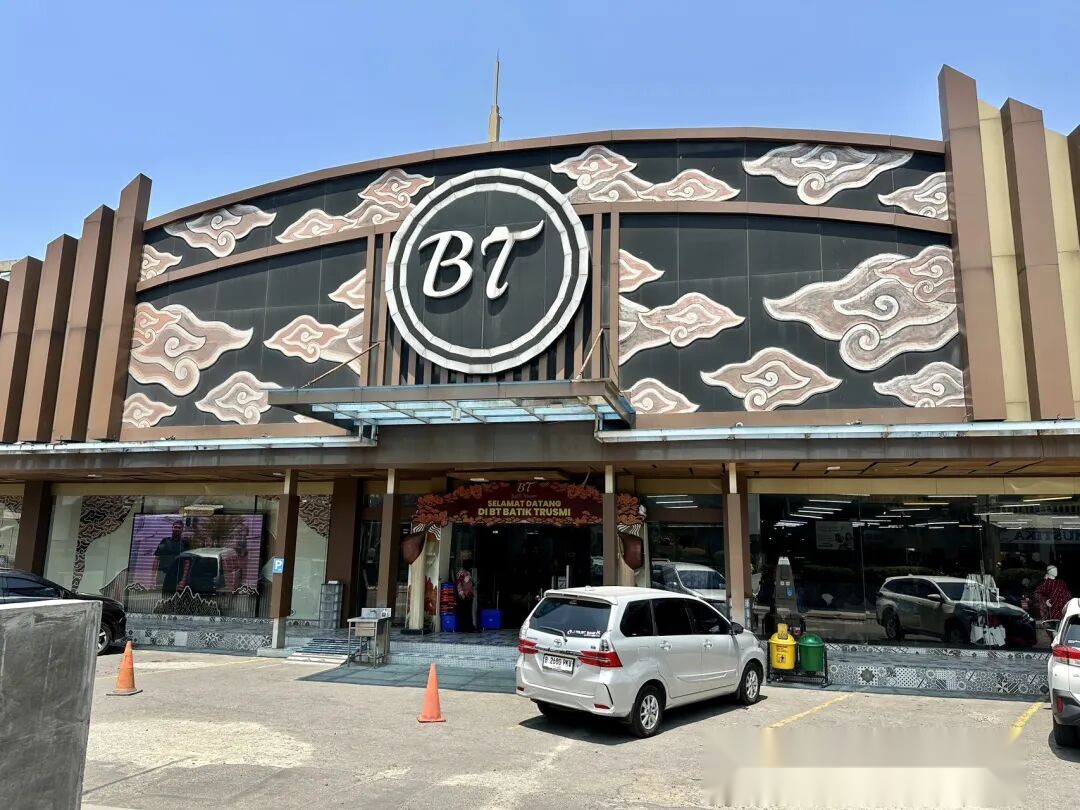
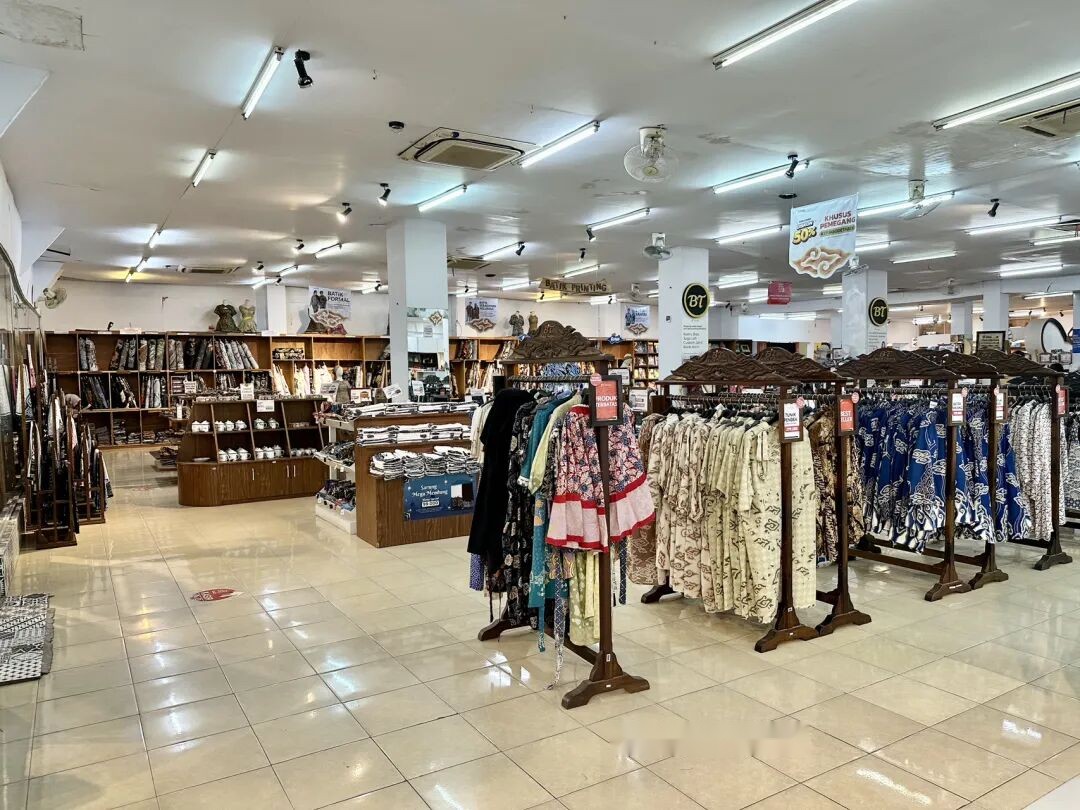
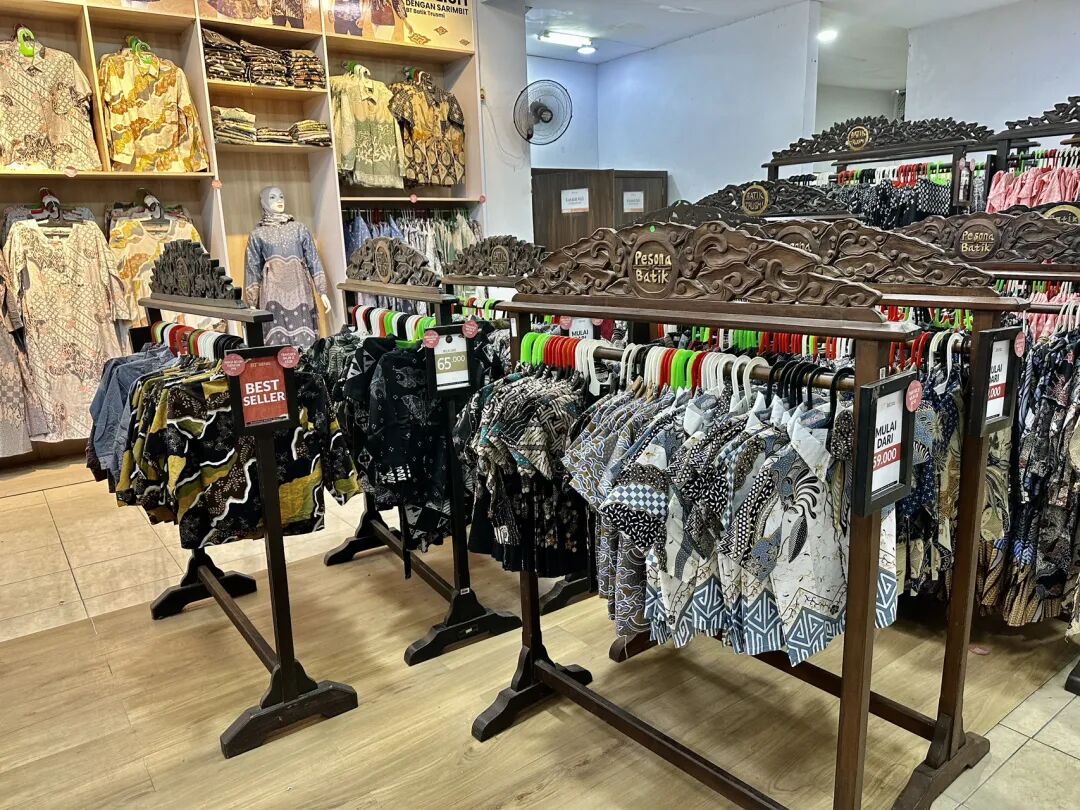
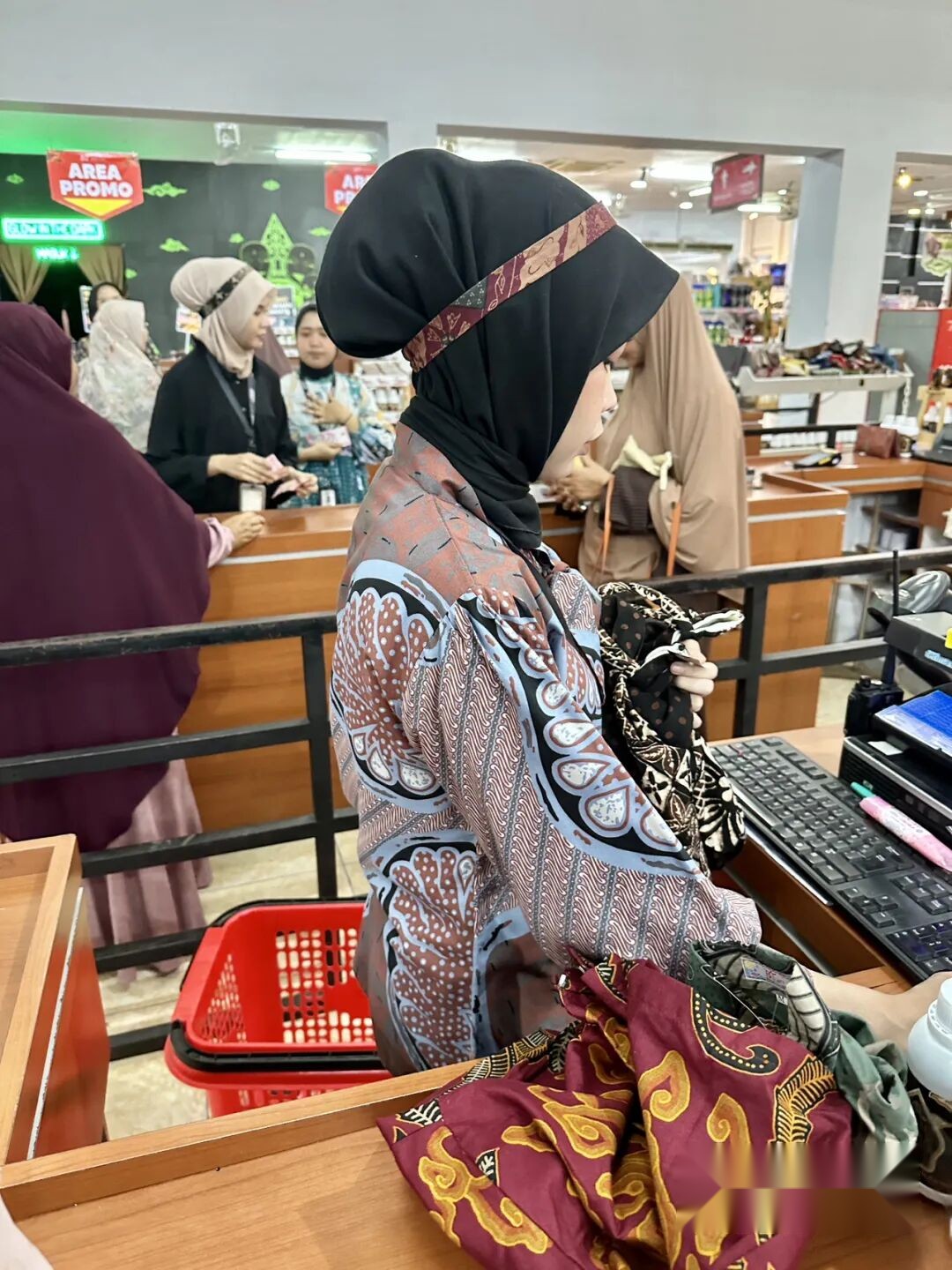
The main road through the village is lined with batik shops. The largest one is called BT, which is short for Batik Trusmi. It’s a one-stop-shop that feels just like a supermarket. If you're short on time and can't make it to the village, there’s also a smaller BT location right at the Cirebon train station.
On the east side of the Trusmi Batik street, you'll find the Kramat (shrine/mausoleum complex) of the village's ancestor, Buyut Trusmi. It is considered the second most important Sufi shrine in Cirebon, right after the tomb of Sunan Gunung Jati, one of the Walisongo.
According to local legends passed down through generations, the ancestor Buyut Trusmi was originally a local farmer. One day, while sitting in front of his hut admiring his newly cleared land, he suddenly heard a mysterious "Assalamu'alaikum" (Peace be upon you). Before the words had even faded, the brush and trees he had just cleared grew back instantly. Two figures then appeared to greet him—they were Prince Cakrabuana, the founder of the Cirebon Sultanate, and the saint Sunan Gunung Jati. Moved by this miracle, he converted to Islam and took the name Trusmi, which translates to "instantly sprouting."
Legend says Buyut Trusmi arrived here in 1470, built the Kramat in 1481, and passed away in 1559. It is said that Sunan Gunung Jati once gave him an old piece of batik fabric to replicate, and the finished result was identical to the original. After that, Buyut Trusmi taught batik skills while spreading his faith, which is how his village became such a famous center for batik.
The entire Kramat complex is divided into two sections. The southern part symbolizes the "present world" and includes the main hall, the Pekulahan (ritual washing pool), the Witana (spiritual pavilion), the Bale Gede (council hall), and the Omah Gedhe (elder's house). The northern part symbolizes the "hereafter," consisting of the Gedongan (tomb chamber), the Lawang Kepundung (low door), the Watu Padadaran (17 stones representing the 17 units of the five daily prayers), the Paseban (sitting area), and the caretaker's quarters.
The Trusmi Kramat is managed by 17 caretakers, representing the 17 units of the five daily prayers, including one Sep (chief key-holder). The current chief key-holder is a 15th-generation descendant of Prince Cakrabuana, and the 10th chief key-holder, Ki Thalhah, was a famous Murshid (spiritual guide) of the Qadiriyya and Naqshbandiyya Sufi orders in West Java.
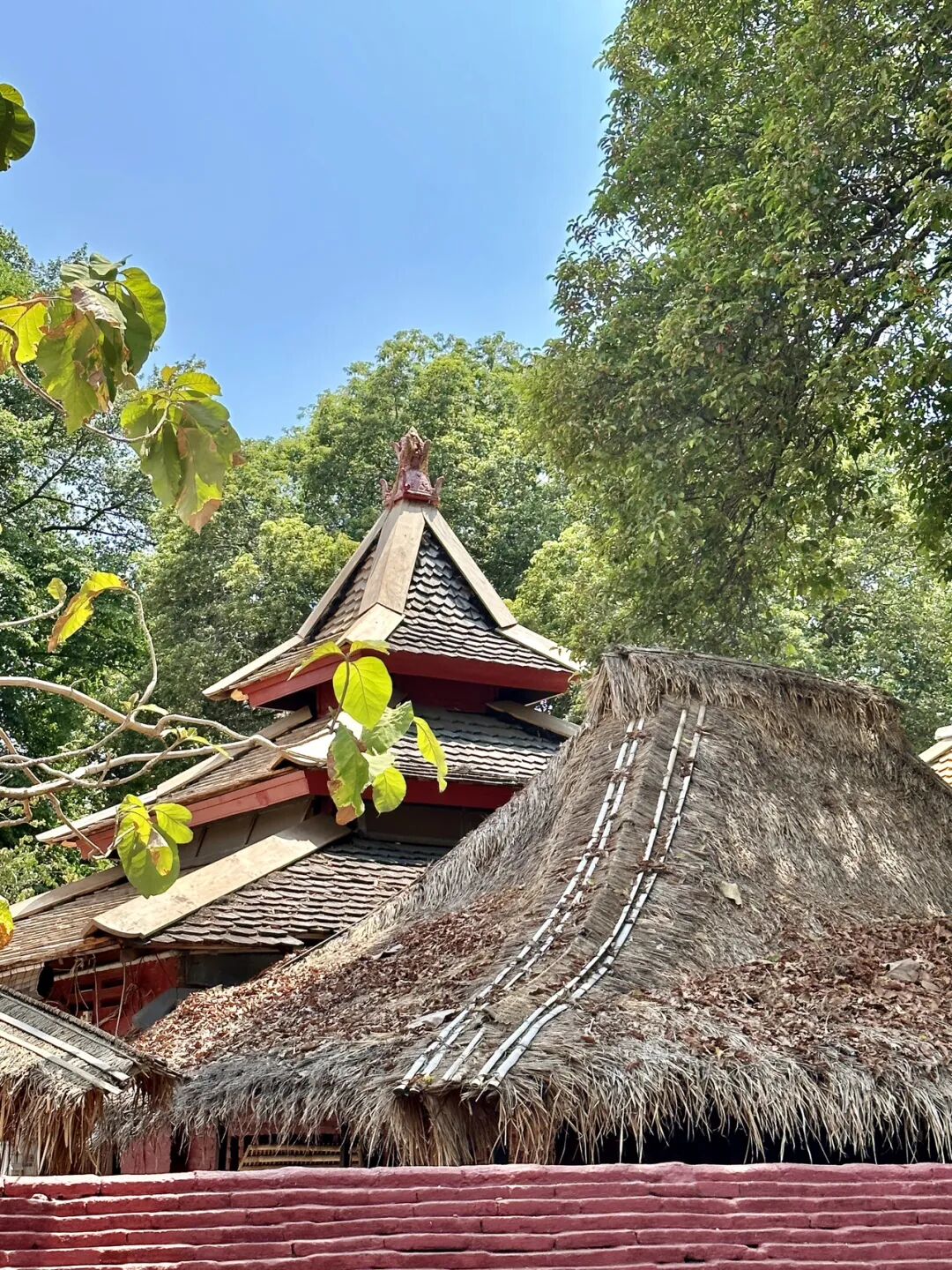
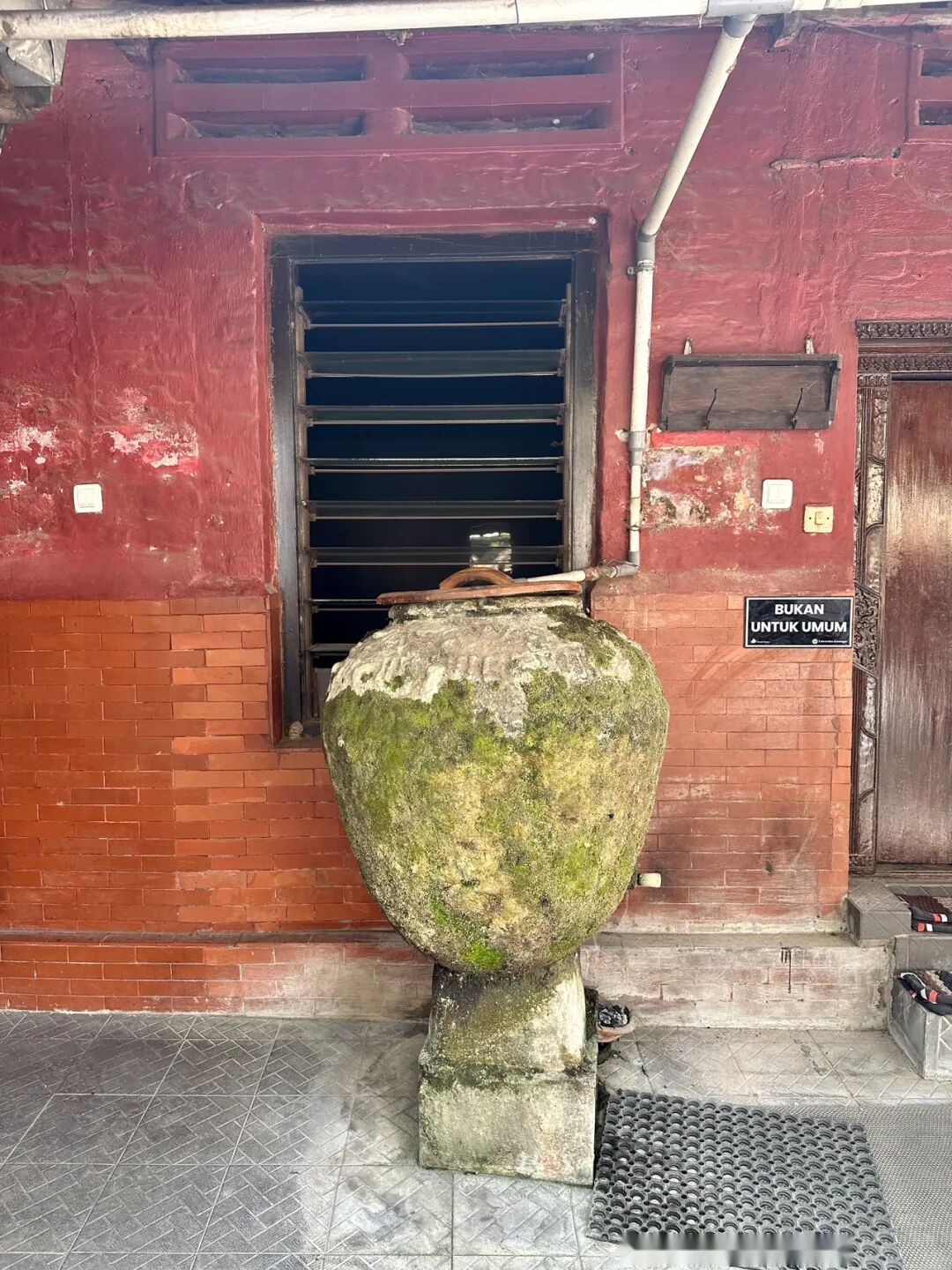
The complex features traditional Javanese architecture, including red brick walls, three-tiered Limas (stepped pyramid) wooden roofs, Memolo (tower finials), Padasan (water urns for ablution), the Kori Agung (main gate), and Candi Bentar (split-gate) side entrances. All the caretakers wear traditional Javanese batik clothing. The site also preserves a traditional thatched roof, and the ceremony to replace it every four years is a massive event.
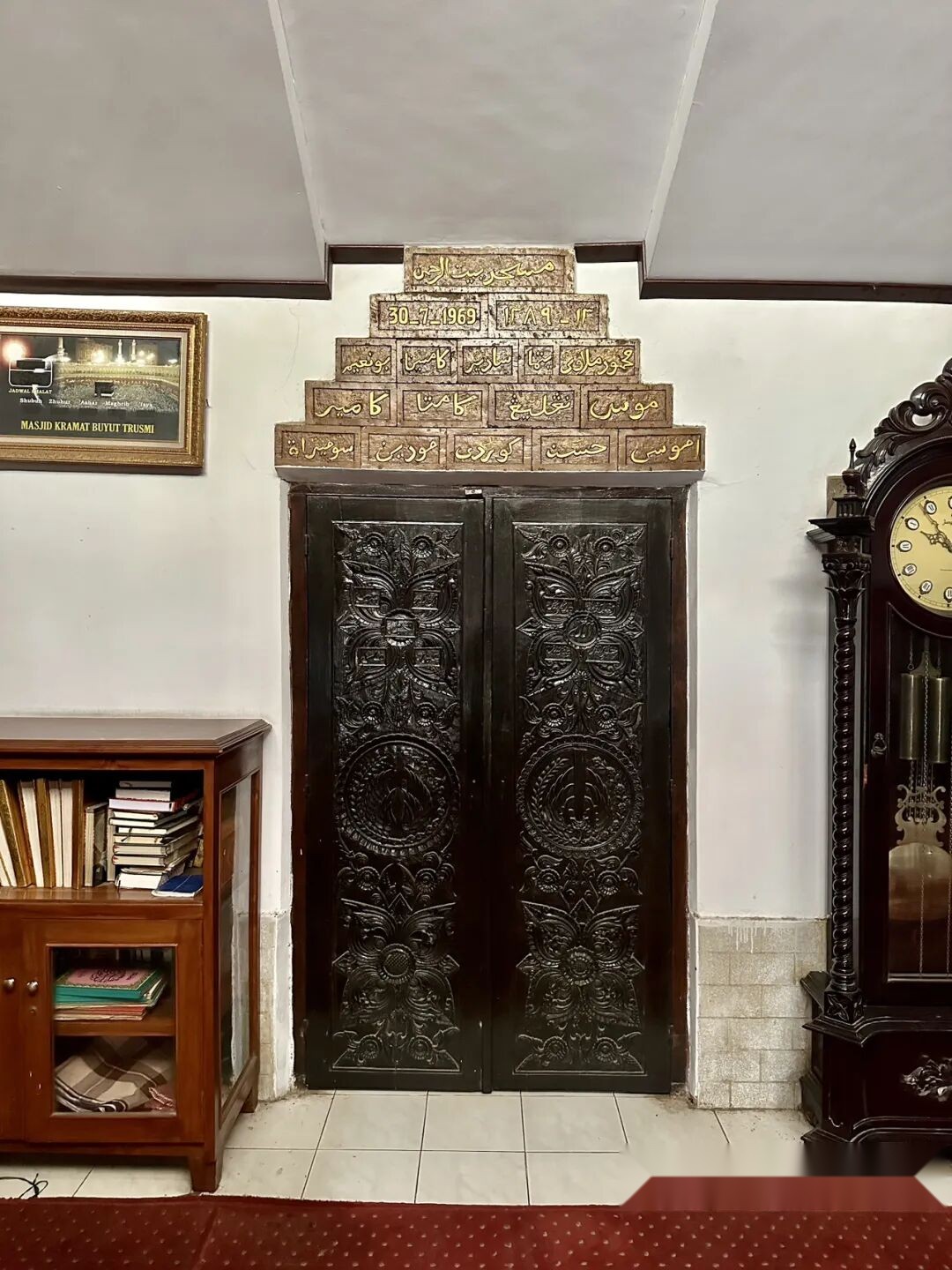
The main gate is carved with the Sawat (Garuda bird wings motif).
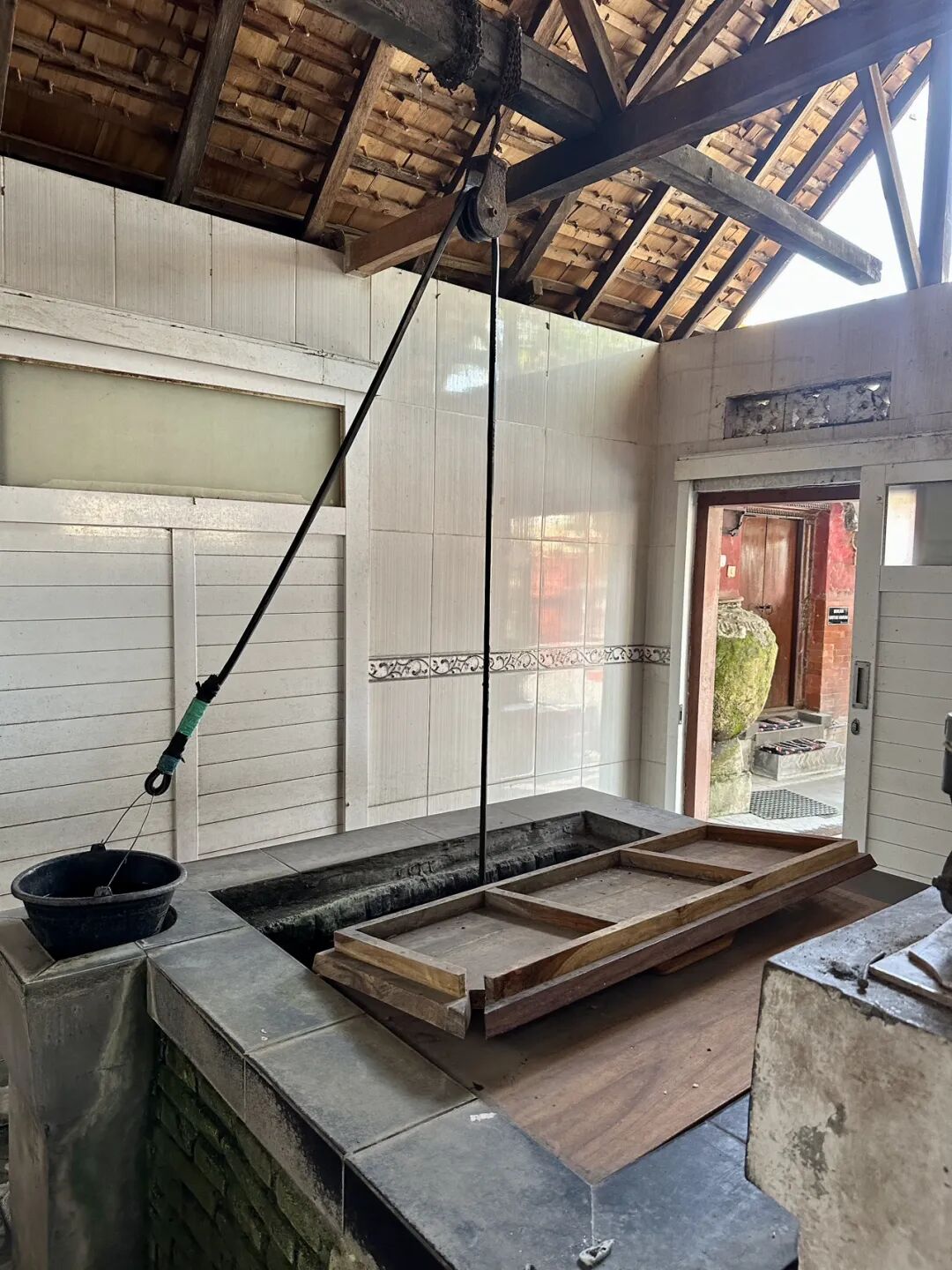
A 6-meter deep pond.
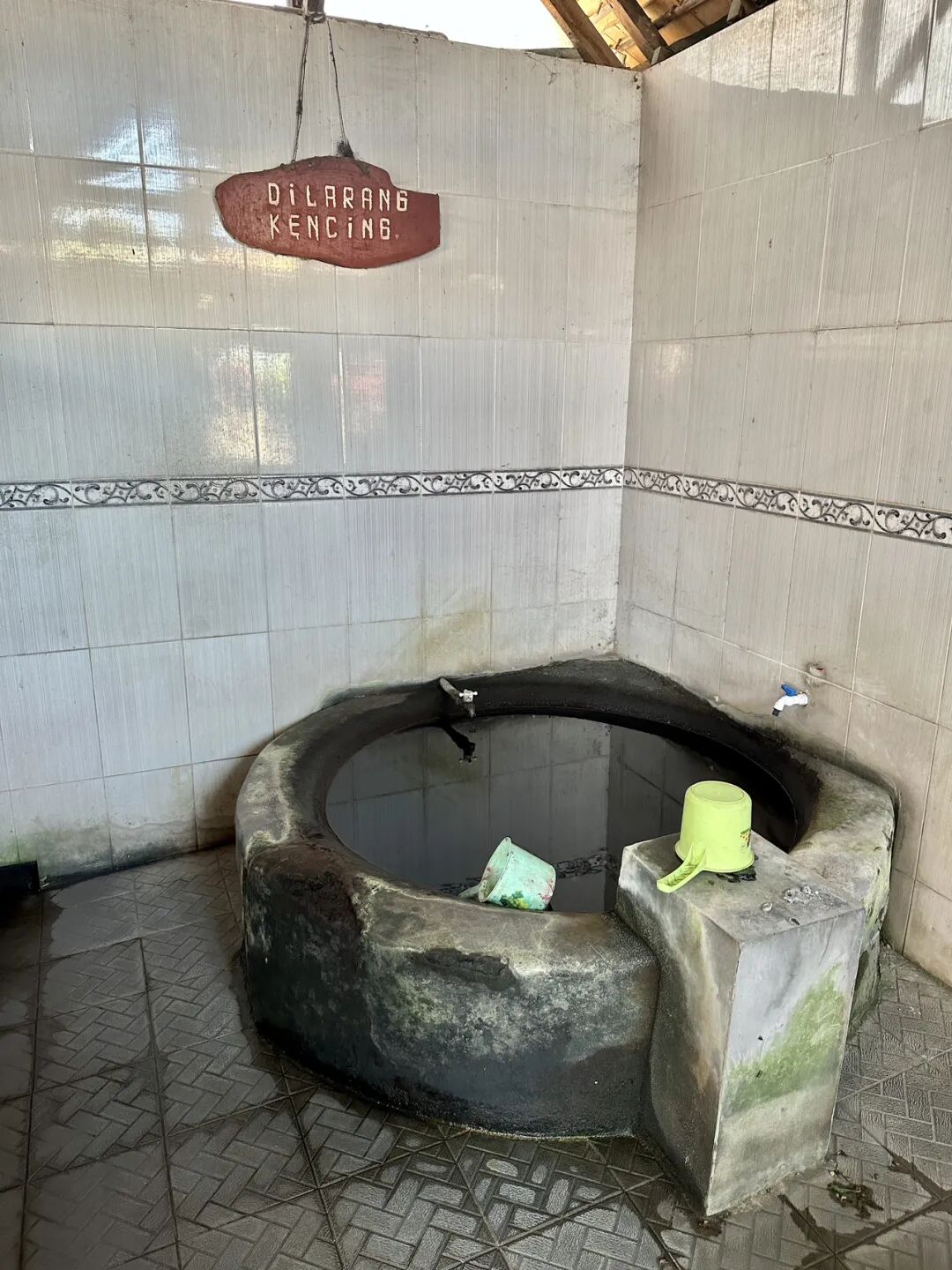
The "holy spring" of the shrine, which is said to have been in use since the time of Buyut Trusmi. view all
[Internet Repost]
Come explore the historic city of Cirebon in West Java, Indonesia, specifically the Trusmi Batik village, where we'll decode iconic patterns like the Mega Mendung (cloud motif) and lotus designs on traditional headwraps and batik shirts, while diving into the history of how local Javanese art blended with Indonesian Sufi traditions.
I picked up some traditional Javanese batik clothing for Suleyman in the Trusmi Batik village of Cirebon. It includes an Iket Kepala (traditional Cirebon headwrap) and a Batik Kemeja (long-sleeved batik shirt).
The red garment features the Mega Mendung cloud motif, which is Cirebon’s most iconic pattern, symbolizing wisdom, protection, abundance, and peace. The hem is accented with the Bunga Teratai (lotus flower), a symbol of purity and good fortune.
The dark green garment features the Sawat (Garuda bird wings motif) as its main design, which stems from ancient Javanese mythology and symbolizes strength and protection.
The Iket is a traditional soft cloth headwrap for men from Cirebon, which is quite different from the structured Blangkon headpieces worn in Yogyakarta. This one also features the Mega Mendung cloud design, with the ends draped naturally.
Trusmi Batik village was founded by Ki Gede Trusmi, a famous Javanese Sufi saint who was a disciple of Sunan Gunung Jati, one of the Walisongo (the nine saints who spread Islam in Java). He was well-known for teaching batik craftsmanship to villagers alongside his religious teachings, eventually turning Trusmi into the most famous batik village in Indonesia.
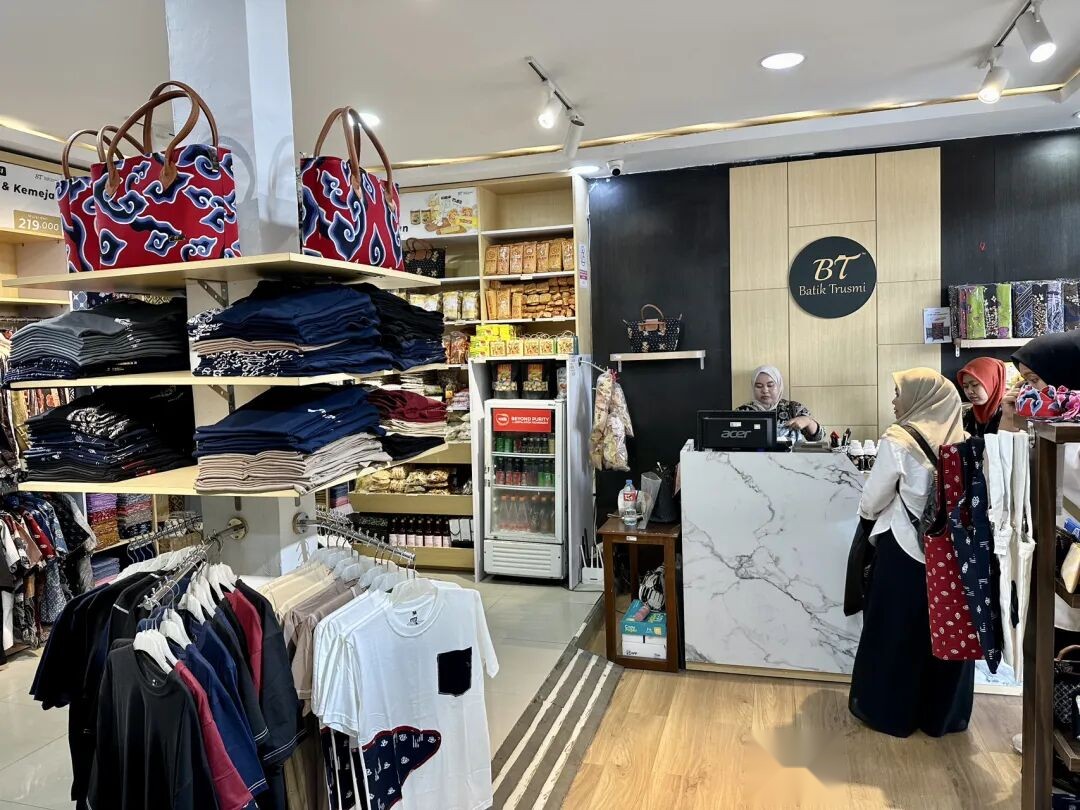
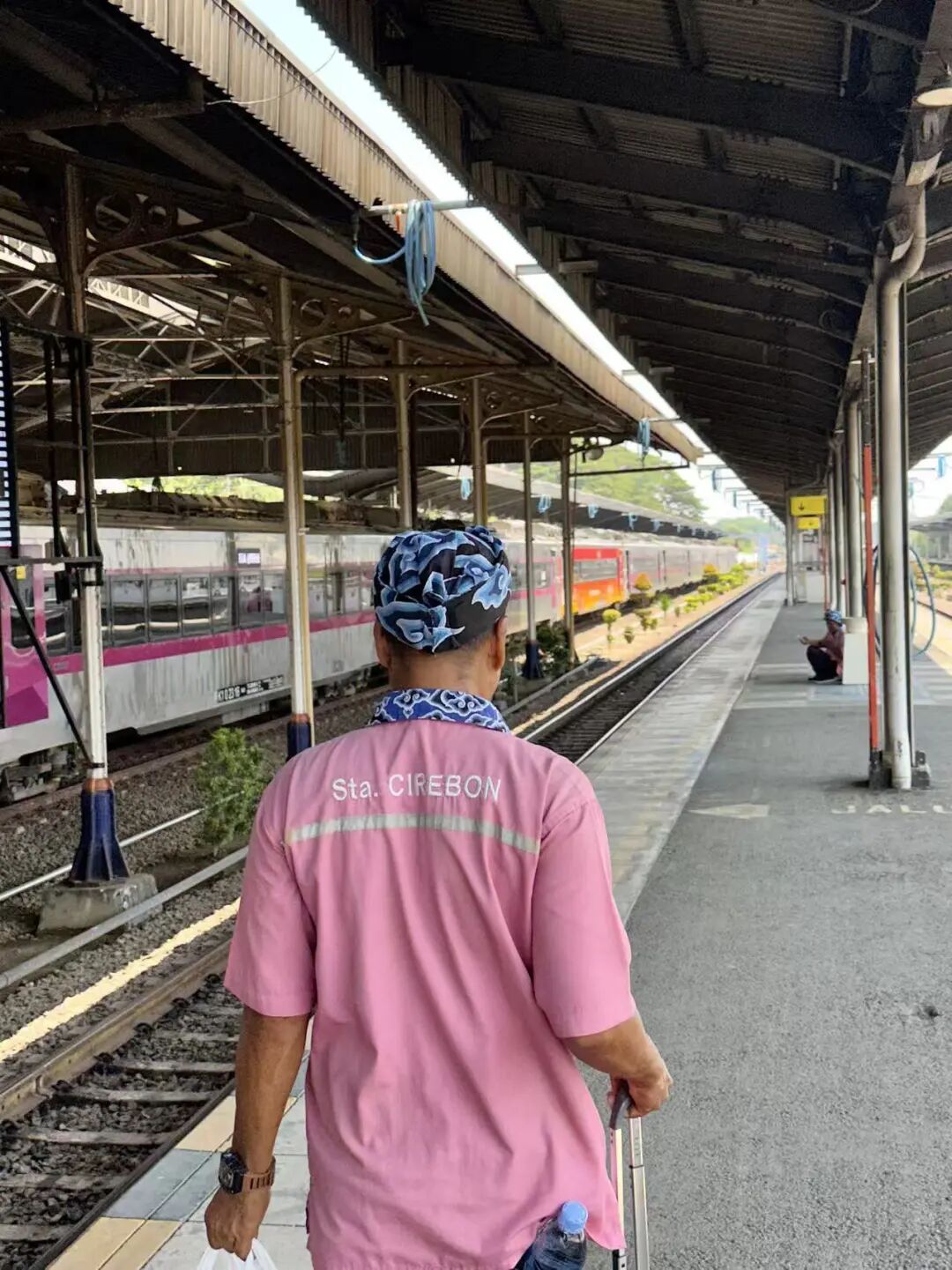
The main road through the village is lined with batik shops. The largest one is called BT, which is short for Batik Trusmi. It’s a one-stop-shop that feels just like a supermarket. If you're short on time and can't make it to the village, there’s also a smaller BT location right at the Cirebon train station.
On the east side of the Trusmi Batik street, you'll find the Kramat (shrine/mausoleum complex) of the village's ancestor, Buyut Trusmi. It is considered the second most important Sufi shrine in Cirebon, right after the tomb of Sunan Gunung Jati, one of the Walisongo.
According to local legends passed down through generations, the ancestor Buyut Trusmi was originally a local farmer. One day, while sitting in front of his hut admiring his newly cleared land, he suddenly heard a mysterious "Assalamu'alaikum" (Peace be upon you). Before the words had even faded, the brush and trees he had just cleared grew back instantly. Two figures then appeared to greet him—they were Prince Cakrabuana, the founder of the Cirebon Sultanate, and the saint Sunan Gunung Jati. Moved by this miracle, he converted to Islam and took the name Trusmi, which translates to "instantly sprouting."
Legend says Buyut Trusmi arrived here in 1470, built the Kramat in 1481, and passed away in 1559. It is said that Sunan Gunung Jati once gave him an old piece of batik fabric to replicate, and the finished result was identical to the original. After that, Buyut Trusmi taught batik skills while spreading his faith, which is how his village became such a famous center for batik.
The entire Kramat complex is divided into two sections. The southern part symbolizes the "present world" and includes the main hall, the Pekulahan (ritual washing pool), the Witana (spiritual pavilion), the Bale Gede (council hall), and the Omah Gedhe (elder's house). The northern part symbolizes the "hereafter," consisting of the Gedongan (tomb chamber), the Lawang Kepundung (low door), the Watu Padadaran (17 stones representing the 17 units of the five daily prayers), the Paseban (sitting area), and the caretaker's quarters.
The Trusmi Kramat is managed by 17 caretakers, representing the 17 units of the five daily prayers, including one Sep (chief key-holder). The current chief key-holder is a 15th-generation descendant of Prince Cakrabuana, and the 10th chief key-holder, Ki Thalhah, was a famous Murshid (spiritual guide) of the Qadiriyya and Naqshbandiyya Sufi orders in West Java.
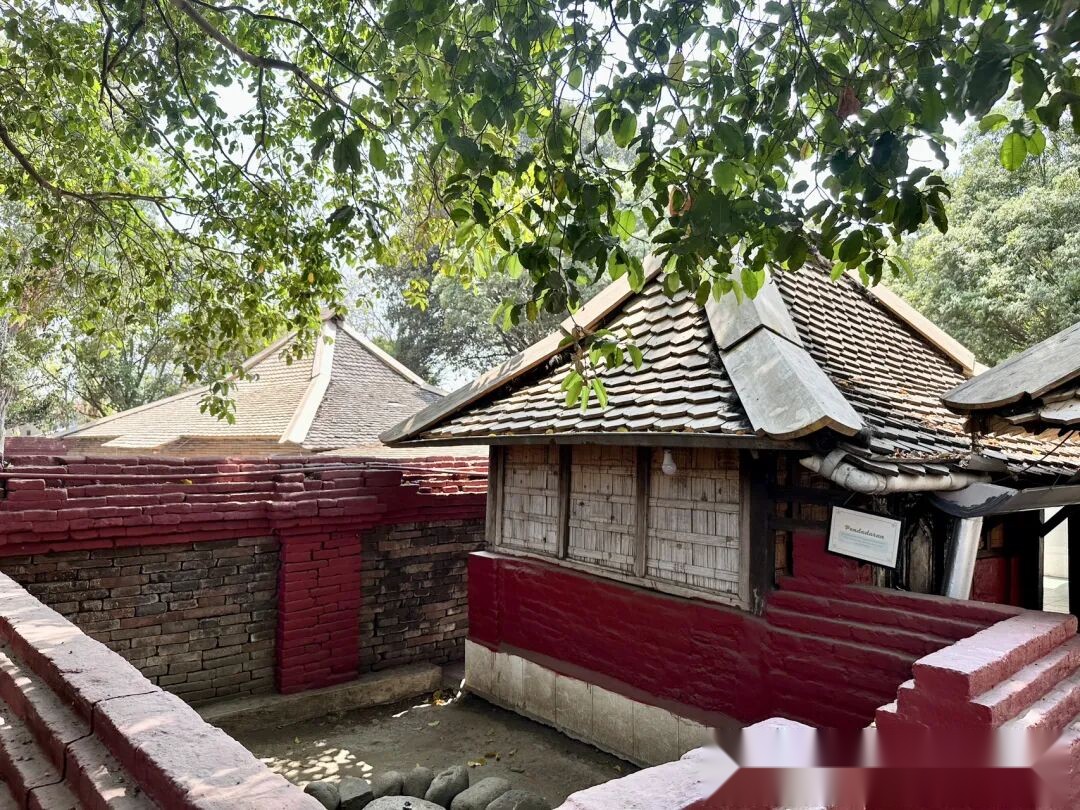
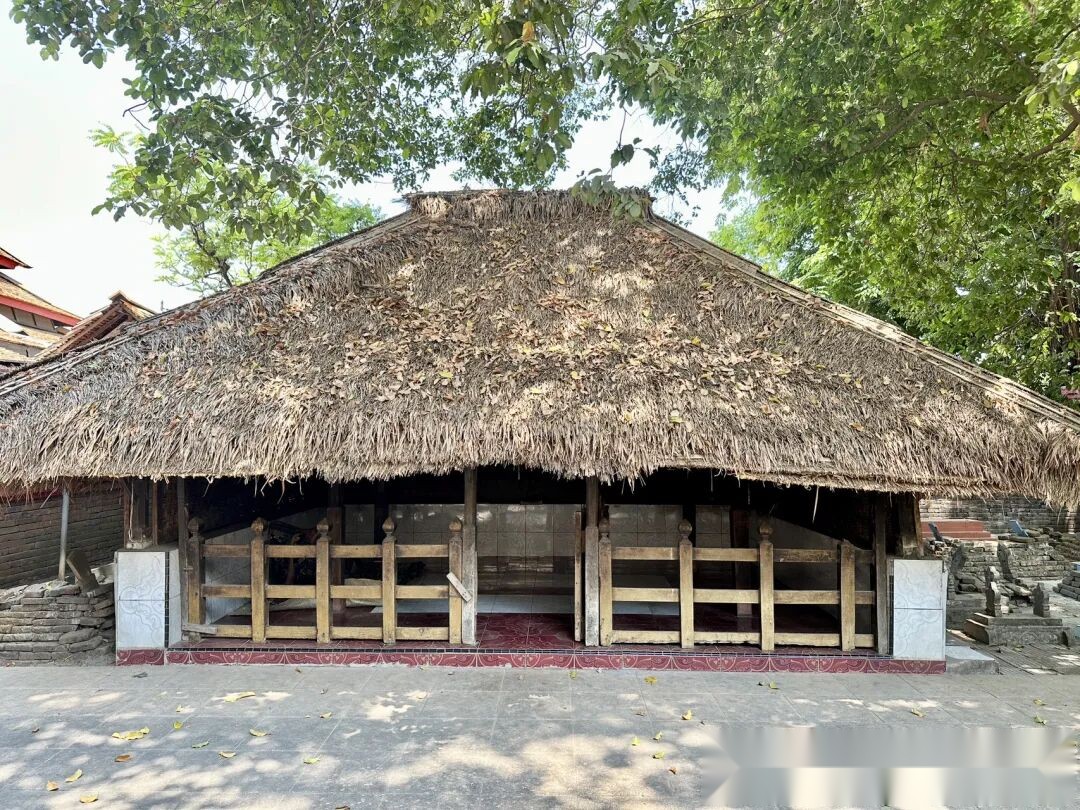
The complex features traditional Javanese architecture, including red brick walls, three-tiered Limas (stepped pyramid) wooden roofs, Memolo (tower finials), Padasan (water urns for ablution), the Kori Agung (main gate), and Candi Bentar (split-gate) side entrances. All the caretakers wear traditional Javanese batik clothing. The site also preserves a traditional thatched roof, and the ceremony to replace it every four years is a massive event.



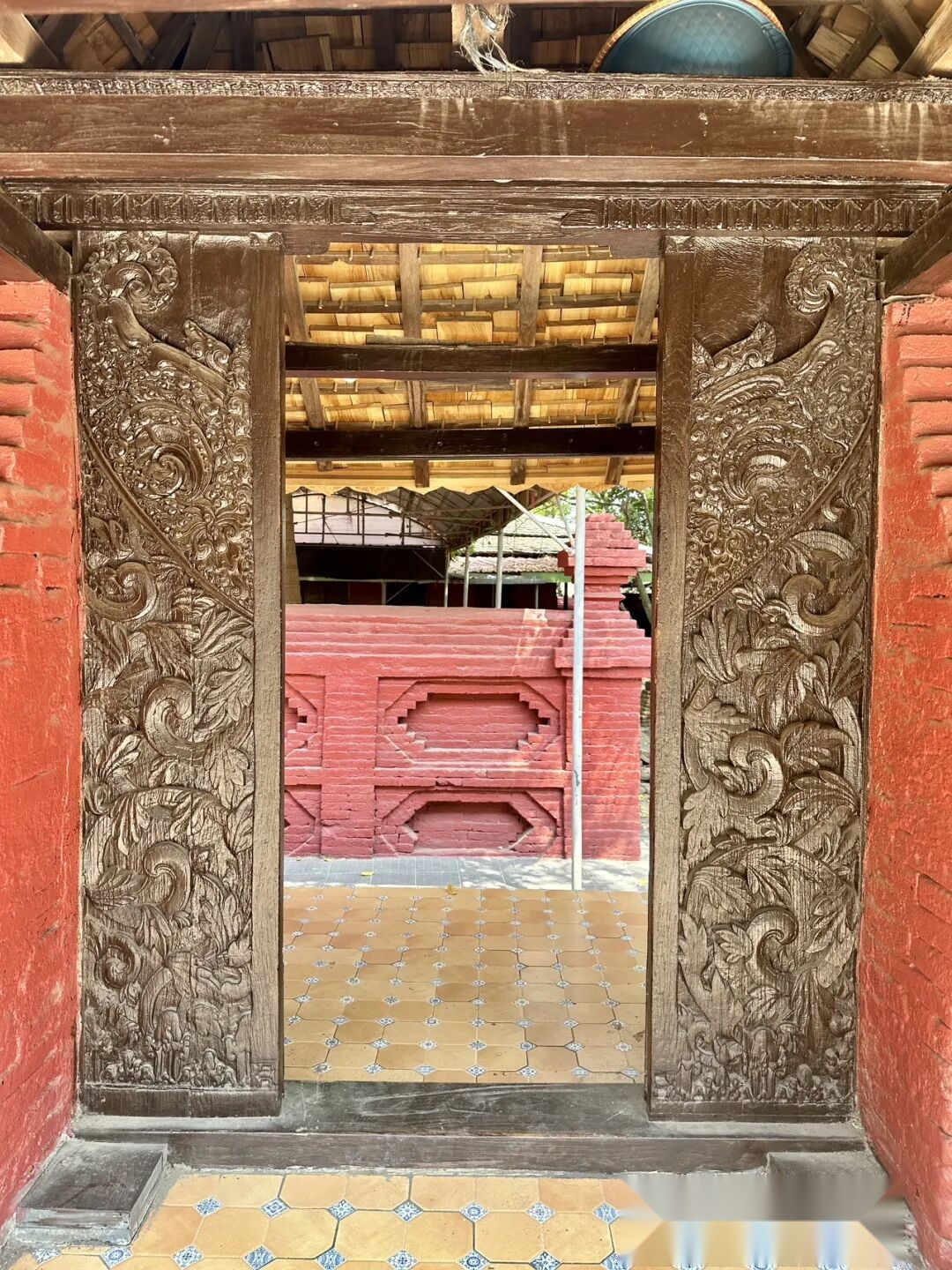
The main gate is carved with the Sawat (Garuda bird wings motif).
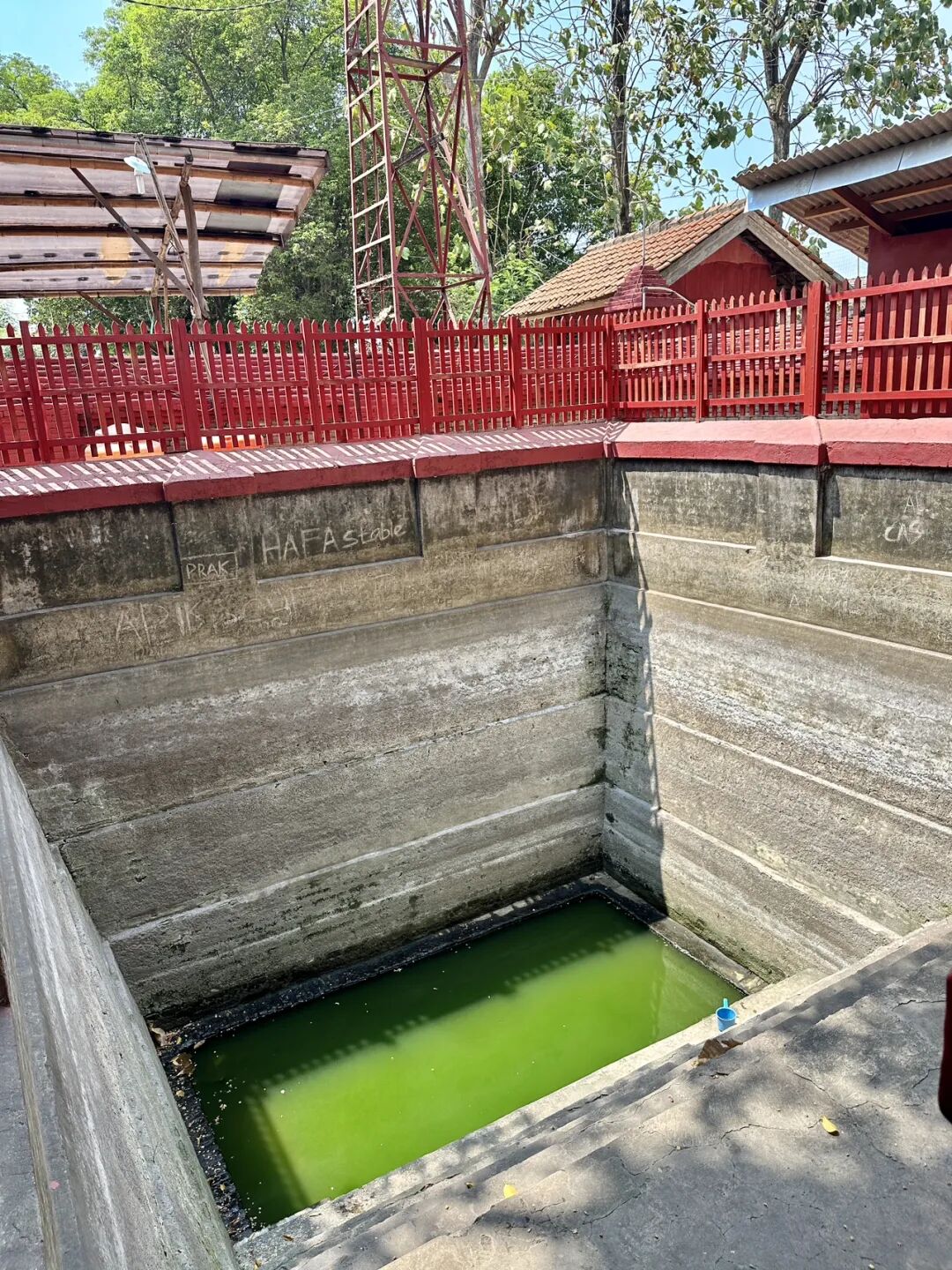
A 6-meter deep pond.
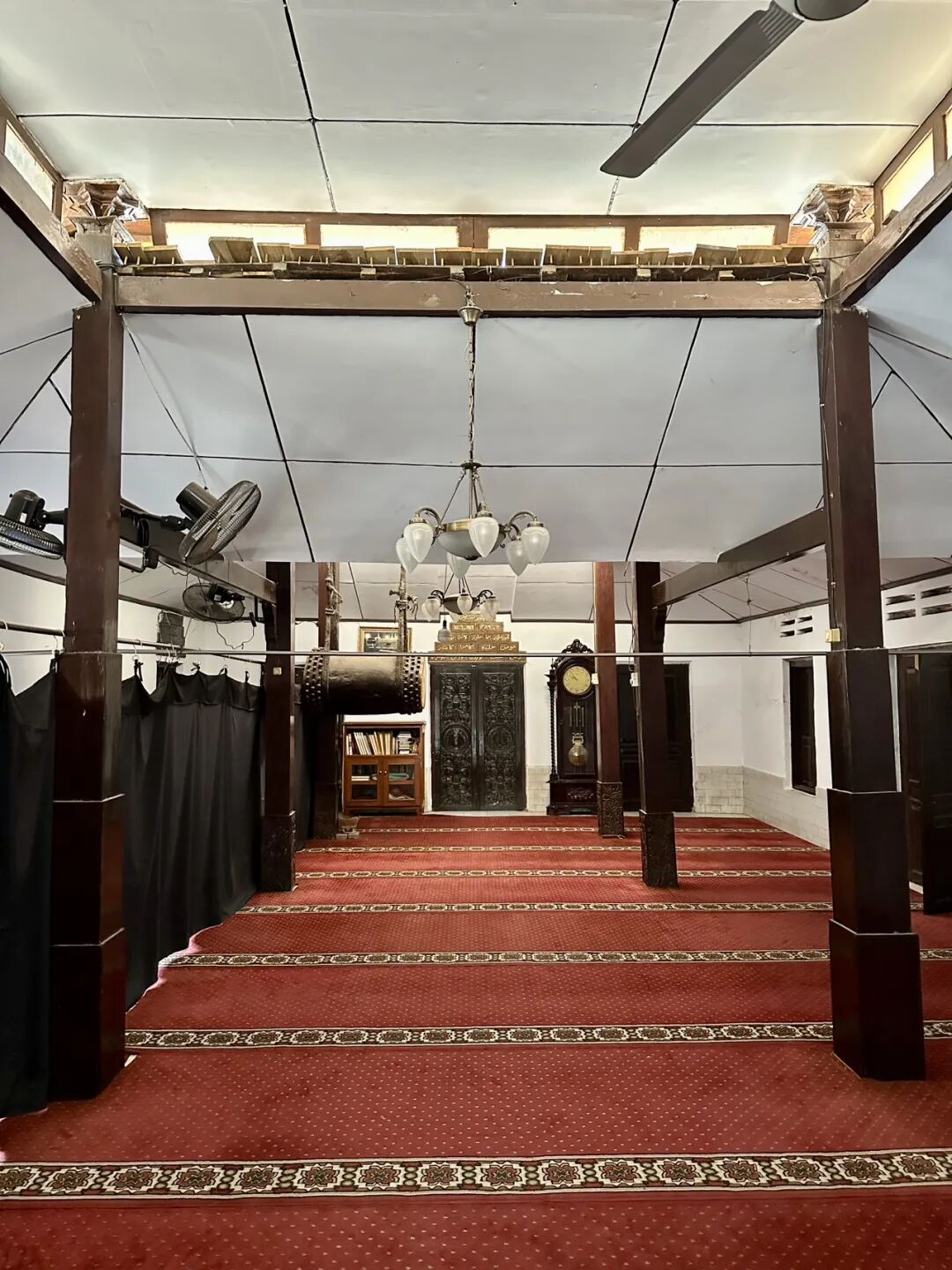
The "holy spring" of the shrine, which is said to have been in use since the time of Buyut Trusmi.
Come explore the historic city of Cirebon in West Java, Indonesia, specifically the Trusmi Batik village, where we'll decode iconic patterns like the Mega Mendung (cloud motif) and lotus designs on traditional headwraps and batik shirts, while diving into the history of how local Javanese art blended with Indonesian Sufi traditions.
I picked up some traditional Javanese batik clothing for Suleyman in the Trusmi Batik village of Cirebon. It includes an Iket Kepala (traditional Cirebon headwrap) and a Batik Kemeja (long-sleeved batik shirt).
The red garment features the Mega Mendung cloud motif, which is Cirebon’s most iconic pattern, symbolizing wisdom, protection, abundance, and peace. The hem is accented with the Bunga Teratai (lotus flower), a symbol of purity and good fortune.
The dark green garment features the Sawat (Garuda bird wings motif) as its main design, which stems from ancient Javanese mythology and symbolizes strength and protection.
The Iket is a traditional soft cloth headwrap for men from Cirebon, which is quite different from the structured Blangkon headpieces worn in Yogyakarta. This one also features the Mega Mendung cloud design, with the ends draped naturally.
Trusmi Batik village was founded by Ki Gede Trusmi, a famous Javanese Sufi saint who was a disciple of Sunan Gunung Jati, one of the Walisongo (the nine saints who spread Islam in Java). He was well-known for teaching batik craftsmanship to villagers alongside his religious teachings, eventually turning Trusmi into the most famous batik village in Indonesia.
The main road through the village is lined with batik shops. The largest one is called BT, which is short for Batik Trusmi. It’s a one-stop-shop that feels just like a supermarket. If you're short on time and can't make it to the village, there’s also a smaller BT location right at the Cirebon train station.
On the east side of the Trusmi Batik street, you'll find the Kramat (shrine/mausoleum complex) of the village's ancestor, Buyut Trusmi. It is considered the second most important Sufi shrine in Cirebon, right after the tomb of Sunan Gunung Jati, one of the Walisongo.
According to local legends passed down through generations, the ancestor Buyut Trusmi was originally a local farmer. One day, while sitting in front of his hut admiring his newly cleared land, he suddenly heard a mysterious "Assalamu'alaikum" (Peace be upon you). Before the words had even faded, the brush and trees he had just cleared grew back instantly. Two figures then appeared to greet him—they were Prince Cakrabuana, the founder of the Cirebon Sultanate, and the saint Sunan Gunung Jati. Moved by this miracle, he converted to Islam and took the name Trusmi, which translates to "instantly sprouting."
Legend says Buyut Trusmi arrived here in 1470, built the Kramat in 1481, and passed away in 1559. It is said that Sunan Gunung Jati once gave him an old piece of batik fabric to replicate, and the finished result was identical to the original. After that, Buyut Trusmi taught batik skills while spreading his faith, which is how his village became such a famous center for batik.
The entire Kramat complex is divided into two sections. The southern part symbolizes the "present world" and includes the main hall, the Pekulahan (ritual washing pool), the Witana (spiritual pavilion), the Bale Gede (council hall), and the Omah Gedhe (elder's house). The northern part symbolizes the "hereafter," consisting of the Gedongan (tomb chamber), the Lawang Kepundung (low door), the Watu Padadaran (17 stones representing the 17 units of the five daily prayers), the Paseban (sitting area), and the caretaker's quarters.
The Trusmi Kramat is managed by 17 caretakers, representing the 17 units of the five daily prayers, including one Sep (chief key-holder). The current chief key-holder is a 15th-generation descendant of Prince Cakrabuana, and the 10th chief key-holder, Ki Thalhah, was a famous Murshid (spiritual guide) of the Qadiriyya and Naqshbandiyya Sufi orders in West Java.
The complex features traditional Javanese architecture, including red brick walls, three-tiered Limas (stepped pyramid) wooden roofs, Memolo (tower finials), Padasan (water urns for ablution), the Kori Agung (main gate), and Candi Bentar (split-gate) side entrances. All the caretakers wear traditional Javanese batik clothing. The site also preserves a traditional thatched roof, and the ceremony to replace it every four years is a massive event.
The main gate is carved with the Sawat (Garuda bird wings motif).
A 6-meter deep pond.
The "holy spring" of the shrine, which is said to have been in use since the time of Buyut Trusmi.
Indonesian Batik Culture in Cirebon: Traditional Mega Mendung Designs and Sufi Heritage at Trusmi Village
Articles • Hasan09 posted the article • 0 comments • 57 views • 2026-10-30 00:31
[Internet Repost]
Come explore the historic city of Cirebon in West Java, Indonesia, specifically the Trusmi Batik village, where we'll decode iconic patterns like the Mega Mendung (cloud motif) and lotus designs on traditional headwraps and batik shirts, while diving into the history of how local Javanese art blended with Indonesian Sufi traditions.
I picked up some traditional Javanese batik clothing for Suleyman in the Trusmi Batik village of Cirebon. It includes an Iket Kepala (traditional Cirebon headwrap) and a Batik Kemeja (long-sleeved batik shirt).
The red garment features the Mega Mendung cloud motif, which is Cirebon’s most iconic pattern, symbolizing wisdom, protection, abundance, and peace. The hem is accented with the Bunga Teratai (lotus flower), a symbol of purity and good fortune.
The dark green garment features the Sawat (Garuda bird wings motif) as its main design, which stems from ancient Javanese mythology and symbolizes strength and protection.
The Iket is a traditional soft cloth headwrap for men from Cirebon, which is quite different from the structured Blangkon headpieces worn in Yogyakarta. This one also features the Mega Mendung cloud design, with the ends draped naturally.
Trusmi Batik village was founded by Ki Gede Trusmi, a famous Javanese Sufi saint who was a disciple of Sunan Gunung Jati, one of the Walisongo (the nine saints who spread Islam in Java). He was well-known for teaching batik craftsmanship to villagers alongside his religious teachings, eventually turning Trusmi into the most famous batik village in Indonesia.
The main road through the village is lined with batik shops. The largest one is called BT, which is short for Batik Trusmi. It’s a one-stop-shop that feels just like a supermarket. If you're short on time and can't make it to the village, there’s also a smaller BT location right at the Cirebon train station.
On the east side of the Trusmi Batik street, you'll find the Kramat (shrine/mausoleum complex) of the village's ancestor, Buyut Trusmi. It is considered the second most important Sufi shrine in Cirebon, right after the tomb of Sunan Gunung Jati, one of the Walisongo.
According to local legends passed down through generations, the ancestor Buyut Trusmi was originally a local farmer. One day, while sitting in front of his hut admiring his newly cleared land, he suddenly heard a mysterious "Assalamu'alaikum" (Peace be upon you). Before the words had even faded, the brush and trees he had just cleared grew back instantly. Two figures then appeared to greet him—they were Prince Cakrabuana, the founder of the Cirebon Sultanate, and the saint Sunan Gunung Jati. Moved by this miracle, he converted to Islam and took the name Trusmi, which translates to "instantly sprouting."
Legend says Buyut Trusmi arrived here in 1470, built the Kramat in 1481, and passed away in 1559. It is said that Sunan Gunung Jati once gave him an old piece of batik fabric to replicate, and the finished result was identical to the original. After that, Buyut Trusmi taught batik skills while spreading his faith, which is how his village became such a famous center for batik.
The entire Kramat complex is divided into two sections. The southern part symbolizes the "present world" and includes the main hall, the Pekulahan (ritual washing pool), the Witana (spiritual pavilion), the Bale Gede (council hall), and the Omah Gedhe (elder's house). The northern part symbolizes the "hereafter," consisting of the Gedongan (tomb chamber), the Lawang Kepundung (low door), the Watu Padadaran (17 stones representing the 17 units of the five daily prayers), the Paseban (sitting area), and the caretaker's quarters.
The Trusmi Kramat is managed by 17 caretakers, representing the 17 units of the five daily prayers, including one Sep (chief key-holder). The current chief key-holder is a 15th-generation descendant of Prince Cakrabuana, and the 10th chief key-holder, Ki Thalhah, was a famous Murshid (spiritual guide) of the Qadiriyya and Naqshbandiyya Sufi orders in West Java.
The complex features traditional Javanese architecture, including red brick walls, three-tiered Limas (stepped pyramid) wooden roofs, Memolo (tower finials), Padasan (water urns for ablution), the Kori Agung (main gate), and Candi Bentar (split-gate) side entrances. All the caretakers wear traditional Javanese batik clothing. The site also preserves a traditional thatched roof, and the ceremony to replace it every four years is a massive event.
The main gate is carved with the Sawat (Garuda bird wings motif).
A 6-meter deep pond.
The "holy spring" of the shrine, which is said to have been in use since the time of Buyut Trusmi. view all
Come explore the historic city of Cirebon in West Java, Indonesia, specifically the Trusmi Batik village, where we'll decode iconic patterns like the Mega Mendung (cloud motif) and lotus designs on traditional headwraps and batik shirts, while diving into the history of how local Javanese art blended with Indonesian Sufi traditions.
I picked up some traditional Javanese batik clothing for Suleyman in the Trusmi Batik village of Cirebon. It includes an Iket Kepala (traditional Cirebon headwrap) and a Batik Kemeja (long-sleeved batik shirt).
The red garment features the Mega Mendung cloud motif, which is Cirebon’s most iconic pattern, symbolizing wisdom, protection, abundance, and peace. The hem is accented with the Bunga Teratai (lotus flower), a symbol of purity and good fortune.
The dark green garment features the Sawat (Garuda bird wings motif) as its main design, which stems from ancient Javanese mythology and symbolizes strength and protection.
The Iket is a traditional soft cloth headwrap for men from Cirebon, which is quite different from the structured Blangkon headpieces worn in Yogyakarta. This one also features the Mega Mendung cloud design, with the ends draped naturally.
Trusmi Batik village was founded by Ki Gede Trusmi, a famous Javanese Sufi saint who was a disciple of Sunan Gunung Jati, one of the Walisongo (the nine saints who spread Islam in Java). He was well-known for teaching batik craftsmanship to villagers alongside his religious teachings, eventually turning Trusmi into the most famous batik village in Indonesia.
The main road through the village is lined with batik shops. The largest one is called BT, which is short for Batik Trusmi. It’s a one-stop-shop that feels just like a supermarket. If you're short on time and can't make it to the village, there’s also a smaller BT location right at the Cirebon train station.
On the east side of the Trusmi Batik street, you'll find the Kramat (shrine/mausoleum complex) of the village's ancestor, Buyut Trusmi. It is considered the second most important Sufi shrine in Cirebon, right after the tomb of Sunan Gunung Jati, one of the Walisongo.
According to local legends passed down through generations, the ancestor Buyut Trusmi was originally a local farmer. One day, while sitting in front of his hut admiring his newly cleared land, he suddenly heard a mysterious "Assalamu'alaikum" (Peace be upon you). Before the words had even faded, the brush and trees he had just cleared grew back instantly. Two figures then appeared to greet him—they were Prince Cakrabuana, the founder of the Cirebon Sultanate, and the saint Sunan Gunung Jati. Moved by this miracle, he converted to Islam and took the name Trusmi, which translates to "instantly sprouting."
Legend says Buyut Trusmi arrived here in 1470, built the Kramat in 1481, and passed away in 1559. It is said that Sunan Gunung Jati once gave him an old piece of batik fabric to replicate, and the finished result was identical to the original. After that, Buyut Trusmi taught batik skills while spreading his faith, which is how his village became such a famous center for batik.
The entire Kramat complex is divided into two sections. The southern part symbolizes the "present world" and includes the main hall, the Pekulahan (ritual washing pool), the Witana (spiritual pavilion), the Bale Gede (council hall), and the Omah Gedhe (elder's house). The northern part symbolizes the "hereafter," consisting of the Gedongan (tomb chamber), the Lawang Kepundung (low door), the Watu Padadaran (17 stones representing the 17 units of the five daily prayers), the Paseban (sitting area), and the caretaker's quarters.
The Trusmi Kramat is managed by 17 caretakers, representing the 17 units of the five daily prayers, including one Sep (chief key-holder). The current chief key-holder is a 15th-generation descendant of Prince Cakrabuana, and the 10th chief key-holder, Ki Thalhah, was a famous Murshid (spiritual guide) of the Qadiriyya and Naqshbandiyya Sufi orders in West Java.
The complex features traditional Javanese architecture, including red brick walls, three-tiered Limas (stepped pyramid) wooden roofs, Memolo (tower finials), Padasan (water urns for ablution), the Kori Agung (main gate), and Candi Bentar (split-gate) side entrances. All the caretakers wear traditional Javanese batik clothing. The site also preserves a traditional thatched roof, and the ceremony to replace it every four years is a massive event.
The main gate is carved with the Sawat (Garuda bird wings motif).
A 6-meter deep pond.
The "holy spring" of the shrine, which is said to have been in use since the time of Buyut Trusmi. view all
[Internet Repost]
Come explore the historic city of Cirebon in West Java, Indonesia, specifically the Trusmi Batik village, where we'll decode iconic patterns like the Mega Mendung (cloud motif) and lotus designs on traditional headwraps and batik shirts, while diving into the history of how local Javanese art blended with Indonesian Sufi traditions.
I picked up some traditional Javanese batik clothing for Suleyman in the Trusmi Batik village of Cirebon. It includes an Iket Kepala (traditional Cirebon headwrap) and a Batik Kemeja (long-sleeved batik shirt).
The red garment features the Mega Mendung cloud motif, which is Cirebon’s most iconic pattern, symbolizing wisdom, protection, abundance, and peace. The hem is accented with the Bunga Teratai (lotus flower), a symbol of purity and good fortune.
The dark green garment features the Sawat (Garuda bird wings motif) as its main design, which stems from ancient Javanese mythology and symbolizes strength and protection.
The Iket is a traditional soft cloth headwrap for men from Cirebon, which is quite different from the structured Blangkon headpieces worn in Yogyakarta. This one also features the Mega Mendung cloud design, with the ends draped naturally.
Trusmi Batik village was founded by Ki Gede Trusmi, a famous Javanese Sufi saint who was a disciple of Sunan Gunung Jati, one of the Walisongo (the nine saints who spread Islam in Java). He was well-known for teaching batik craftsmanship to villagers alongside his religious teachings, eventually turning Trusmi into the most famous batik village in Indonesia.
The main road through the village is lined with batik shops. The largest one is called BT, which is short for Batik Trusmi. It’s a one-stop-shop that feels just like a supermarket. If you're short on time and can't make it to the village, there’s also a smaller BT location right at the Cirebon train station.
On the east side of the Trusmi Batik street, you'll find the Kramat (shrine/mausoleum complex) of the village's ancestor, Buyut Trusmi. It is considered the second most important Sufi shrine in Cirebon, right after the tomb of Sunan Gunung Jati, one of the Walisongo.
According to local legends passed down through generations, the ancestor Buyut Trusmi was originally a local farmer. One day, while sitting in front of his hut admiring his newly cleared land, he suddenly heard a mysterious "Assalamu'alaikum" (Peace be upon you). Before the words had even faded, the brush and trees he had just cleared grew back instantly. Two figures then appeared to greet him—they were Prince Cakrabuana, the founder of the Cirebon Sultanate, and the saint Sunan Gunung Jati. Moved by this miracle, he converted to Islam and took the name Trusmi, which translates to "instantly sprouting."
Legend says Buyut Trusmi arrived here in 1470, built the Kramat in 1481, and passed away in 1559. It is said that Sunan Gunung Jati once gave him an old piece of batik fabric to replicate, and the finished result was identical to the original. After that, Buyut Trusmi taught batik skills while spreading his faith, which is how his village became such a famous center for batik.
The entire Kramat complex is divided into two sections. The southern part symbolizes the "present world" and includes the main hall, the Pekulahan (ritual washing pool), the Witana (spiritual pavilion), the Bale Gede (council hall), and the Omah Gedhe (elder's house). The northern part symbolizes the "hereafter," consisting of the Gedongan (tomb chamber), the Lawang Kepundung (low door), the Watu Padadaran (17 stones representing the 17 units of the five daily prayers), the Paseban (sitting area), and the caretaker's quarters.
The Trusmi Kramat is managed by 17 caretakers, representing the 17 units of the five daily prayers, including one Sep (chief key-holder). The current chief key-holder is a 15th-generation descendant of Prince Cakrabuana, and the 10th chief key-holder, Ki Thalhah, was a famous Murshid (spiritual guide) of the Qadiriyya and Naqshbandiyya Sufi orders in West Java.
The complex features traditional Javanese architecture, including red brick walls, three-tiered Limas (stepped pyramid) wooden roofs, Memolo (tower finials), Padasan (water urns for ablution), the Kori Agung (main gate), and Candi Bentar (split-gate) side entrances. All the caretakers wear traditional Javanese batik clothing. The site also preserves a traditional thatched roof, and the ceremony to replace it every four years is a massive event.
The main gate is carved with the Sawat (Garuda bird wings motif).
A 6-meter deep pond.
The "holy spring" of the shrine, which is said to have been in use since the time of Buyut Trusmi.