

Iran History
Muslim History Guide: Why Iran Became Shia, Safavid Rule and Islamic Identity
Articles • ali2007fr posted the article • 0 comments • 252 views • 2026-05-21 12:47
Reposted from the web
Summary: Muslim History Guide: Why Iran Became Shia, Safavid Rule and Islamic Identity is presented here as a clear English travel account for Muslim readers, beginning with this scene: Since I couldn’t find good food during the epidemic, I turned to talk about the history of Shia Islam in Iran, and will return to halal food when the limelight passes. The article keeps the original place names, food details, photographs, and cultural context while focusing on Iran History, Shia Islam, Safavid Rule.
Since I couldn’t find good food during the epidemic, I turned to talk about the history of Shia Islam in Iran, and will return to halal food when the limelight passes.
text
Before the 16th century, Iran was still dominated by the Sunni faith, and Shiaism was not an exclusive religion in Iran. The twelve Imams revered by Shiaism were all Arabs. Except for the eighth Imam who was buried in Mashhad, Iran, the other 11 imams were all buried on Arab soil. Historically, the academic center of Shiaism was in Najaf, Iraq, and it was not the current holy city of Qom in Iran.
It can be said that the Mongols helped Shias lay their foundation in Iran. In the 13th century, the Mongolian army marched westward and controlled most of Iran and Iraq. Before the Mongols invaded, Shias mostly practiced religion secretly. When the Mongols came to Baghdad, Iraq, the Shias led the way. Ibn Tawus, one of the Shiite leaders, even issued a religious law stating that even if you obey the rule of the Mongolian lamas, it is better than being a Sunni. It was not until the last caliph of the Abbasid Dynasty, Mustaisim, who was put in a sack by the Mongols and trampled to death by a horse, which caused a major setback for Sunnis that Shia was able to spread in Iran and Iraq. The arrival of the Mongols did not have a big impact on Shia, mainly because the Shia imams had announced that they had entered the Great Hermitage period as early as the 10th century.
In the Ilkhanate in the 13th century, Hulagu's seventh successor, Ghazan Khan, established the state religion as Shia Islam. Since then, Shiaism has changed from a small sect spread secretly in the countryside to an official orthodox religion. Today's Iran, Iraq, Azerbaijan in the South Caucasus, Georgia, Armenia, and Turkmenistan in Central Asia were all once under the rule of the Ilkhanate.
Afterwards, under the pressure of the Ottoman Empire, the Shiite Turkmen founded the Safavid order in order to fight against the Sunni Ottomans, and gradually grew in strength. It was not until the Turkmen tribe overthrew the Aries dynasty, who were also Turkmen, and established the Safavid dynasty. The 15-year-old leader Ismail declared the Twelve Imams as the official faith of the Safavid dynasty, and Shiiteism truly gained a foothold in Iran.
The Safavid dynasty (1501-1736) lasted for more than two hundred years. During this period, the official forcefully promoted Shia beliefs and developed Shia theory. In fact, Shiaism has never formed a complete theoretical system in history. Because Shias do not believe in the hadiths passed down by the first three caliphs of the four Sunni caliphs, they only believe in it. The remarks of Ali and the 11 Imams who are Ali's descendants have led to the lack of strong theoretical support for Shia legislation in legislation, which has caused a lot of trouble for the rulers. The rulers racked their brains to support the legitimacy of their rule through theories, and even claimed that they were descendants of Ali, but these lacked practical evidence.
In the 19th century, the Qajar people of the Turkoman tribe raised troops to overthrow the Safavid dynasty and established the Qajar dynasty (1779-1921). During the Qajar dynasty, Iran was already experiencing internal and external troubles. Western powers began plans to carve up Iran. During this period, Afghanistan became independent from Iran with the support of the United Kingdom, and a Baha'i rebellion broke out within the dynasty. As mentioned earlier, the theory of Shiaism has never been systematic, which has left hidden dangers for the emergence of various heresies. Various liars under the banner of Shiaism have emerged in an endless stream. Everyone claims to be the Mahdi, the savior. Among them, Baha'i has the greatest influence. Due to the support of the United Kingdom, Baha'i has grown rapidly in Iran, causing a considerable impact on the Qajar dynasty.
Due to the intervention of great powers such as Britain and the Soviet Union, the Qajar dynasty quickly declined. Reza Khan, a former Iranian soldier, united with Iran's religious forces to overthrow the Qajar dynasty and established the Pahlavi dynasty. Reza Khan was a cunning person. Before he came to power, in order to gain the support of the religious sect, he overthrew the Qajar dynasty in the name of Zhengbenqingyuan. With the support of the Shia Ummah, he prevented the former king Ahmed from returning from Europe. After he officially came to power, he immediately turned his back. The power of religious figures was comprehensively restricted. During this period, he did a lot to eliminate the influence of Islam in the people. For example, he required all people to wear European hats and not to wear traditional beanies. You need to know the European hats. The brimmed hat prevented believers from kowtowing during prayer, which aroused the dissatisfaction of the majority of the people. Imams from all over the country led people to sit-in in mosques in protest. Reza Khan actually ordered the police to shoot at the people and suppressed them with force. This incident became a landmark event that broke with the officialdom and the religious community.
This incident reflects the core position of the Shia faith among ordinary people, especially in the vast rural areas, where the rural population accounts for 70% of the country's population. Many Shia scholars choose to stay away from life in big cities, take root in the countryside, and mingle with the working people. They can best represent Iran, rather than some fashionable young people captured by the media living in free trade zones in big cities. Taking photos of scantily clad young Iranian women and claiming to represent Iranians before the Islamic Revolution is very unfair. Many Iranians we meet in life are not religious, probably because their native families do not agree with Islam, so they fled Iran on the eve of the Islamic Revolution and went into exile in the West. However, these people are a minority after all and cannot represent Iran. In fact, it was the majority of Iranian women who demanded that all women wear headscarves after the Islamic Revolution. Iranian President Rouhani once publicly opposed the religious police and told them not to crack down on women who dress inappropriately. However, many conservative women protested, and the president had to give up.
You must know that the Pahlavi family was able to seize power only with the support of the Iranian religious umma. After hundreds of years of Shia cultivating in Iran, the Shia faith has long been deeply rooted in Iran. And after long-term social turmoil, most of the Shia ummah maintain an independent relationship with the royal power and are not controlled by the royal power. The characteristic of Shias is that they are dependent on religious leaders. Therefore, if they want to gain public support, they must first get the support of the ummah leader. The Pahlavi family relied on the support of the ummah to seize power.
After the Pahlavi family came to power, they wanted to imitate Europe and follow the nationalist line, imitate Kemal of Turkey, and build Iran into a Persian nation-state, so they gave themselves the name Pahlavi after Iran's pre-Islamic period. Pahlavi's means of transforming the country also included nationalizing farmers' land, which resulted in a large number of farmers losing their land and moving to cities to make a living, creating a large number of unemployed people, and the living conditions of farmers rapidly deteriorated. King Pahlavi also allowed Britain to establish an oil company in Iran, which once again aroused public dissatisfaction and led to the assassination of a pro-British official.
In the 1960s, Iran's religious leader, Ayatollah Brujedi, died, and Iran's religious forces then divided into three factions: one took a moderate line, opposed land reform, and opposed participation in politics; One group is neutral and does nothing; The last group was more radical, and its representative was Khomeini. Khomeini came from a religious family, and Brujdi was his first mentor. After his mentor passed away, Khomeini's students called on him to express his opinions. Because Khomeini dared to publicly criticize Pahlavi's corrupt royal power, Khomeini's reputation gradually increased, and he eventually became the spiritual leader who led the Islamic Revolution.
In the book "The Fall of the Shah of Iran: The Story of the Fall", it is mentioned that Khomeini once said: "When I saw the scale of this movement, I saw the role of Allah in it. That is not humanly possible. "The book also records that Pahlavi once said: "Without God's support, my revolution cannot be carried out. Without Allah's support, I would be a mediocre person. "The revolutionaries represented by Khomeini overthrew the Pahlavi dynasty. One of the reasons was that Pahlavi's land reform violated the provisions of the Koran to protect people's private property from infringement. Obviously, Pahlavi was in the wrong this time. The author of this book, Fereydoun Huweida, was Iran's permanent representative to the United Nations. What is interesting is that he both hated Shah Pahlavi and disliked Khomeini.
Khomeini's remarks were made into audio tapes and pamphlets by his followers and widely circulated among the people, creating huge public opinion. However, the Pahlavi family's extravagant life style and collusion with the British and American powers to sell state-owned assets made the people's lives hopeless and finally provoked a popular uprising. It was natural for them to be overthrown. After Khomeini ousted the Pahlavi family and came to power, he developed his Islamic revolutionary theory. This theory was compiled into a book called "The Rule of Laws". This book is now available in Chinese.
Khomeini's jurist theory of governance was the first of its kind. Except for the period of the Prophet and the four caliphs, no Islamic country had ever implemented such a system of theocracy. Iran's theocracy is different from what we usually understand. For example, like The monarchy in Saudi Arabia actually separates politics and religion, that is, the clergy and the royal power are independent of each other. The legality of the behavior of the royal power requires the endorsement of the clergy, and the clergy themselves have no real power. However, the power of the Islamic government of Iran is in the hands of the clergy, and the leader of the country is also the religious leader. It is hard to say whether this system will succeed, since Shia theory is still under development.
As for how Sunnis view Shia, it can be seen from the religious instructions issued by the elders of Al-Azhar University in Egypt that Sunnis recognize that Shias are also Muslims. The two sides agree on basic beliefs, but there are some differences in details. The following is a brief introduction to the main differences between Shia and Sunni.
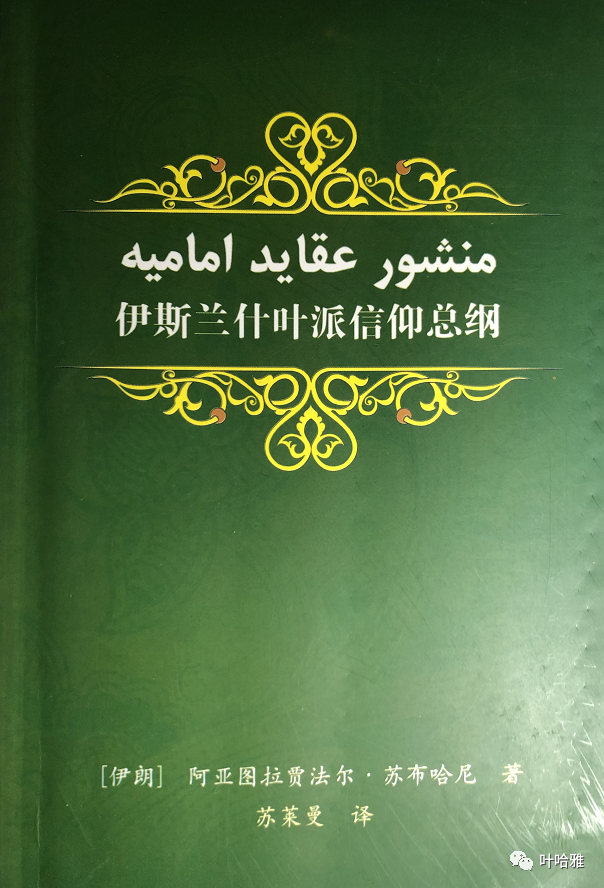
According to the "General Outline of Islamic Shia Beliefs", a missionary material donated by the Iranian government, there are several major differences between Shia and Sunni:
1. Temporary marriage. Temporary marriage was once a form of marriage allowed by the Prophet in the early days of Islam, but was banned by the Prophet in the later period. Since the hadiths passed down by the Sunnis were not credible in the eyes of the Shiites, Khomeini once claimed that the first caliph Abu Bakr had misappropriated the property left by the Prophet Ali. Therefore, the hadiths passed down by him and the two subsequent caliphs were unreliable, so the Shiites still retain temporary marriages. After the betrothal gift and wedding date are determined, a temporary marriage can be carried out. After the wedding period, both parties do not need to hold a divorce ceremony. The marriage relationship is automatically dissolved. During the period, children are conceived and children are legal. The offspring are legal and enjoy inheritance rights. During the temporary marriage, the husband has no obligation to support his wife.
Iranian Zoroastrianism, or Zoroastrianism, also has temporary marriages, called Chakar-Zanih. People say when a widower (a widowed man) who is troubled by his children needs a woman's help, the woman he seeks is legal. But I can't always distinguish temporary marriage from prostitution. Is there a difference between these two behaviors?
2. Prayer. When Shia do wudoo’, they touch their feet instead of washing them; When buckling, the stones must be buckled on the clean ground, or on clods of soil, sand or stones, and cannot be buckled on blankets (except in special circumstances). Therefore, when traveling to Iran, someone saw wrapped stones in the hotel room for worship; Even if Shiites are not traveling or sick, they can pray the noon and the morning prayers together, and the evening and evening prayers can be prayed together; You cannot hold your hands while praying. Shia believe that holding hands is imitating Zoroastrians.
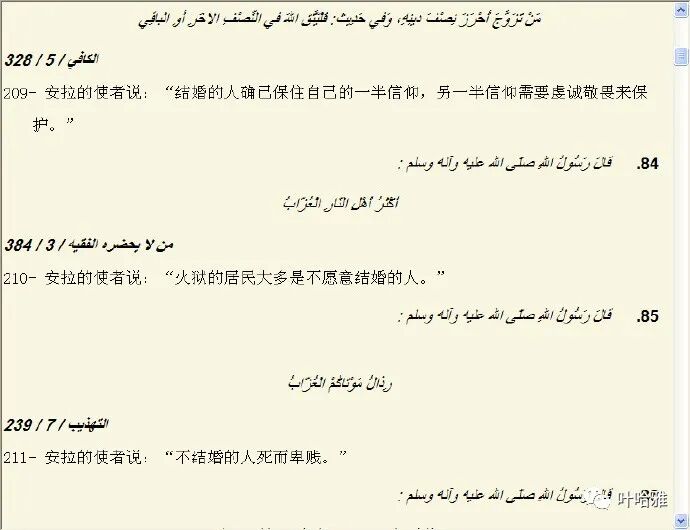
The above are the obvious differences between Shia and Sunni. Shia has its own collection of Imams' sayings, which are compared with Sunni's six major hadiths, which they call the Four Holy Books, namely "Encyclopedia of Religious Studies", "Automated Teaching of Teachings" and "Dictionary of Hadith". These books have not yet been published in Chinese. However, Ali’s collection of remarks, "The Way of Dictionary", has been published in Chinese. There are many golden sentences in the book. You can take a look. Below I have excerpted a few contents from "The Way of Dictionary" for reference. view all
Summary: Muslim History Guide: Why Iran Became Shia, Safavid Rule and Islamic Identity is presented here as a clear English travel account for Muslim readers, beginning with this scene: Since I couldn’t find good food during the epidemic, I turned to talk about the history of Shia Islam in Iran, and will return to halal food when the limelight passes. The article keeps the original place names, food details, photographs, and cultural context while focusing on Iran History, Shia Islam, Safavid Rule.
Since I couldn’t find good food during the epidemic, I turned to talk about the history of Shia Islam in Iran, and will return to halal food when the limelight passes.
text
Before the 16th century, Iran was still dominated by the Sunni faith, and Shiaism was not an exclusive religion in Iran. The twelve Imams revered by Shiaism were all Arabs. Except for the eighth Imam who was buried in Mashhad, Iran, the other 11 imams were all buried on Arab soil. Historically, the academic center of Shiaism was in Najaf, Iraq, and it was not the current holy city of Qom in Iran.
It can be said that the Mongols helped Shias lay their foundation in Iran. In the 13th century, the Mongolian army marched westward and controlled most of Iran and Iraq. Before the Mongols invaded, Shias mostly practiced religion secretly. When the Mongols came to Baghdad, Iraq, the Shias led the way. Ibn Tawus, one of the Shiite leaders, even issued a religious law stating that even if you obey the rule of the Mongolian lamas, it is better than being a Sunni. It was not until the last caliph of the Abbasid Dynasty, Mustaisim, who was put in a sack by the Mongols and trampled to death by a horse, which caused a major setback for Sunnis that Shia was able to spread in Iran and Iraq. The arrival of the Mongols did not have a big impact on Shia, mainly because the Shia imams had announced that they had entered the Great Hermitage period as early as the 10th century.
In the Ilkhanate in the 13th century, Hulagu's seventh successor, Ghazan Khan, established the state religion as Shia Islam. Since then, Shiaism has changed from a small sect spread secretly in the countryside to an official orthodox religion. Today's Iran, Iraq, Azerbaijan in the South Caucasus, Georgia, Armenia, and Turkmenistan in Central Asia were all once under the rule of the Ilkhanate.
Afterwards, under the pressure of the Ottoman Empire, the Shiite Turkmen founded the Safavid order in order to fight against the Sunni Ottomans, and gradually grew in strength. It was not until the Turkmen tribe overthrew the Aries dynasty, who were also Turkmen, and established the Safavid dynasty. The 15-year-old leader Ismail declared the Twelve Imams as the official faith of the Safavid dynasty, and Shiiteism truly gained a foothold in Iran.
The Safavid dynasty (1501-1736) lasted for more than two hundred years. During this period, the official forcefully promoted Shia beliefs and developed Shia theory. In fact, Shiaism has never formed a complete theoretical system in history. Because Shias do not believe in the hadiths passed down by the first three caliphs of the four Sunni caliphs, they only believe in it. The remarks of Ali and the 11 Imams who are Ali's descendants have led to the lack of strong theoretical support for Shia legislation in legislation, which has caused a lot of trouble for the rulers. The rulers racked their brains to support the legitimacy of their rule through theories, and even claimed that they were descendants of Ali, but these lacked practical evidence.
In the 19th century, the Qajar people of the Turkoman tribe raised troops to overthrow the Safavid dynasty and established the Qajar dynasty (1779-1921). During the Qajar dynasty, Iran was already experiencing internal and external troubles. Western powers began plans to carve up Iran. During this period, Afghanistan became independent from Iran with the support of the United Kingdom, and a Baha'i rebellion broke out within the dynasty. As mentioned earlier, the theory of Shiaism has never been systematic, which has left hidden dangers for the emergence of various heresies. Various liars under the banner of Shiaism have emerged in an endless stream. Everyone claims to be the Mahdi, the savior. Among them, Baha'i has the greatest influence. Due to the support of the United Kingdom, Baha'i has grown rapidly in Iran, causing a considerable impact on the Qajar dynasty.
Due to the intervention of great powers such as Britain and the Soviet Union, the Qajar dynasty quickly declined. Reza Khan, a former Iranian soldier, united with Iran's religious forces to overthrow the Qajar dynasty and established the Pahlavi dynasty. Reza Khan was a cunning person. Before he came to power, in order to gain the support of the religious sect, he overthrew the Qajar dynasty in the name of Zhengbenqingyuan. With the support of the Shia Ummah, he prevented the former king Ahmed from returning from Europe. After he officially came to power, he immediately turned his back. The power of religious figures was comprehensively restricted. During this period, he did a lot to eliminate the influence of Islam in the people. For example, he required all people to wear European hats and not to wear traditional beanies. You need to know the European hats. The brimmed hat prevented believers from kowtowing during prayer, which aroused the dissatisfaction of the majority of the people. Imams from all over the country led people to sit-in in mosques in protest. Reza Khan actually ordered the police to shoot at the people and suppressed them with force. This incident became a landmark event that broke with the officialdom and the religious community.
This incident reflects the core position of the Shia faith among ordinary people, especially in the vast rural areas, where the rural population accounts for 70% of the country's population. Many Shia scholars choose to stay away from life in big cities, take root in the countryside, and mingle with the working people. They can best represent Iran, rather than some fashionable young people captured by the media living in free trade zones in big cities. Taking photos of scantily clad young Iranian women and claiming to represent Iranians before the Islamic Revolution is very unfair. Many Iranians we meet in life are not religious, probably because their native families do not agree with Islam, so they fled Iran on the eve of the Islamic Revolution and went into exile in the West. However, these people are a minority after all and cannot represent Iran. In fact, it was the majority of Iranian women who demanded that all women wear headscarves after the Islamic Revolution. Iranian President Rouhani once publicly opposed the religious police and told them not to crack down on women who dress inappropriately. However, many conservative women protested, and the president had to give up.
You must know that the Pahlavi family was able to seize power only with the support of the Iranian religious umma. After hundreds of years of Shia cultivating in Iran, the Shia faith has long been deeply rooted in Iran. And after long-term social turmoil, most of the Shia ummah maintain an independent relationship with the royal power and are not controlled by the royal power. The characteristic of Shias is that they are dependent on religious leaders. Therefore, if they want to gain public support, they must first get the support of the ummah leader. The Pahlavi family relied on the support of the ummah to seize power.
After the Pahlavi family came to power, they wanted to imitate Europe and follow the nationalist line, imitate Kemal of Turkey, and build Iran into a Persian nation-state, so they gave themselves the name Pahlavi after Iran's pre-Islamic period. Pahlavi's means of transforming the country also included nationalizing farmers' land, which resulted in a large number of farmers losing their land and moving to cities to make a living, creating a large number of unemployed people, and the living conditions of farmers rapidly deteriorated. King Pahlavi also allowed Britain to establish an oil company in Iran, which once again aroused public dissatisfaction and led to the assassination of a pro-British official.
In the 1960s, Iran's religious leader, Ayatollah Brujedi, died, and Iran's religious forces then divided into three factions: one took a moderate line, opposed land reform, and opposed participation in politics; One group is neutral and does nothing; The last group was more radical, and its representative was Khomeini. Khomeini came from a religious family, and Brujdi was his first mentor. After his mentor passed away, Khomeini's students called on him to express his opinions. Because Khomeini dared to publicly criticize Pahlavi's corrupt royal power, Khomeini's reputation gradually increased, and he eventually became the spiritual leader who led the Islamic Revolution.
In the book "The Fall of the Shah of Iran: The Story of the Fall", it is mentioned that Khomeini once said: "When I saw the scale of this movement, I saw the role of Allah in it. That is not humanly possible. "The book also records that Pahlavi once said: "Without God's support, my revolution cannot be carried out. Without Allah's support, I would be a mediocre person. "The revolutionaries represented by Khomeini overthrew the Pahlavi dynasty. One of the reasons was that Pahlavi's land reform violated the provisions of the Koran to protect people's private property from infringement. Obviously, Pahlavi was in the wrong this time. The author of this book, Fereydoun Huweida, was Iran's permanent representative to the United Nations. What is interesting is that he both hated Shah Pahlavi and disliked Khomeini.
Khomeini's remarks were made into audio tapes and pamphlets by his followers and widely circulated among the people, creating huge public opinion. However, the Pahlavi family's extravagant life style and collusion with the British and American powers to sell state-owned assets made the people's lives hopeless and finally provoked a popular uprising. It was natural for them to be overthrown. After Khomeini ousted the Pahlavi family and came to power, he developed his Islamic revolutionary theory. This theory was compiled into a book called "The Rule of Laws". This book is now available in Chinese.
Khomeini's jurist theory of governance was the first of its kind. Except for the period of the Prophet and the four caliphs, no Islamic country had ever implemented such a system of theocracy. Iran's theocracy is different from what we usually understand. For example, like The monarchy in Saudi Arabia actually separates politics and religion, that is, the clergy and the royal power are independent of each other. The legality of the behavior of the royal power requires the endorsement of the clergy, and the clergy themselves have no real power. However, the power of the Islamic government of Iran is in the hands of the clergy, and the leader of the country is also the religious leader. It is hard to say whether this system will succeed, since Shia theory is still under development.
As for how Sunnis view Shia, it can be seen from the religious instructions issued by the elders of Al-Azhar University in Egypt that Sunnis recognize that Shias are also Muslims. The two sides agree on basic beliefs, but there are some differences in details. The following is a brief introduction to the main differences between Shia and Sunni.
According to the "General Outline of Islamic Shia Beliefs", a missionary material donated by the Iranian government, there are several major differences between Shia and Sunni:
1. Temporary marriage. Temporary marriage was once a form of marriage allowed by the Prophet in the early days of Islam, but was banned by the Prophet in the later period. Since the hadiths passed down by the Sunnis were not credible in the eyes of the Shiites, Khomeini once claimed that the first caliph Abu Bakr had misappropriated the property left by the Prophet Ali. Therefore, the hadiths passed down by him and the two subsequent caliphs were unreliable, so the Shiites still retain temporary marriages. After the betrothal gift and wedding date are determined, a temporary marriage can be carried out. After the wedding period, both parties do not need to hold a divorce ceremony. The marriage relationship is automatically dissolved. During the period, children are conceived and children are legal. The offspring are legal and enjoy inheritance rights. During the temporary marriage, the husband has no obligation to support his wife.
Iranian Zoroastrianism, or Zoroastrianism, also has temporary marriages, called Chakar-Zanih. People say when a widower (a widowed man) who is troubled by his children needs a woman's help, the woman he seeks is legal. But I can't always distinguish temporary marriage from prostitution. Is there a difference between these two behaviors?
2. Prayer. When Shia do wudoo’, they touch their feet instead of washing them; When buckling, the stones must be buckled on the clean ground, or on clods of soil, sand or stones, and cannot be buckled on blankets (except in special circumstances). Therefore, when traveling to Iran, someone saw wrapped stones in the hotel room for worship; Even if Shiites are not traveling or sick, they can pray the noon and the morning prayers together, and the evening and evening prayers can be prayed together; You cannot hold your hands while praying. Shia believe that holding hands is imitating Zoroastrians.
The above are the obvious differences between Shia and Sunni. Shia has its own collection of Imams' sayings, which are compared with Sunni's six major hadiths, which they call the Four Holy Books, namely "Encyclopedia of Religious Studies", "Automated Teaching of Teachings" and "Dictionary of Hadith". These books have not yet been published in Chinese. However, Ali’s collection of remarks, "The Way of Dictionary", has been published in Chinese. There are many golden sentences in the book. You can take a look. Below I have excerpted a few contents from "The Way of Dictionary" for reference. view all
Reposted from the web
Summary: Muslim History Guide: Why Iran Became Shia, Safavid Rule and Islamic Identity is presented here as a clear English travel account for Muslim readers, beginning with this scene: Since I couldn’t find good food during the epidemic, I turned to talk about the history of Shia Islam in Iran, and will return to halal food when the limelight passes. The article keeps the original place names, food details, photographs, and cultural context while focusing on Iran History, Shia Islam, Safavid Rule.
Since I couldn’t find good food during the epidemic, I turned to talk about the history of Shia Islam in Iran, and will return to halal food when the limelight passes.
text
Before the 16th century, Iran was still dominated by the Sunni faith, and Shiaism was not an exclusive religion in Iran. The twelve Imams revered by Shiaism were all Arabs. Except for the eighth Imam who was buried in Mashhad, Iran, the other 11 imams were all buried on Arab soil. Historically, the academic center of Shiaism was in Najaf, Iraq, and it was not the current holy city of Qom in Iran.
It can be said that the Mongols helped Shias lay their foundation in Iran. In the 13th century, the Mongolian army marched westward and controlled most of Iran and Iraq. Before the Mongols invaded, Shias mostly practiced religion secretly. When the Mongols came to Baghdad, Iraq, the Shias led the way. Ibn Tawus, one of the Shiite leaders, even issued a religious law stating that even if you obey the rule of the Mongolian lamas, it is better than being a Sunni. It was not until the last caliph of the Abbasid Dynasty, Mustaisim, who was put in a sack by the Mongols and trampled to death by a horse, which caused a major setback for Sunnis that Shia was able to spread in Iran and Iraq. The arrival of the Mongols did not have a big impact on Shia, mainly because the Shia imams had announced that they had entered the Great Hermitage period as early as the 10th century.
In the Ilkhanate in the 13th century, Hulagu's seventh successor, Ghazan Khan, established the state religion as Shia Islam. Since then, Shiaism has changed from a small sect spread secretly in the countryside to an official orthodox religion. Today's Iran, Iraq, Azerbaijan in the South Caucasus, Georgia, Armenia, and Turkmenistan in Central Asia were all once under the rule of the Ilkhanate.
Afterwards, under the pressure of the Ottoman Empire, the Shiite Turkmen founded the Safavid order in order to fight against the Sunni Ottomans, and gradually grew in strength. It was not until the Turkmen tribe overthrew the Aries dynasty, who were also Turkmen, and established the Safavid dynasty. The 15-year-old leader Ismail declared the Twelve Imams as the official faith of the Safavid dynasty, and Shiiteism truly gained a foothold in Iran.
The Safavid dynasty (1501-1736) lasted for more than two hundred years. During this period, the official forcefully promoted Shia beliefs and developed Shia theory. In fact, Shiaism has never formed a complete theoretical system in history. Because Shias do not believe in the hadiths passed down by the first three caliphs of the four Sunni caliphs, they only believe in it. The remarks of Ali and the 11 Imams who are Ali's descendants have led to the lack of strong theoretical support for Shia legislation in legislation, which has caused a lot of trouble for the rulers. The rulers racked their brains to support the legitimacy of their rule through theories, and even claimed that they were descendants of Ali, but these lacked practical evidence.
In the 19th century, the Qajar people of the Turkoman tribe raised troops to overthrow the Safavid dynasty and established the Qajar dynasty (1779-1921). During the Qajar dynasty, Iran was already experiencing internal and external troubles. Western powers began plans to carve up Iran. During this period, Afghanistan became independent from Iran with the support of the United Kingdom, and a Baha'i rebellion broke out within the dynasty. As mentioned earlier, the theory of Shiaism has never been systematic, which has left hidden dangers for the emergence of various heresies. Various liars under the banner of Shiaism have emerged in an endless stream. Everyone claims to be the Mahdi, the savior. Among them, Baha'i has the greatest influence. Due to the support of the United Kingdom, Baha'i has grown rapidly in Iran, causing a considerable impact on the Qajar dynasty.
Due to the intervention of great powers such as Britain and the Soviet Union, the Qajar dynasty quickly declined. Reza Khan, a former Iranian soldier, united with Iran's religious forces to overthrow the Qajar dynasty and established the Pahlavi dynasty. Reza Khan was a cunning person. Before he came to power, in order to gain the support of the religious sect, he overthrew the Qajar dynasty in the name of Zhengbenqingyuan. With the support of the Shia Ummah, he prevented the former king Ahmed from returning from Europe. After he officially came to power, he immediately turned his back. The power of religious figures was comprehensively restricted. During this period, he did a lot to eliminate the influence of Islam in the people. For example, he required all people to wear European hats and not to wear traditional beanies. You need to know the European hats. The brimmed hat prevented believers from kowtowing during prayer, which aroused the dissatisfaction of the majority of the people. Imams from all over the country led people to sit-in in mosques in protest. Reza Khan actually ordered the police to shoot at the people and suppressed them with force. This incident became a landmark event that broke with the officialdom and the religious community.
This incident reflects the core position of the Shia faith among ordinary people, especially in the vast rural areas, where the rural population accounts for 70% of the country's population. Many Shia scholars choose to stay away from life in big cities, take root in the countryside, and mingle with the working people. They can best represent Iran, rather than some fashionable young people captured by the media living in free trade zones in big cities. Taking photos of scantily clad young Iranian women and claiming to represent Iranians before the Islamic Revolution is very unfair. Many Iranians we meet in life are not religious, probably because their native families do not agree with Islam, so they fled Iran on the eve of the Islamic Revolution and went into exile in the West. However, these people are a minority after all and cannot represent Iran. In fact, it was the majority of Iranian women who demanded that all women wear headscarves after the Islamic Revolution. Iranian President Rouhani once publicly opposed the religious police and told them not to crack down on women who dress inappropriately. However, many conservative women protested, and the president had to give up.
You must know that the Pahlavi family was able to seize power only with the support of the Iranian religious umma. After hundreds of years of Shia cultivating in Iran, the Shia faith has long been deeply rooted in Iran. And after long-term social turmoil, most of the Shia ummah maintain an independent relationship with the royal power and are not controlled by the royal power. The characteristic of Shias is that they are dependent on religious leaders. Therefore, if they want to gain public support, they must first get the support of the ummah leader. The Pahlavi family relied on the support of the ummah to seize power.
After the Pahlavi family came to power, they wanted to imitate Europe and follow the nationalist line, imitate Kemal of Turkey, and build Iran into a Persian nation-state, so they gave themselves the name Pahlavi after Iran's pre-Islamic period. Pahlavi's means of transforming the country also included nationalizing farmers' land, which resulted in a large number of farmers losing their land and moving to cities to make a living, creating a large number of unemployed people, and the living conditions of farmers rapidly deteriorated. King Pahlavi also allowed Britain to establish an oil company in Iran, which once again aroused public dissatisfaction and led to the assassination of a pro-British official.
In the 1960s, Iran's religious leader, Ayatollah Brujedi, died, and Iran's religious forces then divided into three factions: one took a moderate line, opposed land reform, and opposed participation in politics; One group is neutral and does nothing; The last group was more radical, and its representative was Khomeini. Khomeini came from a religious family, and Brujdi was his first mentor. After his mentor passed away, Khomeini's students called on him to express his opinions. Because Khomeini dared to publicly criticize Pahlavi's corrupt royal power, Khomeini's reputation gradually increased, and he eventually became the spiritual leader who led the Islamic Revolution.
In the book "The Fall of the Shah of Iran: The Story of the Fall", it is mentioned that Khomeini once said: "When I saw the scale of this movement, I saw the role of Allah in it. That is not humanly possible. "The book also records that Pahlavi once said: "Without God's support, my revolution cannot be carried out. Without Allah's support, I would be a mediocre person. "The revolutionaries represented by Khomeini overthrew the Pahlavi dynasty. One of the reasons was that Pahlavi's land reform violated the provisions of the Koran to protect people's private property from infringement. Obviously, Pahlavi was in the wrong this time. The author of this book, Fereydoun Huweida, was Iran's permanent representative to the United Nations. What is interesting is that he both hated Shah Pahlavi and disliked Khomeini.
Khomeini's remarks were made into audio tapes and pamphlets by his followers and widely circulated among the people, creating huge public opinion. However, the Pahlavi family's extravagant life style and collusion with the British and American powers to sell state-owned assets made the people's lives hopeless and finally provoked a popular uprising. It was natural for them to be overthrown. After Khomeini ousted the Pahlavi family and came to power, he developed his Islamic revolutionary theory. This theory was compiled into a book called "The Rule of Laws". This book is now available in Chinese.

Khomeini's jurist theory of governance was the first of its kind. Except for the period of the Prophet and the four caliphs, no Islamic country had ever implemented such a system of theocracy. Iran's theocracy is different from what we usually understand. For example, like The monarchy in Saudi Arabia actually separates politics and religion, that is, the clergy and the royal power are independent of each other. The legality of the behavior of the royal power requires the endorsement of the clergy, and the clergy themselves have no real power. However, the power of the Islamic government of Iran is in the hands of the clergy, and the leader of the country is also the religious leader. It is hard to say whether this system will succeed, since Shia theory is still under development.
As for how Sunnis view Shia, it can be seen from the religious instructions issued by the elders of Al-Azhar University in Egypt that Sunnis recognize that Shias are also Muslims. The two sides agree on basic beliefs, but there are some differences in details. The following is a brief introduction to the main differences between Shia and Sunni.
According to the "General Outline of Islamic Shia Beliefs", a missionary material donated by the Iranian government, there are several major differences between Shia and Sunni:
1. Temporary marriage. Temporary marriage was once a form of marriage allowed by the Prophet in the early days of Islam, but was banned by the Prophet in the later period. Since the hadiths passed down by the Sunnis were not credible in the eyes of the Shiites, Khomeini once claimed that the first caliph Abu Bakr had misappropriated the property left by the Prophet Ali. Therefore, the hadiths passed down by him and the two subsequent caliphs were unreliable, so the Shiites still retain temporary marriages. After the betrothal gift and wedding date are determined, a temporary marriage can be carried out. After the wedding period, both parties do not need to hold a divorce ceremony. The marriage relationship is automatically dissolved. During the period, children are conceived and children are legal. The offspring are legal and enjoy inheritance rights. During the temporary marriage, the husband has no obligation to support his wife.
Iranian Zoroastrianism, or Zoroastrianism, also has temporary marriages, called Chakar-Zanih. People say when a widower (a widowed man) who is troubled by his children needs a woman's help, the woman he seeks is legal. But I can't always distinguish temporary marriage from prostitution. Is there a difference between these two behaviors?
2. Prayer. When Shia do wudoo’, they touch their feet instead of washing them; When buckling, the stones must be buckled on the clean ground, or on clods of soil, sand or stones, and cannot be buckled on blankets (except in special circumstances). Therefore, when traveling to Iran, someone saw wrapped stones in the hotel room for worship; Even if Shiites are not traveling or sick, they can pray the noon and the morning prayers together, and the evening and evening prayers can be prayed together; You cannot hold your hands while praying. Shia believe that holding hands is imitating Zoroastrians.
The above are the obvious differences between Shia and Sunni. Shia has its own collection of Imams' sayings, which are compared with Sunni's six major hadiths, which they call the Four Holy Books, namely "Encyclopedia of Religious Studies", "Automated Teaching of Teachings" and "Dictionary of Hadith". These books have not yet been published in Chinese. However, Ali’s collection of remarks, "The Way of Dictionary", has been published in Chinese. There are many golden sentences in the book. You can take a look. Below I have excerpted a few contents from "The Way of Dictionary" for reference.
Summary: Muslim History Guide: Why Iran Became Shia, Safavid Rule and Islamic Identity is presented here as a clear English travel account for Muslim readers, beginning with this scene: Since I couldn’t find good food during the epidemic, I turned to talk about the history of Shia Islam in Iran, and will return to halal food when the limelight passes. The article keeps the original place names, food details, photographs, and cultural context while focusing on Iran History, Shia Islam, Safavid Rule.
Since I couldn’t find good food during the epidemic, I turned to talk about the history of Shia Islam in Iran, and will return to halal food when the limelight passes.
text
Before the 16th century, Iran was still dominated by the Sunni faith, and Shiaism was not an exclusive religion in Iran. The twelve Imams revered by Shiaism were all Arabs. Except for the eighth Imam who was buried in Mashhad, Iran, the other 11 imams were all buried on Arab soil. Historically, the academic center of Shiaism was in Najaf, Iraq, and it was not the current holy city of Qom in Iran.
It can be said that the Mongols helped Shias lay their foundation in Iran. In the 13th century, the Mongolian army marched westward and controlled most of Iran and Iraq. Before the Mongols invaded, Shias mostly practiced religion secretly. When the Mongols came to Baghdad, Iraq, the Shias led the way. Ibn Tawus, one of the Shiite leaders, even issued a religious law stating that even if you obey the rule of the Mongolian lamas, it is better than being a Sunni. It was not until the last caliph of the Abbasid Dynasty, Mustaisim, who was put in a sack by the Mongols and trampled to death by a horse, which caused a major setback for Sunnis that Shia was able to spread in Iran and Iraq. The arrival of the Mongols did not have a big impact on Shia, mainly because the Shia imams had announced that they had entered the Great Hermitage period as early as the 10th century.
In the Ilkhanate in the 13th century, Hulagu's seventh successor, Ghazan Khan, established the state religion as Shia Islam. Since then, Shiaism has changed from a small sect spread secretly in the countryside to an official orthodox religion. Today's Iran, Iraq, Azerbaijan in the South Caucasus, Georgia, Armenia, and Turkmenistan in Central Asia were all once under the rule of the Ilkhanate.
Afterwards, under the pressure of the Ottoman Empire, the Shiite Turkmen founded the Safavid order in order to fight against the Sunni Ottomans, and gradually grew in strength. It was not until the Turkmen tribe overthrew the Aries dynasty, who were also Turkmen, and established the Safavid dynasty. The 15-year-old leader Ismail declared the Twelve Imams as the official faith of the Safavid dynasty, and Shiiteism truly gained a foothold in Iran.
The Safavid dynasty (1501-1736) lasted for more than two hundred years. During this period, the official forcefully promoted Shia beliefs and developed Shia theory. In fact, Shiaism has never formed a complete theoretical system in history. Because Shias do not believe in the hadiths passed down by the first three caliphs of the four Sunni caliphs, they only believe in it. The remarks of Ali and the 11 Imams who are Ali's descendants have led to the lack of strong theoretical support for Shia legislation in legislation, which has caused a lot of trouble for the rulers. The rulers racked their brains to support the legitimacy of their rule through theories, and even claimed that they were descendants of Ali, but these lacked practical evidence.
In the 19th century, the Qajar people of the Turkoman tribe raised troops to overthrow the Safavid dynasty and established the Qajar dynasty (1779-1921). During the Qajar dynasty, Iran was already experiencing internal and external troubles. Western powers began plans to carve up Iran. During this period, Afghanistan became independent from Iran with the support of the United Kingdom, and a Baha'i rebellion broke out within the dynasty. As mentioned earlier, the theory of Shiaism has never been systematic, which has left hidden dangers for the emergence of various heresies. Various liars under the banner of Shiaism have emerged in an endless stream. Everyone claims to be the Mahdi, the savior. Among them, Baha'i has the greatest influence. Due to the support of the United Kingdom, Baha'i has grown rapidly in Iran, causing a considerable impact on the Qajar dynasty.
Due to the intervention of great powers such as Britain and the Soviet Union, the Qajar dynasty quickly declined. Reza Khan, a former Iranian soldier, united with Iran's religious forces to overthrow the Qajar dynasty and established the Pahlavi dynasty. Reza Khan was a cunning person. Before he came to power, in order to gain the support of the religious sect, he overthrew the Qajar dynasty in the name of Zhengbenqingyuan. With the support of the Shia Ummah, he prevented the former king Ahmed from returning from Europe. After he officially came to power, he immediately turned his back. The power of religious figures was comprehensively restricted. During this period, he did a lot to eliminate the influence of Islam in the people. For example, he required all people to wear European hats and not to wear traditional beanies. You need to know the European hats. The brimmed hat prevented believers from kowtowing during prayer, which aroused the dissatisfaction of the majority of the people. Imams from all over the country led people to sit-in in mosques in protest. Reza Khan actually ordered the police to shoot at the people and suppressed them with force. This incident became a landmark event that broke with the officialdom and the religious community.
This incident reflects the core position of the Shia faith among ordinary people, especially in the vast rural areas, where the rural population accounts for 70% of the country's population. Many Shia scholars choose to stay away from life in big cities, take root in the countryside, and mingle with the working people. They can best represent Iran, rather than some fashionable young people captured by the media living in free trade zones in big cities. Taking photos of scantily clad young Iranian women and claiming to represent Iranians before the Islamic Revolution is very unfair. Many Iranians we meet in life are not religious, probably because their native families do not agree with Islam, so they fled Iran on the eve of the Islamic Revolution and went into exile in the West. However, these people are a minority after all and cannot represent Iran. In fact, it was the majority of Iranian women who demanded that all women wear headscarves after the Islamic Revolution. Iranian President Rouhani once publicly opposed the religious police and told them not to crack down on women who dress inappropriately. However, many conservative women protested, and the president had to give up.
You must know that the Pahlavi family was able to seize power only with the support of the Iranian religious umma. After hundreds of years of Shia cultivating in Iran, the Shia faith has long been deeply rooted in Iran. And after long-term social turmoil, most of the Shia ummah maintain an independent relationship with the royal power and are not controlled by the royal power. The characteristic of Shias is that they are dependent on religious leaders. Therefore, if they want to gain public support, they must first get the support of the ummah leader. The Pahlavi family relied on the support of the ummah to seize power.
After the Pahlavi family came to power, they wanted to imitate Europe and follow the nationalist line, imitate Kemal of Turkey, and build Iran into a Persian nation-state, so they gave themselves the name Pahlavi after Iran's pre-Islamic period. Pahlavi's means of transforming the country also included nationalizing farmers' land, which resulted in a large number of farmers losing their land and moving to cities to make a living, creating a large number of unemployed people, and the living conditions of farmers rapidly deteriorated. King Pahlavi also allowed Britain to establish an oil company in Iran, which once again aroused public dissatisfaction and led to the assassination of a pro-British official.
In the 1960s, Iran's religious leader, Ayatollah Brujedi, died, and Iran's religious forces then divided into three factions: one took a moderate line, opposed land reform, and opposed participation in politics; One group is neutral and does nothing; The last group was more radical, and its representative was Khomeini. Khomeini came from a religious family, and Brujdi was his first mentor. After his mentor passed away, Khomeini's students called on him to express his opinions. Because Khomeini dared to publicly criticize Pahlavi's corrupt royal power, Khomeini's reputation gradually increased, and he eventually became the spiritual leader who led the Islamic Revolution.
In the book "The Fall of the Shah of Iran: The Story of the Fall", it is mentioned that Khomeini once said: "When I saw the scale of this movement, I saw the role of Allah in it. That is not humanly possible. "The book also records that Pahlavi once said: "Without God's support, my revolution cannot be carried out. Without Allah's support, I would be a mediocre person. "The revolutionaries represented by Khomeini overthrew the Pahlavi dynasty. One of the reasons was that Pahlavi's land reform violated the provisions of the Koran to protect people's private property from infringement. Obviously, Pahlavi was in the wrong this time. The author of this book, Fereydoun Huweida, was Iran's permanent representative to the United Nations. What is interesting is that he both hated Shah Pahlavi and disliked Khomeini.
Khomeini's remarks were made into audio tapes and pamphlets by his followers and widely circulated among the people, creating huge public opinion. However, the Pahlavi family's extravagant life style and collusion with the British and American powers to sell state-owned assets made the people's lives hopeless and finally provoked a popular uprising. It was natural for them to be overthrown. After Khomeini ousted the Pahlavi family and came to power, he developed his Islamic revolutionary theory. This theory was compiled into a book called "The Rule of Laws". This book is now available in Chinese.
Khomeini's jurist theory of governance was the first of its kind. Except for the period of the Prophet and the four caliphs, no Islamic country had ever implemented such a system of theocracy. Iran's theocracy is different from what we usually understand. For example, like The monarchy in Saudi Arabia actually separates politics and religion, that is, the clergy and the royal power are independent of each other. The legality of the behavior of the royal power requires the endorsement of the clergy, and the clergy themselves have no real power. However, the power of the Islamic government of Iran is in the hands of the clergy, and the leader of the country is also the religious leader. It is hard to say whether this system will succeed, since Shia theory is still under development.
As for how Sunnis view Shia, it can be seen from the religious instructions issued by the elders of Al-Azhar University in Egypt that Sunnis recognize that Shias are also Muslims. The two sides agree on basic beliefs, but there are some differences in details. The following is a brief introduction to the main differences between Shia and Sunni.
According to the "General Outline of Islamic Shia Beliefs", a missionary material donated by the Iranian government, there are several major differences between Shia and Sunni:
1. Temporary marriage. Temporary marriage was once a form of marriage allowed by the Prophet in the early days of Islam, but was banned by the Prophet in the later period. Since the hadiths passed down by the Sunnis were not credible in the eyes of the Shiites, Khomeini once claimed that the first caliph Abu Bakr had misappropriated the property left by the Prophet Ali. Therefore, the hadiths passed down by him and the two subsequent caliphs were unreliable, so the Shiites still retain temporary marriages. After the betrothal gift and wedding date are determined, a temporary marriage can be carried out. After the wedding period, both parties do not need to hold a divorce ceremony. The marriage relationship is automatically dissolved. During the period, children are conceived and children are legal. The offspring are legal and enjoy inheritance rights. During the temporary marriage, the husband has no obligation to support his wife.
Iranian Zoroastrianism, or Zoroastrianism, also has temporary marriages, called Chakar-Zanih. People say when a widower (a widowed man) who is troubled by his children needs a woman's help, the woman he seeks is legal. But I can't always distinguish temporary marriage from prostitution. Is there a difference between these two behaviors?
2. Prayer. When Shia do wudoo’, they touch their feet instead of washing them; When buckling, the stones must be buckled on the clean ground, or on clods of soil, sand or stones, and cannot be buckled on blankets (except in special circumstances). Therefore, when traveling to Iran, someone saw wrapped stones in the hotel room for worship; Even if Shiites are not traveling or sick, they can pray the noon and the morning prayers together, and the evening and evening prayers can be prayed together; You cannot hold your hands while praying. Shia believe that holding hands is imitating Zoroastrians.
The above are the obvious differences between Shia and Sunni. Shia has its own collection of Imams' sayings, which are compared with Sunni's six major hadiths, which they call the Four Holy Books, namely "Encyclopedia of Religious Studies", "Automated Teaching of Teachings" and "Dictionary of Hadith". These books have not yet been published in Chinese. However, Ali’s collection of remarks, "The Way of Dictionary", has been published in Chinese. There are many golden sentences in the book. You can take a look. Below I have excerpted a few contents from "The Way of Dictionary" for reference.
Muslim History Guide: Why Iran Became Shia, Safavid Rule and Islamic Identity
Articles • ali2007fr posted the article • 0 comments • 252 views • 2026-05-21 12:47
Reposted from the web
Summary: Muslim History Guide: Why Iran Became Shia, Safavid Rule and Islamic Identity is presented here as a clear English travel account for Muslim readers, beginning with this scene: Since I couldn’t find good food during the epidemic, I turned to talk about the history of Shia Islam in Iran, and will return to halal food when the limelight passes. The article keeps the original place names, food details, photographs, and cultural context while focusing on Iran History, Shia Islam, Safavid Rule.
Since I couldn’t find good food during the epidemic, I turned to talk about the history of Shia Islam in Iran, and will return to halal food when the limelight passes.
text
Before the 16th century, Iran was still dominated by the Sunni faith, and Shiaism was not an exclusive religion in Iran. The twelve Imams revered by Shiaism were all Arabs. Except for the eighth Imam who was buried in Mashhad, Iran, the other 11 imams were all buried on Arab soil. Historically, the academic center of Shiaism was in Najaf, Iraq, and it was not the current holy city of Qom in Iran.
It can be said that the Mongols helped Shias lay their foundation in Iran. In the 13th century, the Mongolian army marched westward and controlled most of Iran and Iraq. Before the Mongols invaded, Shias mostly practiced religion secretly. When the Mongols came to Baghdad, Iraq, the Shias led the way. Ibn Tawus, one of the Shiite leaders, even issued a religious law stating that even if you obey the rule of the Mongolian lamas, it is better than being a Sunni. It was not until the last caliph of the Abbasid Dynasty, Mustaisim, who was put in a sack by the Mongols and trampled to death by a horse, which caused a major setback for Sunnis that Shia was able to spread in Iran and Iraq. The arrival of the Mongols did not have a big impact on Shia, mainly because the Shia imams had announced that they had entered the Great Hermitage period as early as the 10th century.
In the Ilkhanate in the 13th century, Hulagu's seventh successor, Ghazan Khan, established the state religion as Shia Islam. Since then, Shiaism has changed from a small sect spread secretly in the countryside to an official orthodox religion. Today's Iran, Iraq, Azerbaijan in the South Caucasus, Georgia, Armenia, and Turkmenistan in Central Asia were all once under the rule of the Ilkhanate.
Afterwards, under the pressure of the Ottoman Empire, the Shiite Turkmen founded the Safavid order in order to fight against the Sunni Ottomans, and gradually grew in strength. It was not until the Turkmen tribe overthrew the Aries dynasty, who were also Turkmen, and established the Safavid dynasty. The 15-year-old leader Ismail declared the Twelve Imams as the official faith of the Safavid dynasty, and Shiiteism truly gained a foothold in Iran.
The Safavid dynasty (1501-1736) lasted for more than two hundred years. During this period, the official forcefully promoted Shia beliefs and developed Shia theory. In fact, Shiaism has never formed a complete theoretical system in history. Because Shias do not believe in the hadiths passed down by the first three caliphs of the four Sunni caliphs, they only believe in it. The remarks of Ali and the 11 Imams who are Ali's descendants have led to the lack of strong theoretical support for Shia legislation in legislation, which has caused a lot of trouble for the rulers. The rulers racked their brains to support the legitimacy of their rule through theories, and even claimed that they were descendants of Ali, but these lacked practical evidence.
In the 19th century, the Qajar people of the Turkoman tribe raised troops to overthrow the Safavid dynasty and established the Qajar dynasty (1779-1921). During the Qajar dynasty, Iran was already experiencing internal and external troubles. Western powers began plans to carve up Iran. During this period, Afghanistan became independent from Iran with the support of the United Kingdom, and a Baha'i rebellion broke out within the dynasty. As mentioned earlier, the theory of Shiaism has never been systematic, which has left hidden dangers for the emergence of various heresies. Various liars under the banner of Shiaism have emerged in an endless stream. Everyone claims to be the Mahdi, the savior. Among them, Baha'i has the greatest influence. Due to the support of the United Kingdom, Baha'i has grown rapidly in Iran, causing a considerable impact on the Qajar dynasty.
Due to the intervention of great powers such as Britain and the Soviet Union, the Qajar dynasty quickly declined. Reza Khan, a former Iranian soldier, united with Iran's religious forces to overthrow the Qajar dynasty and established the Pahlavi dynasty. Reza Khan was a cunning person. Before he came to power, in order to gain the support of the religious sect, he overthrew the Qajar dynasty in the name of Zhengbenqingyuan. With the support of the Shia Ummah, he prevented the former king Ahmed from returning from Europe. After he officially came to power, he immediately turned his back. The power of religious figures was comprehensively restricted. During this period, he did a lot to eliminate the influence of Islam in the people. For example, he required all people to wear European hats and not to wear traditional beanies. You need to know the European hats. The brimmed hat prevented believers from kowtowing during prayer, which aroused the dissatisfaction of the majority of the people. Imams from all over the country led people to sit-in in mosques in protest. Reza Khan actually ordered the police to shoot at the people and suppressed them with force. This incident became a landmark event that broke with the officialdom and the religious community.
This incident reflects the core position of the Shia faith among ordinary people, especially in the vast rural areas, where the rural population accounts for 70% of the country's population. Many Shia scholars choose to stay away from life in big cities, take root in the countryside, and mingle with the working people. They can best represent Iran, rather than some fashionable young people captured by the media living in free trade zones in big cities. Taking photos of scantily clad young Iranian women and claiming to represent Iranians before the Islamic Revolution is very unfair. Many Iranians we meet in life are not religious, probably because their native families do not agree with Islam, so they fled Iran on the eve of the Islamic Revolution and went into exile in the West. However, these people are a minority after all and cannot represent Iran. In fact, it was the majority of Iranian women who demanded that all women wear headscarves after the Islamic Revolution. Iranian President Rouhani once publicly opposed the religious police and told them not to crack down on women who dress inappropriately. However, many conservative women protested, and the president had to give up.
You must know that the Pahlavi family was able to seize power only with the support of the Iranian religious umma. After hundreds of years of Shia cultivating in Iran, the Shia faith has long been deeply rooted in Iran. And after long-term social turmoil, most of the Shia ummah maintain an independent relationship with the royal power and are not controlled by the royal power. The characteristic of Shias is that they are dependent on religious leaders. Therefore, if they want to gain public support, they must first get the support of the ummah leader. The Pahlavi family relied on the support of the ummah to seize power.
After the Pahlavi family came to power, they wanted to imitate Europe and follow the nationalist line, imitate Kemal of Turkey, and build Iran into a Persian nation-state, so they gave themselves the name Pahlavi after Iran's pre-Islamic period. Pahlavi's means of transforming the country also included nationalizing farmers' land, which resulted in a large number of farmers losing their land and moving to cities to make a living, creating a large number of unemployed people, and the living conditions of farmers rapidly deteriorated. King Pahlavi also allowed Britain to establish an oil company in Iran, which once again aroused public dissatisfaction and led to the assassination of a pro-British official.
In the 1960s, Iran's religious leader, Ayatollah Brujedi, died, and Iran's religious forces then divided into three factions: one took a moderate line, opposed land reform, and opposed participation in politics; One group is neutral and does nothing; The last group was more radical, and its representative was Khomeini. Khomeini came from a religious family, and Brujdi was his first mentor. After his mentor passed away, Khomeini's students called on him to express his opinions. Because Khomeini dared to publicly criticize Pahlavi's corrupt royal power, Khomeini's reputation gradually increased, and he eventually became the spiritual leader who led the Islamic Revolution.
In the book "The Fall of the Shah of Iran: The Story of the Fall", it is mentioned that Khomeini once said: "When I saw the scale of this movement, I saw the role of Allah in it. That is not humanly possible. "The book also records that Pahlavi once said: "Without God's support, my revolution cannot be carried out. Without Allah's support, I would be a mediocre person. "The revolutionaries represented by Khomeini overthrew the Pahlavi dynasty. One of the reasons was that Pahlavi's land reform violated the provisions of the Koran to protect people's private property from infringement. Obviously, Pahlavi was in the wrong this time. The author of this book, Fereydoun Huweida, was Iran's permanent representative to the United Nations. What is interesting is that he both hated Shah Pahlavi and disliked Khomeini.
Khomeini's remarks were made into audio tapes and pamphlets by his followers and widely circulated among the people, creating huge public opinion. However, the Pahlavi family's extravagant life style and collusion with the British and American powers to sell state-owned assets made the people's lives hopeless and finally provoked a popular uprising. It was natural for them to be overthrown. After Khomeini ousted the Pahlavi family and came to power, he developed his Islamic revolutionary theory. This theory was compiled into a book called "The Rule of Laws". This book is now available in Chinese.
Khomeini's jurist theory of governance was the first of its kind. Except for the period of the Prophet and the four caliphs, no Islamic country had ever implemented such a system of theocracy. Iran's theocracy is different from what we usually understand. For example, like The monarchy in Saudi Arabia actually separates politics and religion, that is, the clergy and the royal power are independent of each other. The legality of the behavior of the royal power requires the endorsement of the clergy, and the clergy themselves have no real power. However, the power of the Islamic government of Iran is in the hands of the clergy, and the leader of the country is also the religious leader. It is hard to say whether this system will succeed, since Shia theory is still under development.
As for how Sunnis view Shia, it can be seen from the religious instructions issued by the elders of Al-Azhar University in Egypt that Sunnis recognize that Shias are also Muslims. The two sides agree on basic beliefs, but there are some differences in details. The following is a brief introduction to the main differences between Shia and Sunni.
According to the "General Outline of Islamic Shia Beliefs", a missionary material donated by the Iranian government, there are several major differences between Shia and Sunni:
1. Temporary marriage. Temporary marriage was once a form of marriage allowed by the Prophet in the early days of Islam, but was banned by the Prophet in the later period. Since the hadiths passed down by the Sunnis were not credible in the eyes of the Shiites, Khomeini once claimed that the first caliph Abu Bakr had misappropriated the property left by the Prophet Ali. Therefore, the hadiths passed down by him and the two subsequent caliphs were unreliable, so the Shiites still retain temporary marriages. After the betrothal gift and wedding date are determined, a temporary marriage can be carried out. After the wedding period, both parties do not need to hold a divorce ceremony. The marriage relationship is automatically dissolved. During the period, children are conceived and children are legal. The offspring are legal and enjoy inheritance rights. During the temporary marriage, the husband has no obligation to support his wife.
Iranian Zoroastrianism, or Zoroastrianism, also has temporary marriages, called Chakar-Zanih. People say when a widower (a widowed man) who is troubled by his children needs a woman's help, the woman he seeks is legal. But I can't always distinguish temporary marriage from prostitution. Is there a difference between these two behaviors?
2. Prayer. When Shia do wudoo’, they touch their feet instead of washing them; When buckling, the stones must be buckled on the clean ground, or on clods of soil, sand or stones, and cannot be buckled on blankets (except in special circumstances). Therefore, when traveling to Iran, someone saw wrapped stones in the hotel room for worship; Even if Shiites are not traveling or sick, they can pray the noon and the morning prayers together, and the evening and evening prayers can be prayed together; You cannot hold your hands while praying. Shia believe that holding hands is imitating Zoroastrians.
The above are the obvious differences between Shia and Sunni. Shia has its own collection of Imams' sayings, which are compared with Sunni's six major hadiths, which they call the Four Holy Books, namely "Encyclopedia of Religious Studies", "Automated Teaching of Teachings" and "Dictionary of Hadith". These books have not yet been published in Chinese. However, Ali’s collection of remarks, "The Way of Dictionary", has been published in Chinese. There are many golden sentences in the book. You can take a look. Below I have excerpted a few contents from "The Way of Dictionary" for reference. view all
Summary: Muslim History Guide: Why Iran Became Shia, Safavid Rule and Islamic Identity is presented here as a clear English travel account for Muslim readers, beginning with this scene: Since I couldn’t find good food during the epidemic, I turned to talk about the history of Shia Islam in Iran, and will return to halal food when the limelight passes. The article keeps the original place names, food details, photographs, and cultural context while focusing on Iran History, Shia Islam, Safavid Rule.
Since I couldn’t find good food during the epidemic, I turned to talk about the history of Shia Islam in Iran, and will return to halal food when the limelight passes.
text
Before the 16th century, Iran was still dominated by the Sunni faith, and Shiaism was not an exclusive religion in Iran. The twelve Imams revered by Shiaism were all Arabs. Except for the eighth Imam who was buried in Mashhad, Iran, the other 11 imams were all buried on Arab soil. Historically, the academic center of Shiaism was in Najaf, Iraq, and it was not the current holy city of Qom in Iran.
It can be said that the Mongols helped Shias lay their foundation in Iran. In the 13th century, the Mongolian army marched westward and controlled most of Iran and Iraq. Before the Mongols invaded, Shias mostly practiced religion secretly. When the Mongols came to Baghdad, Iraq, the Shias led the way. Ibn Tawus, one of the Shiite leaders, even issued a religious law stating that even if you obey the rule of the Mongolian lamas, it is better than being a Sunni. It was not until the last caliph of the Abbasid Dynasty, Mustaisim, who was put in a sack by the Mongols and trampled to death by a horse, which caused a major setback for Sunnis that Shia was able to spread in Iran and Iraq. The arrival of the Mongols did not have a big impact on Shia, mainly because the Shia imams had announced that they had entered the Great Hermitage period as early as the 10th century.
In the Ilkhanate in the 13th century, Hulagu's seventh successor, Ghazan Khan, established the state religion as Shia Islam. Since then, Shiaism has changed from a small sect spread secretly in the countryside to an official orthodox religion. Today's Iran, Iraq, Azerbaijan in the South Caucasus, Georgia, Armenia, and Turkmenistan in Central Asia were all once under the rule of the Ilkhanate.
Afterwards, under the pressure of the Ottoman Empire, the Shiite Turkmen founded the Safavid order in order to fight against the Sunni Ottomans, and gradually grew in strength. It was not until the Turkmen tribe overthrew the Aries dynasty, who were also Turkmen, and established the Safavid dynasty. The 15-year-old leader Ismail declared the Twelve Imams as the official faith of the Safavid dynasty, and Shiiteism truly gained a foothold in Iran.
The Safavid dynasty (1501-1736) lasted for more than two hundred years. During this period, the official forcefully promoted Shia beliefs and developed Shia theory. In fact, Shiaism has never formed a complete theoretical system in history. Because Shias do not believe in the hadiths passed down by the first three caliphs of the four Sunni caliphs, they only believe in it. The remarks of Ali and the 11 Imams who are Ali's descendants have led to the lack of strong theoretical support for Shia legislation in legislation, which has caused a lot of trouble for the rulers. The rulers racked their brains to support the legitimacy of their rule through theories, and even claimed that they were descendants of Ali, but these lacked practical evidence.
In the 19th century, the Qajar people of the Turkoman tribe raised troops to overthrow the Safavid dynasty and established the Qajar dynasty (1779-1921). During the Qajar dynasty, Iran was already experiencing internal and external troubles. Western powers began plans to carve up Iran. During this period, Afghanistan became independent from Iran with the support of the United Kingdom, and a Baha'i rebellion broke out within the dynasty. As mentioned earlier, the theory of Shiaism has never been systematic, which has left hidden dangers for the emergence of various heresies. Various liars under the banner of Shiaism have emerged in an endless stream. Everyone claims to be the Mahdi, the savior. Among them, Baha'i has the greatest influence. Due to the support of the United Kingdom, Baha'i has grown rapidly in Iran, causing a considerable impact on the Qajar dynasty.
Due to the intervention of great powers such as Britain and the Soviet Union, the Qajar dynasty quickly declined. Reza Khan, a former Iranian soldier, united with Iran's religious forces to overthrow the Qajar dynasty and established the Pahlavi dynasty. Reza Khan was a cunning person. Before he came to power, in order to gain the support of the religious sect, he overthrew the Qajar dynasty in the name of Zhengbenqingyuan. With the support of the Shia Ummah, he prevented the former king Ahmed from returning from Europe. After he officially came to power, he immediately turned his back. The power of religious figures was comprehensively restricted. During this period, he did a lot to eliminate the influence of Islam in the people. For example, he required all people to wear European hats and not to wear traditional beanies. You need to know the European hats. The brimmed hat prevented believers from kowtowing during prayer, which aroused the dissatisfaction of the majority of the people. Imams from all over the country led people to sit-in in mosques in protest. Reza Khan actually ordered the police to shoot at the people and suppressed them with force. This incident became a landmark event that broke with the officialdom and the religious community.
This incident reflects the core position of the Shia faith among ordinary people, especially in the vast rural areas, where the rural population accounts for 70% of the country's population. Many Shia scholars choose to stay away from life in big cities, take root in the countryside, and mingle with the working people. They can best represent Iran, rather than some fashionable young people captured by the media living in free trade zones in big cities. Taking photos of scantily clad young Iranian women and claiming to represent Iranians before the Islamic Revolution is very unfair. Many Iranians we meet in life are not religious, probably because their native families do not agree with Islam, so they fled Iran on the eve of the Islamic Revolution and went into exile in the West. However, these people are a minority after all and cannot represent Iran. In fact, it was the majority of Iranian women who demanded that all women wear headscarves after the Islamic Revolution. Iranian President Rouhani once publicly opposed the religious police and told them not to crack down on women who dress inappropriately. However, many conservative women protested, and the president had to give up.
You must know that the Pahlavi family was able to seize power only with the support of the Iranian religious umma. After hundreds of years of Shia cultivating in Iran, the Shia faith has long been deeply rooted in Iran. And after long-term social turmoil, most of the Shia ummah maintain an independent relationship with the royal power and are not controlled by the royal power. The characteristic of Shias is that they are dependent on religious leaders. Therefore, if they want to gain public support, they must first get the support of the ummah leader. The Pahlavi family relied on the support of the ummah to seize power.
After the Pahlavi family came to power, they wanted to imitate Europe and follow the nationalist line, imitate Kemal of Turkey, and build Iran into a Persian nation-state, so they gave themselves the name Pahlavi after Iran's pre-Islamic period. Pahlavi's means of transforming the country also included nationalizing farmers' land, which resulted in a large number of farmers losing their land and moving to cities to make a living, creating a large number of unemployed people, and the living conditions of farmers rapidly deteriorated. King Pahlavi also allowed Britain to establish an oil company in Iran, which once again aroused public dissatisfaction and led to the assassination of a pro-British official.
In the 1960s, Iran's religious leader, Ayatollah Brujedi, died, and Iran's religious forces then divided into three factions: one took a moderate line, opposed land reform, and opposed participation in politics; One group is neutral and does nothing; The last group was more radical, and its representative was Khomeini. Khomeini came from a religious family, and Brujdi was his first mentor. After his mentor passed away, Khomeini's students called on him to express his opinions. Because Khomeini dared to publicly criticize Pahlavi's corrupt royal power, Khomeini's reputation gradually increased, and he eventually became the spiritual leader who led the Islamic Revolution.
In the book "The Fall of the Shah of Iran: The Story of the Fall", it is mentioned that Khomeini once said: "When I saw the scale of this movement, I saw the role of Allah in it. That is not humanly possible. "The book also records that Pahlavi once said: "Without God's support, my revolution cannot be carried out. Without Allah's support, I would be a mediocre person. "The revolutionaries represented by Khomeini overthrew the Pahlavi dynasty. One of the reasons was that Pahlavi's land reform violated the provisions of the Koran to protect people's private property from infringement. Obviously, Pahlavi was in the wrong this time. The author of this book, Fereydoun Huweida, was Iran's permanent representative to the United Nations. What is interesting is that he both hated Shah Pahlavi and disliked Khomeini.
Khomeini's remarks were made into audio tapes and pamphlets by his followers and widely circulated among the people, creating huge public opinion. However, the Pahlavi family's extravagant life style and collusion with the British and American powers to sell state-owned assets made the people's lives hopeless and finally provoked a popular uprising. It was natural for them to be overthrown. After Khomeini ousted the Pahlavi family and came to power, he developed his Islamic revolutionary theory. This theory was compiled into a book called "The Rule of Laws". This book is now available in Chinese.
Khomeini's jurist theory of governance was the first of its kind. Except for the period of the Prophet and the four caliphs, no Islamic country had ever implemented such a system of theocracy. Iran's theocracy is different from what we usually understand. For example, like The monarchy in Saudi Arabia actually separates politics and religion, that is, the clergy and the royal power are independent of each other. The legality of the behavior of the royal power requires the endorsement of the clergy, and the clergy themselves have no real power. However, the power of the Islamic government of Iran is in the hands of the clergy, and the leader of the country is also the religious leader. It is hard to say whether this system will succeed, since Shia theory is still under development.
As for how Sunnis view Shia, it can be seen from the religious instructions issued by the elders of Al-Azhar University in Egypt that Sunnis recognize that Shias are also Muslims. The two sides agree on basic beliefs, but there are some differences in details. The following is a brief introduction to the main differences between Shia and Sunni.
According to the "General Outline of Islamic Shia Beliefs", a missionary material donated by the Iranian government, there are several major differences between Shia and Sunni:
1. Temporary marriage. Temporary marriage was once a form of marriage allowed by the Prophet in the early days of Islam, but was banned by the Prophet in the later period. Since the hadiths passed down by the Sunnis were not credible in the eyes of the Shiites, Khomeini once claimed that the first caliph Abu Bakr had misappropriated the property left by the Prophet Ali. Therefore, the hadiths passed down by him and the two subsequent caliphs were unreliable, so the Shiites still retain temporary marriages. After the betrothal gift and wedding date are determined, a temporary marriage can be carried out. After the wedding period, both parties do not need to hold a divorce ceremony. The marriage relationship is automatically dissolved. During the period, children are conceived and children are legal. The offspring are legal and enjoy inheritance rights. During the temporary marriage, the husband has no obligation to support his wife.
Iranian Zoroastrianism, or Zoroastrianism, also has temporary marriages, called Chakar-Zanih. People say when a widower (a widowed man) who is troubled by his children needs a woman's help, the woman he seeks is legal. But I can't always distinguish temporary marriage from prostitution. Is there a difference between these two behaviors?
2. Prayer. When Shia do wudoo’, they touch their feet instead of washing them; When buckling, the stones must be buckled on the clean ground, or on clods of soil, sand or stones, and cannot be buckled on blankets (except in special circumstances). Therefore, when traveling to Iran, someone saw wrapped stones in the hotel room for worship; Even if Shiites are not traveling or sick, they can pray the noon and the morning prayers together, and the evening and evening prayers can be prayed together; You cannot hold your hands while praying. Shia believe that holding hands is imitating Zoroastrians.
The above are the obvious differences between Shia and Sunni. Shia has its own collection of Imams' sayings, which are compared with Sunni's six major hadiths, which they call the Four Holy Books, namely "Encyclopedia of Religious Studies", "Automated Teaching of Teachings" and "Dictionary of Hadith". These books have not yet been published in Chinese. However, Ali’s collection of remarks, "The Way of Dictionary", has been published in Chinese. There are many golden sentences in the book. You can take a look. Below I have excerpted a few contents from "The Way of Dictionary" for reference. view all
Reposted from the web
Summary: Muslim History Guide: Why Iran Became Shia, Safavid Rule and Islamic Identity is presented here as a clear English travel account for Muslim readers, beginning with this scene: Since I couldn’t find good food during the epidemic, I turned to talk about the history of Shia Islam in Iran, and will return to halal food when the limelight passes. The article keeps the original place names, food details, photographs, and cultural context while focusing on Iran History, Shia Islam, Safavid Rule.
Since I couldn’t find good food during the epidemic, I turned to talk about the history of Shia Islam in Iran, and will return to halal food when the limelight passes.
text
Before the 16th century, Iran was still dominated by the Sunni faith, and Shiaism was not an exclusive religion in Iran. The twelve Imams revered by Shiaism were all Arabs. Except for the eighth Imam who was buried in Mashhad, Iran, the other 11 imams were all buried on Arab soil. Historically, the academic center of Shiaism was in Najaf, Iraq, and it was not the current holy city of Qom in Iran.
It can be said that the Mongols helped Shias lay their foundation in Iran. In the 13th century, the Mongolian army marched westward and controlled most of Iran and Iraq. Before the Mongols invaded, Shias mostly practiced religion secretly. When the Mongols came to Baghdad, Iraq, the Shias led the way. Ibn Tawus, one of the Shiite leaders, even issued a religious law stating that even if you obey the rule of the Mongolian lamas, it is better than being a Sunni. It was not until the last caliph of the Abbasid Dynasty, Mustaisim, who was put in a sack by the Mongols and trampled to death by a horse, which caused a major setback for Sunnis that Shia was able to spread in Iran and Iraq. The arrival of the Mongols did not have a big impact on Shia, mainly because the Shia imams had announced that they had entered the Great Hermitage period as early as the 10th century.
In the Ilkhanate in the 13th century, Hulagu's seventh successor, Ghazan Khan, established the state religion as Shia Islam. Since then, Shiaism has changed from a small sect spread secretly in the countryside to an official orthodox religion. Today's Iran, Iraq, Azerbaijan in the South Caucasus, Georgia, Armenia, and Turkmenistan in Central Asia were all once under the rule of the Ilkhanate.
Afterwards, under the pressure of the Ottoman Empire, the Shiite Turkmen founded the Safavid order in order to fight against the Sunni Ottomans, and gradually grew in strength. It was not until the Turkmen tribe overthrew the Aries dynasty, who were also Turkmen, and established the Safavid dynasty. The 15-year-old leader Ismail declared the Twelve Imams as the official faith of the Safavid dynasty, and Shiiteism truly gained a foothold in Iran.
The Safavid dynasty (1501-1736) lasted for more than two hundred years. During this period, the official forcefully promoted Shia beliefs and developed Shia theory. In fact, Shiaism has never formed a complete theoretical system in history. Because Shias do not believe in the hadiths passed down by the first three caliphs of the four Sunni caliphs, they only believe in it. The remarks of Ali and the 11 Imams who are Ali's descendants have led to the lack of strong theoretical support for Shia legislation in legislation, which has caused a lot of trouble for the rulers. The rulers racked their brains to support the legitimacy of their rule through theories, and even claimed that they were descendants of Ali, but these lacked practical evidence.
In the 19th century, the Qajar people of the Turkoman tribe raised troops to overthrow the Safavid dynasty and established the Qajar dynasty (1779-1921). During the Qajar dynasty, Iran was already experiencing internal and external troubles. Western powers began plans to carve up Iran. During this period, Afghanistan became independent from Iran with the support of the United Kingdom, and a Baha'i rebellion broke out within the dynasty. As mentioned earlier, the theory of Shiaism has never been systematic, which has left hidden dangers for the emergence of various heresies. Various liars under the banner of Shiaism have emerged in an endless stream. Everyone claims to be the Mahdi, the savior. Among them, Baha'i has the greatest influence. Due to the support of the United Kingdom, Baha'i has grown rapidly in Iran, causing a considerable impact on the Qajar dynasty.
Due to the intervention of great powers such as Britain and the Soviet Union, the Qajar dynasty quickly declined. Reza Khan, a former Iranian soldier, united with Iran's religious forces to overthrow the Qajar dynasty and established the Pahlavi dynasty. Reza Khan was a cunning person. Before he came to power, in order to gain the support of the religious sect, he overthrew the Qajar dynasty in the name of Zhengbenqingyuan. With the support of the Shia Ummah, he prevented the former king Ahmed from returning from Europe. After he officially came to power, he immediately turned his back. The power of religious figures was comprehensively restricted. During this period, he did a lot to eliminate the influence of Islam in the people. For example, he required all people to wear European hats and not to wear traditional beanies. You need to know the European hats. The brimmed hat prevented believers from kowtowing during prayer, which aroused the dissatisfaction of the majority of the people. Imams from all over the country led people to sit-in in mosques in protest. Reza Khan actually ordered the police to shoot at the people and suppressed them with force. This incident became a landmark event that broke with the officialdom and the religious community.
This incident reflects the core position of the Shia faith among ordinary people, especially in the vast rural areas, where the rural population accounts for 70% of the country's population. Many Shia scholars choose to stay away from life in big cities, take root in the countryside, and mingle with the working people. They can best represent Iran, rather than some fashionable young people captured by the media living in free trade zones in big cities. Taking photos of scantily clad young Iranian women and claiming to represent Iranians before the Islamic Revolution is very unfair. Many Iranians we meet in life are not religious, probably because their native families do not agree with Islam, so they fled Iran on the eve of the Islamic Revolution and went into exile in the West. However, these people are a minority after all and cannot represent Iran. In fact, it was the majority of Iranian women who demanded that all women wear headscarves after the Islamic Revolution. Iranian President Rouhani once publicly opposed the religious police and told them not to crack down on women who dress inappropriately. However, many conservative women protested, and the president had to give up.
You must know that the Pahlavi family was able to seize power only with the support of the Iranian religious umma. After hundreds of years of Shia cultivating in Iran, the Shia faith has long been deeply rooted in Iran. And after long-term social turmoil, most of the Shia ummah maintain an independent relationship with the royal power and are not controlled by the royal power. The characteristic of Shias is that they are dependent on religious leaders. Therefore, if they want to gain public support, they must first get the support of the ummah leader. The Pahlavi family relied on the support of the ummah to seize power.
After the Pahlavi family came to power, they wanted to imitate Europe and follow the nationalist line, imitate Kemal of Turkey, and build Iran into a Persian nation-state, so they gave themselves the name Pahlavi after Iran's pre-Islamic period. Pahlavi's means of transforming the country also included nationalizing farmers' land, which resulted in a large number of farmers losing their land and moving to cities to make a living, creating a large number of unemployed people, and the living conditions of farmers rapidly deteriorated. King Pahlavi also allowed Britain to establish an oil company in Iran, which once again aroused public dissatisfaction and led to the assassination of a pro-British official.
In the 1960s, Iran's religious leader, Ayatollah Brujedi, died, and Iran's religious forces then divided into three factions: one took a moderate line, opposed land reform, and opposed participation in politics; One group is neutral and does nothing; The last group was more radical, and its representative was Khomeini. Khomeini came from a religious family, and Brujdi was his first mentor. After his mentor passed away, Khomeini's students called on him to express his opinions. Because Khomeini dared to publicly criticize Pahlavi's corrupt royal power, Khomeini's reputation gradually increased, and he eventually became the spiritual leader who led the Islamic Revolution.
In the book "The Fall of the Shah of Iran: The Story of the Fall", it is mentioned that Khomeini once said: "When I saw the scale of this movement, I saw the role of Allah in it. That is not humanly possible. "The book also records that Pahlavi once said: "Without God's support, my revolution cannot be carried out. Without Allah's support, I would be a mediocre person. "The revolutionaries represented by Khomeini overthrew the Pahlavi dynasty. One of the reasons was that Pahlavi's land reform violated the provisions of the Koran to protect people's private property from infringement. Obviously, Pahlavi was in the wrong this time. The author of this book, Fereydoun Huweida, was Iran's permanent representative to the United Nations. What is interesting is that he both hated Shah Pahlavi and disliked Khomeini.
Khomeini's remarks were made into audio tapes and pamphlets by his followers and widely circulated among the people, creating huge public opinion. However, the Pahlavi family's extravagant life style and collusion with the British and American powers to sell state-owned assets made the people's lives hopeless and finally provoked a popular uprising. It was natural for them to be overthrown. After Khomeini ousted the Pahlavi family and came to power, he developed his Islamic revolutionary theory. This theory was compiled into a book called "The Rule of Laws". This book is now available in Chinese.
Khomeini's jurist theory of governance was the first of its kind. Except for the period of the Prophet and the four caliphs, no Islamic country had ever implemented such a system of theocracy. Iran's theocracy is different from what we usually understand. For example, like The monarchy in Saudi Arabia actually separates politics and religion, that is, the clergy and the royal power are independent of each other. The legality of the behavior of the royal power requires the endorsement of the clergy, and the clergy themselves have no real power. However, the power of the Islamic government of Iran is in the hands of the clergy, and the leader of the country is also the religious leader. It is hard to say whether this system will succeed, since Shia theory is still under development.
As for how Sunnis view Shia, it can be seen from the religious instructions issued by the elders of Al-Azhar University in Egypt that Sunnis recognize that Shias are also Muslims. The two sides agree on basic beliefs, but there are some differences in details. The following is a brief introduction to the main differences between Shia and Sunni.
According to the "General Outline of Islamic Shia Beliefs", a missionary material donated by the Iranian government, there are several major differences between Shia and Sunni:
1. Temporary marriage. Temporary marriage was once a form of marriage allowed by the Prophet in the early days of Islam, but was banned by the Prophet in the later period. Since the hadiths passed down by the Sunnis were not credible in the eyes of the Shiites, Khomeini once claimed that the first caliph Abu Bakr had misappropriated the property left by the Prophet Ali. Therefore, the hadiths passed down by him and the two subsequent caliphs were unreliable, so the Shiites still retain temporary marriages. After the betrothal gift and wedding date are determined, a temporary marriage can be carried out. After the wedding period, both parties do not need to hold a divorce ceremony. The marriage relationship is automatically dissolved. During the period, children are conceived and children are legal. The offspring are legal and enjoy inheritance rights. During the temporary marriage, the husband has no obligation to support his wife.
Iranian Zoroastrianism, or Zoroastrianism, also has temporary marriages, called Chakar-Zanih. People say when a widower (a widowed man) who is troubled by his children needs a woman's help, the woman he seeks is legal. But I can't always distinguish temporary marriage from prostitution. Is there a difference between these two behaviors?
2. Prayer. When Shia do wudoo’, they touch their feet instead of washing them; When buckling, the stones must be buckled on the clean ground, or on clods of soil, sand or stones, and cannot be buckled on blankets (except in special circumstances). Therefore, when traveling to Iran, someone saw wrapped stones in the hotel room for worship; Even if Shiites are not traveling or sick, they can pray the noon and the morning prayers together, and the evening and evening prayers can be prayed together; You cannot hold your hands while praying. Shia believe that holding hands is imitating Zoroastrians.
The above are the obvious differences between Shia and Sunni. Shia has its own collection of Imams' sayings, which are compared with Sunni's six major hadiths, which they call the Four Holy Books, namely "Encyclopedia of Religious Studies", "Automated Teaching of Teachings" and "Dictionary of Hadith". These books have not yet been published in Chinese. However, Ali’s collection of remarks, "The Way of Dictionary", has been published in Chinese. There are many golden sentences in the book. You can take a look. Below I have excerpted a few contents from "The Way of Dictionary" for reference.
Summary: Muslim History Guide: Why Iran Became Shia, Safavid Rule and Islamic Identity is presented here as a clear English travel account for Muslim readers, beginning with this scene: Since I couldn’t find good food during the epidemic, I turned to talk about the history of Shia Islam in Iran, and will return to halal food when the limelight passes. The article keeps the original place names, food details, photographs, and cultural context while focusing on Iran History, Shia Islam, Safavid Rule.
Since I couldn’t find good food during the epidemic, I turned to talk about the history of Shia Islam in Iran, and will return to halal food when the limelight passes.
text
Before the 16th century, Iran was still dominated by the Sunni faith, and Shiaism was not an exclusive religion in Iran. The twelve Imams revered by Shiaism were all Arabs. Except for the eighth Imam who was buried in Mashhad, Iran, the other 11 imams were all buried on Arab soil. Historically, the academic center of Shiaism was in Najaf, Iraq, and it was not the current holy city of Qom in Iran.
It can be said that the Mongols helped Shias lay their foundation in Iran. In the 13th century, the Mongolian army marched westward and controlled most of Iran and Iraq. Before the Mongols invaded, Shias mostly practiced religion secretly. When the Mongols came to Baghdad, Iraq, the Shias led the way. Ibn Tawus, one of the Shiite leaders, even issued a religious law stating that even if you obey the rule of the Mongolian lamas, it is better than being a Sunni. It was not until the last caliph of the Abbasid Dynasty, Mustaisim, who was put in a sack by the Mongols and trampled to death by a horse, which caused a major setback for Sunnis that Shia was able to spread in Iran and Iraq. The arrival of the Mongols did not have a big impact on Shia, mainly because the Shia imams had announced that they had entered the Great Hermitage period as early as the 10th century.
In the Ilkhanate in the 13th century, Hulagu's seventh successor, Ghazan Khan, established the state religion as Shia Islam. Since then, Shiaism has changed from a small sect spread secretly in the countryside to an official orthodox religion. Today's Iran, Iraq, Azerbaijan in the South Caucasus, Georgia, Armenia, and Turkmenistan in Central Asia were all once under the rule of the Ilkhanate.
Afterwards, under the pressure of the Ottoman Empire, the Shiite Turkmen founded the Safavid order in order to fight against the Sunni Ottomans, and gradually grew in strength. It was not until the Turkmen tribe overthrew the Aries dynasty, who were also Turkmen, and established the Safavid dynasty. The 15-year-old leader Ismail declared the Twelve Imams as the official faith of the Safavid dynasty, and Shiiteism truly gained a foothold in Iran.
The Safavid dynasty (1501-1736) lasted for more than two hundred years. During this period, the official forcefully promoted Shia beliefs and developed Shia theory. In fact, Shiaism has never formed a complete theoretical system in history. Because Shias do not believe in the hadiths passed down by the first three caliphs of the four Sunni caliphs, they only believe in it. The remarks of Ali and the 11 Imams who are Ali's descendants have led to the lack of strong theoretical support for Shia legislation in legislation, which has caused a lot of trouble for the rulers. The rulers racked their brains to support the legitimacy of their rule through theories, and even claimed that they were descendants of Ali, but these lacked practical evidence.
In the 19th century, the Qajar people of the Turkoman tribe raised troops to overthrow the Safavid dynasty and established the Qajar dynasty (1779-1921). During the Qajar dynasty, Iran was already experiencing internal and external troubles. Western powers began plans to carve up Iran. During this period, Afghanistan became independent from Iran with the support of the United Kingdom, and a Baha'i rebellion broke out within the dynasty. As mentioned earlier, the theory of Shiaism has never been systematic, which has left hidden dangers for the emergence of various heresies. Various liars under the banner of Shiaism have emerged in an endless stream. Everyone claims to be the Mahdi, the savior. Among them, Baha'i has the greatest influence. Due to the support of the United Kingdom, Baha'i has grown rapidly in Iran, causing a considerable impact on the Qajar dynasty.
Due to the intervention of great powers such as Britain and the Soviet Union, the Qajar dynasty quickly declined. Reza Khan, a former Iranian soldier, united with Iran's religious forces to overthrow the Qajar dynasty and established the Pahlavi dynasty. Reza Khan was a cunning person. Before he came to power, in order to gain the support of the religious sect, he overthrew the Qajar dynasty in the name of Zhengbenqingyuan. With the support of the Shia Ummah, he prevented the former king Ahmed from returning from Europe. After he officially came to power, he immediately turned his back. The power of religious figures was comprehensively restricted. During this period, he did a lot to eliminate the influence of Islam in the people. For example, he required all people to wear European hats and not to wear traditional beanies. You need to know the European hats. The brimmed hat prevented believers from kowtowing during prayer, which aroused the dissatisfaction of the majority of the people. Imams from all over the country led people to sit-in in mosques in protest. Reza Khan actually ordered the police to shoot at the people and suppressed them with force. This incident became a landmark event that broke with the officialdom and the religious community.
This incident reflects the core position of the Shia faith among ordinary people, especially in the vast rural areas, where the rural population accounts for 70% of the country's population. Many Shia scholars choose to stay away from life in big cities, take root in the countryside, and mingle with the working people. They can best represent Iran, rather than some fashionable young people captured by the media living in free trade zones in big cities. Taking photos of scantily clad young Iranian women and claiming to represent Iranians before the Islamic Revolution is very unfair. Many Iranians we meet in life are not religious, probably because their native families do not agree with Islam, so they fled Iran on the eve of the Islamic Revolution and went into exile in the West. However, these people are a minority after all and cannot represent Iran. In fact, it was the majority of Iranian women who demanded that all women wear headscarves after the Islamic Revolution. Iranian President Rouhani once publicly opposed the religious police and told them not to crack down on women who dress inappropriately. However, many conservative women protested, and the president had to give up.
You must know that the Pahlavi family was able to seize power only with the support of the Iranian religious umma. After hundreds of years of Shia cultivating in Iran, the Shia faith has long been deeply rooted in Iran. And after long-term social turmoil, most of the Shia ummah maintain an independent relationship with the royal power and are not controlled by the royal power. The characteristic of Shias is that they are dependent on religious leaders. Therefore, if they want to gain public support, they must first get the support of the ummah leader. The Pahlavi family relied on the support of the ummah to seize power.
After the Pahlavi family came to power, they wanted to imitate Europe and follow the nationalist line, imitate Kemal of Turkey, and build Iran into a Persian nation-state, so they gave themselves the name Pahlavi after Iran's pre-Islamic period. Pahlavi's means of transforming the country also included nationalizing farmers' land, which resulted in a large number of farmers losing their land and moving to cities to make a living, creating a large number of unemployed people, and the living conditions of farmers rapidly deteriorated. King Pahlavi also allowed Britain to establish an oil company in Iran, which once again aroused public dissatisfaction and led to the assassination of a pro-British official.
In the 1960s, Iran's religious leader, Ayatollah Brujedi, died, and Iran's religious forces then divided into three factions: one took a moderate line, opposed land reform, and opposed participation in politics; One group is neutral and does nothing; The last group was more radical, and its representative was Khomeini. Khomeini came from a religious family, and Brujdi was his first mentor. After his mentor passed away, Khomeini's students called on him to express his opinions. Because Khomeini dared to publicly criticize Pahlavi's corrupt royal power, Khomeini's reputation gradually increased, and he eventually became the spiritual leader who led the Islamic Revolution.
In the book "The Fall of the Shah of Iran: The Story of the Fall", it is mentioned that Khomeini once said: "When I saw the scale of this movement, I saw the role of Allah in it. That is not humanly possible. "The book also records that Pahlavi once said: "Without God's support, my revolution cannot be carried out. Without Allah's support, I would be a mediocre person. "The revolutionaries represented by Khomeini overthrew the Pahlavi dynasty. One of the reasons was that Pahlavi's land reform violated the provisions of the Koran to protect people's private property from infringement. Obviously, Pahlavi was in the wrong this time. The author of this book, Fereydoun Huweida, was Iran's permanent representative to the United Nations. What is interesting is that he both hated Shah Pahlavi and disliked Khomeini.
Khomeini's remarks were made into audio tapes and pamphlets by his followers and widely circulated among the people, creating huge public opinion. However, the Pahlavi family's extravagant life style and collusion with the British and American powers to sell state-owned assets made the people's lives hopeless and finally provoked a popular uprising. It was natural for them to be overthrown. After Khomeini ousted the Pahlavi family and came to power, he developed his Islamic revolutionary theory. This theory was compiled into a book called "The Rule of Laws". This book is now available in Chinese.
Khomeini's jurist theory of governance was the first of its kind. Except for the period of the Prophet and the four caliphs, no Islamic country had ever implemented such a system of theocracy. Iran's theocracy is different from what we usually understand. For example, like The monarchy in Saudi Arabia actually separates politics and religion, that is, the clergy and the royal power are independent of each other. The legality of the behavior of the royal power requires the endorsement of the clergy, and the clergy themselves have no real power. However, the power of the Islamic government of Iran is in the hands of the clergy, and the leader of the country is also the religious leader. It is hard to say whether this system will succeed, since Shia theory is still under development.
As for how Sunnis view Shia, it can be seen from the religious instructions issued by the elders of Al-Azhar University in Egypt that Sunnis recognize that Shias are also Muslims. The two sides agree on basic beliefs, but there are some differences in details. The following is a brief introduction to the main differences between Shia and Sunni.
According to the "General Outline of Islamic Shia Beliefs", a missionary material donated by the Iranian government, there are several major differences between Shia and Sunni:
1. Temporary marriage. Temporary marriage was once a form of marriage allowed by the Prophet in the early days of Islam, but was banned by the Prophet in the later period. Since the hadiths passed down by the Sunnis were not credible in the eyes of the Shiites, Khomeini once claimed that the first caliph Abu Bakr had misappropriated the property left by the Prophet Ali. Therefore, the hadiths passed down by him and the two subsequent caliphs were unreliable, so the Shiites still retain temporary marriages. After the betrothal gift and wedding date are determined, a temporary marriage can be carried out. After the wedding period, both parties do not need to hold a divorce ceremony. The marriage relationship is automatically dissolved. During the period, children are conceived and children are legal. The offspring are legal and enjoy inheritance rights. During the temporary marriage, the husband has no obligation to support his wife.
Iranian Zoroastrianism, or Zoroastrianism, also has temporary marriages, called Chakar-Zanih. People say when a widower (a widowed man) who is troubled by his children needs a woman's help, the woman he seeks is legal. But I can't always distinguish temporary marriage from prostitution. Is there a difference between these two behaviors?
2. Prayer. When Shia do wudoo’, they touch their feet instead of washing them; When buckling, the stones must be buckled on the clean ground, or on clods of soil, sand or stones, and cannot be buckled on blankets (except in special circumstances). Therefore, when traveling to Iran, someone saw wrapped stones in the hotel room for worship; Even if Shiites are not traveling or sick, they can pray the noon and the morning prayers together, and the evening and evening prayers can be prayed together; You cannot hold your hands while praying. Shia believe that holding hands is imitating Zoroastrians.
The above are the obvious differences between Shia and Sunni. Shia has its own collection of Imams' sayings, which are compared with Sunni's six major hadiths, which they call the Four Holy Books, namely "Encyclopedia of Religious Studies", "Automated Teaching of Teachings" and "Dictionary of Hadith". These books have not yet been published in Chinese. However, Ali’s collection of remarks, "The Way of Dictionary", has been published in Chinese. There are many golden sentences in the book. You can take a look. Below I have excerpted a few contents from "The Way of Dictionary" for reference.