

Islamic Inscriptions
Bohaji Tomb Inscriptions: Beijing Muslim History and the Stele Writer
Articles • ali2007fr posted the article • 0 comments • 130 views • 2026-05-18 02:55
Reposted from the web
Summary: Bohaji Tomb Inscriptions: Beijing Muslim History and the Stele Writer is presented here as a firsthand travel account in clear English, beginning with this scene: In mid-April, I visited the tomb of the Western Regions sage Bo Hazhi, who came to China in the early Ming Dynasty, located in Heying Village, east of Changping, Beijing. The account keeps its focus on Bohaji Tomb, Islamic Inscriptions, Beijing Muslim History while preserving the names, places, food, and historical details from the Chinese source.
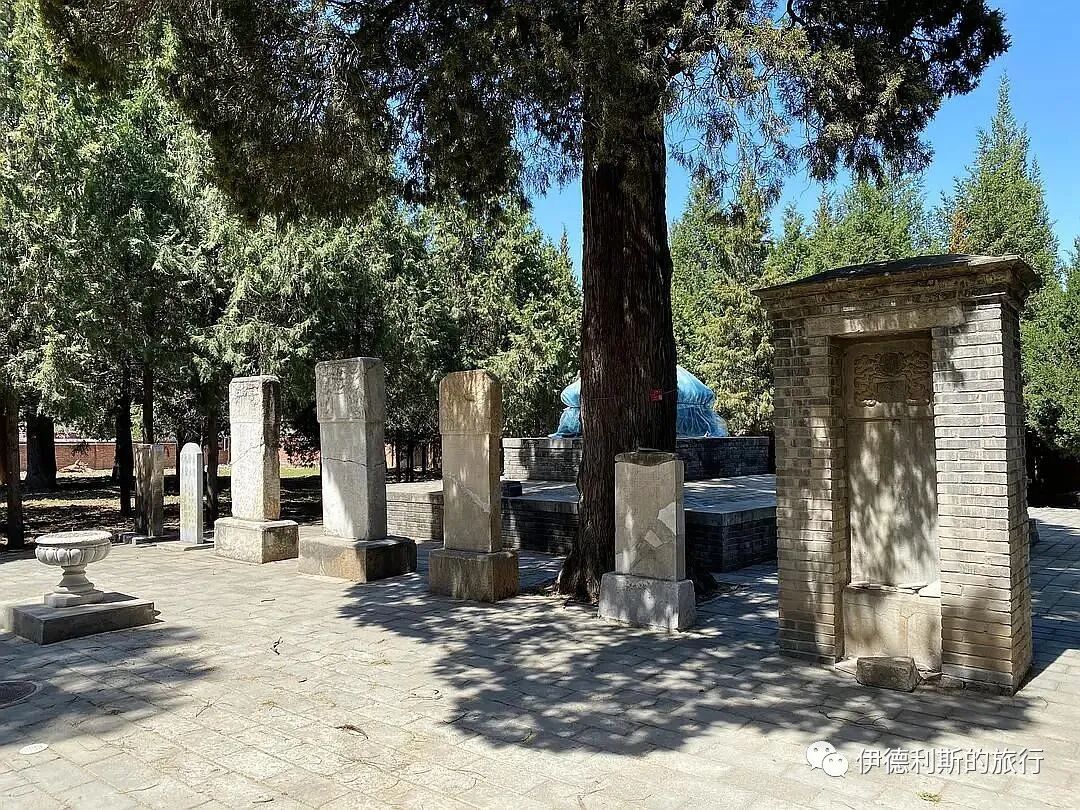
In mid-April, I visited the tomb of the Western Regions sage Bo Hazhi, who came to China in the early Ming Dynasty, located in Heying Village, east of Changping, Beijing. I was warmly welcomed by Uncle Zhang Youjin, whose family has guarded the tomb for generations. See my article, 'Visiting the Tomb of the Western Regions Sage Bo Hazhi'. Later, at Uncle Zhang's request, I transcribed and proofread the inscriptions on the three Ming Dynasty Wanli era steles, one Qing Dynasty Kangxi era stele, and one Qing Dynasty Xuantong era stele currently in the cemetery. The National Library of China holds a rubbing of one of the Ming Wanli steles. Uncle Zhang told me that after the 1960s, the nearby primary school took it to weigh down a basketball hoop, and its whereabouts are now unknown. I transcribed it based on images from the library's official website, though many characters are hard to read because they are unclear.
I also researched the authors of the steles and the information about the mosque donations mentioned in the Xuantong stele, and I have attached these details below the transcriptions.
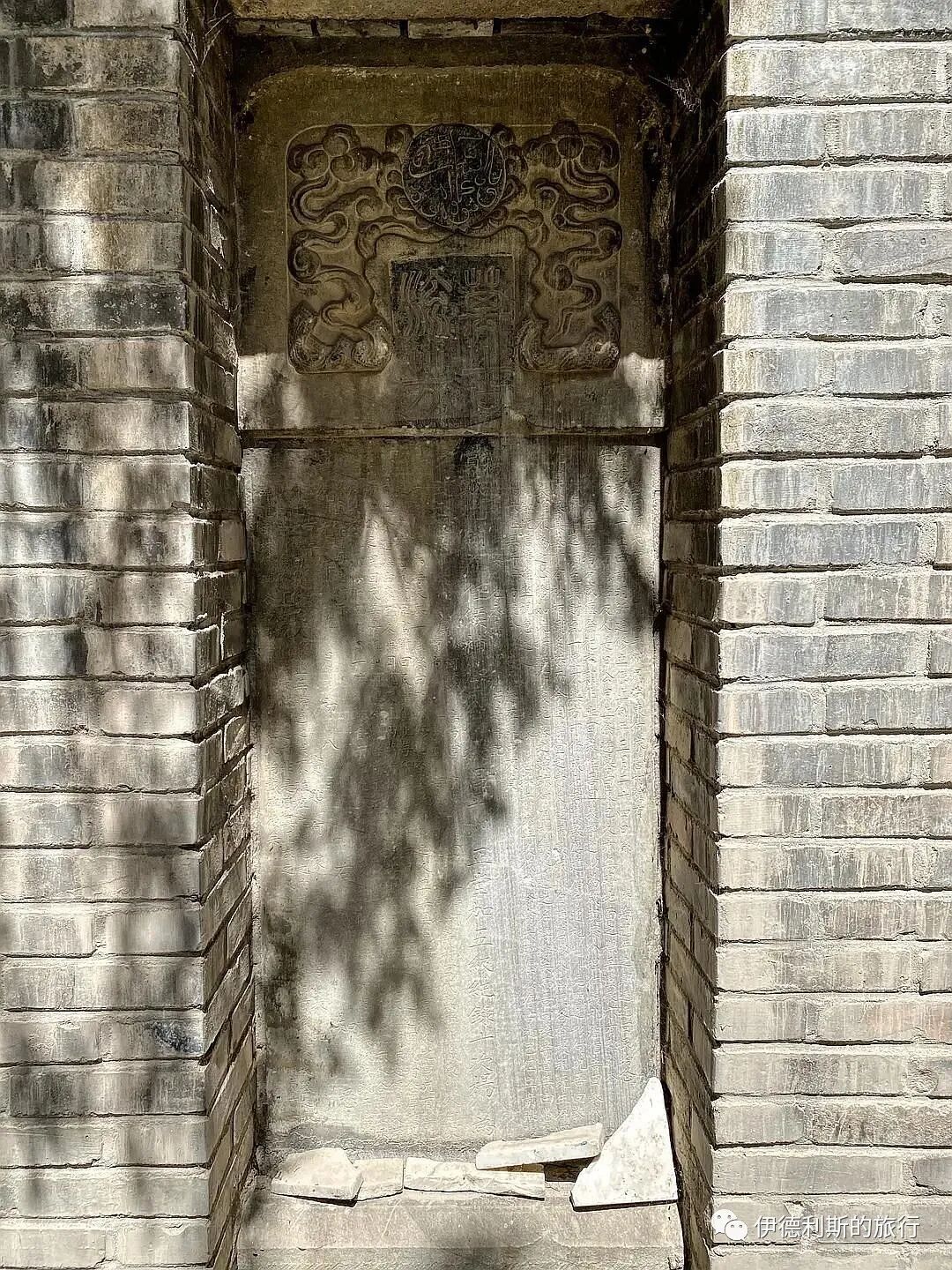
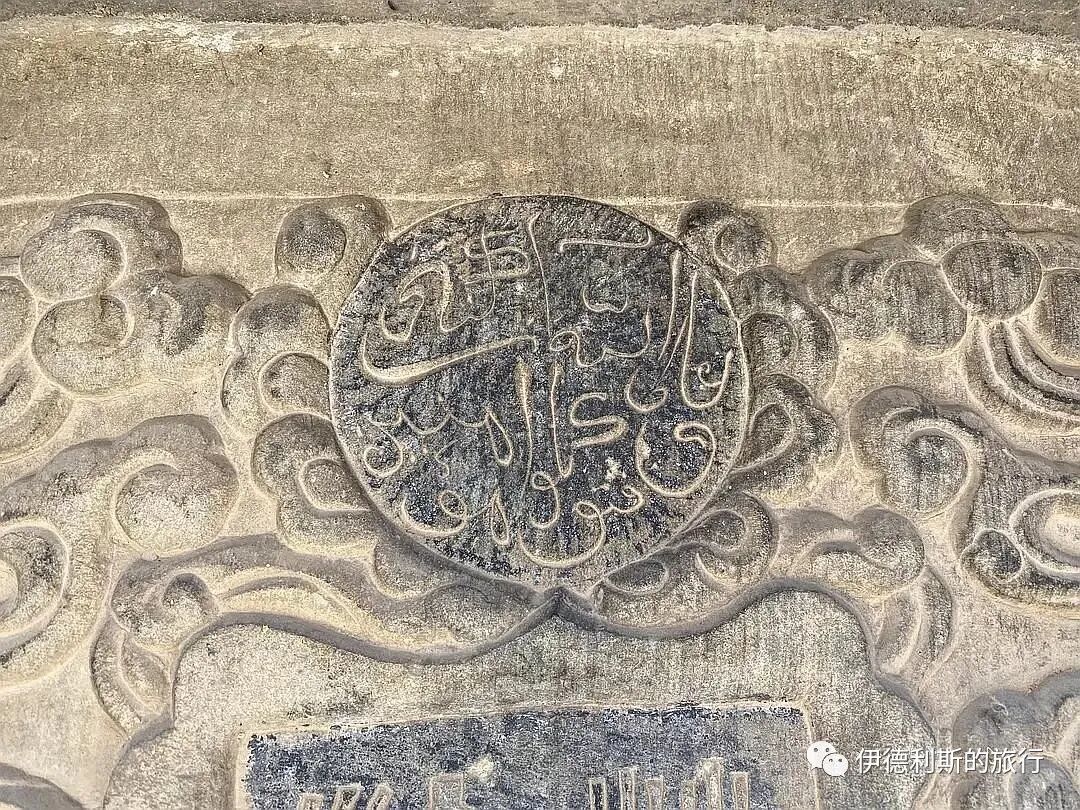
1. Stele from the first year of the Xuantong era
In Heying Village, east of the city in Changping Prefecture, Shuntian Prefecture, there is an old
tomb of a Sheikh (shaihai) built during the early Ming Dynasty. Every year on the 24th day of the third lunar month, which is the anniversary of the Sheikh, Hui Muslims from near and far gather to recite
dua for the sage Bo Hazhi, remembering the kindness he showed people during his life. This tradition of visiting the tomb has existed for a long time and does not cause any trouble for the local area. The Han people have their own temples, and the
Imperial Court has its ancestral temples; all have set times for paying respects to show gratitude. This is not unique to Islam. We Hui Muslims follow the path of faith as our guide, observing the principles of benevolence, righteousness, propriety, wisdom, and trust. Our faith requires us to
practice charity, fasting, and pilgrimage, keeping ourselves free from the corruption of alcohol, lust, wealth, and vanity to achieve spiritual perfection. The Han people frequently build temples to honor their sages, so how much more should we honor our
sage's original tomb? There were many pine and cypress trees in front of the tomb, but now they have been cut down to pay for school expenses. Since the Tang and Han dynasties, Hui and Han people have had their own religious rules. Being born into the Hui
faith, who would not feel heartbroken to see the traces of this tomb destroyed and trampled? It is a pity that those who claim to follow the path have drifted away, and we Hui Muslims have no way to guide the simple-hearted.
Hearing this, I could not sit by. I rushed to the prefecture to report it. By the grace of the authorities, an order was issued to stop the cutting of trees and protect the site, and the case was officially filed and posted.
I feared the paper notice would rot over time, so I have now carved it into a stone tablet to preserve it.
This shows the kind heart of the honorable official from Yangzhou. May it last forever, and this is my record of it.
Yang, a candidate for prefect wearing a peacock feather, serving as the magistrate of Changping Prefecture, with five honorary ranks and ten recorded merits.
A formal notice strictly forbidding this act. The case is based on a petition from Hui Muslims in villages including Shahe Town, Gaoliying, the capital, Madian, and Shangqinghe, stating that outside the east gate of the city, Hejia...
Guanshi Village, Pingxifu, Haidian, Shucun, and Anheqiao.
There is an old tomb of a saint (shaihai) in Yingcun, built during the Ming Dynasty. It has stood for hundreds of years without any controversy or rumors, and there is even a stone tablet record.
The text lists the titles of officials from past dynasties. Every year on the 24th day of the third month, the anniversary of the saint, Hui Muslims from near and far gather to honor his great virtue.
They visit the tomb to pay respects, a tradition held for a long time. However, there is a rumor that people want to sell the old pine and cypress trees inside the tomb grounds to fund the local school.
The Hui Muslims could not sit by and watch, so they petitioned for an order to stop the cutting and save the old trees. Based on this, besides the official report, I am issuing this notice.
This is a strict prohibition. Everyone must know that from the date of this notice, no one may suggest cutting down the pine and cypress trees in front of the saint's tomb, or they will face investigation.
Everyone must obey this and not violate it. Take note of this notice.
The eighth day of the ninth lunar month in the first year of the Xuantong reign.
A public notice was posted at the Hejiaying tomb of the sheikh.
From this day on, no one is allowed to bury anyone within this tomb courtyard, regardless of their religious background. This rule applies to all existing tomb markers, regulations, and grave foundations.
No one is allowed to cut down pine or cypress trees. Anyone who breaks this rule is not a true follower of the faith. We have investigated and confirmed the original ancient site.
The names of those who helped repair the stone tablets and trees are all recorded on the back of the tablet.
Back side:
We have confirmed the existence of one tomb of the sage Bo Haji, seven ancient graves, and one tomb of the sage who originally rode a white camel. All are brick tombs surrounded by pine and cypress trees.
There are 85 trees, four stone tablets from the Ming Dynasty, and one stone tablet from the Kangxi reign of the current dynasty. All are listed on the tablet as a permanent record. The donations from various parties are listed below.
Imam Ma Jinsheng of the Xiguanshi Village mosque, along with Zhang Jizong (rank 7), Gao Zhaoming (rank 7), Li Chunze (rank 7), and the village leader with a peacock feather (rank 2).
Li Jintang (expectant circuit intendant of Zhejiang, rank 2), Li Minghe (rank 5), Li Mingda (rank 5), and Li Fengrui (rank 5).
Li Baochen (rank 3), Yang Deqing (rank 5), Li Xilun (expectant assistant magistrate, rank 5), Huang Jinbao (rank 6), and Li Qingyuan (rank 6).
Li Xilin (assistant prefect, rank 7), Li Guishen (scholar), and Ma Qi, a graduate of the Shuntian Police Academy. The village of He together donated 30 silver dollars. Gaoliying.
At Pingxifu Mosque, Imam Zhang Hexiang, community leaders Ma Ling, Ma Wengui, Yang Xiufeng, Ma Gong, and Ma Kai donated 10 silver yuan to the Xiyu Pavilion.
At Shangqinghe Mosque, community members Ma Kuisheng, Zhao Yong'an, Yong Kui, Zhao Quan, Zhao Yongshan, and Zhao Wanchang donated 3 taels of silver, and Zhao Liang donated 5 taels, for a total of 8 taels.
At Shucun Mosque, community members Bai Ruzhen, Gao Yuting, Xia Jun, and An Dechun donated 10 silver yuan. Imam Ma Douxuan and mosque leader Xia Yongqing led the effort.
At Anheqiao Mosque, community members Man Wenmo, Ma Yunde, Li Qinggui, Xia Ruibin, and An Hongxiang donated 5 silver yuan.
At Haidian Mosque, community members Yang Dianhong, Zhongying reserve lieutenant Liu Cheng, Bai Jingwen, Bai Jingzhang, Liu Wanheng, Yang Lin, and Zhang Xi donated 7 silver yuan, while Xia Ruiwang donated 4 silver yuan, totaling 11 silver yuan.
At Haidian Mosque, community members Yang Jiantong, Hong En, Zhao Ming, and Zhao Yongkuan, along with imperial physician Feng Guozhi, Ma Xingkui, Shen Zhongkuan, and Zhang Xing'an, donated 5 silver yuan.
Yang Mao from Changying in Tongzhou donated 3 silver yuan, Han Yongxing from Manziying in Tongzhou donated 1 tael of silver, and Wang Fusheng from Yujiawu in Tongzhou donated 1 tael of silver.
Baodi County resident and Shun-tian cavalry drill officer, also serving as a scout team officer for the third cavalry troop, Gao Qingshan donated 1 tael of silver. At Madian Mosque, Imam Zhang Dechun and community members Ding Chengliang,
Wang Dechen, Ding Shan'en, and Ma Heming donated a total of 5 silver yuan.
At Shahe Town, Ma Lin, a fourth-rank official with a peacock feather and reserve lieutenant, donated 5 taels of silver. Zhang Tianhe donated 5 taels, and Hai Deshun and Gu Zhen each donated 1 tael.
Gu Wang, Li Wanshan, Li Wanyou, Li Wanyu, Li Cheng, and Huang Ming each donated 1 tael of silver.
Ma Bin, An Yonghe, Wei Fushun, Wang Xiangchen, Jin Yonglong, and Wang Hongsheng each donated 1 tael of silver.
Jin Yongxiang donated one tael of silver, Huang Fuxiang donated one tael of silver, Li Chengshun donated one tael of silver, and Wang Shaoxiang donated one tael of silver. The whole county donated another two taels, making a total donation of thirty taels.
The total amount received was ninety-eight taels, six mace, and seven candareens of silver. The cost for the stone tablet, materials, and labor was sixty-seven taels of silver.
The remaining thirty-one taels, six mace, and seven candareens of silver will be used in the spring of the following year to renovate the old grave, build a stone tablet pavilion, repair the surrounding walls, and rebuild the two gates. A separate record is available for verification.
Written by Li Tinghua, a student of the Confucian school in Yanqing Prefecture. The mosque committee members are Li Quancheng, Jin Yongxiang, Wei Fushun, Li Wanshan, and An Yonghe.
The managers are Imam Li Chengyu of the Shahe Town mosque and Ma Lin, a local official with a fourth-rank peacock feather and the title of lieutenant.
The three religious leaders are Li Quanming, Ma Fuquan, Li Chenggu, Wang Guzhen, and Zhang Tianhe.
Established on the third day of the twelfth lunar month in the first year of the Xuantong reign of the Great Qing Dynasty.
Brief introduction to the mosques mentioned in the text:
Xiguanshi Village Mosque is located in Yangfang Town, Changping District. It was founded in the seventh year of the Hongzhi reign of the Ming Dynasty (1494), renovated in the twenty-seventh year of the Jiajing reign (1548), and the main hall was rebuilt in the forty-eighth year of the Kangxi reign (1709). It underwent multiple renovations and expansions during the Yongzheng and Qianlong reigns. Empress Dowager Cixi rested at the mosque while fleeing in 1900. After returning to the capital, she bestowed a plaque and provided silver for repairs.
Gaoliying Mosque, now known as Gaoliying Mosque, is located in the seventh village of Gaoliying Town. It formerly belonged to Changping County and was transferred to Shunyi in 1955. The mosque was first built during the Kangxi reign of the Qing Dynasty, renovated during the Tongzhi reign, and repaired again in 1939.
Pingxifu Mosque is now known as Xiaoxinzhuang Mosque. It is located south of Pingxifu in Beiqijia Town, Changping District. It was first built during the Qing Dynasty, renovated in 1951, and rebuilt in 1997.
Shangqinghe Mosque is located on Second Street in Qinghe Town, Haidian District. It was first built during the Kangxi reign of the Qing Dynasty, though some say it was during the Qianlong reign. It was originally located on the south bank of the Qinghe River. In the 27th year of the Guangxu reign (1901), Empress Dowager Cixi was renovating the Summer Palace. The mosque used connections through palace eunuchs to hire the craftsmen working on the Summer Palace to rebuild the mosque on the north bank of the Qinghe River. It was renovated again in 1940.
Shucun Mosque is located outside the north gate of the Old Summer Palace in Haidian District. It was first built during the Kangxi reign of the Qing Dynasty, though some say it was during the Yongzheng reign. It was renovated during the Tongzhi reign.
Anheqiao Mosque is located next to Xiangshan Road at the southern foot of Hongshan Mountain in Haidian District. It was built by Hui Muslims who came here to make a living after the Changchun Garden was established during the Kangxi reign. It was renovated many times during the Qianlong and Guangxu reigns and the Republican period. In 1950, it was relocated due to the dredging of the Jingmi Diversion Canal, and it was rebuilt again between 2003 and 2005.
Haidian Mosque is located on Suzhou Street in Haidian District. It was first built during the Ming Dynasty, though some say it was during the Qing Kangxi reign. It was expanded during the Jiaqing reign and renovated during the Guangxu reign. In 1997, it was demolished and moved westward during the renovation of Xilu in Haidian Town.
Madian Mosque is located on the west side of Madian Street outside Deshengmen in Haidian District. It was first built during the Qing Kangxi reign and renovated during the Daoguang reign and the Republican period.
Shahe Town Mosque is located in Nanyi Village, Shahe Town, Changping District, on the north bank of the South Shahe River. It was first built during the Ming Dynasty and renovated between the 21st and 31st years of the Guangxu reign (1895-1905). In 1911, a rear hall and a Western-style gate were added.
Tongzhou Changying is now known as Changying in Chaoyang District. Legend says it was a military camp for Chang Yuchun's troops when they attacked the Yuan capital in the early Ming Dynasty. Changying Mosque was first built during the Zhengde reign of the Ming Dynasty and rebuilt during the Qing Jiaqing reign. It was renovated many times afterward and expanded again in 2002.
Tongzhou Manziying is now known as Wanziying in Chaoyang District. Wanziying Mosque was first built during the Qing Dynasty and expanded during the Republican period.
Yujiawu in Tongzhou is now Yujiawu Township in Tongzhou District. The Yujiawu mosque was first built during the Yongle reign of the Ming Dynasty, renovated during the Jiaqing reign of the Qing Dynasty, and rebuilt in 2003.
2. Stele record of the sage's tomb from the 46th year of the Wanli reign of the Ming Dynasty.
Front side:
Stele record of the sage's tomb.
To build a great legacy over thousands of years, one must be a person of great virtue... to establish great achievements. At the edge of the sky, there is the Western Regions Huihui Kingdom, tens of thousands of miles away.
The people of this land all show respect.
Without shadow or image, unique and one, it is...
Taking repentance and goodness as the teaching. This teaching has words, which are the words of heaven... the scriptures of heaven... incomparable. Now, those who follow this teaching clean their clothes and hats,
watch their diet, examine their hearts and minds, and perform namaz five times a day, facing west to bow and pray. If one follows the teaching, one will surely receive good... fearing perhaps one... there is a reason.
The Haji was a person from the Western Regions. He arrived in the capital years ago, traveled to this place, and passed away in Beishao... as... a pair of gauze lanterns led the way, all...
His heart was upright and he was strict with the doctrines. Whatever he did, there was always a response. I carefully record the precious signs of his manifestation...
The sage came to the capital in the previous dynasty with three or four others. They traveled to different places. Now, outside Fucheng Gate, there is a precious... and outside the gate, there is also a tomb from years ago.
The emperor was captured and taken to the north.
A saint once appeared in a dream and said on a certain date he would return to the dynasty. Unexpectedly, it came true on that day. This shows the saint's divine response.
Years ago, the saint visited Beishao Village. Less than a mile northwest of the village, there was a mosque (libaisi). The saint stayed there, close to Mang Mountain, where there were often large...
Pythons would appear and hurt people. After our saint stayed here and recited the holy scripture, the pythons fled and disappeared. To this day, even insects do not hurt people. This is where the saint showed his holiness.
In the 29th year of the Jiajing reign, during the Gengxu Incident, enemies gathered here. Over a thousand local men and women wanted to die inside the Hui Muslims' cemetery. I saw a...
A great saint wearing a turban came riding a white camel, and the enemies fled far away. All the people in the area were safe. Only then did they know the saint had appeared to save them from suffering.
Years ago, soldiers and civilians often gathered firewood near the saint's tomb. Many people saw a white camel eating grass there. This was also the saint showing his holiness...
Written on an auspicious day in the first month of autumn in the 46th year of the Wanli reign of the Ming Dynasty.
Zhang Dajin, Deputy General of the Divine Engine Battalion and Assistant Commissioner of the Chief Military Commission, along with his son Zhang Fu'an, Commander of the Divine Pivot Battalion.
Zhang Funing, a Confucian student from Changping Prefecture, Shuntian Prefecture.
Zhang FuX, a captain under the Changping Circuit.
Back side:
People of the X generation have not... seized the matter and cannot explain it clearly, so the words of the sages and worthies will X... no...
X comes out appropriately... the lesson is already very... the prayer is very effective, but... must be sincere... perform ritual washing (wudu)... first inside...
...say Huaxiuha once, Gulu huwanla three times, Salabite once, keep the heart very... the prayer is clear and everything will be answered...
X sins, sincere and X, there will be no response.
X its name Ali, passed down a method of divination to the world, but only those who follow the Hui Muslim faith... regardless of man or woman... with sincerity before Allah.
X all matters of good or bad luck before doing them, use the right hand to grab a large handful of stones into a X... at the end... this is the good or bad luck of the stars.
If the person themselves cannot recite X, they must be sincere and ask someone nearby to recite it for them, which is also acceptable.
If you divine one stone, it is the Venus star, which governs planning... easy to succeed... progress is satisfying.
If you divine two stones, it is the Mars star, which governs... not... people's hearts... turn...
If you divine three stones, it is the Ketu star, which governs the matter you are planning, X thinking, but... must...
If you divine four stones, it is the Saturn star, which governs the matter you are planning, it will not succeed.
If you divine five stones, it is the Jupiter star, which governs the matter you are planning, peace... hope for quick success...
If you draw the sixth sign, it is the Moon Star, which is what Allah hopes for... it is satisfactory...
If you draw the seventh sign, it is the Mercury Star, which means victory over others... the hope will be fulfilled quickly...
If you draw the eighth sign, it is the Sun Star, which means planning... Allah will renew your original intention XX.
Right Vice-General of the Divine Engine Division, Commander of the Front Military Commission...
3. The 47th year of the Wanli reign of the Ming Dynasty, stele record of the loyal and righteous sages.
When sages live in the world, their birth has a source and their passing has a purpose. When they are alive, they are respected.
Xian Di Wei.
The king comes to the next world to uplift customs and provide support.
The holy religion is immortal, revering the commandments and warning people forever. When they pass away,
their heroic spirits shine brightly. Though dead, they still live. They trigger responses, like a sound reaching a drum or a shadow following a form. Oh... nothing like Beishao.
The spiritual responses of the sages.
The sage's surname is Bo, and his name is Haji. He started his career in the Western Regions and came here out of admiration for righteousness.
Towards me.
The founding emperor praised his military strategy and offered him an official position, but he refused it.
An imperial decree ordered the building of a mosque for him to live in. He accumulated merit and performed good deeds, connecting the ancient to the present. People from far away were happy and those nearby came to visit. He spread the faith widely...
The holy faith had declined but was revived, and the halal way had been cut off but was continued. On the day he passed away, people from all walks of life mourned him. They chose a good burial site to the left of Yingping for Ma Dake.
Strangely, even children saw his appearance as if he were still walking around the area. The camel he rode also did not die and was buried beside his grave. In the Gengxu year of the Jiajing reign, the invaders entered the Gubeikou pass and reached the outskirts.
The enemy scouts had already reached the suburbs of the capital. The civil and military officials were panicked and did not know what to do. A large crowd gathered and suddenly saw...
The sage rode his camel and held a spear to chase the invaders. The invaders were terrified and thought he was a god, so they fled in the night. The local area was saved. The officials were moved and grateful.
The sage drove back the invaders and the whole city celebrated. It was just like Zhang Suiyang who became a spirit to kill the enemy, or Wu Mingfu who turned into bees and scorpions to sting the enemy. Ancient and modern times follow the same path. If it were not for his loyal heart and righteous...
courage and divine power, who could have done this? Therefore...
The sage's reputation grew even greater. People from all directions came and went, and visitors never stopped. He was granted military honors and passed the imperial examinations. From childhood to adulthood, he followed his father's path. Now, in my spare time from work in Changzhen...
I often pay my respects there and feel deeply moved.
I fear that the sage's legacy and noble conduct will be forgotten as time passes. Since the Manchu invaders from Liaodong attacked Liang and Jibei, this is to commemorate...
The traces remain from the past.
To help the future, we carefully carve these words into stone to tell the story so it will not be forgotten.
An auspicious day in the ninth lunar month of the year of Jiwei during the Wanli reign of the Great Ming Dynasty.
Imperial envoy and commander of the Right Army Battalion under the Changping Garrison, Guerrilla General (Regional Commander) Yang Yingrui, led his son.
Military graduate and vanguard squad leader of the Second Battalion of the Firearms Division, Yang Rusong.
Military graduate and vanguard squad leader of the Second Battalion of the Divine Engine Division, Yang Rubai.
Student Yang RuX.
Note: Yang Yingrui was a Hui Muslim general from Niujie in Beijing who was very devoted to his faith. The Qing Dynasty Niujie local gazetteer, Gangzhi, records: Yang Xiangyu, courtesy name Yingrui, was a hereditary commander during the Ming Dynasty who was promoted to Assistant Commissioner-in-Chief of the Rear Chief Military Commission for his repeated merits. He was sent to garrison Datong and held the seal of the General Who Guards the North. He had a beautiful beard, was skilled in riding and archery, and was well-versed in Islamic teachings. He wrote a book called Essential Records of the True Religion (Zhengjiao Yaoce) which circulated widely.
Yang Yingrui was first in charge of patrolling the southwest of the capital. Later, he was promoted to garrison commander of Zhangjiawan, then Guerrilla General of the Right Army of Changping, and finally Commander-in-Chief of the Xuanfu Garrison. He erected the stone tablet at the tomb of Bo Haji while he was stationed in Changping. The 1613 stone tablet at Niujie Mosque, titled 'Record of the Imperial Gifted Mosque,' mentions Yang Yingrui, the Vice Commander of the Capital's Southwest Patrol. The 'Veritable Records of the Ming Shenzong' state that in September 1617, Yang Yingrui, the garrison commander of Zhangjiawan, was promoted to guerrilla general of the Changping Right Army Camp. The 'Veritable Records of the Ming Xizong' record that in 1624, Yang Yingrui became a general and commander-in-chief stationed in Xuanfu.
4. Tablet record of the renovation of the sages in the sixth year of the Wanli reign of the Ming Dynasty.
Tablet record of the renovation of the sages.
During my free time, I met Mr. Li Chenxuan, who visited me and asked, 'Do you know why I have come?' I replied, 'I do not.' Mr. Li then stepped forward to donate.
He said, 'Outside the east gate of Changping Prefecture, there is a plot of land of about 40 mu used for burning, which was once...'
The tomb of the sage and ancestor named Baha Zhi, which was originally...
Granted by our Emperor Taizu Gao because of his contribution in offering military strategies. A mosque was built there with magnificent halls and lush pine and bamboo trees. People recited the holy scripture day and night and performed namaz facing west, partly to pray for the Emperor's boundless longevity.
Because of the passage of time, the site collapsed and was damaged, and the inscriptions became too faded to be passed down. This year, we received...
The former commander-in-chief of the Xuan-Da region, Ma Nanxi.
He was determined to re-erect the tablet and asked me to write a few words to be carved on it. I have always enjoyed talking about the path of virtue.
Doing good without seeking praise for one's virtue is what the Book of Changes describes.
Doing good brings a hundred blessings, and a family that accumulates goodness will have extra joy; this is exactly what that means.
From now on, setting up this text on a stone tablet is not only to honor this.
It also ensures that one aspect of the Left Commander-in-Chief's love for goodness is not forgotten.
The virtuous predecessors established this for all generations, and I have written this because Mr. Li requested it.
He was very sincere, so I reluctantly used simple language to carve it onto the stone to record the month.
An auspicious day in the summer of the Wuyin year, the sixth year of the Wanli reign.
Presented Scholar, Grand Master of Palace Accord, Director of the Zhejiang Bureau of the Ministry of Revenue.
Respectfully written by Zhou Wenyuan of Yanshan.
Ma Fang, Left Commander-in-Chief in charge of the Front Military Commission.
Note: Ma Fang was a legendary general in the mid-Ming Dynasty. His biography in the History of Ming is included in high school extracurricular literature, and The Siege of Ma Fang is a classic play in Beijing opera, Henan opera, Sichuan opera, Han opera, Xiang opera, Yunnan opera, and Qinqiang.
Ma Fang, courtesy name Dexin, was from Weizhou (modern-day Yuxian, Hebei). He was captured by the Mongols at age ten, later escaped back to Datong to join the army, and then achieved countless military victories. In 1550, the 29th year of the Jiajing reign, the Mongol leader Altan Khan launched the Gengxu Incident. The Ming dynasty border troops retreated across the line, but Ma Fang won a victory and killed an enemy commander. The Ming army's combat effectiveness improved steadily after Ma Fang reorganized it. He defeated Altan Khan many times until the khan was finally pacified. The History of Ming praises him, saying, 'Fang rose from the ranks and became a great commander in just over ten years... He fought over a hundred battles, suffered dozens of wounds, and never failed to win a great victory even when outnumbered.' He captured dozens of tribal leaders and killed countless enemies. His fame shook the borderlands, and he was the top general of his time.
Ma Fang once oversaw the renovation of the Datong mosque. According to the 1622 (the second year of the Tianqi reign) stele record for the renovation of the mosque in Datong, 'General Ma Lanxi and General Ma Xiquan dug a square pond, built a stone bridge, and renovated the mosque once.' Lanxi was Ma Fang's courtesy name.
5. Tombstone of the local sage Bo Hazhi from the 53rd year of the Kangxi reign.
Tombstone of the local sage Bo Hazhi.
He was a man from the Western Regions who came to the imperial court in the early Hongwu reign of the Ming dynasty to offer advice. He was offered an official position but refused, asking instead to travel and teach in the village, which was granted. He lived with strict dignity and never acted carelessly.
He rode a white camel wherever he went. He was not petty, but he was strict about religious discipline and corrected those who broke the rules. People observed his pure conduct and encouraged each other to improve.
Because of this, the customs of our village changed, and our faith flourished. The Ming Emperor Taizu praised his virtue and treated him with great respect. He later returned to Changping and died of old age.
My fellow villagers buried him on the sunny side of Beishao, and they also buried his white camel next to his grave. During the Zhengtong, Jiajing, and Wanli eras, many miracles were recorded here.
Earlier stone inscriptions from the middle of the Wanli era were too crude to be worth recording.
In our current dynasty, my fellow villagers still admire his noble character and treat him as a role model, just as they did in the past.
In the 35th year of the current Emperor's reign, I returned from a northern military campaign and passed through Beishao. I donated money to repair the public tomb. At that time, someone told me about his great virtues and asked me to write a few words, but I did not finish it.
Seventeen years have passed since then.
To celebrate the Emperor's 60th birthday, my second son, Longxiang, received a special appointment.
He was appointed as my middle army commander and traveled with me.
On our way back from offering birthday blessings, we passed through Beishao again. We repaired the walls and marked the boundaries of the tomb. The tomb gate and the spirit path look brand new. Alas, he is gone. Although everyone in my village talks about his virtue, no one has written it down. I admire this sage and envy how he guided others through his own actions, so I have organized his life story.
I have added an inscription to pass his story on to future generations.
The inscription says:
The inscription says:
He came to offer advice and died while spreading the faith. Those influenced by his spirit buried him here. For millions of years, people will look up to him like a high mountain.
Written by Ma Jinliang, the Regional Commander (zongbingguan) of Gubeikou and other areas, and Assistant Commissioner-in-Chief (dudu tongzhi).
Time:
Erected on a day in the fifth month of the 53rd year of the Kangxi reign.
Note: Ma Jinliang was a famous Hui Muslim military officer in the early Qing Dynasty. He served as a guerrilla general (youji) of the Shandan Battalion in 1690, a colonel (canjiang) of the Gansu Provincial Command in 1693, and became the Regional Commander (zongbingguan) of the Zhili region in 1695, stationed at Gubeikou. People called him 'Hui Muslim General Ma'. In 1696, Ma Jinliang followed Emperor Kangxi to campaign against Galdan. He performed outstanding military service and was awarded the title 'Valiant General' (xiaoyong jiangjun). On his way back, he passed through Changping and donated money to renovate the tomb of Bo Hazhi. In 1713, Ma Jinliang passed by the tomb of Bo Hazhi again and 'repaired the walls, defined the boundaries, and restored the tomb gate and the sacred path.' Afterward, he erected this stone tablet.
6. The 1602 tombstone protecting the tomb of Bo Hazhi from the Wanli reign of the Ming Dynasty.
(No longer exists, but the National Library has a rubbing of it.)
XX because of X Beishao.
Beside the tomb of the sage, mixed with other graves, the reason for this is X.
The mosque was granted by the emperor, and the Han people did not change it.
The emperor bestowed his grace and asked the Han people about it. The sounds of the past are heard by the honest and patient, and then Mr. Yang, the leader, gathered everyone.
Mr. Yang, whose given name was Hong, took the lead in this righteous cause. He donated money to buy back the land where his ancestors were buried, stopped the Han people from burying others there, and prioritized the proper Islamic rites.
He cleared the main path to reach the gate, built walls all around for protection, and erected a three-room prayer hall for reciting the Quran and performing rituals.
The boundaries are vast, and he built structures nearby to guard the land forever.
The elders felt this in their hearts.
The Prophet's mercy is boundless, and our longing to remember him grows more sincere. Our determination to follow his path strengthens, and many people now walk this road.
When people see this place, they are moved. They talk to each other in surprise about how the site has changed from its former glory to its new appearance today.
The renovation is known throughout the country, and the opening is known at home and abroad. The credit for this success belongs to the leadership of Mr. Yang and the community.
Their collective effort made it happen.
The character of the elders.
The great Prophet's teachings are entrusted to us.
The Lord of all things... not by human power... those who reach this place... shaping the tomb to honor the memory, showing greatness, and reflecting on the return to the root of all existence.
In this land, there is life and advice... do not forget.
The Lord, remembering the distant ancestors and being careful with the end, every detail has its purpose.
The Lord, as well as the teaching of the lessons, the strict observance of fasting (sawm), the striving in prayer (namaz)... the glorious true words of faith.
The submission to Him can establish the pillars of the faith. Therefore, the predecessors said... truly having the way, how profound are their words! Listening to the empty valley...
Passing on the sound, it is hard to know what kind of person Mr. Yang was. His alias was Jiquan... he was an outstanding leader, and one can imagine his great righteousness and courage.
Is it not so? The Analects say: to see what is right and not do it is a lack of courage. The Book of Changes says... if one speaks for the benefit of others, then in the midst of promoting righteousness and courage, one also relies on...
Longxi... near the locust trees, sharing the labor, Hao... Houquan, Chen Chenquan... their deeds at Lubin Pavilion, Kang Jingyu praised their success, and thus...
The sages have glory, establishing a foundation that lasts forever. Using the advice stone to leave a mark that will not wear away for millions of years, these simple words are recorded to mark the time.
Erected on an auspicious day in the middle of the second month of autumn in the Renyin year, the 30th year of the Wanli reign.
Written by Lin Qicai, a presented scholar (jinshi), serving as a grand master for palace attendance and director of the Bureau of Ceremonies in the Ministry of Rites.
Note: Lin Qicai was a cousin of the great Ming dynasty thinker Li Zhi. He was from Jinjiang, Fujian, and passed the imperial examination (jinshi) in the 38th year of the Jiajing reign (1559). According to the Fengchi Lin Family Genealogy, Lin Qicai's second-generation ancestor Lin Nu married a Semu woman and followed her faith, receiving initiation into the teachings of the Qingjing Mosque. In 1580, the eighth year of the Wanli reign of the Ming Dynasty, Lin Qicai wrote the Stele Record for the Reconstruction of the Imperial-commissioned Faming Mosque, located inside Andingmen in Beijing. He signed it as Lin Qicai, a presented scholar (jinshi) and former director of the Ministry of Revenue, serving as an official in the Imperial Seal Office. According to the History of Ming, the official position of director of the Imperial Seal Office was a rank 6b role responsible for managing imperial seals, tallies, and stamps, and verifying their proper use. view all
Summary: Bohaji Tomb Inscriptions: Beijing Muslim History and the Stele Writer is presented here as a firsthand travel account in clear English, beginning with this scene: In mid-April, I visited the tomb of the Western Regions sage Bo Hazhi, who came to China in the early Ming Dynasty, located in Heying Village, east of Changping, Beijing. The account keeps its focus on Bohaji Tomb, Islamic Inscriptions, Beijing Muslim History while preserving the names, places, food, and historical details from the Chinese source.
In mid-April, I visited the tomb of the Western Regions sage Bo Hazhi, who came to China in the early Ming Dynasty, located in Heying Village, east of Changping, Beijing. I was warmly welcomed by Uncle Zhang Youjin, whose family has guarded the tomb for generations. See my article, 'Visiting the Tomb of the Western Regions Sage Bo Hazhi'. Later, at Uncle Zhang's request, I transcribed and proofread the inscriptions on the three Ming Dynasty Wanli era steles, one Qing Dynasty Kangxi era stele, and one Qing Dynasty Xuantong era stele currently in the cemetery. The National Library of China holds a rubbing of one of the Ming Wanli steles. Uncle Zhang told me that after the 1960s, the nearby primary school took it to weigh down a basketball hoop, and its whereabouts are now unknown. I transcribed it based on images from the library's official website, though many characters are hard to read because they are unclear.
I also researched the authors of the steles and the information about the mosque donations mentioned in the Xuantong stele, and I have attached these details below the transcriptions.
1. Stele from the first year of the Xuantong era
In Heying Village, east of the city in Changping Prefecture, Shuntian Prefecture, there is an old
tomb of a Sheikh (shaihai) built during the early Ming Dynasty. Every year on the 24th day of the third lunar month, which is the anniversary of the Sheikh, Hui Muslims from near and far gather to recite
dua for the sage Bo Hazhi, remembering the kindness he showed people during his life. This tradition of visiting the tomb has existed for a long time and does not cause any trouble for the local area. The Han people have their own temples, and the
Imperial Court has its ancestral temples; all have set times for paying respects to show gratitude. This is not unique to Islam. We Hui Muslims follow the path of faith as our guide, observing the principles of benevolence, righteousness, propriety, wisdom, and trust. Our faith requires us to
practice charity, fasting, and pilgrimage, keeping ourselves free from the corruption of alcohol, lust, wealth, and vanity to achieve spiritual perfection. The Han people frequently build temples to honor their sages, so how much more should we honor our
sage's original tomb? There were many pine and cypress trees in front of the tomb, but now they have been cut down to pay for school expenses. Since the Tang and Han dynasties, Hui and Han people have had their own religious rules. Being born into the Hui
faith, who would not feel heartbroken to see the traces of this tomb destroyed and trampled? It is a pity that those who claim to follow the path have drifted away, and we Hui Muslims have no way to guide the simple-hearted.
Hearing this, I could not sit by. I rushed to the prefecture to report it. By the grace of the authorities, an order was issued to stop the cutting of trees and protect the site, and the case was officially filed and posted.
I feared the paper notice would rot over time, so I have now carved it into a stone tablet to preserve it.
This shows the kind heart of the honorable official from Yangzhou. May it last forever, and this is my record of it.
Yang, a candidate for prefect wearing a peacock feather, serving as the magistrate of Changping Prefecture, with five honorary ranks and ten recorded merits.
A formal notice strictly forbidding this act. The case is based on a petition from Hui Muslims in villages including Shahe Town, Gaoliying, the capital, Madian, and Shangqinghe, stating that outside the east gate of the city, Hejia...
Guanshi Village, Pingxifu, Haidian, Shucun, and Anheqiao.
There is an old tomb of a saint (shaihai) in Yingcun, built during the Ming Dynasty. It has stood for hundreds of years without any controversy or rumors, and there is even a stone tablet record.
The text lists the titles of officials from past dynasties. Every year on the 24th day of the third month, the anniversary of the saint, Hui Muslims from near and far gather to honor his great virtue.
They visit the tomb to pay respects, a tradition held for a long time. However, there is a rumor that people want to sell the old pine and cypress trees inside the tomb grounds to fund the local school.
The Hui Muslims could not sit by and watch, so they petitioned for an order to stop the cutting and save the old trees. Based on this, besides the official report, I am issuing this notice.
This is a strict prohibition. Everyone must know that from the date of this notice, no one may suggest cutting down the pine and cypress trees in front of the saint's tomb, or they will face investigation.
Everyone must obey this and not violate it. Take note of this notice.
The eighth day of the ninth lunar month in the first year of the Xuantong reign.
A public notice was posted at the Hejiaying tomb of the sheikh.
From this day on, no one is allowed to bury anyone within this tomb courtyard, regardless of their religious background. This rule applies to all existing tomb markers, regulations, and grave foundations.
No one is allowed to cut down pine or cypress trees. Anyone who breaks this rule is not a true follower of the faith. We have investigated and confirmed the original ancient site.
The names of those who helped repair the stone tablets and trees are all recorded on the back of the tablet.
Back side:
We have confirmed the existence of one tomb of the sage Bo Haji, seven ancient graves, and one tomb of the sage who originally rode a white camel. All are brick tombs surrounded by pine and cypress trees.
There are 85 trees, four stone tablets from the Ming Dynasty, and one stone tablet from the Kangxi reign of the current dynasty. All are listed on the tablet as a permanent record. The donations from various parties are listed below.
Imam Ma Jinsheng of the Xiguanshi Village mosque, along with Zhang Jizong (rank 7), Gao Zhaoming (rank 7), Li Chunze (rank 7), and the village leader with a peacock feather (rank 2).
Li Jintang (expectant circuit intendant of Zhejiang, rank 2), Li Minghe (rank 5), Li Mingda (rank 5), and Li Fengrui (rank 5).
Li Baochen (rank 3), Yang Deqing (rank 5), Li Xilun (expectant assistant magistrate, rank 5), Huang Jinbao (rank 6), and Li Qingyuan (rank 6).
Li Xilin (assistant prefect, rank 7), Li Guishen (scholar), and Ma Qi, a graduate of the Shuntian Police Academy. The village of He together donated 30 silver dollars. Gaoliying.
At Pingxifu Mosque, Imam Zhang Hexiang, community leaders Ma Ling, Ma Wengui, Yang Xiufeng, Ma Gong, and Ma Kai donated 10 silver yuan to the Xiyu Pavilion.
At Shangqinghe Mosque, community members Ma Kuisheng, Zhao Yong'an, Yong Kui, Zhao Quan, Zhao Yongshan, and Zhao Wanchang donated 3 taels of silver, and Zhao Liang donated 5 taels, for a total of 8 taels.
At Shucun Mosque, community members Bai Ruzhen, Gao Yuting, Xia Jun, and An Dechun donated 10 silver yuan. Imam Ma Douxuan and mosque leader Xia Yongqing led the effort.
At Anheqiao Mosque, community members Man Wenmo, Ma Yunde, Li Qinggui, Xia Ruibin, and An Hongxiang donated 5 silver yuan.
At Haidian Mosque, community members Yang Dianhong, Zhongying reserve lieutenant Liu Cheng, Bai Jingwen, Bai Jingzhang, Liu Wanheng, Yang Lin, and Zhang Xi donated 7 silver yuan, while Xia Ruiwang donated 4 silver yuan, totaling 11 silver yuan.
At Haidian Mosque, community members Yang Jiantong, Hong En, Zhao Ming, and Zhao Yongkuan, along with imperial physician Feng Guozhi, Ma Xingkui, Shen Zhongkuan, and Zhang Xing'an, donated 5 silver yuan.
Yang Mao from Changying in Tongzhou donated 3 silver yuan, Han Yongxing from Manziying in Tongzhou donated 1 tael of silver, and Wang Fusheng from Yujiawu in Tongzhou donated 1 tael of silver.
Baodi County resident and Shun-tian cavalry drill officer, also serving as a scout team officer for the third cavalry troop, Gao Qingshan donated 1 tael of silver. At Madian Mosque, Imam Zhang Dechun and community members Ding Chengliang,
Wang Dechen, Ding Shan'en, and Ma Heming donated a total of 5 silver yuan.
At Shahe Town, Ma Lin, a fourth-rank official with a peacock feather and reserve lieutenant, donated 5 taels of silver. Zhang Tianhe donated 5 taels, and Hai Deshun and Gu Zhen each donated 1 tael.
Gu Wang, Li Wanshan, Li Wanyou, Li Wanyu, Li Cheng, and Huang Ming each donated 1 tael of silver.
Ma Bin, An Yonghe, Wei Fushun, Wang Xiangchen, Jin Yonglong, and Wang Hongsheng each donated 1 tael of silver.
Jin Yongxiang donated one tael of silver, Huang Fuxiang donated one tael of silver, Li Chengshun donated one tael of silver, and Wang Shaoxiang donated one tael of silver. The whole county donated another two taels, making a total donation of thirty taels.
The total amount received was ninety-eight taels, six mace, and seven candareens of silver. The cost for the stone tablet, materials, and labor was sixty-seven taels of silver.
The remaining thirty-one taels, six mace, and seven candareens of silver will be used in the spring of the following year to renovate the old grave, build a stone tablet pavilion, repair the surrounding walls, and rebuild the two gates. A separate record is available for verification.
Written by Li Tinghua, a student of the Confucian school in Yanqing Prefecture. The mosque committee members are Li Quancheng, Jin Yongxiang, Wei Fushun, Li Wanshan, and An Yonghe.
The managers are Imam Li Chengyu of the Shahe Town mosque and Ma Lin, a local official with a fourth-rank peacock feather and the title of lieutenant.
The three religious leaders are Li Quanming, Ma Fuquan, Li Chenggu, Wang Guzhen, and Zhang Tianhe.
Established on the third day of the twelfth lunar month in the first year of the Xuantong reign of the Great Qing Dynasty.
Brief introduction to the mosques mentioned in the text:
Xiguanshi Village Mosque is located in Yangfang Town, Changping District. It was founded in the seventh year of the Hongzhi reign of the Ming Dynasty (1494), renovated in the twenty-seventh year of the Jiajing reign (1548), and the main hall was rebuilt in the forty-eighth year of the Kangxi reign (1709). It underwent multiple renovations and expansions during the Yongzheng and Qianlong reigns. Empress Dowager Cixi rested at the mosque while fleeing in 1900. After returning to the capital, she bestowed a plaque and provided silver for repairs.
Gaoliying Mosque, now known as Gaoliying Mosque, is located in the seventh village of Gaoliying Town. It formerly belonged to Changping County and was transferred to Shunyi in 1955. The mosque was first built during the Kangxi reign of the Qing Dynasty, renovated during the Tongzhi reign, and repaired again in 1939.
Pingxifu Mosque is now known as Xiaoxinzhuang Mosque. It is located south of Pingxifu in Beiqijia Town, Changping District. It was first built during the Qing Dynasty, renovated in 1951, and rebuilt in 1997.
Shangqinghe Mosque is located on Second Street in Qinghe Town, Haidian District. It was first built during the Kangxi reign of the Qing Dynasty, though some say it was during the Qianlong reign. It was originally located on the south bank of the Qinghe River. In the 27th year of the Guangxu reign (1901), Empress Dowager Cixi was renovating the Summer Palace. The mosque used connections through palace eunuchs to hire the craftsmen working on the Summer Palace to rebuild the mosque on the north bank of the Qinghe River. It was renovated again in 1940.
Shucun Mosque is located outside the north gate of the Old Summer Palace in Haidian District. It was first built during the Kangxi reign of the Qing Dynasty, though some say it was during the Yongzheng reign. It was renovated during the Tongzhi reign.
Anheqiao Mosque is located next to Xiangshan Road at the southern foot of Hongshan Mountain in Haidian District. It was built by Hui Muslims who came here to make a living after the Changchun Garden was established during the Kangxi reign. It was renovated many times during the Qianlong and Guangxu reigns and the Republican period. In 1950, it was relocated due to the dredging of the Jingmi Diversion Canal, and it was rebuilt again between 2003 and 2005.
Haidian Mosque is located on Suzhou Street in Haidian District. It was first built during the Ming Dynasty, though some say it was during the Qing Kangxi reign. It was expanded during the Jiaqing reign and renovated during the Guangxu reign. In 1997, it was demolished and moved westward during the renovation of Xilu in Haidian Town.
Madian Mosque is located on the west side of Madian Street outside Deshengmen in Haidian District. It was first built during the Qing Kangxi reign and renovated during the Daoguang reign and the Republican period.
Shahe Town Mosque is located in Nanyi Village, Shahe Town, Changping District, on the north bank of the South Shahe River. It was first built during the Ming Dynasty and renovated between the 21st and 31st years of the Guangxu reign (1895-1905). In 1911, a rear hall and a Western-style gate were added.
Tongzhou Changying is now known as Changying in Chaoyang District. Legend says it was a military camp for Chang Yuchun's troops when they attacked the Yuan capital in the early Ming Dynasty. Changying Mosque was first built during the Zhengde reign of the Ming Dynasty and rebuilt during the Qing Jiaqing reign. It was renovated many times afterward and expanded again in 2002.
Tongzhou Manziying is now known as Wanziying in Chaoyang District. Wanziying Mosque was first built during the Qing Dynasty and expanded during the Republican period.
Yujiawu in Tongzhou is now Yujiawu Township in Tongzhou District. The Yujiawu mosque was first built during the Yongle reign of the Ming Dynasty, renovated during the Jiaqing reign of the Qing Dynasty, and rebuilt in 2003.
2. Stele record of the sage's tomb from the 46th year of the Wanli reign of the Ming Dynasty.
Front side:
Stele record of the sage's tomb.
To build a great legacy over thousands of years, one must be a person of great virtue... to establish great achievements. At the edge of the sky, there is the Western Regions Huihui Kingdom, tens of thousands of miles away.
The people of this land all show respect.
Without shadow or image, unique and one, it is...
Taking repentance and goodness as the teaching. This teaching has words, which are the words of heaven... the scriptures of heaven... incomparable. Now, those who follow this teaching clean their clothes and hats,
watch their diet, examine their hearts and minds, and perform namaz five times a day, facing west to bow and pray. If one follows the teaching, one will surely receive good... fearing perhaps one... there is a reason.
The Haji was a person from the Western Regions. He arrived in the capital years ago, traveled to this place, and passed away in Beishao... as... a pair of gauze lanterns led the way, all...
His heart was upright and he was strict with the doctrines. Whatever he did, there was always a response. I carefully record the precious signs of his manifestation...
The sage came to the capital in the previous dynasty with three or four others. They traveled to different places. Now, outside Fucheng Gate, there is a precious... and outside the gate, there is also a tomb from years ago.
The emperor was captured and taken to the north.
A saint once appeared in a dream and said on a certain date he would return to the dynasty. Unexpectedly, it came true on that day. This shows the saint's divine response.
Years ago, the saint visited Beishao Village. Less than a mile northwest of the village, there was a mosque (libaisi). The saint stayed there, close to Mang Mountain, where there were often large...
Pythons would appear and hurt people. After our saint stayed here and recited the holy scripture, the pythons fled and disappeared. To this day, even insects do not hurt people. This is where the saint showed his holiness.
In the 29th year of the Jiajing reign, during the Gengxu Incident, enemies gathered here. Over a thousand local men and women wanted to die inside the Hui Muslims' cemetery. I saw a...
A great saint wearing a turban came riding a white camel, and the enemies fled far away. All the people in the area were safe. Only then did they know the saint had appeared to save them from suffering.
Years ago, soldiers and civilians often gathered firewood near the saint's tomb. Many people saw a white camel eating grass there. This was also the saint showing his holiness...
Written on an auspicious day in the first month of autumn in the 46th year of the Wanli reign of the Ming Dynasty.
Zhang Dajin, Deputy General of the Divine Engine Battalion and Assistant Commissioner of the Chief Military Commission, along with his son Zhang Fu'an, Commander of the Divine Pivot Battalion.
Zhang Funing, a Confucian student from Changping Prefecture, Shuntian Prefecture.
Zhang FuX, a captain under the Changping Circuit.
Back side:
People of the X generation have not... seized the matter and cannot explain it clearly, so the words of the sages and worthies will X... no...
X comes out appropriately... the lesson is already very... the prayer is very effective, but... must be sincere... perform ritual washing (wudu)... first inside...
...say Huaxiuha once, Gulu huwanla three times, Salabite once, keep the heart very... the prayer is clear and everything will be answered...
X sins, sincere and X, there will be no response.
X its name Ali, passed down a method of divination to the world, but only those who follow the Hui Muslim faith... regardless of man or woman... with sincerity before Allah.
X all matters of good or bad luck before doing them, use the right hand to grab a large handful of stones into a X... at the end... this is the good or bad luck of the stars.
If the person themselves cannot recite X, they must be sincere and ask someone nearby to recite it for them, which is also acceptable.
If you divine one stone, it is the Venus star, which governs planning... easy to succeed... progress is satisfying.
If you divine two stones, it is the Mars star, which governs... not... people's hearts... turn...
If you divine three stones, it is the Ketu star, which governs the matter you are planning, X thinking, but... must...
If you divine four stones, it is the Saturn star, which governs the matter you are planning, it will not succeed.
If you divine five stones, it is the Jupiter star, which governs the matter you are planning, peace... hope for quick success...
If you draw the sixth sign, it is the Moon Star, which is what Allah hopes for... it is satisfactory...
If you draw the seventh sign, it is the Mercury Star, which means victory over others... the hope will be fulfilled quickly...
If you draw the eighth sign, it is the Sun Star, which means planning... Allah will renew your original intention XX.
Right Vice-General of the Divine Engine Division, Commander of the Front Military Commission...
3. The 47th year of the Wanli reign of the Ming Dynasty, stele record of the loyal and righteous sages.
When sages live in the world, their birth has a source and their passing has a purpose. When they are alive, they are respected.
Xian Di Wei.
The king comes to the next world to uplift customs and provide support.
The holy religion is immortal, revering the commandments and warning people forever. When they pass away,
their heroic spirits shine brightly. Though dead, they still live. They trigger responses, like a sound reaching a drum or a shadow following a form. Oh... nothing like Beishao.
The spiritual responses of the sages.
The sage's surname is Bo, and his name is Haji. He started his career in the Western Regions and came here out of admiration for righteousness.
Towards me.
The founding emperor praised his military strategy and offered him an official position, but he refused it.
An imperial decree ordered the building of a mosque for him to live in. He accumulated merit and performed good deeds, connecting the ancient to the present. People from far away were happy and those nearby came to visit. He spread the faith widely...
The holy faith had declined but was revived, and the halal way had been cut off but was continued. On the day he passed away, people from all walks of life mourned him. They chose a good burial site to the left of Yingping for Ma Dake.
Strangely, even children saw his appearance as if he were still walking around the area. The camel he rode also did not die and was buried beside his grave. In the Gengxu year of the Jiajing reign, the invaders entered the Gubeikou pass and reached the outskirts.
The enemy scouts had already reached the suburbs of the capital. The civil and military officials were panicked and did not know what to do. A large crowd gathered and suddenly saw...
The sage rode his camel and held a spear to chase the invaders. The invaders were terrified and thought he was a god, so they fled in the night. The local area was saved. The officials were moved and grateful.
The sage drove back the invaders and the whole city celebrated. It was just like Zhang Suiyang who became a spirit to kill the enemy, or Wu Mingfu who turned into bees and scorpions to sting the enemy. Ancient and modern times follow the same path. If it were not for his loyal heart and righteous...
courage and divine power, who could have done this? Therefore...
The sage's reputation grew even greater. People from all directions came and went, and visitors never stopped. He was granted military honors and passed the imperial examinations. From childhood to adulthood, he followed his father's path. Now, in my spare time from work in Changzhen...
I often pay my respects there and feel deeply moved.
I fear that the sage's legacy and noble conduct will be forgotten as time passes. Since the Manchu invaders from Liaodong attacked Liang and Jibei, this is to commemorate...
The traces remain from the past.
To help the future, we carefully carve these words into stone to tell the story so it will not be forgotten.
An auspicious day in the ninth lunar month of the year of Jiwei during the Wanli reign of the Great Ming Dynasty.
Imperial envoy and commander of the Right Army Battalion under the Changping Garrison, Guerrilla General (Regional Commander) Yang Yingrui, led his son.
Military graduate and vanguard squad leader of the Second Battalion of the Firearms Division, Yang Rusong.
Military graduate and vanguard squad leader of the Second Battalion of the Divine Engine Division, Yang Rubai.
Student Yang RuX.
Note: Yang Yingrui was a Hui Muslim general from Niujie in Beijing who was very devoted to his faith. The Qing Dynasty Niujie local gazetteer, Gangzhi, records: Yang Xiangyu, courtesy name Yingrui, was a hereditary commander during the Ming Dynasty who was promoted to Assistant Commissioner-in-Chief of the Rear Chief Military Commission for his repeated merits. He was sent to garrison Datong and held the seal of the General Who Guards the North. He had a beautiful beard, was skilled in riding and archery, and was well-versed in Islamic teachings. He wrote a book called Essential Records of the True Religion (Zhengjiao Yaoce) which circulated widely.
Yang Yingrui was first in charge of patrolling the southwest of the capital. Later, he was promoted to garrison commander of Zhangjiawan, then Guerrilla General of the Right Army of Changping, and finally Commander-in-Chief of the Xuanfu Garrison. He erected the stone tablet at the tomb of Bo Haji while he was stationed in Changping. The 1613 stone tablet at Niujie Mosque, titled 'Record of the Imperial Gifted Mosque,' mentions Yang Yingrui, the Vice Commander of the Capital's Southwest Patrol. The 'Veritable Records of the Ming Shenzong' state that in September 1617, Yang Yingrui, the garrison commander of Zhangjiawan, was promoted to guerrilla general of the Changping Right Army Camp. The 'Veritable Records of the Ming Xizong' record that in 1624, Yang Yingrui became a general and commander-in-chief stationed in Xuanfu.
4. Tablet record of the renovation of the sages in the sixth year of the Wanli reign of the Ming Dynasty.
Tablet record of the renovation of the sages.
During my free time, I met Mr. Li Chenxuan, who visited me and asked, 'Do you know why I have come?' I replied, 'I do not.' Mr. Li then stepped forward to donate.
He said, 'Outside the east gate of Changping Prefecture, there is a plot of land of about 40 mu used for burning, which was once...'
The tomb of the sage and ancestor named Baha Zhi, which was originally...
Granted by our Emperor Taizu Gao because of his contribution in offering military strategies. A mosque was built there with magnificent halls and lush pine and bamboo trees. People recited the holy scripture day and night and performed namaz facing west, partly to pray for the Emperor's boundless longevity.
Because of the passage of time, the site collapsed and was damaged, and the inscriptions became too faded to be passed down. This year, we received...
The former commander-in-chief of the Xuan-Da region, Ma Nanxi.
He was determined to re-erect the tablet and asked me to write a few words to be carved on it. I have always enjoyed talking about the path of virtue.
Doing good without seeking praise for one's virtue is what the Book of Changes describes.
Doing good brings a hundred blessings, and a family that accumulates goodness will have extra joy; this is exactly what that means.
From now on, setting up this text on a stone tablet is not only to honor this.
It also ensures that one aspect of the Left Commander-in-Chief's love for goodness is not forgotten.
The virtuous predecessors established this for all generations, and I have written this because Mr. Li requested it.
He was very sincere, so I reluctantly used simple language to carve it onto the stone to record the month.
An auspicious day in the summer of the Wuyin year, the sixth year of the Wanli reign.
Presented Scholar, Grand Master of Palace Accord, Director of the Zhejiang Bureau of the Ministry of Revenue.
Respectfully written by Zhou Wenyuan of Yanshan.
Ma Fang, Left Commander-in-Chief in charge of the Front Military Commission.
Note: Ma Fang was a legendary general in the mid-Ming Dynasty. His biography in the History of Ming is included in high school extracurricular literature, and The Siege of Ma Fang is a classic play in Beijing opera, Henan opera, Sichuan opera, Han opera, Xiang opera, Yunnan opera, and Qinqiang.
Ma Fang, courtesy name Dexin, was from Weizhou (modern-day Yuxian, Hebei). He was captured by the Mongols at age ten, later escaped back to Datong to join the army, and then achieved countless military victories. In 1550, the 29th year of the Jiajing reign, the Mongol leader Altan Khan launched the Gengxu Incident. The Ming dynasty border troops retreated across the line, but Ma Fang won a victory and killed an enemy commander. The Ming army's combat effectiveness improved steadily after Ma Fang reorganized it. He defeated Altan Khan many times until the khan was finally pacified. The History of Ming praises him, saying, 'Fang rose from the ranks and became a great commander in just over ten years... He fought over a hundred battles, suffered dozens of wounds, and never failed to win a great victory even when outnumbered.' He captured dozens of tribal leaders and killed countless enemies. His fame shook the borderlands, and he was the top general of his time.
Ma Fang once oversaw the renovation of the Datong mosque. According to the 1622 (the second year of the Tianqi reign) stele record for the renovation of the mosque in Datong, 'General Ma Lanxi and General Ma Xiquan dug a square pond, built a stone bridge, and renovated the mosque once.' Lanxi was Ma Fang's courtesy name.
5. Tombstone of the local sage Bo Hazhi from the 53rd year of the Kangxi reign.
Tombstone of the local sage Bo Hazhi.
He was a man from the Western Regions who came to the imperial court in the early Hongwu reign of the Ming dynasty to offer advice. He was offered an official position but refused, asking instead to travel and teach in the village, which was granted. He lived with strict dignity and never acted carelessly.
He rode a white camel wherever he went. He was not petty, but he was strict about religious discipline and corrected those who broke the rules. People observed his pure conduct and encouraged each other to improve.
Because of this, the customs of our village changed, and our faith flourished. The Ming Emperor Taizu praised his virtue and treated him with great respect. He later returned to Changping and died of old age.
My fellow villagers buried him on the sunny side of Beishao, and they also buried his white camel next to his grave. During the Zhengtong, Jiajing, and Wanli eras, many miracles were recorded here.
Earlier stone inscriptions from the middle of the Wanli era were too crude to be worth recording.
In our current dynasty, my fellow villagers still admire his noble character and treat him as a role model, just as they did in the past.
In the 35th year of the current Emperor's reign, I returned from a northern military campaign and passed through Beishao. I donated money to repair the public tomb. At that time, someone told me about his great virtues and asked me to write a few words, but I did not finish it.
Seventeen years have passed since then.
To celebrate the Emperor's 60th birthday, my second son, Longxiang, received a special appointment.
He was appointed as my middle army commander and traveled with me.
On our way back from offering birthday blessings, we passed through Beishao again. We repaired the walls and marked the boundaries of the tomb. The tomb gate and the spirit path look brand new. Alas, he is gone. Although everyone in my village talks about his virtue, no one has written it down. I admire this sage and envy how he guided others through his own actions, so I have organized his life story.
I have added an inscription to pass his story on to future generations.
The inscription says:
The inscription says:
He came to offer advice and died while spreading the faith. Those influenced by his spirit buried him here. For millions of years, people will look up to him like a high mountain.
Written by Ma Jinliang, the Regional Commander (zongbingguan) of Gubeikou and other areas, and Assistant Commissioner-in-Chief (dudu tongzhi).
Time:
Erected on a day in the fifth month of the 53rd year of the Kangxi reign.
Note: Ma Jinliang was a famous Hui Muslim military officer in the early Qing Dynasty. He served as a guerrilla general (youji) of the Shandan Battalion in 1690, a colonel (canjiang) of the Gansu Provincial Command in 1693, and became the Regional Commander (zongbingguan) of the Zhili region in 1695, stationed at Gubeikou. People called him 'Hui Muslim General Ma'. In 1696, Ma Jinliang followed Emperor Kangxi to campaign against Galdan. He performed outstanding military service and was awarded the title 'Valiant General' (xiaoyong jiangjun). On his way back, he passed through Changping and donated money to renovate the tomb of Bo Hazhi. In 1713, Ma Jinliang passed by the tomb of Bo Hazhi again and 'repaired the walls, defined the boundaries, and restored the tomb gate and the sacred path.' Afterward, he erected this stone tablet.
6. The 1602 tombstone protecting the tomb of Bo Hazhi from the Wanli reign of the Ming Dynasty.
(No longer exists, but the National Library has a rubbing of it.)
XX because of X Beishao.
Beside the tomb of the sage, mixed with other graves, the reason for this is X.
The mosque was granted by the emperor, and the Han people did not change it.
The emperor bestowed his grace and asked the Han people about it. The sounds of the past are heard by the honest and patient, and then Mr. Yang, the leader, gathered everyone.
Mr. Yang, whose given name was Hong, took the lead in this righteous cause. He donated money to buy back the land where his ancestors were buried, stopped the Han people from burying others there, and prioritized the proper Islamic rites.
He cleared the main path to reach the gate, built walls all around for protection, and erected a three-room prayer hall for reciting the Quran and performing rituals.
The boundaries are vast, and he built structures nearby to guard the land forever.
The elders felt this in their hearts.
The Prophet's mercy is boundless, and our longing to remember him grows more sincere. Our determination to follow his path strengthens, and many people now walk this road.
When people see this place, they are moved. They talk to each other in surprise about how the site has changed from its former glory to its new appearance today.
The renovation is known throughout the country, and the opening is known at home and abroad. The credit for this success belongs to the leadership of Mr. Yang and the community.
Their collective effort made it happen.
The character of the elders.
The great Prophet's teachings are entrusted to us.
The Lord of all things... not by human power... those who reach this place... shaping the tomb to honor the memory, showing greatness, and reflecting on the return to the root of all existence.
In this land, there is life and advice... do not forget.
The Lord, remembering the distant ancestors and being careful with the end, every detail has its purpose.
The Lord, as well as the teaching of the lessons, the strict observance of fasting (sawm), the striving in prayer (namaz)... the glorious true words of faith.
The submission to Him can establish the pillars of the faith. Therefore, the predecessors said... truly having the way, how profound are their words! Listening to the empty valley...
Passing on the sound, it is hard to know what kind of person Mr. Yang was. His alias was Jiquan... he was an outstanding leader, and one can imagine his great righteousness and courage.
Is it not so? The Analects say: to see what is right and not do it is a lack of courage. The Book of Changes says... if one speaks for the benefit of others, then in the midst of promoting righteousness and courage, one also relies on...
Longxi... near the locust trees, sharing the labor, Hao... Houquan, Chen Chenquan... their deeds at Lubin Pavilion, Kang Jingyu praised their success, and thus...
The sages have glory, establishing a foundation that lasts forever. Using the advice stone to leave a mark that will not wear away for millions of years, these simple words are recorded to mark the time.
Erected on an auspicious day in the middle of the second month of autumn in the Renyin year, the 30th year of the Wanli reign.
Written by Lin Qicai, a presented scholar (jinshi), serving as a grand master for palace attendance and director of the Bureau of Ceremonies in the Ministry of Rites.
Note: Lin Qicai was a cousin of the great Ming dynasty thinker Li Zhi. He was from Jinjiang, Fujian, and passed the imperial examination (jinshi) in the 38th year of the Jiajing reign (1559). According to the Fengchi Lin Family Genealogy, Lin Qicai's second-generation ancestor Lin Nu married a Semu woman and followed her faith, receiving initiation into the teachings of the Qingjing Mosque. In 1580, the eighth year of the Wanli reign of the Ming Dynasty, Lin Qicai wrote the Stele Record for the Reconstruction of the Imperial-commissioned Faming Mosque, located inside Andingmen in Beijing. He signed it as Lin Qicai, a presented scholar (jinshi) and former director of the Ministry of Revenue, serving as an official in the Imperial Seal Office. According to the History of Ming, the official position of director of the Imperial Seal Office was a rank 6b role responsible for managing imperial seals, tallies, and stamps, and verifying their proper use. view all
Reposted from the web
Summary: Bohaji Tomb Inscriptions: Beijing Muslim History and the Stele Writer is presented here as a firsthand travel account in clear English, beginning with this scene: In mid-April, I visited the tomb of the Western Regions sage Bo Hazhi, who came to China in the early Ming Dynasty, located in Heying Village, east of Changping, Beijing. The account keeps its focus on Bohaji Tomb, Islamic Inscriptions, Beijing Muslim History while preserving the names, places, food, and historical details from the Chinese source.
In mid-April, I visited the tomb of the Western Regions sage Bo Hazhi, who came to China in the early Ming Dynasty, located in Heying Village, east of Changping, Beijing. I was warmly welcomed by Uncle Zhang Youjin, whose family has guarded the tomb for generations. See my article, 'Visiting the Tomb of the Western Regions Sage Bo Hazhi'. Later, at Uncle Zhang's request, I transcribed and proofread the inscriptions on the three Ming Dynasty Wanli era steles, one Qing Dynasty Kangxi era stele, and one Qing Dynasty Xuantong era stele currently in the cemetery. The National Library of China holds a rubbing of one of the Ming Wanli steles. Uncle Zhang told me that after the 1960s, the nearby primary school took it to weigh down a basketball hoop, and its whereabouts are now unknown. I transcribed it based on images from the library's official website, though many characters are hard to read because they are unclear.
I also researched the authors of the steles and the information about the mosque donations mentioned in the Xuantong stele, and I have attached these details below the transcriptions.
1. Stele from the first year of the Xuantong era
In Heying Village, east of the city in Changping Prefecture, Shuntian Prefecture, there is an old
tomb of a Sheikh (shaihai) built during the early Ming Dynasty. Every year on the 24th day of the third lunar month, which is the anniversary of the Sheikh, Hui Muslims from near and far gather to recite
dua for the sage Bo Hazhi, remembering the kindness he showed people during his life. This tradition of visiting the tomb has existed for a long time and does not cause any trouble for the local area. The Han people have their own temples, and the
Imperial Court has its ancestral temples; all have set times for paying respects to show gratitude. This is not unique to Islam. We Hui Muslims follow the path of faith as our guide, observing the principles of benevolence, righteousness, propriety, wisdom, and trust. Our faith requires us to
practice charity, fasting, and pilgrimage, keeping ourselves free from the corruption of alcohol, lust, wealth, and vanity to achieve spiritual perfection. The Han people frequently build temples to honor their sages, so how much more should we honor our
sage's original tomb? There were many pine and cypress trees in front of the tomb, but now they have been cut down to pay for school expenses. Since the Tang and Han dynasties, Hui and Han people have had their own religious rules. Being born into the Hui
faith, who would not feel heartbroken to see the traces of this tomb destroyed and trampled? It is a pity that those who claim to follow the path have drifted away, and we Hui Muslims have no way to guide the simple-hearted.
Hearing this, I could not sit by. I rushed to the prefecture to report it. By the grace of the authorities, an order was issued to stop the cutting of trees and protect the site, and the case was officially filed and posted.
I feared the paper notice would rot over time, so I have now carved it into a stone tablet to preserve it.
This shows the kind heart of the honorable official from Yangzhou. May it last forever, and this is my record of it.
Yang, a candidate for prefect wearing a peacock feather, serving as the magistrate of Changping Prefecture, with five honorary ranks and ten recorded merits.
A formal notice strictly forbidding this act. The case is based on a petition from Hui Muslims in villages including Shahe Town, Gaoliying, the capital, Madian, and Shangqinghe, stating that outside the east gate of the city, Hejia...
Guanshi Village, Pingxifu, Haidian, Shucun, and Anheqiao.
There is an old tomb of a saint (shaihai) in Yingcun, built during the Ming Dynasty. It has stood for hundreds of years without any controversy or rumors, and there is even a stone tablet record.
The text lists the titles of officials from past dynasties. Every year on the 24th day of the third month, the anniversary of the saint, Hui Muslims from near and far gather to honor his great virtue.
They visit the tomb to pay respects, a tradition held for a long time. However, there is a rumor that people want to sell the old pine and cypress trees inside the tomb grounds to fund the local school.
The Hui Muslims could not sit by and watch, so they petitioned for an order to stop the cutting and save the old trees. Based on this, besides the official report, I am issuing this notice.
This is a strict prohibition. Everyone must know that from the date of this notice, no one may suggest cutting down the pine and cypress trees in front of the saint's tomb, or they will face investigation.
Everyone must obey this and not violate it. Take note of this notice.
The eighth day of the ninth lunar month in the first year of the Xuantong reign.
A public notice was posted at the Hejiaying tomb of the sheikh.
From this day on, no one is allowed to bury anyone within this tomb courtyard, regardless of their religious background. This rule applies to all existing tomb markers, regulations, and grave foundations.
No one is allowed to cut down pine or cypress trees. Anyone who breaks this rule is not a true follower of the faith. We have investigated and confirmed the original ancient site.
The names of those who helped repair the stone tablets and trees are all recorded on the back of the tablet.
Back side:
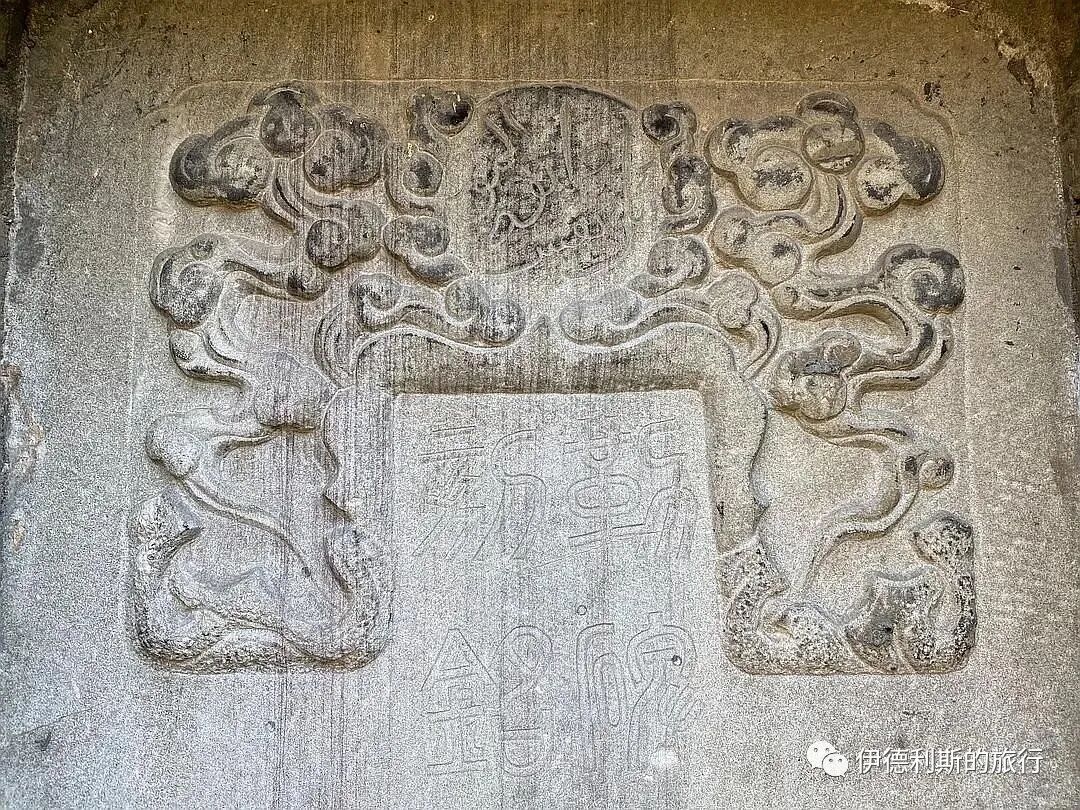
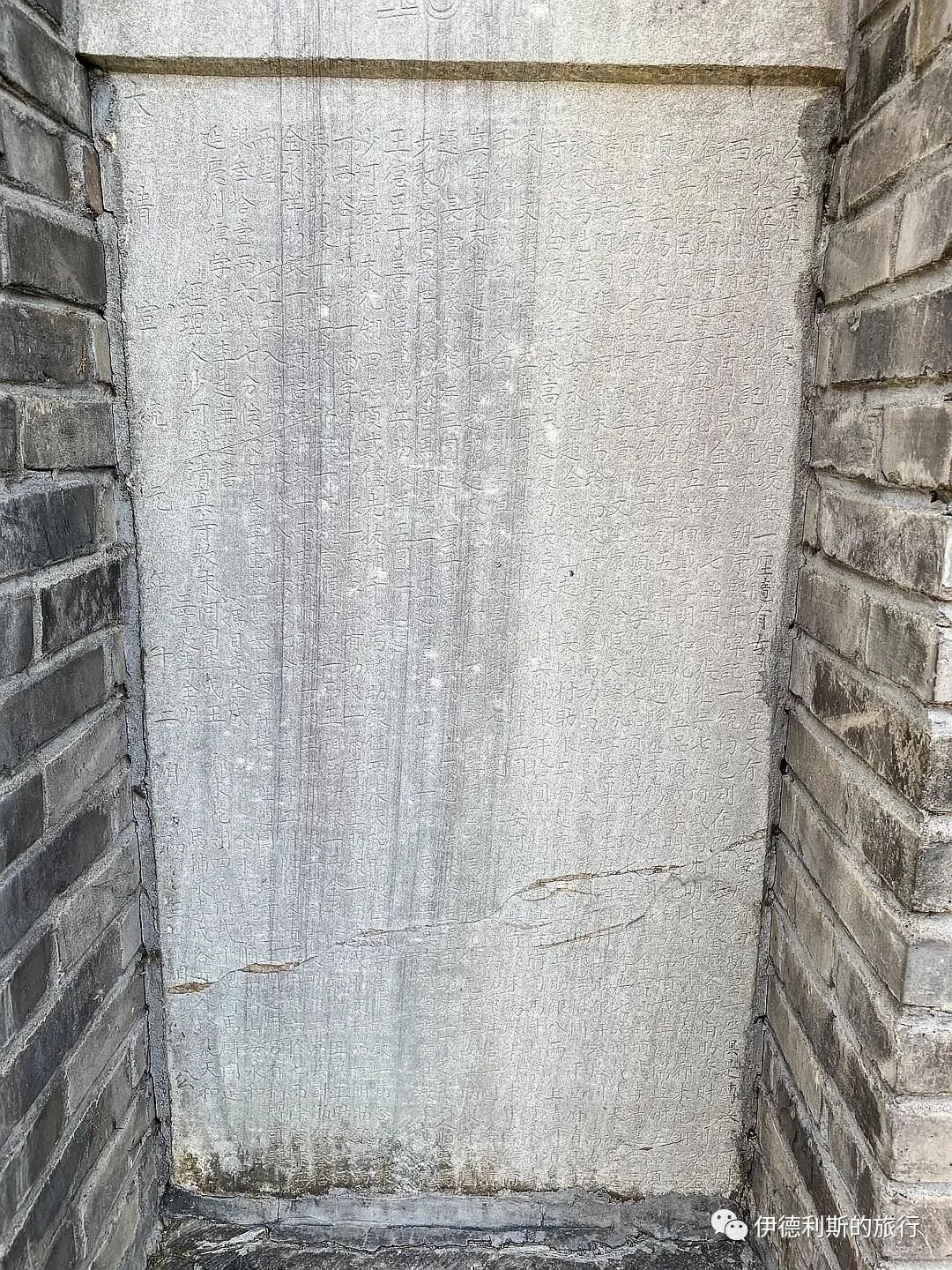
We have confirmed the existence of one tomb of the sage Bo Haji, seven ancient graves, and one tomb of the sage who originally rode a white camel. All are brick tombs surrounded by pine and cypress trees.
There are 85 trees, four stone tablets from the Ming Dynasty, and one stone tablet from the Kangxi reign of the current dynasty. All are listed on the tablet as a permanent record. The donations from various parties are listed below.
Imam Ma Jinsheng of the Xiguanshi Village mosque, along with Zhang Jizong (rank 7), Gao Zhaoming (rank 7), Li Chunze (rank 7), and the village leader with a peacock feather (rank 2).
Li Jintang (expectant circuit intendant of Zhejiang, rank 2), Li Minghe (rank 5), Li Mingda (rank 5), and Li Fengrui (rank 5).
Li Baochen (rank 3), Yang Deqing (rank 5), Li Xilun (expectant assistant magistrate, rank 5), Huang Jinbao (rank 6), and Li Qingyuan (rank 6).
Li Xilin (assistant prefect, rank 7), Li Guishen (scholar), and Ma Qi, a graduate of the Shuntian Police Academy. The village of He together donated 30 silver dollars. Gaoliying.
At Pingxifu Mosque, Imam Zhang Hexiang, community leaders Ma Ling, Ma Wengui, Yang Xiufeng, Ma Gong, and Ma Kai donated 10 silver yuan to the Xiyu Pavilion.
At Shangqinghe Mosque, community members Ma Kuisheng, Zhao Yong'an, Yong Kui, Zhao Quan, Zhao Yongshan, and Zhao Wanchang donated 3 taels of silver, and Zhao Liang donated 5 taels, for a total of 8 taels.
At Shucun Mosque, community members Bai Ruzhen, Gao Yuting, Xia Jun, and An Dechun donated 10 silver yuan. Imam Ma Douxuan and mosque leader Xia Yongqing led the effort.
At Anheqiao Mosque, community members Man Wenmo, Ma Yunde, Li Qinggui, Xia Ruibin, and An Hongxiang donated 5 silver yuan.
At Haidian Mosque, community members Yang Dianhong, Zhongying reserve lieutenant Liu Cheng, Bai Jingwen, Bai Jingzhang, Liu Wanheng, Yang Lin, and Zhang Xi donated 7 silver yuan, while Xia Ruiwang donated 4 silver yuan, totaling 11 silver yuan.
At Haidian Mosque, community members Yang Jiantong, Hong En, Zhao Ming, and Zhao Yongkuan, along with imperial physician Feng Guozhi, Ma Xingkui, Shen Zhongkuan, and Zhang Xing'an, donated 5 silver yuan.
Yang Mao from Changying in Tongzhou donated 3 silver yuan, Han Yongxing from Manziying in Tongzhou donated 1 tael of silver, and Wang Fusheng from Yujiawu in Tongzhou donated 1 tael of silver.
Baodi County resident and Shun-tian cavalry drill officer, also serving as a scout team officer for the third cavalry troop, Gao Qingshan donated 1 tael of silver. At Madian Mosque, Imam Zhang Dechun and community members Ding Chengliang,
Wang Dechen, Ding Shan'en, and Ma Heming donated a total of 5 silver yuan.
At Shahe Town, Ma Lin, a fourth-rank official with a peacock feather and reserve lieutenant, donated 5 taels of silver. Zhang Tianhe donated 5 taels, and Hai Deshun and Gu Zhen each donated 1 tael.
Gu Wang, Li Wanshan, Li Wanyou, Li Wanyu, Li Cheng, and Huang Ming each donated 1 tael of silver.
Ma Bin, An Yonghe, Wei Fushun, Wang Xiangchen, Jin Yonglong, and Wang Hongsheng each donated 1 tael of silver.
Jin Yongxiang donated one tael of silver, Huang Fuxiang donated one tael of silver, Li Chengshun donated one tael of silver, and Wang Shaoxiang donated one tael of silver. The whole county donated another two taels, making a total donation of thirty taels.
The total amount received was ninety-eight taels, six mace, and seven candareens of silver. The cost for the stone tablet, materials, and labor was sixty-seven taels of silver.
The remaining thirty-one taels, six mace, and seven candareens of silver will be used in the spring of the following year to renovate the old grave, build a stone tablet pavilion, repair the surrounding walls, and rebuild the two gates. A separate record is available for verification.
Written by Li Tinghua, a student of the Confucian school in Yanqing Prefecture. The mosque committee members are Li Quancheng, Jin Yongxiang, Wei Fushun, Li Wanshan, and An Yonghe.
The managers are Imam Li Chengyu of the Shahe Town mosque and Ma Lin, a local official with a fourth-rank peacock feather and the title of lieutenant.
The three religious leaders are Li Quanming, Ma Fuquan, Li Chenggu, Wang Guzhen, and Zhang Tianhe.
Established on the third day of the twelfth lunar month in the first year of the Xuantong reign of the Great Qing Dynasty.
Brief introduction to the mosques mentioned in the text:
Xiguanshi Village Mosque is located in Yangfang Town, Changping District. It was founded in the seventh year of the Hongzhi reign of the Ming Dynasty (1494), renovated in the twenty-seventh year of the Jiajing reign (1548), and the main hall was rebuilt in the forty-eighth year of the Kangxi reign (1709). It underwent multiple renovations and expansions during the Yongzheng and Qianlong reigns. Empress Dowager Cixi rested at the mosque while fleeing in 1900. After returning to the capital, she bestowed a plaque and provided silver for repairs.
Gaoliying Mosque, now known as Gaoliying Mosque, is located in the seventh village of Gaoliying Town. It formerly belonged to Changping County and was transferred to Shunyi in 1955. The mosque was first built during the Kangxi reign of the Qing Dynasty, renovated during the Tongzhi reign, and repaired again in 1939.
Pingxifu Mosque is now known as Xiaoxinzhuang Mosque. It is located south of Pingxifu in Beiqijia Town, Changping District. It was first built during the Qing Dynasty, renovated in 1951, and rebuilt in 1997.
Shangqinghe Mosque is located on Second Street in Qinghe Town, Haidian District. It was first built during the Kangxi reign of the Qing Dynasty, though some say it was during the Qianlong reign. It was originally located on the south bank of the Qinghe River. In the 27th year of the Guangxu reign (1901), Empress Dowager Cixi was renovating the Summer Palace. The mosque used connections through palace eunuchs to hire the craftsmen working on the Summer Palace to rebuild the mosque on the north bank of the Qinghe River. It was renovated again in 1940.
Shucun Mosque is located outside the north gate of the Old Summer Palace in Haidian District. It was first built during the Kangxi reign of the Qing Dynasty, though some say it was during the Yongzheng reign. It was renovated during the Tongzhi reign.
Anheqiao Mosque is located next to Xiangshan Road at the southern foot of Hongshan Mountain in Haidian District. It was built by Hui Muslims who came here to make a living after the Changchun Garden was established during the Kangxi reign. It was renovated many times during the Qianlong and Guangxu reigns and the Republican period. In 1950, it was relocated due to the dredging of the Jingmi Diversion Canal, and it was rebuilt again between 2003 and 2005.
Haidian Mosque is located on Suzhou Street in Haidian District. It was first built during the Ming Dynasty, though some say it was during the Qing Kangxi reign. It was expanded during the Jiaqing reign and renovated during the Guangxu reign. In 1997, it was demolished and moved westward during the renovation of Xilu in Haidian Town.
Madian Mosque is located on the west side of Madian Street outside Deshengmen in Haidian District. It was first built during the Qing Kangxi reign and renovated during the Daoguang reign and the Republican period.
Shahe Town Mosque is located in Nanyi Village, Shahe Town, Changping District, on the north bank of the South Shahe River. It was first built during the Ming Dynasty and renovated between the 21st and 31st years of the Guangxu reign (1895-1905). In 1911, a rear hall and a Western-style gate were added.
Tongzhou Changying is now known as Changying in Chaoyang District. Legend says it was a military camp for Chang Yuchun's troops when they attacked the Yuan capital in the early Ming Dynasty. Changying Mosque was first built during the Zhengde reign of the Ming Dynasty and rebuilt during the Qing Jiaqing reign. It was renovated many times afterward and expanded again in 2002.
Tongzhou Manziying is now known as Wanziying in Chaoyang District. Wanziying Mosque was first built during the Qing Dynasty and expanded during the Republican period.
Yujiawu in Tongzhou is now Yujiawu Township in Tongzhou District. The Yujiawu mosque was first built during the Yongle reign of the Ming Dynasty, renovated during the Jiaqing reign of the Qing Dynasty, and rebuilt in 2003.
2. Stele record of the sage's tomb from the 46th year of the Wanli reign of the Ming Dynasty.
Front side:
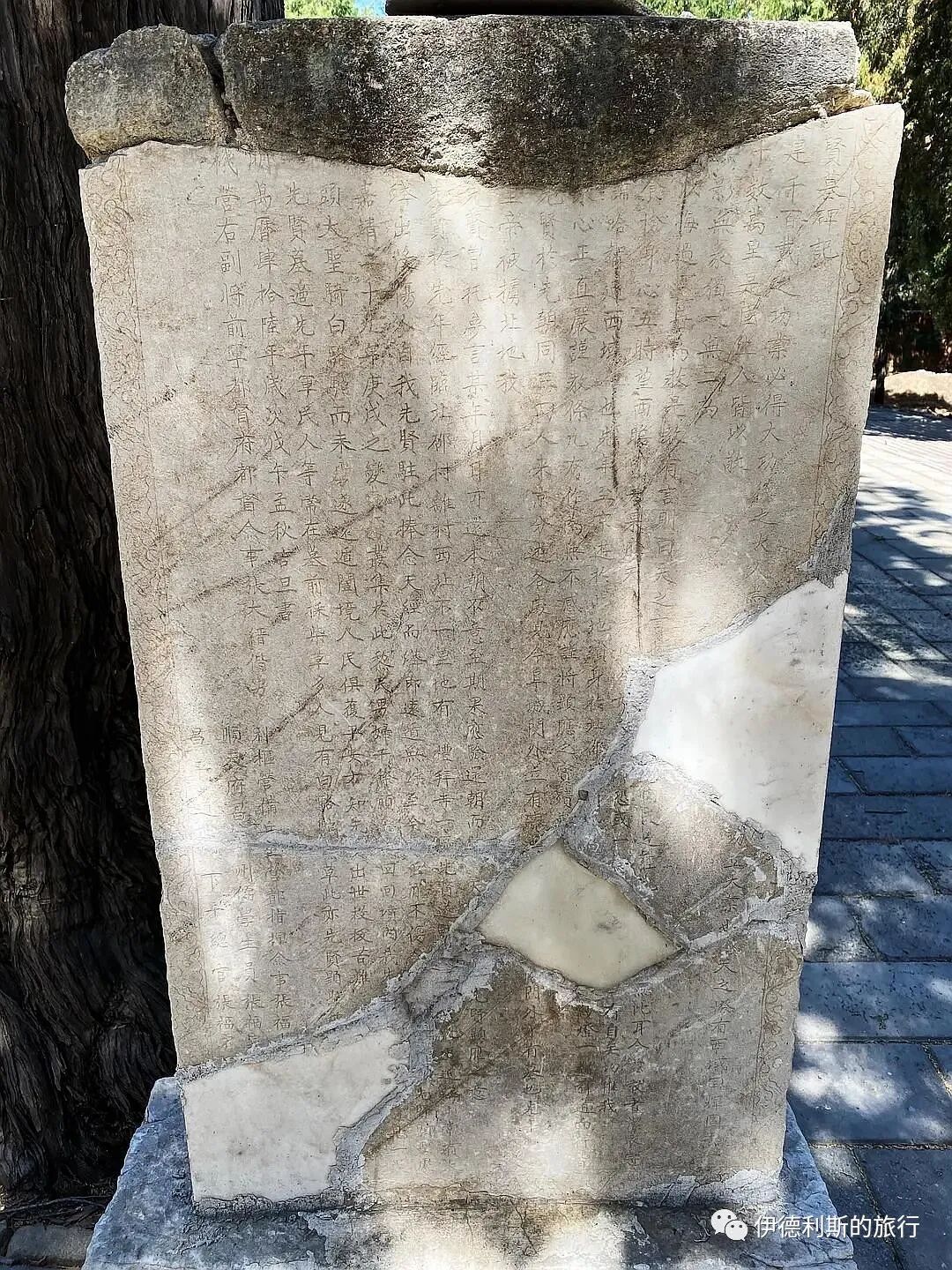
Stele record of the sage's tomb.
To build a great legacy over thousands of years, one must be a person of great virtue... to establish great achievements. At the edge of the sky, there is the Western Regions Huihui Kingdom, tens of thousands of miles away.
The people of this land all show respect.
Without shadow or image, unique and one, it is...
Taking repentance and goodness as the teaching. This teaching has words, which are the words of heaven... the scriptures of heaven... incomparable. Now, those who follow this teaching clean their clothes and hats,
watch their diet, examine their hearts and minds, and perform namaz five times a day, facing west to bow and pray. If one follows the teaching, one will surely receive good... fearing perhaps one... there is a reason.
The Haji was a person from the Western Regions. He arrived in the capital years ago, traveled to this place, and passed away in Beishao... as... a pair of gauze lanterns led the way, all...
His heart was upright and he was strict with the doctrines. Whatever he did, there was always a response. I carefully record the precious signs of his manifestation...
The sage came to the capital in the previous dynasty with three or four others. They traveled to different places. Now, outside Fucheng Gate, there is a precious... and outside the gate, there is also a tomb from years ago.
The emperor was captured and taken to the north.
A saint once appeared in a dream and said on a certain date he would return to the dynasty. Unexpectedly, it came true on that day. This shows the saint's divine response.
Years ago, the saint visited Beishao Village. Less than a mile northwest of the village, there was a mosque (libaisi). The saint stayed there, close to Mang Mountain, where there were often large...
Pythons would appear and hurt people. After our saint stayed here and recited the holy scripture, the pythons fled and disappeared. To this day, even insects do not hurt people. This is where the saint showed his holiness.
In the 29th year of the Jiajing reign, during the Gengxu Incident, enemies gathered here. Over a thousand local men and women wanted to die inside the Hui Muslims' cemetery. I saw a...
A great saint wearing a turban came riding a white camel, and the enemies fled far away. All the people in the area were safe. Only then did they know the saint had appeared to save them from suffering.
Years ago, soldiers and civilians often gathered firewood near the saint's tomb. Many people saw a white camel eating grass there. This was also the saint showing his holiness...
Written on an auspicious day in the first month of autumn in the 46th year of the Wanli reign of the Ming Dynasty.
Zhang Dajin, Deputy General of the Divine Engine Battalion and Assistant Commissioner of the Chief Military Commission, along with his son Zhang Fu'an, Commander of the Divine Pivot Battalion.
Zhang Funing, a Confucian student from Changping Prefecture, Shuntian Prefecture.
Zhang FuX, a captain under the Changping Circuit.
Back side:
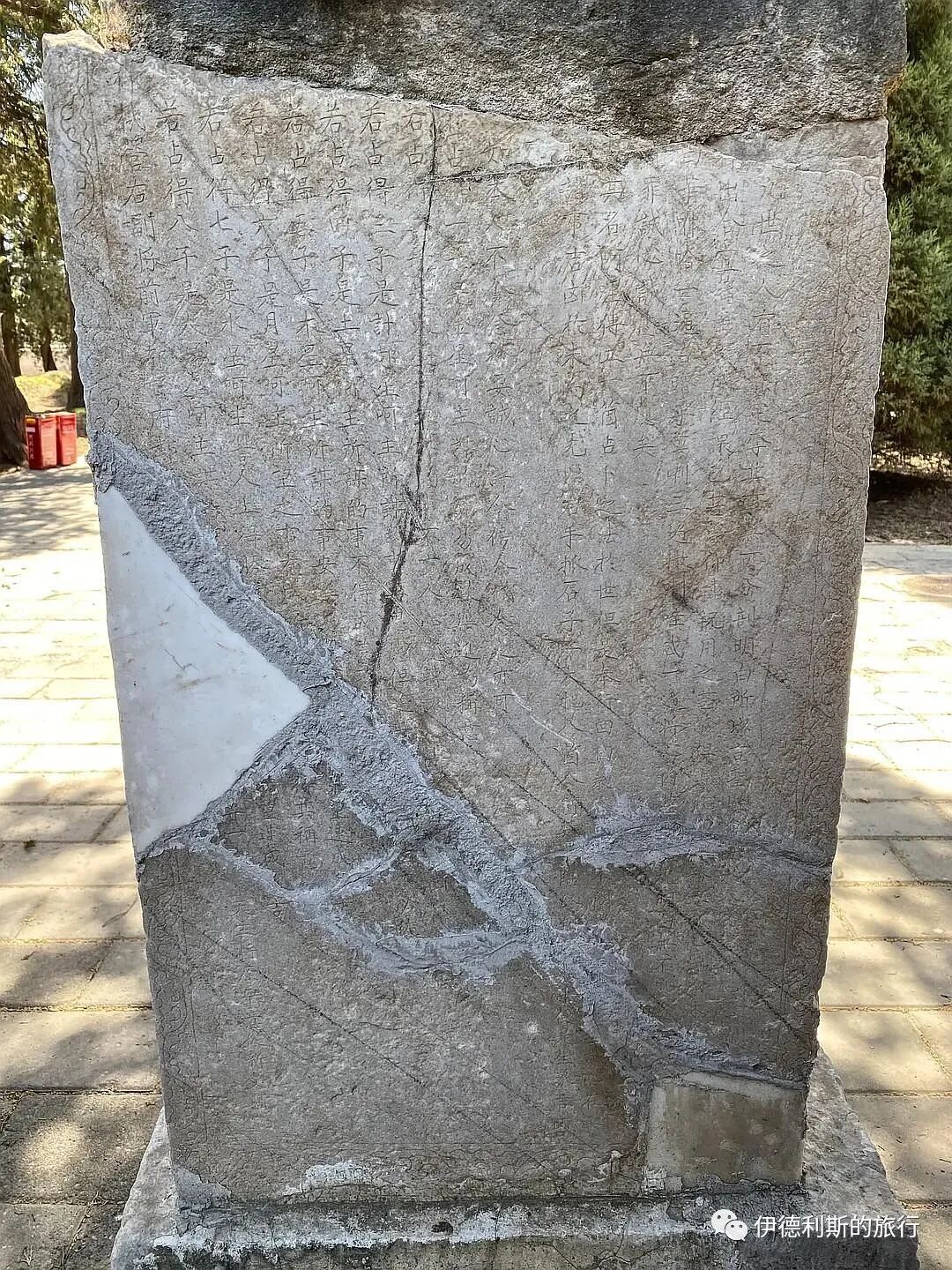
People of the X generation have not... seized the matter and cannot explain it clearly, so the words of the sages and worthies will X... no...
X comes out appropriately... the lesson is already very... the prayer is very effective, but... must be sincere... perform ritual washing (wudu)... first inside...
...say Huaxiuha once, Gulu huwanla three times, Salabite once, keep the heart very... the prayer is clear and everything will be answered...
X sins, sincere and X, there will be no response.
X its name Ali, passed down a method of divination to the world, but only those who follow the Hui Muslim faith... regardless of man or woman... with sincerity before Allah.
X all matters of good or bad luck before doing them, use the right hand to grab a large handful of stones into a X... at the end... this is the good or bad luck of the stars.
If the person themselves cannot recite X, they must be sincere and ask someone nearby to recite it for them, which is also acceptable.
If you divine one stone, it is the Venus star, which governs planning... easy to succeed... progress is satisfying.
If you divine two stones, it is the Mars star, which governs... not... people's hearts... turn...
If you divine three stones, it is the Ketu star, which governs the matter you are planning, X thinking, but... must...
If you divine four stones, it is the Saturn star, which governs the matter you are planning, it will not succeed.
If you divine five stones, it is the Jupiter star, which governs the matter you are planning, peace... hope for quick success...
If you draw the sixth sign, it is the Moon Star, which is what Allah hopes for... it is satisfactory...
If you draw the seventh sign, it is the Mercury Star, which means victory over others... the hope will be fulfilled quickly...
If you draw the eighth sign, it is the Sun Star, which means planning... Allah will renew your original intention XX.
Right Vice-General of the Divine Engine Division, Commander of the Front Military Commission...
3. The 47th year of the Wanli reign of the Ming Dynasty, stele record of the loyal and righteous sages.
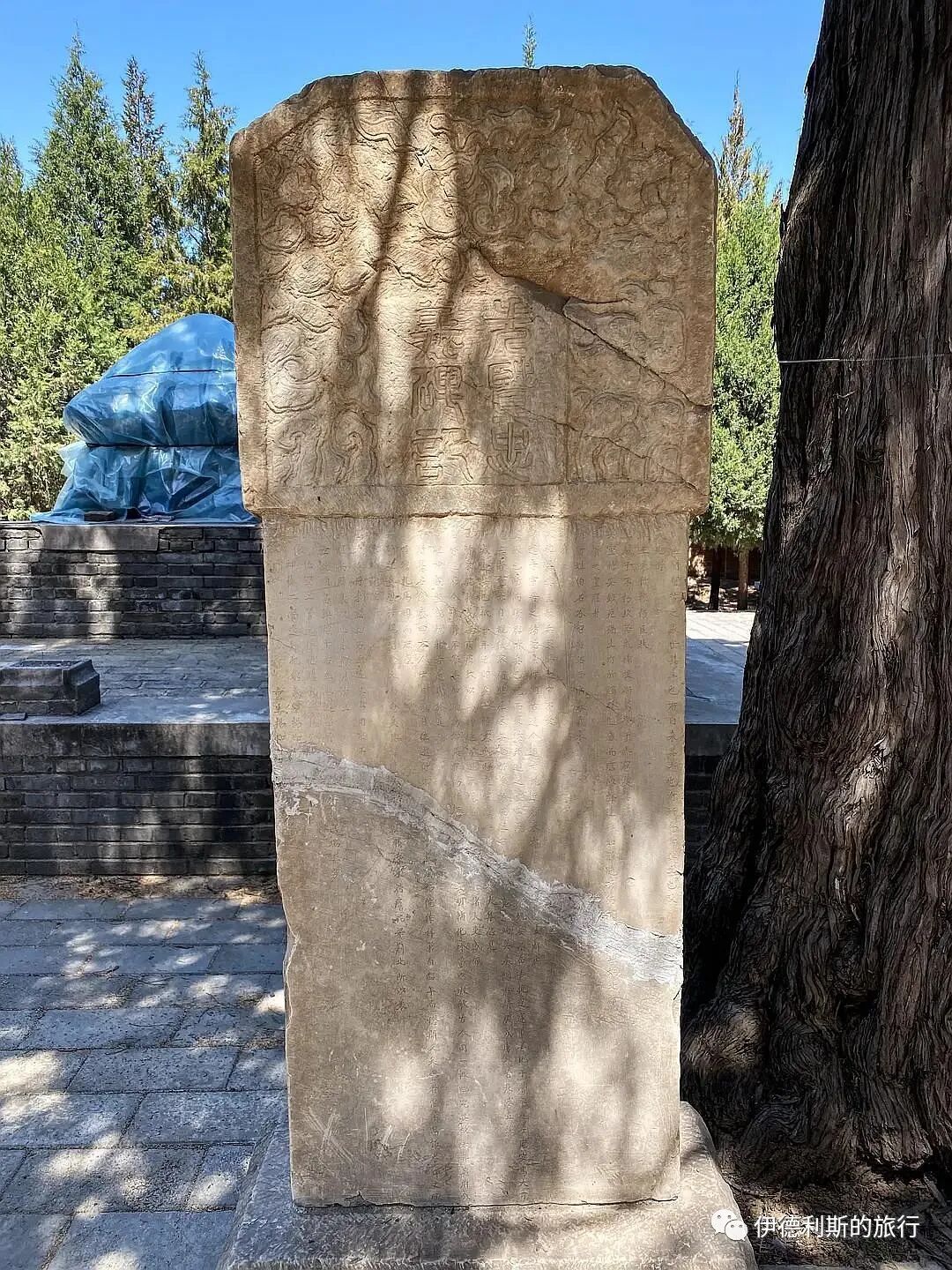
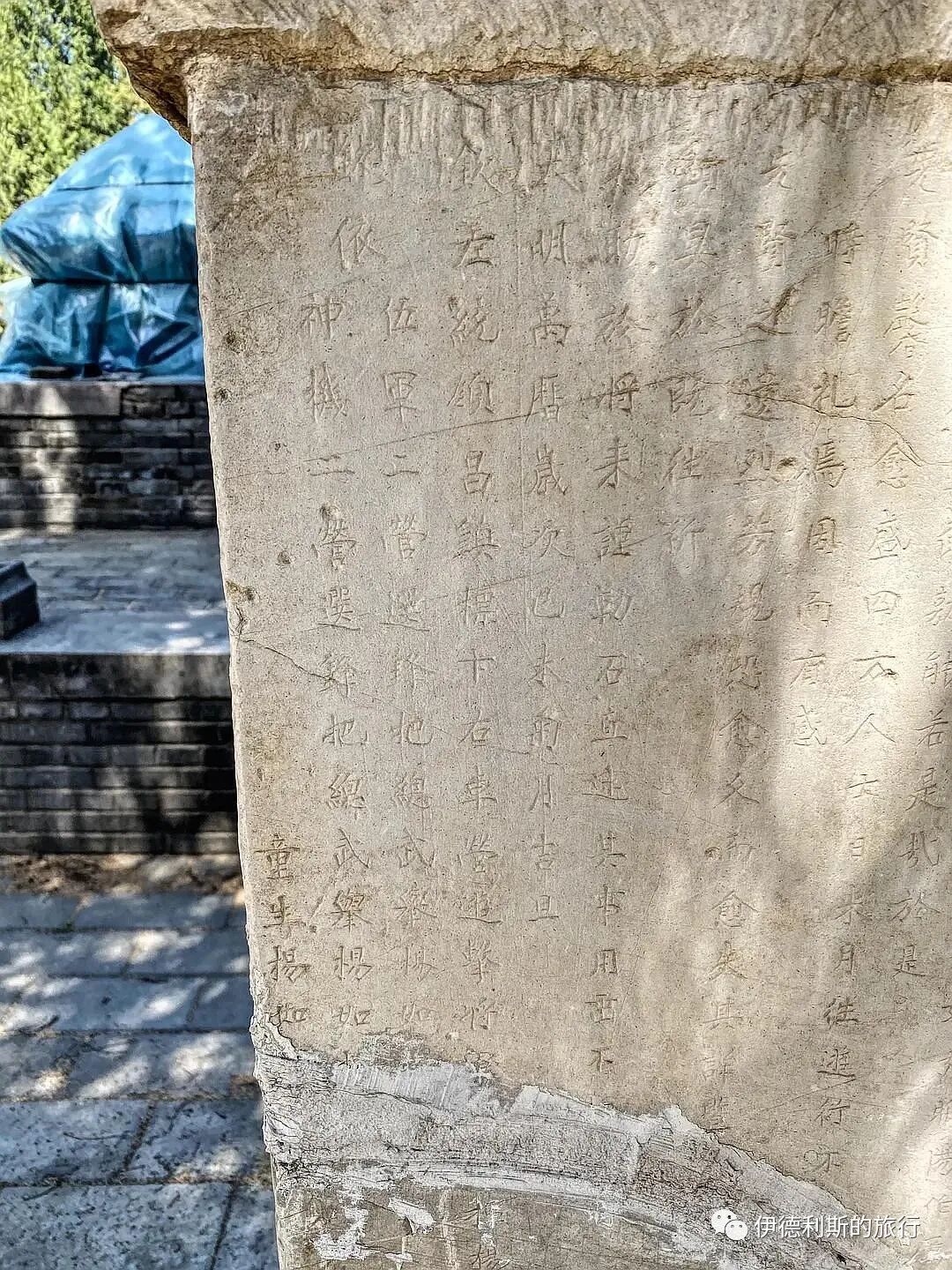
When sages live in the world, their birth has a source and their passing has a purpose. When they are alive, they are respected.
Xian Di Wei.
The king comes to the next world to uplift customs and provide support.
The holy religion is immortal, revering the commandments and warning people forever. When they pass away,
their heroic spirits shine brightly. Though dead, they still live. They trigger responses, like a sound reaching a drum or a shadow following a form. Oh... nothing like Beishao.
The spiritual responses of the sages.
The sage's surname is Bo, and his name is Haji. He started his career in the Western Regions and came here out of admiration for righteousness.
Towards me.
The founding emperor praised his military strategy and offered him an official position, but he refused it.
An imperial decree ordered the building of a mosque for him to live in. He accumulated merit and performed good deeds, connecting the ancient to the present. People from far away were happy and those nearby came to visit. He spread the faith widely...
The holy faith had declined but was revived, and the halal way had been cut off but was continued. On the day he passed away, people from all walks of life mourned him. They chose a good burial site to the left of Yingping for Ma Dake.
Strangely, even children saw his appearance as if he were still walking around the area. The camel he rode also did not die and was buried beside his grave. In the Gengxu year of the Jiajing reign, the invaders entered the Gubeikou pass and reached the outskirts.
The enemy scouts had already reached the suburbs of the capital. The civil and military officials were panicked and did not know what to do. A large crowd gathered and suddenly saw...
The sage rode his camel and held a spear to chase the invaders. The invaders were terrified and thought he was a god, so they fled in the night. The local area was saved. The officials were moved and grateful.
The sage drove back the invaders and the whole city celebrated. It was just like Zhang Suiyang who became a spirit to kill the enemy, or Wu Mingfu who turned into bees and scorpions to sting the enemy. Ancient and modern times follow the same path. If it were not for his loyal heart and righteous...
courage and divine power, who could have done this? Therefore...
The sage's reputation grew even greater. People from all directions came and went, and visitors never stopped. He was granted military honors and passed the imperial examinations. From childhood to adulthood, he followed his father's path. Now, in my spare time from work in Changzhen...
I often pay my respects there and feel deeply moved.
I fear that the sage's legacy and noble conduct will be forgotten as time passes. Since the Manchu invaders from Liaodong attacked Liang and Jibei, this is to commemorate...
The traces remain from the past.
To help the future, we carefully carve these words into stone to tell the story so it will not be forgotten.
An auspicious day in the ninth lunar month of the year of Jiwei during the Wanli reign of the Great Ming Dynasty.
Imperial envoy and commander of the Right Army Battalion under the Changping Garrison, Guerrilla General (Regional Commander) Yang Yingrui, led his son.
Military graduate and vanguard squad leader of the Second Battalion of the Firearms Division, Yang Rusong.
Military graduate and vanguard squad leader of the Second Battalion of the Divine Engine Division, Yang Rubai.
Student Yang RuX.
Note: Yang Yingrui was a Hui Muslim general from Niujie in Beijing who was very devoted to his faith. The Qing Dynasty Niujie local gazetteer, Gangzhi, records: Yang Xiangyu, courtesy name Yingrui, was a hereditary commander during the Ming Dynasty who was promoted to Assistant Commissioner-in-Chief of the Rear Chief Military Commission for his repeated merits. He was sent to garrison Datong and held the seal of the General Who Guards the North. He had a beautiful beard, was skilled in riding and archery, and was well-versed in Islamic teachings. He wrote a book called Essential Records of the True Religion (Zhengjiao Yaoce) which circulated widely.
Yang Yingrui was first in charge of patrolling the southwest of the capital. Later, he was promoted to garrison commander of Zhangjiawan, then Guerrilla General of the Right Army of Changping, and finally Commander-in-Chief of the Xuanfu Garrison. He erected the stone tablet at the tomb of Bo Haji while he was stationed in Changping. The 1613 stone tablet at Niujie Mosque, titled 'Record of the Imperial Gifted Mosque,' mentions Yang Yingrui, the Vice Commander of the Capital's Southwest Patrol. The 'Veritable Records of the Ming Shenzong' state that in September 1617, Yang Yingrui, the garrison commander of Zhangjiawan, was promoted to guerrilla general of the Changping Right Army Camp. The 'Veritable Records of the Ming Xizong' record that in 1624, Yang Yingrui became a general and commander-in-chief stationed in Xuanfu.
4. Tablet record of the renovation of the sages in the sixth year of the Wanli reign of the Ming Dynasty.
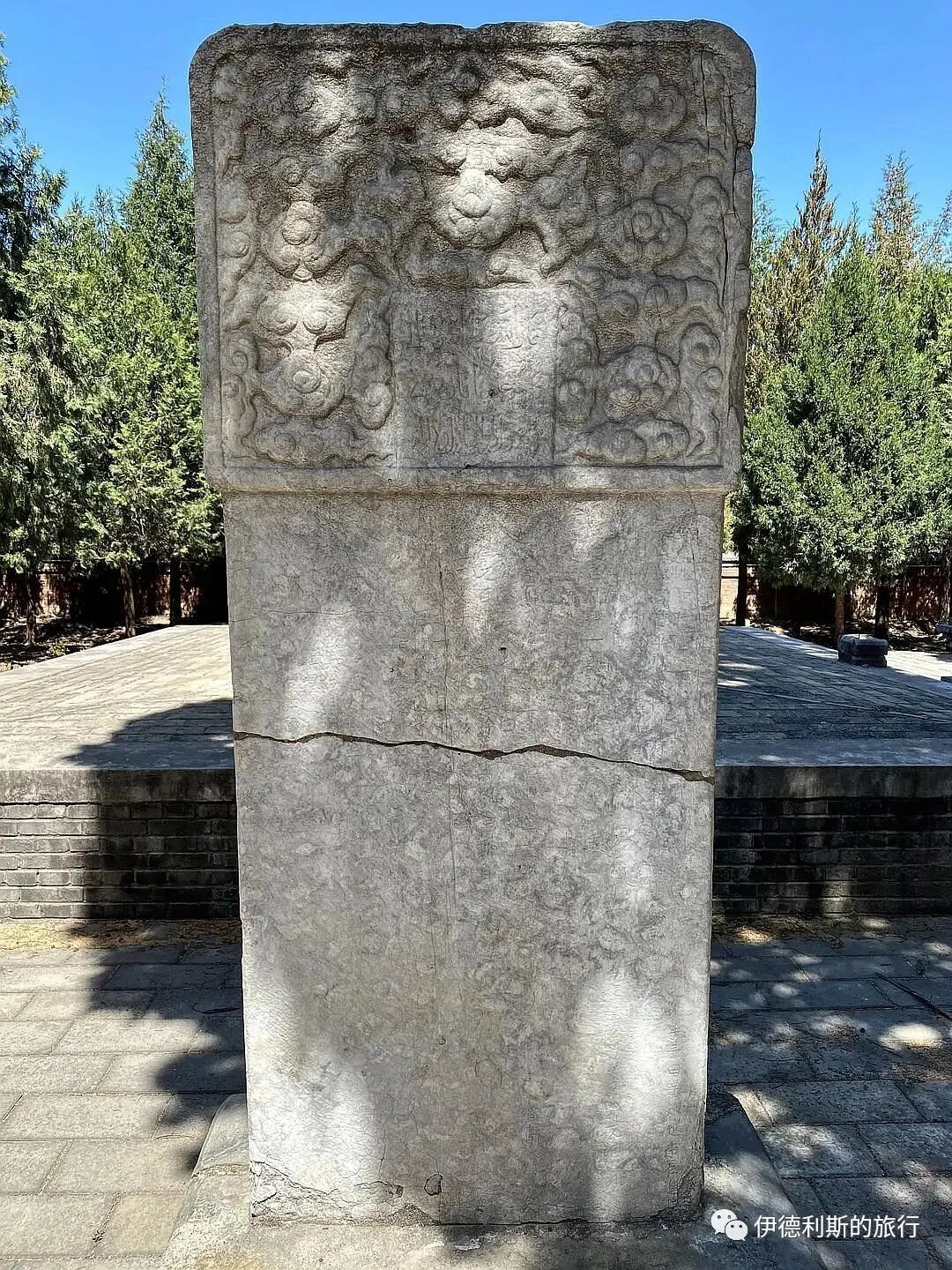
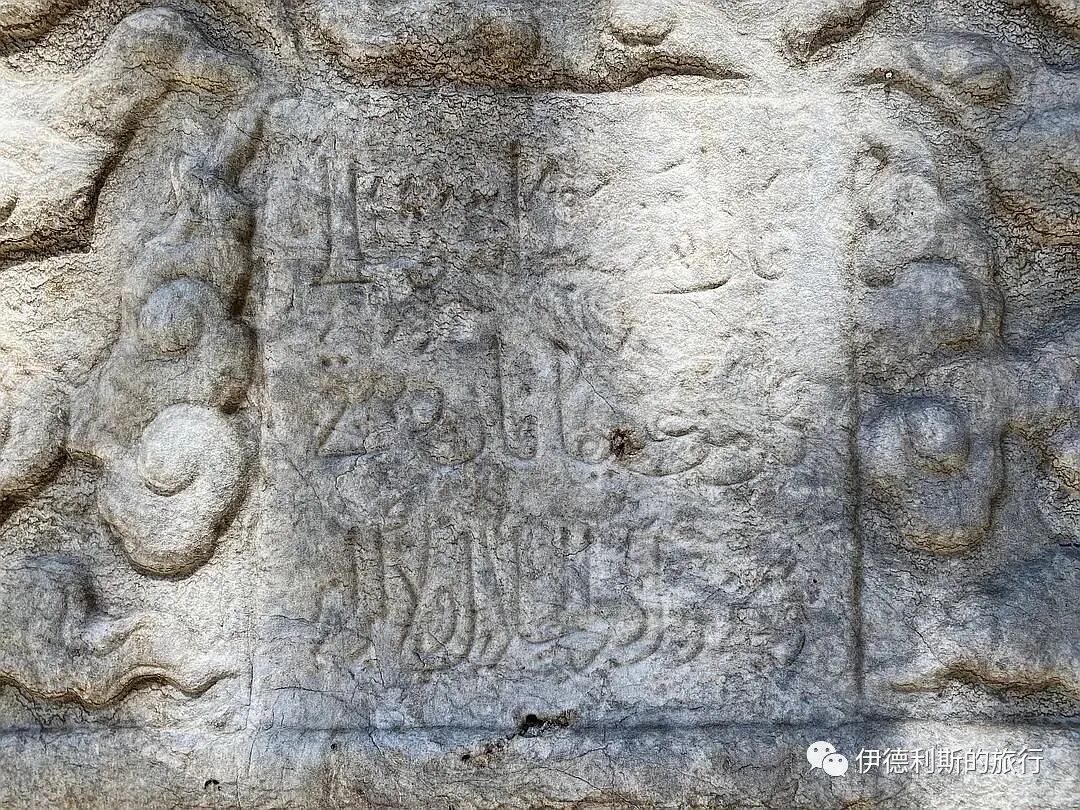
Tablet record of the renovation of the sages.
During my free time, I met Mr. Li Chenxuan, who visited me and asked, 'Do you know why I have come?' I replied, 'I do not.' Mr. Li then stepped forward to donate.
He said, 'Outside the east gate of Changping Prefecture, there is a plot of land of about 40 mu used for burning, which was once...'
The tomb of the sage and ancestor named Baha Zhi, which was originally...
Granted by our Emperor Taizu Gao because of his contribution in offering military strategies. A mosque was built there with magnificent halls and lush pine and bamboo trees. People recited the holy scripture day and night and performed namaz facing west, partly to pray for the Emperor's boundless longevity.
Because of the passage of time, the site collapsed and was damaged, and the inscriptions became too faded to be passed down. This year, we received...
The former commander-in-chief of the Xuan-Da region, Ma Nanxi.
He was determined to re-erect the tablet and asked me to write a few words to be carved on it. I have always enjoyed talking about the path of virtue.
Doing good without seeking praise for one's virtue is what the Book of Changes describes.
Doing good brings a hundred blessings, and a family that accumulates goodness will have extra joy; this is exactly what that means.
From now on, setting up this text on a stone tablet is not only to honor this.
It also ensures that one aspect of the Left Commander-in-Chief's love for goodness is not forgotten.
The virtuous predecessors established this for all generations, and I have written this because Mr. Li requested it.
He was very sincere, so I reluctantly used simple language to carve it onto the stone to record the month.
An auspicious day in the summer of the Wuyin year, the sixth year of the Wanli reign.
Presented Scholar, Grand Master of Palace Accord, Director of the Zhejiang Bureau of the Ministry of Revenue.
Respectfully written by Zhou Wenyuan of Yanshan.
Ma Fang, Left Commander-in-Chief in charge of the Front Military Commission.
Note: Ma Fang was a legendary general in the mid-Ming Dynasty. His biography in the History of Ming is included in high school extracurricular literature, and The Siege of Ma Fang is a classic play in Beijing opera, Henan opera, Sichuan opera, Han opera, Xiang opera, Yunnan opera, and Qinqiang.
Ma Fang, courtesy name Dexin, was from Weizhou (modern-day Yuxian, Hebei). He was captured by the Mongols at age ten, later escaped back to Datong to join the army, and then achieved countless military victories. In 1550, the 29th year of the Jiajing reign, the Mongol leader Altan Khan launched the Gengxu Incident. The Ming dynasty border troops retreated across the line, but Ma Fang won a victory and killed an enemy commander. The Ming army's combat effectiveness improved steadily after Ma Fang reorganized it. He defeated Altan Khan many times until the khan was finally pacified. The History of Ming praises him, saying, 'Fang rose from the ranks and became a great commander in just over ten years... He fought over a hundred battles, suffered dozens of wounds, and never failed to win a great victory even when outnumbered.' He captured dozens of tribal leaders and killed countless enemies. His fame shook the borderlands, and he was the top general of his time.
Ma Fang once oversaw the renovation of the Datong mosque. According to the 1622 (the second year of the Tianqi reign) stele record for the renovation of the mosque in Datong, 'General Ma Lanxi and General Ma Xiquan dug a square pond, built a stone bridge, and renovated the mosque once.' Lanxi was Ma Fang's courtesy name.
5. Tombstone of the local sage Bo Hazhi from the 53rd year of the Kangxi reign.
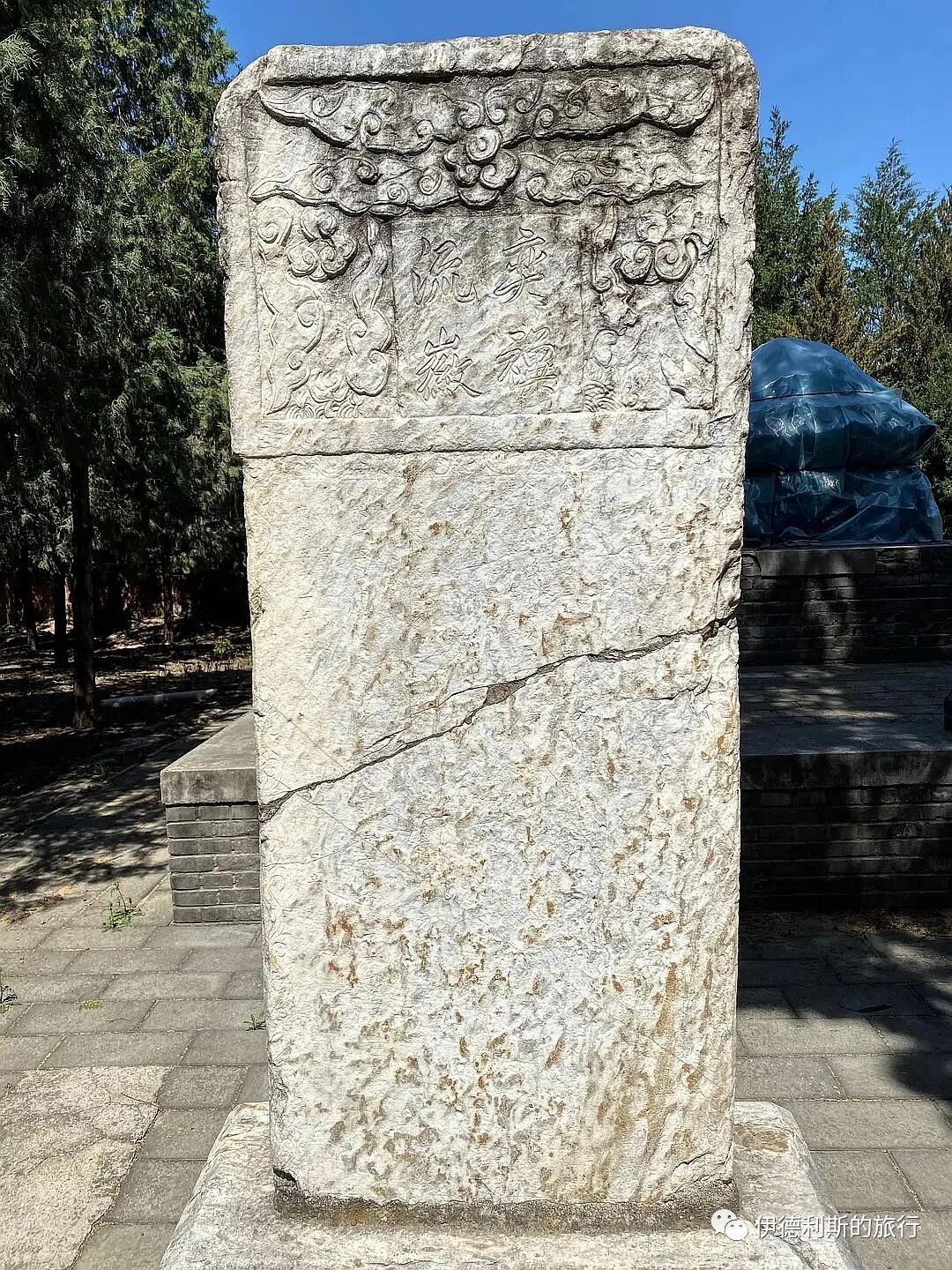
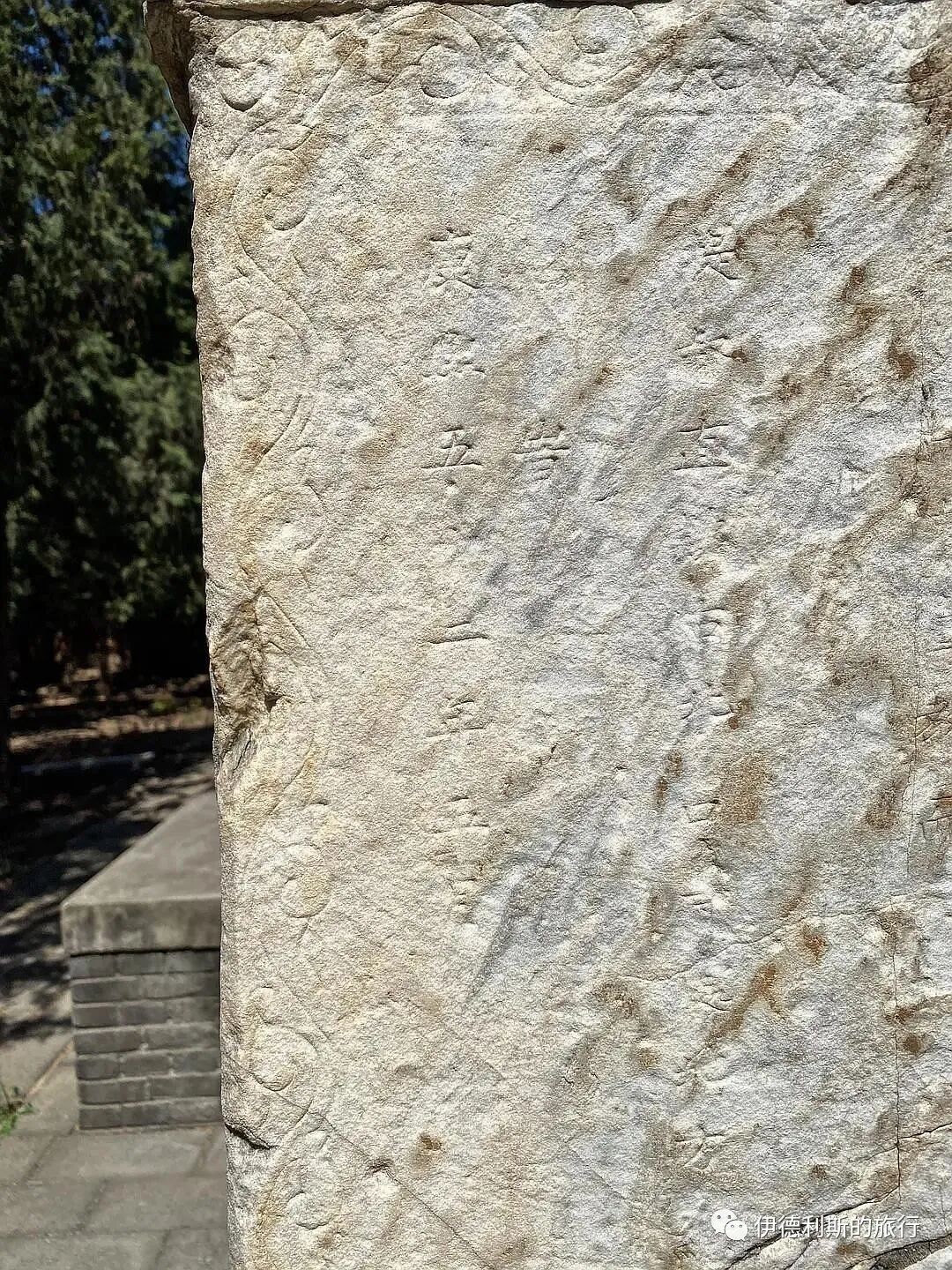
Tombstone of the local sage Bo Hazhi.
He was a man from the Western Regions who came to the imperial court in the early Hongwu reign of the Ming dynasty to offer advice. He was offered an official position but refused, asking instead to travel and teach in the village, which was granted. He lived with strict dignity and never acted carelessly.
He rode a white camel wherever he went. He was not petty, but he was strict about religious discipline and corrected those who broke the rules. People observed his pure conduct and encouraged each other to improve.
Because of this, the customs of our village changed, and our faith flourished. The Ming Emperor Taizu praised his virtue and treated him with great respect. He later returned to Changping and died of old age.
My fellow villagers buried him on the sunny side of Beishao, and they also buried his white camel next to his grave. During the Zhengtong, Jiajing, and Wanli eras, many miracles were recorded here.
Earlier stone inscriptions from the middle of the Wanli era were too crude to be worth recording.
In our current dynasty, my fellow villagers still admire his noble character and treat him as a role model, just as they did in the past.
In the 35th year of the current Emperor's reign, I returned from a northern military campaign and passed through Beishao. I donated money to repair the public tomb. At that time, someone told me about his great virtues and asked me to write a few words, but I did not finish it.
Seventeen years have passed since then.
To celebrate the Emperor's 60th birthday, my second son, Longxiang, received a special appointment.
He was appointed as my middle army commander and traveled with me.
On our way back from offering birthday blessings, we passed through Beishao again. We repaired the walls and marked the boundaries of the tomb. The tomb gate and the spirit path look brand new. Alas, he is gone. Although everyone in my village talks about his virtue, no one has written it down. I admire this sage and envy how he guided others through his own actions, so I have organized his life story.
I have added an inscription to pass his story on to future generations.
The inscription says:
The inscription says:
He came to offer advice and died while spreading the faith. Those influenced by his spirit buried him here. For millions of years, people will look up to him like a high mountain.
Written by Ma Jinliang, the Regional Commander (zongbingguan) of Gubeikou and other areas, and Assistant Commissioner-in-Chief (dudu tongzhi).
Time:
Erected on a day in the fifth month of the 53rd year of the Kangxi reign.
Note: Ma Jinliang was a famous Hui Muslim military officer in the early Qing Dynasty. He served as a guerrilla general (youji) of the Shandan Battalion in 1690, a colonel (canjiang) of the Gansu Provincial Command in 1693, and became the Regional Commander (zongbingguan) of the Zhili region in 1695, stationed at Gubeikou. People called him 'Hui Muslim General Ma'. In 1696, Ma Jinliang followed Emperor Kangxi to campaign against Galdan. He performed outstanding military service and was awarded the title 'Valiant General' (xiaoyong jiangjun). On his way back, he passed through Changping and donated money to renovate the tomb of Bo Hazhi. In 1713, Ma Jinliang passed by the tomb of Bo Hazhi again and 'repaired the walls, defined the boundaries, and restored the tomb gate and the sacred path.' Afterward, he erected this stone tablet.
6. The 1602 tombstone protecting the tomb of Bo Hazhi from the Wanli reign of the Ming Dynasty.
(No longer exists, but the National Library has a rubbing of it.)
XX because of X Beishao.
Beside the tomb of the sage, mixed with other graves, the reason for this is X.
The mosque was granted by the emperor, and the Han people did not change it.
The emperor bestowed his grace and asked the Han people about it. The sounds of the past are heard by the honest and patient, and then Mr. Yang, the leader, gathered everyone.
Mr. Yang, whose given name was Hong, took the lead in this righteous cause. He donated money to buy back the land where his ancestors were buried, stopped the Han people from burying others there, and prioritized the proper Islamic rites.
He cleared the main path to reach the gate, built walls all around for protection, and erected a three-room prayer hall for reciting the Quran and performing rituals.
The boundaries are vast, and he built structures nearby to guard the land forever.
The elders felt this in their hearts.
The Prophet's mercy is boundless, and our longing to remember him grows more sincere. Our determination to follow his path strengthens, and many people now walk this road.
When people see this place, they are moved. They talk to each other in surprise about how the site has changed from its former glory to its new appearance today.
The renovation is known throughout the country, and the opening is known at home and abroad. The credit for this success belongs to the leadership of Mr. Yang and the community.
Their collective effort made it happen.
The character of the elders.
The great Prophet's teachings are entrusted to us.
The Lord of all things... not by human power... those who reach this place... shaping the tomb to honor the memory, showing greatness, and reflecting on the return to the root of all existence.
In this land, there is life and advice... do not forget.
The Lord, remembering the distant ancestors and being careful with the end, every detail has its purpose.
The Lord, as well as the teaching of the lessons, the strict observance of fasting (sawm), the striving in prayer (namaz)... the glorious true words of faith.
The submission to Him can establish the pillars of the faith. Therefore, the predecessors said... truly having the way, how profound are their words! Listening to the empty valley...
Passing on the sound, it is hard to know what kind of person Mr. Yang was. His alias was Jiquan... he was an outstanding leader, and one can imagine his great righteousness and courage.
Is it not so? The Analects say: to see what is right and not do it is a lack of courage. The Book of Changes says... if one speaks for the benefit of others, then in the midst of promoting righteousness and courage, one also relies on...
Longxi... near the locust trees, sharing the labor, Hao... Houquan, Chen Chenquan... their deeds at Lubin Pavilion, Kang Jingyu praised their success, and thus...
The sages have glory, establishing a foundation that lasts forever. Using the advice stone to leave a mark that will not wear away for millions of years, these simple words are recorded to mark the time.
Erected on an auspicious day in the middle of the second month of autumn in the Renyin year, the 30th year of the Wanli reign.
Written by Lin Qicai, a presented scholar (jinshi), serving as a grand master for palace attendance and director of the Bureau of Ceremonies in the Ministry of Rites.
Note: Lin Qicai was a cousin of the great Ming dynasty thinker Li Zhi. He was from Jinjiang, Fujian, and passed the imperial examination (jinshi) in the 38th year of the Jiajing reign (1559). According to the Fengchi Lin Family Genealogy, Lin Qicai's second-generation ancestor Lin Nu married a Semu woman and followed her faith, receiving initiation into the teachings of the Qingjing Mosque. In 1580, the eighth year of the Wanli reign of the Ming Dynasty, Lin Qicai wrote the Stele Record for the Reconstruction of the Imperial-commissioned Faming Mosque, located inside Andingmen in Beijing. He signed it as Lin Qicai, a presented scholar (jinshi) and former director of the Ministry of Revenue, serving as an official in the Imperial Seal Office. According to the History of Ming, the official position of director of the Imperial Seal Office was a rank 6b role responsible for managing imperial seals, tallies, and stamps, and verifying their proper use.
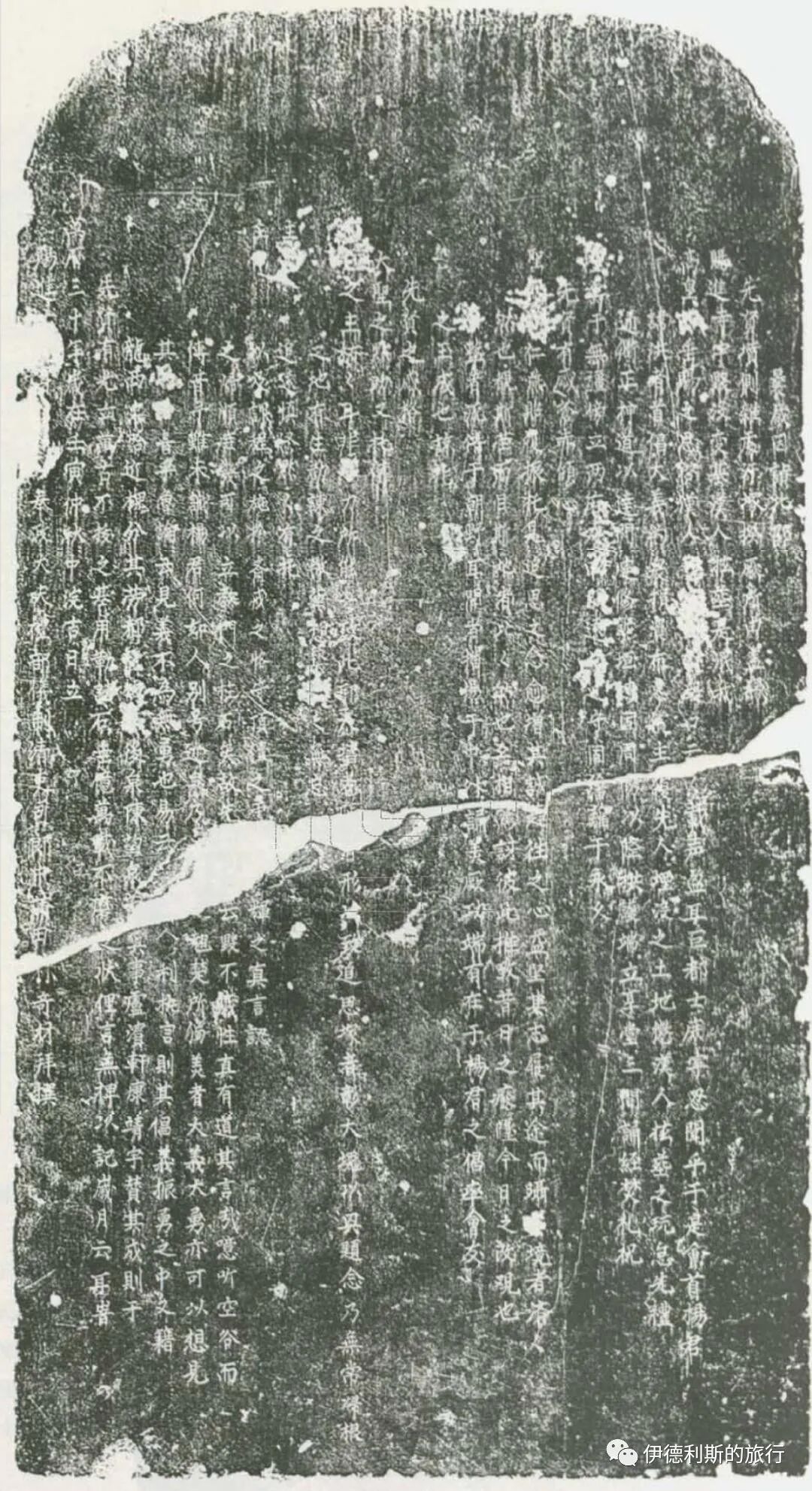
Summary: Bohaji Tomb Inscriptions: Beijing Muslim History and the Stele Writer is presented here as a firsthand travel account in clear English, beginning with this scene: In mid-April, I visited the tomb of the Western Regions sage Bo Hazhi, who came to China in the early Ming Dynasty, located in Heying Village, east of Changping, Beijing. The account keeps its focus on Bohaji Tomb, Islamic Inscriptions, Beijing Muslim History while preserving the names, places, food, and historical details from the Chinese source.
In mid-April, I visited the tomb of the Western Regions sage Bo Hazhi, who came to China in the early Ming Dynasty, located in Heying Village, east of Changping, Beijing. I was warmly welcomed by Uncle Zhang Youjin, whose family has guarded the tomb for generations. See my article, 'Visiting the Tomb of the Western Regions Sage Bo Hazhi'. Later, at Uncle Zhang's request, I transcribed and proofread the inscriptions on the three Ming Dynasty Wanli era steles, one Qing Dynasty Kangxi era stele, and one Qing Dynasty Xuantong era stele currently in the cemetery. The National Library of China holds a rubbing of one of the Ming Wanli steles. Uncle Zhang told me that after the 1960s, the nearby primary school took it to weigh down a basketball hoop, and its whereabouts are now unknown. I transcribed it based on images from the library's official website, though many characters are hard to read because they are unclear.
I also researched the authors of the steles and the information about the mosque donations mentioned in the Xuantong stele, and I have attached these details below the transcriptions.
1. Stele from the first year of the Xuantong era
In Heying Village, east of the city in Changping Prefecture, Shuntian Prefecture, there is an old
tomb of a Sheikh (shaihai) built during the early Ming Dynasty. Every year on the 24th day of the third lunar month, which is the anniversary of the Sheikh, Hui Muslims from near and far gather to recite
dua for the sage Bo Hazhi, remembering the kindness he showed people during his life. This tradition of visiting the tomb has existed for a long time and does not cause any trouble for the local area. The Han people have their own temples, and the
Imperial Court has its ancestral temples; all have set times for paying respects to show gratitude. This is not unique to Islam. We Hui Muslims follow the path of faith as our guide, observing the principles of benevolence, righteousness, propriety, wisdom, and trust. Our faith requires us to
practice charity, fasting, and pilgrimage, keeping ourselves free from the corruption of alcohol, lust, wealth, and vanity to achieve spiritual perfection. The Han people frequently build temples to honor their sages, so how much more should we honor our
sage's original tomb? There were many pine and cypress trees in front of the tomb, but now they have been cut down to pay for school expenses. Since the Tang and Han dynasties, Hui and Han people have had their own religious rules. Being born into the Hui
faith, who would not feel heartbroken to see the traces of this tomb destroyed and trampled? It is a pity that those who claim to follow the path have drifted away, and we Hui Muslims have no way to guide the simple-hearted.
Hearing this, I could not sit by. I rushed to the prefecture to report it. By the grace of the authorities, an order was issued to stop the cutting of trees and protect the site, and the case was officially filed and posted.
I feared the paper notice would rot over time, so I have now carved it into a stone tablet to preserve it.
This shows the kind heart of the honorable official from Yangzhou. May it last forever, and this is my record of it.
Yang, a candidate for prefect wearing a peacock feather, serving as the magistrate of Changping Prefecture, with five honorary ranks and ten recorded merits.
A formal notice strictly forbidding this act. The case is based on a petition from Hui Muslims in villages including Shahe Town, Gaoliying, the capital, Madian, and Shangqinghe, stating that outside the east gate of the city, Hejia...
Guanshi Village, Pingxifu, Haidian, Shucun, and Anheqiao.
There is an old tomb of a saint (shaihai) in Yingcun, built during the Ming Dynasty. It has stood for hundreds of years without any controversy or rumors, and there is even a stone tablet record.
The text lists the titles of officials from past dynasties. Every year on the 24th day of the third month, the anniversary of the saint, Hui Muslims from near and far gather to honor his great virtue.
They visit the tomb to pay respects, a tradition held for a long time. However, there is a rumor that people want to sell the old pine and cypress trees inside the tomb grounds to fund the local school.
The Hui Muslims could not sit by and watch, so they petitioned for an order to stop the cutting and save the old trees. Based on this, besides the official report, I am issuing this notice.
This is a strict prohibition. Everyone must know that from the date of this notice, no one may suggest cutting down the pine and cypress trees in front of the saint's tomb, or they will face investigation.
Everyone must obey this and not violate it. Take note of this notice.
The eighth day of the ninth lunar month in the first year of the Xuantong reign.
A public notice was posted at the Hejiaying tomb of the sheikh.
From this day on, no one is allowed to bury anyone within this tomb courtyard, regardless of their religious background. This rule applies to all existing tomb markers, regulations, and grave foundations.
No one is allowed to cut down pine or cypress trees. Anyone who breaks this rule is not a true follower of the faith. We have investigated and confirmed the original ancient site.
The names of those who helped repair the stone tablets and trees are all recorded on the back of the tablet.
Back side:
We have confirmed the existence of one tomb of the sage Bo Haji, seven ancient graves, and one tomb of the sage who originally rode a white camel. All are brick tombs surrounded by pine and cypress trees.
There are 85 trees, four stone tablets from the Ming Dynasty, and one stone tablet from the Kangxi reign of the current dynasty. All are listed on the tablet as a permanent record. The donations from various parties are listed below.
Imam Ma Jinsheng of the Xiguanshi Village mosque, along with Zhang Jizong (rank 7), Gao Zhaoming (rank 7), Li Chunze (rank 7), and the village leader with a peacock feather (rank 2).
Li Jintang (expectant circuit intendant of Zhejiang, rank 2), Li Minghe (rank 5), Li Mingda (rank 5), and Li Fengrui (rank 5).
Li Baochen (rank 3), Yang Deqing (rank 5), Li Xilun (expectant assistant magistrate, rank 5), Huang Jinbao (rank 6), and Li Qingyuan (rank 6).
Li Xilin (assistant prefect, rank 7), Li Guishen (scholar), and Ma Qi, a graduate of the Shuntian Police Academy. The village of He together donated 30 silver dollars. Gaoliying.
At Pingxifu Mosque, Imam Zhang Hexiang, community leaders Ma Ling, Ma Wengui, Yang Xiufeng, Ma Gong, and Ma Kai donated 10 silver yuan to the Xiyu Pavilion.
At Shangqinghe Mosque, community members Ma Kuisheng, Zhao Yong'an, Yong Kui, Zhao Quan, Zhao Yongshan, and Zhao Wanchang donated 3 taels of silver, and Zhao Liang donated 5 taels, for a total of 8 taels.
At Shucun Mosque, community members Bai Ruzhen, Gao Yuting, Xia Jun, and An Dechun donated 10 silver yuan. Imam Ma Douxuan and mosque leader Xia Yongqing led the effort.
At Anheqiao Mosque, community members Man Wenmo, Ma Yunde, Li Qinggui, Xia Ruibin, and An Hongxiang donated 5 silver yuan.
At Haidian Mosque, community members Yang Dianhong, Zhongying reserve lieutenant Liu Cheng, Bai Jingwen, Bai Jingzhang, Liu Wanheng, Yang Lin, and Zhang Xi donated 7 silver yuan, while Xia Ruiwang donated 4 silver yuan, totaling 11 silver yuan.
At Haidian Mosque, community members Yang Jiantong, Hong En, Zhao Ming, and Zhao Yongkuan, along with imperial physician Feng Guozhi, Ma Xingkui, Shen Zhongkuan, and Zhang Xing'an, donated 5 silver yuan.
Yang Mao from Changying in Tongzhou donated 3 silver yuan, Han Yongxing from Manziying in Tongzhou donated 1 tael of silver, and Wang Fusheng from Yujiawu in Tongzhou donated 1 tael of silver.
Baodi County resident and Shun-tian cavalry drill officer, also serving as a scout team officer for the third cavalry troop, Gao Qingshan donated 1 tael of silver. At Madian Mosque, Imam Zhang Dechun and community members Ding Chengliang,
Wang Dechen, Ding Shan'en, and Ma Heming donated a total of 5 silver yuan.
At Shahe Town, Ma Lin, a fourth-rank official with a peacock feather and reserve lieutenant, donated 5 taels of silver. Zhang Tianhe donated 5 taels, and Hai Deshun and Gu Zhen each donated 1 tael.
Gu Wang, Li Wanshan, Li Wanyou, Li Wanyu, Li Cheng, and Huang Ming each donated 1 tael of silver.
Ma Bin, An Yonghe, Wei Fushun, Wang Xiangchen, Jin Yonglong, and Wang Hongsheng each donated 1 tael of silver.
Jin Yongxiang donated one tael of silver, Huang Fuxiang donated one tael of silver, Li Chengshun donated one tael of silver, and Wang Shaoxiang donated one tael of silver. The whole county donated another two taels, making a total donation of thirty taels.
The total amount received was ninety-eight taels, six mace, and seven candareens of silver. The cost for the stone tablet, materials, and labor was sixty-seven taels of silver.
The remaining thirty-one taels, six mace, and seven candareens of silver will be used in the spring of the following year to renovate the old grave, build a stone tablet pavilion, repair the surrounding walls, and rebuild the two gates. A separate record is available for verification.
Written by Li Tinghua, a student of the Confucian school in Yanqing Prefecture. The mosque committee members are Li Quancheng, Jin Yongxiang, Wei Fushun, Li Wanshan, and An Yonghe.
The managers are Imam Li Chengyu of the Shahe Town mosque and Ma Lin, a local official with a fourth-rank peacock feather and the title of lieutenant.
The three religious leaders are Li Quanming, Ma Fuquan, Li Chenggu, Wang Guzhen, and Zhang Tianhe.
Established on the third day of the twelfth lunar month in the first year of the Xuantong reign of the Great Qing Dynasty.
Brief introduction to the mosques mentioned in the text:
Xiguanshi Village Mosque is located in Yangfang Town, Changping District. It was founded in the seventh year of the Hongzhi reign of the Ming Dynasty (1494), renovated in the twenty-seventh year of the Jiajing reign (1548), and the main hall was rebuilt in the forty-eighth year of the Kangxi reign (1709). It underwent multiple renovations and expansions during the Yongzheng and Qianlong reigns. Empress Dowager Cixi rested at the mosque while fleeing in 1900. After returning to the capital, she bestowed a plaque and provided silver for repairs.
Gaoliying Mosque, now known as Gaoliying Mosque, is located in the seventh village of Gaoliying Town. It formerly belonged to Changping County and was transferred to Shunyi in 1955. The mosque was first built during the Kangxi reign of the Qing Dynasty, renovated during the Tongzhi reign, and repaired again in 1939.
Pingxifu Mosque is now known as Xiaoxinzhuang Mosque. It is located south of Pingxifu in Beiqijia Town, Changping District. It was first built during the Qing Dynasty, renovated in 1951, and rebuilt in 1997.
Shangqinghe Mosque is located on Second Street in Qinghe Town, Haidian District. It was first built during the Kangxi reign of the Qing Dynasty, though some say it was during the Qianlong reign. It was originally located on the south bank of the Qinghe River. In the 27th year of the Guangxu reign (1901), Empress Dowager Cixi was renovating the Summer Palace. The mosque used connections through palace eunuchs to hire the craftsmen working on the Summer Palace to rebuild the mosque on the north bank of the Qinghe River. It was renovated again in 1940.
Shucun Mosque is located outside the north gate of the Old Summer Palace in Haidian District. It was first built during the Kangxi reign of the Qing Dynasty, though some say it was during the Yongzheng reign. It was renovated during the Tongzhi reign.
Anheqiao Mosque is located next to Xiangshan Road at the southern foot of Hongshan Mountain in Haidian District. It was built by Hui Muslims who came here to make a living after the Changchun Garden was established during the Kangxi reign. It was renovated many times during the Qianlong and Guangxu reigns and the Republican period. In 1950, it was relocated due to the dredging of the Jingmi Diversion Canal, and it was rebuilt again between 2003 and 2005.
Haidian Mosque is located on Suzhou Street in Haidian District. It was first built during the Ming Dynasty, though some say it was during the Qing Kangxi reign. It was expanded during the Jiaqing reign and renovated during the Guangxu reign. In 1997, it was demolished and moved westward during the renovation of Xilu in Haidian Town.
Madian Mosque is located on the west side of Madian Street outside Deshengmen in Haidian District. It was first built during the Qing Kangxi reign and renovated during the Daoguang reign and the Republican period.
Shahe Town Mosque is located in Nanyi Village, Shahe Town, Changping District, on the north bank of the South Shahe River. It was first built during the Ming Dynasty and renovated between the 21st and 31st years of the Guangxu reign (1895-1905). In 1911, a rear hall and a Western-style gate were added.
Tongzhou Changying is now known as Changying in Chaoyang District. Legend says it was a military camp for Chang Yuchun's troops when they attacked the Yuan capital in the early Ming Dynasty. Changying Mosque was first built during the Zhengde reign of the Ming Dynasty and rebuilt during the Qing Jiaqing reign. It was renovated many times afterward and expanded again in 2002.
Tongzhou Manziying is now known as Wanziying in Chaoyang District. Wanziying Mosque was first built during the Qing Dynasty and expanded during the Republican period.
Yujiawu in Tongzhou is now Yujiawu Township in Tongzhou District. The Yujiawu mosque was first built during the Yongle reign of the Ming Dynasty, renovated during the Jiaqing reign of the Qing Dynasty, and rebuilt in 2003.
2. Stele record of the sage's tomb from the 46th year of the Wanli reign of the Ming Dynasty.
Front side:
Stele record of the sage's tomb.
To build a great legacy over thousands of years, one must be a person of great virtue... to establish great achievements. At the edge of the sky, there is the Western Regions Huihui Kingdom, tens of thousands of miles away.
The people of this land all show respect.
Without shadow or image, unique and one, it is...
Taking repentance and goodness as the teaching. This teaching has words, which are the words of heaven... the scriptures of heaven... incomparable. Now, those who follow this teaching clean their clothes and hats,
watch their diet, examine their hearts and minds, and perform namaz five times a day, facing west to bow and pray. If one follows the teaching, one will surely receive good... fearing perhaps one... there is a reason.
The Haji was a person from the Western Regions. He arrived in the capital years ago, traveled to this place, and passed away in Beishao... as... a pair of gauze lanterns led the way, all...
His heart was upright and he was strict with the doctrines. Whatever he did, there was always a response. I carefully record the precious signs of his manifestation...
The sage came to the capital in the previous dynasty with three or four others. They traveled to different places. Now, outside Fucheng Gate, there is a precious... and outside the gate, there is also a tomb from years ago.
The emperor was captured and taken to the north.
A saint once appeared in a dream and said on a certain date he would return to the dynasty. Unexpectedly, it came true on that day. This shows the saint's divine response.
Years ago, the saint visited Beishao Village. Less than a mile northwest of the village, there was a mosque (libaisi). The saint stayed there, close to Mang Mountain, where there were often large...
Pythons would appear and hurt people. After our saint stayed here and recited the holy scripture, the pythons fled and disappeared. To this day, even insects do not hurt people. This is where the saint showed his holiness.
In the 29th year of the Jiajing reign, during the Gengxu Incident, enemies gathered here. Over a thousand local men and women wanted to die inside the Hui Muslims' cemetery. I saw a...
A great saint wearing a turban came riding a white camel, and the enemies fled far away. All the people in the area were safe. Only then did they know the saint had appeared to save them from suffering.
Years ago, soldiers and civilians often gathered firewood near the saint's tomb. Many people saw a white camel eating grass there. This was also the saint showing his holiness...
Written on an auspicious day in the first month of autumn in the 46th year of the Wanli reign of the Ming Dynasty.
Zhang Dajin, Deputy General of the Divine Engine Battalion and Assistant Commissioner of the Chief Military Commission, along with his son Zhang Fu'an, Commander of the Divine Pivot Battalion.
Zhang Funing, a Confucian student from Changping Prefecture, Shuntian Prefecture.
Zhang FuX, a captain under the Changping Circuit.
Back side:
People of the X generation have not... seized the matter and cannot explain it clearly, so the words of the sages and worthies will X... no...
X comes out appropriately... the lesson is already very... the prayer is very effective, but... must be sincere... perform ritual washing (wudu)... first inside...
...say Huaxiuha once, Gulu huwanla three times, Salabite once, keep the heart very... the prayer is clear and everything will be answered...
X sins, sincere and X, there will be no response.
X its name Ali, passed down a method of divination to the world, but only those who follow the Hui Muslim faith... regardless of man or woman... with sincerity before Allah.
X all matters of good or bad luck before doing them, use the right hand to grab a large handful of stones into a X... at the end... this is the good or bad luck of the stars.
If the person themselves cannot recite X, they must be sincere and ask someone nearby to recite it for them, which is also acceptable.
If you divine one stone, it is the Venus star, which governs planning... easy to succeed... progress is satisfying.
If you divine two stones, it is the Mars star, which governs... not... people's hearts... turn...
If you divine three stones, it is the Ketu star, which governs the matter you are planning, X thinking, but... must...
If you divine four stones, it is the Saturn star, which governs the matter you are planning, it will not succeed.
If you divine five stones, it is the Jupiter star, which governs the matter you are planning, peace... hope for quick success...
If you draw the sixth sign, it is the Moon Star, which is what Allah hopes for... it is satisfactory...
If you draw the seventh sign, it is the Mercury Star, which means victory over others... the hope will be fulfilled quickly...
If you draw the eighth sign, it is the Sun Star, which means planning... Allah will renew your original intention XX.
Right Vice-General of the Divine Engine Division, Commander of the Front Military Commission...
3. The 47th year of the Wanli reign of the Ming Dynasty, stele record of the loyal and righteous sages.
When sages live in the world, their birth has a source and their passing has a purpose. When they are alive, they are respected.
Xian Di Wei.
The king comes to the next world to uplift customs and provide support.
The holy religion is immortal, revering the commandments and warning people forever. When they pass away,
their heroic spirits shine brightly. Though dead, they still live. They trigger responses, like a sound reaching a drum or a shadow following a form. Oh... nothing like Beishao.
The spiritual responses of the sages.
The sage's surname is Bo, and his name is Haji. He started his career in the Western Regions and came here out of admiration for righteousness.
Towards me.
The founding emperor praised his military strategy and offered him an official position, but he refused it.
An imperial decree ordered the building of a mosque for him to live in. He accumulated merit and performed good deeds, connecting the ancient to the present. People from far away were happy and those nearby came to visit. He spread the faith widely...
The holy faith had declined but was revived, and the halal way had been cut off but was continued. On the day he passed away, people from all walks of life mourned him. They chose a good burial site to the left of Yingping for Ma Dake.
Strangely, even children saw his appearance as if he were still walking around the area. The camel he rode also did not die and was buried beside his grave. In the Gengxu year of the Jiajing reign, the invaders entered the Gubeikou pass and reached the outskirts.
The enemy scouts had already reached the suburbs of the capital. The civil and military officials were panicked and did not know what to do. A large crowd gathered and suddenly saw...
The sage rode his camel and held a spear to chase the invaders. The invaders were terrified and thought he was a god, so they fled in the night. The local area was saved. The officials were moved and grateful.
The sage drove back the invaders and the whole city celebrated. It was just like Zhang Suiyang who became a spirit to kill the enemy, or Wu Mingfu who turned into bees and scorpions to sting the enemy. Ancient and modern times follow the same path. If it were not for his loyal heart and righteous...
courage and divine power, who could have done this? Therefore...
The sage's reputation grew even greater. People from all directions came and went, and visitors never stopped. He was granted military honors and passed the imperial examinations. From childhood to adulthood, he followed his father's path. Now, in my spare time from work in Changzhen...
I often pay my respects there and feel deeply moved.
I fear that the sage's legacy and noble conduct will be forgotten as time passes. Since the Manchu invaders from Liaodong attacked Liang and Jibei, this is to commemorate...
The traces remain from the past.
To help the future, we carefully carve these words into stone to tell the story so it will not be forgotten.
An auspicious day in the ninth lunar month of the year of Jiwei during the Wanli reign of the Great Ming Dynasty.
Imperial envoy and commander of the Right Army Battalion under the Changping Garrison, Guerrilla General (Regional Commander) Yang Yingrui, led his son.
Military graduate and vanguard squad leader of the Second Battalion of the Firearms Division, Yang Rusong.
Military graduate and vanguard squad leader of the Second Battalion of the Divine Engine Division, Yang Rubai.
Student Yang RuX.
Note: Yang Yingrui was a Hui Muslim general from Niujie in Beijing who was very devoted to his faith. The Qing Dynasty Niujie local gazetteer, Gangzhi, records: Yang Xiangyu, courtesy name Yingrui, was a hereditary commander during the Ming Dynasty who was promoted to Assistant Commissioner-in-Chief of the Rear Chief Military Commission for his repeated merits. He was sent to garrison Datong and held the seal of the General Who Guards the North. He had a beautiful beard, was skilled in riding and archery, and was well-versed in Islamic teachings. He wrote a book called Essential Records of the True Religion (Zhengjiao Yaoce) which circulated widely.
Yang Yingrui was first in charge of patrolling the southwest of the capital. Later, he was promoted to garrison commander of Zhangjiawan, then Guerrilla General of the Right Army of Changping, and finally Commander-in-Chief of the Xuanfu Garrison. He erected the stone tablet at the tomb of Bo Haji while he was stationed in Changping. The 1613 stone tablet at Niujie Mosque, titled 'Record of the Imperial Gifted Mosque,' mentions Yang Yingrui, the Vice Commander of the Capital's Southwest Patrol. The 'Veritable Records of the Ming Shenzong' state that in September 1617, Yang Yingrui, the garrison commander of Zhangjiawan, was promoted to guerrilla general of the Changping Right Army Camp. The 'Veritable Records of the Ming Xizong' record that in 1624, Yang Yingrui became a general and commander-in-chief stationed in Xuanfu.
4. Tablet record of the renovation of the sages in the sixth year of the Wanli reign of the Ming Dynasty.
Tablet record of the renovation of the sages.
During my free time, I met Mr. Li Chenxuan, who visited me and asked, 'Do you know why I have come?' I replied, 'I do not.' Mr. Li then stepped forward to donate.
He said, 'Outside the east gate of Changping Prefecture, there is a plot of land of about 40 mu used for burning, which was once...'
The tomb of the sage and ancestor named Baha Zhi, which was originally...
Granted by our Emperor Taizu Gao because of his contribution in offering military strategies. A mosque was built there with magnificent halls and lush pine and bamboo trees. People recited the holy scripture day and night and performed namaz facing west, partly to pray for the Emperor's boundless longevity.
Because of the passage of time, the site collapsed and was damaged, and the inscriptions became too faded to be passed down. This year, we received...
The former commander-in-chief of the Xuan-Da region, Ma Nanxi.
He was determined to re-erect the tablet and asked me to write a few words to be carved on it. I have always enjoyed talking about the path of virtue.
Doing good without seeking praise for one's virtue is what the Book of Changes describes.
Doing good brings a hundred blessings, and a family that accumulates goodness will have extra joy; this is exactly what that means.
From now on, setting up this text on a stone tablet is not only to honor this.
It also ensures that one aspect of the Left Commander-in-Chief's love for goodness is not forgotten.
The virtuous predecessors established this for all generations, and I have written this because Mr. Li requested it.
He was very sincere, so I reluctantly used simple language to carve it onto the stone to record the month.
An auspicious day in the summer of the Wuyin year, the sixth year of the Wanli reign.
Presented Scholar, Grand Master of Palace Accord, Director of the Zhejiang Bureau of the Ministry of Revenue.
Respectfully written by Zhou Wenyuan of Yanshan.
Ma Fang, Left Commander-in-Chief in charge of the Front Military Commission.
Note: Ma Fang was a legendary general in the mid-Ming Dynasty. His biography in the History of Ming is included in high school extracurricular literature, and The Siege of Ma Fang is a classic play in Beijing opera, Henan opera, Sichuan opera, Han opera, Xiang opera, Yunnan opera, and Qinqiang.
Ma Fang, courtesy name Dexin, was from Weizhou (modern-day Yuxian, Hebei). He was captured by the Mongols at age ten, later escaped back to Datong to join the army, and then achieved countless military victories. In 1550, the 29th year of the Jiajing reign, the Mongol leader Altan Khan launched the Gengxu Incident. The Ming dynasty border troops retreated across the line, but Ma Fang won a victory and killed an enemy commander. The Ming army's combat effectiveness improved steadily after Ma Fang reorganized it. He defeated Altan Khan many times until the khan was finally pacified. The History of Ming praises him, saying, 'Fang rose from the ranks and became a great commander in just over ten years... He fought over a hundred battles, suffered dozens of wounds, and never failed to win a great victory even when outnumbered.' He captured dozens of tribal leaders and killed countless enemies. His fame shook the borderlands, and he was the top general of his time.
Ma Fang once oversaw the renovation of the Datong mosque. According to the 1622 (the second year of the Tianqi reign) stele record for the renovation of the mosque in Datong, 'General Ma Lanxi and General Ma Xiquan dug a square pond, built a stone bridge, and renovated the mosque once.' Lanxi was Ma Fang's courtesy name.
5. Tombstone of the local sage Bo Hazhi from the 53rd year of the Kangxi reign.
Tombstone of the local sage Bo Hazhi.
He was a man from the Western Regions who came to the imperial court in the early Hongwu reign of the Ming dynasty to offer advice. He was offered an official position but refused, asking instead to travel and teach in the village, which was granted. He lived with strict dignity and never acted carelessly.
He rode a white camel wherever he went. He was not petty, but he was strict about religious discipline and corrected those who broke the rules. People observed his pure conduct and encouraged each other to improve.
Because of this, the customs of our village changed, and our faith flourished. The Ming Emperor Taizu praised his virtue and treated him with great respect. He later returned to Changping and died of old age.
My fellow villagers buried him on the sunny side of Beishao, and they also buried his white camel next to his grave. During the Zhengtong, Jiajing, and Wanli eras, many miracles were recorded here.
Earlier stone inscriptions from the middle of the Wanli era were too crude to be worth recording.
In our current dynasty, my fellow villagers still admire his noble character and treat him as a role model, just as they did in the past.
In the 35th year of the current Emperor's reign, I returned from a northern military campaign and passed through Beishao. I donated money to repair the public tomb. At that time, someone told me about his great virtues and asked me to write a few words, but I did not finish it.
Seventeen years have passed since then.
To celebrate the Emperor's 60th birthday, my second son, Longxiang, received a special appointment.
He was appointed as my middle army commander and traveled with me.
On our way back from offering birthday blessings, we passed through Beishao again. We repaired the walls and marked the boundaries of the tomb. The tomb gate and the spirit path look brand new. Alas, he is gone. Although everyone in my village talks about his virtue, no one has written it down. I admire this sage and envy how he guided others through his own actions, so I have organized his life story.
I have added an inscription to pass his story on to future generations.
The inscription says:
The inscription says:
He came to offer advice and died while spreading the faith. Those influenced by his spirit buried him here. For millions of years, people will look up to him like a high mountain.
Written by Ma Jinliang, the Regional Commander (zongbingguan) of Gubeikou and other areas, and Assistant Commissioner-in-Chief (dudu tongzhi).
Time:
Erected on a day in the fifth month of the 53rd year of the Kangxi reign.
Note: Ma Jinliang was a famous Hui Muslim military officer in the early Qing Dynasty. He served as a guerrilla general (youji) of the Shandan Battalion in 1690, a colonel (canjiang) of the Gansu Provincial Command in 1693, and became the Regional Commander (zongbingguan) of the Zhili region in 1695, stationed at Gubeikou. People called him 'Hui Muslim General Ma'. In 1696, Ma Jinliang followed Emperor Kangxi to campaign against Galdan. He performed outstanding military service and was awarded the title 'Valiant General' (xiaoyong jiangjun). On his way back, he passed through Changping and donated money to renovate the tomb of Bo Hazhi. In 1713, Ma Jinliang passed by the tomb of Bo Hazhi again and 'repaired the walls, defined the boundaries, and restored the tomb gate and the sacred path.' Afterward, he erected this stone tablet.
6. The 1602 tombstone protecting the tomb of Bo Hazhi from the Wanli reign of the Ming Dynasty.
(No longer exists, but the National Library has a rubbing of it.)
XX because of X Beishao.
Beside the tomb of the sage, mixed with other graves, the reason for this is X.
The mosque was granted by the emperor, and the Han people did not change it.
The emperor bestowed his grace and asked the Han people about it. The sounds of the past are heard by the honest and patient, and then Mr. Yang, the leader, gathered everyone.
Mr. Yang, whose given name was Hong, took the lead in this righteous cause. He donated money to buy back the land where his ancestors were buried, stopped the Han people from burying others there, and prioritized the proper Islamic rites.
He cleared the main path to reach the gate, built walls all around for protection, and erected a three-room prayer hall for reciting the Quran and performing rituals.
The boundaries are vast, and he built structures nearby to guard the land forever.
The elders felt this in their hearts.
The Prophet's mercy is boundless, and our longing to remember him grows more sincere. Our determination to follow his path strengthens, and many people now walk this road.
When people see this place, they are moved. They talk to each other in surprise about how the site has changed from its former glory to its new appearance today.
The renovation is known throughout the country, and the opening is known at home and abroad. The credit for this success belongs to the leadership of Mr. Yang and the community.
Their collective effort made it happen.
The character of the elders.
The great Prophet's teachings are entrusted to us.
The Lord of all things... not by human power... those who reach this place... shaping the tomb to honor the memory, showing greatness, and reflecting on the return to the root of all existence.
In this land, there is life and advice... do not forget.
The Lord, remembering the distant ancestors and being careful with the end, every detail has its purpose.
The Lord, as well as the teaching of the lessons, the strict observance of fasting (sawm), the striving in prayer (namaz)... the glorious true words of faith.
The submission to Him can establish the pillars of the faith. Therefore, the predecessors said... truly having the way, how profound are their words! Listening to the empty valley...
Passing on the sound, it is hard to know what kind of person Mr. Yang was. His alias was Jiquan... he was an outstanding leader, and one can imagine his great righteousness and courage.
Is it not so? The Analects say: to see what is right and not do it is a lack of courage. The Book of Changes says... if one speaks for the benefit of others, then in the midst of promoting righteousness and courage, one also relies on...
Longxi... near the locust trees, sharing the labor, Hao... Houquan, Chen Chenquan... their deeds at Lubin Pavilion, Kang Jingyu praised their success, and thus...
The sages have glory, establishing a foundation that lasts forever. Using the advice stone to leave a mark that will not wear away for millions of years, these simple words are recorded to mark the time.
Erected on an auspicious day in the middle of the second month of autumn in the Renyin year, the 30th year of the Wanli reign.
Written by Lin Qicai, a presented scholar (jinshi), serving as a grand master for palace attendance and director of the Bureau of Ceremonies in the Ministry of Rites.
Note: Lin Qicai was a cousin of the great Ming dynasty thinker Li Zhi. He was from Jinjiang, Fujian, and passed the imperial examination (jinshi) in the 38th year of the Jiajing reign (1559). According to the Fengchi Lin Family Genealogy, Lin Qicai's second-generation ancestor Lin Nu married a Semu woman and followed her faith, receiving initiation into the teachings of the Qingjing Mosque. In 1580, the eighth year of the Wanli reign of the Ming Dynasty, Lin Qicai wrote the Stele Record for the Reconstruction of the Imperial-commissioned Faming Mosque, located inside Andingmen in Beijing. He signed it as Lin Qicai, a presented scholar (jinshi) and former director of the Ministry of Revenue, serving as an official in the Imperial Seal Office. According to the History of Ming, the official position of director of the Imperial Seal Office was a rank 6b role responsible for managing imperial seals, tallies, and stamps, and verifying their proper use.
Bohaji Tomb Inscriptions: Beijing Muslim History and the Stele Writer
Articles • ali2007fr posted the article • 0 comments • 130 views • 2026-05-18 02:55
Reposted from the web
Summary: Bohaji Tomb Inscriptions: Beijing Muslim History and the Stele Writer is presented here as a firsthand travel account in clear English, beginning with this scene: In mid-April, I visited the tomb of the Western Regions sage Bo Hazhi, who came to China in the early Ming Dynasty, located in Heying Village, east of Changping, Beijing. The account keeps its focus on Bohaji Tomb, Islamic Inscriptions, Beijing Muslim History while preserving the names, places, food, and historical details from the Chinese source.
In mid-April, I visited the tomb of the Western Regions sage Bo Hazhi, who came to China in the early Ming Dynasty, located in Heying Village, east of Changping, Beijing. I was warmly welcomed by Uncle Zhang Youjin, whose family has guarded the tomb for generations. See my article, 'Visiting the Tomb of the Western Regions Sage Bo Hazhi'. Later, at Uncle Zhang's request, I transcribed and proofread the inscriptions on the three Ming Dynasty Wanli era steles, one Qing Dynasty Kangxi era stele, and one Qing Dynasty Xuantong era stele currently in the cemetery. The National Library of China holds a rubbing of one of the Ming Wanli steles. Uncle Zhang told me that after the 1960s, the nearby primary school took it to weigh down a basketball hoop, and its whereabouts are now unknown. I transcribed it based on images from the library's official website, though many characters are hard to read because they are unclear.
I also researched the authors of the steles and the information about the mosque donations mentioned in the Xuantong stele, and I have attached these details below the transcriptions.
1. Stele from the first year of the Xuantong era
In Heying Village, east of the city in Changping Prefecture, Shuntian Prefecture, there is an old
tomb of a Sheikh (shaihai) built during the early Ming Dynasty. Every year on the 24th day of the third lunar month, which is the anniversary of the Sheikh, Hui Muslims from near and far gather to recite
dua for the sage Bo Hazhi, remembering the kindness he showed people during his life. This tradition of visiting the tomb has existed for a long time and does not cause any trouble for the local area. The Han people have their own temples, and the
Imperial Court has its ancestral temples; all have set times for paying respects to show gratitude. This is not unique to Islam. We Hui Muslims follow the path of faith as our guide, observing the principles of benevolence, righteousness, propriety, wisdom, and trust. Our faith requires us to
practice charity, fasting, and pilgrimage, keeping ourselves free from the corruption of alcohol, lust, wealth, and vanity to achieve spiritual perfection. The Han people frequently build temples to honor their sages, so how much more should we honor our
sage's original tomb? There were many pine and cypress trees in front of the tomb, but now they have been cut down to pay for school expenses. Since the Tang and Han dynasties, Hui and Han people have had their own religious rules. Being born into the Hui
faith, who would not feel heartbroken to see the traces of this tomb destroyed and trampled? It is a pity that those who claim to follow the path have drifted away, and we Hui Muslims have no way to guide the simple-hearted.
Hearing this, I could not sit by. I rushed to the prefecture to report it. By the grace of the authorities, an order was issued to stop the cutting of trees and protect the site, and the case was officially filed and posted.
I feared the paper notice would rot over time, so I have now carved it into a stone tablet to preserve it.
This shows the kind heart of the honorable official from Yangzhou. May it last forever, and this is my record of it.
Yang, a candidate for prefect wearing a peacock feather, serving as the magistrate of Changping Prefecture, with five honorary ranks and ten recorded merits.
A formal notice strictly forbidding this act. The case is based on a petition from Hui Muslims in villages including Shahe Town, Gaoliying, the capital, Madian, and Shangqinghe, stating that outside the east gate of the city, Hejia...
Guanshi Village, Pingxifu, Haidian, Shucun, and Anheqiao.
There is an old tomb of a saint (shaihai) in Yingcun, built during the Ming Dynasty. It has stood for hundreds of years without any controversy or rumors, and there is even a stone tablet record.
The text lists the titles of officials from past dynasties. Every year on the 24th day of the third month, the anniversary of the saint, Hui Muslims from near and far gather to honor his great virtue.
They visit the tomb to pay respects, a tradition held for a long time. However, there is a rumor that people want to sell the old pine and cypress trees inside the tomb grounds to fund the local school.
The Hui Muslims could not sit by and watch, so they petitioned for an order to stop the cutting and save the old trees. Based on this, besides the official report, I am issuing this notice.
This is a strict prohibition. Everyone must know that from the date of this notice, no one may suggest cutting down the pine and cypress trees in front of the saint's tomb, or they will face investigation.
Everyone must obey this and not violate it. Take note of this notice.
The eighth day of the ninth lunar month in the first year of the Xuantong reign.
A public notice was posted at the Hejiaying tomb of the sheikh.
From this day on, no one is allowed to bury anyone within this tomb courtyard, regardless of their religious background. This rule applies to all existing tomb markers, regulations, and grave foundations.
No one is allowed to cut down pine or cypress trees. Anyone who breaks this rule is not a true follower of the faith. We have investigated and confirmed the original ancient site.
The names of those who helped repair the stone tablets and trees are all recorded on the back of the tablet.
Back side:
We have confirmed the existence of one tomb of the sage Bo Haji, seven ancient graves, and one tomb of the sage who originally rode a white camel. All are brick tombs surrounded by pine and cypress trees.
There are 85 trees, four stone tablets from the Ming Dynasty, and one stone tablet from the Kangxi reign of the current dynasty. All are listed on the tablet as a permanent record. The donations from various parties are listed below.
Imam Ma Jinsheng of the Xiguanshi Village mosque, along with Zhang Jizong (rank 7), Gao Zhaoming (rank 7), Li Chunze (rank 7), and the village leader with a peacock feather (rank 2).
Li Jintang (expectant circuit intendant of Zhejiang, rank 2), Li Minghe (rank 5), Li Mingda (rank 5), and Li Fengrui (rank 5).
Li Baochen (rank 3), Yang Deqing (rank 5), Li Xilun (expectant assistant magistrate, rank 5), Huang Jinbao (rank 6), and Li Qingyuan (rank 6).
Li Xilin (assistant prefect, rank 7), Li Guishen (scholar), and Ma Qi, a graduate of the Shuntian Police Academy. The village of He together donated 30 silver dollars. Gaoliying.
At Pingxifu Mosque, Imam Zhang Hexiang, community leaders Ma Ling, Ma Wengui, Yang Xiufeng, Ma Gong, and Ma Kai donated 10 silver yuan to the Xiyu Pavilion.
At Shangqinghe Mosque, community members Ma Kuisheng, Zhao Yong'an, Yong Kui, Zhao Quan, Zhao Yongshan, and Zhao Wanchang donated 3 taels of silver, and Zhao Liang donated 5 taels, for a total of 8 taels.
At Shucun Mosque, community members Bai Ruzhen, Gao Yuting, Xia Jun, and An Dechun donated 10 silver yuan. Imam Ma Douxuan and mosque leader Xia Yongqing led the effort.
At Anheqiao Mosque, community members Man Wenmo, Ma Yunde, Li Qinggui, Xia Ruibin, and An Hongxiang donated 5 silver yuan.
At Haidian Mosque, community members Yang Dianhong, Zhongying reserve lieutenant Liu Cheng, Bai Jingwen, Bai Jingzhang, Liu Wanheng, Yang Lin, and Zhang Xi donated 7 silver yuan, while Xia Ruiwang donated 4 silver yuan, totaling 11 silver yuan.
At Haidian Mosque, community members Yang Jiantong, Hong En, Zhao Ming, and Zhao Yongkuan, along with imperial physician Feng Guozhi, Ma Xingkui, Shen Zhongkuan, and Zhang Xing'an, donated 5 silver yuan.
Yang Mao from Changying in Tongzhou donated 3 silver yuan, Han Yongxing from Manziying in Tongzhou donated 1 tael of silver, and Wang Fusheng from Yujiawu in Tongzhou donated 1 tael of silver.
Baodi County resident and Shun-tian cavalry drill officer, also serving as a scout team officer for the third cavalry troop, Gao Qingshan donated 1 tael of silver. At Madian Mosque, Imam Zhang Dechun and community members Ding Chengliang,
Wang Dechen, Ding Shan'en, and Ma Heming donated a total of 5 silver yuan.
At Shahe Town, Ma Lin, a fourth-rank official with a peacock feather and reserve lieutenant, donated 5 taels of silver. Zhang Tianhe donated 5 taels, and Hai Deshun and Gu Zhen each donated 1 tael.
Gu Wang, Li Wanshan, Li Wanyou, Li Wanyu, Li Cheng, and Huang Ming each donated 1 tael of silver.
Ma Bin, An Yonghe, Wei Fushun, Wang Xiangchen, Jin Yonglong, and Wang Hongsheng each donated 1 tael of silver.
Jin Yongxiang donated one tael of silver, Huang Fuxiang donated one tael of silver, Li Chengshun donated one tael of silver, and Wang Shaoxiang donated one tael of silver. The whole county donated another two taels, making a total donation of thirty taels.
The total amount received was ninety-eight taels, six mace, and seven candareens of silver. The cost for the stone tablet, materials, and labor was sixty-seven taels of silver.
The remaining thirty-one taels, six mace, and seven candareens of silver will be used in the spring of the following year to renovate the old grave, build a stone tablet pavilion, repair the surrounding walls, and rebuild the two gates. A separate record is available for verification.
Written by Li Tinghua, a student of the Confucian school in Yanqing Prefecture. The mosque committee members are Li Quancheng, Jin Yongxiang, Wei Fushun, Li Wanshan, and An Yonghe.
The managers are Imam Li Chengyu of the Shahe Town mosque and Ma Lin, a local official with a fourth-rank peacock feather and the title of lieutenant.
The three religious leaders are Li Quanming, Ma Fuquan, Li Chenggu, Wang Guzhen, and Zhang Tianhe.
Established on the third day of the twelfth lunar month in the first year of the Xuantong reign of the Great Qing Dynasty.
Brief introduction to the mosques mentioned in the text:
Xiguanshi Village Mosque is located in Yangfang Town, Changping District. It was founded in the seventh year of the Hongzhi reign of the Ming Dynasty (1494), renovated in the twenty-seventh year of the Jiajing reign (1548), and the main hall was rebuilt in the forty-eighth year of the Kangxi reign (1709). It underwent multiple renovations and expansions during the Yongzheng and Qianlong reigns. Empress Dowager Cixi rested at the mosque while fleeing in 1900. After returning to the capital, she bestowed a plaque and provided silver for repairs.
Gaoliying Mosque, now known as Gaoliying Mosque, is located in the seventh village of Gaoliying Town. It formerly belonged to Changping County and was transferred to Shunyi in 1955. The mosque was first built during the Kangxi reign of the Qing Dynasty, renovated during the Tongzhi reign, and repaired again in 1939.
Pingxifu Mosque is now known as Xiaoxinzhuang Mosque. It is located south of Pingxifu in Beiqijia Town, Changping District. It was first built during the Qing Dynasty, renovated in 1951, and rebuilt in 1997.
Shangqinghe Mosque is located on Second Street in Qinghe Town, Haidian District. It was first built during the Kangxi reign of the Qing Dynasty, though some say it was during the Qianlong reign. It was originally located on the south bank of the Qinghe River. In the 27th year of the Guangxu reign (1901), Empress Dowager Cixi was renovating the Summer Palace. The mosque used connections through palace eunuchs to hire the craftsmen working on the Summer Palace to rebuild the mosque on the north bank of the Qinghe River. It was renovated again in 1940.
Shucun Mosque is located outside the north gate of the Old Summer Palace in Haidian District. It was first built during the Kangxi reign of the Qing Dynasty, though some say it was during the Yongzheng reign. It was renovated during the Tongzhi reign.
Anheqiao Mosque is located next to Xiangshan Road at the southern foot of Hongshan Mountain in Haidian District. It was built by Hui Muslims who came here to make a living after the Changchun Garden was established during the Kangxi reign. It was renovated many times during the Qianlong and Guangxu reigns and the Republican period. In 1950, it was relocated due to the dredging of the Jingmi Diversion Canal, and it was rebuilt again between 2003 and 2005.
Haidian Mosque is located on Suzhou Street in Haidian District. It was first built during the Ming Dynasty, though some say it was during the Qing Kangxi reign. It was expanded during the Jiaqing reign and renovated during the Guangxu reign. In 1997, it was demolished and moved westward during the renovation of Xilu in Haidian Town.
Madian Mosque is located on the west side of Madian Street outside Deshengmen in Haidian District. It was first built during the Qing Kangxi reign and renovated during the Daoguang reign and the Republican period.
Shahe Town Mosque is located in Nanyi Village, Shahe Town, Changping District, on the north bank of the South Shahe River. It was first built during the Ming Dynasty and renovated between the 21st and 31st years of the Guangxu reign (1895-1905). In 1911, a rear hall and a Western-style gate were added.
Tongzhou Changying is now known as Changying in Chaoyang District. Legend says it was a military camp for Chang Yuchun's troops when they attacked the Yuan capital in the early Ming Dynasty. Changying Mosque was first built during the Zhengde reign of the Ming Dynasty and rebuilt during the Qing Jiaqing reign. It was renovated many times afterward and expanded again in 2002.
Tongzhou Manziying is now known as Wanziying in Chaoyang District. Wanziying Mosque was first built during the Qing Dynasty and expanded during the Republican period.
Yujiawu in Tongzhou is now Yujiawu Township in Tongzhou District. The Yujiawu mosque was first built during the Yongle reign of the Ming Dynasty, renovated during the Jiaqing reign of the Qing Dynasty, and rebuilt in 2003.
2. Stele record of the sage's tomb from the 46th year of the Wanli reign of the Ming Dynasty.
Front side:
Stele record of the sage's tomb.
To build a great legacy over thousands of years, one must be a person of great virtue... to establish great achievements. At the edge of the sky, there is the Western Regions Huihui Kingdom, tens of thousands of miles away.
The people of this land all show respect.
Without shadow or image, unique and one, it is...
Taking repentance and goodness as the teaching. This teaching has words, which are the words of heaven... the scriptures of heaven... incomparable. Now, those who follow this teaching clean their clothes and hats,
watch their diet, examine their hearts and minds, and perform namaz five times a day, facing west to bow and pray. If one follows the teaching, one will surely receive good... fearing perhaps one... there is a reason.
The Haji was a person from the Western Regions. He arrived in the capital years ago, traveled to this place, and passed away in Beishao... as... a pair of gauze lanterns led the way, all...
His heart was upright and he was strict with the doctrines. Whatever he did, there was always a response. I carefully record the precious signs of his manifestation...
The sage came to the capital in the previous dynasty with three or four others. They traveled to different places. Now, outside Fucheng Gate, there is a precious... and outside the gate, there is also a tomb from years ago.
The emperor was captured and taken to the north.
A saint once appeared in a dream and said on a certain date he would return to the dynasty. Unexpectedly, it came true on that day. This shows the saint's divine response.
Years ago, the saint visited Beishao Village. Less than a mile northwest of the village, there was a mosque (libaisi). The saint stayed there, close to Mang Mountain, where there were often large...
Pythons would appear and hurt people. After our saint stayed here and recited the holy scripture, the pythons fled and disappeared. To this day, even insects do not hurt people. This is where the saint showed his holiness.
In the 29th year of the Jiajing reign, during the Gengxu Incident, enemies gathered here. Over a thousand local men and women wanted to die inside the Hui Muslims' cemetery. I saw a...
A great saint wearing a turban came riding a white camel, and the enemies fled far away. All the people in the area were safe. Only then did they know the saint had appeared to save them from suffering.
Years ago, soldiers and civilians often gathered firewood near the saint's tomb. Many people saw a white camel eating grass there. This was also the saint showing his holiness...
Written on an auspicious day in the first month of autumn in the 46th year of the Wanli reign of the Ming Dynasty.
Zhang Dajin, Deputy General of the Divine Engine Battalion and Assistant Commissioner of the Chief Military Commission, along with his son Zhang Fu'an, Commander of the Divine Pivot Battalion.
Zhang Funing, a Confucian student from Changping Prefecture, Shuntian Prefecture.
Zhang FuX, a captain under the Changping Circuit.
Back side:
People of the X generation have not... seized the matter and cannot explain it clearly, so the words of the sages and worthies will X... no...
X comes out appropriately... the lesson is already very... the prayer is very effective, but... must be sincere... perform ritual washing (wudu)... first inside...
...say Huaxiuha once, Gulu huwanla three times, Salabite once, keep the heart very... the prayer is clear and everything will be answered...
X sins, sincere and X, there will be no response.
X its name Ali, passed down a method of divination to the world, but only those who follow the Hui Muslim faith... regardless of man or woman... with sincerity before Allah.
X all matters of good or bad luck before doing them, use the right hand to grab a large handful of stones into a X... at the end... this is the good or bad luck of the stars.
If the person themselves cannot recite X, they must be sincere and ask someone nearby to recite it for them, which is also acceptable.
If you divine one stone, it is the Venus star, which governs planning... easy to succeed... progress is satisfying.
If you divine two stones, it is the Mars star, which governs... not... people's hearts... turn...
If you divine three stones, it is the Ketu star, which governs the matter you are planning, X thinking, but... must...
If you divine four stones, it is the Saturn star, which governs the matter you are planning, it will not succeed.
If you divine five stones, it is the Jupiter star, which governs the matter you are planning, peace... hope for quick success...
If you draw the sixth sign, it is the Moon Star, which is what Allah hopes for... it is satisfactory...
If you draw the seventh sign, it is the Mercury Star, which means victory over others... the hope will be fulfilled quickly...
If you draw the eighth sign, it is the Sun Star, which means planning... Allah will renew your original intention XX.
Right Vice-General of the Divine Engine Division, Commander of the Front Military Commission...
3. The 47th year of the Wanli reign of the Ming Dynasty, stele record of the loyal and righteous sages.
When sages live in the world, their birth has a source and their passing has a purpose. When they are alive, they are respected.
Xian Di Wei.
The king comes to the next world to uplift customs and provide support.
The holy religion is immortal, revering the commandments and warning people forever. When they pass away,
their heroic spirits shine brightly. Though dead, they still live. They trigger responses, like a sound reaching a drum or a shadow following a form. Oh... nothing like Beishao.
The spiritual responses of the sages.
The sage's surname is Bo, and his name is Haji. He started his career in the Western Regions and came here out of admiration for righteousness.
Towards me.
The founding emperor praised his military strategy and offered him an official position, but he refused it.
An imperial decree ordered the building of a mosque for him to live in. He accumulated merit and performed good deeds, connecting the ancient to the present. People from far away were happy and those nearby came to visit. He spread the faith widely...
The holy faith had declined but was revived, and the halal way had been cut off but was continued. On the day he passed away, people from all walks of life mourned him. They chose a good burial site to the left of Yingping for Ma Dake.
Strangely, even children saw his appearance as if he were still walking around the area. The camel he rode also did not die and was buried beside his grave. In the Gengxu year of the Jiajing reign, the invaders entered the Gubeikou pass and reached the outskirts.
The enemy scouts had already reached the suburbs of the capital. The civil and military officials were panicked and did not know what to do. A large crowd gathered and suddenly saw...
The sage rode his camel and held a spear to chase the invaders. The invaders were terrified and thought he was a god, so they fled in the night. The local area was saved. The officials were moved and grateful.
The sage drove back the invaders and the whole city celebrated. It was just like Zhang Suiyang who became a spirit to kill the enemy, or Wu Mingfu who turned into bees and scorpions to sting the enemy. Ancient and modern times follow the same path. If it were not for his loyal heart and righteous...
courage and divine power, who could have done this? Therefore...
The sage's reputation grew even greater. People from all directions came and went, and visitors never stopped. He was granted military honors and passed the imperial examinations. From childhood to adulthood, he followed his father's path. Now, in my spare time from work in Changzhen...
I often pay my respects there and feel deeply moved.
I fear that the sage's legacy and noble conduct will be forgotten as time passes. Since the Manchu invaders from Liaodong attacked Liang and Jibei, this is to commemorate...
The traces remain from the past.
To help the future, we carefully carve these words into stone to tell the story so it will not be forgotten.
An auspicious day in the ninth lunar month of the year of Jiwei during the Wanli reign of the Great Ming Dynasty.
Imperial envoy and commander of the Right Army Battalion under the Changping Garrison, Guerrilla General (Regional Commander) Yang Yingrui, led his son.
Military graduate and vanguard squad leader of the Second Battalion of the Firearms Division, Yang Rusong.
Military graduate and vanguard squad leader of the Second Battalion of the Divine Engine Division, Yang Rubai.
Student Yang RuX.
Note: Yang Yingrui was a Hui Muslim general from Niujie in Beijing who was very devoted to his faith. The Qing Dynasty Niujie local gazetteer, Gangzhi, records: Yang Xiangyu, courtesy name Yingrui, was a hereditary commander during the Ming Dynasty who was promoted to Assistant Commissioner-in-Chief of the Rear Chief Military Commission for his repeated merits. He was sent to garrison Datong and held the seal of the General Who Guards the North. He had a beautiful beard, was skilled in riding and archery, and was well-versed in Islamic teachings. He wrote a book called Essential Records of the True Religion (Zhengjiao Yaoce) which circulated widely.
Yang Yingrui was first in charge of patrolling the southwest of the capital. Later, he was promoted to garrison commander of Zhangjiawan, then Guerrilla General of the Right Army of Changping, and finally Commander-in-Chief of the Xuanfu Garrison. He erected the stone tablet at the tomb of Bo Haji while he was stationed in Changping. The 1613 stone tablet at Niujie Mosque, titled 'Record of the Imperial Gifted Mosque,' mentions Yang Yingrui, the Vice Commander of the Capital's Southwest Patrol. The 'Veritable Records of the Ming Shenzong' state that in September 1617, Yang Yingrui, the garrison commander of Zhangjiawan, was promoted to guerrilla general of the Changping Right Army Camp. The 'Veritable Records of the Ming Xizong' record that in 1624, Yang Yingrui became a general and commander-in-chief stationed in Xuanfu.
4. Tablet record of the renovation of the sages in the sixth year of the Wanli reign of the Ming Dynasty.
Tablet record of the renovation of the sages.
During my free time, I met Mr. Li Chenxuan, who visited me and asked, 'Do you know why I have come?' I replied, 'I do not.' Mr. Li then stepped forward to donate.
He said, 'Outside the east gate of Changping Prefecture, there is a plot of land of about 40 mu used for burning, which was once...'
The tomb of the sage and ancestor named Baha Zhi, which was originally...
Granted by our Emperor Taizu Gao because of his contribution in offering military strategies. A mosque was built there with magnificent halls and lush pine and bamboo trees. People recited the holy scripture day and night and performed namaz facing west, partly to pray for the Emperor's boundless longevity.
Because of the passage of time, the site collapsed and was damaged, and the inscriptions became too faded to be passed down. This year, we received...
The former commander-in-chief of the Xuan-Da region, Ma Nanxi.
He was determined to re-erect the tablet and asked me to write a few words to be carved on it. I have always enjoyed talking about the path of virtue.
Doing good without seeking praise for one's virtue is what the Book of Changes describes.
Doing good brings a hundred blessings, and a family that accumulates goodness will have extra joy; this is exactly what that means.
From now on, setting up this text on a stone tablet is not only to honor this.
It also ensures that one aspect of the Left Commander-in-Chief's love for goodness is not forgotten.
The virtuous predecessors established this for all generations, and I have written this because Mr. Li requested it.
He was very sincere, so I reluctantly used simple language to carve it onto the stone to record the month.
An auspicious day in the summer of the Wuyin year, the sixth year of the Wanli reign.
Presented Scholar, Grand Master of Palace Accord, Director of the Zhejiang Bureau of the Ministry of Revenue.
Respectfully written by Zhou Wenyuan of Yanshan.
Ma Fang, Left Commander-in-Chief in charge of the Front Military Commission.
Note: Ma Fang was a legendary general in the mid-Ming Dynasty. His biography in the History of Ming is included in high school extracurricular literature, and The Siege of Ma Fang is a classic play in Beijing opera, Henan opera, Sichuan opera, Han opera, Xiang opera, Yunnan opera, and Qinqiang.
Ma Fang, courtesy name Dexin, was from Weizhou (modern-day Yuxian, Hebei). He was captured by the Mongols at age ten, later escaped back to Datong to join the army, and then achieved countless military victories. In 1550, the 29th year of the Jiajing reign, the Mongol leader Altan Khan launched the Gengxu Incident. The Ming dynasty border troops retreated across the line, but Ma Fang won a victory and killed an enemy commander. The Ming army's combat effectiveness improved steadily after Ma Fang reorganized it. He defeated Altan Khan many times until the khan was finally pacified. The History of Ming praises him, saying, 'Fang rose from the ranks and became a great commander in just over ten years... He fought over a hundred battles, suffered dozens of wounds, and never failed to win a great victory even when outnumbered.' He captured dozens of tribal leaders and killed countless enemies. His fame shook the borderlands, and he was the top general of his time.
Ma Fang once oversaw the renovation of the Datong mosque. According to the 1622 (the second year of the Tianqi reign) stele record for the renovation of the mosque in Datong, 'General Ma Lanxi and General Ma Xiquan dug a square pond, built a stone bridge, and renovated the mosque once.' Lanxi was Ma Fang's courtesy name.
5. Tombstone of the local sage Bo Hazhi from the 53rd year of the Kangxi reign.
Tombstone of the local sage Bo Hazhi.
He was a man from the Western Regions who came to the imperial court in the early Hongwu reign of the Ming dynasty to offer advice. He was offered an official position but refused, asking instead to travel and teach in the village, which was granted. He lived with strict dignity and never acted carelessly.
He rode a white camel wherever he went. He was not petty, but he was strict about religious discipline and corrected those who broke the rules. People observed his pure conduct and encouraged each other to improve.
Because of this, the customs of our village changed, and our faith flourished. The Ming Emperor Taizu praised his virtue and treated him with great respect. He later returned to Changping and died of old age.
My fellow villagers buried him on the sunny side of Beishao, and they also buried his white camel next to his grave. During the Zhengtong, Jiajing, and Wanli eras, many miracles were recorded here.
Earlier stone inscriptions from the middle of the Wanli era were too crude to be worth recording.
In our current dynasty, my fellow villagers still admire his noble character and treat him as a role model, just as they did in the past.
In the 35th year of the current Emperor's reign, I returned from a northern military campaign and passed through Beishao. I donated money to repair the public tomb. At that time, someone told me about his great virtues and asked me to write a few words, but I did not finish it.
Seventeen years have passed since then.
To celebrate the Emperor's 60th birthday, my second son, Longxiang, received a special appointment.
He was appointed as my middle army commander and traveled with me.
On our way back from offering birthday blessings, we passed through Beishao again. We repaired the walls and marked the boundaries of the tomb. The tomb gate and the spirit path look brand new. Alas, he is gone. Although everyone in my village talks about his virtue, no one has written it down. I admire this sage and envy how he guided others through his own actions, so I have organized his life story.
I have added an inscription to pass his story on to future generations.
The inscription says:
The inscription says:
He came to offer advice and died while spreading the faith. Those influenced by his spirit buried him here. For millions of years, people will look up to him like a high mountain.
Written by Ma Jinliang, the Regional Commander (zongbingguan) of Gubeikou and other areas, and Assistant Commissioner-in-Chief (dudu tongzhi).
Time:
Erected on a day in the fifth month of the 53rd year of the Kangxi reign.
Note: Ma Jinliang was a famous Hui Muslim military officer in the early Qing Dynasty. He served as a guerrilla general (youji) of the Shandan Battalion in 1690, a colonel (canjiang) of the Gansu Provincial Command in 1693, and became the Regional Commander (zongbingguan) of the Zhili region in 1695, stationed at Gubeikou. People called him 'Hui Muslim General Ma'. In 1696, Ma Jinliang followed Emperor Kangxi to campaign against Galdan. He performed outstanding military service and was awarded the title 'Valiant General' (xiaoyong jiangjun). On his way back, he passed through Changping and donated money to renovate the tomb of Bo Hazhi. In 1713, Ma Jinliang passed by the tomb of Bo Hazhi again and 'repaired the walls, defined the boundaries, and restored the tomb gate and the sacred path.' Afterward, he erected this stone tablet.
6. The 1602 tombstone protecting the tomb of Bo Hazhi from the Wanli reign of the Ming Dynasty.
(No longer exists, but the National Library has a rubbing of it.)
XX because of X Beishao.
Beside the tomb of the sage, mixed with other graves, the reason for this is X.
The mosque was granted by the emperor, and the Han people did not change it.
The emperor bestowed his grace and asked the Han people about it. The sounds of the past are heard by the honest and patient, and then Mr. Yang, the leader, gathered everyone.
Mr. Yang, whose given name was Hong, took the lead in this righteous cause. He donated money to buy back the land where his ancestors were buried, stopped the Han people from burying others there, and prioritized the proper Islamic rites.
He cleared the main path to reach the gate, built walls all around for protection, and erected a three-room prayer hall for reciting the Quran and performing rituals.
The boundaries are vast, and he built structures nearby to guard the land forever.
The elders felt this in their hearts.
The Prophet's mercy is boundless, and our longing to remember him grows more sincere. Our determination to follow his path strengthens, and many people now walk this road.
When people see this place, they are moved. They talk to each other in surprise about how the site has changed from its former glory to its new appearance today.
The renovation is known throughout the country, and the opening is known at home and abroad. The credit for this success belongs to the leadership of Mr. Yang and the community.
Their collective effort made it happen.
The character of the elders.
The great Prophet's teachings are entrusted to us.
The Lord of all things... not by human power... those who reach this place... shaping the tomb to honor the memory, showing greatness, and reflecting on the return to the root of all existence.
In this land, there is life and advice... do not forget.
The Lord, remembering the distant ancestors and being careful with the end, every detail has its purpose.
The Lord, as well as the teaching of the lessons, the strict observance of fasting (sawm), the striving in prayer (namaz)... the glorious true words of faith.
The submission to Him can establish the pillars of the faith. Therefore, the predecessors said... truly having the way, how profound are their words! Listening to the empty valley...
Passing on the sound, it is hard to know what kind of person Mr. Yang was. His alias was Jiquan... he was an outstanding leader, and one can imagine his great righteousness and courage.
Is it not so? The Analects say: to see what is right and not do it is a lack of courage. The Book of Changes says... if one speaks for the benefit of others, then in the midst of promoting righteousness and courage, one also relies on...
Longxi... near the locust trees, sharing the labor, Hao... Houquan, Chen Chenquan... their deeds at Lubin Pavilion, Kang Jingyu praised their success, and thus...
The sages have glory, establishing a foundation that lasts forever. Using the advice stone to leave a mark that will not wear away for millions of years, these simple words are recorded to mark the time.
Erected on an auspicious day in the middle of the second month of autumn in the Renyin year, the 30th year of the Wanli reign.
Written by Lin Qicai, a presented scholar (jinshi), serving as a grand master for palace attendance and director of the Bureau of Ceremonies in the Ministry of Rites.
Note: Lin Qicai was a cousin of the great Ming dynasty thinker Li Zhi. He was from Jinjiang, Fujian, and passed the imperial examination (jinshi) in the 38th year of the Jiajing reign (1559). According to the Fengchi Lin Family Genealogy, Lin Qicai's second-generation ancestor Lin Nu married a Semu woman and followed her faith, receiving initiation into the teachings of the Qingjing Mosque. In 1580, the eighth year of the Wanli reign of the Ming Dynasty, Lin Qicai wrote the Stele Record for the Reconstruction of the Imperial-commissioned Faming Mosque, located inside Andingmen in Beijing. He signed it as Lin Qicai, a presented scholar (jinshi) and former director of the Ministry of Revenue, serving as an official in the Imperial Seal Office. According to the History of Ming, the official position of director of the Imperial Seal Office was a rank 6b role responsible for managing imperial seals, tallies, and stamps, and verifying their proper use. view all
Summary: Bohaji Tomb Inscriptions: Beijing Muslim History and the Stele Writer is presented here as a firsthand travel account in clear English, beginning with this scene: In mid-April, I visited the tomb of the Western Regions sage Bo Hazhi, who came to China in the early Ming Dynasty, located in Heying Village, east of Changping, Beijing. The account keeps its focus on Bohaji Tomb, Islamic Inscriptions, Beijing Muslim History while preserving the names, places, food, and historical details from the Chinese source.
In mid-April, I visited the tomb of the Western Regions sage Bo Hazhi, who came to China in the early Ming Dynasty, located in Heying Village, east of Changping, Beijing. I was warmly welcomed by Uncle Zhang Youjin, whose family has guarded the tomb for generations. See my article, 'Visiting the Tomb of the Western Regions Sage Bo Hazhi'. Later, at Uncle Zhang's request, I transcribed and proofread the inscriptions on the three Ming Dynasty Wanli era steles, one Qing Dynasty Kangxi era stele, and one Qing Dynasty Xuantong era stele currently in the cemetery. The National Library of China holds a rubbing of one of the Ming Wanli steles. Uncle Zhang told me that after the 1960s, the nearby primary school took it to weigh down a basketball hoop, and its whereabouts are now unknown. I transcribed it based on images from the library's official website, though many characters are hard to read because they are unclear.
I also researched the authors of the steles and the information about the mosque donations mentioned in the Xuantong stele, and I have attached these details below the transcriptions.
1. Stele from the first year of the Xuantong era
In Heying Village, east of the city in Changping Prefecture, Shuntian Prefecture, there is an old
tomb of a Sheikh (shaihai) built during the early Ming Dynasty. Every year on the 24th day of the third lunar month, which is the anniversary of the Sheikh, Hui Muslims from near and far gather to recite
dua for the sage Bo Hazhi, remembering the kindness he showed people during his life. This tradition of visiting the tomb has existed for a long time and does not cause any trouble for the local area. The Han people have their own temples, and the
Imperial Court has its ancestral temples; all have set times for paying respects to show gratitude. This is not unique to Islam. We Hui Muslims follow the path of faith as our guide, observing the principles of benevolence, righteousness, propriety, wisdom, and trust. Our faith requires us to
practice charity, fasting, and pilgrimage, keeping ourselves free from the corruption of alcohol, lust, wealth, and vanity to achieve spiritual perfection. The Han people frequently build temples to honor their sages, so how much more should we honor our
sage's original tomb? There were many pine and cypress trees in front of the tomb, but now they have been cut down to pay for school expenses. Since the Tang and Han dynasties, Hui and Han people have had their own religious rules. Being born into the Hui
faith, who would not feel heartbroken to see the traces of this tomb destroyed and trampled? It is a pity that those who claim to follow the path have drifted away, and we Hui Muslims have no way to guide the simple-hearted.
Hearing this, I could not sit by. I rushed to the prefecture to report it. By the grace of the authorities, an order was issued to stop the cutting of trees and protect the site, and the case was officially filed and posted.
I feared the paper notice would rot over time, so I have now carved it into a stone tablet to preserve it.
This shows the kind heart of the honorable official from Yangzhou. May it last forever, and this is my record of it.
Yang, a candidate for prefect wearing a peacock feather, serving as the magistrate of Changping Prefecture, with five honorary ranks and ten recorded merits.
A formal notice strictly forbidding this act. The case is based on a petition from Hui Muslims in villages including Shahe Town, Gaoliying, the capital, Madian, and Shangqinghe, stating that outside the east gate of the city, Hejia...
Guanshi Village, Pingxifu, Haidian, Shucun, and Anheqiao.
There is an old tomb of a saint (shaihai) in Yingcun, built during the Ming Dynasty. It has stood for hundreds of years without any controversy or rumors, and there is even a stone tablet record.
The text lists the titles of officials from past dynasties. Every year on the 24th day of the third month, the anniversary of the saint, Hui Muslims from near and far gather to honor his great virtue.
They visit the tomb to pay respects, a tradition held for a long time. However, there is a rumor that people want to sell the old pine and cypress trees inside the tomb grounds to fund the local school.
The Hui Muslims could not sit by and watch, so they petitioned for an order to stop the cutting and save the old trees. Based on this, besides the official report, I am issuing this notice.
This is a strict prohibition. Everyone must know that from the date of this notice, no one may suggest cutting down the pine and cypress trees in front of the saint's tomb, or they will face investigation.
Everyone must obey this and not violate it. Take note of this notice.
The eighth day of the ninth lunar month in the first year of the Xuantong reign.
A public notice was posted at the Hejiaying tomb of the sheikh.
From this day on, no one is allowed to bury anyone within this tomb courtyard, regardless of their religious background. This rule applies to all existing tomb markers, regulations, and grave foundations.
No one is allowed to cut down pine or cypress trees. Anyone who breaks this rule is not a true follower of the faith. We have investigated and confirmed the original ancient site.
The names of those who helped repair the stone tablets and trees are all recorded on the back of the tablet.
Back side:
We have confirmed the existence of one tomb of the sage Bo Haji, seven ancient graves, and one tomb of the sage who originally rode a white camel. All are brick tombs surrounded by pine and cypress trees.
There are 85 trees, four stone tablets from the Ming Dynasty, and one stone tablet from the Kangxi reign of the current dynasty. All are listed on the tablet as a permanent record. The donations from various parties are listed below.
Imam Ma Jinsheng of the Xiguanshi Village mosque, along with Zhang Jizong (rank 7), Gao Zhaoming (rank 7), Li Chunze (rank 7), and the village leader with a peacock feather (rank 2).
Li Jintang (expectant circuit intendant of Zhejiang, rank 2), Li Minghe (rank 5), Li Mingda (rank 5), and Li Fengrui (rank 5).
Li Baochen (rank 3), Yang Deqing (rank 5), Li Xilun (expectant assistant magistrate, rank 5), Huang Jinbao (rank 6), and Li Qingyuan (rank 6).
Li Xilin (assistant prefect, rank 7), Li Guishen (scholar), and Ma Qi, a graduate of the Shuntian Police Academy. The village of He together donated 30 silver dollars. Gaoliying.
At Pingxifu Mosque, Imam Zhang Hexiang, community leaders Ma Ling, Ma Wengui, Yang Xiufeng, Ma Gong, and Ma Kai donated 10 silver yuan to the Xiyu Pavilion.
At Shangqinghe Mosque, community members Ma Kuisheng, Zhao Yong'an, Yong Kui, Zhao Quan, Zhao Yongshan, and Zhao Wanchang donated 3 taels of silver, and Zhao Liang donated 5 taels, for a total of 8 taels.
At Shucun Mosque, community members Bai Ruzhen, Gao Yuting, Xia Jun, and An Dechun donated 10 silver yuan. Imam Ma Douxuan and mosque leader Xia Yongqing led the effort.
At Anheqiao Mosque, community members Man Wenmo, Ma Yunde, Li Qinggui, Xia Ruibin, and An Hongxiang donated 5 silver yuan.
At Haidian Mosque, community members Yang Dianhong, Zhongying reserve lieutenant Liu Cheng, Bai Jingwen, Bai Jingzhang, Liu Wanheng, Yang Lin, and Zhang Xi donated 7 silver yuan, while Xia Ruiwang donated 4 silver yuan, totaling 11 silver yuan.
At Haidian Mosque, community members Yang Jiantong, Hong En, Zhao Ming, and Zhao Yongkuan, along with imperial physician Feng Guozhi, Ma Xingkui, Shen Zhongkuan, and Zhang Xing'an, donated 5 silver yuan.
Yang Mao from Changying in Tongzhou donated 3 silver yuan, Han Yongxing from Manziying in Tongzhou donated 1 tael of silver, and Wang Fusheng from Yujiawu in Tongzhou donated 1 tael of silver.
Baodi County resident and Shun-tian cavalry drill officer, also serving as a scout team officer for the third cavalry troop, Gao Qingshan donated 1 tael of silver. At Madian Mosque, Imam Zhang Dechun and community members Ding Chengliang,
Wang Dechen, Ding Shan'en, and Ma Heming donated a total of 5 silver yuan.
At Shahe Town, Ma Lin, a fourth-rank official with a peacock feather and reserve lieutenant, donated 5 taels of silver. Zhang Tianhe donated 5 taels, and Hai Deshun and Gu Zhen each donated 1 tael.
Gu Wang, Li Wanshan, Li Wanyou, Li Wanyu, Li Cheng, and Huang Ming each donated 1 tael of silver.
Ma Bin, An Yonghe, Wei Fushun, Wang Xiangchen, Jin Yonglong, and Wang Hongsheng each donated 1 tael of silver.
Jin Yongxiang donated one tael of silver, Huang Fuxiang donated one tael of silver, Li Chengshun donated one tael of silver, and Wang Shaoxiang donated one tael of silver. The whole county donated another two taels, making a total donation of thirty taels.
The total amount received was ninety-eight taels, six mace, and seven candareens of silver. The cost for the stone tablet, materials, and labor was sixty-seven taels of silver.
The remaining thirty-one taels, six mace, and seven candareens of silver will be used in the spring of the following year to renovate the old grave, build a stone tablet pavilion, repair the surrounding walls, and rebuild the two gates. A separate record is available for verification.
Written by Li Tinghua, a student of the Confucian school in Yanqing Prefecture. The mosque committee members are Li Quancheng, Jin Yongxiang, Wei Fushun, Li Wanshan, and An Yonghe.
The managers are Imam Li Chengyu of the Shahe Town mosque and Ma Lin, a local official with a fourth-rank peacock feather and the title of lieutenant.
The three religious leaders are Li Quanming, Ma Fuquan, Li Chenggu, Wang Guzhen, and Zhang Tianhe.
Established on the third day of the twelfth lunar month in the first year of the Xuantong reign of the Great Qing Dynasty.
Brief introduction to the mosques mentioned in the text:
Xiguanshi Village Mosque is located in Yangfang Town, Changping District. It was founded in the seventh year of the Hongzhi reign of the Ming Dynasty (1494), renovated in the twenty-seventh year of the Jiajing reign (1548), and the main hall was rebuilt in the forty-eighth year of the Kangxi reign (1709). It underwent multiple renovations and expansions during the Yongzheng and Qianlong reigns. Empress Dowager Cixi rested at the mosque while fleeing in 1900. After returning to the capital, she bestowed a plaque and provided silver for repairs.
Gaoliying Mosque, now known as Gaoliying Mosque, is located in the seventh village of Gaoliying Town. It formerly belonged to Changping County and was transferred to Shunyi in 1955. The mosque was first built during the Kangxi reign of the Qing Dynasty, renovated during the Tongzhi reign, and repaired again in 1939.
Pingxifu Mosque is now known as Xiaoxinzhuang Mosque. It is located south of Pingxifu in Beiqijia Town, Changping District. It was first built during the Qing Dynasty, renovated in 1951, and rebuilt in 1997.
Shangqinghe Mosque is located on Second Street in Qinghe Town, Haidian District. It was first built during the Kangxi reign of the Qing Dynasty, though some say it was during the Qianlong reign. It was originally located on the south bank of the Qinghe River. In the 27th year of the Guangxu reign (1901), Empress Dowager Cixi was renovating the Summer Palace. The mosque used connections through palace eunuchs to hire the craftsmen working on the Summer Palace to rebuild the mosque on the north bank of the Qinghe River. It was renovated again in 1940.
Shucun Mosque is located outside the north gate of the Old Summer Palace in Haidian District. It was first built during the Kangxi reign of the Qing Dynasty, though some say it was during the Yongzheng reign. It was renovated during the Tongzhi reign.
Anheqiao Mosque is located next to Xiangshan Road at the southern foot of Hongshan Mountain in Haidian District. It was built by Hui Muslims who came here to make a living after the Changchun Garden was established during the Kangxi reign. It was renovated many times during the Qianlong and Guangxu reigns and the Republican period. In 1950, it was relocated due to the dredging of the Jingmi Diversion Canal, and it was rebuilt again between 2003 and 2005.
Haidian Mosque is located on Suzhou Street in Haidian District. It was first built during the Ming Dynasty, though some say it was during the Qing Kangxi reign. It was expanded during the Jiaqing reign and renovated during the Guangxu reign. In 1997, it was demolished and moved westward during the renovation of Xilu in Haidian Town.
Madian Mosque is located on the west side of Madian Street outside Deshengmen in Haidian District. It was first built during the Qing Kangxi reign and renovated during the Daoguang reign and the Republican period.
Shahe Town Mosque is located in Nanyi Village, Shahe Town, Changping District, on the north bank of the South Shahe River. It was first built during the Ming Dynasty and renovated between the 21st and 31st years of the Guangxu reign (1895-1905). In 1911, a rear hall and a Western-style gate were added.
Tongzhou Changying is now known as Changying in Chaoyang District. Legend says it was a military camp for Chang Yuchun's troops when they attacked the Yuan capital in the early Ming Dynasty. Changying Mosque was first built during the Zhengde reign of the Ming Dynasty and rebuilt during the Qing Jiaqing reign. It was renovated many times afterward and expanded again in 2002.
Tongzhou Manziying is now known as Wanziying in Chaoyang District. Wanziying Mosque was first built during the Qing Dynasty and expanded during the Republican period.
Yujiawu in Tongzhou is now Yujiawu Township in Tongzhou District. The Yujiawu mosque was first built during the Yongle reign of the Ming Dynasty, renovated during the Jiaqing reign of the Qing Dynasty, and rebuilt in 2003.
2. Stele record of the sage's tomb from the 46th year of the Wanli reign of the Ming Dynasty.
Front side:
Stele record of the sage's tomb.
To build a great legacy over thousands of years, one must be a person of great virtue... to establish great achievements. At the edge of the sky, there is the Western Regions Huihui Kingdom, tens of thousands of miles away.
The people of this land all show respect.
Without shadow or image, unique and one, it is...
Taking repentance and goodness as the teaching. This teaching has words, which are the words of heaven... the scriptures of heaven... incomparable. Now, those who follow this teaching clean their clothes and hats,
watch their diet, examine their hearts and minds, and perform namaz five times a day, facing west to bow and pray. If one follows the teaching, one will surely receive good... fearing perhaps one... there is a reason.
The Haji was a person from the Western Regions. He arrived in the capital years ago, traveled to this place, and passed away in Beishao... as... a pair of gauze lanterns led the way, all...
His heart was upright and he was strict with the doctrines. Whatever he did, there was always a response. I carefully record the precious signs of his manifestation...
The sage came to the capital in the previous dynasty with three or four others. They traveled to different places. Now, outside Fucheng Gate, there is a precious... and outside the gate, there is also a tomb from years ago.
The emperor was captured and taken to the north.
A saint once appeared in a dream and said on a certain date he would return to the dynasty. Unexpectedly, it came true on that day. This shows the saint's divine response.
Years ago, the saint visited Beishao Village. Less than a mile northwest of the village, there was a mosque (libaisi). The saint stayed there, close to Mang Mountain, where there were often large...
Pythons would appear and hurt people. After our saint stayed here and recited the holy scripture, the pythons fled and disappeared. To this day, even insects do not hurt people. This is where the saint showed his holiness.
In the 29th year of the Jiajing reign, during the Gengxu Incident, enemies gathered here. Over a thousand local men and women wanted to die inside the Hui Muslims' cemetery. I saw a...
A great saint wearing a turban came riding a white camel, and the enemies fled far away. All the people in the area were safe. Only then did they know the saint had appeared to save them from suffering.
Years ago, soldiers and civilians often gathered firewood near the saint's tomb. Many people saw a white camel eating grass there. This was also the saint showing his holiness...
Written on an auspicious day in the first month of autumn in the 46th year of the Wanli reign of the Ming Dynasty.
Zhang Dajin, Deputy General of the Divine Engine Battalion and Assistant Commissioner of the Chief Military Commission, along with his son Zhang Fu'an, Commander of the Divine Pivot Battalion.
Zhang Funing, a Confucian student from Changping Prefecture, Shuntian Prefecture.
Zhang FuX, a captain under the Changping Circuit.
Back side:
People of the X generation have not... seized the matter and cannot explain it clearly, so the words of the sages and worthies will X... no...
X comes out appropriately... the lesson is already very... the prayer is very effective, but... must be sincere... perform ritual washing (wudu)... first inside...
...say Huaxiuha once, Gulu huwanla three times, Salabite once, keep the heart very... the prayer is clear and everything will be answered...
X sins, sincere and X, there will be no response.
X its name Ali, passed down a method of divination to the world, but only those who follow the Hui Muslim faith... regardless of man or woman... with sincerity before Allah.
X all matters of good or bad luck before doing them, use the right hand to grab a large handful of stones into a X... at the end... this is the good or bad luck of the stars.
If the person themselves cannot recite X, they must be sincere and ask someone nearby to recite it for them, which is also acceptable.
If you divine one stone, it is the Venus star, which governs planning... easy to succeed... progress is satisfying.
If you divine two stones, it is the Mars star, which governs... not... people's hearts... turn...
If you divine three stones, it is the Ketu star, which governs the matter you are planning, X thinking, but... must...
If you divine four stones, it is the Saturn star, which governs the matter you are planning, it will not succeed.
If you divine five stones, it is the Jupiter star, which governs the matter you are planning, peace... hope for quick success...
If you draw the sixth sign, it is the Moon Star, which is what Allah hopes for... it is satisfactory...
If you draw the seventh sign, it is the Mercury Star, which means victory over others... the hope will be fulfilled quickly...
If you draw the eighth sign, it is the Sun Star, which means planning... Allah will renew your original intention XX.
Right Vice-General of the Divine Engine Division, Commander of the Front Military Commission...
3. The 47th year of the Wanli reign of the Ming Dynasty, stele record of the loyal and righteous sages.
When sages live in the world, their birth has a source and their passing has a purpose. When they are alive, they are respected.
Xian Di Wei.
The king comes to the next world to uplift customs and provide support.
The holy religion is immortal, revering the commandments and warning people forever. When they pass away,
their heroic spirits shine brightly. Though dead, they still live. They trigger responses, like a sound reaching a drum or a shadow following a form. Oh... nothing like Beishao.
The spiritual responses of the sages.
The sage's surname is Bo, and his name is Haji. He started his career in the Western Regions and came here out of admiration for righteousness.
Towards me.
The founding emperor praised his military strategy and offered him an official position, but he refused it.
An imperial decree ordered the building of a mosque for him to live in. He accumulated merit and performed good deeds, connecting the ancient to the present. People from far away were happy and those nearby came to visit. He spread the faith widely...
The holy faith had declined but was revived, and the halal way had been cut off but was continued. On the day he passed away, people from all walks of life mourned him. They chose a good burial site to the left of Yingping for Ma Dake.
Strangely, even children saw his appearance as if he were still walking around the area. The camel he rode also did not die and was buried beside his grave. In the Gengxu year of the Jiajing reign, the invaders entered the Gubeikou pass and reached the outskirts.
The enemy scouts had already reached the suburbs of the capital. The civil and military officials were panicked and did not know what to do. A large crowd gathered and suddenly saw...
The sage rode his camel and held a spear to chase the invaders. The invaders were terrified and thought he was a god, so they fled in the night. The local area was saved. The officials were moved and grateful.
The sage drove back the invaders and the whole city celebrated. It was just like Zhang Suiyang who became a spirit to kill the enemy, or Wu Mingfu who turned into bees and scorpions to sting the enemy. Ancient and modern times follow the same path. If it were not for his loyal heart and righteous...
courage and divine power, who could have done this? Therefore...
The sage's reputation grew even greater. People from all directions came and went, and visitors never stopped. He was granted military honors and passed the imperial examinations. From childhood to adulthood, he followed his father's path. Now, in my spare time from work in Changzhen...
I often pay my respects there and feel deeply moved.
I fear that the sage's legacy and noble conduct will be forgotten as time passes. Since the Manchu invaders from Liaodong attacked Liang and Jibei, this is to commemorate...
The traces remain from the past.
To help the future, we carefully carve these words into stone to tell the story so it will not be forgotten.
An auspicious day in the ninth lunar month of the year of Jiwei during the Wanli reign of the Great Ming Dynasty.
Imperial envoy and commander of the Right Army Battalion under the Changping Garrison, Guerrilla General (Regional Commander) Yang Yingrui, led his son.
Military graduate and vanguard squad leader of the Second Battalion of the Firearms Division, Yang Rusong.
Military graduate and vanguard squad leader of the Second Battalion of the Divine Engine Division, Yang Rubai.
Student Yang RuX.
Note: Yang Yingrui was a Hui Muslim general from Niujie in Beijing who was very devoted to his faith. The Qing Dynasty Niujie local gazetteer, Gangzhi, records: Yang Xiangyu, courtesy name Yingrui, was a hereditary commander during the Ming Dynasty who was promoted to Assistant Commissioner-in-Chief of the Rear Chief Military Commission for his repeated merits. He was sent to garrison Datong and held the seal of the General Who Guards the North. He had a beautiful beard, was skilled in riding and archery, and was well-versed in Islamic teachings. He wrote a book called Essential Records of the True Religion (Zhengjiao Yaoce) which circulated widely.
Yang Yingrui was first in charge of patrolling the southwest of the capital. Later, he was promoted to garrison commander of Zhangjiawan, then Guerrilla General of the Right Army of Changping, and finally Commander-in-Chief of the Xuanfu Garrison. He erected the stone tablet at the tomb of Bo Haji while he was stationed in Changping. The 1613 stone tablet at Niujie Mosque, titled 'Record of the Imperial Gifted Mosque,' mentions Yang Yingrui, the Vice Commander of the Capital's Southwest Patrol. The 'Veritable Records of the Ming Shenzong' state that in September 1617, Yang Yingrui, the garrison commander of Zhangjiawan, was promoted to guerrilla general of the Changping Right Army Camp. The 'Veritable Records of the Ming Xizong' record that in 1624, Yang Yingrui became a general and commander-in-chief stationed in Xuanfu.
4. Tablet record of the renovation of the sages in the sixth year of the Wanli reign of the Ming Dynasty.
Tablet record of the renovation of the sages.
During my free time, I met Mr. Li Chenxuan, who visited me and asked, 'Do you know why I have come?' I replied, 'I do not.' Mr. Li then stepped forward to donate.
He said, 'Outside the east gate of Changping Prefecture, there is a plot of land of about 40 mu used for burning, which was once...'
The tomb of the sage and ancestor named Baha Zhi, which was originally...
Granted by our Emperor Taizu Gao because of his contribution in offering military strategies. A mosque was built there with magnificent halls and lush pine and bamboo trees. People recited the holy scripture day and night and performed namaz facing west, partly to pray for the Emperor's boundless longevity.
Because of the passage of time, the site collapsed and was damaged, and the inscriptions became too faded to be passed down. This year, we received...
The former commander-in-chief of the Xuan-Da region, Ma Nanxi.
He was determined to re-erect the tablet and asked me to write a few words to be carved on it. I have always enjoyed talking about the path of virtue.
Doing good without seeking praise for one's virtue is what the Book of Changes describes.
Doing good brings a hundred blessings, and a family that accumulates goodness will have extra joy; this is exactly what that means.
From now on, setting up this text on a stone tablet is not only to honor this.
It also ensures that one aspect of the Left Commander-in-Chief's love for goodness is not forgotten.
The virtuous predecessors established this for all generations, and I have written this because Mr. Li requested it.
He was very sincere, so I reluctantly used simple language to carve it onto the stone to record the month.
An auspicious day in the summer of the Wuyin year, the sixth year of the Wanli reign.
Presented Scholar, Grand Master of Palace Accord, Director of the Zhejiang Bureau of the Ministry of Revenue.
Respectfully written by Zhou Wenyuan of Yanshan.
Ma Fang, Left Commander-in-Chief in charge of the Front Military Commission.
Note: Ma Fang was a legendary general in the mid-Ming Dynasty. His biography in the History of Ming is included in high school extracurricular literature, and The Siege of Ma Fang is a classic play in Beijing opera, Henan opera, Sichuan opera, Han opera, Xiang opera, Yunnan opera, and Qinqiang.
Ma Fang, courtesy name Dexin, was from Weizhou (modern-day Yuxian, Hebei). He was captured by the Mongols at age ten, later escaped back to Datong to join the army, and then achieved countless military victories. In 1550, the 29th year of the Jiajing reign, the Mongol leader Altan Khan launched the Gengxu Incident. The Ming dynasty border troops retreated across the line, but Ma Fang won a victory and killed an enemy commander. The Ming army's combat effectiveness improved steadily after Ma Fang reorganized it. He defeated Altan Khan many times until the khan was finally pacified. The History of Ming praises him, saying, 'Fang rose from the ranks and became a great commander in just over ten years... He fought over a hundred battles, suffered dozens of wounds, and never failed to win a great victory even when outnumbered.' He captured dozens of tribal leaders and killed countless enemies. His fame shook the borderlands, and he was the top general of his time.
Ma Fang once oversaw the renovation of the Datong mosque. According to the 1622 (the second year of the Tianqi reign) stele record for the renovation of the mosque in Datong, 'General Ma Lanxi and General Ma Xiquan dug a square pond, built a stone bridge, and renovated the mosque once.' Lanxi was Ma Fang's courtesy name.
5. Tombstone of the local sage Bo Hazhi from the 53rd year of the Kangxi reign.
Tombstone of the local sage Bo Hazhi.
He was a man from the Western Regions who came to the imperial court in the early Hongwu reign of the Ming dynasty to offer advice. He was offered an official position but refused, asking instead to travel and teach in the village, which was granted. He lived with strict dignity and never acted carelessly.
He rode a white camel wherever he went. He was not petty, but he was strict about religious discipline and corrected those who broke the rules. People observed his pure conduct and encouraged each other to improve.
Because of this, the customs of our village changed, and our faith flourished. The Ming Emperor Taizu praised his virtue and treated him with great respect. He later returned to Changping and died of old age.
My fellow villagers buried him on the sunny side of Beishao, and they also buried his white camel next to his grave. During the Zhengtong, Jiajing, and Wanli eras, many miracles were recorded here.
Earlier stone inscriptions from the middle of the Wanli era were too crude to be worth recording.
In our current dynasty, my fellow villagers still admire his noble character and treat him as a role model, just as they did in the past.
In the 35th year of the current Emperor's reign, I returned from a northern military campaign and passed through Beishao. I donated money to repair the public tomb. At that time, someone told me about his great virtues and asked me to write a few words, but I did not finish it.
Seventeen years have passed since then.
To celebrate the Emperor's 60th birthday, my second son, Longxiang, received a special appointment.
He was appointed as my middle army commander and traveled with me.
On our way back from offering birthday blessings, we passed through Beishao again. We repaired the walls and marked the boundaries of the tomb. The tomb gate and the spirit path look brand new. Alas, he is gone. Although everyone in my village talks about his virtue, no one has written it down. I admire this sage and envy how he guided others through his own actions, so I have organized his life story.
I have added an inscription to pass his story on to future generations.
The inscription says:
The inscription says:
He came to offer advice and died while spreading the faith. Those influenced by his spirit buried him here. For millions of years, people will look up to him like a high mountain.
Written by Ma Jinliang, the Regional Commander (zongbingguan) of Gubeikou and other areas, and Assistant Commissioner-in-Chief (dudu tongzhi).
Time:
Erected on a day in the fifth month of the 53rd year of the Kangxi reign.
Note: Ma Jinliang was a famous Hui Muslim military officer in the early Qing Dynasty. He served as a guerrilla general (youji) of the Shandan Battalion in 1690, a colonel (canjiang) of the Gansu Provincial Command in 1693, and became the Regional Commander (zongbingguan) of the Zhili region in 1695, stationed at Gubeikou. People called him 'Hui Muslim General Ma'. In 1696, Ma Jinliang followed Emperor Kangxi to campaign against Galdan. He performed outstanding military service and was awarded the title 'Valiant General' (xiaoyong jiangjun). On his way back, he passed through Changping and donated money to renovate the tomb of Bo Hazhi. In 1713, Ma Jinliang passed by the tomb of Bo Hazhi again and 'repaired the walls, defined the boundaries, and restored the tomb gate and the sacred path.' Afterward, he erected this stone tablet.
6. The 1602 tombstone protecting the tomb of Bo Hazhi from the Wanli reign of the Ming Dynasty.
(No longer exists, but the National Library has a rubbing of it.)
XX because of X Beishao.
Beside the tomb of the sage, mixed with other graves, the reason for this is X.
The mosque was granted by the emperor, and the Han people did not change it.
The emperor bestowed his grace and asked the Han people about it. The sounds of the past are heard by the honest and patient, and then Mr. Yang, the leader, gathered everyone.
Mr. Yang, whose given name was Hong, took the lead in this righteous cause. He donated money to buy back the land where his ancestors were buried, stopped the Han people from burying others there, and prioritized the proper Islamic rites.
He cleared the main path to reach the gate, built walls all around for protection, and erected a three-room prayer hall for reciting the Quran and performing rituals.
The boundaries are vast, and he built structures nearby to guard the land forever.
The elders felt this in their hearts.
The Prophet's mercy is boundless, and our longing to remember him grows more sincere. Our determination to follow his path strengthens, and many people now walk this road.
When people see this place, they are moved. They talk to each other in surprise about how the site has changed from its former glory to its new appearance today.
The renovation is known throughout the country, and the opening is known at home and abroad. The credit for this success belongs to the leadership of Mr. Yang and the community.
Their collective effort made it happen.
The character of the elders.
The great Prophet's teachings are entrusted to us.
The Lord of all things... not by human power... those who reach this place... shaping the tomb to honor the memory, showing greatness, and reflecting on the return to the root of all existence.
In this land, there is life and advice... do not forget.
The Lord, remembering the distant ancestors and being careful with the end, every detail has its purpose.
The Lord, as well as the teaching of the lessons, the strict observance of fasting (sawm), the striving in prayer (namaz)... the glorious true words of faith.
The submission to Him can establish the pillars of the faith. Therefore, the predecessors said... truly having the way, how profound are their words! Listening to the empty valley...
Passing on the sound, it is hard to know what kind of person Mr. Yang was. His alias was Jiquan... he was an outstanding leader, and one can imagine his great righteousness and courage.
Is it not so? The Analects say: to see what is right and not do it is a lack of courage. The Book of Changes says... if one speaks for the benefit of others, then in the midst of promoting righteousness and courage, one also relies on...
Longxi... near the locust trees, sharing the labor, Hao... Houquan, Chen Chenquan... their deeds at Lubin Pavilion, Kang Jingyu praised their success, and thus...
The sages have glory, establishing a foundation that lasts forever. Using the advice stone to leave a mark that will not wear away for millions of years, these simple words are recorded to mark the time.
Erected on an auspicious day in the middle of the second month of autumn in the Renyin year, the 30th year of the Wanli reign.
Written by Lin Qicai, a presented scholar (jinshi), serving as a grand master for palace attendance and director of the Bureau of Ceremonies in the Ministry of Rites.
Note: Lin Qicai was a cousin of the great Ming dynasty thinker Li Zhi. He was from Jinjiang, Fujian, and passed the imperial examination (jinshi) in the 38th year of the Jiajing reign (1559). According to the Fengchi Lin Family Genealogy, Lin Qicai's second-generation ancestor Lin Nu married a Semu woman and followed her faith, receiving initiation into the teachings of the Qingjing Mosque. In 1580, the eighth year of the Wanli reign of the Ming Dynasty, Lin Qicai wrote the Stele Record for the Reconstruction of the Imperial-commissioned Faming Mosque, located inside Andingmen in Beijing. He signed it as Lin Qicai, a presented scholar (jinshi) and former director of the Ministry of Revenue, serving as an official in the Imperial Seal Office. According to the History of Ming, the official position of director of the Imperial Seal Office was a rank 6b role responsible for managing imperial seals, tallies, and stamps, and verifying their proper use. view all
Reposted from the web
Summary: Bohaji Tomb Inscriptions: Beijing Muslim History and the Stele Writer is presented here as a firsthand travel account in clear English, beginning with this scene: In mid-April, I visited the tomb of the Western Regions sage Bo Hazhi, who came to China in the early Ming Dynasty, located in Heying Village, east of Changping, Beijing. The account keeps its focus on Bohaji Tomb, Islamic Inscriptions, Beijing Muslim History while preserving the names, places, food, and historical details from the Chinese source.
In mid-April, I visited the tomb of the Western Regions sage Bo Hazhi, who came to China in the early Ming Dynasty, located in Heying Village, east of Changping, Beijing. I was warmly welcomed by Uncle Zhang Youjin, whose family has guarded the tomb for generations. See my article, 'Visiting the Tomb of the Western Regions Sage Bo Hazhi'. Later, at Uncle Zhang's request, I transcribed and proofread the inscriptions on the three Ming Dynasty Wanli era steles, one Qing Dynasty Kangxi era stele, and one Qing Dynasty Xuantong era stele currently in the cemetery. The National Library of China holds a rubbing of one of the Ming Wanli steles. Uncle Zhang told me that after the 1960s, the nearby primary school took it to weigh down a basketball hoop, and its whereabouts are now unknown. I transcribed it based on images from the library's official website, though many characters are hard to read because they are unclear.
I also researched the authors of the steles and the information about the mosque donations mentioned in the Xuantong stele, and I have attached these details below the transcriptions.
1. Stele from the first year of the Xuantong era
In Heying Village, east of the city in Changping Prefecture, Shuntian Prefecture, there is an old
tomb of a Sheikh (shaihai) built during the early Ming Dynasty. Every year on the 24th day of the third lunar month, which is the anniversary of the Sheikh, Hui Muslims from near and far gather to recite
dua for the sage Bo Hazhi, remembering the kindness he showed people during his life. This tradition of visiting the tomb has existed for a long time and does not cause any trouble for the local area. The Han people have their own temples, and the
Imperial Court has its ancestral temples; all have set times for paying respects to show gratitude. This is not unique to Islam. We Hui Muslims follow the path of faith as our guide, observing the principles of benevolence, righteousness, propriety, wisdom, and trust. Our faith requires us to
practice charity, fasting, and pilgrimage, keeping ourselves free from the corruption of alcohol, lust, wealth, and vanity to achieve spiritual perfection. The Han people frequently build temples to honor their sages, so how much more should we honor our
sage's original tomb? There were many pine and cypress trees in front of the tomb, but now they have been cut down to pay for school expenses. Since the Tang and Han dynasties, Hui and Han people have had their own religious rules. Being born into the Hui
faith, who would not feel heartbroken to see the traces of this tomb destroyed and trampled? It is a pity that those who claim to follow the path have drifted away, and we Hui Muslims have no way to guide the simple-hearted.
Hearing this, I could not sit by. I rushed to the prefecture to report it. By the grace of the authorities, an order was issued to stop the cutting of trees and protect the site, and the case was officially filed and posted.
I feared the paper notice would rot over time, so I have now carved it into a stone tablet to preserve it.
This shows the kind heart of the honorable official from Yangzhou. May it last forever, and this is my record of it.
Yang, a candidate for prefect wearing a peacock feather, serving as the magistrate of Changping Prefecture, with five honorary ranks and ten recorded merits.
A formal notice strictly forbidding this act. The case is based on a petition from Hui Muslims in villages including Shahe Town, Gaoliying, the capital, Madian, and Shangqinghe, stating that outside the east gate of the city, Hejia...
Guanshi Village, Pingxifu, Haidian, Shucun, and Anheqiao.
There is an old tomb of a saint (shaihai) in Yingcun, built during the Ming Dynasty. It has stood for hundreds of years without any controversy or rumors, and there is even a stone tablet record.
The text lists the titles of officials from past dynasties. Every year on the 24th day of the third month, the anniversary of the saint, Hui Muslims from near and far gather to honor his great virtue.
They visit the tomb to pay respects, a tradition held for a long time. However, there is a rumor that people want to sell the old pine and cypress trees inside the tomb grounds to fund the local school.
The Hui Muslims could not sit by and watch, so they petitioned for an order to stop the cutting and save the old trees. Based on this, besides the official report, I am issuing this notice.
This is a strict prohibition. Everyone must know that from the date of this notice, no one may suggest cutting down the pine and cypress trees in front of the saint's tomb, or they will face investigation.
Everyone must obey this and not violate it. Take note of this notice.
The eighth day of the ninth lunar month in the first year of the Xuantong reign.
A public notice was posted at the Hejiaying tomb of the sheikh.
From this day on, no one is allowed to bury anyone within this tomb courtyard, regardless of their religious background. This rule applies to all existing tomb markers, regulations, and grave foundations.
No one is allowed to cut down pine or cypress trees. Anyone who breaks this rule is not a true follower of the faith. We have investigated and confirmed the original ancient site.
The names of those who helped repair the stone tablets and trees are all recorded on the back of the tablet.
Back side:
We have confirmed the existence of one tomb of the sage Bo Haji, seven ancient graves, and one tomb of the sage who originally rode a white camel. All are brick tombs surrounded by pine and cypress trees.
There are 85 trees, four stone tablets from the Ming Dynasty, and one stone tablet from the Kangxi reign of the current dynasty. All are listed on the tablet as a permanent record. The donations from various parties are listed below.
Imam Ma Jinsheng of the Xiguanshi Village mosque, along with Zhang Jizong (rank 7), Gao Zhaoming (rank 7), Li Chunze (rank 7), and the village leader with a peacock feather (rank 2).
Li Jintang (expectant circuit intendant of Zhejiang, rank 2), Li Minghe (rank 5), Li Mingda (rank 5), and Li Fengrui (rank 5).
Li Baochen (rank 3), Yang Deqing (rank 5), Li Xilun (expectant assistant magistrate, rank 5), Huang Jinbao (rank 6), and Li Qingyuan (rank 6).
Li Xilin (assistant prefect, rank 7), Li Guishen (scholar), and Ma Qi, a graduate of the Shuntian Police Academy. The village of He together donated 30 silver dollars. Gaoliying.
At Pingxifu Mosque, Imam Zhang Hexiang, community leaders Ma Ling, Ma Wengui, Yang Xiufeng, Ma Gong, and Ma Kai donated 10 silver yuan to the Xiyu Pavilion.
At Shangqinghe Mosque, community members Ma Kuisheng, Zhao Yong'an, Yong Kui, Zhao Quan, Zhao Yongshan, and Zhao Wanchang donated 3 taels of silver, and Zhao Liang donated 5 taels, for a total of 8 taels.
At Shucun Mosque, community members Bai Ruzhen, Gao Yuting, Xia Jun, and An Dechun donated 10 silver yuan. Imam Ma Douxuan and mosque leader Xia Yongqing led the effort.
At Anheqiao Mosque, community members Man Wenmo, Ma Yunde, Li Qinggui, Xia Ruibin, and An Hongxiang donated 5 silver yuan.
At Haidian Mosque, community members Yang Dianhong, Zhongying reserve lieutenant Liu Cheng, Bai Jingwen, Bai Jingzhang, Liu Wanheng, Yang Lin, and Zhang Xi donated 7 silver yuan, while Xia Ruiwang donated 4 silver yuan, totaling 11 silver yuan.
At Haidian Mosque, community members Yang Jiantong, Hong En, Zhao Ming, and Zhao Yongkuan, along with imperial physician Feng Guozhi, Ma Xingkui, Shen Zhongkuan, and Zhang Xing'an, donated 5 silver yuan.
Yang Mao from Changying in Tongzhou donated 3 silver yuan, Han Yongxing from Manziying in Tongzhou donated 1 tael of silver, and Wang Fusheng from Yujiawu in Tongzhou donated 1 tael of silver.
Baodi County resident and Shun-tian cavalry drill officer, also serving as a scout team officer for the third cavalry troop, Gao Qingshan donated 1 tael of silver. At Madian Mosque, Imam Zhang Dechun and community members Ding Chengliang,
Wang Dechen, Ding Shan'en, and Ma Heming donated a total of 5 silver yuan.
At Shahe Town, Ma Lin, a fourth-rank official with a peacock feather and reserve lieutenant, donated 5 taels of silver. Zhang Tianhe donated 5 taels, and Hai Deshun and Gu Zhen each donated 1 tael.
Gu Wang, Li Wanshan, Li Wanyou, Li Wanyu, Li Cheng, and Huang Ming each donated 1 tael of silver.
Ma Bin, An Yonghe, Wei Fushun, Wang Xiangchen, Jin Yonglong, and Wang Hongsheng each donated 1 tael of silver.
Jin Yongxiang donated one tael of silver, Huang Fuxiang donated one tael of silver, Li Chengshun donated one tael of silver, and Wang Shaoxiang donated one tael of silver. The whole county donated another two taels, making a total donation of thirty taels.
The total amount received was ninety-eight taels, six mace, and seven candareens of silver. The cost for the stone tablet, materials, and labor was sixty-seven taels of silver.
The remaining thirty-one taels, six mace, and seven candareens of silver will be used in the spring of the following year to renovate the old grave, build a stone tablet pavilion, repair the surrounding walls, and rebuild the two gates. A separate record is available for verification.
Written by Li Tinghua, a student of the Confucian school in Yanqing Prefecture. The mosque committee members are Li Quancheng, Jin Yongxiang, Wei Fushun, Li Wanshan, and An Yonghe.
The managers are Imam Li Chengyu of the Shahe Town mosque and Ma Lin, a local official with a fourth-rank peacock feather and the title of lieutenant.
The three religious leaders are Li Quanming, Ma Fuquan, Li Chenggu, Wang Guzhen, and Zhang Tianhe.
Established on the third day of the twelfth lunar month in the first year of the Xuantong reign of the Great Qing Dynasty.
Brief introduction to the mosques mentioned in the text:
Xiguanshi Village Mosque is located in Yangfang Town, Changping District. It was founded in the seventh year of the Hongzhi reign of the Ming Dynasty (1494), renovated in the twenty-seventh year of the Jiajing reign (1548), and the main hall was rebuilt in the forty-eighth year of the Kangxi reign (1709). It underwent multiple renovations and expansions during the Yongzheng and Qianlong reigns. Empress Dowager Cixi rested at the mosque while fleeing in 1900. After returning to the capital, she bestowed a plaque and provided silver for repairs.
Gaoliying Mosque, now known as Gaoliying Mosque, is located in the seventh village of Gaoliying Town. It formerly belonged to Changping County and was transferred to Shunyi in 1955. The mosque was first built during the Kangxi reign of the Qing Dynasty, renovated during the Tongzhi reign, and repaired again in 1939.
Pingxifu Mosque is now known as Xiaoxinzhuang Mosque. It is located south of Pingxifu in Beiqijia Town, Changping District. It was first built during the Qing Dynasty, renovated in 1951, and rebuilt in 1997.
Shangqinghe Mosque is located on Second Street in Qinghe Town, Haidian District. It was first built during the Kangxi reign of the Qing Dynasty, though some say it was during the Qianlong reign. It was originally located on the south bank of the Qinghe River. In the 27th year of the Guangxu reign (1901), Empress Dowager Cixi was renovating the Summer Palace. The mosque used connections through palace eunuchs to hire the craftsmen working on the Summer Palace to rebuild the mosque on the north bank of the Qinghe River. It was renovated again in 1940.
Shucun Mosque is located outside the north gate of the Old Summer Palace in Haidian District. It was first built during the Kangxi reign of the Qing Dynasty, though some say it was during the Yongzheng reign. It was renovated during the Tongzhi reign.
Anheqiao Mosque is located next to Xiangshan Road at the southern foot of Hongshan Mountain in Haidian District. It was built by Hui Muslims who came here to make a living after the Changchun Garden was established during the Kangxi reign. It was renovated many times during the Qianlong and Guangxu reigns and the Republican period. In 1950, it was relocated due to the dredging of the Jingmi Diversion Canal, and it was rebuilt again between 2003 and 2005.
Haidian Mosque is located on Suzhou Street in Haidian District. It was first built during the Ming Dynasty, though some say it was during the Qing Kangxi reign. It was expanded during the Jiaqing reign and renovated during the Guangxu reign. In 1997, it was demolished and moved westward during the renovation of Xilu in Haidian Town.
Madian Mosque is located on the west side of Madian Street outside Deshengmen in Haidian District. It was first built during the Qing Kangxi reign and renovated during the Daoguang reign and the Republican period.
Shahe Town Mosque is located in Nanyi Village, Shahe Town, Changping District, on the north bank of the South Shahe River. It was first built during the Ming Dynasty and renovated between the 21st and 31st years of the Guangxu reign (1895-1905). In 1911, a rear hall and a Western-style gate were added.
Tongzhou Changying is now known as Changying in Chaoyang District. Legend says it was a military camp for Chang Yuchun's troops when they attacked the Yuan capital in the early Ming Dynasty. Changying Mosque was first built during the Zhengde reign of the Ming Dynasty and rebuilt during the Qing Jiaqing reign. It was renovated many times afterward and expanded again in 2002.
Tongzhou Manziying is now known as Wanziying in Chaoyang District. Wanziying Mosque was first built during the Qing Dynasty and expanded during the Republican period.
Yujiawu in Tongzhou is now Yujiawu Township in Tongzhou District. The Yujiawu mosque was first built during the Yongle reign of the Ming Dynasty, renovated during the Jiaqing reign of the Qing Dynasty, and rebuilt in 2003.
2. Stele record of the sage's tomb from the 46th year of the Wanli reign of the Ming Dynasty.
Front side:
Stele record of the sage's tomb.
To build a great legacy over thousands of years, one must be a person of great virtue... to establish great achievements. At the edge of the sky, there is the Western Regions Huihui Kingdom, tens of thousands of miles away.
The people of this land all show respect.
Without shadow or image, unique and one, it is...
Taking repentance and goodness as the teaching. This teaching has words, which are the words of heaven... the scriptures of heaven... incomparable. Now, those who follow this teaching clean their clothes and hats,
watch their diet, examine their hearts and minds, and perform namaz five times a day, facing west to bow and pray. If one follows the teaching, one will surely receive good... fearing perhaps one... there is a reason.
The Haji was a person from the Western Regions. He arrived in the capital years ago, traveled to this place, and passed away in Beishao... as... a pair of gauze lanterns led the way, all...
His heart was upright and he was strict with the doctrines. Whatever he did, there was always a response. I carefully record the precious signs of his manifestation...
The sage came to the capital in the previous dynasty with three or four others. They traveled to different places. Now, outside Fucheng Gate, there is a precious... and outside the gate, there is also a tomb from years ago.
The emperor was captured and taken to the north.
A saint once appeared in a dream and said on a certain date he would return to the dynasty. Unexpectedly, it came true on that day. This shows the saint's divine response.
Years ago, the saint visited Beishao Village. Less than a mile northwest of the village, there was a mosque (libaisi). The saint stayed there, close to Mang Mountain, where there were often large...
Pythons would appear and hurt people. After our saint stayed here and recited the holy scripture, the pythons fled and disappeared. To this day, even insects do not hurt people. This is where the saint showed his holiness.
In the 29th year of the Jiajing reign, during the Gengxu Incident, enemies gathered here. Over a thousand local men and women wanted to die inside the Hui Muslims' cemetery. I saw a...
A great saint wearing a turban came riding a white camel, and the enemies fled far away. All the people in the area were safe. Only then did they know the saint had appeared to save them from suffering.
Years ago, soldiers and civilians often gathered firewood near the saint's tomb. Many people saw a white camel eating grass there. This was also the saint showing his holiness...
Written on an auspicious day in the first month of autumn in the 46th year of the Wanli reign of the Ming Dynasty.
Zhang Dajin, Deputy General of the Divine Engine Battalion and Assistant Commissioner of the Chief Military Commission, along with his son Zhang Fu'an, Commander of the Divine Pivot Battalion.
Zhang Funing, a Confucian student from Changping Prefecture, Shuntian Prefecture.
Zhang FuX, a captain under the Changping Circuit.
Back side:
People of the X generation have not... seized the matter and cannot explain it clearly, so the words of the sages and worthies will X... no...
X comes out appropriately... the lesson is already very... the prayer is very effective, but... must be sincere... perform ritual washing (wudu)... first inside...
...say Huaxiuha once, Gulu huwanla three times, Salabite once, keep the heart very... the prayer is clear and everything will be answered...
X sins, sincere and X, there will be no response.
X its name Ali, passed down a method of divination to the world, but only those who follow the Hui Muslim faith... regardless of man or woman... with sincerity before Allah.
X all matters of good or bad luck before doing them, use the right hand to grab a large handful of stones into a X... at the end... this is the good or bad luck of the stars.
If the person themselves cannot recite X, they must be sincere and ask someone nearby to recite it for them, which is also acceptable.
If you divine one stone, it is the Venus star, which governs planning... easy to succeed... progress is satisfying.
If you divine two stones, it is the Mars star, which governs... not... people's hearts... turn...
If you divine three stones, it is the Ketu star, which governs the matter you are planning, X thinking, but... must...
If you divine four stones, it is the Saturn star, which governs the matter you are planning, it will not succeed.
If you divine five stones, it is the Jupiter star, which governs the matter you are planning, peace... hope for quick success...
If you draw the sixth sign, it is the Moon Star, which is what Allah hopes for... it is satisfactory...
If you draw the seventh sign, it is the Mercury Star, which means victory over others... the hope will be fulfilled quickly...
If you draw the eighth sign, it is the Sun Star, which means planning... Allah will renew your original intention XX.
Right Vice-General of the Divine Engine Division, Commander of the Front Military Commission...
3. The 47th year of the Wanli reign of the Ming Dynasty, stele record of the loyal and righteous sages.
When sages live in the world, their birth has a source and their passing has a purpose. When they are alive, they are respected.
Xian Di Wei.
The king comes to the next world to uplift customs and provide support.
The holy religion is immortal, revering the commandments and warning people forever. When they pass away,
their heroic spirits shine brightly. Though dead, they still live. They trigger responses, like a sound reaching a drum or a shadow following a form. Oh... nothing like Beishao.
The spiritual responses of the sages.
The sage's surname is Bo, and his name is Haji. He started his career in the Western Regions and came here out of admiration for righteousness.
Towards me.
The founding emperor praised his military strategy and offered him an official position, but he refused it.
An imperial decree ordered the building of a mosque for him to live in. He accumulated merit and performed good deeds, connecting the ancient to the present. People from far away were happy and those nearby came to visit. He spread the faith widely...
The holy faith had declined but was revived, and the halal way had been cut off but was continued. On the day he passed away, people from all walks of life mourned him. They chose a good burial site to the left of Yingping for Ma Dake.
Strangely, even children saw his appearance as if he were still walking around the area. The camel he rode also did not die and was buried beside his grave. In the Gengxu year of the Jiajing reign, the invaders entered the Gubeikou pass and reached the outskirts.
The enemy scouts had already reached the suburbs of the capital. The civil and military officials were panicked and did not know what to do. A large crowd gathered and suddenly saw...
The sage rode his camel and held a spear to chase the invaders. The invaders were terrified and thought he was a god, so they fled in the night. The local area was saved. The officials were moved and grateful.
The sage drove back the invaders and the whole city celebrated. It was just like Zhang Suiyang who became a spirit to kill the enemy, or Wu Mingfu who turned into bees and scorpions to sting the enemy. Ancient and modern times follow the same path. If it were not for his loyal heart and righteous...
courage and divine power, who could have done this? Therefore...
The sage's reputation grew even greater. People from all directions came and went, and visitors never stopped. He was granted military honors and passed the imperial examinations. From childhood to adulthood, he followed his father's path. Now, in my spare time from work in Changzhen...
I often pay my respects there and feel deeply moved.
I fear that the sage's legacy and noble conduct will be forgotten as time passes. Since the Manchu invaders from Liaodong attacked Liang and Jibei, this is to commemorate...
The traces remain from the past.
To help the future, we carefully carve these words into stone to tell the story so it will not be forgotten.
An auspicious day in the ninth lunar month of the year of Jiwei during the Wanli reign of the Great Ming Dynasty.
Imperial envoy and commander of the Right Army Battalion under the Changping Garrison, Guerrilla General (Regional Commander) Yang Yingrui, led his son.
Military graduate and vanguard squad leader of the Second Battalion of the Firearms Division, Yang Rusong.
Military graduate and vanguard squad leader of the Second Battalion of the Divine Engine Division, Yang Rubai.
Student Yang RuX.
Note: Yang Yingrui was a Hui Muslim general from Niujie in Beijing who was very devoted to his faith. The Qing Dynasty Niujie local gazetteer, Gangzhi, records: Yang Xiangyu, courtesy name Yingrui, was a hereditary commander during the Ming Dynasty who was promoted to Assistant Commissioner-in-Chief of the Rear Chief Military Commission for his repeated merits. He was sent to garrison Datong and held the seal of the General Who Guards the North. He had a beautiful beard, was skilled in riding and archery, and was well-versed in Islamic teachings. He wrote a book called Essential Records of the True Religion (Zhengjiao Yaoce) which circulated widely.
Yang Yingrui was first in charge of patrolling the southwest of the capital. Later, he was promoted to garrison commander of Zhangjiawan, then Guerrilla General of the Right Army of Changping, and finally Commander-in-Chief of the Xuanfu Garrison. He erected the stone tablet at the tomb of Bo Haji while he was stationed in Changping. The 1613 stone tablet at Niujie Mosque, titled 'Record of the Imperial Gifted Mosque,' mentions Yang Yingrui, the Vice Commander of the Capital's Southwest Patrol. The 'Veritable Records of the Ming Shenzong' state that in September 1617, Yang Yingrui, the garrison commander of Zhangjiawan, was promoted to guerrilla general of the Changping Right Army Camp. The 'Veritable Records of the Ming Xizong' record that in 1624, Yang Yingrui became a general and commander-in-chief stationed in Xuanfu.
4. Tablet record of the renovation of the sages in the sixth year of the Wanli reign of the Ming Dynasty.
Tablet record of the renovation of the sages.
During my free time, I met Mr. Li Chenxuan, who visited me and asked, 'Do you know why I have come?' I replied, 'I do not.' Mr. Li then stepped forward to donate.
He said, 'Outside the east gate of Changping Prefecture, there is a plot of land of about 40 mu used for burning, which was once...'
The tomb of the sage and ancestor named Baha Zhi, which was originally...
Granted by our Emperor Taizu Gao because of his contribution in offering military strategies. A mosque was built there with magnificent halls and lush pine and bamboo trees. People recited the holy scripture day and night and performed namaz facing west, partly to pray for the Emperor's boundless longevity.
Because of the passage of time, the site collapsed and was damaged, and the inscriptions became too faded to be passed down. This year, we received...
The former commander-in-chief of the Xuan-Da region, Ma Nanxi.
He was determined to re-erect the tablet and asked me to write a few words to be carved on it. I have always enjoyed talking about the path of virtue.
Doing good without seeking praise for one's virtue is what the Book of Changes describes.
Doing good brings a hundred blessings, and a family that accumulates goodness will have extra joy; this is exactly what that means.
From now on, setting up this text on a stone tablet is not only to honor this.
It also ensures that one aspect of the Left Commander-in-Chief's love for goodness is not forgotten.
The virtuous predecessors established this for all generations, and I have written this because Mr. Li requested it.
He was very sincere, so I reluctantly used simple language to carve it onto the stone to record the month.
An auspicious day in the summer of the Wuyin year, the sixth year of the Wanli reign.
Presented Scholar, Grand Master of Palace Accord, Director of the Zhejiang Bureau of the Ministry of Revenue.
Respectfully written by Zhou Wenyuan of Yanshan.
Ma Fang, Left Commander-in-Chief in charge of the Front Military Commission.
Note: Ma Fang was a legendary general in the mid-Ming Dynasty. His biography in the History of Ming is included in high school extracurricular literature, and The Siege of Ma Fang is a classic play in Beijing opera, Henan opera, Sichuan opera, Han opera, Xiang opera, Yunnan opera, and Qinqiang.
Ma Fang, courtesy name Dexin, was from Weizhou (modern-day Yuxian, Hebei). He was captured by the Mongols at age ten, later escaped back to Datong to join the army, and then achieved countless military victories. In 1550, the 29th year of the Jiajing reign, the Mongol leader Altan Khan launched the Gengxu Incident. The Ming dynasty border troops retreated across the line, but Ma Fang won a victory and killed an enemy commander. The Ming army's combat effectiveness improved steadily after Ma Fang reorganized it. He defeated Altan Khan many times until the khan was finally pacified. The History of Ming praises him, saying, 'Fang rose from the ranks and became a great commander in just over ten years... He fought over a hundred battles, suffered dozens of wounds, and never failed to win a great victory even when outnumbered.' He captured dozens of tribal leaders and killed countless enemies. His fame shook the borderlands, and he was the top general of his time.
Ma Fang once oversaw the renovation of the Datong mosque. According to the 1622 (the second year of the Tianqi reign) stele record for the renovation of the mosque in Datong, 'General Ma Lanxi and General Ma Xiquan dug a square pond, built a stone bridge, and renovated the mosque once.' Lanxi was Ma Fang's courtesy name.
5. Tombstone of the local sage Bo Hazhi from the 53rd year of the Kangxi reign.
Tombstone of the local sage Bo Hazhi.
He was a man from the Western Regions who came to the imperial court in the early Hongwu reign of the Ming dynasty to offer advice. He was offered an official position but refused, asking instead to travel and teach in the village, which was granted. He lived with strict dignity and never acted carelessly.
He rode a white camel wherever he went. He was not petty, but he was strict about religious discipline and corrected those who broke the rules. People observed his pure conduct and encouraged each other to improve.
Because of this, the customs of our village changed, and our faith flourished. The Ming Emperor Taizu praised his virtue and treated him with great respect. He later returned to Changping and died of old age.
My fellow villagers buried him on the sunny side of Beishao, and they also buried his white camel next to his grave. During the Zhengtong, Jiajing, and Wanli eras, many miracles were recorded here.
Earlier stone inscriptions from the middle of the Wanli era were too crude to be worth recording.
In our current dynasty, my fellow villagers still admire his noble character and treat him as a role model, just as they did in the past.
In the 35th year of the current Emperor's reign, I returned from a northern military campaign and passed through Beishao. I donated money to repair the public tomb. At that time, someone told me about his great virtues and asked me to write a few words, but I did not finish it.
Seventeen years have passed since then.
To celebrate the Emperor's 60th birthday, my second son, Longxiang, received a special appointment.
He was appointed as my middle army commander and traveled with me.
On our way back from offering birthday blessings, we passed through Beishao again. We repaired the walls and marked the boundaries of the tomb. The tomb gate and the spirit path look brand new. Alas, he is gone. Although everyone in my village talks about his virtue, no one has written it down. I admire this sage and envy how he guided others through his own actions, so I have organized his life story.
I have added an inscription to pass his story on to future generations.
The inscription says:
The inscription says:
He came to offer advice and died while spreading the faith. Those influenced by his spirit buried him here. For millions of years, people will look up to him like a high mountain.
Written by Ma Jinliang, the Regional Commander (zongbingguan) of Gubeikou and other areas, and Assistant Commissioner-in-Chief (dudu tongzhi).
Time:
Erected on a day in the fifth month of the 53rd year of the Kangxi reign.
Note: Ma Jinliang was a famous Hui Muslim military officer in the early Qing Dynasty. He served as a guerrilla general (youji) of the Shandan Battalion in 1690, a colonel (canjiang) of the Gansu Provincial Command in 1693, and became the Regional Commander (zongbingguan) of the Zhili region in 1695, stationed at Gubeikou. People called him 'Hui Muslim General Ma'. In 1696, Ma Jinliang followed Emperor Kangxi to campaign against Galdan. He performed outstanding military service and was awarded the title 'Valiant General' (xiaoyong jiangjun). On his way back, he passed through Changping and donated money to renovate the tomb of Bo Hazhi. In 1713, Ma Jinliang passed by the tomb of Bo Hazhi again and 'repaired the walls, defined the boundaries, and restored the tomb gate and the sacred path.' Afterward, he erected this stone tablet.
6. The 1602 tombstone protecting the tomb of Bo Hazhi from the Wanli reign of the Ming Dynasty.
(No longer exists, but the National Library has a rubbing of it.)
XX because of X Beishao.
Beside the tomb of the sage, mixed with other graves, the reason for this is X.
The mosque was granted by the emperor, and the Han people did not change it.
The emperor bestowed his grace and asked the Han people about it. The sounds of the past are heard by the honest and patient, and then Mr. Yang, the leader, gathered everyone.
Mr. Yang, whose given name was Hong, took the lead in this righteous cause. He donated money to buy back the land where his ancestors were buried, stopped the Han people from burying others there, and prioritized the proper Islamic rites.
He cleared the main path to reach the gate, built walls all around for protection, and erected a three-room prayer hall for reciting the Quran and performing rituals.
The boundaries are vast, and he built structures nearby to guard the land forever.
The elders felt this in their hearts.
The Prophet's mercy is boundless, and our longing to remember him grows more sincere. Our determination to follow his path strengthens, and many people now walk this road.
When people see this place, they are moved. They talk to each other in surprise about how the site has changed from its former glory to its new appearance today.
The renovation is known throughout the country, and the opening is known at home and abroad. The credit for this success belongs to the leadership of Mr. Yang and the community.
Their collective effort made it happen.
The character of the elders.
The great Prophet's teachings are entrusted to us.
The Lord of all things... not by human power... those who reach this place... shaping the tomb to honor the memory, showing greatness, and reflecting on the return to the root of all existence.
In this land, there is life and advice... do not forget.
The Lord, remembering the distant ancestors and being careful with the end, every detail has its purpose.
The Lord, as well as the teaching of the lessons, the strict observance of fasting (sawm), the striving in prayer (namaz)... the glorious true words of faith.
The submission to Him can establish the pillars of the faith. Therefore, the predecessors said... truly having the way, how profound are their words! Listening to the empty valley...
Passing on the sound, it is hard to know what kind of person Mr. Yang was. His alias was Jiquan... he was an outstanding leader, and one can imagine his great righteousness and courage.
Is it not so? The Analects say: to see what is right and not do it is a lack of courage. The Book of Changes says... if one speaks for the benefit of others, then in the midst of promoting righteousness and courage, one also relies on...
Longxi... near the locust trees, sharing the labor, Hao... Houquan, Chen Chenquan... their deeds at Lubin Pavilion, Kang Jingyu praised their success, and thus...
The sages have glory, establishing a foundation that lasts forever. Using the advice stone to leave a mark that will not wear away for millions of years, these simple words are recorded to mark the time.
Erected on an auspicious day in the middle of the second month of autumn in the Renyin year, the 30th year of the Wanli reign.
Written by Lin Qicai, a presented scholar (jinshi), serving as a grand master for palace attendance and director of the Bureau of Ceremonies in the Ministry of Rites.
Note: Lin Qicai was a cousin of the great Ming dynasty thinker Li Zhi. He was from Jinjiang, Fujian, and passed the imperial examination (jinshi) in the 38th year of the Jiajing reign (1559). According to the Fengchi Lin Family Genealogy, Lin Qicai's second-generation ancestor Lin Nu married a Semu woman and followed her faith, receiving initiation into the teachings of the Qingjing Mosque. In 1580, the eighth year of the Wanli reign of the Ming Dynasty, Lin Qicai wrote the Stele Record for the Reconstruction of the Imperial-commissioned Faming Mosque, located inside Andingmen in Beijing. He signed it as Lin Qicai, a presented scholar (jinshi) and former director of the Ministry of Revenue, serving as an official in the Imperial Seal Office. According to the History of Ming, the official position of director of the Imperial Seal Office was a rank 6b role responsible for managing imperial seals, tallies, and stamps, and verifying their proper use.
Summary: Bohaji Tomb Inscriptions: Beijing Muslim History and the Stele Writer is presented here as a firsthand travel account in clear English, beginning with this scene: In mid-April, I visited the tomb of the Western Regions sage Bo Hazhi, who came to China in the early Ming Dynasty, located in Heying Village, east of Changping, Beijing. The account keeps its focus on Bohaji Tomb, Islamic Inscriptions, Beijing Muslim History while preserving the names, places, food, and historical details from the Chinese source.
In mid-April, I visited the tomb of the Western Regions sage Bo Hazhi, who came to China in the early Ming Dynasty, located in Heying Village, east of Changping, Beijing. I was warmly welcomed by Uncle Zhang Youjin, whose family has guarded the tomb for generations. See my article, 'Visiting the Tomb of the Western Regions Sage Bo Hazhi'. Later, at Uncle Zhang's request, I transcribed and proofread the inscriptions on the three Ming Dynasty Wanli era steles, one Qing Dynasty Kangxi era stele, and one Qing Dynasty Xuantong era stele currently in the cemetery. The National Library of China holds a rubbing of one of the Ming Wanli steles. Uncle Zhang told me that after the 1960s, the nearby primary school took it to weigh down a basketball hoop, and its whereabouts are now unknown. I transcribed it based on images from the library's official website, though many characters are hard to read because they are unclear.
I also researched the authors of the steles and the information about the mosque donations mentioned in the Xuantong stele, and I have attached these details below the transcriptions.
1. Stele from the first year of the Xuantong era
In Heying Village, east of the city in Changping Prefecture, Shuntian Prefecture, there is an old
tomb of a Sheikh (shaihai) built during the early Ming Dynasty. Every year on the 24th day of the third lunar month, which is the anniversary of the Sheikh, Hui Muslims from near and far gather to recite
dua for the sage Bo Hazhi, remembering the kindness he showed people during his life. This tradition of visiting the tomb has existed for a long time and does not cause any trouble for the local area. The Han people have their own temples, and the
Imperial Court has its ancestral temples; all have set times for paying respects to show gratitude. This is not unique to Islam. We Hui Muslims follow the path of faith as our guide, observing the principles of benevolence, righteousness, propriety, wisdom, and trust. Our faith requires us to
practice charity, fasting, and pilgrimage, keeping ourselves free from the corruption of alcohol, lust, wealth, and vanity to achieve spiritual perfection. The Han people frequently build temples to honor their sages, so how much more should we honor our
sage's original tomb? There were many pine and cypress trees in front of the tomb, but now they have been cut down to pay for school expenses. Since the Tang and Han dynasties, Hui and Han people have had their own religious rules. Being born into the Hui
faith, who would not feel heartbroken to see the traces of this tomb destroyed and trampled? It is a pity that those who claim to follow the path have drifted away, and we Hui Muslims have no way to guide the simple-hearted.
Hearing this, I could not sit by. I rushed to the prefecture to report it. By the grace of the authorities, an order was issued to stop the cutting of trees and protect the site, and the case was officially filed and posted.
I feared the paper notice would rot over time, so I have now carved it into a stone tablet to preserve it.
This shows the kind heart of the honorable official from Yangzhou. May it last forever, and this is my record of it.
Yang, a candidate for prefect wearing a peacock feather, serving as the magistrate of Changping Prefecture, with five honorary ranks and ten recorded merits.
A formal notice strictly forbidding this act. The case is based on a petition from Hui Muslims in villages including Shahe Town, Gaoliying, the capital, Madian, and Shangqinghe, stating that outside the east gate of the city, Hejia...
Guanshi Village, Pingxifu, Haidian, Shucun, and Anheqiao.
There is an old tomb of a saint (shaihai) in Yingcun, built during the Ming Dynasty. It has stood for hundreds of years without any controversy or rumors, and there is even a stone tablet record.
The text lists the titles of officials from past dynasties. Every year on the 24th day of the third month, the anniversary of the saint, Hui Muslims from near and far gather to honor his great virtue.
They visit the tomb to pay respects, a tradition held for a long time. However, there is a rumor that people want to sell the old pine and cypress trees inside the tomb grounds to fund the local school.
The Hui Muslims could not sit by and watch, so they petitioned for an order to stop the cutting and save the old trees. Based on this, besides the official report, I am issuing this notice.
This is a strict prohibition. Everyone must know that from the date of this notice, no one may suggest cutting down the pine and cypress trees in front of the saint's tomb, or they will face investigation.
Everyone must obey this and not violate it. Take note of this notice.
The eighth day of the ninth lunar month in the first year of the Xuantong reign.
A public notice was posted at the Hejiaying tomb of the sheikh.
From this day on, no one is allowed to bury anyone within this tomb courtyard, regardless of their religious background. This rule applies to all existing tomb markers, regulations, and grave foundations.
No one is allowed to cut down pine or cypress trees. Anyone who breaks this rule is not a true follower of the faith. We have investigated and confirmed the original ancient site.
The names of those who helped repair the stone tablets and trees are all recorded on the back of the tablet.
Back side:
We have confirmed the existence of one tomb of the sage Bo Haji, seven ancient graves, and one tomb of the sage who originally rode a white camel. All are brick tombs surrounded by pine and cypress trees.
There are 85 trees, four stone tablets from the Ming Dynasty, and one stone tablet from the Kangxi reign of the current dynasty. All are listed on the tablet as a permanent record. The donations from various parties are listed below.
Imam Ma Jinsheng of the Xiguanshi Village mosque, along with Zhang Jizong (rank 7), Gao Zhaoming (rank 7), Li Chunze (rank 7), and the village leader with a peacock feather (rank 2).
Li Jintang (expectant circuit intendant of Zhejiang, rank 2), Li Minghe (rank 5), Li Mingda (rank 5), and Li Fengrui (rank 5).
Li Baochen (rank 3), Yang Deqing (rank 5), Li Xilun (expectant assistant magistrate, rank 5), Huang Jinbao (rank 6), and Li Qingyuan (rank 6).
Li Xilin (assistant prefect, rank 7), Li Guishen (scholar), and Ma Qi, a graduate of the Shuntian Police Academy. The village of He together donated 30 silver dollars. Gaoliying.
At Pingxifu Mosque, Imam Zhang Hexiang, community leaders Ma Ling, Ma Wengui, Yang Xiufeng, Ma Gong, and Ma Kai donated 10 silver yuan to the Xiyu Pavilion.
At Shangqinghe Mosque, community members Ma Kuisheng, Zhao Yong'an, Yong Kui, Zhao Quan, Zhao Yongshan, and Zhao Wanchang donated 3 taels of silver, and Zhao Liang donated 5 taels, for a total of 8 taels.
At Shucun Mosque, community members Bai Ruzhen, Gao Yuting, Xia Jun, and An Dechun donated 10 silver yuan. Imam Ma Douxuan and mosque leader Xia Yongqing led the effort.
At Anheqiao Mosque, community members Man Wenmo, Ma Yunde, Li Qinggui, Xia Ruibin, and An Hongxiang donated 5 silver yuan.
At Haidian Mosque, community members Yang Dianhong, Zhongying reserve lieutenant Liu Cheng, Bai Jingwen, Bai Jingzhang, Liu Wanheng, Yang Lin, and Zhang Xi donated 7 silver yuan, while Xia Ruiwang donated 4 silver yuan, totaling 11 silver yuan.
At Haidian Mosque, community members Yang Jiantong, Hong En, Zhao Ming, and Zhao Yongkuan, along with imperial physician Feng Guozhi, Ma Xingkui, Shen Zhongkuan, and Zhang Xing'an, donated 5 silver yuan.
Yang Mao from Changying in Tongzhou donated 3 silver yuan, Han Yongxing from Manziying in Tongzhou donated 1 tael of silver, and Wang Fusheng from Yujiawu in Tongzhou donated 1 tael of silver.
Baodi County resident and Shun-tian cavalry drill officer, also serving as a scout team officer for the third cavalry troop, Gao Qingshan donated 1 tael of silver. At Madian Mosque, Imam Zhang Dechun and community members Ding Chengliang,
Wang Dechen, Ding Shan'en, and Ma Heming donated a total of 5 silver yuan.
At Shahe Town, Ma Lin, a fourth-rank official with a peacock feather and reserve lieutenant, donated 5 taels of silver. Zhang Tianhe donated 5 taels, and Hai Deshun and Gu Zhen each donated 1 tael.
Gu Wang, Li Wanshan, Li Wanyou, Li Wanyu, Li Cheng, and Huang Ming each donated 1 tael of silver.
Ma Bin, An Yonghe, Wei Fushun, Wang Xiangchen, Jin Yonglong, and Wang Hongsheng each donated 1 tael of silver.
Jin Yongxiang donated one tael of silver, Huang Fuxiang donated one tael of silver, Li Chengshun donated one tael of silver, and Wang Shaoxiang donated one tael of silver. The whole county donated another two taels, making a total donation of thirty taels.
The total amount received was ninety-eight taels, six mace, and seven candareens of silver. The cost for the stone tablet, materials, and labor was sixty-seven taels of silver.
The remaining thirty-one taels, six mace, and seven candareens of silver will be used in the spring of the following year to renovate the old grave, build a stone tablet pavilion, repair the surrounding walls, and rebuild the two gates. A separate record is available for verification.
Written by Li Tinghua, a student of the Confucian school in Yanqing Prefecture. The mosque committee members are Li Quancheng, Jin Yongxiang, Wei Fushun, Li Wanshan, and An Yonghe.
The managers are Imam Li Chengyu of the Shahe Town mosque and Ma Lin, a local official with a fourth-rank peacock feather and the title of lieutenant.
The three religious leaders are Li Quanming, Ma Fuquan, Li Chenggu, Wang Guzhen, and Zhang Tianhe.
Established on the third day of the twelfth lunar month in the first year of the Xuantong reign of the Great Qing Dynasty.
Brief introduction to the mosques mentioned in the text:
Xiguanshi Village Mosque is located in Yangfang Town, Changping District. It was founded in the seventh year of the Hongzhi reign of the Ming Dynasty (1494), renovated in the twenty-seventh year of the Jiajing reign (1548), and the main hall was rebuilt in the forty-eighth year of the Kangxi reign (1709). It underwent multiple renovations and expansions during the Yongzheng and Qianlong reigns. Empress Dowager Cixi rested at the mosque while fleeing in 1900. After returning to the capital, she bestowed a plaque and provided silver for repairs.
Gaoliying Mosque, now known as Gaoliying Mosque, is located in the seventh village of Gaoliying Town. It formerly belonged to Changping County and was transferred to Shunyi in 1955. The mosque was first built during the Kangxi reign of the Qing Dynasty, renovated during the Tongzhi reign, and repaired again in 1939.
Pingxifu Mosque is now known as Xiaoxinzhuang Mosque. It is located south of Pingxifu in Beiqijia Town, Changping District. It was first built during the Qing Dynasty, renovated in 1951, and rebuilt in 1997.
Shangqinghe Mosque is located on Second Street in Qinghe Town, Haidian District. It was first built during the Kangxi reign of the Qing Dynasty, though some say it was during the Qianlong reign. It was originally located on the south bank of the Qinghe River. In the 27th year of the Guangxu reign (1901), Empress Dowager Cixi was renovating the Summer Palace. The mosque used connections through palace eunuchs to hire the craftsmen working on the Summer Palace to rebuild the mosque on the north bank of the Qinghe River. It was renovated again in 1940.
Shucun Mosque is located outside the north gate of the Old Summer Palace in Haidian District. It was first built during the Kangxi reign of the Qing Dynasty, though some say it was during the Yongzheng reign. It was renovated during the Tongzhi reign.
Anheqiao Mosque is located next to Xiangshan Road at the southern foot of Hongshan Mountain in Haidian District. It was built by Hui Muslims who came here to make a living after the Changchun Garden was established during the Kangxi reign. It was renovated many times during the Qianlong and Guangxu reigns and the Republican period. In 1950, it was relocated due to the dredging of the Jingmi Diversion Canal, and it was rebuilt again between 2003 and 2005.
Haidian Mosque is located on Suzhou Street in Haidian District. It was first built during the Ming Dynasty, though some say it was during the Qing Kangxi reign. It was expanded during the Jiaqing reign and renovated during the Guangxu reign. In 1997, it was demolished and moved westward during the renovation of Xilu in Haidian Town.
Madian Mosque is located on the west side of Madian Street outside Deshengmen in Haidian District. It was first built during the Qing Kangxi reign and renovated during the Daoguang reign and the Republican period.
Shahe Town Mosque is located in Nanyi Village, Shahe Town, Changping District, on the north bank of the South Shahe River. It was first built during the Ming Dynasty and renovated between the 21st and 31st years of the Guangxu reign (1895-1905). In 1911, a rear hall and a Western-style gate were added.
Tongzhou Changying is now known as Changying in Chaoyang District. Legend says it was a military camp for Chang Yuchun's troops when they attacked the Yuan capital in the early Ming Dynasty. Changying Mosque was first built during the Zhengde reign of the Ming Dynasty and rebuilt during the Qing Jiaqing reign. It was renovated many times afterward and expanded again in 2002.
Tongzhou Manziying is now known as Wanziying in Chaoyang District. Wanziying Mosque was first built during the Qing Dynasty and expanded during the Republican period.
Yujiawu in Tongzhou is now Yujiawu Township in Tongzhou District. The Yujiawu mosque was first built during the Yongle reign of the Ming Dynasty, renovated during the Jiaqing reign of the Qing Dynasty, and rebuilt in 2003.
2. Stele record of the sage's tomb from the 46th year of the Wanli reign of the Ming Dynasty.
Front side:
Stele record of the sage's tomb.
To build a great legacy over thousands of years, one must be a person of great virtue... to establish great achievements. At the edge of the sky, there is the Western Regions Huihui Kingdom, tens of thousands of miles away.
The people of this land all show respect.
Without shadow or image, unique and one, it is...
Taking repentance and goodness as the teaching. This teaching has words, which are the words of heaven... the scriptures of heaven... incomparable. Now, those who follow this teaching clean their clothes and hats,
watch their diet, examine their hearts and minds, and perform namaz five times a day, facing west to bow and pray. If one follows the teaching, one will surely receive good... fearing perhaps one... there is a reason.
The Haji was a person from the Western Regions. He arrived in the capital years ago, traveled to this place, and passed away in Beishao... as... a pair of gauze lanterns led the way, all...
His heart was upright and he was strict with the doctrines. Whatever he did, there was always a response. I carefully record the precious signs of his manifestation...
The sage came to the capital in the previous dynasty with three or four others. They traveled to different places. Now, outside Fucheng Gate, there is a precious... and outside the gate, there is also a tomb from years ago.
The emperor was captured and taken to the north.
A saint once appeared in a dream and said on a certain date he would return to the dynasty. Unexpectedly, it came true on that day. This shows the saint's divine response.
Years ago, the saint visited Beishao Village. Less than a mile northwest of the village, there was a mosque (libaisi). The saint stayed there, close to Mang Mountain, where there were often large...
Pythons would appear and hurt people. After our saint stayed here and recited the holy scripture, the pythons fled and disappeared. To this day, even insects do not hurt people. This is where the saint showed his holiness.
In the 29th year of the Jiajing reign, during the Gengxu Incident, enemies gathered here. Over a thousand local men and women wanted to die inside the Hui Muslims' cemetery. I saw a...
A great saint wearing a turban came riding a white camel, and the enemies fled far away. All the people in the area were safe. Only then did they know the saint had appeared to save them from suffering.
Years ago, soldiers and civilians often gathered firewood near the saint's tomb. Many people saw a white camel eating grass there. This was also the saint showing his holiness...
Written on an auspicious day in the first month of autumn in the 46th year of the Wanli reign of the Ming Dynasty.
Zhang Dajin, Deputy General of the Divine Engine Battalion and Assistant Commissioner of the Chief Military Commission, along with his son Zhang Fu'an, Commander of the Divine Pivot Battalion.
Zhang Funing, a Confucian student from Changping Prefecture, Shuntian Prefecture.
Zhang FuX, a captain under the Changping Circuit.
Back side:
People of the X generation have not... seized the matter and cannot explain it clearly, so the words of the sages and worthies will X... no...
X comes out appropriately... the lesson is already very... the prayer is very effective, but... must be sincere... perform ritual washing (wudu)... first inside...
...say Huaxiuha once, Gulu huwanla three times, Salabite once, keep the heart very... the prayer is clear and everything will be answered...
X sins, sincere and X, there will be no response.
X its name Ali, passed down a method of divination to the world, but only those who follow the Hui Muslim faith... regardless of man or woman... with sincerity before Allah.
X all matters of good or bad luck before doing them, use the right hand to grab a large handful of stones into a X... at the end... this is the good or bad luck of the stars.
If the person themselves cannot recite X, they must be sincere and ask someone nearby to recite it for them, which is also acceptable.
If you divine one stone, it is the Venus star, which governs planning... easy to succeed... progress is satisfying.
If you divine two stones, it is the Mars star, which governs... not... people's hearts... turn...
If you divine three stones, it is the Ketu star, which governs the matter you are planning, X thinking, but... must...
If you divine four stones, it is the Saturn star, which governs the matter you are planning, it will not succeed.
If you divine five stones, it is the Jupiter star, which governs the matter you are planning, peace... hope for quick success...
If you draw the sixth sign, it is the Moon Star, which is what Allah hopes for... it is satisfactory...
If you draw the seventh sign, it is the Mercury Star, which means victory over others... the hope will be fulfilled quickly...
If you draw the eighth sign, it is the Sun Star, which means planning... Allah will renew your original intention XX.
Right Vice-General of the Divine Engine Division, Commander of the Front Military Commission...
3. The 47th year of the Wanli reign of the Ming Dynasty, stele record of the loyal and righteous sages.
When sages live in the world, their birth has a source and their passing has a purpose. When they are alive, they are respected.
Xian Di Wei.
The king comes to the next world to uplift customs and provide support.
The holy religion is immortal, revering the commandments and warning people forever. When they pass away,
their heroic spirits shine brightly. Though dead, they still live. They trigger responses, like a sound reaching a drum or a shadow following a form. Oh... nothing like Beishao.
The spiritual responses of the sages.
The sage's surname is Bo, and his name is Haji. He started his career in the Western Regions and came here out of admiration for righteousness.
Towards me.
The founding emperor praised his military strategy and offered him an official position, but he refused it.
An imperial decree ordered the building of a mosque for him to live in. He accumulated merit and performed good deeds, connecting the ancient to the present. People from far away were happy and those nearby came to visit. He spread the faith widely...
The holy faith had declined but was revived, and the halal way had been cut off but was continued. On the day he passed away, people from all walks of life mourned him. They chose a good burial site to the left of Yingping for Ma Dake.
Strangely, even children saw his appearance as if he were still walking around the area. The camel he rode also did not die and was buried beside his grave. In the Gengxu year of the Jiajing reign, the invaders entered the Gubeikou pass and reached the outskirts.
The enemy scouts had already reached the suburbs of the capital. The civil and military officials were panicked and did not know what to do. A large crowd gathered and suddenly saw...
The sage rode his camel and held a spear to chase the invaders. The invaders were terrified and thought he was a god, so they fled in the night. The local area was saved. The officials were moved and grateful.
The sage drove back the invaders and the whole city celebrated. It was just like Zhang Suiyang who became a spirit to kill the enemy, or Wu Mingfu who turned into bees and scorpions to sting the enemy. Ancient and modern times follow the same path. If it were not for his loyal heart and righteous...
courage and divine power, who could have done this? Therefore...
The sage's reputation grew even greater. People from all directions came and went, and visitors never stopped. He was granted military honors and passed the imperial examinations. From childhood to adulthood, he followed his father's path. Now, in my spare time from work in Changzhen...
I often pay my respects there and feel deeply moved.
I fear that the sage's legacy and noble conduct will be forgotten as time passes. Since the Manchu invaders from Liaodong attacked Liang and Jibei, this is to commemorate...
The traces remain from the past.
To help the future, we carefully carve these words into stone to tell the story so it will not be forgotten.
An auspicious day in the ninth lunar month of the year of Jiwei during the Wanli reign of the Great Ming Dynasty.
Imperial envoy and commander of the Right Army Battalion under the Changping Garrison, Guerrilla General (Regional Commander) Yang Yingrui, led his son.
Military graduate and vanguard squad leader of the Second Battalion of the Firearms Division, Yang Rusong.
Military graduate and vanguard squad leader of the Second Battalion of the Divine Engine Division, Yang Rubai.
Student Yang RuX.
Note: Yang Yingrui was a Hui Muslim general from Niujie in Beijing who was very devoted to his faith. The Qing Dynasty Niujie local gazetteer, Gangzhi, records: Yang Xiangyu, courtesy name Yingrui, was a hereditary commander during the Ming Dynasty who was promoted to Assistant Commissioner-in-Chief of the Rear Chief Military Commission for his repeated merits. He was sent to garrison Datong and held the seal of the General Who Guards the North. He had a beautiful beard, was skilled in riding and archery, and was well-versed in Islamic teachings. He wrote a book called Essential Records of the True Religion (Zhengjiao Yaoce) which circulated widely.
Yang Yingrui was first in charge of patrolling the southwest of the capital. Later, he was promoted to garrison commander of Zhangjiawan, then Guerrilla General of the Right Army of Changping, and finally Commander-in-Chief of the Xuanfu Garrison. He erected the stone tablet at the tomb of Bo Haji while he was stationed in Changping. The 1613 stone tablet at Niujie Mosque, titled 'Record of the Imperial Gifted Mosque,' mentions Yang Yingrui, the Vice Commander of the Capital's Southwest Patrol. The 'Veritable Records of the Ming Shenzong' state that in September 1617, Yang Yingrui, the garrison commander of Zhangjiawan, was promoted to guerrilla general of the Changping Right Army Camp. The 'Veritable Records of the Ming Xizong' record that in 1624, Yang Yingrui became a general and commander-in-chief stationed in Xuanfu.
4. Tablet record of the renovation of the sages in the sixth year of the Wanli reign of the Ming Dynasty.
Tablet record of the renovation of the sages.
During my free time, I met Mr. Li Chenxuan, who visited me and asked, 'Do you know why I have come?' I replied, 'I do not.' Mr. Li then stepped forward to donate.
He said, 'Outside the east gate of Changping Prefecture, there is a plot of land of about 40 mu used for burning, which was once...'
The tomb of the sage and ancestor named Baha Zhi, which was originally...
Granted by our Emperor Taizu Gao because of his contribution in offering military strategies. A mosque was built there with magnificent halls and lush pine and bamboo trees. People recited the holy scripture day and night and performed namaz facing west, partly to pray for the Emperor's boundless longevity.
Because of the passage of time, the site collapsed and was damaged, and the inscriptions became too faded to be passed down. This year, we received...
The former commander-in-chief of the Xuan-Da region, Ma Nanxi.
He was determined to re-erect the tablet and asked me to write a few words to be carved on it. I have always enjoyed talking about the path of virtue.
Doing good without seeking praise for one's virtue is what the Book of Changes describes.
Doing good brings a hundred blessings, and a family that accumulates goodness will have extra joy; this is exactly what that means.
From now on, setting up this text on a stone tablet is not only to honor this.
It also ensures that one aspect of the Left Commander-in-Chief's love for goodness is not forgotten.
The virtuous predecessors established this for all generations, and I have written this because Mr. Li requested it.
He was very sincere, so I reluctantly used simple language to carve it onto the stone to record the month.
An auspicious day in the summer of the Wuyin year, the sixth year of the Wanli reign.
Presented Scholar, Grand Master of Palace Accord, Director of the Zhejiang Bureau of the Ministry of Revenue.
Respectfully written by Zhou Wenyuan of Yanshan.
Ma Fang, Left Commander-in-Chief in charge of the Front Military Commission.
Note: Ma Fang was a legendary general in the mid-Ming Dynasty. His biography in the History of Ming is included in high school extracurricular literature, and The Siege of Ma Fang is a classic play in Beijing opera, Henan opera, Sichuan opera, Han opera, Xiang opera, Yunnan opera, and Qinqiang.
Ma Fang, courtesy name Dexin, was from Weizhou (modern-day Yuxian, Hebei). He was captured by the Mongols at age ten, later escaped back to Datong to join the army, and then achieved countless military victories. In 1550, the 29th year of the Jiajing reign, the Mongol leader Altan Khan launched the Gengxu Incident. The Ming dynasty border troops retreated across the line, but Ma Fang won a victory and killed an enemy commander. The Ming army's combat effectiveness improved steadily after Ma Fang reorganized it. He defeated Altan Khan many times until the khan was finally pacified. The History of Ming praises him, saying, 'Fang rose from the ranks and became a great commander in just over ten years... He fought over a hundred battles, suffered dozens of wounds, and never failed to win a great victory even when outnumbered.' He captured dozens of tribal leaders and killed countless enemies. His fame shook the borderlands, and he was the top general of his time.
Ma Fang once oversaw the renovation of the Datong mosque. According to the 1622 (the second year of the Tianqi reign) stele record for the renovation of the mosque in Datong, 'General Ma Lanxi and General Ma Xiquan dug a square pond, built a stone bridge, and renovated the mosque once.' Lanxi was Ma Fang's courtesy name.
5. Tombstone of the local sage Bo Hazhi from the 53rd year of the Kangxi reign.
Tombstone of the local sage Bo Hazhi.
He was a man from the Western Regions who came to the imperial court in the early Hongwu reign of the Ming dynasty to offer advice. He was offered an official position but refused, asking instead to travel and teach in the village, which was granted. He lived with strict dignity and never acted carelessly.
He rode a white camel wherever he went. He was not petty, but he was strict about religious discipline and corrected those who broke the rules. People observed his pure conduct and encouraged each other to improve.
Because of this, the customs of our village changed, and our faith flourished. The Ming Emperor Taizu praised his virtue and treated him with great respect. He later returned to Changping and died of old age.
My fellow villagers buried him on the sunny side of Beishao, and they also buried his white camel next to his grave. During the Zhengtong, Jiajing, and Wanli eras, many miracles were recorded here.
Earlier stone inscriptions from the middle of the Wanli era were too crude to be worth recording.
In our current dynasty, my fellow villagers still admire his noble character and treat him as a role model, just as they did in the past.
In the 35th year of the current Emperor's reign, I returned from a northern military campaign and passed through Beishao. I donated money to repair the public tomb. At that time, someone told me about his great virtues and asked me to write a few words, but I did not finish it.
Seventeen years have passed since then.
To celebrate the Emperor's 60th birthday, my second son, Longxiang, received a special appointment.
He was appointed as my middle army commander and traveled with me.
On our way back from offering birthday blessings, we passed through Beishao again. We repaired the walls and marked the boundaries of the tomb. The tomb gate and the spirit path look brand new. Alas, he is gone. Although everyone in my village talks about his virtue, no one has written it down. I admire this sage and envy how he guided others through his own actions, so I have organized his life story.
I have added an inscription to pass his story on to future generations.
The inscription says:
The inscription says:
He came to offer advice and died while spreading the faith. Those influenced by his spirit buried him here. For millions of years, people will look up to him like a high mountain.
Written by Ma Jinliang, the Regional Commander (zongbingguan) of Gubeikou and other areas, and Assistant Commissioner-in-Chief (dudu tongzhi).
Time:
Erected on a day in the fifth month of the 53rd year of the Kangxi reign.
Note: Ma Jinliang was a famous Hui Muslim military officer in the early Qing Dynasty. He served as a guerrilla general (youji) of the Shandan Battalion in 1690, a colonel (canjiang) of the Gansu Provincial Command in 1693, and became the Regional Commander (zongbingguan) of the Zhili region in 1695, stationed at Gubeikou. People called him 'Hui Muslim General Ma'. In 1696, Ma Jinliang followed Emperor Kangxi to campaign against Galdan. He performed outstanding military service and was awarded the title 'Valiant General' (xiaoyong jiangjun). On his way back, he passed through Changping and donated money to renovate the tomb of Bo Hazhi. In 1713, Ma Jinliang passed by the tomb of Bo Hazhi again and 'repaired the walls, defined the boundaries, and restored the tomb gate and the sacred path.' Afterward, he erected this stone tablet.
6. The 1602 tombstone protecting the tomb of Bo Hazhi from the Wanli reign of the Ming Dynasty.
(No longer exists, but the National Library has a rubbing of it.)
XX because of X Beishao.
Beside the tomb of the sage, mixed with other graves, the reason for this is X.
The mosque was granted by the emperor, and the Han people did not change it.
The emperor bestowed his grace and asked the Han people about it. The sounds of the past are heard by the honest and patient, and then Mr. Yang, the leader, gathered everyone.
Mr. Yang, whose given name was Hong, took the lead in this righteous cause. He donated money to buy back the land where his ancestors were buried, stopped the Han people from burying others there, and prioritized the proper Islamic rites.
He cleared the main path to reach the gate, built walls all around for protection, and erected a three-room prayer hall for reciting the Quran and performing rituals.
The boundaries are vast, and he built structures nearby to guard the land forever.
The elders felt this in their hearts.
The Prophet's mercy is boundless, and our longing to remember him grows more sincere. Our determination to follow his path strengthens, and many people now walk this road.
When people see this place, they are moved. They talk to each other in surprise about how the site has changed from its former glory to its new appearance today.
The renovation is known throughout the country, and the opening is known at home and abroad. The credit for this success belongs to the leadership of Mr. Yang and the community.
Their collective effort made it happen.
The character of the elders.
The great Prophet's teachings are entrusted to us.
The Lord of all things... not by human power... those who reach this place... shaping the tomb to honor the memory, showing greatness, and reflecting on the return to the root of all existence.
In this land, there is life and advice... do not forget.
The Lord, remembering the distant ancestors and being careful with the end, every detail has its purpose.
The Lord, as well as the teaching of the lessons, the strict observance of fasting (sawm), the striving in prayer (namaz)... the glorious true words of faith.
The submission to Him can establish the pillars of the faith. Therefore, the predecessors said... truly having the way, how profound are their words! Listening to the empty valley...
Passing on the sound, it is hard to know what kind of person Mr. Yang was. His alias was Jiquan... he was an outstanding leader, and one can imagine his great righteousness and courage.
Is it not so? The Analects say: to see what is right and not do it is a lack of courage. The Book of Changes says... if one speaks for the benefit of others, then in the midst of promoting righteousness and courage, one also relies on...
Longxi... near the locust trees, sharing the labor, Hao... Houquan, Chen Chenquan... their deeds at Lubin Pavilion, Kang Jingyu praised their success, and thus...
The sages have glory, establishing a foundation that lasts forever. Using the advice stone to leave a mark that will not wear away for millions of years, these simple words are recorded to mark the time.
Erected on an auspicious day in the middle of the second month of autumn in the Renyin year, the 30th year of the Wanli reign.
Written by Lin Qicai, a presented scholar (jinshi), serving as a grand master for palace attendance and director of the Bureau of Ceremonies in the Ministry of Rites.
Note: Lin Qicai was a cousin of the great Ming dynasty thinker Li Zhi. He was from Jinjiang, Fujian, and passed the imperial examination (jinshi) in the 38th year of the Jiajing reign (1559). According to the Fengchi Lin Family Genealogy, Lin Qicai's second-generation ancestor Lin Nu married a Semu woman and followed her faith, receiving initiation into the teachings of the Qingjing Mosque. In 1580, the eighth year of the Wanli reign of the Ming Dynasty, Lin Qicai wrote the Stele Record for the Reconstruction of the Imperial-commissioned Faming Mosque, located inside Andingmen in Beijing. He signed it as Lin Qicai, a presented scholar (jinshi) and former director of the Ministry of Revenue, serving as an official in the Imperial Seal Office. According to the History of Ming, the official position of director of the Imperial Seal Office was a rank 6b role responsible for managing imperial seals, tallies, and stamps, and verifying their proper use.