

Islamic Civilization
Museum Guide: Sabah Islamic Civilization Museum in Malaysia
Articles • ali2007fr posted the article • 0 comments • 196 views • 2026-05-19 22:56
Reposted from the web
Summary: This article visits the Sabah Islamic Civilization Museum in Malaysia, with a focus on regional Muslim history, exhibition displays, and local cultural context. It keeps the original museum details, photographs, artifact notes, and travel observations for readers interested in Islamic heritage in Sabah.
The Sabah Islamic Civilization Museum opened in 2002. It has a small collection and is not well-known, but it is special because it holds unique Islamic cultural artifacts from the Malay Archipelago that you cannot see in other museums.
This is a wooden prayer gong (kentung) made in 1918 by the Sambas Sultanate in West Kalimantan, Indonesia. It is a traditional instrument used to signal the call to prayer.
The Sambas Malays live on the northwest coast of Borneo, right next to the Malaysian state of Sabah. The Sambas Malays founded the Sambas Sultanate in 1675. It became part of Indonesia in 1956, and the Sultan of Sambas still lives in the palace today. The Sambas Malays are mainly Sufi. Their rituals combine features of the Qadiriyya and Naqshbandiyya orders and are famous for their unique chanting style.
This is a manuscript of scripture from Sulawesi, Indonesia, written on date palm leaves and bound in goatskin. It is over a hundred years old. It was donated to the Sabah Islamic Civilization Museum in 2015 by Tuan Hj. Abdullah Abas, a religious teacher from Kinarut, Sabah, Malaysia.
This is a traditional Indonesian wooden chest carved with scripture, used for storing clothes. This type of wood carving is found in several Islamic museums in Malaysia and is a very distinctive piece of Islamic craft.
This is a bridal curtain used by the Bajau (Sama) people, a sea-faring group living on the west coast of Sabah, Malaysia, in Kota Belud.
This is a porcelain plate with scripture from the 1930s, acquired by the museum in 2005. Malay people usually display this kind of porcelain plate in a cabinet as a decoration.
These scripture-inscribed ceramics were brought to Sabah through trade and include pieces from both China and Europe. Under the rule of the Sultanate of Brunei, Sabah had very close trade ties with the Qing Dynasty, Spain, the Netherlands, and other countries.
This is a protective vest (dua vest) worn by indigenous soldiers in Sabah during the anti-British resistance led by Mat Salleh between 1894 and 1905.
The resistance leader Mat Salleh, whose real name was Datuk Muhammad Salleh, was an indigenous leader in Sabah. In 1881, the British took control of Sabah by establishing the North Borneo Chartered Company. Mat Salleh felt this violated the rights of the indigenous people and refused to recognize the company. In 1895, after negotiations with the company failed, Mat Salleh was declared a wanted man. He immediately built a fortress to openly resist the British and successfully launched several attacks. He died in battle in 1900, and his followers continued to fight until they were finally defeated in 1905.
This is a decorative wooden frame made in 1918, featuring scripture carvings and traditional embroidery in the center.
These are wooden grave markers from the Semporna region. This type of wooden grave marker is unique to the Semporna area and is carved with floral patterns around the edges.
This is a century-old bas-relief bronze plaque featuring the Basmala.
This is a prayer drum (beduk) made of palm wood and cowhide. It is usually placed in front of the main hall or at the entrance of a mosque, which is why many traditional mosques in Southeast Asia do not have minarets.
There are many wavy-bladed daggers (keris) in museums across Malaysia and Indonesia, but very few have a clear record of their origin. The Museum of Islamic Civilization in Sabah displays a sword called Pedang Khusus. Palace guards in the Tidung Kingdom on Tarakan Island off the east coast of Borneo wore this gold-made, highly detailed weapon.
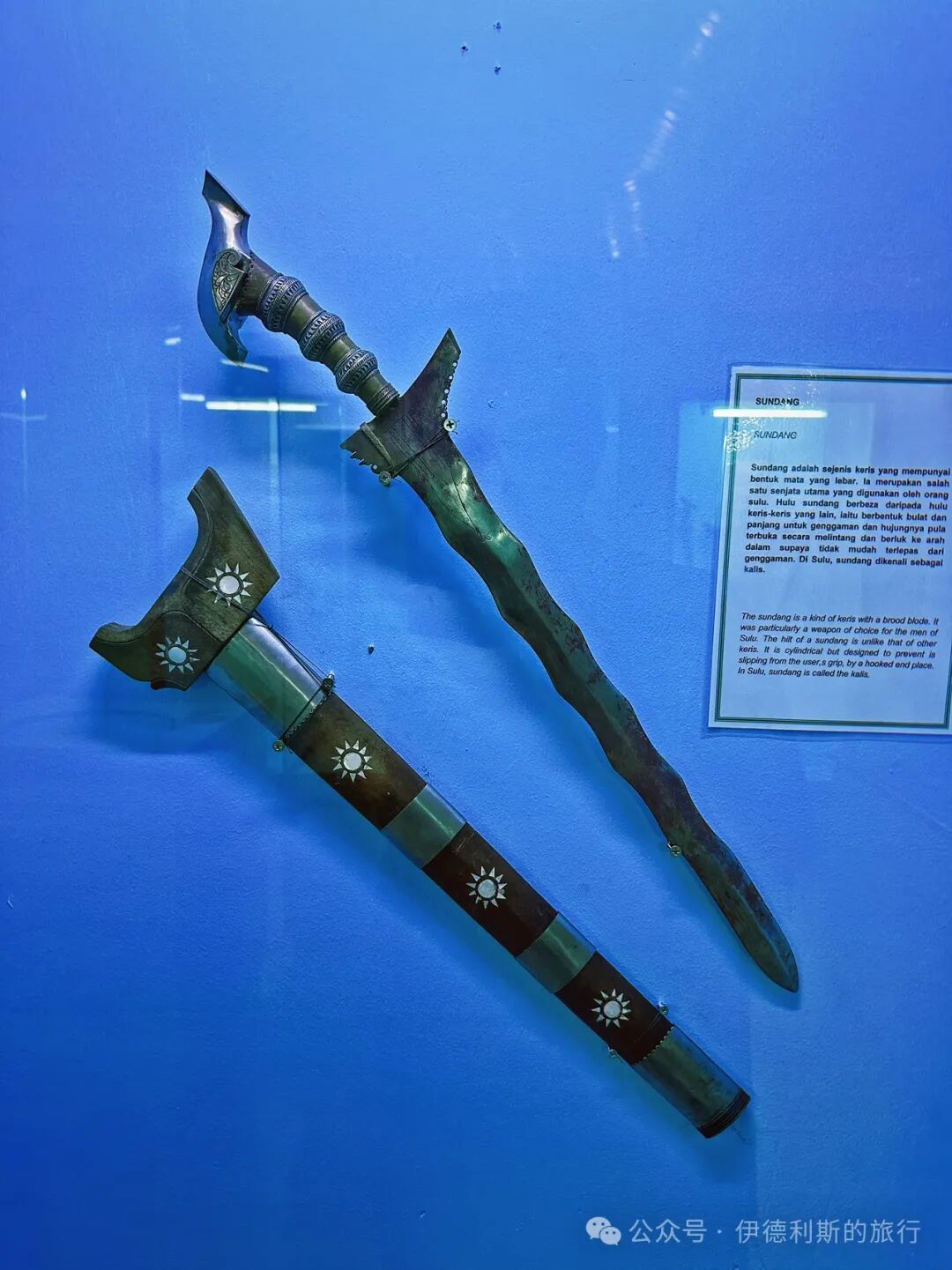
The second type is called Sundang, a wavy-bladed dagger (keris) with blood grooves used by the Sulu people. The handle of the Sundang is cylindrical, which keeps it from slipping out of your hand during use.
Woodcarver Mba Hj. Edie Ifa from Jepara, Java, Indonesia, worked with students from a nearby Islamic school (madrasa) to carve a pair of scripture-inscribed door panels from a century-old teak log.
A wooden tombstone from the Bajau people of Semporna, with the top carved into the shape of a hat.
A hand-copied Persian scripture from 1796.
A scripture stand from Qom, Iran, dating back to the 18th century.
Tiles from the Ilkhanate period, dating to the 13th or 14th century.
A copper bowl from the Mamluk period in Egypt.
Two sets of cloisonné (jingtailan) altar vases and incense burners. One set likely traveled from Hong Kong to Malaysia during the era of export-oriented production. view all
Summary: This article visits the Sabah Islamic Civilization Museum in Malaysia, with a focus on regional Muslim history, exhibition displays, and local cultural context. It keeps the original museum details, photographs, artifact notes, and travel observations for readers interested in Islamic heritage in Sabah.
The Sabah Islamic Civilization Museum opened in 2002. It has a small collection and is not well-known, but it is special because it holds unique Islamic cultural artifacts from the Malay Archipelago that you cannot see in other museums.
This is a wooden prayer gong (kentung) made in 1918 by the Sambas Sultanate in West Kalimantan, Indonesia. It is a traditional instrument used to signal the call to prayer.
The Sambas Malays live on the northwest coast of Borneo, right next to the Malaysian state of Sabah. The Sambas Malays founded the Sambas Sultanate in 1675. It became part of Indonesia in 1956, and the Sultan of Sambas still lives in the palace today. The Sambas Malays are mainly Sufi. Their rituals combine features of the Qadiriyya and Naqshbandiyya orders and are famous for their unique chanting style.
This is a manuscript of scripture from Sulawesi, Indonesia, written on date palm leaves and bound in goatskin. It is over a hundred years old. It was donated to the Sabah Islamic Civilization Museum in 2015 by Tuan Hj. Abdullah Abas, a religious teacher from Kinarut, Sabah, Malaysia.
This is a traditional Indonesian wooden chest carved with scripture, used for storing clothes. This type of wood carving is found in several Islamic museums in Malaysia and is a very distinctive piece of Islamic craft.
This is a bridal curtain used by the Bajau (Sama) people, a sea-faring group living on the west coast of Sabah, Malaysia, in Kota Belud.
This is a porcelain plate with scripture from the 1930s, acquired by the museum in 2005. Malay people usually display this kind of porcelain plate in a cabinet as a decoration.
These scripture-inscribed ceramics were brought to Sabah through trade and include pieces from both China and Europe. Under the rule of the Sultanate of Brunei, Sabah had very close trade ties with the Qing Dynasty, Spain, the Netherlands, and other countries.
This is a protective vest (dua vest) worn by indigenous soldiers in Sabah during the anti-British resistance led by Mat Salleh between 1894 and 1905.
The resistance leader Mat Salleh, whose real name was Datuk Muhammad Salleh, was an indigenous leader in Sabah. In 1881, the British took control of Sabah by establishing the North Borneo Chartered Company. Mat Salleh felt this violated the rights of the indigenous people and refused to recognize the company. In 1895, after negotiations with the company failed, Mat Salleh was declared a wanted man. He immediately built a fortress to openly resist the British and successfully launched several attacks. He died in battle in 1900, and his followers continued to fight until they were finally defeated in 1905.
This is a decorative wooden frame made in 1918, featuring scripture carvings and traditional embroidery in the center.
These are wooden grave markers from the Semporna region. This type of wooden grave marker is unique to the Semporna area and is carved with floral patterns around the edges.
This is a century-old bas-relief bronze plaque featuring the Basmala.
This is a prayer drum (beduk) made of palm wood and cowhide. It is usually placed in front of the main hall or at the entrance of a mosque, which is why many traditional mosques in Southeast Asia do not have minarets.
There are many wavy-bladed daggers (keris) in museums across Malaysia and Indonesia, but very few have a clear record of their origin. The Museum of Islamic Civilization in Sabah displays a sword called Pedang Khusus. Palace guards in the Tidung Kingdom on Tarakan Island off the east coast of Borneo wore this gold-made, highly detailed weapon.
The second type is called Sundang, a wavy-bladed dagger (keris) with blood grooves used by the Sulu people. The handle of the Sundang is cylindrical, which keeps it from slipping out of your hand during use.
Woodcarver Mba Hj. Edie Ifa from Jepara, Java, Indonesia, worked with students from a nearby Islamic school (madrasa) to carve a pair of scripture-inscribed door panels from a century-old teak log.
A wooden tombstone from the Bajau people of Semporna, with the top carved into the shape of a hat.
A hand-copied Persian scripture from 1796.
A scripture stand from Qom, Iran, dating back to the 18th century.
Tiles from the Ilkhanate period, dating to the 13th or 14th century.
A copper bowl from the Mamluk period in Egypt.
Two sets of cloisonné (jingtailan) altar vases and incense burners. One set likely traveled from Hong Kong to Malaysia during the era of export-oriented production. view all
Reposted from the web
Summary: This article visits the Sabah Islamic Civilization Museum in Malaysia, with a focus on regional Muslim history, exhibition displays, and local cultural context. It keeps the original museum details, photographs, artifact notes, and travel observations for readers interested in Islamic heritage in Sabah.
The Sabah Islamic Civilization Museum opened in 2002. It has a small collection and is not well-known, but it is special because it holds unique Islamic cultural artifacts from the Malay Archipelago that you cannot see in other museums.
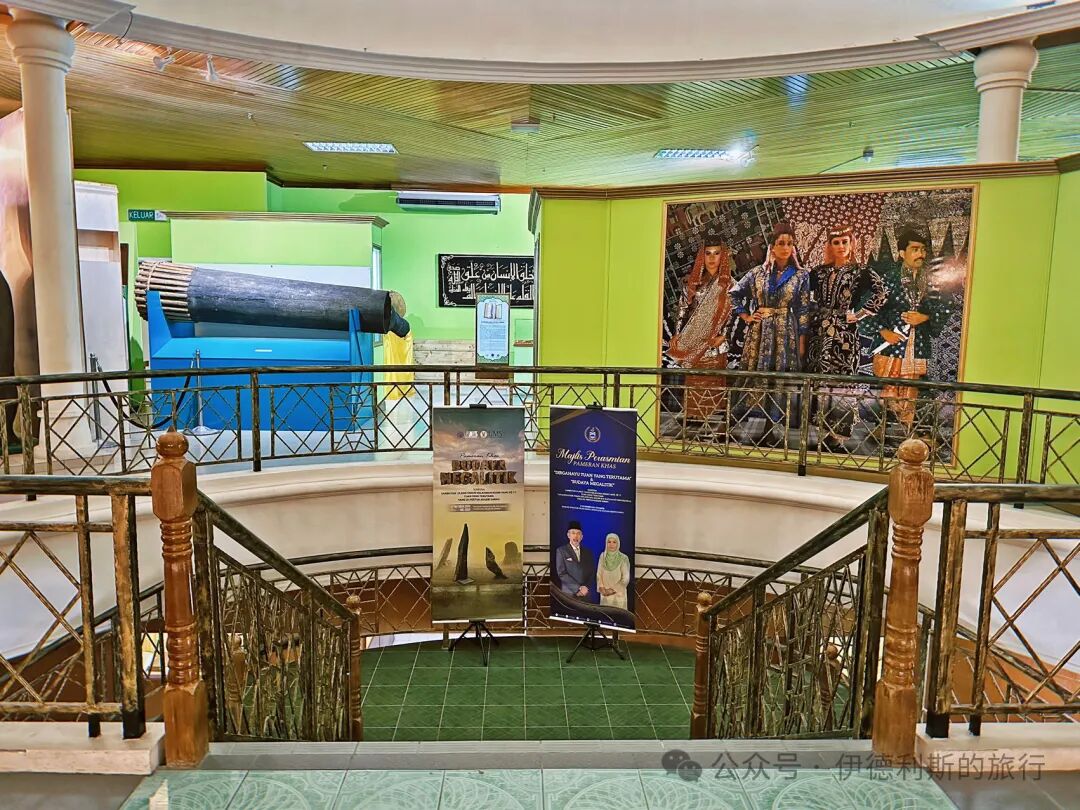
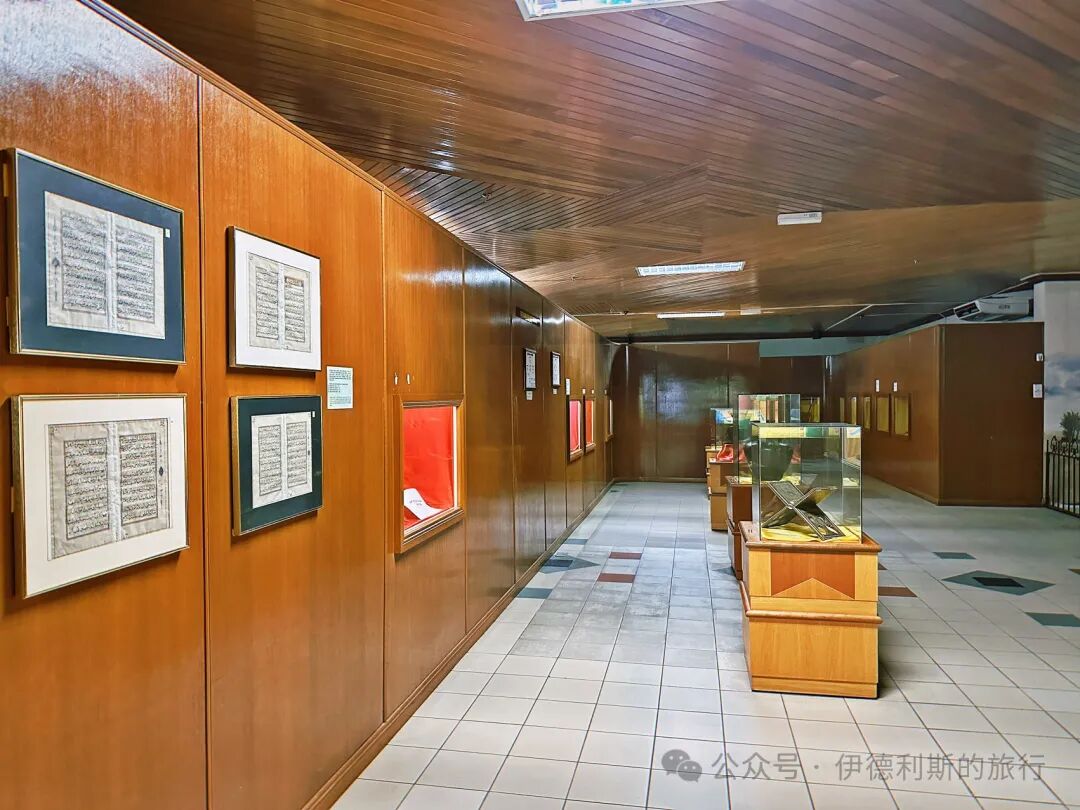
This is a wooden prayer gong (kentung) made in 1918 by the Sambas Sultanate in West Kalimantan, Indonesia. It is a traditional instrument used to signal the call to prayer.
The Sambas Malays live on the northwest coast of Borneo, right next to the Malaysian state of Sabah. The Sambas Malays founded the Sambas Sultanate in 1675. It became part of Indonesia in 1956, and the Sultan of Sambas still lives in the palace today. The Sambas Malays are mainly Sufi. Their rituals combine features of the Qadiriyya and Naqshbandiyya orders and are famous for their unique chanting style.
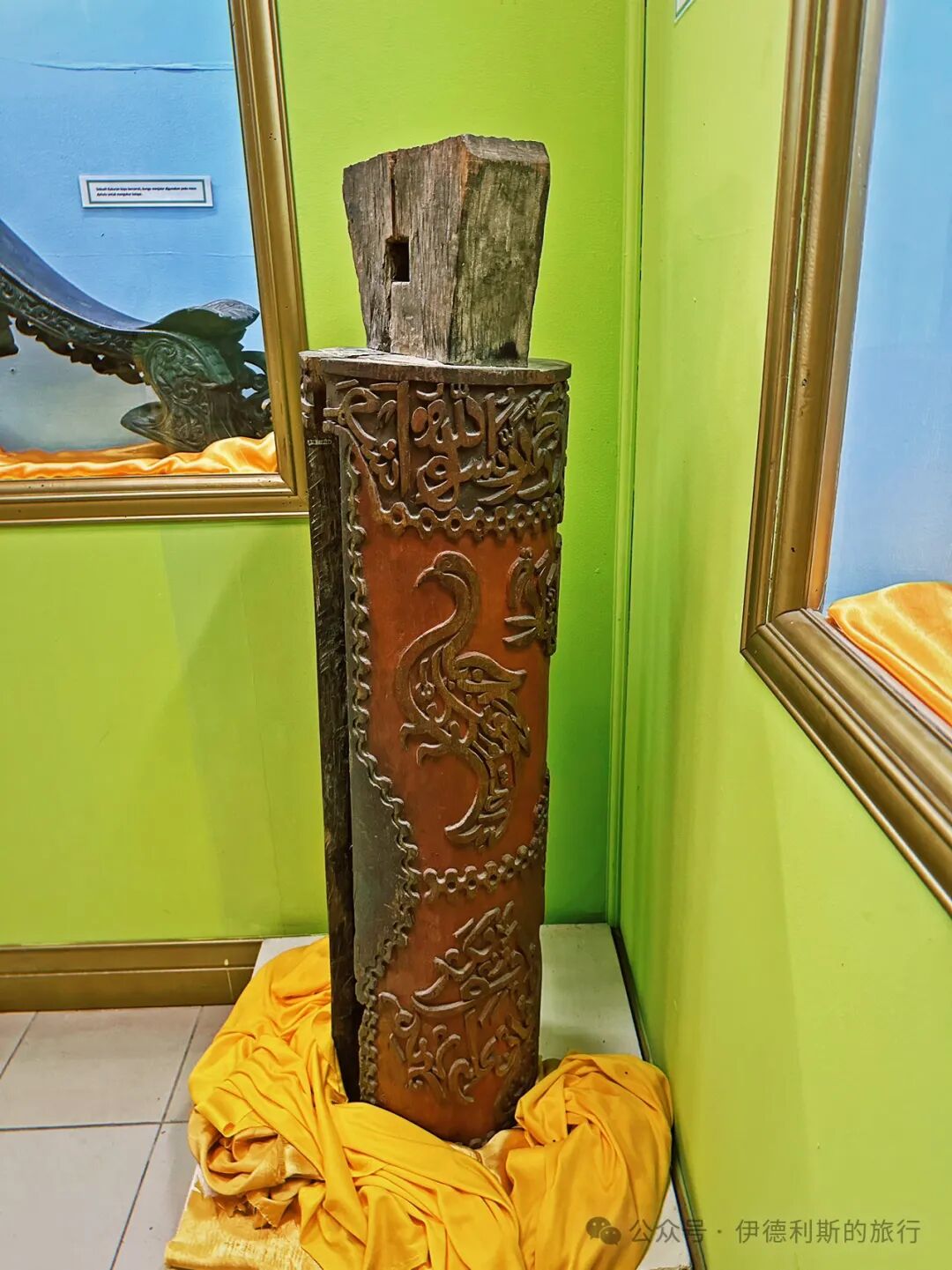
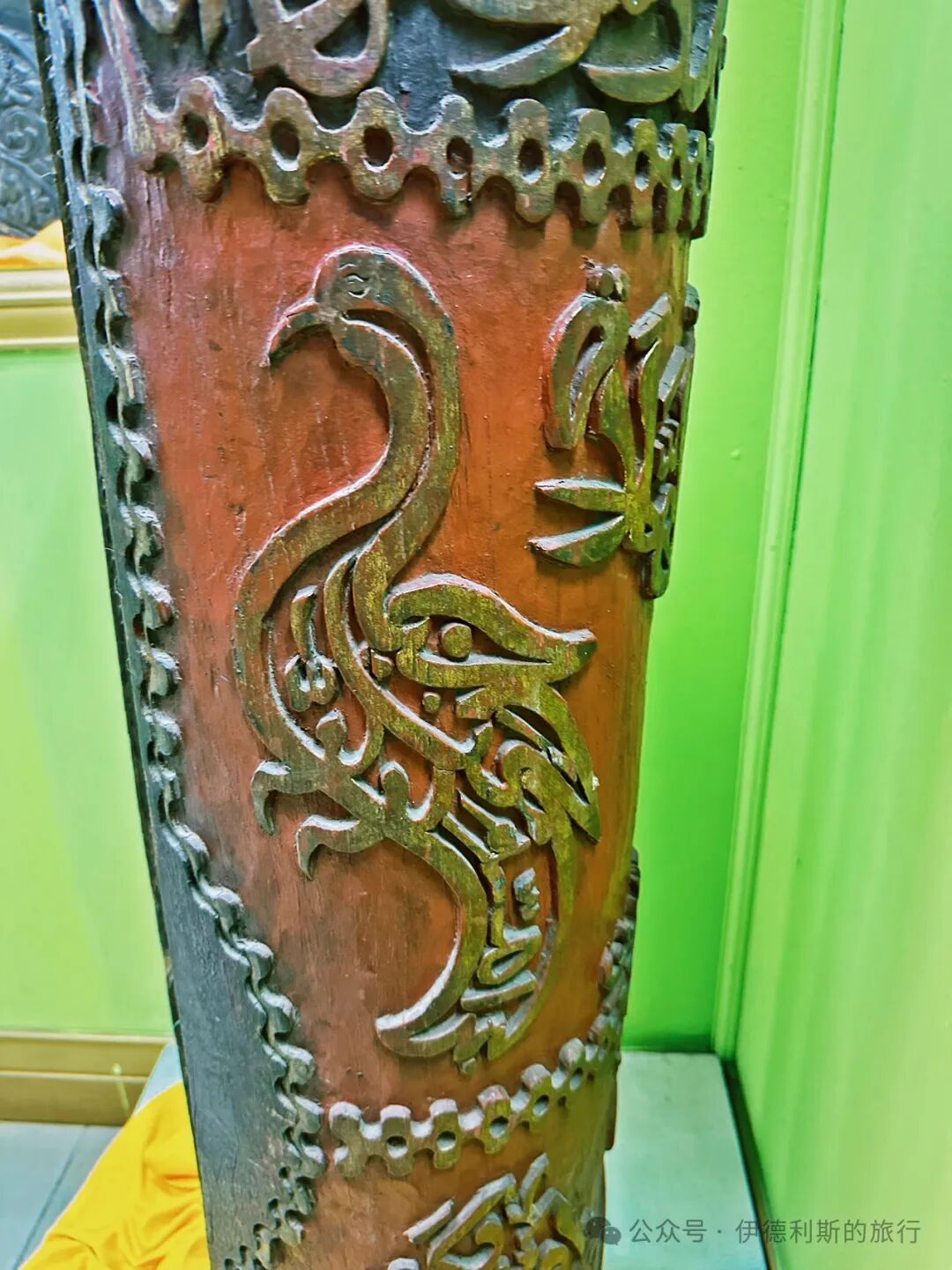
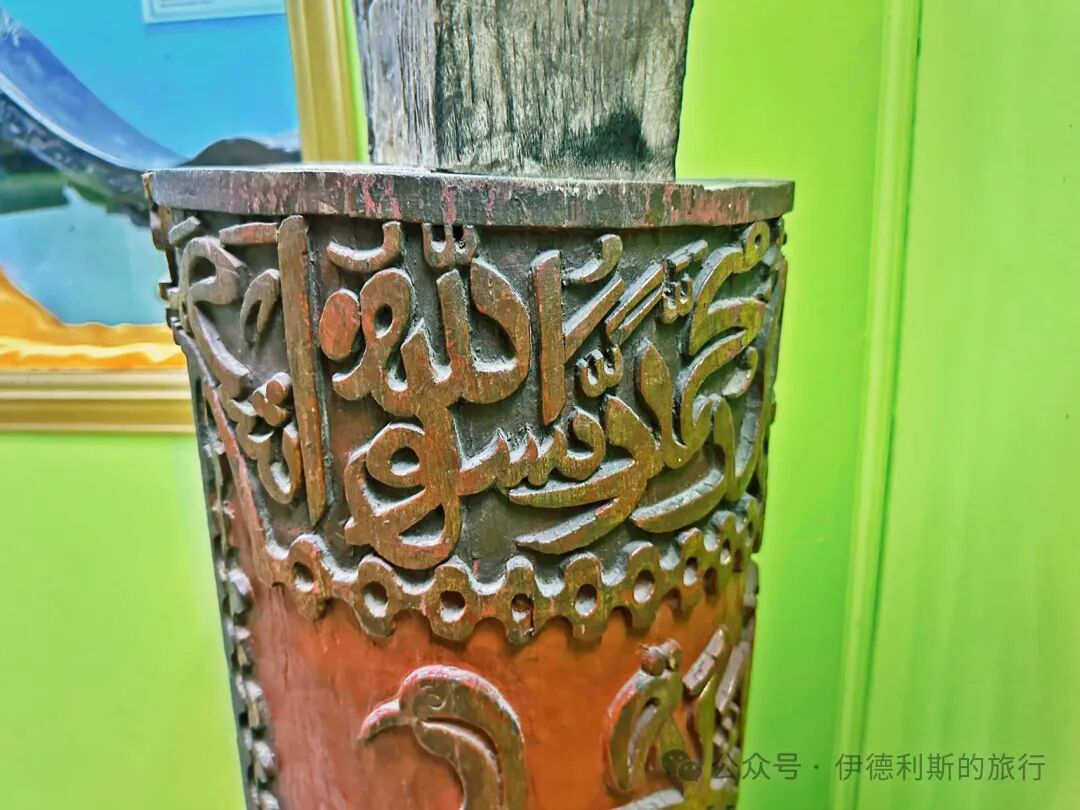
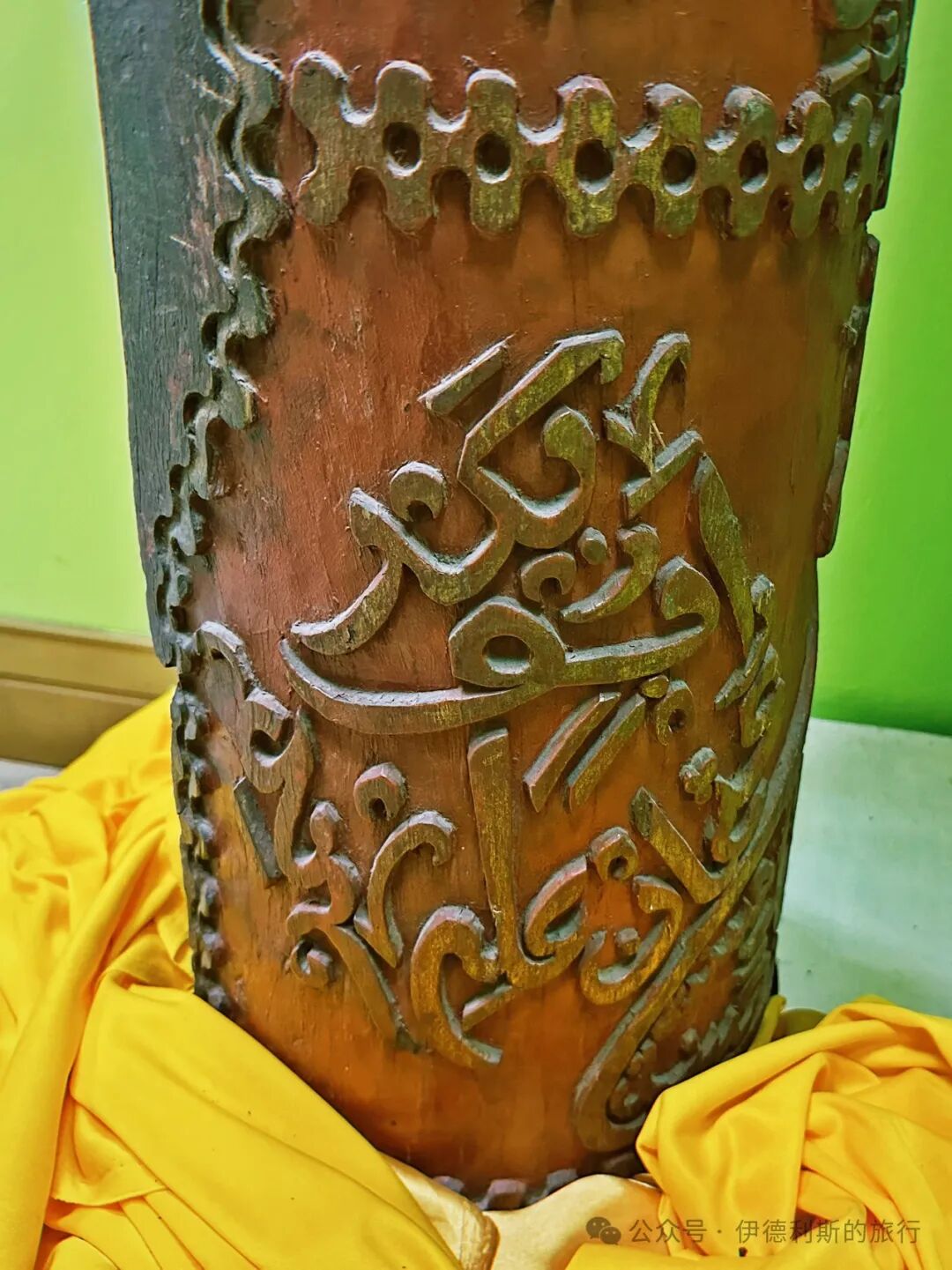
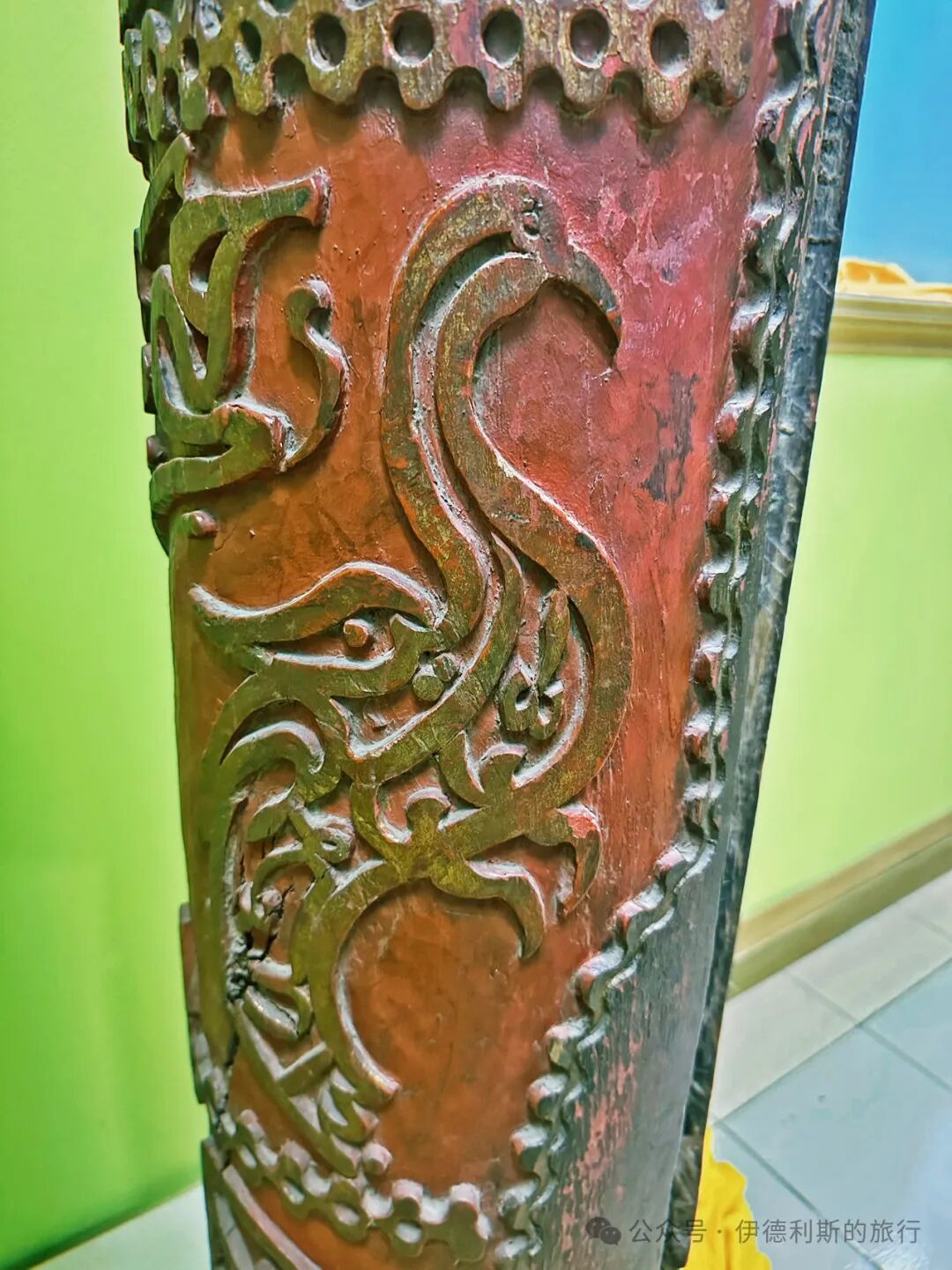
This is a manuscript of scripture from Sulawesi, Indonesia, written on date palm leaves and bound in goatskin. It is over a hundred years old. It was donated to the Sabah Islamic Civilization Museum in 2015 by Tuan Hj. Abdullah Abas, a religious teacher from Kinarut, Sabah, Malaysia.
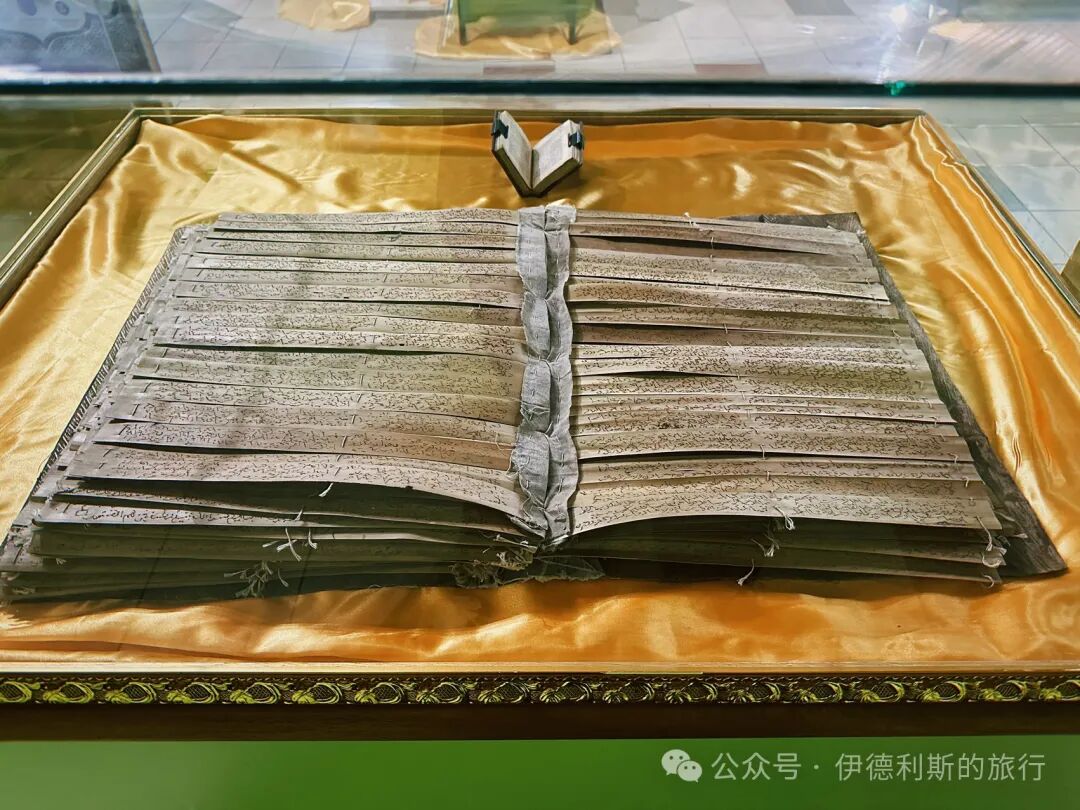
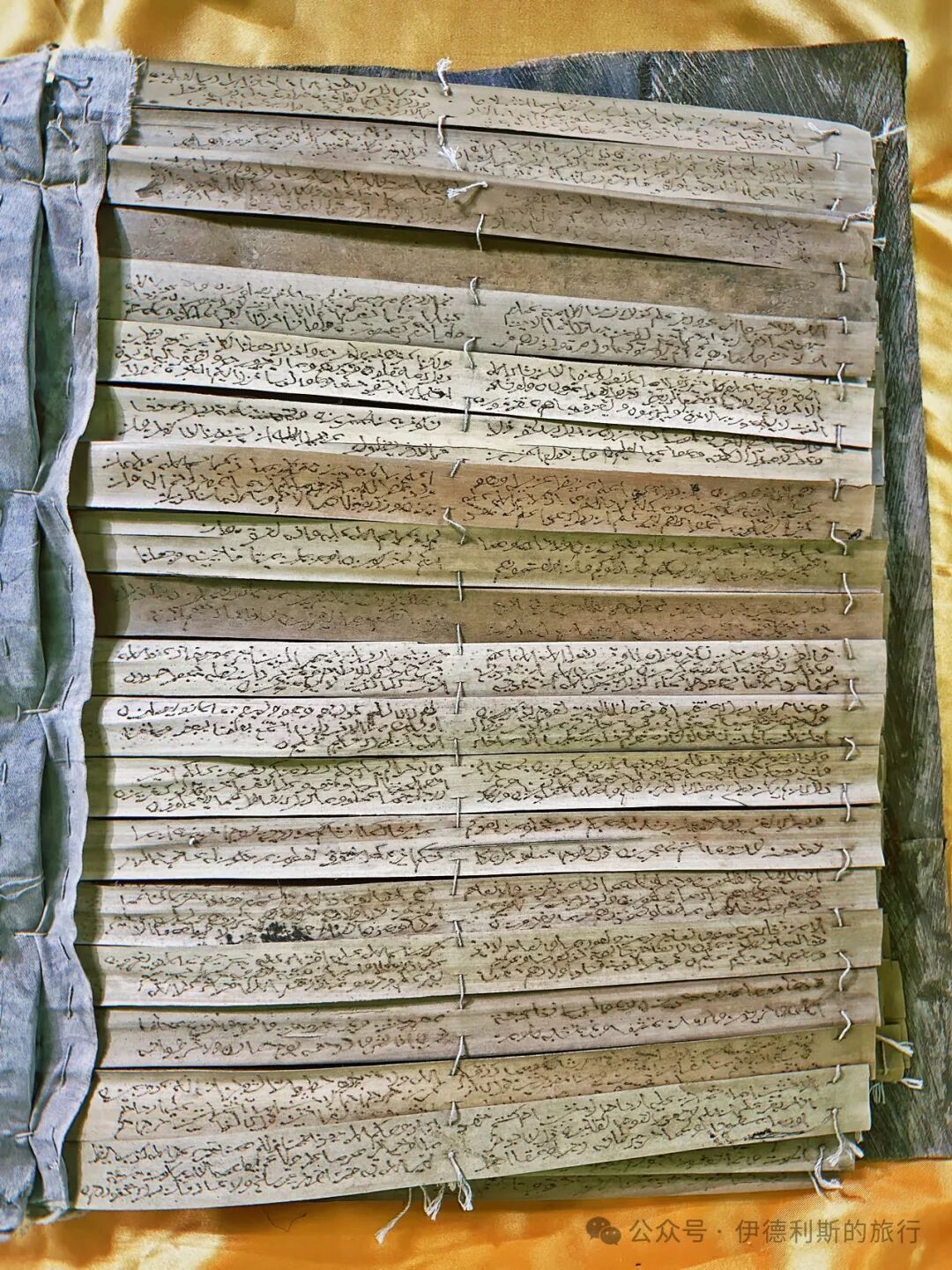
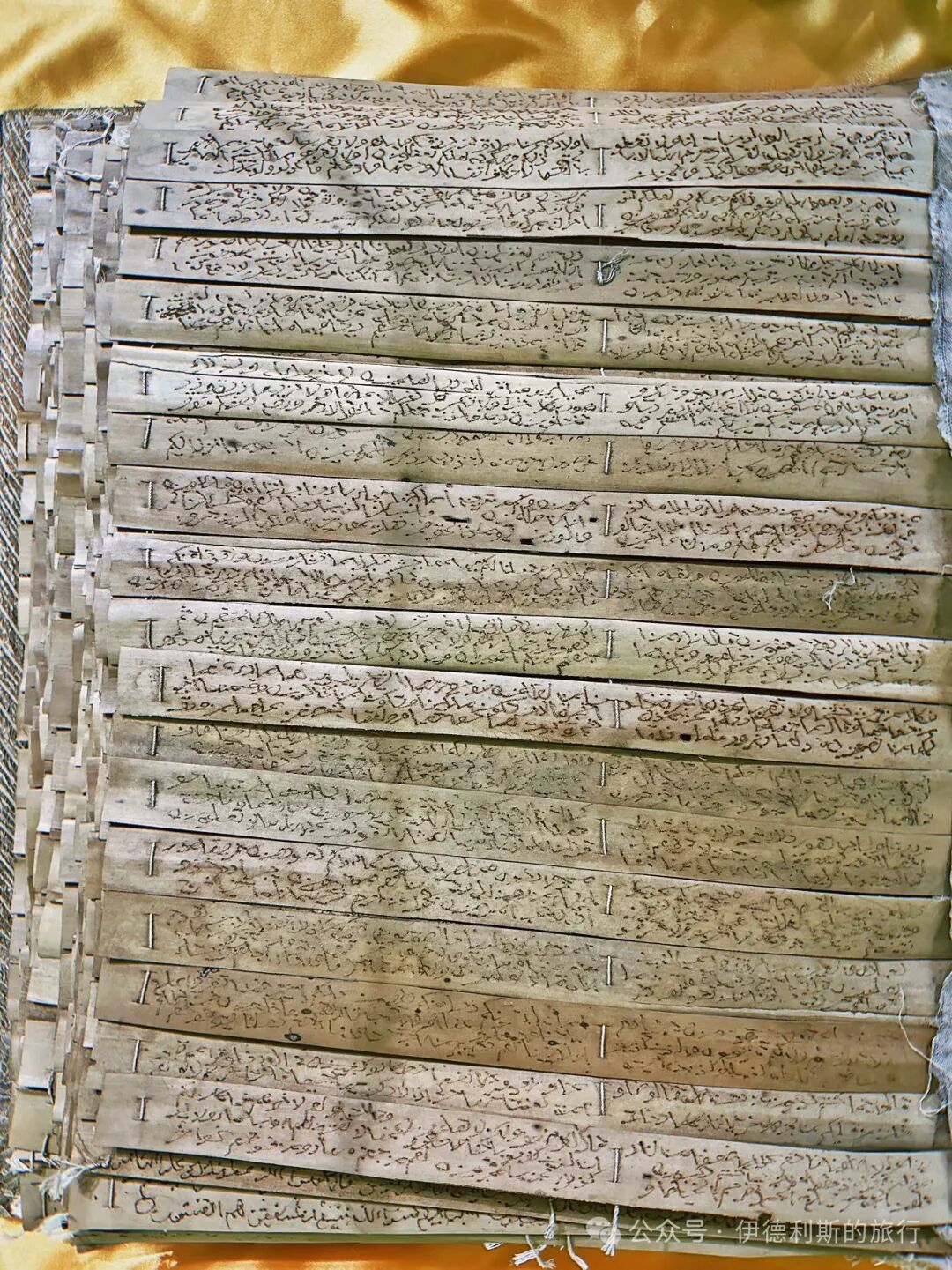
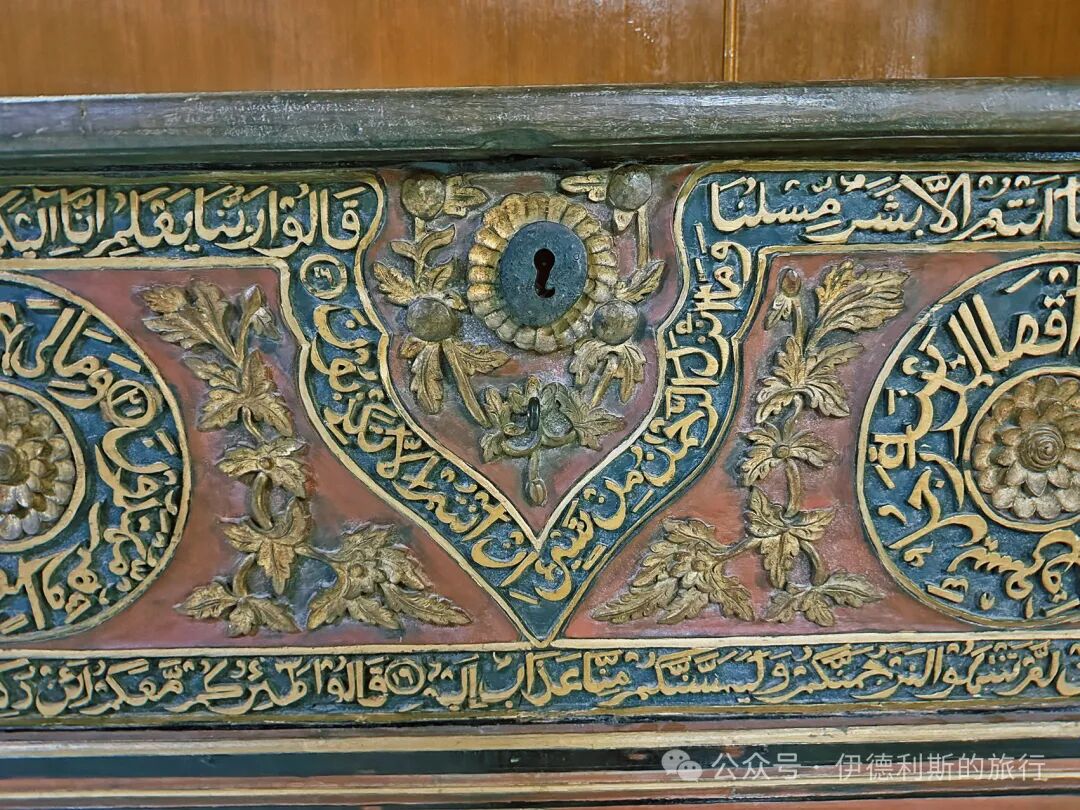
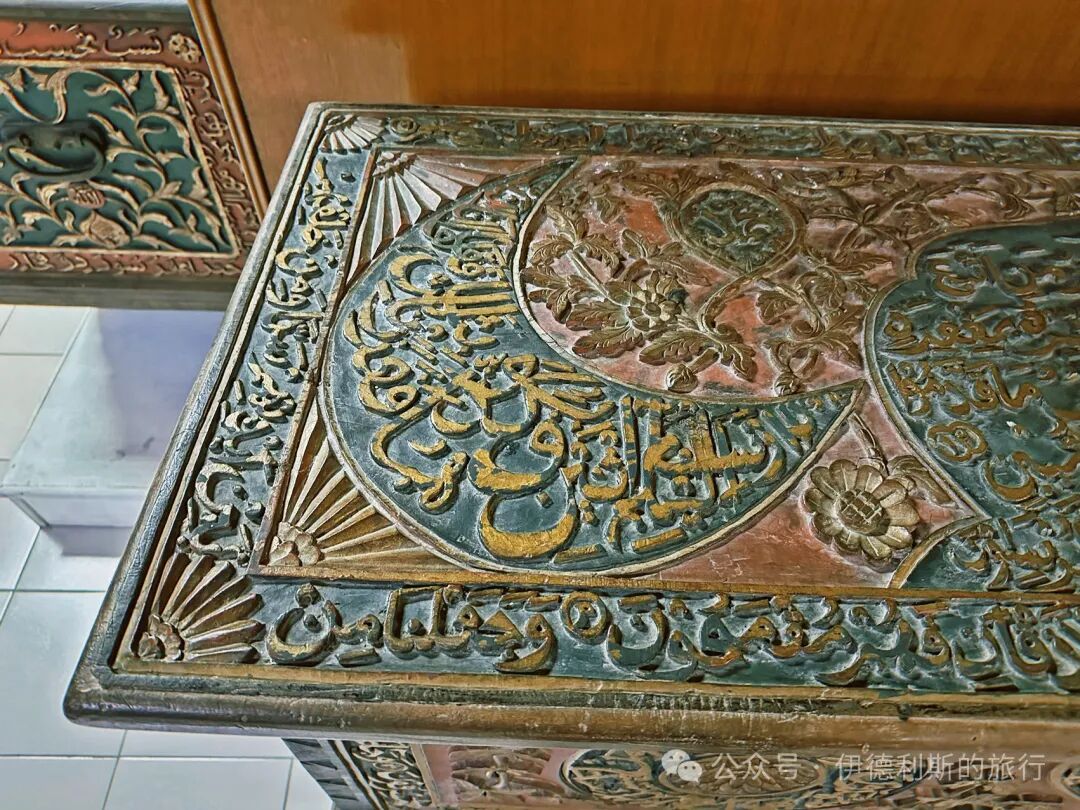
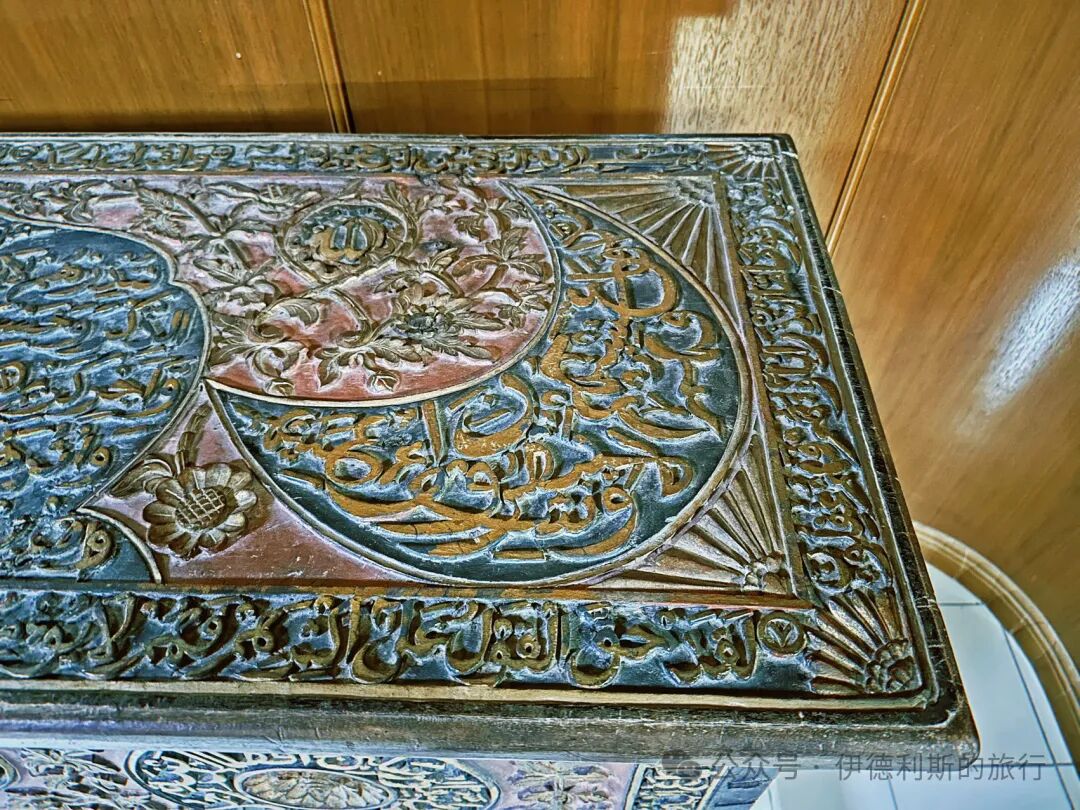
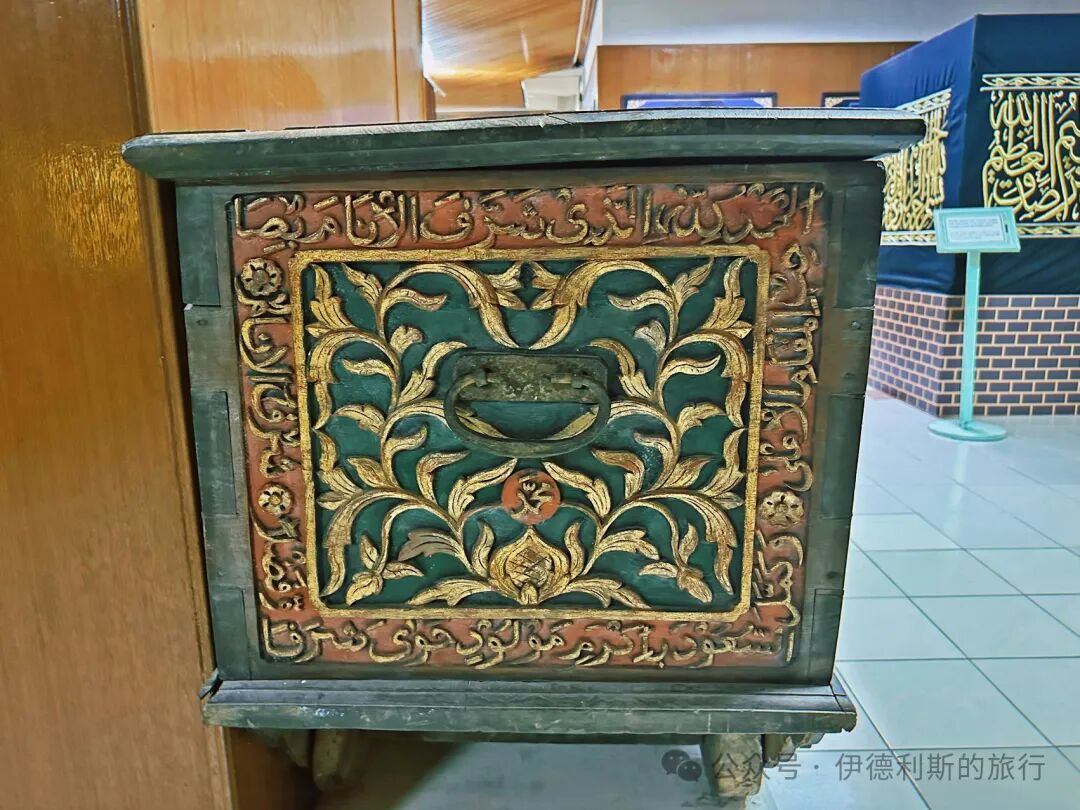
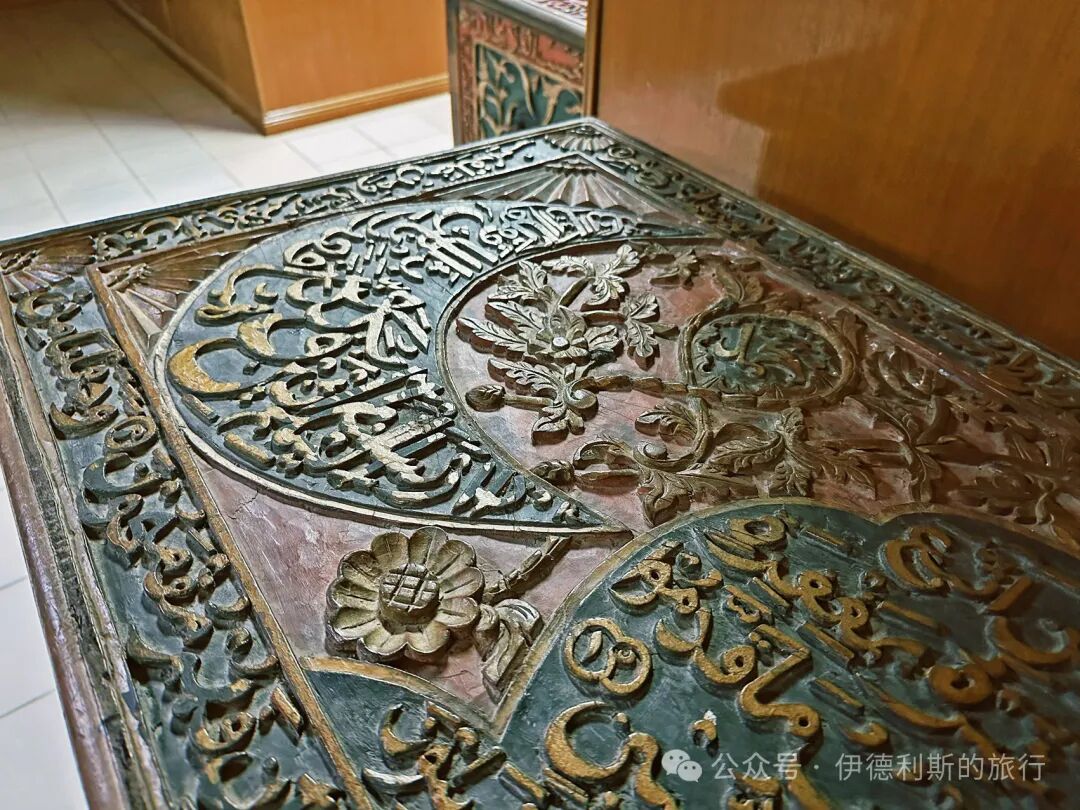
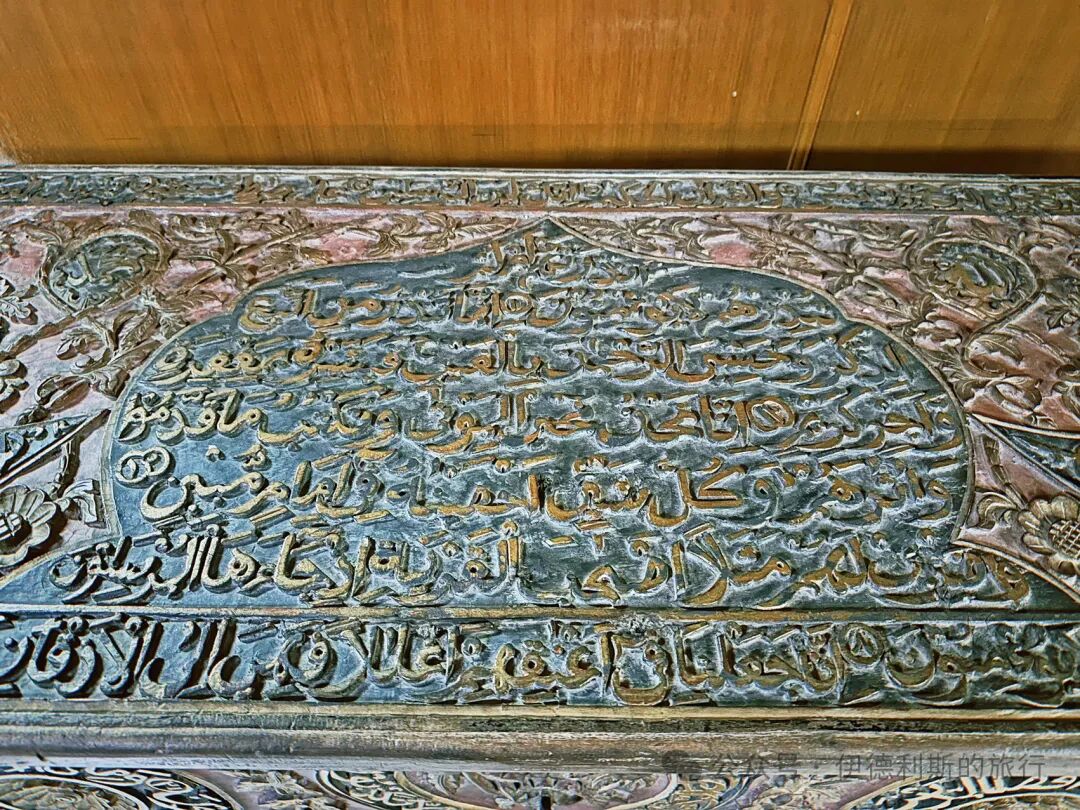
This is a traditional Indonesian wooden chest carved with scripture, used for storing clothes. This type of wood carving is found in several Islamic museums in Malaysia and is a very distinctive piece of Islamic craft.
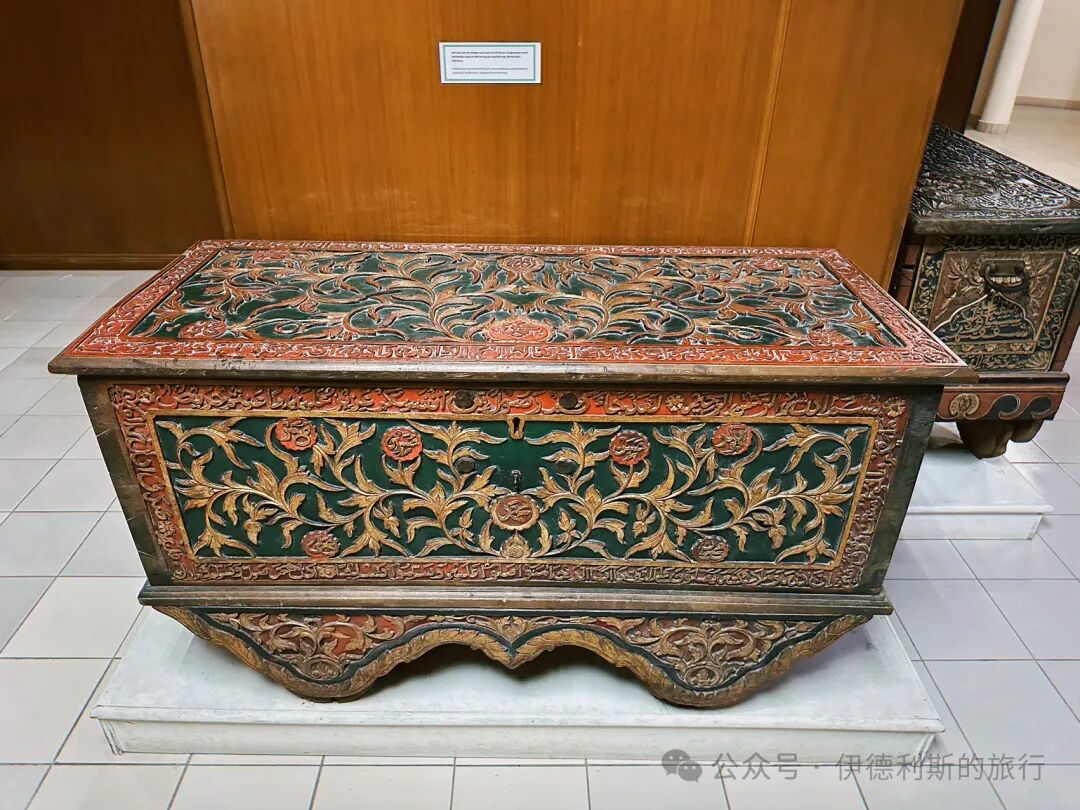
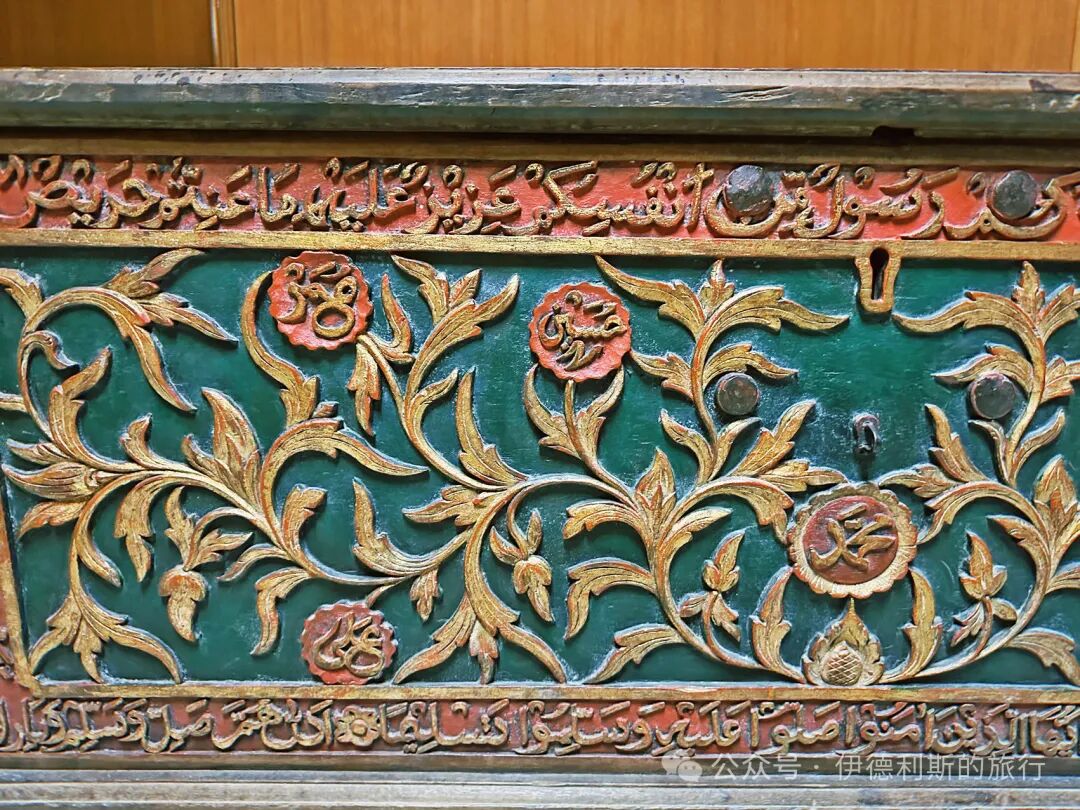
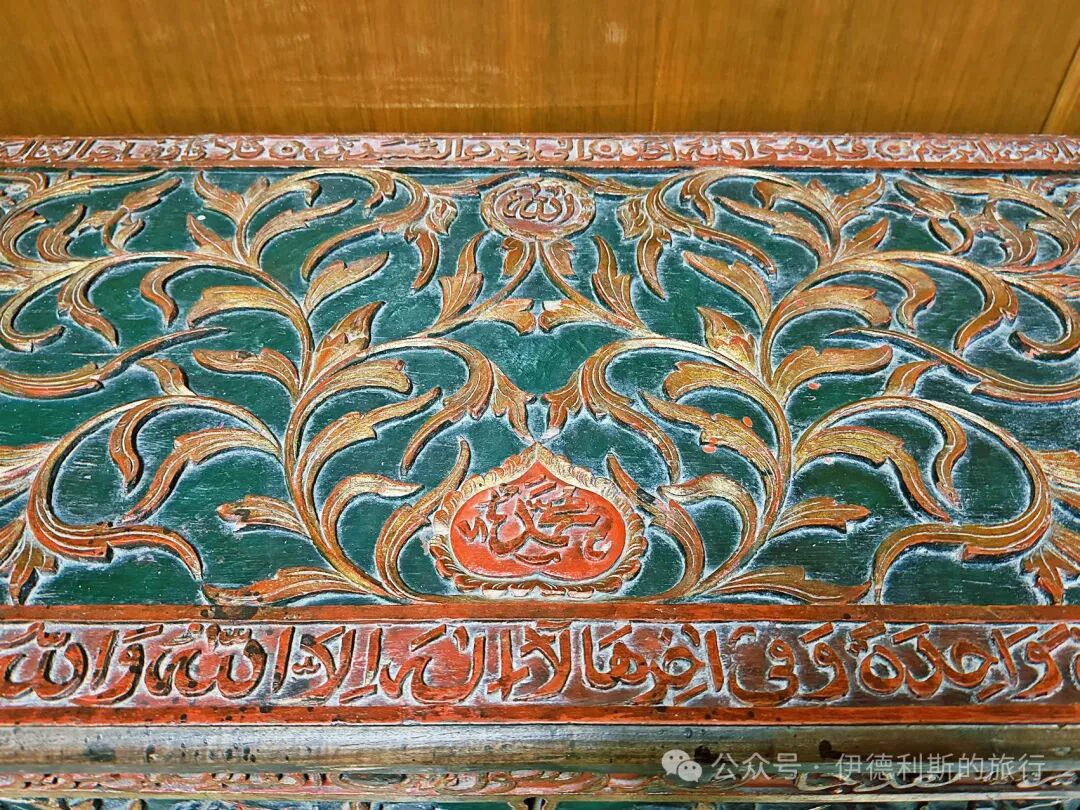
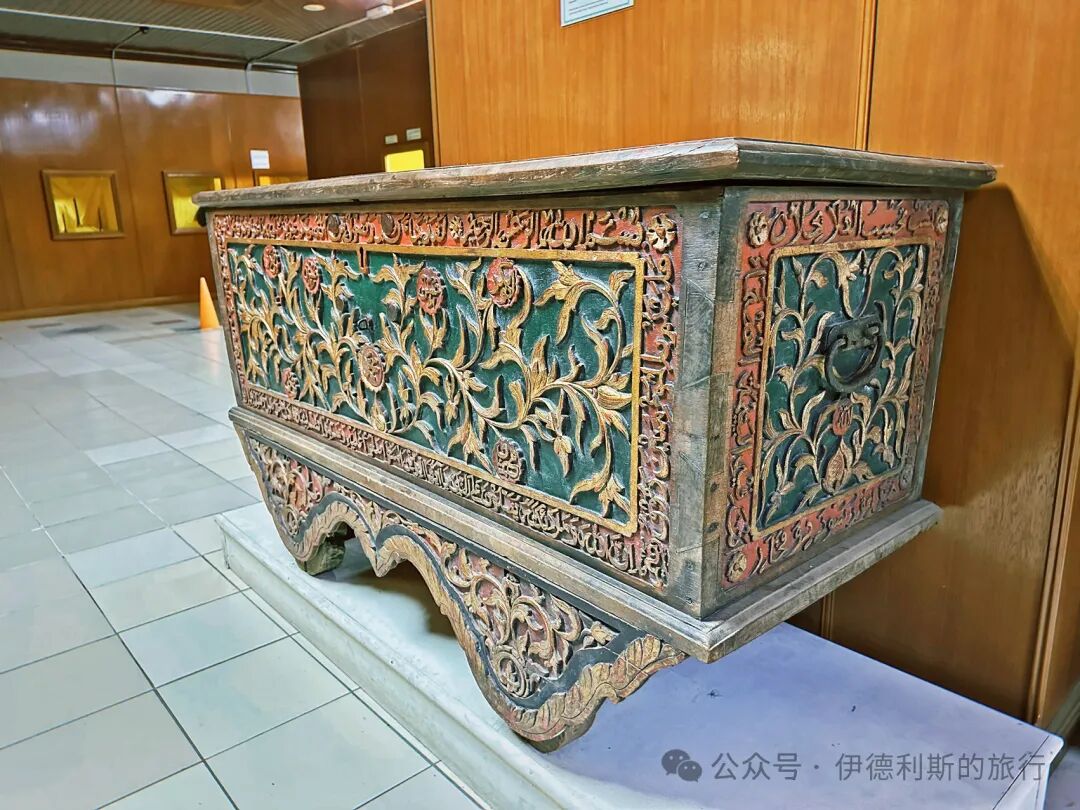
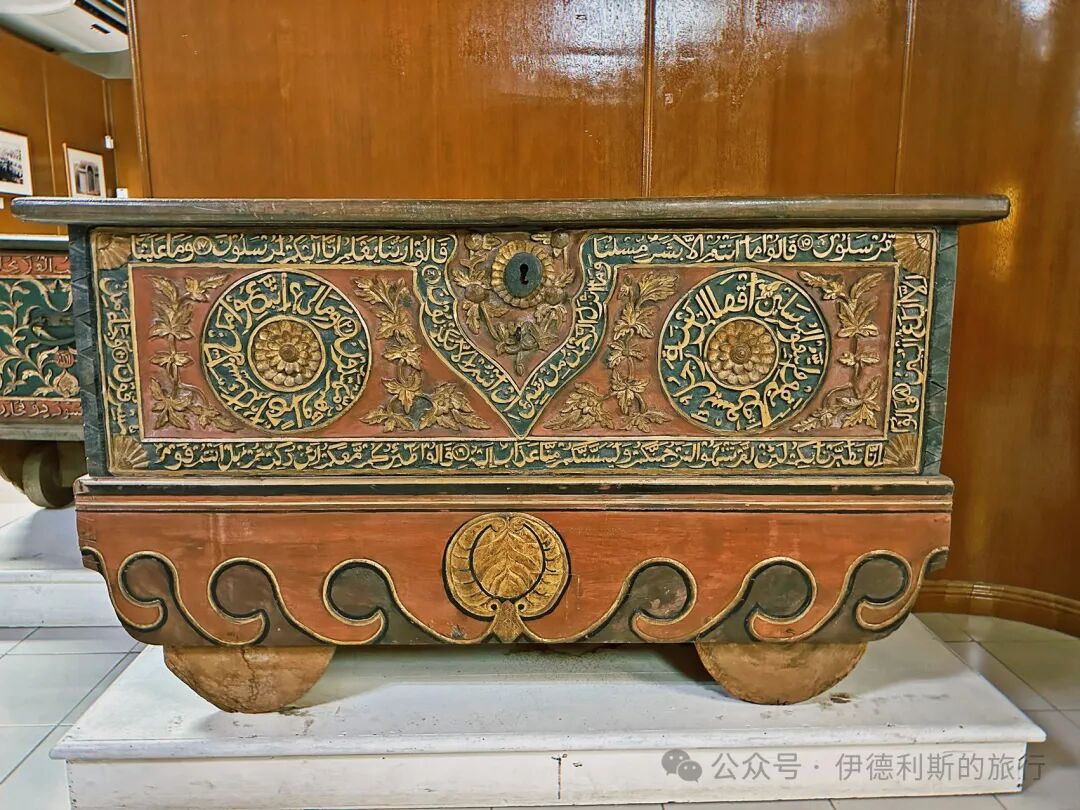
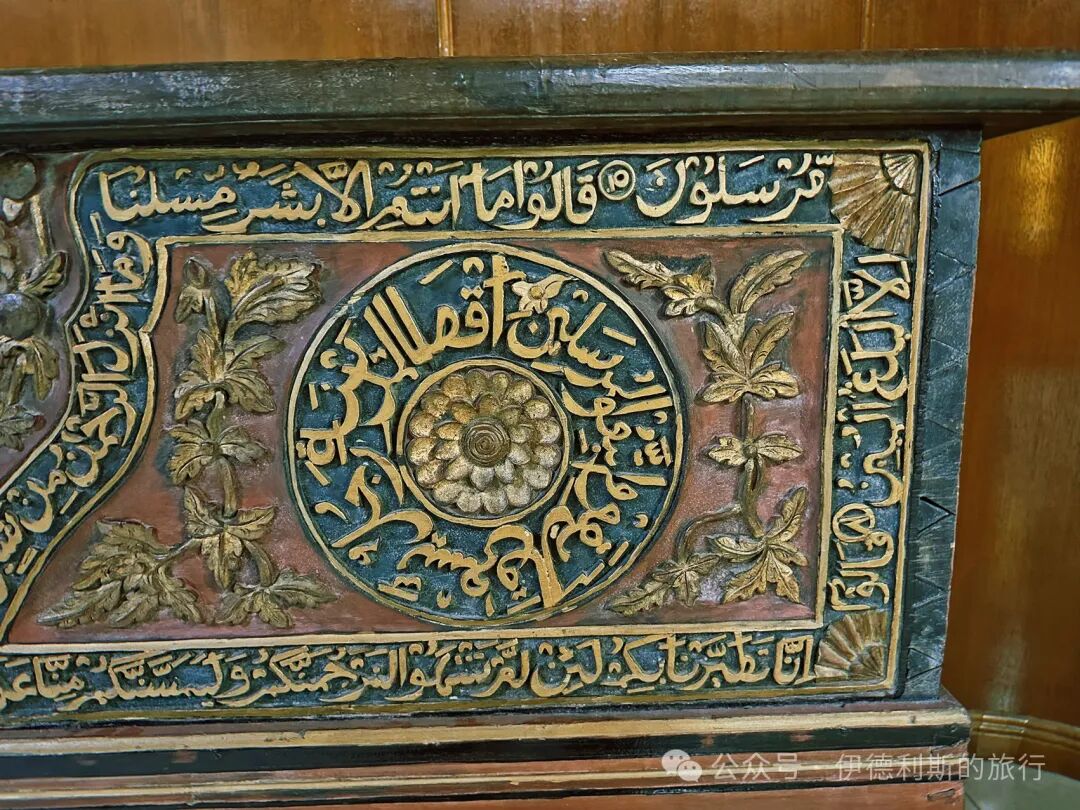
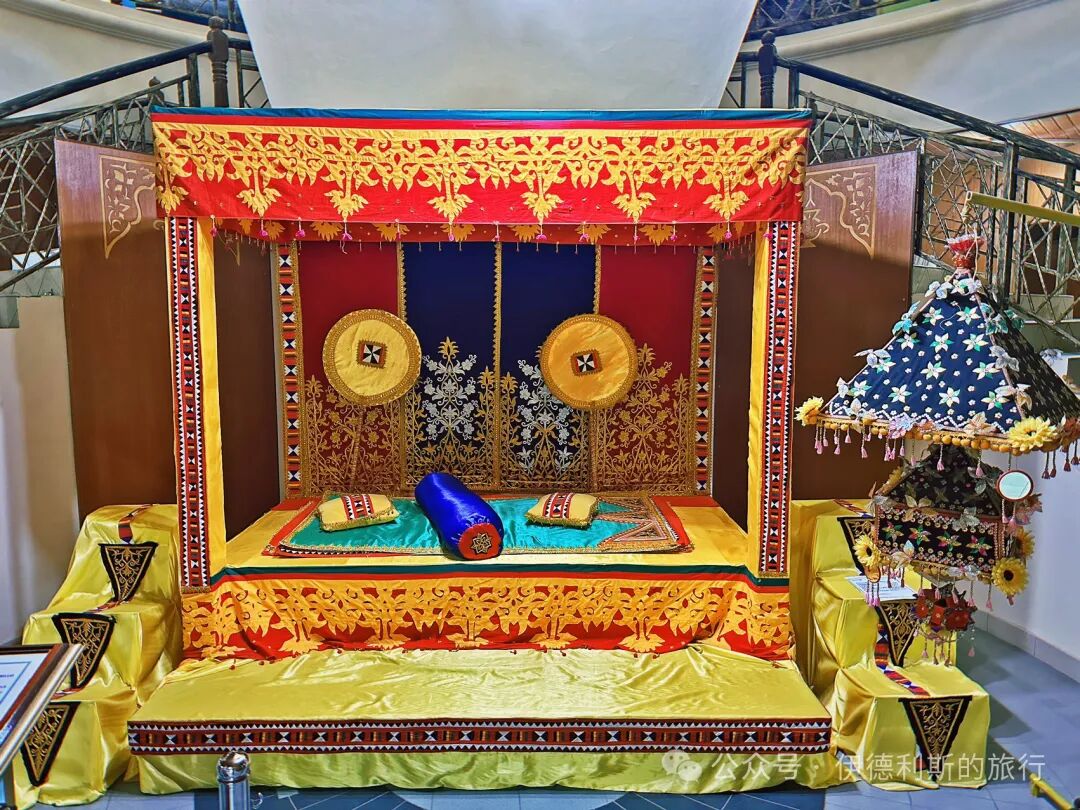
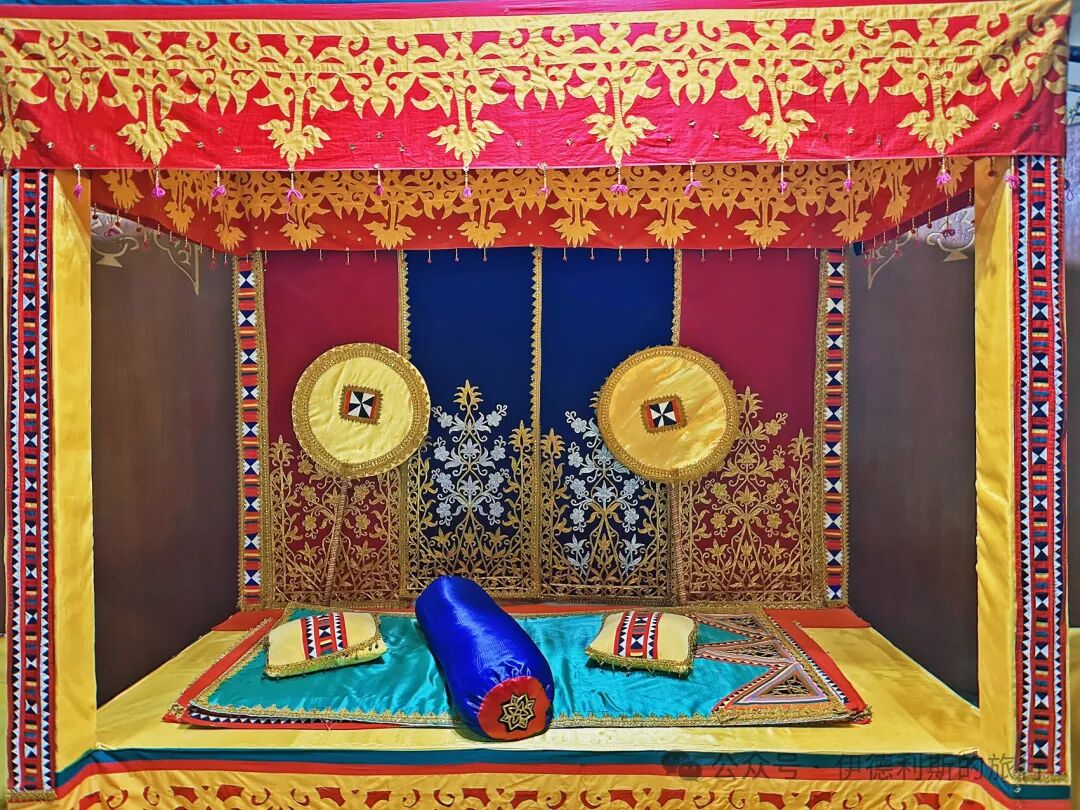
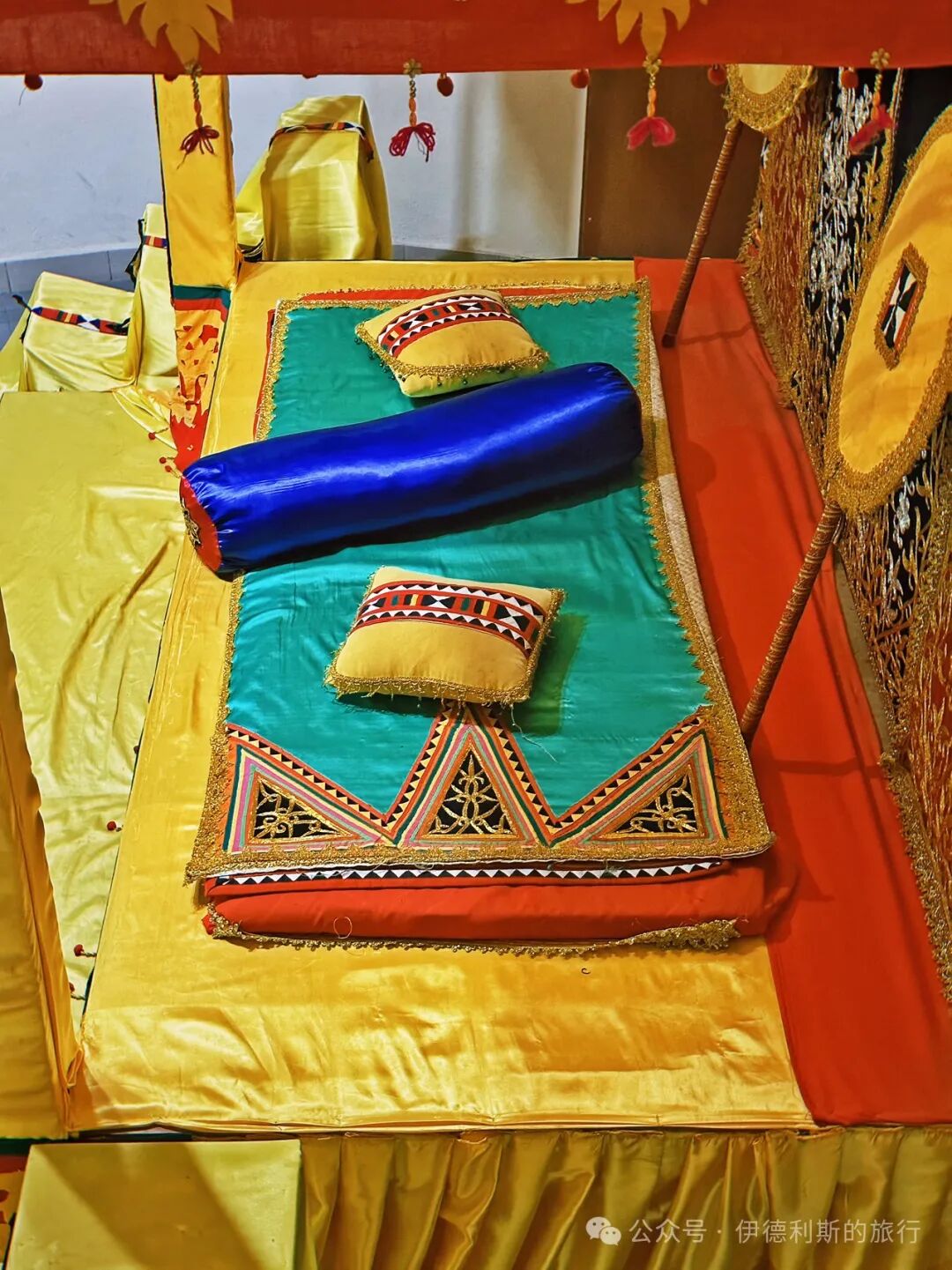
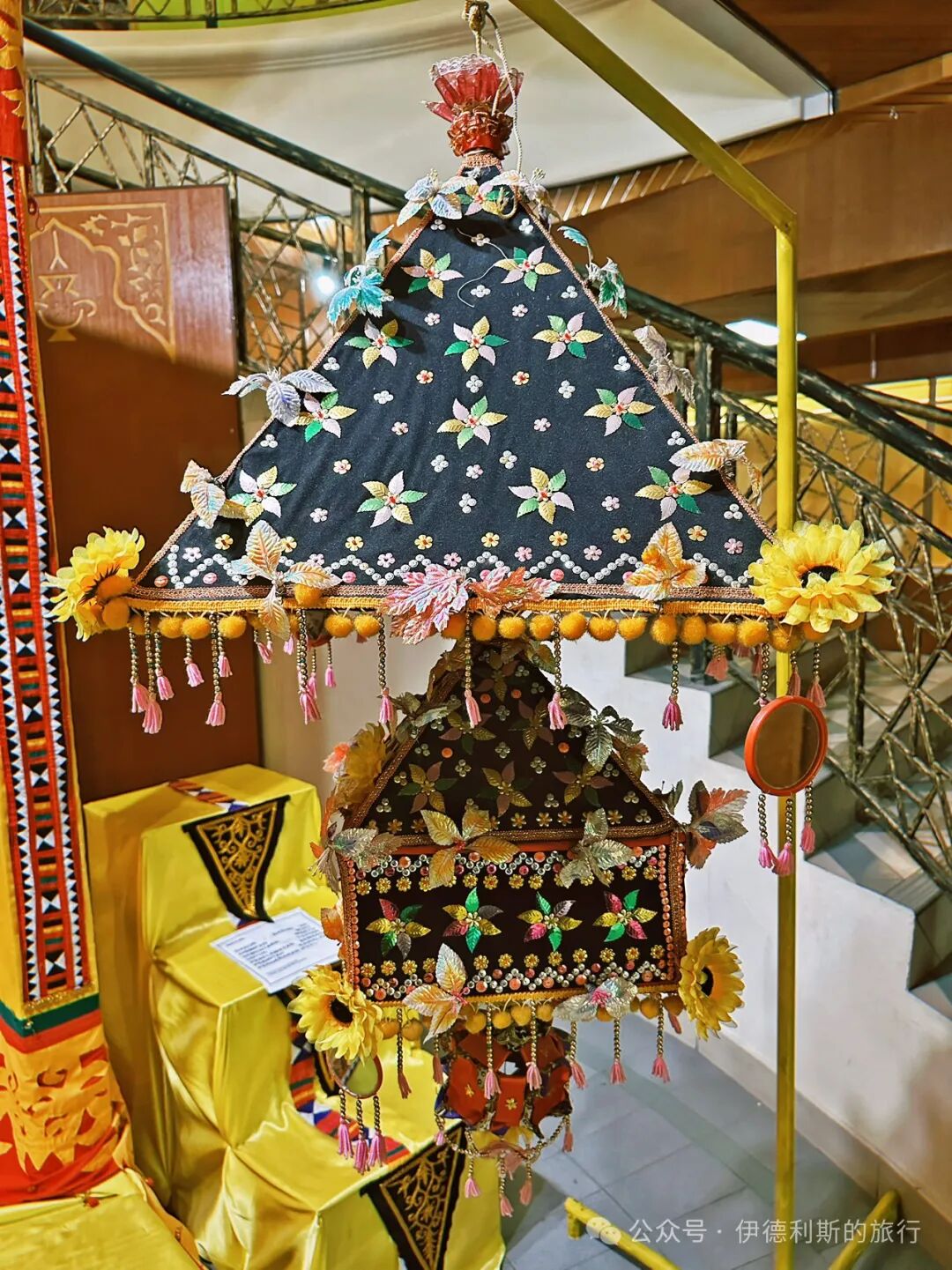
This is a bridal curtain used by the Bajau (Sama) people, a sea-faring group living on the west coast of Sabah, Malaysia, in Kota Belud.
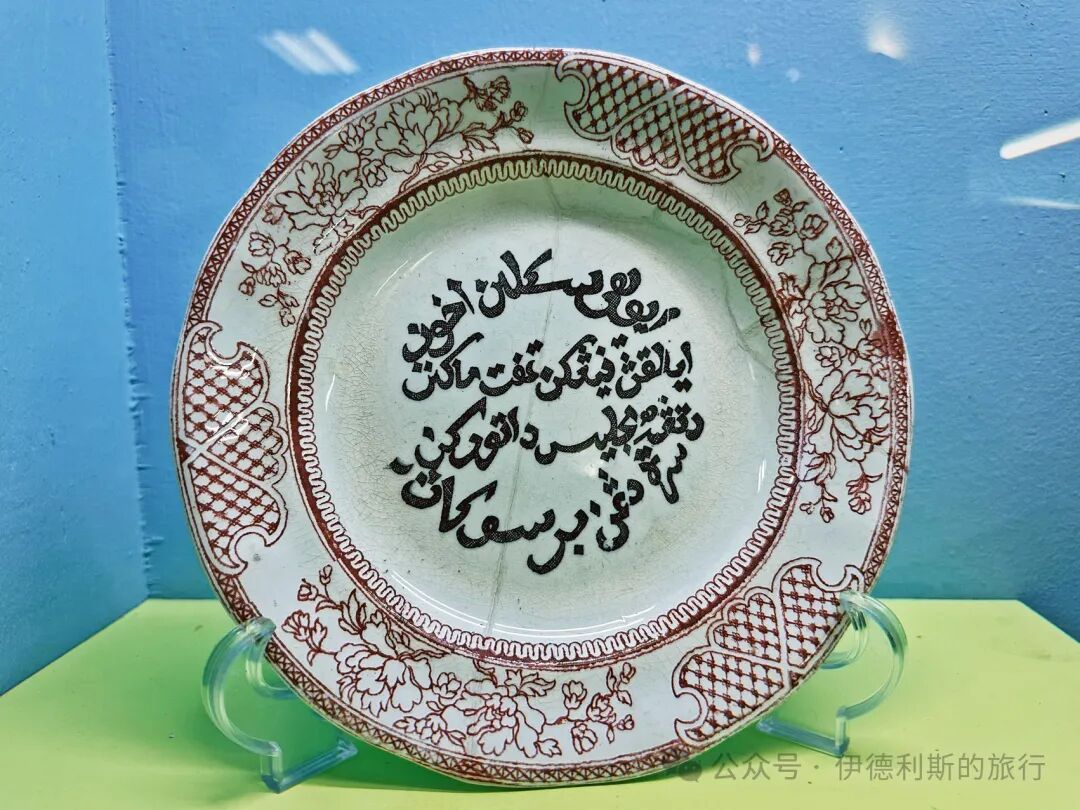
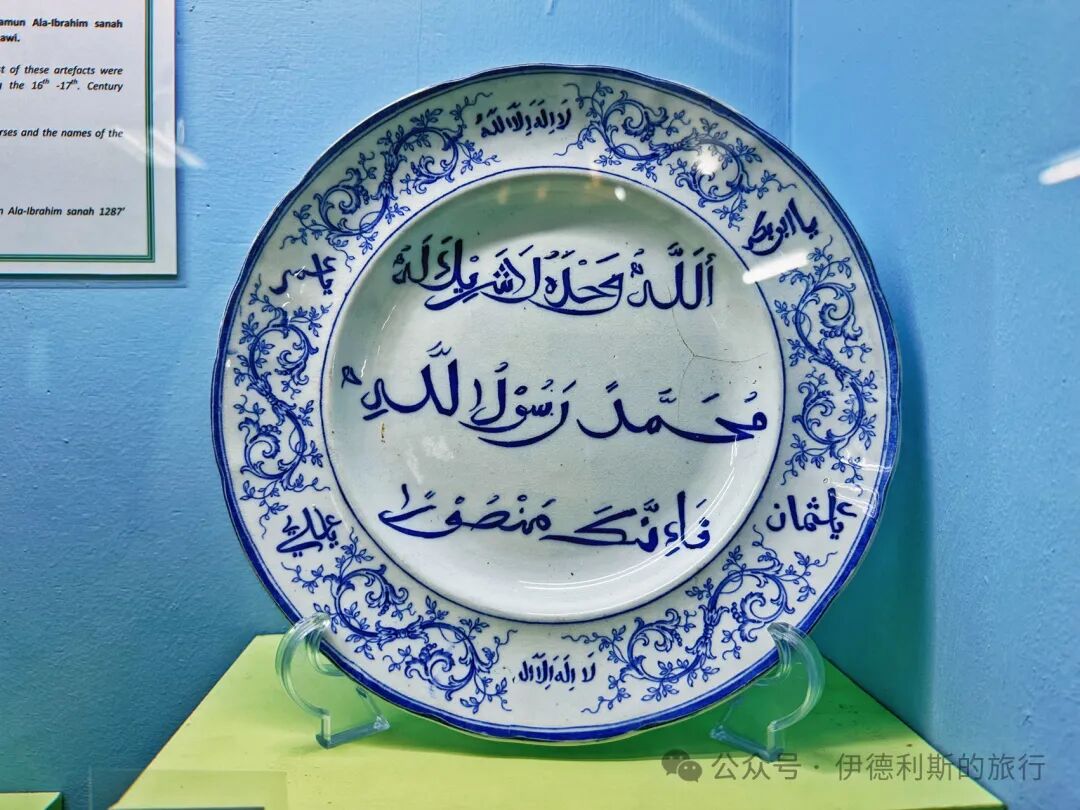
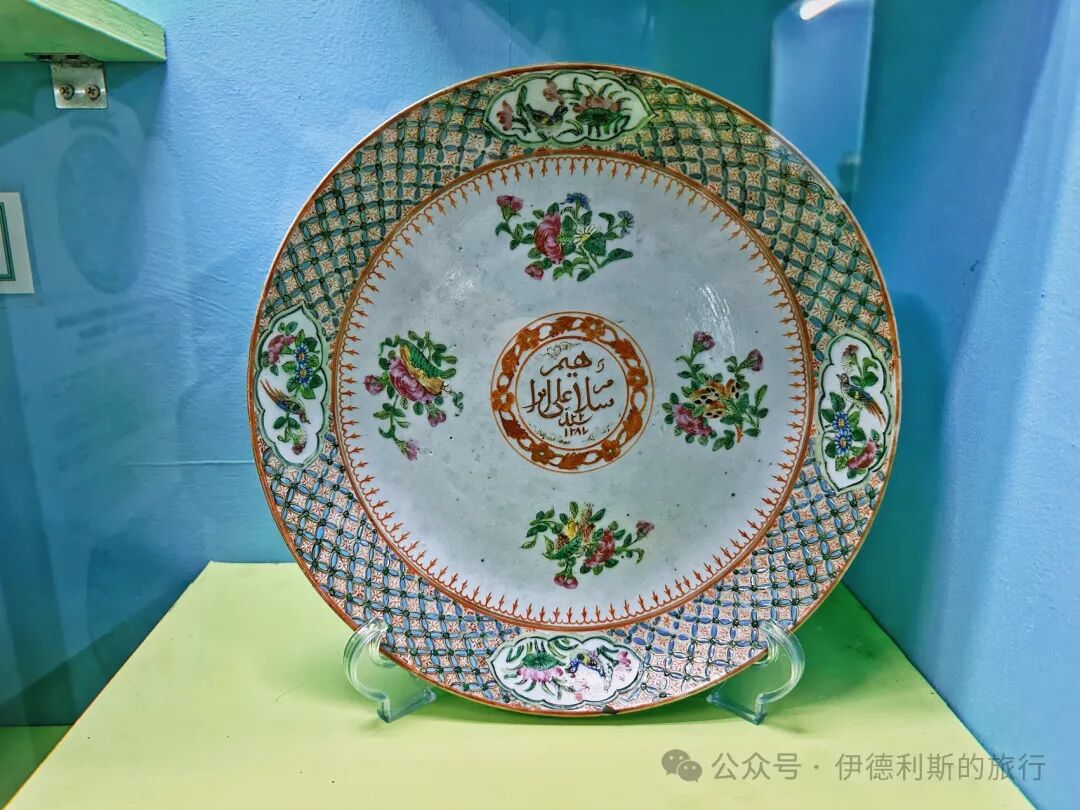
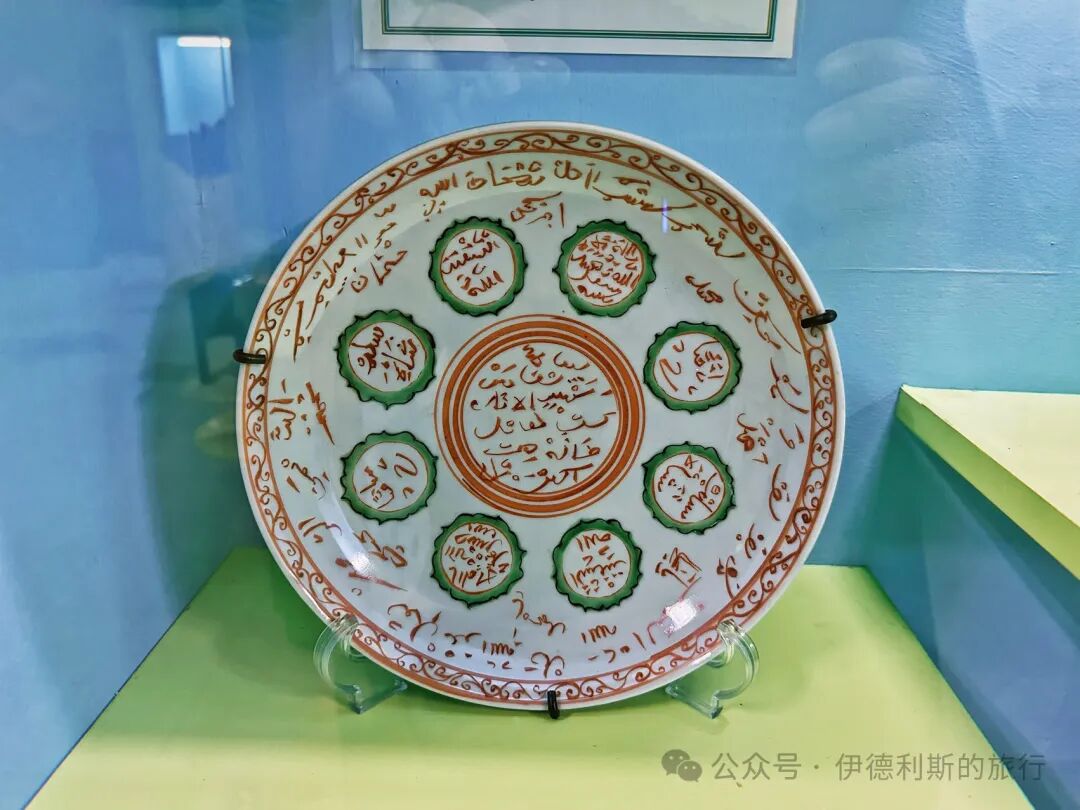
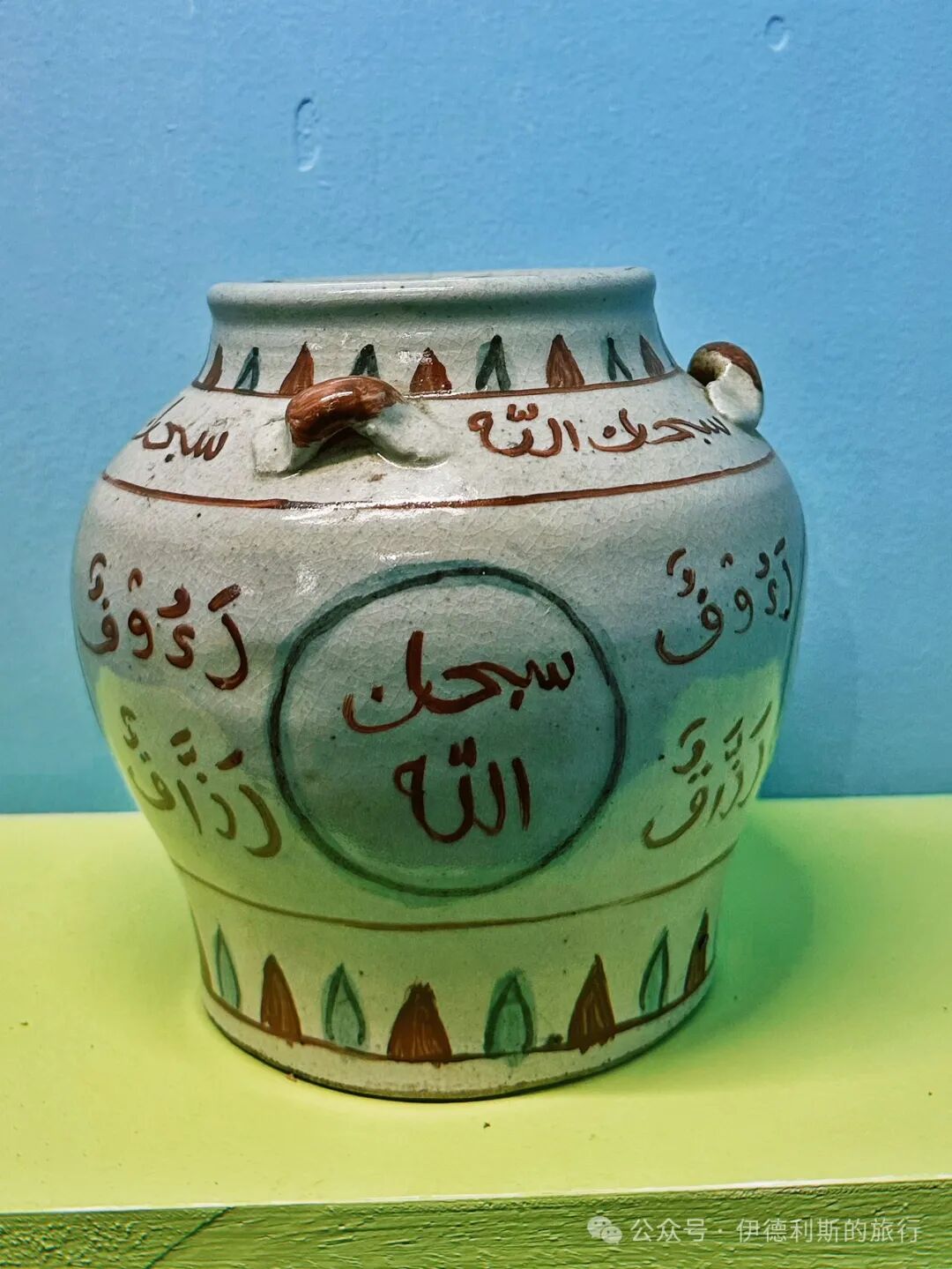
This is a porcelain plate with scripture from the 1930s, acquired by the museum in 2005. Malay people usually display this kind of porcelain plate in a cabinet as a decoration.
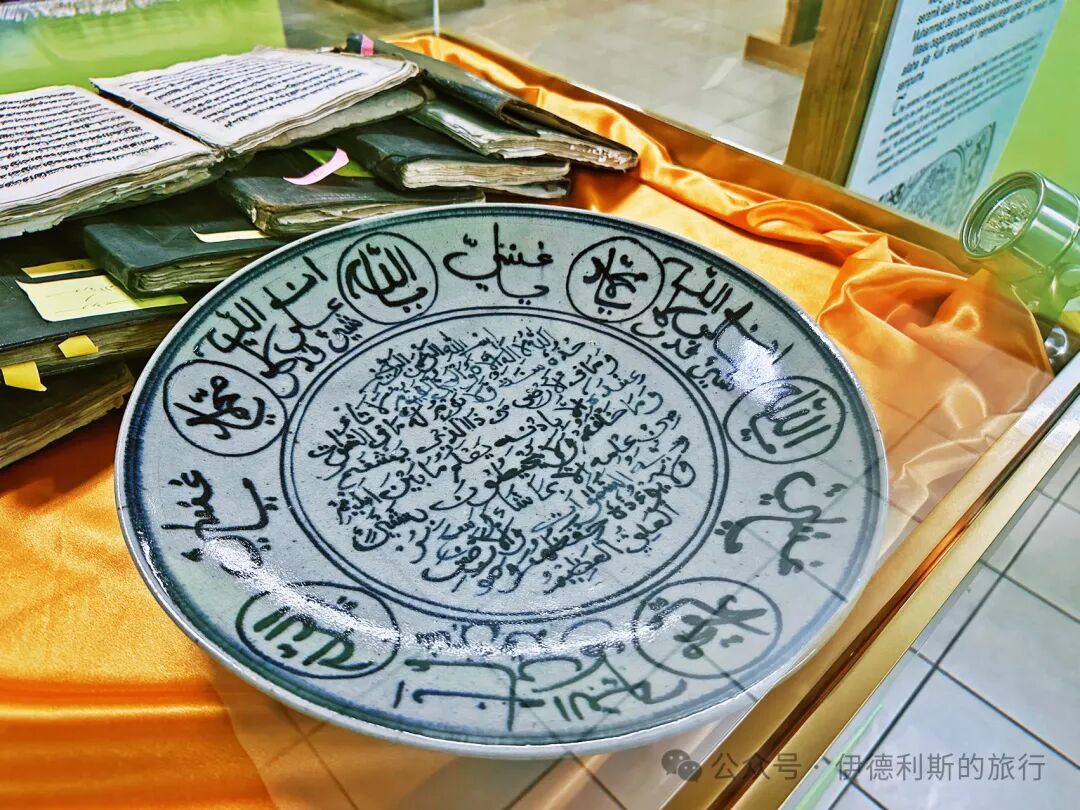
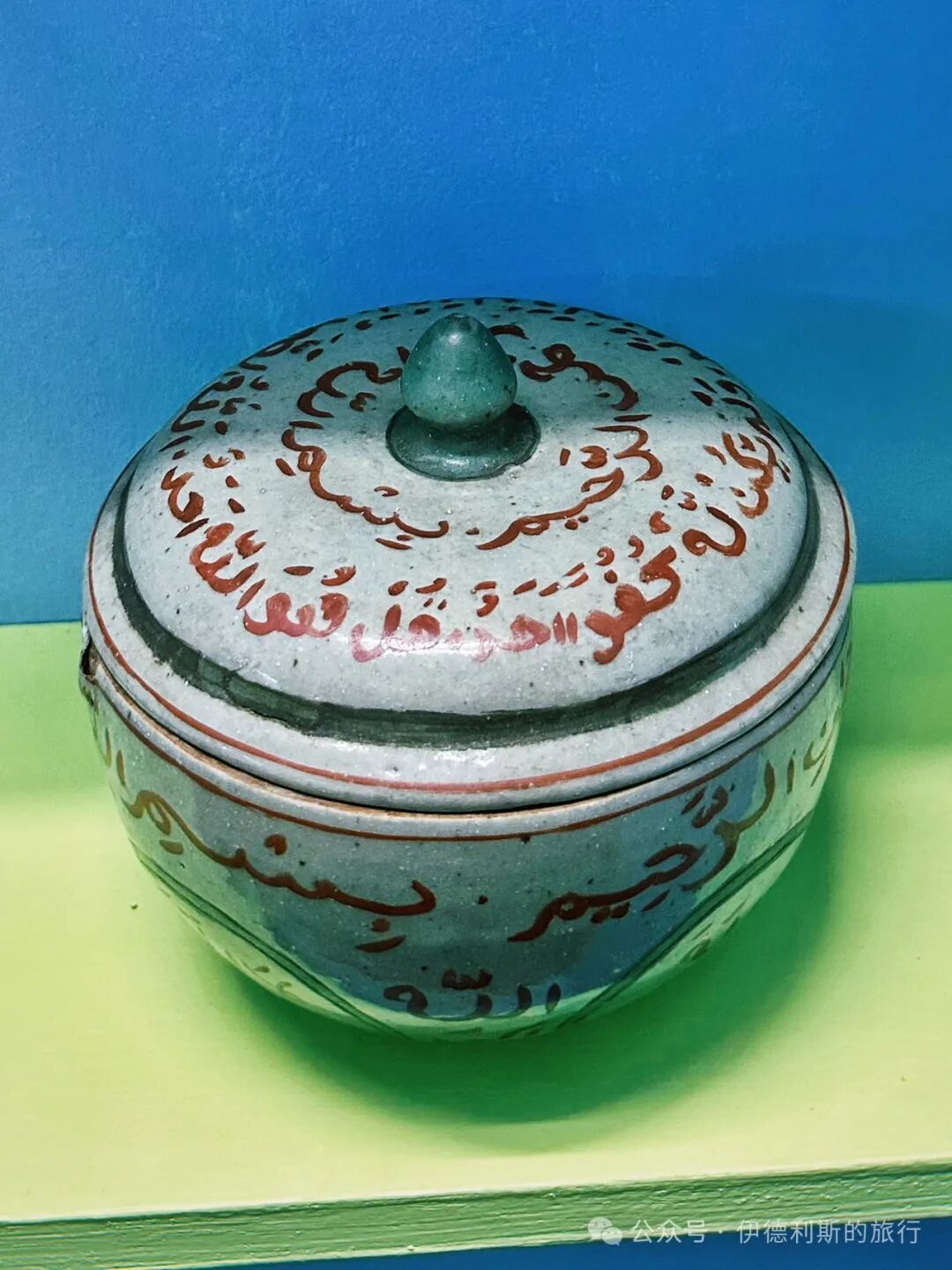
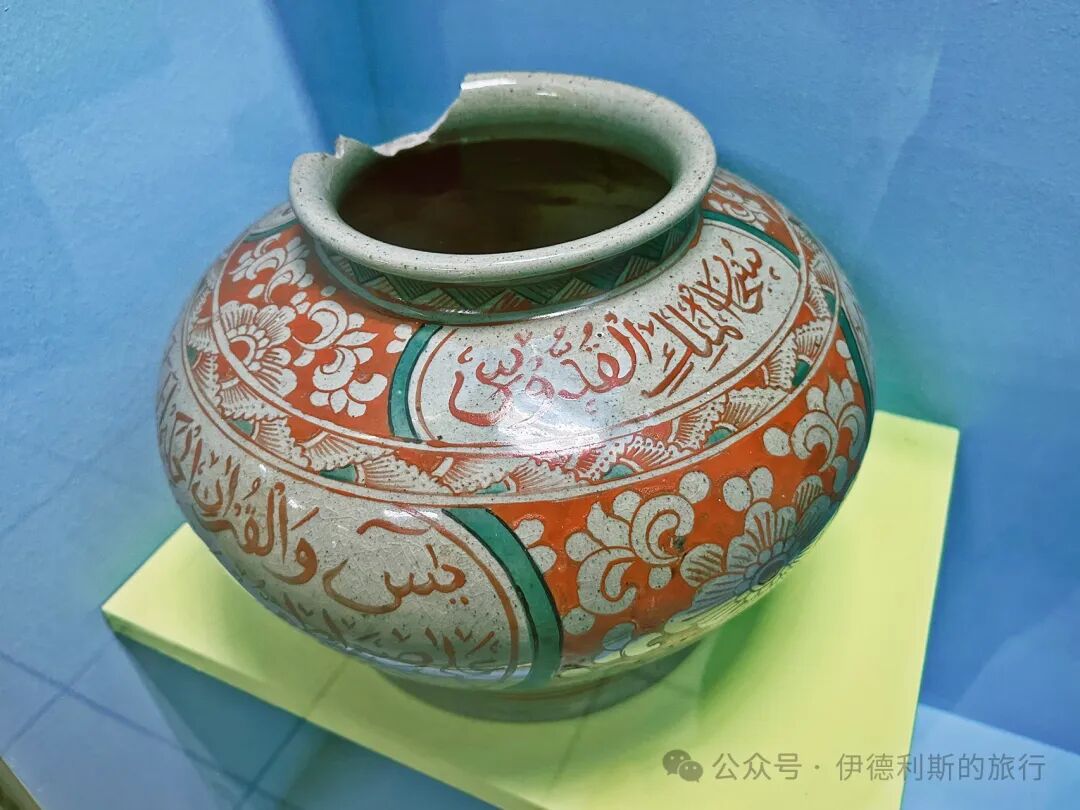
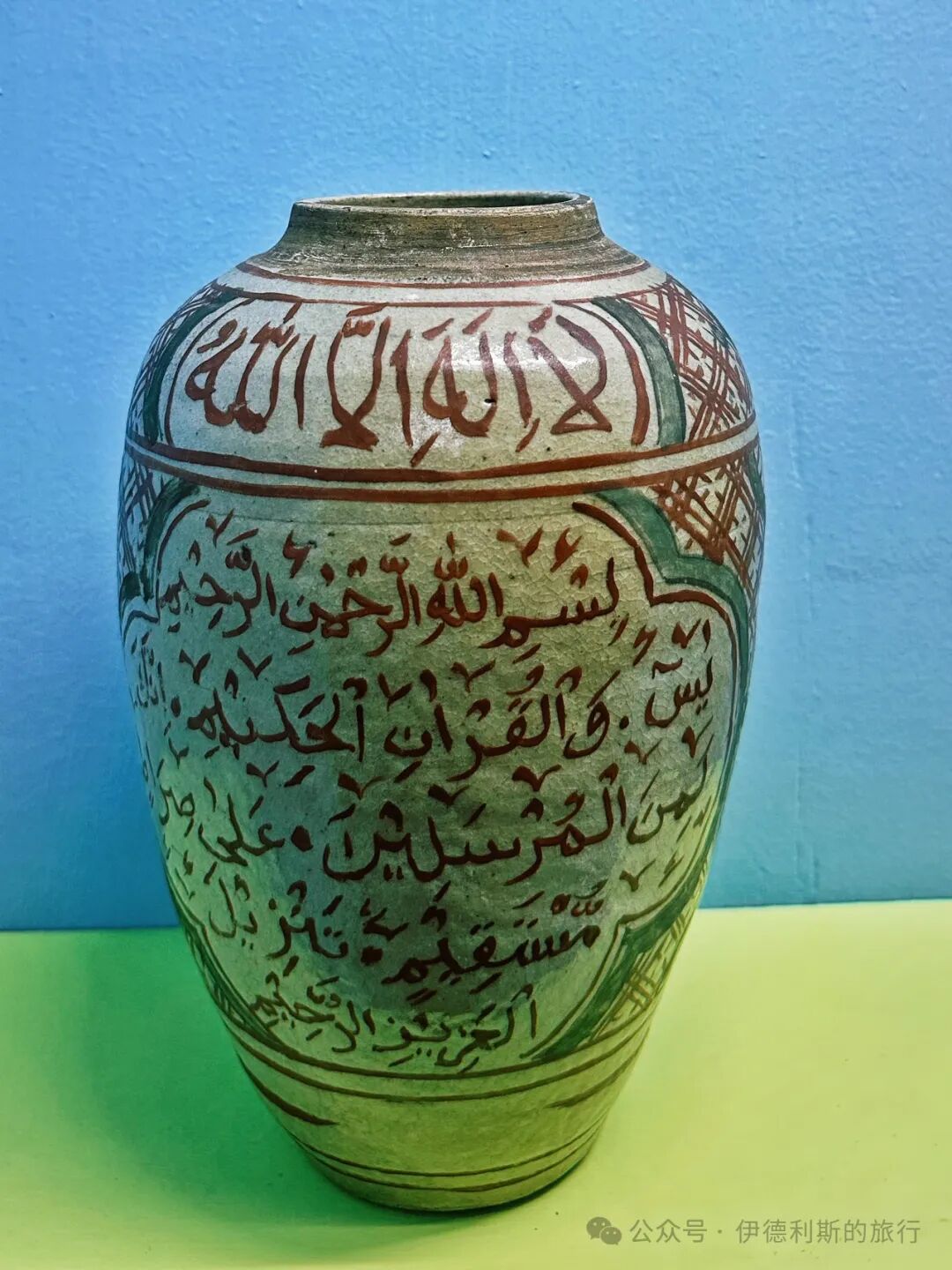
These scripture-inscribed ceramics were brought to Sabah through trade and include pieces from both China and Europe. Under the rule of the Sultanate of Brunei, Sabah had very close trade ties with the Qing Dynasty, Spain, the Netherlands, and other countries.
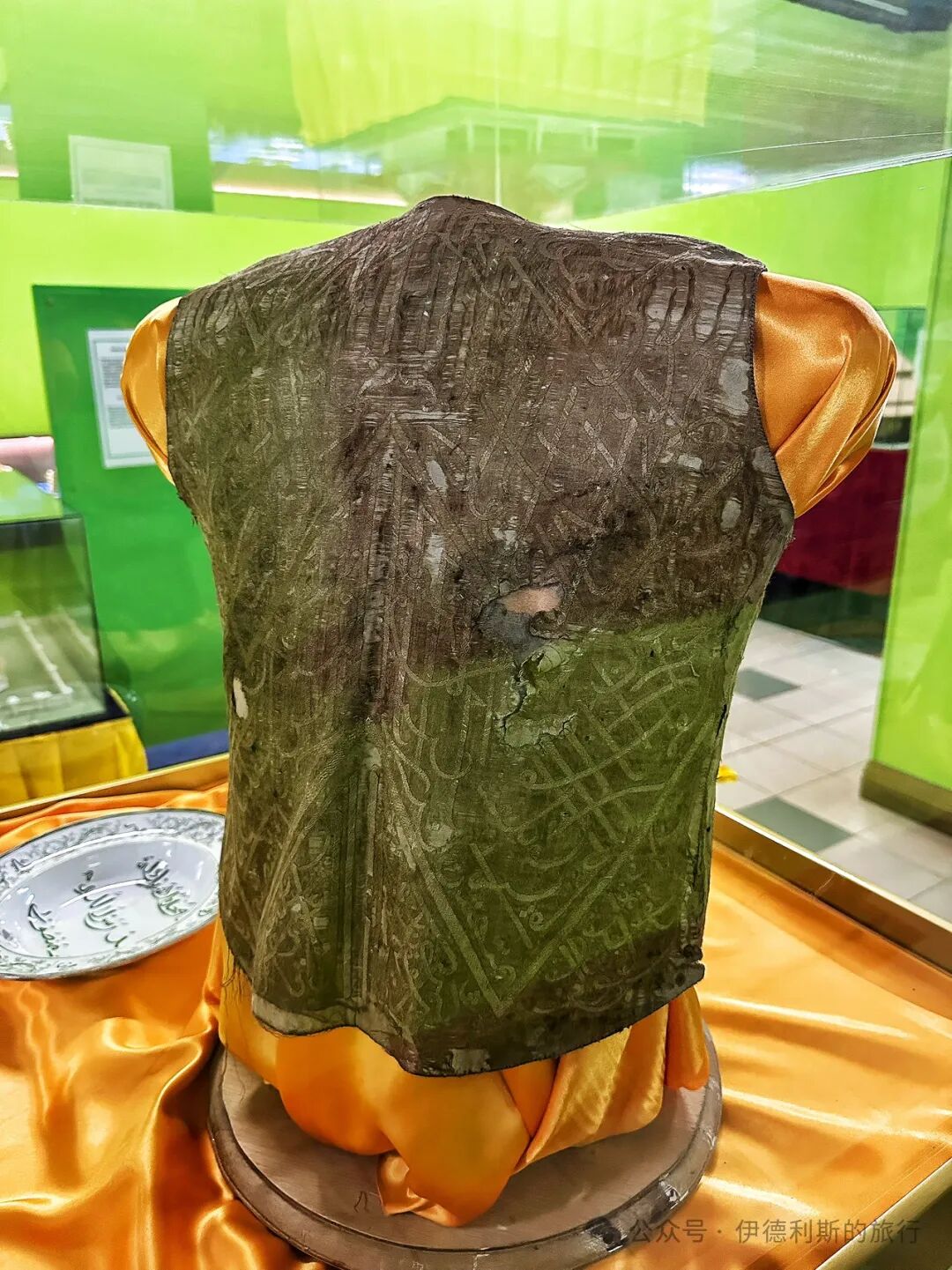
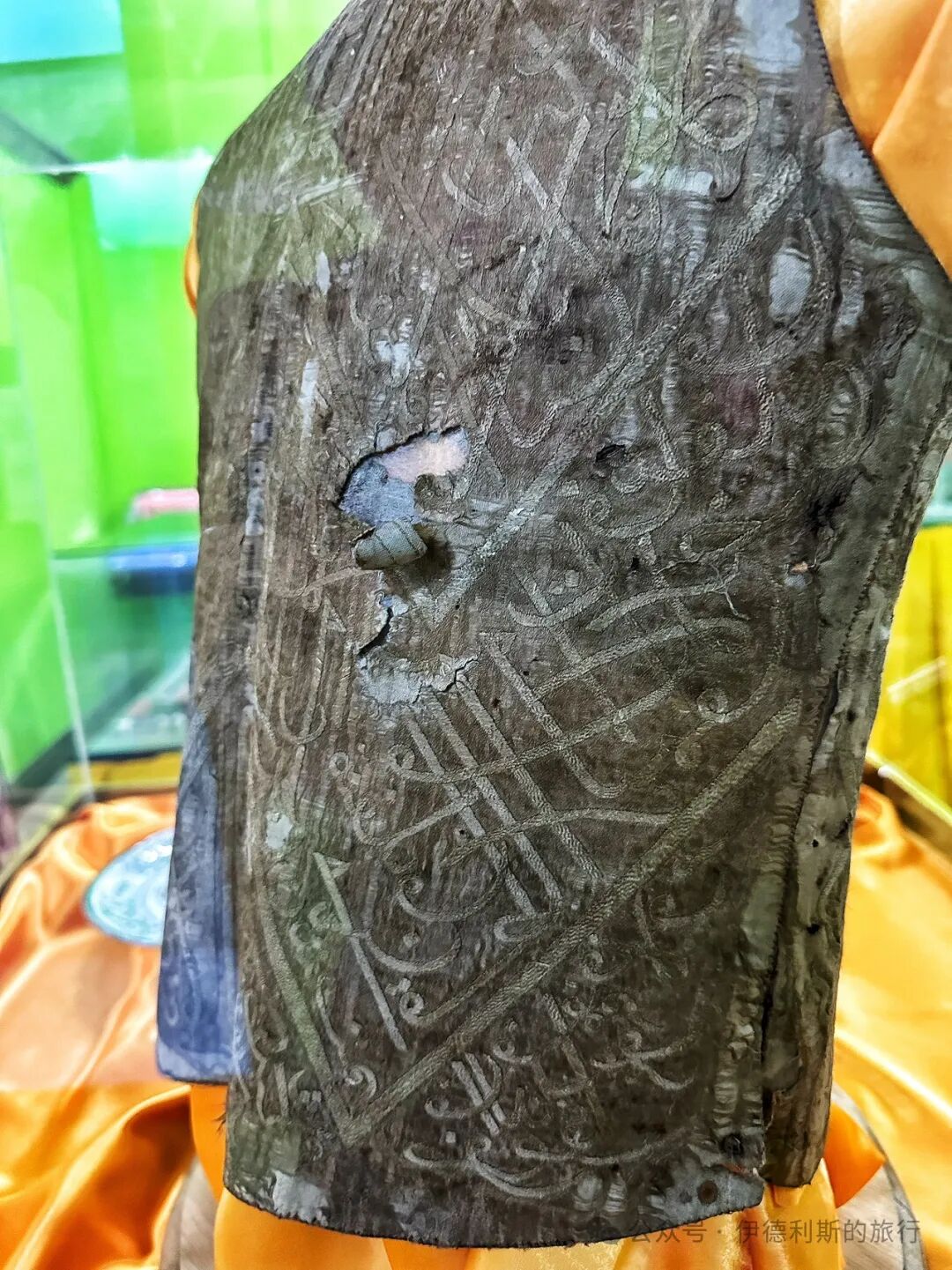
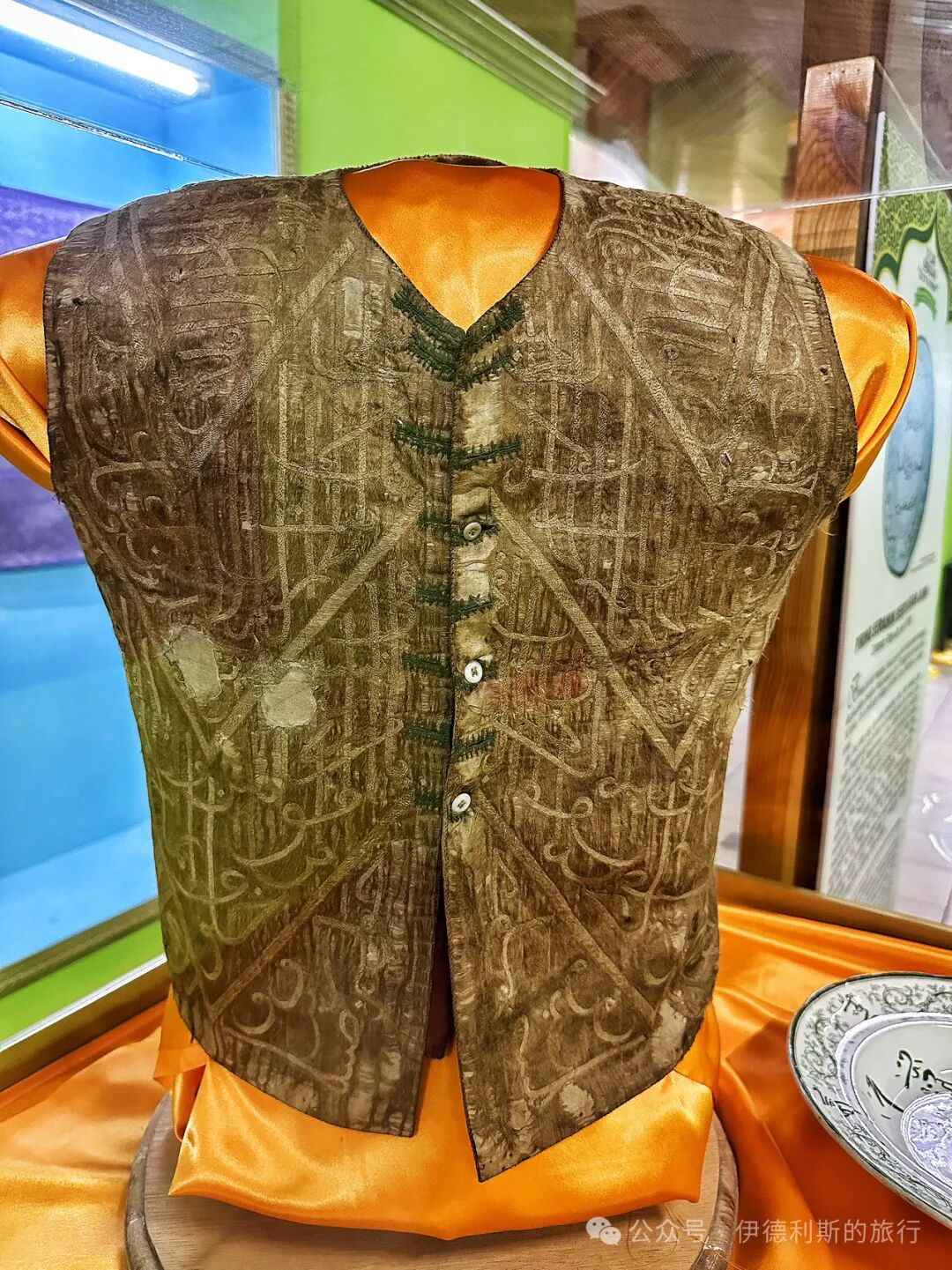
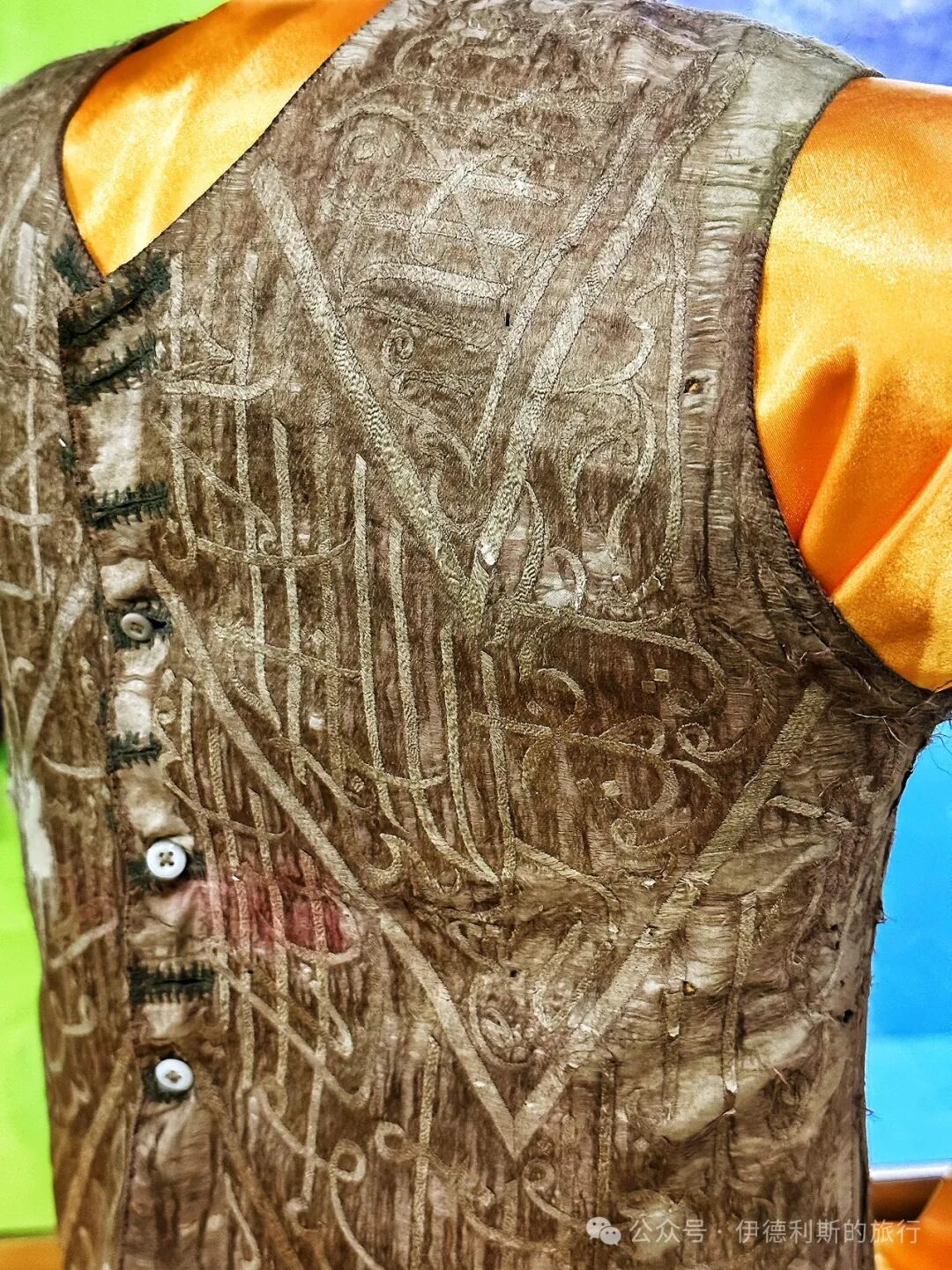
This is a protective vest (dua vest) worn by indigenous soldiers in Sabah during the anti-British resistance led by Mat Salleh between 1894 and 1905.
The resistance leader Mat Salleh, whose real name was Datuk Muhammad Salleh, was an indigenous leader in Sabah. In 1881, the British took control of Sabah by establishing the North Borneo Chartered Company. Mat Salleh felt this violated the rights of the indigenous people and refused to recognize the company. In 1895, after negotiations with the company failed, Mat Salleh was declared a wanted man. He immediately built a fortress to openly resist the British and successfully launched several attacks. He died in battle in 1900, and his followers continued to fight until they were finally defeated in 1905.
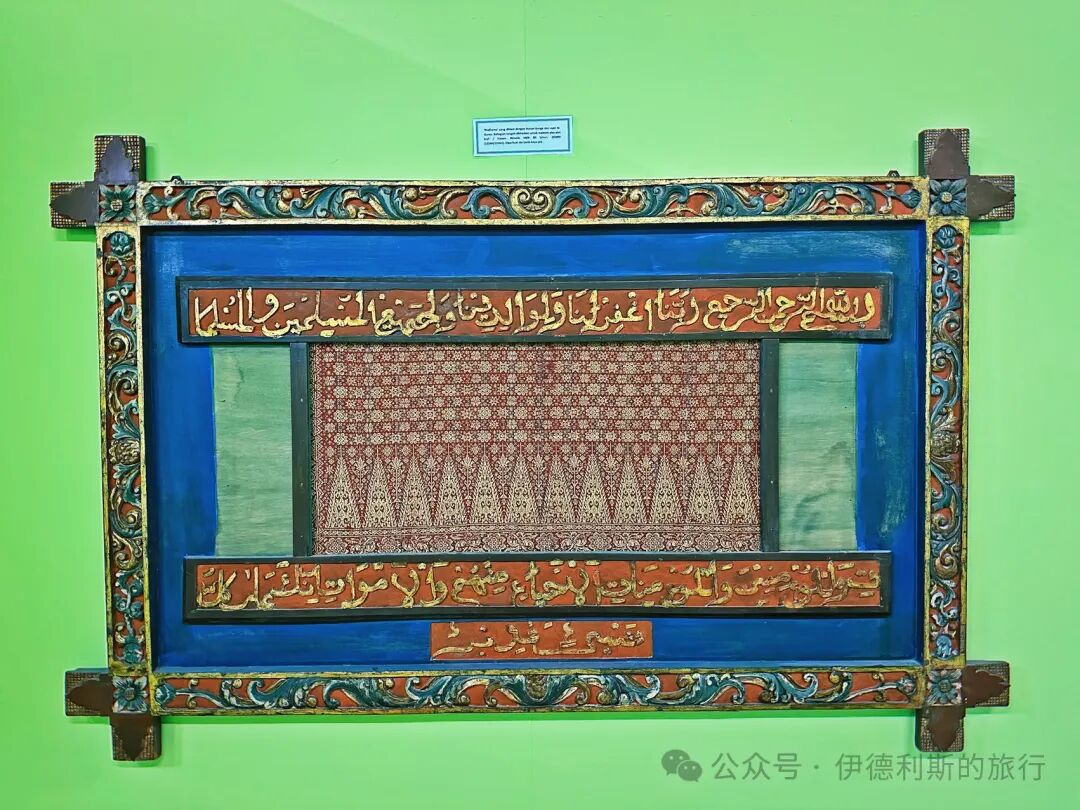
This is a decorative wooden frame made in 1918, featuring scripture carvings and traditional embroidery in the center.
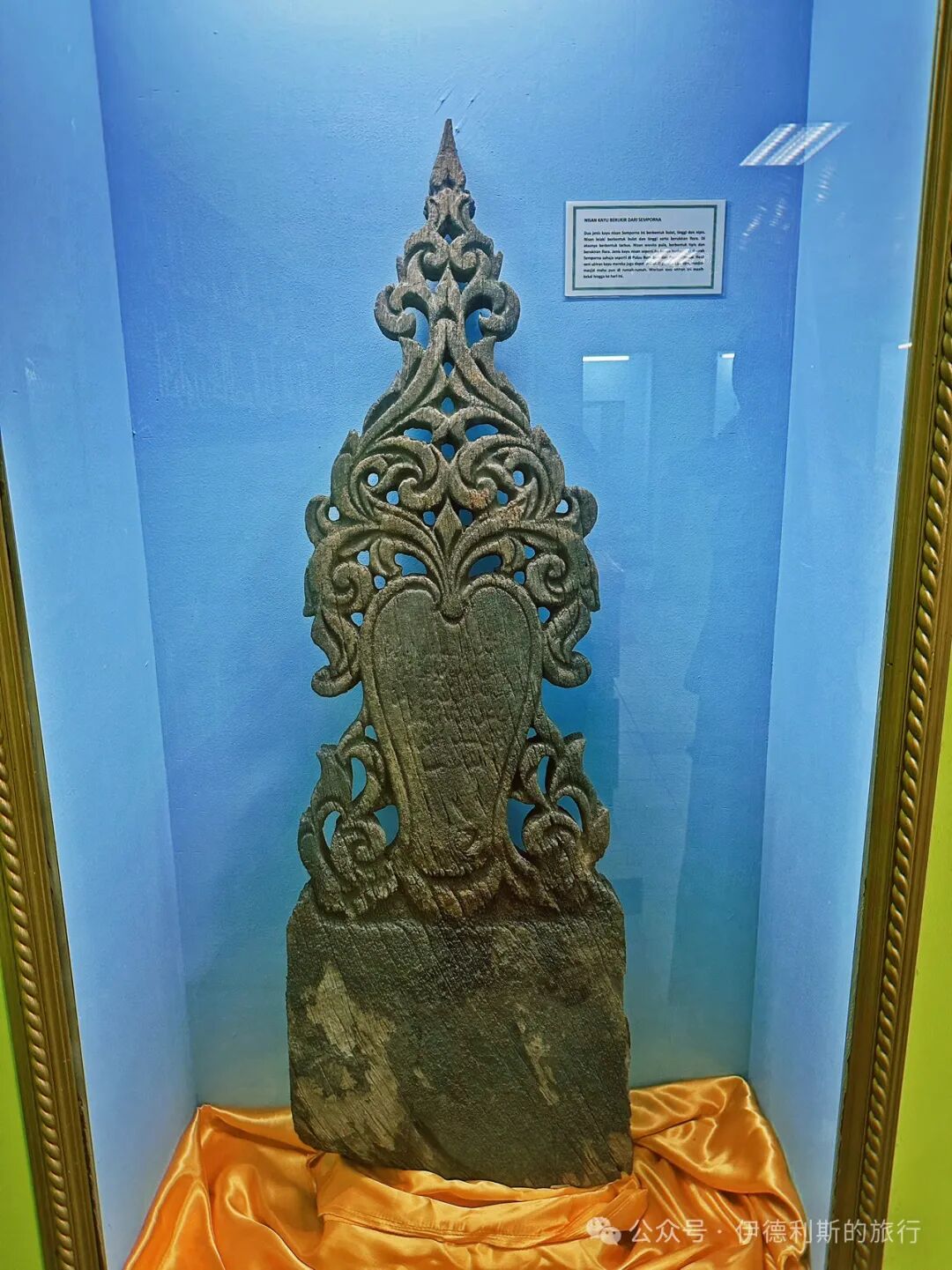
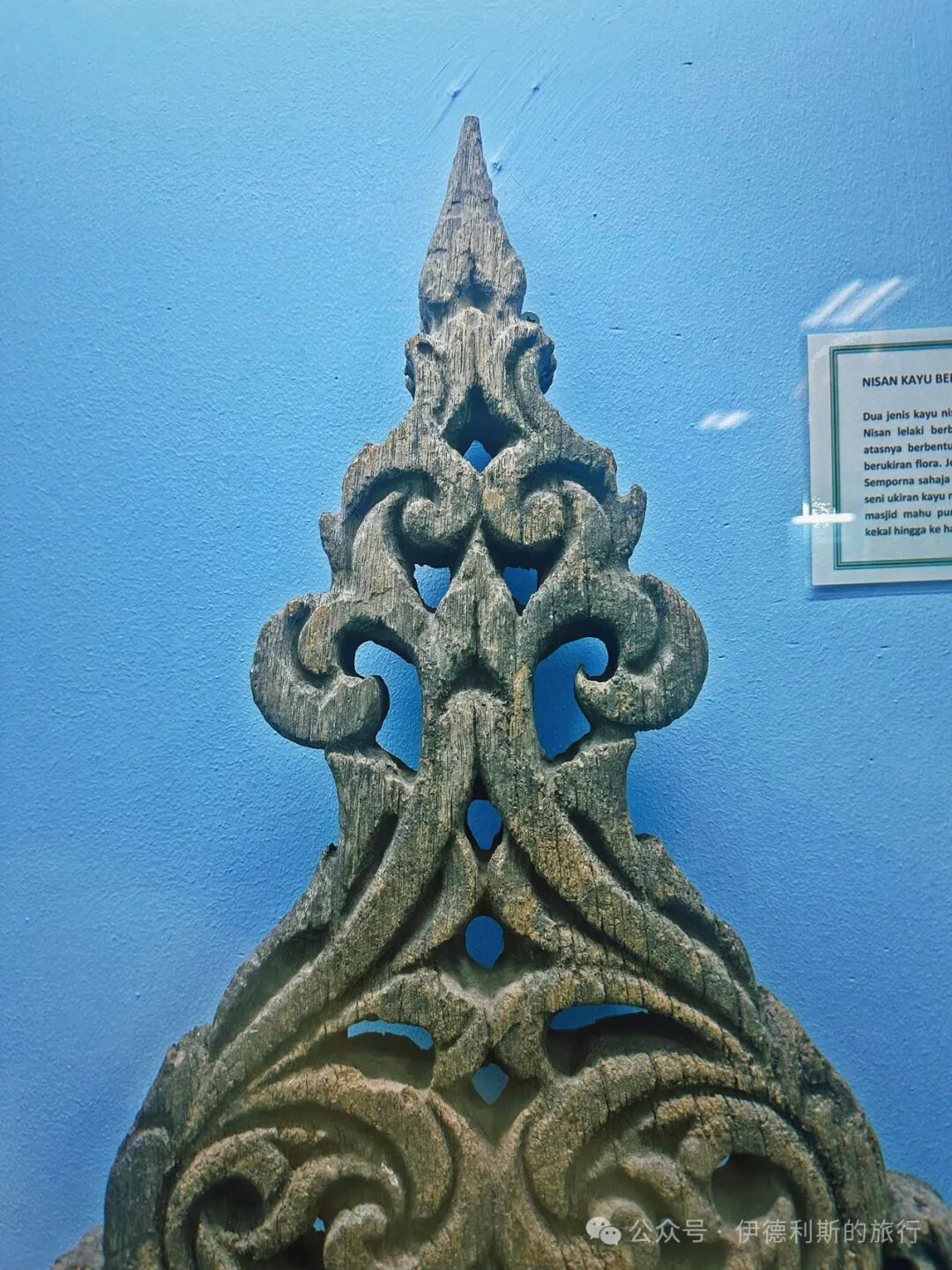
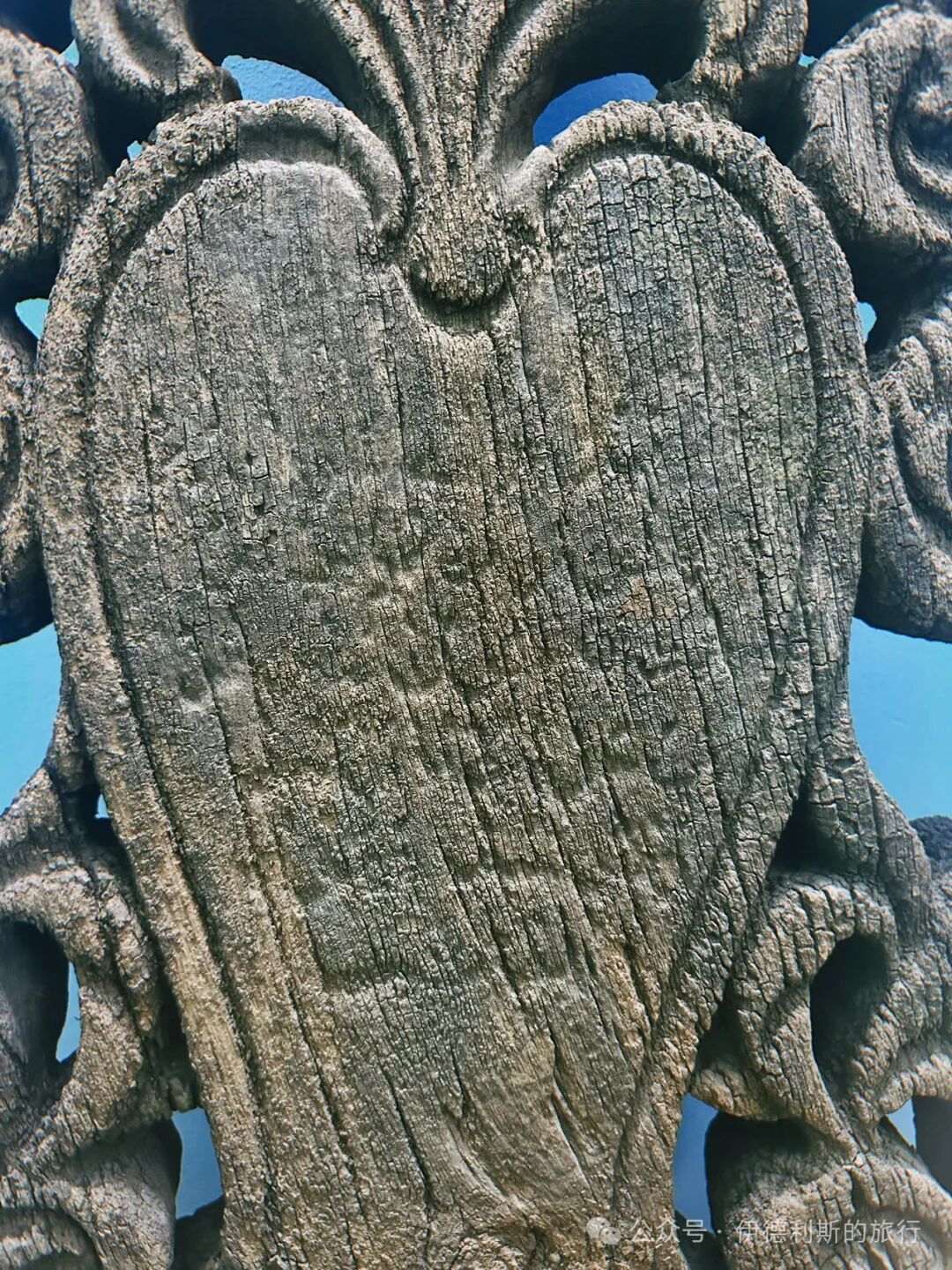
These are wooden grave markers from the Semporna region. This type of wooden grave marker is unique to the Semporna area and is carved with floral patterns around the edges.
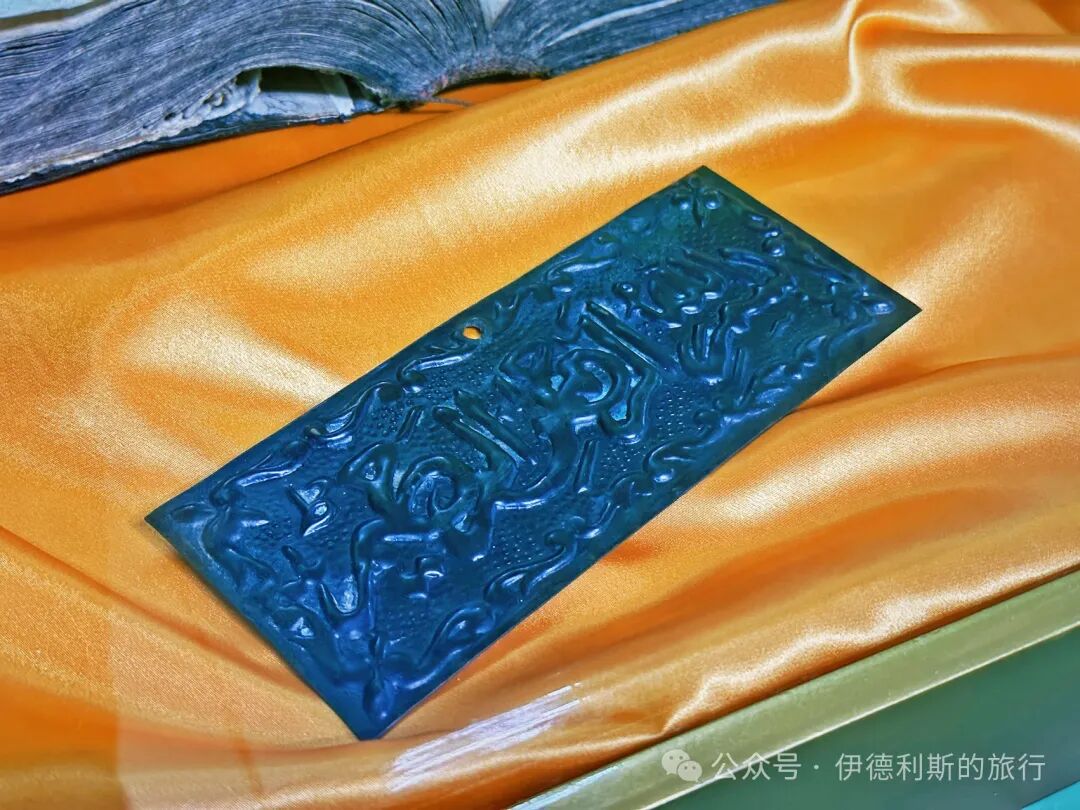
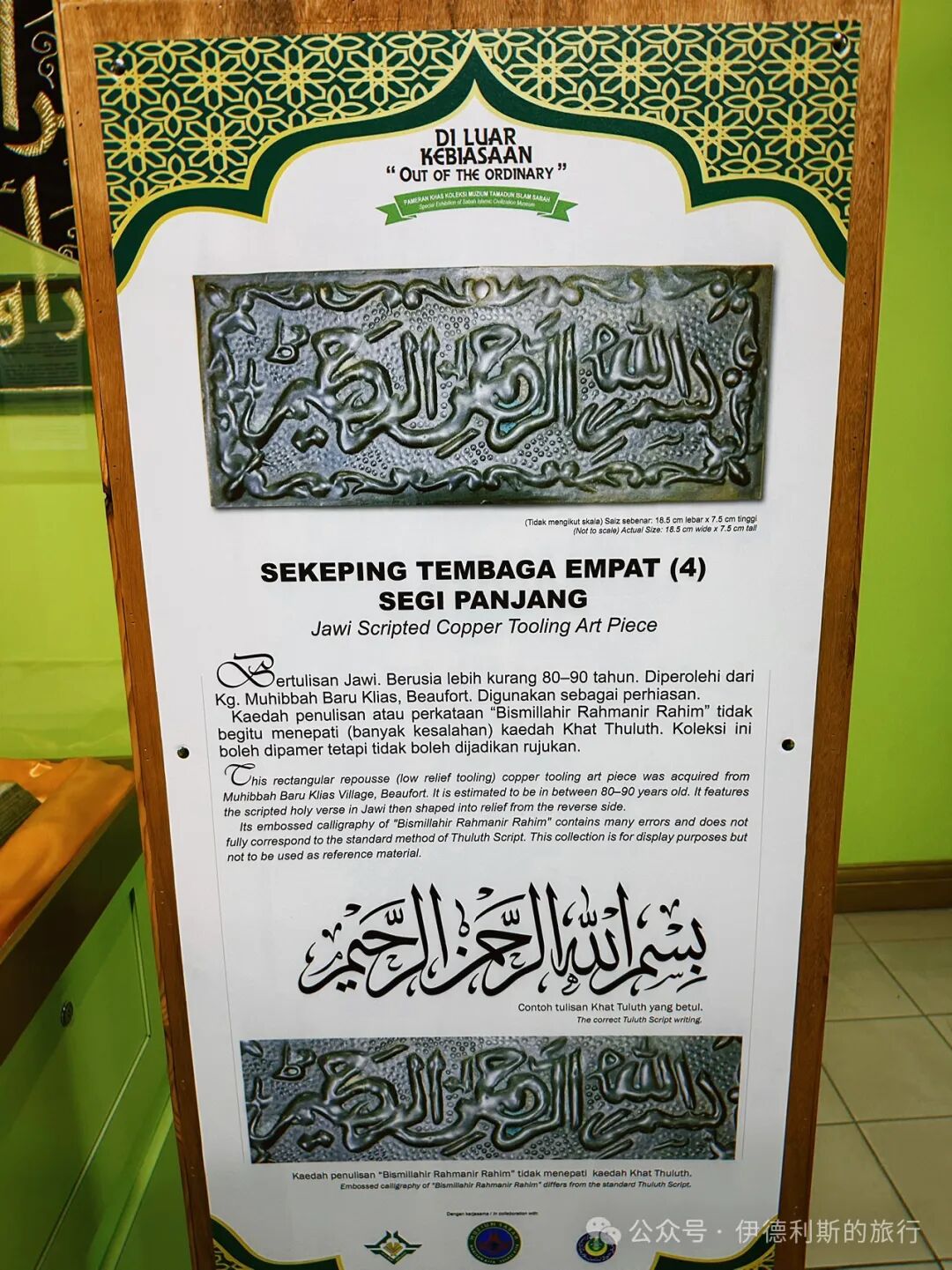
This is a century-old bas-relief bronze plaque featuring the Basmala.
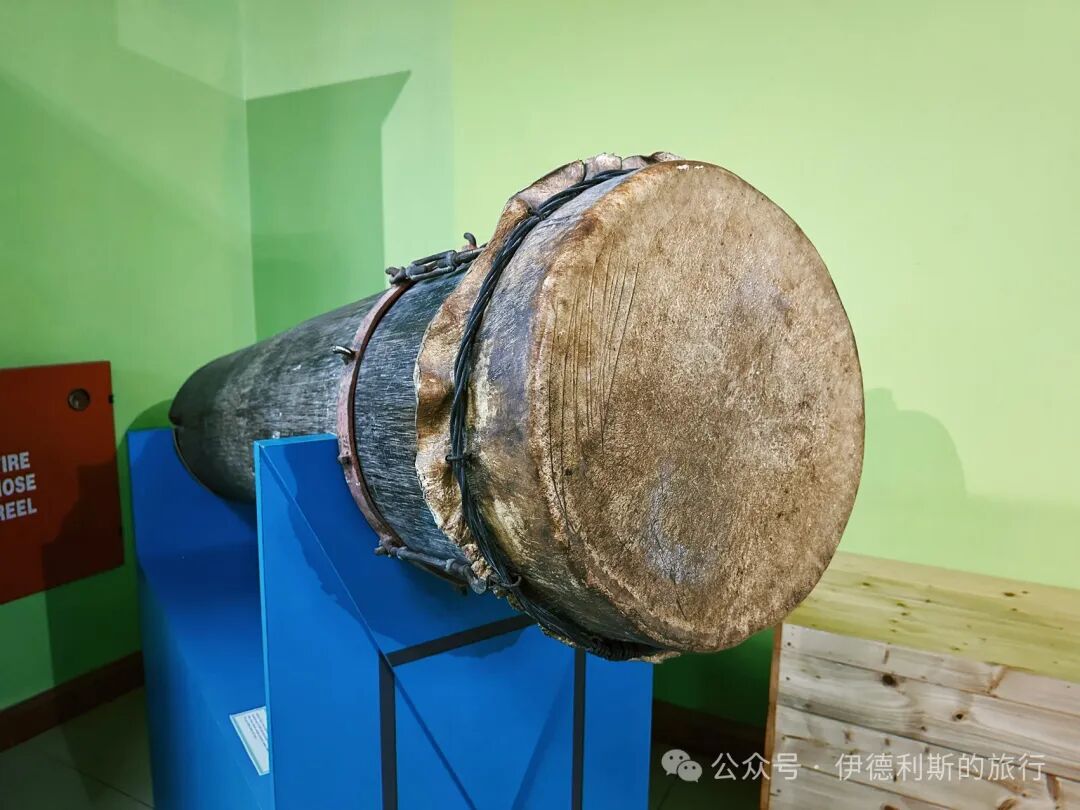
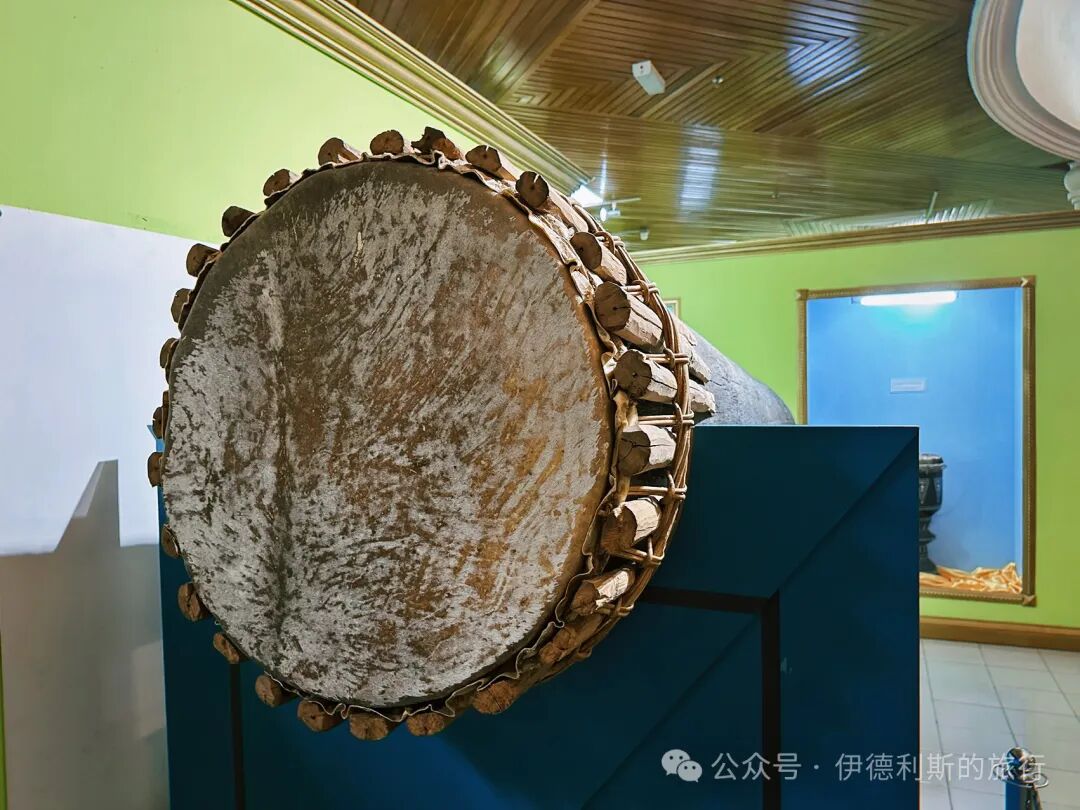
This is a prayer drum (beduk) made of palm wood and cowhide. It is usually placed in front of the main hall or at the entrance of a mosque, which is why many traditional mosques in Southeast Asia do not have minarets.
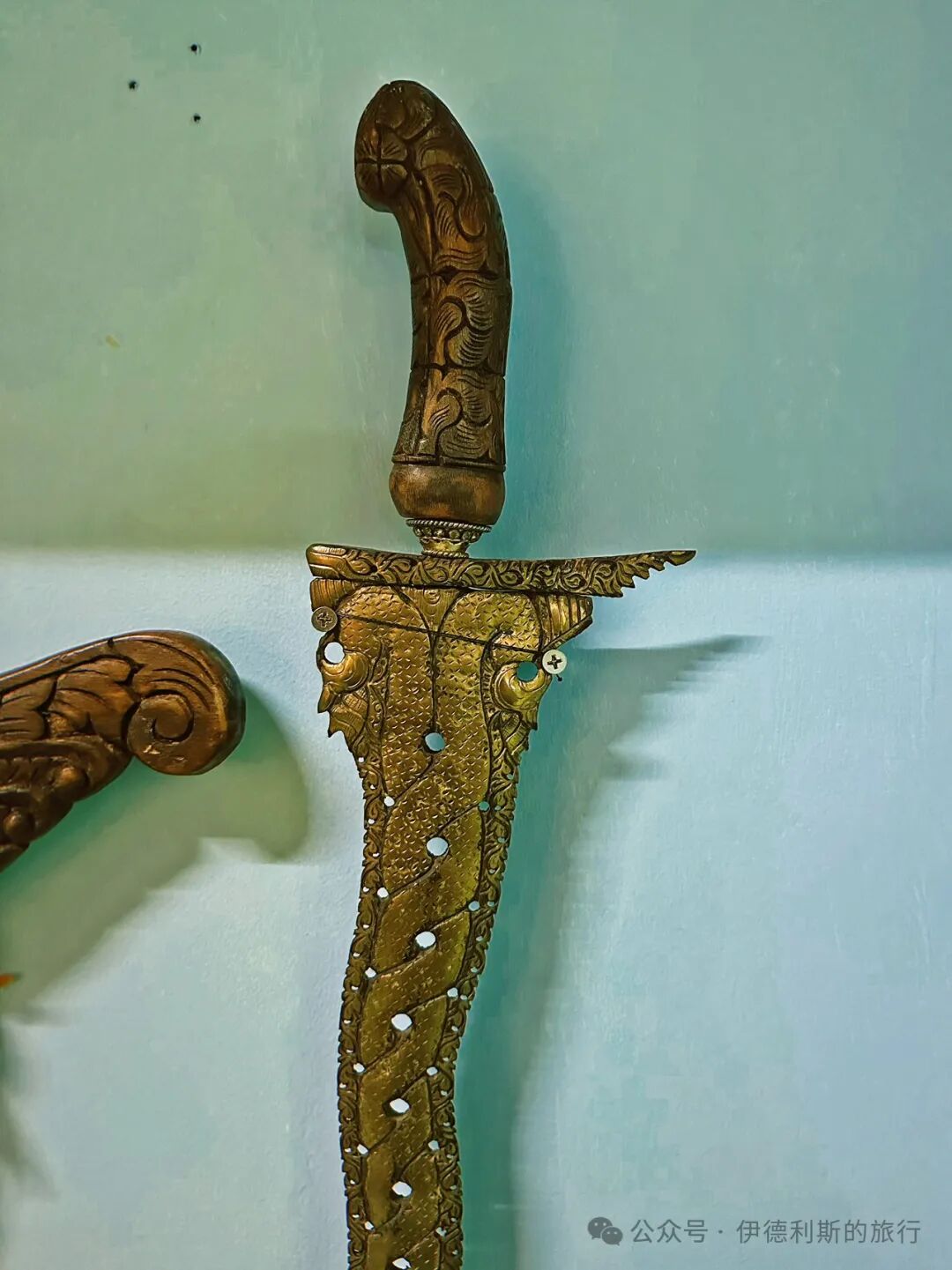
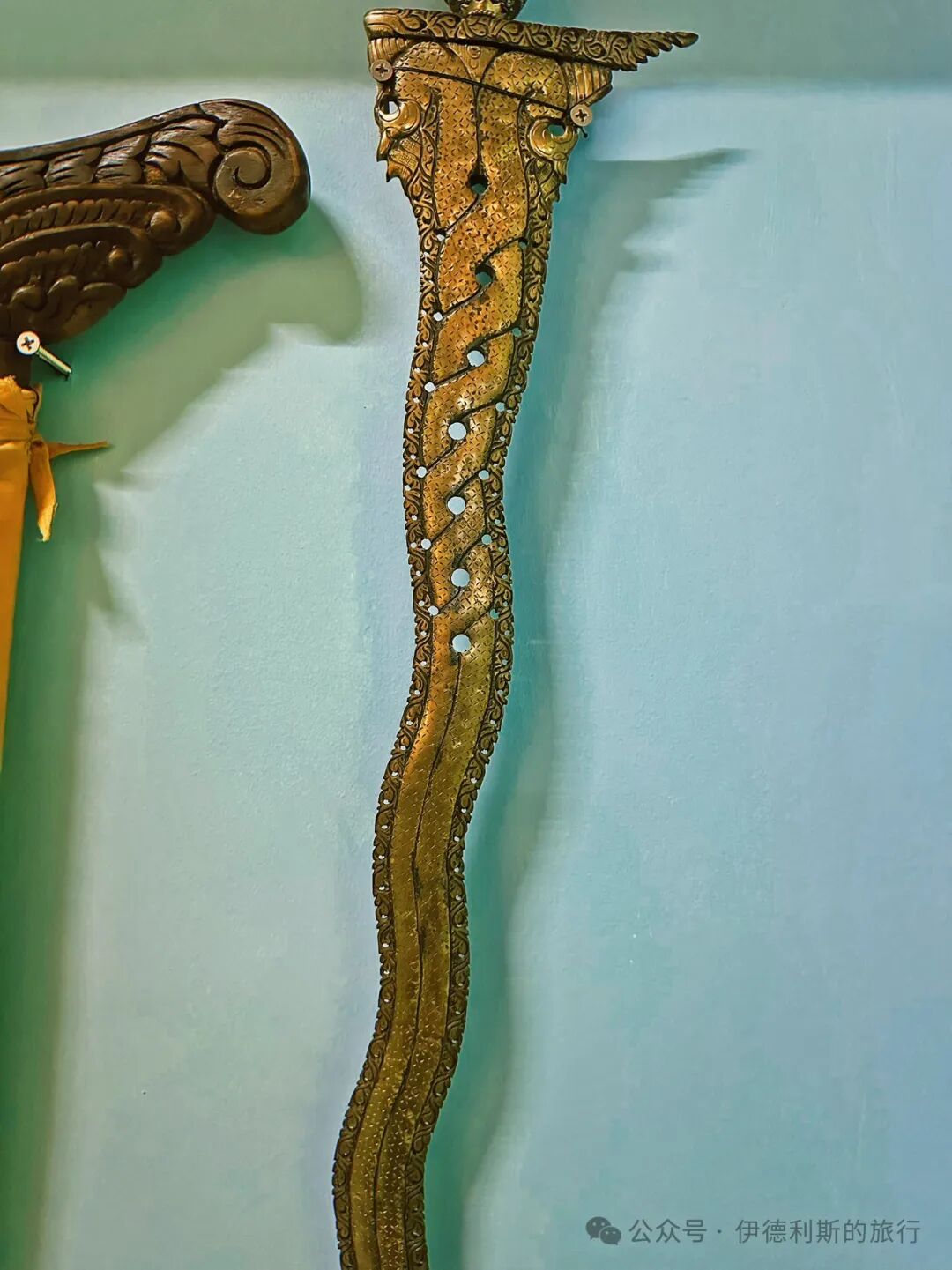
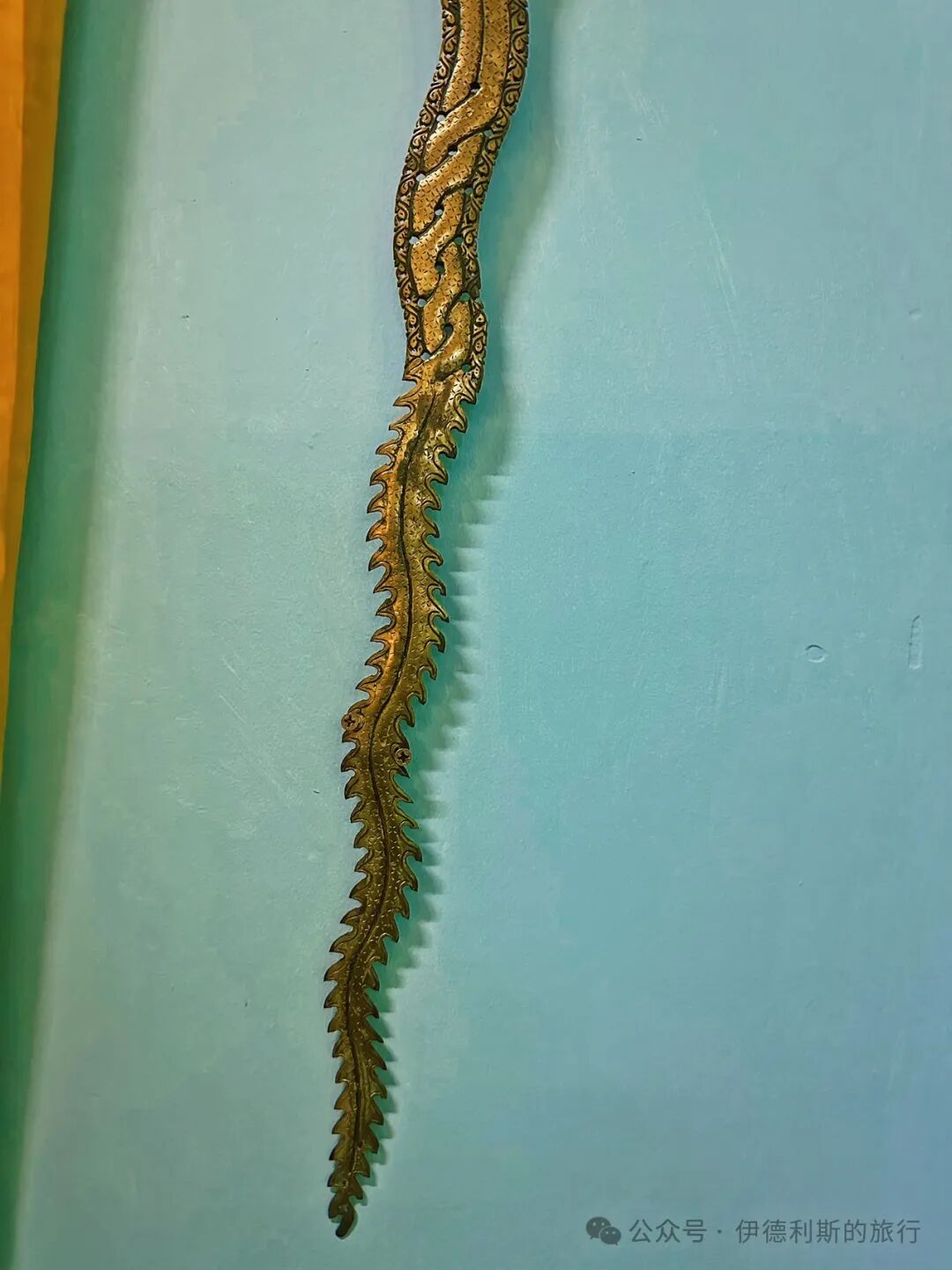
There are many wavy-bladed daggers (keris) in museums across Malaysia and Indonesia, but very few have a clear record of their origin. The Museum of Islamic Civilization in Sabah displays a sword called Pedang Khusus. Palace guards in the Tidung Kingdom on Tarakan Island off the east coast of Borneo wore this gold-made, highly detailed weapon.
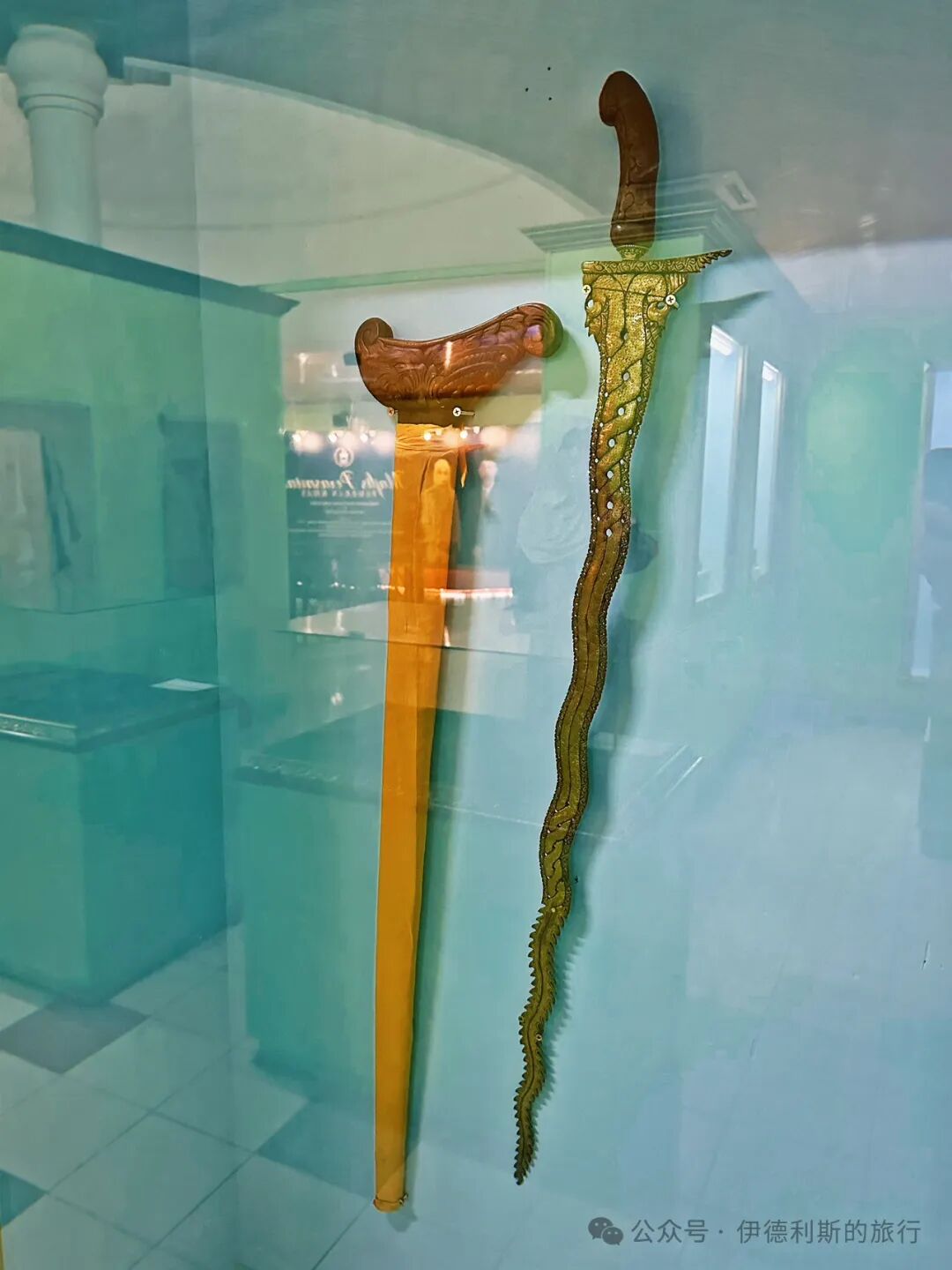
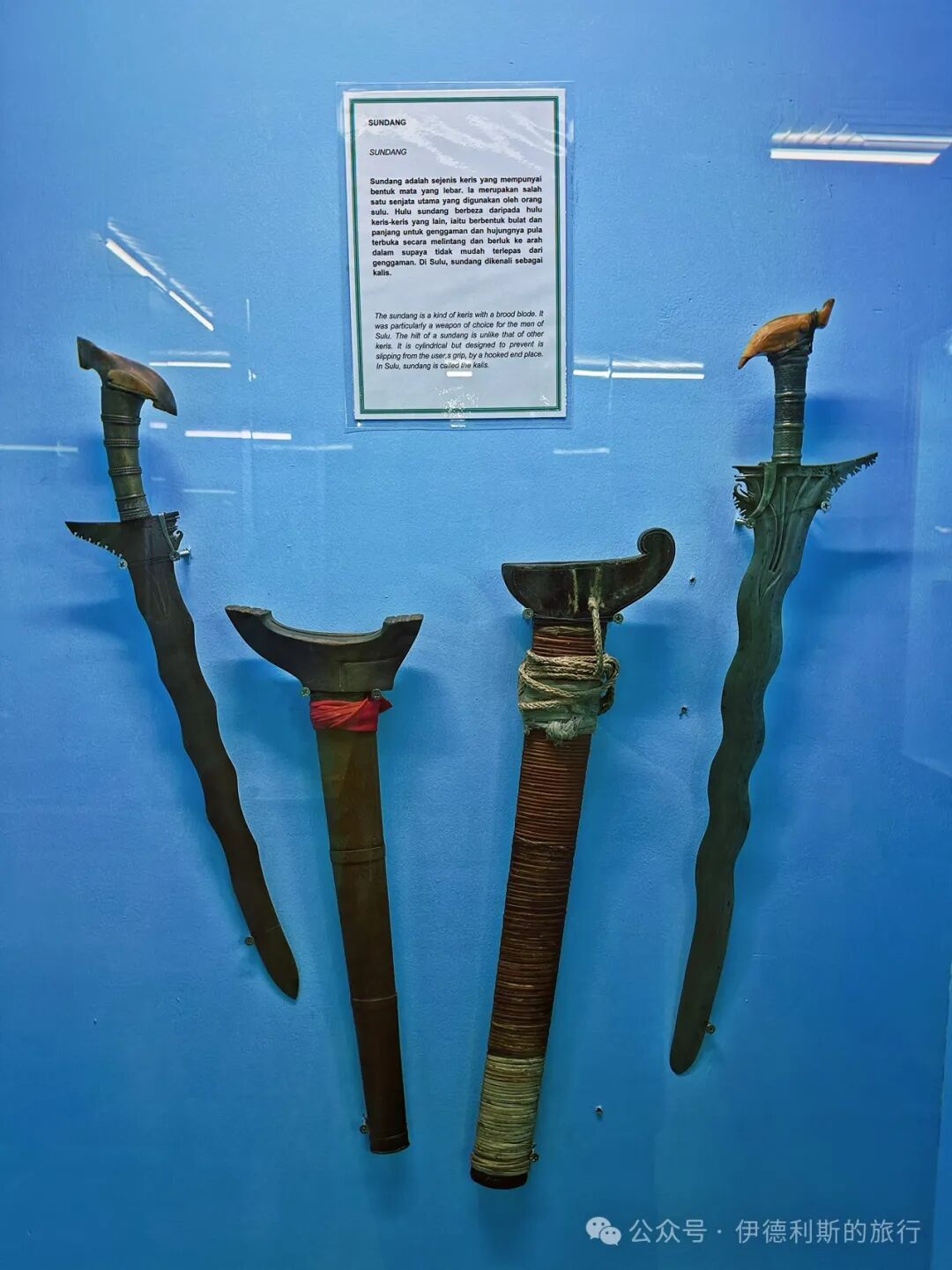
The second type is called Sundang, a wavy-bladed dagger (keris) with blood grooves used by the Sulu people. The handle of the Sundang is cylindrical, which keeps it from slipping out of your hand during use.
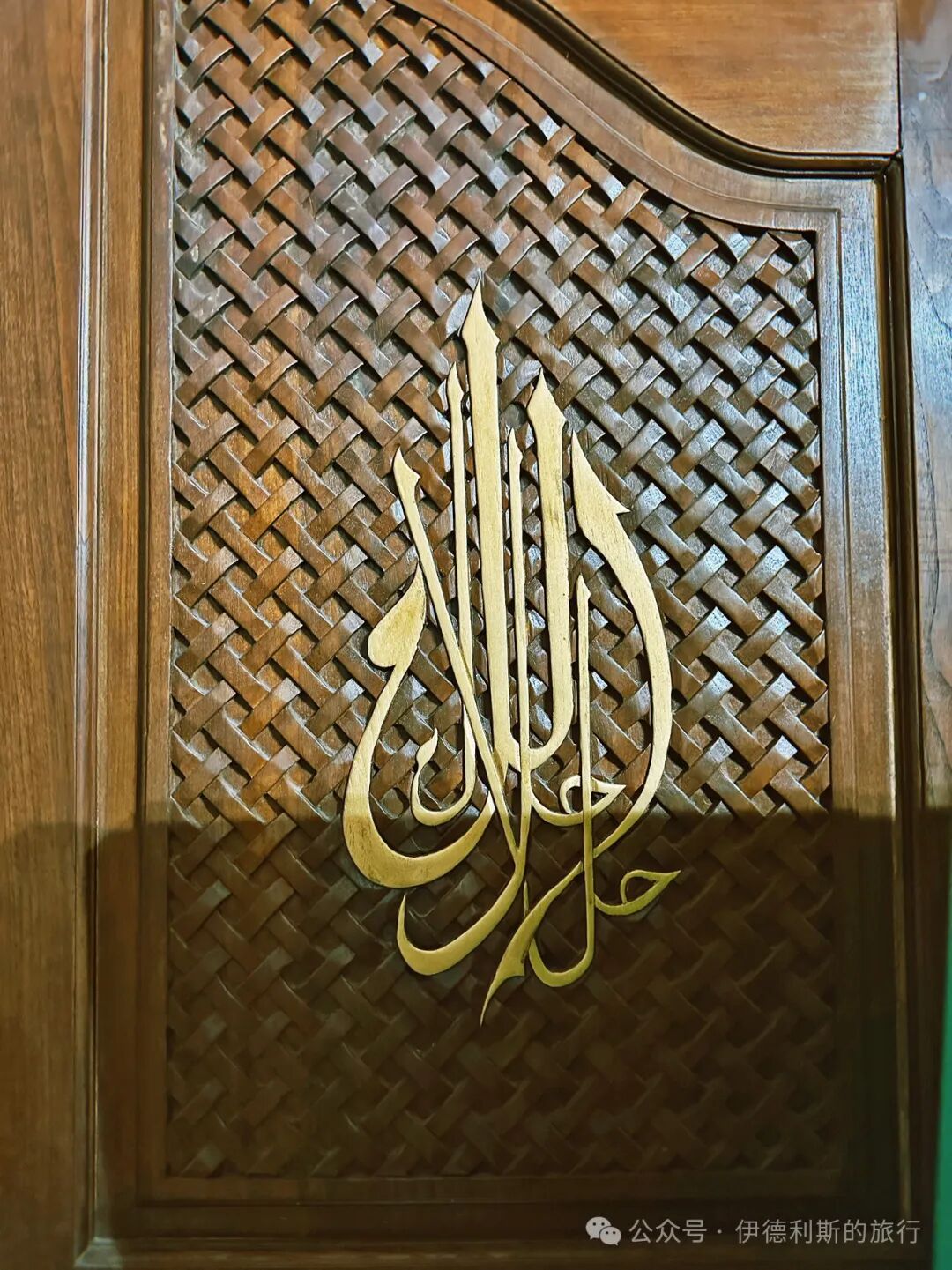
Woodcarver Mba Hj. Edie Ifa from Jepara, Java, Indonesia, worked with students from a nearby Islamic school (madrasa) to carve a pair of scripture-inscribed door panels from a century-old teak log.
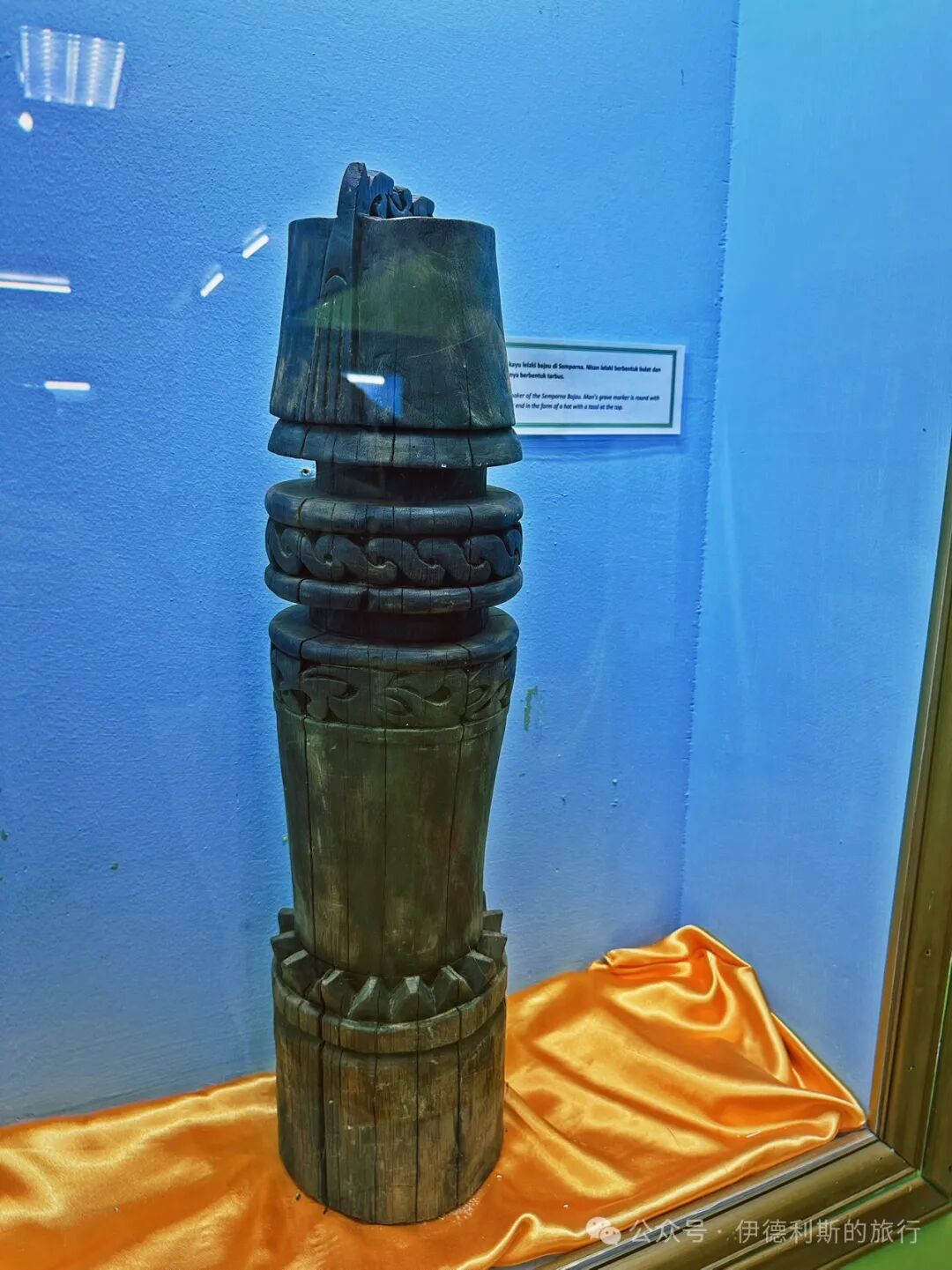
A wooden tombstone from the Bajau people of Semporna, with the top carved into the shape of a hat.
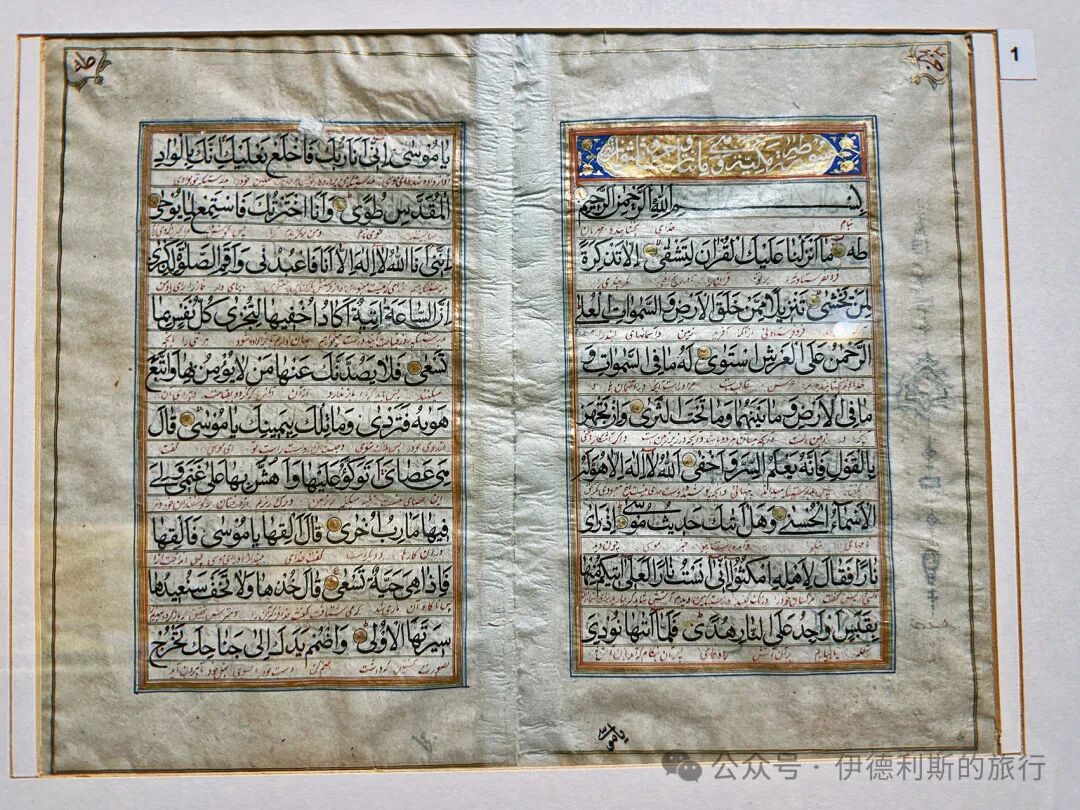
A hand-copied Persian scripture from 1796.
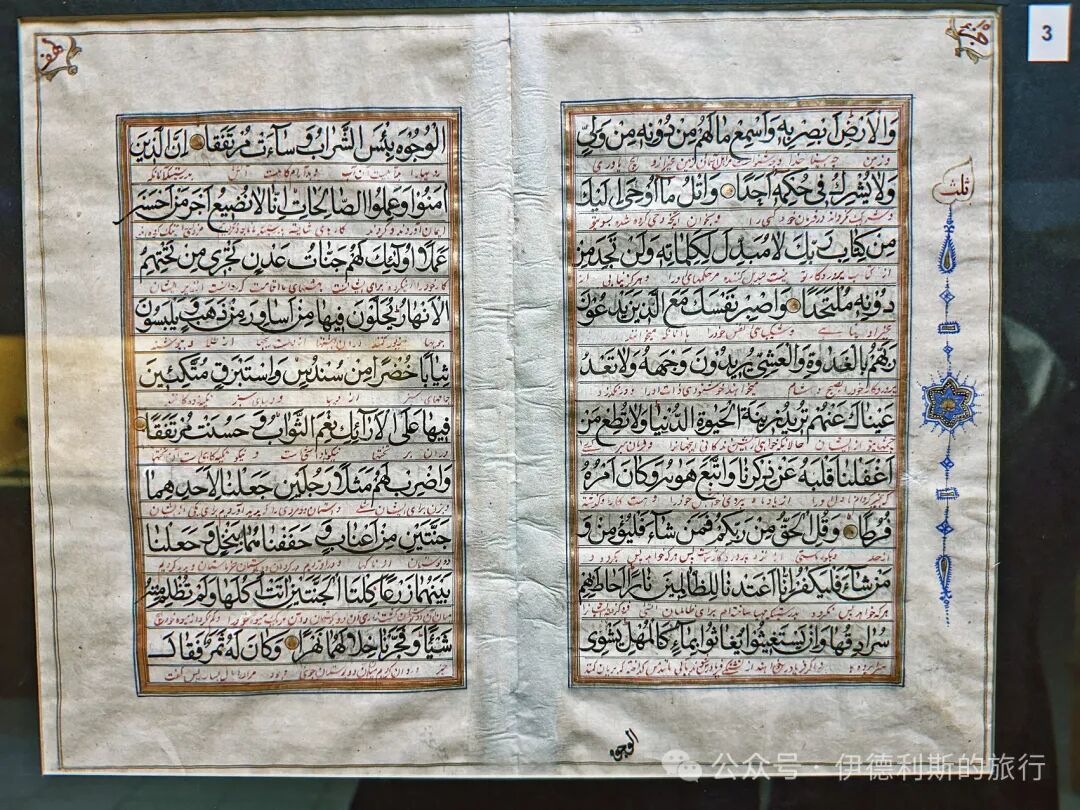
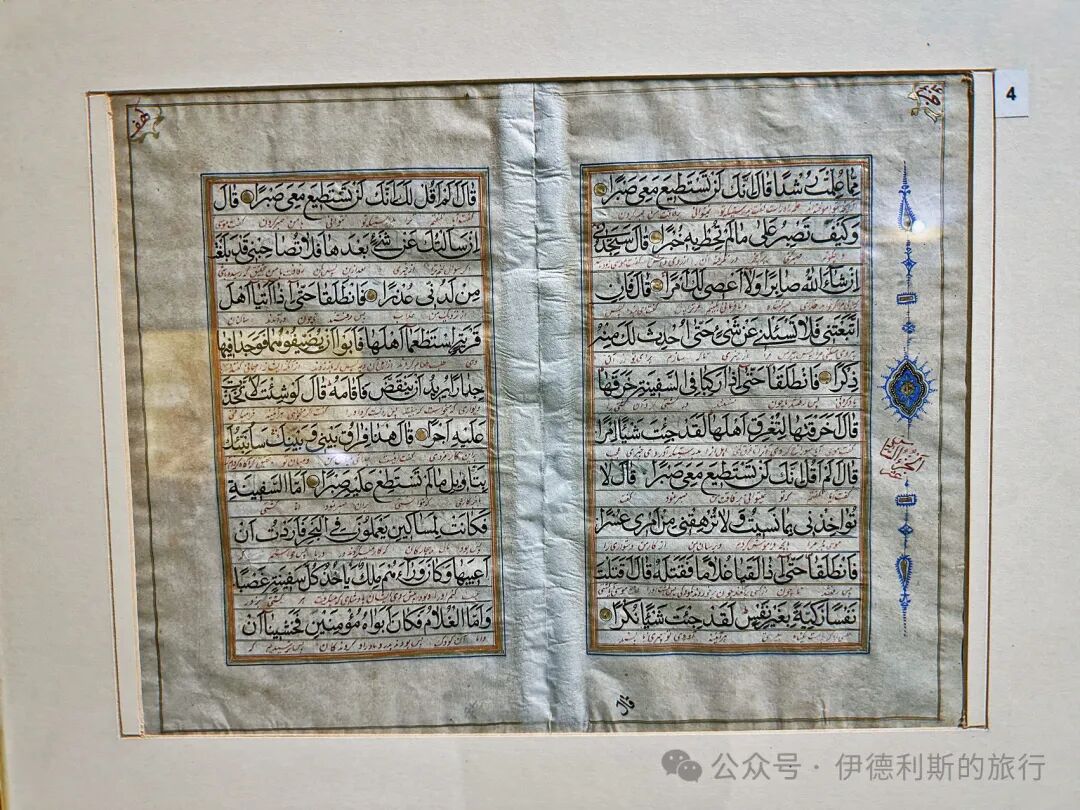
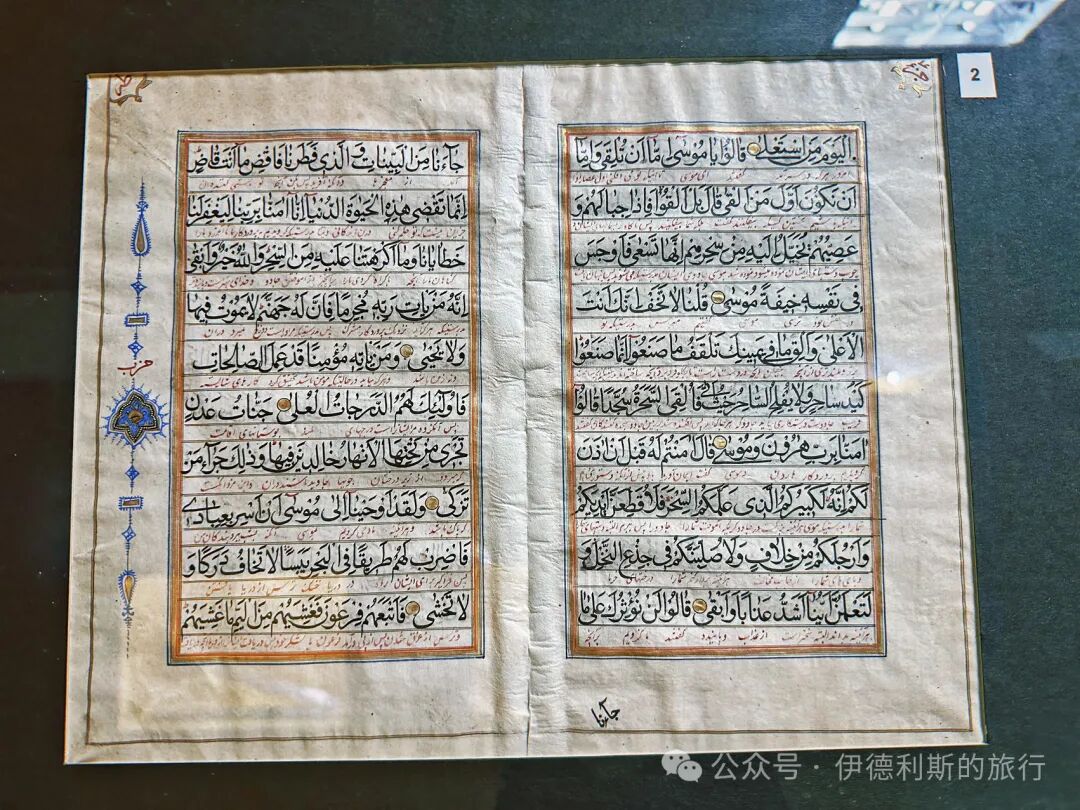
A scripture stand from Qom, Iran, dating back to the 18th century.
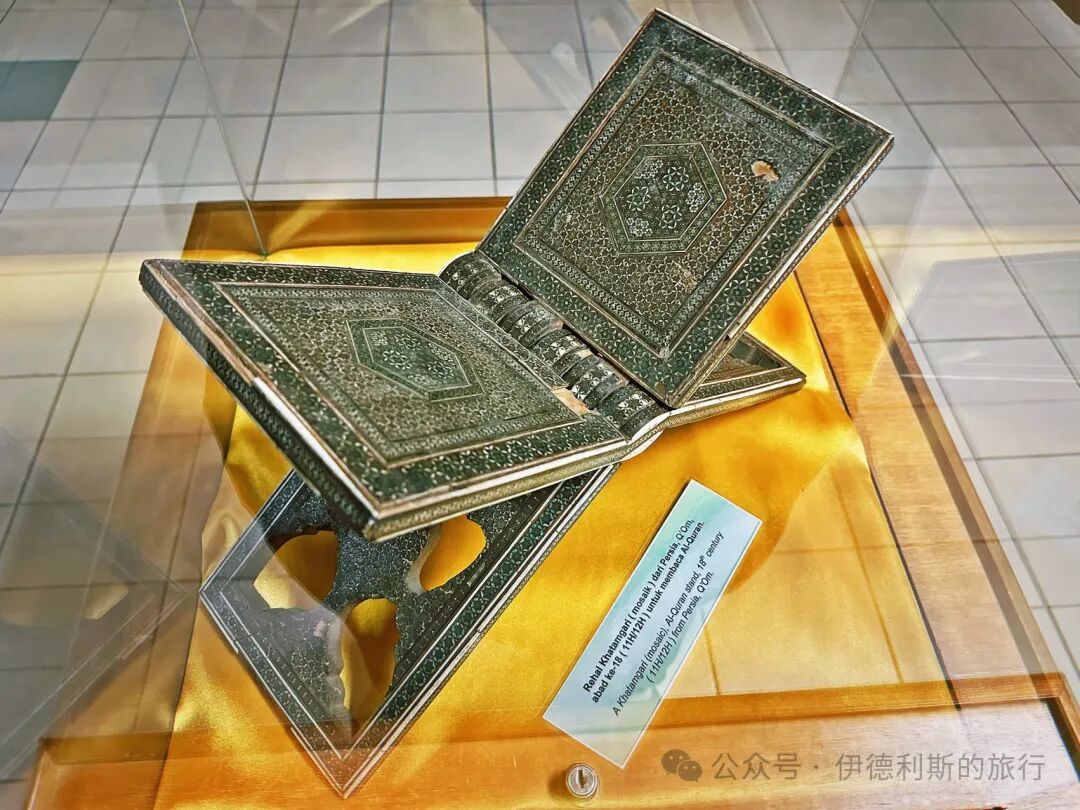
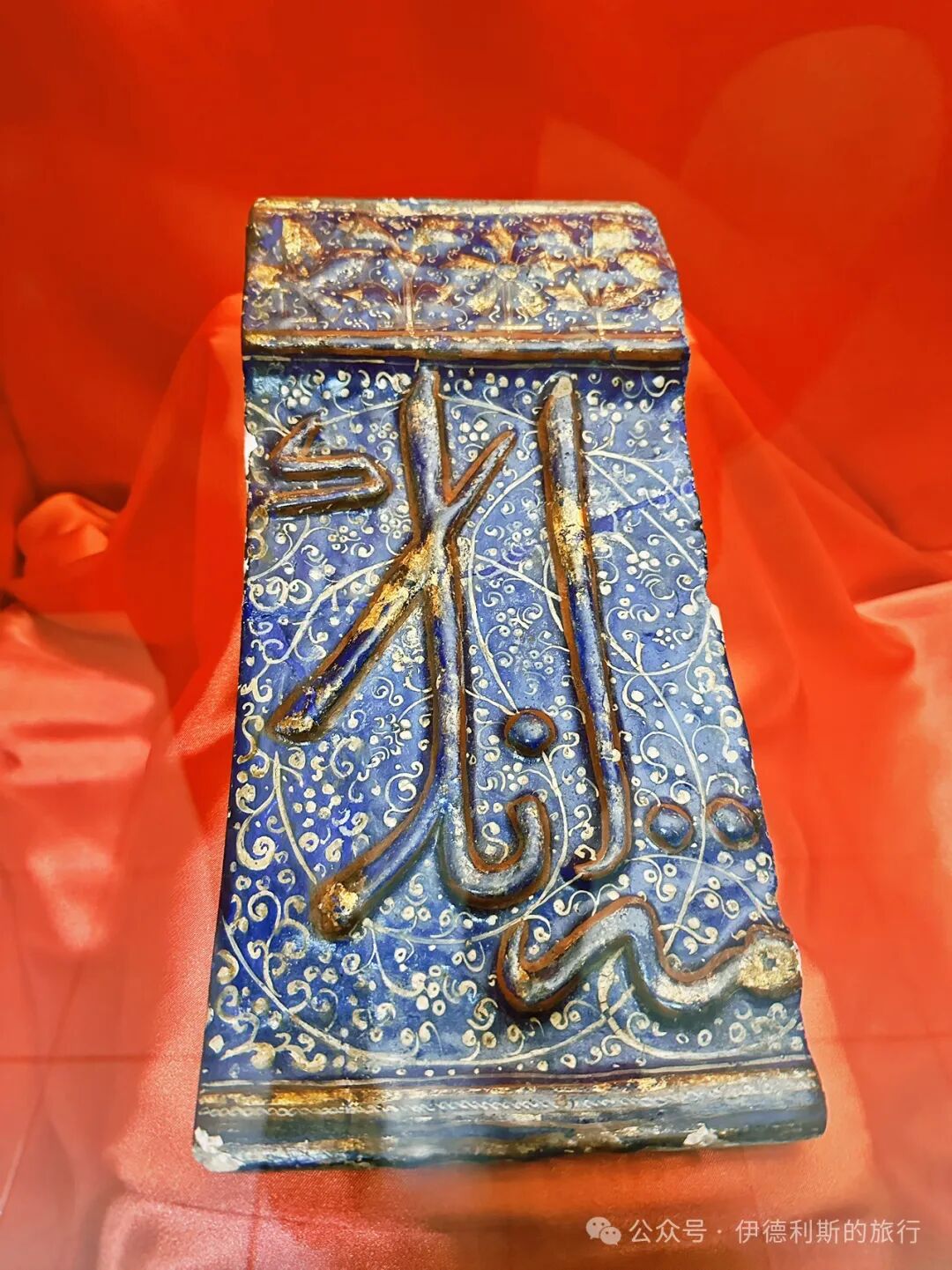
Tiles from the Ilkhanate period, dating to the 13th or 14th century.
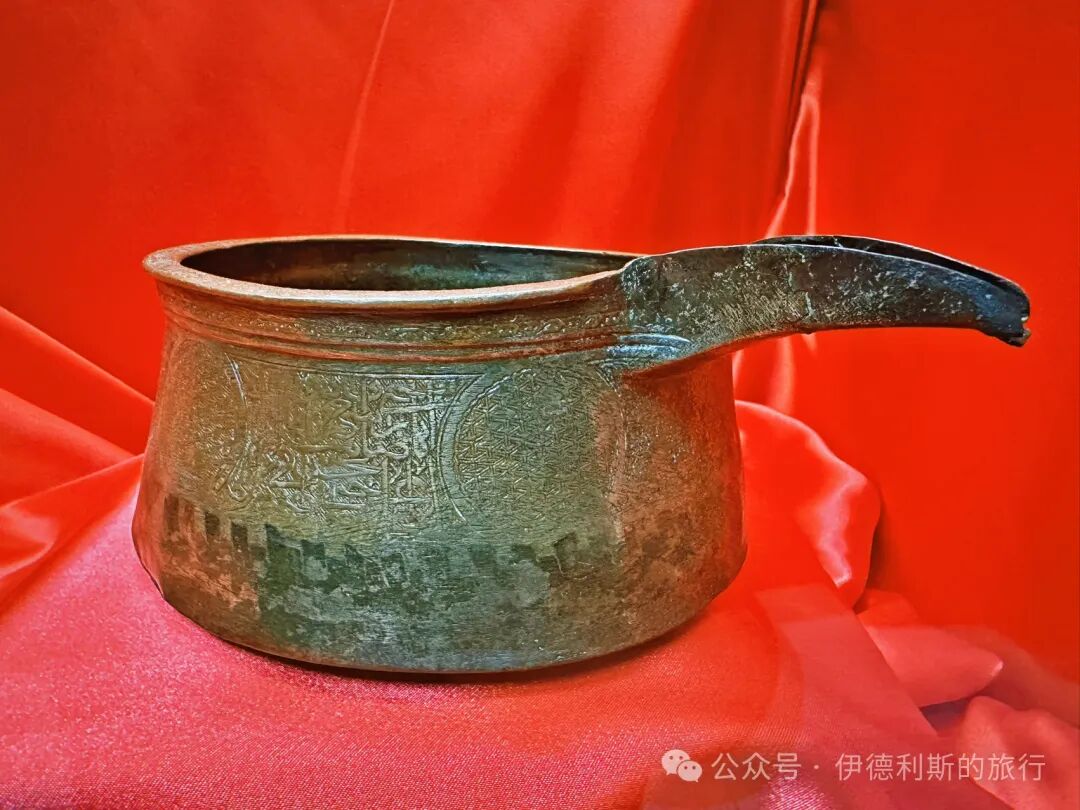
A copper bowl from the Mamluk period in Egypt.
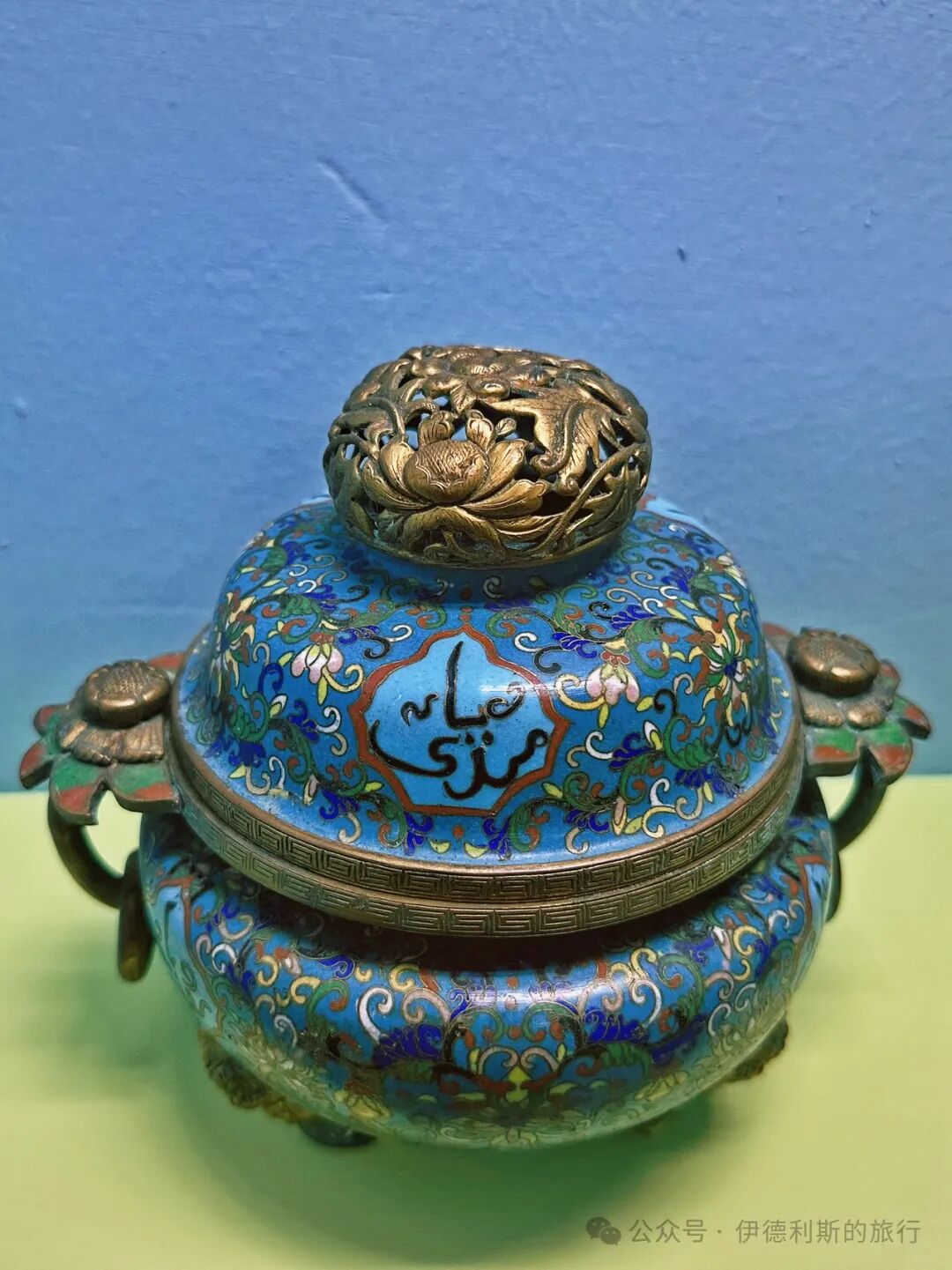
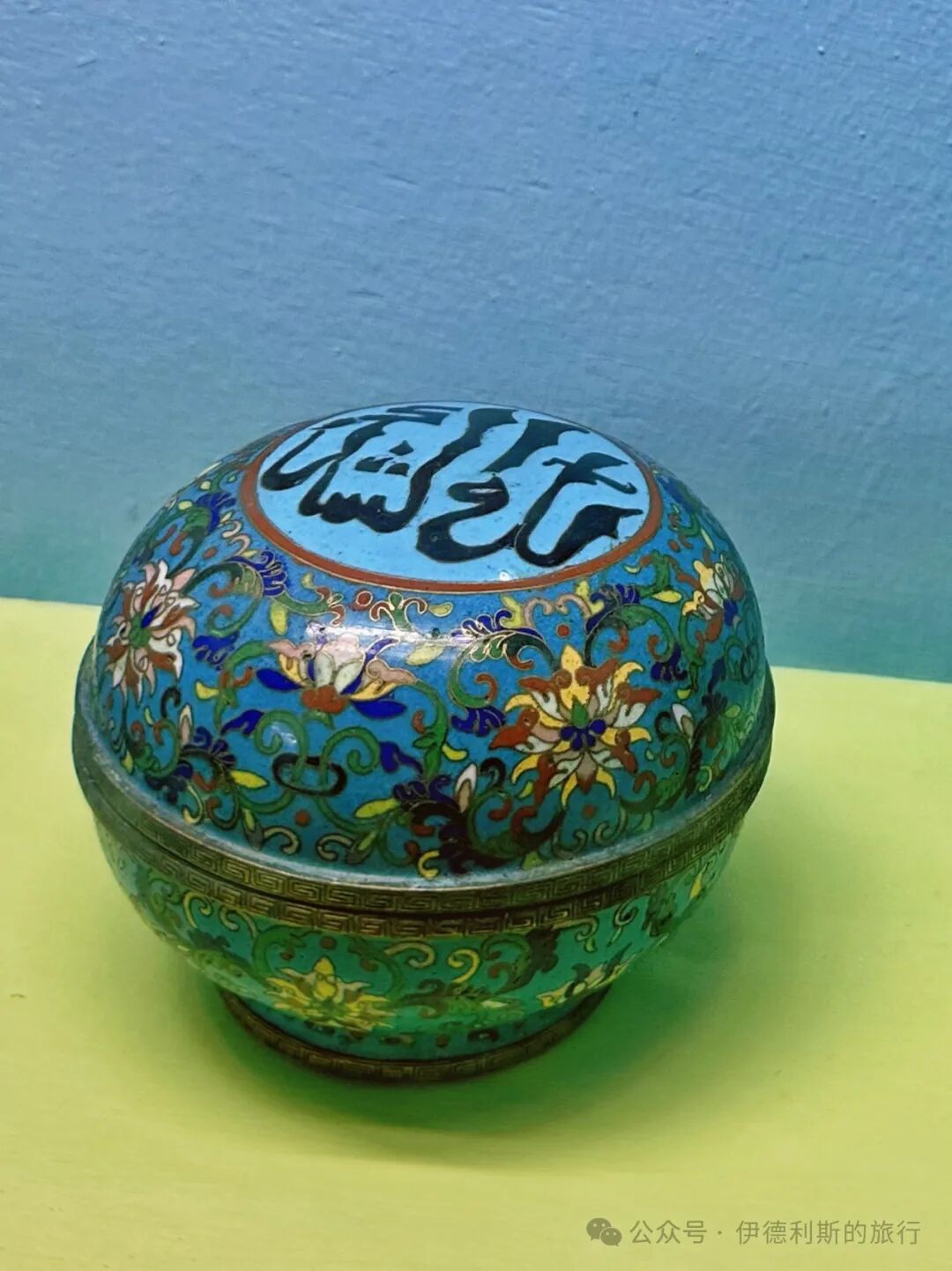
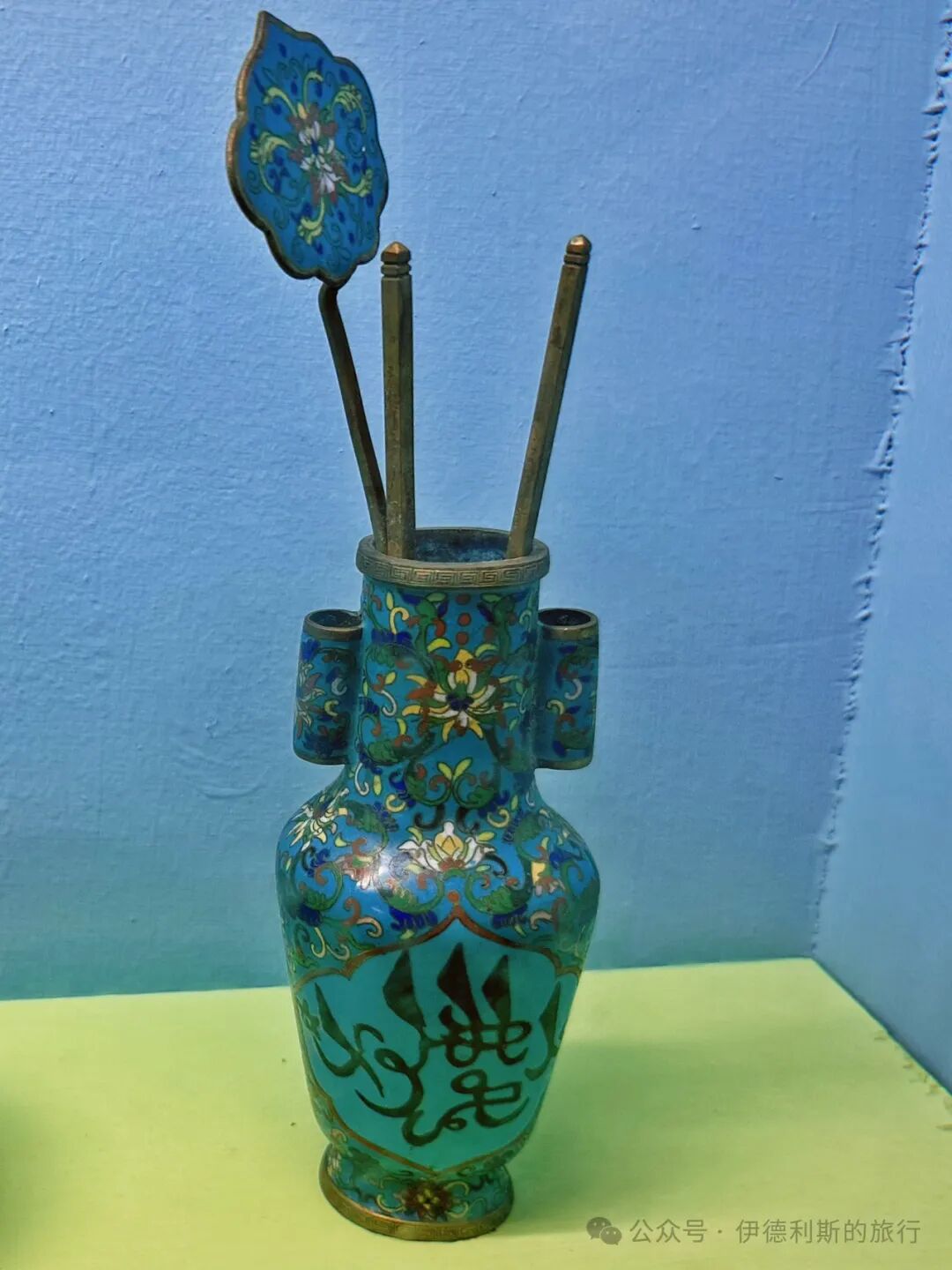
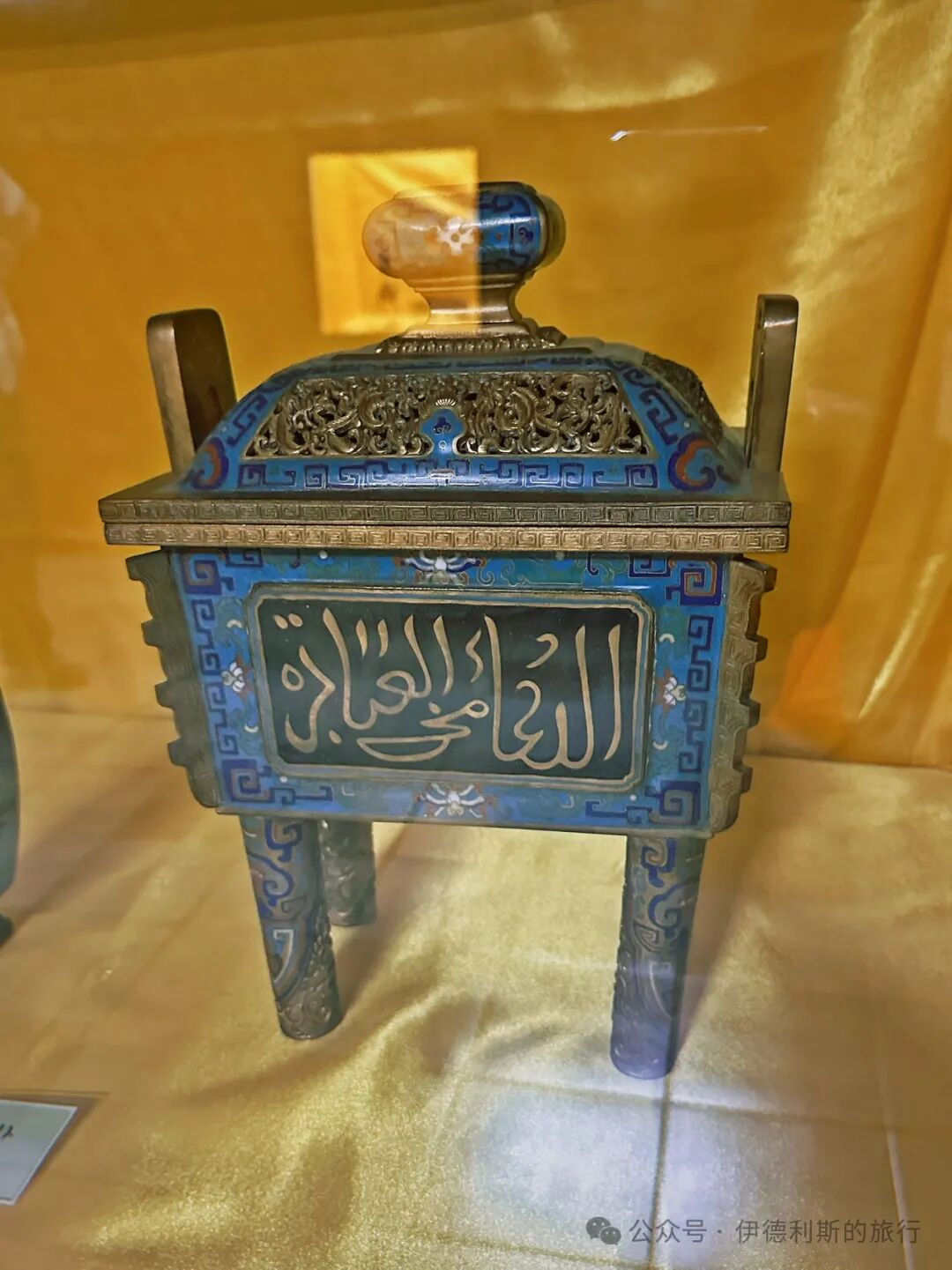
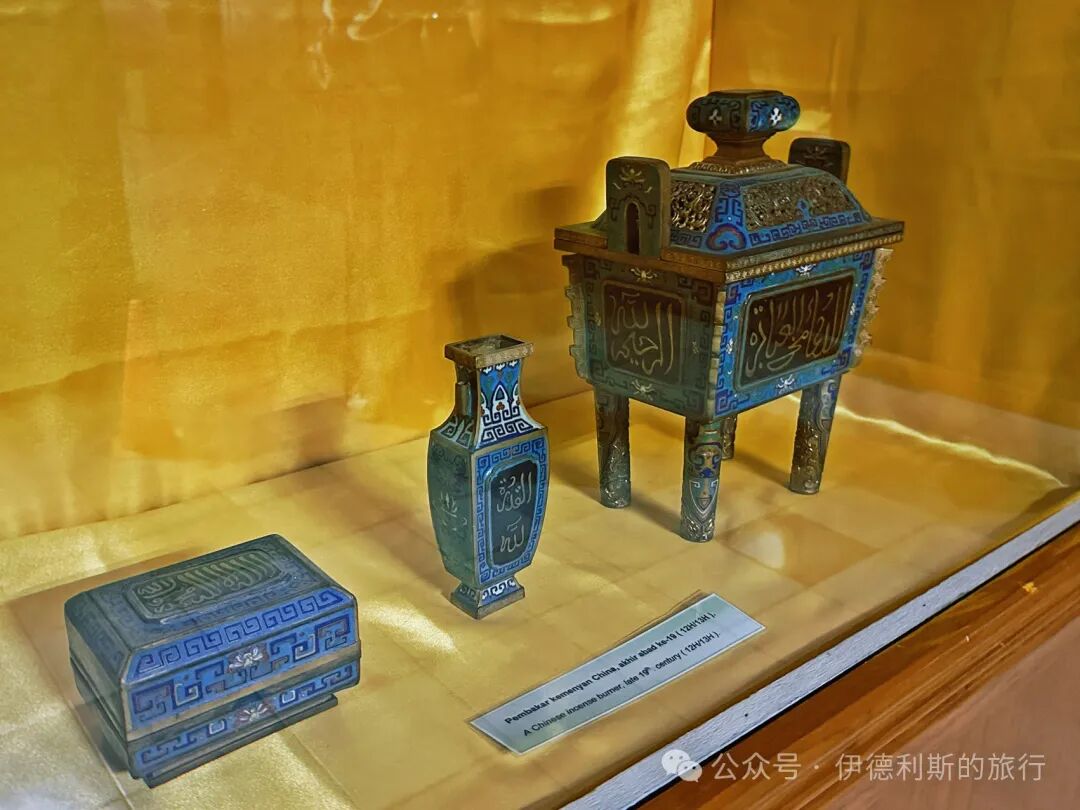
Two sets of cloisonné (jingtailan) altar vases and incense burners. One set likely traveled from Hong Kong to Malaysia during the era of export-oriented production.
Summary: This article visits the Sabah Islamic Civilization Museum in Malaysia, with a focus on regional Muslim history, exhibition displays, and local cultural context. It keeps the original museum details, photographs, artifact notes, and travel observations for readers interested in Islamic heritage in Sabah.
The Sabah Islamic Civilization Museum opened in 2002. It has a small collection and is not well-known, but it is special because it holds unique Islamic cultural artifacts from the Malay Archipelago that you cannot see in other museums.
This is a wooden prayer gong (kentung) made in 1918 by the Sambas Sultanate in West Kalimantan, Indonesia. It is a traditional instrument used to signal the call to prayer.
The Sambas Malays live on the northwest coast of Borneo, right next to the Malaysian state of Sabah. The Sambas Malays founded the Sambas Sultanate in 1675. It became part of Indonesia in 1956, and the Sultan of Sambas still lives in the palace today. The Sambas Malays are mainly Sufi. Their rituals combine features of the Qadiriyya and Naqshbandiyya orders and are famous for their unique chanting style.
This is a manuscript of scripture from Sulawesi, Indonesia, written on date palm leaves and bound in goatskin. It is over a hundred years old. It was donated to the Sabah Islamic Civilization Museum in 2015 by Tuan Hj. Abdullah Abas, a religious teacher from Kinarut, Sabah, Malaysia.
This is a traditional Indonesian wooden chest carved with scripture, used for storing clothes. This type of wood carving is found in several Islamic museums in Malaysia and is a very distinctive piece of Islamic craft.
This is a bridal curtain used by the Bajau (Sama) people, a sea-faring group living on the west coast of Sabah, Malaysia, in Kota Belud.
This is a porcelain plate with scripture from the 1930s, acquired by the museum in 2005. Malay people usually display this kind of porcelain plate in a cabinet as a decoration.
These scripture-inscribed ceramics were brought to Sabah through trade and include pieces from both China and Europe. Under the rule of the Sultanate of Brunei, Sabah had very close trade ties with the Qing Dynasty, Spain, the Netherlands, and other countries.
This is a protective vest (dua vest) worn by indigenous soldiers in Sabah during the anti-British resistance led by Mat Salleh between 1894 and 1905.
The resistance leader Mat Salleh, whose real name was Datuk Muhammad Salleh, was an indigenous leader in Sabah. In 1881, the British took control of Sabah by establishing the North Borneo Chartered Company. Mat Salleh felt this violated the rights of the indigenous people and refused to recognize the company. In 1895, after negotiations with the company failed, Mat Salleh was declared a wanted man. He immediately built a fortress to openly resist the British and successfully launched several attacks. He died in battle in 1900, and his followers continued to fight until they were finally defeated in 1905.
This is a decorative wooden frame made in 1918, featuring scripture carvings and traditional embroidery in the center.
These are wooden grave markers from the Semporna region. This type of wooden grave marker is unique to the Semporna area and is carved with floral patterns around the edges.
This is a century-old bas-relief bronze plaque featuring the Basmala.
This is a prayer drum (beduk) made of palm wood and cowhide. It is usually placed in front of the main hall or at the entrance of a mosque, which is why many traditional mosques in Southeast Asia do not have minarets.
There are many wavy-bladed daggers (keris) in museums across Malaysia and Indonesia, but very few have a clear record of their origin. The Museum of Islamic Civilization in Sabah displays a sword called Pedang Khusus. Palace guards in the Tidung Kingdom on Tarakan Island off the east coast of Borneo wore this gold-made, highly detailed weapon.
The second type is called Sundang, a wavy-bladed dagger (keris) with blood grooves used by the Sulu people. The handle of the Sundang is cylindrical, which keeps it from slipping out of your hand during use.
Woodcarver Mba Hj. Edie Ifa from Jepara, Java, Indonesia, worked with students from a nearby Islamic school (madrasa) to carve a pair of scripture-inscribed door panels from a century-old teak log.
A wooden tombstone from the Bajau people of Semporna, with the top carved into the shape of a hat.
A hand-copied Persian scripture from 1796.
A scripture stand from Qom, Iran, dating back to the 18th century.
Tiles from the Ilkhanate period, dating to the 13th or 14th century.
A copper bowl from the Mamluk period in Egypt.
Two sets of cloisonné (jingtailan) altar vases and incense burners. One set likely traveled from Hong Kong to Malaysia during the era of export-oriented production.
Museum Guide: Sabah Islamic Civilization Museum in Malaysia
Articles • ali2007fr posted the article • 0 comments • 196 views • 2026-05-19 22:56
Reposted from the web
Summary: This article visits the Sabah Islamic Civilization Museum in Malaysia, with a focus on regional Muslim history, exhibition displays, and local cultural context. It keeps the original museum details, photographs, artifact notes, and travel observations for readers interested in Islamic heritage in Sabah.
The Sabah Islamic Civilization Museum opened in 2002. It has a small collection and is not well-known, but it is special because it holds unique Islamic cultural artifacts from the Malay Archipelago that you cannot see in other museums.
This is a wooden prayer gong (kentung) made in 1918 by the Sambas Sultanate in West Kalimantan, Indonesia. It is a traditional instrument used to signal the call to prayer.
The Sambas Malays live on the northwest coast of Borneo, right next to the Malaysian state of Sabah. The Sambas Malays founded the Sambas Sultanate in 1675. It became part of Indonesia in 1956, and the Sultan of Sambas still lives in the palace today. The Sambas Malays are mainly Sufi. Their rituals combine features of the Qadiriyya and Naqshbandiyya orders and are famous for their unique chanting style.
This is a manuscript of scripture from Sulawesi, Indonesia, written on date palm leaves and bound in goatskin. It is over a hundred years old. It was donated to the Sabah Islamic Civilization Museum in 2015 by Tuan Hj. Abdullah Abas, a religious teacher from Kinarut, Sabah, Malaysia.
This is a traditional Indonesian wooden chest carved with scripture, used for storing clothes. This type of wood carving is found in several Islamic museums in Malaysia and is a very distinctive piece of Islamic craft.
This is a bridal curtain used by the Bajau (Sama) people, a sea-faring group living on the west coast of Sabah, Malaysia, in Kota Belud.
This is a porcelain plate with scripture from the 1930s, acquired by the museum in 2005. Malay people usually display this kind of porcelain plate in a cabinet as a decoration.
These scripture-inscribed ceramics were brought to Sabah through trade and include pieces from both China and Europe. Under the rule of the Sultanate of Brunei, Sabah had very close trade ties with the Qing Dynasty, Spain, the Netherlands, and other countries.
This is a protective vest (dua vest) worn by indigenous soldiers in Sabah during the anti-British resistance led by Mat Salleh between 1894 and 1905.
The resistance leader Mat Salleh, whose real name was Datuk Muhammad Salleh, was an indigenous leader in Sabah. In 1881, the British took control of Sabah by establishing the North Borneo Chartered Company. Mat Salleh felt this violated the rights of the indigenous people and refused to recognize the company. In 1895, after negotiations with the company failed, Mat Salleh was declared a wanted man. He immediately built a fortress to openly resist the British and successfully launched several attacks. He died in battle in 1900, and his followers continued to fight until they were finally defeated in 1905.
This is a decorative wooden frame made in 1918, featuring scripture carvings and traditional embroidery in the center.
These are wooden grave markers from the Semporna region. This type of wooden grave marker is unique to the Semporna area and is carved with floral patterns around the edges.
This is a century-old bas-relief bronze plaque featuring the Basmala.
This is a prayer drum (beduk) made of palm wood and cowhide. It is usually placed in front of the main hall or at the entrance of a mosque, which is why many traditional mosques in Southeast Asia do not have minarets.
There are many wavy-bladed daggers (keris) in museums across Malaysia and Indonesia, but very few have a clear record of their origin. The Museum of Islamic Civilization in Sabah displays a sword called Pedang Khusus. Palace guards in the Tidung Kingdom on Tarakan Island off the east coast of Borneo wore this gold-made, highly detailed weapon.
The second type is called Sundang, a wavy-bladed dagger (keris) with blood grooves used by the Sulu people. The handle of the Sundang is cylindrical, which keeps it from slipping out of your hand during use.
Woodcarver Mba Hj. Edie Ifa from Jepara, Java, Indonesia, worked with students from a nearby Islamic school (madrasa) to carve a pair of scripture-inscribed door panels from a century-old teak log.
A wooden tombstone from the Bajau people of Semporna, with the top carved into the shape of a hat.
A hand-copied Persian scripture from 1796.
A scripture stand from Qom, Iran, dating back to the 18th century.
Tiles from the Ilkhanate period, dating to the 13th or 14th century.
A copper bowl from the Mamluk period in Egypt.
Two sets of cloisonné (jingtailan) altar vases and incense burners. One set likely traveled from Hong Kong to Malaysia during the era of export-oriented production. view all
Summary: This article visits the Sabah Islamic Civilization Museum in Malaysia, with a focus on regional Muslim history, exhibition displays, and local cultural context. It keeps the original museum details, photographs, artifact notes, and travel observations for readers interested in Islamic heritage in Sabah.
The Sabah Islamic Civilization Museum opened in 2002. It has a small collection and is not well-known, but it is special because it holds unique Islamic cultural artifacts from the Malay Archipelago that you cannot see in other museums.
This is a wooden prayer gong (kentung) made in 1918 by the Sambas Sultanate in West Kalimantan, Indonesia. It is a traditional instrument used to signal the call to prayer.
The Sambas Malays live on the northwest coast of Borneo, right next to the Malaysian state of Sabah. The Sambas Malays founded the Sambas Sultanate in 1675. It became part of Indonesia in 1956, and the Sultan of Sambas still lives in the palace today. The Sambas Malays are mainly Sufi. Their rituals combine features of the Qadiriyya and Naqshbandiyya orders and are famous for their unique chanting style.
This is a manuscript of scripture from Sulawesi, Indonesia, written on date palm leaves and bound in goatskin. It is over a hundred years old. It was donated to the Sabah Islamic Civilization Museum in 2015 by Tuan Hj. Abdullah Abas, a religious teacher from Kinarut, Sabah, Malaysia.
This is a traditional Indonesian wooden chest carved with scripture, used for storing clothes. This type of wood carving is found in several Islamic museums in Malaysia and is a very distinctive piece of Islamic craft.
This is a bridal curtain used by the Bajau (Sama) people, a sea-faring group living on the west coast of Sabah, Malaysia, in Kota Belud.
This is a porcelain plate with scripture from the 1930s, acquired by the museum in 2005. Malay people usually display this kind of porcelain plate in a cabinet as a decoration.
These scripture-inscribed ceramics were brought to Sabah through trade and include pieces from both China and Europe. Under the rule of the Sultanate of Brunei, Sabah had very close trade ties with the Qing Dynasty, Spain, the Netherlands, and other countries.
This is a protective vest (dua vest) worn by indigenous soldiers in Sabah during the anti-British resistance led by Mat Salleh between 1894 and 1905.
The resistance leader Mat Salleh, whose real name was Datuk Muhammad Salleh, was an indigenous leader in Sabah. In 1881, the British took control of Sabah by establishing the North Borneo Chartered Company. Mat Salleh felt this violated the rights of the indigenous people and refused to recognize the company. In 1895, after negotiations with the company failed, Mat Salleh was declared a wanted man. He immediately built a fortress to openly resist the British and successfully launched several attacks. He died in battle in 1900, and his followers continued to fight until they were finally defeated in 1905.
This is a decorative wooden frame made in 1918, featuring scripture carvings and traditional embroidery in the center.
These are wooden grave markers from the Semporna region. This type of wooden grave marker is unique to the Semporna area and is carved with floral patterns around the edges.
This is a century-old bas-relief bronze plaque featuring the Basmala.
This is a prayer drum (beduk) made of palm wood and cowhide. It is usually placed in front of the main hall or at the entrance of a mosque, which is why many traditional mosques in Southeast Asia do not have minarets.
There are many wavy-bladed daggers (keris) in museums across Malaysia and Indonesia, but very few have a clear record of their origin. The Museum of Islamic Civilization in Sabah displays a sword called Pedang Khusus. Palace guards in the Tidung Kingdom on Tarakan Island off the east coast of Borneo wore this gold-made, highly detailed weapon.
The second type is called Sundang, a wavy-bladed dagger (keris) with blood grooves used by the Sulu people. The handle of the Sundang is cylindrical, which keeps it from slipping out of your hand during use.
Woodcarver Mba Hj. Edie Ifa from Jepara, Java, Indonesia, worked with students from a nearby Islamic school (madrasa) to carve a pair of scripture-inscribed door panels from a century-old teak log.
A wooden tombstone from the Bajau people of Semporna, with the top carved into the shape of a hat.
A hand-copied Persian scripture from 1796.
A scripture stand from Qom, Iran, dating back to the 18th century.
Tiles from the Ilkhanate period, dating to the 13th or 14th century.
A copper bowl from the Mamluk period in Egypt.
Two sets of cloisonné (jingtailan) altar vases and incense burners. One set likely traveled from Hong Kong to Malaysia during the era of export-oriented production. view all
Reposted from the web
Summary: This article visits the Sabah Islamic Civilization Museum in Malaysia, with a focus on regional Muslim history, exhibition displays, and local cultural context. It keeps the original museum details, photographs, artifact notes, and travel observations for readers interested in Islamic heritage in Sabah.
The Sabah Islamic Civilization Museum opened in 2002. It has a small collection and is not well-known, but it is special because it holds unique Islamic cultural artifacts from the Malay Archipelago that you cannot see in other museums.
This is a wooden prayer gong (kentung) made in 1918 by the Sambas Sultanate in West Kalimantan, Indonesia. It is a traditional instrument used to signal the call to prayer.
The Sambas Malays live on the northwest coast of Borneo, right next to the Malaysian state of Sabah. The Sambas Malays founded the Sambas Sultanate in 1675. It became part of Indonesia in 1956, and the Sultan of Sambas still lives in the palace today. The Sambas Malays are mainly Sufi. Their rituals combine features of the Qadiriyya and Naqshbandiyya orders and are famous for their unique chanting style.
This is a manuscript of scripture from Sulawesi, Indonesia, written on date palm leaves and bound in goatskin. It is over a hundred years old. It was donated to the Sabah Islamic Civilization Museum in 2015 by Tuan Hj. Abdullah Abas, a religious teacher from Kinarut, Sabah, Malaysia.
This is a traditional Indonesian wooden chest carved with scripture, used for storing clothes. This type of wood carving is found in several Islamic museums in Malaysia and is a very distinctive piece of Islamic craft.
This is a bridal curtain used by the Bajau (Sama) people, a sea-faring group living on the west coast of Sabah, Malaysia, in Kota Belud.
This is a porcelain plate with scripture from the 1930s, acquired by the museum in 2005. Malay people usually display this kind of porcelain plate in a cabinet as a decoration.
These scripture-inscribed ceramics were brought to Sabah through trade and include pieces from both China and Europe. Under the rule of the Sultanate of Brunei, Sabah had very close trade ties with the Qing Dynasty, Spain, the Netherlands, and other countries.
This is a protective vest (dua vest) worn by indigenous soldiers in Sabah during the anti-British resistance led by Mat Salleh between 1894 and 1905.
The resistance leader Mat Salleh, whose real name was Datuk Muhammad Salleh, was an indigenous leader in Sabah. In 1881, the British took control of Sabah by establishing the North Borneo Chartered Company. Mat Salleh felt this violated the rights of the indigenous people and refused to recognize the company. In 1895, after negotiations with the company failed, Mat Salleh was declared a wanted man. He immediately built a fortress to openly resist the British and successfully launched several attacks. He died in battle in 1900, and his followers continued to fight until they were finally defeated in 1905.
This is a decorative wooden frame made in 1918, featuring scripture carvings and traditional embroidery in the center.
These are wooden grave markers from the Semporna region. This type of wooden grave marker is unique to the Semporna area and is carved with floral patterns around the edges.
This is a century-old bas-relief bronze plaque featuring the Basmala.
This is a prayer drum (beduk) made of palm wood and cowhide. It is usually placed in front of the main hall or at the entrance of a mosque, which is why many traditional mosques in Southeast Asia do not have minarets.
There are many wavy-bladed daggers (keris) in museums across Malaysia and Indonesia, but very few have a clear record of their origin. The Museum of Islamic Civilization in Sabah displays a sword called Pedang Khusus. Palace guards in the Tidung Kingdom on Tarakan Island off the east coast of Borneo wore this gold-made, highly detailed weapon.
The second type is called Sundang, a wavy-bladed dagger (keris) with blood grooves used by the Sulu people. The handle of the Sundang is cylindrical, which keeps it from slipping out of your hand during use.
Woodcarver Mba Hj. Edie Ifa from Jepara, Java, Indonesia, worked with students from a nearby Islamic school (madrasa) to carve a pair of scripture-inscribed door panels from a century-old teak log.
A wooden tombstone from the Bajau people of Semporna, with the top carved into the shape of a hat.
A hand-copied Persian scripture from 1796.
A scripture stand from Qom, Iran, dating back to the 18th century.
Tiles from the Ilkhanate period, dating to the 13th or 14th century.
A copper bowl from the Mamluk period in Egypt.
Two sets of cloisonné (jingtailan) altar vases and incense burners. One set likely traveled from Hong Kong to Malaysia during the era of export-oriented production.
Summary: This article visits the Sabah Islamic Civilization Museum in Malaysia, with a focus on regional Muslim history, exhibition displays, and local cultural context. It keeps the original museum details, photographs, artifact notes, and travel observations for readers interested in Islamic heritage in Sabah.
The Sabah Islamic Civilization Museum opened in 2002. It has a small collection and is not well-known, but it is special because it holds unique Islamic cultural artifacts from the Malay Archipelago that you cannot see in other museums.
This is a wooden prayer gong (kentung) made in 1918 by the Sambas Sultanate in West Kalimantan, Indonesia. It is a traditional instrument used to signal the call to prayer.
The Sambas Malays live on the northwest coast of Borneo, right next to the Malaysian state of Sabah. The Sambas Malays founded the Sambas Sultanate in 1675. It became part of Indonesia in 1956, and the Sultan of Sambas still lives in the palace today. The Sambas Malays are mainly Sufi. Their rituals combine features of the Qadiriyya and Naqshbandiyya orders and are famous for their unique chanting style.
This is a manuscript of scripture from Sulawesi, Indonesia, written on date palm leaves and bound in goatskin. It is over a hundred years old. It was donated to the Sabah Islamic Civilization Museum in 2015 by Tuan Hj. Abdullah Abas, a religious teacher from Kinarut, Sabah, Malaysia.
This is a traditional Indonesian wooden chest carved with scripture, used for storing clothes. This type of wood carving is found in several Islamic museums in Malaysia and is a very distinctive piece of Islamic craft.
This is a bridal curtain used by the Bajau (Sama) people, a sea-faring group living on the west coast of Sabah, Malaysia, in Kota Belud.
This is a porcelain plate with scripture from the 1930s, acquired by the museum in 2005. Malay people usually display this kind of porcelain plate in a cabinet as a decoration.
These scripture-inscribed ceramics were brought to Sabah through trade and include pieces from both China and Europe. Under the rule of the Sultanate of Brunei, Sabah had very close trade ties with the Qing Dynasty, Spain, the Netherlands, and other countries.
This is a protective vest (dua vest) worn by indigenous soldiers in Sabah during the anti-British resistance led by Mat Salleh between 1894 and 1905.
The resistance leader Mat Salleh, whose real name was Datuk Muhammad Salleh, was an indigenous leader in Sabah. In 1881, the British took control of Sabah by establishing the North Borneo Chartered Company. Mat Salleh felt this violated the rights of the indigenous people and refused to recognize the company. In 1895, after negotiations with the company failed, Mat Salleh was declared a wanted man. He immediately built a fortress to openly resist the British and successfully launched several attacks. He died in battle in 1900, and his followers continued to fight until they were finally defeated in 1905.
This is a decorative wooden frame made in 1918, featuring scripture carvings and traditional embroidery in the center.
These are wooden grave markers from the Semporna region. This type of wooden grave marker is unique to the Semporna area and is carved with floral patterns around the edges.
This is a century-old bas-relief bronze plaque featuring the Basmala.
This is a prayer drum (beduk) made of palm wood and cowhide. It is usually placed in front of the main hall or at the entrance of a mosque, which is why many traditional mosques in Southeast Asia do not have minarets.
There are many wavy-bladed daggers (keris) in museums across Malaysia and Indonesia, but very few have a clear record of their origin. The Museum of Islamic Civilization in Sabah displays a sword called Pedang Khusus. Palace guards in the Tidung Kingdom on Tarakan Island off the east coast of Borneo wore this gold-made, highly detailed weapon.
The second type is called Sundang, a wavy-bladed dagger (keris) with blood grooves used by the Sulu people. The handle of the Sundang is cylindrical, which keeps it from slipping out of your hand during use.
Woodcarver Mba Hj. Edie Ifa from Jepara, Java, Indonesia, worked with students from a nearby Islamic school (madrasa) to carve a pair of scripture-inscribed door panels from a century-old teak log.
A wooden tombstone from the Bajau people of Semporna, with the top carved into the shape of a hat.
A hand-copied Persian scripture from 1796.
A scripture stand from Qom, Iran, dating back to the 18th century.
Tiles from the Ilkhanate period, dating to the 13th or 14th century.
A copper bowl from the Mamluk period in Egypt.
Two sets of cloisonné (jingtailan) altar vases and incense burners. One set likely traveled from Hong Kong to Malaysia during the era of export-oriented production.