

Islamic Culinary Heritage
Halal Cuisine Secrets: Exploring the History and Authentic Flavors of Silk Road Muslim Dishes
Articles • Hasan09 posted the article • 0 comments • 7 views • 3 hours ago
Dive into the historical roots and unique charm of Halal cuisine as it traveled along the ancient Silk Road. Through 13 detailed photos, we explore the strict standards for Halal animal slaughter, healthy ingredient sourcing, and the art of using spices, covering everything from shouzhua yangrou (hand-grabbed lamb) and kebabs to classic home-cooked dishes, offering a deep look into the rich traditions of Chinese Halal food culture.
Just how good is legendary Halal food? After thinking about it for a long time, I realized you really can't sum it up in just a couple of sentences.
Seriously, what is it about Halal cuisine that’s so addictive?
I've heard it all started with the merchants traveling along the Silk Road.
You know how people are—wherever they settle, they bring their own way of doing things, right?
The way meat is slaughtered, how the blood is drained, and which spices can or can't be used—all of that is practically in their DNA.
By the time it reached Chang'an, the locals took one bite and were like, 'Whoa, this is actually amazing!'
They started stewing meat in copper pots with local spices, and that blend of flavors basically laid the foundation for what we have today.
Back then, it wasn't even called 'Halal' yet, but people just loved how solid and reliable the food tasted.
Later on, during the Song and Yuan dynasties, Halal cuisine really started to put down roots.
The streets were packed with steaming shops where the owners had such insane knife skills that they could slice meat thin enough to see light through it, and they’d slow-cook the bones until they were melt-in-your-mouth tender.
There was an old restaurant in my hometown—not even a Halal spot—but it had that same 'old-school' vibe, and I totally get it: it’s all about the flavors that build up over time.
By the Ming and Qing dynasties, organizations like the Halal guilds started popping up, keeping record of recipes and traditions. Those rules were like salt—essential and passed down by one generation to the next.
Today, those old shops in the narrow alleys are still around, even if the faces behind the counter are a bit younger now.
But the old-school rules haven't changed, even if they sometimes add a modern twist or a local ingredient to keep things fresh.
It’s a lot like the people who keep these traditions alive—they’ve stayed the same for hundreds of years.
One bite and you can taste it: the footprints of the ancient merchants, the precision of the chef's blade, and the fresh steam rising from the young cook's pot.
If you had to pick the ultimate 'masterpiece' of Halal food, it’s definitely shouzhua yangrou (hand-grabbed lamb).
This dish is deeply connected to the legacy of nomadic culture.
From the pottery patterns of the ancient Xindian culture to the recipes for Hexi lamb in the Yuan dynasty's 'Yinshan Zhengyao' (Important Principles of Food and Drink), it's clear this tenderness has been perfected for centuries.
Take Yanchi Tan sheep, for instance—they say these sheep graze on herbs and drink mineral water, which makes the meat incredibly tender with almost no gamey smell.
It's simply boiled with salt, Sichuan peppercorns, and ginger slices. The meat stays pink, the fat stays white, and you can slide your chopsticks right through it.
Dip it in some garlic and chili sauce, and man—the flavor is unreal, it hits you right in the senses!
This isn't just great food; it’s a 'living cultural specimen.'
Watching warriors sit in a circle on the ground, carving the meat to share—that’s the real spirit and strength of the nomadic lifestyle.
During Eid al-Fitr or the Naadam festival, this dish is the star of the show, representing unity and good fortune.
Also, there’s the famous braised beef from the Julelou restaurant in Jinan, Shandong, which has been a signature dish for over a hundred years.
The 'braising' technique involves slicing the meat, stewing it until it's soft and flavor-packed, then thickening the sauce until it’s a deep, glossy red like a date, arranged as neatly as a chessboard.
It’s often mentioned in the same breath as Wuzhong shouzhua yangrou from Ningxia as the 'two wonders of Halal cuisine.'
During festivals, people would slaughter sheep and cows, serving them with gaiwan cha (lid-bowl tea) and sanzi (deep-fried crispy dough twists) for their guests.
It’s all about the 'three aromas': the meat, the sauce, and the texture, like a perfect blend of spring on the grasslands, aged wine, and autumn fruits.
They say in Shandong they use sweet bean paste for a redder color, while in Tianjin they keep it closer to the original, savory and salty.
They choose beef with connective tissue, soak it to remove the blood, stew it in a pressure cooker, press it, and then steam it before finishing with the sauce.
It just melts in your mouth—not dry at all. Pair it with some flaky flatbread or rice, and you’re set.
When you talk about the 'Eight Great Halal Bowls,' you’re talking about a real piece of history.
Legend has it that during the Yuan dynasty, Hui Muslim soldiers stationed in Linqing during the canal grain transport days would prep the beef and mutton ahead of time—stewed, fried, or steamed—so they could just pour hot water over them when it was time to eat.
Later on, this evolved into a formal banquet style where eight people would be served eight bowls.
Today, the upgraded 'bowl-style' dishes are a local Shandong specialty, a staple at Linqing weddings, funerals, and major life events.
Pairing the meat and broth with a giant steamed bun—it really gives you that sense of togetherness.
The locals rave about it, saying it’s just 'dai jin!' (really hits the spot/so powerful!).
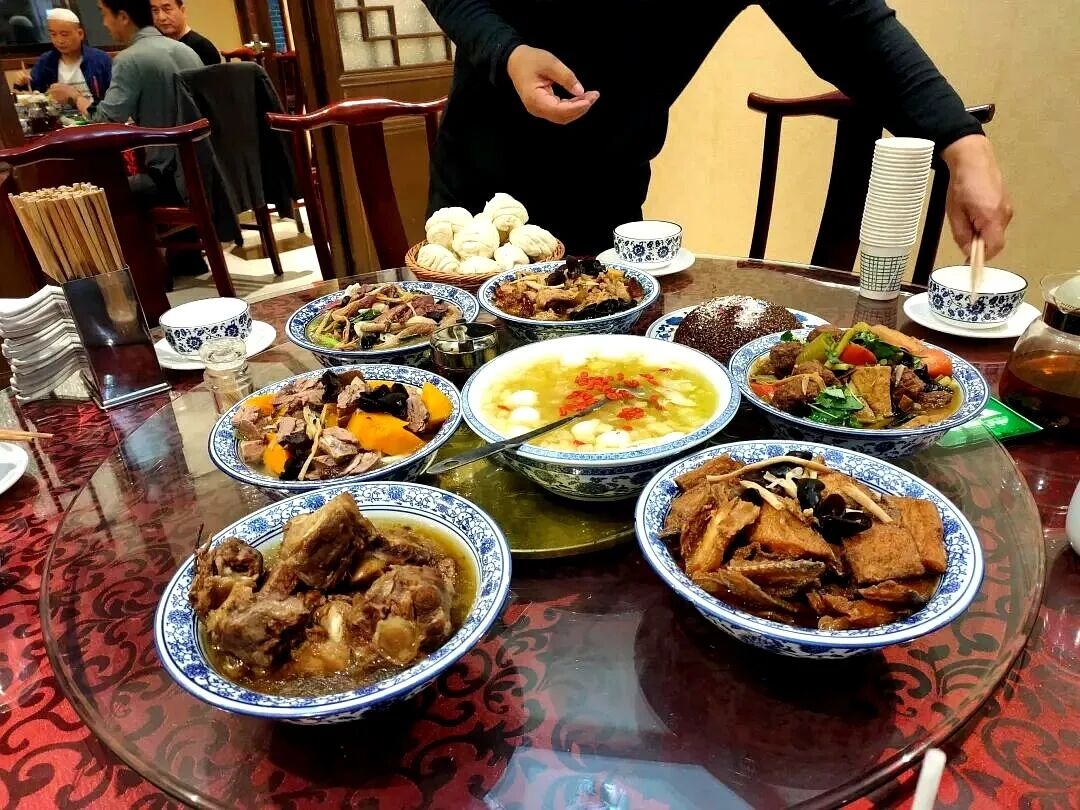
A proper traditional meal in this style is made up of four main courses—consisting of one meat dish, two soups, and three healing tonics—plus three smaller side dishes.
The clear-stewed castrated lamb is slow-cooked for two hours, resulting in tender, lean meat and a light, savory broth that’s totally free of any gamey smell; the yellow-braised chicken is marinated, fried, and then steamed, making it crispy on the outside and juicy on the inside; and the eight-treasure rice, packed with sticky rice, raisins, and jujubes, is perfectly sweet without being overwhelming.
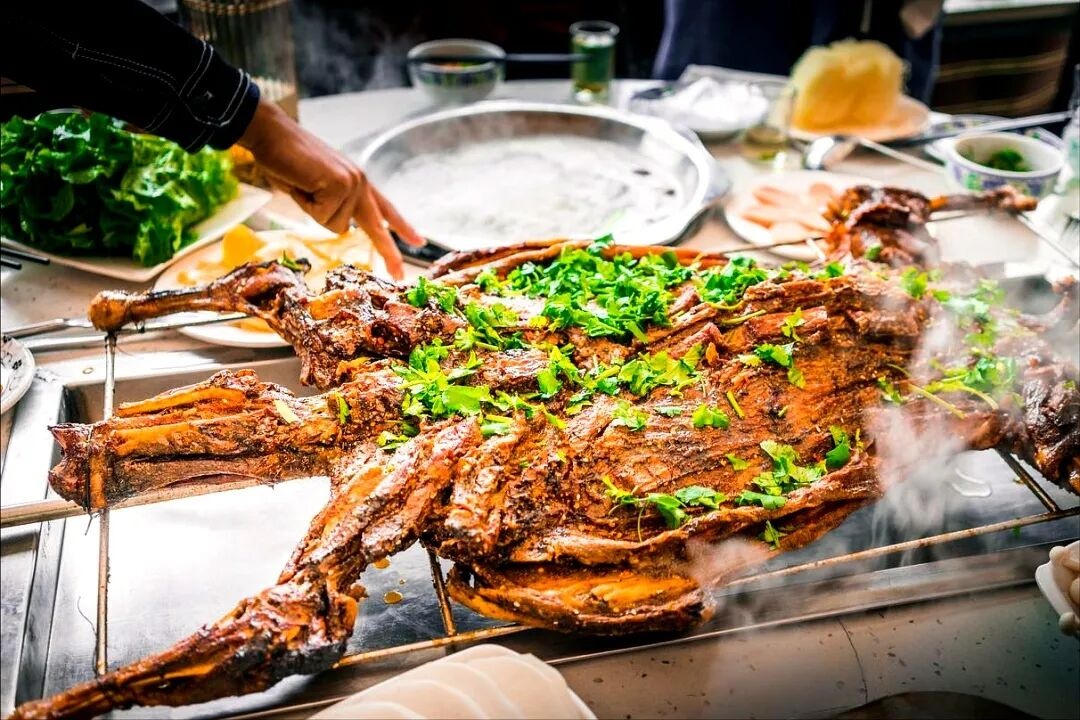
Then there’s the whole roasted lamb, a dish that sounds just as epic as it tastes.
After doing some research, I found out that during the Kangxi reign of the Qing Dynasty, when the Alxa nobility moved from Xinjiang to Wuzhen, they brought a few things along with them.
Later on, the cooking method was upgraded by blending it with the hanging-oven technique used for Peking duck. By slow-roasting it over jujube wood charcoal, the skin turns golden brown, and the meat becomes as tender as melting butter. One bite and you hear a distinct crunch, followed by a burst of savory, sweet juices.
From the rugged old-school way of 'digging a pit to roast meat' to the 'willow-steamed lamb' secret technique mentioned in the ancient text *Park Tongsa*, and now officially recognized as a 'National Intangible Cultural Heritage,' the whole roasted lamb has evolved beyond just filling your stomach; it's a spiritual totem for nomadic people.
In the Alxa region, they use 18-month-old castrated lamb, rub it with a blend of spices, and seal it inside a naan pit (tandoor-style oven) to roast. Master chefs rely entirely on listening to the sounds coming from the pit to know exactly when it’s done.
Nowadays, this 'king of the grasslands' has become a dish anyone can enjoy.
Fried lamb tail is a rarity in Beijing halal restaurants, but it’s actually a legendary local delicacy.
Initially, it was just lamb tail dipped in egg white batter and deep-fried, but it ended up being way too gamey and greasy.
Later, a clever chef had a brainwave: he swapped the red bean paste filling for meat, shaped it like a lamb tail, and suddenly this 'plump' sweet treat became a massive hit.
Out on the Inner Mongolian grasslands, it’s a serious dish served to welcome guests.
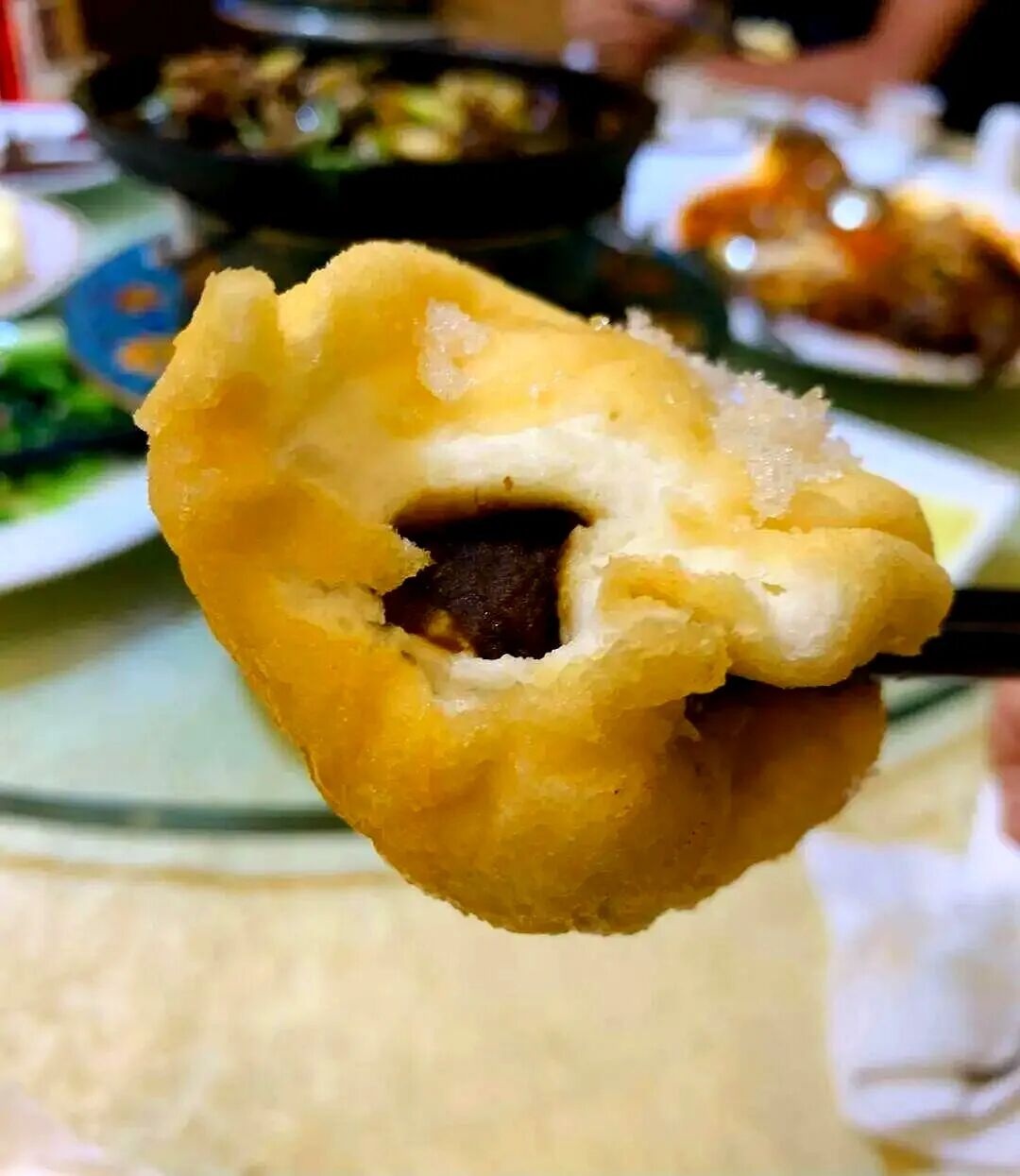
The fatty lamb tail is coated in a fluffy egg-white batter and deep-fried until golden and crispy. One bite and you get that piping-hot, savory richness. Eating this in the winter makes you feel warm and invincible.
The genius of this dish lies in its shape: the egg whites are whipped into a snowy, crispy shell, while the center is filled with smooth, dense red bean paste. It comes out looking like a fluffy cloud, and when dusted with white sugar, it looks just like fallen snow.
In Taizhou, they call it 'egg-white lamb tail.' It dates back 1,400 years and is a staple made by every family on Ziyang Street.
I've heard that at the Baita Bridge Restaurant, they whip the egg-white batter so stiff that a chopstick can stand upright in it. It doesn't collapse when fried, and once you bite into it, the sweetness of the bean paste just fills your palate.
Simi (sweet like honey)—you can tell just from the name that it's going to be sweet.
It’s basically the 'top-tier' dessert among Beijing halal dishes.
The name is sweet, and it’s got a few legends behind it.
During the Qianlong era, the Fragrant Concubine brought the Western Regions dish Tasimi to the palace. Qianlong tasted it and declared it better than honey. Later, when Empress Dowager Cixi was older and had trouble chewing, the imperial chef created a soft, sweet dish using lamb tenderloin, sweet bean sauce, and white sugar. She squinted her eyes and said, 'It's as sweet as honey, call it Simi!' Another theory links it to the 'Tasmi' recitation before halal banquets, where the sweetness holds the warmth of faith.
After transitioning from the imperial palace to the common people, it became a flagship dish in Beijing’s Hui Muslim restaurants. It’s a must-have for every major holiday and wedding banquet, bringing a blessing of a sweet and fulfilling life.
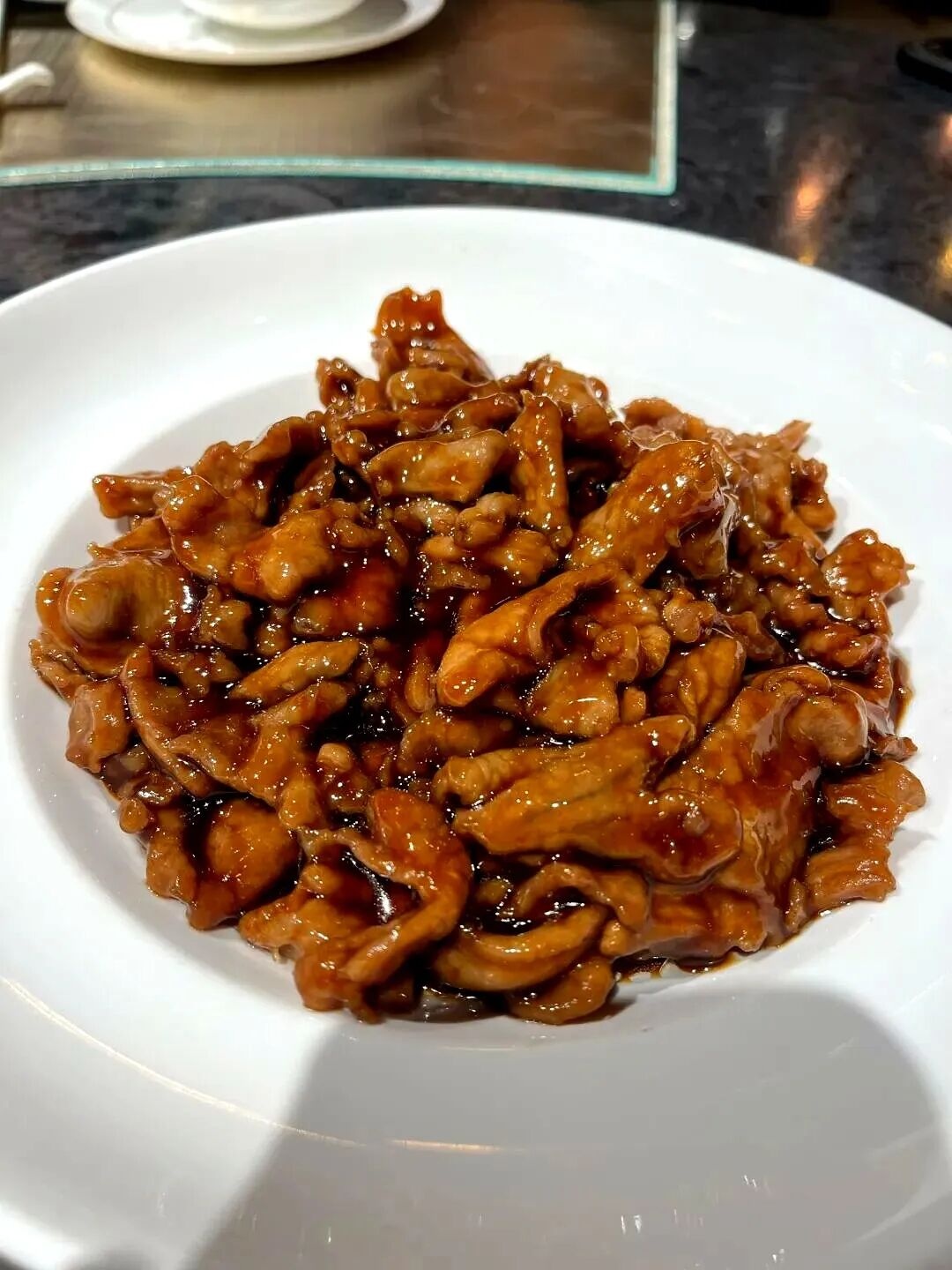
The meat, usually lamb tenderloin, is sliced into thin, rectangular strips, coated lightly in a sugar glaze like dried apricots, quickly stir-fried in hot oil, and then finished with a starch slurry. It ends up with a glossy, red finish that looks like it's been soaked in honey.
When you take a bite, it’s so tender it practically melts. The sweetness hits your nose first, followed by a perfect hint of acidity.
During the winter, when you need a little extra warmth, this dish is perfect for the soul.
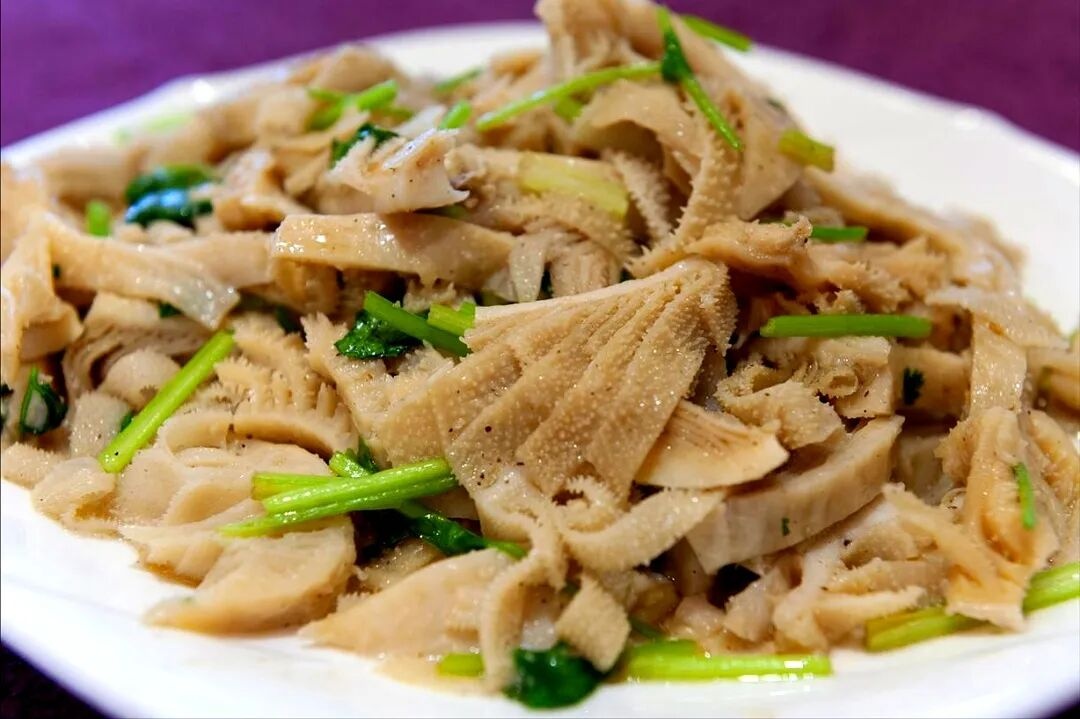
Yuanbao Sandan (stir-fried lamb tripe with cilantro) is the absolute champion of Northwestern halal cuisine, with centuries of history at spots like Old Qingyazhai in Xi'an and Hongbinlou in Beijing.
It’s traditionally made with lamb tripe paired with fresh cilantro.
The tripe is as crunchy as spring bamboo shoots, and the fragrance of the cilantro hits you right away. It's savory and salty with a slight kick of spice. Each bite gives you a satisfying crunch—it’s like tasting the crispness of spring.
The locals in Shaanxi insist on a scorching wok and a quick stir-fry, finishing it in exactly eight seconds. If you overcook it, it loses its crunch and the dish is basically ruined.
This dish carries the wisdom of the elders; it's a staple at wedding banquets. The name 'Sandan' sounds like 'San Dan,' which implies 'clearing the bill' or settling things smoothly, symbolizing a harmonious and prosperous family. Eating it in the cold of winter is even better than a hot ginger tea—the tripe warms the stomach, and the cilantro cuts through the richness.
Do you think it sounds too rustic?
It’s a 'heavyweight' dish that has been served at state banquets, yet at its core, it still holds that earthy, homey vibe of a hot hearth and a cast-iron wok—that is the true soul of halal cuisine.
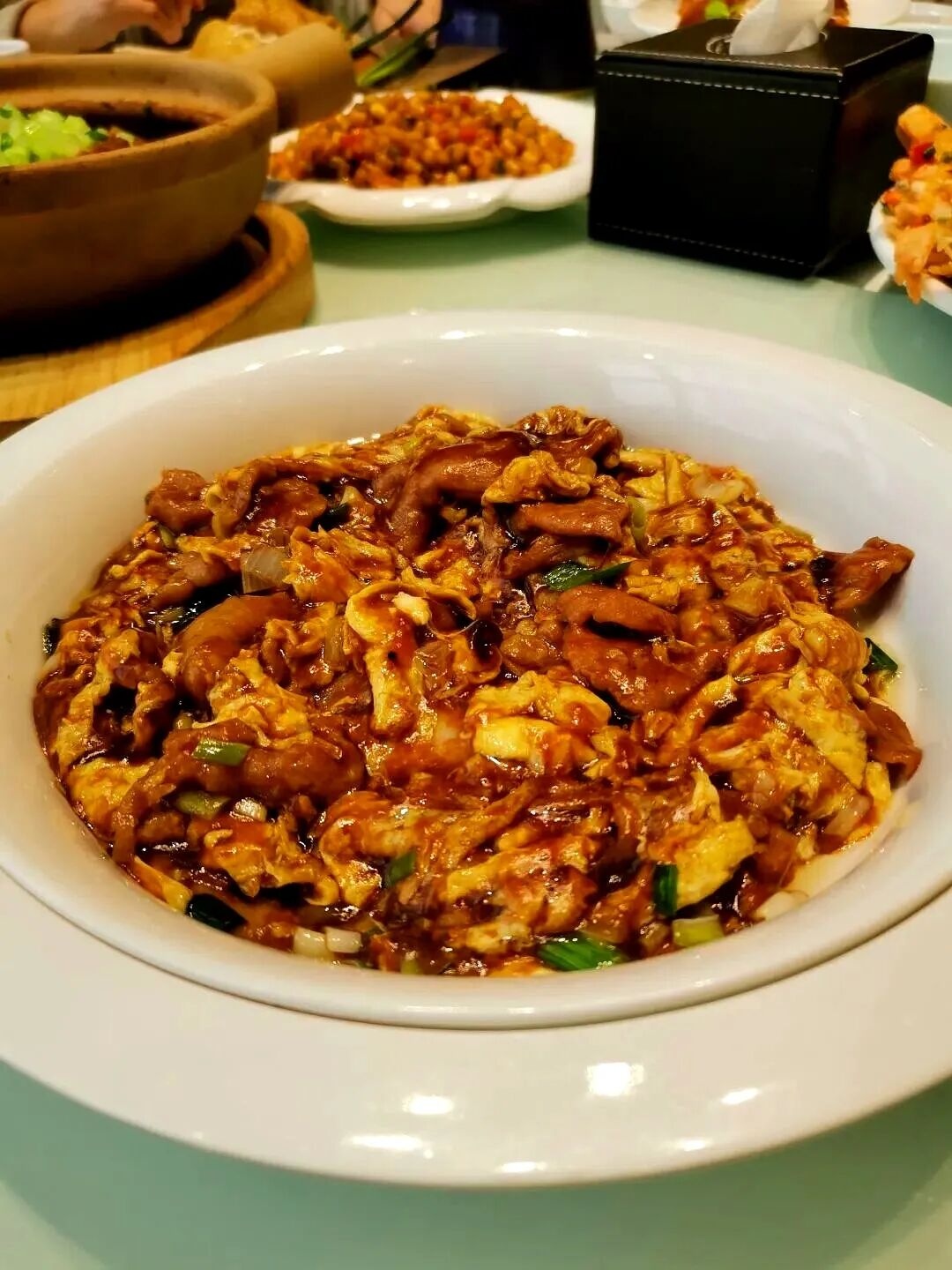
Cuiliu Muxu (vinegar-glazed stir-fried meat and eggs) is another 'top-tier' classic in halal cooking.
Legend has it that the famous Peking Opera star Ma Lianliang was dining at Youyishun when he decided to mix scallion-stir-fried lamb with scrambled eggs. Chef Yang Yonghe then added a splash of vinegar to the mix, and the resulting sweet, sour, and savory flavor became a one-of-a-kind Beijing specialty.
The 'Muxu' in the name refers to the eggs, which are scrambled until they look like little osmanthus flowers. Mixed with the tender lamb, the aroma of the vinegar is intoxicating. One serving can make you eat three bowls of rice.
In the old Beijing hutongs, every family would make this dish during the Lunar New Year, and it consistently makes up over 30% of orders at traditional halal restaurants.
The meat is sliced against the grain, coated in egg white and starch, then slid into hot oil until it's as soft as tofu. The egg mixture is thinned with a bit of water to create those fluffy, golden-yellow 'osmanthus flowers.'
The best part is that vinegar hit—it’s sharp and refreshing without being too stinging, and the sweetness is perfectly balanced so it never gets cloying. It’s light in the summer and comforting in the winter.
Tianjin locals love the deep, mellow flavor of Duliu vinegar, while Beijingers prefer adding yellow chives for an extra aromatic kick. Everyone has their own take on it.
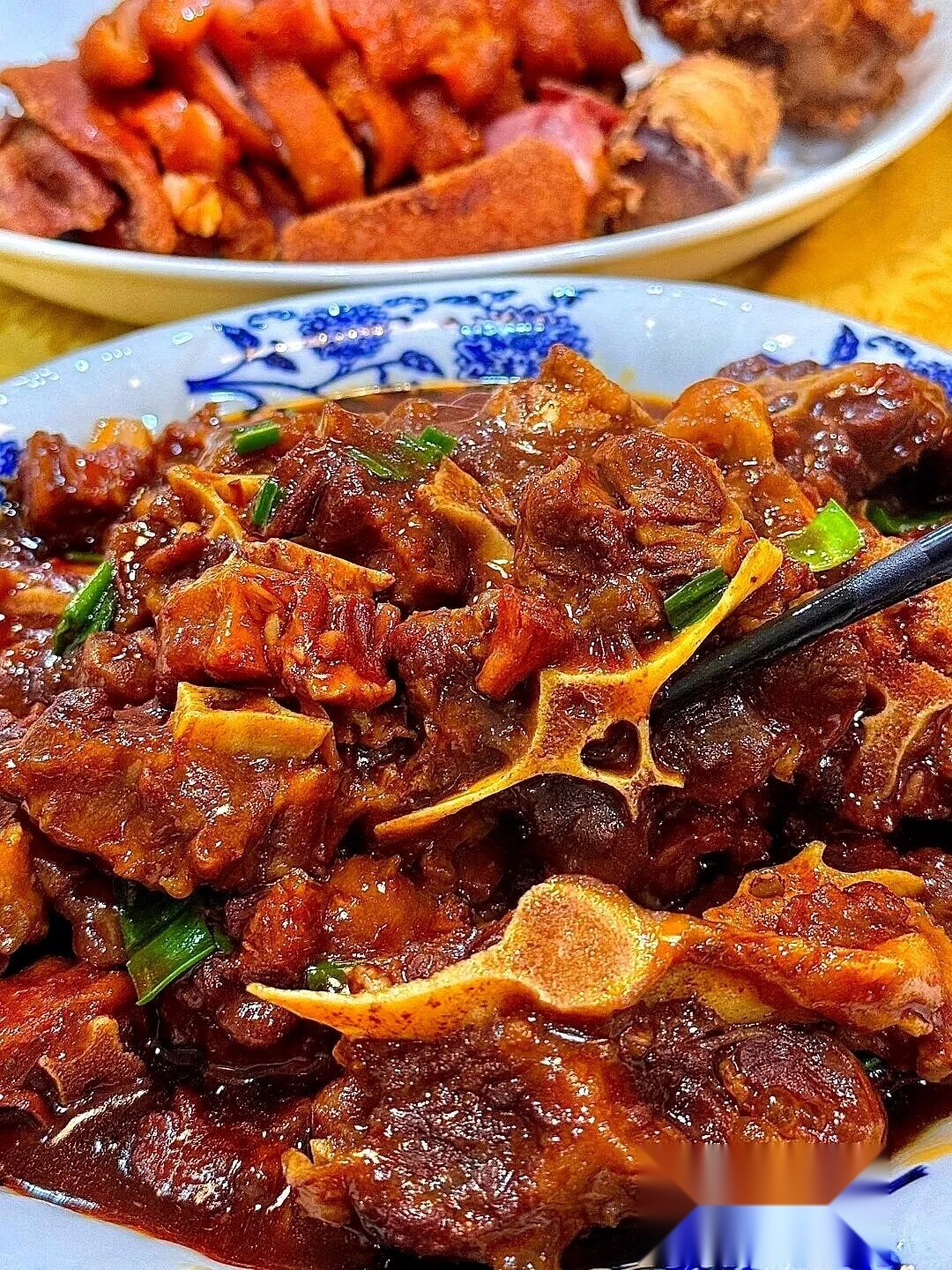
Braised Oxtail—I've heard this dish has a connection to Qin Shi Huang, the first emperor.
Legend has it that while Qin Shi Huang was on an inspection tour, he mistook the oxtail stewed by a local shopkeeper for a gourmet feast. He exclaimed, 'This is delicious!' and from that moment on, the dish became a local legend throughout the Guanzhong region.
Exploring the essence of Silk Road Halal cuisine: a deep dive into the authentic ingredients and the charm of Islamic dining culture in Xi'an's old-school eateries, where you can still watch chefs fry Sichuan peppercorns and chilies in rapeseed oil, then slow-cook them with carrots and winter bamboo shoots for two hours.
The oxtail is so tender it falls right off the bone, and the gravy is thick and rich; with just a gentle nudge of your chopsticks, the meat just melts in your mouth—so flavorful and satisfying that the taste lingers long after you finish.
Beijing’s famous Hongbinlou restaurant is all about the 'perfect cut' for their braised oxtail, selecting only the third and fourth sections where the meat is most uniform and firm, slow-cooking it until it's tender but still holds its shape—they sell over 20,000 servings a year.
In Tianjin’s Halal restaurants, they use pressure cookers to get that perfect texture that’s tender but not dry, finished off with a generous sprinkle of scallions that is just irresistible.
Since this is a staple 'heavy hitter' in Halal cuisine, it’s also a sign of respect for folks in the Guanzhong region when hosting friends; it’s the kind of dish you need on the table for weddings or funerals to really 'set the mood' and show you’re doing things right.
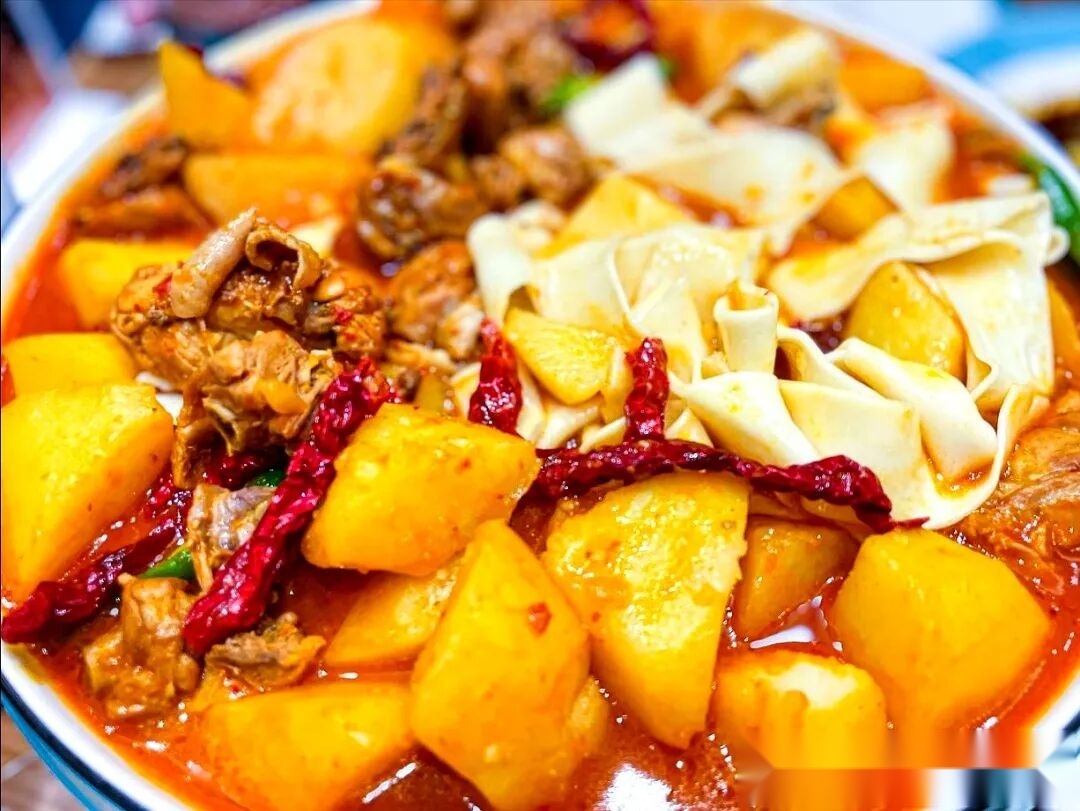
The story behind Xinjiang Dapanji (Big Plate Chicken) is actually quite modern, dating back to a roadside restaurant in Shawan in the 1980s.
It started with a Sichuan chef stir-frying free-range chicken, potatoes, and wide ribbons of noodles over high heat with dried and green chilies, quickly becoming a 'life-saving' favorite for hungry drivers.
According to historical research, when Zuo Zongtang reclaimed Xinjiang, he also used free-range chicken and chilies to reward his soldiers, which is considered a sort of early origin for this style of cooking.
The chicken skin is crispy while the meat stays tender, all coated in a bright, spicy red sauce, while the potatoes soak up all that flavor and become as soft and pillowy as a Shawan sunset.
Toss in the 'belt noodles' (wide, hand-pulled noodles), making sure they’re coated in the sauce; the first bite will have you sneezing from the spice, but you won't be able to put your chopsticks down.
It’s got that rugged Northwest character mixed with the tongue-numbing heat of Sichuan food, perfectly capturing the inclusive, 'melting pot' spirit of Xinjiang—in this single plate of chicken, all that hot, spicy energy creates a real sense of community and grit.
It’s moved way beyond Xinjiang now, finding a home in the streets and alleys of places as far as Henan.
This is more than just a dish—it’s a living fossil of Silk Road cultural exchange, where you can practically see half of Xinjiang’s history simmering in a single pot.
With every bite, you’re tasting a century of history; the pot is literally stewing the past.
Take one bite and you can feel the ancient merchants marching across your tongue, like the glint of the shopkeeper's knife echoing at the bottom of your bowl.
It’s like all those people who have stayed true to tradition are living on through the flavor of the meat. view all
Dive into the historical roots and unique charm of Halal cuisine as it traveled along the ancient Silk Road. Through 13 detailed photos, we explore the strict standards for Halal animal slaughter, healthy ingredient sourcing, and the art of using spices, covering everything from shouzhua yangrou (hand-grabbed lamb) and kebabs to classic home-cooked dishes, offering a deep look into the rich traditions of Chinese Halal food culture.
Just how good is legendary Halal food? After thinking about it for a long time, I realized you really can't sum it up in just a couple of sentences.
Seriously, what is it about Halal cuisine that’s so addictive?
I've heard it all started with the merchants traveling along the Silk Road.
You know how people are—wherever they settle, they bring their own way of doing things, right?
The way meat is slaughtered, how the blood is drained, and which spices can or can't be used—all of that is practically in their DNA.
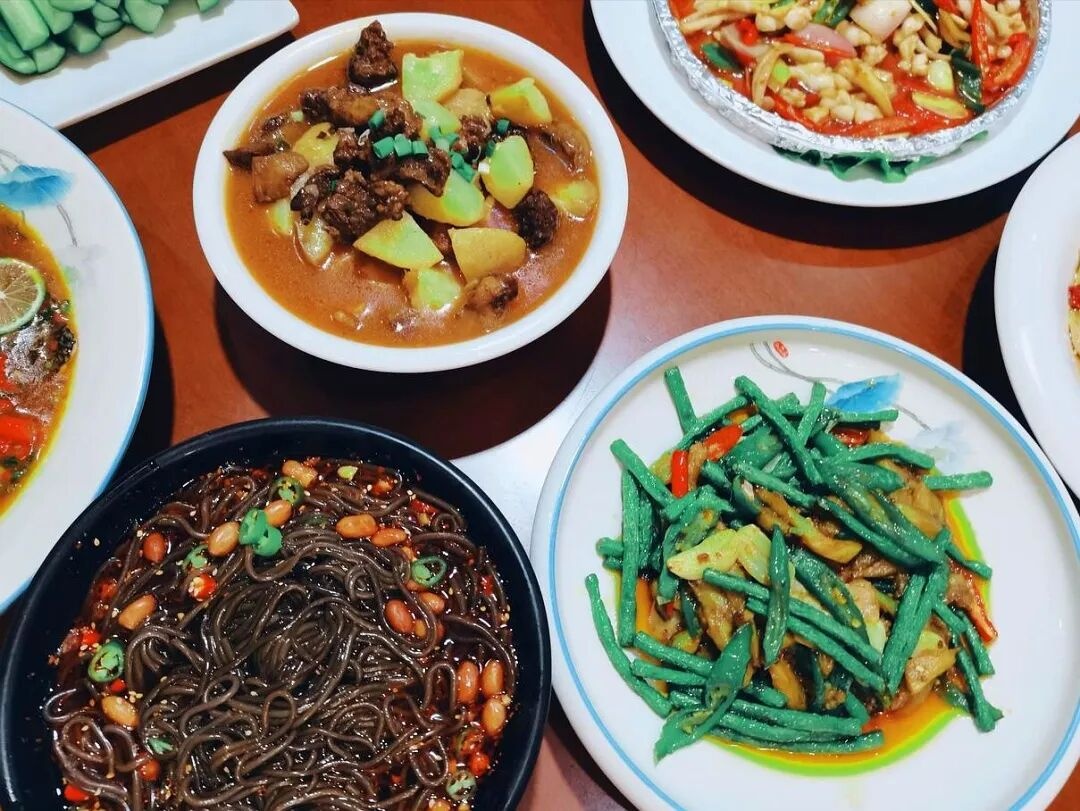
By the time it reached Chang'an, the locals took one bite and were like, 'Whoa, this is actually amazing!'
They started stewing meat in copper pots with local spices, and that blend of flavors basically laid the foundation for what we have today.
Back then, it wasn't even called 'Halal' yet, but people just loved how solid and reliable the food tasted.
Later on, during the Song and Yuan dynasties, Halal cuisine really started to put down roots.
The streets were packed with steaming shops where the owners had such insane knife skills that they could slice meat thin enough to see light through it, and they’d slow-cook the bones until they were melt-in-your-mouth tender.
There was an old restaurant in my hometown—not even a Halal spot—but it had that same 'old-school' vibe, and I totally get it: it’s all about the flavors that build up over time.
By the Ming and Qing dynasties, organizations like the Halal guilds started popping up, keeping record of recipes and traditions. Those rules were like salt—essential and passed down by one generation to the next.
Today, those old shops in the narrow alleys are still around, even if the faces behind the counter are a bit younger now.
But the old-school rules haven't changed, even if they sometimes add a modern twist or a local ingredient to keep things fresh.
It’s a lot like the people who keep these traditions alive—they’ve stayed the same for hundreds of years.
One bite and you can taste it: the footprints of the ancient merchants, the precision of the chef's blade, and the fresh steam rising from the young cook's pot.
If you had to pick the ultimate 'masterpiece' of Halal food, it’s definitely shouzhua yangrou (hand-grabbed lamb).
This dish is deeply connected to the legacy of nomadic culture.
From the pottery patterns of the ancient Xindian culture to the recipes for Hexi lamb in the Yuan dynasty's 'Yinshan Zhengyao' (Important Principles of Food and Drink), it's clear this tenderness has been perfected for centuries.
Take Yanchi Tan sheep, for instance—they say these sheep graze on herbs and drink mineral water, which makes the meat incredibly tender with almost no gamey smell.
It's simply boiled with salt, Sichuan peppercorns, and ginger slices. The meat stays pink, the fat stays white, and you can slide your chopsticks right through it.
Dip it in some garlic and chili sauce, and man—the flavor is unreal, it hits you right in the senses!
This isn't just great food; it’s a 'living cultural specimen.'
Watching warriors sit in a circle on the ground, carving the meat to share—that’s the real spirit and strength of the nomadic lifestyle.
During Eid al-Fitr or the Naadam festival, this dish is the star of the show, representing unity and good fortune.
Also, there’s the famous braised beef from the Julelou restaurant in Jinan, Shandong, which has been a signature dish for over a hundred years.
The 'braising' technique involves slicing the meat, stewing it until it's soft and flavor-packed, then thickening the sauce until it’s a deep, glossy red like a date, arranged as neatly as a chessboard.
It’s often mentioned in the same breath as Wuzhong shouzhua yangrou from Ningxia as the 'two wonders of Halal cuisine.'
During festivals, people would slaughter sheep and cows, serving them with gaiwan cha (lid-bowl tea) and sanzi (deep-fried crispy dough twists) for their guests.
It’s all about the 'three aromas': the meat, the sauce, and the texture, like a perfect blend of spring on the grasslands, aged wine, and autumn fruits.
They say in Shandong they use sweet bean paste for a redder color, while in Tianjin they keep it closer to the original, savory and salty.
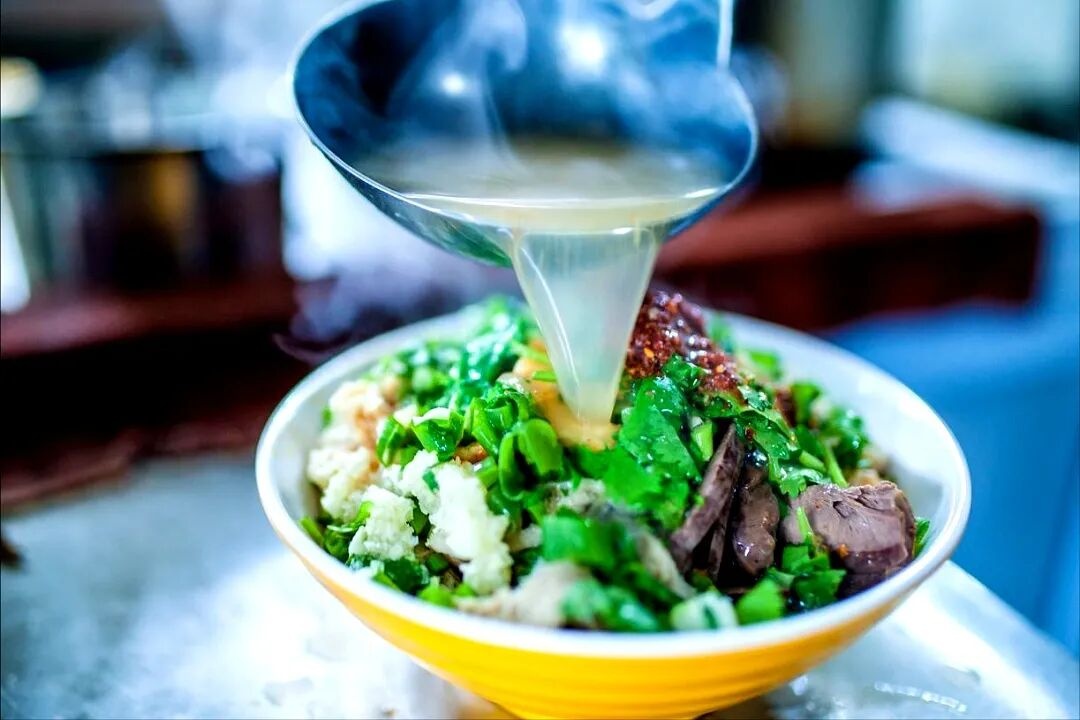
They choose beef with connective tissue, soak it to remove the blood, stew it in a pressure cooker, press it, and then steam it before finishing with the sauce.
It just melts in your mouth—not dry at all. Pair it with some flaky flatbread or rice, and you’re set.
When you talk about the 'Eight Great Halal Bowls,' you’re talking about a real piece of history.
Legend has it that during the Yuan dynasty, Hui Muslim soldiers stationed in Linqing during the canal grain transport days would prep the beef and mutton ahead of time—stewed, fried, or steamed—so they could just pour hot water over them when it was time to eat.
Later on, this evolved into a formal banquet style where eight people would be served eight bowls.
Today, the upgraded 'bowl-style' dishes are a local Shandong specialty, a staple at Linqing weddings, funerals, and major life events.
Pairing the meat and broth with a giant steamed bun—it really gives you that sense of togetherness.
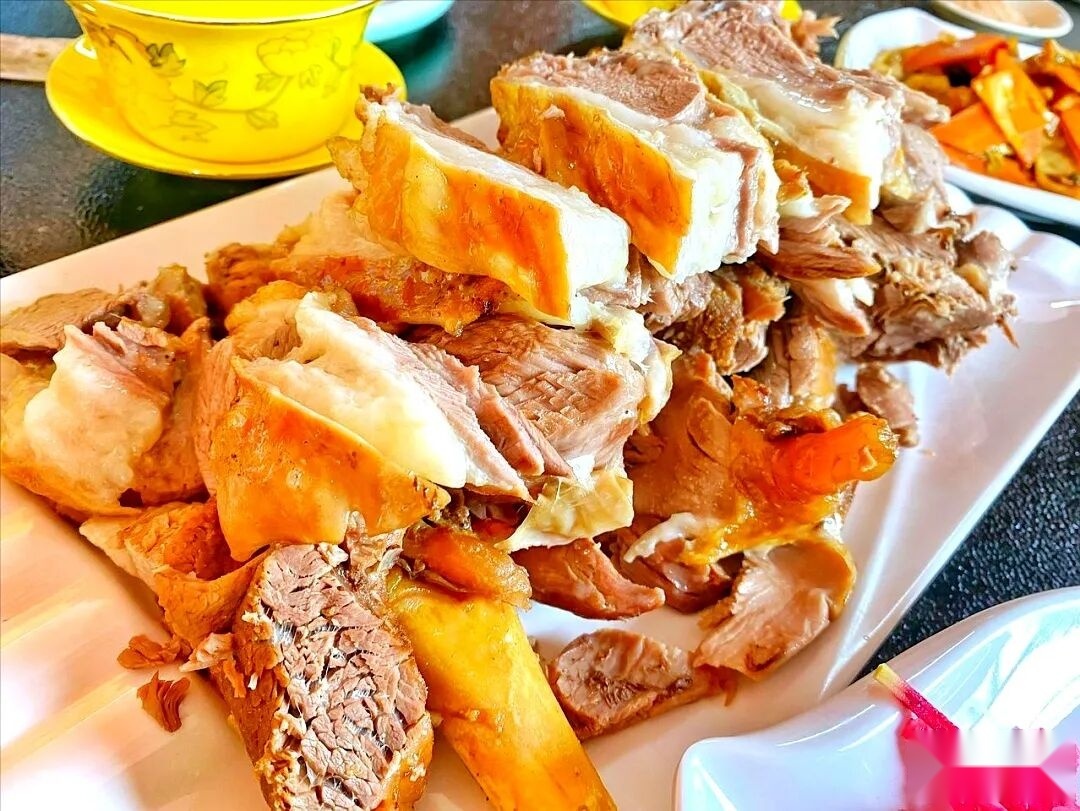
The locals rave about it, saying it’s just 'dai jin!' (really hits the spot/so powerful!).
A proper traditional meal in this style is made up of four main courses—consisting of one meat dish, two soups, and three healing tonics—plus three smaller side dishes.
The clear-stewed castrated lamb is slow-cooked for two hours, resulting in tender, lean meat and a light, savory broth that’s totally free of any gamey smell; the yellow-braised chicken is marinated, fried, and then steamed, making it crispy on the outside and juicy on the inside; and the eight-treasure rice, packed with sticky rice, raisins, and jujubes, is perfectly sweet without being overwhelming.
Then there’s the whole roasted lamb, a dish that sounds just as epic as it tastes.
After doing some research, I found out that during the Kangxi reign of the Qing Dynasty, when the Alxa nobility moved from Xinjiang to Wuzhen, they brought a few things along with them.
Later on, the cooking method was upgraded by blending it with the hanging-oven technique used for Peking duck. By slow-roasting it over jujube wood charcoal, the skin turns golden brown, and the meat becomes as tender as melting butter. One bite and you hear a distinct crunch, followed by a burst of savory, sweet juices.
From the rugged old-school way of 'digging a pit to roast meat' to the 'willow-steamed lamb' secret technique mentioned in the ancient text *Park Tongsa*, and now officially recognized as a 'National Intangible Cultural Heritage,' the whole roasted lamb has evolved beyond just filling your stomach; it's a spiritual totem for nomadic people.
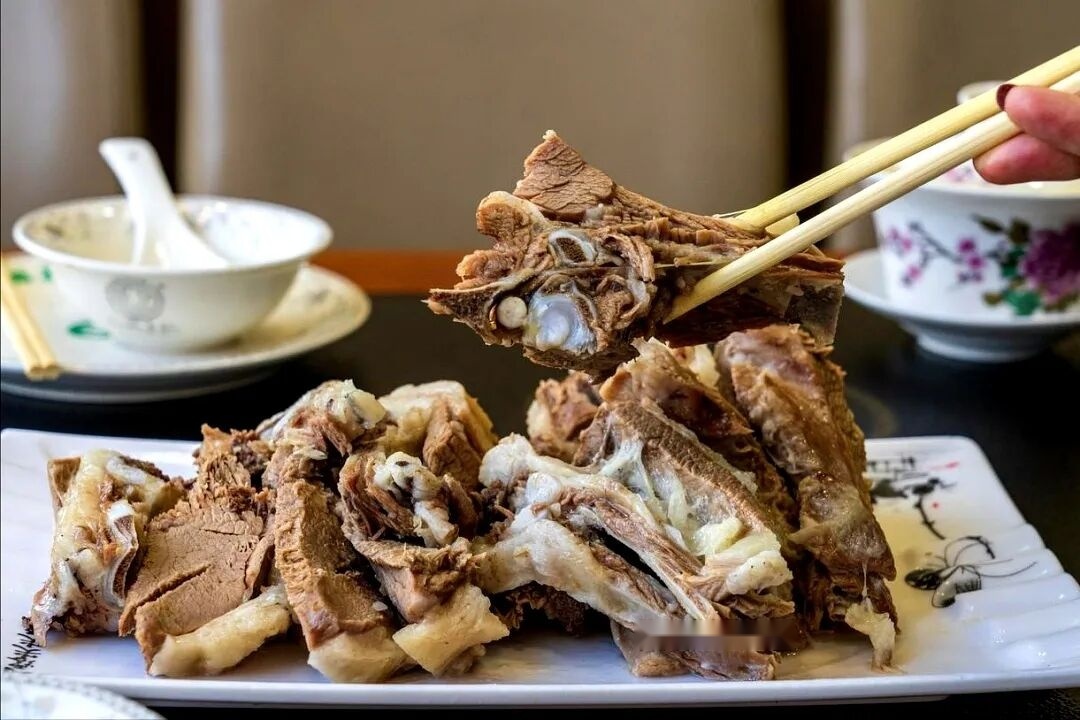
In the Alxa region, they use 18-month-old castrated lamb, rub it with a blend of spices, and seal it inside a naan pit (tandoor-style oven) to roast. Master chefs rely entirely on listening to the sounds coming from the pit to know exactly when it’s done.
Nowadays, this 'king of the grasslands' has become a dish anyone can enjoy.
Fried lamb tail is a rarity in Beijing halal restaurants, but it’s actually a legendary local delicacy.
Initially, it was just lamb tail dipped in egg white batter and deep-fried, but it ended up being way too gamey and greasy.
Later, a clever chef had a brainwave: he swapped the red bean paste filling for meat, shaped it like a lamb tail, and suddenly this 'plump' sweet treat became a massive hit.
Out on the Inner Mongolian grasslands, it’s a serious dish served to welcome guests.
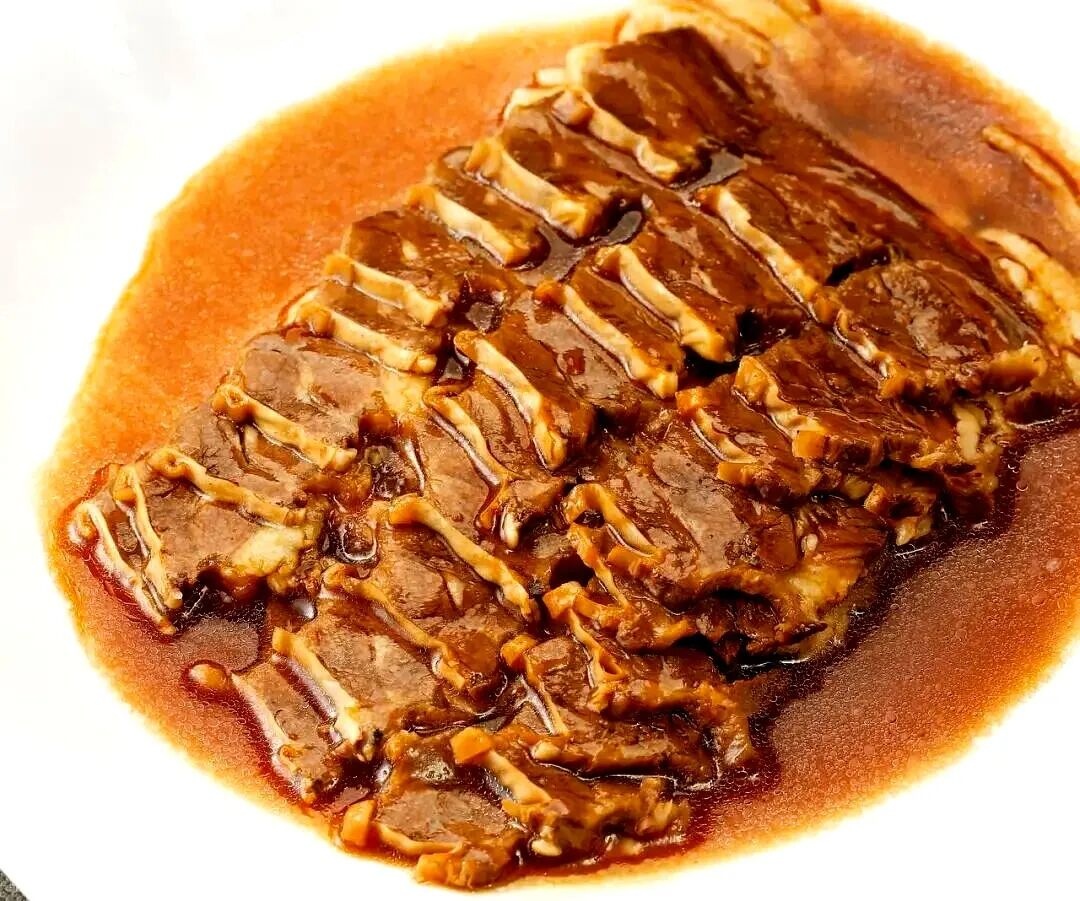
The fatty lamb tail is coated in a fluffy egg-white batter and deep-fried until golden and crispy. One bite and you get that piping-hot, savory richness. Eating this in the winter makes you feel warm and invincible.
The genius of this dish lies in its shape: the egg whites are whipped into a snowy, crispy shell, while the center is filled with smooth, dense red bean paste. It comes out looking like a fluffy cloud, and when dusted with white sugar, it looks just like fallen snow.
In Taizhou, they call it 'egg-white lamb tail.' It dates back 1,400 years and is a staple made by every family on Ziyang Street.
I've heard that at the Baita Bridge Restaurant, they whip the egg-white batter so stiff that a chopstick can stand upright in it. It doesn't collapse when fried, and once you bite into it, the sweetness of the bean paste just fills your palate.
Simi (sweet like honey)—you can tell just from the name that it's going to be sweet.
It’s basically the 'top-tier' dessert among Beijing halal dishes.
The name is sweet, and it’s got a few legends behind it.
During the Qianlong era, the Fragrant Concubine brought the Western Regions dish Tasimi to the palace. Qianlong tasted it and declared it better than honey. Later, when Empress Dowager Cixi was older and had trouble chewing, the imperial chef created a soft, sweet dish using lamb tenderloin, sweet bean sauce, and white sugar. She squinted her eyes and said, 'It's as sweet as honey, call it Simi!' Another theory links it to the 'Tasmi' recitation before halal banquets, where the sweetness holds the warmth of faith.
After transitioning from the imperial palace to the common people, it became a flagship dish in Beijing’s Hui Muslim restaurants. It’s a must-have for every major holiday and wedding banquet, bringing a blessing of a sweet and fulfilling life.
The meat, usually lamb tenderloin, is sliced into thin, rectangular strips, coated lightly in a sugar glaze like dried apricots, quickly stir-fried in hot oil, and then finished with a starch slurry. It ends up with a glossy, red finish that looks like it's been soaked in honey.
When you take a bite, it’s so tender it practically melts. The sweetness hits your nose first, followed by a perfect hint of acidity.
During the winter, when you need a little extra warmth, this dish is perfect for the soul.
Yuanbao Sandan (stir-fried lamb tripe with cilantro) is the absolute champion of Northwestern halal cuisine, with centuries of history at spots like Old Qingyazhai in Xi'an and Hongbinlou in Beijing.
It’s traditionally made with lamb tripe paired with fresh cilantro.
The tripe is as crunchy as spring bamboo shoots, and the fragrance of the cilantro hits you right away. It's savory and salty with a slight kick of spice. Each bite gives you a satisfying crunch—it’s like tasting the crispness of spring.
The locals in Shaanxi insist on a scorching wok and a quick stir-fry, finishing it in exactly eight seconds. If you overcook it, it loses its crunch and the dish is basically ruined.
This dish carries the wisdom of the elders; it's a staple at wedding banquets. The name 'Sandan' sounds like 'San Dan,' which implies 'clearing the bill' or settling things smoothly, symbolizing a harmonious and prosperous family. Eating it in the cold of winter is even better than a hot ginger tea—the tripe warms the stomach, and the cilantro cuts through the richness.
Do you think it sounds too rustic?
It’s a 'heavyweight' dish that has been served at state banquets, yet at its core, it still holds that earthy, homey vibe of a hot hearth and a cast-iron wok—that is the true soul of halal cuisine.
Cuiliu Muxu (vinegar-glazed stir-fried meat and eggs) is another 'top-tier' classic in halal cooking.
Legend has it that the famous Peking Opera star Ma Lianliang was dining at Youyishun when he decided to mix scallion-stir-fried lamb with scrambled eggs. Chef Yang Yonghe then added a splash of vinegar to the mix, and the resulting sweet, sour, and savory flavor became a one-of-a-kind Beijing specialty.
The 'Muxu' in the name refers to the eggs, which are scrambled until they look like little osmanthus flowers. Mixed with the tender lamb, the aroma of the vinegar is intoxicating. One serving can make you eat three bowls of rice.
In the old Beijing hutongs, every family would make this dish during the Lunar New Year, and it consistently makes up over 30% of orders at traditional halal restaurants.
The meat is sliced against the grain, coated in egg white and starch, then slid into hot oil until it's as soft as tofu. The egg mixture is thinned with a bit of water to create those fluffy, golden-yellow 'osmanthus flowers.'
The best part is that vinegar hit—it’s sharp and refreshing without being too stinging, and the sweetness is perfectly balanced so it never gets cloying. It’s light in the summer and comforting in the winter.
Tianjin locals love the deep, mellow flavor of Duliu vinegar, while Beijingers prefer adding yellow chives for an extra aromatic kick. Everyone has their own take on it.
Braised Oxtail—I've heard this dish has a connection to Qin Shi Huang, the first emperor.
Legend has it that while Qin Shi Huang was on an inspection tour, he mistook the oxtail stewed by a local shopkeeper for a gourmet feast. He exclaimed, 'This is delicious!' and from that moment on, the dish became a local legend throughout the Guanzhong region.
Exploring the essence of Silk Road Halal cuisine: a deep dive into the authentic ingredients and the charm of Islamic dining culture in Xi'an's old-school eateries, where you can still watch chefs fry Sichuan peppercorns and chilies in rapeseed oil, then slow-cook them with carrots and winter bamboo shoots for two hours.
The oxtail is so tender it falls right off the bone, and the gravy is thick and rich; with just a gentle nudge of your chopsticks, the meat just melts in your mouth—so flavorful and satisfying that the taste lingers long after you finish.
Beijing’s famous Hongbinlou restaurant is all about the 'perfect cut' for their braised oxtail, selecting only the third and fourth sections where the meat is most uniform and firm, slow-cooking it until it's tender but still holds its shape—they sell over 20,000 servings a year.
In Tianjin’s Halal restaurants, they use pressure cookers to get that perfect texture that’s tender but not dry, finished off with a generous sprinkle of scallions that is just irresistible.
Since this is a staple 'heavy hitter' in Halal cuisine, it’s also a sign of respect for folks in the Guanzhong region when hosting friends; it’s the kind of dish you need on the table for weddings or funerals to really 'set the mood' and show you’re doing things right.
The story behind Xinjiang Dapanji (Big Plate Chicken) is actually quite modern, dating back to a roadside restaurant in Shawan in the 1980s.
It started with a Sichuan chef stir-frying free-range chicken, potatoes, and wide ribbons of noodles over high heat with dried and green chilies, quickly becoming a 'life-saving' favorite for hungry drivers.
According to historical research, when Zuo Zongtang reclaimed Xinjiang, he also used free-range chicken and chilies to reward his soldiers, which is considered a sort of early origin for this style of cooking.
The chicken skin is crispy while the meat stays tender, all coated in a bright, spicy red sauce, while the potatoes soak up all that flavor and become as soft and pillowy as a Shawan sunset.
Toss in the 'belt noodles' (wide, hand-pulled noodles), making sure they’re coated in the sauce; the first bite will have you sneezing from the spice, but you won't be able to put your chopsticks down.
It’s got that rugged Northwest character mixed with the tongue-numbing heat of Sichuan food, perfectly capturing the inclusive, 'melting pot' spirit of Xinjiang—in this single plate of chicken, all that hot, spicy energy creates a real sense of community and grit.
It’s moved way beyond Xinjiang now, finding a home in the streets and alleys of places as far as Henan.
This is more than just a dish—it’s a living fossil of Silk Road cultural exchange, where you can practically see half of Xinjiang’s history simmering in a single pot.
With every bite, you’re tasting a century of history; the pot is literally stewing the past.
Take one bite and you can feel the ancient merchants marching across your tongue, like the glint of the shopkeeper's knife echoing at the bottom of your bowl.
It’s like all those people who have stayed true to tradition are living on through the flavor of the meat.
Just how good is legendary Halal food? After thinking about it for a long time, I realized you really can't sum it up in just a couple of sentences.
Seriously, what is it about Halal cuisine that’s so addictive?
I've heard it all started with the merchants traveling along the Silk Road.
You know how people are—wherever they settle, they bring their own way of doing things, right?
The way meat is slaughtered, how the blood is drained, and which spices can or can't be used—all of that is practically in their DNA.
By the time it reached Chang'an, the locals took one bite and were like, 'Whoa, this is actually amazing!'
They started stewing meat in copper pots with local spices, and that blend of flavors basically laid the foundation for what we have today.
Back then, it wasn't even called 'Halal' yet, but people just loved how solid and reliable the food tasted.
Later on, during the Song and Yuan dynasties, Halal cuisine really started to put down roots.
The streets were packed with steaming shops where the owners had such insane knife skills that they could slice meat thin enough to see light through it, and they’d slow-cook the bones until they were melt-in-your-mouth tender.
There was an old restaurant in my hometown—not even a Halal spot—but it had that same 'old-school' vibe, and I totally get it: it’s all about the flavors that build up over time.
By the Ming and Qing dynasties, organizations like the Halal guilds started popping up, keeping record of recipes and traditions. Those rules were like salt—essential and passed down by one generation to the next.
Today, those old shops in the narrow alleys are still around, even if the faces behind the counter are a bit younger now.
But the old-school rules haven't changed, even if they sometimes add a modern twist or a local ingredient to keep things fresh.
It’s a lot like the people who keep these traditions alive—they’ve stayed the same for hundreds of years.
One bite and you can taste it: the footprints of the ancient merchants, the precision of the chef's blade, and the fresh steam rising from the young cook's pot.
If you had to pick the ultimate 'masterpiece' of Halal food, it’s definitely shouzhua yangrou (hand-grabbed lamb).
This dish is deeply connected to the legacy of nomadic culture.
From the pottery patterns of the ancient Xindian culture to the recipes for Hexi lamb in the Yuan dynasty's 'Yinshan Zhengyao' (Important Principles of Food and Drink), it's clear this tenderness has been perfected for centuries.
Take Yanchi Tan sheep, for instance—they say these sheep graze on herbs and drink mineral water, which makes the meat incredibly tender with almost no gamey smell.
It's simply boiled with salt, Sichuan peppercorns, and ginger slices. The meat stays pink, the fat stays white, and you can slide your chopsticks right through it.
Dip it in some garlic and chili sauce, and man—the flavor is unreal, it hits you right in the senses!
This isn't just great food; it’s a 'living cultural specimen.'
Watching warriors sit in a circle on the ground, carving the meat to share—that’s the real spirit and strength of the nomadic lifestyle.
During Eid al-Fitr or the Naadam festival, this dish is the star of the show, representing unity and good fortune.
Also, there’s the famous braised beef from the Julelou restaurant in Jinan, Shandong, which has been a signature dish for over a hundred years.
The 'braising' technique involves slicing the meat, stewing it until it's soft and flavor-packed, then thickening the sauce until it’s a deep, glossy red like a date, arranged as neatly as a chessboard.
It’s often mentioned in the same breath as Wuzhong shouzhua yangrou from Ningxia as the 'two wonders of Halal cuisine.'
During festivals, people would slaughter sheep and cows, serving them with gaiwan cha (lid-bowl tea) and sanzi (deep-fried crispy dough twists) for their guests.
It’s all about the 'three aromas': the meat, the sauce, and the texture, like a perfect blend of spring on the grasslands, aged wine, and autumn fruits.
They say in Shandong they use sweet bean paste for a redder color, while in Tianjin they keep it closer to the original, savory and salty.
They choose beef with connective tissue, soak it to remove the blood, stew it in a pressure cooker, press it, and then steam it before finishing with the sauce.
It just melts in your mouth—not dry at all. Pair it with some flaky flatbread or rice, and you’re set.
When you talk about the 'Eight Great Halal Bowls,' you’re talking about a real piece of history.
Legend has it that during the Yuan dynasty, Hui Muslim soldiers stationed in Linqing during the canal grain transport days would prep the beef and mutton ahead of time—stewed, fried, or steamed—so they could just pour hot water over them when it was time to eat.
Later on, this evolved into a formal banquet style where eight people would be served eight bowls.
Today, the upgraded 'bowl-style' dishes are a local Shandong specialty, a staple at Linqing weddings, funerals, and major life events.
Pairing the meat and broth with a giant steamed bun—it really gives you that sense of togetherness.
The locals rave about it, saying it’s just 'dai jin!' (really hits the spot/so powerful!).
A proper traditional meal in this style is made up of four main courses—consisting of one meat dish, two soups, and three healing tonics—plus three smaller side dishes.
The clear-stewed castrated lamb is slow-cooked for two hours, resulting in tender, lean meat and a light, savory broth that’s totally free of any gamey smell; the yellow-braised chicken is marinated, fried, and then steamed, making it crispy on the outside and juicy on the inside; and the eight-treasure rice, packed with sticky rice, raisins, and jujubes, is perfectly sweet without being overwhelming.
Then there’s the whole roasted lamb, a dish that sounds just as epic as it tastes.
After doing some research, I found out that during the Kangxi reign of the Qing Dynasty, when the Alxa nobility moved from Xinjiang to Wuzhen, they brought a few things along with them.
Later on, the cooking method was upgraded by blending it with the hanging-oven technique used for Peking duck. By slow-roasting it over jujube wood charcoal, the skin turns golden brown, and the meat becomes as tender as melting butter. One bite and you hear a distinct crunch, followed by a burst of savory, sweet juices.
From the rugged old-school way of 'digging a pit to roast meat' to the 'willow-steamed lamb' secret technique mentioned in the ancient text *Park Tongsa*, and now officially recognized as a 'National Intangible Cultural Heritage,' the whole roasted lamb has evolved beyond just filling your stomach; it's a spiritual totem for nomadic people.
In the Alxa region, they use 18-month-old castrated lamb, rub it with a blend of spices, and seal it inside a naan pit (tandoor-style oven) to roast. Master chefs rely entirely on listening to the sounds coming from the pit to know exactly when it’s done.
Nowadays, this 'king of the grasslands' has become a dish anyone can enjoy.
Fried lamb tail is a rarity in Beijing halal restaurants, but it’s actually a legendary local delicacy.
Initially, it was just lamb tail dipped in egg white batter and deep-fried, but it ended up being way too gamey and greasy.
Later, a clever chef had a brainwave: he swapped the red bean paste filling for meat, shaped it like a lamb tail, and suddenly this 'plump' sweet treat became a massive hit.
Out on the Inner Mongolian grasslands, it’s a serious dish served to welcome guests.
The fatty lamb tail is coated in a fluffy egg-white batter and deep-fried until golden and crispy. One bite and you get that piping-hot, savory richness. Eating this in the winter makes you feel warm and invincible.
The genius of this dish lies in its shape: the egg whites are whipped into a snowy, crispy shell, while the center is filled with smooth, dense red bean paste. It comes out looking like a fluffy cloud, and when dusted with white sugar, it looks just like fallen snow.
In Taizhou, they call it 'egg-white lamb tail.' It dates back 1,400 years and is a staple made by every family on Ziyang Street.
I've heard that at the Baita Bridge Restaurant, they whip the egg-white batter so stiff that a chopstick can stand upright in it. It doesn't collapse when fried, and once you bite into it, the sweetness of the bean paste just fills your palate.
Simi (sweet like honey)—you can tell just from the name that it's going to be sweet.
It’s basically the 'top-tier' dessert among Beijing halal dishes.
The name is sweet, and it’s got a few legends behind it.
During the Qianlong era, the Fragrant Concubine brought the Western Regions dish Tasimi to the palace. Qianlong tasted it and declared it better than honey. Later, when Empress Dowager Cixi was older and had trouble chewing, the imperial chef created a soft, sweet dish using lamb tenderloin, sweet bean sauce, and white sugar. She squinted her eyes and said, 'It's as sweet as honey, call it Simi!' Another theory links it to the 'Tasmi' recitation before halal banquets, where the sweetness holds the warmth of faith.
After transitioning from the imperial palace to the common people, it became a flagship dish in Beijing’s Hui Muslim restaurants. It’s a must-have for every major holiday and wedding banquet, bringing a blessing of a sweet and fulfilling life.
The meat, usually lamb tenderloin, is sliced into thin, rectangular strips, coated lightly in a sugar glaze like dried apricots, quickly stir-fried in hot oil, and then finished with a starch slurry. It ends up with a glossy, red finish that looks like it's been soaked in honey.
When you take a bite, it’s so tender it practically melts. The sweetness hits your nose first, followed by a perfect hint of acidity.
During the winter, when you need a little extra warmth, this dish is perfect for the soul.
Yuanbao Sandan (stir-fried lamb tripe with cilantro) is the absolute champion of Northwestern halal cuisine, with centuries of history at spots like Old Qingyazhai in Xi'an and Hongbinlou in Beijing.
It’s traditionally made with lamb tripe paired with fresh cilantro.
The tripe is as crunchy as spring bamboo shoots, and the fragrance of the cilantro hits you right away. It's savory and salty with a slight kick of spice. Each bite gives you a satisfying crunch—it’s like tasting the crispness of spring.
The locals in Shaanxi insist on a scorching wok and a quick stir-fry, finishing it in exactly eight seconds. If you overcook it, it loses its crunch and the dish is basically ruined.
This dish carries the wisdom of the elders; it's a staple at wedding banquets. The name 'Sandan' sounds like 'San Dan,' which implies 'clearing the bill' or settling things smoothly, symbolizing a harmonious and prosperous family. Eating it in the cold of winter is even better than a hot ginger tea—the tripe warms the stomach, and the cilantro cuts through the richness.
Do you think it sounds too rustic?
It’s a 'heavyweight' dish that has been served at state banquets, yet at its core, it still holds that earthy, homey vibe of a hot hearth and a cast-iron wok—that is the true soul of halal cuisine.
Cuiliu Muxu (vinegar-glazed stir-fried meat and eggs) is another 'top-tier' classic in halal cooking.
Legend has it that the famous Peking Opera star Ma Lianliang was dining at Youyishun when he decided to mix scallion-stir-fried lamb with scrambled eggs. Chef Yang Yonghe then added a splash of vinegar to the mix, and the resulting sweet, sour, and savory flavor became a one-of-a-kind Beijing specialty.
The 'Muxu' in the name refers to the eggs, which are scrambled until they look like little osmanthus flowers. Mixed with the tender lamb, the aroma of the vinegar is intoxicating. One serving can make you eat three bowls of rice.
In the old Beijing hutongs, every family would make this dish during the Lunar New Year, and it consistently makes up over 30% of orders at traditional halal restaurants.
The meat is sliced against the grain, coated in egg white and starch, then slid into hot oil until it's as soft as tofu. The egg mixture is thinned with a bit of water to create those fluffy, golden-yellow 'osmanthus flowers.'
The best part is that vinegar hit—it’s sharp and refreshing without being too stinging, and the sweetness is perfectly balanced so it never gets cloying. It’s light in the summer and comforting in the winter.
Tianjin locals love the deep, mellow flavor of Duliu vinegar, while Beijingers prefer adding yellow chives for an extra aromatic kick. Everyone has their own take on it.
Braised Oxtail—I've heard this dish has a connection to Qin Shi Huang, the first emperor.
Legend has it that while Qin Shi Huang was on an inspection tour, he mistook the oxtail stewed by a local shopkeeper for a gourmet feast. He exclaimed, 'This is delicious!' and from that moment on, the dish became a local legend throughout the Guanzhong region.
Exploring the essence of Silk Road Halal cuisine: a deep dive into the authentic ingredients and the charm of Islamic dining culture in Xi'an's old-school eateries, where you can still watch chefs fry Sichuan peppercorns and chilies in rapeseed oil, then slow-cook them with carrots and winter bamboo shoots for two hours.
The oxtail is so tender it falls right off the bone, and the gravy is thick and rich; with just a gentle nudge of your chopsticks, the meat just melts in your mouth—so flavorful and satisfying that the taste lingers long after you finish.
Beijing’s famous Hongbinlou restaurant is all about the 'perfect cut' for their braised oxtail, selecting only the third and fourth sections where the meat is most uniform and firm, slow-cooking it until it's tender but still holds its shape—they sell over 20,000 servings a year.
In Tianjin’s Halal restaurants, they use pressure cookers to get that perfect texture that’s tender but not dry, finished off with a generous sprinkle of scallions that is just irresistible.
Since this is a staple 'heavy hitter' in Halal cuisine, it’s also a sign of respect for folks in the Guanzhong region when hosting friends; it’s the kind of dish you need on the table for weddings or funerals to really 'set the mood' and show you’re doing things right.
The story behind Xinjiang Dapanji (Big Plate Chicken) is actually quite modern, dating back to a roadside restaurant in Shawan in the 1980s.
It started with a Sichuan chef stir-frying free-range chicken, potatoes, and wide ribbons of noodles over high heat with dried and green chilies, quickly becoming a 'life-saving' favorite for hungry drivers.
According to historical research, when Zuo Zongtang reclaimed Xinjiang, he also used free-range chicken and chilies to reward his soldiers, which is considered a sort of early origin for this style of cooking.
The chicken skin is crispy while the meat stays tender, all coated in a bright, spicy red sauce, while the potatoes soak up all that flavor and become as soft and pillowy as a Shawan sunset.
Toss in the 'belt noodles' (wide, hand-pulled noodles), making sure they’re coated in the sauce; the first bite will have you sneezing from the spice, but you won't be able to put your chopsticks down.
It’s got that rugged Northwest character mixed with the tongue-numbing heat of Sichuan food, perfectly capturing the inclusive, 'melting pot' spirit of Xinjiang—in this single plate of chicken, all that hot, spicy energy creates a real sense of community and grit.
It’s moved way beyond Xinjiang now, finding a home in the streets and alleys of places as far as Henan.
This is more than just a dish—it’s a living fossil of Silk Road cultural exchange, where you can practically see half of Xinjiang’s history simmering in a single pot.
With every bite, you’re tasting a century of history; the pot is literally stewing the past.
Take one bite and you can feel the ancient merchants marching across your tongue, like the glint of the shopkeeper's knife echoing at the bottom of your bowl.
It’s like all those people who have stayed true to tradition are living on through the flavor of the meat.
Halal Cuisine Secrets: Exploring the History and Authentic Flavors of Silk Road Muslim Dishes
Articles • Hasan09 posted the article • 0 comments • 9 views • 6 hours ago
Dive into the historical roots and unique charm of Halal cuisine as it traveled along the ancient Silk Road. Through 13 detailed photos, we explore the strict standards for Halal animal slaughter, healthy ingredient sourcing, and the art of using spices, covering everything from shouzhua yangrou (hand-grabbed lamb) and kebabs to classic home-cooked dishes, offering a deep look into the rich traditions of Chinese Halal food culture.
Just how good is legendary Halal food? After thinking about it for a long time, I realized you really can't sum it up in just a couple of sentences.
Seriously, what is it about Halal cuisine that’s so addictive?
I've heard it all started with the merchants traveling along the Silk Road.
You know how people are—wherever they settle, they bring their own way of doing things, right?
The way meat is slaughtered, how the blood is drained, and which spices can or can't be used—all of that is practically in their DNA.
By the time it reached Chang'an, the locals took one bite and were like, 'Whoa, this is actually amazing!'
They started stewing meat in copper pots with local spices, and that blend of flavors basically laid the foundation for what we have today.
Back then, it wasn't even called 'Halal' yet, but people just loved how solid and reliable the food tasted.
Later on, during the Song and Yuan dynasties, Halal cuisine really started to put down roots.
The streets were packed with steaming shops where the owners had such insane knife skills that they could slice meat thin enough to see light through it, and they’d slow-cook the bones until they were melt-in-your-mouth tender.
There was an old restaurant in my hometown—not even a Halal spot—but it had that same 'old-school' vibe, and I totally get it: it’s all about the flavors that build up over time.
By the Ming and Qing dynasties, organizations like the Halal guilds started popping up, keeping record of recipes and traditions. Those rules were like salt—essential and passed down by one generation to the next.
Today, those old shops in the narrow alleys are still around, even if the faces behind the counter are a bit younger now.
But the old-school rules haven't changed, even if they sometimes add a modern twist or a local ingredient to keep things fresh.
It’s a lot like the people who keep these traditions alive—they’ve stayed the same for hundreds of years.
One bite and you can taste it: the footprints of the ancient merchants, the precision of the chef's blade, and the fresh steam rising from the young cook's pot.
If you had to pick the ultimate 'masterpiece' of Halal food, it’s definitely shouzhua yangrou (hand-grabbed lamb).
This dish is deeply connected to the legacy of nomadic culture.
From the pottery patterns of the ancient Xindian culture to the recipes for Hexi lamb in the Yuan dynasty's 'Yinshan Zhengyao' (Important Principles of Food and Drink), it's clear this tenderness has been perfected for centuries.
Take Yanchi Tan sheep, for instance—they say these sheep graze on herbs and drink mineral water, which makes the meat incredibly tender with almost no gamey smell.
It's simply boiled with salt, Sichuan peppercorns, and ginger slices. The meat stays pink, the fat stays white, and you can slide your chopsticks right through it.
Dip it in some garlic and chili sauce, and man—the flavor is unreal, it hits you right in the senses!
This isn't just great food; it’s a 'living cultural specimen.'
Watching warriors sit in a circle on the ground, carving the meat to share—that’s the real spirit and strength of the nomadic lifestyle.
During Eid al-Fitr or the Naadam festival, this dish is the star of the show, representing unity and good fortune.
Also, there’s the famous braised beef from the Julelou restaurant in Jinan, Shandong, which has been a signature dish for over a hundred years.
The 'braising' technique involves slicing the meat, stewing it until it's soft and flavor-packed, then thickening the sauce until it’s a deep, glossy red like a date, arranged as neatly as a chessboard.
It’s often mentioned in the same breath as Wuzhong shouzhua yangrou from Ningxia as the 'two wonders of Halal cuisine.'
During festivals, people would slaughter sheep and cows, serving them with gaiwan cha (lid-bowl tea) and sanzi (deep-fried crispy dough twists) for their guests.
It’s all about the 'three aromas': the meat, the sauce, and the texture, like a perfect blend of spring on the grasslands, aged wine, and autumn fruits.
They say in Shandong they use sweet bean paste for a redder color, while in Tianjin they keep it closer to the original, savory and salty.
They choose beef with connective tissue, soak it to remove the blood, stew it in a pressure cooker, press it, and then steam it before finishing with the sauce.
It just melts in your mouth—not dry at all. Pair it with some flaky flatbread or rice, and you’re set.
When you talk about the 'Eight Great Halal Bowls,' you’re talking about a real piece of history.
Legend has it that during the Yuan dynasty, Hui Muslim soldiers stationed in Linqing during the canal grain transport days would prep the beef and mutton ahead of time—stewed, fried, or steamed—so they could just pour hot water over them when it was time to eat.
Later on, this evolved into a formal banquet style where eight people would be served eight bowls.
Today, the upgraded 'bowl-style' dishes are a local Shandong specialty, a staple at Linqing weddings, funerals, and major life events.
Pairing the meat and broth with a giant steamed bun—it really gives you that sense of togetherness.
The locals rave about it, saying it’s just 'dai jin!' (really hits the spot/so powerful!).
A proper traditional meal in this style is made up of four main courses—consisting of one meat dish, two soups, and three healing tonics—plus three smaller side dishes.
The clear-stewed castrated lamb is slow-cooked for two hours, resulting in tender, lean meat and a light, savory broth that’s totally free of any gamey smell; the yellow-braised chicken is marinated, fried, and then steamed, making it crispy on the outside and juicy on the inside; and the eight-treasure rice, packed with sticky rice, raisins, and jujubes, is perfectly sweet without being overwhelming.
Then there’s the whole roasted lamb, a dish that sounds just as epic as it tastes.
After doing some research, I found out that during the Kangxi reign of the Qing Dynasty, when the Alxa nobility moved from Xinjiang to Wuzhen, they brought a few things along with them.
Later on, the cooking method was upgraded by blending it with the hanging-oven technique used for Peking duck. By slow-roasting it over jujube wood charcoal, the skin turns golden brown, and the meat becomes as tender as melting butter. One bite and you hear a distinct crunch, followed by a burst of savory, sweet juices.
From the rugged old-school way of 'digging a pit to roast meat' to the 'willow-steamed lamb' secret technique mentioned in the ancient text *Park Tongsa*, and now officially recognized as a 'National Intangible Cultural Heritage,' the whole roasted lamb has evolved beyond just filling your stomach; it's a spiritual totem for nomadic people.
In the Alxa region, they use 18-month-old castrated lamb, rub it with a blend of spices, and seal it inside a naan pit (tandoor-style oven) to roast. Master chefs rely entirely on listening to the sounds coming from the pit to know exactly when it’s done.
Nowadays, this 'king of the grasslands' has become a dish anyone can enjoy.
Fried lamb tail is a rarity in Beijing halal restaurants, but it’s actually a legendary local delicacy.
Initially, it was just lamb tail dipped in egg white batter and deep-fried, but it ended up being way too gamey and greasy.
Later, a clever chef had a brainwave: he swapped the red bean paste filling for meat, shaped it like a lamb tail, and suddenly this 'plump' sweet treat became a massive hit.
Out on the Inner Mongolian grasslands, it’s a serious dish served to welcome guests.
The fatty lamb tail is coated in a fluffy egg-white batter and deep-fried until golden and crispy. One bite and you get that piping-hot, savory richness. Eating this in the winter makes you feel warm and invincible.
The genius of this dish lies in its shape: the egg whites are whipped into a snowy, crispy shell, while the center is filled with smooth, dense red bean paste. It comes out looking like a fluffy cloud, and when dusted with white sugar, it looks just like fallen snow.
In Taizhou, they call it 'egg-white lamb tail.' It dates back 1,400 years and is a staple made by every family on Ziyang Street.
I've heard that at the Baita Bridge Restaurant, they whip the egg-white batter so stiff that a chopstick can stand upright in it. It doesn't collapse when fried, and once you bite into it, the sweetness of the bean paste just fills your palate.
Simi (sweet like honey)—you can tell just from the name that it's going to be sweet.
It’s basically the 'top-tier' dessert among Beijing halal dishes.
The name is sweet, and it’s got a few legends behind it.
During the Qianlong era, the Fragrant Concubine brought the Western Regions dish Tasimi to the palace. Qianlong tasted it and declared it better than honey. Later, when Empress Dowager Cixi was older and had trouble chewing, the imperial chef created a soft, sweet dish using lamb tenderloin, sweet bean sauce, and white sugar. She squinted her eyes and said, 'It's as sweet as honey, call it Simi!' Another theory links it to the 'Tasmi' recitation before halal banquets, where the sweetness holds the warmth of faith.
After transitioning from the imperial palace to the common people, it became a flagship dish in Beijing’s Hui Muslim restaurants. It’s a must-have for every major holiday and wedding banquet, bringing a blessing of a sweet and fulfilling life.
The meat, usually lamb tenderloin, is sliced into thin, rectangular strips, coated lightly in a sugar glaze like dried apricots, quickly stir-fried in hot oil, and then finished with a starch slurry. It ends up with a glossy, red finish that looks like it's been soaked in honey.
When you take a bite, it’s so tender it practically melts. The sweetness hits your nose first, followed by a perfect hint of acidity.
During the winter, when you need a little extra warmth, this dish is perfect for the soul.
Yuanbao Sandan (stir-fried lamb tripe with cilantro) is the absolute champion of Northwestern halal cuisine, with centuries of history at spots like Old Qingyazhai in Xi'an and Hongbinlou in Beijing.
It’s traditionally made with lamb tripe paired with fresh cilantro.
The tripe is as crunchy as spring bamboo shoots, and the fragrance of the cilantro hits you right away. It's savory and salty with a slight kick of spice. Each bite gives you a satisfying crunch—it’s like tasting the crispness of spring.
The locals in Shaanxi insist on a scorching wok and a quick stir-fry, finishing it in exactly eight seconds. If you overcook it, it loses its crunch and the dish is basically ruined.
This dish carries the wisdom of the elders; it's a staple at wedding banquets. The name 'Sandan' sounds like 'San Dan,' which implies 'clearing the bill' or settling things smoothly, symbolizing a harmonious and prosperous family. Eating it in the cold of winter is even better than a hot ginger tea—the tripe warms the stomach, and the cilantro cuts through the richness.
Do you think it sounds too rustic?
It’s a 'heavyweight' dish that has been served at state banquets, yet at its core, it still holds that earthy, homey vibe of a hot hearth and a cast-iron wok—that is the true soul of halal cuisine.
Cuiliu Muxu (vinegar-glazed stir-fried meat and eggs) is another 'top-tier' classic in halal cooking.
Legend has it that the famous Peking Opera star Ma Lianliang was dining at Youyishun when he decided to mix scallion-stir-fried lamb with scrambled eggs. Chef Yang Yonghe then added a splash of vinegar to the mix, and the resulting sweet, sour, and savory flavor became a one-of-a-kind Beijing specialty.
The 'Muxu' in the name refers to the eggs, which are scrambled until they look like little osmanthus flowers. Mixed with the tender lamb, the aroma of the vinegar is intoxicating. One serving can make you eat three bowls of rice.
In the old Beijing hutongs, every family would make this dish during the Lunar New Year, and it consistently makes up over 30% of orders at traditional halal restaurants.
The meat is sliced against the grain, coated in egg white and starch, then slid into hot oil until it's as soft as tofu. The egg mixture is thinned with a bit of water to create those fluffy, golden-yellow 'osmanthus flowers.'
The best part is that vinegar hit—it’s sharp and refreshing without being too stinging, and the sweetness is perfectly balanced so it never gets cloying. It’s light in the summer and comforting in the winter.
Tianjin locals love the deep, mellow flavor of Duliu vinegar, while Beijingers prefer adding yellow chives for an extra aromatic kick. Everyone has their own take on it.
Braised Oxtail—I've heard this dish has a connection to Qin Shi Huang, the first emperor.
Legend has it that while Qin Shi Huang was on an inspection tour, he mistook the oxtail stewed by a local shopkeeper for a gourmet feast. He exclaimed, 'This is delicious!' and from that moment on, the dish became a local legend throughout the Guanzhong region.
Exploring the essence of Silk Road Halal cuisine: a deep dive into the authentic ingredients and the charm of Islamic dining culture in Xi'an's old-school eateries, where you can still watch chefs fry Sichuan peppercorns and chilies in rapeseed oil, then slow-cook them with carrots and winter bamboo shoots for two hours.
The oxtail is so tender it falls right off the bone, and the gravy is thick and rich; with just a gentle nudge of your chopsticks, the meat just melts in your mouth—so flavorful and satisfying that the taste lingers long after you finish.
Beijing’s famous Hongbinlou restaurant is all about the 'perfect cut' for their braised oxtail, selecting only the third and fourth sections where the meat is most uniform and firm, slow-cooking it until it's tender but still holds its shape—they sell over 20,000 servings a year.
In Tianjin’s Halal restaurants, they use pressure cookers to get that perfect texture that’s tender but not dry, finished off with a generous sprinkle of scallions that is just irresistible.
Since this is a staple 'heavy hitter' in Halal cuisine, it’s also a sign of respect for folks in the Guanzhong region when hosting friends; it’s the kind of dish you need on the table for weddings or funerals to really 'set the mood' and show you’re doing things right.
The story behind Xinjiang Dapanji (Big Plate Chicken) is actually quite modern, dating back to a roadside restaurant in Shawan in the 1980s.
It started with a Sichuan chef stir-frying free-range chicken, potatoes, and wide ribbons of noodles over high heat with dried and green chilies, quickly becoming a 'life-saving' favorite for hungry drivers.
According to historical research, when Zuo Zongtang reclaimed Xinjiang, he also used free-range chicken and chilies to reward his soldiers, which is considered a sort of early origin for this style of cooking.
The chicken skin is crispy while the meat stays tender, all coated in a bright, spicy red sauce, while the potatoes soak up all that flavor and become as soft and pillowy as a Shawan sunset.
Toss in the 'belt noodles' (wide, hand-pulled noodles), making sure they’re coated in the sauce; the first bite will have you sneezing from the spice, but you won't be able to put your chopsticks down.
It’s got that rugged Northwest character mixed with the tongue-numbing heat of Sichuan food, perfectly capturing the inclusive, 'melting pot' spirit of Xinjiang—in this single plate of chicken, all that hot, spicy energy creates a real sense of community and grit.
It’s moved way beyond Xinjiang now, finding a home in the streets and alleys of places as far as Henan.
This is more than just a dish—it’s a living fossil of Silk Road cultural exchange, where you can practically see half of Xinjiang’s history simmering in a single pot.
With every bite, you’re tasting a century of history; the pot is literally stewing the past.
Take one bite and you can feel the ancient merchants marching across your tongue, like the glint of the shopkeeper's knife echoing at the bottom of your bowl.
It’s like all those people who have stayed true to tradition are living on through the flavor of the meat. view all
Dive into the historical roots and unique charm of Halal cuisine as it traveled along the ancient Silk Road. Through 13 detailed photos, we explore the strict standards for Halal animal slaughter, healthy ingredient sourcing, and the art of using spices, covering everything from shouzhua yangrou (hand-grabbed lamb) and kebabs to classic home-cooked dishes, offering a deep look into the rich traditions of Chinese Halal food culture.
Just how good is legendary Halal food? After thinking about it for a long time, I realized you really can't sum it up in just a couple of sentences.
Seriously, what is it about Halal cuisine that’s so addictive?
I've heard it all started with the merchants traveling along the Silk Road.
You know how people are—wherever they settle, they bring their own way of doing things, right?
The way meat is slaughtered, how the blood is drained, and which spices can or can't be used—all of that is practically in their DNA.

By the time it reached Chang'an, the locals took one bite and were like, 'Whoa, this is actually amazing!'
They started stewing meat in copper pots with local spices, and that blend of flavors basically laid the foundation for what we have today.
Back then, it wasn't even called 'Halal' yet, but people just loved how solid and reliable the food tasted.
Later on, during the Song and Yuan dynasties, Halal cuisine really started to put down roots.
The streets were packed with steaming shops where the owners had such insane knife skills that they could slice meat thin enough to see light through it, and they’d slow-cook the bones until they were melt-in-your-mouth tender.
There was an old restaurant in my hometown—not even a Halal spot—but it had that same 'old-school' vibe, and I totally get it: it’s all about the flavors that build up over time.

By the Ming and Qing dynasties, organizations like the Halal guilds started popping up, keeping record of recipes and traditions. Those rules were like salt—essential and passed down by one generation to the next.
Today, those old shops in the narrow alleys are still around, even if the faces behind the counter are a bit younger now.
But the old-school rules haven't changed, even if they sometimes add a modern twist or a local ingredient to keep things fresh.
It’s a lot like the people who keep these traditions alive—they’ve stayed the same for hundreds of years.
One bite and you can taste it: the footprints of the ancient merchants, the precision of the chef's blade, and the fresh steam rising from the young cook's pot.
If you had to pick the ultimate 'masterpiece' of Halal food, it’s definitely shouzhua yangrou (hand-grabbed lamb).
This dish is deeply connected to the legacy of nomadic culture.

From the pottery patterns of the ancient Xindian culture to the recipes for Hexi lamb in the Yuan dynasty's 'Yinshan Zhengyao' (Important Principles of Food and Drink), it's clear this tenderness has been perfected for centuries.
Take Yanchi Tan sheep, for instance—they say these sheep graze on herbs and drink mineral water, which makes the meat incredibly tender with almost no gamey smell.
It's simply boiled with salt, Sichuan peppercorns, and ginger slices. The meat stays pink, the fat stays white, and you can slide your chopsticks right through it.
Dip it in some garlic and chili sauce, and man—the flavor is unreal, it hits you right in the senses!
This isn't just great food; it’s a 'living cultural specimen.'
Watching warriors sit in a circle on the ground, carving the meat to share—that’s the real spirit and strength of the nomadic lifestyle.
During Eid al-Fitr or the Naadam festival, this dish is the star of the show, representing unity and good fortune.

Also, there’s the famous braised beef from the Julelou restaurant in Jinan, Shandong, which has been a signature dish for over a hundred years.
The 'braising' technique involves slicing the meat, stewing it until it's soft and flavor-packed, then thickening the sauce until it’s a deep, glossy red like a date, arranged as neatly as a chessboard.
It’s often mentioned in the same breath as Wuzhong shouzhua yangrou from Ningxia as the 'two wonders of Halal cuisine.'
During festivals, people would slaughter sheep and cows, serving them with gaiwan cha (lid-bowl tea) and sanzi (deep-fried crispy dough twists) for their guests.
It’s all about the 'three aromas': the meat, the sauce, and the texture, like a perfect blend of spring on the grasslands, aged wine, and autumn fruits.
They say in Shandong they use sweet bean paste for a redder color, while in Tianjin they keep it closer to the original, savory and salty.

They choose beef with connective tissue, soak it to remove the blood, stew it in a pressure cooker, press it, and then steam it before finishing with the sauce.
It just melts in your mouth—not dry at all. Pair it with some flaky flatbread or rice, and you’re set.
When you talk about the 'Eight Great Halal Bowls,' you’re talking about a real piece of history.
Legend has it that during the Yuan dynasty, Hui Muslim soldiers stationed in Linqing during the canal grain transport days would prep the beef and mutton ahead of time—stewed, fried, or steamed—so they could just pour hot water over them when it was time to eat.
Later on, this evolved into a formal banquet style where eight people would be served eight bowls.
Today, the upgraded 'bowl-style' dishes are a local Shandong specialty, a staple at Linqing weddings, funerals, and major life events.
Pairing the meat and broth with a giant steamed bun—it really gives you that sense of togetherness.

The locals rave about it, saying it’s just 'dai jin!' (really hits the spot/so powerful!).
A proper traditional meal in this style is made up of four main courses—consisting of one meat dish, two soups, and three healing tonics—plus three smaller side dishes.
The clear-stewed castrated lamb is slow-cooked for two hours, resulting in tender, lean meat and a light, savory broth that’s totally free of any gamey smell; the yellow-braised chicken is marinated, fried, and then steamed, making it crispy on the outside and juicy on the inside; and the eight-treasure rice, packed with sticky rice, raisins, and jujubes, is perfectly sweet without being overwhelming.
Then there’s the whole roasted lamb, a dish that sounds just as epic as it tastes.
After doing some research, I found out that during the Kangxi reign of the Qing Dynasty, when the Alxa nobility moved from Xinjiang to Wuzhen, they brought a few things along with them.
Later on, the cooking method was upgraded by blending it with the hanging-oven technique used for Peking duck. By slow-roasting it over jujube wood charcoal, the skin turns golden brown, and the meat becomes as tender as melting butter. One bite and you hear a distinct crunch, followed by a burst of savory, sweet juices.
From the rugged old-school way of 'digging a pit to roast meat' to the 'willow-steamed lamb' secret technique mentioned in the ancient text *Park Tongsa*, and now officially recognized as a 'National Intangible Cultural Heritage,' the whole roasted lamb has evolved beyond just filling your stomach; it's a spiritual totem for nomadic people.

In the Alxa region, they use 18-month-old castrated lamb, rub it with a blend of spices, and seal it inside a naan pit (tandoor-style oven) to roast. Master chefs rely entirely on listening to the sounds coming from the pit to know exactly when it’s done.
Nowadays, this 'king of the grasslands' has become a dish anyone can enjoy.
Fried lamb tail is a rarity in Beijing halal restaurants, but it’s actually a legendary local delicacy.
Initially, it was just lamb tail dipped in egg white batter and deep-fried, but it ended up being way too gamey and greasy.
Later, a clever chef had a brainwave: he swapped the red bean paste filling for meat, shaped it like a lamb tail, and suddenly this 'plump' sweet treat became a massive hit.
Out on the Inner Mongolian grasslands, it’s a serious dish served to welcome guests.

The fatty lamb tail is coated in a fluffy egg-white batter and deep-fried until golden and crispy. One bite and you get that piping-hot, savory richness. Eating this in the winter makes you feel warm and invincible.
The genius of this dish lies in its shape: the egg whites are whipped into a snowy, crispy shell, while the center is filled with smooth, dense red bean paste. It comes out looking like a fluffy cloud, and when dusted with white sugar, it looks just like fallen snow.
In Taizhou, they call it 'egg-white lamb tail.' It dates back 1,400 years and is a staple made by every family on Ziyang Street.
I've heard that at the Baita Bridge Restaurant, they whip the egg-white batter so stiff that a chopstick can stand upright in it. It doesn't collapse when fried, and once you bite into it, the sweetness of the bean paste just fills your palate.
Simi (sweet like honey)—you can tell just from the name that it's going to be sweet.
It’s basically the 'top-tier' dessert among Beijing halal dishes.
The name is sweet, and it’s got a few legends behind it.

During the Qianlong era, the Fragrant Concubine brought the Western Regions dish Tasimi to the palace. Qianlong tasted it and declared it better than honey. Later, when Empress Dowager Cixi was older and had trouble chewing, the imperial chef created a soft, sweet dish using lamb tenderloin, sweet bean sauce, and white sugar. She squinted her eyes and said, 'It's as sweet as honey, call it Simi!' Another theory links it to the 'Tasmi' recitation before halal banquets, where the sweetness holds the warmth of faith.
After transitioning from the imperial palace to the common people, it became a flagship dish in Beijing’s Hui Muslim restaurants. It’s a must-have for every major holiday and wedding banquet, bringing a blessing of a sweet and fulfilling life.
The meat, usually lamb tenderloin, is sliced into thin, rectangular strips, coated lightly in a sugar glaze like dried apricots, quickly stir-fried in hot oil, and then finished with a starch slurry. It ends up with a glossy, red finish that looks like it's been soaked in honey.
When you take a bite, it’s so tender it practically melts. The sweetness hits your nose first, followed by a perfect hint of acidity.
During the winter, when you need a little extra warmth, this dish is perfect for the soul.
Yuanbao Sandan (stir-fried lamb tripe with cilantro) is the absolute champion of Northwestern halal cuisine, with centuries of history at spots like Old Qingyazhai in Xi'an and Hongbinlou in Beijing.
It’s traditionally made with lamb tripe paired with fresh cilantro.

The tripe is as crunchy as spring bamboo shoots, and the fragrance of the cilantro hits you right away. It's savory and salty with a slight kick of spice. Each bite gives you a satisfying crunch—it’s like tasting the crispness of spring.
The locals in Shaanxi insist on a scorching wok and a quick stir-fry, finishing it in exactly eight seconds. If you overcook it, it loses its crunch and the dish is basically ruined.
This dish carries the wisdom of the elders; it's a staple at wedding banquets. The name 'Sandan' sounds like 'San Dan,' which implies 'clearing the bill' or settling things smoothly, symbolizing a harmonious and prosperous family. Eating it in the cold of winter is even better than a hot ginger tea—the tripe warms the stomach, and the cilantro cuts through the richness.
Do you think it sounds too rustic?
It’s a 'heavyweight' dish that has been served at state banquets, yet at its core, it still holds that earthy, homey vibe of a hot hearth and a cast-iron wok—that is the true soul of halal cuisine.
Cuiliu Muxu (vinegar-glazed stir-fried meat and eggs) is another 'top-tier' classic in halal cooking.
Legend has it that the famous Peking Opera star Ma Lianliang was dining at Youyishun when he decided to mix scallion-stir-fried lamb with scrambled eggs. Chef Yang Yonghe then added a splash of vinegar to the mix, and the resulting sweet, sour, and savory flavor became a one-of-a-kind Beijing specialty.
The 'Muxu' in the name refers to the eggs, which are scrambled until they look like little osmanthus flowers. Mixed with the tender lamb, the aroma of the vinegar is intoxicating. One serving can make you eat three bowls of rice.
In the old Beijing hutongs, every family would make this dish during the Lunar New Year, and it consistently makes up over 30% of orders at traditional halal restaurants.
The meat is sliced against the grain, coated in egg white and starch, then slid into hot oil until it's as soft as tofu. The egg mixture is thinned with a bit of water to create those fluffy, golden-yellow 'osmanthus flowers.'
The best part is that vinegar hit—it’s sharp and refreshing without being too stinging, and the sweetness is perfectly balanced so it never gets cloying. It’s light in the summer and comforting in the winter.
Tianjin locals love the deep, mellow flavor of Duliu vinegar, while Beijingers prefer adding yellow chives for an extra aromatic kick. Everyone has their own take on it.
Braised Oxtail—I've heard this dish has a connection to Qin Shi Huang, the first emperor.
Legend has it that while Qin Shi Huang was on an inspection tour, he mistook the oxtail stewed by a local shopkeeper for a gourmet feast. He exclaimed, 'This is delicious!' and from that moment on, the dish became a local legend throughout the Guanzhong region.
Exploring the essence of Silk Road Halal cuisine: a deep dive into the authentic ingredients and the charm of Islamic dining culture in Xi'an's old-school eateries, where you can still watch chefs fry Sichuan peppercorns and chilies in rapeseed oil, then slow-cook them with carrots and winter bamboo shoots for two hours.
The oxtail is so tender it falls right off the bone, and the gravy is thick and rich; with just a gentle nudge of your chopsticks, the meat just melts in your mouth—so flavorful and satisfying that the taste lingers long after you finish.
Beijing’s famous Hongbinlou restaurant is all about the 'perfect cut' for their braised oxtail, selecting only the third and fourth sections where the meat is most uniform and firm, slow-cooking it until it's tender but still holds its shape—they sell over 20,000 servings a year.
In Tianjin’s Halal restaurants, they use pressure cookers to get that perfect texture that’s tender but not dry, finished off with a generous sprinkle of scallions that is just irresistible.
Since this is a staple 'heavy hitter' in Halal cuisine, it’s also a sign of respect for folks in the Guanzhong region when hosting friends; it’s the kind of dish you need on the table for weddings or funerals to really 'set the mood' and show you’re doing things right.
The story behind Xinjiang Dapanji (Big Plate Chicken) is actually quite modern, dating back to a roadside restaurant in Shawan in the 1980s.
It started with a Sichuan chef stir-frying free-range chicken, potatoes, and wide ribbons of noodles over high heat with dried and green chilies, quickly becoming a 'life-saving' favorite for hungry drivers.
According to historical research, when Zuo Zongtang reclaimed Xinjiang, he also used free-range chicken and chilies to reward his soldiers, which is considered a sort of early origin for this style of cooking.
The chicken skin is crispy while the meat stays tender, all coated in a bright, spicy red sauce, while the potatoes soak up all that flavor and become as soft and pillowy as a Shawan sunset.
Toss in the 'belt noodles' (wide, hand-pulled noodles), making sure they’re coated in the sauce; the first bite will have you sneezing from the spice, but you won't be able to put your chopsticks down.
It’s got that rugged Northwest character mixed with the tongue-numbing heat of Sichuan food, perfectly capturing the inclusive, 'melting pot' spirit of Xinjiang—in this single plate of chicken, all that hot, spicy energy creates a real sense of community and grit.
It’s moved way beyond Xinjiang now, finding a home in the streets and alleys of places as far as Henan.
This is more than just a dish—it’s a living fossil of Silk Road cultural exchange, where you can practically see half of Xinjiang’s history simmering in a single pot.
With every bite, you’re tasting a century of history; the pot is literally stewing the past.
Take one bite and you can feel the ancient merchants marching across your tongue, like the glint of the shopkeeper's knife echoing at the bottom of your bowl.
It’s like all those people who have stayed true to tradition are living on through the flavor of the meat.
Just how good is legendary Halal food? After thinking about it for a long time, I realized you really can't sum it up in just a couple of sentences.
Seriously, what is it about Halal cuisine that’s so addictive?
I've heard it all started with the merchants traveling along the Silk Road.
You know how people are—wherever they settle, they bring their own way of doing things, right?
The way meat is slaughtered, how the blood is drained, and which spices can or can't be used—all of that is practically in their DNA.
By the time it reached Chang'an, the locals took one bite and were like, 'Whoa, this is actually amazing!'
They started stewing meat in copper pots with local spices, and that blend of flavors basically laid the foundation for what we have today.
Back then, it wasn't even called 'Halal' yet, but people just loved how solid and reliable the food tasted.
Later on, during the Song and Yuan dynasties, Halal cuisine really started to put down roots.
The streets were packed with steaming shops where the owners had such insane knife skills that they could slice meat thin enough to see light through it, and they’d slow-cook the bones until they were melt-in-your-mouth tender.
There was an old restaurant in my hometown—not even a Halal spot—but it had that same 'old-school' vibe, and I totally get it: it’s all about the flavors that build up over time.
By the Ming and Qing dynasties, organizations like the Halal guilds started popping up, keeping record of recipes and traditions. Those rules were like salt—essential and passed down by one generation to the next.
Today, those old shops in the narrow alleys are still around, even if the faces behind the counter are a bit younger now.
But the old-school rules haven't changed, even if they sometimes add a modern twist or a local ingredient to keep things fresh.
It’s a lot like the people who keep these traditions alive—they’ve stayed the same for hundreds of years.
One bite and you can taste it: the footprints of the ancient merchants, the precision of the chef's blade, and the fresh steam rising from the young cook's pot.
If you had to pick the ultimate 'masterpiece' of Halal food, it’s definitely shouzhua yangrou (hand-grabbed lamb).
This dish is deeply connected to the legacy of nomadic culture.
From the pottery patterns of the ancient Xindian culture to the recipes for Hexi lamb in the Yuan dynasty's 'Yinshan Zhengyao' (Important Principles of Food and Drink), it's clear this tenderness has been perfected for centuries.
Take Yanchi Tan sheep, for instance—they say these sheep graze on herbs and drink mineral water, which makes the meat incredibly tender with almost no gamey smell.
It's simply boiled with salt, Sichuan peppercorns, and ginger slices. The meat stays pink, the fat stays white, and you can slide your chopsticks right through it.
Dip it in some garlic and chili sauce, and man—the flavor is unreal, it hits you right in the senses!
This isn't just great food; it’s a 'living cultural specimen.'
Watching warriors sit in a circle on the ground, carving the meat to share—that’s the real spirit and strength of the nomadic lifestyle.
During Eid al-Fitr or the Naadam festival, this dish is the star of the show, representing unity and good fortune.
Also, there’s the famous braised beef from the Julelou restaurant in Jinan, Shandong, which has been a signature dish for over a hundred years.
The 'braising' technique involves slicing the meat, stewing it until it's soft and flavor-packed, then thickening the sauce until it’s a deep, glossy red like a date, arranged as neatly as a chessboard.
It’s often mentioned in the same breath as Wuzhong shouzhua yangrou from Ningxia as the 'two wonders of Halal cuisine.'
During festivals, people would slaughter sheep and cows, serving them with gaiwan cha (lid-bowl tea) and sanzi (deep-fried crispy dough twists) for their guests.
It’s all about the 'three aromas': the meat, the sauce, and the texture, like a perfect blend of spring on the grasslands, aged wine, and autumn fruits.
They say in Shandong they use sweet bean paste for a redder color, while in Tianjin they keep it closer to the original, savory and salty.
They choose beef with connective tissue, soak it to remove the blood, stew it in a pressure cooker, press it, and then steam it before finishing with the sauce.
It just melts in your mouth—not dry at all. Pair it with some flaky flatbread or rice, and you’re set.
When you talk about the 'Eight Great Halal Bowls,' you’re talking about a real piece of history.
Legend has it that during the Yuan dynasty, Hui Muslim soldiers stationed in Linqing during the canal grain transport days would prep the beef and mutton ahead of time—stewed, fried, or steamed—so they could just pour hot water over them when it was time to eat.
Later on, this evolved into a formal banquet style where eight people would be served eight bowls.
Today, the upgraded 'bowl-style' dishes are a local Shandong specialty, a staple at Linqing weddings, funerals, and major life events.
Pairing the meat and broth with a giant steamed bun—it really gives you that sense of togetherness.
The locals rave about it, saying it’s just 'dai jin!' (really hits the spot/so powerful!).
A proper traditional meal in this style is made up of four main courses—consisting of one meat dish, two soups, and three healing tonics—plus three smaller side dishes.
The clear-stewed castrated lamb is slow-cooked for two hours, resulting in tender, lean meat and a light, savory broth that’s totally free of any gamey smell; the yellow-braised chicken is marinated, fried, and then steamed, making it crispy on the outside and juicy on the inside; and the eight-treasure rice, packed with sticky rice, raisins, and jujubes, is perfectly sweet without being overwhelming.
Then there’s the whole roasted lamb, a dish that sounds just as epic as it tastes.
After doing some research, I found out that during the Kangxi reign of the Qing Dynasty, when the Alxa nobility moved from Xinjiang to Wuzhen, they brought a few things along with them.
Later on, the cooking method was upgraded by blending it with the hanging-oven technique used for Peking duck. By slow-roasting it over jujube wood charcoal, the skin turns golden brown, and the meat becomes as tender as melting butter. One bite and you hear a distinct crunch, followed by a burst of savory, sweet juices.
From the rugged old-school way of 'digging a pit to roast meat' to the 'willow-steamed lamb' secret technique mentioned in the ancient text *Park Tongsa*, and now officially recognized as a 'National Intangible Cultural Heritage,' the whole roasted lamb has evolved beyond just filling your stomach; it's a spiritual totem for nomadic people.
In the Alxa region, they use 18-month-old castrated lamb, rub it with a blend of spices, and seal it inside a naan pit (tandoor-style oven) to roast. Master chefs rely entirely on listening to the sounds coming from the pit to know exactly when it’s done.
Nowadays, this 'king of the grasslands' has become a dish anyone can enjoy.
Fried lamb tail is a rarity in Beijing halal restaurants, but it’s actually a legendary local delicacy.
Initially, it was just lamb tail dipped in egg white batter and deep-fried, but it ended up being way too gamey and greasy.
Later, a clever chef had a brainwave: he swapped the red bean paste filling for meat, shaped it like a lamb tail, and suddenly this 'plump' sweet treat became a massive hit.
Out on the Inner Mongolian grasslands, it’s a serious dish served to welcome guests.
The fatty lamb tail is coated in a fluffy egg-white batter and deep-fried until golden and crispy. One bite and you get that piping-hot, savory richness. Eating this in the winter makes you feel warm and invincible.
The genius of this dish lies in its shape: the egg whites are whipped into a snowy, crispy shell, while the center is filled with smooth, dense red bean paste. It comes out looking like a fluffy cloud, and when dusted with white sugar, it looks just like fallen snow.
In Taizhou, they call it 'egg-white lamb tail.' It dates back 1,400 years and is a staple made by every family on Ziyang Street.
I've heard that at the Baita Bridge Restaurant, they whip the egg-white batter so stiff that a chopstick can stand upright in it. It doesn't collapse when fried, and once you bite into it, the sweetness of the bean paste just fills your palate.
Simi (sweet like honey)—you can tell just from the name that it's going to be sweet.
It’s basically the 'top-tier' dessert among Beijing halal dishes.
The name is sweet, and it’s got a few legends behind it.
During the Qianlong era, the Fragrant Concubine brought the Western Regions dish Tasimi to the palace. Qianlong tasted it and declared it better than honey. Later, when Empress Dowager Cixi was older and had trouble chewing, the imperial chef created a soft, sweet dish using lamb tenderloin, sweet bean sauce, and white sugar. She squinted her eyes and said, 'It's as sweet as honey, call it Simi!' Another theory links it to the 'Tasmi' recitation before halal banquets, where the sweetness holds the warmth of faith.
After transitioning from the imperial palace to the common people, it became a flagship dish in Beijing’s Hui Muslim restaurants. It’s a must-have for every major holiday and wedding banquet, bringing a blessing of a sweet and fulfilling life.
The meat, usually lamb tenderloin, is sliced into thin, rectangular strips, coated lightly in a sugar glaze like dried apricots, quickly stir-fried in hot oil, and then finished with a starch slurry. It ends up with a glossy, red finish that looks like it's been soaked in honey.
When you take a bite, it’s so tender it practically melts. The sweetness hits your nose first, followed by a perfect hint of acidity.
During the winter, when you need a little extra warmth, this dish is perfect for the soul.
Yuanbao Sandan (stir-fried lamb tripe with cilantro) is the absolute champion of Northwestern halal cuisine, with centuries of history at spots like Old Qingyazhai in Xi'an and Hongbinlou in Beijing.
It’s traditionally made with lamb tripe paired with fresh cilantro.
The tripe is as crunchy as spring bamboo shoots, and the fragrance of the cilantro hits you right away. It's savory and salty with a slight kick of spice. Each bite gives you a satisfying crunch—it’s like tasting the crispness of spring.
The locals in Shaanxi insist on a scorching wok and a quick stir-fry, finishing it in exactly eight seconds. If you overcook it, it loses its crunch and the dish is basically ruined.
This dish carries the wisdom of the elders; it's a staple at wedding banquets. The name 'Sandan' sounds like 'San Dan,' which implies 'clearing the bill' or settling things smoothly, symbolizing a harmonious and prosperous family. Eating it in the cold of winter is even better than a hot ginger tea—the tripe warms the stomach, and the cilantro cuts through the richness.
Do you think it sounds too rustic?
It’s a 'heavyweight' dish that has been served at state banquets, yet at its core, it still holds that earthy, homey vibe of a hot hearth and a cast-iron wok—that is the true soul of halal cuisine.
Cuiliu Muxu (vinegar-glazed stir-fried meat and eggs) is another 'top-tier' classic in halal cooking.
Legend has it that the famous Peking Opera star Ma Lianliang was dining at Youyishun when he decided to mix scallion-stir-fried lamb with scrambled eggs. Chef Yang Yonghe then added a splash of vinegar to the mix, and the resulting sweet, sour, and savory flavor became a one-of-a-kind Beijing specialty.
The 'Muxu' in the name refers to the eggs, which are scrambled until they look like little osmanthus flowers. Mixed with the tender lamb, the aroma of the vinegar is intoxicating. One serving can make you eat three bowls of rice.
In the old Beijing hutongs, every family would make this dish during the Lunar New Year, and it consistently makes up over 30% of orders at traditional halal restaurants.
The meat is sliced against the grain, coated in egg white and starch, then slid into hot oil until it's as soft as tofu. The egg mixture is thinned with a bit of water to create those fluffy, golden-yellow 'osmanthus flowers.'
The best part is that vinegar hit—it’s sharp and refreshing without being too stinging, and the sweetness is perfectly balanced so it never gets cloying. It’s light in the summer and comforting in the winter.
Tianjin locals love the deep, mellow flavor of Duliu vinegar, while Beijingers prefer adding yellow chives for an extra aromatic kick. Everyone has their own take on it.
Braised Oxtail—I've heard this dish has a connection to Qin Shi Huang, the first emperor.
Legend has it that while Qin Shi Huang was on an inspection tour, he mistook the oxtail stewed by a local shopkeeper for a gourmet feast. He exclaimed, 'This is delicious!' and from that moment on, the dish became a local legend throughout the Guanzhong region.
Exploring the essence of Silk Road Halal cuisine: a deep dive into the authentic ingredients and the charm of Islamic dining culture in Xi'an's old-school eateries, where you can still watch chefs fry Sichuan peppercorns and chilies in rapeseed oil, then slow-cook them with carrots and winter bamboo shoots for two hours.
The oxtail is so tender it falls right off the bone, and the gravy is thick and rich; with just a gentle nudge of your chopsticks, the meat just melts in your mouth—so flavorful and satisfying that the taste lingers long after you finish.
Beijing’s famous Hongbinlou restaurant is all about the 'perfect cut' for their braised oxtail, selecting only the third and fourth sections where the meat is most uniform and firm, slow-cooking it until it's tender but still holds its shape—they sell over 20,000 servings a year.
In Tianjin’s Halal restaurants, they use pressure cookers to get that perfect texture that’s tender but not dry, finished off with a generous sprinkle of scallions that is just irresistible.
Since this is a staple 'heavy hitter' in Halal cuisine, it’s also a sign of respect for folks in the Guanzhong region when hosting friends; it’s the kind of dish you need on the table for weddings or funerals to really 'set the mood' and show you’re doing things right.
The story behind Xinjiang Dapanji (Big Plate Chicken) is actually quite modern, dating back to a roadside restaurant in Shawan in the 1980s.
It started with a Sichuan chef stir-frying free-range chicken, potatoes, and wide ribbons of noodles over high heat with dried and green chilies, quickly becoming a 'life-saving' favorite for hungry drivers.
According to historical research, when Zuo Zongtang reclaimed Xinjiang, he also used free-range chicken and chilies to reward his soldiers, which is considered a sort of early origin for this style of cooking.
The chicken skin is crispy while the meat stays tender, all coated in a bright, spicy red sauce, while the potatoes soak up all that flavor and become as soft and pillowy as a Shawan sunset.
Toss in the 'belt noodles' (wide, hand-pulled noodles), making sure they’re coated in the sauce; the first bite will have you sneezing from the spice, but you won't be able to put your chopsticks down.
It’s got that rugged Northwest character mixed with the tongue-numbing heat of Sichuan food, perfectly capturing the inclusive, 'melting pot' spirit of Xinjiang—in this single plate of chicken, all that hot, spicy energy creates a real sense of community and grit.
It’s moved way beyond Xinjiang now, finding a home in the streets and alleys of places as far as Henan.
This is more than just a dish—it’s a living fossil of Silk Road cultural exchange, where you can practically see half of Xinjiang’s history simmering in a single pot.
With every bite, you’re tasting a century of history; the pot is literally stewing the past.
Take one bite and you can feel the ancient merchants marching across your tongue, like the glint of the shopkeeper's knife echoing at the bottom of your bowl.
It’s like all those people who have stayed true to tradition are living on through the flavor of the meat.
Halal Cuisine Secrets: Exploring the History and Authentic Flavors of Silk Road Muslim Dishes
Articles • Hasan09 posted the article • 0 comments • 7 views • 3 hours ago
Dive into the historical roots and unique charm of Halal cuisine as it traveled along the ancient Silk Road. Through 13 detailed photos, we explore the strict standards for Halal animal slaughter, healthy ingredient sourcing, and the art of using spices, covering everything from shouzhua yangrou (hand-grabbed lamb) and kebabs to classic home-cooked dishes, offering a deep look into the rich traditions of Chinese Halal food culture.
Just how good is legendary Halal food? After thinking about it for a long time, I realized you really can't sum it up in just a couple of sentences.
Seriously, what is it about Halal cuisine that’s so addictive?
I've heard it all started with the merchants traveling along the Silk Road.
You know how people are—wherever they settle, they bring their own way of doing things, right?
The way meat is slaughtered, how the blood is drained, and which spices can or can't be used—all of that is practically in their DNA.
By the time it reached Chang'an, the locals took one bite and were like, 'Whoa, this is actually amazing!'
They started stewing meat in copper pots with local spices, and that blend of flavors basically laid the foundation for what we have today.
Back then, it wasn't even called 'Halal' yet, but people just loved how solid and reliable the food tasted.
Later on, during the Song and Yuan dynasties, Halal cuisine really started to put down roots.
The streets were packed with steaming shops where the owners had such insane knife skills that they could slice meat thin enough to see light through it, and they’d slow-cook the bones until they were melt-in-your-mouth tender.
There was an old restaurant in my hometown—not even a Halal spot—but it had that same 'old-school' vibe, and I totally get it: it’s all about the flavors that build up over time.
By the Ming and Qing dynasties, organizations like the Halal guilds started popping up, keeping record of recipes and traditions. Those rules were like salt—essential and passed down by one generation to the next.
Today, those old shops in the narrow alleys are still around, even if the faces behind the counter are a bit younger now.
But the old-school rules haven't changed, even if they sometimes add a modern twist or a local ingredient to keep things fresh.
It’s a lot like the people who keep these traditions alive—they’ve stayed the same for hundreds of years.
One bite and you can taste it: the footprints of the ancient merchants, the precision of the chef's blade, and the fresh steam rising from the young cook's pot.
If you had to pick the ultimate 'masterpiece' of Halal food, it’s definitely shouzhua yangrou (hand-grabbed lamb).
This dish is deeply connected to the legacy of nomadic culture.
From the pottery patterns of the ancient Xindian culture to the recipes for Hexi lamb in the Yuan dynasty's 'Yinshan Zhengyao' (Important Principles of Food and Drink), it's clear this tenderness has been perfected for centuries.
Take Yanchi Tan sheep, for instance—they say these sheep graze on herbs and drink mineral water, which makes the meat incredibly tender with almost no gamey smell.
It's simply boiled with salt, Sichuan peppercorns, and ginger slices. The meat stays pink, the fat stays white, and you can slide your chopsticks right through it.
Dip it in some garlic and chili sauce, and man—the flavor is unreal, it hits you right in the senses!
This isn't just great food; it’s a 'living cultural specimen.'
Watching warriors sit in a circle on the ground, carving the meat to share—that’s the real spirit and strength of the nomadic lifestyle.
During Eid al-Fitr or the Naadam festival, this dish is the star of the show, representing unity and good fortune.
Also, there’s the famous braised beef from the Julelou restaurant in Jinan, Shandong, which has been a signature dish for over a hundred years.
The 'braising' technique involves slicing the meat, stewing it until it's soft and flavor-packed, then thickening the sauce until it’s a deep, glossy red like a date, arranged as neatly as a chessboard.
It’s often mentioned in the same breath as Wuzhong shouzhua yangrou from Ningxia as the 'two wonders of Halal cuisine.'
During festivals, people would slaughter sheep and cows, serving them with gaiwan cha (lid-bowl tea) and sanzi (deep-fried crispy dough twists) for their guests.
It’s all about the 'three aromas': the meat, the sauce, and the texture, like a perfect blend of spring on the grasslands, aged wine, and autumn fruits.
They say in Shandong they use sweet bean paste for a redder color, while in Tianjin they keep it closer to the original, savory and salty.
They choose beef with connective tissue, soak it to remove the blood, stew it in a pressure cooker, press it, and then steam it before finishing with the sauce.
It just melts in your mouth—not dry at all. Pair it with some flaky flatbread or rice, and you’re set.
When you talk about the 'Eight Great Halal Bowls,' you’re talking about a real piece of history.
Legend has it that during the Yuan dynasty, Hui Muslim soldiers stationed in Linqing during the canal grain transport days would prep the beef and mutton ahead of time—stewed, fried, or steamed—so they could just pour hot water over them when it was time to eat.
Later on, this evolved into a formal banquet style where eight people would be served eight bowls.
Today, the upgraded 'bowl-style' dishes are a local Shandong specialty, a staple at Linqing weddings, funerals, and major life events.
Pairing the meat and broth with a giant steamed bun—it really gives you that sense of togetherness.
The locals rave about it, saying it’s just 'dai jin!' (really hits the spot/so powerful!).
A proper traditional meal in this style is made up of four main courses—consisting of one meat dish, two soups, and three healing tonics—plus three smaller side dishes.
The clear-stewed castrated lamb is slow-cooked for two hours, resulting in tender, lean meat and a light, savory broth that’s totally free of any gamey smell; the yellow-braised chicken is marinated, fried, and then steamed, making it crispy on the outside and juicy on the inside; and the eight-treasure rice, packed with sticky rice, raisins, and jujubes, is perfectly sweet without being overwhelming.
Then there’s the whole roasted lamb, a dish that sounds just as epic as it tastes.
After doing some research, I found out that during the Kangxi reign of the Qing Dynasty, when the Alxa nobility moved from Xinjiang to Wuzhen, they brought a few things along with them.
Later on, the cooking method was upgraded by blending it with the hanging-oven technique used for Peking duck. By slow-roasting it over jujube wood charcoal, the skin turns golden brown, and the meat becomes as tender as melting butter. One bite and you hear a distinct crunch, followed by a burst of savory, sweet juices.
From the rugged old-school way of 'digging a pit to roast meat' to the 'willow-steamed lamb' secret technique mentioned in the ancient text *Park Tongsa*, and now officially recognized as a 'National Intangible Cultural Heritage,' the whole roasted lamb has evolved beyond just filling your stomach; it's a spiritual totem for nomadic people.
In the Alxa region, they use 18-month-old castrated lamb, rub it with a blend of spices, and seal it inside a naan pit (tandoor-style oven) to roast. Master chefs rely entirely on listening to the sounds coming from the pit to know exactly when it’s done.
Nowadays, this 'king of the grasslands' has become a dish anyone can enjoy.
Fried lamb tail is a rarity in Beijing halal restaurants, but it’s actually a legendary local delicacy.
Initially, it was just lamb tail dipped in egg white batter and deep-fried, but it ended up being way too gamey and greasy.
Later, a clever chef had a brainwave: he swapped the red bean paste filling for meat, shaped it like a lamb tail, and suddenly this 'plump' sweet treat became a massive hit.
Out on the Inner Mongolian grasslands, it’s a serious dish served to welcome guests.
The fatty lamb tail is coated in a fluffy egg-white batter and deep-fried until golden and crispy. One bite and you get that piping-hot, savory richness. Eating this in the winter makes you feel warm and invincible.
The genius of this dish lies in its shape: the egg whites are whipped into a snowy, crispy shell, while the center is filled with smooth, dense red bean paste. It comes out looking like a fluffy cloud, and when dusted with white sugar, it looks just like fallen snow.
In Taizhou, they call it 'egg-white lamb tail.' It dates back 1,400 years and is a staple made by every family on Ziyang Street.
I've heard that at the Baita Bridge Restaurant, they whip the egg-white batter so stiff that a chopstick can stand upright in it. It doesn't collapse when fried, and once you bite into it, the sweetness of the bean paste just fills your palate.
Simi (sweet like honey)—you can tell just from the name that it's going to be sweet.
It’s basically the 'top-tier' dessert among Beijing halal dishes.
The name is sweet, and it’s got a few legends behind it.
During the Qianlong era, the Fragrant Concubine brought the Western Regions dish Tasimi to the palace. Qianlong tasted it and declared it better than honey. Later, when Empress Dowager Cixi was older and had trouble chewing, the imperial chef created a soft, sweet dish using lamb tenderloin, sweet bean sauce, and white sugar. She squinted her eyes and said, 'It's as sweet as honey, call it Simi!' Another theory links it to the 'Tasmi' recitation before halal banquets, where the sweetness holds the warmth of faith.
After transitioning from the imperial palace to the common people, it became a flagship dish in Beijing’s Hui Muslim restaurants. It’s a must-have for every major holiday and wedding banquet, bringing a blessing of a sweet and fulfilling life.
The meat, usually lamb tenderloin, is sliced into thin, rectangular strips, coated lightly in a sugar glaze like dried apricots, quickly stir-fried in hot oil, and then finished with a starch slurry. It ends up with a glossy, red finish that looks like it's been soaked in honey.
When you take a bite, it’s so tender it practically melts. The sweetness hits your nose first, followed by a perfect hint of acidity.
During the winter, when you need a little extra warmth, this dish is perfect for the soul.
Yuanbao Sandan (stir-fried lamb tripe with cilantro) is the absolute champion of Northwestern halal cuisine, with centuries of history at spots like Old Qingyazhai in Xi'an and Hongbinlou in Beijing.
It’s traditionally made with lamb tripe paired with fresh cilantro.
The tripe is as crunchy as spring bamboo shoots, and the fragrance of the cilantro hits you right away. It's savory and salty with a slight kick of spice. Each bite gives you a satisfying crunch—it’s like tasting the crispness of spring.
The locals in Shaanxi insist on a scorching wok and a quick stir-fry, finishing it in exactly eight seconds. If you overcook it, it loses its crunch and the dish is basically ruined.
This dish carries the wisdom of the elders; it's a staple at wedding banquets. The name 'Sandan' sounds like 'San Dan,' which implies 'clearing the bill' or settling things smoothly, symbolizing a harmonious and prosperous family. Eating it in the cold of winter is even better than a hot ginger tea—the tripe warms the stomach, and the cilantro cuts through the richness.
Do you think it sounds too rustic?
It’s a 'heavyweight' dish that has been served at state banquets, yet at its core, it still holds that earthy, homey vibe of a hot hearth and a cast-iron wok—that is the true soul of halal cuisine.
Cuiliu Muxu (vinegar-glazed stir-fried meat and eggs) is another 'top-tier' classic in halal cooking.
Legend has it that the famous Peking Opera star Ma Lianliang was dining at Youyishun when he decided to mix scallion-stir-fried lamb with scrambled eggs. Chef Yang Yonghe then added a splash of vinegar to the mix, and the resulting sweet, sour, and savory flavor became a one-of-a-kind Beijing specialty.
The 'Muxu' in the name refers to the eggs, which are scrambled until they look like little osmanthus flowers. Mixed with the tender lamb, the aroma of the vinegar is intoxicating. One serving can make you eat three bowls of rice.
In the old Beijing hutongs, every family would make this dish during the Lunar New Year, and it consistently makes up over 30% of orders at traditional halal restaurants.
The meat is sliced against the grain, coated in egg white and starch, then slid into hot oil until it's as soft as tofu. The egg mixture is thinned with a bit of water to create those fluffy, golden-yellow 'osmanthus flowers.'
The best part is that vinegar hit—it’s sharp and refreshing without being too stinging, and the sweetness is perfectly balanced so it never gets cloying. It’s light in the summer and comforting in the winter.
Tianjin locals love the deep, mellow flavor of Duliu vinegar, while Beijingers prefer adding yellow chives for an extra aromatic kick. Everyone has their own take on it.
Braised Oxtail—I've heard this dish has a connection to Qin Shi Huang, the first emperor.
Legend has it that while Qin Shi Huang was on an inspection tour, he mistook the oxtail stewed by a local shopkeeper for a gourmet feast. He exclaimed, 'This is delicious!' and from that moment on, the dish became a local legend throughout the Guanzhong region.
Exploring the essence of Silk Road Halal cuisine: a deep dive into the authentic ingredients and the charm of Islamic dining culture in Xi'an's old-school eateries, where you can still watch chefs fry Sichuan peppercorns and chilies in rapeseed oil, then slow-cook them with carrots and winter bamboo shoots for two hours.
The oxtail is so tender it falls right off the bone, and the gravy is thick and rich; with just a gentle nudge of your chopsticks, the meat just melts in your mouth—so flavorful and satisfying that the taste lingers long after you finish.
Beijing’s famous Hongbinlou restaurant is all about the 'perfect cut' for their braised oxtail, selecting only the third and fourth sections where the meat is most uniform and firm, slow-cooking it until it's tender but still holds its shape—they sell over 20,000 servings a year.
In Tianjin’s Halal restaurants, they use pressure cookers to get that perfect texture that’s tender but not dry, finished off with a generous sprinkle of scallions that is just irresistible.
Since this is a staple 'heavy hitter' in Halal cuisine, it’s also a sign of respect for folks in the Guanzhong region when hosting friends; it’s the kind of dish you need on the table for weddings or funerals to really 'set the mood' and show you’re doing things right.
The story behind Xinjiang Dapanji (Big Plate Chicken) is actually quite modern, dating back to a roadside restaurant in Shawan in the 1980s.
It started with a Sichuan chef stir-frying free-range chicken, potatoes, and wide ribbons of noodles over high heat with dried and green chilies, quickly becoming a 'life-saving' favorite for hungry drivers.
According to historical research, when Zuo Zongtang reclaimed Xinjiang, he also used free-range chicken and chilies to reward his soldiers, which is considered a sort of early origin for this style of cooking.
The chicken skin is crispy while the meat stays tender, all coated in a bright, spicy red sauce, while the potatoes soak up all that flavor and become as soft and pillowy as a Shawan sunset.
Toss in the 'belt noodles' (wide, hand-pulled noodles), making sure they’re coated in the sauce; the first bite will have you sneezing from the spice, but you won't be able to put your chopsticks down.
It’s got that rugged Northwest character mixed with the tongue-numbing heat of Sichuan food, perfectly capturing the inclusive, 'melting pot' spirit of Xinjiang—in this single plate of chicken, all that hot, spicy energy creates a real sense of community and grit.
It’s moved way beyond Xinjiang now, finding a home in the streets and alleys of places as far as Henan.
This is more than just a dish—it’s a living fossil of Silk Road cultural exchange, where you can practically see half of Xinjiang’s history simmering in a single pot.
With every bite, you’re tasting a century of history; the pot is literally stewing the past.
Take one bite and you can feel the ancient merchants marching across your tongue, like the glint of the shopkeeper's knife echoing at the bottom of your bowl.
It’s like all those people who have stayed true to tradition are living on through the flavor of the meat. view all
Just how good is legendary Halal food? After thinking about it for a long time, I realized you really can't sum it up in just a couple of sentences.
Seriously, what is it about Halal cuisine that’s so addictive?
I've heard it all started with the merchants traveling along the Silk Road.
You know how people are—wherever they settle, they bring their own way of doing things, right?
The way meat is slaughtered, how the blood is drained, and which spices can or can't be used—all of that is practically in their DNA.
By the time it reached Chang'an, the locals took one bite and were like, 'Whoa, this is actually amazing!'
They started stewing meat in copper pots with local spices, and that blend of flavors basically laid the foundation for what we have today.
Back then, it wasn't even called 'Halal' yet, but people just loved how solid and reliable the food tasted.
Later on, during the Song and Yuan dynasties, Halal cuisine really started to put down roots.
The streets were packed with steaming shops where the owners had such insane knife skills that they could slice meat thin enough to see light through it, and they’d slow-cook the bones until they were melt-in-your-mouth tender.
There was an old restaurant in my hometown—not even a Halal spot—but it had that same 'old-school' vibe, and I totally get it: it’s all about the flavors that build up over time.
By the Ming and Qing dynasties, organizations like the Halal guilds started popping up, keeping record of recipes and traditions. Those rules were like salt—essential and passed down by one generation to the next.
Today, those old shops in the narrow alleys are still around, even if the faces behind the counter are a bit younger now.
But the old-school rules haven't changed, even if they sometimes add a modern twist or a local ingredient to keep things fresh.
It’s a lot like the people who keep these traditions alive—they’ve stayed the same for hundreds of years.
One bite and you can taste it: the footprints of the ancient merchants, the precision of the chef's blade, and the fresh steam rising from the young cook's pot.
If you had to pick the ultimate 'masterpiece' of Halal food, it’s definitely shouzhua yangrou (hand-grabbed lamb).
This dish is deeply connected to the legacy of nomadic culture.
From the pottery patterns of the ancient Xindian culture to the recipes for Hexi lamb in the Yuan dynasty's 'Yinshan Zhengyao' (Important Principles of Food and Drink), it's clear this tenderness has been perfected for centuries.
Take Yanchi Tan sheep, for instance—they say these sheep graze on herbs and drink mineral water, which makes the meat incredibly tender with almost no gamey smell.
It's simply boiled with salt, Sichuan peppercorns, and ginger slices. The meat stays pink, the fat stays white, and you can slide your chopsticks right through it.
Dip it in some garlic and chili sauce, and man—the flavor is unreal, it hits you right in the senses!
This isn't just great food; it’s a 'living cultural specimen.'
Watching warriors sit in a circle on the ground, carving the meat to share—that’s the real spirit and strength of the nomadic lifestyle.
During Eid al-Fitr or the Naadam festival, this dish is the star of the show, representing unity and good fortune.
Also, there’s the famous braised beef from the Julelou restaurant in Jinan, Shandong, which has been a signature dish for over a hundred years.
The 'braising' technique involves slicing the meat, stewing it until it's soft and flavor-packed, then thickening the sauce until it’s a deep, glossy red like a date, arranged as neatly as a chessboard.
It’s often mentioned in the same breath as Wuzhong shouzhua yangrou from Ningxia as the 'two wonders of Halal cuisine.'
During festivals, people would slaughter sheep and cows, serving them with gaiwan cha (lid-bowl tea) and sanzi (deep-fried crispy dough twists) for their guests.
It’s all about the 'three aromas': the meat, the sauce, and the texture, like a perfect blend of spring on the grasslands, aged wine, and autumn fruits.
They say in Shandong they use sweet bean paste for a redder color, while in Tianjin they keep it closer to the original, savory and salty.
They choose beef with connective tissue, soak it to remove the blood, stew it in a pressure cooker, press it, and then steam it before finishing with the sauce.
It just melts in your mouth—not dry at all. Pair it with some flaky flatbread or rice, and you’re set.
When you talk about the 'Eight Great Halal Bowls,' you’re talking about a real piece of history.
Legend has it that during the Yuan dynasty, Hui Muslim soldiers stationed in Linqing during the canal grain transport days would prep the beef and mutton ahead of time—stewed, fried, or steamed—so they could just pour hot water over them when it was time to eat.
Later on, this evolved into a formal banquet style where eight people would be served eight bowls.
Today, the upgraded 'bowl-style' dishes are a local Shandong specialty, a staple at Linqing weddings, funerals, and major life events.
Pairing the meat and broth with a giant steamed bun—it really gives you that sense of togetherness.
The locals rave about it, saying it’s just 'dai jin!' (really hits the spot/so powerful!).
A proper traditional meal in this style is made up of four main courses—consisting of one meat dish, two soups, and three healing tonics—plus three smaller side dishes.
The clear-stewed castrated lamb is slow-cooked for two hours, resulting in tender, lean meat and a light, savory broth that’s totally free of any gamey smell; the yellow-braised chicken is marinated, fried, and then steamed, making it crispy on the outside and juicy on the inside; and the eight-treasure rice, packed with sticky rice, raisins, and jujubes, is perfectly sweet without being overwhelming.
Then there’s the whole roasted lamb, a dish that sounds just as epic as it tastes.
After doing some research, I found out that during the Kangxi reign of the Qing Dynasty, when the Alxa nobility moved from Xinjiang to Wuzhen, they brought a few things along with them.
Later on, the cooking method was upgraded by blending it with the hanging-oven technique used for Peking duck. By slow-roasting it over jujube wood charcoal, the skin turns golden brown, and the meat becomes as tender as melting butter. One bite and you hear a distinct crunch, followed by a burst of savory, sweet juices.
From the rugged old-school way of 'digging a pit to roast meat' to the 'willow-steamed lamb' secret technique mentioned in the ancient text *Park Tongsa*, and now officially recognized as a 'National Intangible Cultural Heritage,' the whole roasted lamb has evolved beyond just filling your stomach; it's a spiritual totem for nomadic people.
In the Alxa region, they use 18-month-old castrated lamb, rub it with a blend of spices, and seal it inside a naan pit (tandoor-style oven) to roast. Master chefs rely entirely on listening to the sounds coming from the pit to know exactly when it’s done.
Nowadays, this 'king of the grasslands' has become a dish anyone can enjoy.
Fried lamb tail is a rarity in Beijing halal restaurants, but it’s actually a legendary local delicacy.
Initially, it was just lamb tail dipped in egg white batter and deep-fried, but it ended up being way too gamey and greasy.
Later, a clever chef had a brainwave: he swapped the red bean paste filling for meat, shaped it like a lamb tail, and suddenly this 'plump' sweet treat became a massive hit.
Out on the Inner Mongolian grasslands, it’s a serious dish served to welcome guests.
The fatty lamb tail is coated in a fluffy egg-white batter and deep-fried until golden and crispy. One bite and you get that piping-hot, savory richness. Eating this in the winter makes you feel warm and invincible.
The genius of this dish lies in its shape: the egg whites are whipped into a snowy, crispy shell, while the center is filled with smooth, dense red bean paste. It comes out looking like a fluffy cloud, and when dusted with white sugar, it looks just like fallen snow.
In Taizhou, they call it 'egg-white lamb tail.' It dates back 1,400 years and is a staple made by every family on Ziyang Street.
I've heard that at the Baita Bridge Restaurant, they whip the egg-white batter so stiff that a chopstick can stand upright in it. It doesn't collapse when fried, and once you bite into it, the sweetness of the bean paste just fills your palate.
Simi (sweet like honey)—you can tell just from the name that it's going to be sweet.
It’s basically the 'top-tier' dessert among Beijing halal dishes.
The name is sweet, and it’s got a few legends behind it.
During the Qianlong era, the Fragrant Concubine brought the Western Regions dish Tasimi to the palace. Qianlong tasted it and declared it better than honey. Later, when Empress Dowager Cixi was older and had trouble chewing, the imperial chef created a soft, sweet dish using lamb tenderloin, sweet bean sauce, and white sugar. She squinted her eyes and said, 'It's as sweet as honey, call it Simi!' Another theory links it to the 'Tasmi' recitation before halal banquets, where the sweetness holds the warmth of faith.
After transitioning from the imperial palace to the common people, it became a flagship dish in Beijing’s Hui Muslim restaurants. It’s a must-have for every major holiday and wedding banquet, bringing a blessing of a sweet and fulfilling life.
The meat, usually lamb tenderloin, is sliced into thin, rectangular strips, coated lightly in a sugar glaze like dried apricots, quickly stir-fried in hot oil, and then finished with a starch slurry. It ends up with a glossy, red finish that looks like it's been soaked in honey.
When you take a bite, it’s so tender it practically melts. The sweetness hits your nose first, followed by a perfect hint of acidity.
During the winter, when you need a little extra warmth, this dish is perfect for the soul.
Yuanbao Sandan (stir-fried lamb tripe with cilantro) is the absolute champion of Northwestern halal cuisine, with centuries of history at spots like Old Qingyazhai in Xi'an and Hongbinlou in Beijing.
It’s traditionally made with lamb tripe paired with fresh cilantro.
The tripe is as crunchy as spring bamboo shoots, and the fragrance of the cilantro hits you right away. It's savory and salty with a slight kick of spice. Each bite gives you a satisfying crunch—it’s like tasting the crispness of spring.
The locals in Shaanxi insist on a scorching wok and a quick stir-fry, finishing it in exactly eight seconds. If you overcook it, it loses its crunch and the dish is basically ruined.
This dish carries the wisdom of the elders; it's a staple at wedding banquets. The name 'Sandan' sounds like 'San Dan,' which implies 'clearing the bill' or settling things smoothly, symbolizing a harmonious and prosperous family. Eating it in the cold of winter is even better than a hot ginger tea—the tripe warms the stomach, and the cilantro cuts through the richness.
Do you think it sounds too rustic?
It’s a 'heavyweight' dish that has been served at state banquets, yet at its core, it still holds that earthy, homey vibe of a hot hearth and a cast-iron wok—that is the true soul of halal cuisine.
Cuiliu Muxu (vinegar-glazed stir-fried meat and eggs) is another 'top-tier' classic in halal cooking.
Legend has it that the famous Peking Opera star Ma Lianliang was dining at Youyishun when he decided to mix scallion-stir-fried lamb with scrambled eggs. Chef Yang Yonghe then added a splash of vinegar to the mix, and the resulting sweet, sour, and savory flavor became a one-of-a-kind Beijing specialty.
The 'Muxu' in the name refers to the eggs, which are scrambled until they look like little osmanthus flowers. Mixed with the tender lamb, the aroma of the vinegar is intoxicating. One serving can make you eat three bowls of rice.
In the old Beijing hutongs, every family would make this dish during the Lunar New Year, and it consistently makes up over 30% of orders at traditional halal restaurants.
The meat is sliced against the grain, coated in egg white and starch, then slid into hot oil until it's as soft as tofu. The egg mixture is thinned with a bit of water to create those fluffy, golden-yellow 'osmanthus flowers.'
The best part is that vinegar hit—it’s sharp and refreshing without being too stinging, and the sweetness is perfectly balanced so it never gets cloying. It’s light in the summer and comforting in the winter.
Tianjin locals love the deep, mellow flavor of Duliu vinegar, while Beijingers prefer adding yellow chives for an extra aromatic kick. Everyone has their own take on it.
Braised Oxtail—I've heard this dish has a connection to Qin Shi Huang, the first emperor.
Legend has it that while Qin Shi Huang was on an inspection tour, he mistook the oxtail stewed by a local shopkeeper for a gourmet feast. He exclaimed, 'This is delicious!' and from that moment on, the dish became a local legend throughout the Guanzhong region.
Exploring the essence of Silk Road Halal cuisine: a deep dive into the authentic ingredients and the charm of Islamic dining culture in Xi'an's old-school eateries, where you can still watch chefs fry Sichuan peppercorns and chilies in rapeseed oil, then slow-cook them with carrots and winter bamboo shoots for two hours.
The oxtail is so tender it falls right off the bone, and the gravy is thick and rich; with just a gentle nudge of your chopsticks, the meat just melts in your mouth—so flavorful and satisfying that the taste lingers long after you finish.
Beijing’s famous Hongbinlou restaurant is all about the 'perfect cut' for their braised oxtail, selecting only the third and fourth sections where the meat is most uniform and firm, slow-cooking it until it's tender but still holds its shape—they sell over 20,000 servings a year.
In Tianjin’s Halal restaurants, they use pressure cookers to get that perfect texture that’s tender but not dry, finished off with a generous sprinkle of scallions that is just irresistible.
Since this is a staple 'heavy hitter' in Halal cuisine, it’s also a sign of respect for folks in the Guanzhong region when hosting friends; it’s the kind of dish you need on the table for weddings or funerals to really 'set the mood' and show you’re doing things right.
The story behind Xinjiang Dapanji (Big Plate Chicken) is actually quite modern, dating back to a roadside restaurant in Shawan in the 1980s.
It started with a Sichuan chef stir-frying free-range chicken, potatoes, and wide ribbons of noodles over high heat with dried and green chilies, quickly becoming a 'life-saving' favorite for hungry drivers.
According to historical research, when Zuo Zongtang reclaimed Xinjiang, he also used free-range chicken and chilies to reward his soldiers, which is considered a sort of early origin for this style of cooking.
The chicken skin is crispy while the meat stays tender, all coated in a bright, spicy red sauce, while the potatoes soak up all that flavor and become as soft and pillowy as a Shawan sunset.
Toss in the 'belt noodles' (wide, hand-pulled noodles), making sure they’re coated in the sauce; the first bite will have you sneezing from the spice, but you won't be able to put your chopsticks down.
It’s got that rugged Northwest character mixed with the tongue-numbing heat of Sichuan food, perfectly capturing the inclusive, 'melting pot' spirit of Xinjiang—in this single plate of chicken, all that hot, spicy energy creates a real sense of community and grit.
It’s moved way beyond Xinjiang now, finding a home in the streets and alleys of places as far as Henan.
This is more than just a dish—it’s a living fossil of Silk Road cultural exchange, where you can practically see half of Xinjiang’s history simmering in a single pot.
With every bite, you’re tasting a century of history; the pot is literally stewing the past.
Take one bite and you can feel the ancient merchants marching across your tongue, like the glint of the shopkeeper's knife echoing at the bottom of your bowl.
It’s like all those people who have stayed true to tradition are living on through the flavor of the meat. view all
Dive into the historical roots and unique charm of Halal cuisine as it traveled along the ancient Silk Road. Through 13 detailed photos, we explore the strict standards for Halal animal slaughter, healthy ingredient sourcing, and the art of using spices, covering everything from shouzhua yangrou (hand-grabbed lamb) and kebabs to classic home-cooked dishes, offering a deep look into the rich traditions of Chinese Halal food culture.
Just how good is legendary Halal food? After thinking about it for a long time, I realized you really can't sum it up in just a couple of sentences.
Seriously, what is it about Halal cuisine that’s so addictive?
I've heard it all started with the merchants traveling along the Silk Road.
You know how people are—wherever they settle, they bring their own way of doing things, right?
The way meat is slaughtered, how the blood is drained, and which spices can or can't be used—all of that is practically in their DNA.
By the time it reached Chang'an, the locals took one bite and were like, 'Whoa, this is actually amazing!'
They started stewing meat in copper pots with local spices, and that blend of flavors basically laid the foundation for what we have today.
Back then, it wasn't even called 'Halal' yet, but people just loved how solid and reliable the food tasted.
Later on, during the Song and Yuan dynasties, Halal cuisine really started to put down roots.
The streets were packed with steaming shops where the owners had such insane knife skills that they could slice meat thin enough to see light through it, and they’d slow-cook the bones until they were melt-in-your-mouth tender.
There was an old restaurant in my hometown—not even a Halal spot—but it had that same 'old-school' vibe, and I totally get it: it’s all about the flavors that build up over time.
By the Ming and Qing dynasties, organizations like the Halal guilds started popping up, keeping record of recipes and traditions. Those rules were like salt—essential and passed down by one generation to the next.
Today, those old shops in the narrow alleys are still around, even if the faces behind the counter are a bit younger now.
But the old-school rules haven't changed, even if they sometimes add a modern twist or a local ingredient to keep things fresh.
It’s a lot like the people who keep these traditions alive—they’ve stayed the same for hundreds of years.
One bite and you can taste it: the footprints of the ancient merchants, the precision of the chef's blade, and the fresh steam rising from the young cook's pot.
If you had to pick the ultimate 'masterpiece' of Halal food, it’s definitely shouzhua yangrou (hand-grabbed lamb).
This dish is deeply connected to the legacy of nomadic culture.
From the pottery patterns of the ancient Xindian culture to the recipes for Hexi lamb in the Yuan dynasty's 'Yinshan Zhengyao' (Important Principles of Food and Drink), it's clear this tenderness has been perfected for centuries.
Take Yanchi Tan sheep, for instance—they say these sheep graze on herbs and drink mineral water, which makes the meat incredibly tender with almost no gamey smell.
It's simply boiled with salt, Sichuan peppercorns, and ginger slices. The meat stays pink, the fat stays white, and you can slide your chopsticks right through it.
Dip it in some garlic and chili sauce, and man—the flavor is unreal, it hits you right in the senses!
This isn't just great food; it’s a 'living cultural specimen.'
Watching warriors sit in a circle on the ground, carving the meat to share—that’s the real spirit and strength of the nomadic lifestyle.
During Eid al-Fitr or the Naadam festival, this dish is the star of the show, representing unity and good fortune.
Also, there’s the famous braised beef from the Julelou restaurant in Jinan, Shandong, which has been a signature dish for over a hundred years.
The 'braising' technique involves slicing the meat, stewing it until it's soft and flavor-packed, then thickening the sauce until it’s a deep, glossy red like a date, arranged as neatly as a chessboard.
It’s often mentioned in the same breath as Wuzhong shouzhua yangrou from Ningxia as the 'two wonders of Halal cuisine.'
During festivals, people would slaughter sheep and cows, serving them with gaiwan cha (lid-bowl tea) and sanzi (deep-fried crispy dough twists) for their guests.
It’s all about the 'three aromas': the meat, the sauce, and the texture, like a perfect blend of spring on the grasslands, aged wine, and autumn fruits.
They say in Shandong they use sweet bean paste for a redder color, while in Tianjin they keep it closer to the original, savory and salty.
They choose beef with connective tissue, soak it to remove the blood, stew it in a pressure cooker, press it, and then steam it before finishing with the sauce.
It just melts in your mouth—not dry at all. Pair it with some flaky flatbread or rice, and you’re set.
When you talk about the 'Eight Great Halal Bowls,' you’re talking about a real piece of history.
Legend has it that during the Yuan dynasty, Hui Muslim soldiers stationed in Linqing during the canal grain transport days would prep the beef and mutton ahead of time—stewed, fried, or steamed—so they could just pour hot water over them when it was time to eat.
Later on, this evolved into a formal banquet style where eight people would be served eight bowls.
Today, the upgraded 'bowl-style' dishes are a local Shandong specialty, a staple at Linqing weddings, funerals, and major life events.
Pairing the meat and broth with a giant steamed bun—it really gives you that sense of togetherness.
The locals rave about it, saying it’s just 'dai jin!' (really hits the spot/so powerful!).
A proper traditional meal in this style is made up of four main courses—consisting of one meat dish, two soups, and three healing tonics—plus three smaller side dishes.
The clear-stewed castrated lamb is slow-cooked for two hours, resulting in tender, lean meat and a light, savory broth that’s totally free of any gamey smell; the yellow-braised chicken is marinated, fried, and then steamed, making it crispy on the outside and juicy on the inside; and the eight-treasure rice, packed with sticky rice, raisins, and jujubes, is perfectly sweet without being overwhelming.
Then there’s the whole roasted lamb, a dish that sounds just as epic as it tastes.
After doing some research, I found out that during the Kangxi reign of the Qing Dynasty, when the Alxa nobility moved from Xinjiang to Wuzhen, they brought a few things along with them.
Later on, the cooking method was upgraded by blending it with the hanging-oven technique used for Peking duck. By slow-roasting it over jujube wood charcoal, the skin turns golden brown, and the meat becomes as tender as melting butter. One bite and you hear a distinct crunch, followed by a burst of savory, sweet juices.
From the rugged old-school way of 'digging a pit to roast meat' to the 'willow-steamed lamb' secret technique mentioned in the ancient text *Park Tongsa*, and now officially recognized as a 'National Intangible Cultural Heritage,' the whole roasted lamb has evolved beyond just filling your stomach; it's a spiritual totem for nomadic people.
In the Alxa region, they use 18-month-old castrated lamb, rub it with a blend of spices, and seal it inside a naan pit (tandoor-style oven) to roast. Master chefs rely entirely on listening to the sounds coming from the pit to know exactly when it’s done.
Nowadays, this 'king of the grasslands' has become a dish anyone can enjoy.
Fried lamb tail is a rarity in Beijing halal restaurants, but it’s actually a legendary local delicacy.
Initially, it was just lamb tail dipped in egg white batter and deep-fried, but it ended up being way too gamey and greasy.
Later, a clever chef had a brainwave: he swapped the red bean paste filling for meat, shaped it like a lamb tail, and suddenly this 'plump' sweet treat became a massive hit.
Out on the Inner Mongolian grasslands, it’s a serious dish served to welcome guests.
The fatty lamb tail is coated in a fluffy egg-white batter and deep-fried until golden and crispy. One bite and you get that piping-hot, savory richness. Eating this in the winter makes you feel warm and invincible.
The genius of this dish lies in its shape: the egg whites are whipped into a snowy, crispy shell, while the center is filled with smooth, dense red bean paste. It comes out looking like a fluffy cloud, and when dusted with white sugar, it looks just like fallen snow.
In Taizhou, they call it 'egg-white lamb tail.' It dates back 1,400 years and is a staple made by every family on Ziyang Street.
I've heard that at the Baita Bridge Restaurant, they whip the egg-white batter so stiff that a chopstick can stand upright in it. It doesn't collapse when fried, and once you bite into it, the sweetness of the bean paste just fills your palate.
Simi (sweet like honey)—you can tell just from the name that it's going to be sweet.
It’s basically the 'top-tier' dessert among Beijing halal dishes.
The name is sweet, and it’s got a few legends behind it.
During the Qianlong era, the Fragrant Concubine brought the Western Regions dish Tasimi to the palace. Qianlong tasted it and declared it better than honey. Later, when Empress Dowager Cixi was older and had trouble chewing, the imperial chef created a soft, sweet dish using lamb tenderloin, sweet bean sauce, and white sugar. She squinted her eyes and said, 'It's as sweet as honey, call it Simi!' Another theory links it to the 'Tasmi' recitation before halal banquets, where the sweetness holds the warmth of faith.
After transitioning from the imperial palace to the common people, it became a flagship dish in Beijing’s Hui Muslim restaurants. It’s a must-have for every major holiday and wedding banquet, bringing a blessing of a sweet and fulfilling life.
The meat, usually lamb tenderloin, is sliced into thin, rectangular strips, coated lightly in a sugar glaze like dried apricots, quickly stir-fried in hot oil, and then finished with a starch slurry. It ends up with a glossy, red finish that looks like it's been soaked in honey.
When you take a bite, it’s so tender it practically melts. The sweetness hits your nose first, followed by a perfect hint of acidity.
During the winter, when you need a little extra warmth, this dish is perfect for the soul.
Yuanbao Sandan (stir-fried lamb tripe with cilantro) is the absolute champion of Northwestern halal cuisine, with centuries of history at spots like Old Qingyazhai in Xi'an and Hongbinlou in Beijing.
It’s traditionally made with lamb tripe paired with fresh cilantro.
The tripe is as crunchy as spring bamboo shoots, and the fragrance of the cilantro hits you right away. It's savory and salty with a slight kick of spice. Each bite gives you a satisfying crunch—it’s like tasting the crispness of spring.
The locals in Shaanxi insist on a scorching wok and a quick stir-fry, finishing it in exactly eight seconds. If you overcook it, it loses its crunch and the dish is basically ruined.
This dish carries the wisdom of the elders; it's a staple at wedding banquets. The name 'Sandan' sounds like 'San Dan,' which implies 'clearing the bill' or settling things smoothly, symbolizing a harmonious and prosperous family. Eating it in the cold of winter is even better than a hot ginger tea—the tripe warms the stomach, and the cilantro cuts through the richness.
Do you think it sounds too rustic?
It’s a 'heavyweight' dish that has been served at state banquets, yet at its core, it still holds that earthy, homey vibe of a hot hearth and a cast-iron wok—that is the true soul of halal cuisine.
Cuiliu Muxu (vinegar-glazed stir-fried meat and eggs) is another 'top-tier' classic in halal cooking.
Legend has it that the famous Peking Opera star Ma Lianliang was dining at Youyishun when he decided to mix scallion-stir-fried lamb with scrambled eggs. Chef Yang Yonghe then added a splash of vinegar to the mix, and the resulting sweet, sour, and savory flavor became a one-of-a-kind Beijing specialty.
The 'Muxu' in the name refers to the eggs, which are scrambled until they look like little osmanthus flowers. Mixed with the tender lamb, the aroma of the vinegar is intoxicating. One serving can make you eat three bowls of rice.
In the old Beijing hutongs, every family would make this dish during the Lunar New Year, and it consistently makes up over 30% of orders at traditional halal restaurants.
The meat is sliced against the grain, coated in egg white and starch, then slid into hot oil until it's as soft as tofu. The egg mixture is thinned with a bit of water to create those fluffy, golden-yellow 'osmanthus flowers.'
The best part is that vinegar hit—it’s sharp and refreshing without being too stinging, and the sweetness is perfectly balanced so it never gets cloying. It’s light in the summer and comforting in the winter.
Tianjin locals love the deep, mellow flavor of Duliu vinegar, while Beijingers prefer adding yellow chives for an extra aromatic kick. Everyone has their own take on it.
Braised Oxtail—I've heard this dish has a connection to Qin Shi Huang, the first emperor.
Legend has it that while Qin Shi Huang was on an inspection tour, he mistook the oxtail stewed by a local shopkeeper for a gourmet feast. He exclaimed, 'This is delicious!' and from that moment on, the dish became a local legend throughout the Guanzhong region.
Exploring the essence of Silk Road Halal cuisine: a deep dive into the authentic ingredients and the charm of Islamic dining culture in Xi'an's old-school eateries, where you can still watch chefs fry Sichuan peppercorns and chilies in rapeseed oil, then slow-cook them with carrots and winter bamboo shoots for two hours.
The oxtail is so tender it falls right off the bone, and the gravy is thick and rich; with just a gentle nudge of your chopsticks, the meat just melts in your mouth—so flavorful and satisfying that the taste lingers long after you finish.
Beijing’s famous Hongbinlou restaurant is all about the 'perfect cut' for their braised oxtail, selecting only the third and fourth sections where the meat is most uniform and firm, slow-cooking it until it's tender but still holds its shape—they sell over 20,000 servings a year.
In Tianjin’s Halal restaurants, they use pressure cookers to get that perfect texture that’s tender but not dry, finished off with a generous sprinkle of scallions that is just irresistible.
Since this is a staple 'heavy hitter' in Halal cuisine, it’s also a sign of respect for folks in the Guanzhong region when hosting friends; it’s the kind of dish you need on the table for weddings or funerals to really 'set the mood' and show you’re doing things right.
The story behind Xinjiang Dapanji (Big Plate Chicken) is actually quite modern, dating back to a roadside restaurant in Shawan in the 1980s.
It started with a Sichuan chef stir-frying free-range chicken, potatoes, and wide ribbons of noodles over high heat with dried and green chilies, quickly becoming a 'life-saving' favorite for hungry drivers.
According to historical research, when Zuo Zongtang reclaimed Xinjiang, he also used free-range chicken and chilies to reward his soldiers, which is considered a sort of early origin for this style of cooking.
The chicken skin is crispy while the meat stays tender, all coated in a bright, spicy red sauce, while the potatoes soak up all that flavor and become as soft and pillowy as a Shawan sunset.
Toss in the 'belt noodles' (wide, hand-pulled noodles), making sure they’re coated in the sauce; the first bite will have you sneezing from the spice, but you won't be able to put your chopsticks down.
It’s got that rugged Northwest character mixed with the tongue-numbing heat of Sichuan food, perfectly capturing the inclusive, 'melting pot' spirit of Xinjiang—in this single plate of chicken, all that hot, spicy energy creates a real sense of community and grit.
It’s moved way beyond Xinjiang now, finding a home in the streets and alleys of places as far as Henan.
This is more than just a dish—it’s a living fossil of Silk Road cultural exchange, where you can practically see half of Xinjiang’s history simmering in a single pot.
With every bite, you’re tasting a century of history; the pot is literally stewing the past.
Take one bite and you can feel the ancient merchants marching across your tongue, like the glint of the shopkeeper's knife echoing at the bottom of your bowl.
It’s like all those people who have stayed true to tradition are living on through the flavor of the meat.
Halal Cuisine Secrets: Exploring the History and Authentic Flavors of Silk Road Muslim Dishes
Articles • Hasan09 posted the article • 0 comments • 9 views • 6 hours ago
Dive into the historical roots and unique charm of Halal cuisine as it traveled along the ancient Silk Road. Through 13 detailed photos, we explore the strict standards for Halal animal slaughter, healthy ingredient sourcing, and the art of using spices, covering everything from shouzhua yangrou (hand-grabbed lamb) and kebabs to classic home-cooked dishes, offering a deep look into the rich traditions of Chinese Halal food culture.
Just how good is legendary Halal food? After thinking about it for a long time, I realized you really can't sum it up in just a couple of sentences.
Seriously, what is it about Halal cuisine that’s so addictive?
I've heard it all started with the merchants traveling along the Silk Road.
You know how people are—wherever they settle, they bring their own way of doing things, right?
The way meat is slaughtered, how the blood is drained, and which spices can or can't be used—all of that is practically in their DNA.
By the time it reached Chang'an, the locals took one bite and were like, 'Whoa, this is actually amazing!'
They started stewing meat in copper pots with local spices, and that blend of flavors basically laid the foundation for what we have today.
Back then, it wasn't even called 'Halal' yet, but people just loved how solid and reliable the food tasted.
Later on, during the Song and Yuan dynasties, Halal cuisine really started to put down roots.
The streets were packed with steaming shops where the owners had such insane knife skills that they could slice meat thin enough to see light through it, and they’d slow-cook the bones until they were melt-in-your-mouth tender.
There was an old restaurant in my hometown—not even a Halal spot—but it had that same 'old-school' vibe, and I totally get it: it’s all about the flavors that build up over time.
By the Ming and Qing dynasties, organizations like the Halal guilds started popping up, keeping record of recipes and traditions. Those rules were like salt—essential and passed down by one generation to the next.
Today, those old shops in the narrow alleys are still around, even if the faces behind the counter are a bit younger now.
But the old-school rules haven't changed, even if they sometimes add a modern twist or a local ingredient to keep things fresh.
It’s a lot like the people who keep these traditions alive—they’ve stayed the same for hundreds of years.
One bite and you can taste it: the footprints of the ancient merchants, the precision of the chef's blade, and the fresh steam rising from the young cook's pot.
If you had to pick the ultimate 'masterpiece' of Halal food, it’s definitely shouzhua yangrou (hand-grabbed lamb).
This dish is deeply connected to the legacy of nomadic culture.
From the pottery patterns of the ancient Xindian culture to the recipes for Hexi lamb in the Yuan dynasty's 'Yinshan Zhengyao' (Important Principles of Food and Drink), it's clear this tenderness has been perfected for centuries.
Take Yanchi Tan sheep, for instance—they say these sheep graze on herbs and drink mineral water, which makes the meat incredibly tender with almost no gamey smell.
It's simply boiled with salt, Sichuan peppercorns, and ginger slices. The meat stays pink, the fat stays white, and you can slide your chopsticks right through it.
Dip it in some garlic and chili sauce, and man—the flavor is unreal, it hits you right in the senses!
This isn't just great food; it’s a 'living cultural specimen.'
Watching warriors sit in a circle on the ground, carving the meat to share—that’s the real spirit and strength of the nomadic lifestyle.
During Eid al-Fitr or the Naadam festival, this dish is the star of the show, representing unity and good fortune.
Also, there’s the famous braised beef from the Julelou restaurant in Jinan, Shandong, which has been a signature dish for over a hundred years.
The 'braising' technique involves slicing the meat, stewing it until it's soft and flavor-packed, then thickening the sauce until it’s a deep, glossy red like a date, arranged as neatly as a chessboard.
It’s often mentioned in the same breath as Wuzhong shouzhua yangrou from Ningxia as the 'two wonders of Halal cuisine.'
During festivals, people would slaughter sheep and cows, serving them with gaiwan cha (lid-bowl tea) and sanzi (deep-fried crispy dough twists) for their guests.
It’s all about the 'three aromas': the meat, the sauce, and the texture, like a perfect blend of spring on the grasslands, aged wine, and autumn fruits.
They say in Shandong they use sweet bean paste for a redder color, while in Tianjin they keep it closer to the original, savory and salty.
They choose beef with connective tissue, soak it to remove the blood, stew it in a pressure cooker, press it, and then steam it before finishing with the sauce.
It just melts in your mouth—not dry at all. Pair it with some flaky flatbread or rice, and you’re set.
When you talk about the 'Eight Great Halal Bowls,' you’re talking about a real piece of history.
Legend has it that during the Yuan dynasty, Hui Muslim soldiers stationed in Linqing during the canal grain transport days would prep the beef and mutton ahead of time—stewed, fried, or steamed—so they could just pour hot water over them when it was time to eat.
Later on, this evolved into a formal banquet style where eight people would be served eight bowls.
Today, the upgraded 'bowl-style' dishes are a local Shandong specialty, a staple at Linqing weddings, funerals, and major life events.
Pairing the meat and broth with a giant steamed bun—it really gives you that sense of togetherness.
The locals rave about it, saying it’s just 'dai jin!' (really hits the spot/so powerful!).
A proper traditional meal in this style is made up of four main courses—consisting of one meat dish, two soups, and three healing tonics—plus three smaller side dishes.
The clear-stewed castrated lamb is slow-cooked for two hours, resulting in tender, lean meat and a light, savory broth that’s totally free of any gamey smell; the yellow-braised chicken is marinated, fried, and then steamed, making it crispy on the outside and juicy on the inside; and the eight-treasure rice, packed with sticky rice, raisins, and jujubes, is perfectly sweet without being overwhelming.
Then there’s the whole roasted lamb, a dish that sounds just as epic as it tastes.
After doing some research, I found out that during the Kangxi reign of the Qing Dynasty, when the Alxa nobility moved from Xinjiang to Wuzhen, they brought a few things along with them.
Later on, the cooking method was upgraded by blending it with the hanging-oven technique used for Peking duck. By slow-roasting it over jujube wood charcoal, the skin turns golden brown, and the meat becomes as tender as melting butter. One bite and you hear a distinct crunch, followed by a burst of savory, sweet juices.
From the rugged old-school way of 'digging a pit to roast meat' to the 'willow-steamed lamb' secret technique mentioned in the ancient text *Park Tongsa*, and now officially recognized as a 'National Intangible Cultural Heritage,' the whole roasted lamb has evolved beyond just filling your stomach; it's a spiritual totem for nomadic people.
In the Alxa region, they use 18-month-old castrated lamb, rub it with a blend of spices, and seal it inside a naan pit (tandoor-style oven) to roast. Master chefs rely entirely on listening to the sounds coming from the pit to know exactly when it’s done.
Nowadays, this 'king of the grasslands' has become a dish anyone can enjoy.
Fried lamb tail is a rarity in Beijing halal restaurants, but it’s actually a legendary local delicacy.
Initially, it was just lamb tail dipped in egg white batter and deep-fried, but it ended up being way too gamey and greasy.
Later, a clever chef had a brainwave: he swapped the red bean paste filling for meat, shaped it like a lamb tail, and suddenly this 'plump' sweet treat became a massive hit.
Out on the Inner Mongolian grasslands, it’s a serious dish served to welcome guests.
The fatty lamb tail is coated in a fluffy egg-white batter and deep-fried until golden and crispy. One bite and you get that piping-hot, savory richness. Eating this in the winter makes you feel warm and invincible.
The genius of this dish lies in its shape: the egg whites are whipped into a snowy, crispy shell, while the center is filled with smooth, dense red bean paste. It comes out looking like a fluffy cloud, and when dusted with white sugar, it looks just like fallen snow.
In Taizhou, they call it 'egg-white lamb tail.' It dates back 1,400 years and is a staple made by every family on Ziyang Street.
I've heard that at the Baita Bridge Restaurant, they whip the egg-white batter so stiff that a chopstick can stand upright in it. It doesn't collapse when fried, and once you bite into it, the sweetness of the bean paste just fills your palate.
Simi (sweet like honey)—you can tell just from the name that it's going to be sweet.
It’s basically the 'top-tier' dessert among Beijing halal dishes.
The name is sweet, and it’s got a few legends behind it.
During the Qianlong era, the Fragrant Concubine brought the Western Regions dish Tasimi to the palace. Qianlong tasted it and declared it better than honey. Later, when Empress Dowager Cixi was older and had trouble chewing, the imperial chef created a soft, sweet dish using lamb tenderloin, sweet bean sauce, and white sugar. She squinted her eyes and said, 'It's as sweet as honey, call it Simi!' Another theory links it to the 'Tasmi' recitation before halal banquets, where the sweetness holds the warmth of faith.
After transitioning from the imperial palace to the common people, it became a flagship dish in Beijing’s Hui Muslim restaurants. It’s a must-have for every major holiday and wedding banquet, bringing a blessing of a sweet and fulfilling life.
The meat, usually lamb tenderloin, is sliced into thin, rectangular strips, coated lightly in a sugar glaze like dried apricots, quickly stir-fried in hot oil, and then finished with a starch slurry. It ends up with a glossy, red finish that looks like it's been soaked in honey.
When you take a bite, it’s so tender it practically melts. The sweetness hits your nose first, followed by a perfect hint of acidity.
During the winter, when you need a little extra warmth, this dish is perfect for the soul.
Yuanbao Sandan (stir-fried lamb tripe with cilantro) is the absolute champion of Northwestern halal cuisine, with centuries of history at spots like Old Qingyazhai in Xi'an and Hongbinlou in Beijing.
It’s traditionally made with lamb tripe paired with fresh cilantro.
The tripe is as crunchy as spring bamboo shoots, and the fragrance of the cilantro hits you right away. It's savory and salty with a slight kick of spice. Each bite gives you a satisfying crunch—it’s like tasting the crispness of spring.
The locals in Shaanxi insist on a scorching wok and a quick stir-fry, finishing it in exactly eight seconds. If you overcook it, it loses its crunch and the dish is basically ruined.
This dish carries the wisdom of the elders; it's a staple at wedding banquets. The name 'Sandan' sounds like 'San Dan,' which implies 'clearing the bill' or settling things smoothly, symbolizing a harmonious and prosperous family. Eating it in the cold of winter is even better than a hot ginger tea—the tripe warms the stomach, and the cilantro cuts through the richness.
Do you think it sounds too rustic?
It’s a 'heavyweight' dish that has been served at state banquets, yet at its core, it still holds that earthy, homey vibe of a hot hearth and a cast-iron wok—that is the true soul of halal cuisine.
Cuiliu Muxu (vinegar-glazed stir-fried meat and eggs) is another 'top-tier' classic in halal cooking.
Legend has it that the famous Peking Opera star Ma Lianliang was dining at Youyishun when he decided to mix scallion-stir-fried lamb with scrambled eggs. Chef Yang Yonghe then added a splash of vinegar to the mix, and the resulting sweet, sour, and savory flavor became a one-of-a-kind Beijing specialty.
The 'Muxu' in the name refers to the eggs, which are scrambled until they look like little osmanthus flowers. Mixed with the tender lamb, the aroma of the vinegar is intoxicating. One serving can make you eat three bowls of rice.
In the old Beijing hutongs, every family would make this dish during the Lunar New Year, and it consistently makes up over 30% of orders at traditional halal restaurants.
The meat is sliced against the grain, coated in egg white and starch, then slid into hot oil until it's as soft as tofu. The egg mixture is thinned with a bit of water to create those fluffy, golden-yellow 'osmanthus flowers.'
The best part is that vinegar hit—it’s sharp and refreshing without being too stinging, and the sweetness is perfectly balanced so it never gets cloying. It’s light in the summer and comforting in the winter.
Tianjin locals love the deep, mellow flavor of Duliu vinegar, while Beijingers prefer adding yellow chives for an extra aromatic kick. Everyone has their own take on it.
Braised Oxtail—I've heard this dish has a connection to Qin Shi Huang, the first emperor.
Legend has it that while Qin Shi Huang was on an inspection tour, he mistook the oxtail stewed by a local shopkeeper for a gourmet feast. He exclaimed, 'This is delicious!' and from that moment on, the dish became a local legend throughout the Guanzhong region.
Exploring the essence of Silk Road Halal cuisine: a deep dive into the authentic ingredients and the charm of Islamic dining culture in Xi'an's old-school eateries, where you can still watch chefs fry Sichuan peppercorns and chilies in rapeseed oil, then slow-cook them with carrots and winter bamboo shoots for two hours.
The oxtail is so tender it falls right off the bone, and the gravy is thick and rich; with just a gentle nudge of your chopsticks, the meat just melts in your mouth—so flavorful and satisfying that the taste lingers long after you finish.
Beijing’s famous Hongbinlou restaurant is all about the 'perfect cut' for their braised oxtail, selecting only the third and fourth sections where the meat is most uniform and firm, slow-cooking it until it's tender but still holds its shape—they sell over 20,000 servings a year.
In Tianjin’s Halal restaurants, they use pressure cookers to get that perfect texture that’s tender but not dry, finished off with a generous sprinkle of scallions that is just irresistible.
Since this is a staple 'heavy hitter' in Halal cuisine, it’s also a sign of respect for folks in the Guanzhong region when hosting friends; it’s the kind of dish you need on the table for weddings or funerals to really 'set the mood' and show you’re doing things right.
The story behind Xinjiang Dapanji (Big Plate Chicken) is actually quite modern, dating back to a roadside restaurant in Shawan in the 1980s.
It started with a Sichuan chef stir-frying free-range chicken, potatoes, and wide ribbons of noodles over high heat with dried and green chilies, quickly becoming a 'life-saving' favorite for hungry drivers.
According to historical research, when Zuo Zongtang reclaimed Xinjiang, he also used free-range chicken and chilies to reward his soldiers, which is considered a sort of early origin for this style of cooking.
The chicken skin is crispy while the meat stays tender, all coated in a bright, spicy red sauce, while the potatoes soak up all that flavor and become as soft and pillowy as a Shawan sunset.
Toss in the 'belt noodles' (wide, hand-pulled noodles), making sure they’re coated in the sauce; the first bite will have you sneezing from the spice, but you won't be able to put your chopsticks down.
It’s got that rugged Northwest character mixed with the tongue-numbing heat of Sichuan food, perfectly capturing the inclusive, 'melting pot' spirit of Xinjiang—in this single plate of chicken, all that hot, spicy energy creates a real sense of community and grit.
It’s moved way beyond Xinjiang now, finding a home in the streets and alleys of places as far as Henan.
This is more than just a dish—it’s a living fossil of Silk Road cultural exchange, where you can practically see half of Xinjiang’s history simmering in a single pot.
With every bite, you’re tasting a century of history; the pot is literally stewing the past.
Take one bite and you can feel the ancient merchants marching across your tongue, like the glint of the shopkeeper's knife echoing at the bottom of your bowl.
It’s like all those people who have stayed true to tradition are living on through the flavor of the meat. view all
Just how good is legendary Halal food? After thinking about it for a long time, I realized you really can't sum it up in just a couple of sentences.
Seriously, what is it about Halal cuisine that’s so addictive?
I've heard it all started with the merchants traveling along the Silk Road.
You know how people are—wherever they settle, they bring their own way of doing things, right?
The way meat is slaughtered, how the blood is drained, and which spices can or can't be used—all of that is practically in their DNA.
By the time it reached Chang'an, the locals took one bite and were like, 'Whoa, this is actually amazing!'
They started stewing meat in copper pots with local spices, and that blend of flavors basically laid the foundation for what we have today.
Back then, it wasn't even called 'Halal' yet, but people just loved how solid and reliable the food tasted.
Later on, during the Song and Yuan dynasties, Halal cuisine really started to put down roots.
The streets were packed with steaming shops where the owners had such insane knife skills that they could slice meat thin enough to see light through it, and they’d slow-cook the bones until they were melt-in-your-mouth tender.
There was an old restaurant in my hometown—not even a Halal spot—but it had that same 'old-school' vibe, and I totally get it: it’s all about the flavors that build up over time.
By the Ming and Qing dynasties, organizations like the Halal guilds started popping up, keeping record of recipes and traditions. Those rules were like salt—essential and passed down by one generation to the next.
Today, those old shops in the narrow alleys are still around, even if the faces behind the counter are a bit younger now.
But the old-school rules haven't changed, even if they sometimes add a modern twist or a local ingredient to keep things fresh.
It’s a lot like the people who keep these traditions alive—they’ve stayed the same for hundreds of years.
One bite and you can taste it: the footprints of the ancient merchants, the precision of the chef's blade, and the fresh steam rising from the young cook's pot.
If you had to pick the ultimate 'masterpiece' of Halal food, it’s definitely shouzhua yangrou (hand-grabbed lamb).
This dish is deeply connected to the legacy of nomadic culture.
From the pottery patterns of the ancient Xindian culture to the recipes for Hexi lamb in the Yuan dynasty's 'Yinshan Zhengyao' (Important Principles of Food and Drink), it's clear this tenderness has been perfected for centuries.
Take Yanchi Tan sheep, for instance—they say these sheep graze on herbs and drink mineral water, which makes the meat incredibly tender with almost no gamey smell.
It's simply boiled with salt, Sichuan peppercorns, and ginger slices. The meat stays pink, the fat stays white, and you can slide your chopsticks right through it.
Dip it in some garlic and chili sauce, and man—the flavor is unreal, it hits you right in the senses!
This isn't just great food; it’s a 'living cultural specimen.'
Watching warriors sit in a circle on the ground, carving the meat to share—that’s the real spirit and strength of the nomadic lifestyle.
During Eid al-Fitr or the Naadam festival, this dish is the star of the show, representing unity and good fortune.
Also, there’s the famous braised beef from the Julelou restaurant in Jinan, Shandong, which has been a signature dish for over a hundred years.
The 'braising' technique involves slicing the meat, stewing it until it's soft and flavor-packed, then thickening the sauce until it’s a deep, glossy red like a date, arranged as neatly as a chessboard.
It’s often mentioned in the same breath as Wuzhong shouzhua yangrou from Ningxia as the 'two wonders of Halal cuisine.'
During festivals, people would slaughter sheep and cows, serving them with gaiwan cha (lid-bowl tea) and sanzi (deep-fried crispy dough twists) for their guests.
It’s all about the 'three aromas': the meat, the sauce, and the texture, like a perfect blend of spring on the grasslands, aged wine, and autumn fruits.
They say in Shandong they use sweet bean paste for a redder color, while in Tianjin they keep it closer to the original, savory and salty.
They choose beef with connective tissue, soak it to remove the blood, stew it in a pressure cooker, press it, and then steam it before finishing with the sauce.
It just melts in your mouth—not dry at all. Pair it with some flaky flatbread or rice, and you’re set.
When you talk about the 'Eight Great Halal Bowls,' you’re talking about a real piece of history.
Legend has it that during the Yuan dynasty, Hui Muslim soldiers stationed in Linqing during the canal grain transport days would prep the beef and mutton ahead of time—stewed, fried, or steamed—so they could just pour hot water over them when it was time to eat.
Later on, this evolved into a formal banquet style where eight people would be served eight bowls.
Today, the upgraded 'bowl-style' dishes are a local Shandong specialty, a staple at Linqing weddings, funerals, and major life events.
Pairing the meat and broth with a giant steamed bun—it really gives you that sense of togetherness.
The locals rave about it, saying it’s just 'dai jin!' (really hits the spot/so powerful!).
A proper traditional meal in this style is made up of four main courses—consisting of one meat dish, two soups, and three healing tonics—plus three smaller side dishes.
The clear-stewed castrated lamb is slow-cooked for two hours, resulting in tender, lean meat and a light, savory broth that’s totally free of any gamey smell; the yellow-braised chicken is marinated, fried, and then steamed, making it crispy on the outside and juicy on the inside; and the eight-treasure rice, packed with sticky rice, raisins, and jujubes, is perfectly sweet without being overwhelming.
Then there’s the whole roasted lamb, a dish that sounds just as epic as it tastes.
After doing some research, I found out that during the Kangxi reign of the Qing Dynasty, when the Alxa nobility moved from Xinjiang to Wuzhen, they brought a few things along with them.
Later on, the cooking method was upgraded by blending it with the hanging-oven technique used for Peking duck. By slow-roasting it over jujube wood charcoal, the skin turns golden brown, and the meat becomes as tender as melting butter. One bite and you hear a distinct crunch, followed by a burst of savory, sweet juices.
From the rugged old-school way of 'digging a pit to roast meat' to the 'willow-steamed lamb' secret technique mentioned in the ancient text *Park Tongsa*, and now officially recognized as a 'National Intangible Cultural Heritage,' the whole roasted lamb has evolved beyond just filling your stomach; it's a spiritual totem for nomadic people.
In the Alxa region, they use 18-month-old castrated lamb, rub it with a blend of spices, and seal it inside a naan pit (tandoor-style oven) to roast. Master chefs rely entirely on listening to the sounds coming from the pit to know exactly when it’s done.
Nowadays, this 'king of the grasslands' has become a dish anyone can enjoy.
Fried lamb tail is a rarity in Beijing halal restaurants, but it’s actually a legendary local delicacy.
Initially, it was just lamb tail dipped in egg white batter and deep-fried, but it ended up being way too gamey and greasy.
Later, a clever chef had a brainwave: he swapped the red bean paste filling for meat, shaped it like a lamb tail, and suddenly this 'plump' sweet treat became a massive hit.
Out on the Inner Mongolian grasslands, it’s a serious dish served to welcome guests.
The fatty lamb tail is coated in a fluffy egg-white batter and deep-fried until golden and crispy. One bite and you get that piping-hot, savory richness. Eating this in the winter makes you feel warm and invincible.
The genius of this dish lies in its shape: the egg whites are whipped into a snowy, crispy shell, while the center is filled with smooth, dense red bean paste. It comes out looking like a fluffy cloud, and when dusted with white sugar, it looks just like fallen snow.
In Taizhou, they call it 'egg-white lamb tail.' It dates back 1,400 years and is a staple made by every family on Ziyang Street.
I've heard that at the Baita Bridge Restaurant, they whip the egg-white batter so stiff that a chopstick can stand upright in it. It doesn't collapse when fried, and once you bite into it, the sweetness of the bean paste just fills your palate.
Simi (sweet like honey)—you can tell just from the name that it's going to be sweet.
It’s basically the 'top-tier' dessert among Beijing halal dishes.
The name is sweet, and it’s got a few legends behind it.
During the Qianlong era, the Fragrant Concubine brought the Western Regions dish Tasimi to the palace. Qianlong tasted it and declared it better than honey. Later, when Empress Dowager Cixi was older and had trouble chewing, the imperial chef created a soft, sweet dish using lamb tenderloin, sweet bean sauce, and white sugar. She squinted her eyes and said, 'It's as sweet as honey, call it Simi!' Another theory links it to the 'Tasmi' recitation before halal banquets, where the sweetness holds the warmth of faith.
After transitioning from the imperial palace to the common people, it became a flagship dish in Beijing’s Hui Muslim restaurants. It’s a must-have for every major holiday and wedding banquet, bringing a blessing of a sweet and fulfilling life.
The meat, usually lamb tenderloin, is sliced into thin, rectangular strips, coated lightly in a sugar glaze like dried apricots, quickly stir-fried in hot oil, and then finished with a starch slurry. It ends up with a glossy, red finish that looks like it's been soaked in honey.
When you take a bite, it’s so tender it practically melts. The sweetness hits your nose first, followed by a perfect hint of acidity.
During the winter, when you need a little extra warmth, this dish is perfect for the soul.
Yuanbao Sandan (stir-fried lamb tripe with cilantro) is the absolute champion of Northwestern halal cuisine, with centuries of history at spots like Old Qingyazhai in Xi'an and Hongbinlou in Beijing.
It’s traditionally made with lamb tripe paired with fresh cilantro.
The tripe is as crunchy as spring bamboo shoots, and the fragrance of the cilantro hits you right away. It's savory and salty with a slight kick of spice. Each bite gives you a satisfying crunch—it’s like tasting the crispness of spring.
The locals in Shaanxi insist on a scorching wok and a quick stir-fry, finishing it in exactly eight seconds. If you overcook it, it loses its crunch and the dish is basically ruined.
This dish carries the wisdom of the elders; it's a staple at wedding banquets. The name 'Sandan' sounds like 'San Dan,' which implies 'clearing the bill' or settling things smoothly, symbolizing a harmonious and prosperous family. Eating it in the cold of winter is even better than a hot ginger tea—the tripe warms the stomach, and the cilantro cuts through the richness.
Do you think it sounds too rustic?
It’s a 'heavyweight' dish that has been served at state banquets, yet at its core, it still holds that earthy, homey vibe of a hot hearth and a cast-iron wok—that is the true soul of halal cuisine.
Cuiliu Muxu (vinegar-glazed stir-fried meat and eggs) is another 'top-tier' classic in halal cooking.
Legend has it that the famous Peking Opera star Ma Lianliang was dining at Youyishun when he decided to mix scallion-stir-fried lamb with scrambled eggs. Chef Yang Yonghe then added a splash of vinegar to the mix, and the resulting sweet, sour, and savory flavor became a one-of-a-kind Beijing specialty.
The 'Muxu' in the name refers to the eggs, which are scrambled until they look like little osmanthus flowers. Mixed with the tender lamb, the aroma of the vinegar is intoxicating. One serving can make you eat three bowls of rice.
In the old Beijing hutongs, every family would make this dish during the Lunar New Year, and it consistently makes up over 30% of orders at traditional halal restaurants.
The meat is sliced against the grain, coated in egg white and starch, then slid into hot oil until it's as soft as tofu. The egg mixture is thinned with a bit of water to create those fluffy, golden-yellow 'osmanthus flowers.'
The best part is that vinegar hit—it’s sharp and refreshing without being too stinging, and the sweetness is perfectly balanced so it never gets cloying. It’s light in the summer and comforting in the winter.
Tianjin locals love the deep, mellow flavor of Duliu vinegar, while Beijingers prefer adding yellow chives for an extra aromatic kick. Everyone has their own take on it.
Braised Oxtail—I've heard this dish has a connection to Qin Shi Huang, the first emperor.
Legend has it that while Qin Shi Huang was on an inspection tour, he mistook the oxtail stewed by a local shopkeeper for a gourmet feast. He exclaimed, 'This is delicious!' and from that moment on, the dish became a local legend throughout the Guanzhong region.
Exploring the essence of Silk Road Halal cuisine: a deep dive into the authentic ingredients and the charm of Islamic dining culture in Xi'an's old-school eateries, where you can still watch chefs fry Sichuan peppercorns and chilies in rapeseed oil, then slow-cook them with carrots and winter bamboo shoots for two hours.
The oxtail is so tender it falls right off the bone, and the gravy is thick and rich; with just a gentle nudge of your chopsticks, the meat just melts in your mouth—so flavorful and satisfying that the taste lingers long after you finish.
Beijing’s famous Hongbinlou restaurant is all about the 'perfect cut' for their braised oxtail, selecting only the third and fourth sections where the meat is most uniform and firm, slow-cooking it until it's tender but still holds its shape—they sell over 20,000 servings a year.
In Tianjin’s Halal restaurants, they use pressure cookers to get that perfect texture that’s tender but not dry, finished off with a generous sprinkle of scallions that is just irresistible.
Since this is a staple 'heavy hitter' in Halal cuisine, it’s also a sign of respect for folks in the Guanzhong region when hosting friends; it’s the kind of dish you need on the table for weddings or funerals to really 'set the mood' and show you’re doing things right.
The story behind Xinjiang Dapanji (Big Plate Chicken) is actually quite modern, dating back to a roadside restaurant in Shawan in the 1980s.
It started with a Sichuan chef stir-frying free-range chicken, potatoes, and wide ribbons of noodles over high heat with dried and green chilies, quickly becoming a 'life-saving' favorite for hungry drivers.
According to historical research, when Zuo Zongtang reclaimed Xinjiang, he also used free-range chicken and chilies to reward his soldiers, which is considered a sort of early origin for this style of cooking.
The chicken skin is crispy while the meat stays tender, all coated in a bright, spicy red sauce, while the potatoes soak up all that flavor and become as soft and pillowy as a Shawan sunset.
Toss in the 'belt noodles' (wide, hand-pulled noodles), making sure they’re coated in the sauce; the first bite will have you sneezing from the spice, but you won't be able to put your chopsticks down.
It’s got that rugged Northwest character mixed with the tongue-numbing heat of Sichuan food, perfectly capturing the inclusive, 'melting pot' spirit of Xinjiang—in this single plate of chicken, all that hot, spicy energy creates a real sense of community and grit.
It’s moved way beyond Xinjiang now, finding a home in the streets and alleys of places as far as Henan.
This is more than just a dish—it’s a living fossil of Silk Road cultural exchange, where you can practically see half of Xinjiang’s history simmering in a single pot.
With every bite, you’re tasting a century of history; the pot is literally stewing the past.
Take one bite and you can feel the ancient merchants marching across your tongue, like the glint of the shopkeeper's knife echoing at the bottom of your bowl.
It’s like all those people who have stayed true to tradition are living on through the flavor of the meat. view all
Dive into the historical roots and unique charm of Halal cuisine as it traveled along the ancient Silk Road. Through 13 detailed photos, we explore the strict standards for Halal animal slaughter, healthy ingredient sourcing, and the art of using spices, covering everything from shouzhua yangrou (hand-grabbed lamb) and kebabs to classic home-cooked dishes, offering a deep look into the rich traditions of Chinese Halal food culture.
Just how good is legendary Halal food? After thinking about it for a long time, I realized you really can't sum it up in just a couple of sentences.
Seriously, what is it about Halal cuisine that’s so addictive?
I've heard it all started with the merchants traveling along the Silk Road.
You know how people are—wherever they settle, they bring their own way of doing things, right?
The way meat is slaughtered, how the blood is drained, and which spices can or can't be used—all of that is practically in their DNA.
By the time it reached Chang'an, the locals took one bite and were like, 'Whoa, this is actually amazing!'
They started stewing meat in copper pots with local spices, and that blend of flavors basically laid the foundation for what we have today.
Back then, it wasn't even called 'Halal' yet, but people just loved how solid and reliable the food tasted.
Later on, during the Song and Yuan dynasties, Halal cuisine really started to put down roots.
The streets were packed with steaming shops where the owners had such insane knife skills that they could slice meat thin enough to see light through it, and they’d slow-cook the bones until they were melt-in-your-mouth tender.
There was an old restaurant in my hometown—not even a Halal spot—but it had that same 'old-school' vibe, and I totally get it: it’s all about the flavors that build up over time.
By the Ming and Qing dynasties, organizations like the Halal guilds started popping up, keeping record of recipes and traditions. Those rules were like salt—essential and passed down by one generation to the next.
Today, those old shops in the narrow alleys are still around, even if the faces behind the counter are a bit younger now.
But the old-school rules haven't changed, even if they sometimes add a modern twist or a local ingredient to keep things fresh.
It’s a lot like the people who keep these traditions alive—they’ve stayed the same for hundreds of years.
One bite and you can taste it: the footprints of the ancient merchants, the precision of the chef's blade, and the fresh steam rising from the young cook's pot.
If you had to pick the ultimate 'masterpiece' of Halal food, it’s definitely shouzhua yangrou (hand-grabbed lamb).
This dish is deeply connected to the legacy of nomadic culture.
From the pottery patterns of the ancient Xindian culture to the recipes for Hexi lamb in the Yuan dynasty's 'Yinshan Zhengyao' (Important Principles of Food and Drink), it's clear this tenderness has been perfected for centuries.
Take Yanchi Tan sheep, for instance—they say these sheep graze on herbs and drink mineral water, which makes the meat incredibly tender with almost no gamey smell.
It's simply boiled with salt, Sichuan peppercorns, and ginger slices. The meat stays pink, the fat stays white, and you can slide your chopsticks right through it.
Dip it in some garlic and chili sauce, and man—the flavor is unreal, it hits you right in the senses!
This isn't just great food; it’s a 'living cultural specimen.'
Watching warriors sit in a circle on the ground, carving the meat to share—that’s the real spirit and strength of the nomadic lifestyle.
During Eid al-Fitr or the Naadam festival, this dish is the star of the show, representing unity and good fortune.
Also, there’s the famous braised beef from the Julelou restaurant in Jinan, Shandong, which has been a signature dish for over a hundred years.
The 'braising' technique involves slicing the meat, stewing it until it's soft and flavor-packed, then thickening the sauce until it’s a deep, glossy red like a date, arranged as neatly as a chessboard.
It’s often mentioned in the same breath as Wuzhong shouzhua yangrou from Ningxia as the 'two wonders of Halal cuisine.'
During festivals, people would slaughter sheep and cows, serving them with gaiwan cha (lid-bowl tea) and sanzi (deep-fried crispy dough twists) for their guests.
It’s all about the 'three aromas': the meat, the sauce, and the texture, like a perfect blend of spring on the grasslands, aged wine, and autumn fruits.
They say in Shandong they use sweet bean paste for a redder color, while in Tianjin they keep it closer to the original, savory and salty.
They choose beef with connective tissue, soak it to remove the blood, stew it in a pressure cooker, press it, and then steam it before finishing with the sauce.
It just melts in your mouth—not dry at all. Pair it with some flaky flatbread or rice, and you’re set.
When you talk about the 'Eight Great Halal Bowls,' you’re talking about a real piece of history.
Legend has it that during the Yuan dynasty, Hui Muslim soldiers stationed in Linqing during the canal grain transport days would prep the beef and mutton ahead of time—stewed, fried, or steamed—so they could just pour hot water over them when it was time to eat.
Later on, this evolved into a formal banquet style where eight people would be served eight bowls.
Today, the upgraded 'bowl-style' dishes are a local Shandong specialty, a staple at Linqing weddings, funerals, and major life events.
Pairing the meat and broth with a giant steamed bun—it really gives you that sense of togetherness.
The locals rave about it, saying it’s just 'dai jin!' (really hits the spot/so powerful!).
A proper traditional meal in this style is made up of four main courses—consisting of one meat dish, two soups, and three healing tonics—plus three smaller side dishes.
The clear-stewed castrated lamb is slow-cooked for two hours, resulting in tender, lean meat and a light, savory broth that’s totally free of any gamey smell; the yellow-braised chicken is marinated, fried, and then steamed, making it crispy on the outside and juicy on the inside; and the eight-treasure rice, packed with sticky rice, raisins, and jujubes, is perfectly sweet without being overwhelming.
Then there’s the whole roasted lamb, a dish that sounds just as epic as it tastes.
After doing some research, I found out that during the Kangxi reign of the Qing Dynasty, when the Alxa nobility moved from Xinjiang to Wuzhen, they brought a few things along with them.
Later on, the cooking method was upgraded by blending it with the hanging-oven technique used for Peking duck. By slow-roasting it over jujube wood charcoal, the skin turns golden brown, and the meat becomes as tender as melting butter. One bite and you hear a distinct crunch, followed by a burst of savory, sweet juices.
From the rugged old-school way of 'digging a pit to roast meat' to the 'willow-steamed lamb' secret technique mentioned in the ancient text *Park Tongsa*, and now officially recognized as a 'National Intangible Cultural Heritage,' the whole roasted lamb has evolved beyond just filling your stomach; it's a spiritual totem for nomadic people.
In the Alxa region, they use 18-month-old castrated lamb, rub it with a blend of spices, and seal it inside a naan pit (tandoor-style oven) to roast. Master chefs rely entirely on listening to the sounds coming from the pit to know exactly when it’s done.
Nowadays, this 'king of the grasslands' has become a dish anyone can enjoy.
Fried lamb tail is a rarity in Beijing halal restaurants, but it’s actually a legendary local delicacy.
Initially, it was just lamb tail dipped in egg white batter and deep-fried, but it ended up being way too gamey and greasy.
Later, a clever chef had a brainwave: he swapped the red bean paste filling for meat, shaped it like a lamb tail, and suddenly this 'plump' sweet treat became a massive hit.
Out on the Inner Mongolian grasslands, it’s a serious dish served to welcome guests.
The fatty lamb tail is coated in a fluffy egg-white batter and deep-fried until golden and crispy. One bite and you get that piping-hot, savory richness. Eating this in the winter makes you feel warm and invincible.
The genius of this dish lies in its shape: the egg whites are whipped into a snowy, crispy shell, while the center is filled with smooth, dense red bean paste. It comes out looking like a fluffy cloud, and when dusted with white sugar, it looks just like fallen snow.
In Taizhou, they call it 'egg-white lamb tail.' It dates back 1,400 years and is a staple made by every family on Ziyang Street.
I've heard that at the Baita Bridge Restaurant, they whip the egg-white batter so stiff that a chopstick can stand upright in it. It doesn't collapse when fried, and once you bite into it, the sweetness of the bean paste just fills your palate.
Simi (sweet like honey)—you can tell just from the name that it's going to be sweet.
It’s basically the 'top-tier' dessert among Beijing halal dishes.
The name is sweet, and it’s got a few legends behind it.
During the Qianlong era, the Fragrant Concubine brought the Western Regions dish Tasimi to the palace. Qianlong tasted it and declared it better than honey. Later, when Empress Dowager Cixi was older and had trouble chewing, the imperial chef created a soft, sweet dish using lamb tenderloin, sweet bean sauce, and white sugar. She squinted her eyes and said, 'It's as sweet as honey, call it Simi!' Another theory links it to the 'Tasmi' recitation before halal banquets, where the sweetness holds the warmth of faith.
After transitioning from the imperial palace to the common people, it became a flagship dish in Beijing’s Hui Muslim restaurants. It’s a must-have for every major holiday and wedding banquet, bringing a blessing of a sweet and fulfilling life.
The meat, usually lamb tenderloin, is sliced into thin, rectangular strips, coated lightly in a sugar glaze like dried apricots, quickly stir-fried in hot oil, and then finished with a starch slurry. It ends up with a glossy, red finish that looks like it's been soaked in honey.
When you take a bite, it’s so tender it practically melts. The sweetness hits your nose first, followed by a perfect hint of acidity.
During the winter, when you need a little extra warmth, this dish is perfect for the soul.
Yuanbao Sandan (stir-fried lamb tripe with cilantro) is the absolute champion of Northwestern halal cuisine, with centuries of history at spots like Old Qingyazhai in Xi'an and Hongbinlou in Beijing.
It’s traditionally made with lamb tripe paired with fresh cilantro.
The tripe is as crunchy as spring bamboo shoots, and the fragrance of the cilantro hits you right away. It's savory and salty with a slight kick of spice. Each bite gives you a satisfying crunch—it’s like tasting the crispness of spring.
The locals in Shaanxi insist on a scorching wok and a quick stir-fry, finishing it in exactly eight seconds. If you overcook it, it loses its crunch and the dish is basically ruined.
This dish carries the wisdom of the elders; it's a staple at wedding banquets. The name 'Sandan' sounds like 'San Dan,' which implies 'clearing the bill' or settling things smoothly, symbolizing a harmonious and prosperous family. Eating it in the cold of winter is even better than a hot ginger tea—the tripe warms the stomach, and the cilantro cuts through the richness.
Do you think it sounds too rustic?
It’s a 'heavyweight' dish that has been served at state banquets, yet at its core, it still holds that earthy, homey vibe of a hot hearth and a cast-iron wok—that is the true soul of halal cuisine.
Cuiliu Muxu (vinegar-glazed stir-fried meat and eggs) is another 'top-tier' classic in halal cooking.
Legend has it that the famous Peking Opera star Ma Lianliang was dining at Youyishun when he decided to mix scallion-stir-fried lamb with scrambled eggs. Chef Yang Yonghe then added a splash of vinegar to the mix, and the resulting sweet, sour, and savory flavor became a one-of-a-kind Beijing specialty.
The 'Muxu' in the name refers to the eggs, which are scrambled until they look like little osmanthus flowers. Mixed with the tender lamb, the aroma of the vinegar is intoxicating. One serving can make you eat three bowls of rice.
In the old Beijing hutongs, every family would make this dish during the Lunar New Year, and it consistently makes up over 30% of orders at traditional halal restaurants.
The meat is sliced against the grain, coated in egg white and starch, then slid into hot oil until it's as soft as tofu. The egg mixture is thinned with a bit of water to create those fluffy, golden-yellow 'osmanthus flowers.'
The best part is that vinegar hit—it’s sharp and refreshing without being too stinging, and the sweetness is perfectly balanced so it never gets cloying. It’s light in the summer and comforting in the winter.
Tianjin locals love the deep, mellow flavor of Duliu vinegar, while Beijingers prefer adding yellow chives for an extra aromatic kick. Everyone has their own take on it.
Braised Oxtail—I've heard this dish has a connection to Qin Shi Huang, the first emperor.
Legend has it that while Qin Shi Huang was on an inspection tour, he mistook the oxtail stewed by a local shopkeeper for a gourmet feast. He exclaimed, 'This is delicious!' and from that moment on, the dish became a local legend throughout the Guanzhong region.
Exploring the essence of Silk Road Halal cuisine: a deep dive into the authentic ingredients and the charm of Islamic dining culture in Xi'an's old-school eateries, where you can still watch chefs fry Sichuan peppercorns and chilies in rapeseed oil, then slow-cook them with carrots and winter bamboo shoots for two hours.
The oxtail is so tender it falls right off the bone, and the gravy is thick and rich; with just a gentle nudge of your chopsticks, the meat just melts in your mouth—so flavorful and satisfying that the taste lingers long after you finish.
Beijing’s famous Hongbinlou restaurant is all about the 'perfect cut' for their braised oxtail, selecting only the third and fourth sections where the meat is most uniform and firm, slow-cooking it until it's tender but still holds its shape—they sell over 20,000 servings a year.
In Tianjin’s Halal restaurants, they use pressure cookers to get that perfect texture that’s tender but not dry, finished off with a generous sprinkle of scallions that is just irresistible.
Since this is a staple 'heavy hitter' in Halal cuisine, it’s also a sign of respect for folks in the Guanzhong region when hosting friends; it’s the kind of dish you need on the table for weddings or funerals to really 'set the mood' and show you’re doing things right.
The story behind Xinjiang Dapanji (Big Plate Chicken) is actually quite modern, dating back to a roadside restaurant in Shawan in the 1980s.
It started with a Sichuan chef stir-frying free-range chicken, potatoes, and wide ribbons of noodles over high heat with dried and green chilies, quickly becoming a 'life-saving' favorite for hungry drivers.
According to historical research, when Zuo Zongtang reclaimed Xinjiang, he also used free-range chicken and chilies to reward his soldiers, which is considered a sort of early origin for this style of cooking.
The chicken skin is crispy while the meat stays tender, all coated in a bright, spicy red sauce, while the potatoes soak up all that flavor and become as soft and pillowy as a Shawan sunset.
Toss in the 'belt noodles' (wide, hand-pulled noodles), making sure they’re coated in the sauce; the first bite will have you sneezing from the spice, but you won't be able to put your chopsticks down.
It’s got that rugged Northwest character mixed with the tongue-numbing heat of Sichuan food, perfectly capturing the inclusive, 'melting pot' spirit of Xinjiang—in this single plate of chicken, all that hot, spicy energy creates a real sense of community and grit.
It’s moved way beyond Xinjiang now, finding a home in the streets and alleys of places as far as Henan.
This is more than just a dish—it’s a living fossil of Silk Road cultural exchange, where you can practically see half of Xinjiang’s history simmering in a single pot.
With every bite, you’re tasting a century of history; the pot is literally stewing the past.
Take one bite and you can feel the ancient merchants marching across your tongue, like the glint of the shopkeeper's knife echoing at the bottom of your bowl.
It’s like all those people who have stayed true to tradition are living on through the flavor of the meat.