

Islamic Jurisprudence
Understanding Islamic Jurisprudence: Imam al-Shafi'i and the Evolution of Usul al-Fiqh from Theory to Practice
Articles • Hasan09 posted the article • 0 comments • 11 views • 9 hours ago
[Internet Repost]
Let’s dive into the legacy of Imam al-Shafi'i and his famous work, the Risala, and see how they shaped the history of Islamic jurisprudence (Usul al-Fiqh). By looking at recent academic research in Islamic legal history, we can break down how these theories spread and evolved during the 9th and 10th centuries.
The content here comes from a paper by Professor Wael Hallaq, a world-renowned legal scholar of Palestinian descent. I’ve mentioned him on my channel before, and this is my own summary of his work rather than a word-for-word translation, which should make it much easier to grasp.
The traditional view, held by scholars like Schacht and Coulson, is that al-Shafi'i is the 'father of jurisprudence,' claiming his Risala was a fully formed legal textbook. However, Hallaq argues that al-Shafi'i wasn't the actual founder. Instead, he suggests that a mature, fully developed field of jurisprudence didn't really emerge until the 9th to mid-10th century—about a hundred years after al-Shafi'i.
The person who actually built the first real framework for jurisprudence was Ibn Surayj and his students.
Hallaq argues that there are five key conditions that had to be met for mature jurisprudence to exist:
1. The standardization of the four sources of law: the Quran, Sunnah, Ijma (consensus), and Qiyas (analogy). These weren't always universally accepted. In the early 9th and 10th centuries, scholars proposed all sorts of sources—some suggested seven, while others rejected consensus and analogy entirely. Al-Shafi'i didn't offer a complete four-source theory, and even though Ibn Surayj recognized them, he didn't codify or order them. It wasn't until the 11th century that the 'four sources' became the standard consensus.
2. A structured approach to writing. Mature legal works aren't just random musings; they follow a logical sequence that the author explains. Early works from the 9th and 10th centuries—by figures like Ibn Dawud, al-Tabari, and Ibn al-Qassar—were pretty disorganized. Some put consensus first, others put 'taqlid' (blind following) at the front. The turning point came with al-Baqillani (died 403/1012), who finally dedicated sections to explaining why the Quran and Sunnah should come first, with consensus and analogy following. It was the wrap-up of a century of debate.
3. Clear disciplinary boundaries. A mature field needs general, universal principles that can be applied to specific cases. This didn't exist with Ibn Surayj or Ibn al-Qassar. The first person to clearly define the scope of jurisprudence was likely al-Basri (died 436/1044), and these definitions didn't really solidify until the 11th century.
4. Disciplinary self-awareness. Jurisprudence eventually anchored itself in three pillars: Kalam (theology), Fiqh (law), and linguistics. Early on, the term for 'law' was plural, referring to a scattered bunch of sources. Later, it became a singular, formal discipline. Professional 'jurists' didn't even exist in the early days; people like Ibn Surayj were just known for writing about law. The formal identity of a 'jurist' didn't appear until the late 10th century.
5. Independent, standardized text formats. Before this, there was no independent 'textbook' for jurisprudence. Al-Baqillani was the turning point here, too. Once the format was standardized, it led to branches like dialectics, legal theory, and conceptual analysis.
Hallaq believes that only when all five of these conditions are met can we call jurisprudence 'mature.' By this metric, al-Shafi'i doesn't qualify; he belongs to the 'prehistoric' phase of the field. His work was more like a draft for debate than a finished legal manual.
Hallaq proposes eight stages of development for Islamic jurisprudence:
Stage 1 (780–870 AD): The germination period. Works by people like al-Shafi'i were just drafts; whether or not his ideas survived depended on the debates that followed.
Stage 2 (850–940 AD): The struggle for legal authority. This was a messy time of debate between the Hanafis, Shafi'is, Mu'tazilites, and the literalist schools. There was no single mainstream theory yet; this was the era of Ibn Surayj and Ibn Dawud.
Stage 3 (920–1010 AD): The terminology shift. Legal terms moved from general religious roots toward the specific, technical field of jurisprudence. Al-Baqillani marks the tail end of this era.
Stage 4 (990–1130 AD): The crystallization period. All five conditions were met, and mature jurisprudence appeared. This is the era of al-Basri, al-Juwayni, and al-Ghazali.
Stage 5 (1100–1220 AD): Specialization. With jurisprudence now mature, sub-disciplines emerged, and legal theory began to integrate deeply with philosophy and theology, famously led by figures like al-Razi.
Stage 6 (1200–1400 AD): The standardization of textbooks. The written format for legal studies became fixed, spawning numerous sub-fields.
Stage 7 (1400–1830 AD): The stability phase. The Sharia education system became the core, stable structure that continued to function across the Muslim world.
Stage 8 (1830–present): Decline and fragmentation. During the colonial era, institutions like the Waqf (endowment) were dismantled, and European civil codes were introduced. The traditional education system began to die out, and those foundational legal texts became museum pieces.
Hallaq also pushes back against critics who argue that scholars like Ibn Dawud or al-Tabari had already written complete legal works. He notes that the original manuscripts don't exist; we only have fragments cited by others. Even if you piece them together, the logic is totally scrambled and doesn't match a mature structure. Mature texts prioritize linguistics, while Ibn Dawud put consensus right at the start. Al-Tabari’s work just included legal bits as an addendum; it’s not a structured legal treatise.
Some people claim the Hanafi school was the actual founder of jurisprudence. Hallaq disagrees, arguing that the early Hanafi reliance on personal opinion (ra'y) and independent reasoning was exactly what mature jurisprudence formed to reorganize and constrain.
Hallaq isn't suggesting there was a complete break in the chain of transmission. He admits al-Shafi'i’s idea of prioritizing the Quran and Sunnah had a huge impact. But it was just a draft for later debates. Decades after he died, his ideas were often ignored, and his direct student, al-Buwayti, actually toned down or modified some of al-Shafi'i’s core views on analogy. It wasn't a smooth path. Ibn Surayj’s theories also diverged from al-Shafi'i’s, and he never even used the term 'jurisprudence.'
Hallaq acknowledges that al-Shafi'i did establish the general direction—that the revealed text is the foundation of law—and everyone later inherited that. However, the purpose and structure of their writing were totally different. Mature jurisprudence aimed to create a complete 'tool' to handle brand-new legal cases, something that wasn't on al-Shafi'i’s radar.
Hallaq doesn't deny al-Shafi'i’s historical impact, but he insists that we can't equate his work with the mature books of jurisprudence we see later. True jurisprudence was born out of centuries of intense sectarian conflict, filtering, editing, and synthesis.
The emergence of jurisprudence was a product of intellectual struggle. It represents a massive integration within the Sunni tradition, bridging the gap between traditionalists and rationalists to build a comprehensive Sunni worldview and ethical framework. view all
[Internet Repost]
Let’s dive into the legacy of Imam al-Shafi'i and his famous work, the Risala, and see how they shaped the history of Islamic jurisprudence (Usul al-Fiqh). By looking at recent academic research in Islamic legal history, we can break down how these theories spread and evolved during the 9th and 10th centuries.
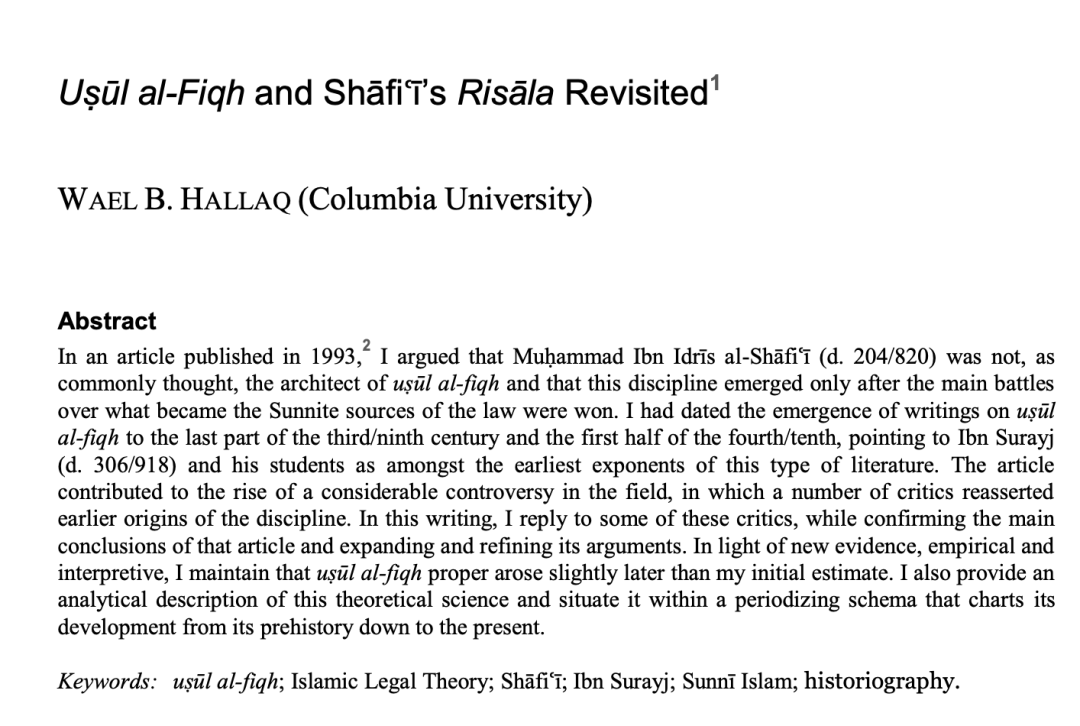
The content here comes from a paper by Professor Wael Hallaq, a world-renowned legal scholar of Palestinian descent. I’ve mentioned him on my channel before, and this is my own summary of his work rather than a word-for-word translation, which should make it much easier to grasp.
The traditional view, held by scholars like Schacht and Coulson, is that al-Shafi'i is the 'father of jurisprudence,' claiming his Risala was a fully formed legal textbook. However, Hallaq argues that al-Shafi'i wasn't the actual founder. Instead, he suggests that a mature, fully developed field of jurisprudence didn't really emerge until the 9th to mid-10th century—about a hundred years after al-Shafi'i.
The person who actually built the first real framework for jurisprudence was Ibn Surayj and his students.
Hallaq argues that there are five key conditions that had to be met for mature jurisprudence to exist:
1. The standardization of the four sources of law: the Quran, Sunnah, Ijma (consensus), and Qiyas (analogy). These weren't always universally accepted. In the early 9th and 10th centuries, scholars proposed all sorts of sources—some suggested seven, while others rejected consensus and analogy entirely. Al-Shafi'i didn't offer a complete four-source theory, and even though Ibn Surayj recognized them, he didn't codify or order them. It wasn't until the 11th century that the 'four sources' became the standard consensus.
2. A structured approach to writing. Mature legal works aren't just random musings; they follow a logical sequence that the author explains. Early works from the 9th and 10th centuries—by figures like Ibn Dawud, al-Tabari, and Ibn al-Qassar—were pretty disorganized. Some put consensus first, others put 'taqlid' (blind following) at the front. The turning point came with al-Baqillani (died 403/1012), who finally dedicated sections to explaining why the Quran and Sunnah should come first, with consensus and analogy following. It was the wrap-up of a century of debate.
3. Clear disciplinary boundaries. A mature field needs general, universal principles that can be applied to specific cases. This didn't exist with Ibn Surayj or Ibn al-Qassar. The first person to clearly define the scope of jurisprudence was likely al-Basri (died 436/1044), and these definitions didn't really solidify until the 11th century.
4. Disciplinary self-awareness. Jurisprudence eventually anchored itself in three pillars: Kalam (theology), Fiqh (law), and linguistics. Early on, the term for 'law' was plural, referring to a scattered bunch of sources. Later, it became a singular, formal discipline. Professional 'jurists' didn't even exist in the early days; people like Ibn Surayj were just known for writing about law. The formal identity of a 'jurist' didn't appear until the late 10th century.
5. Independent, standardized text formats. Before this, there was no independent 'textbook' for jurisprudence. Al-Baqillani was the turning point here, too. Once the format was standardized, it led to branches like dialectics, legal theory, and conceptual analysis.
Hallaq believes that only when all five of these conditions are met can we call jurisprudence 'mature.' By this metric, al-Shafi'i doesn't qualify; he belongs to the 'prehistoric' phase of the field. His work was more like a draft for debate than a finished legal manual.
Hallaq proposes eight stages of development for Islamic jurisprudence:
Stage 1 (780–870 AD): The germination period. Works by people like al-Shafi'i were just drafts; whether or not his ideas survived depended on the debates that followed.
Stage 2 (850–940 AD): The struggle for legal authority. This was a messy time of debate between the Hanafis, Shafi'is, Mu'tazilites, and the literalist schools. There was no single mainstream theory yet; this was the era of Ibn Surayj and Ibn Dawud.
Stage 3 (920–1010 AD): The terminology shift. Legal terms moved from general religious roots toward the specific, technical field of jurisprudence. Al-Baqillani marks the tail end of this era.
Stage 4 (990–1130 AD): The crystallization period. All five conditions were met, and mature jurisprudence appeared. This is the era of al-Basri, al-Juwayni, and al-Ghazali.
Stage 5 (1100–1220 AD): Specialization. With jurisprudence now mature, sub-disciplines emerged, and legal theory began to integrate deeply with philosophy and theology, famously led by figures like al-Razi.
Stage 6 (1200–1400 AD): The standardization of textbooks. The written format for legal studies became fixed, spawning numerous sub-fields.
Stage 7 (1400–1830 AD): The stability phase. The Sharia education system became the core, stable structure that continued to function across the Muslim world.
Stage 8 (1830–present): Decline and fragmentation. During the colonial era, institutions like the Waqf (endowment) were dismantled, and European civil codes were introduced. The traditional education system began to die out, and those foundational legal texts became museum pieces.
Hallaq also pushes back against critics who argue that scholars like Ibn Dawud or al-Tabari had already written complete legal works. He notes that the original manuscripts don't exist; we only have fragments cited by others. Even if you piece them together, the logic is totally scrambled and doesn't match a mature structure. Mature texts prioritize linguistics, while Ibn Dawud put consensus right at the start. Al-Tabari’s work just included legal bits as an addendum; it’s not a structured legal treatise.
Some people claim the Hanafi school was the actual founder of jurisprudence. Hallaq disagrees, arguing that the early Hanafi reliance on personal opinion (ra'y) and independent reasoning was exactly what mature jurisprudence formed to reorganize and constrain.
Hallaq isn't suggesting there was a complete break in the chain of transmission. He admits al-Shafi'i’s idea of prioritizing the Quran and Sunnah had a huge impact. But it was just a draft for later debates. Decades after he died, his ideas were often ignored, and his direct student, al-Buwayti, actually toned down or modified some of al-Shafi'i’s core views on analogy. It wasn't a smooth path. Ibn Surayj’s theories also diverged from al-Shafi'i’s, and he never even used the term 'jurisprudence.'
Hallaq acknowledges that al-Shafi'i did establish the general direction—that the revealed text is the foundation of law—and everyone later inherited that. However, the purpose and structure of their writing were totally different. Mature jurisprudence aimed to create a complete 'tool' to handle brand-new legal cases, something that wasn't on al-Shafi'i’s radar.
Hallaq doesn't deny al-Shafi'i’s historical impact, but he insists that we can't equate his work with the mature books of jurisprudence we see later. True jurisprudence was born out of centuries of intense sectarian conflict, filtering, editing, and synthesis.
The emergence of jurisprudence was a product of intellectual struggle. It represents a massive integration within the Sunni tradition, bridging the gap between traditionalists and rationalists to build a comprehensive Sunni worldview and ethical framework.
Let’s dive into the legacy of Imam al-Shafi'i and his famous work, the Risala, and see how they shaped the history of Islamic jurisprudence (Usul al-Fiqh). By looking at recent academic research in Islamic legal history, we can break down how these theories spread and evolved during the 9th and 10th centuries.
The content here comes from a paper by Professor Wael Hallaq, a world-renowned legal scholar of Palestinian descent. I’ve mentioned him on my channel before, and this is my own summary of his work rather than a word-for-word translation, which should make it much easier to grasp.
The traditional view, held by scholars like Schacht and Coulson, is that al-Shafi'i is the 'father of jurisprudence,' claiming his Risala was a fully formed legal textbook. However, Hallaq argues that al-Shafi'i wasn't the actual founder. Instead, he suggests that a mature, fully developed field of jurisprudence didn't really emerge until the 9th to mid-10th century—about a hundred years after al-Shafi'i.
The person who actually built the first real framework for jurisprudence was Ibn Surayj and his students.
Hallaq argues that there are five key conditions that had to be met for mature jurisprudence to exist:
1. The standardization of the four sources of law: the Quran, Sunnah, Ijma (consensus), and Qiyas (analogy). These weren't always universally accepted. In the early 9th and 10th centuries, scholars proposed all sorts of sources—some suggested seven, while others rejected consensus and analogy entirely. Al-Shafi'i didn't offer a complete four-source theory, and even though Ibn Surayj recognized them, he didn't codify or order them. It wasn't until the 11th century that the 'four sources' became the standard consensus.
2. A structured approach to writing. Mature legal works aren't just random musings; they follow a logical sequence that the author explains. Early works from the 9th and 10th centuries—by figures like Ibn Dawud, al-Tabari, and Ibn al-Qassar—were pretty disorganized. Some put consensus first, others put 'taqlid' (blind following) at the front. The turning point came with al-Baqillani (died 403/1012), who finally dedicated sections to explaining why the Quran and Sunnah should come first, with consensus and analogy following. It was the wrap-up of a century of debate.
3. Clear disciplinary boundaries. A mature field needs general, universal principles that can be applied to specific cases. This didn't exist with Ibn Surayj or Ibn al-Qassar. The first person to clearly define the scope of jurisprudence was likely al-Basri (died 436/1044), and these definitions didn't really solidify until the 11th century.
4. Disciplinary self-awareness. Jurisprudence eventually anchored itself in three pillars: Kalam (theology), Fiqh (law), and linguistics. Early on, the term for 'law' was plural, referring to a scattered bunch of sources. Later, it became a singular, formal discipline. Professional 'jurists' didn't even exist in the early days; people like Ibn Surayj were just known for writing about law. The formal identity of a 'jurist' didn't appear until the late 10th century.
5. Independent, standardized text formats. Before this, there was no independent 'textbook' for jurisprudence. Al-Baqillani was the turning point here, too. Once the format was standardized, it led to branches like dialectics, legal theory, and conceptual analysis.
Hallaq believes that only when all five of these conditions are met can we call jurisprudence 'mature.' By this metric, al-Shafi'i doesn't qualify; he belongs to the 'prehistoric' phase of the field. His work was more like a draft for debate than a finished legal manual.
Hallaq proposes eight stages of development for Islamic jurisprudence:
Stage 1 (780–870 AD): The germination period. Works by people like al-Shafi'i were just drafts; whether or not his ideas survived depended on the debates that followed.
Stage 2 (850–940 AD): The struggle for legal authority. This was a messy time of debate between the Hanafis, Shafi'is, Mu'tazilites, and the literalist schools. There was no single mainstream theory yet; this was the era of Ibn Surayj and Ibn Dawud.
Stage 3 (920–1010 AD): The terminology shift. Legal terms moved from general religious roots toward the specific, technical field of jurisprudence. Al-Baqillani marks the tail end of this era.
Stage 4 (990–1130 AD): The crystallization period. All five conditions were met, and mature jurisprudence appeared. This is the era of al-Basri, al-Juwayni, and al-Ghazali.
Stage 5 (1100–1220 AD): Specialization. With jurisprudence now mature, sub-disciplines emerged, and legal theory began to integrate deeply with philosophy and theology, famously led by figures like al-Razi.
Stage 6 (1200–1400 AD): The standardization of textbooks. The written format for legal studies became fixed, spawning numerous sub-fields.
Stage 7 (1400–1830 AD): The stability phase. The Sharia education system became the core, stable structure that continued to function across the Muslim world.
Stage 8 (1830–present): Decline and fragmentation. During the colonial era, institutions like the Waqf (endowment) were dismantled, and European civil codes were introduced. The traditional education system began to die out, and those foundational legal texts became museum pieces.
Hallaq also pushes back against critics who argue that scholars like Ibn Dawud or al-Tabari had already written complete legal works. He notes that the original manuscripts don't exist; we only have fragments cited by others. Even if you piece them together, the logic is totally scrambled and doesn't match a mature structure. Mature texts prioritize linguistics, while Ibn Dawud put consensus right at the start. Al-Tabari’s work just included legal bits as an addendum; it’s not a structured legal treatise.
Some people claim the Hanafi school was the actual founder of jurisprudence. Hallaq disagrees, arguing that the early Hanafi reliance on personal opinion (ra'y) and independent reasoning was exactly what mature jurisprudence formed to reorganize and constrain.
Hallaq isn't suggesting there was a complete break in the chain of transmission. He admits al-Shafi'i’s idea of prioritizing the Quran and Sunnah had a huge impact. But it was just a draft for later debates. Decades after he died, his ideas were often ignored, and his direct student, al-Buwayti, actually toned down or modified some of al-Shafi'i’s core views on analogy. It wasn't a smooth path. Ibn Surayj’s theories also diverged from al-Shafi'i’s, and he never even used the term 'jurisprudence.'
Hallaq acknowledges that al-Shafi'i did establish the general direction—that the revealed text is the foundation of law—and everyone later inherited that. However, the purpose and structure of their writing were totally different. Mature jurisprudence aimed to create a complete 'tool' to handle brand-new legal cases, something that wasn't on al-Shafi'i’s radar.
Hallaq doesn't deny al-Shafi'i’s historical impact, but he insists that we can't equate his work with the mature books of jurisprudence we see later. True jurisprudence was born out of centuries of intense sectarian conflict, filtering, editing, and synthesis.
The emergence of jurisprudence was a product of intellectual struggle. It represents a massive integration within the Sunni tradition, bridging the gap between traditionalists and rationalists to build a comprehensive Sunni worldview and ethical framework.
Sunni Jurisprudence Methodology: Hanafi vs Shafi'i Prayer Hand Raising and Hadith Authentication Standards
Articles • Hasan09 posted the article • 0 comments • 11 views • 9 hours ago
[Internet Repost]
Diving deep into the methodological differences between the Hanafi and Shafi'i schools regarding the physical details of raising hands during prayer, this analysis is based on Georgetown University Professor Jonathan Brown's seminal work on hadith studies. It breaks down the rigorous logic major legal schools use when vetting chains of transmission, analyzing widespread community practice, and applying analogical reasoning.
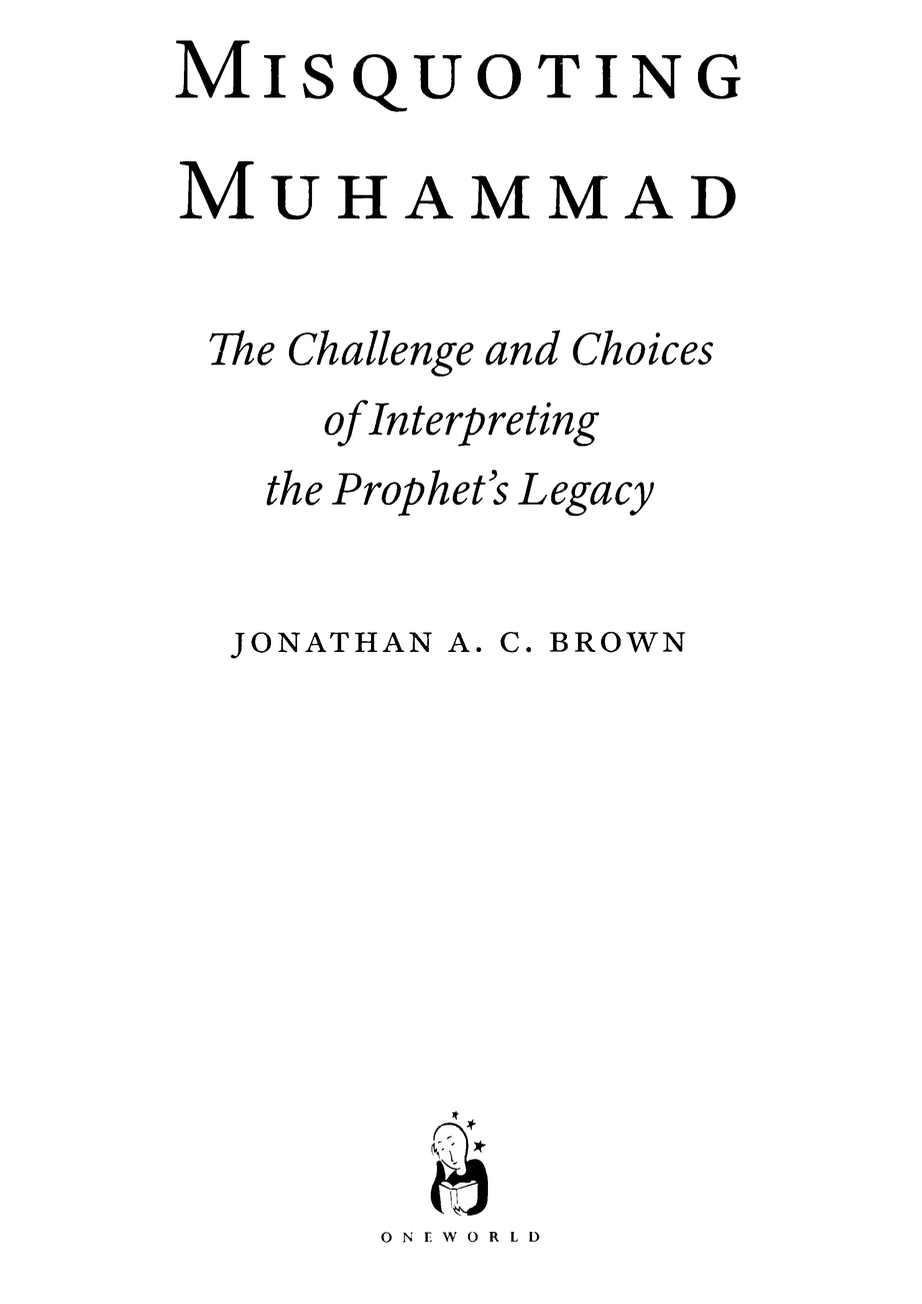
Professor Brown wrote a super influential, award-winning book in the West called *Misquoting Muhammad*, which mirrors the title of a more unorthodox book called *Misquoting Jesus*, though the main point is totally different. Don't stress, though—Professor Brown isn't some classic Orientalist; he's a convert to Islam. The real core of his book is actually in the subtitle: *The Challenges and Choices of Interpreting the Prophet Muhammad's Legacy*.
Chapter 3 of the book tackles a classic case study. Professor Brown picks what looks like a minor ritual detail of daily prayer as the core example for the entire book, showing the full debate logic, chain of transmission research, and legal school politics that classical scholars went through when dealing with conflicting, sound hadiths. It really proves that simply shouting "back to the Quran and Sunnah" doesn't automatically hand you a single, undisputed answer.
The practice of raising hands multiple times during prayer is reported by the Shafi'i, Hanbali, and some Maliki scholars, while the mainstream Hanafi position is to raise the hands only once at the very beginning. Both sides can put forward hadith texts that look to have completely sound chains of transmission to back up their views.
Part One: The Issue Itself: What Does Raising Hands in Prayer Mean?
1. Hadiths supporting raising the hands multiple times (The Ibn Umar Chain)
Ibn Umar reported: When the Prophet started his prayer, he raised his hands to his shoulders; he raised them before bowing, and raised them when standing back up from bowing, but he did not raise them between the two prostrations. The chain of transmission goes: Zuhri -> Salim (son of Ibn Umar) -> Ibn Umar -> Prophet Muhammad. The great Shafi'i jurist al-Bayhaqi gathered a massive amount of matching reports in his monumental work *Sunan al-Kubrā*, with multiple independent channels recording the exact same thing, backed up by tons of Companions and Successors who practiced it this way.
2. Hadiths supporting raising the hands only once at the beginning (The Ibn Mas'ud Chain)
Ibn Mas'ud reported: I prayed alongside the Prophet, Abu Bakr, and Umar, and they only raised their hands at the very opening of the prayer and never raised them again. The chain of transmission goes: Alqamah ibn Qays -> Ibn Mas'ud, and then passed down through the Kufan scholar Hammad ibn Abi Sulayman to Abu Hanifa, making it the core evidence for the Hanafi school.
The core conflict: Both hadiths claim to come straight from the Companions, yet the texts directly clash with each other. A foundational rule in Sunni legal theory is that truly sound and error-free hadiths cannot contradict one another. Because of this, scholars can't just write off one side as a total fabrication; they have to reconcile the differences using chain criticism, version comparisons, textual interpretation, and the doctrine of abrogation (naskh).
Part Two: The Two Great Debaters: Bayhaqi vs Tahawi
Bayhaqi: A champion of the Shafi'i school who dedicated himself to collecting all available hadith evidence to defend the practice of raising hands both before and after bowing.
Tahawi: Originally trained in the Shafi'i tradition, he later switched to the Hanafi school, became a master of hadith sciences, and stood as the ultimate defender of the Hanafi position.
1) Bayhaqi's Argument (Supporting Multiple Hand Raisings)
He critiqued the structural flaws in the chain of transmission for Ibn Mas'ud's hadith, citing research by the hadith master al-Daraqutni: in many versions, when Hammad transmitted this hadith, the chain was actually broken. Alqamah himself never directly met Ibn Mas'ud; some versions show it was just later successors passing on Ibn Mas'ud's personal opinion rather than a direct record of the Prophet's own actions. In other words, the version cited by the Hanafi school has a "broken chain" flaw, meaning it might just record Ibn Mas'ud's personal practice rather than a confirmed saying or action of the Prophet.
He pointed out that the narrator Yazid ibn Abi Ziyad suffered from memory issues in his old age, meaning any hadith flowing through him was prone to textual distortion.
He highlighted a ton of independent, multi-source reports backing up Ibn Umar's account: multiple Companions (like Malik ibn al-Huwayrith and Wail ibn Hujr) described the Prophet raising his hands multiple times during prayer. Bayhaqi wrote that with so many different sources recording this exact scene, it felt as though he were watching the Prophet raise his hands in prayer with his own eyes.
Reconciliation Solution One: The Doctrine of Abrogation (Naskh). What Ibn Mas'ud witnessed was the older practice from the early days of Islam; later on, the Prophet modified the prayer ritual by adding hand raising for bowing and standing, meaning the old way was officially abrogated. Therefore, what Ibn Mas'ud remembered was simply an earlier, now-abrogated style of prayer. Bayhaqi conceded that even if Ibn Mas'ud's memory was spot on, it only recorded an older version of the prayer before the ritual was officially updated.
2) Tahawi's Counterattack (Defending the Hanafi Position: Raising Hands Only at the Start)
Tahawi was brilliant; instead of outright dismissing the massive stack of hadiths supporting Ibn Umar, he zoomed in on the textual details of the versions, turning the tables to accuse the Shafi'i school of cherry-picking their evidence.
At the very end of Ibn Umar's long hadith, it adds: "And between the two prostrations, he did not raise them." Tahawi raised a tough question: Who actually said this sentence? Some versions show this line might have been added by later transmitters rather than being part of Ibn Umar's original report. Other versions of Ibn Umar's transmission note that the Prophet actually *did* raise his hands between the two prostrations. If the Shafi'i school relies on Ibn Umar's hadith, why do they reject raising hands between prostrations? Tahawi challenged his rivals: you only pluck out the parts that help your argument while rejecting other details from the exact same report—isn't that just selectively trimming hadith evidence?
He pulled in the actual practices of the two Rightly Guided Caliphs, Umar and Ali: according to certain reports, both caliphs only raised their hands at the start of prayer. Tahawi's logic was that even if the Prophet did raise his hands multiple times earlier on, the practice actually maintained and finalized by the leading Companions and Caliphs represents the definitive, final version of the Sunnah.
He pushed back against the accusation of a "broken chain": the local habit among Kufan successors was sometimes to drop intermediate transmitters, which didn't mean a report was fabricated; it was just a regional transmission norm of the era, so you can't just throw out the hadith entirely.
Part Three: The Deeper Scholarly Dilemma Revealed by This Debate
1. Both opposing sides were equally skilled at using the exact same high-level hadith criticism tools. Both Bayhaqi and Tahawi were absolute masters of the science of isnad chains (ʿilm al‑isnād): checking narrator character, memory retention, version differences, transmission habits, and abrogation theory. Yet these two sets of tools led them to completely opposite conclusions. There is no totally objective "hadith-testing machine," meaning human judgment inevitably plays a role.
Understanding Sunni Legal Methodology: Analyzing Hadith Acceptance Standards and Scholarly Disputes in Islamic Jurisprudence through the Hanafi and Shafi'i Debate on Raising Hands During Prayer.
This is a super key point from the whole book: a lot of people nowadays think that if you just ditch later legal schools (madhhabs) and read the original hadith texts directly, you will get the one and only definite answer. But the debate over raising the hands proves that even when dealing with tons of sound narrations, major disagreements still pop up.
2. Scholarly traditions totally shape how scholars judge the weight of evidence. The Hanafi school is rooted in Kufa and leans on Ibn Mas'ud and the later Kufan scholars; the Shafi'i school focuses on reports from the Prophet's companion Ibn Umar in Medina. Scholars aren't just blank slates—they are shaped by their school's intellectual tradition when they weigh which evidence is heavier or lighter.
3. The "theory of abrogation (naskh)" is both a tool for solving contradictions and a way to defend an argument. When two hadiths clash, one side can claim that one of them is an outdated rule that got abrogated. But there is no absolute objective standard to judge which one came first and which came second. Without rock-solid historical time evidence, abrogation just becomes a reasonable guess, not ironclad proof.
IV. Real-World Social Consequences: How Scholarly Disagreements Turn into Social Conflict
The book talks about a real historical event in India during the time of Shah Waliullah: The main crowd at the Delhi mosque followed the Hanafi school. One of Shah Waliullah's students raised his hands when bowing and rising from bowing during prayer, which went against local Hanafi customs. He got physically attacked by the crowd right on the spot and almost beaten to death.
Shah Waliullah's own stance was super delicate:
He believed that from the hadith evidence, raising the hands multiple times matches the recorded hadiths better;
At the same time, he brought up a practical ethics point: in public prayer spaces, you should respect local school customs and not deliberately stir up division. Ordinary believers shouldn't get caught up in these technical legal disputes; they should just follow the local legal school.
Brown's commentary: This isn't just some tiny detail about whether to raise your hands in prayer—it symbolizes a massive tension. On one side is the revivalist ideal calling to ditch blind following (taqlid) and return to the Prophet's original hadith; on the other side is over a thousand years of accumulated legal school traditions and the reality of community stability.
Brown specifically uses this tiny ritual issue to mirror all the major controversies in the book (like female prayer leaders, the punishment for apostasy, jihad, etc.):
Lots of people think that just by going back to the original scripture and hadiths, you can wipe out later scholarly disagreements and get one single, clear answer. The debate over raising hands shows that this idea is way too idealistic. Even with all the hadith texts laid out right in front of you, you're still gonna end up with unresolvable disagreements over narration versions, evidence weight, abrogation, and context.
Classical Islamic legal scholarship has a super precise set of tools, but those tools by themselves can't totally eliminate human judgment;
Scholarly disagreements can easily upgrade from textbook debates into real-world social conflicts; scholars have to study texts, but they also have to care about community peace;
The system where the four major legal schools recognize each other's legitimacy is literally designed to handle these kinds of tough problems where both sides have textual evidence yet can't totally disprove the other. Neither the Hanafi nor the Shafi'i school declares the other heretical; they both follow the principle of "we might be right but could be wrong, and you might be right but could be wrong." Even today, the Hanafi school (in Turkey, Central Asia, and South Asia) mostly raises hands only at the start of prayer; the Shafi'i (in Southeast Asia and parts of Egypt), Hanbali, and Salafi traditions usually raise their hands when bowing and rising from it. Both sides see themselves as following the Prophet's sunnah. view all
[Internet Repost]
Diving deep into the methodological differences between the Hanafi and Shafi'i schools regarding the physical details of raising hands during prayer, this analysis is based on Georgetown University Professor Jonathan Brown's seminal work on hadith studies. It breaks down the rigorous logic major legal schools use when vetting chains of transmission, analyzing widespread community practice, and applying analogical reasoning.
Professor Brown wrote a super influential, award-winning book in the West called *Misquoting Muhammad*, which mirrors the title of a more unorthodox book called *Misquoting Jesus*, though the main point is totally different. Don't stress, though—Professor Brown isn't some classic Orientalist; he's a convert to Islam. The real core of his book is actually in the subtitle: *The Challenges and Choices of Interpreting the Prophet Muhammad's Legacy*.
Chapter 3 of the book tackles a classic case study. Professor Brown picks what looks like a minor ritual detail of daily prayer as the core example for the entire book, showing the full debate logic, chain of transmission research, and legal school politics that classical scholars went through when dealing with conflicting, sound hadiths. It really proves that simply shouting "back to the Quran and Sunnah" doesn't automatically hand you a single, undisputed answer.
The practice of raising hands multiple times during prayer is reported by the Shafi'i, Hanbali, and some Maliki scholars, while the mainstream Hanafi position is to raise the hands only once at the very beginning. Both sides can put forward hadith texts that look to have completely sound chains of transmission to back up their views.
Part One: The Issue Itself: What Does Raising Hands in Prayer Mean?
1. Hadiths supporting raising the hands multiple times (The Ibn Umar Chain)
Ibn Umar reported: When the Prophet started his prayer, he raised his hands to his shoulders; he raised them before bowing, and raised them when standing back up from bowing, but he did not raise them between the two prostrations. The chain of transmission goes: Zuhri -> Salim (son of Ibn Umar) -> Ibn Umar -> Prophet Muhammad. The great Shafi'i jurist al-Bayhaqi gathered a massive amount of matching reports in his monumental work *Sunan al-Kubrā*, with multiple independent channels recording the exact same thing, backed up by tons of Companions and Successors who practiced it this way.
2. Hadiths supporting raising the hands only once at the beginning (The Ibn Mas'ud Chain)
Ibn Mas'ud reported: I prayed alongside the Prophet, Abu Bakr, and Umar, and they only raised their hands at the very opening of the prayer and never raised them again. The chain of transmission goes: Alqamah ibn Qays -> Ibn Mas'ud, and then passed down through the Kufan scholar Hammad ibn Abi Sulayman to Abu Hanifa, making it the core evidence for the Hanafi school.
The core conflict: Both hadiths claim to come straight from the Companions, yet the texts directly clash with each other. A foundational rule in Sunni legal theory is that truly sound and error-free hadiths cannot contradict one another. Because of this, scholars can't just write off one side as a total fabrication; they have to reconcile the differences using chain criticism, version comparisons, textual interpretation, and the doctrine of abrogation (naskh).
Part Two: The Two Great Debaters: Bayhaqi vs Tahawi
Bayhaqi: A champion of the Shafi'i school who dedicated himself to collecting all available hadith evidence to defend the practice of raising hands both before and after bowing.
Tahawi: Originally trained in the Shafi'i tradition, he later switched to the Hanafi school, became a master of hadith sciences, and stood as the ultimate defender of the Hanafi position.
1) Bayhaqi's Argument (Supporting Multiple Hand Raisings)
He critiqued the structural flaws in the chain of transmission for Ibn Mas'ud's hadith, citing research by the hadith master al-Daraqutni: in many versions, when Hammad transmitted this hadith, the chain was actually broken. Alqamah himself never directly met Ibn Mas'ud; some versions show it was just later successors passing on Ibn Mas'ud's personal opinion rather than a direct record of the Prophet's own actions. In other words, the version cited by the Hanafi school has a "broken chain" flaw, meaning it might just record Ibn Mas'ud's personal practice rather than a confirmed saying or action of the Prophet.
He pointed out that the narrator Yazid ibn Abi Ziyad suffered from memory issues in his old age, meaning any hadith flowing through him was prone to textual distortion.
He highlighted a ton of independent, multi-source reports backing up Ibn Umar's account: multiple Companions (like Malik ibn al-Huwayrith and Wail ibn Hujr) described the Prophet raising his hands multiple times during prayer. Bayhaqi wrote that with so many different sources recording this exact scene, it felt as though he were watching the Prophet raise his hands in prayer with his own eyes.
Reconciliation Solution One: The Doctrine of Abrogation (Naskh). What Ibn Mas'ud witnessed was the older practice from the early days of Islam; later on, the Prophet modified the prayer ritual by adding hand raising for bowing and standing, meaning the old way was officially abrogated. Therefore, what Ibn Mas'ud remembered was simply an earlier, now-abrogated style of prayer. Bayhaqi conceded that even if Ibn Mas'ud's memory was spot on, it only recorded an older version of the prayer before the ritual was officially updated.
2) Tahawi's Counterattack (Defending the Hanafi Position: Raising Hands Only at the Start)
Tahawi was brilliant; instead of outright dismissing the massive stack of hadiths supporting Ibn Umar, he zoomed in on the textual details of the versions, turning the tables to accuse the Shafi'i school of cherry-picking their evidence.
At the very end of Ibn Umar's long hadith, it adds: "And between the two prostrations, he did not raise them." Tahawi raised a tough question: Who actually said this sentence? Some versions show this line might have been added by later transmitters rather than being part of Ibn Umar's original report. Other versions of Ibn Umar's transmission note that the Prophet actually *did* raise his hands between the two prostrations. If the Shafi'i school relies on Ibn Umar's hadith, why do they reject raising hands between prostrations? Tahawi challenged his rivals: you only pluck out the parts that help your argument while rejecting other details from the exact same report—isn't that just selectively trimming hadith evidence?
He pulled in the actual practices of the two Rightly Guided Caliphs, Umar and Ali: according to certain reports, both caliphs only raised their hands at the start of prayer. Tahawi's logic was that even if the Prophet did raise his hands multiple times earlier on, the practice actually maintained and finalized by the leading Companions and Caliphs represents the definitive, final version of the Sunnah.
He pushed back against the accusation of a "broken chain": the local habit among Kufan successors was sometimes to drop intermediate transmitters, which didn't mean a report was fabricated; it was just a regional transmission norm of the era, so you can't just throw out the hadith entirely.
Part Three: The Deeper Scholarly Dilemma Revealed by This Debate
1. Both opposing sides were equally skilled at using the exact same high-level hadith criticism tools. Both Bayhaqi and Tahawi were absolute masters of the science of isnad chains (ʿilm al‑isnād): checking narrator character, memory retention, version differences, transmission habits, and abrogation theory. Yet these two sets of tools led them to completely opposite conclusions. There is no totally objective "hadith-testing machine," meaning human judgment inevitably plays a role.
Understanding Sunni Legal Methodology: Analyzing Hadith Acceptance Standards and Scholarly Disputes in Islamic Jurisprudence through the Hanafi and Shafi'i Debate on Raising Hands During Prayer.
This is a super key point from the whole book: a lot of people nowadays think that if you just ditch later legal schools (madhhabs) and read the original hadith texts directly, you will get the one and only definite answer. But the debate over raising the hands proves that even when dealing with tons of sound narrations, major disagreements still pop up.
2. Scholarly traditions totally shape how scholars judge the weight of evidence. The Hanafi school is rooted in Kufa and leans on Ibn Mas'ud and the later Kufan scholars; the Shafi'i school focuses on reports from the Prophet's companion Ibn Umar in Medina. Scholars aren't just blank slates—they are shaped by their school's intellectual tradition when they weigh which evidence is heavier or lighter.
3. The "theory of abrogation (naskh)" is both a tool for solving contradictions and a way to defend an argument. When two hadiths clash, one side can claim that one of them is an outdated rule that got abrogated. But there is no absolute objective standard to judge which one came first and which came second. Without rock-solid historical time evidence, abrogation just becomes a reasonable guess, not ironclad proof.
IV. Real-World Social Consequences: How Scholarly Disagreements Turn into Social Conflict
The book talks about a real historical event in India during the time of Shah Waliullah: The main crowd at the Delhi mosque followed the Hanafi school. One of Shah Waliullah's students raised his hands when bowing and rising from bowing during prayer, which went against local Hanafi customs. He got physically attacked by the crowd right on the spot and almost beaten to death.
Shah Waliullah's own stance was super delicate:
He believed that from the hadith evidence, raising the hands multiple times matches the recorded hadiths better;
At the same time, he brought up a practical ethics point: in public prayer spaces, you should respect local school customs and not deliberately stir up division. Ordinary believers shouldn't get caught up in these technical legal disputes; they should just follow the local legal school.
Brown's commentary: This isn't just some tiny detail about whether to raise your hands in prayer—it symbolizes a massive tension. On one side is the revivalist ideal calling to ditch blind following (taqlid) and return to the Prophet's original hadith; on the other side is over a thousand years of accumulated legal school traditions and the reality of community stability.
Brown specifically uses this tiny ritual issue to mirror all the major controversies in the book (like female prayer leaders, the punishment for apostasy, jihad, etc.):
Lots of people think that just by going back to the original scripture and hadiths, you can wipe out later scholarly disagreements and get one single, clear answer. The debate over raising hands shows that this idea is way too idealistic. Even with all the hadith texts laid out right in front of you, you're still gonna end up with unresolvable disagreements over narration versions, evidence weight, abrogation, and context.
Classical Islamic legal scholarship has a super precise set of tools, but those tools by themselves can't totally eliminate human judgment;
Scholarly disagreements can easily upgrade from textbook debates into real-world social conflicts; scholars have to study texts, but they also have to care about community peace;
The system where the four major legal schools recognize each other's legitimacy is literally designed to handle these kinds of tough problems where both sides have textual evidence yet can't totally disprove the other. Neither the Hanafi nor the Shafi'i school declares the other heretical; they both follow the principle of "we might be right but could be wrong, and you might be right but could be wrong." Even today, the Hanafi school (in Turkey, Central Asia, and South Asia) mostly raises hands only at the start of prayer; the Shafi'i (in Southeast Asia and parts of Egypt), Hanbali, and Salafi traditions usually raise their hands when bowing and rising from it. Both sides see themselves as following the Prophet's sunnah.
Diving deep into the methodological differences between the Hanafi and Shafi'i schools regarding the physical details of raising hands during prayer, this analysis is based on Georgetown University Professor Jonathan Brown's seminal work on hadith studies. It breaks down the rigorous logic major legal schools use when vetting chains of transmission, analyzing widespread community practice, and applying analogical reasoning.
Professor Brown wrote a super influential, award-winning book in the West called *Misquoting Muhammad*, which mirrors the title of a more unorthodox book called *Misquoting Jesus*, though the main point is totally different. Don't stress, though—Professor Brown isn't some classic Orientalist; he's a convert to Islam. The real core of his book is actually in the subtitle: *The Challenges and Choices of Interpreting the Prophet Muhammad's Legacy*.
Chapter 3 of the book tackles a classic case study. Professor Brown picks what looks like a minor ritual detail of daily prayer as the core example for the entire book, showing the full debate logic, chain of transmission research, and legal school politics that classical scholars went through when dealing with conflicting, sound hadiths. It really proves that simply shouting "back to the Quran and Sunnah" doesn't automatically hand you a single, undisputed answer.
The practice of raising hands multiple times during prayer is reported by the Shafi'i, Hanbali, and some Maliki scholars, while the mainstream Hanafi position is to raise the hands only once at the very beginning. Both sides can put forward hadith texts that look to have completely sound chains of transmission to back up their views.
Part One: The Issue Itself: What Does Raising Hands in Prayer Mean?
1. Hadiths supporting raising the hands multiple times (The Ibn Umar Chain)
Ibn Umar reported: When the Prophet started his prayer, he raised his hands to his shoulders; he raised them before bowing, and raised them when standing back up from bowing, but he did not raise them between the two prostrations. The chain of transmission goes: Zuhri -> Salim (son of Ibn Umar) -> Ibn Umar -> Prophet Muhammad. The great Shafi'i jurist al-Bayhaqi gathered a massive amount of matching reports in his monumental work *Sunan al-Kubrā*, with multiple independent channels recording the exact same thing, backed up by tons of Companions and Successors who practiced it this way.
2. Hadiths supporting raising the hands only once at the beginning (The Ibn Mas'ud Chain)
Ibn Mas'ud reported: I prayed alongside the Prophet, Abu Bakr, and Umar, and they only raised their hands at the very opening of the prayer and never raised them again. The chain of transmission goes: Alqamah ibn Qays -> Ibn Mas'ud, and then passed down through the Kufan scholar Hammad ibn Abi Sulayman to Abu Hanifa, making it the core evidence for the Hanafi school.
The core conflict: Both hadiths claim to come straight from the Companions, yet the texts directly clash with each other. A foundational rule in Sunni legal theory is that truly sound and error-free hadiths cannot contradict one another. Because of this, scholars can't just write off one side as a total fabrication; they have to reconcile the differences using chain criticism, version comparisons, textual interpretation, and the doctrine of abrogation (naskh).
Part Two: The Two Great Debaters: Bayhaqi vs Tahawi
Bayhaqi: A champion of the Shafi'i school who dedicated himself to collecting all available hadith evidence to defend the practice of raising hands both before and after bowing.
Tahawi: Originally trained in the Shafi'i tradition, he later switched to the Hanafi school, became a master of hadith sciences, and stood as the ultimate defender of the Hanafi position.
1) Bayhaqi's Argument (Supporting Multiple Hand Raisings)
He critiqued the structural flaws in the chain of transmission for Ibn Mas'ud's hadith, citing research by the hadith master al-Daraqutni: in many versions, when Hammad transmitted this hadith, the chain was actually broken. Alqamah himself never directly met Ibn Mas'ud; some versions show it was just later successors passing on Ibn Mas'ud's personal opinion rather than a direct record of the Prophet's own actions. In other words, the version cited by the Hanafi school has a "broken chain" flaw, meaning it might just record Ibn Mas'ud's personal practice rather than a confirmed saying or action of the Prophet.
He pointed out that the narrator Yazid ibn Abi Ziyad suffered from memory issues in his old age, meaning any hadith flowing through him was prone to textual distortion.
He highlighted a ton of independent, multi-source reports backing up Ibn Umar's account: multiple Companions (like Malik ibn al-Huwayrith and Wail ibn Hujr) described the Prophet raising his hands multiple times during prayer. Bayhaqi wrote that with so many different sources recording this exact scene, it felt as though he were watching the Prophet raise his hands in prayer with his own eyes.
Reconciliation Solution One: The Doctrine of Abrogation (Naskh). What Ibn Mas'ud witnessed was the older practice from the early days of Islam; later on, the Prophet modified the prayer ritual by adding hand raising for bowing and standing, meaning the old way was officially abrogated. Therefore, what Ibn Mas'ud remembered was simply an earlier, now-abrogated style of prayer. Bayhaqi conceded that even if Ibn Mas'ud's memory was spot on, it only recorded an older version of the prayer before the ritual was officially updated.
2) Tahawi's Counterattack (Defending the Hanafi Position: Raising Hands Only at the Start)
Tahawi was brilliant; instead of outright dismissing the massive stack of hadiths supporting Ibn Umar, he zoomed in on the textual details of the versions, turning the tables to accuse the Shafi'i school of cherry-picking their evidence.
At the very end of Ibn Umar's long hadith, it adds: "And between the two prostrations, he did not raise them." Tahawi raised a tough question: Who actually said this sentence? Some versions show this line might have been added by later transmitters rather than being part of Ibn Umar's original report. Other versions of Ibn Umar's transmission note that the Prophet actually *did* raise his hands between the two prostrations. If the Shafi'i school relies on Ibn Umar's hadith, why do they reject raising hands between prostrations? Tahawi challenged his rivals: you only pluck out the parts that help your argument while rejecting other details from the exact same report—isn't that just selectively trimming hadith evidence?
He pulled in the actual practices of the two Rightly Guided Caliphs, Umar and Ali: according to certain reports, both caliphs only raised their hands at the start of prayer. Tahawi's logic was that even if the Prophet did raise his hands multiple times earlier on, the practice actually maintained and finalized by the leading Companions and Caliphs represents the definitive, final version of the Sunnah.
He pushed back against the accusation of a "broken chain": the local habit among Kufan successors was sometimes to drop intermediate transmitters, which didn't mean a report was fabricated; it was just a regional transmission norm of the era, so you can't just throw out the hadith entirely.
Part Three: The Deeper Scholarly Dilemma Revealed by This Debate
1. Both opposing sides were equally skilled at using the exact same high-level hadith criticism tools. Both Bayhaqi and Tahawi were absolute masters of the science of isnad chains (ʿilm al‑isnād): checking narrator character, memory retention, version differences, transmission habits, and abrogation theory. Yet these two sets of tools led them to completely opposite conclusions. There is no totally objective "hadith-testing machine," meaning human judgment inevitably plays a role.
Understanding Sunni Legal Methodology: Analyzing Hadith Acceptance Standards and Scholarly Disputes in Islamic Jurisprudence through the Hanafi and Shafi'i Debate on Raising Hands During Prayer.
This is a super key point from the whole book: a lot of people nowadays think that if you just ditch later legal schools (madhhabs) and read the original hadith texts directly, you will get the one and only definite answer. But the debate over raising the hands proves that even when dealing with tons of sound narrations, major disagreements still pop up.
2. Scholarly traditions totally shape how scholars judge the weight of evidence. The Hanafi school is rooted in Kufa and leans on Ibn Mas'ud and the later Kufan scholars; the Shafi'i school focuses on reports from the Prophet's companion Ibn Umar in Medina. Scholars aren't just blank slates—they are shaped by their school's intellectual tradition when they weigh which evidence is heavier or lighter.
3. The "theory of abrogation (naskh)" is both a tool for solving contradictions and a way to defend an argument. When two hadiths clash, one side can claim that one of them is an outdated rule that got abrogated. But there is no absolute objective standard to judge which one came first and which came second. Without rock-solid historical time evidence, abrogation just becomes a reasonable guess, not ironclad proof.
IV. Real-World Social Consequences: How Scholarly Disagreements Turn into Social Conflict
The book talks about a real historical event in India during the time of Shah Waliullah: The main crowd at the Delhi mosque followed the Hanafi school. One of Shah Waliullah's students raised his hands when bowing and rising from bowing during prayer, which went against local Hanafi customs. He got physically attacked by the crowd right on the spot and almost beaten to death.
Shah Waliullah's own stance was super delicate:
He believed that from the hadith evidence, raising the hands multiple times matches the recorded hadiths better;
At the same time, he brought up a practical ethics point: in public prayer spaces, you should respect local school customs and not deliberately stir up division. Ordinary believers shouldn't get caught up in these technical legal disputes; they should just follow the local legal school.
Brown's commentary: This isn't just some tiny detail about whether to raise your hands in prayer—it symbolizes a massive tension. On one side is the revivalist ideal calling to ditch blind following (taqlid) and return to the Prophet's original hadith; on the other side is over a thousand years of accumulated legal school traditions and the reality of community stability.
Brown specifically uses this tiny ritual issue to mirror all the major controversies in the book (like female prayer leaders, the punishment for apostasy, jihad, etc.):
Lots of people think that just by going back to the original scripture and hadiths, you can wipe out later scholarly disagreements and get one single, clear answer. The debate over raising hands shows that this idea is way too idealistic. Even with all the hadith texts laid out right in front of you, you're still gonna end up with unresolvable disagreements over narration versions, evidence weight, abrogation, and context.
Classical Islamic legal scholarship has a super precise set of tools, but those tools by themselves can't totally eliminate human judgment;
Scholarly disagreements can easily upgrade from textbook debates into real-world social conflicts; scholars have to study texts, but they also have to care about community peace;
The system where the four major legal schools recognize each other's legitimacy is literally designed to handle these kinds of tough problems where both sides have textual evidence yet can't totally disprove the other. Neither the Hanafi nor the Shafi'i school declares the other heretical; they both follow the principle of "we might be right but could be wrong, and you might be right but could be wrong." Even today, the Hanafi school (in Turkey, Central Asia, and South Asia) mostly raises hands only at the start of prayer; the Shafi'i (in Southeast Asia and parts of Egypt), Hanbali, and Salafi traditions usually raise their hands when bowing and rising from it. Both sides see themselves as following the Prophet's sunnah.
Understanding Islamic Jurisprudence: Imam al-Shafi'i and the Evolution of Usul al-Fiqh from Theory to Practice
Articles • Hasan09 posted the article • 0 comments • 11 views • 9 hours ago
[Internet Repost]
Let’s dive into the legacy of Imam al-Shafi'i and his famous work, the Risala, and see how they shaped the history of Islamic jurisprudence (Usul al-Fiqh). By looking at recent academic research in Islamic legal history, we can break down how these theories spread and evolved during the 9th and 10th centuries.
The content here comes from a paper by Professor Wael Hallaq, a world-renowned legal scholar of Palestinian descent. I’ve mentioned him on my channel before, and this is my own summary of his work rather than a word-for-word translation, which should make it much easier to grasp.
The traditional view, held by scholars like Schacht and Coulson, is that al-Shafi'i is the 'father of jurisprudence,' claiming his Risala was a fully formed legal textbook. However, Hallaq argues that al-Shafi'i wasn't the actual founder. Instead, he suggests that a mature, fully developed field of jurisprudence didn't really emerge until the 9th to mid-10th century—about a hundred years after al-Shafi'i.
The person who actually built the first real framework for jurisprudence was Ibn Surayj and his students.
Hallaq argues that there are five key conditions that had to be met for mature jurisprudence to exist:
1. The standardization of the four sources of law: the Quran, Sunnah, Ijma (consensus), and Qiyas (analogy). These weren't always universally accepted. In the early 9th and 10th centuries, scholars proposed all sorts of sources—some suggested seven, while others rejected consensus and analogy entirely. Al-Shafi'i didn't offer a complete four-source theory, and even though Ibn Surayj recognized them, he didn't codify or order them. It wasn't until the 11th century that the 'four sources' became the standard consensus.
2. A structured approach to writing. Mature legal works aren't just random musings; they follow a logical sequence that the author explains. Early works from the 9th and 10th centuries—by figures like Ibn Dawud, al-Tabari, and Ibn al-Qassar—were pretty disorganized. Some put consensus first, others put 'taqlid' (blind following) at the front. The turning point came with al-Baqillani (died 403/1012), who finally dedicated sections to explaining why the Quran and Sunnah should come first, with consensus and analogy following. It was the wrap-up of a century of debate.
3. Clear disciplinary boundaries. A mature field needs general, universal principles that can be applied to specific cases. This didn't exist with Ibn Surayj or Ibn al-Qassar. The first person to clearly define the scope of jurisprudence was likely al-Basri (died 436/1044), and these definitions didn't really solidify until the 11th century.
4. Disciplinary self-awareness. Jurisprudence eventually anchored itself in three pillars: Kalam (theology), Fiqh (law), and linguistics. Early on, the term for 'law' was plural, referring to a scattered bunch of sources. Later, it became a singular, formal discipline. Professional 'jurists' didn't even exist in the early days; people like Ibn Surayj were just known for writing about law. The formal identity of a 'jurist' didn't appear until the late 10th century.
5. Independent, standardized text formats. Before this, there was no independent 'textbook' for jurisprudence. Al-Baqillani was the turning point here, too. Once the format was standardized, it led to branches like dialectics, legal theory, and conceptual analysis.
Hallaq believes that only when all five of these conditions are met can we call jurisprudence 'mature.' By this metric, al-Shafi'i doesn't qualify; he belongs to the 'prehistoric' phase of the field. His work was more like a draft for debate than a finished legal manual.
Hallaq proposes eight stages of development for Islamic jurisprudence:
Stage 1 (780–870 AD): The germination period. Works by people like al-Shafi'i were just drafts; whether or not his ideas survived depended on the debates that followed.
Stage 2 (850–940 AD): The struggle for legal authority. This was a messy time of debate between the Hanafis, Shafi'is, Mu'tazilites, and the literalist schools. There was no single mainstream theory yet; this was the era of Ibn Surayj and Ibn Dawud.
Stage 3 (920–1010 AD): The terminology shift. Legal terms moved from general religious roots toward the specific, technical field of jurisprudence. Al-Baqillani marks the tail end of this era.
Stage 4 (990–1130 AD): The crystallization period. All five conditions were met, and mature jurisprudence appeared. This is the era of al-Basri, al-Juwayni, and al-Ghazali.
Stage 5 (1100–1220 AD): Specialization. With jurisprudence now mature, sub-disciplines emerged, and legal theory began to integrate deeply with philosophy and theology, famously led by figures like al-Razi.
Stage 6 (1200–1400 AD): The standardization of textbooks. The written format for legal studies became fixed, spawning numerous sub-fields.
Stage 7 (1400–1830 AD): The stability phase. The Sharia education system became the core, stable structure that continued to function across the Muslim world.
Stage 8 (1830–present): Decline and fragmentation. During the colonial era, institutions like the Waqf (endowment) were dismantled, and European civil codes were introduced. The traditional education system began to die out, and those foundational legal texts became museum pieces.
Hallaq also pushes back against critics who argue that scholars like Ibn Dawud or al-Tabari had already written complete legal works. He notes that the original manuscripts don't exist; we only have fragments cited by others. Even if you piece them together, the logic is totally scrambled and doesn't match a mature structure. Mature texts prioritize linguistics, while Ibn Dawud put consensus right at the start. Al-Tabari’s work just included legal bits as an addendum; it’s not a structured legal treatise.
Some people claim the Hanafi school was the actual founder of jurisprudence. Hallaq disagrees, arguing that the early Hanafi reliance on personal opinion (ra'y) and independent reasoning was exactly what mature jurisprudence formed to reorganize and constrain.
Hallaq isn't suggesting there was a complete break in the chain of transmission. He admits al-Shafi'i’s idea of prioritizing the Quran and Sunnah had a huge impact. But it was just a draft for later debates. Decades after he died, his ideas were often ignored, and his direct student, al-Buwayti, actually toned down or modified some of al-Shafi'i’s core views on analogy. It wasn't a smooth path. Ibn Surayj’s theories also diverged from al-Shafi'i’s, and he never even used the term 'jurisprudence.'
Hallaq acknowledges that al-Shafi'i did establish the general direction—that the revealed text is the foundation of law—and everyone later inherited that. However, the purpose and structure of their writing were totally different. Mature jurisprudence aimed to create a complete 'tool' to handle brand-new legal cases, something that wasn't on al-Shafi'i’s radar.
Hallaq doesn't deny al-Shafi'i’s historical impact, but he insists that we can't equate his work with the mature books of jurisprudence we see later. True jurisprudence was born out of centuries of intense sectarian conflict, filtering, editing, and synthesis.
The emergence of jurisprudence was a product of intellectual struggle. It represents a massive integration within the Sunni tradition, bridging the gap between traditionalists and rationalists to build a comprehensive Sunni worldview and ethical framework. view all
Let’s dive into the legacy of Imam al-Shafi'i and his famous work, the Risala, and see how they shaped the history of Islamic jurisprudence (Usul al-Fiqh). By looking at recent academic research in Islamic legal history, we can break down how these theories spread and evolved during the 9th and 10th centuries.
The content here comes from a paper by Professor Wael Hallaq, a world-renowned legal scholar of Palestinian descent. I’ve mentioned him on my channel before, and this is my own summary of his work rather than a word-for-word translation, which should make it much easier to grasp.
The traditional view, held by scholars like Schacht and Coulson, is that al-Shafi'i is the 'father of jurisprudence,' claiming his Risala was a fully formed legal textbook. However, Hallaq argues that al-Shafi'i wasn't the actual founder. Instead, he suggests that a mature, fully developed field of jurisprudence didn't really emerge until the 9th to mid-10th century—about a hundred years after al-Shafi'i.
The person who actually built the first real framework for jurisprudence was Ibn Surayj and his students.
Hallaq argues that there are five key conditions that had to be met for mature jurisprudence to exist:
1. The standardization of the four sources of law: the Quran, Sunnah, Ijma (consensus), and Qiyas (analogy). These weren't always universally accepted. In the early 9th and 10th centuries, scholars proposed all sorts of sources—some suggested seven, while others rejected consensus and analogy entirely. Al-Shafi'i didn't offer a complete four-source theory, and even though Ibn Surayj recognized them, he didn't codify or order them. It wasn't until the 11th century that the 'four sources' became the standard consensus.
2. A structured approach to writing. Mature legal works aren't just random musings; they follow a logical sequence that the author explains. Early works from the 9th and 10th centuries—by figures like Ibn Dawud, al-Tabari, and Ibn al-Qassar—were pretty disorganized. Some put consensus first, others put 'taqlid' (blind following) at the front. The turning point came with al-Baqillani (died 403/1012), who finally dedicated sections to explaining why the Quran and Sunnah should come first, with consensus and analogy following. It was the wrap-up of a century of debate.
3. Clear disciplinary boundaries. A mature field needs general, universal principles that can be applied to specific cases. This didn't exist with Ibn Surayj or Ibn al-Qassar. The first person to clearly define the scope of jurisprudence was likely al-Basri (died 436/1044), and these definitions didn't really solidify until the 11th century.
4. Disciplinary self-awareness. Jurisprudence eventually anchored itself in three pillars: Kalam (theology), Fiqh (law), and linguistics. Early on, the term for 'law' was plural, referring to a scattered bunch of sources. Later, it became a singular, formal discipline. Professional 'jurists' didn't even exist in the early days; people like Ibn Surayj were just known for writing about law. The formal identity of a 'jurist' didn't appear until the late 10th century.
5. Independent, standardized text formats. Before this, there was no independent 'textbook' for jurisprudence. Al-Baqillani was the turning point here, too. Once the format was standardized, it led to branches like dialectics, legal theory, and conceptual analysis.
Hallaq believes that only when all five of these conditions are met can we call jurisprudence 'mature.' By this metric, al-Shafi'i doesn't qualify; he belongs to the 'prehistoric' phase of the field. His work was more like a draft for debate than a finished legal manual.
Hallaq proposes eight stages of development for Islamic jurisprudence:
Stage 1 (780–870 AD): The germination period. Works by people like al-Shafi'i were just drafts; whether or not his ideas survived depended on the debates that followed.
Stage 2 (850–940 AD): The struggle for legal authority. This was a messy time of debate between the Hanafis, Shafi'is, Mu'tazilites, and the literalist schools. There was no single mainstream theory yet; this was the era of Ibn Surayj and Ibn Dawud.
Stage 3 (920–1010 AD): The terminology shift. Legal terms moved from general religious roots toward the specific, technical field of jurisprudence. Al-Baqillani marks the tail end of this era.
Stage 4 (990–1130 AD): The crystallization period. All five conditions were met, and mature jurisprudence appeared. This is the era of al-Basri, al-Juwayni, and al-Ghazali.
Stage 5 (1100–1220 AD): Specialization. With jurisprudence now mature, sub-disciplines emerged, and legal theory began to integrate deeply with philosophy and theology, famously led by figures like al-Razi.
Stage 6 (1200–1400 AD): The standardization of textbooks. The written format for legal studies became fixed, spawning numerous sub-fields.
Stage 7 (1400–1830 AD): The stability phase. The Sharia education system became the core, stable structure that continued to function across the Muslim world.
Stage 8 (1830–present): Decline and fragmentation. During the colonial era, institutions like the Waqf (endowment) were dismantled, and European civil codes were introduced. The traditional education system began to die out, and those foundational legal texts became museum pieces.
Hallaq also pushes back against critics who argue that scholars like Ibn Dawud or al-Tabari had already written complete legal works. He notes that the original manuscripts don't exist; we only have fragments cited by others. Even if you piece them together, the logic is totally scrambled and doesn't match a mature structure. Mature texts prioritize linguistics, while Ibn Dawud put consensus right at the start. Al-Tabari’s work just included legal bits as an addendum; it’s not a structured legal treatise.
Some people claim the Hanafi school was the actual founder of jurisprudence. Hallaq disagrees, arguing that the early Hanafi reliance on personal opinion (ra'y) and independent reasoning was exactly what mature jurisprudence formed to reorganize and constrain.
Hallaq isn't suggesting there was a complete break in the chain of transmission. He admits al-Shafi'i’s idea of prioritizing the Quran and Sunnah had a huge impact. But it was just a draft for later debates. Decades after he died, his ideas were often ignored, and his direct student, al-Buwayti, actually toned down or modified some of al-Shafi'i’s core views on analogy. It wasn't a smooth path. Ibn Surayj’s theories also diverged from al-Shafi'i’s, and he never even used the term 'jurisprudence.'
Hallaq acknowledges that al-Shafi'i did establish the general direction—that the revealed text is the foundation of law—and everyone later inherited that. However, the purpose and structure of their writing were totally different. Mature jurisprudence aimed to create a complete 'tool' to handle brand-new legal cases, something that wasn't on al-Shafi'i’s radar.
Hallaq doesn't deny al-Shafi'i’s historical impact, but he insists that we can't equate his work with the mature books of jurisprudence we see later. True jurisprudence was born out of centuries of intense sectarian conflict, filtering, editing, and synthesis.
The emergence of jurisprudence was a product of intellectual struggle. It represents a massive integration within the Sunni tradition, bridging the gap between traditionalists and rationalists to build a comprehensive Sunni worldview and ethical framework. view all
[Internet Repost]
Let’s dive into the legacy of Imam al-Shafi'i and his famous work, the Risala, and see how they shaped the history of Islamic jurisprudence (Usul al-Fiqh). By looking at recent academic research in Islamic legal history, we can break down how these theories spread and evolved during the 9th and 10th centuries.
The content here comes from a paper by Professor Wael Hallaq, a world-renowned legal scholar of Palestinian descent. I’ve mentioned him on my channel before, and this is my own summary of his work rather than a word-for-word translation, which should make it much easier to grasp.
The traditional view, held by scholars like Schacht and Coulson, is that al-Shafi'i is the 'father of jurisprudence,' claiming his Risala was a fully formed legal textbook. However, Hallaq argues that al-Shafi'i wasn't the actual founder. Instead, he suggests that a mature, fully developed field of jurisprudence didn't really emerge until the 9th to mid-10th century—about a hundred years after al-Shafi'i.
The person who actually built the first real framework for jurisprudence was Ibn Surayj and his students.
Hallaq argues that there are five key conditions that had to be met for mature jurisprudence to exist:
1. The standardization of the four sources of law: the Quran, Sunnah, Ijma (consensus), and Qiyas (analogy). These weren't always universally accepted. In the early 9th and 10th centuries, scholars proposed all sorts of sources—some suggested seven, while others rejected consensus and analogy entirely. Al-Shafi'i didn't offer a complete four-source theory, and even though Ibn Surayj recognized them, he didn't codify or order them. It wasn't until the 11th century that the 'four sources' became the standard consensus.
2. A structured approach to writing. Mature legal works aren't just random musings; they follow a logical sequence that the author explains. Early works from the 9th and 10th centuries—by figures like Ibn Dawud, al-Tabari, and Ibn al-Qassar—were pretty disorganized. Some put consensus first, others put 'taqlid' (blind following) at the front. The turning point came with al-Baqillani (died 403/1012), who finally dedicated sections to explaining why the Quran and Sunnah should come first, with consensus and analogy following. It was the wrap-up of a century of debate.
3. Clear disciplinary boundaries. A mature field needs general, universal principles that can be applied to specific cases. This didn't exist with Ibn Surayj or Ibn al-Qassar. The first person to clearly define the scope of jurisprudence was likely al-Basri (died 436/1044), and these definitions didn't really solidify until the 11th century.
4. Disciplinary self-awareness. Jurisprudence eventually anchored itself in three pillars: Kalam (theology), Fiqh (law), and linguistics. Early on, the term for 'law' was plural, referring to a scattered bunch of sources. Later, it became a singular, formal discipline. Professional 'jurists' didn't even exist in the early days; people like Ibn Surayj were just known for writing about law. The formal identity of a 'jurist' didn't appear until the late 10th century.
5. Independent, standardized text formats. Before this, there was no independent 'textbook' for jurisprudence. Al-Baqillani was the turning point here, too. Once the format was standardized, it led to branches like dialectics, legal theory, and conceptual analysis.
Hallaq believes that only when all five of these conditions are met can we call jurisprudence 'mature.' By this metric, al-Shafi'i doesn't qualify; he belongs to the 'prehistoric' phase of the field. His work was more like a draft for debate than a finished legal manual.
Hallaq proposes eight stages of development for Islamic jurisprudence:
Stage 1 (780–870 AD): The germination period. Works by people like al-Shafi'i were just drafts; whether or not his ideas survived depended on the debates that followed.
Stage 2 (850–940 AD): The struggle for legal authority. This was a messy time of debate between the Hanafis, Shafi'is, Mu'tazilites, and the literalist schools. There was no single mainstream theory yet; this was the era of Ibn Surayj and Ibn Dawud.
Stage 3 (920–1010 AD): The terminology shift. Legal terms moved from general religious roots toward the specific, technical field of jurisprudence. Al-Baqillani marks the tail end of this era.
Stage 4 (990–1130 AD): The crystallization period. All five conditions were met, and mature jurisprudence appeared. This is the era of al-Basri, al-Juwayni, and al-Ghazali.
Stage 5 (1100–1220 AD): Specialization. With jurisprudence now mature, sub-disciplines emerged, and legal theory began to integrate deeply with philosophy and theology, famously led by figures like al-Razi.
Stage 6 (1200–1400 AD): The standardization of textbooks. The written format for legal studies became fixed, spawning numerous sub-fields.
Stage 7 (1400–1830 AD): The stability phase. The Sharia education system became the core, stable structure that continued to function across the Muslim world.
Stage 8 (1830–present): Decline and fragmentation. During the colonial era, institutions like the Waqf (endowment) were dismantled, and European civil codes were introduced. The traditional education system began to die out, and those foundational legal texts became museum pieces.
Hallaq also pushes back against critics who argue that scholars like Ibn Dawud or al-Tabari had already written complete legal works. He notes that the original manuscripts don't exist; we only have fragments cited by others. Even if you piece them together, the logic is totally scrambled and doesn't match a mature structure. Mature texts prioritize linguistics, while Ibn Dawud put consensus right at the start. Al-Tabari’s work just included legal bits as an addendum; it’s not a structured legal treatise.
Some people claim the Hanafi school was the actual founder of jurisprudence. Hallaq disagrees, arguing that the early Hanafi reliance on personal opinion (ra'y) and independent reasoning was exactly what mature jurisprudence formed to reorganize and constrain.
Hallaq isn't suggesting there was a complete break in the chain of transmission. He admits al-Shafi'i’s idea of prioritizing the Quran and Sunnah had a huge impact. But it was just a draft for later debates. Decades after he died, his ideas were often ignored, and his direct student, al-Buwayti, actually toned down or modified some of al-Shafi'i’s core views on analogy. It wasn't a smooth path. Ibn Surayj’s theories also diverged from al-Shafi'i’s, and he never even used the term 'jurisprudence.'
Hallaq acknowledges that al-Shafi'i did establish the general direction—that the revealed text is the foundation of law—and everyone later inherited that. However, the purpose and structure of their writing were totally different. Mature jurisprudence aimed to create a complete 'tool' to handle brand-new legal cases, something that wasn't on al-Shafi'i’s radar.
Hallaq doesn't deny al-Shafi'i’s historical impact, but he insists that we can't equate his work with the mature books of jurisprudence we see later. True jurisprudence was born out of centuries of intense sectarian conflict, filtering, editing, and synthesis.
The emergence of jurisprudence was a product of intellectual struggle. It represents a massive integration within the Sunni tradition, bridging the gap between traditionalists and rationalists to build a comprehensive Sunni worldview and ethical framework.
Sunni Jurisprudence Methodology: Hanafi vs Shafi'i Prayer Hand Raising and Hadith Authentication Standards
Articles • Hasan09 posted the article • 0 comments • 11 views • 9 hours ago
[Internet Repost]
Diving deep into the methodological differences between the Hanafi and Shafi'i schools regarding the physical details of raising hands during prayer, this analysis is based on Georgetown University Professor Jonathan Brown's seminal work on hadith studies. It breaks down the rigorous logic major legal schools use when vetting chains of transmission, analyzing widespread community practice, and applying analogical reasoning.
Professor Brown wrote a super influential, award-winning book in the West called *Misquoting Muhammad*, which mirrors the title of a more unorthodox book called *Misquoting Jesus*, though the main point is totally different. Don't stress, though—Professor Brown isn't some classic Orientalist; he's a convert to Islam. The real core of his book is actually in the subtitle: *The Challenges and Choices of Interpreting the Prophet Muhammad's Legacy*.
Chapter 3 of the book tackles a classic case study. Professor Brown picks what looks like a minor ritual detail of daily prayer as the core example for the entire book, showing the full debate logic, chain of transmission research, and legal school politics that classical scholars went through when dealing with conflicting, sound hadiths. It really proves that simply shouting "back to the Quran and Sunnah" doesn't automatically hand you a single, undisputed answer.
The practice of raising hands multiple times during prayer is reported by the Shafi'i, Hanbali, and some Maliki scholars, while the mainstream Hanafi position is to raise the hands only once at the very beginning. Both sides can put forward hadith texts that look to have completely sound chains of transmission to back up their views.
Part One: The Issue Itself: What Does Raising Hands in Prayer Mean?
1. Hadiths supporting raising the hands multiple times (The Ibn Umar Chain)
Ibn Umar reported: When the Prophet started his prayer, he raised his hands to his shoulders; he raised them before bowing, and raised them when standing back up from bowing, but he did not raise them between the two prostrations. The chain of transmission goes: Zuhri -> Salim (son of Ibn Umar) -> Ibn Umar -> Prophet Muhammad. The great Shafi'i jurist al-Bayhaqi gathered a massive amount of matching reports in his monumental work *Sunan al-Kubrā*, with multiple independent channels recording the exact same thing, backed up by tons of Companions and Successors who practiced it this way.
2. Hadiths supporting raising the hands only once at the beginning (The Ibn Mas'ud Chain)
Ibn Mas'ud reported: I prayed alongside the Prophet, Abu Bakr, and Umar, and they only raised their hands at the very opening of the prayer and never raised them again. The chain of transmission goes: Alqamah ibn Qays -> Ibn Mas'ud, and then passed down through the Kufan scholar Hammad ibn Abi Sulayman to Abu Hanifa, making it the core evidence for the Hanafi school.
The core conflict: Both hadiths claim to come straight from the Companions, yet the texts directly clash with each other. A foundational rule in Sunni legal theory is that truly sound and error-free hadiths cannot contradict one another. Because of this, scholars can't just write off one side as a total fabrication; they have to reconcile the differences using chain criticism, version comparisons, textual interpretation, and the doctrine of abrogation (naskh).
Part Two: The Two Great Debaters: Bayhaqi vs Tahawi
Bayhaqi: A champion of the Shafi'i school who dedicated himself to collecting all available hadith evidence to defend the practice of raising hands both before and after bowing.
Tahawi: Originally trained in the Shafi'i tradition, he later switched to the Hanafi school, became a master of hadith sciences, and stood as the ultimate defender of the Hanafi position.
1) Bayhaqi's Argument (Supporting Multiple Hand Raisings)
He critiqued the structural flaws in the chain of transmission for Ibn Mas'ud's hadith, citing research by the hadith master al-Daraqutni: in many versions, when Hammad transmitted this hadith, the chain was actually broken. Alqamah himself never directly met Ibn Mas'ud; some versions show it was just later successors passing on Ibn Mas'ud's personal opinion rather than a direct record of the Prophet's own actions. In other words, the version cited by the Hanafi school has a "broken chain" flaw, meaning it might just record Ibn Mas'ud's personal practice rather than a confirmed saying or action of the Prophet.
He pointed out that the narrator Yazid ibn Abi Ziyad suffered from memory issues in his old age, meaning any hadith flowing through him was prone to textual distortion.
He highlighted a ton of independent, multi-source reports backing up Ibn Umar's account: multiple Companions (like Malik ibn al-Huwayrith and Wail ibn Hujr) described the Prophet raising his hands multiple times during prayer. Bayhaqi wrote that with so many different sources recording this exact scene, it felt as though he were watching the Prophet raise his hands in prayer with his own eyes.
Reconciliation Solution One: The Doctrine of Abrogation (Naskh). What Ibn Mas'ud witnessed was the older practice from the early days of Islam; later on, the Prophet modified the prayer ritual by adding hand raising for bowing and standing, meaning the old way was officially abrogated. Therefore, what Ibn Mas'ud remembered was simply an earlier, now-abrogated style of prayer. Bayhaqi conceded that even if Ibn Mas'ud's memory was spot on, it only recorded an older version of the prayer before the ritual was officially updated.
2) Tahawi's Counterattack (Defending the Hanafi Position: Raising Hands Only at the Start)
Tahawi was brilliant; instead of outright dismissing the massive stack of hadiths supporting Ibn Umar, he zoomed in on the textual details of the versions, turning the tables to accuse the Shafi'i school of cherry-picking their evidence.
At the very end of Ibn Umar's long hadith, it adds: "And between the two prostrations, he did not raise them." Tahawi raised a tough question: Who actually said this sentence? Some versions show this line might have been added by later transmitters rather than being part of Ibn Umar's original report. Other versions of Ibn Umar's transmission note that the Prophet actually *did* raise his hands between the two prostrations. If the Shafi'i school relies on Ibn Umar's hadith, why do they reject raising hands between prostrations? Tahawi challenged his rivals: you only pluck out the parts that help your argument while rejecting other details from the exact same report—isn't that just selectively trimming hadith evidence?
He pulled in the actual practices of the two Rightly Guided Caliphs, Umar and Ali: according to certain reports, both caliphs only raised their hands at the start of prayer. Tahawi's logic was that even if the Prophet did raise his hands multiple times earlier on, the practice actually maintained and finalized by the leading Companions and Caliphs represents the definitive, final version of the Sunnah.
He pushed back against the accusation of a "broken chain": the local habit among Kufan successors was sometimes to drop intermediate transmitters, which didn't mean a report was fabricated; it was just a regional transmission norm of the era, so you can't just throw out the hadith entirely.
Part Three: The Deeper Scholarly Dilemma Revealed by This Debate
1. Both opposing sides were equally skilled at using the exact same high-level hadith criticism tools. Both Bayhaqi and Tahawi were absolute masters of the science of isnad chains (ʿilm al‑isnād): checking narrator character, memory retention, version differences, transmission habits, and abrogation theory. Yet these two sets of tools led them to completely opposite conclusions. There is no totally objective "hadith-testing machine," meaning human judgment inevitably plays a role.
Understanding Sunni Legal Methodology: Analyzing Hadith Acceptance Standards and Scholarly Disputes in Islamic Jurisprudence through the Hanafi and Shafi'i Debate on Raising Hands During Prayer.
This is a super key point from the whole book: a lot of people nowadays think that if you just ditch later legal schools (madhhabs) and read the original hadith texts directly, you will get the one and only definite answer. But the debate over raising the hands proves that even when dealing with tons of sound narrations, major disagreements still pop up.
2. Scholarly traditions totally shape how scholars judge the weight of evidence. The Hanafi school is rooted in Kufa and leans on Ibn Mas'ud and the later Kufan scholars; the Shafi'i school focuses on reports from the Prophet's companion Ibn Umar in Medina. Scholars aren't just blank slates—they are shaped by their school's intellectual tradition when they weigh which evidence is heavier or lighter.
3. The "theory of abrogation (naskh)" is both a tool for solving contradictions and a way to defend an argument. When two hadiths clash, one side can claim that one of them is an outdated rule that got abrogated. But there is no absolute objective standard to judge which one came first and which came second. Without rock-solid historical time evidence, abrogation just becomes a reasonable guess, not ironclad proof.
IV. Real-World Social Consequences: How Scholarly Disagreements Turn into Social Conflict
The book talks about a real historical event in India during the time of Shah Waliullah: The main crowd at the Delhi mosque followed the Hanafi school. One of Shah Waliullah's students raised his hands when bowing and rising from bowing during prayer, which went against local Hanafi customs. He got physically attacked by the crowd right on the spot and almost beaten to death.
Shah Waliullah's own stance was super delicate:
He believed that from the hadith evidence, raising the hands multiple times matches the recorded hadiths better;
At the same time, he brought up a practical ethics point: in public prayer spaces, you should respect local school customs and not deliberately stir up division. Ordinary believers shouldn't get caught up in these technical legal disputes; they should just follow the local legal school.
Brown's commentary: This isn't just some tiny detail about whether to raise your hands in prayer—it symbolizes a massive tension. On one side is the revivalist ideal calling to ditch blind following (taqlid) and return to the Prophet's original hadith; on the other side is over a thousand years of accumulated legal school traditions and the reality of community stability.
Brown specifically uses this tiny ritual issue to mirror all the major controversies in the book (like female prayer leaders, the punishment for apostasy, jihad, etc.):
Lots of people think that just by going back to the original scripture and hadiths, you can wipe out later scholarly disagreements and get one single, clear answer. The debate over raising hands shows that this idea is way too idealistic. Even with all the hadith texts laid out right in front of you, you're still gonna end up with unresolvable disagreements over narration versions, evidence weight, abrogation, and context.
Classical Islamic legal scholarship has a super precise set of tools, but those tools by themselves can't totally eliminate human judgment;
Scholarly disagreements can easily upgrade from textbook debates into real-world social conflicts; scholars have to study texts, but they also have to care about community peace;
The system where the four major legal schools recognize each other's legitimacy is literally designed to handle these kinds of tough problems where both sides have textual evidence yet can't totally disprove the other. Neither the Hanafi nor the Shafi'i school declares the other heretical; they both follow the principle of "we might be right but could be wrong, and you might be right but could be wrong." Even today, the Hanafi school (in Turkey, Central Asia, and South Asia) mostly raises hands only at the start of prayer; the Shafi'i (in Southeast Asia and parts of Egypt), Hanbali, and Salafi traditions usually raise their hands when bowing and rising from it. Both sides see themselves as following the Prophet's sunnah. view all
Diving deep into the methodological differences between the Hanafi and Shafi'i schools regarding the physical details of raising hands during prayer, this analysis is based on Georgetown University Professor Jonathan Brown's seminal work on hadith studies. It breaks down the rigorous logic major legal schools use when vetting chains of transmission, analyzing widespread community practice, and applying analogical reasoning.
Professor Brown wrote a super influential, award-winning book in the West called *Misquoting Muhammad*, which mirrors the title of a more unorthodox book called *Misquoting Jesus*, though the main point is totally different. Don't stress, though—Professor Brown isn't some classic Orientalist; he's a convert to Islam. The real core of his book is actually in the subtitle: *The Challenges and Choices of Interpreting the Prophet Muhammad's Legacy*.
Chapter 3 of the book tackles a classic case study. Professor Brown picks what looks like a minor ritual detail of daily prayer as the core example for the entire book, showing the full debate logic, chain of transmission research, and legal school politics that classical scholars went through when dealing with conflicting, sound hadiths. It really proves that simply shouting "back to the Quran and Sunnah" doesn't automatically hand you a single, undisputed answer.
The practice of raising hands multiple times during prayer is reported by the Shafi'i, Hanbali, and some Maliki scholars, while the mainstream Hanafi position is to raise the hands only once at the very beginning. Both sides can put forward hadith texts that look to have completely sound chains of transmission to back up their views.
Part One: The Issue Itself: What Does Raising Hands in Prayer Mean?
1. Hadiths supporting raising the hands multiple times (The Ibn Umar Chain)
Ibn Umar reported: When the Prophet started his prayer, he raised his hands to his shoulders; he raised them before bowing, and raised them when standing back up from bowing, but he did not raise them between the two prostrations. The chain of transmission goes: Zuhri -> Salim (son of Ibn Umar) -> Ibn Umar -> Prophet Muhammad. The great Shafi'i jurist al-Bayhaqi gathered a massive amount of matching reports in his monumental work *Sunan al-Kubrā*, with multiple independent channels recording the exact same thing, backed up by tons of Companions and Successors who practiced it this way.
2. Hadiths supporting raising the hands only once at the beginning (The Ibn Mas'ud Chain)
Ibn Mas'ud reported: I prayed alongside the Prophet, Abu Bakr, and Umar, and they only raised their hands at the very opening of the prayer and never raised them again. The chain of transmission goes: Alqamah ibn Qays -> Ibn Mas'ud, and then passed down through the Kufan scholar Hammad ibn Abi Sulayman to Abu Hanifa, making it the core evidence for the Hanafi school.
The core conflict: Both hadiths claim to come straight from the Companions, yet the texts directly clash with each other. A foundational rule in Sunni legal theory is that truly sound and error-free hadiths cannot contradict one another. Because of this, scholars can't just write off one side as a total fabrication; they have to reconcile the differences using chain criticism, version comparisons, textual interpretation, and the doctrine of abrogation (naskh).
Part Two: The Two Great Debaters: Bayhaqi vs Tahawi
Bayhaqi: A champion of the Shafi'i school who dedicated himself to collecting all available hadith evidence to defend the practice of raising hands both before and after bowing.
Tahawi: Originally trained in the Shafi'i tradition, he later switched to the Hanafi school, became a master of hadith sciences, and stood as the ultimate defender of the Hanafi position.
1) Bayhaqi's Argument (Supporting Multiple Hand Raisings)
He critiqued the structural flaws in the chain of transmission for Ibn Mas'ud's hadith, citing research by the hadith master al-Daraqutni: in many versions, when Hammad transmitted this hadith, the chain was actually broken. Alqamah himself never directly met Ibn Mas'ud; some versions show it was just later successors passing on Ibn Mas'ud's personal opinion rather than a direct record of the Prophet's own actions. In other words, the version cited by the Hanafi school has a "broken chain" flaw, meaning it might just record Ibn Mas'ud's personal practice rather than a confirmed saying or action of the Prophet.
He pointed out that the narrator Yazid ibn Abi Ziyad suffered from memory issues in his old age, meaning any hadith flowing through him was prone to textual distortion.
He highlighted a ton of independent, multi-source reports backing up Ibn Umar's account: multiple Companions (like Malik ibn al-Huwayrith and Wail ibn Hujr) described the Prophet raising his hands multiple times during prayer. Bayhaqi wrote that with so many different sources recording this exact scene, it felt as though he were watching the Prophet raise his hands in prayer with his own eyes.
Reconciliation Solution One: The Doctrine of Abrogation (Naskh). What Ibn Mas'ud witnessed was the older practice from the early days of Islam; later on, the Prophet modified the prayer ritual by adding hand raising for bowing and standing, meaning the old way was officially abrogated. Therefore, what Ibn Mas'ud remembered was simply an earlier, now-abrogated style of prayer. Bayhaqi conceded that even if Ibn Mas'ud's memory was spot on, it only recorded an older version of the prayer before the ritual was officially updated.
2) Tahawi's Counterattack (Defending the Hanafi Position: Raising Hands Only at the Start)
Tahawi was brilliant; instead of outright dismissing the massive stack of hadiths supporting Ibn Umar, he zoomed in on the textual details of the versions, turning the tables to accuse the Shafi'i school of cherry-picking their evidence.
At the very end of Ibn Umar's long hadith, it adds: "And between the two prostrations, he did not raise them." Tahawi raised a tough question: Who actually said this sentence? Some versions show this line might have been added by later transmitters rather than being part of Ibn Umar's original report. Other versions of Ibn Umar's transmission note that the Prophet actually *did* raise his hands between the two prostrations. If the Shafi'i school relies on Ibn Umar's hadith, why do they reject raising hands between prostrations? Tahawi challenged his rivals: you only pluck out the parts that help your argument while rejecting other details from the exact same report—isn't that just selectively trimming hadith evidence?
He pulled in the actual practices of the two Rightly Guided Caliphs, Umar and Ali: according to certain reports, both caliphs only raised their hands at the start of prayer. Tahawi's logic was that even if the Prophet did raise his hands multiple times earlier on, the practice actually maintained and finalized by the leading Companions and Caliphs represents the definitive, final version of the Sunnah.
He pushed back against the accusation of a "broken chain": the local habit among Kufan successors was sometimes to drop intermediate transmitters, which didn't mean a report was fabricated; it was just a regional transmission norm of the era, so you can't just throw out the hadith entirely.
Part Three: The Deeper Scholarly Dilemma Revealed by This Debate
1. Both opposing sides were equally skilled at using the exact same high-level hadith criticism tools. Both Bayhaqi and Tahawi were absolute masters of the science of isnad chains (ʿilm al‑isnād): checking narrator character, memory retention, version differences, transmission habits, and abrogation theory. Yet these two sets of tools led them to completely opposite conclusions. There is no totally objective "hadith-testing machine," meaning human judgment inevitably plays a role.
Understanding Sunni Legal Methodology: Analyzing Hadith Acceptance Standards and Scholarly Disputes in Islamic Jurisprudence through the Hanafi and Shafi'i Debate on Raising Hands During Prayer.
This is a super key point from the whole book: a lot of people nowadays think that if you just ditch later legal schools (madhhabs) and read the original hadith texts directly, you will get the one and only definite answer. But the debate over raising the hands proves that even when dealing with tons of sound narrations, major disagreements still pop up.
2. Scholarly traditions totally shape how scholars judge the weight of evidence. The Hanafi school is rooted in Kufa and leans on Ibn Mas'ud and the later Kufan scholars; the Shafi'i school focuses on reports from the Prophet's companion Ibn Umar in Medina. Scholars aren't just blank slates—they are shaped by their school's intellectual tradition when they weigh which evidence is heavier or lighter.
3. The "theory of abrogation (naskh)" is both a tool for solving contradictions and a way to defend an argument. When two hadiths clash, one side can claim that one of them is an outdated rule that got abrogated. But there is no absolute objective standard to judge which one came first and which came second. Without rock-solid historical time evidence, abrogation just becomes a reasonable guess, not ironclad proof.
IV. Real-World Social Consequences: How Scholarly Disagreements Turn into Social Conflict
The book talks about a real historical event in India during the time of Shah Waliullah: The main crowd at the Delhi mosque followed the Hanafi school. One of Shah Waliullah's students raised his hands when bowing and rising from bowing during prayer, which went against local Hanafi customs. He got physically attacked by the crowd right on the spot and almost beaten to death.
Shah Waliullah's own stance was super delicate:
He believed that from the hadith evidence, raising the hands multiple times matches the recorded hadiths better;
At the same time, he brought up a practical ethics point: in public prayer spaces, you should respect local school customs and not deliberately stir up division. Ordinary believers shouldn't get caught up in these technical legal disputes; they should just follow the local legal school.
Brown's commentary: This isn't just some tiny detail about whether to raise your hands in prayer—it symbolizes a massive tension. On one side is the revivalist ideal calling to ditch blind following (taqlid) and return to the Prophet's original hadith; on the other side is over a thousand years of accumulated legal school traditions and the reality of community stability.
Brown specifically uses this tiny ritual issue to mirror all the major controversies in the book (like female prayer leaders, the punishment for apostasy, jihad, etc.):
Lots of people think that just by going back to the original scripture and hadiths, you can wipe out later scholarly disagreements and get one single, clear answer. The debate over raising hands shows that this idea is way too idealistic. Even with all the hadith texts laid out right in front of you, you're still gonna end up with unresolvable disagreements over narration versions, evidence weight, abrogation, and context.
Classical Islamic legal scholarship has a super precise set of tools, but those tools by themselves can't totally eliminate human judgment;
Scholarly disagreements can easily upgrade from textbook debates into real-world social conflicts; scholars have to study texts, but they also have to care about community peace;
The system where the four major legal schools recognize each other's legitimacy is literally designed to handle these kinds of tough problems where both sides have textual evidence yet can't totally disprove the other. Neither the Hanafi nor the Shafi'i school declares the other heretical; they both follow the principle of "we might be right but could be wrong, and you might be right but could be wrong." Even today, the Hanafi school (in Turkey, Central Asia, and South Asia) mostly raises hands only at the start of prayer; the Shafi'i (in Southeast Asia and parts of Egypt), Hanbali, and Salafi traditions usually raise their hands when bowing and rising from it. Both sides see themselves as following the Prophet's sunnah. view all
[Internet Repost]
Diving deep into the methodological differences between the Hanafi and Shafi'i schools regarding the physical details of raising hands during prayer, this analysis is based on Georgetown University Professor Jonathan Brown's seminal work on hadith studies. It breaks down the rigorous logic major legal schools use when vetting chains of transmission, analyzing widespread community practice, and applying analogical reasoning.
Professor Brown wrote a super influential, award-winning book in the West called *Misquoting Muhammad*, which mirrors the title of a more unorthodox book called *Misquoting Jesus*, though the main point is totally different. Don't stress, though—Professor Brown isn't some classic Orientalist; he's a convert to Islam. The real core of his book is actually in the subtitle: *The Challenges and Choices of Interpreting the Prophet Muhammad's Legacy*.
Chapter 3 of the book tackles a classic case study. Professor Brown picks what looks like a minor ritual detail of daily prayer as the core example for the entire book, showing the full debate logic, chain of transmission research, and legal school politics that classical scholars went through when dealing with conflicting, sound hadiths. It really proves that simply shouting "back to the Quran and Sunnah" doesn't automatically hand you a single, undisputed answer.
The practice of raising hands multiple times during prayer is reported by the Shafi'i, Hanbali, and some Maliki scholars, while the mainstream Hanafi position is to raise the hands only once at the very beginning. Both sides can put forward hadith texts that look to have completely sound chains of transmission to back up their views.
Part One: The Issue Itself: What Does Raising Hands in Prayer Mean?
1. Hadiths supporting raising the hands multiple times (The Ibn Umar Chain)
Ibn Umar reported: When the Prophet started his prayer, he raised his hands to his shoulders; he raised them before bowing, and raised them when standing back up from bowing, but he did not raise them between the two prostrations. The chain of transmission goes: Zuhri -> Salim (son of Ibn Umar) -> Ibn Umar -> Prophet Muhammad. The great Shafi'i jurist al-Bayhaqi gathered a massive amount of matching reports in his monumental work *Sunan al-Kubrā*, with multiple independent channels recording the exact same thing, backed up by tons of Companions and Successors who practiced it this way.
2. Hadiths supporting raising the hands only once at the beginning (The Ibn Mas'ud Chain)
Ibn Mas'ud reported: I prayed alongside the Prophet, Abu Bakr, and Umar, and they only raised their hands at the very opening of the prayer and never raised them again. The chain of transmission goes: Alqamah ibn Qays -> Ibn Mas'ud, and then passed down through the Kufan scholar Hammad ibn Abi Sulayman to Abu Hanifa, making it the core evidence for the Hanafi school.
The core conflict: Both hadiths claim to come straight from the Companions, yet the texts directly clash with each other. A foundational rule in Sunni legal theory is that truly sound and error-free hadiths cannot contradict one another. Because of this, scholars can't just write off one side as a total fabrication; they have to reconcile the differences using chain criticism, version comparisons, textual interpretation, and the doctrine of abrogation (naskh).
Part Two: The Two Great Debaters: Bayhaqi vs Tahawi
Bayhaqi: A champion of the Shafi'i school who dedicated himself to collecting all available hadith evidence to defend the practice of raising hands both before and after bowing.
Tahawi: Originally trained in the Shafi'i tradition, he later switched to the Hanafi school, became a master of hadith sciences, and stood as the ultimate defender of the Hanafi position.
1) Bayhaqi's Argument (Supporting Multiple Hand Raisings)
He critiqued the structural flaws in the chain of transmission for Ibn Mas'ud's hadith, citing research by the hadith master al-Daraqutni: in many versions, when Hammad transmitted this hadith, the chain was actually broken. Alqamah himself never directly met Ibn Mas'ud; some versions show it was just later successors passing on Ibn Mas'ud's personal opinion rather than a direct record of the Prophet's own actions. In other words, the version cited by the Hanafi school has a "broken chain" flaw, meaning it might just record Ibn Mas'ud's personal practice rather than a confirmed saying or action of the Prophet.
He pointed out that the narrator Yazid ibn Abi Ziyad suffered from memory issues in his old age, meaning any hadith flowing through him was prone to textual distortion.
He highlighted a ton of independent, multi-source reports backing up Ibn Umar's account: multiple Companions (like Malik ibn al-Huwayrith and Wail ibn Hujr) described the Prophet raising his hands multiple times during prayer. Bayhaqi wrote that with so many different sources recording this exact scene, it felt as though he were watching the Prophet raise his hands in prayer with his own eyes.
Reconciliation Solution One: The Doctrine of Abrogation (Naskh). What Ibn Mas'ud witnessed was the older practice from the early days of Islam; later on, the Prophet modified the prayer ritual by adding hand raising for bowing and standing, meaning the old way was officially abrogated. Therefore, what Ibn Mas'ud remembered was simply an earlier, now-abrogated style of prayer. Bayhaqi conceded that even if Ibn Mas'ud's memory was spot on, it only recorded an older version of the prayer before the ritual was officially updated.
2) Tahawi's Counterattack (Defending the Hanafi Position: Raising Hands Only at the Start)
Tahawi was brilliant; instead of outright dismissing the massive stack of hadiths supporting Ibn Umar, he zoomed in on the textual details of the versions, turning the tables to accuse the Shafi'i school of cherry-picking their evidence.
At the very end of Ibn Umar's long hadith, it adds: "And between the two prostrations, he did not raise them." Tahawi raised a tough question: Who actually said this sentence? Some versions show this line might have been added by later transmitters rather than being part of Ibn Umar's original report. Other versions of Ibn Umar's transmission note that the Prophet actually *did* raise his hands between the two prostrations. If the Shafi'i school relies on Ibn Umar's hadith, why do they reject raising hands between prostrations? Tahawi challenged his rivals: you only pluck out the parts that help your argument while rejecting other details from the exact same report—isn't that just selectively trimming hadith evidence?
He pulled in the actual practices of the two Rightly Guided Caliphs, Umar and Ali: according to certain reports, both caliphs only raised their hands at the start of prayer. Tahawi's logic was that even if the Prophet did raise his hands multiple times earlier on, the practice actually maintained and finalized by the leading Companions and Caliphs represents the definitive, final version of the Sunnah.
He pushed back against the accusation of a "broken chain": the local habit among Kufan successors was sometimes to drop intermediate transmitters, which didn't mean a report was fabricated; it was just a regional transmission norm of the era, so you can't just throw out the hadith entirely.
Part Three: The Deeper Scholarly Dilemma Revealed by This Debate
1. Both opposing sides were equally skilled at using the exact same high-level hadith criticism tools. Both Bayhaqi and Tahawi were absolute masters of the science of isnad chains (ʿilm al‑isnād): checking narrator character, memory retention, version differences, transmission habits, and abrogation theory. Yet these two sets of tools led them to completely opposite conclusions. There is no totally objective "hadith-testing machine," meaning human judgment inevitably plays a role.
Understanding Sunni Legal Methodology: Analyzing Hadith Acceptance Standards and Scholarly Disputes in Islamic Jurisprudence through the Hanafi and Shafi'i Debate on Raising Hands During Prayer.
This is a super key point from the whole book: a lot of people nowadays think that if you just ditch later legal schools (madhhabs) and read the original hadith texts directly, you will get the one and only definite answer. But the debate over raising the hands proves that even when dealing with tons of sound narrations, major disagreements still pop up.
2. Scholarly traditions totally shape how scholars judge the weight of evidence. The Hanafi school is rooted in Kufa and leans on Ibn Mas'ud and the later Kufan scholars; the Shafi'i school focuses on reports from the Prophet's companion Ibn Umar in Medina. Scholars aren't just blank slates—they are shaped by their school's intellectual tradition when they weigh which evidence is heavier or lighter.
3. The "theory of abrogation (naskh)" is both a tool for solving contradictions and a way to defend an argument. When two hadiths clash, one side can claim that one of them is an outdated rule that got abrogated. But there is no absolute objective standard to judge which one came first and which came second. Without rock-solid historical time evidence, abrogation just becomes a reasonable guess, not ironclad proof.
IV. Real-World Social Consequences: How Scholarly Disagreements Turn into Social Conflict
The book talks about a real historical event in India during the time of Shah Waliullah: The main crowd at the Delhi mosque followed the Hanafi school. One of Shah Waliullah's students raised his hands when bowing and rising from bowing during prayer, which went against local Hanafi customs. He got physically attacked by the crowd right on the spot and almost beaten to death.
Shah Waliullah's own stance was super delicate:
He believed that from the hadith evidence, raising the hands multiple times matches the recorded hadiths better;
At the same time, he brought up a practical ethics point: in public prayer spaces, you should respect local school customs and not deliberately stir up division. Ordinary believers shouldn't get caught up in these technical legal disputes; they should just follow the local legal school.
Brown's commentary: This isn't just some tiny detail about whether to raise your hands in prayer—it symbolizes a massive tension. On one side is the revivalist ideal calling to ditch blind following (taqlid) and return to the Prophet's original hadith; on the other side is over a thousand years of accumulated legal school traditions and the reality of community stability.
Brown specifically uses this tiny ritual issue to mirror all the major controversies in the book (like female prayer leaders, the punishment for apostasy, jihad, etc.):
Lots of people think that just by going back to the original scripture and hadiths, you can wipe out later scholarly disagreements and get one single, clear answer. The debate over raising hands shows that this idea is way too idealistic. Even with all the hadith texts laid out right in front of you, you're still gonna end up with unresolvable disagreements over narration versions, evidence weight, abrogation, and context.
Classical Islamic legal scholarship has a super precise set of tools, but those tools by themselves can't totally eliminate human judgment;
Scholarly disagreements can easily upgrade from textbook debates into real-world social conflicts; scholars have to study texts, but they also have to care about community peace;
The system where the four major legal schools recognize each other's legitimacy is literally designed to handle these kinds of tough problems where both sides have textual evidence yet can't totally disprove the other. Neither the Hanafi nor the Shafi'i school declares the other heretical; they both follow the principle of "we might be right but could be wrong, and you might be right but could be wrong." Even today, the Hanafi school (in Turkey, Central Asia, and South Asia) mostly raises hands only at the start of prayer; the Shafi'i (in Southeast Asia and parts of Egypt), Hanbali, and Salafi traditions usually raise their hands when bowing and rising from it. Both sides see themselves as following the Prophet's sunnah.