

Islamic New Year
Halal Travel Guide: Beijing — Mosques, Islamic New Year and Muslim Heritage
Articles • ali2007fr posted the article • 0 comments • 165 views • 2026-05-17 12:22
Reposted from the web
Summary: Beijing — Mosques, Islamic New Year and Muslim Heritage is presented here as a firsthand travel account in clear English, beginning with this scene: July 30, 2022, was the Islamic New Year. Since it fell on a Saturday, I decided to go on a mosque-visiting trip. The account keeps its focus on Beijing Mosques, Islamic New Year, Muslim Heritage while preserving the names, places, food, and historical details from the Chinese source.
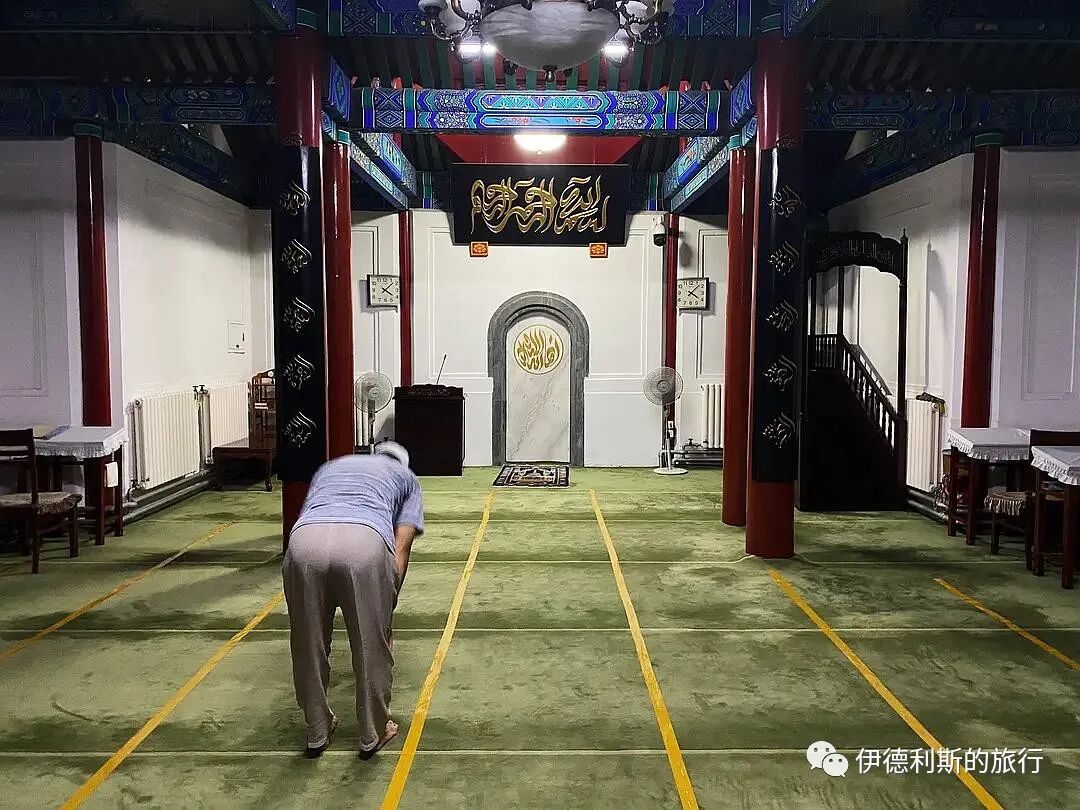
July 30, 2022, was the Islamic New Year. Since it fell on a Saturday, I decided to go on a mosque-visiting trip.
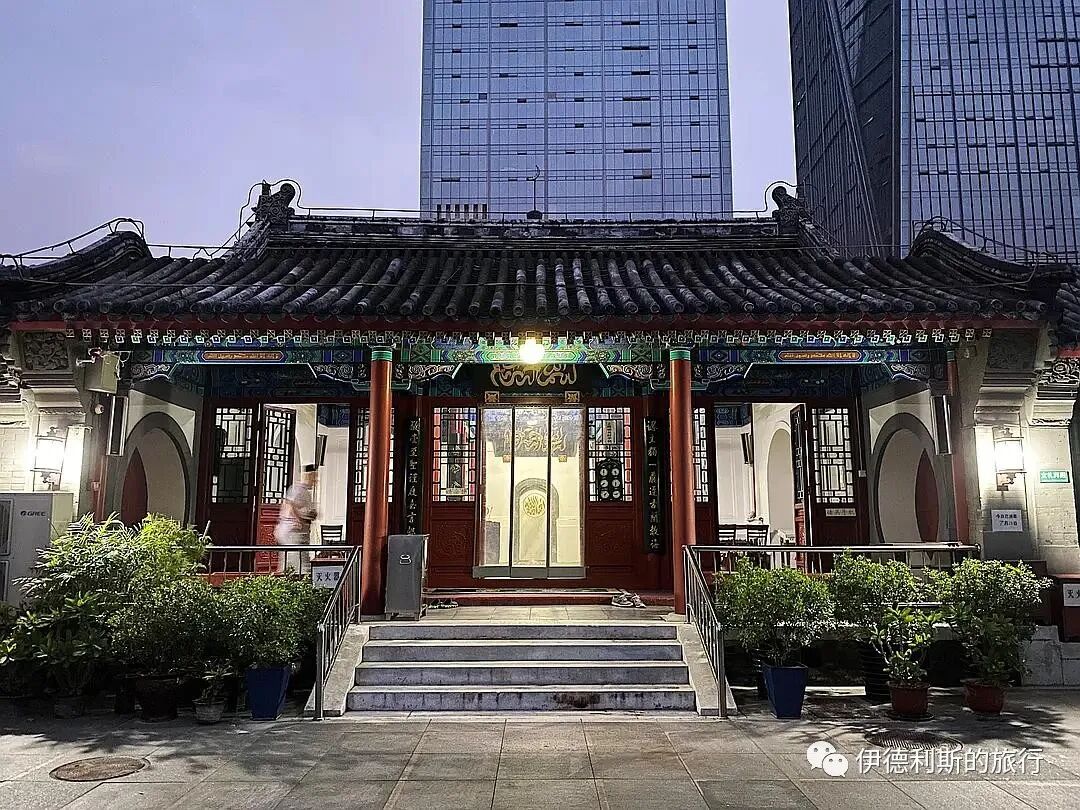
Dongzhimenwai Mosque
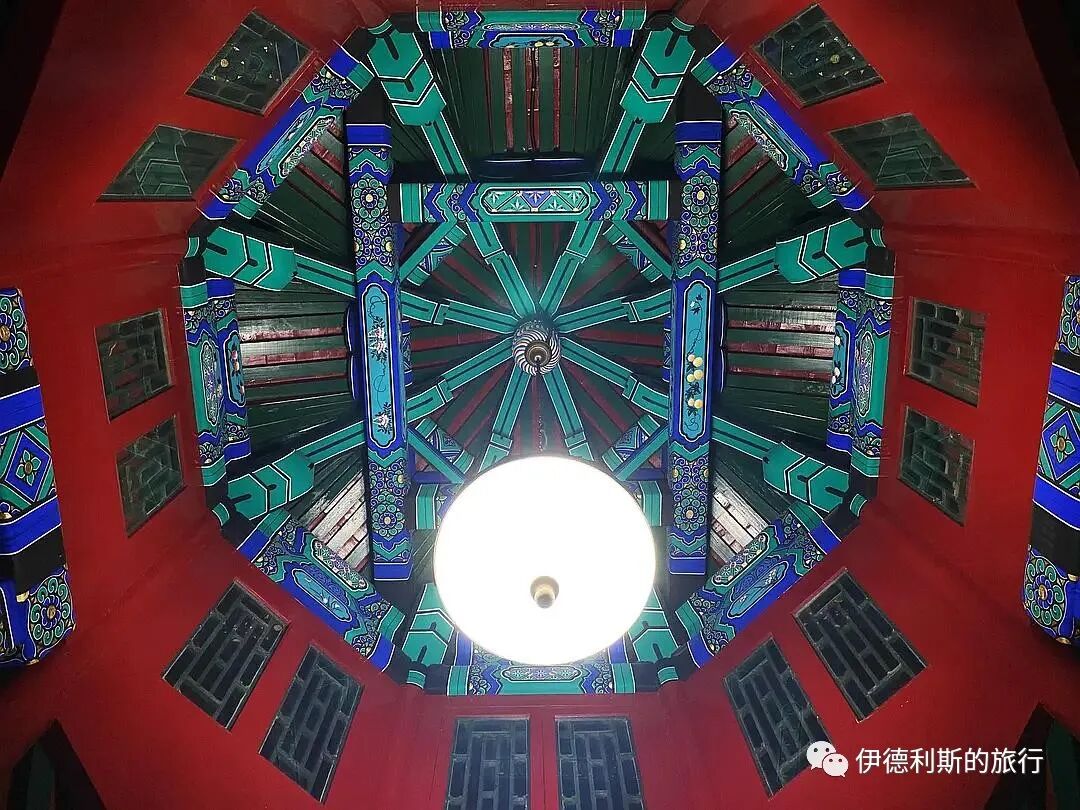
A great day starts with a good morning (bangda). I went to the Dongzhimenwai Mosque, which is relatively close to my home. Dongzhimenwai Mosque was originally called Erlizhuang Mosque. It was first built during the Yuan Dynasty and renovated during the Kangxi period of the Qing Dynasty. In the late 1980s, Shougang Group and a Danish business partner built international apartments in Erlizhuang. Because of this, the mosque was moved one kilometer to the northwest and rebuilt. It was completed in 1991 and reopened in 1993.
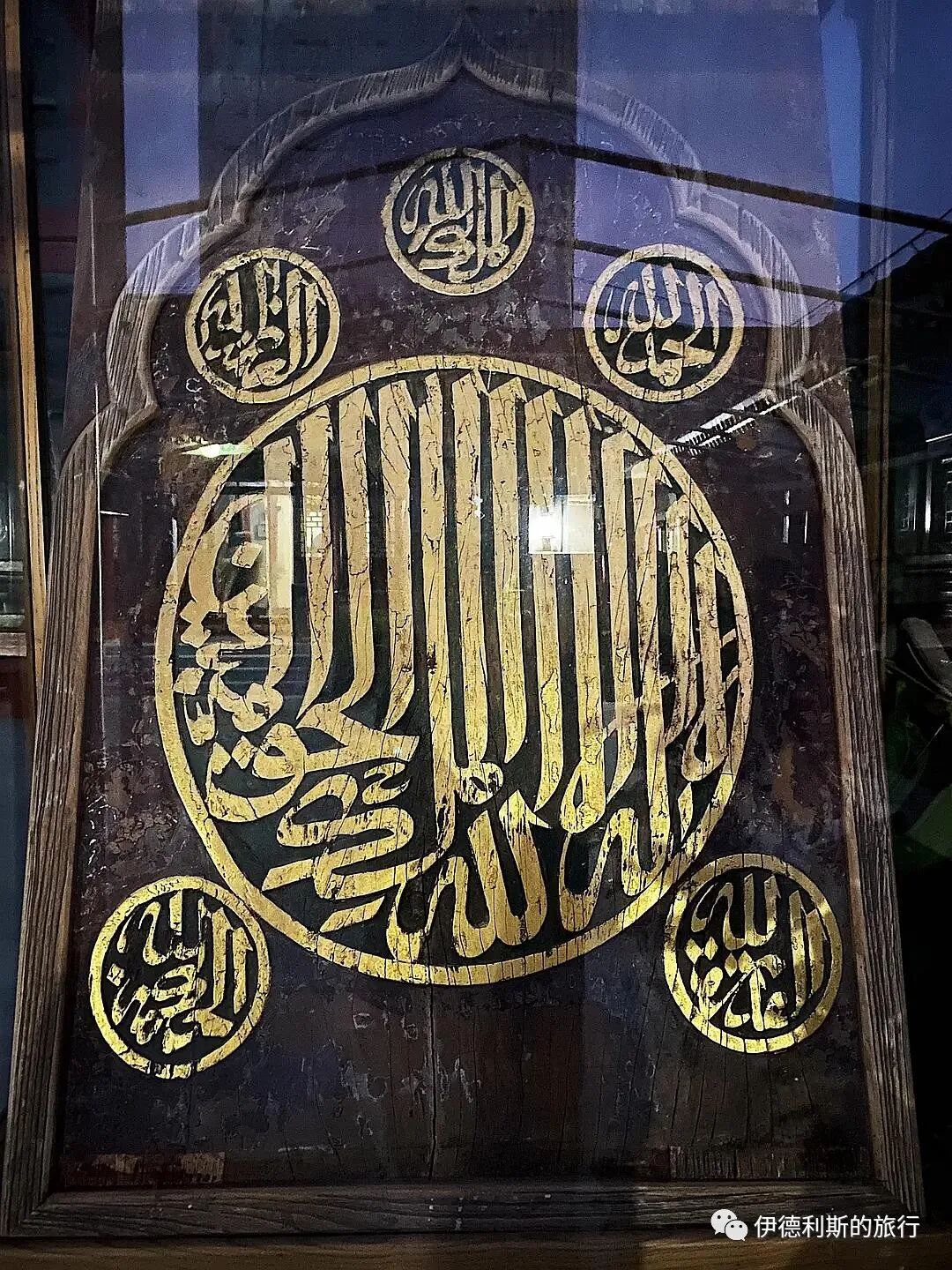
The mosque currently houses a precious wooden carving of a dua, which is said to be an original piece from the Yuan Dynasty.
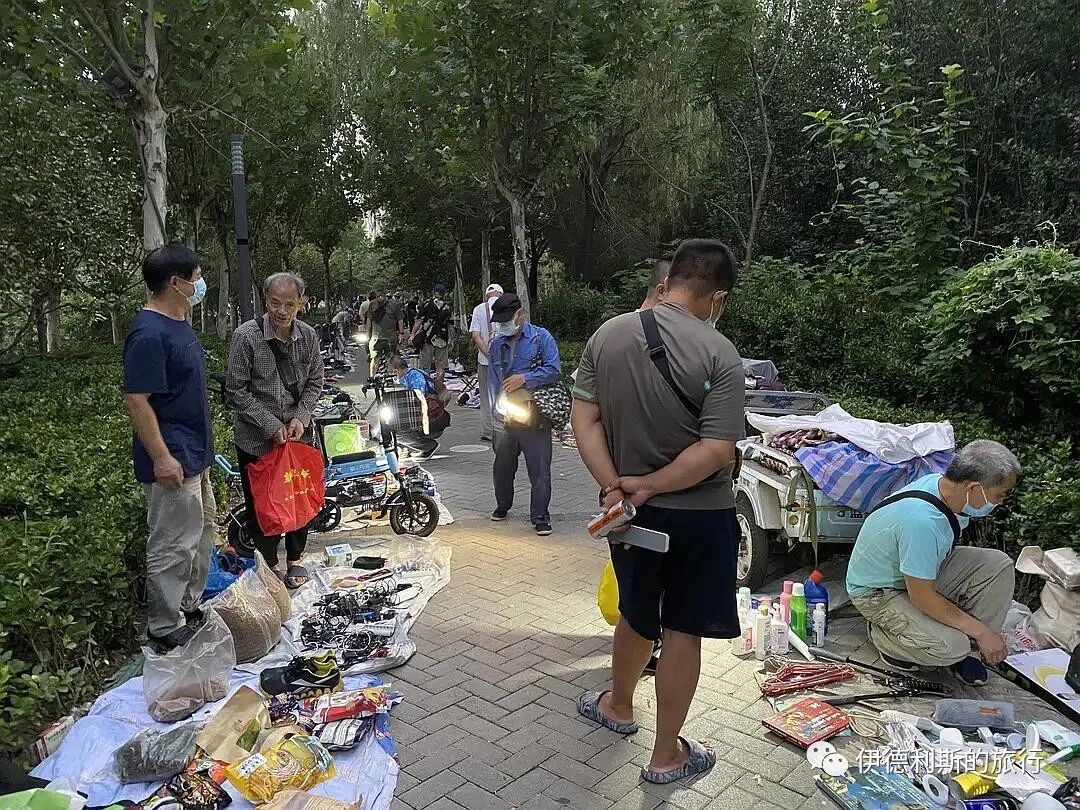
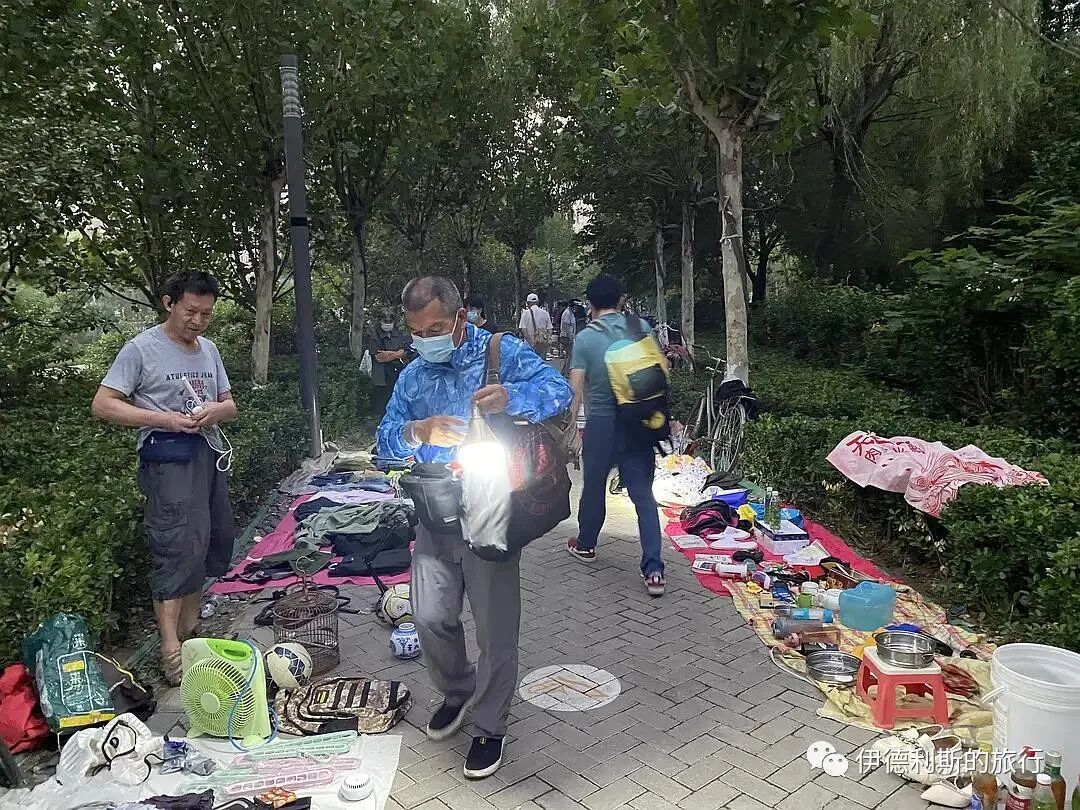
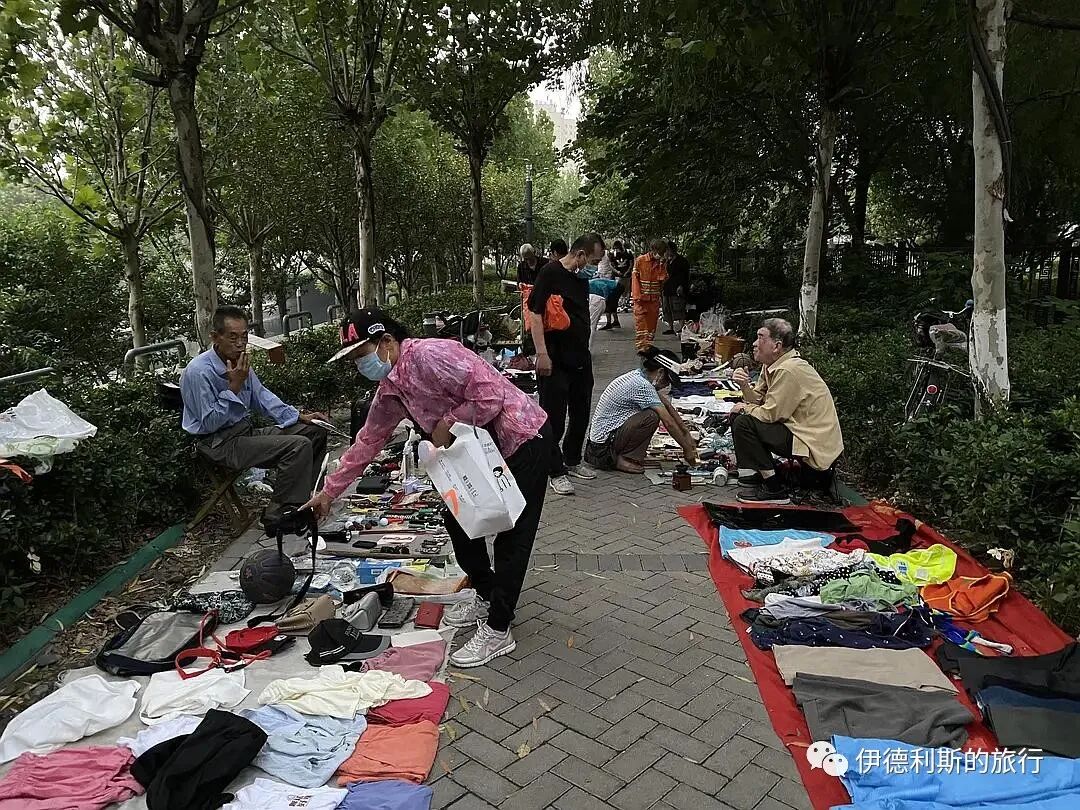
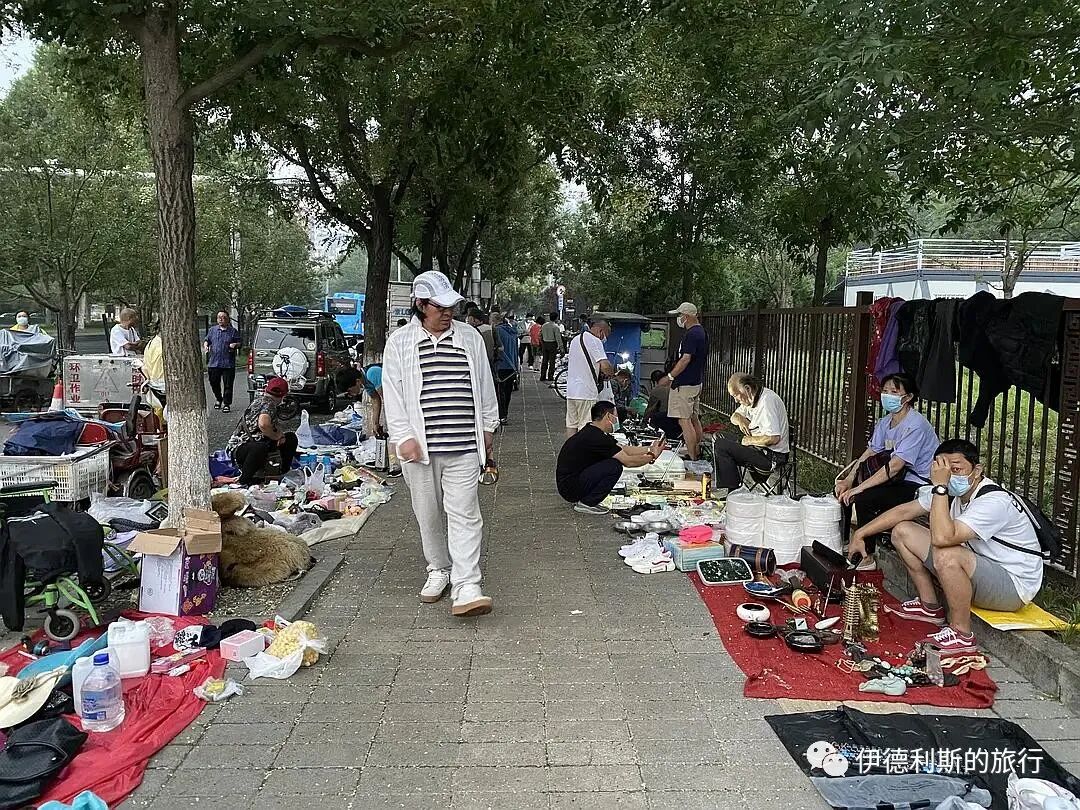
After finishing my namaz, I visited the morning market (xiaoshier) by the Liangma River outside Dongzhimen. I went there often last summer, but this was my first time this year. It felt like the items weren't as interesting as before.
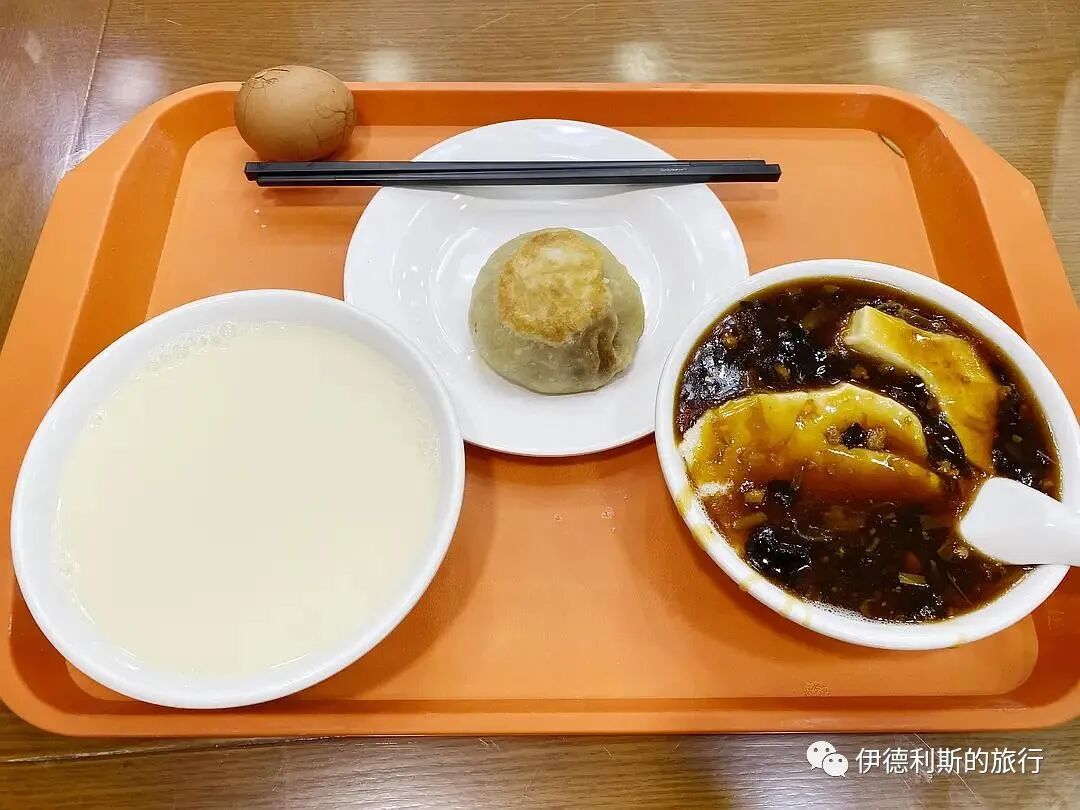
After the market, I grabbed a quick breakfast at Bai Kui in Kuanjie, then went home to take a nap.
Knife-cut noodles (daoxiaomian) in Xiguanshi
I woke up in the morning and set off for the Qinghe Mosque, but the information was wrong and it was closed. I continued on to Xiguanshi in Changping.
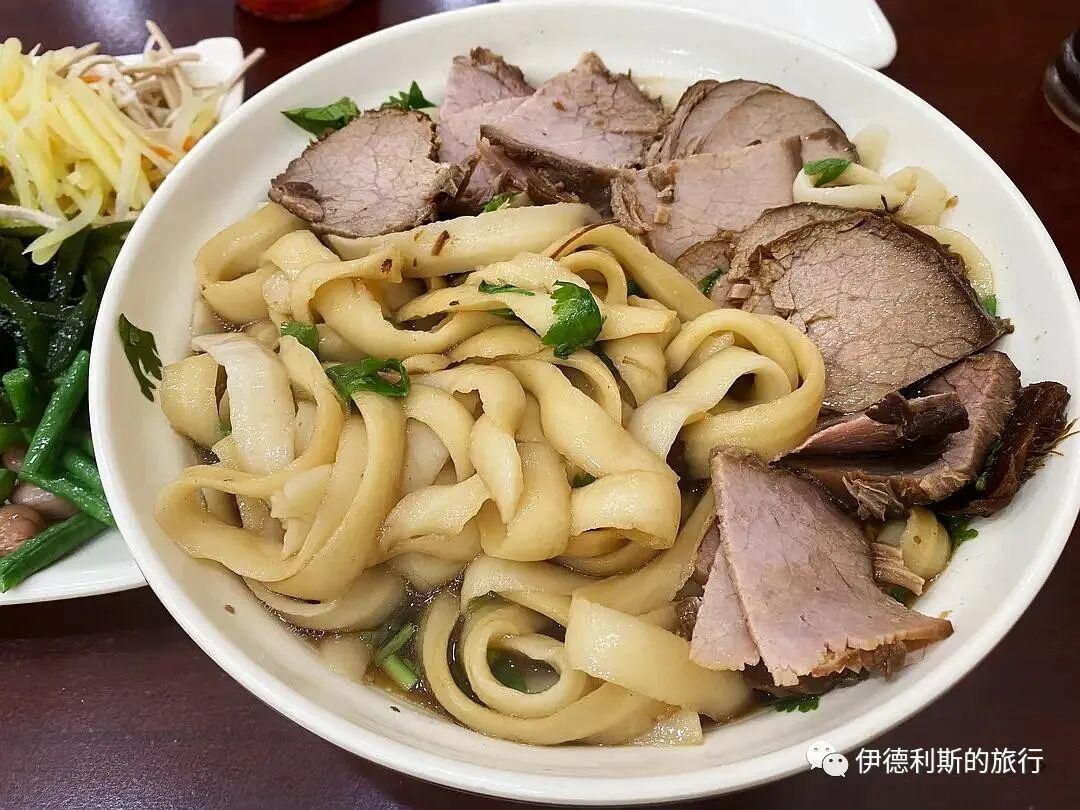
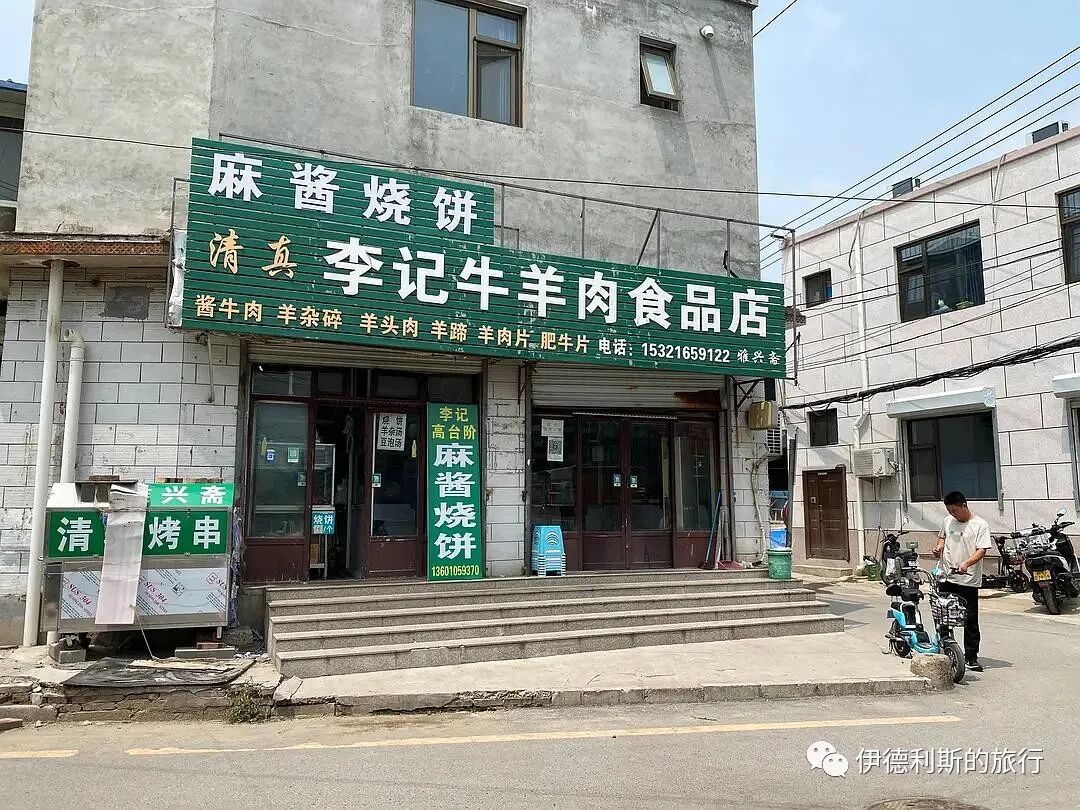
I had knife-cut noodles (daoxiaomian) at Yiyuan Restaurant in Xiguanshi. They also serve corn noodles (yumigeluomian) and oat noodles (bashanyouman). Because the Hui Muslims of Xiguanshi were used to traveling the western routes as armed escorts during the Qing Dynasty, their dietary habits were influenced by the Jin dialect region. This makes them very different from Hui Muslims in other parts of Beijing. Eating a bowl of these Hui Muslim knife-cut noodles is a way to get a taste of the Qing Dynasty culture of traveling the western routes (zouxikou).
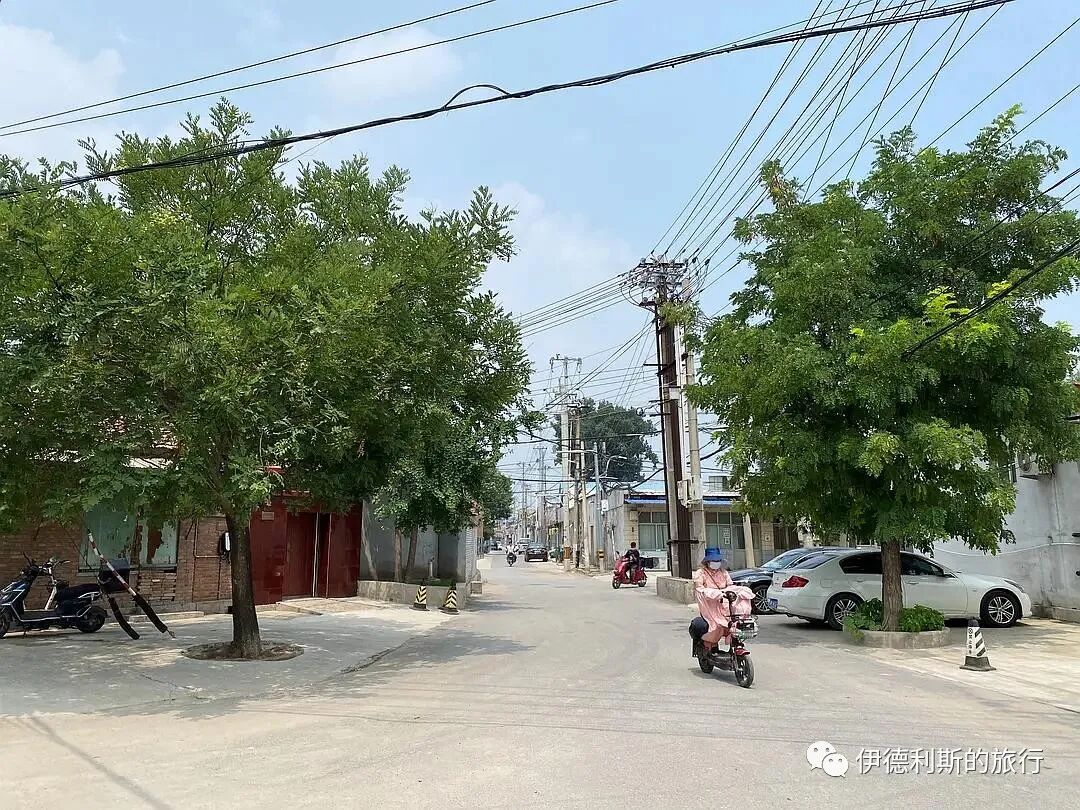
Street view of Xiguanshi
This meat flatbread (roushaobing) shop is also very famous.
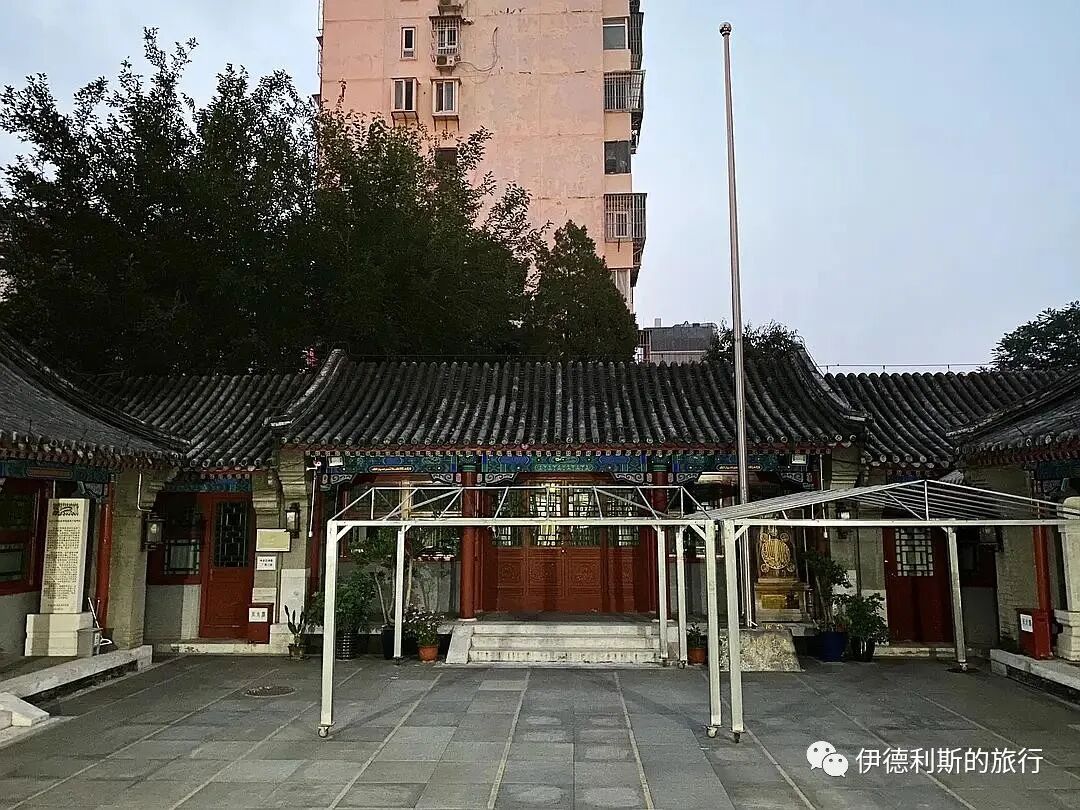
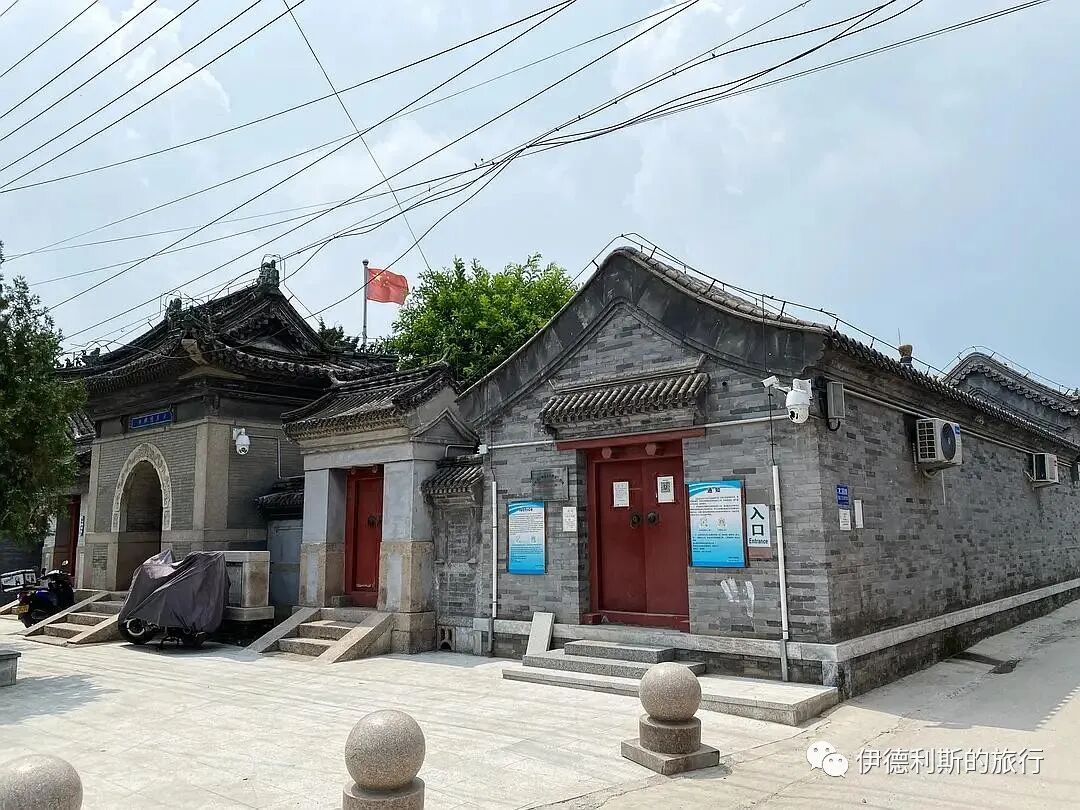
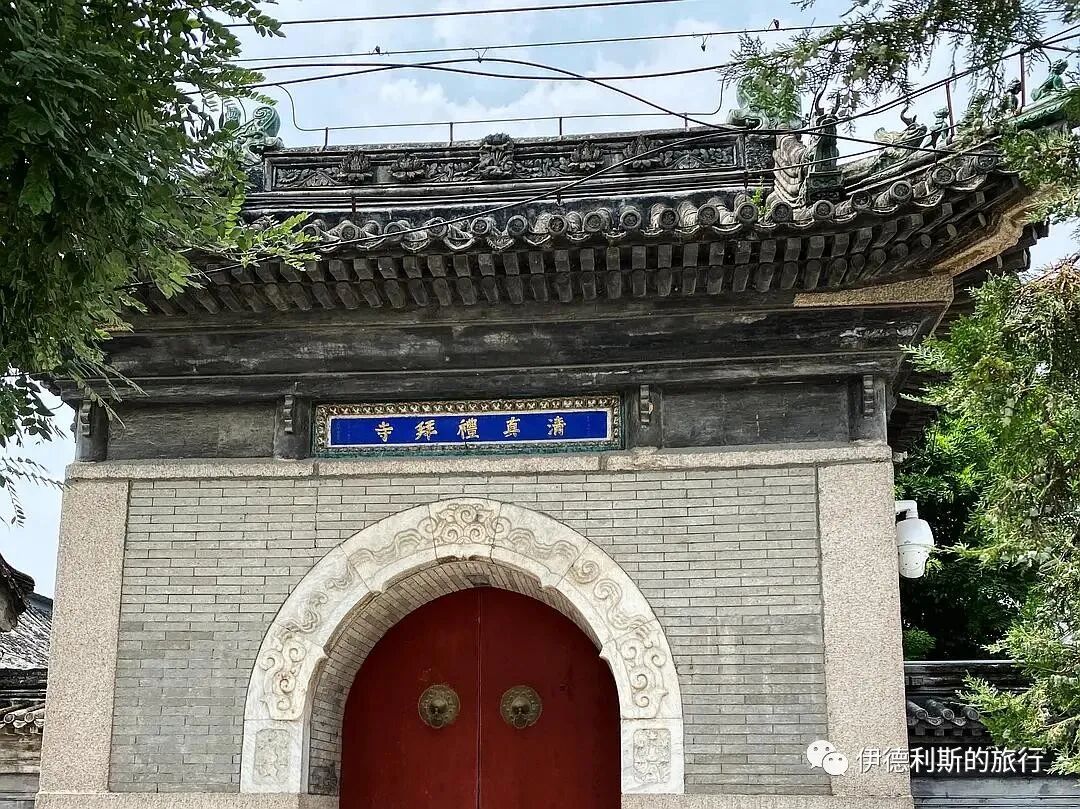
Xiguanshi Mosque
After lunch, I performed my namaz at the Xiguanshi Mosque.
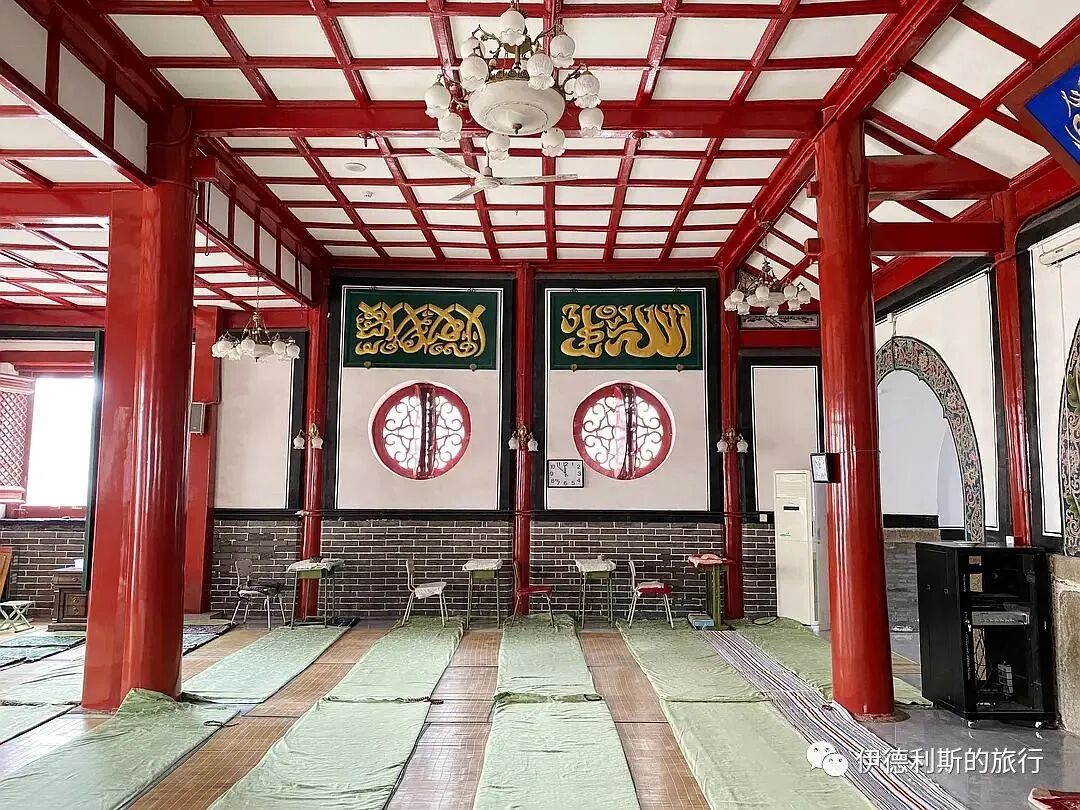
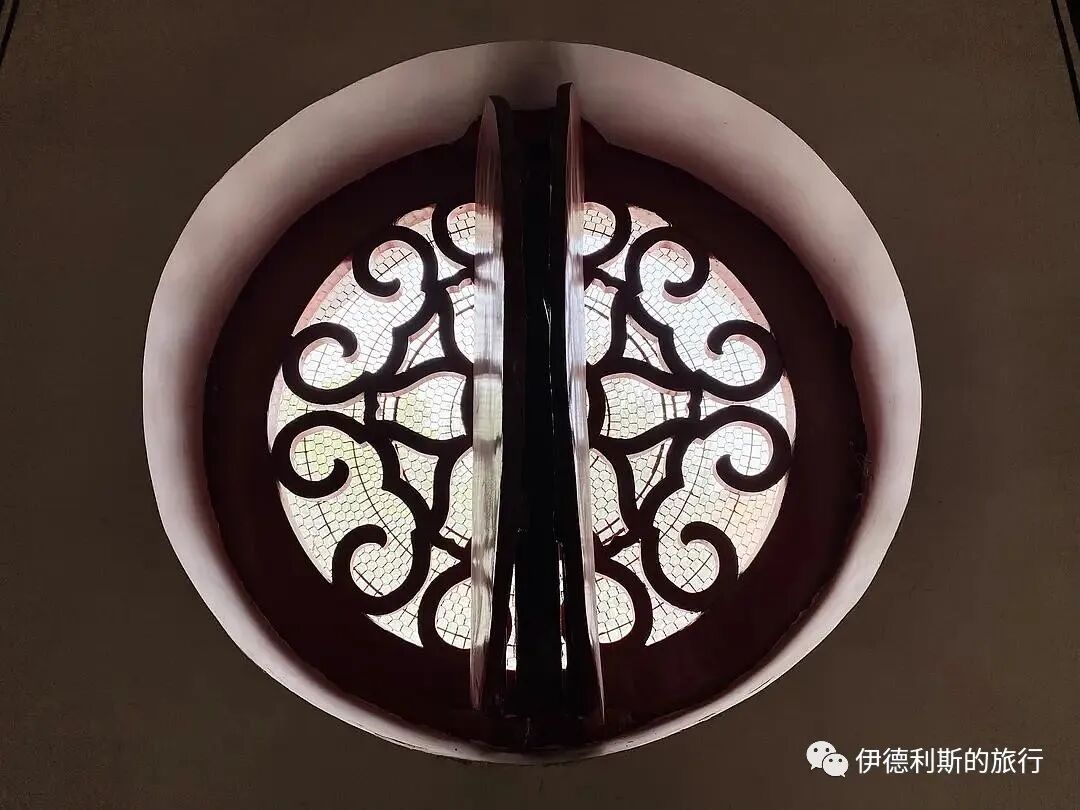
Xiguanshi Mosque was originally called the Guan Shi Village Mosque. It was first built in 1494 (the seventh year of the Hongzhi reign of the Ming Dynasty). The main hall was rebuilt in 1709 (the 48th year of Kangxi), the main gate in 1723 (the first year of Yongzheng), the hall rooms in 1732 (the tenth year of Yongzheng), and the kiln hall in 1761 (the 26th year of Qianlong). It continued to be renovated during the Guangxu period and the Republic of China.
On August 15, 1900, the Eight-Nation Alliance entered Beijing. Empress Dowager Cixi and the Guangxu Emperor fled the city to the west, arriving in Xiguanshi at dusk. The Hui Muslims of Xiguanshi, led by clan elder Li Xilun, welcomed the imperial party south of the village. They led Cixi and her group to stay at the Xiguanshi Mosque, where they were received by Imam Cai Wanchun. According to the late Qing record 'Gengzi Guobian Ji' by Luo Dunrong, 'At dusk, they arrived at Guan Shi in Changping. The Emperor and the Empress Dowager had not eaten for a day.' The villagers offered them sorghum, which they ate with their hands. The Empress Dowager wept, and the Emperor wept as well. It was cold, and they could not find bedding. A village woman offered a cloth quilt that was still damp from washing. Afterward, Cixi slept in the main hall, the Emperor and his consorts slept in the side halls, and the rest of the party stayed in nearby civilian homes.
The next day, Li Xijun, the owner of the Xiguangyu Escort Agency in Xiguanshi, prepared twenty mule-drawn sedan chairs, along with silver ingots and grain for the imperial party. A villager named Yang Juchuan volunteered to lead the way, and Li Jintang provided an escort to the next stop. Wu Lu, a compiler at the Hanlin Academy who experienced the Gengzi Incident, wrote in his 'Hundred Sorrows Poems': 'The imperial carriage stopped at the ancient mosque, and the happy villagers offered their humble vegetables.' They donated a thousand pieces of gold for imperial use and transported a hundred loads of grain from their own stores. In times of hardship, they opened the channels for speech, and I read the imperial edict with tears streaming down my face. I sigh at the border officials who received such great favor, while they live in deep seclusion in their offices. "
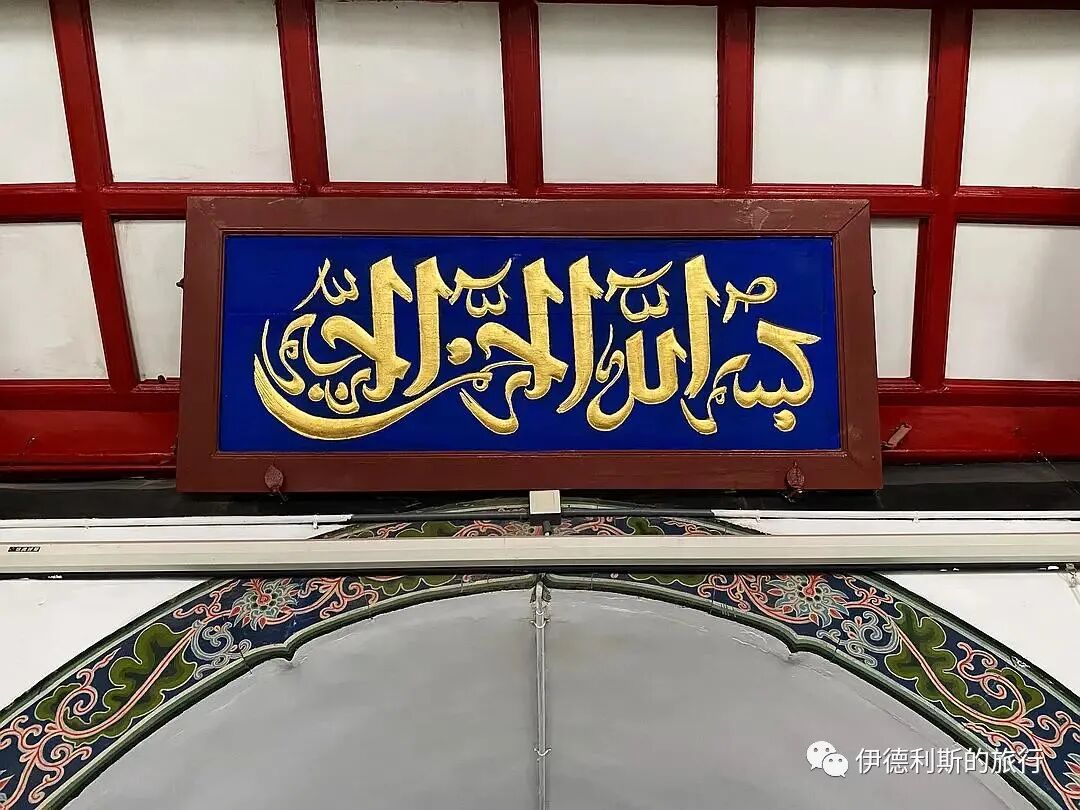
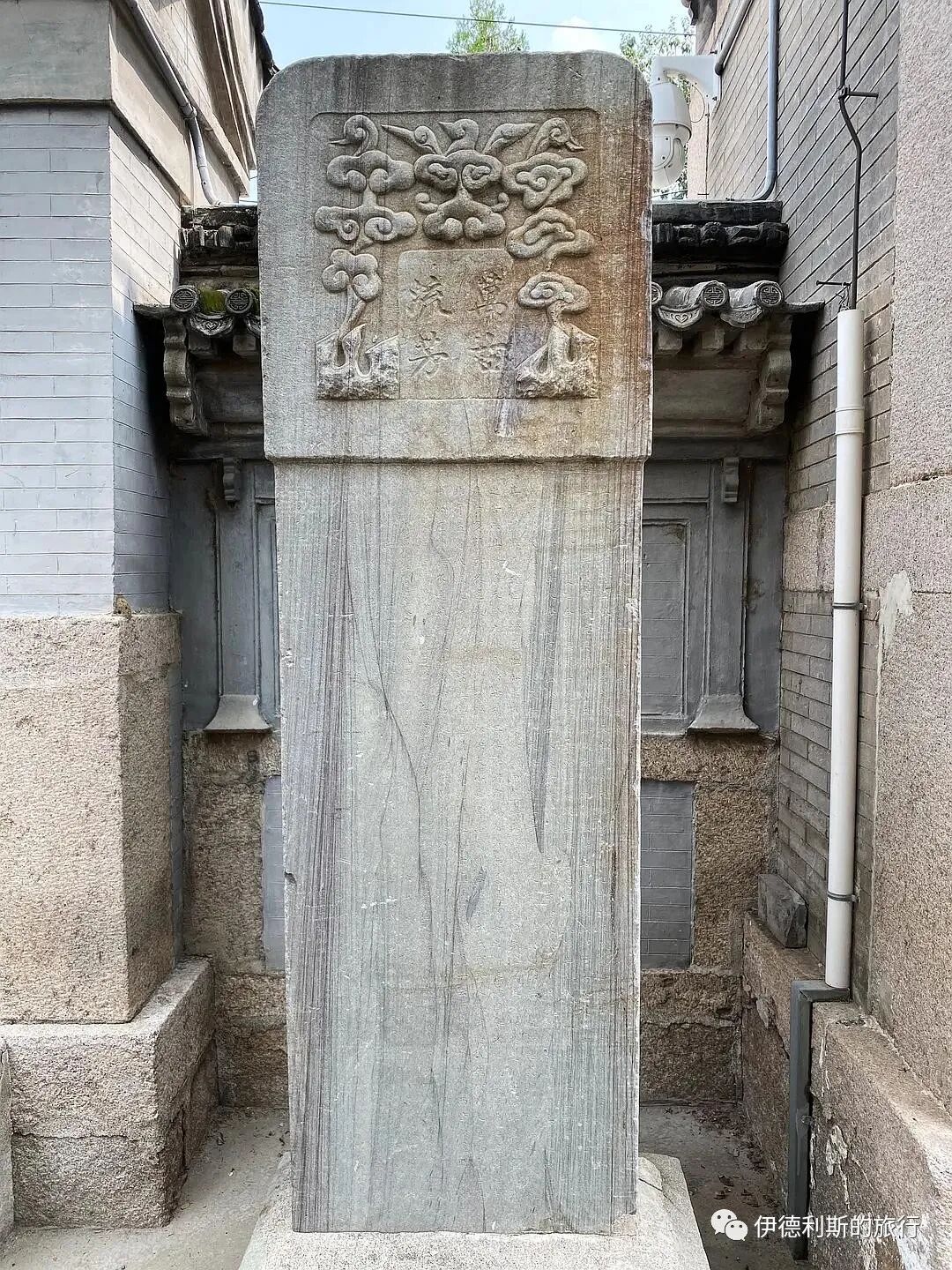
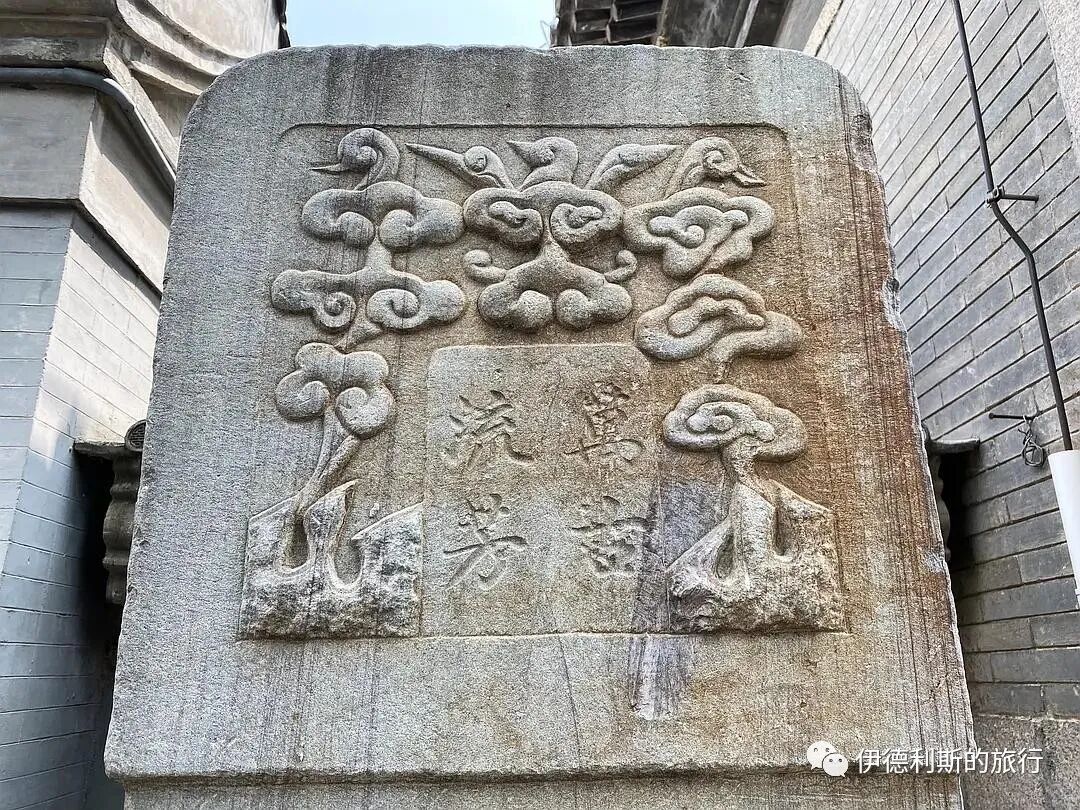
Two years later, when Cixi returned to Beijing, she granted silver for the renovation of Xiguanshi. She also had glazed tiles, roof treasures, and ridge beasts fired at the Liulihe Imperial Kiln to be gifted to the Xiguanshi Mosque and the mosque in Gaotou Village, Wuji County, which was the hometown of Imam Cai Wanchun. Cixi inscribed a plaque for the mosque that read 'Spiritual Inspiration Manifested,' the Guangxu Emperor inscribed 'Loyalty Dedicated to the Sovereign,' Prince Su Shanqi inscribed 'Pure Emptiness Tastes of the Way,' and Prince Li inscribed 'Profound and Infinite.' She also granted Yang Juchuan, who helped lead the way, the title of 'Marquis of Leading the Way,' and Li Jintang, who helped with the escort, the rank of a second-grade official in Zhejiang. Many others, including village elder Li Xilun and Imam Cai Wanchun, were awarded fifth, sixth, and seventh-grade official headwear.
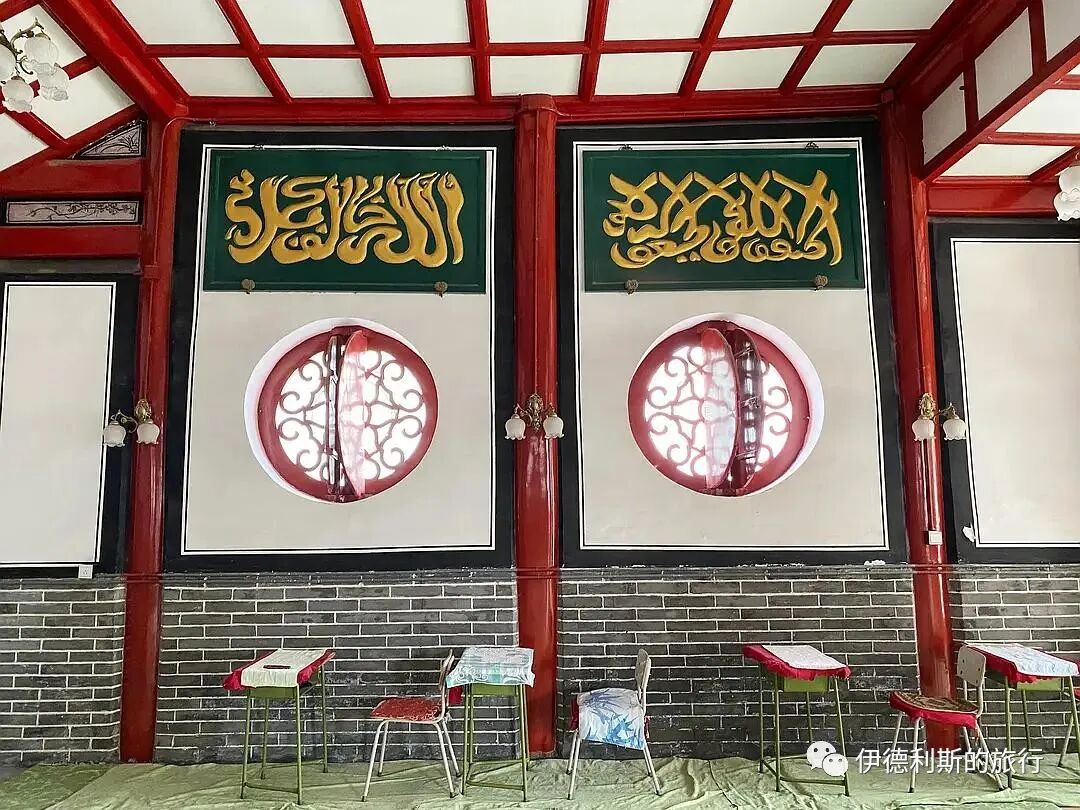
In 1958, when a communal canteen was set up, the plaques in the main hall were taken down and used as cutting boards. Their whereabouts are now unknown. After the 1960s, the main hall was turned into a warehouse, and all the plaques and couplets were burned. All buildings except for the main hall and the main gate were demolished until it was restored and reopened in 1982.
The 1879 stone tablet titled 'Record of Li Yongxin's Donation for Annual Repairs in Xiguanshi Village' documents how Li Yongxin donated land and silver to renovate the mosque. The author of the tablet, Ma Zhaoqing, was a famous Qing Dynasty scholar. His compilation, the 'Changping Outer Gazetteer,' corrected and supplemented the 'Changping Prefecture Gazetteer,' making it a valuable historical source. Ma Zhaoqing also wrote a couplet for the Xiguanshi main hall: 'Since the Tang Dynasty, thirty volumes of treasure have been received, pure and clean;' Follow Allah's commands, observe the five daily namaz, and lead the people to prosperity and peace. Unfortunately, it was destroyed in the 1960s.
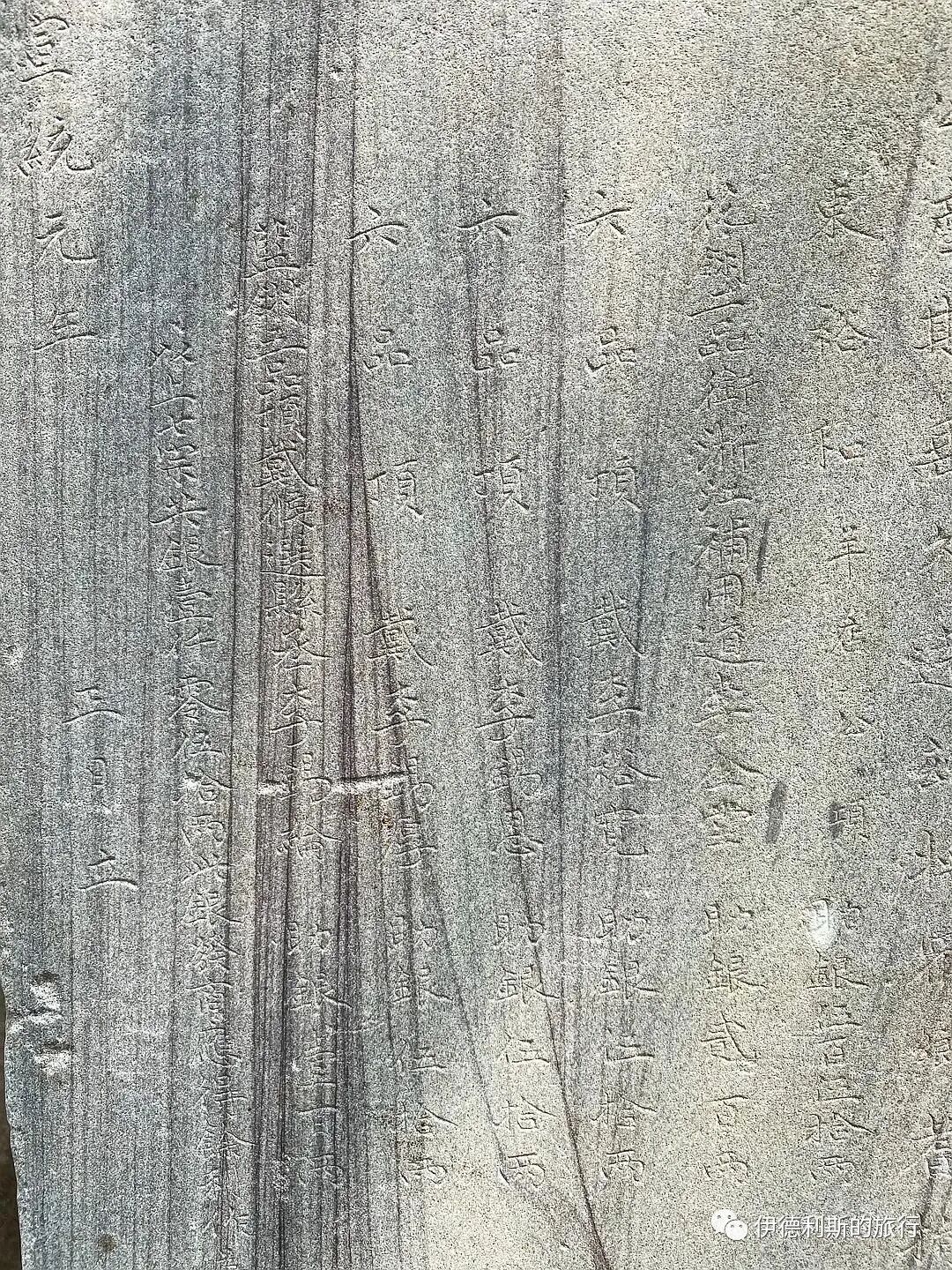
The 1909 stele titled 'Public Record of Donations for the Xiguan Mosque School' notes that during the Boxer Rebellion, Xiguanshi was not only spared from harassment but also received rewards for hosting Empress Dowager Cixi and her entourage during their flight west. Consequently, local elders donated money and land to support the mosque and its school.
The stele mentions that many donors held official ranks. Among them was Li Jintang, owner of the Xiguangyu Security Firm, who had protected Cixi. He later followed a general to oversee Xinjiang. When a Uyghur uprising broke out in Ili, Li Jintang returned to his hometown of Xiguanshi via Russia under the protection of Uyghurs, and he passed away shortly after.
Dongyuhe Sheep Shop Public Fund
Li Jintang, Second-Rank Official with Peacock Feather, Zhejiang Expectant Circuit Intendant
Li Mingda, Fifth-Rank Official with Peacock Feather
Li Guozhen, Fifth-Rank Official
Li Xilun, Fifth-Rank Official with Blue Feather, Candidate for County Magistrate
Li Baochen, Sixth-Rank Official with Blue Feather
Li Yukuan, Li Xitian, Li Xi'en, Li Xihou, Hai Mingzhu, and Li Sheng, all Sixth-Rank Officials
Li Zhensheng, Seventh-Rank Official
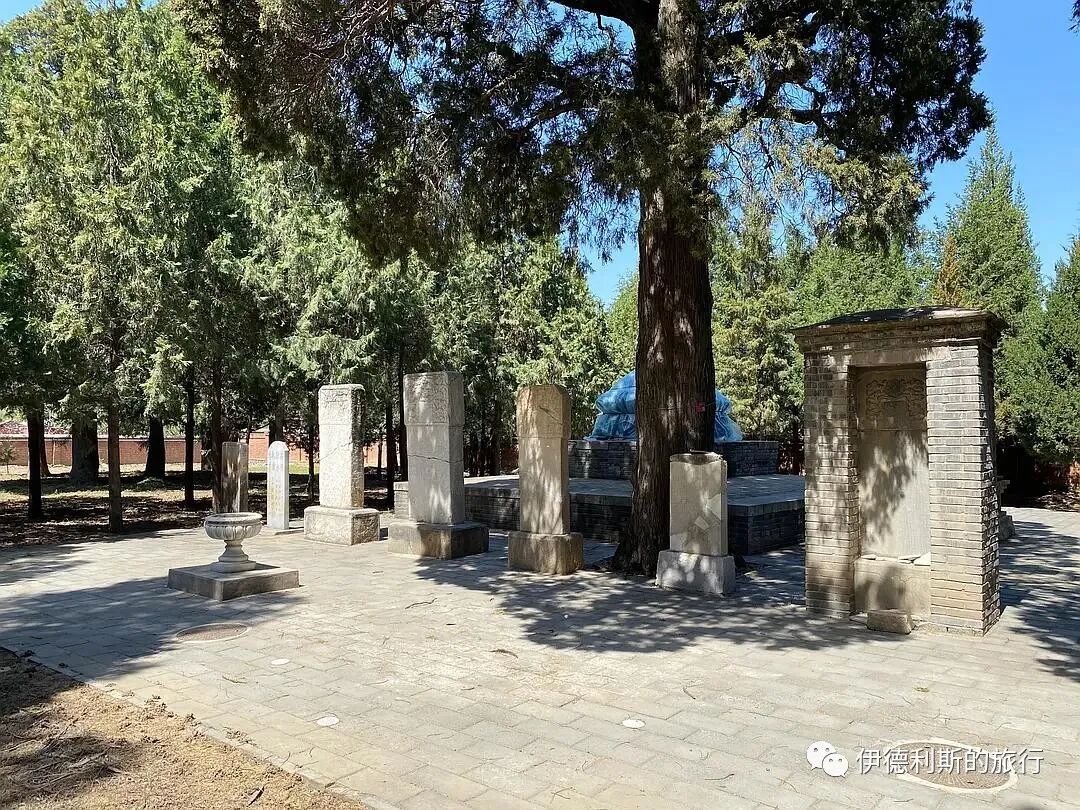
Additionally, the tomb garden of the sage Bo Hazhi in Changping also contains a donation stele from 1909. It lists Hui Muslims from Xiguanshi who donated to the tomb, and some names overlap with those on the Xiguanshi stele:
Ma Jinsheng, Imam of the mosque
Zhang Jizong, Gao Zhaoming, and Li Chunze, Seventh-Rank Officials and religious leaders
Li Jintang, Second-Rank Official with Peacock Feather, Zhejiang Expectant Circuit Intendant
Yang Deqing, Third-Rank Official with Peacock Feather
Li Minghe, Li Mingda, and Li Fengrui, Fifth-Rank Officials with Peacock Feather
Li Baochen, Fifth-Rank Official with Blue Feather
Li Xilun, Fifth-Rank Official with Blue Feather, Candidate for County Magistrate
Huang Jinbao, Fifth-Rank Official
Li Qingyuan, Li Xichun, Li Xihou, and Li Xi'en, Sixth-Rank Officials
Li Qingzhen, Li Qing, Zhang Dahai, and Li Guishen, Seventh-Rank Officials
Li Xilin, Candidate for Prefect
Wen Shengkang and others
Ma Qi, graduate of the Shuntian Police Academy
Fayuan Mosque outside Deshengmen
I took the 919 bus from Shahe to its final stop outside Deshengmen, which was the perfect chance to visit the Fayuan Mosque.
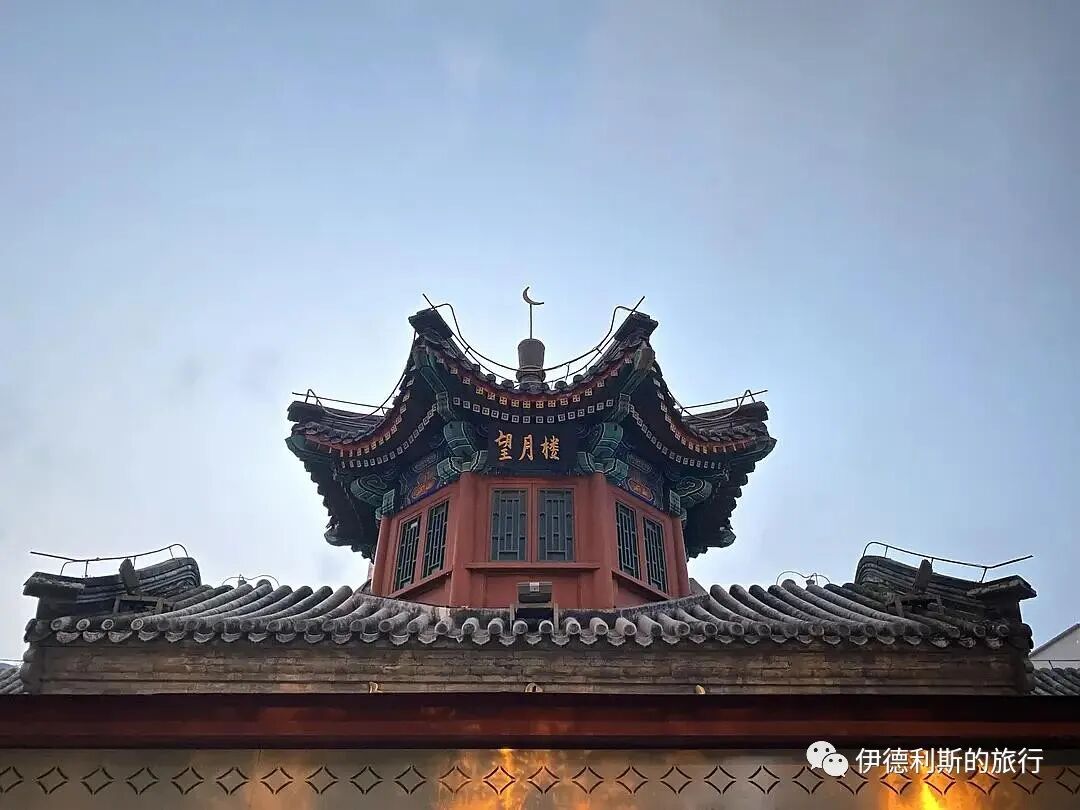
The founding date of Fayuan Mosque is unknown. It was originally located on a slope north of Jiaochangkou outside Deshengmen. It was moved and expanded during the Kangxi era, and the main hall was expanded again during the Republic of China period, featuring four interconnected roofs and a four-cornered pavilion top.
The entrance to the main hall now displays a plaque reading 'All Things Return to Truth,' inscribed in 1928 by General Ma Fuxiang. In the late 1920s, Ma Fuxiang was living in Beijing. He studied Islamic classics deeply and donated money to help Muslims build schools. In 1928, he helped organize the Beiping Muslim Middle School, later renamed Northwest Public School, and donated over a dozen school buildings he had purchased in the backyard of the Dongsi Mosque to the Chengda Teachers' College.
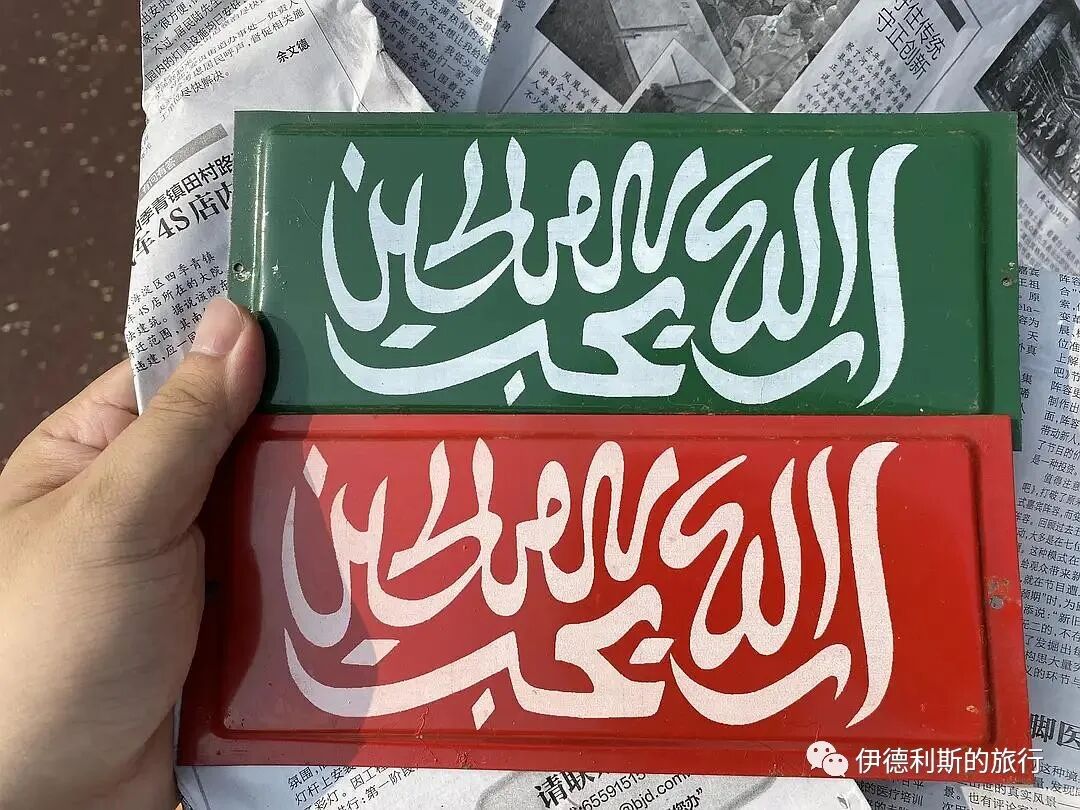
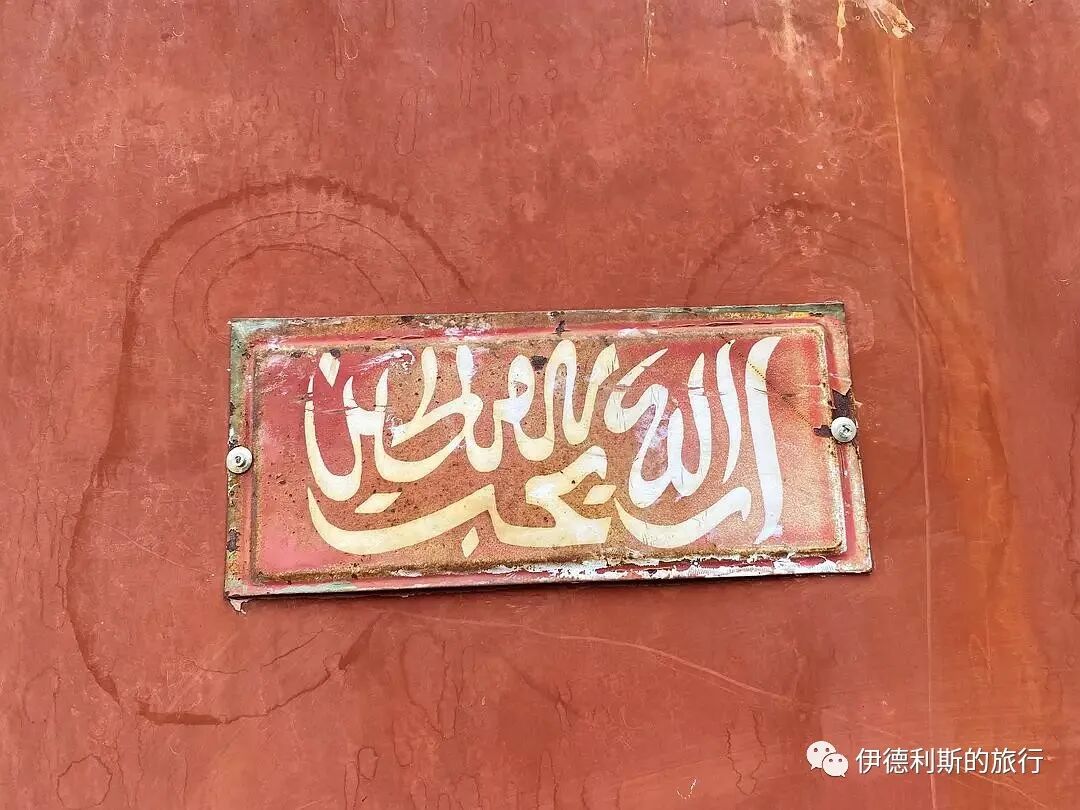
I bought two door hangings (mendu'er) at the mosque. These are quite old. The one in the picture below shows how they looked after hanging on the streets of Xiguanshi village for many years.
Digging for records at Fusheng Record Store
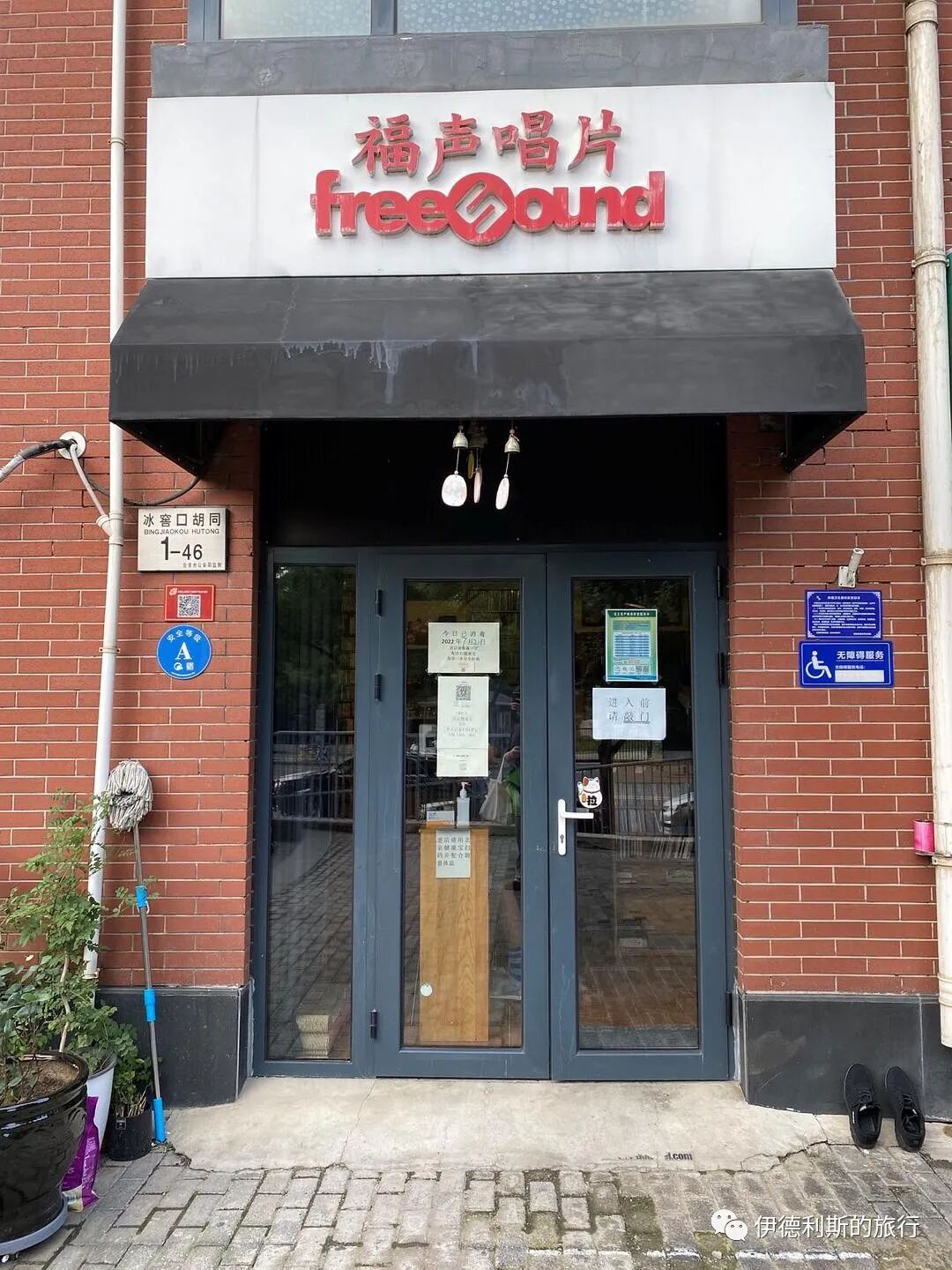
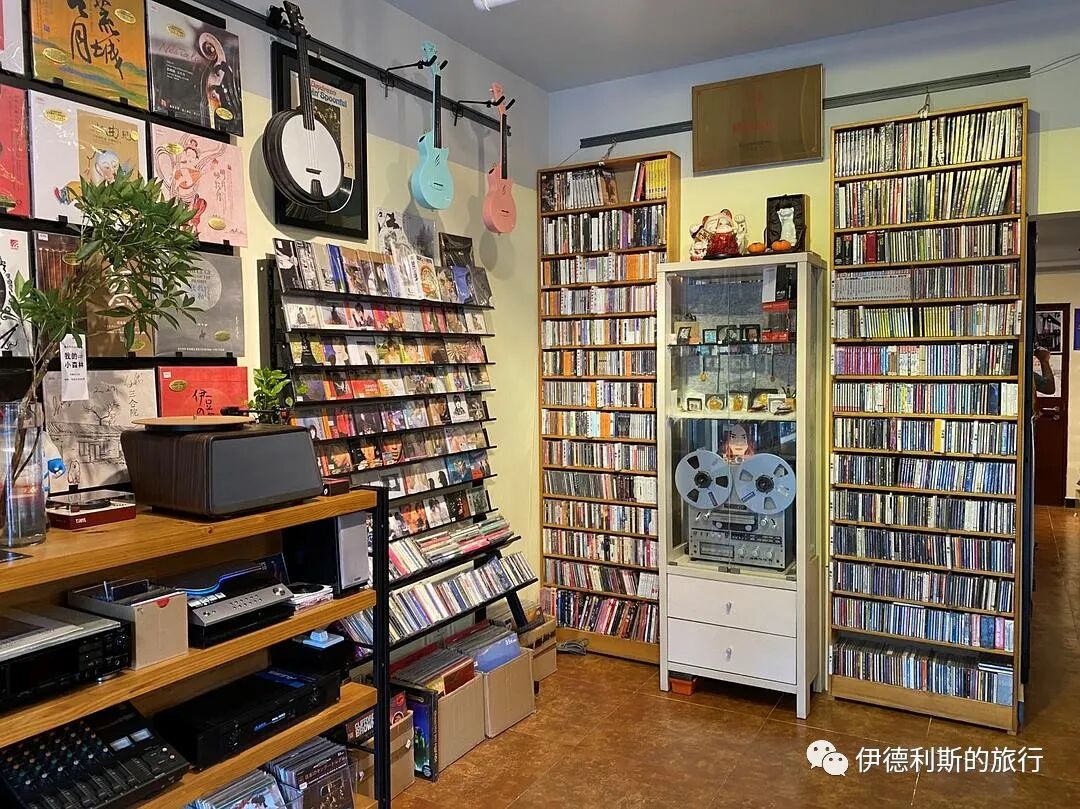
There is a long-standing record shop called Fusheng near Bingjiaokou outside Deshengmen. When I was a child, they were located in Ping'anli before moving to the area outside Deshengmen. After leaving the mosque, I bought two albums related to the faith at their shop.
One is a cut-out disc of early music from 1978-1982 by the Pakistani Sufi Qawwali master Nusrat Fateh Ali Khan.
Nusrat Fateh Ali Khan is known as the 'King of Qawwali' and had a major influence on South Asian pop music. He was born in 1948 into a Punjabi Muslim family in Pakistan. It is said his family has passed down Qawwali music for nearly 600 years, singing mainly in Urdu and Punjabi.
Nusrat performed for the first time in London at the WOMAD festival in 1985, and after that, he toured all over the world. In the late 1980s, he signed with the British world music label Real World. He released a series of world music albums in the 1990s and collaborated with many different types of musicians, earning him the title of a pioneer of world music.
Unlike his later polished remix and fusion albums, this early collection features raw, traditional Sufi Qawwali music that was not yet well-known to the Western mainstream.
South Asian classical music is traditionally divided into different schools (gharānā), which are passed down steadily through the relationship between master and student. Nusrat belonged to the ancient Qawwal Bacchon school, founded in the late 13th century by Amir Khusrow, a sage of the Chisti Sufi order in Delhi, India. It developed and was passed down in Delhi, centered at the shrine (Nizamuddin Dargah) of the Sufi saint Nizamuddin, until it moved to Pakistan during the partition of India and Pakistan in 1947. In 2018, I was lucky enough to experience traditional Qawwali music at a Sufi shrine in Delhi.
Another album is the English nasheed (nasheed) album Allah Knows, created in 2006 by South African Muslim musician Zain Bhikha for his son Rashid and all Muslim children approaching puberty.
Zain Bhikha was born in South Africa in 1974. He began releasing albums as a singer after 1994 and is very famous in the South African Muslim community. In the 1990s, the famous British singer Yusuf Islam (stage name Cat Stevens), who converted to Islam, began creating English nasheed music and received a great response. After hearing Zain's album, Yusuf invited him to London to collaborate.
In 2000, with Zain's help, Yusuf released the album A is for Allah for Muslim children, which is a representative album of modern English nasheed music. After this, Zain released a series of nasheed albums, the most famous of which is Mountains of Makkah, released after he returned from Hajj in 2004.
Nasheed means chanting in Arabic, and the themes are mostly about faith, religious history, and culture. Historically, there has been disagreement within the faith about whether music is allowed and how it should be used. Some Muslims believe that religious music should only be sung a cappella or accompanied by drums, while others believe that any instrument is fine as long as the performance and content do not violate the faith.
Historically, the most famous nasheed music is the Ta'zieh music of the Shia sect commemorating the martyrdom of Imam Hussein and the South Asian Sufi Qawwali music. There is also Madih nabawi music, which is praise for the Prophet that circulates throughout the Arab world. After the 2000s, modern nasheed music began to develop everywhere. to Yusuf Islam and Zain Bhikha mentioned above, the Malaysian group Raihan has been the most famous nasheed group in Malaysia since the late 90s, and they were invited by the Queen of England to perform in the UK in 1997. In 2005, the Washington-based nasheed group Native Deen released the album Deen You Know, which combined American rap with nasheed music.
Zhengyuan Mosque
I rode my bike from outside Deshengmen to the Zhengyuan Mosque in Dongguanying Hutong inside Xizhimen.
The predecessor of Zhengyuan Mosque was the Beigouyan Mosque inside Xizhimen, which was built during the Daoguang reign. After 1946, Beigouyan was renamed Zhaodengyu Road, so it was also called Zhaodengyu Road Mosque. In 1997, it was relocated and rebuilt at its current site due to demolition, and it was renamed Zhengyuan Mosque. According to the Beijing City Gazetteer written in the 1930s, the mosque in Beijing originally called Zhengyuan should be the Jiaochangkou Mosque outside Fuchengmen.
The mosque has just finished renovations. The tiles and dome were removed from the gate, leaving only the plaque inscribed by Hei Boli, the former chairman of the Ningxia Hui Autonomous Region.
After visiting the mosque, I went home, cooked two home-style dishes, and had dinner with Zainab.
Nandouyacai Mosque
After eating, I went to the Nandouyacai Mosque inside Chaoyangmen to attend the Isha prayer.
People say the Nandouyacai Mosque was originally a mosque, which was bought and rebuilt by Muslims with funds raised in 1798 (the third year of the Jiaqing reign). In 2002, due to the demolition of Chaonei Street, the mosque was moved more than 20 meters to the south and rebuilt, changing its entrance to face west toward Douban Hutong. view all
Summary: Beijing — Mosques, Islamic New Year and Muslim Heritage is presented here as a firsthand travel account in clear English, beginning with this scene: July 30, 2022, was the Islamic New Year. Since it fell on a Saturday, I decided to go on a mosque-visiting trip. The account keeps its focus on Beijing Mosques, Islamic New Year, Muslim Heritage while preserving the names, places, food, and historical details from the Chinese source.
July 30, 2022, was the Islamic New Year. Since it fell on a Saturday, I decided to go on a mosque-visiting trip.
Dongzhimenwai Mosque
A great day starts with a good morning (bangda). I went to the Dongzhimenwai Mosque, which is relatively close to my home. Dongzhimenwai Mosque was originally called Erlizhuang Mosque. It was first built during the Yuan Dynasty and renovated during the Kangxi period of the Qing Dynasty. In the late 1980s, Shougang Group and a Danish business partner built international apartments in Erlizhuang. Because of this, the mosque was moved one kilometer to the northwest and rebuilt. It was completed in 1991 and reopened in 1993.
The mosque currently houses a precious wooden carving of a dua, which is said to be an original piece from the Yuan Dynasty.
After finishing my namaz, I visited the morning market (xiaoshier) by the Liangma River outside Dongzhimen. I went there often last summer, but this was my first time this year. It felt like the items weren't as interesting as before.
After the market, I grabbed a quick breakfast at Bai Kui in Kuanjie, then went home to take a nap.
Knife-cut noodles (daoxiaomian) in Xiguanshi
I woke up in the morning and set off for the Qinghe Mosque, but the information was wrong and it was closed. I continued on to Xiguanshi in Changping.
I had knife-cut noodles (daoxiaomian) at Yiyuan Restaurant in Xiguanshi. They also serve corn noodles (yumigeluomian) and oat noodles (bashanyouman). Because the Hui Muslims of Xiguanshi were used to traveling the western routes as armed escorts during the Qing Dynasty, their dietary habits were influenced by the Jin dialect region. This makes them very different from Hui Muslims in other parts of Beijing. Eating a bowl of these Hui Muslim knife-cut noodles is a way to get a taste of the Qing Dynasty culture of traveling the western routes (zouxikou).
Street view of Xiguanshi
This meat flatbread (roushaobing) shop is also very famous.
Xiguanshi Mosque
After lunch, I performed my namaz at the Xiguanshi Mosque.
Xiguanshi Mosque was originally called the Guan Shi Village Mosque. It was first built in 1494 (the seventh year of the Hongzhi reign of the Ming Dynasty). The main hall was rebuilt in 1709 (the 48th year of Kangxi), the main gate in 1723 (the first year of Yongzheng), the hall rooms in 1732 (the tenth year of Yongzheng), and the kiln hall in 1761 (the 26th year of Qianlong). It continued to be renovated during the Guangxu period and the Republic of China.
On August 15, 1900, the Eight-Nation Alliance entered Beijing. Empress Dowager Cixi and the Guangxu Emperor fled the city to the west, arriving in Xiguanshi at dusk. The Hui Muslims of Xiguanshi, led by clan elder Li Xilun, welcomed the imperial party south of the village. They led Cixi and her group to stay at the Xiguanshi Mosque, where they were received by Imam Cai Wanchun. According to the late Qing record 'Gengzi Guobian Ji' by Luo Dunrong, 'At dusk, they arrived at Guan Shi in Changping. The Emperor and the Empress Dowager had not eaten for a day.' The villagers offered them sorghum, which they ate with their hands. The Empress Dowager wept, and the Emperor wept as well. It was cold, and they could not find bedding. A village woman offered a cloth quilt that was still damp from washing. Afterward, Cixi slept in the main hall, the Emperor and his consorts slept in the side halls, and the rest of the party stayed in nearby civilian homes.
The next day, Li Xijun, the owner of the Xiguangyu Escort Agency in Xiguanshi, prepared twenty mule-drawn sedan chairs, along with silver ingots and grain for the imperial party. A villager named Yang Juchuan volunteered to lead the way, and Li Jintang provided an escort to the next stop. Wu Lu, a compiler at the Hanlin Academy who experienced the Gengzi Incident, wrote in his 'Hundred Sorrows Poems': 'The imperial carriage stopped at the ancient mosque, and the happy villagers offered their humble vegetables.' They donated a thousand pieces of gold for imperial use and transported a hundred loads of grain from their own stores. In times of hardship, they opened the channels for speech, and I read the imperial edict with tears streaming down my face. I sigh at the border officials who received such great favor, while they live in deep seclusion in their offices. "
Two years later, when Cixi returned to Beijing, she granted silver for the renovation of Xiguanshi. She also had glazed tiles, roof treasures, and ridge beasts fired at the Liulihe Imperial Kiln to be gifted to the Xiguanshi Mosque and the mosque in Gaotou Village, Wuji County, which was the hometown of Imam Cai Wanchun. Cixi inscribed a plaque for the mosque that read 'Spiritual Inspiration Manifested,' the Guangxu Emperor inscribed 'Loyalty Dedicated to the Sovereign,' Prince Su Shanqi inscribed 'Pure Emptiness Tastes of the Way,' and Prince Li inscribed 'Profound and Infinite.' She also granted Yang Juchuan, who helped lead the way, the title of 'Marquis of Leading the Way,' and Li Jintang, who helped with the escort, the rank of a second-grade official in Zhejiang. Many others, including village elder Li Xilun and Imam Cai Wanchun, were awarded fifth, sixth, and seventh-grade official headwear.
In 1958, when a communal canteen was set up, the plaques in the main hall were taken down and used as cutting boards. Their whereabouts are now unknown. After the 1960s, the main hall was turned into a warehouse, and all the plaques and couplets were burned. All buildings except for the main hall and the main gate were demolished until it was restored and reopened in 1982.
The 1879 stone tablet titled 'Record of Li Yongxin's Donation for Annual Repairs in Xiguanshi Village' documents how Li Yongxin donated land and silver to renovate the mosque. The author of the tablet, Ma Zhaoqing, was a famous Qing Dynasty scholar. His compilation, the 'Changping Outer Gazetteer,' corrected and supplemented the 'Changping Prefecture Gazetteer,' making it a valuable historical source. Ma Zhaoqing also wrote a couplet for the Xiguanshi main hall: 'Since the Tang Dynasty, thirty volumes of treasure have been received, pure and clean;' Follow Allah's commands, observe the five daily namaz, and lead the people to prosperity and peace. Unfortunately, it was destroyed in the 1960s.
The 1909 stele titled 'Public Record of Donations for the Xiguan Mosque School' notes that during the Boxer Rebellion, Xiguanshi was not only spared from harassment but also received rewards for hosting Empress Dowager Cixi and her entourage during their flight west. Consequently, local elders donated money and land to support the mosque and its school.
The stele mentions that many donors held official ranks. Among them was Li Jintang, owner of the Xiguangyu Security Firm, who had protected Cixi. He later followed a general to oversee Xinjiang. When a Uyghur uprising broke out in Ili, Li Jintang returned to his hometown of Xiguanshi via Russia under the protection of Uyghurs, and he passed away shortly after.
Dongyuhe Sheep Shop Public Fund
Li Jintang, Second-Rank Official with Peacock Feather, Zhejiang Expectant Circuit Intendant
Li Mingda, Fifth-Rank Official with Peacock Feather
Li Guozhen, Fifth-Rank Official
Li Xilun, Fifth-Rank Official with Blue Feather, Candidate for County Magistrate
Li Baochen, Sixth-Rank Official with Blue Feather
Li Yukuan, Li Xitian, Li Xi'en, Li Xihou, Hai Mingzhu, and Li Sheng, all Sixth-Rank Officials
Li Zhensheng, Seventh-Rank Official
Additionally, the tomb garden of the sage Bo Hazhi in Changping also contains a donation stele from 1909. It lists Hui Muslims from Xiguanshi who donated to the tomb, and some names overlap with those on the Xiguanshi stele:
Ma Jinsheng, Imam of the mosque
Zhang Jizong, Gao Zhaoming, and Li Chunze, Seventh-Rank Officials and religious leaders
Li Jintang, Second-Rank Official with Peacock Feather, Zhejiang Expectant Circuit Intendant
Yang Deqing, Third-Rank Official with Peacock Feather
Li Minghe, Li Mingda, and Li Fengrui, Fifth-Rank Officials with Peacock Feather
Li Baochen, Fifth-Rank Official with Blue Feather
Li Xilun, Fifth-Rank Official with Blue Feather, Candidate for County Magistrate
Huang Jinbao, Fifth-Rank Official
Li Qingyuan, Li Xichun, Li Xihou, and Li Xi'en, Sixth-Rank Officials
Li Qingzhen, Li Qing, Zhang Dahai, and Li Guishen, Seventh-Rank Officials
Li Xilin, Candidate for Prefect
Wen Shengkang and others
Ma Qi, graduate of the Shuntian Police Academy
Fayuan Mosque outside Deshengmen
I took the 919 bus from Shahe to its final stop outside Deshengmen, which was the perfect chance to visit the Fayuan Mosque.
The founding date of Fayuan Mosque is unknown. It was originally located on a slope north of Jiaochangkou outside Deshengmen. It was moved and expanded during the Kangxi era, and the main hall was expanded again during the Republic of China period, featuring four interconnected roofs and a four-cornered pavilion top.
The entrance to the main hall now displays a plaque reading 'All Things Return to Truth,' inscribed in 1928 by General Ma Fuxiang. In the late 1920s, Ma Fuxiang was living in Beijing. He studied Islamic classics deeply and donated money to help Muslims build schools. In 1928, he helped organize the Beiping Muslim Middle School, later renamed Northwest Public School, and donated over a dozen school buildings he had purchased in the backyard of the Dongsi Mosque to the Chengda Teachers' College.
I bought two door hangings (mendu'er) at the mosque. These are quite old. The one in the picture below shows how they looked after hanging on the streets of Xiguanshi village for many years.
Digging for records at Fusheng Record Store
There is a long-standing record shop called Fusheng near Bingjiaokou outside Deshengmen. When I was a child, they were located in Ping'anli before moving to the area outside Deshengmen. After leaving the mosque, I bought two albums related to the faith at their shop.
One is a cut-out disc of early music from 1978-1982 by the Pakistani Sufi Qawwali master Nusrat Fateh Ali Khan.
Nusrat Fateh Ali Khan is known as the 'King of Qawwali' and had a major influence on South Asian pop music. He was born in 1948 into a Punjabi Muslim family in Pakistan. It is said his family has passed down Qawwali music for nearly 600 years, singing mainly in Urdu and Punjabi.
Nusrat performed for the first time in London at the WOMAD festival in 1985, and after that, he toured all over the world. In the late 1980s, he signed with the British world music label Real World. He released a series of world music albums in the 1990s and collaborated with many different types of musicians, earning him the title of a pioneer of world music.
Unlike his later polished remix and fusion albums, this early collection features raw, traditional Sufi Qawwali music that was not yet well-known to the Western mainstream.
South Asian classical music is traditionally divided into different schools (gharānā), which are passed down steadily through the relationship between master and student. Nusrat belonged to the ancient Qawwal Bacchon school, founded in the late 13th century by Amir Khusrow, a sage of the Chisti Sufi order in Delhi, India. It developed and was passed down in Delhi, centered at the shrine (Nizamuddin Dargah) of the Sufi saint Nizamuddin, until it moved to Pakistan during the partition of India and Pakistan in 1947. In 2018, I was lucky enough to experience traditional Qawwali music at a Sufi shrine in Delhi.
Another album is the English nasheed (nasheed) album Allah Knows, created in 2006 by South African Muslim musician Zain Bhikha for his son Rashid and all Muslim children approaching puberty.
Zain Bhikha was born in South Africa in 1974. He began releasing albums as a singer after 1994 and is very famous in the South African Muslim community. In the 1990s, the famous British singer Yusuf Islam (stage name Cat Stevens), who converted to Islam, began creating English nasheed music and received a great response. After hearing Zain's album, Yusuf invited him to London to collaborate.
In 2000, with Zain's help, Yusuf released the album A is for Allah for Muslim children, which is a representative album of modern English nasheed music. After this, Zain released a series of nasheed albums, the most famous of which is Mountains of Makkah, released after he returned from Hajj in 2004.
Nasheed means chanting in Arabic, and the themes are mostly about faith, religious history, and culture. Historically, there has been disagreement within the faith about whether music is allowed and how it should be used. Some Muslims believe that religious music should only be sung a cappella or accompanied by drums, while others believe that any instrument is fine as long as the performance and content do not violate the faith.
Historically, the most famous nasheed music is the Ta'zieh music of the Shia sect commemorating the martyrdom of Imam Hussein and the South Asian Sufi Qawwali music. There is also Madih nabawi music, which is praise for the Prophet that circulates throughout the Arab world. After the 2000s, modern nasheed music began to develop everywhere. to Yusuf Islam and Zain Bhikha mentioned above, the Malaysian group Raihan has been the most famous nasheed group in Malaysia since the late 90s, and they were invited by the Queen of England to perform in the UK in 1997. In 2005, the Washington-based nasheed group Native Deen released the album Deen You Know, which combined American rap with nasheed music.
Zhengyuan Mosque
I rode my bike from outside Deshengmen to the Zhengyuan Mosque in Dongguanying Hutong inside Xizhimen.
The predecessor of Zhengyuan Mosque was the Beigouyan Mosque inside Xizhimen, which was built during the Daoguang reign. After 1946, Beigouyan was renamed Zhaodengyu Road, so it was also called Zhaodengyu Road Mosque. In 1997, it was relocated and rebuilt at its current site due to demolition, and it was renamed Zhengyuan Mosque. According to the Beijing City Gazetteer written in the 1930s, the mosque in Beijing originally called Zhengyuan should be the Jiaochangkou Mosque outside Fuchengmen.
The mosque has just finished renovations. The tiles and dome were removed from the gate, leaving only the plaque inscribed by Hei Boli, the former chairman of the Ningxia Hui Autonomous Region.
After visiting the mosque, I went home, cooked two home-style dishes, and had dinner with Zainab.
Nandouyacai Mosque
After eating, I went to the Nandouyacai Mosque inside Chaoyangmen to attend the Isha prayer.
People say the Nandouyacai Mosque was originally a mosque, which was bought and rebuilt by Muslims with funds raised in 1798 (the third year of the Jiaqing reign). In 2002, due to the demolition of Chaonei Street, the mosque was moved more than 20 meters to the south and rebuilt, changing its entrance to face west toward Douban Hutong. view all
Reposted from the web
Summary: Beijing — Mosques, Islamic New Year and Muslim Heritage is presented here as a firsthand travel account in clear English, beginning with this scene: July 30, 2022, was the Islamic New Year. Since it fell on a Saturday, I decided to go on a mosque-visiting trip. The account keeps its focus on Beijing Mosques, Islamic New Year, Muslim Heritage while preserving the names, places, food, and historical details from the Chinese source.
July 30, 2022, was the Islamic New Year. Since it fell on a Saturday, I decided to go on a mosque-visiting trip.
Dongzhimenwai Mosque
A great day starts with a good morning (bangda). I went to the Dongzhimenwai Mosque, which is relatively close to my home. Dongzhimenwai Mosque was originally called Erlizhuang Mosque. It was first built during the Yuan Dynasty and renovated during the Kangxi period of the Qing Dynasty. In the late 1980s, Shougang Group and a Danish business partner built international apartments in Erlizhuang. Because of this, the mosque was moved one kilometer to the northwest and rebuilt. It was completed in 1991 and reopened in 1993.
The mosque currently houses a precious wooden carving of a dua, which is said to be an original piece from the Yuan Dynasty.
After finishing my namaz, I visited the morning market (xiaoshier) by the Liangma River outside Dongzhimen. I went there often last summer, but this was my first time this year. It felt like the items weren't as interesting as before.
After the market, I grabbed a quick breakfast at Bai Kui in Kuanjie, then went home to take a nap.
Knife-cut noodles (daoxiaomian) in Xiguanshi
I woke up in the morning and set off for the Qinghe Mosque, but the information was wrong and it was closed. I continued on to Xiguanshi in Changping.
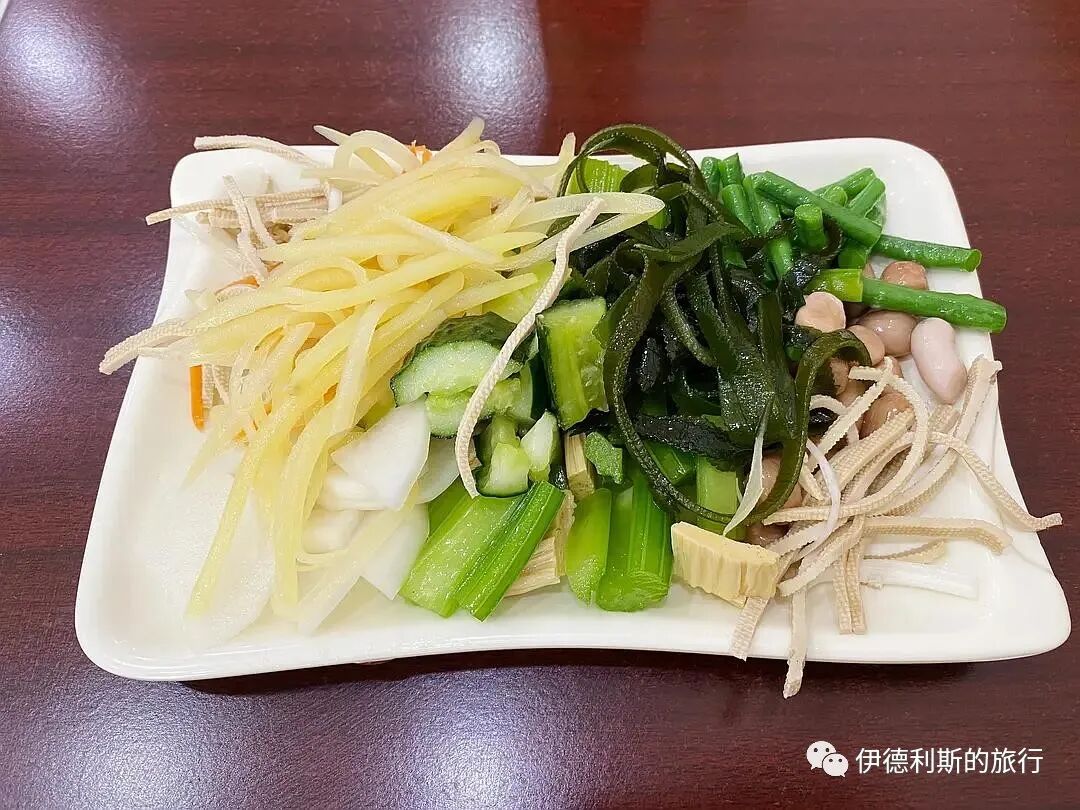
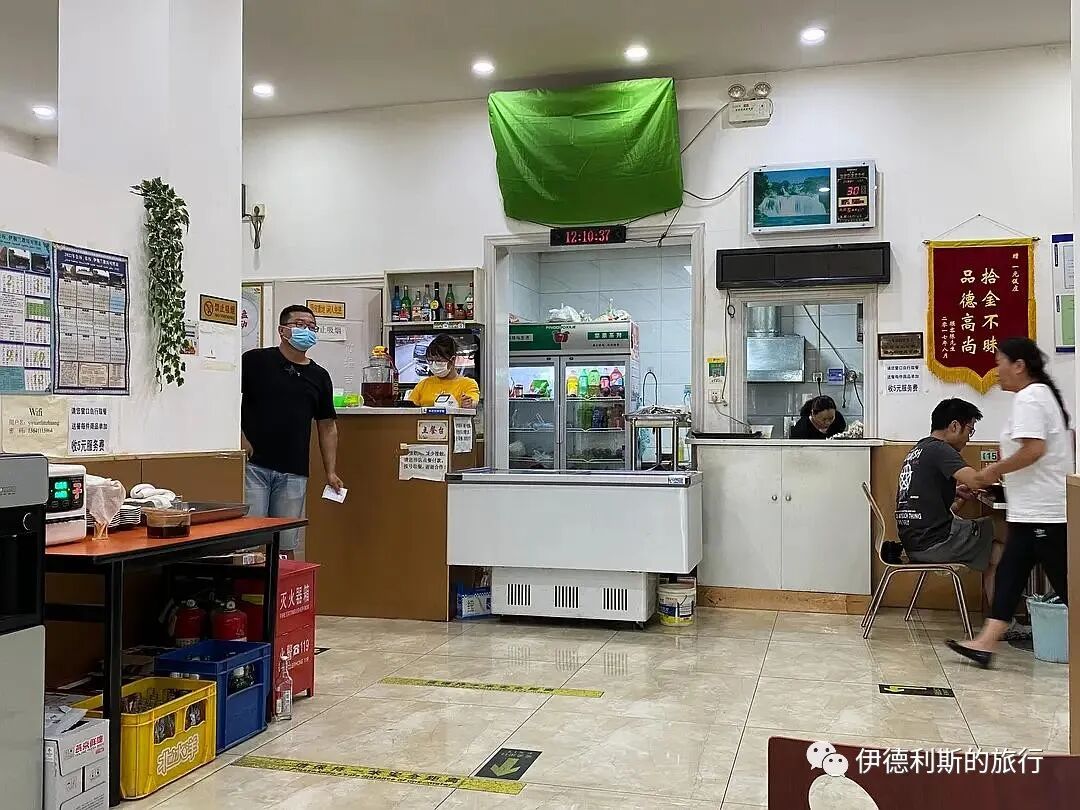
I had knife-cut noodles (daoxiaomian) at Yiyuan Restaurant in Xiguanshi. They also serve corn noodles (yumigeluomian) and oat noodles (bashanyouman). Because the Hui Muslims of Xiguanshi were used to traveling the western routes as armed escorts during the Qing Dynasty, their dietary habits were influenced by the Jin dialect region. This makes them very different from Hui Muslims in other parts of Beijing. Eating a bowl of these Hui Muslim knife-cut noodles is a way to get a taste of the Qing Dynasty culture of traveling the western routes (zouxikou).

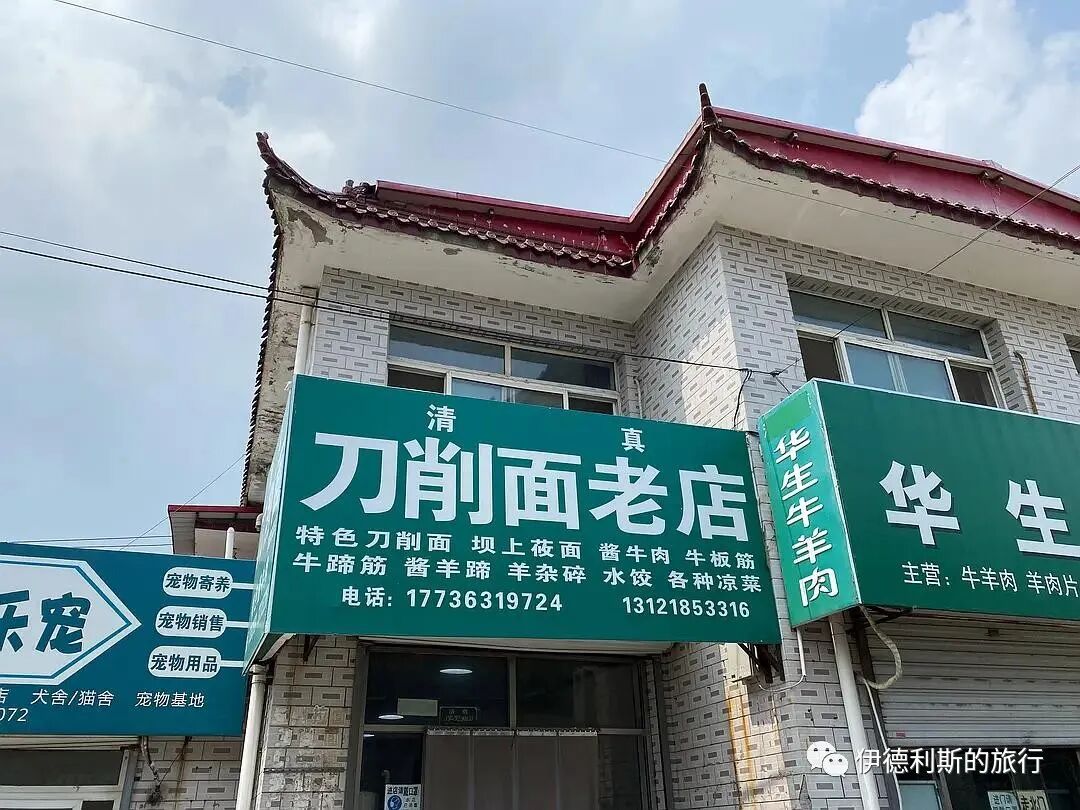
Street view of Xiguanshi
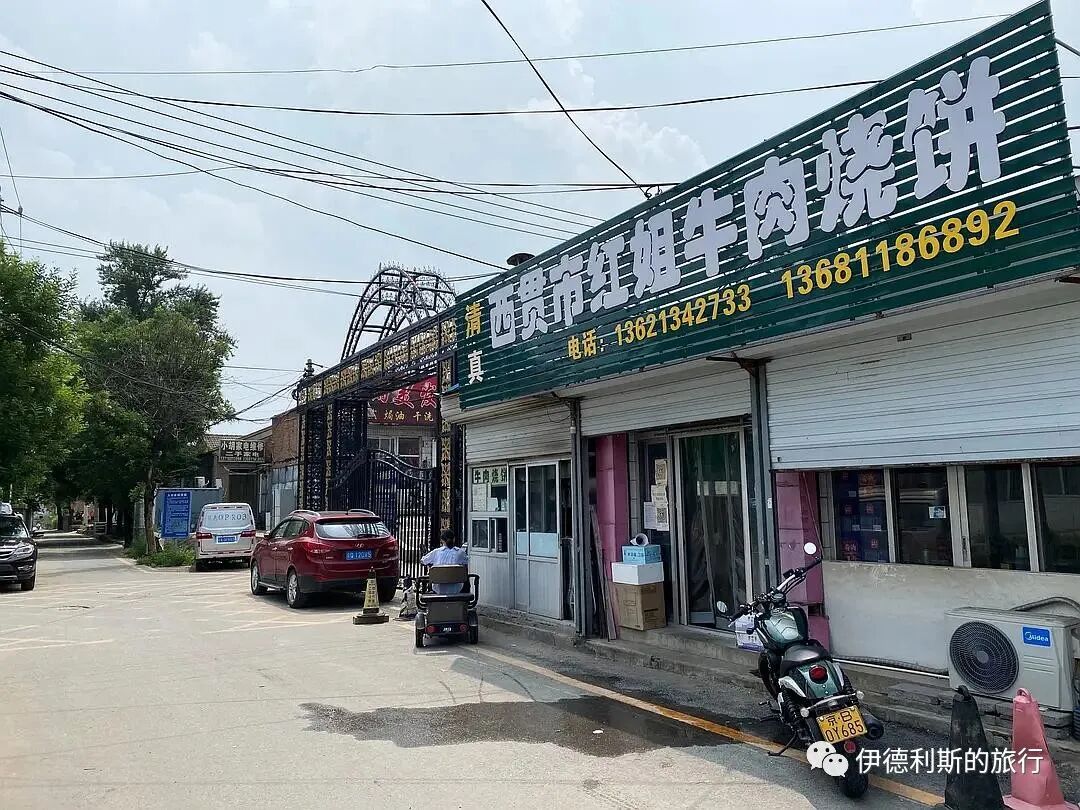
This meat flatbread (roushaobing) shop is also very famous.
Xiguanshi Mosque
After lunch, I performed my namaz at the Xiguanshi Mosque.
Xiguanshi Mosque was originally called the Guan Shi Village Mosque. It was first built in 1494 (the seventh year of the Hongzhi reign of the Ming Dynasty). The main hall was rebuilt in 1709 (the 48th year of Kangxi), the main gate in 1723 (the first year of Yongzheng), the hall rooms in 1732 (the tenth year of Yongzheng), and the kiln hall in 1761 (the 26th year of Qianlong). It continued to be renovated during the Guangxu period and the Republic of China.
On August 15, 1900, the Eight-Nation Alliance entered Beijing. Empress Dowager Cixi and the Guangxu Emperor fled the city to the west, arriving in Xiguanshi at dusk. The Hui Muslims of Xiguanshi, led by clan elder Li Xilun, welcomed the imperial party south of the village. They led Cixi and her group to stay at the Xiguanshi Mosque, where they were received by Imam Cai Wanchun. According to the late Qing record 'Gengzi Guobian Ji' by Luo Dunrong, 'At dusk, they arrived at Guan Shi in Changping. The Emperor and the Empress Dowager had not eaten for a day.' The villagers offered them sorghum, which they ate with their hands. The Empress Dowager wept, and the Emperor wept as well. It was cold, and they could not find bedding. A village woman offered a cloth quilt that was still damp from washing. Afterward, Cixi slept in the main hall, the Emperor and his consorts slept in the side halls, and the rest of the party stayed in nearby civilian homes.
The next day, Li Xijun, the owner of the Xiguangyu Escort Agency in Xiguanshi, prepared twenty mule-drawn sedan chairs, along with silver ingots and grain for the imperial party. A villager named Yang Juchuan volunteered to lead the way, and Li Jintang provided an escort to the next stop. Wu Lu, a compiler at the Hanlin Academy who experienced the Gengzi Incident, wrote in his 'Hundred Sorrows Poems': 'The imperial carriage stopped at the ancient mosque, and the happy villagers offered their humble vegetables.' They donated a thousand pieces of gold for imperial use and transported a hundred loads of grain from their own stores. In times of hardship, they opened the channels for speech, and I read the imperial edict with tears streaming down my face. I sigh at the border officials who received such great favor, while they live in deep seclusion in their offices. "
Two years later, when Cixi returned to Beijing, she granted silver for the renovation of Xiguanshi. She also had glazed tiles, roof treasures, and ridge beasts fired at the Liulihe Imperial Kiln to be gifted to the Xiguanshi Mosque and the mosque in Gaotou Village, Wuji County, which was the hometown of Imam Cai Wanchun. Cixi inscribed a plaque for the mosque that read 'Spiritual Inspiration Manifested,' the Guangxu Emperor inscribed 'Loyalty Dedicated to the Sovereign,' Prince Su Shanqi inscribed 'Pure Emptiness Tastes of the Way,' and Prince Li inscribed 'Profound and Infinite.' She also granted Yang Juchuan, who helped lead the way, the title of 'Marquis of Leading the Way,' and Li Jintang, who helped with the escort, the rank of a second-grade official in Zhejiang. Many others, including village elder Li Xilun and Imam Cai Wanchun, were awarded fifth, sixth, and seventh-grade official headwear.
In 1958, when a communal canteen was set up, the plaques in the main hall were taken down and used as cutting boards. Their whereabouts are now unknown. After the 1960s, the main hall was turned into a warehouse, and all the plaques and couplets were burned. All buildings except for the main hall and the main gate were demolished until it was restored and reopened in 1982.
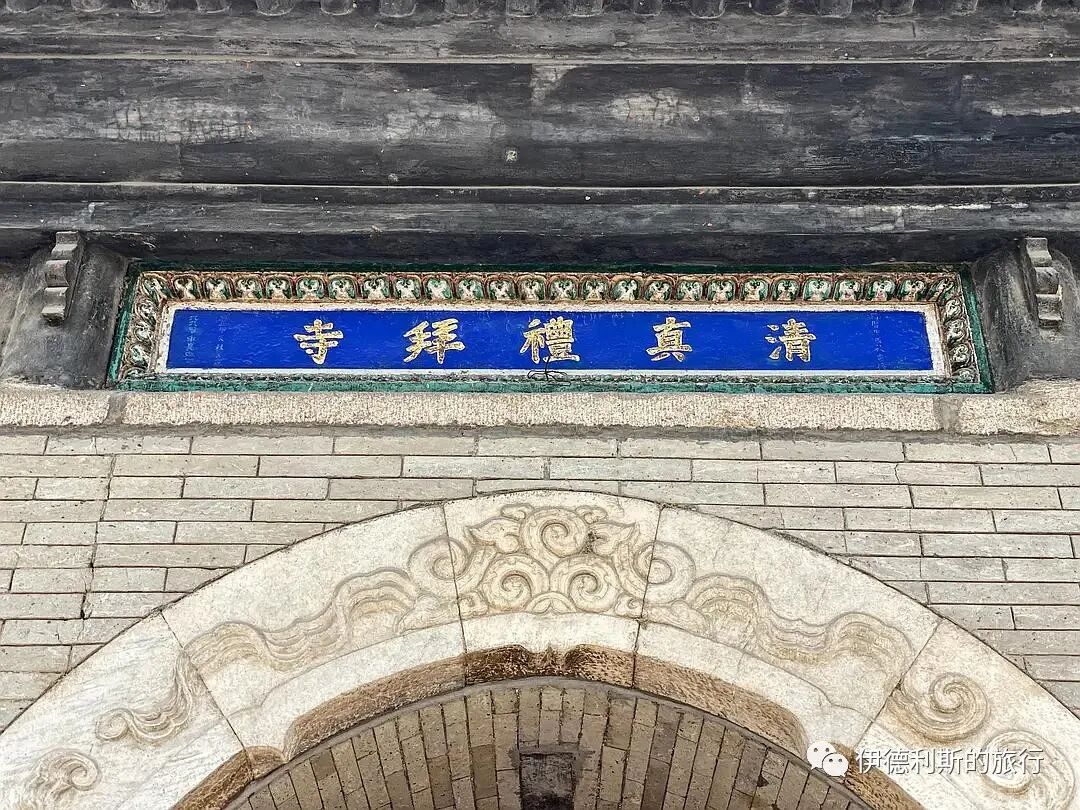
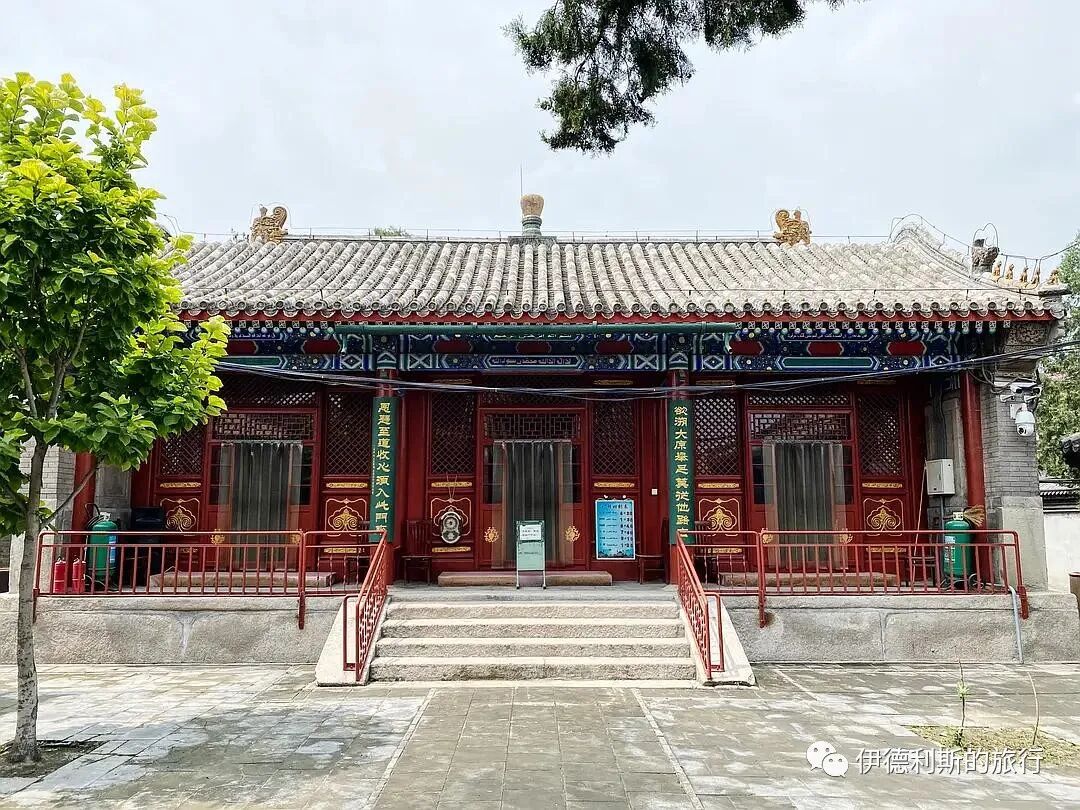
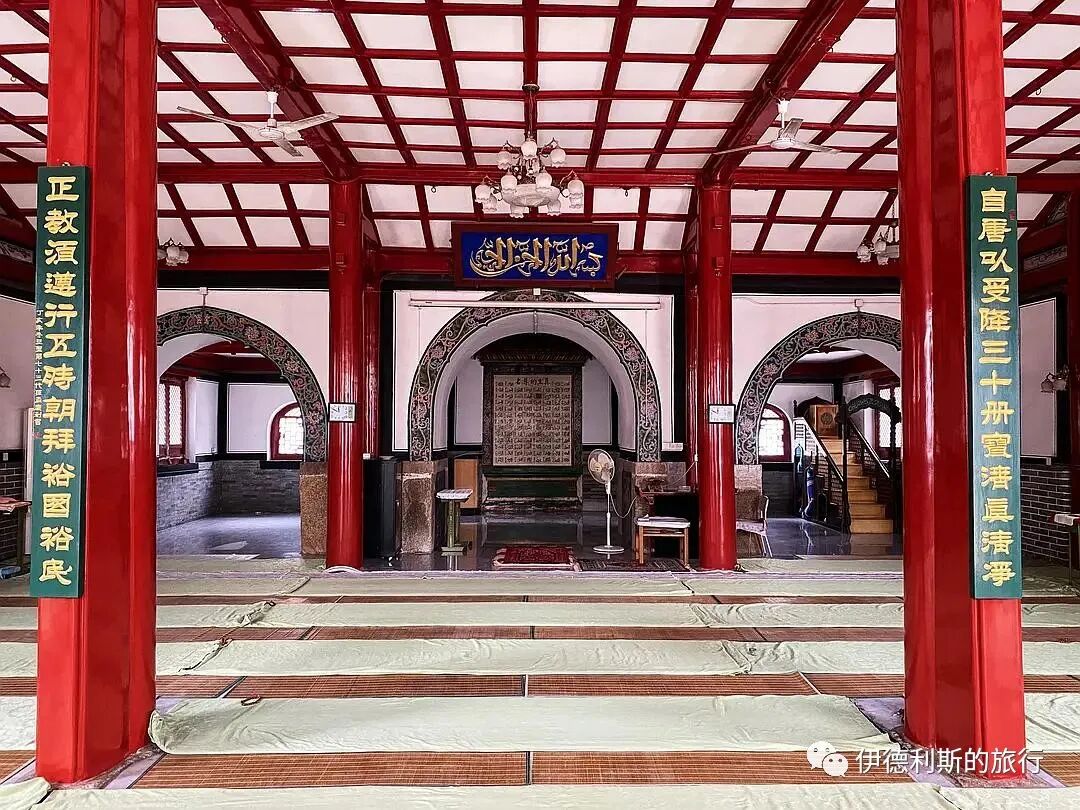
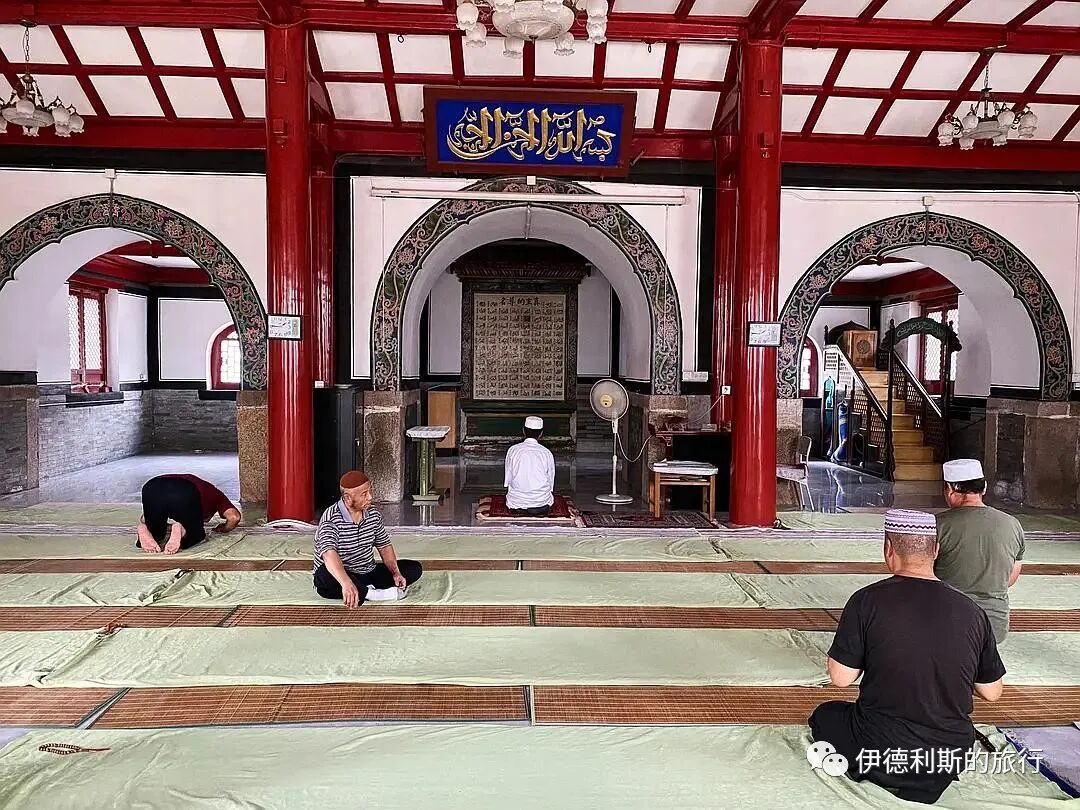
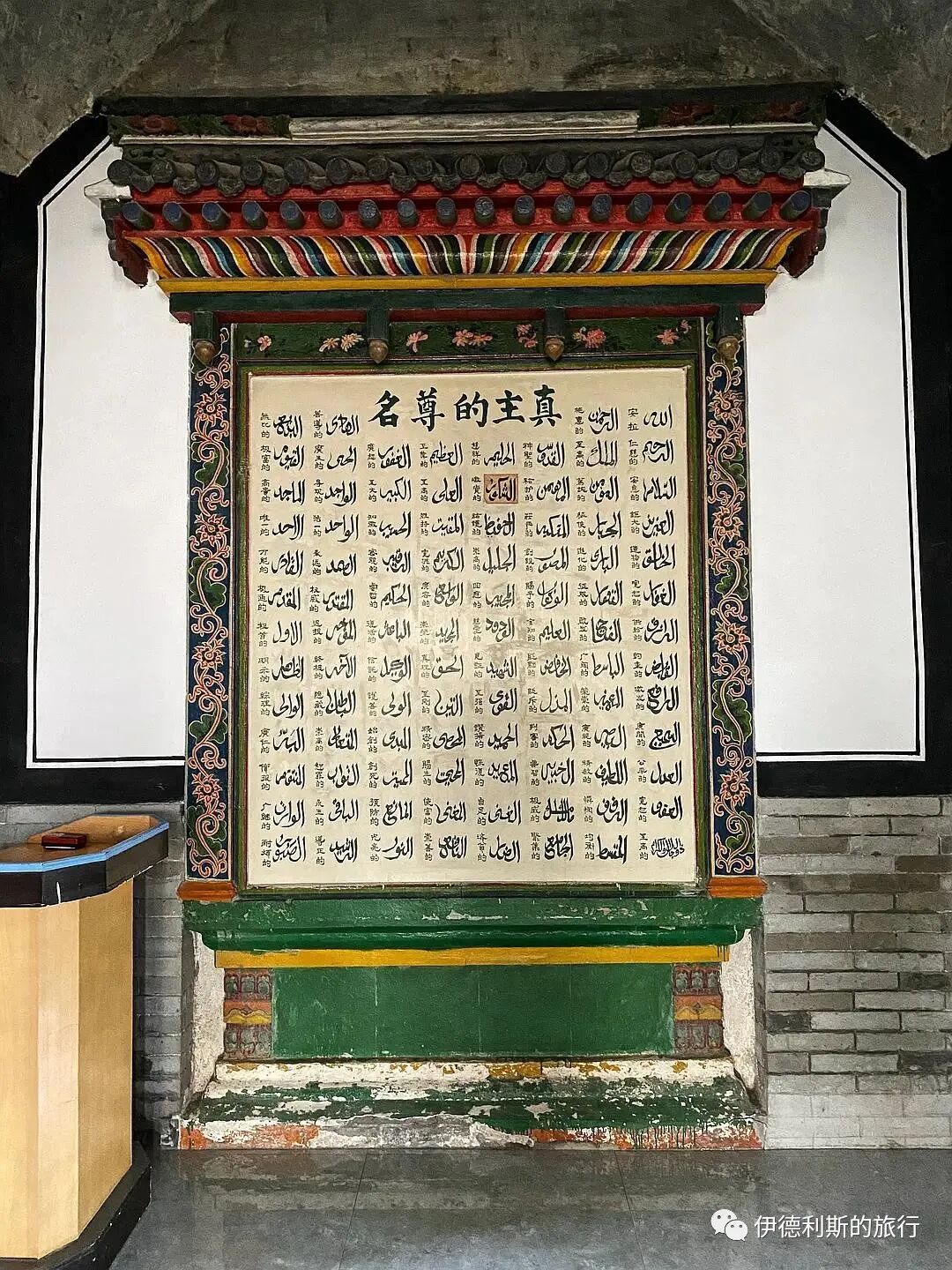
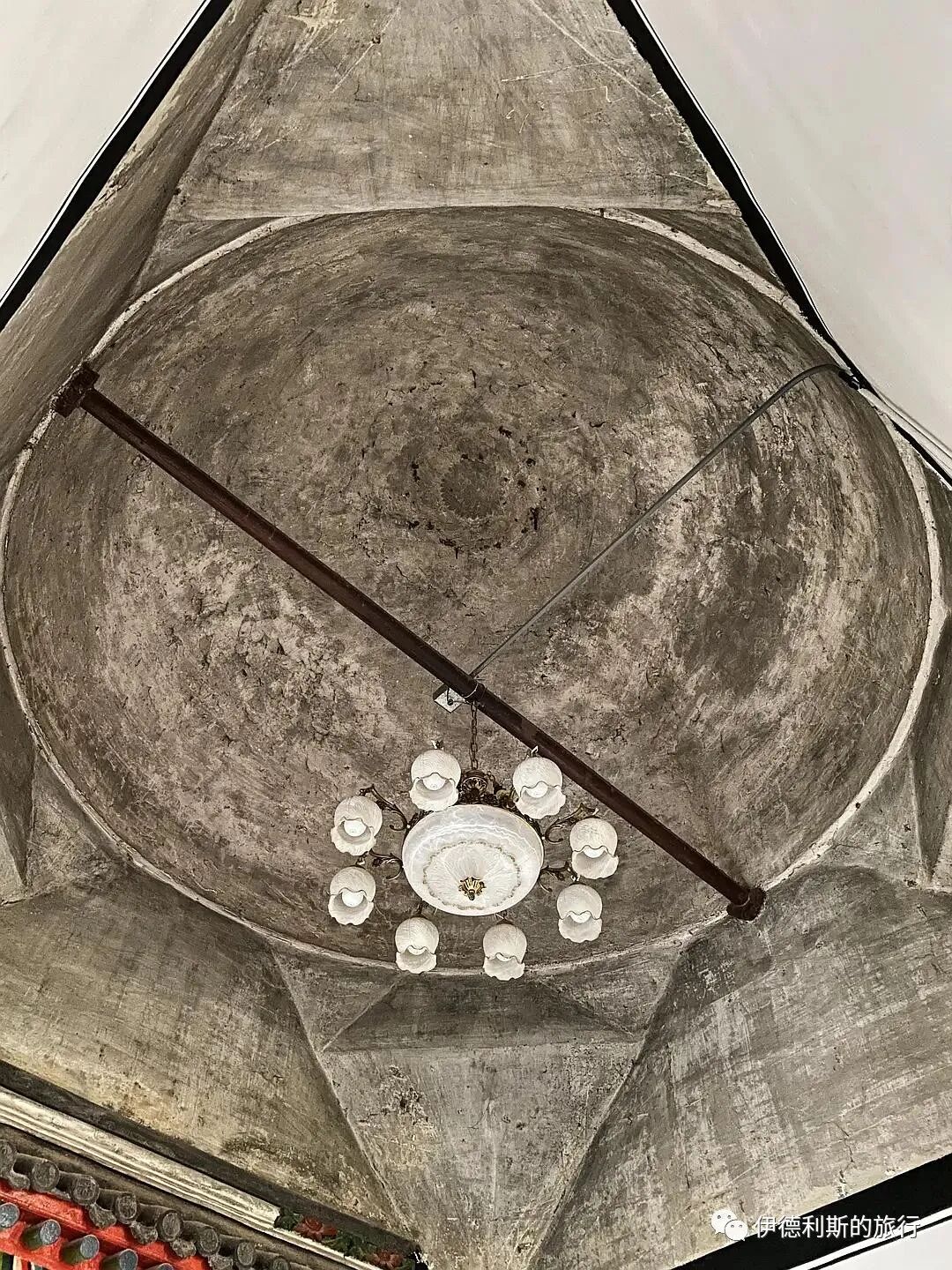
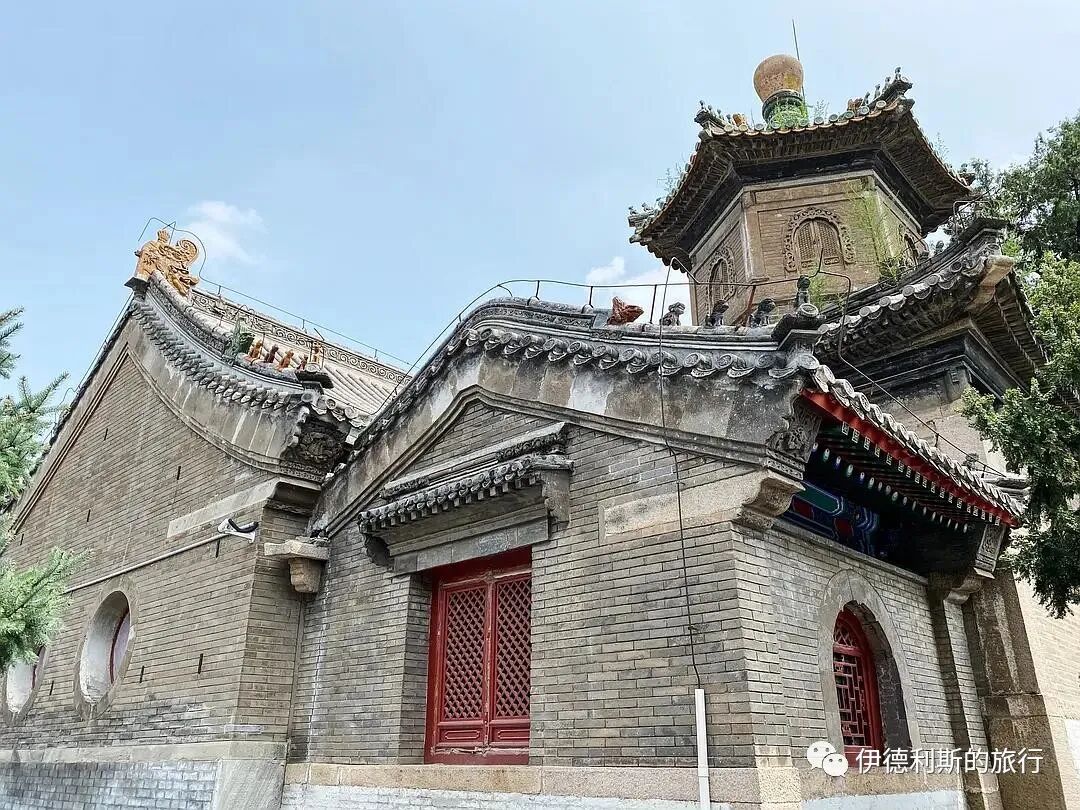
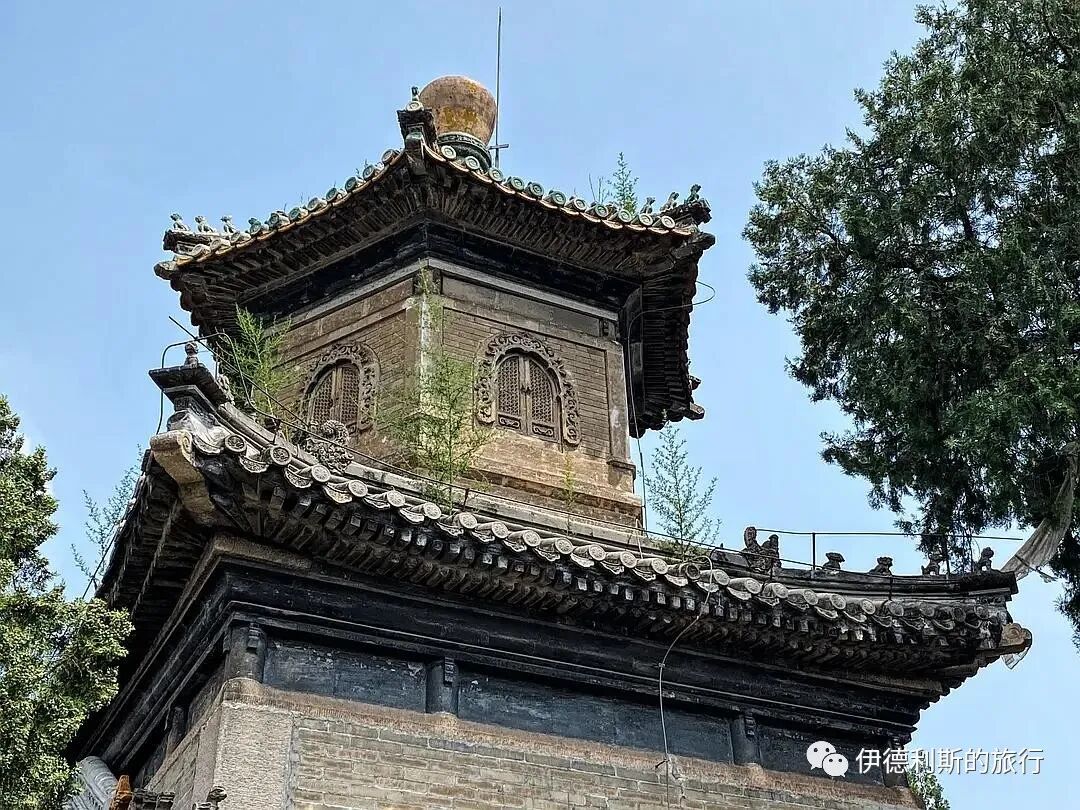
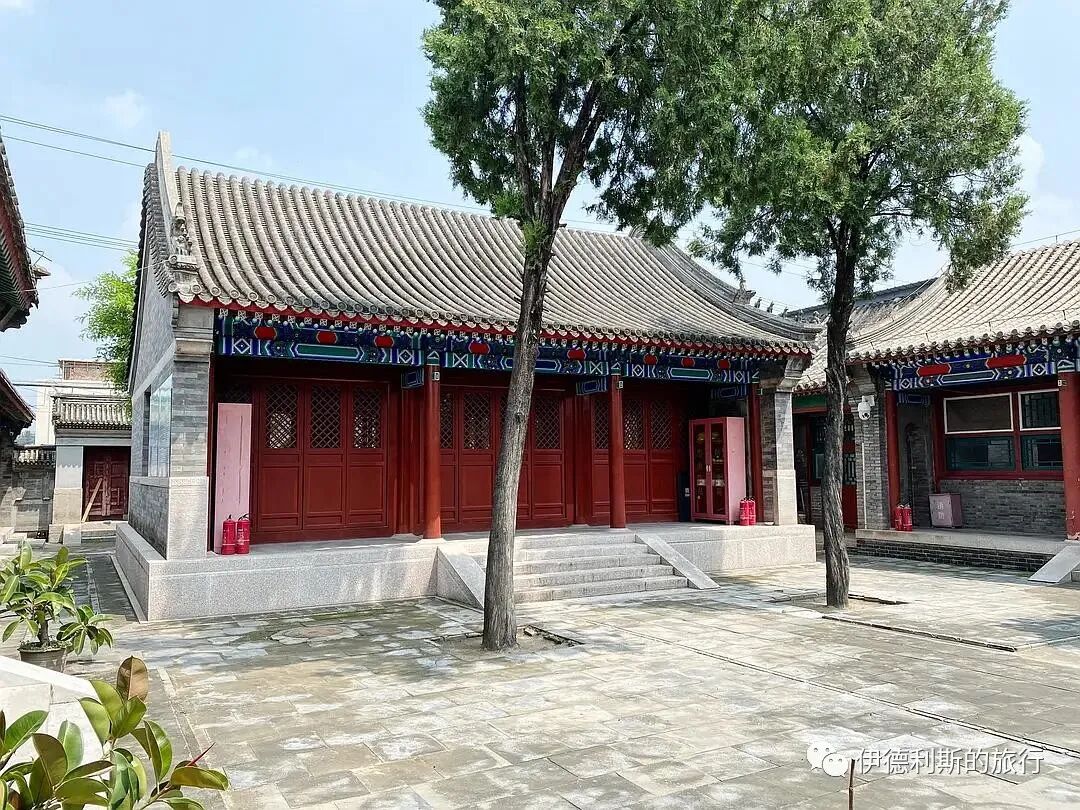
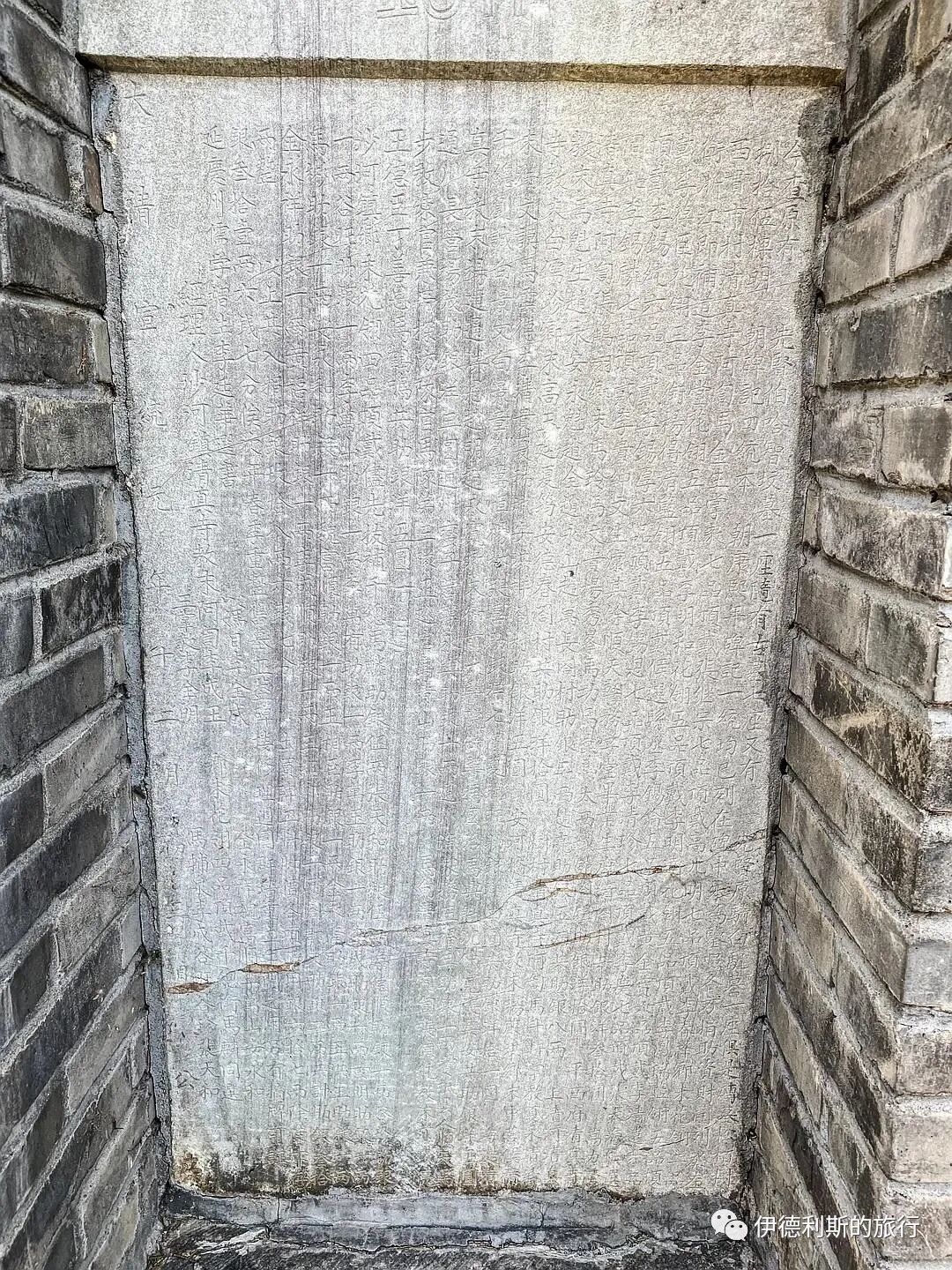
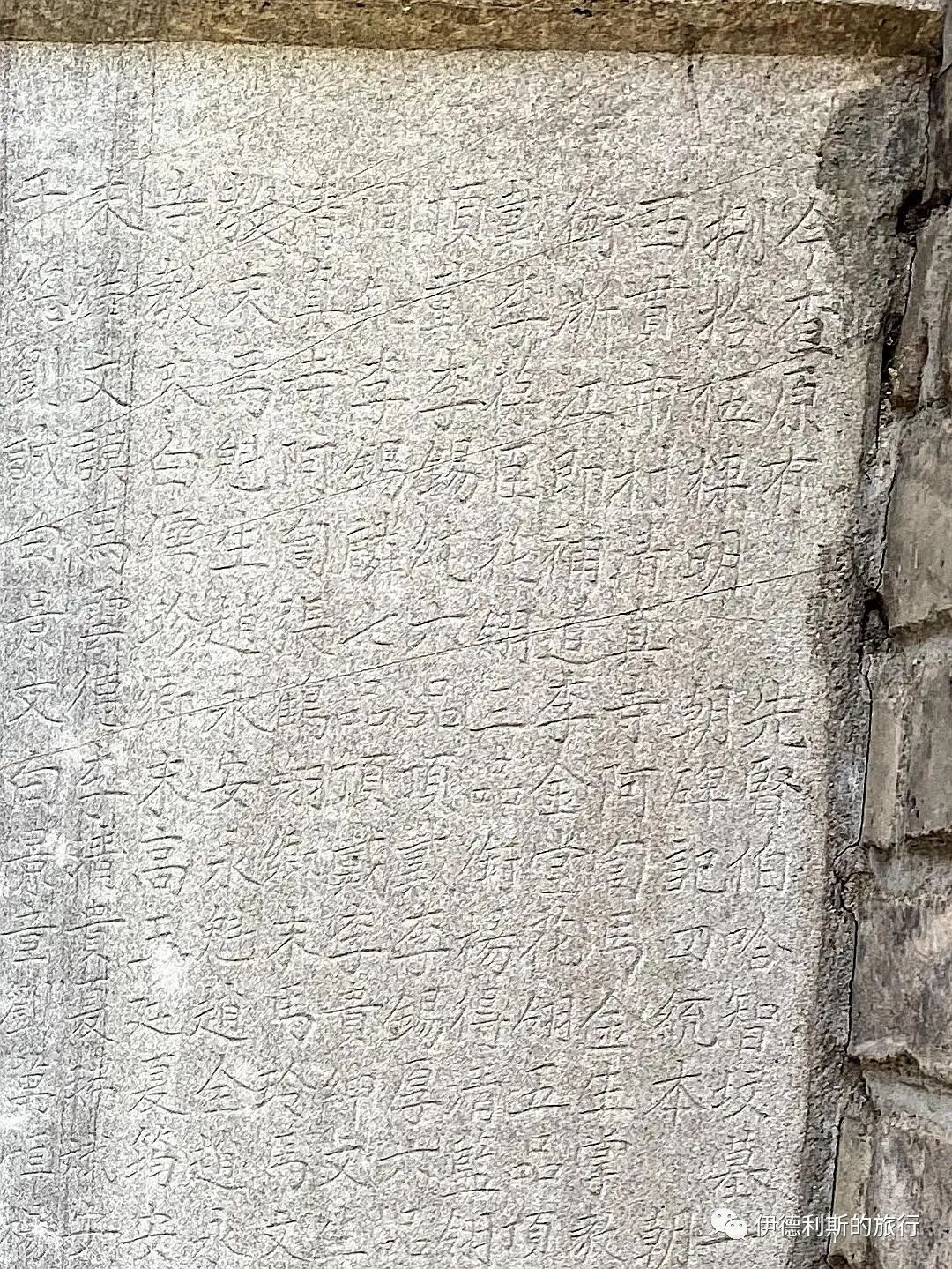
The 1879 stone tablet titled 'Record of Li Yongxin's Donation for Annual Repairs in Xiguanshi Village' documents how Li Yongxin donated land and silver to renovate the mosque. The author of the tablet, Ma Zhaoqing, was a famous Qing Dynasty scholar. His compilation, the 'Changping Outer Gazetteer,' corrected and supplemented the 'Changping Prefecture Gazetteer,' making it a valuable historical source. Ma Zhaoqing also wrote a couplet for the Xiguanshi main hall: 'Since the Tang Dynasty, thirty volumes of treasure have been received, pure and clean;' Follow Allah's commands, observe the five daily namaz, and lead the people to prosperity and peace. Unfortunately, it was destroyed in the 1960s.
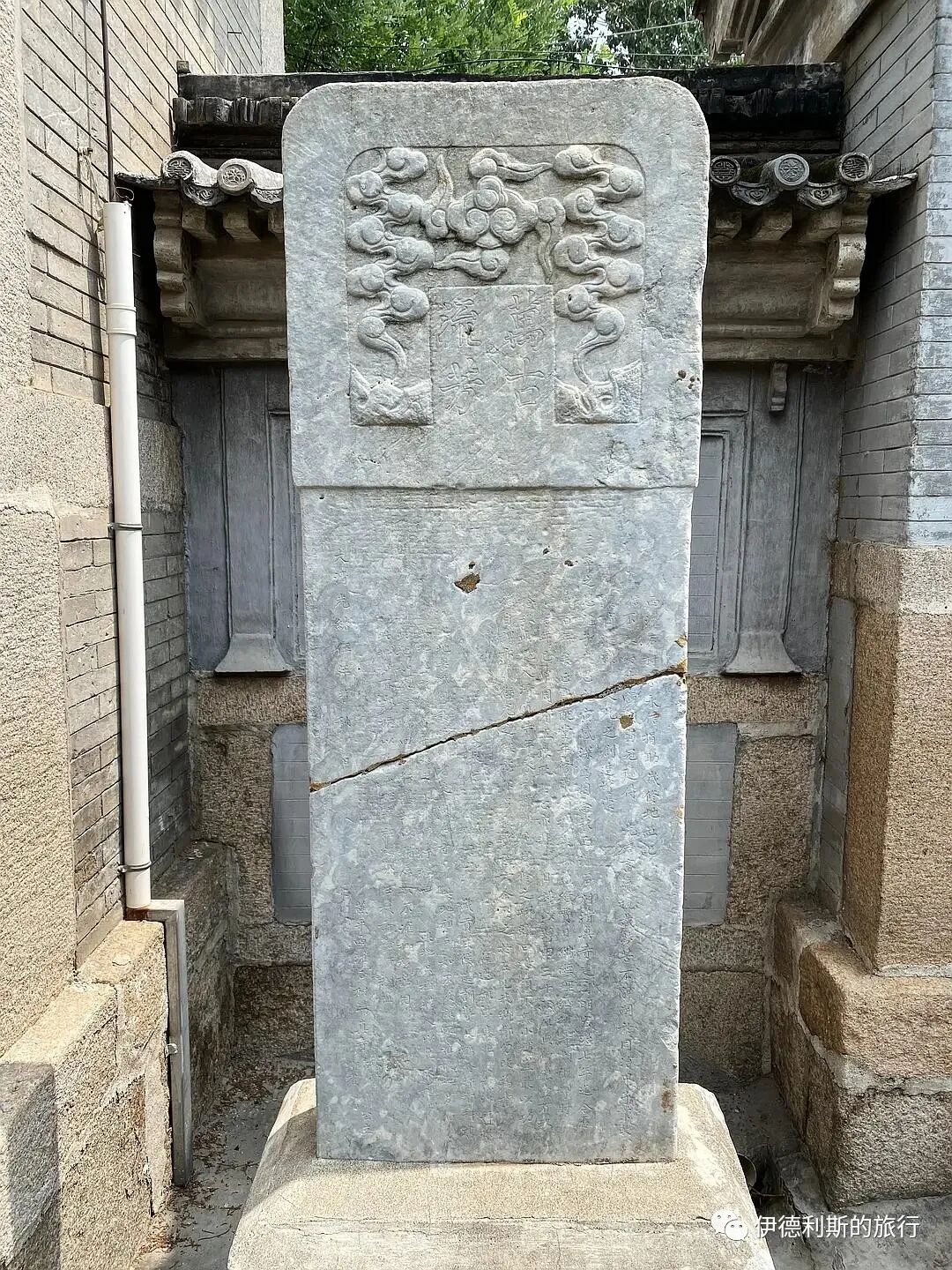
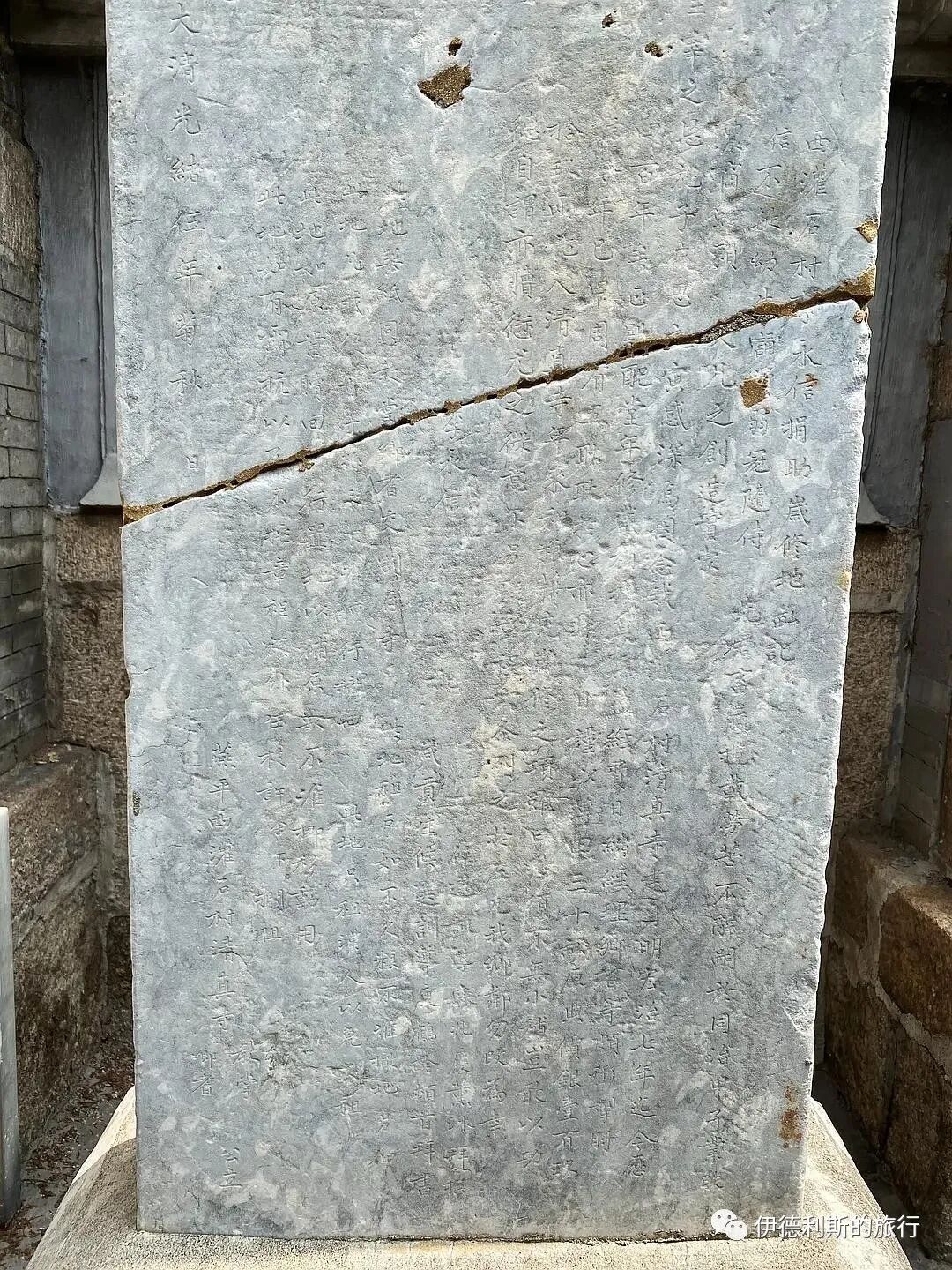
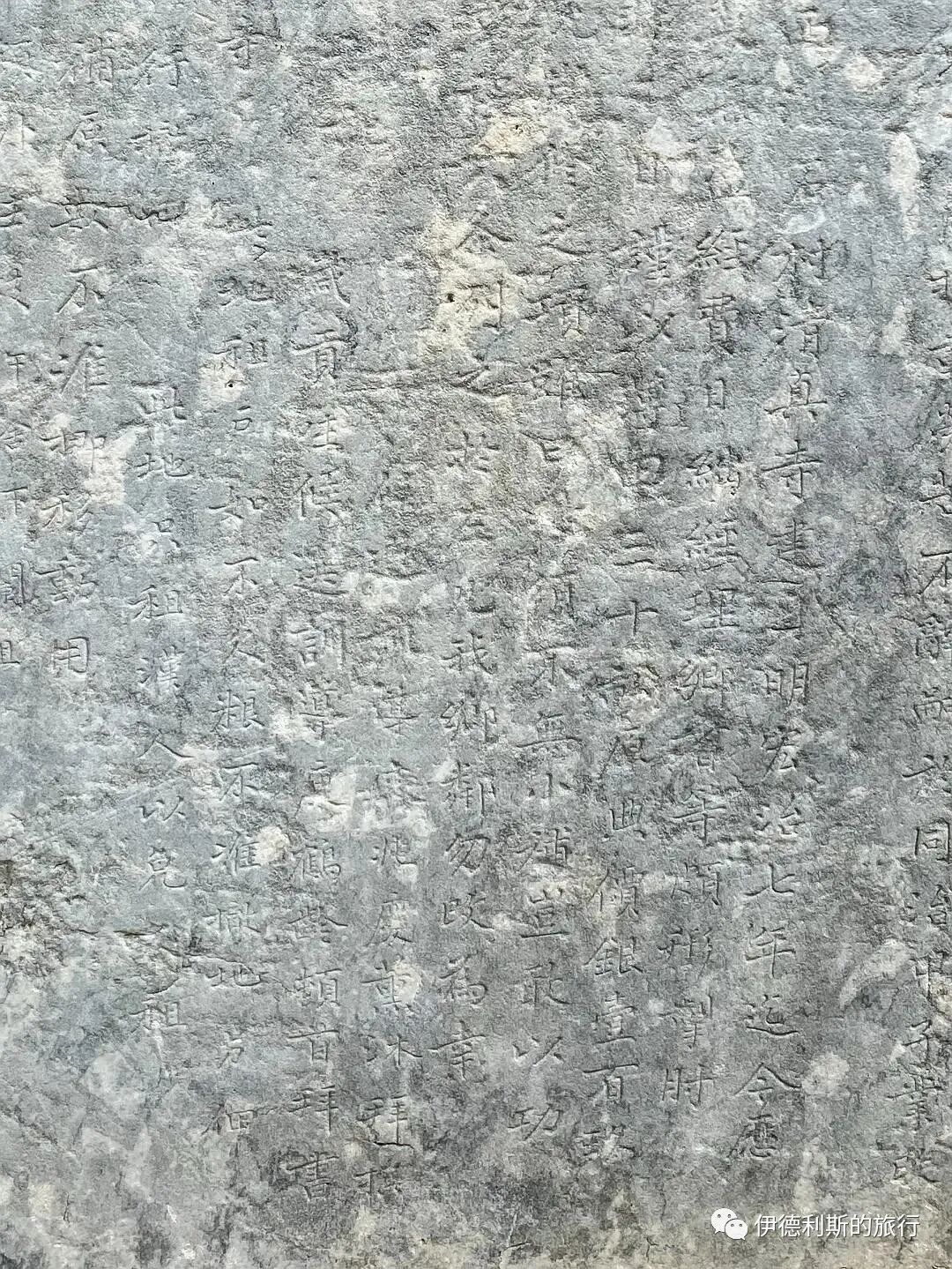
The 1909 stele titled 'Public Record of Donations for the Xiguan Mosque School' notes that during the Boxer Rebellion, Xiguanshi was not only spared from harassment but also received rewards for hosting Empress Dowager Cixi and her entourage during their flight west. Consequently, local elders donated money and land to support the mosque and its school.
The stele mentions that many donors held official ranks. Among them was Li Jintang, owner of the Xiguangyu Security Firm, who had protected Cixi. He later followed a general to oversee Xinjiang. When a Uyghur uprising broke out in Ili, Li Jintang returned to his hometown of Xiguanshi via Russia under the protection of Uyghurs, and he passed away shortly after.
Dongyuhe Sheep Shop Public Fund
Li Jintang, Second-Rank Official with Peacock Feather, Zhejiang Expectant Circuit Intendant
Li Mingda, Fifth-Rank Official with Peacock Feather
Li Guozhen, Fifth-Rank Official
Li Xilun, Fifth-Rank Official with Blue Feather, Candidate for County Magistrate
Li Baochen, Sixth-Rank Official with Blue Feather
Li Yukuan, Li Xitian, Li Xi'en, Li Xihou, Hai Mingzhu, and Li Sheng, all Sixth-Rank Officials
Li Zhensheng, Seventh-Rank Official
Additionally, the tomb garden of the sage Bo Hazhi in Changping also contains a donation stele from 1909. It lists Hui Muslims from Xiguanshi who donated to the tomb, and some names overlap with those on the Xiguanshi stele:
Ma Jinsheng, Imam of the mosque
Zhang Jizong, Gao Zhaoming, and Li Chunze, Seventh-Rank Officials and religious leaders
Li Jintang, Second-Rank Official with Peacock Feather, Zhejiang Expectant Circuit Intendant
Yang Deqing, Third-Rank Official with Peacock Feather
Li Minghe, Li Mingda, and Li Fengrui, Fifth-Rank Officials with Peacock Feather
Li Baochen, Fifth-Rank Official with Blue Feather
Li Xilun, Fifth-Rank Official with Blue Feather, Candidate for County Magistrate
Huang Jinbao, Fifth-Rank Official
Li Qingyuan, Li Xichun, Li Xihou, and Li Xi'en, Sixth-Rank Officials
Li Qingzhen, Li Qing, Zhang Dahai, and Li Guishen, Seventh-Rank Officials
Li Xilin, Candidate for Prefect
Wen Shengkang and others
Ma Qi, graduate of the Shuntian Police Academy
Fayuan Mosque outside Deshengmen
I took the 919 bus from Shahe to its final stop outside Deshengmen, which was the perfect chance to visit the Fayuan Mosque.
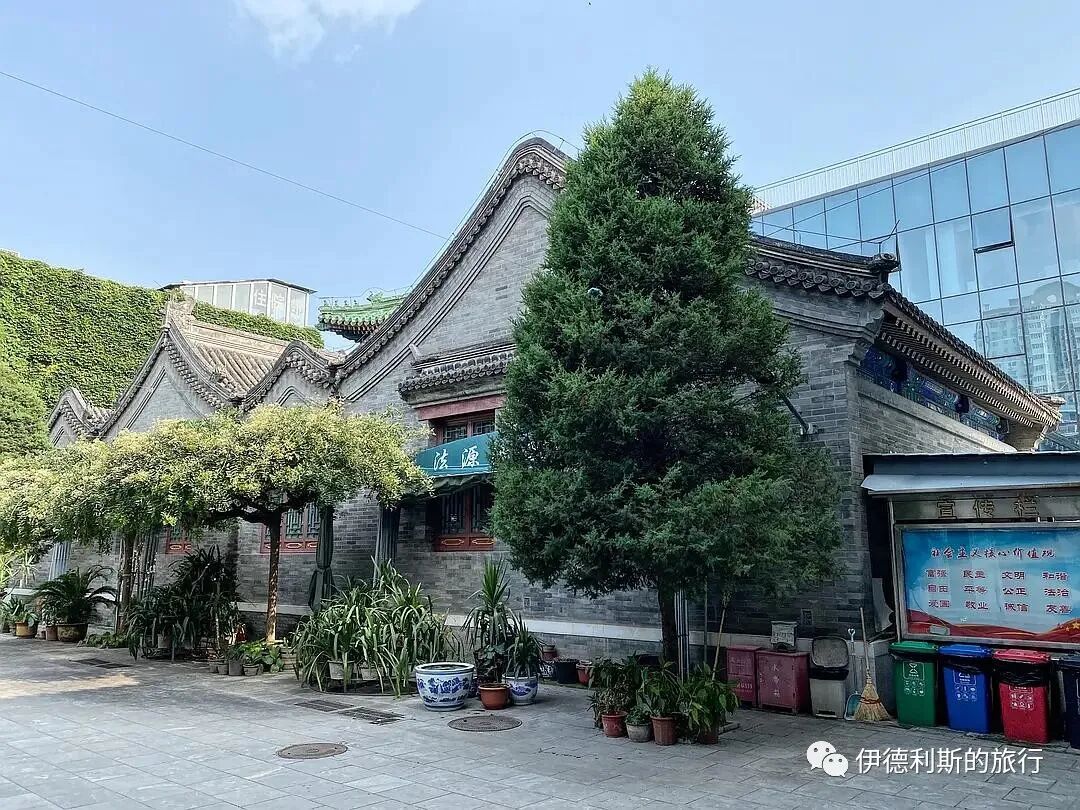
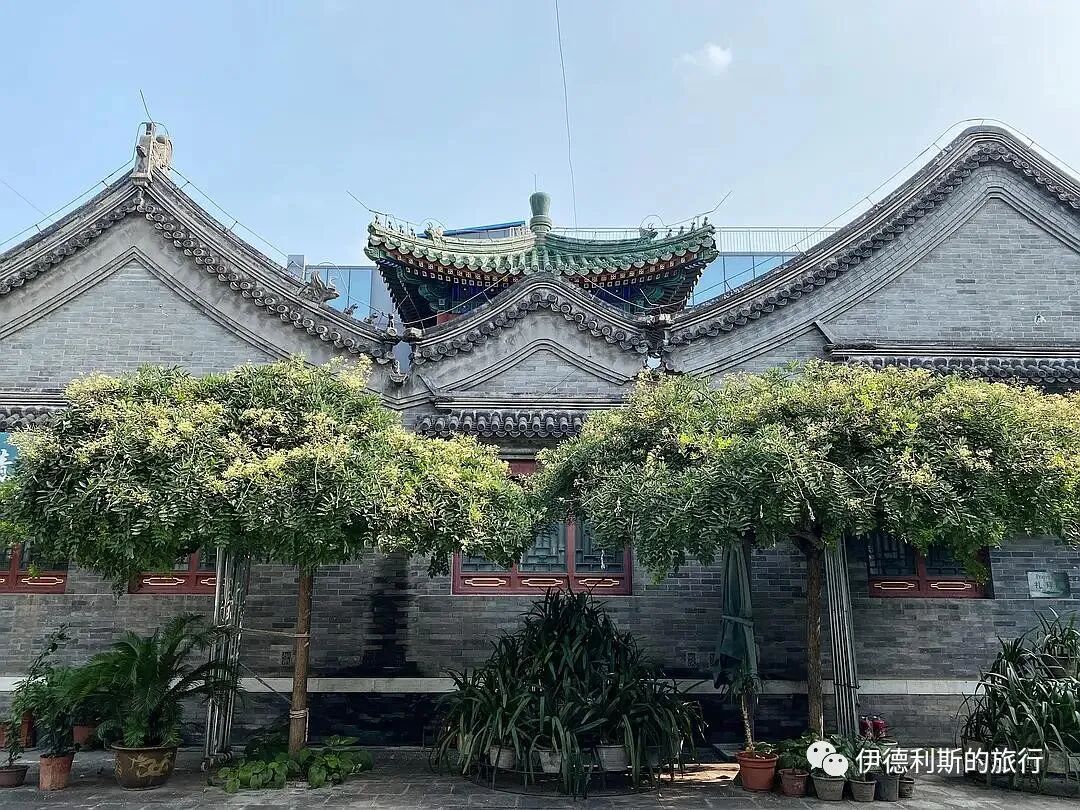
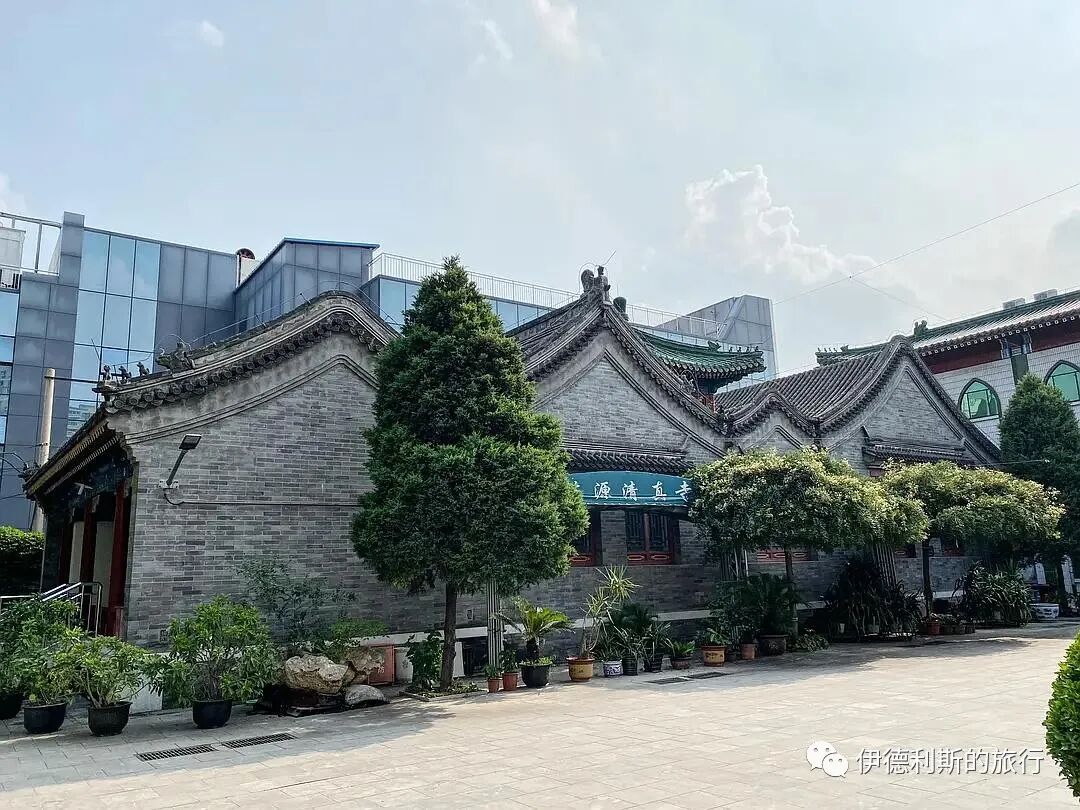
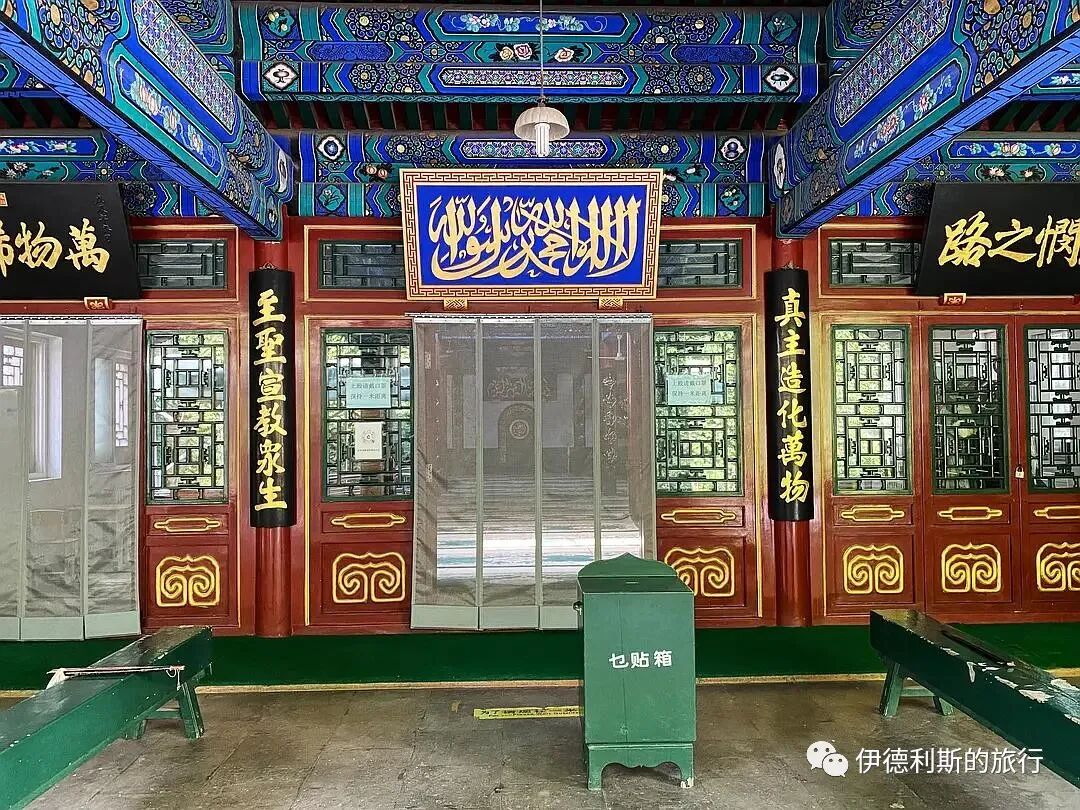
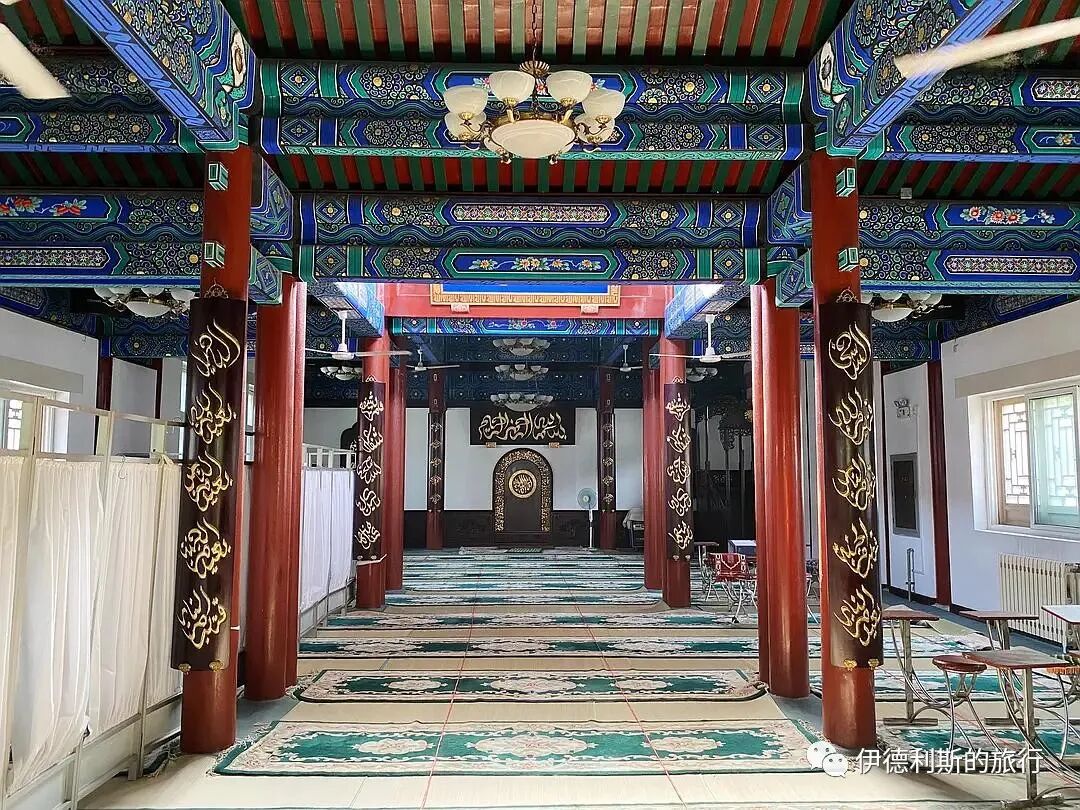
The founding date of Fayuan Mosque is unknown. It was originally located on a slope north of Jiaochangkou outside Deshengmen. It was moved and expanded during the Kangxi era, and the main hall was expanded again during the Republic of China period, featuring four interconnected roofs and a four-cornered pavilion top.
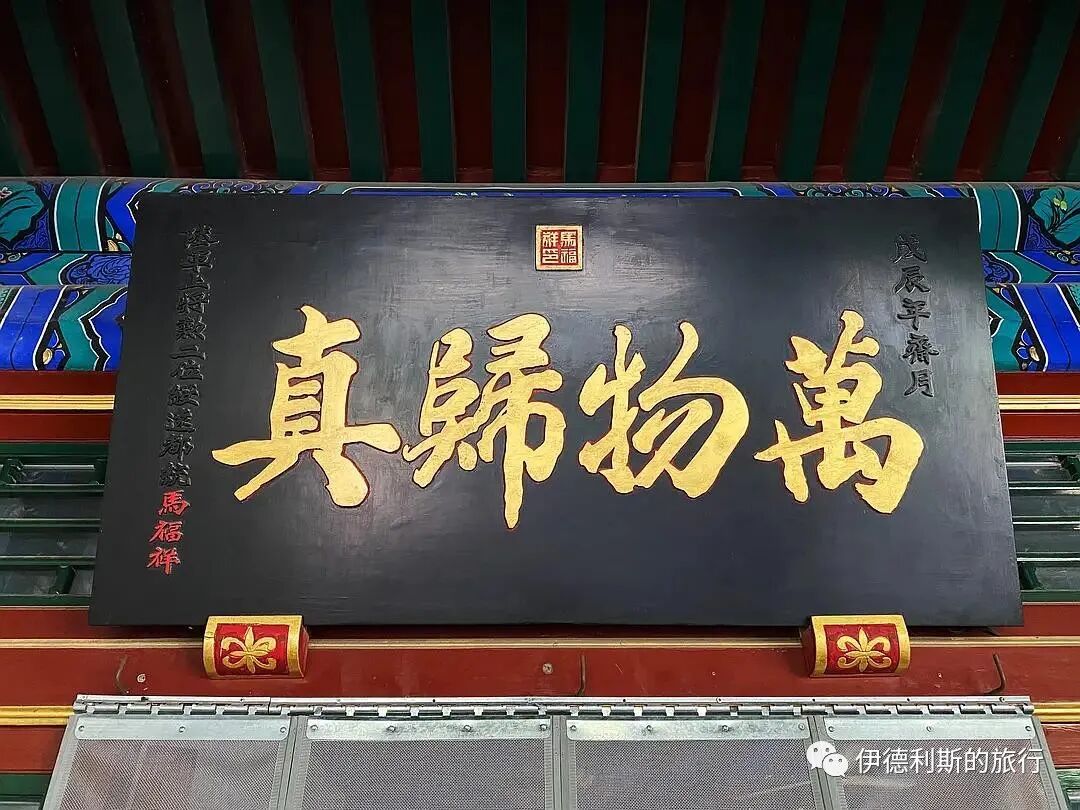
The entrance to the main hall now displays a plaque reading 'All Things Return to Truth,' inscribed in 1928 by General Ma Fuxiang. In the late 1920s, Ma Fuxiang was living in Beijing. He studied Islamic classics deeply and donated money to help Muslims build schools. In 1928, he helped organize the Beiping Muslim Middle School, later renamed Northwest Public School, and donated over a dozen school buildings he had purchased in the backyard of the Dongsi Mosque to the Chengda Teachers' College.
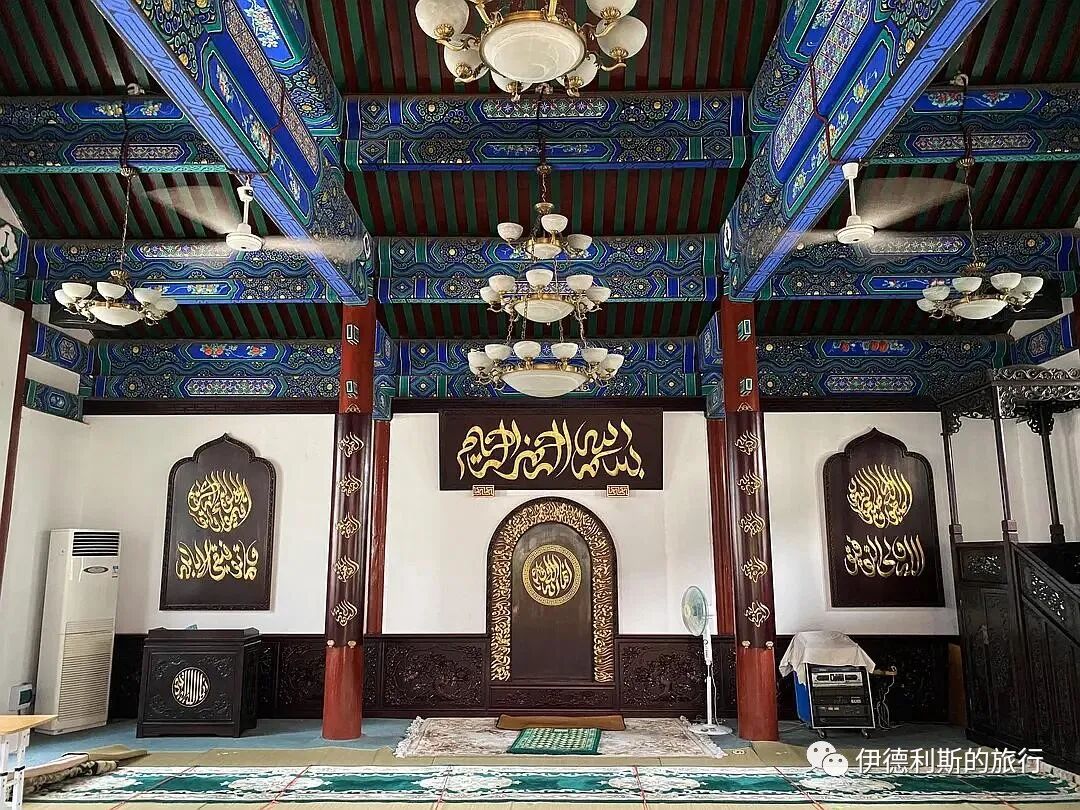
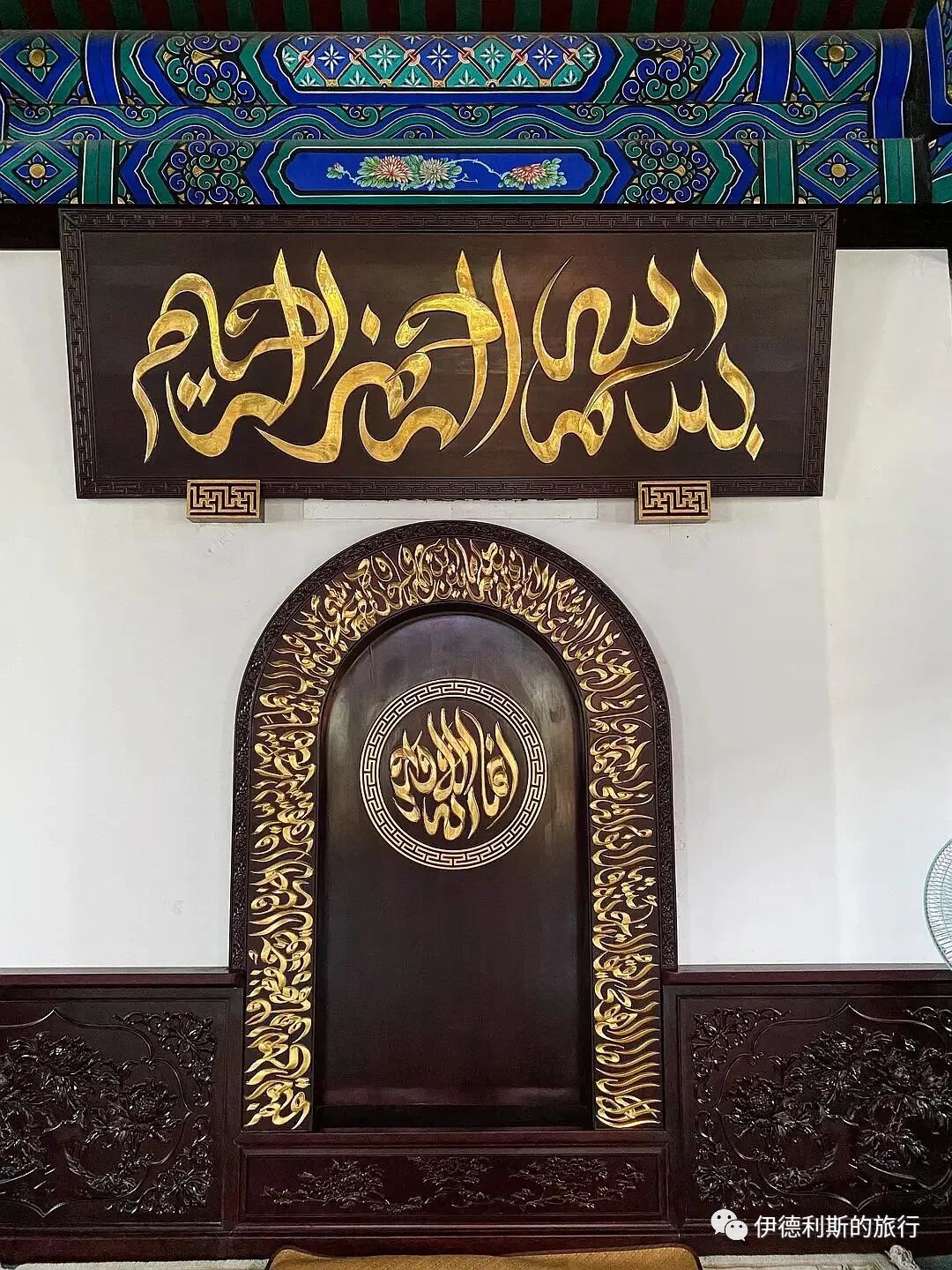
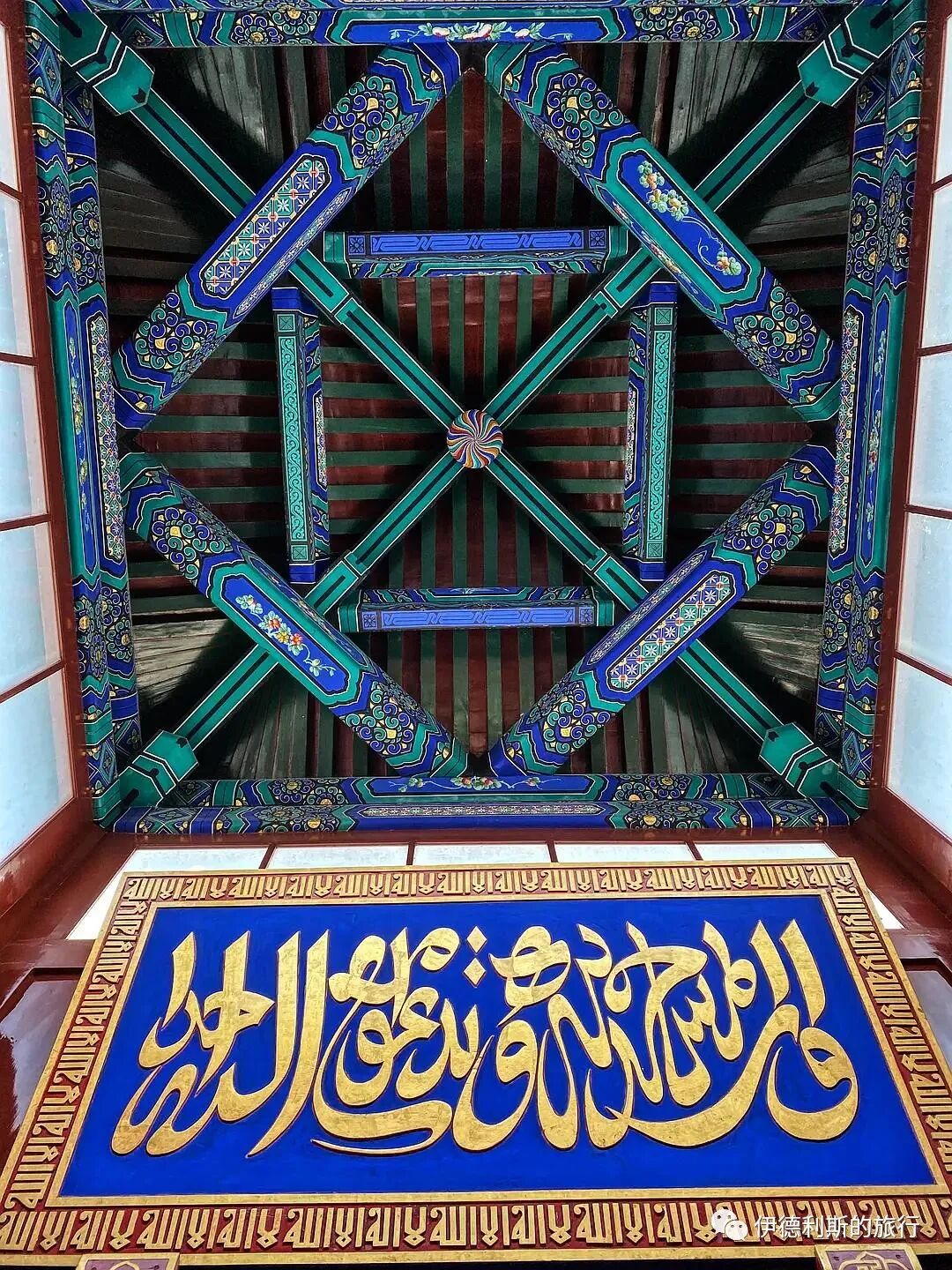
I bought two door hangings (mendu'er) at the mosque. These are quite old. The one in the picture below shows how they looked after hanging on the streets of Xiguanshi village for many years.
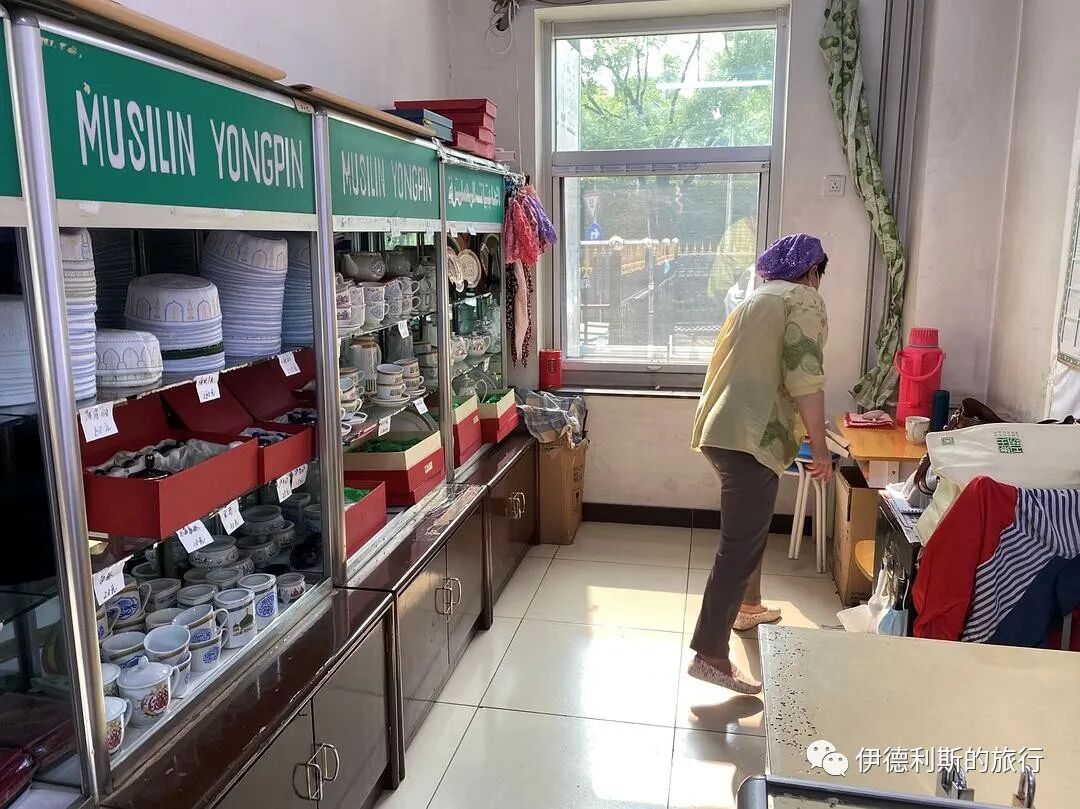
Digging for records at Fusheng Record Store
There is a long-standing record shop called Fusheng near Bingjiaokou outside Deshengmen. When I was a child, they were located in Ping'anli before moving to the area outside Deshengmen. After leaving the mosque, I bought two albums related to the faith at their shop.
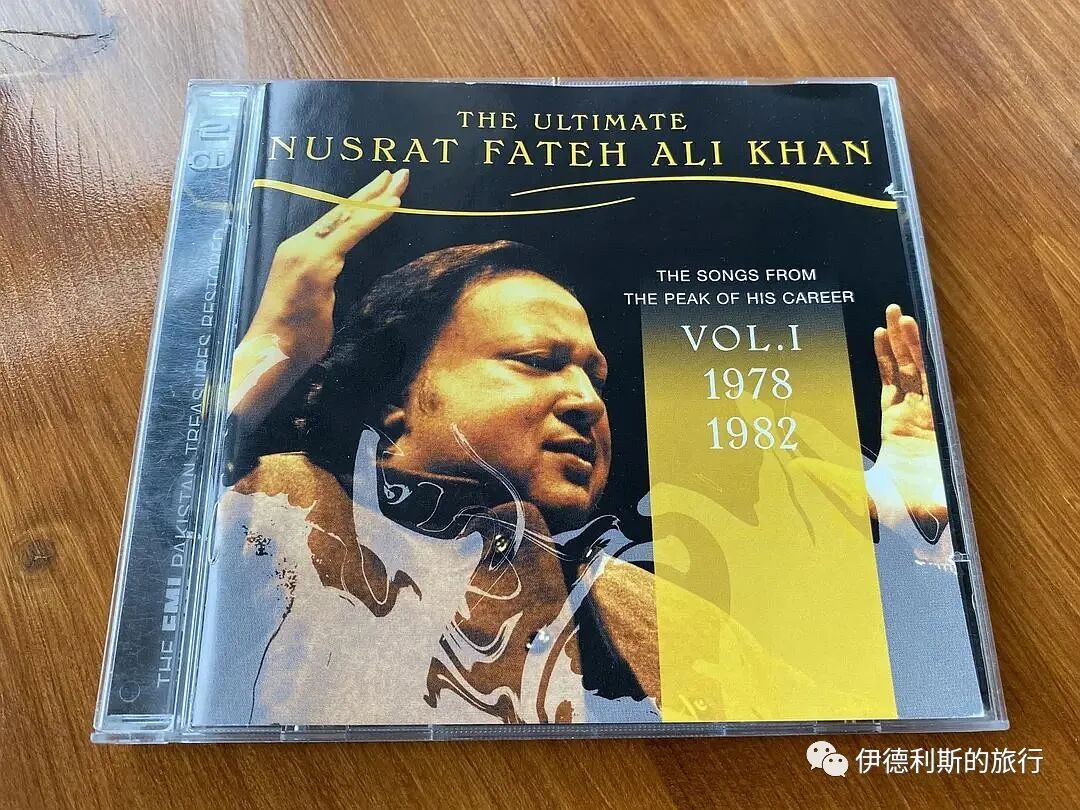
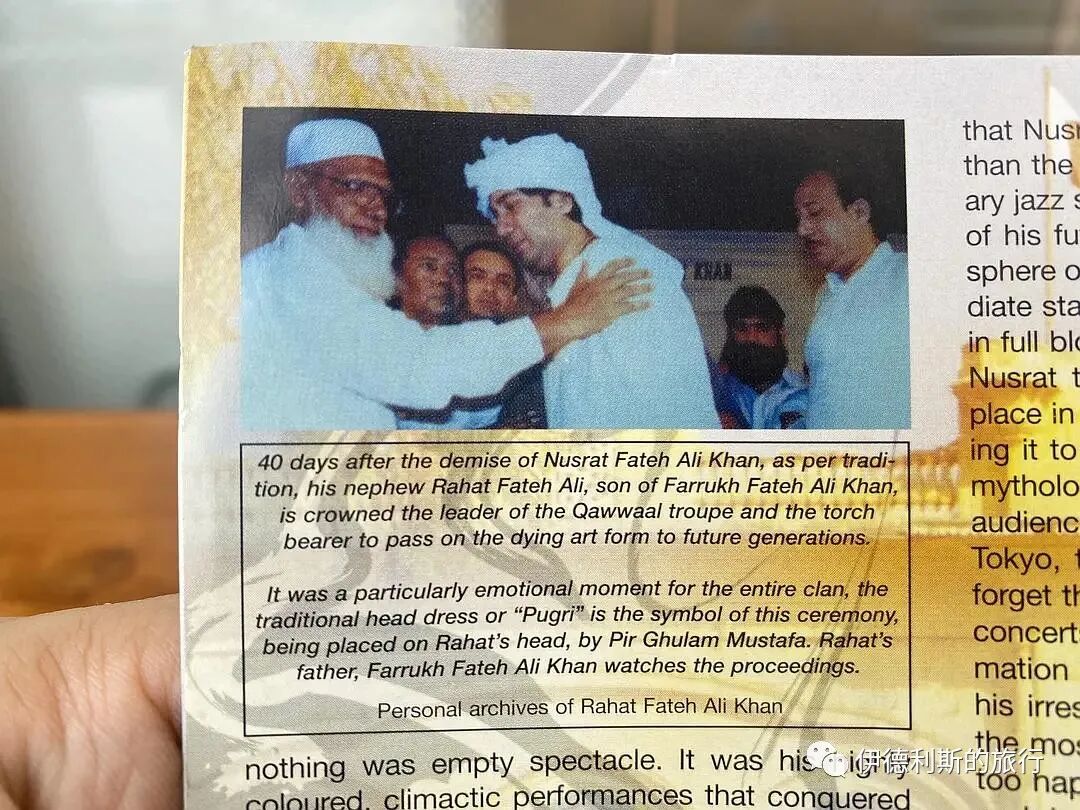
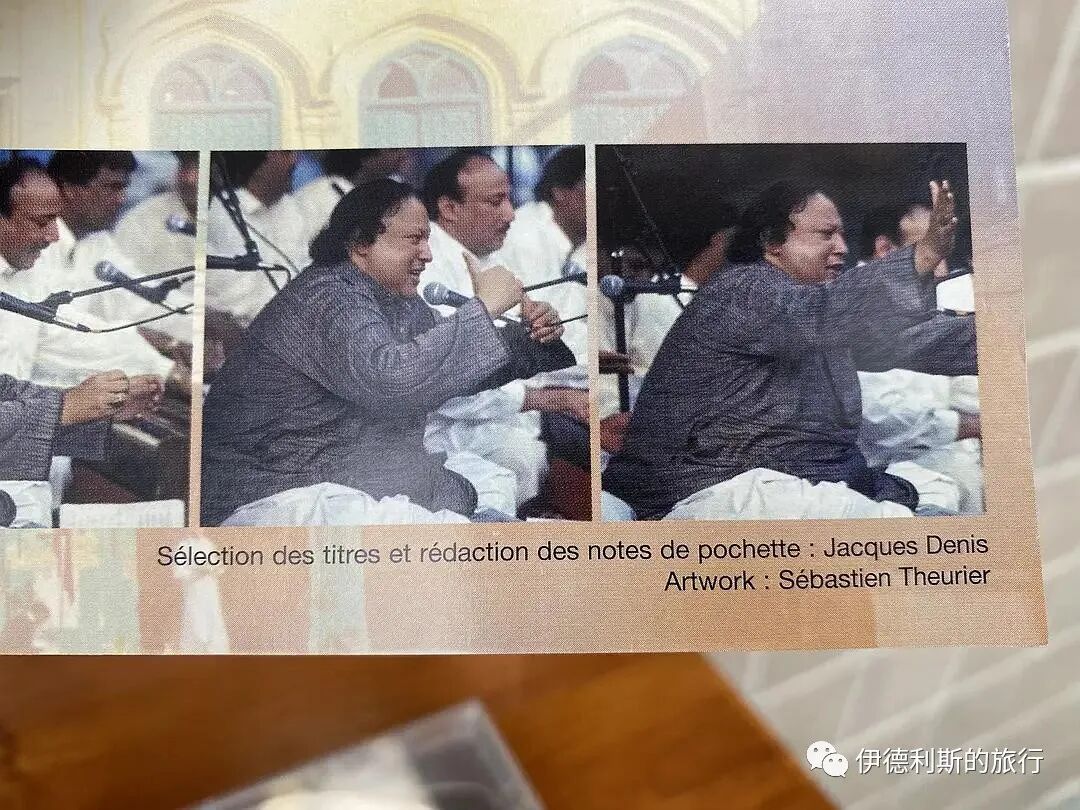
One is a cut-out disc of early music from 1978-1982 by the Pakistani Sufi Qawwali master Nusrat Fateh Ali Khan.
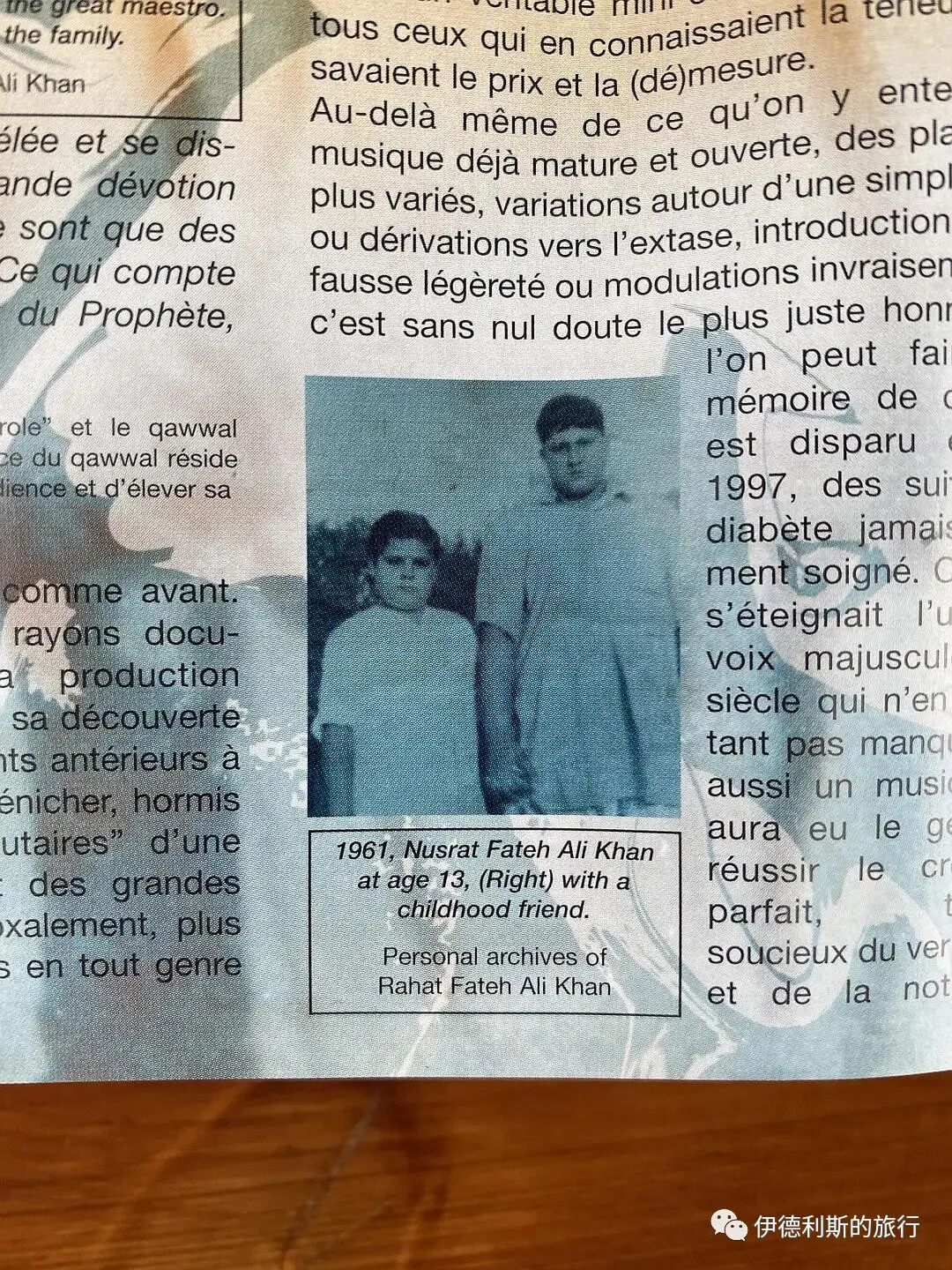
Nusrat Fateh Ali Khan is known as the 'King of Qawwali' and had a major influence on South Asian pop music. He was born in 1948 into a Punjabi Muslim family in Pakistan. It is said his family has passed down Qawwali music for nearly 600 years, singing mainly in Urdu and Punjabi.
Nusrat performed for the first time in London at the WOMAD festival in 1985, and after that, he toured all over the world. In the late 1980s, he signed with the British world music label Real World. He released a series of world music albums in the 1990s and collaborated with many different types of musicians, earning him the title of a pioneer of world music.
Unlike his later polished remix and fusion albums, this early collection features raw, traditional Sufi Qawwali music that was not yet well-known to the Western mainstream.
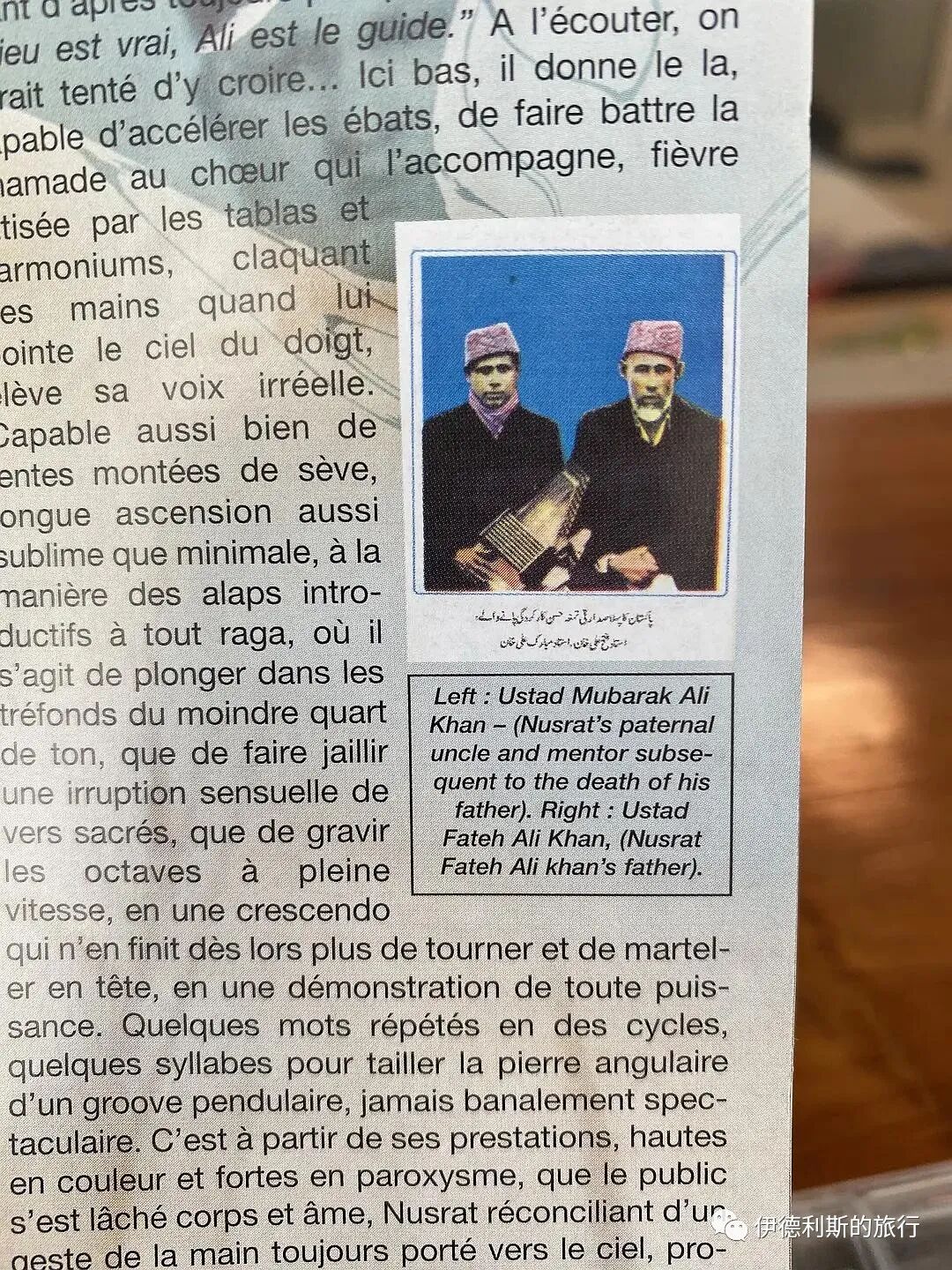
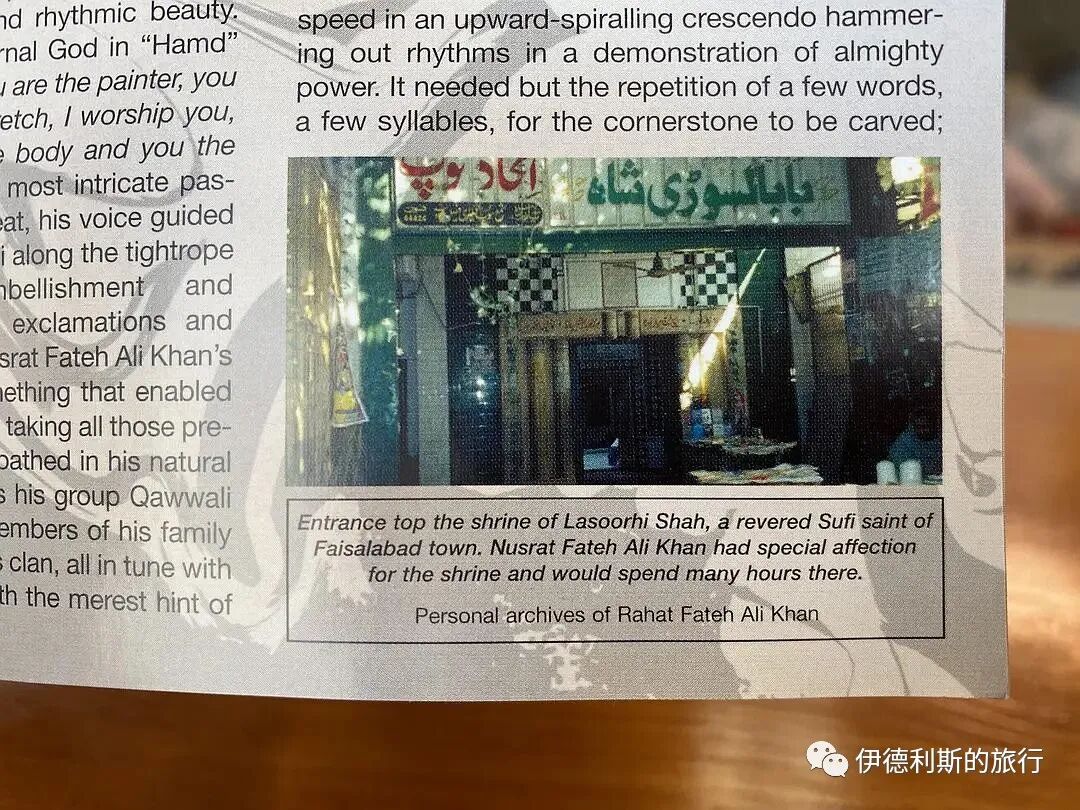
South Asian classical music is traditionally divided into different schools (gharānā), which are passed down steadily through the relationship between master and student. Nusrat belonged to the ancient Qawwal Bacchon school, founded in the late 13th century by Amir Khusrow, a sage of the Chisti Sufi order in Delhi, India. It developed and was passed down in Delhi, centered at the shrine (Nizamuddin Dargah) of the Sufi saint Nizamuddin, until it moved to Pakistan during the partition of India and Pakistan in 1947. In 2018, I was lucky enough to experience traditional Qawwali music at a Sufi shrine in Delhi.
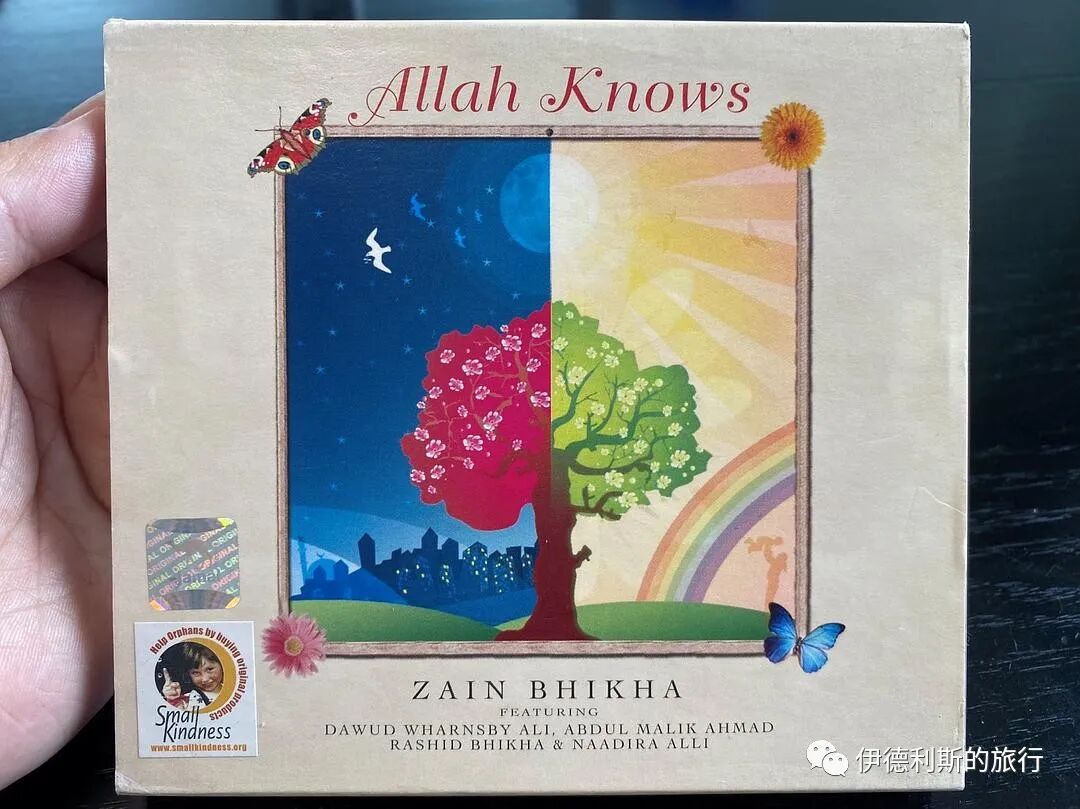
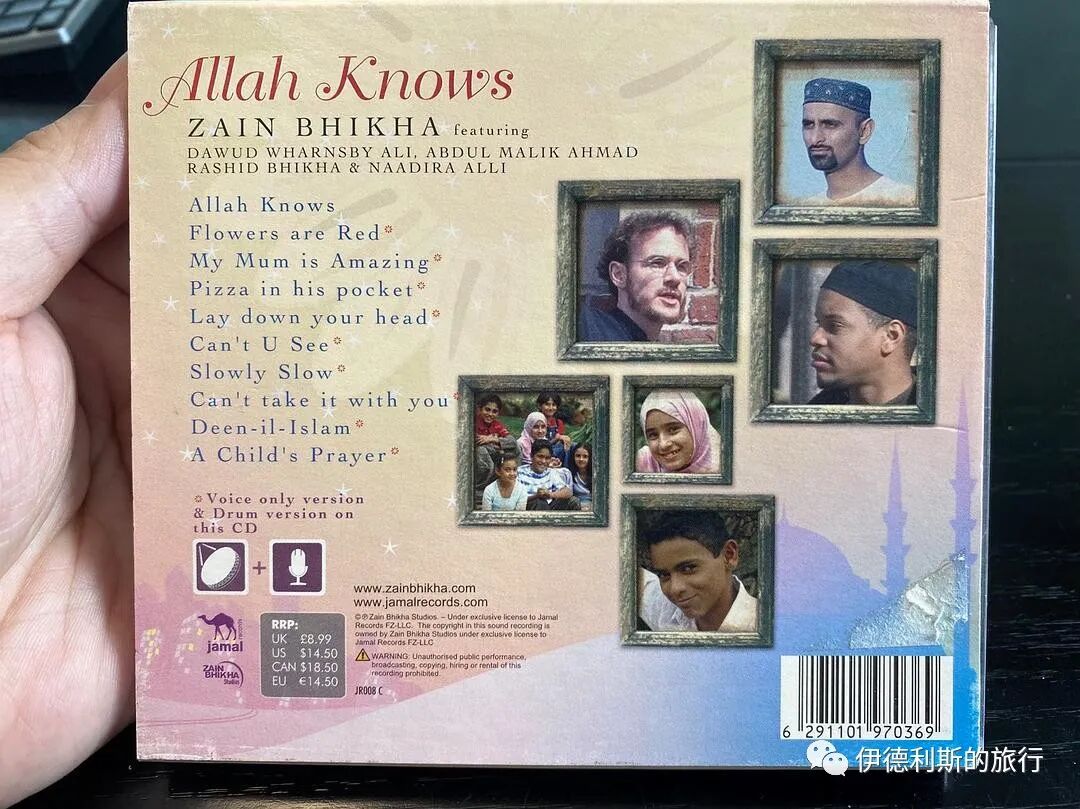
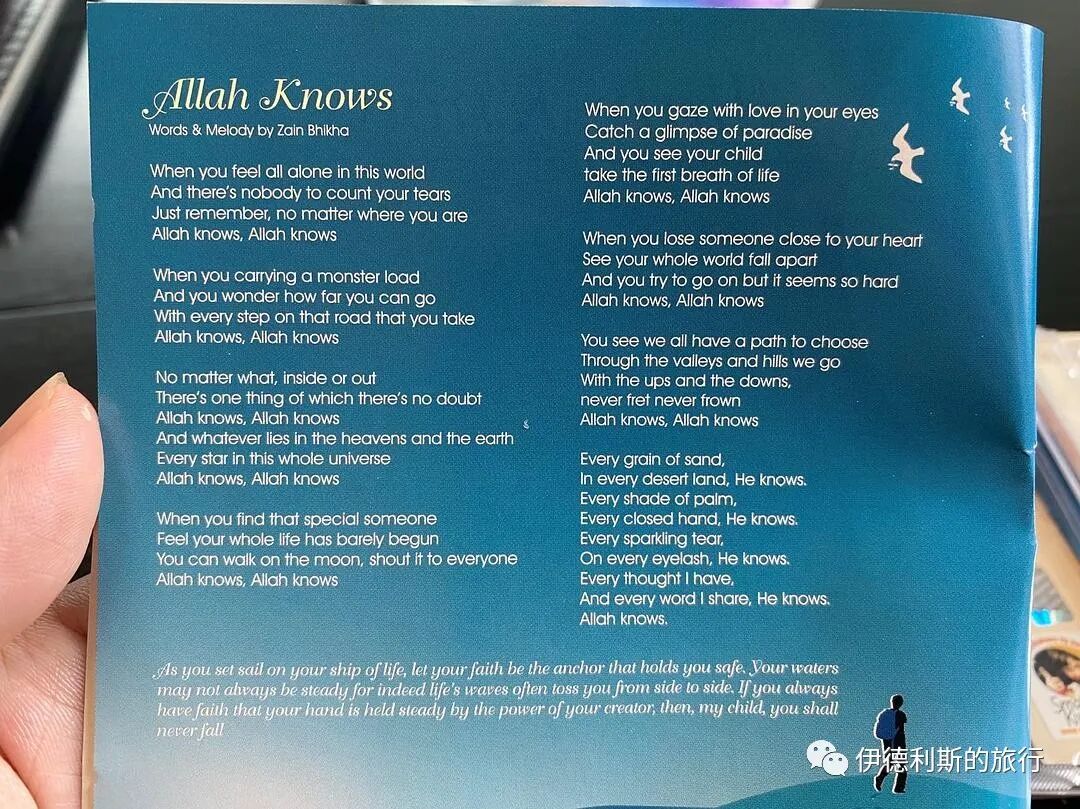
Another album is the English nasheed (nasheed) album Allah Knows, created in 2006 by South African Muslim musician Zain Bhikha for his son Rashid and all Muslim children approaching puberty.
Zain Bhikha was born in South Africa in 1974. He began releasing albums as a singer after 1994 and is very famous in the South African Muslim community. In the 1990s, the famous British singer Yusuf Islam (stage name Cat Stevens), who converted to Islam, began creating English nasheed music and received a great response. After hearing Zain's album, Yusuf invited him to London to collaborate.
In 2000, with Zain's help, Yusuf released the album A is for Allah for Muslim children, which is a representative album of modern English nasheed music. After this, Zain released a series of nasheed albums, the most famous of which is Mountains of Makkah, released after he returned from Hajj in 2004.
Nasheed means chanting in Arabic, and the themes are mostly about faith, religious history, and culture. Historically, there has been disagreement within the faith about whether music is allowed and how it should be used. Some Muslims believe that religious music should only be sung a cappella or accompanied by drums, while others believe that any instrument is fine as long as the performance and content do not violate the faith.
Historically, the most famous nasheed music is the Ta'zieh music of the Shia sect commemorating the martyrdom of Imam Hussein and the South Asian Sufi Qawwali music. There is also Madih nabawi music, which is praise for the Prophet that circulates throughout the Arab world. After the 2000s, modern nasheed music began to develop everywhere. to Yusuf Islam and Zain Bhikha mentioned above, the Malaysian group Raihan has been the most famous nasheed group in Malaysia since the late 90s, and they were invited by the Queen of England to perform in the UK in 1997. In 2005, the Washington-based nasheed group Native Deen released the album Deen You Know, which combined American rap with nasheed music.
Zhengyuan Mosque
I rode my bike from outside Deshengmen to the Zhengyuan Mosque in Dongguanying Hutong inside Xizhimen.
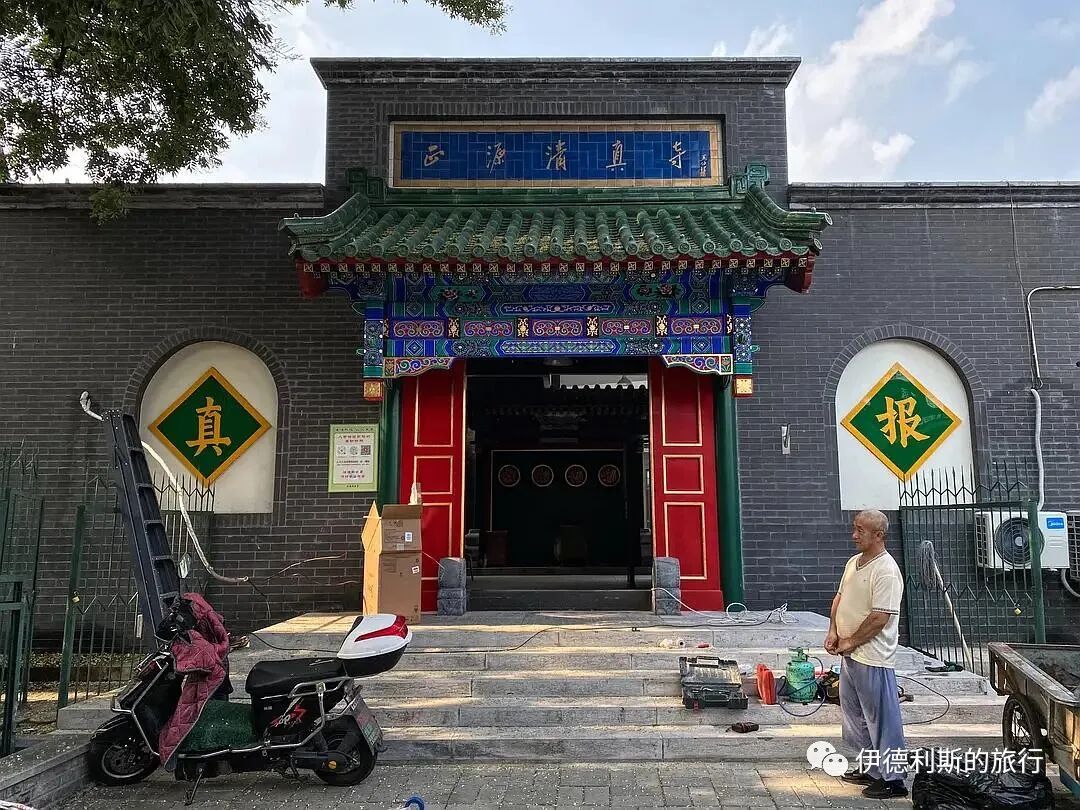
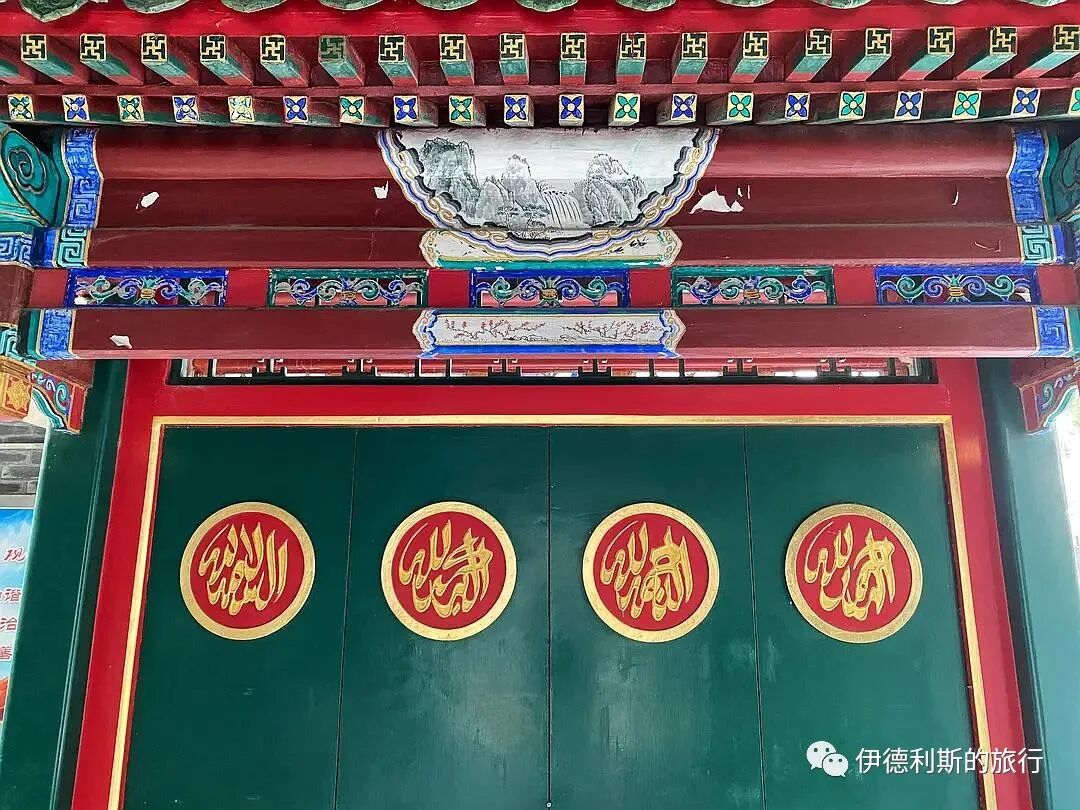
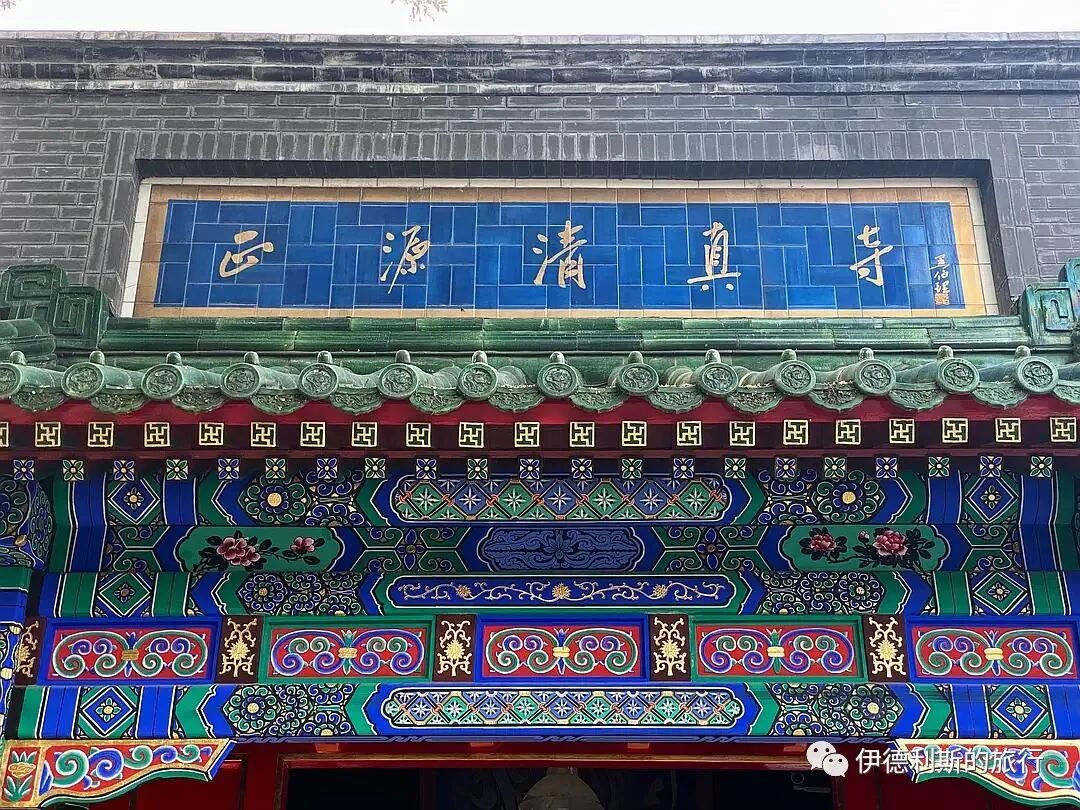
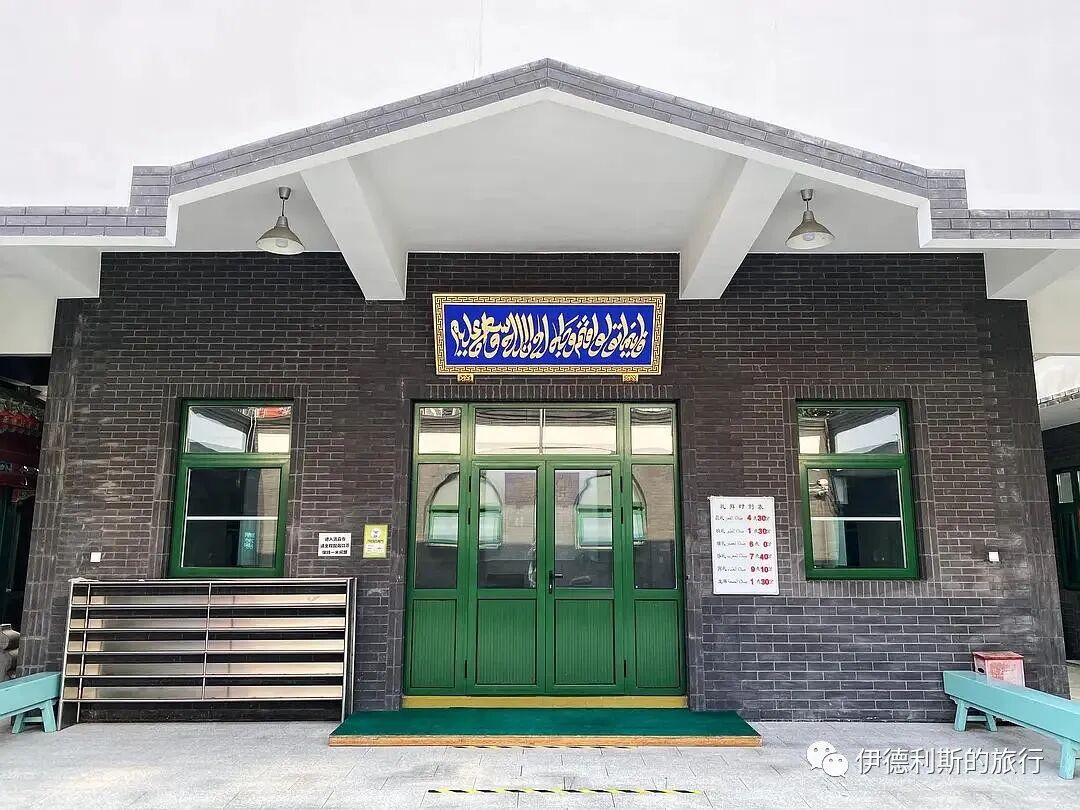
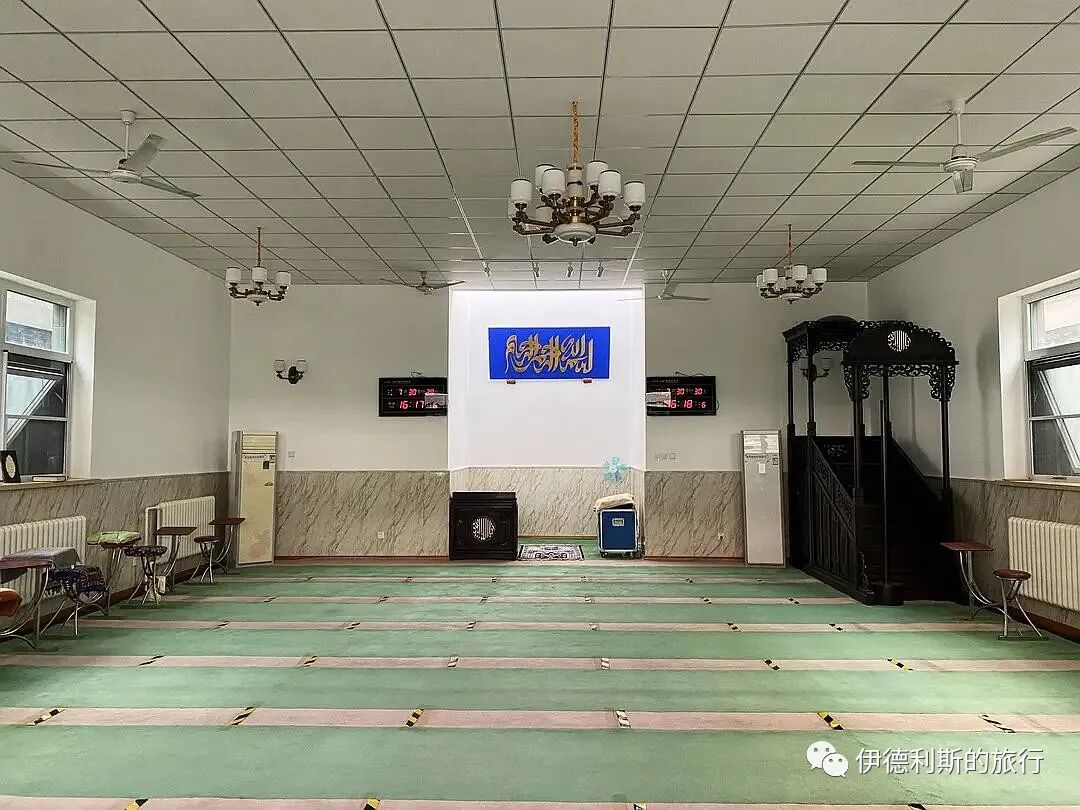
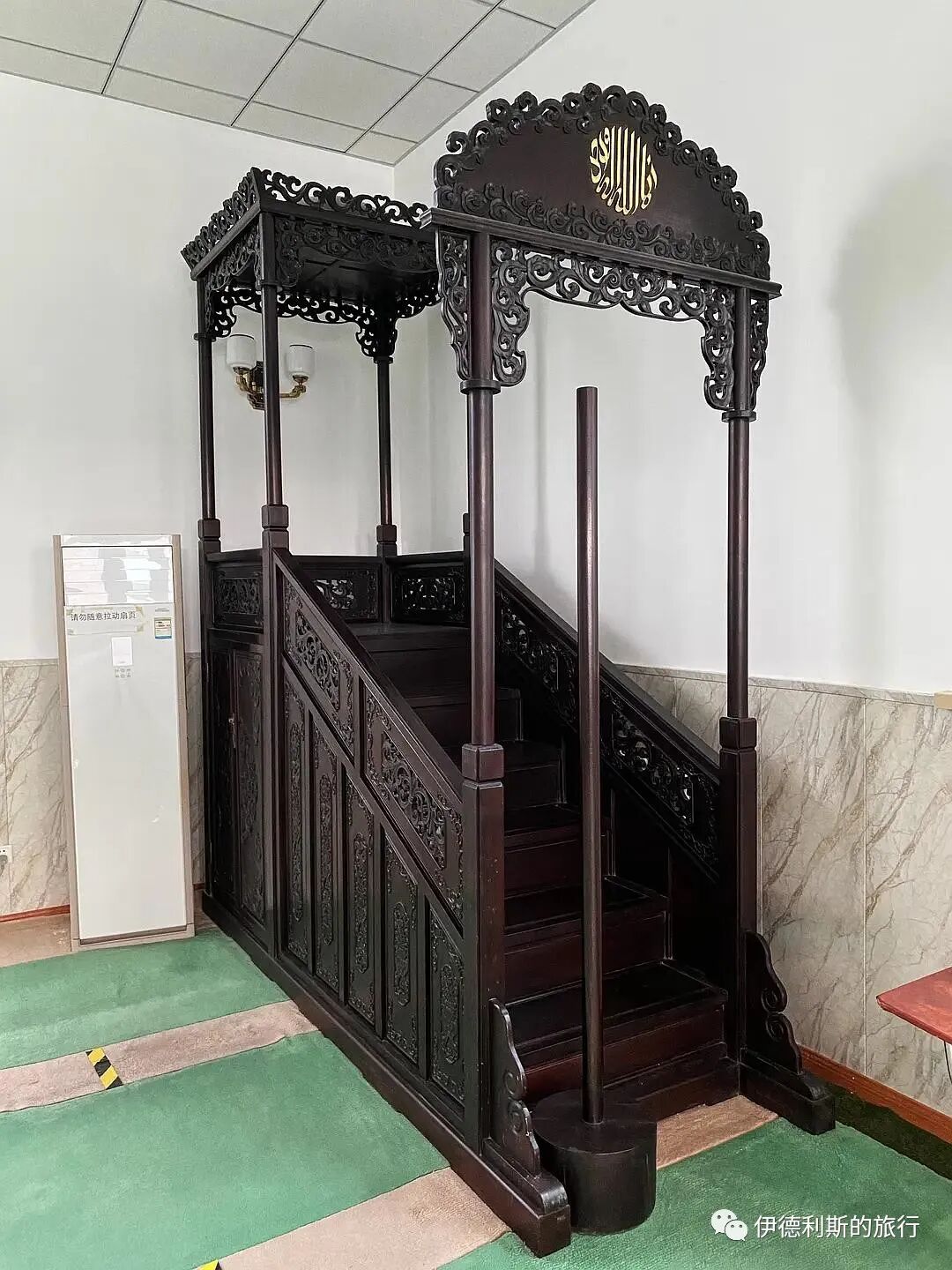
The predecessor of Zhengyuan Mosque was the Beigouyan Mosque inside Xizhimen, which was built during the Daoguang reign. After 1946, Beigouyan was renamed Zhaodengyu Road, so it was also called Zhaodengyu Road Mosque. In 1997, it was relocated and rebuilt at its current site due to demolition, and it was renamed Zhengyuan Mosque. According to the Beijing City Gazetteer written in the 1930s, the mosque in Beijing originally called Zhengyuan should be the Jiaochangkou Mosque outside Fuchengmen.
The mosque has just finished renovations. The tiles and dome were removed from the gate, leaving only the plaque inscribed by Hei Boli, the former chairman of the Ningxia Hui Autonomous Region.
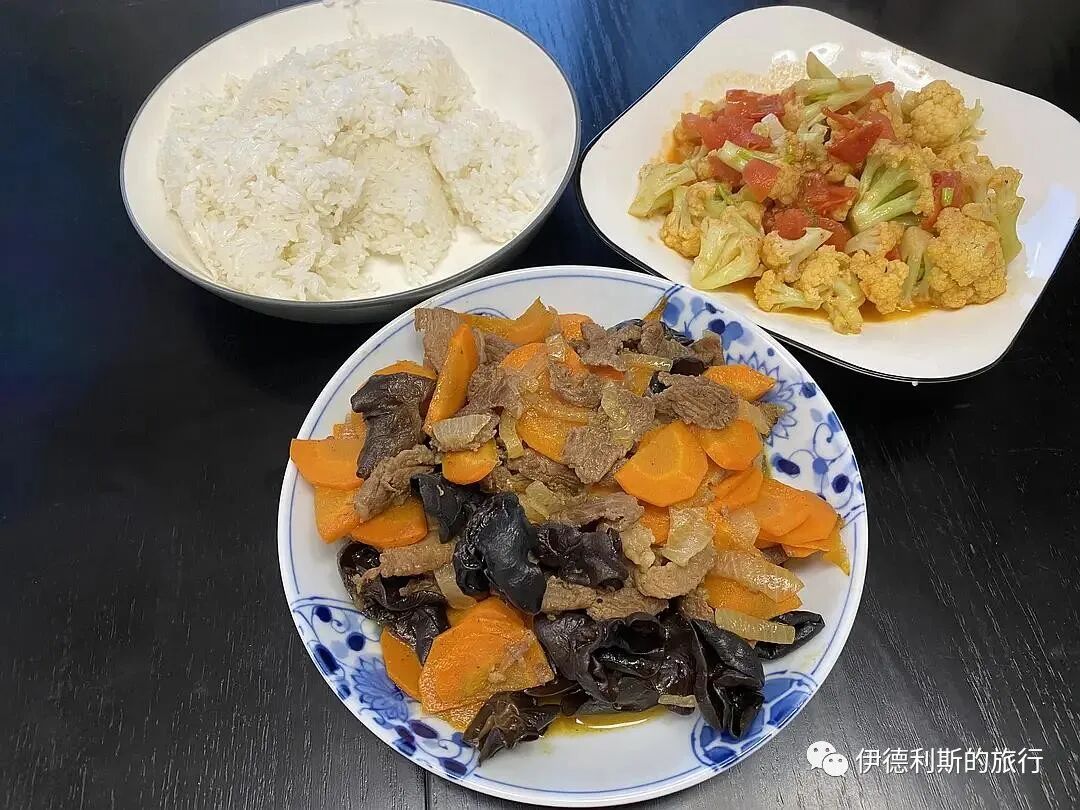
After visiting the mosque, I went home, cooked two home-style dishes, and had dinner with Zainab.
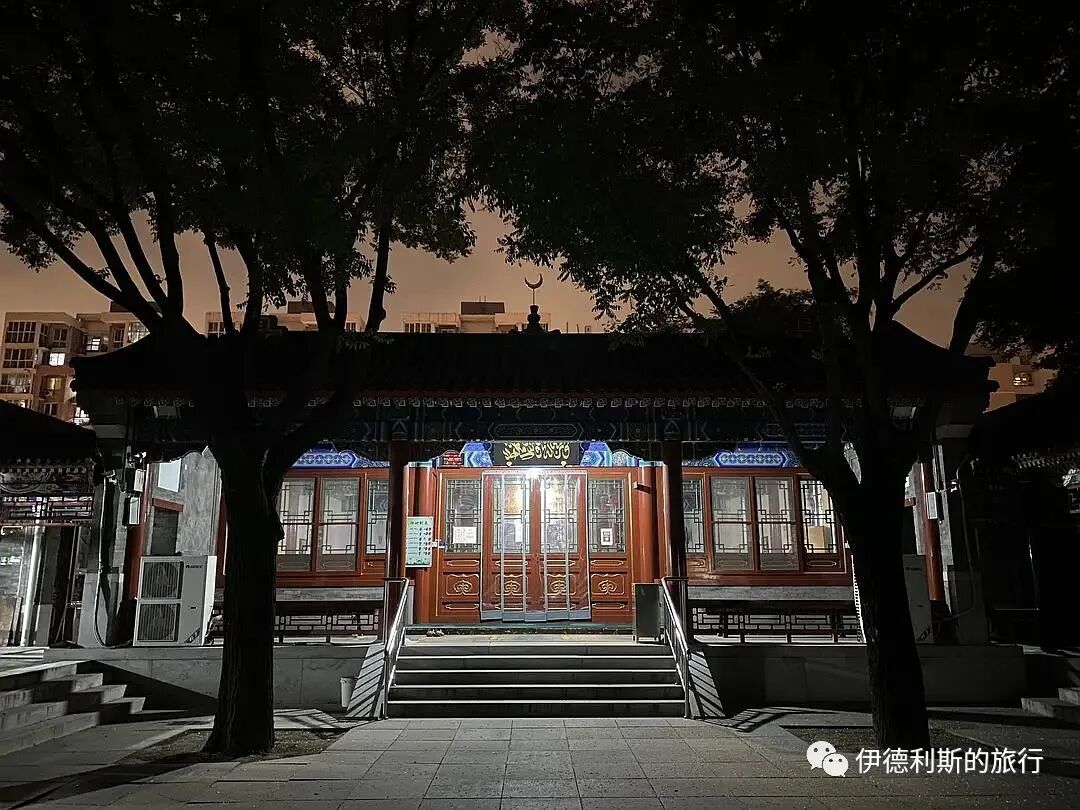
Nandouyacai Mosque
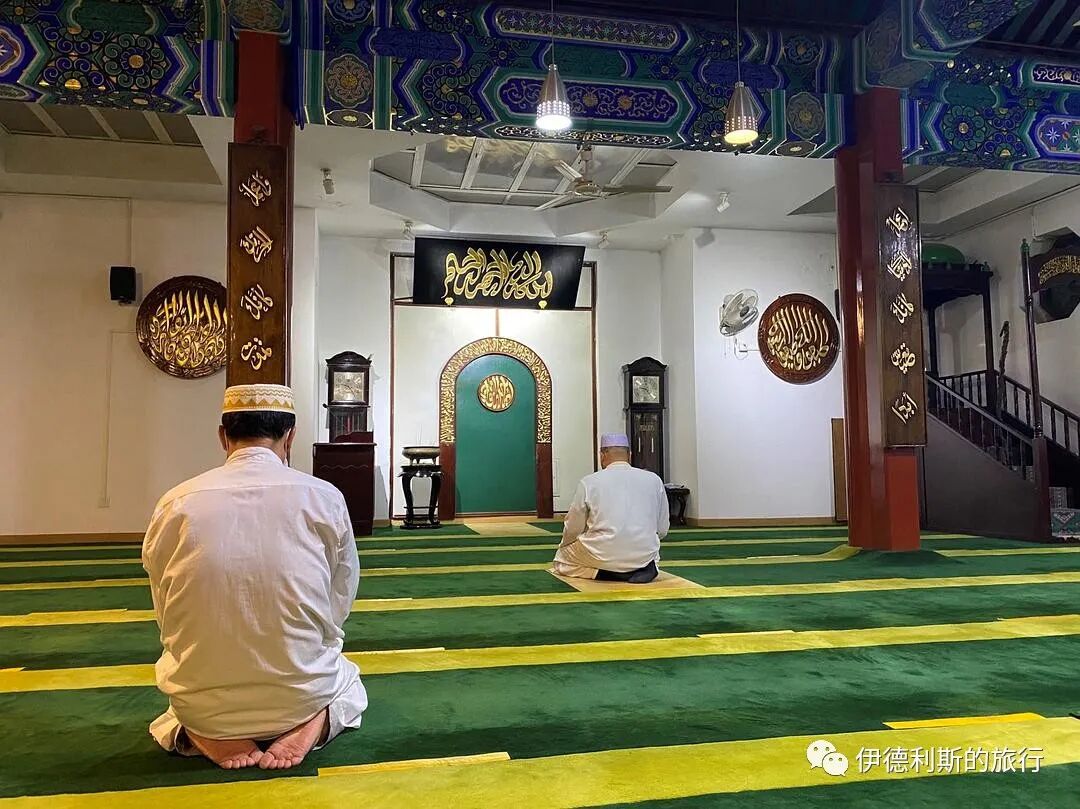
After eating, I went to the Nandouyacai Mosque inside Chaoyangmen to attend the Isha prayer.
People say the Nandouyacai Mosque was originally a mosque, which was bought and rebuilt by Muslims with funds raised in 1798 (the third year of the Jiaqing reign). In 2002, due to the demolition of Chaonei Street, the mosque was moved more than 20 meters to the south and rebuilt, changing its entrance to face west toward Douban Hutong.
Summary: Beijing — Mosques, Islamic New Year and Muslim Heritage is presented here as a firsthand travel account in clear English, beginning with this scene: July 30, 2022, was the Islamic New Year. Since it fell on a Saturday, I decided to go on a mosque-visiting trip. The account keeps its focus on Beijing Mosques, Islamic New Year, Muslim Heritage while preserving the names, places, food, and historical details from the Chinese source.
July 30, 2022, was the Islamic New Year. Since it fell on a Saturday, I decided to go on a mosque-visiting trip.
Dongzhimenwai Mosque
A great day starts with a good morning (bangda). I went to the Dongzhimenwai Mosque, which is relatively close to my home. Dongzhimenwai Mosque was originally called Erlizhuang Mosque. It was first built during the Yuan Dynasty and renovated during the Kangxi period of the Qing Dynasty. In the late 1980s, Shougang Group and a Danish business partner built international apartments in Erlizhuang. Because of this, the mosque was moved one kilometer to the northwest and rebuilt. It was completed in 1991 and reopened in 1993.
The mosque currently houses a precious wooden carving of a dua, which is said to be an original piece from the Yuan Dynasty.
After finishing my namaz, I visited the morning market (xiaoshier) by the Liangma River outside Dongzhimen. I went there often last summer, but this was my first time this year. It felt like the items weren't as interesting as before.
After the market, I grabbed a quick breakfast at Bai Kui in Kuanjie, then went home to take a nap.
Knife-cut noodles (daoxiaomian) in Xiguanshi
I woke up in the morning and set off for the Qinghe Mosque, but the information was wrong and it was closed. I continued on to Xiguanshi in Changping.
I had knife-cut noodles (daoxiaomian) at Yiyuan Restaurant in Xiguanshi. They also serve corn noodles (yumigeluomian) and oat noodles (bashanyouman). Because the Hui Muslims of Xiguanshi were used to traveling the western routes as armed escorts during the Qing Dynasty, their dietary habits were influenced by the Jin dialect region. This makes them very different from Hui Muslims in other parts of Beijing. Eating a bowl of these Hui Muslim knife-cut noodles is a way to get a taste of the Qing Dynasty culture of traveling the western routes (zouxikou).
Street view of Xiguanshi
This meat flatbread (roushaobing) shop is also very famous.
Xiguanshi Mosque
After lunch, I performed my namaz at the Xiguanshi Mosque.
Xiguanshi Mosque was originally called the Guan Shi Village Mosque. It was first built in 1494 (the seventh year of the Hongzhi reign of the Ming Dynasty). The main hall was rebuilt in 1709 (the 48th year of Kangxi), the main gate in 1723 (the first year of Yongzheng), the hall rooms in 1732 (the tenth year of Yongzheng), and the kiln hall in 1761 (the 26th year of Qianlong). It continued to be renovated during the Guangxu period and the Republic of China.
On August 15, 1900, the Eight-Nation Alliance entered Beijing. Empress Dowager Cixi and the Guangxu Emperor fled the city to the west, arriving in Xiguanshi at dusk. The Hui Muslims of Xiguanshi, led by clan elder Li Xilun, welcomed the imperial party south of the village. They led Cixi and her group to stay at the Xiguanshi Mosque, where they were received by Imam Cai Wanchun. According to the late Qing record 'Gengzi Guobian Ji' by Luo Dunrong, 'At dusk, they arrived at Guan Shi in Changping. The Emperor and the Empress Dowager had not eaten for a day.' The villagers offered them sorghum, which they ate with their hands. The Empress Dowager wept, and the Emperor wept as well. It was cold, and they could not find bedding. A village woman offered a cloth quilt that was still damp from washing. Afterward, Cixi slept in the main hall, the Emperor and his consorts slept in the side halls, and the rest of the party stayed in nearby civilian homes.
The next day, Li Xijun, the owner of the Xiguangyu Escort Agency in Xiguanshi, prepared twenty mule-drawn sedan chairs, along with silver ingots and grain for the imperial party. A villager named Yang Juchuan volunteered to lead the way, and Li Jintang provided an escort to the next stop. Wu Lu, a compiler at the Hanlin Academy who experienced the Gengzi Incident, wrote in his 'Hundred Sorrows Poems': 'The imperial carriage stopped at the ancient mosque, and the happy villagers offered their humble vegetables.' They donated a thousand pieces of gold for imperial use and transported a hundred loads of grain from their own stores. In times of hardship, they opened the channels for speech, and I read the imperial edict with tears streaming down my face. I sigh at the border officials who received such great favor, while they live in deep seclusion in their offices. "
Two years later, when Cixi returned to Beijing, she granted silver for the renovation of Xiguanshi. She also had glazed tiles, roof treasures, and ridge beasts fired at the Liulihe Imperial Kiln to be gifted to the Xiguanshi Mosque and the mosque in Gaotou Village, Wuji County, which was the hometown of Imam Cai Wanchun. Cixi inscribed a plaque for the mosque that read 'Spiritual Inspiration Manifested,' the Guangxu Emperor inscribed 'Loyalty Dedicated to the Sovereign,' Prince Su Shanqi inscribed 'Pure Emptiness Tastes of the Way,' and Prince Li inscribed 'Profound and Infinite.' She also granted Yang Juchuan, who helped lead the way, the title of 'Marquis of Leading the Way,' and Li Jintang, who helped with the escort, the rank of a second-grade official in Zhejiang. Many others, including village elder Li Xilun and Imam Cai Wanchun, were awarded fifth, sixth, and seventh-grade official headwear.
In 1958, when a communal canteen was set up, the plaques in the main hall were taken down and used as cutting boards. Their whereabouts are now unknown. After the 1960s, the main hall was turned into a warehouse, and all the plaques and couplets were burned. All buildings except for the main hall and the main gate were demolished until it was restored and reopened in 1982.
The 1879 stone tablet titled 'Record of Li Yongxin's Donation for Annual Repairs in Xiguanshi Village' documents how Li Yongxin donated land and silver to renovate the mosque. The author of the tablet, Ma Zhaoqing, was a famous Qing Dynasty scholar. His compilation, the 'Changping Outer Gazetteer,' corrected and supplemented the 'Changping Prefecture Gazetteer,' making it a valuable historical source. Ma Zhaoqing also wrote a couplet for the Xiguanshi main hall: 'Since the Tang Dynasty, thirty volumes of treasure have been received, pure and clean;' Follow Allah's commands, observe the five daily namaz, and lead the people to prosperity and peace. Unfortunately, it was destroyed in the 1960s.
The 1909 stele titled 'Public Record of Donations for the Xiguan Mosque School' notes that during the Boxer Rebellion, Xiguanshi was not only spared from harassment but also received rewards for hosting Empress Dowager Cixi and her entourage during their flight west. Consequently, local elders donated money and land to support the mosque and its school.
The stele mentions that many donors held official ranks. Among them was Li Jintang, owner of the Xiguangyu Security Firm, who had protected Cixi. He later followed a general to oversee Xinjiang. When a Uyghur uprising broke out in Ili, Li Jintang returned to his hometown of Xiguanshi via Russia under the protection of Uyghurs, and he passed away shortly after.
Dongyuhe Sheep Shop Public Fund
Li Jintang, Second-Rank Official with Peacock Feather, Zhejiang Expectant Circuit Intendant
Li Mingda, Fifth-Rank Official with Peacock Feather
Li Guozhen, Fifth-Rank Official
Li Xilun, Fifth-Rank Official with Blue Feather, Candidate for County Magistrate
Li Baochen, Sixth-Rank Official with Blue Feather
Li Yukuan, Li Xitian, Li Xi'en, Li Xihou, Hai Mingzhu, and Li Sheng, all Sixth-Rank Officials
Li Zhensheng, Seventh-Rank Official
Additionally, the tomb garden of the sage Bo Hazhi in Changping also contains a donation stele from 1909. It lists Hui Muslims from Xiguanshi who donated to the tomb, and some names overlap with those on the Xiguanshi stele:
Ma Jinsheng, Imam of the mosque
Zhang Jizong, Gao Zhaoming, and Li Chunze, Seventh-Rank Officials and religious leaders
Li Jintang, Second-Rank Official with Peacock Feather, Zhejiang Expectant Circuit Intendant
Yang Deqing, Third-Rank Official with Peacock Feather
Li Minghe, Li Mingda, and Li Fengrui, Fifth-Rank Officials with Peacock Feather
Li Baochen, Fifth-Rank Official with Blue Feather
Li Xilun, Fifth-Rank Official with Blue Feather, Candidate for County Magistrate
Huang Jinbao, Fifth-Rank Official
Li Qingyuan, Li Xichun, Li Xihou, and Li Xi'en, Sixth-Rank Officials
Li Qingzhen, Li Qing, Zhang Dahai, and Li Guishen, Seventh-Rank Officials
Li Xilin, Candidate for Prefect
Wen Shengkang and others
Ma Qi, graduate of the Shuntian Police Academy
Fayuan Mosque outside Deshengmen
I took the 919 bus from Shahe to its final stop outside Deshengmen, which was the perfect chance to visit the Fayuan Mosque.
The founding date of Fayuan Mosque is unknown. It was originally located on a slope north of Jiaochangkou outside Deshengmen. It was moved and expanded during the Kangxi era, and the main hall was expanded again during the Republic of China period, featuring four interconnected roofs and a four-cornered pavilion top.
The entrance to the main hall now displays a plaque reading 'All Things Return to Truth,' inscribed in 1928 by General Ma Fuxiang. In the late 1920s, Ma Fuxiang was living in Beijing. He studied Islamic classics deeply and donated money to help Muslims build schools. In 1928, he helped organize the Beiping Muslim Middle School, later renamed Northwest Public School, and donated over a dozen school buildings he had purchased in the backyard of the Dongsi Mosque to the Chengda Teachers' College.
I bought two door hangings (mendu'er) at the mosque. These are quite old. The one in the picture below shows how they looked after hanging on the streets of Xiguanshi village for many years.
Digging for records at Fusheng Record Store
There is a long-standing record shop called Fusheng near Bingjiaokou outside Deshengmen. When I was a child, they were located in Ping'anli before moving to the area outside Deshengmen. After leaving the mosque, I bought two albums related to the faith at their shop.
One is a cut-out disc of early music from 1978-1982 by the Pakistani Sufi Qawwali master Nusrat Fateh Ali Khan.
Nusrat Fateh Ali Khan is known as the 'King of Qawwali' and had a major influence on South Asian pop music. He was born in 1948 into a Punjabi Muslim family in Pakistan. It is said his family has passed down Qawwali music for nearly 600 years, singing mainly in Urdu and Punjabi.
Nusrat performed for the first time in London at the WOMAD festival in 1985, and after that, he toured all over the world. In the late 1980s, he signed with the British world music label Real World. He released a series of world music albums in the 1990s and collaborated with many different types of musicians, earning him the title of a pioneer of world music.
Unlike his later polished remix and fusion albums, this early collection features raw, traditional Sufi Qawwali music that was not yet well-known to the Western mainstream.
South Asian classical music is traditionally divided into different schools (gharānā), which are passed down steadily through the relationship between master and student. Nusrat belonged to the ancient Qawwal Bacchon school, founded in the late 13th century by Amir Khusrow, a sage of the Chisti Sufi order in Delhi, India. It developed and was passed down in Delhi, centered at the shrine (Nizamuddin Dargah) of the Sufi saint Nizamuddin, until it moved to Pakistan during the partition of India and Pakistan in 1947. In 2018, I was lucky enough to experience traditional Qawwali music at a Sufi shrine in Delhi.
Another album is the English nasheed (nasheed) album Allah Knows, created in 2006 by South African Muslim musician Zain Bhikha for his son Rashid and all Muslim children approaching puberty.
Zain Bhikha was born in South Africa in 1974. He began releasing albums as a singer after 1994 and is very famous in the South African Muslim community. In the 1990s, the famous British singer Yusuf Islam (stage name Cat Stevens), who converted to Islam, began creating English nasheed music and received a great response. After hearing Zain's album, Yusuf invited him to London to collaborate.
In 2000, with Zain's help, Yusuf released the album A is for Allah for Muslim children, which is a representative album of modern English nasheed music. After this, Zain released a series of nasheed albums, the most famous of which is Mountains of Makkah, released after he returned from Hajj in 2004.
Nasheed means chanting in Arabic, and the themes are mostly about faith, religious history, and culture. Historically, there has been disagreement within the faith about whether music is allowed and how it should be used. Some Muslims believe that religious music should only be sung a cappella or accompanied by drums, while others believe that any instrument is fine as long as the performance and content do not violate the faith.
Historically, the most famous nasheed music is the Ta'zieh music of the Shia sect commemorating the martyrdom of Imam Hussein and the South Asian Sufi Qawwali music. There is also Madih nabawi music, which is praise for the Prophet that circulates throughout the Arab world. After the 2000s, modern nasheed music began to develop everywhere. to Yusuf Islam and Zain Bhikha mentioned above, the Malaysian group Raihan has been the most famous nasheed group in Malaysia since the late 90s, and they were invited by the Queen of England to perform in the UK in 1997. In 2005, the Washington-based nasheed group Native Deen released the album Deen You Know, which combined American rap with nasheed music.
Zhengyuan Mosque
I rode my bike from outside Deshengmen to the Zhengyuan Mosque in Dongguanying Hutong inside Xizhimen.
The predecessor of Zhengyuan Mosque was the Beigouyan Mosque inside Xizhimen, which was built during the Daoguang reign. After 1946, Beigouyan was renamed Zhaodengyu Road, so it was also called Zhaodengyu Road Mosque. In 1997, it was relocated and rebuilt at its current site due to demolition, and it was renamed Zhengyuan Mosque. According to the Beijing City Gazetteer written in the 1930s, the mosque in Beijing originally called Zhengyuan should be the Jiaochangkou Mosque outside Fuchengmen.
The mosque has just finished renovations. The tiles and dome were removed from the gate, leaving only the plaque inscribed by Hei Boli, the former chairman of the Ningxia Hui Autonomous Region.
After visiting the mosque, I went home, cooked two home-style dishes, and had dinner with Zainab.
Nandouyacai Mosque
After eating, I went to the Nandouyacai Mosque inside Chaoyangmen to attend the Isha prayer.
People say the Nandouyacai Mosque was originally a mosque, which was bought and rebuilt by Muslims with funds raised in 1798 (the third year of the Jiaqing reign). In 2002, due to the demolition of Chaonei Street, the mosque was moved more than 20 meters to the south and rebuilt, changing its entrance to face west toward Douban Hutong.
Islamic New Year 2022: When it is and why Muslims are marking it in summer
Articles • nuri posted the article • 0 comments • 1053 views • 2022-07-30 23:28
We take a look at the significance and history of the Islamic New Year, an occasion of self-reflection that marks the ushering in of Muslim civilisation.
Dark winter evenings and skies lit up by fireworks are how many in the northern hemisphere think of New Year celebrations. But for Muslims around the world, it is an occasion marked in contemplation and reflection. While some years it occurs in winter, it can also fall in all the other seasons.
That is because it follows the lunar Islamic calendar, also known as the Hijri calendar, the Arabic adjective of the word hijra, meaning migration. It refers to the Prophet Muhammad's departure in 622 CE from his hometown of Mecca, fleeing persecution from his tribe, to the city Medina, where he ushered in the start of the Muslim civilization.
For this, the Hijri calendar holds religious significance for Muslims and was used exclusively for daily affairs until a process of westernisation under European imperial rule across most of the Muslim world gave prominence to the Gregorian calendar.
Yet the Hijri calendar remains vital for Muslims, as it is used to determine the dates of important events, such as the start of Ramadan, Eid celebrations and the Hajj pilgrimage.
Here, Discover answers some key questions about the Islamic New Year.
When is Islamic New Year?
This year, Muslims will mark the new year on the evening of 29 July, officially starting the new year on 30 July.
The Islamic New Year is on the first day of Muharram, which is the first month in the Hijri calendar.
In Islamic tradition, the calendar day begins at sunset, so New Year's day is considered to officially start on the evening of the final day of Dhul Hijjah, which is the 12th month of the calendar.
Dhul Hijah is also important for Muslims as it is the month that Hajj, the pilgrimage that is one of the five pillars of Islam, takes place.
How do Muslims mark the New Year?
While in many parts of the world New Year's eve is celebrated with elaborate parties, copious amounts of food and drink as well as setting resolutions, for Muslims, marking the start of a fresh year is more about spiritual reflection.
Some people will choose this time to wish others a happy Islamic New Year and meet with family and friends.
Others will use the day as an opportunity to immerse themselves in reciting the Quran or studying Islamic teachings to better themselves and connect with their faith.
For Muslims, the start of a new year is the perfect time to reflect on how they can improve their behaviour, lives and relationship with God.
In a way similar to how traditional New Year's resolutions are made, many Muslims will also set religious goals to strive towards, and use the occasion to plan what they can do to move forward and strengthen their values.
Generally, the day is spent in contemplation and reflection. No big celebrations are held, even in Muslim-majority countries, as the occasion is not an official Islamic holiday.
How does the lunar calendar work?
The Islamic calendar is governed by the movements of the moon, meaning that each month starts with a new lunar cycle, marked by the "birth" of a new crescent moon.
As it is based on the lunar calendar, the Islamic calendar only has 354-355 days, because a lunar cycle typically lasts for 29 or 30 days rather than the 30 or 31 days per month in the solar calendar, which the dominant Gregorian calendar is based on.
If a new crescent moon is spotted on the 29th day, this marks the end of the lunar cycle, hence a new month starts the next day.
Religious custom states it is only necessary for one Muslim in the community to spot the moon for a new month to be announced.
Today, modern technology means that observing the moon is much easier and more scientifically accurate. It has therefore become a tradition among Muslims to try spotting it themselves and not rely on any one country to sight the moon.
For Muslims, the Islamic lunar calendar is of particular importance as it marked the start of a new chapter for the religion. The calendar was introduced officially by the second successor, or Khalifa, to Prophet Muhammad, Umar ibn al-Khattab, amidst a growing need to have a calendar system in place for the expanding Muslim empire at the time.
Although other calendars, such as those used by the Romans and Persians, existed at the time, it was decided that the Muslims should have their own, in an effort to pioneer their civilisation and distinguish their religion.
There was great deliberation as to when the first calendar year should commence. While some suggested the year of the prophet's birth or death, it was decided that it would start with the time that Muslims migrated, as they were able to escape persecution and Islam began to flourish and grow from this point on.
Then came discussions around which month the calender should start, and upon the suggestion of Uthman ibn Affan, the third successor to the prophet, it was decided that it should be Muharram, a month that is seen as sacred and symbolic of new beginnings, as it came right after the month in which Hajj took place. Muslims believe that after completling Hajj, all of their sins are wiped out.
Is Islamic new year a public holiday?
Although many Muslims still refer to the Islamic lunar calendar for religious events, most live their day-to-day using the Gregorian calendar.
Some Muslim majority countries still refer to the Hijri calendar in official documents, as well as the Gregorian calendar.
Few countries, including the United Arab Emirates and Malaysia, will be marking the day as a public holiday. Others may mark the day by allowing some businesses to close earlier and function at a slower pace, as people take breaks and spend time with their families and friends. view all
We take a look at the significance and history of the Islamic New Year, an occasion of self-reflection that marks the ushering in of Muslim civilisation.
Dark winter evenings and skies lit up by fireworks are how many in the northern hemisphere think of New Year celebrations. But for Muslims around the world, it is an occasion marked in contemplation and reflection. While some years it occurs in winter, it can also fall in all the other seasons.
That is because it follows the lunar Islamic calendar, also known as the Hijri calendar, the Arabic adjective of the word hijra, meaning migration. It refers to the Prophet Muhammad's departure in 622 CE from his hometown of Mecca, fleeing persecution from his tribe, to the city Medina, where he ushered in the start of the Muslim civilization.

For this, the Hijri calendar holds religious significance for Muslims and was used exclusively for daily affairs until a process of westernisation under European imperial rule across most of the Muslim world gave prominence to the Gregorian calendar.
Yet the Hijri calendar remains vital for Muslims, as it is used to determine the dates of important events, such as the start of Ramadan, Eid celebrations and the Hajj pilgrimage.
Here, Discover answers some key questions about the Islamic New Year.
When is Islamic New Year?
This year, Muslims will mark the new year on the evening of 29 July, officially starting the new year on 30 July.
The Islamic New Year is on the first day of Muharram, which is the first month in the Hijri calendar.
In Islamic tradition, the calendar day begins at sunset, so New Year's day is considered to officially start on the evening of the final day of Dhul Hijjah, which is the 12th month of the calendar.
Dhul Hijah is also important for Muslims as it is the month that Hajj, the pilgrimage that is one of the five pillars of Islam, takes place.

How do Muslims mark the New Year?
While in many parts of the world New Year's eve is celebrated with elaborate parties, copious amounts of food and drink as well as setting resolutions, for Muslims, marking the start of a fresh year is more about spiritual reflection.
Some people will choose this time to wish others a happy Islamic New Year and meet with family and friends.
Others will use the day as an opportunity to immerse themselves in reciting the Quran or studying Islamic teachings to better themselves and connect with their faith.
For Muslims, the start of a new year is the perfect time to reflect on how they can improve their behaviour, lives and relationship with God.
In a way similar to how traditional New Year's resolutions are made, many Muslims will also set religious goals to strive towards, and use the occasion to plan what they can do to move forward and strengthen their values.
Generally, the day is spent in contemplation and reflection. No big celebrations are held, even in Muslim-majority countries, as the occasion is not an official Islamic holiday.
How does the lunar calendar work?
The Islamic calendar is governed by the movements of the moon, meaning that each month starts with a new lunar cycle, marked by the "birth" of a new crescent moon.
As it is based on the lunar calendar, the Islamic calendar only has 354-355 days, because a lunar cycle typically lasts for 29 or 30 days rather than the 30 or 31 days per month in the solar calendar, which the dominant Gregorian calendar is based on.
If a new crescent moon is spotted on the 29th day, this marks the end of the lunar cycle, hence a new month starts the next day.
Religious custom states it is only necessary for one Muslim in the community to spot the moon for a new month to be announced.
Today, modern technology means that observing the moon is much easier and more scientifically accurate. It has therefore become a tradition among Muslims to try spotting it themselves and not rely on any one country to sight the moon.

For Muslims, the Islamic lunar calendar is of particular importance as it marked the start of a new chapter for the religion. The calendar was introduced officially by the second successor, or Khalifa, to Prophet Muhammad, Umar ibn al-Khattab, amidst a growing need to have a calendar system in place for the expanding Muslim empire at the time.
Although other calendars, such as those used by the Romans and Persians, existed at the time, it was decided that the Muslims should have their own, in an effort to pioneer their civilisation and distinguish their religion.
There was great deliberation as to when the first calendar year should commence. While some suggested the year of the prophet's birth or death, it was decided that it would start with the time that Muslims migrated, as they were able to escape persecution and Islam began to flourish and grow from this point on.
Then came discussions around which month the calender should start, and upon the suggestion of Uthman ibn Affan, the third successor to the prophet, it was decided that it should be Muharram, a month that is seen as sacred and symbolic of new beginnings, as it came right after the month in which Hajj took place. Muslims believe that after completling Hajj, all of their sins are wiped out.
Is Islamic new year a public holiday?
Although many Muslims still refer to the Islamic lunar calendar for religious events, most live their day-to-day using the Gregorian calendar.
Some Muslim majority countries still refer to the Hijri calendar in official documents, as well as the Gregorian calendar.
Few countries, including the United Arab Emirates and Malaysia, will be marking the day as a public holiday. Others may mark the day by allowing some businesses to close earlier and function at a slower pace, as people take breaks and spend time with their families and friends.
Halal Travel Guide: Beijing — Mosques, Islamic New Year and Muslim Heritage
Articles • ali2007fr posted the article • 0 comments • 165 views • 2026-05-17 12:22
Reposted from the web
Summary: Beijing — Mosques, Islamic New Year and Muslim Heritage is presented here as a firsthand travel account in clear English, beginning with this scene: July 30, 2022, was the Islamic New Year. Since it fell on a Saturday, I decided to go on a mosque-visiting trip. The account keeps its focus on Beijing Mosques, Islamic New Year, Muslim Heritage while preserving the names, places, food, and historical details from the Chinese source.
July 30, 2022, was the Islamic New Year. Since it fell on a Saturday, I decided to go on a mosque-visiting trip.
Dongzhimenwai Mosque
A great day starts with a good morning (bangda). I went to the Dongzhimenwai Mosque, which is relatively close to my home. Dongzhimenwai Mosque was originally called Erlizhuang Mosque. It was first built during the Yuan Dynasty and renovated during the Kangxi period of the Qing Dynasty. In the late 1980s, Shougang Group and a Danish business partner built international apartments in Erlizhuang. Because of this, the mosque was moved one kilometer to the northwest and rebuilt. It was completed in 1991 and reopened in 1993.
The mosque currently houses a precious wooden carving of a dua, which is said to be an original piece from the Yuan Dynasty.
After finishing my namaz, I visited the morning market (xiaoshier) by the Liangma River outside Dongzhimen. I went there often last summer, but this was my first time this year. It felt like the items weren't as interesting as before.
After the market, I grabbed a quick breakfast at Bai Kui in Kuanjie, then went home to take a nap.
Knife-cut noodles (daoxiaomian) in Xiguanshi
I woke up in the morning and set off for the Qinghe Mosque, but the information was wrong and it was closed. I continued on to Xiguanshi in Changping.
I had knife-cut noodles (daoxiaomian) at Yiyuan Restaurant in Xiguanshi. They also serve corn noodles (yumigeluomian) and oat noodles (bashanyouman). Because the Hui Muslims of Xiguanshi were used to traveling the western routes as armed escorts during the Qing Dynasty, their dietary habits were influenced by the Jin dialect region. This makes them very different from Hui Muslims in other parts of Beijing. Eating a bowl of these Hui Muslim knife-cut noodles is a way to get a taste of the Qing Dynasty culture of traveling the western routes (zouxikou).
Street view of Xiguanshi
This meat flatbread (roushaobing) shop is also very famous.
Xiguanshi Mosque
After lunch, I performed my namaz at the Xiguanshi Mosque.
Xiguanshi Mosque was originally called the Guan Shi Village Mosque. It was first built in 1494 (the seventh year of the Hongzhi reign of the Ming Dynasty). The main hall was rebuilt in 1709 (the 48th year of Kangxi), the main gate in 1723 (the first year of Yongzheng), the hall rooms in 1732 (the tenth year of Yongzheng), and the kiln hall in 1761 (the 26th year of Qianlong). It continued to be renovated during the Guangxu period and the Republic of China.
On August 15, 1900, the Eight-Nation Alliance entered Beijing. Empress Dowager Cixi and the Guangxu Emperor fled the city to the west, arriving in Xiguanshi at dusk. The Hui Muslims of Xiguanshi, led by clan elder Li Xilun, welcomed the imperial party south of the village. They led Cixi and her group to stay at the Xiguanshi Mosque, where they were received by Imam Cai Wanchun. According to the late Qing record 'Gengzi Guobian Ji' by Luo Dunrong, 'At dusk, they arrived at Guan Shi in Changping. The Emperor and the Empress Dowager had not eaten for a day.' The villagers offered them sorghum, which they ate with their hands. The Empress Dowager wept, and the Emperor wept as well. It was cold, and they could not find bedding. A village woman offered a cloth quilt that was still damp from washing. Afterward, Cixi slept in the main hall, the Emperor and his consorts slept in the side halls, and the rest of the party stayed in nearby civilian homes.
The next day, Li Xijun, the owner of the Xiguangyu Escort Agency in Xiguanshi, prepared twenty mule-drawn sedan chairs, along with silver ingots and grain for the imperial party. A villager named Yang Juchuan volunteered to lead the way, and Li Jintang provided an escort to the next stop. Wu Lu, a compiler at the Hanlin Academy who experienced the Gengzi Incident, wrote in his 'Hundred Sorrows Poems': 'The imperial carriage stopped at the ancient mosque, and the happy villagers offered their humble vegetables.' They donated a thousand pieces of gold for imperial use and transported a hundred loads of grain from their own stores. In times of hardship, they opened the channels for speech, and I read the imperial edict with tears streaming down my face. I sigh at the border officials who received such great favor, while they live in deep seclusion in their offices. "
Two years later, when Cixi returned to Beijing, she granted silver for the renovation of Xiguanshi. She also had glazed tiles, roof treasures, and ridge beasts fired at the Liulihe Imperial Kiln to be gifted to the Xiguanshi Mosque and the mosque in Gaotou Village, Wuji County, which was the hometown of Imam Cai Wanchun. Cixi inscribed a plaque for the mosque that read 'Spiritual Inspiration Manifested,' the Guangxu Emperor inscribed 'Loyalty Dedicated to the Sovereign,' Prince Su Shanqi inscribed 'Pure Emptiness Tastes of the Way,' and Prince Li inscribed 'Profound and Infinite.' She also granted Yang Juchuan, who helped lead the way, the title of 'Marquis of Leading the Way,' and Li Jintang, who helped with the escort, the rank of a second-grade official in Zhejiang. Many others, including village elder Li Xilun and Imam Cai Wanchun, were awarded fifth, sixth, and seventh-grade official headwear.
In 1958, when a communal canteen was set up, the plaques in the main hall were taken down and used as cutting boards. Their whereabouts are now unknown. After the 1960s, the main hall was turned into a warehouse, and all the plaques and couplets were burned. All buildings except for the main hall and the main gate were demolished until it was restored and reopened in 1982.
The 1879 stone tablet titled 'Record of Li Yongxin's Donation for Annual Repairs in Xiguanshi Village' documents how Li Yongxin donated land and silver to renovate the mosque. The author of the tablet, Ma Zhaoqing, was a famous Qing Dynasty scholar. His compilation, the 'Changping Outer Gazetteer,' corrected and supplemented the 'Changping Prefecture Gazetteer,' making it a valuable historical source. Ma Zhaoqing also wrote a couplet for the Xiguanshi main hall: 'Since the Tang Dynasty, thirty volumes of treasure have been received, pure and clean;' Follow Allah's commands, observe the five daily namaz, and lead the people to prosperity and peace. Unfortunately, it was destroyed in the 1960s.
The 1909 stele titled 'Public Record of Donations for the Xiguan Mosque School' notes that during the Boxer Rebellion, Xiguanshi was not only spared from harassment but also received rewards for hosting Empress Dowager Cixi and her entourage during their flight west. Consequently, local elders donated money and land to support the mosque and its school.
The stele mentions that many donors held official ranks. Among them was Li Jintang, owner of the Xiguangyu Security Firm, who had protected Cixi. He later followed a general to oversee Xinjiang. When a Uyghur uprising broke out in Ili, Li Jintang returned to his hometown of Xiguanshi via Russia under the protection of Uyghurs, and he passed away shortly after.
Dongyuhe Sheep Shop Public Fund
Li Jintang, Second-Rank Official with Peacock Feather, Zhejiang Expectant Circuit Intendant
Li Mingda, Fifth-Rank Official with Peacock Feather
Li Guozhen, Fifth-Rank Official
Li Xilun, Fifth-Rank Official with Blue Feather, Candidate for County Magistrate
Li Baochen, Sixth-Rank Official with Blue Feather
Li Yukuan, Li Xitian, Li Xi'en, Li Xihou, Hai Mingzhu, and Li Sheng, all Sixth-Rank Officials
Li Zhensheng, Seventh-Rank Official
Additionally, the tomb garden of the sage Bo Hazhi in Changping also contains a donation stele from 1909. It lists Hui Muslims from Xiguanshi who donated to the tomb, and some names overlap with those on the Xiguanshi stele:
Ma Jinsheng, Imam of the mosque
Zhang Jizong, Gao Zhaoming, and Li Chunze, Seventh-Rank Officials and religious leaders
Li Jintang, Second-Rank Official with Peacock Feather, Zhejiang Expectant Circuit Intendant
Yang Deqing, Third-Rank Official with Peacock Feather
Li Minghe, Li Mingda, and Li Fengrui, Fifth-Rank Officials with Peacock Feather
Li Baochen, Fifth-Rank Official with Blue Feather
Li Xilun, Fifth-Rank Official with Blue Feather, Candidate for County Magistrate
Huang Jinbao, Fifth-Rank Official
Li Qingyuan, Li Xichun, Li Xihou, and Li Xi'en, Sixth-Rank Officials
Li Qingzhen, Li Qing, Zhang Dahai, and Li Guishen, Seventh-Rank Officials
Li Xilin, Candidate for Prefect
Wen Shengkang and others
Ma Qi, graduate of the Shuntian Police Academy
Fayuan Mosque outside Deshengmen
I took the 919 bus from Shahe to its final stop outside Deshengmen, which was the perfect chance to visit the Fayuan Mosque.
The founding date of Fayuan Mosque is unknown. It was originally located on a slope north of Jiaochangkou outside Deshengmen. It was moved and expanded during the Kangxi era, and the main hall was expanded again during the Republic of China period, featuring four interconnected roofs and a four-cornered pavilion top.
The entrance to the main hall now displays a plaque reading 'All Things Return to Truth,' inscribed in 1928 by General Ma Fuxiang. In the late 1920s, Ma Fuxiang was living in Beijing. He studied Islamic classics deeply and donated money to help Muslims build schools. In 1928, he helped organize the Beiping Muslim Middle School, later renamed Northwest Public School, and donated over a dozen school buildings he had purchased in the backyard of the Dongsi Mosque to the Chengda Teachers' College.
I bought two door hangings (mendu'er) at the mosque. These are quite old. The one in the picture below shows how they looked after hanging on the streets of Xiguanshi village for many years.
Digging for records at Fusheng Record Store
There is a long-standing record shop called Fusheng near Bingjiaokou outside Deshengmen. When I was a child, they were located in Ping'anli before moving to the area outside Deshengmen. After leaving the mosque, I bought two albums related to the faith at their shop.
One is a cut-out disc of early music from 1978-1982 by the Pakistani Sufi Qawwali master Nusrat Fateh Ali Khan.
Nusrat Fateh Ali Khan is known as the 'King of Qawwali' and had a major influence on South Asian pop music. He was born in 1948 into a Punjabi Muslim family in Pakistan. It is said his family has passed down Qawwali music for nearly 600 years, singing mainly in Urdu and Punjabi.
Nusrat performed for the first time in London at the WOMAD festival in 1985, and after that, he toured all over the world. In the late 1980s, he signed with the British world music label Real World. He released a series of world music albums in the 1990s and collaborated with many different types of musicians, earning him the title of a pioneer of world music.
Unlike his later polished remix and fusion albums, this early collection features raw, traditional Sufi Qawwali music that was not yet well-known to the Western mainstream.
South Asian classical music is traditionally divided into different schools (gharānā), which are passed down steadily through the relationship between master and student. Nusrat belonged to the ancient Qawwal Bacchon school, founded in the late 13th century by Amir Khusrow, a sage of the Chisti Sufi order in Delhi, India. It developed and was passed down in Delhi, centered at the shrine (Nizamuddin Dargah) of the Sufi saint Nizamuddin, until it moved to Pakistan during the partition of India and Pakistan in 1947. In 2018, I was lucky enough to experience traditional Qawwali music at a Sufi shrine in Delhi.
Another album is the English nasheed (nasheed) album Allah Knows, created in 2006 by South African Muslim musician Zain Bhikha for his son Rashid and all Muslim children approaching puberty.
Zain Bhikha was born in South Africa in 1974. He began releasing albums as a singer after 1994 and is very famous in the South African Muslim community. In the 1990s, the famous British singer Yusuf Islam (stage name Cat Stevens), who converted to Islam, began creating English nasheed music and received a great response. After hearing Zain's album, Yusuf invited him to London to collaborate.
In 2000, with Zain's help, Yusuf released the album A is for Allah for Muslim children, which is a representative album of modern English nasheed music. After this, Zain released a series of nasheed albums, the most famous of which is Mountains of Makkah, released after he returned from Hajj in 2004.
Nasheed means chanting in Arabic, and the themes are mostly about faith, religious history, and culture. Historically, there has been disagreement within the faith about whether music is allowed and how it should be used. Some Muslims believe that religious music should only be sung a cappella or accompanied by drums, while others believe that any instrument is fine as long as the performance and content do not violate the faith.
Historically, the most famous nasheed music is the Ta'zieh music of the Shia sect commemorating the martyrdom of Imam Hussein and the South Asian Sufi Qawwali music. There is also Madih nabawi music, which is praise for the Prophet that circulates throughout the Arab world. After the 2000s, modern nasheed music began to develop everywhere. to Yusuf Islam and Zain Bhikha mentioned above, the Malaysian group Raihan has been the most famous nasheed group in Malaysia since the late 90s, and they were invited by the Queen of England to perform in the UK in 1997. In 2005, the Washington-based nasheed group Native Deen released the album Deen You Know, which combined American rap with nasheed music.
Zhengyuan Mosque
I rode my bike from outside Deshengmen to the Zhengyuan Mosque in Dongguanying Hutong inside Xizhimen.
The predecessor of Zhengyuan Mosque was the Beigouyan Mosque inside Xizhimen, which was built during the Daoguang reign. After 1946, Beigouyan was renamed Zhaodengyu Road, so it was also called Zhaodengyu Road Mosque. In 1997, it was relocated and rebuilt at its current site due to demolition, and it was renamed Zhengyuan Mosque. According to the Beijing City Gazetteer written in the 1930s, the mosque in Beijing originally called Zhengyuan should be the Jiaochangkou Mosque outside Fuchengmen.
The mosque has just finished renovations. The tiles and dome were removed from the gate, leaving only the plaque inscribed by Hei Boli, the former chairman of the Ningxia Hui Autonomous Region.
After visiting the mosque, I went home, cooked two home-style dishes, and had dinner with Zainab.
Nandouyacai Mosque
After eating, I went to the Nandouyacai Mosque inside Chaoyangmen to attend the Isha prayer.
People say the Nandouyacai Mosque was originally a mosque, which was bought and rebuilt by Muslims with funds raised in 1798 (the third year of the Jiaqing reign). In 2002, due to the demolition of Chaonei Street, the mosque was moved more than 20 meters to the south and rebuilt, changing its entrance to face west toward Douban Hutong. view all
Summary: Beijing — Mosques, Islamic New Year and Muslim Heritage is presented here as a firsthand travel account in clear English, beginning with this scene: July 30, 2022, was the Islamic New Year. Since it fell on a Saturday, I decided to go on a mosque-visiting trip. The account keeps its focus on Beijing Mosques, Islamic New Year, Muslim Heritage while preserving the names, places, food, and historical details from the Chinese source.
July 30, 2022, was the Islamic New Year. Since it fell on a Saturday, I decided to go on a mosque-visiting trip.
Dongzhimenwai Mosque
A great day starts with a good morning (bangda). I went to the Dongzhimenwai Mosque, which is relatively close to my home. Dongzhimenwai Mosque was originally called Erlizhuang Mosque. It was first built during the Yuan Dynasty and renovated during the Kangxi period of the Qing Dynasty. In the late 1980s, Shougang Group and a Danish business partner built international apartments in Erlizhuang. Because of this, the mosque was moved one kilometer to the northwest and rebuilt. It was completed in 1991 and reopened in 1993.
The mosque currently houses a precious wooden carving of a dua, which is said to be an original piece from the Yuan Dynasty.
After finishing my namaz, I visited the morning market (xiaoshier) by the Liangma River outside Dongzhimen. I went there often last summer, but this was my first time this year. It felt like the items weren't as interesting as before.
After the market, I grabbed a quick breakfast at Bai Kui in Kuanjie, then went home to take a nap.
Knife-cut noodles (daoxiaomian) in Xiguanshi
I woke up in the morning and set off for the Qinghe Mosque, but the information was wrong and it was closed. I continued on to Xiguanshi in Changping.
I had knife-cut noodles (daoxiaomian) at Yiyuan Restaurant in Xiguanshi. They also serve corn noodles (yumigeluomian) and oat noodles (bashanyouman). Because the Hui Muslims of Xiguanshi were used to traveling the western routes as armed escorts during the Qing Dynasty, their dietary habits were influenced by the Jin dialect region. This makes them very different from Hui Muslims in other parts of Beijing. Eating a bowl of these Hui Muslim knife-cut noodles is a way to get a taste of the Qing Dynasty culture of traveling the western routes (zouxikou).
Street view of Xiguanshi
This meat flatbread (roushaobing) shop is also very famous.
Xiguanshi Mosque
After lunch, I performed my namaz at the Xiguanshi Mosque.
Xiguanshi Mosque was originally called the Guan Shi Village Mosque. It was first built in 1494 (the seventh year of the Hongzhi reign of the Ming Dynasty). The main hall was rebuilt in 1709 (the 48th year of Kangxi), the main gate in 1723 (the first year of Yongzheng), the hall rooms in 1732 (the tenth year of Yongzheng), and the kiln hall in 1761 (the 26th year of Qianlong). It continued to be renovated during the Guangxu period and the Republic of China.
On August 15, 1900, the Eight-Nation Alliance entered Beijing. Empress Dowager Cixi and the Guangxu Emperor fled the city to the west, arriving in Xiguanshi at dusk. The Hui Muslims of Xiguanshi, led by clan elder Li Xilun, welcomed the imperial party south of the village. They led Cixi and her group to stay at the Xiguanshi Mosque, where they were received by Imam Cai Wanchun. According to the late Qing record 'Gengzi Guobian Ji' by Luo Dunrong, 'At dusk, they arrived at Guan Shi in Changping. The Emperor and the Empress Dowager had not eaten for a day.' The villagers offered them sorghum, which they ate with their hands. The Empress Dowager wept, and the Emperor wept as well. It was cold, and they could not find bedding. A village woman offered a cloth quilt that was still damp from washing. Afterward, Cixi slept in the main hall, the Emperor and his consorts slept in the side halls, and the rest of the party stayed in nearby civilian homes.
The next day, Li Xijun, the owner of the Xiguangyu Escort Agency in Xiguanshi, prepared twenty mule-drawn sedan chairs, along with silver ingots and grain for the imperial party. A villager named Yang Juchuan volunteered to lead the way, and Li Jintang provided an escort to the next stop. Wu Lu, a compiler at the Hanlin Academy who experienced the Gengzi Incident, wrote in his 'Hundred Sorrows Poems': 'The imperial carriage stopped at the ancient mosque, and the happy villagers offered their humble vegetables.' They donated a thousand pieces of gold for imperial use and transported a hundred loads of grain from their own stores. In times of hardship, they opened the channels for speech, and I read the imperial edict with tears streaming down my face. I sigh at the border officials who received such great favor, while they live in deep seclusion in their offices. "
Two years later, when Cixi returned to Beijing, she granted silver for the renovation of Xiguanshi. She also had glazed tiles, roof treasures, and ridge beasts fired at the Liulihe Imperial Kiln to be gifted to the Xiguanshi Mosque and the mosque in Gaotou Village, Wuji County, which was the hometown of Imam Cai Wanchun. Cixi inscribed a plaque for the mosque that read 'Spiritual Inspiration Manifested,' the Guangxu Emperor inscribed 'Loyalty Dedicated to the Sovereign,' Prince Su Shanqi inscribed 'Pure Emptiness Tastes of the Way,' and Prince Li inscribed 'Profound and Infinite.' She also granted Yang Juchuan, who helped lead the way, the title of 'Marquis of Leading the Way,' and Li Jintang, who helped with the escort, the rank of a second-grade official in Zhejiang. Many others, including village elder Li Xilun and Imam Cai Wanchun, were awarded fifth, sixth, and seventh-grade official headwear.
In 1958, when a communal canteen was set up, the plaques in the main hall were taken down and used as cutting boards. Their whereabouts are now unknown. After the 1960s, the main hall was turned into a warehouse, and all the plaques and couplets were burned. All buildings except for the main hall and the main gate were demolished until it was restored and reopened in 1982.
The 1879 stone tablet titled 'Record of Li Yongxin's Donation for Annual Repairs in Xiguanshi Village' documents how Li Yongxin donated land and silver to renovate the mosque. The author of the tablet, Ma Zhaoqing, was a famous Qing Dynasty scholar. His compilation, the 'Changping Outer Gazetteer,' corrected and supplemented the 'Changping Prefecture Gazetteer,' making it a valuable historical source. Ma Zhaoqing also wrote a couplet for the Xiguanshi main hall: 'Since the Tang Dynasty, thirty volumes of treasure have been received, pure and clean;' Follow Allah's commands, observe the five daily namaz, and lead the people to prosperity and peace. Unfortunately, it was destroyed in the 1960s.
The 1909 stele titled 'Public Record of Donations for the Xiguan Mosque School' notes that during the Boxer Rebellion, Xiguanshi was not only spared from harassment but also received rewards for hosting Empress Dowager Cixi and her entourage during their flight west. Consequently, local elders donated money and land to support the mosque and its school.
The stele mentions that many donors held official ranks. Among them was Li Jintang, owner of the Xiguangyu Security Firm, who had protected Cixi. He later followed a general to oversee Xinjiang. When a Uyghur uprising broke out in Ili, Li Jintang returned to his hometown of Xiguanshi via Russia under the protection of Uyghurs, and he passed away shortly after.
Dongyuhe Sheep Shop Public Fund
Li Jintang, Second-Rank Official with Peacock Feather, Zhejiang Expectant Circuit Intendant
Li Mingda, Fifth-Rank Official with Peacock Feather
Li Guozhen, Fifth-Rank Official
Li Xilun, Fifth-Rank Official with Blue Feather, Candidate for County Magistrate
Li Baochen, Sixth-Rank Official with Blue Feather
Li Yukuan, Li Xitian, Li Xi'en, Li Xihou, Hai Mingzhu, and Li Sheng, all Sixth-Rank Officials
Li Zhensheng, Seventh-Rank Official
Additionally, the tomb garden of the sage Bo Hazhi in Changping also contains a donation stele from 1909. It lists Hui Muslims from Xiguanshi who donated to the tomb, and some names overlap with those on the Xiguanshi stele:
Ma Jinsheng, Imam of the mosque
Zhang Jizong, Gao Zhaoming, and Li Chunze, Seventh-Rank Officials and religious leaders
Li Jintang, Second-Rank Official with Peacock Feather, Zhejiang Expectant Circuit Intendant
Yang Deqing, Third-Rank Official with Peacock Feather
Li Minghe, Li Mingda, and Li Fengrui, Fifth-Rank Officials with Peacock Feather
Li Baochen, Fifth-Rank Official with Blue Feather
Li Xilun, Fifth-Rank Official with Blue Feather, Candidate for County Magistrate
Huang Jinbao, Fifth-Rank Official
Li Qingyuan, Li Xichun, Li Xihou, and Li Xi'en, Sixth-Rank Officials
Li Qingzhen, Li Qing, Zhang Dahai, and Li Guishen, Seventh-Rank Officials
Li Xilin, Candidate for Prefect
Wen Shengkang and others
Ma Qi, graduate of the Shuntian Police Academy
Fayuan Mosque outside Deshengmen
I took the 919 bus from Shahe to its final stop outside Deshengmen, which was the perfect chance to visit the Fayuan Mosque.
The founding date of Fayuan Mosque is unknown. It was originally located on a slope north of Jiaochangkou outside Deshengmen. It was moved and expanded during the Kangxi era, and the main hall was expanded again during the Republic of China period, featuring four interconnected roofs and a four-cornered pavilion top.
The entrance to the main hall now displays a plaque reading 'All Things Return to Truth,' inscribed in 1928 by General Ma Fuxiang. In the late 1920s, Ma Fuxiang was living in Beijing. He studied Islamic classics deeply and donated money to help Muslims build schools. In 1928, he helped organize the Beiping Muslim Middle School, later renamed Northwest Public School, and donated over a dozen school buildings he had purchased in the backyard of the Dongsi Mosque to the Chengda Teachers' College.
I bought two door hangings (mendu'er) at the mosque. These are quite old. The one in the picture below shows how they looked after hanging on the streets of Xiguanshi village for many years.
Digging for records at Fusheng Record Store
There is a long-standing record shop called Fusheng near Bingjiaokou outside Deshengmen. When I was a child, they were located in Ping'anli before moving to the area outside Deshengmen. After leaving the mosque, I bought two albums related to the faith at their shop.
One is a cut-out disc of early music from 1978-1982 by the Pakistani Sufi Qawwali master Nusrat Fateh Ali Khan.
Nusrat Fateh Ali Khan is known as the 'King of Qawwali' and had a major influence on South Asian pop music. He was born in 1948 into a Punjabi Muslim family in Pakistan. It is said his family has passed down Qawwali music for nearly 600 years, singing mainly in Urdu and Punjabi.
Nusrat performed for the first time in London at the WOMAD festival in 1985, and after that, he toured all over the world. In the late 1980s, he signed with the British world music label Real World. He released a series of world music albums in the 1990s and collaborated with many different types of musicians, earning him the title of a pioneer of world music.
Unlike his later polished remix and fusion albums, this early collection features raw, traditional Sufi Qawwali music that was not yet well-known to the Western mainstream.
South Asian classical music is traditionally divided into different schools (gharānā), which are passed down steadily through the relationship between master and student. Nusrat belonged to the ancient Qawwal Bacchon school, founded in the late 13th century by Amir Khusrow, a sage of the Chisti Sufi order in Delhi, India. It developed and was passed down in Delhi, centered at the shrine (Nizamuddin Dargah) of the Sufi saint Nizamuddin, until it moved to Pakistan during the partition of India and Pakistan in 1947. In 2018, I was lucky enough to experience traditional Qawwali music at a Sufi shrine in Delhi.
Another album is the English nasheed (nasheed) album Allah Knows, created in 2006 by South African Muslim musician Zain Bhikha for his son Rashid and all Muslim children approaching puberty.
Zain Bhikha was born in South Africa in 1974. He began releasing albums as a singer after 1994 and is very famous in the South African Muslim community. In the 1990s, the famous British singer Yusuf Islam (stage name Cat Stevens), who converted to Islam, began creating English nasheed music and received a great response. After hearing Zain's album, Yusuf invited him to London to collaborate.
In 2000, with Zain's help, Yusuf released the album A is for Allah for Muslim children, which is a representative album of modern English nasheed music. After this, Zain released a series of nasheed albums, the most famous of which is Mountains of Makkah, released after he returned from Hajj in 2004.
Nasheed means chanting in Arabic, and the themes are mostly about faith, religious history, and culture. Historically, there has been disagreement within the faith about whether music is allowed and how it should be used. Some Muslims believe that religious music should only be sung a cappella or accompanied by drums, while others believe that any instrument is fine as long as the performance and content do not violate the faith.
Historically, the most famous nasheed music is the Ta'zieh music of the Shia sect commemorating the martyrdom of Imam Hussein and the South Asian Sufi Qawwali music. There is also Madih nabawi music, which is praise for the Prophet that circulates throughout the Arab world. After the 2000s, modern nasheed music began to develop everywhere. to Yusuf Islam and Zain Bhikha mentioned above, the Malaysian group Raihan has been the most famous nasheed group in Malaysia since the late 90s, and they were invited by the Queen of England to perform in the UK in 1997. In 2005, the Washington-based nasheed group Native Deen released the album Deen You Know, which combined American rap with nasheed music.
Zhengyuan Mosque
I rode my bike from outside Deshengmen to the Zhengyuan Mosque in Dongguanying Hutong inside Xizhimen.
The predecessor of Zhengyuan Mosque was the Beigouyan Mosque inside Xizhimen, which was built during the Daoguang reign. After 1946, Beigouyan was renamed Zhaodengyu Road, so it was also called Zhaodengyu Road Mosque. In 1997, it was relocated and rebuilt at its current site due to demolition, and it was renamed Zhengyuan Mosque. According to the Beijing City Gazetteer written in the 1930s, the mosque in Beijing originally called Zhengyuan should be the Jiaochangkou Mosque outside Fuchengmen.
The mosque has just finished renovations. The tiles and dome were removed from the gate, leaving only the plaque inscribed by Hei Boli, the former chairman of the Ningxia Hui Autonomous Region.
After visiting the mosque, I went home, cooked two home-style dishes, and had dinner with Zainab.
Nandouyacai Mosque
After eating, I went to the Nandouyacai Mosque inside Chaoyangmen to attend the Isha prayer.
People say the Nandouyacai Mosque was originally a mosque, which was bought and rebuilt by Muslims with funds raised in 1798 (the third year of the Jiaqing reign). In 2002, due to the demolition of Chaonei Street, the mosque was moved more than 20 meters to the south and rebuilt, changing its entrance to face west toward Douban Hutong. view all
Reposted from the web
Summary: Beijing — Mosques, Islamic New Year and Muslim Heritage is presented here as a firsthand travel account in clear English, beginning with this scene: July 30, 2022, was the Islamic New Year. Since it fell on a Saturday, I decided to go on a mosque-visiting trip. The account keeps its focus on Beijing Mosques, Islamic New Year, Muslim Heritage while preserving the names, places, food, and historical details from the Chinese source.
July 30, 2022, was the Islamic New Year. Since it fell on a Saturday, I decided to go on a mosque-visiting trip.
Dongzhimenwai Mosque
A great day starts with a good morning (bangda). I went to the Dongzhimenwai Mosque, which is relatively close to my home. Dongzhimenwai Mosque was originally called Erlizhuang Mosque. It was first built during the Yuan Dynasty and renovated during the Kangxi period of the Qing Dynasty. In the late 1980s, Shougang Group and a Danish business partner built international apartments in Erlizhuang. Because of this, the mosque was moved one kilometer to the northwest and rebuilt. It was completed in 1991 and reopened in 1993.
The mosque currently houses a precious wooden carving of a dua, which is said to be an original piece from the Yuan Dynasty.
After finishing my namaz, I visited the morning market (xiaoshier) by the Liangma River outside Dongzhimen. I went there often last summer, but this was my first time this year. It felt like the items weren't as interesting as before.
After the market, I grabbed a quick breakfast at Bai Kui in Kuanjie, then went home to take a nap.
Knife-cut noodles (daoxiaomian) in Xiguanshi
I woke up in the morning and set off for the Qinghe Mosque, but the information was wrong and it was closed. I continued on to Xiguanshi in Changping.
I had knife-cut noodles (daoxiaomian) at Yiyuan Restaurant in Xiguanshi. They also serve corn noodles (yumigeluomian) and oat noodles (bashanyouman). Because the Hui Muslims of Xiguanshi were used to traveling the western routes as armed escorts during the Qing Dynasty, their dietary habits were influenced by the Jin dialect region. This makes them very different from Hui Muslims in other parts of Beijing. Eating a bowl of these Hui Muslim knife-cut noodles is a way to get a taste of the Qing Dynasty culture of traveling the western routes (zouxikou).
Street view of Xiguanshi
This meat flatbread (roushaobing) shop is also very famous.
Xiguanshi Mosque
After lunch, I performed my namaz at the Xiguanshi Mosque.
Xiguanshi Mosque was originally called the Guan Shi Village Mosque. It was first built in 1494 (the seventh year of the Hongzhi reign of the Ming Dynasty). The main hall was rebuilt in 1709 (the 48th year of Kangxi), the main gate in 1723 (the first year of Yongzheng), the hall rooms in 1732 (the tenth year of Yongzheng), and the kiln hall in 1761 (the 26th year of Qianlong). It continued to be renovated during the Guangxu period and the Republic of China.
On August 15, 1900, the Eight-Nation Alliance entered Beijing. Empress Dowager Cixi and the Guangxu Emperor fled the city to the west, arriving in Xiguanshi at dusk. The Hui Muslims of Xiguanshi, led by clan elder Li Xilun, welcomed the imperial party south of the village. They led Cixi and her group to stay at the Xiguanshi Mosque, where they were received by Imam Cai Wanchun. According to the late Qing record 'Gengzi Guobian Ji' by Luo Dunrong, 'At dusk, they arrived at Guan Shi in Changping. The Emperor and the Empress Dowager had not eaten for a day.' The villagers offered them sorghum, which they ate with their hands. The Empress Dowager wept, and the Emperor wept as well. It was cold, and they could not find bedding. A village woman offered a cloth quilt that was still damp from washing. Afterward, Cixi slept in the main hall, the Emperor and his consorts slept in the side halls, and the rest of the party stayed in nearby civilian homes.
The next day, Li Xijun, the owner of the Xiguangyu Escort Agency in Xiguanshi, prepared twenty mule-drawn sedan chairs, along with silver ingots and grain for the imperial party. A villager named Yang Juchuan volunteered to lead the way, and Li Jintang provided an escort to the next stop. Wu Lu, a compiler at the Hanlin Academy who experienced the Gengzi Incident, wrote in his 'Hundred Sorrows Poems': 'The imperial carriage stopped at the ancient mosque, and the happy villagers offered their humble vegetables.' They donated a thousand pieces of gold for imperial use and transported a hundred loads of grain from their own stores. In times of hardship, they opened the channels for speech, and I read the imperial edict with tears streaming down my face. I sigh at the border officials who received such great favor, while they live in deep seclusion in their offices. "
Two years later, when Cixi returned to Beijing, she granted silver for the renovation of Xiguanshi. She also had glazed tiles, roof treasures, and ridge beasts fired at the Liulihe Imperial Kiln to be gifted to the Xiguanshi Mosque and the mosque in Gaotou Village, Wuji County, which was the hometown of Imam Cai Wanchun. Cixi inscribed a plaque for the mosque that read 'Spiritual Inspiration Manifested,' the Guangxu Emperor inscribed 'Loyalty Dedicated to the Sovereign,' Prince Su Shanqi inscribed 'Pure Emptiness Tastes of the Way,' and Prince Li inscribed 'Profound and Infinite.' She also granted Yang Juchuan, who helped lead the way, the title of 'Marquis of Leading the Way,' and Li Jintang, who helped with the escort, the rank of a second-grade official in Zhejiang. Many others, including village elder Li Xilun and Imam Cai Wanchun, were awarded fifth, sixth, and seventh-grade official headwear.
In 1958, when a communal canteen was set up, the plaques in the main hall were taken down and used as cutting boards. Their whereabouts are now unknown. After the 1960s, the main hall was turned into a warehouse, and all the plaques and couplets were burned. All buildings except for the main hall and the main gate were demolished until it was restored and reopened in 1982.
The 1879 stone tablet titled 'Record of Li Yongxin's Donation for Annual Repairs in Xiguanshi Village' documents how Li Yongxin donated land and silver to renovate the mosque. The author of the tablet, Ma Zhaoqing, was a famous Qing Dynasty scholar. His compilation, the 'Changping Outer Gazetteer,' corrected and supplemented the 'Changping Prefecture Gazetteer,' making it a valuable historical source. Ma Zhaoqing also wrote a couplet for the Xiguanshi main hall: 'Since the Tang Dynasty, thirty volumes of treasure have been received, pure and clean;' Follow Allah's commands, observe the five daily namaz, and lead the people to prosperity and peace. Unfortunately, it was destroyed in the 1960s.
The 1909 stele titled 'Public Record of Donations for the Xiguan Mosque School' notes that during the Boxer Rebellion, Xiguanshi was not only spared from harassment but also received rewards for hosting Empress Dowager Cixi and her entourage during their flight west. Consequently, local elders donated money and land to support the mosque and its school.
The stele mentions that many donors held official ranks. Among them was Li Jintang, owner of the Xiguangyu Security Firm, who had protected Cixi. He later followed a general to oversee Xinjiang. When a Uyghur uprising broke out in Ili, Li Jintang returned to his hometown of Xiguanshi via Russia under the protection of Uyghurs, and he passed away shortly after.
Dongyuhe Sheep Shop Public Fund
Li Jintang, Second-Rank Official with Peacock Feather, Zhejiang Expectant Circuit Intendant
Li Mingda, Fifth-Rank Official with Peacock Feather
Li Guozhen, Fifth-Rank Official
Li Xilun, Fifth-Rank Official with Blue Feather, Candidate for County Magistrate
Li Baochen, Sixth-Rank Official with Blue Feather
Li Yukuan, Li Xitian, Li Xi'en, Li Xihou, Hai Mingzhu, and Li Sheng, all Sixth-Rank Officials
Li Zhensheng, Seventh-Rank Official
Additionally, the tomb garden of the sage Bo Hazhi in Changping also contains a donation stele from 1909. It lists Hui Muslims from Xiguanshi who donated to the tomb, and some names overlap with those on the Xiguanshi stele:
Ma Jinsheng, Imam of the mosque
Zhang Jizong, Gao Zhaoming, and Li Chunze, Seventh-Rank Officials and religious leaders
Li Jintang, Second-Rank Official with Peacock Feather, Zhejiang Expectant Circuit Intendant
Yang Deqing, Third-Rank Official with Peacock Feather
Li Minghe, Li Mingda, and Li Fengrui, Fifth-Rank Officials with Peacock Feather
Li Baochen, Fifth-Rank Official with Blue Feather
Li Xilun, Fifth-Rank Official with Blue Feather, Candidate for County Magistrate
Huang Jinbao, Fifth-Rank Official
Li Qingyuan, Li Xichun, Li Xihou, and Li Xi'en, Sixth-Rank Officials
Li Qingzhen, Li Qing, Zhang Dahai, and Li Guishen, Seventh-Rank Officials
Li Xilin, Candidate for Prefect
Wen Shengkang and others
Ma Qi, graduate of the Shuntian Police Academy
Fayuan Mosque outside Deshengmen
I took the 919 bus from Shahe to its final stop outside Deshengmen, which was the perfect chance to visit the Fayuan Mosque.
The founding date of Fayuan Mosque is unknown. It was originally located on a slope north of Jiaochangkou outside Deshengmen. It was moved and expanded during the Kangxi era, and the main hall was expanded again during the Republic of China period, featuring four interconnected roofs and a four-cornered pavilion top.
The entrance to the main hall now displays a plaque reading 'All Things Return to Truth,' inscribed in 1928 by General Ma Fuxiang. In the late 1920s, Ma Fuxiang was living in Beijing. He studied Islamic classics deeply and donated money to help Muslims build schools. In 1928, he helped organize the Beiping Muslim Middle School, later renamed Northwest Public School, and donated over a dozen school buildings he had purchased in the backyard of the Dongsi Mosque to the Chengda Teachers' College.
I bought two door hangings (mendu'er) at the mosque. These are quite old. The one in the picture below shows how they looked after hanging on the streets of Xiguanshi village for many years.
Digging for records at Fusheng Record Store
There is a long-standing record shop called Fusheng near Bingjiaokou outside Deshengmen. When I was a child, they were located in Ping'anli before moving to the area outside Deshengmen. After leaving the mosque, I bought two albums related to the faith at their shop.
One is a cut-out disc of early music from 1978-1982 by the Pakistani Sufi Qawwali master Nusrat Fateh Ali Khan.
Nusrat Fateh Ali Khan is known as the 'King of Qawwali' and had a major influence on South Asian pop music. He was born in 1948 into a Punjabi Muslim family in Pakistan. It is said his family has passed down Qawwali music for nearly 600 years, singing mainly in Urdu and Punjabi.
Nusrat performed for the first time in London at the WOMAD festival in 1985, and after that, he toured all over the world. In the late 1980s, he signed with the British world music label Real World. He released a series of world music albums in the 1990s and collaborated with many different types of musicians, earning him the title of a pioneer of world music.
Unlike his later polished remix and fusion albums, this early collection features raw, traditional Sufi Qawwali music that was not yet well-known to the Western mainstream.
South Asian classical music is traditionally divided into different schools (gharānā), which are passed down steadily through the relationship between master and student. Nusrat belonged to the ancient Qawwal Bacchon school, founded in the late 13th century by Amir Khusrow, a sage of the Chisti Sufi order in Delhi, India. It developed and was passed down in Delhi, centered at the shrine (Nizamuddin Dargah) of the Sufi saint Nizamuddin, until it moved to Pakistan during the partition of India and Pakistan in 1947. In 2018, I was lucky enough to experience traditional Qawwali music at a Sufi shrine in Delhi.
Another album is the English nasheed (nasheed) album Allah Knows, created in 2006 by South African Muslim musician Zain Bhikha for his son Rashid and all Muslim children approaching puberty.
Zain Bhikha was born in South Africa in 1974. He began releasing albums as a singer after 1994 and is very famous in the South African Muslim community. In the 1990s, the famous British singer Yusuf Islam (stage name Cat Stevens), who converted to Islam, began creating English nasheed music and received a great response. After hearing Zain's album, Yusuf invited him to London to collaborate.
In 2000, with Zain's help, Yusuf released the album A is for Allah for Muslim children, which is a representative album of modern English nasheed music. After this, Zain released a series of nasheed albums, the most famous of which is Mountains of Makkah, released after he returned from Hajj in 2004.
Nasheed means chanting in Arabic, and the themes are mostly about faith, religious history, and culture. Historically, there has been disagreement within the faith about whether music is allowed and how it should be used. Some Muslims believe that religious music should only be sung a cappella or accompanied by drums, while others believe that any instrument is fine as long as the performance and content do not violate the faith.
Historically, the most famous nasheed music is the Ta'zieh music of the Shia sect commemorating the martyrdom of Imam Hussein and the South Asian Sufi Qawwali music. There is also Madih nabawi music, which is praise for the Prophet that circulates throughout the Arab world. After the 2000s, modern nasheed music began to develop everywhere. to Yusuf Islam and Zain Bhikha mentioned above, the Malaysian group Raihan has been the most famous nasheed group in Malaysia since the late 90s, and they were invited by the Queen of England to perform in the UK in 1997. In 2005, the Washington-based nasheed group Native Deen released the album Deen You Know, which combined American rap with nasheed music.
Zhengyuan Mosque
I rode my bike from outside Deshengmen to the Zhengyuan Mosque in Dongguanying Hutong inside Xizhimen.
The predecessor of Zhengyuan Mosque was the Beigouyan Mosque inside Xizhimen, which was built during the Daoguang reign. After 1946, Beigouyan was renamed Zhaodengyu Road, so it was also called Zhaodengyu Road Mosque. In 1997, it was relocated and rebuilt at its current site due to demolition, and it was renamed Zhengyuan Mosque. According to the Beijing City Gazetteer written in the 1930s, the mosque in Beijing originally called Zhengyuan should be the Jiaochangkou Mosque outside Fuchengmen.
The mosque has just finished renovations. The tiles and dome were removed from the gate, leaving only the plaque inscribed by Hei Boli, the former chairman of the Ningxia Hui Autonomous Region.
After visiting the mosque, I went home, cooked two home-style dishes, and had dinner with Zainab.
Nandouyacai Mosque
After eating, I went to the Nandouyacai Mosque inside Chaoyangmen to attend the Isha prayer.
People say the Nandouyacai Mosque was originally a mosque, which was bought and rebuilt by Muslims with funds raised in 1798 (the third year of the Jiaqing reign). In 2002, due to the demolition of Chaonei Street, the mosque was moved more than 20 meters to the south and rebuilt, changing its entrance to face west toward Douban Hutong.
Summary: Beijing — Mosques, Islamic New Year and Muslim Heritage is presented here as a firsthand travel account in clear English, beginning with this scene: July 30, 2022, was the Islamic New Year. Since it fell on a Saturday, I decided to go on a mosque-visiting trip. The account keeps its focus on Beijing Mosques, Islamic New Year, Muslim Heritage while preserving the names, places, food, and historical details from the Chinese source.
July 30, 2022, was the Islamic New Year. Since it fell on a Saturday, I decided to go on a mosque-visiting trip.
Dongzhimenwai Mosque
A great day starts with a good morning (bangda). I went to the Dongzhimenwai Mosque, which is relatively close to my home. Dongzhimenwai Mosque was originally called Erlizhuang Mosque. It was first built during the Yuan Dynasty and renovated during the Kangxi period of the Qing Dynasty. In the late 1980s, Shougang Group and a Danish business partner built international apartments in Erlizhuang. Because of this, the mosque was moved one kilometer to the northwest and rebuilt. It was completed in 1991 and reopened in 1993.
The mosque currently houses a precious wooden carving of a dua, which is said to be an original piece from the Yuan Dynasty.
After finishing my namaz, I visited the morning market (xiaoshier) by the Liangma River outside Dongzhimen. I went there often last summer, but this was my first time this year. It felt like the items weren't as interesting as before.
After the market, I grabbed a quick breakfast at Bai Kui in Kuanjie, then went home to take a nap.
Knife-cut noodles (daoxiaomian) in Xiguanshi
I woke up in the morning and set off for the Qinghe Mosque, but the information was wrong and it was closed. I continued on to Xiguanshi in Changping.
I had knife-cut noodles (daoxiaomian) at Yiyuan Restaurant in Xiguanshi. They also serve corn noodles (yumigeluomian) and oat noodles (bashanyouman). Because the Hui Muslims of Xiguanshi were used to traveling the western routes as armed escorts during the Qing Dynasty, their dietary habits were influenced by the Jin dialect region. This makes them very different from Hui Muslims in other parts of Beijing. Eating a bowl of these Hui Muslim knife-cut noodles is a way to get a taste of the Qing Dynasty culture of traveling the western routes (zouxikou).
Street view of Xiguanshi
This meat flatbread (roushaobing) shop is also very famous.
Xiguanshi Mosque
After lunch, I performed my namaz at the Xiguanshi Mosque.
Xiguanshi Mosque was originally called the Guan Shi Village Mosque. It was first built in 1494 (the seventh year of the Hongzhi reign of the Ming Dynasty). The main hall was rebuilt in 1709 (the 48th year of Kangxi), the main gate in 1723 (the first year of Yongzheng), the hall rooms in 1732 (the tenth year of Yongzheng), and the kiln hall in 1761 (the 26th year of Qianlong). It continued to be renovated during the Guangxu period and the Republic of China.
On August 15, 1900, the Eight-Nation Alliance entered Beijing. Empress Dowager Cixi and the Guangxu Emperor fled the city to the west, arriving in Xiguanshi at dusk. The Hui Muslims of Xiguanshi, led by clan elder Li Xilun, welcomed the imperial party south of the village. They led Cixi and her group to stay at the Xiguanshi Mosque, where they were received by Imam Cai Wanchun. According to the late Qing record 'Gengzi Guobian Ji' by Luo Dunrong, 'At dusk, they arrived at Guan Shi in Changping. The Emperor and the Empress Dowager had not eaten for a day.' The villagers offered them sorghum, which they ate with their hands. The Empress Dowager wept, and the Emperor wept as well. It was cold, and they could not find bedding. A village woman offered a cloth quilt that was still damp from washing. Afterward, Cixi slept in the main hall, the Emperor and his consorts slept in the side halls, and the rest of the party stayed in nearby civilian homes.
The next day, Li Xijun, the owner of the Xiguangyu Escort Agency in Xiguanshi, prepared twenty mule-drawn sedan chairs, along with silver ingots and grain for the imperial party. A villager named Yang Juchuan volunteered to lead the way, and Li Jintang provided an escort to the next stop. Wu Lu, a compiler at the Hanlin Academy who experienced the Gengzi Incident, wrote in his 'Hundred Sorrows Poems': 'The imperial carriage stopped at the ancient mosque, and the happy villagers offered their humble vegetables.' They donated a thousand pieces of gold for imperial use and transported a hundred loads of grain from their own stores. In times of hardship, they opened the channels for speech, and I read the imperial edict with tears streaming down my face. I sigh at the border officials who received such great favor, while they live in deep seclusion in their offices. "
Two years later, when Cixi returned to Beijing, she granted silver for the renovation of Xiguanshi. She also had glazed tiles, roof treasures, and ridge beasts fired at the Liulihe Imperial Kiln to be gifted to the Xiguanshi Mosque and the mosque in Gaotou Village, Wuji County, which was the hometown of Imam Cai Wanchun. Cixi inscribed a plaque for the mosque that read 'Spiritual Inspiration Manifested,' the Guangxu Emperor inscribed 'Loyalty Dedicated to the Sovereign,' Prince Su Shanqi inscribed 'Pure Emptiness Tastes of the Way,' and Prince Li inscribed 'Profound and Infinite.' She also granted Yang Juchuan, who helped lead the way, the title of 'Marquis of Leading the Way,' and Li Jintang, who helped with the escort, the rank of a second-grade official in Zhejiang. Many others, including village elder Li Xilun and Imam Cai Wanchun, were awarded fifth, sixth, and seventh-grade official headwear.
In 1958, when a communal canteen was set up, the plaques in the main hall were taken down and used as cutting boards. Their whereabouts are now unknown. After the 1960s, the main hall was turned into a warehouse, and all the plaques and couplets were burned. All buildings except for the main hall and the main gate were demolished until it was restored and reopened in 1982.
The 1879 stone tablet titled 'Record of Li Yongxin's Donation for Annual Repairs in Xiguanshi Village' documents how Li Yongxin donated land and silver to renovate the mosque. The author of the tablet, Ma Zhaoqing, was a famous Qing Dynasty scholar. His compilation, the 'Changping Outer Gazetteer,' corrected and supplemented the 'Changping Prefecture Gazetteer,' making it a valuable historical source. Ma Zhaoqing also wrote a couplet for the Xiguanshi main hall: 'Since the Tang Dynasty, thirty volumes of treasure have been received, pure and clean;' Follow Allah's commands, observe the five daily namaz, and lead the people to prosperity and peace. Unfortunately, it was destroyed in the 1960s.
The 1909 stele titled 'Public Record of Donations for the Xiguan Mosque School' notes that during the Boxer Rebellion, Xiguanshi was not only spared from harassment but also received rewards for hosting Empress Dowager Cixi and her entourage during their flight west. Consequently, local elders donated money and land to support the mosque and its school.
The stele mentions that many donors held official ranks. Among them was Li Jintang, owner of the Xiguangyu Security Firm, who had protected Cixi. He later followed a general to oversee Xinjiang. When a Uyghur uprising broke out in Ili, Li Jintang returned to his hometown of Xiguanshi via Russia under the protection of Uyghurs, and he passed away shortly after.
Dongyuhe Sheep Shop Public Fund
Li Jintang, Second-Rank Official with Peacock Feather, Zhejiang Expectant Circuit Intendant
Li Mingda, Fifth-Rank Official with Peacock Feather
Li Guozhen, Fifth-Rank Official
Li Xilun, Fifth-Rank Official with Blue Feather, Candidate for County Magistrate
Li Baochen, Sixth-Rank Official with Blue Feather
Li Yukuan, Li Xitian, Li Xi'en, Li Xihou, Hai Mingzhu, and Li Sheng, all Sixth-Rank Officials
Li Zhensheng, Seventh-Rank Official
Additionally, the tomb garden of the sage Bo Hazhi in Changping also contains a donation stele from 1909. It lists Hui Muslims from Xiguanshi who donated to the tomb, and some names overlap with those on the Xiguanshi stele:
Ma Jinsheng, Imam of the mosque
Zhang Jizong, Gao Zhaoming, and Li Chunze, Seventh-Rank Officials and religious leaders
Li Jintang, Second-Rank Official with Peacock Feather, Zhejiang Expectant Circuit Intendant
Yang Deqing, Third-Rank Official with Peacock Feather
Li Minghe, Li Mingda, and Li Fengrui, Fifth-Rank Officials with Peacock Feather
Li Baochen, Fifth-Rank Official with Blue Feather
Li Xilun, Fifth-Rank Official with Blue Feather, Candidate for County Magistrate
Huang Jinbao, Fifth-Rank Official
Li Qingyuan, Li Xichun, Li Xihou, and Li Xi'en, Sixth-Rank Officials
Li Qingzhen, Li Qing, Zhang Dahai, and Li Guishen, Seventh-Rank Officials
Li Xilin, Candidate for Prefect
Wen Shengkang and others
Ma Qi, graduate of the Shuntian Police Academy
Fayuan Mosque outside Deshengmen
I took the 919 bus from Shahe to its final stop outside Deshengmen, which was the perfect chance to visit the Fayuan Mosque.
The founding date of Fayuan Mosque is unknown. It was originally located on a slope north of Jiaochangkou outside Deshengmen. It was moved and expanded during the Kangxi era, and the main hall was expanded again during the Republic of China period, featuring four interconnected roofs and a four-cornered pavilion top.
The entrance to the main hall now displays a plaque reading 'All Things Return to Truth,' inscribed in 1928 by General Ma Fuxiang. In the late 1920s, Ma Fuxiang was living in Beijing. He studied Islamic classics deeply and donated money to help Muslims build schools. In 1928, he helped organize the Beiping Muslim Middle School, later renamed Northwest Public School, and donated over a dozen school buildings he had purchased in the backyard of the Dongsi Mosque to the Chengda Teachers' College.
I bought two door hangings (mendu'er) at the mosque. These are quite old. The one in the picture below shows how they looked after hanging on the streets of Xiguanshi village for many years.
Digging for records at Fusheng Record Store
There is a long-standing record shop called Fusheng near Bingjiaokou outside Deshengmen. When I was a child, they were located in Ping'anli before moving to the area outside Deshengmen. After leaving the mosque, I bought two albums related to the faith at their shop.
One is a cut-out disc of early music from 1978-1982 by the Pakistani Sufi Qawwali master Nusrat Fateh Ali Khan.
Nusrat Fateh Ali Khan is known as the 'King of Qawwali' and had a major influence on South Asian pop music. He was born in 1948 into a Punjabi Muslim family in Pakistan. It is said his family has passed down Qawwali music for nearly 600 years, singing mainly in Urdu and Punjabi.
Nusrat performed for the first time in London at the WOMAD festival in 1985, and after that, he toured all over the world. In the late 1980s, he signed with the British world music label Real World. He released a series of world music albums in the 1990s and collaborated with many different types of musicians, earning him the title of a pioneer of world music.
Unlike his later polished remix and fusion albums, this early collection features raw, traditional Sufi Qawwali music that was not yet well-known to the Western mainstream.
South Asian classical music is traditionally divided into different schools (gharānā), which are passed down steadily through the relationship between master and student. Nusrat belonged to the ancient Qawwal Bacchon school, founded in the late 13th century by Amir Khusrow, a sage of the Chisti Sufi order in Delhi, India. It developed and was passed down in Delhi, centered at the shrine (Nizamuddin Dargah) of the Sufi saint Nizamuddin, until it moved to Pakistan during the partition of India and Pakistan in 1947. In 2018, I was lucky enough to experience traditional Qawwali music at a Sufi shrine in Delhi.
Another album is the English nasheed (nasheed) album Allah Knows, created in 2006 by South African Muslim musician Zain Bhikha for his son Rashid and all Muslim children approaching puberty.
Zain Bhikha was born in South Africa in 1974. He began releasing albums as a singer after 1994 and is very famous in the South African Muslim community. In the 1990s, the famous British singer Yusuf Islam (stage name Cat Stevens), who converted to Islam, began creating English nasheed music and received a great response. After hearing Zain's album, Yusuf invited him to London to collaborate.
In 2000, with Zain's help, Yusuf released the album A is for Allah for Muslim children, which is a representative album of modern English nasheed music. After this, Zain released a series of nasheed albums, the most famous of which is Mountains of Makkah, released after he returned from Hajj in 2004.
Nasheed means chanting in Arabic, and the themes are mostly about faith, religious history, and culture. Historically, there has been disagreement within the faith about whether music is allowed and how it should be used. Some Muslims believe that religious music should only be sung a cappella or accompanied by drums, while others believe that any instrument is fine as long as the performance and content do not violate the faith.
Historically, the most famous nasheed music is the Ta'zieh music of the Shia sect commemorating the martyrdom of Imam Hussein and the South Asian Sufi Qawwali music. There is also Madih nabawi music, which is praise for the Prophet that circulates throughout the Arab world. After the 2000s, modern nasheed music began to develop everywhere. to Yusuf Islam and Zain Bhikha mentioned above, the Malaysian group Raihan has been the most famous nasheed group in Malaysia since the late 90s, and they were invited by the Queen of England to perform in the UK in 1997. In 2005, the Washington-based nasheed group Native Deen released the album Deen You Know, which combined American rap with nasheed music.
Zhengyuan Mosque
I rode my bike from outside Deshengmen to the Zhengyuan Mosque in Dongguanying Hutong inside Xizhimen.
The predecessor of Zhengyuan Mosque was the Beigouyan Mosque inside Xizhimen, which was built during the Daoguang reign. After 1946, Beigouyan was renamed Zhaodengyu Road, so it was also called Zhaodengyu Road Mosque. In 1997, it was relocated and rebuilt at its current site due to demolition, and it was renamed Zhengyuan Mosque. According to the Beijing City Gazetteer written in the 1930s, the mosque in Beijing originally called Zhengyuan should be the Jiaochangkou Mosque outside Fuchengmen.
The mosque has just finished renovations. The tiles and dome were removed from the gate, leaving only the plaque inscribed by Hei Boli, the former chairman of the Ningxia Hui Autonomous Region.
After visiting the mosque, I went home, cooked two home-style dishes, and had dinner with Zainab.
Nandouyacai Mosque
After eating, I went to the Nandouyacai Mosque inside Chaoyangmen to attend the Isha prayer.
People say the Nandouyacai Mosque was originally a mosque, which was bought and rebuilt by Muslims with funds raised in 1798 (the third year of the Jiaqing reign). In 2002, due to the demolition of Chaonei Street, the mosque was moved more than 20 meters to the south and rebuilt, changing its entrance to face west toward Douban Hutong.
Islamic New Year 2022: When it is and why Muslims are marking it in summer
Articles • nuri posted the article • 0 comments • 1053 views • 2022-07-30 23:28
We take a look at the significance and history of the Islamic New Year, an occasion of self-reflection that marks the ushering in of Muslim civilisation.
Dark winter evenings and skies lit up by fireworks are how many in the northern hemisphere think of New Year celebrations. But for Muslims around the world, it is an occasion marked in contemplation and reflection. While some years it occurs in winter, it can also fall in all the other seasons.
That is because it follows the lunar Islamic calendar, also known as the Hijri calendar, the Arabic adjective of the word hijra, meaning migration. It refers to the Prophet Muhammad's departure in 622 CE from his hometown of Mecca, fleeing persecution from his tribe, to the city Medina, where he ushered in the start of the Muslim civilization.
For this, the Hijri calendar holds religious significance for Muslims and was used exclusively for daily affairs until a process of westernisation under European imperial rule across most of the Muslim world gave prominence to the Gregorian calendar.
Yet the Hijri calendar remains vital for Muslims, as it is used to determine the dates of important events, such as the start of Ramadan, Eid celebrations and the Hajj pilgrimage.
Here, Discover answers some key questions about the Islamic New Year.
When is Islamic New Year?
This year, Muslims will mark the new year on the evening of 29 July, officially starting the new year on 30 July.
The Islamic New Year is on the first day of Muharram, which is the first month in the Hijri calendar.
In Islamic tradition, the calendar day begins at sunset, so New Year's day is considered to officially start on the evening of the final day of Dhul Hijjah, which is the 12th month of the calendar.
Dhul Hijah is also important for Muslims as it is the month that Hajj, the pilgrimage that is one of the five pillars of Islam, takes place.
How do Muslims mark the New Year?
While in many parts of the world New Year's eve is celebrated with elaborate parties, copious amounts of food and drink as well as setting resolutions, for Muslims, marking the start of a fresh year is more about spiritual reflection.
Some people will choose this time to wish others a happy Islamic New Year and meet with family and friends.
Others will use the day as an opportunity to immerse themselves in reciting the Quran or studying Islamic teachings to better themselves and connect with their faith.
For Muslims, the start of a new year is the perfect time to reflect on how they can improve their behaviour, lives and relationship with God.
In a way similar to how traditional New Year's resolutions are made, many Muslims will also set religious goals to strive towards, and use the occasion to plan what they can do to move forward and strengthen their values.
Generally, the day is spent in contemplation and reflection. No big celebrations are held, even in Muslim-majority countries, as the occasion is not an official Islamic holiday.
How does the lunar calendar work?
The Islamic calendar is governed by the movements of the moon, meaning that each month starts with a new lunar cycle, marked by the "birth" of a new crescent moon.
As it is based on the lunar calendar, the Islamic calendar only has 354-355 days, because a lunar cycle typically lasts for 29 or 30 days rather than the 30 or 31 days per month in the solar calendar, which the dominant Gregorian calendar is based on.
If a new crescent moon is spotted on the 29th day, this marks the end of the lunar cycle, hence a new month starts the next day.
Religious custom states it is only necessary for one Muslim in the community to spot the moon for a new month to be announced.
Today, modern technology means that observing the moon is much easier and more scientifically accurate. It has therefore become a tradition among Muslims to try spotting it themselves and not rely on any one country to sight the moon.
For Muslims, the Islamic lunar calendar is of particular importance as it marked the start of a new chapter for the religion. The calendar was introduced officially by the second successor, or Khalifa, to Prophet Muhammad, Umar ibn al-Khattab, amidst a growing need to have a calendar system in place for the expanding Muslim empire at the time.
Although other calendars, such as those used by the Romans and Persians, existed at the time, it was decided that the Muslims should have their own, in an effort to pioneer their civilisation and distinguish their religion.
There was great deliberation as to when the first calendar year should commence. While some suggested the year of the prophet's birth or death, it was decided that it would start with the time that Muslims migrated, as they were able to escape persecution and Islam began to flourish and grow from this point on.
Then came discussions around which month the calender should start, and upon the suggestion of Uthman ibn Affan, the third successor to the prophet, it was decided that it should be Muharram, a month that is seen as sacred and symbolic of new beginnings, as it came right after the month in which Hajj took place. Muslims believe that after completling Hajj, all of their sins are wiped out.
Is Islamic new year a public holiday?
Although many Muslims still refer to the Islamic lunar calendar for religious events, most live their day-to-day using the Gregorian calendar.
Some Muslim majority countries still refer to the Hijri calendar in official documents, as well as the Gregorian calendar.
Few countries, including the United Arab Emirates and Malaysia, will be marking the day as a public holiday. Others may mark the day by allowing some businesses to close earlier and function at a slower pace, as people take breaks and spend time with their families and friends. view all
We take a look at the significance and history of the Islamic New Year, an occasion of self-reflection that marks the ushering in of Muslim civilisation.
Dark winter evenings and skies lit up by fireworks are how many in the northern hemisphere think of New Year celebrations. But for Muslims around the world, it is an occasion marked in contemplation and reflection. While some years it occurs in winter, it can also fall in all the other seasons.
That is because it follows the lunar Islamic calendar, also known as the Hijri calendar, the Arabic adjective of the word hijra, meaning migration. It refers to the Prophet Muhammad's departure in 622 CE from his hometown of Mecca, fleeing persecution from his tribe, to the city Medina, where he ushered in the start of the Muslim civilization.
For this, the Hijri calendar holds religious significance for Muslims and was used exclusively for daily affairs until a process of westernisation under European imperial rule across most of the Muslim world gave prominence to the Gregorian calendar.
Yet the Hijri calendar remains vital for Muslims, as it is used to determine the dates of important events, such as the start of Ramadan, Eid celebrations and the Hajj pilgrimage.
Here, Discover answers some key questions about the Islamic New Year.
When is Islamic New Year?
This year, Muslims will mark the new year on the evening of 29 July, officially starting the new year on 30 July.
The Islamic New Year is on the first day of Muharram, which is the first month in the Hijri calendar.
In Islamic tradition, the calendar day begins at sunset, so New Year's day is considered to officially start on the evening of the final day of Dhul Hijjah, which is the 12th month of the calendar.
Dhul Hijah is also important for Muslims as it is the month that Hajj, the pilgrimage that is one of the five pillars of Islam, takes place.
How do Muslims mark the New Year?
While in many parts of the world New Year's eve is celebrated with elaborate parties, copious amounts of food and drink as well as setting resolutions, for Muslims, marking the start of a fresh year is more about spiritual reflection.
Some people will choose this time to wish others a happy Islamic New Year and meet with family and friends.
Others will use the day as an opportunity to immerse themselves in reciting the Quran or studying Islamic teachings to better themselves and connect with their faith.
For Muslims, the start of a new year is the perfect time to reflect on how they can improve their behaviour, lives and relationship with God.
In a way similar to how traditional New Year's resolutions are made, many Muslims will also set religious goals to strive towards, and use the occasion to plan what they can do to move forward and strengthen their values.
Generally, the day is spent in contemplation and reflection. No big celebrations are held, even in Muslim-majority countries, as the occasion is not an official Islamic holiday.
How does the lunar calendar work?
The Islamic calendar is governed by the movements of the moon, meaning that each month starts with a new lunar cycle, marked by the "birth" of a new crescent moon.
As it is based on the lunar calendar, the Islamic calendar only has 354-355 days, because a lunar cycle typically lasts for 29 or 30 days rather than the 30 or 31 days per month in the solar calendar, which the dominant Gregorian calendar is based on.
If a new crescent moon is spotted on the 29th day, this marks the end of the lunar cycle, hence a new month starts the next day.
Religious custom states it is only necessary for one Muslim in the community to spot the moon for a new month to be announced.
Today, modern technology means that observing the moon is much easier and more scientifically accurate. It has therefore become a tradition among Muslims to try spotting it themselves and not rely on any one country to sight the moon.
For Muslims, the Islamic lunar calendar is of particular importance as it marked the start of a new chapter for the religion. The calendar was introduced officially by the second successor, or Khalifa, to Prophet Muhammad, Umar ibn al-Khattab, amidst a growing need to have a calendar system in place for the expanding Muslim empire at the time.
Although other calendars, such as those used by the Romans and Persians, existed at the time, it was decided that the Muslims should have their own, in an effort to pioneer their civilisation and distinguish their religion.
There was great deliberation as to when the first calendar year should commence. While some suggested the year of the prophet's birth or death, it was decided that it would start with the time that Muslims migrated, as they were able to escape persecution and Islam began to flourish and grow from this point on.
Then came discussions around which month the calender should start, and upon the suggestion of Uthman ibn Affan, the third successor to the prophet, it was decided that it should be Muharram, a month that is seen as sacred and symbolic of new beginnings, as it came right after the month in which Hajj took place. Muslims believe that after completling Hajj, all of their sins are wiped out.
Is Islamic new year a public holiday?
Although many Muslims still refer to the Islamic lunar calendar for religious events, most live their day-to-day using the Gregorian calendar.
Some Muslim majority countries still refer to the Hijri calendar in official documents, as well as the Gregorian calendar.
Few countries, including the United Arab Emirates and Malaysia, will be marking the day as a public holiday. Others may mark the day by allowing some businesses to close earlier and function at a slower pace, as people take breaks and spend time with their families and friends.