

Istanbul Airport
Halal Travel Guide: Istanbul Airport — Museum, Islamic Art and Turkish History
Articles • ali2007fr posted the article • 0 comments • 140 views • 2026-05-19 02:47
Reposted from the web
Summary: Istanbul Airport museum opened in 2020 inside the international departures area and displays important objects borrowed from museums across Turkey. This account focuses on Islamic art, Turkish history, and the museum pieces seen during the airport visit.
The international departures area of Istanbul Airport has an airport museum that opened in 2020. It features major artifacts borrowed from various museums across Turkey and is definitely worth a visit.
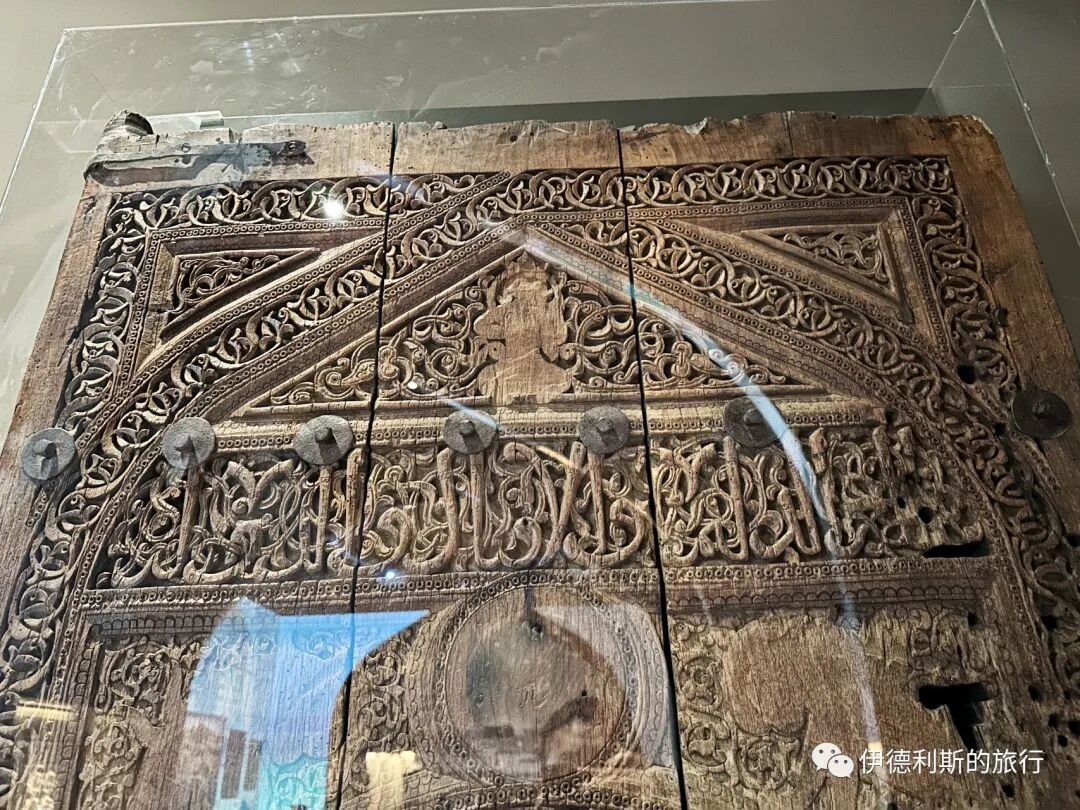
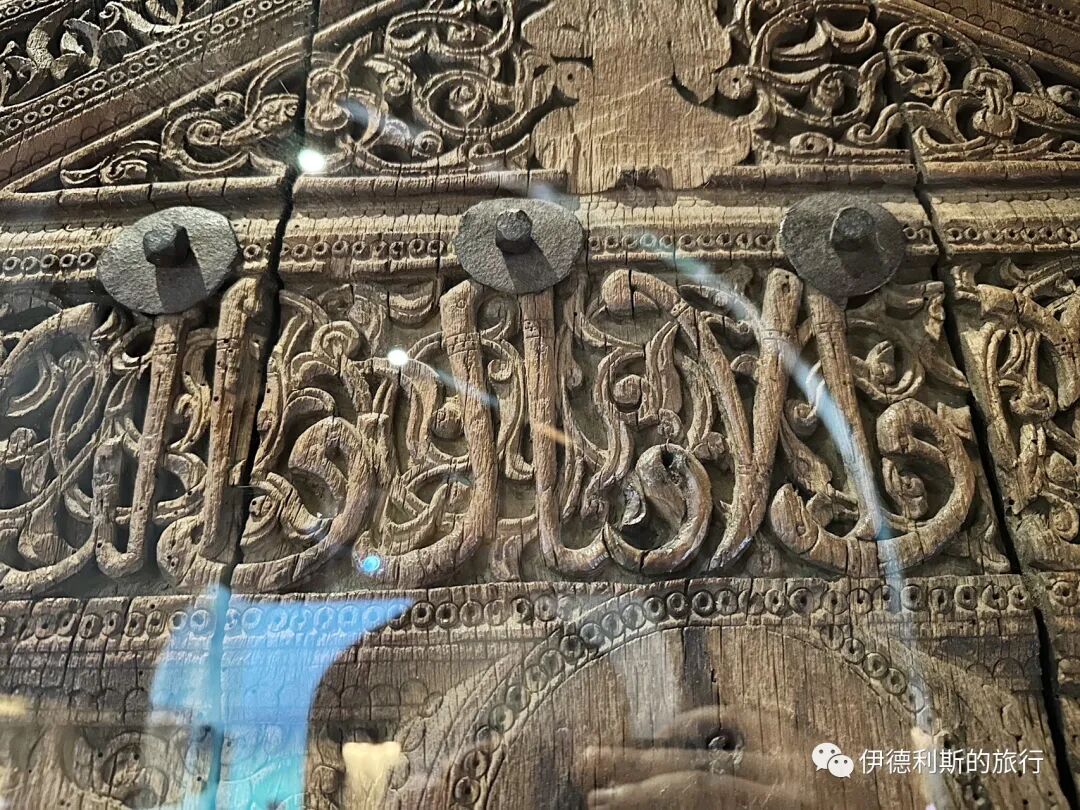
The wooden door from the Ibrahim Bey Imaret (a charitable soup kitchen) in Karaman comes from the Museum of Turkish and Islamic Arts. The Karamanid Beylik was a powerful state among the many that gained independence from the Sultanate of Rum in the 13th century. Karaman architecture continued the Seljuk tradition but was simpler than earlier Seljuk buildings. Besides beautiful geometric floral patterns and Arabic calligraphy, the wooden door features carvings of figures and animals in the Seljuk style. The ones at the bottom appear to be griffins from Iranian mythology.
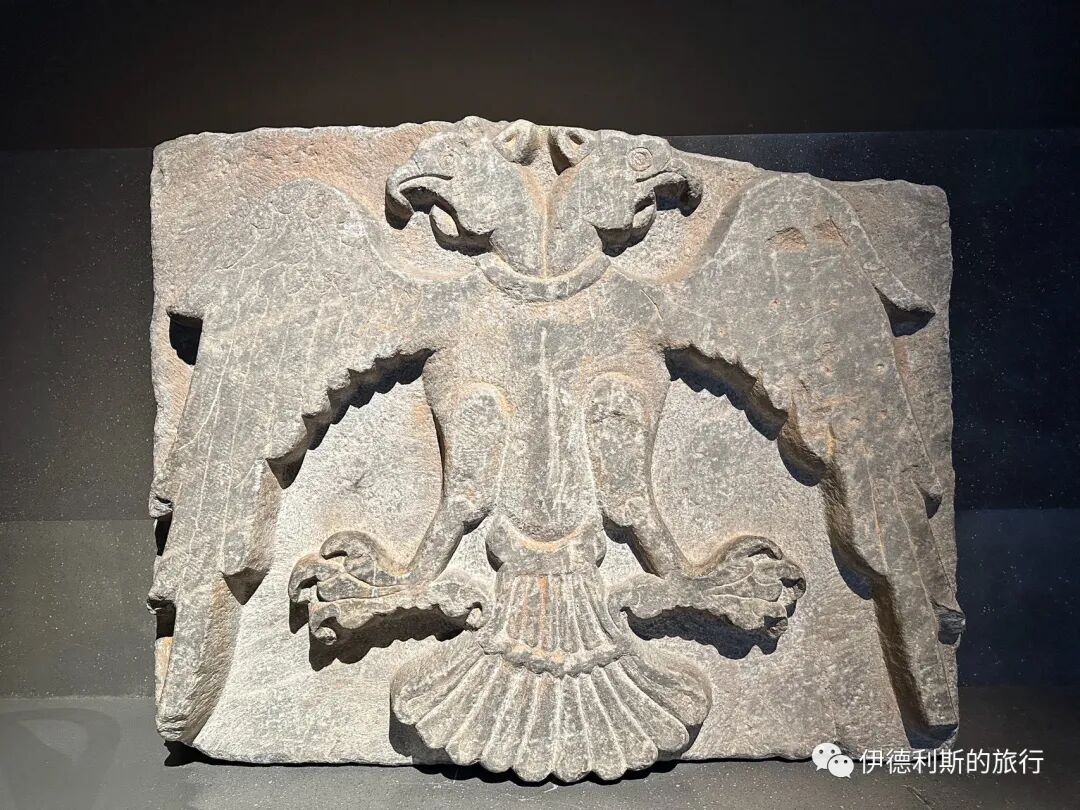
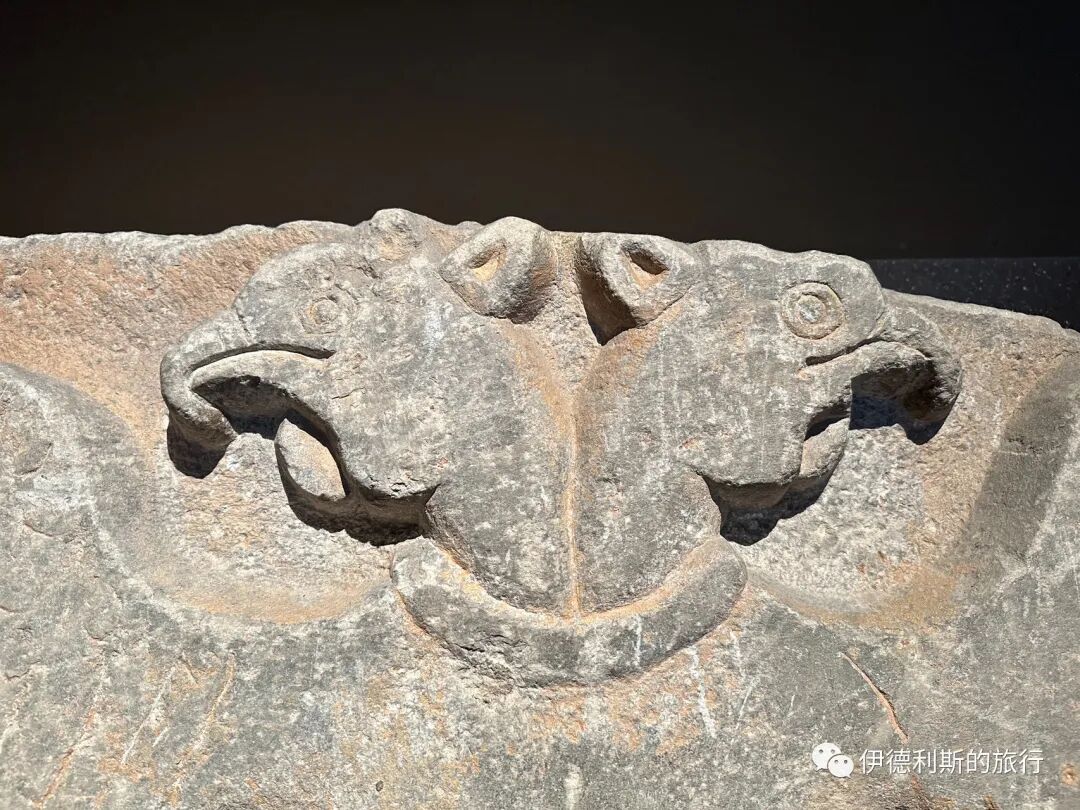
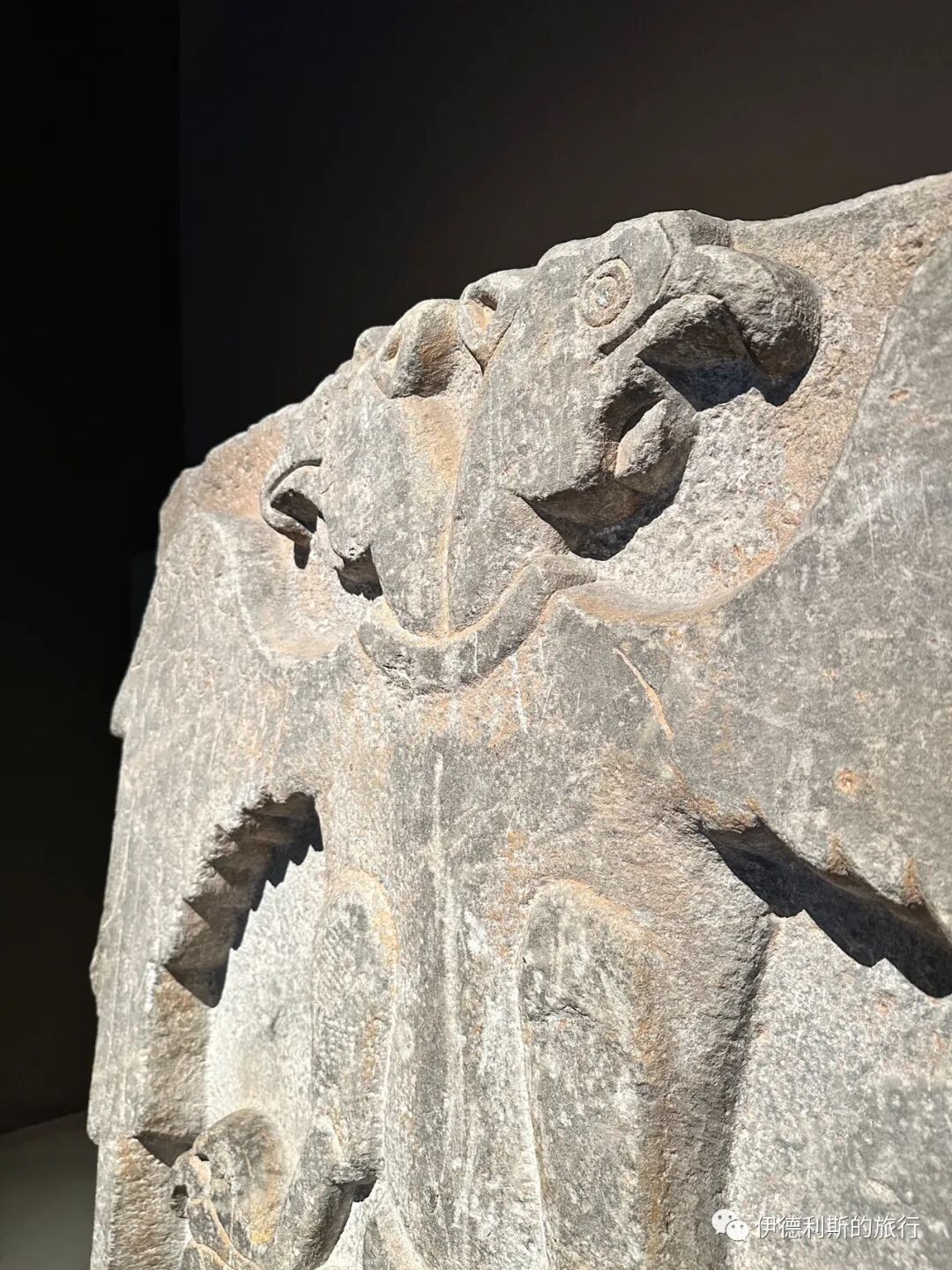
This 13th-century Seljuk double-headed eagle stone carving is from the Konya Archaeological Museum. It is a coincidence that I saw this same piece when I visited Konya in 2018; this is our second meeting. Experts believe this stone carving may have come from the Konya city walls, which were built in 1221 by the Seljuk Sultan of Rum, Kayqubad I (reigned 1220–1237).
The Seljuks were a branch of the Oghuz Turkic tribes who originally lived as nomads on the Kazakh steppe, north of the Syr Darya River in Central Asia. Their leader, Seljuk Beig, converted to Islam around 985 and broke away from the Oghuz tribal confederation. In 1035, after their relationship with the Kara-Khanid Khanate worsened, the Seljuks moved south to the Khorasan region of Persia. They unexpectedly defeated the army of the Ghaznavid Empire and officially established the Seljuk Empire in Khorasan in 1037. After 1040, the Seljuk army swept through Iran and the Anatolian Peninsula, completely defeating the Byzantines. They officially established the Sultanate of Rum in Anatolia in 1077 and made Konya their capital in 1097.
After the Mongols invaded Central Asia and Persia in the early 13th century, many Turkic and Persian people fled to Konya for safety. In the 1220s, Konya was full of refugees from the Khwarazmian Empire. Many were educated intellectuals or skilled craftsmen, the most famous being the great Sufi poet Rumi.
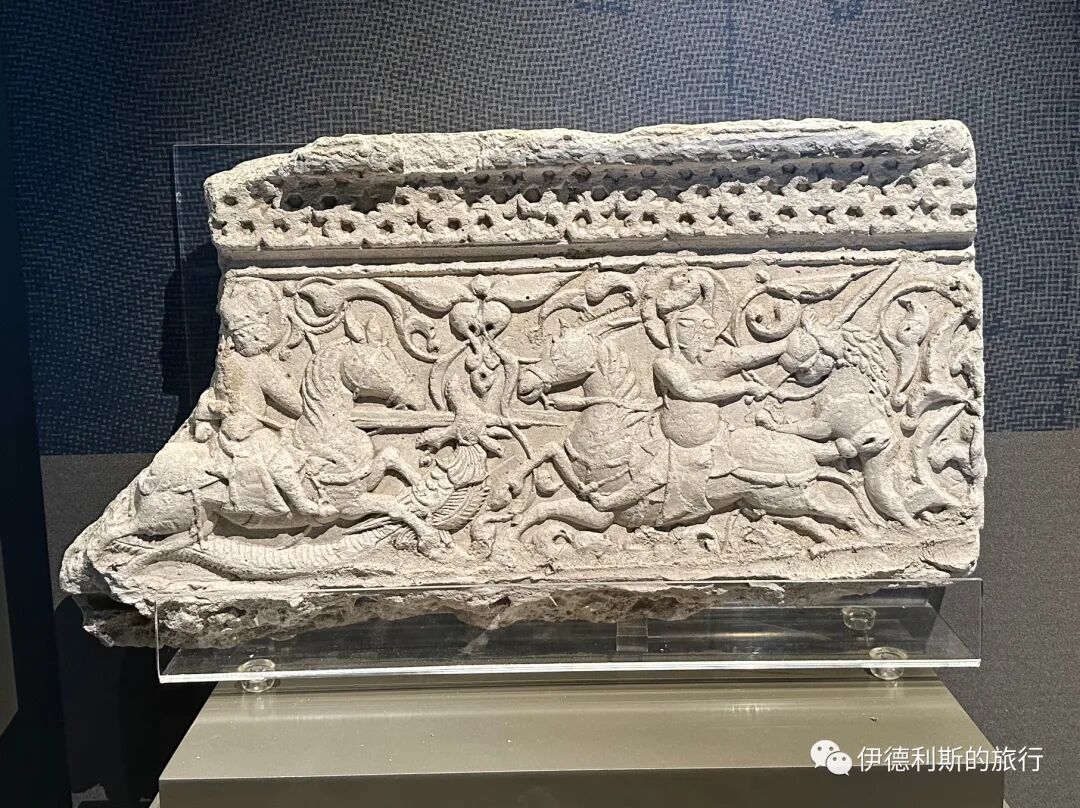
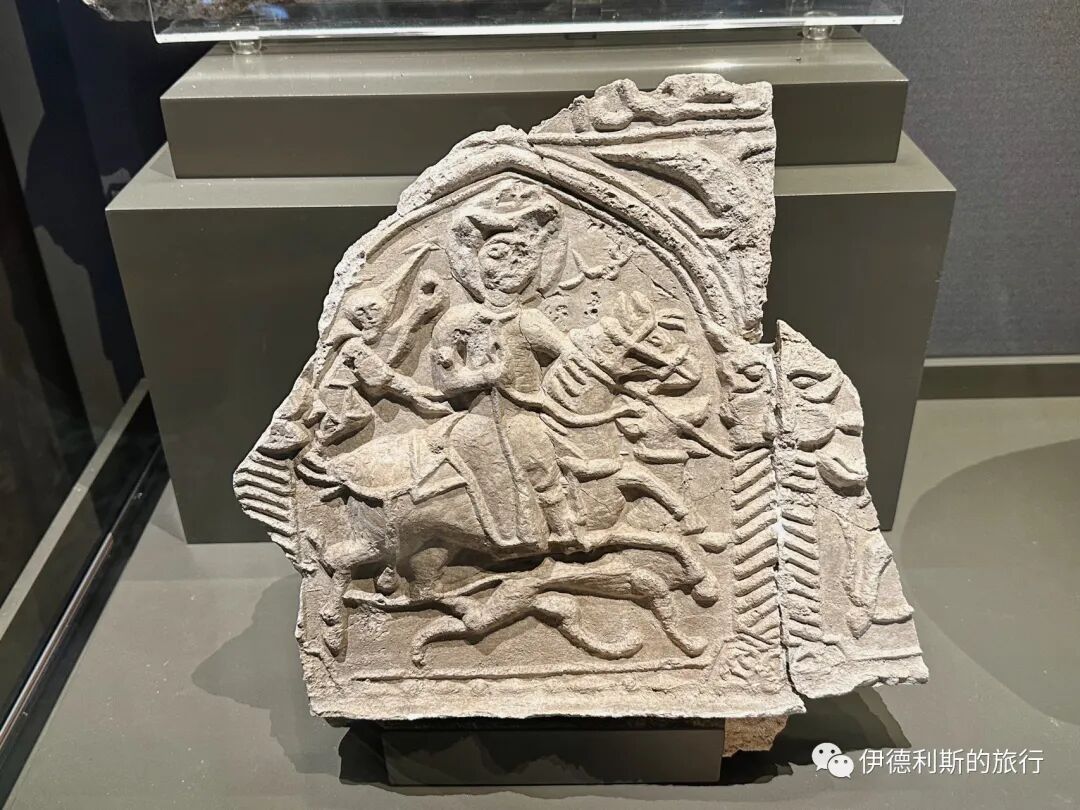
These early 13th-century stucco carvings of Seljuk Turkic hunters are housed in the Karatay Madrasa Tile Museum in Konya and the Museum of Turkish and Islamic Arts. The first piece shows a hunting leader, while the second piece shows a person on the left hunting a dragon and a person on the right hunting a lion.
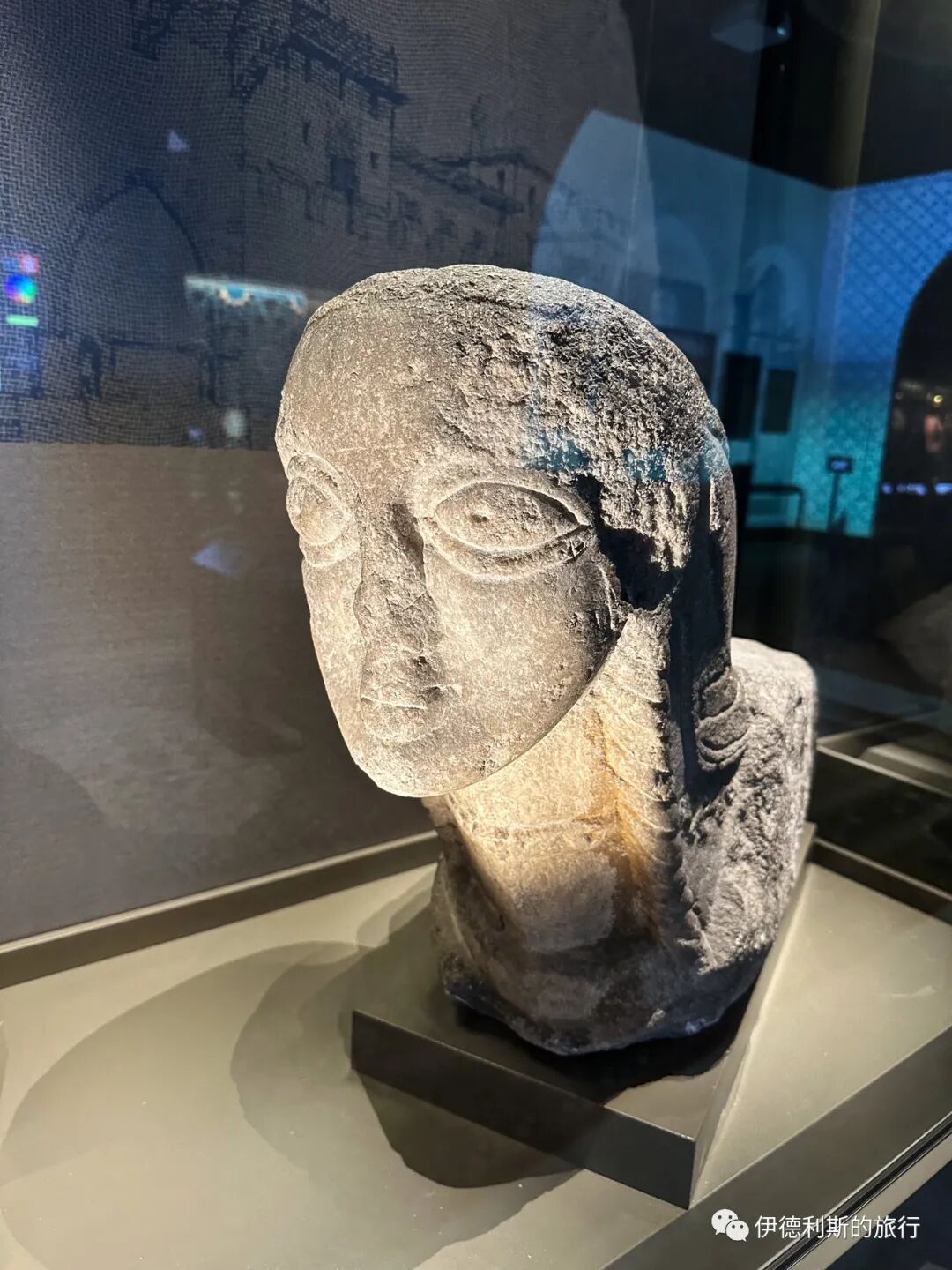
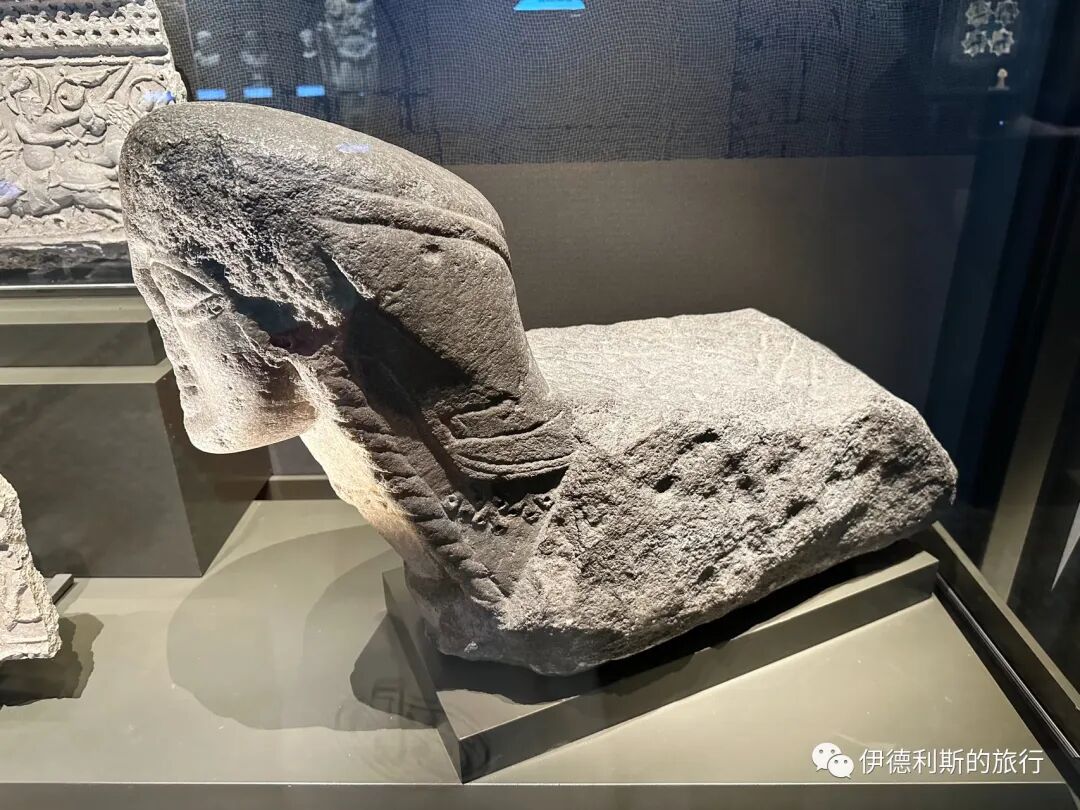
This 13th-century sphinx stone carving from Alaeddin Hill in Konya, the capital of the Sultanate of Rum, is another old friend I previously saw at the Museum of Turkish and Islamic Arts. The sphinx has a human head and an animal body. It originated in ancient Egypt and later spread to the Iranian and Anatolian regions.
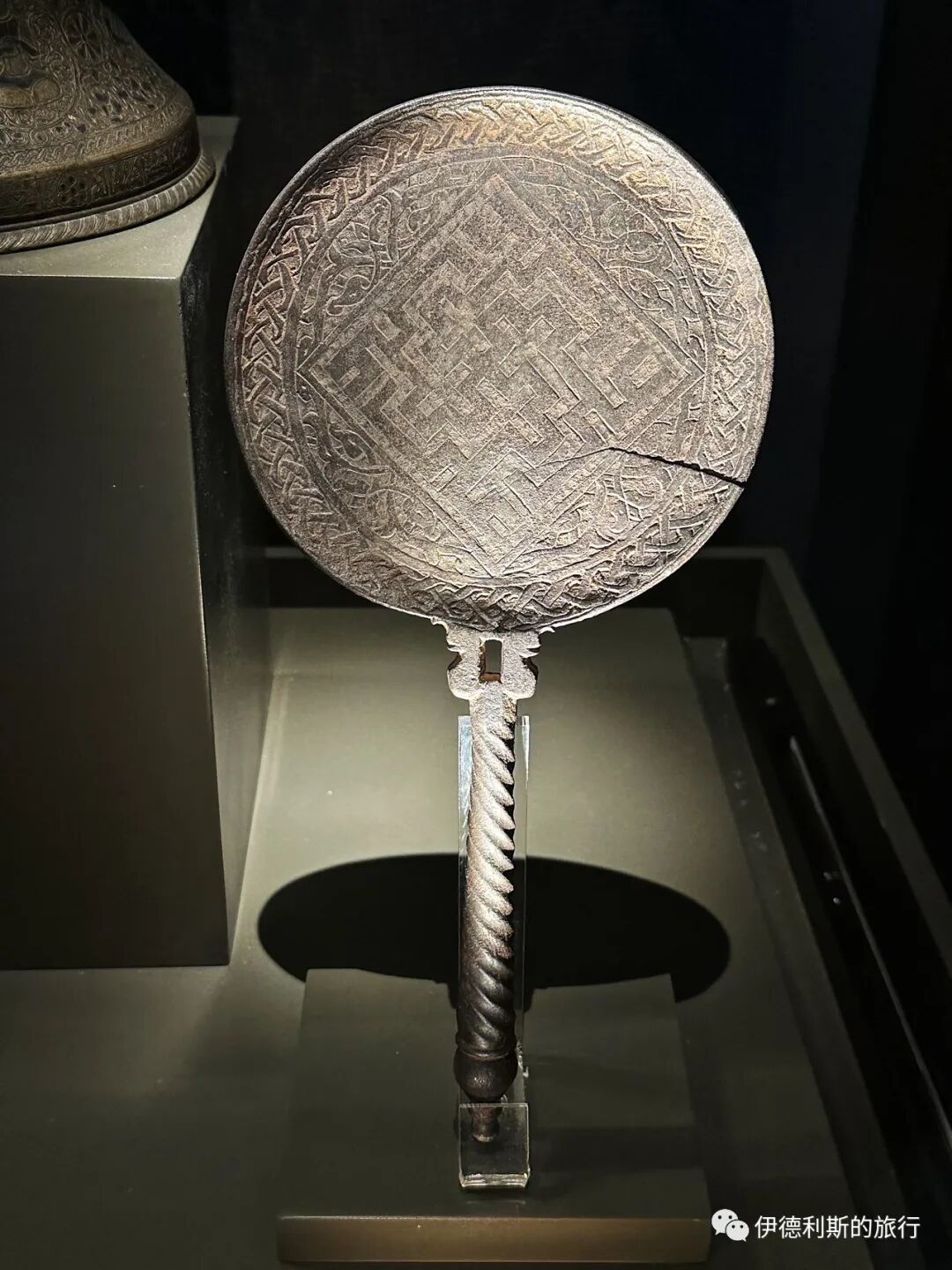
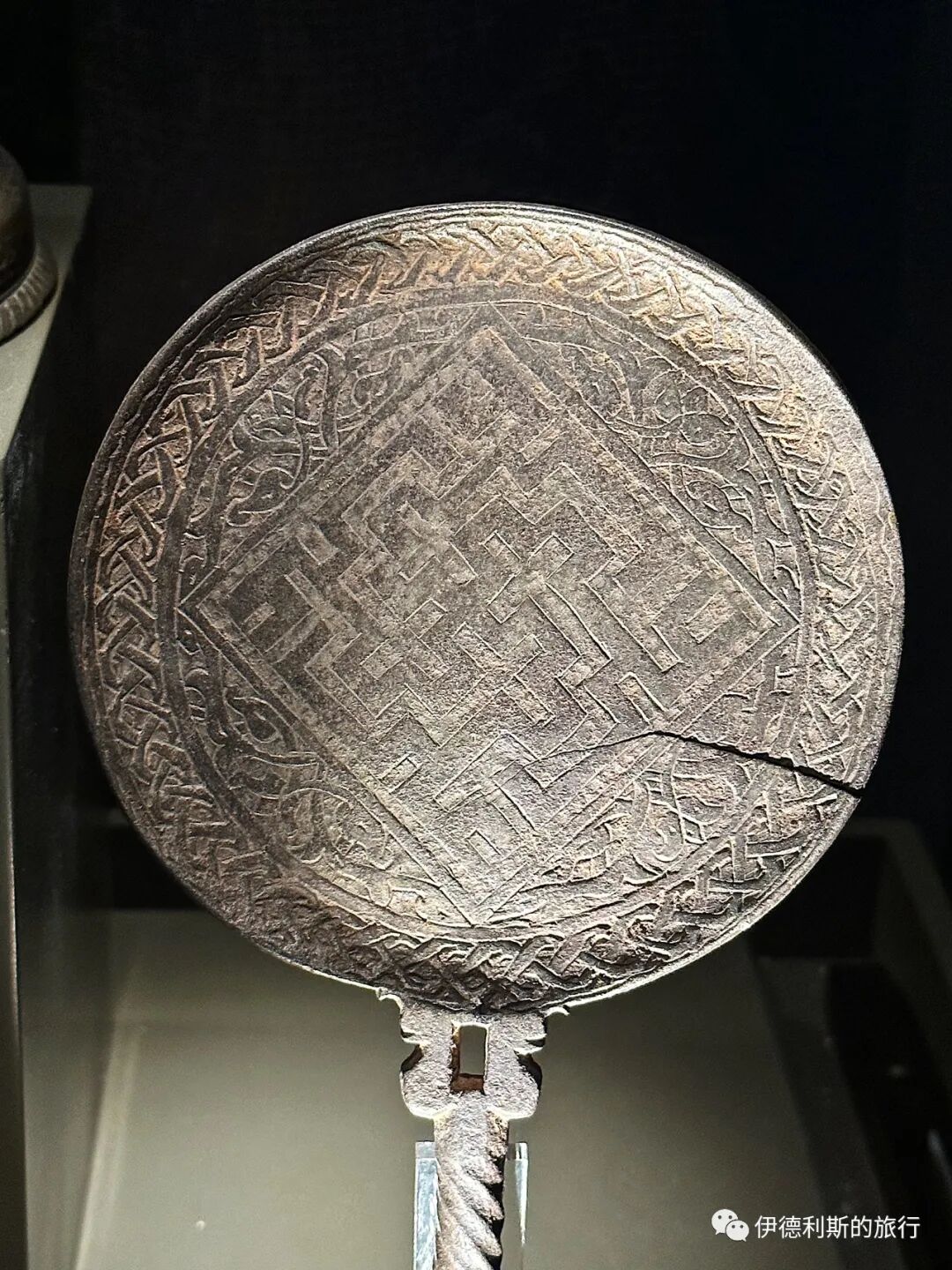
The Amasya Museum holds a 13th-century Seljuk bronze mirror featuring beautiful Kufic calligraphy. Amasya, in the Black Sea region, was also an important cultural center during the Seljuk period.
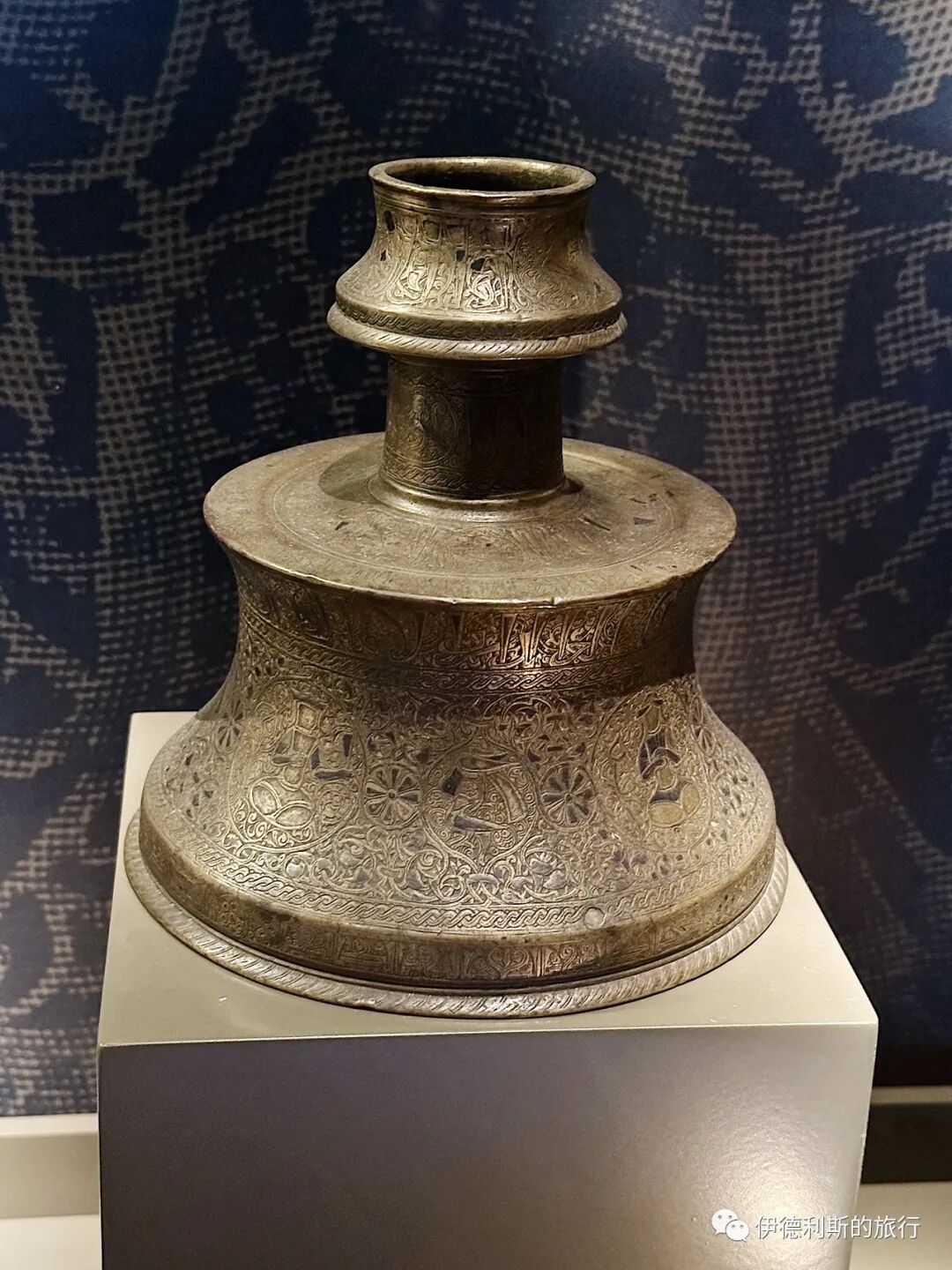
The Karatay Madrasa Tile Museum in Konya houses a late 13th-century Seljuk bronze chandelier with silver inlay.
The Mevlana Museum, which houses the tomb of Rumi in Konya, holds an early 13th-century gilded bronze candle box.
The copper-zinc alloy flags known as Sanjak Alem were used in Ottoman Sufi ceremonies. The first one is from the 15th century and is kept at the Konya Museum, while the second is from the 16th century and is held at the Museum of Turkish and Islamic Arts.
A highlight of the Istanbul Airport Museum is the early 13th-century Seljuk throne from the Ankara Ethnography Museum. It is a unique piece of art from the Seljuk era that symbolizes the royal power of the Sultan of Rum.
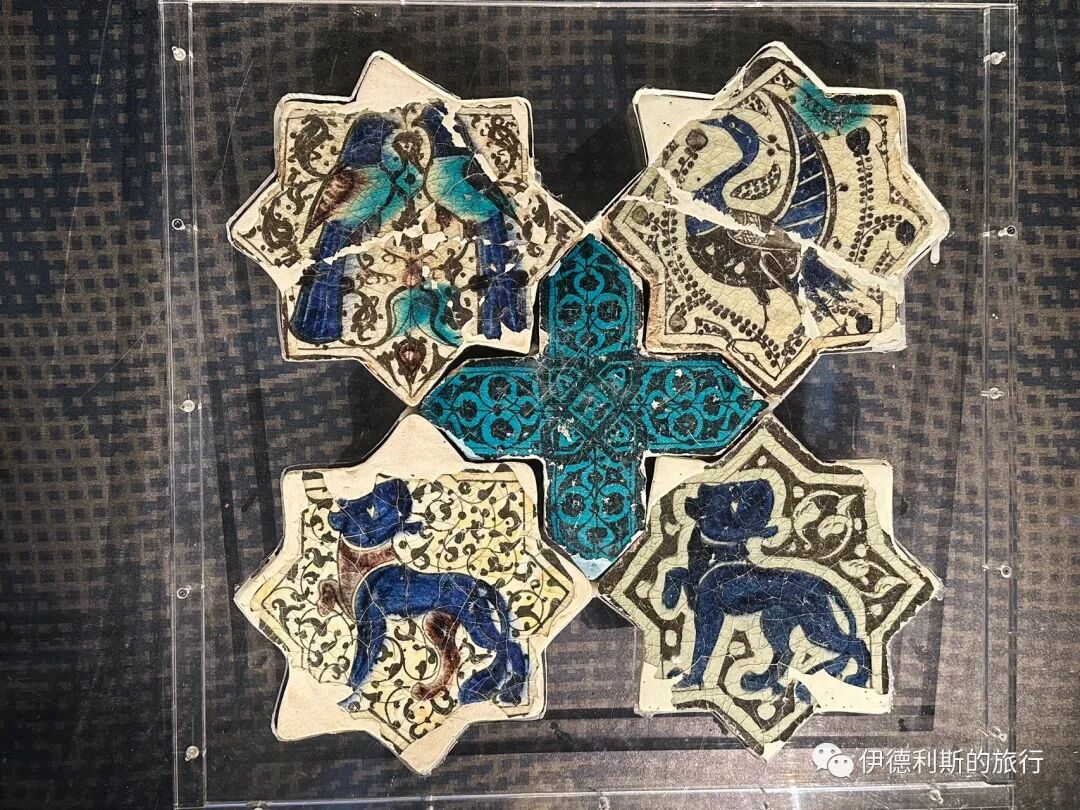
The Museum of Turkish and Islamic Arts holds 13th-century Seljuk mosaic tiles.
The Tiled Kiosk in Istanbul, part of the Istanbul Museum of Islamic Arts, houses 13th-century tiles from the Kubadabad Palace, the summer residence of the Seljuk Sultanate of Rum. Kubadabad Palace sits by Lake Beyşehir, 100 kilometers west of Konya, the capital of the Sultanate of Rum. It was built in 1236 by the Seljuk Sultan Kayqubad I, who reigned from 1220 to 1237. The entire complex consists of 16 buildings. The largest palace is 50 meters long and 35 meters wide and is famous for its ornate tiles. These tiles feature human and animal figures, which are typical artistic characteristics of the Seljuk dynasty.
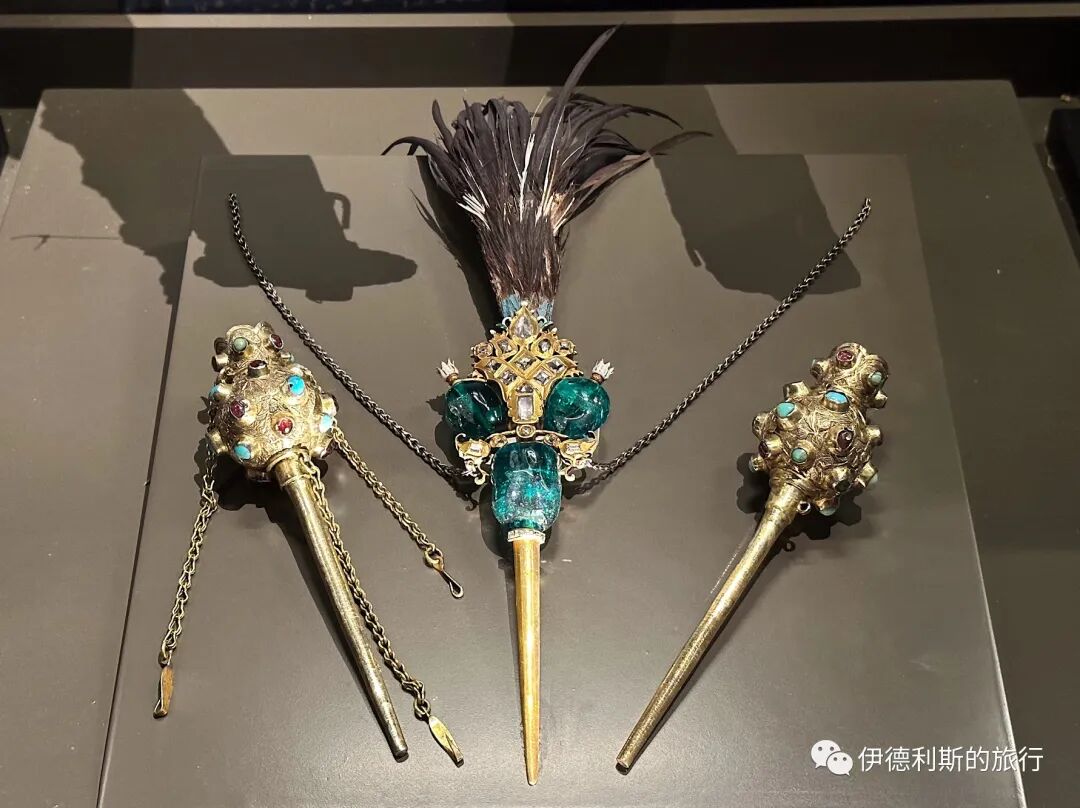
The Museum of Turkish and Islamic Arts holds a 17th-century Ottoman-era jeweled aigrette (murassa aigrette). This is a piece of royal head jewelry made of gold inlaid with rubies and turquoise, topped with a peacock feather. The word murassa comes from Arabic and means inlaid with jewels.
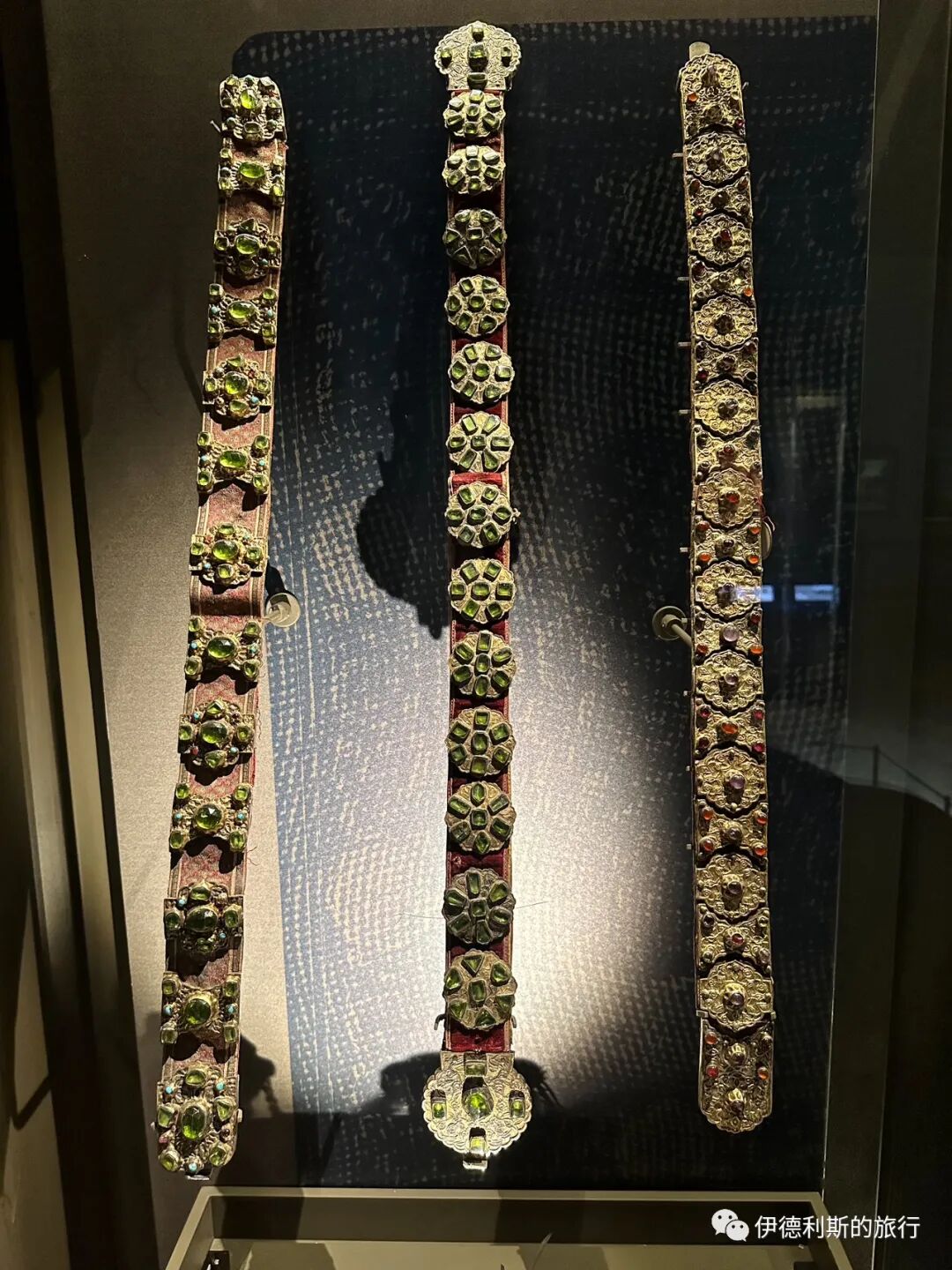
The Museum of Turkish and Islamic Arts holds a 17th-century Ottoman-era jeweled belt.
The Topkapi Palace Museum holds a late 16th-century oil portrait of the Ottoman Sultan Suleiman the Magnificent, painted in the style of the Venetian school.
The Museum of Turkish and Islamic Arts holds the 16th-century poetry collection of the Ottoman Sultan Suleiman the Magnificent, titled Divan-i Muhibbi. Muhibbi was Suleiman's pen name, which means 'Lover of the Lord'.
The Museum of Turkish and Islamic Arts holds a property document issued by Sultan Suleiman the Magnificent in 1567-68. It features the Sultan's royal monogram (tughra) and grants permission to use a Tekfur pasture in the Kocaeli province of northwestern Turkey. Tekfur is a title used from the late Seljuk to early Ottoman periods to refer to Byzantine lords in the towns and castles of the Anatolia and Thrace regions.
The Topkapi Palace Museum holds a 19th-century Ottoman velvet and silver-plated quiver.
The Topkapi Palace Museum holds 16th-century Ottoman iron armor. It features an iron helmet from the late 15th to early 16th century, with a 19th-century iron hammer in front.
The Topkapi Palace Museum holds a 16th-century Ottoman shield. The outer ring is made of willow branches, and the inner ring is iron inlaid with gold. An 18th-century copper helmet sits on top, with 16th-century swords on both sides. The sword on the left has the name Soler written on the blade, and the sword on the right is inlaid with rubies and emeralds.
The Topkapi Palace Museum holds 16th-century Ottoman finger rings.
The Topkapi Palace Museum holds a throne made of ebony, ivory, and mother-of-pearl.
The Museum of Turkish and Islamic Arts holds a 17th-century Ottoman silver incense burner.
The Museum of Turkish and Islamic Arts holds a 16th-century Ottoman book titled Mira'at ul-Kevneyn (Mirror of the Two Worlds).
The Topkapi Palace Museum holds a 17th-century Ottoman dua shirt. Soldiers wore these shirts into battle to pray for victory.
The Museum of Turkish and Islamic Arts holds a 17th-century Ottoman manuscript titled Divan-i Sultan Osman.
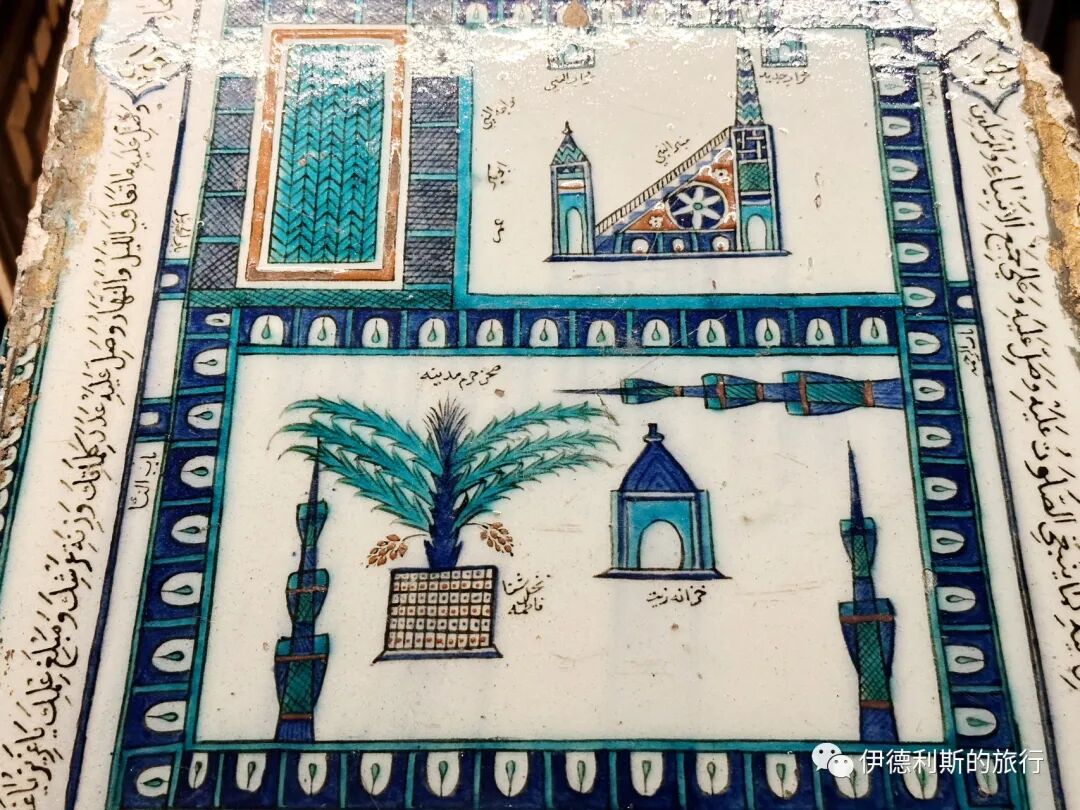
The Museum of Turkish and Islamic Arts holds 17th-century Ottoman Iznik tiles depicting the Prophet's Mosque in Medina.
In the back is an 18th-century Ottoman hand-woven wool prayer rug from the Mevlana Museum in Konya. In the front is a book stand made during the Seljuk period in 1279-80, which features many lion patterns.
The Museum of Turkish and Islamic Arts holds a 19th-century Ottoman scripture manuscript.
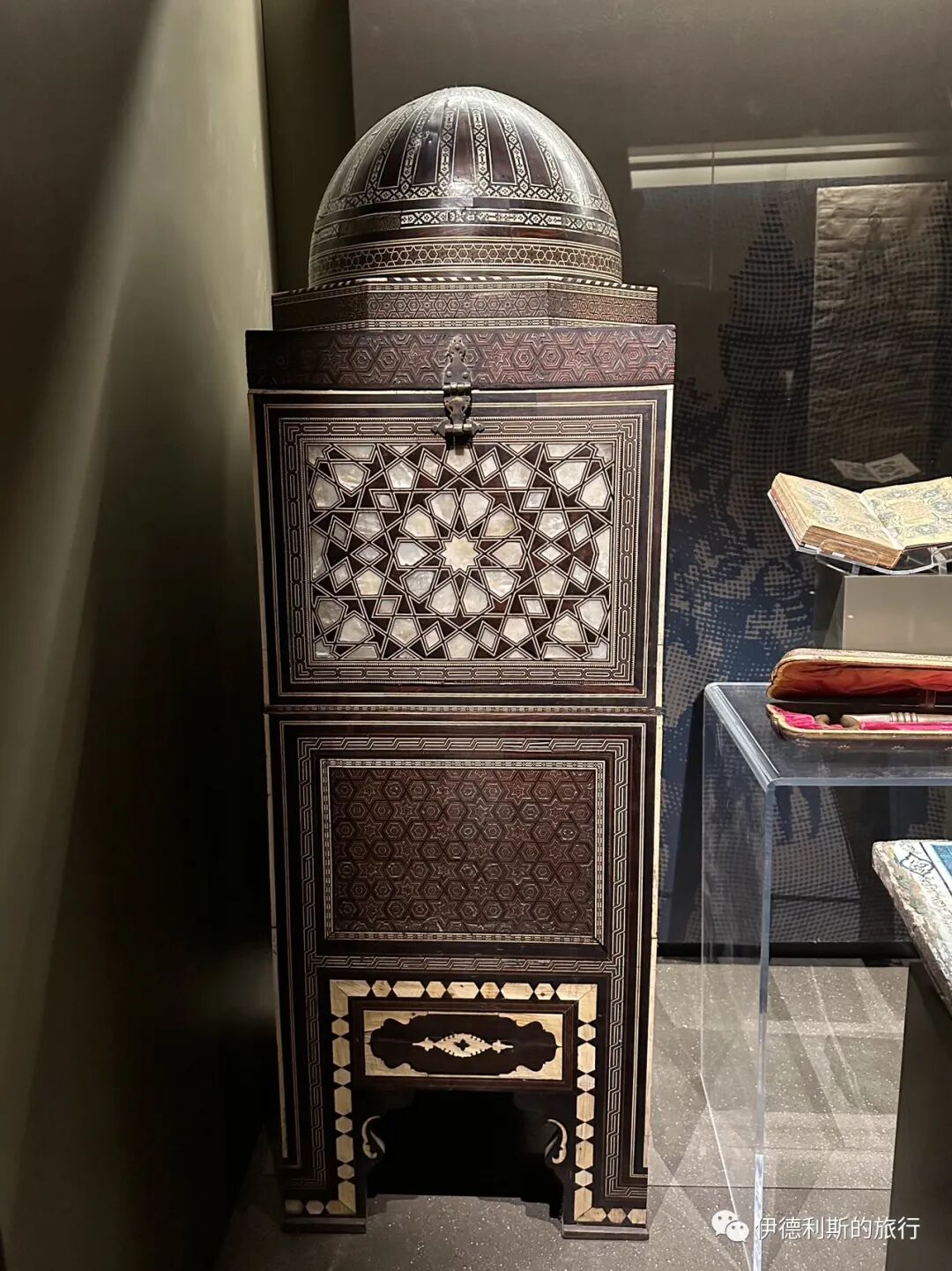
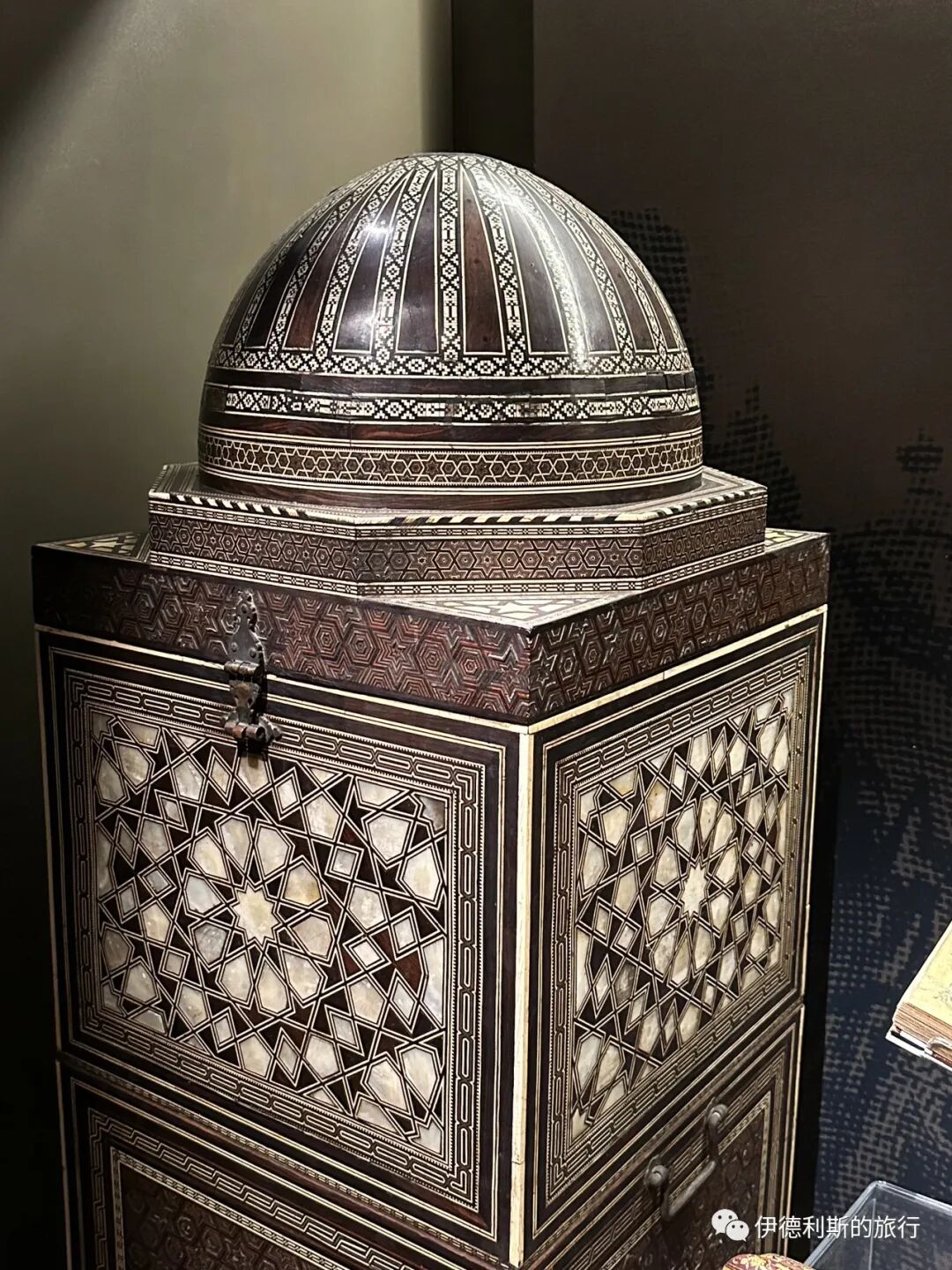
This 16th-century Ottoman-era scripture box at the Museum of Turkish and Islamic Arts is made of wood inlaid with mother-of-pearl, tortoiseshell, and ivory. view all
Summary: Istanbul Airport museum opened in 2020 inside the international departures area and displays important objects borrowed from museums across Turkey. This account focuses on Islamic art, Turkish history, and the museum pieces seen during the airport visit.
The international departures area of Istanbul Airport has an airport museum that opened in 2020. It features major artifacts borrowed from various museums across Turkey and is definitely worth a visit.
The wooden door from the Ibrahim Bey Imaret (a charitable soup kitchen) in Karaman comes from the Museum of Turkish and Islamic Arts. The Karamanid Beylik was a powerful state among the many that gained independence from the Sultanate of Rum in the 13th century. Karaman architecture continued the Seljuk tradition but was simpler than earlier Seljuk buildings. Besides beautiful geometric floral patterns and Arabic calligraphy, the wooden door features carvings of figures and animals in the Seljuk style. The ones at the bottom appear to be griffins from Iranian mythology.
This 13th-century Seljuk double-headed eagle stone carving is from the Konya Archaeological Museum. It is a coincidence that I saw this same piece when I visited Konya in 2018; this is our second meeting. Experts believe this stone carving may have come from the Konya city walls, which were built in 1221 by the Seljuk Sultan of Rum, Kayqubad I (reigned 1220–1237).
The Seljuks were a branch of the Oghuz Turkic tribes who originally lived as nomads on the Kazakh steppe, north of the Syr Darya River in Central Asia. Their leader, Seljuk Beig, converted to Islam around 985 and broke away from the Oghuz tribal confederation. In 1035, after their relationship with the Kara-Khanid Khanate worsened, the Seljuks moved south to the Khorasan region of Persia. They unexpectedly defeated the army of the Ghaznavid Empire and officially established the Seljuk Empire in Khorasan in 1037. After 1040, the Seljuk army swept through Iran and the Anatolian Peninsula, completely defeating the Byzantines. They officially established the Sultanate of Rum in Anatolia in 1077 and made Konya their capital in 1097.
After the Mongols invaded Central Asia and Persia in the early 13th century, many Turkic and Persian people fled to Konya for safety. In the 1220s, Konya was full of refugees from the Khwarazmian Empire. Many were educated intellectuals or skilled craftsmen, the most famous being the great Sufi poet Rumi.
These early 13th-century stucco carvings of Seljuk Turkic hunters are housed in the Karatay Madrasa Tile Museum in Konya and the Museum of Turkish and Islamic Arts. The first piece shows a hunting leader, while the second piece shows a person on the left hunting a dragon and a person on the right hunting a lion.
This 13th-century sphinx stone carving from Alaeddin Hill in Konya, the capital of the Sultanate of Rum, is another old friend I previously saw at the Museum of Turkish and Islamic Arts. The sphinx has a human head and an animal body. It originated in ancient Egypt and later spread to the Iranian and Anatolian regions.
The Amasya Museum holds a 13th-century Seljuk bronze mirror featuring beautiful Kufic calligraphy. Amasya, in the Black Sea region, was also an important cultural center during the Seljuk period.
The Karatay Madrasa Tile Museum in Konya houses a late 13th-century Seljuk bronze chandelier with silver inlay.
The Mevlana Museum, which houses the tomb of Rumi in Konya, holds an early 13th-century gilded bronze candle box.
The copper-zinc alloy flags known as Sanjak Alem were used in Ottoman Sufi ceremonies. The first one is from the 15th century and is kept at the Konya Museum, while the second is from the 16th century and is held at the Museum of Turkish and Islamic Arts.
A highlight of the Istanbul Airport Museum is the early 13th-century Seljuk throne from the Ankara Ethnography Museum. It is a unique piece of art from the Seljuk era that symbolizes the royal power of the Sultan of Rum.
The Museum of Turkish and Islamic Arts holds 13th-century Seljuk mosaic tiles.
The Tiled Kiosk in Istanbul, part of the Istanbul Museum of Islamic Arts, houses 13th-century tiles from the Kubadabad Palace, the summer residence of the Seljuk Sultanate of Rum. Kubadabad Palace sits by Lake Beyşehir, 100 kilometers west of Konya, the capital of the Sultanate of Rum. It was built in 1236 by the Seljuk Sultan Kayqubad I, who reigned from 1220 to 1237. The entire complex consists of 16 buildings. The largest palace is 50 meters long and 35 meters wide and is famous for its ornate tiles. These tiles feature human and animal figures, which are typical artistic characteristics of the Seljuk dynasty.
The Museum of Turkish and Islamic Arts holds a 17th-century Ottoman-era jeweled aigrette (murassa aigrette). This is a piece of royal head jewelry made of gold inlaid with rubies and turquoise, topped with a peacock feather. The word murassa comes from Arabic and means inlaid with jewels.
The Museum of Turkish and Islamic Arts holds a 17th-century Ottoman-era jeweled belt.
The Topkapi Palace Museum holds a late 16th-century oil portrait of the Ottoman Sultan Suleiman the Magnificent, painted in the style of the Venetian school.
The Museum of Turkish and Islamic Arts holds the 16th-century poetry collection of the Ottoman Sultan Suleiman the Magnificent, titled Divan-i Muhibbi. Muhibbi was Suleiman's pen name, which means 'Lover of the Lord'.
The Museum of Turkish and Islamic Arts holds a property document issued by Sultan Suleiman the Magnificent in 1567-68. It features the Sultan's royal monogram (tughra) and grants permission to use a Tekfur pasture in the Kocaeli province of northwestern Turkey. Tekfur is a title used from the late Seljuk to early Ottoman periods to refer to Byzantine lords in the towns and castles of the Anatolia and Thrace regions.
The Topkapi Palace Museum holds a 19th-century Ottoman velvet and silver-plated quiver.
The Topkapi Palace Museum holds 16th-century Ottoman iron armor. It features an iron helmet from the late 15th to early 16th century, with a 19th-century iron hammer in front.
The Topkapi Palace Museum holds a 16th-century Ottoman shield. The outer ring is made of willow branches, and the inner ring is iron inlaid with gold. An 18th-century copper helmet sits on top, with 16th-century swords on both sides. The sword on the left has the name Soler written on the blade, and the sword on the right is inlaid with rubies and emeralds.
The Topkapi Palace Museum holds 16th-century Ottoman finger rings.
The Topkapi Palace Museum holds a throne made of ebony, ivory, and mother-of-pearl.
The Museum of Turkish and Islamic Arts holds a 17th-century Ottoman silver incense burner.
The Museum of Turkish and Islamic Arts holds a 16th-century Ottoman book titled Mira'at ul-Kevneyn (Mirror of the Two Worlds).
The Topkapi Palace Museum holds a 17th-century Ottoman dua shirt. Soldiers wore these shirts into battle to pray for victory.
The Museum of Turkish and Islamic Arts holds a 17th-century Ottoman manuscript titled Divan-i Sultan Osman.
The Museum of Turkish and Islamic Arts holds 17th-century Ottoman Iznik tiles depicting the Prophet's Mosque in Medina.
In the back is an 18th-century Ottoman hand-woven wool prayer rug from the Mevlana Museum in Konya. In the front is a book stand made during the Seljuk period in 1279-80, which features many lion patterns.
The Museum of Turkish and Islamic Arts holds a 19th-century Ottoman scripture manuscript.
This 16th-century Ottoman-era scripture box at the Museum of Turkish and Islamic Arts is made of wood inlaid with mother-of-pearl, tortoiseshell, and ivory. view all
Reposted from the web
Summary: Istanbul Airport museum opened in 2020 inside the international departures area and displays important objects borrowed from museums across Turkey. This account focuses on Islamic art, Turkish history, and the museum pieces seen during the airport visit.
The international departures area of Istanbul Airport has an airport museum that opened in 2020. It features major artifacts borrowed from various museums across Turkey and is definitely worth a visit.
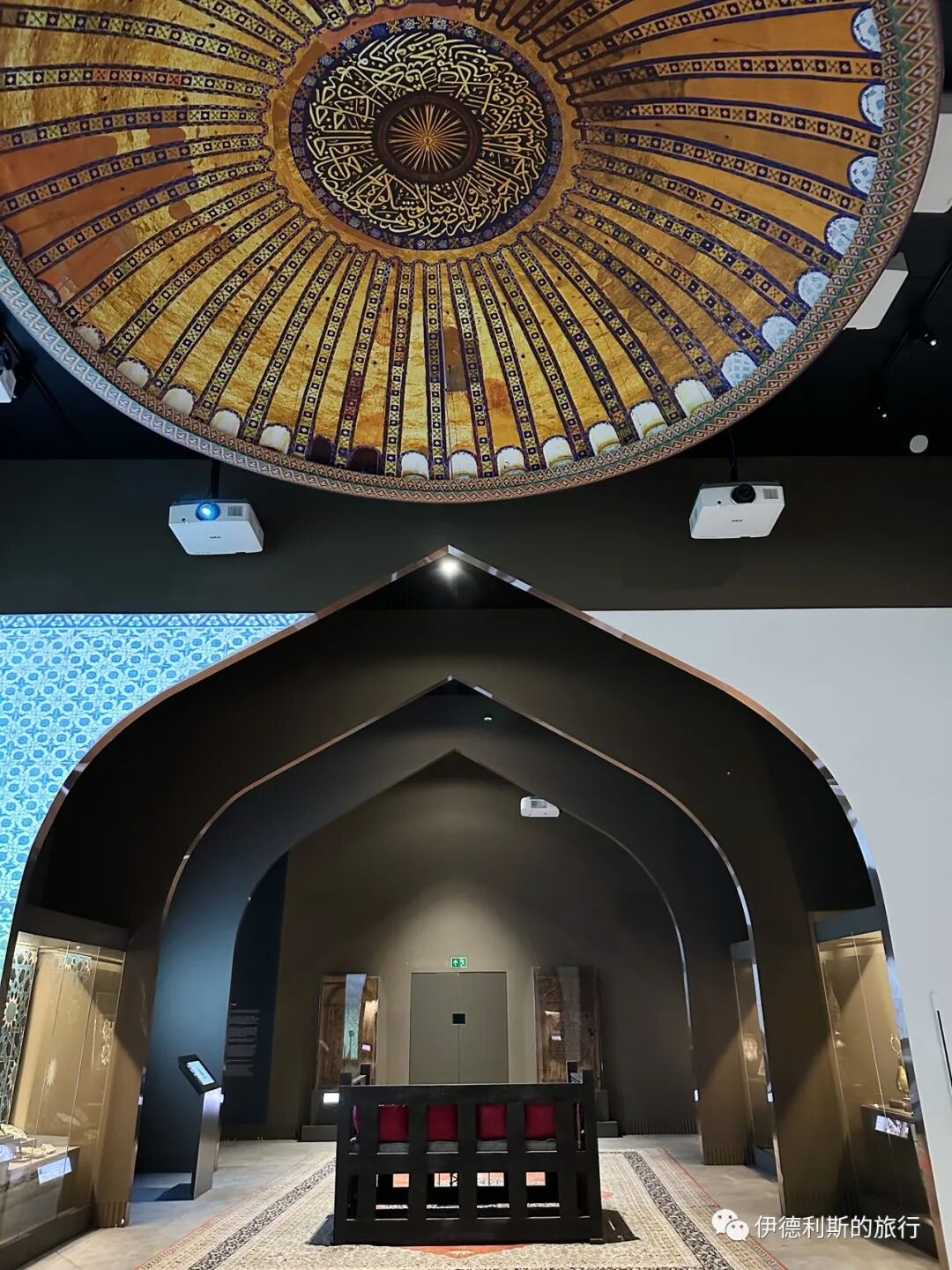
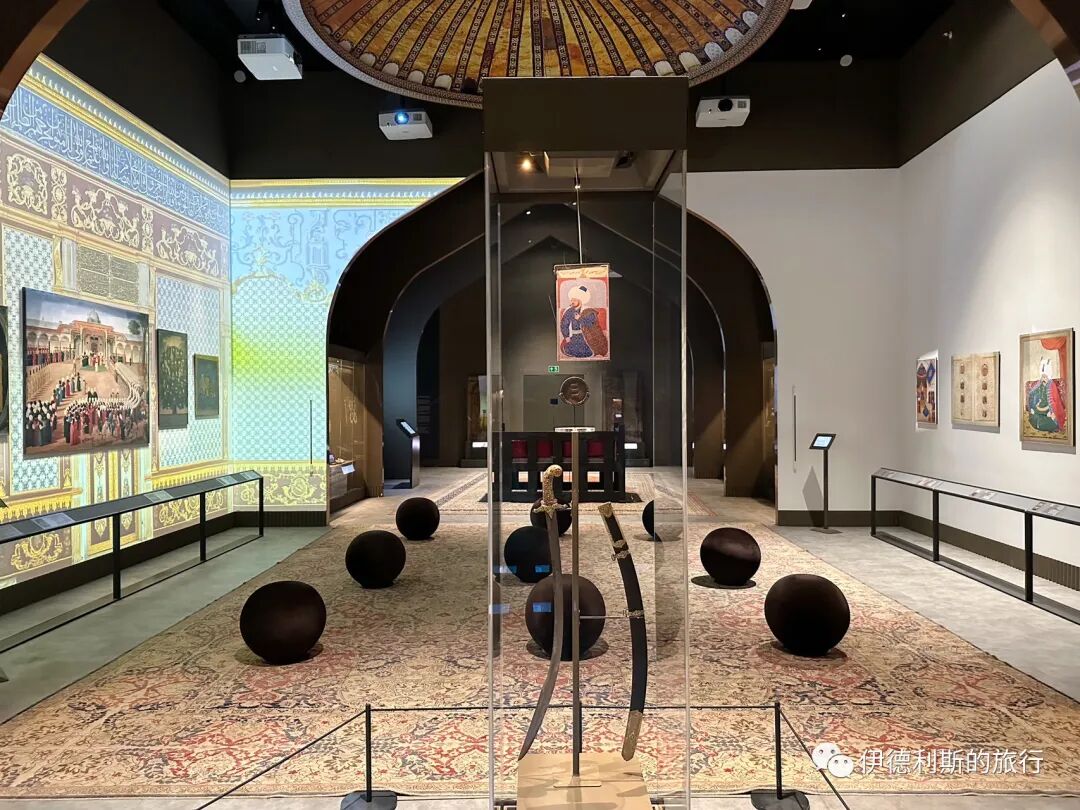
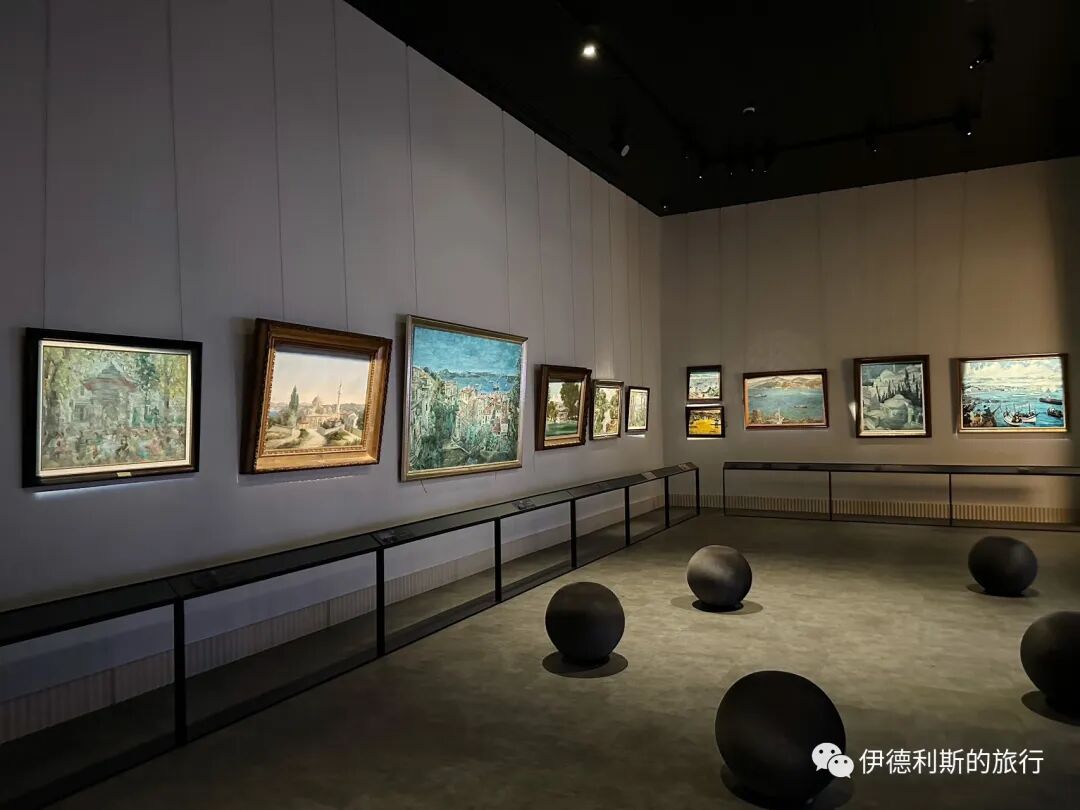
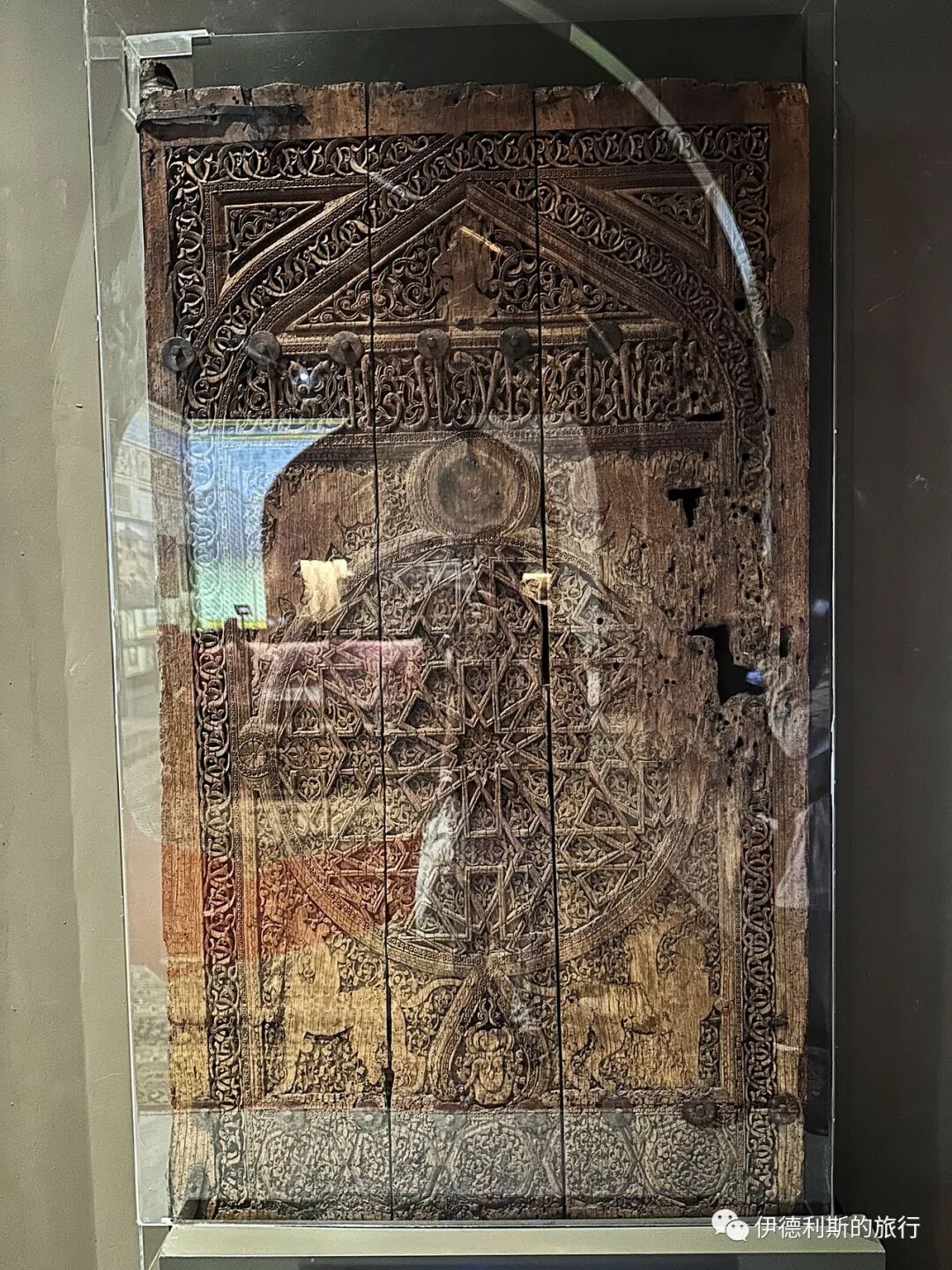
The wooden door from the Ibrahim Bey Imaret (a charitable soup kitchen) in Karaman comes from the Museum of Turkish and Islamic Arts. The Karamanid Beylik was a powerful state among the many that gained independence from the Sultanate of Rum in the 13th century. Karaman architecture continued the Seljuk tradition but was simpler than earlier Seljuk buildings. Besides beautiful geometric floral patterns and Arabic calligraphy, the wooden door features carvings of figures and animals in the Seljuk style. The ones at the bottom appear to be griffins from Iranian mythology.
This 13th-century Seljuk double-headed eagle stone carving is from the Konya Archaeological Museum. It is a coincidence that I saw this same piece when I visited Konya in 2018; this is our second meeting. Experts believe this stone carving may have come from the Konya city walls, which were built in 1221 by the Seljuk Sultan of Rum, Kayqubad I (reigned 1220–1237).
The Seljuks were a branch of the Oghuz Turkic tribes who originally lived as nomads on the Kazakh steppe, north of the Syr Darya River in Central Asia. Their leader, Seljuk Beig, converted to Islam around 985 and broke away from the Oghuz tribal confederation. In 1035, after their relationship with the Kara-Khanid Khanate worsened, the Seljuks moved south to the Khorasan region of Persia. They unexpectedly defeated the army of the Ghaznavid Empire and officially established the Seljuk Empire in Khorasan in 1037. After 1040, the Seljuk army swept through Iran and the Anatolian Peninsula, completely defeating the Byzantines. They officially established the Sultanate of Rum in Anatolia in 1077 and made Konya their capital in 1097.
After the Mongols invaded Central Asia and Persia in the early 13th century, many Turkic and Persian people fled to Konya for safety. In the 1220s, Konya was full of refugees from the Khwarazmian Empire. Many were educated intellectuals or skilled craftsmen, the most famous being the great Sufi poet Rumi.
These early 13th-century stucco carvings of Seljuk Turkic hunters are housed in the Karatay Madrasa Tile Museum in Konya and the Museum of Turkish and Islamic Arts. The first piece shows a hunting leader, while the second piece shows a person on the left hunting a dragon and a person on the right hunting a lion.
This 13th-century sphinx stone carving from Alaeddin Hill in Konya, the capital of the Sultanate of Rum, is another old friend I previously saw at the Museum of Turkish and Islamic Arts. The sphinx has a human head and an animal body. It originated in ancient Egypt and later spread to the Iranian and Anatolian regions.
The Amasya Museum holds a 13th-century Seljuk bronze mirror featuring beautiful Kufic calligraphy. Amasya, in the Black Sea region, was also an important cultural center during the Seljuk period.
The Karatay Madrasa Tile Museum in Konya houses a late 13th-century Seljuk bronze chandelier with silver inlay.
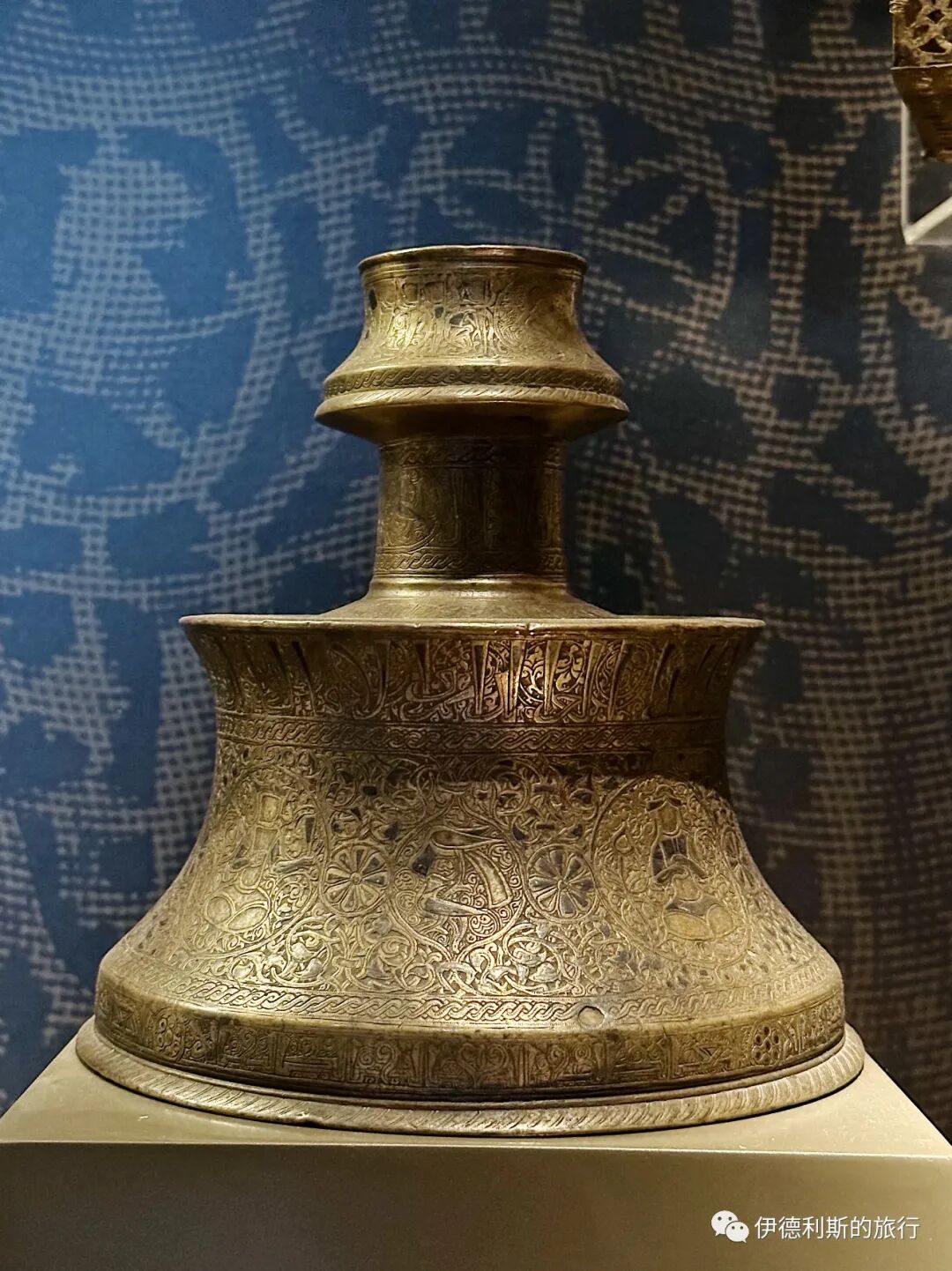
The Mevlana Museum, which houses the tomb of Rumi in Konya, holds an early 13th-century gilded bronze candle box.
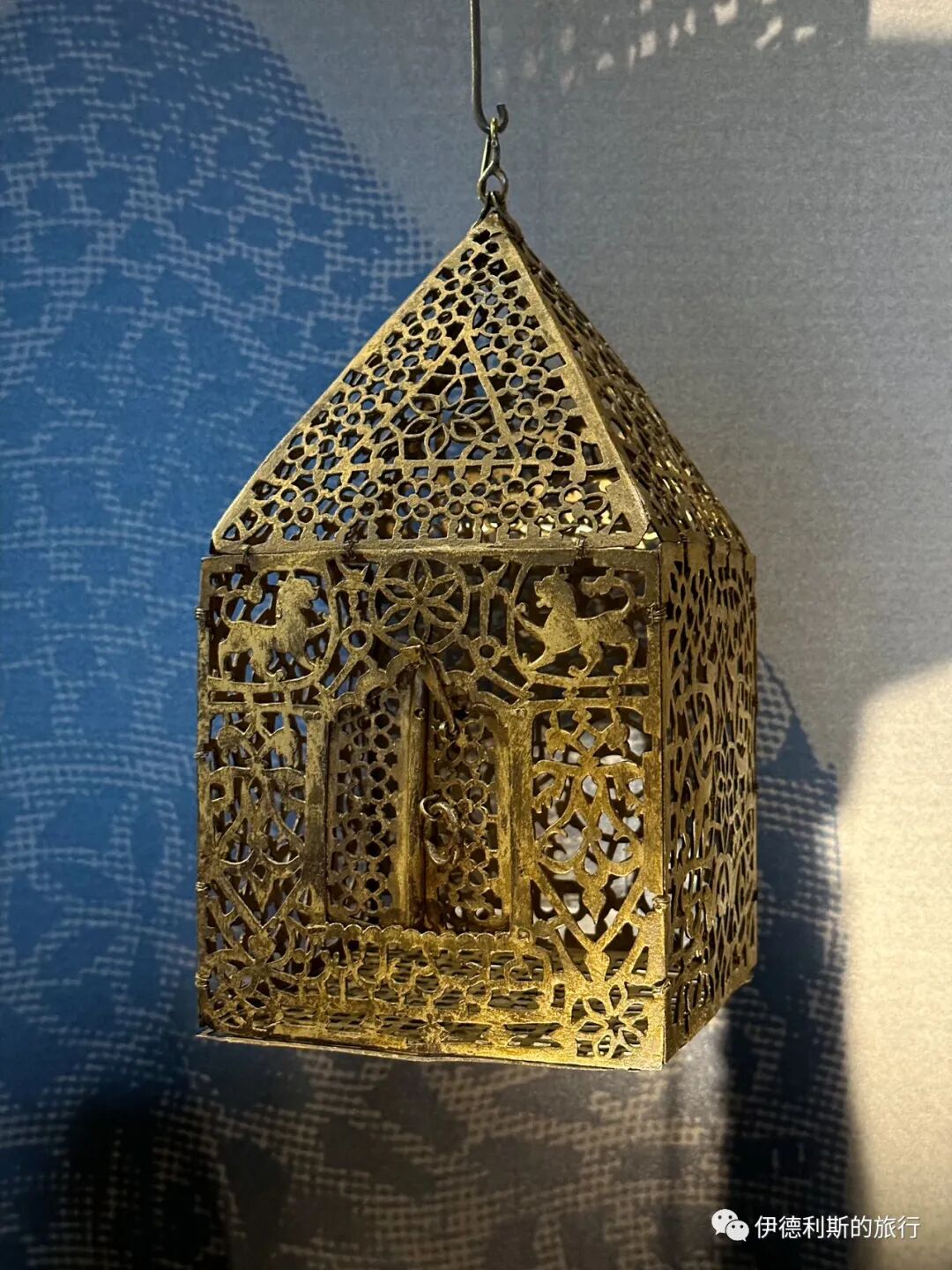
The copper-zinc alloy flags known as Sanjak Alem were used in Ottoman Sufi ceremonies. The first one is from the 15th century and is kept at the Konya Museum, while the second is from the 16th century and is held at the Museum of Turkish and Islamic Arts.
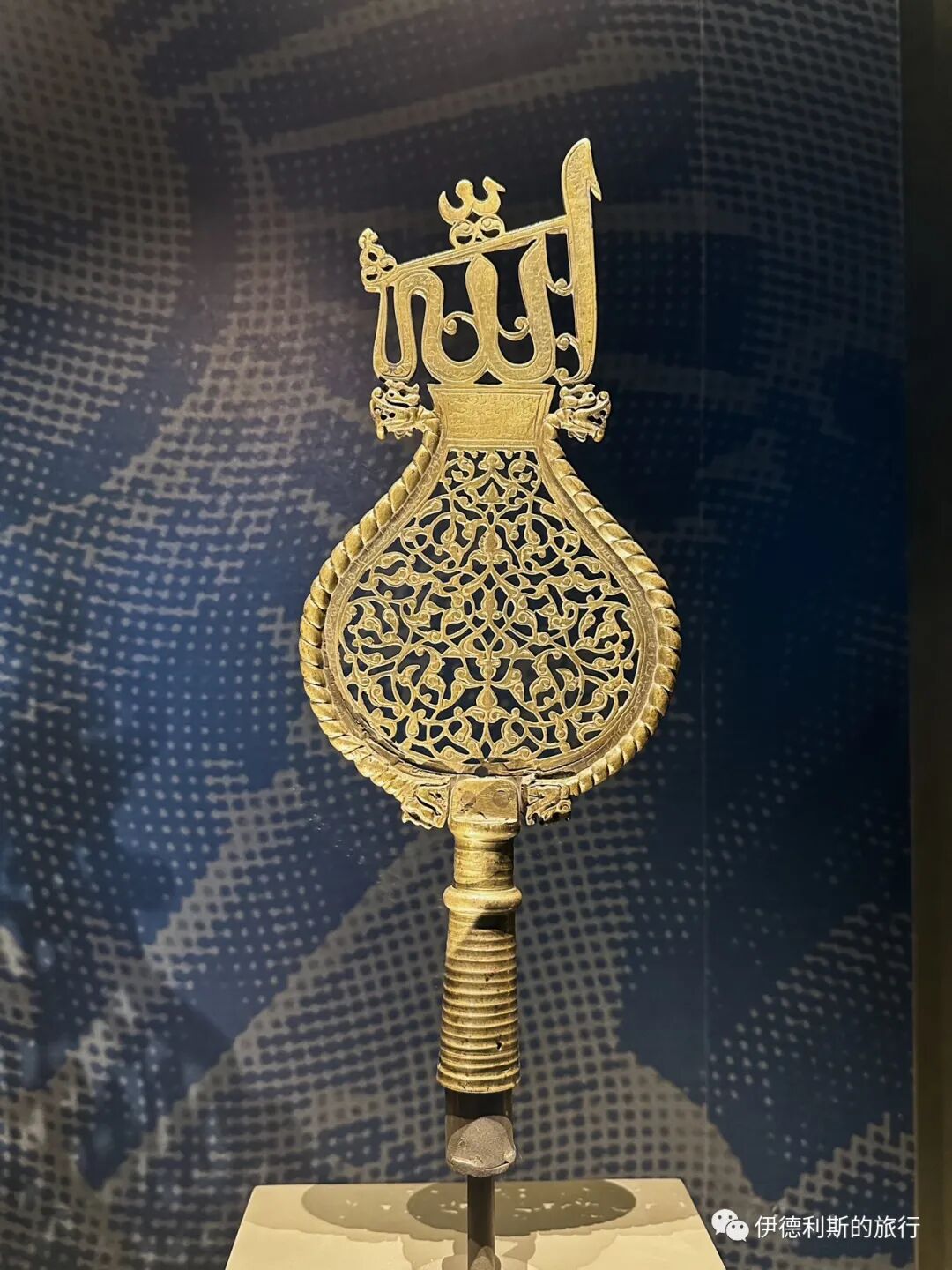
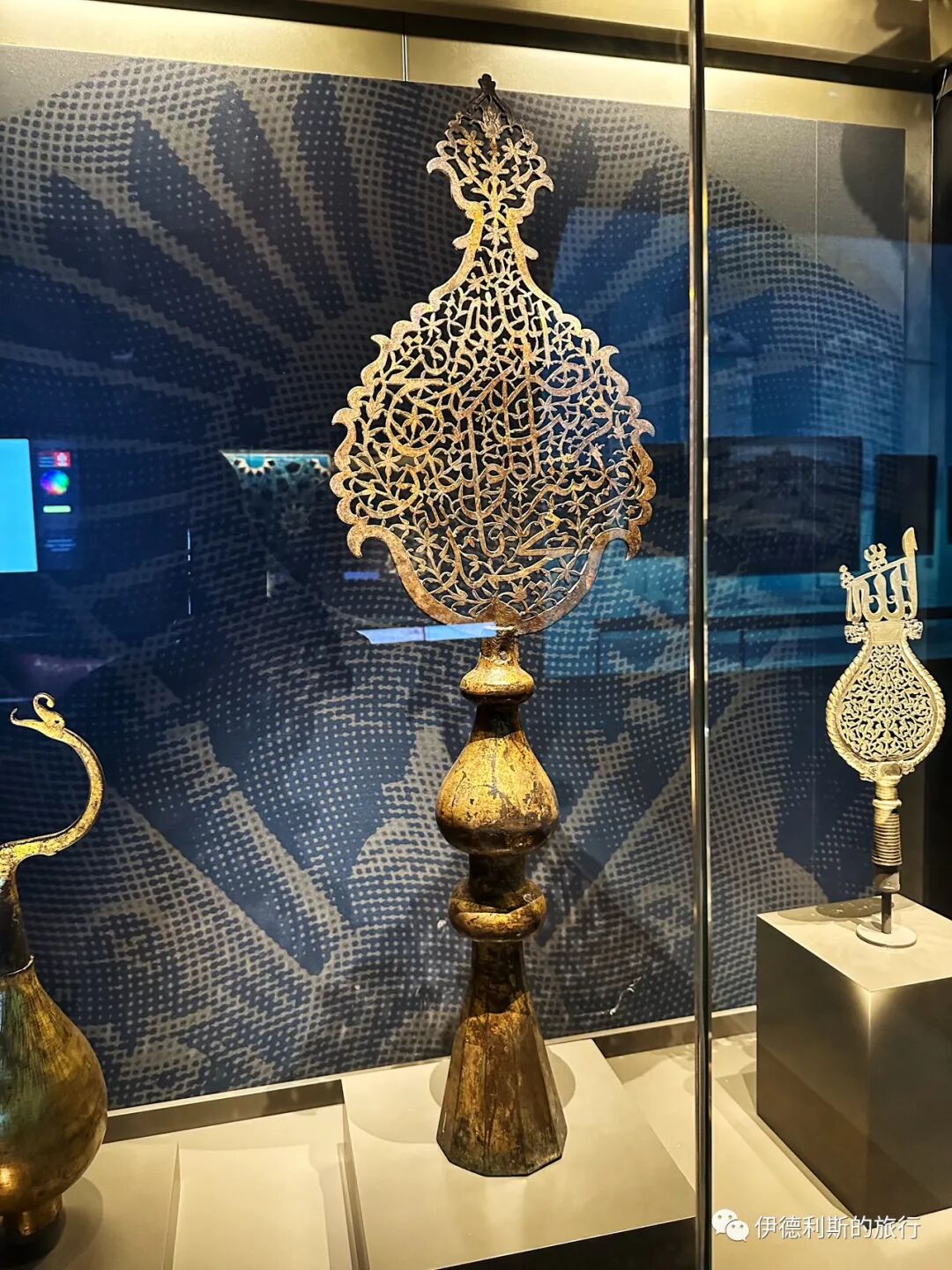
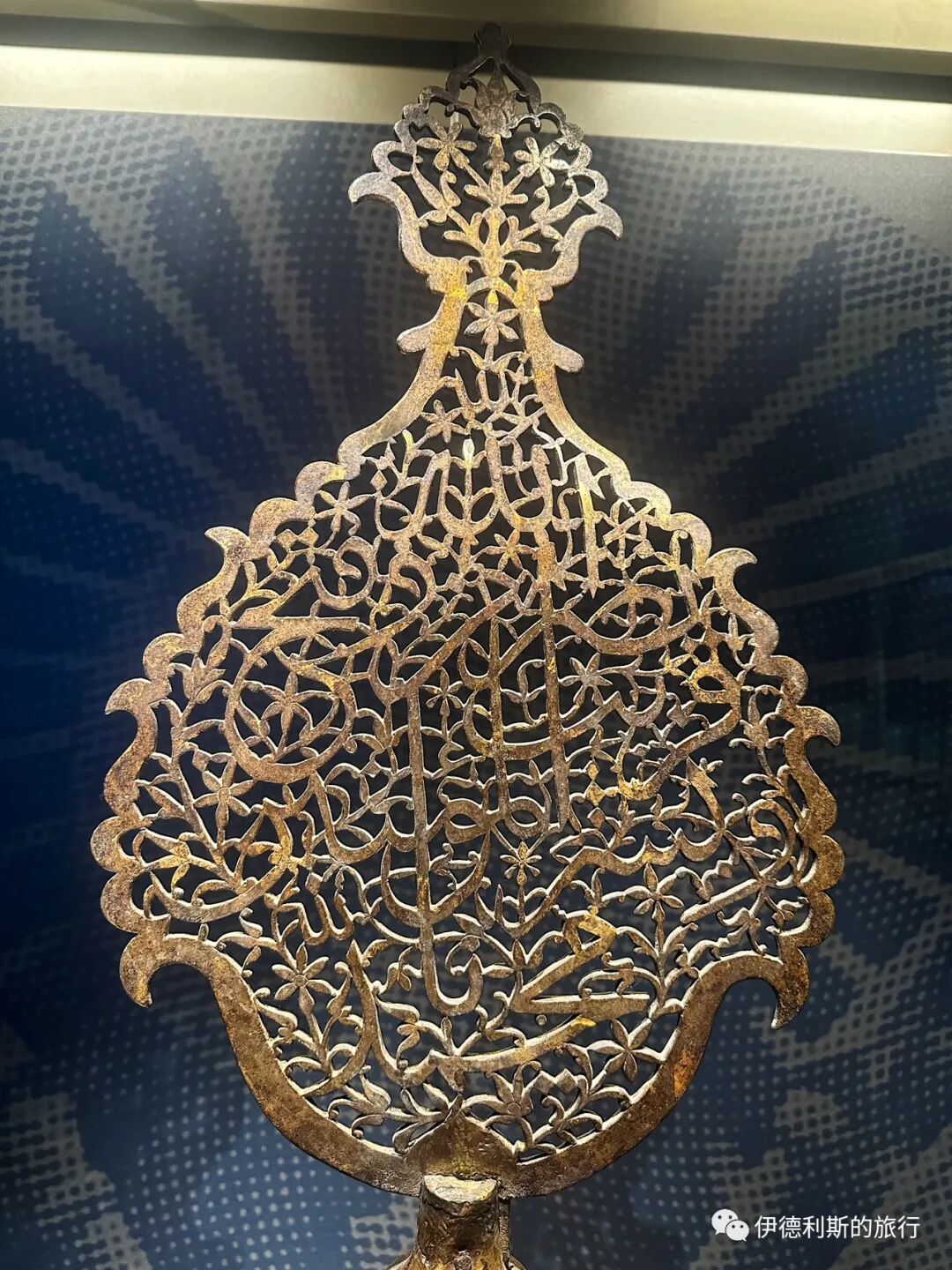
A highlight of the Istanbul Airport Museum is the early 13th-century Seljuk throne from the Ankara Ethnography Museum. It is a unique piece of art from the Seljuk era that symbolizes the royal power of the Sultan of Rum.
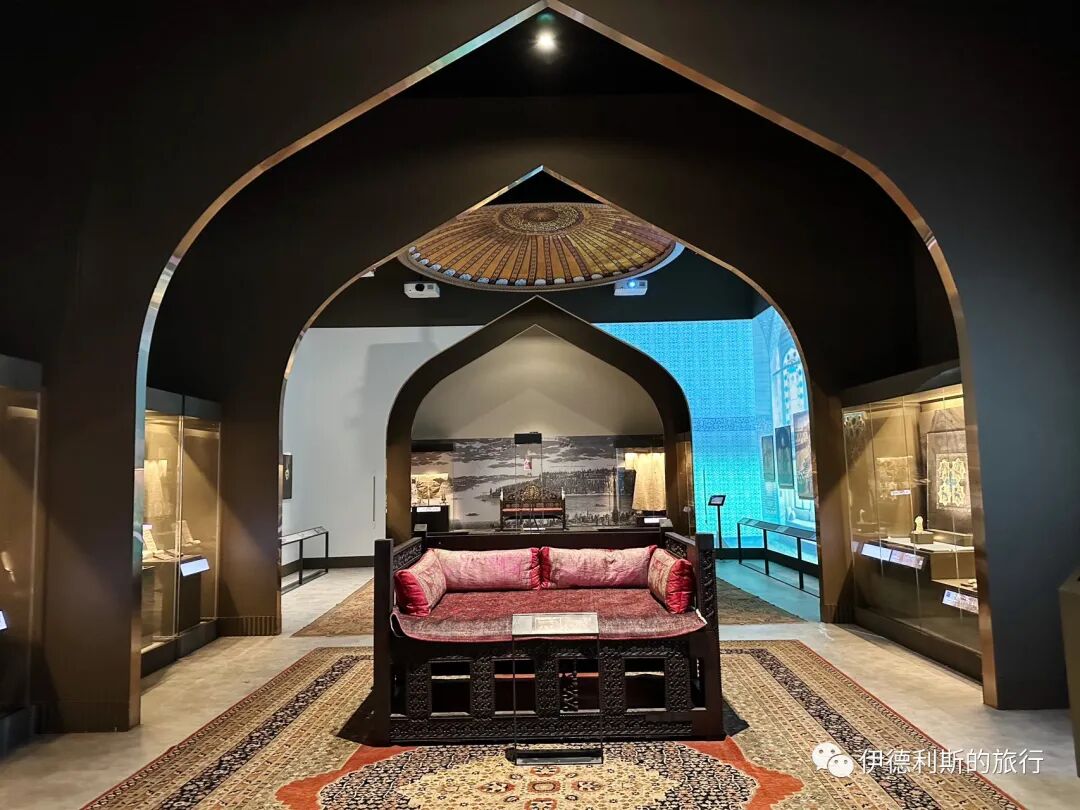
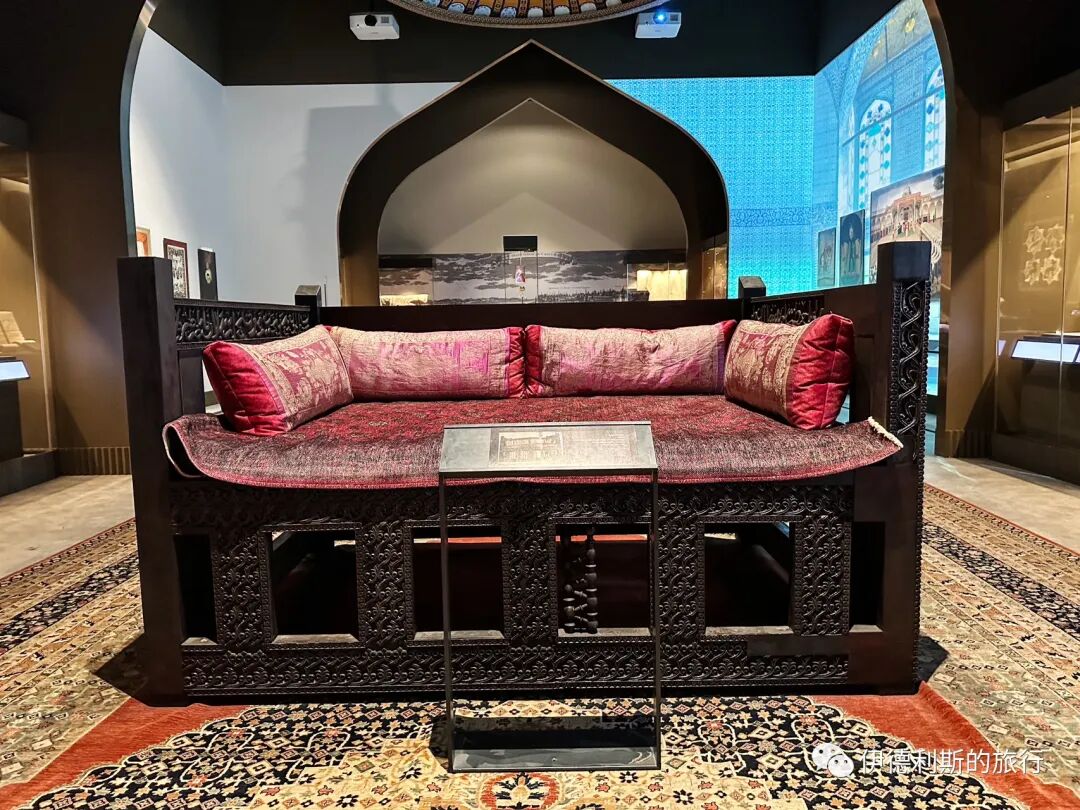
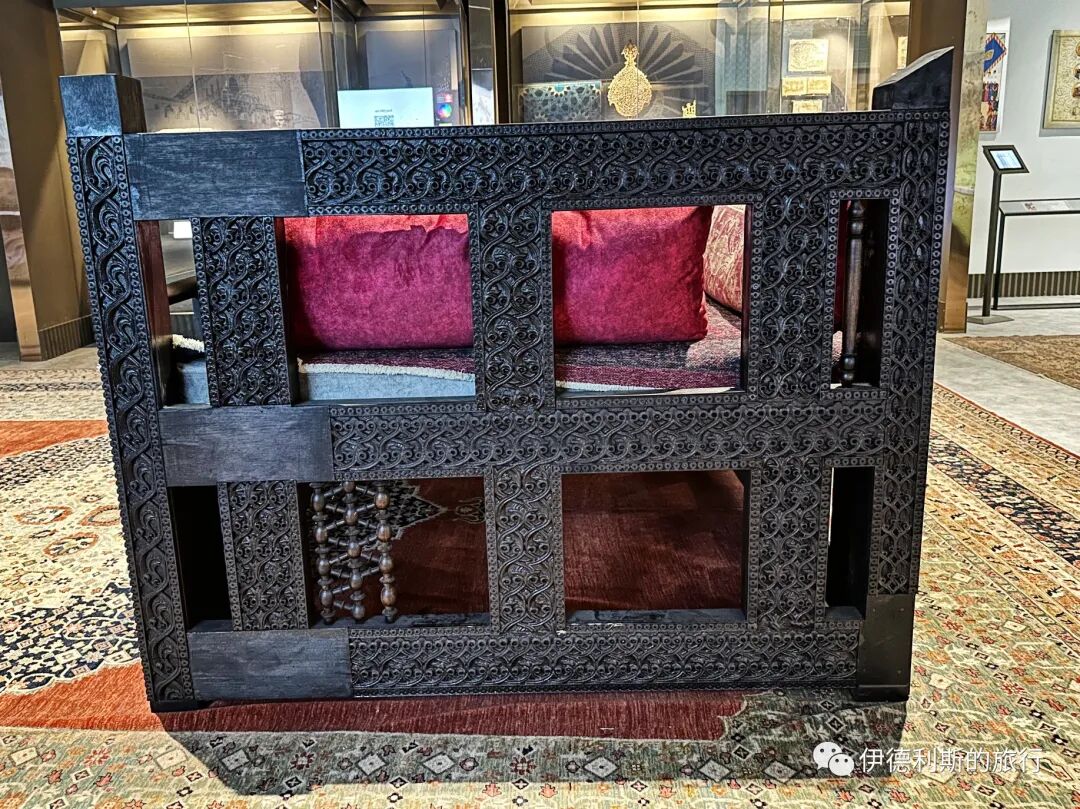
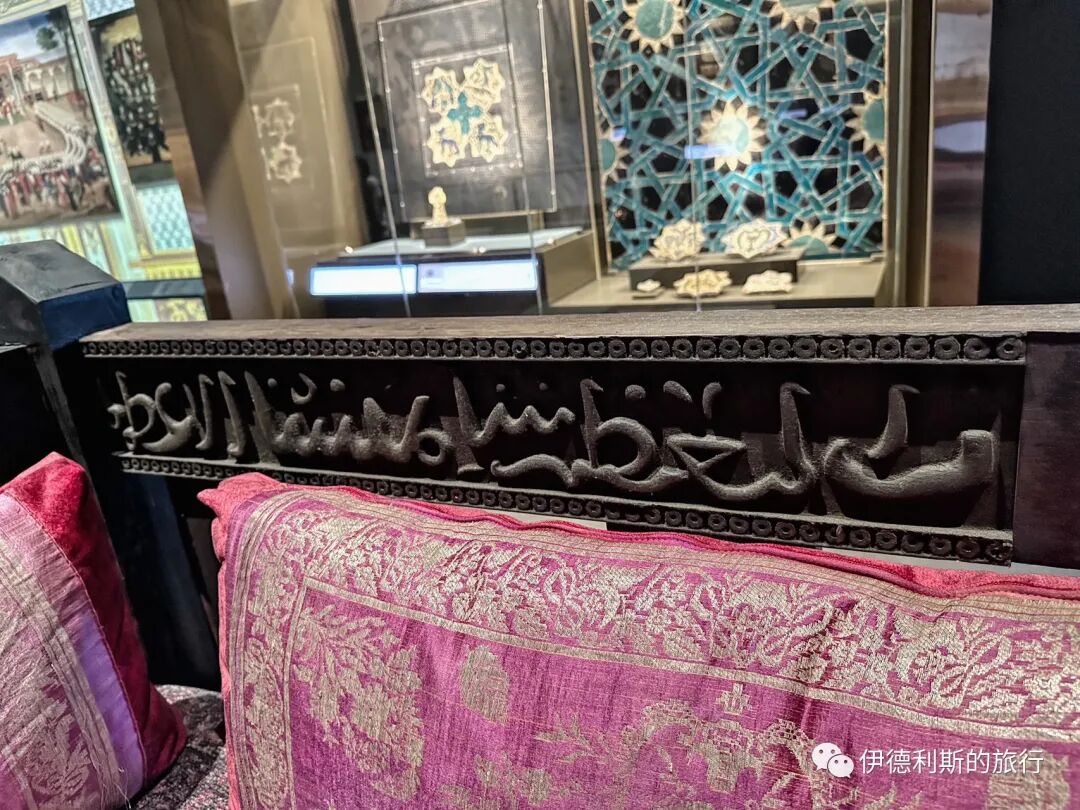
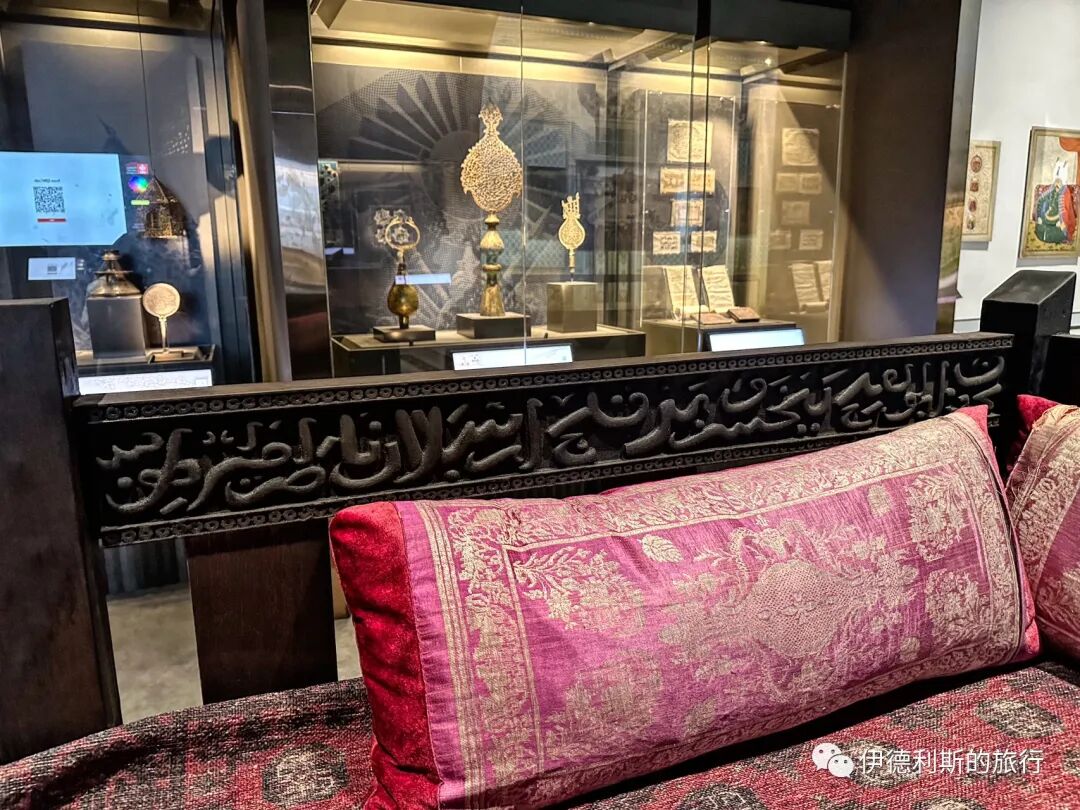
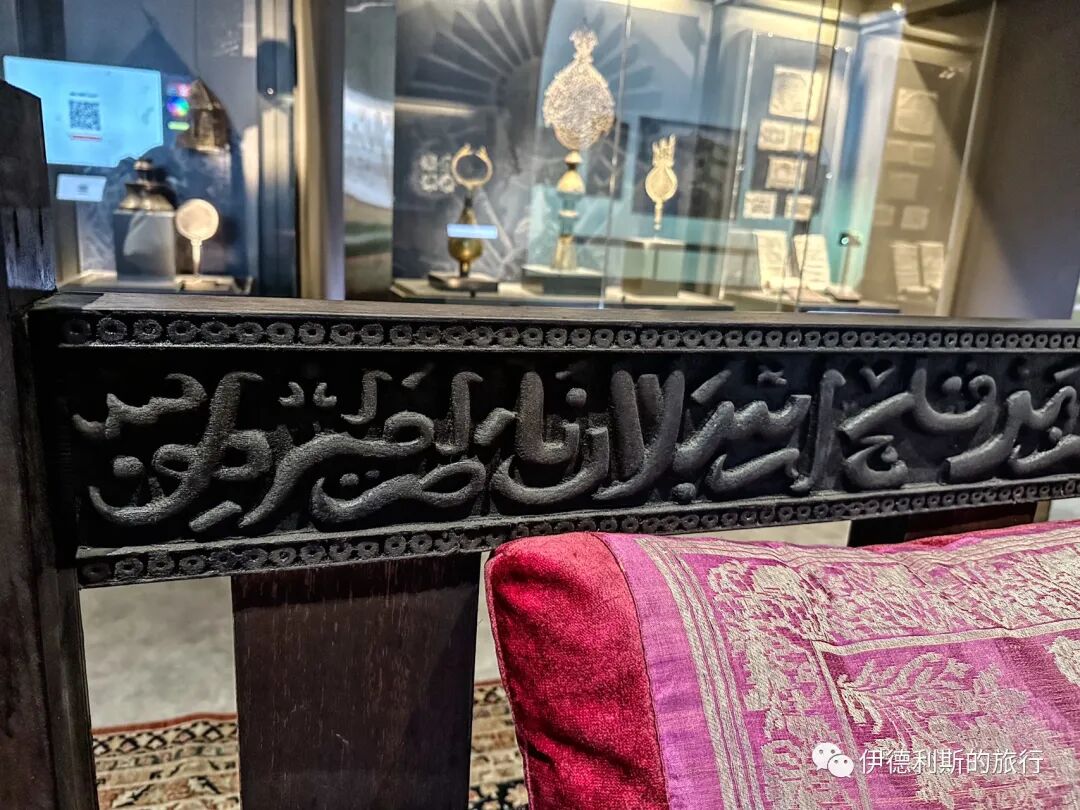
The Museum of Turkish and Islamic Arts holds 13th-century Seljuk mosaic tiles.
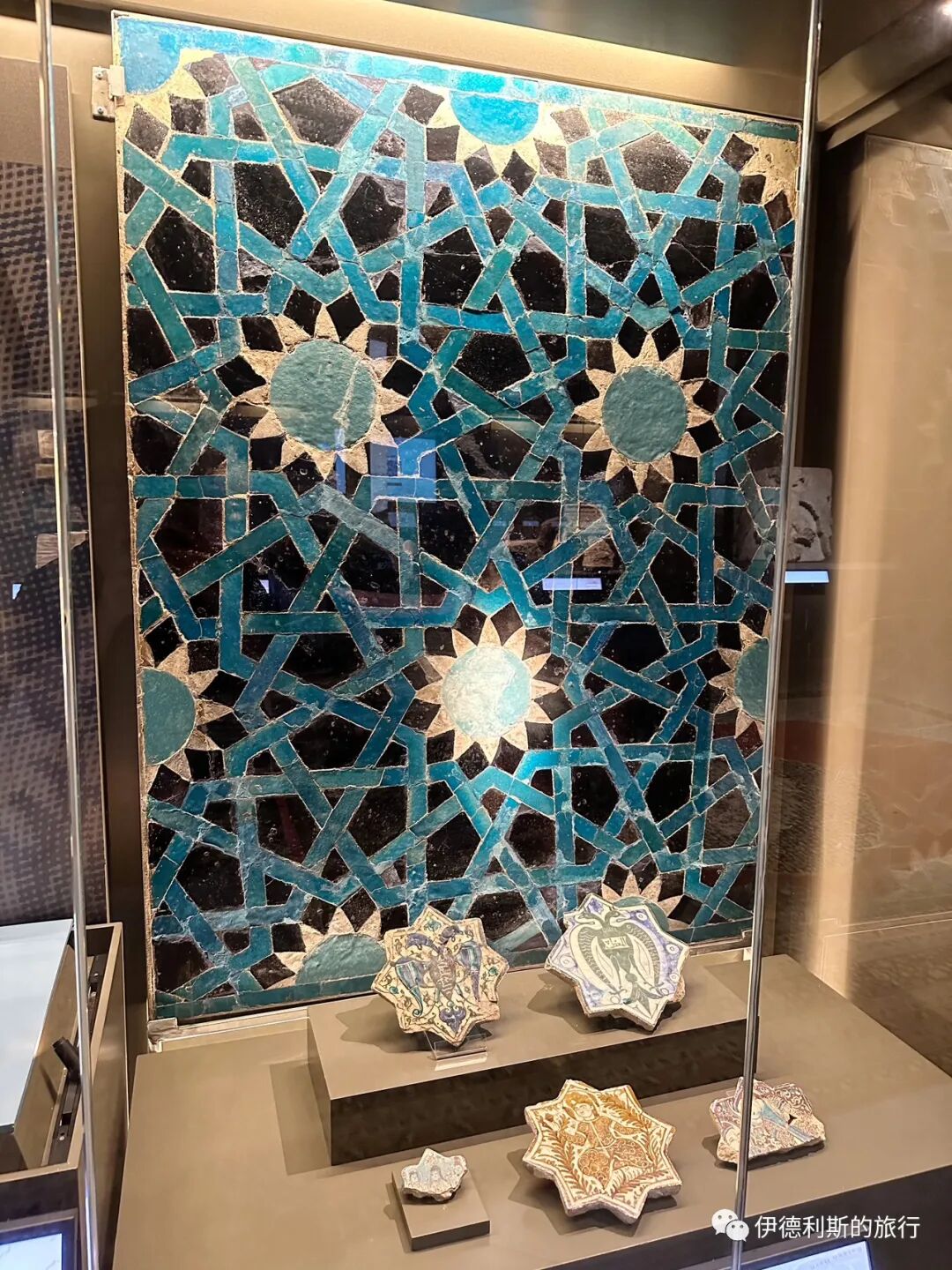
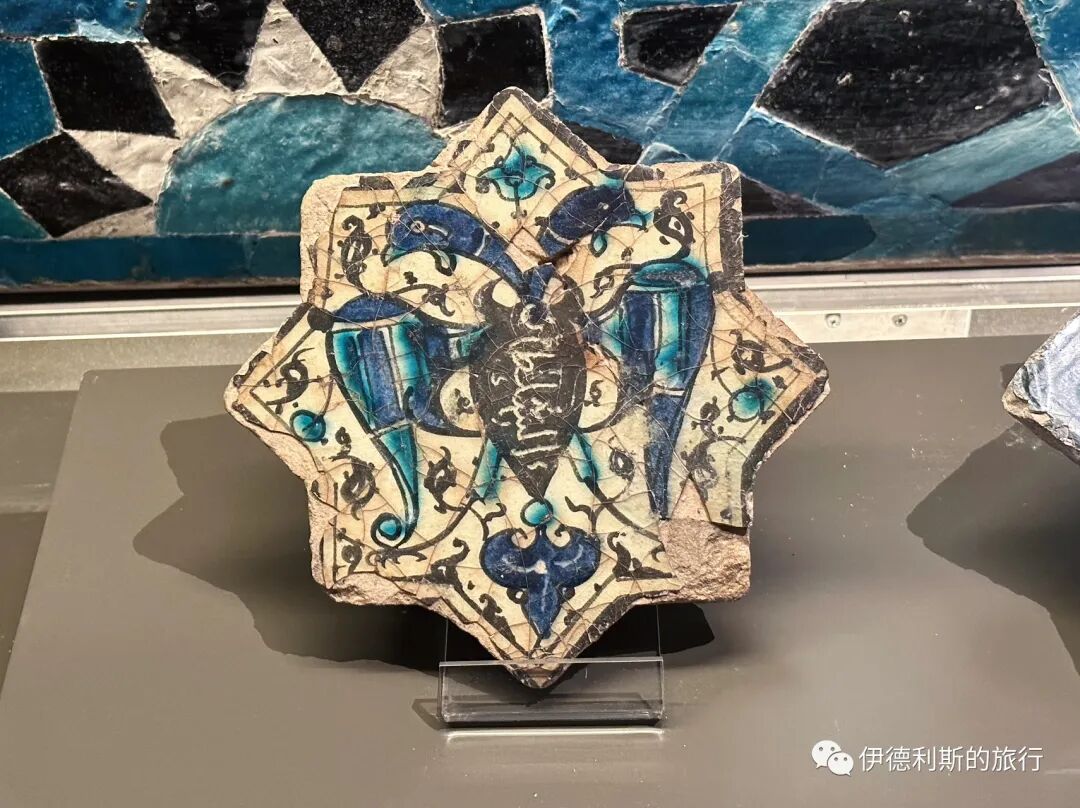
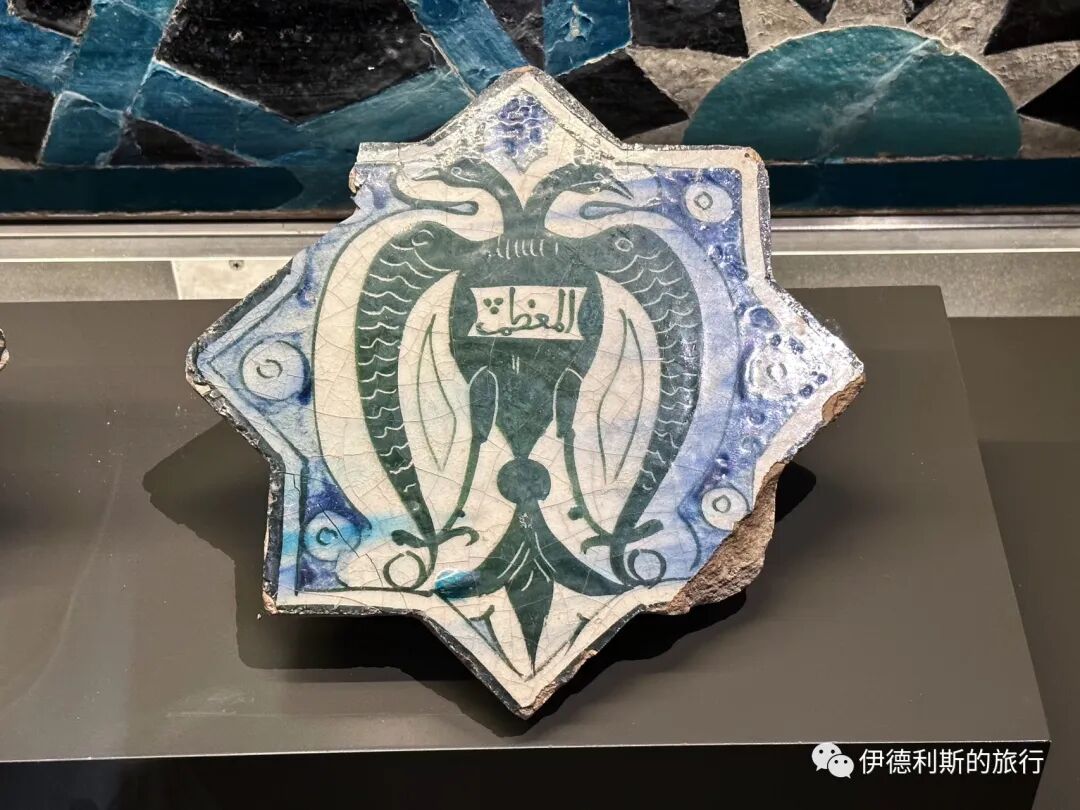
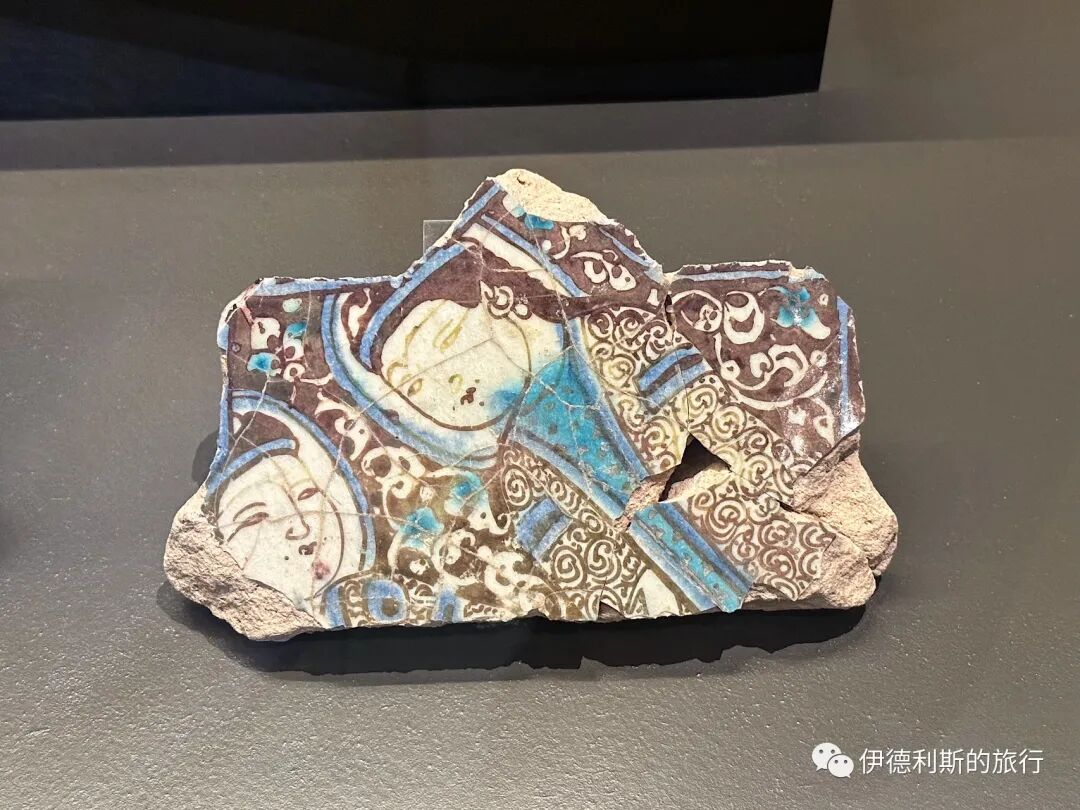
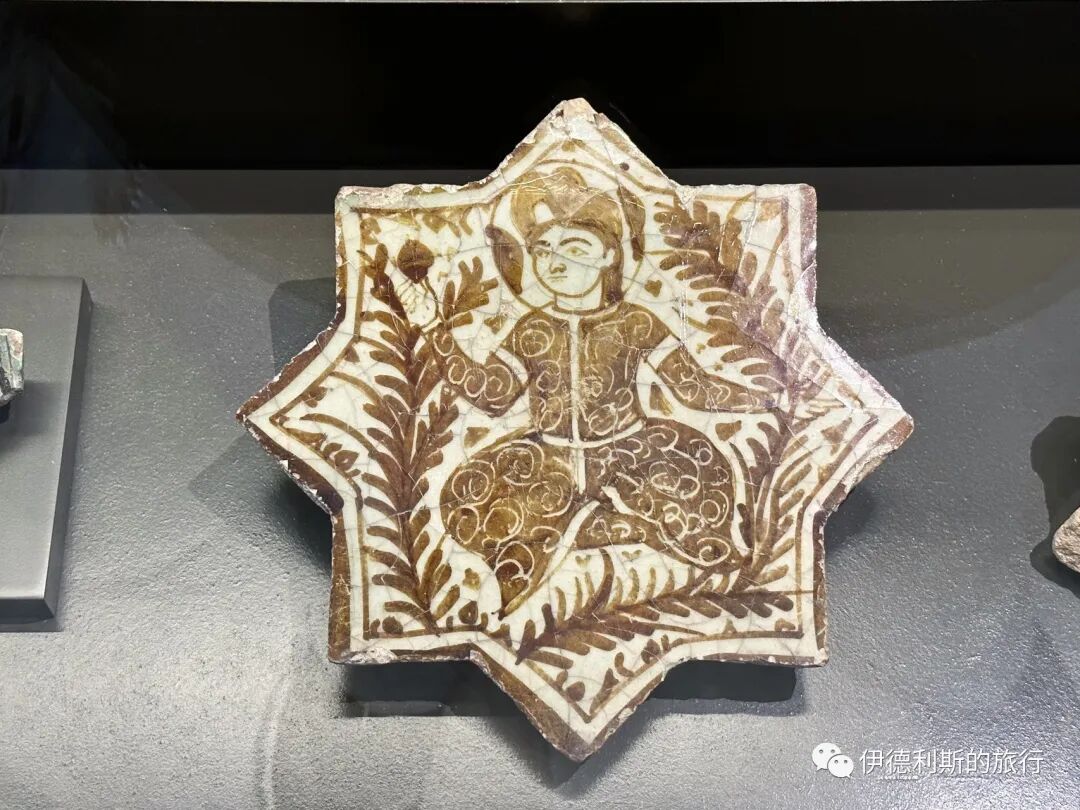
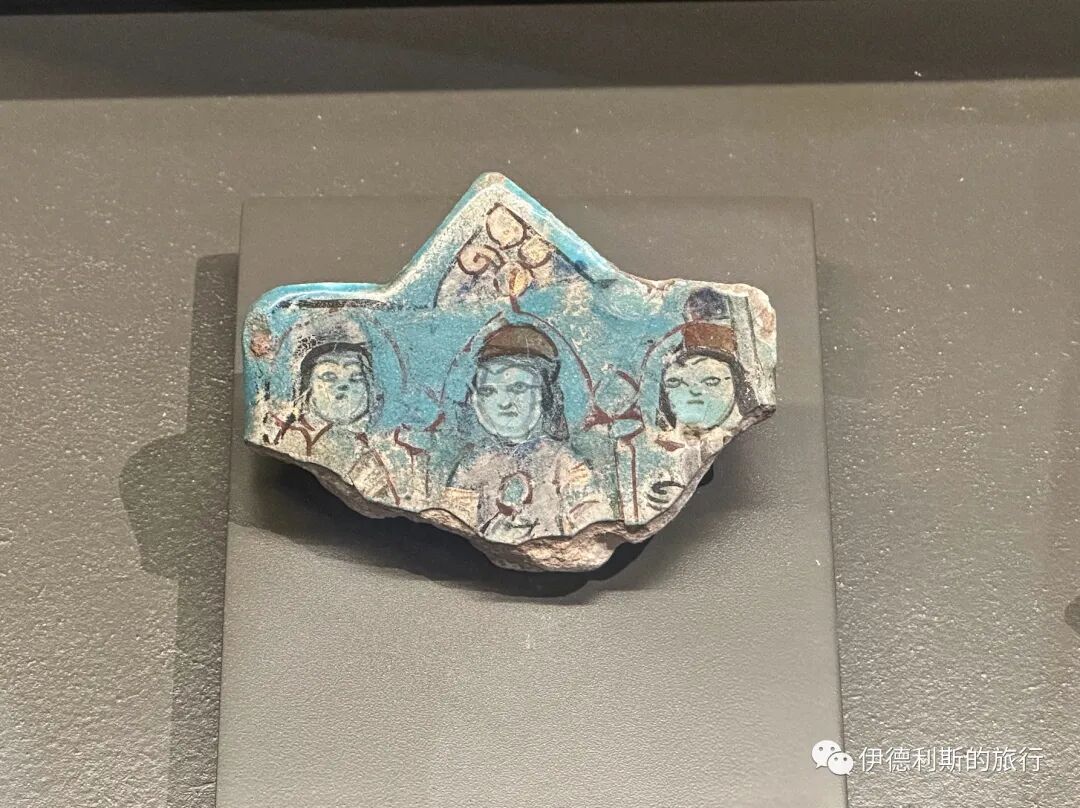
The Tiled Kiosk in Istanbul, part of the Istanbul Museum of Islamic Arts, houses 13th-century tiles from the Kubadabad Palace, the summer residence of the Seljuk Sultanate of Rum. Kubadabad Palace sits by Lake Beyşehir, 100 kilometers west of Konya, the capital of the Sultanate of Rum. It was built in 1236 by the Seljuk Sultan Kayqubad I, who reigned from 1220 to 1237. The entire complex consists of 16 buildings. The largest palace is 50 meters long and 35 meters wide and is famous for its ornate tiles. These tiles feature human and animal figures, which are typical artistic characteristics of the Seljuk dynasty.
The Museum of Turkish and Islamic Arts holds a 17th-century Ottoman-era jeweled aigrette (murassa aigrette). This is a piece of royal head jewelry made of gold inlaid with rubies and turquoise, topped with a peacock feather. The word murassa comes from Arabic and means inlaid with jewels.
The Museum of Turkish and Islamic Arts holds a 17th-century Ottoman-era jeweled belt.
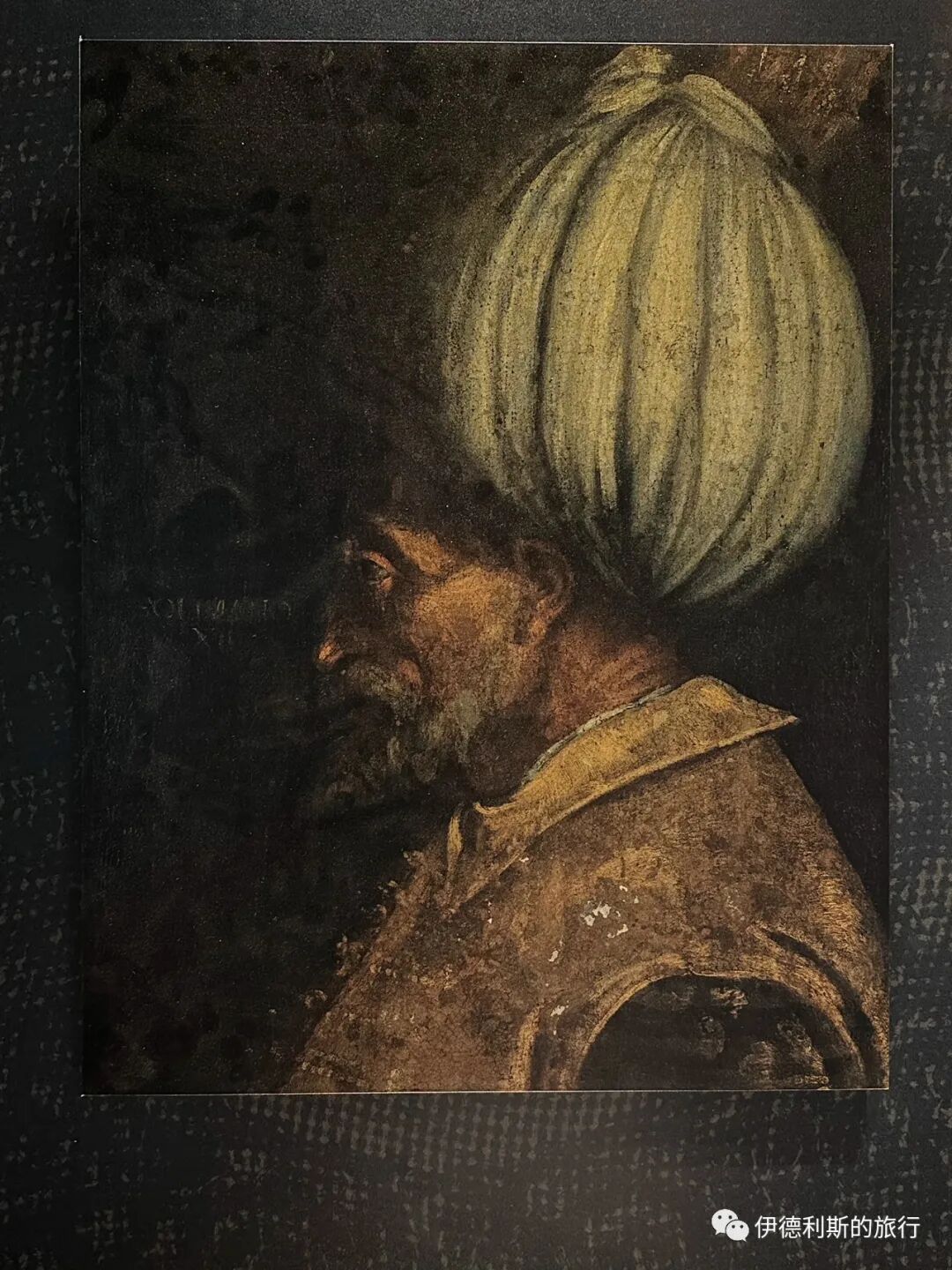
The Topkapi Palace Museum holds a late 16th-century oil portrait of the Ottoman Sultan Suleiman the Magnificent, painted in the style of the Venetian school.
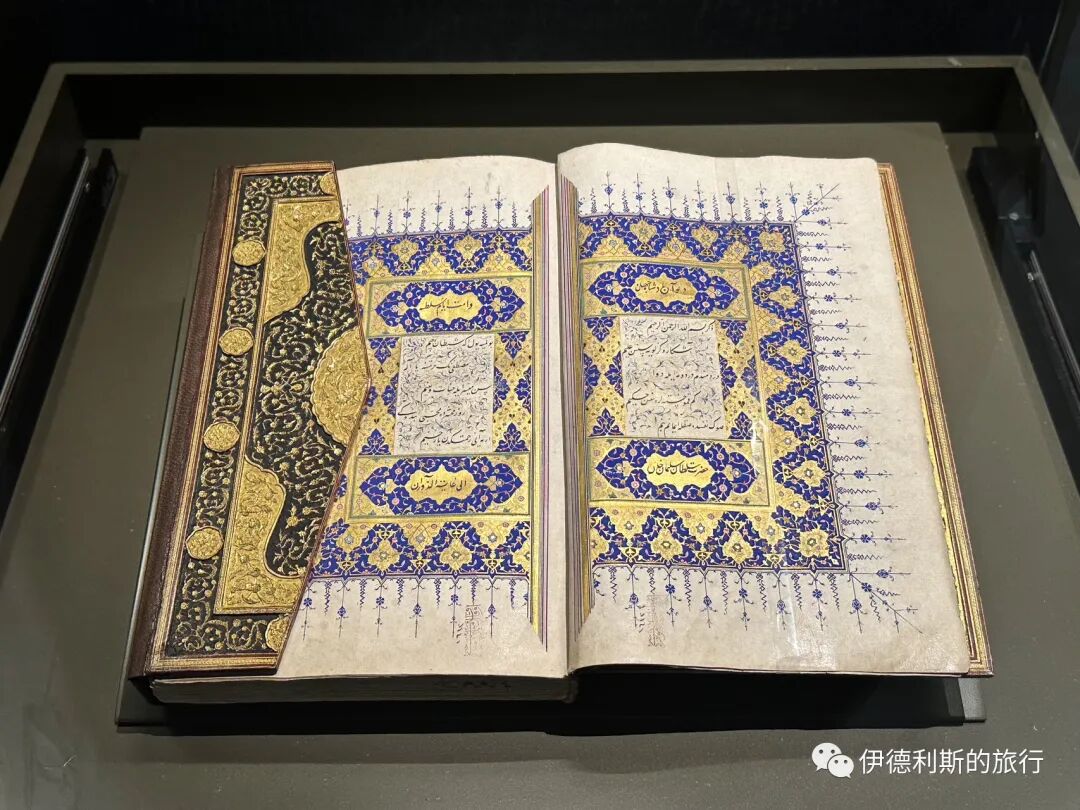
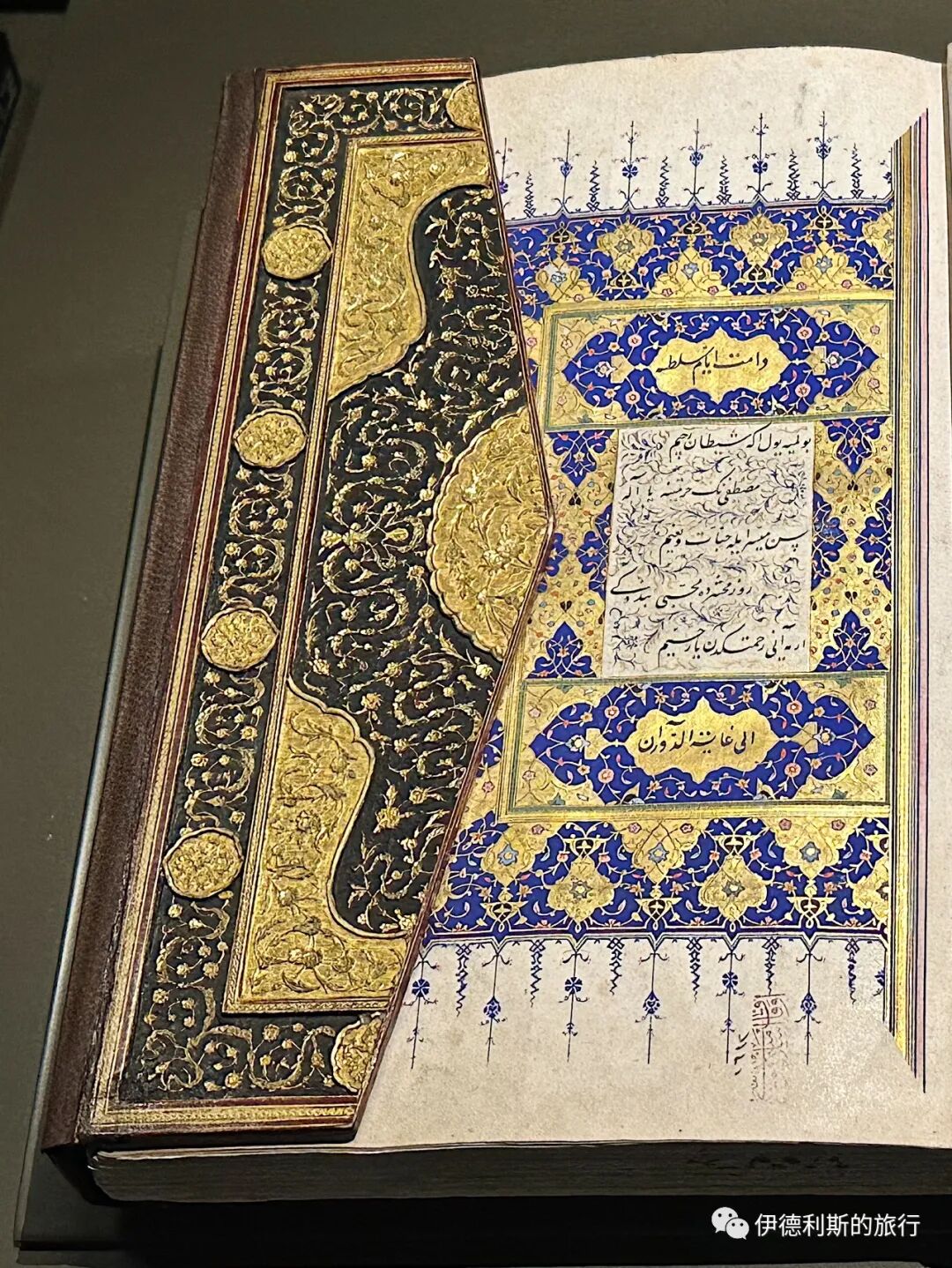
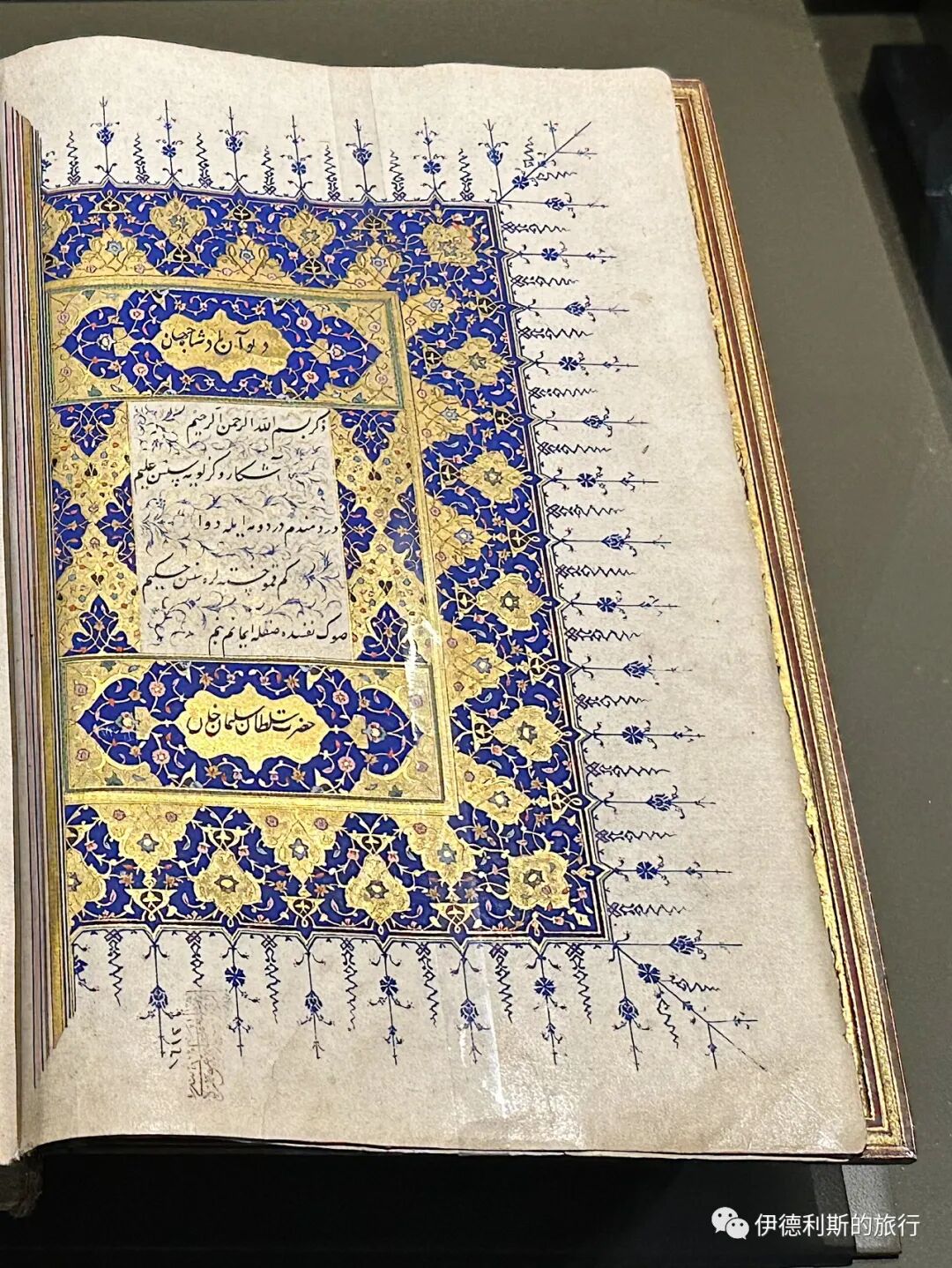
The Museum of Turkish and Islamic Arts holds the 16th-century poetry collection of the Ottoman Sultan Suleiman the Magnificent, titled Divan-i Muhibbi. Muhibbi was Suleiman's pen name, which means 'Lover of the Lord'.
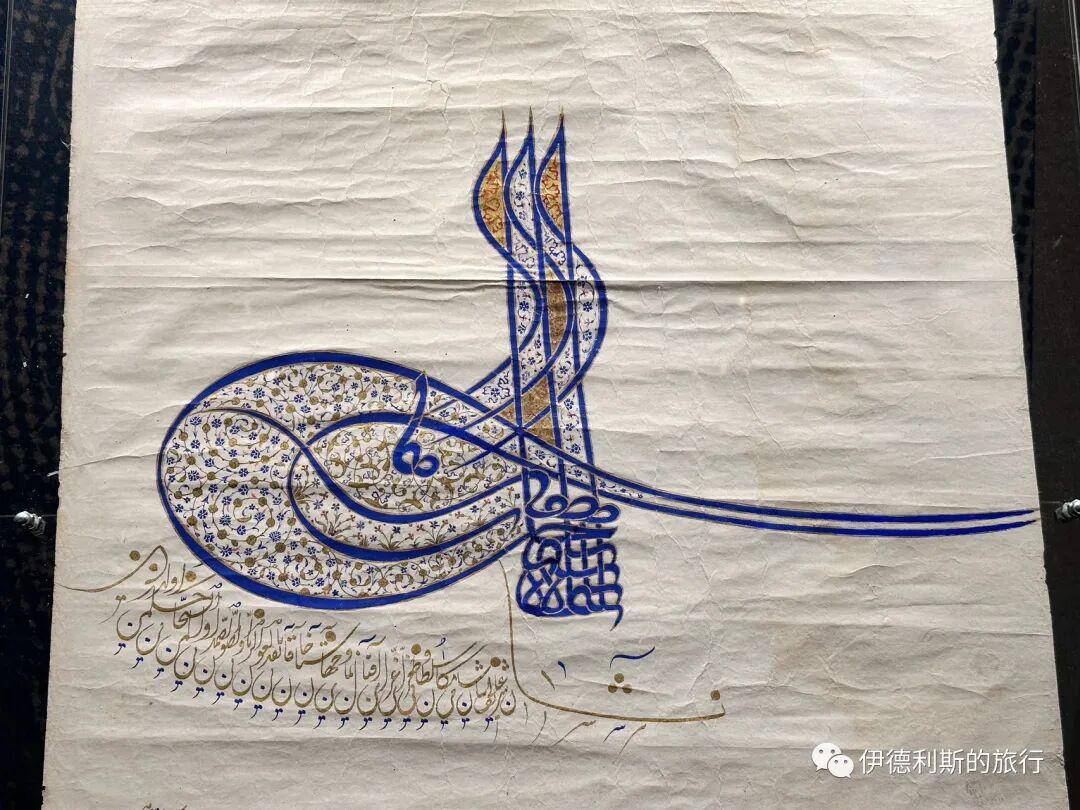
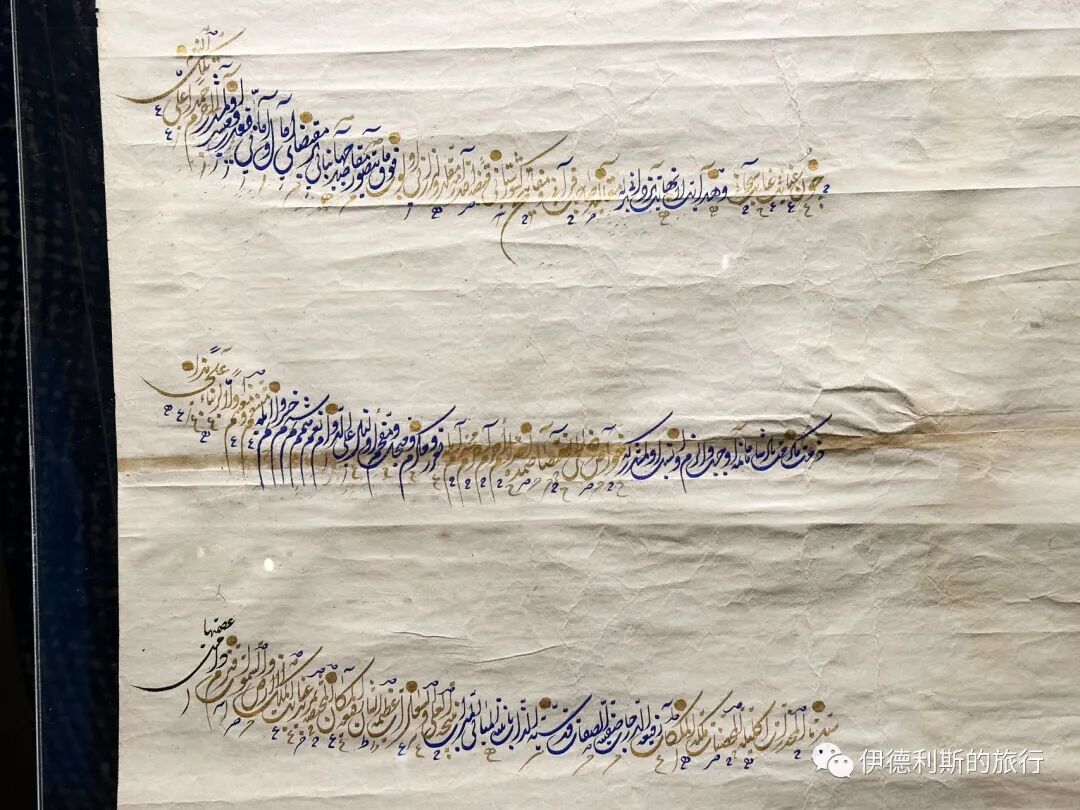
The Museum of Turkish and Islamic Arts holds a property document issued by Sultan Suleiman the Magnificent in 1567-68. It features the Sultan's royal monogram (tughra) and grants permission to use a Tekfur pasture in the Kocaeli province of northwestern Turkey. Tekfur is a title used from the late Seljuk to early Ottoman periods to refer to Byzantine lords in the towns and castles of the Anatolia and Thrace regions.
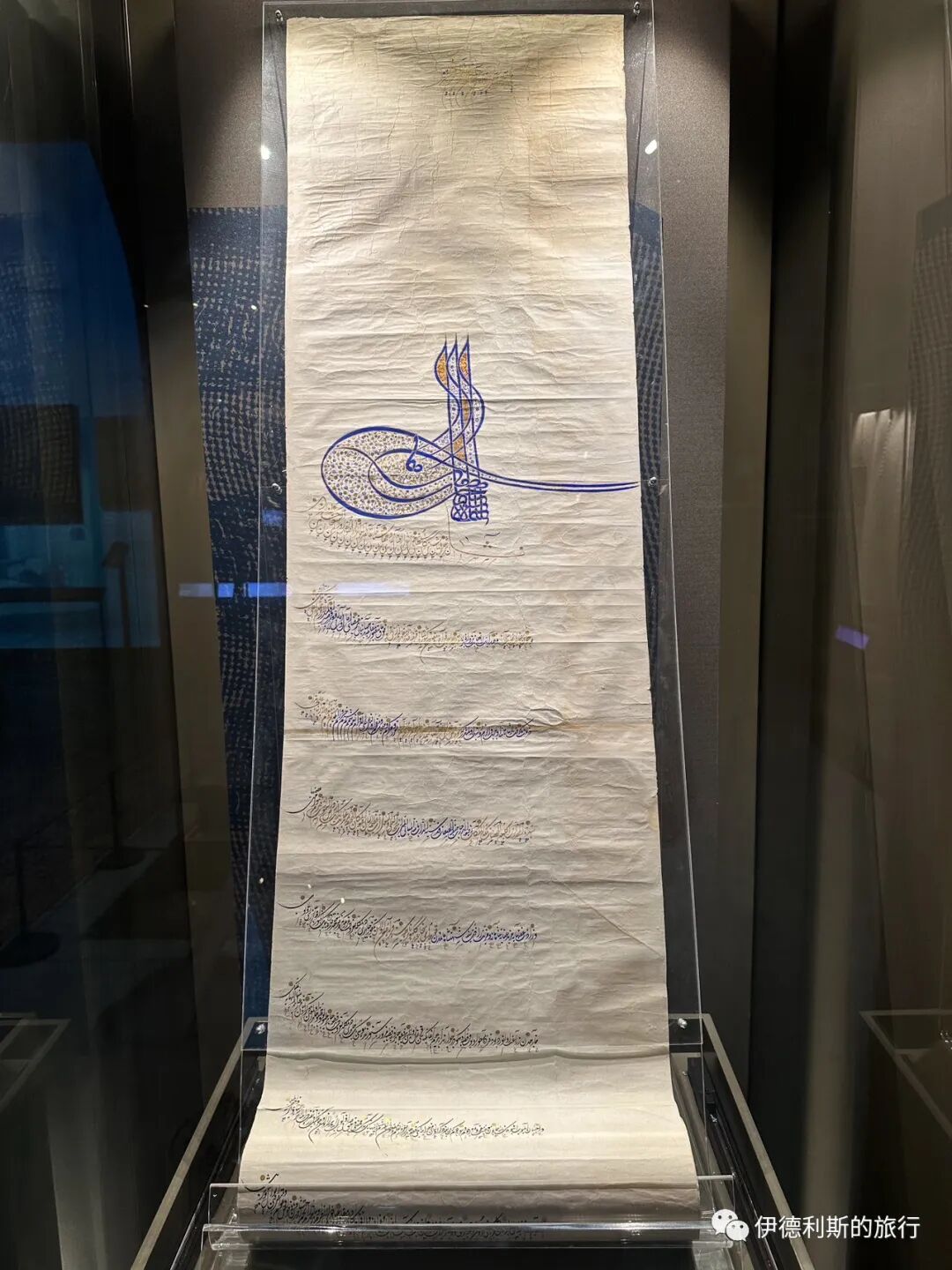
The Topkapi Palace Museum holds a 19th-century Ottoman velvet and silver-plated quiver.
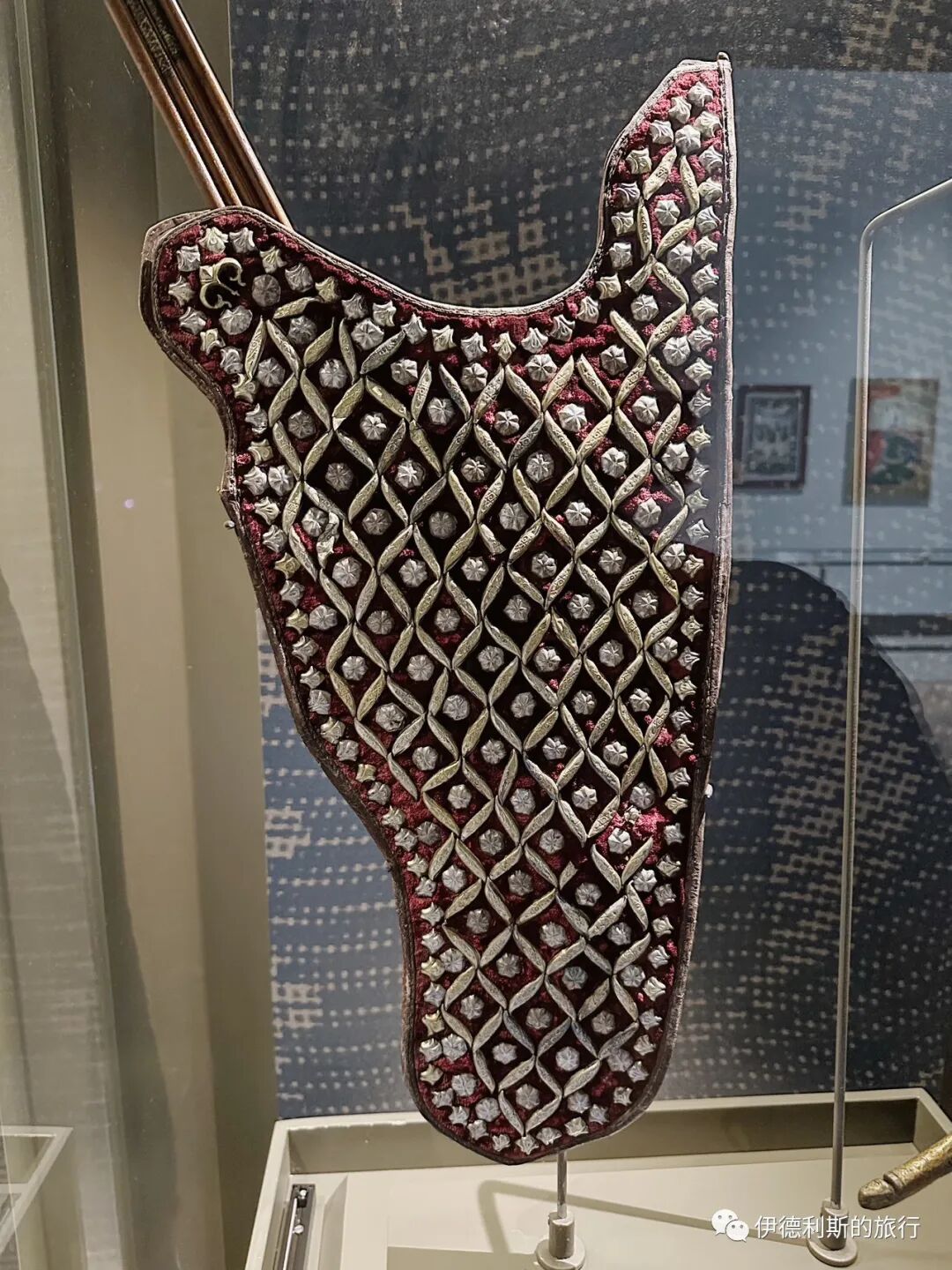
The Topkapi Palace Museum holds 16th-century Ottoman iron armor. It features an iron helmet from the late 15th to early 16th century, with a 19th-century iron hammer in front.
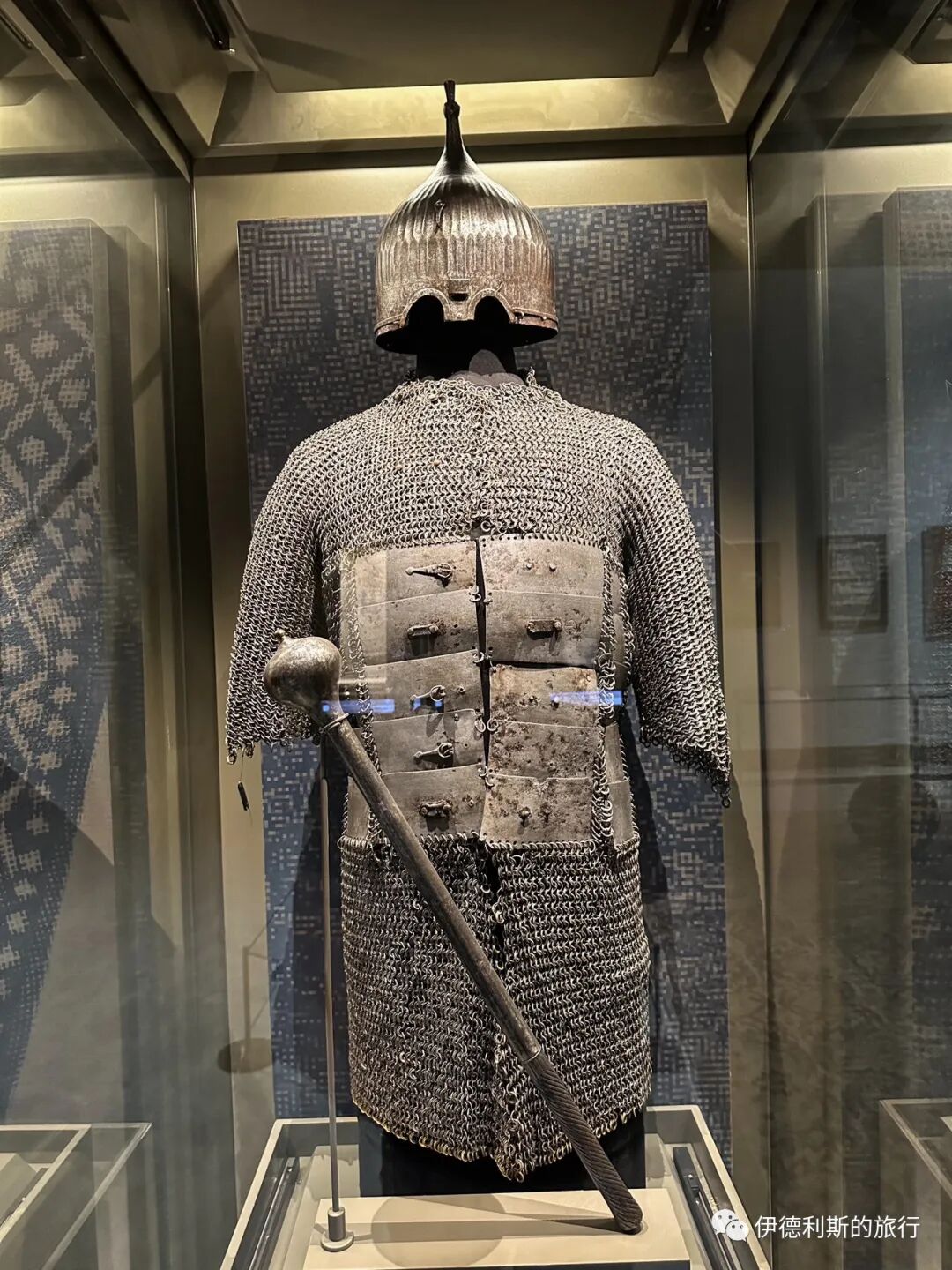
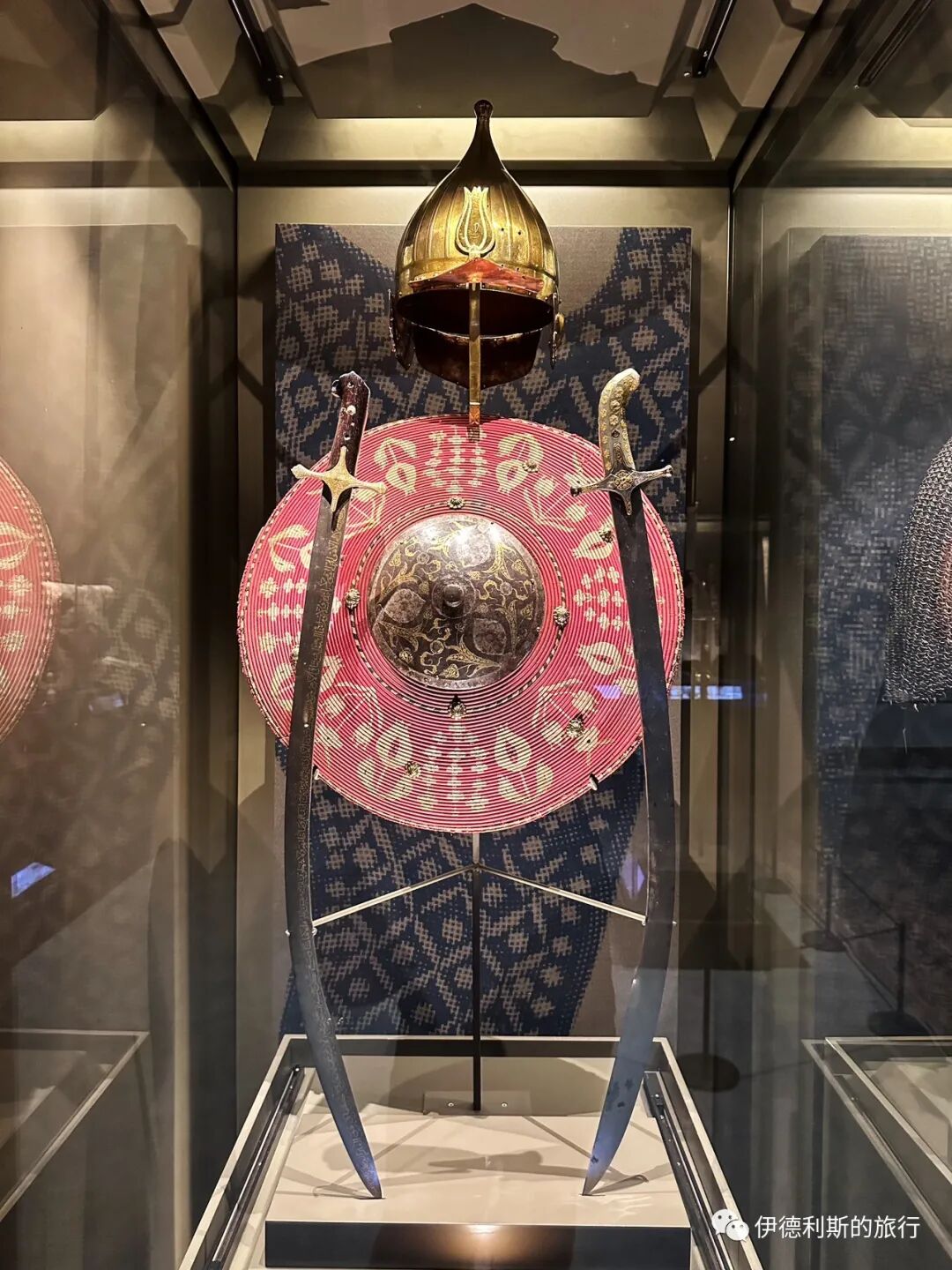
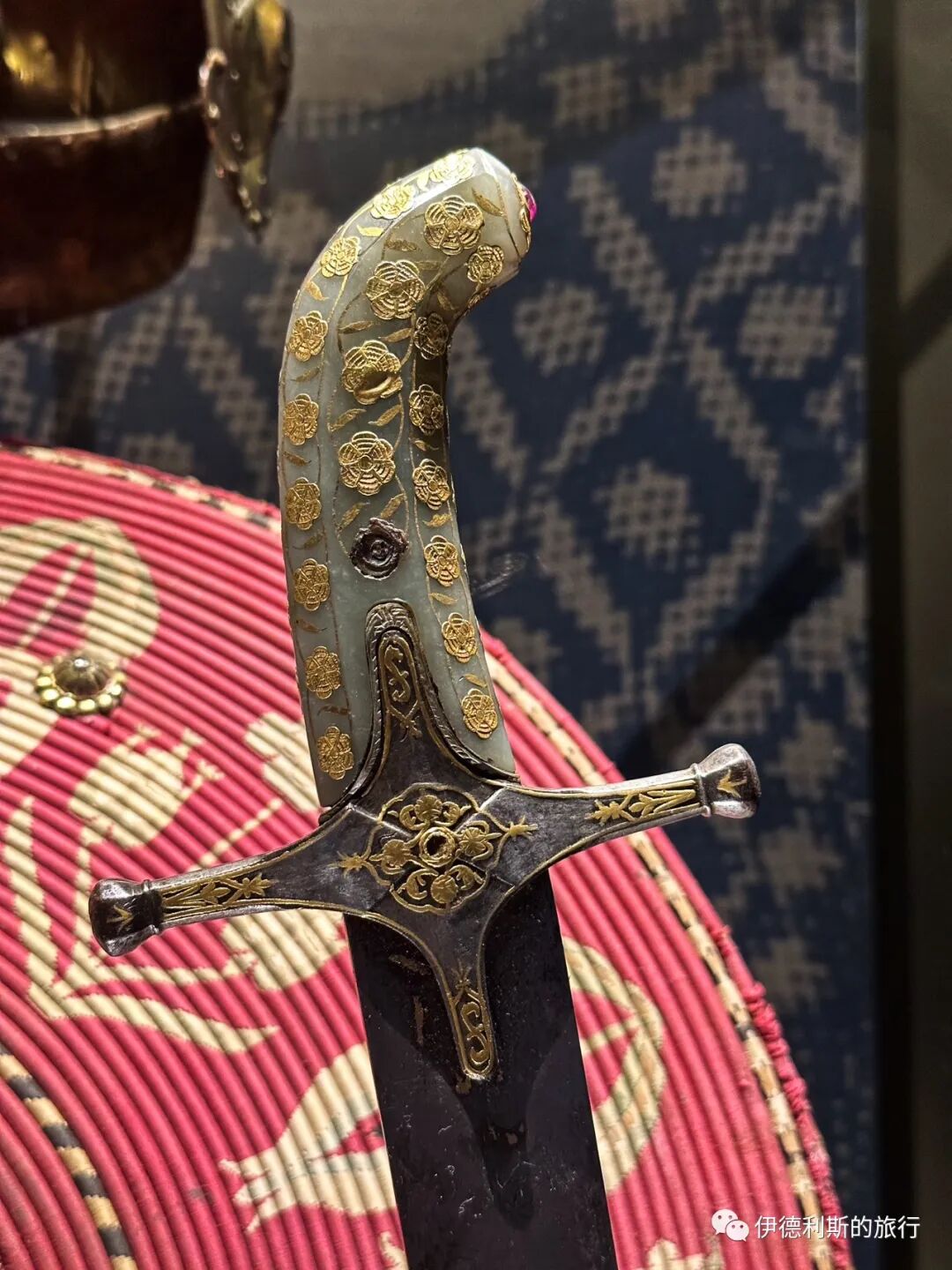
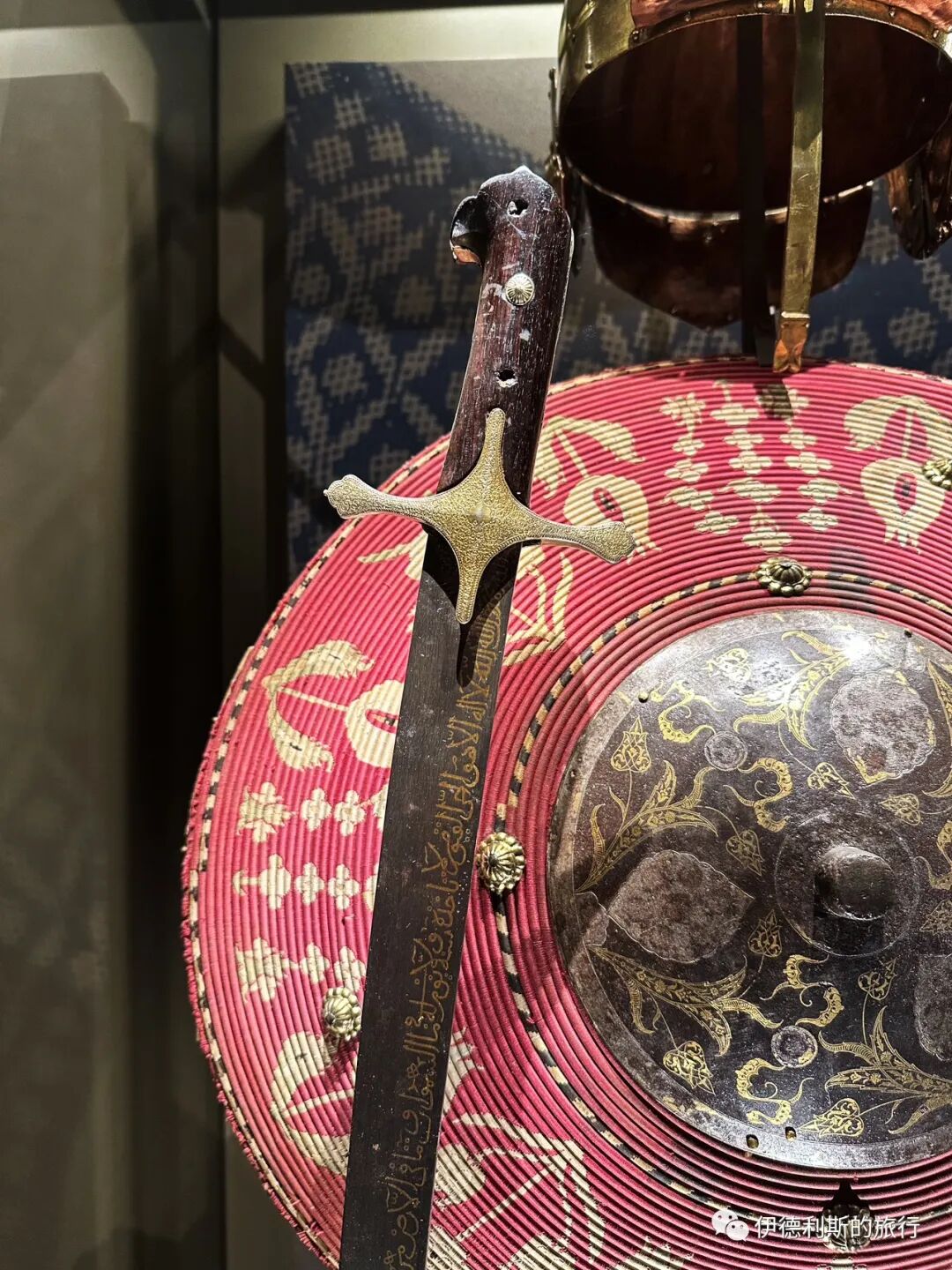
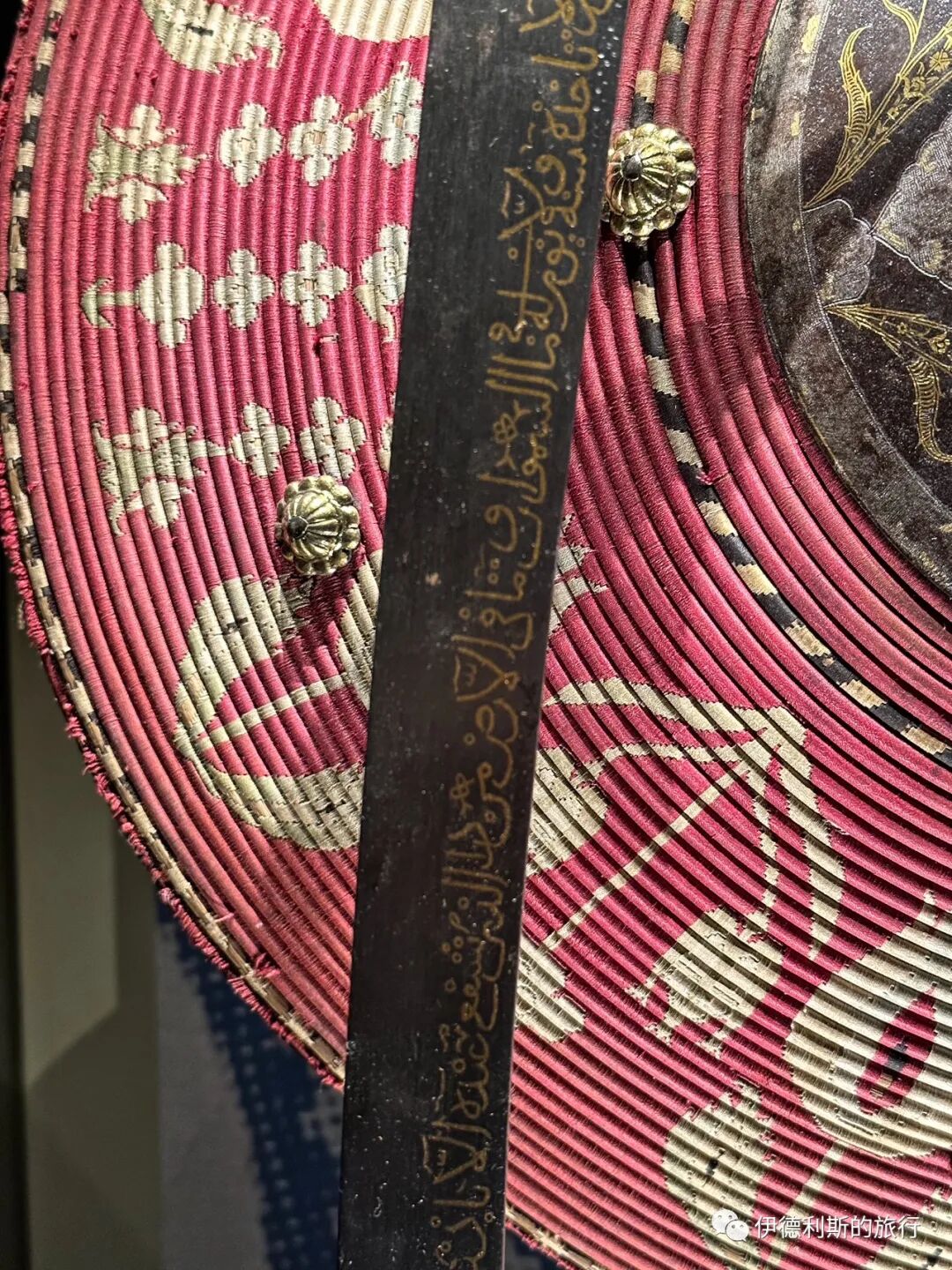
The Topkapi Palace Museum holds a 16th-century Ottoman shield. The outer ring is made of willow branches, and the inner ring is iron inlaid with gold. An 18th-century copper helmet sits on top, with 16th-century swords on both sides. The sword on the left has the name Soler written on the blade, and the sword on the right is inlaid with rubies and emeralds.
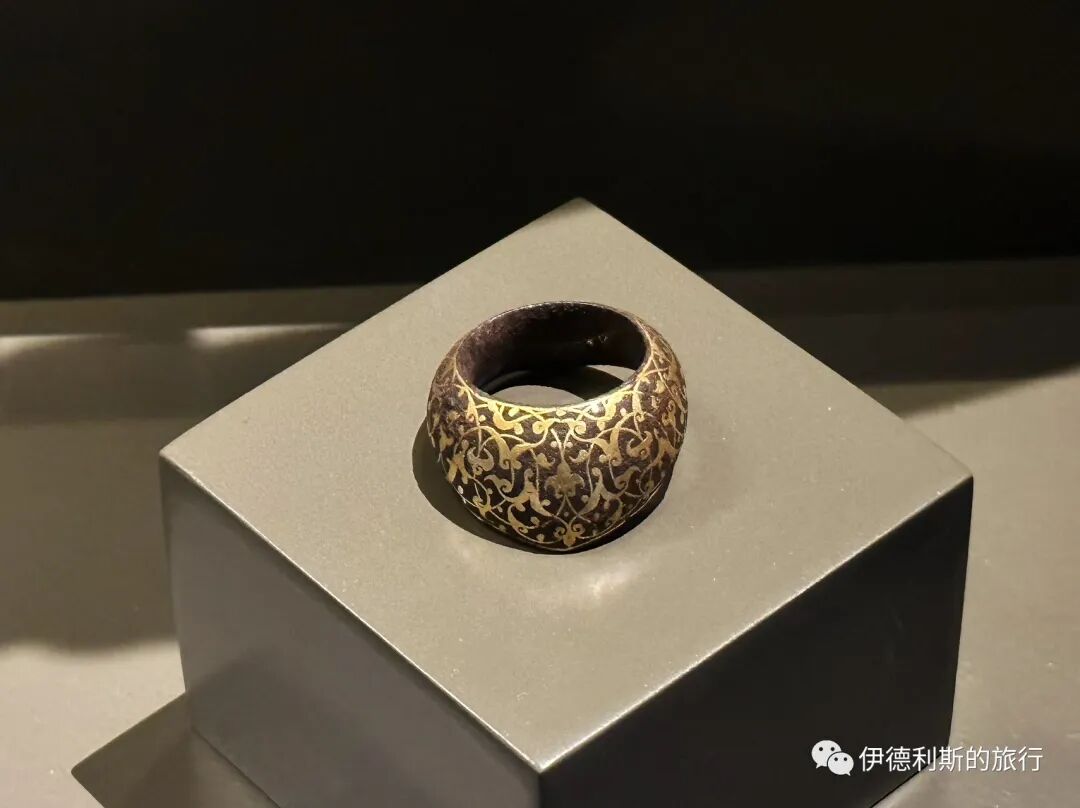
The Topkapi Palace Museum holds 16th-century Ottoman finger rings.
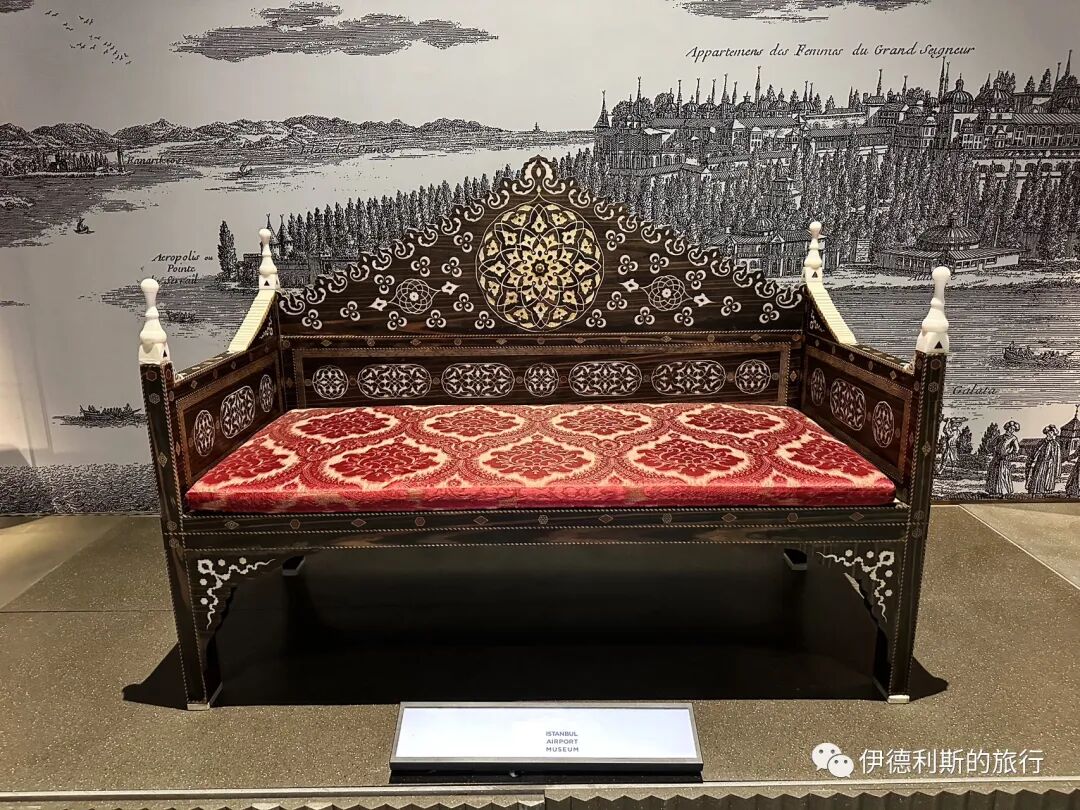
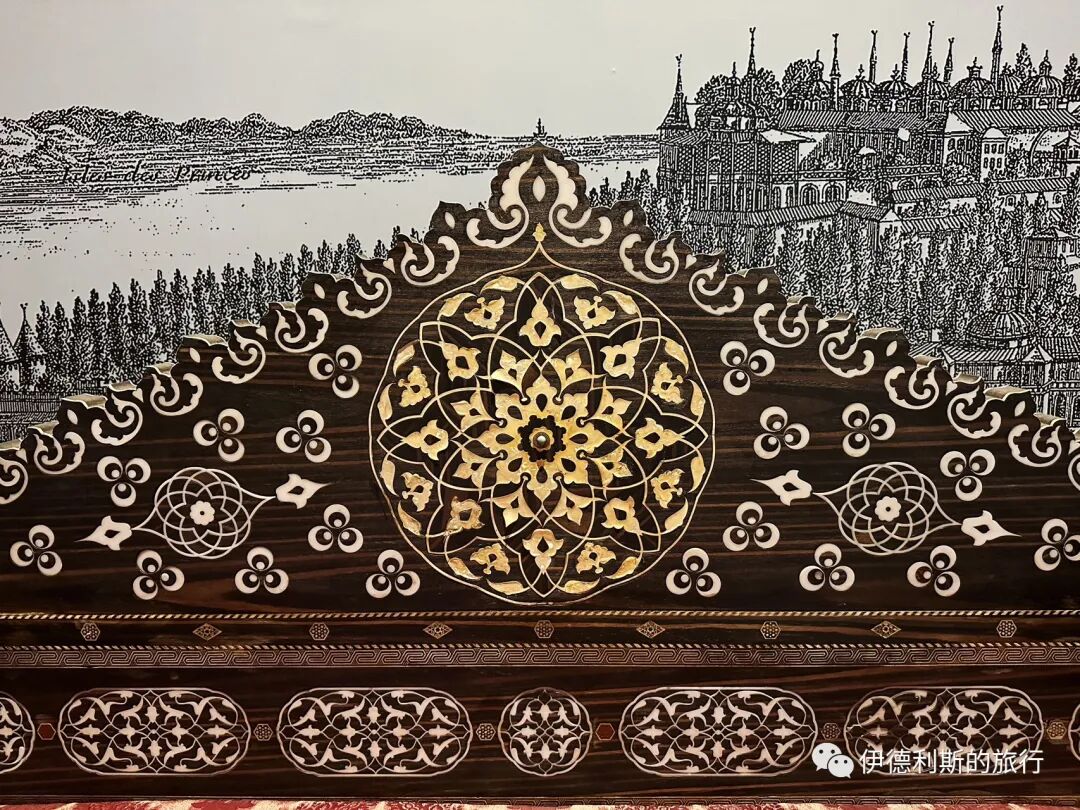
The Topkapi Palace Museum holds a throne made of ebony, ivory, and mother-of-pearl.
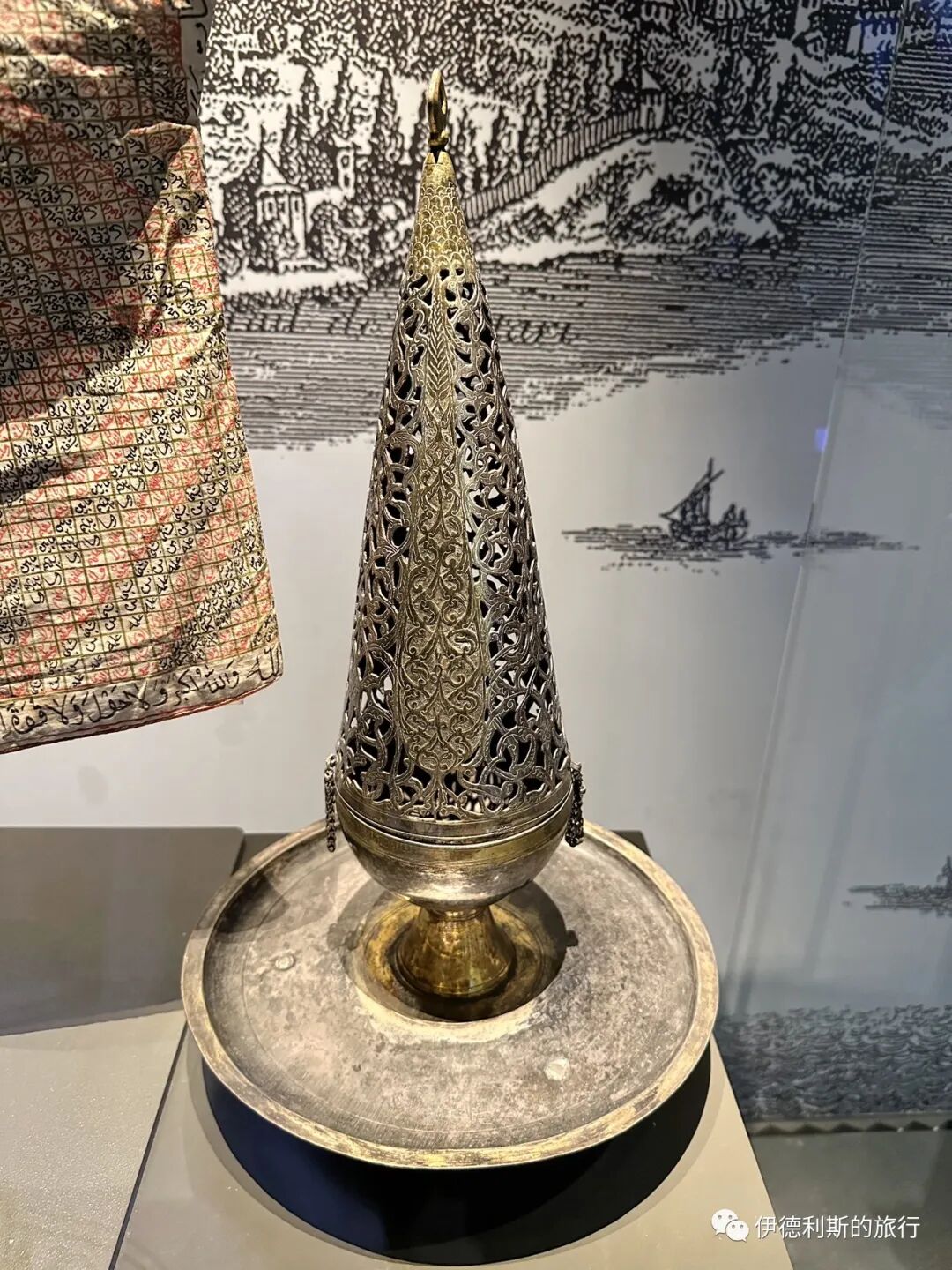
The Museum of Turkish and Islamic Arts holds a 17th-century Ottoman silver incense burner.
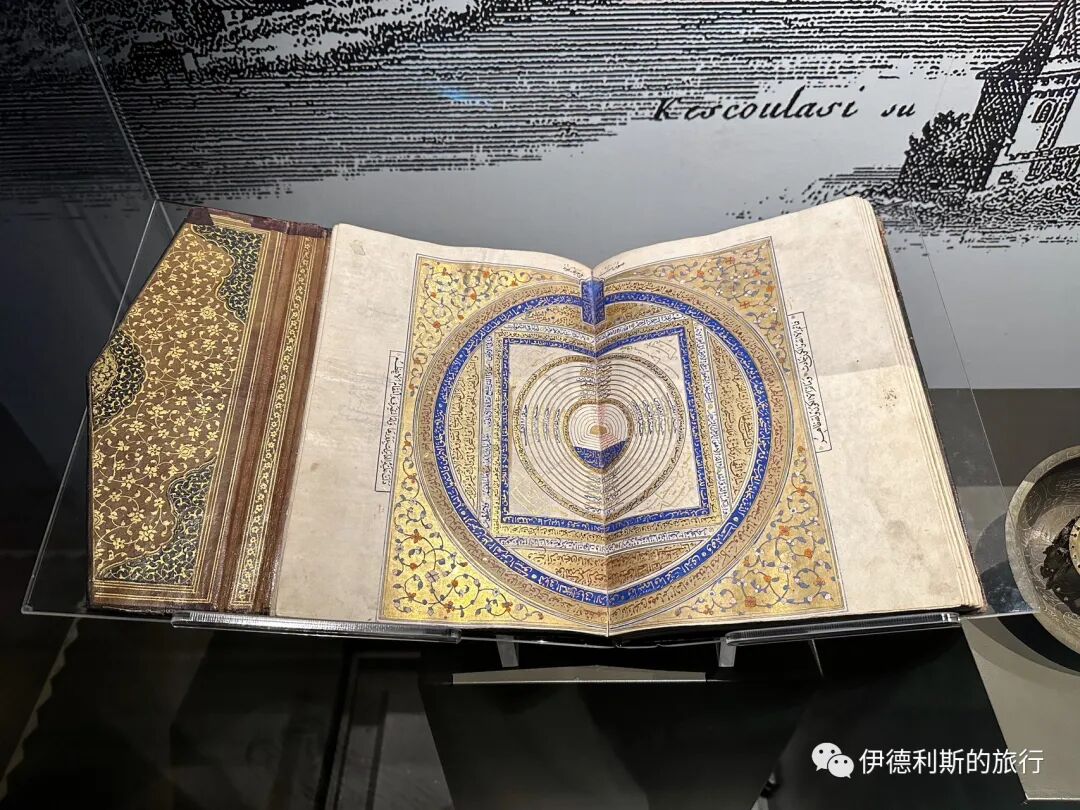
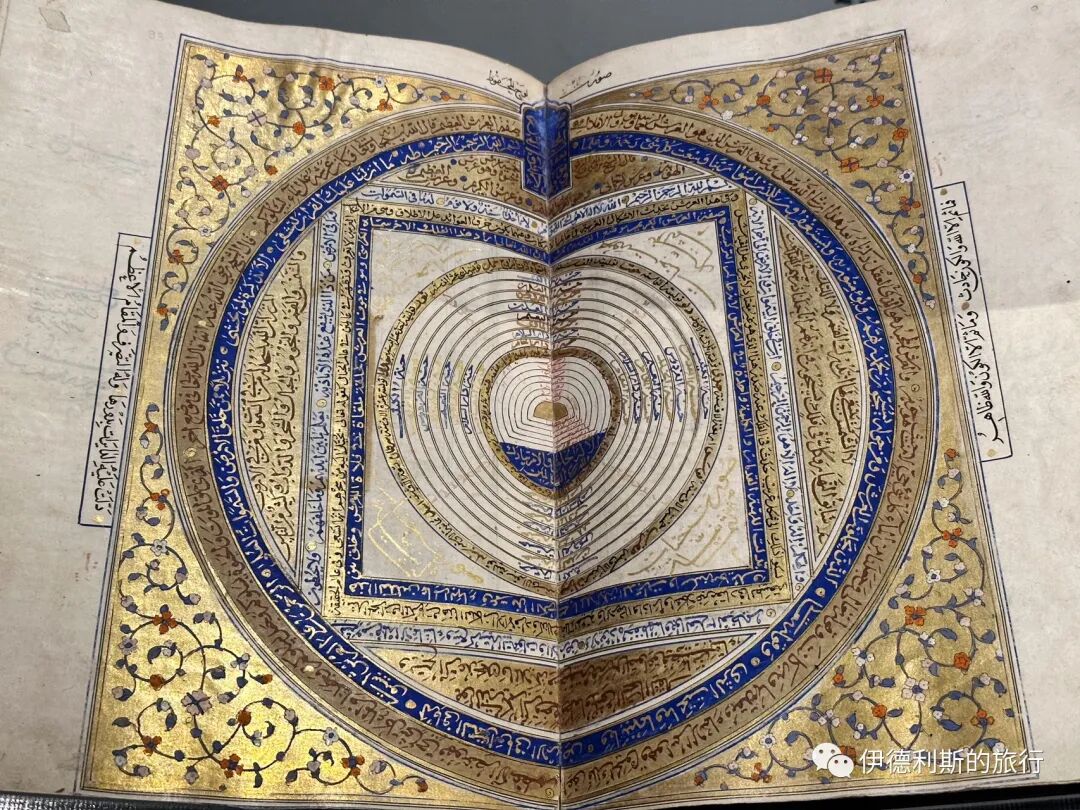
The Museum of Turkish and Islamic Arts holds a 16th-century Ottoman book titled Mira'at ul-Kevneyn (Mirror of the Two Worlds).
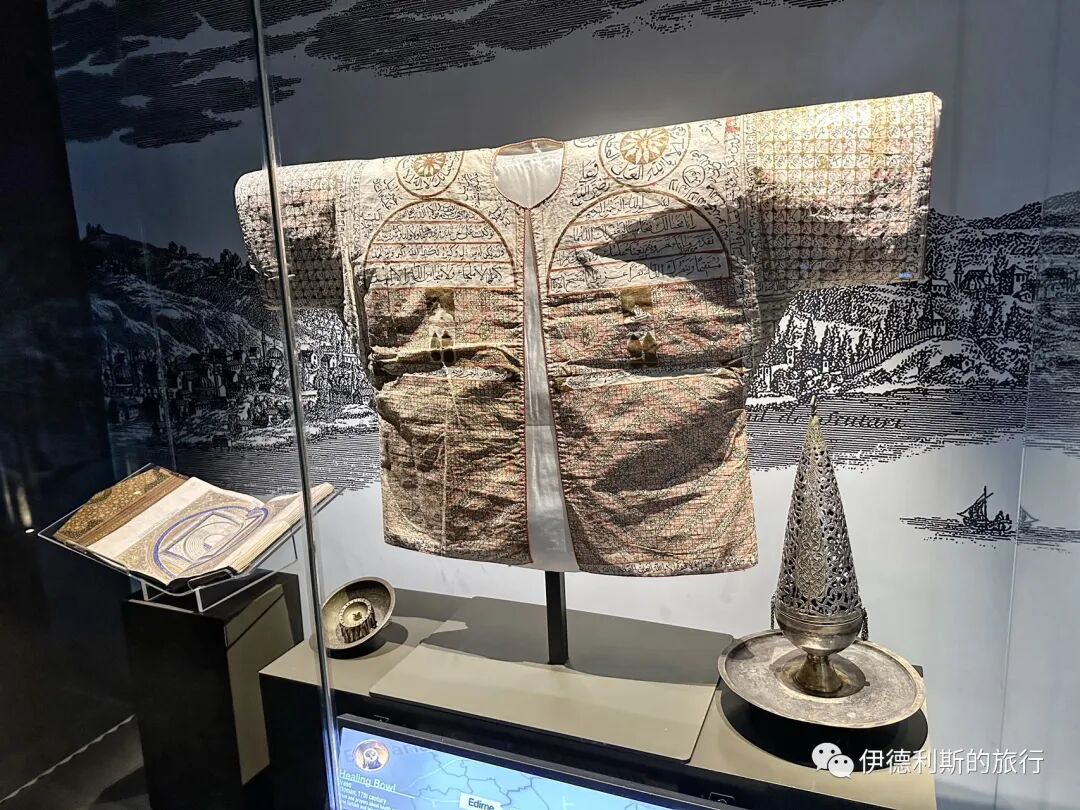
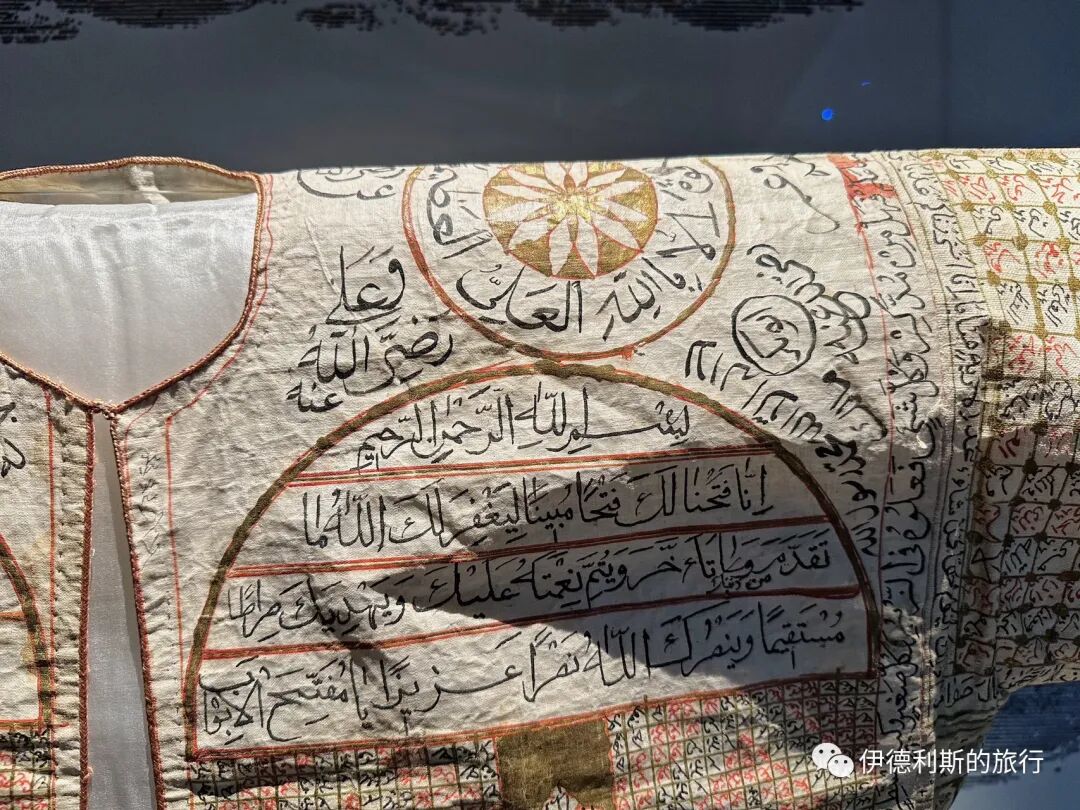
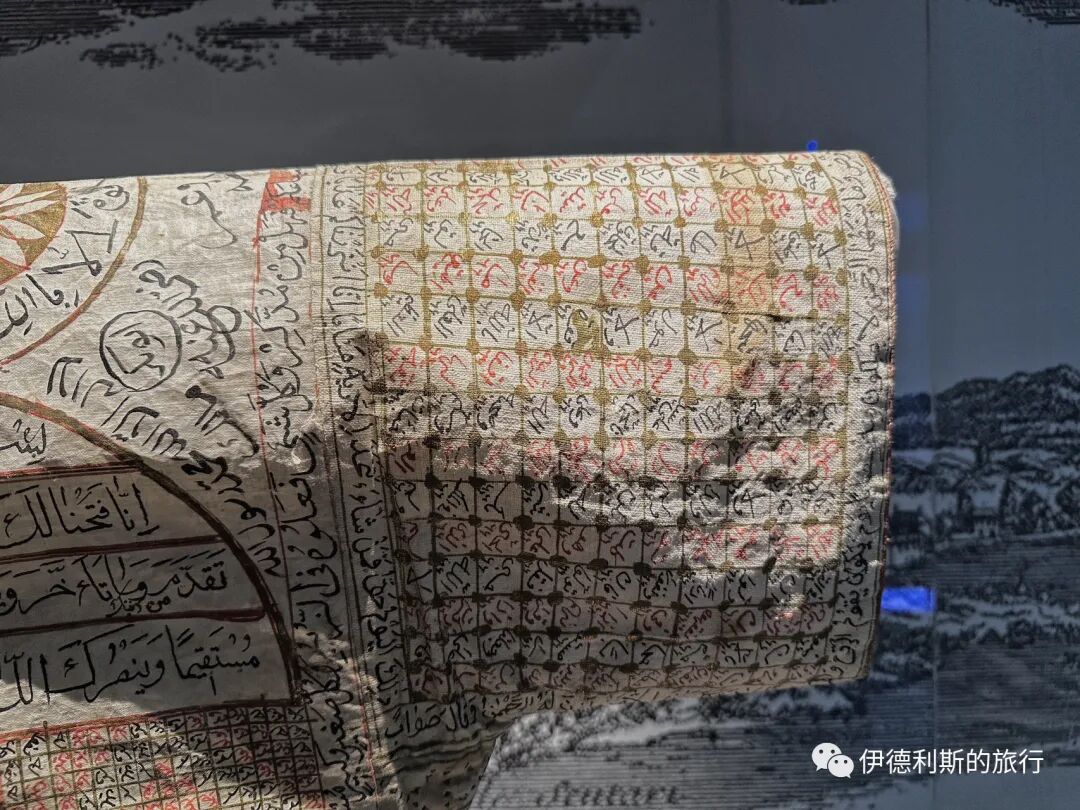
The Topkapi Palace Museum holds a 17th-century Ottoman dua shirt. Soldiers wore these shirts into battle to pray for victory.
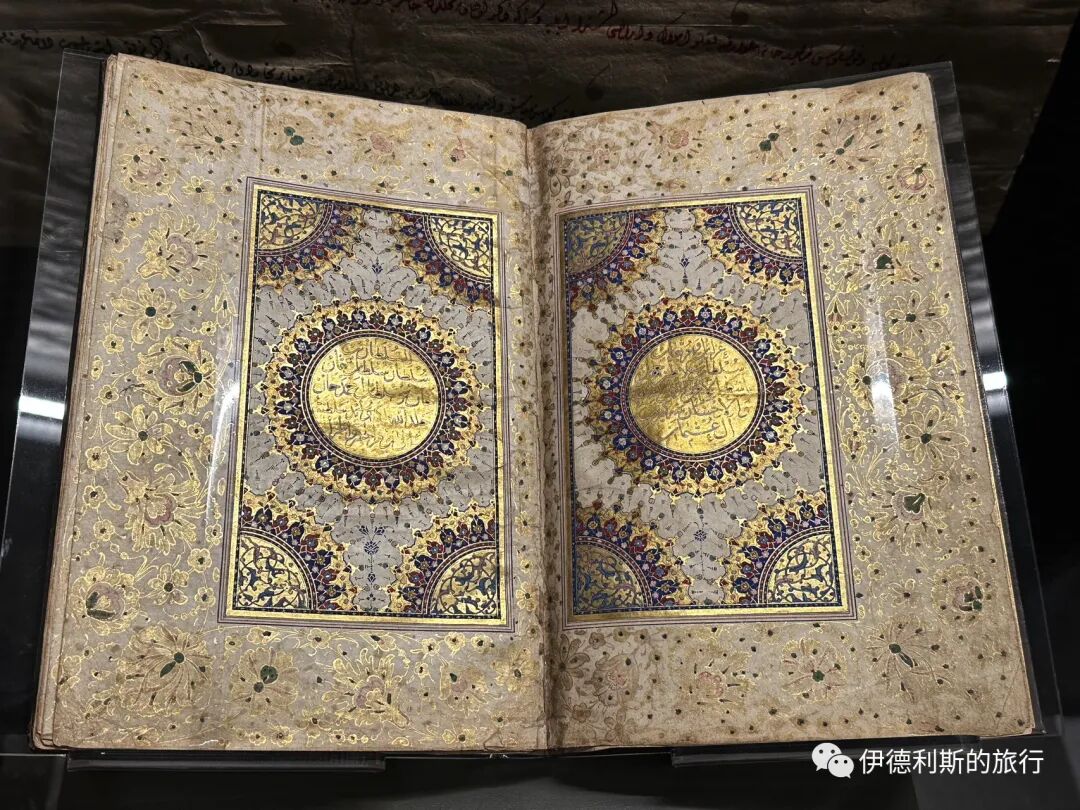
The Museum of Turkish and Islamic Arts holds a 17th-century Ottoman manuscript titled Divan-i Sultan Osman.
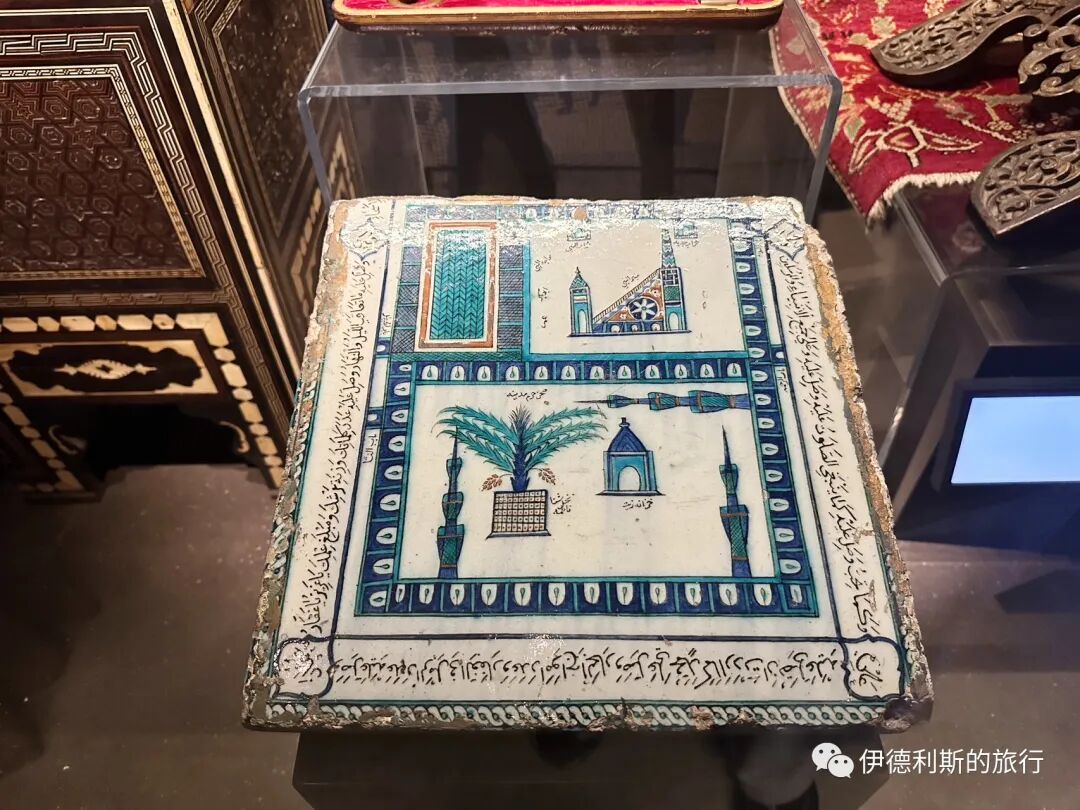
The Museum of Turkish and Islamic Arts holds 17th-century Ottoman Iznik tiles depicting the Prophet's Mosque in Medina.
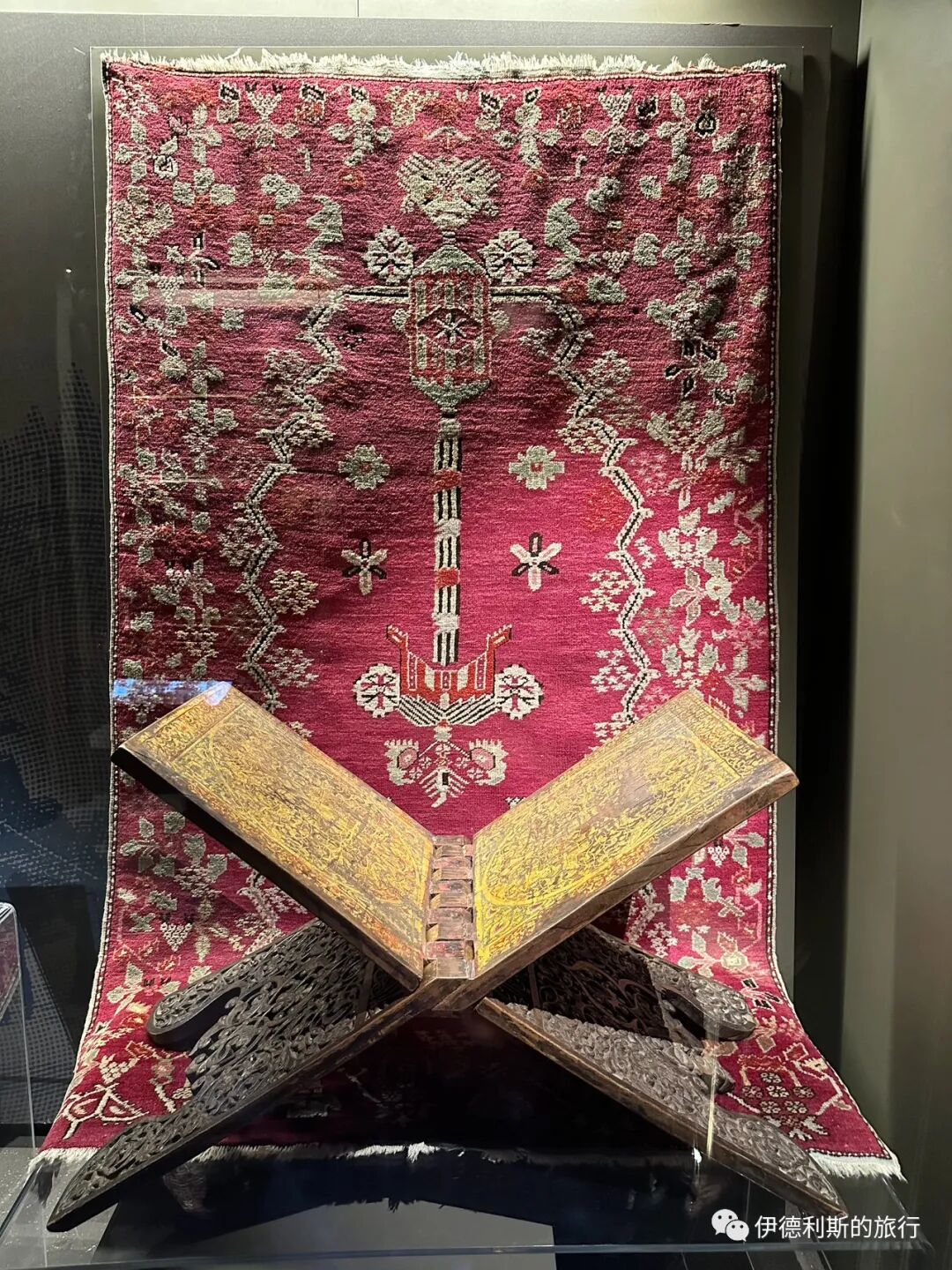
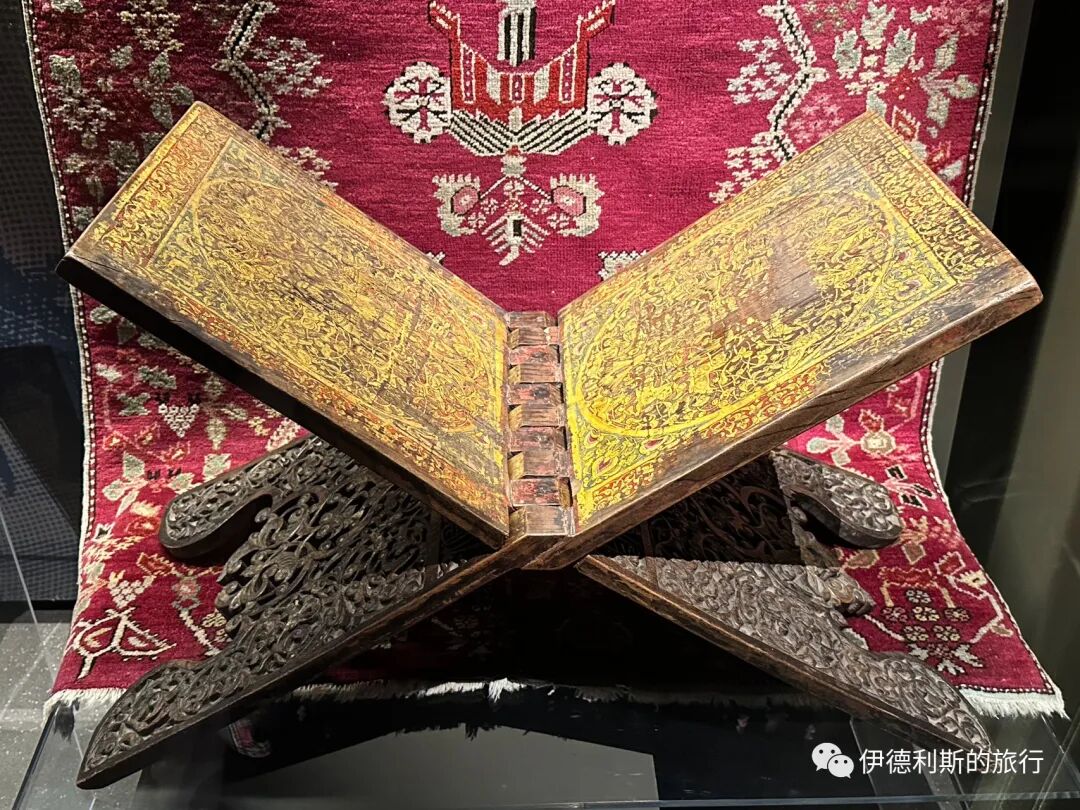
In the back is an 18th-century Ottoman hand-woven wool prayer rug from the Mevlana Museum in Konya. In the front is a book stand made during the Seljuk period in 1279-80, which features many lion patterns.
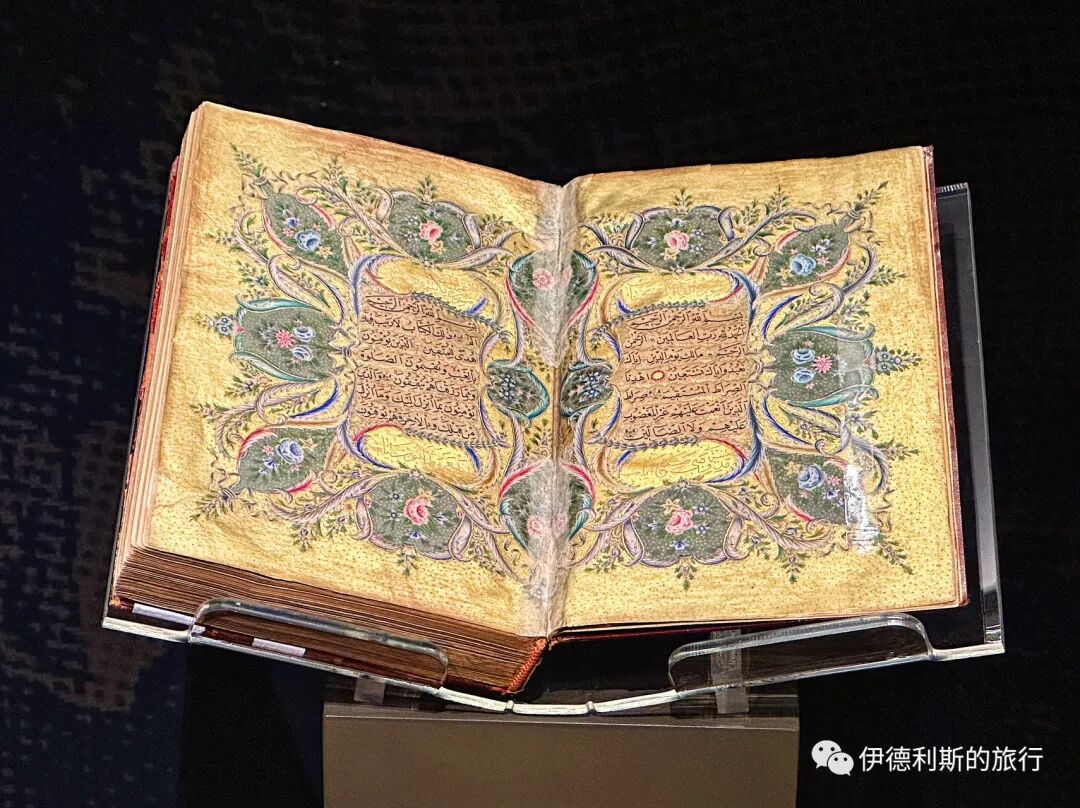
The Museum of Turkish and Islamic Arts holds a 19th-century Ottoman scripture manuscript.
This 16th-century Ottoman-era scripture box at the Museum of Turkish and Islamic Arts is made of wood inlaid with mother-of-pearl, tortoiseshell, and ivory.
Summary: Istanbul Airport museum opened in 2020 inside the international departures area and displays important objects borrowed from museums across Turkey. This account focuses on Islamic art, Turkish history, and the museum pieces seen during the airport visit.
The international departures area of Istanbul Airport has an airport museum that opened in 2020. It features major artifacts borrowed from various museums across Turkey and is definitely worth a visit.
The wooden door from the Ibrahim Bey Imaret (a charitable soup kitchen) in Karaman comes from the Museum of Turkish and Islamic Arts. The Karamanid Beylik was a powerful state among the many that gained independence from the Sultanate of Rum in the 13th century. Karaman architecture continued the Seljuk tradition but was simpler than earlier Seljuk buildings. Besides beautiful geometric floral patterns and Arabic calligraphy, the wooden door features carvings of figures and animals in the Seljuk style. The ones at the bottom appear to be griffins from Iranian mythology.
This 13th-century Seljuk double-headed eagle stone carving is from the Konya Archaeological Museum. It is a coincidence that I saw this same piece when I visited Konya in 2018; this is our second meeting. Experts believe this stone carving may have come from the Konya city walls, which were built in 1221 by the Seljuk Sultan of Rum, Kayqubad I (reigned 1220–1237).
The Seljuks were a branch of the Oghuz Turkic tribes who originally lived as nomads on the Kazakh steppe, north of the Syr Darya River in Central Asia. Their leader, Seljuk Beig, converted to Islam around 985 and broke away from the Oghuz tribal confederation. In 1035, after their relationship with the Kara-Khanid Khanate worsened, the Seljuks moved south to the Khorasan region of Persia. They unexpectedly defeated the army of the Ghaznavid Empire and officially established the Seljuk Empire in Khorasan in 1037. After 1040, the Seljuk army swept through Iran and the Anatolian Peninsula, completely defeating the Byzantines. They officially established the Sultanate of Rum in Anatolia in 1077 and made Konya their capital in 1097.
After the Mongols invaded Central Asia and Persia in the early 13th century, many Turkic and Persian people fled to Konya for safety. In the 1220s, Konya was full of refugees from the Khwarazmian Empire. Many were educated intellectuals or skilled craftsmen, the most famous being the great Sufi poet Rumi.
These early 13th-century stucco carvings of Seljuk Turkic hunters are housed in the Karatay Madrasa Tile Museum in Konya and the Museum of Turkish and Islamic Arts. The first piece shows a hunting leader, while the second piece shows a person on the left hunting a dragon and a person on the right hunting a lion.
This 13th-century sphinx stone carving from Alaeddin Hill in Konya, the capital of the Sultanate of Rum, is another old friend I previously saw at the Museum of Turkish and Islamic Arts. The sphinx has a human head and an animal body. It originated in ancient Egypt and later spread to the Iranian and Anatolian regions.
The Amasya Museum holds a 13th-century Seljuk bronze mirror featuring beautiful Kufic calligraphy. Amasya, in the Black Sea region, was also an important cultural center during the Seljuk period.
The Karatay Madrasa Tile Museum in Konya houses a late 13th-century Seljuk bronze chandelier with silver inlay.
The Mevlana Museum, which houses the tomb of Rumi in Konya, holds an early 13th-century gilded bronze candle box.
The copper-zinc alloy flags known as Sanjak Alem were used in Ottoman Sufi ceremonies. The first one is from the 15th century and is kept at the Konya Museum, while the second is from the 16th century and is held at the Museum of Turkish and Islamic Arts.
A highlight of the Istanbul Airport Museum is the early 13th-century Seljuk throne from the Ankara Ethnography Museum. It is a unique piece of art from the Seljuk era that symbolizes the royal power of the Sultan of Rum.
The Museum of Turkish and Islamic Arts holds 13th-century Seljuk mosaic tiles.
The Tiled Kiosk in Istanbul, part of the Istanbul Museum of Islamic Arts, houses 13th-century tiles from the Kubadabad Palace, the summer residence of the Seljuk Sultanate of Rum. Kubadabad Palace sits by Lake Beyşehir, 100 kilometers west of Konya, the capital of the Sultanate of Rum. It was built in 1236 by the Seljuk Sultan Kayqubad I, who reigned from 1220 to 1237. The entire complex consists of 16 buildings. The largest palace is 50 meters long and 35 meters wide and is famous for its ornate tiles. These tiles feature human and animal figures, which are typical artistic characteristics of the Seljuk dynasty.
The Museum of Turkish and Islamic Arts holds a 17th-century Ottoman-era jeweled aigrette (murassa aigrette). This is a piece of royal head jewelry made of gold inlaid with rubies and turquoise, topped with a peacock feather. The word murassa comes from Arabic and means inlaid with jewels.
The Museum of Turkish and Islamic Arts holds a 17th-century Ottoman-era jeweled belt.
The Topkapi Palace Museum holds a late 16th-century oil portrait of the Ottoman Sultan Suleiman the Magnificent, painted in the style of the Venetian school.
The Museum of Turkish and Islamic Arts holds the 16th-century poetry collection of the Ottoman Sultan Suleiman the Magnificent, titled Divan-i Muhibbi. Muhibbi was Suleiman's pen name, which means 'Lover of the Lord'.
The Museum of Turkish and Islamic Arts holds a property document issued by Sultan Suleiman the Magnificent in 1567-68. It features the Sultan's royal monogram (tughra) and grants permission to use a Tekfur pasture in the Kocaeli province of northwestern Turkey. Tekfur is a title used from the late Seljuk to early Ottoman periods to refer to Byzantine lords in the towns and castles of the Anatolia and Thrace regions.
The Topkapi Palace Museum holds a 19th-century Ottoman velvet and silver-plated quiver.
The Topkapi Palace Museum holds 16th-century Ottoman iron armor. It features an iron helmet from the late 15th to early 16th century, with a 19th-century iron hammer in front.
The Topkapi Palace Museum holds a 16th-century Ottoman shield. The outer ring is made of willow branches, and the inner ring is iron inlaid with gold. An 18th-century copper helmet sits on top, with 16th-century swords on both sides. The sword on the left has the name Soler written on the blade, and the sword on the right is inlaid with rubies and emeralds.
The Topkapi Palace Museum holds 16th-century Ottoman finger rings.
The Topkapi Palace Museum holds a throne made of ebony, ivory, and mother-of-pearl.
The Museum of Turkish and Islamic Arts holds a 17th-century Ottoman silver incense burner.
The Museum of Turkish and Islamic Arts holds a 16th-century Ottoman book titled Mira'at ul-Kevneyn (Mirror of the Two Worlds).
The Topkapi Palace Museum holds a 17th-century Ottoman dua shirt. Soldiers wore these shirts into battle to pray for victory.
The Museum of Turkish and Islamic Arts holds a 17th-century Ottoman manuscript titled Divan-i Sultan Osman.
The Museum of Turkish and Islamic Arts holds 17th-century Ottoman Iznik tiles depicting the Prophet's Mosque in Medina.
In the back is an 18th-century Ottoman hand-woven wool prayer rug from the Mevlana Museum in Konya. In the front is a book stand made during the Seljuk period in 1279-80, which features many lion patterns.
The Museum of Turkish and Islamic Arts holds a 19th-century Ottoman scripture manuscript.
This 16th-century Ottoman-era scripture box at the Museum of Turkish and Islamic Arts is made of wood inlaid with mother-of-pearl, tortoiseshell, and ivory.
Halal Travel Guide: Istanbul Airport — Museum, Islamic Art and Turkish History
Articles • ali2007fr posted the article • 0 comments • 140 views • 2026-05-19 02:47
Reposted from the web
Summary: Istanbul Airport museum opened in 2020 inside the international departures area and displays important objects borrowed from museums across Turkey. This account focuses on Islamic art, Turkish history, and the museum pieces seen during the airport visit.
The international departures area of Istanbul Airport has an airport museum that opened in 2020. It features major artifacts borrowed from various museums across Turkey and is definitely worth a visit.
The wooden door from the Ibrahim Bey Imaret (a charitable soup kitchen) in Karaman comes from the Museum of Turkish and Islamic Arts. The Karamanid Beylik was a powerful state among the many that gained independence from the Sultanate of Rum in the 13th century. Karaman architecture continued the Seljuk tradition but was simpler than earlier Seljuk buildings. Besides beautiful geometric floral patterns and Arabic calligraphy, the wooden door features carvings of figures and animals in the Seljuk style. The ones at the bottom appear to be griffins from Iranian mythology.
This 13th-century Seljuk double-headed eagle stone carving is from the Konya Archaeological Museum. It is a coincidence that I saw this same piece when I visited Konya in 2018; this is our second meeting. Experts believe this stone carving may have come from the Konya city walls, which were built in 1221 by the Seljuk Sultan of Rum, Kayqubad I (reigned 1220–1237).
The Seljuks were a branch of the Oghuz Turkic tribes who originally lived as nomads on the Kazakh steppe, north of the Syr Darya River in Central Asia. Their leader, Seljuk Beig, converted to Islam around 985 and broke away from the Oghuz tribal confederation. In 1035, after their relationship with the Kara-Khanid Khanate worsened, the Seljuks moved south to the Khorasan region of Persia. They unexpectedly defeated the army of the Ghaznavid Empire and officially established the Seljuk Empire in Khorasan in 1037. After 1040, the Seljuk army swept through Iran and the Anatolian Peninsula, completely defeating the Byzantines. They officially established the Sultanate of Rum in Anatolia in 1077 and made Konya their capital in 1097.
After the Mongols invaded Central Asia and Persia in the early 13th century, many Turkic and Persian people fled to Konya for safety. In the 1220s, Konya was full of refugees from the Khwarazmian Empire. Many were educated intellectuals or skilled craftsmen, the most famous being the great Sufi poet Rumi.
These early 13th-century stucco carvings of Seljuk Turkic hunters are housed in the Karatay Madrasa Tile Museum in Konya and the Museum of Turkish and Islamic Arts. The first piece shows a hunting leader, while the second piece shows a person on the left hunting a dragon and a person on the right hunting a lion.
This 13th-century sphinx stone carving from Alaeddin Hill in Konya, the capital of the Sultanate of Rum, is another old friend I previously saw at the Museum of Turkish and Islamic Arts. The sphinx has a human head and an animal body. It originated in ancient Egypt and later spread to the Iranian and Anatolian regions.
The Amasya Museum holds a 13th-century Seljuk bronze mirror featuring beautiful Kufic calligraphy. Amasya, in the Black Sea region, was also an important cultural center during the Seljuk period.
The Karatay Madrasa Tile Museum in Konya houses a late 13th-century Seljuk bronze chandelier with silver inlay.
The Mevlana Museum, which houses the tomb of Rumi in Konya, holds an early 13th-century gilded bronze candle box.
The copper-zinc alloy flags known as Sanjak Alem were used in Ottoman Sufi ceremonies. The first one is from the 15th century and is kept at the Konya Museum, while the second is from the 16th century and is held at the Museum of Turkish and Islamic Arts.
A highlight of the Istanbul Airport Museum is the early 13th-century Seljuk throne from the Ankara Ethnography Museum. It is a unique piece of art from the Seljuk era that symbolizes the royal power of the Sultan of Rum.
The Museum of Turkish and Islamic Arts holds 13th-century Seljuk mosaic tiles.
The Tiled Kiosk in Istanbul, part of the Istanbul Museum of Islamic Arts, houses 13th-century tiles from the Kubadabad Palace, the summer residence of the Seljuk Sultanate of Rum. Kubadabad Palace sits by Lake Beyşehir, 100 kilometers west of Konya, the capital of the Sultanate of Rum. It was built in 1236 by the Seljuk Sultan Kayqubad I, who reigned from 1220 to 1237. The entire complex consists of 16 buildings. The largest palace is 50 meters long and 35 meters wide and is famous for its ornate tiles. These tiles feature human and animal figures, which are typical artistic characteristics of the Seljuk dynasty.
The Museum of Turkish and Islamic Arts holds a 17th-century Ottoman-era jeweled aigrette (murassa aigrette). This is a piece of royal head jewelry made of gold inlaid with rubies and turquoise, topped with a peacock feather. The word murassa comes from Arabic and means inlaid with jewels.
The Museum of Turkish and Islamic Arts holds a 17th-century Ottoman-era jeweled belt.
The Topkapi Palace Museum holds a late 16th-century oil portrait of the Ottoman Sultan Suleiman the Magnificent, painted in the style of the Venetian school.
The Museum of Turkish and Islamic Arts holds the 16th-century poetry collection of the Ottoman Sultan Suleiman the Magnificent, titled Divan-i Muhibbi. Muhibbi was Suleiman's pen name, which means 'Lover of the Lord'.
The Museum of Turkish and Islamic Arts holds a property document issued by Sultan Suleiman the Magnificent in 1567-68. It features the Sultan's royal monogram (tughra) and grants permission to use a Tekfur pasture in the Kocaeli province of northwestern Turkey. Tekfur is a title used from the late Seljuk to early Ottoman periods to refer to Byzantine lords in the towns and castles of the Anatolia and Thrace regions.
The Topkapi Palace Museum holds a 19th-century Ottoman velvet and silver-plated quiver.
The Topkapi Palace Museum holds 16th-century Ottoman iron armor. It features an iron helmet from the late 15th to early 16th century, with a 19th-century iron hammer in front.
The Topkapi Palace Museum holds a 16th-century Ottoman shield. The outer ring is made of willow branches, and the inner ring is iron inlaid with gold. An 18th-century copper helmet sits on top, with 16th-century swords on both sides. The sword on the left has the name Soler written on the blade, and the sword on the right is inlaid with rubies and emeralds.
The Topkapi Palace Museum holds 16th-century Ottoman finger rings.
The Topkapi Palace Museum holds a throne made of ebony, ivory, and mother-of-pearl.
The Museum of Turkish and Islamic Arts holds a 17th-century Ottoman silver incense burner.
The Museum of Turkish and Islamic Arts holds a 16th-century Ottoman book titled Mira'at ul-Kevneyn (Mirror of the Two Worlds).
The Topkapi Palace Museum holds a 17th-century Ottoman dua shirt. Soldiers wore these shirts into battle to pray for victory.
The Museum of Turkish and Islamic Arts holds a 17th-century Ottoman manuscript titled Divan-i Sultan Osman.
The Museum of Turkish and Islamic Arts holds 17th-century Ottoman Iznik tiles depicting the Prophet's Mosque in Medina.
In the back is an 18th-century Ottoman hand-woven wool prayer rug from the Mevlana Museum in Konya. In the front is a book stand made during the Seljuk period in 1279-80, which features many lion patterns.
The Museum of Turkish and Islamic Arts holds a 19th-century Ottoman scripture manuscript.
This 16th-century Ottoman-era scripture box at the Museum of Turkish and Islamic Arts is made of wood inlaid with mother-of-pearl, tortoiseshell, and ivory. view all
Summary: Istanbul Airport museum opened in 2020 inside the international departures area and displays important objects borrowed from museums across Turkey. This account focuses on Islamic art, Turkish history, and the museum pieces seen during the airport visit.
The international departures area of Istanbul Airport has an airport museum that opened in 2020. It features major artifacts borrowed from various museums across Turkey and is definitely worth a visit.
The wooden door from the Ibrahim Bey Imaret (a charitable soup kitchen) in Karaman comes from the Museum of Turkish and Islamic Arts. The Karamanid Beylik was a powerful state among the many that gained independence from the Sultanate of Rum in the 13th century. Karaman architecture continued the Seljuk tradition but was simpler than earlier Seljuk buildings. Besides beautiful geometric floral patterns and Arabic calligraphy, the wooden door features carvings of figures and animals in the Seljuk style. The ones at the bottom appear to be griffins from Iranian mythology.
This 13th-century Seljuk double-headed eagle stone carving is from the Konya Archaeological Museum. It is a coincidence that I saw this same piece when I visited Konya in 2018; this is our second meeting. Experts believe this stone carving may have come from the Konya city walls, which were built in 1221 by the Seljuk Sultan of Rum, Kayqubad I (reigned 1220–1237).
The Seljuks were a branch of the Oghuz Turkic tribes who originally lived as nomads on the Kazakh steppe, north of the Syr Darya River in Central Asia. Their leader, Seljuk Beig, converted to Islam around 985 and broke away from the Oghuz tribal confederation. In 1035, after their relationship with the Kara-Khanid Khanate worsened, the Seljuks moved south to the Khorasan region of Persia. They unexpectedly defeated the army of the Ghaznavid Empire and officially established the Seljuk Empire in Khorasan in 1037. After 1040, the Seljuk army swept through Iran and the Anatolian Peninsula, completely defeating the Byzantines. They officially established the Sultanate of Rum in Anatolia in 1077 and made Konya their capital in 1097.
After the Mongols invaded Central Asia and Persia in the early 13th century, many Turkic and Persian people fled to Konya for safety. In the 1220s, Konya was full of refugees from the Khwarazmian Empire. Many were educated intellectuals or skilled craftsmen, the most famous being the great Sufi poet Rumi.
These early 13th-century stucco carvings of Seljuk Turkic hunters are housed in the Karatay Madrasa Tile Museum in Konya and the Museum of Turkish and Islamic Arts. The first piece shows a hunting leader, while the second piece shows a person on the left hunting a dragon and a person on the right hunting a lion.
This 13th-century sphinx stone carving from Alaeddin Hill in Konya, the capital of the Sultanate of Rum, is another old friend I previously saw at the Museum of Turkish and Islamic Arts. The sphinx has a human head and an animal body. It originated in ancient Egypt and later spread to the Iranian and Anatolian regions.
The Amasya Museum holds a 13th-century Seljuk bronze mirror featuring beautiful Kufic calligraphy. Amasya, in the Black Sea region, was also an important cultural center during the Seljuk period.
The Karatay Madrasa Tile Museum in Konya houses a late 13th-century Seljuk bronze chandelier with silver inlay.
The Mevlana Museum, which houses the tomb of Rumi in Konya, holds an early 13th-century gilded bronze candle box.
The copper-zinc alloy flags known as Sanjak Alem were used in Ottoman Sufi ceremonies. The first one is from the 15th century and is kept at the Konya Museum, while the second is from the 16th century and is held at the Museum of Turkish and Islamic Arts.
A highlight of the Istanbul Airport Museum is the early 13th-century Seljuk throne from the Ankara Ethnography Museum. It is a unique piece of art from the Seljuk era that symbolizes the royal power of the Sultan of Rum.
The Museum of Turkish and Islamic Arts holds 13th-century Seljuk mosaic tiles.
The Tiled Kiosk in Istanbul, part of the Istanbul Museum of Islamic Arts, houses 13th-century tiles from the Kubadabad Palace, the summer residence of the Seljuk Sultanate of Rum. Kubadabad Palace sits by Lake Beyşehir, 100 kilometers west of Konya, the capital of the Sultanate of Rum. It was built in 1236 by the Seljuk Sultan Kayqubad I, who reigned from 1220 to 1237. The entire complex consists of 16 buildings. The largest palace is 50 meters long and 35 meters wide and is famous for its ornate tiles. These tiles feature human and animal figures, which are typical artistic characteristics of the Seljuk dynasty.
The Museum of Turkish and Islamic Arts holds a 17th-century Ottoman-era jeweled aigrette (murassa aigrette). This is a piece of royal head jewelry made of gold inlaid with rubies and turquoise, topped with a peacock feather. The word murassa comes from Arabic and means inlaid with jewels.
The Museum of Turkish and Islamic Arts holds a 17th-century Ottoman-era jeweled belt.
The Topkapi Palace Museum holds a late 16th-century oil portrait of the Ottoman Sultan Suleiman the Magnificent, painted in the style of the Venetian school.
The Museum of Turkish and Islamic Arts holds the 16th-century poetry collection of the Ottoman Sultan Suleiman the Magnificent, titled Divan-i Muhibbi. Muhibbi was Suleiman's pen name, which means 'Lover of the Lord'.
The Museum of Turkish and Islamic Arts holds a property document issued by Sultan Suleiman the Magnificent in 1567-68. It features the Sultan's royal monogram (tughra) and grants permission to use a Tekfur pasture in the Kocaeli province of northwestern Turkey. Tekfur is a title used from the late Seljuk to early Ottoman periods to refer to Byzantine lords in the towns and castles of the Anatolia and Thrace regions.
The Topkapi Palace Museum holds a 19th-century Ottoman velvet and silver-plated quiver.
The Topkapi Palace Museum holds 16th-century Ottoman iron armor. It features an iron helmet from the late 15th to early 16th century, with a 19th-century iron hammer in front.
The Topkapi Palace Museum holds a 16th-century Ottoman shield. The outer ring is made of willow branches, and the inner ring is iron inlaid with gold. An 18th-century copper helmet sits on top, with 16th-century swords on both sides. The sword on the left has the name Soler written on the blade, and the sword on the right is inlaid with rubies and emeralds.
The Topkapi Palace Museum holds 16th-century Ottoman finger rings.
The Topkapi Palace Museum holds a throne made of ebony, ivory, and mother-of-pearl.
The Museum of Turkish and Islamic Arts holds a 17th-century Ottoman silver incense burner.
The Museum of Turkish and Islamic Arts holds a 16th-century Ottoman book titled Mira'at ul-Kevneyn (Mirror of the Two Worlds).
The Topkapi Palace Museum holds a 17th-century Ottoman dua shirt. Soldiers wore these shirts into battle to pray for victory.
The Museum of Turkish and Islamic Arts holds a 17th-century Ottoman manuscript titled Divan-i Sultan Osman.
The Museum of Turkish and Islamic Arts holds 17th-century Ottoman Iznik tiles depicting the Prophet's Mosque in Medina.
In the back is an 18th-century Ottoman hand-woven wool prayer rug from the Mevlana Museum in Konya. In the front is a book stand made during the Seljuk period in 1279-80, which features many lion patterns.
The Museum of Turkish and Islamic Arts holds a 19th-century Ottoman scripture manuscript.
This 16th-century Ottoman-era scripture box at the Museum of Turkish and Islamic Arts is made of wood inlaid with mother-of-pearl, tortoiseshell, and ivory. view all
Reposted from the web
Summary: Istanbul Airport museum opened in 2020 inside the international departures area and displays important objects borrowed from museums across Turkey. This account focuses on Islamic art, Turkish history, and the museum pieces seen during the airport visit.
The international departures area of Istanbul Airport has an airport museum that opened in 2020. It features major artifacts borrowed from various museums across Turkey and is definitely worth a visit.
The wooden door from the Ibrahim Bey Imaret (a charitable soup kitchen) in Karaman comes from the Museum of Turkish and Islamic Arts. The Karamanid Beylik was a powerful state among the many that gained independence from the Sultanate of Rum in the 13th century. Karaman architecture continued the Seljuk tradition but was simpler than earlier Seljuk buildings. Besides beautiful geometric floral patterns and Arabic calligraphy, the wooden door features carvings of figures and animals in the Seljuk style. The ones at the bottom appear to be griffins from Iranian mythology.
This 13th-century Seljuk double-headed eagle stone carving is from the Konya Archaeological Museum. It is a coincidence that I saw this same piece when I visited Konya in 2018; this is our second meeting. Experts believe this stone carving may have come from the Konya city walls, which were built in 1221 by the Seljuk Sultan of Rum, Kayqubad I (reigned 1220–1237).
The Seljuks were a branch of the Oghuz Turkic tribes who originally lived as nomads on the Kazakh steppe, north of the Syr Darya River in Central Asia. Their leader, Seljuk Beig, converted to Islam around 985 and broke away from the Oghuz tribal confederation. In 1035, after their relationship with the Kara-Khanid Khanate worsened, the Seljuks moved south to the Khorasan region of Persia. They unexpectedly defeated the army of the Ghaznavid Empire and officially established the Seljuk Empire in Khorasan in 1037. After 1040, the Seljuk army swept through Iran and the Anatolian Peninsula, completely defeating the Byzantines. They officially established the Sultanate of Rum in Anatolia in 1077 and made Konya their capital in 1097.
After the Mongols invaded Central Asia and Persia in the early 13th century, many Turkic and Persian people fled to Konya for safety. In the 1220s, Konya was full of refugees from the Khwarazmian Empire. Many were educated intellectuals or skilled craftsmen, the most famous being the great Sufi poet Rumi.
These early 13th-century stucco carvings of Seljuk Turkic hunters are housed in the Karatay Madrasa Tile Museum in Konya and the Museum of Turkish and Islamic Arts. The first piece shows a hunting leader, while the second piece shows a person on the left hunting a dragon and a person on the right hunting a lion.
This 13th-century sphinx stone carving from Alaeddin Hill in Konya, the capital of the Sultanate of Rum, is another old friend I previously saw at the Museum of Turkish and Islamic Arts. The sphinx has a human head and an animal body. It originated in ancient Egypt and later spread to the Iranian and Anatolian regions.
The Amasya Museum holds a 13th-century Seljuk bronze mirror featuring beautiful Kufic calligraphy. Amasya, in the Black Sea region, was also an important cultural center during the Seljuk period.
The Karatay Madrasa Tile Museum in Konya houses a late 13th-century Seljuk bronze chandelier with silver inlay.
The Mevlana Museum, which houses the tomb of Rumi in Konya, holds an early 13th-century gilded bronze candle box.
The copper-zinc alloy flags known as Sanjak Alem were used in Ottoman Sufi ceremonies. The first one is from the 15th century and is kept at the Konya Museum, while the second is from the 16th century and is held at the Museum of Turkish and Islamic Arts.
A highlight of the Istanbul Airport Museum is the early 13th-century Seljuk throne from the Ankara Ethnography Museum. It is a unique piece of art from the Seljuk era that symbolizes the royal power of the Sultan of Rum.
The Museum of Turkish and Islamic Arts holds 13th-century Seljuk mosaic tiles.
The Tiled Kiosk in Istanbul, part of the Istanbul Museum of Islamic Arts, houses 13th-century tiles from the Kubadabad Palace, the summer residence of the Seljuk Sultanate of Rum. Kubadabad Palace sits by Lake Beyşehir, 100 kilometers west of Konya, the capital of the Sultanate of Rum. It was built in 1236 by the Seljuk Sultan Kayqubad I, who reigned from 1220 to 1237. The entire complex consists of 16 buildings. The largest palace is 50 meters long and 35 meters wide and is famous for its ornate tiles. These tiles feature human and animal figures, which are typical artistic characteristics of the Seljuk dynasty.
The Museum of Turkish and Islamic Arts holds a 17th-century Ottoman-era jeweled aigrette (murassa aigrette). This is a piece of royal head jewelry made of gold inlaid with rubies and turquoise, topped with a peacock feather. The word murassa comes from Arabic and means inlaid with jewels.
The Museum of Turkish and Islamic Arts holds a 17th-century Ottoman-era jeweled belt.
The Topkapi Palace Museum holds a late 16th-century oil portrait of the Ottoman Sultan Suleiman the Magnificent, painted in the style of the Venetian school.
The Museum of Turkish and Islamic Arts holds the 16th-century poetry collection of the Ottoman Sultan Suleiman the Magnificent, titled Divan-i Muhibbi. Muhibbi was Suleiman's pen name, which means 'Lover of the Lord'.
The Museum of Turkish and Islamic Arts holds a property document issued by Sultan Suleiman the Magnificent in 1567-68. It features the Sultan's royal monogram (tughra) and grants permission to use a Tekfur pasture in the Kocaeli province of northwestern Turkey. Tekfur is a title used from the late Seljuk to early Ottoman periods to refer to Byzantine lords in the towns and castles of the Anatolia and Thrace regions.
The Topkapi Palace Museum holds a 19th-century Ottoman velvet and silver-plated quiver.
The Topkapi Palace Museum holds 16th-century Ottoman iron armor. It features an iron helmet from the late 15th to early 16th century, with a 19th-century iron hammer in front.
The Topkapi Palace Museum holds a 16th-century Ottoman shield. The outer ring is made of willow branches, and the inner ring is iron inlaid with gold. An 18th-century copper helmet sits on top, with 16th-century swords on both sides. The sword on the left has the name Soler written on the blade, and the sword on the right is inlaid with rubies and emeralds.
The Topkapi Palace Museum holds 16th-century Ottoman finger rings.
The Topkapi Palace Museum holds a throne made of ebony, ivory, and mother-of-pearl.
The Museum of Turkish and Islamic Arts holds a 17th-century Ottoman silver incense burner.
The Museum of Turkish and Islamic Arts holds a 16th-century Ottoman book titled Mira'at ul-Kevneyn (Mirror of the Two Worlds).
The Topkapi Palace Museum holds a 17th-century Ottoman dua shirt. Soldiers wore these shirts into battle to pray for victory.
The Museum of Turkish and Islamic Arts holds a 17th-century Ottoman manuscript titled Divan-i Sultan Osman.
The Museum of Turkish and Islamic Arts holds 17th-century Ottoman Iznik tiles depicting the Prophet's Mosque in Medina.
In the back is an 18th-century Ottoman hand-woven wool prayer rug from the Mevlana Museum in Konya. In the front is a book stand made during the Seljuk period in 1279-80, which features many lion patterns.
The Museum of Turkish and Islamic Arts holds a 19th-century Ottoman scripture manuscript.
This 16th-century Ottoman-era scripture box at the Museum of Turkish and Islamic Arts is made of wood inlaid with mother-of-pearl, tortoiseshell, and ivory.
Summary: Istanbul Airport museum opened in 2020 inside the international departures area and displays important objects borrowed from museums across Turkey. This account focuses on Islamic art, Turkish history, and the museum pieces seen during the airport visit.
The international departures area of Istanbul Airport has an airport museum that opened in 2020. It features major artifacts borrowed from various museums across Turkey and is definitely worth a visit.
The wooden door from the Ibrahim Bey Imaret (a charitable soup kitchen) in Karaman comes from the Museum of Turkish and Islamic Arts. The Karamanid Beylik was a powerful state among the many that gained independence from the Sultanate of Rum in the 13th century. Karaman architecture continued the Seljuk tradition but was simpler than earlier Seljuk buildings. Besides beautiful geometric floral patterns and Arabic calligraphy, the wooden door features carvings of figures and animals in the Seljuk style. The ones at the bottom appear to be griffins from Iranian mythology.
This 13th-century Seljuk double-headed eagle stone carving is from the Konya Archaeological Museum. It is a coincidence that I saw this same piece when I visited Konya in 2018; this is our second meeting. Experts believe this stone carving may have come from the Konya city walls, which were built in 1221 by the Seljuk Sultan of Rum, Kayqubad I (reigned 1220–1237).
The Seljuks were a branch of the Oghuz Turkic tribes who originally lived as nomads on the Kazakh steppe, north of the Syr Darya River in Central Asia. Their leader, Seljuk Beig, converted to Islam around 985 and broke away from the Oghuz tribal confederation. In 1035, after their relationship with the Kara-Khanid Khanate worsened, the Seljuks moved south to the Khorasan region of Persia. They unexpectedly defeated the army of the Ghaznavid Empire and officially established the Seljuk Empire in Khorasan in 1037. After 1040, the Seljuk army swept through Iran and the Anatolian Peninsula, completely defeating the Byzantines. They officially established the Sultanate of Rum in Anatolia in 1077 and made Konya their capital in 1097.
After the Mongols invaded Central Asia and Persia in the early 13th century, many Turkic and Persian people fled to Konya for safety. In the 1220s, Konya was full of refugees from the Khwarazmian Empire. Many were educated intellectuals or skilled craftsmen, the most famous being the great Sufi poet Rumi.
These early 13th-century stucco carvings of Seljuk Turkic hunters are housed in the Karatay Madrasa Tile Museum in Konya and the Museum of Turkish and Islamic Arts. The first piece shows a hunting leader, while the second piece shows a person on the left hunting a dragon and a person on the right hunting a lion.
This 13th-century sphinx stone carving from Alaeddin Hill in Konya, the capital of the Sultanate of Rum, is another old friend I previously saw at the Museum of Turkish and Islamic Arts. The sphinx has a human head and an animal body. It originated in ancient Egypt and later spread to the Iranian and Anatolian regions.
The Amasya Museum holds a 13th-century Seljuk bronze mirror featuring beautiful Kufic calligraphy. Amasya, in the Black Sea region, was also an important cultural center during the Seljuk period.
The Karatay Madrasa Tile Museum in Konya houses a late 13th-century Seljuk bronze chandelier with silver inlay.
The Mevlana Museum, which houses the tomb of Rumi in Konya, holds an early 13th-century gilded bronze candle box.
The copper-zinc alloy flags known as Sanjak Alem were used in Ottoman Sufi ceremonies. The first one is from the 15th century and is kept at the Konya Museum, while the second is from the 16th century and is held at the Museum of Turkish and Islamic Arts.
A highlight of the Istanbul Airport Museum is the early 13th-century Seljuk throne from the Ankara Ethnography Museum. It is a unique piece of art from the Seljuk era that symbolizes the royal power of the Sultan of Rum.
The Museum of Turkish and Islamic Arts holds 13th-century Seljuk mosaic tiles.
The Tiled Kiosk in Istanbul, part of the Istanbul Museum of Islamic Arts, houses 13th-century tiles from the Kubadabad Palace, the summer residence of the Seljuk Sultanate of Rum. Kubadabad Palace sits by Lake Beyşehir, 100 kilometers west of Konya, the capital of the Sultanate of Rum. It was built in 1236 by the Seljuk Sultan Kayqubad I, who reigned from 1220 to 1237. The entire complex consists of 16 buildings. The largest palace is 50 meters long and 35 meters wide and is famous for its ornate tiles. These tiles feature human and animal figures, which are typical artistic characteristics of the Seljuk dynasty.
The Museum of Turkish and Islamic Arts holds a 17th-century Ottoman-era jeweled aigrette (murassa aigrette). This is a piece of royal head jewelry made of gold inlaid with rubies and turquoise, topped with a peacock feather. The word murassa comes from Arabic and means inlaid with jewels.
The Museum of Turkish and Islamic Arts holds a 17th-century Ottoman-era jeweled belt.
The Topkapi Palace Museum holds a late 16th-century oil portrait of the Ottoman Sultan Suleiman the Magnificent, painted in the style of the Venetian school.
The Museum of Turkish and Islamic Arts holds the 16th-century poetry collection of the Ottoman Sultan Suleiman the Magnificent, titled Divan-i Muhibbi. Muhibbi was Suleiman's pen name, which means 'Lover of the Lord'.
The Museum of Turkish and Islamic Arts holds a property document issued by Sultan Suleiman the Magnificent in 1567-68. It features the Sultan's royal monogram (tughra) and grants permission to use a Tekfur pasture in the Kocaeli province of northwestern Turkey. Tekfur is a title used from the late Seljuk to early Ottoman periods to refer to Byzantine lords in the towns and castles of the Anatolia and Thrace regions.
The Topkapi Palace Museum holds a 19th-century Ottoman velvet and silver-plated quiver.
The Topkapi Palace Museum holds 16th-century Ottoman iron armor. It features an iron helmet from the late 15th to early 16th century, with a 19th-century iron hammer in front.
The Topkapi Palace Museum holds a 16th-century Ottoman shield. The outer ring is made of willow branches, and the inner ring is iron inlaid with gold. An 18th-century copper helmet sits on top, with 16th-century swords on both sides. The sword on the left has the name Soler written on the blade, and the sword on the right is inlaid with rubies and emeralds.
The Topkapi Palace Museum holds 16th-century Ottoman finger rings.
The Topkapi Palace Museum holds a throne made of ebony, ivory, and mother-of-pearl.
The Museum of Turkish and Islamic Arts holds a 17th-century Ottoman silver incense burner.
The Museum of Turkish and Islamic Arts holds a 16th-century Ottoman book titled Mira'at ul-Kevneyn (Mirror of the Two Worlds).
The Topkapi Palace Museum holds a 17th-century Ottoman dua shirt. Soldiers wore these shirts into battle to pray for victory.
The Museum of Turkish and Islamic Arts holds a 17th-century Ottoman manuscript titled Divan-i Sultan Osman.
The Museum of Turkish and Islamic Arts holds 17th-century Ottoman Iznik tiles depicting the Prophet's Mosque in Medina.
In the back is an 18th-century Ottoman hand-woven wool prayer rug from the Mevlana Museum in Konya. In the front is a book stand made during the Seljuk period in 1279-80, which features many lion patterns.
The Museum of Turkish and Islamic Arts holds a 19th-century Ottoman scripture manuscript.
This 16th-century Ottoman-era scripture box at the Museum of Turkish and Islamic Arts is made of wood inlaid with mother-of-pearl, tortoiseshell, and ivory.