

Jamae Mosque
Muslim Travel Guide Singapore Chinatown: Jamae Mosque, Tamil Muslim Heritage and South Indian Style
Articles • Hasan09 posted the article • 0 comments • 311 views • 2026-05-24 01:47
Reposted from the web
Summary: This Singapore Muslim travel guide visits Jamae Mosque and its South Indian style. It preserves the author's Chinatown-area observations, mosque design notes, and Tamil Muslim heritage context.
My phone died just as I was about to finish this last time. When I turned it back on, all my data was gone, otherwise I would have posted this part a long time ago. I went to Singapore again a while ago and visited the same places as before. Let me tell you about this South Indian-style mosque built by South Indian Muslims.
Mosque minarets come in many styles. You have seen plenty of other styles, but this South Indian style is quite rare.
You can basically only see them in southern India, but since there are South Indian Muslim immigrants in Singapore, we can see one in a popular tourist spot here. This Jamae Mosque is actually on the same street as Singapore's famous Buddha Tooth Relic Mosque and Museum.
When you visit the Buddha Tooth Relic Mosque and Museum, you can also see a Hindu mosque and a South Indian-style mosque nearby.
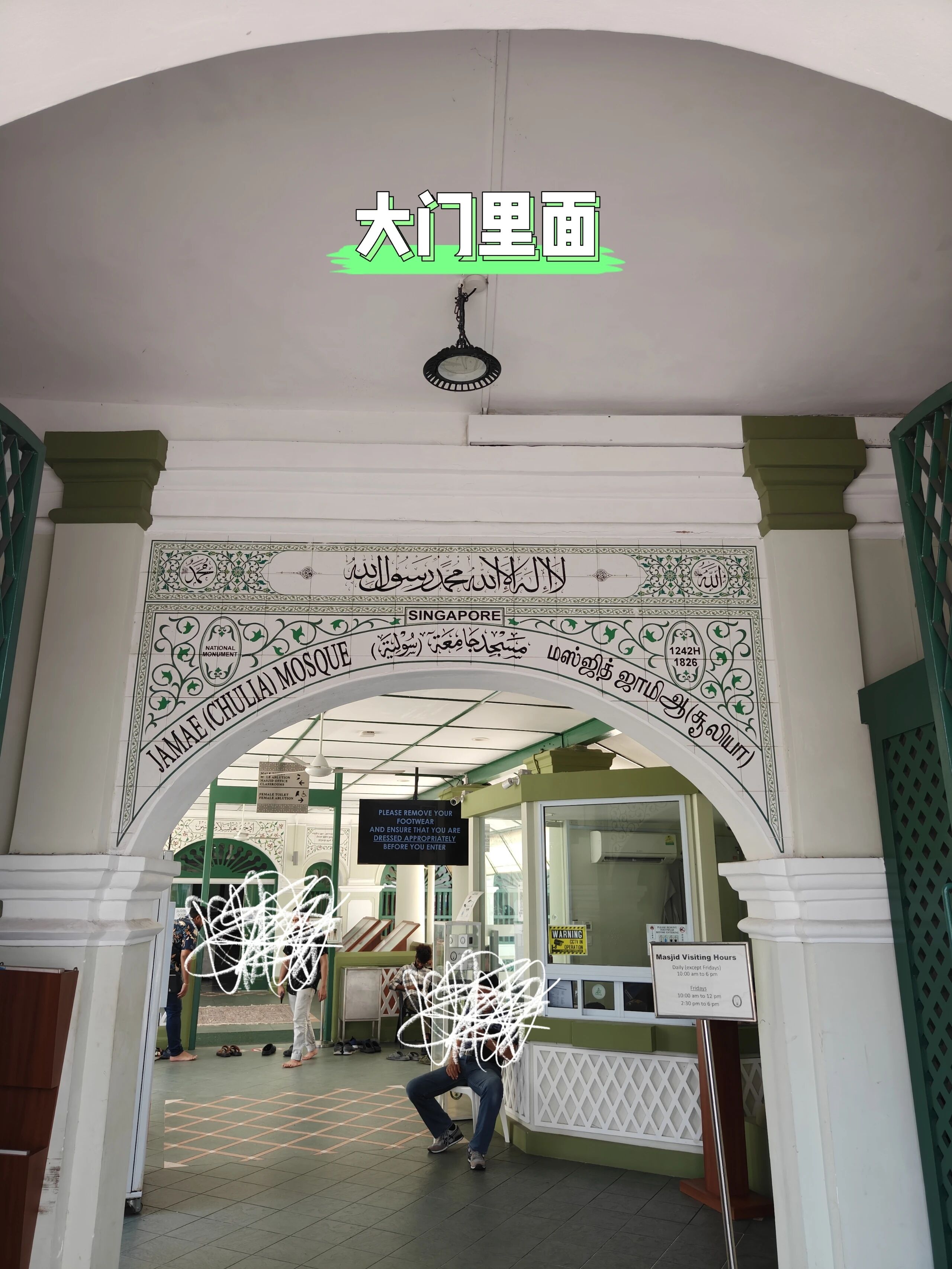
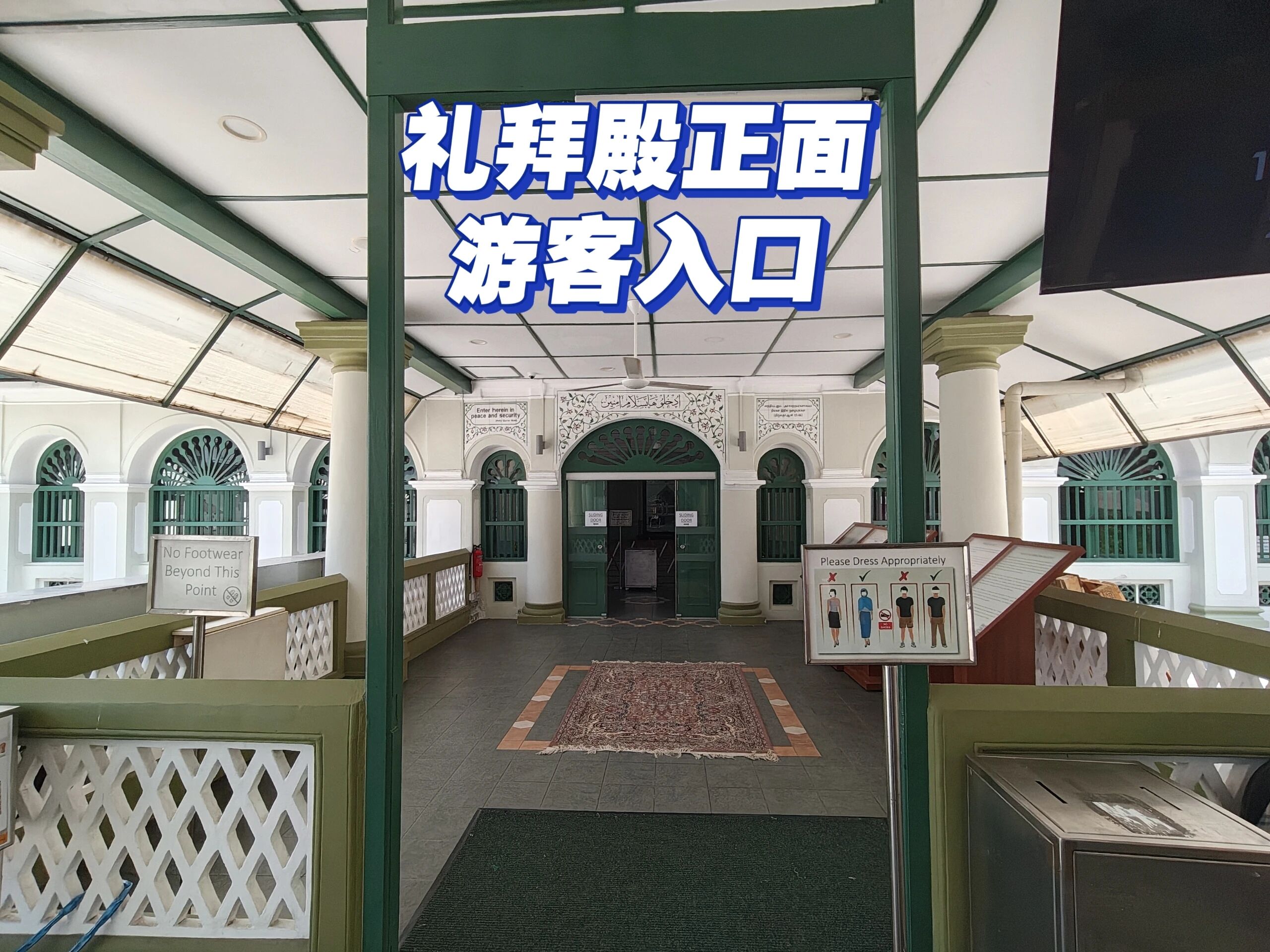
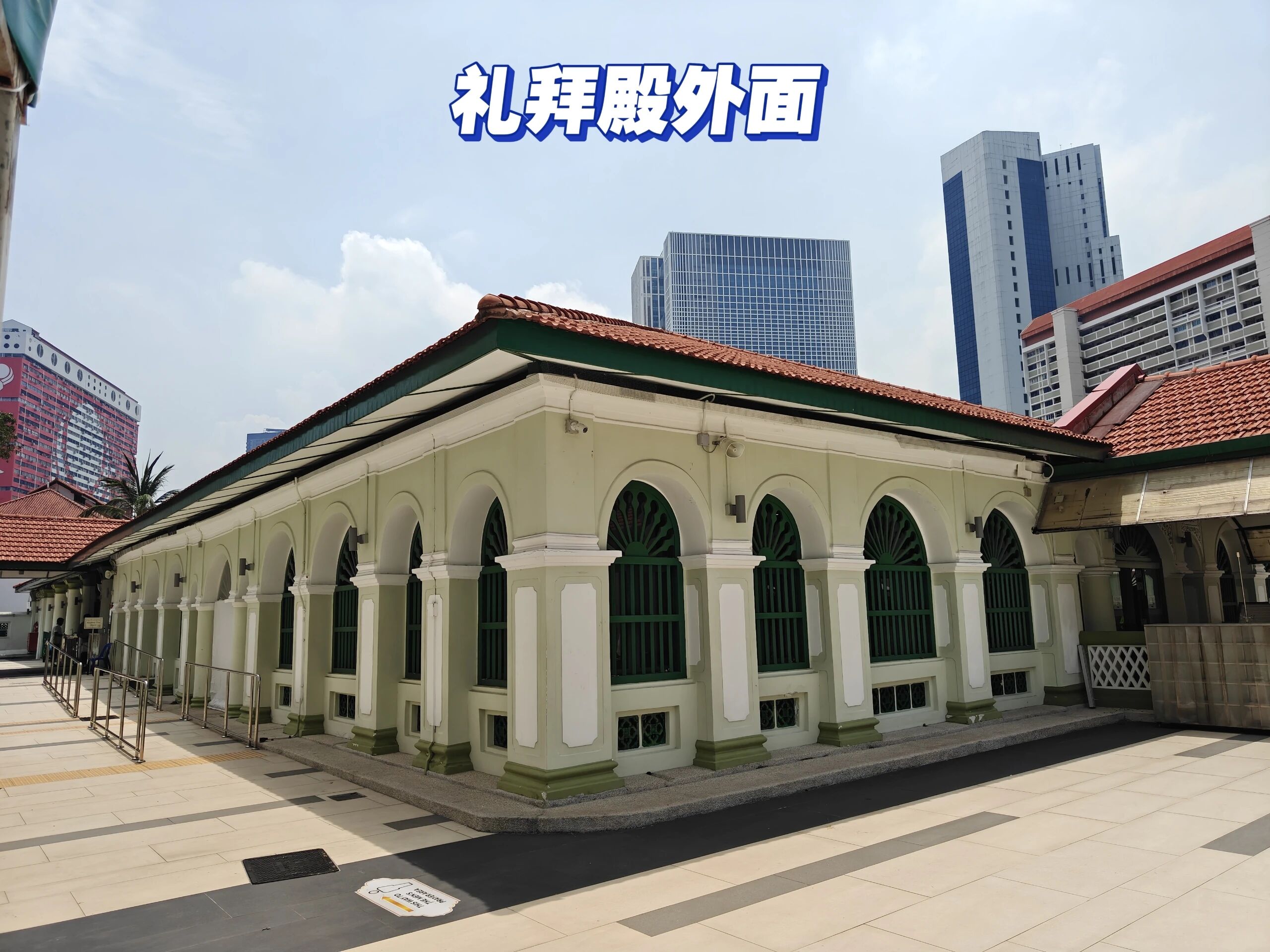
Back to the main topic, the mosque's porch is right under the square minaret of the Jamae Mosque. Walk straight through the porch to find the visitor entrance. Once inside, you can see the interior of the prayer hall. The area without carpets is for visitors. Here, you can see display boards with basic Islamic knowledge, as well as the mosque's fan-shaped doors and windows and thick pillars, which have a distinct Nanyang style.
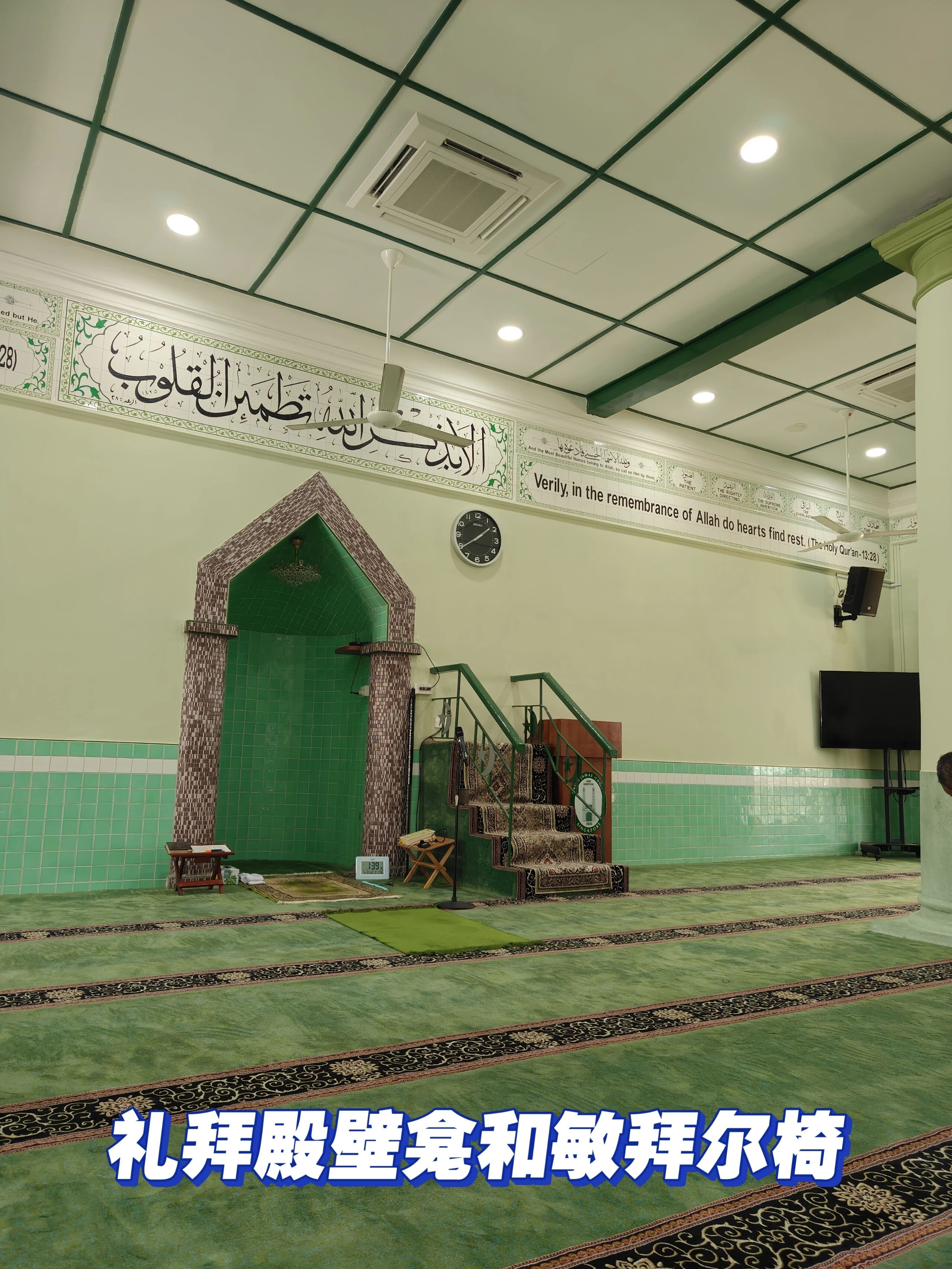
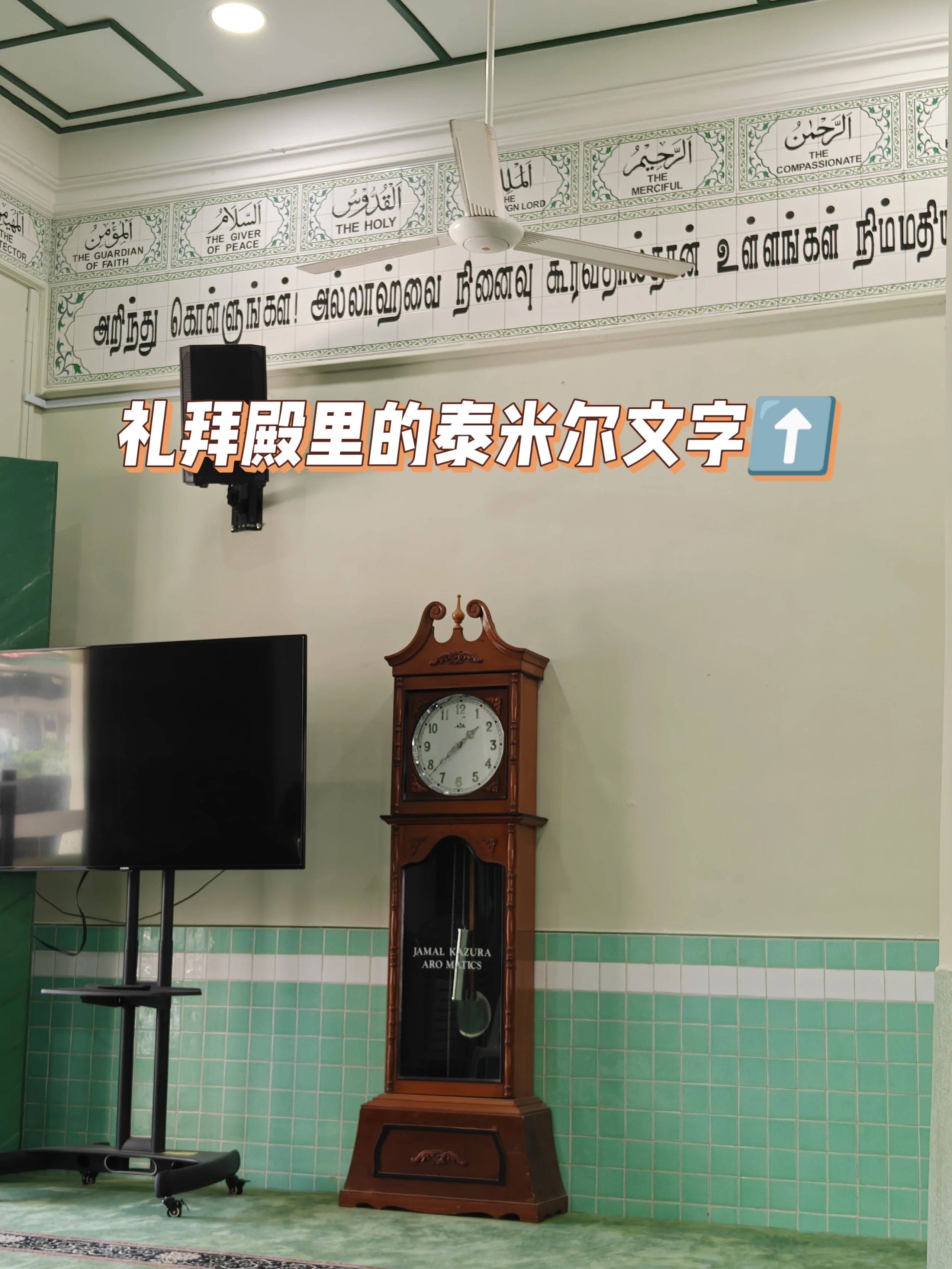
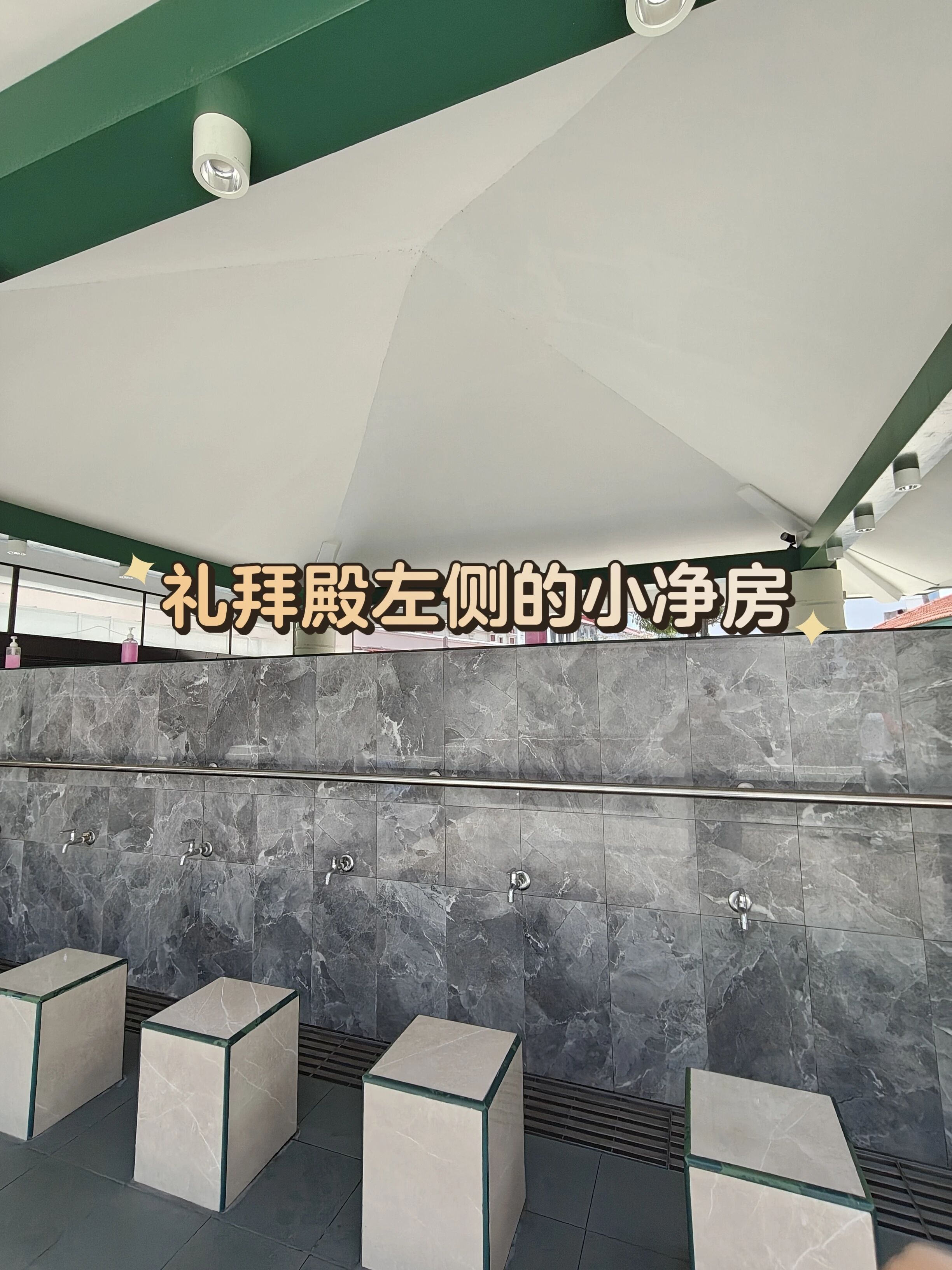
I performed wudu in the wudu room, which is a large pavilion, and then entered the prayer hall. I saw the front of the hall. On the left is Tamil, a language from southern India. Most Tamil people are Hindu, but some are Muslim.
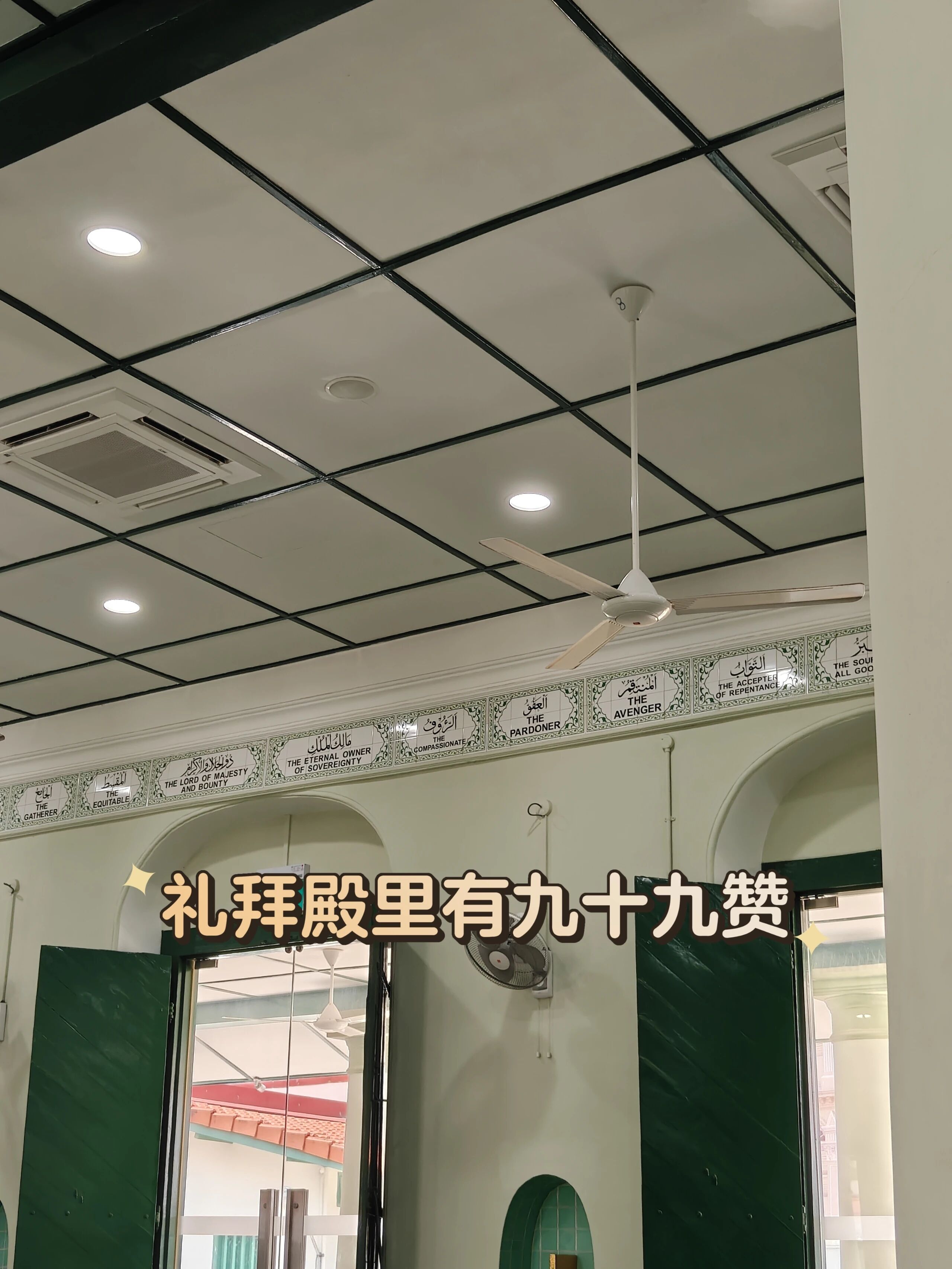
In the middle is Arabic, and on the right is English. The side texts are translations of the Arabic scripture in the middle, which is from the Quran, Chapter 13, Verse 28. There are also the 99 Names of Allah around the prayer hall.
Leaving the mosque, I saw the Shahada in English at the porch. Across the street are many Chinese shops and a place called Mohamed Ali Lane. I am not sure of the story behind that name.
That is all for this mosque. Next time, I will take you to see the gongbei nearby. Stay tuned. view all
Summary: This Singapore Muslim travel guide visits Jamae Mosque and its South Indian style. It preserves the author's Chinatown-area observations, mosque design notes, and Tamil Muslim heritage context.
My phone died just as I was about to finish this last time. When I turned it back on, all my data was gone, otherwise I would have posted this part a long time ago. I went to Singapore again a while ago and visited the same places as before. Let me tell you about this South Indian-style mosque built by South Indian Muslims.
Mosque minarets come in many styles. You have seen plenty of other styles, but this South Indian style is quite rare.
You can basically only see them in southern India, but since there are South Indian Muslim immigrants in Singapore, we can see one in a popular tourist spot here. This Jamae Mosque is actually on the same street as Singapore's famous Buddha Tooth Relic Mosque and Museum.
When you visit the Buddha Tooth Relic Mosque and Museum, you can also see a Hindu mosque and a South Indian-style mosque nearby.
Back to the main topic, the mosque's porch is right under the square minaret of the Jamae Mosque. Walk straight through the porch to find the visitor entrance. Once inside, you can see the interior of the prayer hall. The area without carpets is for visitors. Here, you can see display boards with basic Islamic knowledge, as well as the mosque's fan-shaped doors and windows and thick pillars, which have a distinct Nanyang style.
I performed wudu in the wudu room, which is a large pavilion, and then entered the prayer hall. I saw the front of the hall. On the left is Tamil, a language from southern India. Most Tamil people are Hindu, but some are Muslim.
In the middle is Arabic, and on the right is English. The side texts are translations of the Arabic scripture in the middle, which is from the Quran, Chapter 13, Verse 28. There are also the 99 Names of Allah around the prayer hall.
Leaving the mosque, I saw the Shahada in English at the porch. Across the street are many Chinese shops and a place called Mohamed Ali Lane. I am not sure of the story behind that name.
That is all for this mosque. Next time, I will take you to see the gongbei nearby. Stay tuned. view all
Reposted from the web
Summary: This Singapore Muslim travel guide visits Jamae Mosque and its South Indian style. It preserves the author's Chinatown-area observations, mosque design notes, and Tamil Muslim heritage context.
My phone died just as I was about to finish this last time. When I turned it back on, all my data was gone, otherwise I would have posted this part a long time ago. I went to Singapore again a while ago and visited the same places as before. Let me tell you about this South Indian-style mosque built by South Indian Muslims.
Mosque minarets come in many styles. You have seen plenty of other styles, but this South Indian style is quite rare.
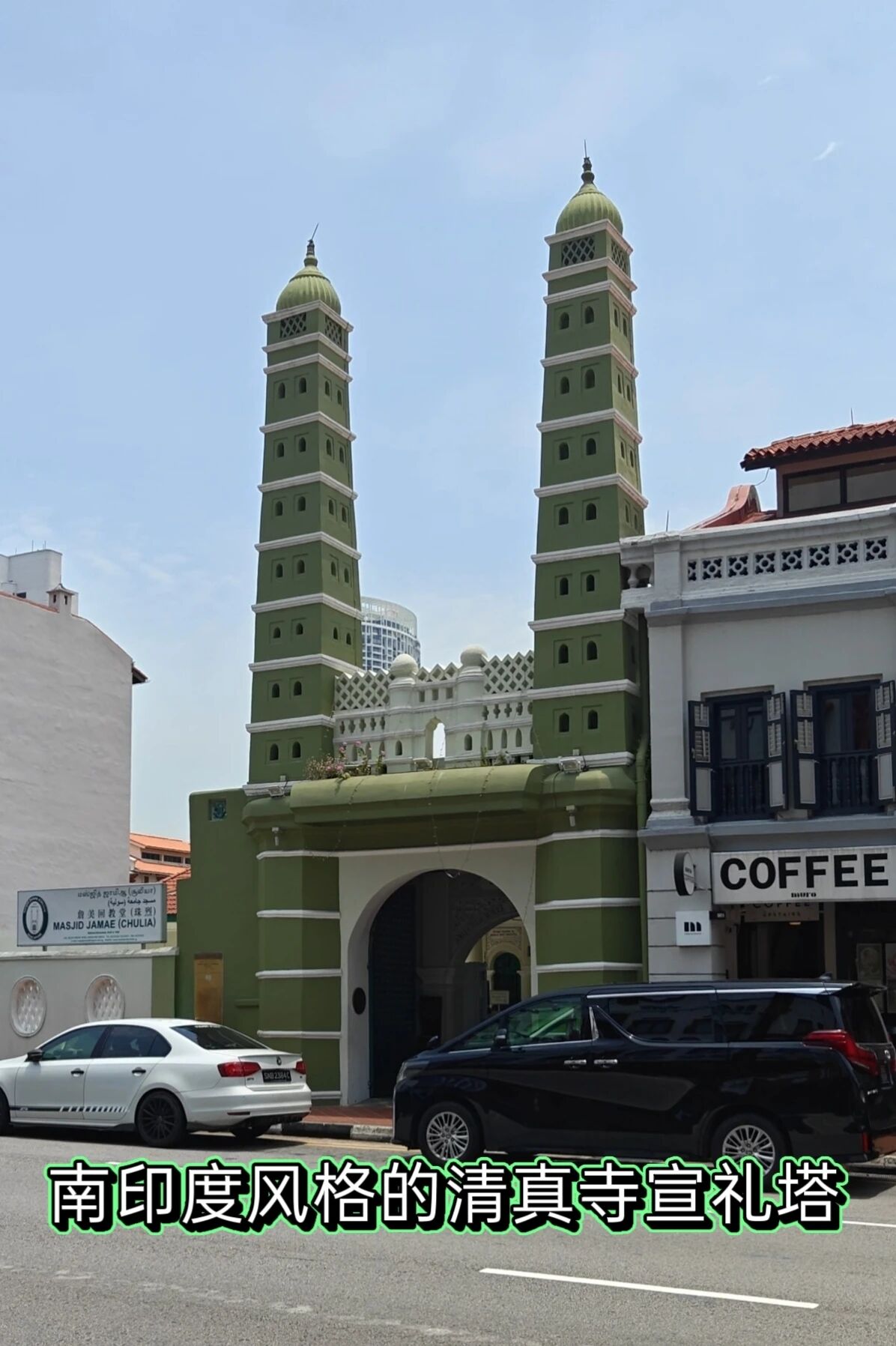
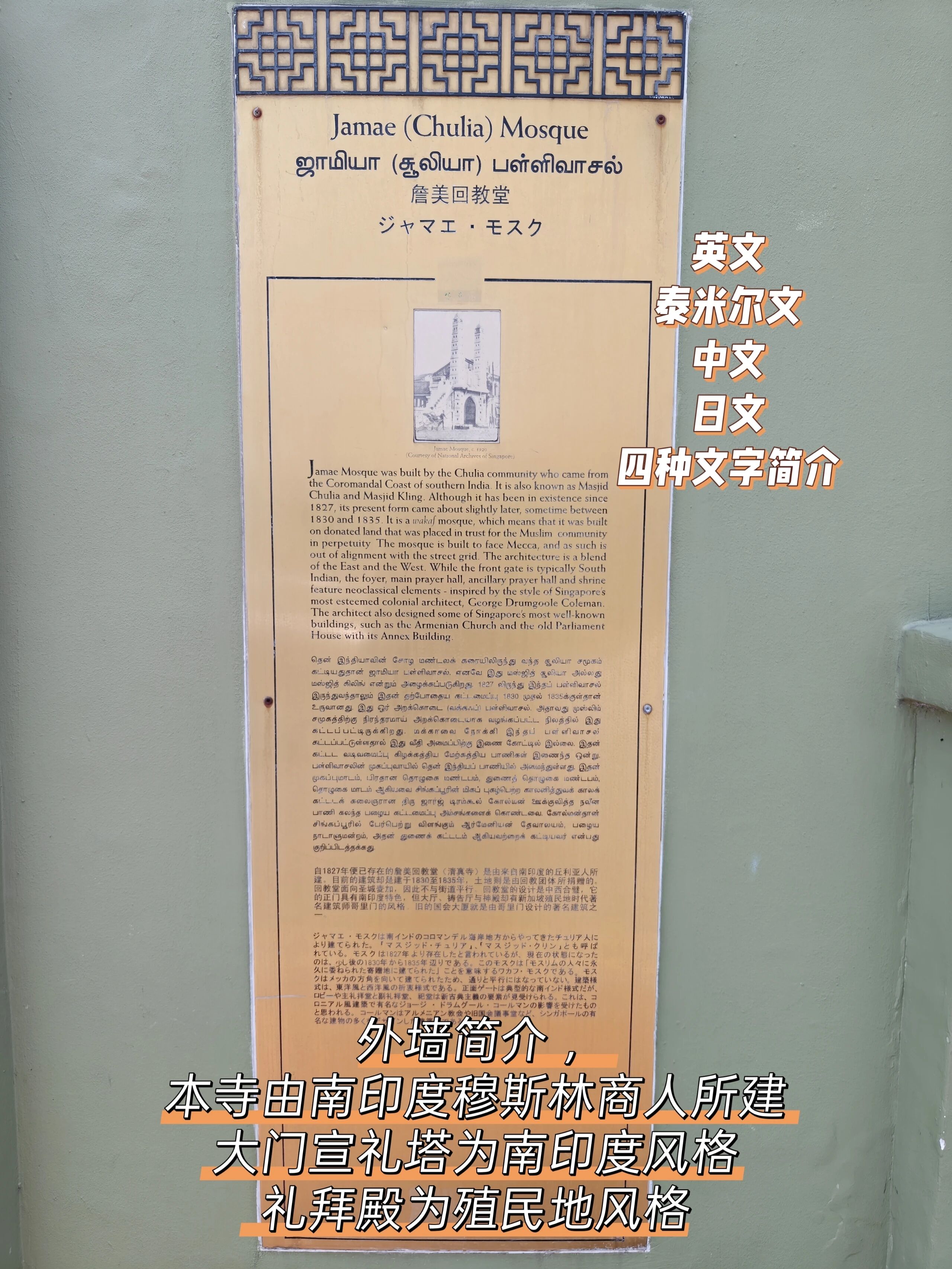
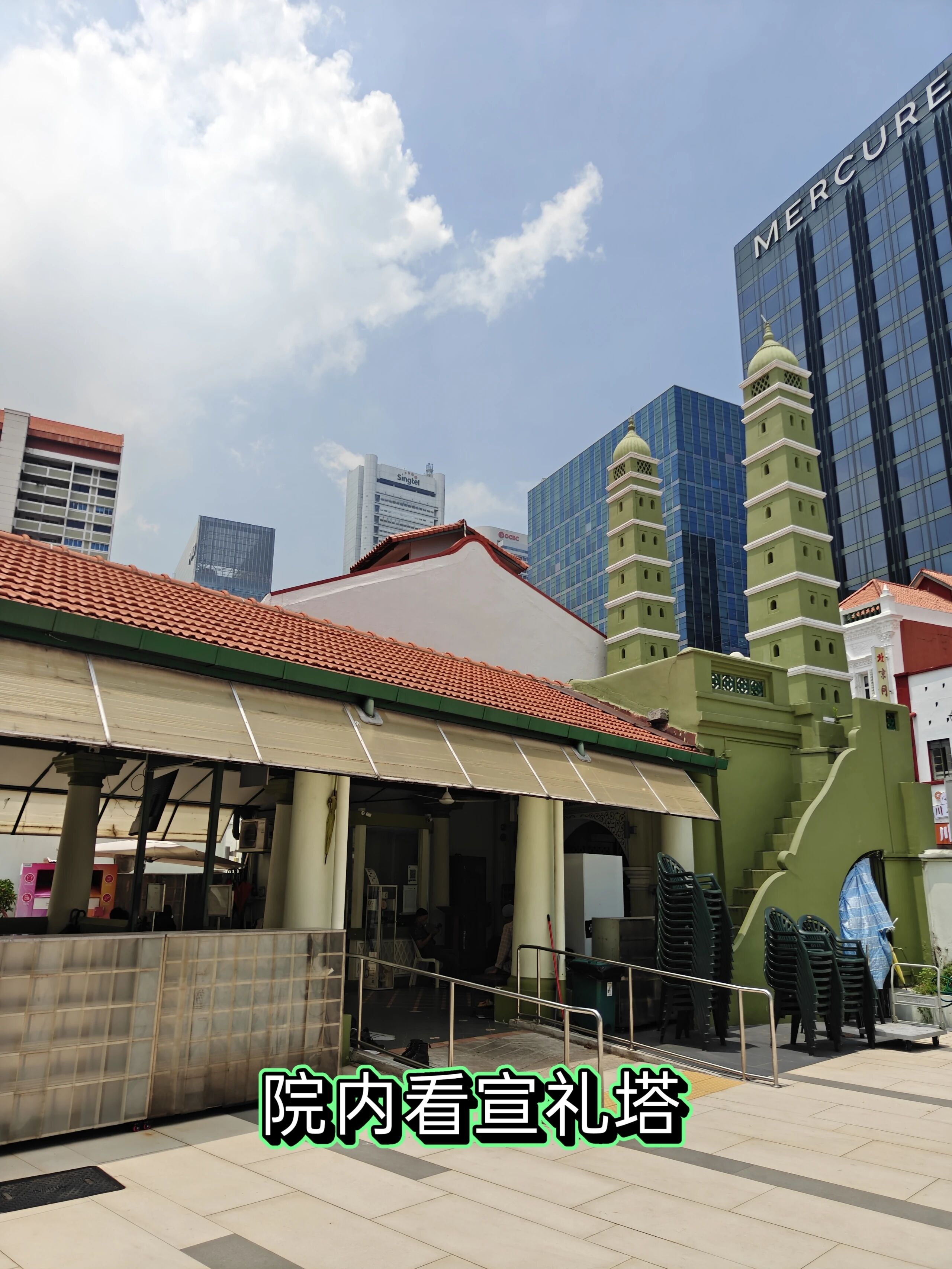
You can basically only see them in southern India, but since there are South Indian Muslim immigrants in Singapore, we can see one in a popular tourist spot here. This Jamae Mosque is actually on the same street as Singapore's famous Buddha Tooth Relic Mosque and Museum.
When you visit the Buddha Tooth Relic Mosque and Museum, you can also see a Hindu mosque and a South Indian-style mosque nearby.
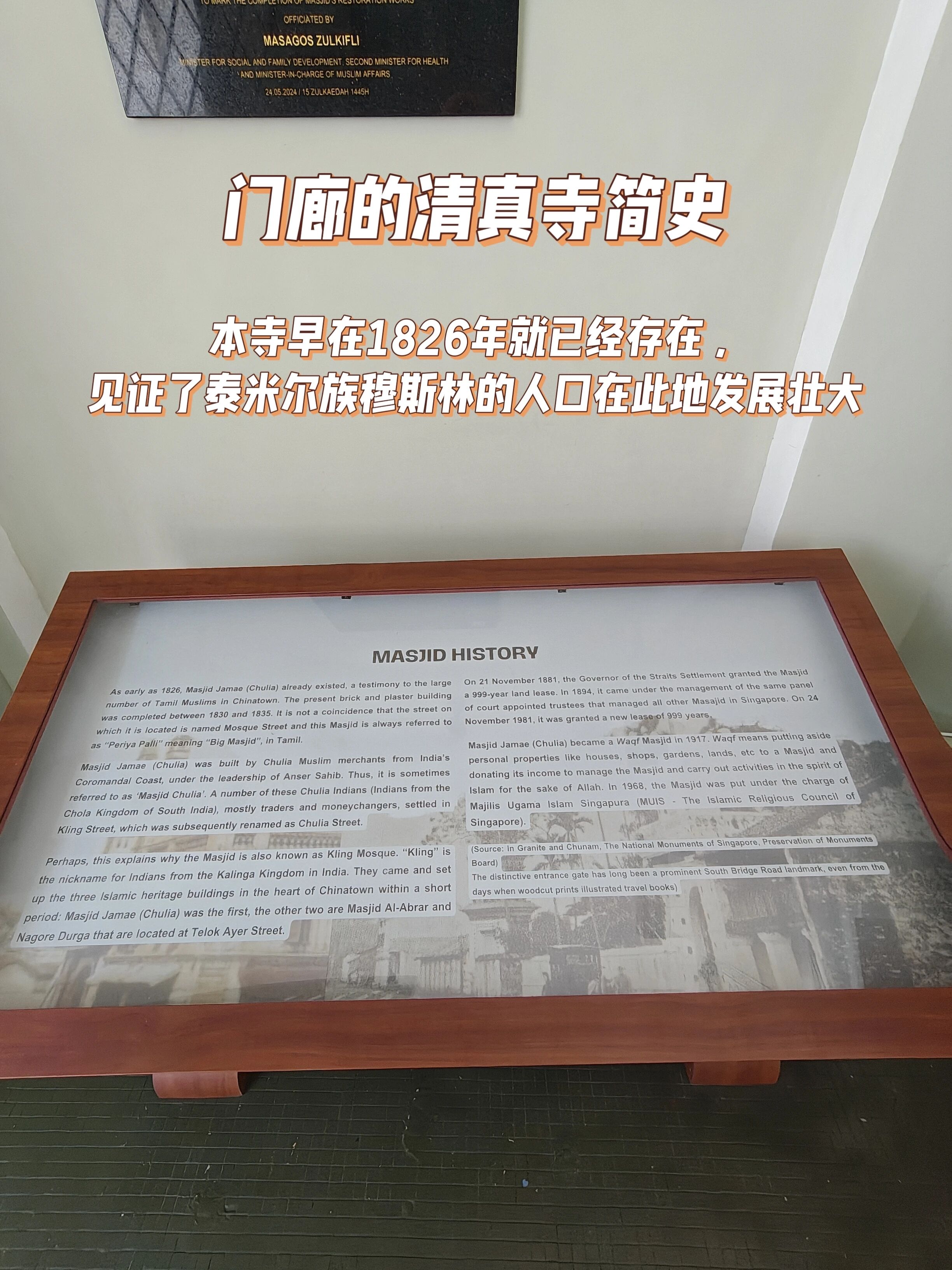
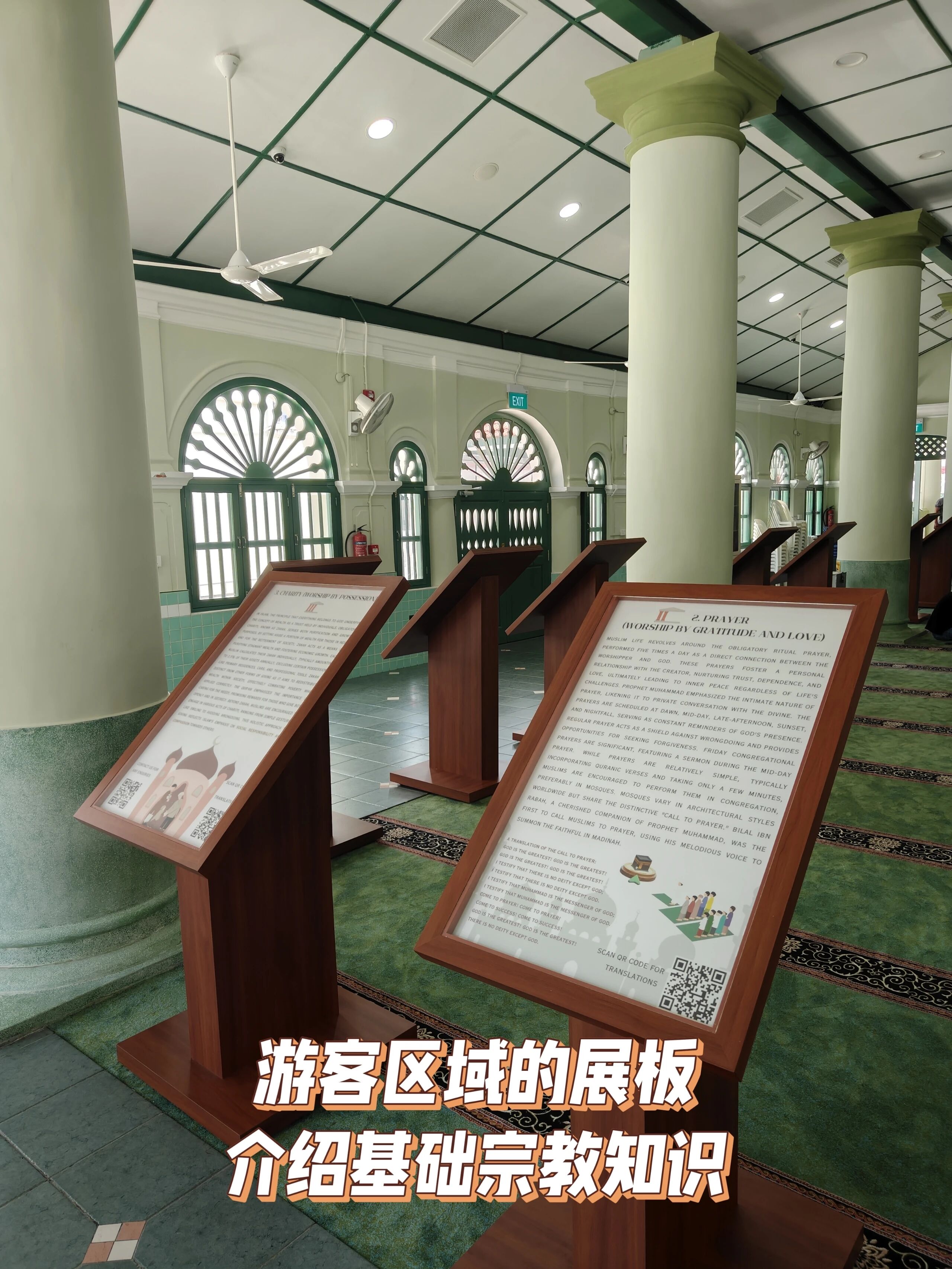
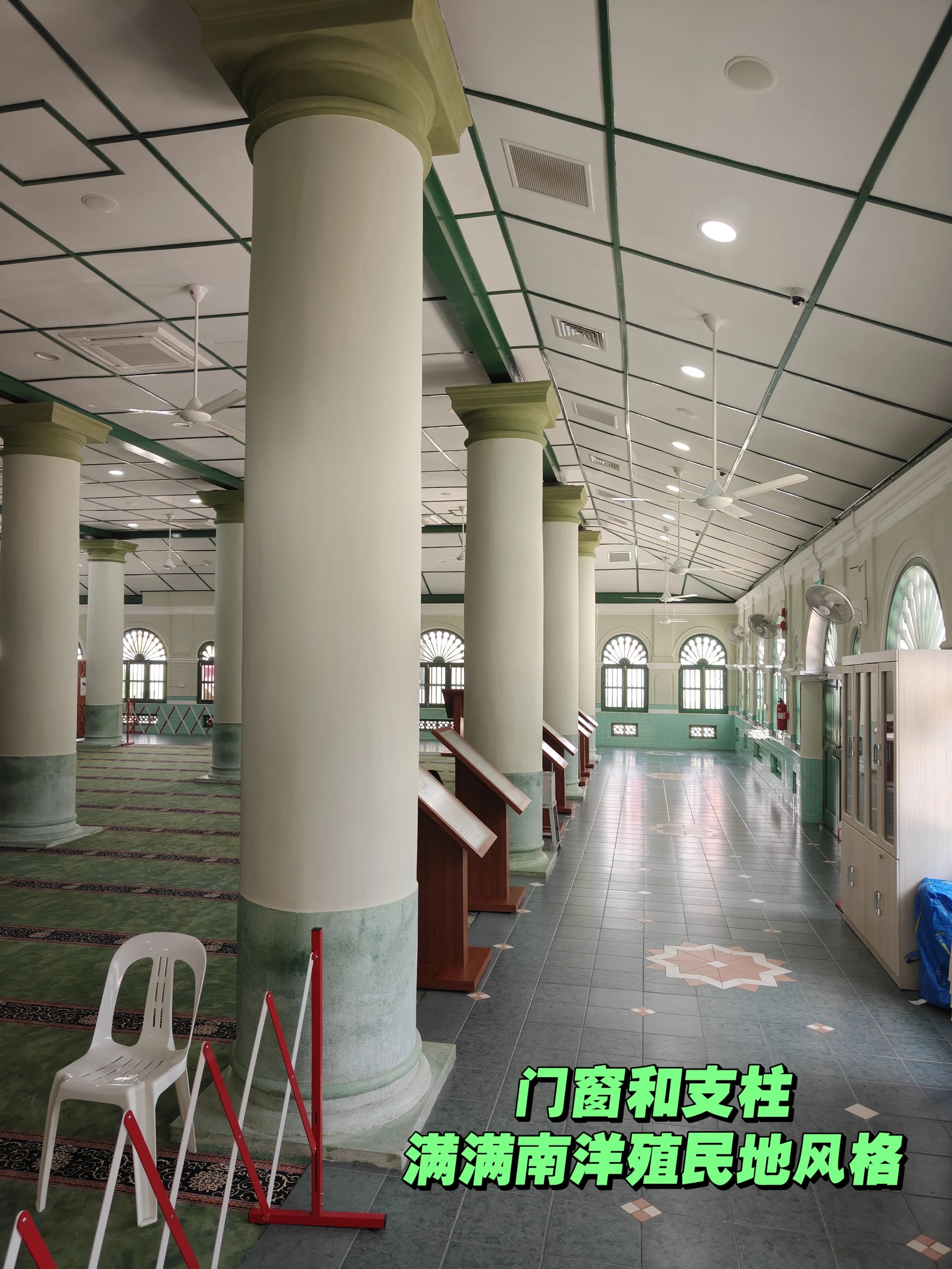
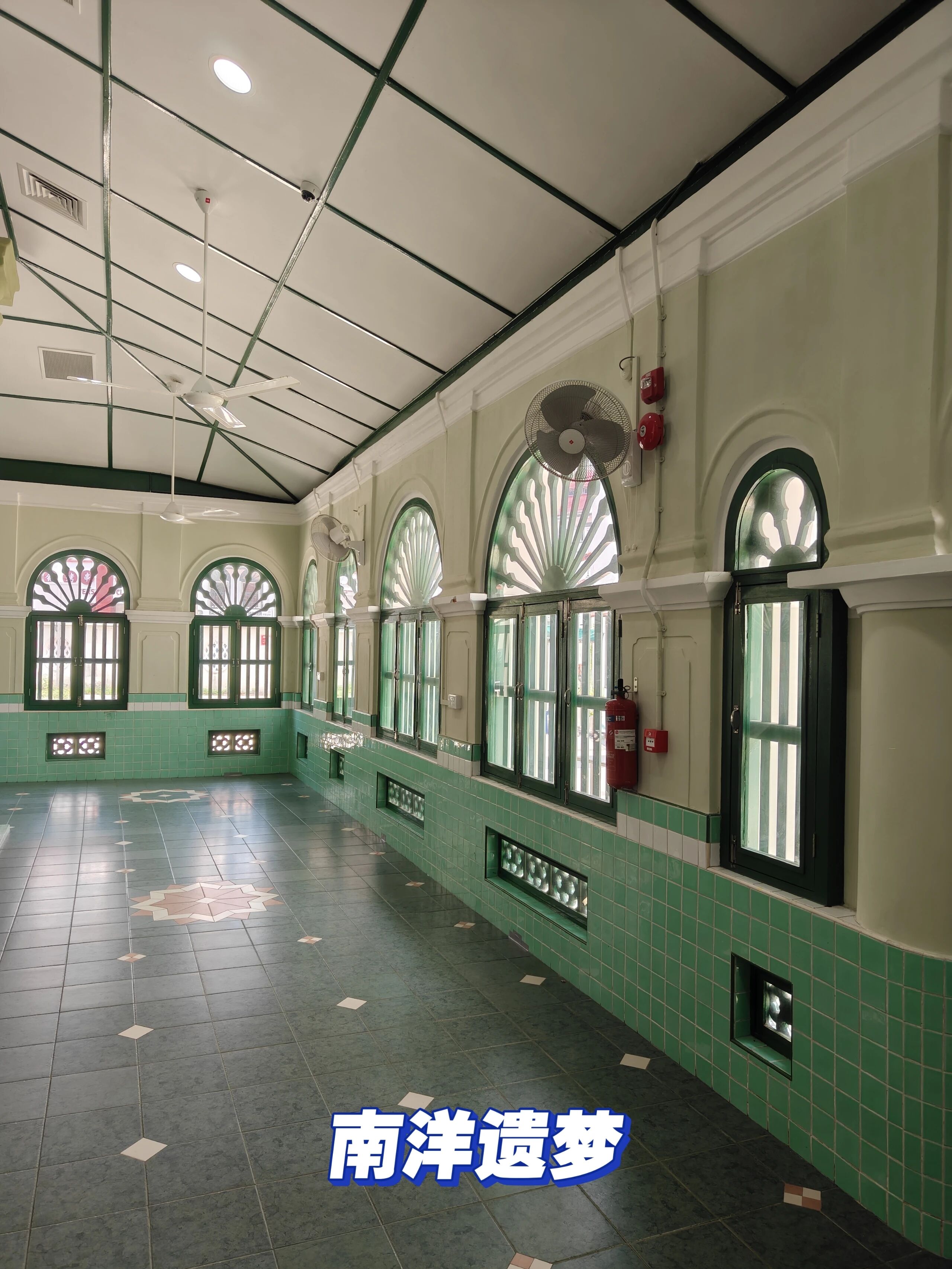
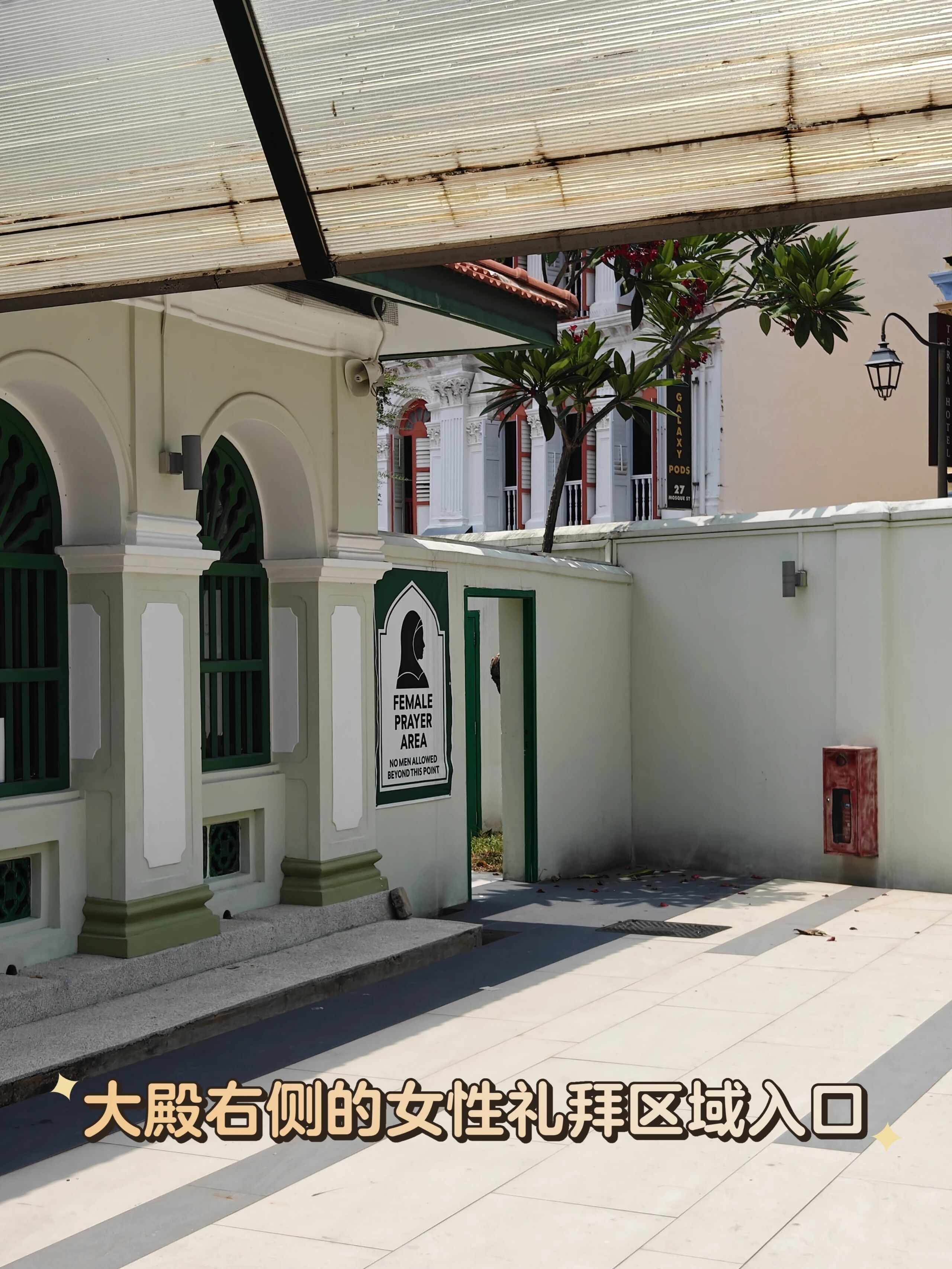
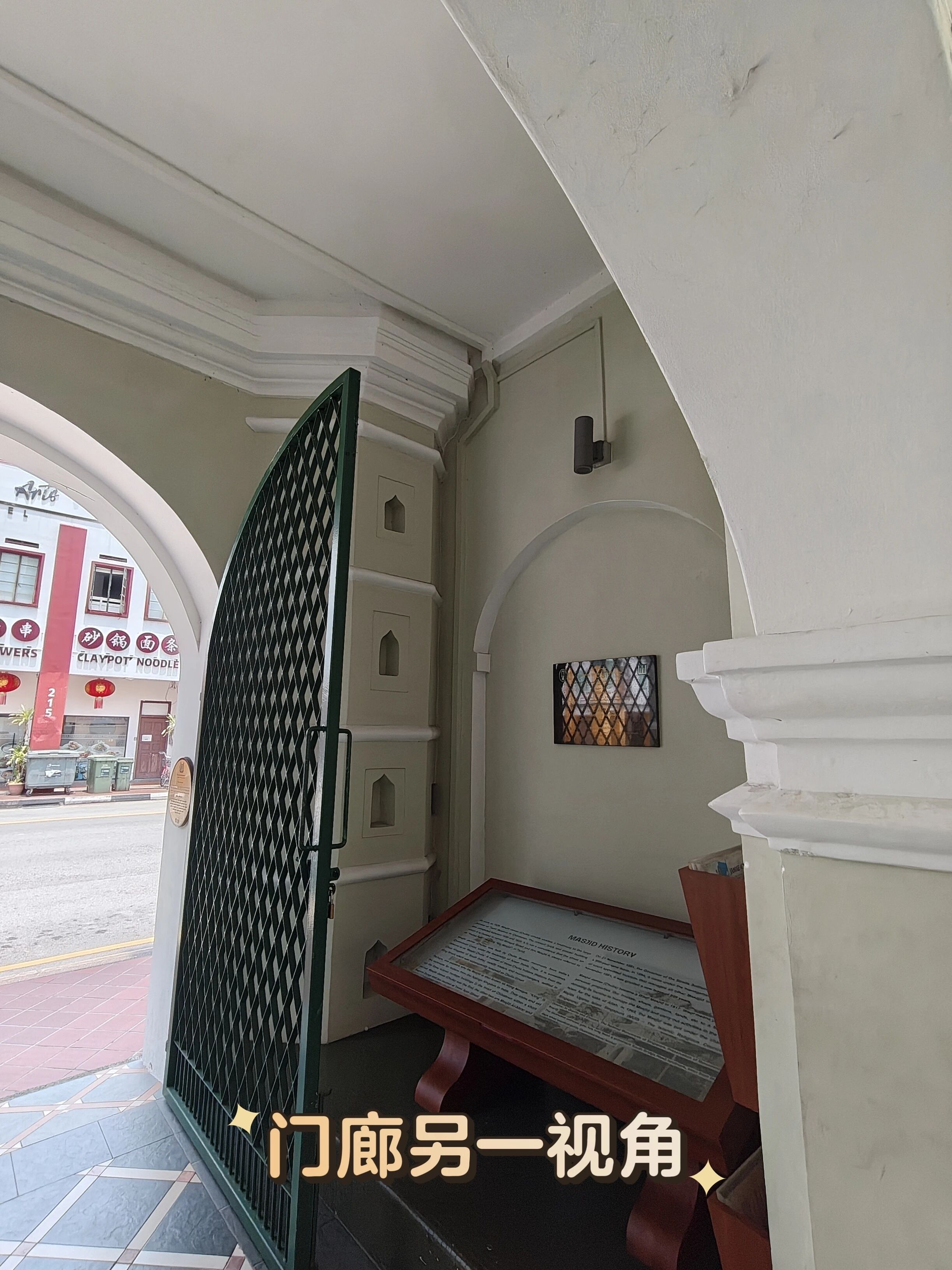
Back to the main topic, the mosque's porch is right under the square minaret of the Jamae Mosque. Walk straight through the porch to find the visitor entrance. Once inside, you can see the interior of the prayer hall. The area without carpets is for visitors. Here, you can see display boards with basic Islamic knowledge, as well as the mosque's fan-shaped doors and windows and thick pillars, which have a distinct Nanyang style.
I performed wudu in the wudu room, which is a large pavilion, and then entered the prayer hall. I saw the front of the hall. On the left is Tamil, a language from southern India. Most Tamil people are Hindu, but some are Muslim.
In the middle is Arabic, and on the right is English. The side texts are translations of the Arabic scripture in the middle, which is from the Quran, Chapter 13, Verse 28. There are also the 99 Names of Allah around the prayer hall.
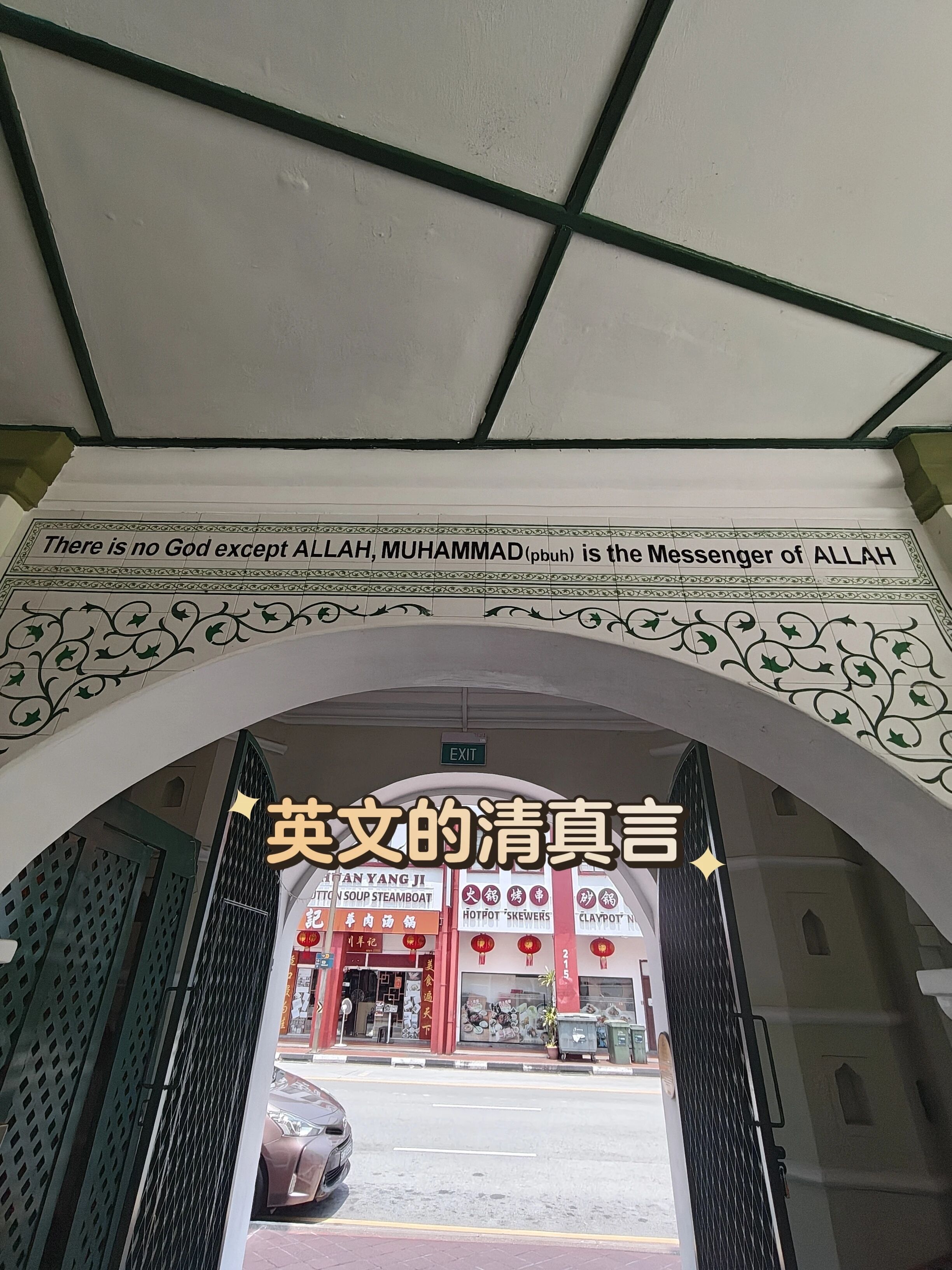
Leaving the mosque, I saw the Shahada in English at the porch. Across the street are many Chinese shops and a place called Mohamed Ali Lane. I am not sure of the story behind that name.
That is all for this mosque. Next time, I will take you to see the gongbei nearby. Stay tuned.
Summary: This Singapore Muslim travel guide visits Jamae Mosque and its South Indian style. It preserves the author's Chinatown-area observations, mosque design notes, and Tamil Muslim heritage context.
My phone died just as I was about to finish this last time. When I turned it back on, all my data was gone, otherwise I would have posted this part a long time ago. I went to Singapore again a while ago and visited the same places as before. Let me tell you about this South Indian-style mosque built by South Indian Muslims.
Mosque minarets come in many styles. You have seen plenty of other styles, but this South Indian style is quite rare.
You can basically only see them in southern India, but since there are South Indian Muslim immigrants in Singapore, we can see one in a popular tourist spot here. This Jamae Mosque is actually on the same street as Singapore's famous Buddha Tooth Relic Mosque and Museum.
When you visit the Buddha Tooth Relic Mosque and Museum, you can also see a Hindu mosque and a South Indian-style mosque nearby.
Back to the main topic, the mosque's porch is right under the square minaret of the Jamae Mosque. Walk straight through the porch to find the visitor entrance. Once inside, you can see the interior of the prayer hall. The area without carpets is for visitors. Here, you can see display boards with basic Islamic knowledge, as well as the mosque's fan-shaped doors and windows and thick pillars, which have a distinct Nanyang style.
I performed wudu in the wudu room, which is a large pavilion, and then entered the prayer hall. I saw the front of the hall. On the left is Tamil, a language from southern India. Most Tamil people are Hindu, but some are Muslim.
In the middle is Arabic, and on the right is English. The side texts are translations of the Arabic scripture in the middle, which is from the Quran, Chapter 13, Verse 28. There are also the 99 Names of Allah around the prayer hall.
Leaving the mosque, I saw the Shahada in English at the porch. Across the street are many Chinese shops and a place called Mohamed Ali Lane. I am not sure of the story behind that name.
That is all for this mosque. Next time, I will take you to see the gongbei nearby. Stay tuned.
Muslim Travel Guide Singapore Chinatown: Jamae Mosque, Tamil Muslim Heritage and South Indian Style
Articles • Hasan09 posted the article • 0 comments • 311 views • 2026-05-24 01:47
Reposted from the web
Summary: This Singapore Muslim travel guide visits Jamae Mosque and its South Indian style. It preserves the author's Chinatown-area observations, mosque design notes, and Tamil Muslim heritage context.
My phone died just as I was about to finish this last time. When I turned it back on, all my data was gone, otherwise I would have posted this part a long time ago. I went to Singapore again a while ago and visited the same places as before. Let me tell you about this South Indian-style mosque built by South Indian Muslims.
Mosque minarets come in many styles. You have seen plenty of other styles, but this South Indian style is quite rare.
You can basically only see them in southern India, but since there are South Indian Muslim immigrants in Singapore, we can see one in a popular tourist spot here. This Jamae Mosque is actually on the same street as Singapore's famous Buddha Tooth Relic Mosque and Museum.
When you visit the Buddha Tooth Relic Mosque and Museum, you can also see a Hindu mosque and a South Indian-style mosque nearby.
Back to the main topic, the mosque's porch is right under the square minaret of the Jamae Mosque. Walk straight through the porch to find the visitor entrance. Once inside, you can see the interior of the prayer hall. The area without carpets is for visitors. Here, you can see display boards with basic Islamic knowledge, as well as the mosque's fan-shaped doors and windows and thick pillars, which have a distinct Nanyang style.
I performed wudu in the wudu room, which is a large pavilion, and then entered the prayer hall. I saw the front of the hall. On the left is Tamil, a language from southern India. Most Tamil people are Hindu, but some are Muslim.
In the middle is Arabic, and on the right is English. The side texts are translations of the Arabic scripture in the middle, which is from the Quran, Chapter 13, Verse 28. There are also the 99 Names of Allah around the prayer hall.
Leaving the mosque, I saw the Shahada in English at the porch. Across the street are many Chinese shops and a place called Mohamed Ali Lane. I am not sure of the story behind that name.
That is all for this mosque. Next time, I will take you to see the gongbei nearby. Stay tuned. view all
Summary: This Singapore Muslim travel guide visits Jamae Mosque and its South Indian style. It preserves the author's Chinatown-area observations, mosque design notes, and Tamil Muslim heritage context.
My phone died just as I was about to finish this last time. When I turned it back on, all my data was gone, otherwise I would have posted this part a long time ago. I went to Singapore again a while ago and visited the same places as before. Let me tell you about this South Indian-style mosque built by South Indian Muslims.
Mosque minarets come in many styles. You have seen plenty of other styles, but this South Indian style is quite rare.
You can basically only see them in southern India, but since there are South Indian Muslim immigrants in Singapore, we can see one in a popular tourist spot here. This Jamae Mosque is actually on the same street as Singapore's famous Buddha Tooth Relic Mosque and Museum.
When you visit the Buddha Tooth Relic Mosque and Museum, you can also see a Hindu mosque and a South Indian-style mosque nearby.
Back to the main topic, the mosque's porch is right under the square minaret of the Jamae Mosque. Walk straight through the porch to find the visitor entrance. Once inside, you can see the interior of the prayer hall. The area without carpets is for visitors. Here, you can see display boards with basic Islamic knowledge, as well as the mosque's fan-shaped doors and windows and thick pillars, which have a distinct Nanyang style.
I performed wudu in the wudu room, which is a large pavilion, and then entered the prayer hall. I saw the front of the hall. On the left is Tamil, a language from southern India. Most Tamil people are Hindu, but some are Muslim.
In the middle is Arabic, and on the right is English. The side texts are translations of the Arabic scripture in the middle, which is from the Quran, Chapter 13, Verse 28. There are also the 99 Names of Allah around the prayer hall.
Leaving the mosque, I saw the Shahada in English at the porch. Across the street are many Chinese shops and a place called Mohamed Ali Lane. I am not sure of the story behind that name.
That is all for this mosque. Next time, I will take you to see the gongbei nearby. Stay tuned. view all
Reposted from the web
Summary: This Singapore Muslim travel guide visits Jamae Mosque and its South Indian style. It preserves the author's Chinatown-area observations, mosque design notes, and Tamil Muslim heritage context.
My phone died just as I was about to finish this last time. When I turned it back on, all my data was gone, otherwise I would have posted this part a long time ago. I went to Singapore again a while ago and visited the same places as before. Let me tell you about this South Indian-style mosque built by South Indian Muslims.
Mosque minarets come in many styles. You have seen plenty of other styles, but this South Indian style is quite rare.
You can basically only see them in southern India, but since there are South Indian Muslim immigrants in Singapore, we can see one in a popular tourist spot here. This Jamae Mosque is actually on the same street as Singapore's famous Buddha Tooth Relic Mosque and Museum.
When you visit the Buddha Tooth Relic Mosque and Museum, you can also see a Hindu mosque and a South Indian-style mosque nearby.
Back to the main topic, the mosque's porch is right under the square minaret of the Jamae Mosque. Walk straight through the porch to find the visitor entrance. Once inside, you can see the interior of the prayer hall. The area without carpets is for visitors. Here, you can see display boards with basic Islamic knowledge, as well as the mosque's fan-shaped doors and windows and thick pillars, which have a distinct Nanyang style.
I performed wudu in the wudu room, which is a large pavilion, and then entered the prayer hall. I saw the front of the hall. On the left is Tamil, a language from southern India. Most Tamil people are Hindu, but some are Muslim.
In the middle is Arabic, and on the right is English. The side texts are translations of the Arabic scripture in the middle, which is from the Quran, Chapter 13, Verse 28. There are also the 99 Names of Allah around the prayer hall.
Leaving the mosque, I saw the Shahada in English at the porch. Across the street are many Chinese shops and a place called Mohamed Ali Lane. I am not sure of the story behind that name.
That is all for this mosque. Next time, I will take you to see the gongbei nearby. Stay tuned.
Summary: This Singapore Muslim travel guide visits Jamae Mosque and its South Indian style. It preserves the author's Chinatown-area observations, mosque design notes, and Tamil Muslim heritage context.
My phone died just as I was about to finish this last time. When I turned it back on, all my data was gone, otherwise I would have posted this part a long time ago. I went to Singapore again a while ago and visited the same places as before. Let me tell you about this South Indian-style mosque built by South Indian Muslims.
Mosque minarets come in many styles. You have seen plenty of other styles, but this South Indian style is quite rare.
You can basically only see them in southern India, but since there are South Indian Muslim immigrants in Singapore, we can see one in a popular tourist spot here. This Jamae Mosque is actually on the same street as Singapore's famous Buddha Tooth Relic Mosque and Museum.
When you visit the Buddha Tooth Relic Mosque and Museum, you can also see a Hindu mosque and a South Indian-style mosque nearby.
Back to the main topic, the mosque's porch is right under the square minaret of the Jamae Mosque. Walk straight through the porch to find the visitor entrance. Once inside, you can see the interior of the prayer hall. The area without carpets is for visitors. Here, you can see display boards with basic Islamic knowledge, as well as the mosque's fan-shaped doors and windows and thick pillars, which have a distinct Nanyang style.
I performed wudu in the wudu room, which is a large pavilion, and then entered the prayer hall. I saw the front of the hall. On the left is Tamil, a language from southern India. Most Tamil people are Hindu, but some are Muslim.
In the middle is Arabic, and on the right is English. The side texts are translations of the Arabic scripture in the middle, which is from the Quran, Chapter 13, Verse 28. There are also the 99 Names of Allah around the prayer hall.
Leaving the mosque, I saw the Shahada in English at the porch. Across the street are many Chinese shops and a place called Mohamed Ali Lane. I am not sure of the story behind that name.
That is all for this mosque. Next time, I will take you to see the gongbei nearby. Stay tuned.