

Javanese Heritage
Halal Travel Guide: Bangkok - Indonesian Mosque Quarters, Part 1
Articles • ali2007fr posted the article • 0 comments • 215 views • 2026-05-20 09:11
Reposted from the web
Summary: Bangkok's Indonesian Muslim history includes Arab-Indonesian merchants, Javanese gardeners, riverside mosque communities, and halal street food near old neighborhoods. This first part follows Haroon Mosque, Saralom Park, Ban Tuk Din Mosque, Ayeesah Roddee Halal, Java Mosque, and the related food and architecture details.
The Indonesian mosque communities in downtown Bangkok come from two main sources: fishermen and traders who sailed from Borneo and the Sulu Archipelago, and Javanese gardeners hired by King Rama V in the late 19th century. Bangkok still preserves Indonesian-style food and Javanese-style mosques, which are an important part of the city's multicultural identity.
Indonesian sailors
Ban Oou Mosque
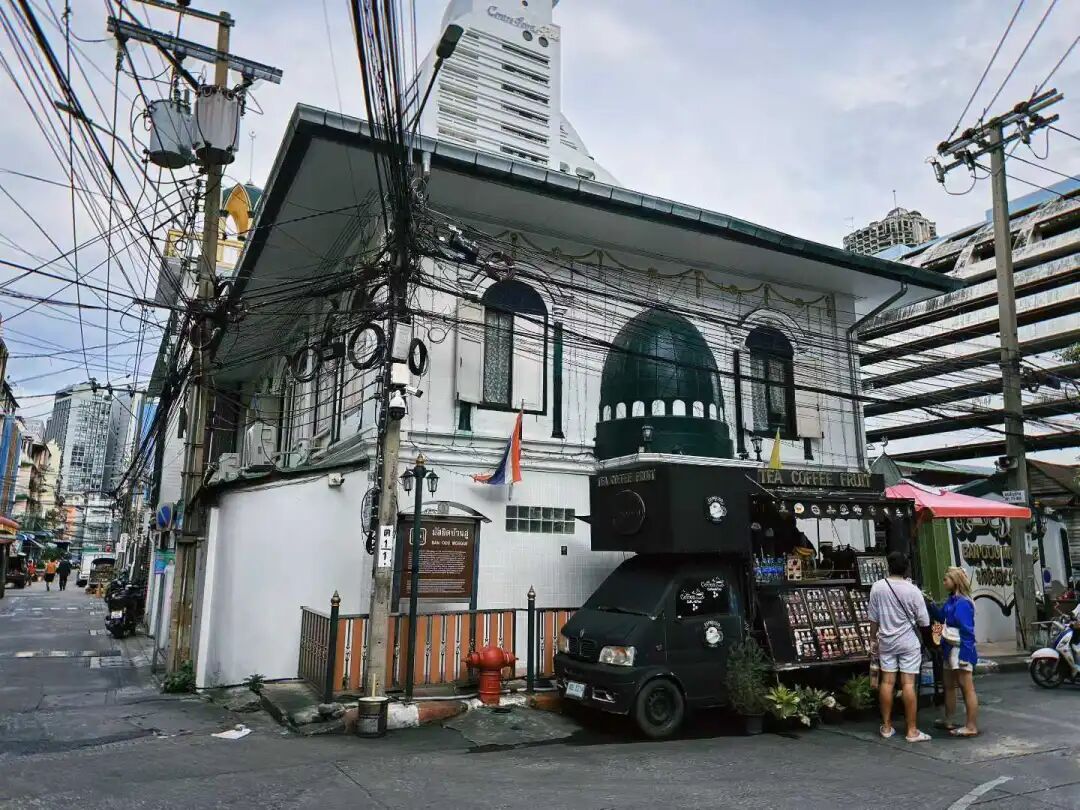
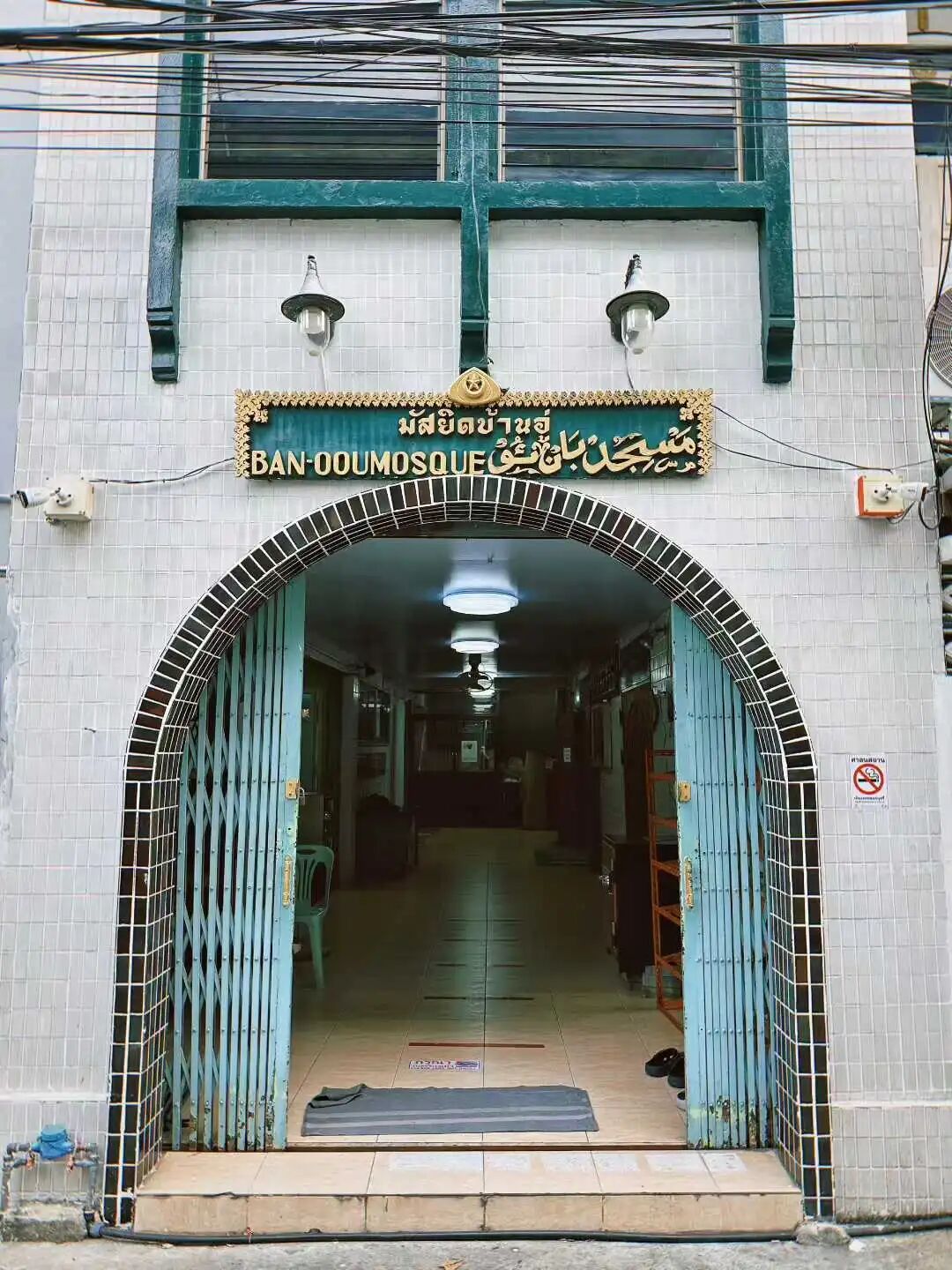
The Ban Oou Mosque community is right next to Saphan Taksin Bridge. It was built during the reign of King Rama IV (1851-68) by a group of Indonesian sailors who fished at the mouth of the Chao Phraya River year-round. After Britain and Thailand signed the Bowring Treaty in 1855, business in the Bang Rak area boomed. These Indonesian sailors sold their catch to Western sailors and merchants living in Bang Rak. During the reign of King Rama V (1868-1910), they became fishmongers in the market after it was established.
In the late 19th and early 20th centuries, as the port of Bangkok grew, many shipyards, piers, and docks were built around the Ban Oou Mosque community. Many residents became barge workers, handling cargo for nearby European shipping companies. As people stopped making a living from fishing, the mosque community began to move inland. In 1919, the community rebuilt the mosque 100 meters inland from the Chao Phraya River.
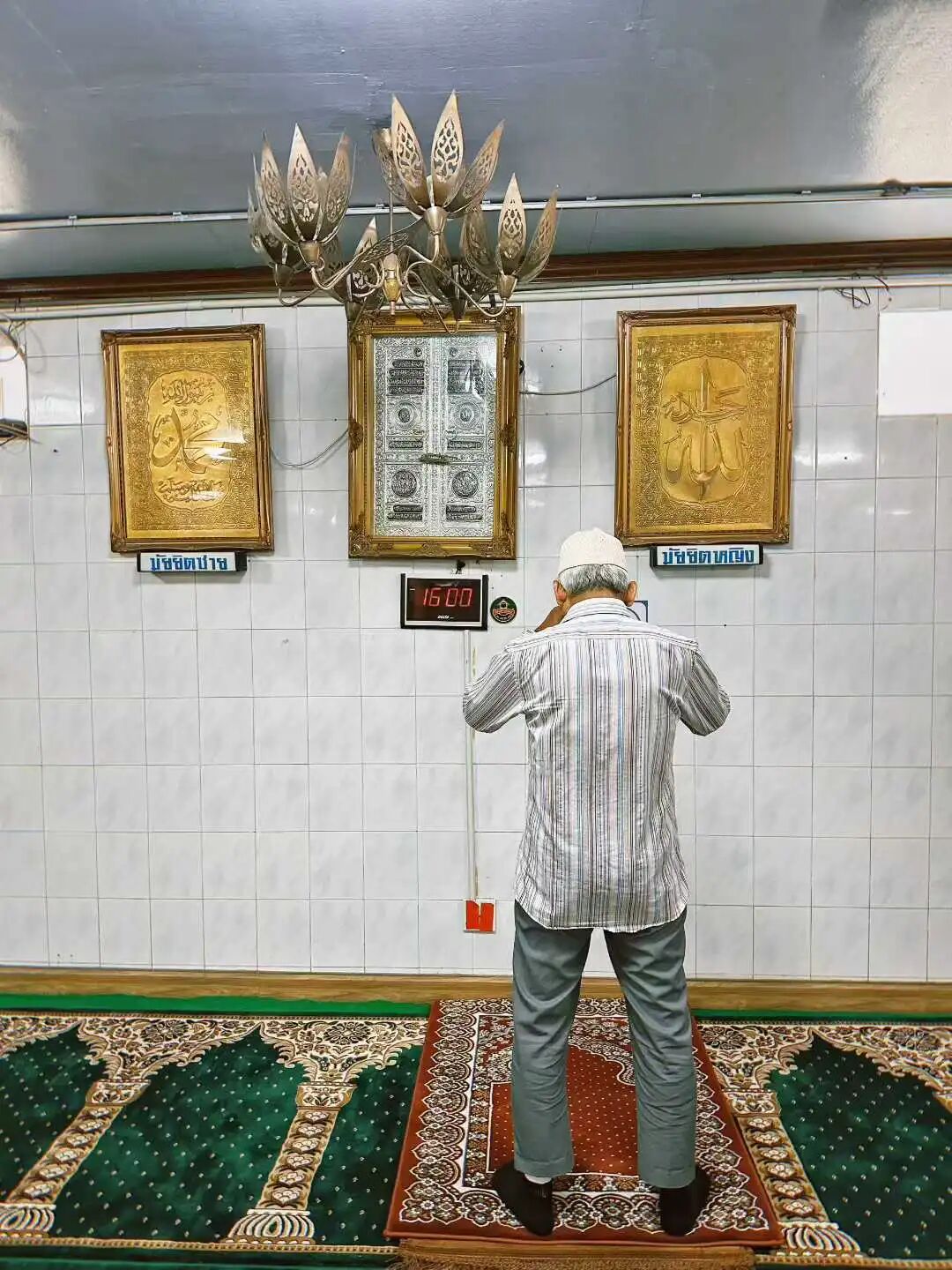
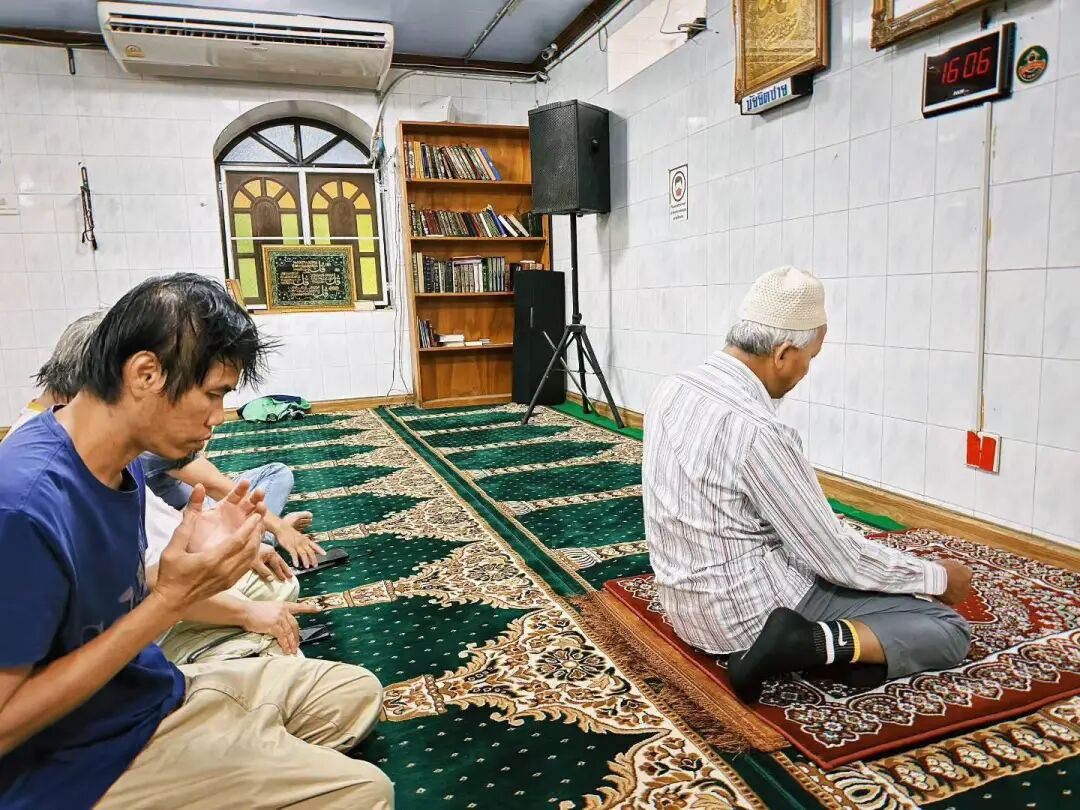
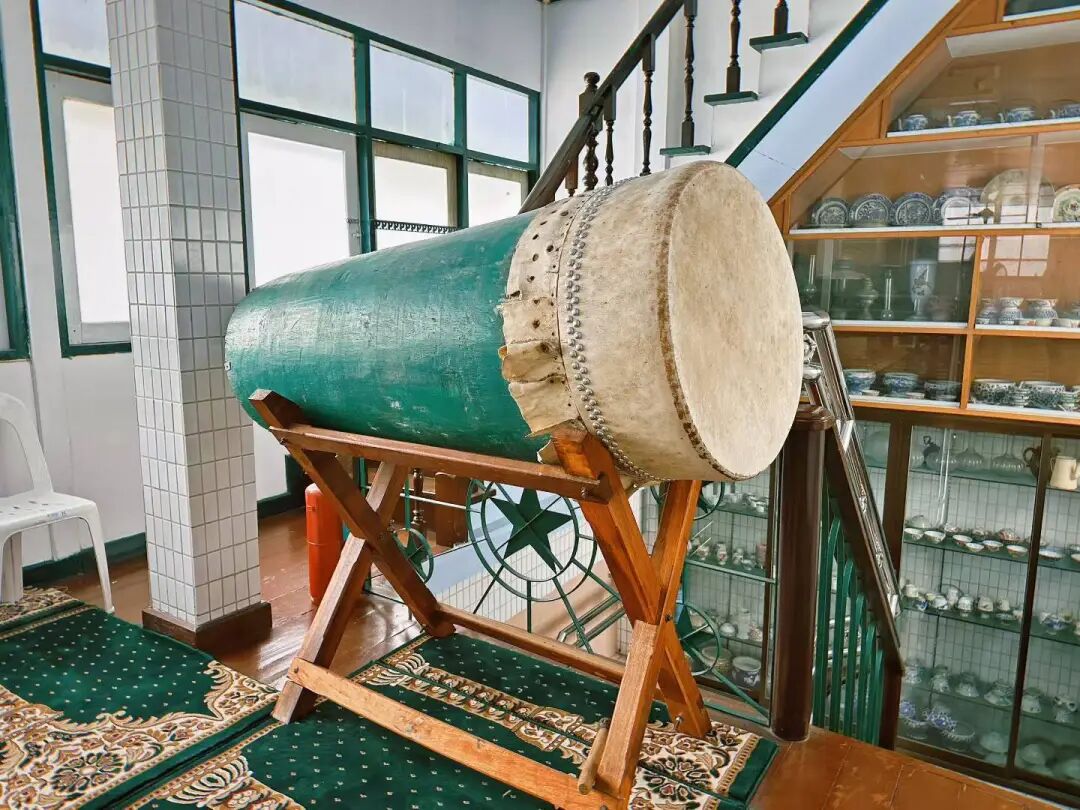
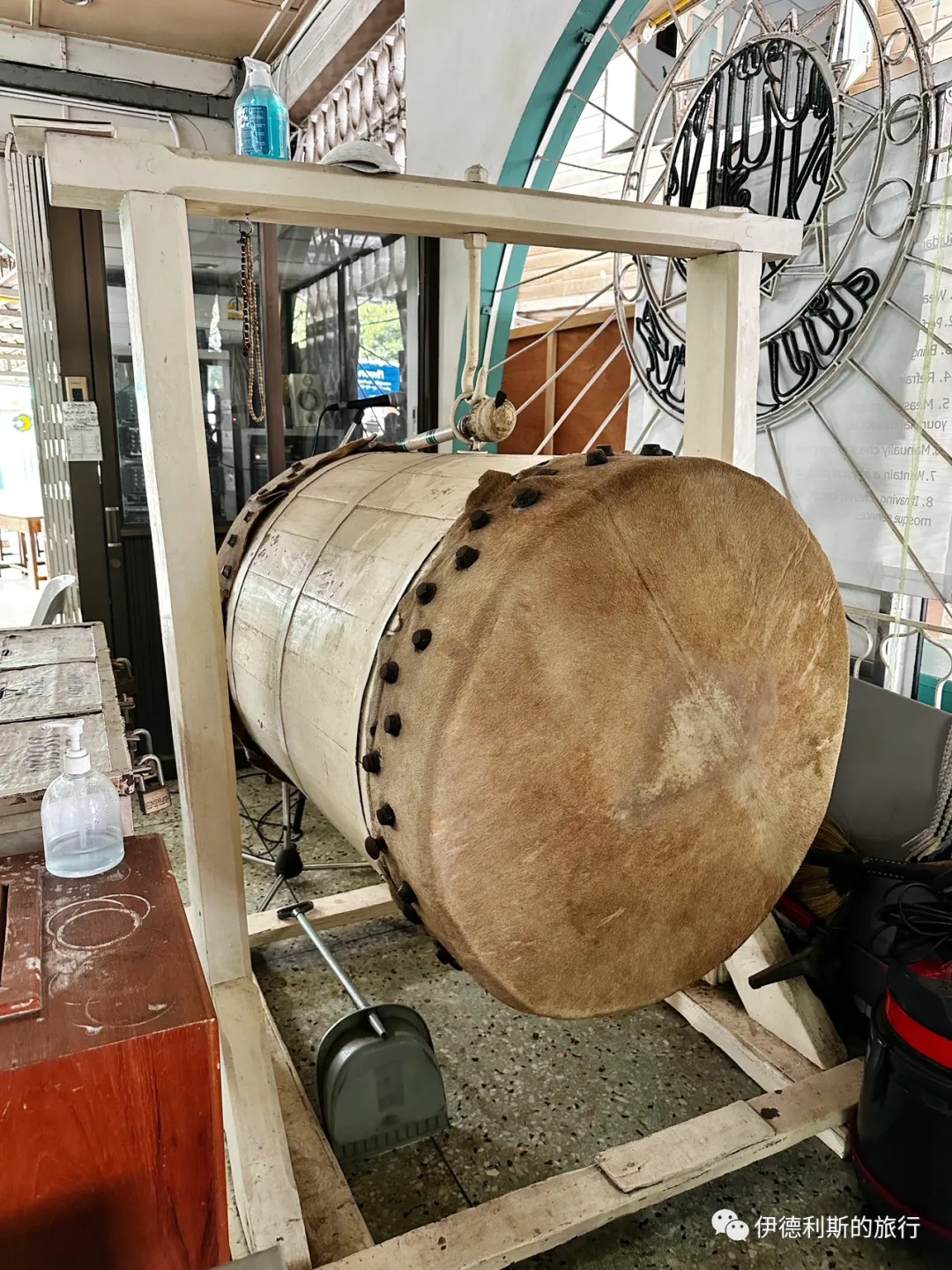
The mosque houses a traditional Indonesian Beduk drum. This single-sided drum is made from a hollowed-out log and covered with cowhide on one side. Slow beats on the Beduk drum signal the approach of prayer time, while rapid beats mean someone has passed away.
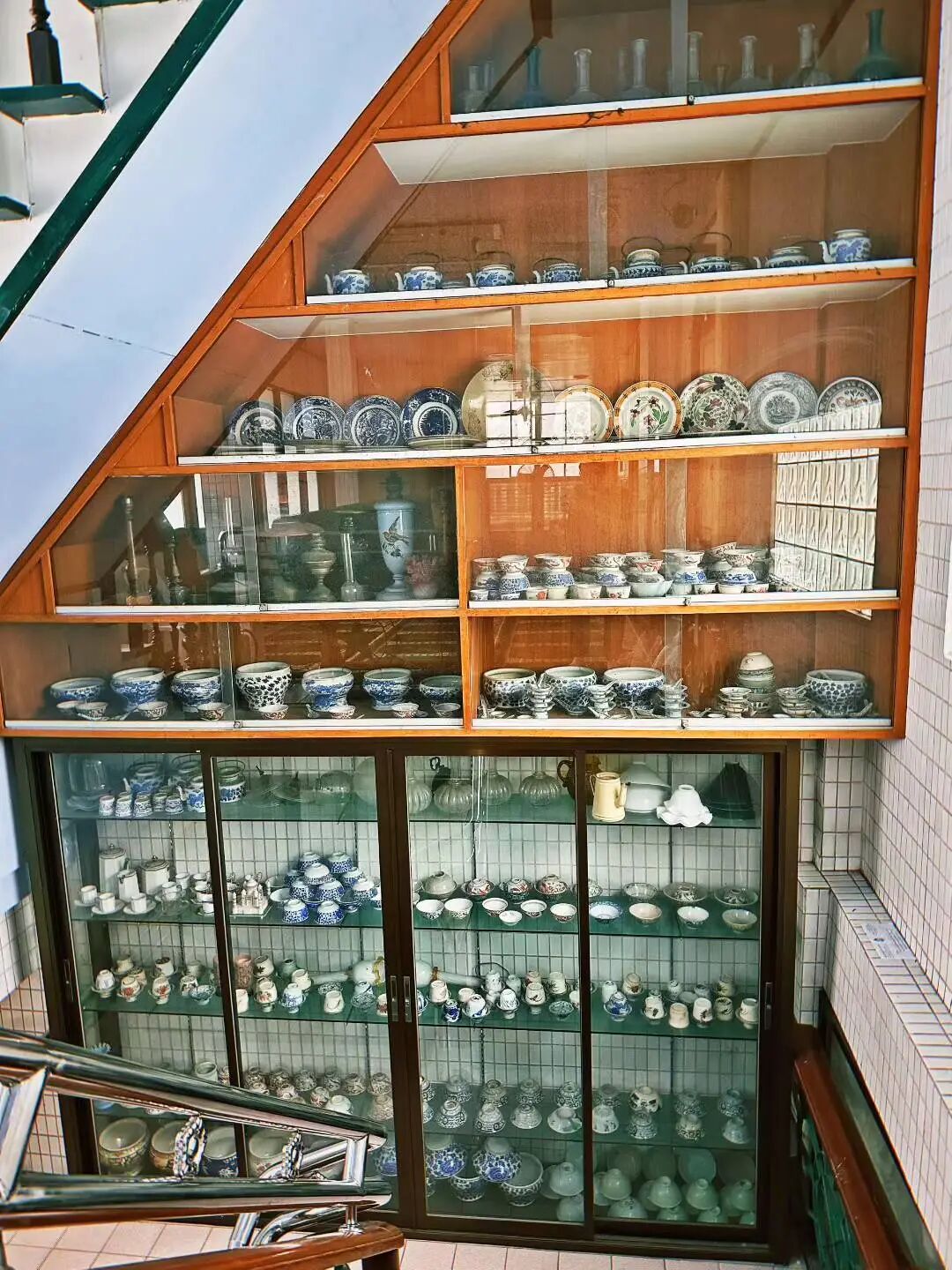
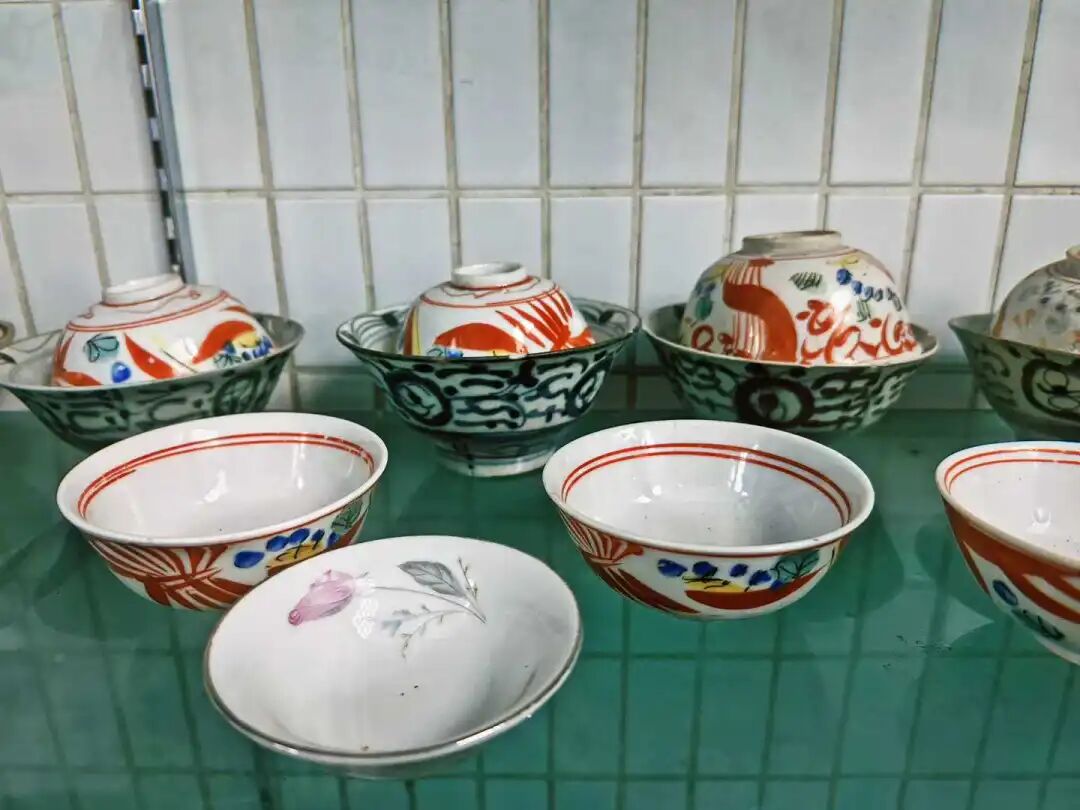
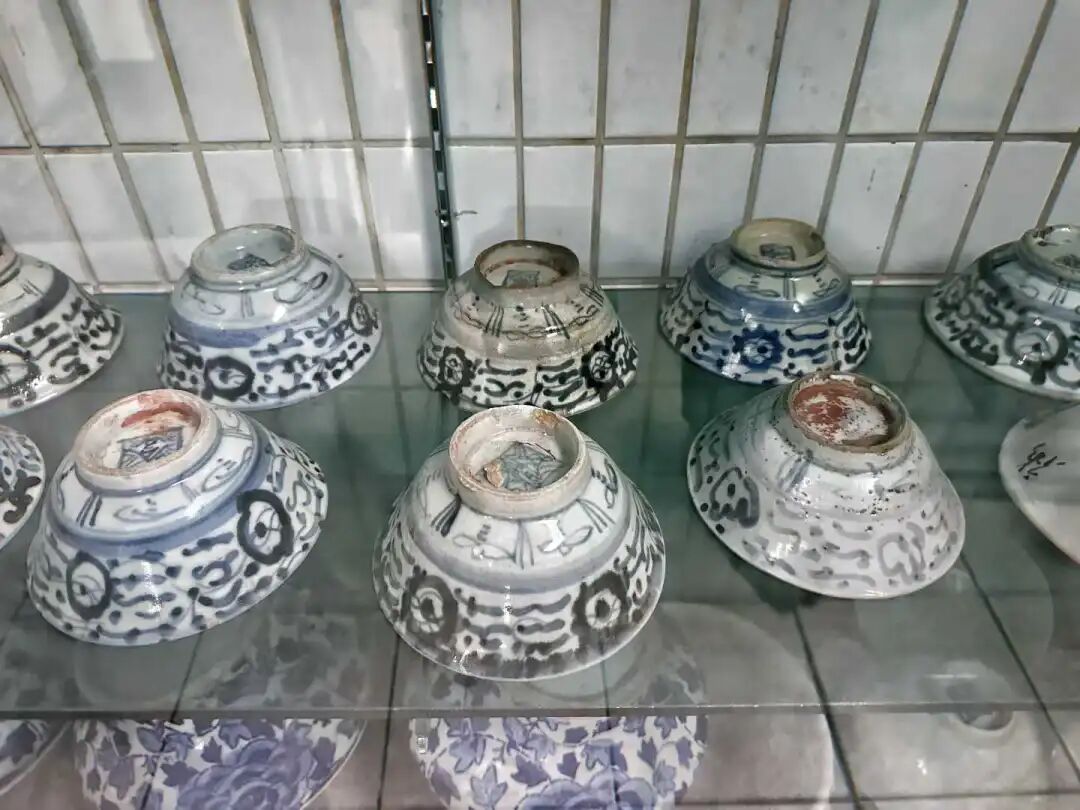
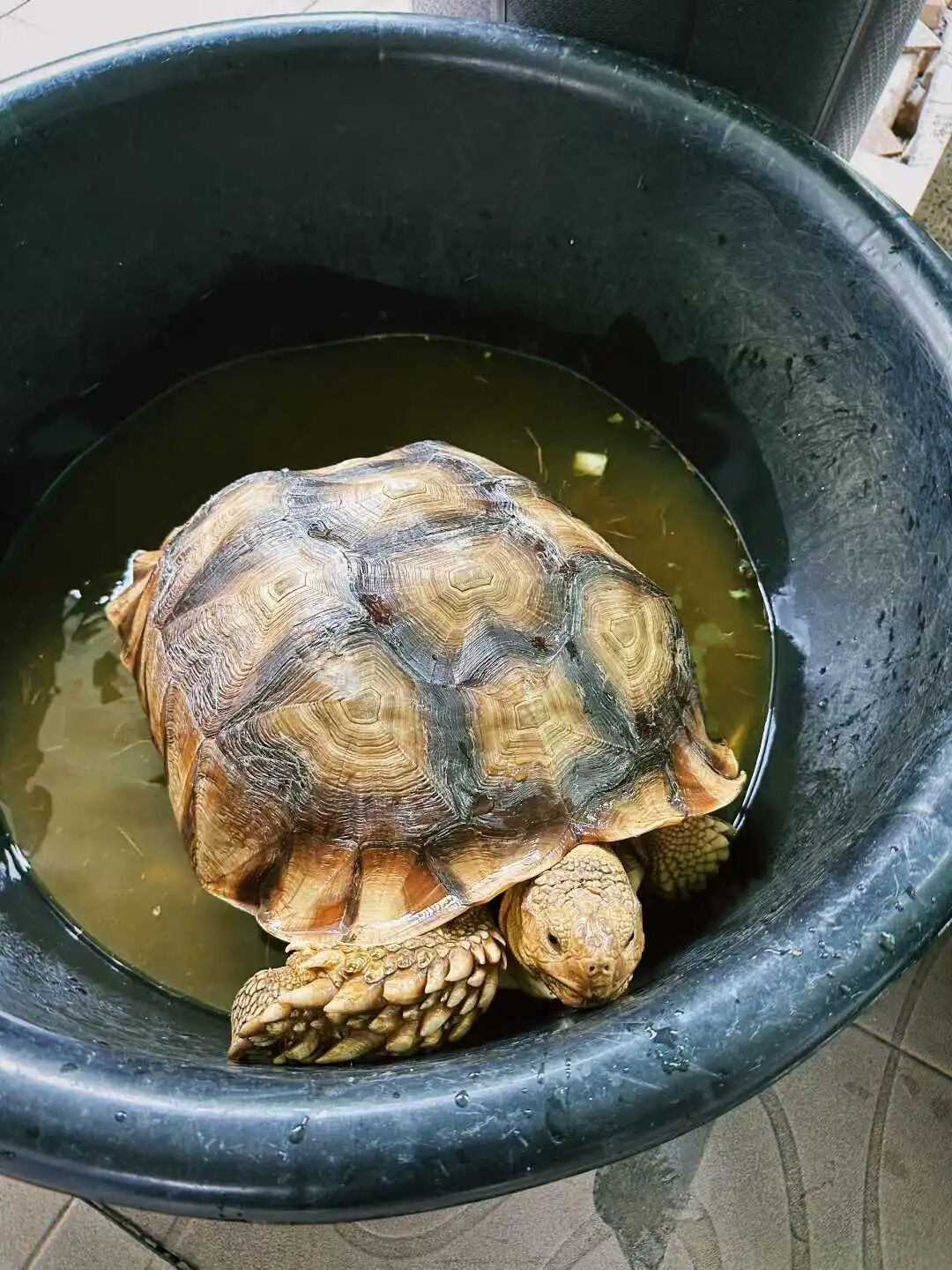
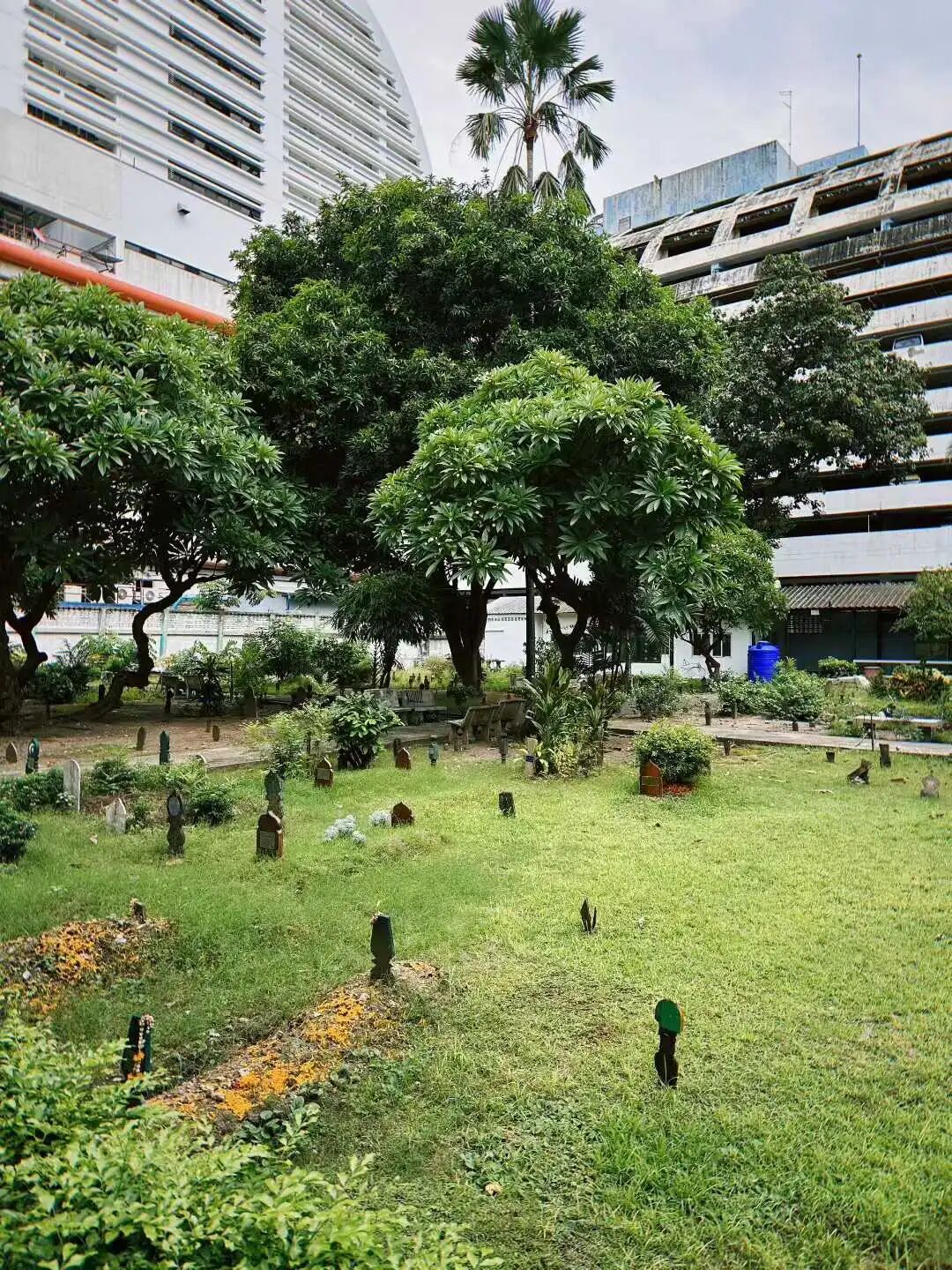
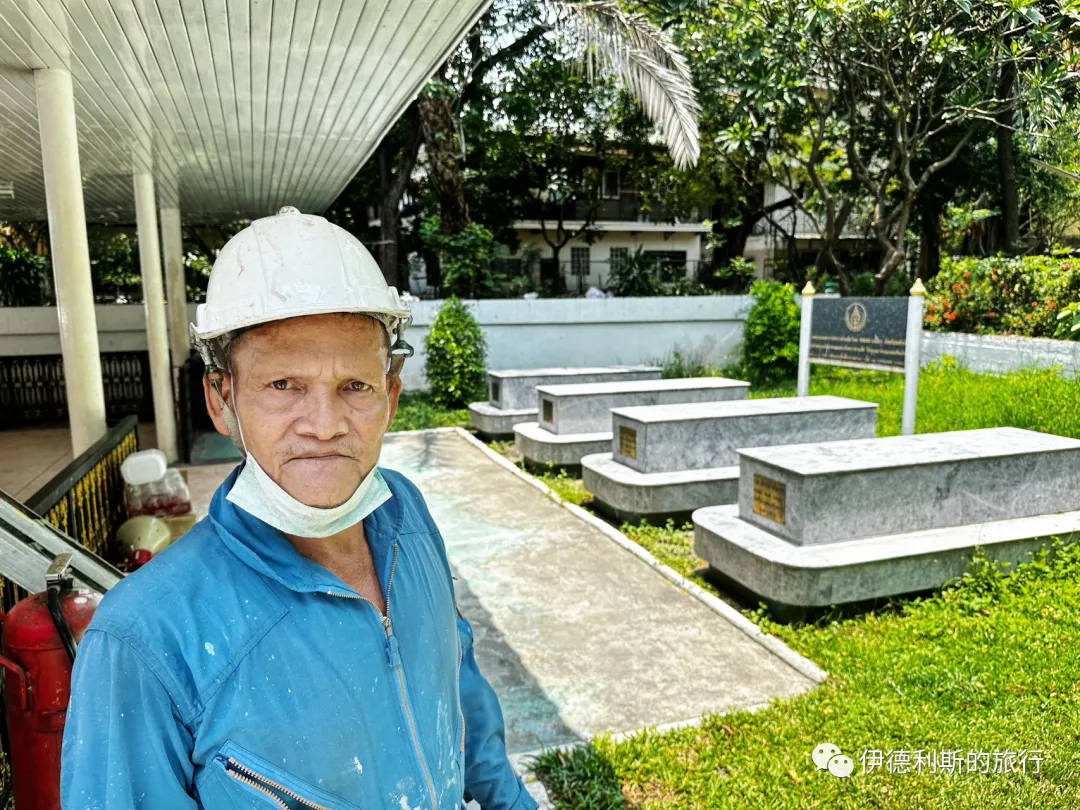
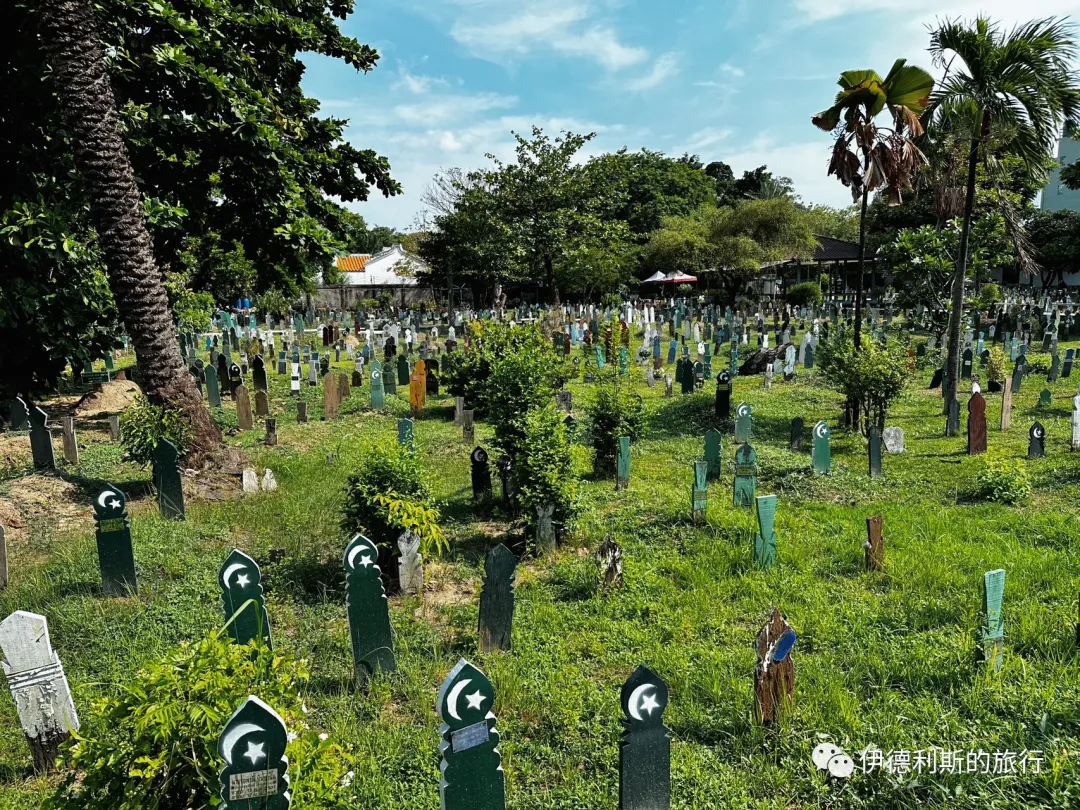
The mosque contains a collection of porcelain, giant turtles kept on the grounds, and a cemetery.
The sign at the snack shop next to the mosque shows a hand-shaking gesture, which is a common greeting among fellow Muslims (dosti) in Thailand and Indonesia. I have seen this in both countries.
Suwannaphum Mosque
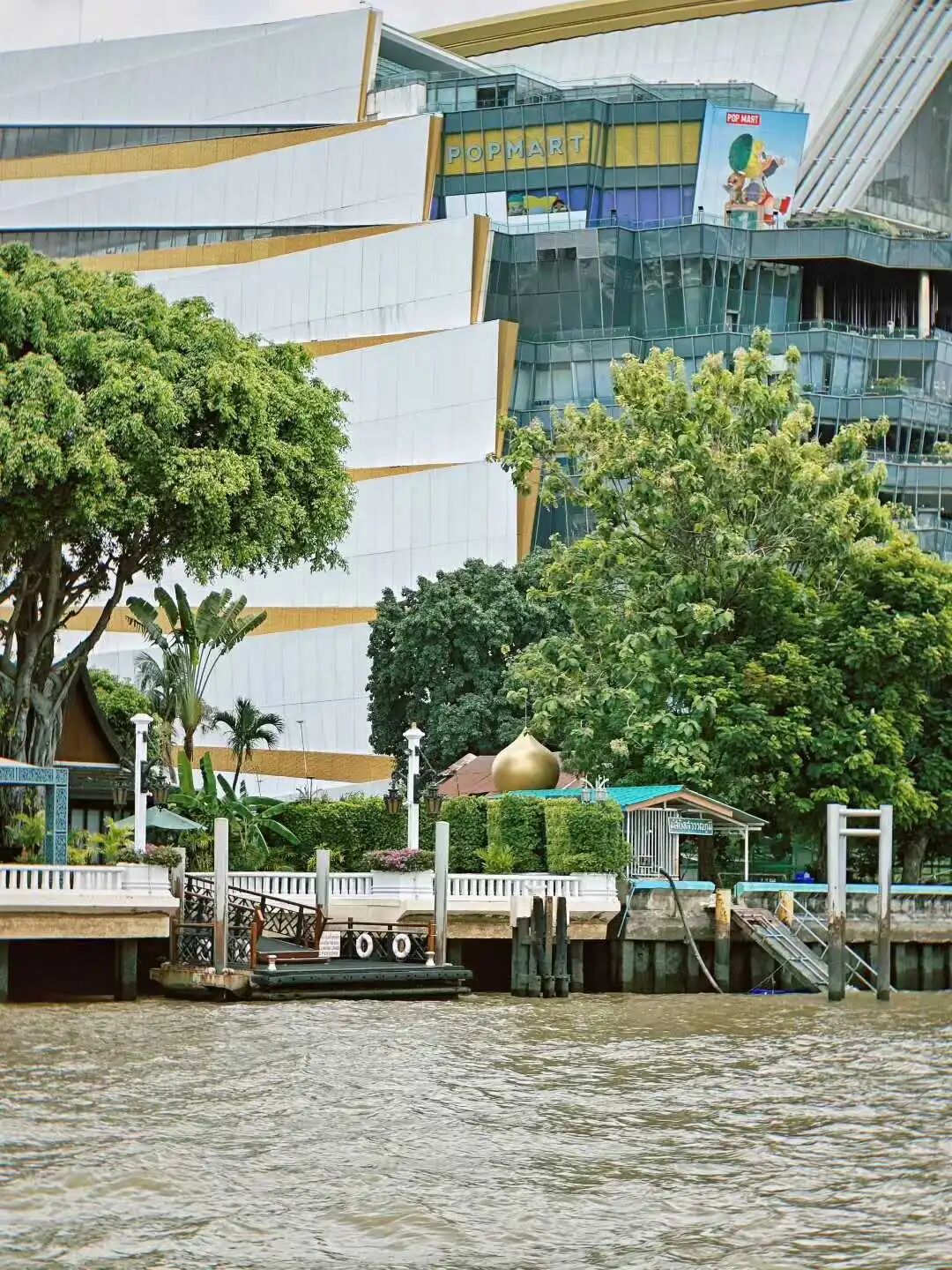
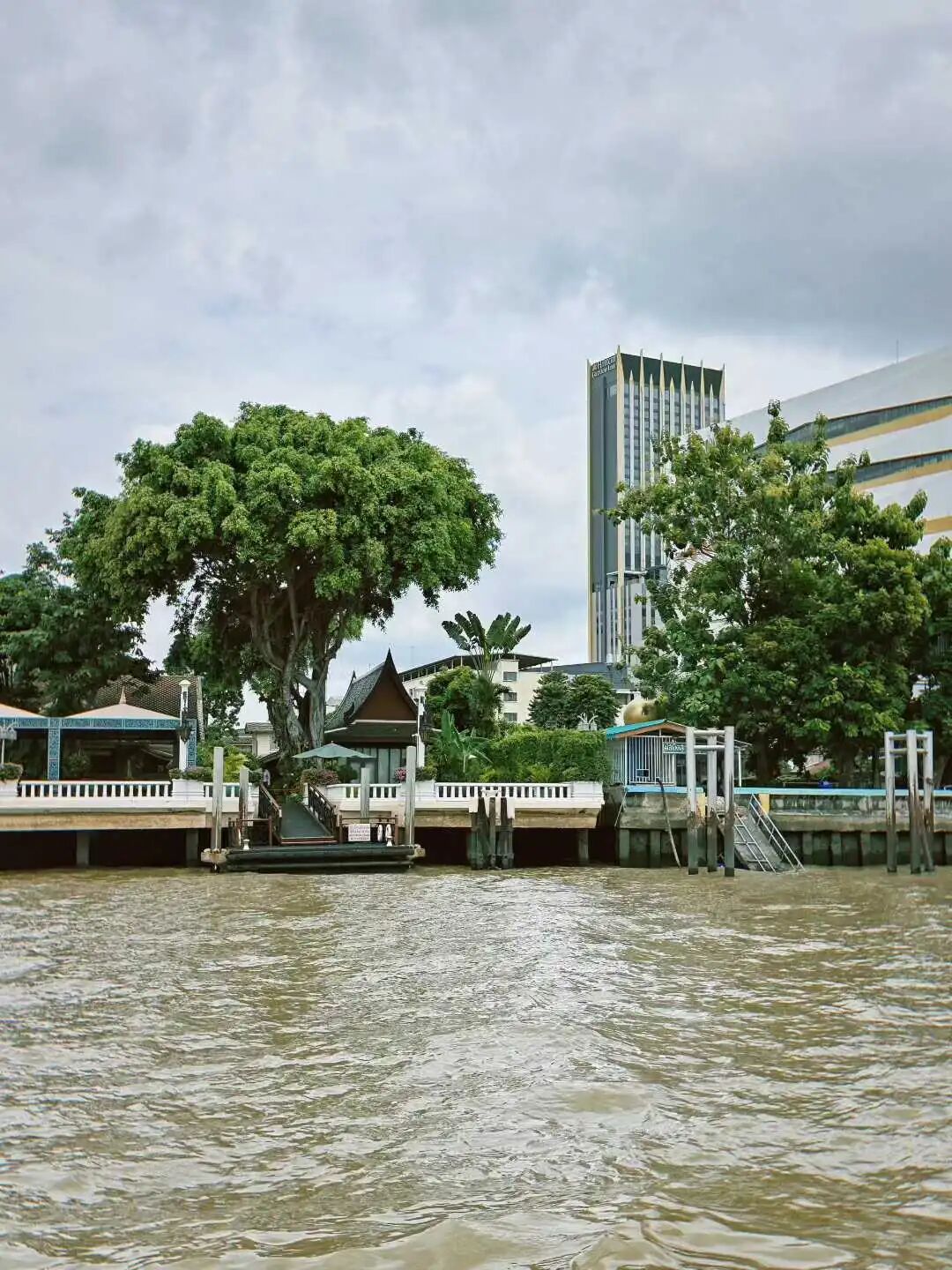
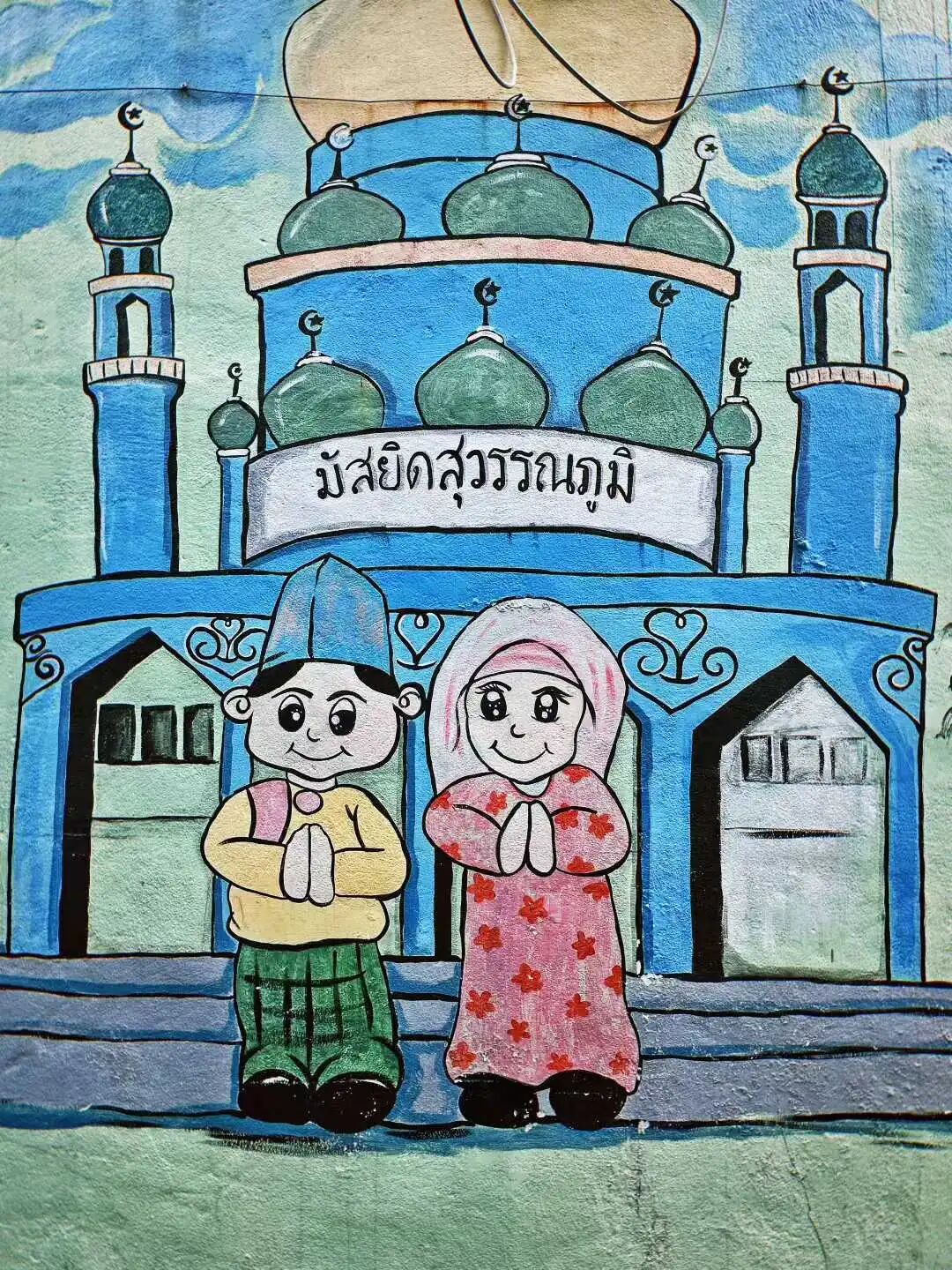
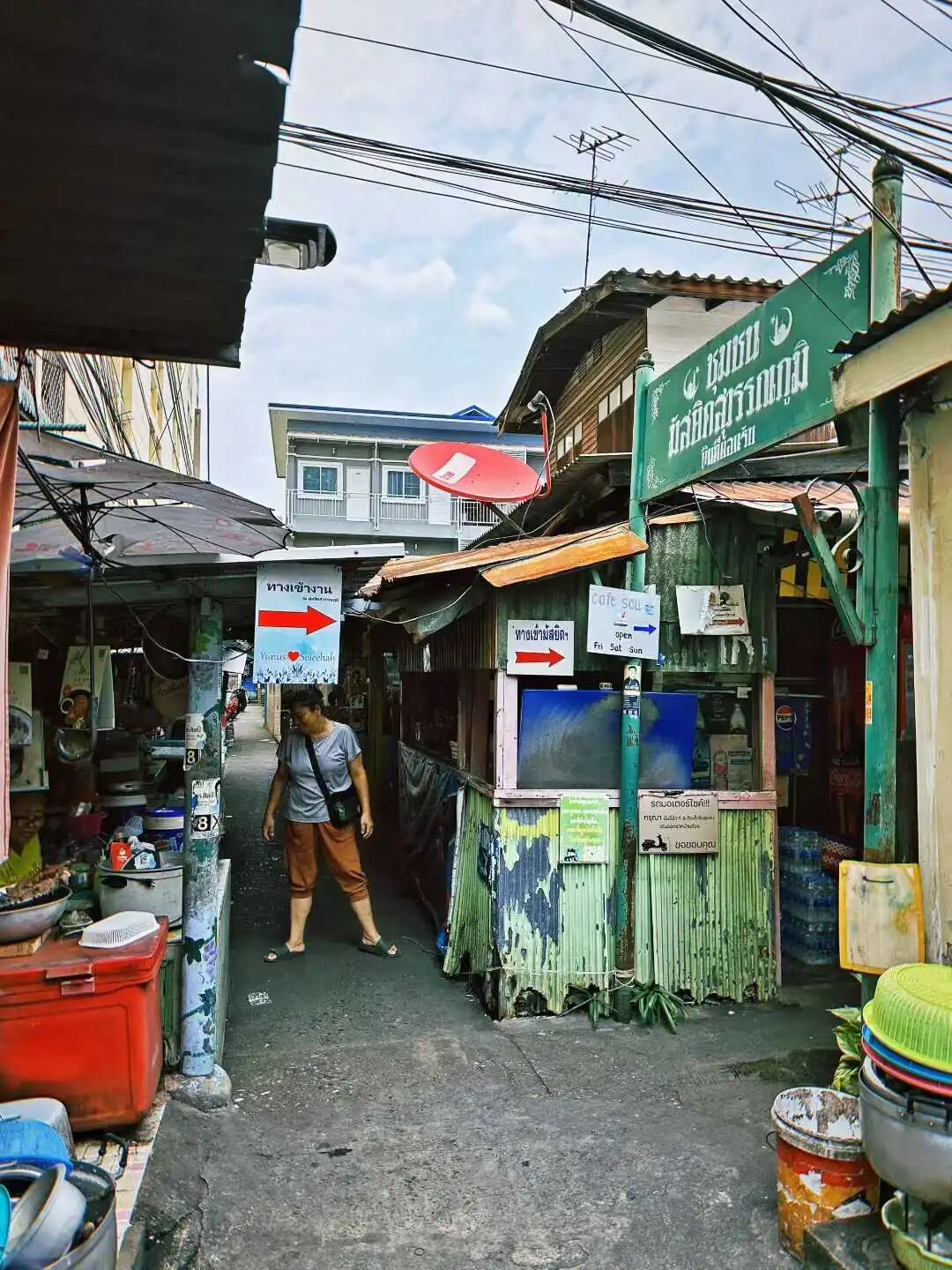
The Suwannaphum Mosque community is near the busy ICONSIAM mall. It was built on the banks of the Chao Phraya River during the reign of King Rama III (1824-1851) by Indonesian sailors living along the coast of Trat Province, near the Thai-Cambodian border. It was originally called Ban Khaek Lang, a sparsely populated village in the southern suburbs of Bangkok. After the Bowring Treaty was signed in 1855, piers and warehouses were built, and many trading companies opened. These Indonesian fishermen started working as barge workers, loading and unloading cargo for Western shipping companies and Indian merchants.
Because there were many Indian merchants nearby, Indian Muslims (dosti) often came to the mosque for worship, and some Indian Muslims even married into the Indonesian Muslim community. Indian merchants donated money to rebuild the mosque during the reign of King Rama IV (1851-68). People say King Rama IV personally named it Suwannaphum Mosque after the nearby Wat Suwan Ubasikaram.
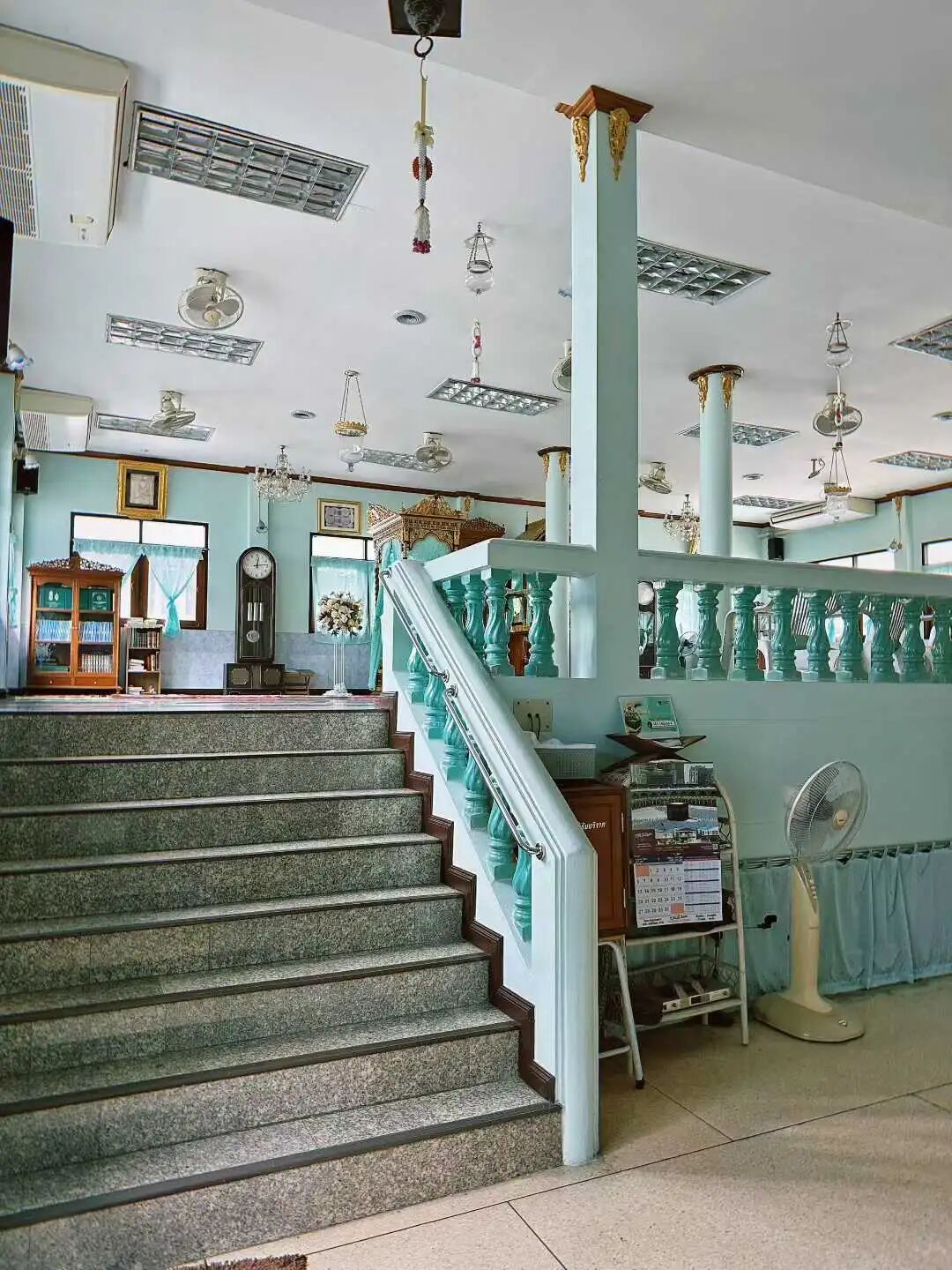
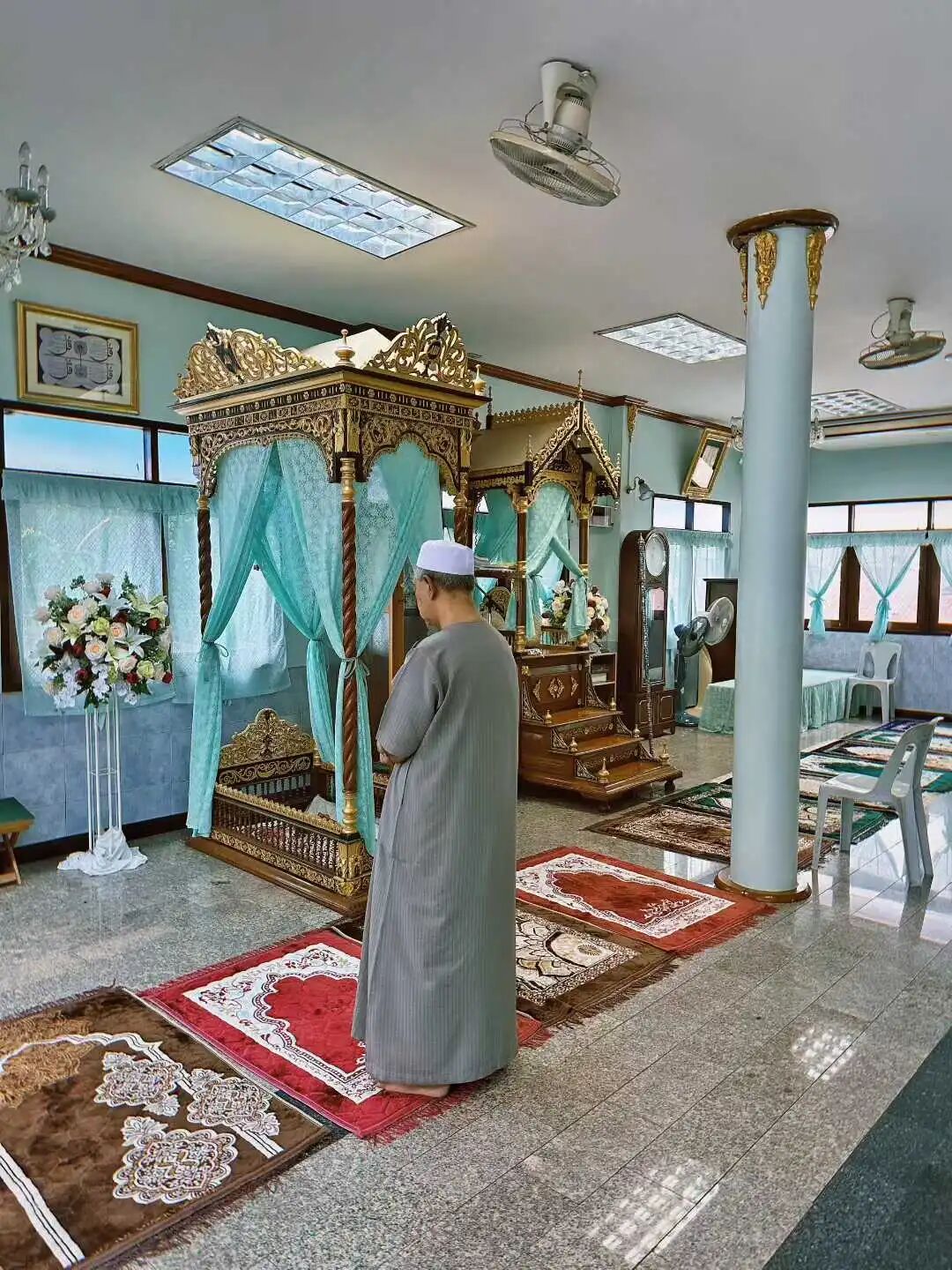
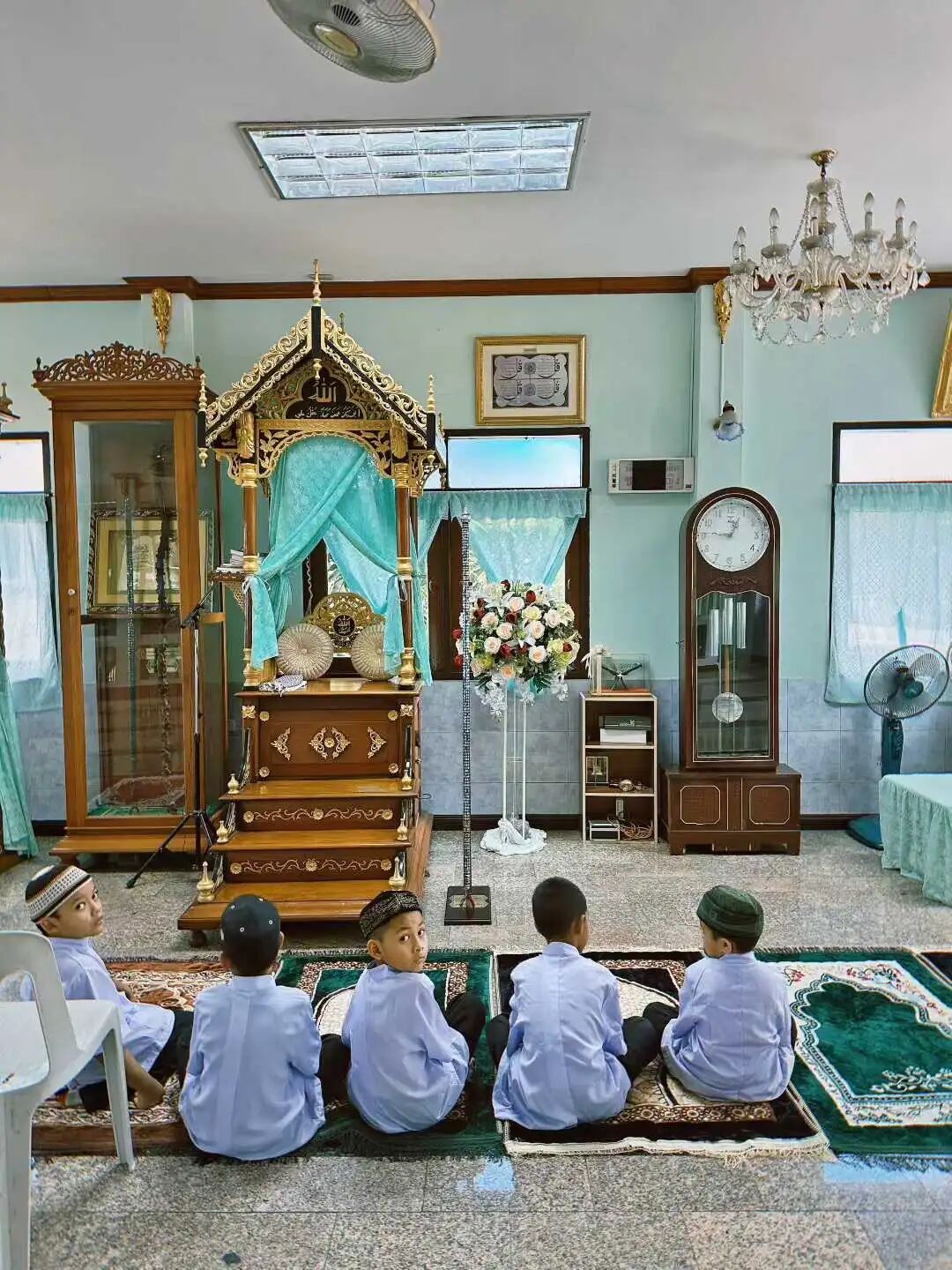
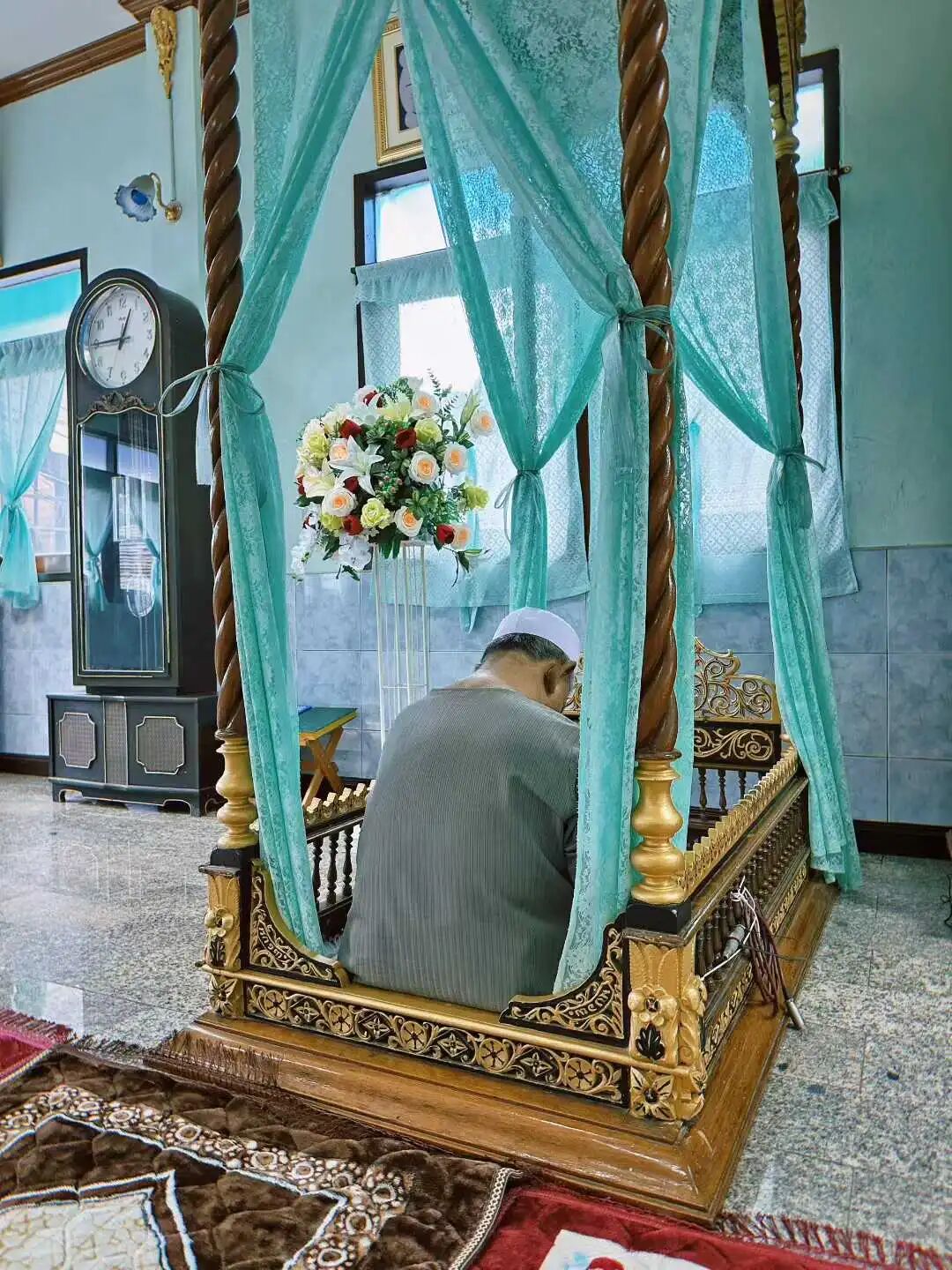
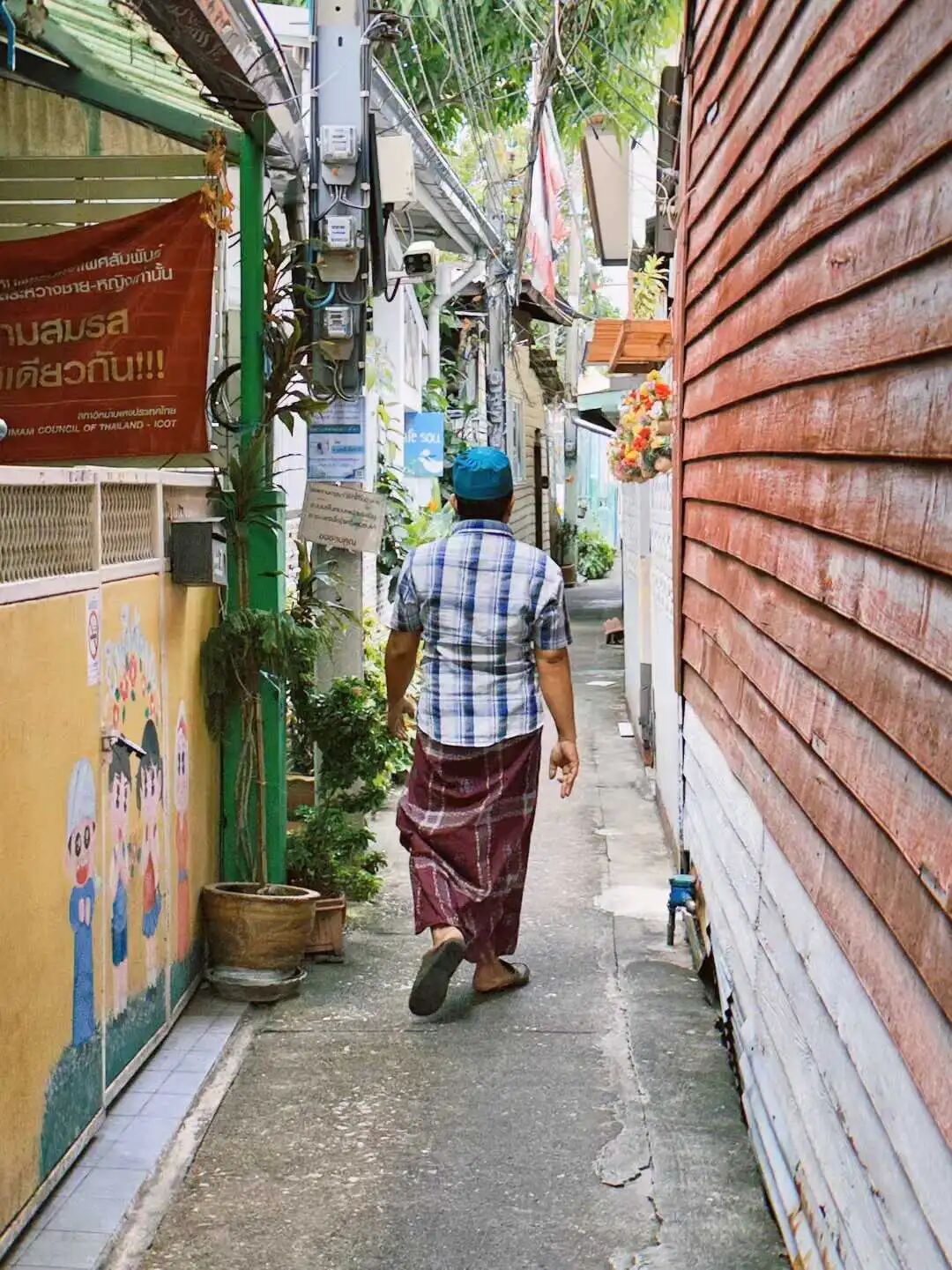
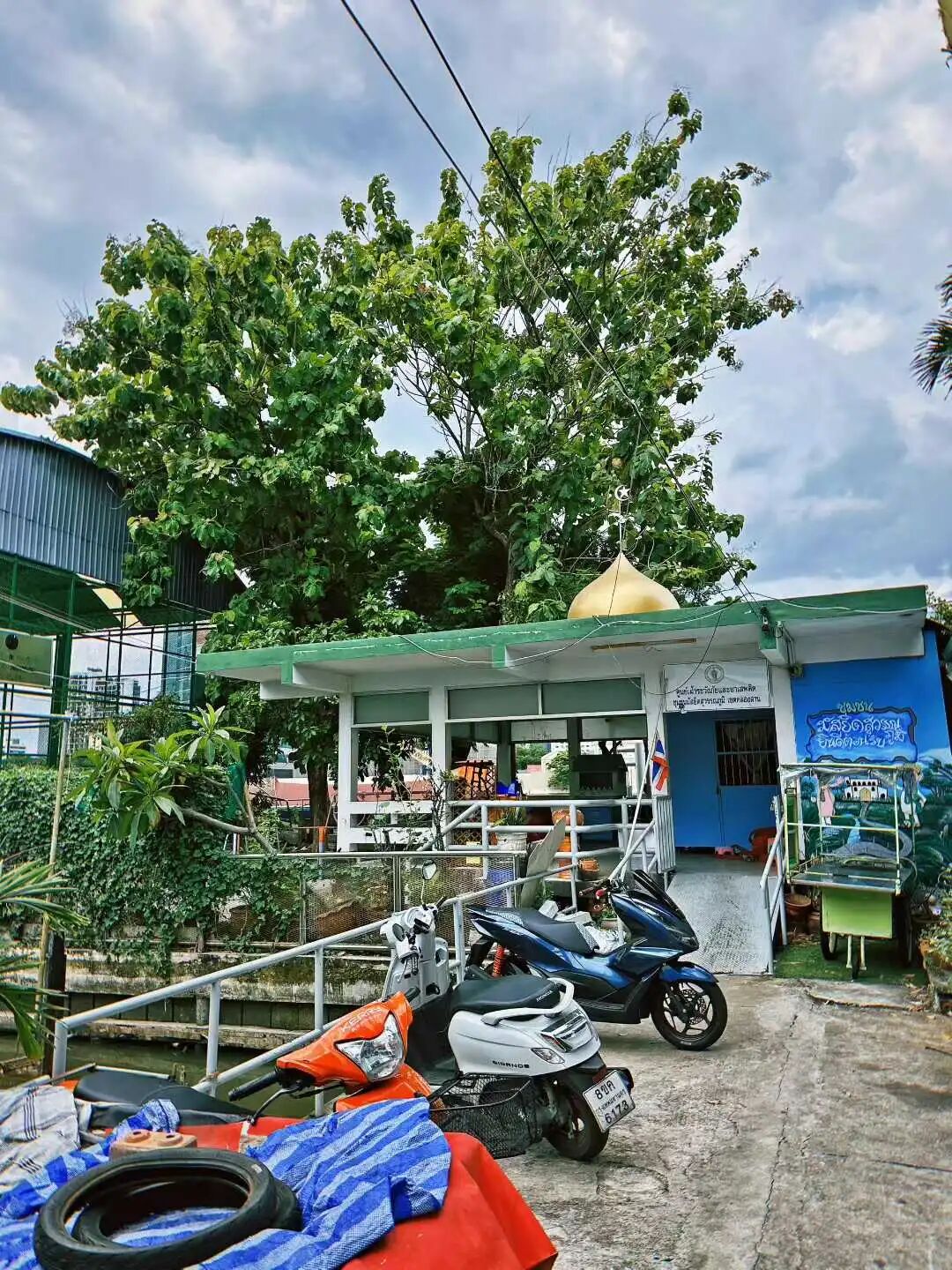
The most unique feature of this mosque is that the imam enters a special wooden pavilion to lead the prayer. I have never seen this before and wonder if it is a unique feature of Thai Islamic practice.
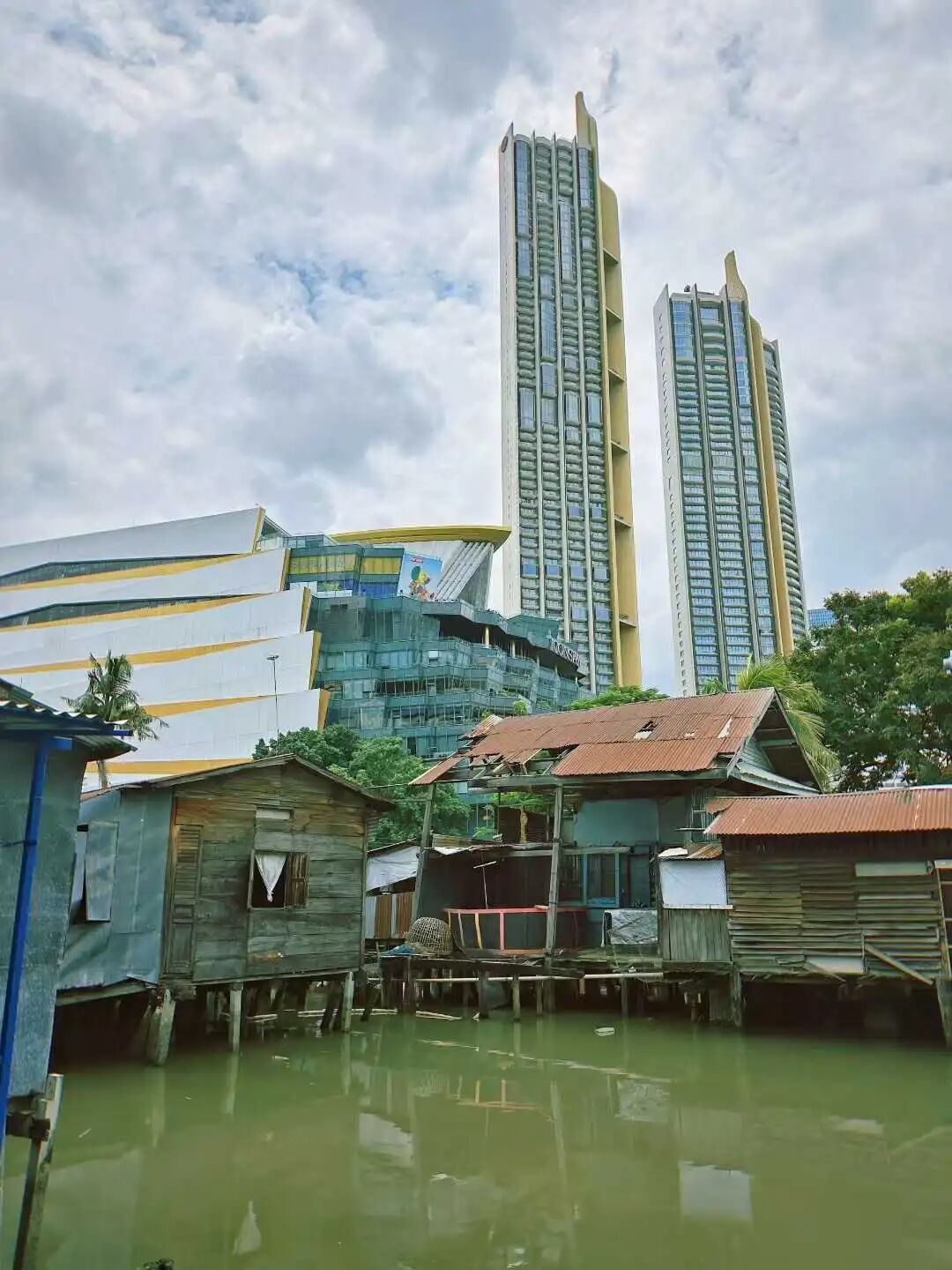
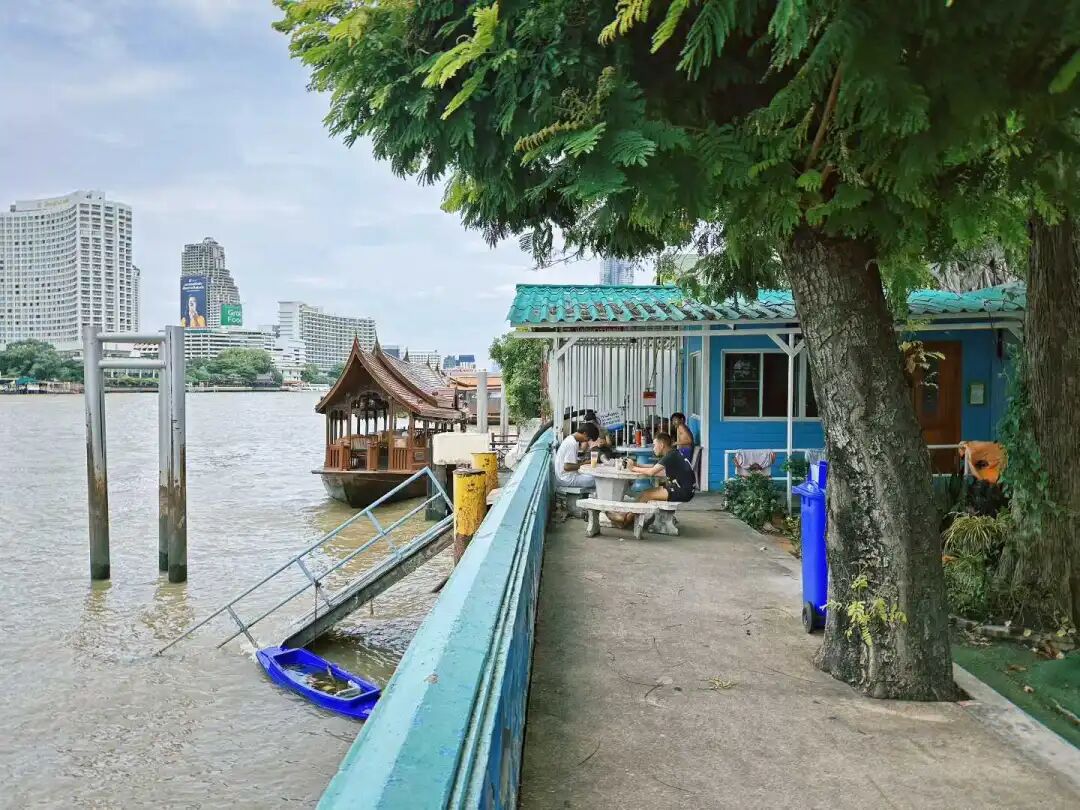
The view of Suwannaphum Mosque is beautiful. It is hard to imagine such a traditional water village mosque still exists right next to the busy ICONSIAM mall. The easiest way to get here is to take a boat along the Chao Phraya River to ICONSIAM and then walk over.
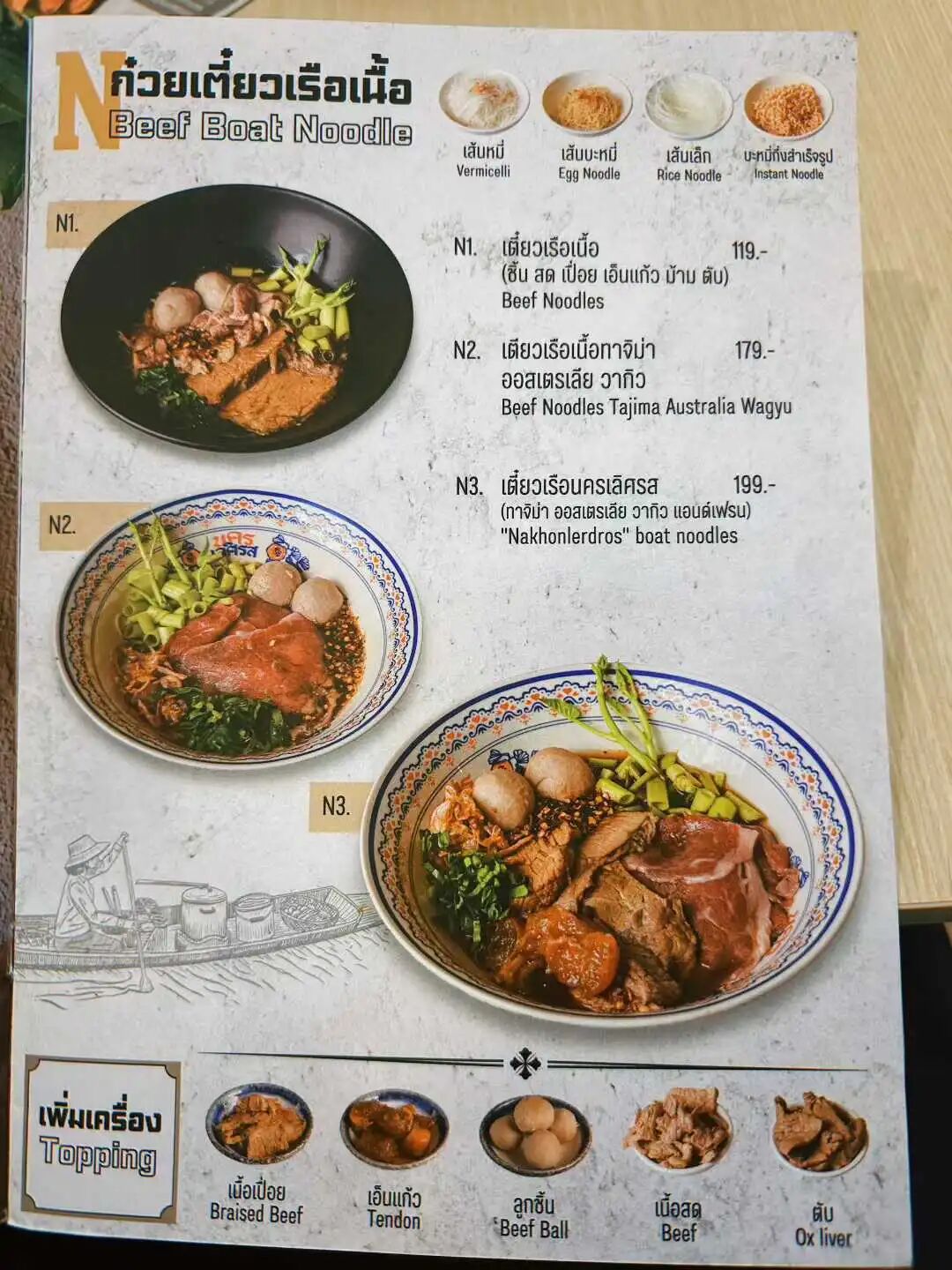
There are many halal restaurants near ICONSIAM, and we ate inside the mall last time. This time, we ate at a Thai halal restaurant called Nakhon Lerdros inside the ICS mall, which is across from ICONSIAM. You can walk between ICS and ICONSIAM using the upper-level walkway. The best part about eating in the mall is the air conditioning, though it costs more than street food.
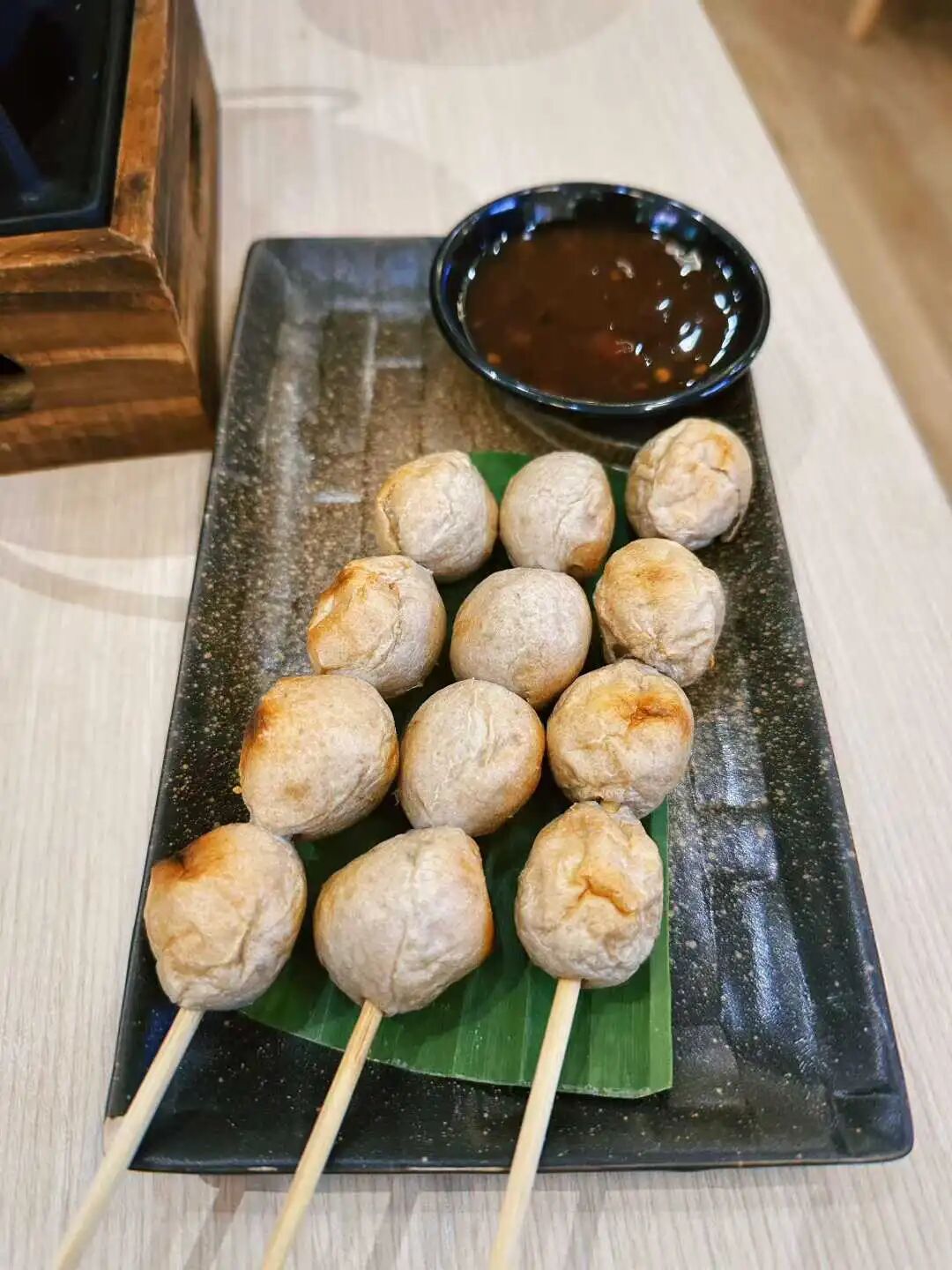
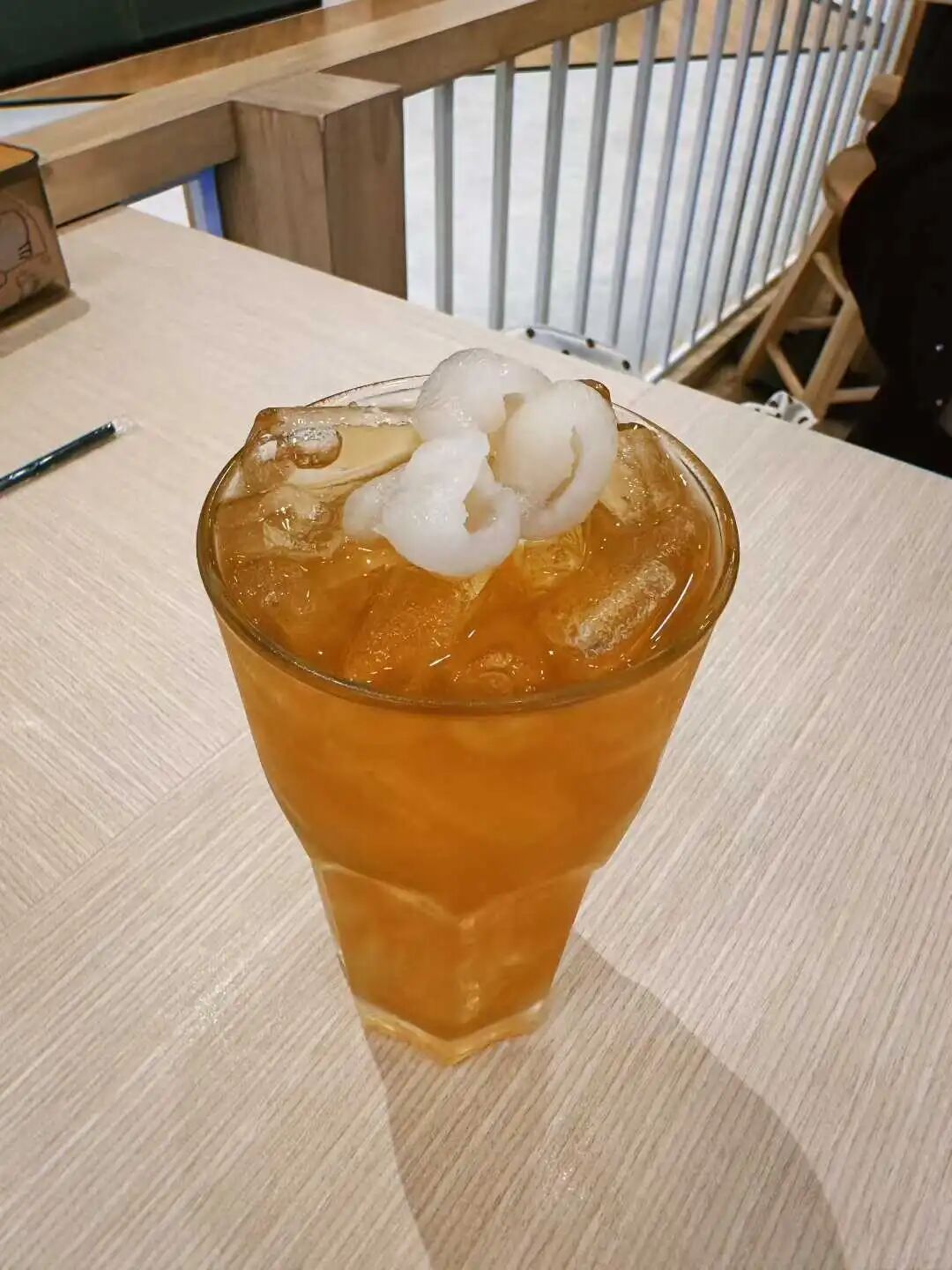
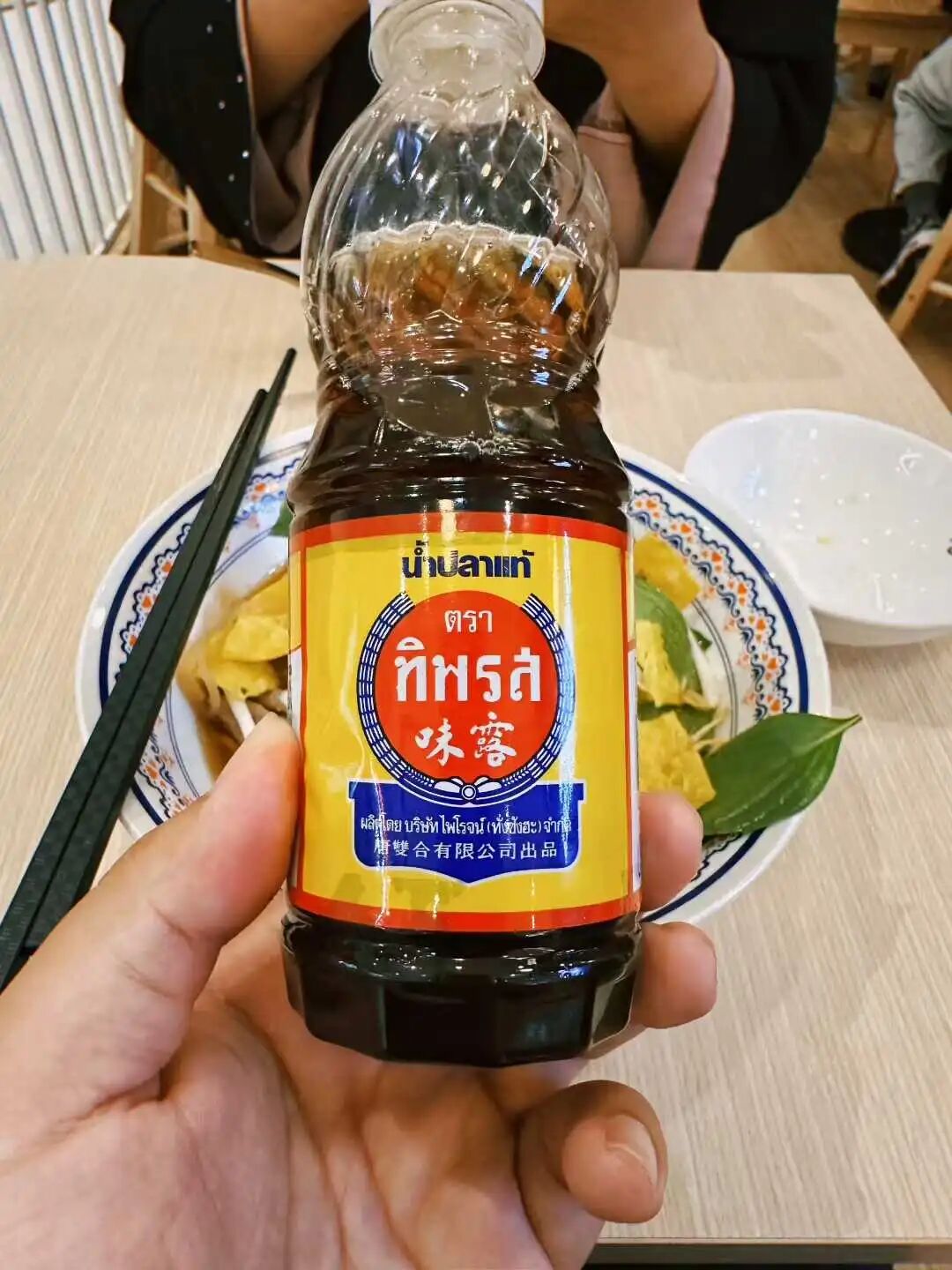
We ordered Thai boat noodles, tom yum soup, grilled meatballs, and longan juice. Boat noodles were originally sold by people rowing small boats along Bangkok's canals. One person did everything on the boat: cooking the noodles, making the broth, serving the food, collecting money, and washing the dishes. Halal boat noodles usually use beef and beef meatballs, and the broth is made from beef. They use Tang Shuang He brand fish sauce for seasoning. Most Thai condiments are halal-certified. The fish sauce only contains anchovies, salt, sugar, and water, which adds a special flavor.
The food court inside ICONSIAM is still very popular. There are several halal stalls here, making it a great place to eat snacks while enjoying the air conditioning on a hot day.
For more about snacks inside ICONSIAM, see my diary: Bangkok Halal Trip—Food and Lodging.
The pier at the entrance of ICONSIAM is very convenient for boats. You can take a boat downstream to the Asiatique night market or upstream back to Bangkok's old town.
Haroon Mosque.
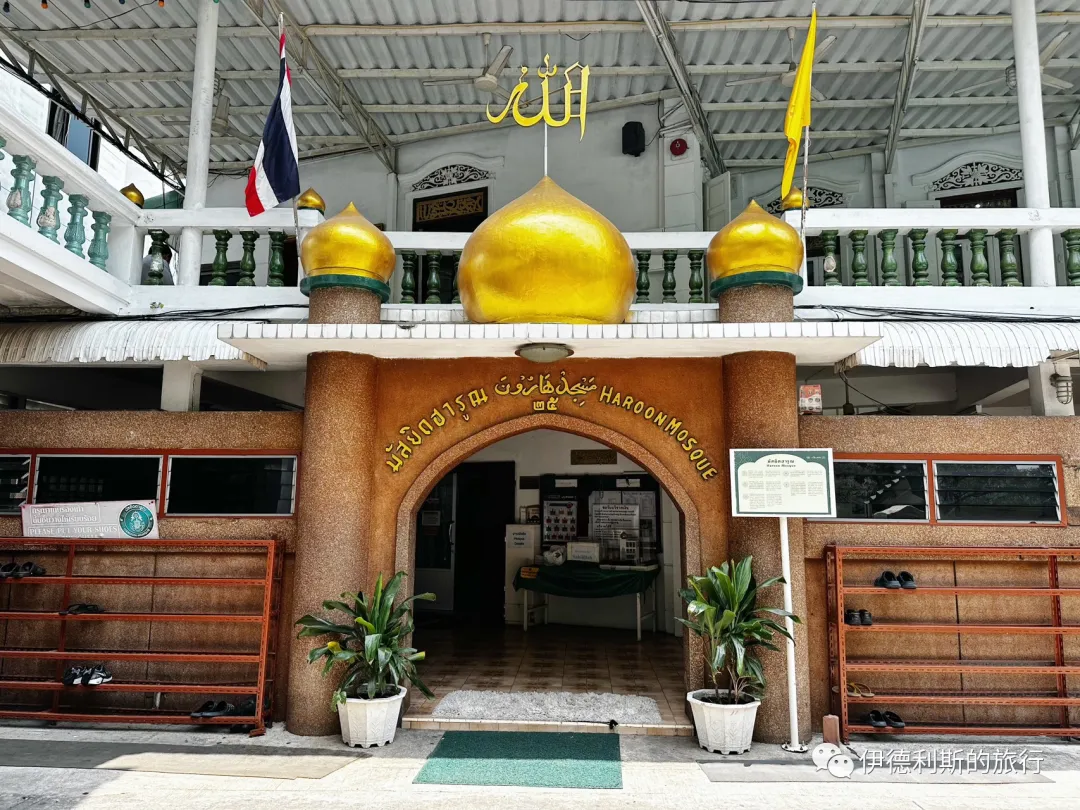
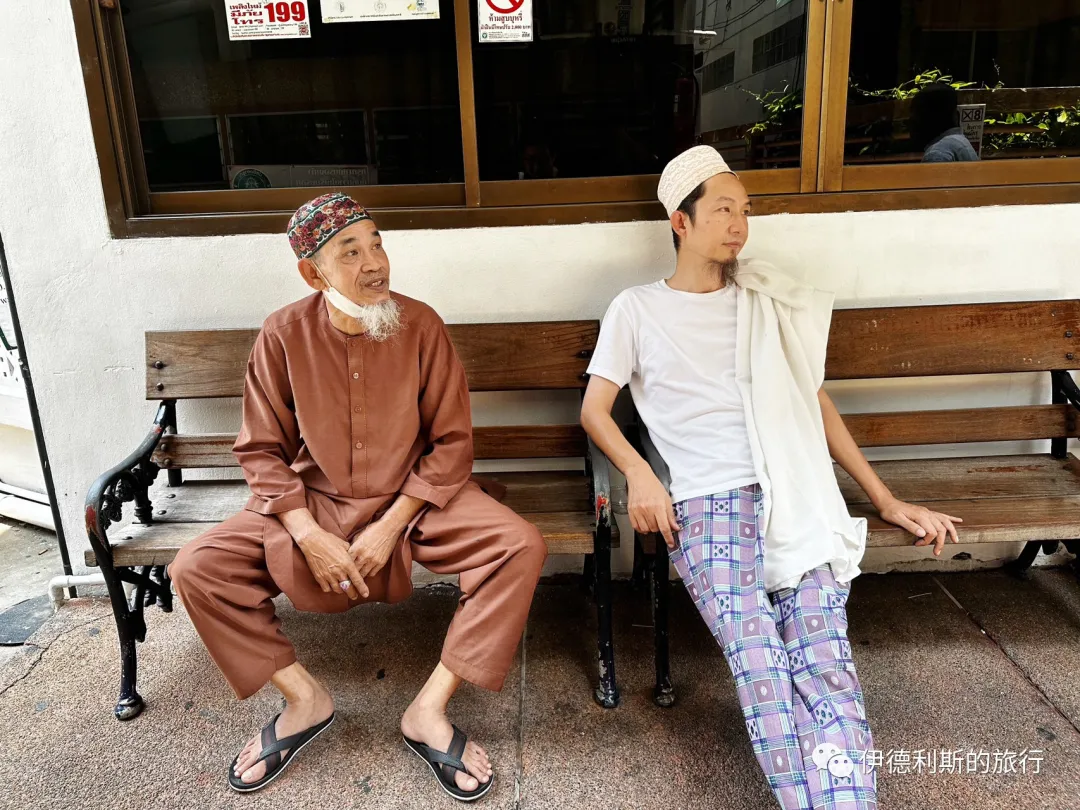
Haroon Mosque is named after an Indonesian Arab merchant named Toh Haroon Bafaden. He came to Bangkok from Indonesia with his father in 1828 (some say 1837) to do business. He later married, settled down, built Haroon Mosque, and became its first imam.
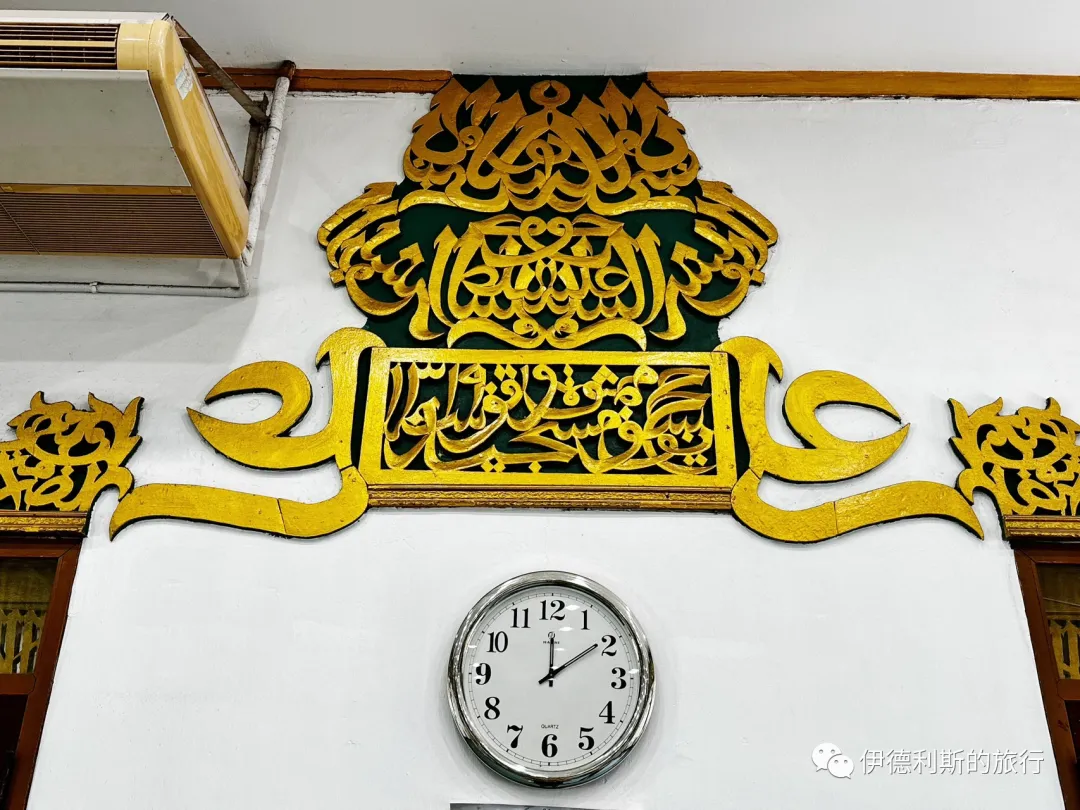
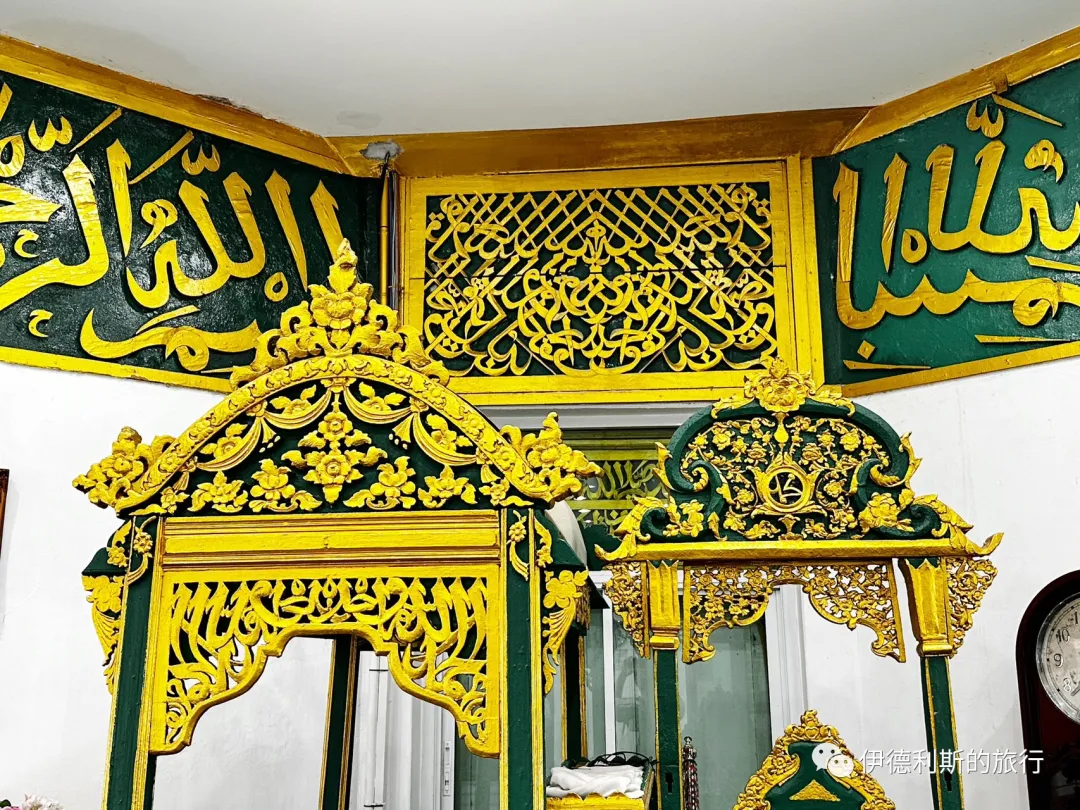
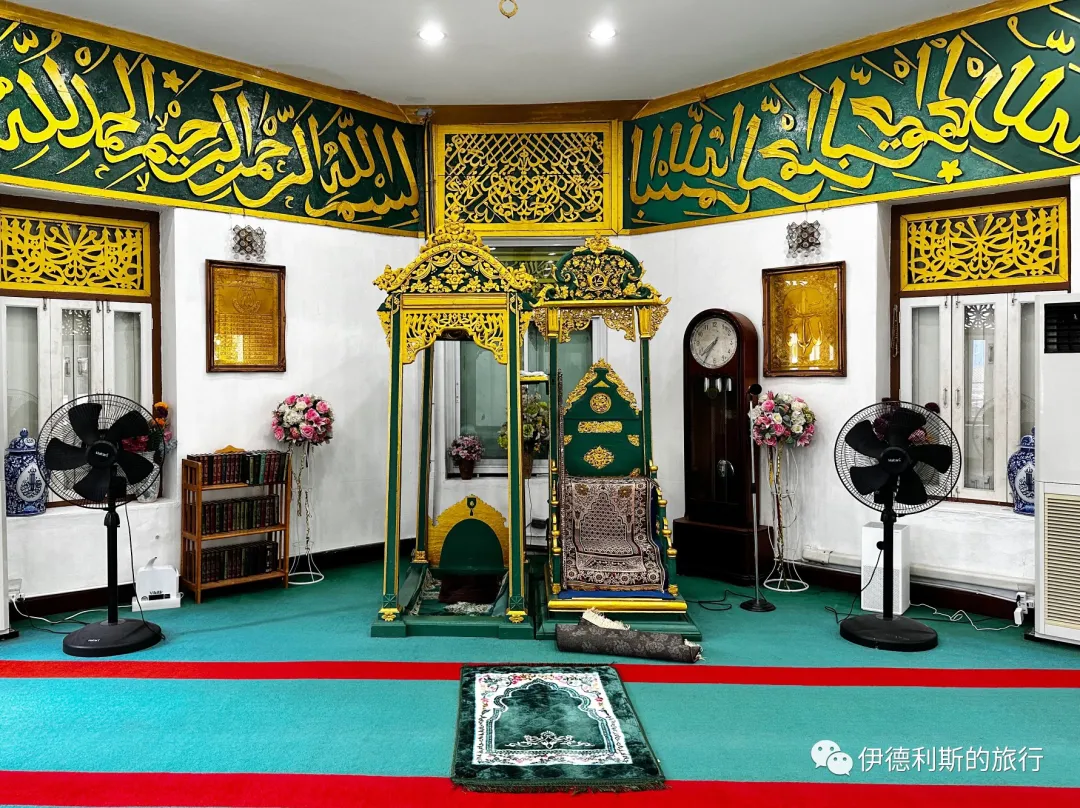
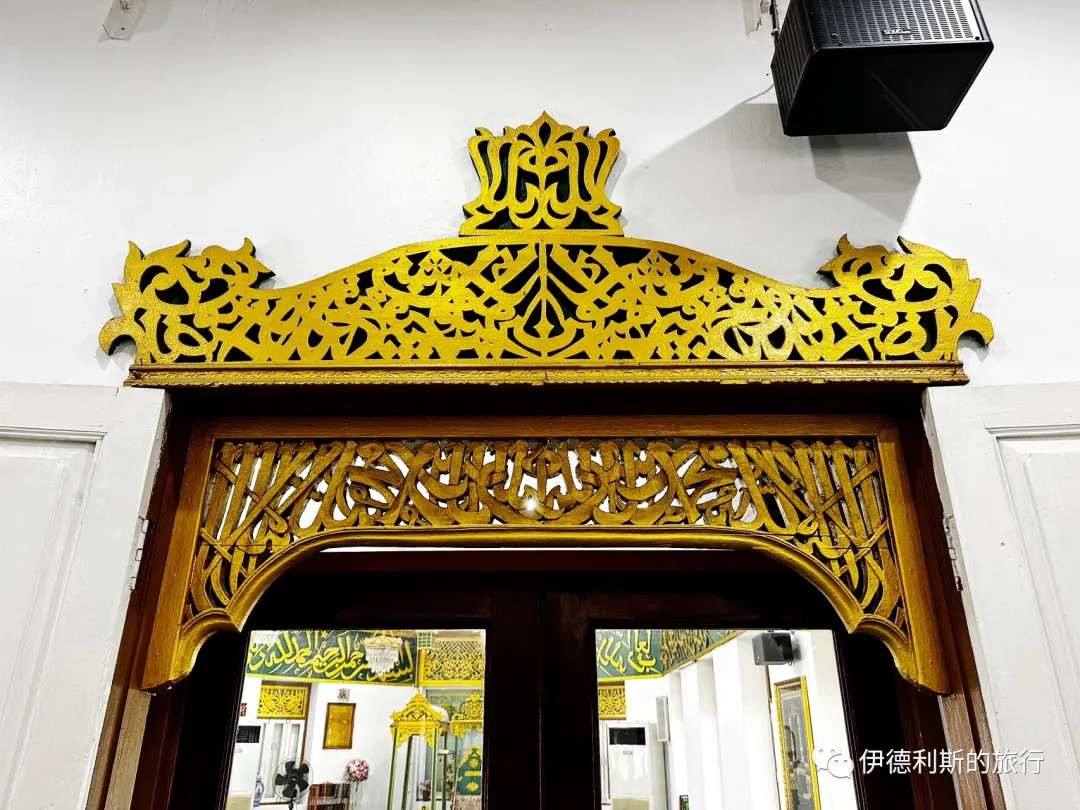
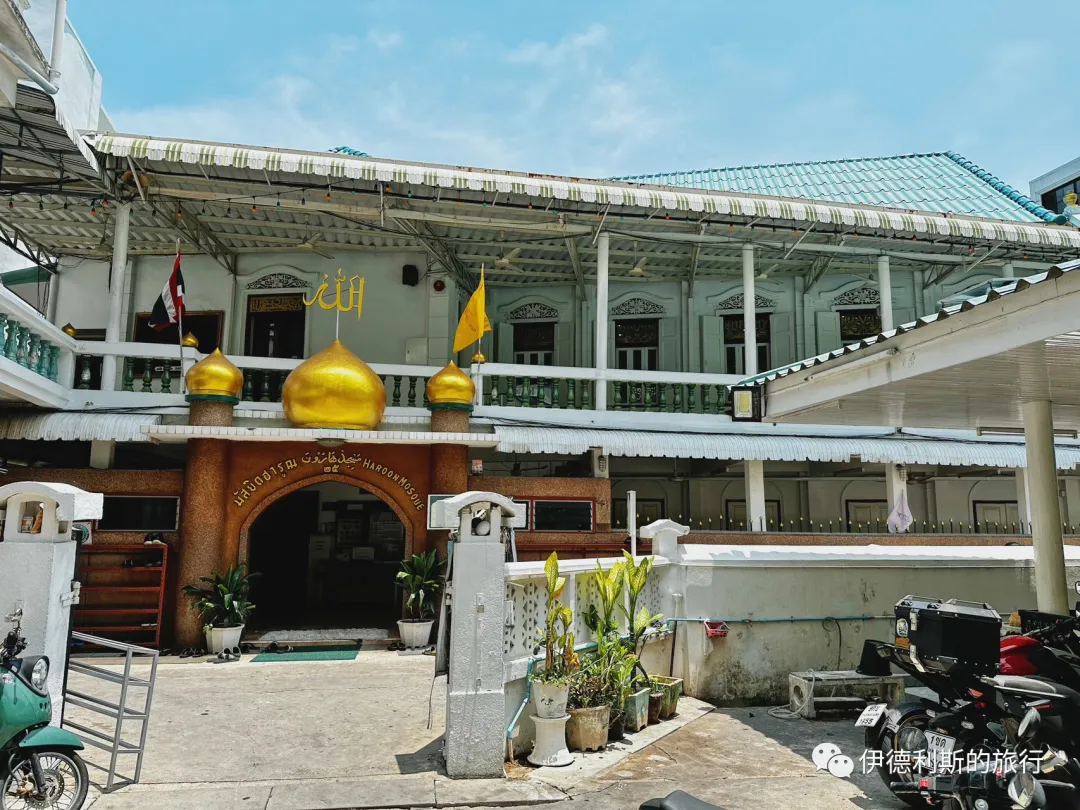
Haroon Mosque was originally located by the Chao Phraya River. It was a wooden building that combined Ayutthaya and Javanese styles. It moved to its current location in 1899 because of the construction of the Customs House. In 1934, the mosque was rebuilt into its current white brick and plaster structure. It features neoclassical floral patterns, Roman-style columns, and wooden shutters, looking a bit like a European townhouse from that era.
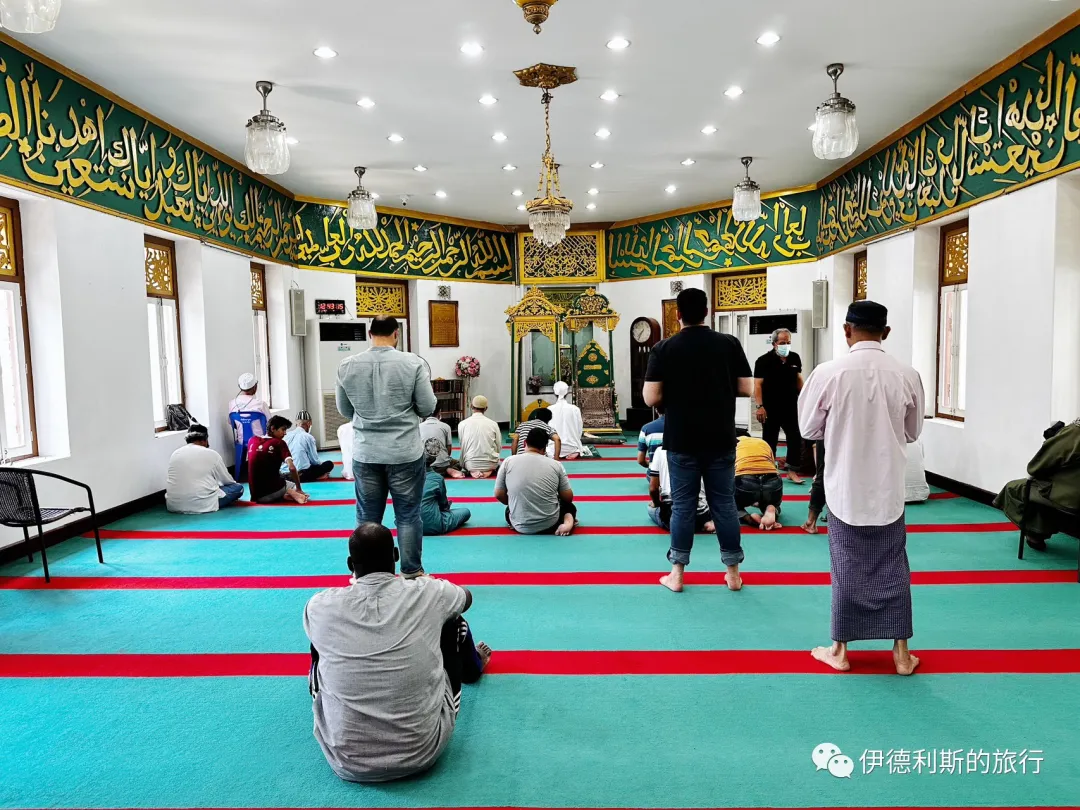
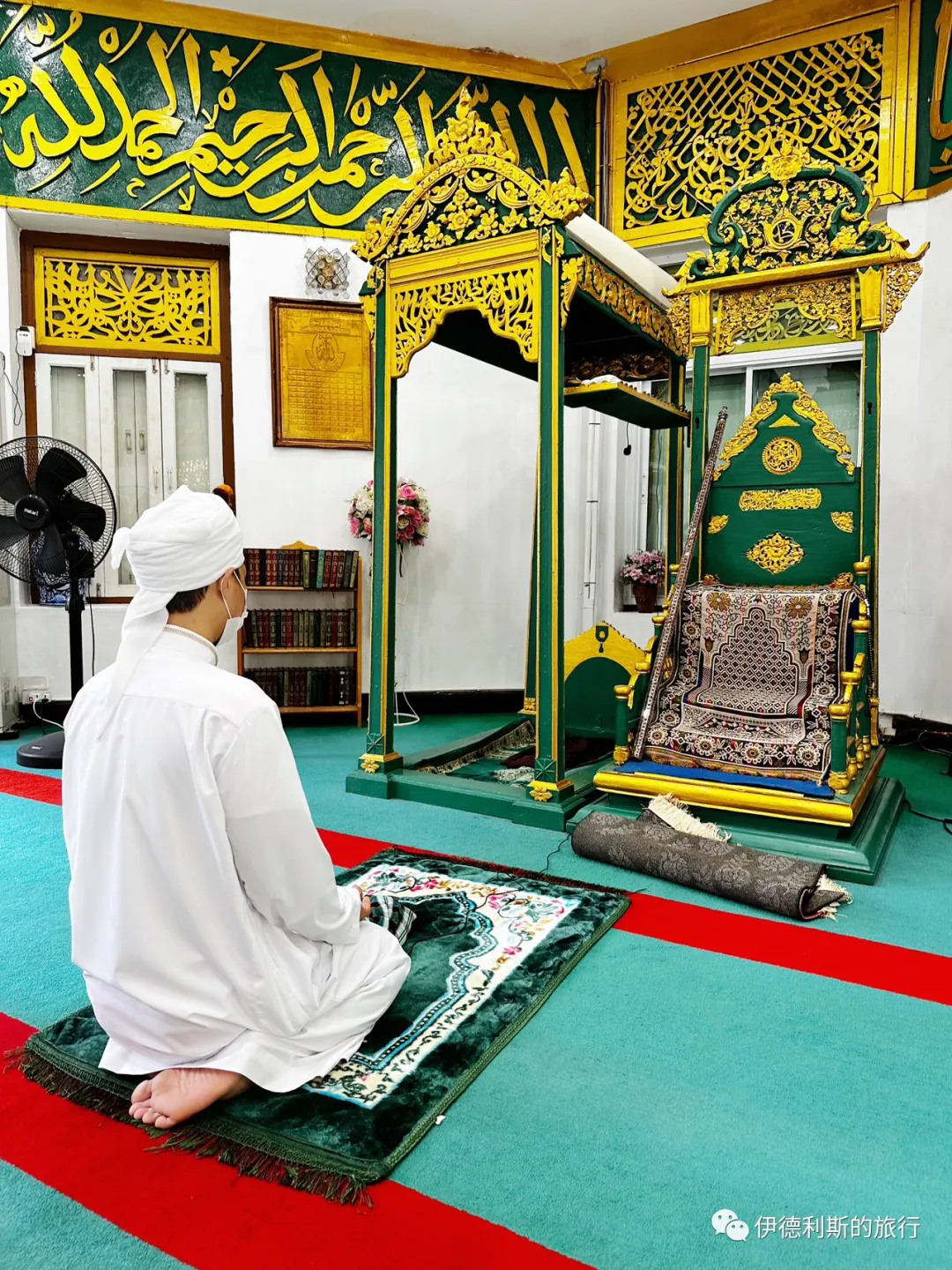
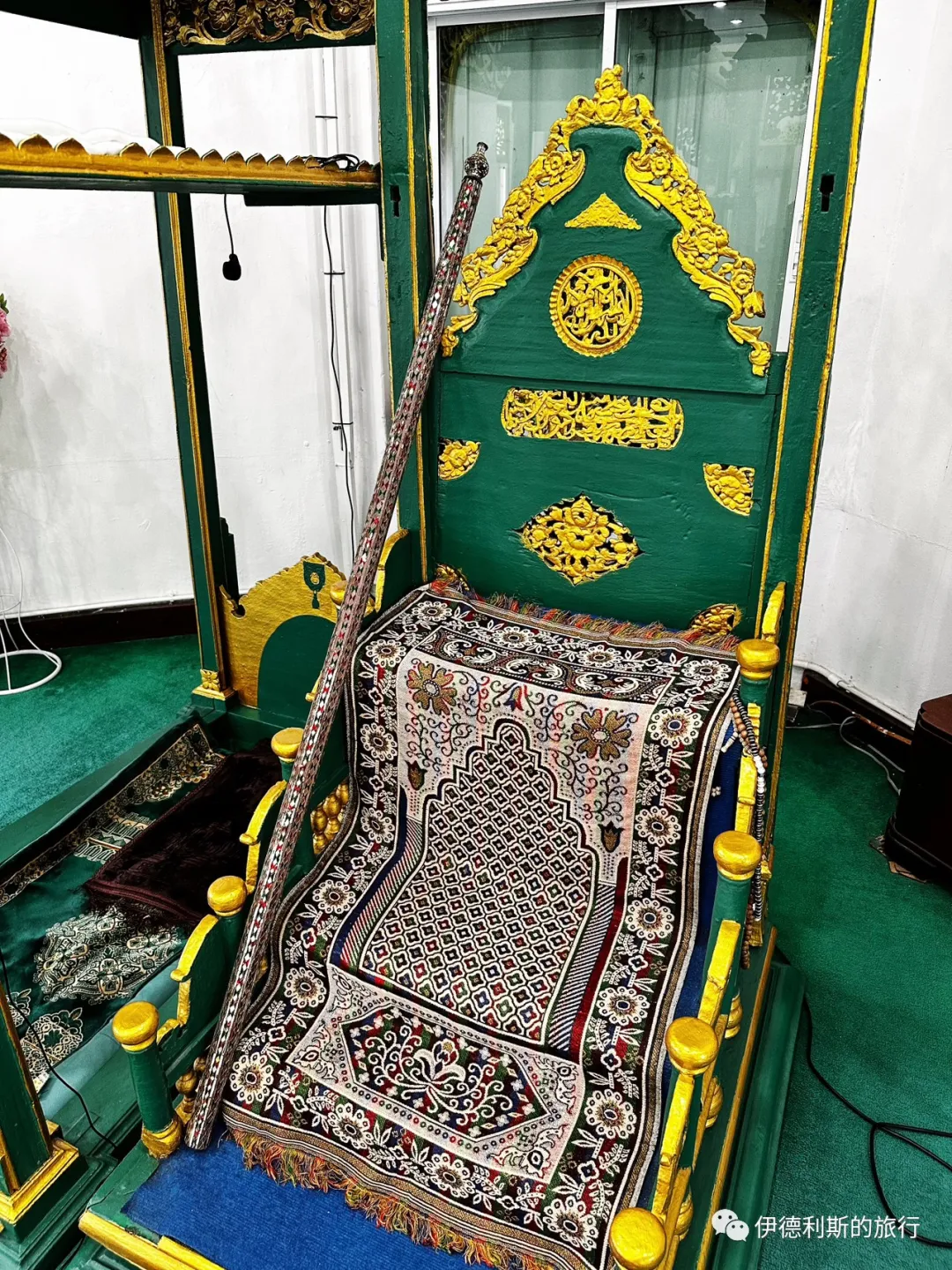
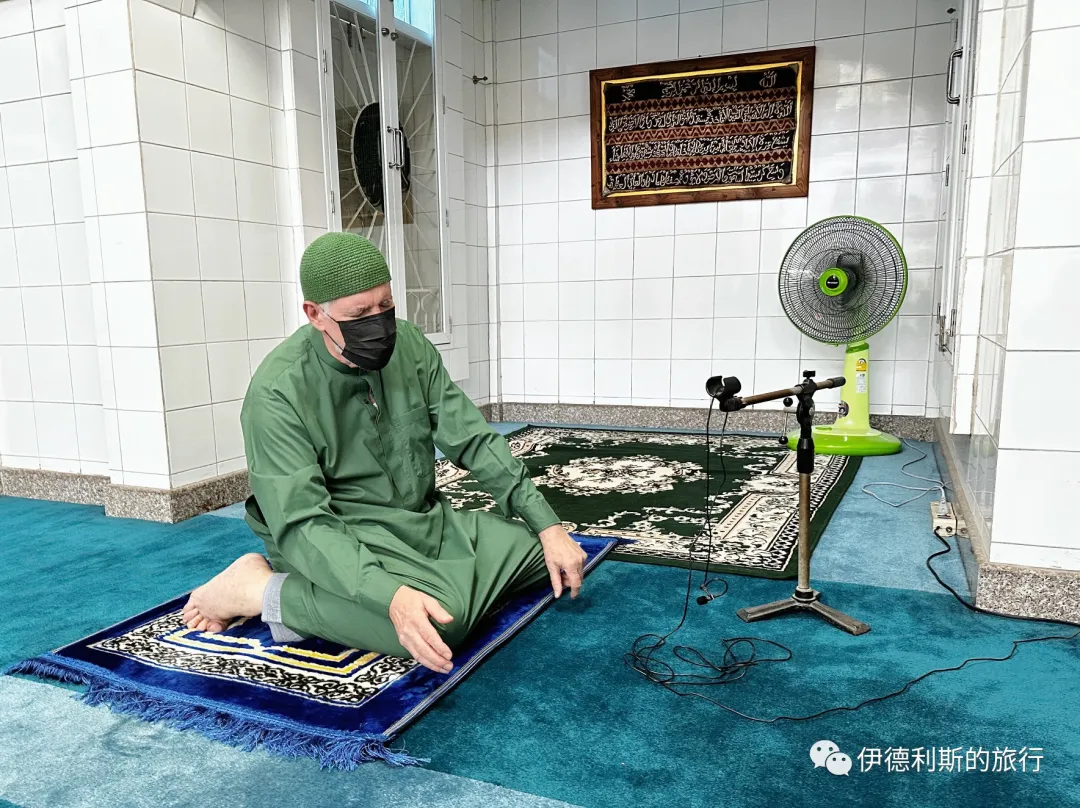
Today, the mosque preserves exquisite Javanese Jepara teak wood carvings of scripture from the old 19th-century building. They were created by Haji Said, a fellow Indonesian from Toh Haroon Bafaden's hometown.
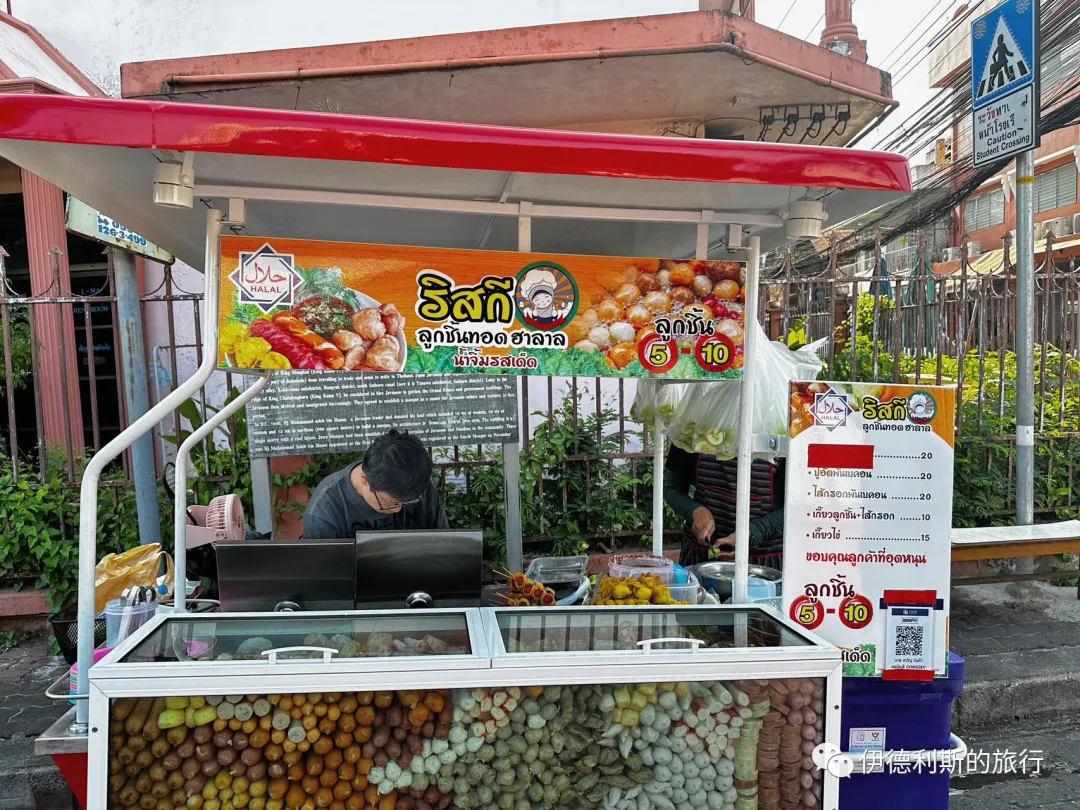
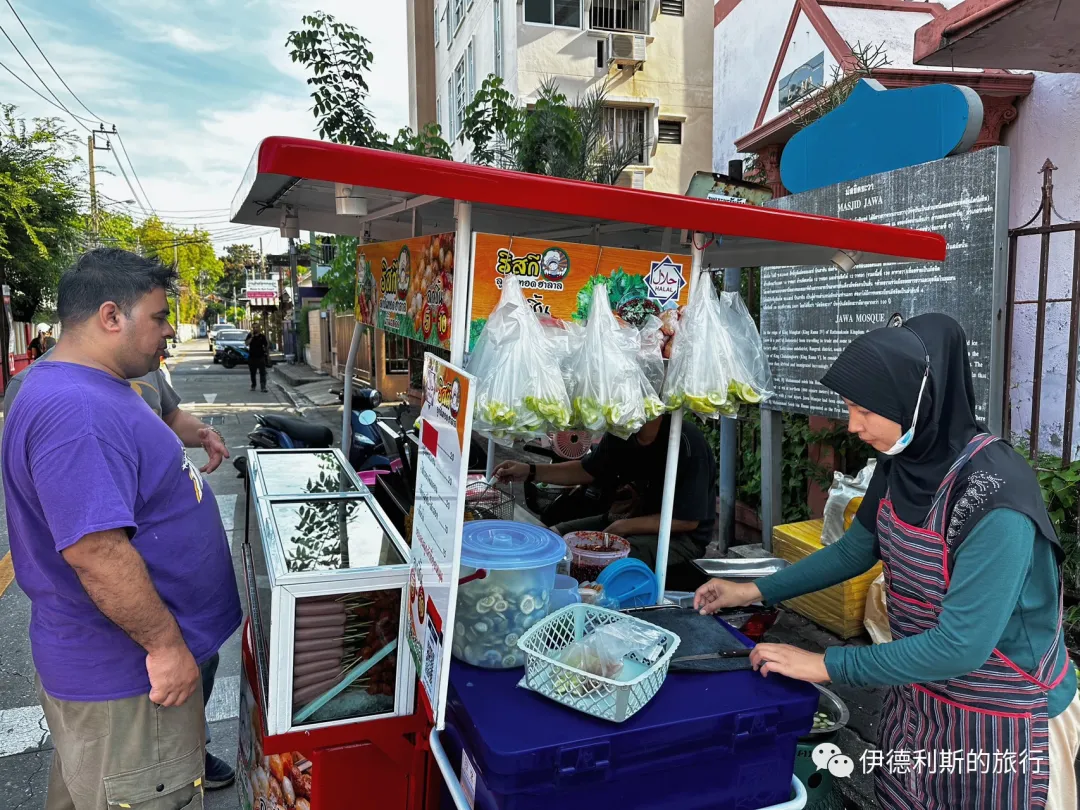
There are many snacks at the entrance of the mosque. We first had stewed beef and chicken meatball glass noodles. The beef was incredibly fragrant! Then we had rice with stir-fried basil chicken, meatballs, and chicken liver. After that, we had a bowl of stewed chicken feet. The chicken feet were soft and flavorful, but the soup was super spicy, haha.
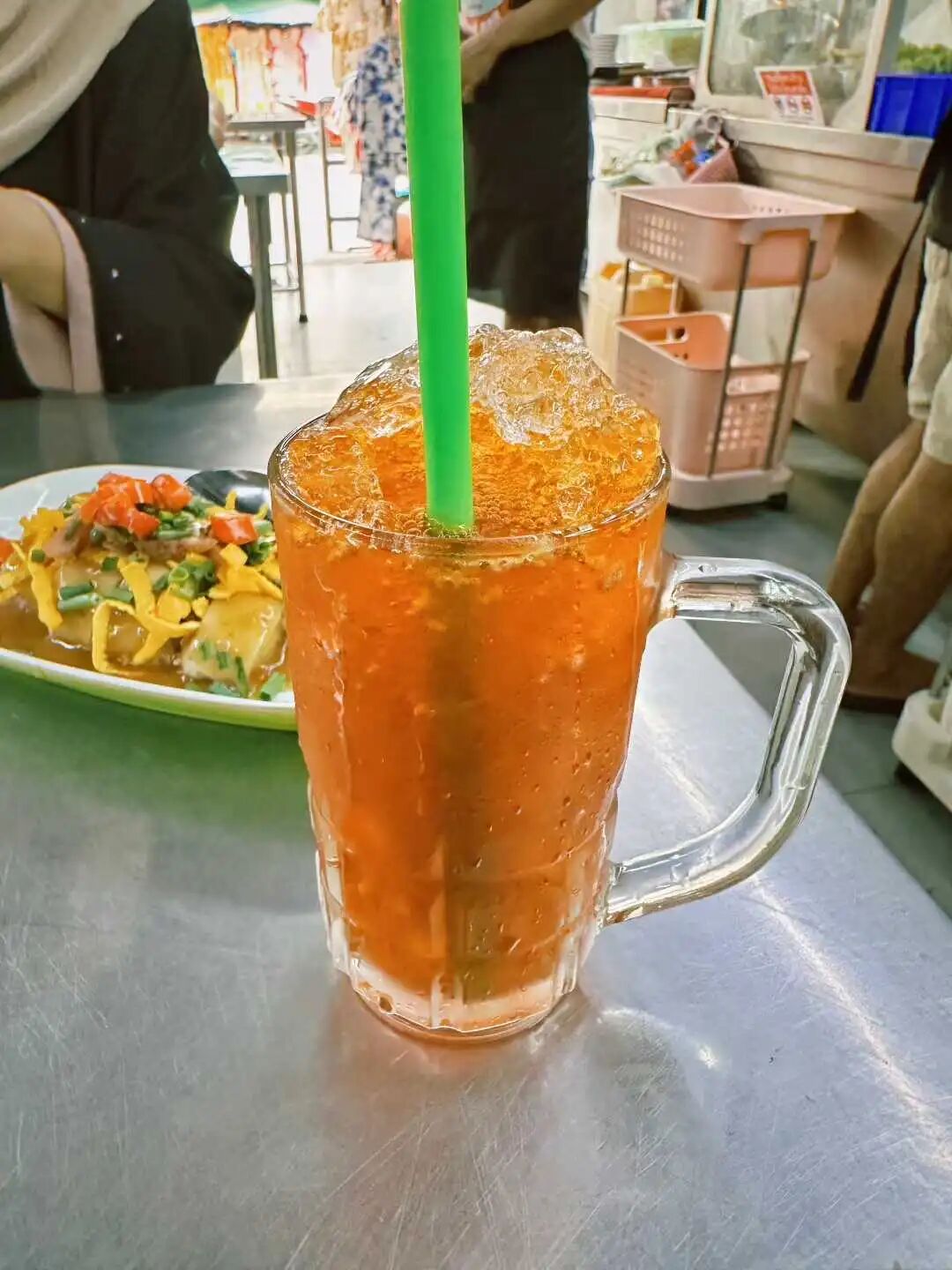
Two essentials for eating street food in Bangkok's hot summer are a strong electric fan and cold drinks with ice! Otherwise, it feels like you cannot eat anything at all, haha.
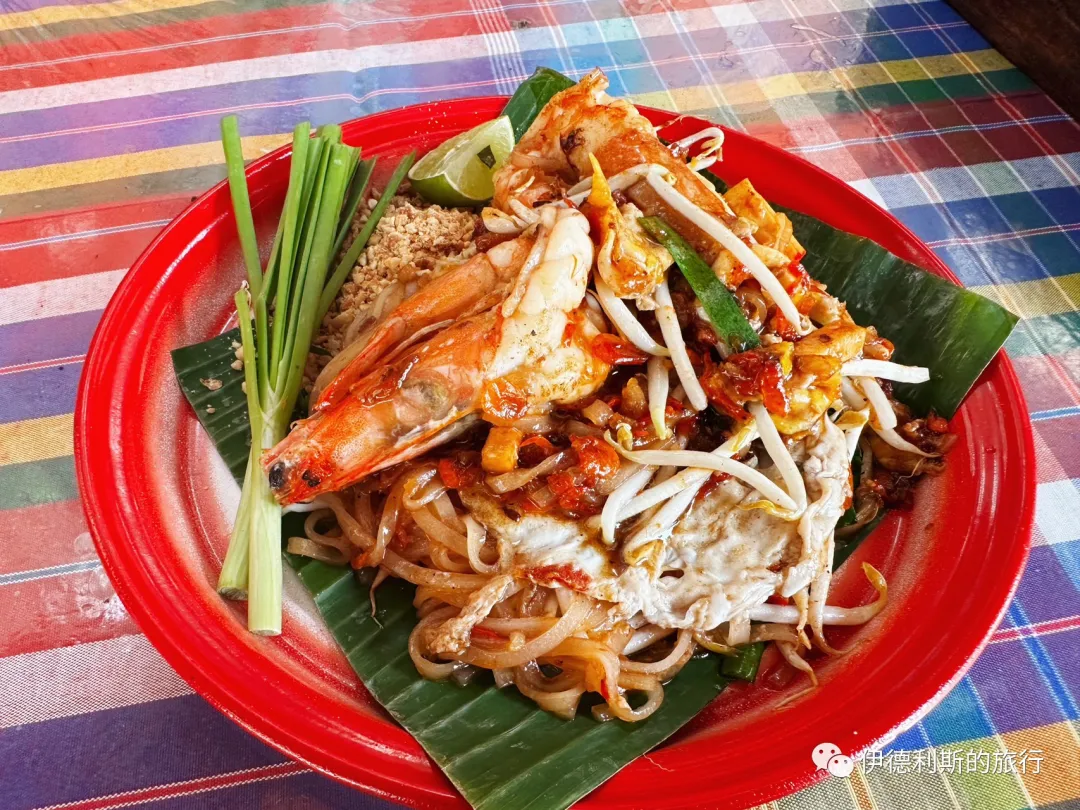
We ate the classic street snack, Thai stir-fried rice noodles (pad thai). Thai-style stir-fried rice noodles (pad thai), also called stir-fried rice noodles (pad mee), contain rice noodles, scrambled eggs, bean sprouts, crushed peanuts, and fresh shrimp, served with lime and chives. The style of stir-fried rice noodles was brought to Thailand by Chinese immigrants hundreds of years ago, but it did not become popular until the mid-20th century. During World War II, Thailand faced a rice shortage, so the government promoted a type of rice noodle from Chanthaburi Province in the east, which turned stir-fried noodles into a national snack.
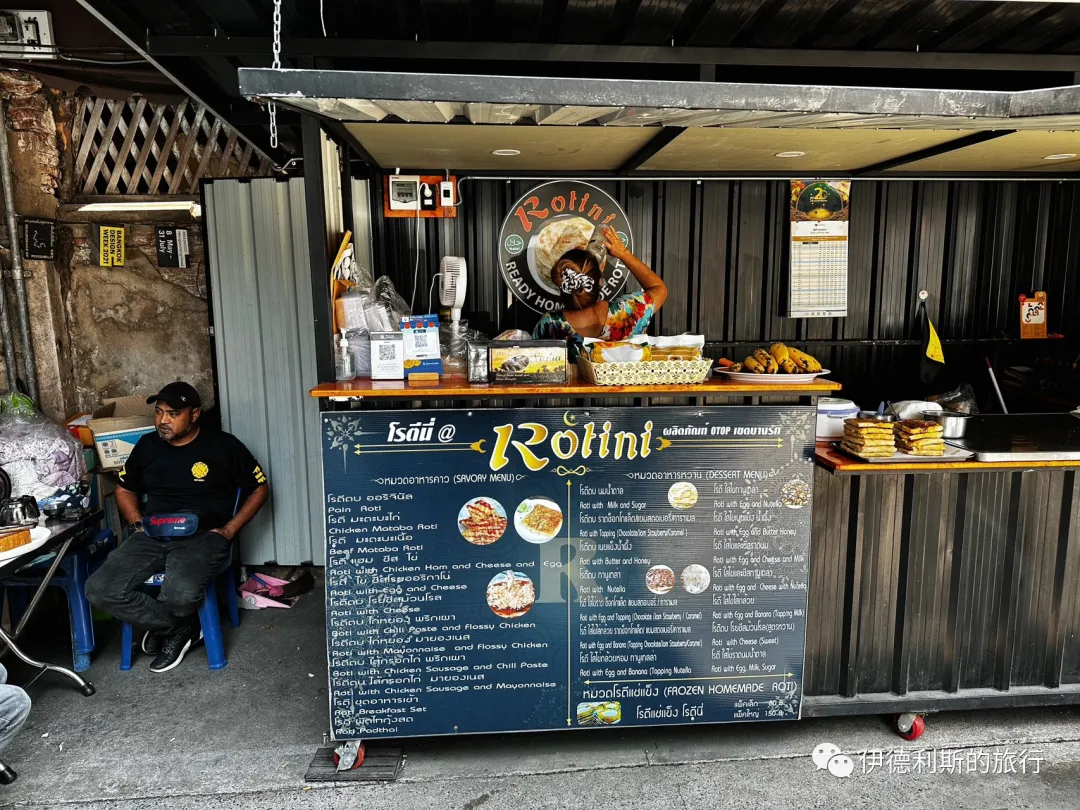
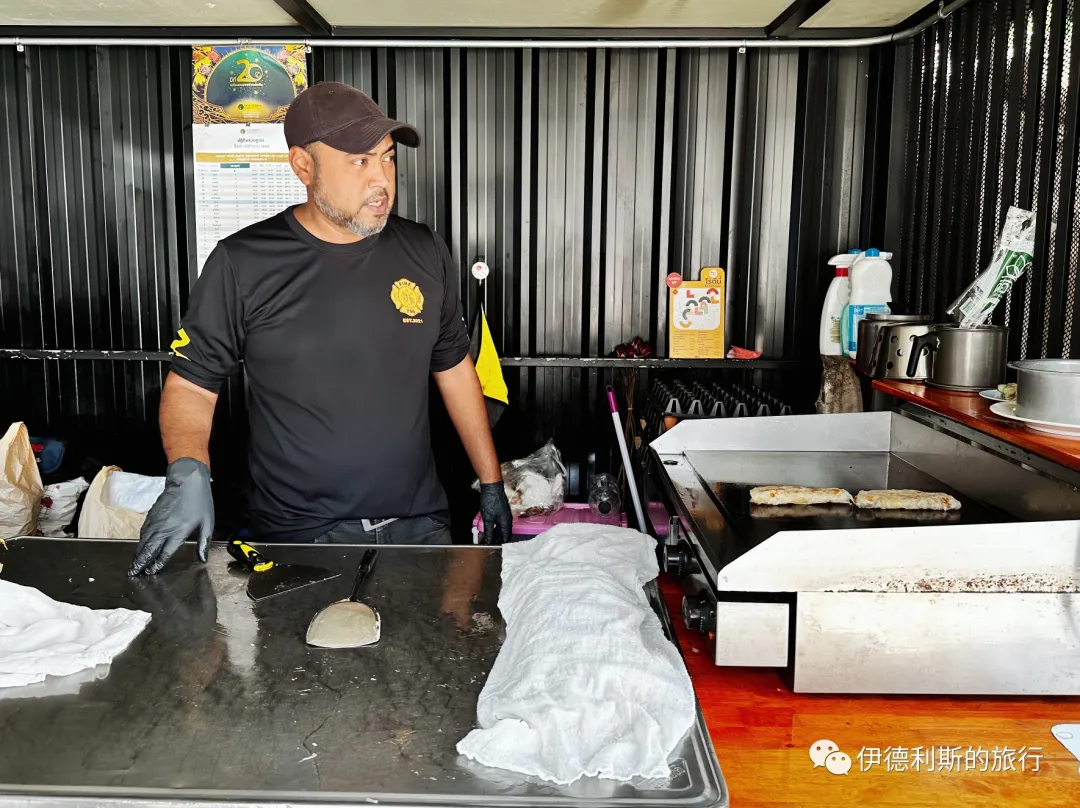
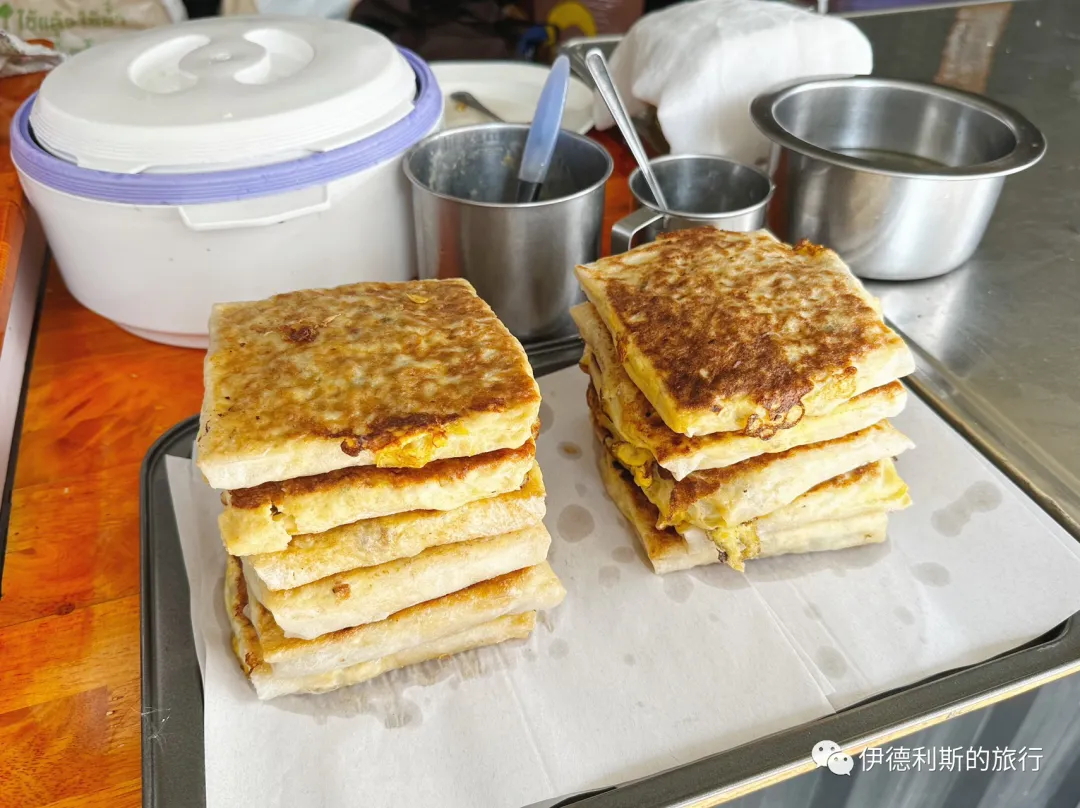
If stir-fried noodles are the first impression of Thai snacks, then roti flatbread (roti) is the first impression of Thai halal snacks. You can find Thai Muslim street carts selling roti flatbread in almost every night market in Thailand, and every stall is very popular.
Javanese gardeners
In 1896, King Rama V of Thailand visited the Dutch East Indies and toured the summer palace and gardens built by the Dutch Governor-General in Bogor, Java (now Bogor Botanical Gardens). He admired the beauty and variety of plants so much that shortly after returning home, he recruited a group of Javanese gardeners to care for the flowers and trees at the Grand Palace, Saranrom Palace, and Saranrom Park, as well as the rows of tamarind trees along the roads around the palace. After King Rama V visited the Dutch East Indies a second time in 1901, he recruited a second group of Javanese gardeners to help design the newly built Dusit Palace, and these Javanese people settled in Bangkok.
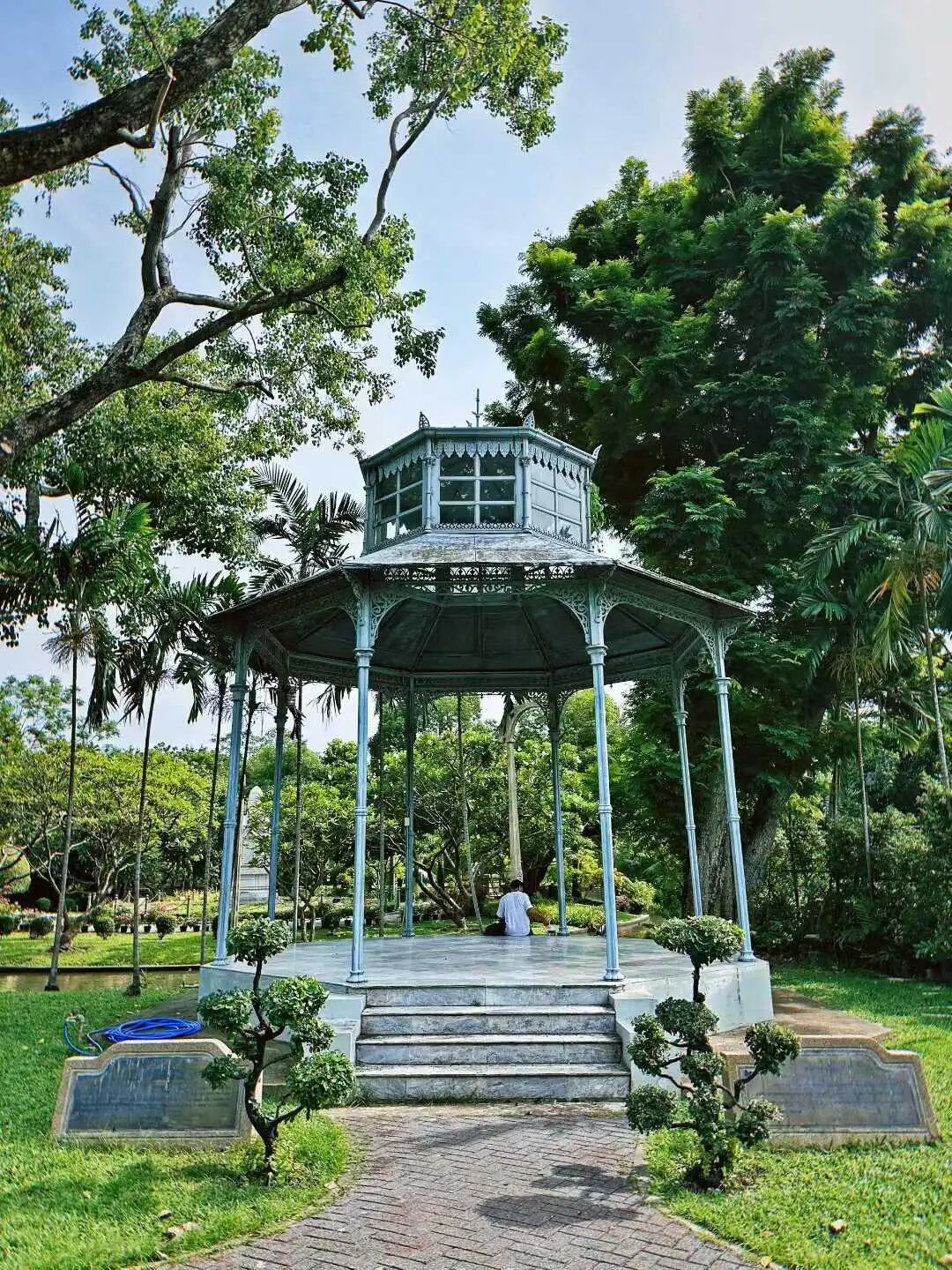
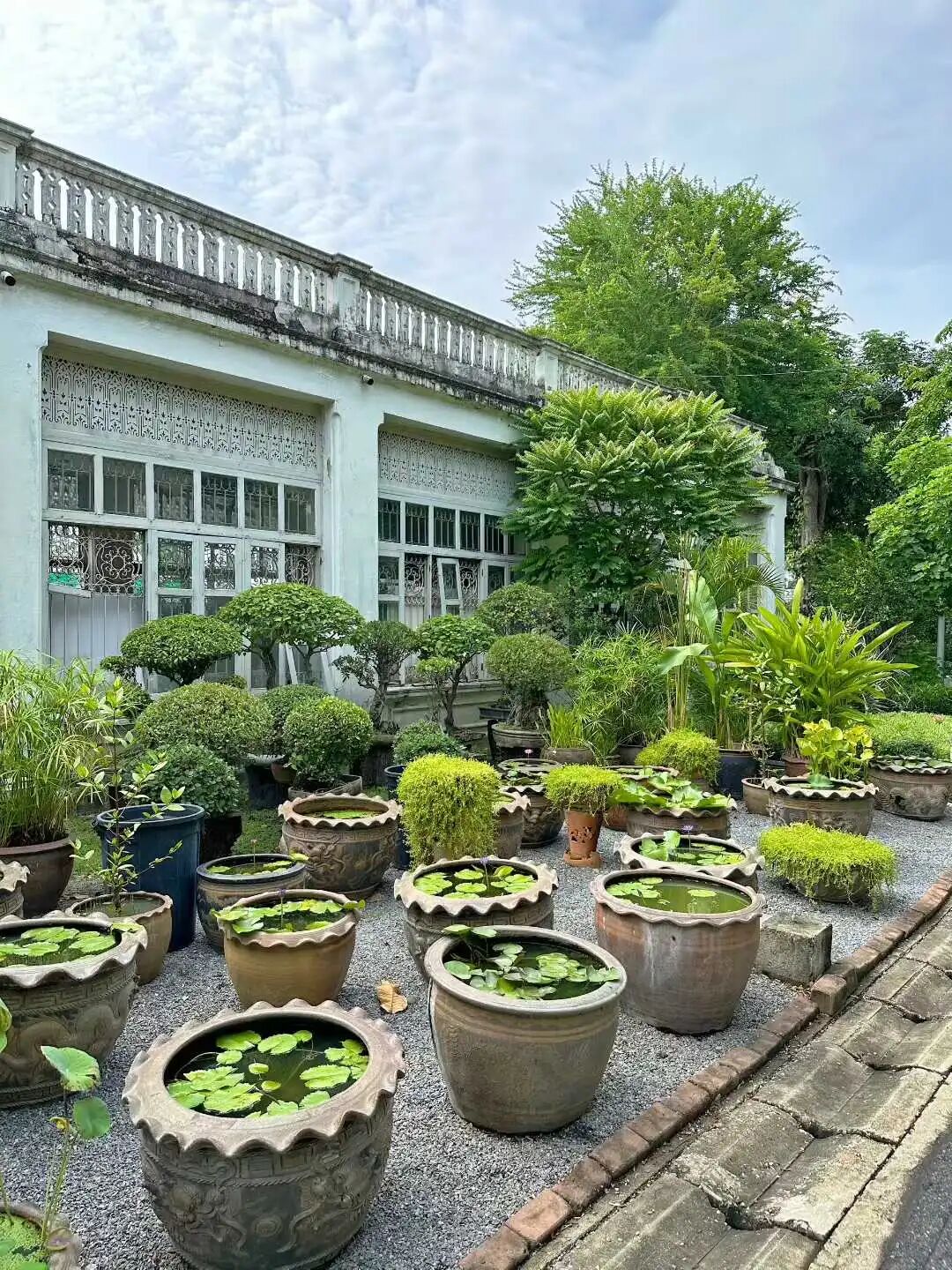
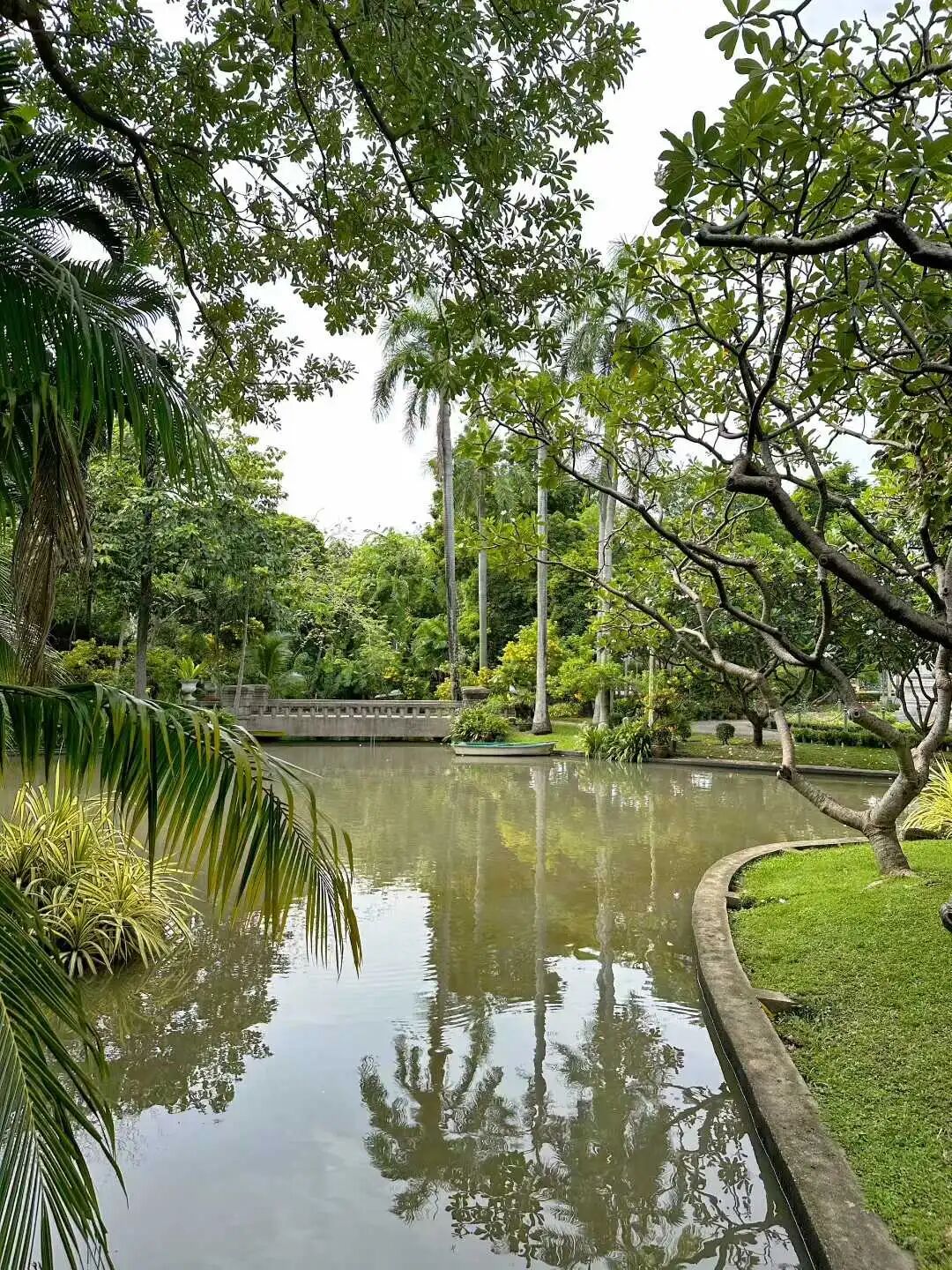
Saranrom Park, located opposite the Grand Palace in Bangkok, was built in 1866. It was originally part of the Saranrom Palace built by King Rama IV and was renovated by King Rama V in 1874 according to the modern botanical garden model. Records show that King Rama V hired 2,444 Javanese gardeners to maintain the gardens, decorating the park with fountains, flowers, birdcages, and animal enclosures, along with the King's favorite red roses.
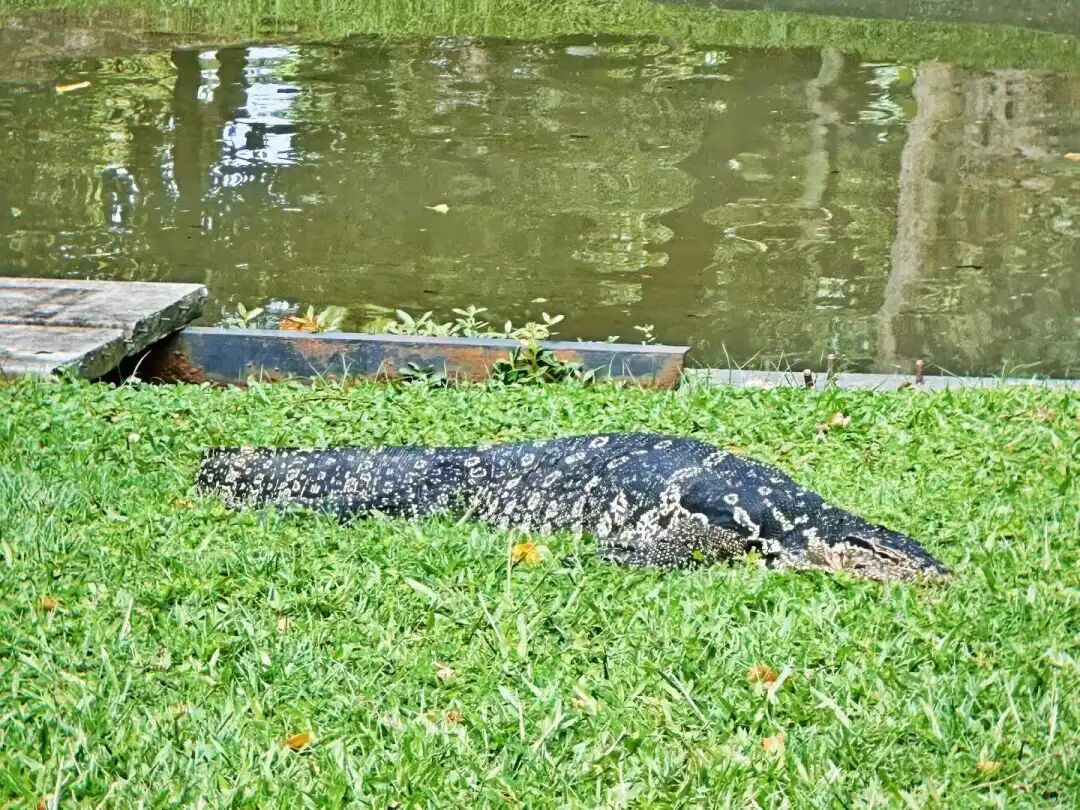
The park officially opened to the public in 1960, becoming Bangkok's first public botanical garden. Today, the park is filled with birdsong and flowers, with monitor lizards visible in the ponds and squirrels everywhere in the trees. When we visited, there were almost no tourists, only a few locals jogging or resting.
Ban Tuk Din Mosque
Ban Tuk Din Mosque is one of only two mosques located within the city walls of Bangkok, built by Javanese gardeners on royal land in the late 19th century.
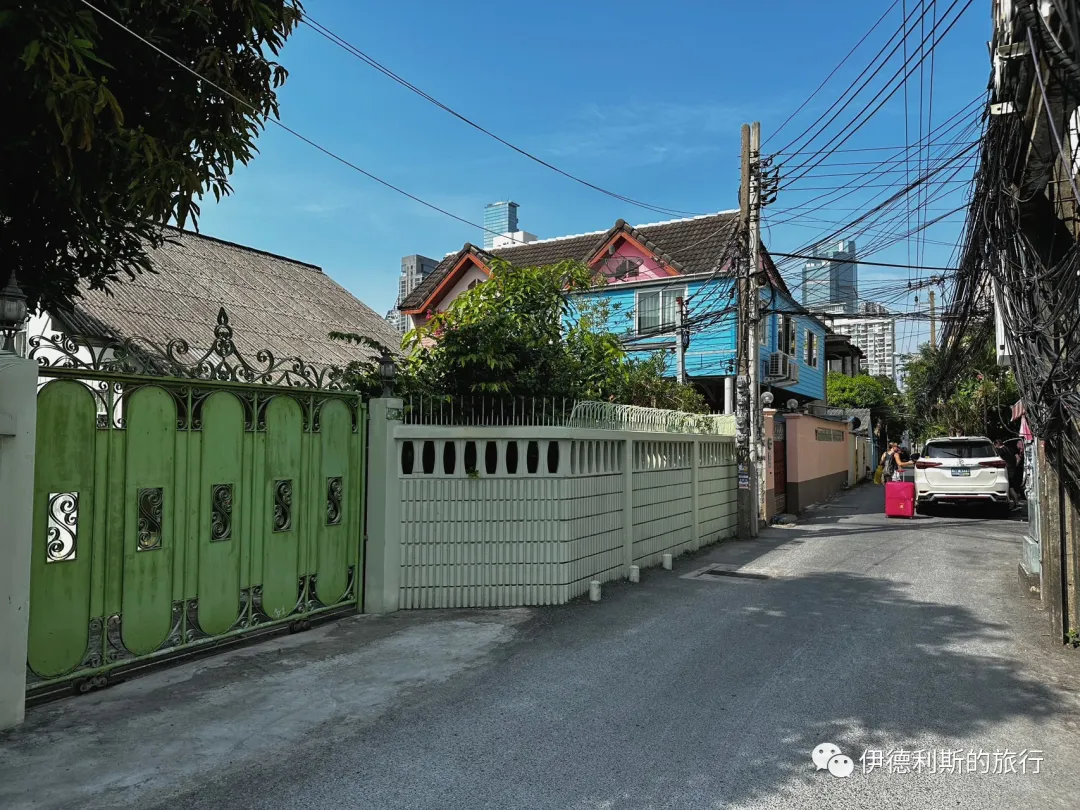
During the late reign of King Rama VI and the reign of King Rama VII, the royal family cut spending and dismissed the Javanese gardeners. Afterward, most of the Javanese gardeners moved to the southern suburbs of Bangkok to continue working as gardeners and domestic helpers in mansions, while only a few remained in the Ban Tuk Din mosque community as small vendors and domestic workers.
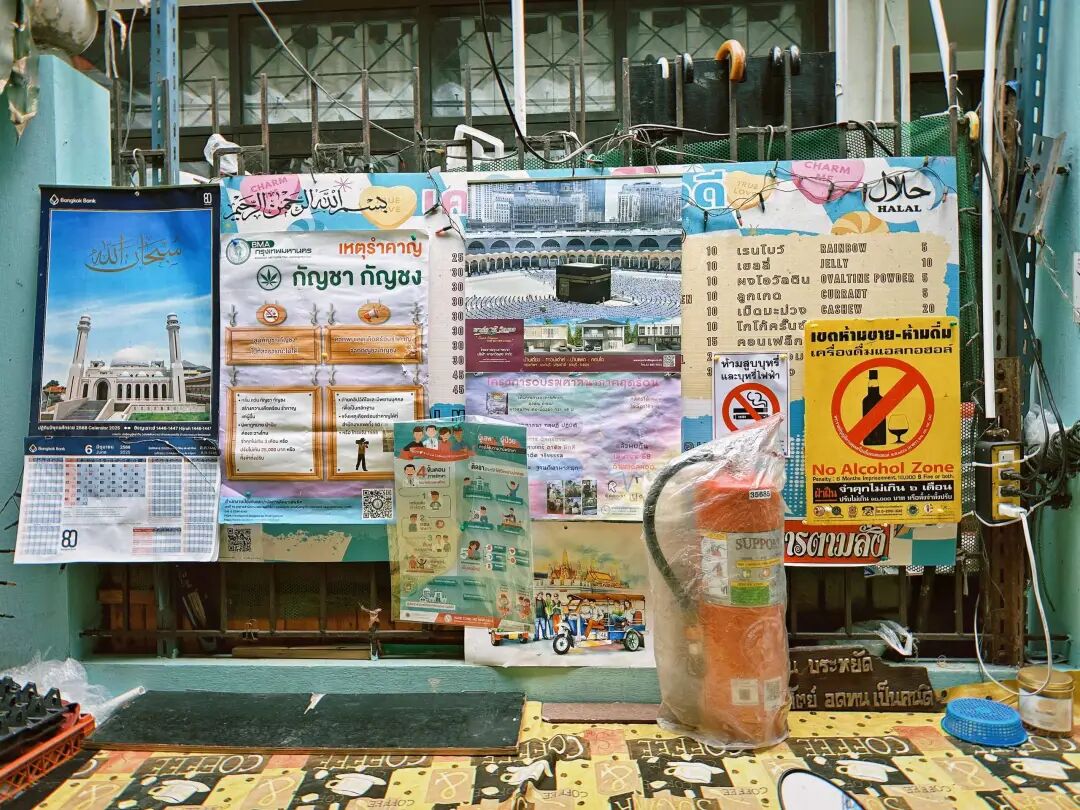
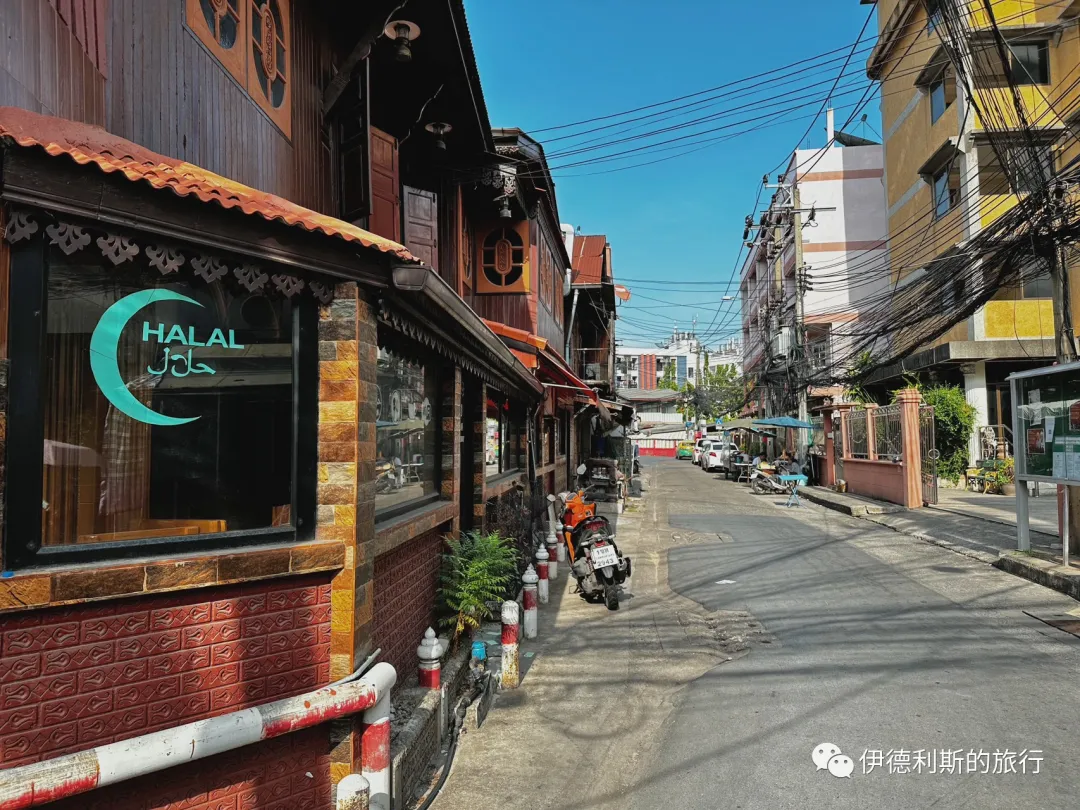
In the alley near Ban Tuk Din Mosque, there is a very famous local halal snack shop called Ayeesah Roddee Halal. Because it is right next to the backpacker hub of Khao San Road, many foreigners come here to eat. Historically, the Javanese community in Bangkok rarely intermarried with other groups, so they preserved many traditional cultural customs, and you can eat authentic Javanese-style halal snacks at this shop.
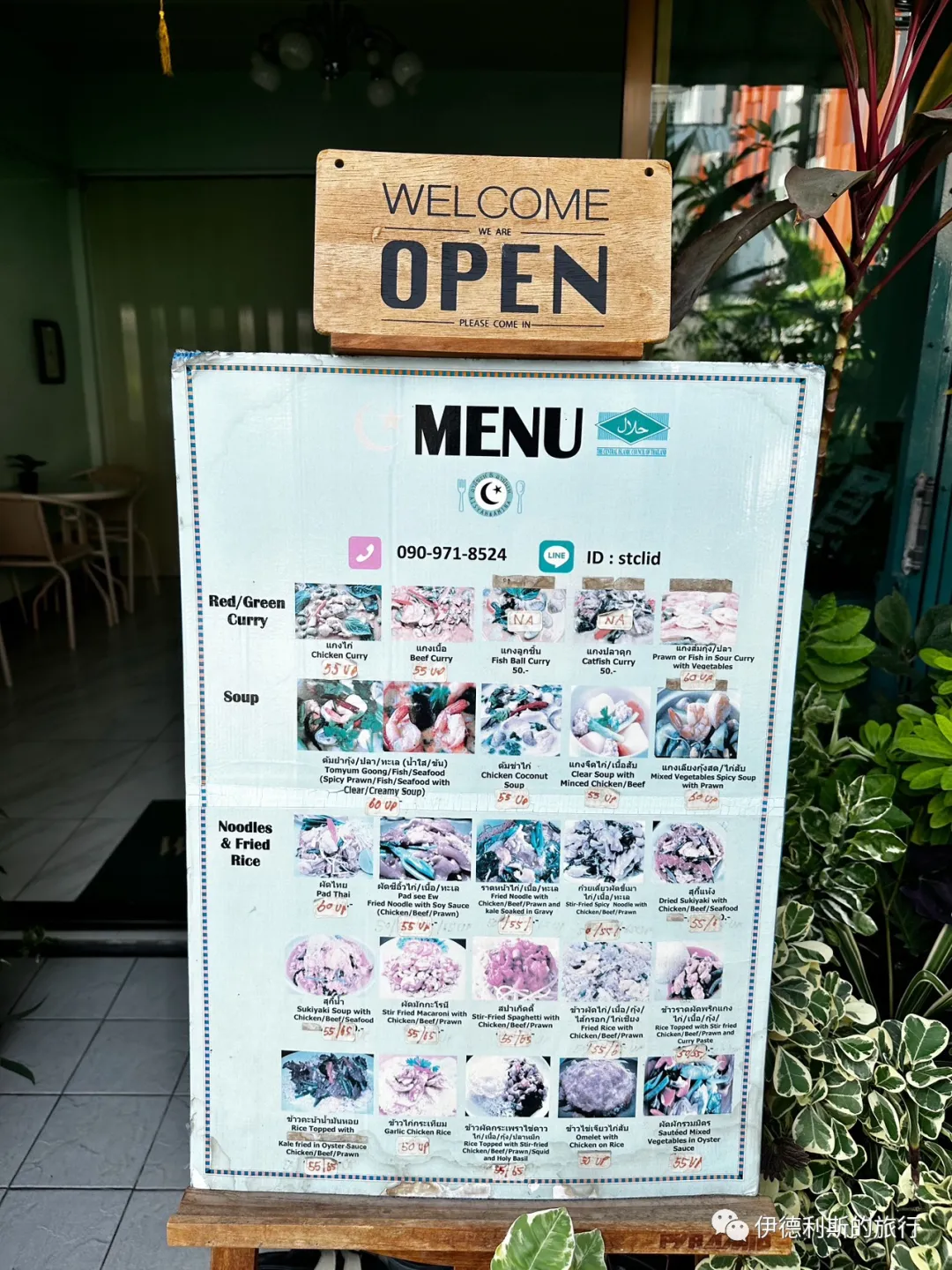
We ordered beef noodles, oxtail curry soup, fresh spring rolls, and beef satay skewers. Everything was delicious. The beef noodles were sweet and sour, the oxtail soup was rich with skin-on meat, and the spring rolls were unique with a chicken filling. Their beef satay skewers are the best I have ever eaten in all my many trips to Thailand, Malaysia, Indonesia, and Singapore! They were very tender, not dry at all, and you can dip them in the satay sauce yourself to control the sweetness. In fact, satay originated on the island of Java, developed by the Javanese based on the South Asian kebabs (kebab) brought by Indian merchants. After the 19th century, Javanese people spread satay grilled meat (satay) throughout Southeast Asia.
Javanese Mosque (Masjid Jawa)
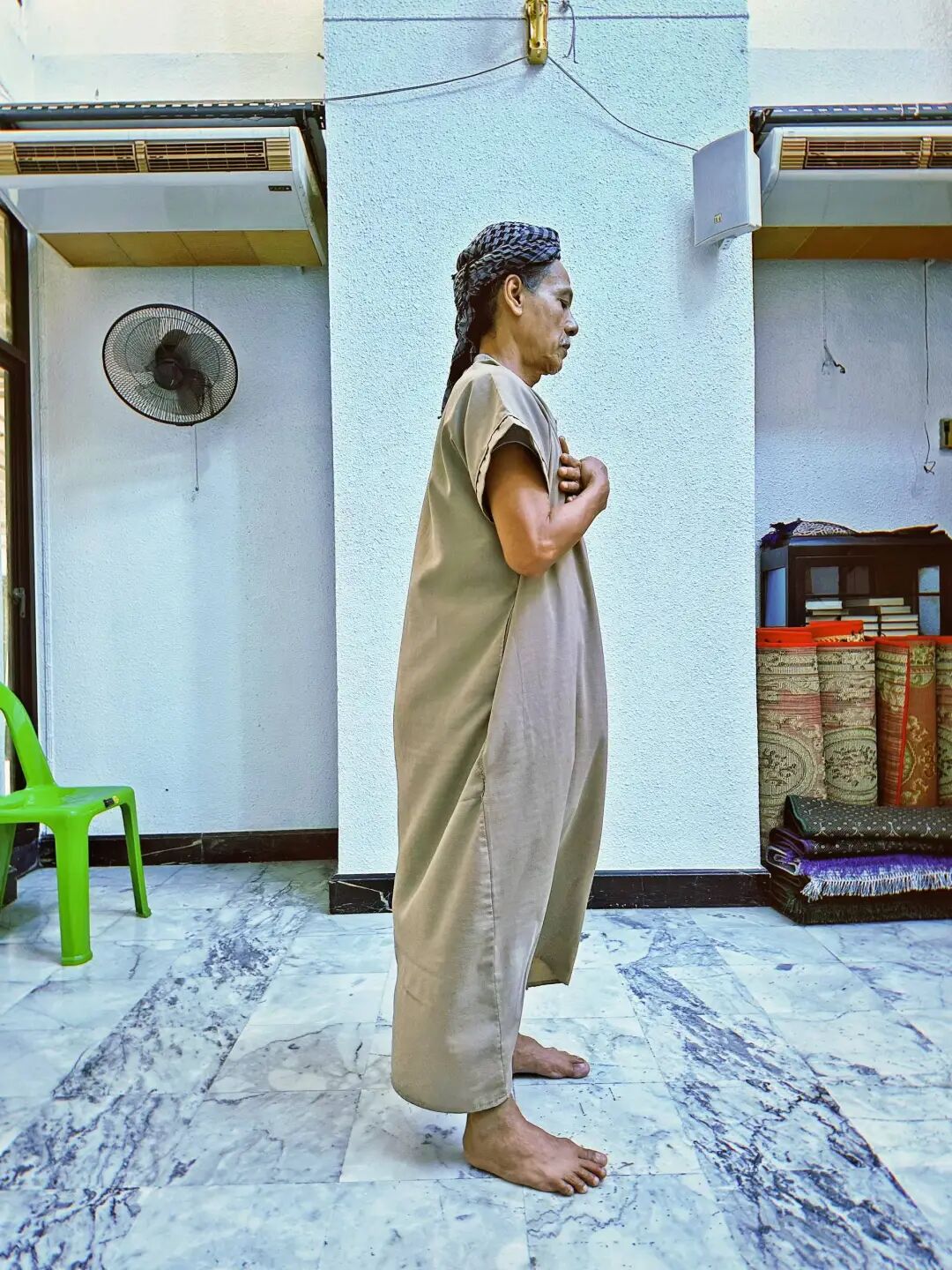
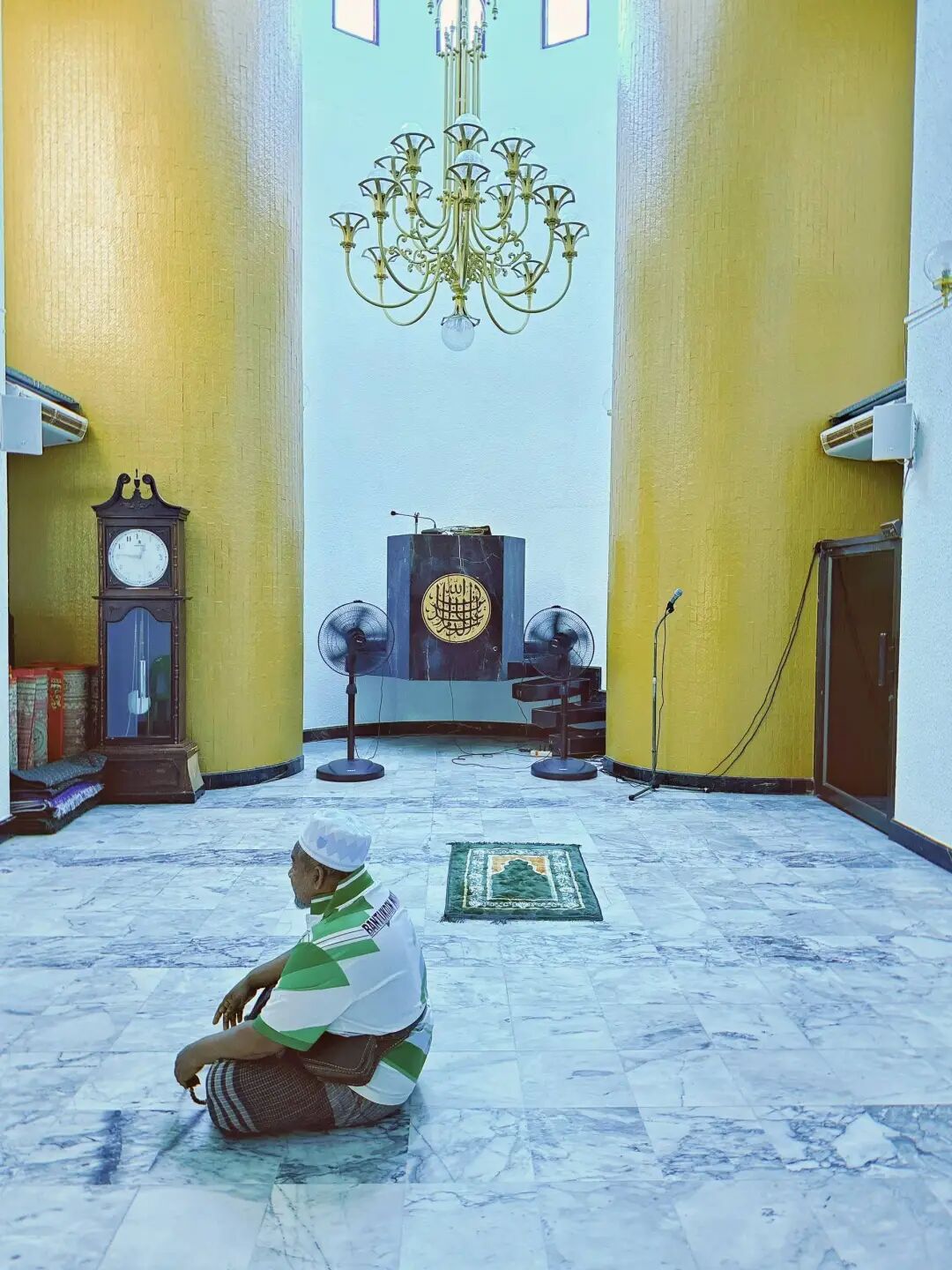
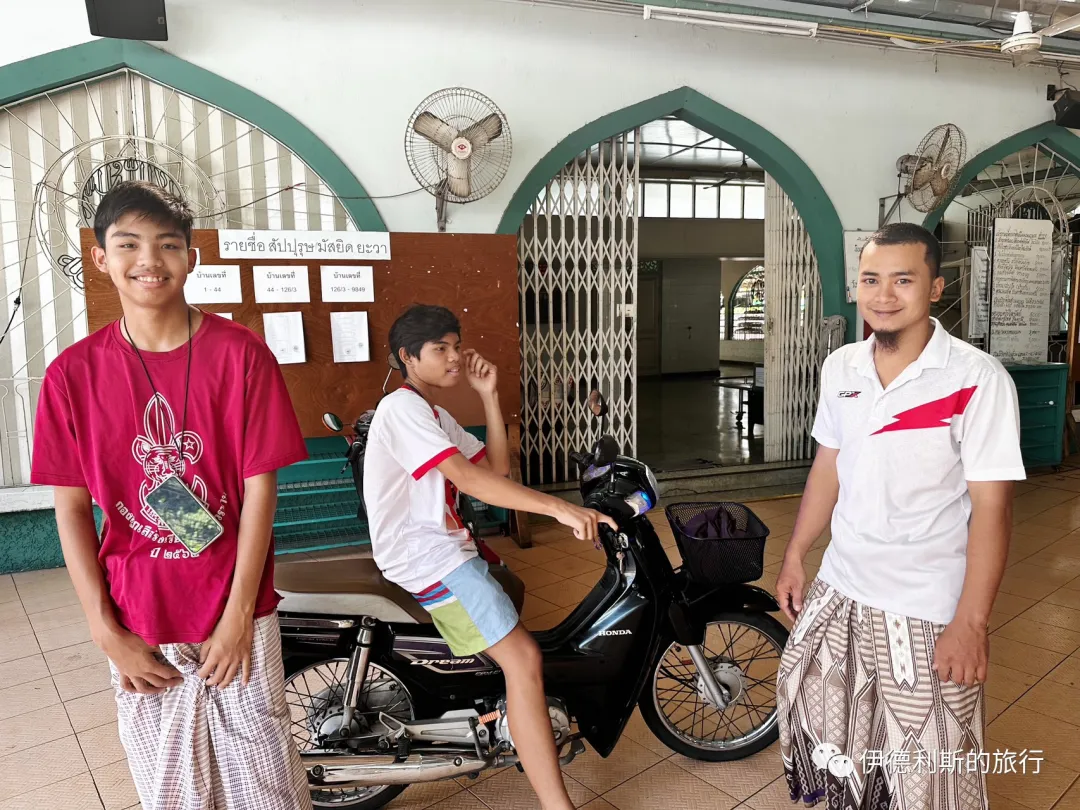
During the late reign of King Rama VI and the reign of King Rama VII, the royal family cut spending and dismissed the Javanese gardeners. Later, most Javanese gardeners moved to the southern suburbs of Bangkok and built several mosque communities. The Javanese Mosque (Masjid Jawa) is the only one that still keeps its traditional Javanese style.
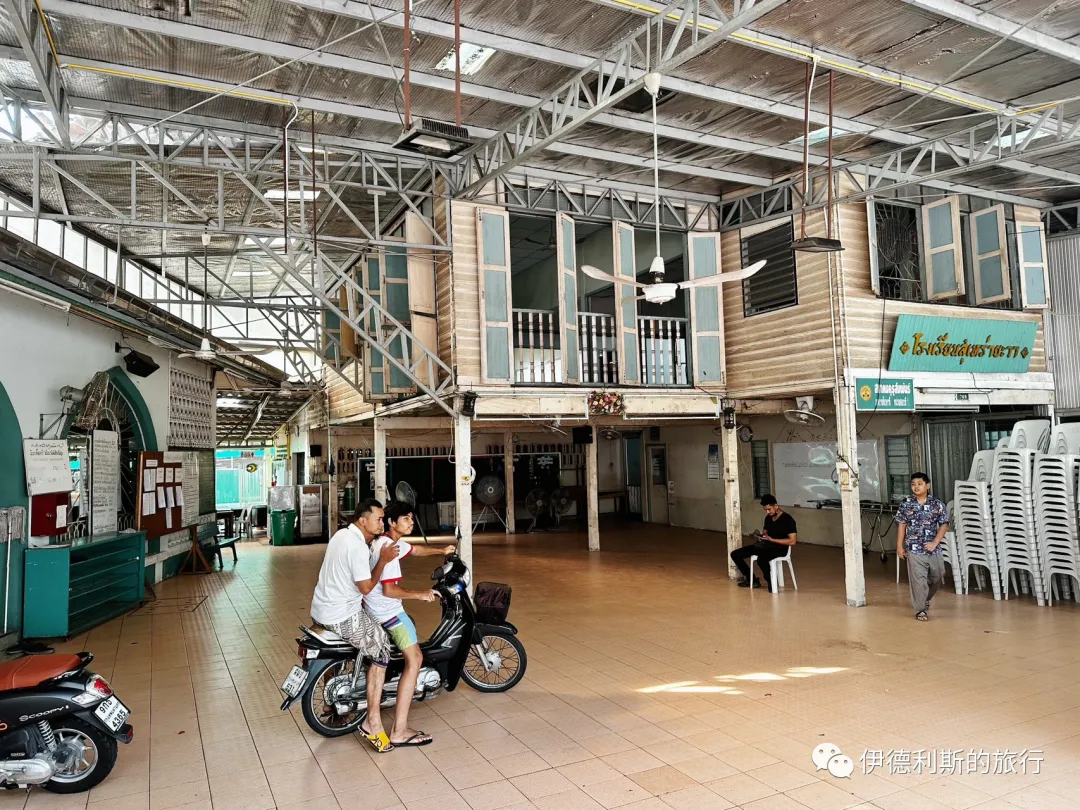
The Javanese Mosque is a community made up of Javanese and Malay Muslims, and the imam is chosen from both groups on a rotating basis. The Javanese Mosque was built in 1906 on land owned by a Javanese Muslim named Haji Muhammad Saleh. Even though it was expanded in 1927 and 1975, it still keeps its classic Javanese style.
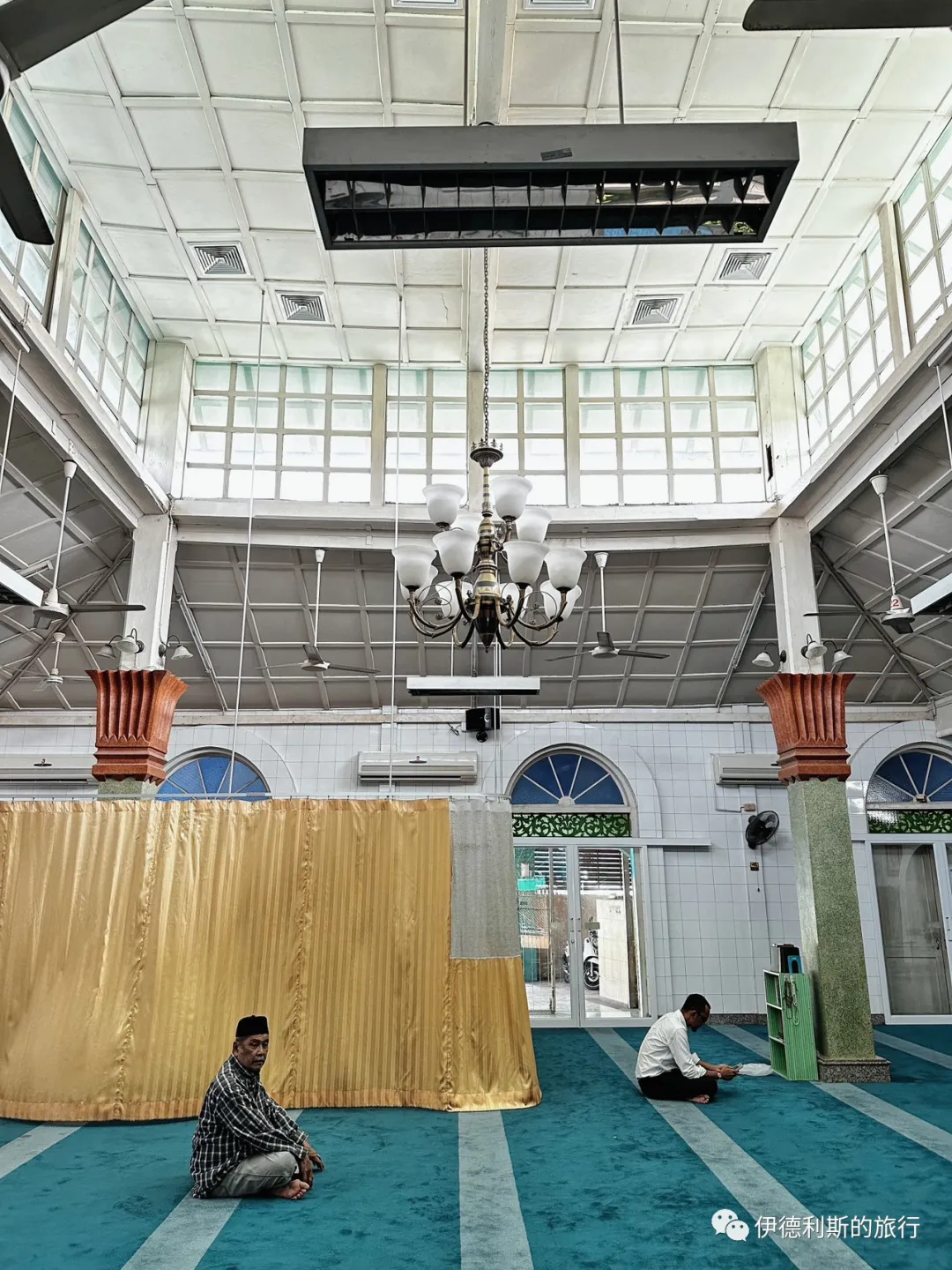
The mosque has a three-tiered pyramid-shaped roof called a Tajug, with a Mustoko decoration at the very top. The main hall is held up by four pillars called Soko Guru instead of using walls for support. In the front porch of the main hall, there is a large drum called a Bedug used for the call to prayer. Traditional Javanese mosques rarely have minarets, so they use the drum to call people to namaz and to announce the end of the daily fast. Also, next to the main hall, there is a wooden house on stilts used as a school that is over 60 years old. view all
Summary: Bangkok's Indonesian Muslim history includes Arab-Indonesian merchants, Javanese gardeners, riverside mosque communities, and halal street food near old neighborhoods. This first part follows Haroon Mosque, Saralom Park, Ban Tuk Din Mosque, Ayeesah Roddee Halal, Java Mosque, and the related food and architecture details.
The Indonesian mosque communities in downtown Bangkok come from two main sources: fishermen and traders who sailed from Borneo and the Sulu Archipelago, and Javanese gardeners hired by King Rama V in the late 19th century. Bangkok still preserves Indonesian-style food and Javanese-style mosques, which are an important part of the city's multicultural identity.
Indonesian sailors
Ban Oou Mosque
The Ban Oou Mosque community is right next to Saphan Taksin Bridge. It was built during the reign of King Rama IV (1851-68) by a group of Indonesian sailors who fished at the mouth of the Chao Phraya River year-round. After Britain and Thailand signed the Bowring Treaty in 1855, business in the Bang Rak area boomed. These Indonesian sailors sold their catch to Western sailors and merchants living in Bang Rak. During the reign of King Rama V (1868-1910), they became fishmongers in the market after it was established.
In the late 19th and early 20th centuries, as the port of Bangkok grew, many shipyards, piers, and docks were built around the Ban Oou Mosque community. Many residents became barge workers, handling cargo for nearby European shipping companies. As people stopped making a living from fishing, the mosque community began to move inland. In 1919, the community rebuilt the mosque 100 meters inland from the Chao Phraya River.
The mosque houses a traditional Indonesian Beduk drum. This single-sided drum is made from a hollowed-out log and covered with cowhide on one side. Slow beats on the Beduk drum signal the approach of prayer time, while rapid beats mean someone has passed away.
The mosque contains a collection of porcelain, giant turtles kept on the grounds, and a cemetery.
The sign at the snack shop next to the mosque shows a hand-shaking gesture, which is a common greeting among fellow Muslims (dosti) in Thailand and Indonesia. I have seen this in both countries.
Suwannaphum Mosque
The Suwannaphum Mosque community is near the busy ICONSIAM mall. It was built on the banks of the Chao Phraya River during the reign of King Rama III (1824-1851) by Indonesian sailors living along the coast of Trat Province, near the Thai-Cambodian border. It was originally called Ban Khaek Lang, a sparsely populated village in the southern suburbs of Bangkok. After the Bowring Treaty was signed in 1855, piers and warehouses were built, and many trading companies opened. These Indonesian fishermen started working as barge workers, loading and unloading cargo for Western shipping companies and Indian merchants.
Because there were many Indian merchants nearby, Indian Muslims (dosti) often came to the mosque for worship, and some Indian Muslims even married into the Indonesian Muslim community. Indian merchants donated money to rebuild the mosque during the reign of King Rama IV (1851-68). People say King Rama IV personally named it Suwannaphum Mosque after the nearby Wat Suwan Ubasikaram.
The most unique feature of this mosque is that the imam enters a special wooden pavilion to lead the prayer. I have never seen this before and wonder if it is a unique feature of Thai Islamic practice.
The view of Suwannaphum Mosque is beautiful. It is hard to imagine such a traditional water village mosque still exists right next to the busy ICONSIAM mall. The easiest way to get here is to take a boat along the Chao Phraya River to ICONSIAM and then walk over.
There are many halal restaurants near ICONSIAM, and we ate inside the mall last time. This time, we ate at a Thai halal restaurant called Nakhon Lerdros inside the ICS mall, which is across from ICONSIAM. You can walk between ICS and ICONSIAM using the upper-level walkway. The best part about eating in the mall is the air conditioning, though it costs more than street food.
We ordered Thai boat noodles, tom yum soup, grilled meatballs, and longan juice. Boat noodles were originally sold by people rowing small boats along Bangkok's canals. One person did everything on the boat: cooking the noodles, making the broth, serving the food, collecting money, and washing the dishes. Halal boat noodles usually use beef and beef meatballs, and the broth is made from beef. They use Tang Shuang He brand fish sauce for seasoning. Most Thai condiments are halal-certified. The fish sauce only contains anchovies, salt, sugar, and water, which adds a special flavor.
The food court inside ICONSIAM is still very popular. There are several halal stalls here, making it a great place to eat snacks while enjoying the air conditioning on a hot day.
For more about snacks inside ICONSIAM, see my diary: Bangkok Halal Trip—Food and Lodging.
The pier at the entrance of ICONSIAM is very convenient for boats. You can take a boat downstream to the Asiatique night market or upstream back to Bangkok's old town.
Haroon Mosque.
Haroon Mosque is named after an Indonesian Arab merchant named Toh Haroon Bafaden. He came to Bangkok from Indonesia with his father in 1828 (some say 1837) to do business. He later married, settled down, built Haroon Mosque, and became its first imam.
Haroon Mosque was originally located by the Chao Phraya River. It was a wooden building that combined Ayutthaya and Javanese styles. It moved to its current location in 1899 because of the construction of the Customs House. In 1934, the mosque was rebuilt into its current white brick and plaster structure. It features neoclassical floral patterns, Roman-style columns, and wooden shutters, looking a bit like a European townhouse from that era.
Today, the mosque preserves exquisite Javanese Jepara teak wood carvings of scripture from the old 19th-century building. They were created by Haji Said, a fellow Indonesian from Toh Haroon Bafaden's hometown.
There are many snacks at the entrance of the mosque. We first had stewed beef and chicken meatball glass noodles. The beef was incredibly fragrant! Then we had rice with stir-fried basil chicken, meatballs, and chicken liver. After that, we had a bowl of stewed chicken feet. The chicken feet were soft and flavorful, but the soup was super spicy, haha.
Two essentials for eating street food in Bangkok's hot summer are a strong electric fan and cold drinks with ice! Otherwise, it feels like you cannot eat anything at all, haha.
We ate the classic street snack, Thai stir-fried rice noodles (pad thai). Thai-style stir-fried rice noodles (pad thai), also called stir-fried rice noodles (pad mee), contain rice noodles, scrambled eggs, bean sprouts, crushed peanuts, and fresh shrimp, served with lime and chives. The style of stir-fried rice noodles was brought to Thailand by Chinese immigrants hundreds of years ago, but it did not become popular until the mid-20th century. During World War II, Thailand faced a rice shortage, so the government promoted a type of rice noodle from Chanthaburi Province in the east, which turned stir-fried noodles into a national snack.
If stir-fried noodles are the first impression of Thai snacks, then roti flatbread (roti) is the first impression of Thai halal snacks. You can find Thai Muslim street carts selling roti flatbread in almost every night market in Thailand, and every stall is very popular.
Javanese gardeners
In 1896, King Rama V of Thailand visited the Dutch East Indies and toured the summer palace and gardens built by the Dutch Governor-General in Bogor, Java (now Bogor Botanical Gardens). He admired the beauty and variety of plants so much that shortly after returning home, he recruited a group of Javanese gardeners to care for the flowers and trees at the Grand Palace, Saranrom Palace, and Saranrom Park, as well as the rows of tamarind trees along the roads around the palace. After King Rama V visited the Dutch East Indies a second time in 1901, he recruited a second group of Javanese gardeners to help design the newly built Dusit Palace, and these Javanese people settled in Bangkok.
Saranrom Park, located opposite the Grand Palace in Bangkok, was built in 1866. It was originally part of the Saranrom Palace built by King Rama IV and was renovated by King Rama V in 1874 according to the modern botanical garden model. Records show that King Rama V hired 2,444 Javanese gardeners to maintain the gardens, decorating the park with fountains, flowers, birdcages, and animal enclosures, along with the King's favorite red roses.
The park officially opened to the public in 1960, becoming Bangkok's first public botanical garden. Today, the park is filled with birdsong and flowers, with monitor lizards visible in the ponds and squirrels everywhere in the trees. When we visited, there were almost no tourists, only a few locals jogging or resting.
Ban Tuk Din Mosque
Ban Tuk Din Mosque is one of only two mosques located within the city walls of Bangkok, built by Javanese gardeners on royal land in the late 19th century.
During the late reign of King Rama VI and the reign of King Rama VII, the royal family cut spending and dismissed the Javanese gardeners. Afterward, most of the Javanese gardeners moved to the southern suburbs of Bangkok to continue working as gardeners and domestic helpers in mansions, while only a few remained in the Ban Tuk Din mosque community as small vendors and domestic workers.
In the alley near Ban Tuk Din Mosque, there is a very famous local halal snack shop called Ayeesah Roddee Halal. Because it is right next to the backpacker hub of Khao San Road, many foreigners come here to eat. Historically, the Javanese community in Bangkok rarely intermarried with other groups, so they preserved many traditional cultural customs, and you can eat authentic Javanese-style halal snacks at this shop.
We ordered beef noodles, oxtail curry soup, fresh spring rolls, and beef satay skewers. Everything was delicious. The beef noodles were sweet and sour, the oxtail soup was rich with skin-on meat, and the spring rolls were unique with a chicken filling. Their beef satay skewers are the best I have ever eaten in all my many trips to Thailand, Malaysia, Indonesia, and Singapore! They were very tender, not dry at all, and you can dip them in the satay sauce yourself to control the sweetness. In fact, satay originated on the island of Java, developed by the Javanese based on the South Asian kebabs (kebab) brought by Indian merchants. After the 19th century, Javanese people spread satay grilled meat (satay) throughout Southeast Asia.
Javanese Mosque (Masjid Jawa)
During the late reign of King Rama VI and the reign of King Rama VII, the royal family cut spending and dismissed the Javanese gardeners. Later, most Javanese gardeners moved to the southern suburbs of Bangkok and built several mosque communities. The Javanese Mosque (Masjid Jawa) is the only one that still keeps its traditional Javanese style.
The Javanese Mosque is a community made up of Javanese and Malay Muslims, and the imam is chosen from both groups on a rotating basis. The Javanese Mosque was built in 1906 on land owned by a Javanese Muslim named Haji Muhammad Saleh. Even though it was expanded in 1927 and 1975, it still keeps its classic Javanese style.
The mosque has a three-tiered pyramid-shaped roof called a Tajug, with a Mustoko decoration at the very top. The main hall is held up by four pillars called Soko Guru instead of using walls for support. In the front porch of the main hall, there is a large drum called a Bedug used for the call to prayer. Traditional Javanese mosques rarely have minarets, so they use the drum to call people to namaz and to announce the end of the daily fast. Also, next to the main hall, there is a wooden house on stilts used as a school that is over 60 years old. view all
Reposted from the web
Summary: Bangkok's Indonesian Muslim history includes Arab-Indonesian merchants, Javanese gardeners, riverside mosque communities, and halal street food near old neighborhoods. This first part follows Haroon Mosque, Saralom Park, Ban Tuk Din Mosque, Ayeesah Roddee Halal, Java Mosque, and the related food and architecture details.
The Indonesian mosque communities in downtown Bangkok come from two main sources: fishermen and traders who sailed from Borneo and the Sulu Archipelago, and Javanese gardeners hired by King Rama V in the late 19th century. Bangkok still preserves Indonesian-style food and Javanese-style mosques, which are an important part of the city's multicultural identity.
Indonesian sailors
Ban Oou Mosque
The Ban Oou Mosque community is right next to Saphan Taksin Bridge. It was built during the reign of King Rama IV (1851-68) by a group of Indonesian sailors who fished at the mouth of the Chao Phraya River year-round. After Britain and Thailand signed the Bowring Treaty in 1855, business in the Bang Rak area boomed. These Indonesian sailors sold their catch to Western sailors and merchants living in Bang Rak. During the reign of King Rama V (1868-1910), they became fishmongers in the market after it was established.
In the late 19th and early 20th centuries, as the port of Bangkok grew, many shipyards, piers, and docks were built around the Ban Oou Mosque community. Many residents became barge workers, handling cargo for nearby European shipping companies. As people stopped making a living from fishing, the mosque community began to move inland. In 1919, the community rebuilt the mosque 100 meters inland from the Chao Phraya River.
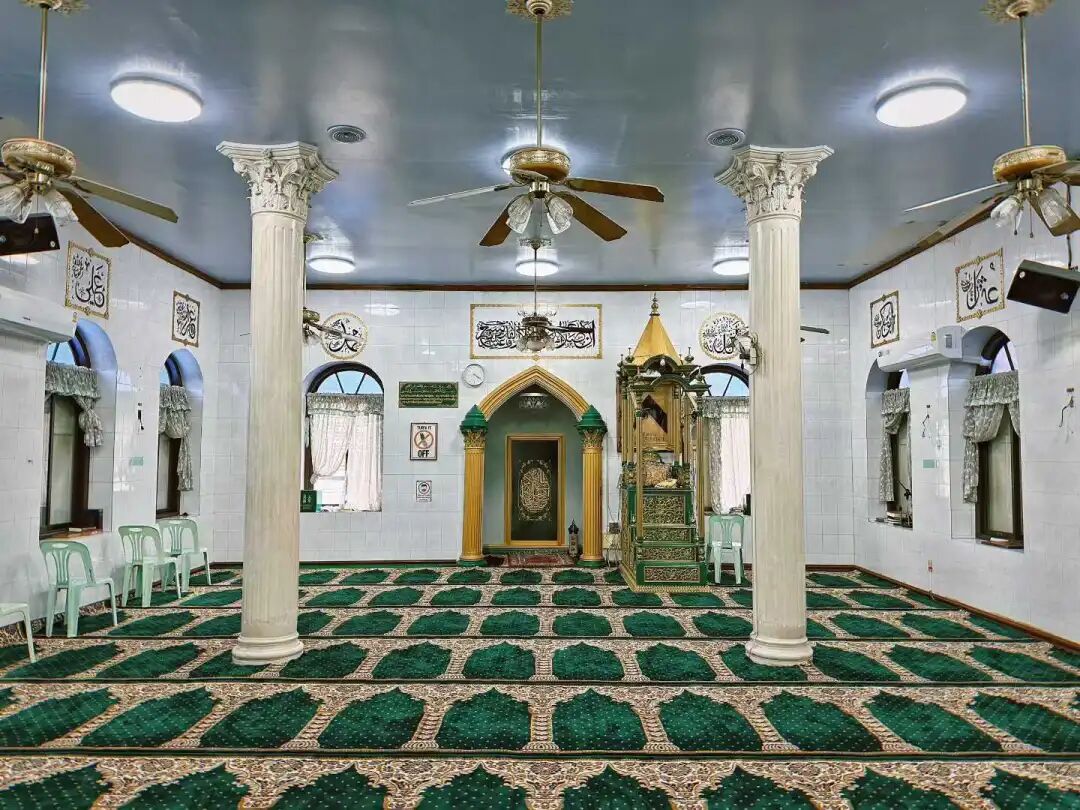
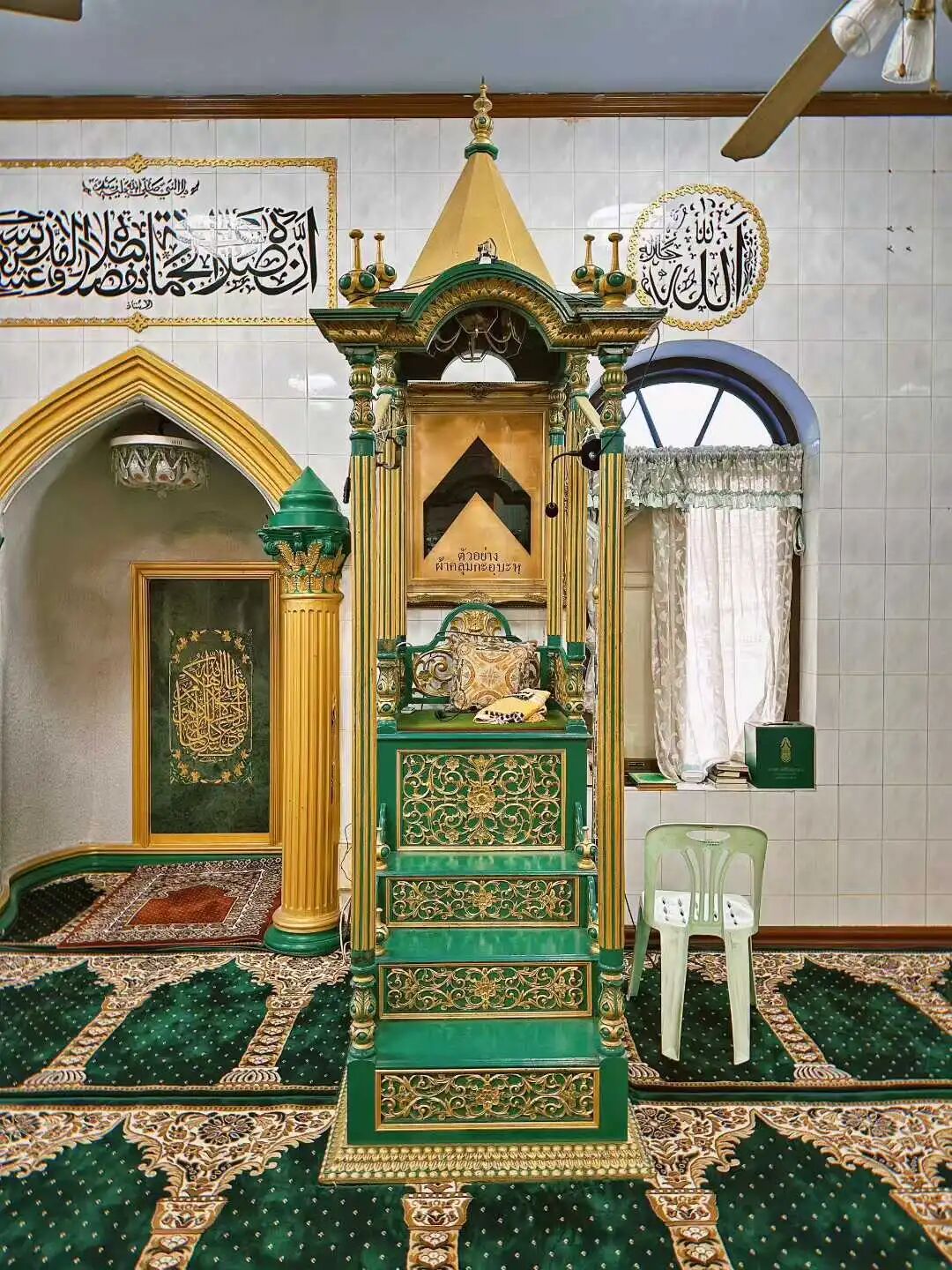
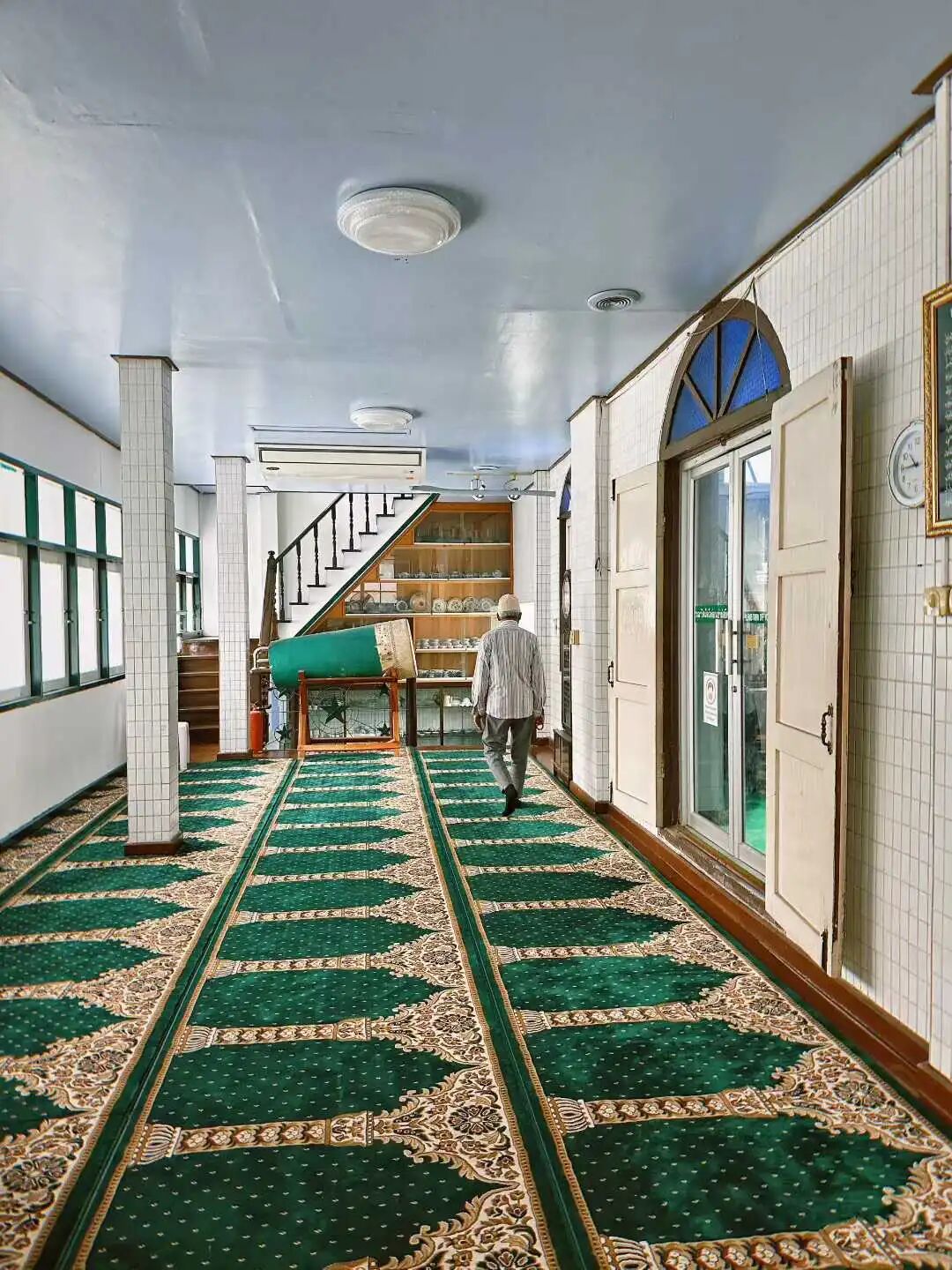
The mosque houses a traditional Indonesian Beduk drum. This single-sided drum is made from a hollowed-out log and covered with cowhide on one side. Slow beats on the Beduk drum signal the approach of prayer time, while rapid beats mean someone has passed away.
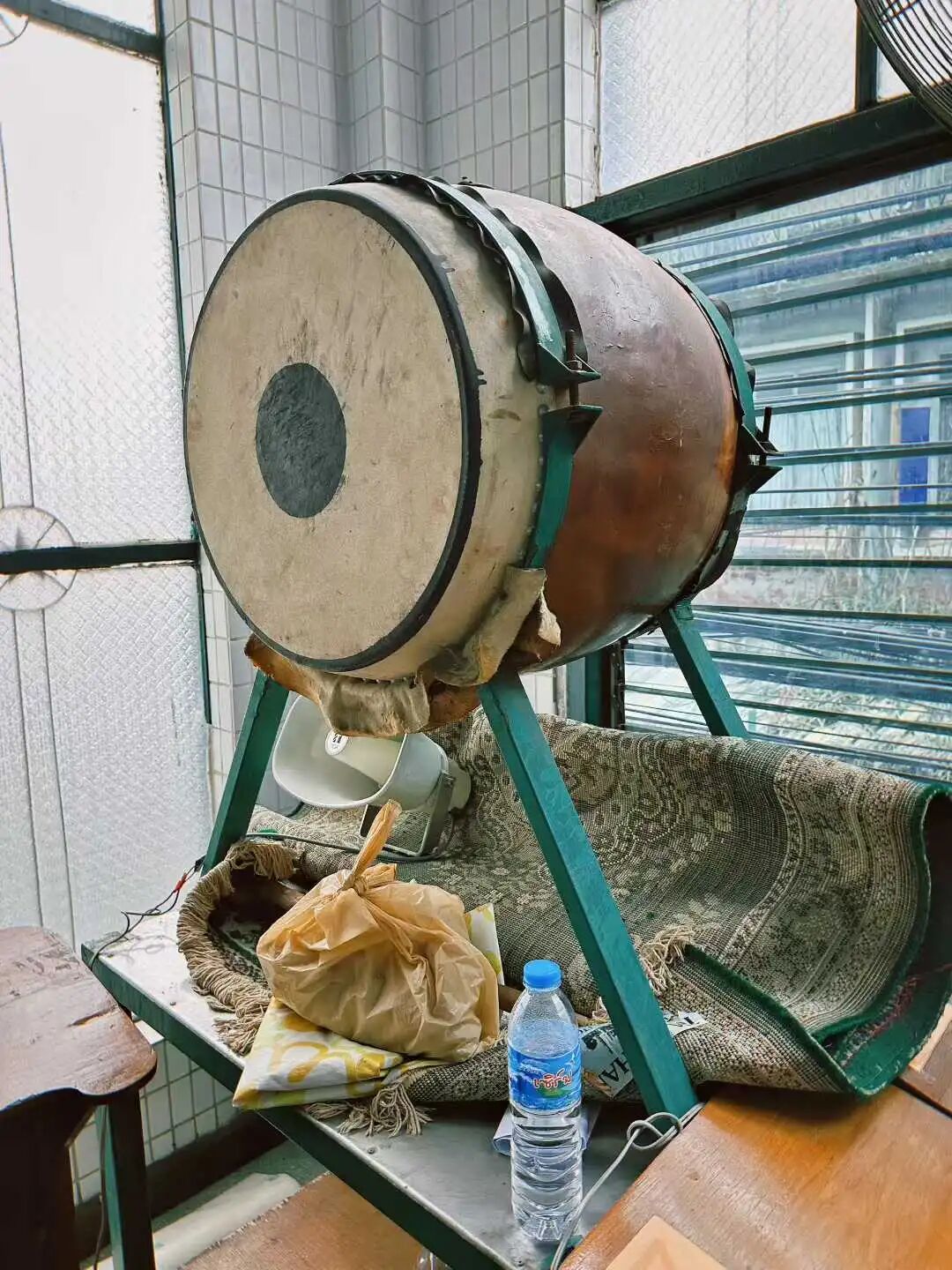
The mosque contains a collection of porcelain, giant turtles kept on the grounds, and a cemetery.
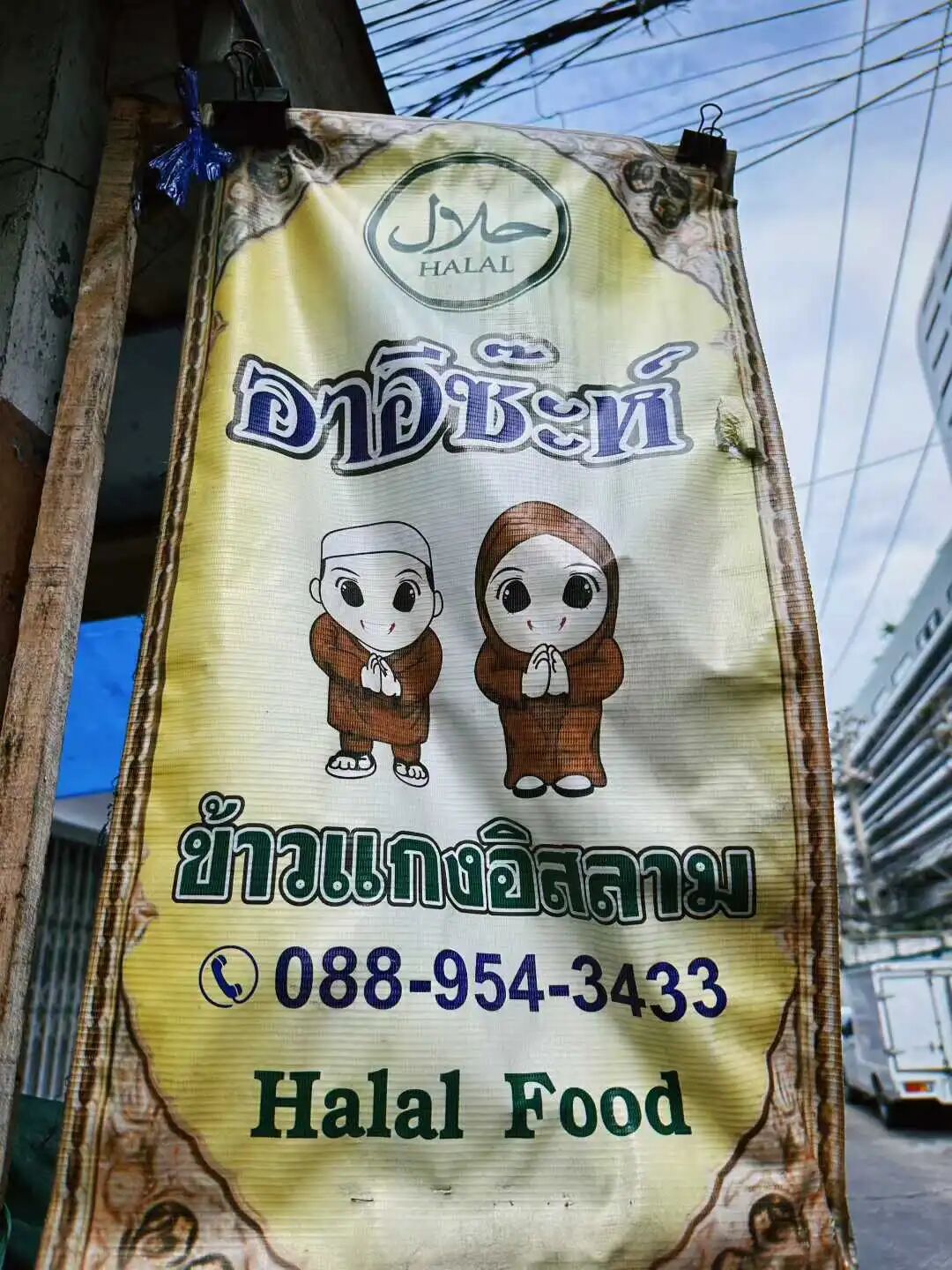
The sign at the snack shop next to the mosque shows a hand-shaking gesture, which is a common greeting among fellow Muslims (dosti) in Thailand and Indonesia. I have seen this in both countries.
Suwannaphum Mosque
The Suwannaphum Mosque community is near the busy ICONSIAM mall. It was built on the banks of the Chao Phraya River during the reign of King Rama III (1824-1851) by Indonesian sailors living along the coast of Trat Province, near the Thai-Cambodian border. It was originally called Ban Khaek Lang, a sparsely populated village in the southern suburbs of Bangkok. After the Bowring Treaty was signed in 1855, piers and warehouses were built, and many trading companies opened. These Indonesian fishermen started working as barge workers, loading and unloading cargo for Western shipping companies and Indian merchants.
Because there were many Indian merchants nearby, Indian Muslims (dosti) often came to the mosque for worship, and some Indian Muslims even married into the Indonesian Muslim community. Indian merchants donated money to rebuild the mosque during the reign of King Rama IV (1851-68). People say King Rama IV personally named it Suwannaphum Mosque after the nearby Wat Suwan Ubasikaram.
The most unique feature of this mosque is that the imam enters a special wooden pavilion to lead the prayer. I have never seen this before and wonder if it is a unique feature of Thai Islamic practice.
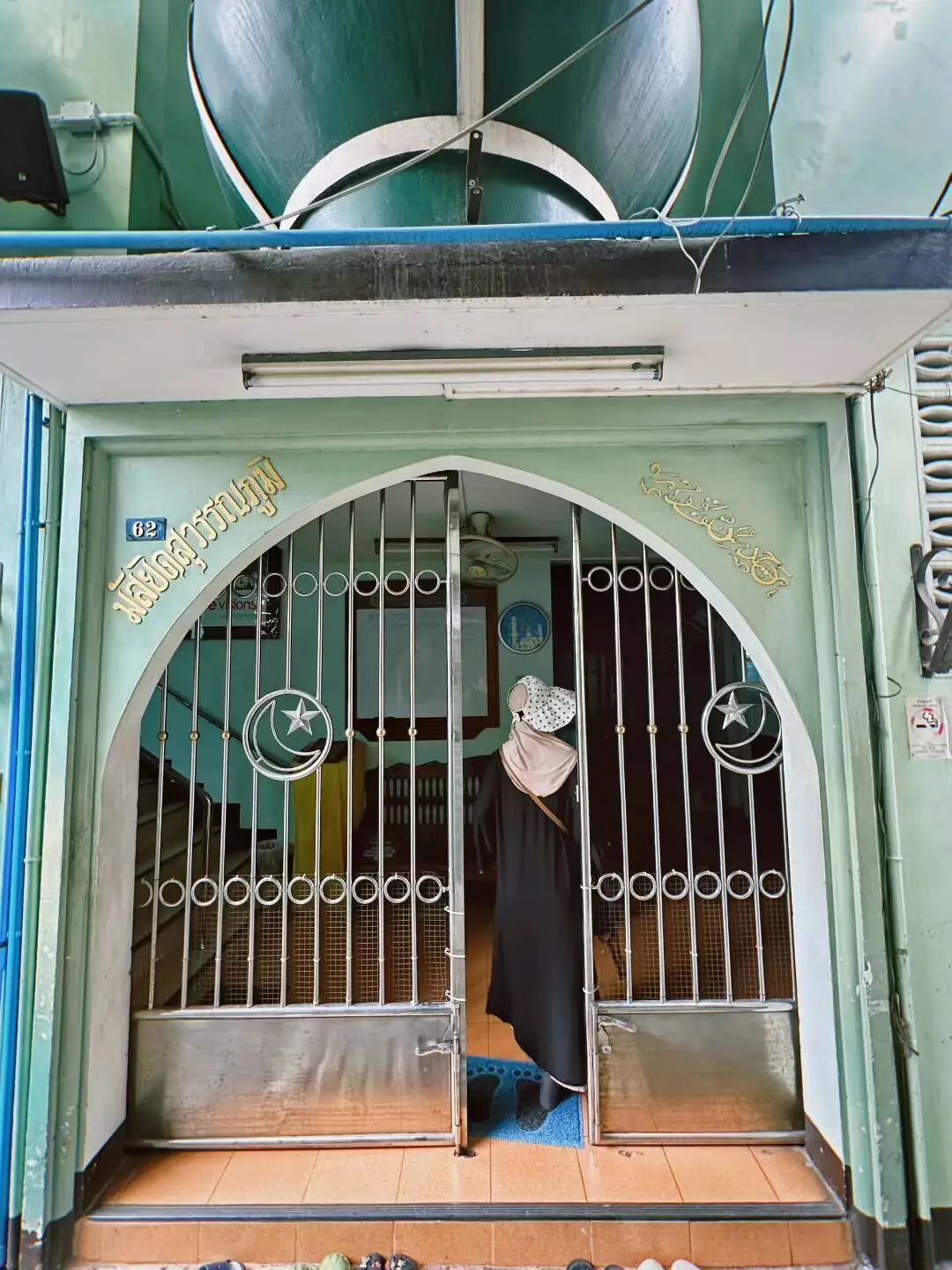
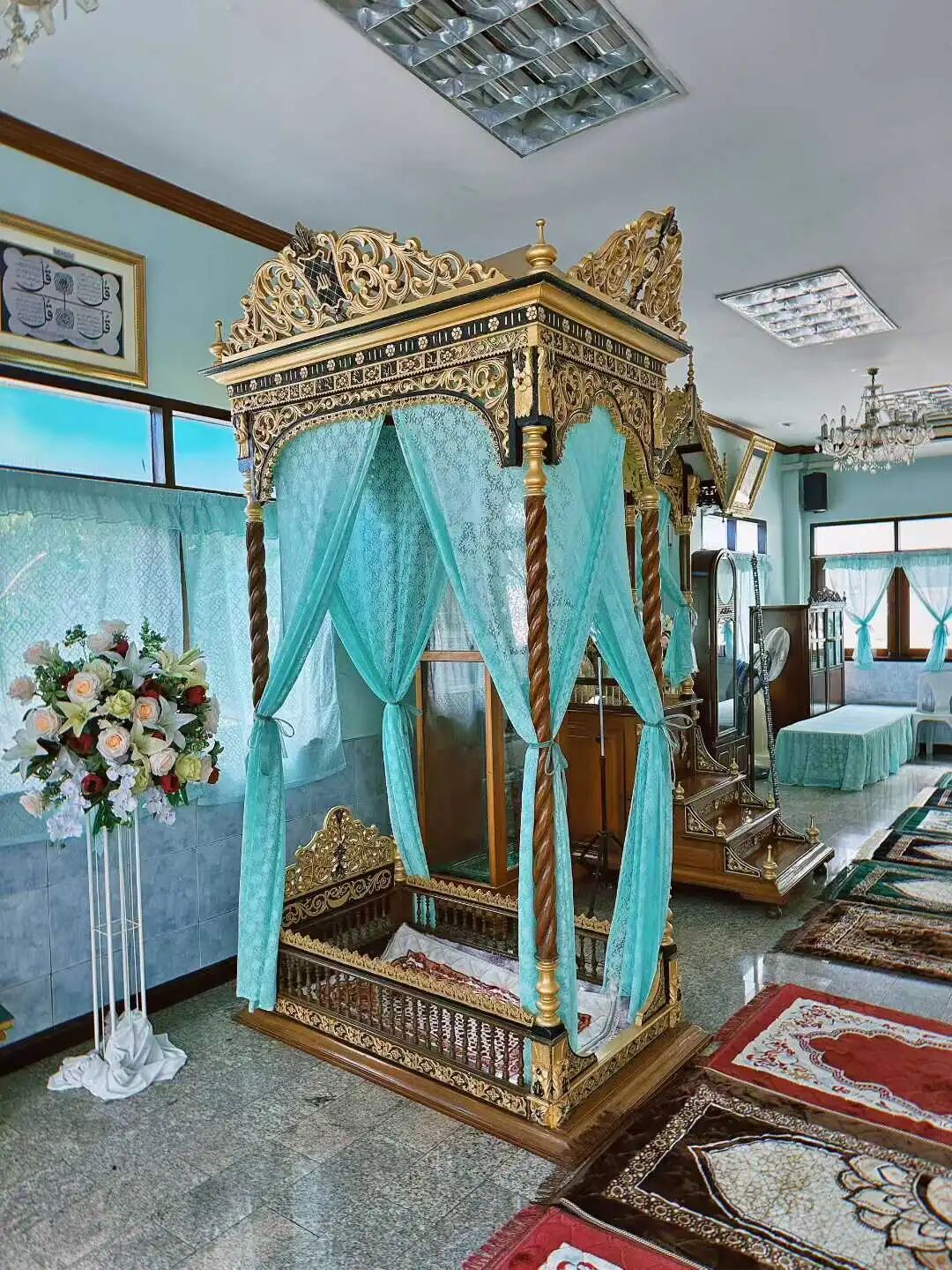
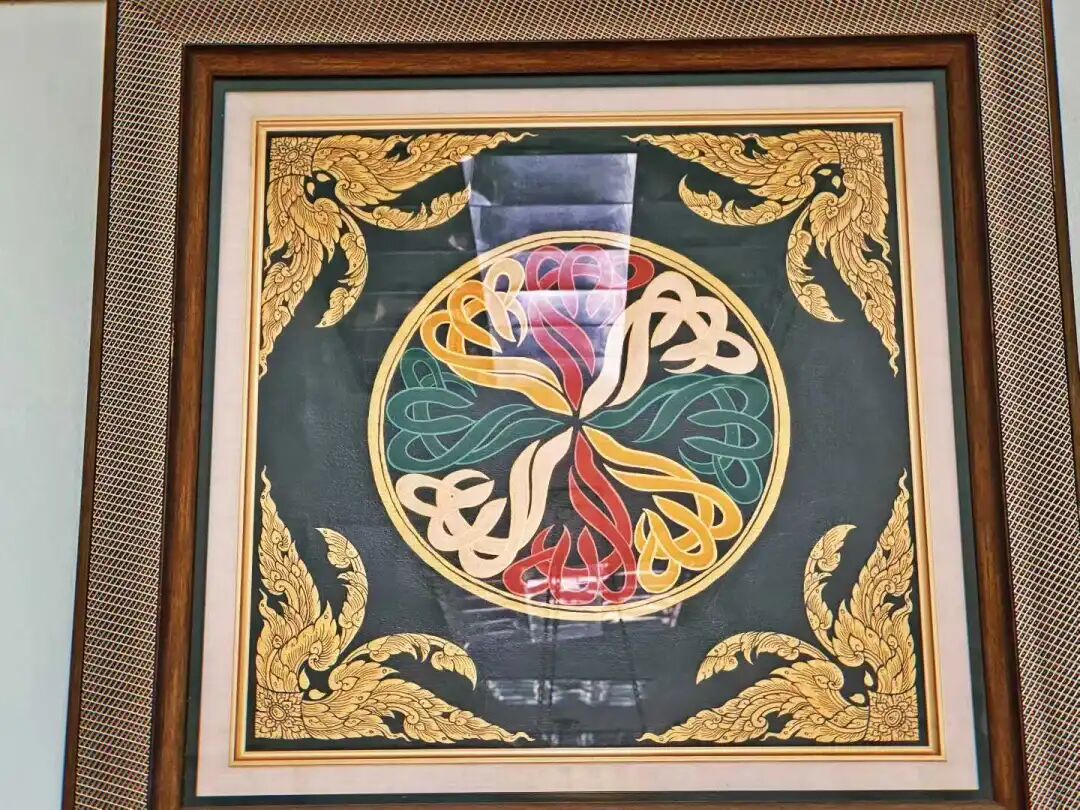
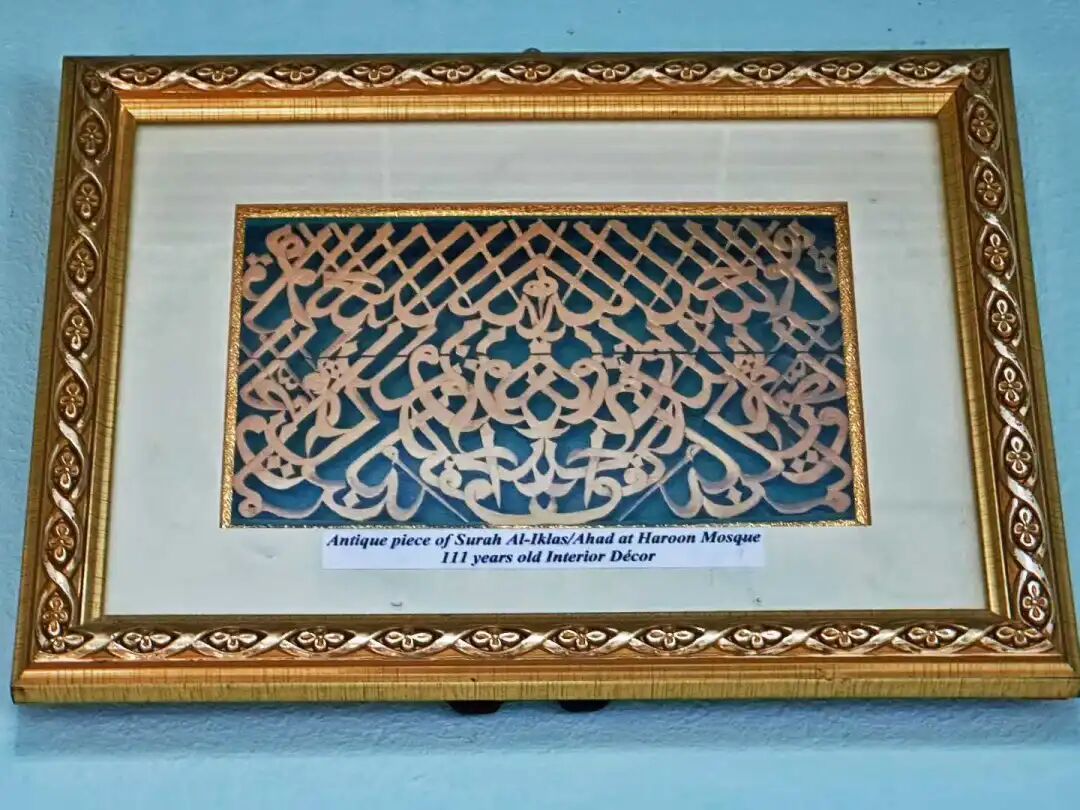
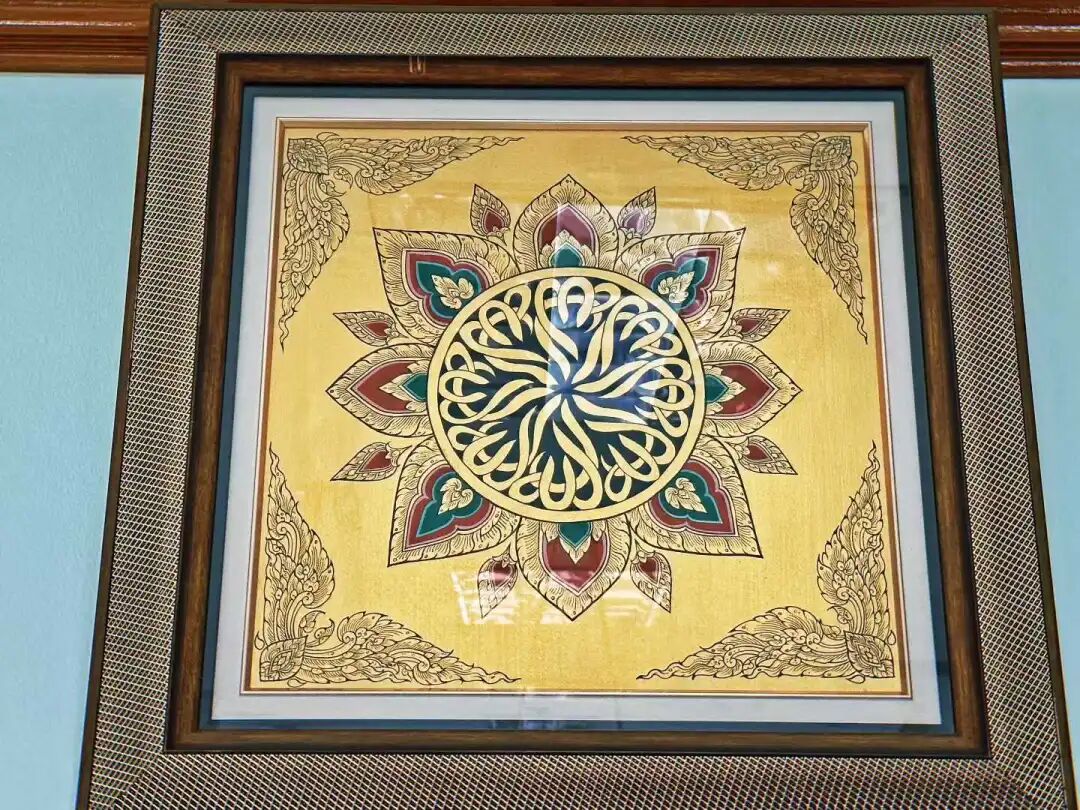
The view of Suwannaphum Mosque is beautiful. It is hard to imagine such a traditional water village mosque still exists right next to the busy ICONSIAM mall. The easiest way to get here is to take a boat along the Chao Phraya River to ICONSIAM and then walk over.
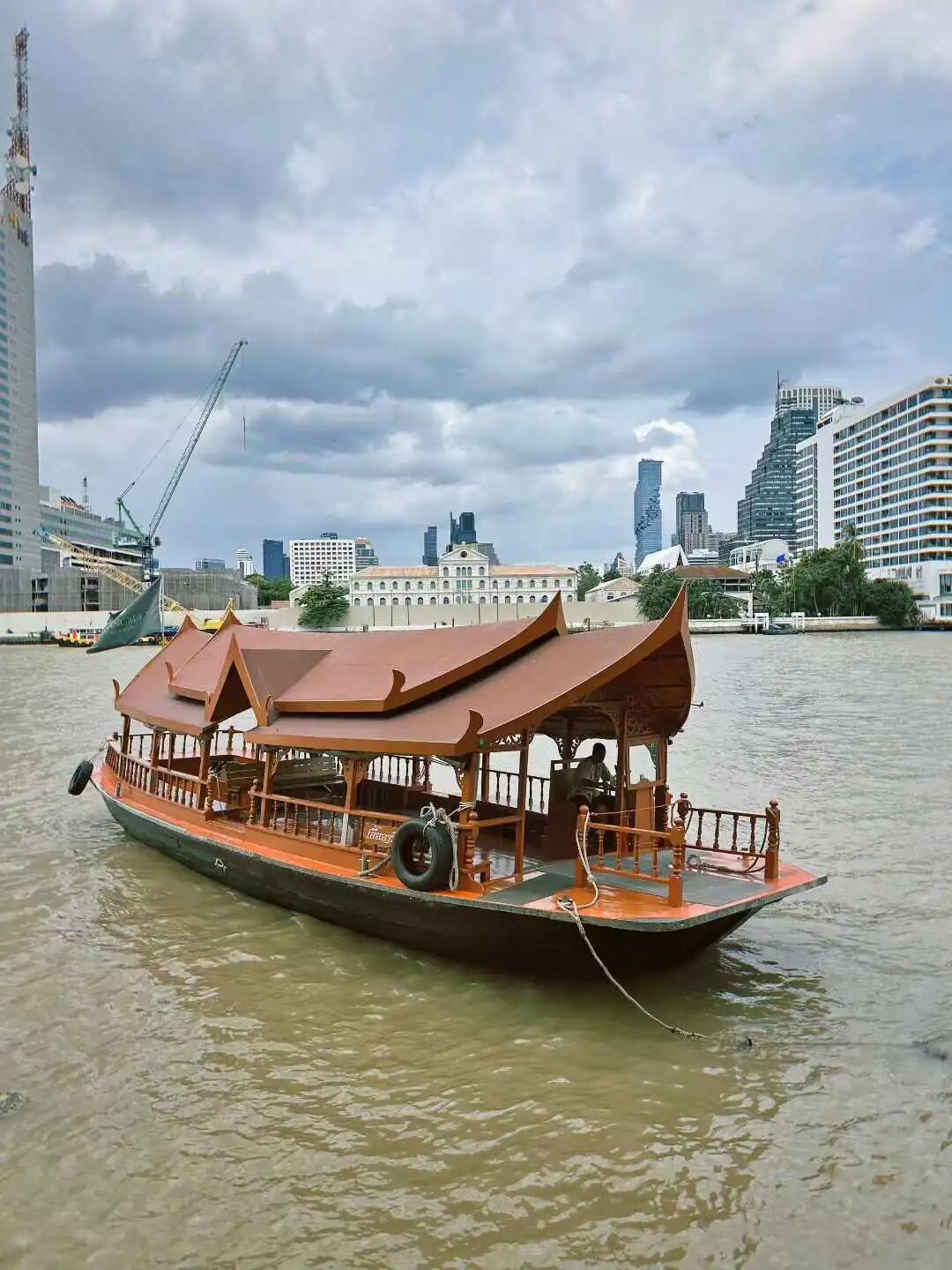
There are many halal restaurants near ICONSIAM, and we ate inside the mall last time. This time, we ate at a Thai halal restaurant called Nakhon Lerdros inside the ICS mall, which is across from ICONSIAM. You can walk between ICS and ICONSIAM using the upper-level walkway. The best part about eating in the mall is the air conditioning, though it costs more than street food.
We ordered Thai boat noodles, tom yum soup, grilled meatballs, and longan juice. Boat noodles were originally sold by people rowing small boats along Bangkok's canals. One person did everything on the boat: cooking the noodles, making the broth, serving the food, collecting money, and washing the dishes. Halal boat noodles usually use beef and beef meatballs, and the broth is made from beef. They use Tang Shuang He brand fish sauce for seasoning. Most Thai condiments are halal-certified. The fish sauce only contains anchovies, salt, sugar, and water, which adds a special flavor.
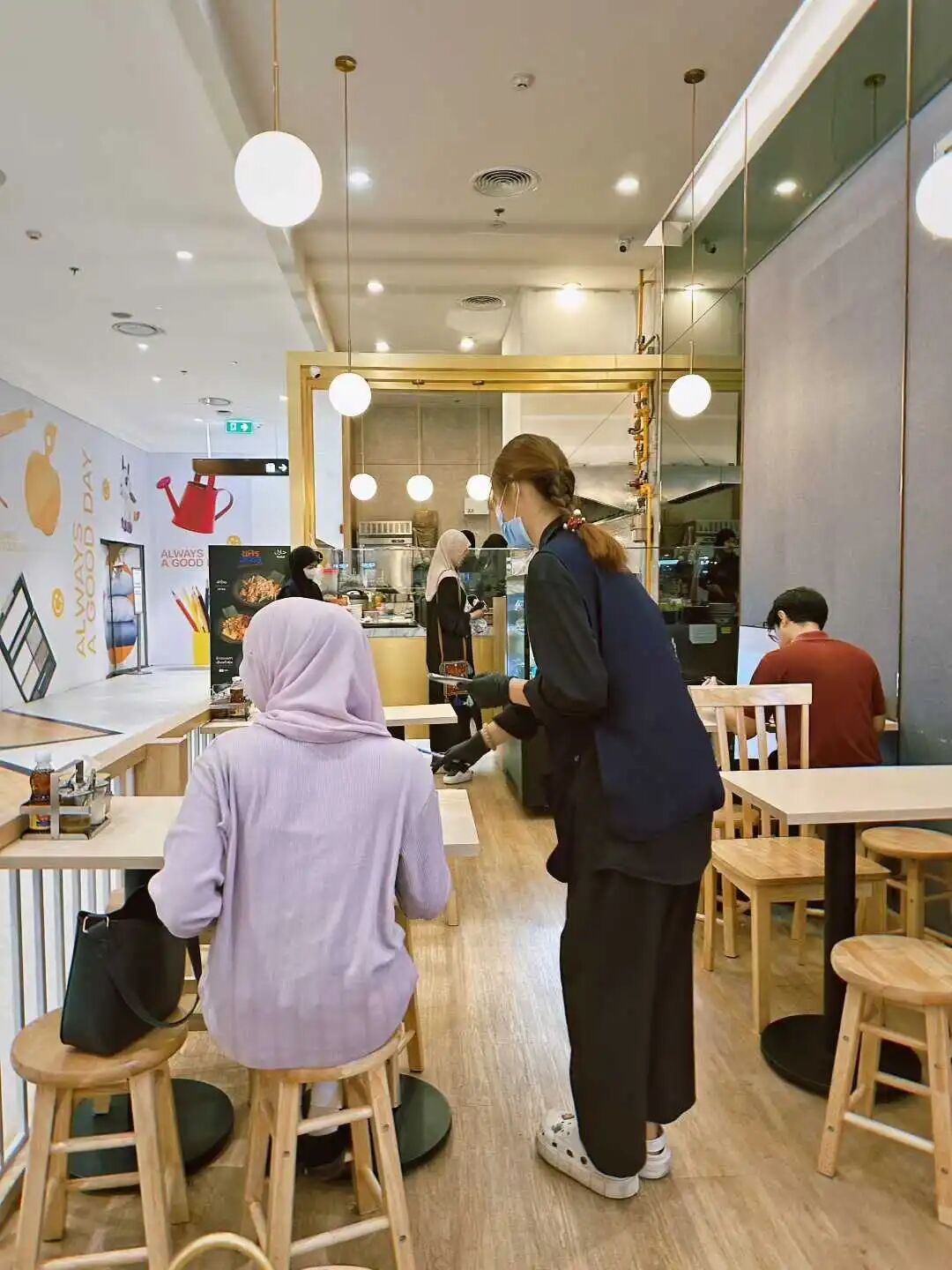
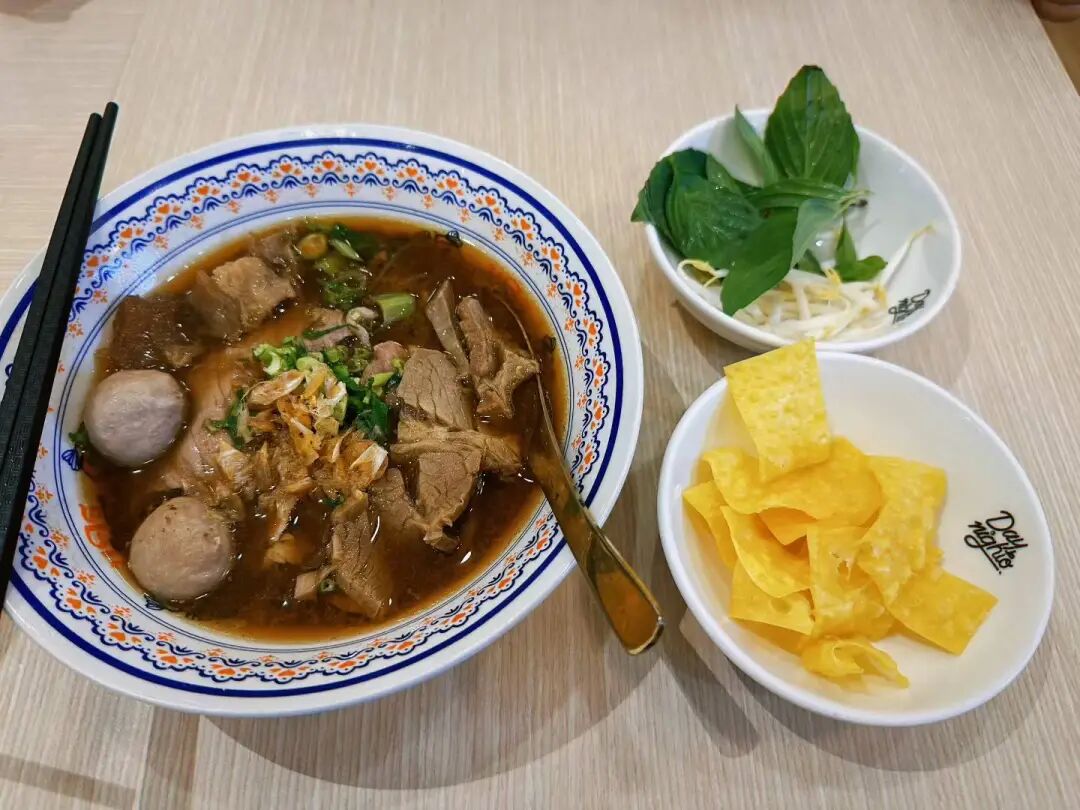
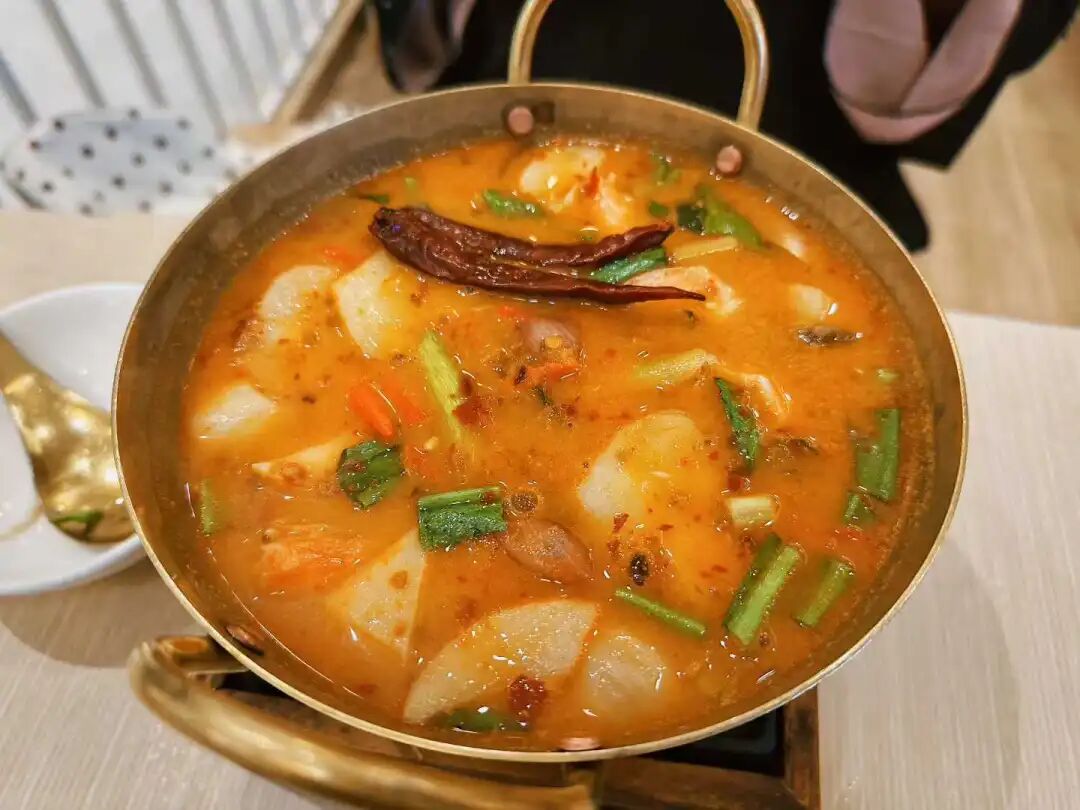
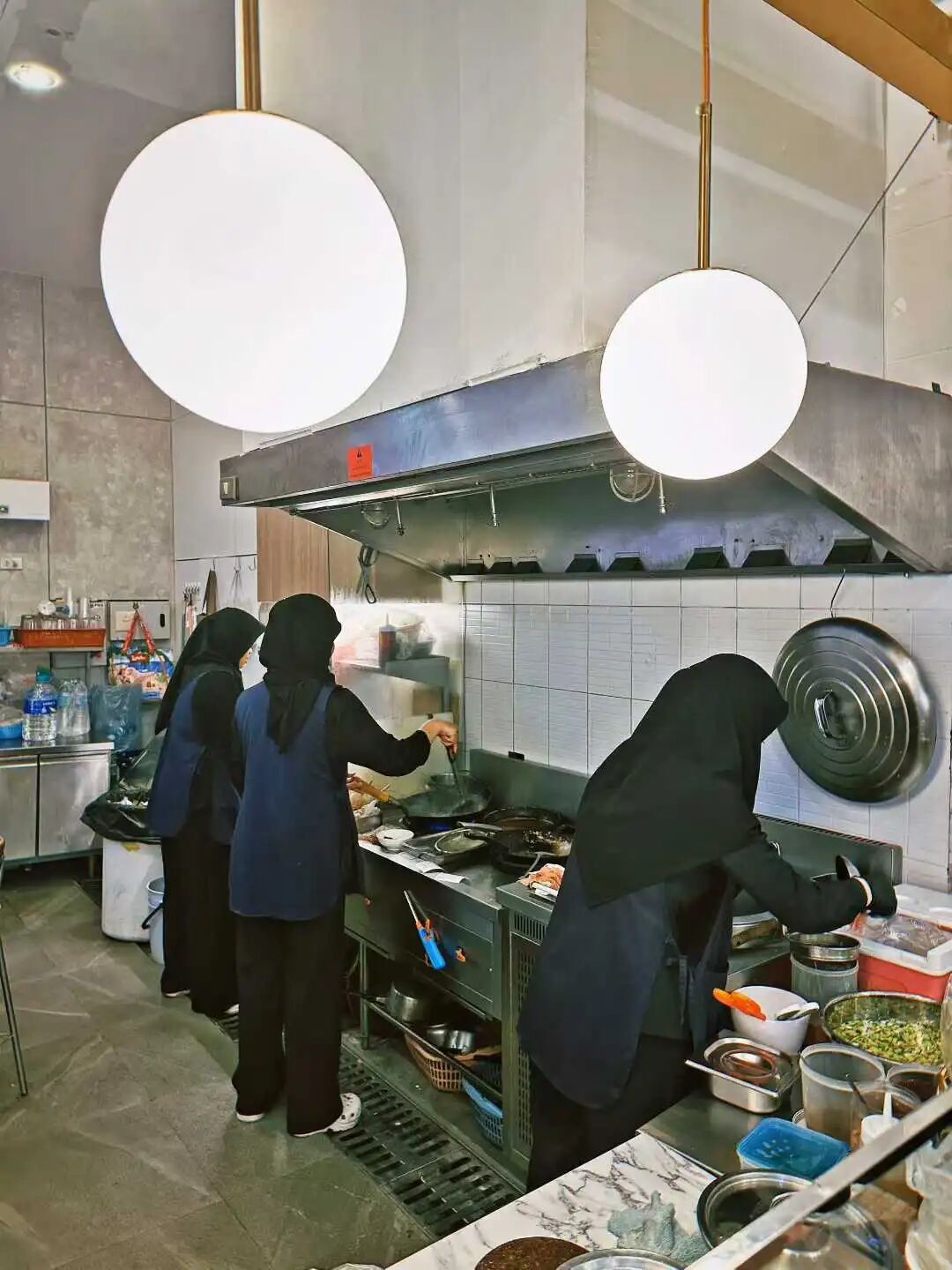
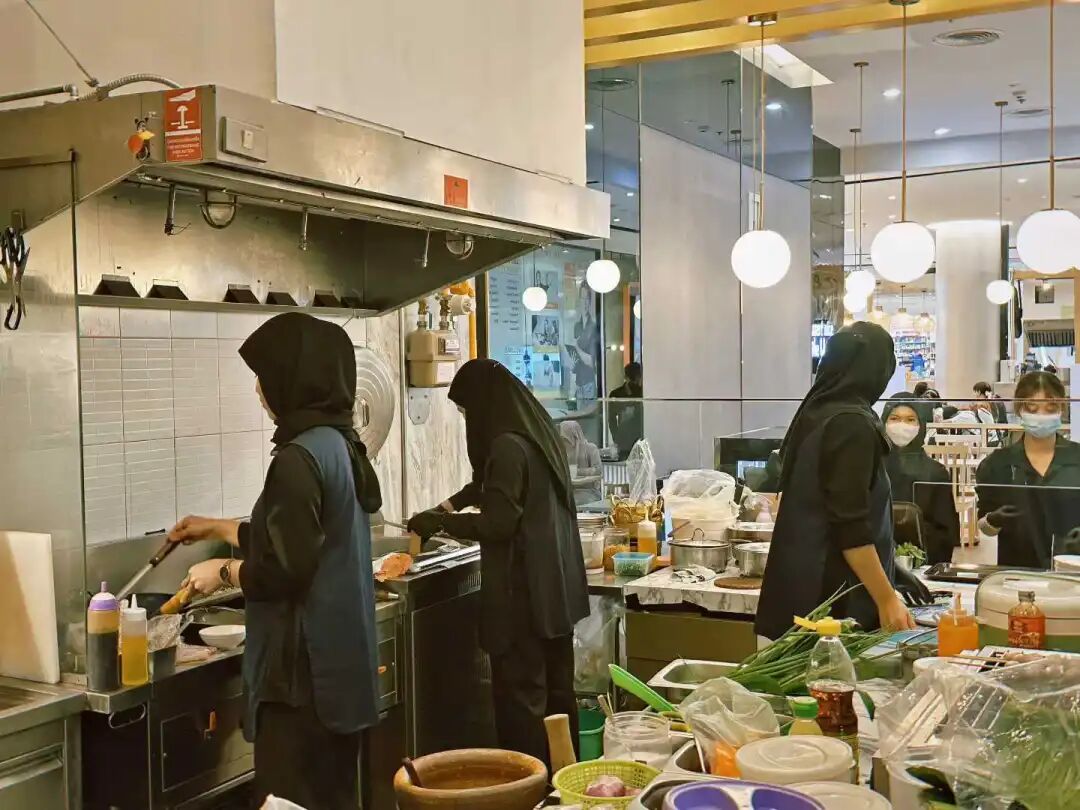
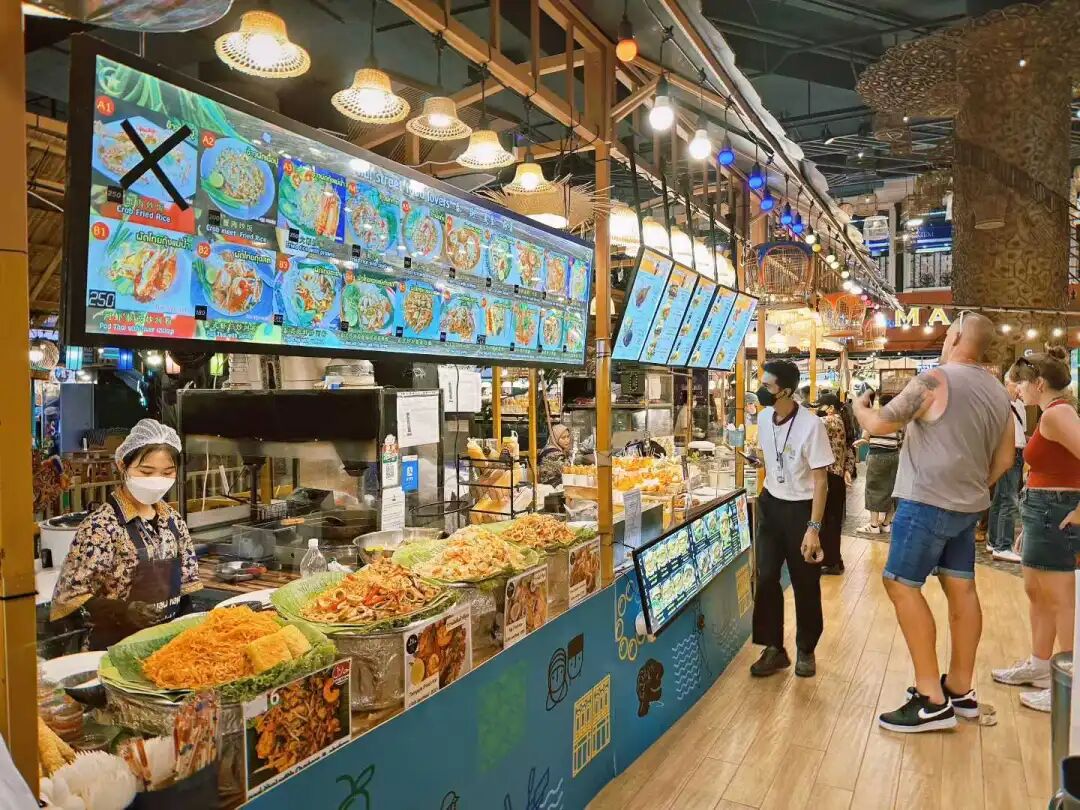
The food court inside ICONSIAM is still very popular. There are several halal stalls here, making it a great place to eat snacks while enjoying the air conditioning on a hot day.
For more about snacks inside ICONSIAM, see my diary: Bangkok Halal Trip—Food and Lodging.
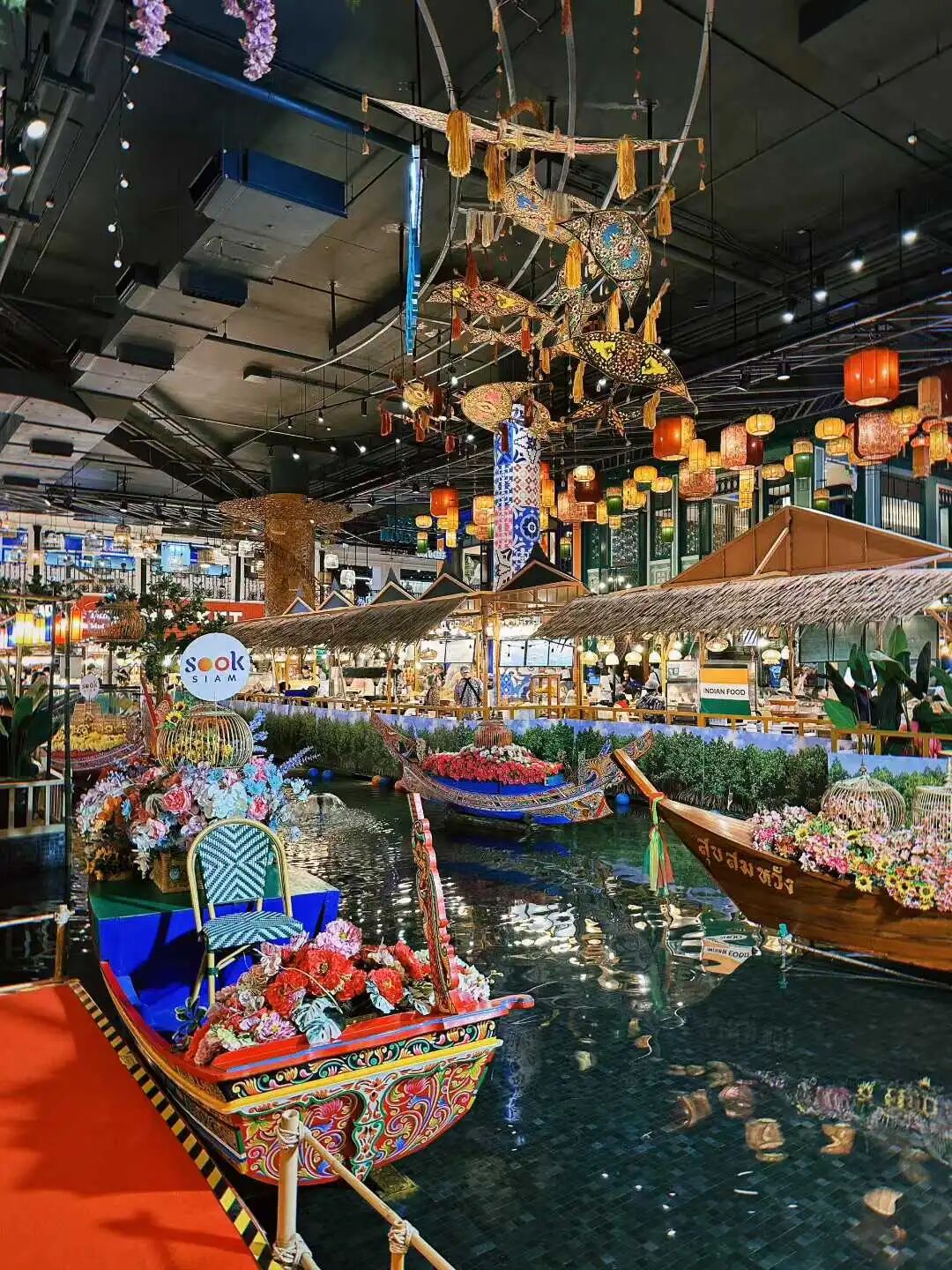
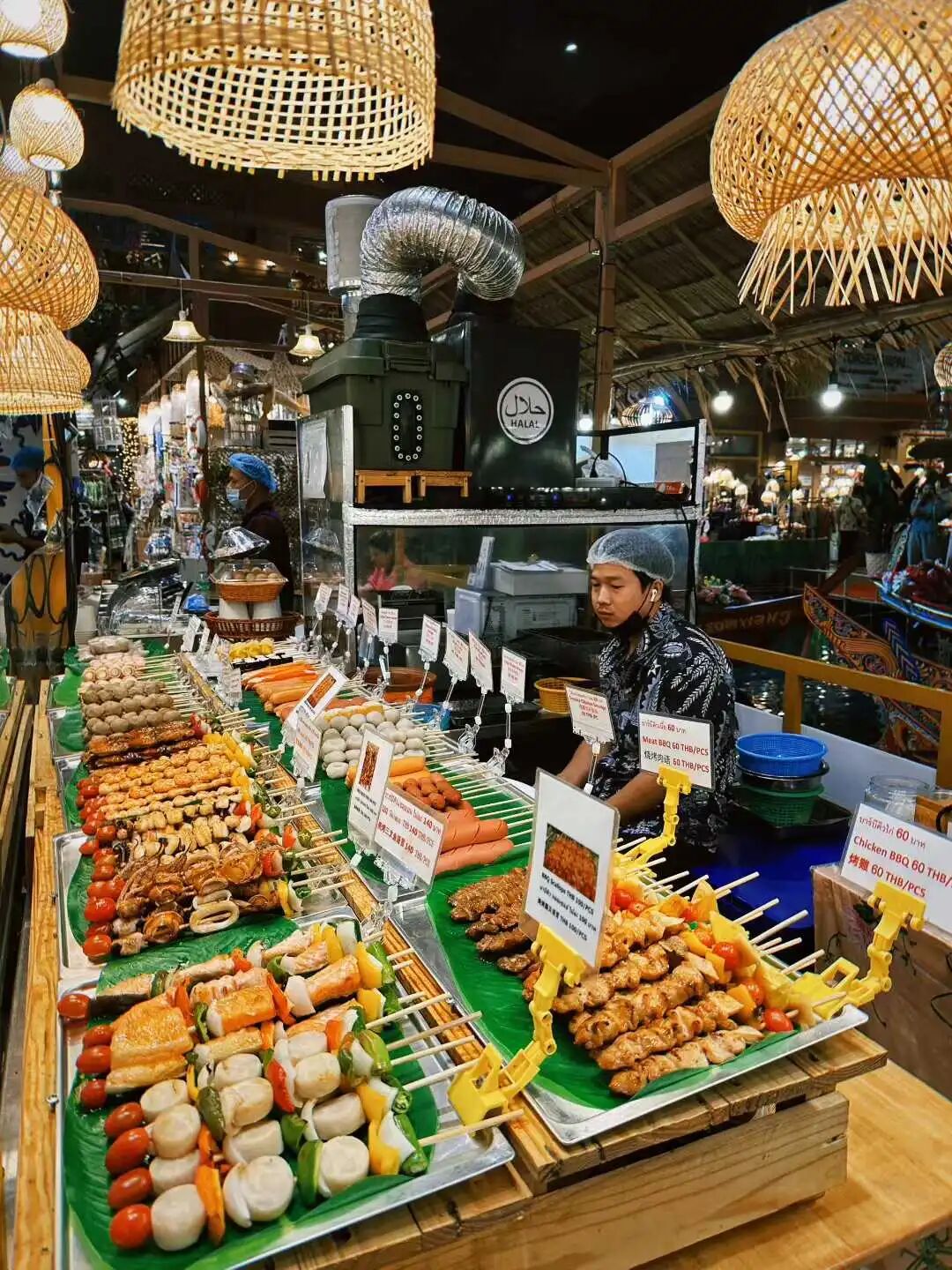
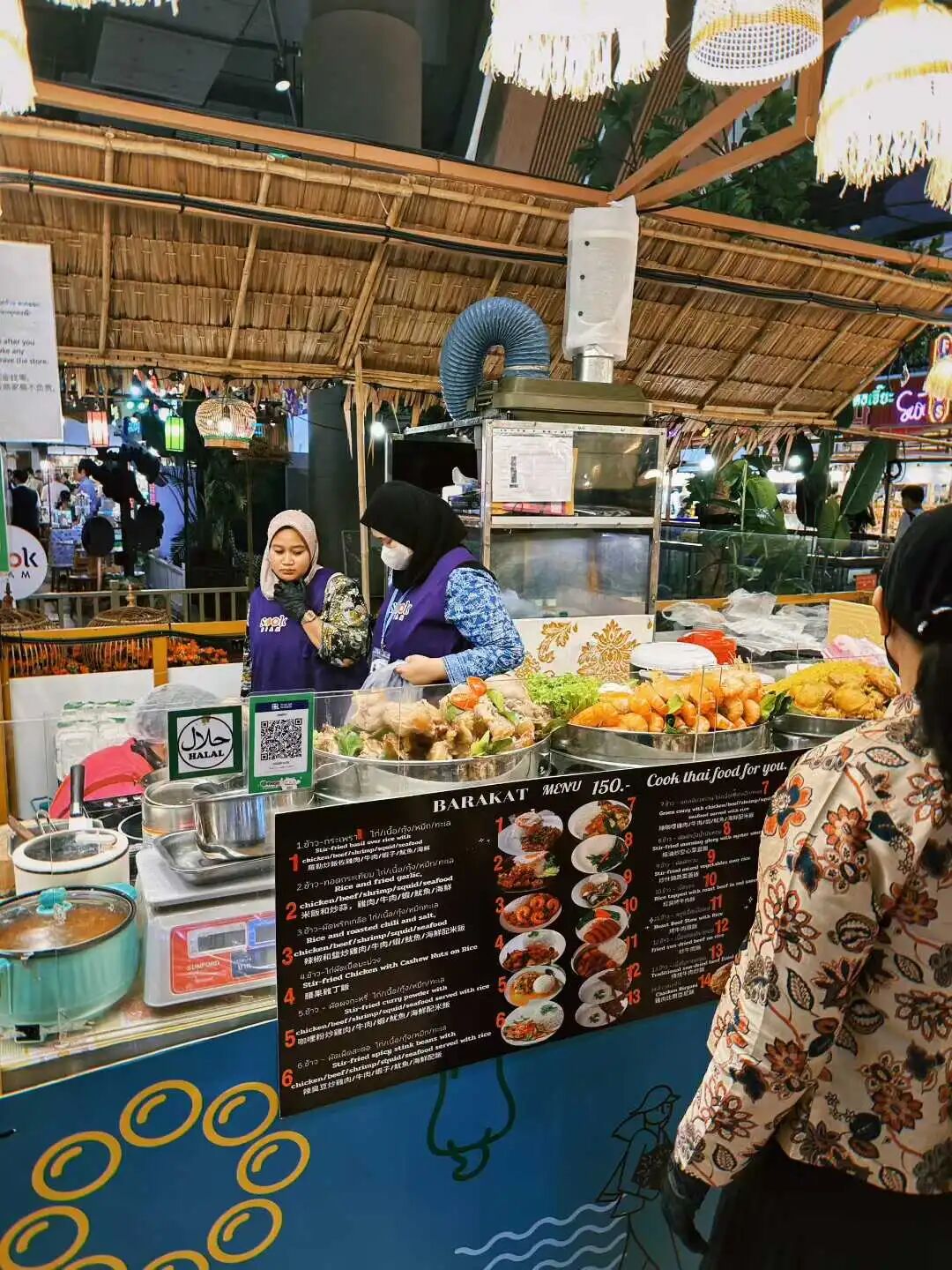
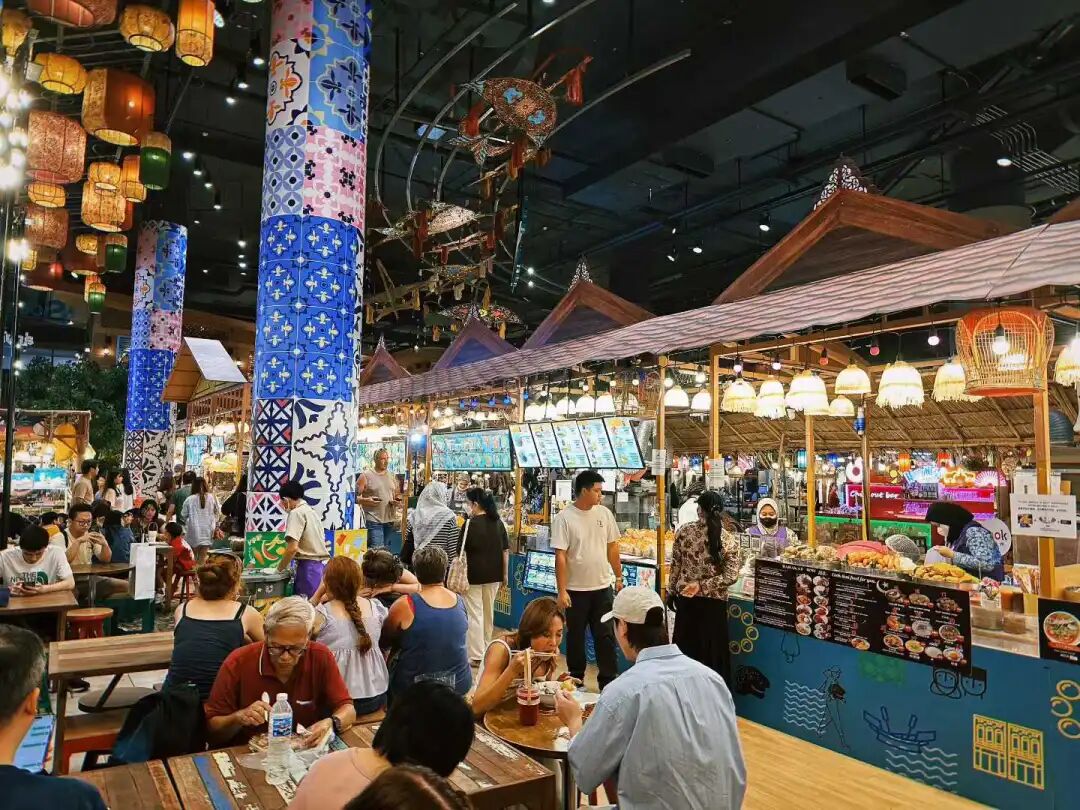
The pier at the entrance of ICONSIAM is very convenient for boats. You can take a boat downstream to the Asiatique night market or upstream back to Bangkok's old town.
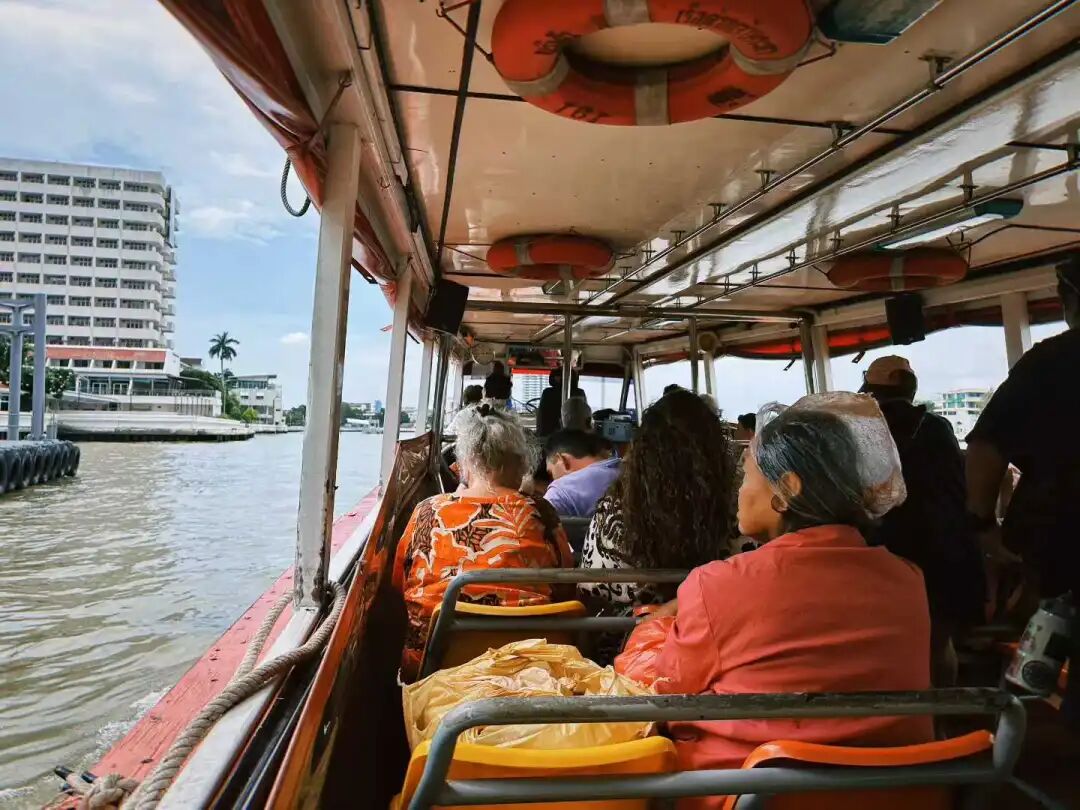
Haroon Mosque.
Haroon Mosque is named after an Indonesian Arab merchant named Toh Haroon Bafaden. He came to Bangkok from Indonesia with his father in 1828 (some say 1837) to do business. He later married, settled down, built Haroon Mosque, and became its first imam.
Haroon Mosque was originally located by the Chao Phraya River. It was a wooden building that combined Ayutthaya and Javanese styles. It moved to its current location in 1899 because of the construction of the Customs House. In 1934, the mosque was rebuilt into its current white brick and plaster structure. It features neoclassical floral patterns, Roman-style columns, and wooden shutters, looking a bit like a European townhouse from that era.
Today, the mosque preserves exquisite Javanese Jepara teak wood carvings of scripture from the old 19th-century building. They were created by Haji Said, a fellow Indonesian from Toh Haroon Bafaden's hometown.
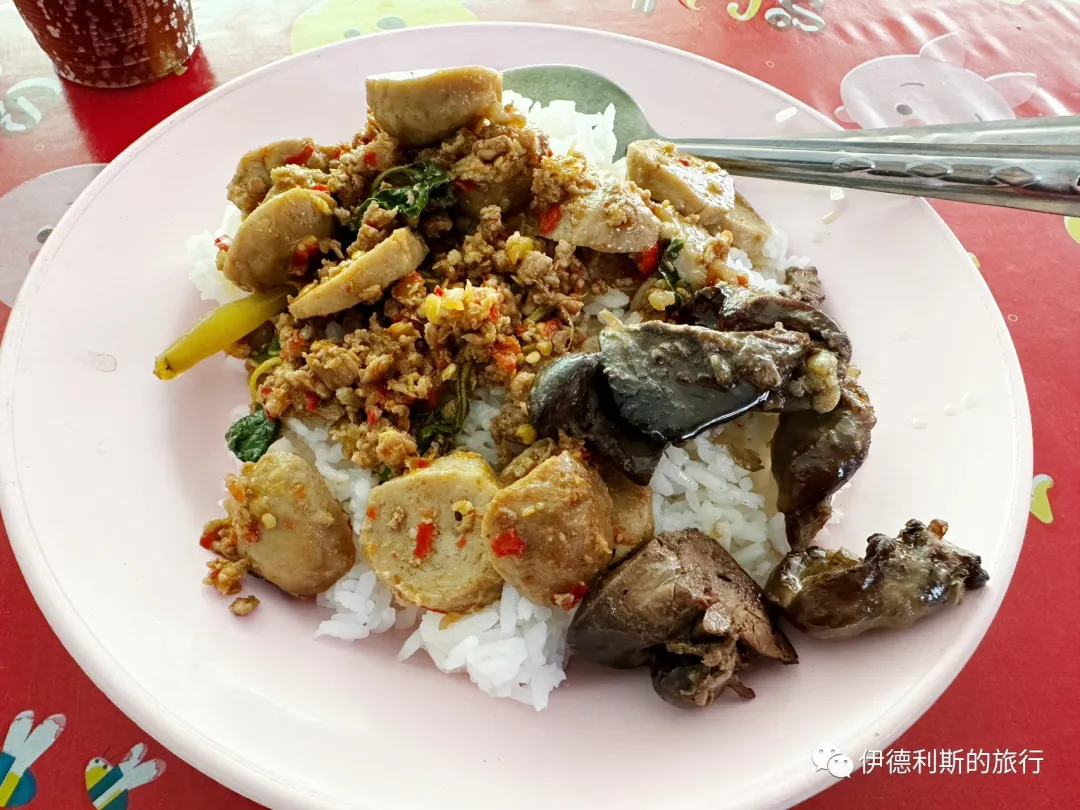
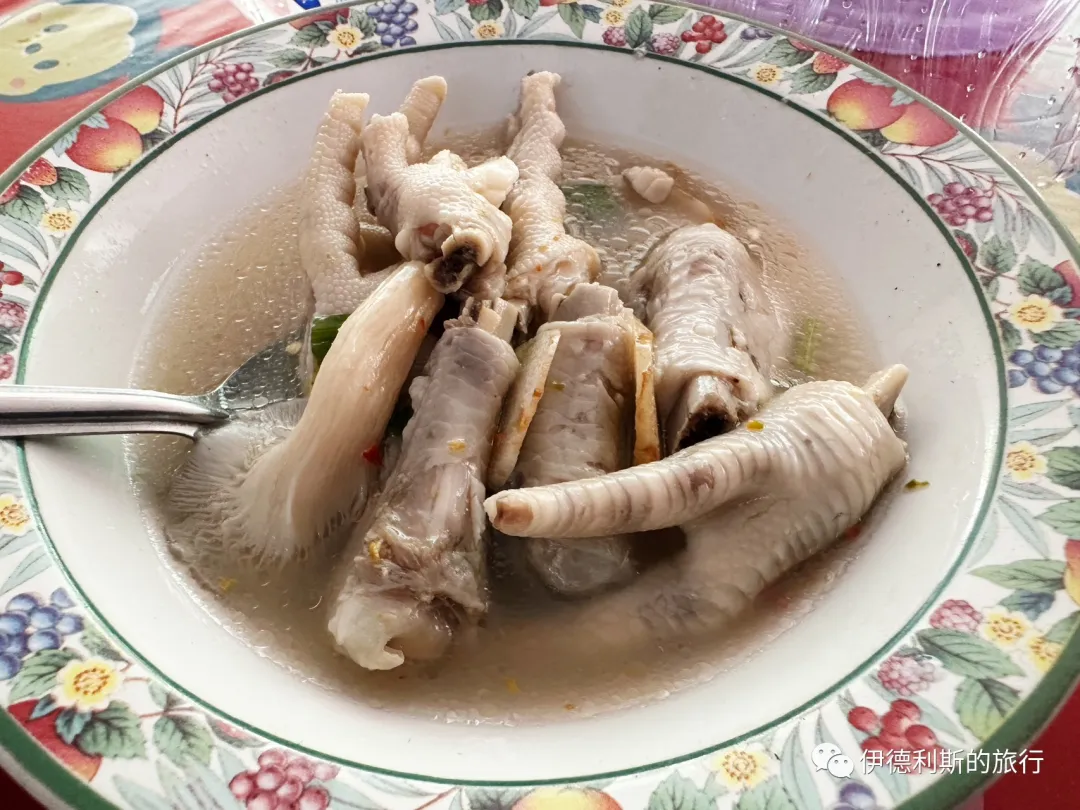
There are many snacks at the entrance of the mosque. We first had stewed beef and chicken meatball glass noodles. The beef was incredibly fragrant! Then we had rice with stir-fried basil chicken, meatballs, and chicken liver. After that, we had a bowl of stewed chicken feet. The chicken feet were soft and flavorful, but the soup was super spicy, haha.
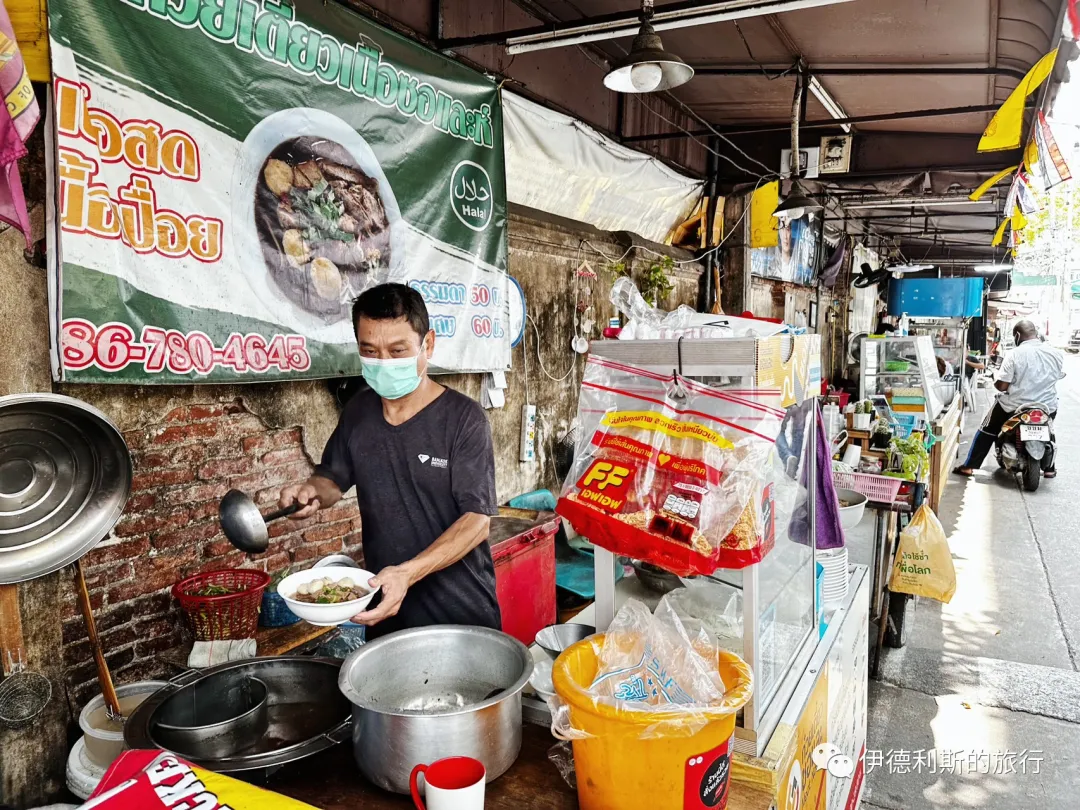
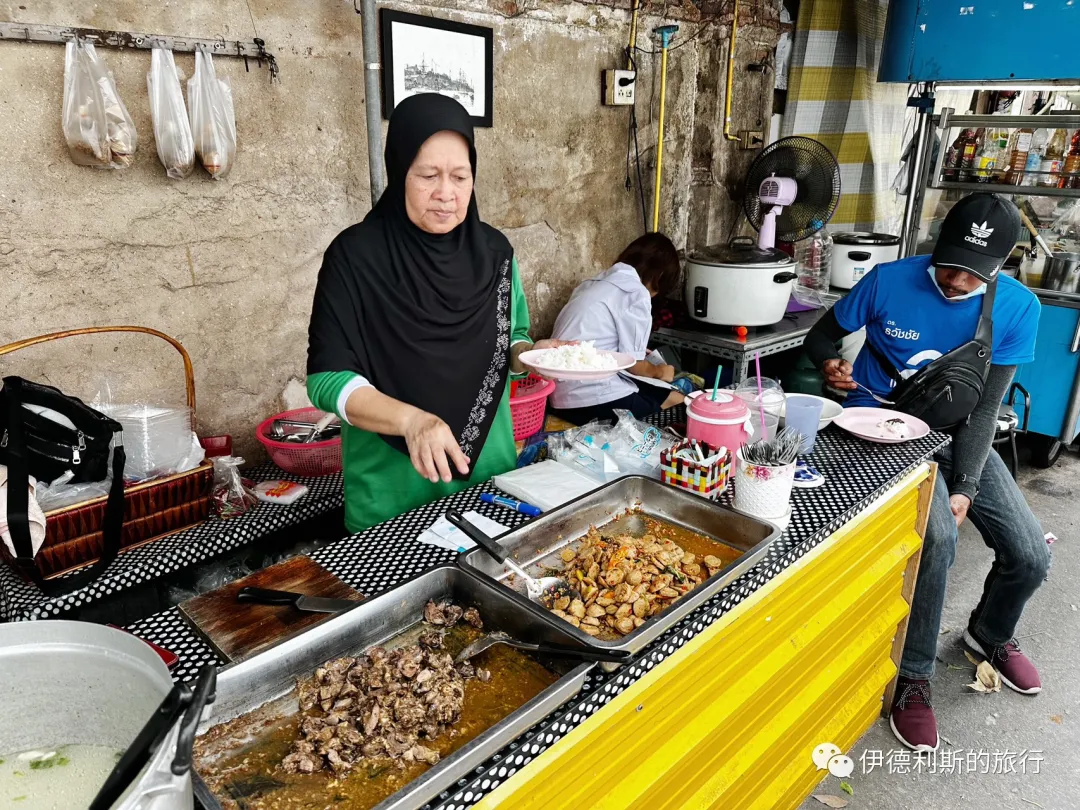
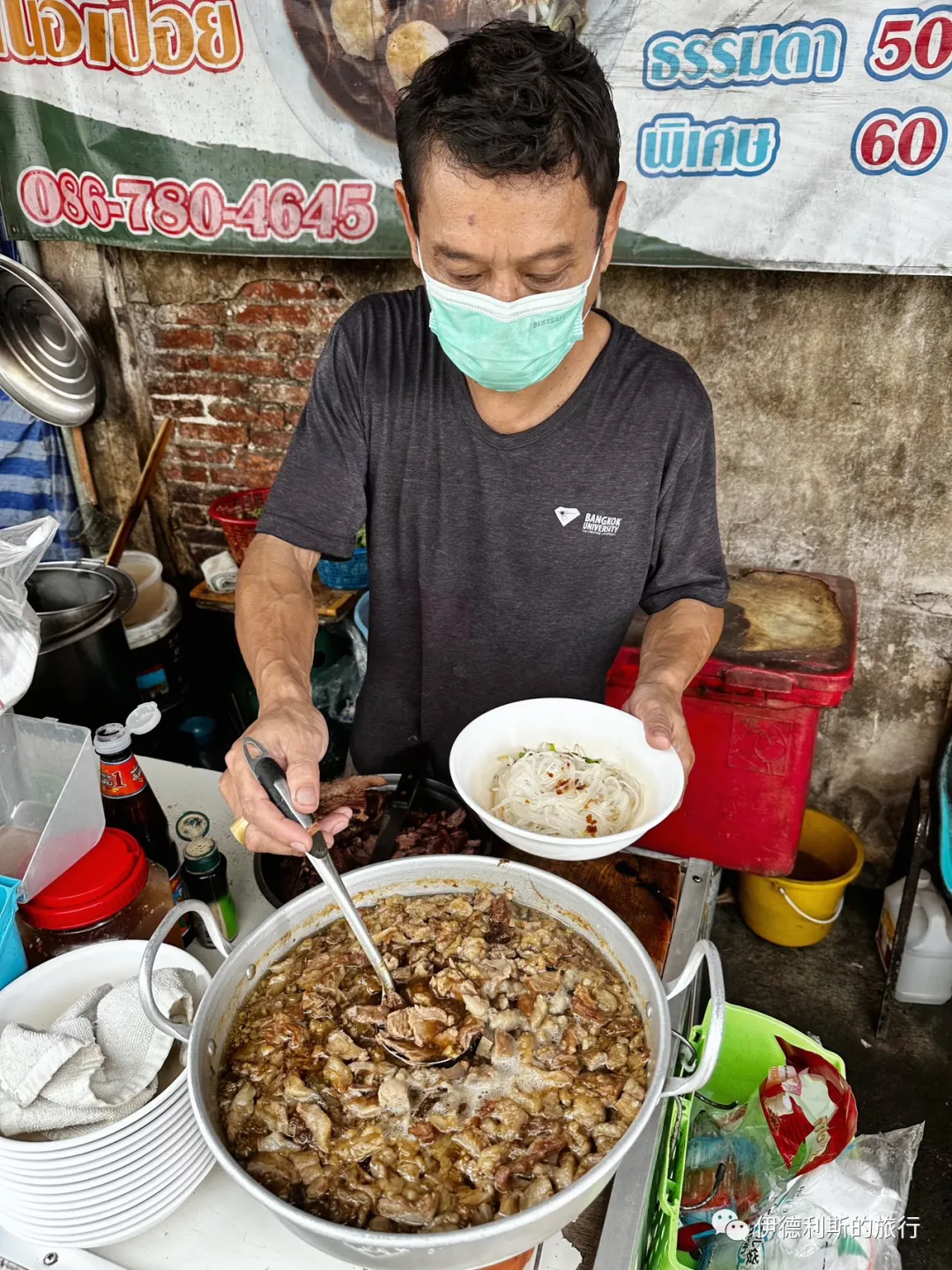
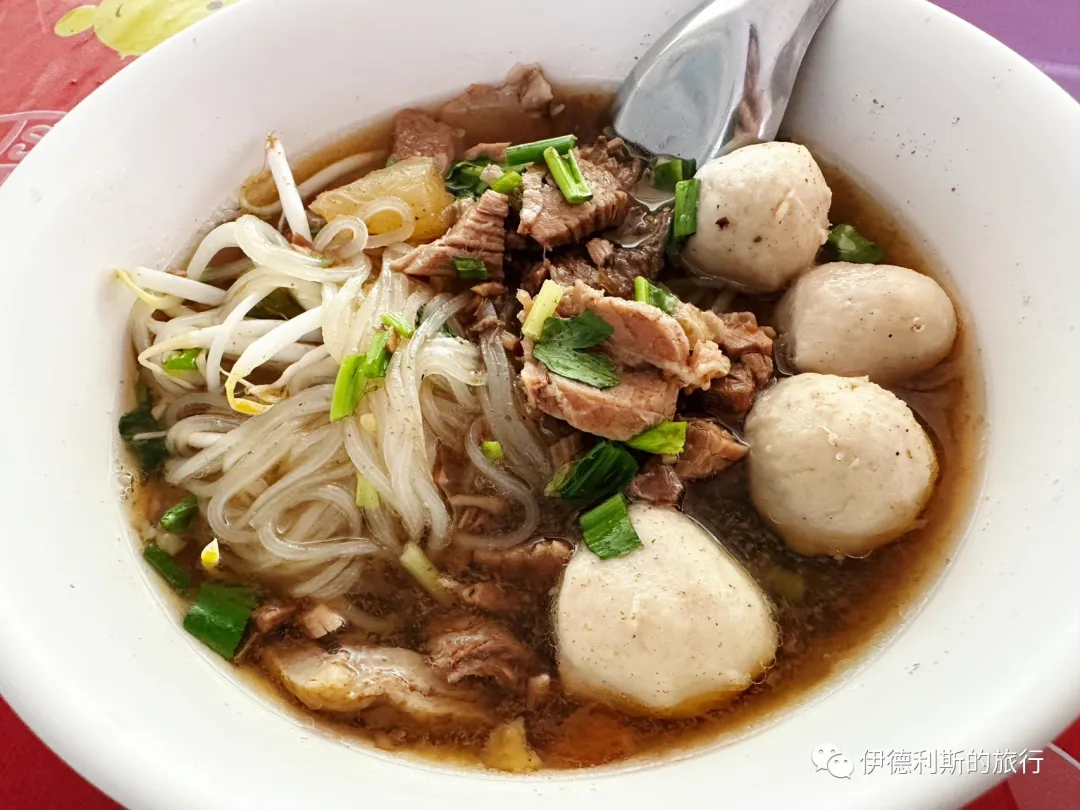
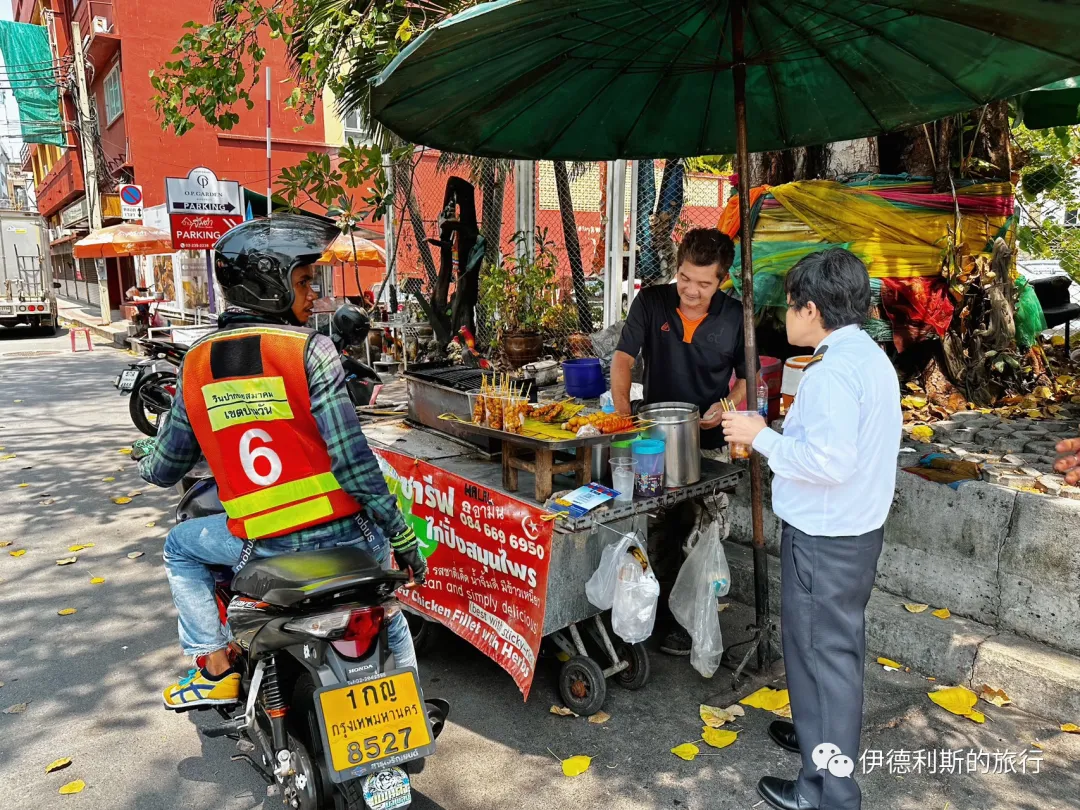
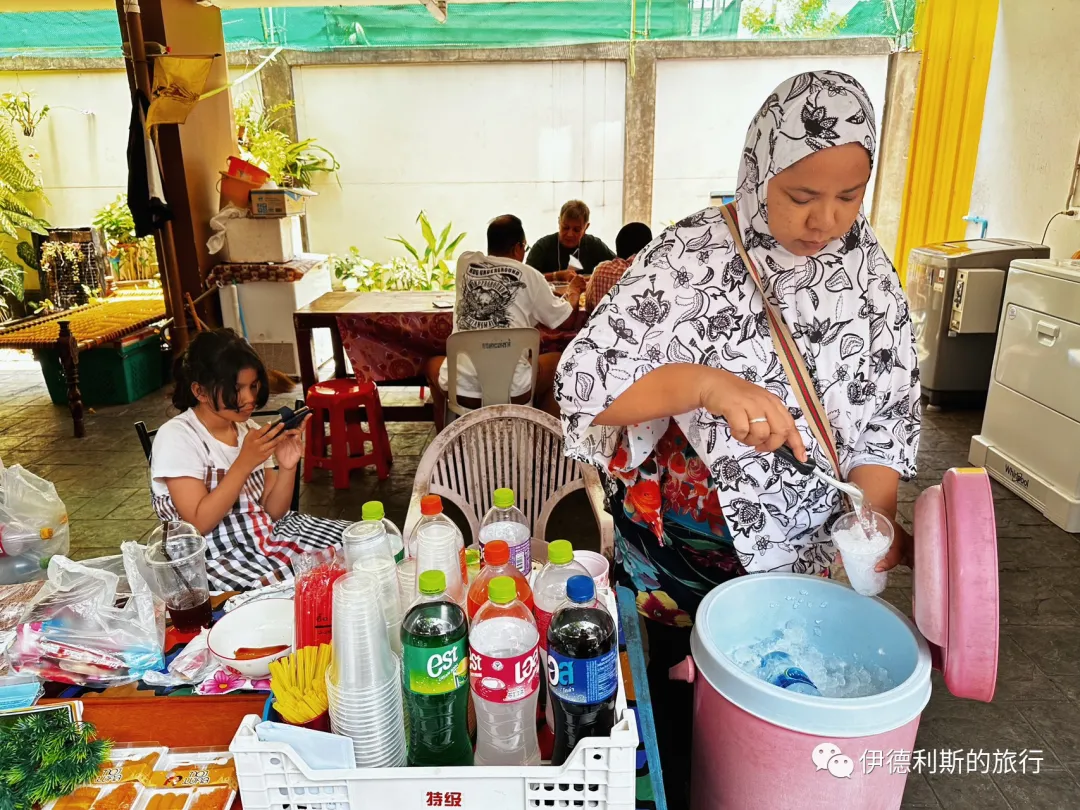
Two essentials for eating street food in Bangkok's hot summer are a strong electric fan and cold drinks with ice! Otherwise, it feels like you cannot eat anything at all, haha.
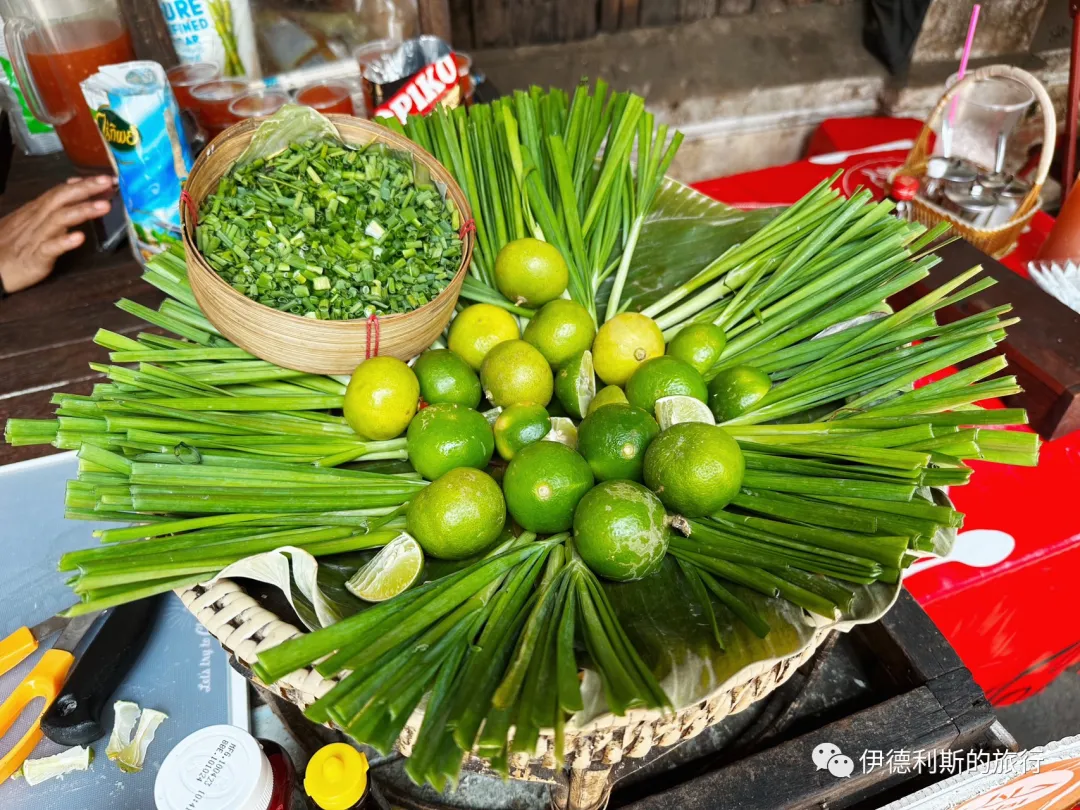
We ate the classic street snack, Thai stir-fried rice noodles (pad thai). Thai-style stir-fried rice noodles (pad thai), also called stir-fried rice noodles (pad mee), contain rice noodles, scrambled eggs, bean sprouts, crushed peanuts, and fresh shrimp, served with lime and chives. The style of stir-fried rice noodles was brought to Thailand by Chinese immigrants hundreds of years ago, but it did not become popular until the mid-20th century. During World War II, Thailand faced a rice shortage, so the government promoted a type of rice noodle from Chanthaburi Province in the east, which turned stir-fried noodles into a national snack.
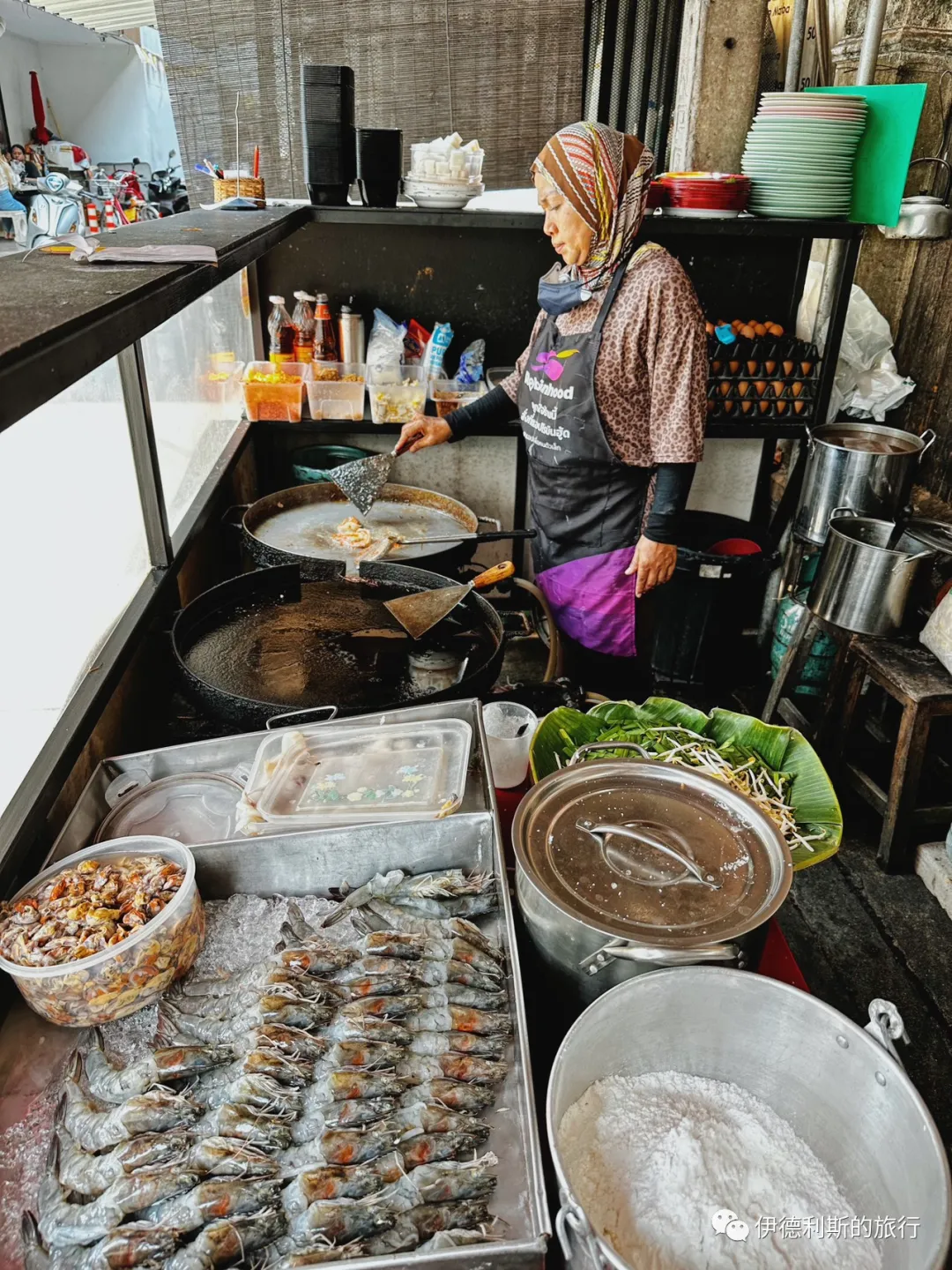
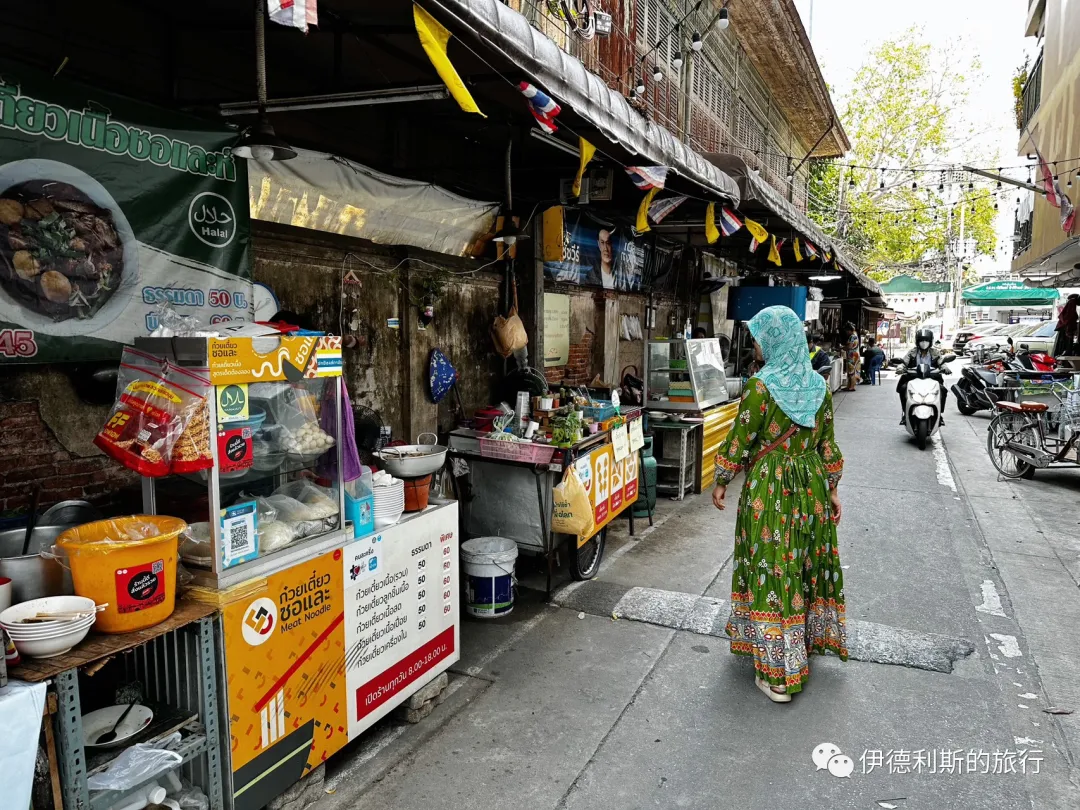
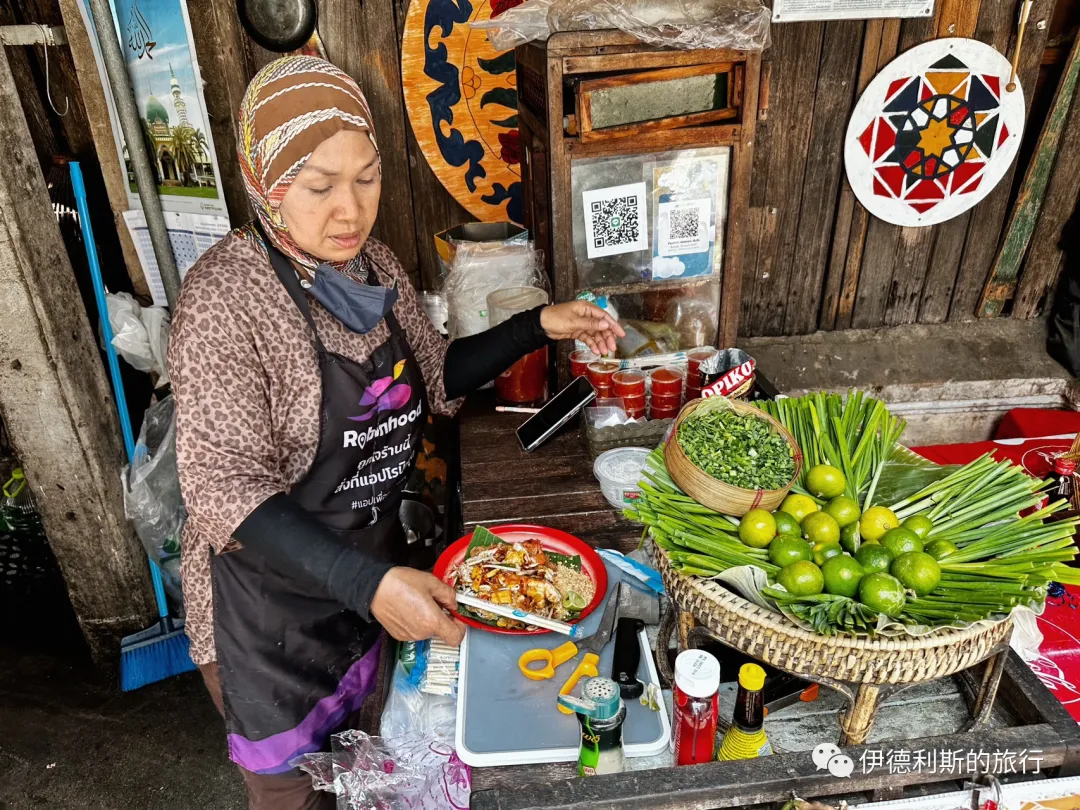
If stir-fried noodles are the first impression of Thai snacks, then roti flatbread (roti) is the first impression of Thai halal snacks. You can find Thai Muslim street carts selling roti flatbread in almost every night market in Thailand, and every stall is very popular.
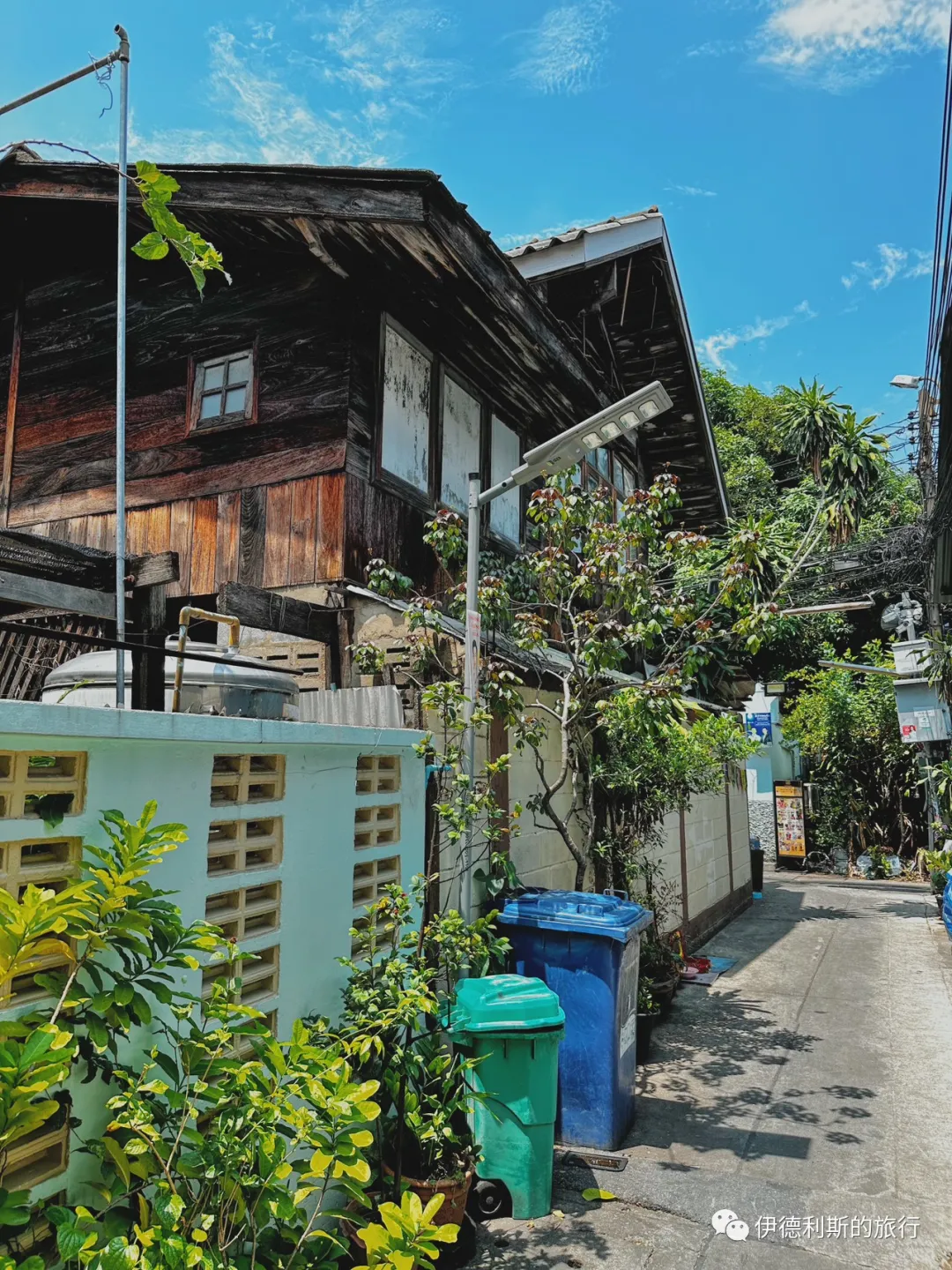
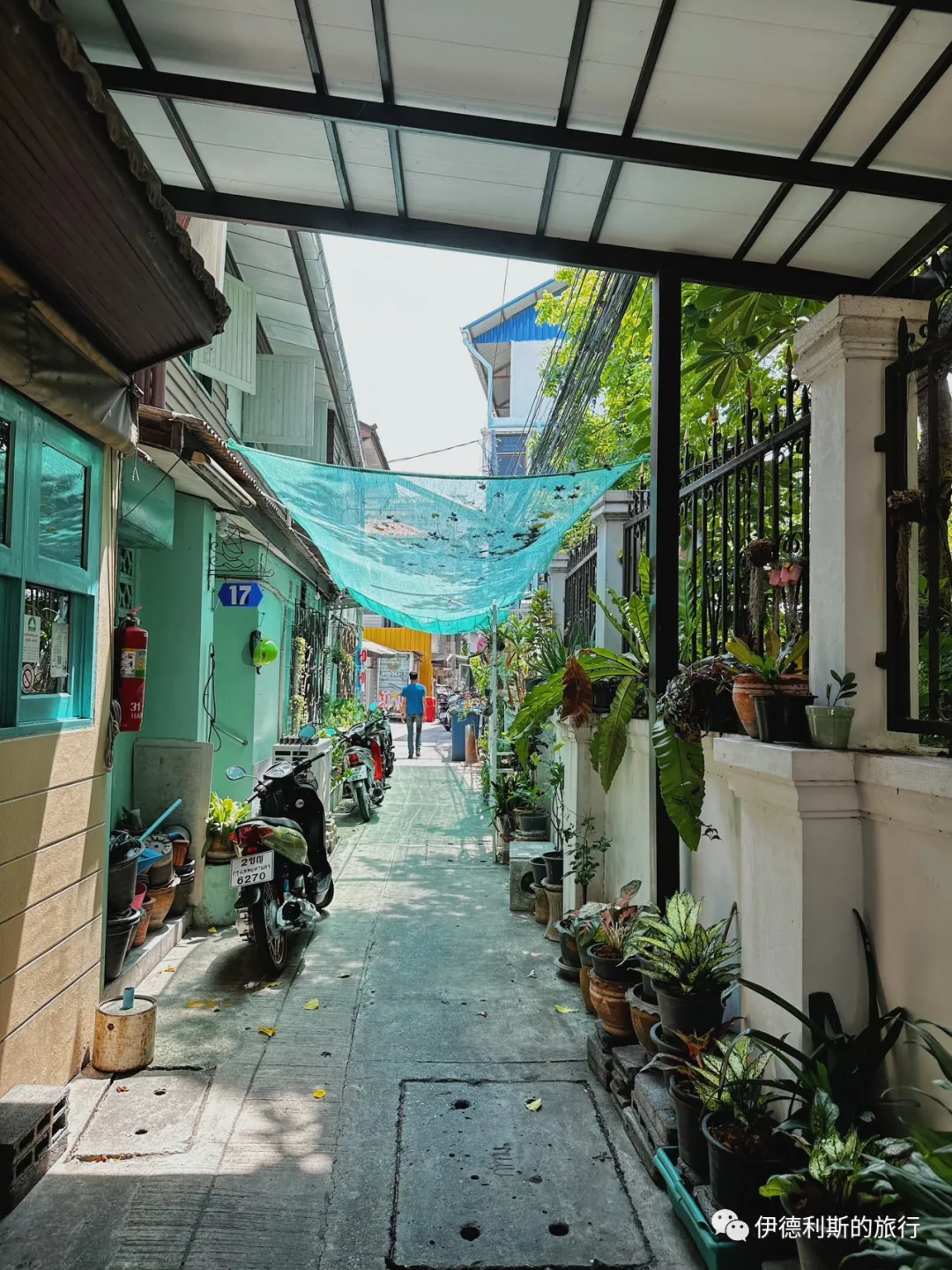
Javanese gardeners
In 1896, King Rama V of Thailand visited the Dutch East Indies and toured the summer palace and gardens built by the Dutch Governor-General in Bogor, Java (now Bogor Botanical Gardens). He admired the beauty and variety of plants so much that shortly after returning home, he recruited a group of Javanese gardeners to care for the flowers and trees at the Grand Palace, Saranrom Palace, and Saranrom Park, as well as the rows of tamarind trees along the roads around the palace. After King Rama V visited the Dutch East Indies a second time in 1901, he recruited a second group of Javanese gardeners to help design the newly built Dusit Palace, and these Javanese people settled in Bangkok.
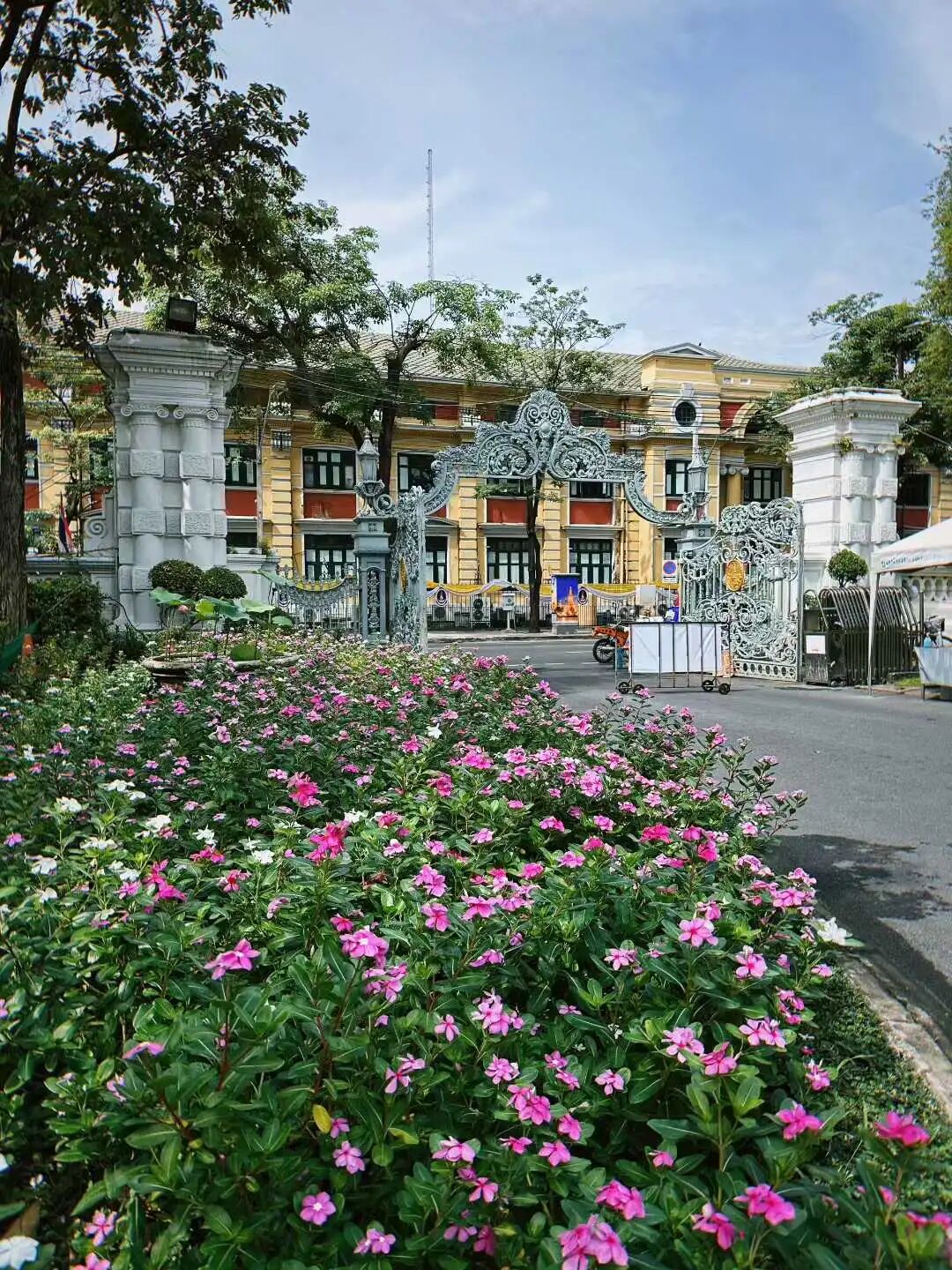
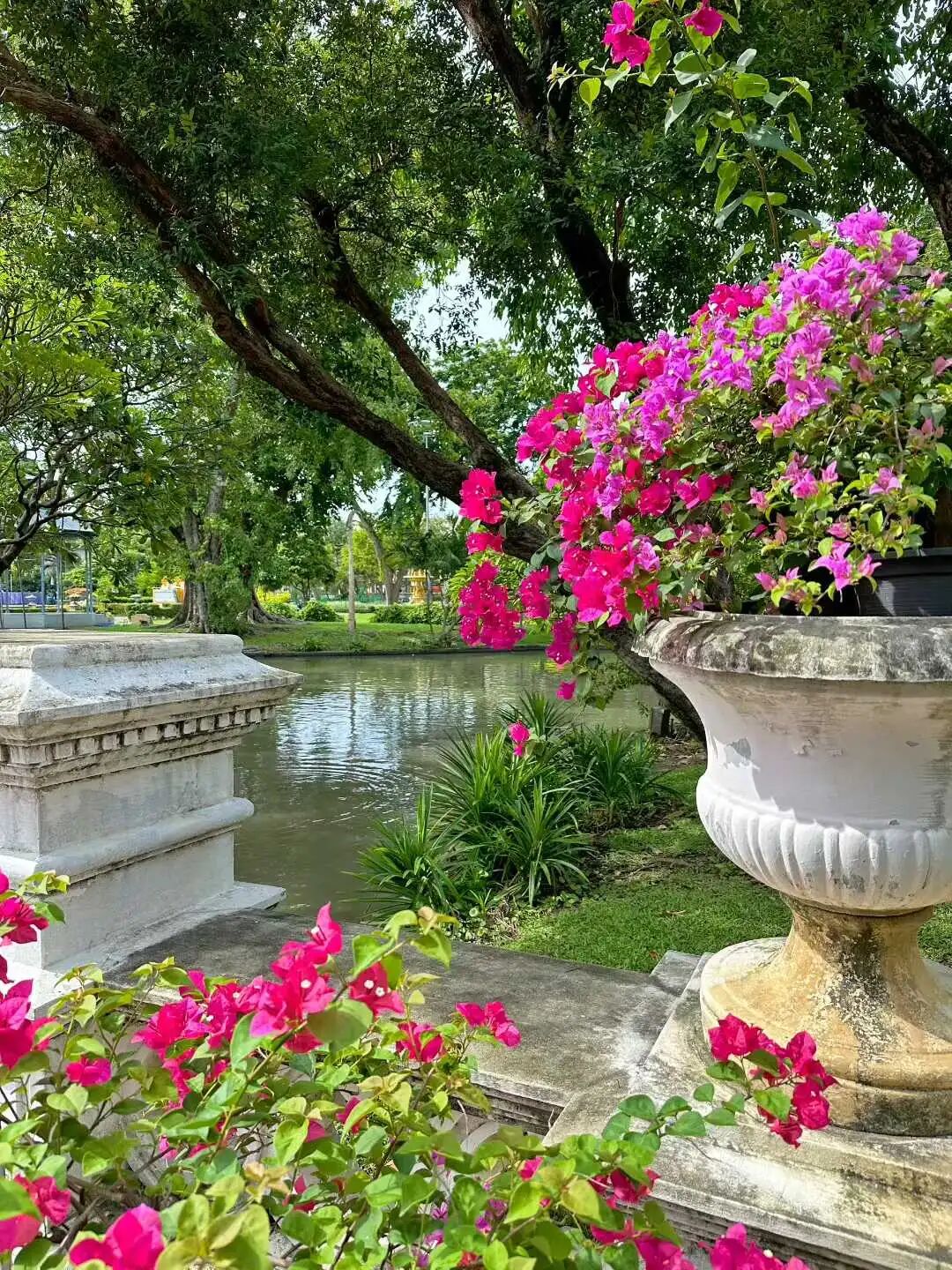
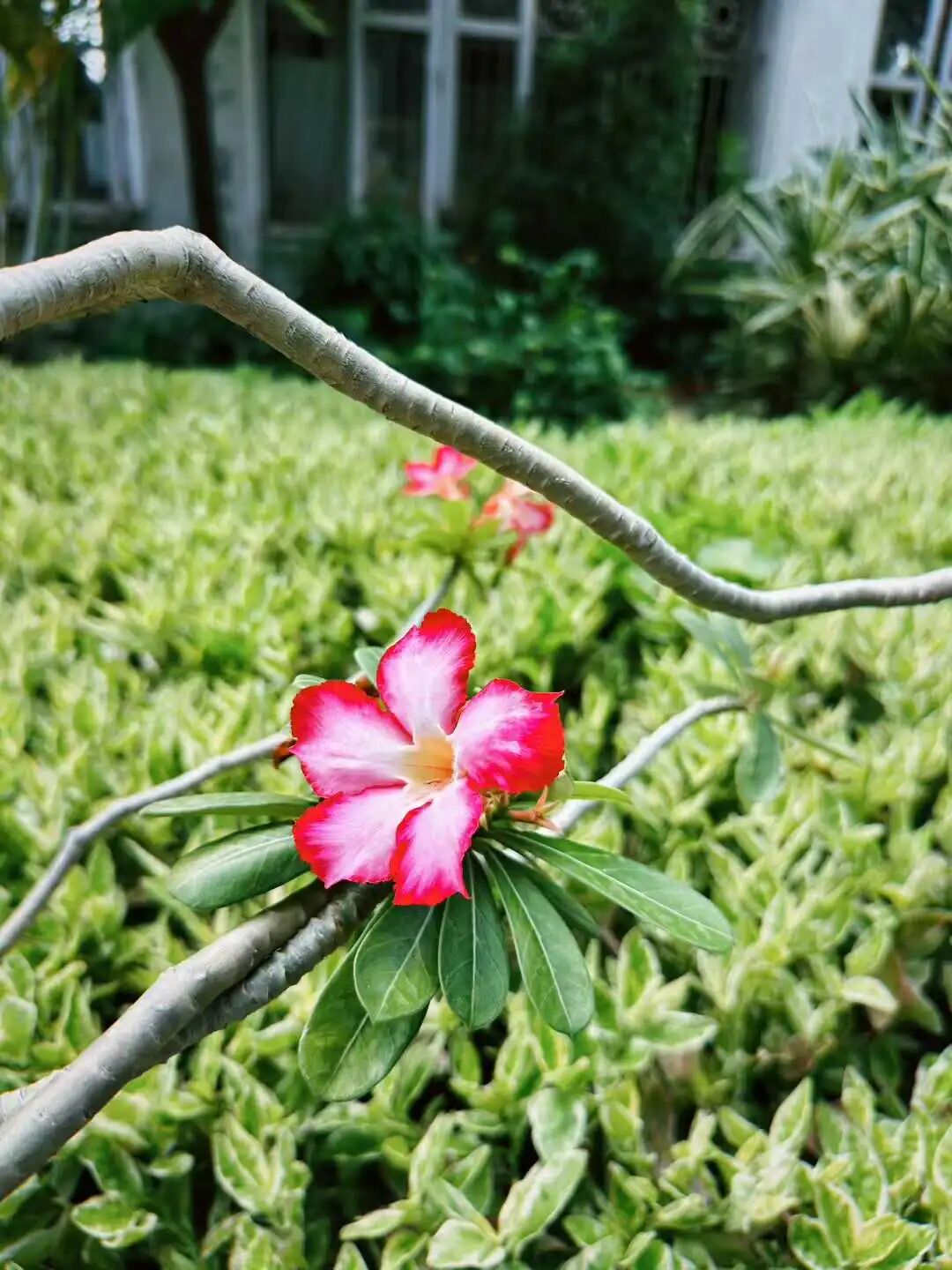
Saranrom Park, located opposite the Grand Palace in Bangkok, was built in 1866. It was originally part of the Saranrom Palace built by King Rama IV and was renovated by King Rama V in 1874 according to the modern botanical garden model. Records show that King Rama V hired 2,444 Javanese gardeners to maintain the gardens, decorating the park with fountains, flowers, birdcages, and animal enclosures, along with the King's favorite red roses.
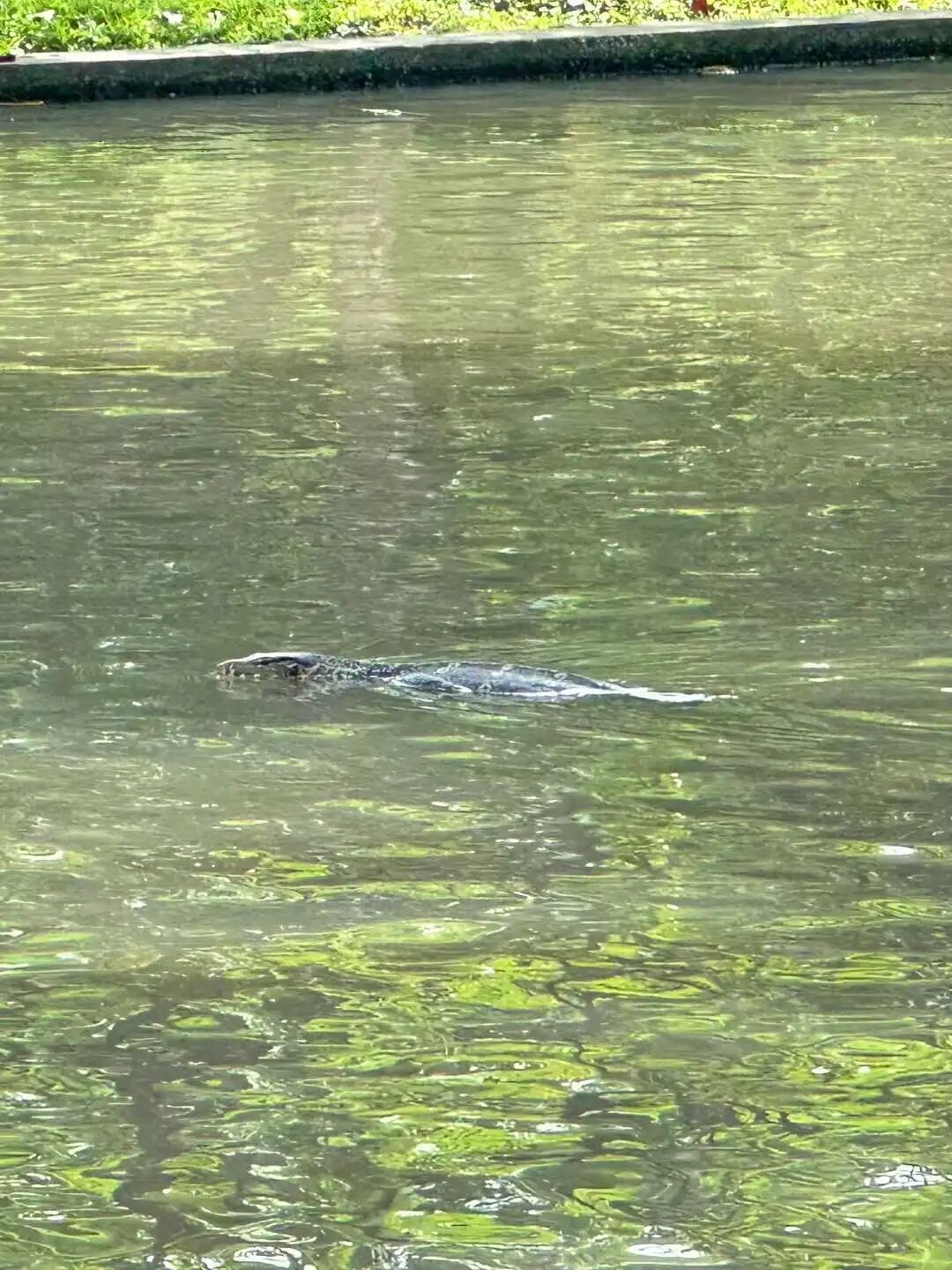
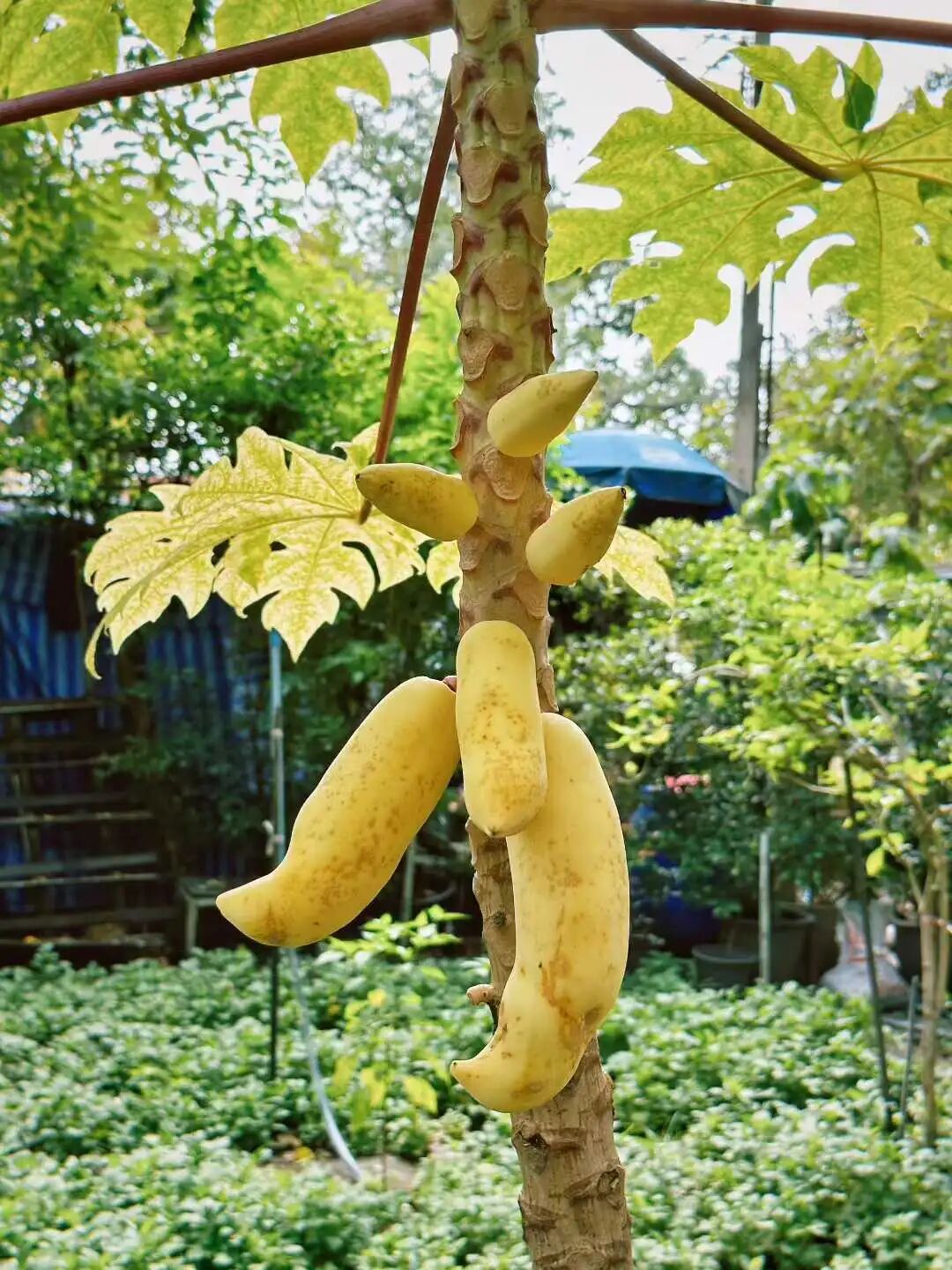
The park officially opened to the public in 1960, becoming Bangkok's first public botanical garden. Today, the park is filled with birdsong and flowers, with monitor lizards visible in the ponds and squirrels everywhere in the trees. When we visited, there were almost no tourists, only a few locals jogging or resting.
Ban Tuk Din Mosque
Ban Tuk Din Mosque is one of only two mosques located within the city walls of Bangkok, built by Javanese gardeners on royal land in the late 19th century.
During the late reign of King Rama VI and the reign of King Rama VII, the royal family cut spending and dismissed the Javanese gardeners. Afterward, most of the Javanese gardeners moved to the southern suburbs of Bangkok to continue working as gardeners and domestic helpers in mansions, while only a few remained in the Ban Tuk Din mosque community as small vendors and domestic workers.
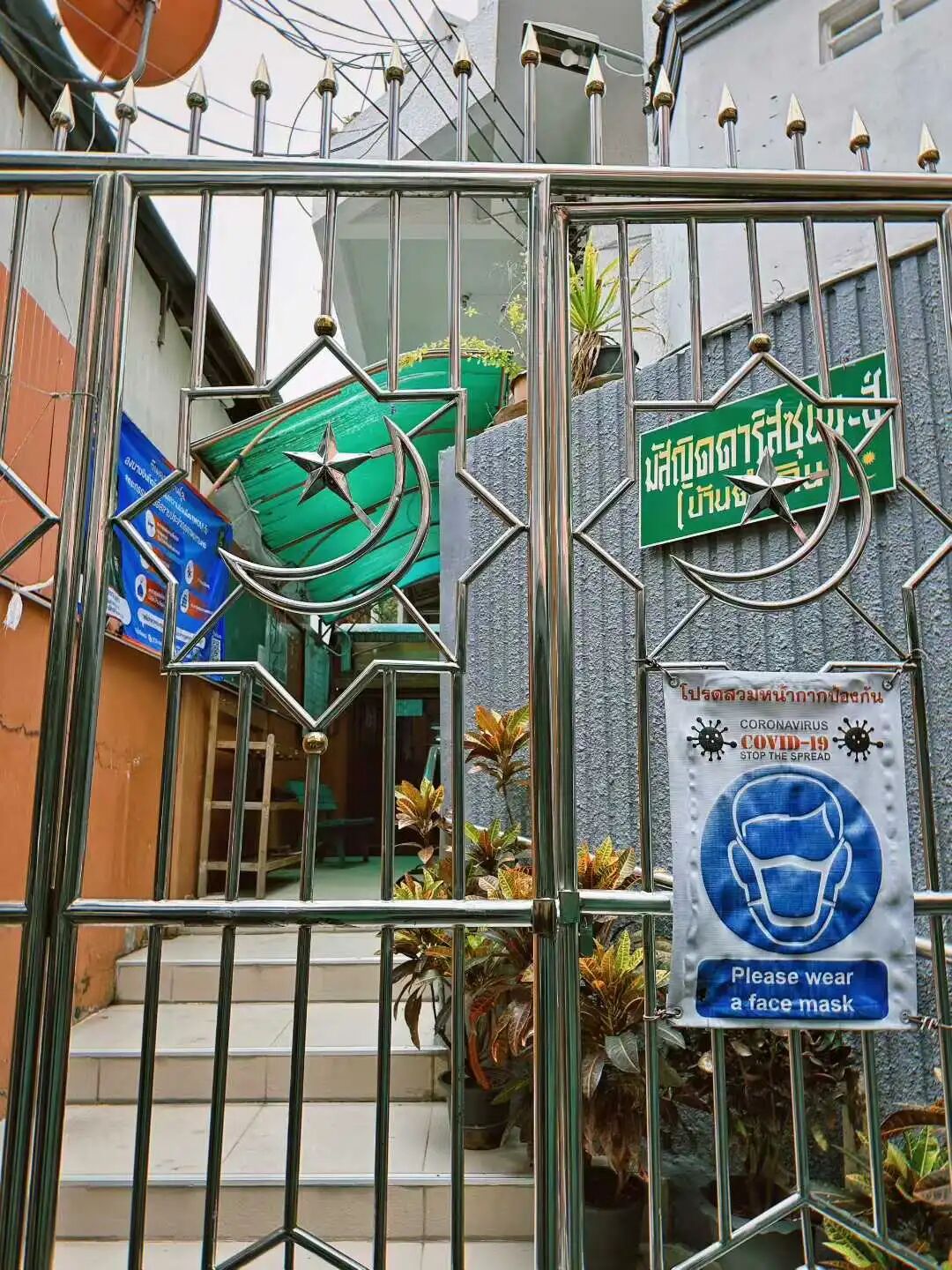
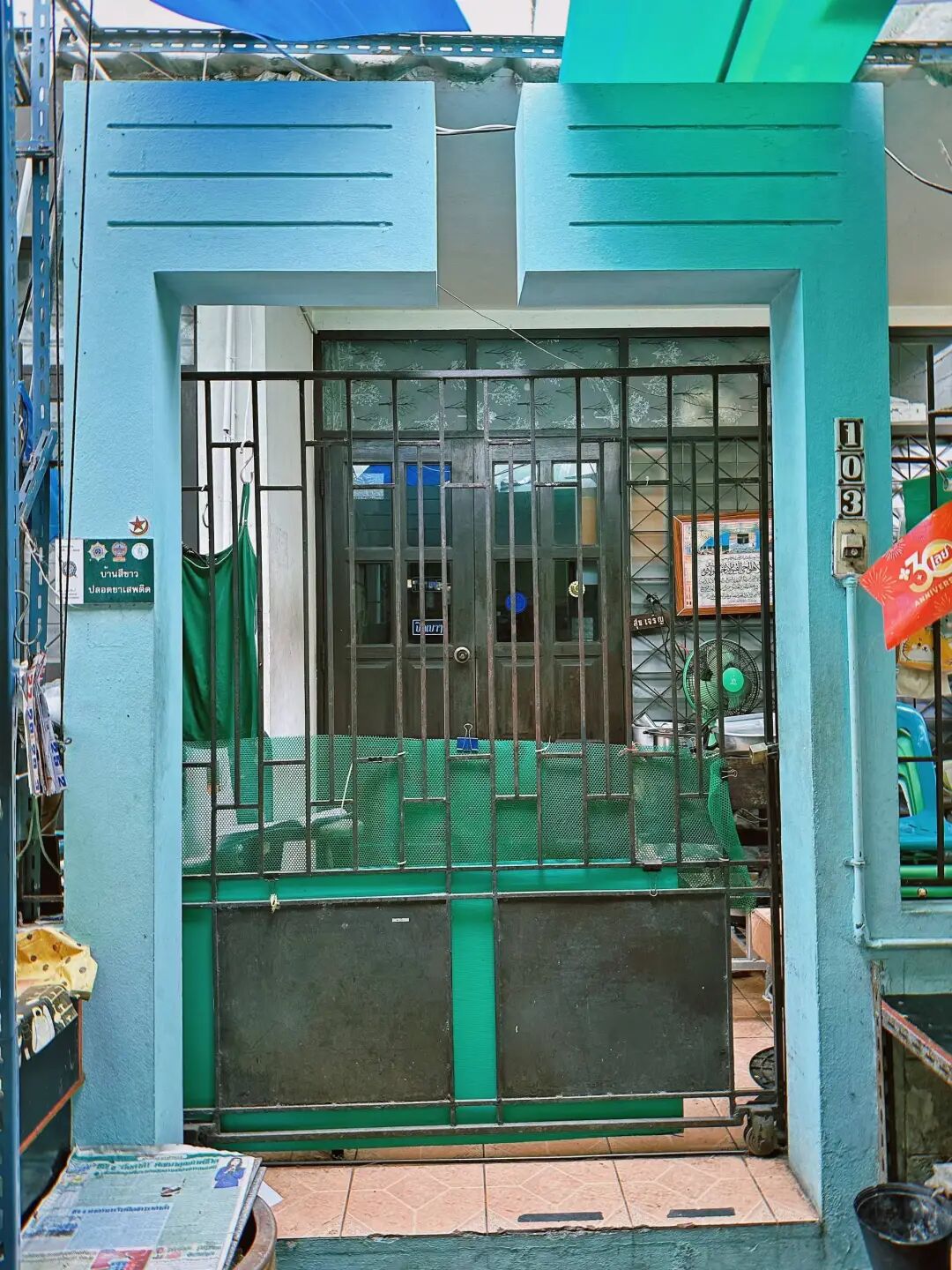
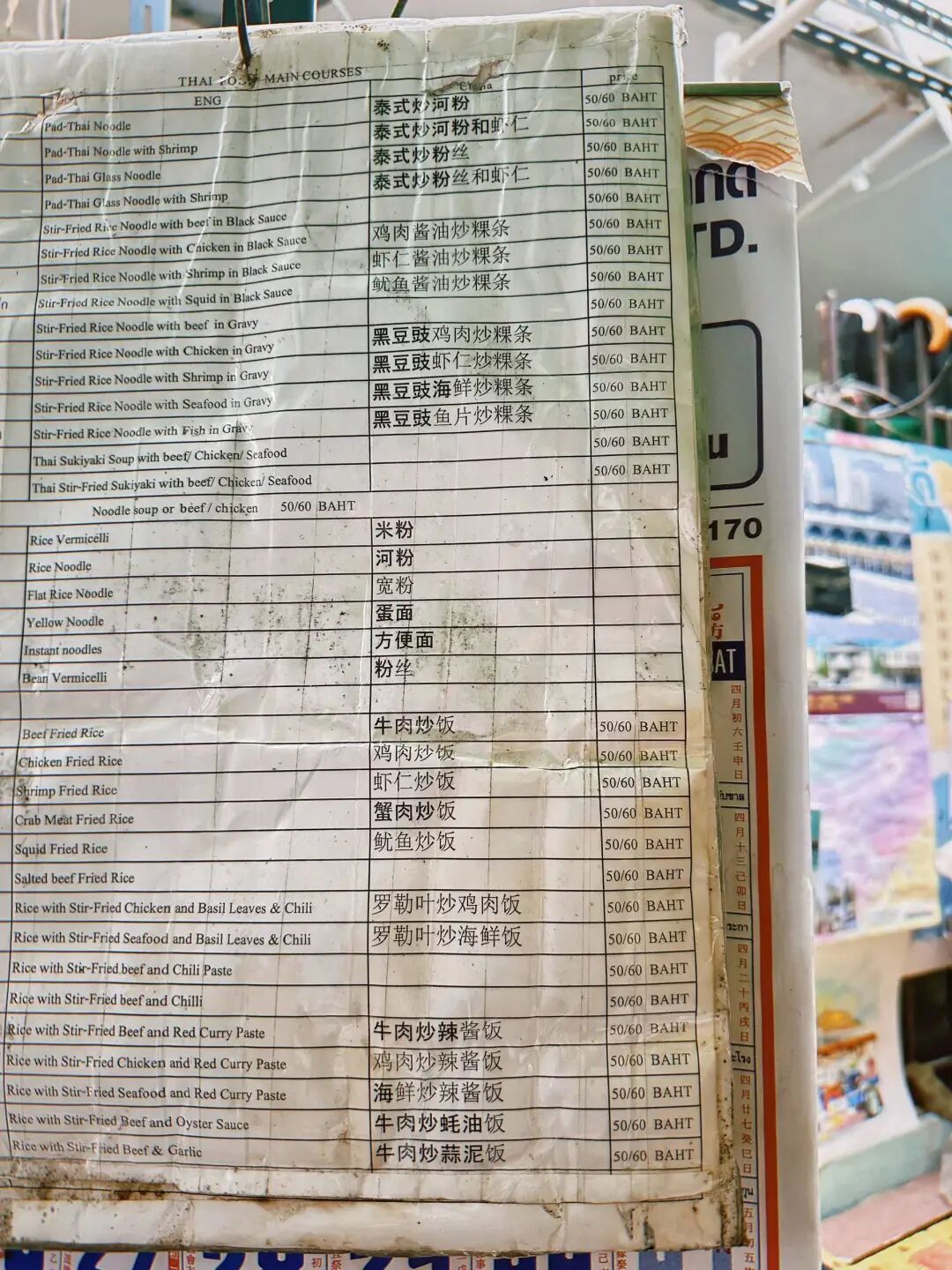
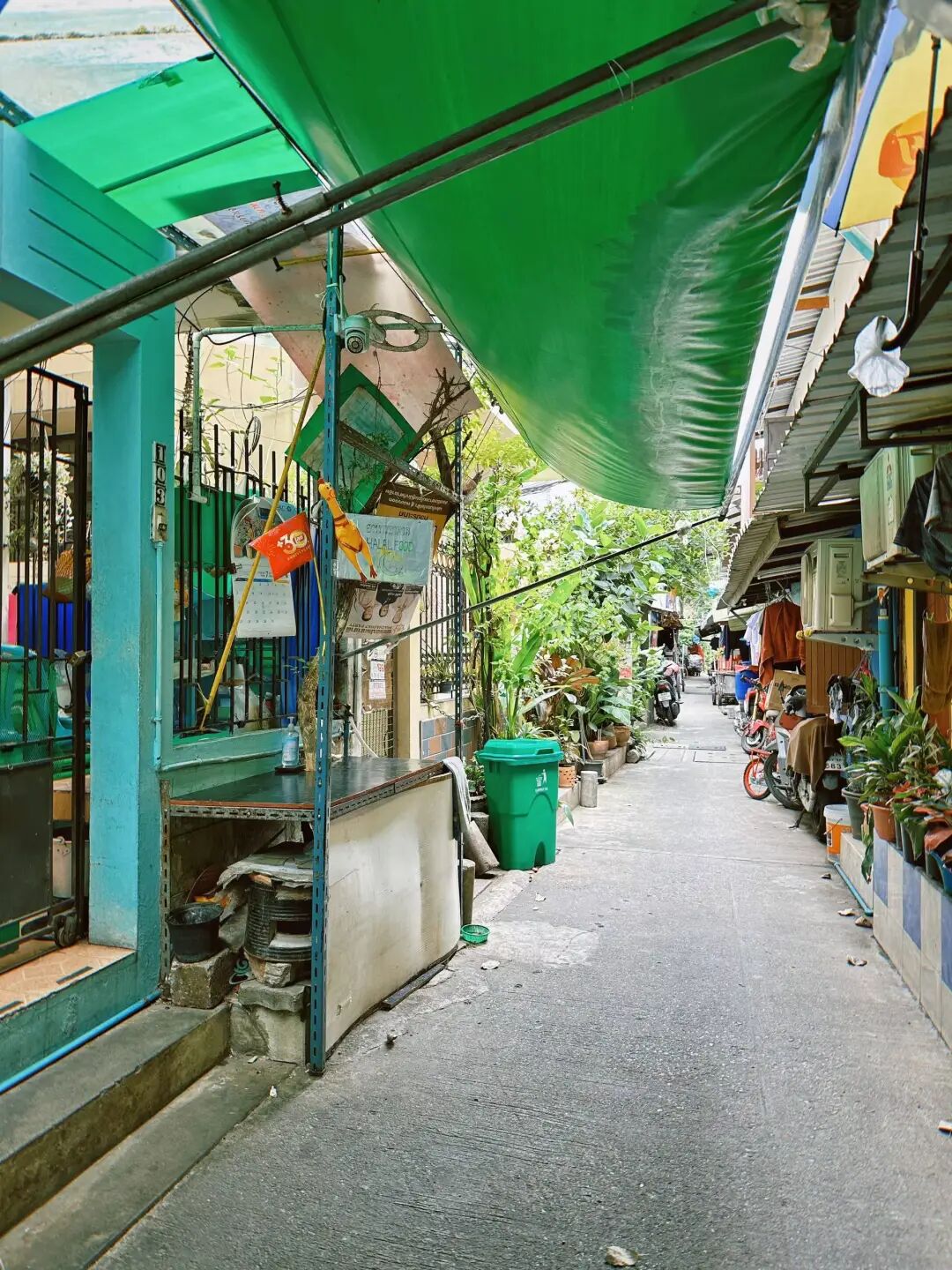
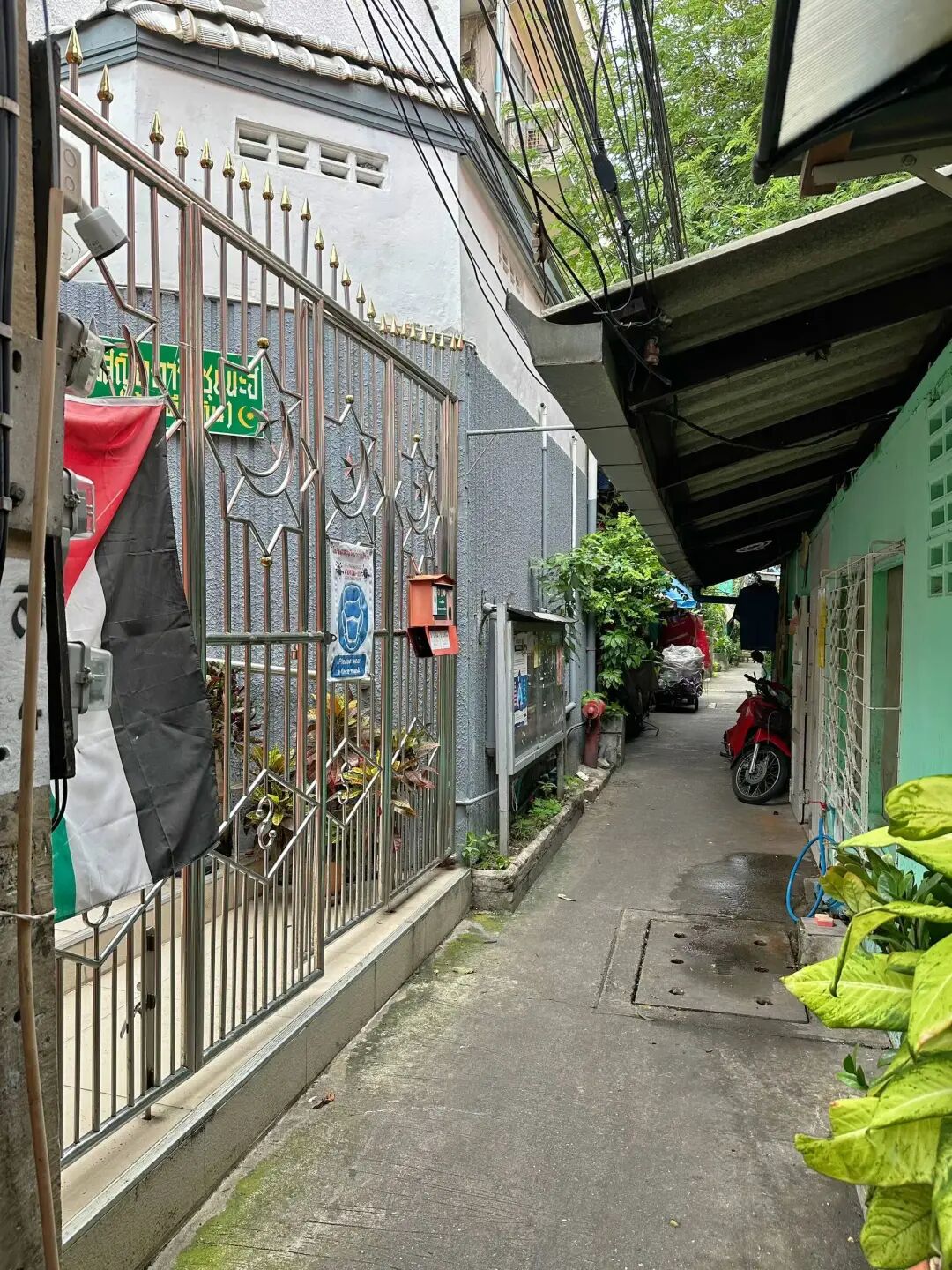
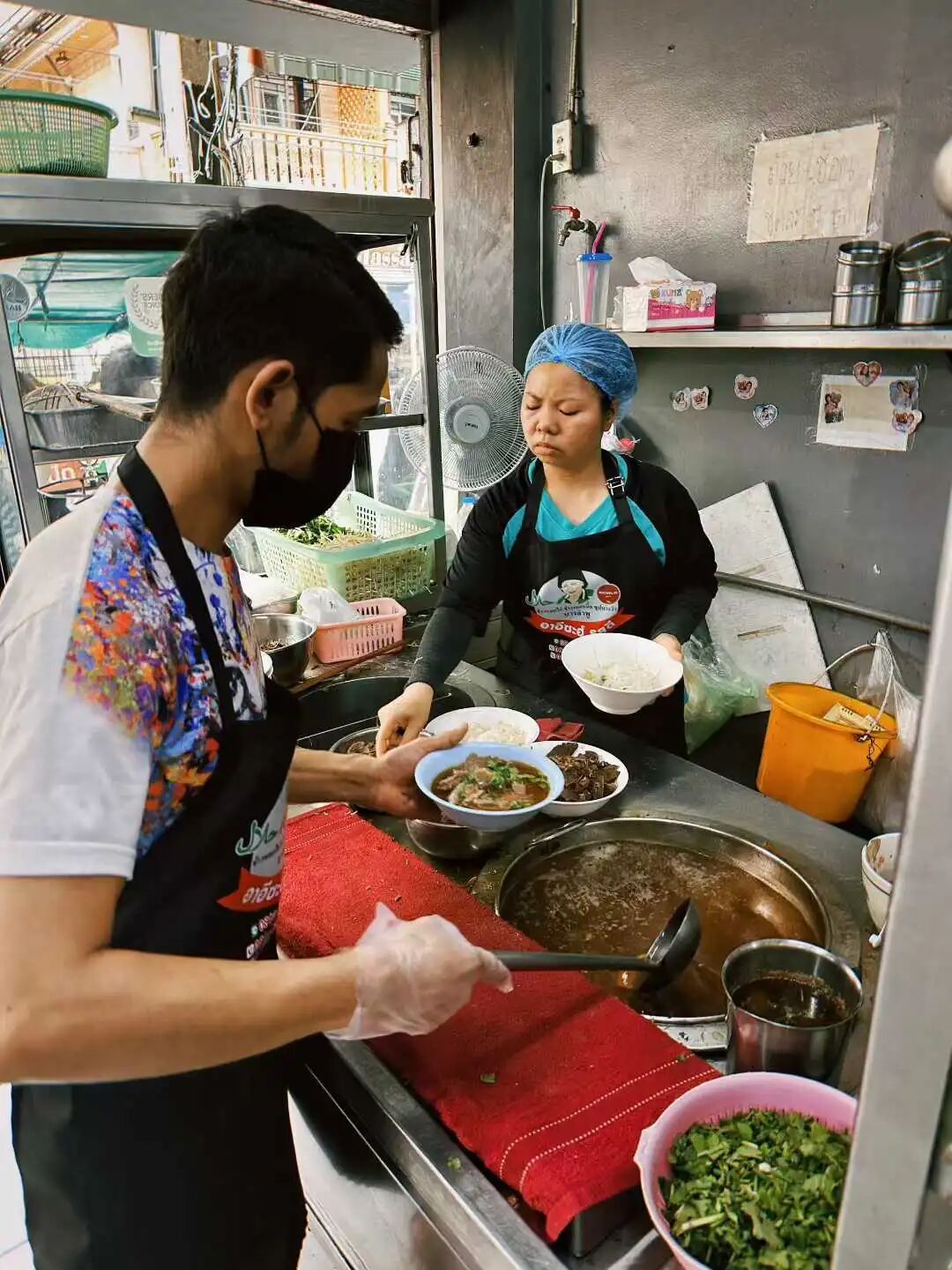
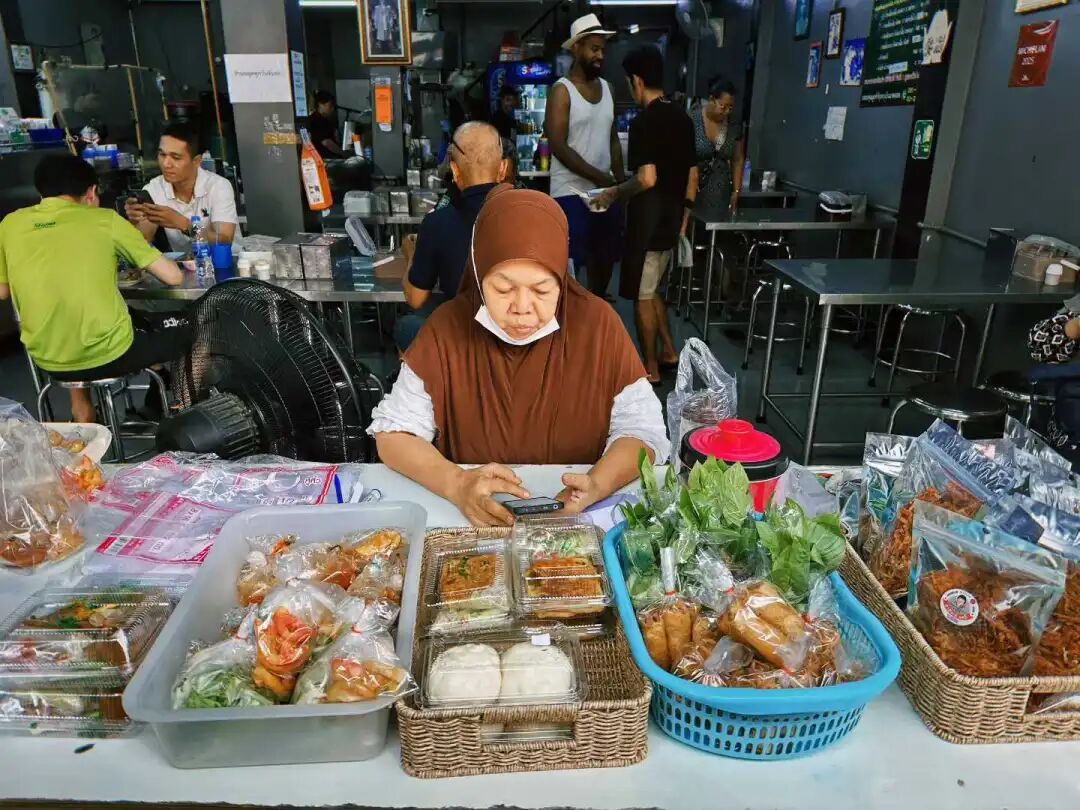
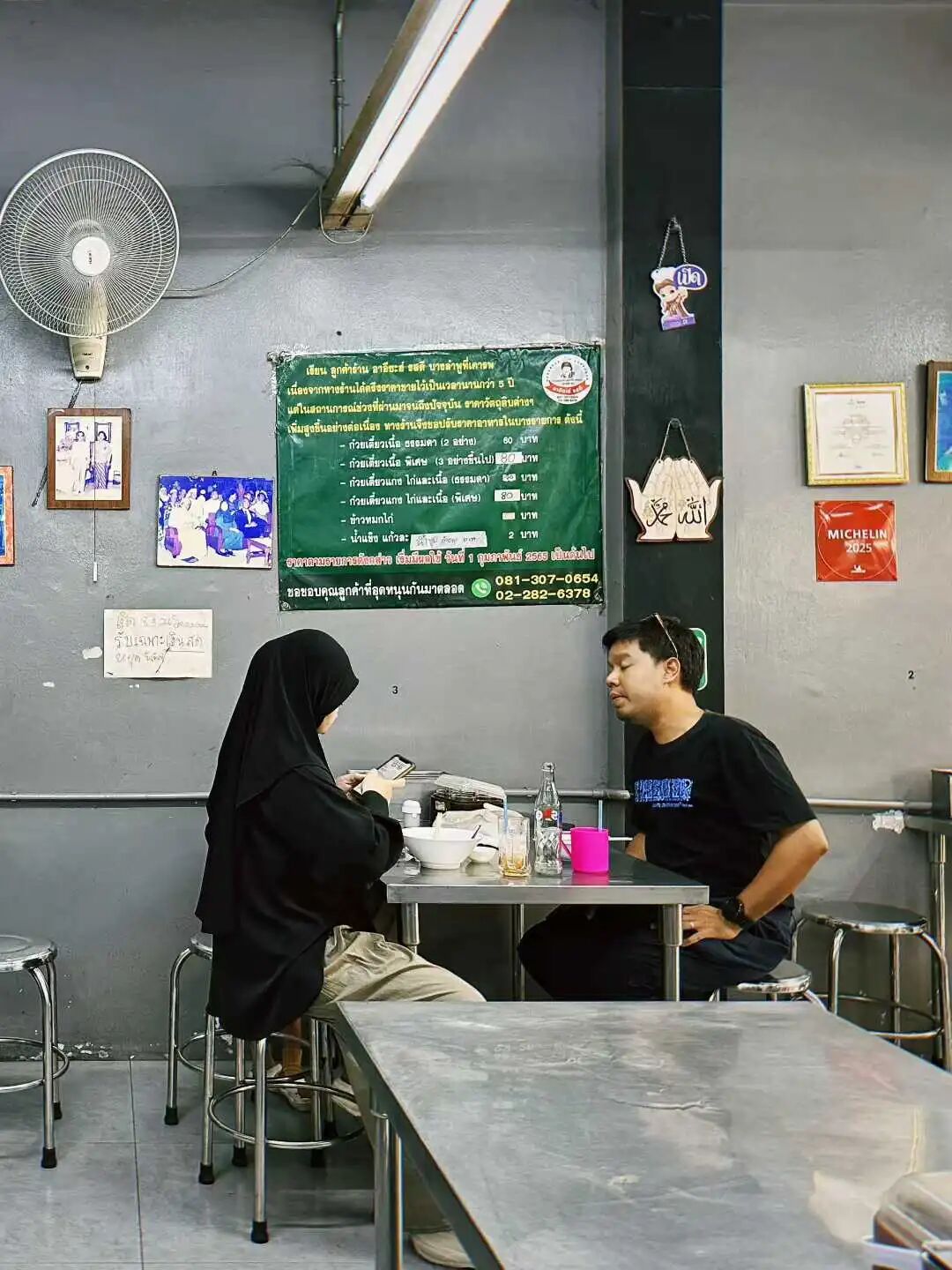
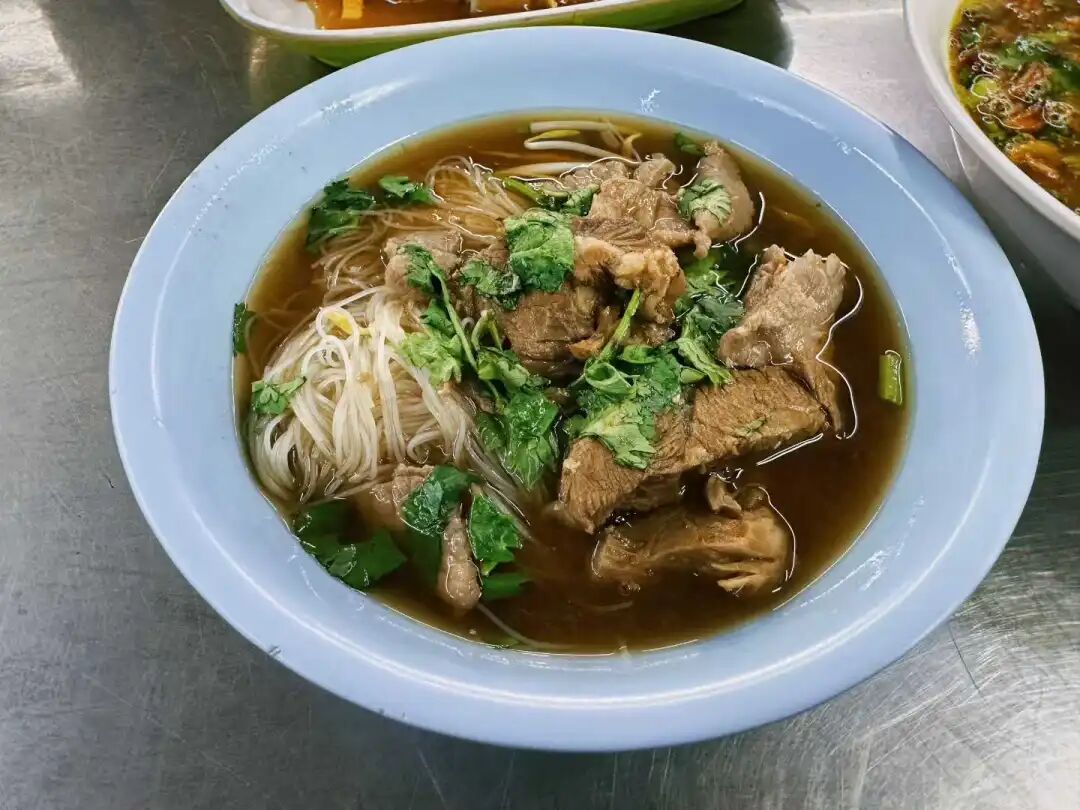
In the alley near Ban Tuk Din Mosque, there is a very famous local halal snack shop called Ayeesah Roddee Halal. Because it is right next to the backpacker hub of Khao San Road, many foreigners come here to eat. Historically, the Javanese community in Bangkok rarely intermarried with other groups, so they preserved many traditional cultural customs, and you can eat authentic Javanese-style halal snacks at this shop.
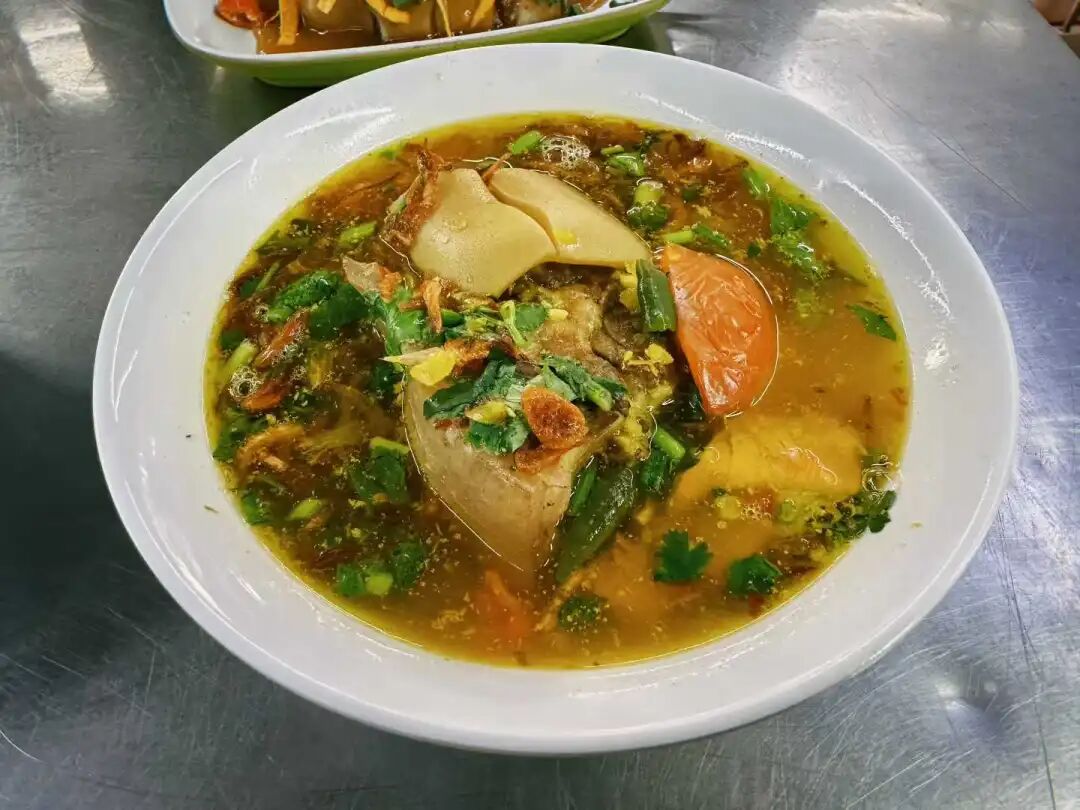
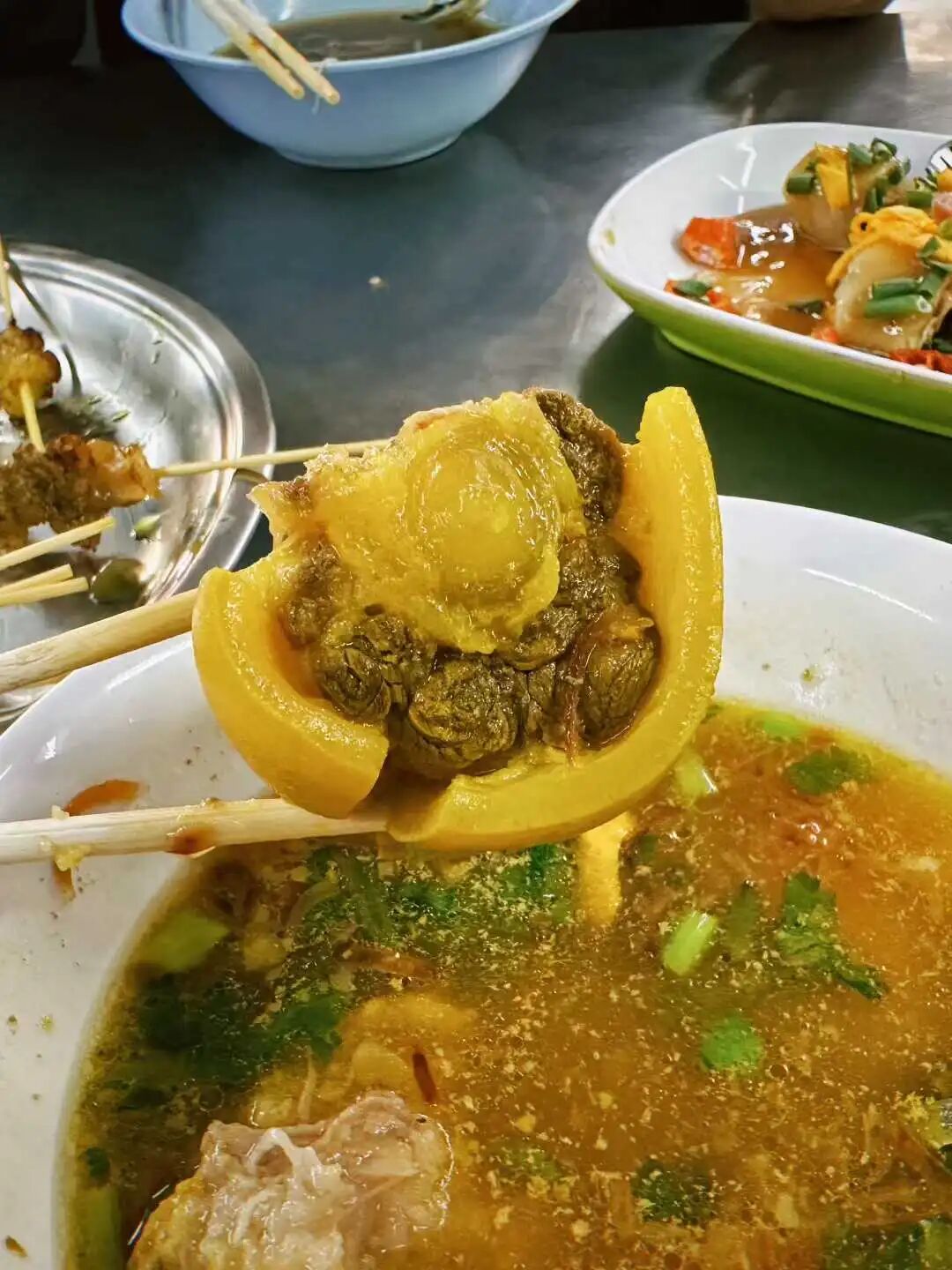
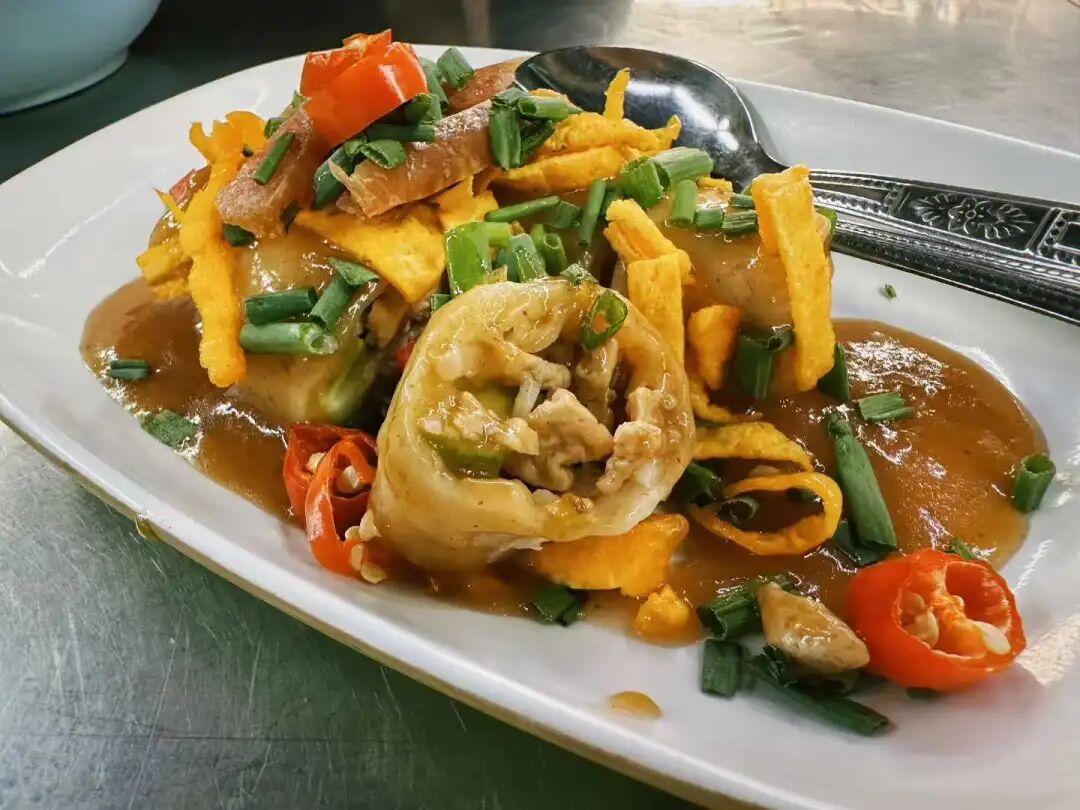
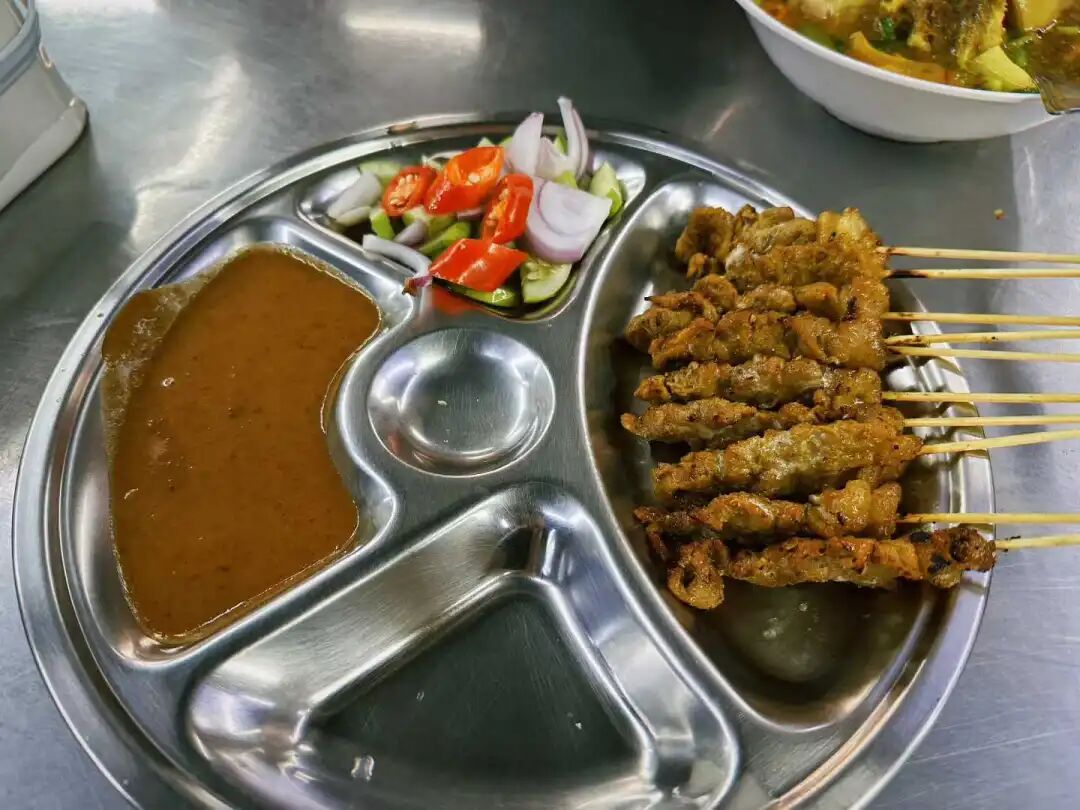
We ordered beef noodles, oxtail curry soup, fresh spring rolls, and beef satay skewers. Everything was delicious. The beef noodles were sweet and sour, the oxtail soup was rich with skin-on meat, and the spring rolls were unique with a chicken filling. Their beef satay skewers are the best I have ever eaten in all my many trips to Thailand, Malaysia, Indonesia, and Singapore! They were very tender, not dry at all, and you can dip them in the satay sauce yourself to control the sweetness. In fact, satay originated on the island of Java, developed by the Javanese based on the South Asian kebabs (kebab) brought by Indian merchants. After the 19th century, Javanese people spread satay grilled meat (satay) throughout Southeast Asia.
Javanese Mosque (Masjid Jawa)
During the late reign of King Rama VI and the reign of King Rama VII, the royal family cut spending and dismissed the Javanese gardeners. Later, most Javanese gardeners moved to the southern suburbs of Bangkok and built several mosque communities. The Javanese Mosque (Masjid Jawa) is the only one that still keeps its traditional Javanese style.
The Javanese Mosque is a community made up of Javanese and Malay Muslims, and the imam is chosen from both groups on a rotating basis. The Javanese Mosque was built in 1906 on land owned by a Javanese Muslim named Haji Muhammad Saleh. Even though it was expanded in 1927 and 1975, it still keeps its classic Javanese style.
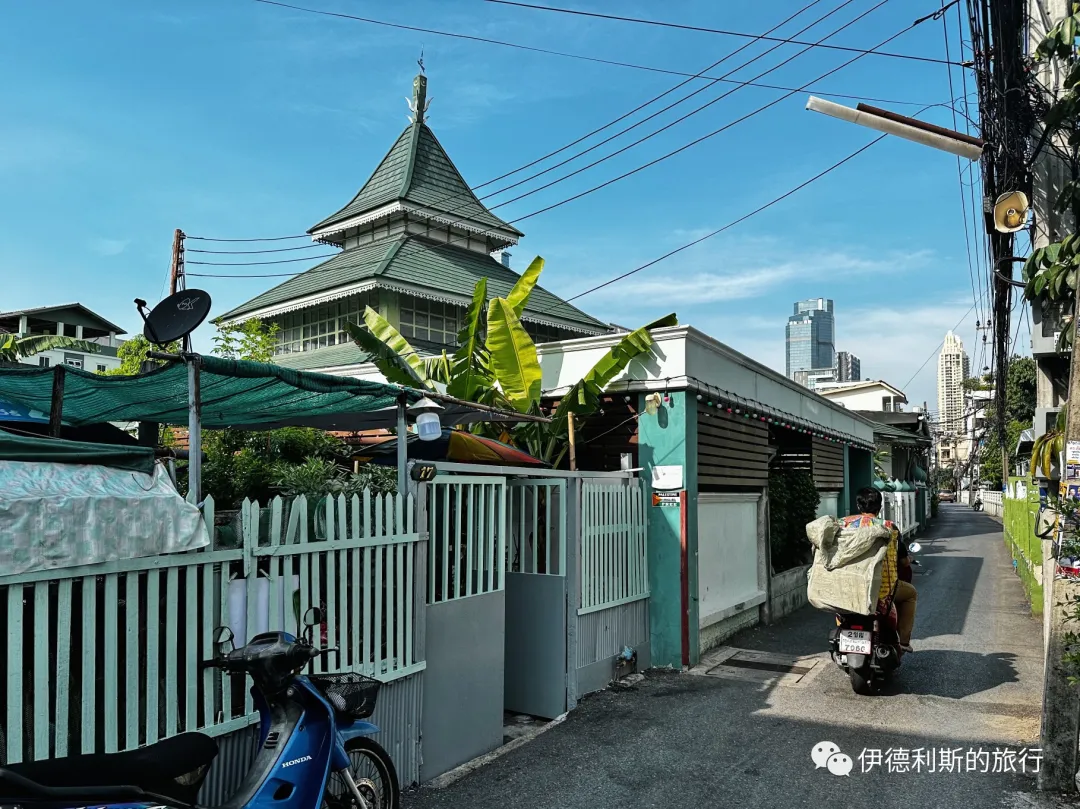
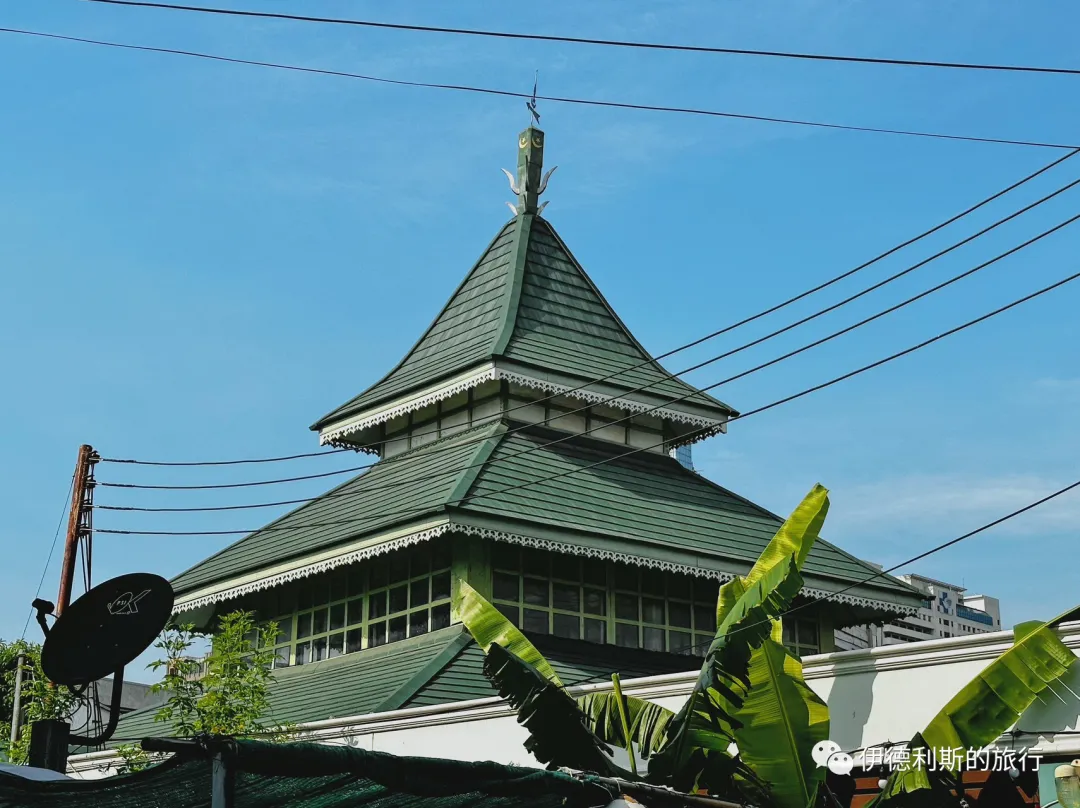
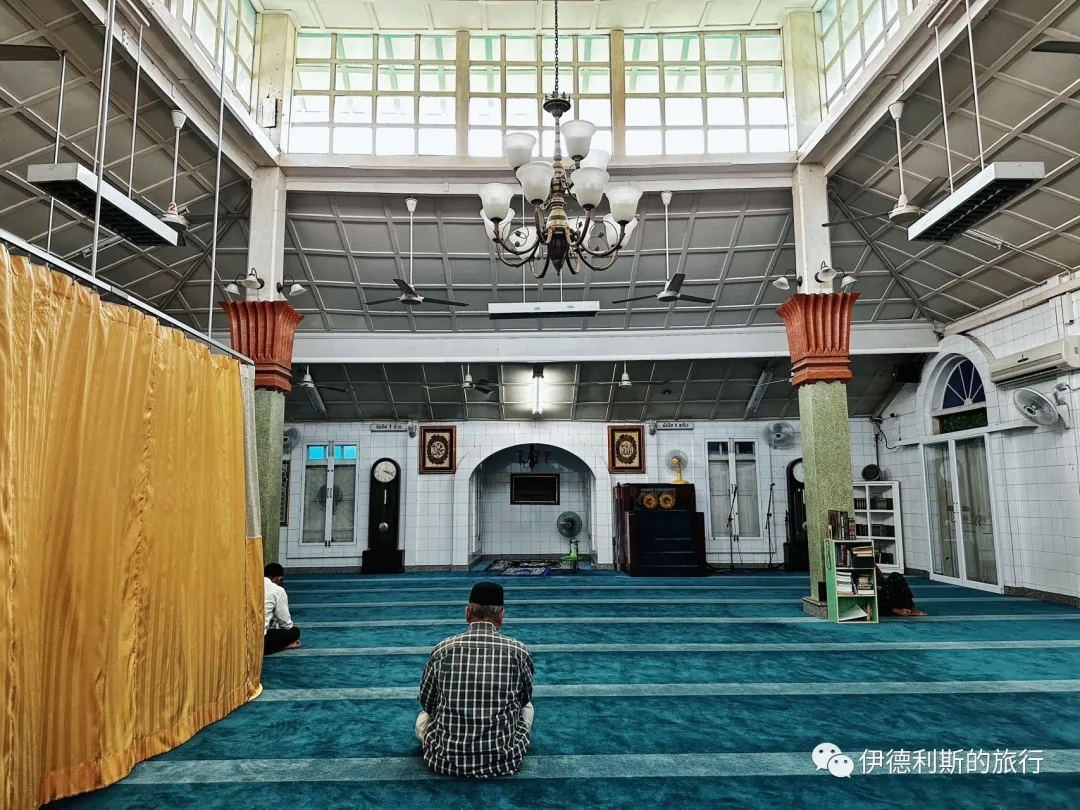
The mosque has a three-tiered pyramid-shaped roof called a Tajug, with a Mustoko decoration at the very top. The main hall is held up by four pillars called Soko Guru instead of using walls for support. In the front porch of the main hall, there is a large drum called a Bedug used for the call to prayer. Traditional Javanese mosques rarely have minarets, so they use the drum to call people to namaz and to announce the end of the daily fast. Also, next to the main hall, there is a wooden house on stilts used as a school that is over 60 years old.
Summary: Bangkok's Indonesian Muslim history includes Arab-Indonesian merchants, Javanese gardeners, riverside mosque communities, and halal street food near old neighborhoods. This first part follows Haroon Mosque, Saralom Park, Ban Tuk Din Mosque, Ayeesah Roddee Halal, Java Mosque, and the related food and architecture details.
The Indonesian mosque communities in downtown Bangkok come from two main sources: fishermen and traders who sailed from Borneo and the Sulu Archipelago, and Javanese gardeners hired by King Rama V in the late 19th century. Bangkok still preserves Indonesian-style food and Javanese-style mosques, which are an important part of the city's multicultural identity.
Indonesian sailors
Ban Oou Mosque
The Ban Oou Mosque community is right next to Saphan Taksin Bridge. It was built during the reign of King Rama IV (1851-68) by a group of Indonesian sailors who fished at the mouth of the Chao Phraya River year-round. After Britain and Thailand signed the Bowring Treaty in 1855, business in the Bang Rak area boomed. These Indonesian sailors sold their catch to Western sailors and merchants living in Bang Rak. During the reign of King Rama V (1868-1910), they became fishmongers in the market after it was established.
In the late 19th and early 20th centuries, as the port of Bangkok grew, many shipyards, piers, and docks were built around the Ban Oou Mosque community. Many residents became barge workers, handling cargo for nearby European shipping companies. As people stopped making a living from fishing, the mosque community began to move inland. In 1919, the community rebuilt the mosque 100 meters inland from the Chao Phraya River.
The mosque houses a traditional Indonesian Beduk drum. This single-sided drum is made from a hollowed-out log and covered with cowhide on one side. Slow beats on the Beduk drum signal the approach of prayer time, while rapid beats mean someone has passed away.
The mosque contains a collection of porcelain, giant turtles kept on the grounds, and a cemetery.
The sign at the snack shop next to the mosque shows a hand-shaking gesture, which is a common greeting among fellow Muslims (dosti) in Thailand and Indonesia. I have seen this in both countries.
Suwannaphum Mosque
The Suwannaphum Mosque community is near the busy ICONSIAM mall. It was built on the banks of the Chao Phraya River during the reign of King Rama III (1824-1851) by Indonesian sailors living along the coast of Trat Province, near the Thai-Cambodian border. It was originally called Ban Khaek Lang, a sparsely populated village in the southern suburbs of Bangkok. After the Bowring Treaty was signed in 1855, piers and warehouses were built, and many trading companies opened. These Indonesian fishermen started working as barge workers, loading and unloading cargo for Western shipping companies and Indian merchants.
Because there were many Indian merchants nearby, Indian Muslims (dosti) often came to the mosque for worship, and some Indian Muslims even married into the Indonesian Muslim community. Indian merchants donated money to rebuild the mosque during the reign of King Rama IV (1851-68). People say King Rama IV personally named it Suwannaphum Mosque after the nearby Wat Suwan Ubasikaram.
The most unique feature of this mosque is that the imam enters a special wooden pavilion to lead the prayer. I have never seen this before and wonder if it is a unique feature of Thai Islamic practice.
The view of Suwannaphum Mosque is beautiful. It is hard to imagine such a traditional water village mosque still exists right next to the busy ICONSIAM mall. The easiest way to get here is to take a boat along the Chao Phraya River to ICONSIAM and then walk over.
There are many halal restaurants near ICONSIAM, and we ate inside the mall last time. This time, we ate at a Thai halal restaurant called Nakhon Lerdros inside the ICS mall, which is across from ICONSIAM. You can walk between ICS and ICONSIAM using the upper-level walkway. The best part about eating in the mall is the air conditioning, though it costs more than street food.
We ordered Thai boat noodles, tom yum soup, grilled meatballs, and longan juice. Boat noodles were originally sold by people rowing small boats along Bangkok's canals. One person did everything on the boat: cooking the noodles, making the broth, serving the food, collecting money, and washing the dishes. Halal boat noodles usually use beef and beef meatballs, and the broth is made from beef. They use Tang Shuang He brand fish sauce for seasoning. Most Thai condiments are halal-certified. The fish sauce only contains anchovies, salt, sugar, and water, which adds a special flavor.
The food court inside ICONSIAM is still very popular. There are several halal stalls here, making it a great place to eat snacks while enjoying the air conditioning on a hot day.
For more about snacks inside ICONSIAM, see my diary: Bangkok Halal Trip—Food and Lodging.
The pier at the entrance of ICONSIAM is very convenient for boats. You can take a boat downstream to the Asiatique night market or upstream back to Bangkok's old town.
Haroon Mosque.
Haroon Mosque is named after an Indonesian Arab merchant named Toh Haroon Bafaden. He came to Bangkok from Indonesia with his father in 1828 (some say 1837) to do business. He later married, settled down, built Haroon Mosque, and became its first imam.
Haroon Mosque was originally located by the Chao Phraya River. It was a wooden building that combined Ayutthaya and Javanese styles. It moved to its current location in 1899 because of the construction of the Customs House. In 1934, the mosque was rebuilt into its current white brick and plaster structure. It features neoclassical floral patterns, Roman-style columns, and wooden shutters, looking a bit like a European townhouse from that era.
Today, the mosque preserves exquisite Javanese Jepara teak wood carvings of scripture from the old 19th-century building. They were created by Haji Said, a fellow Indonesian from Toh Haroon Bafaden's hometown.
There are many snacks at the entrance of the mosque. We first had stewed beef and chicken meatball glass noodles. The beef was incredibly fragrant! Then we had rice with stir-fried basil chicken, meatballs, and chicken liver. After that, we had a bowl of stewed chicken feet. The chicken feet were soft and flavorful, but the soup was super spicy, haha.
Two essentials for eating street food in Bangkok's hot summer are a strong electric fan and cold drinks with ice! Otherwise, it feels like you cannot eat anything at all, haha.
We ate the classic street snack, Thai stir-fried rice noodles (pad thai). Thai-style stir-fried rice noodles (pad thai), also called stir-fried rice noodles (pad mee), contain rice noodles, scrambled eggs, bean sprouts, crushed peanuts, and fresh shrimp, served with lime and chives. The style of stir-fried rice noodles was brought to Thailand by Chinese immigrants hundreds of years ago, but it did not become popular until the mid-20th century. During World War II, Thailand faced a rice shortage, so the government promoted a type of rice noodle from Chanthaburi Province in the east, which turned stir-fried noodles into a national snack.
If stir-fried noodles are the first impression of Thai snacks, then roti flatbread (roti) is the first impression of Thai halal snacks. You can find Thai Muslim street carts selling roti flatbread in almost every night market in Thailand, and every stall is very popular.
Javanese gardeners
In 1896, King Rama V of Thailand visited the Dutch East Indies and toured the summer palace and gardens built by the Dutch Governor-General in Bogor, Java (now Bogor Botanical Gardens). He admired the beauty and variety of plants so much that shortly after returning home, he recruited a group of Javanese gardeners to care for the flowers and trees at the Grand Palace, Saranrom Palace, and Saranrom Park, as well as the rows of tamarind trees along the roads around the palace. After King Rama V visited the Dutch East Indies a second time in 1901, he recruited a second group of Javanese gardeners to help design the newly built Dusit Palace, and these Javanese people settled in Bangkok.
Saranrom Park, located opposite the Grand Palace in Bangkok, was built in 1866. It was originally part of the Saranrom Palace built by King Rama IV and was renovated by King Rama V in 1874 according to the modern botanical garden model. Records show that King Rama V hired 2,444 Javanese gardeners to maintain the gardens, decorating the park with fountains, flowers, birdcages, and animal enclosures, along with the King's favorite red roses.
The park officially opened to the public in 1960, becoming Bangkok's first public botanical garden. Today, the park is filled with birdsong and flowers, with monitor lizards visible in the ponds and squirrels everywhere in the trees. When we visited, there were almost no tourists, only a few locals jogging or resting.
Ban Tuk Din Mosque
Ban Tuk Din Mosque is one of only two mosques located within the city walls of Bangkok, built by Javanese gardeners on royal land in the late 19th century.
During the late reign of King Rama VI and the reign of King Rama VII, the royal family cut spending and dismissed the Javanese gardeners. Afterward, most of the Javanese gardeners moved to the southern suburbs of Bangkok to continue working as gardeners and domestic helpers in mansions, while only a few remained in the Ban Tuk Din mosque community as small vendors and domestic workers.
In the alley near Ban Tuk Din Mosque, there is a very famous local halal snack shop called Ayeesah Roddee Halal. Because it is right next to the backpacker hub of Khao San Road, many foreigners come here to eat. Historically, the Javanese community in Bangkok rarely intermarried with other groups, so they preserved many traditional cultural customs, and you can eat authentic Javanese-style halal snacks at this shop.
We ordered beef noodles, oxtail curry soup, fresh spring rolls, and beef satay skewers. Everything was delicious. The beef noodles were sweet and sour, the oxtail soup was rich with skin-on meat, and the spring rolls were unique with a chicken filling. Their beef satay skewers are the best I have ever eaten in all my many trips to Thailand, Malaysia, Indonesia, and Singapore! They were very tender, not dry at all, and you can dip them in the satay sauce yourself to control the sweetness. In fact, satay originated on the island of Java, developed by the Javanese based on the South Asian kebabs (kebab) brought by Indian merchants. After the 19th century, Javanese people spread satay grilled meat (satay) throughout Southeast Asia.
Javanese Mosque (Masjid Jawa)
During the late reign of King Rama VI and the reign of King Rama VII, the royal family cut spending and dismissed the Javanese gardeners. Later, most Javanese gardeners moved to the southern suburbs of Bangkok and built several mosque communities. The Javanese Mosque (Masjid Jawa) is the only one that still keeps its traditional Javanese style.
The Javanese Mosque is a community made up of Javanese and Malay Muslims, and the imam is chosen from both groups on a rotating basis. The Javanese Mosque was built in 1906 on land owned by a Javanese Muslim named Haji Muhammad Saleh. Even though it was expanded in 1927 and 1975, it still keeps its classic Javanese style.
The mosque has a three-tiered pyramid-shaped roof called a Tajug, with a Mustoko decoration at the very top. The main hall is held up by four pillars called Soko Guru instead of using walls for support. In the front porch of the main hall, there is a large drum called a Bedug used for the call to prayer. Traditional Javanese mosques rarely have minarets, so they use the drum to call people to namaz and to announce the end of the daily fast. Also, next to the main hall, there is a wooden house on stilts used as a school that is over 60 years old.
Halal Travel Guide: Bangkok - Indonesian Mosque Quarters, Part 1
Articles • ali2007fr posted the article • 0 comments • 215 views • 2026-05-20 09:11
Reposted from the web
Summary: Bangkok's Indonesian Muslim history includes Arab-Indonesian merchants, Javanese gardeners, riverside mosque communities, and halal street food near old neighborhoods. This first part follows Haroon Mosque, Saralom Park, Ban Tuk Din Mosque, Ayeesah Roddee Halal, Java Mosque, and the related food and architecture details.
The Indonesian mosque communities in downtown Bangkok come from two main sources: fishermen and traders who sailed from Borneo and the Sulu Archipelago, and Javanese gardeners hired by King Rama V in the late 19th century. Bangkok still preserves Indonesian-style food and Javanese-style mosques, which are an important part of the city's multicultural identity.
Indonesian sailors
Ban Oou Mosque
The Ban Oou Mosque community is right next to Saphan Taksin Bridge. It was built during the reign of King Rama IV (1851-68) by a group of Indonesian sailors who fished at the mouth of the Chao Phraya River year-round. After Britain and Thailand signed the Bowring Treaty in 1855, business in the Bang Rak area boomed. These Indonesian sailors sold their catch to Western sailors and merchants living in Bang Rak. During the reign of King Rama V (1868-1910), they became fishmongers in the market after it was established.
In the late 19th and early 20th centuries, as the port of Bangkok grew, many shipyards, piers, and docks were built around the Ban Oou Mosque community. Many residents became barge workers, handling cargo for nearby European shipping companies. As people stopped making a living from fishing, the mosque community began to move inland. In 1919, the community rebuilt the mosque 100 meters inland from the Chao Phraya River.
The mosque houses a traditional Indonesian Beduk drum. This single-sided drum is made from a hollowed-out log and covered with cowhide on one side. Slow beats on the Beduk drum signal the approach of prayer time, while rapid beats mean someone has passed away.
The mosque contains a collection of porcelain, giant turtles kept on the grounds, and a cemetery.
The sign at the snack shop next to the mosque shows a hand-shaking gesture, which is a common greeting among fellow Muslims (dosti) in Thailand and Indonesia. I have seen this in both countries.
Suwannaphum Mosque
The Suwannaphum Mosque community is near the busy ICONSIAM mall. It was built on the banks of the Chao Phraya River during the reign of King Rama III (1824-1851) by Indonesian sailors living along the coast of Trat Province, near the Thai-Cambodian border. It was originally called Ban Khaek Lang, a sparsely populated village in the southern suburbs of Bangkok. After the Bowring Treaty was signed in 1855, piers and warehouses were built, and many trading companies opened. These Indonesian fishermen started working as barge workers, loading and unloading cargo for Western shipping companies and Indian merchants.
Because there were many Indian merchants nearby, Indian Muslims (dosti) often came to the mosque for worship, and some Indian Muslims even married into the Indonesian Muslim community. Indian merchants donated money to rebuild the mosque during the reign of King Rama IV (1851-68). People say King Rama IV personally named it Suwannaphum Mosque after the nearby Wat Suwan Ubasikaram.
The most unique feature of this mosque is that the imam enters a special wooden pavilion to lead the prayer. I have never seen this before and wonder if it is a unique feature of Thai Islamic practice.
The view of Suwannaphum Mosque is beautiful. It is hard to imagine such a traditional water village mosque still exists right next to the busy ICONSIAM mall. The easiest way to get here is to take a boat along the Chao Phraya River to ICONSIAM and then walk over.
There are many halal restaurants near ICONSIAM, and we ate inside the mall last time. This time, we ate at a Thai halal restaurant called Nakhon Lerdros inside the ICS mall, which is across from ICONSIAM. You can walk between ICS and ICONSIAM using the upper-level walkway. The best part about eating in the mall is the air conditioning, though it costs more than street food.
We ordered Thai boat noodles, tom yum soup, grilled meatballs, and longan juice. Boat noodles were originally sold by people rowing small boats along Bangkok's canals. One person did everything on the boat: cooking the noodles, making the broth, serving the food, collecting money, and washing the dishes. Halal boat noodles usually use beef and beef meatballs, and the broth is made from beef. They use Tang Shuang He brand fish sauce for seasoning. Most Thai condiments are halal-certified. The fish sauce only contains anchovies, salt, sugar, and water, which adds a special flavor.
The food court inside ICONSIAM is still very popular. There are several halal stalls here, making it a great place to eat snacks while enjoying the air conditioning on a hot day.
For more about snacks inside ICONSIAM, see my diary: Bangkok Halal Trip—Food and Lodging.
The pier at the entrance of ICONSIAM is very convenient for boats. You can take a boat downstream to the Asiatique night market or upstream back to Bangkok's old town.
Haroon Mosque.
Haroon Mosque is named after an Indonesian Arab merchant named Toh Haroon Bafaden. He came to Bangkok from Indonesia with his father in 1828 (some say 1837) to do business. He later married, settled down, built Haroon Mosque, and became its first imam.
Haroon Mosque was originally located by the Chao Phraya River. It was a wooden building that combined Ayutthaya and Javanese styles. It moved to its current location in 1899 because of the construction of the Customs House. In 1934, the mosque was rebuilt into its current white brick and plaster structure. It features neoclassical floral patterns, Roman-style columns, and wooden shutters, looking a bit like a European townhouse from that era.
Today, the mosque preserves exquisite Javanese Jepara teak wood carvings of scripture from the old 19th-century building. They were created by Haji Said, a fellow Indonesian from Toh Haroon Bafaden's hometown.
There are many snacks at the entrance of the mosque. We first had stewed beef and chicken meatball glass noodles. The beef was incredibly fragrant! Then we had rice with stir-fried basil chicken, meatballs, and chicken liver. After that, we had a bowl of stewed chicken feet. The chicken feet were soft and flavorful, but the soup was super spicy, haha.
Two essentials for eating street food in Bangkok's hot summer are a strong electric fan and cold drinks with ice! Otherwise, it feels like you cannot eat anything at all, haha.
We ate the classic street snack, Thai stir-fried rice noodles (pad thai). Thai-style stir-fried rice noodles (pad thai), also called stir-fried rice noodles (pad mee), contain rice noodles, scrambled eggs, bean sprouts, crushed peanuts, and fresh shrimp, served with lime and chives. The style of stir-fried rice noodles was brought to Thailand by Chinese immigrants hundreds of years ago, but it did not become popular until the mid-20th century. During World War II, Thailand faced a rice shortage, so the government promoted a type of rice noodle from Chanthaburi Province in the east, which turned stir-fried noodles into a national snack.
If stir-fried noodles are the first impression of Thai snacks, then roti flatbread (roti) is the first impression of Thai halal snacks. You can find Thai Muslim street carts selling roti flatbread in almost every night market in Thailand, and every stall is very popular.
Javanese gardeners
In 1896, King Rama V of Thailand visited the Dutch East Indies and toured the summer palace and gardens built by the Dutch Governor-General in Bogor, Java (now Bogor Botanical Gardens). He admired the beauty and variety of plants so much that shortly after returning home, he recruited a group of Javanese gardeners to care for the flowers and trees at the Grand Palace, Saranrom Palace, and Saranrom Park, as well as the rows of tamarind trees along the roads around the palace. After King Rama V visited the Dutch East Indies a second time in 1901, he recruited a second group of Javanese gardeners to help design the newly built Dusit Palace, and these Javanese people settled in Bangkok.
Saranrom Park, located opposite the Grand Palace in Bangkok, was built in 1866. It was originally part of the Saranrom Palace built by King Rama IV and was renovated by King Rama V in 1874 according to the modern botanical garden model. Records show that King Rama V hired 2,444 Javanese gardeners to maintain the gardens, decorating the park with fountains, flowers, birdcages, and animal enclosures, along with the King's favorite red roses.
The park officially opened to the public in 1960, becoming Bangkok's first public botanical garden. Today, the park is filled with birdsong and flowers, with monitor lizards visible in the ponds and squirrels everywhere in the trees. When we visited, there were almost no tourists, only a few locals jogging or resting.
Ban Tuk Din Mosque
Ban Tuk Din Mosque is one of only two mosques located within the city walls of Bangkok, built by Javanese gardeners on royal land in the late 19th century.
During the late reign of King Rama VI and the reign of King Rama VII, the royal family cut spending and dismissed the Javanese gardeners. Afterward, most of the Javanese gardeners moved to the southern suburbs of Bangkok to continue working as gardeners and domestic helpers in mansions, while only a few remained in the Ban Tuk Din mosque community as small vendors and domestic workers.
In the alley near Ban Tuk Din Mosque, there is a very famous local halal snack shop called Ayeesah Roddee Halal. Because it is right next to the backpacker hub of Khao San Road, many foreigners come here to eat. Historically, the Javanese community in Bangkok rarely intermarried with other groups, so they preserved many traditional cultural customs, and you can eat authentic Javanese-style halal snacks at this shop.
We ordered beef noodles, oxtail curry soup, fresh spring rolls, and beef satay skewers. Everything was delicious. The beef noodles were sweet and sour, the oxtail soup was rich with skin-on meat, and the spring rolls were unique with a chicken filling. Their beef satay skewers are the best I have ever eaten in all my many trips to Thailand, Malaysia, Indonesia, and Singapore! They were very tender, not dry at all, and you can dip them in the satay sauce yourself to control the sweetness. In fact, satay originated on the island of Java, developed by the Javanese based on the South Asian kebabs (kebab) brought by Indian merchants. After the 19th century, Javanese people spread satay grilled meat (satay) throughout Southeast Asia.
Javanese Mosque (Masjid Jawa)
During the late reign of King Rama VI and the reign of King Rama VII, the royal family cut spending and dismissed the Javanese gardeners. Later, most Javanese gardeners moved to the southern suburbs of Bangkok and built several mosque communities. The Javanese Mosque (Masjid Jawa) is the only one that still keeps its traditional Javanese style.
The Javanese Mosque is a community made up of Javanese and Malay Muslims, and the imam is chosen from both groups on a rotating basis. The Javanese Mosque was built in 1906 on land owned by a Javanese Muslim named Haji Muhammad Saleh. Even though it was expanded in 1927 and 1975, it still keeps its classic Javanese style.
The mosque has a three-tiered pyramid-shaped roof called a Tajug, with a Mustoko decoration at the very top. The main hall is held up by four pillars called Soko Guru instead of using walls for support. In the front porch of the main hall, there is a large drum called a Bedug used for the call to prayer. Traditional Javanese mosques rarely have minarets, so they use the drum to call people to namaz and to announce the end of the daily fast. Also, next to the main hall, there is a wooden house on stilts used as a school that is over 60 years old. view all
Summary: Bangkok's Indonesian Muslim history includes Arab-Indonesian merchants, Javanese gardeners, riverside mosque communities, and halal street food near old neighborhoods. This first part follows Haroon Mosque, Saralom Park, Ban Tuk Din Mosque, Ayeesah Roddee Halal, Java Mosque, and the related food and architecture details.
The Indonesian mosque communities in downtown Bangkok come from two main sources: fishermen and traders who sailed from Borneo and the Sulu Archipelago, and Javanese gardeners hired by King Rama V in the late 19th century. Bangkok still preserves Indonesian-style food and Javanese-style mosques, which are an important part of the city's multicultural identity.
Indonesian sailors
Ban Oou Mosque
The Ban Oou Mosque community is right next to Saphan Taksin Bridge. It was built during the reign of King Rama IV (1851-68) by a group of Indonesian sailors who fished at the mouth of the Chao Phraya River year-round. After Britain and Thailand signed the Bowring Treaty in 1855, business in the Bang Rak area boomed. These Indonesian sailors sold their catch to Western sailors and merchants living in Bang Rak. During the reign of King Rama V (1868-1910), they became fishmongers in the market after it was established.
In the late 19th and early 20th centuries, as the port of Bangkok grew, many shipyards, piers, and docks were built around the Ban Oou Mosque community. Many residents became barge workers, handling cargo for nearby European shipping companies. As people stopped making a living from fishing, the mosque community began to move inland. In 1919, the community rebuilt the mosque 100 meters inland from the Chao Phraya River.
The mosque houses a traditional Indonesian Beduk drum. This single-sided drum is made from a hollowed-out log and covered with cowhide on one side. Slow beats on the Beduk drum signal the approach of prayer time, while rapid beats mean someone has passed away.
The mosque contains a collection of porcelain, giant turtles kept on the grounds, and a cemetery.
The sign at the snack shop next to the mosque shows a hand-shaking gesture, which is a common greeting among fellow Muslims (dosti) in Thailand and Indonesia. I have seen this in both countries.
Suwannaphum Mosque
The Suwannaphum Mosque community is near the busy ICONSIAM mall. It was built on the banks of the Chao Phraya River during the reign of King Rama III (1824-1851) by Indonesian sailors living along the coast of Trat Province, near the Thai-Cambodian border. It was originally called Ban Khaek Lang, a sparsely populated village in the southern suburbs of Bangkok. After the Bowring Treaty was signed in 1855, piers and warehouses were built, and many trading companies opened. These Indonesian fishermen started working as barge workers, loading and unloading cargo for Western shipping companies and Indian merchants.
Because there were many Indian merchants nearby, Indian Muslims (dosti) often came to the mosque for worship, and some Indian Muslims even married into the Indonesian Muslim community. Indian merchants donated money to rebuild the mosque during the reign of King Rama IV (1851-68). People say King Rama IV personally named it Suwannaphum Mosque after the nearby Wat Suwan Ubasikaram.
The most unique feature of this mosque is that the imam enters a special wooden pavilion to lead the prayer. I have never seen this before and wonder if it is a unique feature of Thai Islamic practice.
The view of Suwannaphum Mosque is beautiful. It is hard to imagine such a traditional water village mosque still exists right next to the busy ICONSIAM mall. The easiest way to get here is to take a boat along the Chao Phraya River to ICONSIAM and then walk over.
There are many halal restaurants near ICONSIAM, and we ate inside the mall last time. This time, we ate at a Thai halal restaurant called Nakhon Lerdros inside the ICS mall, which is across from ICONSIAM. You can walk between ICS and ICONSIAM using the upper-level walkway. The best part about eating in the mall is the air conditioning, though it costs more than street food.
We ordered Thai boat noodles, tom yum soup, grilled meatballs, and longan juice. Boat noodles were originally sold by people rowing small boats along Bangkok's canals. One person did everything on the boat: cooking the noodles, making the broth, serving the food, collecting money, and washing the dishes. Halal boat noodles usually use beef and beef meatballs, and the broth is made from beef. They use Tang Shuang He brand fish sauce for seasoning. Most Thai condiments are halal-certified. The fish sauce only contains anchovies, salt, sugar, and water, which adds a special flavor.
The food court inside ICONSIAM is still very popular. There are several halal stalls here, making it a great place to eat snacks while enjoying the air conditioning on a hot day.
For more about snacks inside ICONSIAM, see my diary: Bangkok Halal Trip—Food and Lodging.
The pier at the entrance of ICONSIAM is very convenient for boats. You can take a boat downstream to the Asiatique night market or upstream back to Bangkok's old town.
Haroon Mosque.
Haroon Mosque is named after an Indonesian Arab merchant named Toh Haroon Bafaden. He came to Bangkok from Indonesia with his father in 1828 (some say 1837) to do business. He later married, settled down, built Haroon Mosque, and became its first imam.
Haroon Mosque was originally located by the Chao Phraya River. It was a wooden building that combined Ayutthaya and Javanese styles. It moved to its current location in 1899 because of the construction of the Customs House. In 1934, the mosque was rebuilt into its current white brick and plaster structure. It features neoclassical floral patterns, Roman-style columns, and wooden shutters, looking a bit like a European townhouse from that era.
Today, the mosque preserves exquisite Javanese Jepara teak wood carvings of scripture from the old 19th-century building. They were created by Haji Said, a fellow Indonesian from Toh Haroon Bafaden's hometown.
There are many snacks at the entrance of the mosque. We first had stewed beef and chicken meatball glass noodles. The beef was incredibly fragrant! Then we had rice with stir-fried basil chicken, meatballs, and chicken liver. After that, we had a bowl of stewed chicken feet. The chicken feet were soft and flavorful, but the soup was super spicy, haha.
Two essentials for eating street food in Bangkok's hot summer are a strong electric fan and cold drinks with ice! Otherwise, it feels like you cannot eat anything at all, haha.
We ate the classic street snack, Thai stir-fried rice noodles (pad thai). Thai-style stir-fried rice noodles (pad thai), also called stir-fried rice noodles (pad mee), contain rice noodles, scrambled eggs, bean sprouts, crushed peanuts, and fresh shrimp, served with lime and chives. The style of stir-fried rice noodles was brought to Thailand by Chinese immigrants hundreds of years ago, but it did not become popular until the mid-20th century. During World War II, Thailand faced a rice shortage, so the government promoted a type of rice noodle from Chanthaburi Province in the east, which turned stir-fried noodles into a national snack.
If stir-fried noodles are the first impression of Thai snacks, then roti flatbread (roti) is the first impression of Thai halal snacks. You can find Thai Muslim street carts selling roti flatbread in almost every night market in Thailand, and every stall is very popular.
Javanese gardeners
In 1896, King Rama V of Thailand visited the Dutch East Indies and toured the summer palace and gardens built by the Dutch Governor-General in Bogor, Java (now Bogor Botanical Gardens). He admired the beauty and variety of plants so much that shortly after returning home, he recruited a group of Javanese gardeners to care for the flowers and trees at the Grand Palace, Saranrom Palace, and Saranrom Park, as well as the rows of tamarind trees along the roads around the palace. After King Rama V visited the Dutch East Indies a second time in 1901, he recruited a second group of Javanese gardeners to help design the newly built Dusit Palace, and these Javanese people settled in Bangkok.
Saranrom Park, located opposite the Grand Palace in Bangkok, was built in 1866. It was originally part of the Saranrom Palace built by King Rama IV and was renovated by King Rama V in 1874 according to the modern botanical garden model. Records show that King Rama V hired 2,444 Javanese gardeners to maintain the gardens, decorating the park with fountains, flowers, birdcages, and animal enclosures, along with the King's favorite red roses.
The park officially opened to the public in 1960, becoming Bangkok's first public botanical garden. Today, the park is filled with birdsong and flowers, with monitor lizards visible in the ponds and squirrels everywhere in the trees. When we visited, there were almost no tourists, only a few locals jogging or resting.
Ban Tuk Din Mosque
Ban Tuk Din Mosque is one of only two mosques located within the city walls of Bangkok, built by Javanese gardeners on royal land in the late 19th century.
During the late reign of King Rama VI and the reign of King Rama VII, the royal family cut spending and dismissed the Javanese gardeners. Afterward, most of the Javanese gardeners moved to the southern suburbs of Bangkok to continue working as gardeners and domestic helpers in mansions, while only a few remained in the Ban Tuk Din mosque community as small vendors and domestic workers.
In the alley near Ban Tuk Din Mosque, there is a very famous local halal snack shop called Ayeesah Roddee Halal. Because it is right next to the backpacker hub of Khao San Road, many foreigners come here to eat. Historically, the Javanese community in Bangkok rarely intermarried with other groups, so they preserved many traditional cultural customs, and you can eat authentic Javanese-style halal snacks at this shop.
We ordered beef noodles, oxtail curry soup, fresh spring rolls, and beef satay skewers. Everything was delicious. The beef noodles were sweet and sour, the oxtail soup was rich with skin-on meat, and the spring rolls were unique with a chicken filling. Their beef satay skewers are the best I have ever eaten in all my many trips to Thailand, Malaysia, Indonesia, and Singapore! They were very tender, not dry at all, and you can dip them in the satay sauce yourself to control the sweetness. In fact, satay originated on the island of Java, developed by the Javanese based on the South Asian kebabs (kebab) brought by Indian merchants. After the 19th century, Javanese people spread satay grilled meat (satay) throughout Southeast Asia.
Javanese Mosque (Masjid Jawa)
During the late reign of King Rama VI and the reign of King Rama VII, the royal family cut spending and dismissed the Javanese gardeners. Later, most Javanese gardeners moved to the southern suburbs of Bangkok and built several mosque communities. The Javanese Mosque (Masjid Jawa) is the only one that still keeps its traditional Javanese style.
The Javanese Mosque is a community made up of Javanese and Malay Muslims, and the imam is chosen from both groups on a rotating basis. The Javanese Mosque was built in 1906 on land owned by a Javanese Muslim named Haji Muhammad Saleh. Even though it was expanded in 1927 and 1975, it still keeps its classic Javanese style.
The mosque has a three-tiered pyramid-shaped roof called a Tajug, with a Mustoko decoration at the very top. The main hall is held up by four pillars called Soko Guru instead of using walls for support. In the front porch of the main hall, there is a large drum called a Bedug used for the call to prayer. Traditional Javanese mosques rarely have minarets, so they use the drum to call people to namaz and to announce the end of the daily fast. Also, next to the main hall, there is a wooden house on stilts used as a school that is over 60 years old. view all
Reposted from the web
Summary: Bangkok's Indonesian Muslim history includes Arab-Indonesian merchants, Javanese gardeners, riverside mosque communities, and halal street food near old neighborhoods. This first part follows Haroon Mosque, Saralom Park, Ban Tuk Din Mosque, Ayeesah Roddee Halal, Java Mosque, and the related food and architecture details.
The Indonesian mosque communities in downtown Bangkok come from two main sources: fishermen and traders who sailed from Borneo and the Sulu Archipelago, and Javanese gardeners hired by King Rama V in the late 19th century. Bangkok still preserves Indonesian-style food and Javanese-style mosques, which are an important part of the city's multicultural identity.
Indonesian sailors
Ban Oou Mosque
The Ban Oou Mosque community is right next to Saphan Taksin Bridge. It was built during the reign of King Rama IV (1851-68) by a group of Indonesian sailors who fished at the mouth of the Chao Phraya River year-round. After Britain and Thailand signed the Bowring Treaty in 1855, business in the Bang Rak area boomed. These Indonesian sailors sold their catch to Western sailors and merchants living in Bang Rak. During the reign of King Rama V (1868-1910), they became fishmongers in the market after it was established.
In the late 19th and early 20th centuries, as the port of Bangkok grew, many shipyards, piers, and docks were built around the Ban Oou Mosque community. Many residents became barge workers, handling cargo for nearby European shipping companies. As people stopped making a living from fishing, the mosque community began to move inland. In 1919, the community rebuilt the mosque 100 meters inland from the Chao Phraya River.
The mosque houses a traditional Indonesian Beduk drum. This single-sided drum is made from a hollowed-out log and covered with cowhide on one side. Slow beats on the Beduk drum signal the approach of prayer time, while rapid beats mean someone has passed away.
The mosque contains a collection of porcelain, giant turtles kept on the grounds, and a cemetery.
The sign at the snack shop next to the mosque shows a hand-shaking gesture, which is a common greeting among fellow Muslims (dosti) in Thailand and Indonesia. I have seen this in both countries.
Suwannaphum Mosque
The Suwannaphum Mosque community is near the busy ICONSIAM mall. It was built on the banks of the Chao Phraya River during the reign of King Rama III (1824-1851) by Indonesian sailors living along the coast of Trat Province, near the Thai-Cambodian border. It was originally called Ban Khaek Lang, a sparsely populated village in the southern suburbs of Bangkok. After the Bowring Treaty was signed in 1855, piers and warehouses were built, and many trading companies opened. These Indonesian fishermen started working as barge workers, loading and unloading cargo for Western shipping companies and Indian merchants.
Because there were many Indian merchants nearby, Indian Muslims (dosti) often came to the mosque for worship, and some Indian Muslims even married into the Indonesian Muslim community. Indian merchants donated money to rebuild the mosque during the reign of King Rama IV (1851-68). People say King Rama IV personally named it Suwannaphum Mosque after the nearby Wat Suwan Ubasikaram.
The most unique feature of this mosque is that the imam enters a special wooden pavilion to lead the prayer. I have never seen this before and wonder if it is a unique feature of Thai Islamic practice.
The view of Suwannaphum Mosque is beautiful. It is hard to imagine such a traditional water village mosque still exists right next to the busy ICONSIAM mall. The easiest way to get here is to take a boat along the Chao Phraya River to ICONSIAM and then walk over.
There are many halal restaurants near ICONSIAM, and we ate inside the mall last time. This time, we ate at a Thai halal restaurant called Nakhon Lerdros inside the ICS mall, which is across from ICONSIAM. You can walk between ICS and ICONSIAM using the upper-level walkway. The best part about eating in the mall is the air conditioning, though it costs more than street food.
We ordered Thai boat noodles, tom yum soup, grilled meatballs, and longan juice. Boat noodles were originally sold by people rowing small boats along Bangkok's canals. One person did everything on the boat: cooking the noodles, making the broth, serving the food, collecting money, and washing the dishes. Halal boat noodles usually use beef and beef meatballs, and the broth is made from beef. They use Tang Shuang He brand fish sauce for seasoning. Most Thai condiments are halal-certified. The fish sauce only contains anchovies, salt, sugar, and water, which adds a special flavor.
The food court inside ICONSIAM is still very popular. There are several halal stalls here, making it a great place to eat snacks while enjoying the air conditioning on a hot day.
For more about snacks inside ICONSIAM, see my diary: Bangkok Halal Trip—Food and Lodging.
The pier at the entrance of ICONSIAM is very convenient for boats. You can take a boat downstream to the Asiatique night market or upstream back to Bangkok's old town.
Haroon Mosque.
Haroon Mosque is named after an Indonesian Arab merchant named Toh Haroon Bafaden. He came to Bangkok from Indonesia with his father in 1828 (some say 1837) to do business. He later married, settled down, built Haroon Mosque, and became its first imam.
Haroon Mosque was originally located by the Chao Phraya River. It was a wooden building that combined Ayutthaya and Javanese styles. It moved to its current location in 1899 because of the construction of the Customs House. In 1934, the mosque was rebuilt into its current white brick and plaster structure. It features neoclassical floral patterns, Roman-style columns, and wooden shutters, looking a bit like a European townhouse from that era.
Today, the mosque preserves exquisite Javanese Jepara teak wood carvings of scripture from the old 19th-century building. They were created by Haji Said, a fellow Indonesian from Toh Haroon Bafaden's hometown.
There are many snacks at the entrance of the mosque. We first had stewed beef and chicken meatball glass noodles. The beef was incredibly fragrant! Then we had rice with stir-fried basil chicken, meatballs, and chicken liver. After that, we had a bowl of stewed chicken feet. The chicken feet were soft and flavorful, but the soup was super spicy, haha.
Two essentials for eating street food in Bangkok's hot summer are a strong electric fan and cold drinks with ice! Otherwise, it feels like you cannot eat anything at all, haha.
We ate the classic street snack, Thai stir-fried rice noodles (pad thai). Thai-style stir-fried rice noodles (pad thai), also called stir-fried rice noodles (pad mee), contain rice noodles, scrambled eggs, bean sprouts, crushed peanuts, and fresh shrimp, served with lime and chives. The style of stir-fried rice noodles was brought to Thailand by Chinese immigrants hundreds of years ago, but it did not become popular until the mid-20th century. During World War II, Thailand faced a rice shortage, so the government promoted a type of rice noodle from Chanthaburi Province in the east, which turned stir-fried noodles into a national snack.
If stir-fried noodles are the first impression of Thai snacks, then roti flatbread (roti) is the first impression of Thai halal snacks. You can find Thai Muslim street carts selling roti flatbread in almost every night market in Thailand, and every stall is very popular.
Javanese gardeners
In 1896, King Rama V of Thailand visited the Dutch East Indies and toured the summer palace and gardens built by the Dutch Governor-General in Bogor, Java (now Bogor Botanical Gardens). He admired the beauty and variety of plants so much that shortly after returning home, he recruited a group of Javanese gardeners to care for the flowers and trees at the Grand Palace, Saranrom Palace, and Saranrom Park, as well as the rows of tamarind trees along the roads around the palace. After King Rama V visited the Dutch East Indies a second time in 1901, he recruited a second group of Javanese gardeners to help design the newly built Dusit Palace, and these Javanese people settled in Bangkok.
Saranrom Park, located opposite the Grand Palace in Bangkok, was built in 1866. It was originally part of the Saranrom Palace built by King Rama IV and was renovated by King Rama V in 1874 according to the modern botanical garden model. Records show that King Rama V hired 2,444 Javanese gardeners to maintain the gardens, decorating the park with fountains, flowers, birdcages, and animal enclosures, along with the King's favorite red roses.
The park officially opened to the public in 1960, becoming Bangkok's first public botanical garden. Today, the park is filled with birdsong and flowers, with monitor lizards visible in the ponds and squirrels everywhere in the trees. When we visited, there were almost no tourists, only a few locals jogging or resting.
Ban Tuk Din Mosque
Ban Tuk Din Mosque is one of only two mosques located within the city walls of Bangkok, built by Javanese gardeners on royal land in the late 19th century.
During the late reign of King Rama VI and the reign of King Rama VII, the royal family cut spending and dismissed the Javanese gardeners. Afterward, most of the Javanese gardeners moved to the southern suburbs of Bangkok to continue working as gardeners and domestic helpers in mansions, while only a few remained in the Ban Tuk Din mosque community as small vendors and domestic workers.
In the alley near Ban Tuk Din Mosque, there is a very famous local halal snack shop called Ayeesah Roddee Halal. Because it is right next to the backpacker hub of Khao San Road, many foreigners come here to eat. Historically, the Javanese community in Bangkok rarely intermarried with other groups, so they preserved many traditional cultural customs, and you can eat authentic Javanese-style halal snacks at this shop.
We ordered beef noodles, oxtail curry soup, fresh spring rolls, and beef satay skewers. Everything was delicious. The beef noodles were sweet and sour, the oxtail soup was rich with skin-on meat, and the spring rolls were unique with a chicken filling. Their beef satay skewers are the best I have ever eaten in all my many trips to Thailand, Malaysia, Indonesia, and Singapore! They were very tender, not dry at all, and you can dip them in the satay sauce yourself to control the sweetness. In fact, satay originated on the island of Java, developed by the Javanese based on the South Asian kebabs (kebab) brought by Indian merchants. After the 19th century, Javanese people spread satay grilled meat (satay) throughout Southeast Asia.
Javanese Mosque (Masjid Jawa)
During the late reign of King Rama VI and the reign of King Rama VII, the royal family cut spending and dismissed the Javanese gardeners. Later, most Javanese gardeners moved to the southern suburbs of Bangkok and built several mosque communities. The Javanese Mosque (Masjid Jawa) is the only one that still keeps its traditional Javanese style.
The Javanese Mosque is a community made up of Javanese and Malay Muslims, and the imam is chosen from both groups on a rotating basis. The Javanese Mosque was built in 1906 on land owned by a Javanese Muslim named Haji Muhammad Saleh. Even though it was expanded in 1927 and 1975, it still keeps its classic Javanese style.
The mosque has a three-tiered pyramid-shaped roof called a Tajug, with a Mustoko decoration at the very top. The main hall is held up by four pillars called Soko Guru instead of using walls for support. In the front porch of the main hall, there is a large drum called a Bedug used for the call to prayer. Traditional Javanese mosques rarely have minarets, so they use the drum to call people to namaz and to announce the end of the daily fast. Also, next to the main hall, there is a wooden house on stilts used as a school that is over 60 years old.
Summary: Bangkok's Indonesian Muslim history includes Arab-Indonesian merchants, Javanese gardeners, riverside mosque communities, and halal street food near old neighborhoods. This first part follows Haroon Mosque, Saralom Park, Ban Tuk Din Mosque, Ayeesah Roddee Halal, Java Mosque, and the related food and architecture details.
The Indonesian mosque communities in downtown Bangkok come from two main sources: fishermen and traders who sailed from Borneo and the Sulu Archipelago, and Javanese gardeners hired by King Rama V in the late 19th century. Bangkok still preserves Indonesian-style food and Javanese-style mosques, which are an important part of the city's multicultural identity.
Indonesian sailors
Ban Oou Mosque
The Ban Oou Mosque community is right next to Saphan Taksin Bridge. It was built during the reign of King Rama IV (1851-68) by a group of Indonesian sailors who fished at the mouth of the Chao Phraya River year-round. After Britain and Thailand signed the Bowring Treaty in 1855, business in the Bang Rak area boomed. These Indonesian sailors sold their catch to Western sailors and merchants living in Bang Rak. During the reign of King Rama V (1868-1910), they became fishmongers in the market after it was established.
In the late 19th and early 20th centuries, as the port of Bangkok grew, many shipyards, piers, and docks were built around the Ban Oou Mosque community. Many residents became barge workers, handling cargo for nearby European shipping companies. As people stopped making a living from fishing, the mosque community began to move inland. In 1919, the community rebuilt the mosque 100 meters inland from the Chao Phraya River.
The mosque houses a traditional Indonesian Beduk drum. This single-sided drum is made from a hollowed-out log and covered with cowhide on one side. Slow beats on the Beduk drum signal the approach of prayer time, while rapid beats mean someone has passed away.
The mosque contains a collection of porcelain, giant turtles kept on the grounds, and a cemetery.
The sign at the snack shop next to the mosque shows a hand-shaking gesture, which is a common greeting among fellow Muslims (dosti) in Thailand and Indonesia. I have seen this in both countries.
Suwannaphum Mosque
The Suwannaphum Mosque community is near the busy ICONSIAM mall. It was built on the banks of the Chao Phraya River during the reign of King Rama III (1824-1851) by Indonesian sailors living along the coast of Trat Province, near the Thai-Cambodian border. It was originally called Ban Khaek Lang, a sparsely populated village in the southern suburbs of Bangkok. After the Bowring Treaty was signed in 1855, piers and warehouses were built, and many trading companies opened. These Indonesian fishermen started working as barge workers, loading and unloading cargo for Western shipping companies and Indian merchants.
Because there were many Indian merchants nearby, Indian Muslims (dosti) often came to the mosque for worship, and some Indian Muslims even married into the Indonesian Muslim community. Indian merchants donated money to rebuild the mosque during the reign of King Rama IV (1851-68). People say King Rama IV personally named it Suwannaphum Mosque after the nearby Wat Suwan Ubasikaram.
The most unique feature of this mosque is that the imam enters a special wooden pavilion to lead the prayer. I have never seen this before and wonder if it is a unique feature of Thai Islamic practice.
The view of Suwannaphum Mosque is beautiful. It is hard to imagine such a traditional water village mosque still exists right next to the busy ICONSIAM mall. The easiest way to get here is to take a boat along the Chao Phraya River to ICONSIAM and then walk over.
There are many halal restaurants near ICONSIAM, and we ate inside the mall last time. This time, we ate at a Thai halal restaurant called Nakhon Lerdros inside the ICS mall, which is across from ICONSIAM. You can walk between ICS and ICONSIAM using the upper-level walkway. The best part about eating in the mall is the air conditioning, though it costs more than street food.
We ordered Thai boat noodles, tom yum soup, grilled meatballs, and longan juice. Boat noodles were originally sold by people rowing small boats along Bangkok's canals. One person did everything on the boat: cooking the noodles, making the broth, serving the food, collecting money, and washing the dishes. Halal boat noodles usually use beef and beef meatballs, and the broth is made from beef. They use Tang Shuang He brand fish sauce for seasoning. Most Thai condiments are halal-certified. The fish sauce only contains anchovies, salt, sugar, and water, which adds a special flavor.
The food court inside ICONSIAM is still very popular. There are several halal stalls here, making it a great place to eat snacks while enjoying the air conditioning on a hot day.
For more about snacks inside ICONSIAM, see my diary: Bangkok Halal Trip—Food and Lodging.
The pier at the entrance of ICONSIAM is very convenient for boats. You can take a boat downstream to the Asiatique night market or upstream back to Bangkok's old town.
Haroon Mosque.
Haroon Mosque is named after an Indonesian Arab merchant named Toh Haroon Bafaden. He came to Bangkok from Indonesia with his father in 1828 (some say 1837) to do business. He later married, settled down, built Haroon Mosque, and became its first imam.
Haroon Mosque was originally located by the Chao Phraya River. It was a wooden building that combined Ayutthaya and Javanese styles. It moved to its current location in 1899 because of the construction of the Customs House. In 1934, the mosque was rebuilt into its current white brick and plaster structure. It features neoclassical floral patterns, Roman-style columns, and wooden shutters, looking a bit like a European townhouse from that era.
Today, the mosque preserves exquisite Javanese Jepara teak wood carvings of scripture from the old 19th-century building. They were created by Haji Said, a fellow Indonesian from Toh Haroon Bafaden's hometown.
There are many snacks at the entrance of the mosque. We first had stewed beef and chicken meatball glass noodles. The beef was incredibly fragrant! Then we had rice with stir-fried basil chicken, meatballs, and chicken liver. After that, we had a bowl of stewed chicken feet. The chicken feet were soft and flavorful, but the soup was super spicy, haha.
Two essentials for eating street food in Bangkok's hot summer are a strong electric fan and cold drinks with ice! Otherwise, it feels like you cannot eat anything at all, haha.
We ate the classic street snack, Thai stir-fried rice noodles (pad thai). Thai-style stir-fried rice noodles (pad thai), also called stir-fried rice noodles (pad mee), contain rice noodles, scrambled eggs, bean sprouts, crushed peanuts, and fresh shrimp, served with lime and chives. The style of stir-fried rice noodles was brought to Thailand by Chinese immigrants hundreds of years ago, but it did not become popular until the mid-20th century. During World War II, Thailand faced a rice shortage, so the government promoted a type of rice noodle from Chanthaburi Province in the east, which turned stir-fried noodles into a national snack.
If stir-fried noodles are the first impression of Thai snacks, then roti flatbread (roti) is the first impression of Thai halal snacks. You can find Thai Muslim street carts selling roti flatbread in almost every night market in Thailand, and every stall is very popular.
Javanese gardeners
In 1896, King Rama V of Thailand visited the Dutch East Indies and toured the summer palace and gardens built by the Dutch Governor-General in Bogor, Java (now Bogor Botanical Gardens). He admired the beauty and variety of plants so much that shortly after returning home, he recruited a group of Javanese gardeners to care for the flowers and trees at the Grand Palace, Saranrom Palace, and Saranrom Park, as well as the rows of tamarind trees along the roads around the palace. After King Rama V visited the Dutch East Indies a second time in 1901, he recruited a second group of Javanese gardeners to help design the newly built Dusit Palace, and these Javanese people settled in Bangkok.
Saranrom Park, located opposite the Grand Palace in Bangkok, was built in 1866. It was originally part of the Saranrom Palace built by King Rama IV and was renovated by King Rama V in 1874 according to the modern botanical garden model. Records show that King Rama V hired 2,444 Javanese gardeners to maintain the gardens, decorating the park with fountains, flowers, birdcages, and animal enclosures, along with the King's favorite red roses.
The park officially opened to the public in 1960, becoming Bangkok's first public botanical garden. Today, the park is filled with birdsong and flowers, with monitor lizards visible in the ponds and squirrels everywhere in the trees. When we visited, there were almost no tourists, only a few locals jogging or resting.
Ban Tuk Din Mosque
Ban Tuk Din Mosque is one of only two mosques located within the city walls of Bangkok, built by Javanese gardeners on royal land in the late 19th century.
During the late reign of King Rama VI and the reign of King Rama VII, the royal family cut spending and dismissed the Javanese gardeners. Afterward, most of the Javanese gardeners moved to the southern suburbs of Bangkok to continue working as gardeners and domestic helpers in mansions, while only a few remained in the Ban Tuk Din mosque community as small vendors and domestic workers.
In the alley near Ban Tuk Din Mosque, there is a very famous local halal snack shop called Ayeesah Roddee Halal. Because it is right next to the backpacker hub of Khao San Road, many foreigners come here to eat. Historically, the Javanese community in Bangkok rarely intermarried with other groups, so they preserved many traditional cultural customs, and you can eat authentic Javanese-style halal snacks at this shop.
We ordered beef noodles, oxtail curry soup, fresh spring rolls, and beef satay skewers. Everything was delicious. The beef noodles were sweet and sour, the oxtail soup was rich with skin-on meat, and the spring rolls were unique with a chicken filling. Their beef satay skewers are the best I have ever eaten in all my many trips to Thailand, Malaysia, Indonesia, and Singapore! They were very tender, not dry at all, and you can dip them in the satay sauce yourself to control the sweetness. In fact, satay originated on the island of Java, developed by the Javanese based on the South Asian kebabs (kebab) brought by Indian merchants. After the 19th century, Javanese people spread satay grilled meat (satay) throughout Southeast Asia.
Javanese Mosque (Masjid Jawa)
During the late reign of King Rama VI and the reign of King Rama VII, the royal family cut spending and dismissed the Javanese gardeners. Later, most Javanese gardeners moved to the southern suburbs of Bangkok and built several mosque communities. The Javanese Mosque (Masjid Jawa) is the only one that still keeps its traditional Javanese style.
The Javanese Mosque is a community made up of Javanese and Malay Muslims, and the imam is chosen from both groups on a rotating basis. The Javanese Mosque was built in 1906 on land owned by a Javanese Muslim named Haji Muhammad Saleh. Even though it was expanded in 1927 and 1975, it still keeps its classic Javanese style.
The mosque has a three-tiered pyramid-shaped roof called a Tajug, with a Mustoko decoration at the very top. The main hall is held up by four pillars called Soko Guru instead of using walls for support. In the front porch of the main hall, there is a large drum called a Bedug used for the call to prayer. Traditional Javanese mosques rarely have minarets, so they use the drum to call people to namaz and to announce the end of the daily fast. Also, next to the main hall, there is a wooden house on stilts used as a school that is over 60 years old.