

Jianshui Ancient City
Exploring Jianshui Mosque: Authentic Hui Muslim Heritage and Ancient Architecture in Yunnan
Articles • Hasan09 posted the article • 0 comments • 15 views • 6 hours ago
This is a field report from the historic Jianshui Mosque in the Honghe Hani and Yi Autonomous Prefecture, Yunnan. Through 10 on-site photos, we explore the ancient architecture, traditional wells, and Islamic customs preserved by the Hui Muslims in the historic Lin'an Ancient City, showcasing the deep-rooted blend of Hui culture and the diverse influences found in this southern border region.
Around noon on August 26, in the year of the Dragon, I finished visiting several mosques in Kaiyuan city. Realizing that the local accommodations and religious facilities weren't quite what I needed, and since it was still early, I decided to skip staying there. After a quick bowl of rice noodles, I walked to the Kaiyuan South Bus Station and hopped on an intercity bus to Jianshui County, about 77 kilometers away. I arrived at the Jianshui bus terminal around 2:30 PM, took a four-stop bus ride to the vicinity of the Jianshui Great Mosque, found a place to stay, and after tidying up and performing my ablutions, I headed straight for the ancient mosque to perform my Dhuhr (afternoon prayer) and offer some commemorative dua (supplication).
Jianshui Ancient Mosque, also known as the Randeng Temple Street Mosque or the City Mosque, sits on the north side of the ancient city of Jianshui in Lin'an Town, Honghe Prefecture. It’s located at 50 Randeng Temple Street, west of the Yinghui Road outside the East Gate, about 1.5 kilometers from the newer Jianshui Great Mosque. This place is steeped in history, dating back over 700 years. It was one of the first mosques built in Yunnan by Hui Muslims who traveled from the north during the Yuan Dynasty to the Lin'an Prefecture, and it remains the oldest mosque in the southern Yunnan region. It was originally built between 1312 and 1313 (during the Yuan Dynasty's Huangqing reign), renovated in 1710 (the 49th year of the Kangxi reign of the Qing Dynasty) with a new main gatehouse, and saw its lower hall rebuilt in 1730 (the 8th year of the Yongzheng reign). Further expansions in 1762 (the 27th year of the Qianlong reign) brought it to its current scale of nearly 500 square meters. By the late Qing Dynasty under the Guangxi reign, it underwent another reconstruction. Key structures include the front hall, the main hall, 10 wing rooms (three bays wide), five kitchen annexes, and three 'moon palace' rooms (crescent-arched rooms) along with three moon gates. The front hall is three bays deep with a nearly square layout, preserving the Yuan Dynasty's flat, rounded wooden frame style. It features single eaves, five-purlin beams, and a simplified hip-and-gable roof with thick, rustic beams (40-50 cm in diameter) without cross-beams. The main hall is 13.5 meters wide and 13 meters deep, built with a traditional 'tailiang' (raised beam) wooden structure. It has a single eave; the front is hip-and-gable, while the back is a hard-gable style, creating a seven-ridge roof—a common sight in Yunnan's Qing Dynasty architecture. The interior beams are minimalist, and the mihrab (niche in the wall indicating the direction of Mecca) is a recent addition. The current building area is about 169 square meters, consisting mainly of post-Qing structures alongside the original Yuan Dynasty well. It was designated a protected cultural site by the Honghe Prefecture in May 2012.
Walking into the ancient mosque, you're greeted by a scroll-arch style mountain gate with flying eaves. The west gate is well-preserved with some original paintings still visible, while the south gate shows clear signs of restoration; both display plaques reading 'Jianshui Ancient Mosque.' Inside, the main hall features Ming and Qing style wooden towers with flying eaves, adorned with plaques reading 'Truth is the Ultimate' and 'Endless Praise,' gifted by Ma Zhu, a military commander in Lin'an, during the Qing Dynasty. Inside the prayer hall, there are some simple, early religious texts. Flipping through them, you can almost feel the devotion and rigorous study of those who came before. The mosque retains traditional Ming and Qing architectural styles—dark tiles, flying eaves, and intricate carvings—blended with local Yunnan 'tuzhangfang' (earth-walled houses) and Jiangnan-style roof aesthetics. Even though the front hall is quite worn, the wild flowers blooming between the old, weathered tiles show that the ancient building still pulses with life, making it easily the most atmospheric courtyard in the temple.
A new two-story, north-facing building with a hip-and-gable roof has been added to the north side of the complex, serving primarily as a women's prayer hall and living quarters for religious staff. To the south, a new two-story building contains classrooms and teaching facilities.
In this mosque, Islamic culture merges with local Yunnan architecture and traditional Jiangnan courtyard design. It has not only preserved centuries of Islamic heritage but also created a unique, multicultural architectural style. Today, this blend of diverse cultural and regional influences, which once provided a spiritual home for thousands of local Muslims, continues to serve the surrounding Muslim community for their daily prayers and religious needs.
You can really feel the weight of history and the passage of time here. Although few Muslims live right around the mosque today—making it feel a bit quieter than the nearby Randeng Temple, which is bustling with the daily activity of the local community—this place still keeps the torch of traditional Muslim ceremonial culture burning. It stands as a testament to over 700 years of ethnic integration and brilliant architectural craftsmanship. view all
This is a field report from the historic Jianshui Mosque in the Honghe Hani and Yi Autonomous Prefecture, Yunnan. Through 10 on-site photos, we explore the ancient architecture, traditional wells, and Islamic customs preserved by the Hui Muslims in the historic Lin'an Ancient City, showcasing the deep-rooted blend of Hui culture and the diverse influences found in this southern border region.
Around noon on August 26, in the year of the Dragon, I finished visiting several mosques in Kaiyuan city. Realizing that the local accommodations and religious facilities weren't quite what I needed, and since it was still early, I decided to skip staying there. After a quick bowl of rice noodles, I walked to the Kaiyuan South Bus Station and hopped on an intercity bus to Jianshui County, about 77 kilometers away. I arrived at the Jianshui bus terminal around 2:30 PM, took a four-stop bus ride to the vicinity of the Jianshui Great Mosque, found a place to stay, and after tidying up and performing my ablutions, I headed straight for the ancient mosque to perform my Dhuhr (afternoon prayer) and offer some commemorative dua (supplication).
Jianshui Ancient Mosque, also known as the Randeng Temple Street Mosque or the City Mosque, sits on the north side of the ancient city of Jianshui in Lin'an Town, Honghe Prefecture. It’s located at 50 Randeng Temple Street, west of the Yinghui Road outside the East Gate, about 1.5 kilometers from the newer Jianshui Great Mosque. This place is steeped in history, dating back over 700 years. It was one of the first mosques built in Yunnan by Hui Muslims who traveled from the north during the Yuan Dynasty to the Lin'an Prefecture, and it remains the oldest mosque in the southern Yunnan region. It was originally built between 1312 and 1313 (during the Yuan Dynasty's Huangqing reign), renovated in 1710 (the 49th year of the Kangxi reign of the Qing Dynasty) with a new main gatehouse, and saw its lower hall rebuilt in 1730 (the 8th year of the Yongzheng reign). Further expansions in 1762 (the 27th year of the Qianlong reign) brought it to its current scale of nearly 500 square meters. By the late Qing Dynasty under the Guangxi reign, it underwent another reconstruction. Key structures include the front hall, the main hall, 10 wing rooms (three bays wide), five kitchen annexes, and three 'moon palace' rooms (crescent-arched rooms) along with three moon gates. The front hall is three bays deep with a nearly square layout, preserving the Yuan Dynasty's flat, rounded wooden frame style. It features single eaves, five-purlin beams, and a simplified hip-and-gable roof with thick, rustic beams (40-50 cm in diameter) without cross-beams. The main hall is 13.5 meters wide and 13 meters deep, built with a traditional 'tailiang' (raised beam) wooden structure. It has a single eave; the front is hip-and-gable, while the back is a hard-gable style, creating a seven-ridge roof—a common sight in Yunnan's Qing Dynasty architecture. The interior beams are minimalist, and the mihrab (niche in the wall indicating the direction of Mecca) is a recent addition. The current building area is about 169 square meters, consisting mainly of post-Qing structures alongside the original Yuan Dynasty well. It was designated a protected cultural site by the Honghe Prefecture in May 2012.
Walking into the ancient mosque, you're greeted by a scroll-arch style mountain gate with flying eaves. The west gate is well-preserved with some original paintings still visible, while the south gate shows clear signs of restoration; both display plaques reading 'Jianshui Ancient Mosque.' Inside, the main hall features Ming and Qing style wooden towers with flying eaves, adorned with plaques reading 'Truth is the Ultimate' and 'Endless Praise,' gifted by Ma Zhu, a military commander in Lin'an, during the Qing Dynasty. Inside the prayer hall, there are some simple, early religious texts. Flipping through them, you can almost feel the devotion and rigorous study of those who came before. The mosque retains traditional Ming and Qing architectural styles—dark tiles, flying eaves, and intricate carvings—blended with local Yunnan 'tuzhangfang' (earth-walled houses) and Jiangnan-style roof aesthetics. Even though the front hall is quite worn, the wild flowers blooming between the old, weathered tiles show that the ancient building still pulses with life, making it easily the most atmospheric courtyard in the temple.
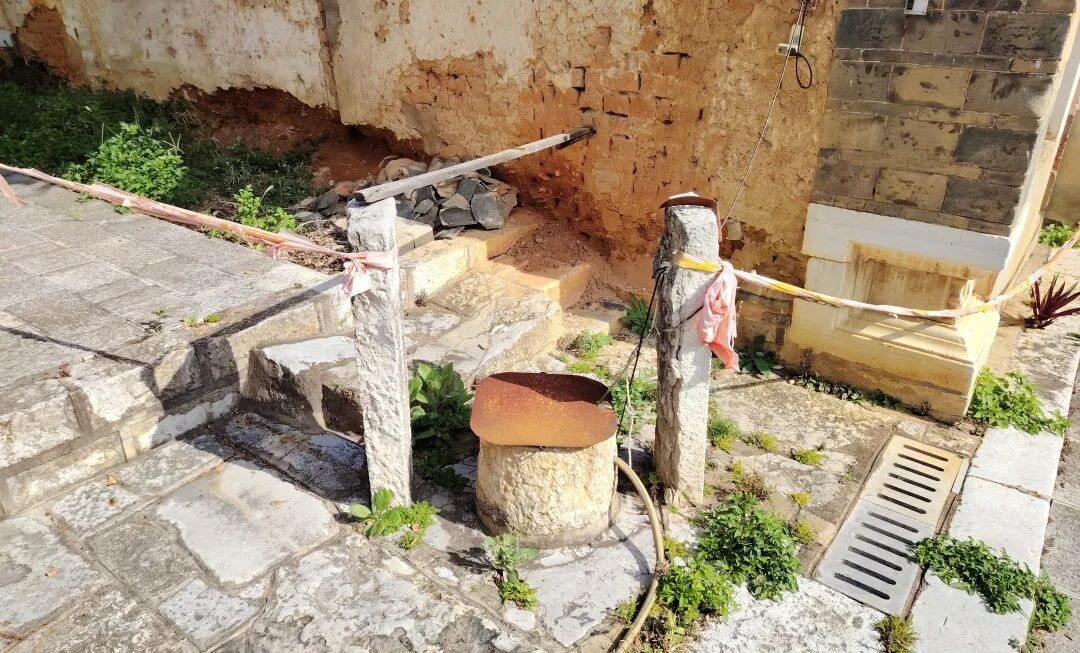
A new two-story, north-facing building with a hip-and-gable roof has been added to the north side of the complex, serving primarily as a women's prayer hall and living quarters for religious staff. To the south, a new two-story building contains classrooms and teaching facilities.
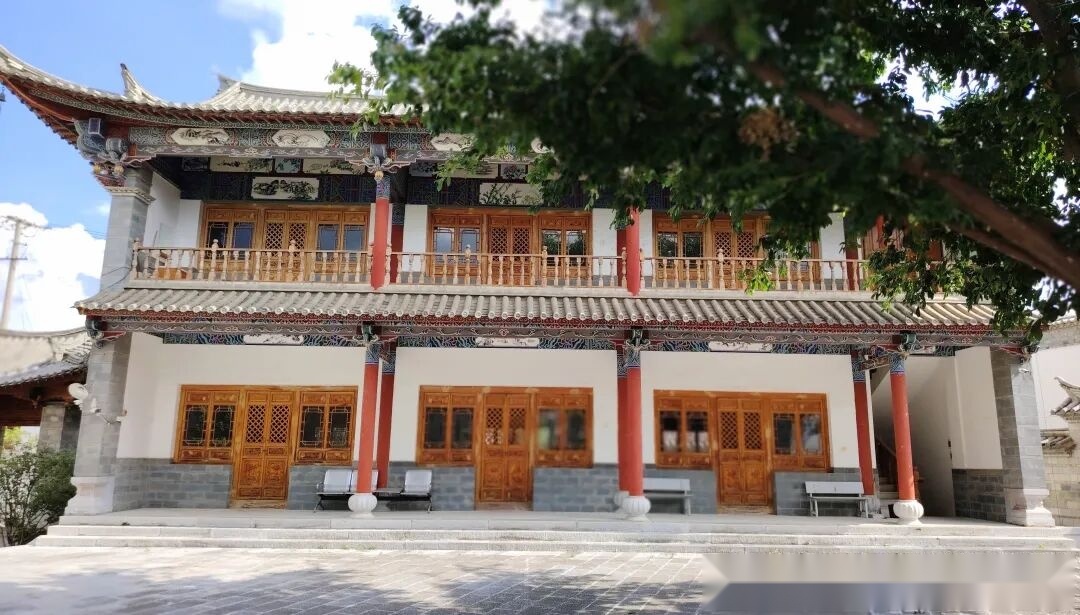
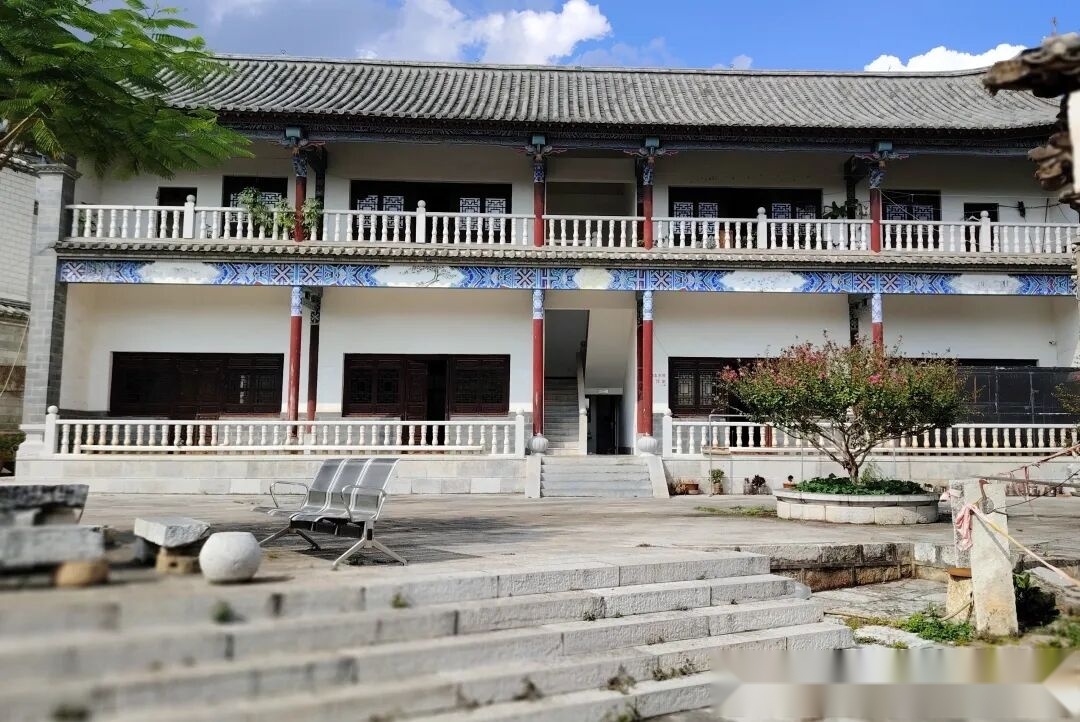
In this mosque, Islamic culture merges with local Yunnan architecture and traditional Jiangnan courtyard design. It has not only preserved centuries of Islamic heritage but also created a unique, multicultural architectural style. Today, this blend of diverse cultural and regional influences, which once provided a spiritual home for thousands of local Muslims, continues to serve the surrounding Muslim community for their daily prayers and religious needs.
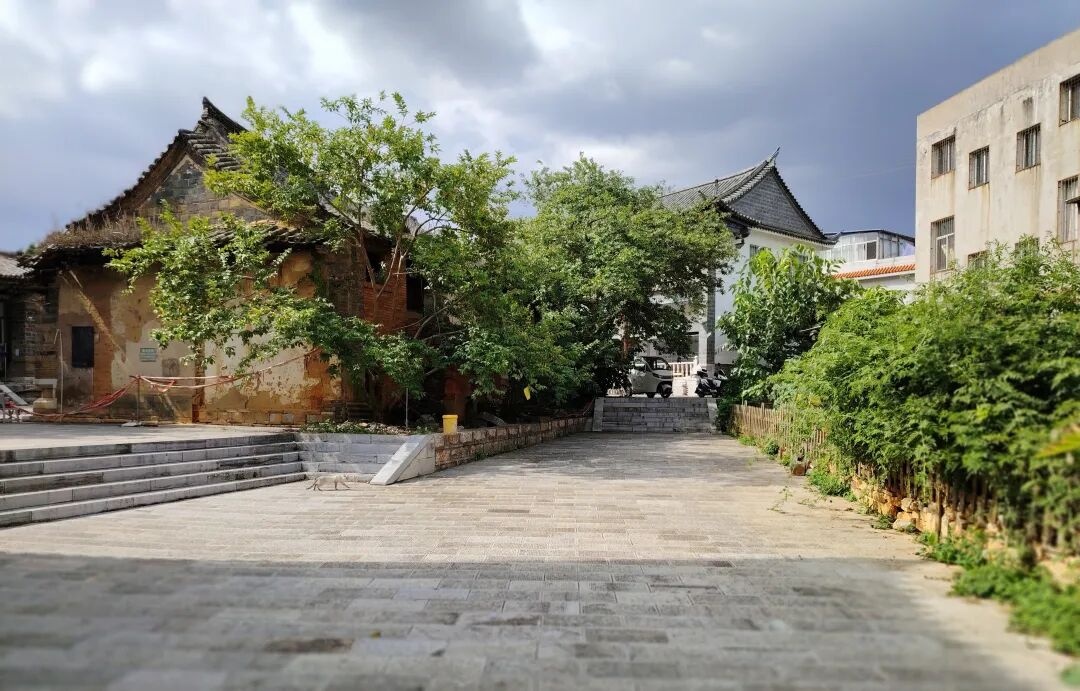
You can really feel the weight of history and the passage of time here. Although few Muslims live right around the mosque today—making it feel a bit quieter than the nearby Randeng Temple, which is bustling with the daily activity of the local community—this place still keeps the torch of traditional Muslim ceremonial culture burning. It stands as a testament to over 700 years of ethnic integration and brilliant architectural craftsmanship.
Around noon on August 26, in the year of the Dragon, I finished visiting several mosques in Kaiyuan city. Realizing that the local accommodations and religious facilities weren't quite what I needed, and since it was still early, I decided to skip staying there. After a quick bowl of rice noodles, I walked to the Kaiyuan South Bus Station and hopped on an intercity bus to Jianshui County, about 77 kilometers away. I arrived at the Jianshui bus terminal around 2:30 PM, took a four-stop bus ride to the vicinity of the Jianshui Great Mosque, found a place to stay, and after tidying up and performing my ablutions, I headed straight for the ancient mosque to perform my Dhuhr (afternoon prayer) and offer some commemorative dua (supplication).
Jianshui Ancient Mosque, also known as the Randeng Temple Street Mosque or the City Mosque, sits on the north side of the ancient city of Jianshui in Lin'an Town, Honghe Prefecture. It’s located at 50 Randeng Temple Street, west of the Yinghui Road outside the East Gate, about 1.5 kilometers from the newer Jianshui Great Mosque. This place is steeped in history, dating back over 700 years. It was one of the first mosques built in Yunnan by Hui Muslims who traveled from the north during the Yuan Dynasty to the Lin'an Prefecture, and it remains the oldest mosque in the southern Yunnan region. It was originally built between 1312 and 1313 (during the Yuan Dynasty's Huangqing reign), renovated in 1710 (the 49th year of the Kangxi reign of the Qing Dynasty) with a new main gatehouse, and saw its lower hall rebuilt in 1730 (the 8th year of the Yongzheng reign). Further expansions in 1762 (the 27th year of the Qianlong reign) brought it to its current scale of nearly 500 square meters. By the late Qing Dynasty under the Guangxi reign, it underwent another reconstruction. Key structures include the front hall, the main hall, 10 wing rooms (three bays wide), five kitchen annexes, and three 'moon palace' rooms (crescent-arched rooms) along with three moon gates. The front hall is three bays deep with a nearly square layout, preserving the Yuan Dynasty's flat, rounded wooden frame style. It features single eaves, five-purlin beams, and a simplified hip-and-gable roof with thick, rustic beams (40-50 cm in diameter) without cross-beams. The main hall is 13.5 meters wide and 13 meters deep, built with a traditional 'tailiang' (raised beam) wooden structure. It has a single eave; the front is hip-and-gable, while the back is a hard-gable style, creating a seven-ridge roof—a common sight in Yunnan's Qing Dynasty architecture. The interior beams are minimalist, and the mihrab (niche in the wall indicating the direction of Mecca) is a recent addition. The current building area is about 169 square meters, consisting mainly of post-Qing structures alongside the original Yuan Dynasty well. It was designated a protected cultural site by the Honghe Prefecture in May 2012.
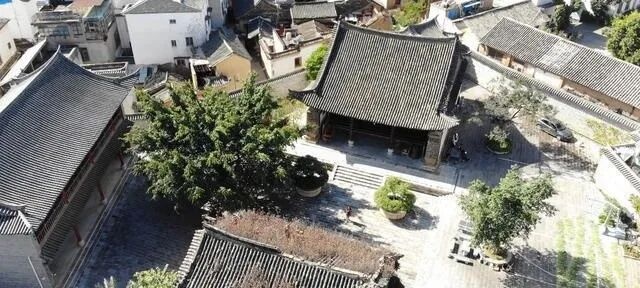
Walking into the ancient mosque, you're greeted by a scroll-arch style mountain gate with flying eaves. The west gate is well-preserved with some original paintings still visible, while the south gate shows clear signs of restoration; both display plaques reading 'Jianshui Ancient Mosque.' Inside, the main hall features Ming and Qing style wooden towers with flying eaves, adorned with plaques reading 'Truth is the Ultimate' and 'Endless Praise,' gifted by Ma Zhu, a military commander in Lin'an, during the Qing Dynasty. Inside the prayer hall, there are some simple, early religious texts. Flipping through them, you can almost feel the devotion and rigorous study of those who came before. The mosque retains traditional Ming and Qing architectural styles—dark tiles, flying eaves, and intricate carvings—blended with local Yunnan 'tuzhangfang' (earth-walled houses) and Jiangnan-style roof aesthetics. Even though the front hall is quite worn, the wild flowers blooming between the old, weathered tiles show that the ancient building still pulses with life, making it easily the most atmospheric courtyard in the temple.
A new two-story, north-facing building with a hip-and-gable roof has been added to the north side of the complex, serving primarily as a women's prayer hall and living quarters for religious staff. To the south, a new two-story building contains classrooms and teaching facilities.
In this mosque, Islamic culture merges with local Yunnan architecture and traditional Jiangnan courtyard design. It has not only preserved centuries of Islamic heritage but also created a unique, multicultural architectural style. Today, this blend of diverse cultural and regional influences, which once provided a spiritual home for thousands of local Muslims, continues to serve the surrounding Muslim community for their daily prayers and religious needs.
You can really feel the weight of history and the passage of time here. Although few Muslims live right around the mosque today—making it feel a bit quieter than the nearby Randeng Temple, which is bustling with the daily activity of the local community—this place still keeps the torch of traditional Muslim ceremonial culture burning. It stands as a testament to over 700 years of ethnic integration and brilliant architectural craftsmanship.
Exploring Jianshui Mosque: Authentic Hui Muslim Heritage and Ancient Architecture in Yunnan
Articles • Hasan09 posted the article • 0 comments • 15 views • 6 hours ago
This is a field report from the historic Jianshui Mosque in the Honghe Hani and Yi Autonomous Prefecture, Yunnan. Through 10 on-site photos, we explore the ancient architecture, traditional wells, and Islamic customs preserved by the Hui Muslims in the historic Lin'an Ancient City, showcasing the deep-rooted blend of Hui culture and the diverse influences found in this southern border region.
Around noon on August 26, in the year of the Dragon, I finished visiting several mosques in Kaiyuan city. Realizing that the local accommodations and religious facilities weren't quite what I needed, and since it was still early, I decided to skip staying there. After a quick bowl of rice noodles, I walked to the Kaiyuan South Bus Station and hopped on an intercity bus to Jianshui County, about 77 kilometers away. I arrived at the Jianshui bus terminal around 2:30 PM, took a four-stop bus ride to the vicinity of the Jianshui Great Mosque, found a place to stay, and after tidying up and performing my ablutions, I headed straight for the ancient mosque to perform my Dhuhr (afternoon prayer) and offer some commemorative dua (supplication).
Jianshui Ancient Mosque, also known as the Randeng Temple Street Mosque or the City Mosque, sits on the north side of the ancient city of Jianshui in Lin'an Town, Honghe Prefecture. It’s located at 50 Randeng Temple Street, west of the Yinghui Road outside the East Gate, about 1.5 kilometers from the newer Jianshui Great Mosque. This place is steeped in history, dating back over 700 years. It was one of the first mosques built in Yunnan by Hui Muslims who traveled from the north during the Yuan Dynasty to the Lin'an Prefecture, and it remains the oldest mosque in the southern Yunnan region. It was originally built between 1312 and 1313 (during the Yuan Dynasty's Huangqing reign), renovated in 1710 (the 49th year of the Kangxi reign of the Qing Dynasty) with a new main gatehouse, and saw its lower hall rebuilt in 1730 (the 8th year of the Yongzheng reign). Further expansions in 1762 (the 27th year of the Qianlong reign) brought it to its current scale of nearly 500 square meters. By the late Qing Dynasty under the Guangxi reign, it underwent another reconstruction. Key structures include the front hall, the main hall, 10 wing rooms (three bays wide), five kitchen annexes, and three 'moon palace' rooms (crescent-arched rooms) along with three moon gates. The front hall is three bays deep with a nearly square layout, preserving the Yuan Dynasty's flat, rounded wooden frame style. It features single eaves, five-purlin beams, and a simplified hip-and-gable roof with thick, rustic beams (40-50 cm in diameter) without cross-beams. The main hall is 13.5 meters wide and 13 meters deep, built with a traditional 'tailiang' (raised beam) wooden structure. It has a single eave; the front is hip-and-gable, while the back is a hard-gable style, creating a seven-ridge roof—a common sight in Yunnan's Qing Dynasty architecture. The interior beams are minimalist, and the mihrab (niche in the wall indicating the direction of Mecca) is a recent addition. The current building area is about 169 square meters, consisting mainly of post-Qing structures alongside the original Yuan Dynasty well. It was designated a protected cultural site by the Honghe Prefecture in May 2012.
Walking into the ancient mosque, you're greeted by a scroll-arch style mountain gate with flying eaves. The west gate is well-preserved with some original paintings still visible, while the south gate shows clear signs of restoration; both display plaques reading 'Jianshui Ancient Mosque.' Inside, the main hall features Ming and Qing style wooden towers with flying eaves, adorned with plaques reading 'Truth is the Ultimate' and 'Endless Praise,' gifted by Ma Zhu, a military commander in Lin'an, during the Qing Dynasty. Inside the prayer hall, there are some simple, early religious texts. Flipping through them, you can almost feel the devotion and rigorous study of those who came before. The mosque retains traditional Ming and Qing architectural styles—dark tiles, flying eaves, and intricate carvings—blended with local Yunnan 'tuzhangfang' (earth-walled houses) and Jiangnan-style roof aesthetics. Even though the front hall is quite worn, the wild flowers blooming between the old, weathered tiles show that the ancient building still pulses with life, making it easily the most atmospheric courtyard in the temple.
A new two-story, north-facing building with a hip-and-gable roof has been added to the north side of the complex, serving primarily as a women's prayer hall and living quarters for religious staff. To the south, a new two-story building contains classrooms and teaching facilities.
In this mosque, Islamic culture merges with local Yunnan architecture and traditional Jiangnan courtyard design. It has not only preserved centuries of Islamic heritage but also created a unique, multicultural architectural style. Today, this blend of diverse cultural and regional influences, which once provided a spiritual home for thousands of local Muslims, continues to serve the surrounding Muslim community for their daily prayers and religious needs.
You can really feel the weight of history and the passage of time here. Although few Muslims live right around the mosque today—making it feel a bit quieter than the nearby Randeng Temple, which is bustling with the daily activity of the local community—this place still keeps the torch of traditional Muslim ceremonial culture burning. It stands as a testament to over 700 years of ethnic integration and brilliant architectural craftsmanship. view all
Around noon on August 26, in the year of the Dragon, I finished visiting several mosques in Kaiyuan city. Realizing that the local accommodations and religious facilities weren't quite what I needed, and since it was still early, I decided to skip staying there. After a quick bowl of rice noodles, I walked to the Kaiyuan South Bus Station and hopped on an intercity bus to Jianshui County, about 77 kilometers away. I arrived at the Jianshui bus terminal around 2:30 PM, took a four-stop bus ride to the vicinity of the Jianshui Great Mosque, found a place to stay, and after tidying up and performing my ablutions, I headed straight for the ancient mosque to perform my Dhuhr (afternoon prayer) and offer some commemorative dua (supplication).
Jianshui Ancient Mosque, also known as the Randeng Temple Street Mosque or the City Mosque, sits on the north side of the ancient city of Jianshui in Lin'an Town, Honghe Prefecture. It’s located at 50 Randeng Temple Street, west of the Yinghui Road outside the East Gate, about 1.5 kilometers from the newer Jianshui Great Mosque. This place is steeped in history, dating back over 700 years. It was one of the first mosques built in Yunnan by Hui Muslims who traveled from the north during the Yuan Dynasty to the Lin'an Prefecture, and it remains the oldest mosque in the southern Yunnan region. It was originally built between 1312 and 1313 (during the Yuan Dynasty's Huangqing reign), renovated in 1710 (the 49th year of the Kangxi reign of the Qing Dynasty) with a new main gatehouse, and saw its lower hall rebuilt in 1730 (the 8th year of the Yongzheng reign). Further expansions in 1762 (the 27th year of the Qianlong reign) brought it to its current scale of nearly 500 square meters. By the late Qing Dynasty under the Guangxi reign, it underwent another reconstruction. Key structures include the front hall, the main hall, 10 wing rooms (three bays wide), five kitchen annexes, and three 'moon palace' rooms (crescent-arched rooms) along with three moon gates. The front hall is three bays deep with a nearly square layout, preserving the Yuan Dynasty's flat, rounded wooden frame style. It features single eaves, five-purlin beams, and a simplified hip-and-gable roof with thick, rustic beams (40-50 cm in diameter) without cross-beams. The main hall is 13.5 meters wide and 13 meters deep, built with a traditional 'tailiang' (raised beam) wooden structure. It has a single eave; the front is hip-and-gable, while the back is a hard-gable style, creating a seven-ridge roof—a common sight in Yunnan's Qing Dynasty architecture. The interior beams are minimalist, and the mihrab (niche in the wall indicating the direction of Mecca) is a recent addition. The current building area is about 169 square meters, consisting mainly of post-Qing structures alongside the original Yuan Dynasty well. It was designated a protected cultural site by the Honghe Prefecture in May 2012.
Walking into the ancient mosque, you're greeted by a scroll-arch style mountain gate with flying eaves. The west gate is well-preserved with some original paintings still visible, while the south gate shows clear signs of restoration; both display plaques reading 'Jianshui Ancient Mosque.' Inside, the main hall features Ming and Qing style wooden towers with flying eaves, adorned with plaques reading 'Truth is the Ultimate' and 'Endless Praise,' gifted by Ma Zhu, a military commander in Lin'an, during the Qing Dynasty. Inside the prayer hall, there are some simple, early religious texts. Flipping through them, you can almost feel the devotion and rigorous study of those who came before. The mosque retains traditional Ming and Qing architectural styles—dark tiles, flying eaves, and intricate carvings—blended with local Yunnan 'tuzhangfang' (earth-walled houses) and Jiangnan-style roof aesthetics. Even though the front hall is quite worn, the wild flowers blooming between the old, weathered tiles show that the ancient building still pulses with life, making it easily the most atmospheric courtyard in the temple.
A new two-story, north-facing building with a hip-and-gable roof has been added to the north side of the complex, serving primarily as a women's prayer hall and living quarters for religious staff. To the south, a new two-story building contains classrooms and teaching facilities.
In this mosque, Islamic culture merges with local Yunnan architecture and traditional Jiangnan courtyard design. It has not only preserved centuries of Islamic heritage but also created a unique, multicultural architectural style. Today, this blend of diverse cultural and regional influences, which once provided a spiritual home for thousands of local Muslims, continues to serve the surrounding Muslim community for their daily prayers and religious needs.
You can really feel the weight of history and the passage of time here. Although few Muslims live right around the mosque today—making it feel a bit quieter than the nearby Randeng Temple, which is bustling with the daily activity of the local community—this place still keeps the torch of traditional Muslim ceremonial culture burning. It stands as a testament to over 700 years of ethnic integration and brilliant architectural craftsmanship. view all
This is a field report from the historic Jianshui Mosque in the Honghe Hani and Yi Autonomous Prefecture, Yunnan. Through 10 on-site photos, we explore the ancient architecture, traditional wells, and Islamic customs preserved by the Hui Muslims in the historic Lin'an Ancient City, showcasing the deep-rooted blend of Hui culture and the diverse influences found in this southern border region.
Around noon on August 26, in the year of the Dragon, I finished visiting several mosques in Kaiyuan city. Realizing that the local accommodations and religious facilities weren't quite what I needed, and since it was still early, I decided to skip staying there. After a quick bowl of rice noodles, I walked to the Kaiyuan South Bus Station and hopped on an intercity bus to Jianshui County, about 77 kilometers away. I arrived at the Jianshui bus terminal around 2:30 PM, took a four-stop bus ride to the vicinity of the Jianshui Great Mosque, found a place to stay, and after tidying up and performing my ablutions, I headed straight for the ancient mosque to perform my Dhuhr (afternoon prayer) and offer some commemorative dua (supplication).
Jianshui Ancient Mosque, also known as the Randeng Temple Street Mosque or the City Mosque, sits on the north side of the ancient city of Jianshui in Lin'an Town, Honghe Prefecture. It’s located at 50 Randeng Temple Street, west of the Yinghui Road outside the East Gate, about 1.5 kilometers from the newer Jianshui Great Mosque. This place is steeped in history, dating back over 700 years. It was one of the first mosques built in Yunnan by Hui Muslims who traveled from the north during the Yuan Dynasty to the Lin'an Prefecture, and it remains the oldest mosque in the southern Yunnan region. It was originally built between 1312 and 1313 (during the Yuan Dynasty's Huangqing reign), renovated in 1710 (the 49th year of the Kangxi reign of the Qing Dynasty) with a new main gatehouse, and saw its lower hall rebuilt in 1730 (the 8th year of the Yongzheng reign). Further expansions in 1762 (the 27th year of the Qianlong reign) brought it to its current scale of nearly 500 square meters. By the late Qing Dynasty under the Guangxi reign, it underwent another reconstruction. Key structures include the front hall, the main hall, 10 wing rooms (three bays wide), five kitchen annexes, and three 'moon palace' rooms (crescent-arched rooms) along with three moon gates. The front hall is three bays deep with a nearly square layout, preserving the Yuan Dynasty's flat, rounded wooden frame style. It features single eaves, five-purlin beams, and a simplified hip-and-gable roof with thick, rustic beams (40-50 cm in diameter) without cross-beams. The main hall is 13.5 meters wide and 13 meters deep, built with a traditional 'tailiang' (raised beam) wooden structure. It has a single eave; the front is hip-and-gable, while the back is a hard-gable style, creating a seven-ridge roof—a common sight in Yunnan's Qing Dynasty architecture. The interior beams are minimalist, and the mihrab (niche in the wall indicating the direction of Mecca) is a recent addition. The current building area is about 169 square meters, consisting mainly of post-Qing structures alongside the original Yuan Dynasty well. It was designated a protected cultural site by the Honghe Prefecture in May 2012.
Walking into the ancient mosque, you're greeted by a scroll-arch style mountain gate with flying eaves. The west gate is well-preserved with some original paintings still visible, while the south gate shows clear signs of restoration; both display plaques reading 'Jianshui Ancient Mosque.' Inside, the main hall features Ming and Qing style wooden towers with flying eaves, adorned with plaques reading 'Truth is the Ultimate' and 'Endless Praise,' gifted by Ma Zhu, a military commander in Lin'an, during the Qing Dynasty. Inside the prayer hall, there are some simple, early religious texts. Flipping through them, you can almost feel the devotion and rigorous study of those who came before. The mosque retains traditional Ming and Qing architectural styles—dark tiles, flying eaves, and intricate carvings—blended with local Yunnan 'tuzhangfang' (earth-walled houses) and Jiangnan-style roof aesthetics. Even though the front hall is quite worn, the wild flowers blooming between the old, weathered tiles show that the ancient building still pulses with life, making it easily the most atmospheric courtyard in the temple.
A new two-story, north-facing building with a hip-and-gable roof has been added to the north side of the complex, serving primarily as a women's prayer hall and living quarters for religious staff. To the south, a new two-story building contains classrooms and teaching facilities.
In this mosque, Islamic culture merges with local Yunnan architecture and traditional Jiangnan courtyard design. It has not only preserved centuries of Islamic heritage but also created a unique, multicultural architectural style. Today, this blend of diverse cultural and regional influences, which once provided a spiritual home for thousands of local Muslims, continues to serve the surrounding Muslim community for their daily prayers and religious needs.
You can really feel the weight of history and the passage of time here. Although few Muslims live right around the mosque today—making it feel a bit quieter than the nearby Randeng Temple, which is bustling with the daily activity of the local community—this place still keeps the torch of traditional Muslim ceremonial culture burning. It stands as a testament to over 700 years of ethnic integration and brilliant architectural craftsmanship.