

Jingpeng Town
Halal Travel Guide: Jingpeng Mosque and Hui Muslim History
Articles • ali2007fr posted the article • 0 comments • 174 views • 2026-05-20 08:14
Reposted from the web
Summary: Jingpeng Town in Hexigten Banner, Chifeng, is shown through its century-old mosque, local Hui Muslim history, and travel route from the grassland. This account keeps the mosque details, town history, food notes, and photographs in order.
Driving east from the Gonde Grassland, we reached Jingpeng Town, the capital of Hexigten Banner in Chifeng City, in 45 minutes. We performed the afternoon prayer (namaz) at Jingpeng Mosque. The imam there is from Pingliang, Gansu, and belongs to the same Shaanxi school of thought as my wife's family, so we had a great conversation. The imam comes from four generations of imams and has a high level of religious learning (erlin). He taught in Hohhot for a long time before coming to Jingpeng.
During the Kangxi reign of the Qing Dynasty, Jingpeng Town became a trade hub on the grassland, located on the main road between Mongolia and the Northeast. During the lama temple fairs, merchants from inland China brought cotton cloth, sugar, and tea to trade with the Mongols for furs, livestock, and local products. In 1723 (the second year of the Yongzheng reign), severe droughts in Shandong and Hebei forced disaster victims to head north of the Great Wall to make a living. To solve the problem of displaced people, the Qing government implemented a policy of borrowing land to support the people in the southeastern Mongolian grasslands, including Hexigten Banner. During the Qianlong reign, Hui Muslims from Yangxin and Guan counties in Shandong, and Cangzhou and Hejian in Hebei, traveled through Chifeng and Duolun to reach Jingpeng Town to trade on the grasslands, eventually settling down.
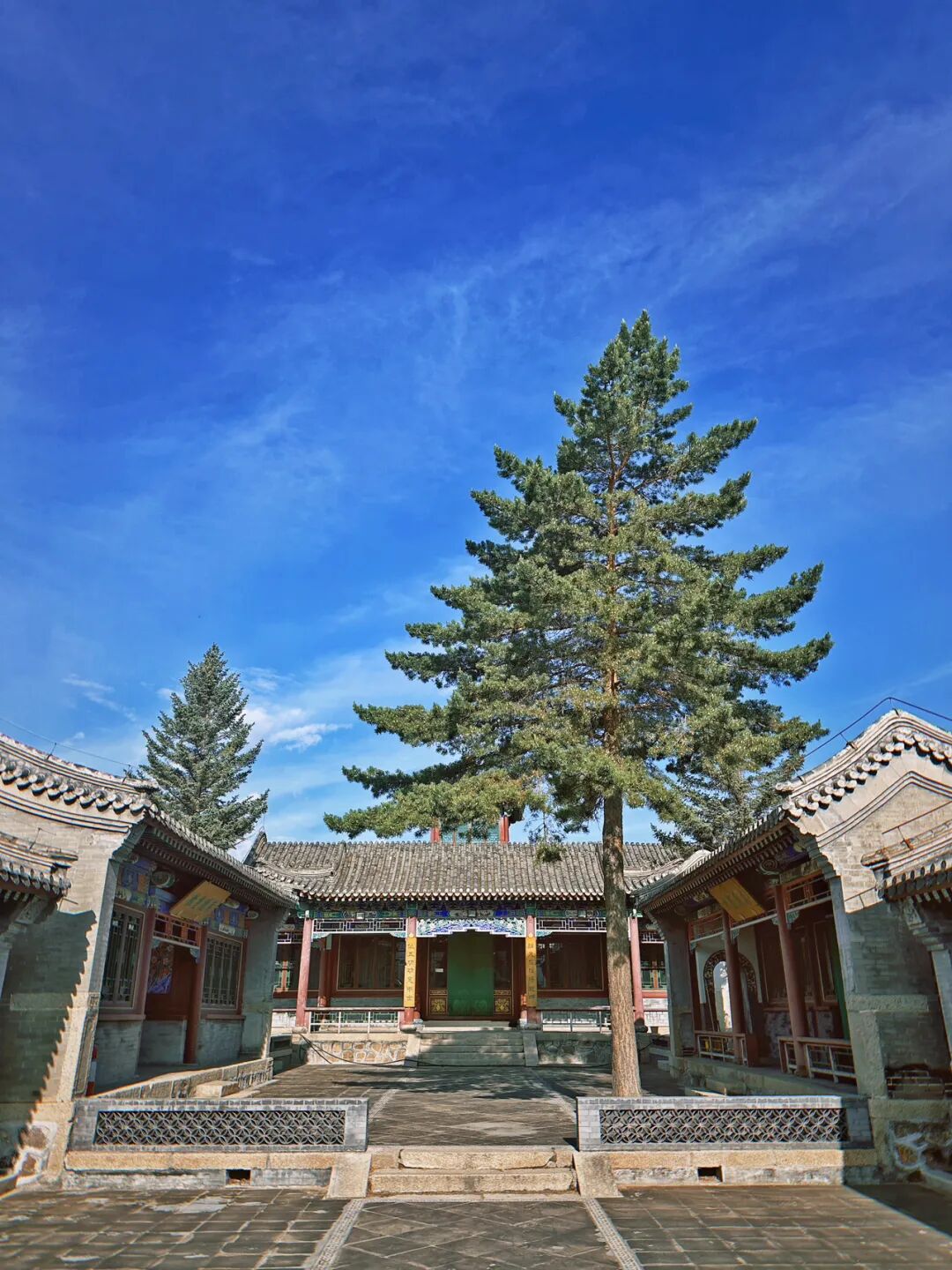
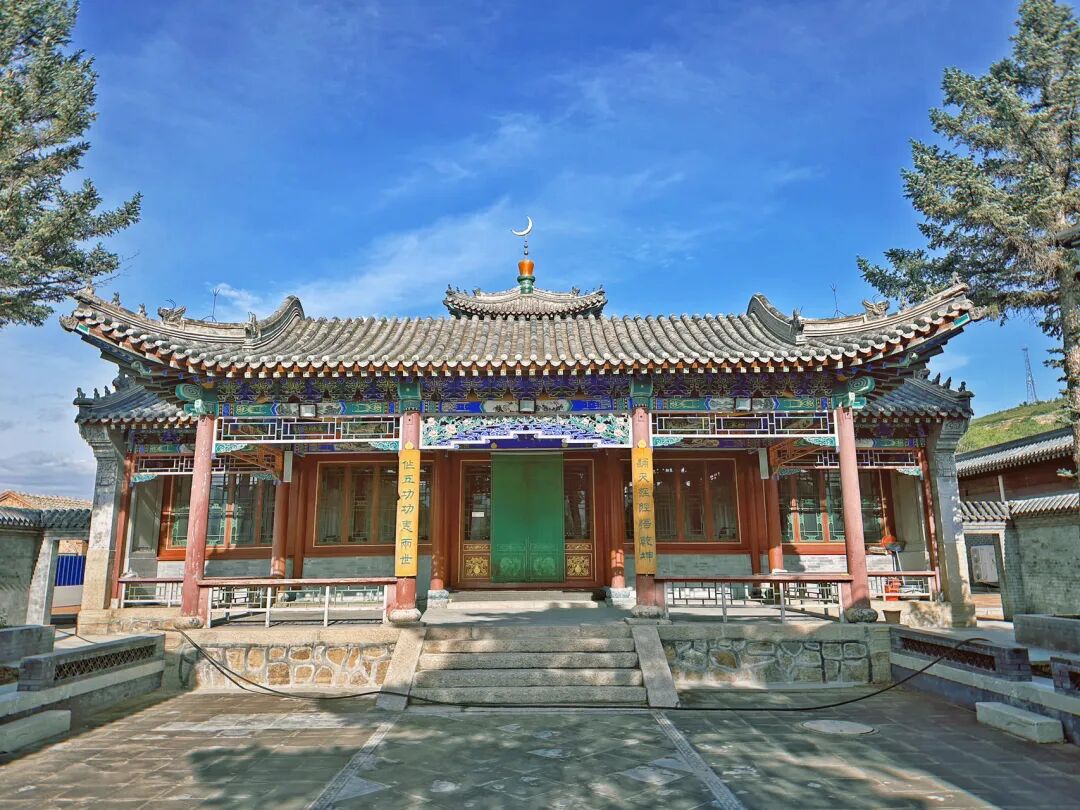
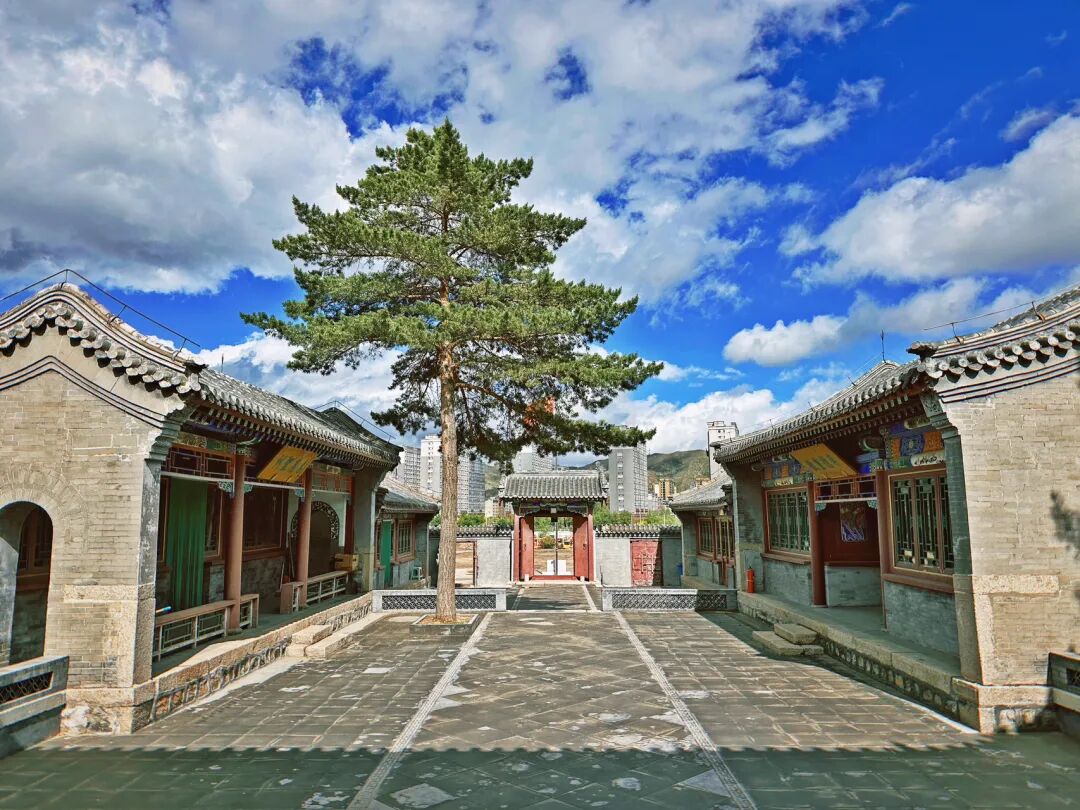
After the 19th century, the Hui Muslims in Jingpeng included families with the surnames Feng, Cong, Ma, Bai, Li, Jin, and Ha, with a population of nearly 1,000. In 1852 (the second year of the Xianfeng reign), they officially built a mosque (masjid), which started as five mud-brick rooms. In 1902 (the 28th year of the Guangxu reign), the mosque was rebuilt with funds raised under the leadership of Imam Liu Qi, Imam Ha Zhaobin, and community elders Li Wenrong, Cong Laofeng, Ma Changtai, and Jin Fengming. Liu Qi and Ha Zhaobin traveled inside the Great Wall three times to raise funds. It took four years, and the current building was completed in 1908 (the 34th year of the Guangxu reign). It was named a key cultural relic protection site of Hexigten Banner in 1992.
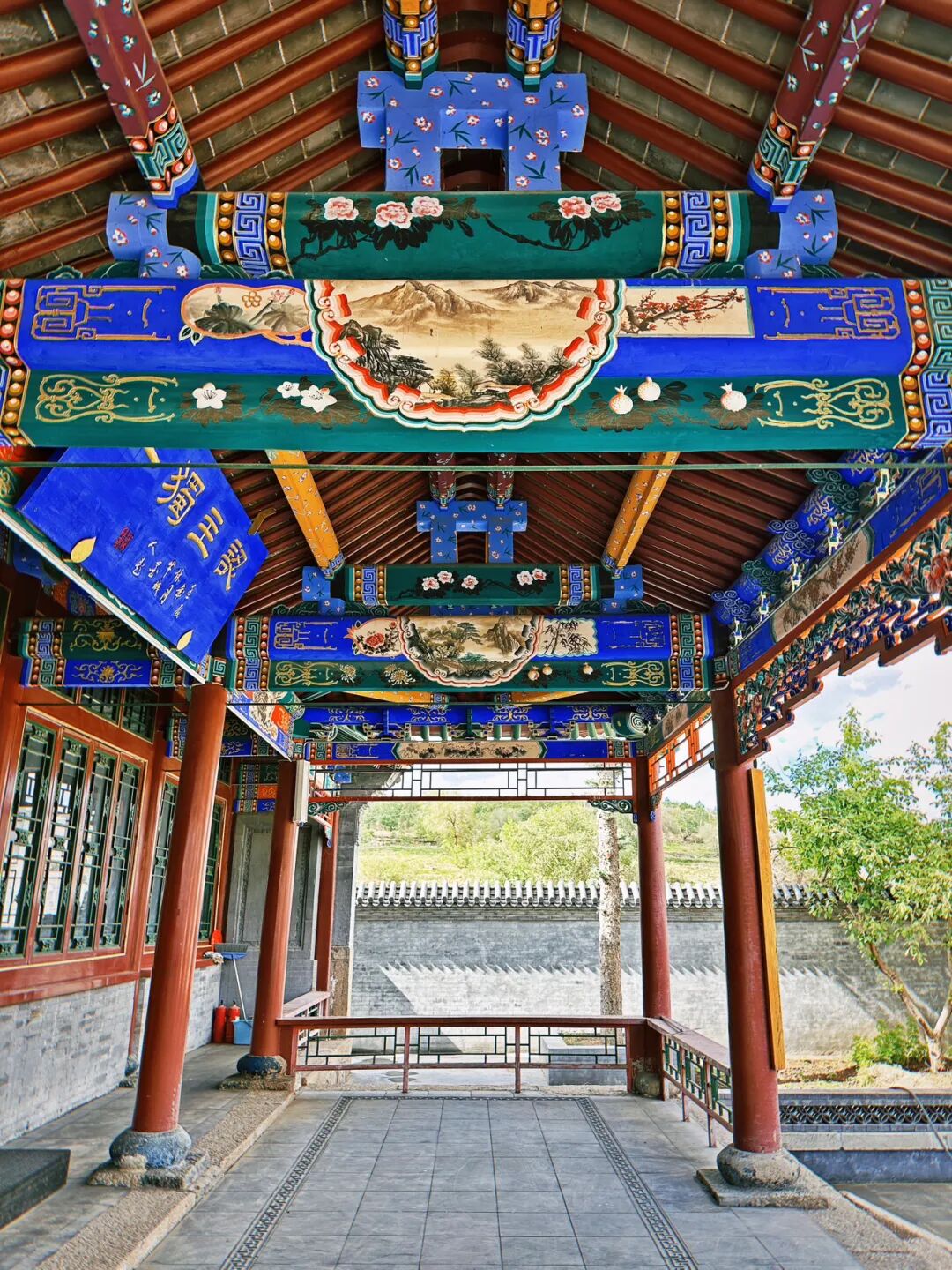
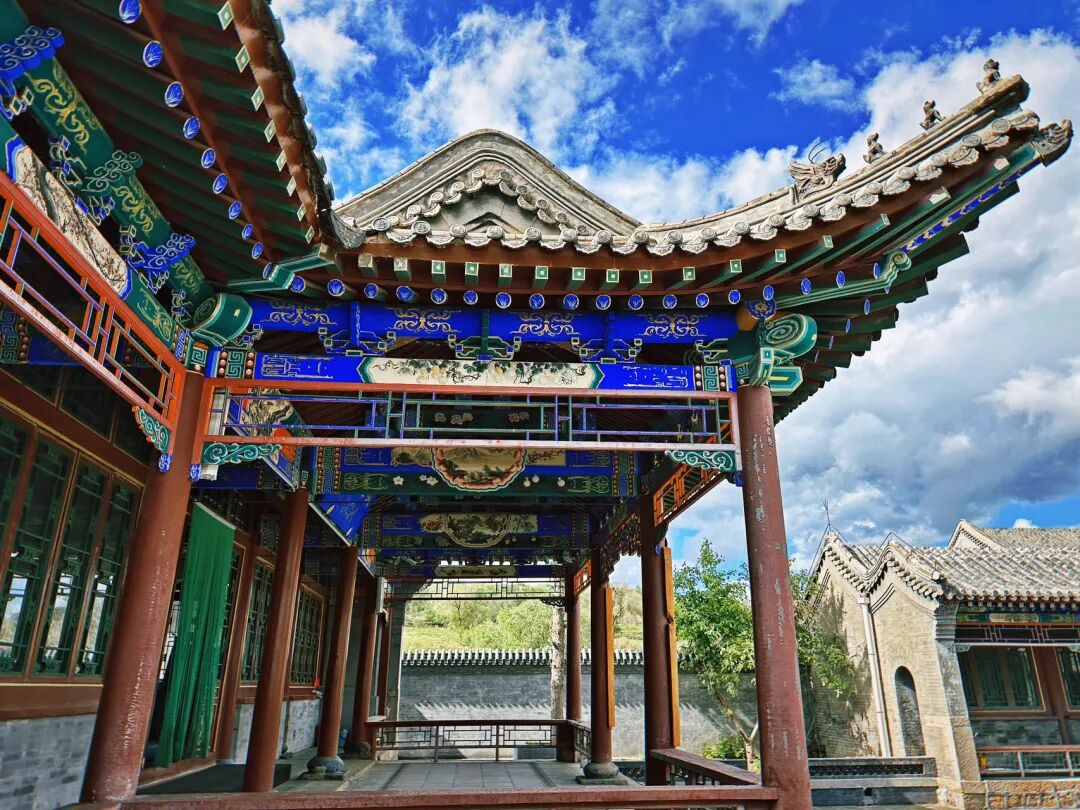
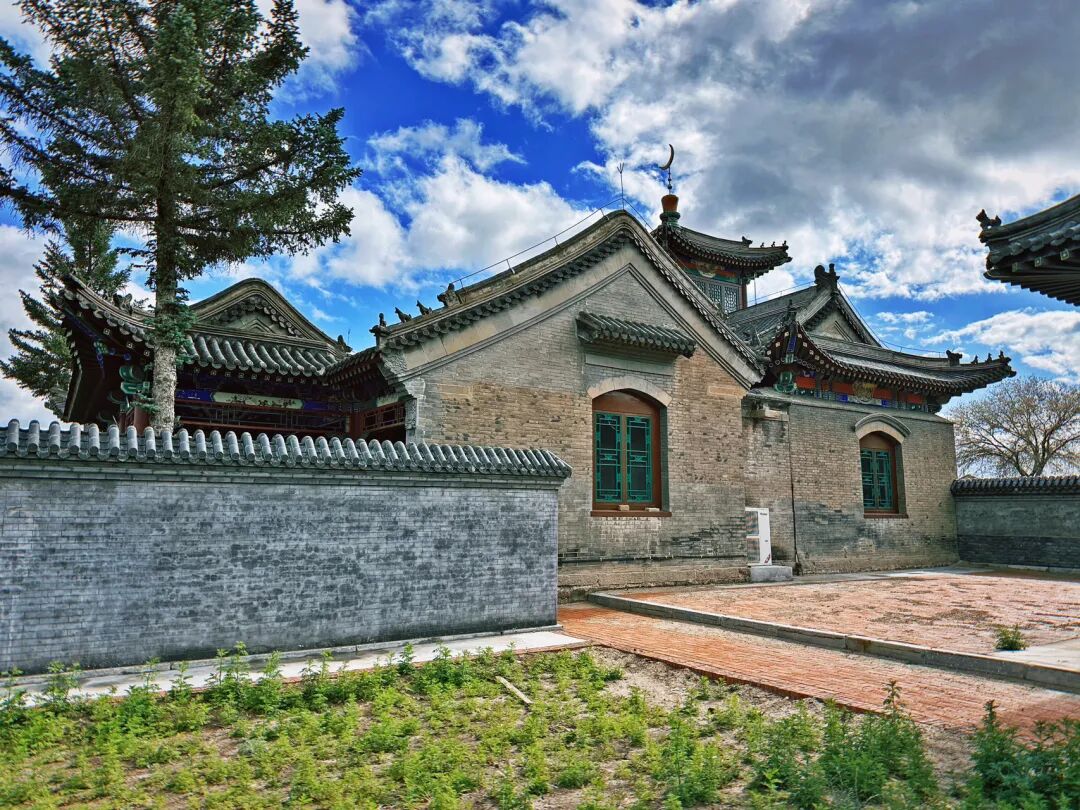
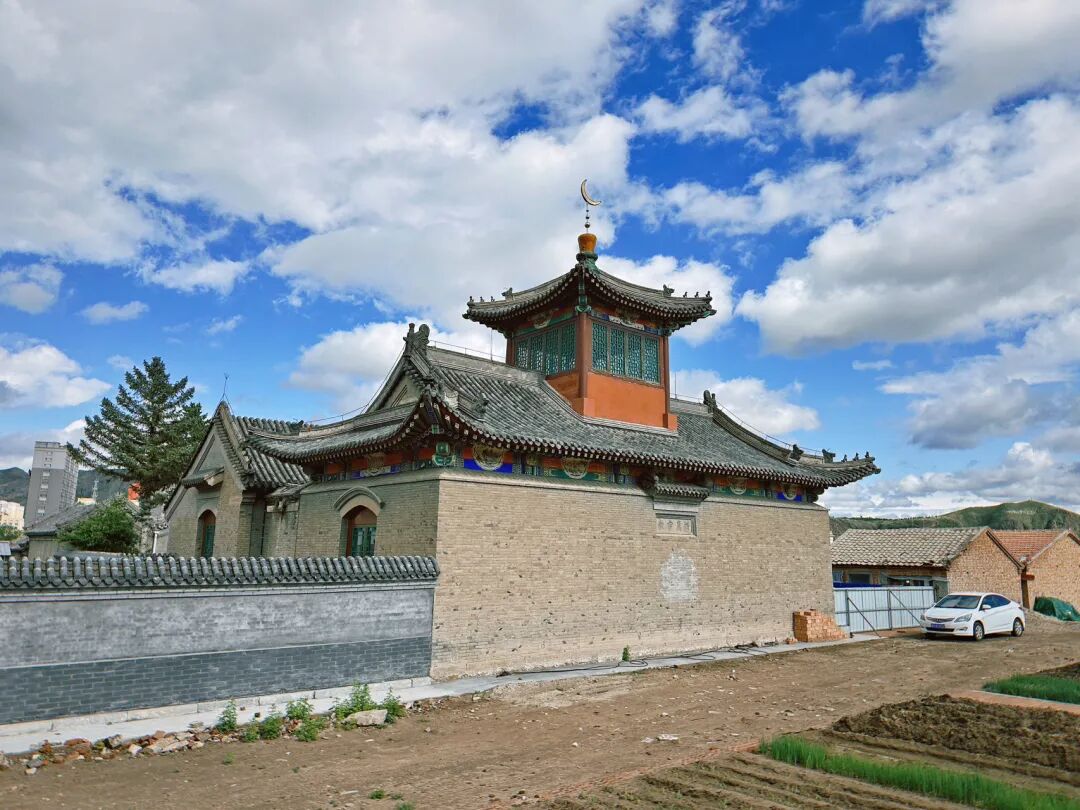
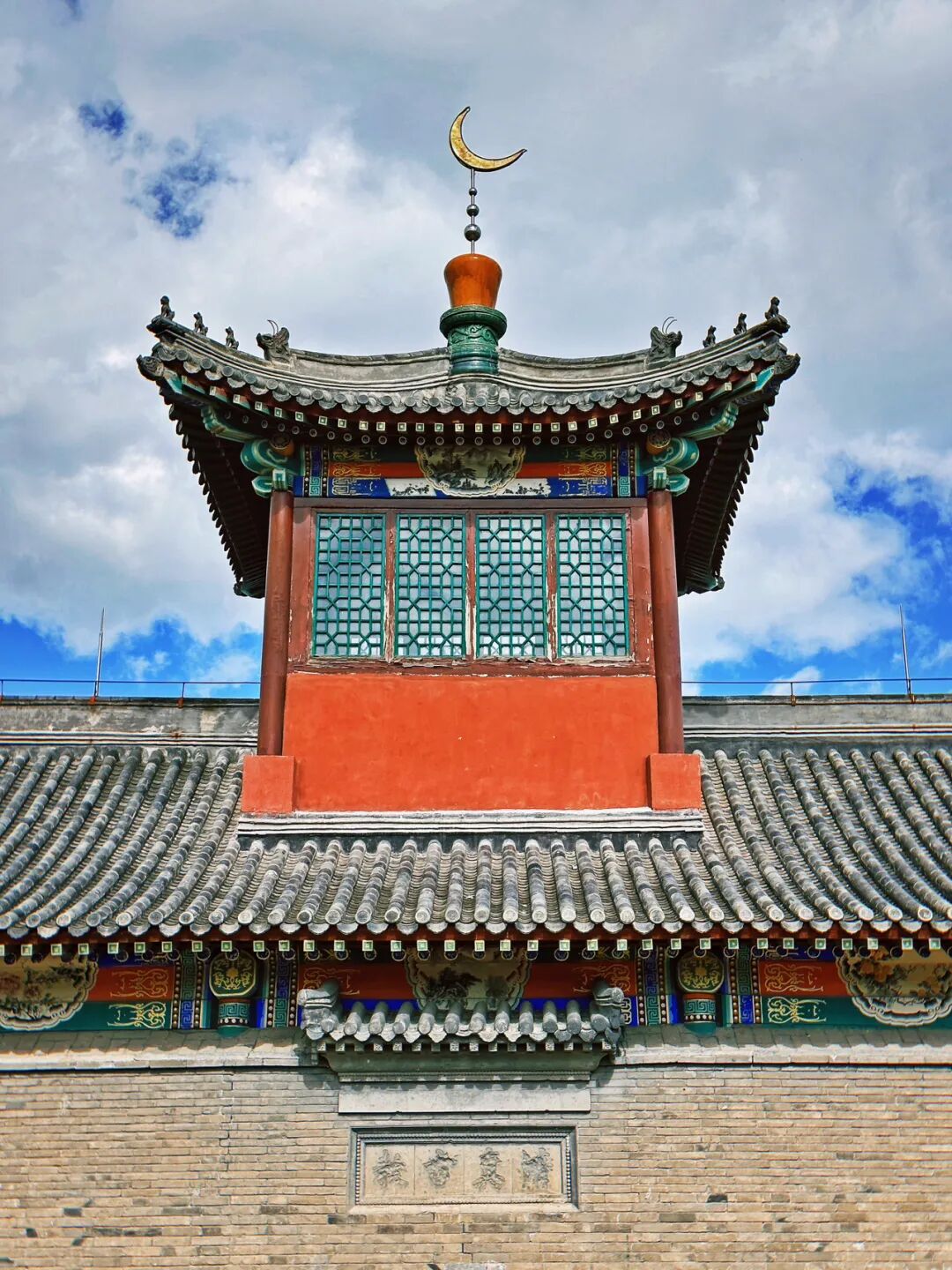
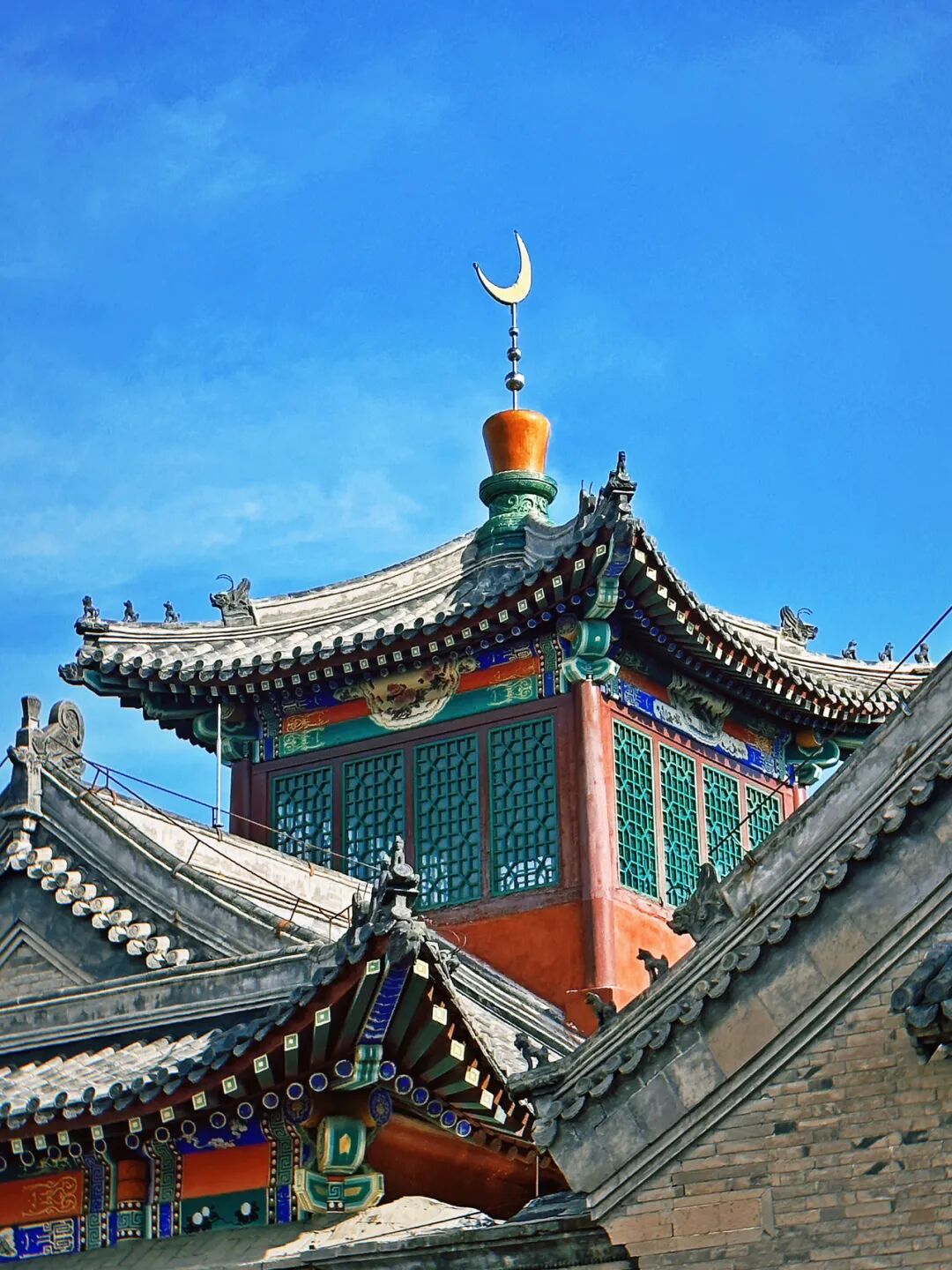
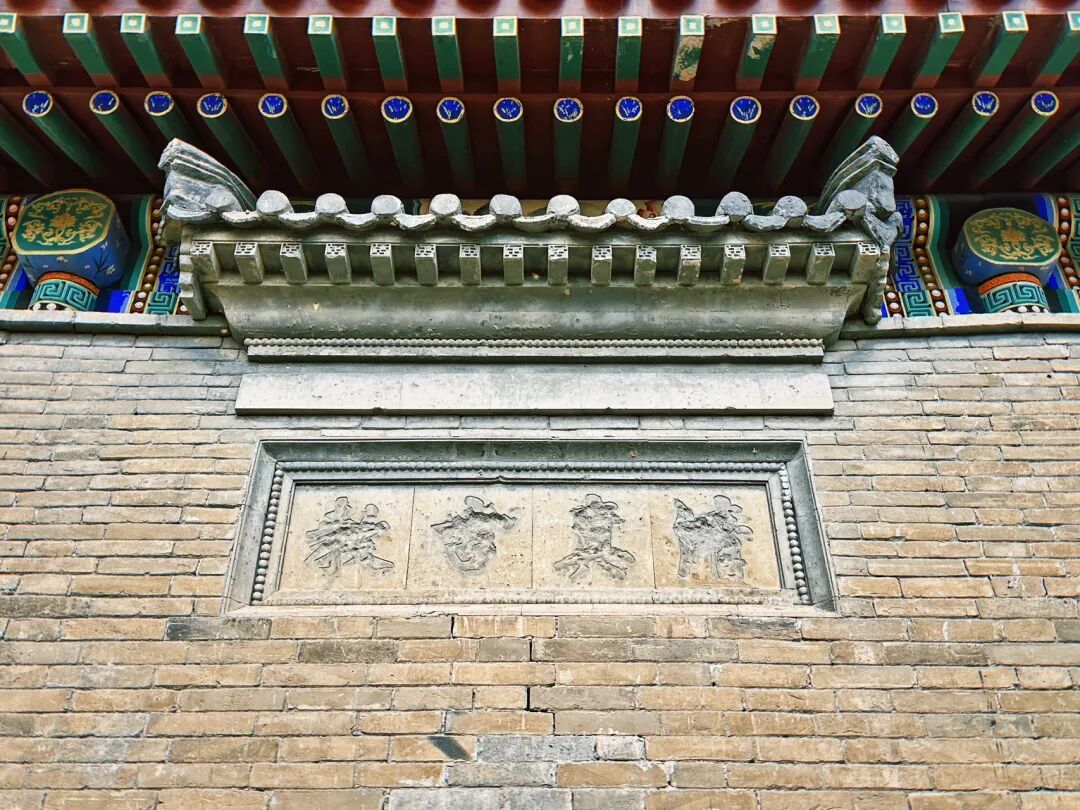
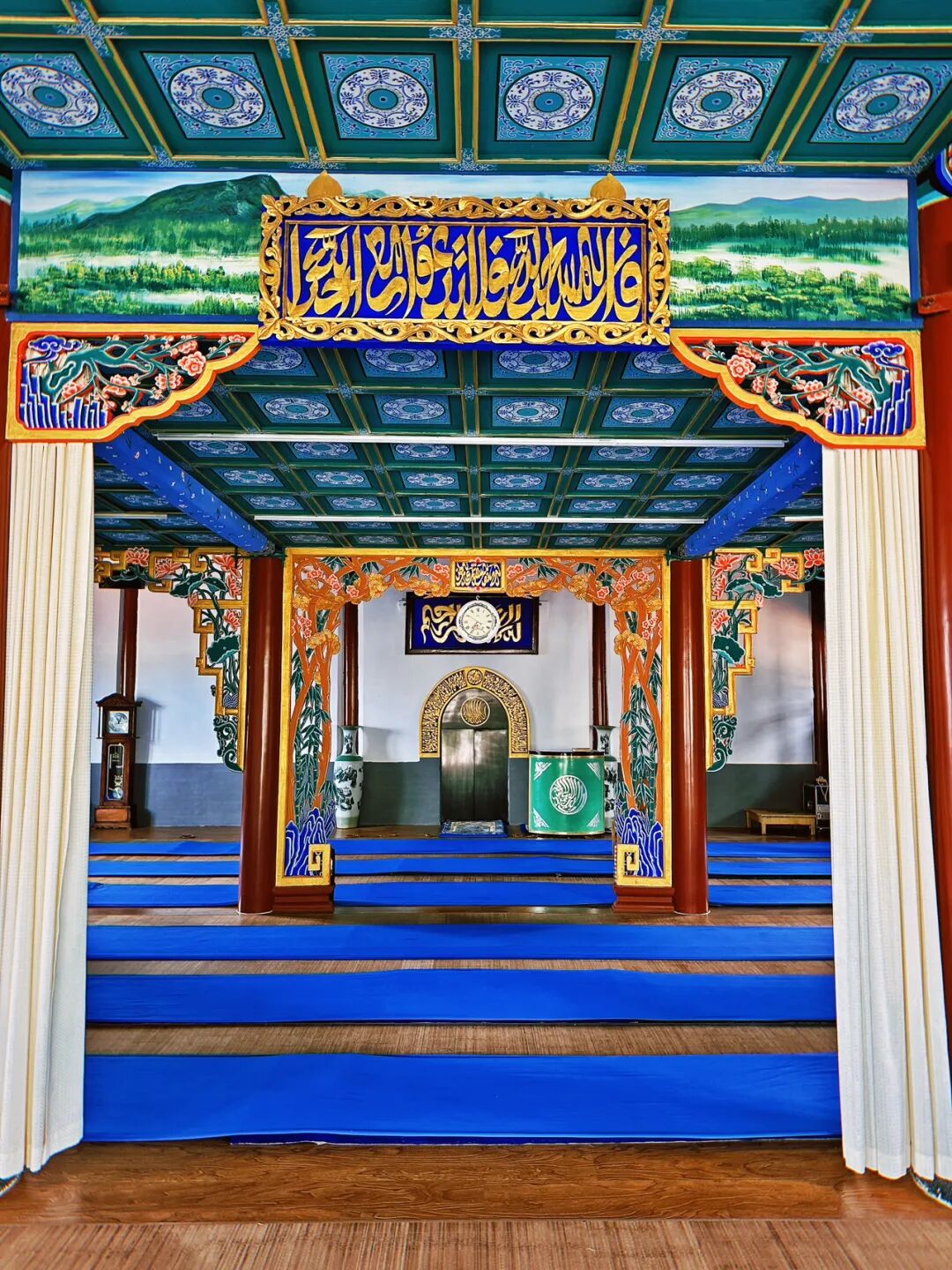
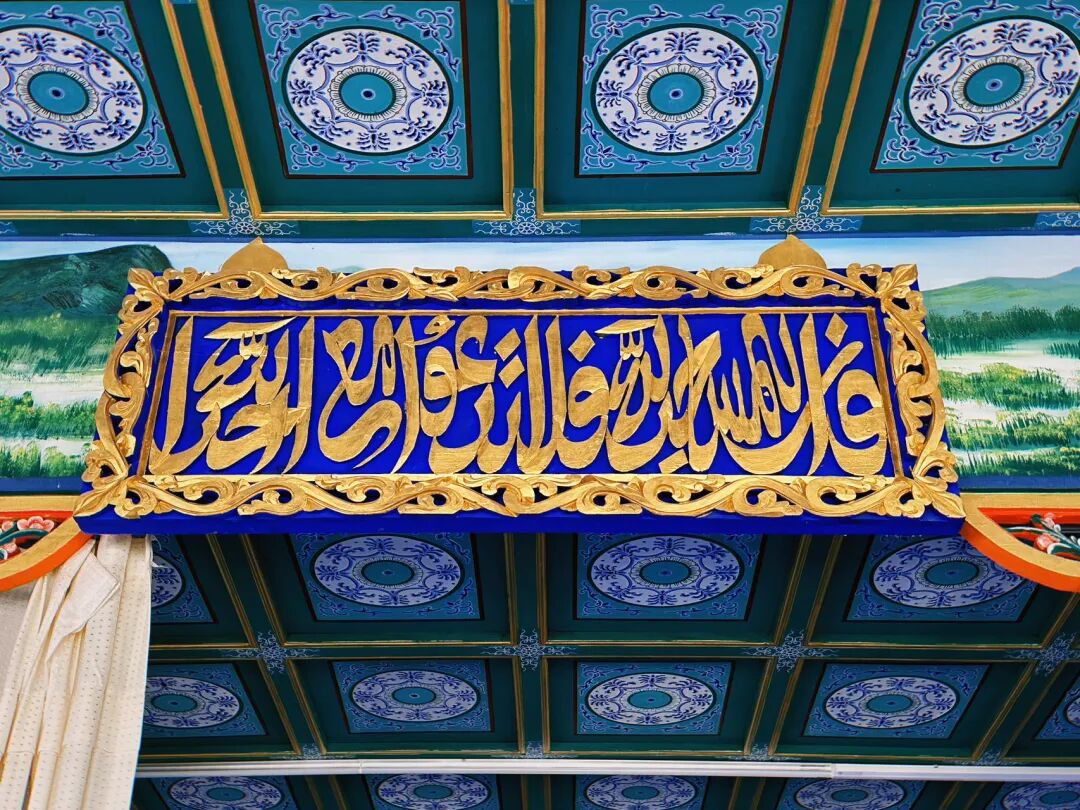
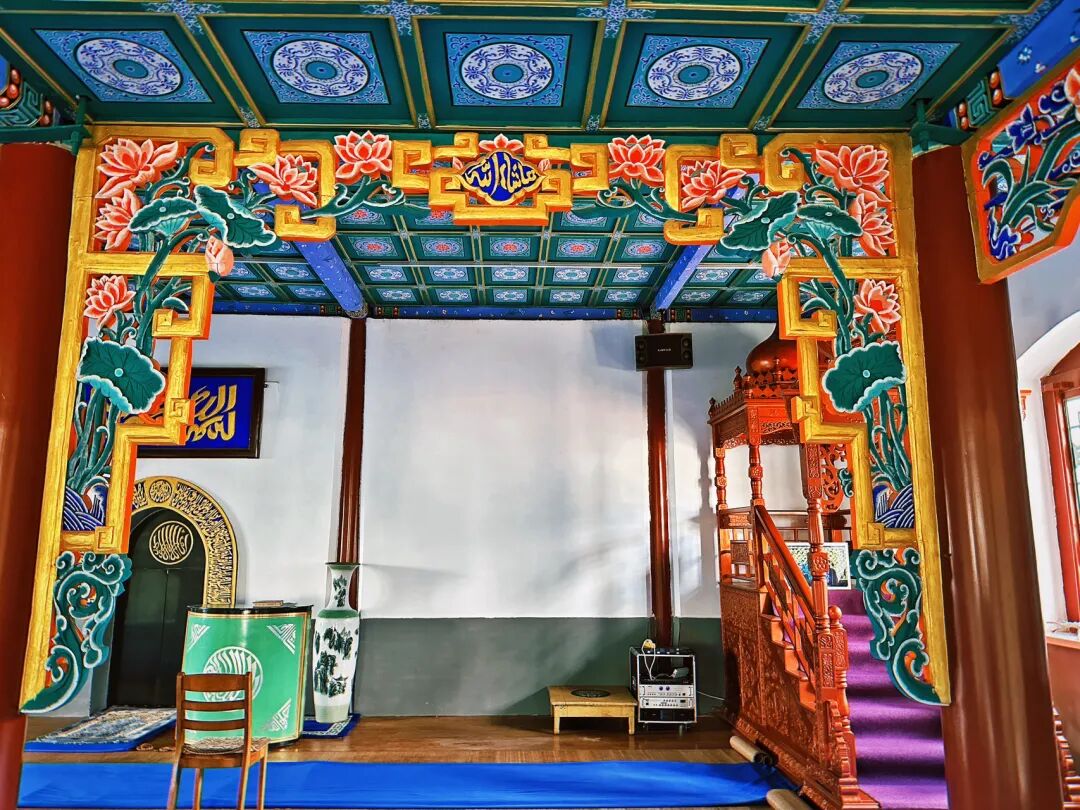
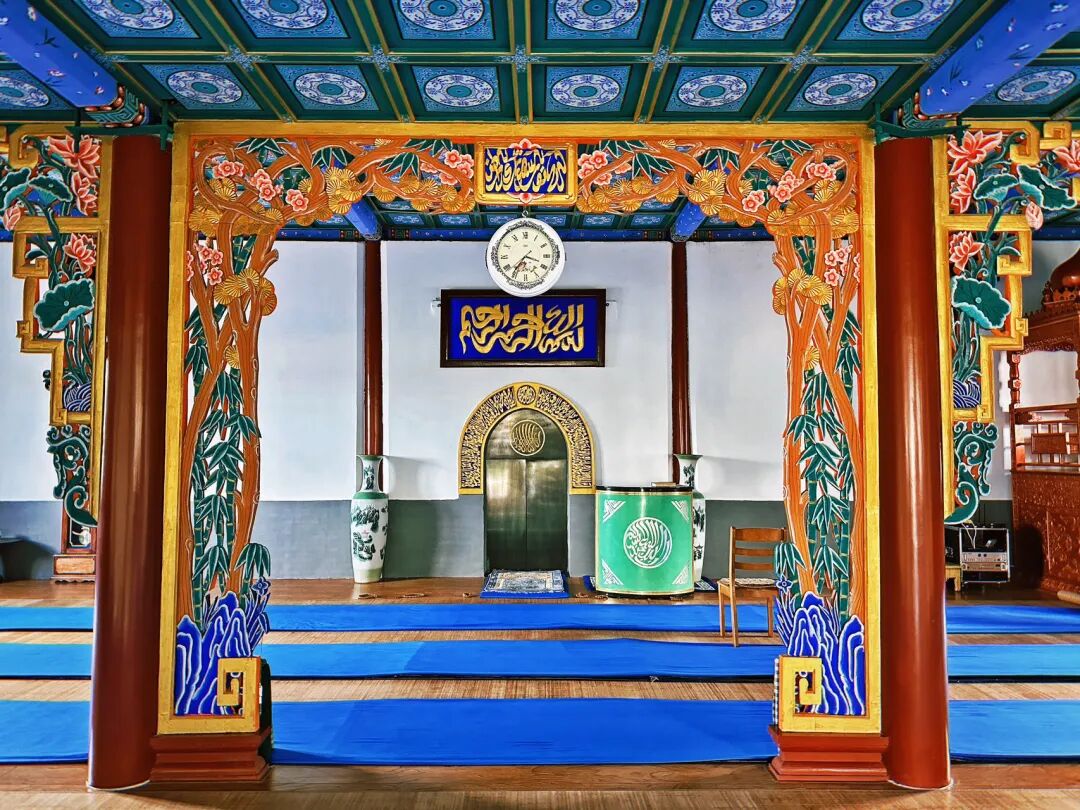
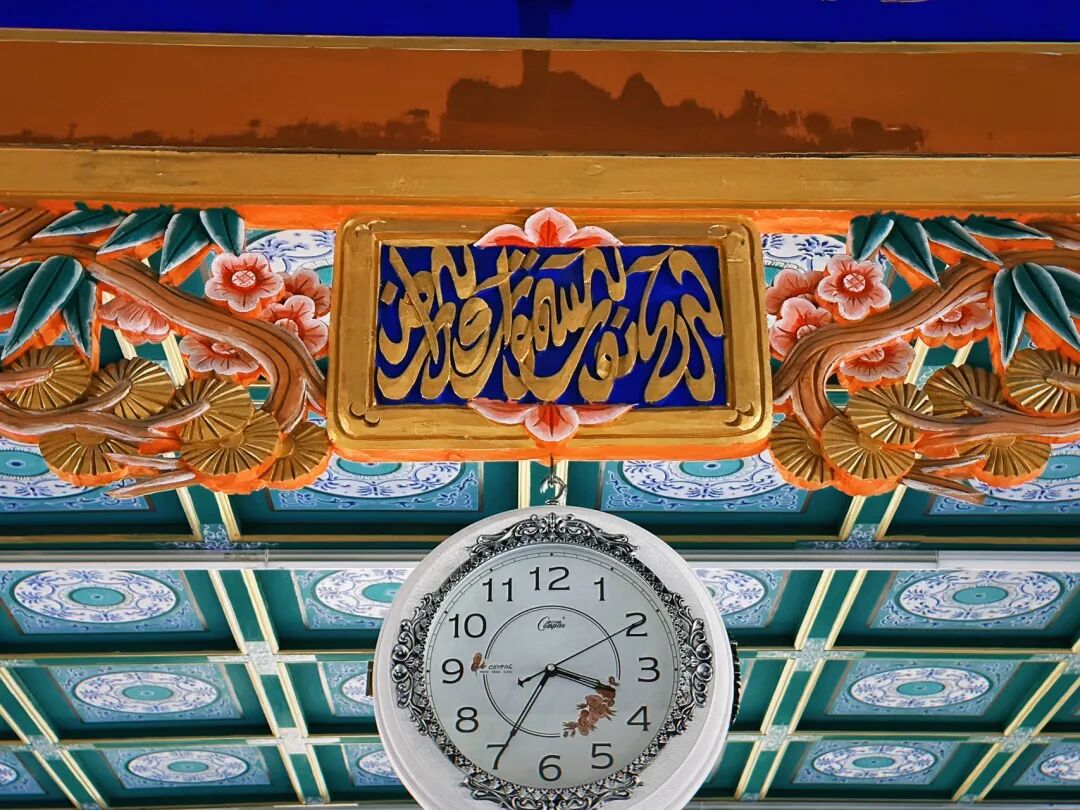
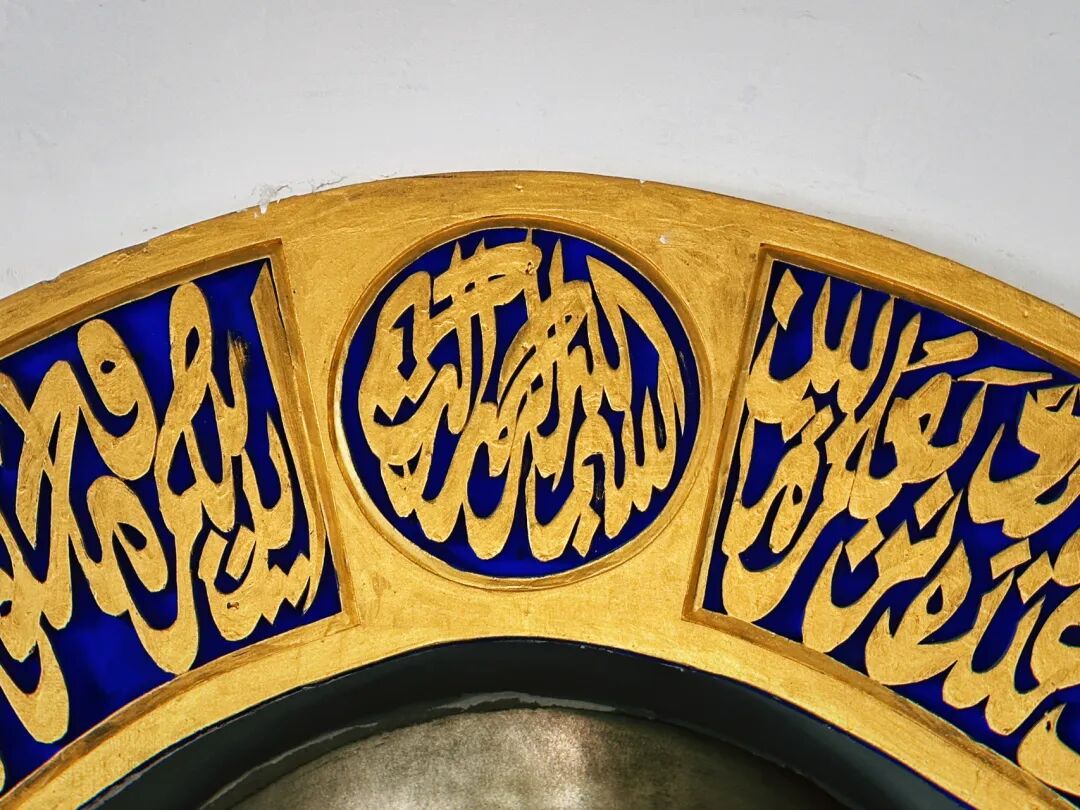
The north and south lecture halls and the main prayer hall of Jingpeng Mosque are Qing Dynasty structures. The main hall consists of a porch, the main hall, and a rear chamber (yaodian), with a moon-sighting tower (wangyuelou) on top of the rear chamber. The moon-sighting tower was demolished in 1967 and rebuilt after 1981.
Historically, the Hui Muslims of Jingpeng Town lived in single-story houses in the old town on the west side of the river, clustered around the mosque. However, after urban renewal in recent years, they have all moved to apartment buildings on the east side of the river. Today, you can see many restaurants and shops run by Hui Muslims in the new urban area on the east side of the river.
During the late Qing Dynasty and the Republic of China era, Jingpeng grew into one of the four major trading hubs beyond the Great Wall, alongside Zhangjiakou, Duolun, and Kulun (Ulaanbaatar). According to the elders, Hui Muslims in Jingpeng originally made a living by gathering firewood, cutting grass, and making charcoal, only starting stalls or shops after they had saved enough money.
At that time, many Hui Muslims in Jingpeng worked as Mongolian traders and horse brokers (maqiao). Mongolian traders were commonly known as 'grassland runners.' They used ox carts and camels to deliver sugar, tea, cotton cloth, and matches to the yurts of Mongolian herders, then transported local products like furs and dairy products back to places like Duolun, Chifeng, and Zhangjiakou. In the early Republic of China, there were over 20 Hui Muslim families in Jingpeng working as Mongolian traders, with 6 Hui Muslim camel caravans owning more than 300 camels.
Horse brokers (maqiao) handled horse trading. During the Republic of China era, all horse brokers in Jingpeng Town were Hui Muslims, and many inherited the business from their ancestors. The horse market was located at the base of the street lamps in the old Jingpeng street. Every autumn and winter, herders from Xilingol, Ujimqin, and Abaga would drive their horses there to sell. Hui Muslims would buy the horses, train them for a period, and then drive them to Beijing, Tianjin, and Shandong to sell. Because of this, Jingpeng Hui Muslims were skilled at training horses, and the pacing horses they trained were very popular with local wealthy merchants.
In the past, most of the people driving horse-drawn carriages in Jingpeng Town were also Hui Muslims. The trip from Jingpeng to Duolun took ten days of sleeping in the open. The drivers had to handle all kinds of situations and use their wits and courage to escape danger if they met bandits.
At its peak, one-third of the 150 shops in Jingpeng Town were run by Hui Muslims. The eight major businesses were Yuxingzhan, Tianshunxing, Xiyuxing, Detaixing, Jushunxing, Ruishengming, Heji, and Yuji. The largest was Yuxingzhan, founded by Ma Bingyu. Ma Bingyu made a living cutting grass in his early years. Later, he opened a grass shed to sell hay, and it wasn't until middle age that he opened Yuxingzhan, a grocery store that also processed rice and flour. Ma Bingyu learned business methods from Shanxi merchants, hiring Shanxi managers and mostly Shanxi workers. By the Republic of China era, Yuxingzhan had branches or warehouses in places like Great Kulun (Ulaanbaatar), Xilinhot, Chifeng, Zhangjiakou, and Beijing. Yuxingzhan had its own camel caravan. It used its own camels to transport goods in spring and autumn, and used ox carts in the various banners of Xilingol League during the summer.
The Tianshunxing business owned by Hui Muslim Liu Kuishan in Jingpeng mainly sold daily groceries and pastries, and also processed grain. It was a very powerful business in Jingpeng. Besides the pastry and grocery shop, Tianshunxing also ran the Xingshun Hotel on Dazhong Street in Jingpeng. Tianshunxing's camel caravan transported goods for other shops to carrying their own. Tianshunxing's ranch had over a thousand sheep and more than two hundred cows. They originally ran a camel farm too, but the Soviet army drove all the camels away in the summer of 1945.
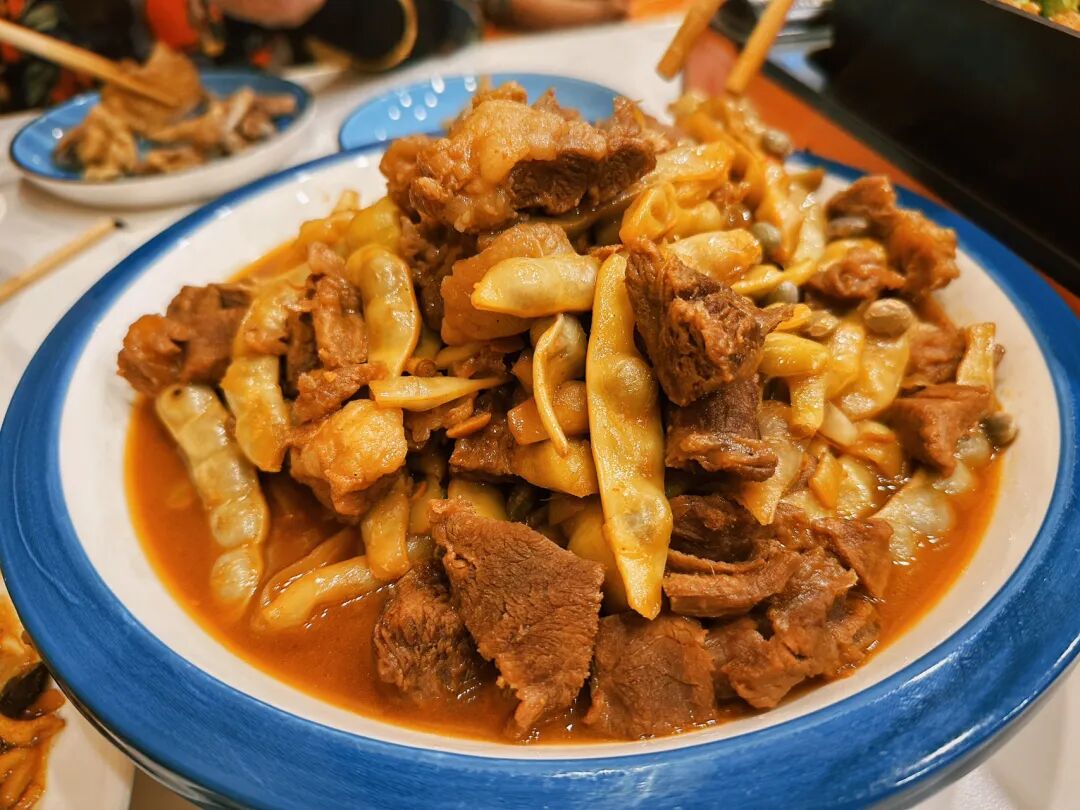
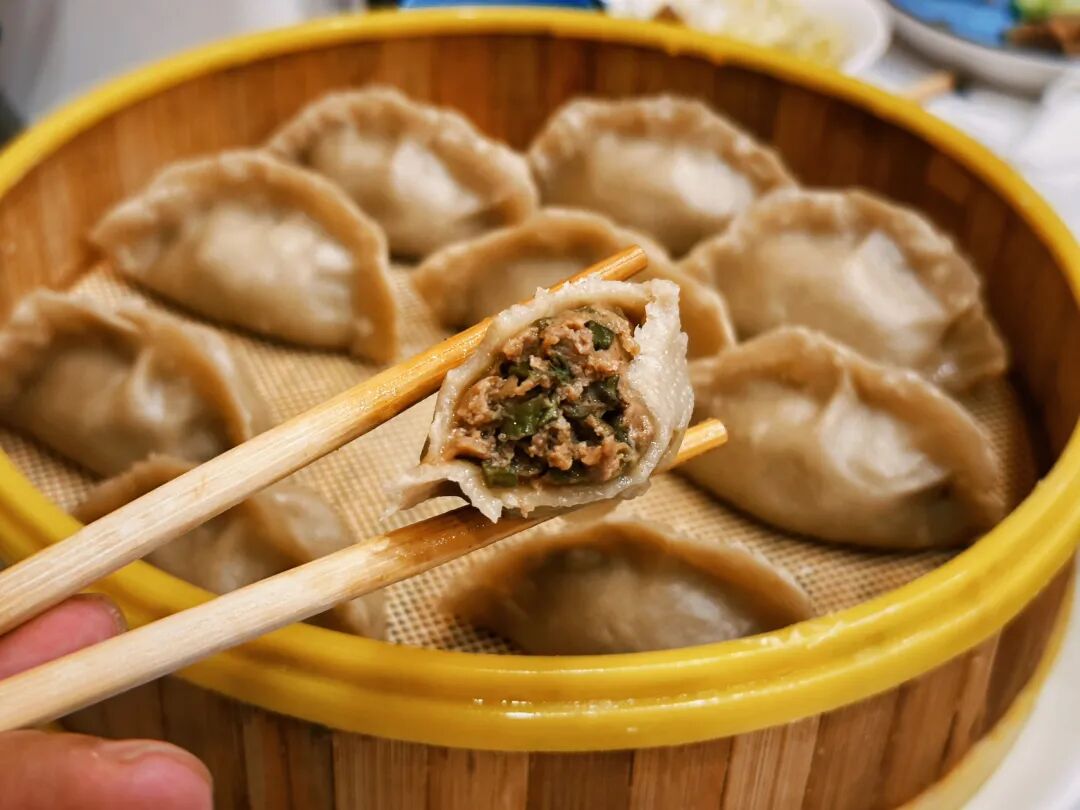
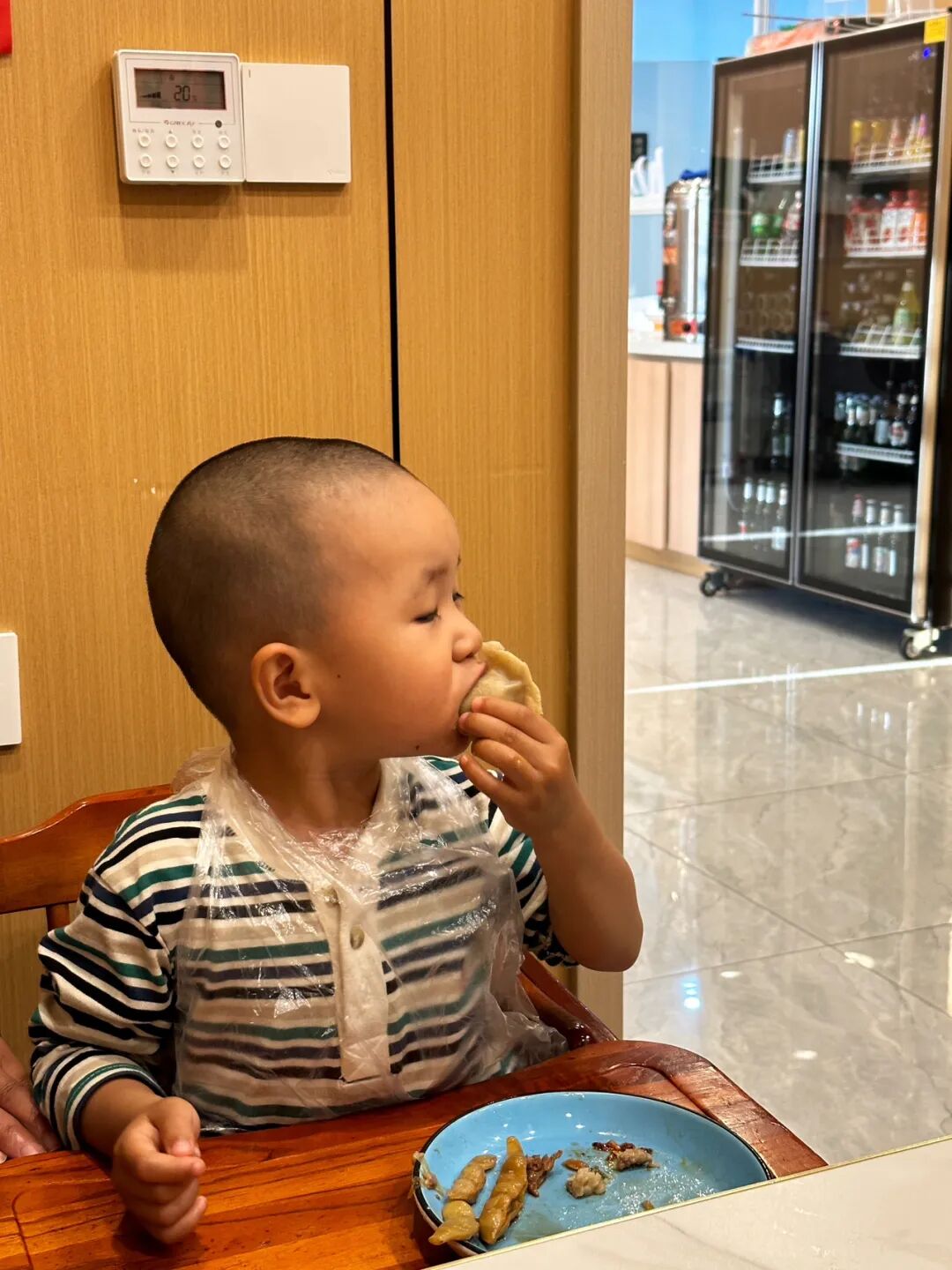
In the evening, we had dinner at the Coarse Grain Steamed Dumpling (culiang zhengjiao) restaurant in Jingpeng Town. They own three shops in a row: a clay pot small pie shop, a hot pot shop (doulao xianyang huoguo), and the coarse grain steamed dumpling shop. The coarse grain steamed dumpling shop has quite a few private rooms, but not many open tables. Their menu is very rich. We ordered half an organic rooster, pressure-cooked beef with golden hook beans (huangjingou), steamed oat noodles (youmian) with diced meat, mushrooms, and vegetables in a steam pot, and lamb and bracken steamed dumplings. Their portions are huge. Four of us could not finish three dishes and two staples. Two dishes and one staple should be enough.
The rooster was delicious and the meat had a good chew; it probably wasn't farm-raised. Golden hook beans (huangjingou) are high-end beans from Northeast China, usually stewed with beef. They make them with a sweet and salty flavor. The steamed oat noodles with diced meat and mushrooms were my favorite. It is like a version of 'topped noodles' from the northern frontier. The dough of the oat steamed dumplings doesn't taste as good as white flour, but it is a way to experience what people in the northern frontier ate when they didn't have white flour. They also have black rice flour, buckwheat flour, and corn flour wrappers, offering a wide variety. Bracken is common in the mountains, but this was my first time eating it in a dumpling. It tasted pretty good.
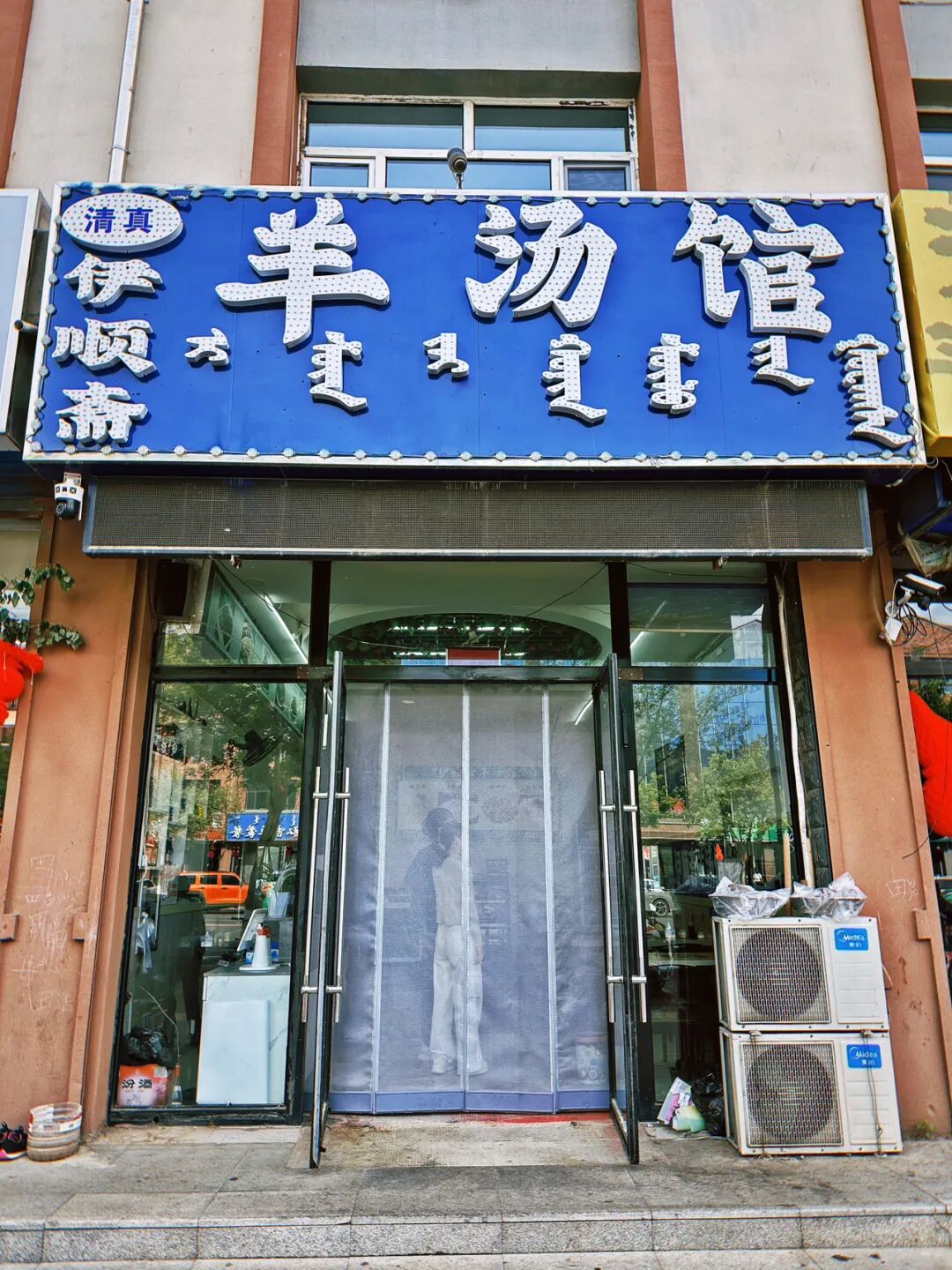
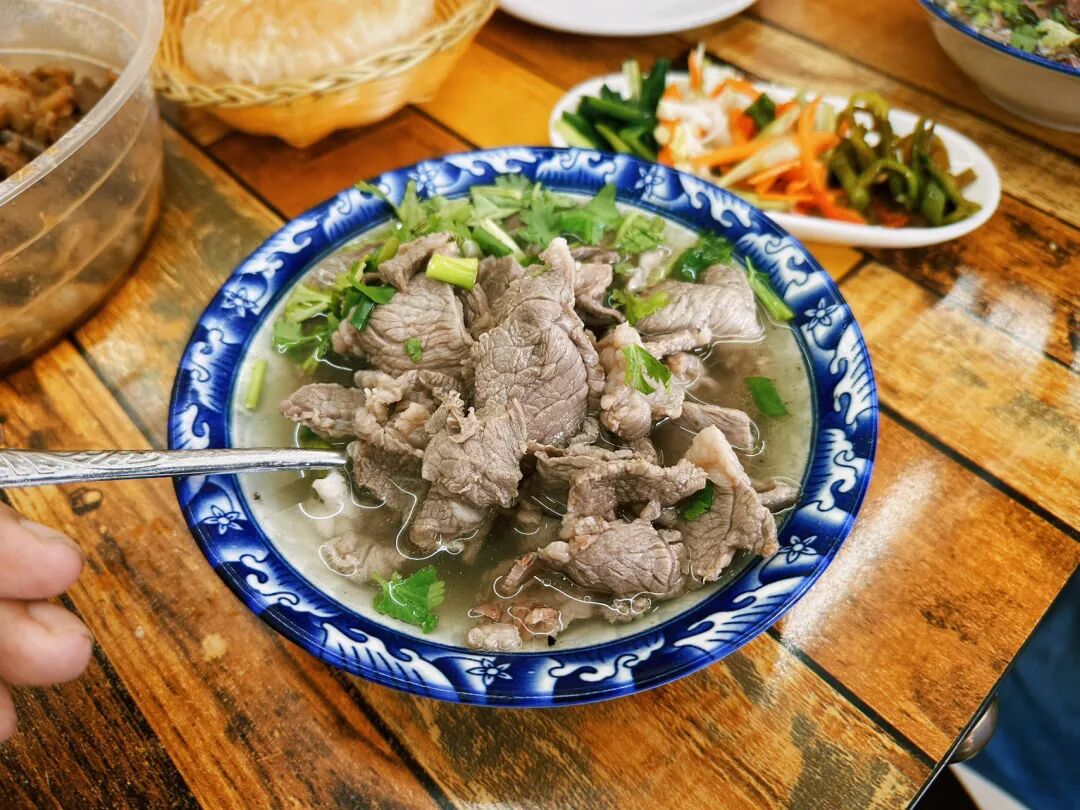
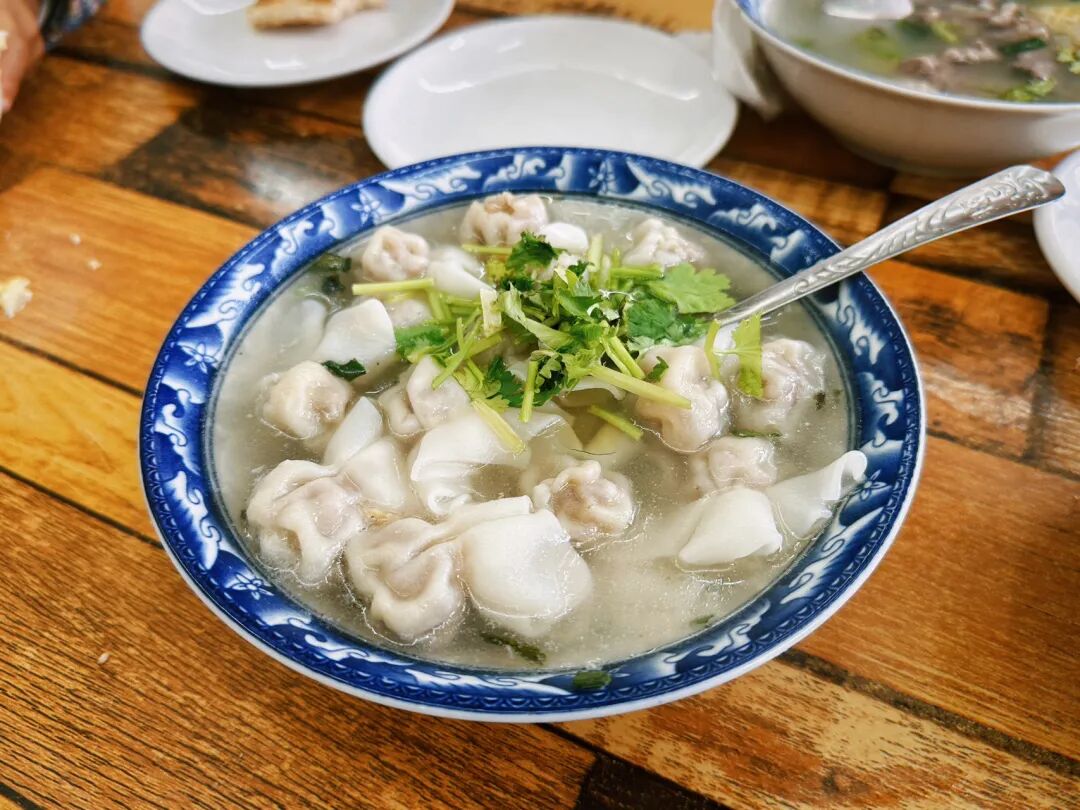
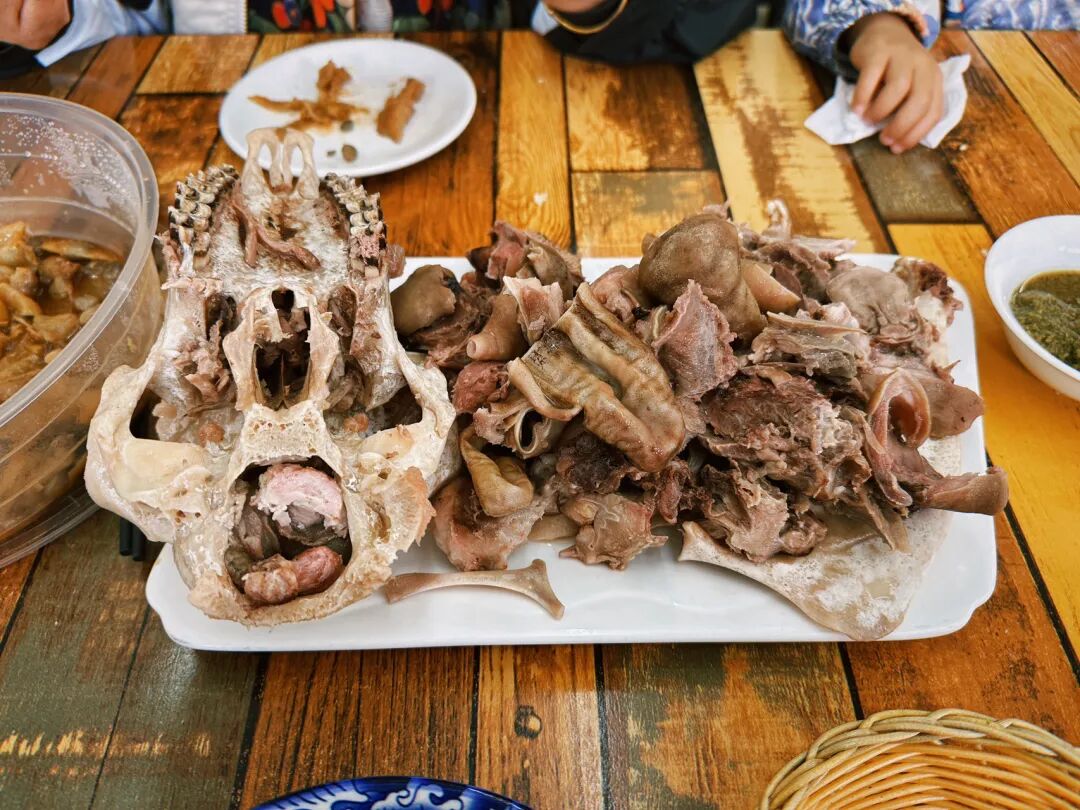
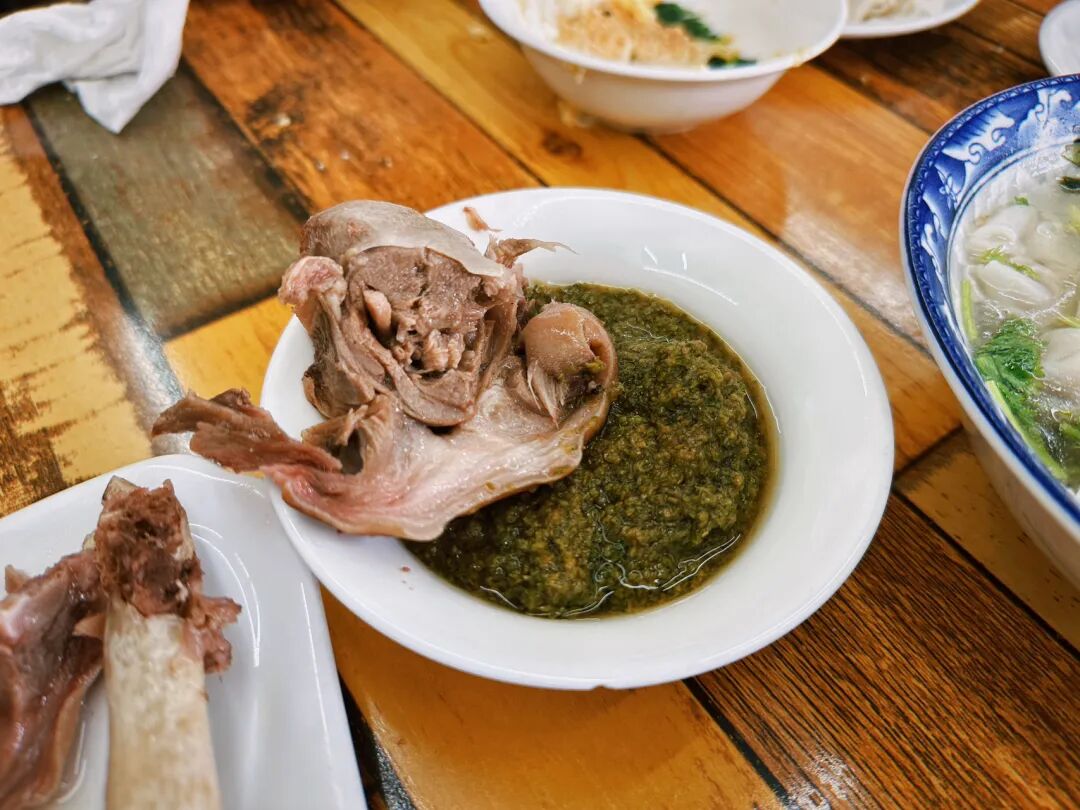
I woke up early and rode a shared electric scooter around Jingpeng Town. The streets were clean and not crowded. After riding around, I found that the Hui Muslim breakfast spot is the Yishunzhai Lamb Soup Restaurant. We ordered lamb offal soup, boiled lamb, lamb wontons, and plain lamb head with sesame flatbread (shaobing). The lamb offal soup (yangza tang) came in a very generous portion. They served a huge plate of shredded lamb head meat that the four of us could not even finish. I thought the wontons (huntun) were the best part; the broth was very savory. The sesame flatbread (shaobing) was softer and fluffier than the kind in Beijing, and I really enjoyed the texture. view all
Summary: Jingpeng Town in Hexigten Banner, Chifeng, is shown through its century-old mosque, local Hui Muslim history, and travel route from the grassland. This account keeps the mosque details, town history, food notes, and photographs in order.
Driving east from the Gonde Grassland, we reached Jingpeng Town, the capital of Hexigten Banner in Chifeng City, in 45 minutes. We performed the afternoon prayer (namaz) at Jingpeng Mosque. The imam there is from Pingliang, Gansu, and belongs to the same Shaanxi school of thought as my wife's family, so we had a great conversation. The imam comes from four generations of imams and has a high level of religious learning (erlin). He taught in Hohhot for a long time before coming to Jingpeng.
During the Kangxi reign of the Qing Dynasty, Jingpeng Town became a trade hub on the grassland, located on the main road between Mongolia and the Northeast. During the lama temple fairs, merchants from inland China brought cotton cloth, sugar, and tea to trade with the Mongols for furs, livestock, and local products. In 1723 (the second year of the Yongzheng reign), severe droughts in Shandong and Hebei forced disaster victims to head north of the Great Wall to make a living. To solve the problem of displaced people, the Qing government implemented a policy of borrowing land to support the people in the southeastern Mongolian grasslands, including Hexigten Banner. During the Qianlong reign, Hui Muslims from Yangxin and Guan counties in Shandong, and Cangzhou and Hejian in Hebei, traveled through Chifeng and Duolun to reach Jingpeng Town to trade on the grasslands, eventually settling down.
After the 19th century, the Hui Muslims in Jingpeng included families with the surnames Feng, Cong, Ma, Bai, Li, Jin, and Ha, with a population of nearly 1,000. In 1852 (the second year of the Xianfeng reign), they officially built a mosque (masjid), which started as five mud-brick rooms. In 1902 (the 28th year of the Guangxu reign), the mosque was rebuilt with funds raised under the leadership of Imam Liu Qi, Imam Ha Zhaobin, and community elders Li Wenrong, Cong Laofeng, Ma Changtai, and Jin Fengming. Liu Qi and Ha Zhaobin traveled inside the Great Wall three times to raise funds. It took four years, and the current building was completed in 1908 (the 34th year of the Guangxu reign). It was named a key cultural relic protection site of Hexigten Banner in 1992.
The north and south lecture halls and the main prayer hall of Jingpeng Mosque are Qing Dynasty structures. The main hall consists of a porch, the main hall, and a rear chamber (yaodian), with a moon-sighting tower (wangyuelou) on top of the rear chamber. The moon-sighting tower was demolished in 1967 and rebuilt after 1981.
Historically, the Hui Muslims of Jingpeng Town lived in single-story houses in the old town on the west side of the river, clustered around the mosque. However, after urban renewal in recent years, they have all moved to apartment buildings on the east side of the river. Today, you can see many restaurants and shops run by Hui Muslims in the new urban area on the east side of the river.
During the late Qing Dynasty and the Republic of China era, Jingpeng grew into one of the four major trading hubs beyond the Great Wall, alongside Zhangjiakou, Duolun, and Kulun (Ulaanbaatar). According to the elders, Hui Muslims in Jingpeng originally made a living by gathering firewood, cutting grass, and making charcoal, only starting stalls or shops after they had saved enough money.
At that time, many Hui Muslims in Jingpeng worked as Mongolian traders and horse brokers (maqiao). Mongolian traders were commonly known as 'grassland runners.' They used ox carts and camels to deliver sugar, tea, cotton cloth, and matches to the yurts of Mongolian herders, then transported local products like furs and dairy products back to places like Duolun, Chifeng, and Zhangjiakou. In the early Republic of China, there were over 20 Hui Muslim families in Jingpeng working as Mongolian traders, with 6 Hui Muslim camel caravans owning more than 300 camels.
Horse brokers (maqiao) handled horse trading. During the Republic of China era, all horse brokers in Jingpeng Town were Hui Muslims, and many inherited the business from their ancestors. The horse market was located at the base of the street lamps in the old Jingpeng street. Every autumn and winter, herders from Xilingol, Ujimqin, and Abaga would drive their horses there to sell. Hui Muslims would buy the horses, train them for a period, and then drive them to Beijing, Tianjin, and Shandong to sell. Because of this, Jingpeng Hui Muslims were skilled at training horses, and the pacing horses they trained were very popular with local wealthy merchants.
In the past, most of the people driving horse-drawn carriages in Jingpeng Town were also Hui Muslims. The trip from Jingpeng to Duolun took ten days of sleeping in the open. The drivers had to handle all kinds of situations and use their wits and courage to escape danger if they met bandits.
At its peak, one-third of the 150 shops in Jingpeng Town were run by Hui Muslims. The eight major businesses were Yuxingzhan, Tianshunxing, Xiyuxing, Detaixing, Jushunxing, Ruishengming, Heji, and Yuji. The largest was Yuxingzhan, founded by Ma Bingyu. Ma Bingyu made a living cutting grass in his early years. Later, he opened a grass shed to sell hay, and it wasn't until middle age that he opened Yuxingzhan, a grocery store that also processed rice and flour. Ma Bingyu learned business methods from Shanxi merchants, hiring Shanxi managers and mostly Shanxi workers. By the Republic of China era, Yuxingzhan had branches or warehouses in places like Great Kulun (Ulaanbaatar), Xilinhot, Chifeng, Zhangjiakou, and Beijing. Yuxingzhan had its own camel caravan. It used its own camels to transport goods in spring and autumn, and used ox carts in the various banners of Xilingol League during the summer.
The Tianshunxing business owned by Hui Muslim Liu Kuishan in Jingpeng mainly sold daily groceries and pastries, and also processed grain. It was a very powerful business in Jingpeng. Besides the pastry and grocery shop, Tianshunxing also ran the Xingshun Hotel on Dazhong Street in Jingpeng. Tianshunxing's camel caravan transported goods for other shops to carrying their own. Tianshunxing's ranch had over a thousand sheep and more than two hundred cows. They originally ran a camel farm too, but the Soviet army drove all the camels away in the summer of 1945.
In the evening, we had dinner at the Coarse Grain Steamed Dumpling (culiang zhengjiao) restaurant in Jingpeng Town. They own three shops in a row: a clay pot small pie shop, a hot pot shop (doulao xianyang huoguo), and the coarse grain steamed dumpling shop. The coarse grain steamed dumpling shop has quite a few private rooms, but not many open tables. Their menu is very rich. We ordered half an organic rooster, pressure-cooked beef with golden hook beans (huangjingou), steamed oat noodles (youmian) with diced meat, mushrooms, and vegetables in a steam pot, and lamb and bracken steamed dumplings. Their portions are huge. Four of us could not finish three dishes and two staples. Two dishes and one staple should be enough.
The rooster was delicious and the meat had a good chew; it probably wasn't farm-raised. Golden hook beans (huangjingou) are high-end beans from Northeast China, usually stewed with beef. They make them with a sweet and salty flavor. The steamed oat noodles with diced meat and mushrooms were my favorite. It is like a version of 'topped noodles' from the northern frontier. The dough of the oat steamed dumplings doesn't taste as good as white flour, but it is a way to experience what people in the northern frontier ate when they didn't have white flour. They also have black rice flour, buckwheat flour, and corn flour wrappers, offering a wide variety. Bracken is common in the mountains, but this was my first time eating it in a dumpling. It tasted pretty good.
I woke up early and rode a shared electric scooter around Jingpeng Town. The streets were clean and not crowded. After riding around, I found that the Hui Muslim breakfast spot is the Yishunzhai Lamb Soup Restaurant. We ordered lamb offal soup, boiled lamb, lamb wontons, and plain lamb head with sesame flatbread (shaobing). The lamb offal soup (yangza tang) came in a very generous portion. They served a huge plate of shredded lamb head meat that the four of us could not even finish. I thought the wontons (huntun) were the best part; the broth was very savory. The sesame flatbread (shaobing) was softer and fluffier than the kind in Beijing, and I really enjoyed the texture. view all
Reposted from the web
Summary: Jingpeng Town in Hexigten Banner, Chifeng, is shown through its century-old mosque, local Hui Muslim history, and travel route from the grassland. This account keeps the mosque details, town history, food notes, and photographs in order.
Driving east from the Gonde Grassland, we reached Jingpeng Town, the capital of Hexigten Banner in Chifeng City, in 45 minutes. We performed the afternoon prayer (namaz) at Jingpeng Mosque. The imam there is from Pingliang, Gansu, and belongs to the same Shaanxi school of thought as my wife's family, so we had a great conversation. The imam comes from four generations of imams and has a high level of religious learning (erlin). He taught in Hohhot for a long time before coming to Jingpeng.
During the Kangxi reign of the Qing Dynasty, Jingpeng Town became a trade hub on the grassland, located on the main road between Mongolia and the Northeast. During the lama temple fairs, merchants from inland China brought cotton cloth, sugar, and tea to trade with the Mongols for furs, livestock, and local products. In 1723 (the second year of the Yongzheng reign), severe droughts in Shandong and Hebei forced disaster victims to head north of the Great Wall to make a living. To solve the problem of displaced people, the Qing government implemented a policy of borrowing land to support the people in the southeastern Mongolian grasslands, including Hexigten Banner. During the Qianlong reign, Hui Muslims from Yangxin and Guan counties in Shandong, and Cangzhou and Hejian in Hebei, traveled through Chifeng and Duolun to reach Jingpeng Town to trade on the grasslands, eventually settling down.
After the 19th century, the Hui Muslims in Jingpeng included families with the surnames Feng, Cong, Ma, Bai, Li, Jin, and Ha, with a population of nearly 1,000. In 1852 (the second year of the Xianfeng reign), they officially built a mosque (masjid), which started as five mud-brick rooms. In 1902 (the 28th year of the Guangxu reign), the mosque was rebuilt with funds raised under the leadership of Imam Liu Qi, Imam Ha Zhaobin, and community elders Li Wenrong, Cong Laofeng, Ma Changtai, and Jin Fengming. Liu Qi and Ha Zhaobin traveled inside the Great Wall three times to raise funds. It took four years, and the current building was completed in 1908 (the 34th year of the Guangxu reign). It was named a key cultural relic protection site of Hexigten Banner in 1992.
The north and south lecture halls and the main prayer hall of Jingpeng Mosque are Qing Dynasty structures. The main hall consists of a porch, the main hall, and a rear chamber (yaodian), with a moon-sighting tower (wangyuelou) on top of the rear chamber. The moon-sighting tower was demolished in 1967 and rebuilt after 1981.
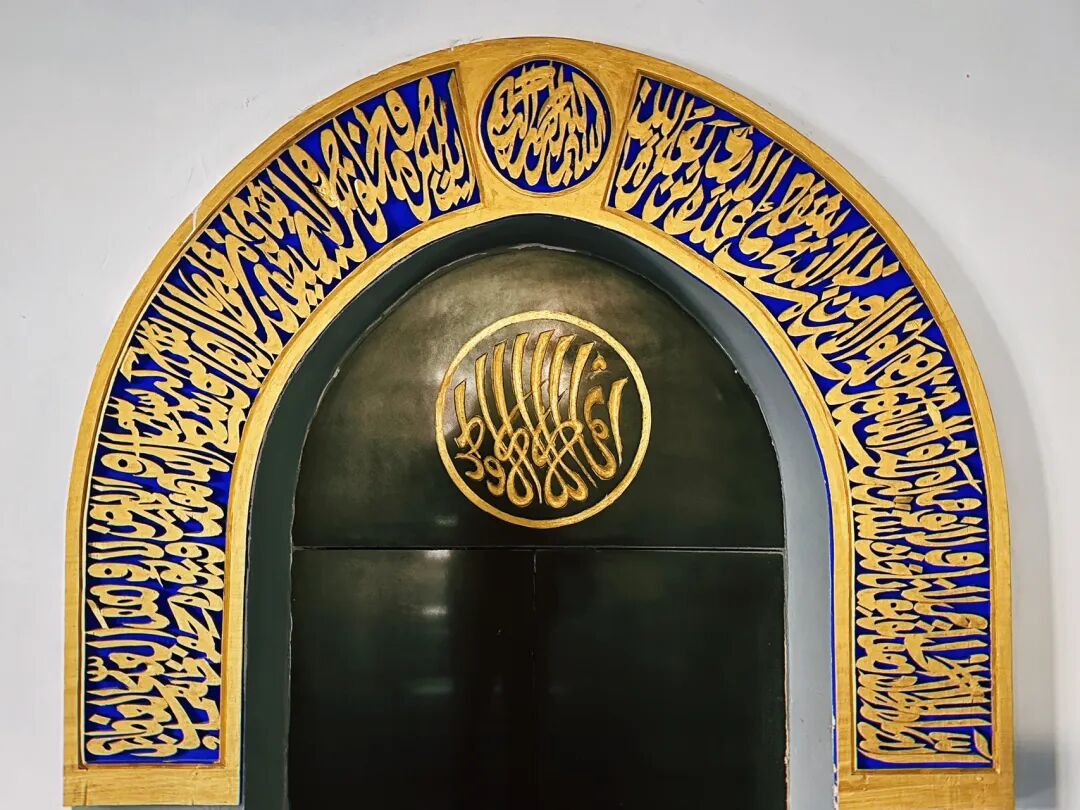
Historically, the Hui Muslims of Jingpeng Town lived in single-story houses in the old town on the west side of the river, clustered around the mosque. However, after urban renewal in recent years, they have all moved to apartment buildings on the east side of the river. Today, you can see many restaurants and shops run by Hui Muslims in the new urban area on the east side of the river.
During the late Qing Dynasty and the Republic of China era, Jingpeng grew into one of the four major trading hubs beyond the Great Wall, alongside Zhangjiakou, Duolun, and Kulun (Ulaanbaatar). According to the elders, Hui Muslims in Jingpeng originally made a living by gathering firewood, cutting grass, and making charcoal, only starting stalls or shops after they had saved enough money.
At that time, many Hui Muslims in Jingpeng worked as Mongolian traders and horse brokers (maqiao). Mongolian traders were commonly known as 'grassland runners.' They used ox carts and camels to deliver sugar, tea, cotton cloth, and matches to the yurts of Mongolian herders, then transported local products like furs and dairy products back to places like Duolun, Chifeng, and Zhangjiakou. In the early Republic of China, there were over 20 Hui Muslim families in Jingpeng working as Mongolian traders, with 6 Hui Muslim camel caravans owning more than 300 camels.
Horse brokers (maqiao) handled horse trading. During the Republic of China era, all horse brokers in Jingpeng Town were Hui Muslims, and many inherited the business from their ancestors. The horse market was located at the base of the street lamps in the old Jingpeng street. Every autumn and winter, herders from Xilingol, Ujimqin, and Abaga would drive their horses there to sell. Hui Muslims would buy the horses, train them for a period, and then drive them to Beijing, Tianjin, and Shandong to sell. Because of this, Jingpeng Hui Muslims were skilled at training horses, and the pacing horses they trained were very popular with local wealthy merchants.
In the past, most of the people driving horse-drawn carriages in Jingpeng Town were also Hui Muslims. The trip from Jingpeng to Duolun took ten days of sleeping in the open. The drivers had to handle all kinds of situations and use their wits and courage to escape danger if they met bandits.
At its peak, one-third of the 150 shops in Jingpeng Town were run by Hui Muslims. The eight major businesses were Yuxingzhan, Tianshunxing, Xiyuxing, Detaixing, Jushunxing, Ruishengming, Heji, and Yuji. The largest was Yuxingzhan, founded by Ma Bingyu. Ma Bingyu made a living cutting grass in his early years. Later, he opened a grass shed to sell hay, and it wasn't until middle age that he opened Yuxingzhan, a grocery store that also processed rice and flour. Ma Bingyu learned business methods from Shanxi merchants, hiring Shanxi managers and mostly Shanxi workers. By the Republic of China era, Yuxingzhan had branches or warehouses in places like Great Kulun (Ulaanbaatar), Xilinhot, Chifeng, Zhangjiakou, and Beijing. Yuxingzhan had its own camel caravan. It used its own camels to transport goods in spring and autumn, and used ox carts in the various banners of Xilingol League during the summer.
The Tianshunxing business owned by Hui Muslim Liu Kuishan in Jingpeng mainly sold daily groceries and pastries, and also processed grain. It was a very powerful business in Jingpeng. Besides the pastry and grocery shop, Tianshunxing also ran the Xingshun Hotel on Dazhong Street in Jingpeng. Tianshunxing's camel caravan transported goods for other shops to carrying their own. Tianshunxing's ranch had over a thousand sheep and more than two hundred cows. They originally ran a camel farm too, but the Soviet army drove all the camels away in the summer of 1945.
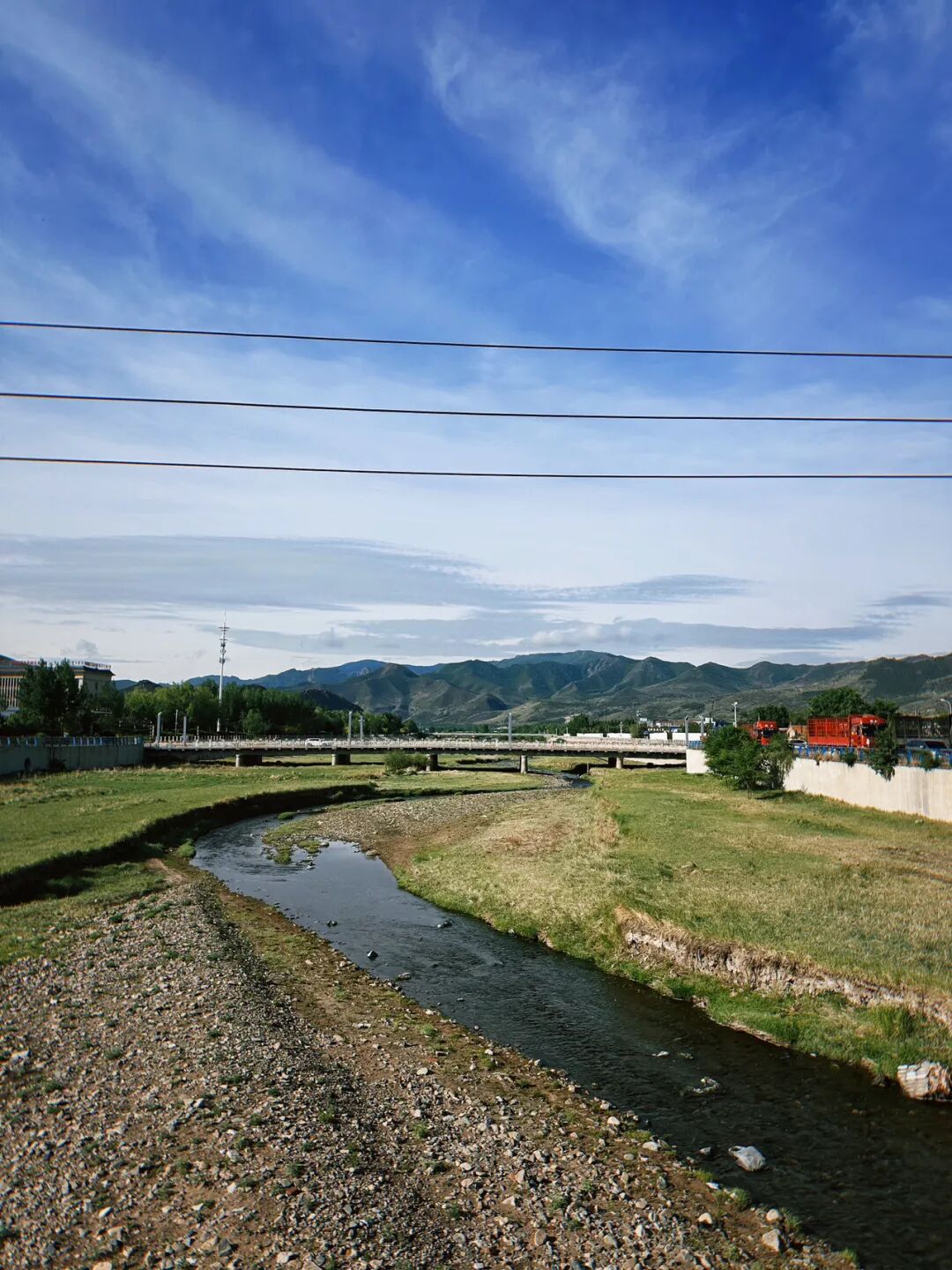
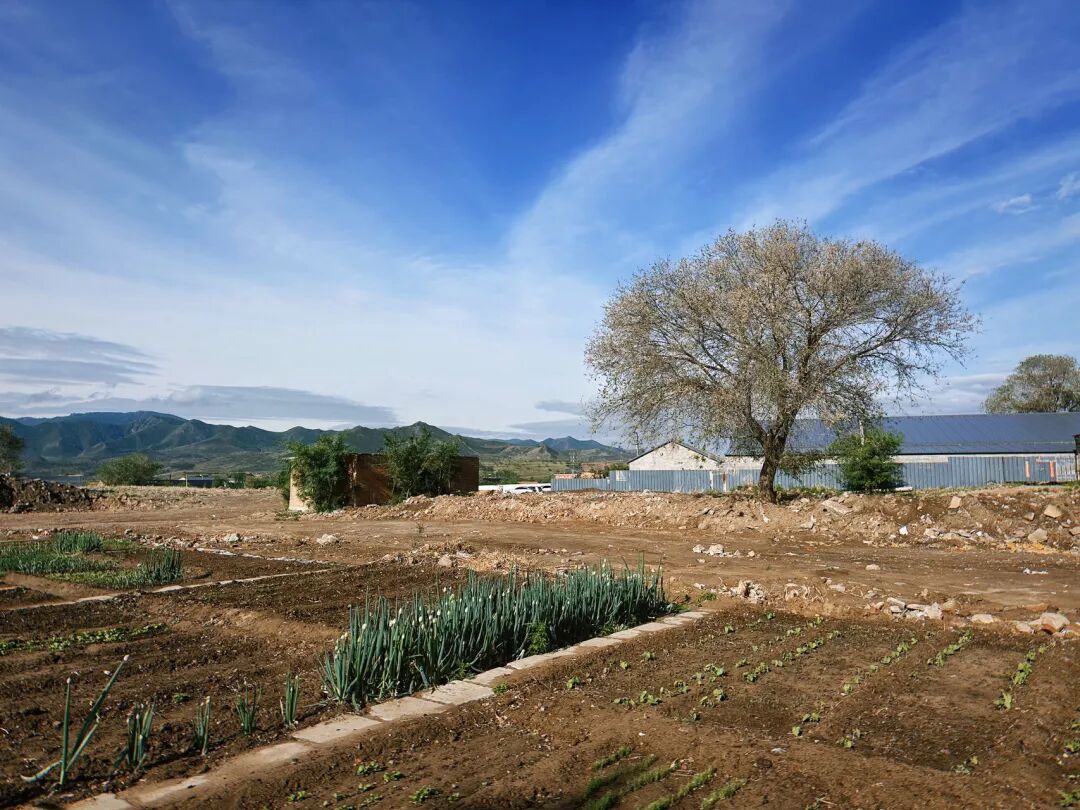
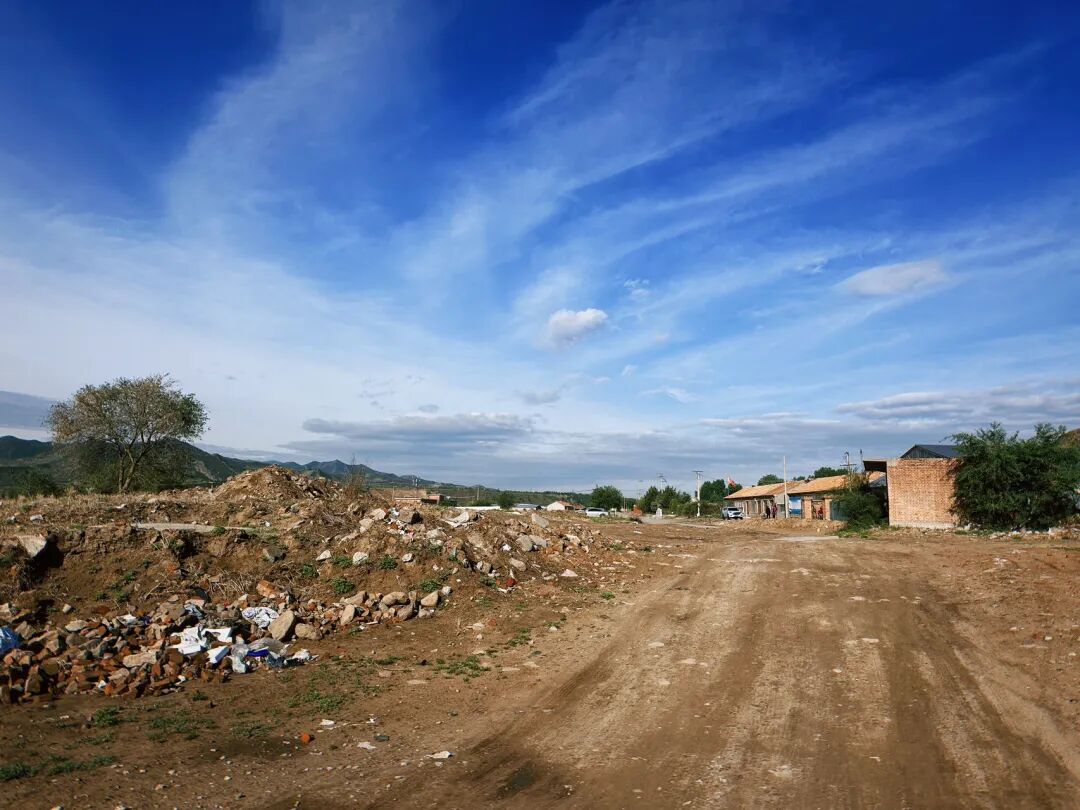
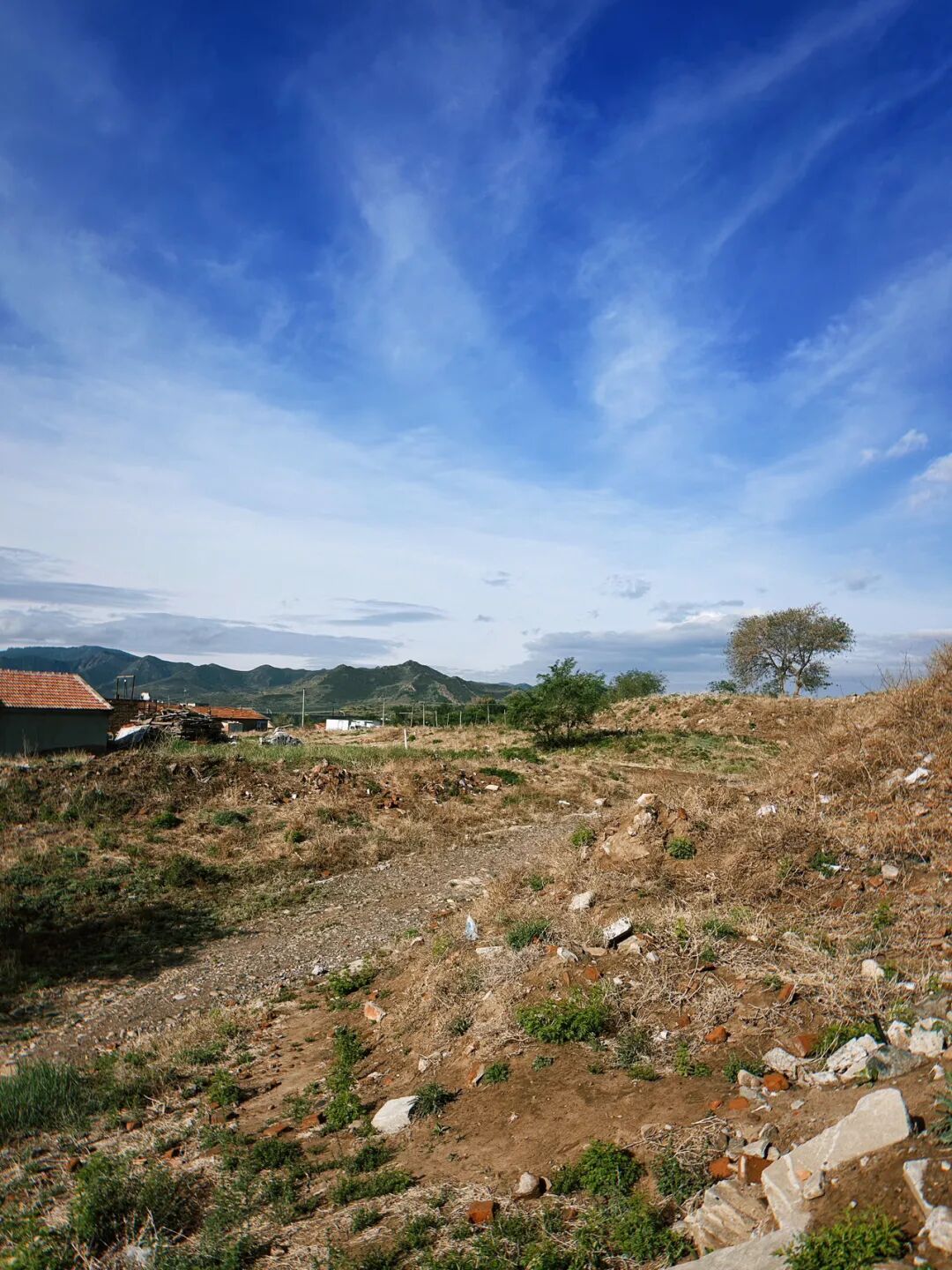
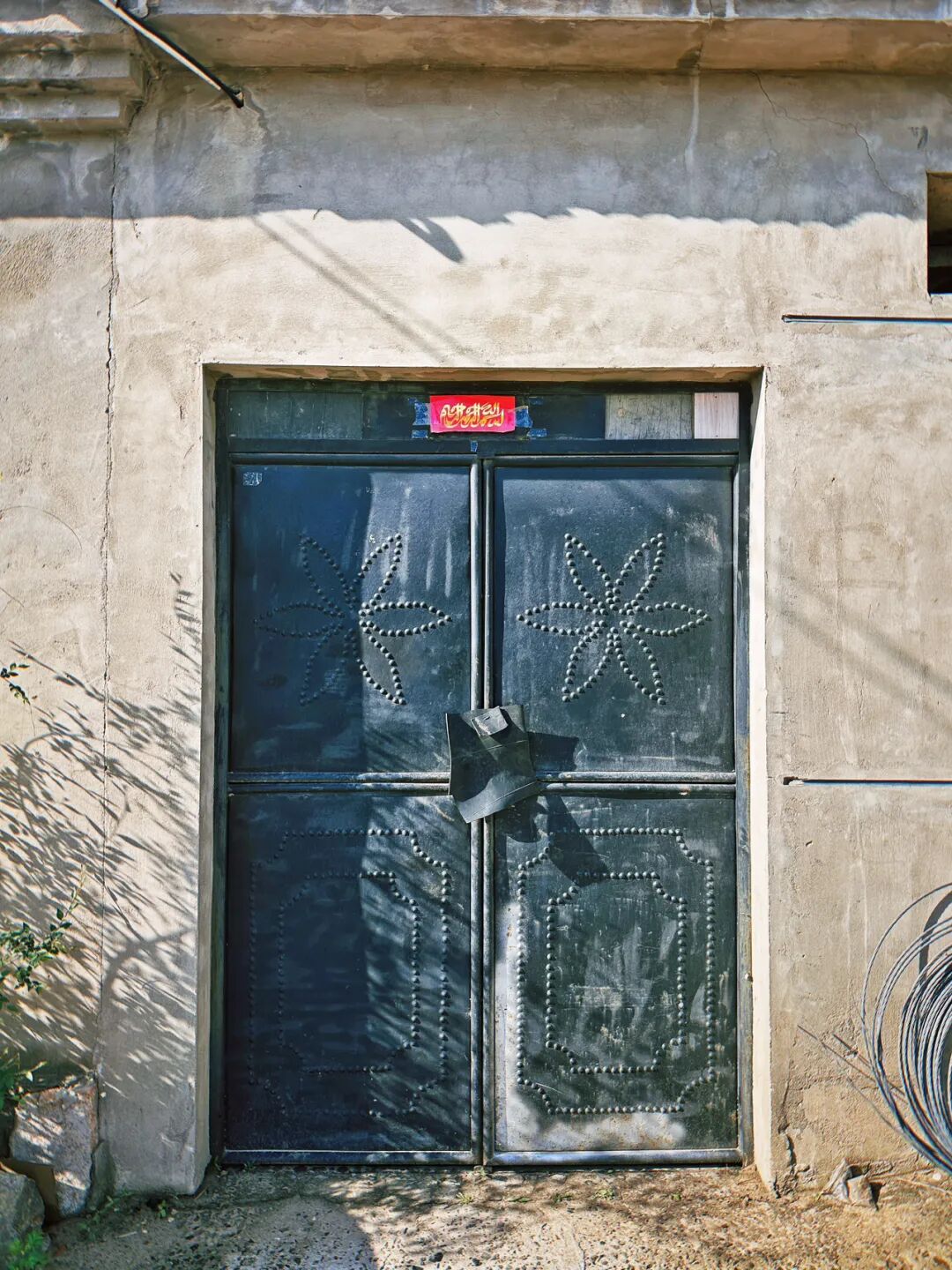
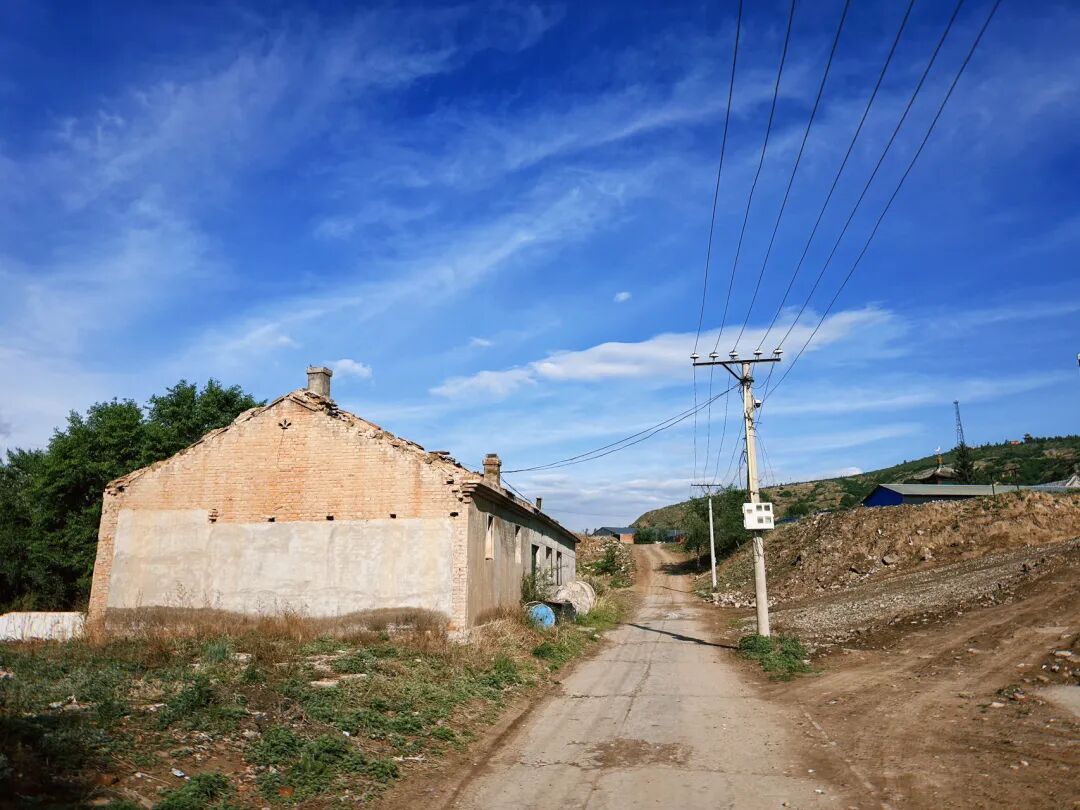
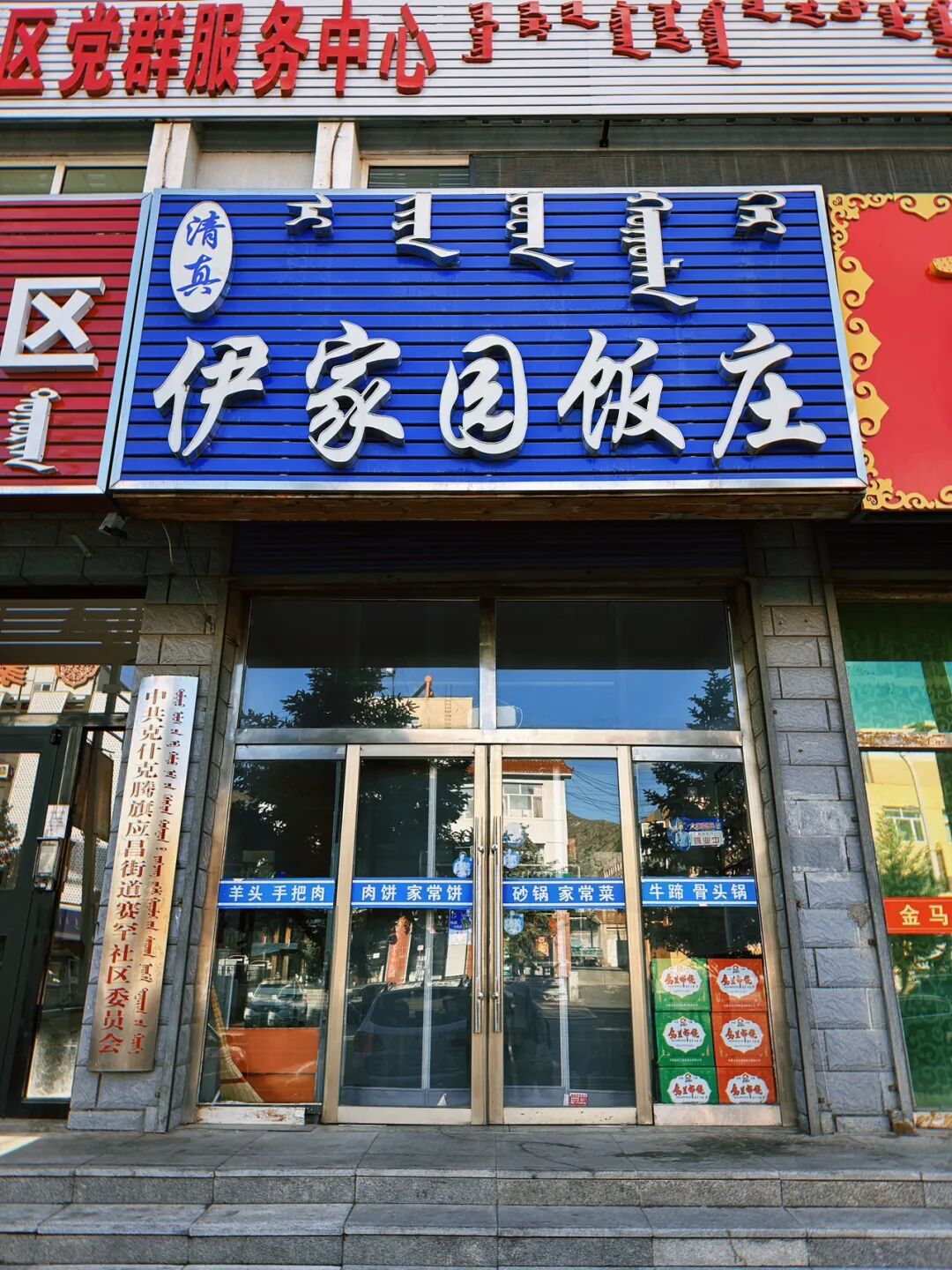
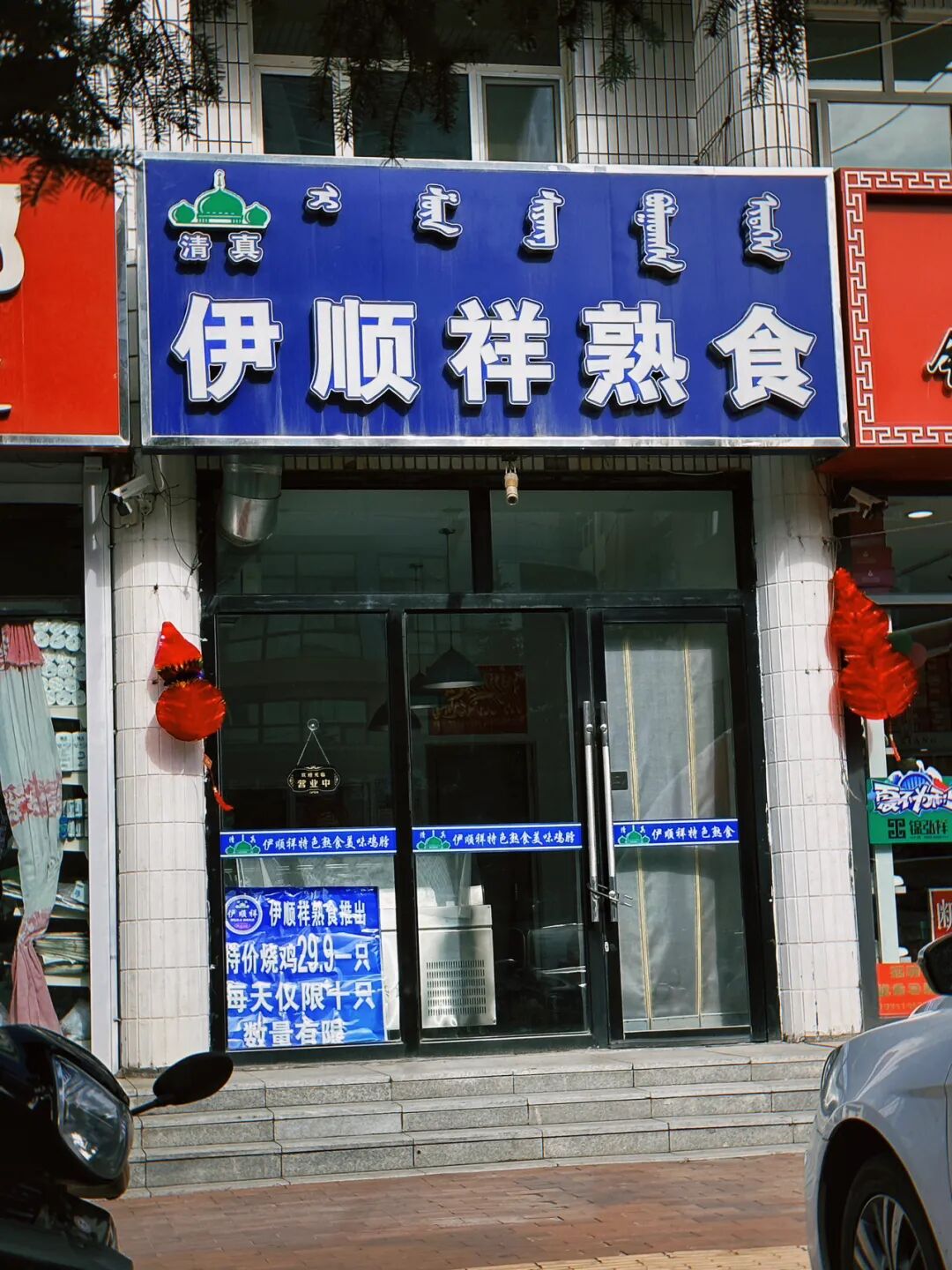
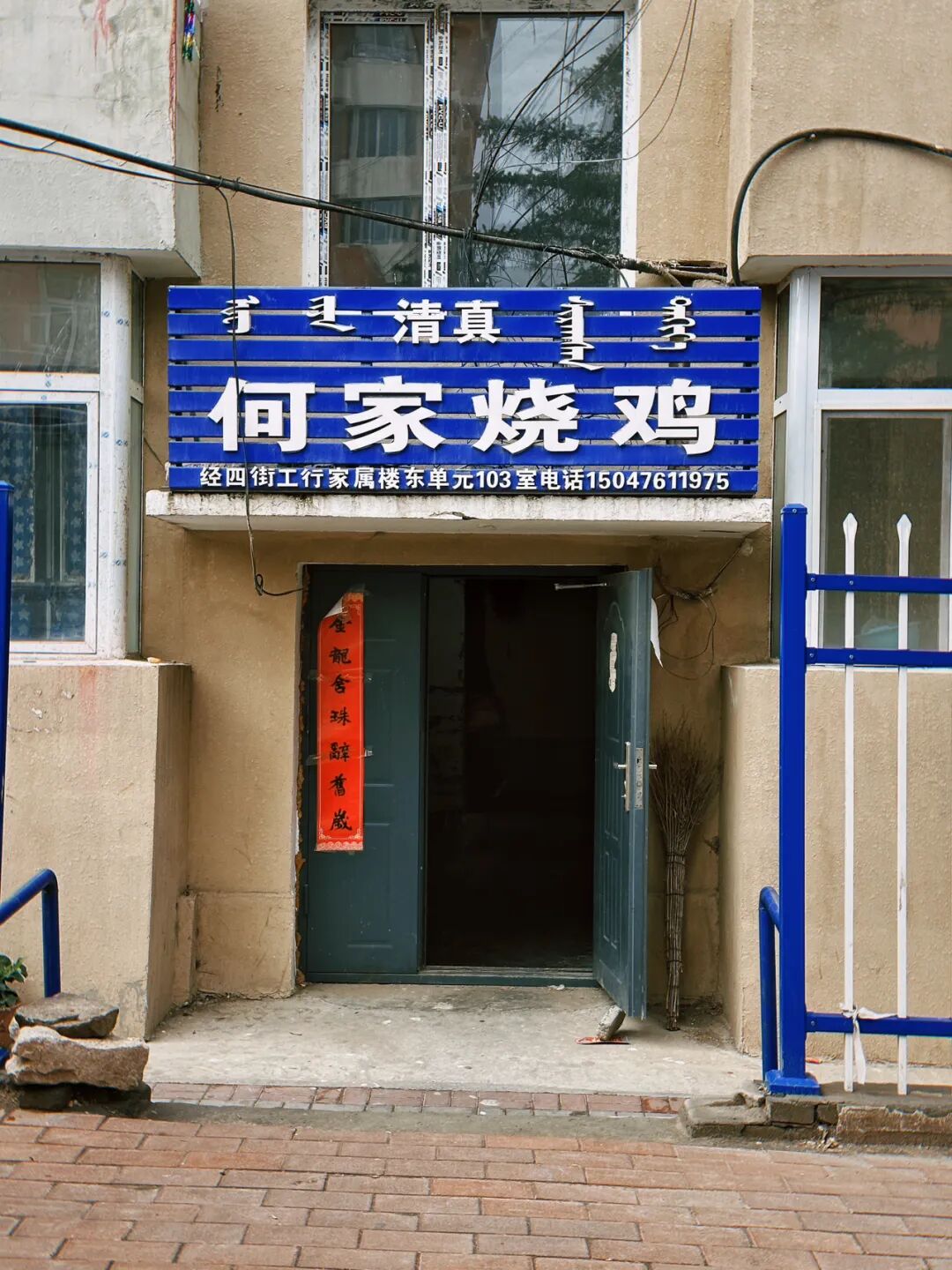
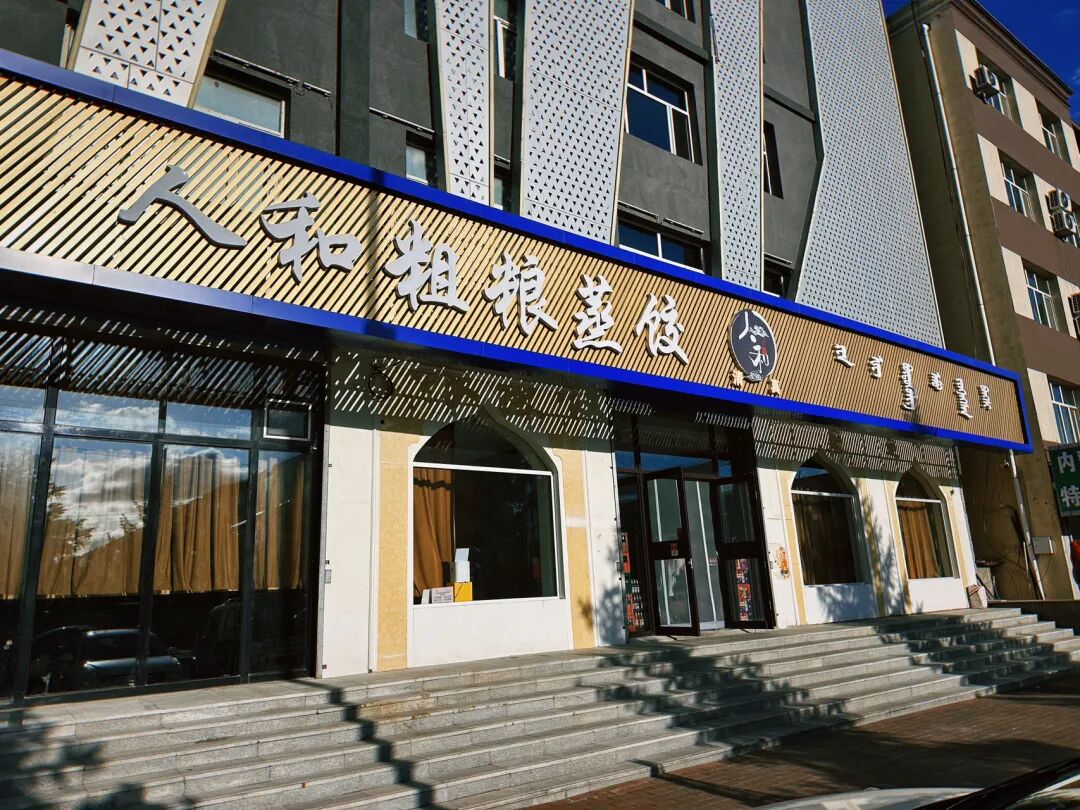
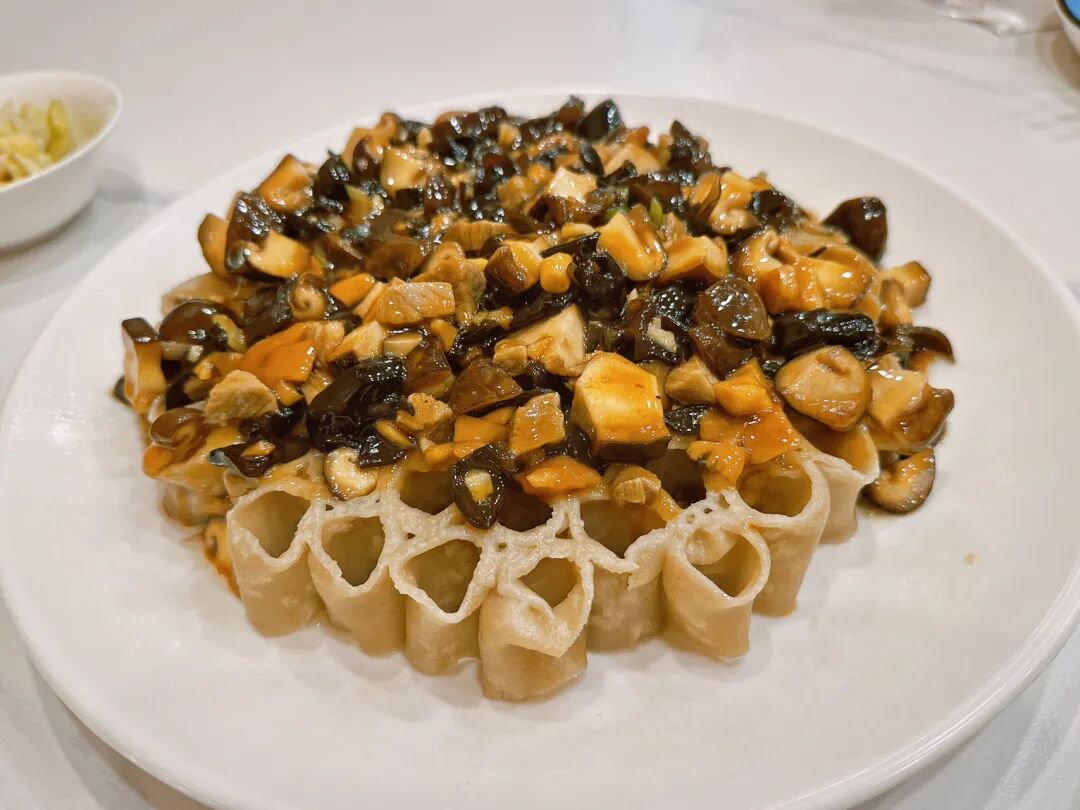
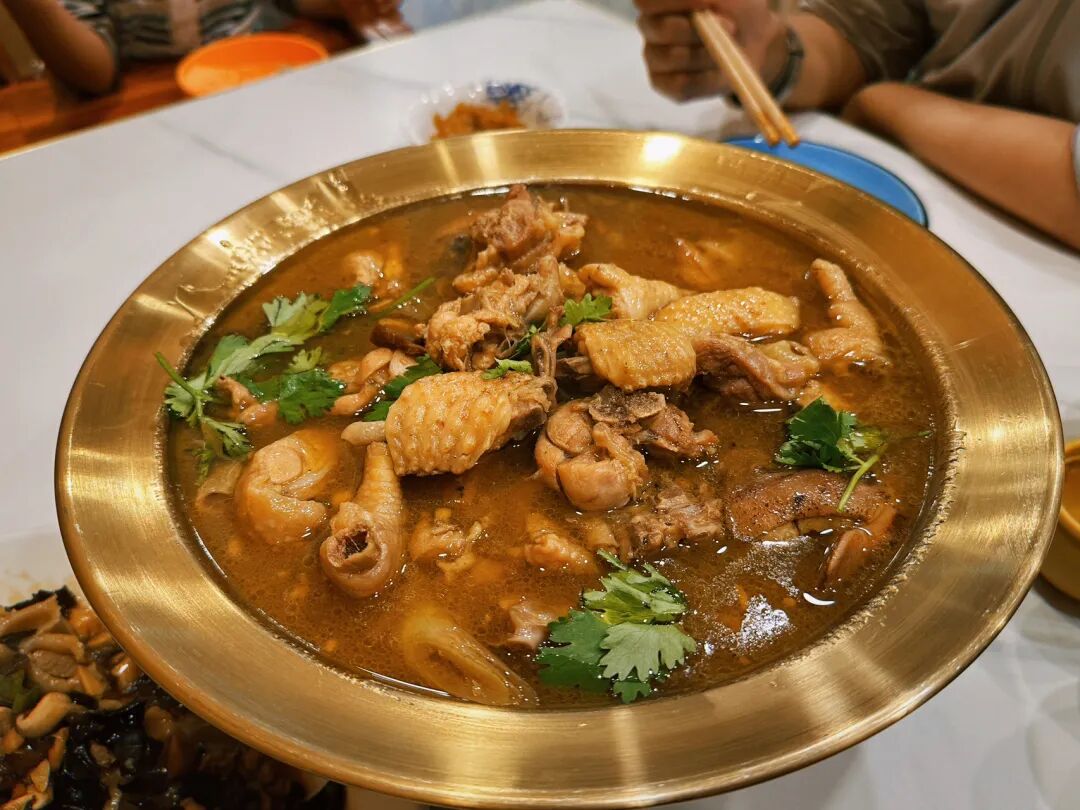
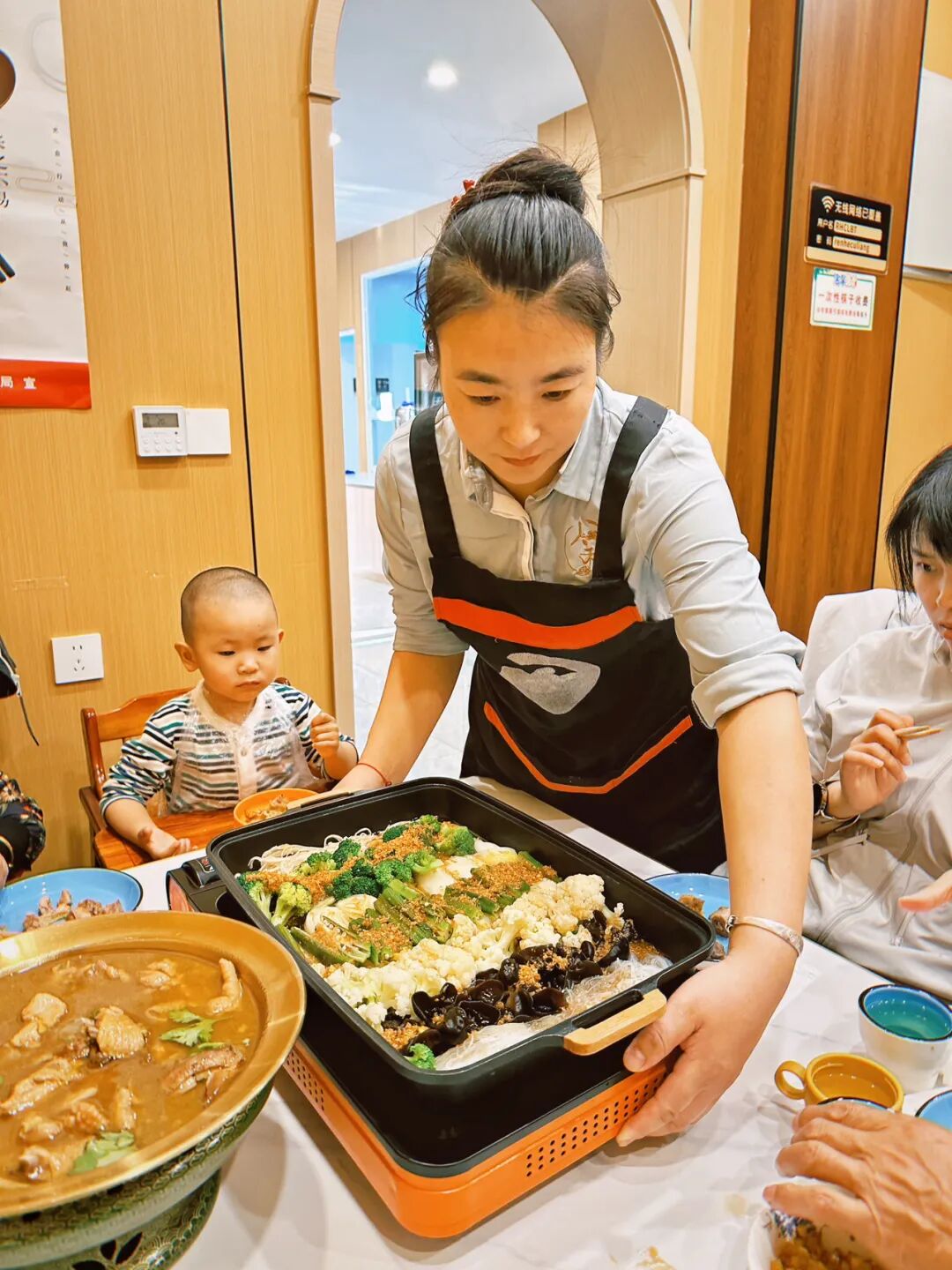
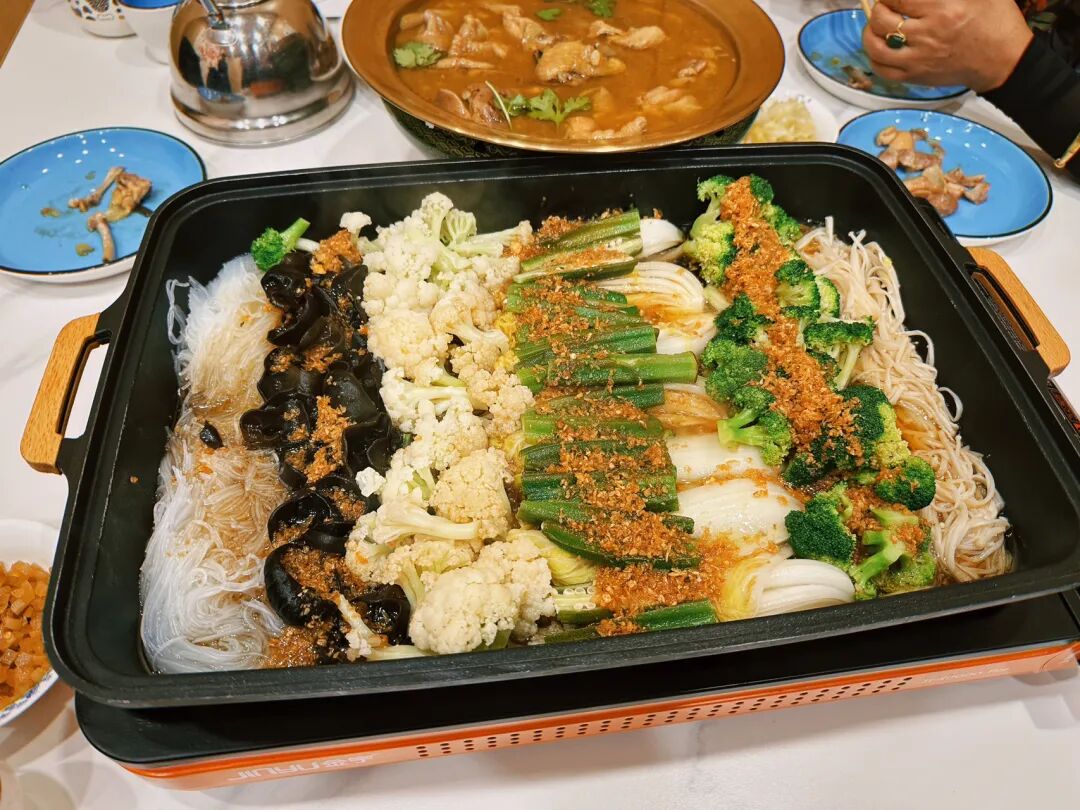
In the evening, we had dinner at the Coarse Grain Steamed Dumpling (culiang zhengjiao) restaurant in Jingpeng Town. They own three shops in a row: a clay pot small pie shop, a hot pot shop (doulao xianyang huoguo), and the coarse grain steamed dumpling shop. The coarse grain steamed dumpling shop has quite a few private rooms, but not many open tables. Their menu is very rich. We ordered half an organic rooster, pressure-cooked beef with golden hook beans (huangjingou), steamed oat noodles (youmian) with diced meat, mushrooms, and vegetables in a steam pot, and lamb and bracken steamed dumplings. Their portions are huge. Four of us could not finish three dishes and two staples. Two dishes and one staple should be enough.
The rooster was delicious and the meat had a good chew; it probably wasn't farm-raised. Golden hook beans (huangjingou) are high-end beans from Northeast China, usually stewed with beef. They make them with a sweet and salty flavor. The steamed oat noodles with diced meat and mushrooms were my favorite. It is like a version of 'topped noodles' from the northern frontier. The dough of the oat steamed dumplings doesn't taste as good as white flour, but it is a way to experience what people in the northern frontier ate when they didn't have white flour. They also have black rice flour, buckwheat flour, and corn flour wrappers, offering a wide variety. Bracken is common in the mountains, but this was my first time eating it in a dumpling. It tasted pretty good.
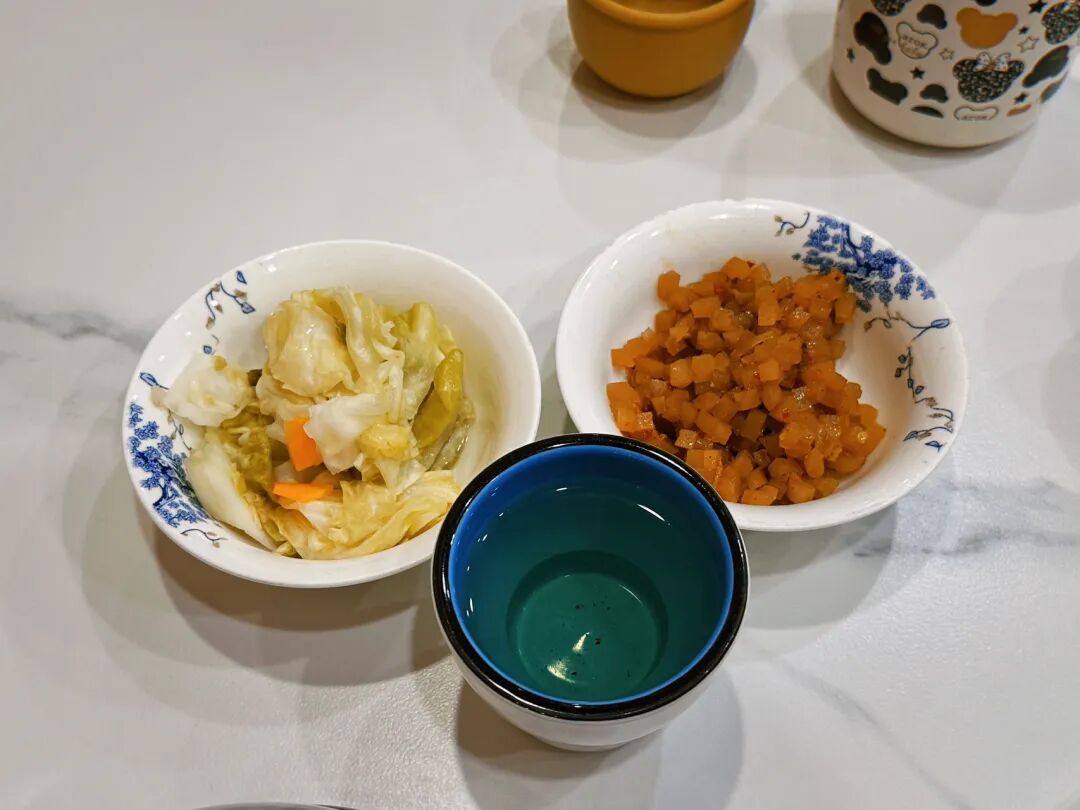
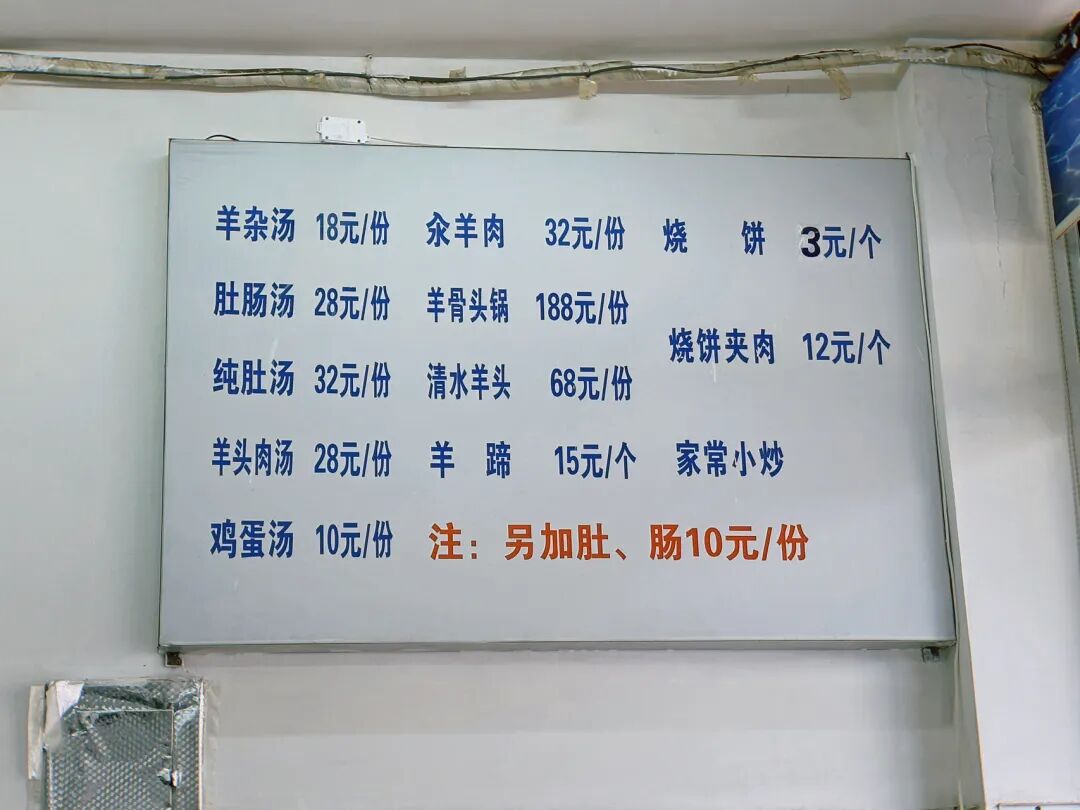
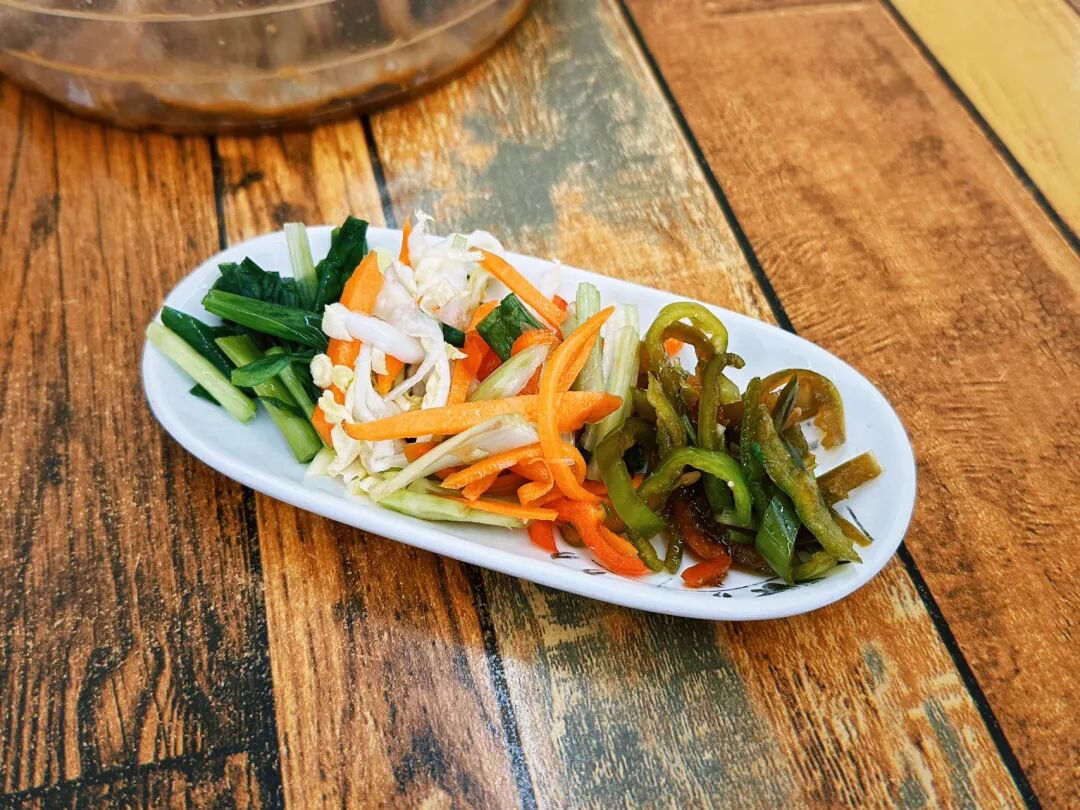
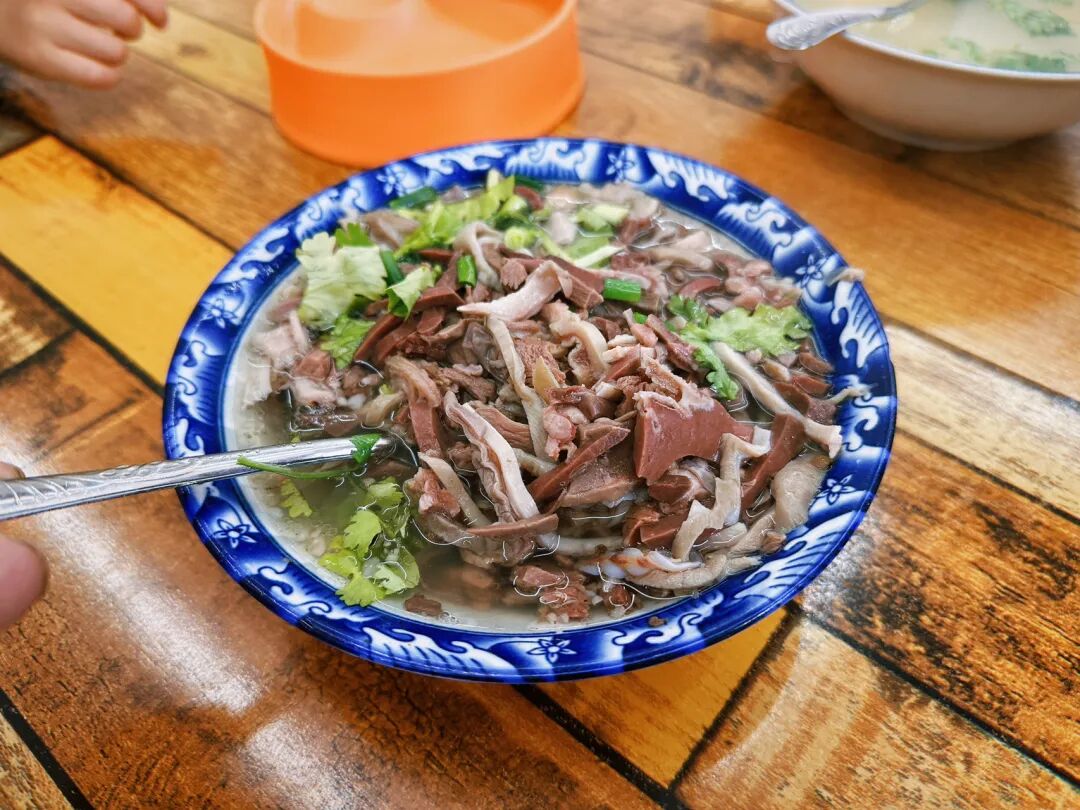
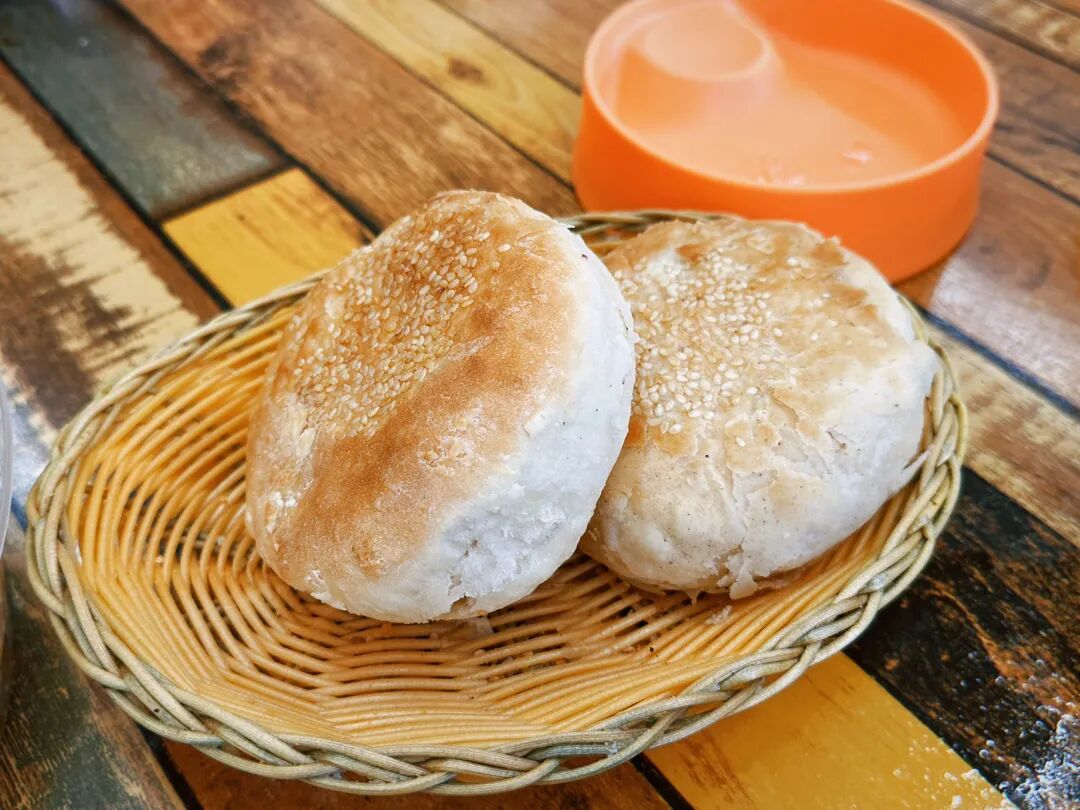
I woke up early and rode a shared electric scooter around Jingpeng Town. The streets were clean and not crowded. After riding around, I found that the Hui Muslim breakfast spot is the Yishunzhai Lamb Soup Restaurant. We ordered lamb offal soup, boiled lamb, lamb wontons, and plain lamb head with sesame flatbread (shaobing). The lamb offal soup (yangza tang) came in a very generous portion. They served a huge plate of shredded lamb head meat that the four of us could not even finish. I thought the wontons (huntun) were the best part; the broth was very savory. The sesame flatbread (shaobing) was softer and fluffier than the kind in Beijing, and I really enjoyed the texture.
Summary: Jingpeng Town in Hexigten Banner, Chifeng, is shown through its century-old mosque, local Hui Muslim history, and travel route from the grassland. This account keeps the mosque details, town history, food notes, and photographs in order.
Driving east from the Gonde Grassland, we reached Jingpeng Town, the capital of Hexigten Banner in Chifeng City, in 45 minutes. We performed the afternoon prayer (namaz) at Jingpeng Mosque. The imam there is from Pingliang, Gansu, and belongs to the same Shaanxi school of thought as my wife's family, so we had a great conversation. The imam comes from four generations of imams and has a high level of religious learning (erlin). He taught in Hohhot for a long time before coming to Jingpeng.
During the Kangxi reign of the Qing Dynasty, Jingpeng Town became a trade hub on the grassland, located on the main road between Mongolia and the Northeast. During the lama temple fairs, merchants from inland China brought cotton cloth, sugar, and tea to trade with the Mongols for furs, livestock, and local products. In 1723 (the second year of the Yongzheng reign), severe droughts in Shandong and Hebei forced disaster victims to head north of the Great Wall to make a living. To solve the problem of displaced people, the Qing government implemented a policy of borrowing land to support the people in the southeastern Mongolian grasslands, including Hexigten Banner. During the Qianlong reign, Hui Muslims from Yangxin and Guan counties in Shandong, and Cangzhou and Hejian in Hebei, traveled through Chifeng and Duolun to reach Jingpeng Town to trade on the grasslands, eventually settling down.
After the 19th century, the Hui Muslims in Jingpeng included families with the surnames Feng, Cong, Ma, Bai, Li, Jin, and Ha, with a population of nearly 1,000. In 1852 (the second year of the Xianfeng reign), they officially built a mosque (masjid), which started as five mud-brick rooms. In 1902 (the 28th year of the Guangxu reign), the mosque was rebuilt with funds raised under the leadership of Imam Liu Qi, Imam Ha Zhaobin, and community elders Li Wenrong, Cong Laofeng, Ma Changtai, and Jin Fengming. Liu Qi and Ha Zhaobin traveled inside the Great Wall three times to raise funds. It took four years, and the current building was completed in 1908 (the 34th year of the Guangxu reign). It was named a key cultural relic protection site of Hexigten Banner in 1992.
The north and south lecture halls and the main prayer hall of Jingpeng Mosque are Qing Dynasty structures. The main hall consists of a porch, the main hall, and a rear chamber (yaodian), with a moon-sighting tower (wangyuelou) on top of the rear chamber. The moon-sighting tower was demolished in 1967 and rebuilt after 1981.
Historically, the Hui Muslims of Jingpeng Town lived in single-story houses in the old town on the west side of the river, clustered around the mosque. However, after urban renewal in recent years, they have all moved to apartment buildings on the east side of the river. Today, you can see many restaurants and shops run by Hui Muslims in the new urban area on the east side of the river.
During the late Qing Dynasty and the Republic of China era, Jingpeng grew into one of the four major trading hubs beyond the Great Wall, alongside Zhangjiakou, Duolun, and Kulun (Ulaanbaatar). According to the elders, Hui Muslims in Jingpeng originally made a living by gathering firewood, cutting grass, and making charcoal, only starting stalls or shops after they had saved enough money.
At that time, many Hui Muslims in Jingpeng worked as Mongolian traders and horse brokers (maqiao). Mongolian traders were commonly known as 'grassland runners.' They used ox carts and camels to deliver sugar, tea, cotton cloth, and matches to the yurts of Mongolian herders, then transported local products like furs and dairy products back to places like Duolun, Chifeng, and Zhangjiakou. In the early Republic of China, there were over 20 Hui Muslim families in Jingpeng working as Mongolian traders, with 6 Hui Muslim camel caravans owning more than 300 camels.
Horse brokers (maqiao) handled horse trading. During the Republic of China era, all horse brokers in Jingpeng Town were Hui Muslims, and many inherited the business from their ancestors. The horse market was located at the base of the street lamps in the old Jingpeng street. Every autumn and winter, herders from Xilingol, Ujimqin, and Abaga would drive their horses there to sell. Hui Muslims would buy the horses, train them for a period, and then drive them to Beijing, Tianjin, and Shandong to sell. Because of this, Jingpeng Hui Muslims were skilled at training horses, and the pacing horses they trained were very popular with local wealthy merchants.
In the past, most of the people driving horse-drawn carriages in Jingpeng Town were also Hui Muslims. The trip from Jingpeng to Duolun took ten days of sleeping in the open. The drivers had to handle all kinds of situations and use their wits and courage to escape danger if they met bandits.
At its peak, one-third of the 150 shops in Jingpeng Town were run by Hui Muslims. The eight major businesses were Yuxingzhan, Tianshunxing, Xiyuxing, Detaixing, Jushunxing, Ruishengming, Heji, and Yuji. The largest was Yuxingzhan, founded by Ma Bingyu. Ma Bingyu made a living cutting grass in his early years. Later, he opened a grass shed to sell hay, and it wasn't until middle age that he opened Yuxingzhan, a grocery store that also processed rice and flour. Ma Bingyu learned business methods from Shanxi merchants, hiring Shanxi managers and mostly Shanxi workers. By the Republic of China era, Yuxingzhan had branches or warehouses in places like Great Kulun (Ulaanbaatar), Xilinhot, Chifeng, Zhangjiakou, and Beijing. Yuxingzhan had its own camel caravan. It used its own camels to transport goods in spring and autumn, and used ox carts in the various banners of Xilingol League during the summer.
The Tianshunxing business owned by Hui Muslim Liu Kuishan in Jingpeng mainly sold daily groceries and pastries, and also processed grain. It was a very powerful business in Jingpeng. Besides the pastry and grocery shop, Tianshunxing also ran the Xingshun Hotel on Dazhong Street in Jingpeng. Tianshunxing's camel caravan transported goods for other shops to carrying their own. Tianshunxing's ranch had over a thousand sheep and more than two hundred cows. They originally ran a camel farm too, but the Soviet army drove all the camels away in the summer of 1945.
In the evening, we had dinner at the Coarse Grain Steamed Dumpling (culiang zhengjiao) restaurant in Jingpeng Town. They own three shops in a row: a clay pot small pie shop, a hot pot shop (doulao xianyang huoguo), and the coarse grain steamed dumpling shop. The coarse grain steamed dumpling shop has quite a few private rooms, but not many open tables. Their menu is very rich. We ordered half an organic rooster, pressure-cooked beef with golden hook beans (huangjingou), steamed oat noodles (youmian) with diced meat, mushrooms, and vegetables in a steam pot, and lamb and bracken steamed dumplings. Their portions are huge. Four of us could not finish three dishes and two staples. Two dishes and one staple should be enough.
The rooster was delicious and the meat had a good chew; it probably wasn't farm-raised. Golden hook beans (huangjingou) are high-end beans from Northeast China, usually stewed with beef. They make them with a sweet and salty flavor. The steamed oat noodles with diced meat and mushrooms were my favorite. It is like a version of 'topped noodles' from the northern frontier. The dough of the oat steamed dumplings doesn't taste as good as white flour, but it is a way to experience what people in the northern frontier ate when they didn't have white flour. They also have black rice flour, buckwheat flour, and corn flour wrappers, offering a wide variety. Bracken is common in the mountains, but this was my first time eating it in a dumpling. It tasted pretty good.
I woke up early and rode a shared electric scooter around Jingpeng Town. The streets were clean and not crowded. After riding around, I found that the Hui Muslim breakfast spot is the Yishunzhai Lamb Soup Restaurant. We ordered lamb offal soup, boiled lamb, lamb wontons, and plain lamb head with sesame flatbread (shaobing). The lamb offal soup (yangza tang) came in a very generous portion. They served a huge plate of shredded lamb head meat that the four of us could not even finish. I thought the wontons (huntun) were the best part; the broth was very savory. The sesame flatbread (shaobing) was softer and fluffier than the kind in Beijing, and I really enjoyed the texture.
Halal Travel Guide: Jingpeng Mosque and Hui Muslim History
Articles • ali2007fr posted the article • 0 comments • 174 views • 2026-05-20 08:14
Reposted from the web
Summary: Jingpeng Town in Hexigten Banner, Chifeng, is shown through its century-old mosque, local Hui Muslim history, and travel route from the grassland. This account keeps the mosque details, town history, food notes, and photographs in order.
Driving east from the Gonde Grassland, we reached Jingpeng Town, the capital of Hexigten Banner in Chifeng City, in 45 minutes. We performed the afternoon prayer (namaz) at Jingpeng Mosque. The imam there is from Pingliang, Gansu, and belongs to the same Shaanxi school of thought as my wife's family, so we had a great conversation. The imam comes from four generations of imams and has a high level of religious learning (erlin). He taught in Hohhot for a long time before coming to Jingpeng.
During the Kangxi reign of the Qing Dynasty, Jingpeng Town became a trade hub on the grassland, located on the main road between Mongolia and the Northeast. During the lama temple fairs, merchants from inland China brought cotton cloth, sugar, and tea to trade with the Mongols for furs, livestock, and local products. In 1723 (the second year of the Yongzheng reign), severe droughts in Shandong and Hebei forced disaster victims to head north of the Great Wall to make a living. To solve the problem of displaced people, the Qing government implemented a policy of borrowing land to support the people in the southeastern Mongolian grasslands, including Hexigten Banner. During the Qianlong reign, Hui Muslims from Yangxin and Guan counties in Shandong, and Cangzhou and Hejian in Hebei, traveled through Chifeng and Duolun to reach Jingpeng Town to trade on the grasslands, eventually settling down.
After the 19th century, the Hui Muslims in Jingpeng included families with the surnames Feng, Cong, Ma, Bai, Li, Jin, and Ha, with a population of nearly 1,000. In 1852 (the second year of the Xianfeng reign), they officially built a mosque (masjid), which started as five mud-brick rooms. In 1902 (the 28th year of the Guangxu reign), the mosque was rebuilt with funds raised under the leadership of Imam Liu Qi, Imam Ha Zhaobin, and community elders Li Wenrong, Cong Laofeng, Ma Changtai, and Jin Fengming. Liu Qi and Ha Zhaobin traveled inside the Great Wall three times to raise funds. It took four years, and the current building was completed in 1908 (the 34th year of the Guangxu reign). It was named a key cultural relic protection site of Hexigten Banner in 1992.
The north and south lecture halls and the main prayer hall of Jingpeng Mosque are Qing Dynasty structures. The main hall consists of a porch, the main hall, and a rear chamber (yaodian), with a moon-sighting tower (wangyuelou) on top of the rear chamber. The moon-sighting tower was demolished in 1967 and rebuilt after 1981.
Historically, the Hui Muslims of Jingpeng Town lived in single-story houses in the old town on the west side of the river, clustered around the mosque. However, after urban renewal in recent years, they have all moved to apartment buildings on the east side of the river. Today, you can see many restaurants and shops run by Hui Muslims in the new urban area on the east side of the river.
During the late Qing Dynasty and the Republic of China era, Jingpeng grew into one of the four major trading hubs beyond the Great Wall, alongside Zhangjiakou, Duolun, and Kulun (Ulaanbaatar). According to the elders, Hui Muslims in Jingpeng originally made a living by gathering firewood, cutting grass, and making charcoal, only starting stalls or shops after they had saved enough money.
At that time, many Hui Muslims in Jingpeng worked as Mongolian traders and horse brokers (maqiao). Mongolian traders were commonly known as 'grassland runners.' They used ox carts and camels to deliver sugar, tea, cotton cloth, and matches to the yurts of Mongolian herders, then transported local products like furs and dairy products back to places like Duolun, Chifeng, and Zhangjiakou. In the early Republic of China, there were over 20 Hui Muslim families in Jingpeng working as Mongolian traders, with 6 Hui Muslim camel caravans owning more than 300 camels.
Horse brokers (maqiao) handled horse trading. During the Republic of China era, all horse brokers in Jingpeng Town were Hui Muslims, and many inherited the business from their ancestors. The horse market was located at the base of the street lamps in the old Jingpeng street. Every autumn and winter, herders from Xilingol, Ujimqin, and Abaga would drive their horses there to sell. Hui Muslims would buy the horses, train them for a period, and then drive them to Beijing, Tianjin, and Shandong to sell. Because of this, Jingpeng Hui Muslims were skilled at training horses, and the pacing horses they trained were very popular with local wealthy merchants.
In the past, most of the people driving horse-drawn carriages in Jingpeng Town were also Hui Muslims. The trip from Jingpeng to Duolun took ten days of sleeping in the open. The drivers had to handle all kinds of situations and use their wits and courage to escape danger if they met bandits.
At its peak, one-third of the 150 shops in Jingpeng Town were run by Hui Muslims. The eight major businesses were Yuxingzhan, Tianshunxing, Xiyuxing, Detaixing, Jushunxing, Ruishengming, Heji, and Yuji. The largest was Yuxingzhan, founded by Ma Bingyu. Ma Bingyu made a living cutting grass in his early years. Later, he opened a grass shed to sell hay, and it wasn't until middle age that he opened Yuxingzhan, a grocery store that also processed rice and flour. Ma Bingyu learned business methods from Shanxi merchants, hiring Shanxi managers and mostly Shanxi workers. By the Republic of China era, Yuxingzhan had branches or warehouses in places like Great Kulun (Ulaanbaatar), Xilinhot, Chifeng, Zhangjiakou, and Beijing. Yuxingzhan had its own camel caravan. It used its own camels to transport goods in spring and autumn, and used ox carts in the various banners of Xilingol League during the summer.
The Tianshunxing business owned by Hui Muslim Liu Kuishan in Jingpeng mainly sold daily groceries and pastries, and also processed grain. It was a very powerful business in Jingpeng. Besides the pastry and grocery shop, Tianshunxing also ran the Xingshun Hotel on Dazhong Street in Jingpeng. Tianshunxing's camel caravan transported goods for other shops to carrying their own. Tianshunxing's ranch had over a thousand sheep and more than two hundred cows. They originally ran a camel farm too, but the Soviet army drove all the camels away in the summer of 1945.
In the evening, we had dinner at the Coarse Grain Steamed Dumpling (culiang zhengjiao) restaurant in Jingpeng Town. They own three shops in a row: a clay pot small pie shop, a hot pot shop (doulao xianyang huoguo), and the coarse grain steamed dumpling shop. The coarse grain steamed dumpling shop has quite a few private rooms, but not many open tables. Their menu is very rich. We ordered half an organic rooster, pressure-cooked beef with golden hook beans (huangjingou), steamed oat noodles (youmian) with diced meat, mushrooms, and vegetables in a steam pot, and lamb and bracken steamed dumplings. Their portions are huge. Four of us could not finish three dishes and two staples. Two dishes and one staple should be enough.
The rooster was delicious and the meat had a good chew; it probably wasn't farm-raised. Golden hook beans (huangjingou) are high-end beans from Northeast China, usually stewed with beef. They make them with a sweet and salty flavor. The steamed oat noodles with diced meat and mushrooms were my favorite. It is like a version of 'topped noodles' from the northern frontier. The dough of the oat steamed dumplings doesn't taste as good as white flour, but it is a way to experience what people in the northern frontier ate when they didn't have white flour. They also have black rice flour, buckwheat flour, and corn flour wrappers, offering a wide variety. Bracken is common in the mountains, but this was my first time eating it in a dumpling. It tasted pretty good.
I woke up early and rode a shared electric scooter around Jingpeng Town. The streets were clean and not crowded. After riding around, I found that the Hui Muslim breakfast spot is the Yishunzhai Lamb Soup Restaurant. We ordered lamb offal soup, boiled lamb, lamb wontons, and plain lamb head with sesame flatbread (shaobing). The lamb offal soup (yangza tang) came in a very generous portion. They served a huge plate of shredded lamb head meat that the four of us could not even finish. I thought the wontons (huntun) were the best part; the broth was very savory. The sesame flatbread (shaobing) was softer and fluffier than the kind in Beijing, and I really enjoyed the texture. view all
Summary: Jingpeng Town in Hexigten Banner, Chifeng, is shown through its century-old mosque, local Hui Muslim history, and travel route from the grassland. This account keeps the mosque details, town history, food notes, and photographs in order.
Driving east from the Gonde Grassland, we reached Jingpeng Town, the capital of Hexigten Banner in Chifeng City, in 45 minutes. We performed the afternoon prayer (namaz) at Jingpeng Mosque. The imam there is from Pingliang, Gansu, and belongs to the same Shaanxi school of thought as my wife's family, so we had a great conversation. The imam comes from four generations of imams and has a high level of religious learning (erlin). He taught in Hohhot for a long time before coming to Jingpeng.
During the Kangxi reign of the Qing Dynasty, Jingpeng Town became a trade hub on the grassland, located on the main road between Mongolia and the Northeast. During the lama temple fairs, merchants from inland China brought cotton cloth, sugar, and tea to trade with the Mongols for furs, livestock, and local products. In 1723 (the second year of the Yongzheng reign), severe droughts in Shandong and Hebei forced disaster victims to head north of the Great Wall to make a living. To solve the problem of displaced people, the Qing government implemented a policy of borrowing land to support the people in the southeastern Mongolian grasslands, including Hexigten Banner. During the Qianlong reign, Hui Muslims from Yangxin and Guan counties in Shandong, and Cangzhou and Hejian in Hebei, traveled through Chifeng and Duolun to reach Jingpeng Town to trade on the grasslands, eventually settling down.
After the 19th century, the Hui Muslims in Jingpeng included families with the surnames Feng, Cong, Ma, Bai, Li, Jin, and Ha, with a population of nearly 1,000. In 1852 (the second year of the Xianfeng reign), they officially built a mosque (masjid), which started as five mud-brick rooms. In 1902 (the 28th year of the Guangxu reign), the mosque was rebuilt with funds raised under the leadership of Imam Liu Qi, Imam Ha Zhaobin, and community elders Li Wenrong, Cong Laofeng, Ma Changtai, and Jin Fengming. Liu Qi and Ha Zhaobin traveled inside the Great Wall three times to raise funds. It took four years, and the current building was completed in 1908 (the 34th year of the Guangxu reign). It was named a key cultural relic protection site of Hexigten Banner in 1992.
The north and south lecture halls and the main prayer hall of Jingpeng Mosque are Qing Dynasty structures. The main hall consists of a porch, the main hall, and a rear chamber (yaodian), with a moon-sighting tower (wangyuelou) on top of the rear chamber. The moon-sighting tower was demolished in 1967 and rebuilt after 1981.
Historically, the Hui Muslims of Jingpeng Town lived in single-story houses in the old town on the west side of the river, clustered around the mosque. However, after urban renewal in recent years, they have all moved to apartment buildings on the east side of the river. Today, you can see many restaurants and shops run by Hui Muslims in the new urban area on the east side of the river.
During the late Qing Dynasty and the Republic of China era, Jingpeng grew into one of the four major trading hubs beyond the Great Wall, alongside Zhangjiakou, Duolun, and Kulun (Ulaanbaatar). According to the elders, Hui Muslims in Jingpeng originally made a living by gathering firewood, cutting grass, and making charcoal, only starting stalls or shops after they had saved enough money.
At that time, many Hui Muslims in Jingpeng worked as Mongolian traders and horse brokers (maqiao). Mongolian traders were commonly known as 'grassland runners.' They used ox carts and camels to deliver sugar, tea, cotton cloth, and matches to the yurts of Mongolian herders, then transported local products like furs and dairy products back to places like Duolun, Chifeng, and Zhangjiakou. In the early Republic of China, there were over 20 Hui Muslim families in Jingpeng working as Mongolian traders, with 6 Hui Muslim camel caravans owning more than 300 camels.
Horse brokers (maqiao) handled horse trading. During the Republic of China era, all horse brokers in Jingpeng Town were Hui Muslims, and many inherited the business from their ancestors. The horse market was located at the base of the street lamps in the old Jingpeng street. Every autumn and winter, herders from Xilingol, Ujimqin, and Abaga would drive their horses there to sell. Hui Muslims would buy the horses, train them for a period, and then drive them to Beijing, Tianjin, and Shandong to sell. Because of this, Jingpeng Hui Muslims were skilled at training horses, and the pacing horses they trained were very popular with local wealthy merchants.
In the past, most of the people driving horse-drawn carriages in Jingpeng Town were also Hui Muslims. The trip from Jingpeng to Duolun took ten days of sleeping in the open. The drivers had to handle all kinds of situations and use their wits and courage to escape danger if they met bandits.
At its peak, one-third of the 150 shops in Jingpeng Town were run by Hui Muslims. The eight major businesses were Yuxingzhan, Tianshunxing, Xiyuxing, Detaixing, Jushunxing, Ruishengming, Heji, and Yuji. The largest was Yuxingzhan, founded by Ma Bingyu. Ma Bingyu made a living cutting grass in his early years. Later, he opened a grass shed to sell hay, and it wasn't until middle age that he opened Yuxingzhan, a grocery store that also processed rice and flour. Ma Bingyu learned business methods from Shanxi merchants, hiring Shanxi managers and mostly Shanxi workers. By the Republic of China era, Yuxingzhan had branches or warehouses in places like Great Kulun (Ulaanbaatar), Xilinhot, Chifeng, Zhangjiakou, and Beijing. Yuxingzhan had its own camel caravan. It used its own camels to transport goods in spring and autumn, and used ox carts in the various banners of Xilingol League during the summer.
The Tianshunxing business owned by Hui Muslim Liu Kuishan in Jingpeng mainly sold daily groceries and pastries, and also processed grain. It was a very powerful business in Jingpeng. Besides the pastry and grocery shop, Tianshunxing also ran the Xingshun Hotel on Dazhong Street in Jingpeng. Tianshunxing's camel caravan transported goods for other shops to carrying their own. Tianshunxing's ranch had over a thousand sheep and more than two hundred cows. They originally ran a camel farm too, but the Soviet army drove all the camels away in the summer of 1945.
In the evening, we had dinner at the Coarse Grain Steamed Dumpling (culiang zhengjiao) restaurant in Jingpeng Town. They own three shops in a row: a clay pot small pie shop, a hot pot shop (doulao xianyang huoguo), and the coarse grain steamed dumpling shop. The coarse grain steamed dumpling shop has quite a few private rooms, but not many open tables. Their menu is very rich. We ordered half an organic rooster, pressure-cooked beef with golden hook beans (huangjingou), steamed oat noodles (youmian) with diced meat, mushrooms, and vegetables in a steam pot, and lamb and bracken steamed dumplings. Their portions are huge. Four of us could not finish three dishes and two staples. Two dishes and one staple should be enough.
The rooster was delicious and the meat had a good chew; it probably wasn't farm-raised. Golden hook beans (huangjingou) are high-end beans from Northeast China, usually stewed with beef. They make them with a sweet and salty flavor. The steamed oat noodles with diced meat and mushrooms were my favorite. It is like a version of 'topped noodles' from the northern frontier. The dough of the oat steamed dumplings doesn't taste as good as white flour, but it is a way to experience what people in the northern frontier ate when they didn't have white flour. They also have black rice flour, buckwheat flour, and corn flour wrappers, offering a wide variety. Bracken is common in the mountains, but this was my first time eating it in a dumpling. It tasted pretty good.
I woke up early and rode a shared electric scooter around Jingpeng Town. The streets were clean and not crowded. After riding around, I found that the Hui Muslim breakfast spot is the Yishunzhai Lamb Soup Restaurant. We ordered lamb offal soup, boiled lamb, lamb wontons, and plain lamb head with sesame flatbread (shaobing). The lamb offal soup (yangza tang) came in a very generous portion. They served a huge plate of shredded lamb head meat that the four of us could not even finish. I thought the wontons (huntun) were the best part; the broth was very savory. The sesame flatbread (shaobing) was softer and fluffier than the kind in Beijing, and I really enjoyed the texture. view all
Reposted from the web
Summary: Jingpeng Town in Hexigten Banner, Chifeng, is shown through its century-old mosque, local Hui Muslim history, and travel route from the grassland. This account keeps the mosque details, town history, food notes, and photographs in order.
Driving east from the Gonde Grassland, we reached Jingpeng Town, the capital of Hexigten Banner in Chifeng City, in 45 minutes. We performed the afternoon prayer (namaz) at Jingpeng Mosque. The imam there is from Pingliang, Gansu, and belongs to the same Shaanxi school of thought as my wife's family, so we had a great conversation. The imam comes from four generations of imams and has a high level of religious learning (erlin). He taught in Hohhot for a long time before coming to Jingpeng.
During the Kangxi reign of the Qing Dynasty, Jingpeng Town became a trade hub on the grassland, located on the main road between Mongolia and the Northeast. During the lama temple fairs, merchants from inland China brought cotton cloth, sugar, and tea to trade with the Mongols for furs, livestock, and local products. In 1723 (the second year of the Yongzheng reign), severe droughts in Shandong and Hebei forced disaster victims to head north of the Great Wall to make a living. To solve the problem of displaced people, the Qing government implemented a policy of borrowing land to support the people in the southeastern Mongolian grasslands, including Hexigten Banner. During the Qianlong reign, Hui Muslims from Yangxin and Guan counties in Shandong, and Cangzhou and Hejian in Hebei, traveled through Chifeng and Duolun to reach Jingpeng Town to trade on the grasslands, eventually settling down.
After the 19th century, the Hui Muslims in Jingpeng included families with the surnames Feng, Cong, Ma, Bai, Li, Jin, and Ha, with a population of nearly 1,000. In 1852 (the second year of the Xianfeng reign), they officially built a mosque (masjid), which started as five mud-brick rooms. In 1902 (the 28th year of the Guangxu reign), the mosque was rebuilt with funds raised under the leadership of Imam Liu Qi, Imam Ha Zhaobin, and community elders Li Wenrong, Cong Laofeng, Ma Changtai, and Jin Fengming. Liu Qi and Ha Zhaobin traveled inside the Great Wall three times to raise funds. It took four years, and the current building was completed in 1908 (the 34th year of the Guangxu reign). It was named a key cultural relic protection site of Hexigten Banner in 1992.
The north and south lecture halls and the main prayer hall of Jingpeng Mosque are Qing Dynasty structures. The main hall consists of a porch, the main hall, and a rear chamber (yaodian), with a moon-sighting tower (wangyuelou) on top of the rear chamber. The moon-sighting tower was demolished in 1967 and rebuilt after 1981.
Historically, the Hui Muslims of Jingpeng Town lived in single-story houses in the old town on the west side of the river, clustered around the mosque. However, after urban renewal in recent years, they have all moved to apartment buildings on the east side of the river. Today, you can see many restaurants and shops run by Hui Muslims in the new urban area on the east side of the river.
During the late Qing Dynasty and the Republic of China era, Jingpeng grew into one of the four major trading hubs beyond the Great Wall, alongside Zhangjiakou, Duolun, and Kulun (Ulaanbaatar). According to the elders, Hui Muslims in Jingpeng originally made a living by gathering firewood, cutting grass, and making charcoal, only starting stalls or shops after they had saved enough money.
At that time, many Hui Muslims in Jingpeng worked as Mongolian traders and horse brokers (maqiao). Mongolian traders were commonly known as 'grassland runners.' They used ox carts and camels to deliver sugar, tea, cotton cloth, and matches to the yurts of Mongolian herders, then transported local products like furs and dairy products back to places like Duolun, Chifeng, and Zhangjiakou. In the early Republic of China, there were over 20 Hui Muslim families in Jingpeng working as Mongolian traders, with 6 Hui Muslim camel caravans owning more than 300 camels.
Horse brokers (maqiao) handled horse trading. During the Republic of China era, all horse brokers in Jingpeng Town were Hui Muslims, and many inherited the business from their ancestors. The horse market was located at the base of the street lamps in the old Jingpeng street. Every autumn and winter, herders from Xilingol, Ujimqin, and Abaga would drive their horses there to sell. Hui Muslims would buy the horses, train them for a period, and then drive them to Beijing, Tianjin, and Shandong to sell. Because of this, Jingpeng Hui Muslims were skilled at training horses, and the pacing horses they trained were very popular with local wealthy merchants.
In the past, most of the people driving horse-drawn carriages in Jingpeng Town were also Hui Muslims. The trip from Jingpeng to Duolun took ten days of sleeping in the open. The drivers had to handle all kinds of situations and use their wits and courage to escape danger if they met bandits.
At its peak, one-third of the 150 shops in Jingpeng Town were run by Hui Muslims. The eight major businesses were Yuxingzhan, Tianshunxing, Xiyuxing, Detaixing, Jushunxing, Ruishengming, Heji, and Yuji. The largest was Yuxingzhan, founded by Ma Bingyu. Ma Bingyu made a living cutting grass in his early years. Later, he opened a grass shed to sell hay, and it wasn't until middle age that he opened Yuxingzhan, a grocery store that also processed rice and flour. Ma Bingyu learned business methods from Shanxi merchants, hiring Shanxi managers and mostly Shanxi workers. By the Republic of China era, Yuxingzhan had branches or warehouses in places like Great Kulun (Ulaanbaatar), Xilinhot, Chifeng, Zhangjiakou, and Beijing. Yuxingzhan had its own camel caravan. It used its own camels to transport goods in spring and autumn, and used ox carts in the various banners of Xilingol League during the summer.
The Tianshunxing business owned by Hui Muslim Liu Kuishan in Jingpeng mainly sold daily groceries and pastries, and also processed grain. It was a very powerful business in Jingpeng. Besides the pastry and grocery shop, Tianshunxing also ran the Xingshun Hotel on Dazhong Street in Jingpeng. Tianshunxing's camel caravan transported goods for other shops to carrying their own. Tianshunxing's ranch had over a thousand sheep and more than two hundred cows. They originally ran a camel farm too, but the Soviet army drove all the camels away in the summer of 1945.
In the evening, we had dinner at the Coarse Grain Steamed Dumpling (culiang zhengjiao) restaurant in Jingpeng Town. They own three shops in a row: a clay pot small pie shop, a hot pot shop (doulao xianyang huoguo), and the coarse grain steamed dumpling shop. The coarse grain steamed dumpling shop has quite a few private rooms, but not many open tables. Their menu is very rich. We ordered half an organic rooster, pressure-cooked beef with golden hook beans (huangjingou), steamed oat noodles (youmian) with diced meat, mushrooms, and vegetables in a steam pot, and lamb and bracken steamed dumplings. Their portions are huge. Four of us could not finish three dishes and two staples. Two dishes and one staple should be enough.
The rooster was delicious and the meat had a good chew; it probably wasn't farm-raised. Golden hook beans (huangjingou) are high-end beans from Northeast China, usually stewed with beef. They make them with a sweet and salty flavor. The steamed oat noodles with diced meat and mushrooms were my favorite. It is like a version of 'topped noodles' from the northern frontier. The dough of the oat steamed dumplings doesn't taste as good as white flour, but it is a way to experience what people in the northern frontier ate when they didn't have white flour. They also have black rice flour, buckwheat flour, and corn flour wrappers, offering a wide variety. Bracken is common in the mountains, but this was my first time eating it in a dumpling. It tasted pretty good.
I woke up early and rode a shared electric scooter around Jingpeng Town. The streets were clean and not crowded. After riding around, I found that the Hui Muslim breakfast spot is the Yishunzhai Lamb Soup Restaurant. We ordered lamb offal soup, boiled lamb, lamb wontons, and plain lamb head with sesame flatbread (shaobing). The lamb offal soup (yangza tang) came in a very generous portion. They served a huge plate of shredded lamb head meat that the four of us could not even finish. I thought the wontons (huntun) were the best part; the broth was very savory. The sesame flatbread (shaobing) was softer and fluffier than the kind in Beijing, and I really enjoyed the texture.
Summary: Jingpeng Town in Hexigten Banner, Chifeng, is shown through its century-old mosque, local Hui Muslim history, and travel route from the grassland. This account keeps the mosque details, town history, food notes, and photographs in order.
Driving east from the Gonde Grassland, we reached Jingpeng Town, the capital of Hexigten Banner in Chifeng City, in 45 minutes. We performed the afternoon prayer (namaz) at Jingpeng Mosque. The imam there is from Pingliang, Gansu, and belongs to the same Shaanxi school of thought as my wife's family, so we had a great conversation. The imam comes from four generations of imams and has a high level of religious learning (erlin). He taught in Hohhot for a long time before coming to Jingpeng.
During the Kangxi reign of the Qing Dynasty, Jingpeng Town became a trade hub on the grassland, located on the main road between Mongolia and the Northeast. During the lama temple fairs, merchants from inland China brought cotton cloth, sugar, and tea to trade with the Mongols for furs, livestock, and local products. In 1723 (the second year of the Yongzheng reign), severe droughts in Shandong and Hebei forced disaster victims to head north of the Great Wall to make a living. To solve the problem of displaced people, the Qing government implemented a policy of borrowing land to support the people in the southeastern Mongolian grasslands, including Hexigten Banner. During the Qianlong reign, Hui Muslims from Yangxin and Guan counties in Shandong, and Cangzhou and Hejian in Hebei, traveled through Chifeng and Duolun to reach Jingpeng Town to trade on the grasslands, eventually settling down.
After the 19th century, the Hui Muslims in Jingpeng included families with the surnames Feng, Cong, Ma, Bai, Li, Jin, and Ha, with a population of nearly 1,000. In 1852 (the second year of the Xianfeng reign), they officially built a mosque (masjid), which started as five mud-brick rooms. In 1902 (the 28th year of the Guangxu reign), the mosque was rebuilt with funds raised under the leadership of Imam Liu Qi, Imam Ha Zhaobin, and community elders Li Wenrong, Cong Laofeng, Ma Changtai, and Jin Fengming. Liu Qi and Ha Zhaobin traveled inside the Great Wall three times to raise funds. It took four years, and the current building was completed in 1908 (the 34th year of the Guangxu reign). It was named a key cultural relic protection site of Hexigten Banner in 1992.
The north and south lecture halls and the main prayer hall of Jingpeng Mosque are Qing Dynasty structures. The main hall consists of a porch, the main hall, and a rear chamber (yaodian), with a moon-sighting tower (wangyuelou) on top of the rear chamber. The moon-sighting tower was demolished in 1967 and rebuilt after 1981.
Historically, the Hui Muslims of Jingpeng Town lived in single-story houses in the old town on the west side of the river, clustered around the mosque. However, after urban renewal in recent years, they have all moved to apartment buildings on the east side of the river. Today, you can see many restaurants and shops run by Hui Muslims in the new urban area on the east side of the river.
During the late Qing Dynasty and the Republic of China era, Jingpeng grew into one of the four major trading hubs beyond the Great Wall, alongside Zhangjiakou, Duolun, and Kulun (Ulaanbaatar). According to the elders, Hui Muslims in Jingpeng originally made a living by gathering firewood, cutting grass, and making charcoal, only starting stalls or shops after they had saved enough money.
At that time, many Hui Muslims in Jingpeng worked as Mongolian traders and horse brokers (maqiao). Mongolian traders were commonly known as 'grassland runners.' They used ox carts and camels to deliver sugar, tea, cotton cloth, and matches to the yurts of Mongolian herders, then transported local products like furs and dairy products back to places like Duolun, Chifeng, and Zhangjiakou. In the early Republic of China, there were over 20 Hui Muslim families in Jingpeng working as Mongolian traders, with 6 Hui Muslim camel caravans owning more than 300 camels.
Horse brokers (maqiao) handled horse trading. During the Republic of China era, all horse brokers in Jingpeng Town were Hui Muslims, and many inherited the business from their ancestors. The horse market was located at the base of the street lamps in the old Jingpeng street. Every autumn and winter, herders from Xilingol, Ujimqin, and Abaga would drive their horses there to sell. Hui Muslims would buy the horses, train them for a period, and then drive them to Beijing, Tianjin, and Shandong to sell. Because of this, Jingpeng Hui Muslims were skilled at training horses, and the pacing horses they trained were very popular with local wealthy merchants.
In the past, most of the people driving horse-drawn carriages in Jingpeng Town were also Hui Muslims. The trip from Jingpeng to Duolun took ten days of sleeping in the open. The drivers had to handle all kinds of situations and use their wits and courage to escape danger if they met bandits.
At its peak, one-third of the 150 shops in Jingpeng Town were run by Hui Muslims. The eight major businesses were Yuxingzhan, Tianshunxing, Xiyuxing, Detaixing, Jushunxing, Ruishengming, Heji, and Yuji. The largest was Yuxingzhan, founded by Ma Bingyu. Ma Bingyu made a living cutting grass in his early years. Later, he opened a grass shed to sell hay, and it wasn't until middle age that he opened Yuxingzhan, a grocery store that also processed rice and flour. Ma Bingyu learned business methods from Shanxi merchants, hiring Shanxi managers and mostly Shanxi workers. By the Republic of China era, Yuxingzhan had branches or warehouses in places like Great Kulun (Ulaanbaatar), Xilinhot, Chifeng, Zhangjiakou, and Beijing. Yuxingzhan had its own camel caravan. It used its own camels to transport goods in spring and autumn, and used ox carts in the various banners of Xilingol League during the summer.
The Tianshunxing business owned by Hui Muslim Liu Kuishan in Jingpeng mainly sold daily groceries and pastries, and also processed grain. It was a very powerful business in Jingpeng. Besides the pastry and grocery shop, Tianshunxing also ran the Xingshun Hotel on Dazhong Street in Jingpeng. Tianshunxing's camel caravan transported goods for other shops to carrying their own. Tianshunxing's ranch had over a thousand sheep and more than two hundred cows. They originally ran a camel farm too, but the Soviet army drove all the camels away in the summer of 1945.
In the evening, we had dinner at the Coarse Grain Steamed Dumpling (culiang zhengjiao) restaurant in Jingpeng Town. They own three shops in a row: a clay pot small pie shop, a hot pot shop (doulao xianyang huoguo), and the coarse grain steamed dumpling shop. The coarse grain steamed dumpling shop has quite a few private rooms, but not many open tables. Their menu is very rich. We ordered half an organic rooster, pressure-cooked beef with golden hook beans (huangjingou), steamed oat noodles (youmian) with diced meat, mushrooms, and vegetables in a steam pot, and lamb and bracken steamed dumplings. Their portions are huge. Four of us could not finish three dishes and two staples. Two dishes and one staple should be enough.
The rooster was delicious and the meat had a good chew; it probably wasn't farm-raised. Golden hook beans (huangjingou) are high-end beans from Northeast China, usually stewed with beef. They make them with a sweet and salty flavor. The steamed oat noodles with diced meat and mushrooms were my favorite. It is like a version of 'topped noodles' from the northern frontier. The dough of the oat steamed dumplings doesn't taste as good as white flour, but it is a way to experience what people in the northern frontier ate when they didn't have white flour. They also have black rice flour, buckwheat flour, and corn flour wrappers, offering a wide variety. Bracken is common in the mountains, but this was my first time eating it in a dumpling. It tasted pretty good.
I woke up early and rode a shared electric scooter around Jingpeng Town. The streets were clean and not crowded. After riding around, I found that the Hui Muslim breakfast spot is the Yishunzhai Lamb Soup Restaurant. We ordered lamb offal soup, boiled lamb, lamb wontons, and plain lamb head with sesame flatbread (shaobing). The lamb offal soup (yangza tang) came in a very generous portion. They served a huge plate of shredded lamb head meat that the four of us could not even finish. I thought the wontons (huntun) were the best part; the broth was very savory. The sesame flatbread (shaobing) was softer and fluffier than the kind in Beijing, and I really enjoyed the texture.