

Jining Mosques
China Mosque Travel Guide Shandong Jining: Old Mosques, Hui Food and Grand Canal Heritage
Articles • yusuf908 posted the article • 0 comments • 193 views • 2026-05-23 23:16
Reposted from the web
Summary: This China Mosque Travel Guide keeps the original 2016 Jining notes, places, and image order intact. It also helps readers researching Muslim travel guide China 2026, halal food in China, Chinese Muslim food, and Grand Canal mosque heritage.
On December 10, 2016, I went to Jining to eat and explore. This article uses information from the books "A Brief History of the Hui Muslims in Jining" and "A Sequel to the History of the Hui Muslims in Jining."
In 1292 (the 29th year of the Zhiyuan era), the Beijing-Hangzhou Grand Canal opened completely. The Yuan Dynasty sent 12,000 soldiers to the Jining section to guard the canal and farm the land. At least 2,000 of these soldiers were Hui Muslim officers and troops. These Hui Muslim soldiers brought their families and settled down. At that time, there were already two mosques in Jining city, the Old East Mosque and the Old West Mosque.
When the Yuan Dynasty fell in 1368, the canal soldiers in Jining surrendered to Xu Da and Chang Yuchun. Most of them were settled where they were, and some of these Hui Muslim soldiers began to live together along the banks of the Yuehe River in the south of Jining city. After the wars of the Yuan and Ming dynasties, the Shandong section of the canal became blocked and unusable. It was not until 1411 (the 9th year of the Yongle era) that the Huitong River was reopened. The canal banks in Jining became orderly, and the business district began to thrive. The Hui Muslims living in the southern gate area built a new East Mosque, which is the current Shunhe East Mosque.
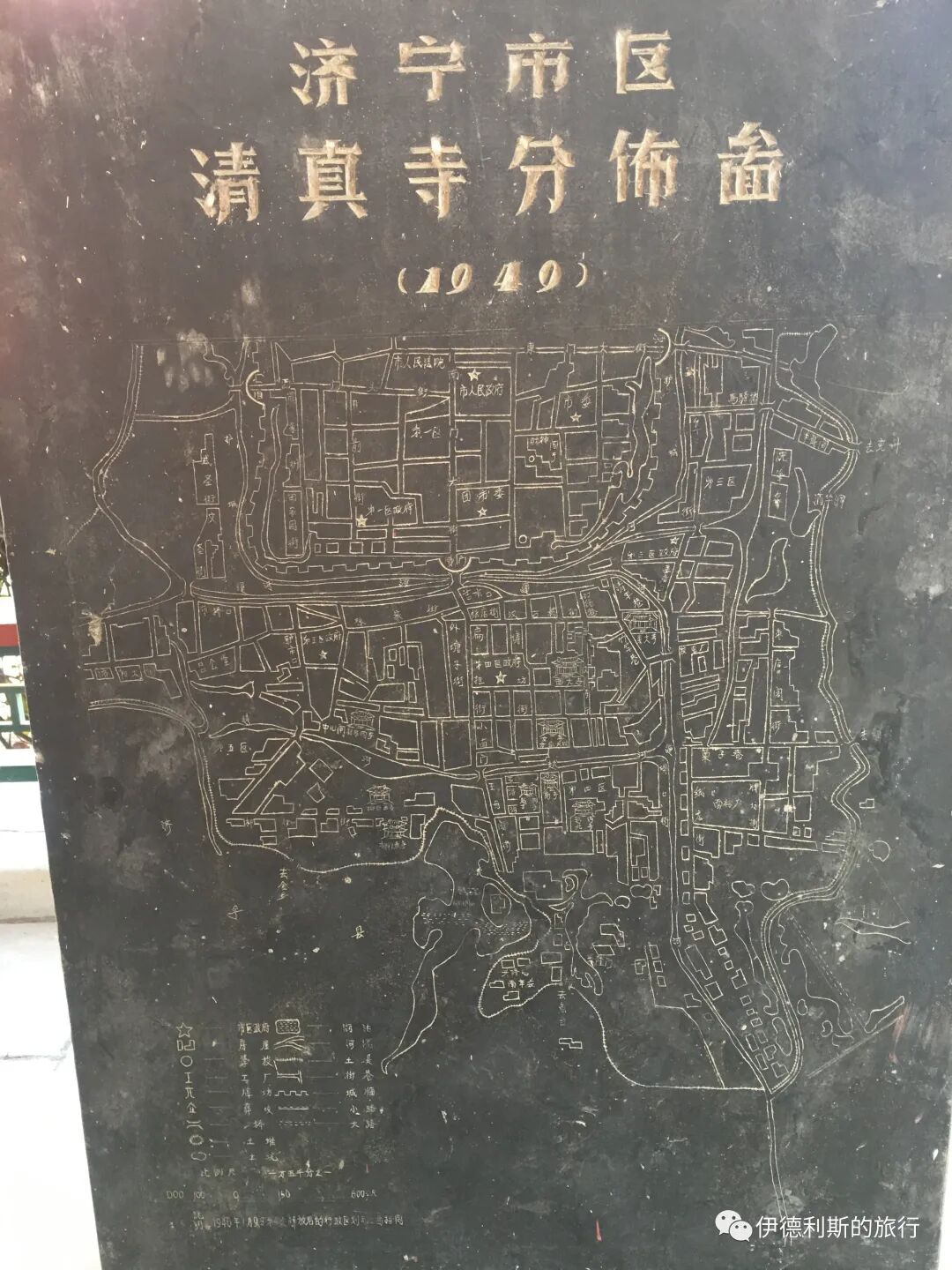
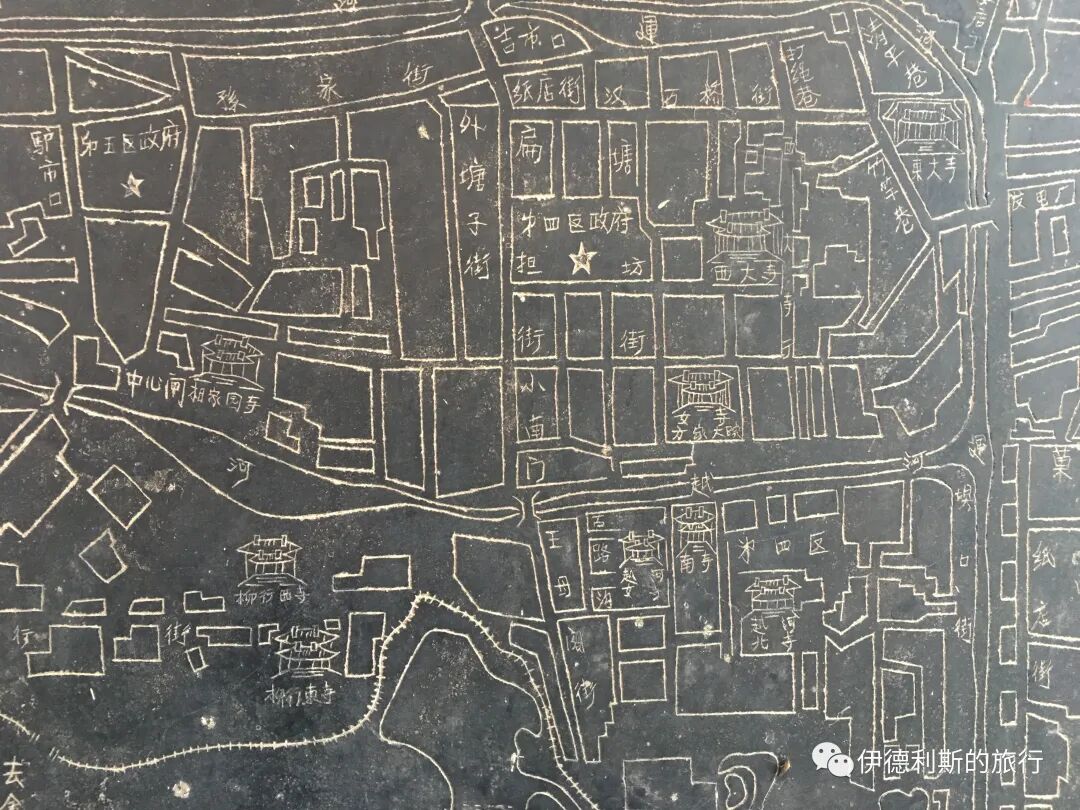
In 1622 (the 2nd year of the Tianqi era), an outer city was built in the south of the old Jining city, known as the "City Perimeter Corridor" or "Circle Dike." The areas where Hui Muslims lived—such as the Big and Small Zhakou, Liuhang, Zhongxin Gate, and the north and south banks of the Yuehe River—were all near this outer city. This formed the 53 streets and alleys where Hui Muslims lived before the old city was renovated. Among these 53 streets, the Hui Muslim population was most concentrated in Liuhang outside the Small South Gate, where they made up over 80 percent of the residents.
By 1953, Jining had seven mosques for men and two for women, known collectively as the Nine Mosques. The West Great Mosque, Liuhang East Mosque, Yuehe South Bank North Mosque, and Yangjiayuan Mosque belonged to the traditional Gedimu school. The East Great Mosque, Yuehe South Bank South Mosque, and Liuhang West Mosque belonged to the Yihewani school.
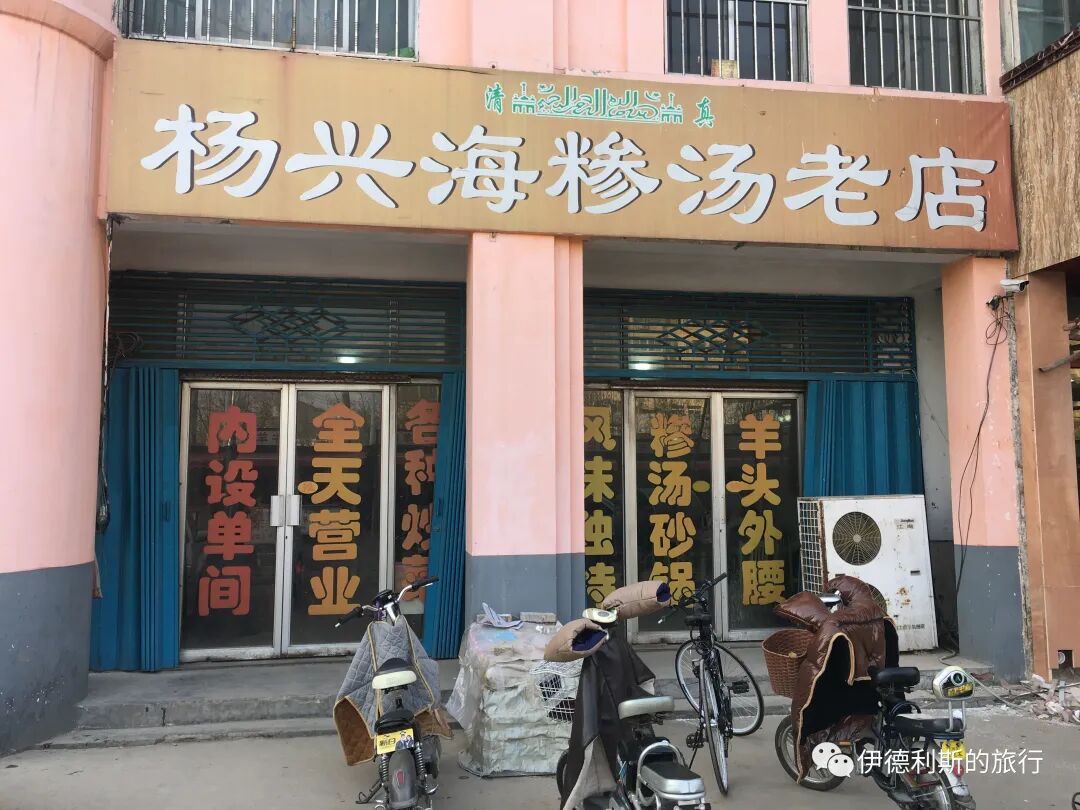
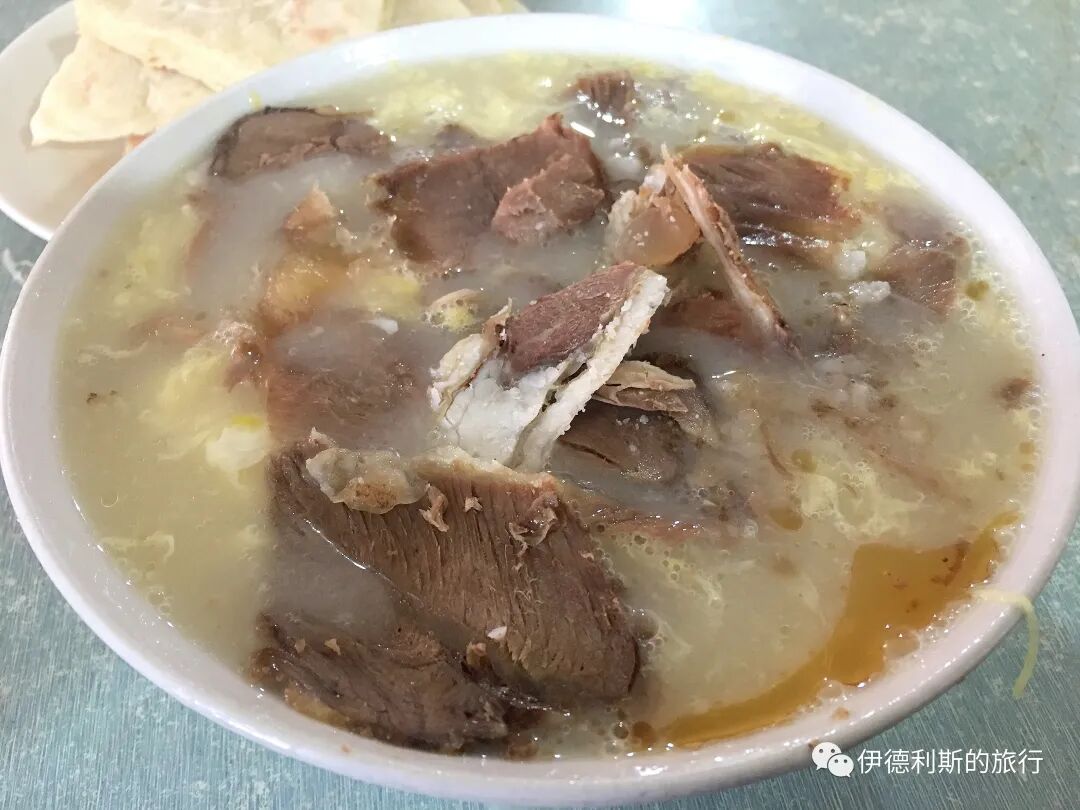
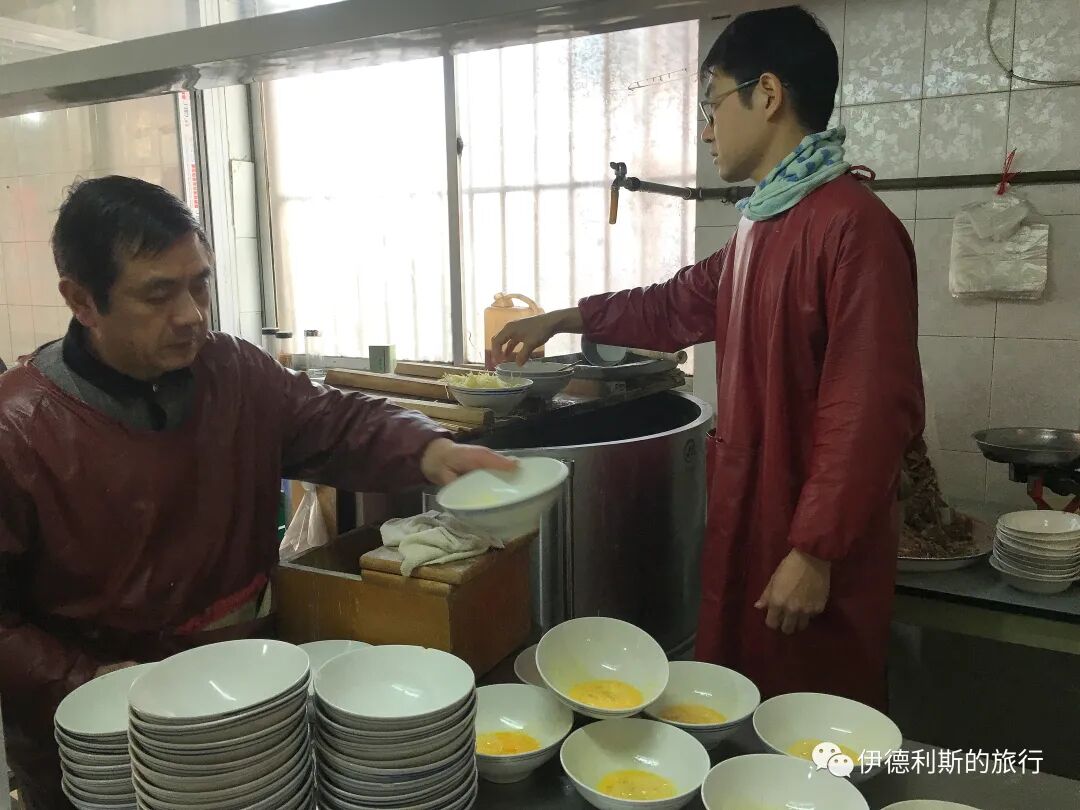
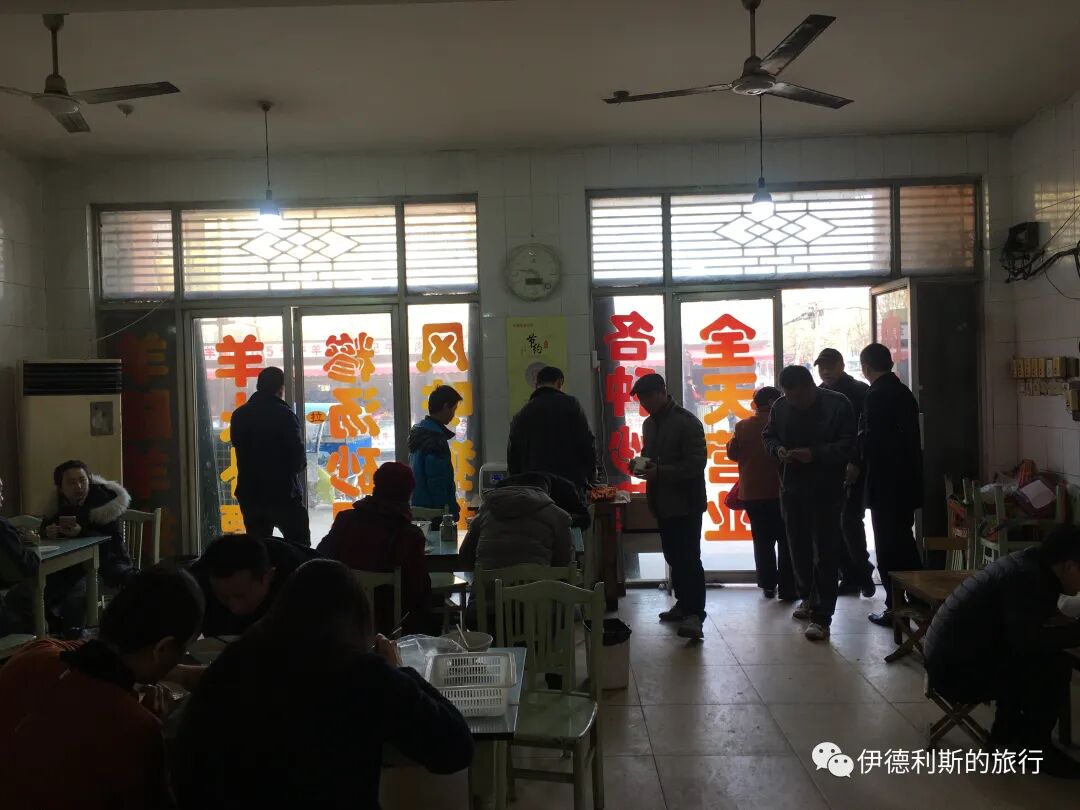
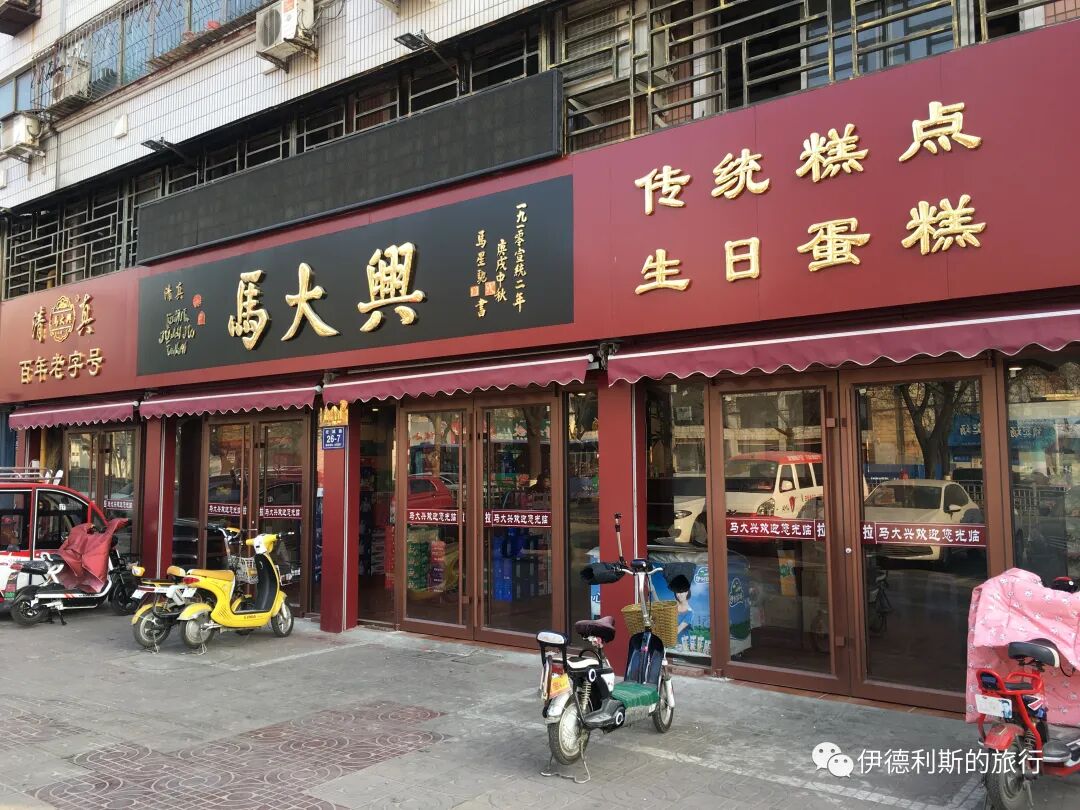
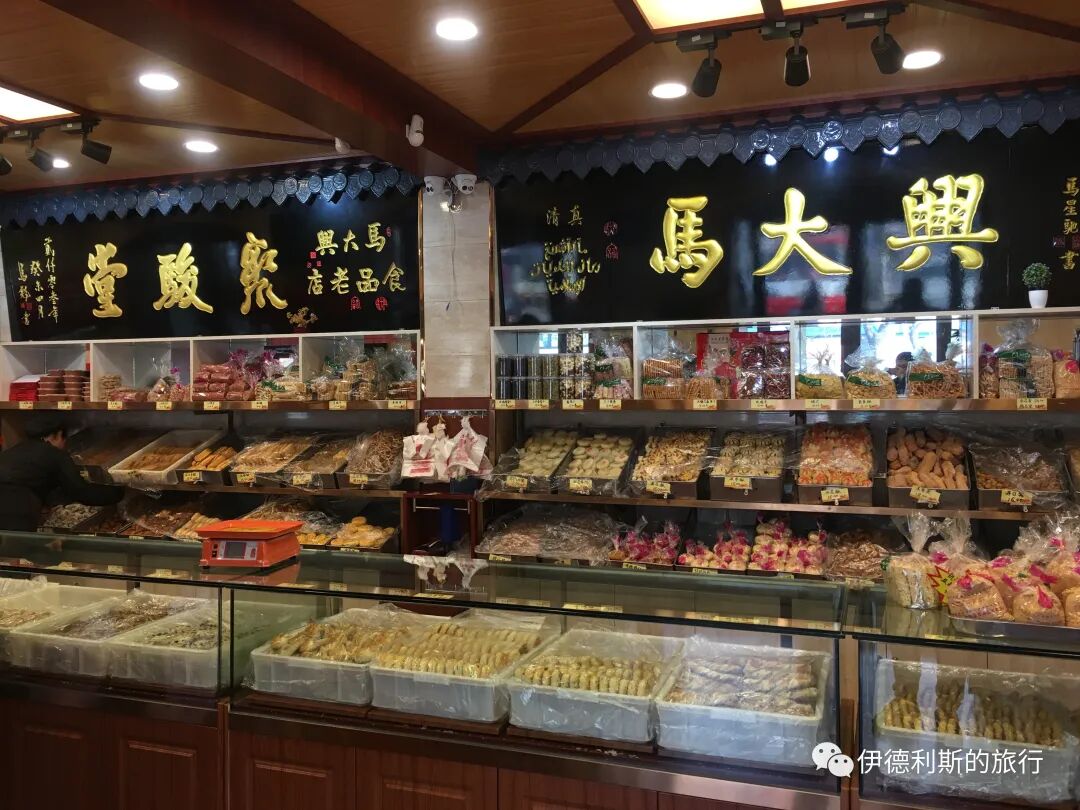
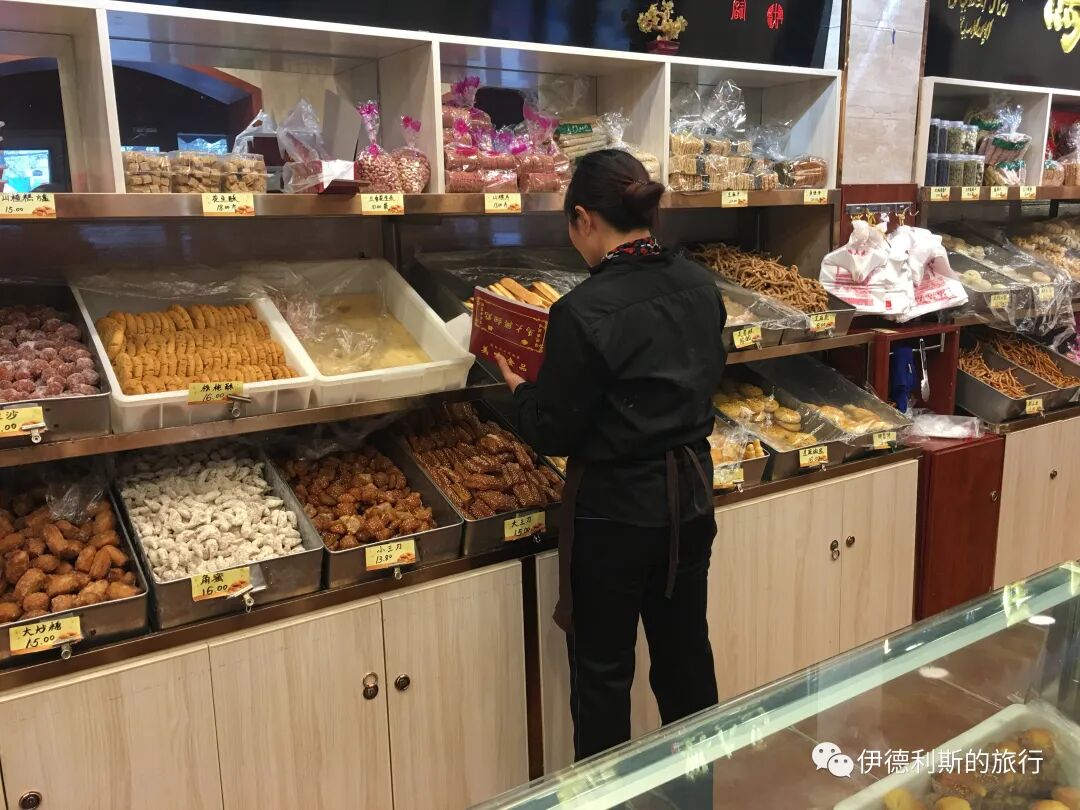
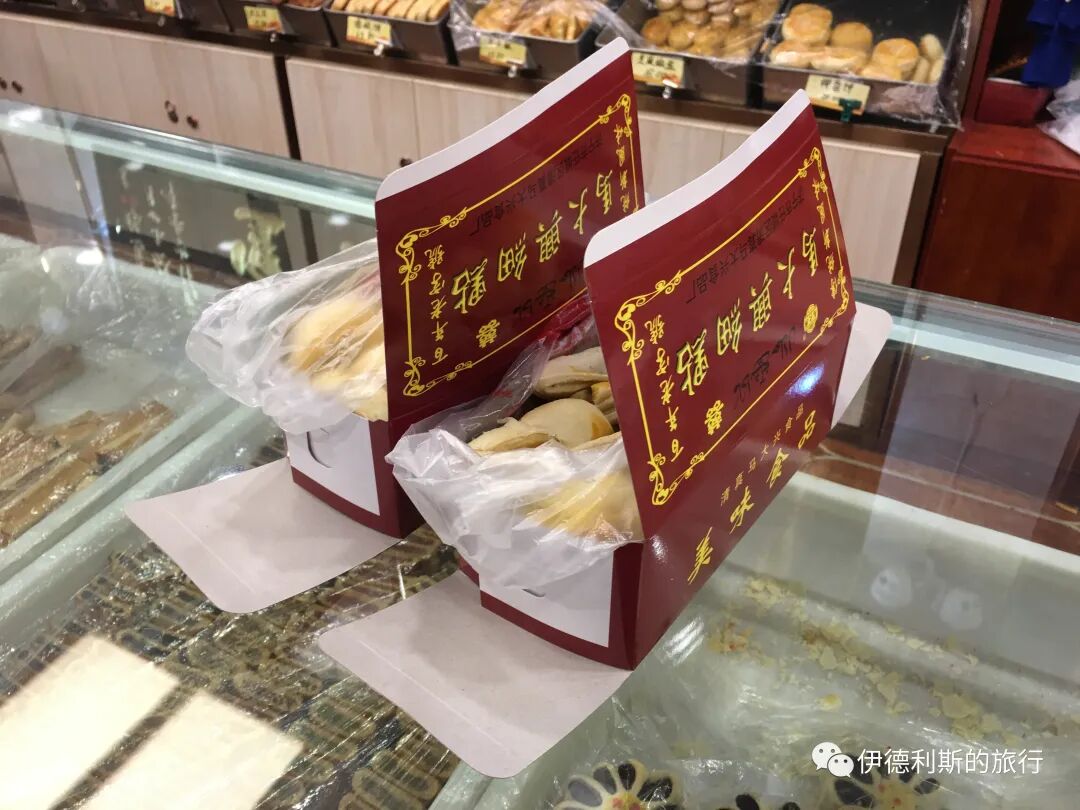
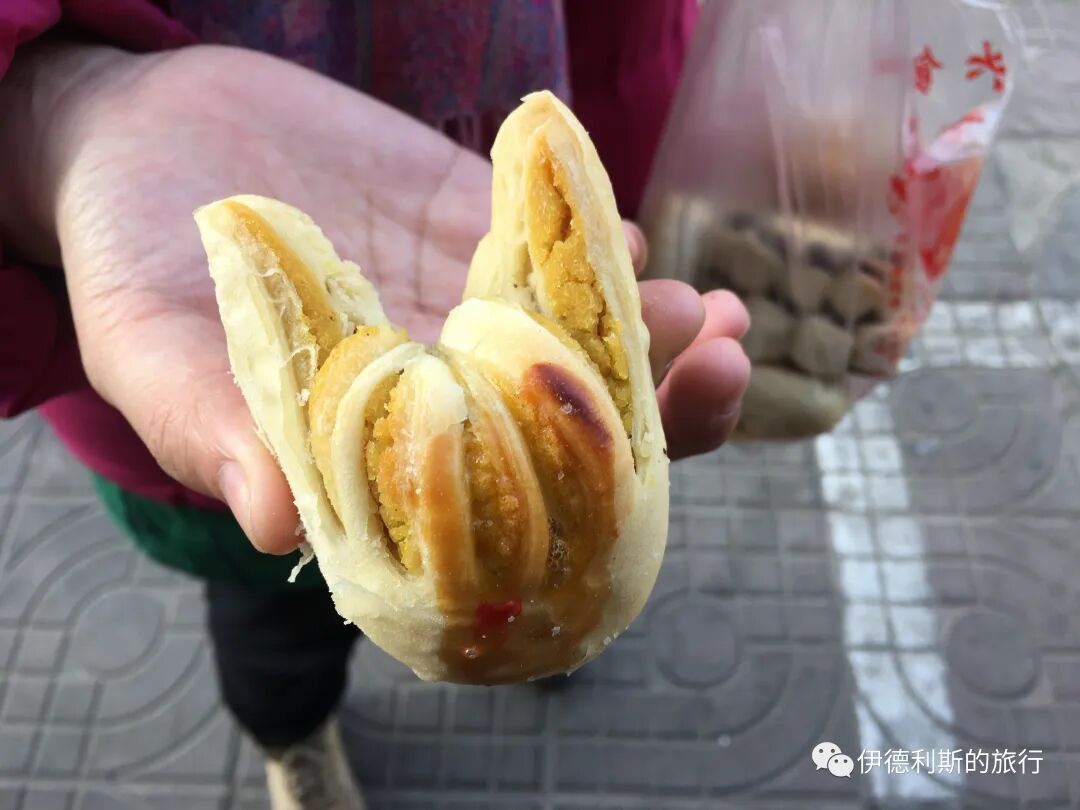
On Saturday morning, I went to the old Yang Xinghai shop at the Small South Gate for some mutton porridge (san tang), then went to the century-old shop Ma Daxing to buy chestnut-shaped pastries (fo shou) and date cakes (zao bing). Jining's mutton porridge is made by pouring hot, thick bone broth over eggs, then eating it with mutton and flatbread. It is so comforting to eat in winter. The date flavor in the Ma Daxing date cakes is very authentic. The chestnut-shaped pastries are so good that you want more after the first bite, so I bought several boxes before I left.
The Ma Daxing food shop posted a "Brief History of Ma Daxing Food Shop" written by Ma Biao. I have organized and copied it below:
Ma Daxing is a century-old food shop in Jining, originally named "Ma's Shop." The family's ancestral home was a prominent Ma family in the Shuiximen area of Nanjing. In the early Ming Dynasty, our ancestors traveled by boat along the ancient Grand Canal and drifted to Jining. They stayed at the Xiazhakou lower river west wharf and settled at the east end of the north side of Yueheya Road.
Later, my great-great-grandfather Ma Fuqi, courtesy name Huatang (July 28, 1843 – May 21, 1927), opened "Ma's Shop" on the south side of Yuehe North Road, west of Xiangling Pavilion, to sell general goods. It developed quite well.
Then, my great-grandfather Ma Luzeng (born 1870) and his younger brother Ma Yizeng used this as a foundation to carefully develop Shandong and Jiangsu style pastries. Over more than ten years, they created a book of over 10,000 words called "Ma's Preserved Fruits," learning the best techniques from both the north and south to create a wide variety of products.
Because the canal was a central hub and a key waterway for gathering and exchanging goods from the north and south, the shop's business grew daily. In 1910, the sign "Ma Daxing Fruit Shop" was put up.
My grandfather Ma Shijun, courtesy name Yangzhou, born on April 28, 1900, inherited and expanded the business in the 1920s. Until the public-private partnership on January 12, 1956, my father Ma Zhenshan was appointed by his superiors as the "Manager of the State-run Ma Daxing Food Factory and Director of the Retail Department," and Ma Zhenhai served as the pastry chef, inheriting and teaching the pastry-making skills.
The pastry business was interrupted in 1968. In 1986, Ma Yong reopened the shop at 15 Laiheguan North Street, inheriting his father's business and continuing to expand Ma Daxing Food.
Our business grew, so we moved to the Xuzhuang grain station in 1989, the breeding farm in 1992, and the Yudai shopping mall in 1997. On June 8, 2003, we opened the new Ma Daxing food shop at Xiaonanmen.
Note: The Ma Daxing shop name was written by a friend of my grandfather, Ma Xingchi. Ma Xingchi was a battlefield reporter who followed Sun Yat-sen and served as the editor-in-chief of the Shenzhou Newspaper.
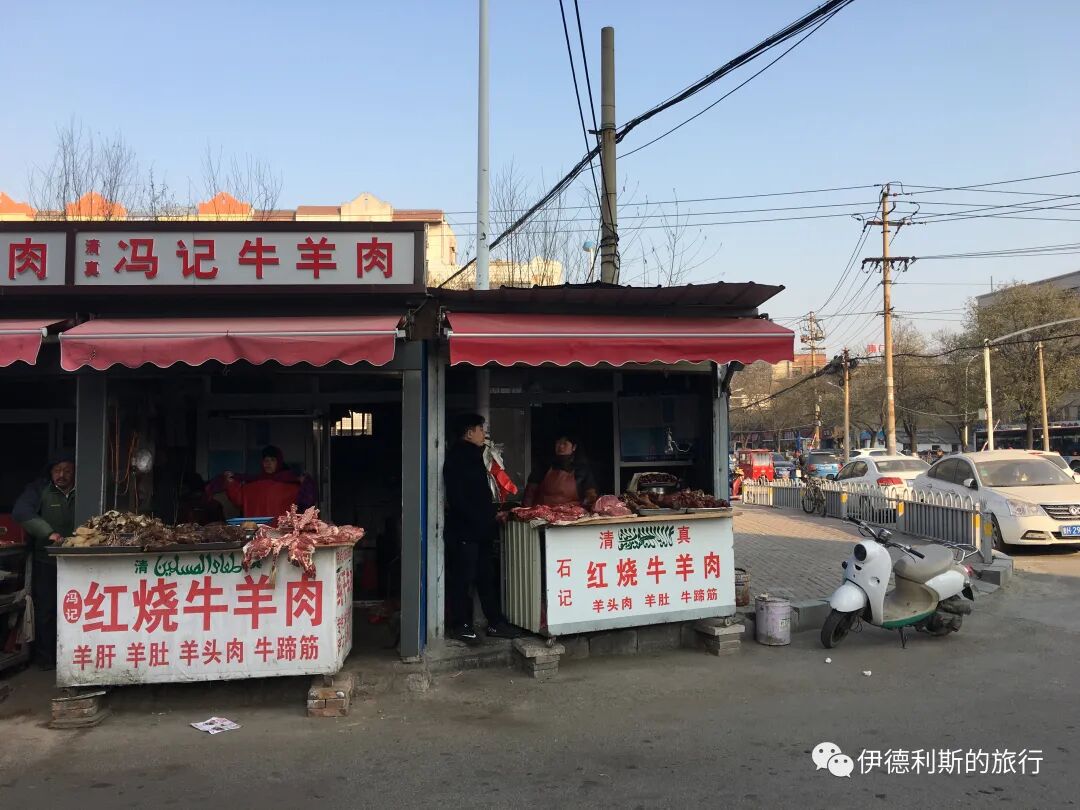
After breakfast, I walked through the old 53 streets and alleys of the Hui Muslims. Even though new residential areas have been built, there are still many halal restaurants, so I made a mental note to try them tomorrow.
Jining Shunhe East Mosque
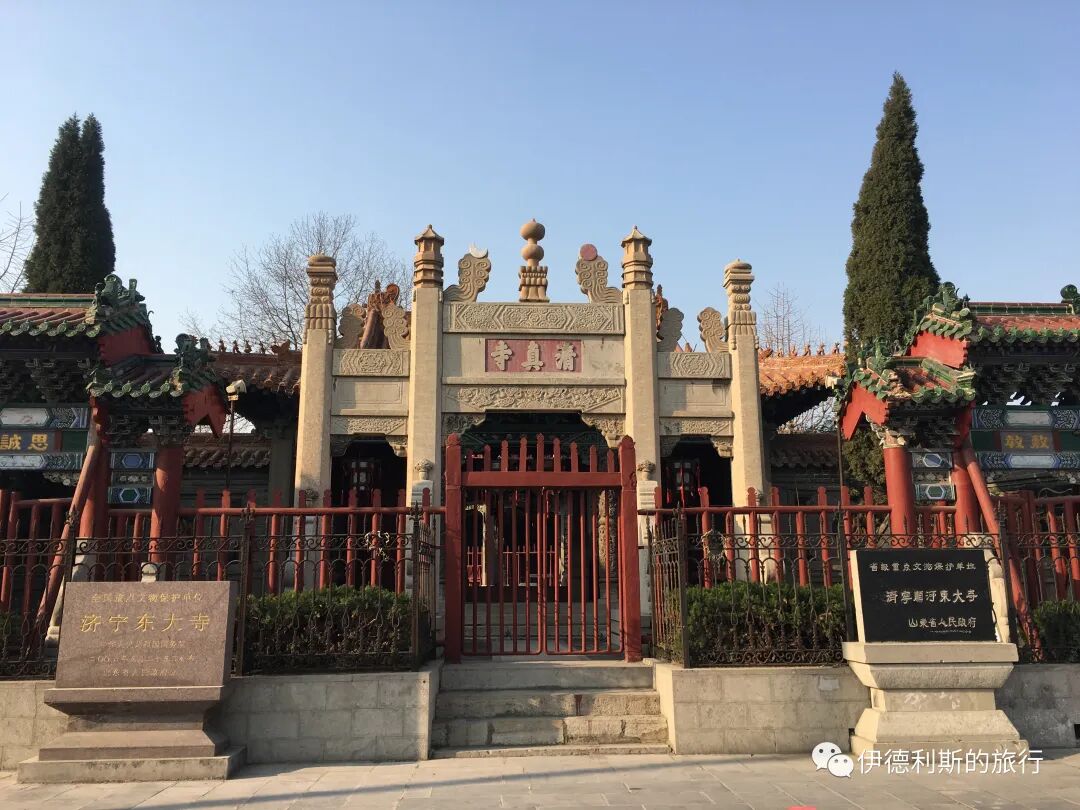
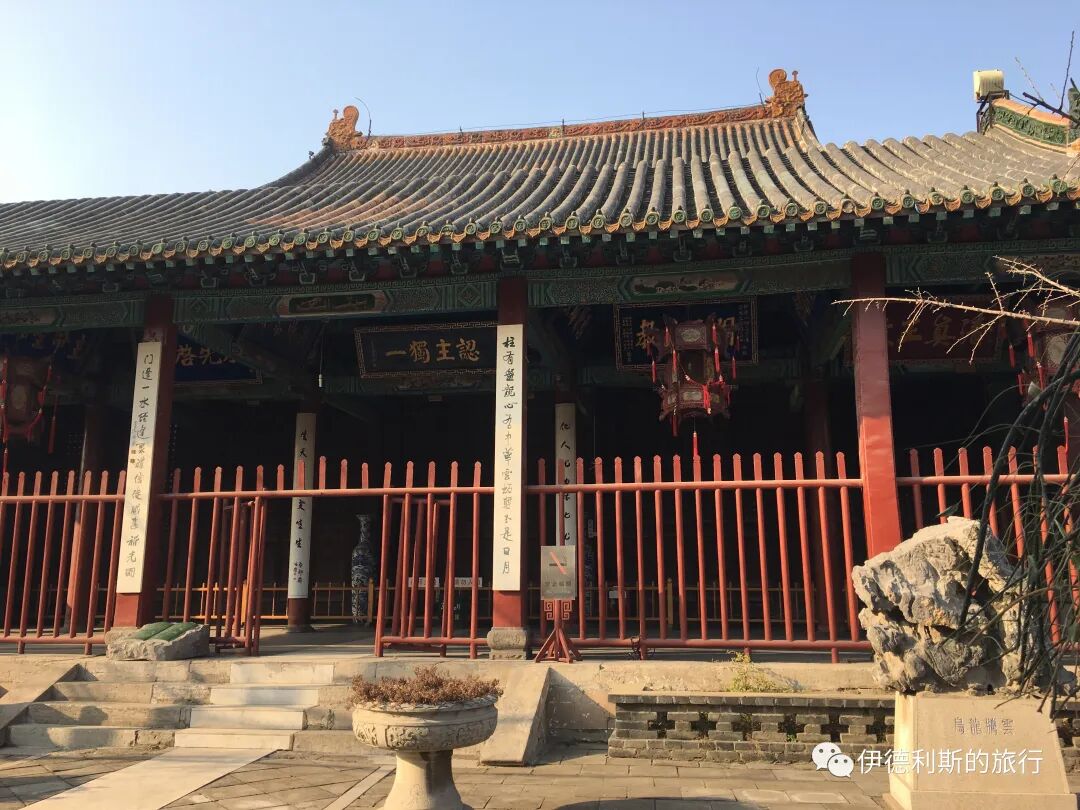
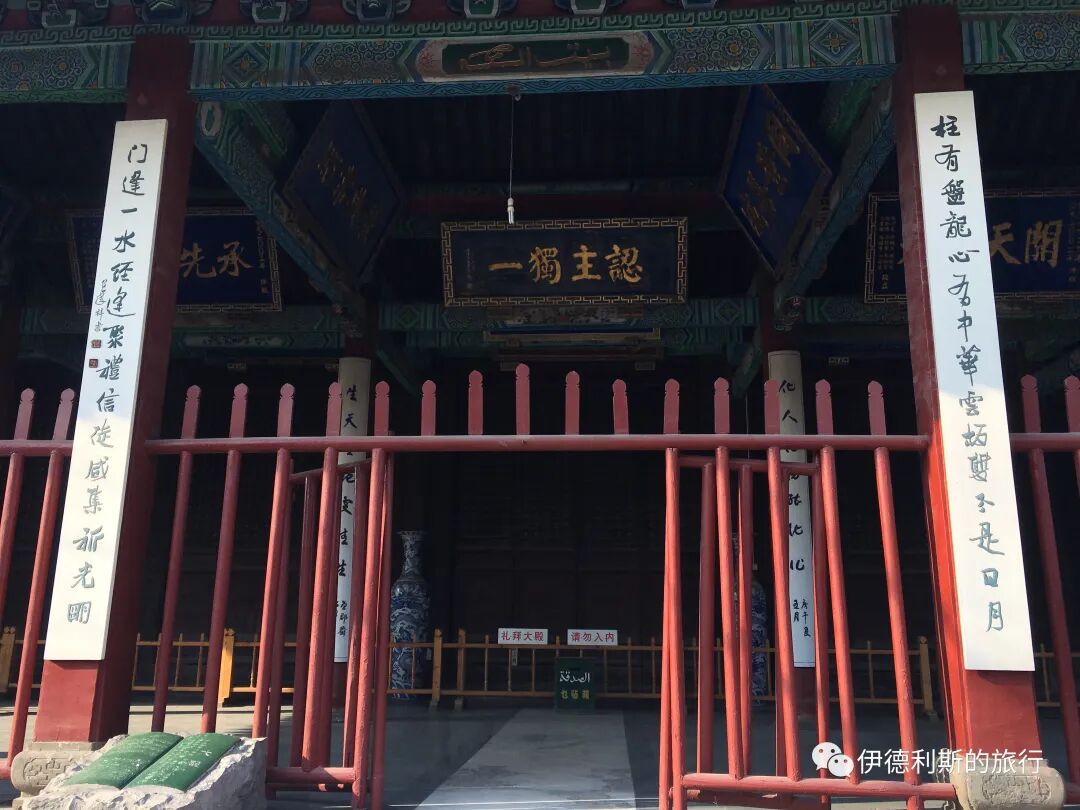
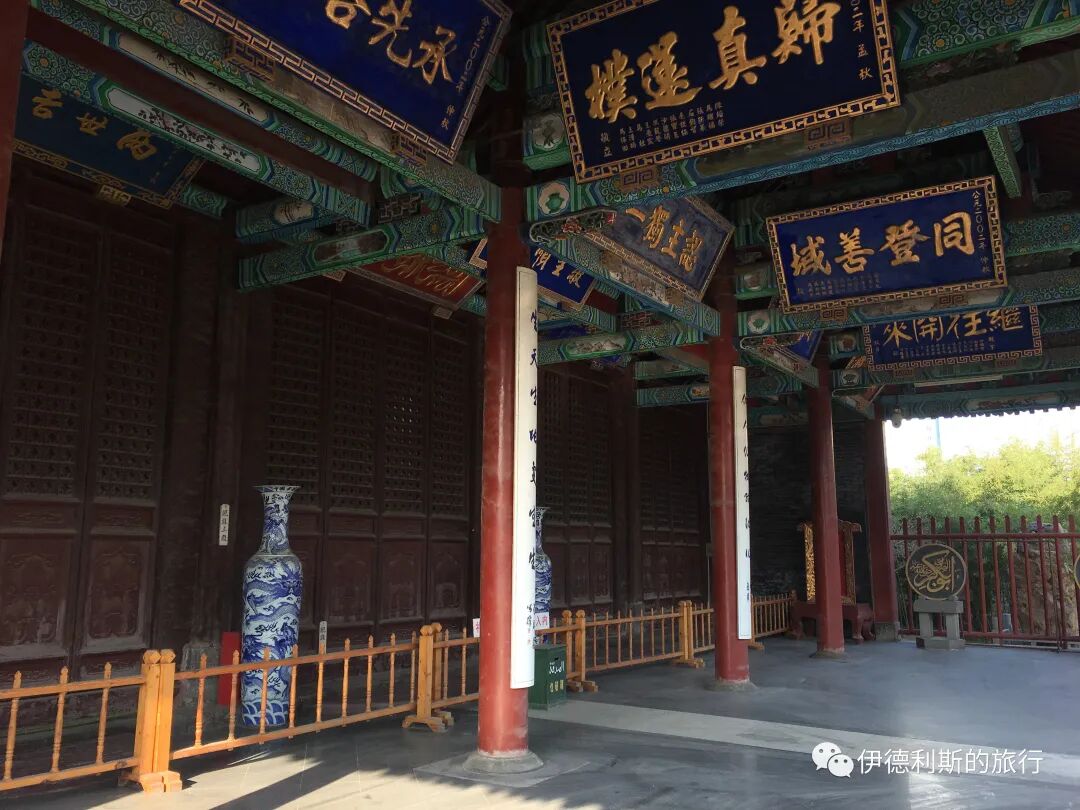
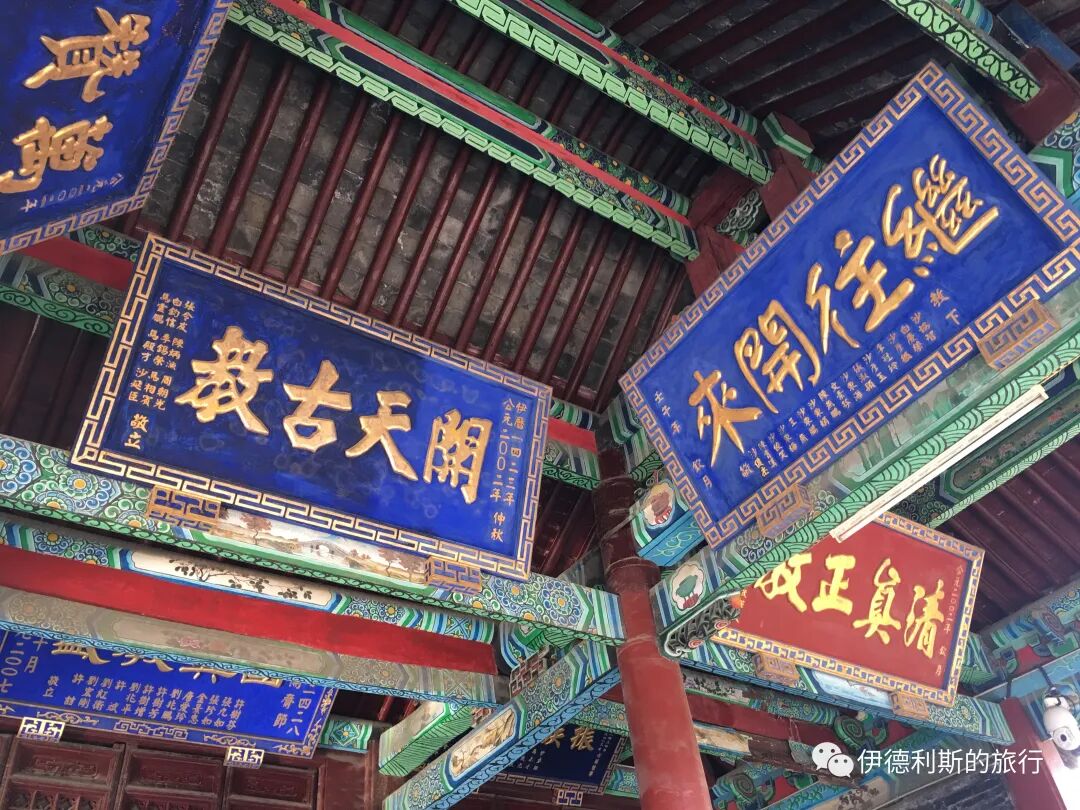
I walked through the Hui Muslim district and arrived at the Jining Shunhe East Mosque by the canal. The East Mosque was built around 1420 during the late Ming Dynasty Yongle period. It was renovated in 1459 (the third year of Tianshun), expanded during the Kangxi period, and renovated again during the Qianlong period, eventually reaching its current size.
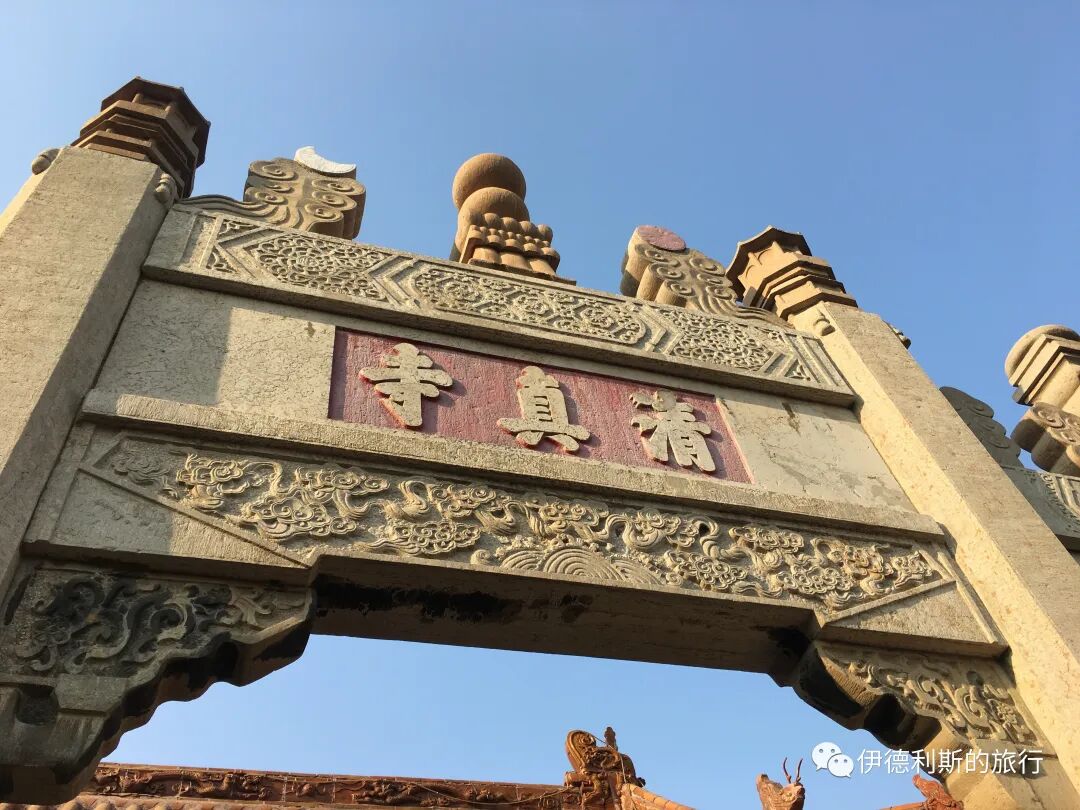
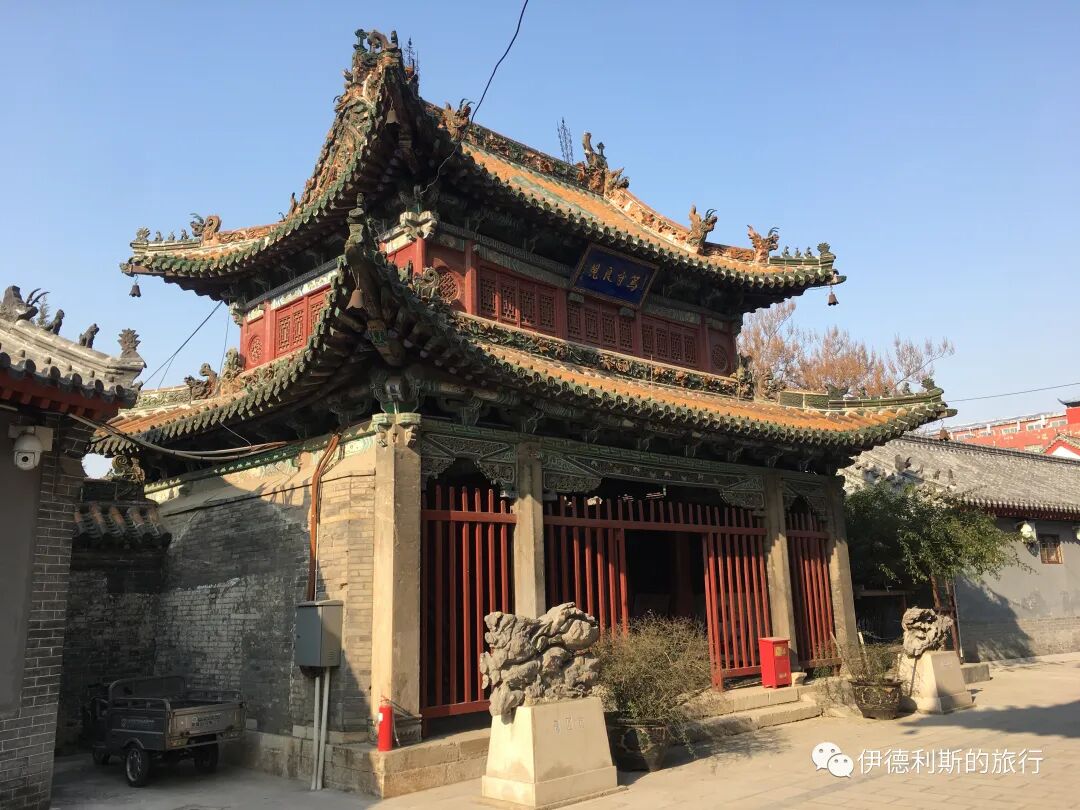
As Professor Liu Zhiping said, the rear archway, the Moon-Watching Tower (Wangyuelou), the rear hall, and the main hall of the East Mosque create a grand and towering atmosphere with their overlapping structures. Therefore, the artistic style of all its architecture represents the spirit and boldness of the Qianlong era.
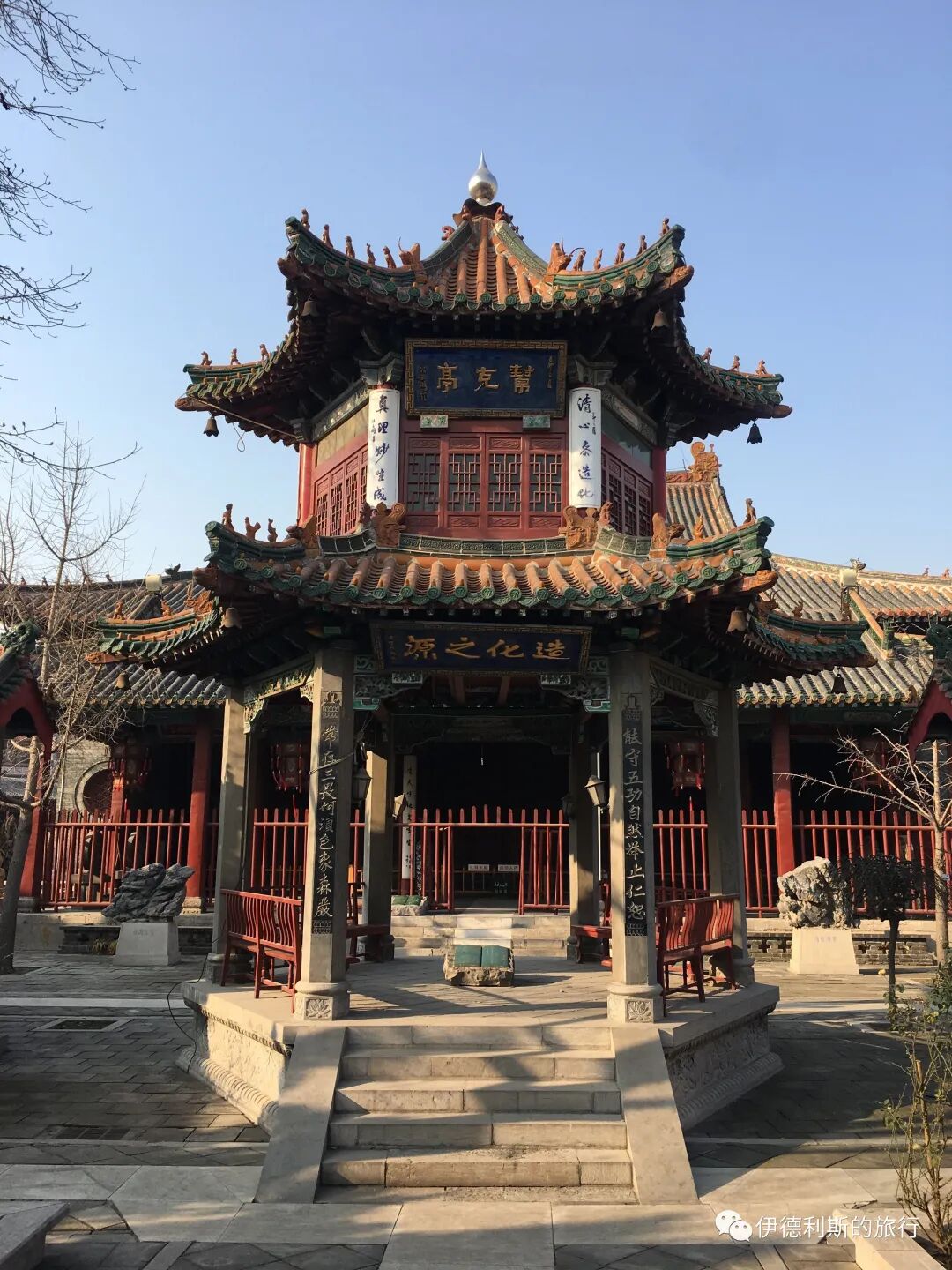
The mosque's original Call to Prayer Tower (Bangkelou), built during the Ming Dynasty Chenghua period and renovated during the Kangxi period, was destroyed along with the main gate and archway in 1968. A new Call to Prayer Pavilion (Bangleting) was built in 1999.
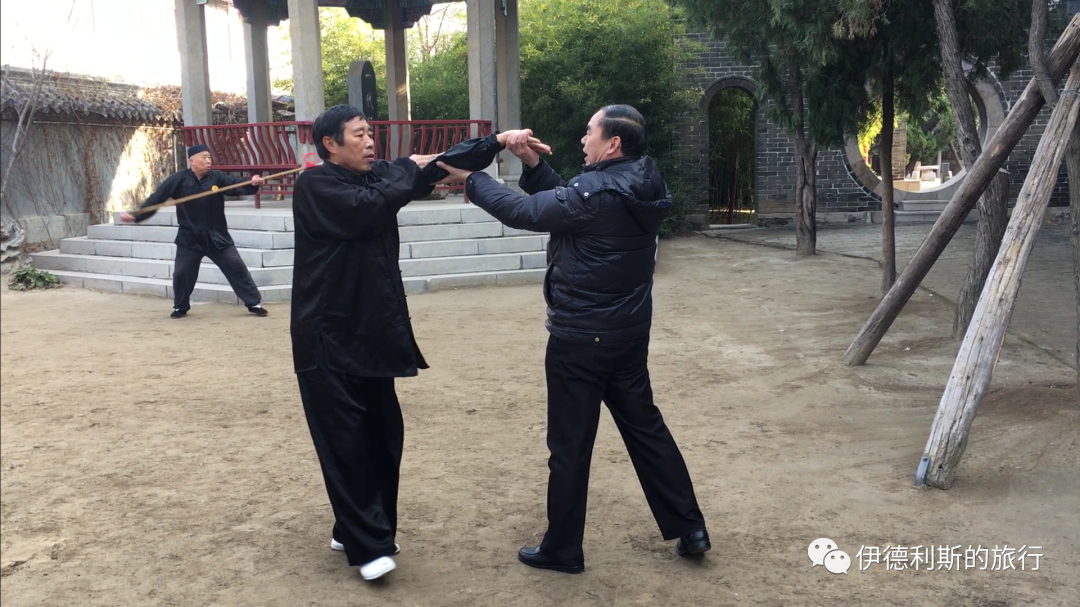
On the martial arts practice ground north of the main hall, I met a group of older men practicing their moves.
Single saber against flower spear
Double sabers
The most famous Hui Muslim martial art in Jining is Rencheng Chaquan. Because the most complete set of Chaquan routines is held by the family of Li Enju, a Hui Muslim from Jining, it is also called Li-style Chaquan.
Chaquan is based on the spring-leg (tantui) technique. There are ten routes of spring-leg and ten routes of boxing, with each boxing route incorporating spring-leg techniques. With running, walking, flying, and striking, the ten routes can expand into over fifty.
The names of the ten routes of Jining Li-style Chaquan:
First route: Charging tip like a whip
Second route: Cross-shaped rush to the toe
Third route: Covering style for night travel
Fourth route: Supporting and stepping to block the path
Fifth route: Single spread
Sixth route: Double spread
Seventh route: Re-engaging to strike in a crisis
Eighth Road Turning Ring (balu zhuanhuan).
Ninth Road Holding Lock (jiulu pengsuo).
Tenth Road Somersault Kick (shilu jiandan).
Li Enju was born in Nanguan, Jining, in 1857. As a young man, he was an officer in the Hebiaoying battalion. He later spent fifteen years traveling to improve his martial arts. In middle age, he returned to Jining to open the Jinyuan Hui Yongshun Escort Agency. In his later years, he went to Shanghai to teach at the Shanghai Jingwu Association founded by Huo Yuanjia. He eventually returned to Jining to teach Chaquan boxing until he passed away from illness in 1932 at the age of 75.
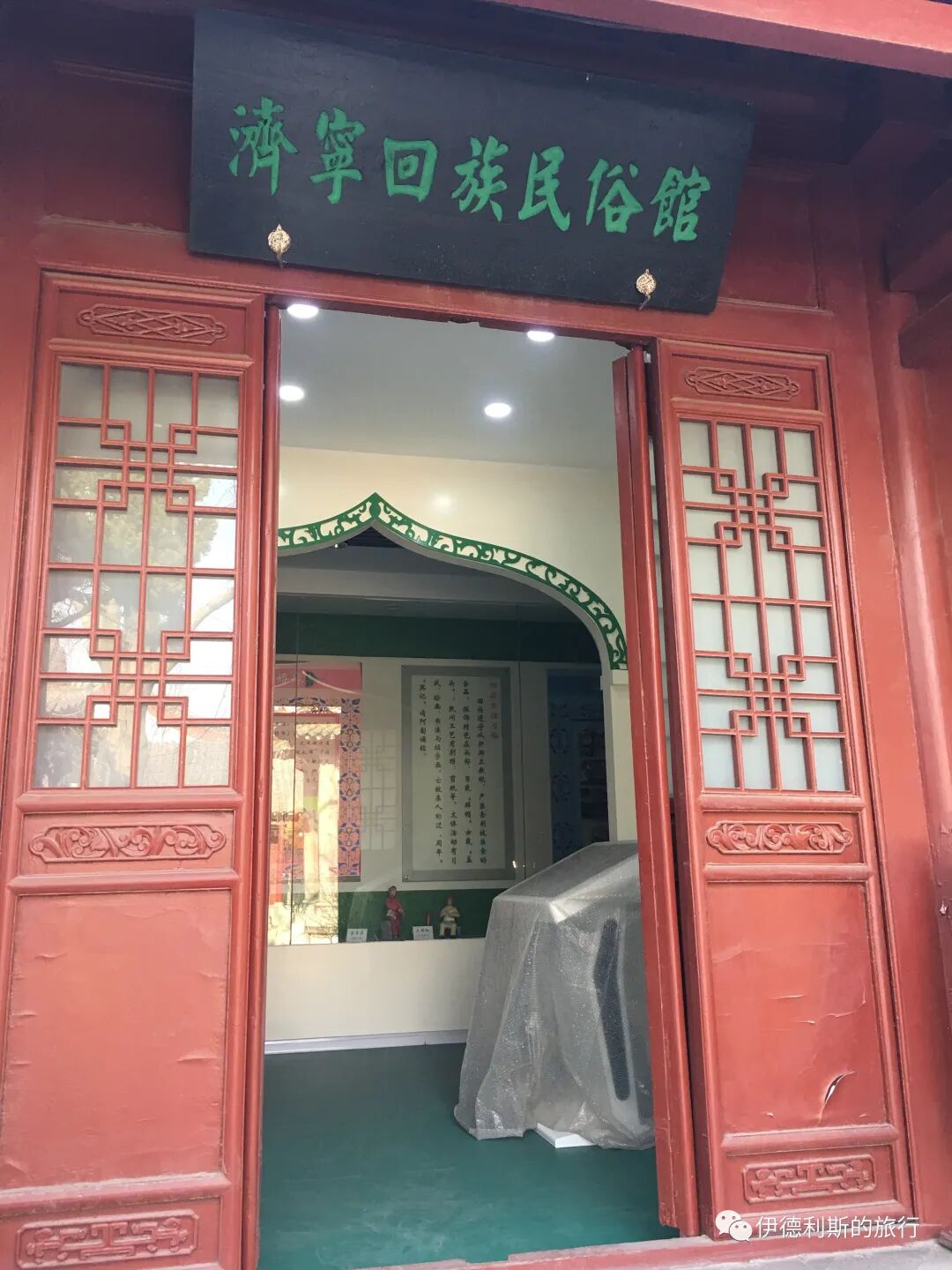
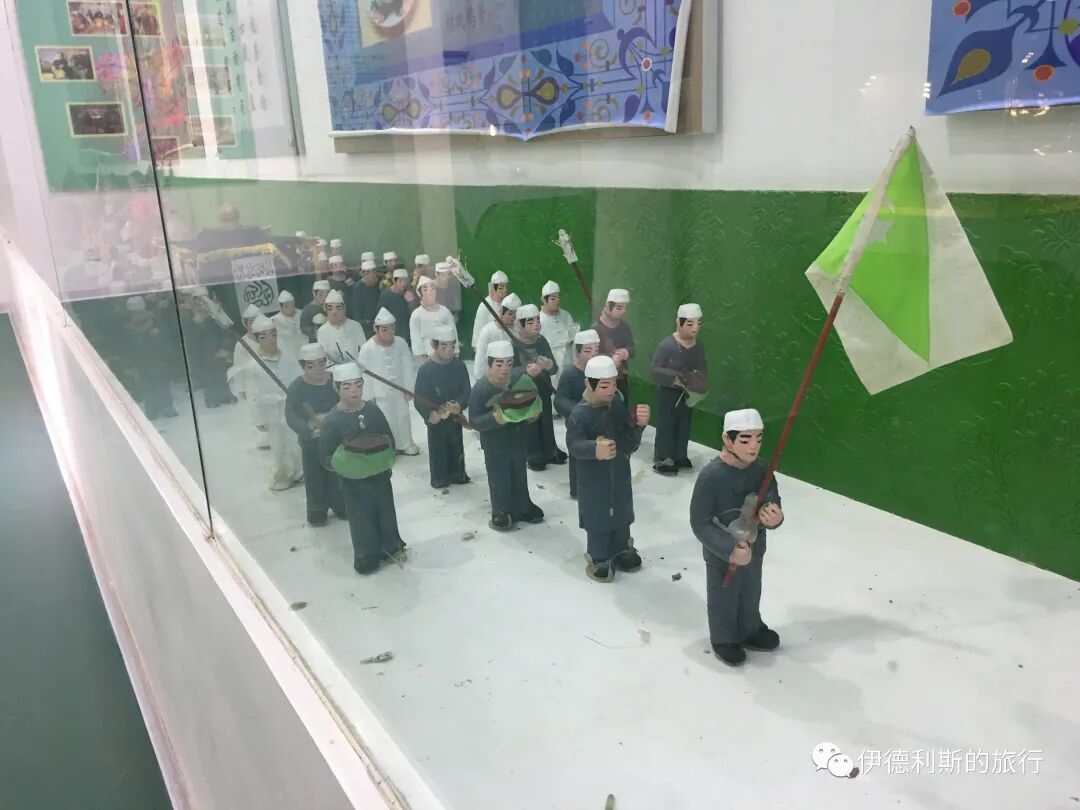
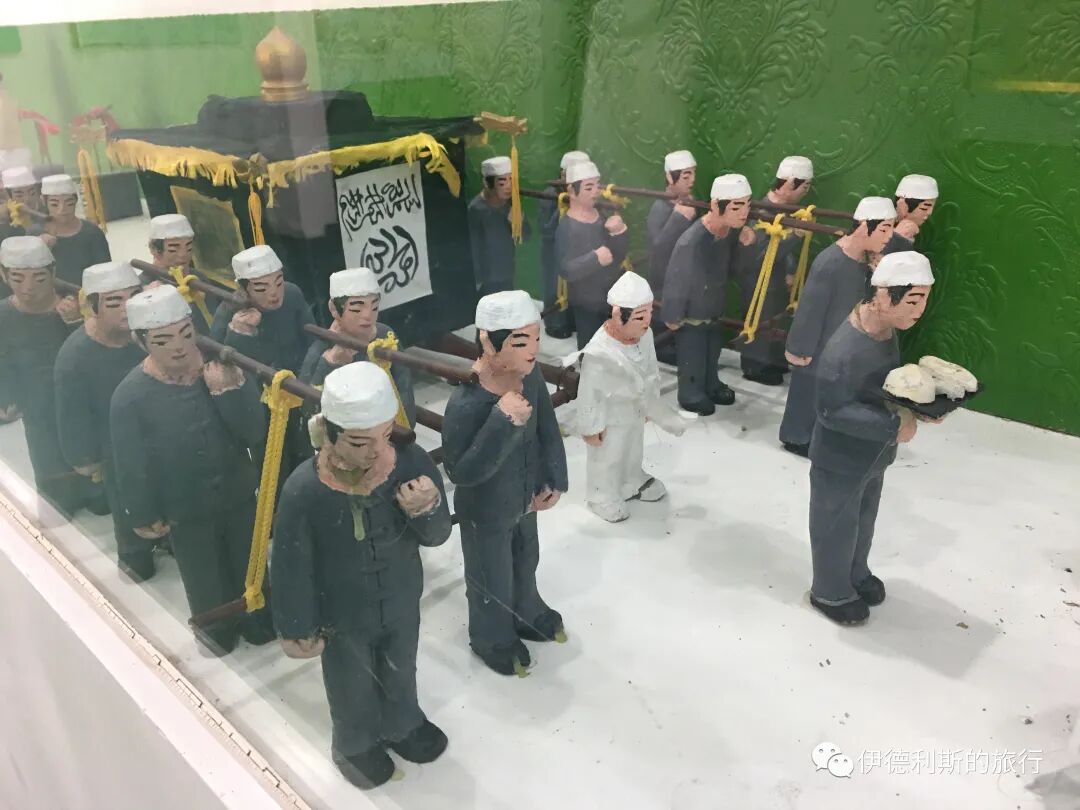
There are some cute little clay figurines inside the East Great Mosque (Dongdasi) in Jining.
Funeral procession team (taimaidui).
Namaz (namazi).
Some cultural relics.
A large Ming Dynasty blue and white incense burner that the East Great Mosque has kept for generations.
I knew about Jining before, mostly because of Chang Zhimei, the founder of the Shandong School.
Chang Zhimei, whose courtesy name was Yunhua, was known as Chang Xianxue or Chang Baba. He was born in Jining in 1610. In 1634 (the seventh year of the Chongzhen reign), 24-year-old Chang Baba returned to Jining after completing his studies elsewhere and began teaching in a courtyard next to the East Great Mosque. Because his views on religious doctrine differed from those of the East Great Mosque, Chang Baba led the construction of the West Great Mosque (Xidasi) two years later, where he continued to teach and eventually founded the Shandong School.
The Shandong School values Persian-language religious law and Sufi philosophy. It uses the 13 classic texts popular in the north as its basic curriculum, with a large portion being Persian classics.
The Chang Zhimei Memorial Hall at the East Great Mosque in Jining holds many relics from the Jining West Great Mosque that Chang Baba established. It is a great pity that the Jining West Great Mosque, which had a massive 30-meter-high ridge-style main hall, was completely demolished in 1968. Otherwise, having both the eastern and western mosques standing would have been spectacular.
Handwritten by Chang Baba: The mosque is the House of Allah, and the Muslims who come to the mosque can receive the love of Allah.
The stone tablet was originally embedded above the archway of the gate of the Jining West Great Mosque and was destroyed along with the mosque in 1968. It was rediscovered a few years ago, and the missing middle section was rewritten by Imam Chen Yudong.
Liuhang East Mosque.
Besides the East Great Mosque, Jining also has an ancient Ming Dynasty mosque called the Liuhang East Mosque. The Liuhang East Mosque was built during the Wanli reign, expanded during the Kangxi reign, and reopened in 1989. When we visited, it was completely empty. Only a cat led us around to see everything, which felt like a strange and wonderful encounter. After taking us for a tour, the cat returned to the courtyard gate and watched us leave. It felt like being in a Hayao Miyazaki animation.
The stone tablet inscribed with 'Jiao Ze Kong Chang' was erected in 1940. After the Japanese army occupied Jining in January 1938, Imam Liu Hanguang risked his life to set up a refugee shelter inside the mosque. He took in many Hui and Han people, and this stone tablet was erected by the Hui and Han community to thank Imam Liu.
Exquisite Shandong-style calligraphy.
Other ancient mosques in Jining that no longer exist are recorded here to remember history:
Liuhang West Mosque was built during the Wanli period. The mosque was destroyed in 1960, the main hall was torn down in 1979, and the only remaining 400-year-old Chinese honey locust tree (zaojia) was cut down at the end of 2002.
Yuehe Nanya North Mosque was built before 1749 (the 14th year of the Qianlong reign). It underwent its last major expansion and renovation in March 1939. Activities stopped in January 1958 after the anti-rightist rectification movement, and the site was occupied by the Xinhua Leather Factory. The Xinhua Leather Factory returned the site in 1984. It was converted into a women's mosque in 1989, and the main hall, scripture hall, and water room were renovated in 1995. It was demolished in late January 2001 due to urban renewal and rebuilt as an Arabic-style women's mosque in October 2002.
Laiheguan North Street South Mosque was built during the Yongzheng period (1730) and was destroyed in 1960.
Fangjia Courtyard Women's Mosque was built in 1944 and destroyed in 1960.
Yuehe Nanya Women's Mosque was built in 1944 and destroyed in 1958 during the '58 Religious Reform'.
I had grass carp with pan-wiped flatbread (moguobing) at Xiaonanmen on Saturday night. Jining has plenty of freshwater fish because it is near Weishan Lake. A pot of fish costs 50 yuan, and the portion is huge! You can compare it to the bowl and chopsticks on the right. The fish is very fresh, and the glass noodles (fensi) taste especially good! I especially recommend the braised gluten (huimianjin), which is perfect with rice.
I had mixed offal soup (zagetang) at Xiaonanmen on Sunday morning. It is a bowl of lamb and tripe soup. I slurped down a big bowl and finished by spreading chopped chili peppers inside a flatbread. It was so comfortable, and I didn't feel hungry until the afternoon.
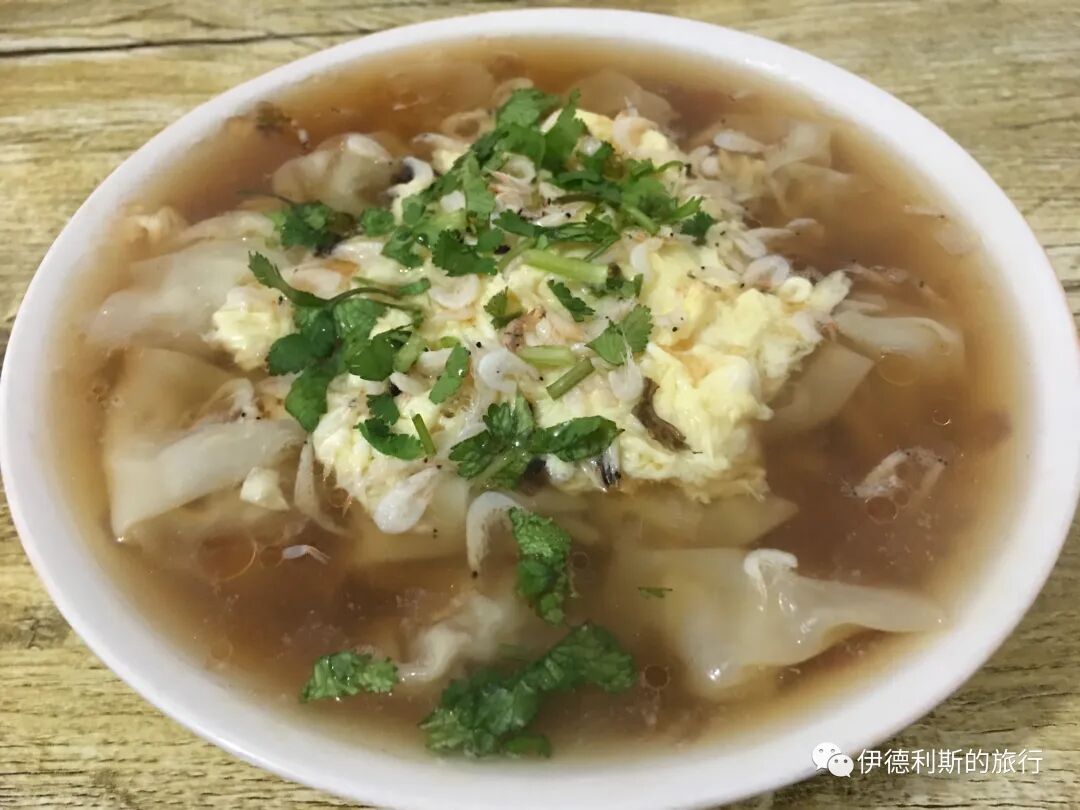
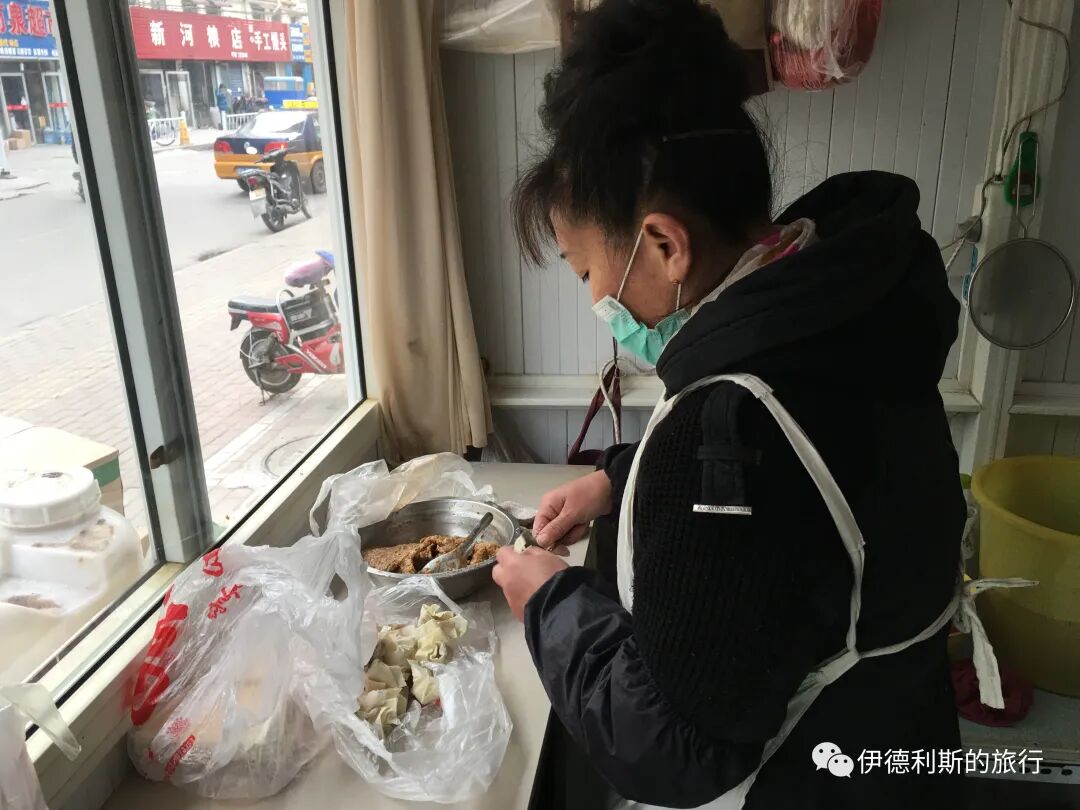
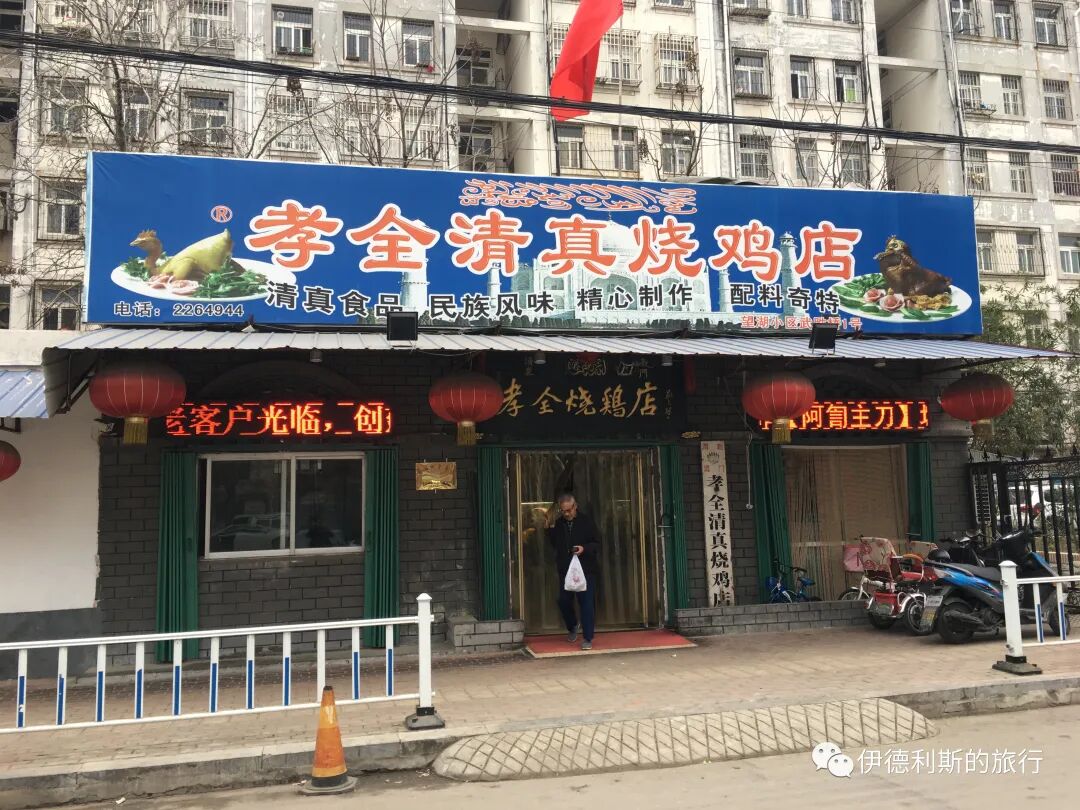
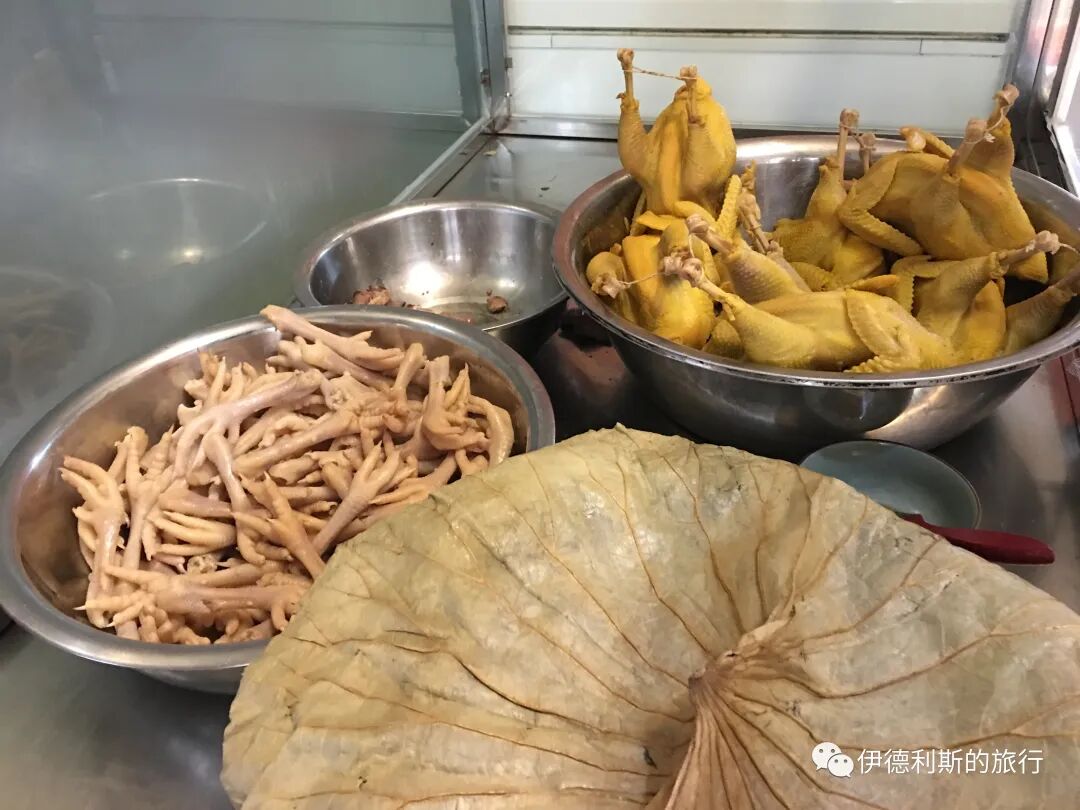
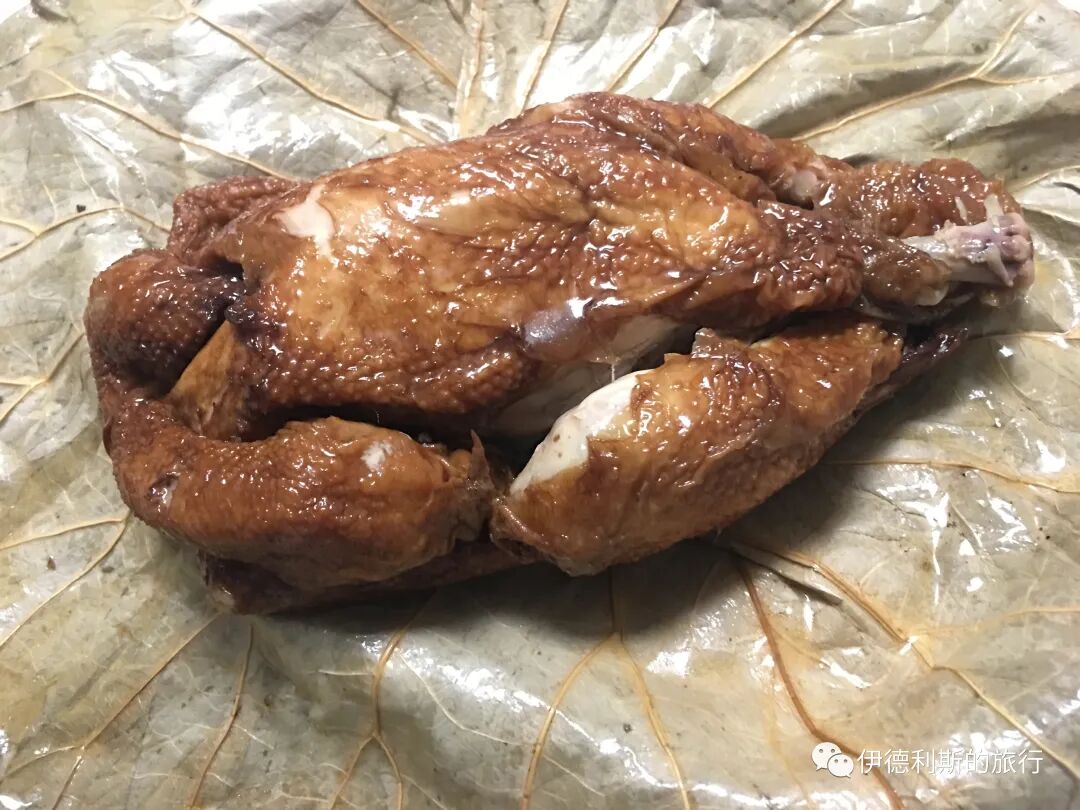
On Sunday afternoon, I had Zhan Family chicken soup wontons on Nanchayuan Street. The auntie wrapped the wontons very quickly, and she even added an egg on top. It was warm and very nourishing. Then I went to the famous Xiaoquan Roasted Chicken shop on Xidasi Street to buy roasted chicken and chicken liver. The roasted chicken is wrapped in lotus leaves. It falls off the bone with a slight tug and is very fragrant.
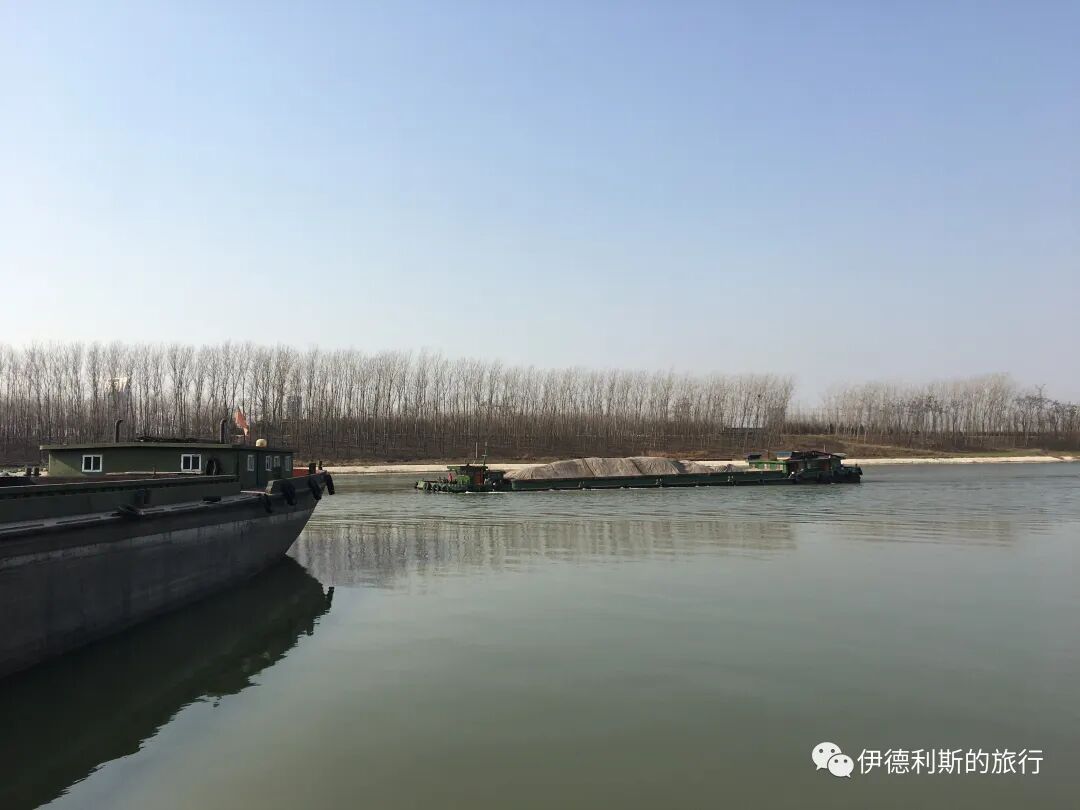
The Jining section of the Grand Canal.
Jining has both a new and an old canal. The Old Canal is also called the South Canal, the Grain Transport River, or the Cao River. It was once the ancient Jizhou River and Huitong River. Today, it is just a waterway inside Jining city and is no longer used for shipping. The New Canal, also known as the Liangji Canal or the Grand Canal, is a waterway dug in the 1950s to handle canal shipping.
Before the Beijing-Hangzhou Grand Canal was officially connected in the Yuan Dynasty, the Old Canal was split into two sections, north and south. North of Jining is the Jizhou River, which was built in 1283 (the 20th year of the Zhiyuan reign) by order of Kublai Khan, the Emperor Shizu of Yuan. South of Jining is the old path of the Si River. In 1289 (the 26th year of the Zhiyuan reign), the Huitong River north of the Jizhou River was finished. This completed the entire Shandong section of the Beijing-Hangzhou Grand Canal during the Yuan Dynasty.
In 1855 (the 5th year of the Xianfeng reign), the Yellow River burst its banks at Tongwaxiang in Lankao, Henan. This cut off the Beijing-Hangzhou Grand Canal, and the Old Canal began to decline. Finally, in 1901 (the 27th year of the Guangxu reign), the grain tribute system was replaced by silver payments, and official canal transport ended completely. The Old Canal changed from an official shipping route to a local transport route.
The Old Canal flows through Jining city. The entrance to the Shunhe East Mosque (Shunhe Dong Dasi) in Jining sits right by the Old Canal waterway.
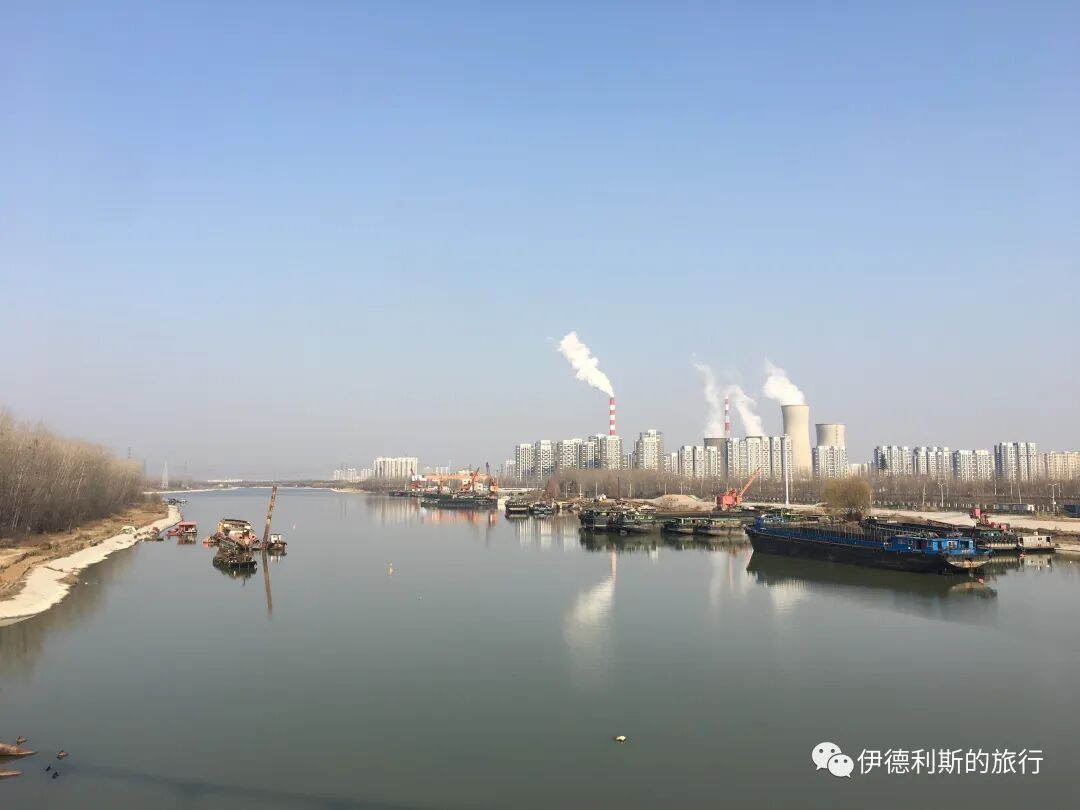
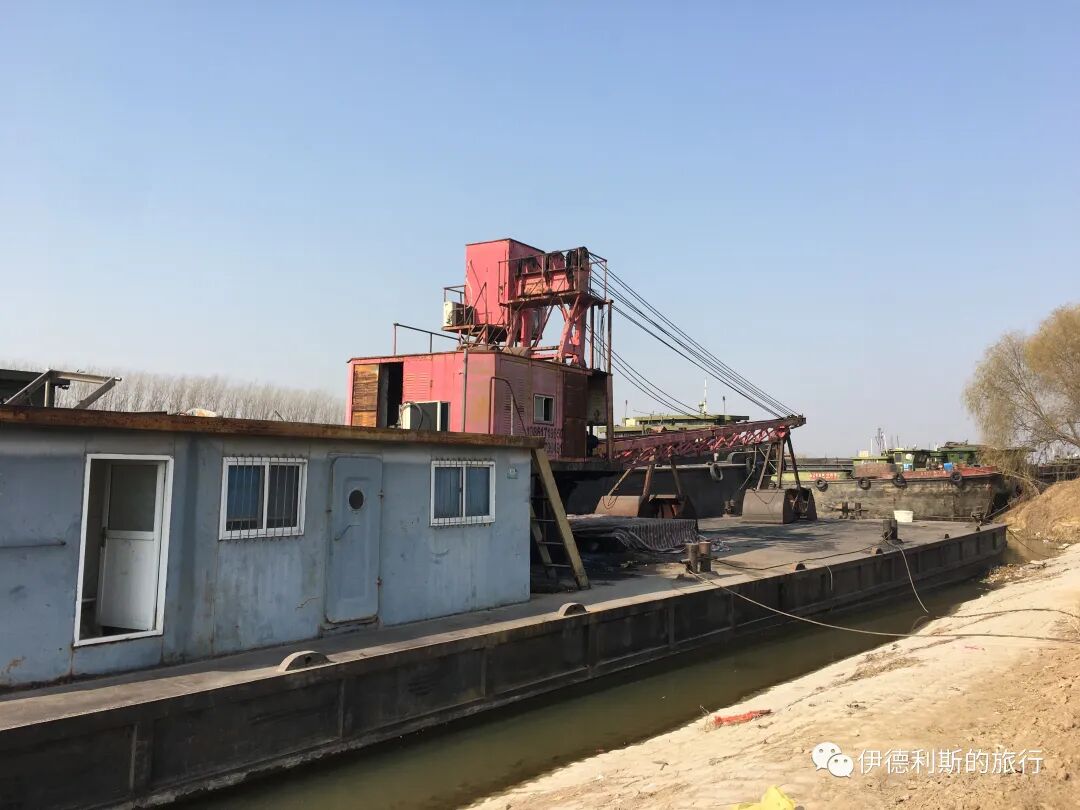
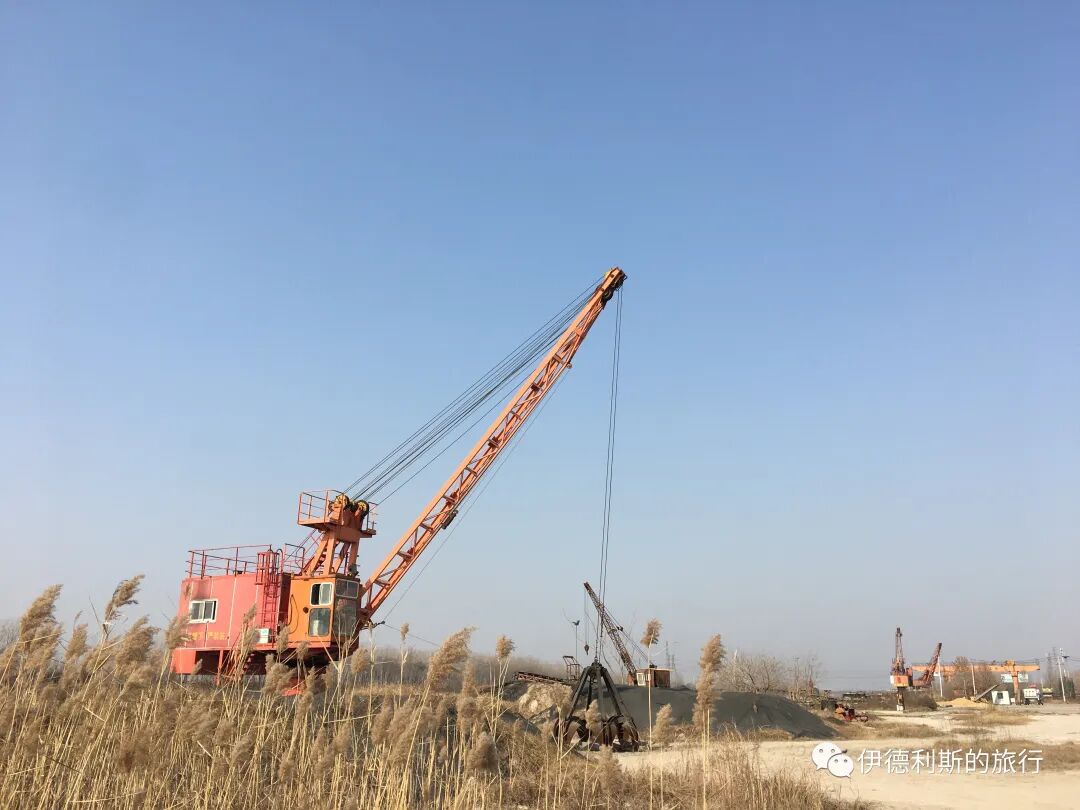
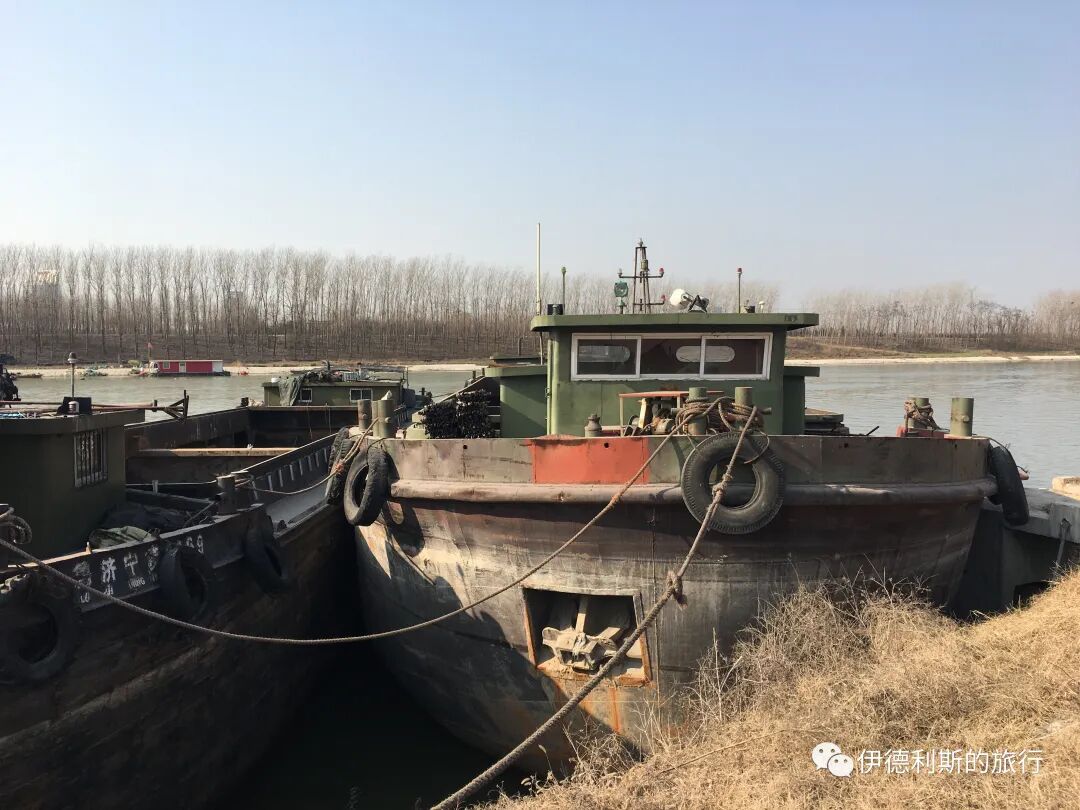
From the late 1950s to the early 1960s, the Liangji Canal was built. The North Four Lakes of Jining and the low-lying land on both sides of the Old Canal were drained and turned into farmland. Most of the Old Canal was abandoned, and the Liangji Canal became the new navigable section of the Beijing-Hangzhou Grand Canal, which it remains today.
Jining Port on the Liangji Canal in winter view all
Summary: This China Mosque Travel Guide keeps the original 2016 Jining notes, places, and image order intact. It also helps readers researching Muslim travel guide China 2026, halal food in China, Chinese Muslim food, and Grand Canal mosque heritage.
On December 10, 2016, I went to Jining to eat and explore. This article uses information from the books "A Brief History of the Hui Muslims in Jining" and "A Sequel to the History of the Hui Muslims in Jining."
In 1292 (the 29th year of the Zhiyuan era), the Beijing-Hangzhou Grand Canal opened completely. The Yuan Dynasty sent 12,000 soldiers to the Jining section to guard the canal and farm the land. At least 2,000 of these soldiers were Hui Muslim officers and troops. These Hui Muslim soldiers brought their families and settled down. At that time, there were already two mosques in Jining city, the Old East Mosque and the Old West Mosque.
When the Yuan Dynasty fell in 1368, the canal soldiers in Jining surrendered to Xu Da and Chang Yuchun. Most of them were settled where they were, and some of these Hui Muslim soldiers began to live together along the banks of the Yuehe River in the south of Jining city. After the wars of the Yuan and Ming dynasties, the Shandong section of the canal became blocked and unusable. It was not until 1411 (the 9th year of the Yongle era) that the Huitong River was reopened. The canal banks in Jining became orderly, and the business district began to thrive. The Hui Muslims living in the southern gate area built a new East Mosque, which is the current Shunhe East Mosque.
In 1622 (the 2nd year of the Tianqi era), an outer city was built in the south of the old Jining city, known as the "City Perimeter Corridor" or "Circle Dike." The areas where Hui Muslims lived—such as the Big and Small Zhakou, Liuhang, Zhongxin Gate, and the north and south banks of the Yuehe River—were all near this outer city. This formed the 53 streets and alleys where Hui Muslims lived before the old city was renovated. Among these 53 streets, the Hui Muslim population was most concentrated in Liuhang outside the Small South Gate, where they made up over 80 percent of the residents.
By 1953, Jining had seven mosques for men and two for women, known collectively as the Nine Mosques. The West Great Mosque, Liuhang East Mosque, Yuehe South Bank North Mosque, and Yangjiayuan Mosque belonged to the traditional Gedimu school. The East Great Mosque, Yuehe South Bank South Mosque, and Liuhang West Mosque belonged to the Yihewani school.
On Saturday morning, I went to the old Yang Xinghai shop at the Small South Gate for some mutton porridge (san tang), then went to the century-old shop Ma Daxing to buy chestnut-shaped pastries (fo shou) and date cakes (zao bing). Jining's mutton porridge is made by pouring hot, thick bone broth over eggs, then eating it with mutton and flatbread. It is so comforting to eat in winter. The date flavor in the Ma Daxing date cakes is very authentic. The chestnut-shaped pastries are so good that you want more after the first bite, so I bought several boxes before I left.
The Ma Daxing food shop posted a "Brief History of Ma Daxing Food Shop" written by Ma Biao. I have organized and copied it below:
Ma Daxing is a century-old food shop in Jining, originally named "Ma's Shop." The family's ancestral home was a prominent Ma family in the Shuiximen area of Nanjing. In the early Ming Dynasty, our ancestors traveled by boat along the ancient Grand Canal and drifted to Jining. They stayed at the Xiazhakou lower river west wharf and settled at the east end of the north side of Yueheya Road.
Later, my great-great-grandfather Ma Fuqi, courtesy name Huatang (July 28, 1843 – May 21, 1927), opened "Ma's Shop" on the south side of Yuehe North Road, west of Xiangling Pavilion, to sell general goods. It developed quite well.
Then, my great-grandfather Ma Luzeng (born 1870) and his younger brother Ma Yizeng used this as a foundation to carefully develop Shandong and Jiangsu style pastries. Over more than ten years, they created a book of over 10,000 words called "Ma's Preserved Fruits," learning the best techniques from both the north and south to create a wide variety of products.
Because the canal was a central hub and a key waterway for gathering and exchanging goods from the north and south, the shop's business grew daily. In 1910, the sign "Ma Daxing Fruit Shop" was put up.
My grandfather Ma Shijun, courtesy name Yangzhou, born on April 28, 1900, inherited and expanded the business in the 1920s. Until the public-private partnership on January 12, 1956, my father Ma Zhenshan was appointed by his superiors as the "Manager of the State-run Ma Daxing Food Factory and Director of the Retail Department," and Ma Zhenhai served as the pastry chef, inheriting and teaching the pastry-making skills.
The pastry business was interrupted in 1968. In 1986, Ma Yong reopened the shop at 15 Laiheguan North Street, inheriting his father's business and continuing to expand Ma Daxing Food.
Our business grew, so we moved to the Xuzhuang grain station in 1989, the breeding farm in 1992, and the Yudai shopping mall in 1997. On June 8, 2003, we opened the new Ma Daxing food shop at Xiaonanmen.
Note: The Ma Daxing shop name was written by a friend of my grandfather, Ma Xingchi. Ma Xingchi was a battlefield reporter who followed Sun Yat-sen and served as the editor-in-chief of the Shenzhou Newspaper.
After breakfast, I walked through the old 53 streets and alleys of the Hui Muslims. Even though new residential areas have been built, there are still many halal restaurants, so I made a mental note to try them tomorrow.
Jining Shunhe East Mosque
I walked through the Hui Muslim district and arrived at the Jining Shunhe East Mosque by the canal. The East Mosque was built around 1420 during the late Ming Dynasty Yongle period. It was renovated in 1459 (the third year of Tianshun), expanded during the Kangxi period, and renovated again during the Qianlong period, eventually reaching its current size.
As Professor Liu Zhiping said, the rear archway, the Moon-Watching Tower (Wangyuelou), the rear hall, and the main hall of the East Mosque create a grand and towering atmosphere with their overlapping structures. Therefore, the artistic style of all its architecture represents the spirit and boldness of the Qianlong era.
The mosque's original Call to Prayer Tower (Bangkelou), built during the Ming Dynasty Chenghua period and renovated during the Kangxi period, was destroyed along with the main gate and archway in 1968. A new Call to Prayer Pavilion (Bangleting) was built in 1999.
On the martial arts practice ground north of the main hall, I met a group of older men practicing their moves.
Single saber against flower spear
Double sabers
The most famous Hui Muslim martial art in Jining is Rencheng Chaquan. Because the most complete set of Chaquan routines is held by the family of Li Enju, a Hui Muslim from Jining, it is also called Li-style Chaquan.
Chaquan is based on the spring-leg (tantui) technique. There are ten routes of spring-leg and ten routes of boxing, with each boxing route incorporating spring-leg techniques. With running, walking, flying, and striking, the ten routes can expand into over fifty.
The names of the ten routes of Jining Li-style Chaquan:
First route: Charging tip like a whip
Second route: Cross-shaped rush to the toe
Third route: Covering style for night travel
Fourth route: Supporting and stepping to block the path
Fifth route: Single spread
Sixth route: Double spread
Seventh route: Re-engaging to strike in a crisis
Eighth Road Turning Ring (balu zhuanhuan).
Ninth Road Holding Lock (jiulu pengsuo).
Tenth Road Somersault Kick (shilu jiandan).
Li Enju was born in Nanguan, Jining, in 1857. As a young man, he was an officer in the Hebiaoying battalion. He later spent fifteen years traveling to improve his martial arts. In middle age, he returned to Jining to open the Jinyuan Hui Yongshun Escort Agency. In his later years, he went to Shanghai to teach at the Shanghai Jingwu Association founded by Huo Yuanjia. He eventually returned to Jining to teach Chaquan boxing until he passed away from illness in 1932 at the age of 75.
There are some cute little clay figurines inside the East Great Mosque (Dongdasi) in Jining.
Funeral procession team (taimaidui).
Namaz (namazi).
Some cultural relics.
A large Ming Dynasty blue and white incense burner that the East Great Mosque has kept for generations.
I knew about Jining before, mostly because of Chang Zhimei, the founder of the Shandong School.
Chang Zhimei, whose courtesy name was Yunhua, was known as Chang Xianxue or Chang Baba. He was born in Jining in 1610. In 1634 (the seventh year of the Chongzhen reign), 24-year-old Chang Baba returned to Jining after completing his studies elsewhere and began teaching in a courtyard next to the East Great Mosque. Because his views on religious doctrine differed from those of the East Great Mosque, Chang Baba led the construction of the West Great Mosque (Xidasi) two years later, where he continued to teach and eventually founded the Shandong School.
The Shandong School values Persian-language religious law and Sufi philosophy. It uses the 13 classic texts popular in the north as its basic curriculum, with a large portion being Persian classics.
The Chang Zhimei Memorial Hall at the East Great Mosque in Jining holds many relics from the Jining West Great Mosque that Chang Baba established. It is a great pity that the Jining West Great Mosque, which had a massive 30-meter-high ridge-style main hall, was completely demolished in 1968. Otherwise, having both the eastern and western mosques standing would have been spectacular.
Handwritten by Chang Baba: The mosque is the House of Allah, and the Muslims who come to the mosque can receive the love of Allah.
The stone tablet was originally embedded above the archway of the gate of the Jining West Great Mosque and was destroyed along with the mosque in 1968. It was rediscovered a few years ago, and the missing middle section was rewritten by Imam Chen Yudong.
Liuhang East Mosque.
Besides the East Great Mosque, Jining also has an ancient Ming Dynasty mosque called the Liuhang East Mosque. The Liuhang East Mosque was built during the Wanli reign, expanded during the Kangxi reign, and reopened in 1989. When we visited, it was completely empty. Only a cat led us around to see everything, which felt like a strange and wonderful encounter. After taking us for a tour, the cat returned to the courtyard gate and watched us leave. It felt like being in a Hayao Miyazaki animation.
The stone tablet inscribed with 'Jiao Ze Kong Chang' was erected in 1940. After the Japanese army occupied Jining in January 1938, Imam Liu Hanguang risked his life to set up a refugee shelter inside the mosque. He took in many Hui and Han people, and this stone tablet was erected by the Hui and Han community to thank Imam Liu.
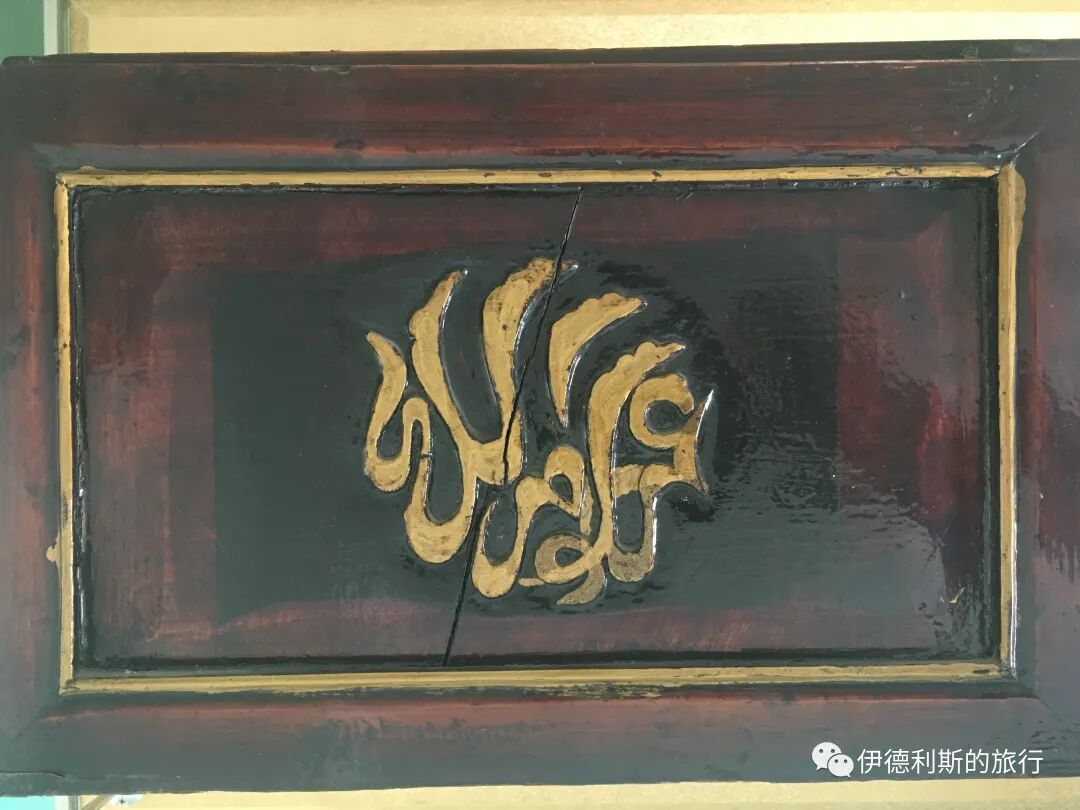
Exquisite Shandong-style calligraphy.
Other ancient mosques in Jining that no longer exist are recorded here to remember history:
Liuhang West Mosque was built during the Wanli period. The mosque was destroyed in 1960, the main hall was torn down in 1979, and the only remaining 400-year-old Chinese honey locust tree (zaojia) was cut down at the end of 2002.
Yuehe Nanya North Mosque was built before 1749 (the 14th year of the Qianlong reign). It underwent its last major expansion and renovation in March 1939. Activities stopped in January 1958 after the anti-rightist rectification movement, and the site was occupied by the Xinhua Leather Factory. The Xinhua Leather Factory returned the site in 1984. It was converted into a women's mosque in 1989, and the main hall, scripture hall, and water room were renovated in 1995. It was demolished in late January 2001 due to urban renewal and rebuilt as an Arabic-style women's mosque in October 2002.
Laiheguan North Street South Mosque was built during the Yongzheng period (1730) and was destroyed in 1960.
Fangjia Courtyard Women's Mosque was built in 1944 and destroyed in 1960.
Yuehe Nanya Women's Mosque was built in 1944 and destroyed in 1958 during the '58 Religious Reform'.
I had grass carp with pan-wiped flatbread (moguobing) at Xiaonanmen on Saturday night. Jining has plenty of freshwater fish because it is near Weishan Lake. A pot of fish costs 50 yuan, and the portion is huge! You can compare it to the bowl and chopsticks on the right. The fish is very fresh, and the glass noodles (fensi) taste especially good! I especially recommend the braised gluten (huimianjin), which is perfect with rice.
I had mixed offal soup (zagetang) at Xiaonanmen on Sunday morning. It is a bowl of lamb and tripe soup. I slurped down a big bowl and finished by spreading chopped chili peppers inside a flatbread. It was so comfortable, and I didn't feel hungry until the afternoon.
On Sunday afternoon, I had Zhan Family chicken soup wontons on Nanchayuan Street. The auntie wrapped the wontons very quickly, and she even added an egg on top. It was warm and very nourishing. Then I went to the famous Xiaoquan Roasted Chicken shop on Xidasi Street to buy roasted chicken and chicken liver. The roasted chicken is wrapped in lotus leaves. It falls off the bone with a slight tug and is very fragrant.
The Jining section of the Grand Canal.
Jining has both a new and an old canal. The Old Canal is also called the South Canal, the Grain Transport River, or the Cao River. It was once the ancient Jizhou River and Huitong River. Today, it is just a waterway inside Jining city and is no longer used for shipping. The New Canal, also known as the Liangji Canal or the Grand Canal, is a waterway dug in the 1950s to handle canal shipping.
Before the Beijing-Hangzhou Grand Canal was officially connected in the Yuan Dynasty, the Old Canal was split into two sections, north and south. North of Jining is the Jizhou River, which was built in 1283 (the 20th year of the Zhiyuan reign) by order of Kublai Khan, the Emperor Shizu of Yuan. South of Jining is the old path of the Si River. In 1289 (the 26th year of the Zhiyuan reign), the Huitong River north of the Jizhou River was finished. This completed the entire Shandong section of the Beijing-Hangzhou Grand Canal during the Yuan Dynasty.
In 1855 (the 5th year of the Xianfeng reign), the Yellow River burst its banks at Tongwaxiang in Lankao, Henan. This cut off the Beijing-Hangzhou Grand Canal, and the Old Canal began to decline. Finally, in 1901 (the 27th year of the Guangxu reign), the grain tribute system was replaced by silver payments, and official canal transport ended completely. The Old Canal changed from an official shipping route to a local transport route.
The Old Canal flows through Jining city. The entrance to the Shunhe East Mosque (Shunhe Dong Dasi) in Jining sits right by the Old Canal waterway.
From the late 1950s to the early 1960s, the Liangji Canal was built. The North Four Lakes of Jining and the low-lying land on both sides of the Old Canal were drained and turned into farmland. Most of the Old Canal was abandoned, and the Liangji Canal became the new navigable section of the Beijing-Hangzhou Grand Canal, which it remains today.
Jining Port on the Liangji Canal in winter view all
Reposted from the web
Summary: This China Mosque Travel Guide keeps the original 2016 Jining notes, places, and image order intact. It also helps readers researching Muslim travel guide China 2026, halal food in China, Chinese Muslim food, and Grand Canal mosque heritage.
On December 10, 2016, I went to Jining to eat and explore. This article uses information from the books "A Brief History of the Hui Muslims in Jining" and "A Sequel to the History of the Hui Muslims in Jining."
In 1292 (the 29th year of the Zhiyuan era), the Beijing-Hangzhou Grand Canal opened completely. The Yuan Dynasty sent 12,000 soldiers to the Jining section to guard the canal and farm the land. At least 2,000 of these soldiers were Hui Muslim officers and troops. These Hui Muslim soldiers brought their families and settled down. At that time, there were already two mosques in Jining city, the Old East Mosque and the Old West Mosque.
When the Yuan Dynasty fell in 1368, the canal soldiers in Jining surrendered to Xu Da and Chang Yuchun. Most of them were settled where they were, and some of these Hui Muslim soldiers began to live together along the banks of the Yuehe River in the south of Jining city. After the wars of the Yuan and Ming dynasties, the Shandong section of the canal became blocked and unusable. It was not until 1411 (the 9th year of the Yongle era) that the Huitong River was reopened. The canal banks in Jining became orderly, and the business district began to thrive. The Hui Muslims living in the southern gate area built a new East Mosque, which is the current Shunhe East Mosque.
In 1622 (the 2nd year of the Tianqi era), an outer city was built in the south of the old Jining city, known as the "City Perimeter Corridor" or "Circle Dike." The areas where Hui Muslims lived—such as the Big and Small Zhakou, Liuhang, Zhongxin Gate, and the north and south banks of the Yuehe River—were all near this outer city. This formed the 53 streets and alleys where Hui Muslims lived before the old city was renovated. Among these 53 streets, the Hui Muslim population was most concentrated in Liuhang outside the Small South Gate, where they made up over 80 percent of the residents.
By 1953, Jining had seven mosques for men and two for women, known collectively as the Nine Mosques. The West Great Mosque, Liuhang East Mosque, Yuehe South Bank North Mosque, and Yangjiayuan Mosque belonged to the traditional Gedimu school. The East Great Mosque, Yuehe South Bank South Mosque, and Liuhang West Mosque belonged to the Yihewani school.
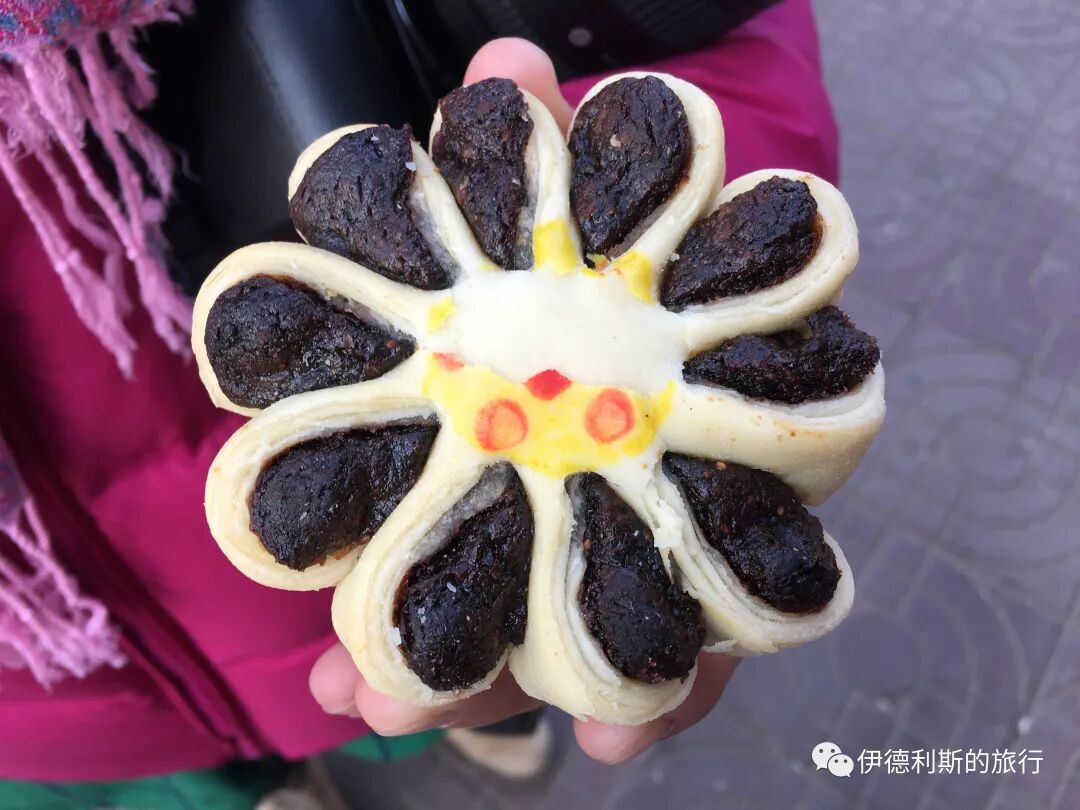
On Saturday morning, I went to the old Yang Xinghai shop at the Small South Gate for some mutton porridge (san tang), then went to the century-old shop Ma Daxing to buy chestnut-shaped pastries (fo shou) and date cakes (zao bing). Jining's mutton porridge is made by pouring hot, thick bone broth over eggs, then eating it with mutton and flatbread. It is so comforting to eat in winter. The date flavor in the Ma Daxing date cakes is very authentic. The chestnut-shaped pastries are so good that you want more after the first bite, so I bought several boxes before I left.
The Ma Daxing food shop posted a "Brief History of Ma Daxing Food Shop" written by Ma Biao. I have organized and copied it below:
Ma Daxing is a century-old food shop in Jining, originally named "Ma's Shop." The family's ancestral home was a prominent Ma family in the Shuiximen area of Nanjing. In the early Ming Dynasty, our ancestors traveled by boat along the ancient Grand Canal and drifted to Jining. They stayed at the Xiazhakou lower river west wharf and settled at the east end of the north side of Yueheya Road.
Later, my great-great-grandfather Ma Fuqi, courtesy name Huatang (July 28, 1843 – May 21, 1927), opened "Ma's Shop" on the south side of Yuehe North Road, west of Xiangling Pavilion, to sell general goods. It developed quite well.
Then, my great-grandfather Ma Luzeng (born 1870) and his younger brother Ma Yizeng used this as a foundation to carefully develop Shandong and Jiangsu style pastries. Over more than ten years, they created a book of over 10,000 words called "Ma's Preserved Fruits," learning the best techniques from both the north and south to create a wide variety of products.
Because the canal was a central hub and a key waterway for gathering and exchanging goods from the north and south, the shop's business grew daily. In 1910, the sign "Ma Daxing Fruit Shop" was put up.
My grandfather Ma Shijun, courtesy name Yangzhou, born on April 28, 1900, inherited and expanded the business in the 1920s. Until the public-private partnership on January 12, 1956, my father Ma Zhenshan was appointed by his superiors as the "Manager of the State-run Ma Daxing Food Factory and Director of the Retail Department," and Ma Zhenhai served as the pastry chef, inheriting and teaching the pastry-making skills.
The pastry business was interrupted in 1968. In 1986, Ma Yong reopened the shop at 15 Laiheguan North Street, inheriting his father's business and continuing to expand Ma Daxing Food.
Our business grew, so we moved to the Xuzhuang grain station in 1989, the breeding farm in 1992, and the Yudai shopping mall in 1997. On June 8, 2003, we opened the new Ma Daxing food shop at Xiaonanmen.
Note: The Ma Daxing shop name was written by a friend of my grandfather, Ma Xingchi. Ma Xingchi was a battlefield reporter who followed Sun Yat-sen and served as the editor-in-chief of the Shenzhou Newspaper.
After breakfast, I walked through the old 53 streets and alleys of the Hui Muslims. Even though new residential areas have been built, there are still many halal restaurants, so I made a mental note to try them tomorrow.
Jining Shunhe East Mosque
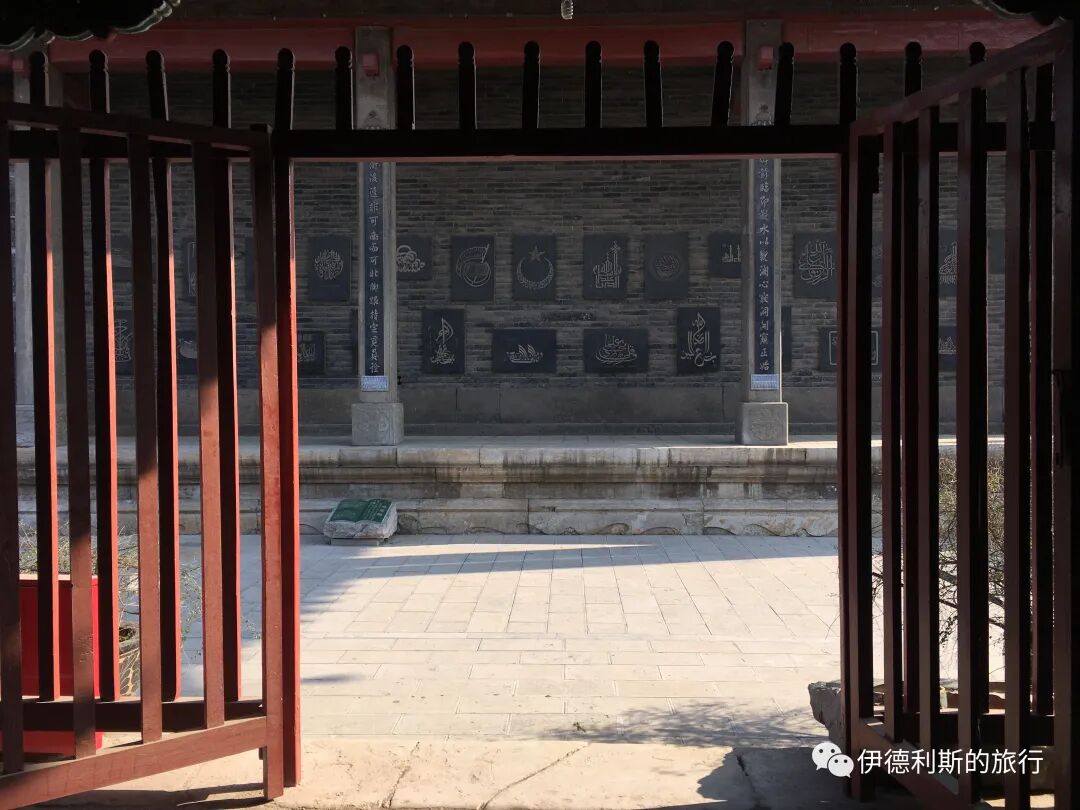
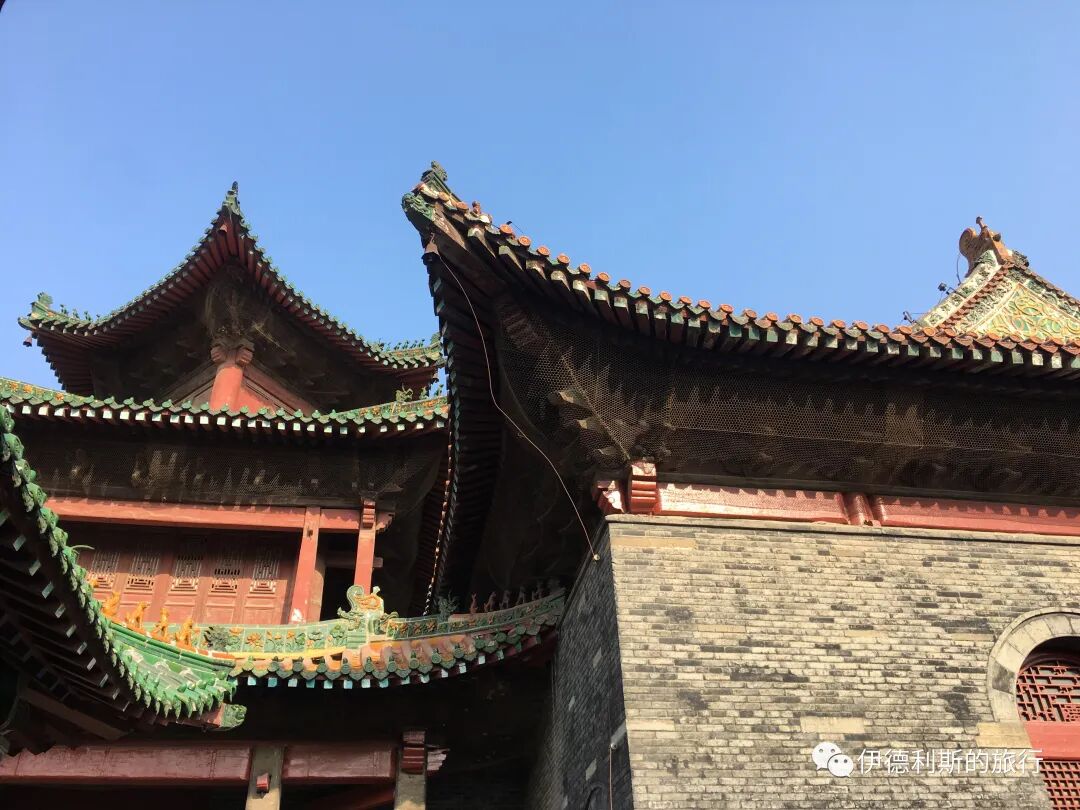
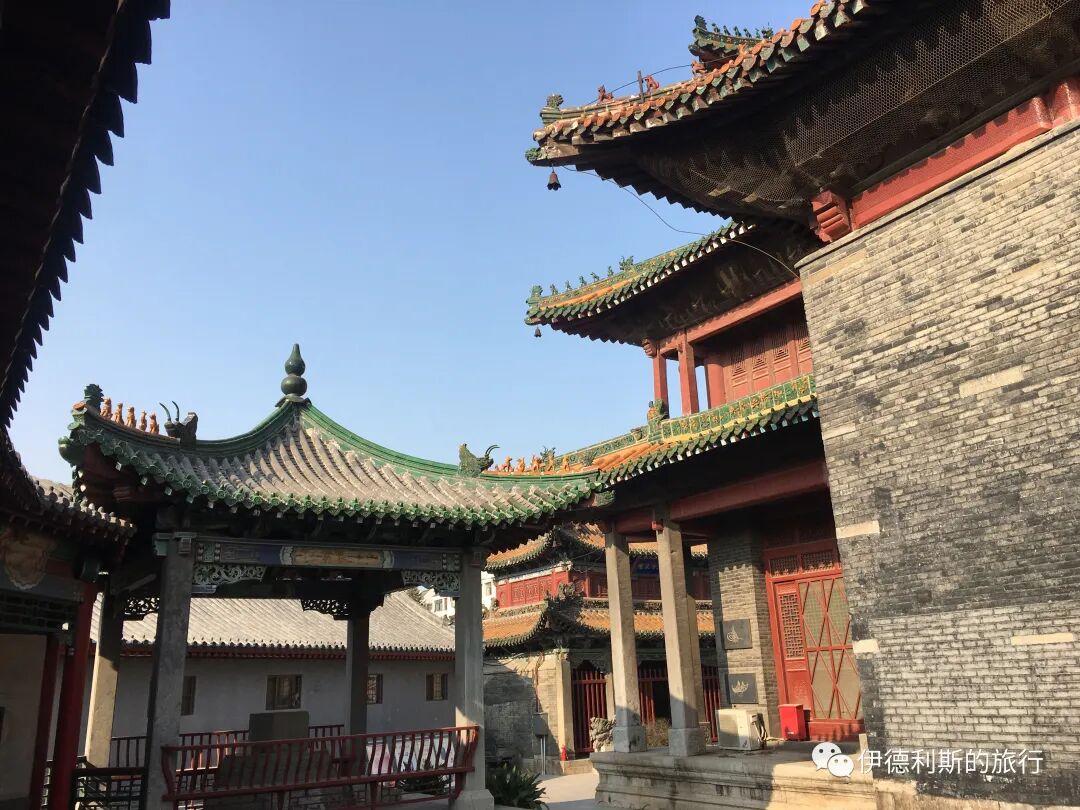
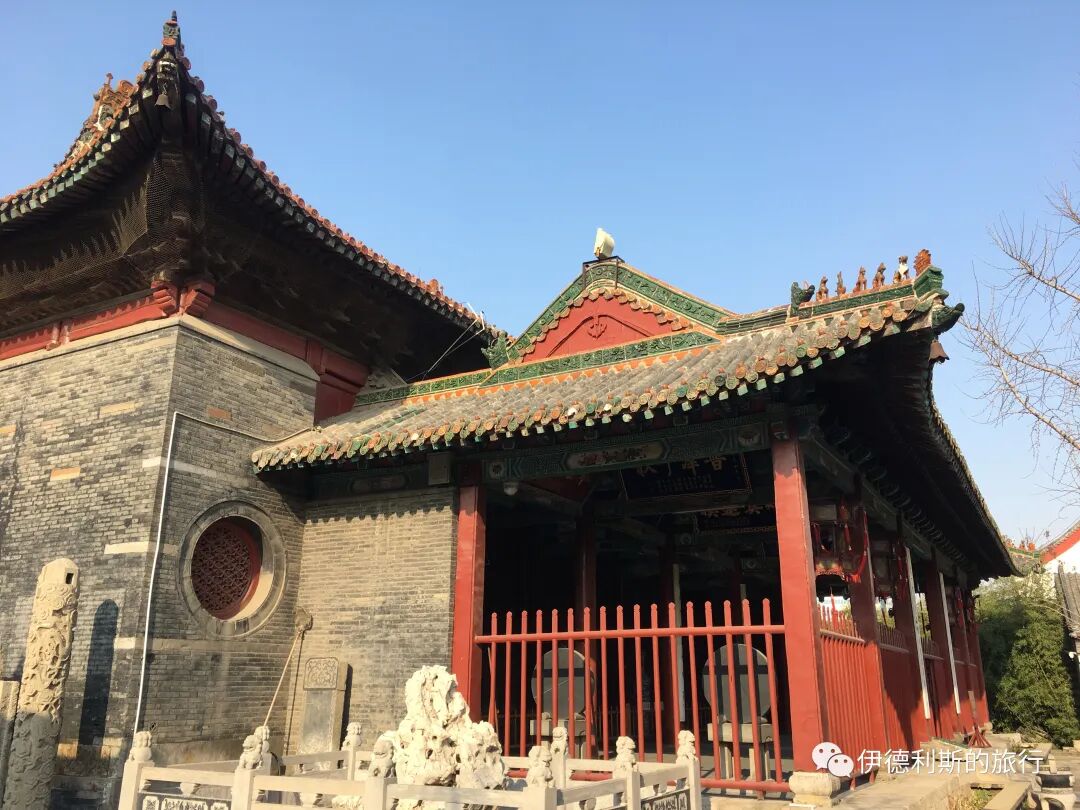
I walked through the Hui Muslim district and arrived at the Jining Shunhe East Mosque by the canal. The East Mosque was built around 1420 during the late Ming Dynasty Yongle period. It was renovated in 1459 (the third year of Tianshun), expanded during the Kangxi period, and renovated again during the Qianlong period, eventually reaching its current size.
As Professor Liu Zhiping said, the rear archway, the Moon-Watching Tower (Wangyuelou), the rear hall, and the main hall of the East Mosque create a grand and towering atmosphere with their overlapping structures. Therefore, the artistic style of all its architecture represents the spirit and boldness of the Qianlong era.
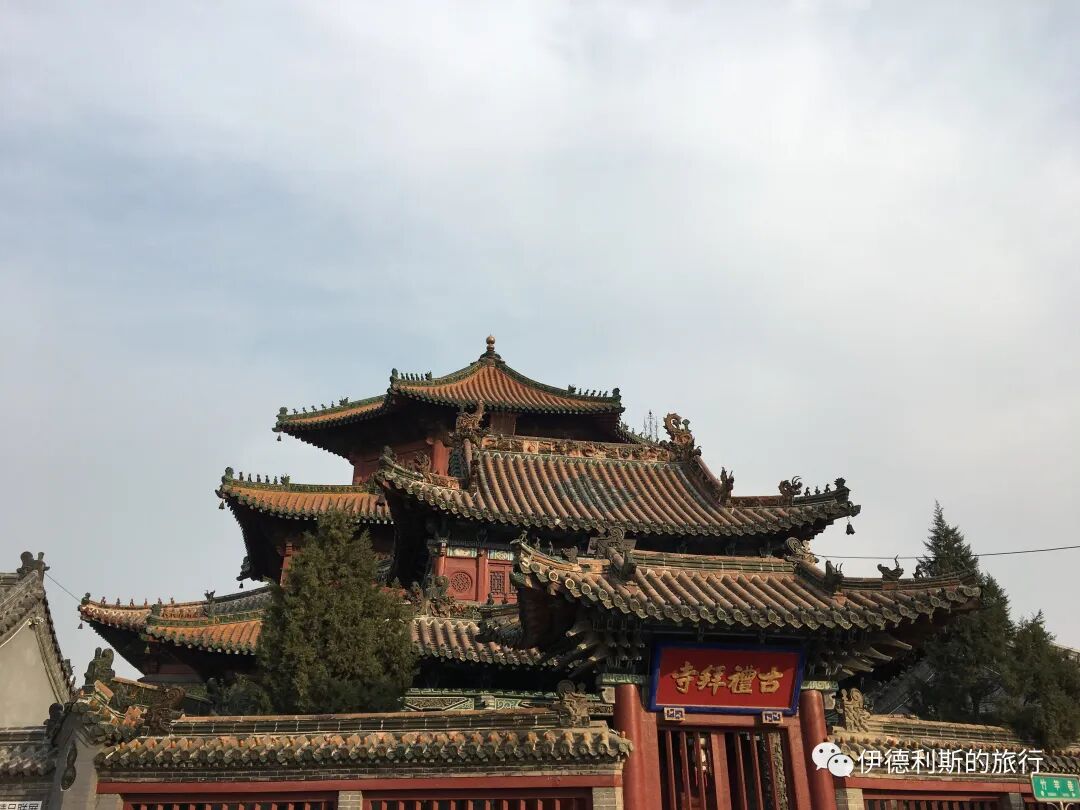
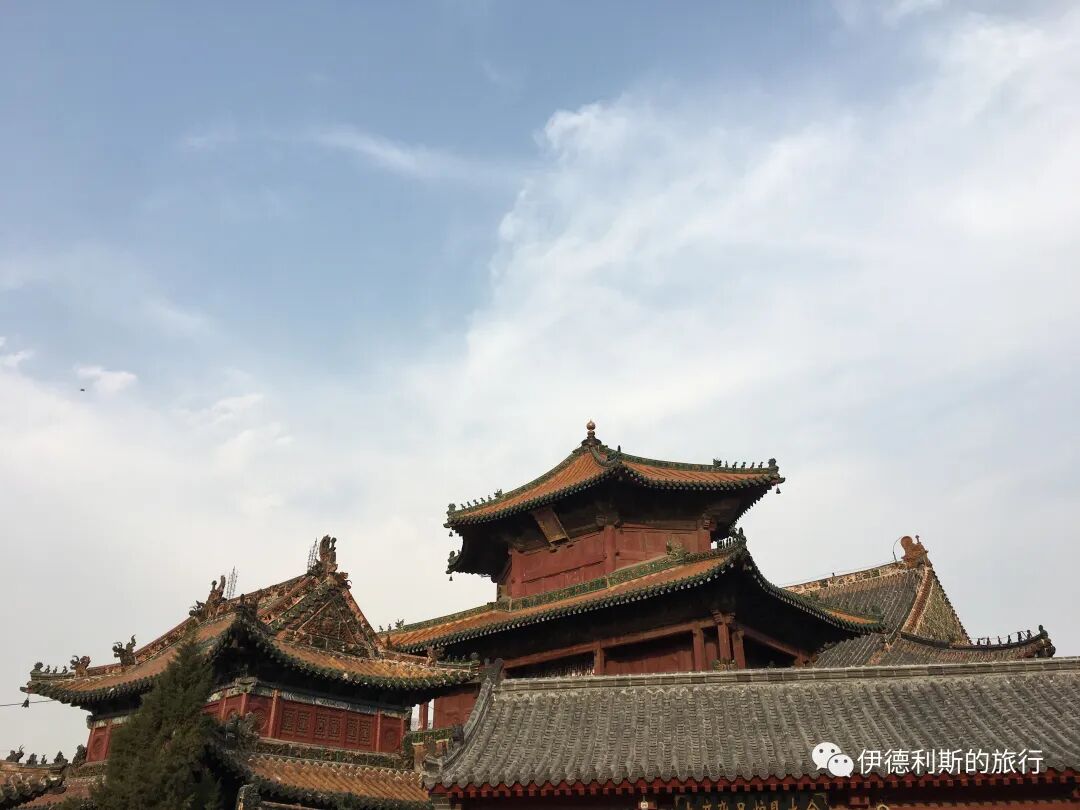
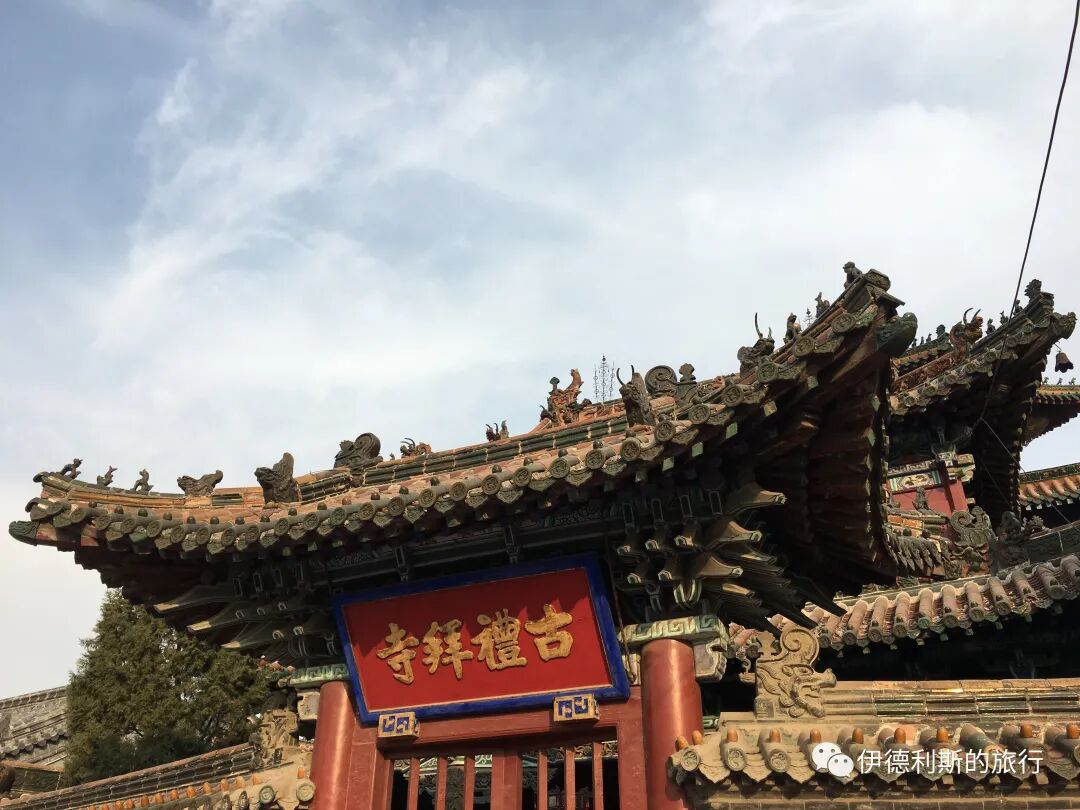
The mosque's original Call to Prayer Tower (Bangkelou), built during the Ming Dynasty Chenghua period and renovated during the Kangxi period, was destroyed along with the main gate and archway in 1968. A new Call to Prayer Pavilion (Bangleting) was built in 1999.
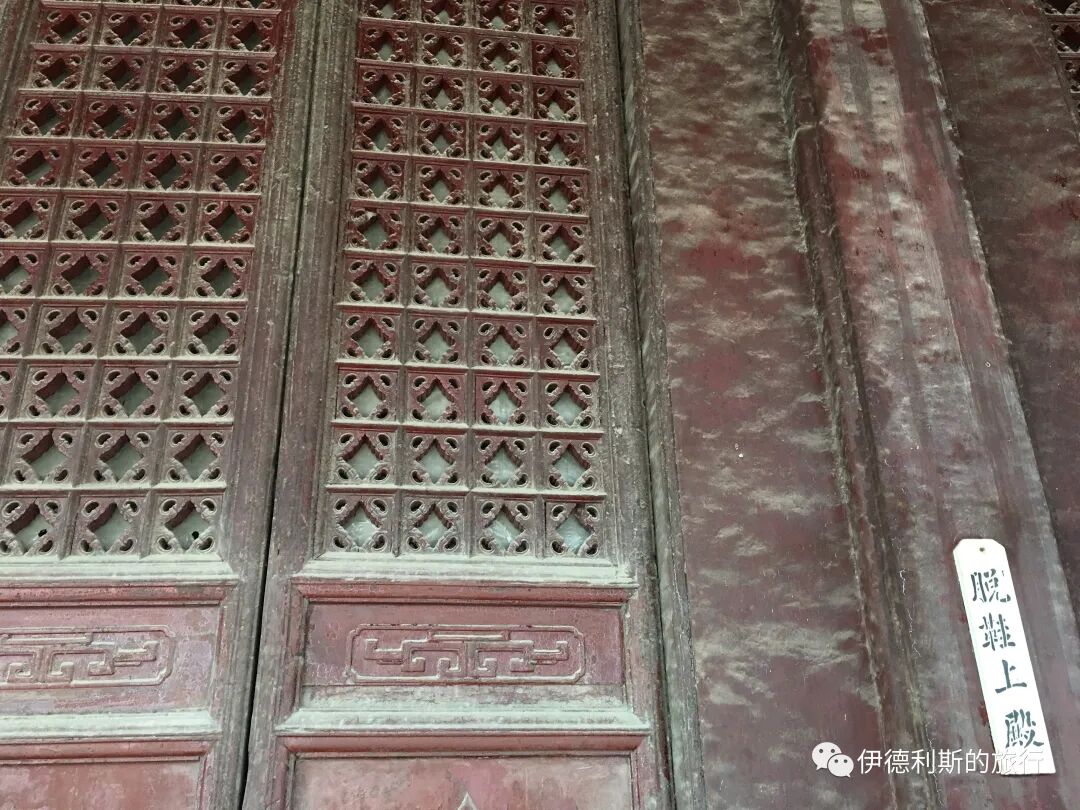
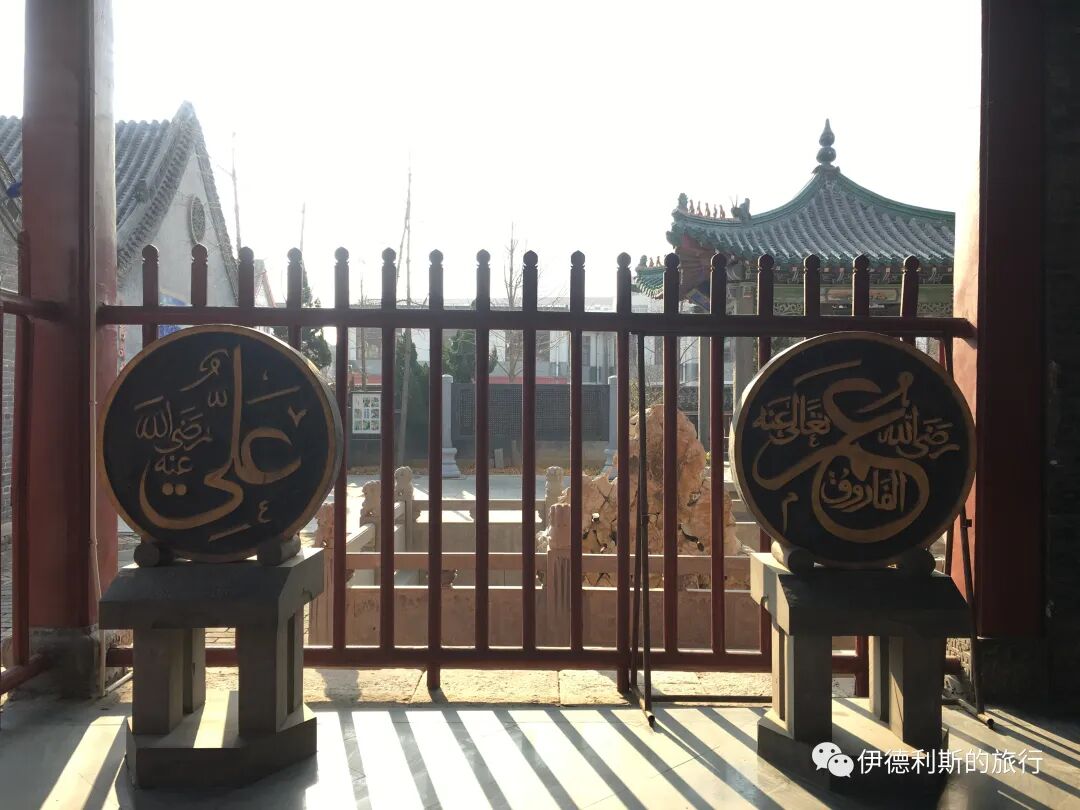
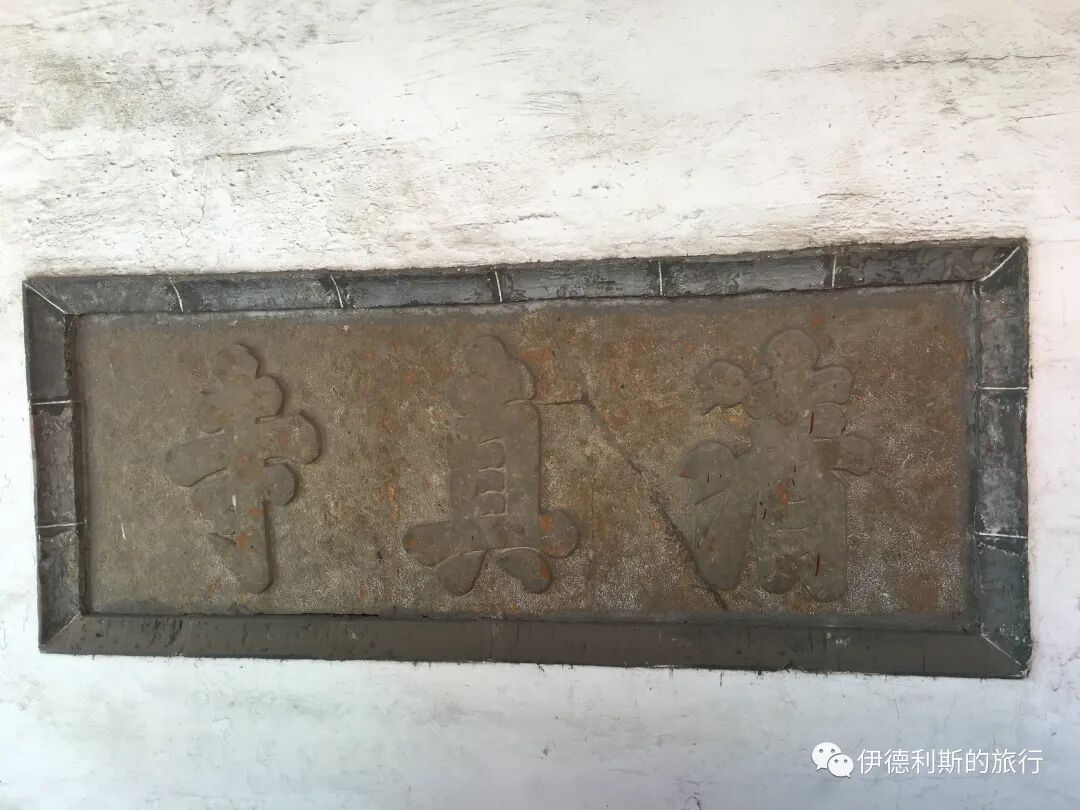
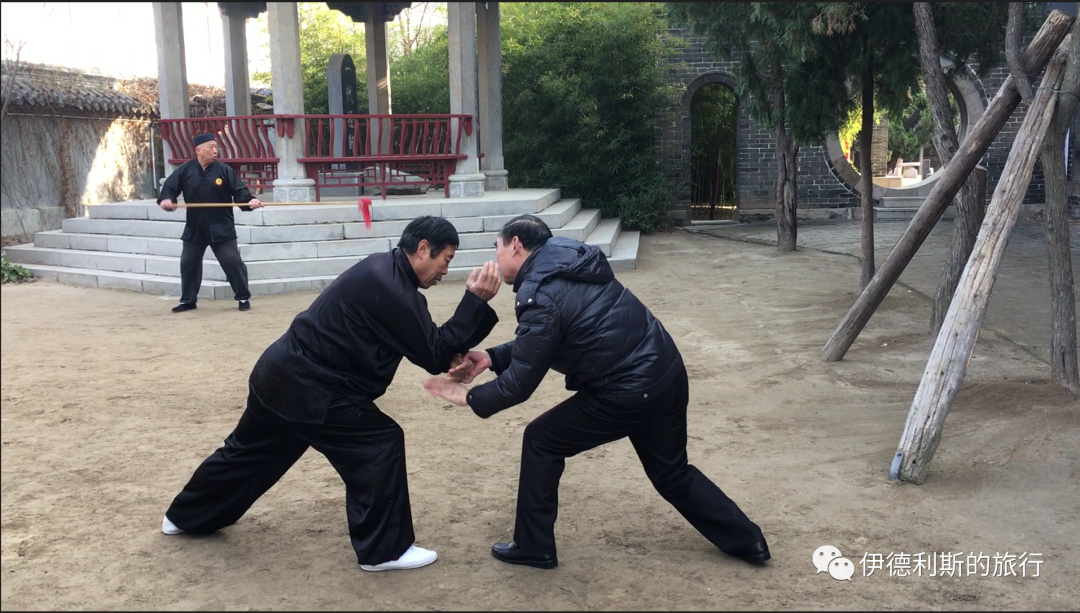
On the martial arts practice ground north of the main hall, I met a group of older men practicing their moves.
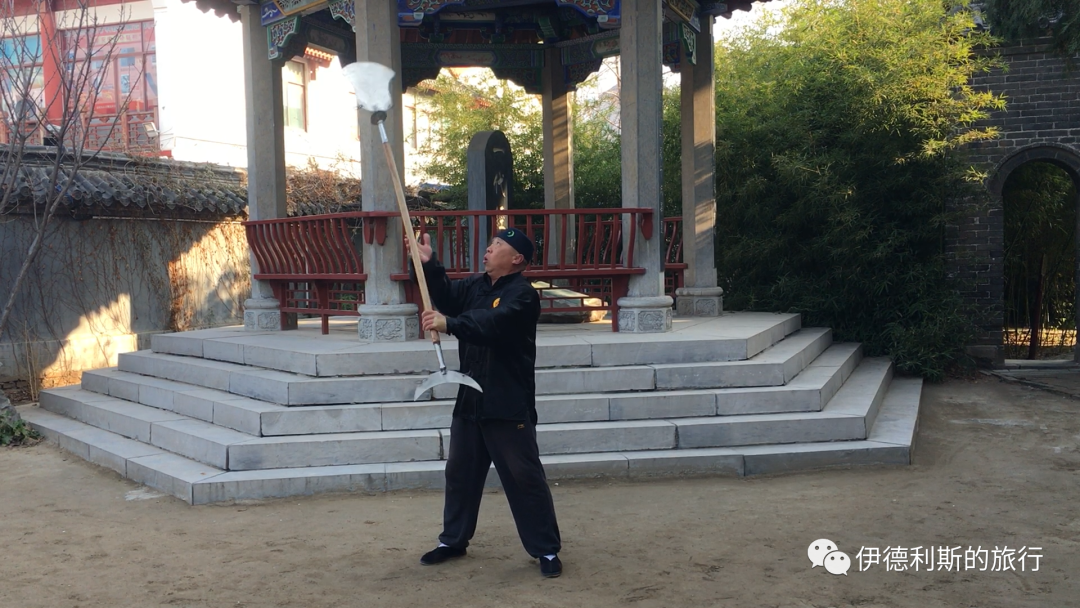
Single saber against flower spear
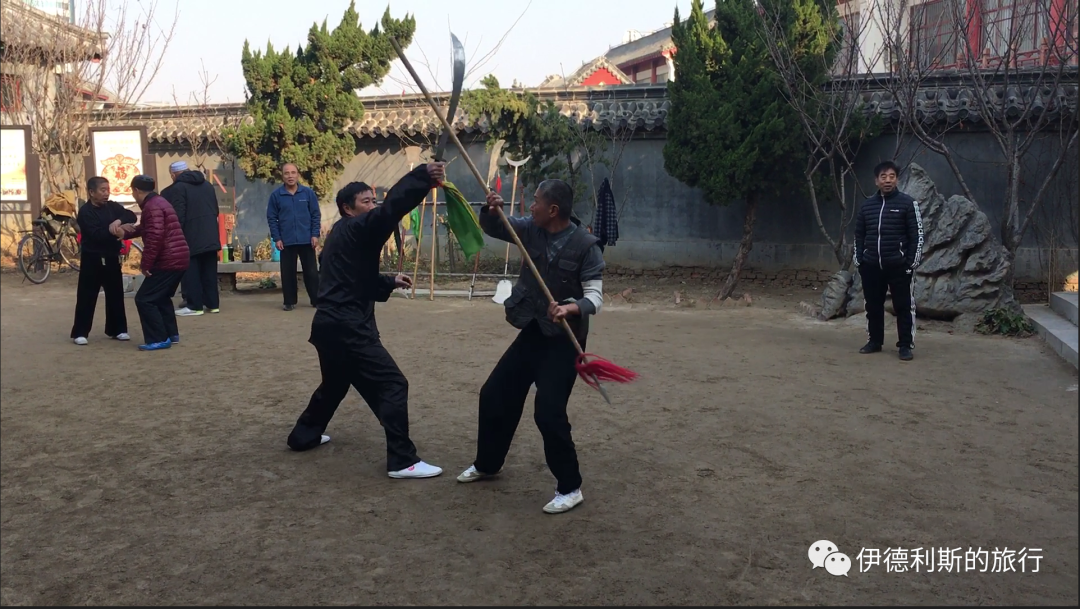
Double sabers
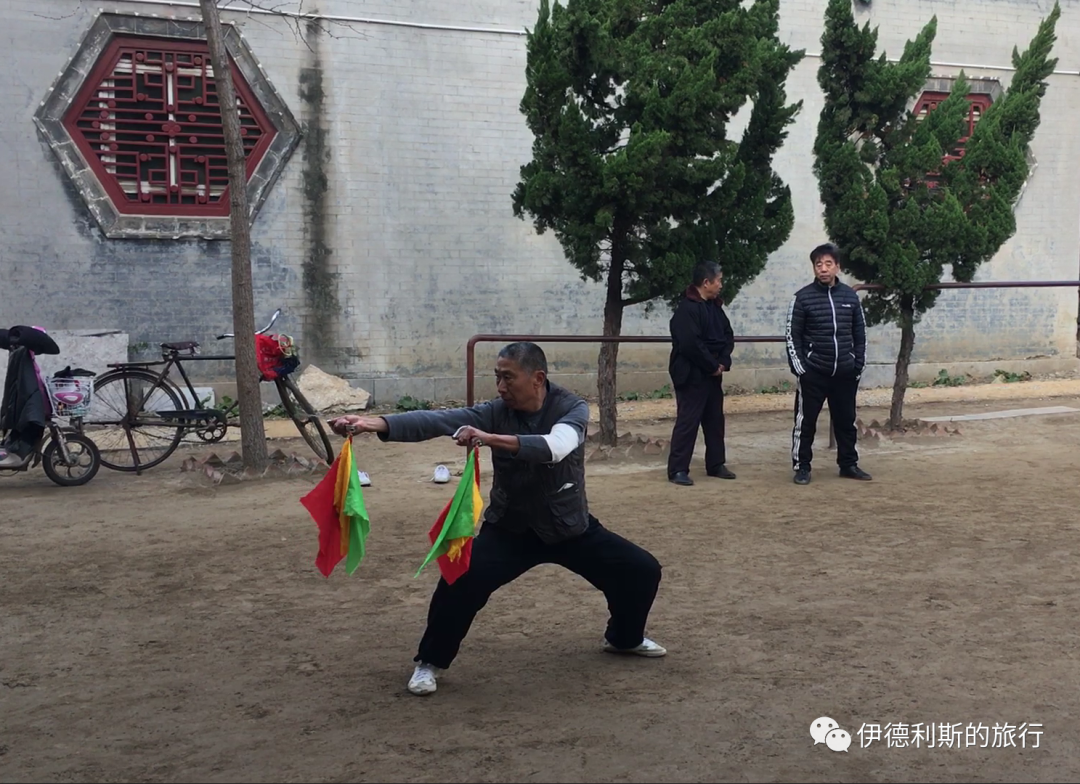
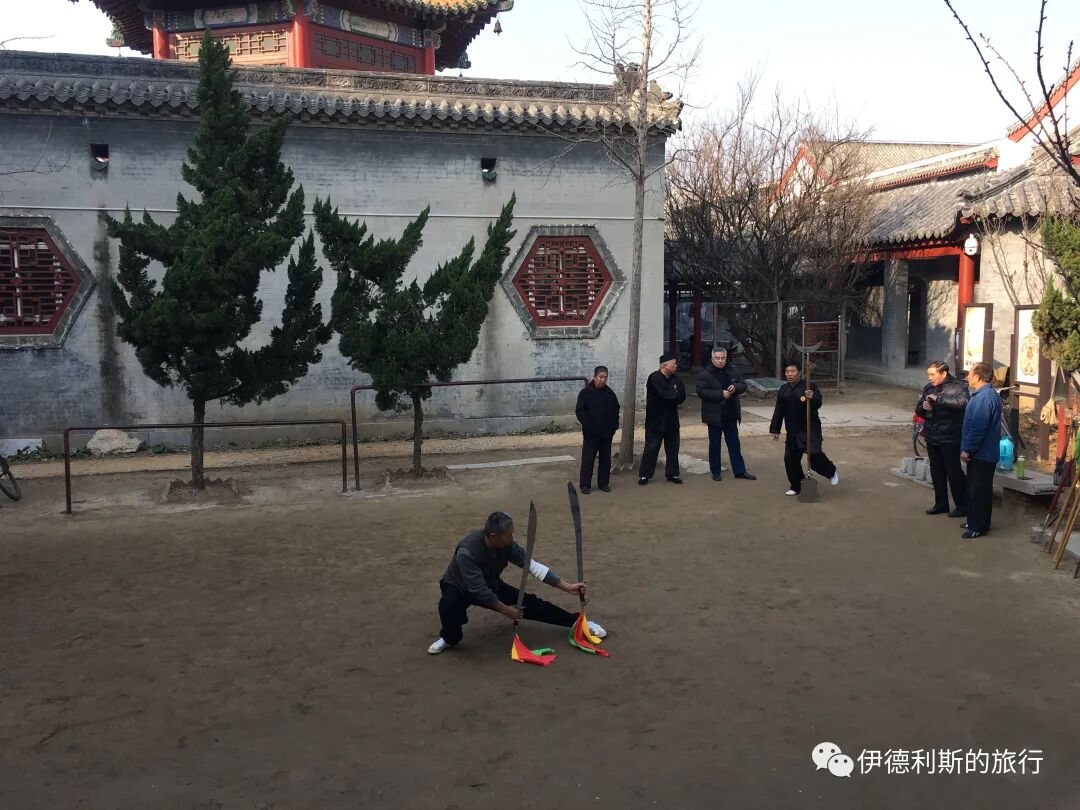
The most famous Hui Muslim martial art in Jining is Rencheng Chaquan. Because the most complete set of Chaquan routines is held by the family of Li Enju, a Hui Muslim from Jining, it is also called Li-style Chaquan.
Chaquan is based on the spring-leg (tantui) technique. There are ten routes of spring-leg and ten routes of boxing, with each boxing route incorporating spring-leg techniques. With running, walking, flying, and striking, the ten routes can expand into over fifty.
The names of the ten routes of Jining Li-style Chaquan:
First route: Charging tip like a whip
Second route: Cross-shaped rush to the toe
Third route: Covering style for night travel
Fourth route: Supporting and stepping to block the path
Fifth route: Single spread
Sixth route: Double spread
Seventh route: Re-engaging to strike in a crisis
Eighth Road Turning Ring (balu zhuanhuan).
Ninth Road Holding Lock (jiulu pengsuo).
Tenth Road Somersault Kick (shilu jiandan).
Li Enju was born in Nanguan, Jining, in 1857. As a young man, he was an officer in the Hebiaoying battalion. He later spent fifteen years traveling to improve his martial arts. In middle age, he returned to Jining to open the Jinyuan Hui Yongshun Escort Agency. In his later years, he went to Shanghai to teach at the Shanghai Jingwu Association founded by Huo Yuanjia. He eventually returned to Jining to teach Chaquan boxing until he passed away from illness in 1932 at the age of 75.
There are some cute little clay figurines inside the East Great Mosque (Dongdasi) in Jining.
Funeral procession team (taimaidui).
Namaz (namazi).
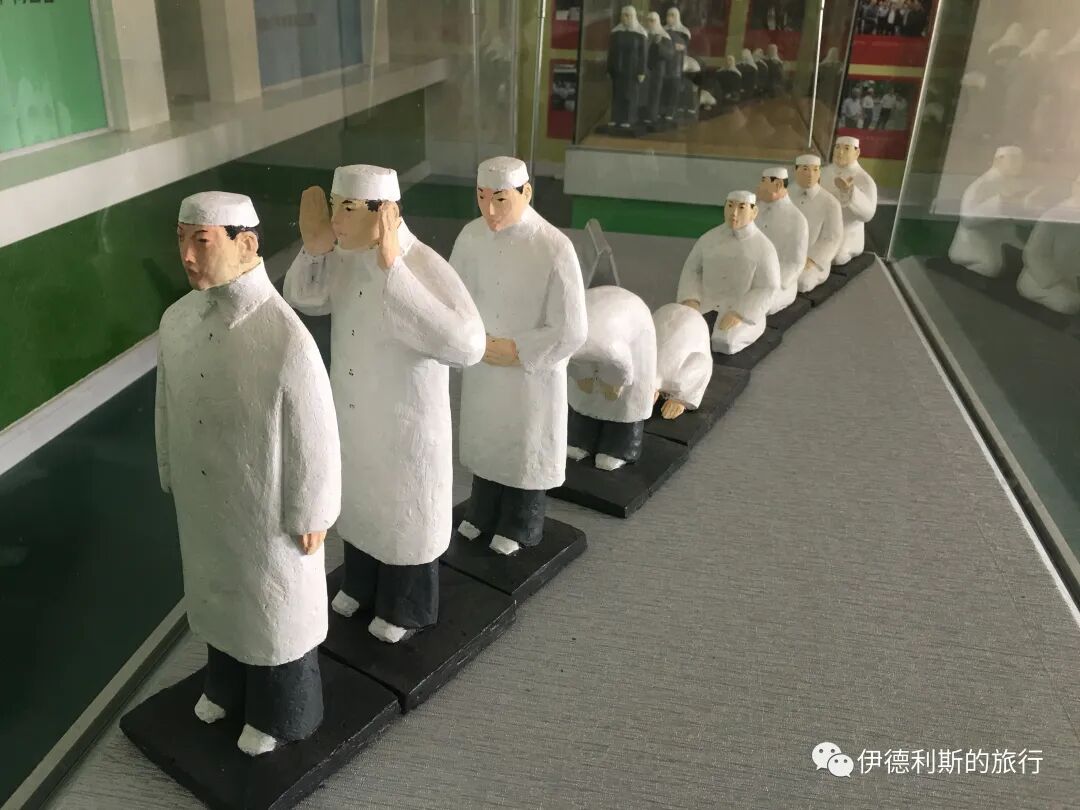
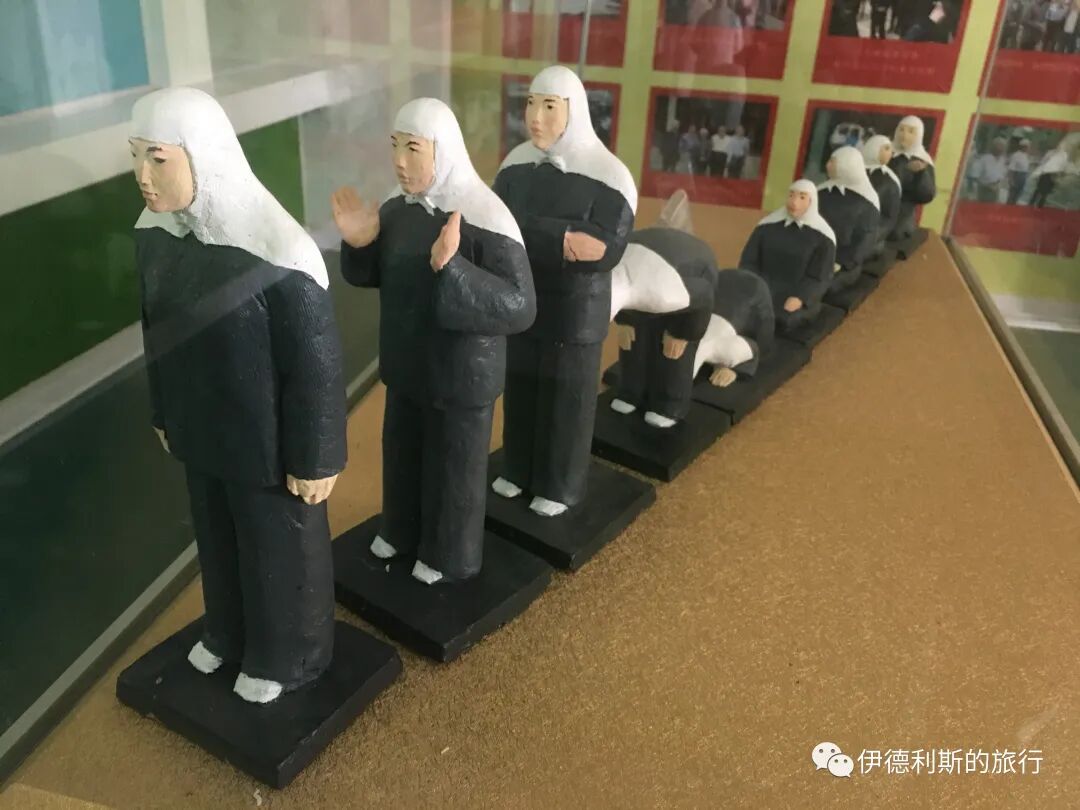
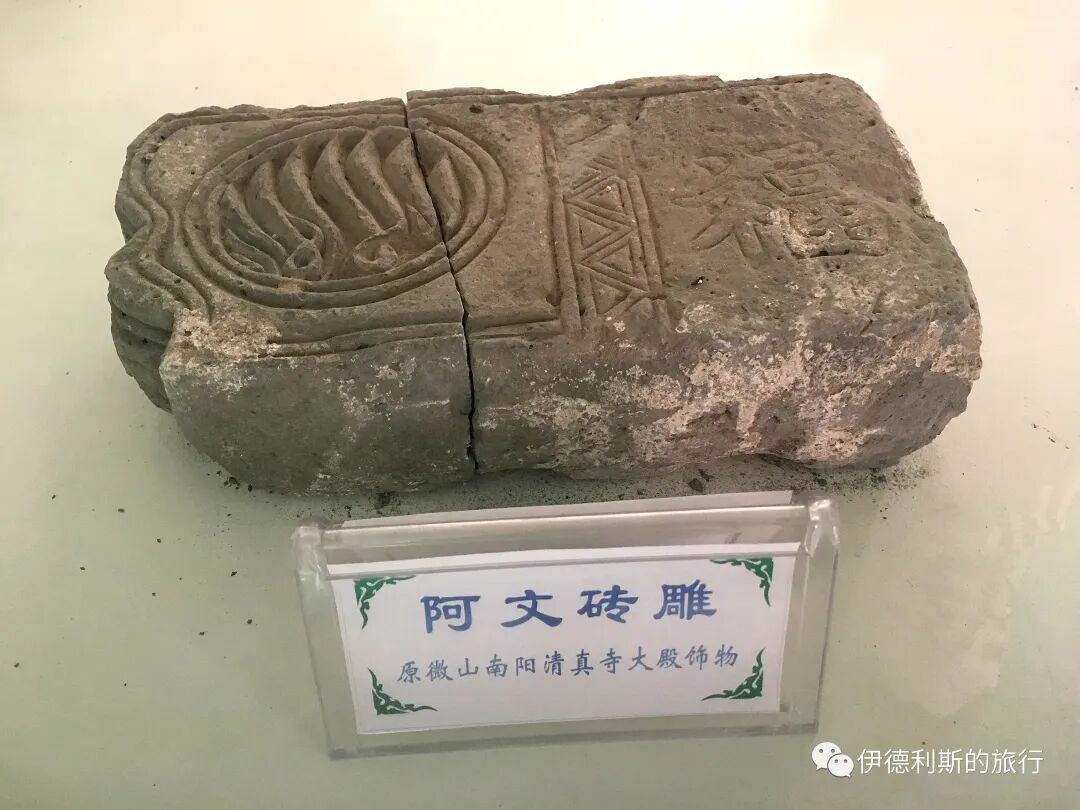
Some cultural relics.
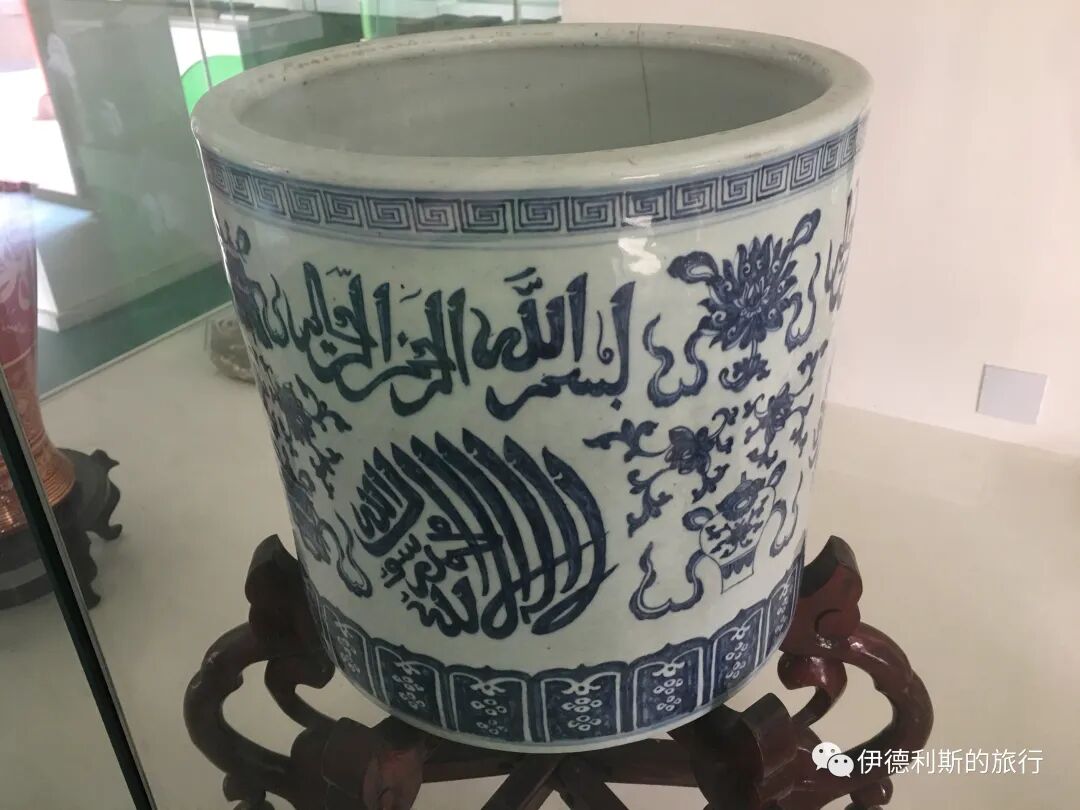
A large Ming Dynasty blue and white incense burner that the East Great Mosque has kept for generations.
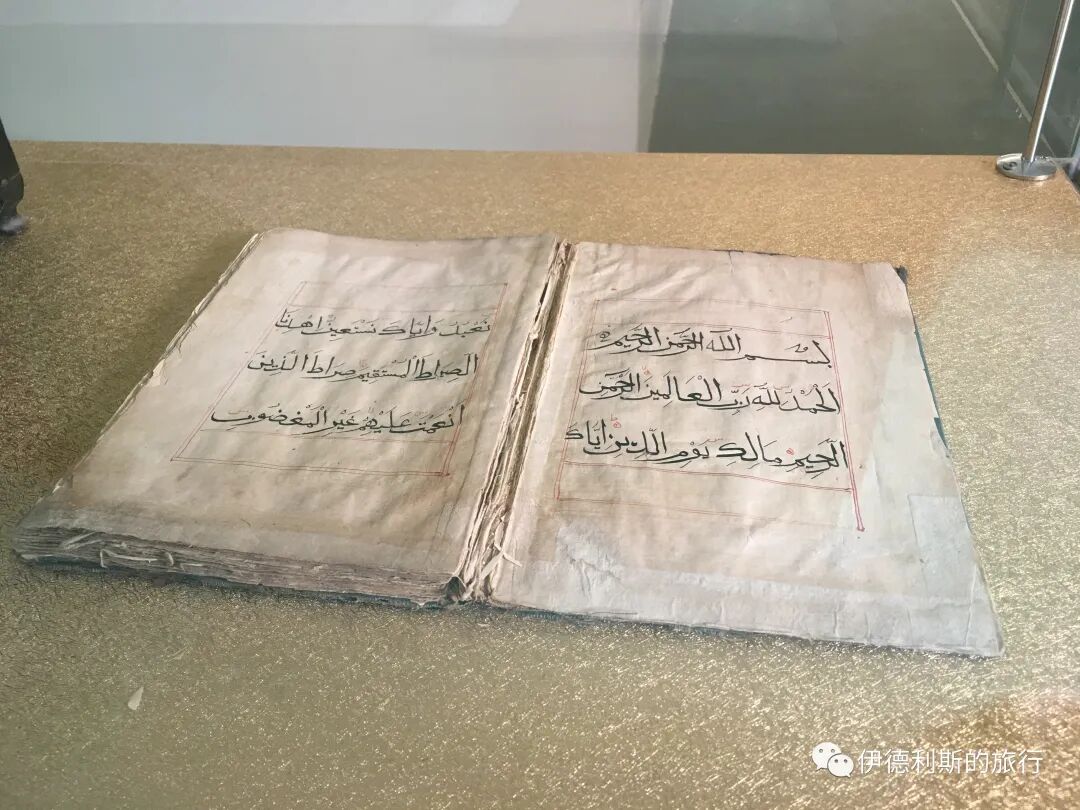
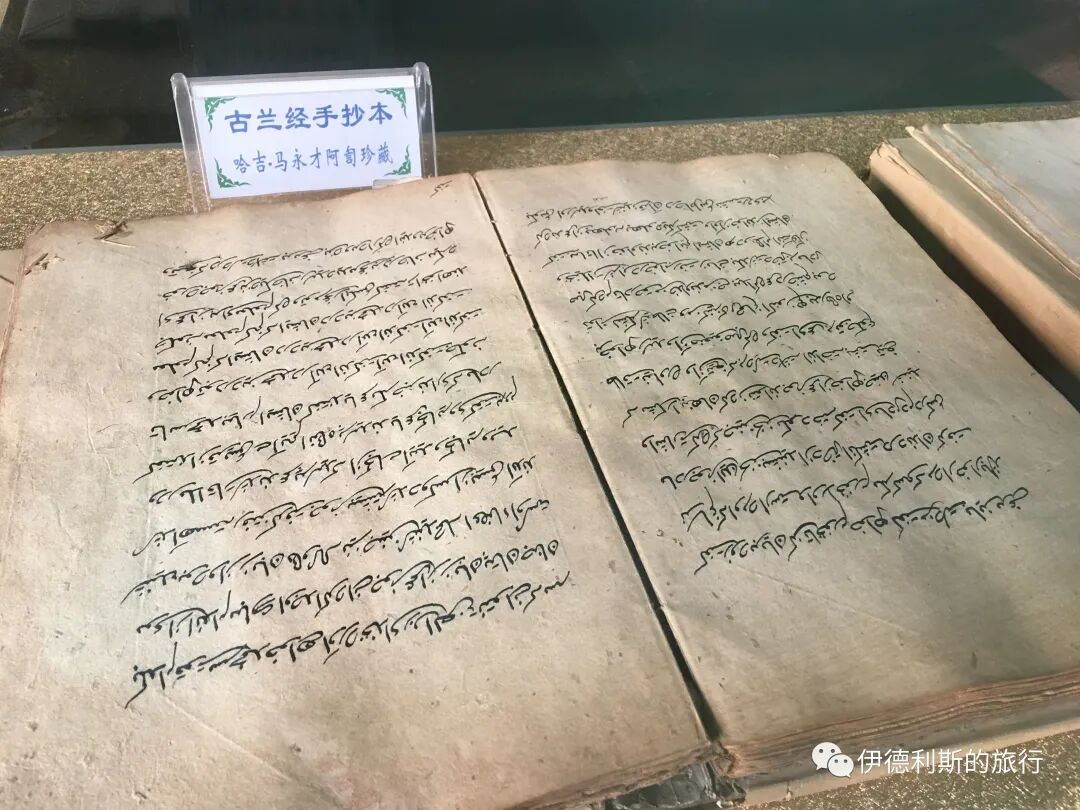
I knew about Jining before, mostly because of Chang Zhimei, the founder of the Shandong School.
Chang Zhimei, whose courtesy name was Yunhua, was known as Chang Xianxue or Chang Baba. He was born in Jining in 1610. In 1634 (the seventh year of the Chongzhen reign), 24-year-old Chang Baba returned to Jining after completing his studies elsewhere and began teaching in a courtyard next to the East Great Mosque. Because his views on religious doctrine differed from those of the East Great Mosque, Chang Baba led the construction of the West Great Mosque (Xidasi) two years later, where he continued to teach and eventually founded the Shandong School.
The Shandong School values Persian-language religious law and Sufi philosophy. It uses the 13 classic texts popular in the north as its basic curriculum, with a large portion being Persian classics.
The Chang Zhimei Memorial Hall at the East Great Mosque in Jining holds many relics from the Jining West Great Mosque that Chang Baba established. It is a great pity that the Jining West Great Mosque, which had a massive 30-meter-high ridge-style main hall, was completely demolished in 1968. Otherwise, having both the eastern and western mosques standing would have been spectacular.
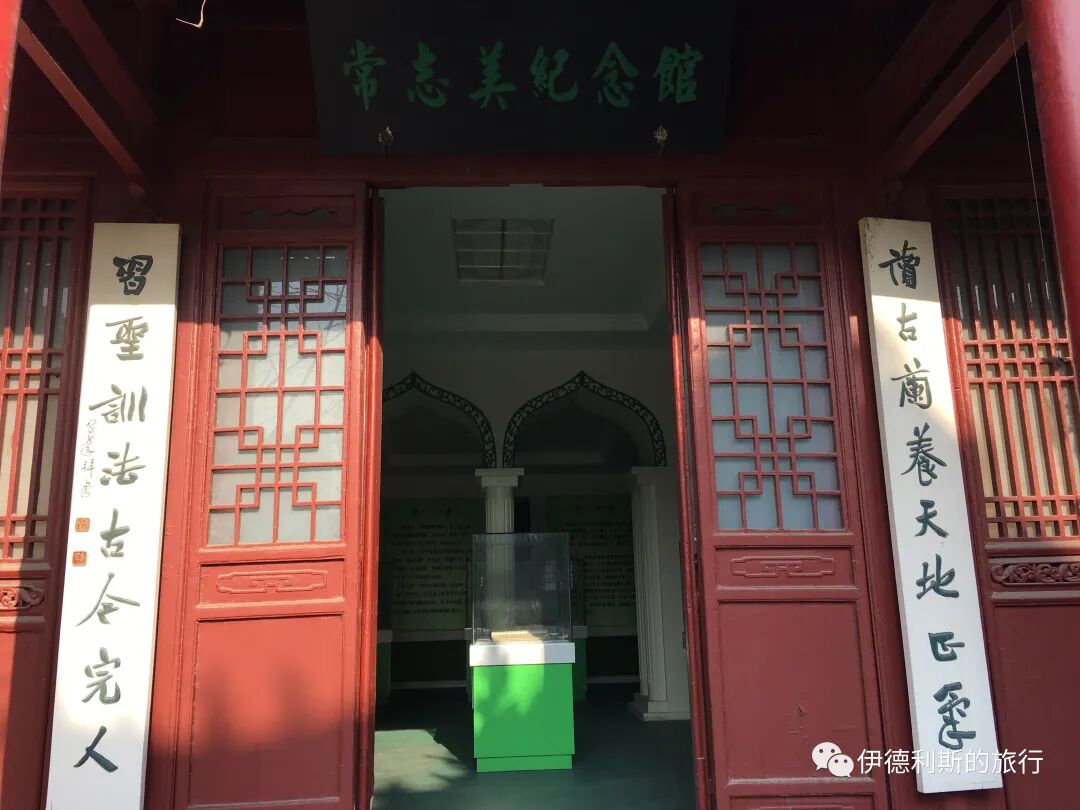
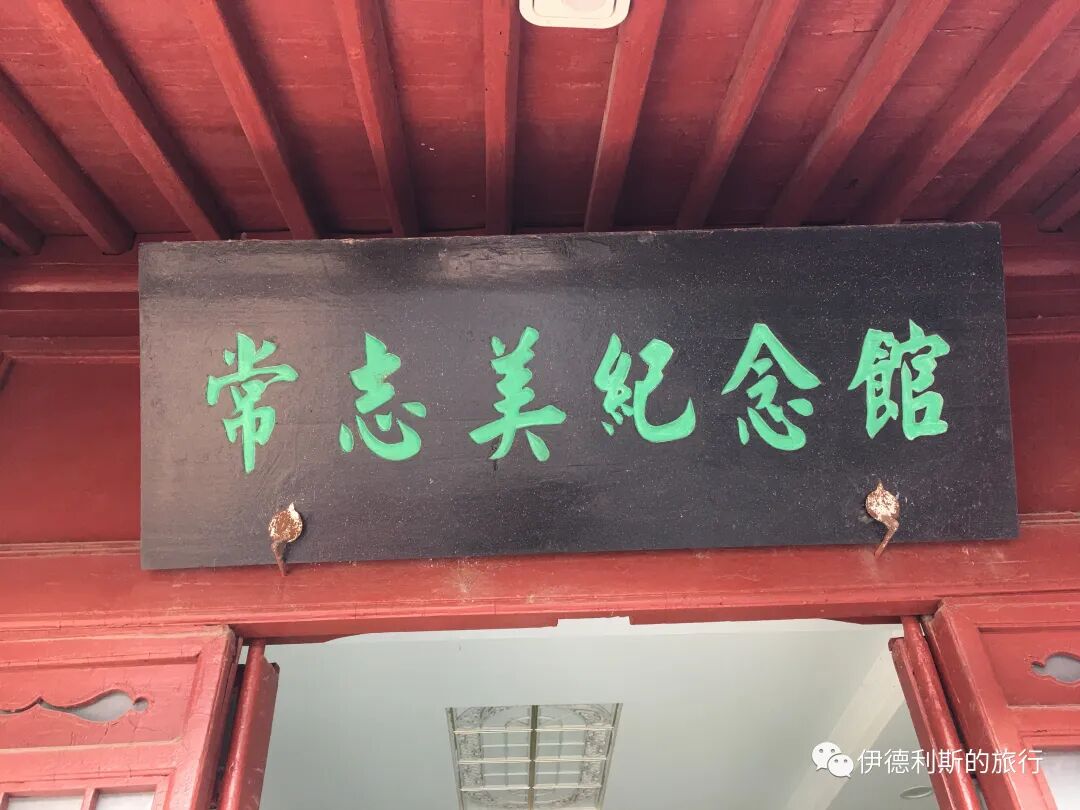
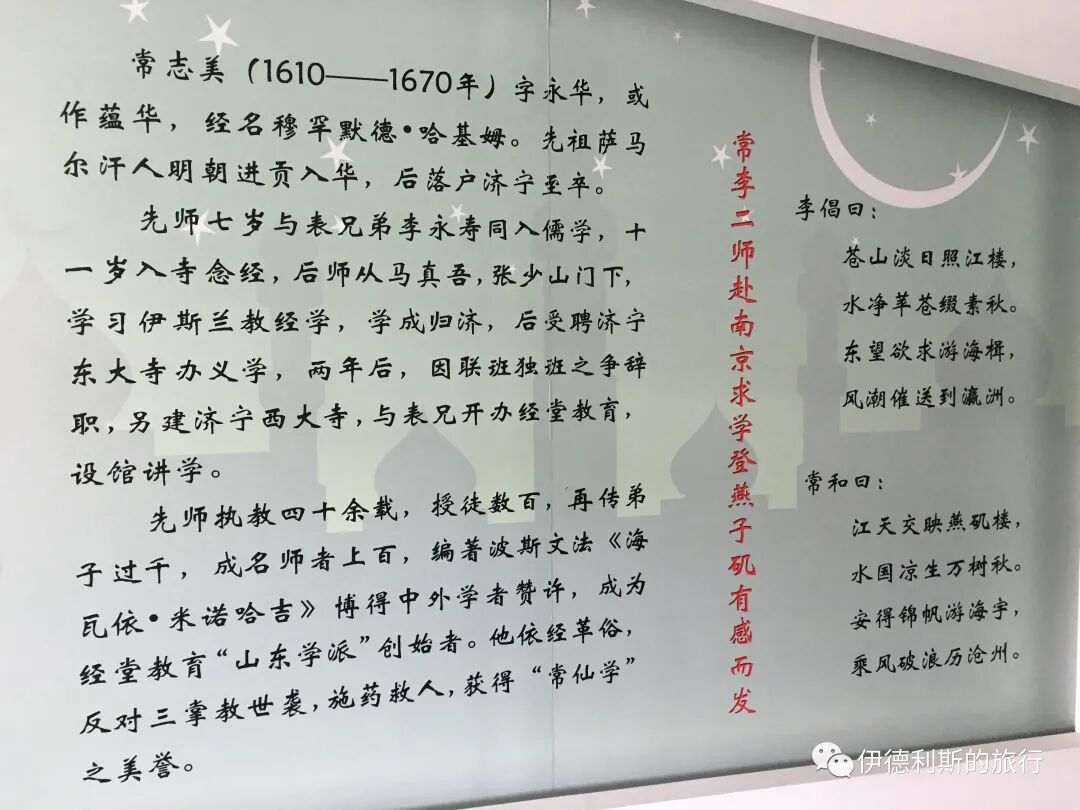
Handwritten by Chang Baba: The mosque is the House of Allah, and the Muslims who come to the mosque can receive the love of Allah.
The stone tablet was originally embedded above the archway of the gate of the Jining West Great Mosque and was destroyed along with the mosque in 1968. It was rediscovered a few years ago, and the missing middle section was rewritten by Imam Chen Yudong.
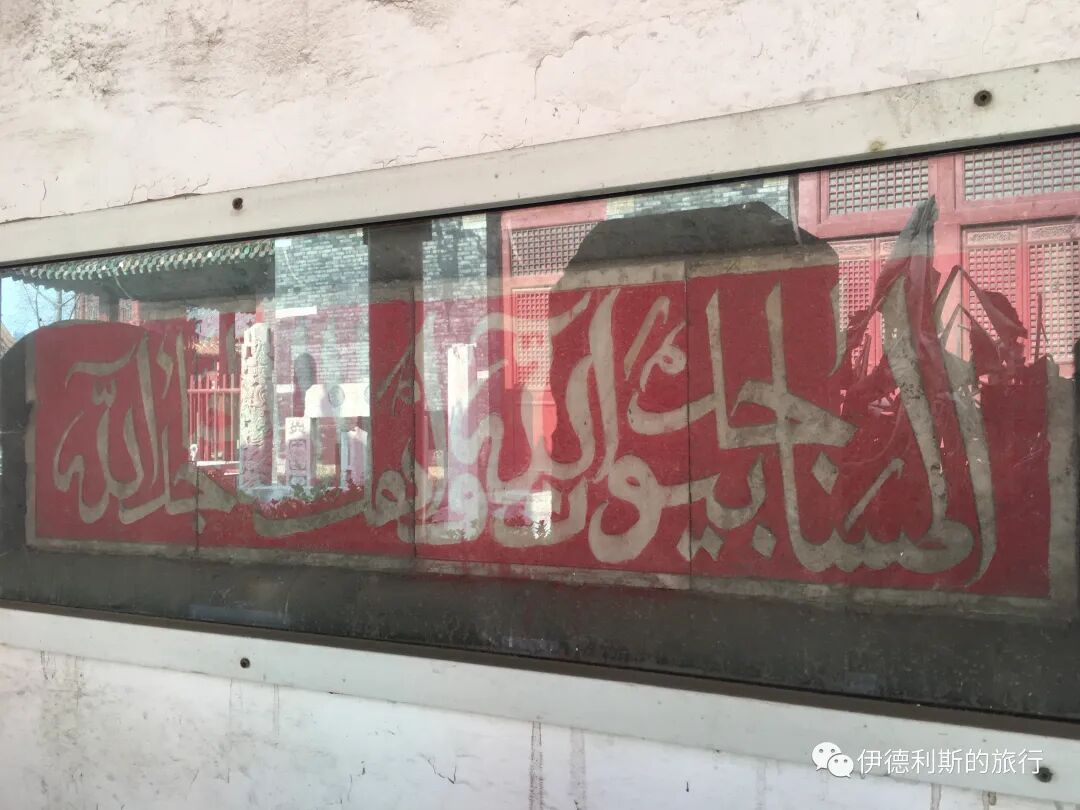
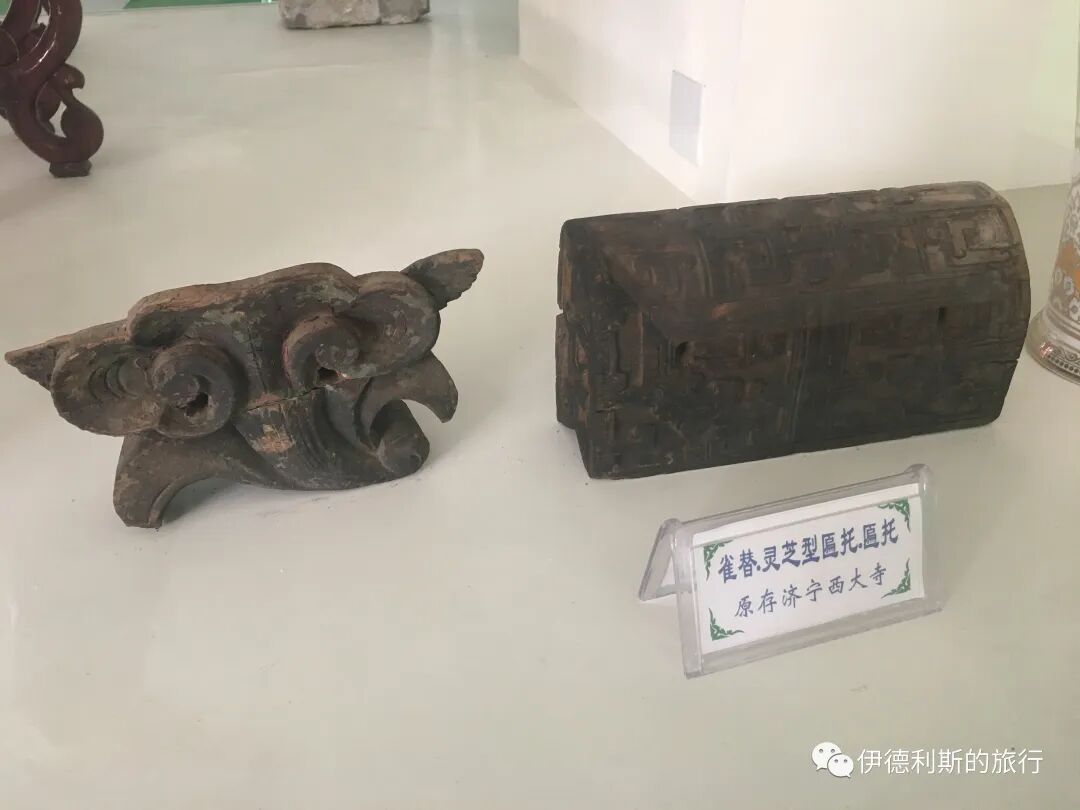
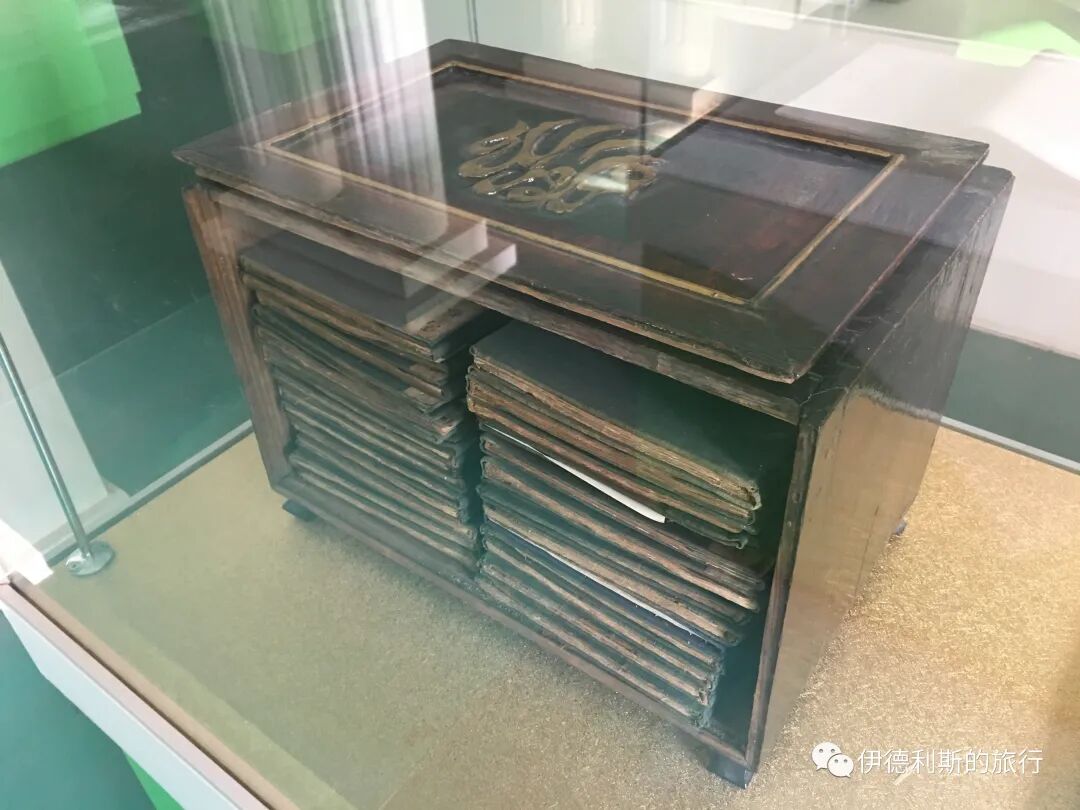
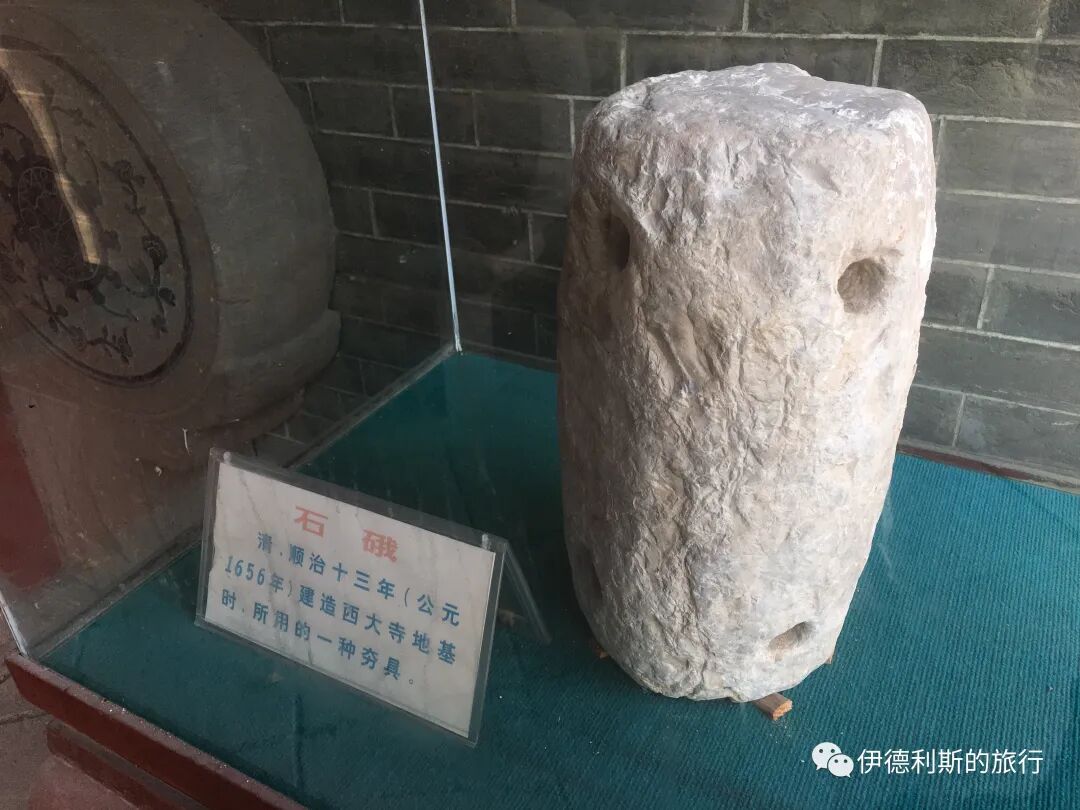
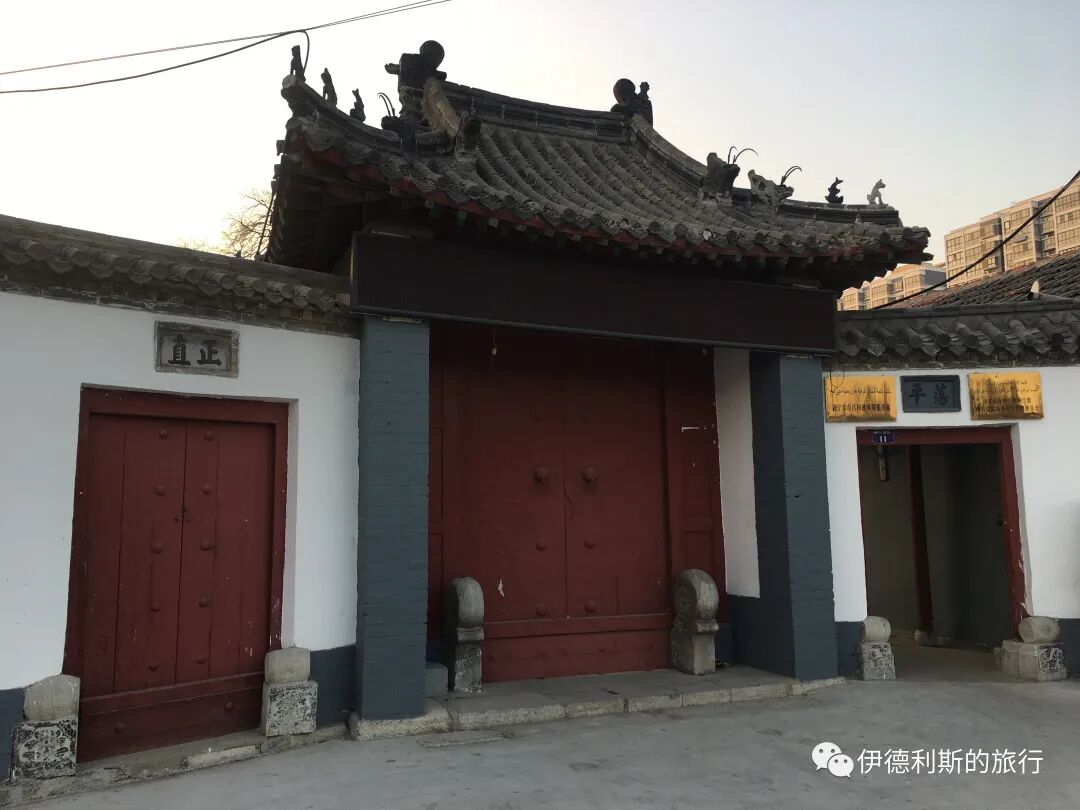
Liuhang East Mosque.
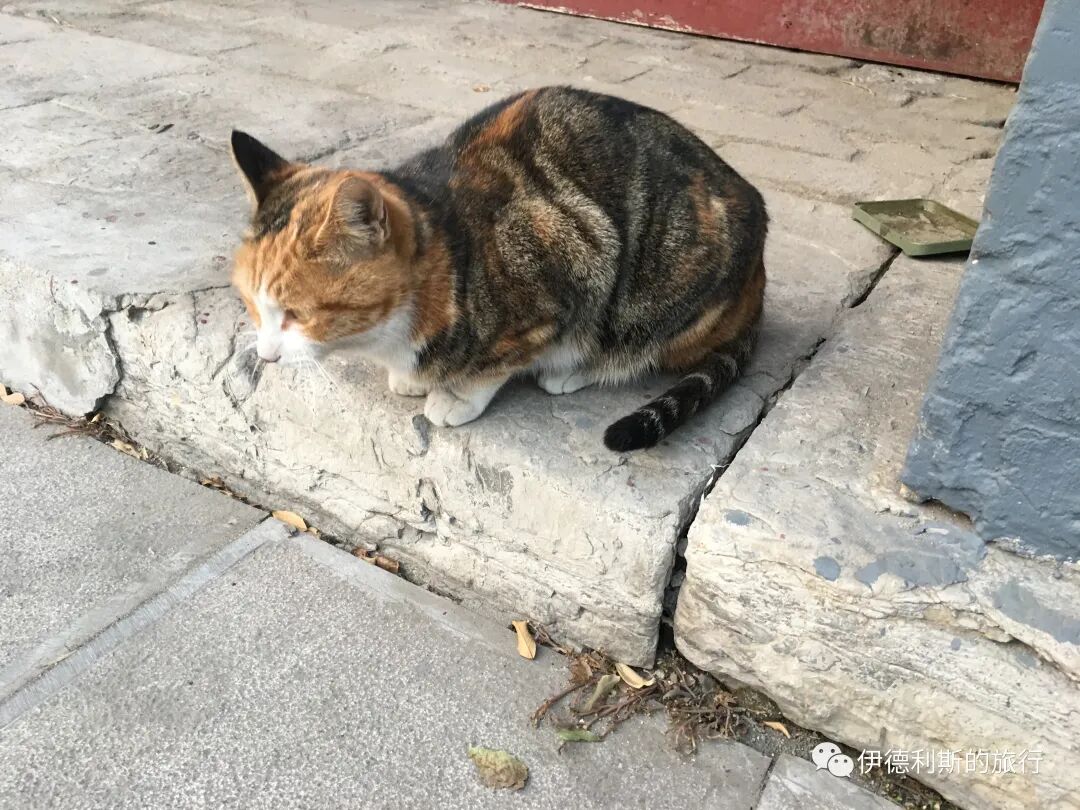
Besides the East Great Mosque, Jining also has an ancient Ming Dynasty mosque called the Liuhang East Mosque. The Liuhang East Mosque was built during the Wanli reign, expanded during the Kangxi reign, and reopened in 1989. When we visited, it was completely empty. Only a cat led us around to see everything, which felt like a strange and wonderful encounter. After taking us for a tour, the cat returned to the courtyard gate and watched us leave. It felt like being in a Hayao Miyazaki animation.
The stone tablet inscribed with 'Jiao Ze Kong Chang' was erected in 1940. After the Japanese army occupied Jining in January 1938, Imam Liu Hanguang risked his life to set up a refugee shelter inside the mosque. He took in many Hui and Han people, and this stone tablet was erected by the Hui and Han community to thank Imam Liu.
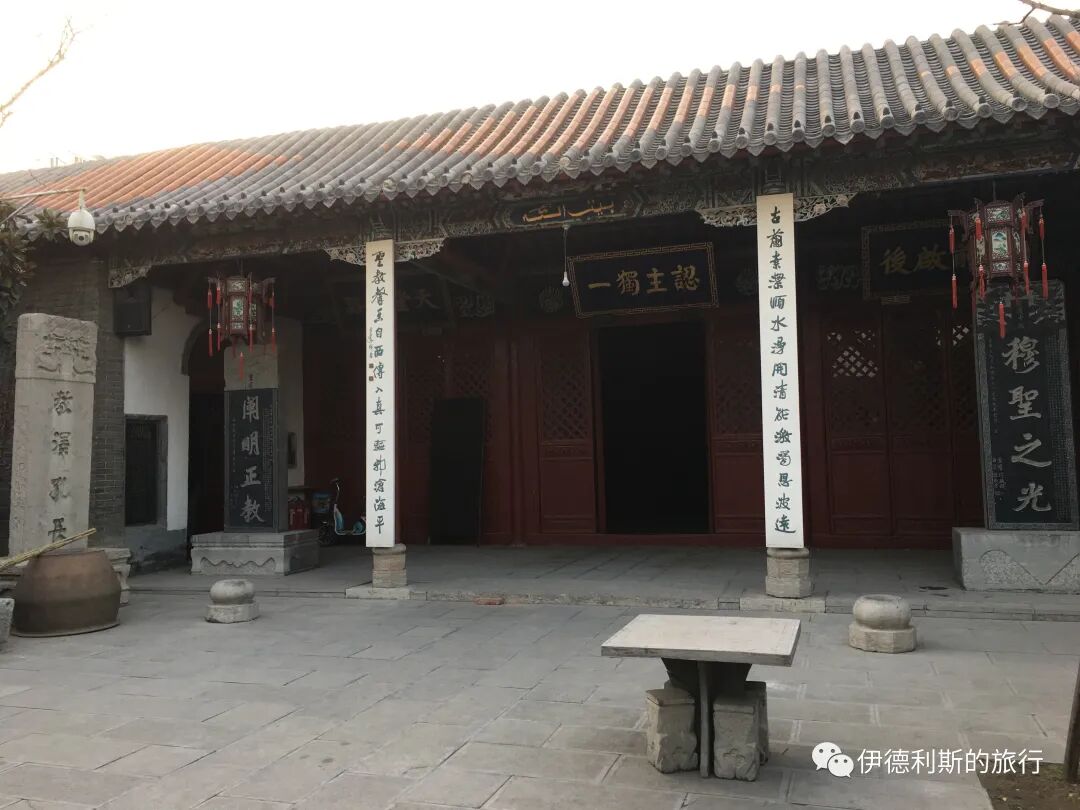
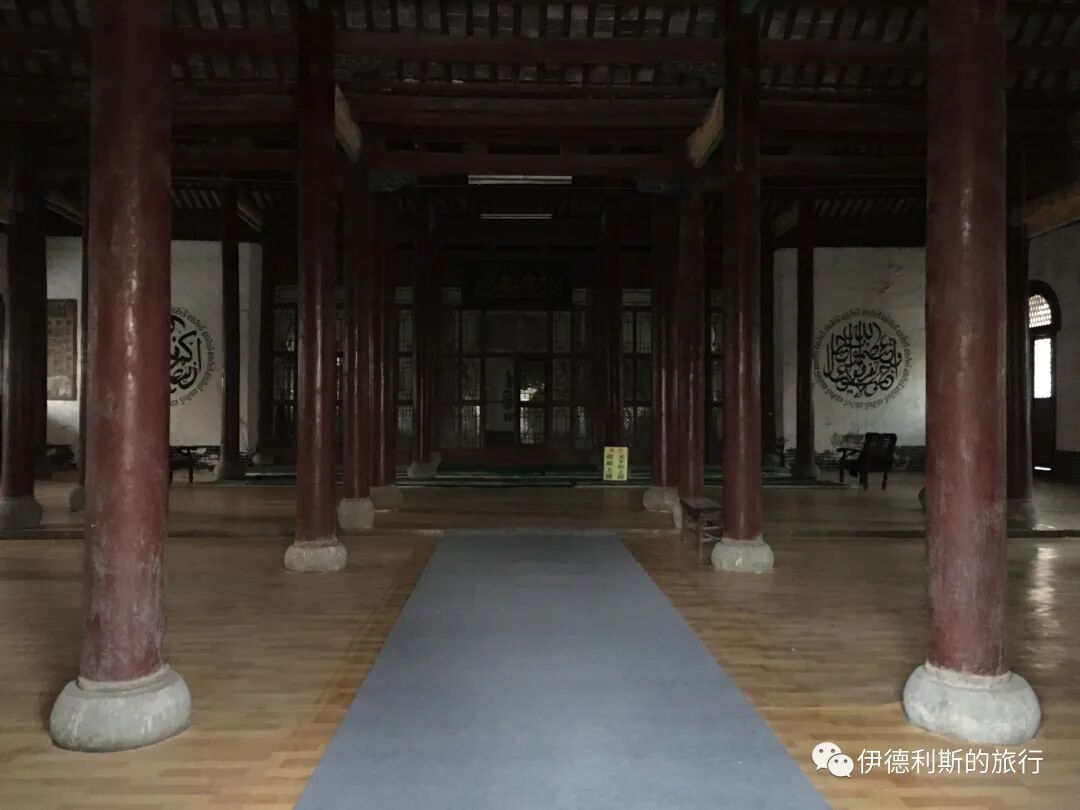
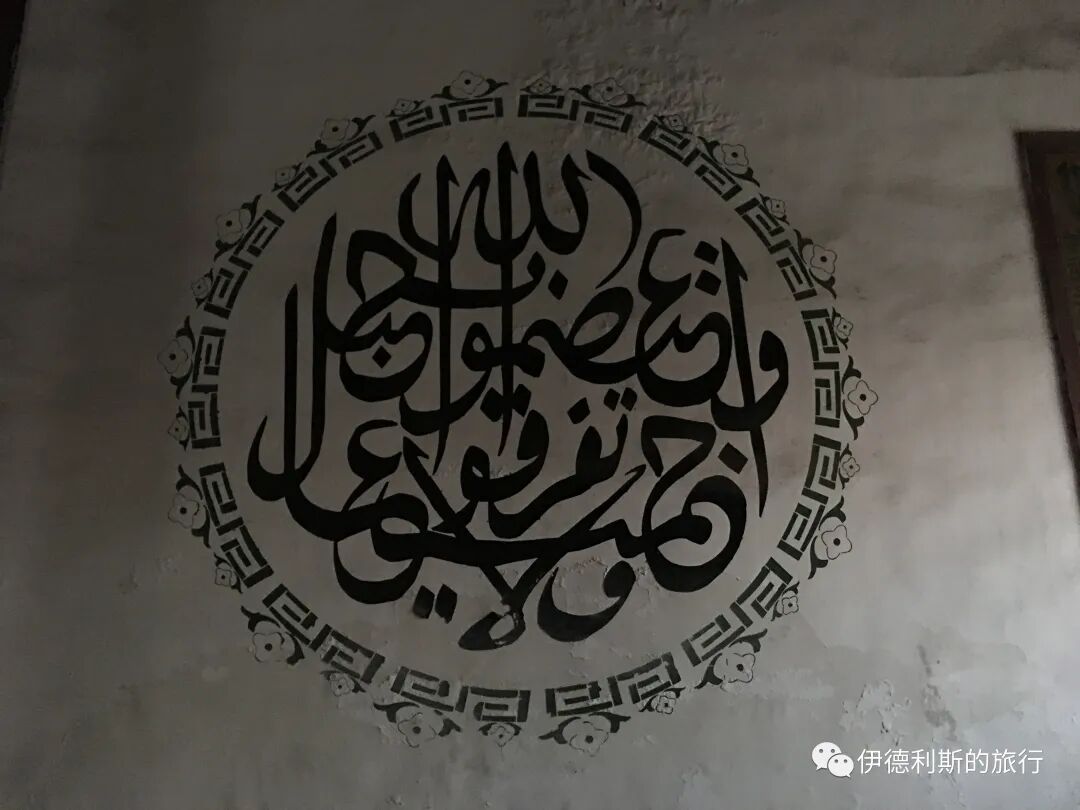
Exquisite Shandong-style calligraphy.
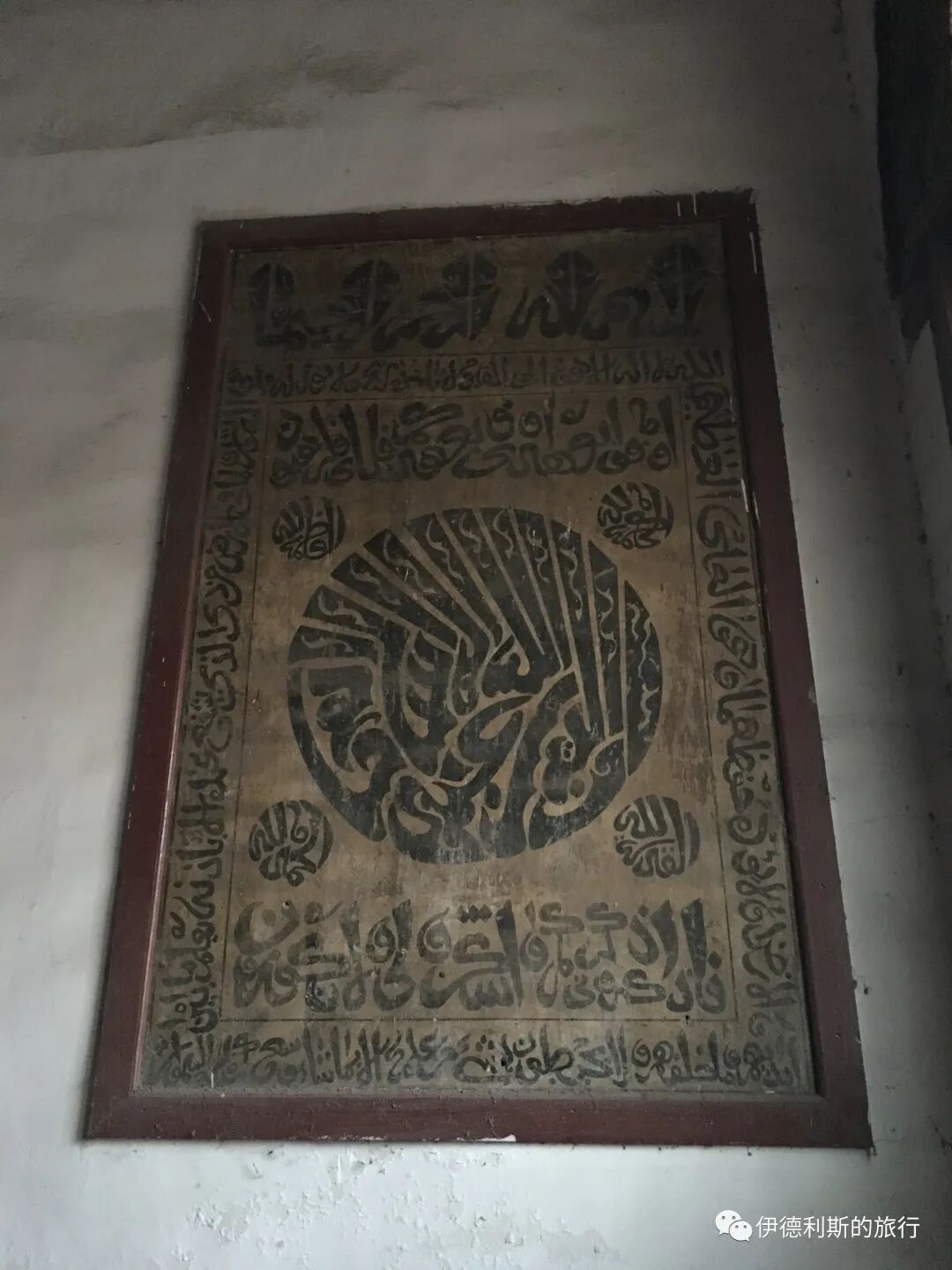
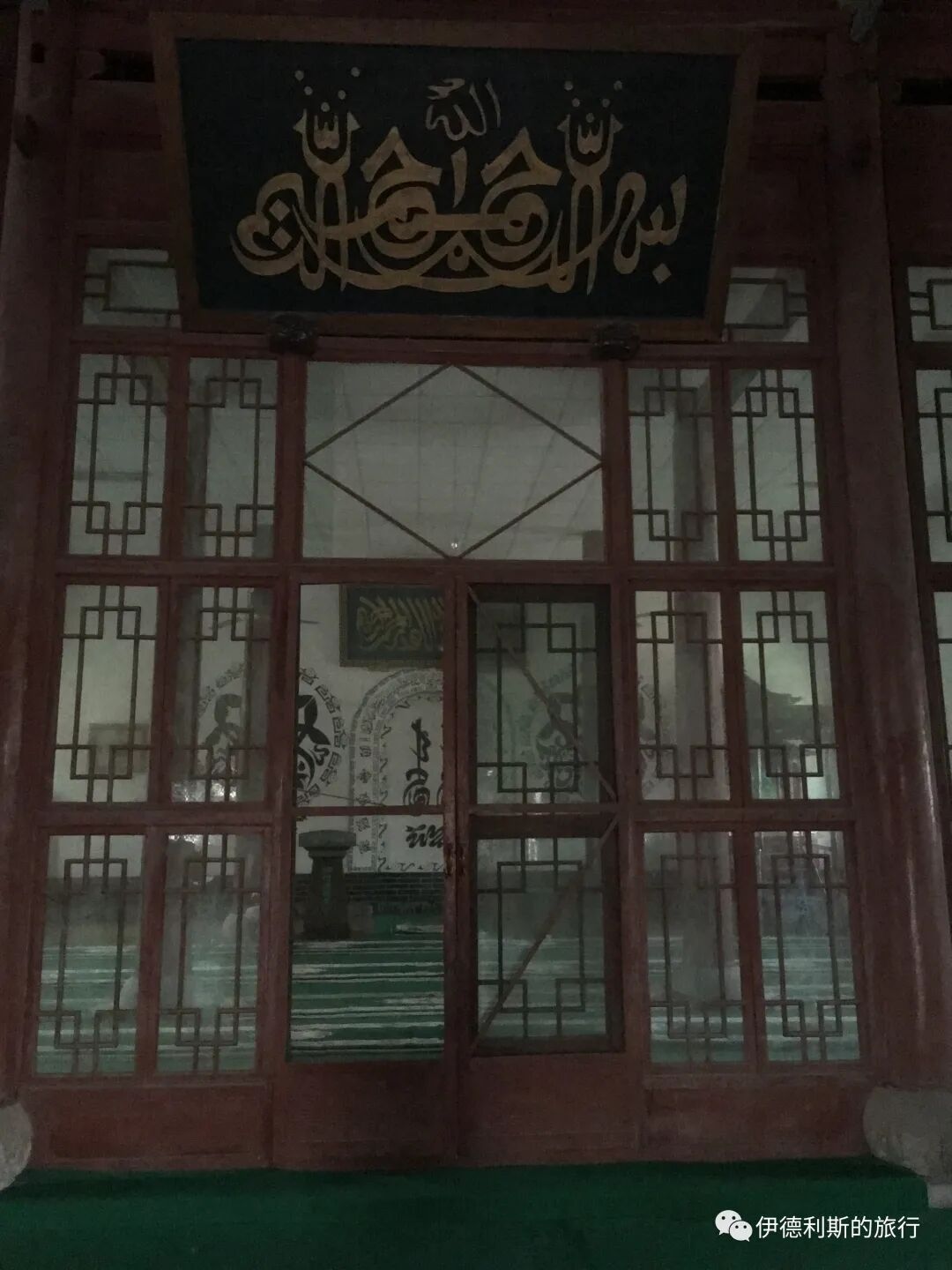
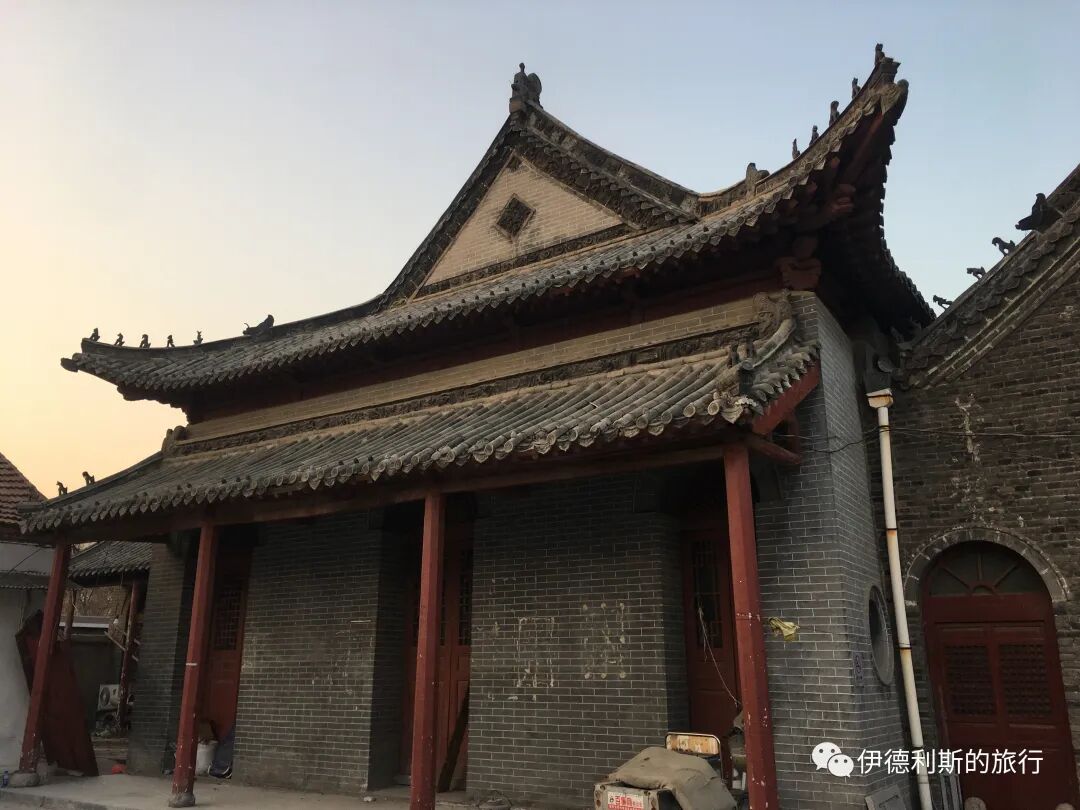
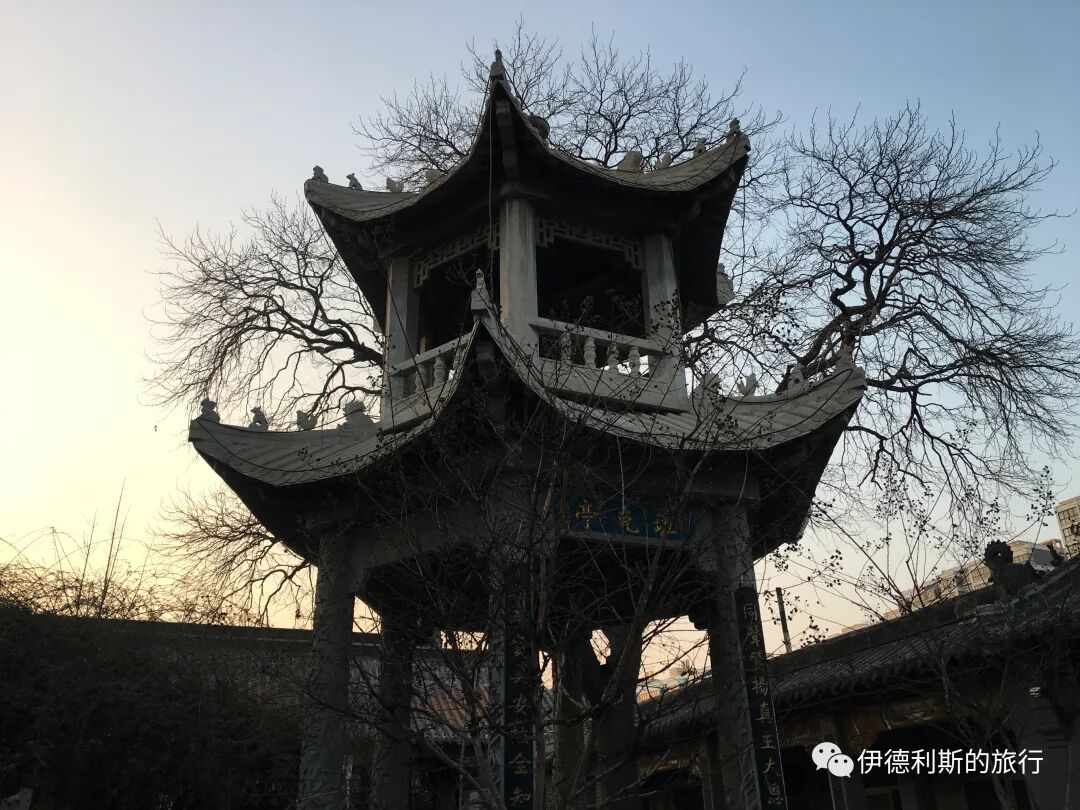
Other ancient mosques in Jining that no longer exist are recorded here to remember history:
Liuhang West Mosque was built during the Wanli period. The mosque was destroyed in 1960, the main hall was torn down in 1979, and the only remaining 400-year-old Chinese honey locust tree (zaojia) was cut down at the end of 2002.
Yuehe Nanya North Mosque was built before 1749 (the 14th year of the Qianlong reign). It underwent its last major expansion and renovation in March 1939. Activities stopped in January 1958 after the anti-rightist rectification movement, and the site was occupied by the Xinhua Leather Factory. The Xinhua Leather Factory returned the site in 1984. It was converted into a women's mosque in 1989, and the main hall, scripture hall, and water room were renovated in 1995. It was demolished in late January 2001 due to urban renewal and rebuilt as an Arabic-style women's mosque in October 2002.
Laiheguan North Street South Mosque was built during the Yongzheng period (1730) and was destroyed in 1960.
Fangjia Courtyard Women's Mosque was built in 1944 and destroyed in 1960.
Yuehe Nanya Women's Mosque was built in 1944 and destroyed in 1958 during the '58 Religious Reform'.
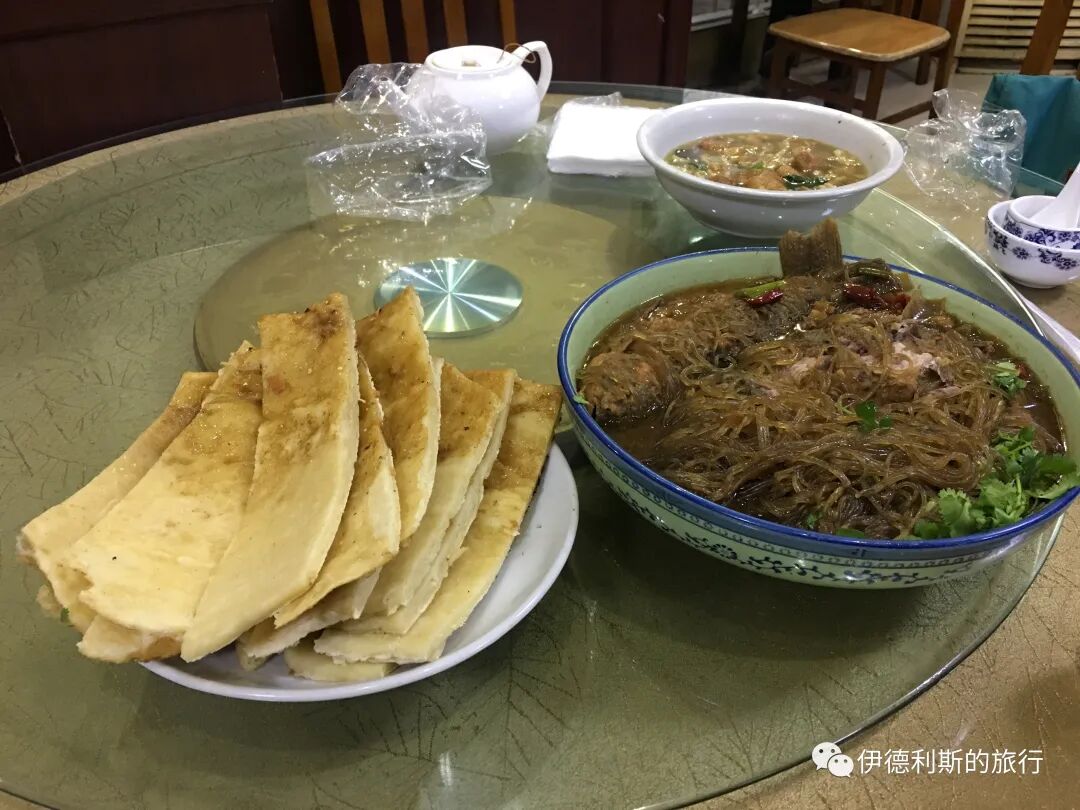
I had grass carp with pan-wiped flatbread (moguobing) at Xiaonanmen on Saturday night. Jining has plenty of freshwater fish because it is near Weishan Lake. A pot of fish costs 50 yuan, and the portion is huge! You can compare it to the bowl and chopsticks on the right. The fish is very fresh, and the glass noodles (fensi) taste especially good! I especially recommend the braised gluten (huimianjin), which is perfect with rice.
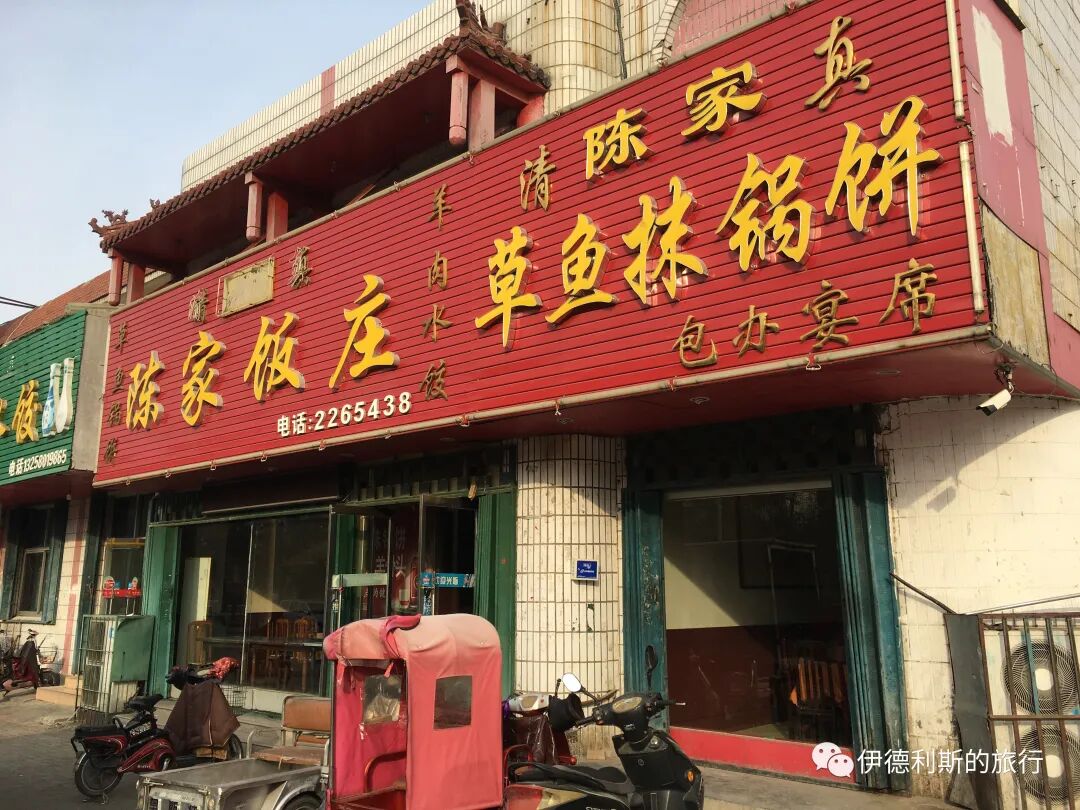
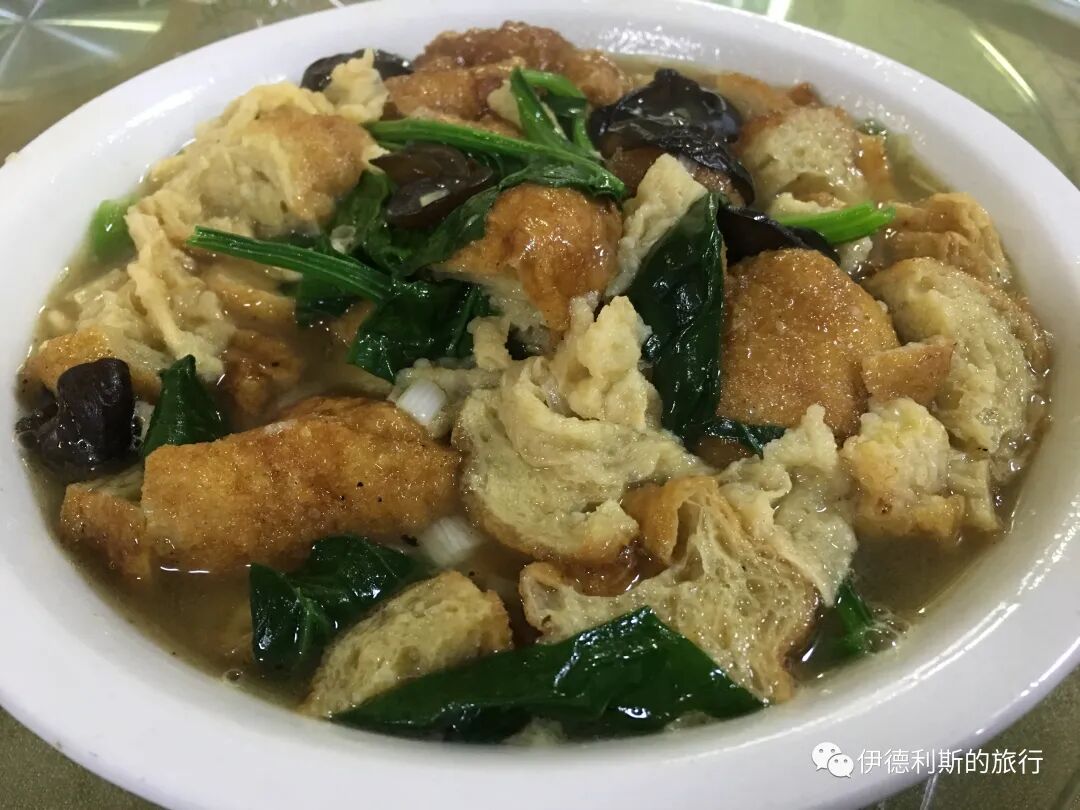
I had mixed offal soup (zagetang) at Xiaonanmen on Sunday morning. It is a bowl of lamb and tripe soup. I slurped down a big bowl and finished by spreading chopped chili peppers inside a flatbread. It was so comfortable, and I didn't feel hungry until the afternoon.
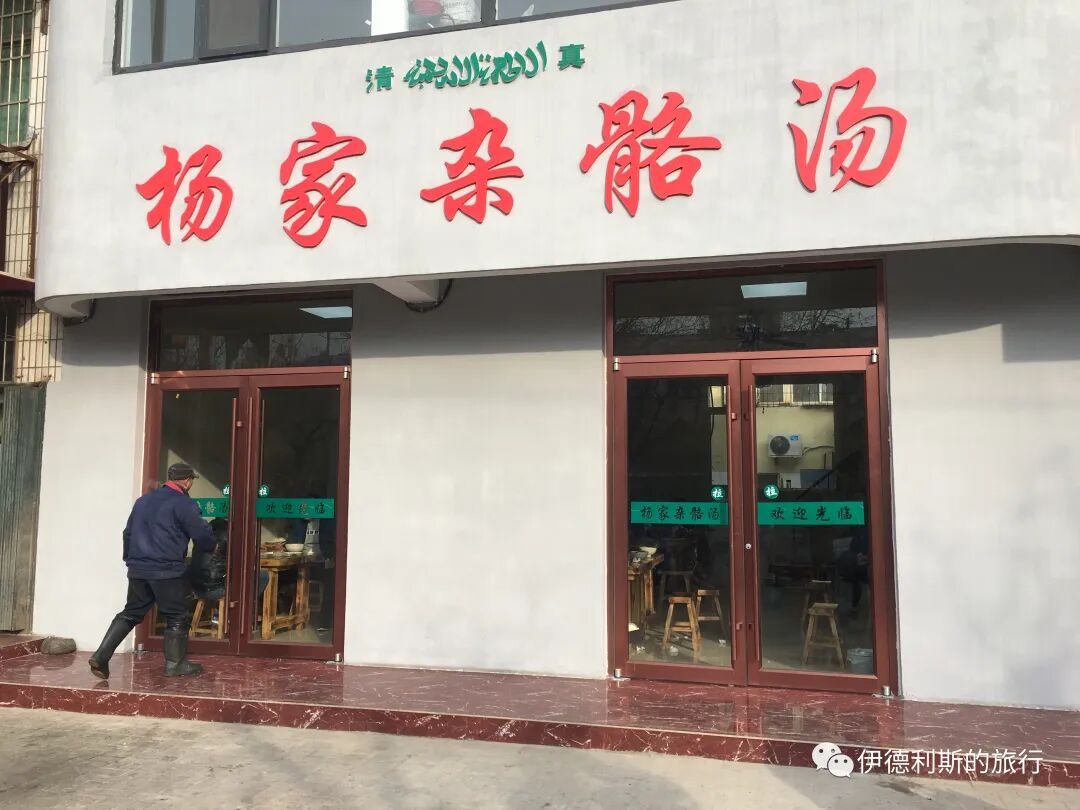
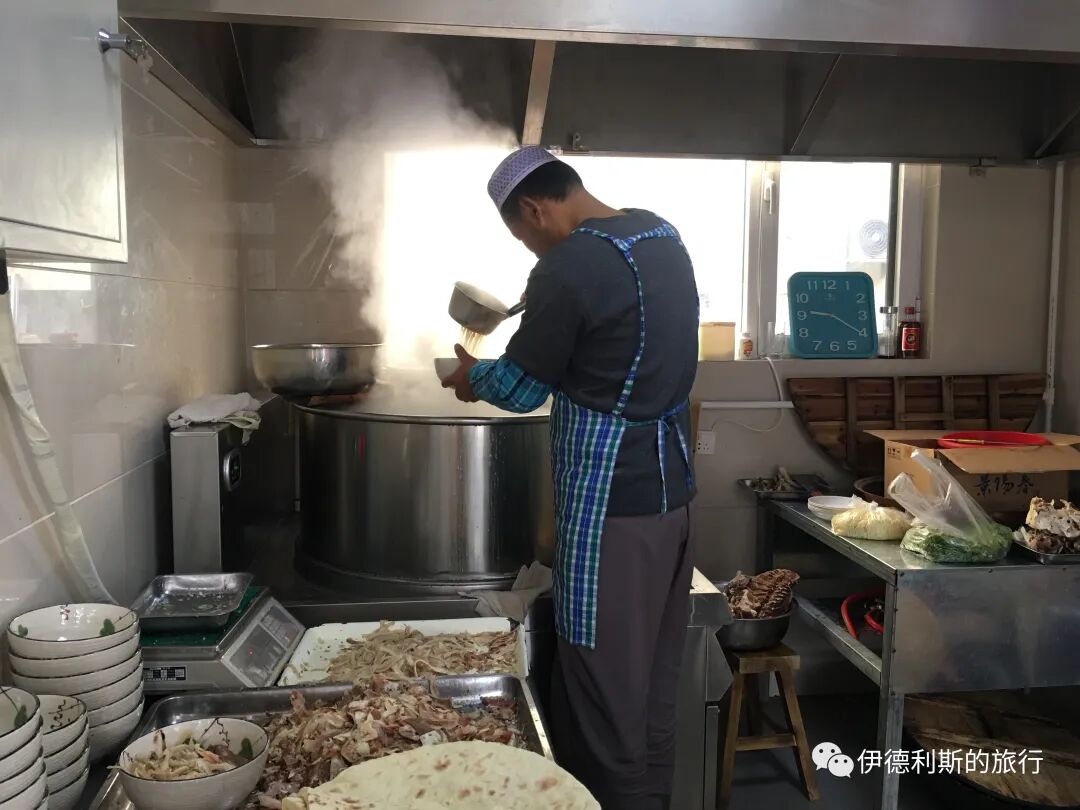
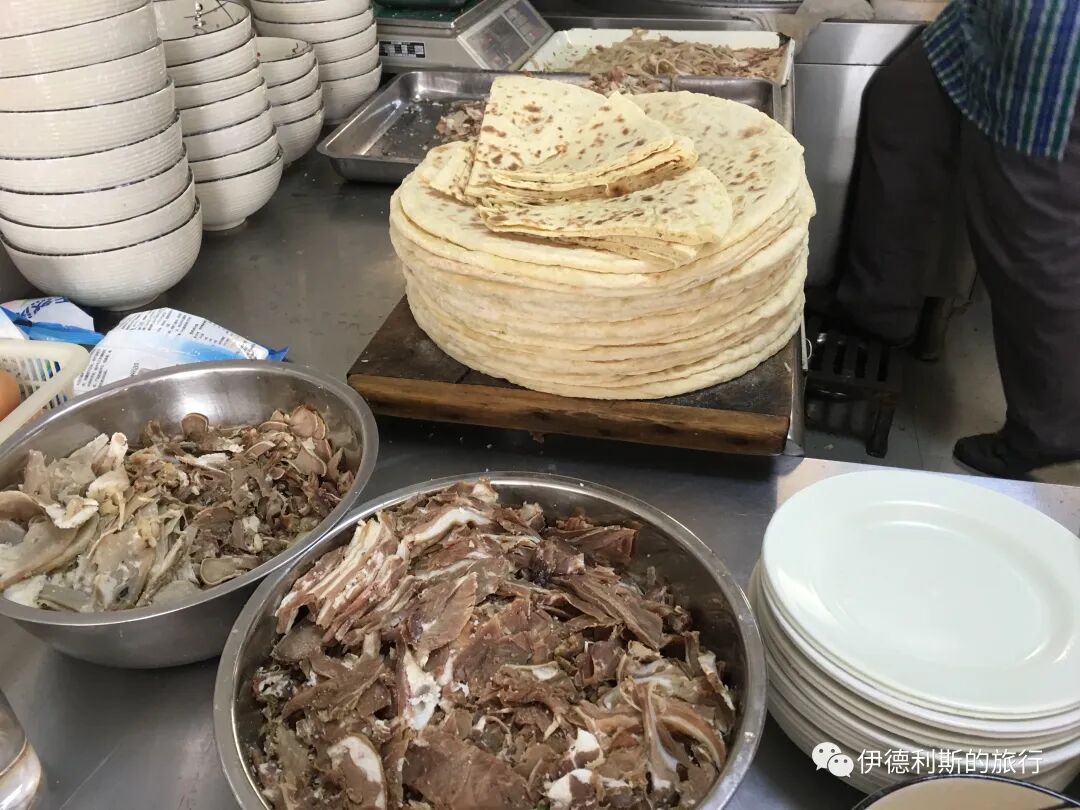
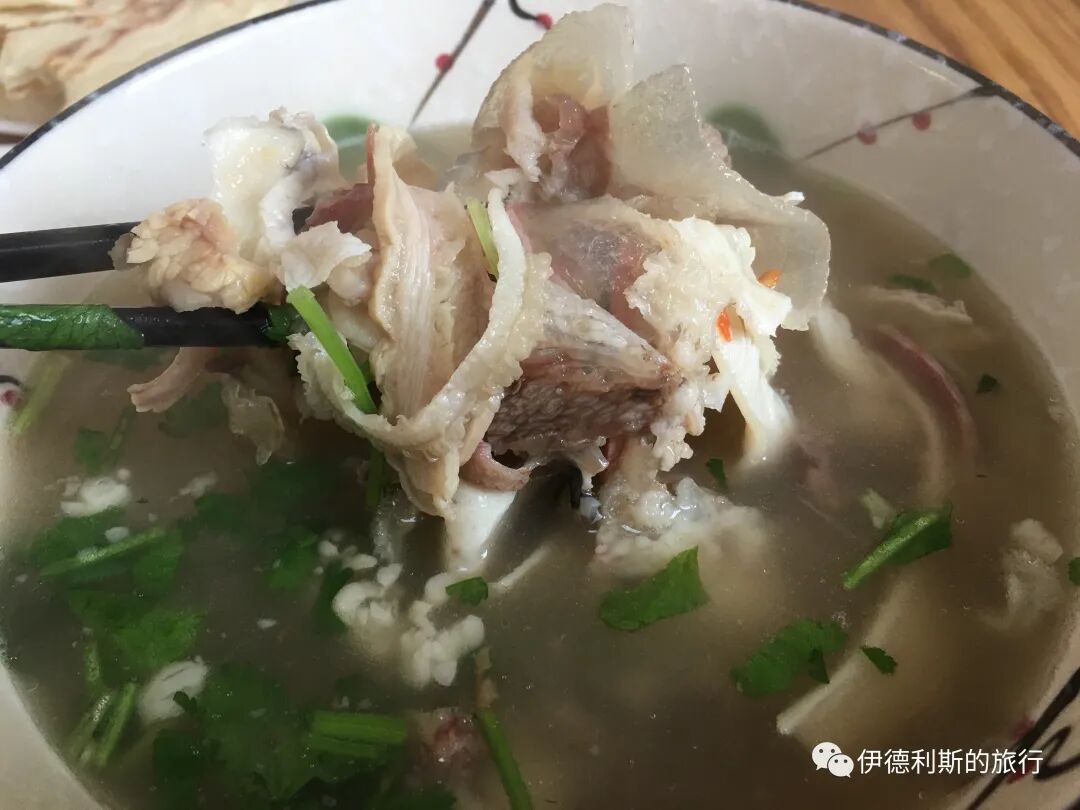
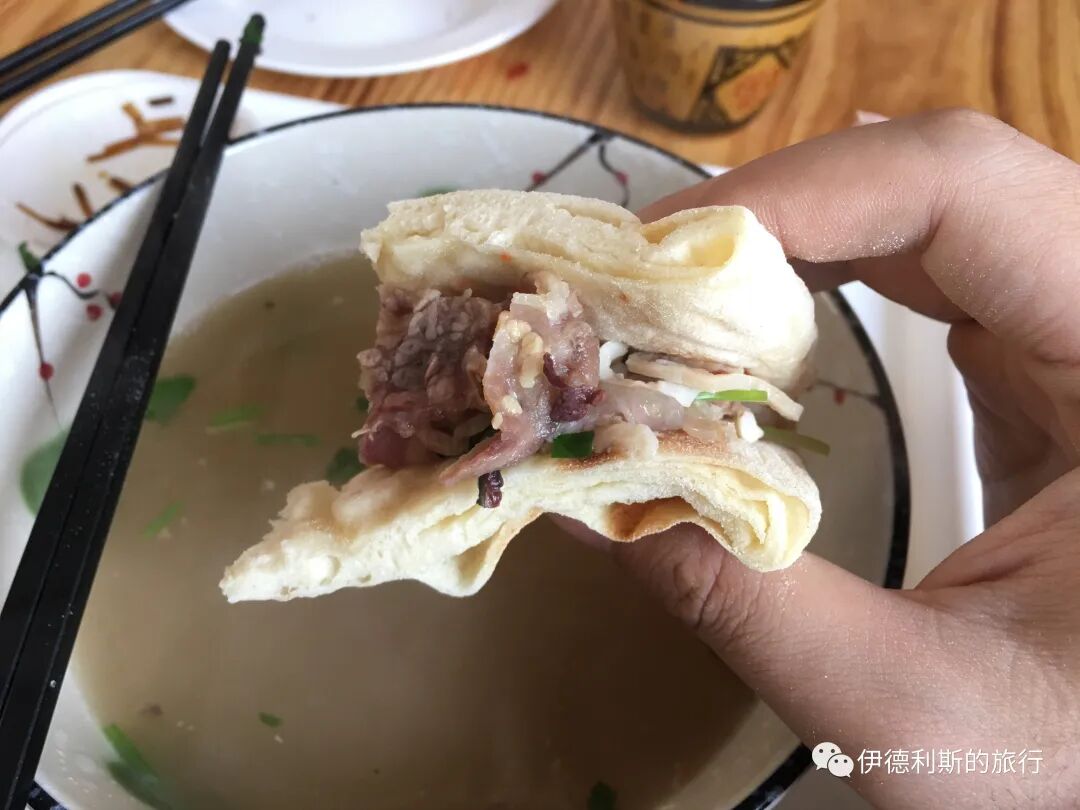
On Sunday afternoon, I had Zhan Family chicken soup wontons on Nanchayuan Street. The auntie wrapped the wontons very quickly, and she even added an egg on top. It was warm and very nourishing. Then I went to the famous Xiaoquan Roasted Chicken shop on Xidasi Street to buy roasted chicken and chicken liver. The roasted chicken is wrapped in lotus leaves. It falls off the bone with a slight tug and is very fragrant.
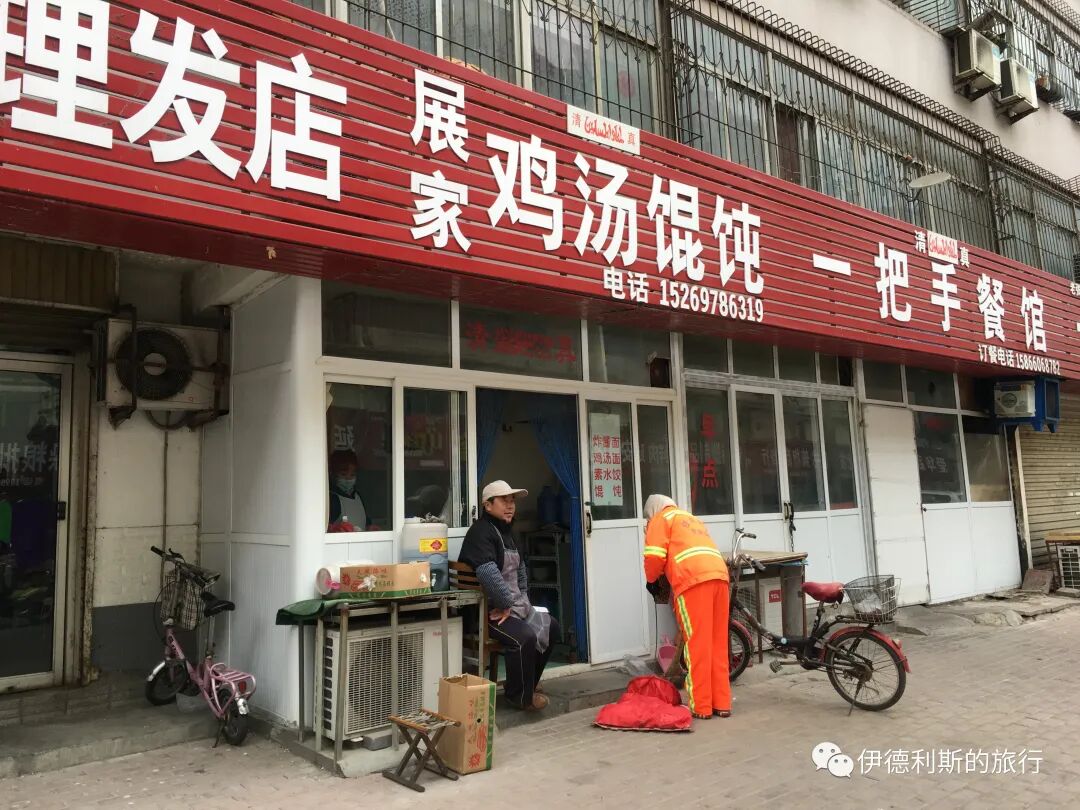
The Jining section of the Grand Canal.
Jining has both a new and an old canal. The Old Canal is also called the South Canal, the Grain Transport River, or the Cao River. It was once the ancient Jizhou River and Huitong River. Today, it is just a waterway inside Jining city and is no longer used for shipping. The New Canal, also known as the Liangji Canal or the Grand Canal, is a waterway dug in the 1950s to handle canal shipping.
Before the Beijing-Hangzhou Grand Canal was officially connected in the Yuan Dynasty, the Old Canal was split into two sections, north and south. North of Jining is the Jizhou River, which was built in 1283 (the 20th year of the Zhiyuan reign) by order of Kublai Khan, the Emperor Shizu of Yuan. South of Jining is the old path of the Si River. In 1289 (the 26th year of the Zhiyuan reign), the Huitong River north of the Jizhou River was finished. This completed the entire Shandong section of the Beijing-Hangzhou Grand Canal during the Yuan Dynasty.
In 1855 (the 5th year of the Xianfeng reign), the Yellow River burst its banks at Tongwaxiang in Lankao, Henan. This cut off the Beijing-Hangzhou Grand Canal, and the Old Canal began to decline. Finally, in 1901 (the 27th year of the Guangxu reign), the grain tribute system was replaced by silver payments, and official canal transport ended completely. The Old Canal changed from an official shipping route to a local transport route.
The Old Canal flows through Jining city. The entrance to the Shunhe East Mosque (Shunhe Dong Dasi) in Jining sits right by the Old Canal waterway.
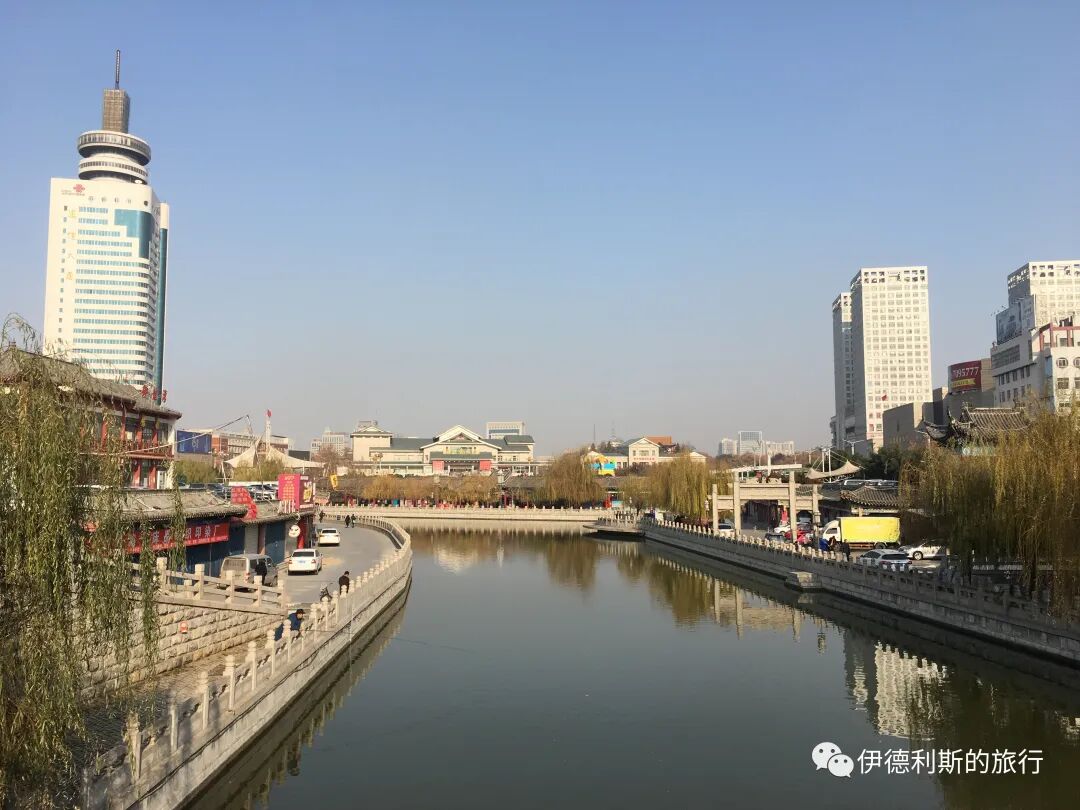
From the late 1950s to the early 1960s, the Liangji Canal was built. The North Four Lakes of Jining and the low-lying land on both sides of the Old Canal were drained and turned into farmland. Most of the Old Canal was abandoned, and the Liangji Canal became the new navigable section of the Beijing-Hangzhou Grand Canal, which it remains today.
Jining Port on the Liangji Canal in winter
Summary: This China Mosque Travel Guide keeps the original 2016 Jining notes, places, and image order intact. It also helps readers researching Muslim travel guide China 2026, halal food in China, Chinese Muslim food, and Grand Canal mosque heritage.
On December 10, 2016, I went to Jining to eat and explore. This article uses information from the books "A Brief History of the Hui Muslims in Jining" and "A Sequel to the History of the Hui Muslims in Jining."
In 1292 (the 29th year of the Zhiyuan era), the Beijing-Hangzhou Grand Canal opened completely. The Yuan Dynasty sent 12,000 soldiers to the Jining section to guard the canal and farm the land. At least 2,000 of these soldiers were Hui Muslim officers and troops. These Hui Muslim soldiers brought their families and settled down. At that time, there were already two mosques in Jining city, the Old East Mosque and the Old West Mosque.
When the Yuan Dynasty fell in 1368, the canal soldiers in Jining surrendered to Xu Da and Chang Yuchun. Most of them were settled where they were, and some of these Hui Muslim soldiers began to live together along the banks of the Yuehe River in the south of Jining city. After the wars of the Yuan and Ming dynasties, the Shandong section of the canal became blocked and unusable. It was not until 1411 (the 9th year of the Yongle era) that the Huitong River was reopened. The canal banks in Jining became orderly, and the business district began to thrive. The Hui Muslims living in the southern gate area built a new East Mosque, which is the current Shunhe East Mosque.
In 1622 (the 2nd year of the Tianqi era), an outer city was built in the south of the old Jining city, known as the "City Perimeter Corridor" or "Circle Dike." The areas where Hui Muslims lived—such as the Big and Small Zhakou, Liuhang, Zhongxin Gate, and the north and south banks of the Yuehe River—were all near this outer city. This formed the 53 streets and alleys where Hui Muslims lived before the old city was renovated. Among these 53 streets, the Hui Muslim population was most concentrated in Liuhang outside the Small South Gate, where they made up over 80 percent of the residents.
By 1953, Jining had seven mosques for men and two for women, known collectively as the Nine Mosques. The West Great Mosque, Liuhang East Mosque, Yuehe South Bank North Mosque, and Yangjiayuan Mosque belonged to the traditional Gedimu school. The East Great Mosque, Yuehe South Bank South Mosque, and Liuhang West Mosque belonged to the Yihewani school.
On Saturday morning, I went to the old Yang Xinghai shop at the Small South Gate for some mutton porridge (san tang), then went to the century-old shop Ma Daxing to buy chestnut-shaped pastries (fo shou) and date cakes (zao bing). Jining's mutton porridge is made by pouring hot, thick bone broth over eggs, then eating it with mutton and flatbread. It is so comforting to eat in winter. The date flavor in the Ma Daxing date cakes is very authentic. The chestnut-shaped pastries are so good that you want more after the first bite, so I bought several boxes before I left.
The Ma Daxing food shop posted a "Brief History of Ma Daxing Food Shop" written by Ma Biao. I have organized and copied it below:
Ma Daxing is a century-old food shop in Jining, originally named "Ma's Shop." The family's ancestral home was a prominent Ma family in the Shuiximen area of Nanjing. In the early Ming Dynasty, our ancestors traveled by boat along the ancient Grand Canal and drifted to Jining. They stayed at the Xiazhakou lower river west wharf and settled at the east end of the north side of Yueheya Road.
Later, my great-great-grandfather Ma Fuqi, courtesy name Huatang (July 28, 1843 – May 21, 1927), opened "Ma's Shop" on the south side of Yuehe North Road, west of Xiangling Pavilion, to sell general goods. It developed quite well.
Then, my great-grandfather Ma Luzeng (born 1870) and his younger brother Ma Yizeng used this as a foundation to carefully develop Shandong and Jiangsu style pastries. Over more than ten years, they created a book of over 10,000 words called "Ma's Preserved Fruits," learning the best techniques from both the north and south to create a wide variety of products.
Because the canal was a central hub and a key waterway for gathering and exchanging goods from the north and south, the shop's business grew daily. In 1910, the sign "Ma Daxing Fruit Shop" was put up.
My grandfather Ma Shijun, courtesy name Yangzhou, born on April 28, 1900, inherited and expanded the business in the 1920s. Until the public-private partnership on January 12, 1956, my father Ma Zhenshan was appointed by his superiors as the "Manager of the State-run Ma Daxing Food Factory and Director of the Retail Department," and Ma Zhenhai served as the pastry chef, inheriting and teaching the pastry-making skills.
The pastry business was interrupted in 1968. In 1986, Ma Yong reopened the shop at 15 Laiheguan North Street, inheriting his father's business and continuing to expand Ma Daxing Food.
Our business grew, so we moved to the Xuzhuang grain station in 1989, the breeding farm in 1992, and the Yudai shopping mall in 1997. On June 8, 2003, we opened the new Ma Daxing food shop at Xiaonanmen.
Note: The Ma Daxing shop name was written by a friend of my grandfather, Ma Xingchi. Ma Xingchi was a battlefield reporter who followed Sun Yat-sen and served as the editor-in-chief of the Shenzhou Newspaper.
After breakfast, I walked through the old 53 streets and alleys of the Hui Muslims. Even though new residential areas have been built, there are still many halal restaurants, so I made a mental note to try them tomorrow.
Jining Shunhe East Mosque
I walked through the Hui Muslim district and arrived at the Jining Shunhe East Mosque by the canal. The East Mosque was built around 1420 during the late Ming Dynasty Yongle period. It was renovated in 1459 (the third year of Tianshun), expanded during the Kangxi period, and renovated again during the Qianlong period, eventually reaching its current size.
As Professor Liu Zhiping said, the rear archway, the Moon-Watching Tower (Wangyuelou), the rear hall, and the main hall of the East Mosque create a grand and towering atmosphere with their overlapping structures. Therefore, the artistic style of all its architecture represents the spirit and boldness of the Qianlong era.
The mosque's original Call to Prayer Tower (Bangkelou), built during the Ming Dynasty Chenghua period and renovated during the Kangxi period, was destroyed along with the main gate and archway in 1968. A new Call to Prayer Pavilion (Bangleting) was built in 1999.
On the martial arts practice ground north of the main hall, I met a group of older men practicing their moves.
Single saber against flower spear
Double sabers
The most famous Hui Muslim martial art in Jining is Rencheng Chaquan. Because the most complete set of Chaquan routines is held by the family of Li Enju, a Hui Muslim from Jining, it is also called Li-style Chaquan.
Chaquan is based on the spring-leg (tantui) technique. There are ten routes of spring-leg and ten routes of boxing, with each boxing route incorporating spring-leg techniques. With running, walking, flying, and striking, the ten routes can expand into over fifty.
The names of the ten routes of Jining Li-style Chaquan:
First route: Charging tip like a whip
Second route: Cross-shaped rush to the toe
Third route: Covering style for night travel
Fourth route: Supporting and stepping to block the path
Fifth route: Single spread
Sixth route: Double spread
Seventh route: Re-engaging to strike in a crisis
Eighth Road Turning Ring (balu zhuanhuan).
Ninth Road Holding Lock (jiulu pengsuo).
Tenth Road Somersault Kick (shilu jiandan).
Li Enju was born in Nanguan, Jining, in 1857. As a young man, he was an officer in the Hebiaoying battalion. He later spent fifteen years traveling to improve his martial arts. In middle age, he returned to Jining to open the Jinyuan Hui Yongshun Escort Agency. In his later years, he went to Shanghai to teach at the Shanghai Jingwu Association founded by Huo Yuanjia. He eventually returned to Jining to teach Chaquan boxing until he passed away from illness in 1932 at the age of 75.
There are some cute little clay figurines inside the East Great Mosque (Dongdasi) in Jining.
Funeral procession team (taimaidui).
Namaz (namazi).
Some cultural relics.
A large Ming Dynasty blue and white incense burner that the East Great Mosque has kept for generations.
I knew about Jining before, mostly because of Chang Zhimei, the founder of the Shandong School.
Chang Zhimei, whose courtesy name was Yunhua, was known as Chang Xianxue or Chang Baba. He was born in Jining in 1610. In 1634 (the seventh year of the Chongzhen reign), 24-year-old Chang Baba returned to Jining after completing his studies elsewhere and began teaching in a courtyard next to the East Great Mosque. Because his views on religious doctrine differed from those of the East Great Mosque, Chang Baba led the construction of the West Great Mosque (Xidasi) two years later, where he continued to teach and eventually founded the Shandong School.
The Shandong School values Persian-language religious law and Sufi philosophy. It uses the 13 classic texts popular in the north as its basic curriculum, with a large portion being Persian classics.
The Chang Zhimei Memorial Hall at the East Great Mosque in Jining holds many relics from the Jining West Great Mosque that Chang Baba established. It is a great pity that the Jining West Great Mosque, which had a massive 30-meter-high ridge-style main hall, was completely demolished in 1968. Otherwise, having both the eastern and western mosques standing would have been spectacular.
Handwritten by Chang Baba: The mosque is the House of Allah, and the Muslims who come to the mosque can receive the love of Allah.
The stone tablet was originally embedded above the archway of the gate of the Jining West Great Mosque and was destroyed along with the mosque in 1968. It was rediscovered a few years ago, and the missing middle section was rewritten by Imam Chen Yudong.
Liuhang East Mosque.
Besides the East Great Mosque, Jining also has an ancient Ming Dynasty mosque called the Liuhang East Mosque. The Liuhang East Mosque was built during the Wanli reign, expanded during the Kangxi reign, and reopened in 1989. When we visited, it was completely empty. Only a cat led us around to see everything, which felt like a strange and wonderful encounter. After taking us for a tour, the cat returned to the courtyard gate and watched us leave. It felt like being in a Hayao Miyazaki animation.
The stone tablet inscribed with 'Jiao Ze Kong Chang' was erected in 1940. After the Japanese army occupied Jining in January 1938, Imam Liu Hanguang risked his life to set up a refugee shelter inside the mosque. He took in many Hui and Han people, and this stone tablet was erected by the Hui and Han community to thank Imam Liu.
Exquisite Shandong-style calligraphy.
Other ancient mosques in Jining that no longer exist are recorded here to remember history:
Liuhang West Mosque was built during the Wanli period. The mosque was destroyed in 1960, the main hall was torn down in 1979, and the only remaining 400-year-old Chinese honey locust tree (zaojia) was cut down at the end of 2002.
Yuehe Nanya North Mosque was built before 1749 (the 14th year of the Qianlong reign). It underwent its last major expansion and renovation in March 1939. Activities stopped in January 1958 after the anti-rightist rectification movement, and the site was occupied by the Xinhua Leather Factory. The Xinhua Leather Factory returned the site in 1984. It was converted into a women's mosque in 1989, and the main hall, scripture hall, and water room were renovated in 1995. It was demolished in late January 2001 due to urban renewal and rebuilt as an Arabic-style women's mosque in October 2002.
Laiheguan North Street South Mosque was built during the Yongzheng period (1730) and was destroyed in 1960.
Fangjia Courtyard Women's Mosque was built in 1944 and destroyed in 1960.
Yuehe Nanya Women's Mosque was built in 1944 and destroyed in 1958 during the '58 Religious Reform'.
I had grass carp with pan-wiped flatbread (moguobing) at Xiaonanmen on Saturday night. Jining has plenty of freshwater fish because it is near Weishan Lake. A pot of fish costs 50 yuan, and the portion is huge! You can compare it to the bowl and chopsticks on the right. The fish is very fresh, and the glass noodles (fensi) taste especially good! I especially recommend the braised gluten (huimianjin), which is perfect with rice.
I had mixed offal soup (zagetang) at Xiaonanmen on Sunday morning. It is a bowl of lamb and tripe soup. I slurped down a big bowl and finished by spreading chopped chili peppers inside a flatbread. It was so comfortable, and I didn't feel hungry until the afternoon.
On Sunday afternoon, I had Zhan Family chicken soup wontons on Nanchayuan Street. The auntie wrapped the wontons very quickly, and she even added an egg on top. It was warm and very nourishing. Then I went to the famous Xiaoquan Roasted Chicken shop on Xidasi Street to buy roasted chicken and chicken liver. The roasted chicken is wrapped in lotus leaves. It falls off the bone with a slight tug and is very fragrant.
The Jining section of the Grand Canal.
Jining has both a new and an old canal. The Old Canal is also called the South Canal, the Grain Transport River, or the Cao River. It was once the ancient Jizhou River and Huitong River. Today, it is just a waterway inside Jining city and is no longer used for shipping. The New Canal, also known as the Liangji Canal or the Grand Canal, is a waterway dug in the 1950s to handle canal shipping.
Before the Beijing-Hangzhou Grand Canal was officially connected in the Yuan Dynasty, the Old Canal was split into two sections, north and south. North of Jining is the Jizhou River, which was built in 1283 (the 20th year of the Zhiyuan reign) by order of Kublai Khan, the Emperor Shizu of Yuan. South of Jining is the old path of the Si River. In 1289 (the 26th year of the Zhiyuan reign), the Huitong River north of the Jizhou River was finished. This completed the entire Shandong section of the Beijing-Hangzhou Grand Canal during the Yuan Dynasty.
In 1855 (the 5th year of the Xianfeng reign), the Yellow River burst its banks at Tongwaxiang in Lankao, Henan. This cut off the Beijing-Hangzhou Grand Canal, and the Old Canal began to decline. Finally, in 1901 (the 27th year of the Guangxu reign), the grain tribute system was replaced by silver payments, and official canal transport ended completely. The Old Canal changed from an official shipping route to a local transport route.
The Old Canal flows through Jining city. The entrance to the Shunhe East Mosque (Shunhe Dong Dasi) in Jining sits right by the Old Canal waterway.
From the late 1950s to the early 1960s, the Liangji Canal was built. The North Four Lakes of Jining and the low-lying land on both sides of the Old Canal were drained and turned into farmland. Most of the Old Canal was abandoned, and the Liangji Canal became the new navigable section of the Beijing-Hangzhou Grand Canal, which it remains today.
Jining Port on the Liangji Canal in winter
China Mosque Travel Guide Shandong Jining: Old Mosques, Hui Food and Grand Canal Heritage
Articles • yusuf908 posted the article • 0 comments • 193 views • 2026-05-23 23:16
Reposted from the web
Summary: This China Mosque Travel Guide keeps the original 2016 Jining notes, places, and image order intact. It also helps readers researching Muslim travel guide China 2026, halal food in China, Chinese Muslim food, and Grand Canal mosque heritage.
On December 10, 2016, I went to Jining to eat and explore. This article uses information from the books "A Brief History of the Hui Muslims in Jining" and "A Sequel to the History of the Hui Muslims in Jining."
In 1292 (the 29th year of the Zhiyuan era), the Beijing-Hangzhou Grand Canal opened completely. The Yuan Dynasty sent 12,000 soldiers to the Jining section to guard the canal and farm the land. At least 2,000 of these soldiers were Hui Muslim officers and troops. These Hui Muslim soldiers brought their families and settled down. At that time, there were already two mosques in Jining city, the Old East Mosque and the Old West Mosque.
When the Yuan Dynasty fell in 1368, the canal soldiers in Jining surrendered to Xu Da and Chang Yuchun. Most of them were settled where they were, and some of these Hui Muslim soldiers began to live together along the banks of the Yuehe River in the south of Jining city. After the wars of the Yuan and Ming dynasties, the Shandong section of the canal became blocked and unusable. It was not until 1411 (the 9th year of the Yongle era) that the Huitong River was reopened. The canal banks in Jining became orderly, and the business district began to thrive. The Hui Muslims living in the southern gate area built a new East Mosque, which is the current Shunhe East Mosque.
In 1622 (the 2nd year of the Tianqi era), an outer city was built in the south of the old Jining city, known as the "City Perimeter Corridor" or "Circle Dike." The areas where Hui Muslims lived—such as the Big and Small Zhakou, Liuhang, Zhongxin Gate, and the north and south banks of the Yuehe River—were all near this outer city. This formed the 53 streets and alleys where Hui Muslims lived before the old city was renovated. Among these 53 streets, the Hui Muslim population was most concentrated in Liuhang outside the Small South Gate, where they made up over 80 percent of the residents.
By 1953, Jining had seven mosques for men and two for women, known collectively as the Nine Mosques. The West Great Mosque, Liuhang East Mosque, Yuehe South Bank North Mosque, and Yangjiayuan Mosque belonged to the traditional Gedimu school. The East Great Mosque, Yuehe South Bank South Mosque, and Liuhang West Mosque belonged to the Yihewani school.
On Saturday morning, I went to the old Yang Xinghai shop at the Small South Gate for some mutton porridge (san tang), then went to the century-old shop Ma Daxing to buy chestnut-shaped pastries (fo shou) and date cakes (zao bing). Jining's mutton porridge is made by pouring hot, thick bone broth over eggs, then eating it with mutton and flatbread. It is so comforting to eat in winter. The date flavor in the Ma Daxing date cakes is very authentic. The chestnut-shaped pastries are so good that you want more after the first bite, so I bought several boxes before I left.
The Ma Daxing food shop posted a "Brief History of Ma Daxing Food Shop" written by Ma Biao. I have organized and copied it below:
Ma Daxing is a century-old food shop in Jining, originally named "Ma's Shop." The family's ancestral home was a prominent Ma family in the Shuiximen area of Nanjing. In the early Ming Dynasty, our ancestors traveled by boat along the ancient Grand Canal and drifted to Jining. They stayed at the Xiazhakou lower river west wharf and settled at the east end of the north side of Yueheya Road.
Later, my great-great-grandfather Ma Fuqi, courtesy name Huatang (July 28, 1843 – May 21, 1927), opened "Ma's Shop" on the south side of Yuehe North Road, west of Xiangling Pavilion, to sell general goods. It developed quite well.
Then, my great-grandfather Ma Luzeng (born 1870) and his younger brother Ma Yizeng used this as a foundation to carefully develop Shandong and Jiangsu style pastries. Over more than ten years, they created a book of over 10,000 words called "Ma's Preserved Fruits," learning the best techniques from both the north and south to create a wide variety of products.
Because the canal was a central hub and a key waterway for gathering and exchanging goods from the north and south, the shop's business grew daily. In 1910, the sign "Ma Daxing Fruit Shop" was put up.
My grandfather Ma Shijun, courtesy name Yangzhou, born on April 28, 1900, inherited and expanded the business in the 1920s. Until the public-private partnership on January 12, 1956, my father Ma Zhenshan was appointed by his superiors as the "Manager of the State-run Ma Daxing Food Factory and Director of the Retail Department," and Ma Zhenhai served as the pastry chef, inheriting and teaching the pastry-making skills.
The pastry business was interrupted in 1968. In 1986, Ma Yong reopened the shop at 15 Laiheguan North Street, inheriting his father's business and continuing to expand Ma Daxing Food.
Our business grew, so we moved to the Xuzhuang grain station in 1989, the breeding farm in 1992, and the Yudai shopping mall in 1997. On June 8, 2003, we opened the new Ma Daxing food shop at Xiaonanmen.
Note: The Ma Daxing shop name was written by a friend of my grandfather, Ma Xingchi. Ma Xingchi was a battlefield reporter who followed Sun Yat-sen and served as the editor-in-chief of the Shenzhou Newspaper.
After breakfast, I walked through the old 53 streets and alleys of the Hui Muslims. Even though new residential areas have been built, there are still many halal restaurants, so I made a mental note to try them tomorrow.
Jining Shunhe East Mosque
I walked through the Hui Muslim district and arrived at the Jining Shunhe East Mosque by the canal. The East Mosque was built around 1420 during the late Ming Dynasty Yongle period. It was renovated in 1459 (the third year of Tianshun), expanded during the Kangxi period, and renovated again during the Qianlong period, eventually reaching its current size.
As Professor Liu Zhiping said, the rear archway, the Moon-Watching Tower (Wangyuelou), the rear hall, and the main hall of the East Mosque create a grand and towering atmosphere with their overlapping structures. Therefore, the artistic style of all its architecture represents the spirit and boldness of the Qianlong era.
The mosque's original Call to Prayer Tower (Bangkelou), built during the Ming Dynasty Chenghua period and renovated during the Kangxi period, was destroyed along with the main gate and archway in 1968. A new Call to Prayer Pavilion (Bangleting) was built in 1999.
On the martial arts practice ground north of the main hall, I met a group of older men practicing their moves.
Single saber against flower spear
Double sabers
The most famous Hui Muslim martial art in Jining is Rencheng Chaquan. Because the most complete set of Chaquan routines is held by the family of Li Enju, a Hui Muslim from Jining, it is also called Li-style Chaquan.
Chaquan is based on the spring-leg (tantui) technique. There are ten routes of spring-leg and ten routes of boxing, with each boxing route incorporating spring-leg techniques. With running, walking, flying, and striking, the ten routes can expand into over fifty.
The names of the ten routes of Jining Li-style Chaquan:
First route: Charging tip like a whip
Second route: Cross-shaped rush to the toe
Third route: Covering style for night travel
Fourth route: Supporting and stepping to block the path
Fifth route: Single spread
Sixth route: Double spread
Seventh route: Re-engaging to strike in a crisis
Eighth Road Turning Ring (balu zhuanhuan).
Ninth Road Holding Lock (jiulu pengsuo).
Tenth Road Somersault Kick (shilu jiandan).
Li Enju was born in Nanguan, Jining, in 1857. As a young man, he was an officer in the Hebiaoying battalion. He later spent fifteen years traveling to improve his martial arts. In middle age, he returned to Jining to open the Jinyuan Hui Yongshun Escort Agency. In his later years, he went to Shanghai to teach at the Shanghai Jingwu Association founded by Huo Yuanjia. He eventually returned to Jining to teach Chaquan boxing until he passed away from illness in 1932 at the age of 75.
There are some cute little clay figurines inside the East Great Mosque (Dongdasi) in Jining.
Funeral procession team (taimaidui).
Namaz (namazi).
Some cultural relics.
A large Ming Dynasty blue and white incense burner that the East Great Mosque has kept for generations.
I knew about Jining before, mostly because of Chang Zhimei, the founder of the Shandong School.
Chang Zhimei, whose courtesy name was Yunhua, was known as Chang Xianxue or Chang Baba. He was born in Jining in 1610. In 1634 (the seventh year of the Chongzhen reign), 24-year-old Chang Baba returned to Jining after completing his studies elsewhere and began teaching in a courtyard next to the East Great Mosque. Because his views on religious doctrine differed from those of the East Great Mosque, Chang Baba led the construction of the West Great Mosque (Xidasi) two years later, where he continued to teach and eventually founded the Shandong School.
The Shandong School values Persian-language religious law and Sufi philosophy. It uses the 13 classic texts popular in the north as its basic curriculum, with a large portion being Persian classics.
The Chang Zhimei Memorial Hall at the East Great Mosque in Jining holds many relics from the Jining West Great Mosque that Chang Baba established. It is a great pity that the Jining West Great Mosque, which had a massive 30-meter-high ridge-style main hall, was completely demolished in 1968. Otherwise, having both the eastern and western mosques standing would have been spectacular.
Handwritten by Chang Baba: The mosque is the House of Allah, and the Muslims who come to the mosque can receive the love of Allah.
The stone tablet was originally embedded above the archway of the gate of the Jining West Great Mosque and was destroyed along with the mosque in 1968. It was rediscovered a few years ago, and the missing middle section was rewritten by Imam Chen Yudong.
Liuhang East Mosque.
Besides the East Great Mosque, Jining also has an ancient Ming Dynasty mosque called the Liuhang East Mosque. The Liuhang East Mosque was built during the Wanli reign, expanded during the Kangxi reign, and reopened in 1989. When we visited, it was completely empty. Only a cat led us around to see everything, which felt like a strange and wonderful encounter. After taking us for a tour, the cat returned to the courtyard gate and watched us leave. It felt like being in a Hayao Miyazaki animation.
The stone tablet inscribed with 'Jiao Ze Kong Chang' was erected in 1940. After the Japanese army occupied Jining in January 1938, Imam Liu Hanguang risked his life to set up a refugee shelter inside the mosque. He took in many Hui and Han people, and this stone tablet was erected by the Hui and Han community to thank Imam Liu.
Exquisite Shandong-style calligraphy.
Other ancient mosques in Jining that no longer exist are recorded here to remember history:
Liuhang West Mosque was built during the Wanli period. The mosque was destroyed in 1960, the main hall was torn down in 1979, and the only remaining 400-year-old Chinese honey locust tree (zaojia) was cut down at the end of 2002.
Yuehe Nanya North Mosque was built before 1749 (the 14th year of the Qianlong reign). It underwent its last major expansion and renovation in March 1939. Activities stopped in January 1958 after the anti-rightist rectification movement, and the site was occupied by the Xinhua Leather Factory. The Xinhua Leather Factory returned the site in 1984. It was converted into a women's mosque in 1989, and the main hall, scripture hall, and water room were renovated in 1995. It was demolished in late January 2001 due to urban renewal and rebuilt as an Arabic-style women's mosque in October 2002.
Laiheguan North Street South Mosque was built during the Yongzheng period (1730) and was destroyed in 1960.
Fangjia Courtyard Women's Mosque was built in 1944 and destroyed in 1960.
Yuehe Nanya Women's Mosque was built in 1944 and destroyed in 1958 during the '58 Religious Reform'.
I had grass carp with pan-wiped flatbread (moguobing) at Xiaonanmen on Saturday night. Jining has plenty of freshwater fish because it is near Weishan Lake. A pot of fish costs 50 yuan, and the portion is huge! You can compare it to the bowl and chopsticks on the right. The fish is very fresh, and the glass noodles (fensi) taste especially good! I especially recommend the braised gluten (huimianjin), which is perfect with rice.
I had mixed offal soup (zagetang) at Xiaonanmen on Sunday morning. It is a bowl of lamb and tripe soup. I slurped down a big bowl and finished by spreading chopped chili peppers inside a flatbread. It was so comfortable, and I didn't feel hungry until the afternoon.
On Sunday afternoon, I had Zhan Family chicken soup wontons on Nanchayuan Street. The auntie wrapped the wontons very quickly, and she even added an egg on top. It was warm and very nourishing. Then I went to the famous Xiaoquan Roasted Chicken shop on Xidasi Street to buy roasted chicken and chicken liver. The roasted chicken is wrapped in lotus leaves. It falls off the bone with a slight tug and is very fragrant.
The Jining section of the Grand Canal.
Jining has both a new and an old canal. The Old Canal is also called the South Canal, the Grain Transport River, or the Cao River. It was once the ancient Jizhou River and Huitong River. Today, it is just a waterway inside Jining city and is no longer used for shipping. The New Canal, also known as the Liangji Canal or the Grand Canal, is a waterway dug in the 1950s to handle canal shipping.
Before the Beijing-Hangzhou Grand Canal was officially connected in the Yuan Dynasty, the Old Canal was split into two sections, north and south. North of Jining is the Jizhou River, which was built in 1283 (the 20th year of the Zhiyuan reign) by order of Kublai Khan, the Emperor Shizu of Yuan. South of Jining is the old path of the Si River. In 1289 (the 26th year of the Zhiyuan reign), the Huitong River north of the Jizhou River was finished. This completed the entire Shandong section of the Beijing-Hangzhou Grand Canal during the Yuan Dynasty.
In 1855 (the 5th year of the Xianfeng reign), the Yellow River burst its banks at Tongwaxiang in Lankao, Henan. This cut off the Beijing-Hangzhou Grand Canal, and the Old Canal began to decline. Finally, in 1901 (the 27th year of the Guangxu reign), the grain tribute system was replaced by silver payments, and official canal transport ended completely. The Old Canal changed from an official shipping route to a local transport route.
The Old Canal flows through Jining city. The entrance to the Shunhe East Mosque (Shunhe Dong Dasi) in Jining sits right by the Old Canal waterway.
From the late 1950s to the early 1960s, the Liangji Canal was built. The North Four Lakes of Jining and the low-lying land on both sides of the Old Canal were drained and turned into farmland. Most of the Old Canal was abandoned, and the Liangji Canal became the new navigable section of the Beijing-Hangzhou Grand Canal, which it remains today.
Jining Port on the Liangji Canal in winter view all
Summary: This China Mosque Travel Guide keeps the original 2016 Jining notes, places, and image order intact. It also helps readers researching Muslim travel guide China 2026, halal food in China, Chinese Muslim food, and Grand Canal mosque heritage.
On December 10, 2016, I went to Jining to eat and explore. This article uses information from the books "A Brief History of the Hui Muslims in Jining" and "A Sequel to the History of the Hui Muslims in Jining."
In 1292 (the 29th year of the Zhiyuan era), the Beijing-Hangzhou Grand Canal opened completely. The Yuan Dynasty sent 12,000 soldiers to the Jining section to guard the canal and farm the land. At least 2,000 of these soldiers were Hui Muslim officers and troops. These Hui Muslim soldiers brought their families and settled down. At that time, there were already two mosques in Jining city, the Old East Mosque and the Old West Mosque.
When the Yuan Dynasty fell in 1368, the canal soldiers in Jining surrendered to Xu Da and Chang Yuchun. Most of them were settled where they were, and some of these Hui Muslim soldiers began to live together along the banks of the Yuehe River in the south of Jining city. After the wars of the Yuan and Ming dynasties, the Shandong section of the canal became blocked and unusable. It was not until 1411 (the 9th year of the Yongle era) that the Huitong River was reopened. The canal banks in Jining became orderly, and the business district began to thrive. The Hui Muslims living in the southern gate area built a new East Mosque, which is the current Shunhe East Mosque.
In 1622 (the 2nd year of the Tianqi era), an outer city was built in the south of the old Jining city, known as the "City Perimeter Corridor" or "Circle Dike." The areas where Hui Muslims lived—such as the Big and Small Zhakou, Liuhang, Zhongxin Gate, and the north and south banks of the Yuehe River—were all near this outer city. This formed the 53 streets and alleys where Hui Muslims lived before the old city was renovated. Among these 53 streets, the Hui Muslim population was most concentrated in Liuhang outside the Small South Gate, where they made up over 80 percent of the residents.
By 1953, Jining had seven mosques for men and two for women, known collectively as the Nine Mosques. The West Great Mosque, Liuhang East Mosque, Yuehe South Bank North Mosque, and Yangjiayuan Mosque belonged to the traditional Gedimu school. The East Great Mosque, Yuehe South Bank South Mosque, and Liuhang West Mosque belonged to the Yihewani school.
On Saturday morning, I went to the old Yang Xinghai shop at the Small South Gate for some mutton porridge (san tang), then went to the century-old shop Ma Daxing to buy chestnut-shaped pastries (fo shou) and date cakes (zao bing). Jining's mutton porridge is made by pouring hot, thick bone broth over eggs, then eating it with mutton and flatbread. It is so comforting to eat in winter. The date flavor in the Ma Daxing date cakes is very authentic. The chestnut-shaped pastries are so good that you want more after the first bite, so I bought several boxes before I left.
The Ma Daxing food shop posted a "Brief History of Ma Daxing Food Shop" written by Ma Biao. I have organized and copied it below:
Ma Daxing is a century-old food shop in Jining, originally named "Ma's Shop." The family's ancestral home was a prominent Ma family in the Shuiximen area of Nanjing. In the early Ming Dynasty, our ancestors traveled by boat along the ancient Grand Canal and drifted to Jining. They stayed at the Xiazhakou lower river west wharf and settled at the east end of the north side of Yueheya Road.
Later, my great-great-grandfather Ma Fuqi, courtesy name Huatang (July 28, 1843 – May 21, 1927), opened "Ma's Shop" on the south side of Yuehe North Road, west of Xiangling Pavilion, to sell general goods. It developed quite well.
Then, my great-grandfather Ma Luzeng (born 1870) and his younger brother Ma Yizeng used this as a foundation to carefully develop Shandong and Jiangsu style pastries. Over more than ten years, they created a book of over 10,000 words called "Ma's Preserved Fruits," learning the best techniques from both the north and south to create a wide variety of products.
Because the canal was a central hub and a key waterway for gathering and exchanging goods from the north and south, the shop's business grew daily. In 1910, the sign "Ma Daxing Fruit Shop" was put up.
My grandfather Ma Shijun, courtesy name Yangzhou, born on April 28, 1900, inherited and expanded the business in the 1920s. Until the public-private partnership on January 12, 1956, my father Ma Zhenshan was appointed by his superiors as the "Manager of the State-run Ma Daxing Food Factory and Director of the Retail Department," and Ma Zhenhai served as the pastry chef, inheriting and teaching the pastry-making skills.
The pastry business was interrupted in 1968. In 1986, Ma Yong reopened the shop at 15 Laiheguan North Street, inheriting his father's business and continuing to expand Ma Daxing Food.
Our business grew, so we moved to the Xuzhuang grain station in 1989, the breeding farm in 1992, and the Yudai shopping mall in 1997. On June 8, 2003, we opened the new Ma Daxing food shop at Xiaonanmen.
Note: The Ma Daxing shop name was written by a friend of my grandfather, Ma Xingchi. Ma Xingchi was a battlefield reporter who followed Sun Yat-sen and served as the editor-in-chief of the Shenzhou Newspaper.
After breakfast, I walked through the old 53 streets and alleys of the Hui Muslims. Even though new residential areas have been built, there are still many halal restaurants, so I made a mental note to try them tomorrow.
Jining Shunhe East Mosque
I walked through the Hui Muslim district and arrived at the Jining Shunhe East Mosque by the canal. The East Mosque was built around 1420 during the late Ming Dynasty Yongle period. It was renovated in 1459 (the third year of Tianshun), expanded during the Kangxi period, and renovated again during the Qianlong period, eventually reaching its current size.
As Professor Liu Zhiping said, the rear archway, the Moon-Watching Tower (Wangyuelou), the rear hall, and the main hall of the East Mosque create a grand and towering atmosphere with their overlapping structures. Therefore, the artistic style of all its architecture represents the spirit and boldness of the Qianlong era.
The mosque's original Call to Prayer Tower (Bangkelou), built during the Ming Dynasty Chenghua period and renovated during the Kangxi period, was destroyed along with the main gate and archway in 1968. A new Call to Prayer Pavilion (Bangleting) was built in 1999.
On the martial arts practice ground north of the main hall, I met a group of older men practicing their moves.
Single saber against flower spear
Double sabers
The most famous Hui Muslim martial art in Jining is Rencheng Chaquan. Because the most complete set of Chaquan routines is held by the family of Li Enju, a Hui Muslim from Jining, it is also called Li-style Chaquan.
Chaquan is based on the spring-leg (tantui) technique. There are ten routes of spring-leg and ten routes of boxing, with each boxing route incorporating spring-leg techniques. With running, walking, flying, and striking, the ten routes can expand into over fifty.
The names of the ten routes of Jining Li-style Chaquan:
First route: Charging tip like a whip
Second route: Cross-shaped rush to the toe
Third route: Covering style for night travel
Fourth route: Supporting and stepping to block the path
Fifth route: Single spread
Sixth route: Double spread
Seventh route: Re-engaging to strike in a crisis
Eighth Road Turning Ring (balu zhuanhuan).
Ninth Road Holding Lock (jiulu pengsuo).
Tenth Road Somersault Kick (shilu jiandan).
Li Enju was born in Nanguan, Jining, in 1857. As a young man, he was an officer in the Hebiaoying battalion. He later spent fifteen years traveling to improve his martial arts. In middle age, he returned to Jining to open the Jinyuan Hui Yongshun Escort Agency. In his later years, he went to Shanghai to teach at the Shanghai Jingwu Association founded by Huo Yuanjia. He eventually returned to Jining to teach Chaquan boxing until he passed away from illness in 1932 at the age of 75.
There are some cute little clay figurines inside the East Great Mosque (Dongdasi) in Jining.
Funeral procession team (taimaidui).
Namaz (namazi).
Some cultural relics.
A large Ming Dynasty blue and white incense burner that the East Great Mosque has kept for generations.
I knew about Jining before, mostly because of Chang Zhimei, the founder of the Shandong School.
Chang Zhimei, whose courtesy name was Yunhua, was known as Chang Xianxue or Chang Baba. He was born in Jining in 1610. In 1634 (the seventh year of the Chongzhen reign), 24-year-old Chang Baba returned to Jining after completing his studies elsewhere and began teaching in a courtyard next to the East Great Mosque. Because his views on religious doctrine differed from those of the East Great Mosque, Chang Baba led the construction of the West Great Mosque (Xidasi) two years later, where he continued to teach and eventually founded the Shandong School.
The Shandong School values Persian-language religious law and Sufi philosophy. It uses the 13 classic texts popular in the north as its basic curriculum, with a large portion being Persian classics.
The Chang Zhimei Memorial Hall at the East Great Mosque in Jining holds many relics from the Jining West Great Mosque that Chang Baba established. It is a great pity that the Jining West Great Mosque, which had a massive 30-meter-high ridge-style main hall, was completely demolished in 1968. Otherwise, having both the eastern and western mosques standing would have been spectacular.
Handwritten by Chang Baba: The mosque is the House of Allah, and the Muslims who come to the mosque can receive the love of Allah.
The stone tablet was originally embedded above the archway of the gate of the Jining West Great Mosque and was destroyed along with the mosque in 1968. It was rediscovered a few years ago, and the missing middle section was rewritten by Imam Chen Yudong.
Liuhang East Mosque.
Besides the East Great Mosque, Jining also has an ancient Ming Dynasty mosque called the Liuhang East Mosque. The Liuhang East Mosque was built during the Wanli reign, expanded during the Kangxi reign, and reopened in 1989. When we visited, it was completely empty. Only a cat led us around to see everything, which felt like a strange and wonderful encounter. After taking us for a tour, the cat returned to the courtyard gate and watched us leave. It felt like being in a Hayao Miyazaki animation.
The stone tablet inscribed with 'Jiao Ze Kong Chang' was erected in 1940. After the Japanese army occupied Jining in January 1938, Imam Liu Hanguang risked his life to set up a refugee shelter inside the mosque. He took in many Hui and Han people, and this stone tablet was erected by the Hui and Han community to thank Imam Liu.
Exquisite Shandong-style calligraphy.
Other ancient mosques in Jining that no longer exist are recorded here to remember history:
Liuhang West Mosque was built during the Wanli period. The mosque was destroyed in 1960, the main hall was torn down in 1979, and the only remaining 400-year-old Chinese honey locust tree (zaojia) was cut down at the end of 2002.
Yuehe Nanya North Mosque was built before 1749 (the 14th year of the Qianlong reign). It underwent its last major expansion and renovation in March 1939. Activities stopped in January 1958 after the anti-rightist rectification movement, and the site was occupied by the Xinhua Leather Factory. The Xinhua Leather Factory returned the site in 1984. It was converted into a women's mosque in 1989, and the main hall, scripture hall, and water room were renovated in 1995. It was demolished in late January 2001 due to urban renewal and rebuilt as an Arabic-style women's mosque in October 2002.
Laiheguan North Street South Mosque was built during the Yongzheng period (1730) and was destroyed in 1960.
Fangjia Courtyard Women's Mosque was built in 1944 and destroyed in 1960.
Yuehe Nanya Women's Mosque was built in 1944 and destroyed in 1958 during the '58 Religious Reform'.
I had grass carp with pan-wiped flatbread (moguobing) at Xiaonanmen on Saturday night. Jining has plenty of freshwater fish because it is near Weishan Lake. A pot of fish costs 50 yuan, and the portion is huge! You can compare it to the bowl and chopsticks on the right. The fish is very fresh, and the glass noodles (fensi) taste especially good! I especially recommend the braised gluten (huimianjin), which is perfect with rice.
I had mixed offal soup (zagetang) at Xiaonanmen on Sunday morning. It is a bowl of lamb and tripe soup. I slurped down a big bowl and finished by spreading chopped chili peppers inside a flatbread. It was so comfortable, and I didn't feel hungry until the afternoon.
On Sunday afternoon, I had Zhan Family chicken soup wontons on Nanchayuan Street. The auntie wrapped the wontons very quickly, and she even added an egg on top. It was warm and very nourishing. Then I went to the famous Xiaoquan Roasted Chicken shop on Xidasi Street to buy roasted chicken and chicken liver. The roasted chicken is wrapped in lotus leaves. It falls off the bone with a slight tug and is very fragrant.
The Jining section of the Grand Canal.
Jining has both a new and an old canal. The Old Canal is also called the South Canal, the Grain Transport River, or the Cao River. It was once the ancient Jizhou River and Huitong River. Today, it is just a waterway inside Jining city and is no longer used for shipping. The New Canal, also known as the Liangji Canal or the Grand Canal, is a waterway dug in the 1950s to handle canal shipping.
Before the Beijing-Hangzhou Grand Canal was officially connected in the Yuan Dynasty, the Old Canal was split into two sections, north and south. North of Jining is the Jizhou River, which was built in 1283 (the 20th year of the Zhiyuan reign) by order of Kublai Khan, the Emperor Shizu of Yuan. South of Jining is the old path of the Si River. In 1289 (the 26th year of the Zhiyuan reign), the Huitong River north of the Jizhou River was finished. This completed the entire Shandong section of the Beijing-Hangzhou Grand Canal during the Yuan Dynasty.
In 1855 (the 5th year of the Xianfeng reign), the Yellow River burst its banks at Tongwaxiang in Lankao, Henan. This cut off the Beijing-Hangzhou Grand Canal, and the Old Canal began to decline. Finally, in 1901 (the 27th year of the Guangxu reign), the grain tribute system was replaced by silver payments, and official canal transport ended completely. The Old Canal changed from an official shipping route to a local transport route.
The Old Canal flows through Jining city. The entrance to the Shunhe East Mosque (Shunhe Dong Dasi) in Jining sits right by the Old Canal waterway.
From the late 1950s to the early 1960s, the Liangji Canal was built. The North Four Lakes of Jining and the low-lying land on both sides of the Old Canal were drained and turned into farmland. Most of the Old Canal was abandoned, and the Liangji Canal became the new navigable section of the Beijing-Hangzhou Grand Canal, which it remains today.
Jining Port on the Liangji Canal in winter view all
Reposted from the web
Summary: This China Mosque Travel Guide keeps the original 2016 Jining notes, places, and image order intact. It also helps readers researching Muslim travel guide China 2026, halal food in China, Chinese Muslim food, and Grand Canal mosque heritage.
On December 10, 2016, I went to Jining to eat and explore. This article uses information from the books "A Brief History of the Hui Muslims in Jining" and "A Sequel to the History of the Hui Muslims in Jining."
In 1292 (the 29th year of the Zhiyuan era), the Beijing-Hangzhou Grand Canal opened completely. The Yuan Dynasty sent 12,000 soldiers to the Jining section to guard the canal and farm the land. At least 2,000 of these soldiers were Hui Muslim officers and troops. These Hui Muslim soldiers brought their families and settled down. At that time, there were already two mosques in Jining city, the Old East Mosque and the Old West Mosque.
When the Yuan Dynasty fell in 1368, the canal soldiers in Jining surrendered to Xu Da and Chang Yuchun. Most of them were settled where they were, and some of these Hui Muslim soldiers began to live together along the banks of the Yuehe River in the south of Jining city. After the wars of the Yuan and Ming dynasties, the Shandong section of the canal became blocked and unusable. It was not until 1411 (the 9th year of the Yongle era) that the Huitong River was reopened. The canal banks in Jining became orderly, and the business district began to thrive. The Hui Muslims living in the southern gate area built a new East Mosque, which is the current Shunhe East Mosque.
In 1622 (the 2nd year of the Tianqi era), an outer city was built in the south of the old Jining city, known as the "City Perimeter Corridor" or "Circle Dike." The areas where Hui Muslims lived—such as the Big and Small Zhakou, Liuhang, Zhongxin Gate, and the north and south banks of the Yuehe River—were all near this outer city. This formed the 53 streets and alleys where Hui Muslims lived before the old city was renovated. Among these 53 streets, the Hui Muslim population was most concentrated in Liuhang outside the Small South Gate, where they made up over 80 percent of the residents.
By 1953, Jining had seven mosques for men and two for women, known collectively as the Nine Mosques. The West Great Mosque, Liuhang East Mosque, Yuehe South Bank North Mosque, and Yangjiayuan Mosque belonged to the traditional Gedimu school. The East Great Mosque, Yuehe South Bank South Mosque, and Liuhang West Mosque belonged to the Yihewani school.
On Saturday morning, I went to the old Yang Xinghai shop at the Small South Gate for some mutton porridge (san tang), then went to the century-old shop Ma Daxing to buy chestnut-shaped pastries (fo shou) and date cakes (zao bing). Jining's mutton porridge is made by pouring hot, thick bone broth over eggs, then eating it with mutton and flatbread. It is so comforting to eat in winter. The date flavor in the Ma Daxing date cakes is very authentic. The chestnut-shaped pastries are so good that you want more after the first bite, so I bought several boxes before I left.
The Ma Daxing food shop posted a "Brief History of Ma Daxing Food Shop" written by Ma Biao. I have organized and copied it below:
Ma Daxing is a century-old food shop in Jining, originally named "Ma's Shop." The family's ancestral home was a prominent Ma family in the Shuiximen area of Nanjing. In the early Ming Dynasty, our ancestors traveled by boat along the ancient Grand Canal and drifted to Jining. They stayed at the Xiazhakou lower river west wharf and settled at the east end of the north side of Yueheya Road.
Later, my great-great-grandfather Ma Fuqi, courtesy name Huatang (July 28, 1843 – May 21, 1927), opened "Ma's Shop" on the south side of Yuehe North Road, west of Xiangling Pavilion, to sell general goods. It developed quite well.
Then, my great-grandfather Ma Luzeng (born 1870) and his younger brother Ma Yizeng used this as a foundation to carefully develop Shandong and Jiangsu style pastries. Over more than ten years, they created a book of over 10,000 words called "Ma's Preserved Fruits," learning the best techniques from both the north and south to create a wide variety of products.
Because the canal was a central hub and a key waterway for gathering and exchanging goods from the north and south, the shop's business grew daily. In 1910, the sign "Ma Daxing Fruit Shop" was put up.
My grandfather Ma Shijun, courtesy name Yangzhou, born on April 28, 1900, inherited and expanded the business in the 1920s. Until the public-private partnership on January 12, 1956, my father Ma Zhenshan was appointed by his superiors as the "Manager of the State-run Ma Daxing Food Factory and Director of the Retail Department," and Ma Zhenhai served as the pastry chef, inheriting and teaching the pastry-making skills.
The pastry business was interrupted in 1968. In 1986, Ma Yong reopened the shop at 15 Laiheguan North Street, inheriting his father's business and continuing to expand Ma Daxing Food.
Our business grew, so we moved to the Xuzhuang grain station in 1989, the breeding farm in 1992, and the Yudai shopping mall in 1997. On June 8, 2003, we opened the new Ma Daxing food shop at Xiaonanmen.
Note: The Ma Daxing shop name was written by a friend of my grandfather, Ma Xingchi. Ma Xingchi was a battlefield reporter who followed Sun Yat-sen and served as the editor-in-chief of the Shenzhou Newspaper.
After breakfast, I walked through the old 53 streets and alleys of the Hui Muslims. Even though new residential areas have been built, there are still many halal restaurants, so I made a mental note to try them tomorrow.
Jining Shunhe East Mosque
I walked through the Hui Muslim district and arrived at the Jining Shunhe East Mosque by the canal. The East Mosque was built around 1420 during the late Ming Dynasty Yongle period. It was renovated in 1459 (the third year of Tianshun), expanded during the Kangxi period, and renovated again during the Qianlong period, eventually reaching its current size.
As Professor Liu Zhiping said, the rear archway, the Moon-Watching Tower (Wangyuelou), the rear hall, and the main hall of the East Mosque create a grand and towering atmosphere with their overlapping structures. Therefore, the artistic style of all its architecture represents the spirit and boldness of the Qianlong era.
The mosque's original Call to Prayer Tower (Bangkelou), built during the Ming Dynasty Chenghua period and renovated during the Kangxi period, was destroyed along with the main gate and archway in 1968. A new Call to Prayer Pavilion (Bangleting) was built in 1999.
On the martial arts practice ground north of the main hall, I met a group of older men practicing their moves.
Single saber against flower spear
Double sabers
The most famous Hui Muslim martial art in Jining is Rencheng Chaquan. Because the most complete set of Chaquan routines is held by the family of Li Enju, a Hui Muslim from Jining, it is also called Li-style Chaquan.
Chaquan is based on the spring-leg (tantui) technique. There are ten routes of spring-leg and ten routes of boxing, with each boxing route incorporating spring-leg techniques. With running, walking, flying, and striking, the ten routes can expand into over fifty.
The names of the ten routes of Jining Li-style Chaquan:
First route: Charging tip like a whip
Second route: Cross-shaped rush to the toe
Third route: Covering style for night travel
Fourth route: Supporting and stepping to block the path
Fifth route: Single spread
Sixth route: Double spread
Seventh route: Re-engaging to strike in a crisis
Eighth Road Turning Ring (balu zhuanhuan).
Ninth Road Holding Lock (jiulu pengsuo).
Tenth Road Somersault Kick (shilu jiandan).
Li Enju was born in Nanguan, Jining, in 1857. As a young man, he was an officer in the Hebiaoying battalion. He later spent fifteen years traveling to improve his martial arts. In middle age, he returned to Jining to open the Jinyuan Hui Yongshun Escort Agency. In his later years, he went to Shanghai to teach at the Shanghai Jingwu Association founded by Huo Yuanjia. He eventually returned to Jining to teach Chaquan boxing until he passed away from illness in 1932 at the age of 75.
There are some cute little clay figurines inside the East Great Mosque (Dongdasi) in Jining.
Funeral procession team (taimaidui).
Namaz (namazi).
Some cultural relics.
A large Ming Dynasty blue and white incense burner that the East Great Mosque has kept for generations.
I knew about Jining before, mostly because of Chang Zhimei, the founder of the Shandong School.
Chang Zhimei, whose courtesy name was Yunhua, was known as Chang Xianxue or Chang Baba. He was born in Jining in 1610. In 1634 (the seventh year of the Chongzhen reign), 24-year-old Chang Baba returned to Jining after completing his studies elsewhere and began teaching in a courtyard next to the East Great Mosque. Because his views on religious doctrine differed from those of the East Great Mosque, Chang Baba led the construction of the West Great Mosque (Xidasi) two years later, where he continued to teach and eventually founded the Shandong School.
The Shandong School values Persian-language religious law and Sufi philosophy. It uses the 13 classic texts popular in the north as its basic curriculum, with a large portion being Persian classics.
The Chang Zhimei Memorial Hall at the East Great Mosque in Jining holds many relics from the Jining West Great Mosque that Chang Baba established. It is a great pity that the Jining West Great Mosque, which had a massive 30-meter-high ridge-style main hall, was completely demolished in 1968. Otherwise, having both the eastern and western mosques standing would have been spectacular.
Handwritten by Chang Baba: The mosque is the House of Allah, and the Muslims who come to the mosque can receive the love of Allah.
The stone tablet was originally embedded above the archway of the gate of the Jining West Great Mosque and was destroyed along with the mosque in 1968. It was rediscovered a few years ago, and the missing middle section was rewritten by Imam Chen Yudong.
Liuhang East Mosque.
Besides the East Great Mosque, Jining also has an ancient Ming Dynasty mosque called the Liuhang East Mosque. The Liuhang East Mosque was built during the Wanli reign, expanded during the Kangxi reign, and reopened in 1989. When we visited, it was completely empty. Only a cat led us around to see everything, which felt like a strange and wonderful encounter. After taking us for a tour, the cat returned to the courtyard gate and watched us leave. It felt like being in a Hayao Miyazaki animation.
The stone tablet inscribed with 'Jiao Ze Kong Chang' was erected in 1940. After the Japanese army occupied Jining in January 1938, Imam Liu Hanguang risked his life to set up a refugee shelter inside the mosque. He took in many Hui and Han people, and this stone tablet was erected by the Hui and Han community to thank Imam Liu.
Exquisite Shandong-style calligraphy.
Other ancient mosques in Jining that no longer exist are recorded here to remember history:
Liuhang West Mosque was built during the Wanli period. The mosque was destroyed in 1960, the main hall was torn down in 1979, and the only remaining 400-year-old Chinese honey locust tree (zaojia) was cut down at the end of 2002.
Yuehe Nanya North Mosque was built before 1749 (the 14th year of the Qianlong reign). It underwent its last major expansion and renovation in March 1939. Activities stopped in January 1958 after the anti-rightist rectification movement, and the site was occupied by the Xinhua Leather Factory. The Xinhua Leather Factory returned the site in 1984. It was converted into a women's mosque in 1989, and the main hall, scripture hall, and water room were renovated in 1995. It was demolished in late January 2001 due to urban renewal and rebuilt as an Arabic-style women's mosque in October 2002.
Laiheguan North Street South Mosque was built during the Yongzheng period (1730) and was destroyed in 1960.
Fangjia Courtyard Women's Mosque was built in 1944 and destroyed in 1960.
Yuehe Nanya Women's Mosque was built in 1944 and destroyed in 1958 during the '58 Religious Reform'.
I had grass carp with pan-wiped flatbread (moguobing) at Xiaonanmen on Saturday night. Jining has plenty of freshwater fish because it is near Weishan Lake. A pot of fish costs 50 yuan, and the portion is huge! You can compare it to the bowl and chopsticks on the right. The fish is very fresh, and the glass noodles (fensi) taste especially good! I especially recommend the braised gluten (huimianjin), which is perfect with rice.
I had mixed offal soup (zagetang) at Xiaonanmen on Sunday morning. It is a bowl of lamb and tripe soup. I slurped down a big bowl and finished by spreading chopped chili peppers inside a flatbread. It was so comfortable, and I didn't feel hungry until the afternoon.
On Sunday afternoon, I had Zhan Family chicken soup wontons on Nanchayuan Street. The auntie wrapped the wontons very quickly, and she even added an egg on top. It was warm and very nourishing. Then I went to the famous Xiaoquan Roasted Chicken shop on Xidasi Street to buy roasted chicken and chicken liver. The roasted chicken is wrapped in lotus leaves. It falls off the bone with a slight tug and is very fragrant.
The Jining section of the Grand Canal.
Jining has both a new and an old canal. The Old Canal is also called the South Canal, the Grain Transport River, or the Cao River. It was once the ancient Jizhou River and Huitong River. Today, it is just a waterway inside Jining city and is no longer used for shipping. The New Canal, also known as the Liangji Canal or the Grand Canal, is a waterway dug in the 1950s to handle canal shipping.
Before the Beijing-Hangzhou Grand Canal was officially connected in the Yuan Dynasty, the Old Canal was split into two sections, north and south. North of Jining is the Jizhou River, which was built in 1283 (the 20th year of the Zhiyuan reign) by order of Kublai Khan, the Emperor Shizu of Yuan. South of Jining is the old path of the Si River. In 1289 (the 26th year of the Zhiyuan reign), the Huitong River north of the Jizhou River was finished. This completed the entire Shandong section of the Beijing-Hangzhou Grand Canal during the Yuan Dynasty.
In 1855 (the 5th year of the Xianfeng reign), the Yellow River burst its banks at Tongwaxiang in Lankao, Henan. This cut off the Beijing-Hangzhou Grand Canal, and the Old Canal began to decline. Finally, in 1901 (the 27th year of the Guangxu reign), the grain tribute system was replaced by silver payments, and official canal transport ended completely. The Old Canal changed from an official shipping route to a local transport route.
The Old Canal flows through Jining city. The entrance to the Shunhe East Mosque (Shunhe Dong Dasi) in Jining sits right by the Old Canal waterway.
From the late 1950s to the early 1960s, the Liangji Canal was built. The North Four Lakes of Jining and the low-lying land on both sides of the Old Canal were drained and turned into farmland. Most of the Old Canal was abandoned, and the Liangji Canal became the new navigable section of the Beijing-Hangzhou Grand Canal, which it remains today.
Jining Port on the Liangji Canal in winter
Summary: This China Mosque Travel Guide keeps the original 2016 Jining notes, places, and image order intact. It also helps readers researching Muslim travel guide China 2026, halal food in China, Chinese Muslim food, and Grand Canal mosque heritage.
On December 10, 2016, I went to Jining to eat and explore. This article uses information from the books "A Brief History of the Hui Muslims in Jining" and "A Sequel to the History of the Hui Muslims in Jining."
In 1292 (the 29th year of the Zhiyuan era), the Beijing-Hangzhou Grand Canal opened completely. The Yuan Dynasty sent 12,000 soldiers to the Jining section to guard the canal and farm the land. At least 2,000 of these soldiers were Hui Muslim officers and troops. These Hui Muslim soldiers brought their families and settled down. At that time, there were already two mosques in Jining city, the Old East Mosque and the Old West Mosque.
When the Yuan Dynasty fell in 1368, the canal soldiers in Jining surrendered to Xu Da and Chang Yuchun. Most of them were settled where they were, and some of these Hui Muslim soldiers began to live together along the banks of the Yuehe River in the south of Jining city. After the wars of the Yuan and Ming dynasties, the Shandong section of the canal became blocked and unusable. It was not until 1411 (the 9th year of the Yongle era) that the Huitong River was reopened. The canal banks in Jining became orderly, and the business district began to thrive. The Hui Muslims living in the southern gate area built a new East Mosque, which is the current Shunhe East Mosque.
In 1622 (the 2nd year of the Tianqi era), an outer city was built in the south of the old Jining city, known as the "City Perimeter Corridor" or "Circle Dike." The areas where Hui Muslims lived—such as the Big and Small Zhakou, Liuhang, Zhongxin Gate, and the north and south banks of the Yuehe River—were all near this outer city. This formed the 53 streets and alleys where Hui Muslims lived before the old city was renovated. Among these 53 streets, the Hui Muslim population was most concentrated in Liuhang outside the Small South Gate, where they made up over 80 percent of the residents.
By 1953, Jining had seven mosques for men and two for women, known collectively as the Nine Mosques. The West Great Mosque, Liuhang East Mosque, Yuehe South Bank North Mosque, and Yangjiayuan Mosque belonged to the traditional Gedimu school. The East Great Mosque, Yuehe South Bank South Mosque, and Liuhang West Mosque belonged to the Yihewani school.
On Saturday morning, I went to the old Yang Xinghai shop at the Small South Gate for some mutton porridge (san tang), then went to the century-old shop Ma Daxing to buy chestnut-shaped pastries (fo shou) and date cakes (zao bing). Jining's mutton porridge is made by pouring hot, thick bone broth over eggs, then eating it with mutton and flatbread. It is so comforting to eat in winter. The date flavor in the Ma Daxing date cakes is very authentic. The chestnut-shaped pastries are so good that you want more after the first bite, so I bought several boxes before I left.
The Ma Daxing food shop posted a "Brief History of Ma Daxing Food Shop" written by Ma Biao. I have organized and copied it below:
Ma Daxing is a century-old food shop in Jining, originally named "Ma's Shop." The family's ancestral home was a prominent Ma family in the Shuiximen area of Nanjing. In the early Ming Dynasty, our ancestors traveled by boat along the ancient Grand Canal and drifted to Jining. They stayed at the Xiazhakou lower river west wharf and settled at the east end of the north side of Yueheya Road.
Later, my great-great-grandfather Ma Fuqi, courtesy name Huatang (July 28, 1843 – May 21, 1927), opened "Ma's Shop" on the south side of Yuehe North Road, west of Xiangling Pavilion, to sell general goods. It developed quite well.
Then, my great-grandfather Ma Luzeng (born 1870) and his younger brother Ma Yizeng used this as a foundation to carefully develop Shandong and Jiangsu style pastries. Over more than ten years, they created a book of over 10,000 words called "Ma's Preserved Fruits," learning the best techniques from both the north and south to create a wide variety of products.
Because the canal was a central hub and a key waterway for gathering and exchanging goods from the north and south, the shop's business grew daily. In 1910, the sign "Ma Daxing Fruit Shop" was put up.
My grandfather Ma Shijun, courtesy name Yangzhou, born on April 28, 1900, inherited and expanded the business in the 1920s. Until the public-private partnership on January 12, 1956, my father Ma Zhenshan was appointed by his superiors as the "Manager of the State-run Ma Daxing Food Factory and Director of the Retail Department," and Ma Zhenhai served as the pastry chef, inheriting and teaching the pastry-making skills.
The pastry business was interrupted in 1968. In 1986, Ma Yong reopened the shop at 15 Laiheguan North Street, inheriting his father's business and continuing to expand Ma Daxing Food.
Our business grew, so we moved to the Xuzhuang grain station in 1989, the breeding farm in 1992, and the Yudai shopping mall in 1997. On June 8, 2003, we opened the new Ma Daxing food shop at Xiaonanmen.
Note: The Ma Daxing shop name was written by a friend of my grandfather, Ma Xingchi. Ma Xingchi was a battlefield reporter who followed Sun Yat-sen and served as the editor-in-chief of the Shenzhou Newspaper.
After breakfast, I walked through the old 53 streets and alleys of the Hui Muslims. Even though new residential areas have been built, there are still many halal restaurants, so I made a mental note to try them tomorrow.
Jining Shunhe East Mosque
I walked through the Hui Muslim district and arrived at the Jining Shunhe East Mosque by the canal. The East Mosque was built around 1420 during the late Ming Dynasty Yongle period. It was renovated in 1459 (the third year of Tianshun), expanded during the Kangxi period, and renovated again during the Qianlong period, eventually reaching its current size.
As Professor Liu Zhiping said, the rear archway, the Moon-Watching Tower (Wangyuelou), the rear hall, and the main hall of the East Mosque create a grand and towering atmosphere with their overlapping structures. Therefore, the artistic style of all its architecture represents the spirit and boldness of the Qianlong era.
The mosque's original Call to Prayer Tower (Bangkelou), built during the Ming Dynasty Chenghua period and renovated during the Kangxi period, was destroyed along with the main gate and archway in 1968. A new Call to Prayer Pavilion (Bangleting) was built in 1999.
On the martial arts practice ground north of the main hall, I met a group of older men practicing their moves.
Single saber against flower spear
Double sabers
The most famous Hui Muslim martial art in Jining is Rencheng Chaquan. Because the most complete set of Chaquan routines is held by the family of Li Enju, a Hui Muslim from Jining, it is also called Li-style Chaquan.
Chaquan is based on the spring-leg (tantui) technique. There are ten routes of spring-leg and ten routes of boxing, with each boxing route incorporating spring-leg techniques. With running, walking, flying, and striking, the ten routes can expand into over fifty.
The names of the ten routes of Jining Li-style Chaquan:
First route: Charging tip like a whip
Second route: Cross-shaped rush to the toe
Third route: Covering style for night travel
Fourth route: Supporting and stepping to block the path
Fifth route: Single spread
Sixth route: Double spread
Seventh route: Re-engaging to strike in a crisis
Eighth Road Turning Ring (balu zhuanhuan).
Ninth Road Holding Lock (jiulu pengsuo).
Tenth Road Somersault Kick (shilu jiandan).
Li Enju was born in Nanguan, Jining, in 1857. As a young man, he was an officer in the Hebiaoying battalion. He later spent fifteen years traveling to improve his martial arts. In middle age, he returned to Jining to open the Jinyuan Hui Yongshun Escort Agency. In his later years, he went to Shanghai to teach at the Shanghai Jingwu Association founded by Huo Yuanjia. He eventually returned to Jining to teach Chaquan boxing until he passed away from illness in 1932 at the age of 75.
There are some cute little clay figurines inside the East Great Mosque (Dongdasi) in Jining.
Funeral procession team (taimaidui).
Namaz (namazi).
Some cultural relics.
A large Ming Dynasty blue and white incense burner that the East Great Mosque has kept for generations.
I knew about Jining before, mostly because of Chang Zhimei, the founder of the Shandong School.
Chang Zhimei, whose courtesy name was Yunhua, was known as Chang Xianxue or Chang Baba. He was born in Jining in 1610. In 1634 (the seventh year of the Chongzhen reign), 24-year-old Chang Baba returned to Jining after completing his studies elsewhere and began teaching in a courtyard next to the East Great Mosque. Because his views on religious doctrine differed from those of the East Great Mosque, Chang Baba led the construction of the West Great Mosque (Xidasi) two years later, where he continued to teach and eventually founded the Shandong School.
The Shandong School values Persian-language religious law and Sufi philosophy. It uses the 13 classic texts popular in the north as its basic curriculum, with a large portion being Persian classics.
The Chang Zhimei Memorial Hall at the East Great Mosque in Jining holds many relics from the Jining West Great Mosque that Chang Baba established. It is a great pity that the Jining West Great Mosque, which had a massive 30-meter-high ridge-style main hall, was completely demolished in 1968. Otherwise, having both the eastern and western mosques standing would have been spectacular.
Handwritten by Chang Baba: The mosque is the House of Allah, and the Muslims who come to the mosque can receive the love of Allah.
The stone tablet was originally embedded above the archway of the gate of the Jining West Great Mosque and was destroyed along with the mosque in 1968. It was rediscovered a few years ago, and the missing middle section was rewritten by Imam Chen Yudong.
Liuhang East Mosque.
Besides the East Great Mosque, Jining also has an ancient Ming Dynasty mosque called the Liuhang East Mosque. The Liuhang East Mosque was built during the Wanli reign, expanded during the Kangxi reign, and reopened in 1989. When we visited, it was completely empty. Only a cat led us around to see everything, which felt like a strange and wonderful encounter. After taking us for a tour, the cat returned to the courtyard gate and watched us leave. It felt like being in a Hayao Miyazaki animation.
The stone tablet inscribed with 'Jiao Ze Kong Chang' was erected in 1940. After the Japanese army occupied Jining in January 1938, Imam Liu Hanguang risked his life to set up a refugee shelter inside the mosque. He took in many Hui and Han people, and this stone tablet was erected by the Hui and Han community to thank Imam Liu.
Exquisite Shandong-style calligraphy.
Other ancient mosques in Jining that no longer exist are recorded here to remember history:
Liuhang West Mosque was built during the Wanli period. The mosque was destroyed in 1960, the main hall was torn down in 1979, and the only remaining 400-year-old Chinese honey locust tree (zaojia) was cut down at the end of 2002.
Yuehe Nanya North Mosque was built before 1749 (the 14th year of the Qianlong reign). It underwent its last major expansion and renovation in March 1939. Activities stopped in January 1958 after the anti-rightist rectification movement, and the site was occupied by the Xinhua Leather Factory. The Xinhua Leather Factory returned the site in 1984. It was converted into a women's mosque in 1989, and the main hall, scripture hall, and water room were renovated in 1995. It was demolished in late January 2001 due to urban renewal and rebuilt as an Arabic-style women's mosque in October 2002.
Laiheguan North Street South Mosque was built during the Yongzheng period (1730) and was destroyed in 1960.
Fangjia Courtyard Women's Mosque was built in 1944 and destroyed in 1960.
Yuehe Nanya Women's Mosque was built in 1944 and destroyed in 1958 during the '58 Religious Reform'.
I had grass carp with pan-wiped flatbread (moguobing) at Xiaonanmen on Saturday night. Jining has plenty of freshwater fish because it is near Weishan Lake. A pot of fish costs 50 yuan, and the portion is huge! You can compare it to the bowl and chopsticks on the right. The fish is very fresh, and the glass noodles (fensi) taste especially good! I especially recommend the braised gluten (huimianjin), which is perfect with rice.
I had mixed offal soup (zagetang) at Xiaonanmen on Sunday morning. It is a bowl of lamb and tripe soup. I slurped down a big bowl and finished by spreading chopped chili peppers inside a flatbread. It was so comfortable, and I didn't feel hungry until the afternoon.
On Sunday afternoon, I had Zhan Family chicken soup wontons on Nanchayuan Street. The auntie wrapped the wontons very quickly, and she even added an egg on top. It was warm and very nourishing. Then I went to the famous Xiaoquan Roasted Chicken shop on Xidasi Street to buy roasted chicken and chicken liver. The roasted chicken is wrapped in lotus leaves. It falls off the bone with a slight tug and is very fragrant.
The Jining section of the Grand Canal.
Jining has both a new and an old canal. The Old Canal is also called the South Canal, the Grain Transport River, or the Cao River. It was once the ancient Jizhou River and Huitong River. Today, it is just a waterway inside Jining city and is no longer used for shipping. The New Canal, also known as the Liangji Canal or the Grand Canal, is a waterway dug in the 1950s to handle canal shipping.
Before the Beijing-Hangzhou Grand Canal was officially connected in the Yuan Dynasty, the Old Canal was split into two sections, north and south. North of Jining is the Jizhou River, which was built in 1283 (the 20th year of the Zhiyuan reign) by order of Kublai Khan, the Emperor Shizu of Yuan. South of Jining is the old path of the Si River. In 1289 (the 26th year of the Zhiyuan reign), the Huitong River north of the Jizhou River was finished. This completed the entire Shandong section of the Beijing-Hangzhou Grand Canal during the Yuan Dynasty.
In 1855 (the 5th year of the Xianfeng reign), the Yellow River burst its banks at Tongwaxiang in Lankao, Henan. This cut off the Beijing-Hangzhou Grand Canal, and the Old Canal began to decline. Finally, in 1901 (the 27th year of the Guangxu reign), the grain tribute system was replaced by silver payments, and official canal transport ended completely. The Old Canal changed from an official shipping route to a local transport route.
The Old Canal flows through Jining city. The entrance to the Shunhe East Mosque (Shunhe Dong Dasi) in Jining sits right by the Old Canal waterway.
From the late 1950s to the early 1960s, the Liangji Canal was built. The North Four Lakes of Jining and the low-lying land on both sides of the Old Canal were drained and turned into farmland. Most of the Old Canal was abandoned, and the Liangji Canal became the new navigable section of the Beijing-Hangzhou Grand Canal, which it remains today.
Jining Port on the Liangji Canal in winter