

Jiujiang Muslims
Halal Travel Guide: Jiujiang Hui Muslim Community — Mosques, Halal Food and History
Articles • ali2007fr posted the article • 0 comments • 156 views • 2026-05-18 02:27
Reposted from the web
Summary: Jiujiang Hui Muslim Community — Mosques, Halal Food and History is presented here as a firsthand travel account in clear English, beginning with this scene: In 2017, I visited the Hui Muslim community in Jiujiang, Jiangxi. Five years have passed, and since I am stuck at home and cannot leave Beijing, I have to look back on my past travels. The account keeps its focus on Jiujiang Muslims, China Mosques, Halal Food while preserving the names, places, food, and historical details from the Chinese source.
In 2017, I visited the Hui Muslim community in Jiujiang, Jiangxi. Five years have passed, and since I am stuck at home and cannot leave Beijing, I have to look back on my past travels.
The history of the Jiujiang Hui Muslim community
The books "Jiujiang Hui Muslims and Islam" by Ye Ping and "Past and Present of Jiujiang Mosque" by Jiang Yi cover the development of the Hui Muslims in Jiujiang, but their views differ quite a bit. I have organized and summarized them here.
In 1450 (the first year of the Jingtai reign of the Ming Dynasty), the Hui Muslim general Ma Hazhi was transferred to serve as the commander-in-chief of Jiujiang. He brought three imams and over 1,500 Muslim officers and soldiers along with their families to be stationed in Jiujiang. They built the first mosque next to their military camp at Jiwan outside the West Gate. After that, retired officers and soldiers kept settling there, forming the earliest Hui Muslim community in Jiujiang.
During the late Ming and early Qing dynasties, the situation was unstable, so many Hui Muslims left Jiujiang and the mosque was destroyed.
People say the Jiwan mosque was rebuilt during the Qing Dynasty. Two imperial steles were carved during the Qianlong reign, but they were later destroyed in the fires of war, so the history of the Jiujiang Hui Muslims in the early Qing Dynasty remains unknown.
In 1821 (the first year of the Daoguang reign), Hui Muslim generals Tao Kuichen and Zhao Zhenqing from Shouzhou, Anhui, were transferred to serve as the garrison commander and defense battalion leader in Jiujiang. They brought 500 Muslim Flying Tiger Battalion soldiers and their families to be stationed in Jiujiang. After that, many Hui Muslims from Anhui and Henan came to Jiujiang to do business and settle down. In 1830 (the tenth year of the Daoguang reign), Ma Wanhe came from Anhui to Jiujiang to open a pollen shop. In 1848 (the twenty-eighth year of the Daoguang reign), Wang Wanhe came from Anqing to Jiujiang to open the Wang Qichang hat shop. In 1850 (the thirtieth year of the Daoguang reign), Qian Baochang, an antique dealer from Huaining, Anhui, took the lead in donating timber to build two rooms and renovate the Jiwan mosque.
During the Xianfeng era, the number of Hui Muslims in Jiujiang continued to grow. People like Hai Fuhe, Wang Fuxing, Fa Yongzhao, and Ma Chunsheng came from Henan to Jiujiang to open beef shops. In 1854 (the fourth year of Xianfeng), Ma Jintang fled famine in Henan and came to Jiujiang. He studied at the mosque. After marrying into the Ma Wanhe pollen shop, he started his own businesses, the Chunhe Inn and the Ma Jinkang money shop.
After the Treaty of Tianjin was signed, Jiujiang opened as a treaty port in 1862 (the first year of Tongzhi). It became the only transit hub for import and export trade in Jiangxi. Business grew quickly, and more Hui Muslims moved to Jiujiang to settle down. In 1875 (the first year of Guangxu), Jiang Chunhui came from Nanjing to Jiujiang and opened the Tongtai pawnshop. By 1898 (the twenty-fourth year of Guangxu), the Hui Muslim population in Jiujiang reached over 80 households and more than 200 people. That year, Zhu Tianqing, a Hui Muslim general from Shouzhou, Anhui, who served as the Jiujiang Prefecture commander, and Jiujiang brigade general Tao Zhan led the effort to expand the Jiwan Mosque. The new Jiujiang Mosque faced south. It had a prayer hall, a washroom (shuifang), a living room, and living quarters. The front gate faced the busy official street, and the back gate was near the Yangtze River.
The boundary stone set up during the mosque's renovation in the Guangxu era is still preserved today.
Because the mosque was outside the city, it was not very convenient for Hui Muslims living inside the city to visit. In 1902 (the twenty-eighth year of Guangxu), Yang Xianian from Anhui and antique dealer Ma Shoutian led the construction of the City Mosque at the Fourth Pier. The Jiwan Mosque was then called the Outside-the-City Mosque. The City Mosque had four courtyards from front to back, and its first imam was Hu Guangming. The community of the City Mosque was mainly Hui Muslims from Anhui, while the community of the Outside-the-City Mosque was mainly Hui Muslims from Henan. They were divided into the new group and the old group, and both mosques held their religious activities separately.
In the early years of the Republic of China, the Hui Muslim population in Jiujiang reached over 100 households and more than 400 people. In 1935, the Jiwan Mosque moved 200 meters south because of a river levee straightening project, changing its orientation from facing south to facing north.
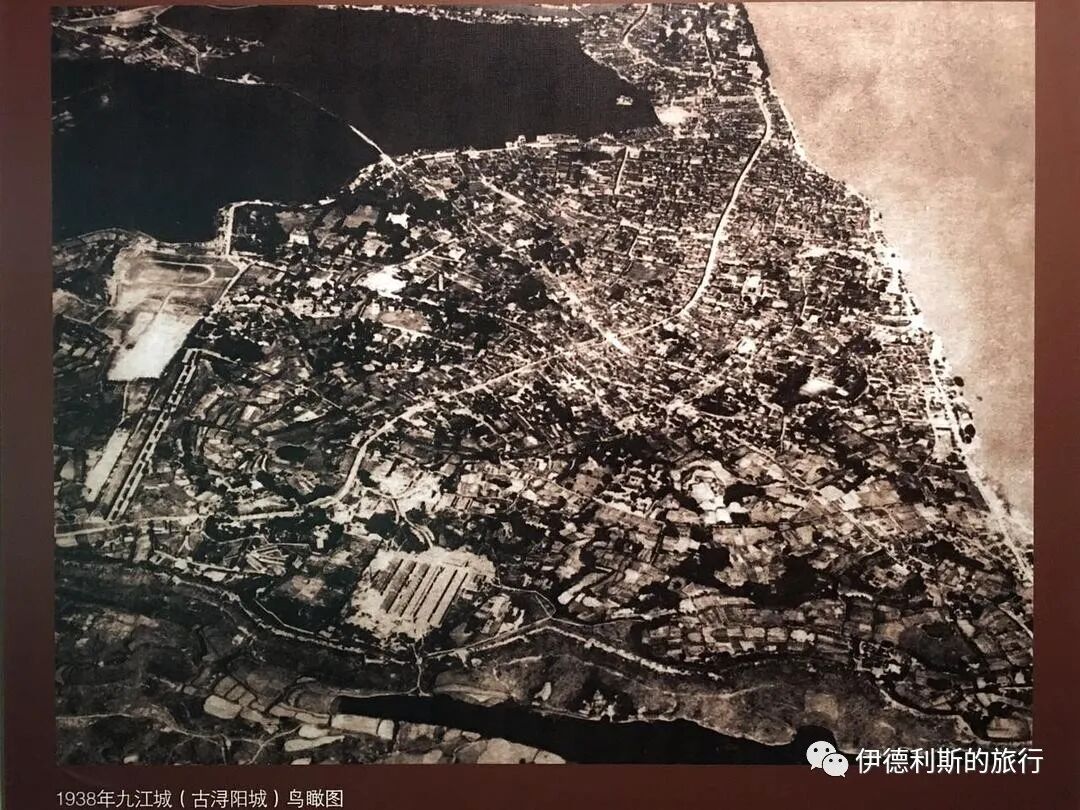
An aerial photo of Jiujiang city from 1938, kept at the Jiujiang Museum, shows west at the top and east at the bottom.
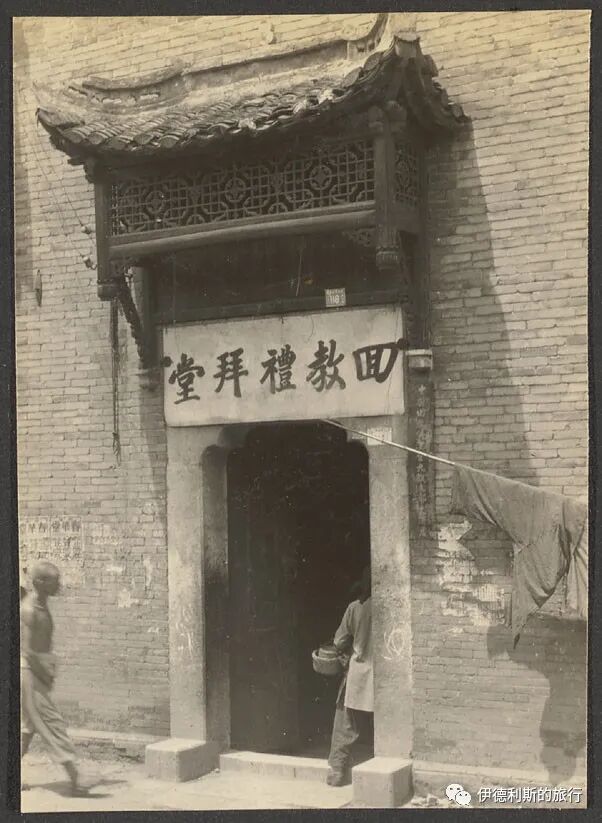
Between 1934 and 1935, the famous missionary Claude L. Pickens Jr. (Bi Jingshi) came to Jiujiang and photographed the local mosque (huijiao libaitang).
In 1949, there were 50 Hui Muslims running beef shops in Jiujiang, 20 running food stalls, and 2 running pastry shops. During the Republic of China era, the biggest merchant in Jiujiang was Jin Haoru, a Hui Muslim from Zhenjiang. In 1920, Jin Haoru opened the Yusheng Match Company, the largest match factory in Jiangxi Province. In 1932, he opened a large general store called Huakang Hardware and Foreign Goods on Dazhong Road in Jiujiang. Later, he independently founded the Guling Power Plant and the Jiujiang Housheng Pawnshop, becoming the richest man in Jiujiang. By 1953, the total capital of the Huakang Hardware and Foreign Goods store reached 340 million yuan.
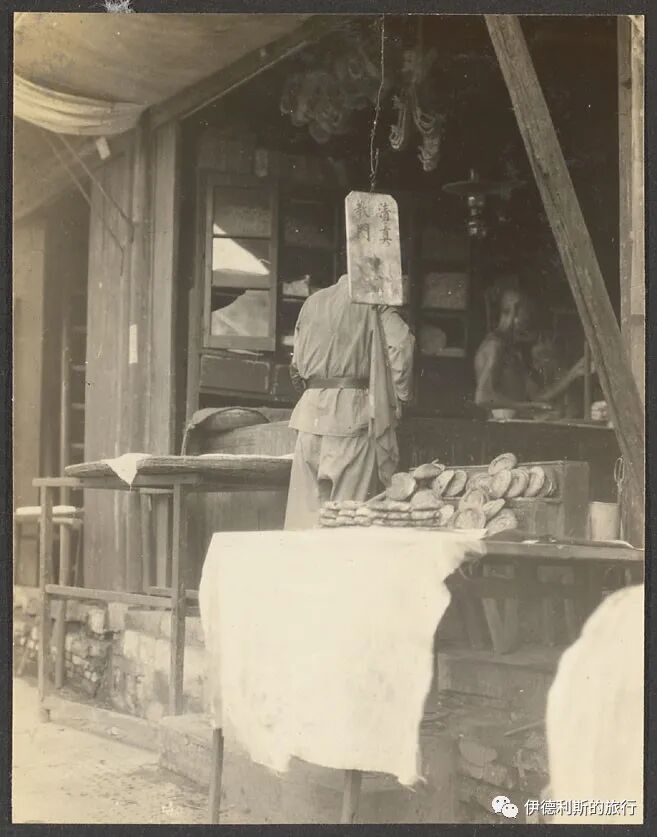
The image below shows a halal pastry shop in Jiujiang, photographed by missionary Claude L. Pickens Jr. between 1934 and 1935.
In 1955, there were 252 Hui Muslim households in Jiujiang with 1,035 people, 50 percent of whom were from Henan and 40 percent from Anhui. Many Hui Muslims moved here in the 1950s due to floods, so 104 people were sent back to their original hometowns in 1958. At the end of 1958, the city mosque was closed and turned into a halal canteen and the office for the Jiujiang Hui Muslim Cultural Association, later becoming the Liangxinglong Food Factory. In 1966, the suburban mosque was occupied by a rope factory. All the scriptures kept inside were burned, and all mosque property was confiscated. It reopened in 1982 and was rebuilt as a modern building in 2008 due to municipal development.
The current Jiujiang Mosque.
Hai Family Pan-fried Buns (Haijia Shuijianbao).
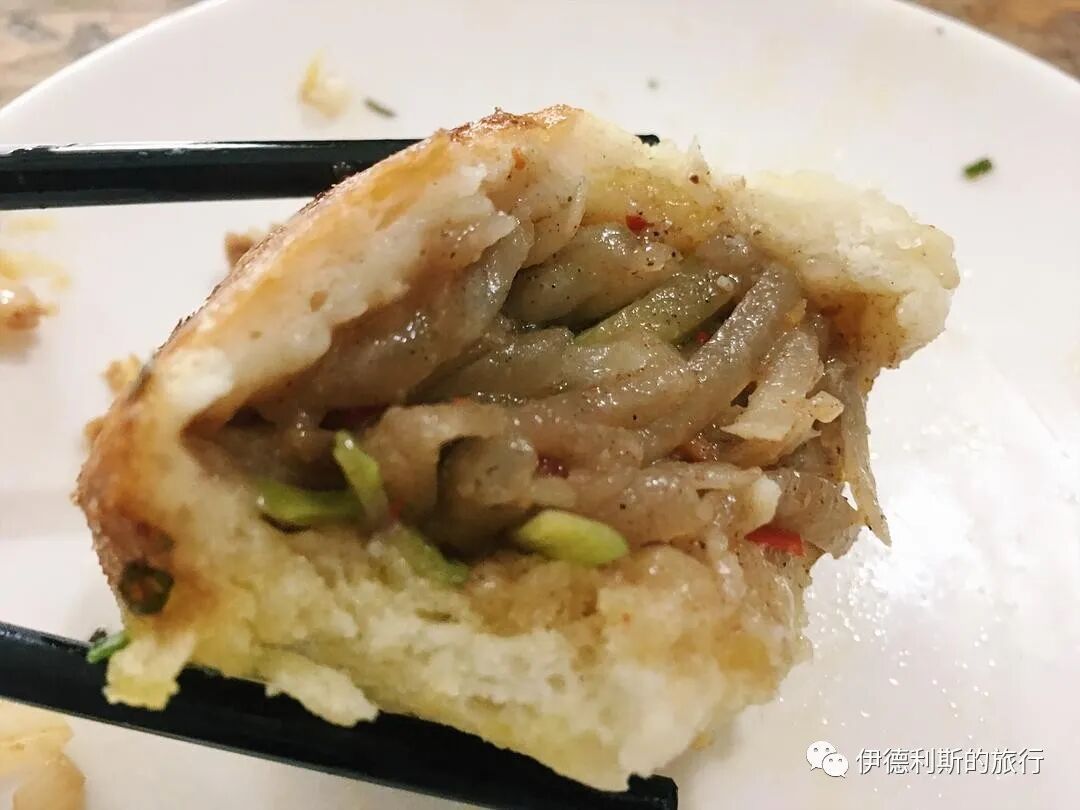
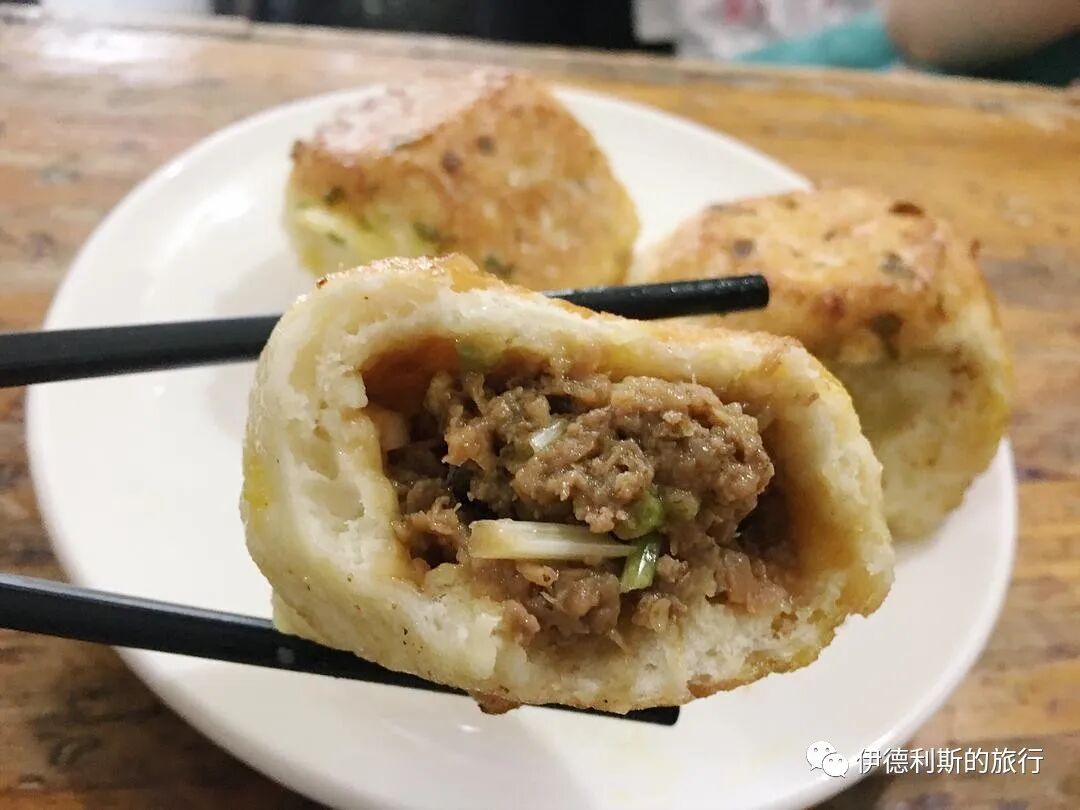
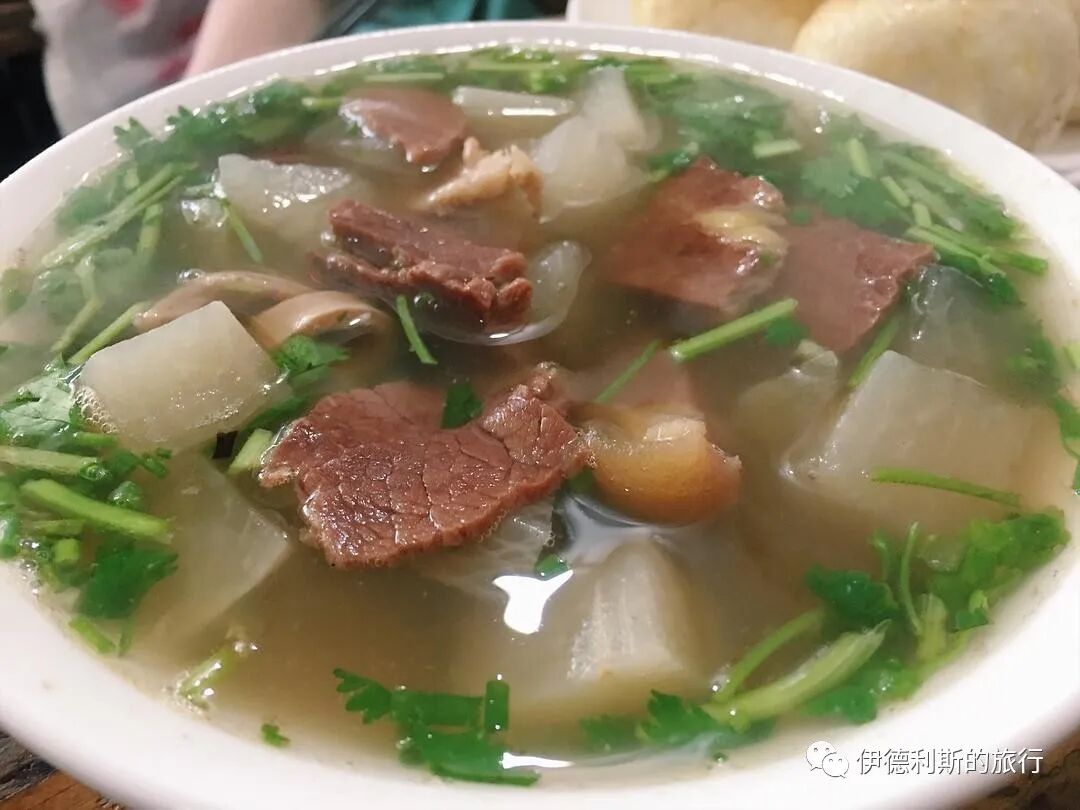
In the morning, I ate radish beef offal, rice porridge, radish pan-fried buns, and beef pan-fried buns at Hai Family Pan-fried Buns (Haijia Shuijianbao) at the Fourth Pier. The radish beef offal and radish pan-fried buns were both rich, spicy, and very satisfying, but as a Beijinger, I still prefer the non-spicy beef pan-fried buns.
Liangyilong.
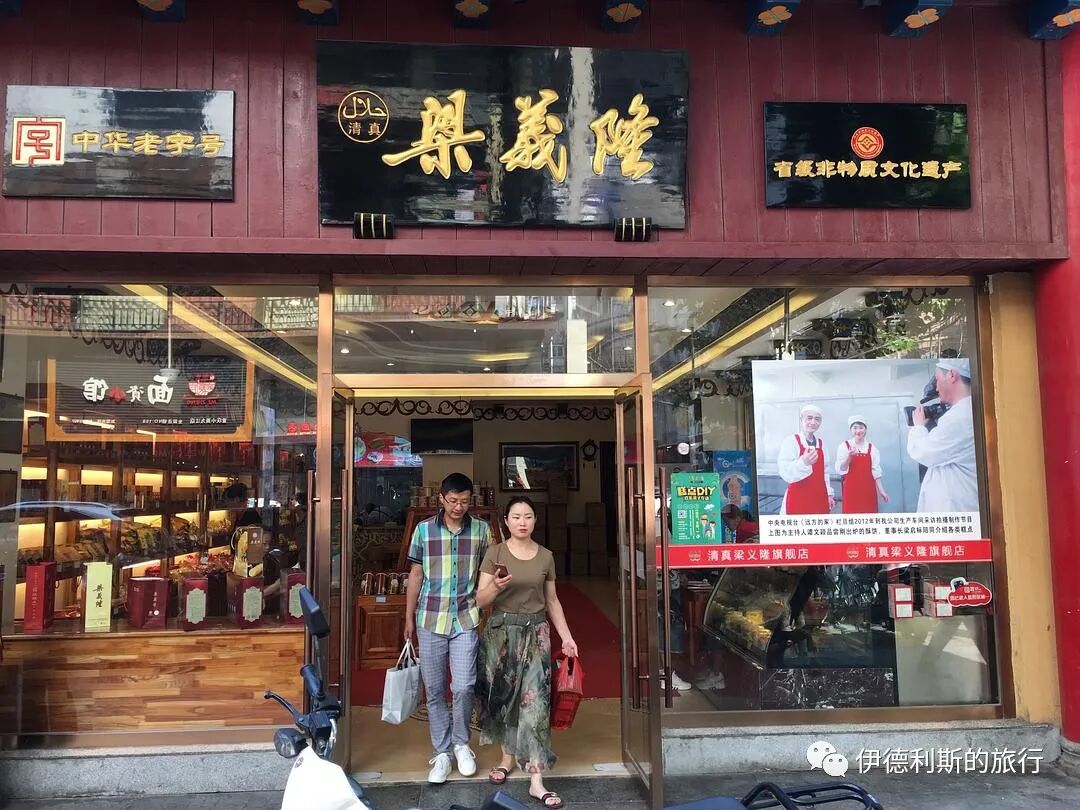
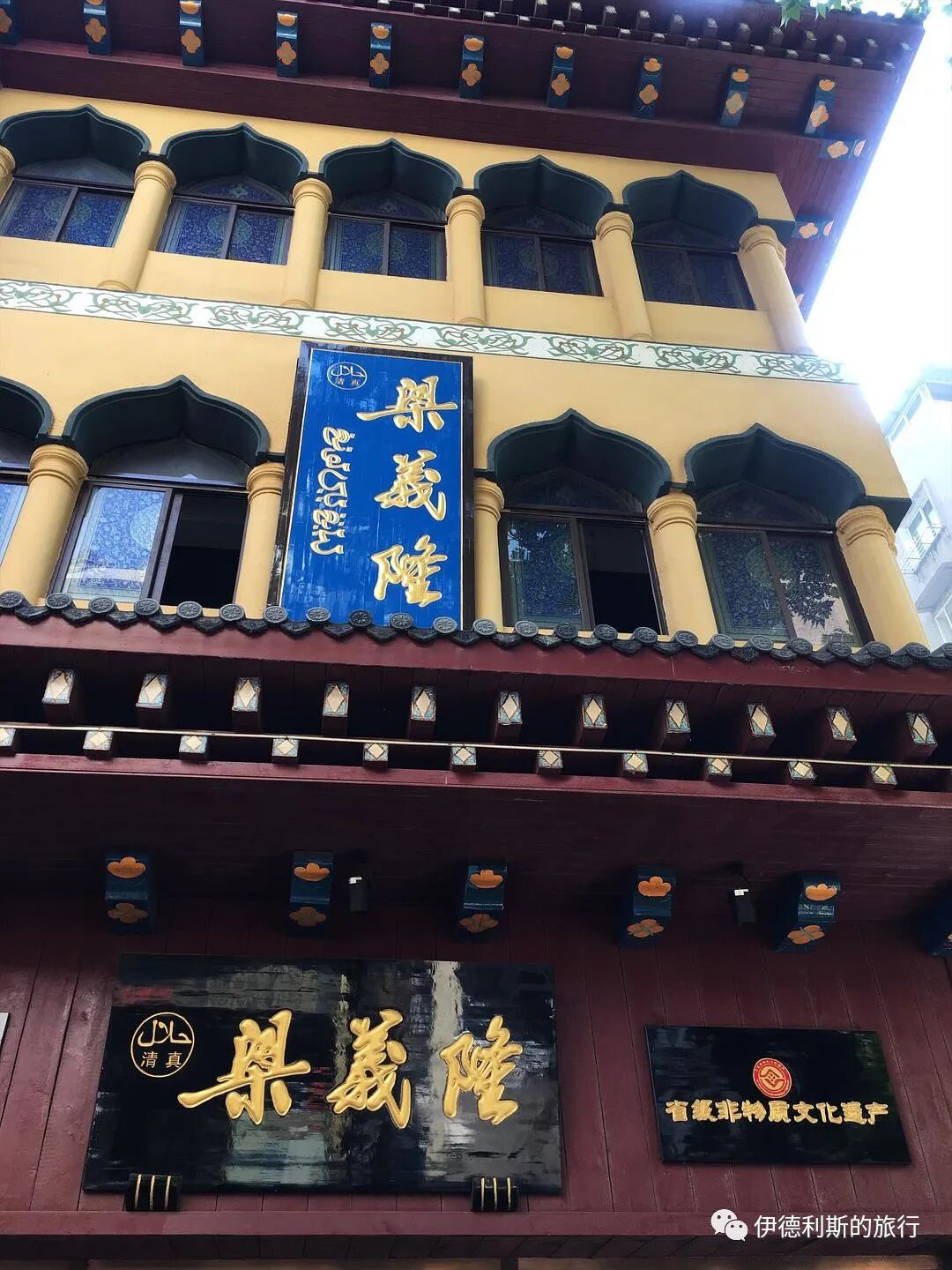
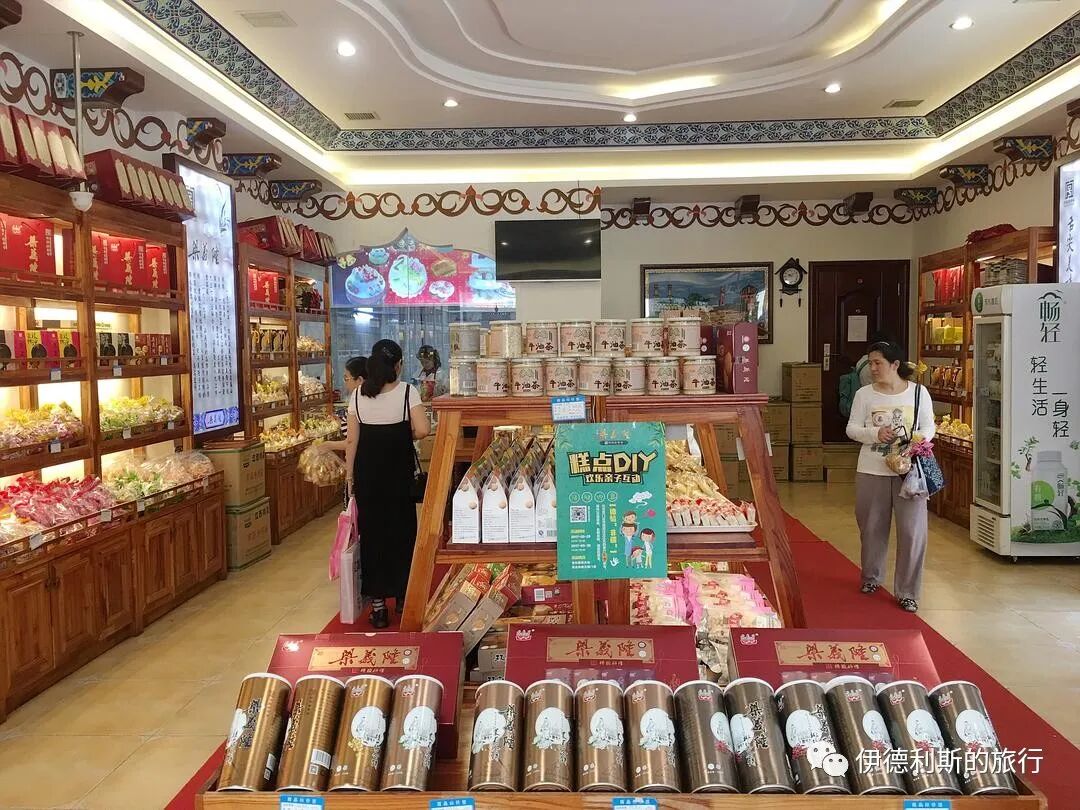
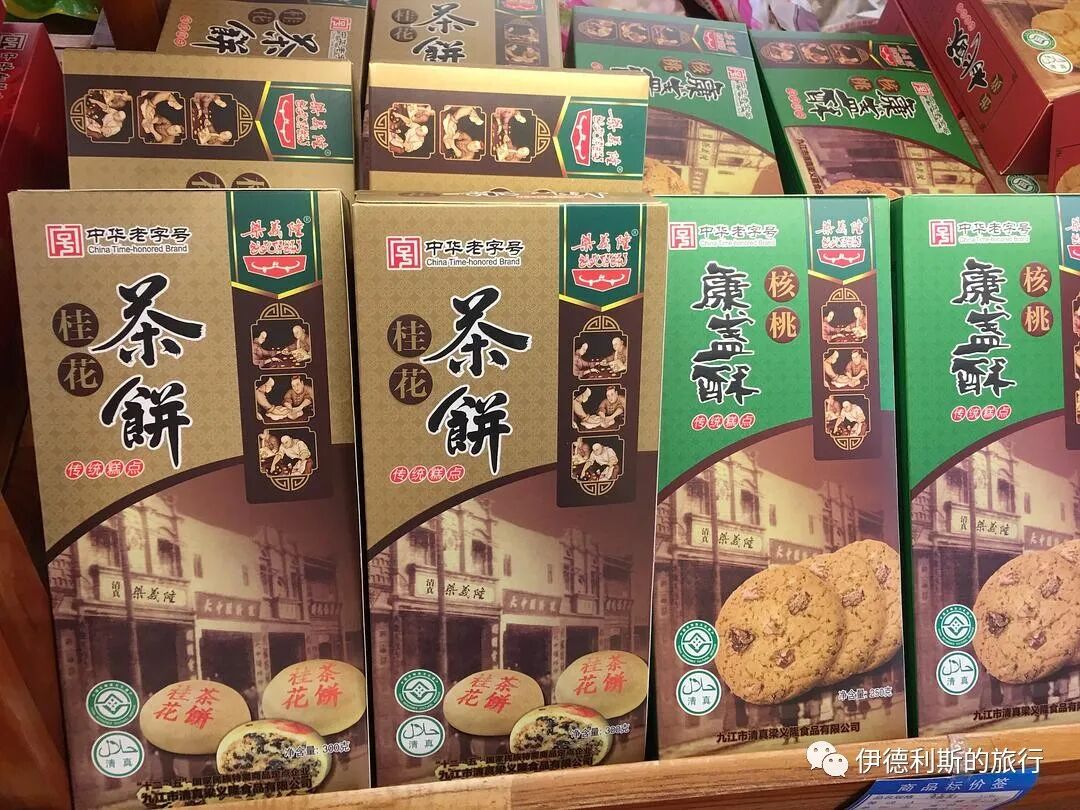
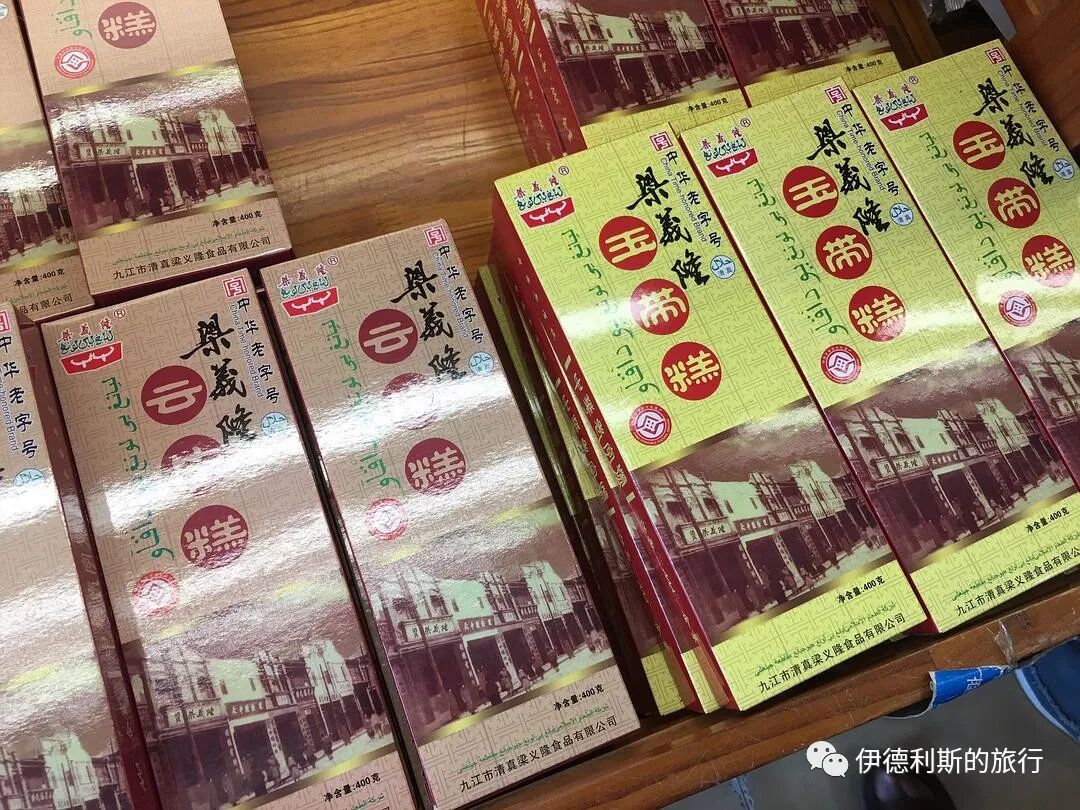
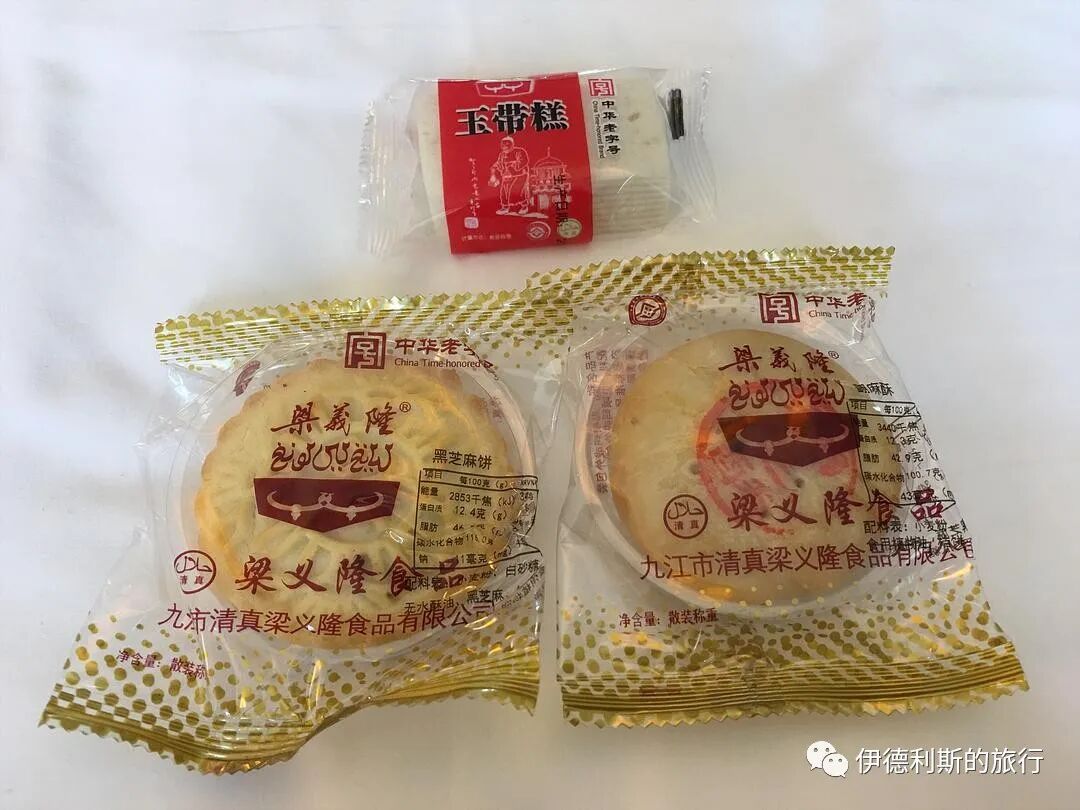
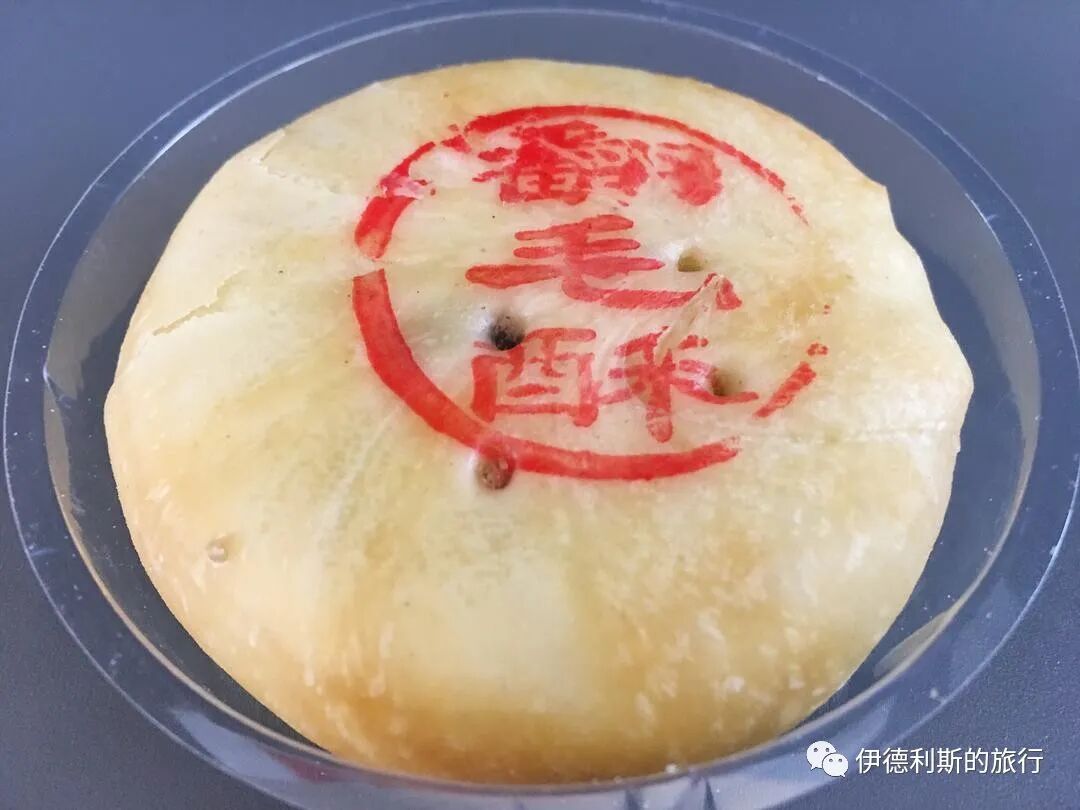
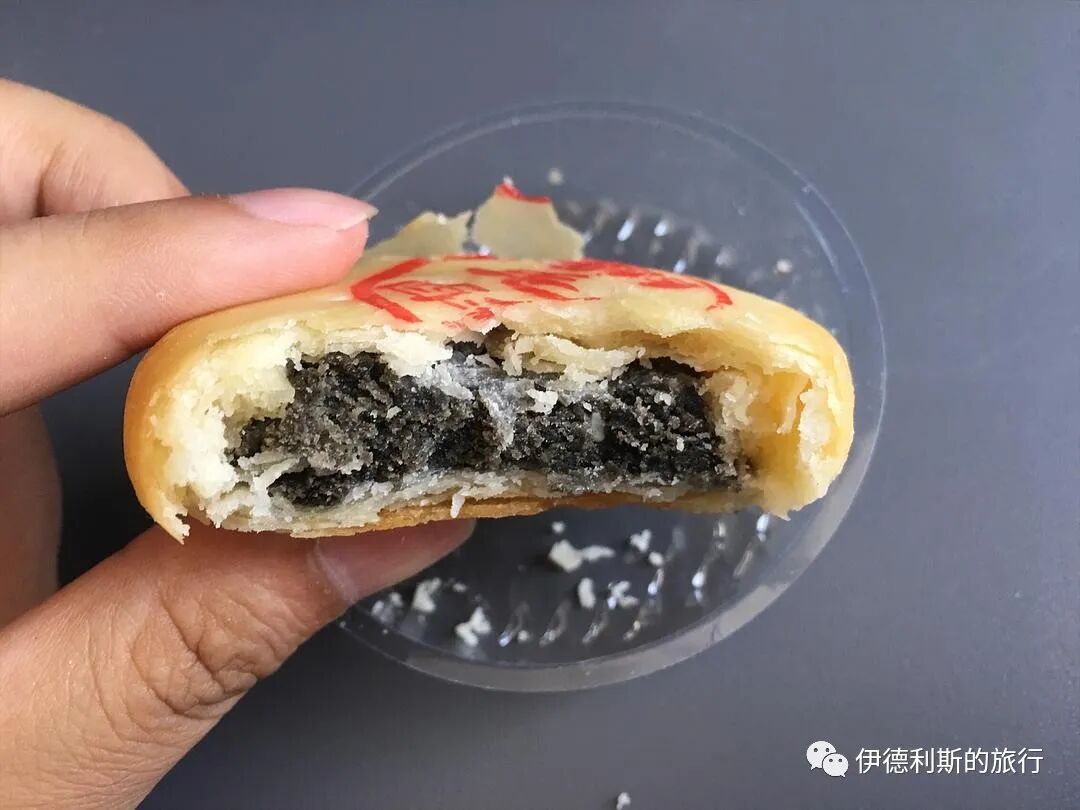
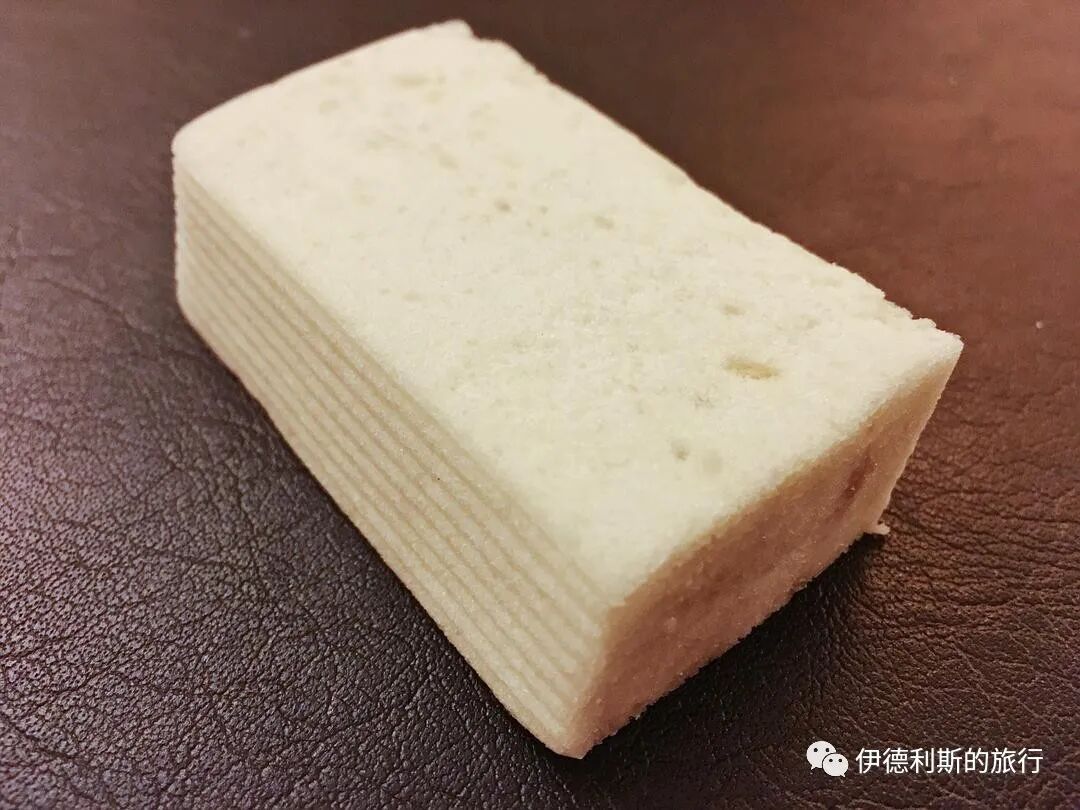
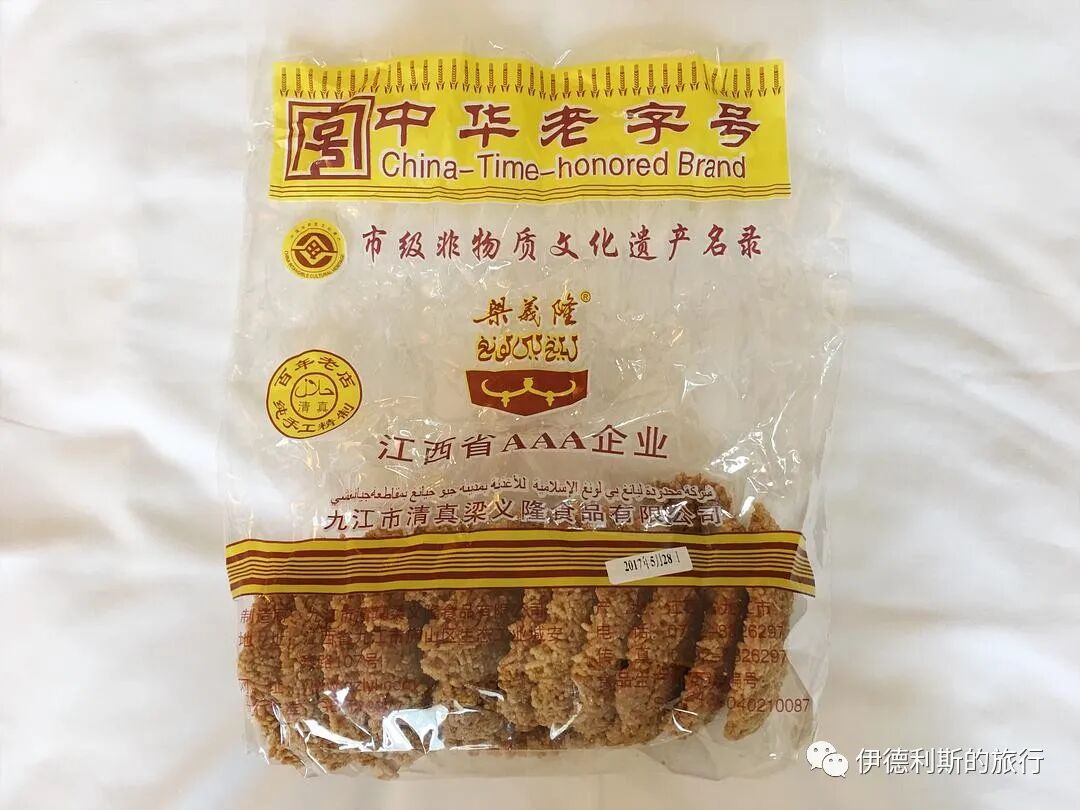
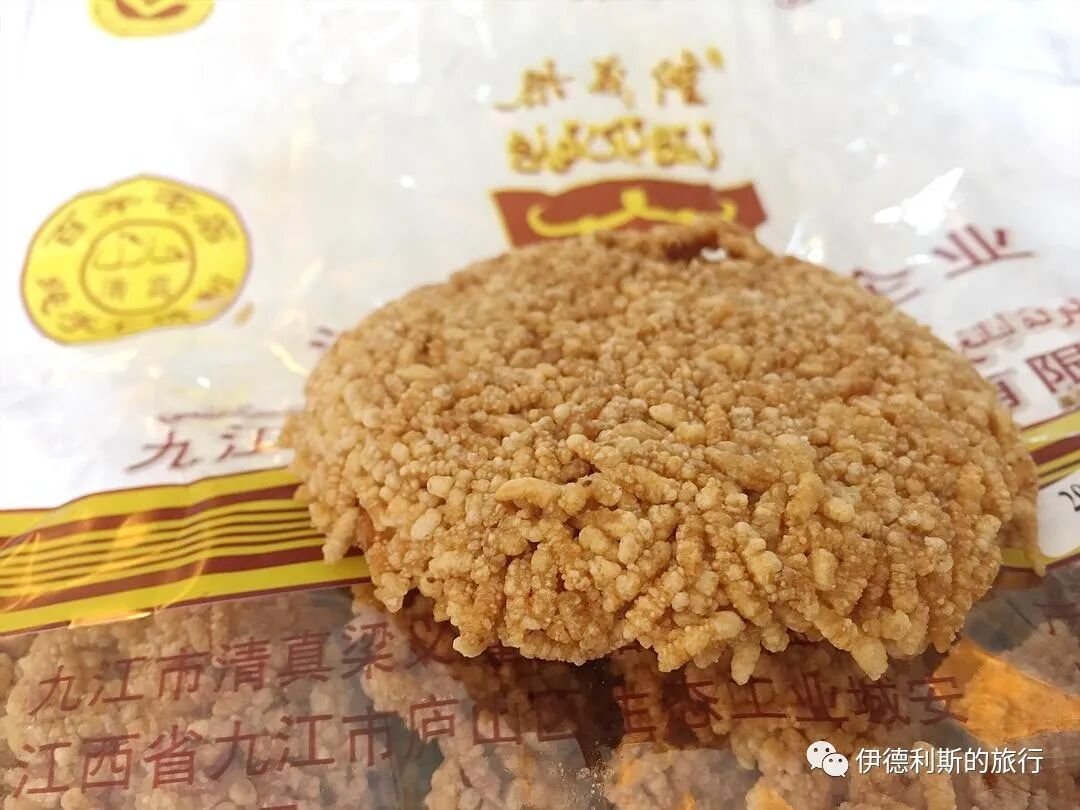
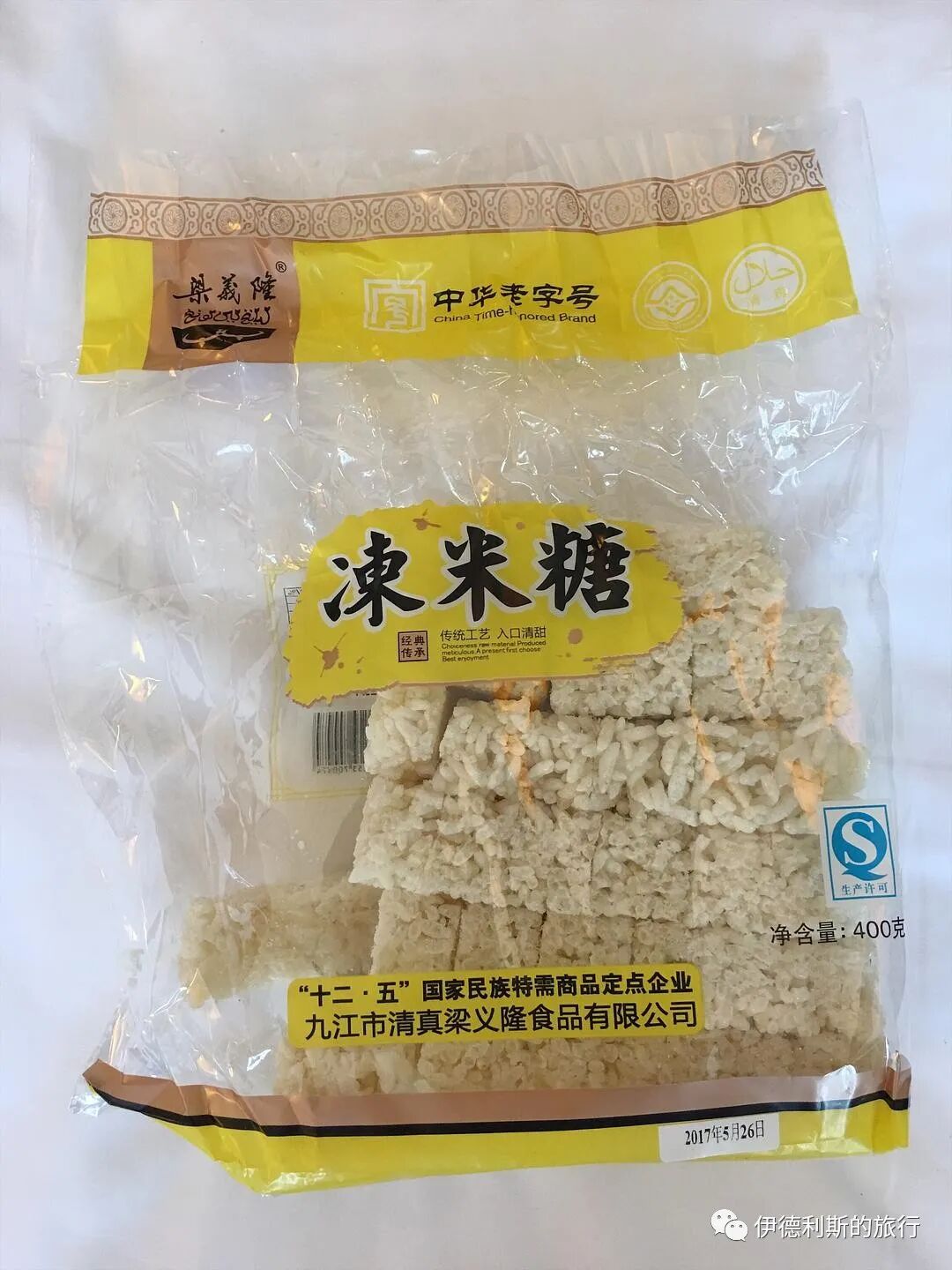
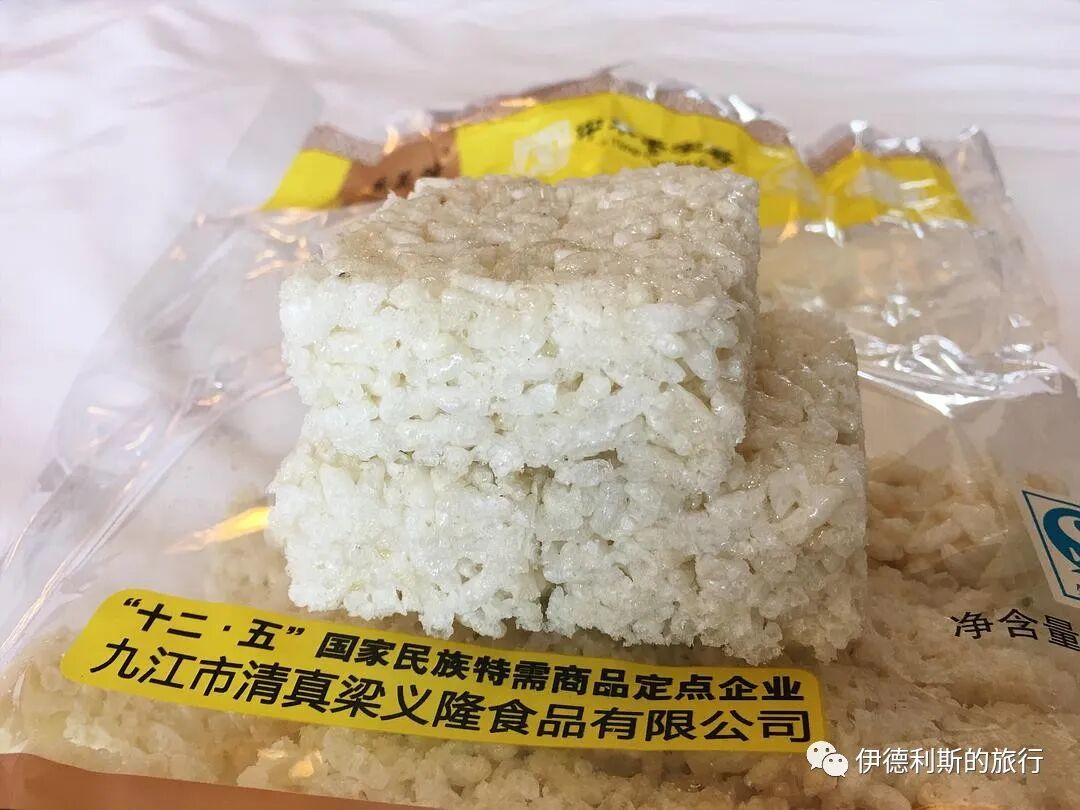
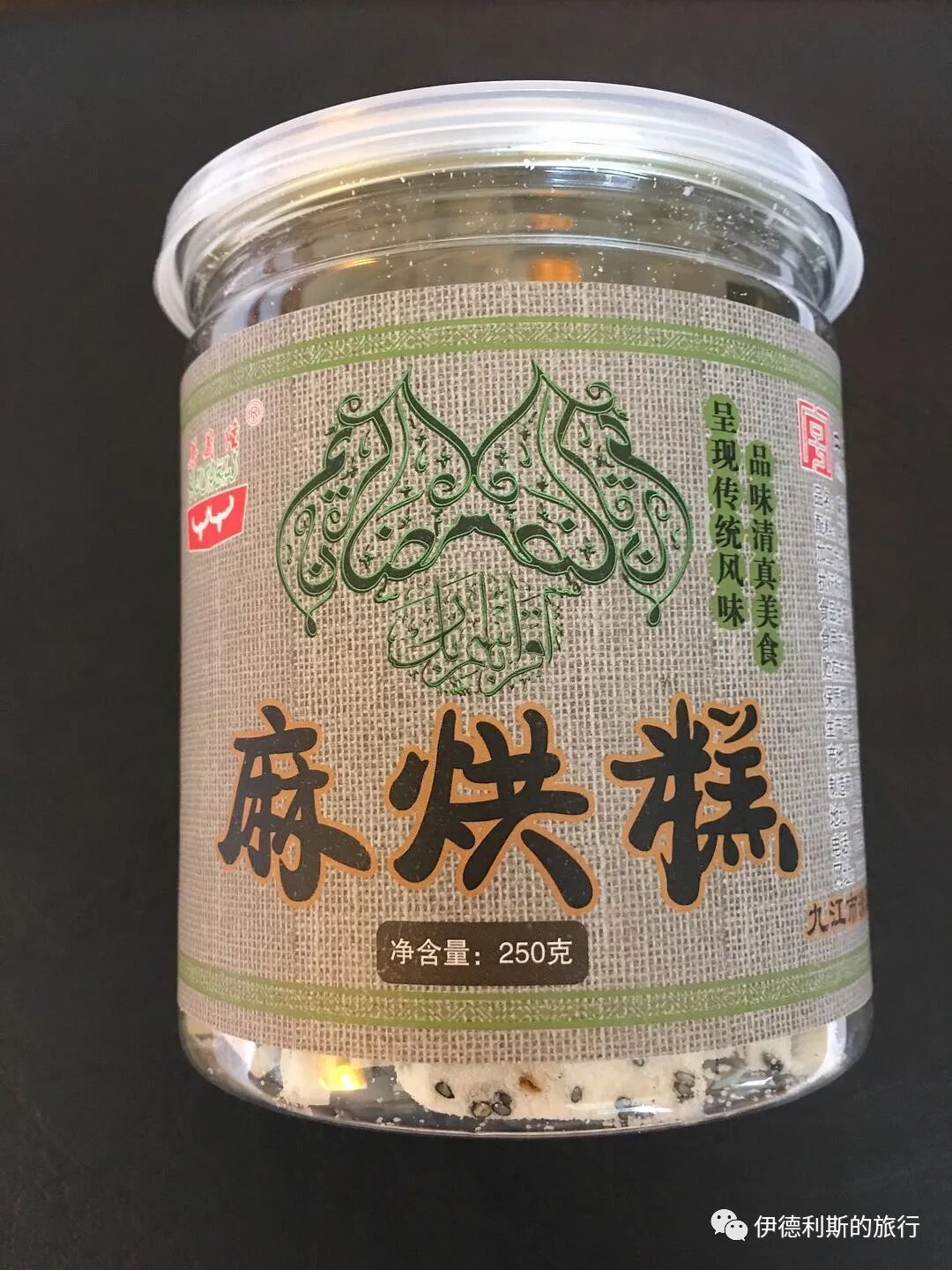
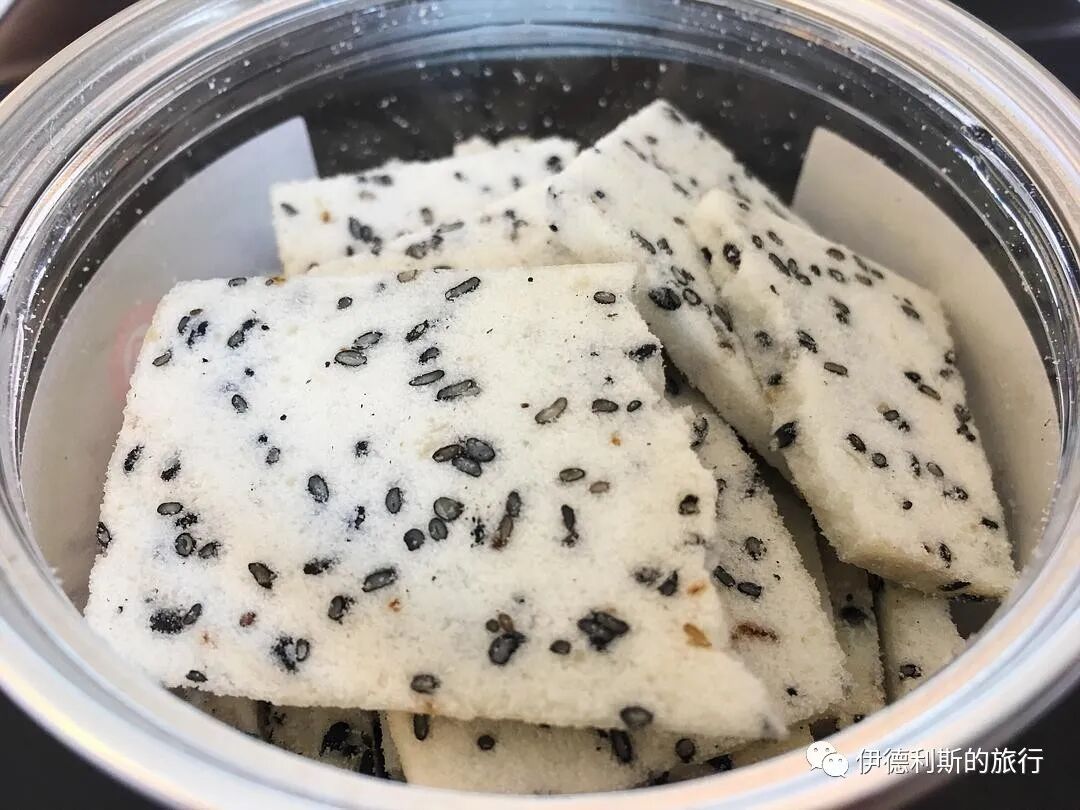
Next to Hai Family Pan-fried Buns is the Fourth Pier branch of Liangyilong, a time-honored halal pastry shop in Jiujiang. People say this might be the original location of the mosque in Jiujiang city. I bought crispy rice crackers (guoba), puffed rice candy (dongmitang), sesame cake (mahonggao), and flaky pastry (fanmaosu) here.
In the summer of 1937, the Nanjing Nationalist Government moved its offices to Mount Lu (Lushan) south of Jiujiang city. Mount Lu became the summer capital of the Republic of China and was incredibly busy. In July, the Nanjing Nationalist Government held a summer training group on Mount Lu, with over 7,000 officials from various sectors participating in the training. Between June and July, Zhou Enlai and others came to Mount Lu twice to hold the famous Mount Lu negotiations with Chiang Kai-shek. In July, Wang Jingwei and Chiang Kai-shek hosted the Mount Lu Talk, inviting 200 celebrities from all walks of life. Chiang Kai-shek delivered his famous Mount Lu declaration of resistance against Japan. That same year, Liang Yide, a Hui Muslim from Huaining, Anhui, saw a business opportunity and opened the Deyizhai pastry shop on Mount Lu. People say Chiang Kai-shek and Soong Mei-ling often used the Liang family's pastries to entertain guests at that time.
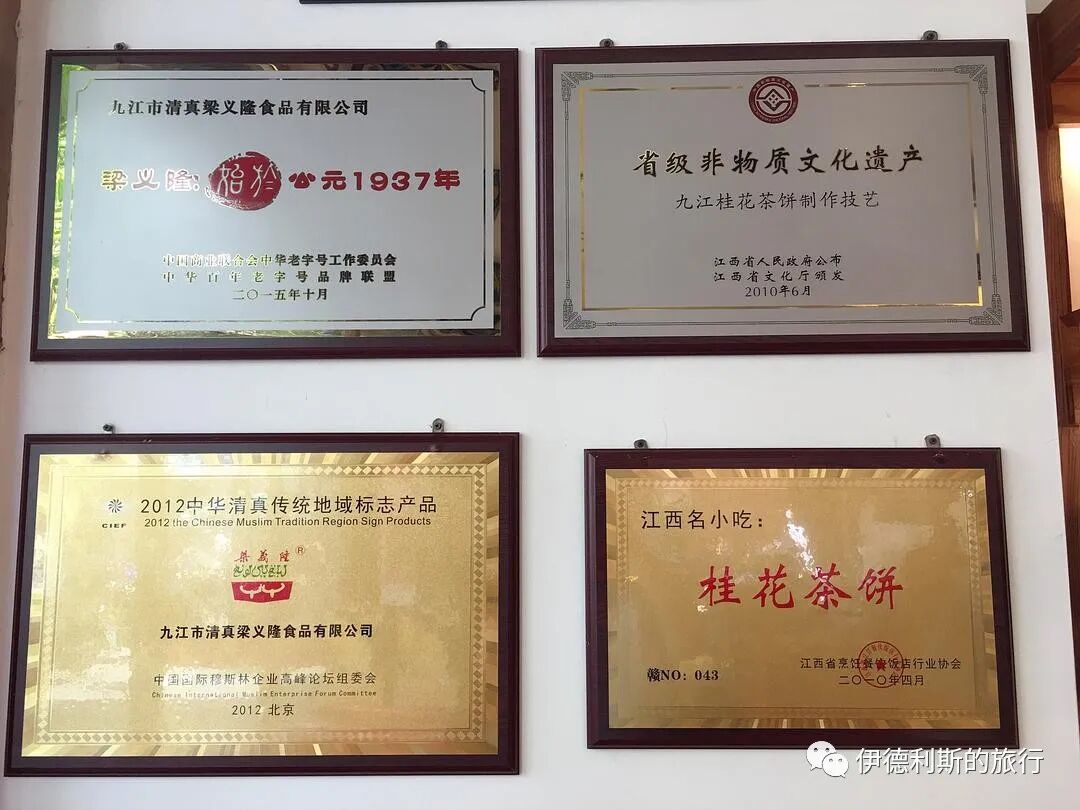
An introduction from the Liangyilong official website.
In 1940, Liang Yide officially opened the Liangyilong shop on Lijiaxiang in Xiyuan, Jiujiang. He paid high wages to hire a Taiwanese pastry chef named Lin Youfu and a Cantonese-style pastry chef named Dai Tianchou to manage the baking. Later, he hired a Taiwanese master named Qiu to handle candy production. Master Qiu used international candy-making techniques to produce dozens of types of fruit and flavored candies at Liangyilong, which made the shop very famous in Jiujiang.
An introduction from the Liangyilong official website.
After the public-private partnership policy, Liangyilong was merged into the Jiujiang Food Factory in 1958. It moved back to the entrance of Xiyuan Lane in 1962. After 1966, the shop sign was smashed, the family assets were confiscated, and Liang Yide was sent to Xiushui for re-education. At the end of 1989, Liang Yide's son, Liang Qibiao, revived the Liangyilong brand. He inherited his father's skills and opened the Liangji Pastry Shop, which eventually grew into a major brand with many franchise stores and automated production lines.
Liang Qirong Pastry Workshop.
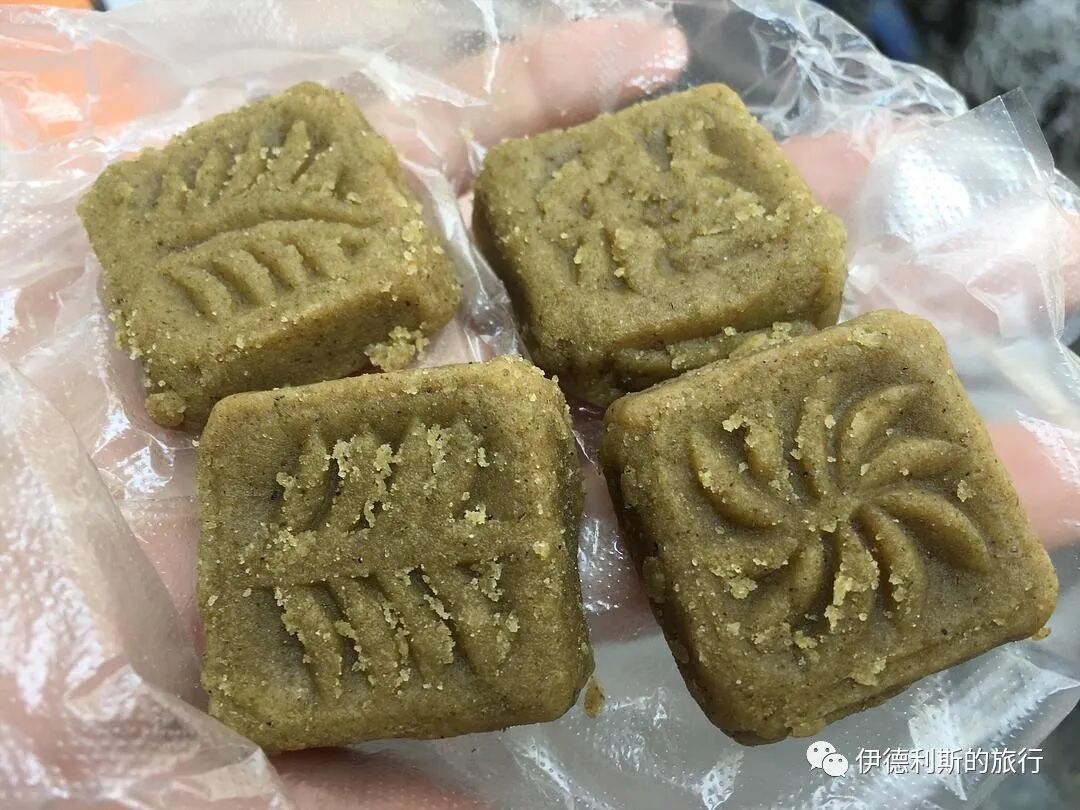
Besides Liangyilong, there is another halal pastry shop in Jiujiang called Liang Qirong. It has small shops on Dingguan Road and Dutian Lane. They have a front shop and a back workshop, and the taste feels more personal than the mass-produced items from Liangyilong. I bought osmanthus crisp candy (guihua sutang), osmanthus cloud-slice cake (guihua yunpian gao), osmanthus tea cake (guihua chabing), and mung bean cake (lvdou gao) here.
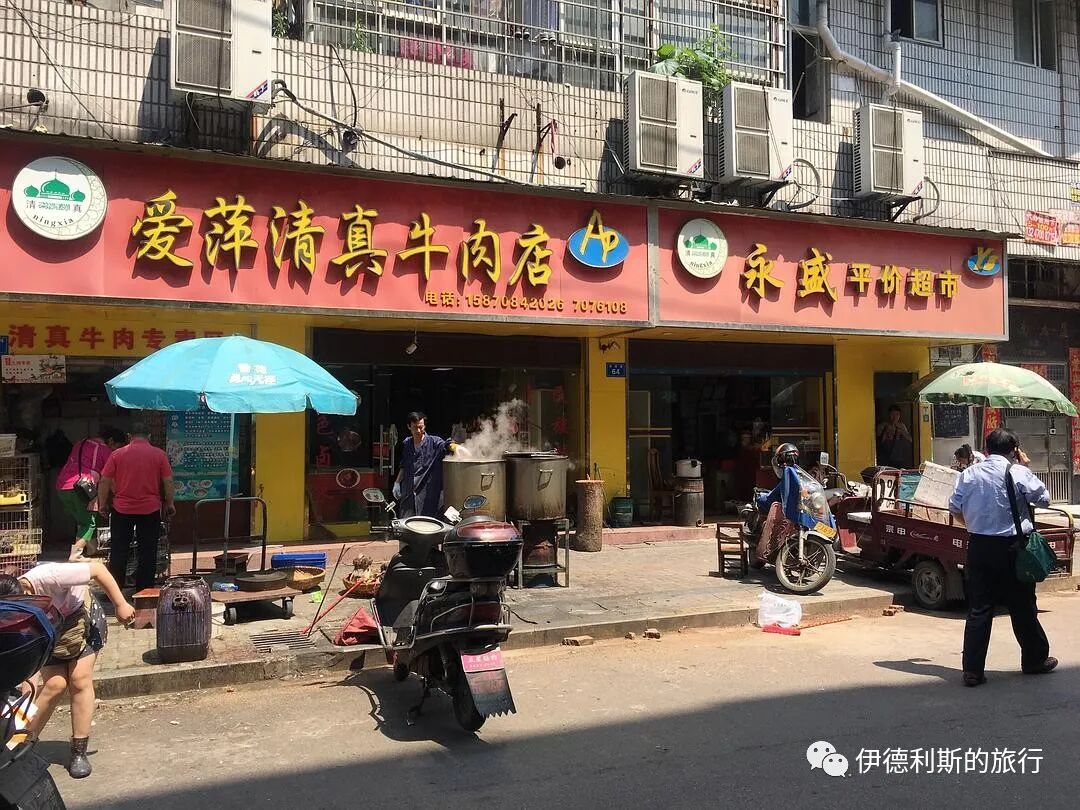
Aiping Halal Beef Restaurant.
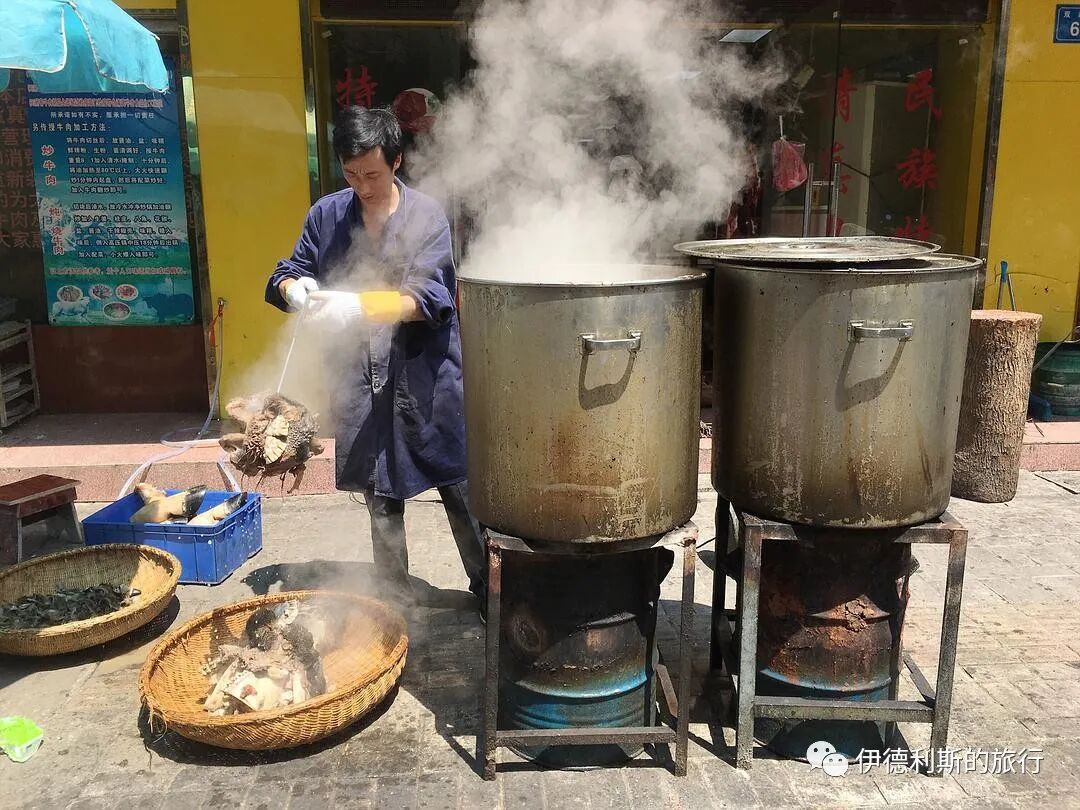
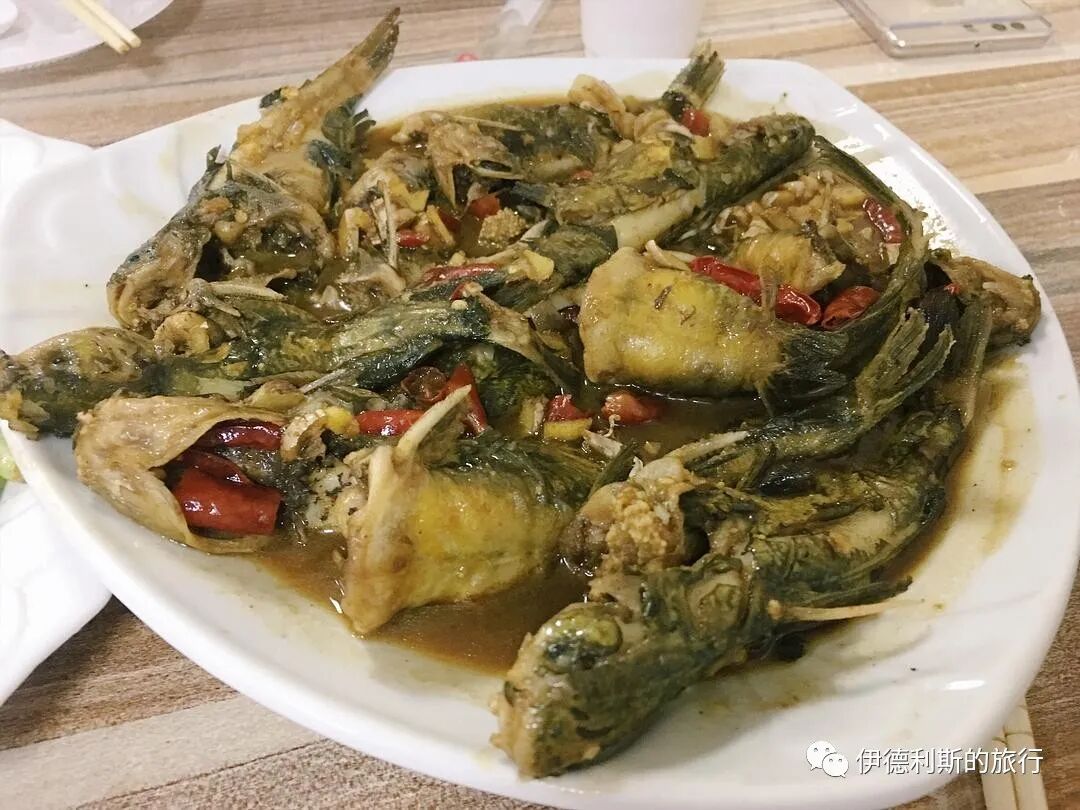
For lunch at Aiping Halal Beef Restaurant, I had braised yellow catfish (huangyatou), stir-fried beef tripe with celery, and diced lotus root with hot peppers. Huangyatou is what people in Jiangxi call yellow catfish. The ones from Poyang Lake are the most famous, and the meat is incredibly tender and smooth. April and May are the spawning season for yellow catfish. Every fish is full of roe, which is delicious, and the spicy flavor is just right, making it very appetizing. The salty beef tripe (niudu) is great with rice, and the diced lotus root is very spicy, so I have to drink cold water with it. It is so satisfying in the summer.
Halal snacks on Nanhu Branch Road.
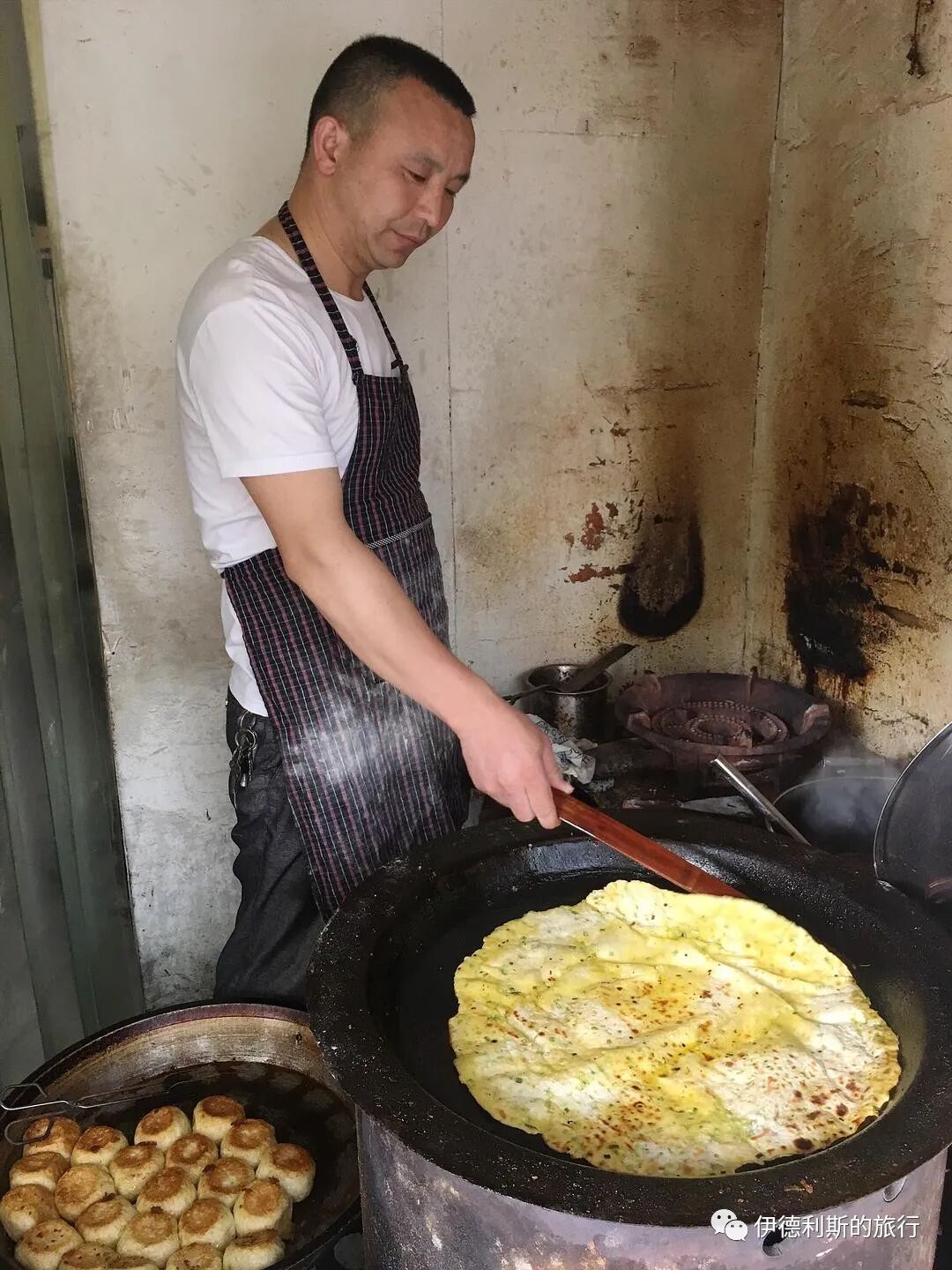
The next morning, I had beef, pan-fried buns (jianbao), radish beef offal (luobo niuza), and scallion oil pancakes (congyoubing) at a halal snack shop on Nanhu Branch Road. Scallion oil pancakes are a specialty of the Hui Muslims in Jiujiang. The radish beef offal is not as spicy as the version at Hai's, which suits my taste better.
Because of my schedule, I missed many shops on this trip to Jiujiang and did not get to eat stir-fried rice noodles (chaofen). If you are interested in halal food in Jiujiang, you should go try it out.
Yangtze River shipping.
During the Republic of China era, Jiujiang Port had six major modern steamship terminals: Nanhua, Jardine, Nissin, Butterfield & Swire, Sanbei, and Ningshao. There were over 1,300 stevedores, and by 1934, the number of dock workers in Jiujiang reached over 3,000.
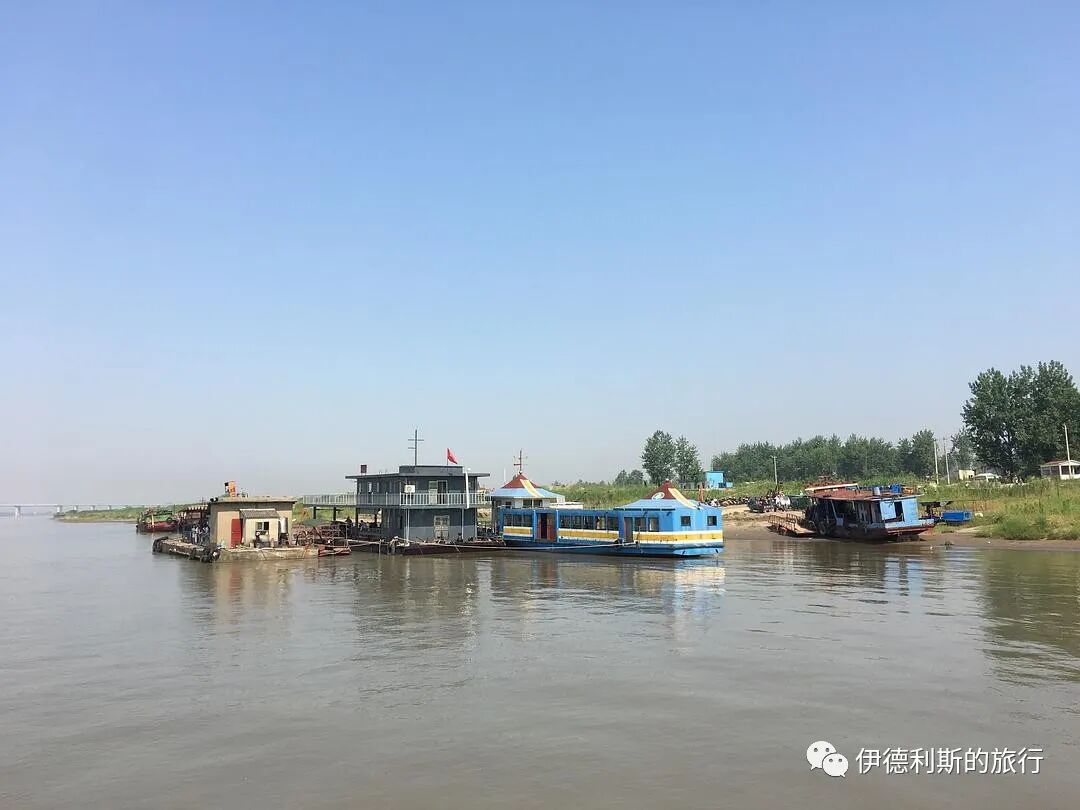
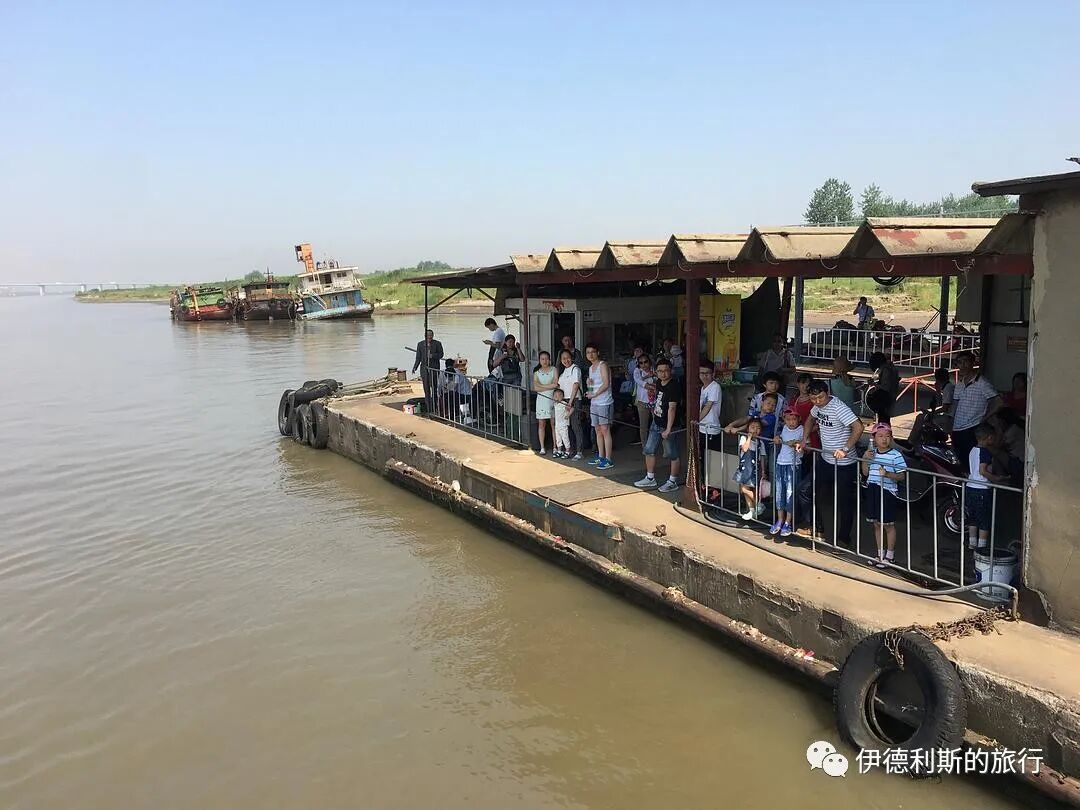
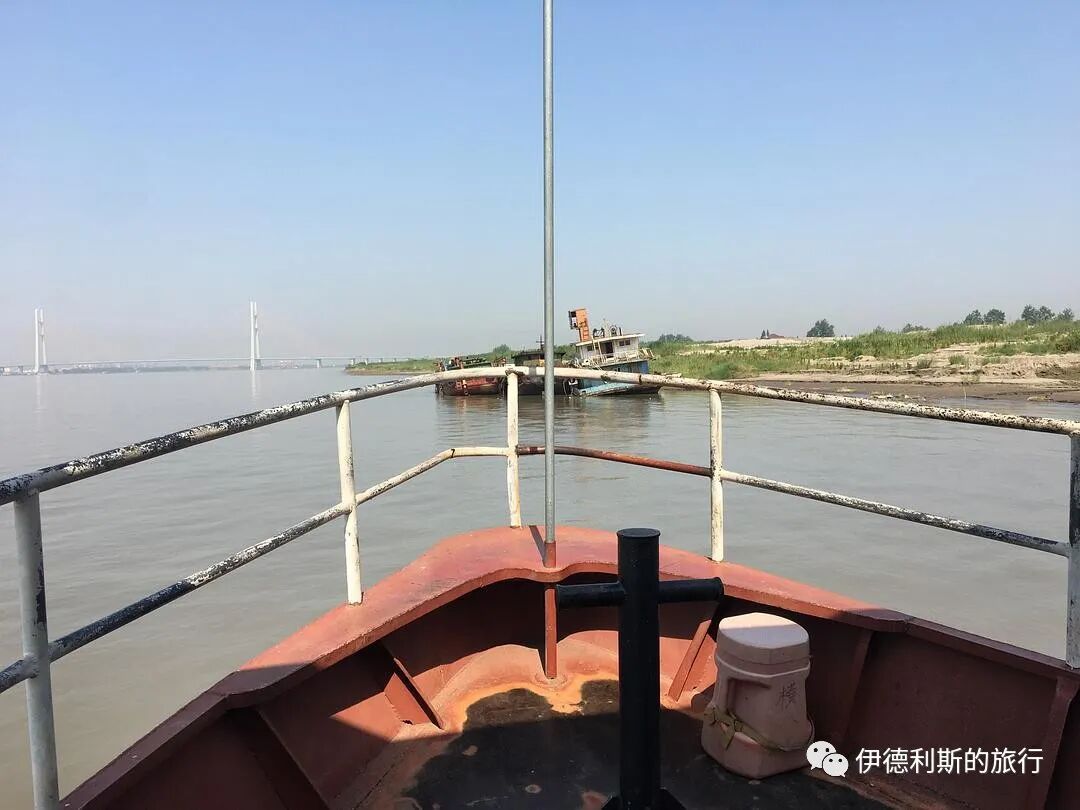
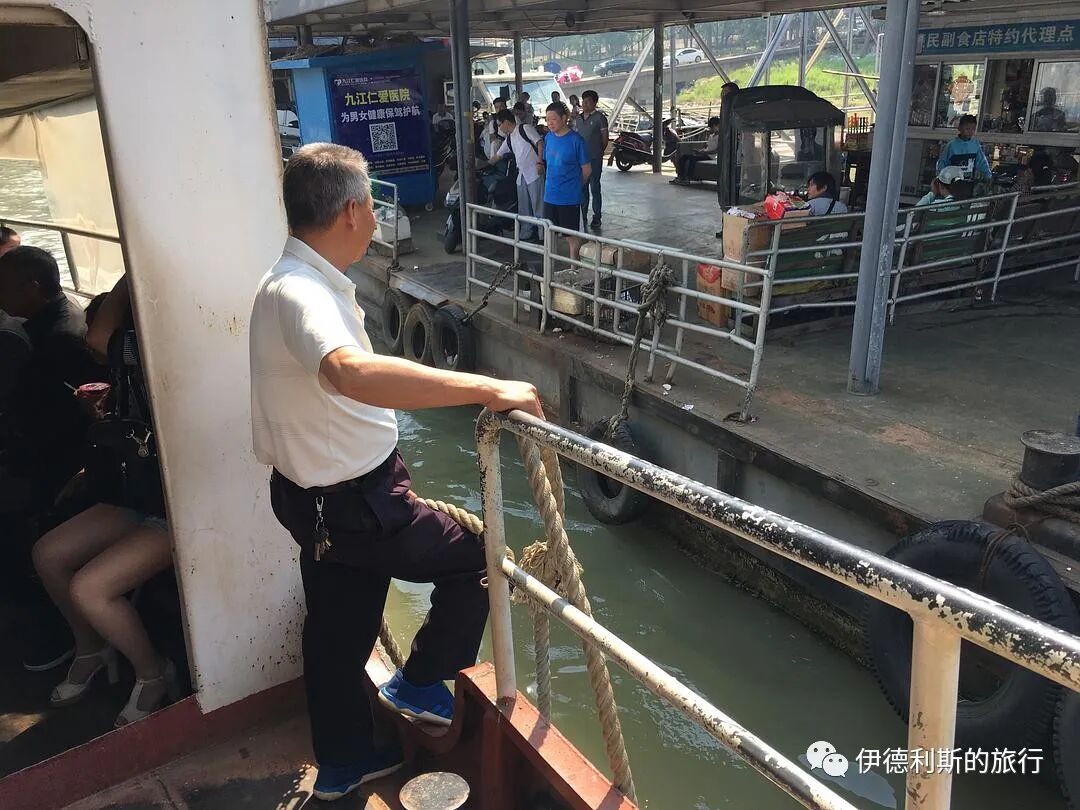
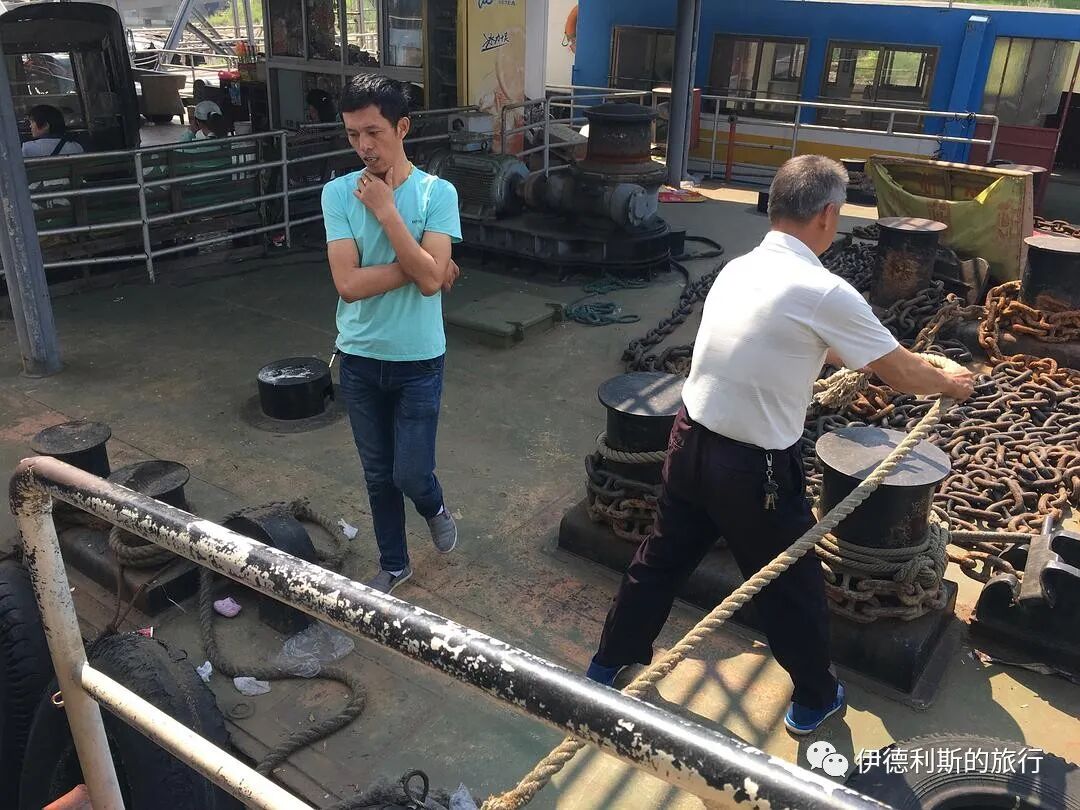
Today, the Jiujiang cross-river ferry is at Gate 21 at the north end of Lushan North Road. It has operated a route to the Hengbatou Pier in Huangmei County, Hubei Province, across the river since 1940. At first, they used small hand-rowed rafts, then wooden boats, and later they changed to the current iron barges.
On the other side of the ferry is Hengbatou Pier. During the Yangtze River Crossing Campaign in April 1949, a unit of the Eighth Field Army of the People's Liberation Army requisitioned four wooden boats here. Each trip carried 14 people, and it took them seven days and seven nights to successfully transport the troops across the Yangtze River. view all
Summary: Jiujiang Hui Muslim Community — Mosques, Halal Food and History is presented here as a firsthand travel account in clear English, beginning with this scene: In 2017, I visited the Hui Muslim community in Jiujiang, Jiangxi. Five years have passed, and since I am stuck at home and cannot leave Beijing, I have to look back on my past travels. The account keeps its focus on Jiujiang Muslims, China Mosques, Halal Food while preserving the names, places, food, and historical details from the Chinese source.
In 2017, I visited the Hui Muslim community in Jiujiang, Jiangxi. Five years have passed, and since I am stuck at home and cannot leave Beijing, I have to look back on my past travels.
The history of the Jiujiang Hui Muslim community
The books "Jiujiang Hui Muslims and Islam" by Ye Ping and "Past and Present of Jiujiang Mosque" by Jiang Yi cover the development of the Hui Muslims in Jiujiang, but their views differ quite a bit. I have organized and summarized them here.
In 1450 (the first year of the Jingtai reign of the Ming Dynasty), the Hui Muslim general Ma Hazhi was transferred to serve as the commander-in-chief of Jiujiang. He brought three imams and over 1,500 Muslim officers and soldiers along with their families to be stationed in Jiujiang. They built the first mosque next to their military camp at Jiwan outside the West Gate. After that, retired officers and soldiers kept settling there, forming the earliest Hui Muslim community in Jiujiang.
During the late Ming and early Qing dynasties, the situation was unstable, so many Hui Muslims left Jiujiang and the mosque was destroyed.
People say the Jiwan mosque was rebuilt during the Qing Dynasty. Two imperial steles were carved during the Qianlong reign, but they were later destroyed in the fires of war, so the history of the Jiujiang Hui Muslims in the early Qing Dynasty remains unknown.
In 1821 (the first year of the Daoguang reign), Hui Muslim generals Tao Kuichen and Zhao Zhenqing from Shouzhou, Anhui, were transferred to serve as the garrison commander and defense battalion leader in Jiujiang. They brought 500 Muslim Flying Tiger Battalion soldiers and their families to be stationed in Jiujiang. After that, many Hui Muslims from Anhui and Henan came to Jiujiang to do business and settle down. In 1830 (the tenth year of the Daoguang reign), Ma Wanhe came from Anhui to Jiujiang to open a pollen shop. In 1848 (the twenty-eighth year of the Daoguang reign), Wang Wanhe came from Anqing to Jiujiang to open the Wang Qichang hat shop. In 1850 (the thirtieth year of the Daoguang reign), Qian Baochang, an antique dealer from Huaining, Anhui, took the lead in donating timber to build two rooms and renovate the Jiwan mosque.
During the Xianfeng era, the number of Hui Muslims in Jiujiang continued to grow. People like Hai Fuhe, Wang Fuxing, Fa Yongzhao, and Ma Chunsheng came from Henan to Jiujiang to open beef shops. In 1854 (the fourth year of Xianfeng), Ma Jintang fled famine in Henan and came to Jiujiang. He studied at the mosque. After marrying into the Ma Wanhe pollen shop, he started his own businesses, the Chunhe Inn and the Ma Jinkang money shop.
After the Treaty of Tianjin was signed, Jiujiang opened as a treaty port in 1862 (the first year of Tongzhi). It became the only transit hub for import and export trade in Jiangxi. Business grew quickly, and more Hui Muslims moved to Jiujiang to settle down. In 1875 (the first year of Guangxu), Jiang Chunhui came from Nanjing to Jiujiang and opened the Tongtai pawnshop. By 1898 (the twenty-fourth year of Guangxu), the Hui Muslim population in Jiujiang reached over 80 households and more than 200 people. That year, Zhu Tianqing, a Hui Muslim general from Shouzhou, Anhui, who served as the Jiujiang Prefecture commander, and Jiujiang brigade general Tao Zhan led the effort to expand the Jiwan Mosque. The new Jiujiang Mosque faced south. It had a prayer hall, a washroom (shuifang), a living room, and living quarters. The front gate faced the busy official street, and the back gate was near the Yangtze River.
The boundary stone set up during the mosque's renovation in the Guangxu era is still preserved today.
Because the mosque was outside the city, it was not very convenient for Hui Muslims living inside the city to visit. In 1902 (the twenty-eighth year of Guangxu), Yang Xianian from Anhui and antique dealer Ma Shoutian led the construction of the City Mosque at the Fourth Pier. The Jiwan Mosque was then called the Outside-the-City Mosque. The City Mosque had four courtyards from front to back, and its first imam was Hu Guangming. The community of the City Mosque was mainly Hui Muslims from Anhui, while the community of the Outside-the-City Mosque was mainly Hui Muslims from Henan. They were divided into the new group and the old group, and both mosques held their religious activities separately.
In the early years of the Republic of China, the Hui Muslim population in Jiujiang reached over 100 households and more than 400 people. In 1935, the Jiwan Mosque moved 200 meters south because of a river levee straightening project, changing its orientation from facing south to facing north.
An aerial photo of Jiujiang city from 1938, kept at the Jiujiang Museum, shows west at the top and east at the bottom.
Between 1934 and 1935, the famous missionary Claude L. Pickens Jr. (Bi Jingshi) came to Jiujiang and photographed the local mosque (huijiao libaitang).
In 1949, there were 50 Hui Muslims running beef shops in Jiujiang, 20 running food stalls, and 2 running pastry shops. During the Republic of China era, the biggest merchant in Jiujiang was Jin Haoru, a Hui Muslim from Zhenjiang. In 1920, Jin Haoru opened the Yusheng Match Company, the largest match factory in Jiangxi Province. In 1932, he opened a large general store called Huakang Hardware and Foreign Goods on Dazhong Road in Jiujiang. Later, he independently founded the Guling Power Plant and the Jiujiang Housheng Pawnshop, becoming the richest man in Jiujiang. By 1953, the total capital of the Huakang Hardware and Foreign Goods store reached 340 million yuan.
The image below shows a halal pastry shop in Jiujiang, photographed by missionary Claude L. Pickens Jr. between 1934 and 1935.
In 1955, there were 252 Hui Muslim households in Jiujiang with 1,035 people, 50 percent of whom were from Henan and 40 percent from Anhui. Many Hui Muslims moved here in the 1950s due to floods, so 104 people were sent back to their original hometowns in 1958. At the end of 1958, the city mosque was closed and turned into a halal canteen and the office for the Jiujiang Hui Muslim Cultural Association, later becoming the Liangxinglong Food Factory. In 1966, the suburban mosque was occupied by a rope factory. All the scriptures kept inside were burned, and all mosque property was confiscated. It reopened in 1982 and was rebuilt as a modern building in 2008 due to municipal development.
The current Jiujiang Mosque.
Hai Family Pan-fried Buns (Haijia Shuijianbao).
In the morning, I ate radish beef offal, rice porridge, radish pan-fried buns, and beef pan-fried buns at Hai Family Pan-fried Buns (Haijia Shuijianbao) at the Fourth Pier. The radish beef offal and radish pan-fried buns were both rich, spicy, and very satisfying, but as a Beijinger, I still prefer the non-spicy beef pan-fried buns.
Liangyilong.
Next to Hai Family Pan-fried Buns is the Fourth Pier branch of Liangyilong, a time-honored halal pastry shop in Jiujiang. People say this might be the original location of the mosque in Jiujiang city. I bought crispy rice crackers (guoba), puffed rice candy (dongmitang), sesame cake (mahonggao), and flaky pastry (fanmaosu) here.
In the summer of 1937, the Nanjing Nationalist Government moved its offices to Mount Lu (Lushan) south of Jiujiang city. Mount Lu became the summer capital of the Republic of China and was incredibly busy. In July, the Nanjing Nationalist Government held a summer training group on Mount Lu, with over 7,000 officials from various sectors participating in the training. Between June and July, Zhou Enlai and others came to Mount Lu twice to hold the famous Mount Lu negotiations with Chiang Kai-shek. In July, Wang Jingwei and Chiang Kai-shek hosted the Mount Lu Talk, inviting 200 celebrities from all walks of life. Chiang Kai-shek delivered his famous Mount Lu declaration of resistance against Japan. That same year, Liang Yide, a Hui Muslim from Huaining, Anhui, saw a business opportunity and opened the Deyizhai pastry shop on Mount Lu. People say Chiang Kai-shek and Soong Mei-ling often used the Liang family's pastries to entertain guests at that time.
An introduction from the Liangyilong official website.
In 1940, Liang Yide officially opened the Liangyilong shop on Lijiaxiang in Xiyuan, Jiujiang. He paid high wages to hire a Taiwanese pastry chef named Lin Youfu and a Cantonese-style pastry chef named Dai Tianchou to manage the baking. Later, he hired a Taiwanese master named Qiu to handle candy production. Master Qiu used international candy-making techniques to produce dozens of types of fruit and flavored candies at Liangyilong, which made the shop very famous in Jiujiang.
An introduction from the Liangyilong official website.
After the public-private partnership policy, Liangyilong was merged into the Jiujiang Food Factory in 1958. It moved back to the entrance of Xiyuan Lane in 1962. After 1966, the shop sign was smashed, the family assets were confiscated, and Liang Yide was sent to Xiushui for re-education. At the end of 1989, Liang Yide's son, Liang Qibiao, revived the Liangyilong brand. He inherited his father's skills and opened the Liangji Pastry Shop, which eventually grew into a major brand with many franchise stores and automated production lines.
Liang Qirong Pastry Workshop.
Besides Liangyilong, there is another halal pastry shop in Jiujiang called Liang Qirong. It has small shops on Dingguan Road and Dutian Lane. They have a front shop and a back workshop, and the taste feels more personal than the mass-produced items from Liangyilong. I bought osmanthus crisp candy (guihua sutang), osmanthus cloud-slice cake (guihua yunpian gao), osmanthus tea cake (guihua chabing), and mung bean cake (lvdou gao) here.
Aiping Halal Beef Restaurant.
For lunch at Aiping Halal Beef Restaurant, I had braised yellow catfish (huangyatou), stir-fried beef tripe with celery, and diced lotus root with hot peppers. Huangyatou is what people in Jiangxi call yellow catfish. The ones from Poyang Lake are the most famous, and the meat is incredibly tender and smooth. April and May are the spawning season for yellow catfish. Every fish is full of roe, which is delicious, and the spicy flavor is just right, making it very appetizing. The salty beef tripe (niudu) is great with rice, and the diced lotus root is very spicy, so I have to drink cold water with it. It is so satisfying in the summer.
Halal snacks on Nanhu Branch Road.
The next morning, I had beef, pan-fried buns (jianbao), radish beef offal (luobo niuza), and scallion oil pancakes (congyoubing) at a halal snack shop on Nanhu Branch Road. Scallion oil pancakes are a specialty of the Hui Muslims in Jiujiang. The radish beef offal is not as spicy as the version at Hai's, which suits my taste better.
Because of my schedule, I missed many shops on this trip to Jiujiang and did not get to eat stir-fried rice noodles (chaofen). If you are interested in halal food in Jiujiang, you should go try it out.
Yangtze River shipping.
During the Republic of China era, Jiujiang Port had six major modern steamship terminals: Nanhua, Jardine, Nissin, Butterfield & Swire, Sanbei, and Ningshao. There were over 1,300 stevedores, and by 1934, the number of dock workers in Jiujiang reached over 3,000.
Today, the Jiujiang cross-river ferry is at Gate 21 at the north end of Lushan North Road. It has operated a route to the Hengbatou Pier in Huangmei County, Hubei Province, across the river since 1940. At first, they used small hand-rowed rafts, then wooden boats, and later they changed to the current iron barges.
On the other side of the ferry is Hengbatou Pier. During the Yangtze River Crossing Campaign in April 1949, a unit of the Eighth Field Army of the People's Liberation Army requisitioned four wooden boats here. Each trip carried 14 people, and it took them seven days and seven nights to successfully transport the troops across the Yangtze River. view all
Reposted from the web
Summary: Jiujiang Hui Muslim Community — Mosques, Halal Food and History is presented here as a firsthand travel account in clear English, beginning with this scene: In 2017, I visited the Hui Muslim community in Jiujiang, Jiangxi. Five years have passed, and since I am stuck at home and cannot leave Beijing, I have to look back on my past travels. The account keeps its focus on Jiujiang Muslims, China Mosques, Halal Food while preserving the names, places, food, and historical details from the Chinese source.
In 2017, I visited the Hui Muslim community in Jiujiang, Jiangxi. Five years have passed, and since I am stuck at home and cannot leave Beijing, I have to look back on my past travels.
The history of the Jiujiang Hui Muslim community
The books "Jiujiang Hui Muslims and Islam" by Ye Ping and "Past and Present of Jiujiang Mosque" by Jiang Yi cover the development of the Hui Muslims in Jiujiang, but their views differ quite a bit. I have organized and summarized them here.
In 1450 (the first year of the Jingtai reign of the Ming Dynasty), the Hui Muslim general Ma Hazhi was transferred to serve as the commander-in-chief of Jiujiang. He brought three imams and over 1,500 Muslim officers and soldiers along with their families to be stationed in Jiujiang. They built the first mosque next to their military camp at Jiwan outside the West Gate. After that, retired officers and soldiers kept settling there, forming the earliest Hui Muslim community in Jiujiang.
During the late Ming and early Qing dynasties, the situation was unstable, so many Hui Muslims left Jiujiang and the mosque was destroyed.
People say the Jiwan mosque was rebuilt during the Qing Dynasty. Two imperial steles were carved during the Qianlong reign, but they were later destroyed in the fires of war, so the history of the Jiujiang Hui Muslims in the early Qing Dynasty remains unknown.
In 1821 (the first year of the Daoguang reign), Hui Muslim generals Tao Kuichen and Zhao Zhenqing from Shouzhou, Anhui, were transferred to serve as the garrison commander and defense battalion leader in Jiujiang. They brought 500 Muslim Flying Tiger Battalion soldiers and their families to be stationed in Jiujiang. After that, many Hui Muslims from Anhui and Henan came to Jiujiang to do business and settle down. In 1830 (the tenth year of the Daoguang reign), Ma Wanhe came from Anhui to Jiujiang to open a pollen shop. In 1848 (the twenty-eighth year of the Daoguang reign), Wang Wanhe came from Anqing to Jiujiang to open the Wang Qichang hat shop. In 1850 (the thirtieth year of the Daoguang reign), Qian Baochang, an antique dealer from Huaining, Anhui, took the lead in donating timber to build two rooms and renovate the Jiwan mosque.
During the Xianfeng era, the number of Hui Muslims in Jiujiang continued to grow. People like Hai Fuhe, Wang Fuxing, Fa Yongzhao, and Ma Chunsheng came from Henan to Jiujiang to open beef shops. In 1854 (the fourth year of Xianfeng), Ma Jintang fled famine in Henan and came to Jiujiang. He studied at the mosque. After marrying into the Ma Wanhe pollen shop, he started his own businesses, the Chunhe Inn and the Ma Jinkang money shop.
After the Treaty of Tianjin was signed, Jiujiang opened as a treaty port in 1862 (the first year of Tongzhi). It became the only transit hub for import and export trade in Jiangxi. Business grew quickly, and more Hui Muslims moved to Jiujiang to settle down. In 1875 (the first year of Guangxu), Jiang Chunhui came from Nanjing to Jiujiang and opened the Tongtai pawnshop. By 1898 (the twenty-fourth year of Guangxu), the Hui Muslim population in Jiujiang reached over 80 households and more than 200 people. That year, Zhu Tianqing, a Hui Muslim general from Shouzhou, Anhui, who served as the Jiujiang Prefecture commander, and Jiujiang brigade general Tao Zhan led the effort to expand the Jiwan Mosque. The new Jiujiang Mosque faced south. It had a prayer hall, a washroom (shuifang), a living room, and living quarters. The front gate faced the busy official street, and the back gate was near the Yangtze River.
The boundary stone set up during the mosque's renovation in the Guangxu era is still preserved today.
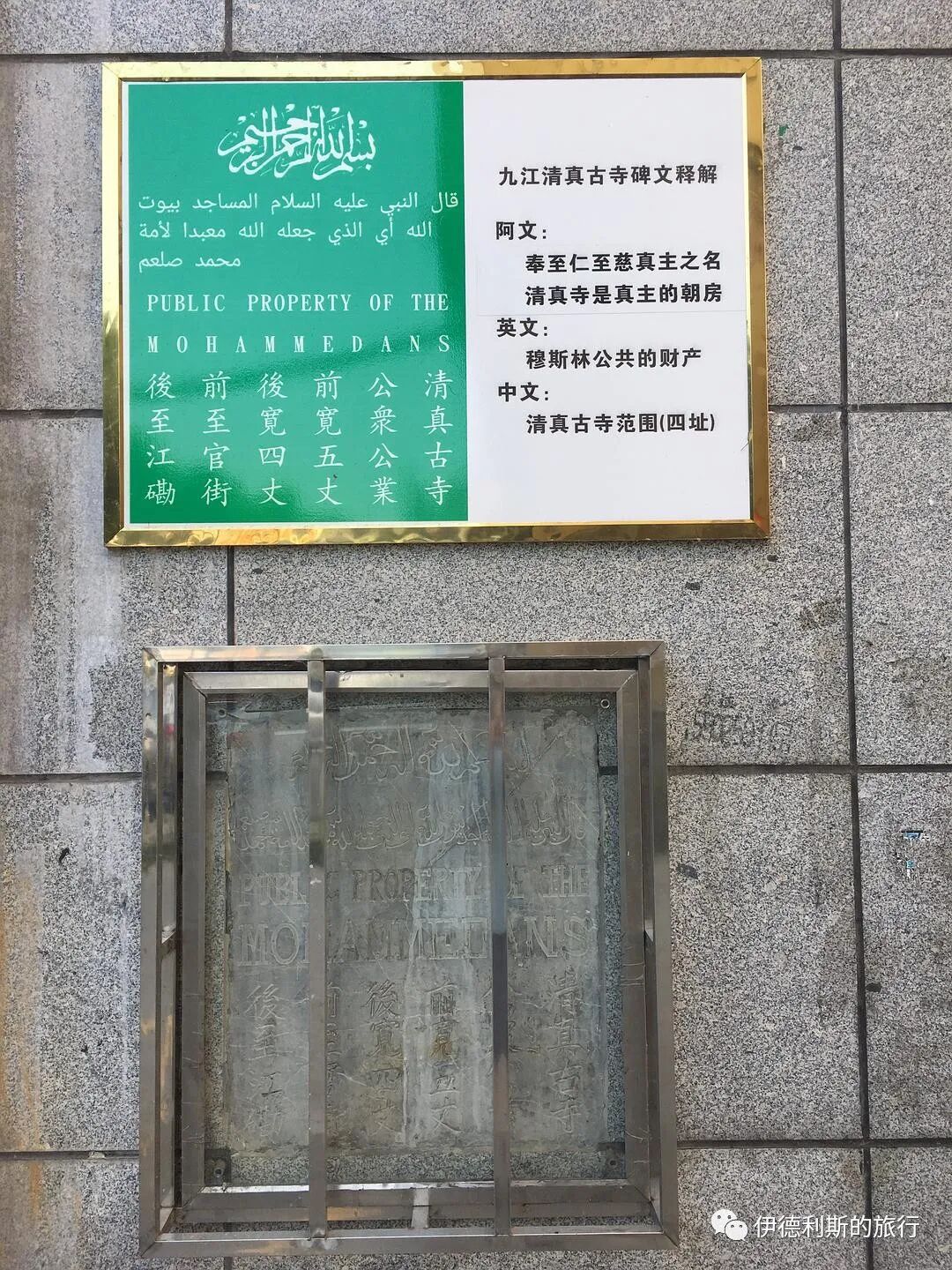
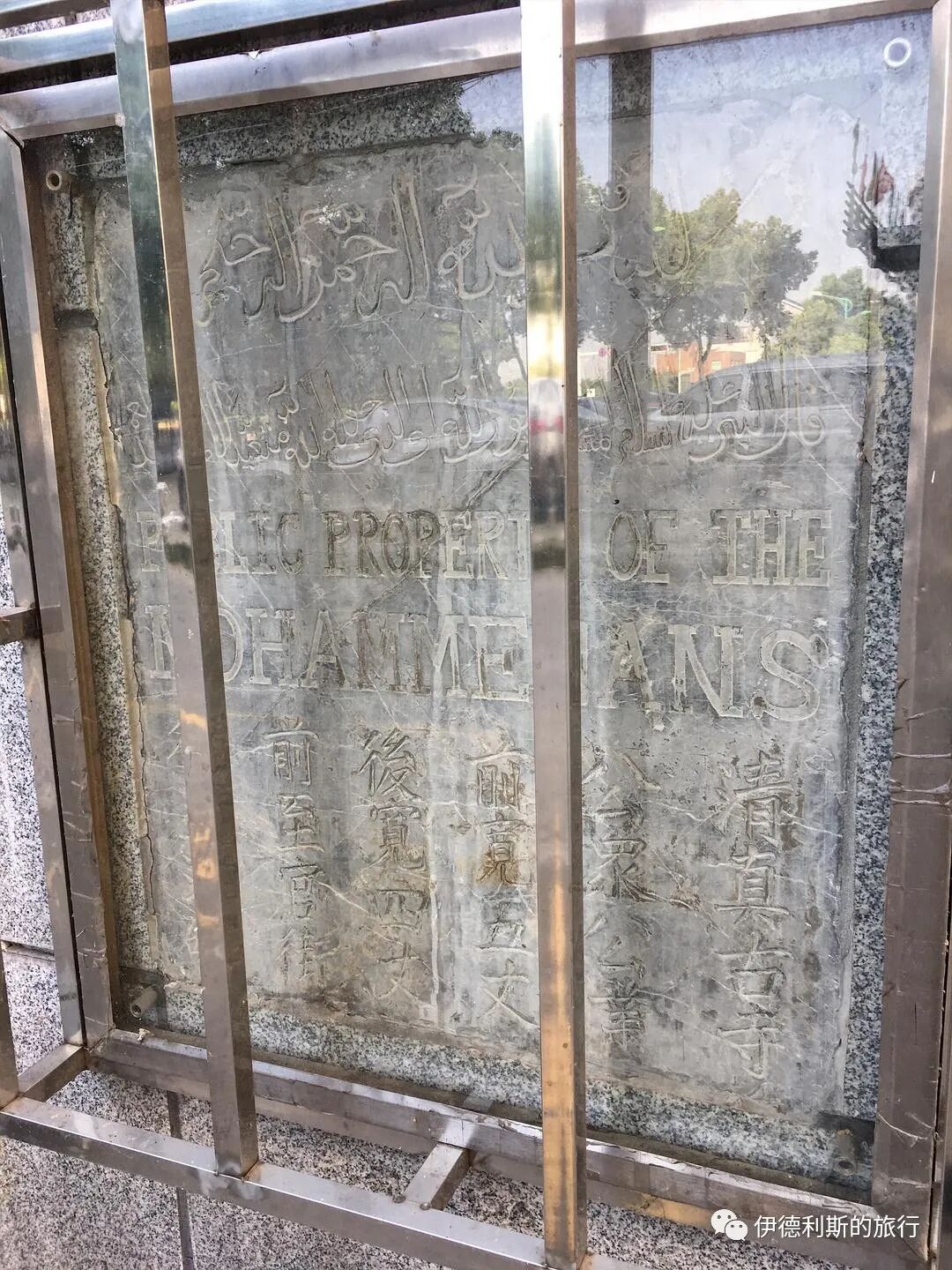
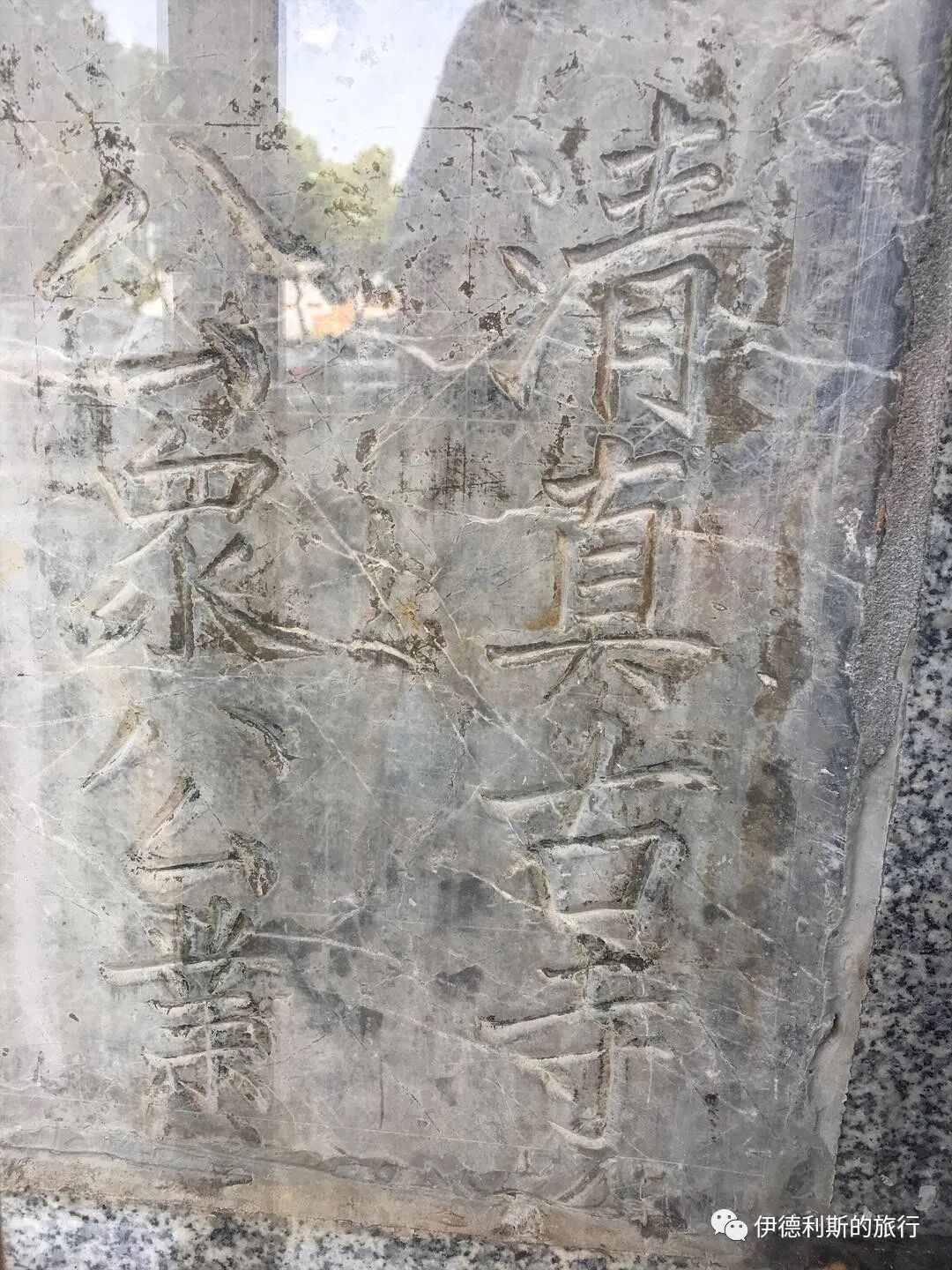
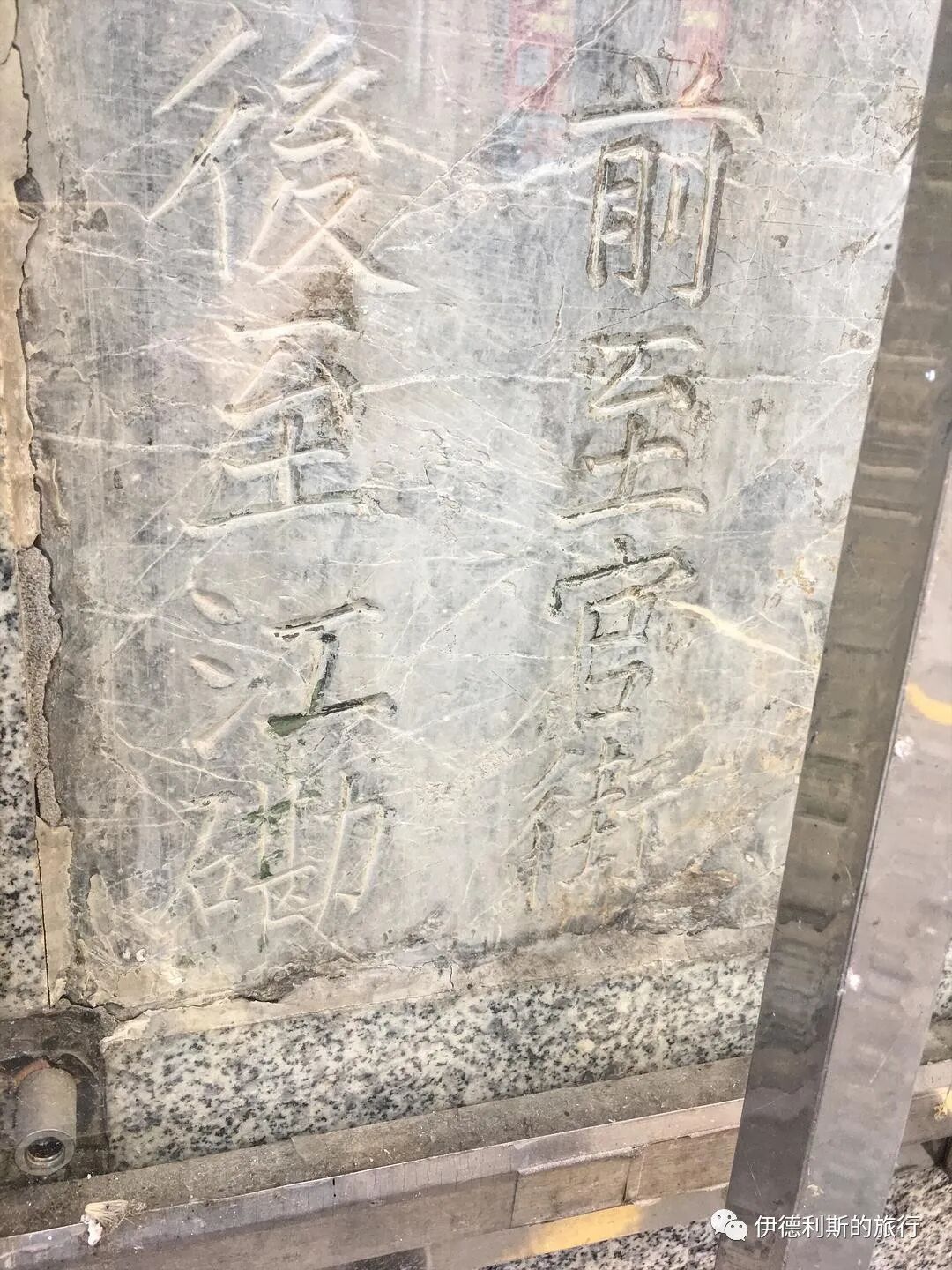
Because the mosque was outside the city, it was not very convenient for Hui Muslims living inside the city to visit. In 1902 (the twenty-eighth year of Guangxu), Yang Xianian from Anhui and antique dealer Ma Shoutian led the construction of the City Mosque at the Fourth Pier. The Jiwan Mosque was then called the Outside-the-City Mosque. The City Mosque had four courtyards from front to back, and its first imam was Hu Guangming. The community of the City Mosque was mainly Hui Muslims from Anhui, while the community of the Outside-the-City Mosque was mainly Hui Muslims from Henan. They were divided into the new group and the old group, and both mosques held their religious activities separately.
In the early years of the Republic of China, the Hui Muslim population in Jiujiang reached over 100 households and more than 400 people. In 1935, the Jiwan Mosque moved 200 meters south because of a river levee straightening project, changing its orientation from facing south to facing north.
An aerial photo of Jiujiang city from 1938, kept at the Jiujiang Museum, shows west at the top and east at the bottom.
Between 1934 and 1935, the famous missionary Claude L. Pickens Jr. (Bi Jingshi) came to Jiujiang and photographed the local mosque (huijiao libaitang).
In 1949, there were 50 Hui Muslims running beef shops in Jiujiang, 20 running food stalls, and 2 running pastry shops. During the Republic of China era, the biggest merchant in Jiujiang was Jin Haoru, a Hui Muslim from Zhenjiang. In 1920, Jin Haoru opened the Yusheng Match Company, the largest match factory in Jiangxi Province. In 1932, he opened a large general store called Huakang Hardware and Foreign Goods on Dazhong Road in Jiujiang. Later, he independently founded the Guling Power Plant and the Jiujiang Housheng Pawnshop, becoming the richest man in Jiujiang. By 1953, the total capital of the Huakang Hardware and Foreign Goods store reached 340 million yuan.
The image below shows a halal pastry shop in Jiujiang, photographed by missionary Claude L. Pickens Jr. between 1934 and 1935.
In 1955, there were 252 Hui Muslim households in Jiujiang with 1,035 people, 50 percent of whom were from Henan and 40 percent from Anhui. Many Hui Muslims moved here in the 1950s due to floods, so 104 people were sent back to their original hometowns in 1958. At the end of 1958, the city mosque was closed and turned into a halal canteen and the office for the Jiujiang Hui Muslim Cultural Association, later becoming the Liangxinglong Food Factory. In 1966, the suburban mosque was occupied by a rope factory. All the scriptures kept inside were burned, and all mosque property was confiscated. It reopened in 1982 and was rebuilt as a modern building in 2008 due to municipal development.
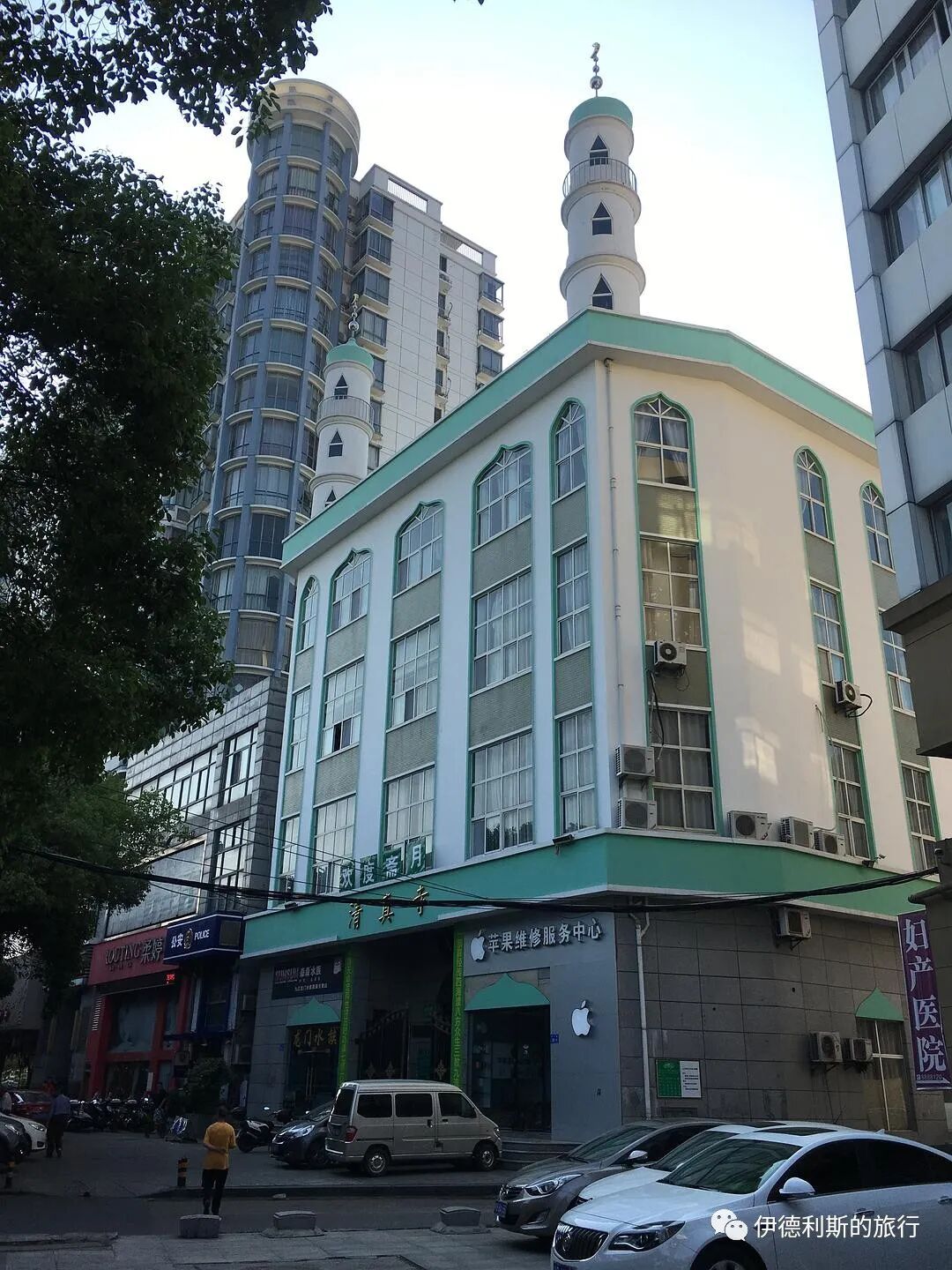
The current Jiujiang Mosque.
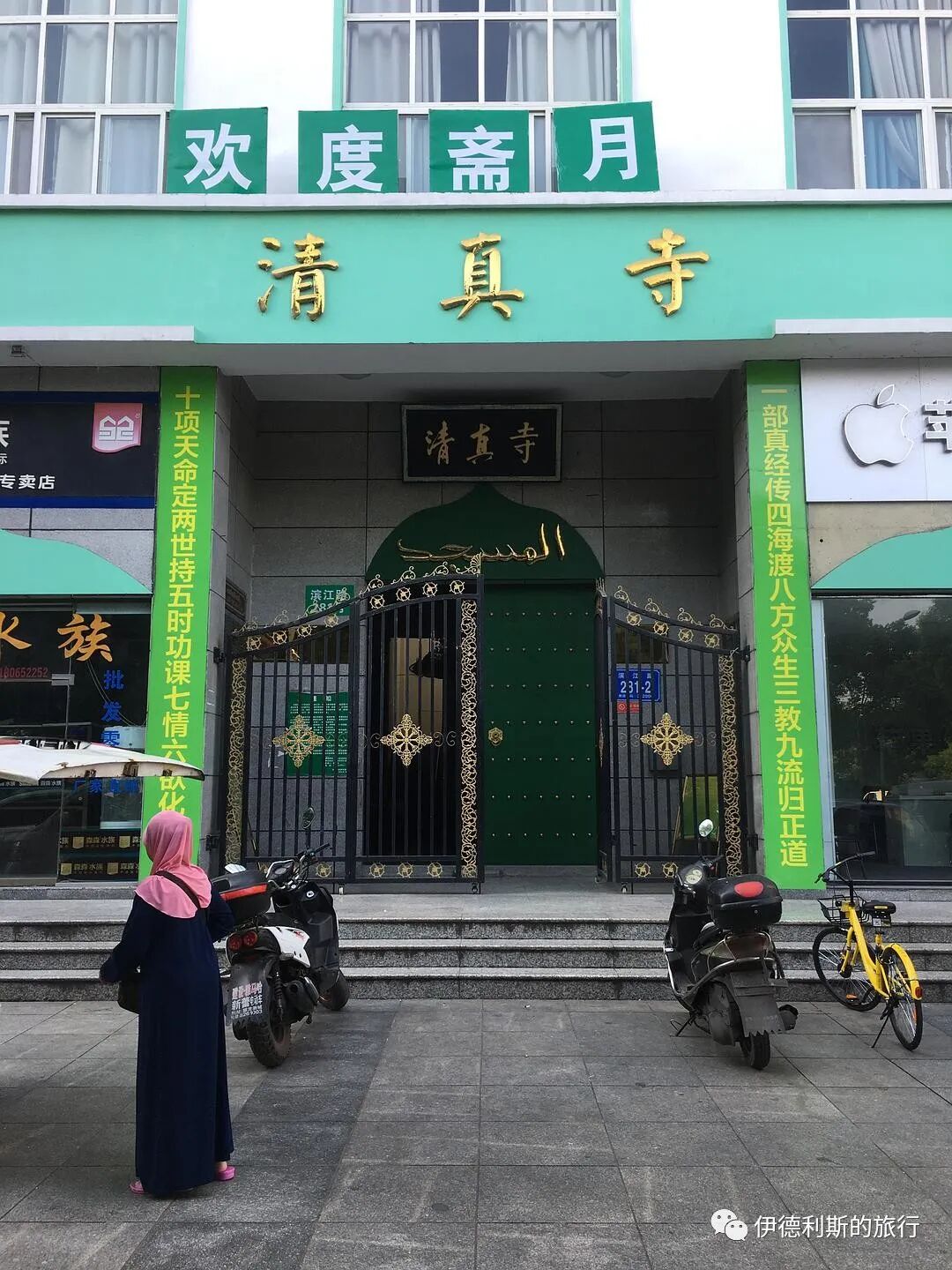
Hai Family Pan-fried Buns (Haijia Shuijianbao).
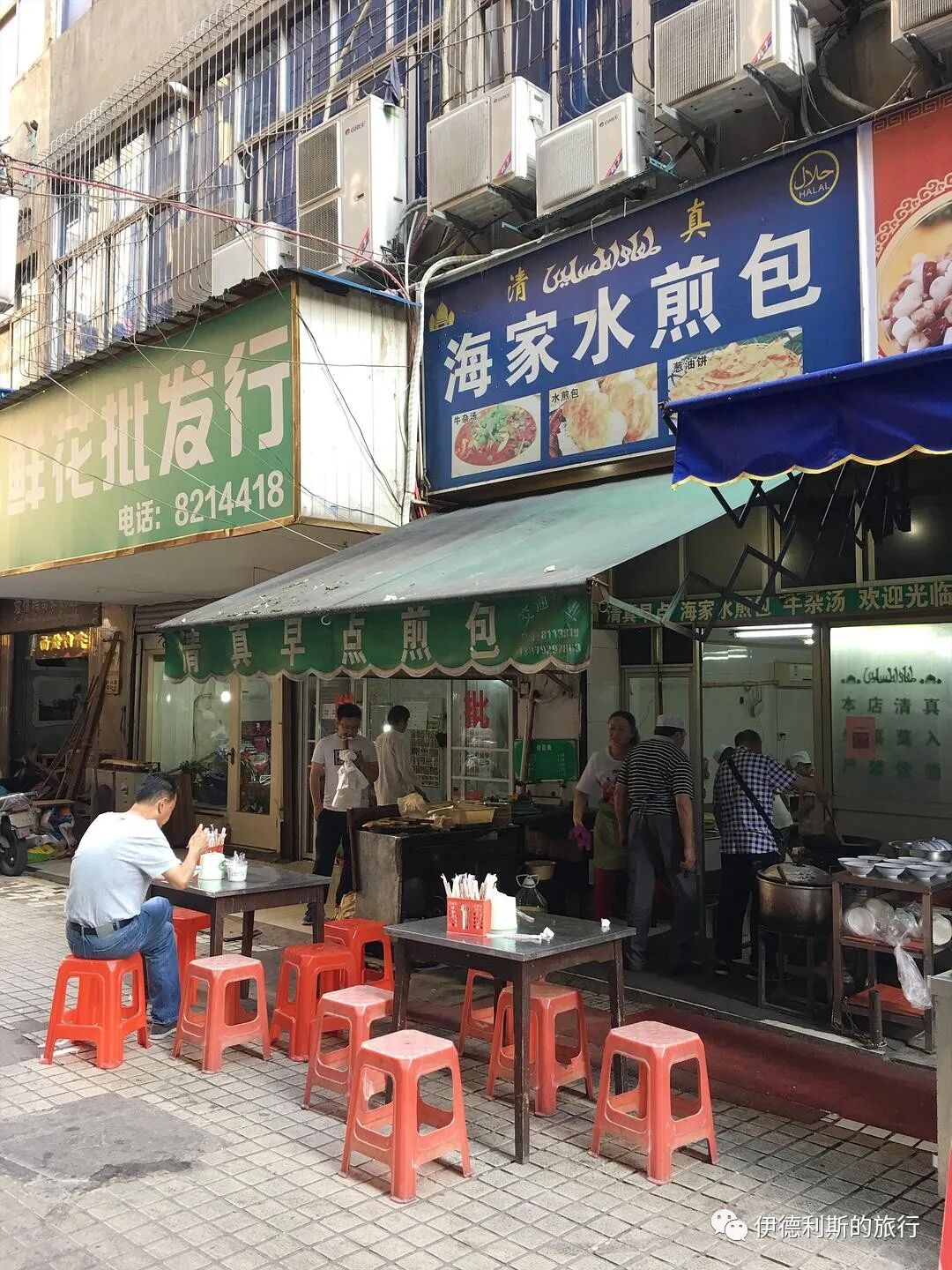
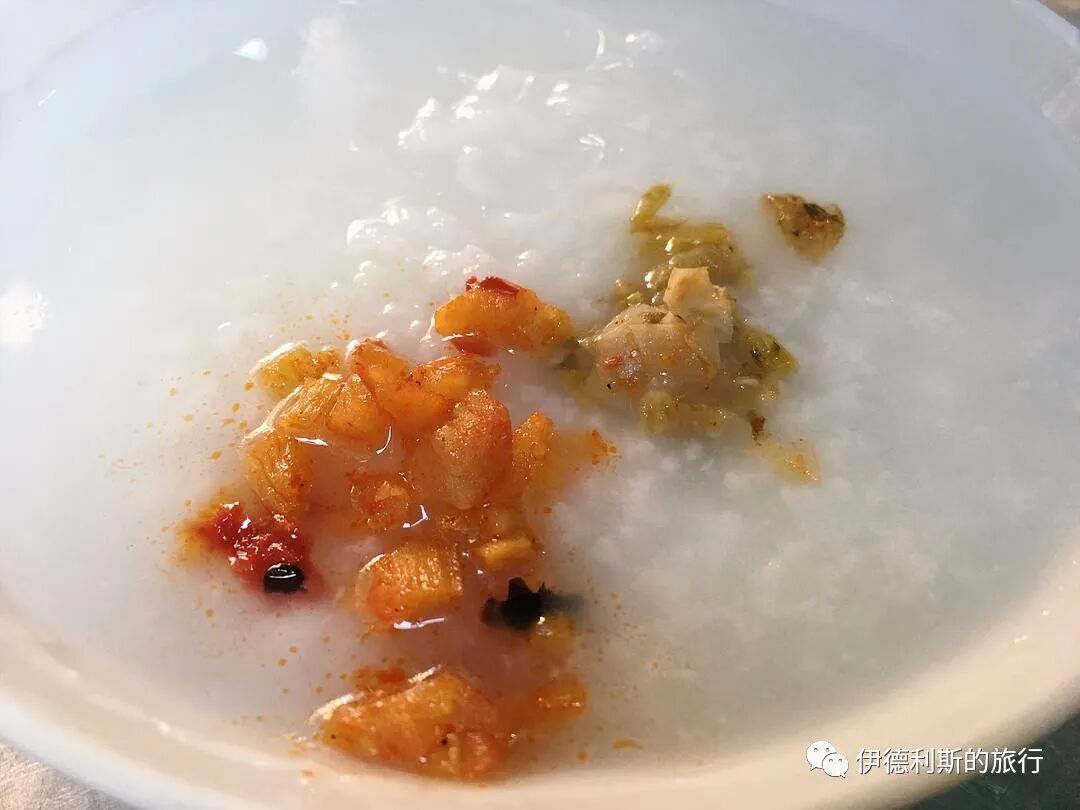
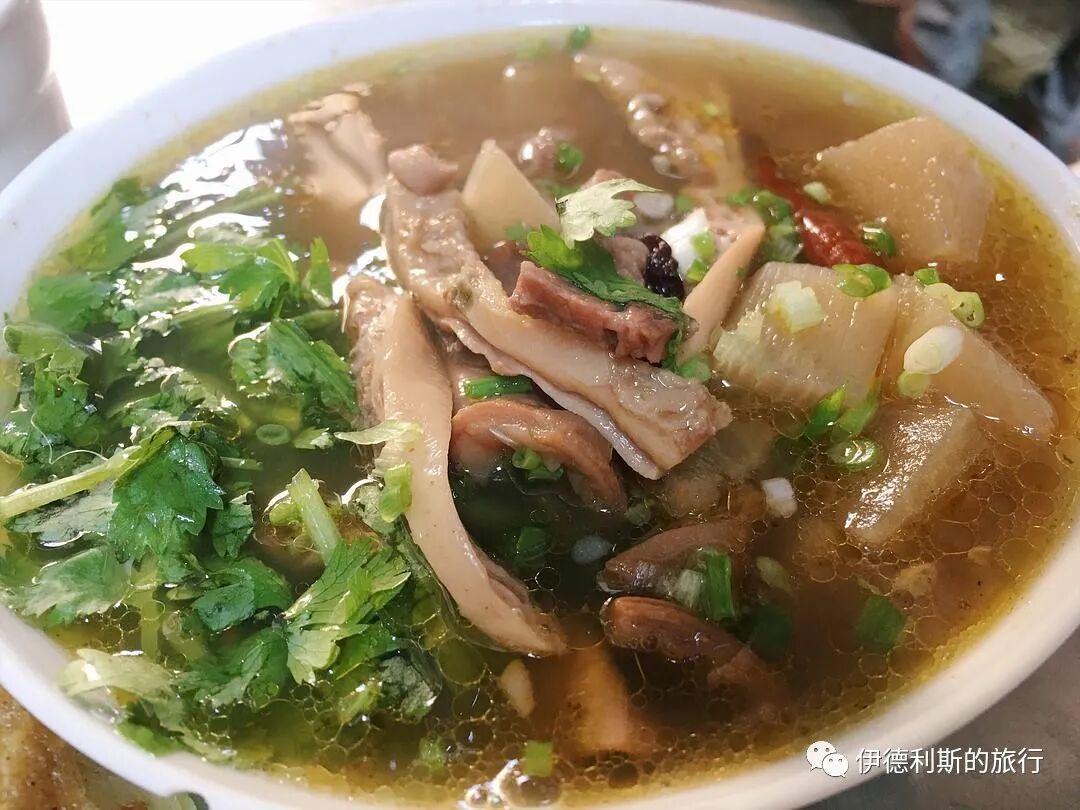
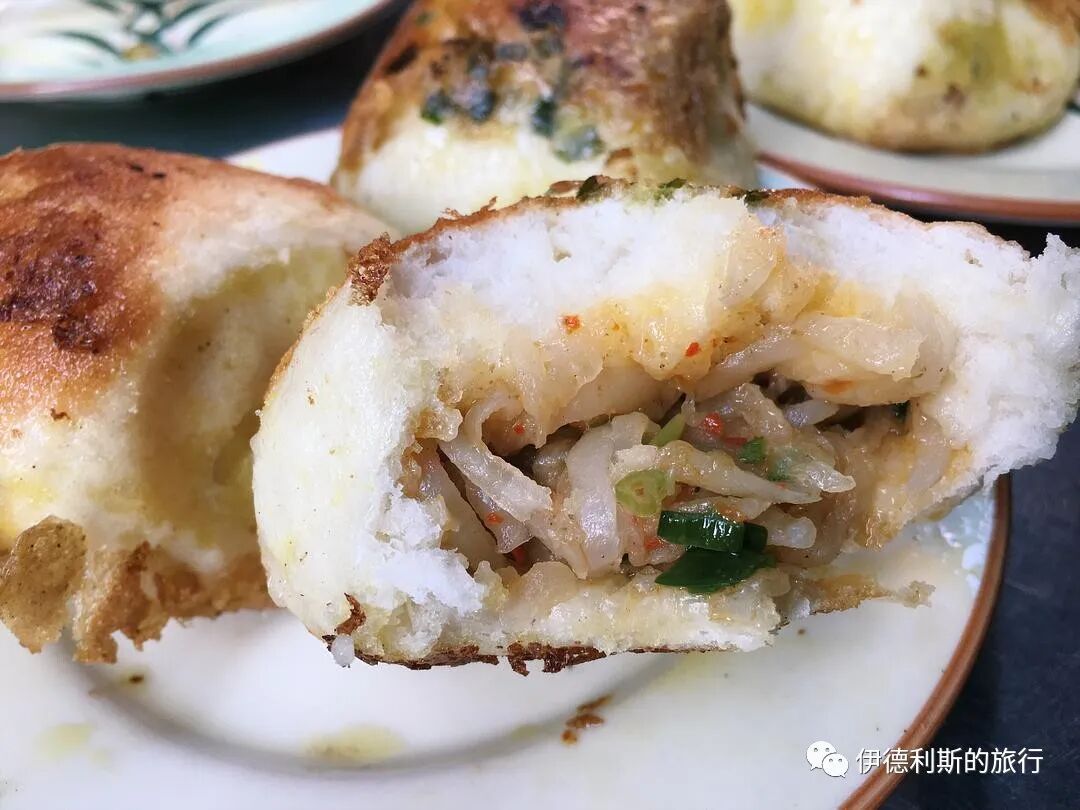
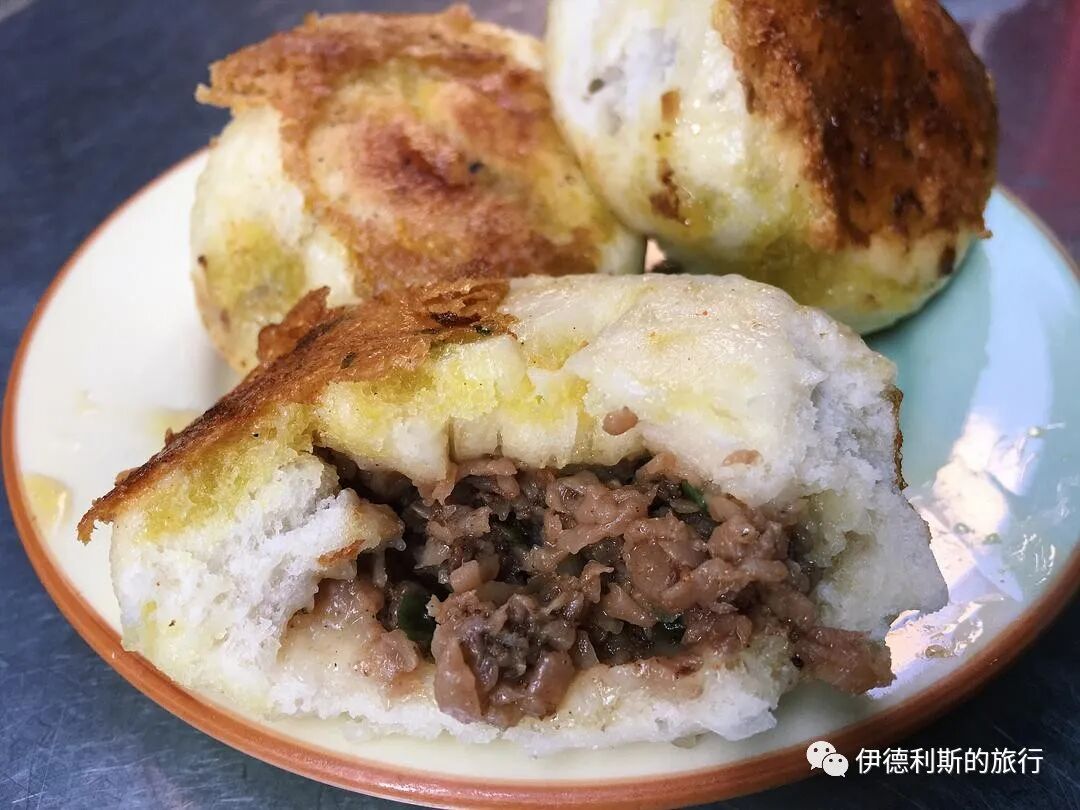
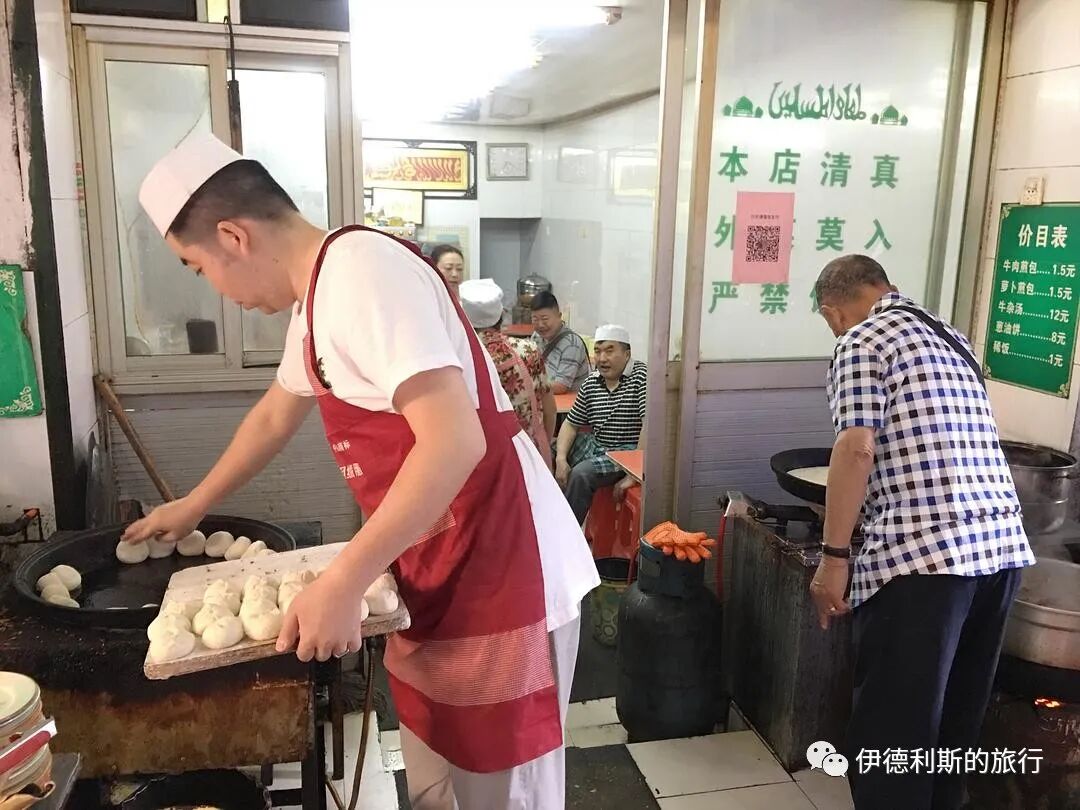
In the morning, I ate radish beef offal, rice porridge, radish pan-fried buns, and beef pan-fried buns at Hai Family Pan-fried Buns (Haijia Shuijianbao) at the Fourth Pier. The radish beef offal and radish pan-fried buns were both rich, spicy, and very satisfying, but as a Beijinger, I still prefer the non-spicy beef pan-fried buns.
Liangyilong.
Next to Hai Family Pan-fried Buns is the Fourth Pier branch of Liangyilong, a time-honored halal pastry shop in Jiujiang. People say this might be the original location of the mosque in Jiujiang city. I bought crispy rice crackers (guoba), puffed rice candy (dongmitang), sesame cake (mahonggao), and flaky pastry (fanmaosu) here.
In the summer of 1937, the Nanjing Nationalist Government moved its offices to Mount Lu (Lushan) south of Jiujiang city. Mount Lu became the summer capital of the Republic of China and was incredibly busy. In July, the Nanjing Nationalist Government held a summer training group on Mount Lu, with over 7,000 officials from various sectors participating in the training. Between June and July, Zhou Enlai and others came to Mount Lu twice to hold the famous Mount Lu negotiations with Chiang Kai-shek. In July, Wang Jingwei and Chiang Kai-shek hosted the Mount Lu Talk, inviting 200 celebrities from all walks of life. Chiang Kai-shek delivered his famous Mount Lu declaration of resistance against Japan. That same year, Liang Yide, a Hui Muslim from Huaining, Anhui, saw a business opportunity and opened the Deyizhai pastry shop on Mount Lu. People say Chiang Kai-shek and Soong Mei-ling often used the Liang family's pastries to entertain guests at that time.
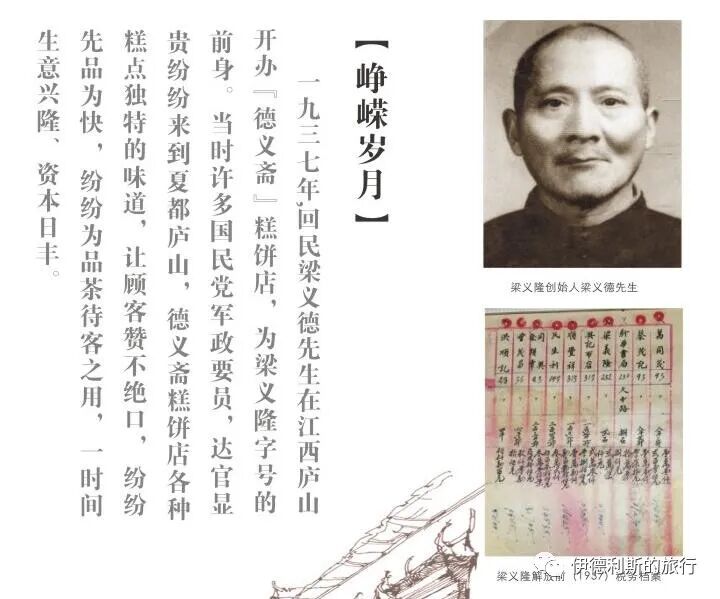
An introduction from the Liangyilong official website.
In 1940, Liang Yide officially opened the Liangyilong shop on Lijiaxiang in Xiyuan, Jiujiang. He paid high wages to hire a Taiwanese pastry chef named Lin Youfu and a Cantonese-style pastry chef named Dai Tianchou to manage the baking. Later, he hired a Taiwanese master named Qiu to handle candy production. Master Qiu used international candy-making techniques to produce dozens of types of fruit and flavored candies at Liangyilong, which made the shop very famous in Jiujiang.
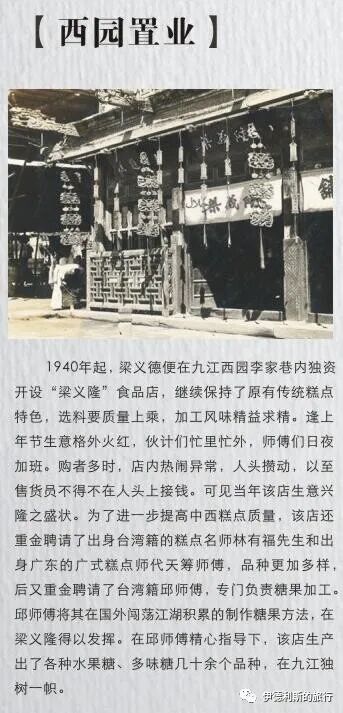
An introduction from the Liangyilong official website.
After the public-private partnership policy, Liangyilong was merged into the Jiujiang Food Factory in 1958. It moved back to the entrance of Xiyuan Lane in 1962. After 1966, the shop sign was smashed, the family assets were confiscated, and Liang Yide was sent to Xiushui for re-education. At the end of 1989, Liang Yide's son, Liang Qibiao, revived the Liangyilong brand. He inherited his father's skills and opened the Liangji Pastry Shop, which eventually grew into a major brand with many franchise stores and automated production lines.
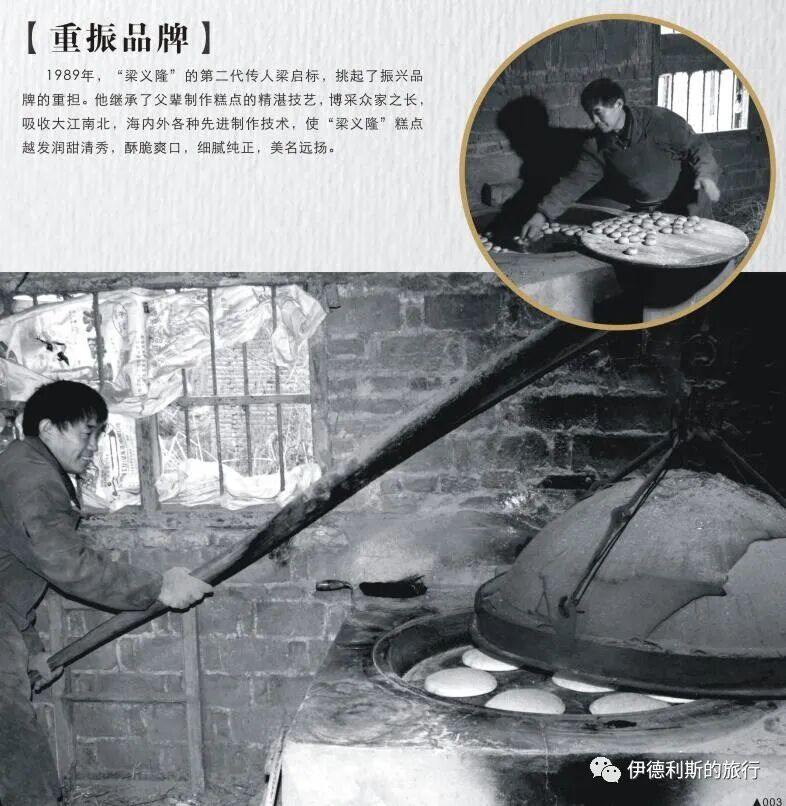
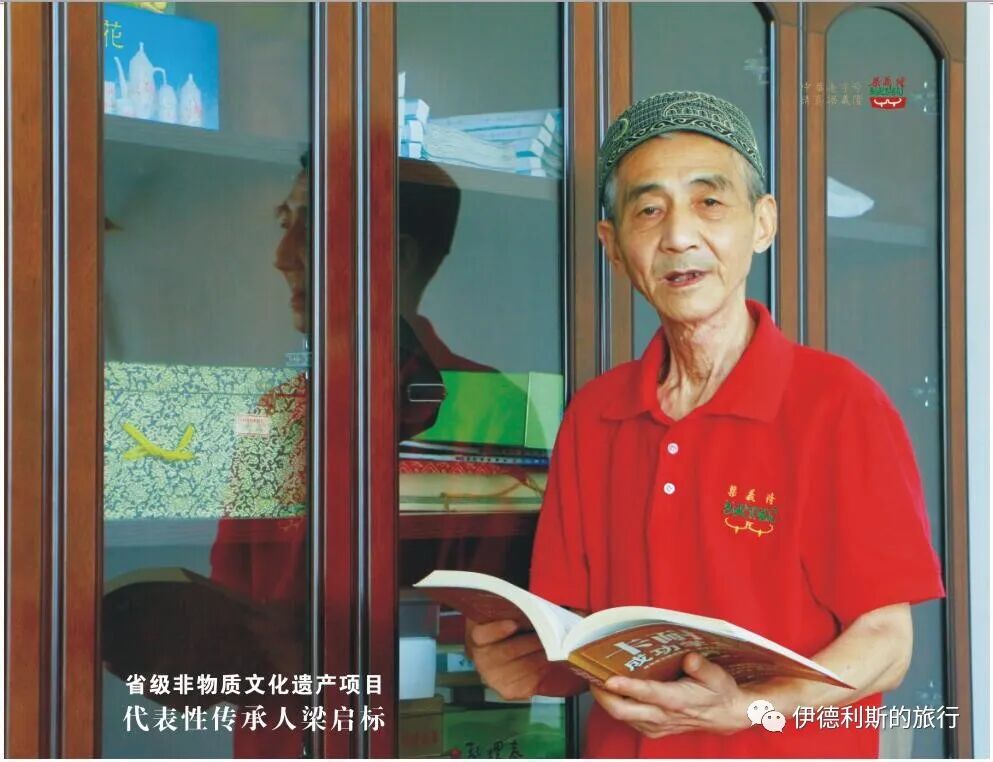
Liang Qirong Pastry Workshop.
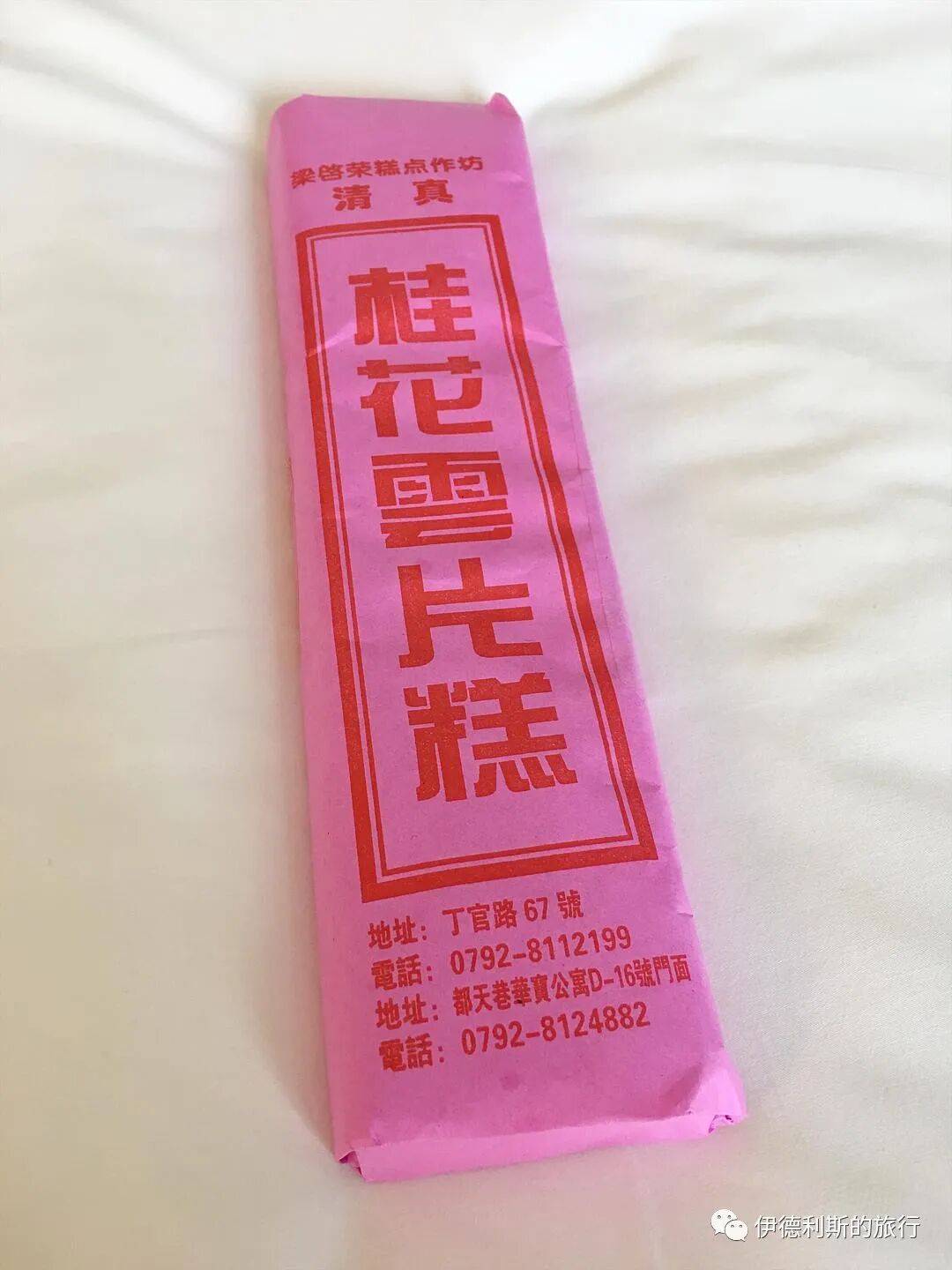
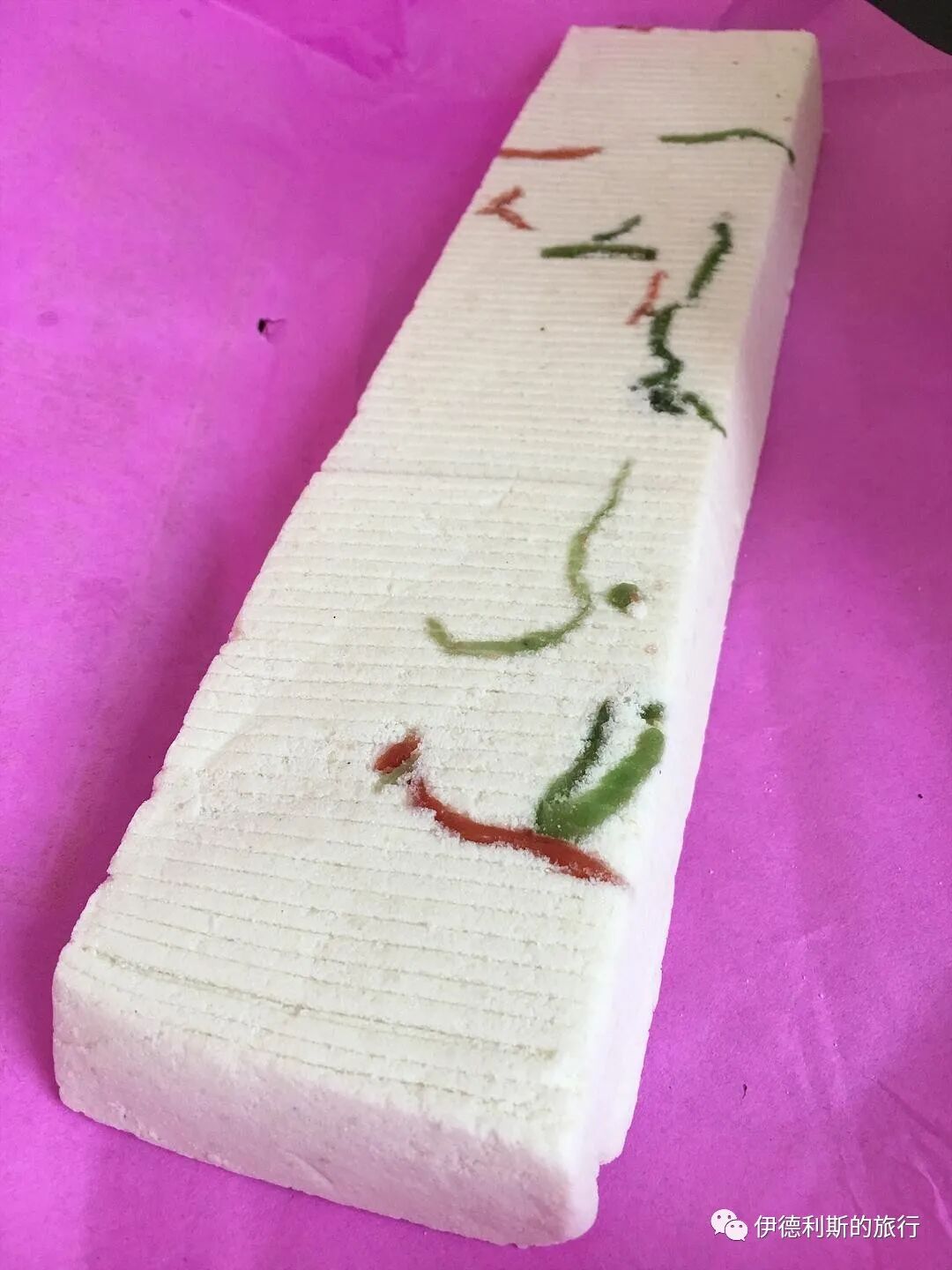
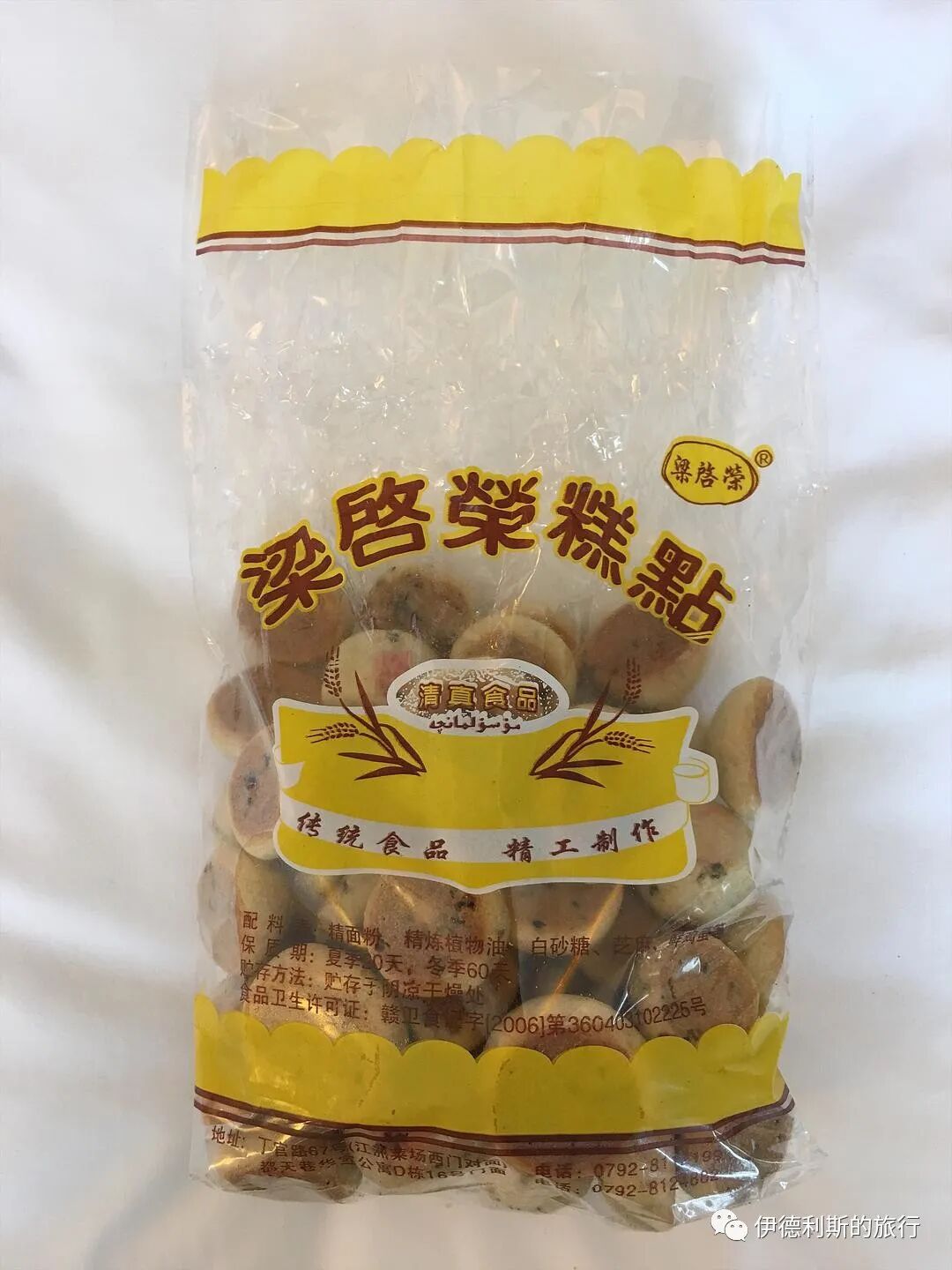
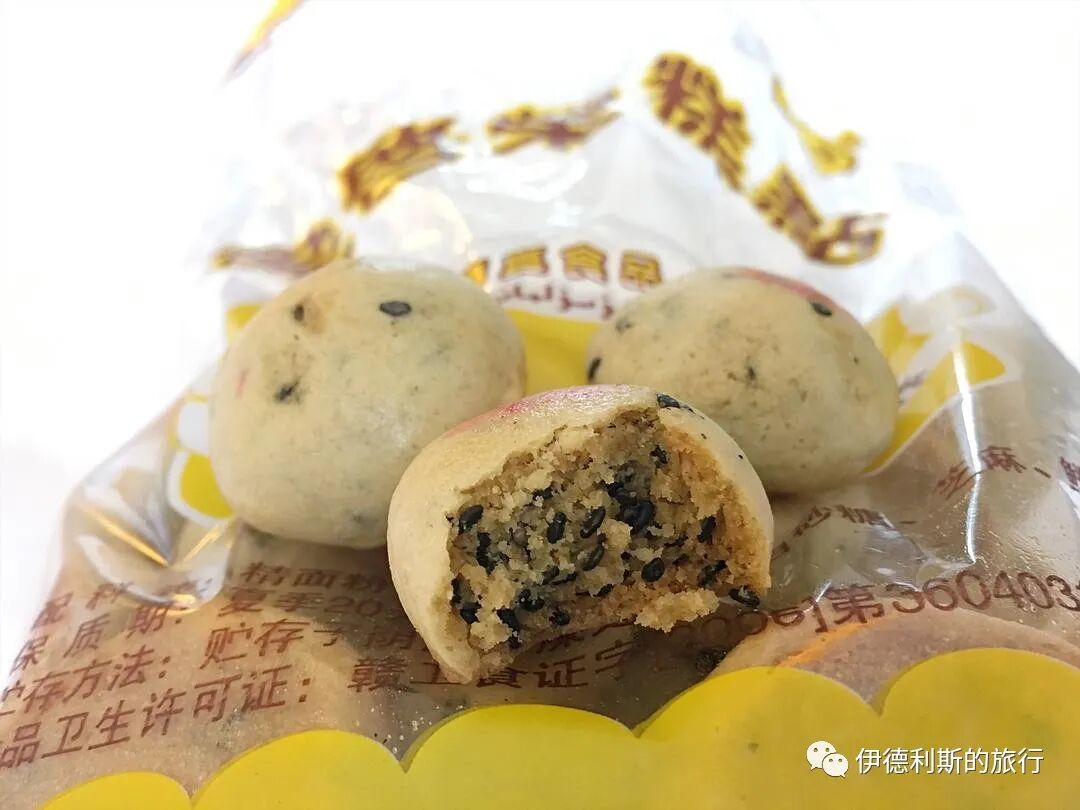
Besides Liangyilong, there is another halal pastry shop in Jiujiang called Liang Qirong. It has small shops on Dingguan Road and Dutian Lane. They have a front shop and a back workshop, and the taste feels more personal than the mass-produced items from Liangyilong. I bought osmanthus crisp candy (guihua sutang), osmanthus cloud-slice cake (guihua yunpian gao), osmanthus tea cake (guihua chabing), and mung bean cake (lvdou gao) here.
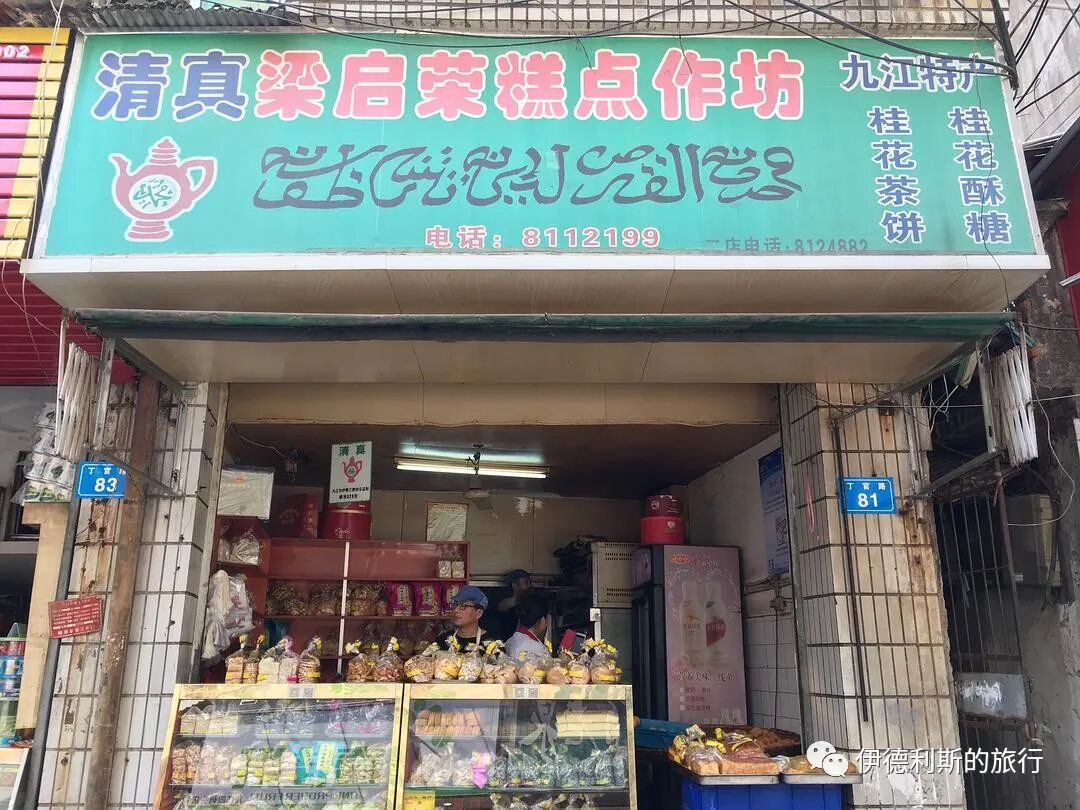
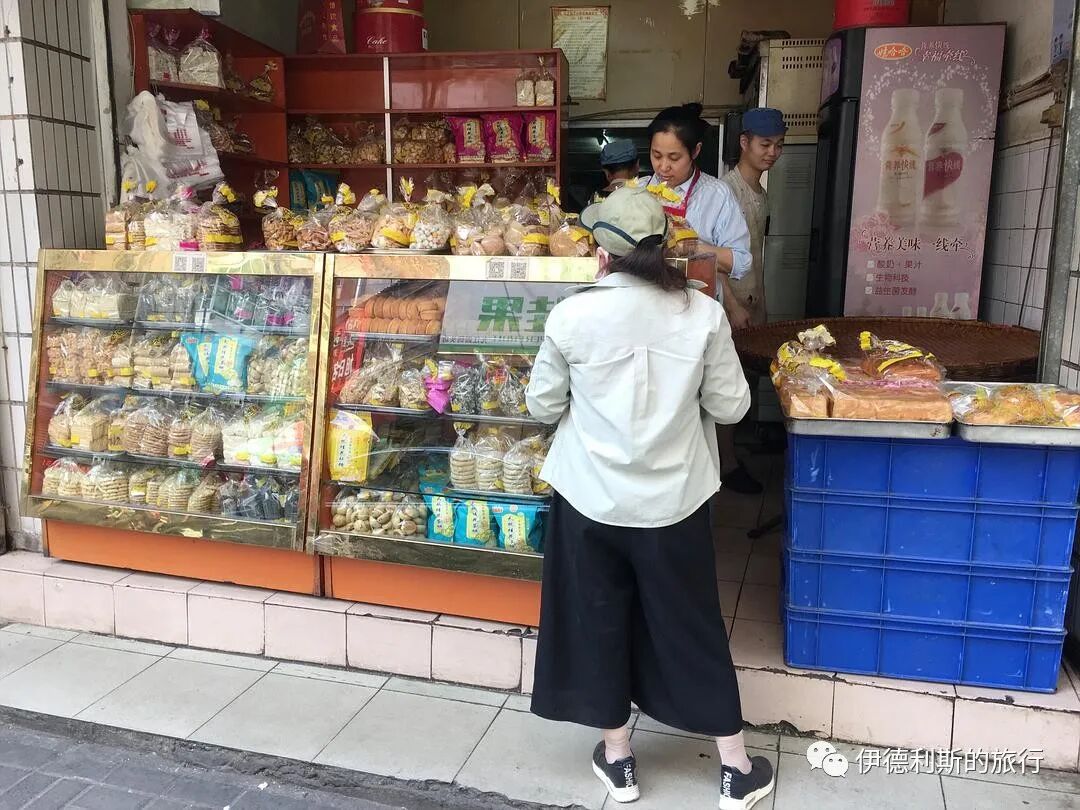
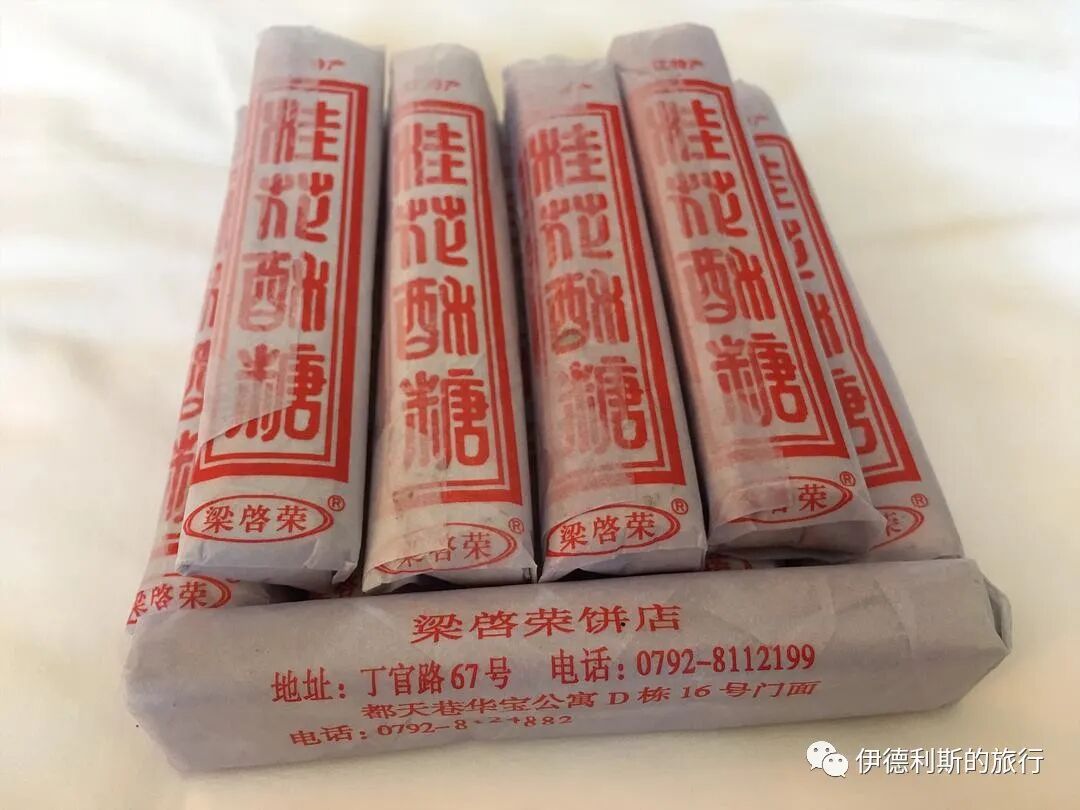
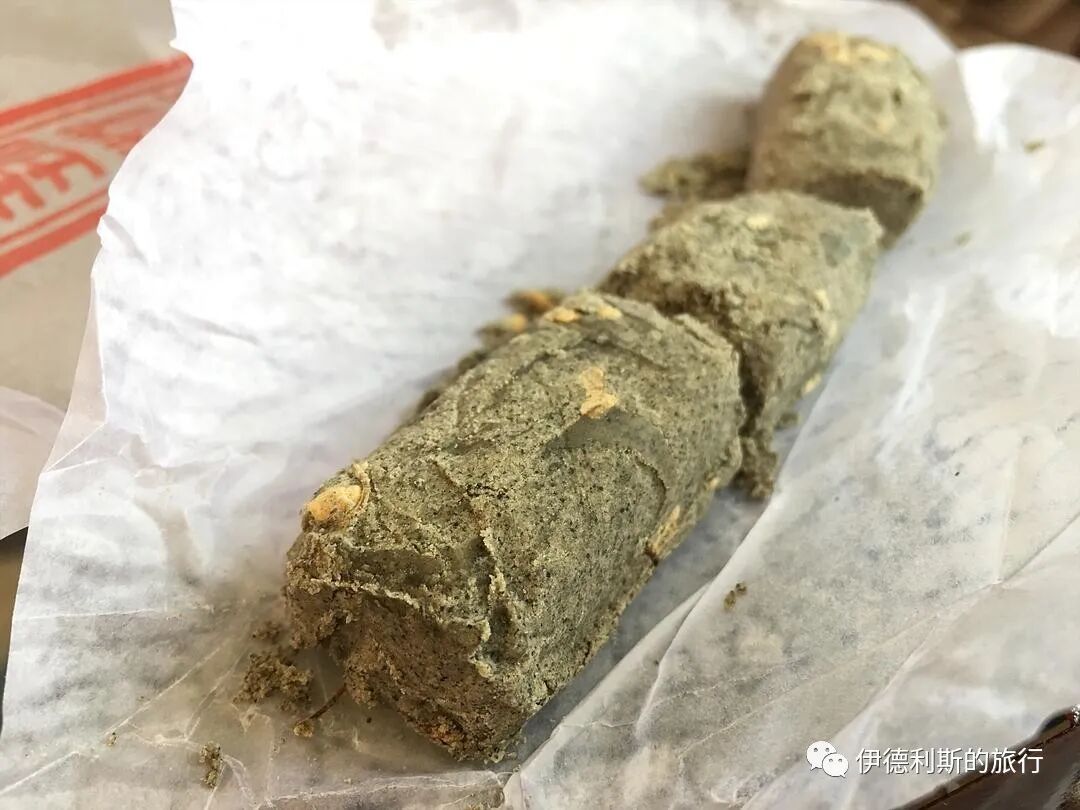
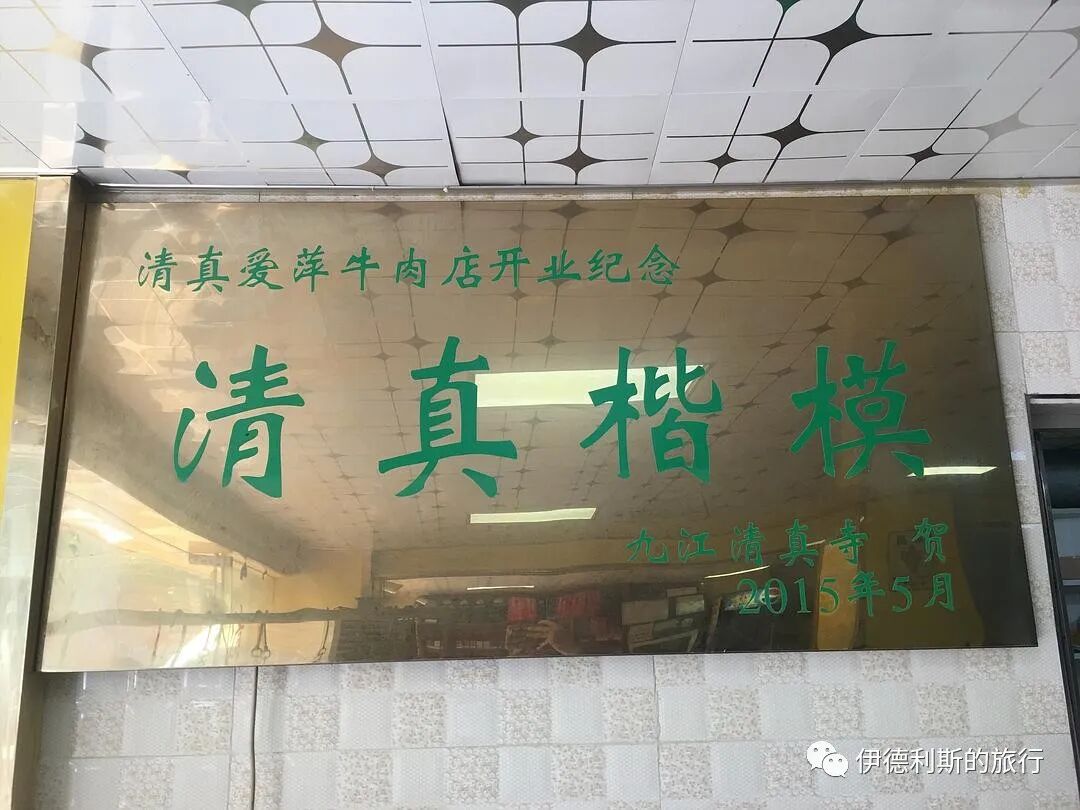
Aiping Halal Beef Restaurant.
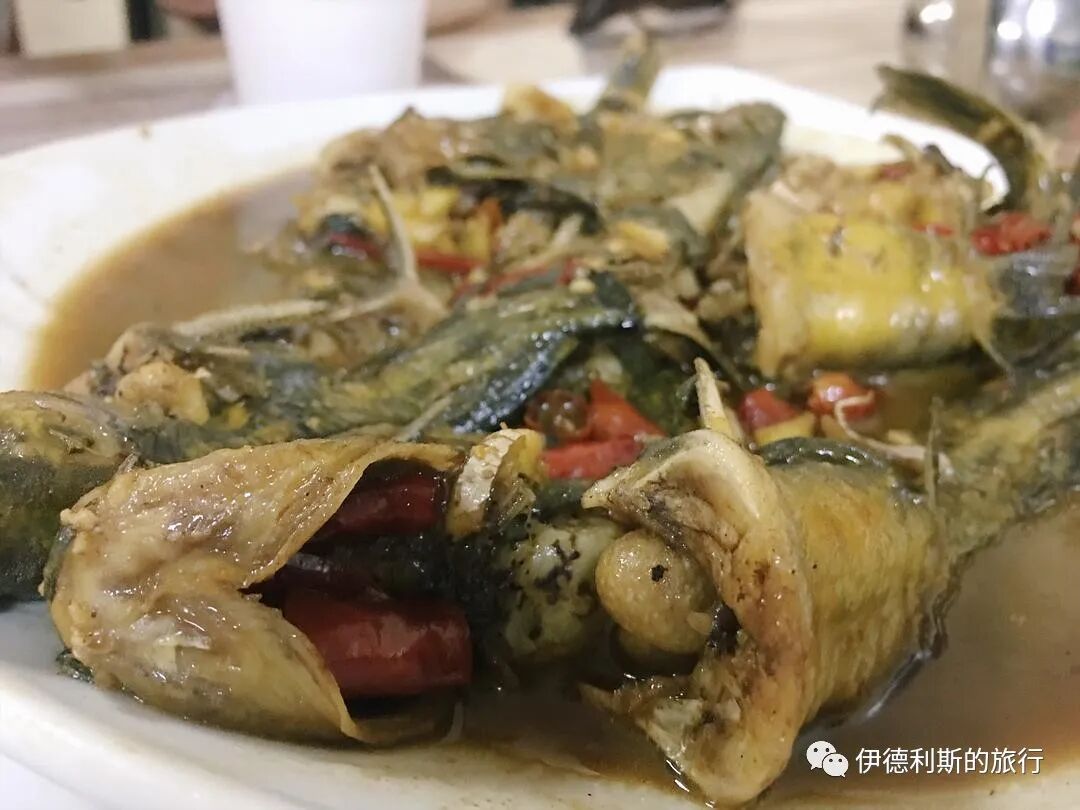
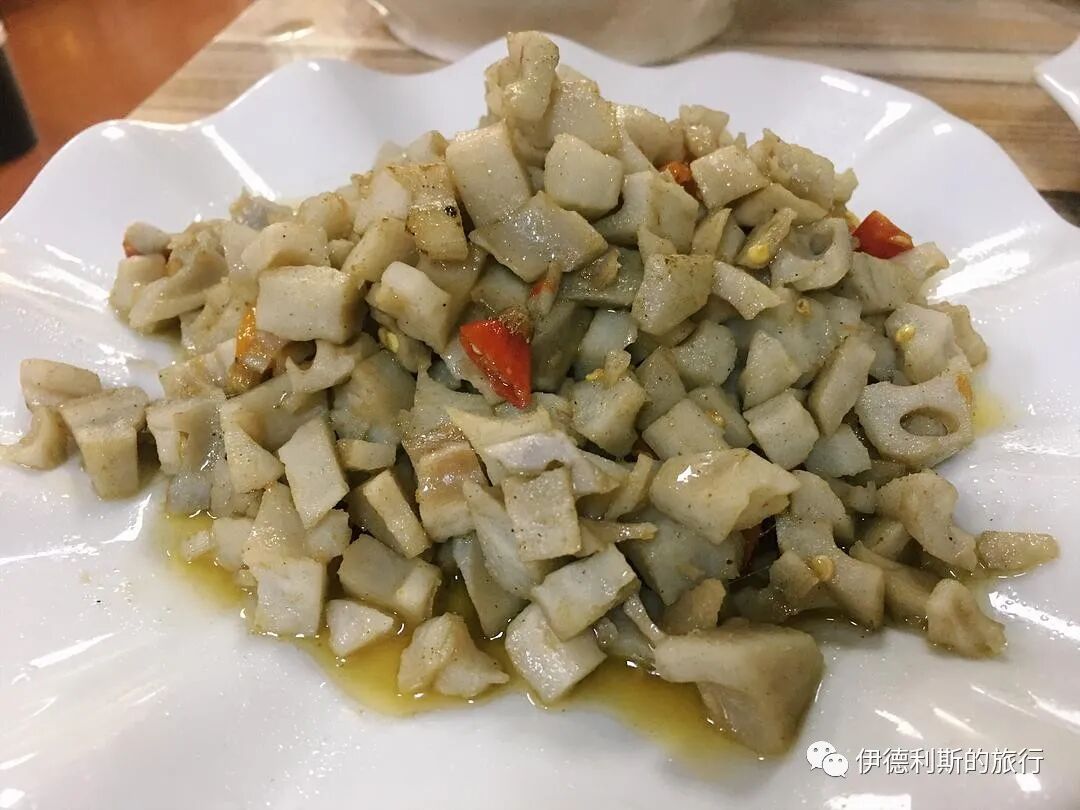
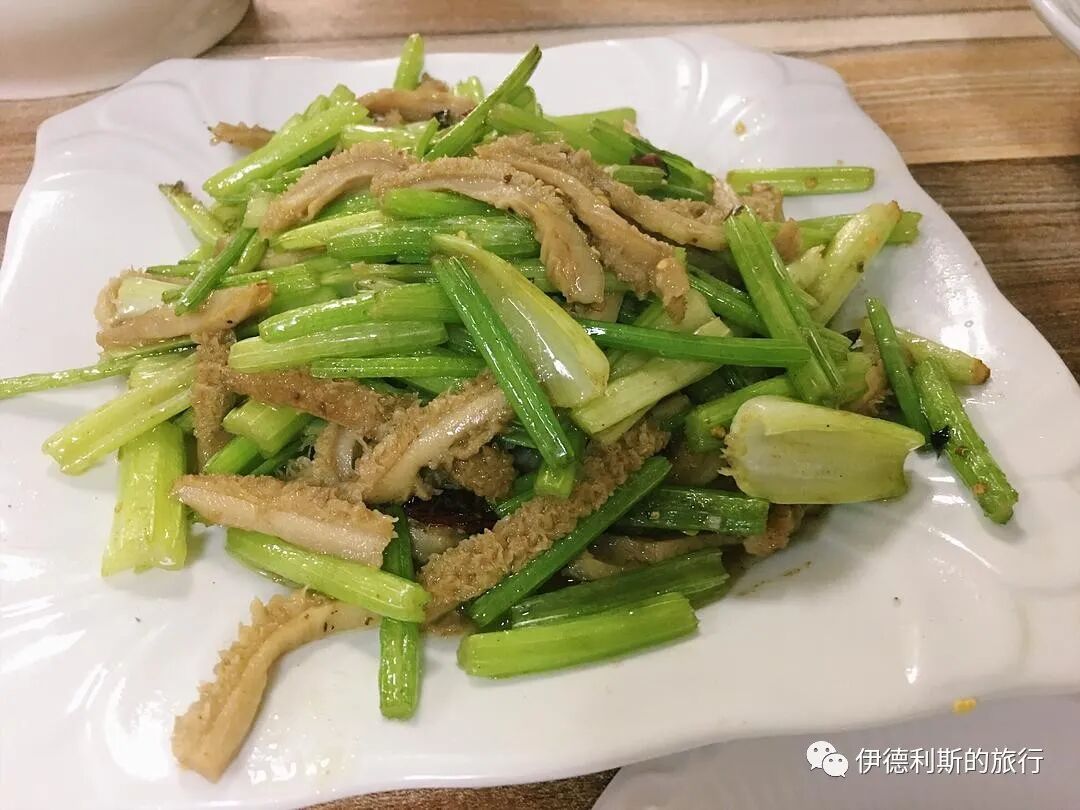
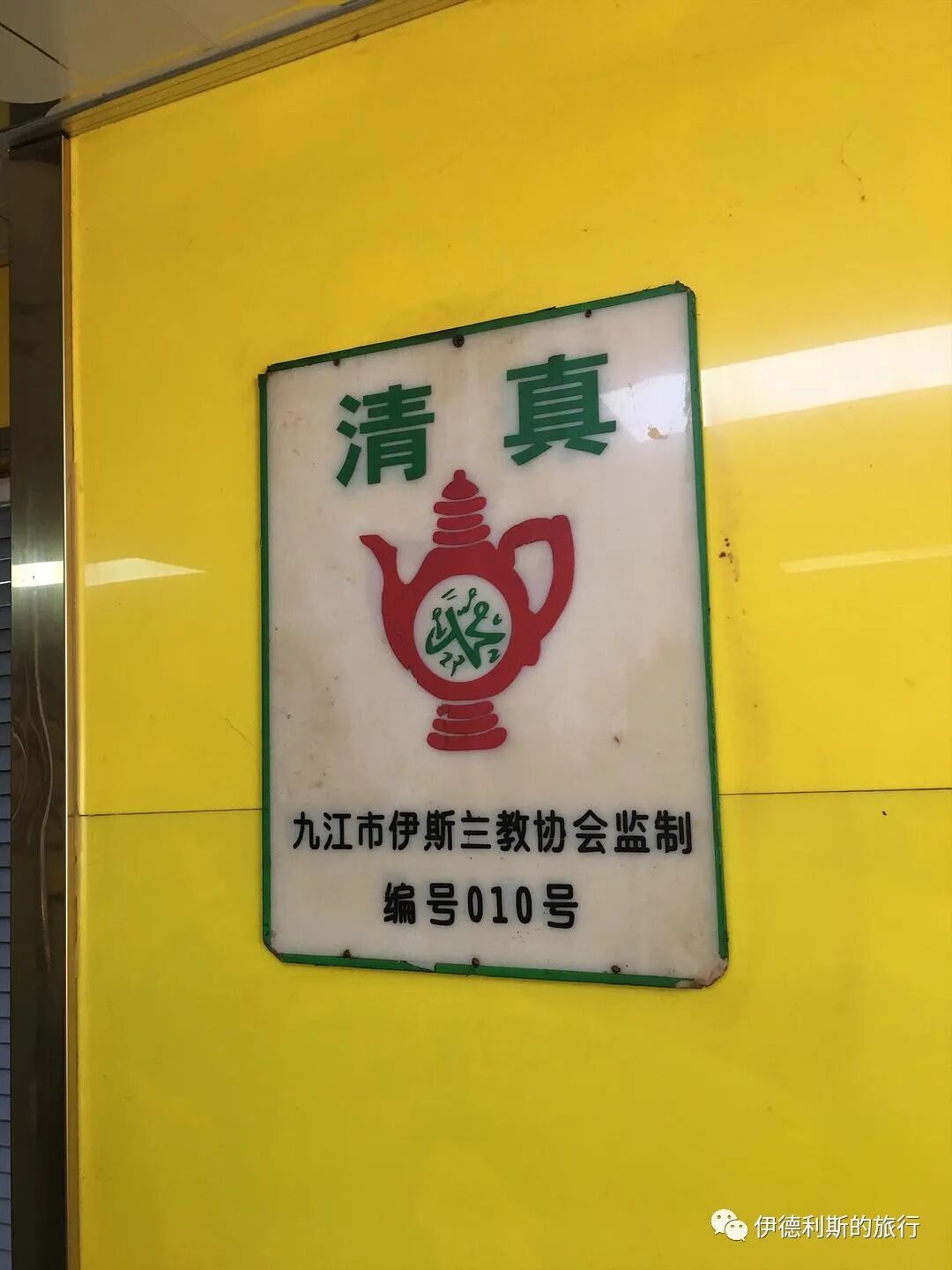
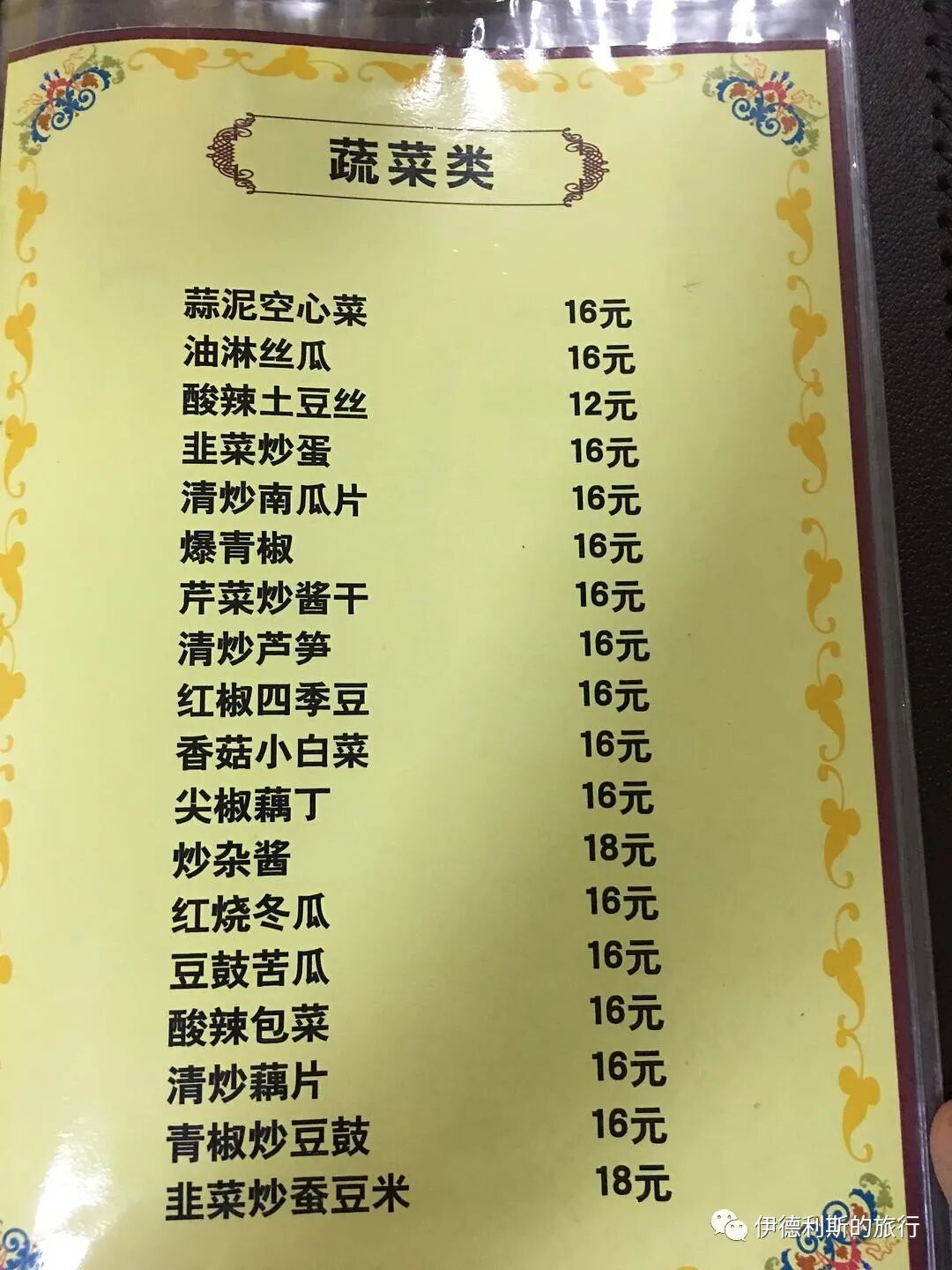
For lunch at Aiping Halal Beef Restaurant, I had braised yellow catfish (huangyatou), stir-fried beef tripe with celery, and diced lotus root with hot peppers. Huangyatou is what people in Jiangxi call yellow catfish. The ones from Poyang Lake are the most famous, and the meat is incredibly tender and smooth. April and May are the spawning season for yellow catfish. Every fish is full of roe, which is delicious, and the spicy flavor is just right, making it very appetizing. The salty beef tripe (niudu) is great with rice, and the diced lotus root is very spicy, so I have to drink cold water with it. It is so satisfying in the summer.
Halal snacks on Nanhu Branch Road.
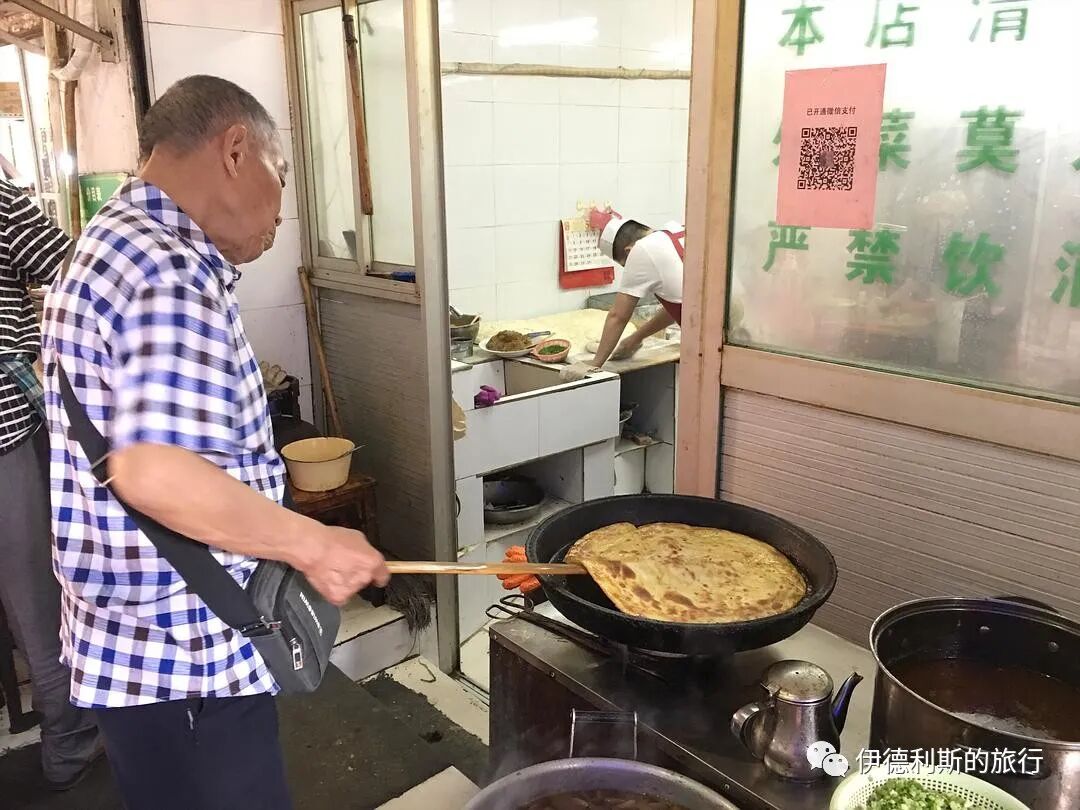
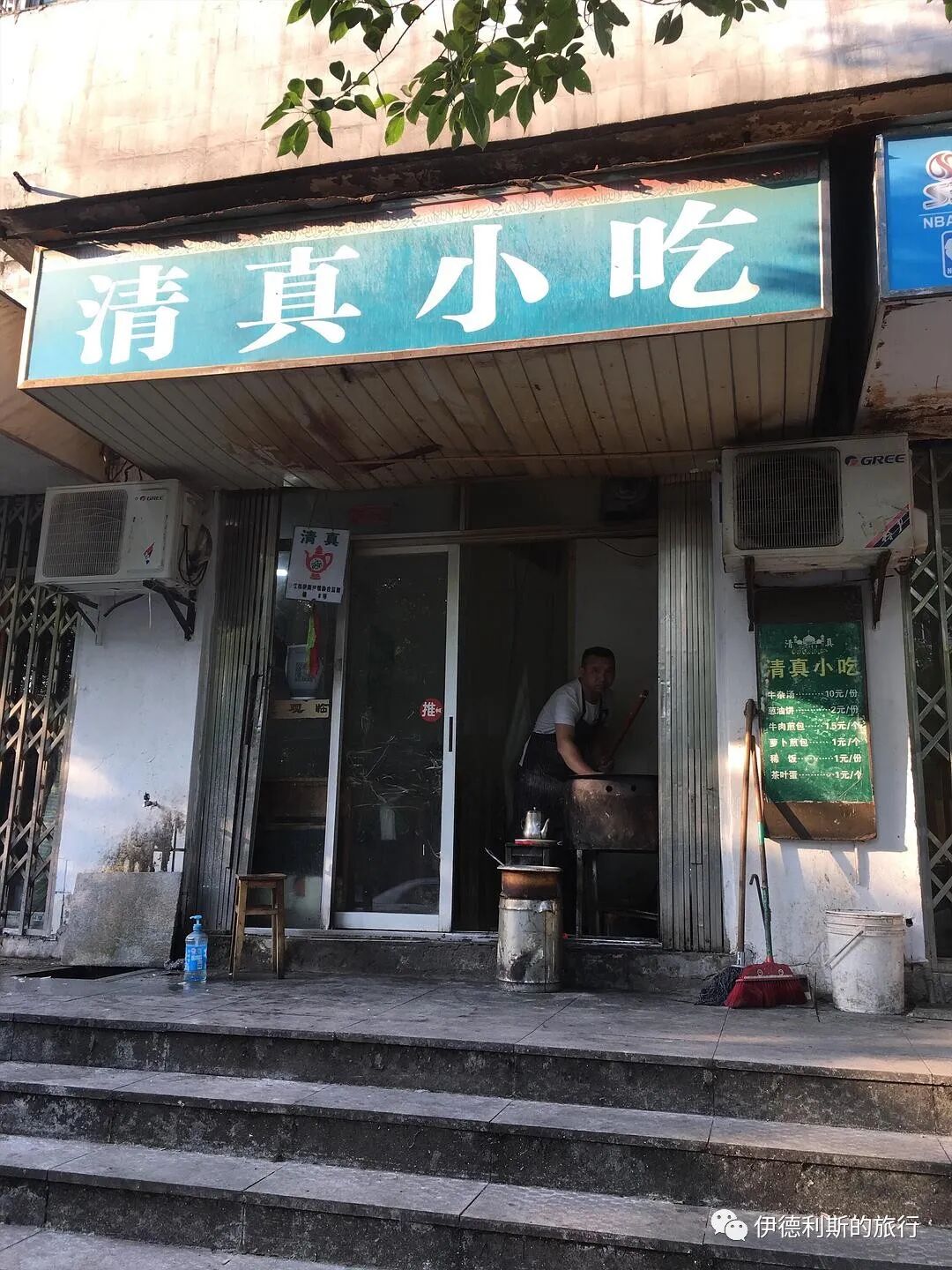
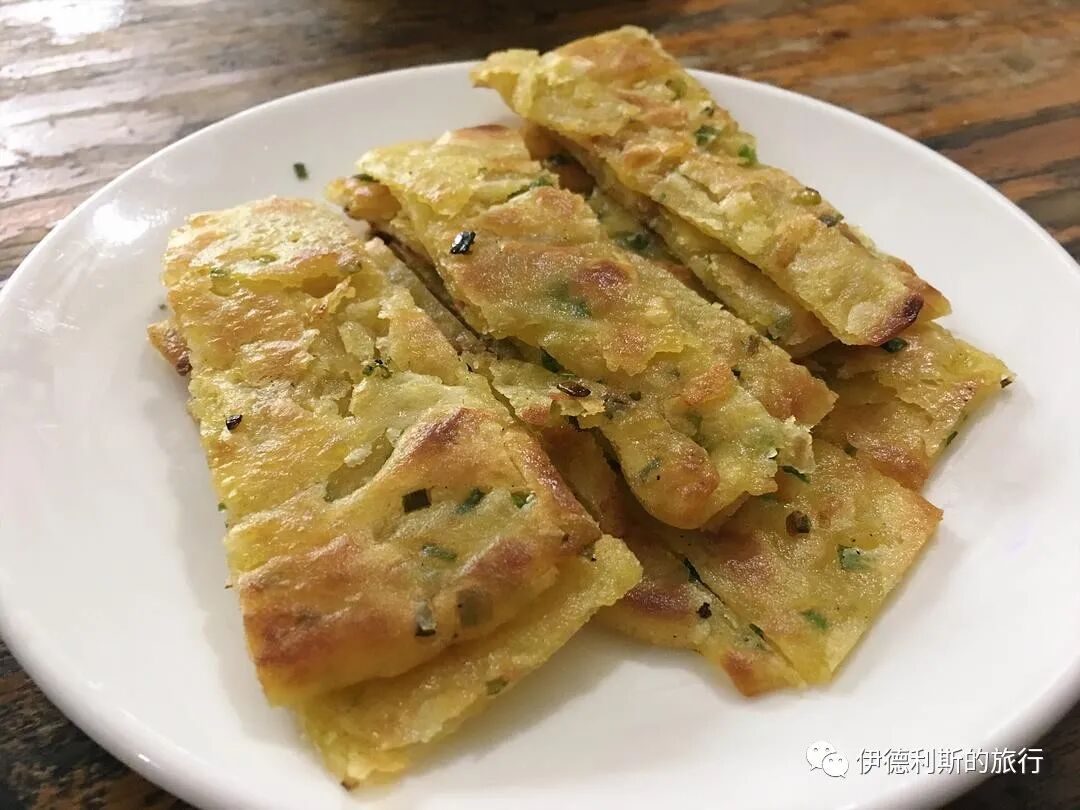
The next morning, I had beef, pan-fried buns (jianbao), radish beef offal (luobo niuza), and scallion oil pancakes (congyoubing) at a halal snack shop on Nanhu Branch Road. Scallion oil pancakes are a specialty of the Hui Muslims in Jiujiang. The radish beef offal is not as spicy as the version at Hai's, which suits my taste better.
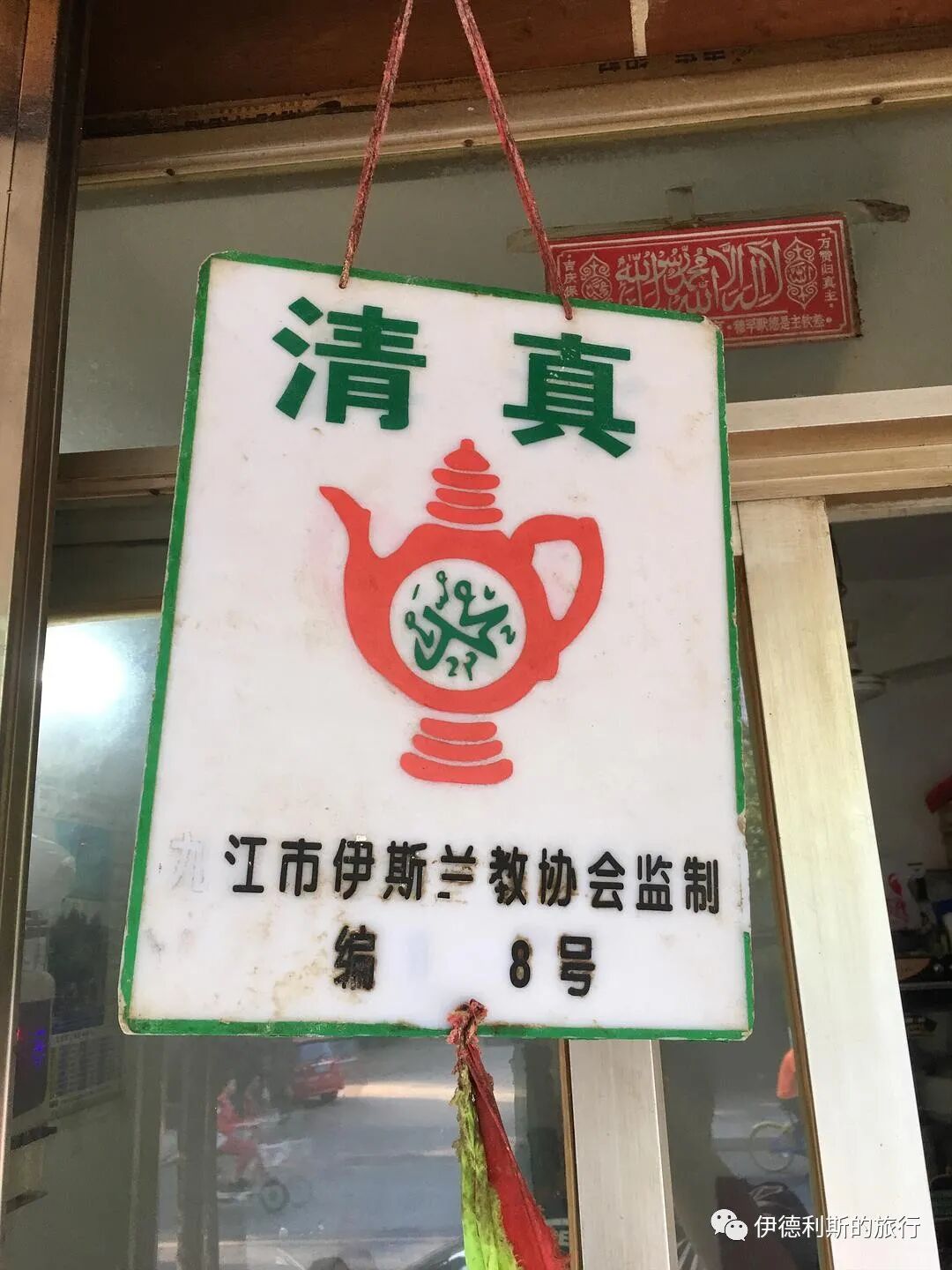
Because of my schedule, I missed many shops on this trip to Jiujiang and did not get to eat stir-fried rice noodles (chaofen). If you are interested in halal food in Jiujiang, you should go try it out.
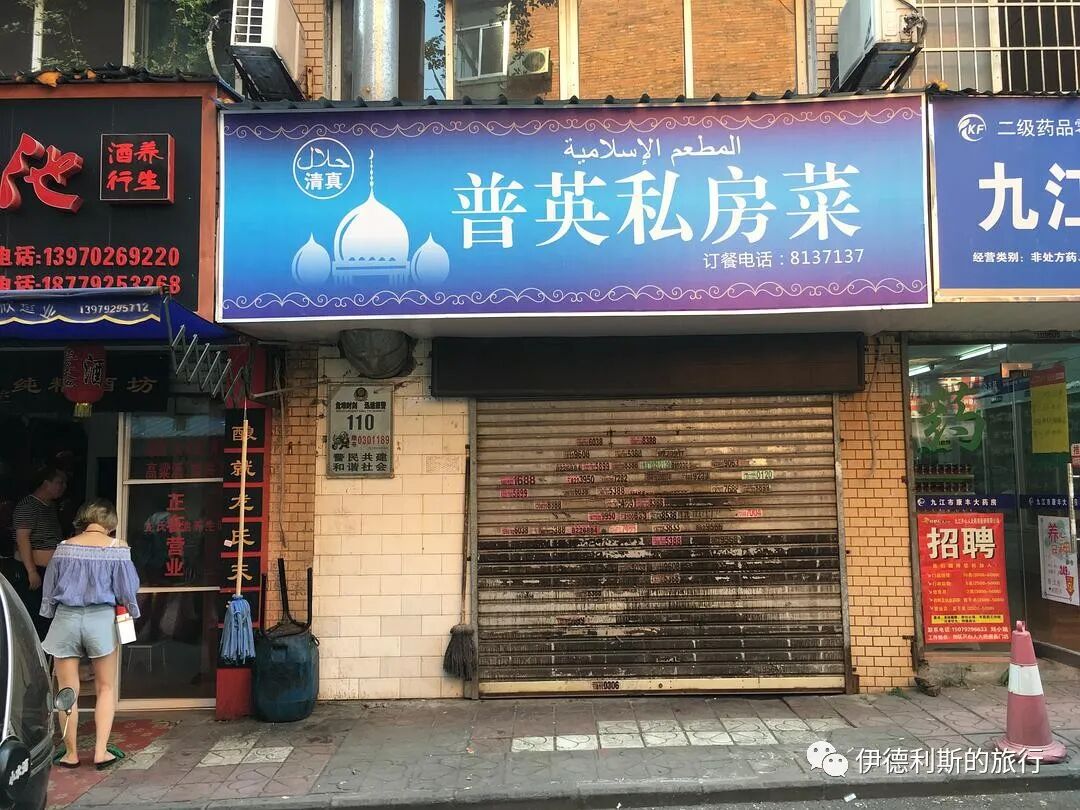
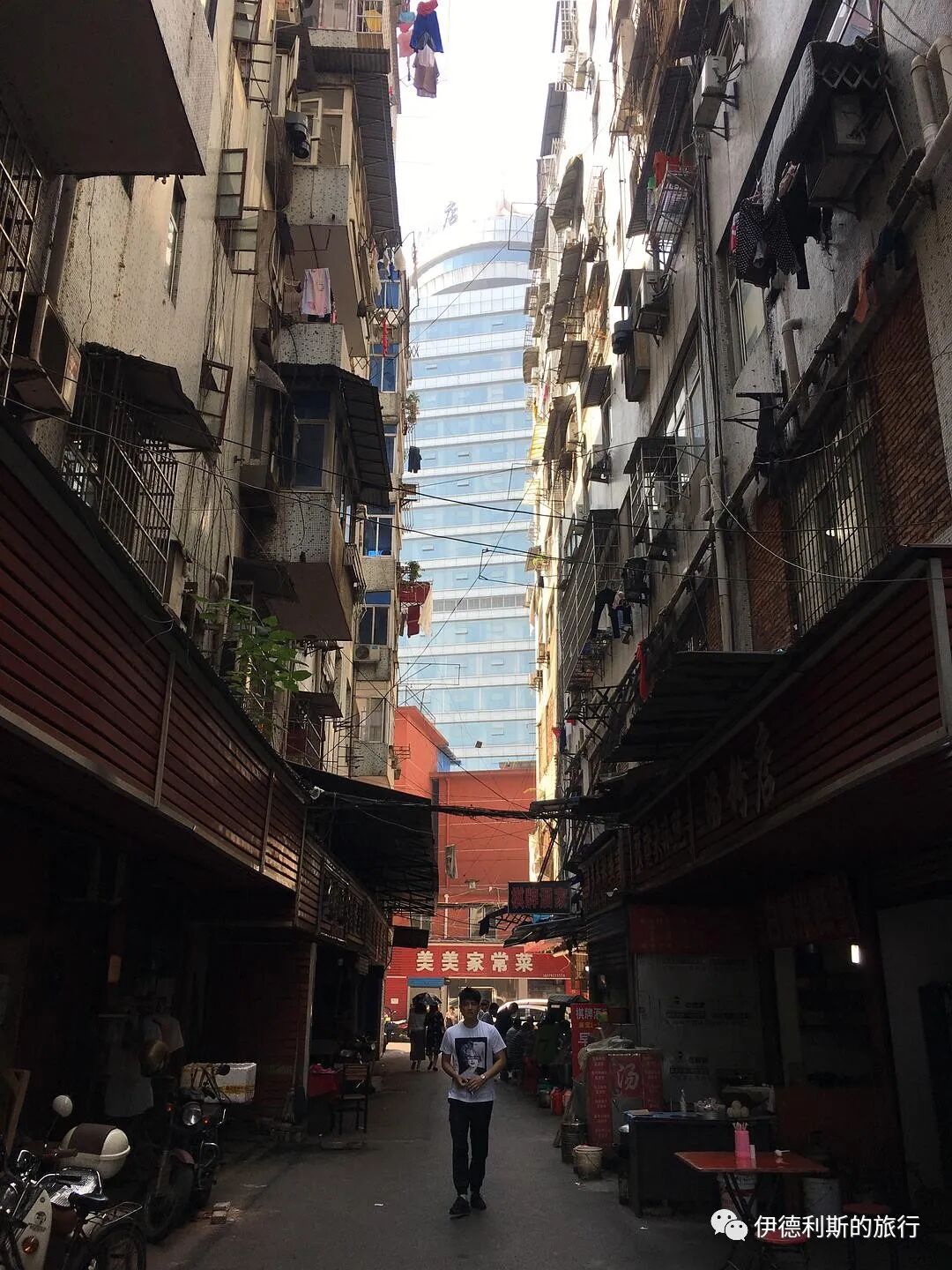
Yangtze River shipping.
During the Republic of China era, Jiujiang Port had six major modern steamship terminals: Nanhua, Jardine, Nissin, Butterfield & Swire, Sanbei, and Ningshao. There were over 1,300 stevedores, and by 1934, the number of dock workers in Jiujiang reached over 3,000.
Today, the Jiujiang cross-river ferry is at Gate 21 at the north end of Lushan North Road. It has operated a route to the Hengbatou Pier in Huangmei County, Hubei Province, across the river since 1940. At first, they used small hand-rowed rafts, then wooden boats, and later they changed to the current iron barges.
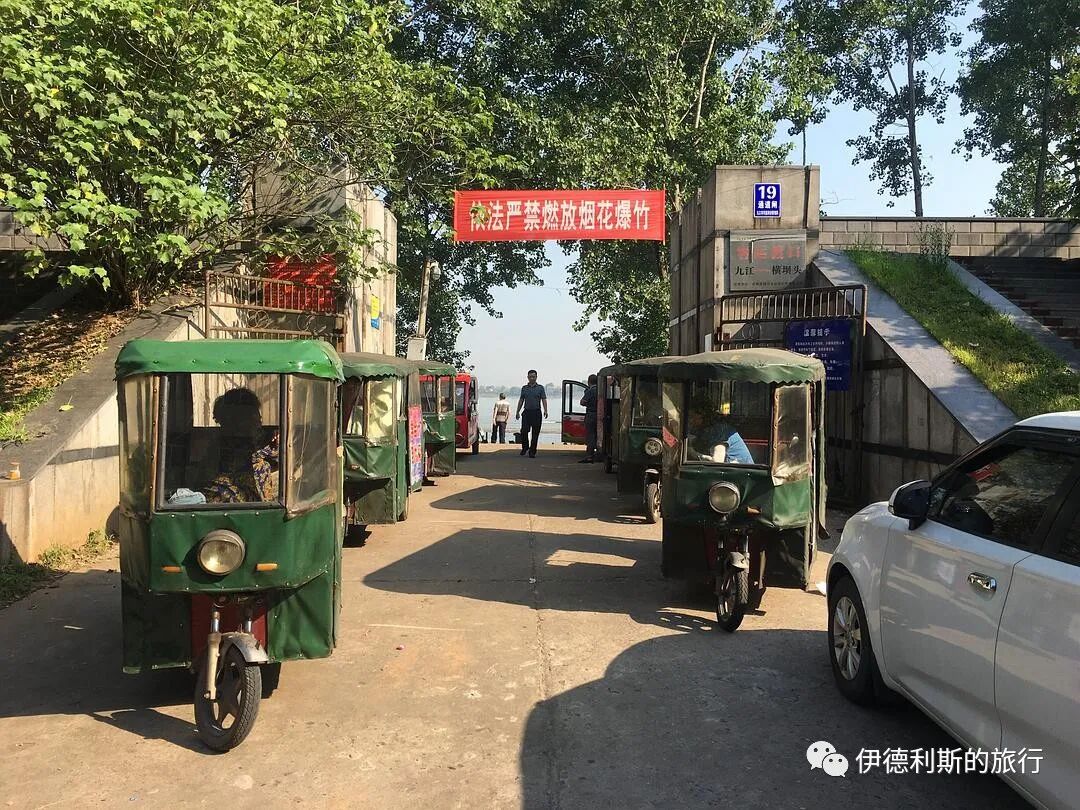
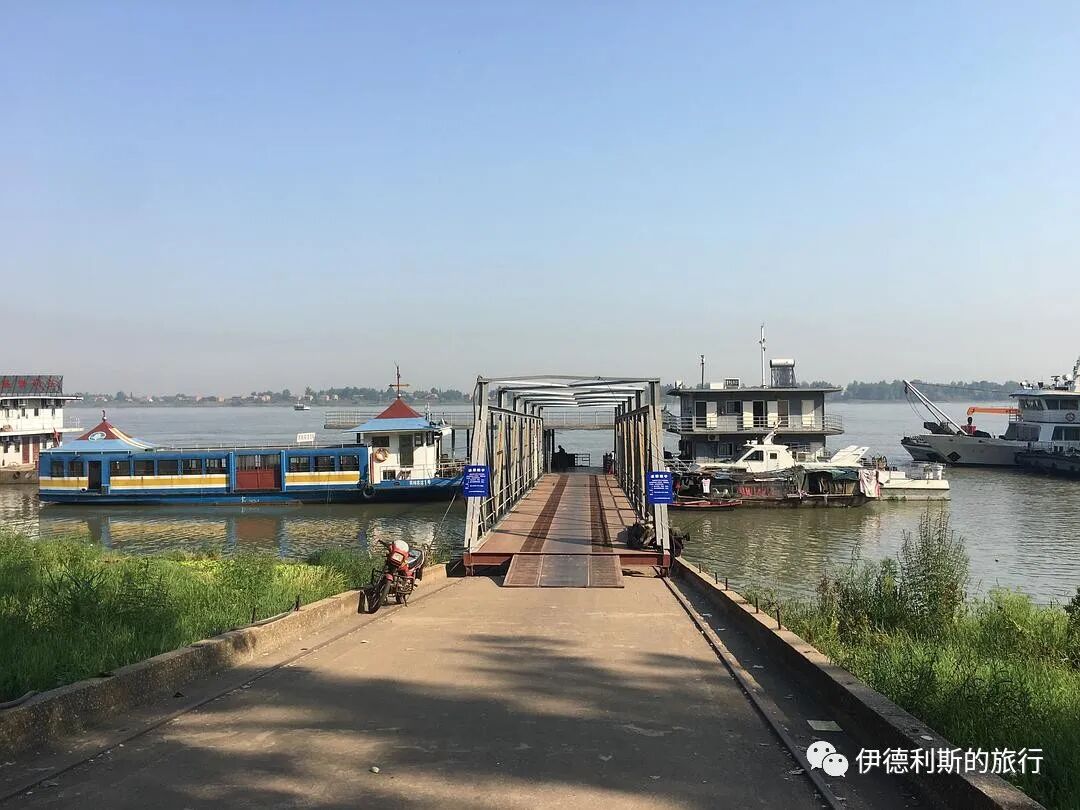
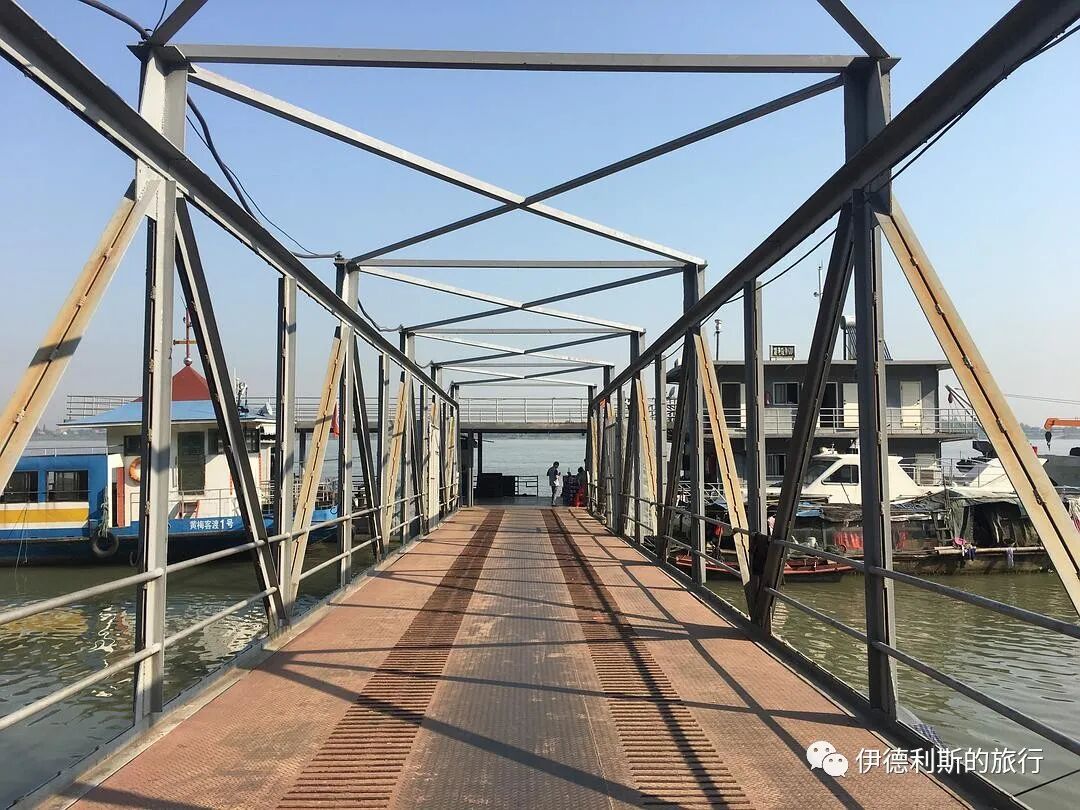
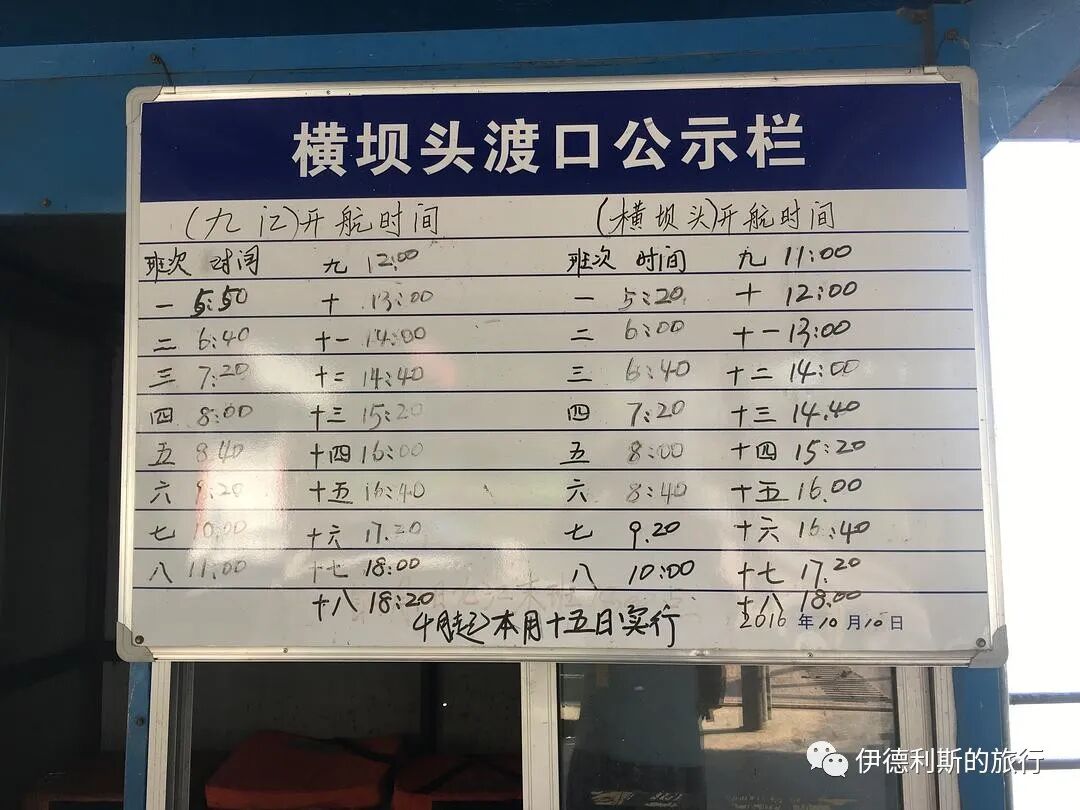
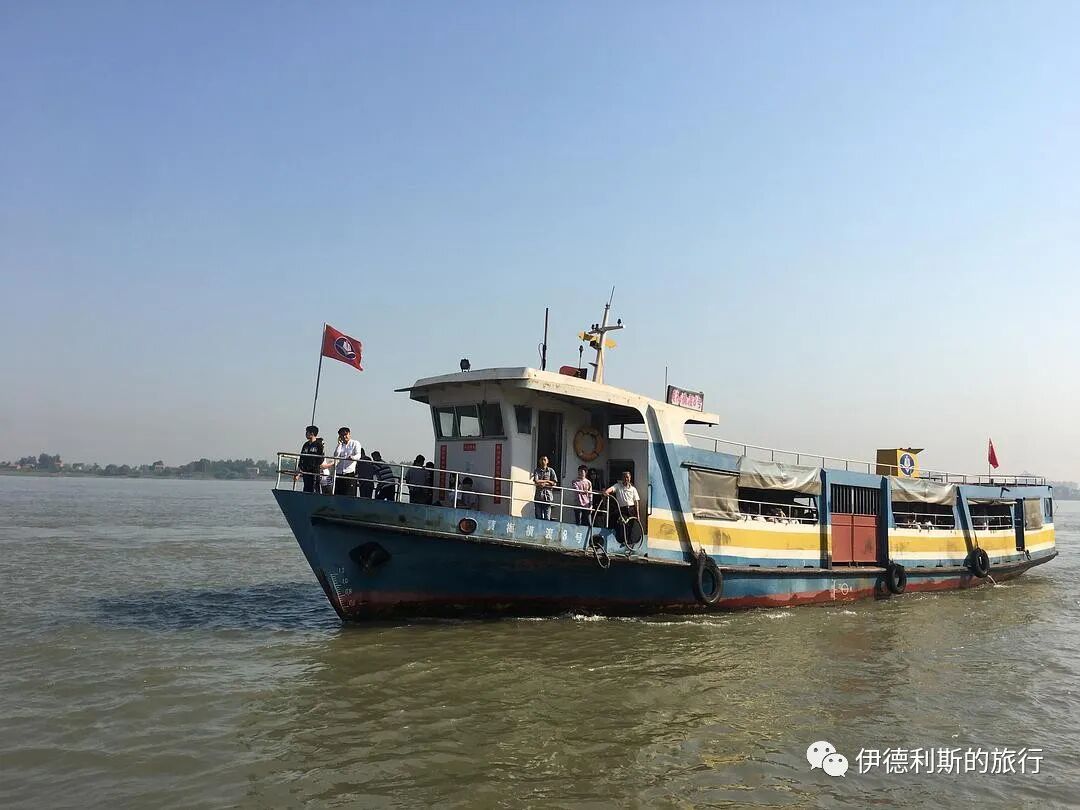
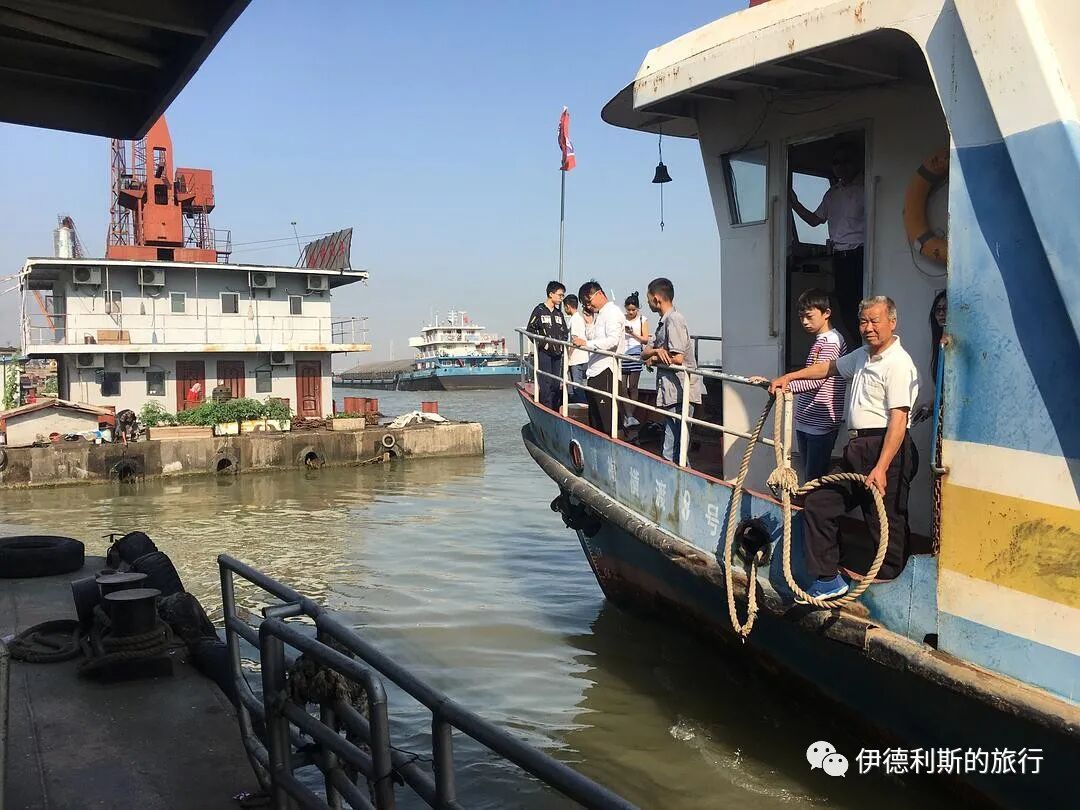
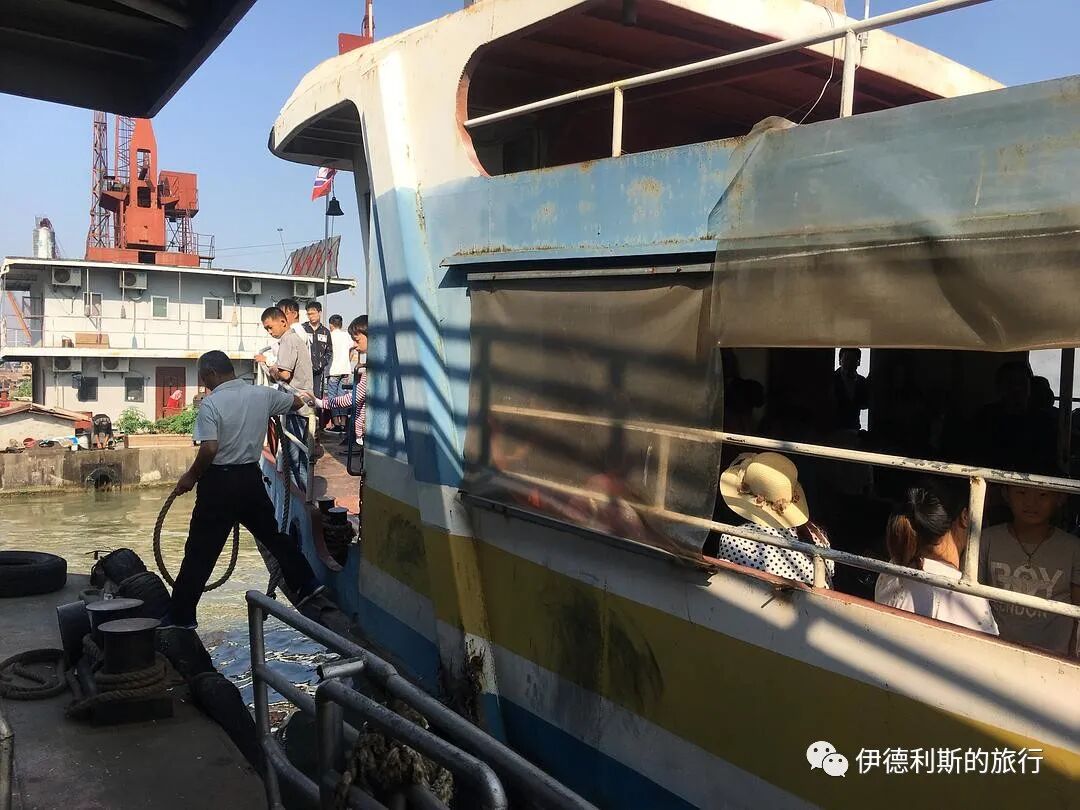
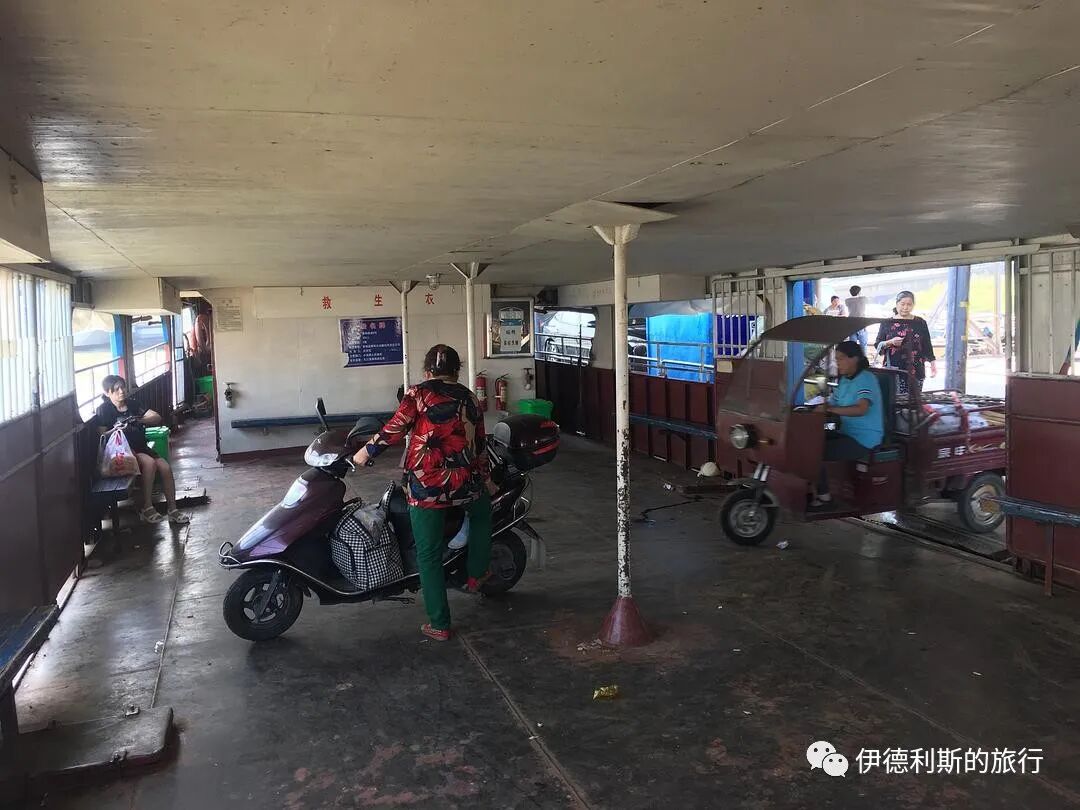
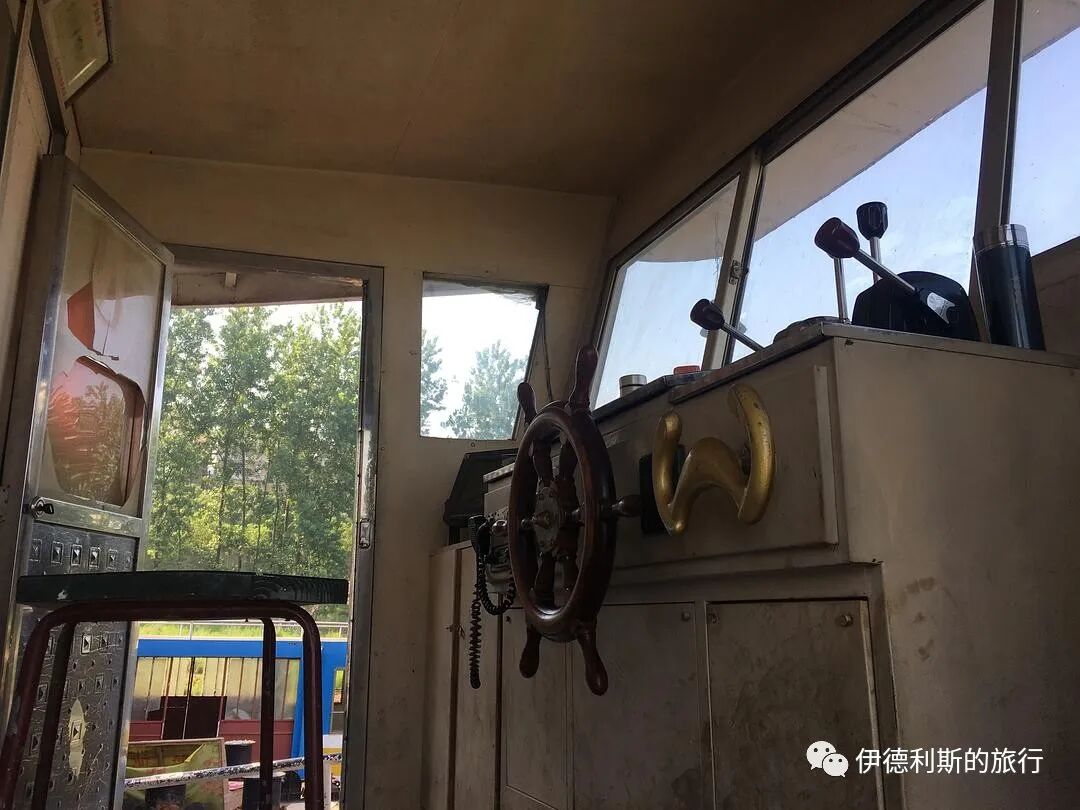
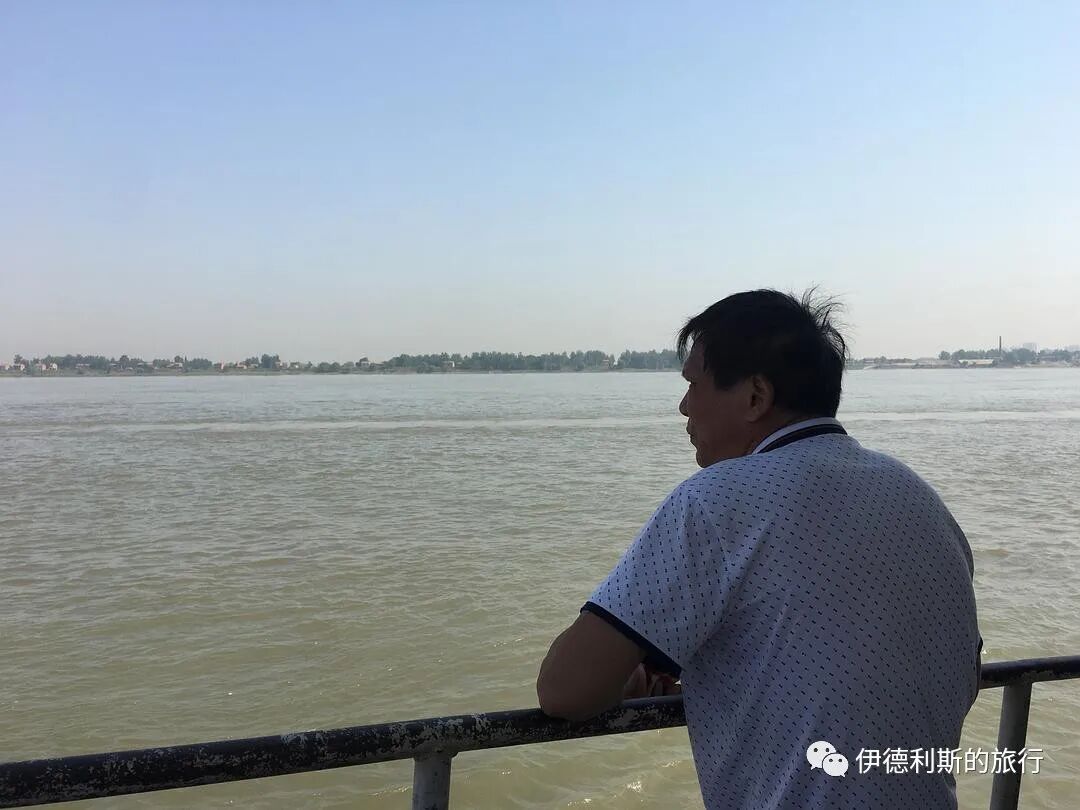
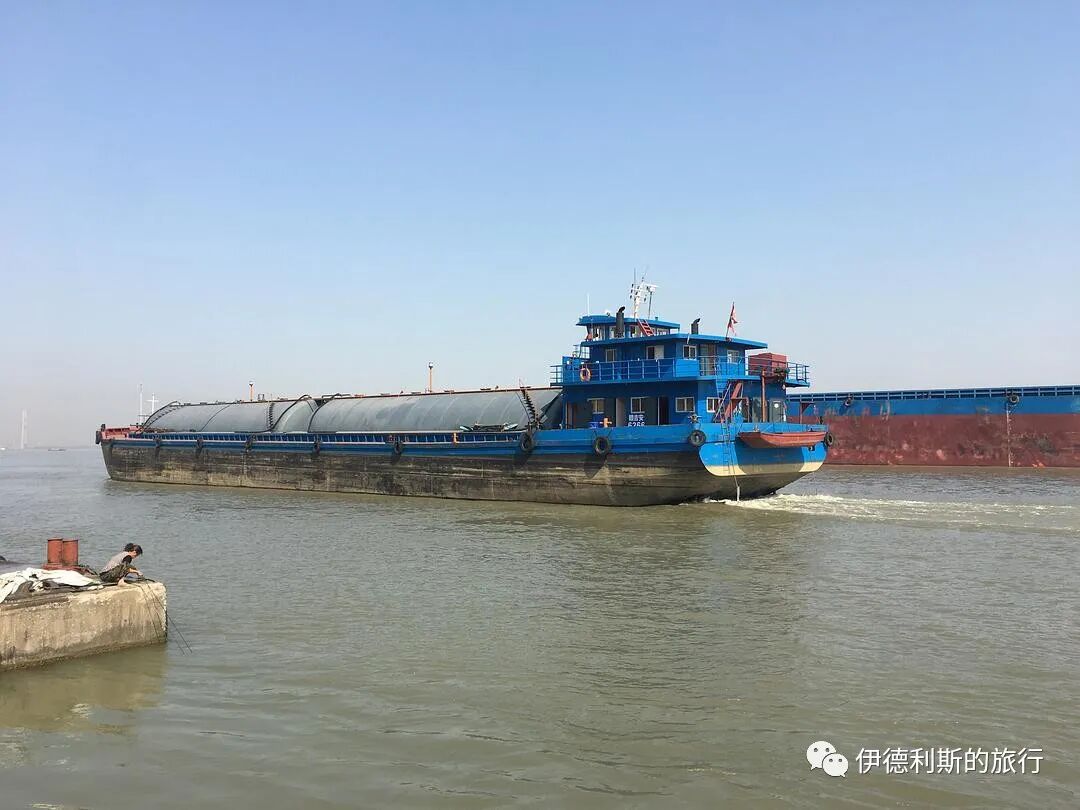
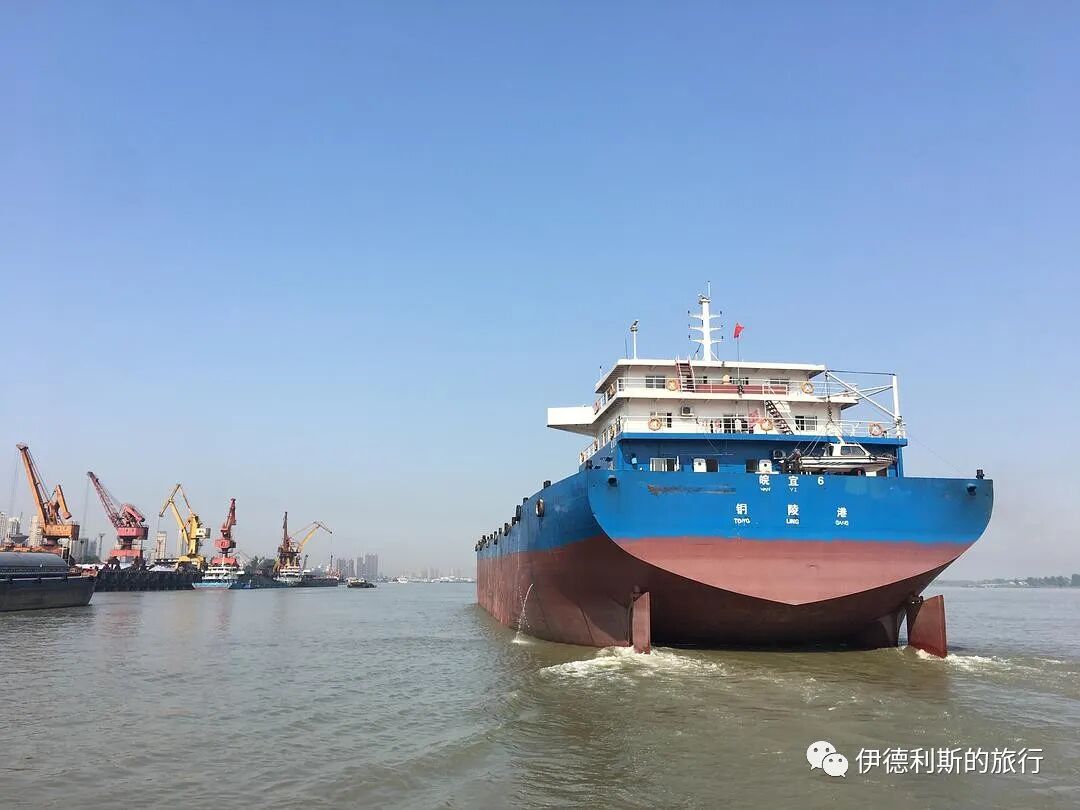
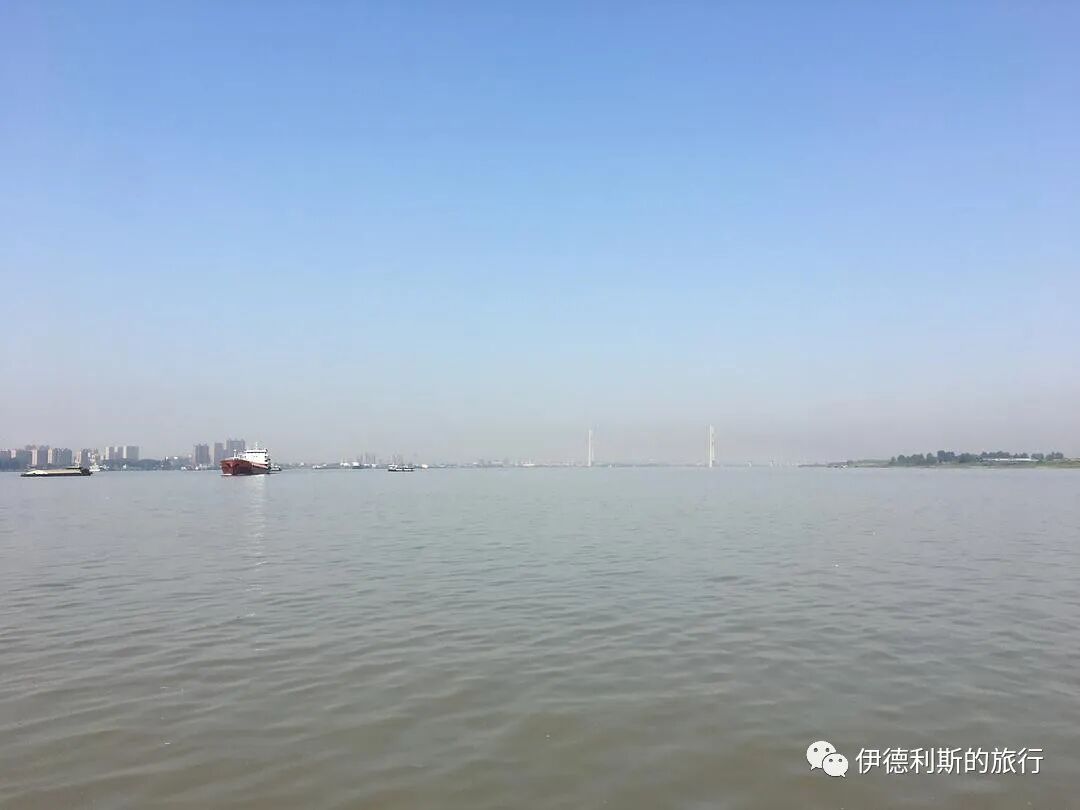
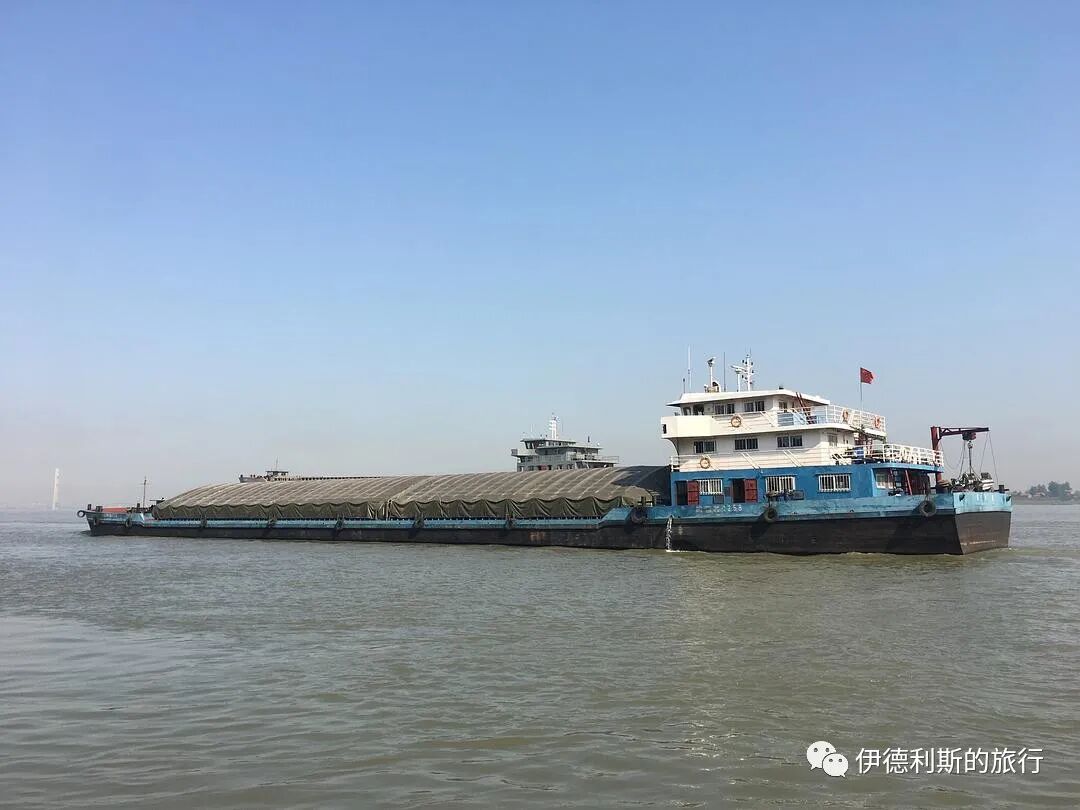
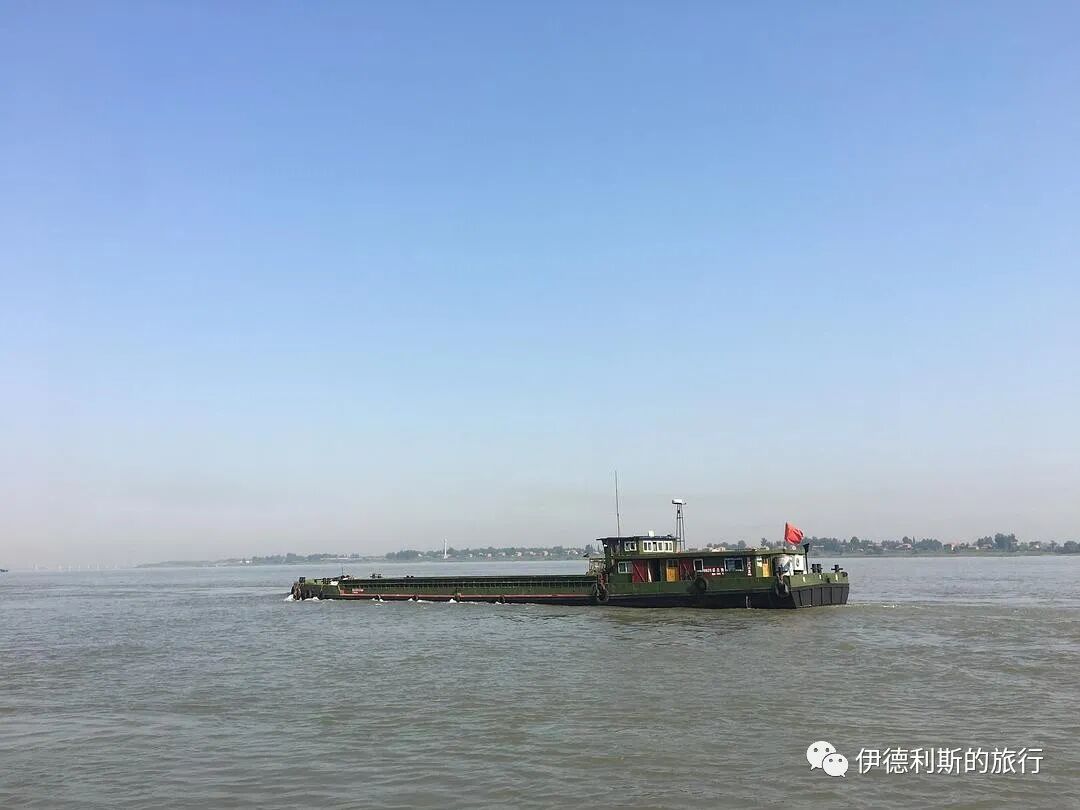
On the other side of the ferry is Hengbatou Pier. During the Yangtze River Crossing Campaign in April 1949, a unit of the Eighth Field Army of the People's Liberation Army requisitioned four wooden boats here. Each trip carried 14 people, and it took them seven days and seven nights to successfully transport the troops across the Yangtze River.
Summary: Jiujiang Hui Muslim Community — Mosques, Halal Food and History is presented here as a firsthand travel account in clear English, beginning with this scene: In 2017, I visited the Hui Muslim community in Jiujiang, Jiangxi. Five years have passed, and since I am stuck at home and cannot leave Beijing, I have to look back on my past travels. The account keeps its focus on Jiujiang Muslims, China Mosques, Halal Food while preserving the names, places, food, and historical details from the Chinese source.
In 2017, I visited the Hui Muslim community in Jiujiang, Jiangxi. Five years have passed, and since I am stuck at home and cannot leave Beijing, I have to look back on my past travels.
The history of the Jiujiang Hui Muslim community
The books "Jiujiang Hui Muslims and Islam" by Ye Ping and "Past and Present of Jiujiang Mosque" by Jiang Yi cover the development of the Hui Muslims in Jiujiang, but their views differ quite a bit. I have organized and summarized them here.
In 1450 (the first year of the Jingtai reign of the Ming Dynasty), the Hui Muslim general Ma Hazhi was transferred to serve as the commander-in-chief of Jiujiang. He brought three imams and over 1,500 Muslim officers and soldiers along with their families to be stationed in Jiujiang. They built the first mosque next to their military camp at Jiwan outside the West Gate. After that, retired officers and soldiers kept settling there, forming the earliest Hui Muslim community in Jiujiang.
During the late Ming and early Qing dynasties, the situation was unstable, so many Hui Muslims left Jiujiang and the mosque was destroyed.
People say the Jiwan mosque was rebuilt during the Qing Dynasty. Two imperial steles were carved during the Qianlong reign, but they were later destroyed in the fires of war, so the history of the Jiujiang Hui Muslims in the early Qing Dynasty remains unknown.
In 1821 (the first year of the Daoguang reign), Hui Muslim generals Tao Kuichen and Zhao Zhenqing from Shouzhou, Anhui, were transferred to serve as the garrison commander and defense battalion leader in Jiujiang. They brought 500 Muslim Flying Tiger Battalion soldiers and their families to be stationed in Jiujiang. After that, many Hui Muslims from Anhui and Henan came to Jiujiang to do business and settle down. In 1830 (the tenth year of the Daoguang reign), Ma Wanhe came from Anhui to Jiujiang to open a pollen shop. In 1848 (the twenty-eighth year of the Daoguang reign), Wang Wanhe came from Anqing to Jiujiang to open the Wang Qichang hat shop. In 1850 (the thirtieth year of the Daoguang reign), Qian Baochang, an antique dealer from Huaining, Anhui, took the lead in donating timber to build two rooms and renovate the Jiwan mosque.
During the Xianfeng era, the number of Hui Muslims in Jiujiang continued to grow. People like Hai Fuhe, Wang Fuxing, Fa Yongzhao, and Ma Chunsheng came from Henan to Jiujiang to open beef shops. In 1854 (the fourth year of Xianfeng), Ma Jintang fled famine in Henan and came to Jiujiang. He studied at the mosque. After marrying into the Ma Wanhe pollen shop, he started his own businesses, the Chunhe Inn and the Ma Jinkang money shop.
After the Treaty of Tianjin was signed, Jiujiang opened as a treaty port in 1862 (the first year of Tongzhi). It became the only transit hub for import and export trade in Jiangxi. Business grew quickly, and more Hui Muslims moved to Jiujiang to settle down. In 1875 (the first year of Guangxu), Jiang Chunhui came from Nanjing to Jiujiang and opened the Tongtai pawnshop. By 1898 (the twenty-fourth year of Guangxu), the Hui Muslim population in Jiujiang reached over 80 households and more than 200 people. That year, Zhu Tianqing, a Hui Muslim general from Shouzhou, Anhui, who served as the Jiujiang Prefecture commander, and Jiujiang brigade general Tao Zhan led the effort to expand the Jiwan Mosque. The new Jiujiang Mosque faced south. It had a prayer hall, a washroom (shuifang), a living room, and living quarters. The front gate faced the busy official street, and the back gate was near the Yangtze River.
The boundary stone set up during the mosque's renovation in the Guangxu era is still preserved today.
Because the mosque was outside the city, it was not very convenient for Hui Muslims living inside the city to visit. In 1902 (the twenty-eighth year of Guangxu), Yang Xianian from Anhui and antique dealer Ma Shoutian led the construction of the City Mosque at the Fourth Pier. The Jiwan Mosque was then called the Outside-the-City Mosque. The City Mosque had four courtyards from front to back, and its first imam was Hu Guangming. The community of the City Mosque was mainly Hui Muslims from Anhui, while the community of the Outside-the-City Mosque was mainly Hui Muslims from Henan. They were divided into the new group and the old group, and both mosques held their religious activities separately.
In the early years of the Republic of China, the Hui Muslim population in Jiujiang reached over 100 households and more than 400 people. In 1935, the Jiwan Mosque moved 200 meters south because of a river levee straightening project, changing its orientation from facing south to facing north.
An aerial photo of Jiujiang city from 1938, kept at the Jiujiang Museum, shows west at the top and east at the bottom.
Between 1934 and 1935, the famous missionary Claude L. Pickens Jr. (Bi Jingshi) came to Jiujiang and photographed the local mosque (huijiao libaitang).
In 1949, there were 50 Hui Muslims running beef shops in Jiujiang, 20 running food stalls, and 2 running pastry shops. During the Republic of China era, the biggest merchant in Jiujiang was Jin Haoru, a Hui Muslim from Zhenjiang. In 1920, Jin Haoru opened the Yusheng Match Company, the largest match factory in Jiangxi Province. In 1932, he opened a large general store called Huakang Hardware and Foreign Goods on Dazhong Road in Jiujiang. Later, he independently founded the Guling Power Plant and the Jiujiang Housheng Pawnshop, becoming the richest man in Jiujiang. By 1953, the total capital of the Huakang Hardware and Foreign Goods store reached 340 million yuan.
The image below shows a halal pastry shop in Jiujiang, photographed by missionary Claude L. Pickens Jr. between 1934 and 1935.
In 1955, there were 252 Hui Muslim households in Jiujiang with 1,035 people, 50 percent of whom were from Henan and 40 percent from Anhui. Many Hui Muslims moved here in the 1950s due to floods, so 104 people were sent back to their original hometowns in 1958. At the end of 1958, the city mosque was closed and turned into a halal canteen and the office for the Jiujiang Hui Muslim Cultural Association, later becoming the Liangxinglong Food Factory. In 1966, the suburban mosque was occupied by a rope factory. All the scriptures kept inside were burned, and all mosque property was confiscated. It reopened in 1982 and was rebuilt as a modern building in 2008 due to municipal development.
The current Jiujiang Mosque.
Hai Family Pan-fried Buns (Haijia Shuijianbao).
In the morning, I ate radish beef offal, rice porridge, radish pan-fried buns, and beef pan-fried buns at Hai Family Pan-fried Buns (Haijia Shuijianbao) at the Fourth Pier. The radish beef offal and radish pan-fried buns were both rich, spicy, and very satisfying, but as a Beijinger, I still prefer the non-spicy beef pan-fried buns.
Liangyilong.
Next to Hai Family Pan-fried Buns is the Fourth Pier branch of Liangyilong, a time-honored halal pastry shop in Jiujiang. People say this might be the original location of the mosque in Jiujiang city. I bought crispy rice crackers (guoba), puffed rice candy (dongmitang), sesame cake (mahonggao), and flaky pastry (fanmaosu) here.
In the summer of 1937, the Nanjing Nationalist Government moved its offices to Mount Lu (Lushan) south of Jiujiang city. Mount Lu became the summer capital of the Republic of China and was incredibly busy. In July, the Nanjing Nationalist Government held a summer training group on Mount Lu, with over 7,000 officials from various sectors participating in the training. Between June and July, Zhou Enlai and others came to Mount Lu twice to hold the famous Mount Lu negotiations with Chiang Kai-shek. In July, Wang Jingwei and Chiang Kai-shek hosted the Mount Lu Talk, inviting 200 celebrities from all walks of life. Chiang Kai-shek delivered his famous Mount Lu declaration of resistance against Japan. That same year, Liang Yide, a Hui Muslim from Huaining, Anhui, saw a business opportunity and opened the Deyizhai pastry shop on Mount Lu. People say Chiang Kai-shek and Soong Mei-ling often used the Liang family's pastries to entertain guests at that time.
An introduction from the Liangyilong official website.
In 1940, Liang Yide officially opened the Liangyilong shop on Lijiaxiang in Xiyuan, Jiujiang. He paid high wages to hire a Taiwanese pastry chef named Lin Youfu and a Cantonese-style pastry chef named Dai Tianchou to manage the baking. Later, he hired a Taiwanese master named Qiu to handle candy production. Master Qiu used international candy-making techniques to produce dozens of types of fruit and flavored candies at Liangyilong, which made the shop very famous in Jiujiang.
An introduction from the Liangyilong official website.
After the public-private partnership policy, Liangyilong was merged into the Jiujiang Food Factory in 1958. It moved back to the entrance of Xiyuan Lane in 1962. After 1966, the shop sign was smashed, the family assets were confiscated, and Liang Yide was sent to Xiushui for re-education. At the end of 1989, Liang Yide's son, Liang Qibiao, revived the Liangyilong brand. He inherited his father's skills and opened the Liangji Pastry Shop, which eventually grew into a major brand with many franchise stores and automated production lines.
Liang Qirong Pastry Workshop.
Besides Liangyilong, there is another halal pastry shop in Jiujiang called Liang Qirong. It has small shops on Dingguan Road and Dutian Lane. They have a front shop and a back workshop, and the taste feels more personal than the mass-produced items from Liangyilong. I bought osmanthus crisp candy (guihua sutang), osmanthus cloud-slice cake (guihua yunpian gao), osmanthus tea cake (guihua chabing), and mung bean cake (lvdou gao) here.
Aiping Halal Beef Restaurant.
For lunch at Aiping Halal Beef Restaurant, I had braised yellow catfish (huangyatou), stir-fried beef tripe with celery, and diced lotus root with hot peppers. Huangyatou is what people in Jiangxi call yellow catfish. The ones from Poyang Lake are the most famous, and the meat is incredibly tender and smooth. April and May are the spawning season for yellow catfish. Every fish is full of roe, which is delicious, and the spicy flavor is just right, making it very appetizing. The salty beef tripe (niudu) is great with rice, and the diced lotus root is very spicy, so I have to drink cold water with it. It is so satisfying in the summer.
Halal snacks on Nanhu Branch Road.
The next morning, I had beef, pan-fried buns (jianbao), radish beef offal (luobo niuza), and scallion oil pancakes (congyoubing) at a halal snack shop on Nanhu Branch Road. Scallion oil pancakes are a specialty of the Hui Muslims in Jiujiang. The radish beef offal is not as spicy as the version at Hai's, which suits my taste better.
Because of my schedule, I missed many shops on this trip to Jiujiang and did not get to eat stir-fried rice noodles (chaofen). If you are interested in halal food in Jiujiang, you should go try it out.
Yangtze River shipping.
During the Republic of China era, Jiujiang Port had six major modern steamship terminals: Nanhua, Jardine, Nissin, Butterfield & Swire, Sanbei, and Ningshao. There were over 1,300 stevedores, and by 1934, the number of dock workers in Jiujiang reached over 3,000.
Today, the Jiujiang cross-river ferry is at Gate 21 at the north end of Lushan North Road. It has operated a route to the Hengbatou Pier in Huangmei County, Hubei Province, across the river since 1940. At first, they used small hand-rowed rafts, then wooden boats, and later they changed to the current iron barges.
On the other side of the ferry is Hengbatou Pier. During the Yangtze River Crossing Campaign in April 1949, a unit of the Eighth Field Army of the People's Liberation Army requisitioned four wooden boats here. Each trip carried 14 people, and it took them seven days and seven nights to successfully transport the troops across the Yangtze River.
Halal Travel Guide: Jiujiang Hui Muslim Community — Mosques, Halal Food and History
Articles • ali2007fr posted the article • 0 comments • 156 views • 2026-05-18 02:27
Reposted from the web
Summary: Jiujiang Hui Muslim Community — Mosques, Halal Food and History is presented here as a firsthand travel account in clear English, beginning with this scene: In 2017, I visited the Hui Muslim community in Jiujiang, Jiangxi. Five years have passed, and since I am stuck at home and cannot leave Beijing, I have to look back on my past travels. The account keeps its focus on Jiujiang Muslims, China Mosques, Halal Food while preserving the names, places, food, and historical details from the Chinese source.
In 2017, I visited the Hui Muslim community in Jiujiang, Jiangxi. Five years have passed, and since I am stuck at home and cannot leave Beijing, I have to look back on my past travels.
The history of the Jiujiang Hui Muslim community
The books "Jiujiang Hui Muslims and Islam" by Ye Ping and "Past and Present of Jiujiang Mosque" by Jiang Yi cover the development of the Hui Muslims in Jiujiang, but their views differ quite a bit. I have organized and summarized them here.
In 1450 (the first year of the Jingtai reign of the Ming Dynasty), the Hui Muslim general Ma Hazhi was transferred to serve as the commander-in-chief of Jiujiang. He brought three imams and over 1,500 Muslim officers and soldiers along with their families to be stationed in Jiujiang. They built the first mosque next to their military camp at Jiwan outside the West Gate. After that, retired officers and soldiers kept settling there, forming the earliest Hui Muslim community in Jiujiang.
During the late Ming and early Qing dynasties, the situation was unstable, so many Hui Muslims left Jiujiang and the mosque was destroyed.
People say the Jiwan mosque was rebuilt during the Qing Dynasty. Two imperial steles were carved during the Qianlong reign, but they were later destroyed in the fires of war, so the history of the Jiujiang Hui Muslims in the early Qing Dynasty remains unknown.
In 1821 (the first year of the Daoguang reign), Hui Muslim generals Tao Kuichen and Zhao Zhenqing from Shouzhou, Anhui, were transferred to serve as the garrison commander and defense battalion leader in Jiujiang. They brought 500 Muslim Flying Tiger Battalion soldiers and their families to be stationed in Jiujiang. After that, many Hui Muslims from Anhui and Henan came to Jiujiang to do business and settle down. In 1830 (the tenth year of the Daoguang reign), Ma Wanhe came from Anhui to Jiujiang to open a pollen shop. In 1848 (the twenty-eighth year of the Daoguang reign), Wang Wanhe came from Anqing to Jiujiang to open the Wang Qichang hat shop. In 1850 (the thirtieth year of the Daoguang reign), Qian Baochang, an antique dealer from Huaining, Anhui, took the lead in donating timber to build two rooms and renovate the Jiwan mosque.
During the Xianfeng era, the number of Hui Muslims in Jiujiang continued to grow. People like Hai Fuhe, Wang Fuxing, Fa Yongzhao, and Ma Chunsheng came from Henan to Jiujiang to open beef shops. In 1854 (the fourth year of Xianfeng), Ma Jintang fled famine in Henan and came to Jiujiang. He studied at the mosque. After marrying into the Ma Wanhe pollen shop, he started his own businesses, the Chunhe Inn and the Ma Jinkang money shop.
After the Treaty of Tianjin was signed, Jiujiang opened as a treaty port in 1862 (the first year of Tongzhi). It became the only transit hub for import and export trade in Jiangxi. Business grew quickly, and more Hui Muslims moved to Jiujiang to settle down. In 1875 (the first year of Guangxu), Jiang Chunhui came from Nanjing to Jiujiang and opened the Tongtai pawnshop. By 1898 (the twenty-fourth year of Guangxu), the Hui Muslim population in Jiujiang reached over 80 households and more than 200 people. That year, Zhu Tianqing, a Hui Muslim general from Shouzhou, Anhui, who served as the Jiujiang Prefecture commander, and Jiujiang brigade general Tao Zhan led the effort to expand the Jiwan Mosque. The new Jiujiang Mosque faced south. It had a prayer hall, a washroom (shuifang), a living room, and living quarters. The front gate faced the busy official street, and the back gate was near the Yangtze River.
The boundary stone set up during the mosque's renovation in the Guangxu era is still preserved today.
Because the mosque was outside the city, it was not very convenient for Hui Muslims living inside the city to visit. In 1902 (the twenty-eighth year of Guangxu), Yang Xianian from Anhui and antique dealer Ma Shoutian led the construction of the City Mosque at the Fourth Pier. The Jiwan Mosque was then called the Outside-the-City Mosque. The City Mosque had four courtyards from front to back, and its first imam was Hu Guangming. The community of the City Mosque was mainly Hui Muslims from Anhui, while the community of the Outside-the-City Mosque was mainly Hui Muslims from Henan. They were divided into the new group and the old group, and both mosques held their religious activities separately.
In the early years of the Republic of China, the Hui Muslim population in Jiujiang reached over 100 households and more than 400 people. In 1935, the Jiwan Mosque moved 200 meters south because of a river levee straightening project, changing its orientation from facing south to facing north.
An aerial photo of Jiujiang city from 1938, kept at the Jiujiang Museum, shows west at the top and east at the bottom.
Between 1934 and 1935, the famous missionary Claude L. Pickens Jr. (Bi Jingshi) came to Jiujiang and photographed the local mosque (huijiao libaitang).
In 1949, there were 50 Hui Muslims running beef shops in Jiujiang, 20 running food stalls, and 2 running pastry shops. During the Republic of China era, the biggest merchant in Jiujiang was Jin Haoru, a Hui Muslim from Zhenjiang. In 1920, Jin Haoru opened the Yusheng Match Company, the largest match factory in Jiangxi Province. In 1932, he opened a large general store called Huakang Hardware and Foreign Goods on Dazhong Road in Jiujiang. Later, he independently founded the Guling Power Plant and the Jiujiang Housheng Pawnshop, becoming the richest man in Jiujiang. By 1953, the total capital of the Huakang Hardware and Foreign Goods store reached 340 million yuan.
The image below shows a halal pastry shop in Jiujiang, photographed by missionary Claude L. Pickens Jr. between 1934 and 1935.
In 1955, there were 252 Hui Muslim households in Jiujiang with 1,035 people, 50 percent of whom were from Henan and 40 percent from Anhui. Many Hui Muslims moved here in the 1950s due to floods, so 104 people were sent back to their original hometowns in 1958. At the end of 1958, the city mosque was closed and turned into a halal canteen and the office for the Jiujiang Hui Muslim Cultural Association, later becoming the Liangxinglong Food Factory. In 1966, the suburban mosque was occupied by a rope factory. All the scriptures kept inside were burned, and all mosque property was confiscated. It reopened in 1982 and was rebuilt as a modern building in 2008 due to municipal development.
The current Jiujiang Mosque.
Hai Family Pan-fried Buns (Haijia Shuijianbao).
In the morning, I ate radish beef offal, rice porridge, radish pan-fried buns, and beef pan-fried buns at Hai Family Pan-fried Buns (Haijia Shuijianbao) at the Fourth Pier. The radish beef offal and radish pan-fried buns were both rich, spicy, and very satisfying, but as a Beijinger, I still prefer the non-spicy beef pan-fried buns.
Liangyilong.
Next to Hai Family Pan-fried Buns is the Fourth Pier branch of Liangyilong, a time-honored halal pastry shop in Jiujiang. People say this might be the original location of the mosque in Jiujiang city. I bought crispy rice crackers (guoba), puffed rice candy (dongmitang), sesame cake (mahonggao), and flaky pastry (fanmaosu) here.
In the summer of 1937, the Nanjing Nationalist Government moved its offices to Mount Lu (Lushan) south of Jiujiang city. Mount Lu became the summer capital of the Republic of China and was incredibly busy. In July, the Nanjing Nationalist Government held a summer training group on Mount Lu, with over 7,000 officials from various sectors participating in the training. Between June and July, Zhou Enlai and others came to Mount Lu twice to hold the famous Mount Lu negotiations with Chiang Kai-shek. In July, Wang Jingwei and Chiang Kai-shek hosted the Mount Lu Talk, inviting 200 celebrities from all walks of life. Chiang Kai-shek delivered his famous Mount Lu declaration of resistance against Japan. That same year, Liang Yide, a Hui Muslim from Huaining, Anhui, saw a business opportunity and opened the Deyizhai pastry shop on Mount Lu. People say Chiang Kai-shek and Soong Mei-ling often used the Liang family's pastries to entertain guests at that time.
An introduction from the Liangyilong official website.
In 1940, Liang Yide officially opened the Liangyilong shop on Lijiaxiang in Xiyuan, Jiujiang. He paid high wages to hire a Taiwanese pastry chef named Lin Youfu and a Cantonese-style pastry chef named Dai Tianchou to manage the baking. Later, he hired a Taiwanese master named Qiu to handle candy production. Master Qiu used international candy-making techniques to produce dozens of types of fruit and flavored candies at Liangyilong, which made the shop very famous in Jiujiang.
An introduction from the Liangyilong official website.
After the public-private partnership policy, Liangyilong was merged into the Jiujiang Food Factory in 1958. It moved back to the entrance of Xiyuan Lane in 1962. After 1966, the shop sign was smashed, the family assets were confiscated, and Liang Yide was sent to Xiushui for re-education. At the end of 1989, Liang Yide's son, Liang Qibiao, revived the Liangyilong brand. He inherited his father's skills and opened the Liangji Pastry Shop, which eventually grew into a major brand with many franchise stores and automated production lines.
Liang Qirong Pastry Workshop.
Besides Liangyilong, there is another halal pastry shop in Jiujiang called Liang Qirong. It has small shops on Dingguan Road and Dutian Lane. They have a front shop and a back workshop, and the taste feels more personal than the mass-produced items from Liangyilong. I bought osmanthus crisp candy (guihua sutang), osmanthus cloud-slice cake (guihua yunpian gao), osmanthus tea cake (guihua chabing), and mung bean cake (lvdou gao) here.
Aiping Halal Beef Restaurant.
For lunch at Aiping Halal Beef Restaurant, I had braised yellow catfish (huangyatou), stir-fried beef tripe with celery, and diced lotus root with hot peppers. Huangyatou is what people in Jiangxi call yellow catfish. The ones from Poyang Lake are the most famous, and the meat is incredibly tender and smooth. April and May are the spawning season for yellow catfish. Every fish is full of roe, which is delicious, and the spicy flavor is just right, making it very appetizing. The salty beef tripe (niudu) is great with rice, and the diced lotus root is very spicy, so I have to drink cold water with it. It is so satisfying in the summer.
Halal snacks on Nanhu Branch Road.
The next morning, I had beef, pan-fried buns (jianbao), radish beef offal (luobo niuza), and scallion oil pancakes (congyoubing) at a halal snack shop on Nanhu Branch Road. Scallion oil pancakes are a specialty of the Hui Muslims in Jiujiang. The radish beef offal is not as spicy as the version at Hai's, which suits my taste better.
Because of my schedule, I missed many shops on this trip to Jiujiang and did not get to eat stir-fried rice noodles (chaofen). If you are interested in halal food in Jiujiang, you should go try it out.
Yangtze River shipping.
During the Republic of China era, Jiujiang Port had six major modern steamship terminals: Nanhua, Jardine, Nissin, Butterfield & Swire, Sanbei, and Ningshao. There were over 1,300 stevedores, and by 1934, the number of dock workers in Jiujiang reached over 3,000.
Today, the Jiujiang cross-river ferry is at Gate 21 at the north end of Lushan North Road. It has operated a route to the Hengbatou Pier in Huangmei County, Hubei Province, across the river since 1940. At first, they used small hand-rowed rafts, then wooden boats, and later they changed to the current iron barges.
On the other side of the ferry is Hengbatou Pier. During the Yangtze River Crossing Campaign in April 1949, a unit of the Eighth Field Army of the People's Liberation Army requisitioned four wooden boats here. Each trip carried 14 people, and it took them seven days and seven nights to successfully transport the troops across the Yangtze River. view all
Summary: Jiujiang Hui Muslim Community — Mosques, Halal Food and History is presented here as a firsthand travel account in clear English, beginning with this scene: In 2017, I visited the Hui Muslim community in Jiujiang, Jiangxi. Five years have passed, and since I am stuck at home and cannot leave Beijing, I have to look back on my past travels. The account keeps its focus on Jiujiang Muslims, China Mosques, Halal Food while preserving the names, places, food, and historical details from the Chinese source.
In 2017, I visited the Hui Muslim community in Jiujiang, Jiangxi. Five years have passed, and since I am stuck at home and cannot leave Beijing, I have to look back on my past travels.
The history of the Jiujiang Hui Muslim community
The books "Jiujiang Hui Muslims and Islam" by Ye Ping and "Past and Present of Jiujiang Mosque" by Jiang Yi cover the development of the Hui Muslims in Jiujiang, but their views differ quite a bit. I have organized and summarized them here.
In 1450 (the first year of the Jingtai reign of the Ming Dynasty), the Hui Muslim general Ma Hazhi was transferred to serve as the commander-in-chief of Jiujiang. He brought three imams and over 1,500 Muslim officers and soldiers along with their families to be stationed in Jiujiang. They built the first mosque next to their military camp at Jiwan outside the West Gate. After that, retired officers and soldiers kept settling there, forming the earliest Hui Muslim community in Jiujiang.
During the late Ming and early Qing dynasties, the situation was unstable, so many Hui Muslims left Jiujiang and the mosque was destroyed.
People say the Jiwan mosque was rebuilt during the Qing Dynasty. Two imperial steles were carved during the Qianlong reign, but they were later destroyed in the fires of war, so the history of the Jiujiang Hui Muslims in the early Qing Dynasty remains unknown.
In 1821 (the first year of the Daoguang reign), Hui Muslim generals Tao Kuichen and Zhao Zhenqing from Shouzhou, Anhui, were transferred to serve as the garrison commander and defense battalion leader in Jiujiang. They brought 500 Muslim Flying Tiger Battalion soldiers and their families to be stationed in Jiujiang. After that, many Hui Muslims from Anhui and Henan came to Jiujiang to do business and settle down. In 1830 (the tenth year of the Daoguang reign), Ma Wanhe came from Anhui to Jiujiang to open a pollen shop. In 1848 (the twenty-eighth year of the Daoguang reign), Wang Wanhe came from Anqing to Jiujiang to open the Wang Qichang hat shop. In 1850 (the thirtieth year of the Daoguang reign), Qian Baochang, an antique dealer from Huaining, Anhui, took the lead in donating timber to build two rooms and renovate the Jiwan mosque.
During the Xianfeng era, the number of Hui Muslims in Jiujiang continued to grow. People like Hai Fuhe, Wang Fuxing, Fa Yongzhao, and Ma Chunsheng came from Henan to Jiujiang to open beef shops. In 1854 (the fourth year of Xianfeng), Ma Jintang fled famine in Henan and came to Jiujiang. He studied at the mosque. After marrying into the Ma Wanhe pollen shop, he started his own businesses, the Chunhe Inn and the Ma Jinkang money shop.
After the Treaty of Tianjin was signed, Jiujiang opened as a treaty port in 1862 (the first year of Tongzhi). It became the only transit hub for import and export trade in Jiangxi. Business grew quickly, and more Hui Muslims moved to Jiujiang to settle down. In 1875 (the first year of Guangxu), Jiang Chunhui came from Nanjing to Jiujiang and opened the Tongtai pawnshop. By 1898 (the twenty-fourth year of Guangxu), the Hui Muslim population in Jiujiang reached over 80 households and more than 200 people. That year, Zhu Tianqing, a Hui Muslim general from Shouzhou, Anhui, who served as the Jiujiang Prefecture commander, and Jiujiang brigade general Tao Zhan led the effort to expand the Jiwan Mosque. The new Jiujiang Mosque faced south. It had a prayer hall, a washroom (shuifang), a living room, and living quarters. The front gate faced the busy official street, and the back gate was near the Yangtze River.
The boundary stone set up during the mosque's renovation in the Guangxu era is still preserved today.
Because the mosque was outside the city, it was not very convenient for Hui Muslims living inside the city to visit. In 1902 (the twenty-eighth year of Guangxu), Yang Xianian from Anhui and antique dealer Ma Shoutian led the construction of the City Mosque at the Fourth Pier. The Jiwan Mosque was then called the Outside-the-City Mosque. The City Mosque had four courtyards from front to back, and its first imam was Hu Guangming. The community of the City Mosque was mainly Hui Muslims from Anhui, while the community of the Outside-the-City Mosque was mainly Hui Muslims from Henan. They were divided into the new group and the old group, and both mosques held their religious activities separately.
In the early years of the Republic of China, the Hui Muslim population in Jiujiang reached over 100 households and more than 400 people. In 1935, the Jiwan Mosque moved 200 meters south because of a river levee straightening project, changing its orientation from facing south to facing north.
An aerial photo of Jiujiang city from 1938, kept at the Jiujiang Museum, shows west at the top and east at the bottom.
Between 1934 and 1935, the famous missionary Claude L. Pickens Jr. (Bi Jingshi) came to Jiujiang and photographed the local mosque (huijiao libaitang).
In 1949, there were 50 Hui Muslims running beef shops in Jiujiang, 20 running food stalls, and 2 running pastry shops. During the Republic of China era, the biggest merchant in Jiujiang was Jin Haoru, a Hui Muslim from Zhenjiang. In 1920, Jin Haoru opened the Yusheng Match Company, the largest match factory in Jiangxi Province. In 1932, he opened a large general store called Huakang Hardware and Foreign Goods on Dazhong Road in Jiujiang. Later, he independently founded the Guling Power Plant and the Jiujiang Housheng Pawnshop, becoming the richest man in Jiujiang. By 1953, the total capital of the Huakang Hardware and Foreign Goods store reached 340 million yuan.
The image below shows a halal pastry shop in Jiujiang, photographed by missionary Claude L. Pickens Jr. between 1934 and 1935.
In 1955, there were 252 Hui Muslim households in Jiujiang with 1,035 people, 50 percent of whom were from Henan and 40 percent from Anhui. Many Hui Muslims moved here in the 1950s due to floods, so 104 people were sent back to their original hometowns in 1958. At the end of 1958, the city mosque was closed and turned into a halal canteen and the office for the Jiujiang Hui Muslim Cultural Association, later becoming the Liangxinglong Food Factory. In 1966, the suburban mosque was occupied by a rope factory. All the scriptures kept inside were burned, and all mosque property was confiscated. It reopened in 1982 and was rebuilt as a modern building in 2008 due to municipal development.
The current Jiujiang Mosque.
Hai Family Pan-fried Buns (Haijia Shuijianbao).
In the morning, I ate radish beef offal, rice porridge, radish pan-fried buns, and beef pan-fried buns at Hai Family Pan-fried Buns (Haijia Shuijianbao) at the Fourth Pier. The radish beef offal and radish pan-fried buns were both rich, spicy, and very satisfying, but as a Beijinger, I still prefer the non-spicy beef pan-fried buns.
Liangyilong.
Next to Hai Family Pan-fried Buns is the Fourth Pier branch of Liangyilong, a time-honored halal pastry shop in Jiujiang. People say this might be the original location of the mosque in Jiujiang city. I bought crispy rice crackers (guoba), puffed rice candy (dongmitang), sesame cake (mahonggao), and flaky pastry (fanmaosu) here.
In the summer of 1937, the Nanjing Nationalist Government moved its offices to Mount Lu (Lushan) south of Jiujiang city. Mount Lu became the summer capital of the Republic of China and was incredibly busy. In July, the Nanjing Nationalist Government held a summer training group on Mount Lu, with over 7,000 officials from various sectors participating in the training. Between June and July, Zhou Enlai and others came to Mount Lu twice to hold the famous Mount Lu negotiations with Chiang Kai-shek. In July, Wang Jingwei and Chiang Kai-shek hosted the Mount Lu Talk, inviting 200 celebrities from all walks of life. Chiang Kai-shek delivered his famous Mount Lu declaration of resistance against Japan. That same year, Liang Yide, a Hui Muslim from Huaining, Anhui, saw a business opportunity and opened the Deyizhai pastry shop on Mount Lu. People say Chiang Kai-shek and Soong Mei-ling often used the Liang family's pastries to entertain guests at that time.
An introduction from the Liangyilong official website.
In 1940, Liang Yide officially opened the Liangyilong shop on Lijiaxiang in Xiyuan, Jiujiang. He paid high wages to hire a Taiwanese pastry chef named Lin Youfu and a Cantonese-style pastry chef named Dai Tianchou to manage the baking. Later, he hired a Taiwanese master named Qiu to handle candy production. Master Qiu used international candy-making techniques to produce dozens of types of fruit and flavored candies at Liangyilong, which made the shop very famous in Jiujiang.
An introduction from the Liangyilong official website.
After the public-private partnership policy, Liangyilong was merged into the Jiujiang Food Factory in 1958. It moved back to the entrance of Xiyuan Lane in 1962. After 1966, the shop sign was smashed, the family assets were confiscated, and Liang Yide was sent to Xiushui for re-education. At the end of 1989, Liang Yide's son, Liang Qibiao, revived the Liangyilong brand. He inherited his father's skills and opened the Liangji Pastry Shop, which eventually grew into a major brand with many franchise stores and automated production lines.
Liang Qirong Pastry Workshop.
Besides Liangyilong, there is another halal pastry shop in Jiujiang called Liang Qirong. It has small shops on Dingguan Road and Dutian Lane. They have a front shop and a back workshop, and the taste feels more personal than the mass-produced items from Liangyilong. I bought osmanthus crisp candy (guihua sutang), osmanthus cloud-slice cake (guihua yunpian gao), osmanthus tea cake (guihua chabing), and mung bean cake (lvdou gao) here.
Aiping Halal Beef Restaurant.
For lunch at Aiping Halal Beef Restaurant, I had braised yellow catfish (huangyatou), stir-fried beef tripe with celery, and diced lotus root with hot peppers. Huangyatou is what people in Jiangxi call yellow catfish. The ones from Poyang Lake are the most famous, and the meat is incredibly tender and smooth. April and May are the spawning season for yellow catfish. Every fish is full of roe, which is delicious, and the spicy flavor is just right, making it very appetizing. The salty beef tripe (niudu) is great with rice, and the diced lotus root is very spicy, so I have to drink cold water with it. It is so satisfying in the summer.
Halal snacks on Nanhu Branch Road.
The next morning, I had beef, pan-fried buns (jianbao), radish beef offal (luobo niuza), and scallion oil pancakes (congyoubing) at a halal snack shop on Nanhu Branch Road. Scallion oil pancakes are a specialty of the Hui Muslims in Jiujiang. The radish beef offal is not as spicy as the version at Hai's, which suits my taste better.
Because of my schedule, I missed many shops on this trip to Jiujiang and did not get to eat stir-fried rice noodles (chaofen). If you are interested in halal food in Jiujiang, you should go try it out.
Yangtze River shipping.
During the Republic of China era, Jiujiang Port had six major modern steamship terminals: Nanhua, Jardine, Nissin, Butterfield & Swire, Sanbei, and Ningshao. There were over 1,300 stevedores, and by 1934, the number of dock workers in Jiujiang reached over 3,000.
Today, the Jiujiang cross-river ferry is at Gate 21 at the north end of Lushan North Road. It has operated a route to the Hengbatou Pier in Huangmei County, Hubei Province, across the river since 1940. At first, they used small hand-rowed rafts, then wooden boats, and later they changed to the current iron barges.
On the other side of the ferry is Hengbatou Pier. During the Yangtze River Crossing Campaign in April 1949, a unit of the Eighth Field Army of the People's Liberation Army requisitioned four wooden boats here. Each trip carried 14 people, and it took them seven days and seven nights to successfully transport the troops across the Yangtze River. view all
Reposted from the web
Summary: Jiujiang Hui Muslim Community — Mosques, Halal Food and History is presented here as a firsthand travel account in clear English, beginning with this scene: In 2017, I visited the Hui Muslim community in Jiujiang, Jiangxi. Five years have passed, and since I am stuck at home and cannot leave Beijing, I have to look back on my past travels. The account keeps its focus on Jiujiang Muslims, China Mosques, Halal Food while preserving the names, places, food, and historical details from the Chinese source.
In 2017, I visited the Hui Muslim community in Jiujiang, Jiangxi. Five years have passed, and since I am stuck at home and cannot leave Beijing, I have to look back on my past travels.
The history of the Jiujiang Hui Muslim community
The books "Jiujiang Hui Muslims and Islam" by Ye Ping and "Past and Present of Jiujiang Mosque" by Jiang Yi cover the development of the Hui Muslims in Jiujiang, but their views differ quite a bit. I have organized and summarized them here.
In 1450 (the first year of the Jingtai reign of the Ming Dynasty), the Hui Muslim general Ma Hazhi was transferred to serve as the commander-in-chief of Jiujiang. He brought three imams and over 1,500 Muslim officers and soldiers along with their families to be stationed in Jiujiang. They built the first mosque next to their military camp at Jiwan outside the West Gate. After that, retired officers and soldiers kept settling there, forming the earliest Hui Muslim community in Jiujiang.
During the late Ming and early Qing dynasties, the situation was unstable, so many Hui Muslims left Jiujiang and the mosque was destroyed.
People say the Jiwan mosque was rebuilt during the Qing Dynasty. Two imperial steles were carved during the Qianlong reign, but they were later destroyed in the fires of war, so the history of the Jiujiang Hui Muslims in the early Qing Dynasty remains unknown.
In 1821 (the first year of the Daoguang reign), Hui Muslim generals Tao Kuichen and Zhao Zhenqing from Shouzhou, Anhui, were transferred to serve as the garrison commander and defense battalion leader in Jiujiang. They brought 500 Muslim Flying Tiger Battalion soldiers and their families to be stationed in Jiujiang. After that, many Hui Muslims from Anhui and Henan came to Jiujiang to do business and settle down. In 1830 (the tenth year of the Daoguang reign), Ma Wanhe came from Anhui to Jiujiang to open a pollen shop. In 1848 (the twenty-eighth year of the Daoguang reign), Wang Wanhe came from Anqing to Jiujiang to open the Wang Qichang hat shop. In 1850 (the thirtieth year of the Daoguang reign), Qian Baochang, an antique dealer from Huaining, Anhui, took the lead in donating timber to build two rooms and renovate the Jiwan mosque.
During the Xianfeng era, the number of Hui Muslims in Jiujiang continued to grow. People like Hai Fuhe, Wang Fuxing, Fa Yongzhao, and Ma Chunsheng came from Henan to Jiujiang to open beef shops. In 1854 (the fourth year of Xianfeng), Ma Jintang fled famine in Henan and came to Jiujiang. He studied at the mosque. After marrying into the Ma Wanhe pollen shop, he started his own businesses, the Chunhe Inn and the Ma Jinkang money shop.
After the Treaty of Tianjin was signed, Jiujiang opened as a treaty port in 1862 (the first year of Tongzhi). It became the only transit hub for import and export trade in Jiangxi. Business grew quickly, and more Hui Muslims moved to Jiujiang to settle down. In 1875 (the first year of Guangxu), Jiang Chunhui came from Nanjing to Jiujiang and opened the Tongtai pawnshop. By 1898 (the twenty-fourth year of Guangxu), the Hui Muslim population in Jiujiang reached over 80 households and more than 200 people. That year, Zhu Tianqing, a Hui Muslim general from Shouzhou, Anhui, who served as the Jiujiang Prefecture commander, and Jiujiang brigade general Tao Zhan led the effort to expand the Jiwan Mosque. The new Jiujiang Mosque faced south. It had a prayer hall, a washroom (shuifang), a living room, and living quarters. The front gate faced the busy official street, and the back gate was near the Yangtze River.
The boundary stone set up during the mosque's renovation in the Guangxu era is still preserved today.
Because the mosque was outside the city, it was not very convenient for Hui Muslims living inside the city to visit. In 1902 (the twenty-eighth year of Guangxu), Yang Xianian from Anhui and antique dealer Ma Shoutian led the construction of the City Mosque at the Fourth Pier. The Jiwan Mosque was then called the Outside-the-City Mosque. The City Mosque had four courtyards from front to back, and its first imam was Hu Guangming. The community of the City Mosque was mainly Hui Muslims from Anhui, while the community of the Outside-the-City Mosque was mainly Hui Muslims from Henan. They were divided into the new group and the old group, and both mosques held their religious activities separately.
In the early years of the Republic of China, the Hui Muslim population in Jiujiang reached over 100 households and more than 400 people. In 1935, the Jiwan Mosque moved 200 meters south because of a river levee straightening project, changing its orientation from facing south to facing north.
An aerial photo of Jiujiang city from 1938, kept at the Jiujiang Museum, shows west at the top and east at the bottom.
Between 1934 and 1935, the famous missionary Claude L. Pickens Jr. (Bi Jingshi) came to Jiujiang and photographed the local mosque (huijiao libaitang).
In 1949, there were 50 Hui Muslims running beef shops in Jiujiang, 20 running food stalls, and 2 running pastry shops. During the Republic of China era, the biggest merchant in Jiujiang was Jin Haoru, a Hui Muslim from Zhenjiang. In 1920, Jin Haoru opened the Yusheng Match Company, the largest match factory in Jiangxi Province. In 1932, he opened a large general store called Huakang Hardware and Foreign Goods on Dazhong Road in Jiujiang. Later, he independently founded the Guling Power Plant and the Jiujiang Housheng Pawnshop, becoming the richest man in Jiujiang. By 1953, the total capital of the Huakang Hardware and Foreign Goods store reached 340 million yuan.
The image below shows a halal pastry shop in Jiujiang, photographed by missionary Claude L. Pickens Jr. between 1934 and 1935.
In 1955, there were 252 Hui Muslim households in Jiujiang with 1,035 people, 50 percent of whom were from Henan and 40 percent from Anhui. Many Hui Muslims moved here in the 1950s due to floods, so 104 people were sent back to their original hometowns in 1958. At the end of 1958, the city mosque was closed and turned into a halal canteen and the office for the Jiujiang Hui Muslim Cultural Association, later becoming the Liangxinglong Food Factory. In 1966, the suburban mosque was occupied by a rope factory. All the scriptures kept inside were burned, and all mosque property was confiscated. It reopened in 1982 and was rebuilt as a modern building in 2008 due to municipal development.
The current Jiujiang Mosque.
Hai Family Pan-fried Buns (Haijia Shuijianbao).
In the morning, I ate radish beef offal, rice porridge, radish pan-fried buns, and beef pan-fried buns at Hai Family Pan-fried Buns (Haijia Shuijianbao) at the Fourth Pier. The radish beef offal and radish pan-fried buns were both rich, spicy, and very satisfying, but as a Beijinger, I still prefer the non-spicy beef pan-fried buns.
Liangyilong.
Next to Hai Family Pan-fried Buns is the Fourth Pier branch of Liangyilong, a time-honored halal pastry shop in Jiujiang. People say this might be the original location of the mosque in Jiujiang city. I bought crispy rice crackers (guoba), puffed rice candy (dongmitang), sesame cake (mahonggao), and flaky pastry (fanmaosu) here.
In the summer of 1937, the Nanjing Nationalist Government moved its offices to Mount Lu (Lushan) south of Jiujiang city. Mount Lu became the summer capital of the Republic of China and was incredibly busy. In July, the Nanjing Nationalist Government held a summer training group on Mount Lu, with over 7,000 officials from various sectors participating in the training. Between June and July, Zhou Enlai and others came to Mount Lu twice to hold the famous Mount Lu negotiations with Chiang Kai-shek. In July, Wang Jingwei and Chiang Kai-shek hosted the Mount Lu Talk, inviting 200 celebrities from all walks of life. Chiang Kai-shek delivered his famous Mount Lu declaration of resistance against Japan. That same year, Liang Yide, a Hui Muslim from Huaining, Anhui, saw a business opportunity and opened the Deyizhai pastry shop on Mount Lu. People say Chiang Kai-shek and Soong Mei-ling often used the Liang family's pastries to entertain guests at that time.
An introduction from the Liangyilong official website.
In 1940, Liang Yide officially opened the Liangyilong shop on Lijiaxiang in Xiyuan, Jiujiang. He paid high wages to hire a Taiwanese pastry chef named Lin Youfu and a Cantonese-style pastry chef named Dai Tianchou to manage the baking. Later, he hired a Taiwanese master named Qiu to handle candy production. Master Qiu used international candy-making techniques to produce dozens of types of fruit and flavored candies at Liangyilong, which made the shop very famous in Jiujiang.
An introduction from the Liangyilong official website.
After the public-private partnership policy, Liangyilong was merged into the Jiujiang Food Factory in 1958. It moved back to the entrance of Xiyuan Lane in 1962. After 1966, the shop sign was smashed, the family assets were confiscated, and Liang Yide was sent to Xiushui for re-education. At the end of 1989, Liang Yide's son, Liang Qibiao, revived the Liangyilong brand. He inherited his father's skills and opened the Liangji Pastry Shop, which eventually grew into a major brand with many franchise stores and automated production lines.
Liang Qirong Pastry Workshop.
Besides Liangyilong, there is another halal pastry shop in Jiujiang called Liang Qirong. It has small shops on Dingguan Road and Dutian Lane. They have a front shop and a back workshop, and the taste feels more personal than the mass-produced items from Liangyilong. I bought osmanthus crisp candy (guihua sutang), osmanthus cloud-slice cake (guihua yunpian gao), osmanthus tea cake (guihua chabing), and mung bean cake (lvdou gao) here.
Aiping Halal Beef Restaurant.
For lunch at Aiping Halal Beef Restaurant, I had braised yellow catfish (huangyatou), stir-fried beef tripe with celery, and diced lotus root with hot peppers. Huangyatou is what people in Jiangxi call yellow catfish. The ones from Poyang Lake are the most famous, and the meat is incredibly tender and smooth. April and May are the spawning season for yellow catfish. Every fish is full of roe, which is delicious, and the spicy flavor is just right, making it very appetizing. The salty beef tripe (niudu) is great with rice, and the diced lotus root is very spicy, so I have to drink cold water with it. It is so satisfying in the summer.
Halal snacks on Nanhu Branch Road.
The next morning, I had beef, pan-fried buns (jianbao), radish beef offal (luobo niuza), and scallion oil pancakes (congyoubing) at a halal snack shop on Nanhu Branch Road. Scallion oil pancakes are a specialty of the Hui Muslims in Jiujiang. The radish beef offal is not as spicy as the version at Hai's, which suits my taste better.
Because of my schedule, I missed many shops on this trip to Jiujiang and did not get to eat stir-fried rice noodles (chaofen). If you are interested in halal food in Jiujiang, you should go try it out.
Yangtze River shipping.
During the Republic of China era, Jiujiang Port had six major modern steamship terminals: Nanhua, Jardine, Nissin, Butterfield & Swire, Sanbei, and Ningshao. There were over 1,300 stevedores, and by 1934, the number of dock workers in Jiujiang reached over 3,000.
Today, the Jiujiang cross-river ferry is at Gate 21 at the north end of Lushan North Road. It has operated a route to the Hengbatou Pier in Huangmei County, Hubei Province, across the river since 1940. At first, they used small hand-rowed rafts, then wooden boats, and later they changed to the current iron barges.
On the other side of the ferry is Hengbatou Pier. During the Yangtze River Crossing Campaign in April 1949, a unit of the Eighth Field Army of the People's Liberation Army requisitioned four wooden boats here. Each trip carried 14 people, and it took them seven days and seven nights to successfully transport the troops across the Yangtze River.
Summary: Jiujiang Hui Muslim Community — Mosques, Halal Food and History is presented here as a firsthand travel account in clear English, beginning with this scene: In 2017, I visited the Hui Muslim community in Jiujiang, Jiangxi. Five years have passed, and since I am stuck at home and cannot leave Beijing, I have to look back on my past travels. The account keeps its focus on Jiujiang Muslims, China Mosques, Halal Food while preserving the names, places, food, and historical details from the Chinese source.
In 2017, I visited the Hui Muslim community in Jiujiang, Jiangxi. Five years have passed, and since I am stuck at home and cannot leave Beijing, I have to look back on my past travels.
The history of the Jiujiang Hui Muslim community
The books "Jiujiang Hui Muslims and Islam" by Ye Ping and "Past and Present of Jiujiang Mosque" by Jiang Yi cover the development of the Hui Muslims in Jiujiang, but their views differ quite a bit. I have organized and summarized them here.
In 1450 (the first year of the Jingtai reign of the Ming Dynasty), the Hui Muslim general Ma Hazhi was transferred to serve as the commander-in-chief of Jiujiang. He brought three imams and over 1,500 Muslim officers and soldiers along with their families to be stationed in Jiujiang. They built the first mosque next to their military camp at Jiwan outside the West Gate. After that, retired officers and soldiers kept settling there, forming the earliest Hui Muslim community in Jiujiang.
During the late Ming and early Qing dynasties, the situation was unstable, so many Hui Muslims left Jiujiang and the mosque was destroyed.
People say the Jiwan mosque was rebuilt during the Qing Dynasty. Two imperial steles were carved during the Qianlong reign, but they were later destroyed in the fires of war, so the history of the Jiujiang Hui Muslims in the early Qing Dynasty remains unknown.
In 1821 (the first year of the Daoguang reign), Hui Muslim generals Tao Kuichen and Zhao Zhenqing from Shouzhou, Anhui, were transferred to serve as the garrison commander and defense battalion leader in Jiujiang. They brought 500 Muslim Flying Tiger Battalion soldiers and their families to be stationed in Jiujiang. After that, many Hui Muslims from Anhui and Henan came to Jiujiang to do business and settle down. In 1830 (the tenth year of the Daoguang reign), Ma Wanhe came from Anhui to Jiujiang to open a pollen shop. In 1848 (the twenty-eighth year of the Daoguang reign), Wang Wanhe came from Anqing to Jiujiang to open the Wang Qichang hat shop. In 1850 (the thirtieth year of the Daoguang reign), Qian Baochang, an antique dealer from Huaining, Anhui, took the lead in donating timber to build two rooms and renovate the Jiwan mosque.
During the Xianfeng era, the number of Hui Muslims in Jiujiang continued to grow. People like Hai Fuhe, Wang Fuxing, Fa Yongzhao, and Ma Chunsheng came from Henan to Jiujiang to open beef shops. In 1854 (the fourth year of Xianfeng), Ma Jintang fled famine in Henan and came to Jiujiang. He studied at the mosque. After marrying into the Ma Wanhe pollen shop, he started his own businesses, the Chunhe Inn and the Ma Jinkang money shop.
After the Treaty of Tianjin was signed, Jiujiang opened as a treaty port in 1862 (the first year of Tongzhi). It became the only transit hub for import and export trade in Jiangxi. Business grew quickly, and more Hui Muslims moved to Jiujiang to settle down. In 1875 (the first year of Guangxu), Jiang Chunhui came from Nanjing to Jiujiang and opened the Tongtai pawnshop. By 1898 (the twenty-fourth year of Guangxu), the Hui Muslim population in Jiujiang reached over 80 households and more than 200 people. That year, Zhu Tianqing, a Hui Muslim general from Shouzhou, Anhui, who served as the Jiujiang Prefecture commander, and Jiujiang brigade general Tao Zhan led the effort to expand the Jiwan Mosque. The new Jiujiang Mosque faced south. It had a prayer hall, a washroom (shuifang), a living room, and living quarters. The front gate faced the busy official street, and the back gate was near the Yangtze River.
The boundary stone set up during the mosque's renovation in the Guangxu era is still preserved today.
Because the mosque was outside the city, it was not very convenient for Hui Muslims living inside the city to visit. In 1902 (the twenty-eighth year of Guangxu), Yang Xianian from Anhui and antique dealer Ma Shoutian led the construction of the City Mosque at the Fourth Pier. The Jiwan Mosque was then called the Outside-the-City Mosque. The City Mosque had four courtyards from front to back, and its first imam was Hu Guangming. The community of the City Mosque was mainly Hui Muslims from Anhui, while the community of the Outside-the-City Mosque was mainly Hui Muslims from Henan. They were divided into the new group and the old group, and both mosques held their religious activities separately.
In the early years of the Republic of China, the Hui Muslim population in Jiujiang reached over 100 households and more than 400 people. In 1935, the Jiwan Mosque moved 200 meters south because of a river levee straightening project, changing its orientation from facing south to facing north.
An aerial photo of Jiujiang city from 1938, kept at the Jiujiang Museum, shows west at the top and east at the bottom.
Between 1934 and 1935, the famous missionary Claude L. Pickens Jr. (Bi Jingshi) came to Jiujiang and photographed the local mosque (huijiao libaitang).
In 1949, there were 50 Hui Muslims running beef shops in Jiujiang, 20 running food stalls, and 2 running pastry shops. During the Republic of China era, the biggest merchant in Jiujiang was Jin Haoru, a Hui Muslim from Zhenjiang. In 1920, Jin Haoru opened the Yusheng Match Company, the largest match factory in Jiangxi Province. In 1932, he opened a large general store called Huakang Hardware and Foreign Goods on Dazhong Road in Jiujiang. Later, he independently founded the Guling Power Plant and the Jiujiang Housheng Pawnshop, becoming the richest man in Jiujiang. By 1953, the total capital of the Huakang Hardware and Foreign Goods store reached 340 million yuan.
The image below shows a halal pastry shop in Jiujiang, photographed by missionary Claude L. Pickens Jr. between 1934 and 1935.
In 1955, there were 252 Hui Muslim households in Jiujiang with 1,035 people, 50 percent of whom were from Henan and 40 percent from Anhui. Many Hui Muslims moved here in the 1950s due to floods, so 104 people were sent back to their original hometowns in 1958. At the end of 1958, the city mosque was closed and turned into a halal canteen and the office for the Jiujiang Hui Muslim Cultural Association, later becoming the Liangxinglong Food Factory. In 1966, the suburban mosque was occupied by a rope factory. All the scriptures kept inside were burned, and all mosque property was confiscated. It reopened in 1982 and was rebuilt as a modern building in 2008 due to municipal development.
The current Jiujiang Mosque.
Hai Family Pan-fried Buns (Haijia Shuijianbao).
In the morning, I ate radish beef offal, rice porridge, radish pan-fried buns, and beef pan-fried buns at Hai Family Pan-fried Buns (Haijia Shuijianbao) at the Fourth Pier. The radish beef offal and radish pan-fried buns were both rich, spicy, and very satisfying, but as a Beijinger, I still prefer the non-spicy beef pan-fried buns.
Liangyilong.
Next to Hai Family Pan-fried Buns is the Fourth Pier branch of Liangyilong, a time-honored halal pastry shop in Jiujiang. People say this might be the original location of the mosque in Jiujiang city. I bought crispy rice crackers (guoba), puffed rice candy (dongmitang), sesame cake (mahonggao), and flaky pastry (fanmaosu) here.
In the summer of 1937, the Nanjing Nationalist Government moved its offices to Mount Lu (Lushan) south of Jiujiang city. Mount Lu became the summer capital of the Republic of China and was incredibly busy. In July, the Nanjing Nationalist Government held a summer training group on Mount Lu, with over 7,000 officials from various sectors participating in the training. Between June and July, Zhou Enlai and others came to Mount Lu twice to hold the famous Mount Lu negotiations with Chiang Kai-shek. In July, Wang Jingwei and Chiang Kai-shek hosted the Mount Lu Talk, inviting 200 celebrities from all walks of life. Chiang Kai-shek delivered his famous Mount Lu declaration of resistance against Japan. That same year, Liang Yide, a Hui Muslim from Huaining, Anhui, saw a business opportunity and opened the Deyizhai pastry shop on Mount Lu. People say Chiang Kai-shek and Soong Mei-ling often used the Liang family's pastries to entertain guests at that time.
An introduction from the Liangyilong official website.
In 1940, Liang Yide officially opened the Liangyilong shop on Lijiaxiang in Xiyuan, Jiujiang. He paid high wages to hire a Taiwanese pastry chef named Lin Youfu and a Cantonese-style pastry chef named Dai Tianchou to manage the baking. Later, he hired a Taiwanese master named Qiu to handle candy production. Master Qiu used international candy-making techniques to produce dozens of types of fruit and flavored candies at Liangyilong, which made the shop very famous in Jiujiang.
An introduction from the Liangyilong official website.
After the public-private partnership policy, Liangyilong was merged into the Jiujiang Food Factory in 1958. It moved back to the entrance of Xiyuan Lane in 1962. After 1966, the shop sign was smashed, the family assets were confiscated, and Liang Yide was sent to Xiushui for re-education. At the end of 1989, Liang Yide's son, Liang Qibiao, revived the Liangyilong brand. He inherited his father's skills and opened the Liangji Pastry Shop, which eventually grew into a major brand with many franchise stores and automated production lines.
Liang Qirong Pastry Workshop.
Besides Liangyilong, there is another halal pastry shop in Jiujiang called Liang Qirong. It has small shops on Dingguan Road and Dutian Lane. They have a front shop and a back workshop, and the taste feels more personal than the mass-produced items from Liangyilong. I bought osmanthus crisp candy (guihua sutang), osmanthus cloud-slice cake (guihua yunpian gao), osmanthus tea cake (guihua chabing), and mung bean cake (lvdou gao) here.
Aiping Halal Beef Restaurant.
For lunch at Aiping Halal Beef Restaurant, I had braised yellow catfish (huangyatou), stir-fried beef tripe with celery, and diced lotus root with hot peppers. Huangyatou is what people in Jiangxi call yellow catfish. The ones from Poyang Lake are the most famous, and the meat is incredibly tender and smooth. April and May are the spawning season for yellow catfish. Every fish is full of roe, which is delicious, and the spicy flavor is just right, making it very appetizing. The salty beef tripe (niudu) is great with rice, and the diced lotus root is very spicy, so I have to drink cold water with it. It is so satisfying in the summer.
Halal snacks on Nanhu Branch Road.
The next morning, I had beef, pan-fried buns (jianbao), radish beef offal (luobo niuza), and scallion oil pancakes (congyoubing) at a halal snack shop on Nanhu Branch Road. Scallion oil pancakes are a specialty of the Hui Muslims in Jiujiang. The radish beef offal is not as spicy as the version at Hai's, which suits my taste better.
Because of my schedule, I missed many shops on this trip to Jiujiang and did not get to eat stir-fried rice noodles (chaofen). If you are interested in halal food in Jiujiang, you should go try it out.
Yangtze River shipping.
During the Republic of China era, Jiujiang Port had six major modern steamship terminals: Nanhua, Jardine, Nissin, Butterfield & Swire, Sanbei, and Ningshao. There were over 1,300 stevedores, and by 1934, the number of dock workers in Jiujiang reached over 3,000.
Today, the Jiujiang cross-river ferry is at Gate 21 at the north end of Lushan North Road. It has operated a route to the Hengbatou Pier in Huangmei County, Hubei Province, across the river since 1940. At first, they used small hand-rowed rafts, then wooden boats, and later they changed to the current iron barges.
On the other side of the ferry is Hengbatou Pier. During the Yangtze River Crossing Campaign in April 1949, a unit of the Eighth Field Army of the People's Liberation Army requisitioned four wooden boats here. Each trip carried 14 people, and it took them seven days and seven nights to successfully transport the troops across the Yangtze River.