

Jiyang Lane Mosque
Exploring Jiyang Lane Mosque in Xichang: A Historic Qing Dynasty Landmark and Hui Muslim Heritage Site
Articles • Hasan09 posted the article • 0 comments • 13 views • 9 hours ago
[Internet Repost]
Come walk with me through Jiyang Lane, in the heart of the Jianchang Ancient City in Xichang, Sichuan. We’re visiting the Jiyang Lane Mosque (also known as the Jiancheng Mosque), which was once the most important of the 36 Hui Muslim mosques in the Ningyuan Prefecture during the Qing Dynasty. This guide features 27 photos documenting the evolution of this ancient alley, the Qing-style courtyard architecture, and the peaceful vibes beneath its towering, ancient trees.
Jiyang Lane is a long, narrow alley in the southeastern part of the old Jianchang city core. It runs north to south, connecting Fu Street in the north to Yongquan Street in the south. The alley sits on a slope, stretching about 280 meters long and 3 meters wide, with a classic stone-paved floor. Back in the day, a clear stream used to flow through the alley, and the local Hui Muslims who lived nearby often butchered sheep there, which is why it was originally called 'Zhaiyang Lane' (Butcher Sheep Lane).
During the Republican era, some people felt the name 'Butcher Sheep Lane' sounded a bit unrefined, so they changed it to Jiyang Lane (Lucky Sheep Lane). In 1966, it was renamed Hongguang Lane, before finally being changed back to Jiyang Lane in 1981.
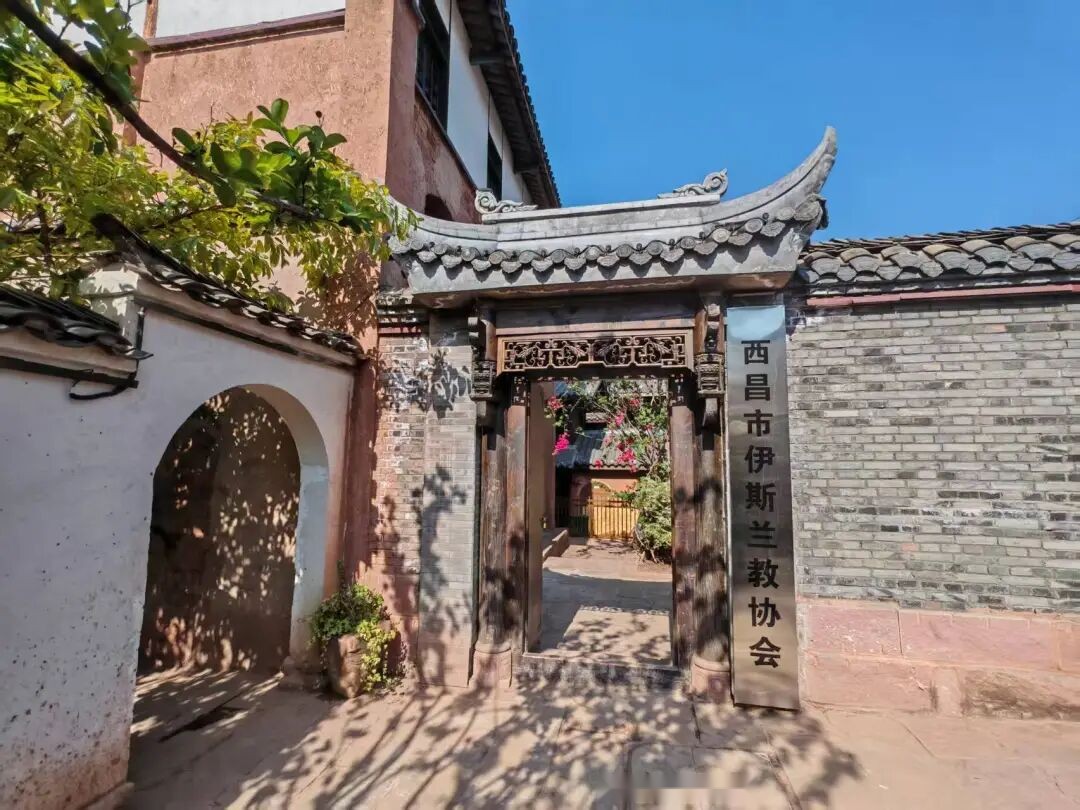
In the middle of Jiyang Lane, you'll find a historic Qing-style complex: the Jiyang Lane Mosque, or 'Jiancheng Mosque' (often called the 'City Mosque' for short). In 1995, the Xichang Municipal Government officially designated it as a municipal-level heritage site. It was once the center of Hui Muslim culture in the Ningyuan region (the city was renamed Ningyuan during the Yongzheng reign of the Qing Dynasty, when it became a prefectural capital). With its massive, centuries-old trees and quiet, serene atmosphere, the site now serves as the office for the Liangshan Yi Autonomous Prefecture Islamic Association.
The 600-year history of the Jiyang Lane Mosque is deeply tied to the growth and changes of Xichang itself, serving as a living witness and a window into the city's development.
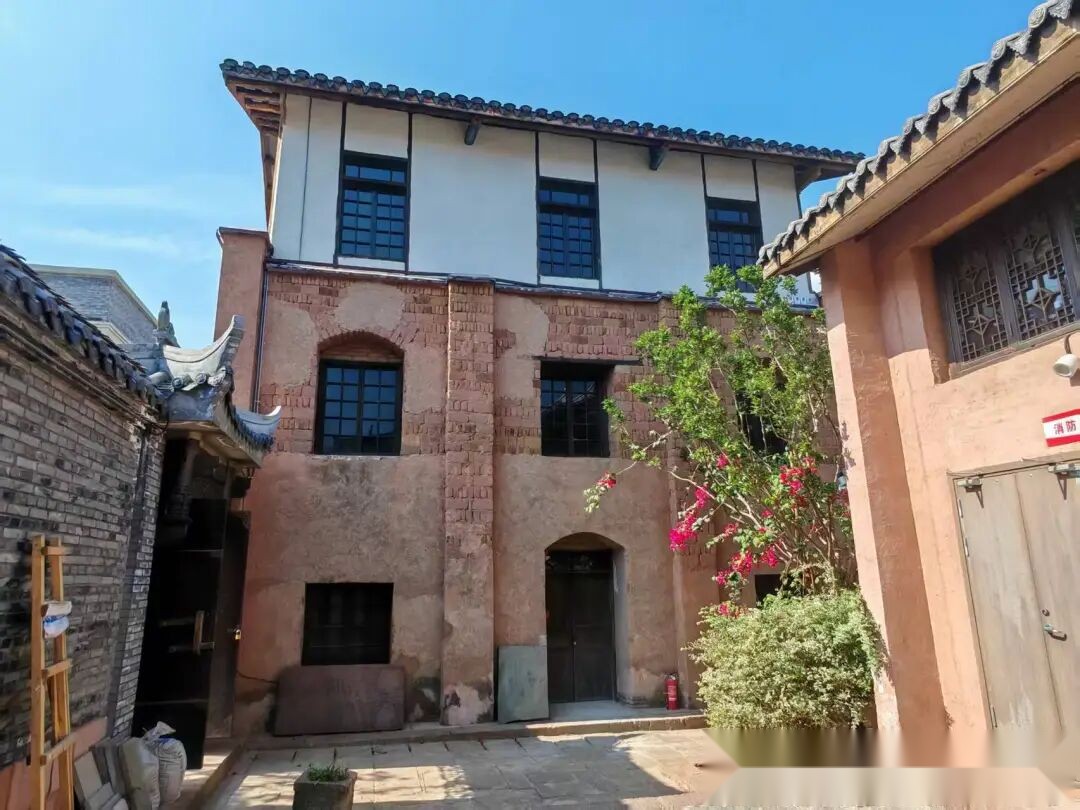
The mosque was first built between 1324 and 1327 during the Yuan Dynasty by a group of over 60 Hui Muslim families near the Old West Gate (the former location of the city's grain station, now the 53rd Community). It was originally built in a Yuan architectural style. In 1574 during the Ming Dynasty (though some temple inscriptions suggest a 1494 relocation, and local Imams pass down stories that it moved during the Hongwu period to make way for city walls, so the exact date remains debated), the mosque was relocated to its current site to make room for the Jianchang city wall construction. The old site became a family temple for the Yu family. In 1848 (Qing Daoguang period), An Yongshu, a local military official, led a fundraising effort to renovate the aging site. After the 1850 earthquake caused damage to the main hall and surrounding galleries, it was patched up until a full reconstruction began in 1875, taking six years to finish. In 1921, the Xichang branch of the China Islamic Association was established there, and in 1940, the Xikang branch of the China Islamic Salvation Association moved from Kangding to this site. During the Cultural Revolution, the buildings were occupied and used as classrooms and storage, many historic plaques were destroyed, and land on both sides was taken. In 1983, government funding helped restore the mosque, allowing local Hui Muslims to resume religious services after a 20-year break. In 1991, community members donated funds to restore the front hall, and in 1995, the north wing was replaced by a three-story office building and a ground-floor bathroom. In 2019, the south wings and interior courtyards were renovated. Recently, as the government works to revitalize Jianchang Ancient City, the mosque is undergoing another large-scale upgrade.
Riding my bike into the ancient city through Datong Gate after a summer rain, I made my way through Yongquan Street to the mosque. The 'vintage' stone paving installed for the tourist area is a bit uneven, making for a bumpy ride—I felt like a soldier from the past riding through the city, or a merchant on the rugged Tea Horse Road. The puddles reflecting the sunlight looked like shimmering stars on the ground, signaling a bright future for the ancient city. Arriving at the mosque, it felt much more open than before. Most of the nearby houses were demolished, making the street feel wider and more historic. Imam Xiong Mingzhong told me the renovations will take another three months to finish, after which it will be open to the public for free. (Editor's note: The layout description below reflects the pre-renovation state).
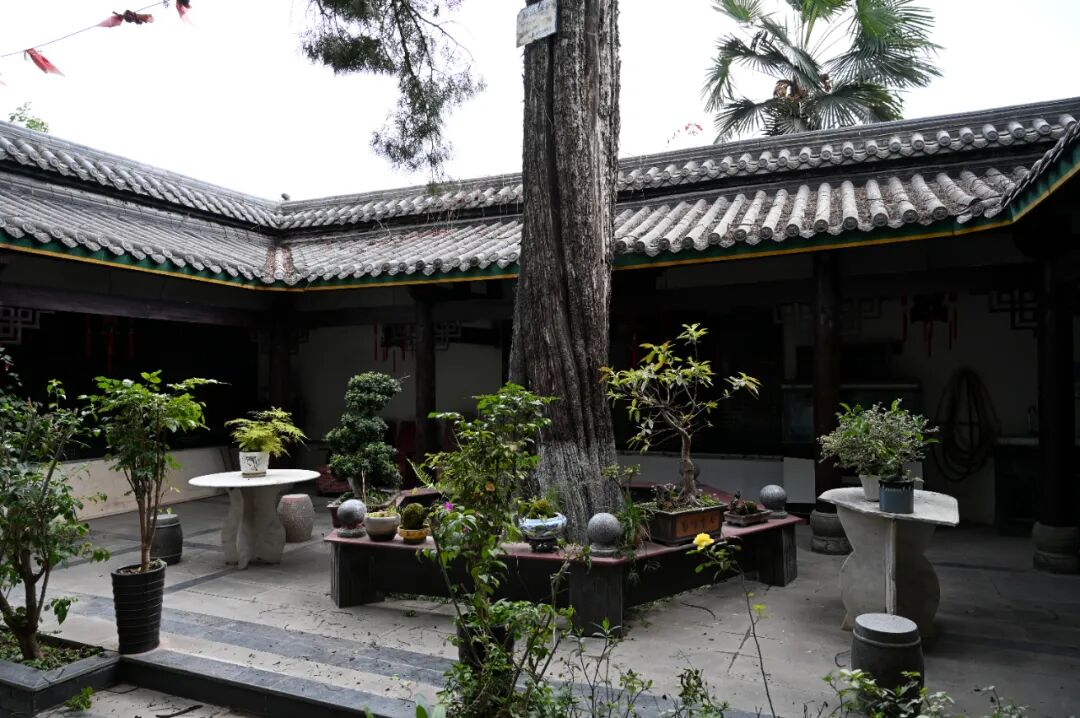
The mosque originally covered dozens of acres, but over centuries of change, only the core area from the main gate to the main hall remains—about two acres with 800 square meters of buildings. It's a classic Chinese courtyard style, facing east. While it used to be a standard three-section courtyard, the space behind the main hall is now quite narrow, making it more like a two-section courtyard. It has three gates, two courtyards, three ancient cypress trees, and a pair of stone lions in front of the main hall. The site features beautiful Chinese and Arabic calligraphy on plaques, spotless walkways, and lush greenery.
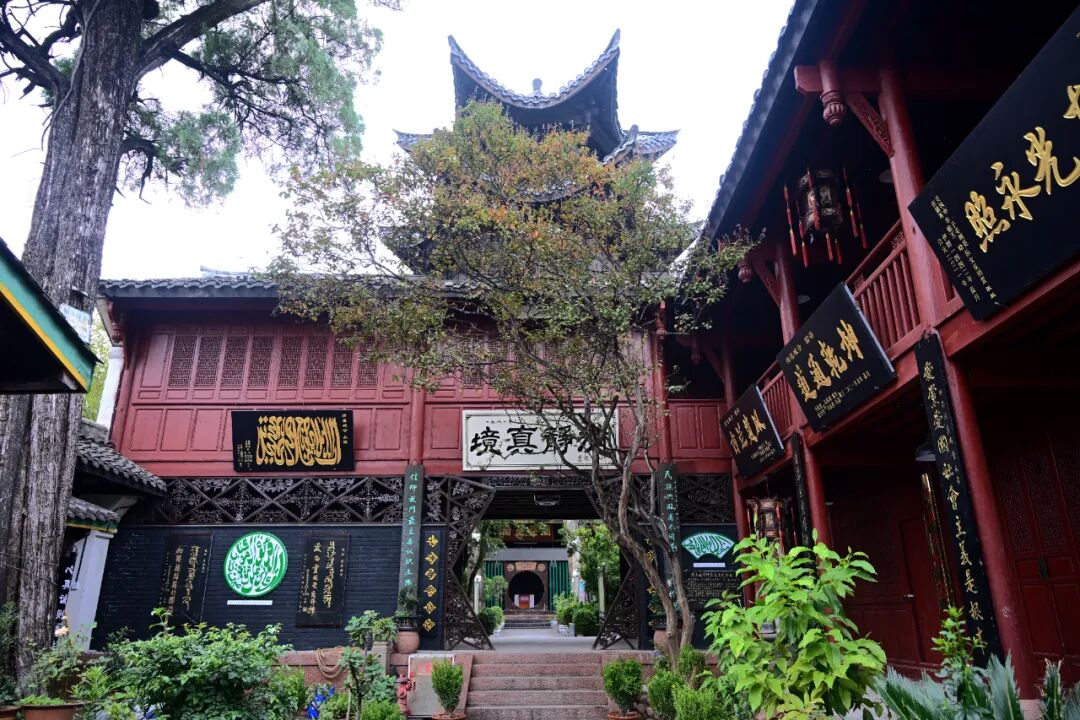
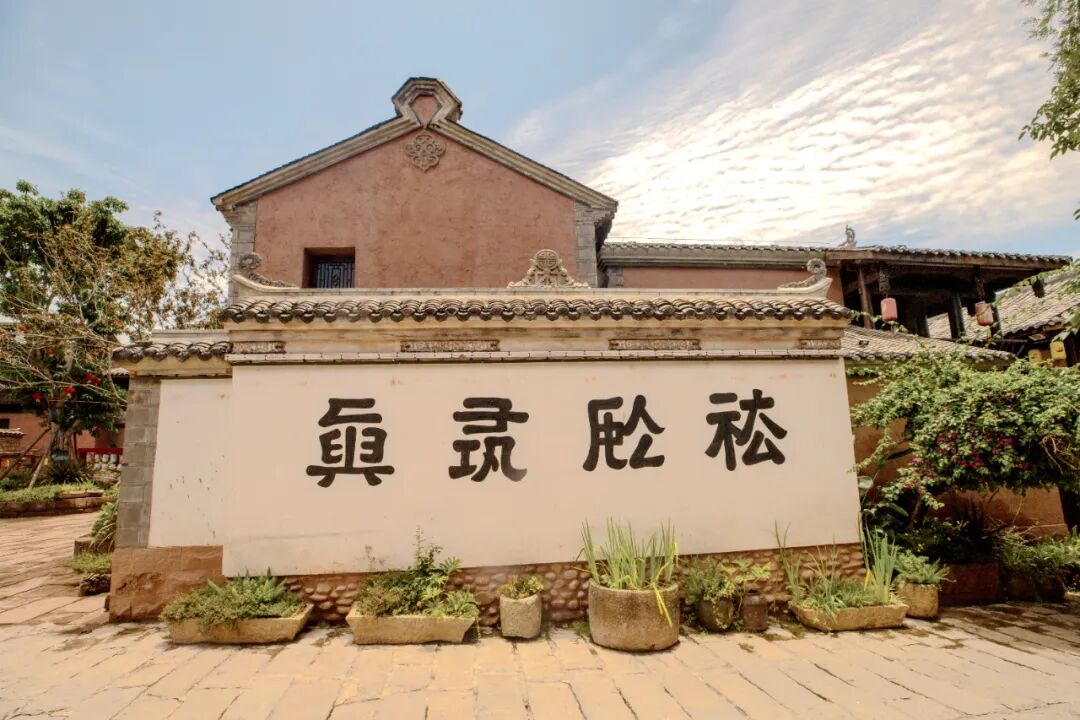
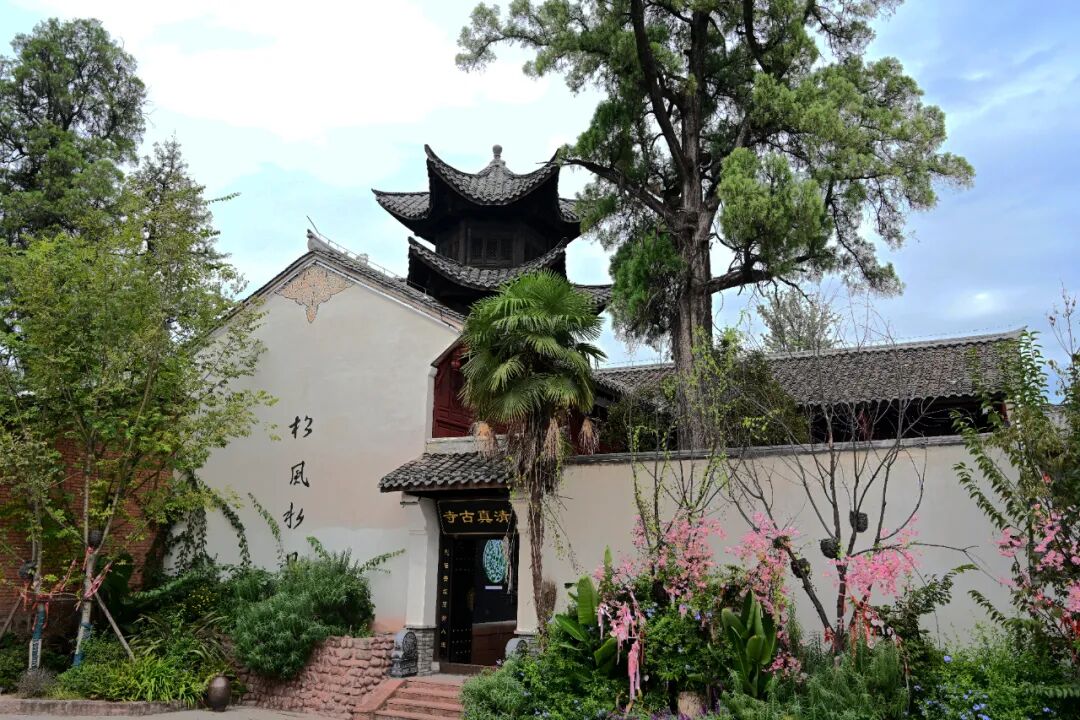
On the screen wall opposite the gate, you’ll see the four-character seal script 'Qu Wang Xun Zhen' (To Dispel Delusions and Seek Truth), said to be written by Tang Chenglie, the Ningyuan Prefect during the Qing Dynasty. On the walls flanking the gate, there are four beautiful Arabic calligraphic phrases: 'May Allah grant you peace' (left wall), 'Hold fast to the rope of Allah and do not divide' (right wall), 'The mercy of Allah is near to those who do good' (left gate wall), and 'The religion favored by Allah is Islam' (right gate wall). The antique green wooden gate represents sacred faith, with vertical bars that look like the railings of an old government yamen. Looking up at the plaque 'Qingzhen Libaisi' (Islamic Mosque) above the gate, it’s easy to feel like you've stepped back into the Yuan or Ming eras. The gate is both solemn and a little mysterious.
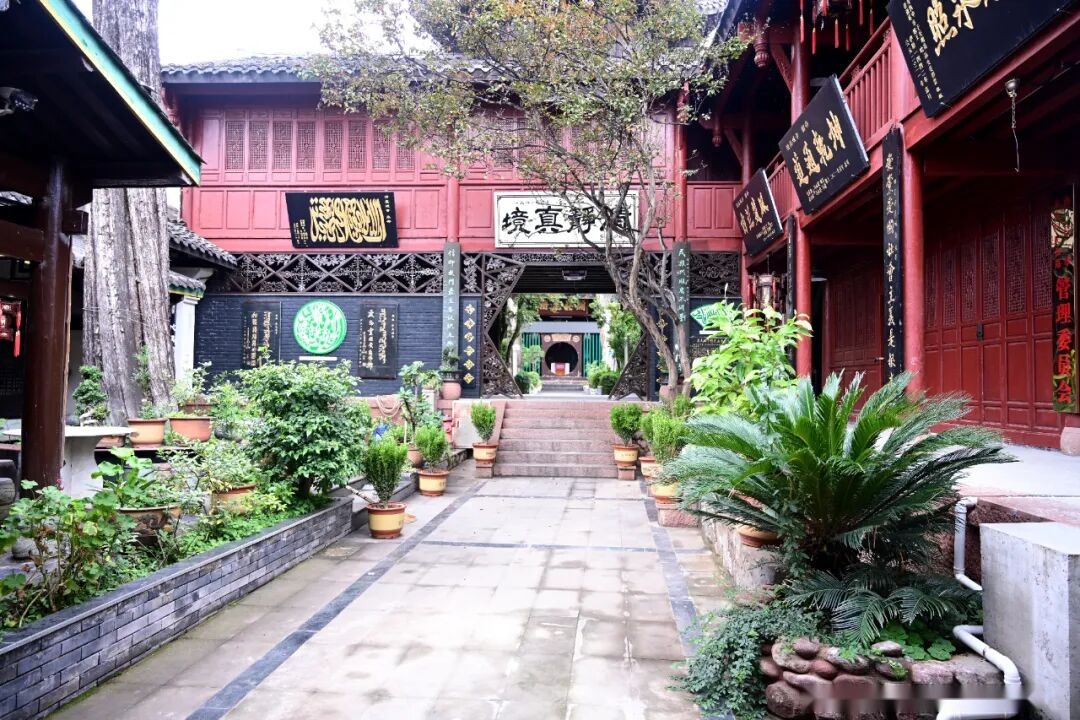
Walking through the gate into the front courtyard, you'll see a tall, straight ancient cypress on the left. Legend says there used to be eight, but only three remain. On the right stands a centuries-old crepe myrtle tree. The walls of the front courtyard are covered in Chinese and Arabic poetry and script. A circular archway ahead is inscribed with 'Qing Jing Zhen Jing' (The Realm of Purity and Truth) in Chinese, decorated with Arabic scripture.
Passing through the circular arch into the inner courtyard, you'll see historic stone tablets embedded in the gallery walls, detailing the mosque's history and property records. Two massive cypress trees stand like guards in front of the main hall’s entryway. To the right of the hall is an old well, which was once the main water source and is known for its sweet water.
Entering the inner hall (baoting), you'll see a red circular door decorated with golden Arabic scripture. This space is where major meetings and religious classes are held. It is 13 meters wide and 8 meters deep. The atmosphere is immediately solemn. Looking up, you'll see large red characters representing traditional Confucian virtues like 'Filial Piety, Fraternity, Loyalty, Trust' and 'Propriety, Righteousness, Integrity, Shame.' The beams and pillars are covered in Chinese and Arabic plaques and calligraphy, a perfect example of how Chinese and Islamic cultures have blended over centuries.
The inner hall connects directly to the Prayer Hall (the main sanctuary). The Prayer Hall is even more grand, at 13 meters wide and 16 meters deep, standing over 8 meters high. The front pillars feature dragon carvings. Inside, you'll find the sacred space for the local Muslim community. It houses a 30-volume hand-copied Quran from the Qing Dynasty, written in a bold, elegant calligraphy style that is a true treasure.
Many of the mosque’s tablets and plaques were damaged during the Cultural Revolution, but the local Imams and community members did their best to save what they could. Most of the remaining tablets document the history of renovations and donation lists, showing the dedication and unity of the local Muslim community. The 1882 restoration tablet is particularly valuable for historical research.
Many of the surviving plaques were gifts from wealthy Hui Muslim figures or local officials. For example, the 'Jing Tian Fa Zu' (Respect Heaven and Ancestors) plaque was gifted in 1666 by the local regional commander Zhang Yuankai. The 'Qu Wang Xun Zhen' plaque dates back to 1746, and the 'Ke Ji Fu Li' (Subdue the Self and Return to Propriety) plaque was donated in 1885 by the scholar Yang Yingsong.
The mosque also played a huge role in local education. In 1940, the Xikang branch of the China Islamic Salvation Association opened the Islamic Elementary School here. In 1944, they founded the Jiansheng Middle School nearby. Both schools were highly regarded for their high-quality teaching, even during the difficult years of the Second Sino-Japanese War. Many of their graduates went on to become prominent figures in Xichang’s development. The dedication of Principal Ding Zhenting is still talked about today.
As the spiritual and educational center for the community, the mosque has been home to many influential Hui Muslim families in Xichang—generals, scholars, and merchants alike. Figures like Ha Yuansheng, Tang Chenglie, and Ding Zhenting all contributed to the growth of both the mosque and the city.
As I wrapped up my visit, Imam Xiong reminded me that the mosque will be open to the public for free once the upgrades are done. Walking away, I looked back at the new Huifang Street, with the tower tops of the Wangyue Building and the mosque's minaret silhouetted against the sky. I remembered that there’s also a new Hui ethnic cultural museum planned just 100 meters away, which is going to be a beautiful new addition to the ancient city’s cultural landscape. view all
[Internet Repost]
Come walk with me through Jiyang Lane, in the heart of the Jianchang Ancient City in Xichang, Sichuan. We’re visiting the Jiyang Lane Mosque (also known as the Jiancheng Mosque), which was once the most important of the 36 Hui Muslim mosques in the Ningyuan Prefecture during the Qing Dynasty. This guide features 27 photos documenting the evolution of this ancient alley, the Qing-style courtyard architecture, and the peaceful vibes beneath its towering, ancient trees.
Jiyang Lane is a long, narrow alley in the southeastern part of the old Jianchang city core. It runs north to south, connecting Fu Street in the north to Yongquan Street in the south. The alley sits on a slope, stretching about 280 meters long and 3 meters wide, with a classic stone-paved floor. Back in the day, a clear stream used to flow through the alley, and the local Hui Muslims who lived nearby often butchered sheep there, which is why it was originally called 'Zhaiyang Lane' (Butcher Sheep Lane).
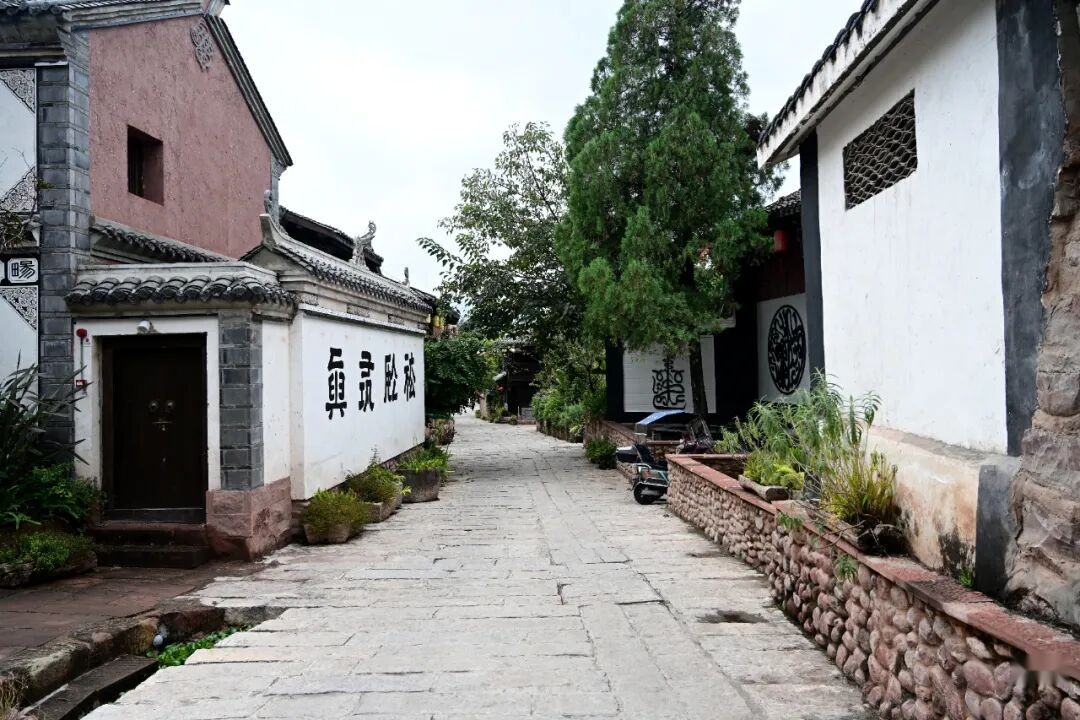
During the Republican era, some people felt the name 'Butcher Sheep Lane' sounded a bit unrefined, so they changed it to Jiyang Lane (Lucky Sheep Lane). In 1966, it was renamed Hongguang Lane, before finally being changed back to Jiyang Lane in 1981.
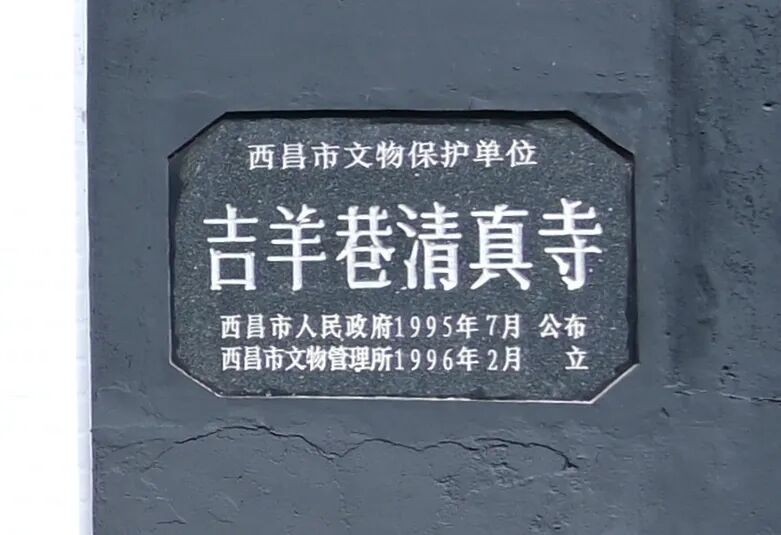
In the middle of Jiyang Lane, you'll find a historic Qing-style complex: the Jiyang Lane Mosque, or 'Jiancheng Mosque' (often called the 'City Mosque' for short). In 1995, the Xichang Municipal Government officially designated it as a municipal-level heritage site. It was once the center of Hui Muslim culture in the Ningyuan region (the city was renamed Ningyuan during the Yongzheng reign of the Qing Dynasty, when it became a prefectural capital). With its massive, centuries-old trees and quiet, serene atmosphere, the site now serves as the office for the Liangshan Yi Autonomous Prefecture Islamic Association.
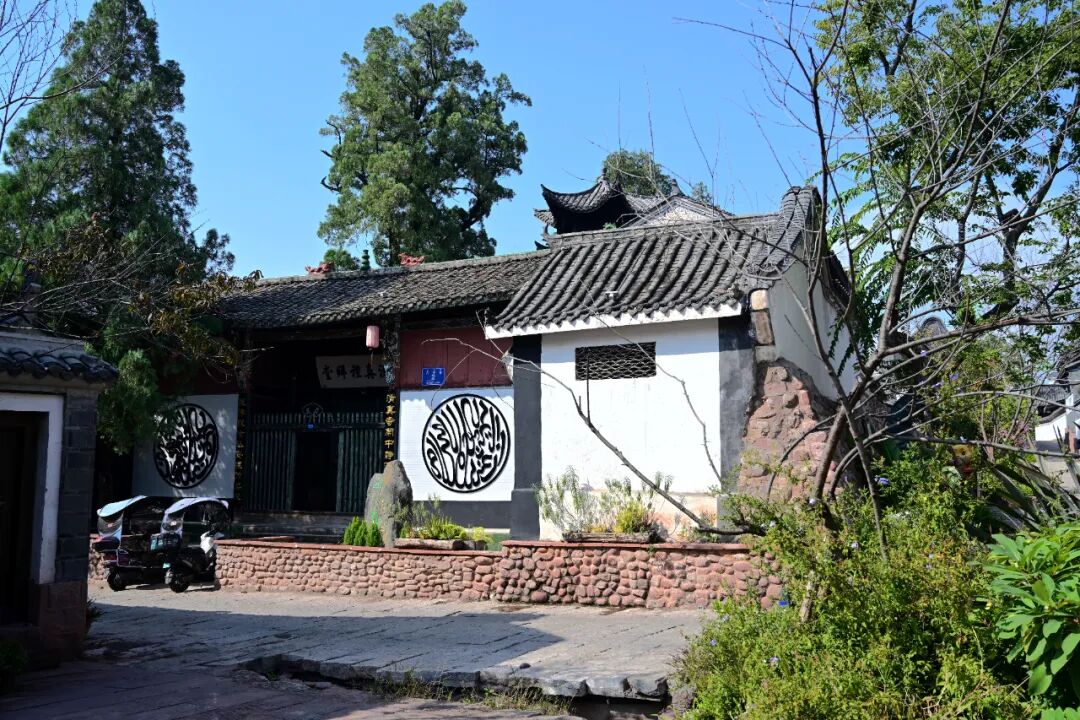
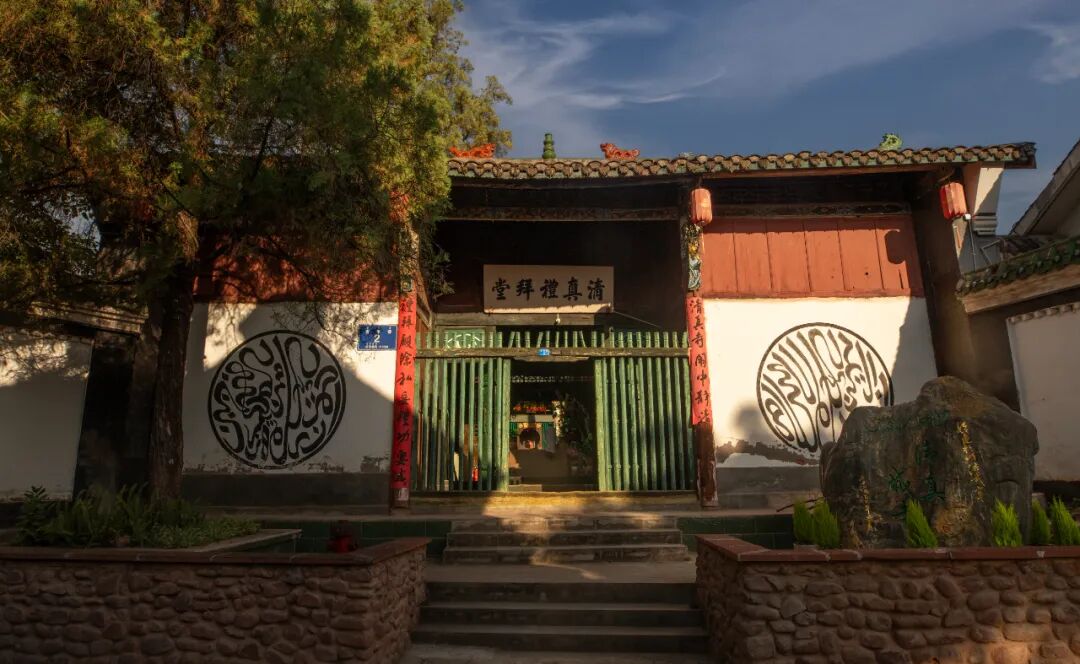
The 600-year history of the Jiyang Lane Mosque is deeply tied to the growth and changes of Xichang itself, serving as a living witness and a window into the city's development.
The mosque was first built between 1324 and 1327 during the Yuan Dynasty by a group of over 60 Hui Muslim families near the Old West Gate (the former location of the city's grain station, now the 53rd Community). It was originally built in a Yuan architectural style. In 1574 during the Ming Dynasty (though some temple inscriptions suggest a 1494 relocation, and local Imams pass down stories that it moved during the Hongwu period to make way for city walls, so the exact date remains debated), the mosque was relocated to its current site to make room for the Jianchang city wall construction. The old site became a family temple for the Yu family. In 1848 (Qing Daoguang period), An Yongshu, a local military official, led a fundraising effort to renovate the aging site. After the 1850 earthquake caused damage to the main hall and surrounding galleries, it was patched up until a full reconstruction began in 1875, taking six years to finish. In 1921, the Xichang branch of the China Islamic Association was established there, and in 1940, the Xikang branch of the China Islamic Salvation Association moved from Kangding to this site. During the Cultural Revolution, the buildings were occupied and used as classrooms and storage, many historic plaques were destroyed, and land on both sides was taken. In 1983, government funding helped restore the mosque, allowing local Hui Muslims to resume religious services after a 20-year break. In 1991, community members donated funds to restore the front hall, and in 1995, the north wing was replaced by a three-story office building and a ground-floor bathroom. In 2019, the south wings and interior courtyards were renovated. Recently, as the government works to revitalize Jianchang Ancient City, the mosque is undergoing another large-scale upgrade.
Riding my bike into the ancient city through Datong Gate after a summer rain, I made my way through Yongquan Street to the mosque. The 'vintage' stone paving installed for the tourist area is a bit uneven, making for a bumpy ride—I felt like a soldier from the past riding through the city, or a merchant on the rugged Tea Horse Road. The puddles reflecting the sunlight looked like shimmering stars on the ground, signaling a bright future for the ancient city. Arriving at the mosque, it felt much more open than before. Most of the nearby houses were demolished, making the street feel wider and more historic. Imam Xiong Mingzhong told me the renovations will take another three months to finish, after which it will be open to the public for free. (Editor's note: The layout description below reflects the pre-renovation state).
The mosque originally covered dozens of acres, but over centuries of change, only the core area from the main gate to the main hall remains—about two acres with 800 square meters of buildings. It's a classic Chinese courtyard style, facing east. While it used to be a standard three-section courtyard, the space behind the main hall is now quite narrow, making it more like a two-section courtyard. It has three gates, two courtyards, three ancient cypress trees, and a pair of stone lions in front of the main hall. The site features beautiful Chinese and Arabic calligraphy on plaques, spotless walkways, and lush greenery.
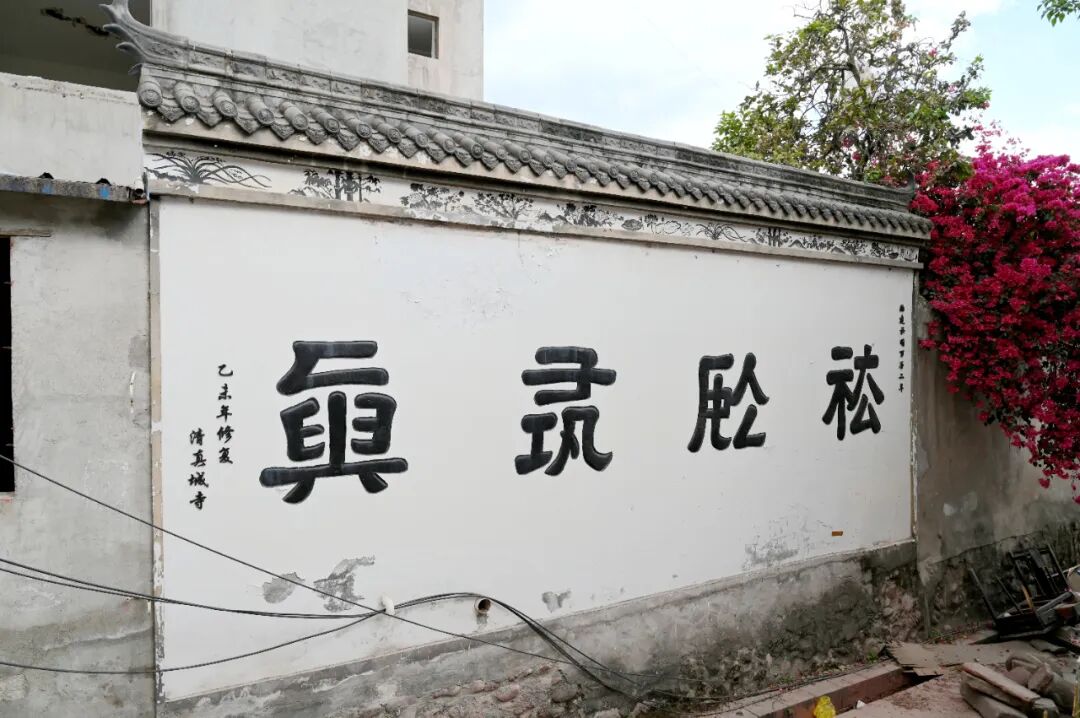
On the screen wall opposite the gate, you’ll see the four-character seal script 'Qu Wang Xun Zhen' (To Dispel Delusions and Seek Truth), said to be written by Tang Chenglie, the Ningyuan Prefect during the Qing Dynasty. On the walls flanking the gate, there are four beautiful Arabic calligraphic phrases: 'May Allah grant you peace' (left wall), 'Hold fast to the rope of Allah and do not divide' (right wall), 'The mercy of Allah is near to those who do good' (left gate wall), and 'The religion favored by Allah is Islam' (right gate wall). The antique green wooden gate represents sacred faith, with vertical bars that look like the railings of an old government yamen. Looking up at the plaque 'Qingzhen Libaisi' (Islamic Mosque) above the gate, it’s easy to feel like you've stepped back into the Yuan or Ming eras. The gate is both solemn and a little mysterious.
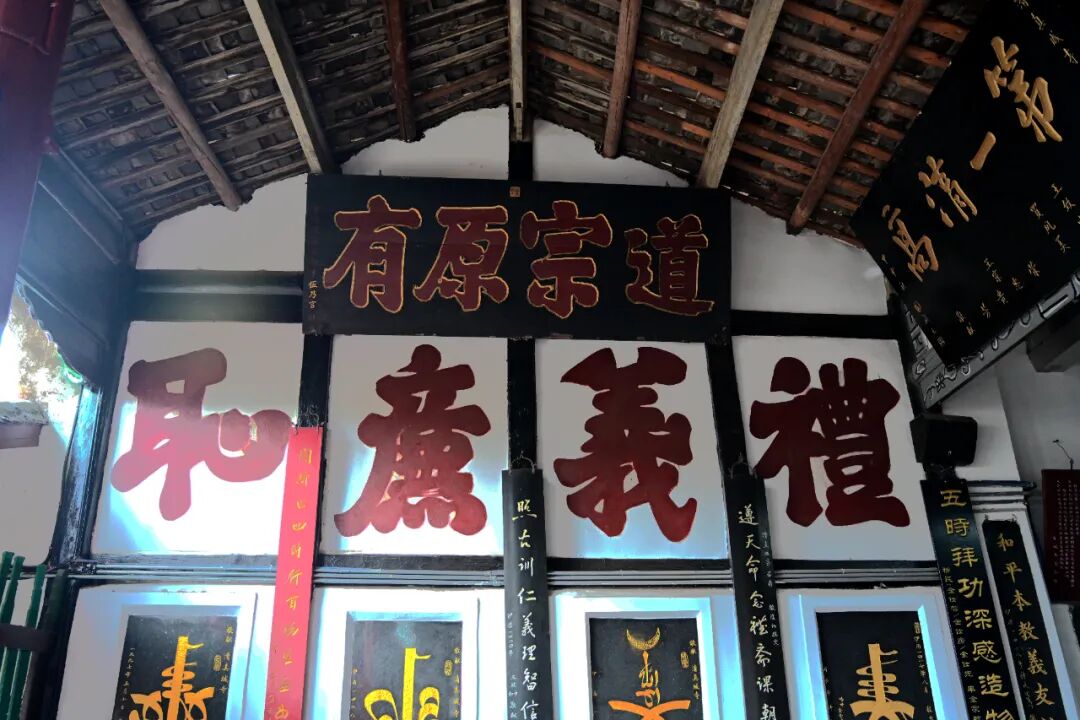
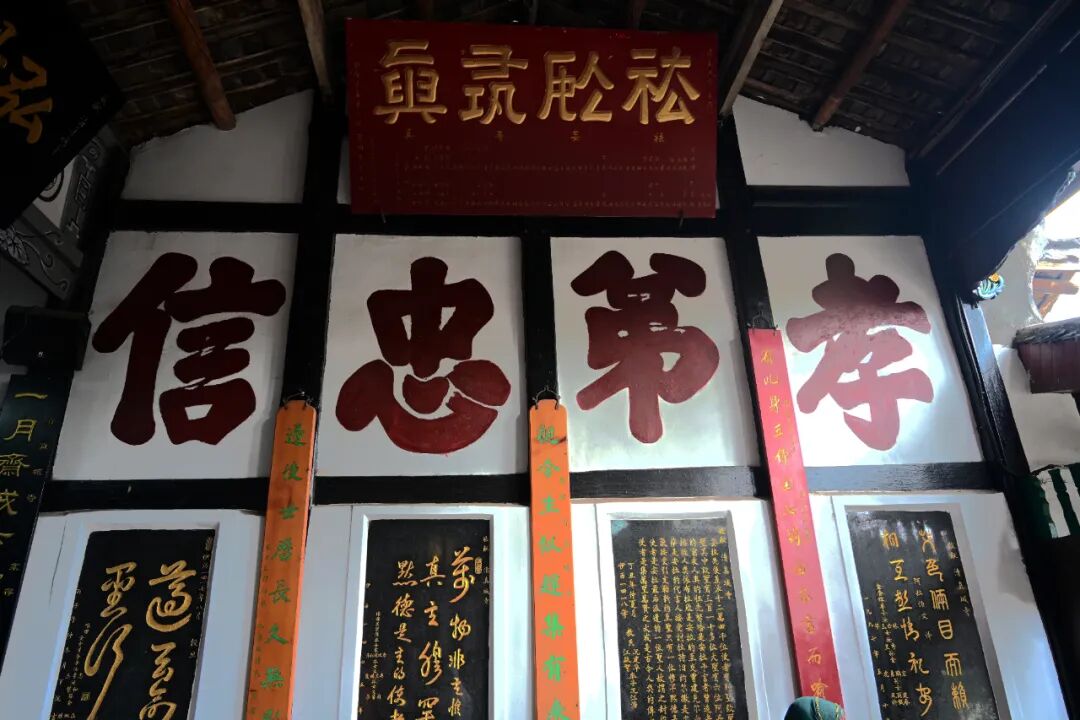


Walking through the gate into the front courtyard, you'll see a tall, straight ancient cypress on the left. Legend says there used to be eight, but only three remain. On the right stands a centuries-old crepe myrtle tree. The walls of the front courtyard are covered in Chinese and Arabic poetry and script. A circular archway ahead is inscribed with 'Qing Jing Zhen Jing' (The Realm of Purity and Truth) in Chinese, decorated with Arabic scripture.

Passing through the circular arch into the inner courtyard, you'll see historic stone tablets embedded in the gallery walls, detailing the mosque's history and property records. Two massive cypress trees stand like guards in front of the main hall’s entryway. To the right of the hall is an old well, which was once the main water source and is known for its sweet water.

Entering the inner hall (baoting), you'll see a red circular door decorated with golden Arabic scripture. This space is where major meetings and religious classes are held. It is 13 meters wide and 8 meters deep. The atmosphere is immediately solemn. Looking up, you'll see large red characters representing traditional Confucian virtues like 'Filial Piety, Fraternity, Loyalty, Trust' and 'Propriety, Righteousness, Integrity, Shame.' The beams and pillars are covered in Chinese and Arabic plaques and calligraphy, a perfect example of how Chinese and Islamic cultures have blended over centuries.
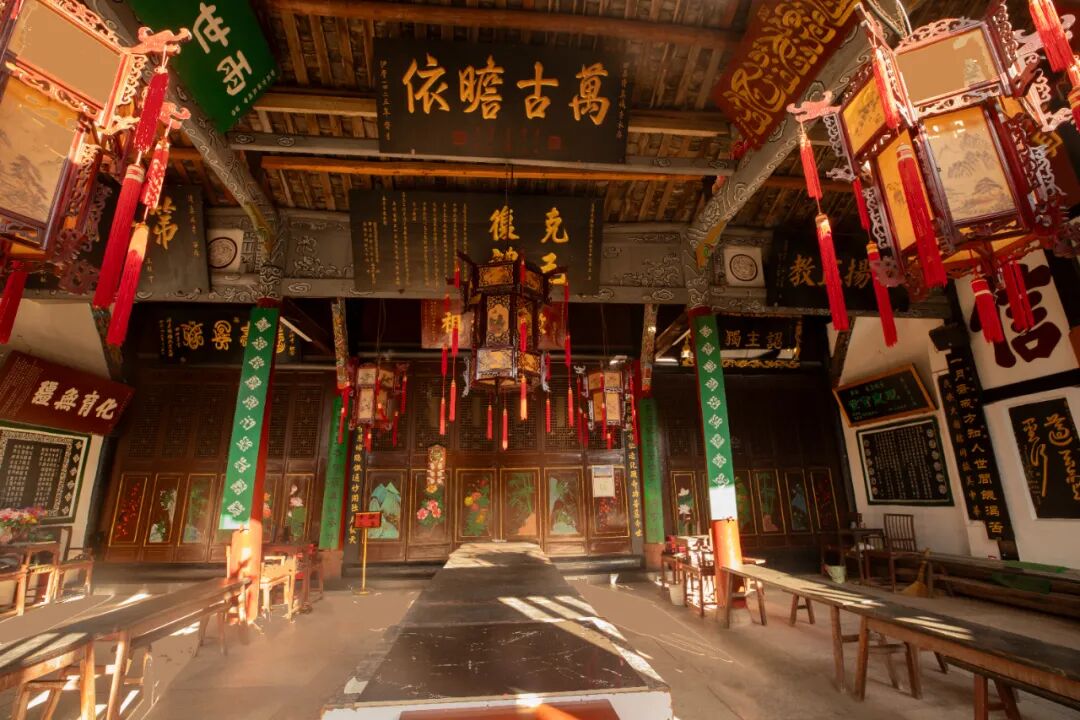
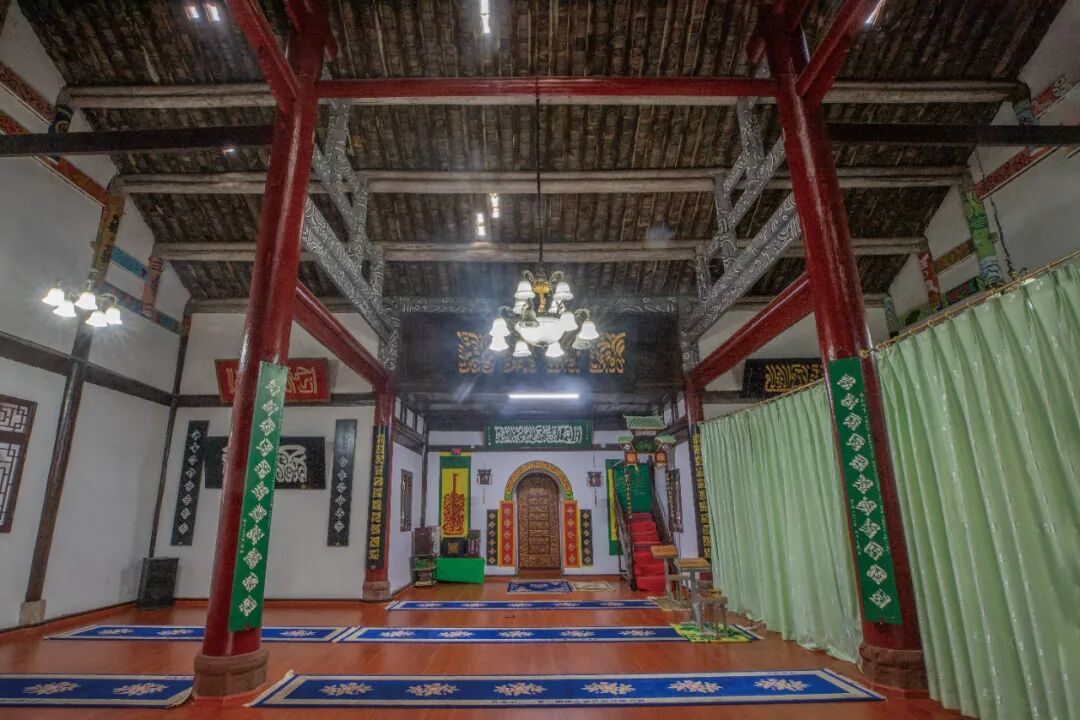
The inner hall connects directly to the Prayer Hall (the main sanctuary). The Prayer Hall is even more grand, at 13 meters wide and 16 meters deep, standing over 8 meters high. The front pillars feature dragon carvings. Inside, you'll find the sacred space for the local Muslim community. It houses a 30-volume hand-copied Quran from the Qing Dynasty, written in a bold, elegant calligraphy style that is a true treasure.
Many of the mosque’s tablets and plaques were damaged during the Cultural Revolution, but the local Imams and community members did their best to save what they could. Most of the remaining tablets document the history of renovations and donation lists, showing the dedication and unity of the local Muslim community. The 1882 restoration tablet is particularly valuable for historical research.
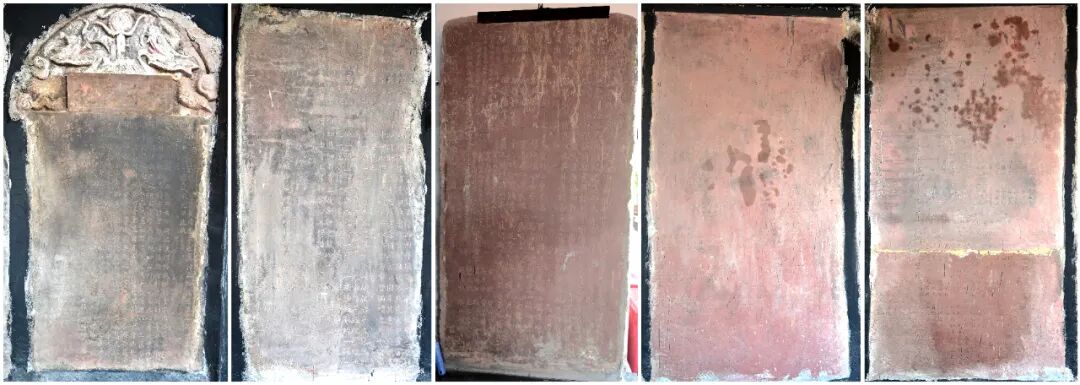
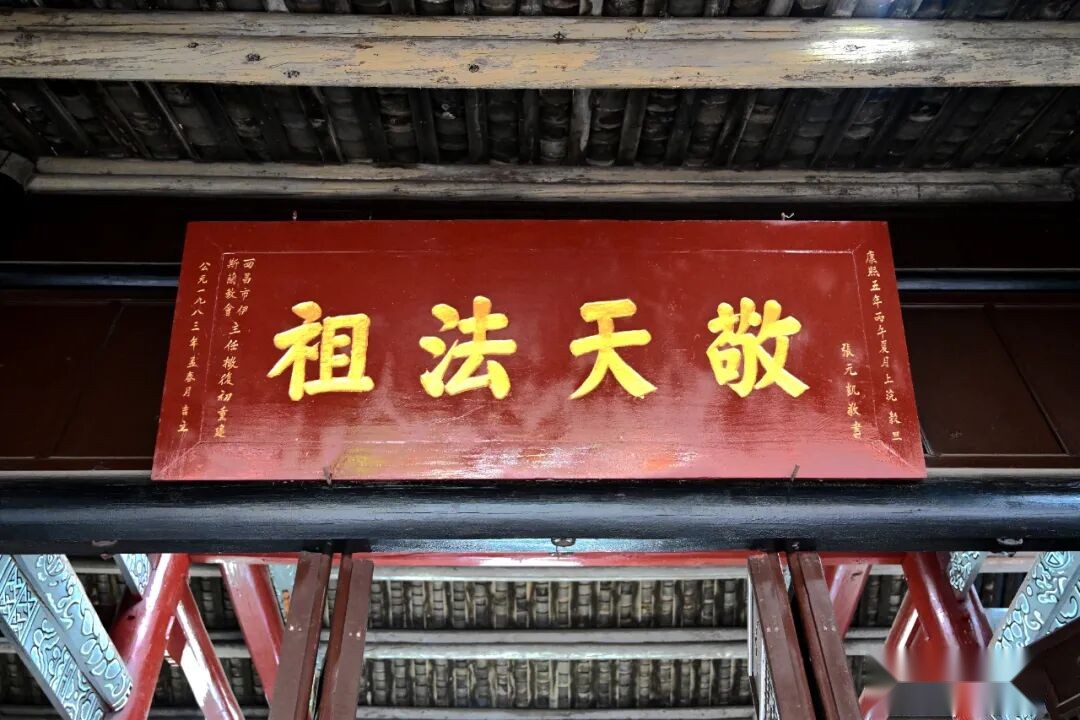
Many of the surviving plaques were gifts from wealthy Hui Muslim figures or local officials. For example, the 'Jing Tian Fa Zu' (Respect Heaven and Ancestors) plaque was gifted in 1666 by the local regional commander Zhang Yuankai. The 'Qu Wang Xun Zhen' plaque dates back to 1746, and the 'Ke Ji Fu Li' (Subdue the Self and Return to Propriety) plaque was donated in 1885 by the scholar Yang Yingsong.


The mosque also played a huge role in local education. In 1940, the Xikang branch of the China Islamic Salvation Association opened the Islamic Elementary School here. In 1944, they founded the Jiansheng Middle School nearby. Both schools were highly regarded for their high-quality teaching, even during the difficult years of the Second Sino-Japanese War. Many of their graduates went on to become prominent figures in Xichang’s development. The dedication of Principal Ding Zhenting is still talked about today.
As the spiritual and educational center for the community, the mosque has been home to many influential Hui Muslim families in Xichang—generals, scholars, and merchants alike. Figures like Ha Yuansheng, Tang Chenglie, and Ding Zhenting all contributed to the growth of both the mosque and the city.
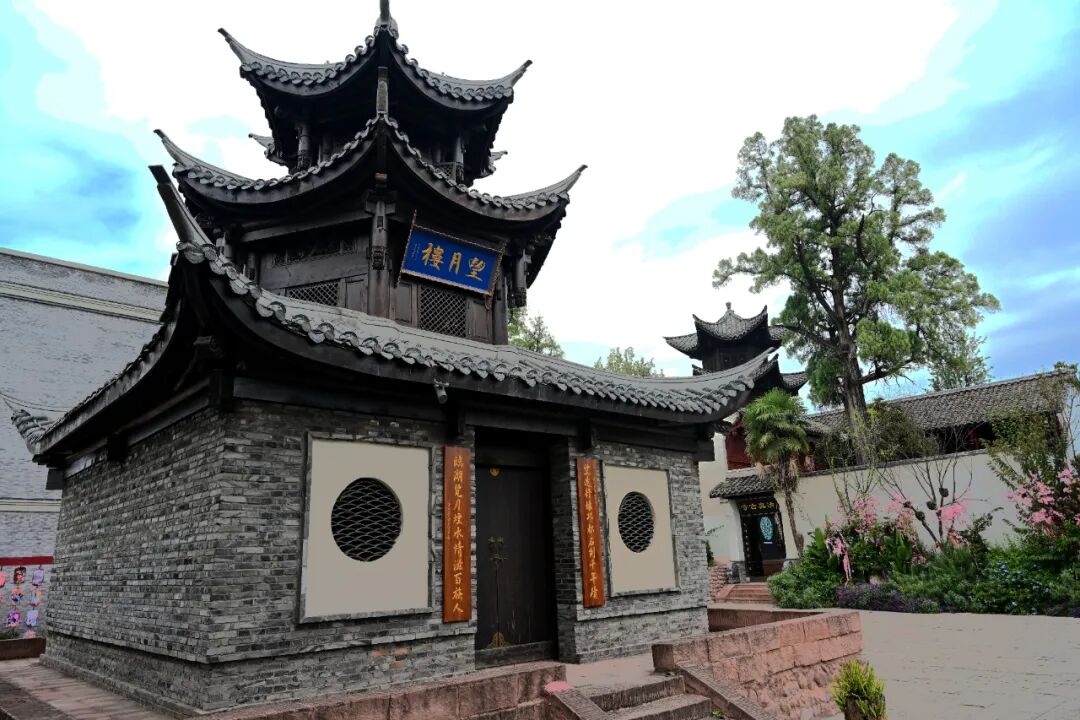
As I wrapped up my visit, Imam Xiong reminded me that the mosque will be open to the public for free once the upgrades are done. Walking away, I looked back at the new Huifang Street, with the tower tops of the Wangyue Building and the mosque's minaret silhouetted against the sky. I remembered that there’s also a new Hui ethnic cultural museum planned just 100 meters away, which is going to be a beautiful new addition to the ancient city’s cultural landscape.
Come walk with me through Jiyang Lane, in the heart of the Jianchang Ancient City in Xichang, Sichuan. We’re visiting the Jiyang Lane Mosque (also known as the Jiancheng Mosque), which was once the most important of the 36 Hui Muslim mosques in the Ningyuan Prefecture during the Qing Dynasty. This guide features 27 photos documenting the evolution of this ancient alley, the Qing-style courtyard architecture, and the peaceful vibes beneath its towering, ancient trees.
Jiyang Lane is a long, narrow alley in the southeastern part of the old Jianchang city core. It runs north to south, connecting Fu Street in the north to Yongquan Street in the south. The alley sits on a slope, stretching about 280 meters long and 3 meters wide, with a classic stone-paved floor. Back in the day, a clear stream used to flow through the alley, and the local Hui Muslims who lived nearby often butchered sheep there, which is why it was originally called 'Zhaiyang Lane' (Butcher Sheep Lane).
During the Republican era, some people felt the name 'Butcher Sheep Lane' sounded a bit unrefined, so they changed it to Jiyang Lane (Lucky Sheep Lane). In 1966, it was renamed Hongguang Lane, before finally being changed back to Jiyang Lane in 1981.
In the middle of Jiyang Lane, you'll find a historic Qing-style complex: the Jiyang Lane Mosque, or 'Jiancheng Mosque' (often called the 'City Mosque' for short). In 1995, the Xichang Municipal Government officially designated it as a municipal-level heritage site. It was once the center of Hui Muslim culture in the Ningyuan region (the city was renamed Ningyuan during the Yongzheng reign of the Qing Dynasty, when it became a prefectural capital). With its massive, centuries-old trees and quiet, serene atmosphere, the site now serves as the office for the Liangshan Yi Autonomous Prefecture Islamic Association.
The 600-year history of the Jiyang Lane Mosque is deeply tied to the growth and changes of Xichang itself, serving as a living witness and a window into the city's development.
The mosque was first built between 1324 and 1327 during the Yuan Dynasty by a group of over 60 Hui Muslim families near the Old West Gate (the former location of the city's grain station, now the 53rd Community). It was originally built in a Yuan architectural style. In 1574 during the Ming Dynasty (though some temple inscriptions suggest a 1494 relocation, and local Imams pass down stories that it moved during the Hongwu period to make way for city walls, so the exact date remains debated), the mosque was relocated to its current site to make room for the Jianchang city wall construction. The old site became a family temple for the Yu family. In 1848 (Qing Daoguang period), An Yongshu, a local military official, led a fundraising effort to renovate the aging site. After the 1850 earthquake caused damage to the main hall and surrounding galleries, it was patched up until a full reconstruction began in 1875, taking six years to finish. In 1921, the Xichang branch of the China Islamic Association was established there, and in 1940, the Xikang branch of the China Islamic Salvation Association moved from Kangding to this site. During the Cultural Revolution, the buildings were occupied and used as classrooms and storage, many historic plaques were destroyed, and land on both sides was taken. In 1983, government funding helped restore the mosque, allowing local Hui Muslims to resume religious services after a 20-year break. In 1991, community members donated funds to restore the front hall, and in 1995, the north wing was replaced by a three-story office building and a ground-floor bathroom. In 2019, the south wings and interior courtyards were renovated. Recently, as the government works to revitalize Jianchang Ancient City, the mosque is undergoing another large-scale upgrade.
Riding my bike into the ancient city through Datong Gate after a summer rain, I made my way through Yongquan Street to the mosque. The 'vintage' stone paving installed for the tourist area is a bit uneven, making for a bumpy ride—I felt like a soldier from the past riding through the city, or a merchant on the rugged Tea Horse Road. The puddles reflecting the sunlight looked like shimmering stars on the ground, signaling a bright future for the ancient city. Arriving at the mosque, it felt much more open than before. Most of the nearby houses were demolished, making the street feel wider and more historic. Imam Xiong Mingzhong told me the renovations will take another three months to finish, after which it will be open to the public for free. (Editor's note: The layout description below reflects the pre-renovation state).
The mosque originally covered dozens of acres, but over centuries of change, only the core area from the main gate to the main hall remains—about two acres with 800 square meters of buildings. It's a classic Chinese courtyard style, facing east. While it used to be a standard three-section courtyard, the space behind the main hall is now quite narrow, making it more like a two-section courtyard. It has three gates, two courtyards, three ancient cypress trees, and a pair of stone lions in front of the main hall. The site features beautiful Chinese and Arabic calligraphy on plaques, spotless walkways, and lush greenery.
On the screen wall opposite the gate, you’ll see the four-character seal script 'Qu Wang Xun Zhen' (To Dispel Delusions and Seek Truth), said to be written by Tang Chenglie, the Ningyuan Prefect during the Qing Dynasty. On the walls flanking the gate, there are four beautiful Arabic calligraphic phrases: 'May Allah grant you peace' (left wall), 'Hold fast to the rope of Allah and do not divide' (right wall), 'The mercy of Allah is near to those who do good' (left gate wall), and 'The religion favored by Allah is Islam' (right gate wall). The antique green wooden gate represents sacred faith, with vertical bars that look like the railings of an old government yamen. Looking up at the plaque 'Qingzhen Libaisi' (Islamic Mosque) above the gate, it’s easy to feel like you've stepped back into the Yuan or Ming eras. The gate is both solemn and a little mysterious.
Walking through the gate into the front courtyard, you'll see a tall, straight ancient cypress on the left. Legend says there used to be eight, but only three remain. On the right stands a centuries-old crepe myrtle tree. The walls of the front courtyard are covered in Chinese and Arabic poetry and script. A circular archway ahead is inscribed with 'Qing Jing Zhen Jing' (The Realm of Purity and Truth) in Chinese, decorated with Arabic scripture.
Passing through the circular arch into the inner courtyard, you'll see historic stone tablets embedded in the gallery walls, detailing the mosque's history and property records. Two massive cypress trees stand like guards in front of the main hall’s entryway. To the right of the hall is an old well, which was once the main water source and is known for its sweet water.
Entering the inner hall (baoting), you'll see a red circular door decorated with golden Arabic scripture. This space is where major meetings and religious classes are held. It is 13 meters wide and 8 meters deep. The atmosphere is immediately solemn. Looking up, you'll see large red characters representing traditional Confucian virtues like 'Filial Piety, Fraternity, Loyalty, Trust' and 'Propriety, Righteousness, Integrity, Shame.' The beams and pillars are covered in Chinese and Arabic plaques and calligraphy, a perfect example of how Chinese and Islamic cultures have blended over centuries.
The inner hall connects directly to the Prayer Hall (the main sanctuary). The Prayer Hall is even more grand, at 13 meters wide and 16 meters deep, standing over 8 meters high. The front pillars feature dragon carvings. Inside, you'll find the sacred space for the local Muslim community. It houses a 30-volume hand-copied Quran from the Qing Dynasty, written in a bold, elegant calligraphy style that is a true treasure.
Many of the mosque’s tablets and plaques were damaged during the Cultural Revolution, but the local Imams and community members did their best to save what they could. Most of the remaining tablets document the history of renovations and donation lists, showing the dedication and unity of the local Muslim community. The 1882 restoration tablet is particularly valuable for historical research.
Many of the surviving plaques were gifts from wealthy Hui Muslim figures or local officials. For example, the 'Jing Tian Fa Zu' (Respect Heaven and Ancestors) plaque was gifted in 1666 by the local regional commander Zhang Yuankai. The 'Qu Wang Xun Zhen' plaque dates back to 1746, and the 'Ke Ji Fu Li' (Subdue the Self and Return to Propriety) plaque was donated in 1885 by the scholar Yang Yingsong.
The mosque also played a huge role in local education. In 1940, the Xikang branch of the China Islamic Salvation Association opened the Islamic Elementary School here. In 1944, they founded the Jiansheng Middle School nearby. Both schools were highly regarded for their high-quality teaching, even during the difficult years of the Second Sino-Japanese War. Many of their graduates went on to become prominent figures in Xichang’s development. The dedication of Principal Ding Zhenting is still talked about today.
As the spiritual and educational center for the community, the mosque has been home to many influential Hui Muslim families in Xichang—generals, scholars, and merchants alike. Figures like Ha Yuansheng, Tang Chenglie, and Ding Zhenting all contributed to the growth of both the mosque and the city.
As I wrapped up my visit, Imam Xiong reminded me that the mosque will be open to the public for free once the upgrades are done. Walking away, I looked back at the new Huifang Street, with the tower tops of the Wangyue Building and the mosque's minaret silhouetted against the sky. I remembered that there’s also a new Hui ethnic cultural museum planned just 100 meters away, which is going to be a beautiful new addition to the ancient city’s cultural landscape.
Exploring Jiyang Lane Mosque in Xichang: A Historic Qing Dynasty Landmark and Hui Muslim Heritage Site
Articles • Hasan09 posted the article • 0 comments • 13 views • 9 hours ago
[Internet Repost]
Come walk with me through Jiyang Lane, in the heart of the Jianchang Ancient City in Xichang, Sichuan. We’re visiting the Jiyang Lane Mosque (also known as the Jiancheng Mosque), which was once the most important of the 36 Hui Muslim mosques in the Ningyuan Prefecture during the Qing Dynasty. This guide features 27 photos documenting the evolution of this ancient alley, the Qing-style courtyard architecture, and the peaceful vibes beneath its towering, ancient trees.
Jiyang Lane is a long, narrow alley in the southeastern part of the old Jianchang city core. It runs north to south, connecting Fu Street in the north to Yongquan Street in the south. The alley sits on a slope, stretching about 280 meters long and 3 meters wide, with a classic stone-paved floor. Back in the day, a clear stream used to flow through the alley, and the local Hui Muslims who lived nearby often butchered sheep there, which is why it was originally called 'Zhaiyang Lane' (Butcher Sheep Lane).
During the Republican era, some people felt the name 'Butcher Sheep Lane' sounded a bit unrefined, so they changed it to Jiyang Lane (Lucky Sheep Lane). In 1966, it was renamed Hongguang Lane, before finally being changed back to Jiyang Lane in 1981.
In the middle of Jiyang Lane, you'll find a historic Qing-style complex: the Jiyang Lane Mosque, or 'Jiancheng Mosque' (often called the 'City Mosque' for short). In 1995, the Xichang Municipal Government officially designated it as a municipal-level heritage site. It was once the center of Hui Muslim culture in the Ningyuan region (the city was renamed Ningyuan during the Yongzheng reign of the Qing Dynasty, when it became a prefectural capital). With its massive, centuries-old trees and quiet, serene atmosphere, the site now serves as the office for the Liangshan Yi Autonomous Prefecture Islamic Association.
The 600-year history of the Jiyang Lane Mosque is deeply tied to the growth and changes of Xichang itself, serving as a living witness and a window into the city's development.
The mosque was first built between 1324 and 1327 during the Yuan Dynasty by a group of over 60 Hui Muslim families near the Old West Gate (the former location of the city's grain station, now the 53rd Community). It was originally built in a Yuan architectural style. In 1574 during the Ming Dynasty (though some temple inscriptions suggest a 1494 relocation, and local Imams pass down stories that it moved during the Hongwu period to make way for city walls, so the exact date remains debated), the mosque was relocated to its current site to make room for the Jianchang city wall construction. The old site became a family temple for the Yu family. In 1848 (Qing Daoguang period), An Yongshu, a local military official, led a fundraising effort to renovate the aging site. After the 1850 earthquake caused damage to the main hall and surrounding galleries, it was patched up until a full reconstruction began in 1875, taking six years to finish. In 1921, the Xichang branch of the China Islamic Association was established there, and in 1940, the Xikang branch of the China Islamic Salvation Association moved from Kangding to this site. During the Cultural Revolution, the buildings were occupied and used as classrooms and storage, many historic plaques were destroyed, and land on both sides was taken. In 1983, government funding helped restore the mosque, allowing local Hui Muslims to resume religious services after a 20-year break. In 1991, community members donated funds to restore the front hall, and in 1995, the north wing was replaced by a three-story office building and a ground-floor bathroom. In 2019, the south wings and interior courtyards were renovated. Recently, as the government works to revitalize Jianchang Ancient City, the mosque is undergoing another large-scale upgrade.
Riding my bike into the ancient city through Datong Gate after a summer rain, I made my way through Yongquan Street to the mosque. The 'vintage' stone paving installed for the tourist area is a bit uneven, making for a bumpy ride—I felt like a soldier from the past riding through the city, or a merchant on the rugged Tea Horse Road. The puddles reflecting the sunlight looked like shimmering stars on the ground, signaling a bright future for the ancient city. Arriving at the mosque, it felt much more open than before. Most of the nearby houses were demolished, making the street feel wider and more historic. Imam Xiong Mingzhong told me the renovations will take another three months to finish, after which it will be open to the public for free. (Editor's note: The layout description below reflects the pre-renovation state).
The mosque originally covered dozens of acres, but over centuries of change, only the core area from the main gate to the main hall remains—about two acres with 800 square meters of buildings. It's a classic Chinese courtyard style, facing east. While it used to be a standard three-section courtyard, the space behind the main hall is now quite narrow, making it more like a two-section courtyard. It has three gates, two courtyards, three ancient cypress trees, and a pair of stone lions in front of the main hall. The site features beautiful Chinese and Arabic calligraphy on plaques, spotless walkways, and lush greenery.
On the screen wall opposite the gate, you’ll see the four-character seal script 'Qu Wang Xun Zhen' (To Dispel Delusions and Seek Truth), said to be written by Tang Chenglie, the Ningyuan Prefect during the Qing Dynasty. On the walls flanking the gate, there are four beautiful Arabic calligraphic phrases: 'May Allah grant you peace' (left wall), 'Hold fast to the rope of Allah and do not divide' (right wall), 'The mercy of Allah is near to those who do good' (left gate wall), and 'The religion favored by Allah is Islam' (right gate wall). The antique green wooden gate represents sacred faith, with vertical bars that look like the railings of an old government yamen. Looking up at the plaque 'Qingzhen Libaisi' (Islamic Mosque) above the gate, it’s easy to feel like you've stepped back into the Yuan or Ming eras. The gate is both solemn and a little mysterious.
Walking through the gate into the front courtyard, you'll see a tall, straight ancient cypress on the left. Legend says there used to be eight, but only three remain. On the right stands a centuries-old crepe myrtle tree. The walls of the front courtyard are covered in Chinese and Arabic poetry and script. A circular archway ahead is inscribed with 'Qing Jing Zhen Jing' (The Realm of Purity and Truth) in Chinese, decorated with Arabic scripture.
Passing through the circular arch into the inner courtyard, you'll see historic stone tablets embedded in the gallery walls, detailing the mosque's history and property records. Two massive cypress trees stand like guards in front of the main hall’s entryway. To the right of the hall is an old well, which was once the main water source and is known for its sweet water.
Entering the inner hall (baoting), you'll see a red circular door decorated with golden Arabic scripture. This space is where major meetings and religious classes are held. It is 13 meters wide and 8 meters deep. The atmosphere is immediately solemn. Looking up, you'll see large red characters representing traditional Confucian virtues like 'Filial Piety, Fraternity, Loyalty, Trust' and 'Propriety, Righteousness, Integrity, Shame.' The beams and pillars are covered in Chinese and Arabic plaques and calligraphy, a perfect example of how Chinese and Islamic cultures have blended over centuries.
The inner hall connects directly to the Prayer Hall (the main sanctuary). The Prayer Hall is even more grand, at 13 meters wide and 16 meters deep, standing over 8 meters high. The front pillars feature dragon carvings. Inside, you'll find the sacred space for the local Muslim community. It houses a 30-volume hand-copied Quran from the Qing Dynasty, written in a bold, elegant calligraphy style that is a true treasure.
Many of the mosque’s tablets and plaques were damaged during the Cultural Revolution, but the local Imams and community members did their best to save what they could. Most of the remaining tablets document the history of renovations and donation lists, showing the dedication and unity of the local Muslim community. The 1882 restoration tablet is particularly valuable for historical research.
Many of the surviving plaques were gifts from wealthy Hui Muslim figures or local officials. For example, the 'Jing Tian Fa Zu' (Respect Heaven and Ancestors) plaque was gifted in 1666 by the local regional commander Zhang Yuankai. The 'Qu Wang Xun Zhen' plaque dates back to 1746, and the 'Ke Ji Fu Li' (Subdue the Self and Return to Propriety) plaque was donated in 1885 by the scholar Yang Yingsong.
The mosque also played a huge role in local education. In 1940, the Xikang branch of the China Islamic Salvation Association opened the Islamic Elementary School here. In 1944, they founded the Jiansheng Middle School nearby. Both schools were highly regarded for their high-quality teaching, even during the difficult years of the Second Sino-Japanese War. Many of their graduates went on to become prominent figures in Xichang’s development. The dedication of Principal Ding Zhenting is still talked about today.
As the spiritual and educational center for the community, the mosque has been home to many influential Hui Muslim families in Xichang—generals, scholars, and merchants alike. Figures like Ha Yuansheng, Tang Chenglie, and Ding Zhenting all contributed to the growth of both the mosque and the city.
As I wrapped up my visit, Imam Xiong reminded me that the mosque will be open to the public for free once the upgrades are done. Walking away, I looked back at the new Huifang Street, with the tower tops of the Wangyue Building and the mosque's minaret silhouetted against the sky. I remembered that there’s also a new Hui ethnic cultural museum planned just 100 meters away, which is going to be a beautiful new addition to the ancient city’s cultural landscape. view all
Come walk with me through Jiyang Lane, in the heart of the Jianchang Ancient City in Xichang, Sichuan. We’re visiting the Jiyang Lane Mosque (also known as the Jiancheng Mosque), which was once the most important of the 36 Hui Muslim mosques in the Ningyuan Prefecture during the Qing Dynasty. This guide features 27 photos documenting the evolution of this ancient alley, the Qing-style courtyard architecture, and the peaceful vibes beneath its towering, ancient trees.
Jiyang Lane is a long, narrow alley in the southeastern part of the old Jianchang city core. It runs north to south, connecting Fu Street in the north to Yongquan Street in the south. The alley sits on a slope, stretching about 280 meters long and 3 meters wide, with a classic stone-paved floor. Back in the day, a clear stream used to flow through the alley, and the local Hui Muslims who lived nearby often butchered sheep there, which is why it was originally called 'Zhaiyang Lane' (Butcher Sheep Lane).
During the Republican era, some people felt the name 'Butcher Sheep Lane' sounded a bit unrefined, so they changed it to Jiyang Lane (Lucky Sheep Lane). In 1966, it was renamed Hongguang Lane, before finally being changed back to Jiyang Lane in 1981.
In the middle of Jiyang Lane, you'll find a historic Qing-style complex: the Jiyang Lane Mosque, or 'Jiancheng Mosque' (often called the 'City Mosque' for short). In 1995, the Xichang Municipal Government officially designated it as a municipal-level heritage site. It was once the center of Hui Muslim culture in the Ningyuan region (the city was renamed Ningyuan during the Yongzheng reign of the Qing Dynasty, when it became a prefectural capital). With its massive, centuries-old trees and quiet, serene atmosphere, the site now serves as the office for the Liangshan Yi Autonomous Prefecture Islamic Association.
The 600-year history of the Jiyang Lane Mosque is deeply tied to the growth and changes of Xichang itself, serving as a living witness and a window into the city's development.
The mosque was first built between 1324 and 1327 during the Yuan Dynasty by a group of over 60 Hui Muslim families near the Old West Gate (the former location of the city's grain station, now the 53rd Community). It was originally built in a Yuan architectural style. In 1574 during the Ming Dynasty (though some temple inscriptions suggest a 1494 relocation, and local Imams pass down stories that it moved during the Hongwu period to make way for city walls, so the exact date remains debated), the mosque was relocated to its current site to make room for the Jianchang city wall construction. The old site became a family temple for the Yu family. In 1848 (Qing Daoguang period), An Yongshu, a local military official, led a fundraising effort to renovate the aging site. After the 1850 earthquake caused damage to the main hall and surrounding galleries, it was patched up until a full reconstruction began in 1875, taking six years to finish. In 1921, the Xichang branch of the China Islamic Association was established there, and in 1940, the Xikang branch of the China Islamic Salvation Association moved from Kangding to this site. During the Cultural Revolution, the buildings were occupied and used as classrooms and storage, many historic plaques were destroyed, and land on both sides was taken. In 1983, government funding helped restore the mosque, allowing local Hui Muslims to resume religious services after a 20-year break. In 1991, community members donated funds to restore the front hall, and in 1995, the north wing was replaced by a three-story office building and a ground-floor bathroom. In 2019, the south wings and interior courtyards were renovated. Recently, as the government works to revitalize Jianchang Ancient City, the mosque is undergoing another large-scale upgrade.
Riding my bike into the ancient city through Datong Gate after a summer rain, I made my way through Yongquan Street to the mosque. The 'vintage' stone paving installed for the tourist area is a bit uneven, making for a bumpy ride—I felt like a soldier from the past riding through the city, or a merchant on the rugged Tea Horse Road. The puddles reflecting the sunlight looked like shimmering stars on the ground, signaling a bright future for the ancient city. Arriving at the mosque, it felt much more open than before. Most of the nearby houses were demolished, making the street feel wider and more historic. Imam Xiong Mingzhong told me the renovations will take another three months to finish, after which it will be open to the public for free. (Editor's note: The layout description below reflects the pre-renovation state).
The mosque originally covered dozens of acres, but over centuries of change, only the core area from the main gate to the main hall remains—about two acres with 800 square meters of buildings. It's a classic Chinese courtyard style, facing east. While it used to be a standard three-section courtyard, the space behind the main hall is now quite narrow, making it more like a two-section courtyard. It has three gates, two courtyards, three ancient cypress trees, and a pair of stone lions in front of the main hall. The site features beautiful Chinese and Arabic calligraphy on plaques, spotless walkways, and lush greenery.
On the screen wall opposite the gate, you’ll see the four-character seal script 'Qu Wang Xun Zhen' (To Dispel Delusions and Seek Truth), said to be written by Tang Chenglie, the Ningyuan Prefect during the Qing Dynasty. On the walls flanking the gate, there are four beautiful Arabic calligraphic phrases: 'May Allah grant you peace' (left wall), 'Hold fast to the rope of Allah and do not divide' (right wall), 'The mercy of Allah is near to those who do good' (left gate wall), and 'The religion favored by Allah is Islam' (right gate wall). The antique green wooden gate represents sacred faith, with vertical bars that look like the railings of an old government yamen. Looking up at the plaque 'Qingzhen Libaisi' (Islamic Mosque) above the gate, it’s easy to feel like you've stepped back into the Yuan or Ming eras. The gate is both solemn and a little mysterious.
Walking through the gate into the front courtyard, you'll see a tall, straight ancient cypress on the left. Legend says there used to be eight, but only three remain. On the right stands a centuries-old crepe myrtle tree. The walls of the front courtyard are covered in Chinese and Arabic poetry and script. A circular archway ahead is inscribed with 'Qing Jing Zhen Jing' (The Realm of Purity and Truth) in Chinese, decorated with Arabic scripture.
Passing through the circular arch into the inner courtyard, you'll see historic stone tablets embedded in the gallery walls, detailing the mosque's history and property records. Two massive cypress trees stand like guards in front of the main hall’s entryway. To the right of the hall is an old well, which was once the main water source and is known for its sweet water.
Entering the inner hall (baoting), you'll see a red circular door decorated with golden Arabic scripture. This space is where major meetings and religious classes are held. It is 13 meters wide and 8 meters deep. The atmosphere is immediately solemn. Looking up, you'll see large red characters representing traditional Confucian virtues like 'Filial Piety, Fraternity, Loyalty, Trust' and 'Propriety, Righteousness, Integrity, Shame.' The beams and pillars are covered in Chinese and Arabic plaques and calligraphy, a perfect example of how Chinese and Islamic cultures have blended over centuries.
The inner hall connects directly to the Prayer Hall (the main sanctuary). The Prayer Hall is even more grand, at 13 meters wide and 16 meters deep, standing over 8 meters high. The front pillars feature dragon carvings. Inside, you'll find the sacred space for the local Muslim community. It houses a 30-volume hand-copied Quran from the Qing Dynasty, written in a bold, elegant calligraphy style that is a true treasure.
Many of the mosque’s tablets and plaques were damaged during the Cultural Revolution, but the local Imams and community members did their best to save what they could. Most of the remaining tablets document the history of renovations and donation lists, showing the dedication and unity of the local Muslim community. The 1882 restoration tablet is particularly valuable for historical research.
Many of the surviving plaques were gifts from wealthy Hui Muslim figures or local officials. For example, the 'Jing Tian Fa Zu' (Respect Heaven and Ancestors) plaque was gifted in 1666 by the local regional commander Zhang Yuankai. The 'Qu Wang Xun Zhen' plaque dates back to 1746, and the 'Ke Ji Fu Li' (Subdue the Self and Return to Propriety) plaque was donated in 1885 by the scholar Yang Yingsong.
The mosque also played a huge role in local education. In 1940, the Xikang branch of the China Islamic Salvation Association opened the Islamic Elementary School here. In 1944, they founded the Jiansheng Middle School nearby. Both schools were highly regarded for their high-quality teaching, even during the difficult years of the Second Sino-Japanese War. Many of their graduates went on to become prominent figures in Xichang’s development. The dedication of Principal Ding Zhenting is still talked about today.
As the spiritual and educational center for the community, the mosque has been home to many influential Hui Muslim families in Xichang—generals, scholars, and merchants alike. Figures like Ha Yuansheng, Tang Chenglie, and Ding Zhenting all contributed to the growth of both the mosque and the city.
As I wrapped up my visit, Imam Xiong reminded me that the mosque will be open to the public for free once the upgrades are done. Walking away, I looked back at the new Huifang Street, with the tower tops of the Wangyue Building and the mosque's minaret silhouetted against the sky. I remembered that there’s also a new Hui ethnic cultural museum planned just 100 meters away, which is going to be a beautiful new addition to the ancient city’s cultural landscape. view all
[Internet Repost]
Come walk with me through Jiyang Lane, in the heart of the Jianchang Ancient City in Xichang, Sichuan. We’re visiting the Jiyang Lane Mosque (also known as the Jiancheng Mosque), which was once the most important of the 36 Hui Muslim mosques in the Ningyuan Prefecture during the Qing Dynasty. This guide features 27 photos documenting the evolution of this ancient alley, the Qing-style courtyard architecture, and the peaceful vibes beneath its towering, ancient trees.
Jiyang Lane is a long, narrow alley in the southeastern part of the old Jianchang city core. It runs north to south, connecting Fu Street in the north to Yongquan Street in the south. The alley sits on a slope, stretching about 280 meters long and 3 meters wide, with a classic stone-paved floor. Back in the day, a clear stream used to flow through the alley, and the local Hui Muslims who lived nearby often butchered sheep there, which is why it was originally called 'Zhaiyang Lane' (Butcher Sheep Lane).
During the Republican era, some people felt the name 'Butcher Sheep Lane' sounded a bit unrefined, so they changed it to Jiyang Lane (Lucky Sheep Lane). In 1966, it was renamed Hongguang Lane, before finally being changed back to Jiyang Lane in 1981.
In the middle of Jiyang Lane, you'll find a historic Qing-style complex: the Jiyang Lane Mosque, or 'Jiancheng Mosque' (often called the 'City Mosque' for short). In 1995, the Xichang Municipal Government officially designated it as a municipal-level heritage site. It was once the center of Hui Muslim culture in the Ningyuan region (the city was renamed Ningyuan during the Yongzheng reign of the Qing Dynasty, when it became a prefectural capital). With its massive, centuries-old trees and quiet, serene atmosphere, the site now serves as the office for the Liangshan Yi Autonomous Prefecture Islamic Association.
The 600-year history of the Jiyang Lane Mosque is deeply tied to the growth and changes of Xichang itself, serving as a living witness and a window into the city's development.
The mosque was first built between 1324 and 1327 during the Yuan Dynasty by a group of over 60 Hui Muslim families near the Old West Gate (the former location of the city's grain station, now the 53rd Community). It was originally built in a Yuan architectural style. In 1574 during the Ming Dynasty (though some temple inscriptions suggest a 1494 relocation, and local Imams pass down stories that it moved during the Hongwu period to make way for city walls, so the exact date remains debated), the mosque was relocated to its current site to make room for the Jianchang city wall construction. The old site became a family temple for the Yu family. In 1848 (Qing Daoguang period), An Yongshu, a local military official, led a fundraising effort to renovate the aging site. After the 1850 earthquake caused damage to the main hall and surrounding galleries, it was patched up until a full reconstruction began in 1875, taking six years to finish. In 1921, the Xichang branch of the China Islamic Association was established there, and in 1940, the Xikang branch of the China Islamic Salvation Association moved from Kangding to this site. During the Cultural Revolution, the buildings were occupied and used as classrooms and storage, many historic plaques were destroyed, and land on both sides was taken. In 1983, government funding helped restore the mosque, allowing local Hui Muslims to resume religious services after a 20-year break. In 1991, community members donated funds to restore the front hall, and in 1995, the north wing was replaced by a three-story office building and a ground-floor bathroom. In 2019, the south wings and interior courtyards were renovated. Recently, as the government works to revitalize Jianchang Ancient City, the mosque is undergoing another large-scale upgrade.
Riding my bike into the ancient city through Datong Gate after a summer rain, I made my way through Yongquan Street to the mosque. The 'vintage' stone paving installed for the tourist area is a bit uneven, making for a bumpy ride—I felt like a soldier from the past riding through the city, or a merchant on the rugged Tea Horse Road. The puddles reflecting the sunlight looked like shimmering stars on the ground, signaling a bright future for the ancient city. Arriving at the mosque, it felt much more open than before. Most of the nearby houses were demolished, making the street feel wider and more historic. Imam Xiong Mingzhong told me the renovations will take another three months to finish, after which it will be open to the public for free. (Editor's note: The layout description below reflects the pre-renovation state).
The mosque originally covered dozens of acres, but over centuries of change, only the core area from the main gate to the main hall remains—about two acres with 800 square meters of buildings. It's a classic Chinese courtyard style, facing east. While it used to be a standard three-section courtyard, the space behind the main hall is now quite narrow, making it more like a two-section courtyard. It has three gates, two courtyards, three ancient cypress trees, and a pair of stone lions in front of the main hall. The site features beautiful Chinese and Arabic calligraphy on plaques, spotless walkways, and lush greenery.
On the screen wall opposite the gate, you’ll see the four-character seal script 'Qu Wang Xun Zhen' (To Dispel Delusions and Seek Truth), said to be written by Tang Chenglie, the Ningyuan Prefect during the Qing Dynasty. On the walls flanking the gate, there are four beautiful Arabic calligraphic phrases: 'May Allah grant you peace' (left wall), 'Hold fast to the rope of Allah and do not divide' (right wall), 'The mercy of Allah is near to those who do good' (left gate wall), and 'The religion favored by Allah is Islam' (right gate wall). The antique green wooden gate represents sacred faith, with vertical bars that look like the railings of an old government yamen. Looking up at the plaque 'Qingzhen Libaisi' (Islamic Mosque) above the gate, it’s easy to feel like you've stepped back into the Yuan or Ming eras. The gate is both solemn and a little mysterious.
Walking through the gate into the front courtyard, you'll see a tall, straight ancient cypress on the left. Legend says there used to be eight, but only three remain. On the right stands a centuries-old crepe myrtle tree. The walls of the front courtyard are covered in Chinese and Arabic poetry and script. A circular archway ahead is inscribed with 'Qing Jing Zhen Jing' (The Realm of Purity and Truth) in Chinese, decorated with Arabic scripture.
Passing through the circular arch into the inner courtyard, you'll see historic stone tablets embedded in the gallery walls, detailing the mosque's history and property records. Two massive cypress trees stand like guards in front of the main hall’s entryway. To the right of the hall is an old well, which was once the main water source and is known for its sweet water.
Entering the inner hall (baoting), you'll see a red circular door decorated with golden Arabic scripture. This space is where major meetings and religious classes are held. It is 13 meters wide and 8 meters deep. The atmosphere is immediately solemn. Looking up, you'll see large red characters representing traditional Confucian virtues like 'Filial Piety, Fraternity, Loyalty, Trust' and 'Propriety, Righteousness, Integrity, Shame.' The beams and pillars are covered in Chinese and Arabic plaques and calligraphy, a perfect example of how Chinese and Islamic cultures have blended over centuries.
The inner hall connects directly to the Prayer Hall (the main sanctuary). The Prayer Hall is even more grand, at 13 meters wide and 16 meters deep, standing over 8 meters high. The front pillars feature dragon carvings. Inside, you'll find the sacred space for the local Muslim community. It houses a 30-volume hand-copied Quran from the Qing Dynasty, written in a bold, elegant calligraphy style that is a true treasure.
Many of the mosque’s tablets and plaques were damaged during the Cultural Revolution, but the local Imams and community members did their best to save what they could. Most of the remaining tablets document the history of renovations and donation lists, showing the dedication and unity of the local Muslim community. The 1882 restoration tablet is particularly valuable for historical research.
Many of the surviving plaques were gifts from wealthy Hui Muslim figures or local officials. For example, the 'Jing Tian Fa Zu' (Respect Heaven and Ancestors) plaque was gifted in 1666 by the local regional commander Zhang Yuankai. The 'Qu Wang Xun Zhen' plaque dates back to 1746, and the 'Ke Ji Fu Li' (Subdue the Self and Return to Propriety) plaque was donated in 1885 by the scholar Yang Yingsong.
The mosque also played a huge role in local education. In 1940, the Xikang branch of the China Islamic Salvation Association opened the Islamic Elementary School here. In 1944, they founded the Jiansheng Middle School nearby. Both schools were highly regarded for their high-quality teaching, even during the difficult years of the Second Sino-Japanese War. Many of their graduates went on to become prominent figures in Xichang’s development. The dedication of Principal Ding Zhenting is still talked about today.
As the spiritual and educational center for the community, the mosque has been home to many influential Hui Muslim families in Xichang—generals, scholars, and merchants alike. Figures like Ha Yuansheng, Tang Chenglie, and Ding Zhenting all contributed to the growth of both the mosque and the city.
As I wrapped up my visit, Imam Xiong reminded me that the mosque will be open to the public for free once the upgrades are done. Walking away, I looked back at the new Huifang Street, with the tower tops of the Wangyue Building and the mosque's minaret silhouetted against the sky. I remembered that there’s also a new Hui ethnic cultural museum planned just 100 meters away, which is going to be a beautiful new addition to the ancient city’s cultural landscape.