

Jiyuan Henan
Muslim Travel Guide China 2026: Jiyuan Henan Mosques, Yuan Hui Muslims and Local History
Articles • ali2007fr posted the article • 0 comments • 262 views • 2026-05-21 12:47
Reposted from the web
Summary: Muslim Travel Guide China 2026: Jiyuan Henan Mosques, Yuan Hui Muslims and Local History is presented here as a clear English travel account for Muslim readers, beginning with this scene: The content of this article comes from a research report jointly done by my Japanese friends and American friends. In 2018, the two friends went to Jiyuan City, Henan Province, China, under my leadership for. The article keeps the original place names, food details, photographs, and cultural context while focusing on Jiyuan Henan, Yuan Hui Muslims, Islamic History.
The content of this article comes from a research report jointly done by my Japanese friends and American friends. In 2018, the two friends went to Jiyuan City, Henan Province, China, under my leadership for research. They are both scholars who focus on Chinese Islam. The Yuan family in Jiyuan Lower Street mentioned in the article is my clan and is distantly related to me. The original article was published in Japanese. Due to copyright restrictions in Japanese universities, the full text cannot be made public, so I will briefly introduce it in my own language.
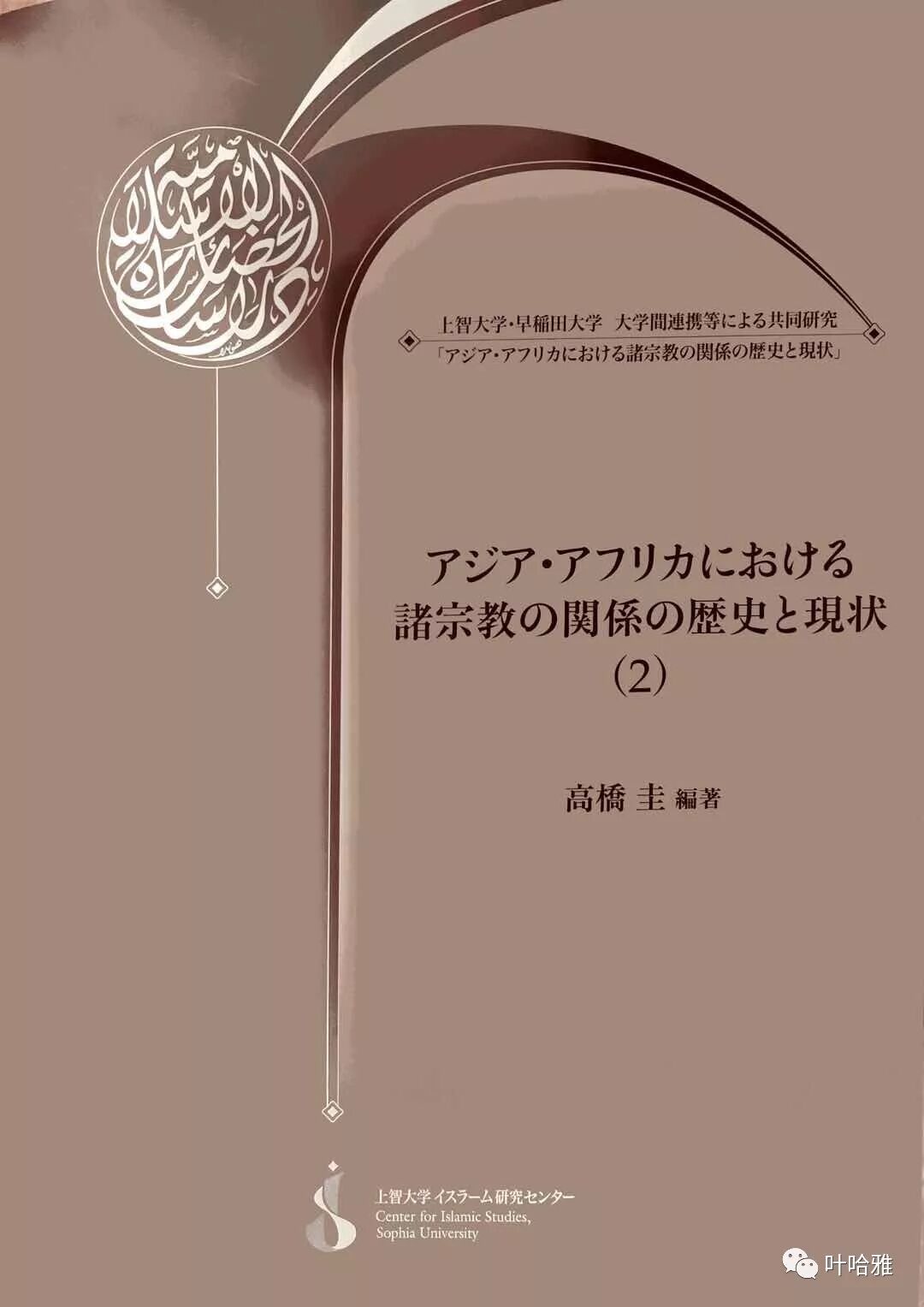
Survey on the のムスリム・コミュニティの in Wuyuan City, Henan Province, China
モスク·Private information·ハラールについて
Survey on Muslim communities in Jiyuan City, Henan Province, China
About the mosque·Folk collection information·Halal
1. Summary of the survey on Muslim communities in Henan Province
The Muslims mentioned here mainly refer to the Hui Muslims (population about 11 million), one of the ethnic minorities who believe in Islam in the People's Republic of China. The "Hui" are a population group formed through intermarriage between Arab and Persian Muslims who settled in China after the mid-7th century and local Chinese residents (especially Han women). The Qing Dynasty and the Chinese Kuomintang regarded these Muslims who often spoke Chinese as Han Chinese who believed in Islam and called them "Han Muslims." On the contrary, in the late 1930s, the Chinese Communist Party identified the Muslims in the northwest region as a single "ethnic group" of the "Hui" and successfully gained support from Muslims (Gladney 1996). After the founding of the People's Republic of China in 1949, the Hui became one of the 10 ethnic minorities in China who believe in Islam.
Although the Hui Muslims are mainly distributed in the northwest and Yunnan regions, from the Qing Dynasty to the Republic of China, there were many Henanese among the active Muslim intellectuals. Among them, Imam Pang Shiqian (1902--1958) studied at Al-Azhar University in Egypt, the highest institution of Sunni Islam, and introduced the latest knowledge of the Islamic world in the Middle East to China. He was once famous for leading the anti-Japanese activities of Chinese students in Egypt. Henan is the birthplace of China's unique female-only mosques (also known as female mosques). Therefore, Henan is of great significance in the history of Islam in China.
2. The mosques of the Yuan family and the Cheng family
Jiyuan City, where the survey was conducted, is a provincial-level municipality located in the northwest of Henan Province. Jiyuan is the source of Jishui, one of the four major river systems in ancient China. Jiyuan County, established since the Sui Dynasty, is its predecessor. According to the official website of the Jiyuan Municipal People's Government, a survey at the end of 2016 showed that there were 733,000 settlers in the city. The 24 ethnic minorities living in the city account for 1.5% of the total population, of which 90% (approximately 10,000 people) are Hui. Therefore, the city's Hui population is not very large. The Hui Muslims in Jiyuan mainly live around 10 mosques in the city, especially the 2 mosques in the lower streets of the city center, and have developed their own unique community culture.
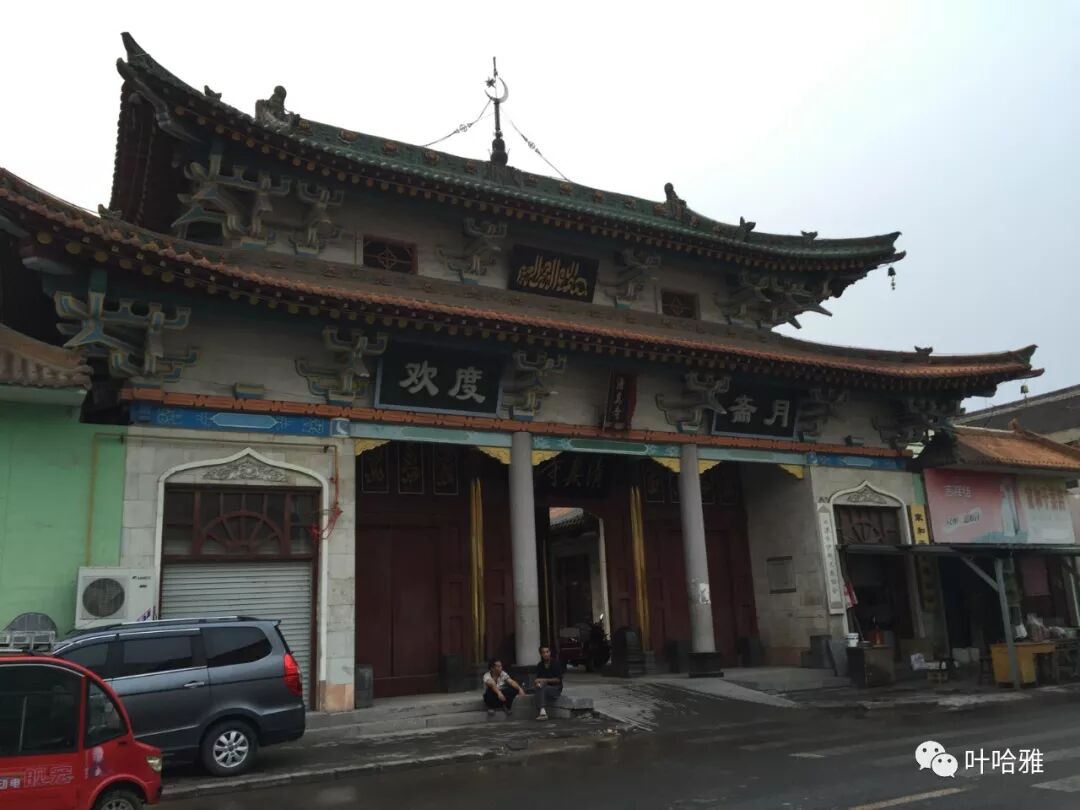
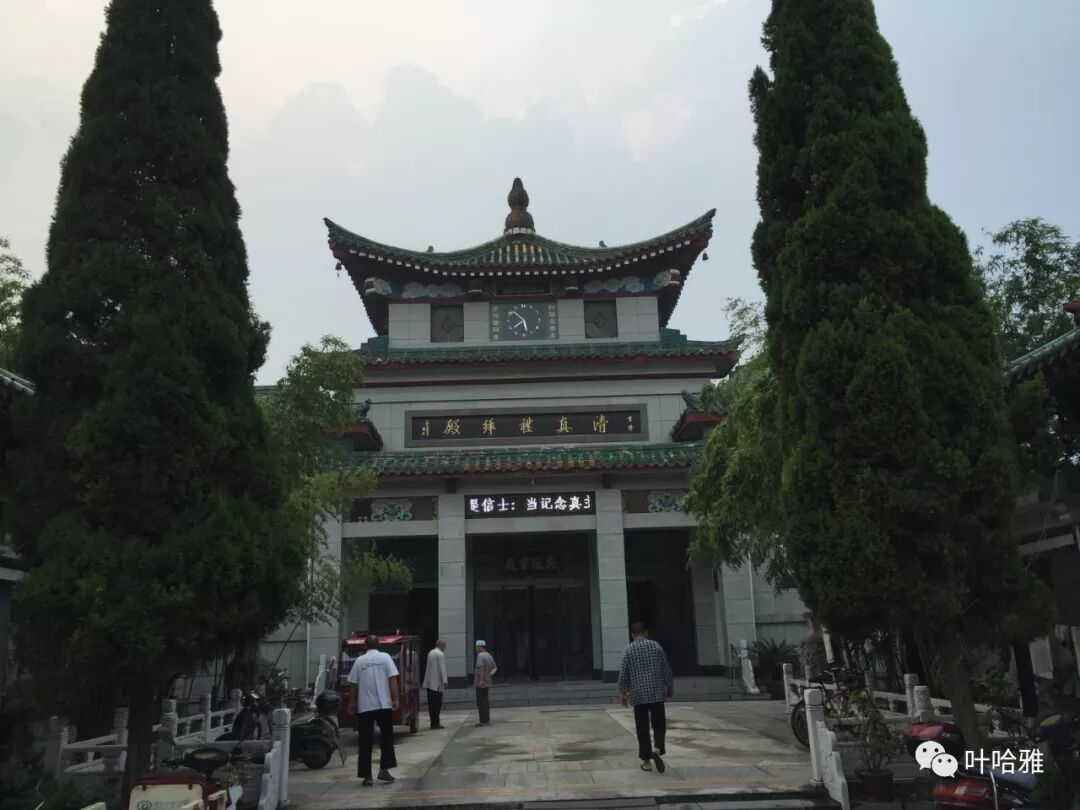
The official name of Xiajie Mosque is Xiajie Old Mosque. Because it is a mosque managed by the Yuan family, the name Yuan Mosque is also very affectionate. According to the stone tablets and Yuan family genealogy records of the Qing Dynasty, the ancestors of the Yuan family moved to Xiajie from the Qianmen area of Beijing in the first half of the 17th century, and established the Yuan Mosque in the 35th year of Emperor Kangxi of the Qing Dynasty (1696 AD). If you want to enter the main entrance of the mosque, you must pass through the 10-meter-high archway. When the author went to the scene, the mosque was under construction. According to people from the Yuan clan in Jiyuan City, the Jiyuan Municipal Government decided to demolish the Arabic-style archway and rebuild it into a Chinese-style archway in 2018 due to concerns about the "desertification" and "Afization" of the Hui Muslims. There are several halal restaurants around the mosque, and there are red couplets on the doors of private houses (traditional Chinese decorations are hung on both sides of the door) with Arabic words such as "In the name of Allah, the most merciful, the most merciful" written in Arabic. It is easy to identify that this is a Muslim area. Moreover, it is only a few minutes' walk from here to the Yuan family cemetery.
Lower Street Mosque (Yuan Mosque)
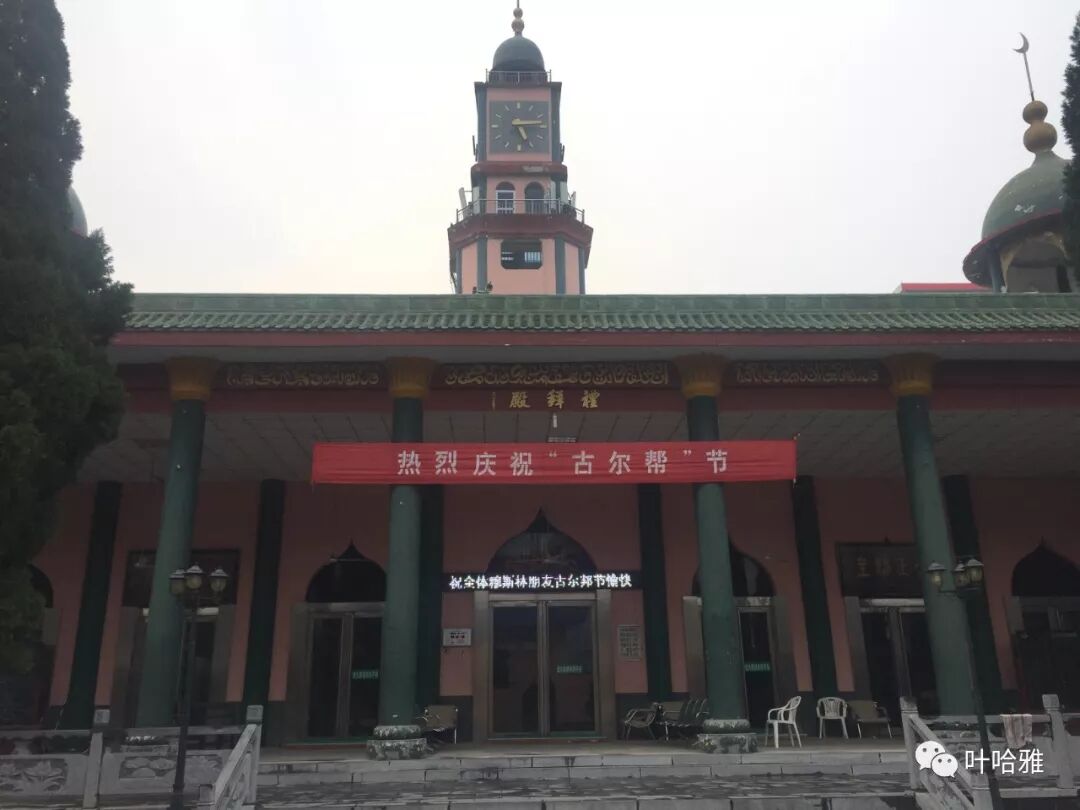
The second mosque is the Lower Street Mosque Nanji (South Mosque), also known as the Chengjia Mosque. The Chengjia Mosque is a mosque centered on the Cheng family and is located on the opposite side of the road. Although the Yuan family and Cheng family temples are independent of each other, the two temples can visit each other. I asked relevant people from both mosques about this. The Yuan family and the Cheng family also have a marriage relationship. The ancestors of the Cheng family were from Hebei and moved to Jiyuan in the early years of Qianlong (1735 AD). Their history is also very interesting, but this article will focus on the larger Yuan family.
Lower Street Mosque South Mosque (Cheng Mosque)
Among the Muslim communities in Henan, there are women-only mosques, known as women's temples, and there are also many women's temples in Jiyuan City. The Women's Mosque in Xiajie (established in April 1918) is also mostly composed of women from the Yuan family. It is a smaller mosque than the Men's Mosque, but it is very bright and has a sense of purity.
Xiajie Mosque
The Hui Muslims here are very open-minded. This is the most impressive thing in Jiyuan. According to the two scholars, although they have visited mosques in China, Hong Kong, Taiwan and around the world, no matter which country or region they are, there are obvious differences in religious venues. Women are generally not allowed to enter male worship spaces, and vice versa. But in Jiyuan City, when a female Japanese scholar did not intend to enter the mosque prayer hall and waited outside, the male Hui Muslims around me asked me: "You must go in and take a look." "the Japanese female scholar originally wanted to find a restroom outside the mosque, but was really shocked when she was given the "convenient" suggestion that she could go to the men's restroom inside the mosque. Similarly, the female Hui Muslims in the female mosque also invite male scholars to visit the female mosque.
In the old Qingzhen Mosque on Xiajie Street, there is a room that "has not been opened once in decades" (said a male Hui). The room contains dozens of manuscripts in Arabic, Persian and Chinese from the late Qing Dynasty to the Republic of China. It is covered with dust. the materials collected by the Sangbo Hui Muslims in Boai County, not far from Jiyuan City, were also sent to the scholars through the contact of the responsible persons of the Qingzhen Old Mosque and Nan Mosque in Xiajie. Some of the information was sent to us by photos taken by the Sangpo Hui Muslims. Due to political and other pressures, the materials collected by Muslim mosques in China are rarely disclosed to the public, let alone foreign non-Muslim researchers who come to visit for the first time.
The old Xiajie Mosque before expansion
3. Newly discovered folk collection materials
Among the materials in private collections discovered during this investigation, American scholars consider six types of materials to be particularly important. Moreover, many of the materials are Waltz's original manuscripts or notes written in Arabic. Although there is no date, it can be speculated that they were probably written during the Republic of China.
One of the most important materials considered by American scholars is the Arabic manuscript of the third volume of the Quran (the Quran is divided into 30 volumes in total), Chapter 2 (al-baqara), verse 253 to chapter 3 (al `imran), verse 92 (the year of writing is unknown). The cover and penultimate page of the manuscript are written with the words Ma Changqing. Ma Changqing (1856-1938, courtesy name Chengyan) was a native of Zhengzhou and served as imam at the old Xiajie Mosque. This manuscript was hidden in the home of a Hui man whom the author met by chance at the Xiajie South Mosque. The provider was the grandson of Imam Ma, so the author can be identified as Imam Ma Changqing.
The second source is Tashih al-Quran (Arabic, year of writing unknown). On the cover, you can see the name of Imam Yang Taizhen (Yang Taizhen, 1857-1933>) who was born in Sangbo. Grassaman believes that this is the original manuscript of Fann al-Qira`a, Imam Yang's book on the method of reciting the Qur'an. Yang Imam is known as the "Imam King" of Henan, a famous religious leader, and a pioneer of the Henan school of studying Islamic classics. He was an active scholar during the Republic of China along with Ha Decheng, Ma Songting, and the above-mentioned Pang Shiqian.
The third source is Sharh al-Misbah (author, year of writing unknown). This is an annotation of Misbah fi al-Nahw, an Arabic introductory book written by Abu-fath Nasir-Mutarrizi (1143-1213), a scholar from Khorezm. The book is full of Chinese and Arabic annotations. This annotation is used in sutra education (Islamic religious education developed in Chinese mosques after the 17th century).
What is worth noting is a commentary on one of the Thirteen Sutras copied in Arabic and Persian. The original author was Taj al-Din Muhammad ibn Muhammad al-Isfara`ini (late 1285). At the beginning of each chapter, you can see sentences praising Allah written in Persian.
The fourth source is Gulistan <Persian, year of writing unknown). Satdai (Sa`di Shirazi AbuMuhammad Musharrif al-Din ibn Muslih ibn`Abd Allah, the crowning masterpiece of Persian prose writing between 1210-1292, The Rose Garden). Gulistan is often translated as "Garden of Truth" in Chinese. As one of the "Thirteen Sutras", it has been circulated in Chinese Muslim society for a long time and has always been loved by people. The names of the authors of the manuscript, Chen Zongxin (Chen Zongxin) and Chen Deming (Chen Deming), can be seen on the cover.
The fifth source is also a Gulistan (Persian, year of writing unknown) manuscript. Although the name of the author Wang Dianlin is written on the book.
The sixth source, Lughat al-Balagha (Arabic, year of writing unknown), is a work on Arabic rhetoric. The author Ma Liangjun (Ma Liangjun) is written below the cover title. This man is the eldest son of the above-mentioned imam Ma Changqing. He has the same name as Ma Liangjun (Ma liangjun, 1870-1957), an Islamic scholar born in Gansu, but he is not the same person. It can be seen that at the beginning of each chapter, Arabic sentences about praising Allah are translated into Persian.
The above information has four impacts on future research on Islam in China.
First, the fact that part of these manuscripts were written in Persian shows that Chinese Muslim society before the Ming and Qing Dynasties always had a tradition of attaching importance to the study of Persian, as evidenced by the materials preserved in Henan in the first half of the 20th century. This case in Henan, just like Matsumoto Hiromi’s research on the current situation of Persian learning and the impact of the Japanese invasion of China in Shandong during the Republic of China (Matsumoto 2016), once again proves the importance of Persian in Chinese Islam.
Second, the aforementioned research on the method of reciting the Quran (qira `a) by Yang Taizhen (Tashihal-Quran) shows that Muslims at that time were very keen to learn Arabic. The background was that many intellectuals among Henan Muslims at that time were calling for the study of Islamic law.
Third, Daw ` al-Misbah, one of the "Thirteen Classics" of Islamic classics that has been used in Jingtang education, is different from Sharh al-Misbah, an introductory Arabic commentary (the third material mentioned by Grassaman). The fact that it was found in a mosque in Jiyuan shows that Jingtang education has regional gaps and textual diversity.
Fourth, some of these manuscripts are newly discovered materials not mentioned in [Zhao 2009] and [Henan Provincial Ethnic Affairs Commission 2009]. Among the materials related to Islam in China, they have not yet been recorded, and there may be many cases where they are covered with dust and kept in mosque rooms or at home.
to the above-mentioned 6 kinds of materials, it was also found that there are Xiaojing (also known as Xiaoerjin and Xiaojing). An informal phonetic script that uses a combination of Arabic and Persian letters to represent the pronunciation of Chinese. It was used by pre-modern Muslim societies with low Chinese literacy rates) and many other exercise books and textbooks. A collection of children's scriptures published during the period of the People's Republic of China is stamped by the publishing house of Linxia City, Linxia Hui Autonomous Prefecture, Gansu Province, which is known as "China's Little Miss", indicating that this book was spread from Linxia to Jiyuan. It is generally believed that the Xiaojing is more common in the northwest region where the Muslim population is concentrated, and is less commonly used by Muslim societies in Henan Province (Heiyan 2012,73). However, according to this survey, it is possible that the Muslim community in Henan has also learned the Xiao Jing in modern times. We look forward to further research and findings on the Xiao Jing.
The Yuan family of the Hui Muslims who was born in Jiyuan City has two genealogies, which is also an interesting phenomenon in the history and culture of Muslims in Henan and even China.
The first genealogy, "Yuan Family Genealogy", was kept in the old Xiajie Mosque and started in the 30th year of Daoguang reign of the Qing Dynasty (1850 AD). The inscriptions engraved in the mosque show that the founder of the Yuan family was Yuan Zhongmei, who lived in Chunshu Hutong outside Qianqingmen in Beijing during the late Ming Dynasty and early Qing Dynasty. He traveled around to avoid the war, first staying briefly in Kaifeng City, Henan Province, and finally settled in Xiajie, Jiyuan City, where he built a mosque. The descendants of his four children formed today's Yuan family, and their number reached nearly 4,000. The genealogy is currently being updated.
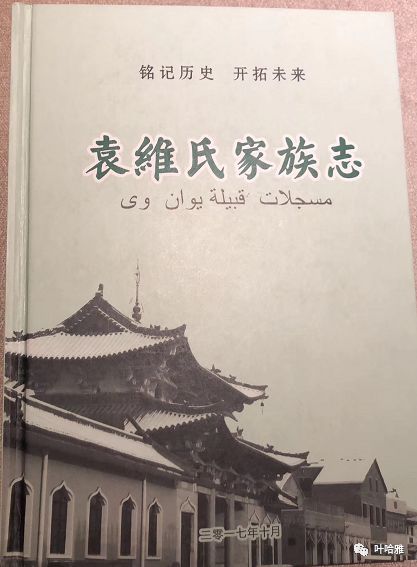
The second genealogy is the "Yuan Wei Family Chronicle" which was just completed in the autumn of 2017. The preface and the content of the stone tablet in the Yuan family cemetery mentioned earlier show that the ancestors of the family were Persians who once lived near the border of Iran and Turkey. At the end of the Song Dynasty, in order to escape the war, they immigrated to today's Xinjiang and lived with the local Uyghur Muslims. They took the Uyghur transliteration of the compound surname Yuan Wei (yuanwei) as their surname. Yuan Wei then lived in Beijing as a soldier. In the early Qing Dynasty, he moved between Henan and Shanxi. He later settled in Jiyuan Xiajie, integrated into the Yuan family, and changed his surname to Yuan Wei.
Yuan family tree
Genealogy of the Hui Muslims exists in various parts of China. However, it is very rare for one clan to merge with another clan and the merged clan to build a mosque. Therefore, this unique history of the Yuan family in Jiyuan can not only promote the study of Hui genealogy, but also provide a new perspective for the study of Chinese clans. The interviews conducted in this survey will also be made public as research results.
Let me introduce the food culture of the Hui Muslims in Jiyuan, that is, the "halal" (the original meaning is legal in Islamic law) culture.
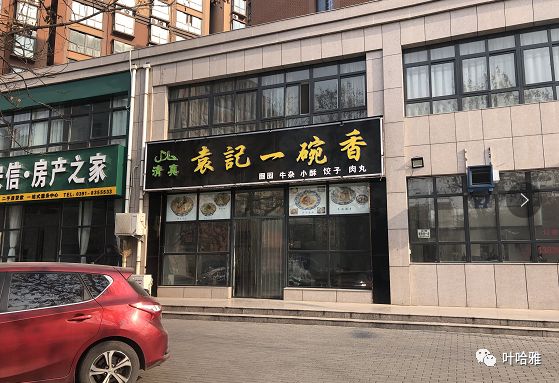
Located near Xiajie Qinglao Mosque and Xiajie South Mosque, there are dozens of halal restaurants. Representative menus provided by these restaurants include Henan traditional cuisine braised noodles (a kind of wide noodles), stewed mutton, stewed fish, etc. There are many restaurants and stalls marked with the Yuan family name, which shows that the Yuan family has a great influence on the local food culture and economy.
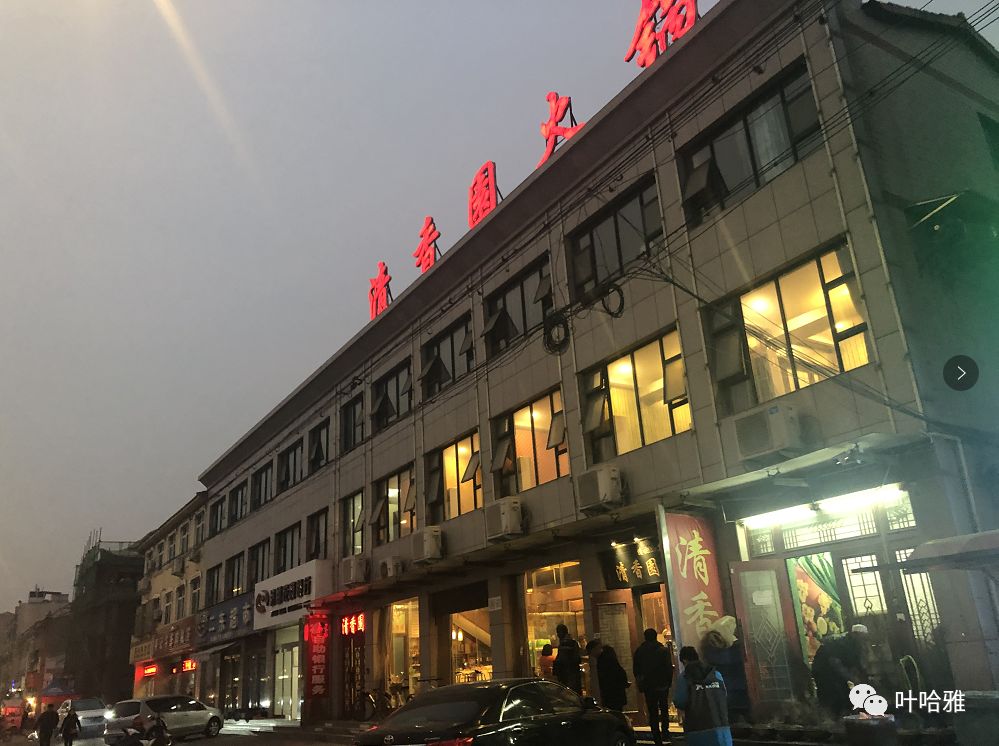
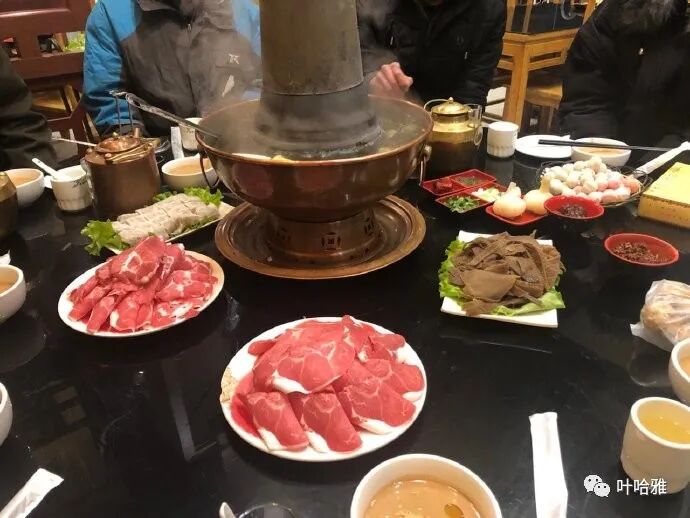
Qingxiangyuan old Beijing copper pot shabu-shabu
The boss is a descendant of the Yuan family, and he treated a group of us to the old Beijing hotpot mutton.
Generally speaking, in halal restaurants in China, there will be signs called halal signs or soup bottle signs. Muslims can recognize them as restaurants selling halal food at a glance. At the beginning of the 20th century, in some areas of North China, there were frequent incidents of attacks by Muslims on restaurants operated by non-Muslims with fake brands (Umino 2016). In other words, the soup bottle brand plays an important role as a symbol of distinguishing Muslim and non-Muslim ethnic foods. The origin of the soup bottle brand is the image depiction of the soup bottle used by Muslims for ablution (a tool used by Muslims to clean their bodies during prayer). There are various signs written in Chinese characters such as "Hui Hui" and "halal", but there is an increasing trend of using Arabic to mark halal. In recent years, the Chinese government has been promoting the policy of "Sinicization" of Islam, and some areas have moved to remove Arabic labels. The Ningxia Hui Autonomous Region is one of the obvious areas. In Ningxia, in the first half of 2018, the autonomous region government formulated a new halal logo design for use in restaurants and other places.
Finally, I would like to introduce the Hui scholars surnamed Yuan. Among the commonly known Hui surnames, few people know that there is also the surname Yuan. However, in fact, the Hui family of the Yuan family has a very profound impact on Chinese Islam. I learned from the Genealogy of the Classics that Liu Zhi and Liu Jielian Baba’s teacher was Yuan Ruqi, and Liu Zhi was the founder of the Islamic ideological system with Chinese characteristics.
Screenshot from "Genealogy of Classical Studies"
Yuan Ruqi's father, Yuan Shengzhi, was a master of Confucian classics in the early Qing Dynasty. Yuan Ruqi's grandson, Yuan Guozuo, was involved in the Hai Furun incident for printing Liu Zhi's works. In the 5th month of the lunar calendar in the 47th year of the Qianlong reign of the Qing Dynasty (1782 AD), Hai Furun, a Muslim from Sanya Village in Yazhou, Guangdong, was arrested and imprisoned by the government in Guilin, Guangxi for carrying Islamic scriptures in Chinese such as "Chronicle of the Most Holy Records of Heaven". This triggered what is known as the "Hai Furun Case" in history, known as the Qing Dynasty Hui Islamic Literary Prison.
Yuan Guozuo, also known as Yuan Er, whose courtesy name was Jingchu, donated money in the 43rd year of Qianlong's reign in the Qing Dynasty (1778 AD) to publish and publish the "Records of the Most Holy Heaven" written by Liu Zhi, and wrote a preface to it. When he learned that Hai Furun was sick and living in a mosque, he took the initiative to visit him at his residence and presented him with more than ten Islamic scriptures in Chinese, including "Chronology of the Most Holy Records of Heaven." After Hai Furun recovered, he returned south from Hankou with these scriptures.
Screenshot from "Genealogy of Classical Studies"
Screenshot from "Genealogy of Classical Studies"
Screenshot from "Genealogy of Classical Studies"
Yuan Maozhao, the successor of Yuan Shengzhi Baba, was also a classics master born in Jiangnan.
Screenshot from "Genealogy of Classical Studies"
Screenshot from "Genealogy of Classical Studies"
By studying the genealogy of the Yuan family, I realized that the inheritance of family education is very important. Many young people from Muslim families lacked scripture education for various reasons, resulting in these people having indifferent beliefs and deviating from the main way. Their ancestors would be very sad if they knew that their descendants had become like this. It has to be said that this is a heartbreaking thing. Looking back at the achievements of my ancestors, I feel that I should do something to honor our ancestors. view all
Summary: Muslim Travel Guide China 2026: Jiyuan Henan Mosques, Yuan Hui Muslims and Local History is presented here as a clear English travel account for Muslim readers, beginning with this scene: The content of this article comes from a research report jointly done by my Japanese friends and American friends. In 2018, the two friends went to Jiyuan City, Henan Province, China, under my leadership for. The article keeps the original place names, food details, photographs, and cultural context while focusing on Jiyuan Henan, Yuan Hui Muslims, Islamic History.
The content of this article comes from a research report jointly done by my Japanese friends and American friends. In 2018, the two friends went to Jiyuan City, Henan Province, China, under my leadership for research. They are both scholars who focus on Chinese Islam. The Yuan family in Jiyuan Lower Street mentioned in the article is my clan and is distantly related to me. The original article was published in Japanese. Due to copyright restrictions in Japanese universities, the full text cannot be made public, so I will briefly introduce it in my own language.
Survey on the のムスリム・コミュニティの in Wuyuan City, Henan Province, China
モスク·Private information·ハラールについて
Survey on Muslim communities in Jiyuan City, Henan Province, China
About the mosque·Folk collection information·Halal
1. Summary of the survey on Muslim communities in Henan Province
The Muslims mentioned here mainly refer to the Hui Muslims (population about 11 million), one of the ethnic minorities who believe in Islam in the People's Republic of China. The "Hui" are a population group formed through intermarriage between Arab and Persian Muslims who settled in China after the mid-7th century and local Chinese residents (especially Han women). The Qing Dynasty and the Chinese Kuomintang regarded these Muslims who often spoke Chinese as Han Chinese who believed in Islam and called them "Han Muslims." On the contrary, in the late 1930s, the Chinese Communist Party identified the Muslims in the northwest region as a single "ethnic group" of the "Hui" and successfully gained support from Muslims (Gladney 1996). After the founding of the People's Republic of China in 1949, the Hui became one of the 10 ethnic minorities in China who believe in Islam.
Although the Hui Muslims are mainly distributed in the northwest and Yunnan regions, from the Qing Dynasty to the Republic of China, there were many Henanese among the active Muslim intellectuals. Among them, Imam Pang Shiqian (1902--1958) studied at Al-Azhar University in Egypt, the highest institution of Sunni Islam, and introduced the latest knowledge of the Islamic world in the Middle East to China. He was once famous for leading the anti-Japanese activities of Chinese students in Egypt. Henan is the birthplace of China's unique female-only mosques (also known as female mosques). Therefore, Henan is of great significance in the history of Islam in China.
2. The mosques of the Yuan family and the Cheng family
Jiyuan City, where the survey was conducted, is a provincial-level municipality located in the northwest of Henan Province. Jiyuan is the source of Jishui, one of the four major river systems in ancient China. Jiyuan County, established since the Sui Dynasty, is its predecessor. According to the official website of the Jiyuan Municipal People's Government, a survey at the end of 2016 showed that there were 733,000 settlers in the city. The 24 ethnic minorities living in the city account for 1.5% of the total population, of which 90% (approximately 10,000 people) are Hui. Therefore, the city's Hui population is not very large. The Hui Muslims in Jiyuan mainly live around 10 mosques in the city, especially the 2 mosques in the lower streets of the city center, and have developed their own unique community culture.
The official name of Xiajie Mosque is Xiajie Old Mosque. Because it is a mosque managed by the Yuan family, the name Yuan Mosque is also very affectionate. According to the stone tablets and Yuan family genealogy records of the Qing Dynasty, the ancestors of the Yuan family moved to Xiajie from the Qianmen area of Beijing in the first half of the 17th century, and established the Yuan Mosque in the 35th year of Emperor Kangxi of the Qing Dynasty (1696 AD). If you want to enter the main entrance of the mosque, you must pass through the 10-meter-high archway. When the author went to the scene, the mosque was under construction. According to people from the Yuan clan in Jiyuan City, the Jiyuan Municipal Government decided to demolish the Arabic-style archway and rebuild it into a Chinese-style archway in 2018 due to concerns about the "desertification" and "Afization" of the Hui Muslims. There are several halal restaurants around the mosque, and there are red couplets on the doors of private houses (traditional Chinese decorations are hung on both sides of the door) with Arabic words such as "In the name of Allah, the most merciful, the most merciful" written in Arabic. It is easy to identify that this is a Muslim area. Moreover, it is only a few minutes' walk from here to the Yuan family cemetery.
Lower Street Mosque (Yuan Mosque)
The second mosque is the Lower Street Mosque Nanji (South Mosque), also known as the Chengjia Mosque. The Chengjia Mosque is a mosque centered on the Cheng family and is located on the opposite side of the road. Although the Yuan family and Cheng family temples are independent of each other, the two temples can visit each other. I asked relevant people from both mosques about this. The Yuan family and the Cheng family also have a marriage relationship. The ancestors of the Cheng family were from Hebei and moved to Jiyuan in the early years of Qianlong (1735 AD). Their history is also very interesting, but this article will focus on the larger Yuan family.
Lower Street Mosque South Mosque (Cheng Mosque)
Among the Muslim communities in Henan, there are women-only mosques, known as women's temples, and there are also many women's temples in Jiyuan City. The Women's Mosque in Xiajie (established in April 1918) is also mostly composed of women from the Yuan family. It is a smaller mosque than the Men's Mosque, but it is very bright and has a sense of purity.
Xiajie Mosque
The Hui Muslims here are very open-minded. This is the most impressive thing in Jiyuan. According to the two scholars, although they have visited mosques in China, Hong Kong, Taiwan and around the world, no matter which country or region they are, there are obvious differences in religious venues. Women are generally not allowed to enter male worship spaces, and vice versa. But in Jiyuan City, when a female Japanese scholar did not intend to enter the mosque prayer hall and waited outside, the male Hui Muslims around me asked me: "You must go in and take a look." "the Japanese female scholar originally wanted to find a restroom outside the mosque, but was really shocked when she was given the "convenient" suggestion that she could go to the men's restroom inside the mosque. Similarly, the female Hui Muslims in the female mosque also invite male scholars to visit the female mosque.
In the old Qingzhen Mosque on Xiajie Street, there is a room that "has not been opened once in decades" (said a male Hui). The room contains dozens of manuscripts in Arabic, Persian and Chinese from the late Qing Dynasty to the Republic of China. It is covered with dust. the materials collected by the Sangbo Hui Muslims in Boai County, not far from Jiyuan City, were also sent to the scholars through the contact of the responsible persons of the Qingzhen Old Mosque and Nan Mosque in Xiajie. Some of the information was sent to us by photos taken by the Sangpo Hui Muslims. Due to political and other pressures, the materials collected by Muslim mosques in China are rarely disclosed to the public, let alone foreign non-Muslim researchers who come to visit for the first time.
The old Xiajie Mosque before expansion
3. Newly discovered folk collection materials
Among the materials in private collections discovered during this investigation, American scholars consider six types of materials to be particularly important. Moreover, many of the materials are Waltz's original manuscripts or notes written in Arabic. Although there is no date, it can be speculated that they were probably written during the Republic of China.
One of the most important materials considered by American scholars is the Arabic manuscript of the third volume of the Quran (the Quran is divided into 30 volumes in total), Chapter 2 (al-baqara), verse 253 to chapter 3 (al `imran), verse 92 (the year of writing is unknown). The cover and penultimate page of the manuscript are written with the words Ma Changqing. Ma Changqing (1856-1938, courtesy name Chengyan) was a native of Zhengzhou and served as imam at the old Xiajie Mosque. This manuscript was hidden in the home of a Hui man whom the author met by chance at the Xiajie South Mosque. The provider was the grandson of Imam Ma, so the author can be identified as Imam Ma Changqing.
The second source is Tashih al-Quran (Arabic, year of writing unknown). On the cover, you can see the name of Imam Yang Taizhen (Yang Taizhen, 1857-1933>) who was born in Sangbo. Grassaman believes that this is the original manuscript of Fann al-Qira`a, Imam Yang's book on the method of reciting the Qur'an. Yang Imam is known as the "Imam King" of Henan, a famous religious leader, and a pioneer of the Henan school of studying Islamic classics. He was an active scholar during the Republic of China along with Ha Decheng, Ma Songting, and the above-mentioned Pang Shiqian.
The third source is Sharh al-Misbah (author, year of writing unknown). This is an annotation of Misbah fi al-Nahw, an Arabic introductory book written by Abu-fath Nasir-Mutarrizi (1143-1213), a scholar from Khorezm. The book is full of Chinese and Arabic annotations. This annotation is used in sutra education (Islamic religious education developed in Chinese mosques after the 17th century).
What is worth noting is a commentary on one of the Thirteen Sutras copied in Arabic and Persian. The original author was Taj al-Din Muhammad ibn Muhammad al-Isfara`ini (late 1285). At the beginning of each chapter, you can see sentences praising Allah written in Persian.
The fourth source is Gulistan <Persian, year of writing unknown). Satdai (Sa`di Shirazi AbuMuhammad Musharrif al-Din ibn Muslih ibn`Abd Allah, the crowning masterpiece of Persian prose writing between 1210-1292, The Rose Garden). Gulistan is often translated as "Garden of Truth" in Chinese. As one of the "Thirteen Sutras", it has been circulated in Chinese Muslim society for a long time and has always been loved by people. The names of the authors of the manuscript, Chen Zongxin (Chen Zongxin) and Chen Deming (Chen Deming), can be seen on the cover.
The fifth source is also a Gulistan (Persian, year of writing unknown) manuscript. Although the name of the author Wang Dianlin is written on the book.
The sixth source, Lughat al-Balagha (Arabic, year of writing unknown), is a work on Arabic rhetoric. The author Ma Liangjun (Ma Liangjun) is written below the cover title. This man is the eldest son of the above-mentioned imam Ma Changqing. He has the same name as Ma Liangjun (Ma liangjun, 1870-1957), an Islamic scholar born in Gansu, but he is not the same person. It can be seen that at the beginning of each chapter, Arabic sentences about praising Allah are translated into Persian.
The above information has four impacts on future research on Islam in China.
First, the fact that part of these manuscripts were written in Persian shows that Chinese Muslim society before the Ming and Qing Dynasties always had a tradition of attaching importance to the study of Persian, as evidenced by the materials preserved in Henan in the first half of the 20th century. This case in Henan, just like Matsumoto Hiromi’s research on the current situation of Persian learning and the impact of the Japanese invasion of China in Shandong during the Republic of China (Matsumoto 2016), once again proves the importance of Persian in Chinese Islam.
Second, the aforementioned research on the method of reciting the Quran (qira `a) by Yang Taizhen (Tashihal-Quran) shows that Muslims at that time were very keen to learn Arabic. The background was that many intellectuals among Henan Muslims at that time were calling for the study of Islamic law.
Third, Daw ` al-Misbah, one of the "Thirteen Classics" of Islamic classics that has been used in Jingtang education, is different from Sharh al-Misbah, an introductory Arabic commentary (the third material mentioned by Grassaman). The fact that it was found in a mosque in Jiyuan shows that Jingtang education has regional gaps and textual diversity.
Fourth, some of these manuscripts are newly discovered materials not mentioned in [Zhao 2009] and [Henan Provincial Ethnic Affairs Commission 2009]. Among the materials related to Islam in China, they have not yet been recorded, and there may be many cases where they are covered with dust and kept in mosque rooms or at home.
to the above-mentioned 6 kinds of materials, it was also found that there are Xiaojing (also known as Xiaoerjin and Xiaojing). An informal phonetic script that uses a combination of Arabic and Persian letters to represent the pronunciation of Chinese. It was used by pre-modern Muslim societies with low Chinese literacy rates) and many other exercise books and textbooks. A collection of children's scriptures published during the period of the People's Republic of China is stamped by the publishing house of Linxia City, Linxia Hui Autonomous Prefecture, Gansu Province, which is known as "China's Little Miss", indicating that this book was spread from Linxia to Jiyuan. It is generally believed that the Xiaojing is more common in the northwest region where the Muslim population is concentrated, and is less commonly used by Muslim societies in Henan Province (Heiyan 2012,73). However, according to this survey, it is possible that the Muslim community in Henan has also learned the Xiao Jing in modern times. We look forward to further research and findings on the Xiao Jing.
The Yuan family of the Hui Muslims who was born in Jiyuan City has two genealogies, which is also an interesting phenomenon in the history and culture of Muslims in Henan and even China.
The first genealogy, "Yuan Family Genealogy", was kept in the old Xiajie Mosque and started in the 30th year of Daoguang reign of the Qing Dynasty (1850 AD). The inscriptions engraved in the mosque show that the founder of the Yuan family was Yuan Zhongmei, who lived in Chunshu Hutong outside Qianqingmen in Beijing during the late Ming Dynasty and early Qing Dynasty. He traveled around to avoid the war, first staying briefly in Kaifeng City, Henan Province, and finally settled in Xiajie, Jiyuan City, where he built a mosque. The descendants of his four children formed today's Yuan family, and their number reached nearly 4,000. The genealogy is currently being updated.
The second genealogy is the "Yuan Wei Family Chronicle" which was just completed in the autumn of 2017. The preface and the content of the stone tablet in the Yuan family cemetery mentioned earlier show that the ancestors of the family were Persians who once lived near the border of Iran and Turkey. At the end of the Song Dynasty, in order to escape the war, they immigrated to today's Xinjiang and lived with the local Uyghur Muslims. They took the Uyghur transliteration of the compound surname Yuan Wei (yuanwei) as their surname. Yuan Wei then lived in Beijing as a soldier. In the early Qing Dynasty, he moved between Henan and Shanxi. He later settled in Jiyuan Xiajie, integrated into the Yuan family, and changed his surname to Yuan Wei.
Yuan family tree
Genealogy of the Hui Muslims exists in various parts of China. However, it is very rare for one clan to merge with another clan and the merged clan to build a mosque. Therefore, this unique history of the Yuan family in Jiyuan can not only promote the study of Hui genealogy, but also provide a new perspective for the study of Chinese clans. The interviews conducted in this survey will also be made public as research results.
Let me introduce the food culture of the Hui Muslims in Jiyuan, that is, the "halal" (the original meaning is legal in Islamic law) culture.
Located near Xiajie Qinglao Mosque and Xiajie South Mosque, there are dozens of halal restaurants. Representative menus provided by these restaurants include Henan traditional cuisine braised noodles (a kind of wide noodles), stewed mutton, stewed fish, etc. There are many restaurants and stalls marked with the Yuan family name, which shows that the Yuan family has a great influence on the local food culture and economy.
Qingxiangyuan old Beijing copper pot shabu-shabu
The boss is a descendant of the Yuan family, and he treated a group of us to the old Beijing hotpot mutton.
Generally speaking, in halal restaurants in China, there will be signs called halal signs or soup bottle signs. Muslims can recognize them as restaurants selling halal food at a glance. At the beginning of the 20th century, in some areas of North China, there were frequent incidents of attacks by Muslims on restaurants operated by non-Muslims with fake brands (Umino 2016). In other words, the soup bottle brand plays an important role as a symbol of distinguishing Muslim and non-Muslim ethnic foods. The origin of the soup bottle brand is the image depiction of the soup bottle used by Muslims for ablution (a tool used by Muslims to clean their bodies during prayer). There are various signs written in Chinese characters such as "Hui Hui" and "halal", but there is an increasing trend of using Arabic to mark halal. In recent years, the Chinese government has been promoting the policy of "Sinicization" of Islam, and some areas have moved to remove Arabic labels. The Ningxia Hui Autonomous Region is one of the obvious areas. In Ningxia, in the first half of 2018, the autonomous region government formulated a new halal logo design for use in restaurants and other places.
Finally, I would like to introduce the Hui scholars surnamed Yuan. Among the commonly known Hui surnames, few people know that there is also the surname Yuan. However, in fact, the Hui family of the Yuan family has a very profound impact on Chinese Islam. I learned from the Genealogy of the Classics that Liu Zhi and Liu Jielian Baba’s teacher was Yuan Ruqi, and Liu Zhi was the founder of the Islamic ideological system with Chinese characteristics.
Screenshot from "Genealogy of Classical Studies"
Yuan Ruqi's father, Yuan Shengzhi, was a master of Confucian classics in the early Qing Dynasty. Yuan Ruqi's grandson, Yuan Guozuo, was involved in the Hai Furun incident for printing Liu Zhi's works. In the 5th month of the lunar calendar in the 47th year of the Qianlong reign of the Qing Dynasty (1782 AD), Hai Furun, a Muslim from Sanya Village in Yazhou, Guangdong, was arrested and imprisoned by the government in Guilin, Guangxi for carrying Islamic scriptures in Chinese such as "Chronicle of the Most Holy Records of Heaven". This triggered what is known as the "Hai Furun Case" in history, known as the Qing Dynasty Hui Islamic Literary Prison.
Yuan Guozuo, also known as Yuan Er, whose courtesy name was Jingchu, donated money in the 43rd year of Qianlong's reign in the Qing Dynasty (1778 AD) to publish and publish the "Records of the Most Holy Heaven" written by Liu Zhi, and wrote a preface to it. When he learned that Hai Furun was sick and living in a mosque, he took the initiative to visit him at his residence and presented him with more than ten Islamic scriptures in Chinese, including "Chronology of the Most Holy Records of Heaven." After Hai Furun recovered, he returned south from Hankou with these scriptures.
Screenshot from "Genealogy of Classical Studies"
Screenshot from "Genealogy of Classical Studies"
Screenshot from "Genealogy of Classical Studies"
Yuan Maozhao, the successor of Yuan Shengzhi Baba, was also a classics master born in Jiangnan.
Screenshot from "Genealogy of Classical Studies"
Screenshot from "Genealogy of Classical Studies"
By studying the genealogy of the Yuan family, I realized that the inheritance of family education is very important. Many young people from Muslim families lacked scripture education for various reasons, resulting in these people having indifferent beliefs and deviating from the main way. Their ancestors would be very sad if they knew that their descendants had become like this. It has to be said that this is a heartbreaking thing. Looking back at the achievements of my ancestors, I feel that I should do something to honor our ancestors. view all
Reposted from the web
Summary: Muslim Travel Guide China 2026: Jiyuan Henan Mosques, Yuan Hui Muslims and Local History is presented here as a clear English travel account for Muslim readers, beginning with this scene: The content of this article comes from a research report jointly done by my Japanese friends and American friends. In 2018, the two friends went to Jiyuan City, Henan Province, China, under my leadership for. The article keeps the original place names, food details, photographs, and cultural context while focusing on Jiyuan Henan, Yuan Hui Muslims, Islamic History.
The content of this article comes from a research report jointly done by my Japanese friends and American friends. In 2018, the two friends went to Jiyuan City, Henan Province, China, under my leadership for research. They are both scholars who focus on Chinese Islam. The Yuan family in Jiyuan Lower Street mentioned in the article is my clan and is distantly related to me. The original article was published in Japanese. Due to copyright restrictions in Japanese universities, the full text cannot be made public, so I will briefly introduce it in my own language.
Survey on the のムスリム・コミュニティの in Wuyuan City, Henan Province, China
モスク·Private information·ハラールについて
Survey on Muslim communities in Jiyuan City, Henan Province, China
About the mosque·Folk collection information·Halal
1. Summary of the survey on Muslim communities in Henan Province
The Muslims mentioned here mainly refer to the Hui Muslims (population about 11 million), one of the ethnic minorities who believe in Islam in the People's Republic of China. The "Hui" are a population group formed through intermarriage between Arab and Persian Muslims who settled in China after the mid-7th century and local Chinese residents (especially Han women). The Qing Dynasty and the Chinese Kuomintang regarded these Muslims who often spoke Chinese as Han Chinese who believed in Islam and called them "Han Muslims." On the contrary, in the late 1930s, the Chinese Communist Party identified the Muslims in the northwest region as a single "ethnic group" of the "Hui" and successfully gained support from Muslims (Gladney 1996). After the founding of the People's Republic of China in 1949, the Hui became one of the 10 ethnic minorities in China who believe in Islam.
Although the Hui Muslims are mainly distributed in the northwest and Yunnan regions, from the Qing Dynasty to the Republic of China, there were many Henanese among the active Muslim intellectuals. Among them, Imam Pang Shiqian (1902--1958) studied at Al-Azhar University in Egypt, the highest institution of Sunni Islam, and introduced the latest knowledge of the Islamic world in the Middle East to China. He was once famous for leading the anti-Japanese activities of Chinese students in Egypt. Henan is the birthplace of China's unique female-only mosques (also known as female mosques). Therefore, Henan is of great significance in the history of Islam in China.
2. The mosques of the Yuan family and the Cheng family
Jiyuan City, where the survey was conducted, is a provincial-level municipality located in the northwest of Henan Province. Jiyuan is the source of Jishui, one of the four major river systems in ancient China. Jiyuan County, established since the Sui Dynasty, is its predecessor. According to the official website of the Jiyuan Municipal People's Government, a survey at the end of 2016 showed that there were 733,000 settlers in the city. The 24 ethnic minorities living in the city account for 1.5% of the total population, of which 90% (approximately 10,000 people) are Hui. Therefore, the city's Hui population is not very large. The Hui Muslims in Jiyuan mainly live around 10 mosques in the city, especially the 2 mosques in the lower streets of the city center, and have developed their own unique community culture.
The official name of Xiajie Mosque is Xiajie Old Mosque. Because it is a mosque managed by the Yuan family, the name Yuan Mosque is also very affectionate. According to the stone tablets and Yuan family genealogy records of the Qing Dynasty, the ancestors of the Yuan family moved to Xiajie from the Qianmen area of Beijing in the first half of the 17th century, and established the Yuan Mosque in the 35th year of Emperor Kangxi of the Qing Dynasty (1696 AD). If you want to enter the main entrance of the mosque, you must pass through the 10-meter-high archway. When the author went to the scene, the mosque was under construction. According to people from the Yuan clan in Jiyuan City, the Jiyuan Municipal Government decided to demolish the Arabic-style archway and rebuild it into a Chinese-style archway in 2018 due to concerns about the "desertification" and "Afization" of the Hui Muslims. There are several halal restaurants around the mosque, and there are red couplets on the doors of private houses (traditional Chinese decorations are hung on both sides of the door) with Arabic words such as "In the name of Allah, the most merciful, the most merciful" written in Arabic. It is easy to identify that this is a Muslim area. Moreover, it is only a few minutes' walk from here to the Yuan family cemetery.
Lower Street Mosque (Yuan Mosque)
The second mosque is the Lower Street Mosque Nanji (South Mosque), also known as the Chengjia Mosque. The Chengjia Mosque is a mosque centered on the Cheng family and is located on the opposite side of the road. Although the Yuan family and Cheng family temples are independent of each other, the two temples can visit each other. I asked relevant people from both mosques about this. The Yuan family and the Cheng family also have a marriage relationship. The ancestors of the Cheng family were from Hebei and moved to Jiyuan in the early years of Qianlong (1735 AD). Their history is also very interesting, but this article will focus on the larger Yuan family.
Lower Street Mosque South Mosque (Cheng Mosque)
Among the Muslim communities in Henan, there are women-only mosques, known as women's temples, and there are also many women's temples in Jiyuan City. The Women's Mosque in Xiajie (established in April 1918) is also mostly composed of women from the Yuan family. It is a smaller mosque than the Men's Mosque, but it is very bright and has a sense of purity.
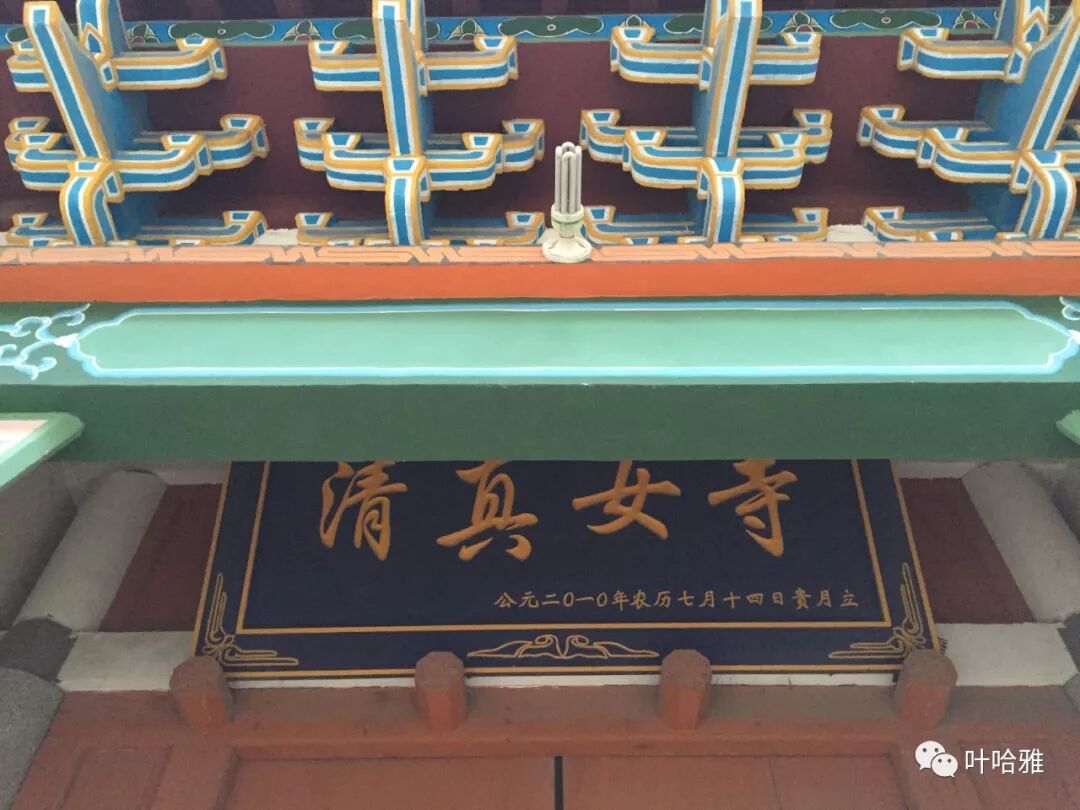
Xiajie Mosque
The Hui Muslims here are very open-minded. This is the most impressive thing in Jiyuan. According to the two scholars, although they have visited mosques in China, Hong Kong, Taiwan and around the world, no matter which country or region they are, there are obvious differences in religious venues. Women are generally not allowed to enter male worship spaces, and vice versa. But in Jiyuan City, when a female Japanese scholar did not intend to enter the mosque prayer hall and waited outside, the male Hui Muslims around me asked me: "You must go in and take a look." "the Japanese female scholar originally wanted to find a restroom outside the mosque, but was really shocked when she was given the "convenient" suggestion that she could go to the men's restroom inside the mosque. Similarly, the female Hui Muslims in the female mosque also invite male scholars to visit the female mosque.
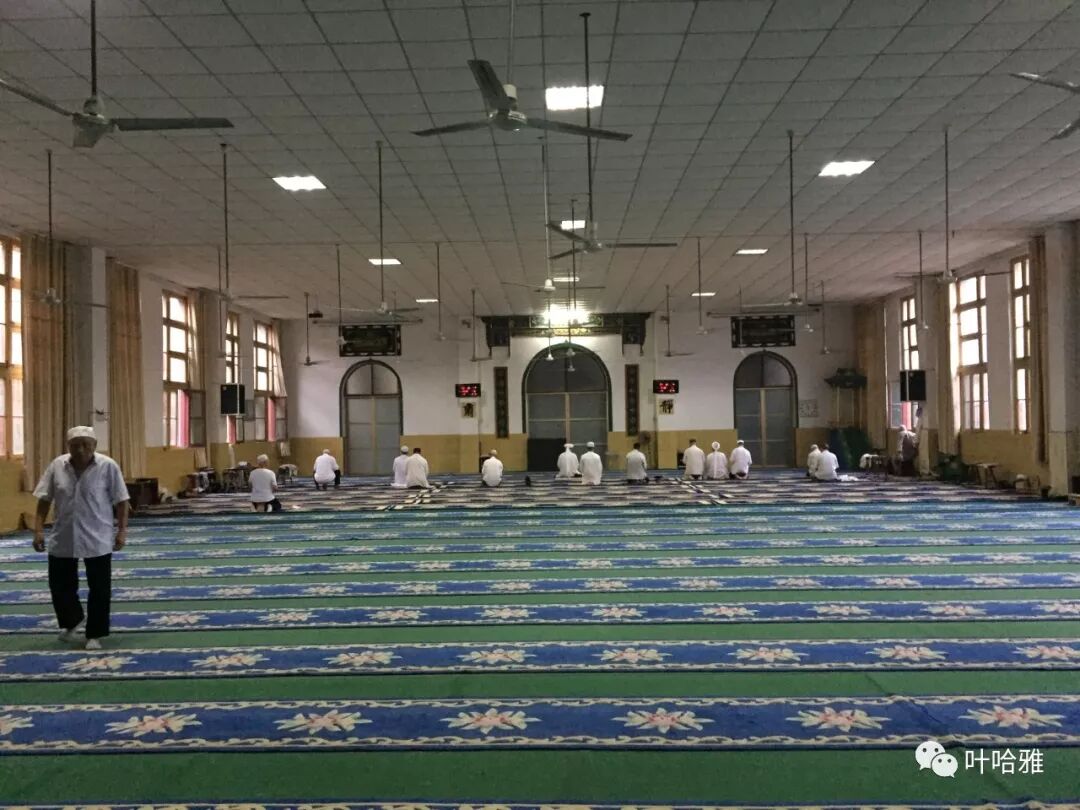
In the old Qingzhen Mosque on Xiajie Street, there is a room that "has not been opened once in decades" (said a male Hui). The room contains dozens of manuscripts in Arabic, Persian and Chinese from the late Qing Dynasty to the Republic of China. It is covered with dust. the materials collected by the Sangbo Hui Muslims in Boai County, not far from Jiyuan City, were also sent to the scholars through the contact of the responsible persons of the Qingzhen Old Mosque and Nan Mosque in Xiajie. Some of the information was sent to us by photos taken by the Sangpo Hui Muslims. Due to political and other pressures, the materials collected by Muslim mosques in China are rarely disclosed to the public, let alone foreign non-Muslim researchers who come to visit for the first time.
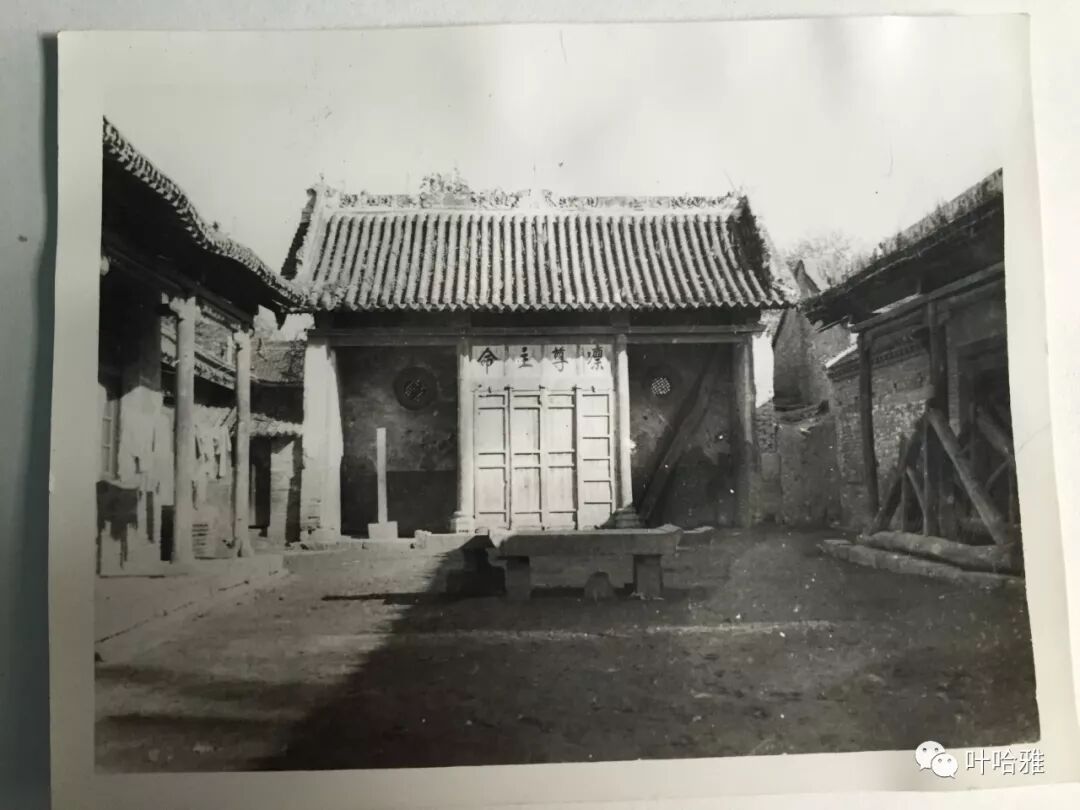
The old Xiajie Mosque before expansion
3. Newly discovered folk collection materials
Among the materials in private collections discovered during this investigation, American scholars consider six types of materials to be particularly important. Moreover, many of the materials are Waltz's original manuscripts or notes written in Arabic. Although there is no date, it can be speculated that they were probably written during the Republic of China.
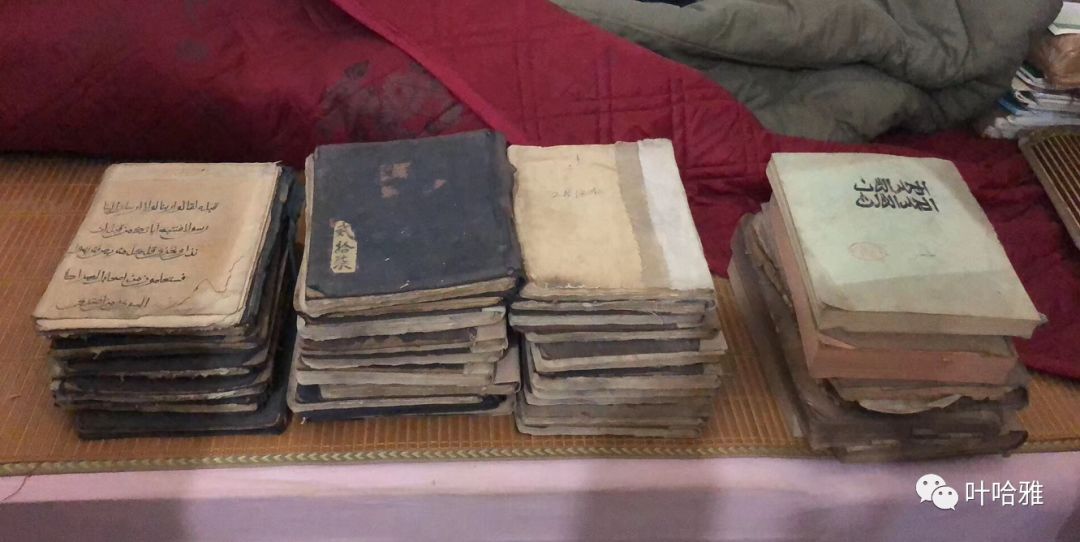
One of the most important materials considered by American scholars is the Arabic manuscript of the third volume of the Quran (the Quran is divided into 30 volumes in total), Chapter 2 (al-baqara), verse 253 to chapter 3 (al `imran), verse 92 (the year of writing is unknown). The cover and penultimate page of the manuscript are written with the words Ma Changqing. Ma Changqing (1856-1938, courtesy name Chengyan) was a native of Zhengzhou and served as imam at the old Xiajie Mosque. This manuscript was hidden in the home of a Hui man whom the author met by chance at the Xiajie South Mosque. The provider was the grandson of Imam Ma, so the author can be identified as Imam Ma Changqing.
The second source is Tashih al-Quran (Arabic, year of writing unknown). On the cover, you can see the name of Imam Yang Taizhen (Yang Taizhen, 1857-1933>) who was born in Sangbo. Grassaman believes that this is the original manuscript of Fann al-Qira`a, Imam Yang's book on the method of reciting the Qur'an. Yang Imam is known as the "Imam King" of Henan, a famous religious leader, and a pioneer of the Henan school of studying Islamic classics. He was an active scholar during the Republic of China along with Ha Decheng, Ma Songting, and the above-mentioned Pang Shiqian.
The third source is Sharh al-Misbah (author, year of writing unknown). This is an annotation of Misbah fi al-Nahw, an Arabic introductory book written by Abu-fath Nasir-Mutarrizi (1143-1213), a scholar from Khorezm. The book is full of Chinese and Arabic annotations. This annotation is used in sutra education (Islamic religious education developed in Chinese mosques after the 17th century).
What is worth noting is a commentary on one of the Thirteen Sutras copied in Arabic and Persian. The original author was Taj al-Din Muhammad ibn Muhammad al-Isfara`ini (late 1285). At the beginning of each chapter, you can see sentences praising Allah written in Persian.
The fourth source is Gulistan <Persian, year of writing unknown). Satdai (Sa`di Shirazi AbuMuhammad Musharrif al-Din ibn Muslih ibn`Abd Allah, the crowning masterpiece of Persian prose writing between 1210-1292, The Rose Garden). Gulistan is often translated as "Garden of Truth" in Chinese. As one of the "Thirteen Sutras", it has been circulated in Chinese Muslim society for a long time and has always been loved by people. The names of the authors of the manuscript, Chen Zongxin (Chen Zongxin) and Chen Deming (Chen Deming), can be seen on the cover.
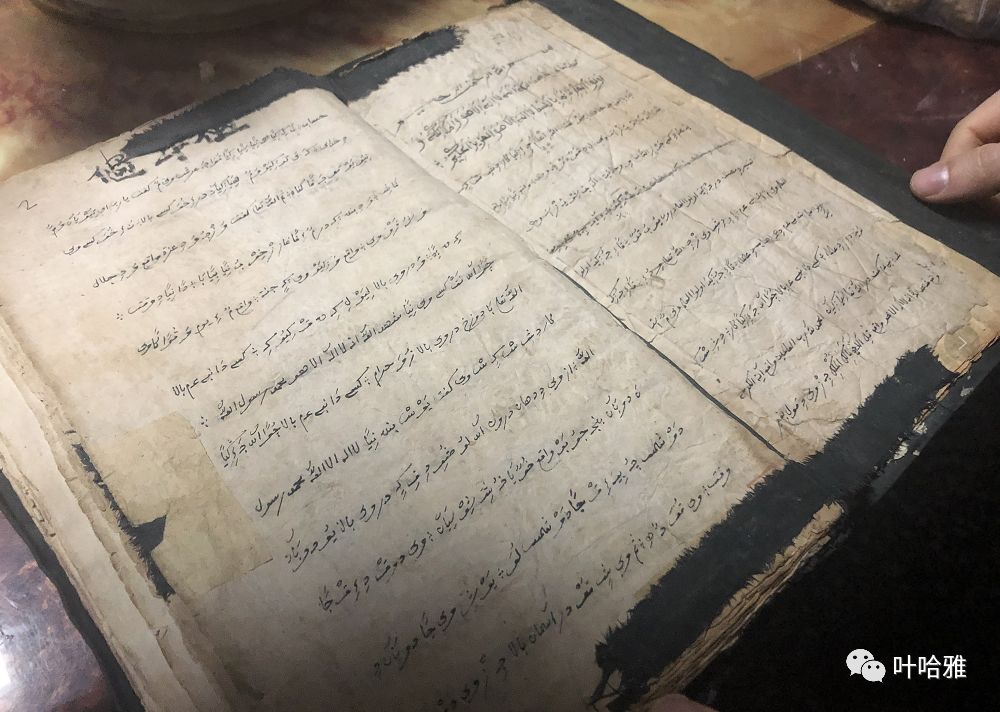
The fifth source is also a Gulistan (Persian, year of writing unknown) manuscript. Although the name of the author Wang Dianlin is written on the book.
The sixth source, Lughat al-Balagha (Arabic, year of writing unknown), is a work on Arabic rhetoric. The author Ma Liangjun (Ma Liangjun) is written below the cover title. This man is the eldest son of the above-mentioned imam Ma Changqing. He has the same name as Ma Liangjun (Ma liangjun, 1870-1957), an Islamic scholar born in Gansu, but he is not the same person. It can be seen that at the beginning of each chapter, Arabic sentences about praising Allah are translated into Persian.
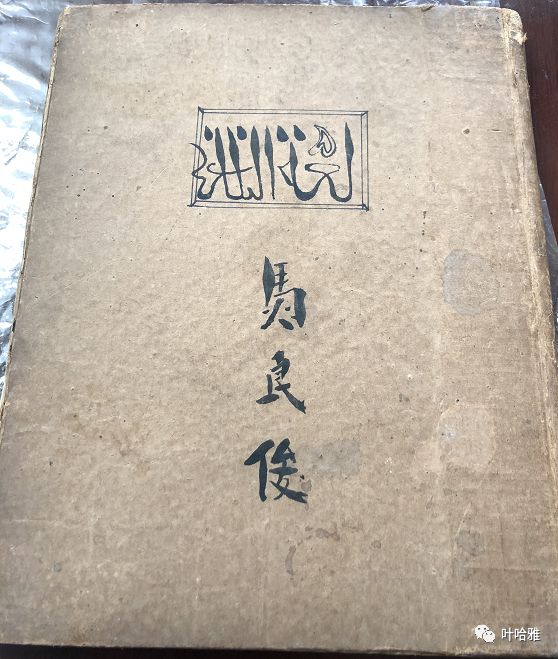
The above information has four impacts on future research on Islam in China.
First, the fact that part of these manuscripts were written in Persian shows that Chinese Muslim society before the Ming and Qing Dynasties always had a tradition of attaching importance to the study of Persian, as evidenced by the materials preserved in Henan in the first half of the 20th century. This case in Henan, just like Matsumoto Hiromi’s research on the current situation of Persian learning and the impact of the Japanese invasion of China in Shandong during the Republic of China (Matsumoto 2016), once again proves the importance of Persian in Chinese Islam.
Second, the aforementioned research on the method of reciting the Quran (qira `a) by Yang Taizhen (Tashihal-Quran) shows that Muslims at that time were very keen to learn Arabic. The background was that many intellectuals among Henan Muslims at that time were calling for the study of Islamic law.
Third, Daw ` al-Misbah, one of the "Thirteen Classics" of Islamic classics that has been used in Jingtang education, is different from Sharh al-Misbah, an introductory Arabic commentary (the third material mentioned by Grassaman). The fact that it was found in a mosque in Jiyuan shows that Jingtang education has regional gaps and textual diversity.
Fourth, some of these manuscripts are newly discovered materials not mentioned in [Zhao 2009] and [Henan Provincial Ethnic Affairs Commission 2009]. Among the materials related to Islam in China, they have not yet been recorded, and there may be many cases where they are covered with dust and kept in mosque rooms or at home.
to the above-mentioned 6 kinds of materials, it was also found that there are Xiaojing (also known as Xiaoerjin and Xiaojing). An informal phonetic script that uses a combination of Arabic and Persian letters to represent the pronunciation of Chinese. It was used by pre-modern Muslim societies with low Chinese literacy rates) and many other exercise books and textbooks. A collection of children's scriptures published during the period of the People's Republic of China is stamped by the publishing house of Linxia City, Linxia Hui Autonomous Prefecture, Gansu Province, which is known as "China's Little Miss", indicating that this book was spread from Linxia to Jiyuan. It is generally believed that the Xiaojing is more common in the northwest region where the Muslim population is concentrated, and is less commonly used by Muslim societies in Henan Province (Heiyan 2012,73). However, according to this survey, it is possible that the Muslim community in Henan has also learned the Xiao Jing in modern times. We look forward to further research and findings on the Xiao Jing.
The Yuan family of the Hui Muslims who was born in Jiyuan City has two genealogies, which is also an interesting phenomenon in the history and culture of Muslims in Henan and even China.
The first genealogy, "Yuan Family Genealogy", was kept in the old Xiajie Mosque and started in the 30th year of Daoguang reign of the Qing Dynasty (1850 AD). The inscriptions engraved in the mosque show that the founder of the Yuan family was Yuan Zhongmei, who lived in Chunshu Hutong outside Qianqingmen in Beijing during the late Ming Dynasty and early Qing Dynasty. He traveled around to avoid the war, first staying briefly in Kaifeng City, Henan Province, and finally settled in Xiajie, Jiyuan City, where he built a mosque. The descendants of his four children formed today's Yuan family, and their number reached nearly 4,000. The genealogy is currently being updated.
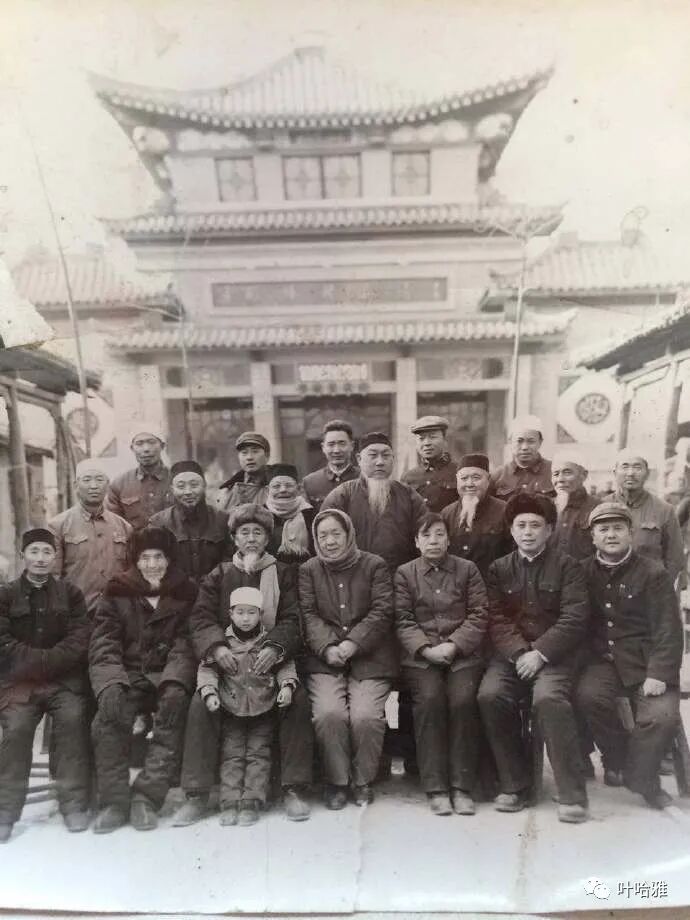
The second genealogy is the "Yuan Wei Family Chronicle" which was just completed in the autumn of 2017. The preface and the content of the stone tablet in the Yuan family cemetery mentioned earlier show that the ancestors of the family were Persians who once lived near the border of Iran and Turkey. At the end of the Song Dynasty, in order to escape the war, they immigrated to today's Xinjiang and lived with the local Uyghur Muslims. They took the Uyghur transliteration of the compound surname Yuan Wei (yuanwei) as their surname. Yuan Wei then lived in Beijing as a soldier. In the early Qing Dynasty, he moved between Henan and Shanxi. He later settled in Jiyuan Xiajie, integrated into the Yuan family, and changed his surname to Yuan Wei.
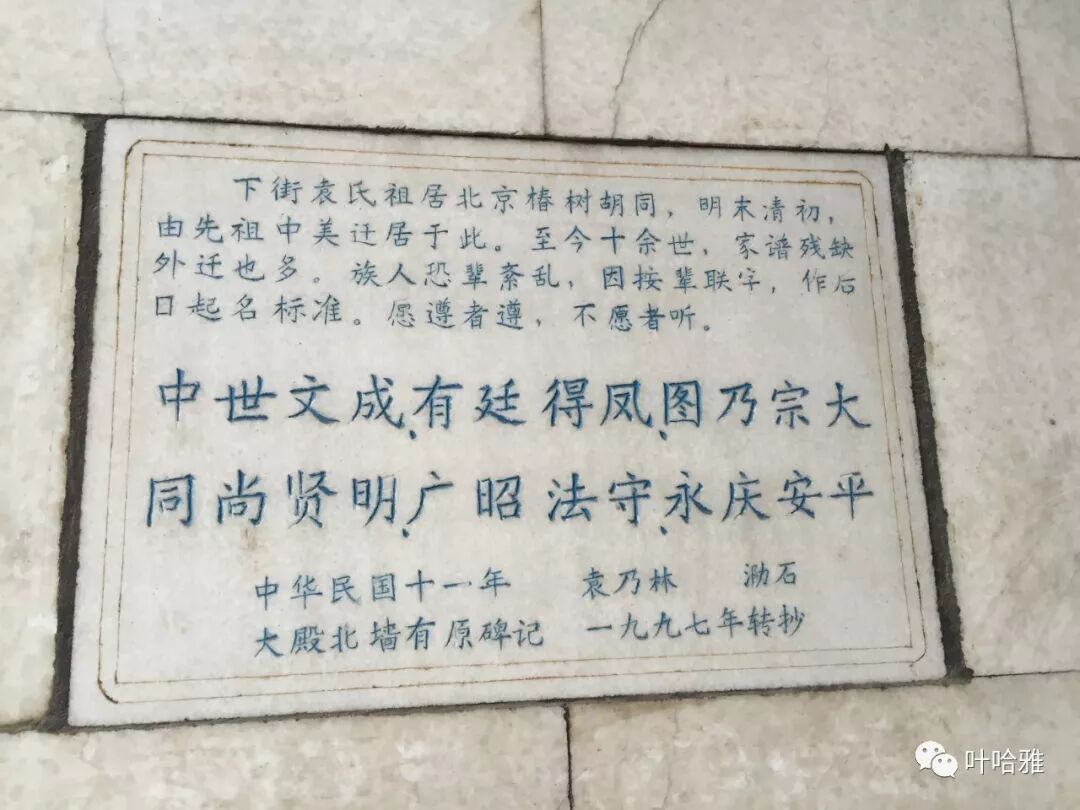
Yuan family tree
Genealogy of the Hui Muslims exists in various parts of China. However, it is very rare for one clan to merge with another clan and the merged clan to build a mosque. Therefore, this unique history of the Yuan family in Jiyuan can not only promote the study of Hui genealogy, but also provide a new perspective for the study of Chinese clans. The interviews conducted in this survey will also be made public as research results.
Let me introduce the food culture of the Hui Muslims in Jiyuan, that is, the "halal" (the original meaning is legal in Islamic law) culture.
Located near Xiajie Qinglao Mosque and Xiajie South Mosque, there are dozens of halal restaurants. Representative menus provided by these restaurants include Henan traditional cuisine braised noodles (a kind of wide noodles), stewed mutton, stewed fish, etc. There are many restaurants and stalls marked with the Yuan family name, which shows that the Yuan family has a great influence on the local food culture and economy.
Qingxiangyuan old Beijing copper pot shabu-shabu
The boss is a descendant of the Yuan family, and he treated a group of us to the old Beijing hotpot mutton.
Generally speaking, in halal restaurants in China, there will be signs called halal signs or soup bottle signs. Muslims can recognize them as restaurants selling halal food at a glance. At the beginning of the 20th century, in some areas of North China, there were frequent incidents of attacks by Muslims on restaurants operated by non-Muslims with fake brands (Umino 2016). In other words, the soup bottle brand plays an important role as a symbol of distinguishing Muslim and non-Muslim ethnic foods. The origin of the soup bottle brand is the image depiction of the soup bottle used by Muslims for ablution (a tool used by Muslims to clean their bodies during prayer). There are various signs written in Chinese characters such as "Hui Hui" and "halal", but there is an increasing trend of using Arabic to mark halal. In recent years, the Chinese government has been promoting the policy of "Sinicization" of Islam, and some areas have moved to remove Arabic labels. The Ningxia Hui Autonomous Region is one of the obvious areas. In Ningxia, in the first half of 2018, the autonomous region government formulated a new halal logo design for use in restaurants and other places.
Finally, I would like to introduce the Hui scholars surnamed Yuan. Among the commonly known Hui surnames, few people know that there is also the surname Yuan. However, in fact, the Hui family of the Yuan family has a very profound impact on Chinese Islam. I learned from the Genealogy of the Classics that Liu Zhi and Liu Jielian Baba’s teacher was Yuan Ruqi, and Liu Zhi was the founder of the Islamic ideological system with Chinese characteristics.
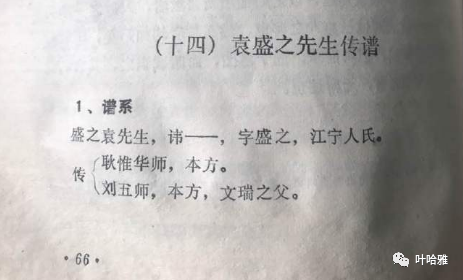
Screenshot from "Genealogy of Classical Studies"
Yuan Ruqi's father, Yuan Shengzhi, was a master of Confucian classics in the early Qing Dynasty. Yuan Ruqi's grandson, Yuan Guozuo, was involved in the Hai Furun incident for printing Liu Zhi's works. In the 5th month of the lunar calendar in the 47th year of the Qianlong reign of the Qing Dynasty (1782 AD), Hai Furun, a Muslim from Sanya Village in Yazhou, Guangdong, was arrested and imprisoned by the government in Guilin, Guangxi for carrying Islamic scriptures in Chinese such as "Chronicle of the Most Holy Records of Heaven". This triggered what is known as the "Hai Furun Case" in history, known as the Qing Dynasty Hui Islamic Literary Prison.
Yuan Guozuo, also known as Yuan Er, whose courtesy name was Jingchu, donated money in the 43rd year of Qianlong's reign in the Qing Dynasty (1778 AD) to publish and publish the "Records of the Most Holy Heaven" written by Liu Zhi, and wrote a preface to it. When he learned that Hai Furun was sick and living in a mosque, he took the initiative to visit him at his residence and presented him with more than ten Islamic scriptures in Chinese, including "Chronology of the Most Holy Records of Heaven." After Hai Furun recovered, he returned south from Hankou with these scriptures.
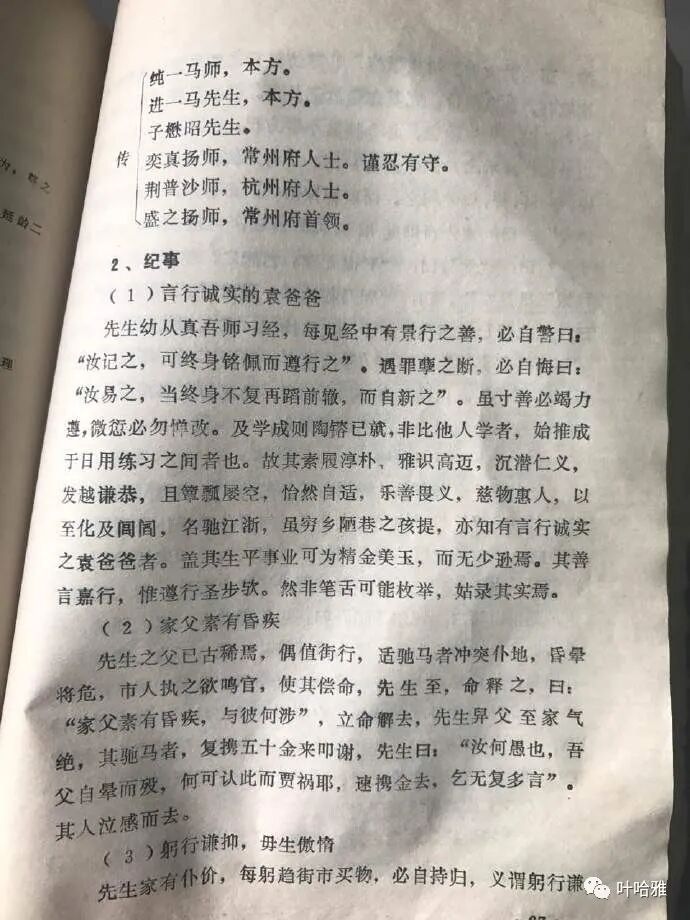
Screenshot from "Genealogy of Classical Studies"
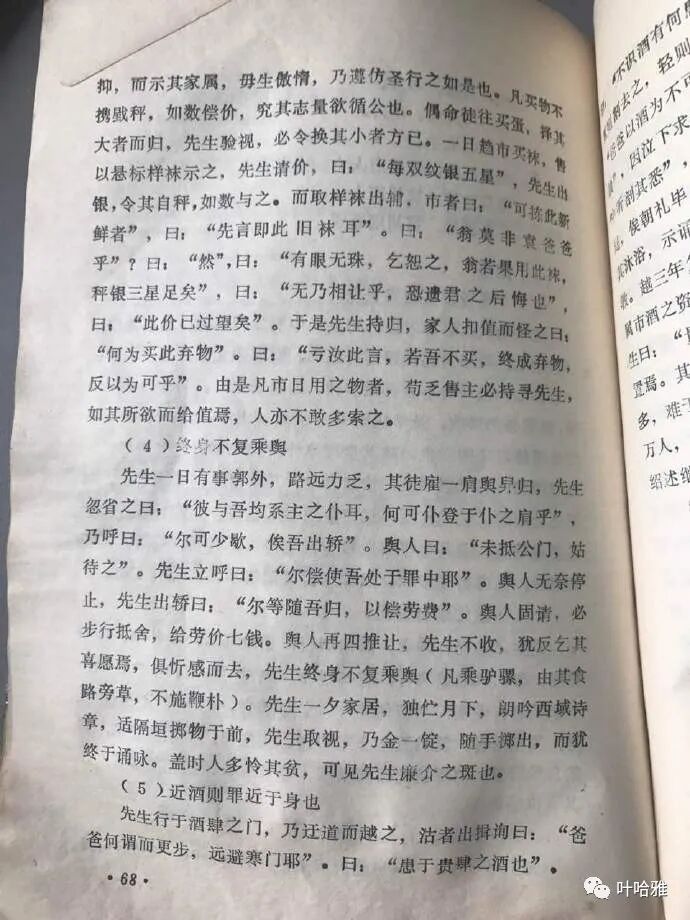
Screenshot from "Genealogy of Classical Studies"
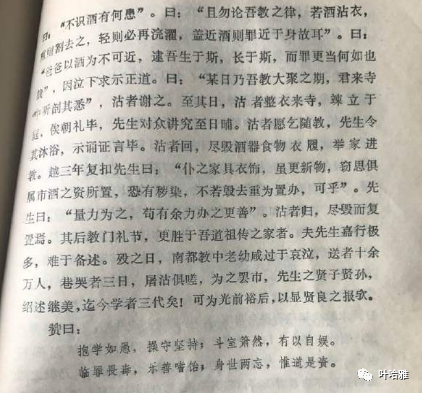
Screenshot from "Genealogy of Classical Studies"
Yuan Maozhao, the successor of Yuan Shengzhi Baba, was also a classics master born in Jiangnan.
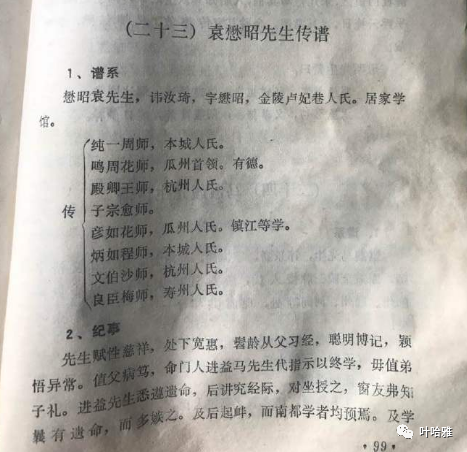
Screenshot from "Genealogy of Classical Studies"
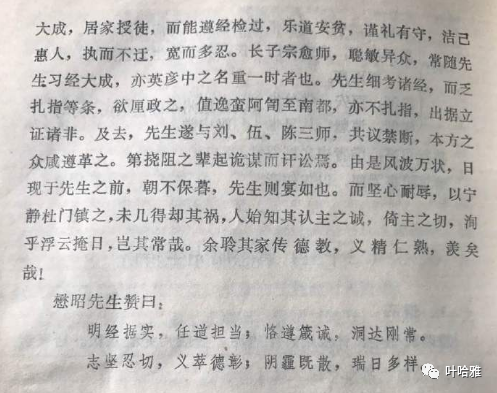
Screenshot from "Genealogy of Classical Studies"
By studying the genealogy of the Yuan family, I realized that the inheritance of family education is very important. Many young people from Muslim families lacked scripture education for various reasons, resulting in these people having indifferent beliefs and deviating from the main way. Their ancestors would be very sad if they knew that their descendants had become like this. It has to be said that this is a heartbreaking thing. Looking back at the achievements of my ancestors, I feel that I should do something to honor our ancestors.
Summary: Muslim Travel Guide China 2026: Jiyuan Henan Mosques, Yuan Hui Muslims and Local History is presented here as a clear English travel account for Muslim readers, beginning with this scene: The content of this article comes from a research report jointly done by my Japanese friends and American friends. In 2018, the two friends went to Jiyuan City, Henan Province, China, under my leadership for. The article keeps the original place names, food details, photographs, and cultural context while focusing on Jiyuan Henan, Yuan Hui Muslims, Islamic History.
The content of this article comes from a research report jointly done by my Japanese friends and American friends. In 2018, the two friends went to Jiyuan City, Henan Province, China, under my leadership for research. They are both scholars who focus on Chinese Islam. The Yuan family in Jiyuan Lower Street mentioned in the article is my clan and is distantly related to me. The original article was published in Japanese. Due to copyright restrictions in Japanese universities, the full text cannot be made public, so I will briefly introduce it in my own language.
Survey on the のムスリム・コミュニティの in Wuyuan City, Henan Province, China
モスク·Private information·ハラールについて
Survey on Muslim communities in Jiyuan City, Henan Province, China
About the mosque·Folk collection information·Halal
1. Summary of the survey on Muslim communities in Henan Province
The Muslims mentioned here mainly refer to the Hui Muslims (population about 11 million), one of the ethnic minorities who believe in Islam in the People's Republic of China. The "Hui" are a population group formed through intermarriage between Arab and Persian Muslims who settled in China after the mid-7th century and local Chinese residents (especially Han women). The Qing Dynasty and the Chinese Kuomintang regarded these Muslims who often spoke Chinese as Han Chinese who believed in Islam and called them "Han Muslims." On the contrary, in the late 1930s, the Chinese Communist Party identified the Muslims in the northwest region as a single "ethnic group" of the "Hui" and successfully gained support from Muslims (Gladney 1996). After the founding of the People's Republic of China in 1949, the Hui became one of the 10 ethnic minorities in China who believe in Islam.
Although the Hui Muslims are mainly distributed in the northwest and Yunnan regions, from the Qing Dynasty to the Republic of China, there were many Henanese among the active Muslim intellectuals. Among them, Imam Pang Shiqian (1902--1958) studied at Al-Azhar University in Egypt, the highest institution of Sunni Islam, and introduced the latest knowledge of the Islamic world in the Middle East to China. He was once famous for leading the anti-Japanese activities of Chinese students in Egypt. Henan is the birthplace of China's unique female-only mosques (also known as female mosques). Therefore, Henan is of great significance in the history of Islam in China.
2. The mosques of the Yuan family and the Cheng family
Jiyuan City, where the survey was conducted, is a provincial-level municipality located in the northwest of Henan Province. Jiyuan is the source of Jishui, one of the four major river systems in ancient China. Jiyuan County, established since the Sui Dynasty, is its predecessor. According to the official website of the Jiyuan Municipal People's Government, a survey at the end of 2016 showed that there were 733,000 settlers in the city. The 24 ethnic minorities living in the city account for 1.5% of the total population, of which 90% (approximately 10,000 people) are Hui. Therefore, the city's Hui population is not very large. The Hui Muslims in Jiyuan mainly live around 10 mosques in the city, especially the 2 mosques in the lower streets of the city center, and have developed their own unique community culture.
The official name of Xiajie Mosque is Xiajie Old Mosque. Because it is a mosque managed by the Yuan family, the name Yuan Mosque is also very affectionate. According to the stone tablets and Yuan family genealogy records of the Qing Dynasty, the ancestors of the Yuan family moved to Xiajie from the Qianmen area of Beijing in the first half of the 17th century, and established the Yuan Mosque in the 35th year of Emperor Kangxi of the Qing Dynasty (1696 AD). If you want to enter the main entrance of the mosque, you must pass through the 10-meter-high archway. When the author went to the scene, the mosque was under construction. According to people from the Yuan clan in Jiyuan City, the Jiyuan Municipal Government decided to demolish the Arabic-style archway and rebuild it into a Chinese-style archway in 2018 due to concerns about the "desertification" and "Afization" of the Hui Muslims. There are several halal restaurants around the mosque, and there are red couplets on the doors of private houses (traditional Chinese decorations are hung on both sides of the door) with Arabic words such as "In the name of Allah, the most merciful, the most merciful" written in Arabic. It is easy to identify that this is a Muslim area. Moreover, it is only a few minutes' walk from here to the Yuan family cemetery.
Lower Street Mosque (Yuan Mosque)
The second mosque is the Lower Street Mosque Nanji (South Mosque), also known as the Chengjia Mosque. The Chengjia Mosque is a mosque centered on the Cheng family and is located on the opposite side of the road. Although the Yuan family and Cheng family temples are independent of each other, the two temples can visit each other. I asked relevant people from both mosques about this. The Yuan family and the Cheng family also have a marriage relationship. The ancestors of the Cheng family were from Hebei and moved to Jiyuan in the early years of Qianlong (1735 AD). Their history is also very interesting, but this article will focus on the larger Yuan family.
Lower Street Mosque South Mosque (Cheng Mosque)
Among the Muslim communities in Henan, there are women-only mosques, known as women's temples, and there are also many women's temples in Jiyuan City. The Women's Mosque in Xiajie (established in April 1918) is also mostly composed of women from the Yuan family. It is a smaller mosque than the Men's Mosque, but it is very bright and has a sense of purity.
Xiajie Mosque
The Hui Muslims here are very open-minded. This is the most impressive thing in Jiyuan. According to the two scholars, although they have visited mosques in China, Hong Kong, Taiwan and around the world, no matter which country or region they are, there are obvious differences in religious venues. Women are generally not allowed to enter male worship spaces, and vice versa. But in Jiyuan City, when a female Japanese scholar did not intend to enter the mosque prayer hall and waited outside, the male Hui Muslims around me asked me: "You must go in and take a look." "the Japanese female scholar originally wanted to find a restroom outside the mosque, but was really shocked when she was given the "convenient" suggestion that she could go to the men's restroom inside the mosque. Similarly, the female Hui Muslims in the female mosque also invite male scholars to visit the female mosque.
In the old Qingzhen Mosque on Xiajie Street, there is a room that "has not been opened once in decades" (said a male Hui). The room contains dozens of manuscripts in Arabic, Persian and Chinese from the late Qing Dynasty to the Republic of China. It is covered with dust. the materials collected by the Sangbo Hui Muslims in Boai County, not far from Jiyuan City, were also sent to the scholars through the contact of the responsible persons of the Qingzhen Old Mosque and Nan Mosque in Xiajie. Some of the information was sent to us by photos taken by the Sangpo Hui Muslims. Due to political and other pressures, the materials collected by Muslim mosques in China are rarely disclosed to the public, let alone foreign non-Muslim researchers who come to visit for the first time.
The old Xiajie Mosque before expansion
3. Newly discovered folk collection materials
Among the materials in private collections discovered during this investigation, American scholars consider six types of materials to be particularly important. Moreover, many of the materials are Waltz's original manuscripts or notes written in Arabic. Although there is no date, it can be speculated that they were probably written during the Republic of China.
One of the most important materials considered by American scholars is the Arabic manuscript of the third volume of the Quran (the Quran is divided into 30 volumes in total), Chapter 2 (al-baqara), verse 253 to chapter 3 (al `imran), verse 92 (the year of writing is unknown). The cover and penultimate page of the manuscript are written with the words Ma Changqing. Ma Changqing (1856-1938, courtesy name Chengyan) was a native of Zhengzhou and served as imam at the old Xiajie Mosque. This manuscript was hidden in the home of a Hui man whom the author met by chance at the Xiajie South Mosque. The provider was the grandson of Imam Ma, so the author can be identified as Imam Ma Changqing.
The second source is Tashih al-Quran (Arabic, year of writing unknown). On the cover, you can see the name of Imam Yang Taizhen (Yang Taizhen, 1857-1933>) who was born in Sangbo. Grassaman believes that this is the original manuscript of Fann al-Qira`a, Imam Yang's book on the method of reciting the Qur'an. Yang Imam is known as the "Imam King" of Henan, a famous religious leader, and a pioneer of the Henan school of studying Islamic classics. He was an active scholar during the Republic of China along with Ha Decheng, Ma Songting, and the above-mentioned Pang Shiqian.
The third source is Sharh al-Misbah (author, year of writing unknown). This is an annotation of Misbah fi al-Nahw, an Arabic introductory book written by Abu-fath Nasir-Mutarrizi (1143-1213), a scholar from Khorezm. The book is full of Chinese and Arabic annotations. This annotation is used in sutra education (Islamic religious education developed in Chinese mosques after the 17th century).
What is worth noting is a commentary on one of the Thirteen Sutras copied in Arabic and Persian. The original author was Taj al-Din Muhammad ibn Muhammad al-Isfara`ini (late 1285). At the beginning of each chapter, you can see sentences praising Allah written in Persian.
The fourth source is Gulistan <Persian, year of writing unknown). Satdai (Sa`di Shirazi AbuMuhammad Musharrif al-Din ibn Muslih ibn`Abd Allah, the crowning masterpiece of Persian prose writing between 1210-1292, The Rose Garden). Gulistan is often translated as "Garden of Truth" in Chinese. As one of the "Thirteen Sutras", it has been circulated in Chinese Muslim society for a long time and has always been loved by people. The names of the authors of the manuscript, Chen Zongxin (Chen Zongxin) and Chen Deming (Chen Deming), can be seen on the cover.
The fifth source is also a Gulistan (Persian, year of writing unknown) manuscript. Although the name of the author Wang Dianlin is written on the book.
The sixth source, Lughat al-Balagha (Arabic, year of writing unknown), is a work on Arabic rhetoric. The author Ma Liangjun (Ma Liangjun) is written below the cover title. This man is the eldest son of the above-mentioned imam Ma Changqing. He has the same name as Ma Liangjun (Ma liangjun, 1870-1957), an Islamic scholar born in Gansu, but he is not the same person. It can be seen that at the beginning of each chapter, Arabic sentences about praising Allah are translated into Persian.
The above information has four impacts on future research on Islam in China.
First, the fact that part of these manuscripts were written in Persian shows that Chinese Muslim society before the Ming and Qing Dynasties always had a tradition of attaching importance to the study of Persian, as evidenced by the materials preserved in Henan in the first half of the 20th century. This case in Henan, just like Matsumoto Hiromi’s research on the current situation of Persian learning and the impact of the Japanese invasion of China in Shandong during the Republic of China (Matsumoto 2016), once again proves the importance of Persian in Chinese Islam.
Second, the aforementioned research on the method of reciting the Quran (qira `a) by Yang Taizhen (Tashihal-Quran) shows that Muslims at that time were very keen to learn Arabic. The background was that many intellectuals among Henan Muslims at that time were calling for the study of Islamic law.
Third, Daw ` al-Misbah, one of the "Thirteen Classics" of Islamic classics that has been used in Jingtang education, is different from Sharh al-Misbah, an introductory Arabic commentary (the third material mentioned by Grassaman). The fact that it was found in a mosque in Jiyuan shows that Jingtang education has regional gaps and textual diversity.
Fourth, some of these manuscripts are newly discovered materials not mentioned in [Zhao 2009] and [Henan Provincial Ethnic Affairs Commission 2009]. Among the materials related to Islam in China, they have not yet been recorded, and there may be many cases where they are covered with dust and kept in mosque rooms or at home.
to the above-mentioned 6 kinds of materials, it was also found that there are Xiaojing (also known as Xiaoerjin and Xiaojing). An informal phonetic script that uses a combination of Arabic and Persian letters to represent the pronunciation of Chinese. It was used by pre-modern Muslim societies with low Chinese literacy rates) and many other exercise books and textbooks. A collection of children's scriptures published during the period of the People's Republic of China is stamped by the publishing house of Linxia City, Linxia Hui Autonomous Prefecture, Gansu Province, which is known as "China's Little Miss", indicating that this book was spread from Linxia to Jiyuan. It is generally believed that the Xiaojing is more common in the northwest region where the Muslim population is concentrated, and is less commonly used by Muslim societies in Henan Province (Heiyan 2012,73). However, according to this survey, it is possible that the Muslim community in Henan has also learned the Xiao Jing in modern times. We look forward to further research and findings on the Xiao Jing.
The Yuan family of the Hui Muslims who was born in Jiyuan City has two genealogies, which is also an interesting phenomenon in the history and culture of Muslims in Henan and even China.
The first genealogy, "Yuan Family Genealogy", was kept in the old Xiajie Mosque and started in the 30th year of Daoguang reign of the Qing Dynasty (1850 AD). The inscriptions engraved in the mosque show that the founder of the Yuan family was Yuan Zhongmei, who lived in Chunshu Hutong outside Qianqingmen in Beijing during the late Ming Dynasty and early Qing Dynasty. He traveled around to avoid the war, first staying briefly in Kaifeng City, Henan Province, and finally settled in Xiajie, Jiyuan City, where he built a mosque. The descendants of his four children formed today's Yuan family, and their number reached nearly 4,000. The genealogy is currently being updated.
The second genealogy is the "Yuan Wei Family Chronicle" which was just completed in the autumn of 2017. The preface and the content of the stone tablet in the Yuan family cemetery mentioned earlier show that the ancestors of the family were Persians who once lived near the border of Iran and Turkey. At the end of the Song Dynasty, in order to escape the war, they immigrated to today's Xinjiang and lived with the local Uyghur Muslims. They took the Uyghur transliteration of the compound surname Yuan Wei (yuanwei) as their surname. Yuan Wei then lived in Beijing as a soldier. In the early Qing Dynasty, he moved between Henan and Shanxi. He later settled in Jiyuan Xiajie, integrated into the Yuan family, and changed his surname to Yuan Wei.
Yuan family tree
Genealogy of the Hui Muslims exists in various parts of China. However, it is very rare for one clan to merge with another clan and the merged clan to build a mosque. Therefore, this unique history of the Yuan family in Jiyuan can not only promote the study of Hui genealogy, but also provide a new perspective for the study of Chinese clans. The interviews conducted in this survey will also be made public as research results.
Let me introduce the food culture of the Hui Muslims in Jiyuan, that is, the "halal" (the original meaning is legal in Islamic law) culture.
Located near Xiajie Qinglao Mosque and Xiajie South Mosque, there are dozens of halal restaurants. Representative menus provided by these restaurants include Henan traditional cuisine braised noodles (a kind of wide noodles), stewed mutton, stewed fish, etc. There are many restaurants and stalls marked with the Yuan family name, which shows that the Yuan family has a great influence on the local food culture and economy.
Qingxiangyuan old Beijing copper pot shabu-shabu
The boss is a descendant of the Yuan family, and he treated a group of us to the old Beijing hotpot mutton.
Generally speaking, in halal restaurants in China, there will be signs called halal signs or soup bottle signs. Muslims can recognize them as restaurants selling halal food at a glance. At the beginning of the 20th century, in some areas of North China, there were frequent incidents of attacks by Muslims on restaurants operated by non-Muslims with fake brands (Umino 2016). In other words, the soup bottle brand plays an important role as a symbol of distinguishing Muslim and non-Muslim ethnic foods. The origin of the soup bottle brand is the image depiction of the soup bottle used by Muslims for ablution (a tool used by Muslims to clean their bodies during prayer). There are various signs written in Chinese characters such as "Hui Hui" and "halal", but there is an increasing trend of using Arabic to mark halal. In recent years, the Chinese government has been promoting the policy of "Sinicization" of Islam, and some areas have moved to remove Arabic labels. The Ningxia Hui Autonomous Region is one of the obvious areas. In Ningxia, in the first half of 2018, the autonomous region government formulated a new halal logo design for use in restaurants and other places.
Finally, I would like to introduce the Hui scholars surnamed Yuan. Among the commonly known Hui surnames, few people know that there is also the surname Yuan. However, in fact, the Hui family of the Yuan family has a very profound impact on Chinese Islam. I learned from the Genealogy of the Classics that Liu Zhi and Liu Jielian Baba’s teacher was Yuan Ruqi, and Liu Zhi was the founder of the Islamic ideological system with Chinese characteristics.
Screenshot from "Genealogy of Classical Studies"
Yuan Ruqi's father, Yuan Shengzhi, was a master of Confucian classics in the early Qing Dynasty. Yuan Ruqi's grandson, Yuan Guozuo, was involved in the Hai Furun incident for printing Liu Zhi's works. In the 5th month of the lunar calendar in the 47th year of the Qianlong reign of the Qing Dynasty (1782 AD), Hai Furun, a Muslim from Sanya Village in Yazhou, Guangdong, was arrested and imprisoned by the government in Guilin, Guangxi for carrying Islamic scriptures in Chinese such as "Chronicle of the Most Holy Records of Heaven". This triggered what is known as the "Hai Furun Case" in history, known as the Qing Dynasty Hui Islamic Literary Prison.
Yuan Guozuo, also known as Yuan Er, whose courtesy name was Jingchu, donated money in the 43rd year of Qianlong's reign in the Qing Dynasty (1778 AD) to publish and publish the "Records of the Most Holy Heaven" written by Liu Zhi, and wrote a preface to it. When he learned that Hai Furun was sick and living in a mosque, he took the initiative to visit him at his residence and presented him with more than ten Islamic scriptures in Chinese, including "Chronology of the Most Holy Records of Heaven." After Hai Furun recovered, he returned south from Hankou with these scriptures.
Screenshot from "Genealogy of Classical Studies"
Screenshot from "Genealogy of Classical Studies"
Screenshot from "Genealogy of Classical Studies"
Yuan Maozhao, the successor of Yuan Shengzhi Baba, was also a classics master born in Jiangnan.
Screenshot from "Genealogy of Classical Studies"
Screenshot from "Genealogy of Classical Studies"
By studying the genealogy of the Yuan family, I realized that the inheritance of family education is very important. Many young people from Muslim families lacked scripture education for various reasons, resulting in these people having indifferent beliefs and deviating from the main way. Their ancestors would be very sad if they knew that their descendants had become like this. It has to be said that this is a heartbreaking thing. Looking back at the achievements of my ancestors, I feel that I should do something to honor our ancestors.
Muslim Travel Guide China 2026: Jiyuan Henan Mosques, Yuan Hui Muslims and Local History
Articles • ali2007fr posted the article • 0 comments • 262 views • 2026-05-21 12:47
Reposted from the web
Summary: Muslim Travel Guide China 2026: Jiyuan Henan Mosques, Yuan Hui Muslims and Local History is presented here as a clear English travel account for Muslim readers, beginning with this scene: The content of this article comes from a research report jointly done by my Japanese friends and American friends. In 2018, the two friends went to Jiyuan City, Henan Province, China, under my leadership for. The article keeps the original place names, food details, photographs, and cultural context while focusing on Jiyuan Henan, Yuan Hui Muslims, Islamic History.
The content of this article comes from a research report jointly done by my Japanese friends and American friends. In 2018, the two friends went to Jiyuan City, Henan Province, China, under my leadership for research. They are both scholars who focus on Chinese Islam. The Yuan family in Jiyuan Lower Street mentioned in the article is my clan and is distantly related to me. The original article was published in Japanese. Due to copyright restrictions in Japanese universities, the full text cannot be made public, so I will briefly introduce it in my own language.
Survey on the のムスリム・コミュニティの in Wuyuan City, Henan Province, China
モスク·Private information·ハラールについて
Survey on Muslim communities in Jiyuan City, Henan Province, China
About the mosque·Folk collection information·Halal
1. Summary of the survey on Muslim communities in Henan Province
The Muslims mentioned here mainly refer to the Hui Muslims (population about 11 million), one of the ethnic minorities who believe in Islam in the People's Republic of China. The "Hui" are a population group formed through intermarriage between Arab and Persian Muslims who settled in China after the mid-7th century and local Chinese residents (especially Han women). The Qing Dynasty and the Chinese Kuomintang regarded these Muslims who often spoke Chinese as Han Chinese who believed in Islam and called them "Han Muslims." On the contrary, in the late 1930s, the Chinese Communist Party identified the Muslims in the northwest region as a single "ethnic group" of the "Hui" and successfully gained support from Muslims (Gladney 1996). After the founding of the People's Republic of China in 1949, the Hui became one of the 10 ethnic minorities in China who believe in Islam.
Although the Hui Muslims are mainly distributed in the northwest and Yunnan regions, from the Qing Dynasty to the Republic of China, there were many Henanese among the active Muslim intellectuals. Among them, Imam Pang Shiqian (1902--1958) studied at Al-Azhar University in Egypt, the highest institution of Sunni Islam, and introduced the latest knowledge of the Islamic world in the Middle East to China. He was once famous for leading the anti-Japanese activities of Chinese students in Egypt. Henan is the birthplace of China's unique female-only mosques (also known as female mosques). Therefore, Henan is of great significance in the history of Islam in China.
2. The mosques of the Yuan family and the Cheng family
Jiyuan City, where the survey was conducted, is a provincial-level municipality located in the northwest of Henan Province. Jiyuan is the source of Jishui, one of the four major river systems in ancient China. Jiyuan County, established since the Sui Dynasty, is its predecessor. According to the official website of the Jiyuan Municipal People's Government, a survey at the end of 2016 showed that there were 733,000 settlers in the city. The 24 ethnic minorities living in the city account for 1.5% of the total population, of which 90% (approximately 10,000 people) are Hui. Therefore, the city's Hui population is not very large. The Hui Muslims in Jiyuan mainly live around 10 mosques in the city, especially the 2 mosques in the lower streets of the city center, and have developed their own unique community culture.
The official name of Xiajie Mosque is Xiajie Old Mosque. Because it is a mosque managed by the Yuan family, the name Yuan Mosque is also very affectionate. According to the stone tablets and Yuan family genealogy records of the Qing Dynasty, the ancestors of the Yuan family moved to Xiajie from the Qianmen area of Beijing in the first half of the 17th century, and established the Yuan Mosque in the 35th year of Emperor Kangxi of the Qing Dynasty (1696 AD). If you want to enter the main entrance of the mosque, you must pass through the 10-meter-high archway. When the author went to the scene, the mosque was under construction. According to people from the Yuan clan in Jiyuan City, the Jiyuan Municipal Government decided to demolish the Arabic-style archway and rebuild it into a Chinese-style archway in 2018 due to concerns about the "desertification" and "Afization" of the Hui Muslims. There are several halal restaurants around the mosque, and there are red couplets on the doors of private houses (traditional Chinese decorations are hung on both sides of the door) with Arabic words such as "In the name of Allah, the most merciful, the most merciful" written in Arabic. It is easy to identify that this is a Muslim area. Moreover, it is only a few minutes' walk from here to the Yuan family cemetery.
Lower Street Mosque (Yuan Mosque)
The second mosque is the Lower Street Mosque Nanji (South Mosque), also known as the Chengjia Mosque. The Chengjia Mosque is a mosque centered on the Cheng family and is located on the opposite side of the road. Although the Yuan family and Cheng family temples are independent of each other, the two temples can visit each other. I asked relevant people from both mosques about this. The Yuan family and the Cheng family also have a marriage relationship. The ancestors of the Cheng family were from Hebei and moved to Jiyuan in the early years of Qianlong (1735 AD). Their history is also very interesting, but this article will focus on the larger Yuan family.
Lower Street Mosque South Mosque (Cheng Mosque)
Among the Muslim communities in Henan, there are women-only mosques, known as women's temples, and there are also many women's temples in Jiyuan City. The Women's Mosque in Xiajie (established in April 1918) is also mostly composed of women from the Yuan family. It is a smaller mosque than the Men's Mosque, but it is very bright and has a sense of purity.
Xiajie Mosque
The Hui Muslims here are very open-minded. This is the most impressive thing in Jiyuan. According to the two scholars, although they have visited mosques in China, Hong Kong, Taiwan and around the world, no matter which country or region they are, there are obvious differences in religious venues. Women are generally not allowed to enter male worship spaces, and vice versa. But in Jiyuan City, when a female Japanese scholar did not intend to enter the mosque prayer hall and waited outside, the male Hui Muslims around me asked me: "You must go in and take a look." "the Japanese female scholar originally wanted to find a restroom outside the mosque, but was really shocked when she was given the "convenient" suggestion that she could go to the men's restroom inside the mosque. Similarly, the female Hui Muslims in the female mosque also invite male scholars to visit the female mosque.
In the old Qingzhen Mosque on Xiajie Street, there is a room that "has not been opened once in decades" (said a male Hui). The room contains dozens of manuscripts in Arabic, Persian and Chinese from the late Qing Dynasty to the Republic of China. It is covered with dust. the materials collected by the Sangbo Hui Muslims in Boai County, not far from Jiyuan City, were also sent to the scholars through the contact of the responsible persons of the Qingzhen Old Mosque and Nan Mosque in Xiajie. Some of the information was sent to us by photos taken by the Sangpo Hui Muslims. Due to political and other pressures, the materials collected by Muslim mosques in China are rarely disclosed to the public, let alone foreign non-Muslim researchers who come to visit for the first time.
The old Xiajie Mosque before expansion
3. Newly discovered folk collection materials
Among the materials in private collections discovered during this investigation, American scholars consider six types of materials to be particularly important. Moreover, many of the materials are Waltz's original manuscripts or notes written in Arabic. Although there is no date, it can be speculated that they were probably written during the Republic of China.
One of the most important materials considered by American scholars is the Arabic manuscript of the third volume of the Quran (the Quran is divided into 30 volumes in total), Chapter 2 (al-baqara), verse 253 to chapter 3 (al `imran), verse 92 (the year of writing is unknown). The cover and penultimate page of the manuscript are written with the words Ma Changqing. Ma Changqing (1856-1938, courtesy name Chengyan) was a native of Zhengzhou and served as imam at the old Xiajie Mosque. This manuscript was hidden in the home of a Hui man whom the author met by chance at the Xiajie South Mosque. The provider was the grandson of Imam Ma, so the author can be identified as Imam Ma Changqing.
The second source is Tashih al-Quran (Arabic, year of writing unknown). On the cover, you can see the name of Imam Yang Taizhen (Yang Taizhen, 1857-1933>) who was born in Sangbo. Grassaman believes that this is the original manuscript of Fann al-Qira`a, Imam Yang's book on the method of reciting the Qur'an. Yang Imam is known as the "Imam King" of Henan, a famous religious leader, and a pioneer of the Henan school of studying Islamic classics. He was an active scholar during the Republic of China along with Ha Decheng, Ma Songting, and the above-mentioned Pang Shiqian.
The third source is Sharh al-Misbah (author, year of writing unknown). This is an annotation of Misbah fi al-Nahw, an Arabic introductory book written by Abu-fath Nasir-Mutarrizi (1143-1213), a scholar from Khorezm. The book is full of Chinese and Arabic annotations. This annotation is used in sutra education (Islamic religious education developed in Chinese mosques after the 17th century).
What is worth noting is a commentary on one of the Thirteen Sutras copied in Arabic and Persian. The original author was Taj al-Din Muhammad ibn Muhammad al-Isfara`ini (late 1285). At the beginning of each chapter, you can see sentences praising Allah written in Persian.
The fourth source is Gulistan <Persian, year of writing unknown). Satdai (Sa`di Shirazi AbuMuhammad Musharrif al-Din ibn Muslih ibn`Abd Allah, the crowning masterpiece of Persian prose writing between 1210-1292, The Rose Garden). Gulistan is often translated as "Garden of Truth" in Chinese. As one of the "Thirteen Sutras", it has been circulated in Chinese Muslim society for a long time and has always been loved by people. The names of the authors of the manuscript, Chen Zongxin (Chen Zongxin) and Chen Deming (Chen Deming), can be seen on the cover.
The fifth source is also a Gulistan (Persian, year of writing unknown) manuscript. Although the name of the author Wang Dianlin is written on the book.
The sixth source, Lughat al-Balagha (Arabic, year of writing unknown), is a work on Arabic rhetoric. The author Ma Liangjun (Ma Liangjun) is written below the cover title. This man is the eldest son of the above-mentioned imam Ma Changqing. He has the same name as Ma Liangjun (Ma liangjun, 1870-1957), an Islamic scholar born in Gansu, but he is not the same person. It can be seen that at the beginning of each chapter, Arabic sentences about praising Allah are translated into Persian.
The above information has four impacts on future research on Islam in China.
First, the fact that part of these manuscripts were written in Persian shows that Chinese Muslim society before the Ming and Qing Dynasties always had a tradition of attaching importance to the study of Persian, as evidenced by the materials preserved in Henan in the first half of the 20th century. This case in Henan, just like Matsumoto Hiromi’s research on the current situation of Persian learning and the impact of the Japanese invasion of China in Shandong during the Republic of China (Matsumoto 2016), once again proves the importance of Persian in Chinese Islam.
Second, the aforementioned research on the method of reciting the Quran (qira `a) by Yang Taizhen (Tashihal-Quran) shows that Muslims at that time were very keen to learn Arabic. The background was that many intellectuals among Henan Muslims at that time were calling for the study of Islamic law.
Third, Daw ` al-Misbah, one of the "Thirteen Classics" of Islamic classics that has been used in Jingtang education, is different from Sharh al-Misbah, an introductory Arabic commentary (the third material mentioned by Grassaman). The fact that it was found in a mosque in Jiyuan shows that Jingtang education has regional gaps and textual diversity.
Fourth, some of these manuscripts are newly discovered materials not mentioned in [Zhao 2009] and [Henan Provincial Ethnic Affairs Commission 2009]. Among the materials related to Islam in China, they have not yet been recorded, and there may be many cases where they are covered with dust and kept in mosque rooms or at home.
to the above-mentioned 6 kinds of materials, it was also found that there are Xiaojing (also known as Xiaoerjin and Xiaojing). An informal phonetic script that uses a combination of Arabic and Persian letters to represent the pronunciation of Chinese. It was used by pre-modern Muslim societies with low Chinese literacy rates) and many other exercise books and textbooks. A collection of children's scriptures published during the period of the People's Republic of China is stamped by the publishing house of Linxia City, Linxia Hui Autonomous Prefecture, Gansu Province, which is known as "China's Little Miss", indicating that this book was spread from Linxia to Jiyuan. It is generally believed that the Xiaojing is more common in the northwest region where the Muslim population is concentrated, and is less commonly used by Muslim societies in Henan Province (Heiyan 2012,73). However, according to this survey, it is possible that the Muslim community in Henan has also learned the Xiao Jing in modern times. We look forward to further research and findings on the Xiao Jing.
The Yuan family of the Hui Muslims who was born in Jiyuan City has two genealogies, which is also an interesting phenomenon in the history and culture of Muslims in Henan and even China.
The first genealogy, "Yuan Family Genealogy", was kept in the old Xiajie Mosque and started in the 30th year of Daoguang reign of the Qing Dynasty (1850 AD). The inscriptions engraved in the mosque show that the founder of the Yuan family was Yuan Zhongmei, who lived in Chunshu Hutong outside Qianqingmen in Beijing during the late Ming Dynasty and early Qing Dynasty. He traveled around to avoid the war, first staying briefly in Kaifeng City, Henan Province, and finally settled in Xiajie, Jiyuan City, where he built a mosque. The descendants of his four children formed today's Yuan family, and their number reached nearly 4,000. The genealogy is currently being updated.
The second genealogy is the "Yuan Wei Family Chronicle" which was just completed in the autumn of 2017. The preface and the content of the stone tablet in the Yuan family cemetery mentioned earlier show that the ancestors of the family were Persians who once lived near the border of Iran and Turkey. At the end of the Song Dynasty, in order to escape the war, they immigrated to today's Xinjiang and lived with the local Uyghur Muslims. They took the Uyghur transliteration of the compound surname Yuan Wei (yuanwei) as their surname. Yuan Wei then lived in Beijing as a soldier. In the early Qing Dynasty, he moved between Henan and Shanxi. He later settled in Jiyuan Xiajie, integrated into the Yuan family, and changed his surname to Yuan Wei.
Yuan family tree
Genealogy of the Hui Muslims exists in various parts of China. However, it is very rare for one clan to merge with another clan and the merged clan to build a mosque. Therefore, this unique history of the Yuan family in Jiyuan can not only promote the study of Hui genealogy, but also provide a new perspective for the study of Chinese clans. The interviews conducted in this survey will also be made public as research results.
Let me introduce the food culture of the Hui Muslims in Jiyuan, that is, the "halal" (the original meaning is legal in Islamic law) culture.
Located near Xiajie Qinglao Mosque and Xiajie South Mosque, there are dozens of halal restaurants. Representative menus provided by these restaurants include Henan traditional cuisine braised noodles (a kind of wide noodles), stewed mutton, stewed fish, etc. There are many restaurants and stalls marked with the Yuan family name, which shows that the Yuan family has a great influence on the local food culture and economy.
Qingxiangyuan old Beijing copper pot shabu-shabu
The boss is a descendant of the Yuan family, and he treated a group of us to the old Beijing hotpot mutton.
Generally speaking, in halal restaurants in China, there will be signs called halal signs or soup bottle signs. Muslims can recognize them as restaurants selling halal food at a glance. At the beginning of the 20th century, in some areas of North China, there were frequent incidents of attacks by Muslims on restaurants operated by non-Muslims with fake brands (Umino 2016). In other words, the soup bottle brand plays an important role as a symbol of distinguishing Muslim and non-Muslim ethnic foods. The origin of the soup bottle brand is the image depiction of the soup bottle used by Muslims for ablution (a tool used by Muslims to clean their bodies during prayer). There are various signs written in Chinese characters such as "Hui Hui" and "halal", but there is an increasing trend of using Arabic to mark halal. In recent years, the Chinese government has been promoting the policy of "Sinicization" of Islam, and some areas have moved to remove Arabic labels. The Ningxia Hui Autonomous Region is one of the obvious areas. In Ningxia, in the first half of 2018, the autonomous region government formulated a new halal logo design for use in restaurants and other places.
Finally, I would like to introduce the Hui scholars surnamed Yuan. Among the commonly known Hui surnames, few people know that there is also the surname Yuan. However, in fact, the Hui family of the Yuan family has a very profound impact on Chinese Islam. I learned from the Genealogy of the Classics that Liu Zhi and Liu Jielian Baba’s teacher was Yuan Ruqi, and Liu Zhi was the founder of the Islamic ideological system with Chinese characteristics.
Screenshot from "Genealogy of Classical Studies"
Yuan Ruqi's father, Yuan Shengzhi, was a master of Confucian classics in the early Qing Dynasty. Yuan Ruqi's grandson, Yuan Guozuo, was involved in the Hai Furun incident for printing Liu Zhi's works. In the 5th month of the lunar calendar in the 47th year of the Qianlong reign of the Qing Dynasty (1782 AD), Hai Furun, a Muslim from Sanya Village in Yazhou, Guangdong, was arrested and imprisoned by the government in Guilin, Guangxi for carrying Islamic scriptures in Chinese such as "Chronicle of the Most Holy Records of Heaven". This triggered what is known as the "Hai Furun Case" in history, known as the Qing Dynasty Hui Islamic Literary Prison.
Yuan Guozuo, also known as Yuan Er, whose courtesy name was Jingchu, donated money in the 43rd year of Qianlong's reign in the Qing Dynasty (1778 AD) to publish and publish the "Records of the Most Holy Heaven" written by Liu Zhi, and wrote a preface to it. When he learned that Hai Furun was sick and living in a mosque, he took the initiative to visit him at his residence and presented him with more than ten Islamic scriptures in Chinese, including "Chronology of the Most Holy Records of Heaven." After Hai Furun recovered, he returned south from Hankou with these scriptures.
Screenshot from "Genealogy of Classical Studies"
Screenshot from "Genealogy of Classical Studies"
Screenshot from "Genealogy of Classical Studies"
Yuan Maozhao, the successor of Yuan Shengzhi Baba, was also a classics master born in Jiangnan.
Screenshot from "Genealogy of Classical Studies"
Screenshot from "Genealogy of Classical Studies"
By studying the genealogy of the Yuan family, I realized that the inheritance of family education is very important. Many young people from Muslim families lacked scripture education for various reasons, resulting in these people having indifferent beliefs and deviating from the main way. Their ancestors would be very sad if they knew that their descendants had become like this. It has to be said that this is a heartbreaking thing. Looking back at the achievements of my ancestors, I feel that I should do something to honor our ancestors. view all
Summary: Muslim Travel Guide China 2026: Jiyuan Henan Mosques, Yuan Hui Muslims and Local History is presented here as a clear English travel account for Muslim readers, beginning with this scene: The content of this article comes from a research report jointly done by my Japanese friends and American friends. In 2018, the two friends went to Jiyuan City, Henan Province, China, under my leadership for. The article keeps the original place names, food details, photographs, and cultural context while focusing on Jiyuan Henan, Yuan Hui Muslims, Islamic History.
The content of this article comes from a research report jointly done by my Japanese friends and American friends. In 2018, the two friends went to Jiyuan City, Henan Province, China, under my leadership for research. They are both scholars who focus on Chinese Islam. The Yuan family in Jiyuan Lower Street mentioned in the article is my clan and is distantly related to me. The original article was published in Japanese. Due to copyright restrictions in Japanese universities, the full text cannot be made public, so I will briefly introduce it in my own language.
Survey on the のムスリム・コミュニティの in Wuyuan City, Henan Province, China
モスク·Private information·ハラールについて
Survey on Muslim communities in Jiyuan City, Henan Province, China
About the mosque·Folk collection information·Halal
1. Summary of the survey on Muslim communities in Henan Province
The Muslims mentioned here mainly refer to the Hui Muslims (population about 11 million), one of the ethnic minorities who believe in Islam in the People's Republic of China. The "Hui" are a population group formed through intermarriage between Arab and Persian Muslims who settled in China after the mid-7th century and local Chinese residents (especially Han women). The Qing Dynasty and the Chinese Kuomintang regarded these Muslims who often spoke Chinese as Han Chinese who believed in Islam and called them "Han Muslims." On the contrary, in the late 1930s, the Chinese Communist Party identified the Muslims in the northwest region as a single "ethnic group" of the "Hui" and successfully gained support from Muslims (Gladney 1996). After the founding of the People's Republic of China in 1949, the Hui became one of the 10 ethnic minorities in China who believe in Islam.
Although the Hui Muslims are mainly distributed in the northwest and Yunnan regions, from the Qing Dynasty to the Republic of China, there were many Henanese among the active Muslim intellectuals. Among them, Imam Pang Shiqian (1902--1958) studied at Al-Azhar University in Egypt, the highest institution of Sunni Islam, and introduced the latest knowledge of the Islamic world in the Middle East to China. He was once famous for leading the anti-Japanese activities of Chinese students in Egypt. Henan is the birthplace of China's unique female-only mosques (also known as female mosques). Therefore, Henan is of great significance in the history of Islam in China.
2. The mosques of the Yuan family and the Cheng family
Jiyuan City, where the survey was conducted, is a provincial-level municipality located in the northwest of Henan Province. Jiyuan is the source of Jishui, one of the four major river systems in ancient China. Jiyuan County, established since the Sui Dynasty, is its predecessor. According to the official website of the Jiyuan Municipal People's Government, a survey at the end of 2016 showed that there were 733,000 settlers in the city. The 24 ethnic minorities living in the city account for 1.5% of the total population, of which 90% (approximately 10,000 people) are Hui. Therefore, the city's Hui population is not very large. The Hui Muslims in Jiyuan mainly live around 10 mosques in the city, especially the 2 mosques in the lower streets of the city center, and have developed their own unique community culture.
The official name of Xiajie Mosque is Xiajie Old Mosque. Because it is a mosque managed by the Yuan family, the name Yuan Mosque is also very affectionate. According to the stone tablets and Yuan family genealogy records of the Qing Dynasty, the ancestors of the Yuan family moved to Xiajie from the Qianmen area of Beijing in the first half of the 17th century, and established the Yuan Mosque in the 35th year of Emperor Kangxi of the Qing Dynasty (1696 AD). If you want to enter the main entrance of the mosque, you must pass through the 10-meter-high archway. When the author went to the scene, the mosque was under construction. According to people from the Yuan clan in Jiyuan City, the Jiyuan Municipal Government decided to demolish the Arabic-style archway and rebuild it into a Chinese-style archway in 2018 due to concerns about the "desertification" and "Afization" of the Hui Muslims. There are several halal restaurants around the mosque, and there are red couplets on the doors of private houses (traditional Chinese decorations are hung on both sides of the door) with Arabic words such as "In the name of Allah, the most merciful, the most merciful" written in Arabic. It is easy to identify that this is a Muslim area. Moreover, it is only a few minutes' walk from here to the Yuan family cemetery.
Lower Street Mosque (Yuan Mosque)
The second mosque is the Lower Street Mosque Nanji (South Mosque), also known as the Chengjia Mosque. The Chengjia Mosque is a mosque centered on the Cheng family and is located on the opposite side of the road. Although the Yuan family and Cheng family temples are independent of each other, the two temples can visit each other. I asked relevant people from both mosques about this. The Yuan family and the Cheng family also have a marriage relationship. The ancestors of the Cheng family were from Hebei and moved to Jiyuan in the early years of Qianlong (1735 AD). Their history is also very interesting, but this article will focus on the larger Yuan family.
Lower Street Mosque South Mosque (Cheng Mosque)
Among the Muslim communities in Henan, there are women-only mosques, known as women's temples, and there are also many women's temples in Jiyuan City. The Women's Mosque in Xiajie (established in April 1918) is also mostly composed of women from the Yuan family. It is a smaller mosque than the Men's Mosque, but it is very bright and has a sense of purity.
Xiajie Mosque
The Hui Muslims here are very open-minded. This is the most impressive thing in Jiyuan. According to the two scholars, although they have visited mosques in China, Hong Kong, Taiwan and around the world, no matter which country or region they are, there are obvious differences in religious venues. Women are generally not allowed to enter male worship spaces, and vice versa. But in Jiyuan City, when a female Japanese scholar did not intend to enter the mosque prayer hall and waited outside, the male Hui Muslims around me asked me: "You must go in and take a look." "the Japanese female scholar originally wanted to find a restroom outside the mosque, but was really shocked when she was given the "convenient" suggestion that she could go to the men's restroom inside the mosque. Similarly, the female Hui Muslims in the female mosque also invite male scholars to visit the female mosque.
In the old Qingzhen Mosque on Xiajie Street, there is a room that "has not been opened once in decades" (said a male Hui). The room contains dozens of manuscripts in Arabic, Persian and Chinese from the late Qing Dynasty to the Republic of China. It is covered with dust. the materials collected by the Sangbo Hui Muslims in Boai County, not far from Jiyuan City, were also sent to the scholars through the contact of the responsible persons of the Qingzhen Old Mosque and Nan Mosque in Xiajie. Some of the information was sent to us by photos taken by the Sangpo Hui Muslims. Due to political and other pressures, the materials collected by Muslim mosques in China are rarely disclosed to the public, let alone foreign non-Muslim researchers who come to visit for the first time.
The old Xiajie Mosque before expansion
3. Newly discovered folk collection materials
Among the materials in private collections discovered during this investigation, American scholars consider six types of materials to be particularly important. Moreover, many of the materials are Waltz's original manuscripts or notes written in Arabic. Although there is no date, it can be speculated that they were probably written during the Republic of China.
One of the most important materials considered by American scholars is the Arabic manuscript of the third volume of the Quran (the Quran is divided into 30 volumes in total), Chapter 2 (al-baqara), verse 253 to chapter 3 (al `imran), verse 92 (the year of writing is unknown). The cover and penultimate page of the manuscript are written with the words Ma Changqing. Ma Changqing (1856-1938, courtesy name Chengyan) was a native of Zhengzhou and served as imam at the old Xiajie Mosque. This manuscript was hidden in the home of a Hui man whom the author met by chance at the Xiajie South Mosque. The provider was the grandson of Imam Ma, so the author can be identified as Imam Ma Changqing.
The second source is Tashih al-Quran (Arabic, year of writing unknown). On the cover, you can see the name of Imam Yang Taizhen (Yang Taizhen, 1857-1933>) who was born in Sangbo. Grassaman believes that this is the original manuscript of Fann al-Qira`a, Imam Yang's book on the method of reciting the Qur'an. Yang Imam is known as the "Imam King" of Henan, a famous religious leader, and a pioneer of the Henan school of studying Islamic classics. He was an active scholar during the Republic of China along with Ha Decheng, Ma Songting, and the above-mentioned Pang Shiqian.
The third source is Sharh al-Misbah (author, year of writing unknown). This is an annotation of Misbah fi al-Nahw, an Arabic introductory book written by Abu-fath Nasir-Mutarrizi (1143-1213), a scholar from Khorezm. The book is full of Chinese and Arabic annotations. This annotation is used in sutra education (Islamic religious education developed in Chinese mosques after the 17th century).
What is worth noting is a commentary on one of the Thirteen Sutras copied in Arabic and Persian. The original author was Taj al-Din Muhammad ibn Muhammad al-Isfara`ini (late 1285). At the beginning of each chapter, you can see sentences praising Allah written in Persian.
The fourth source is Gulistan <Persian, year of writing unknown). Satdai (Sa`di Shirazi AbuMuhammad Musharrif al-Din ibn Muslih ibn`Abd Allah, the crowning masterpiece of Persian prose writing between 1210-1292, The Rose Garden). Gulistan is often translated as "Garden of Truth" in Chinese. As one of the "Thirteen Sutras", it has been circulated in Chinese Muslim society for a long time and has always been loved by people. The names of the authors of the manuscript, Chen Zongxin (Chen Zongxin) and Chen Deming (Chen Deming), can be seen on the cover.
The fifth source is also a Gulistan (Persian, year of writing unknown) manuscript. Although the name of the author Wang Dianlin is written on the book.
The sixth source, Lughat al-Balagha (Arabic, year of writing unknown), is a work on Arabic rhetoric. The author Ma Liangjun (Ma Liangjun) is written below the cover title. This man is the eldest son of the above-mentioned imam Ma Changqing. He has the same name as Ma Liangjun (Ma liangjun, 1870-1957), an Islamic scholar born in Gansu, but he is not the same person. It can be seen that at the beginning of each chapter, Arabic sentences about praising Allah are translated into Persian.
The above information has four impacts on future research on Islam in China.
First, the fact that part of these manuscripts were written in Persian shows that Chinese Muslim society before the Ming and Qing Dynasties always had a tradition of attaching importance to the study of Persian, as evidenced by the materials preserved in Henan in the first half of the 20th century. This case in Henan, just like Matsumoto Hiromi’s research on the current situation of Persian learning and the impact of the Japanese invasion of China in Shandong during the Republic of China (Matsumoto 2016), once again proves the importance of Persian in Chinese Islam.
Second, the aforementioned research on the method of reciting the Quran (qira `a) by Yang Taizhen (Tashihal-Quran) shows that Muslims at that time were very keen to learn Arabic. The background was that many intellectuals among Henan Muslims at that time were calling for the study of Islamic law.
Third, Daw ` al-Misbah, one of the "Thirteen Classics" of Islamic classics that has been used in Jingtang education, is different from Sharh al-Misbah, an introductory Arabic commentary (the third material mentioned by Grassaman). The fact that it was found in a mosque in Jiyuan shows that Jingtang education has regional gaps and textual diversity.
Fourth, some of these manuscripts are newly discovered materials not mentioned in [Zhao 2009] and [Henan Provincial Ethnic Affairs Commission 2009]. Among the materials related to Islam in China, they have not yet been recorded, and there may be many cases where they are covered with dust and kept in mosque rooms or at home.
to the above-mentioned 6 kinds of materials, it was also found that there are Xiaojing (also known as Xiaoerjin and Xiaojing). An informal phonetic script that uses a combination of Arabic and Persian letters to represent the pronunciation of Chinese. It was used by pre-modern Muslim societies with low Chinese literacy rates) and many other exercise books and textbooks. A collection of children's scriptures published during the period of the People's Republic of China is stamped by the publishing house of Linxia City, Linxia Hui Autonomous Prefecture, Gansu Province, which is known as "China's Little Miss", indicating that this book was spread from Linxia to Jiyuan. It is generally believed that the Xiaojing is more common in the northwest region where the Muslim population is concentrated, and is less commonly used by Muslim societies in Henan Province (Heiyan 2012,73). However, according to this survey, it is possible that the Muslim community in Henan has also learned the Xiao Jing in modern times. We look forward to further research and findings on the Xiao Jing.
The Yuan family of the Hui Muslims who was born in Jiyuan City has two genealogies, which is also an interesting phenomenon in the history and culture of Muslims in Henan and even China.
The first genealogy, "Yuan Family Genealogy", was kept in the old Xiajie Mosque and started in the 30th year of Daoguang reign of the Qing Dynasty (1850 AD). The inscriptions engraved in the mosque show that the founder of the Yuan family was Yuan Zhongmei, who lived in Chunshu Hutong outside Qianqingmen in Beijing during the late Ming Dynasty and early Qing Dynasty. He traveled around to avoid the war, first staying briefly in Kaifeng City, Henan Province, and finally settled in Xiajie, Jiyuan City, where he built a mosque. The descendants of his four children formed today's Yuan family, and their number reached nearly 4,000. The genealogy is currently being updated.
The second genealogy is the "Yuan Wei Family Chronicle" which was just completed in the autumn of 2017. The preface and the content of the stone tablet in the Yuan family cemetery mentioned earlier show that the ancestors of the family were Persians who once lived near the border of Iran and Turkey. At the end of the Song Dynasty, in order to escape the war, they immigrated to today's Xinjiang and lived with the local Uyghur Muslims. They took the Uyghur transliteration of the compound surname Yuan Wei (yuanwei) as their surname. Yuan Wei then lived in Beijing as a soldier. In the early Qing Dynasty, he moved between Henan and Shanxi. He later settled in Jiyuan Xiajie, integrated into the Yuan family, and changed his surname to Yuan Wei.
Yuan family tree
Genealogy of the Hui Muslims exists in various parts of China. However, it is very rare for one clan to merge with another clan and the merged clan to build a mosque. Therefore, this unique history of the Yuan family in Jiyuan can not only promote the study of Hui genealogy, but also provide a new perspective for the study of Chinese clans. The interviews conducted in this survey will also be made public as research results.
Let me introduce the food culture of the Hui Muslims in Jiyuan, that is, the "halal" (the original meaning is legal in Islamic law) culture.
Located near Xiajie Qinglao Mosque and Xiajie South Mosque, there are dozens of halal restaurants. Representative menus provided by these restaurants include Henan traditional cuisine braised noodles (a kind of wide noodles), stewed mutton, stewed fish, etc. There are many restaurants and stalls marked with the Yuan family name, which shows that the Yuan family has a great influence on the local food culture and economy.
Qingxiangyuan old Beijing copper pot shabu-shabu
The boss is a descendant of the Yuan family, and he treated a group of us to the old Beijing hotpot mutton.
Generally speaking, in halal restaurants in China, there will be signs called halal signs or soup bottle signs. Muslims can recognize them as restaurants selling halal food at a glance. At the beginning of the 20th century, in some areas of North China, there were frequent incidents of attacks by Muslims on restaurants operated by non-Muslims with fake brands (Umino 2016). In other words, the soup bottle brand plays an important role as a symbol of distinguishing Muslim and non-Muslim ethnic foods. The origin of the soup bottle brand is the image depiction of the soup bottle used by Muslims for ablution (a tool used by Muslims to clean their bodies during prayer). There are various signs written in Chinese characters such as "Hui Hui" and "halal", but there is an increasing trend of using Arabic to mark halal. In recent years, the Chinese government has been promoting the policy of "Sinicization" of Islam, and some areas have moved to remove Arabic labels. The Ningxia Hui Autonomous Region is one of the obvious areas. In Ningxia, in the first half of 2018, the autonomous region government formulated a new halal logo design for use in restaurants and other places.
Finally, I would like to introduce the Hui scholars surnamed Yuan. Among the commonly known Hui surnames, few people know that there is also the surname Yuan. However, in fact, the Hui family of the Yuan family has a very profound impact on Chinese Islam. I learned from the Genealogy of the Classics that Liu Zhi and Liu Jielian Baba’s teacher was Yuan Ruqi, and Liu Zhi was the founder of the Islamic ideological system with Chinese characteristics.
Screenshot from "Genealogy of Classical Studies"
Yuan Ruqi's father, Yuan Shengzhi, was a master of Confucian classics in the early Qing Dynasty. Yuan Ruqi's grandson, Yuan Guozuo, was involved in the Hai Furun incident for printing Liu Zhi's works. In the 5th month of the lunar calendar in the 47th year of the Qianlong reign of the Qing Dynasty (1782 AD), Hai Furun, a Muslim from Sanya Village in Yazhou, Guangdong, was arrested and imprisoned by the government in Guilin, Guangxi for carrying Islamic scriptures in Chinese such as "Chronicle of the Most Holy Records of Heaven". This triggered what is known as the "Hai Furun Case" in history, known as the Qing Dynasty Hui Islamic Literary Prison.
Yuan Guozuo, also known as Yuan Er, whose courtesy name was Jingchu, donated money in the 43rd year of Qianlong's reign in the Qing Dynasty (1778 AD) to publish and publish the "Records of the Most Holy Heaven" written by Liu Zhi, and wrote a preface to it. When he learned that Hai Furun was sick and living in a mosque, he took the initiative to visit him at his residence and presented him with more than ten Islamic scriptures in Chinese, including "Chronology of the Most Holy Records of Heaven." After Hai Furun recovered, he returned south from Hankou with these scriptures.
Screenshot from "Genealogy of Classical Studies"
Screenshot from "Genealogy of Classical Studies"
Screenshot from "Genealogy of Classical Studies"
Yuan Maozhao, the successor of Yuan Shengzhi Baba, was also a classics master born in Jiangnan.
Screenshot from "Genealogy of Classical Studies"
Screenshot from "Genealogy of Classical Studies"
By studying the genealogy of the Yuan family, I realized that the inheritance of family education is very important. Many young people from Muslim families lacked scripture education for various reasons, resulting in these people having indifferent beliefs and deviating from the main way. Their ancestors would be very sad if they knew that their descendants had become like this. It has to be said that this is a heartbreaking thing. Looking back at the achievements of my ancestors, I feel that I should do something to honor our ancestors. view all
Reposted from the web
Summary: Muslim Travel Guide China 2026: Jiyuan Henan Mosques, Yuan Hui Muslims and Local History is presented here as a clear English travel account for Muslim readers, beginning with this scene: The content of this article comes from a research report jointly done by my Japanese friends and American friends. In 2018, the two friends went to Jiyuan City, Henan Province, China, under my leadership for. The article keeps the original place names, food details, photographs, and cultural context while focusing on Jiyuan Henan, Yuan Hui Muslims, Islamic History.
The content of this article comes from a research report jointly done by my Japanese friends and American friends. In 2018, the two friends went to Jiyuan City, Henan Province, China, under my leadership for research. They are both scholars who focus on Chinese Islam. The Yuan family in Jiyuan Lower Street mentioned in the article is my clan and is distantly related to me. The original article was published in Japanese. Due to copyright restrictions in Japanese universities, the full text cannot be made public, so I will briefly introduce it in my own language.
Survey on the のムスリム・コミュニティの in Wuyuan City, Henan Province, China
モスク·Private information·ハラールについて
Survey on Muslim communities in Jiyuan City, Henan Province, China
About the mosque·Folk collection information·Halal
1. Summary of the survey on Muslim communities in Henan Province
The Muslims mentioned here mainly refer to the Hui Muslims (population about 11 million), one of the ethnic minorities who believe in Islam in the People's Republic of China. The "Hui" are a population group formed through intermarriage between Arab and Persian Muslims who settled in China after the mid-7th century and local Chinese residents (especially Han women). The Qing Dynasty and the Chinese Kuomintang regarded these Muslims who often spoke Chinese as Han Chinese who believed in Islam and called them "Han Muslims." On the contrary, in the late 1930s, the Chinese Communist Party identified the Muslims in the northwest region as a single "ethnic group" of the "Hui" and successfully gained support from Muslims (Gladney 1996). After the founding of the People's Republic of China in 1949, the Hui became one of the 10 ethnic minorities in China who believe in Islam.
Although the Hui Muslims are mainly distributed in the northwest and Yunnan regions, from the Qing Dynasty to the Republic of China, there were many Henanese among the active Muslim intellectuals. Among them, Imam Pang Shiqian (1902--1958) studied at Al-Azhar University in Egypt, the highest institution of Sunni Islam, and introduced the latest knowledge of the Islamic world in the Middle East to China. He was once famous for leading the anti-Japanese activities of Chinese students in Egypt. Henan is the birthplace of China's unique female-only mosques (also known as female mosques). Therefore, Henan is of great significance in the history of Islam in China.
2. The mosques of the Yuan family and the Cheng family
Jiyuan City, where the survey was conducted, is a provincial-level municipality located in the northwest of Henan Province. Jiyuan is the source of Jishui, one of the four major river systems in ancient China. Jiyuan County, established since the Sui Dynasty, is its predecessor. According to the official website of the Jiyuan Municipal People's Government, a survey at the end of 2016 showed that there were 733,000 settlers in the city. The 24 ethnic minorities living in the city account for 1.5% of the total population, of which 90% (approximately 10,000 people) are Hui. Therefore, the city's Hui population is not very large. The Hui Muslims in Jiyuan mainly live around 10 mosques in the city, especially the 2 mosques in the lower streets of the city center, and have developed their own unique community culture.
The official name of Xiajie Mosque is Xiajie Old Mosque. Because it is a mosque managed by the Yuan family, the name Yuan Mosque is also very affectionate. According to the stone tablets and Yuan family genealogy records of the Qing Dynasty, the ancestors of the Yuan family moved to Xiajie from the Qianmen area of Beijing in the first half of the 17th century, and established the Yuan Mosque in the 35th year of Emperor Kangxi of the Qing Dynasty (1696 AD). If you want to enter the main entrance of the mosque, you must pass through the 10-meter-high archway. When the author went to the scene, the mosque was under construction. According to people from the Yuan clan in Jiyuan City, the Jiyuan Municipal Government decided to demolish the Arabic-style archway and rebuild it into a Chinese-style archway in 2018 due to concerns about the "desertification" and "Afization" of the Hui Muslims. There are several halal restaurants around the mosque, and there are red couplets on the doors of private houses (traditional Chinese decorations are hung on both sides of the door) with Arabic words such as "In the name of Allah, the most merciful, the most merciful" written in Arabic. It is easy to identify that this is a Muslim area. Moreover, it is only a few minutes' walk from here to the Yuan family cemetery.
Lower Street Mosque (Yuan Mosque)
The second mosque is the Lower Street Mosque Nanji (South Mosque), also known as the Chengjia Mosque. The Chengjia Mosque is a mosque centered on the Cheng family and is located on the opposite side of the road. Although the Yuan family and Cheng family temples are independent of each other, the two temples can visit each other. I asked relevant people from both mosques about this. The Yuan family and the Cheng family also have a marriage relationship. The ancestors of the Cheng family were from Hebei and moved to Jiyuan in the early years of Qianlong (1735 AD). Their history is also very interesting, but this article will focus on the larger Yuan family.
Lower Street Mosque South Mosque (Cheng Mosque)
Among the Muslim communities in Henan, there are women-only mosques, known as women's temples, and there are also many women's temples in Jiyuan City. The Women's Mosque in Xiajie (established in April 1918) is also mostly composed of women from the Yuan family. It is a smaller mosque than the Men's Mosque, but it is very bright and has a sense of purity.
Xiajie Mosque
The Hui Muslims here are very open-minded. This is the most impressive thing in Jiyuan. According to the two scholars, although they have visited mosques in China, Hong Kong, Taiwan and around the world, no matter which country or region they are, there are obvious differences in religious venues. Women are generally not allowed to enter male worship spaces, and vice versa. But in Jiyuan City, when a female Japanese scholar did not intend to enter the mosque prayer hall and waited outside, the male Hui Muslims around me asked me: "You must go in and take a look." "the Japanese female scholar originally wanted to find a restroom outside the mosque, but was really shocked when she was given the "convenient" suggestion that she could go to the men's restroom inside the mosque. Similarly, the female Hui Muslims in the female mosque also invite male scholars to visit the female mosque.
In the old Qingzhen Mosque on Xiajie Street, there is a room that "has not been opened once in decades" (said a male Hui). The room contains dozens of manuscripts in Arabic, Persian and Chinese from the late Qing Dynasty to the Republic of China. It is covered with dust. the materials collected by the Sangbo Hui Muslims in Boai County, not far from Jiyuan City, were also sent to the scholars through the contact of the responsible persons of the Qingzhen Old Mosque and Nan Mosque in Xiajie. Some of the information was sent to us by photos taken by the Sangpo Hui Muslims. Due to political and other pressures, the materials collected by Muslim mosques in China are rarely disclosed to the public, let alone foreign non-Muslim researchers who come to visit for the first time.
The old Xiajie Mosque before expansion
3. Newly discovered folk collection materials
Among the materials in private collections discovered during this investigation, American scholars consider six types of materials to be particularly important. Moreover, many of the materials are Waltz's original manuscripts or notes written in Arabic. Although there is no date, it can be speculated that they were probably written during the Republic of China.
One of the most important materials considered by American scholars is the Arabic manuscript of the third volume of the Quran (the Quran is divided into 30 volumes in total), Chapter 2 (al-baqara), verse 253 to chapter 3 (al `imran), verse 92 (the year of writing is unknown). The cover and penultimate page of the manuscript are written with the words Ma Changqing. Ma Changqing (1856-1938, courtesy name Chengyan) was a native of Zhengzhou and served as imam at the old Xiajie Mosque. This manuscript was hidden in the home of a Hui man whom the author met by chance at the Xiajie South Mosque. The provider was the grandson of Imam Ma, so the author can be identified as Imam Ma Changqing.
The second source is Tashih al-Quran (Arabic, year of writing unknown). On the cover, you can see the name of Imam Yang Taizhen (Yang Taizhen, 1857-1933>) who was born in Sangbo. Grassaman believes that this is the original manuscript of Fann al-Qira`a, Imam Yang's book on the method of reciting the Qur'an. Yang Imam is known as the "Imam King" of Henan, a famous religious leader, and a pioneer of the Henan school of studying Islamic classics. He was an active scholar during the Republic of China along with Ha Decheng, Ma Songting, and the above-mentioned Pang Shiqian.
The third source is Sharh al-Misbah (author, year of writing unknown). This is an annotation of Misbah fi al-Nahw, an Arabic introductory book written by Abu-fath Nasir-Mutarrizi (1143-1213), a scholar from Khorezm. The book is full of Chinese and Arabic annotations. This annotation is used in sutra education (Islamic religious education developed in Chinese mosques after the 17th century).
What is worth noting is a commentary on one of the Thirteen Sutras copied in Arabic and Persian. The original author was Taj al-Din Muhammad ibn Muhammad al-Isfara`ini (late 1285). At the beginning of each chapter, you can see sentences praising Allah written in Persian.
The fourth source is Gulistan <Persian, year of writing unknown). Satdai (Sa`di Shirazi AbuMuhammad Musharrif al-Din ibn Muslih ibn`Abd Allah, the crowning masterpiece of Persian prose writing between 1210-1292, The Rose Garden). Gulistan is often translated as "Garden of Truth" in Chinese. As one of the "Thirteen Sutras", it has been circulated in Chinese Muslim society for a long time and has always been loved by people. The names of the authors of the manuscript, Chen Zongxin (Chen Zongxin) and Chen Deming (Chen Deming), can be seen on the cover.
The fifth source is also a Gulistan (Persian, year of writing unknown) manuscript. Although the name of the author Wang Dianlin is written on the book.
The sixth source, Lughat al-Balagha (Arabic, year of writing unknown), is a work on Arabic rhetoric. The author Ma Liangjun (Ma Liangjun) is written below the cover title. This man is the eldest son of the above-mentioned imam Ma Changqing. He has the same name as Ma Liangjun (Ma liangjun, 1870-1957), an Islamic scholar born in Gansu, but he is not the same person. It can be seen that at the beginning of each chapter, Arabic sentences about praising Allah are translated into Persian.
The above information has four impacts on future research on Islam in China.
First, the fact that part of these manuscripts were written in Persian shows that Chinese Muslim society before the Ming and Qing Dynasties always had a tradition of attaching importance to the study of Persian, as evidenced by the materials preserved in Henan in the first half of the 20th century. This case in Henan, just like Matsumoto Hiromi’s research on the current situation of Persian learning and the impact of the Japanese invasion of China in Shandong during the Republic of China (Matsumoto 2016), once again proves the importance of Persian in Chinese Islam.
Second, the aforementioned research on the method of reciting the Quran (qira `a) by Yang Taizhen (Tashihal-Quran) shows that Muslims at that time were very keen to learn Arabic. The background was that many intellectuals among Henan Muslims at that time were calling for the study of Islamic law.
Third, Daw ` al-Misbah, one of the "Thirteen Classics" of Islamic classics that has been used in Jingtang education, is different from Sharh al-Misbah, an introductory Arabic commentary (the third material mentioned by Grassaman). The fact that it was found in a mosque in Jiyuan shows that Jingtang education has regional gaps and textual diversity.
Fourth, some of these manuscripts are newly discovered materials not mentioned in [Zhao 2009] and [Henan Provincial Ethnic Affairs Commission 2009]. Among the materials related to Islam in China, they have not yet been recorded, and there may be many cases where they are covered with dust and kept in mosque rooms or at home.
to the above-mentioned 6 kinds of materials, it was also found that there are Xiaojing (also known as Xiaoerjin and Xiaojing). An informal phonetic script that uses a combination of Arabic and Persian letters to represent the pronunciation of Chinese. It was used by pre-modern Muslim societies with low Chinese literacy rates) and many other exercise books and textbooks. A collection of children's scriptures published during the period of the People's Republic of China is stamped by the publishing house of Linxia City, Linxia Hui Autonomous Prefecture, Gansu Province, which is known as "China's Little Miss", indicating that this book was spread from Linxia to Jiyuan. It is generally believed that the Xiaojing is more common in the northwest region where the Muslim population is concentrated, and is less commonly used by Muslim societies in Henan Province (Heiyan 2012,73). However, according to this survey, it is possible that the Muslim community in Henan has also learned the Xiao Jing in modern times. We look forward to further research and findings on the Xiao Jing.
The Yuan family of the Hui Muslims who was born in Jiyuan City has two genealogies, which is also an interesting phenomenon in the history and culture of Muslims in Henan and even China.
The first genealogy, "Yuan Family Genealogy", was kept in the old Xiajie Mosque and started in the 30th year of Daoguang reign of the Qing Dynasty (1850 AD). The inscriptions engraved in the mosque show that the founder of the Yuan family was Yuan Zhongmei, who lived in Chunshu Hutong outside Qianqingmen in Beijing during the late Ming Dynasty and early Qing Dynasty. He traveled around to avoid the war, first staying briefly in Kaifeng City, Henan Province, and finally settled in Xiajie, Jiyuan City, where he built a mosque. The descendants of his four children formed today's Yuan family, and their number reached nearly 4,000. The genealogy is currently being updated.
The second genealogy is the "Yuan Wei Family Chronicle" which was just completed in the autumn of 2017. The preface and the content of the stone tablet in the Yuan family cemetery mentioned earlier show that the ancestors of the family were Persians who once lived near the border of Iran and Turkey. At the end of the Song Dynasty, in order to escape the war, they immigrated to today's Xinjiang and lived with the local Uyghur Muslims. They took the Uyghur transliteration of the compound surname Yuan Wei (yuanwei) as their surname. Yuan Wei then lived in Beijing as a soldier. In the early Qing Dynasty, he moved between Henan and Shanxi. He later settled in Jiyuan Xiajie, integrated into the Yuan family, and changed his surname to Yuan Wei.
Yuan family tree
Genealogy of the Hui Muslims exists in various parts of China. However, it is very rare for one clan to merge with another clan and the merged clan to build a mosque. Therefore, this unique history of the Yuan family in Jiyuan can not only promote the study of Hui genealogy, but also provide a new perspective for the study of Chinese clans. The interviews conducted in this survey will also be made public as research results.
Let me introduce the food culture of the Hui Muslims in Jiyuan, that is, the "halal" (the original meaning is legal in Islamic law) culture.
Located near Xiajie Qinglao Mosque and Xiajie South Mosque, there are dozens of halal restaurants. Representative menus provided by these restaurants include Henan traditional cuisine braised noodles (a kind of wide noodles), stewed mutton, stewed fish, etc. There are many restaurants and stalls marked with the Yuan family name, which shows that the Yuan family has a great influence on the local food culture and economy.
Qingxiangyuan old Beijing copper pot shabu-shabu
The boss is a descendant of the Yuan family, and he treated a group of us to the old Beijing hotpot mutton.
Generally speaking, in halal restaurants in China, there will be signs called halal signs or soup bottle signs. Muslims can recognize them as restaurants selling halal food at a glance. At the beginning of the 20th century, in some areas of North China, there were frequent incidents of attacks by Muslims on restaurants operated by non-Muslims with fake brands (Umino 2016). In other words, the soup bottle brand plays an important role as a symbol of distinguishing Muslim and non-Muslim ethnic foods. The origin of the soup bottle brand is the image depiction of the soup bottle used by Muslims for ablution (a tool used by Muslims to clean their bodies during prayer). There are various signs written in Chinese characters such as "Hui Hui" and "halal", but there is an increasing trend of using Arabic to mark halal. In recent years, the Chinese government has been promoting the policy of "Sinicization" of Islam, and some areas have moved to remove Arabic labels. The Ningxia Hui Autonomous Region is one of the obvious areas. In Ningxia, in the first half of 2018, the autonomous region government formulated a new halal logo design for use in restaurants and other places.
Finally, I would like to introduce the Hui scholars surnamed Yuan. Among the commonly known Hui surnames, few people know that there is also the surname Yuan. However, in fact, the Hui family of the Yuan family has a very profound impact on Chinese Islam. I learned from the Genealogy of the Classics that Liu Zhi and Liu Jielian Baba’s teacher was Yuan Ruqi, and Liu Zhi was the founder of the Islamic ideological system with Chinese characteristics.
Screenshot from "Genealogy of Classical Studies"
Yuan Ruqi's father, Yuan Shengzhi, was a master of Confucian classics in the early Qing Dynasty. Yuan Ruqi's grandson, Yuan Guozuo, was involved in the Hai Furun incident for printing Liu Zhi's works. In the 5th month of the lunar calendar in the 47th year of the Qianlong reign of the Qing Dynasty (1782 AD), Hai Furun, a Muslim from Sanya Village in Yazhou, Guangdong, was arrested and imprisoned by the government in Guilin, Guangxi for carrying Islamic scriptures in Chinese such as "Chronicle of the Most Holy Records of Heaven". This triggered what is known as the "Hai Furun Case" in history, known as the Qing Dynasty Hui Islamic Literary Prison.
Yuan Guozuo, also known as Yuan Er, whose courtesy name was Jingchu, donated money in the 43rd year of Qianlong's reign in the Qing Dynasty (1778 AD) to publish and publish the "Records of the Most Holy Heaven" written by Liu Zhi, and wrote a preface to it. When he learned that Hai Furun was sick and living in a mosque, he took the initiative to visit him at his residence and presented him with more than ten Islamic scriptures in Chinese, including "Chronology of the Most Holy Records of Heaven." After Hai Furun recovered, he returned south from Hankou with these scriptures.
Screenshot from "Genealogy of Classical Studies"
Screenshot from "Genealogy of Classical Studies"
Screenshot from "Genealogy of Classical Studies"
Yuan Maozhao, the successor of Yuan Shengzhi Baba, was also a classics master born in Jiangnan.
Screenshot from "Genealogy of Classical Studies"
Screenshot from "Genealogy of Classical Studies"
By studying the genealogy of the Yuan family, I realized that the inheritance of family education is very important. Many young people from Muslim families lacked scripture education for various reasons, resulting in these people having indifferent beliefs and deviating from the main way. Their ancestors would be very sad if they knew that their descendants had become like this. It has to be said that this is a heartbreaking thing. Looking back at the achievements of my ancestors, I feel that I should do something to honor our ancestors.
Summary: Muslim Travel Guide China 2026: Jiyuan Henan Mosques, Yuan Hui Muslims and Local History is presented here as a clear English travel account for Muslim readers, beginning with this scene: The content of this article comes from a research report jointly done by my Japanese friends and American friends. In 2018, the two friends went to Jiyuan City, Henan Province, China, under my leadership for. The article keeps the original place names, food details, photographs, and cultural context while focusing on Jiyuan Henan, Yuan Hui Muslims, Islamic History.
The content of this article comes from a research report jointly done by my Japanese friends and American friends. In 2018, the two friends went to Jiyuan City, Henan Province, China, under my leadership for research. They are both scholars who focus on Chinese Islam. The Yuan family in Jiyuan Lower Street mentioned in the article is my clan and is distantly related to me. The original article was published in Japanese. Due to copyright restrictions in Japanese universities, the full text cannot be made public, so I will briefly introduce it in my own language.
Survey on the のムスリム・コミュニティの in Wuyuan City, Henan Province, China
モスク·Private information·ハラールについて
Survey on Muslim communities in Jiyuan City, Henan Province, China
About the mosque·Folk collection information·Halal
1. Summary of the survey on Muslim communities in Henan Province
The Muslims mentioned here mainly refer to the Hui Muslims (population about 11 million), one of the ethnic minorities who believe in Islam in the People's Republic of China. The "Hui" are a population group formed through intermarriage between Arab and Persian Muslims who settled in China after the mid-7th century and local Chinese residents (especially Han women). The Qing Dynasty and the Chinese Kuomintang regarded these Muslims who often spoke Chinese as Han Chinese who believed in Islam and called them "Han Muslims." On the contrary, in the late 1930s, the Chinese Communist Party identified the Muslims in the northwest region as a single "ethnic group" of the "Hui" and successfully gained support from Muslims (Gladney 1996). After the founding of the People's Republic of China in 1949, the Hui became one of the 10 ethnic minorities in China who believe in Islam.
Although the Hui Muslims are mainly distributed in the northwest and Yunnan regions, from the Qing Dynasty to the Republic of China, there were many Henanese among the active Muslim intellectuals. Among them, Imam Pang Shiqian (1902--1958) studied at Al-Azhar University in Egypt, the highest institution of Sunni Islam, and introduced the latest knowledge of the Islamic world in the Middle East to China. He was once famous for leading the anti-Japanese activities of Chinese students in Egypt. Henan is the birthplace of China's unique female-only mosques (also known as female mosques). Therefore, Henan is of great significance in the history of Islam in China.
2. The mosques of the Yuan family and the Cheng family
Jiyuan City, where the survey was conducted, is a provincial-level municipality located in the northwest of Henan Province. Jiyuan is the source of Jishui, one of the four major river systems in ancient China. Jiyuan County, established since the Sui Dynasty, is its predecessor. According to the official website of the Jiyuan Municipal People's Government, a survey at the end of 2016 showed that there were 733,000 settlers in the city. The 24 ethnic minorities living in the city account for 1.5% of the total population, of which 90% (approximately 10,000 people) are Hui. Therefore, the city's Hui population is not very large. The Hui Muslims in Jiyuan mainly live around 10 mosques in the city, especially the 2 mosques in the lower streets of the city center, and have developed their own unique community culture.
The official name of Xiajie Mosque is Xiajie Old Mosque. Because it is a mosque managed by the Yuan family, the name Yuan Mosque is also very affectionate. According to the stone tablets and Yuan family genealogy records of the Qing Dynasty, the ancestors of the Yuan family moved to Xiajie from the Qianmen area of Beijing in the first half of the 17th century, and established the Yuan Mosque in the 35th year of Emperor Kangxi of the Qing Dynasty (1696 AD). If you want to enter the main entrance of the mosque, you must pass through the 10-meter-high archway. When the author went to the scene, the mosque was under construction. According to people from the Yuan clan in Jiyuan City, the Jiyuan Municipal Government decided to demolish the Arabic-style archway and rebuild it into a Chinese-style archway in 2018 due to concerns about the "desertification" and "Afization" of the Hui Muslims. There are several halal restaurants around the mosque, and there are red couplets on the doors of private houses (traditional Chinese decorations are hung on both sides of the door) with Arabic words such as "In the name of Allah, the most merciful, the most merciful" written in Arabic. It is easy to identify that this is a Muslim area. Moreover, it is only a few minutes' walk from here to the Yuan family cemetery.
Lower Street Mosque (Yuan Mosque)
The second mosque is the Lower Street Mosque Nanji (South Mosque), also known as the Chengjia Mosque. The Chengjia Mosque is a mosque centered on the Cheng family and is located on the opposite side of the road. Although the Yuan family and Cheng family temples are independent of each other, the two temples can visit each other. I asked relevant people from both mosques about this. The Yuan family and the Cheng family also have a marriage relationship. The ancestors of the Cheng family were from Hebei and moved to Jiyuan in the early years of Qianlong (1735 AD). Their history is also very interesting, but this article will focus on the larger Yuan family.
Lower Street Mosque South Mosque (Cheng Mosque)
Among the Muslim communities in Henan, there are women-only mosques, known as women's temples, and there are also many women's temples in Jiyuan City. The Women's Mosque in Xiajie (established in April 1918) is also mostly composed of women from the Yuan family. It is a smaller mosque than the Men's Mosque, but it is very bright and has a sense of purity.
Xiajie Mosque
The Hui Muslims here are very open-minded. This is the most impressive thing in Jiyuan. According to the two scholars, although they have visited mosques in China, Hong Kong, Taiwan and around the world, no matter which country or region they are, there are obvious differences in religious venues. Women are generally not allowed to enter male worship spaces, and vice versa. But in Jiyuan City, when a female Japanese scholar did not intend to enter the mosque prayer hall and waited outside, the male Hui Muslims around me asked me: "You must go in and take a look." "the Japanese female scholar originally wanted to find a restroom outside the mosque, but was really shocked when she was given the "convenient" suggestion that she could go to the men's restroom inside the mosque. Similarly, the female Hui Muslims in the female mosque also invite male scholars to visit the female mosque.
In the old Qingzhen Mosque on Xiajie Street, there is a room that "has not been opened once in decades" (said a male Hui). The room contains dozens of manuscripts in Arabic, Persian and Chinese from the late Qing Dynasty to the Republic of China. It is covered with dust. the materials collected by the Sangbo Hui Muslims in Boai County, not far from Jiyuan City, were also sent to the scholars through the contact of the responsible persons of the Qingzhen Old Mosque and Nan Mosque in Xiajie. Some of the information was sent to us by photos taken by the Sangpo Hui Muslims. Due to political and other pressures, the materials collected by Muslim mosques in China are rarely disclosed to the public, let alone foreign non-Muslim researchers who come to visit for the first time.
The old Xiajie Mosque before expansion
3. Newly discovered folk collection materials
Among the materials in private collections discovered during this investigation, American scholars consider six types of materials to be particularly important. Moreover, many of the materials are Waltz's original manuscripts or notes written in Arabic. Although there is no date, it can be speculated that they were probably written during the Republic of China.
One of the most important materials considered by American scholars is the Arabic manuscript of the third volume of the Quran (the Quran is divided into 30 volumes in total), Chapter 2 (al-baqara), verse 253 to chapter 3 (al `imran), verse 92 (the year of writing is unknown). The cover and penultimate page of the manuscript are written with the words Ma Changqing. Ma Changqing (1856-1938, courtesy name Chengyan) was a native of Zhengzhou and served as imam at the old Xiajie Mosque. This manuscript was hidden in the home of a Hui man whom the author met by chance at the Xiajie South Mosque. The provider was the grandson of Imam Ma, so the author can be identified as Imam Ma Changqing.
The second source is Tashih al-Quran (Arabic, year of writing unknown). On the cover, you can see the name of Imam Yang Taizhen (Yang Taizhen, 1857-1933>) who was born in Sangbo. Grassaman believes that this is the original manuscript of Fann al-Qira`a, Imam Yang's book on the method of reciting the Qur'an. Yang Imam is known as the "Imam King" of Henan, a famous religious leader, and a pioneer of the Henan school of studying Islamic classics. He was an active scholar during the Republic of China along with Ha Decheng, Ma Songting, and the above-mentioned Pang Shiqian.
The third source is Sharh al-Misbah (author, year of writing unknown). This is an annotation of Misbah fi al-Nahw, an Arabic introductory book written by Abu-fath Nasir-Mutarrizi (1143-1213), a scholar from Khorezm. The book is full of Chinese and Arabic annotations. This annotation is used in sutra education (Islamic religious education developed in Chinese mosques after the 17th century).
What is worth noting is a commentary on one of the Thirteen Sutras copied in Arabic and Persian. The original author was Taj al-Din Muhammad ibn Muhammad al-Isfara`ini (late 1285). At the beginning of each chapter, you can see sentences praising Allah written in Persian.
The fourth source is Gulistan <Persian, year of writing unknown). Satdai (Sa`di Shirazi AbuMuhammad Musharrif al-Din ibn Muslih ibn`Abd Allah, the crowning masterpiece of Persian prose writing between 1210-1292, The Rose Garden). Gulistan is often translated as "Garden of Truth" in Chinese. As one of the "Thirteen Sutras", it has been circulated in Chinese Muslim society for a long time and has always been loved by people. The names of the authors of the manuscript, Chen Zongxin (Chen Zongxin) and Chen Deming (Chen Deming), can be seen on the cover.
The fifth source is also a Gulistan (Persian, year of writing unknown) manuscript. Although the name of the author Wang Dianlin is written on the book.
The sixth source, Lughat al-Balagha (Arabic, year of writing unknown), is a work on Arabic rhetoric. The author Ma Liangjun (Ma Liangjun) is written below the cover title. This man is the eldest son of the above-mentioned imam Ma Changqing. He has the same name as Ma Liangjun (Ma liangjun, 1870-1957), an Islamic scholar born in Gansu, but he is not the same person. It can be seen that at the beginning of each chapter, Arabic sentences about praising Allah are translated into Persian.
The above information has four impacts on future research on Islam in China.
First, the fact that part of these manuscripts were written in Persian shows that Chinese Muslim society before the Ming and Qing Dynasties always had a tradition of attaching importance to the study of Persian, as evidenced by the materials preserved in Henan in the first half of the 20th century. This case in Henan, just like Matsumoto Hiromi’s research on the current situation of Persian learning and the impact of the Japanese invasion of China in Shandong during the Republic of China (Matsumoto 2016), once again proves the importance of Persian in Chinese Islam.
Second, the aforementioned research on the method of reciting the Quran (qira `a) by Yang Taizhen (Tashihal-Quran) shows that Muslims at that time were very keen to learn Arabic. The background was that many intellectuals among Henan Muslims at that time were calling for the study of Islamic law.
Third, Daw ` al-Misbah, one of the "Thirteen Classics" of Islamic classics that has been used in Jingtang education, is different from Sharh al-Misbah, an introductory Arabic commentary (the third material mentioned by Grassaman). The fact that it was found in a mosque in Jiyuan shows that Jingtang education has regional gaps and textual diversity.
Fourth, some of these manuscripts are newly discovered materials not mentioned in [Zhao 2009] and [Henan Provincial Ethnic Affairs Commission 2009]. Among the materials related to Islam in China, they have not yet been recorded, and there may be many cases where they are covered with dust and kept in mosque rooms or at home.
to the above-mentioned 6 kinds of materials, it was also found that there are Xiaojing (also known as Xiaoerjin and Xiaojing). An informal phonetic script that uses a combination of Arabic and Persian letters to represent the pronunciation of Chinese. It was used by pre-modern Muslim societies with low Chinese literacy rates) and many other exercise books and textbooks. A collection of children's scriptures published during the period of the People's Republic of China is stamped by the publishing house of Linxia City, Linxia Hui Autonomous Prefecture, Gansu Province, which is known as "China's Little Miss", indicating that this book was spread from Linxia to Jiyuan. It is generally believed that the Xiaojing is more common in the northwest region where the Muslim population is concentrated, and is less commonly used by Muslim societies in Henan Province (Heiyan 2012,73). However, according to this survey, it is possible that the Muslim community in Henan has also learned the Xiao Jing in modern times. We look forward to further research and findings on the Xiao Jing.
The Yuan family of the Hui Muslims who was born in Jiyuan City has two genealogies, which is also an interesting phenomenon in the history and culture of Muslims in Henan and even China.
The first genealogy, "Yuan Family Genealogy", was kept in the old Xiajie Mosque and started in the 30th year of Daoguang reign of the Qing Dynasty (1850 AD). The inscriptions engraved in the mosque show that the founder of the Yuan family was Yuan Zhongmei, who lived in Chunshu Hutong outside Qianqingmen in Beijing during the late Ming Dynasty and early Qing Dynasty. He traveled around to avoid the war, first staying briefly in Kaifeng City, Henan Province, and finally settled in Xiajie, Jiyuan City, where he built a mosque. The descendants of his four children formed today's Yuan family, and their number reached nearly 4,000. The genealogy is currently being updated.
The second genealogy is the "Yuan Wei Family Chronicle" which was just completed in the autumn of 2017. The preface and the content of the stone tablet in the Yuan family cemetery mentioned earlier show that the ancestors of the family were Persians who once lived near the border of Iran and Turkey. At the end of the Song Dynasty, in order to escape the war, they immigrated to today's Xinjiang and lived with the local Uyghur Muslims. They took the Uyghur transliteration of the compound surname Yuan Wei (yuanwei) as their surname. Yuan Wei then lived in Beijing as a soldier. In the early Qing Dynasty, he moved between Henan and Shanxi. He later settled in Jiyuan Xiajie, integrated into the Yuan family, and changed his surname to Yuan Wei.
Yuan family tree
Genealogy of the Hui Muslims exists in various parts of China. However, it is very rare for one clan to merge with another clan and the merged clan to build a mosque. Therefore, this unique history of the Yuan family in Jiyuan can not only promote the study of Hui genealogy, but also provide a new perspective for the study of Chinese clans. The interviews conducted in this survey will also be made public as research results.
Let me introduce the food culture of the Hui Muslims in Jiyuan, that is, the "halal" (the original meaning is legal in Islamic law) culture.
Located near Xiajie Qinglao Mosque and Xiajie South Mosque, there are dozens of halal restaurants. Representative menus provided by these restaurants include Henan traditional cuisine braised noodles (a kind of wide noodles), stewed mutton, stewed fish, etc. There are many restaurants and stalls marked with the Yuan family name, which shows that the Yuan family has a great influence on the local food culture and economy.
Qingxiangyuan old Beijing copper pot shabu-shabu
The boss is a descendant of the Yuan family, and he treated a group of us to the old Beijing hotpot mutton.
Generally speaking, in halal restaurants in China, there will be signs called halal signs or soup bottle signs. Muslims can recognize them as restaurants selling halal food at a glance. At the beginning of the 20th century, in some areas of North China, there were frequent incidents of attacks by Muslims on restaurants operated by non-Muslims with fake brands (Umino 2016). In other words, the soup bottle brand plays an important role as a symbol of distinguishing Muslim and non-Muslim ethnic foods. The origin of the soup bottle brand is the image depiction of the soup bottle used by Muslims for ablution (a tool used by Muslims to clean their bodies during prayer). There are various signs written in Chinese characters such as "Hui Hui" and "halal", but there is an increasing trend of using Arabic to mark halal. In recent years, the Chinese government has been promoting the policy of "Sinicization" of Islam, and some areas have moved to remove Arabic labels. The Ningxia Hui Autonomous Region is one of the obvious areas. In Ningxia, in the first half of 2018, the autonomous region government formulated a new halal logo design for use in restaurants and other places.
Finally, I would like to introduce the Hui scholars surnamed Yuan. Among the commonly known Hui surnames, few people know that there is also the surname Yuan. However, in fact, the Hui family of the Yuan family has a very profound impact on Chinese Islam. I learned from the Genealogy of the Classics that Liu Zhi and Liu Jielian Baba’s teacher was Yuan Ruqi, and Liu Zhi was the founder of the Islamic ideological system with Chinese characteristics.
Screenshot from "Genealogy of Classical Studies"
Yuan Ruqi's father, Yuan Shengzhi, was a master of Confucian classics in the early Qing Dynasty. Yuan Ruqi's grandson, Yuan Guozuo, was involved in the Hai Furun incident for printing Liu Zhi's works. In the 5th month of the lunar calendar in the 47th year of the Qianlong reign of the Qing Dynasty (1782 AD), Hai Furun, a Muslim from Sanya Village in Yazhou, Guangdong, was arrested and imprisoned by the government in Guilin, Guangxi for carrying Islamic scriptures in Chinese such as "Chronicle of the Most Holy Records of Heaven". This triggered what is known as the "Hai Furun Case" in history, known as the Qing Dynasty Hui Islamic Literary Prison.
Yuan Guozuo, also known as Yuan Er, whose courtesy name was Jingchu, donated money in the 43rd year of Qianlong's reign in the Qing Dynasty (1778 AD) to publish and publish the "Records of the Most Holy Heaven" written by Liu Zhi, and wrote a preface to it. When he learned that Hai Furun was sick and living in a mosque, he took the initiative to visit him at his residence and presented him with more than ten Islamic scriptures in Chinese, including "Chronology of the Most Holy Records of Heaven." After Hai Furun recovered, he returned south from Hankou with these scriptures.
Screenshot from "Genealogy of Classical Studies"
Screenshot from "Genealogy of Classical Studies"
Screenshot from "Genealogy of Classical Studies"
Yuan Maozhao, the successor of Yuan Shengzhi Baba, was also a classics master born in Jiangnan.
Screenshot from "Genealogy of Classical Studies"
Screenshot from "Genealogy of Classical Studies"
By studying the genealogy of the Yuan family, I realized that the inheritance of family education is very important. Many young people from Muslim families lacked scripture education for various reasons, resulting in these people having indifferent beliefs and deviating from the main way. Their ancestors would be very sad if they knew that their descendants had become like this. It has to be said that this is a heartbreaking thing. Looking back at the achievements of my ancestors, I feel that I should do something to honor our ancestors.