

Jumu'ah
Muslim Travel Guide Tunisia Kairouan: Great Mosque, Jumu'ah and Islamic Heritage (Part 1)
Articles • yusuf908 posted the article • 0 comments • 236 views • 2026-05-23 23:23
Reposted from the web
Summary: This first part follows a visit to the Great Mosque of Kairouan for Jumu'ah in one of Tunisia's most important Islamic cities. It keeps the original prayer experience, mosque history, photographs, and travel details for readers interested in Muslim heritage in North Africa.
On Friday, we left from the Louage station south of Sousse and reached Kairouan, the most important ancient city in Tunisia, in just one hour. The Louage station in Kairouan is on the west side of the city, but you can ask the driver to drop you off right at the gate of the Great Mosque of Kairouan.
When we arrived at the Great Mosque at twelve o'clock, it was already closed. A young man at the gate told us that other mosques in Kairouan hold Jumu'ah prayer at one o'clock, but only the Great Mosque holds it at three, so he suggested we come back later.
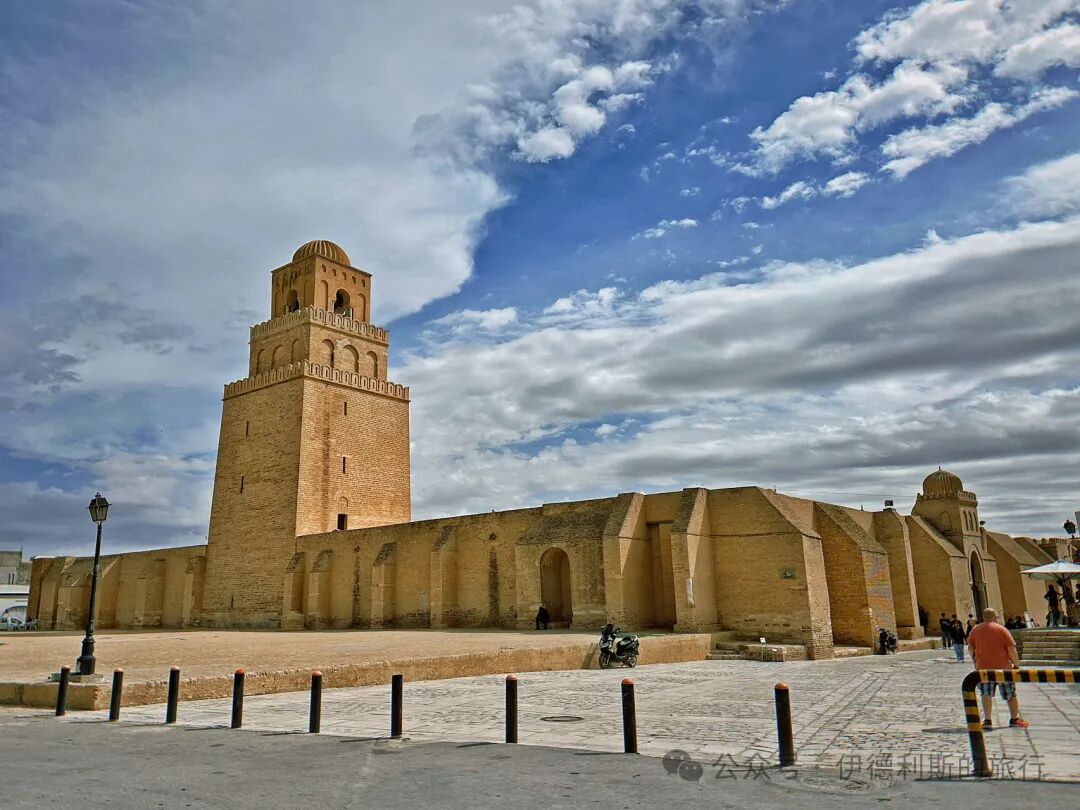
We used this time to look at the exterior of the mosque. The Great Mosque of Kairouan is the oldest and most spectacular Jumu'ah mosque in Tunisia. It was first built in 670 by order of Uqba ibn Nafi, a general of the Arab Umayyad Caliphate. It was destroyed by Christian Berbers in 690 and rebuilt by the Umayyad Caliphate in 703. As the Arab population in Tunisia grew, the number of Muslims in Kairouan increased. The Great Mosque was rebuilt and renovated many times between 724-728, 774, 836, 862-863, and 875, finally taking its current form in the 9th century.
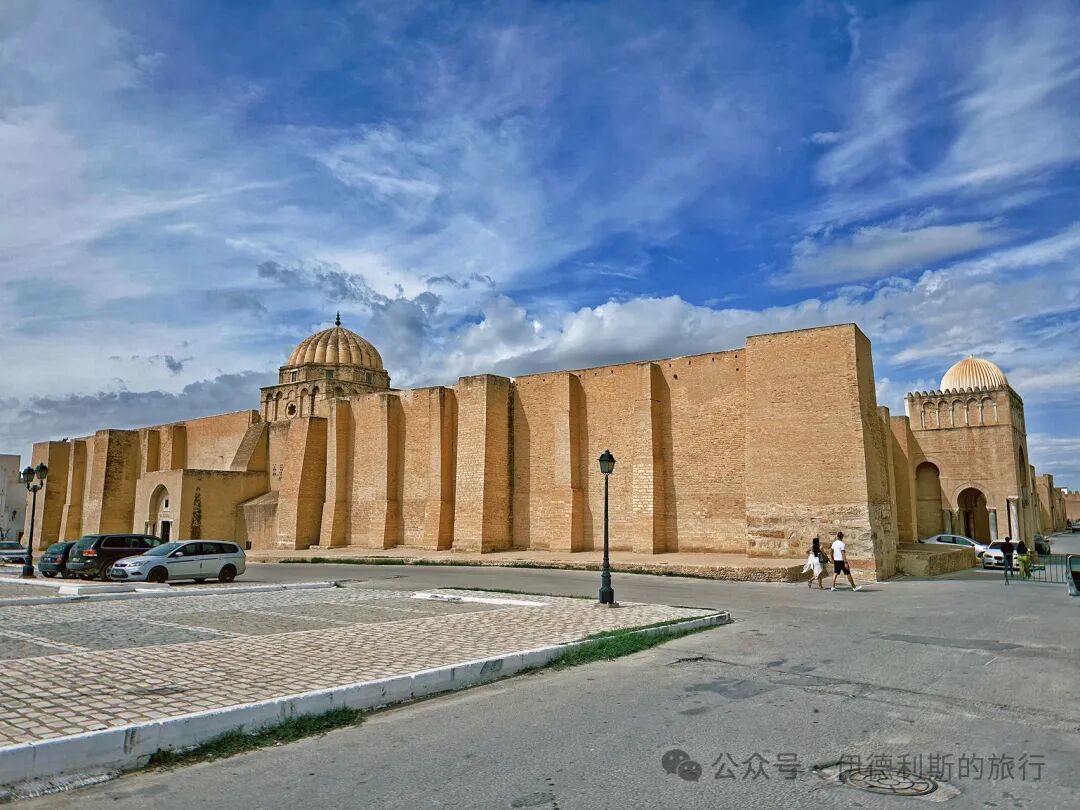
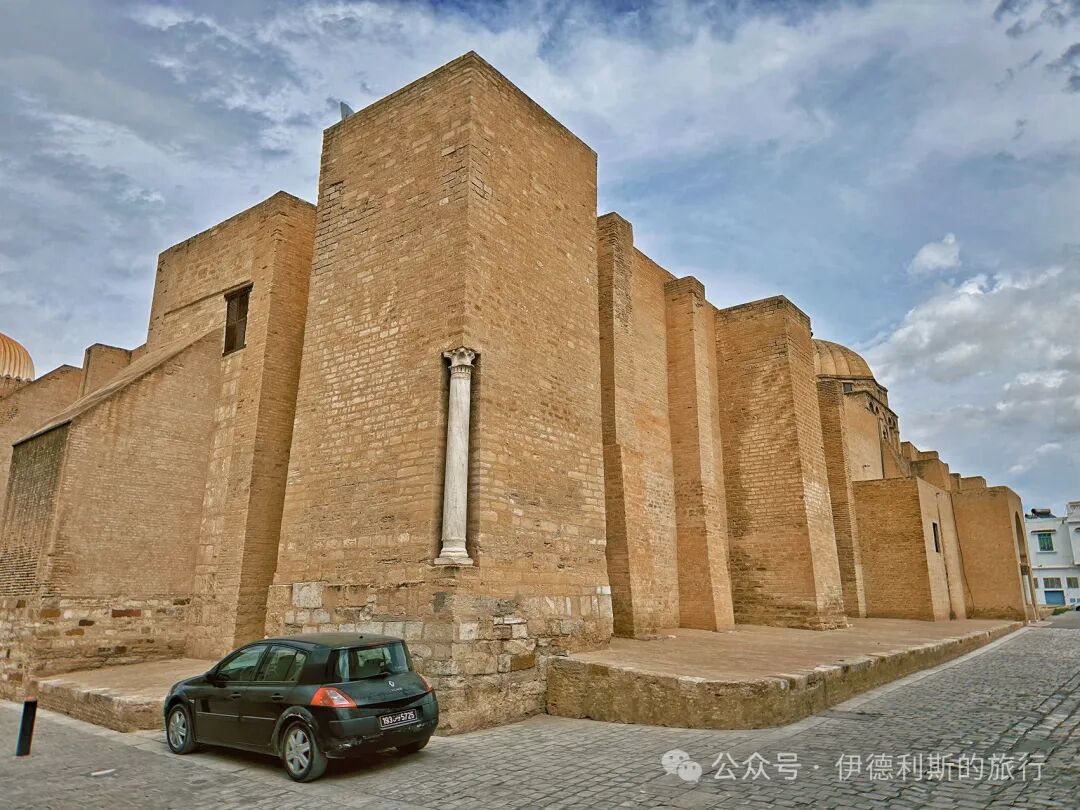
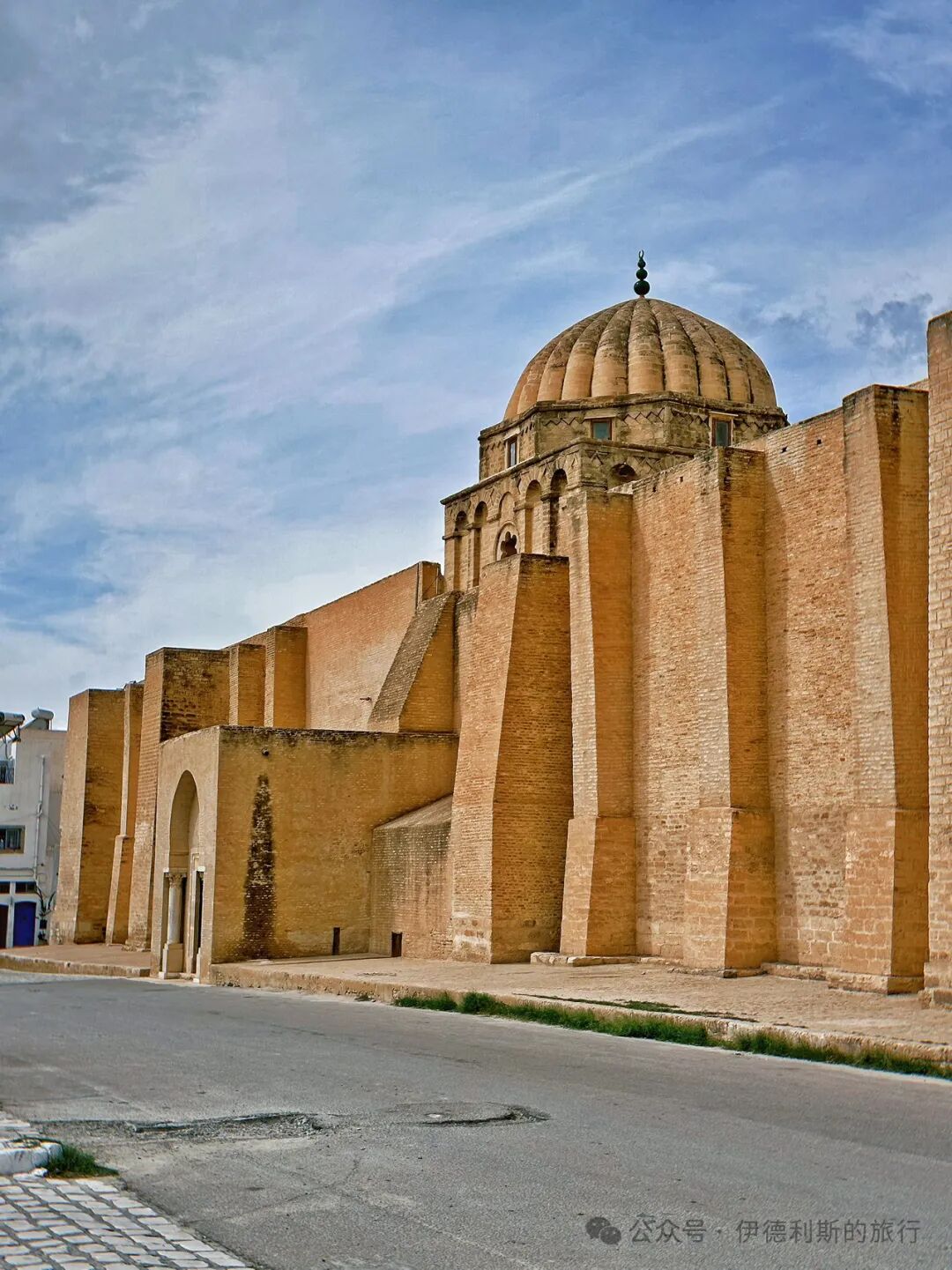
The Great Mosque is a huge, irregular quadrilateral with a perimeter of 405 meters, looking like a fortress from the outside. The outer walls are 1.9 meters thick and built from stone, rubble, and bricks. Because the ground is quite soft, many buttresses were built on the outer walls to increase stability.
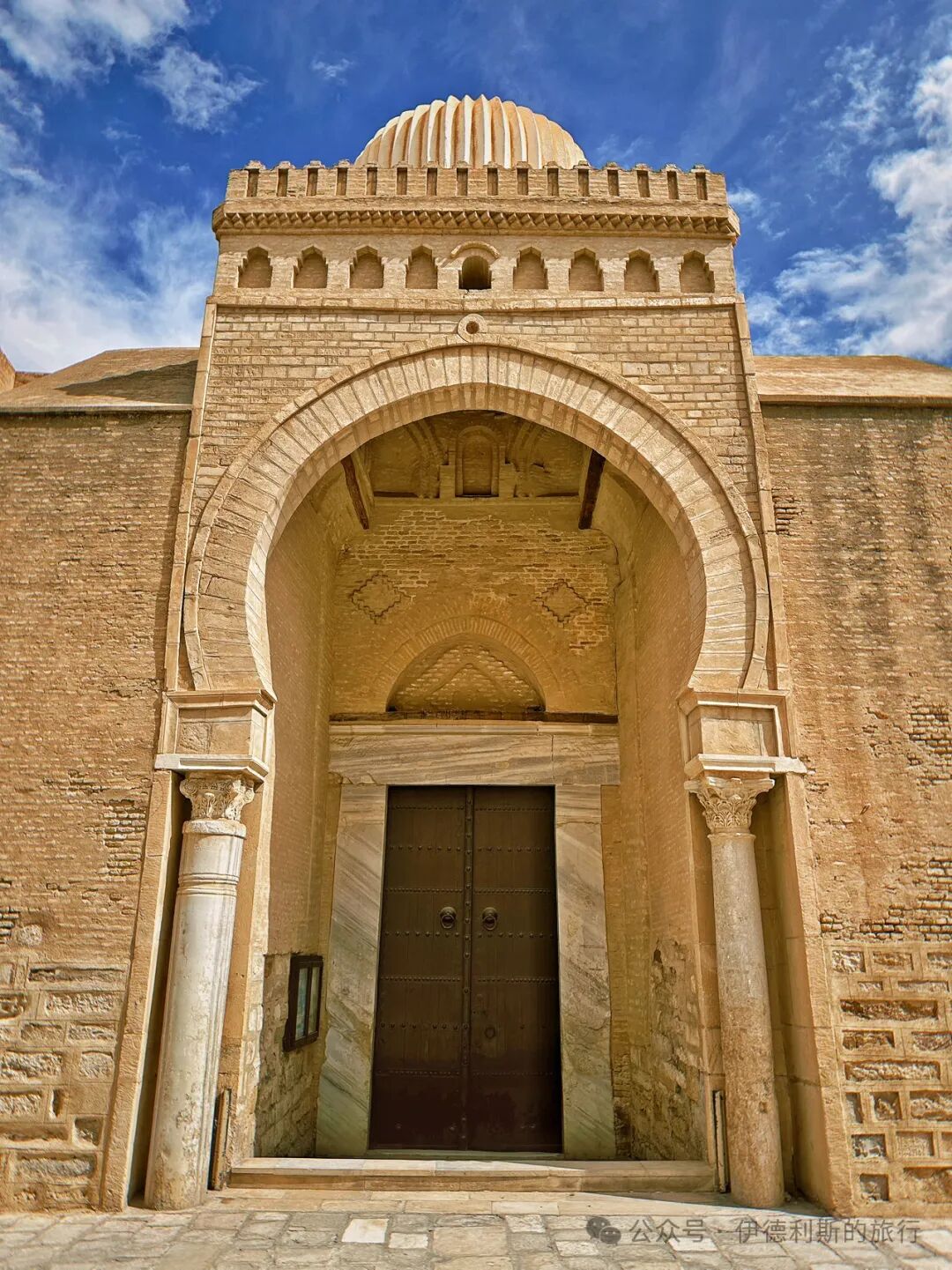
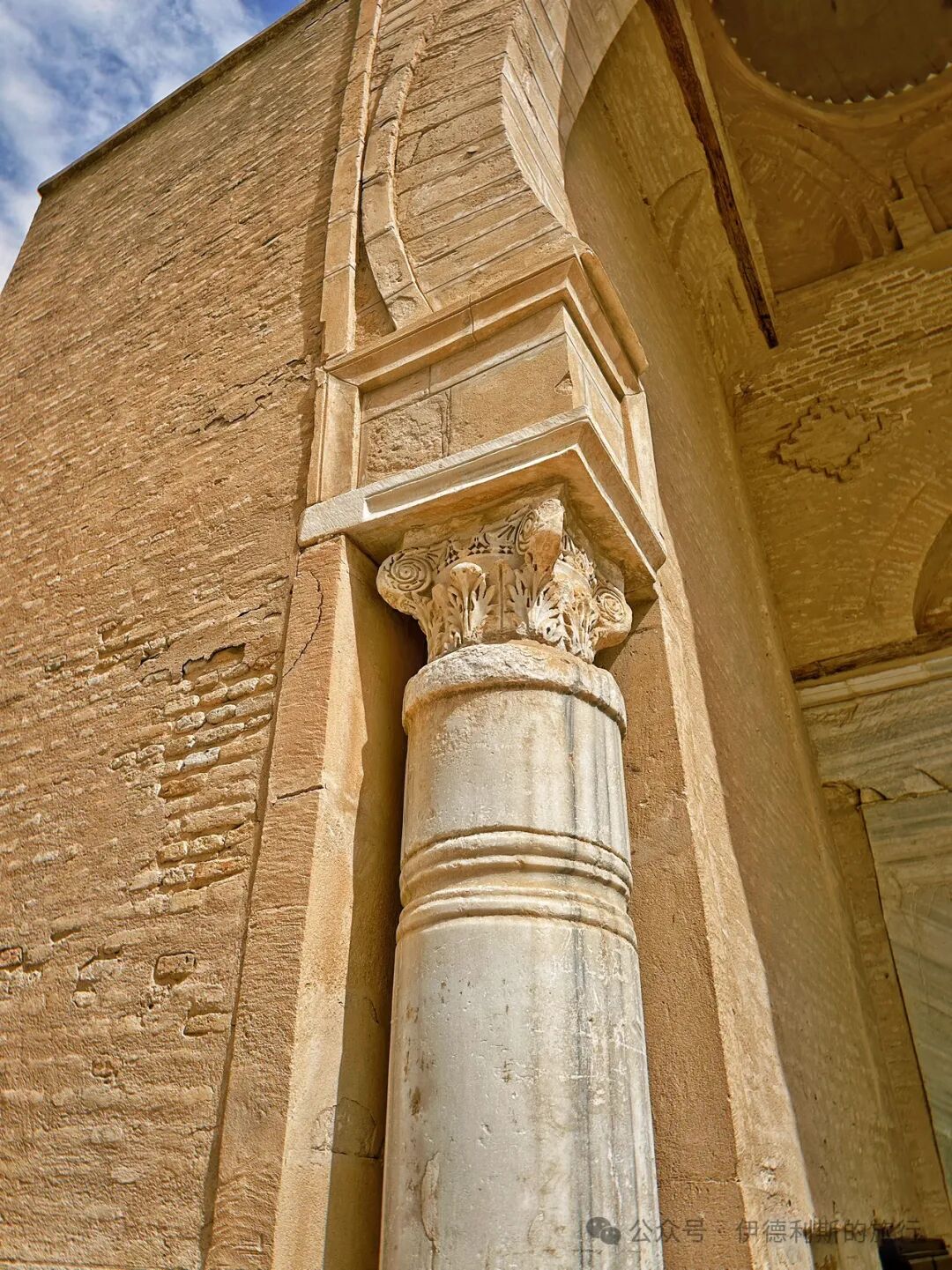
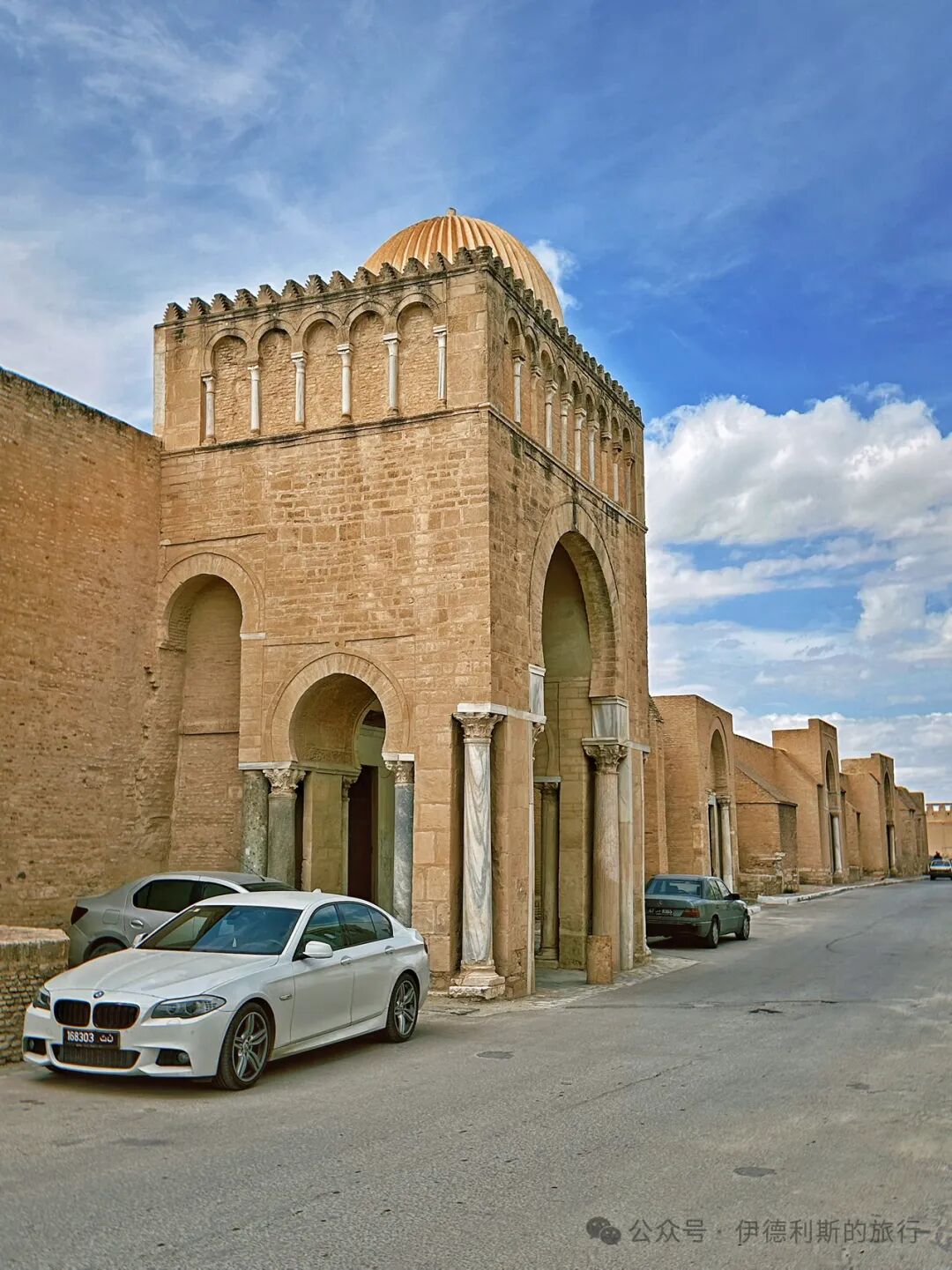
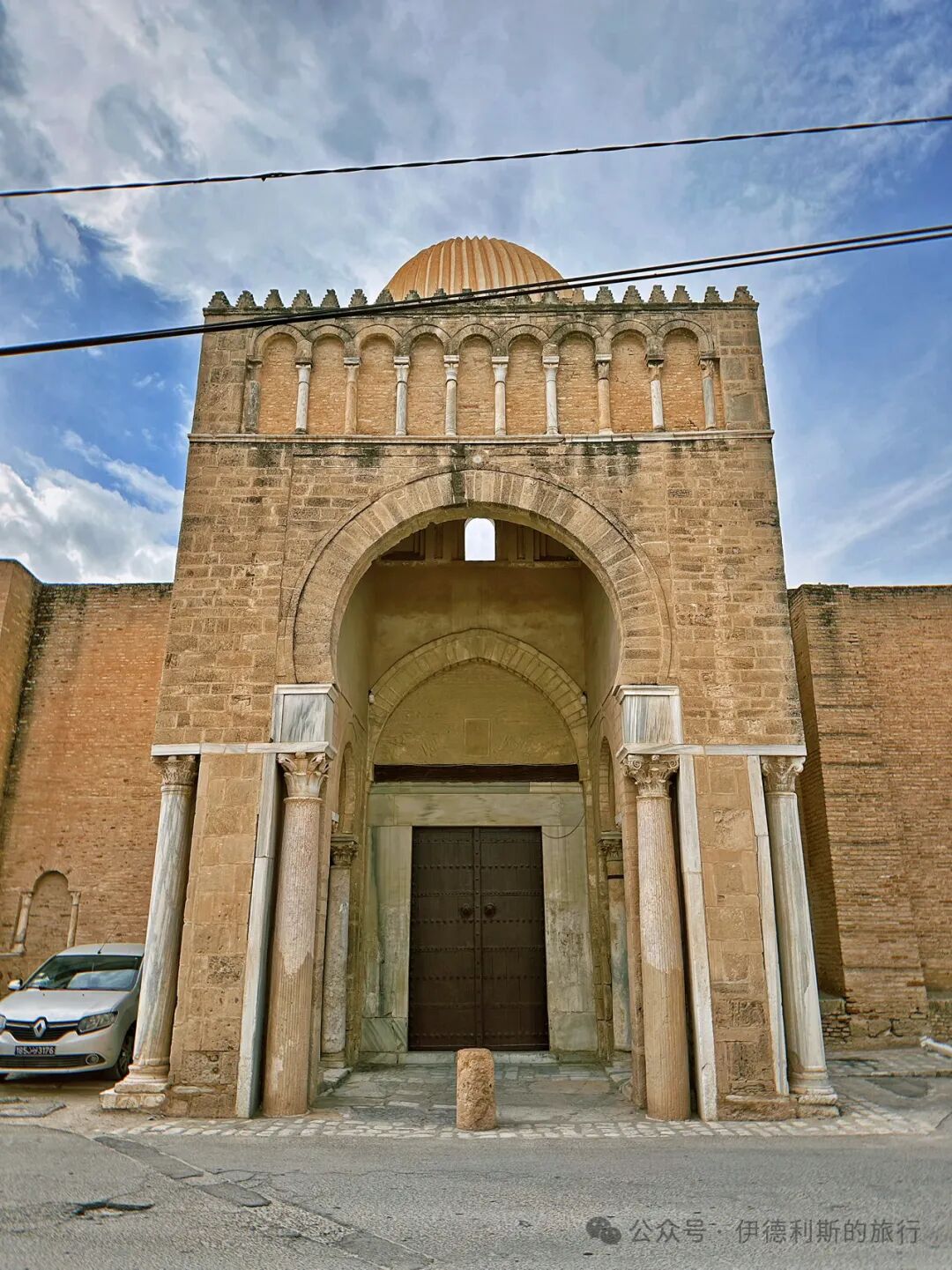
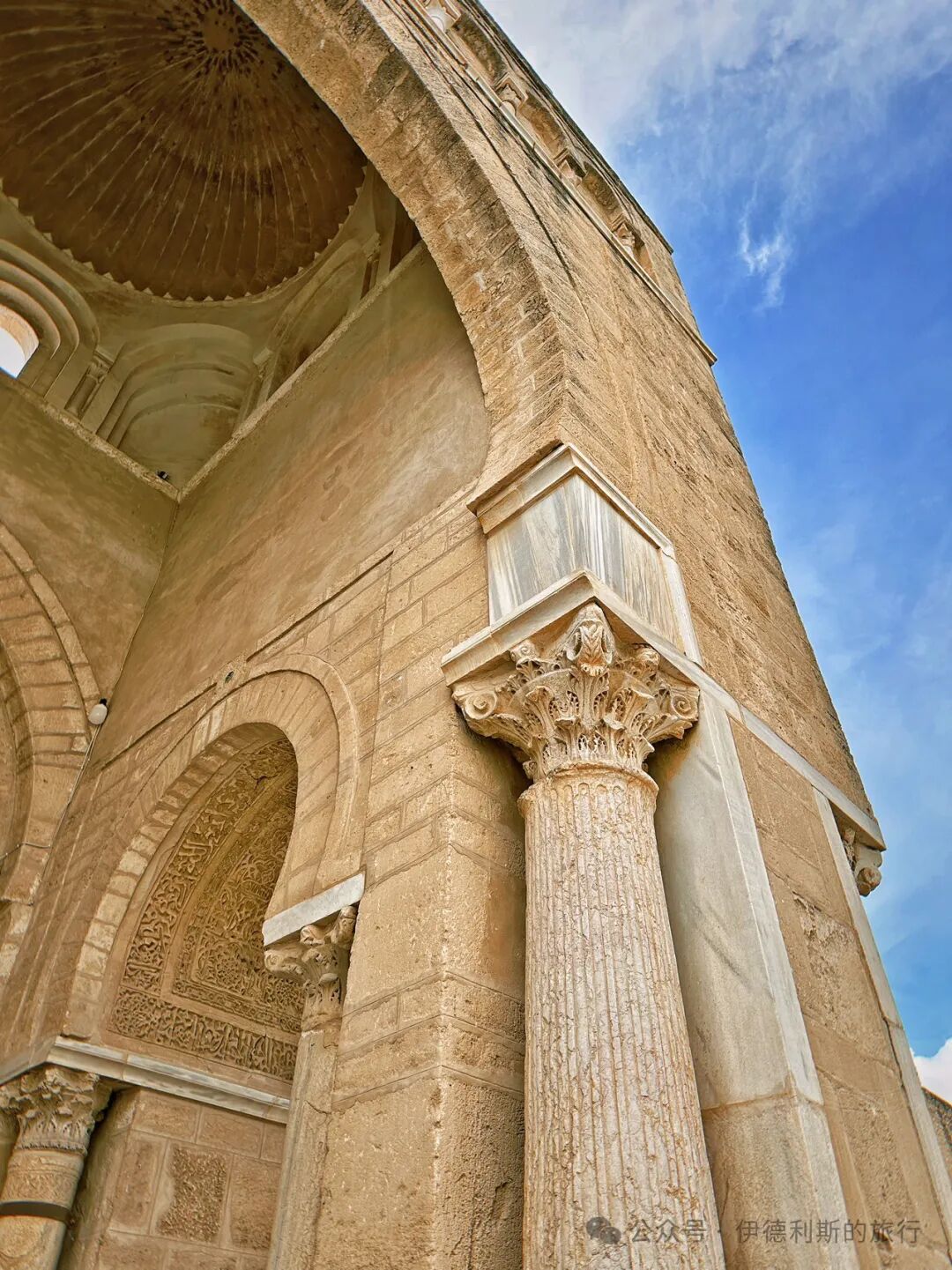
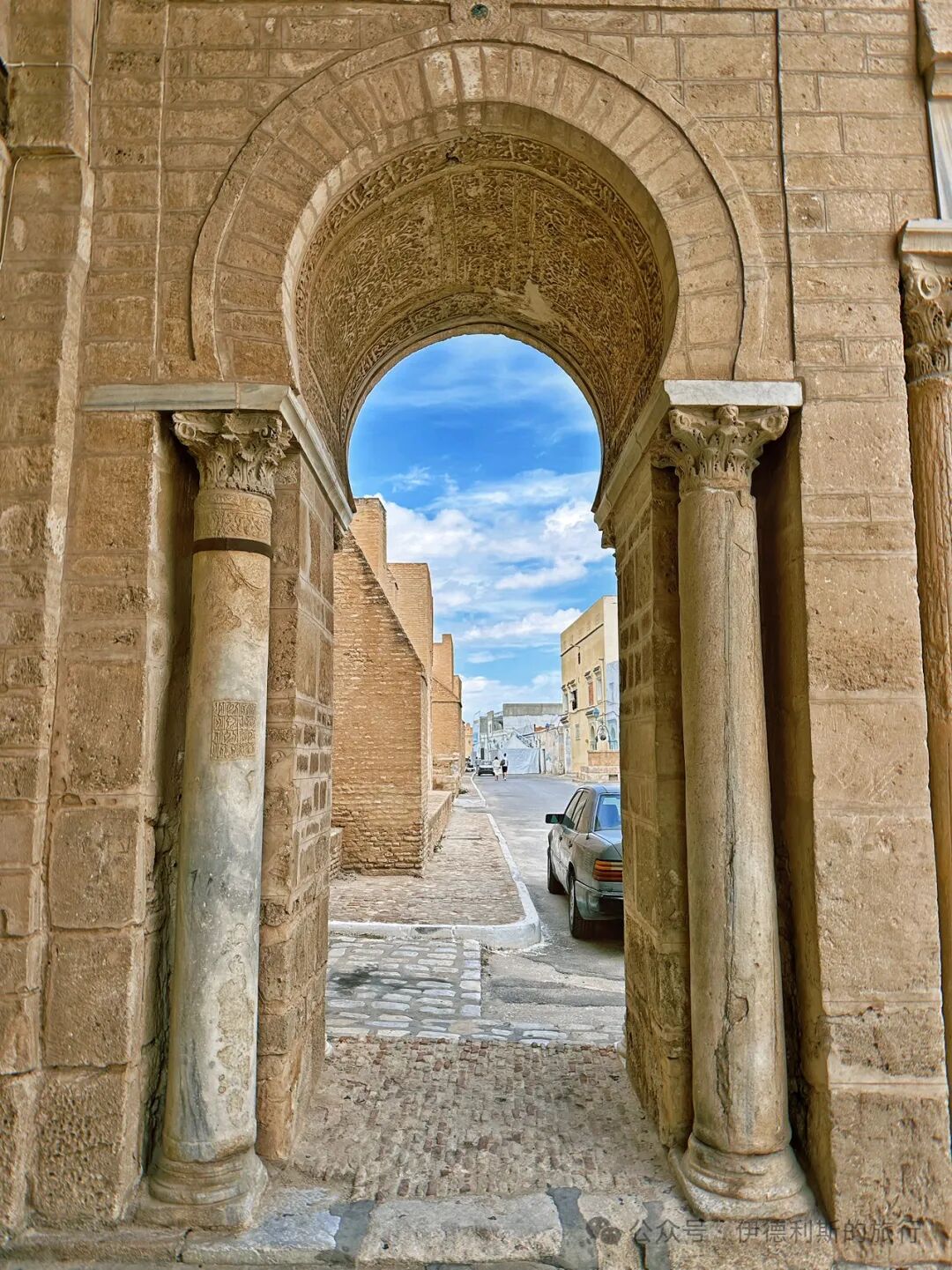
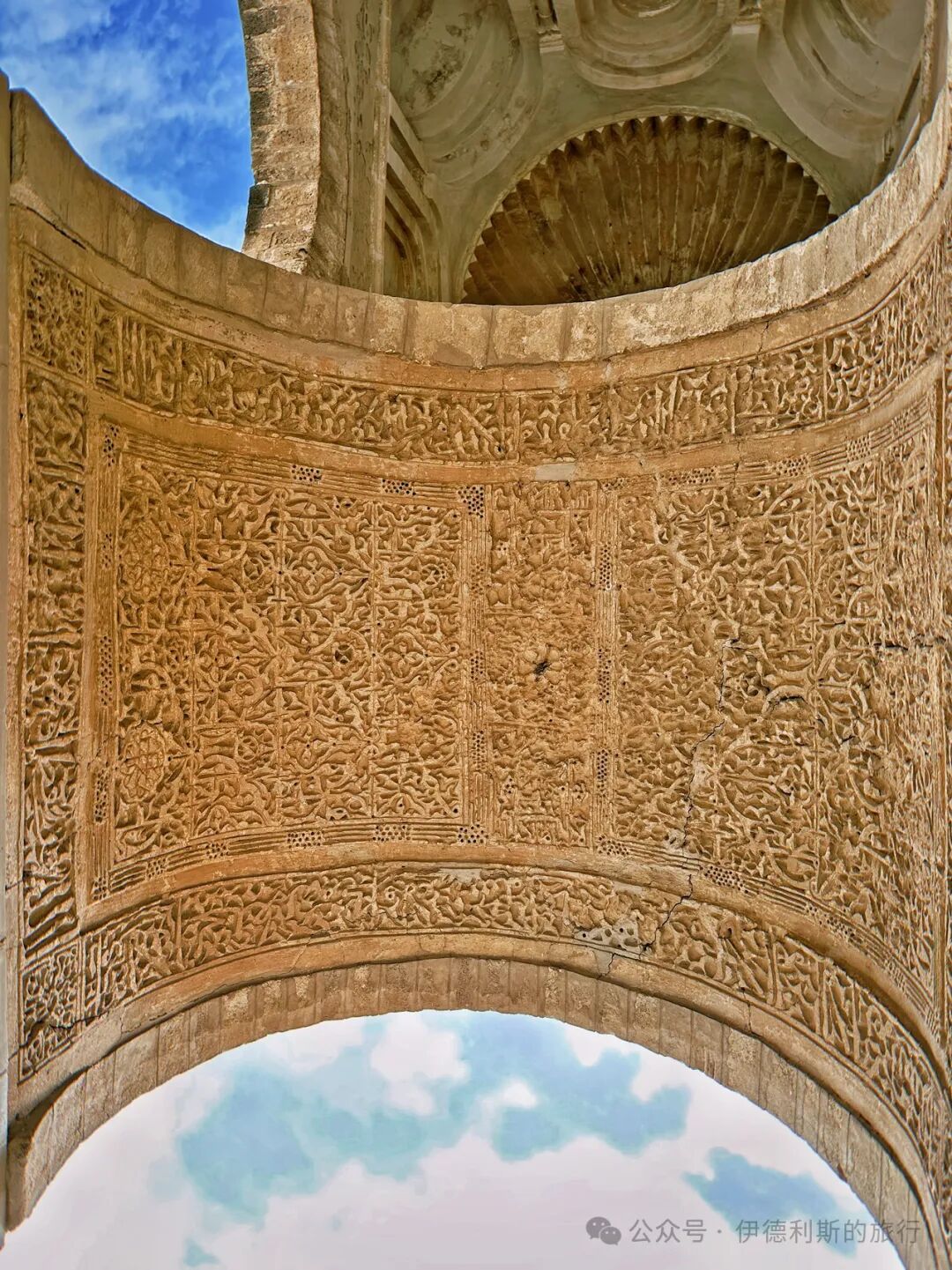
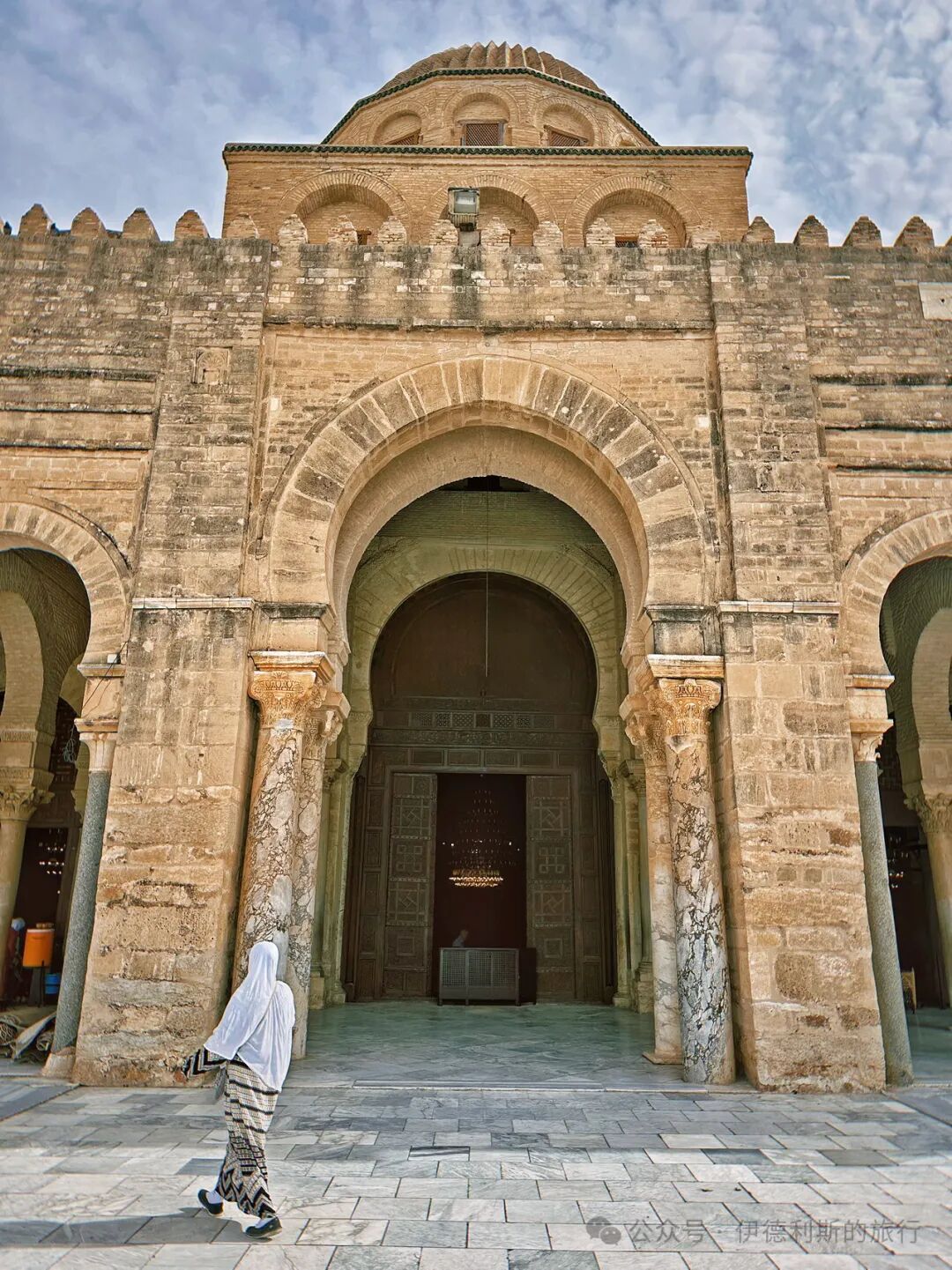
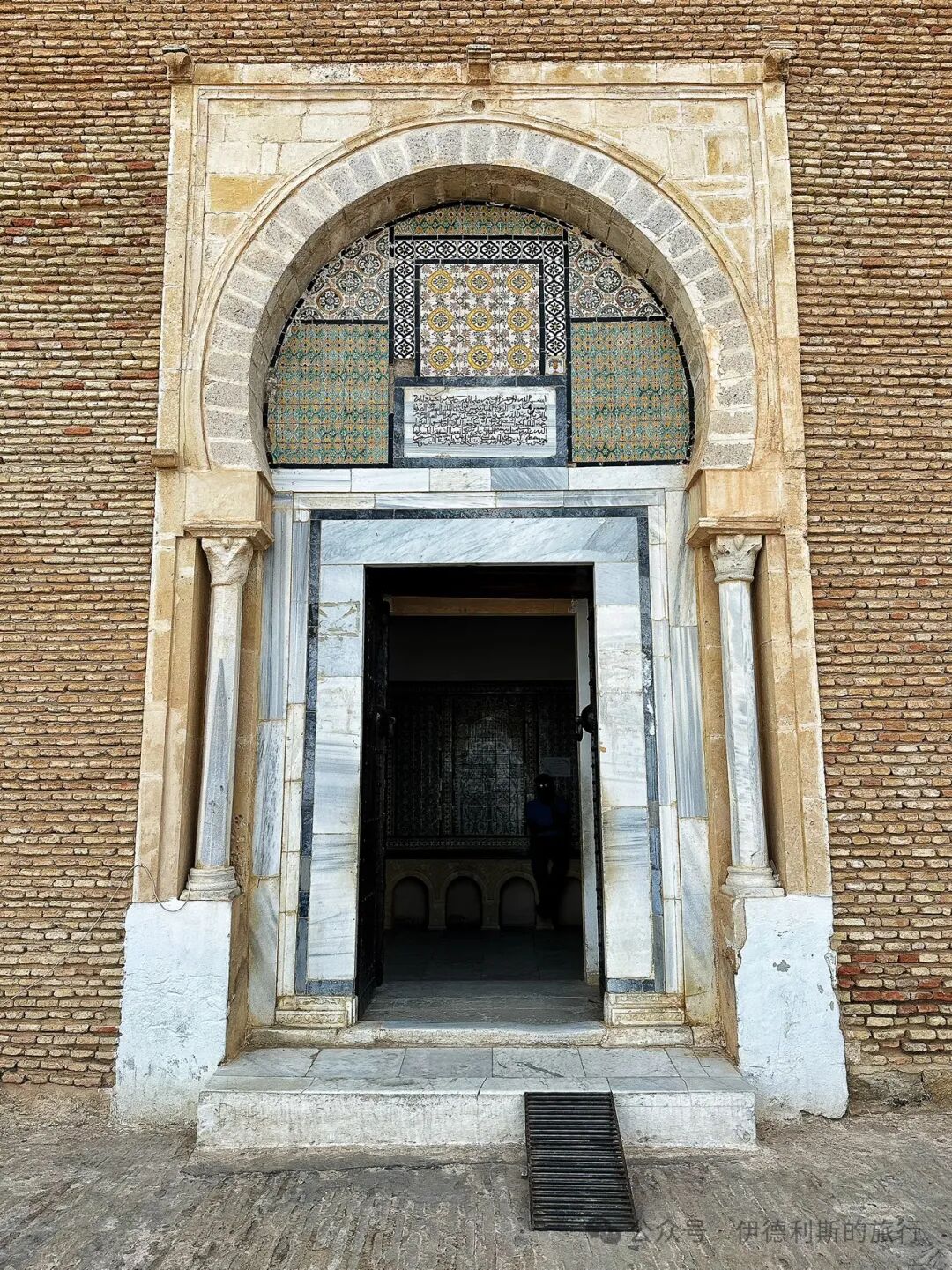
The Great Mosque has nine gates, some of which have porches and spiral-shaped domes. Bab Lalla Rihana on the southeast side was built in 1293 during the Hafsid dynasty. It features a horseshoe arch and ancient stone columns that blend perfectly with the 9th-century walls.
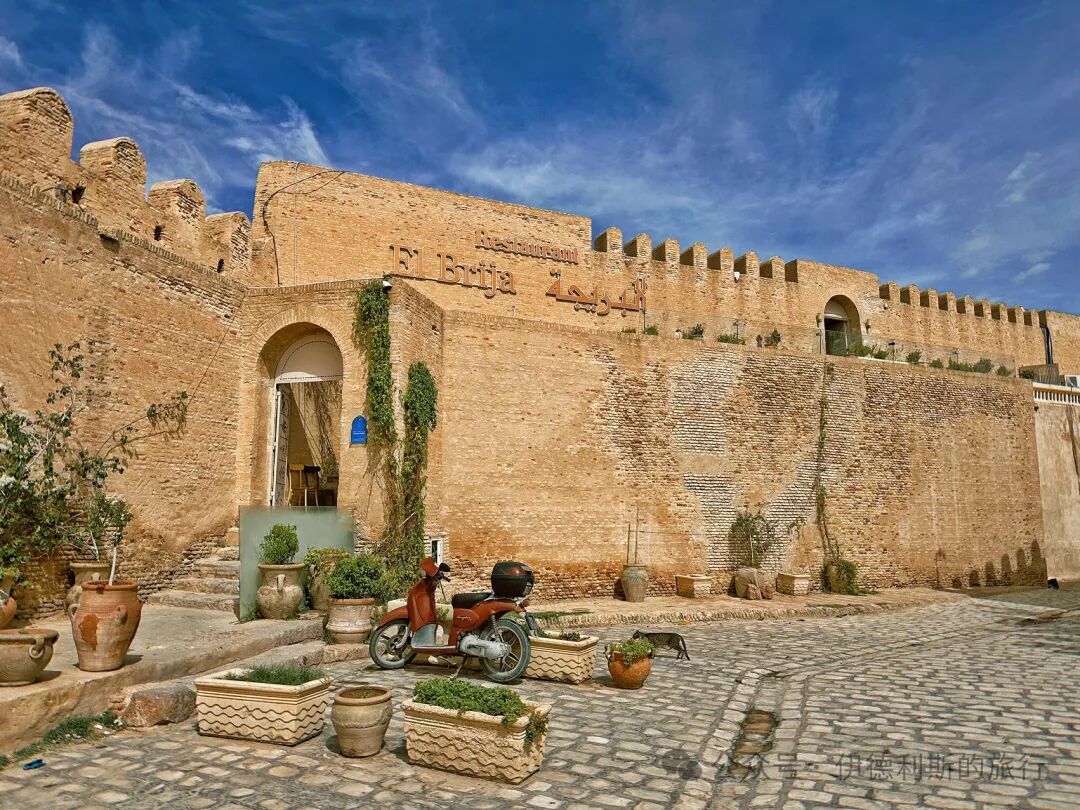
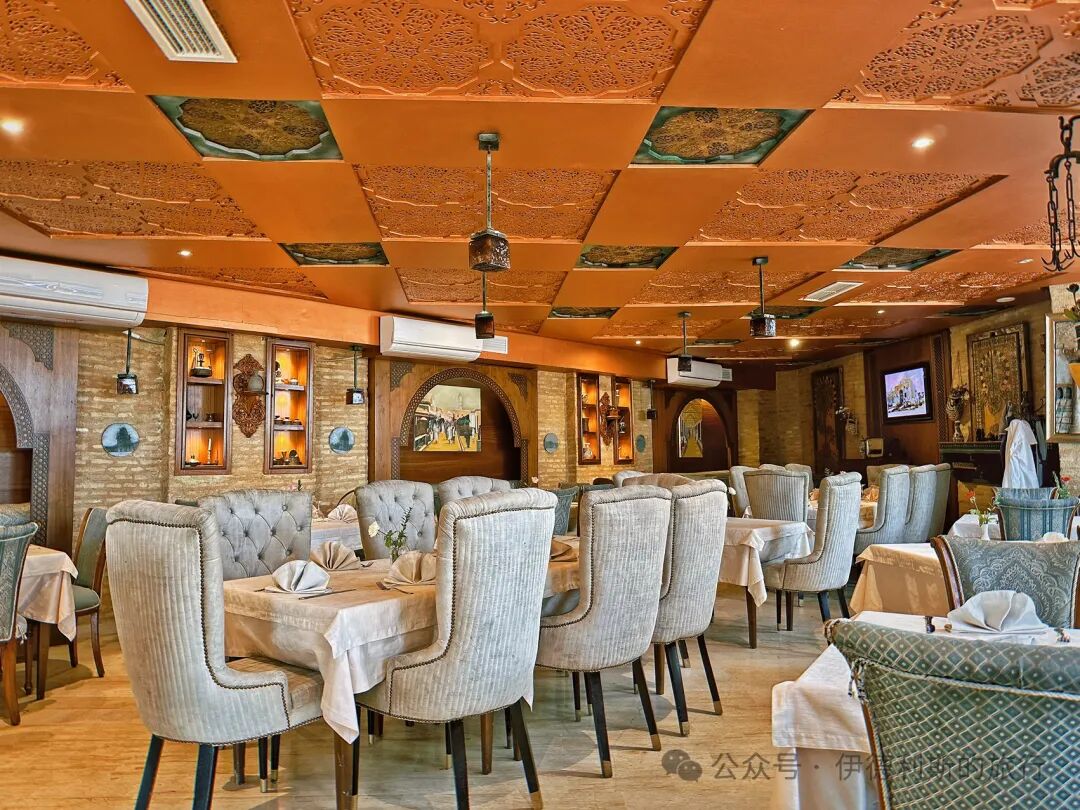
While waiting for Jumu'ah, we had lunch at El Brija Restaurant, located on the city wall next to the Great Mosque. The atmosphere and service were both good, and they serve traditional Tunisian food. I recommend eating here when visiting the Great Mosque.
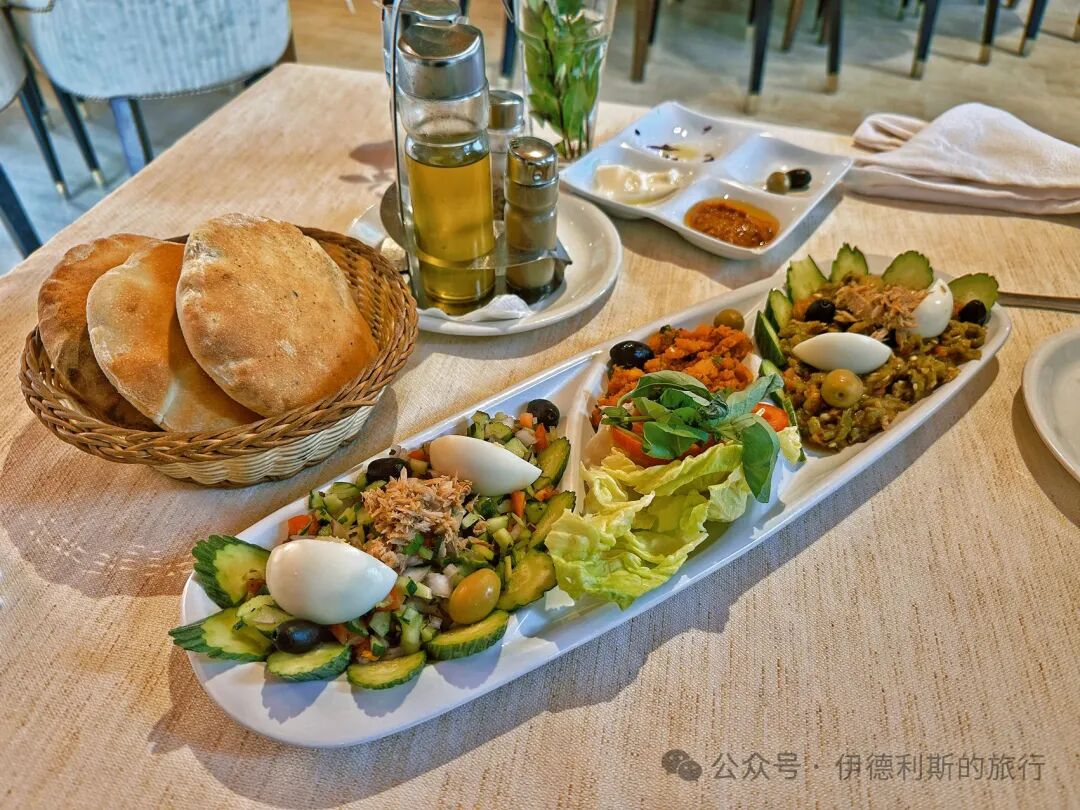
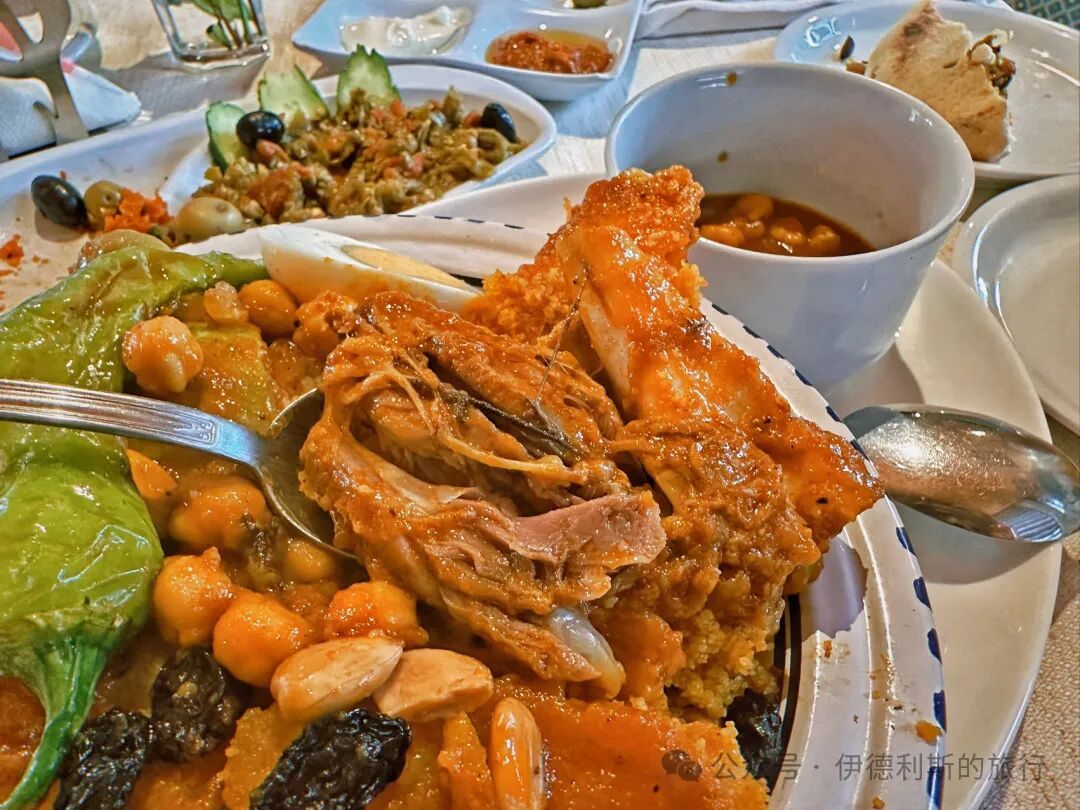
We ordered a traditional appetizer platter and a mixed couscous stew. When eating at a proper restaurant in Tunisia, you really only need to order the main course, as most places provide side dishes and bread.
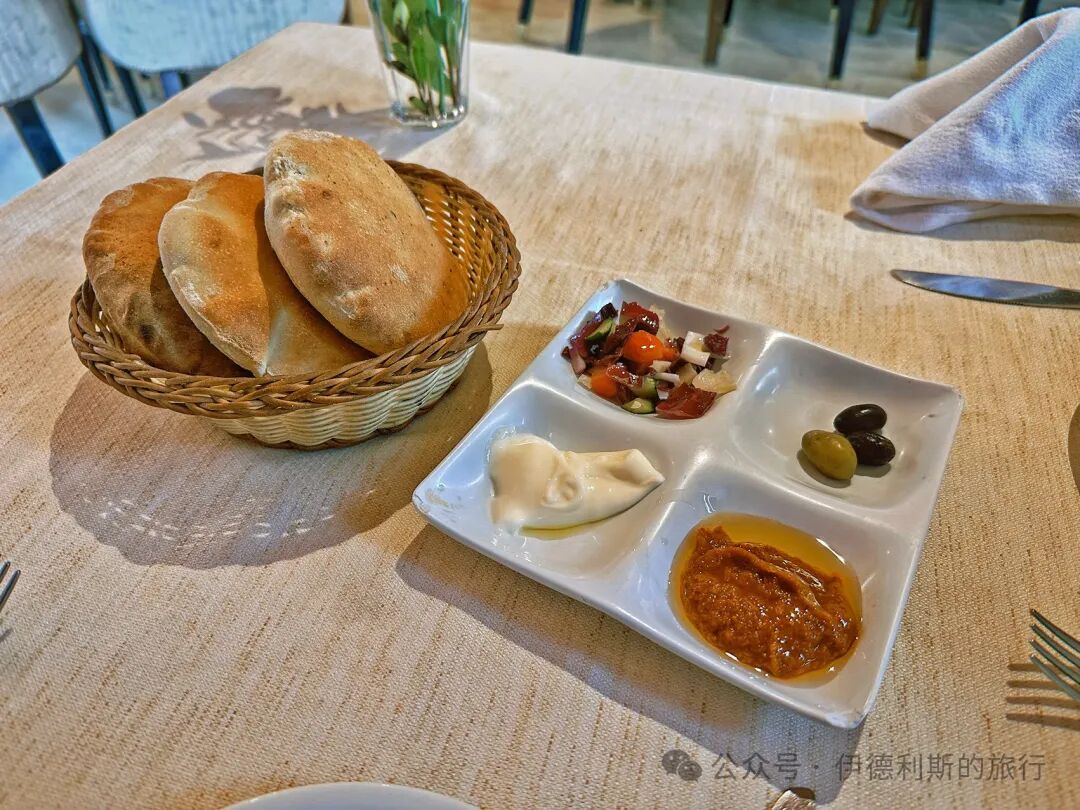
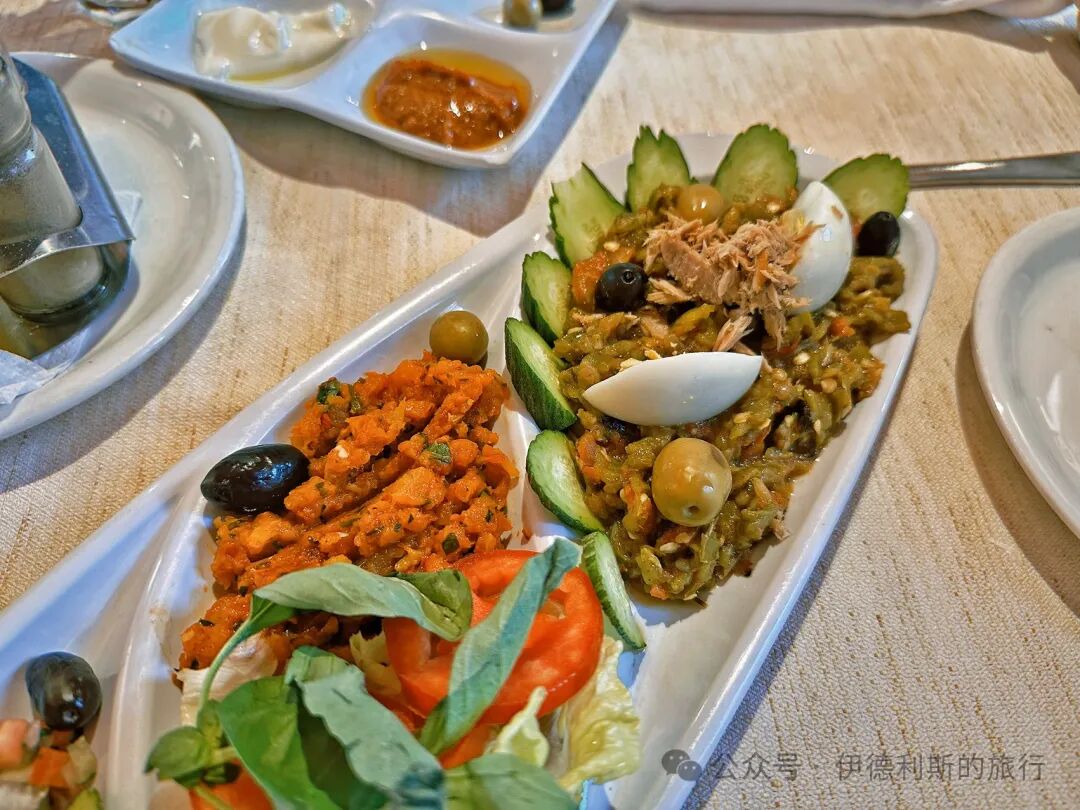
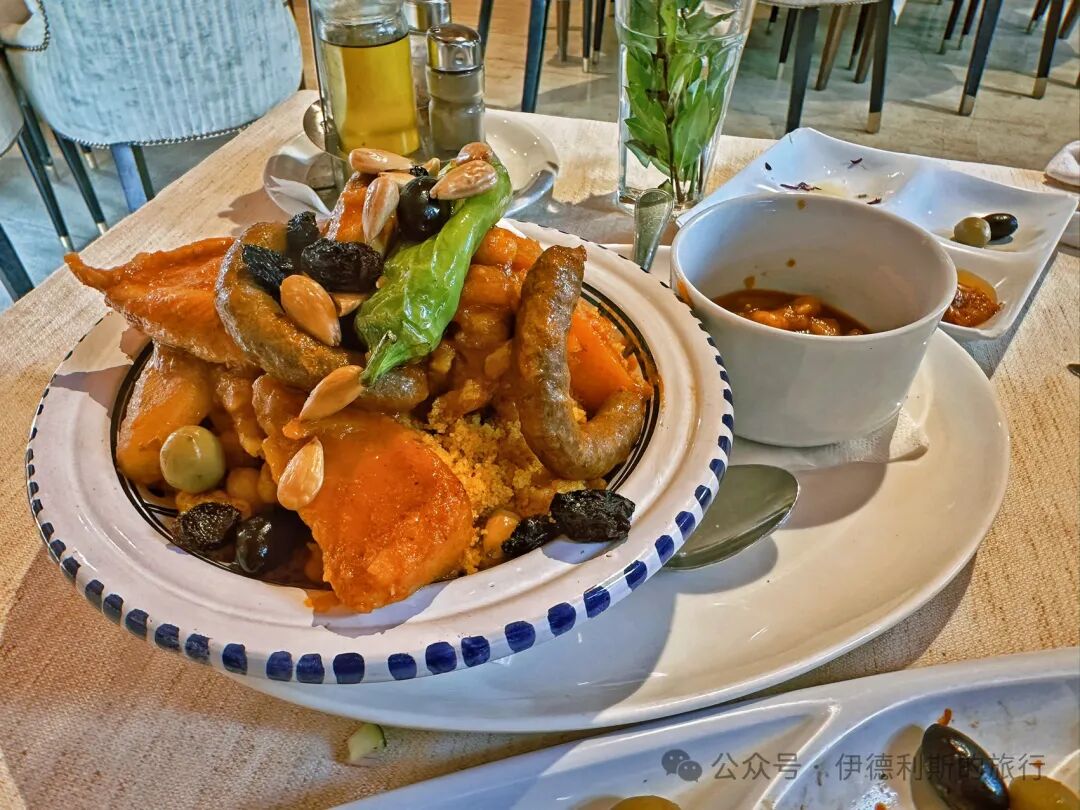
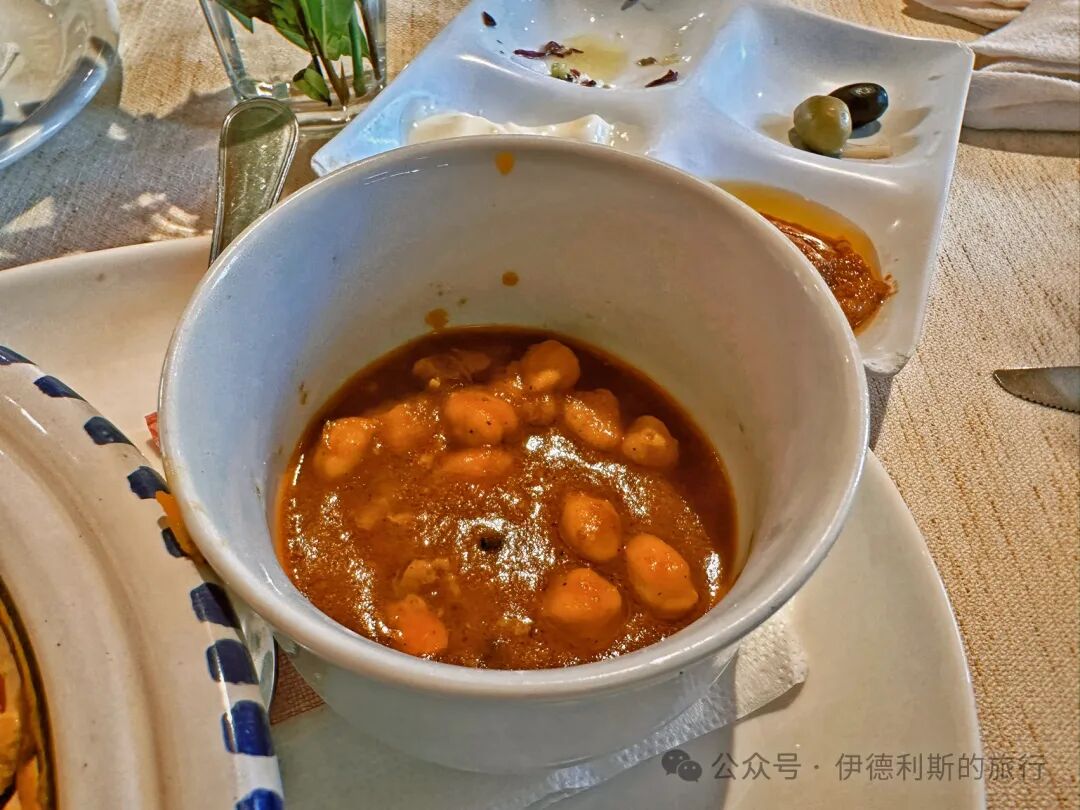
Our appetizer platter included Tunisian salad, Houria carrot salad, and Mechouia green pepper salad. We ate these three dishes almost every day in Tunisia. Tunisian salad is made of diced cucumbers, tomatoes, and onions mixed with olive oil, topped with boiled eggs and tuna. Mechouia salad contains green peppers, tomatoes, onions, garlic, and more. Tunisians love it, and it is rich in vitamins and very healthy. The couscous stew was very rich, containing lamb, Merguez sausage, chicken, beef, dried fruits, and preserved fruits. The Merguez sausage is seasoned with cumin and chili, making it very flavorful.
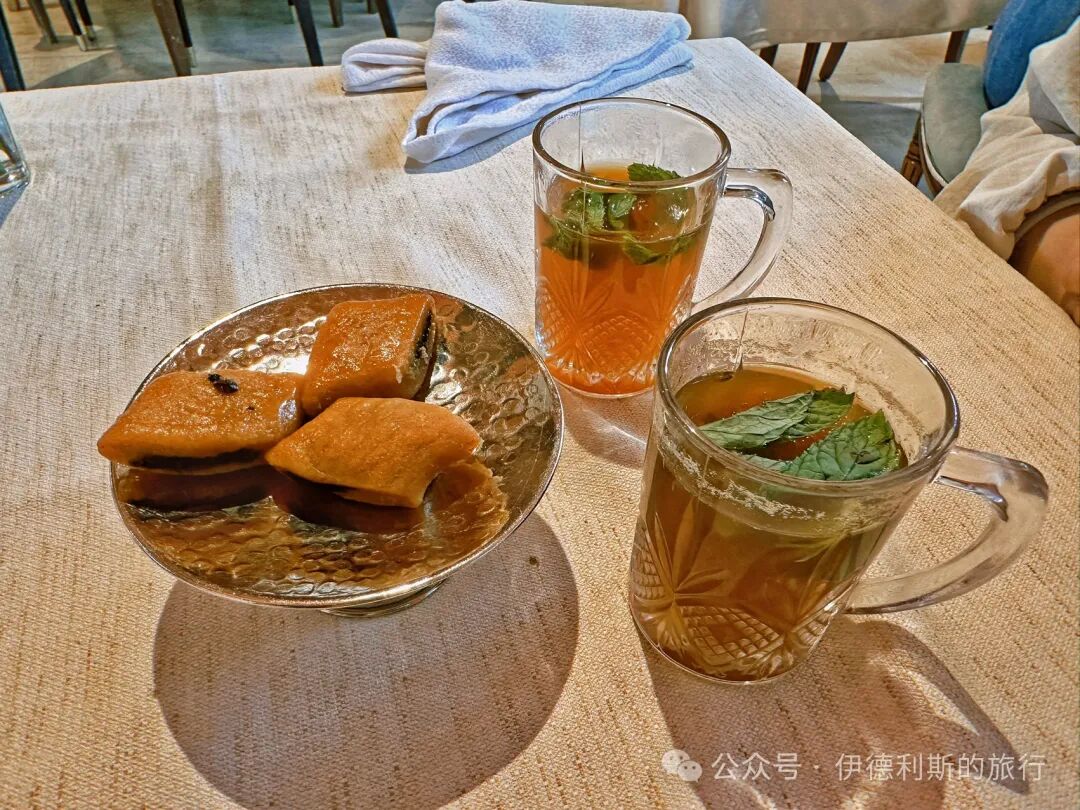
After the meal, we were served mint tea and Makroudh dessert. Makroudh is a classic North African Maghreb snack for breaking the fast. It is made of semolina on the outside, filled with date paste and dried fruits, then baked and soaked in syrup.
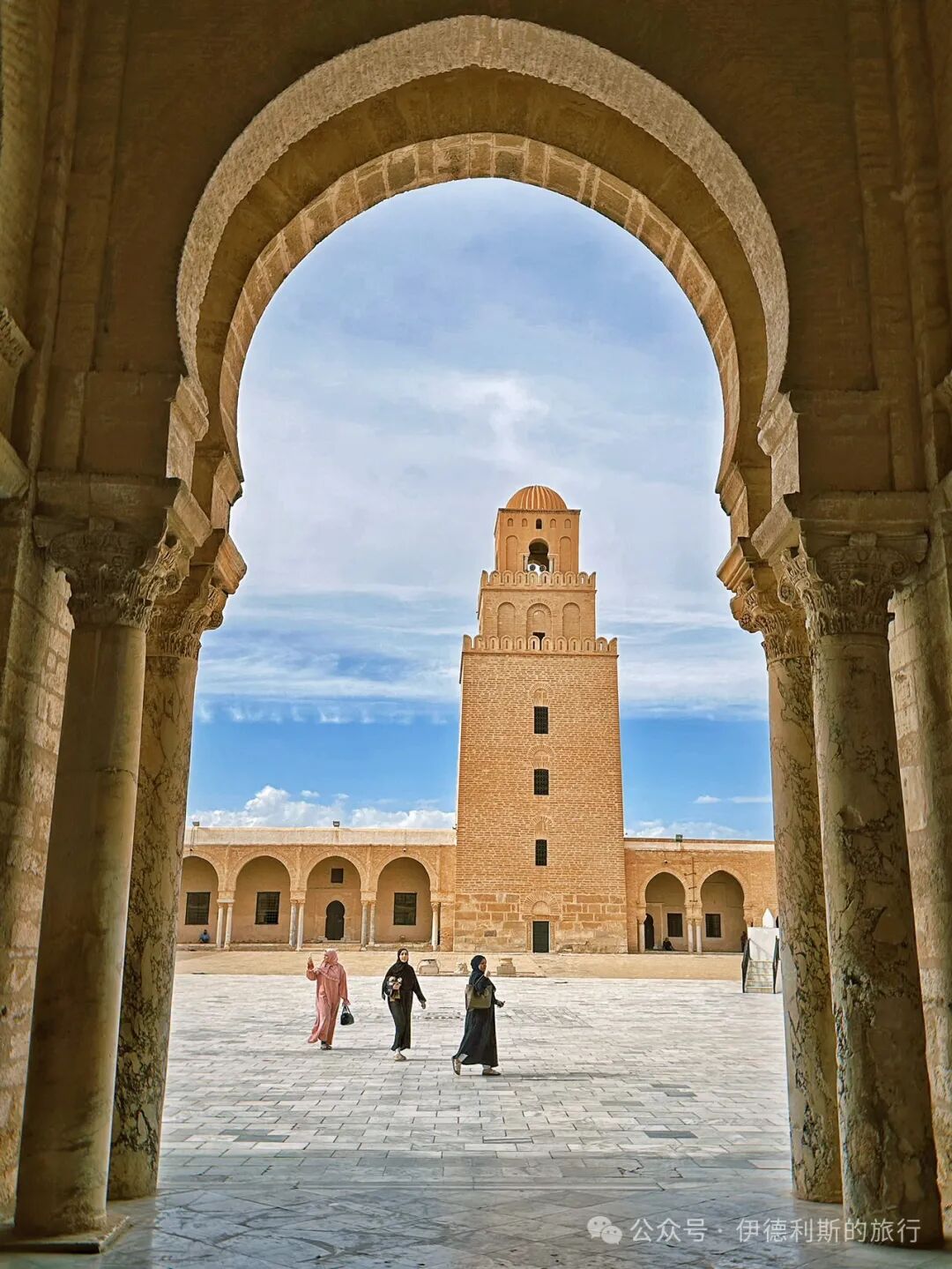
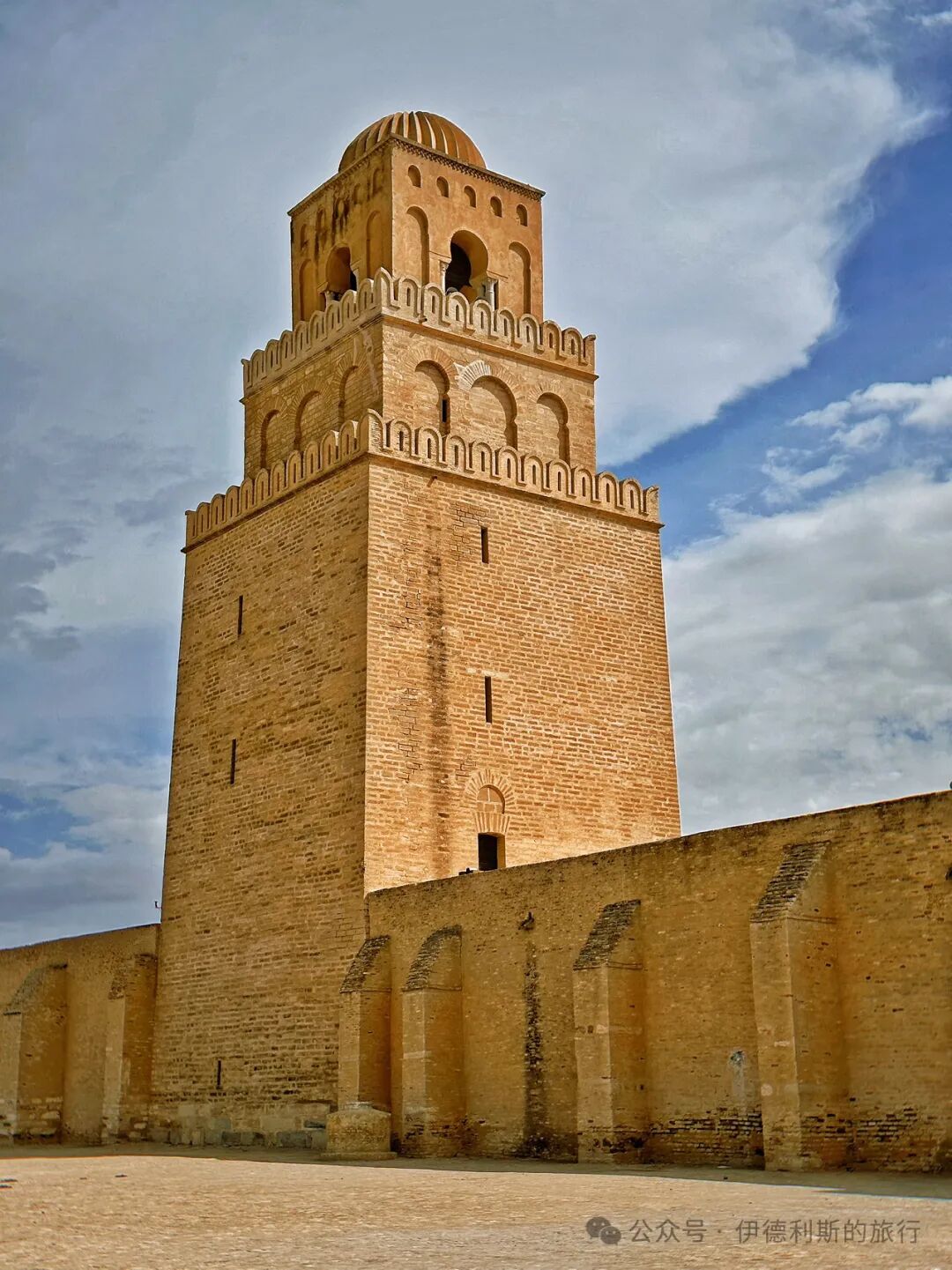
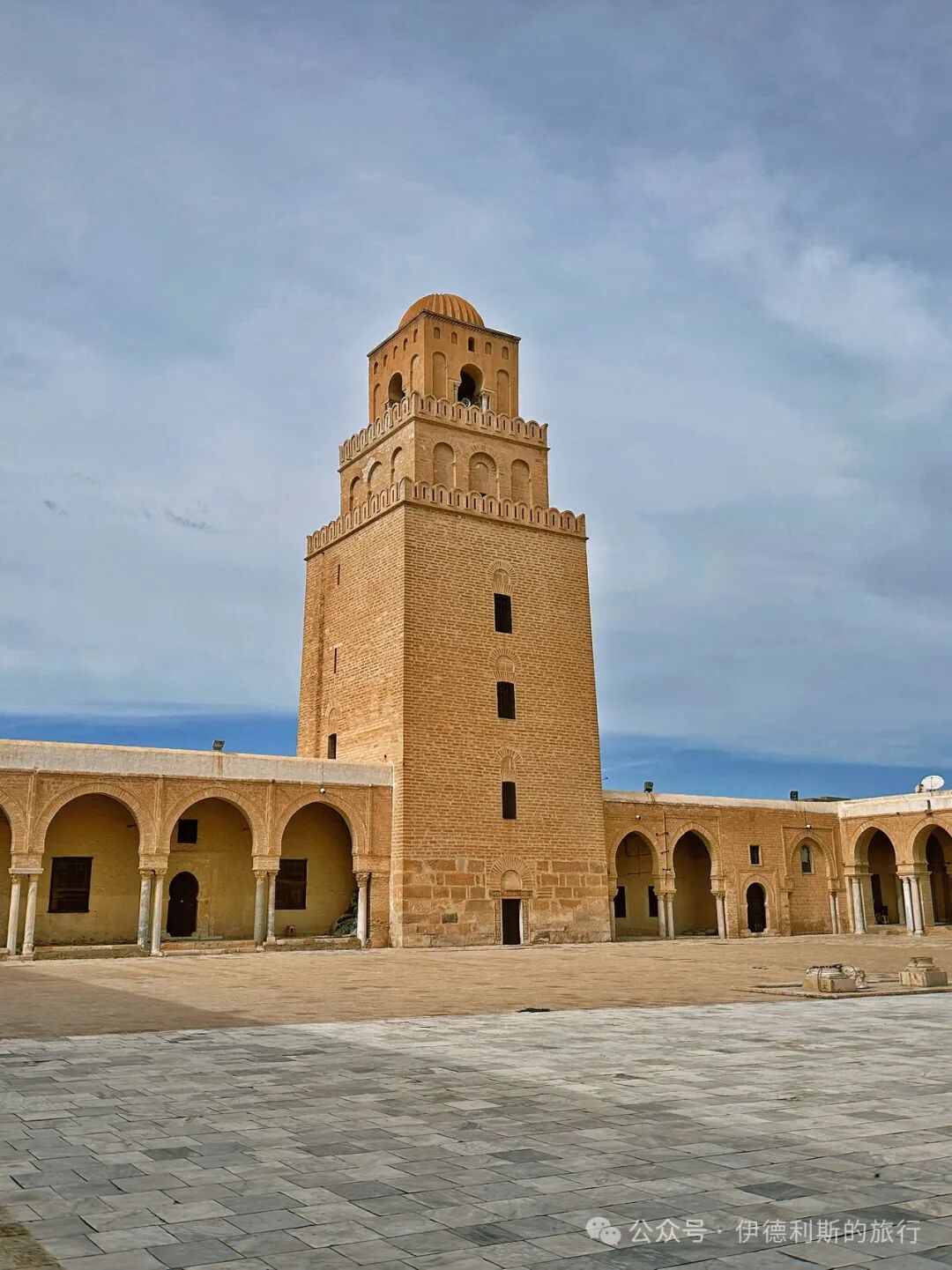
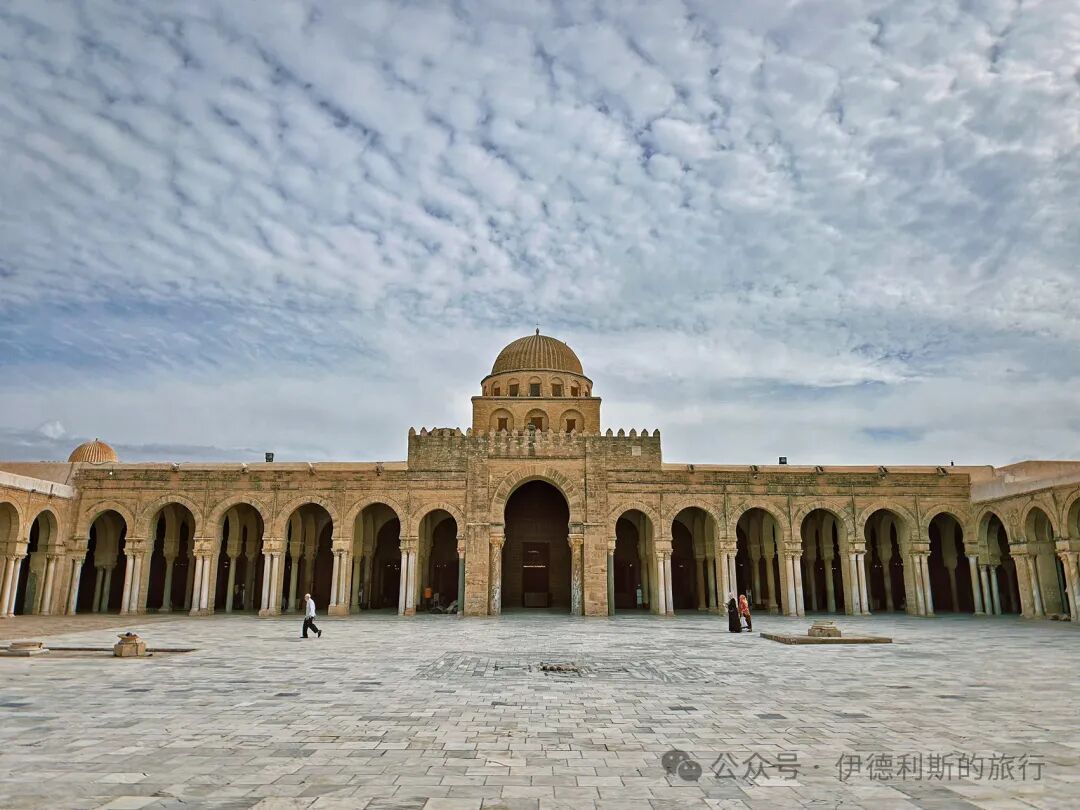
We returned to the Great Mosque after two o'clock, and people were already entering the prayer hall. Once inside the courtyard, the first thing you see is the oldest minaret (bangke ta) still in existence today. The minaret of the Great Mosque of Kairouan was built between the 8th and 9th centuries. The current structure mostly dates back to 836. It is one of the three most important early minarets, alongside the spiral minaret of the Great Mosque of Samarra in Iraq, built between 848 and 852, and the spiral minaret of the Abu Dulaf Mosque in Iraq, built in 859. These three served as models for later minarets across Andalusia and the Maghreb.
There were no minarets during the time of the Prophet and the four Caliphs. People called for prayer (adhan) from the mosque entrance or the roof. Platforms for calling the adhan appeared during the Umayyad dynasty in the 7th century, but true minarets did not emerge until the Abbasid dynasty in the 8th century. There is no final conclusion on the origin of the minaret. Some say it mimics the towers of Syrian churches, while others suggest it was inspired by the Lighthouse of Alexandria or Mesopotamian ziggurats. Four towers were built during the reconstruction of the Sacred Mosque in Mecca in the late 8th century, but they have not survived. The earliest surviving minarets are the one at the Great Mosque of Kairouan and the two in Iraq. The Bride's Minaret at the Umayyad Mosque in Damascus may also date to the 9th century, but there is no clear record of this.
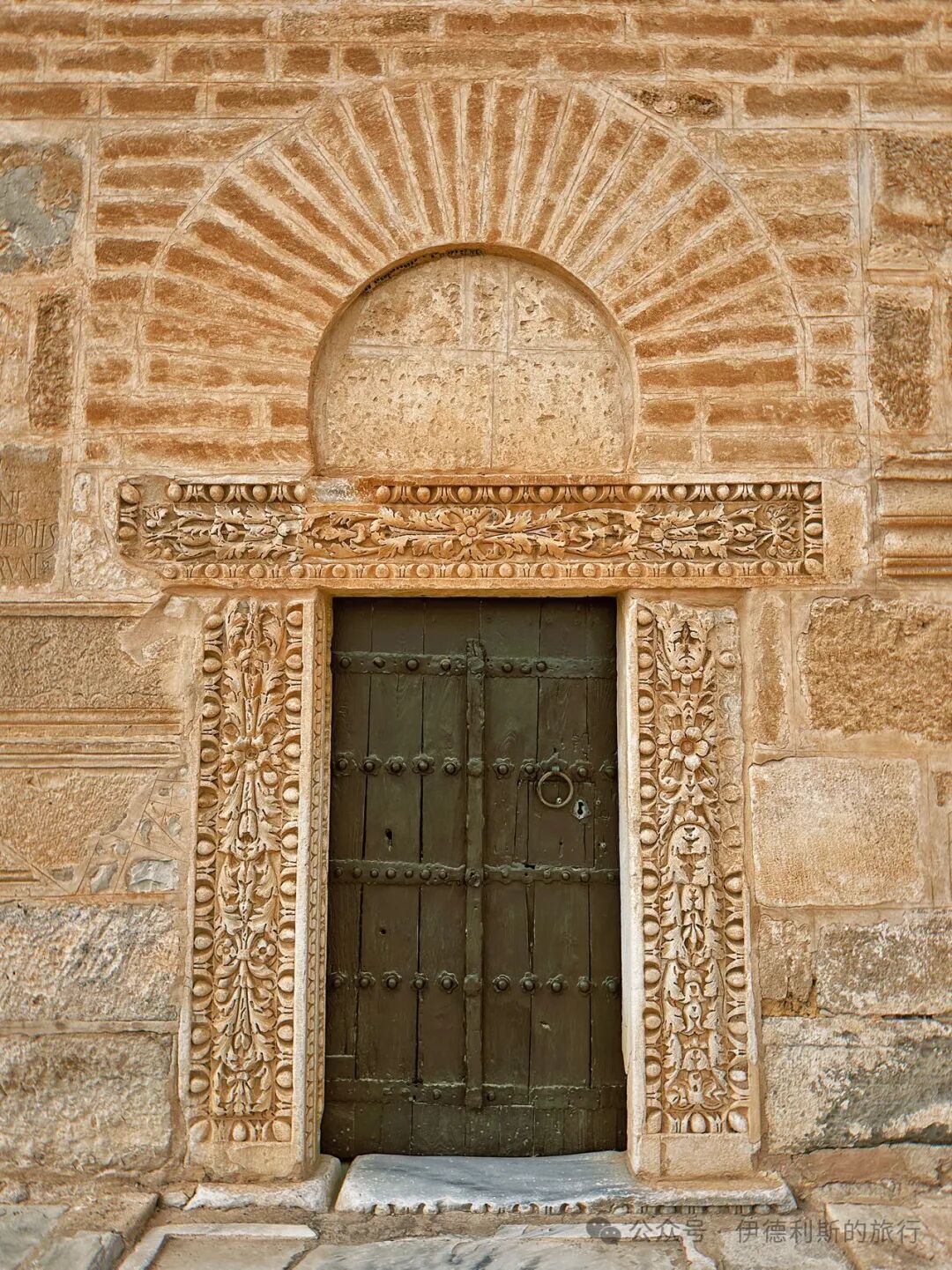
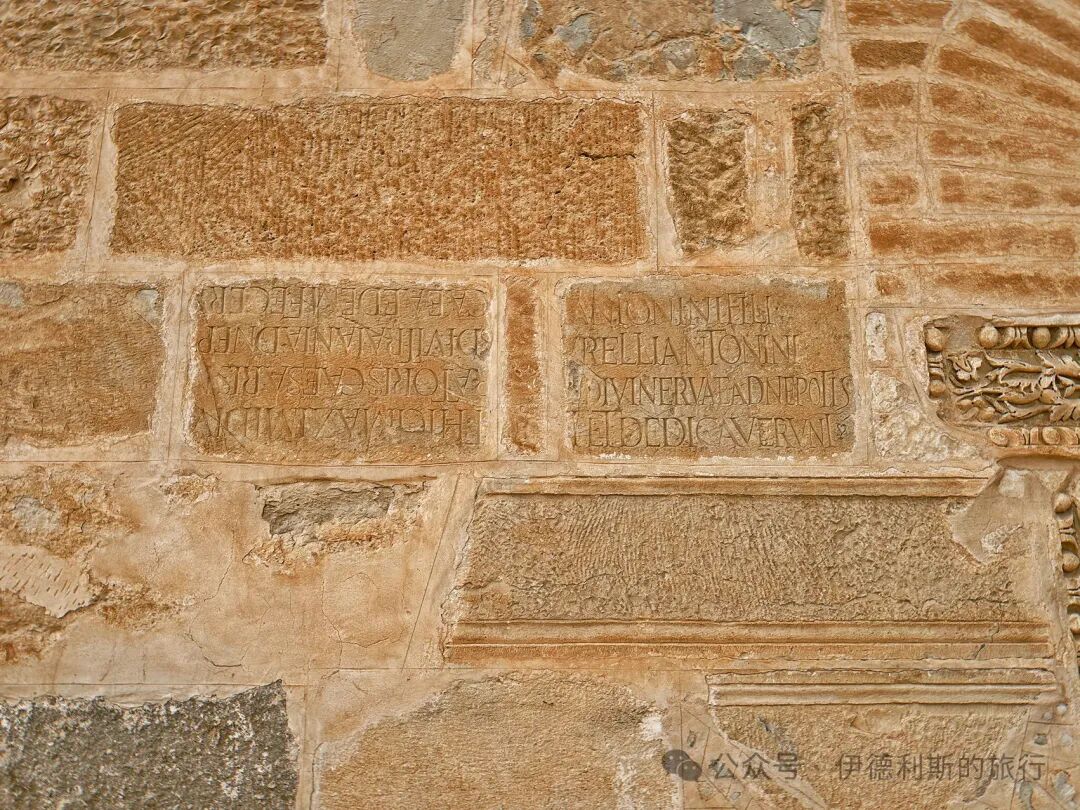
The minaret of the Great Mosque of Kairouan is 31.5 meters tall. Its base dates back to the Umayyad period in 725, and you can see Latin inscriptions from the Roman era on the walls. The first and second levels of the minaret were built in 836 using carefully cut stone. The side facing the courtyard has windows, while the other three sides have arrow slits. The third level of the minaret is a four-arched structure (chahartaq), which was likely added later.
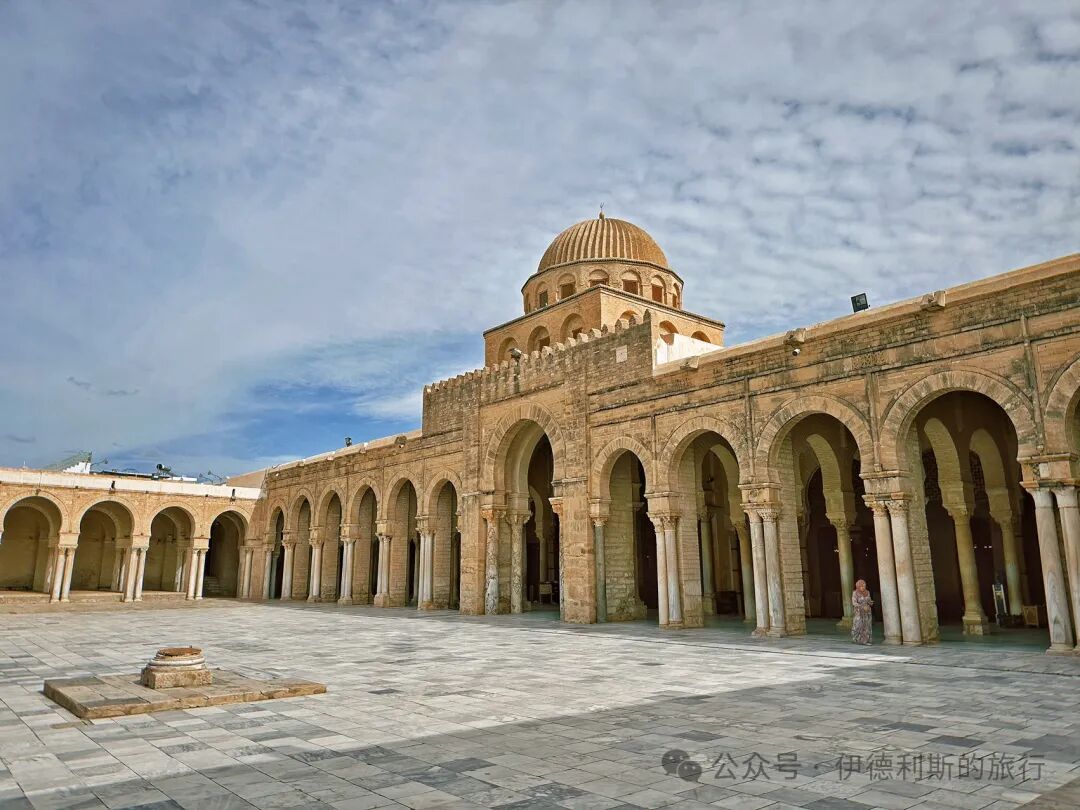
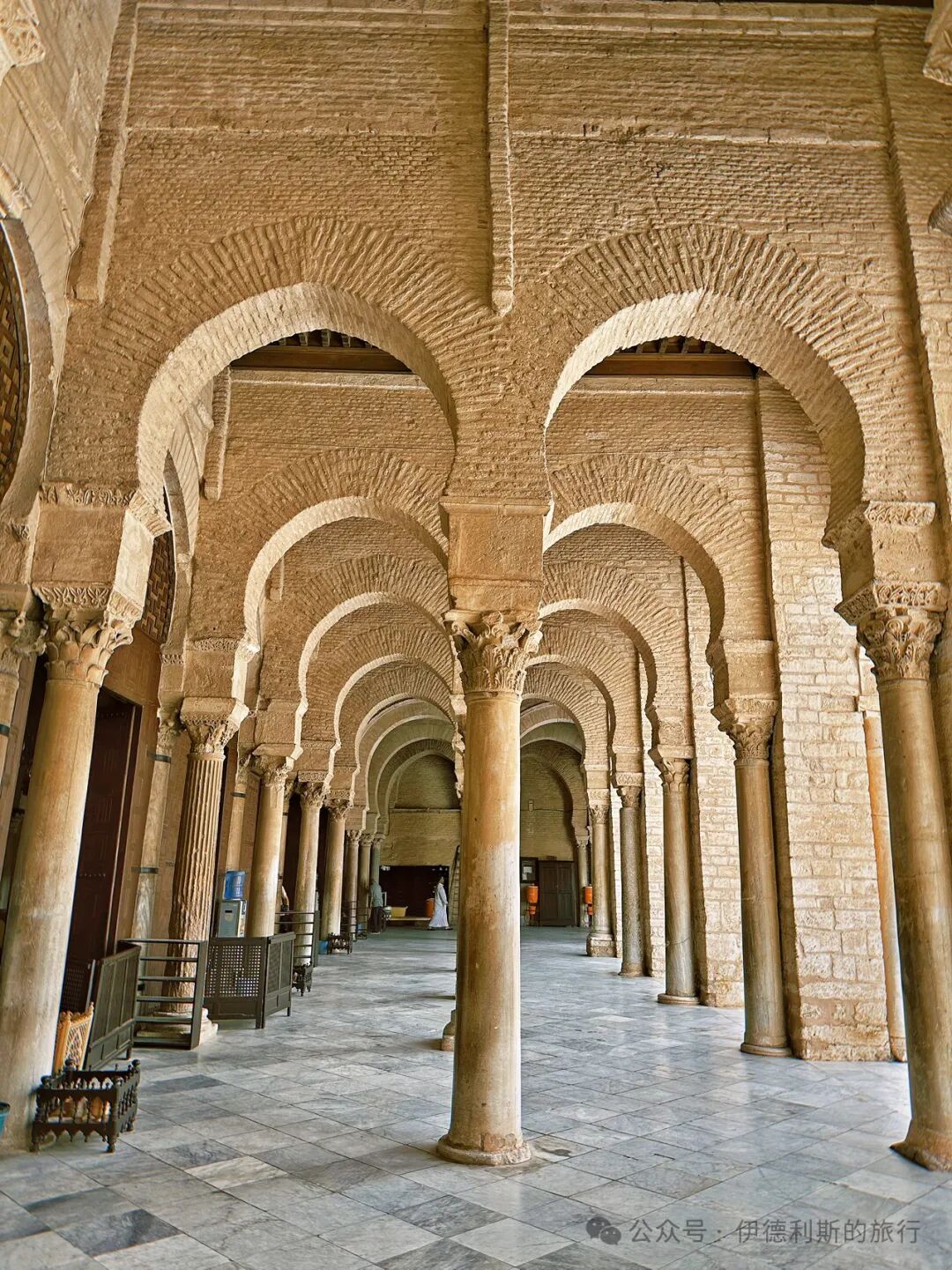
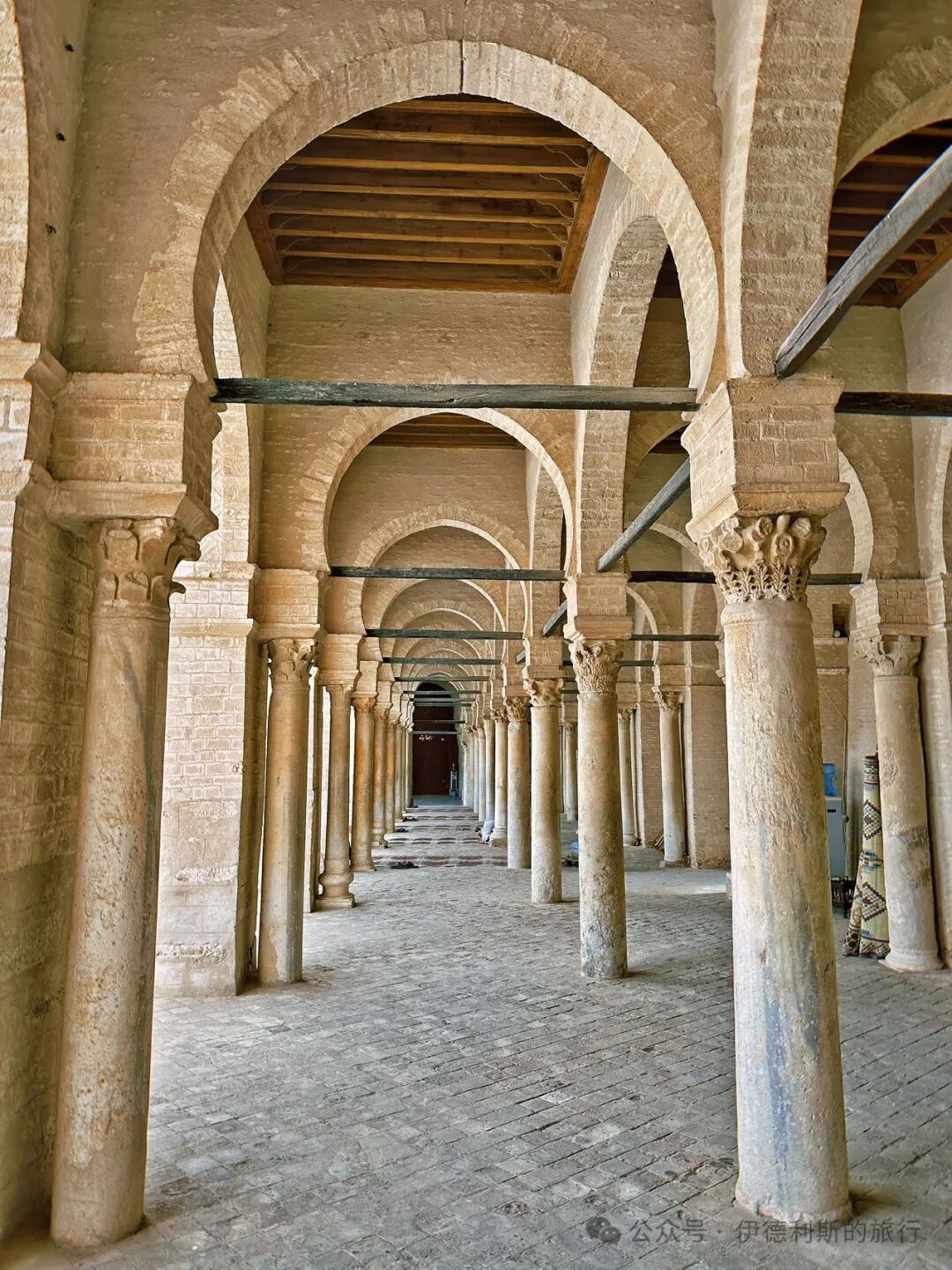
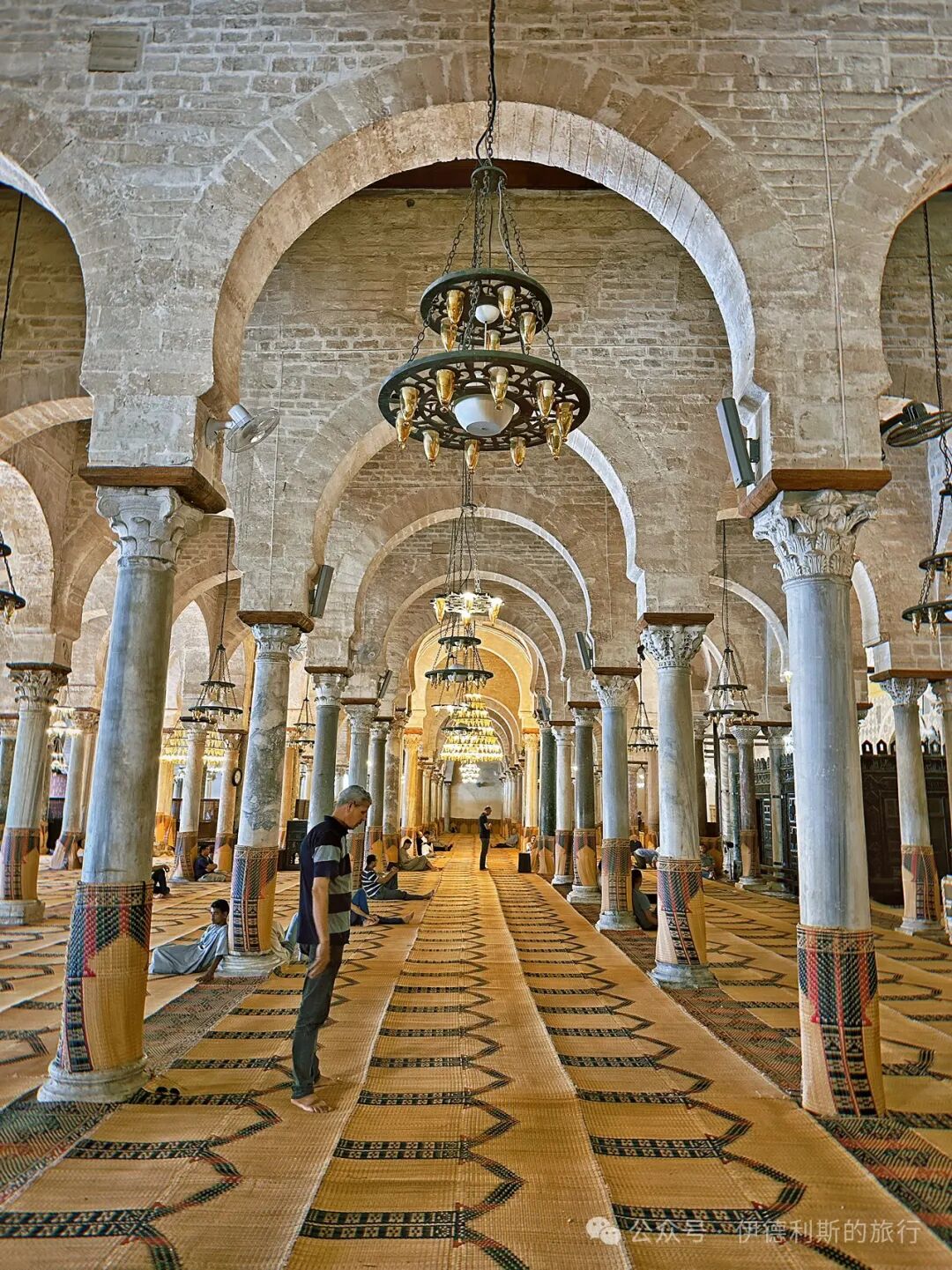
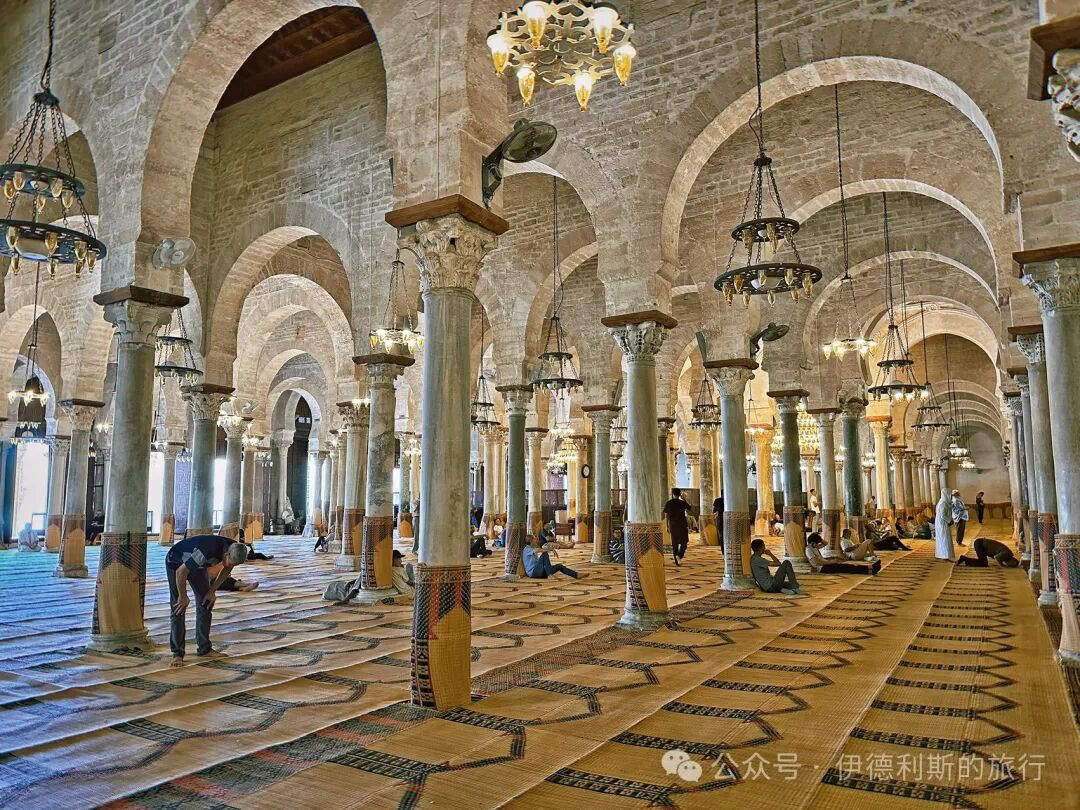
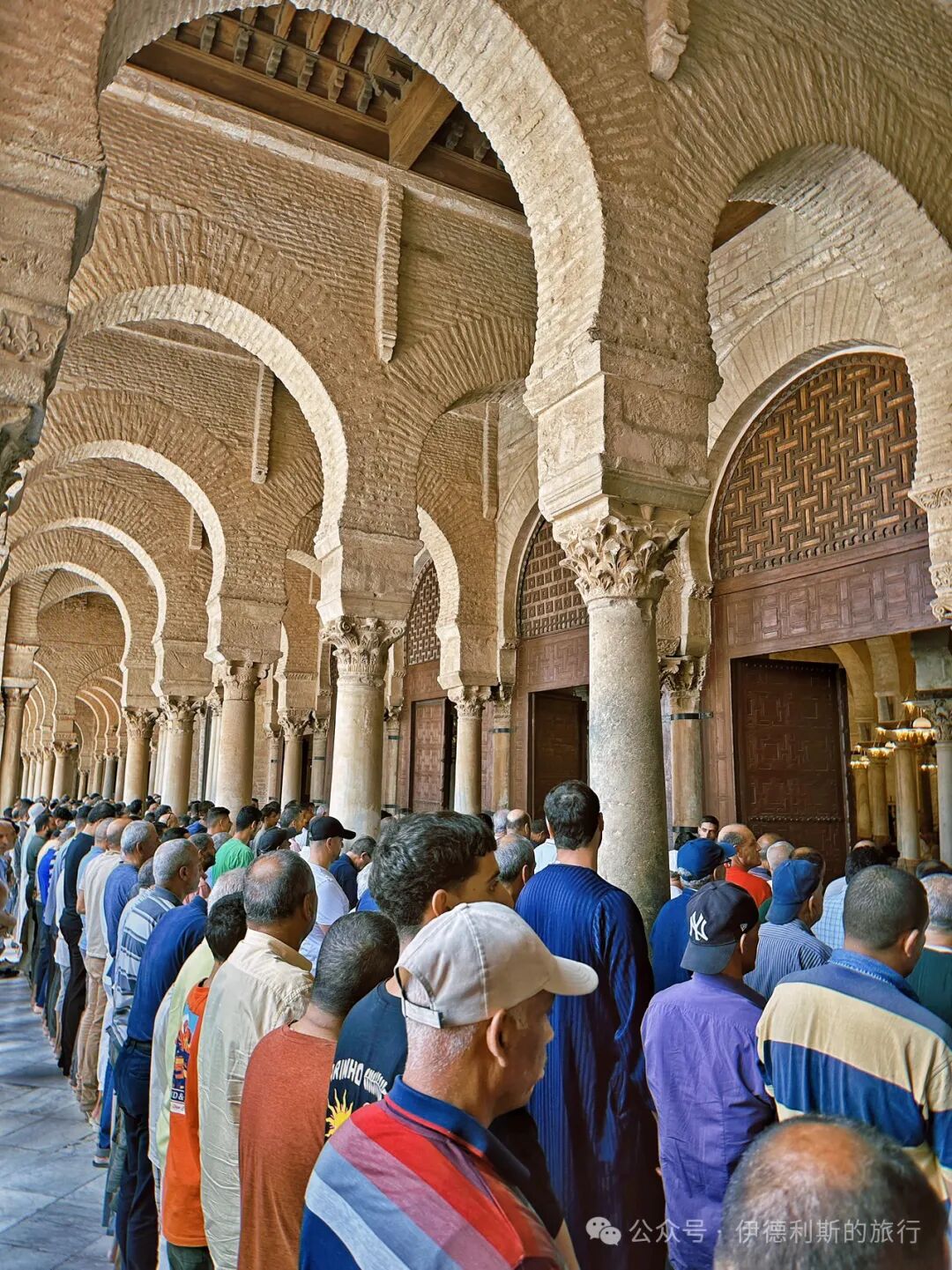
Three sides of the Great Mosque are surrounded by double-row horseshoe-shaped arcades. The columns come from various ancient Roman and Byzantine ruins, including some from the famous site of Carthage.
There is a dome above the main entrance of the prayer hall and another above the mihrab. These domes, built in 836, are important examples of early mosque domes.
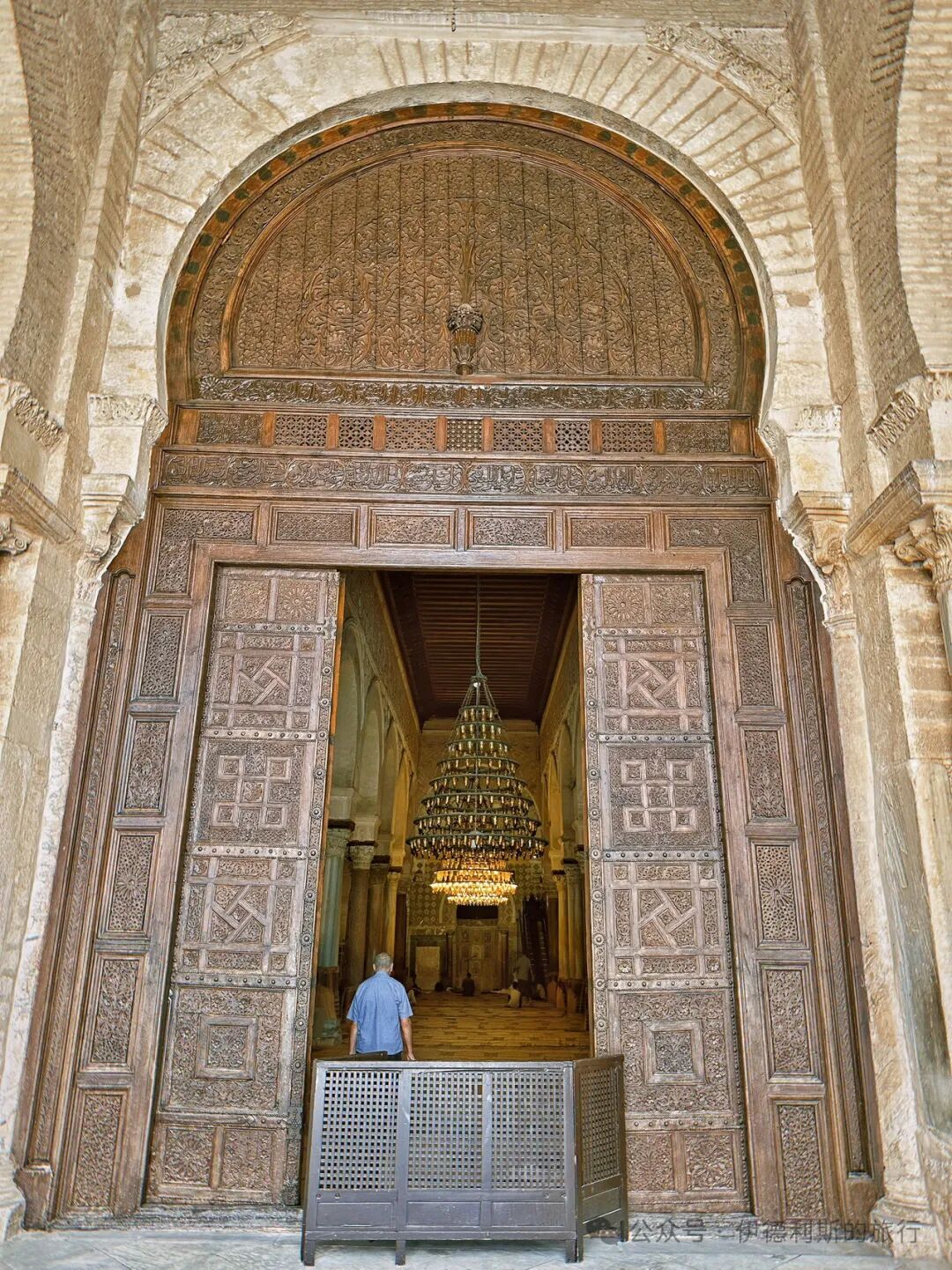
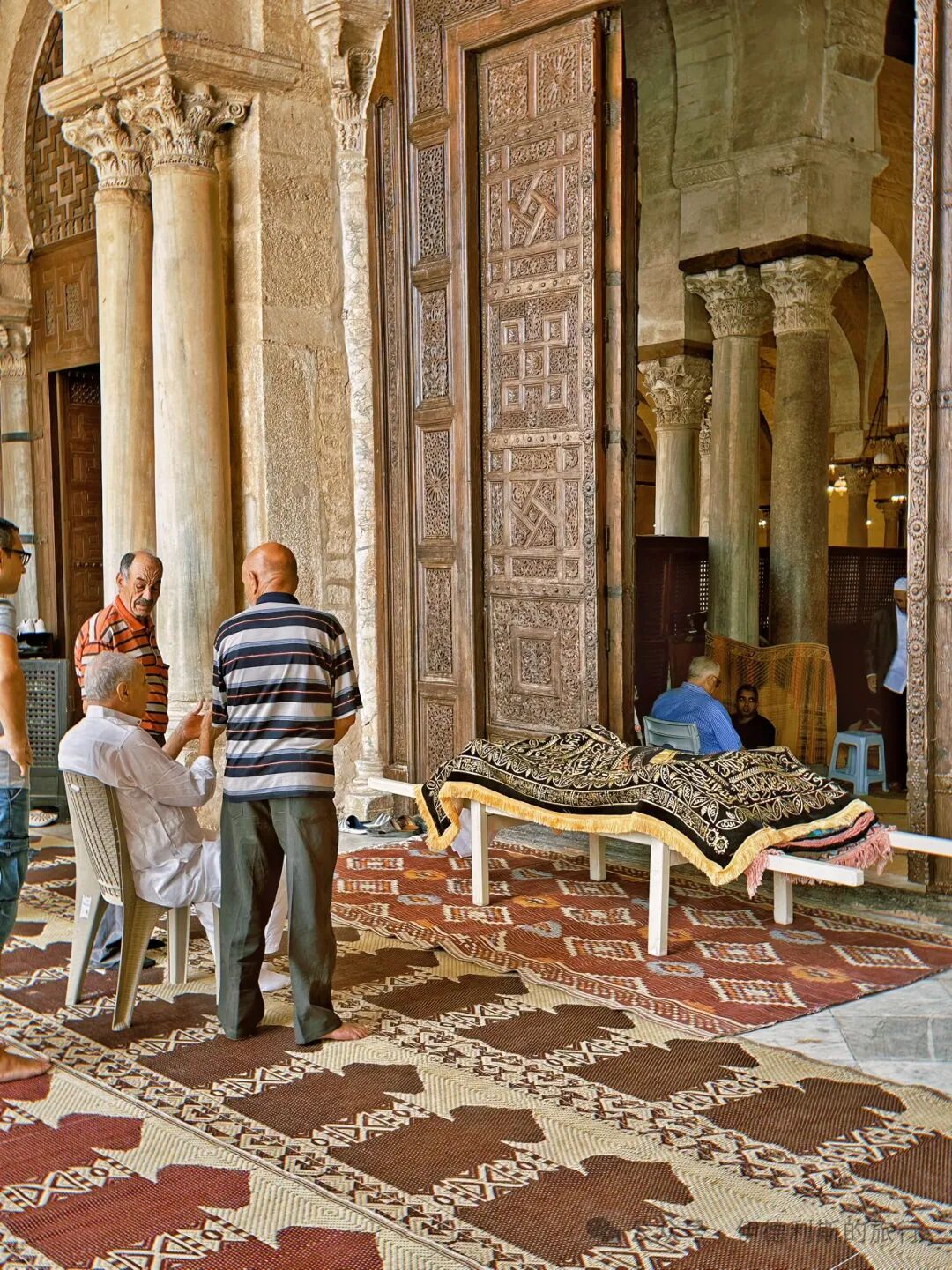
The prayer hall connects to the arcades through 17 carved wooden doors. The most beautiful one in the center was built in 1828 and features rich geometric and floral patterns.
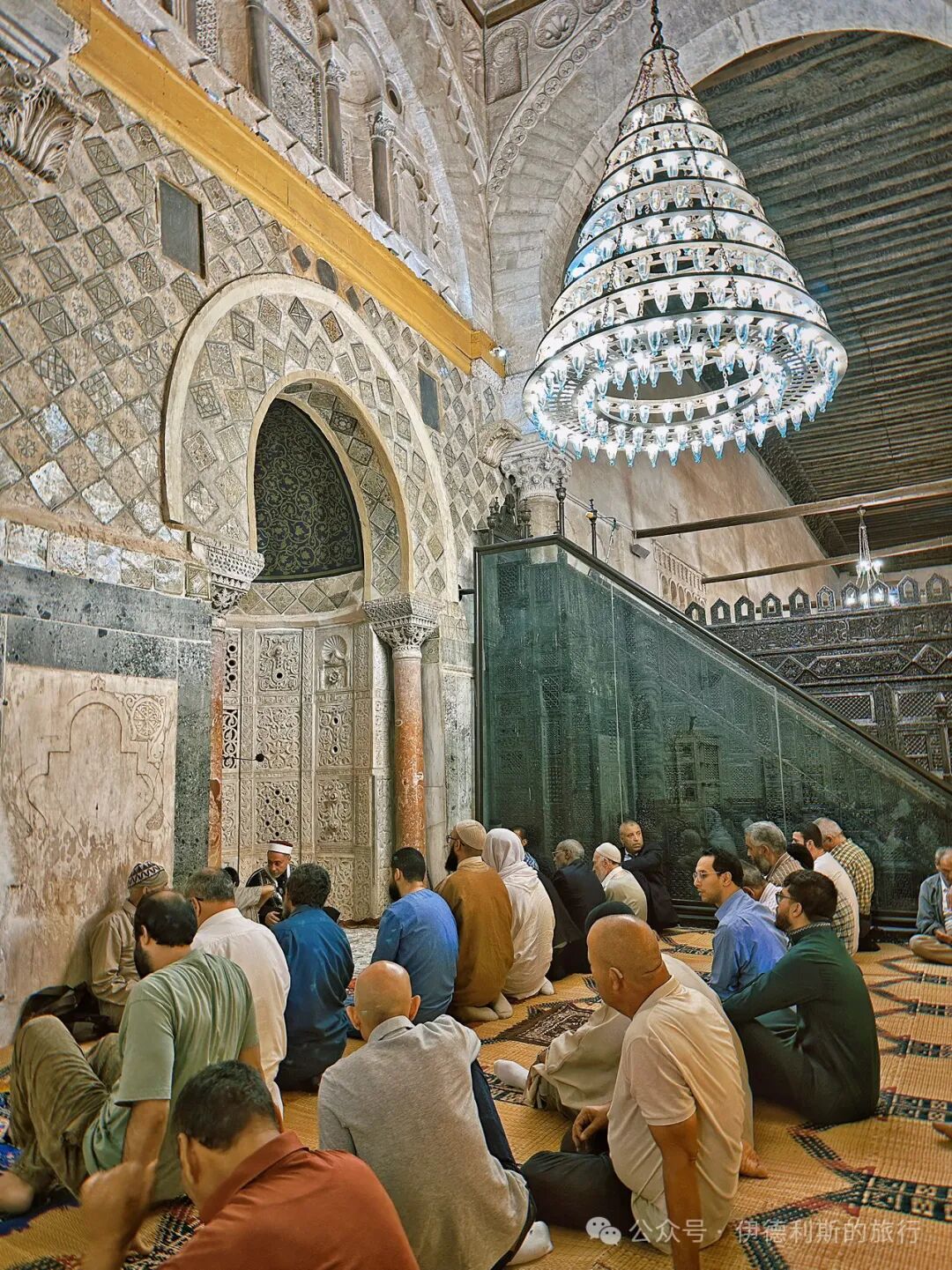
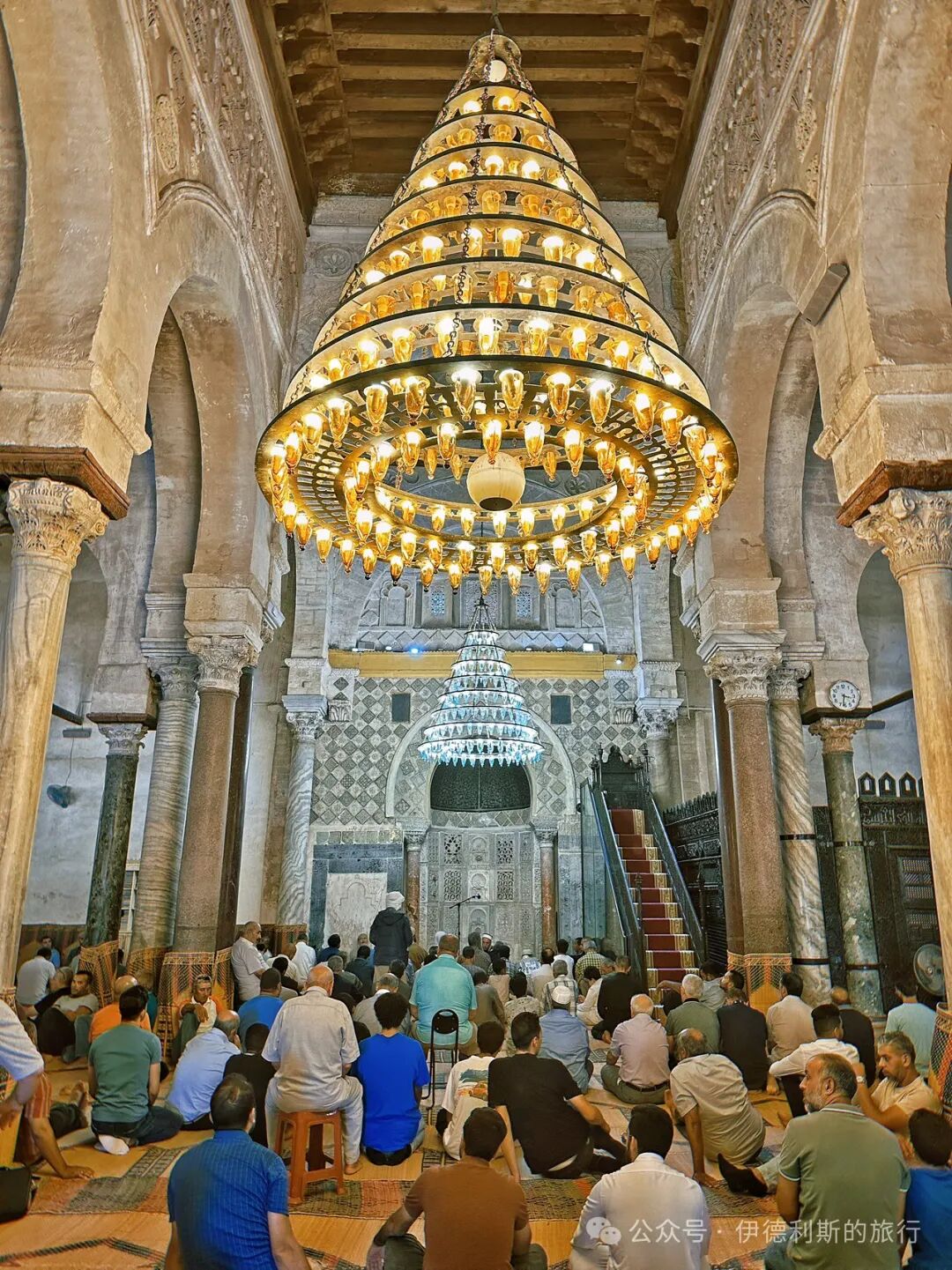
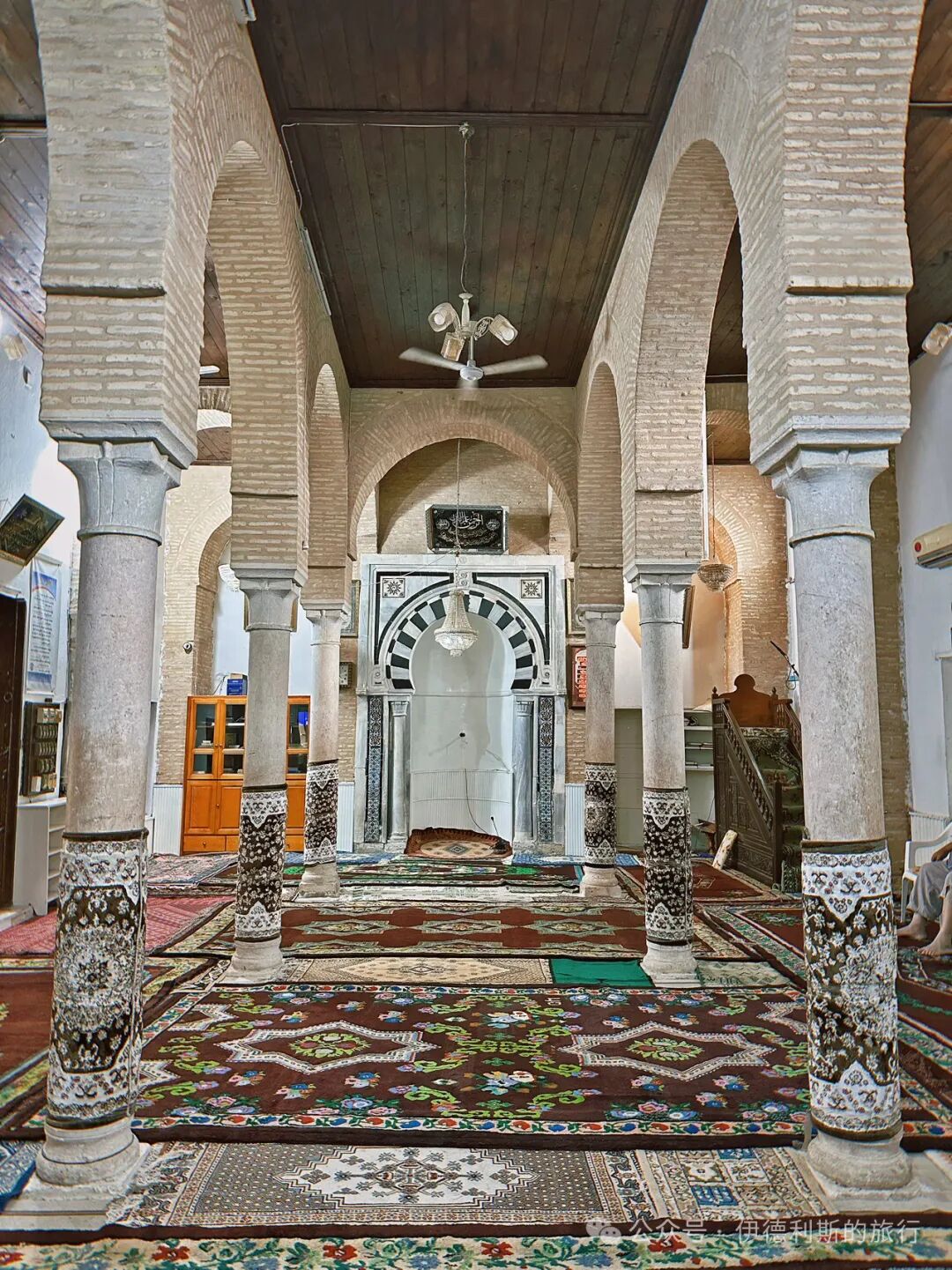
The mihrab of the Great Mosque is 5.1 meters high. It was built in 863 and is the oldest concave mihrab in the world. The main body of the mihrab is a horseshoe arch supported by two red marble columns. The columns have Byzantine-style capitals with very fine carvings.
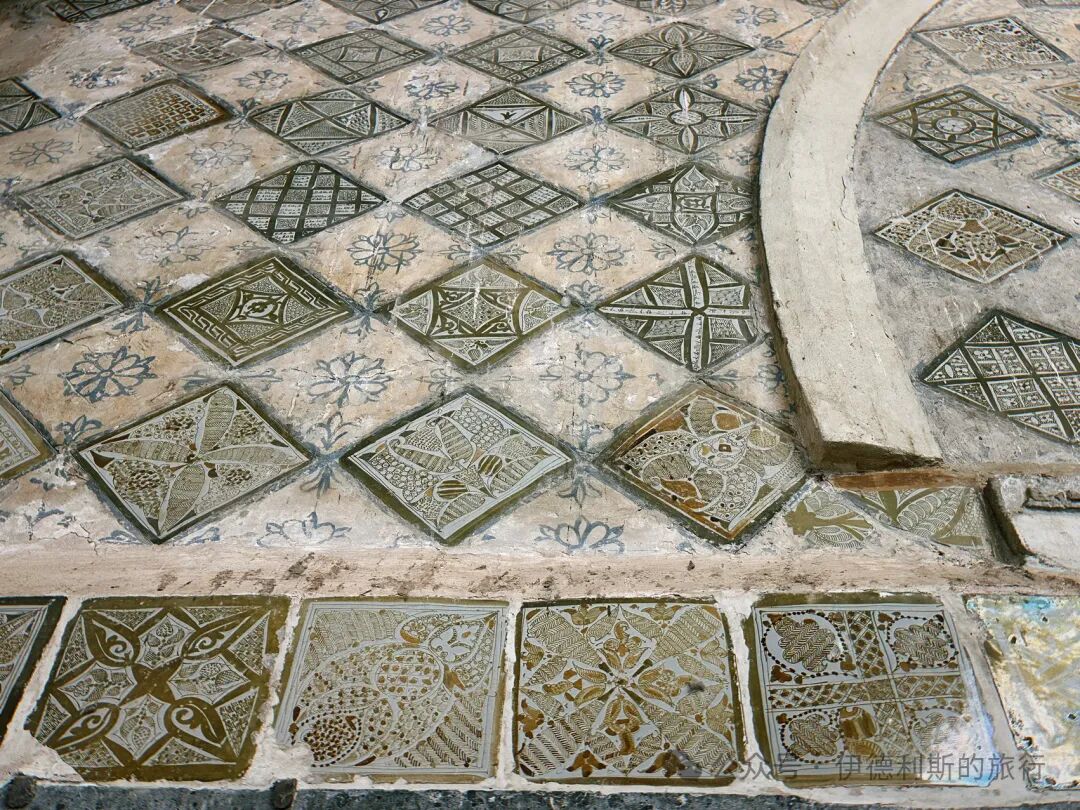
The upper part of the mihrab features 139 iridescent ceramic tiles fired in the second half of the 9th century. This metallic-lustre glazed pottery originated in Abbasid-ruled Iraq and was traded throughout West Asia and North Africa. It is not yet certain whether the iridescent tiles of the Great Mosque of Kairouan were fired in Iraq or if Iraqi craftsmen were invited to Kairouan to make them.
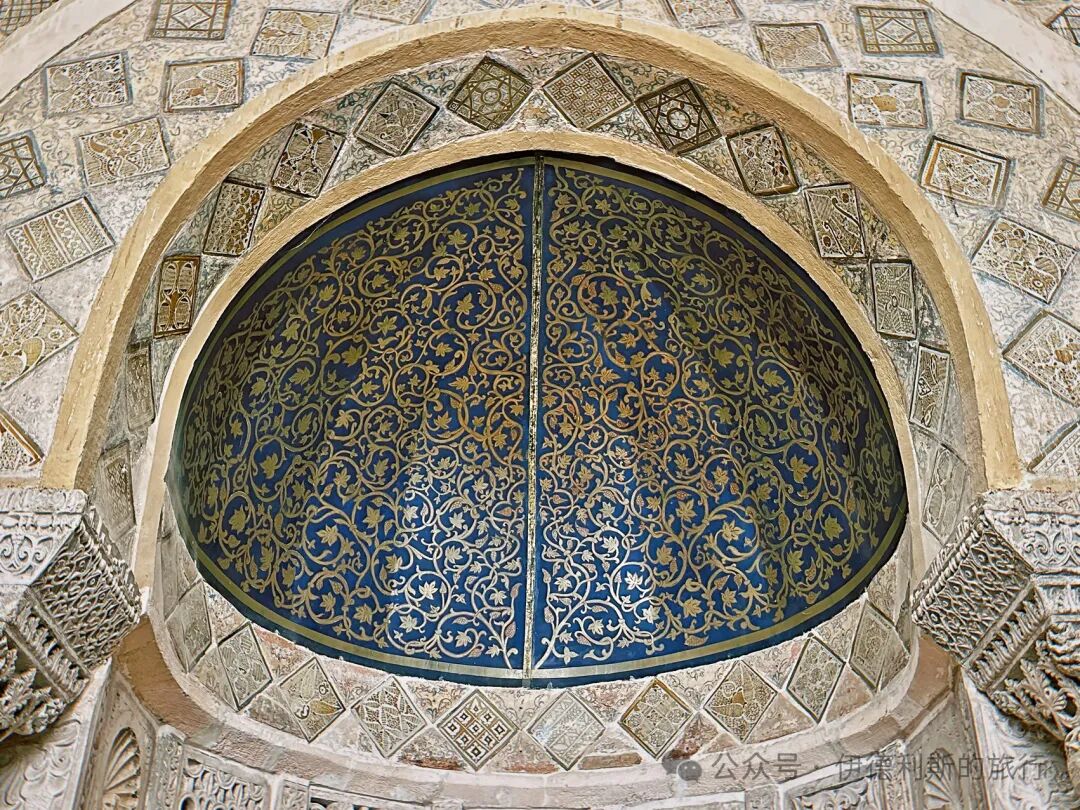
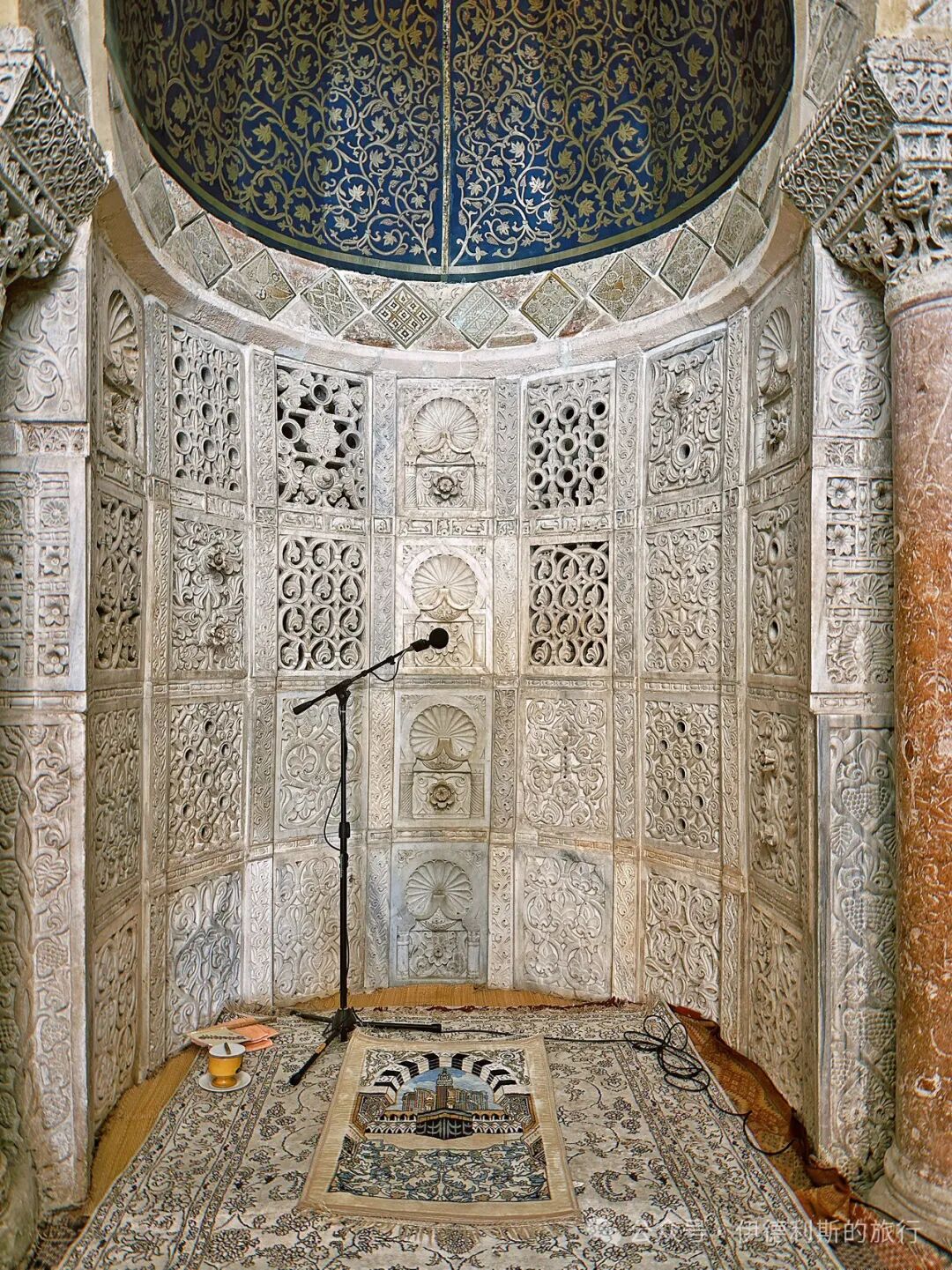
The concave center of the upper part is made of painted wood, featuring complex vine patterns in yellow on a blue background. The lower part is inlaid with 28 white marble slabs carved with complex floral and geometric patterns, including stylized grape leaves, flowers, and shells.
Next to the mihrab are the pulpit (minbar) for the Friday sermon and the enclosure (maqsurah) used by kings and nobles.
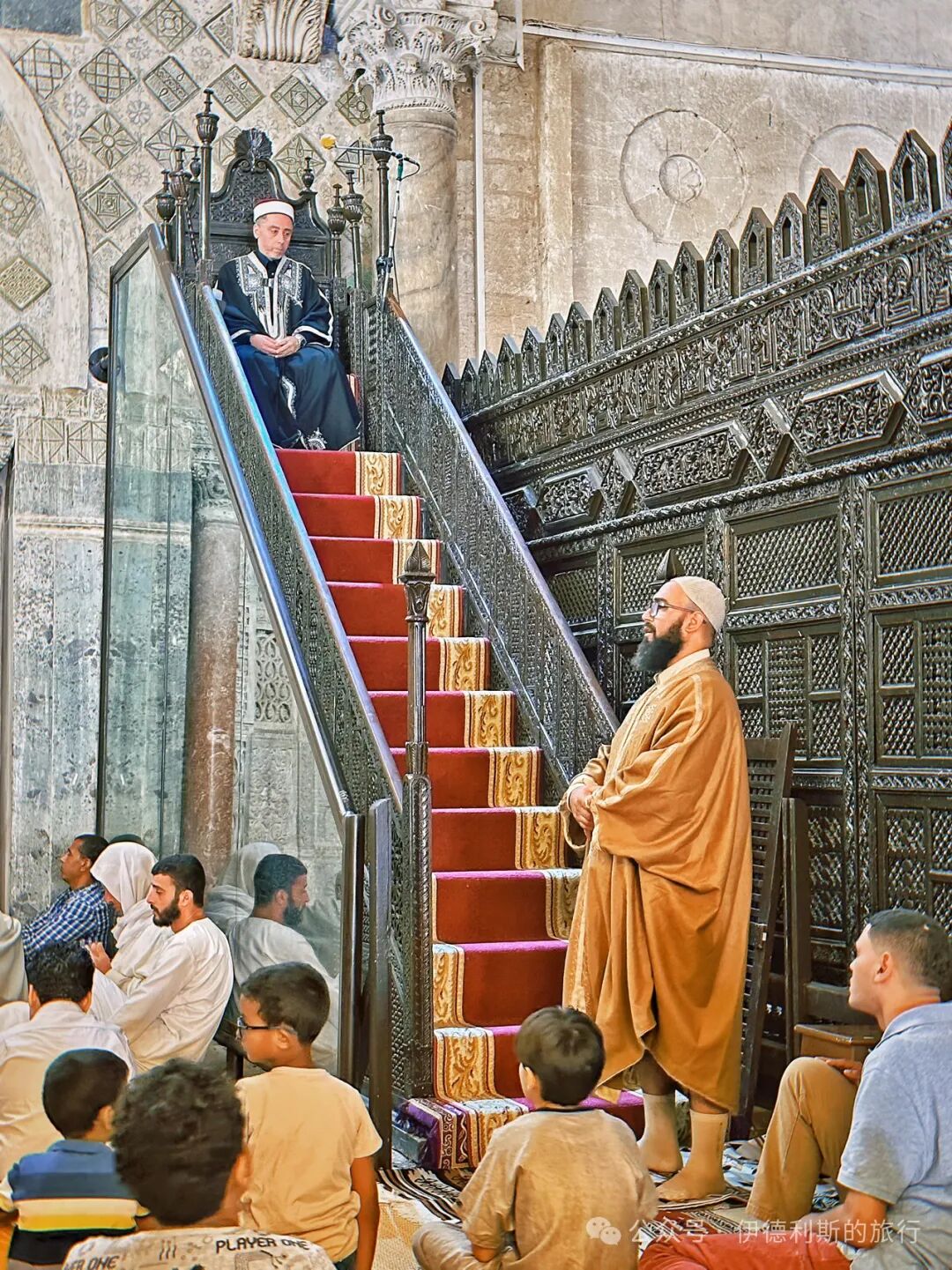
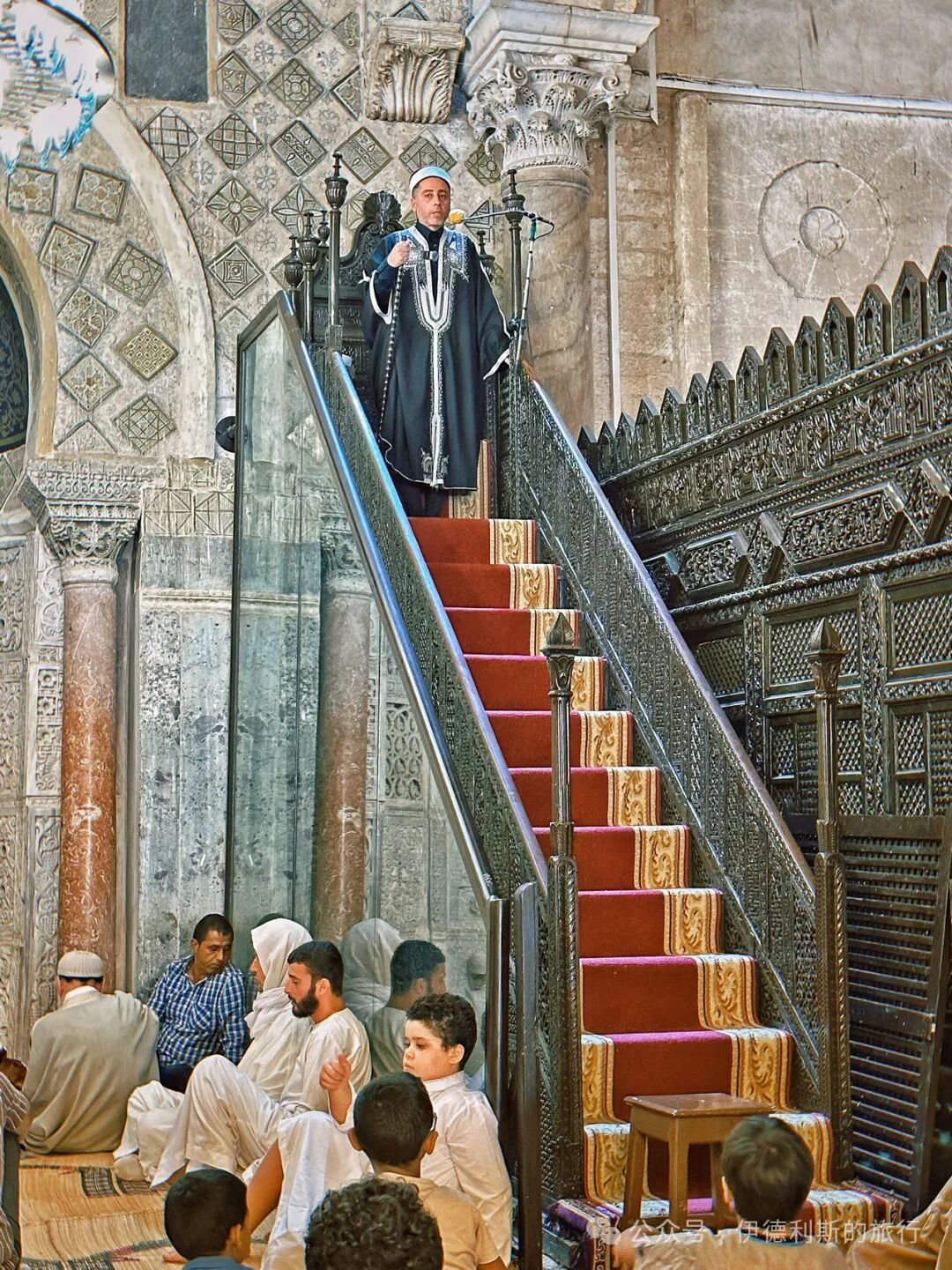
The minbar of the Great Mosque of Kairouan was also built in 863 and is the oldest surviving minbar in the world. The minbar is made of teak imported from India and is assembled from over 300 wooden panels carved with floral and geometric patterns. Although it was restored in the early 20th century, all but nine of the wooden panels are original pieces from over a thousand years ago. Today, the sides of the minbar are protected by glass, making it difficult to take photos due to the reflection.
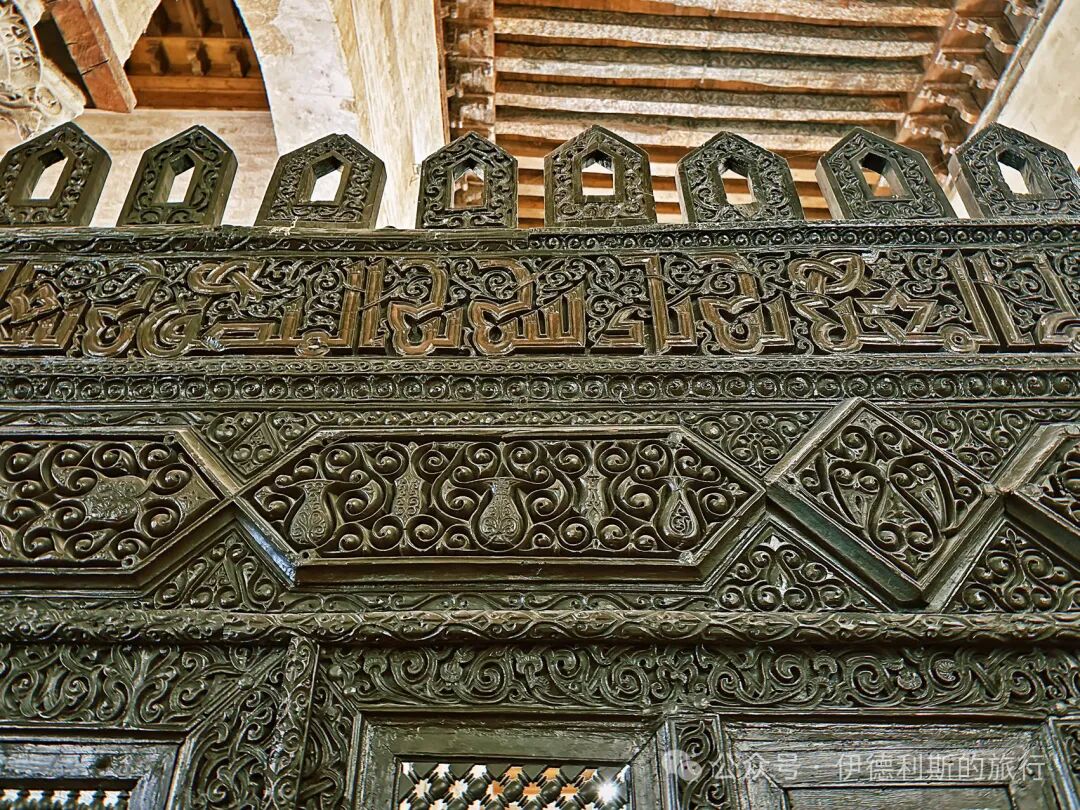
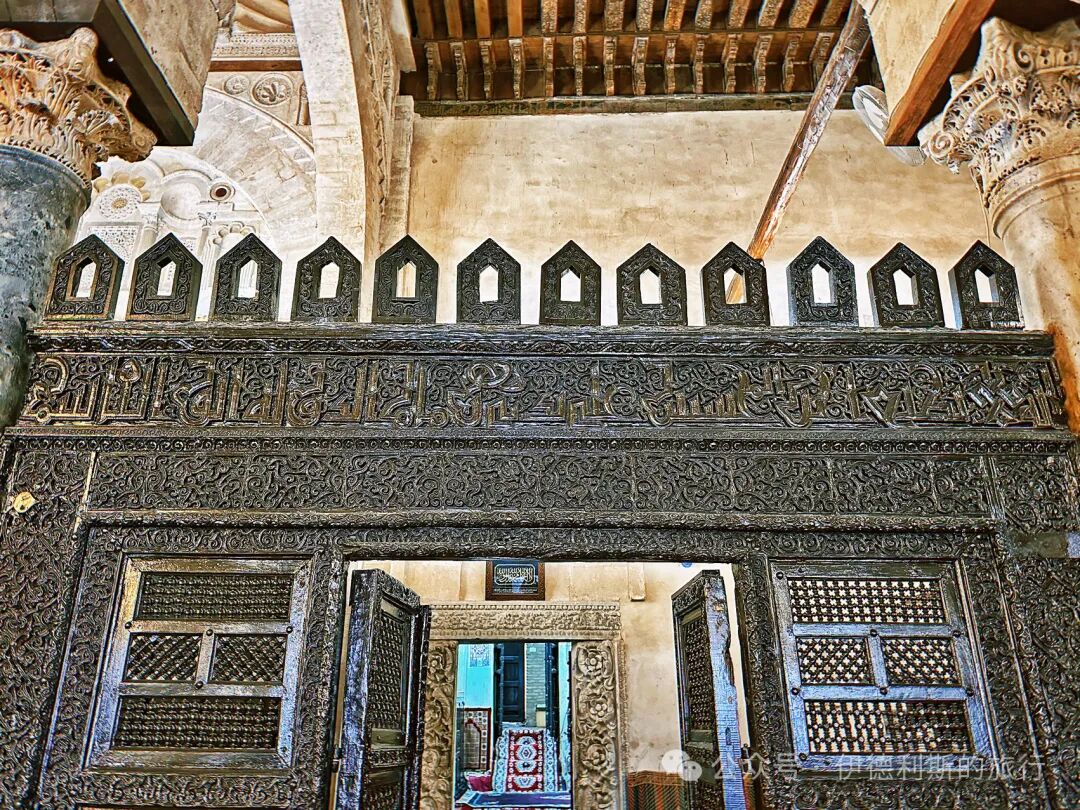
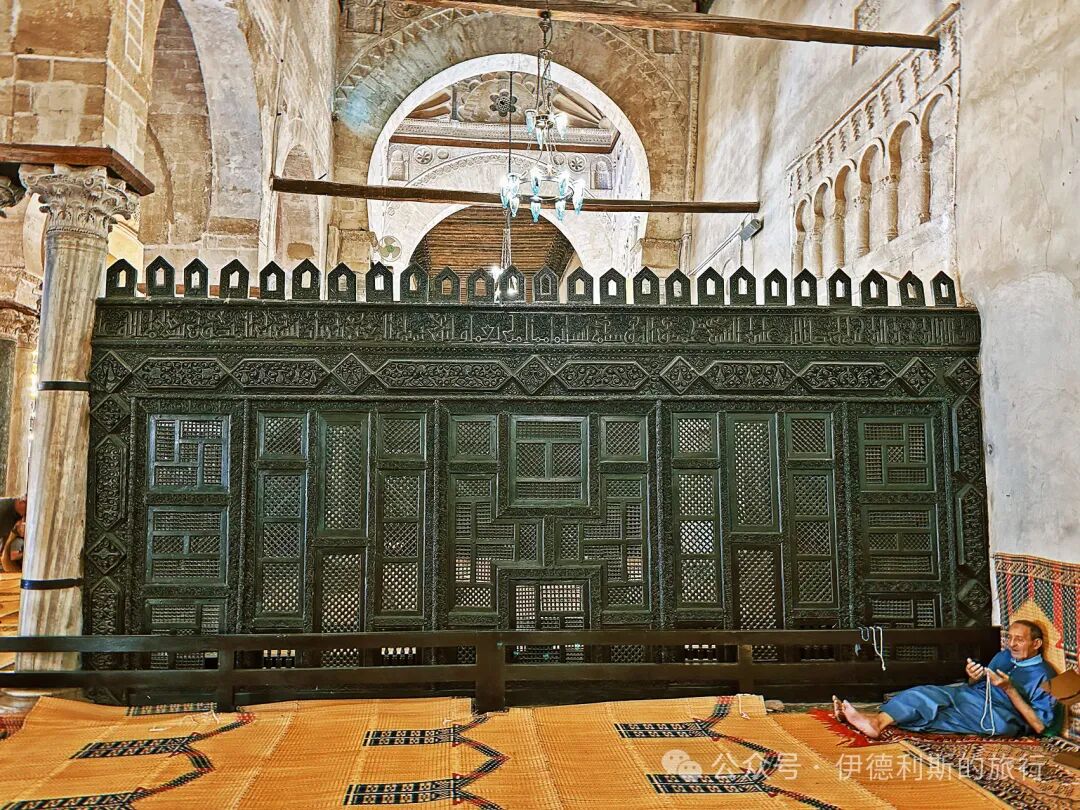
The maksura at the Great Mosque of Kairouan was built in the first half of the 11th century. It is the oldest maksura in the world still in use. The maksura at the Great Mosque of Cordoba in Spain was built in 965, but it is no longer used today. The maksura is made of cedar and is 14 meters long. It is carved with ornate Kufic calligraphy and floral patterns, representing the highest achievement in Tunisian carving art at that time.
The maksura originated during the time of Caliph Uthman in the mid-7th century. After Caliph Umar was assassinated inside the prayer hall, Uthman built a partition wall inside the hall to protect himself. Later, mosques where the Caliph resided would all have a maksura built inside.
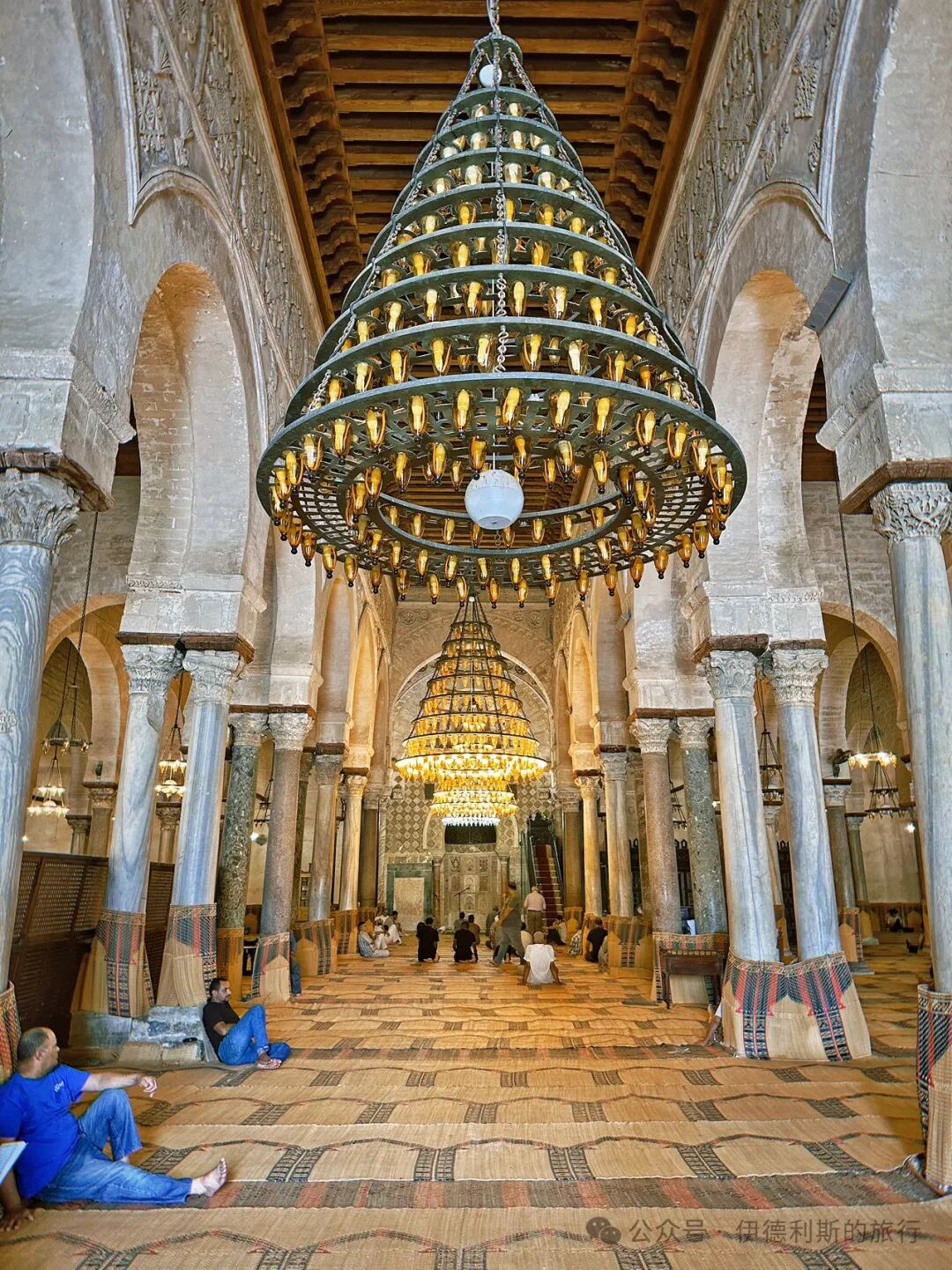
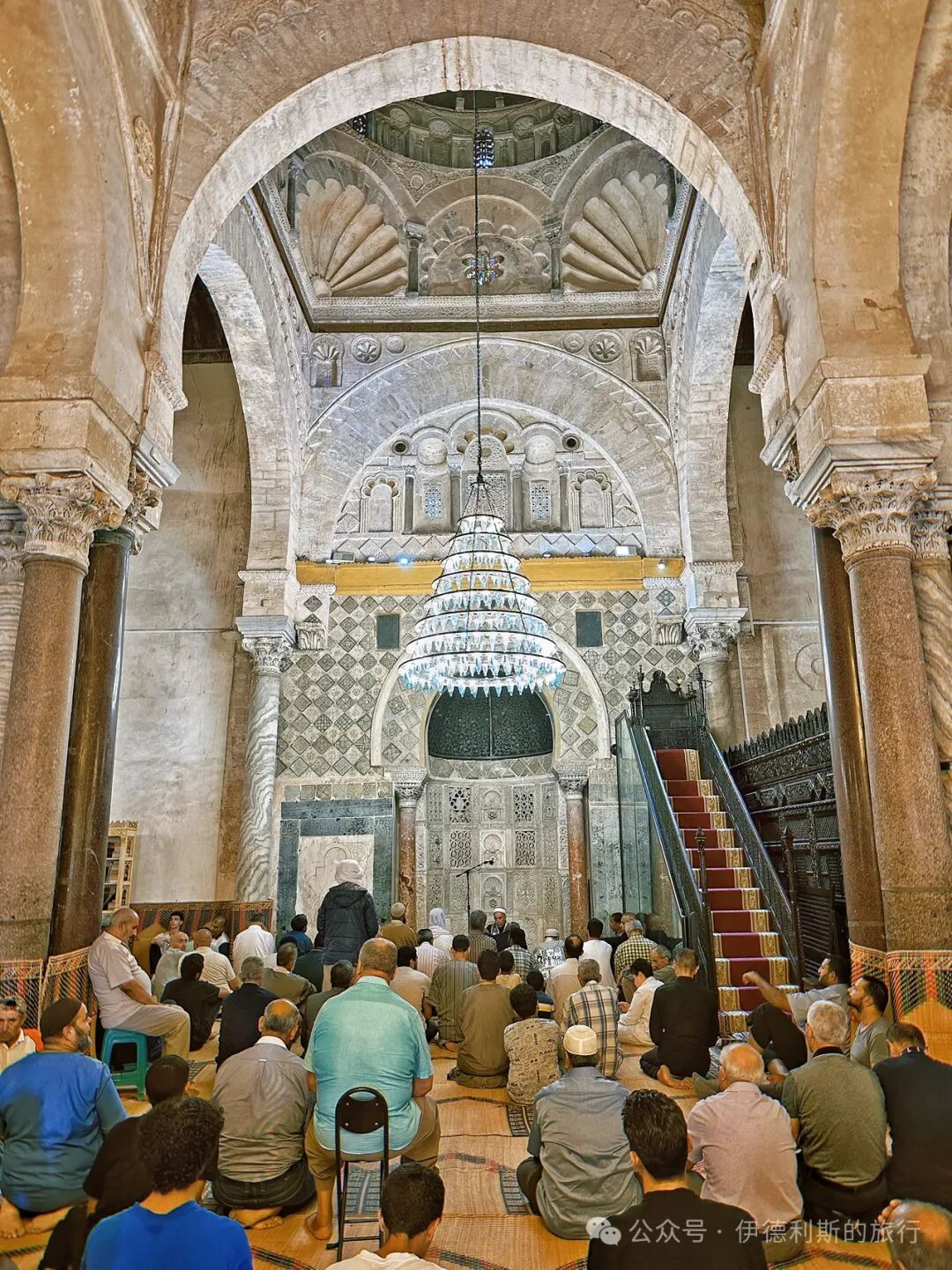
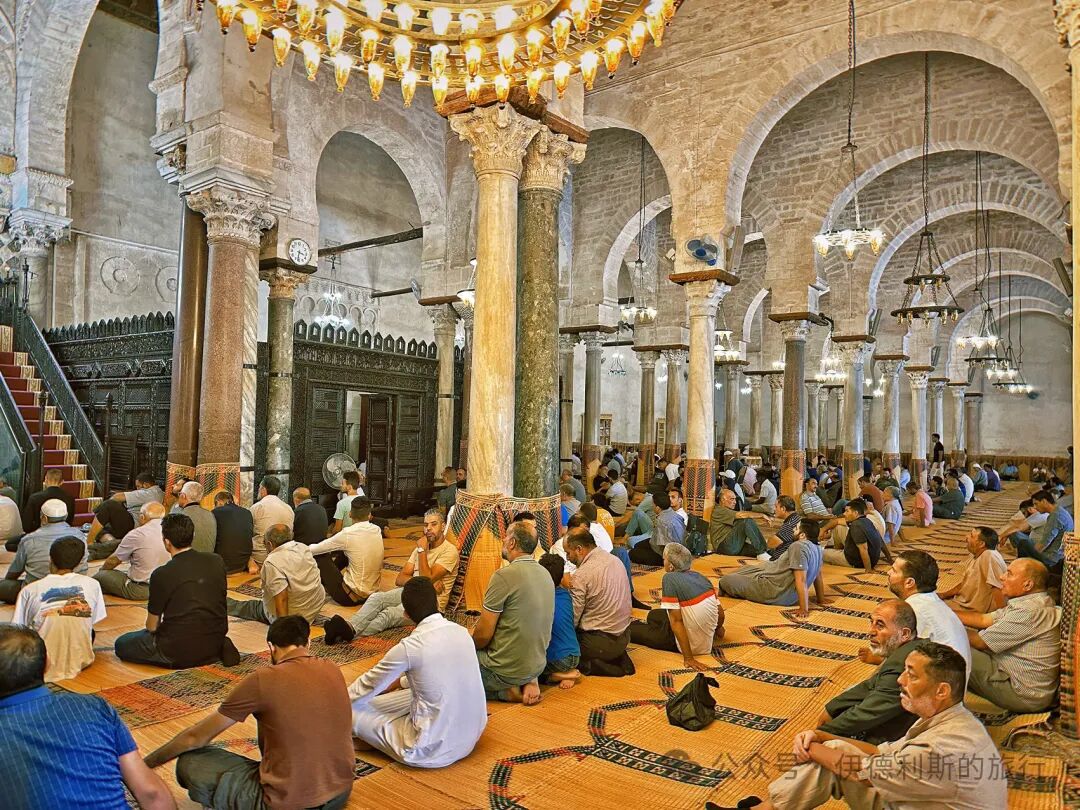
The prayer hall of the Great Mosque of Kairouan is 70.6 meters wide and 37.5 meters deep. It consists of 17 aisles, with the aisle directly facing the mihrab being the tallest and widest. This layout was later adopted by major mosques across the Maghreb and Andalusia.
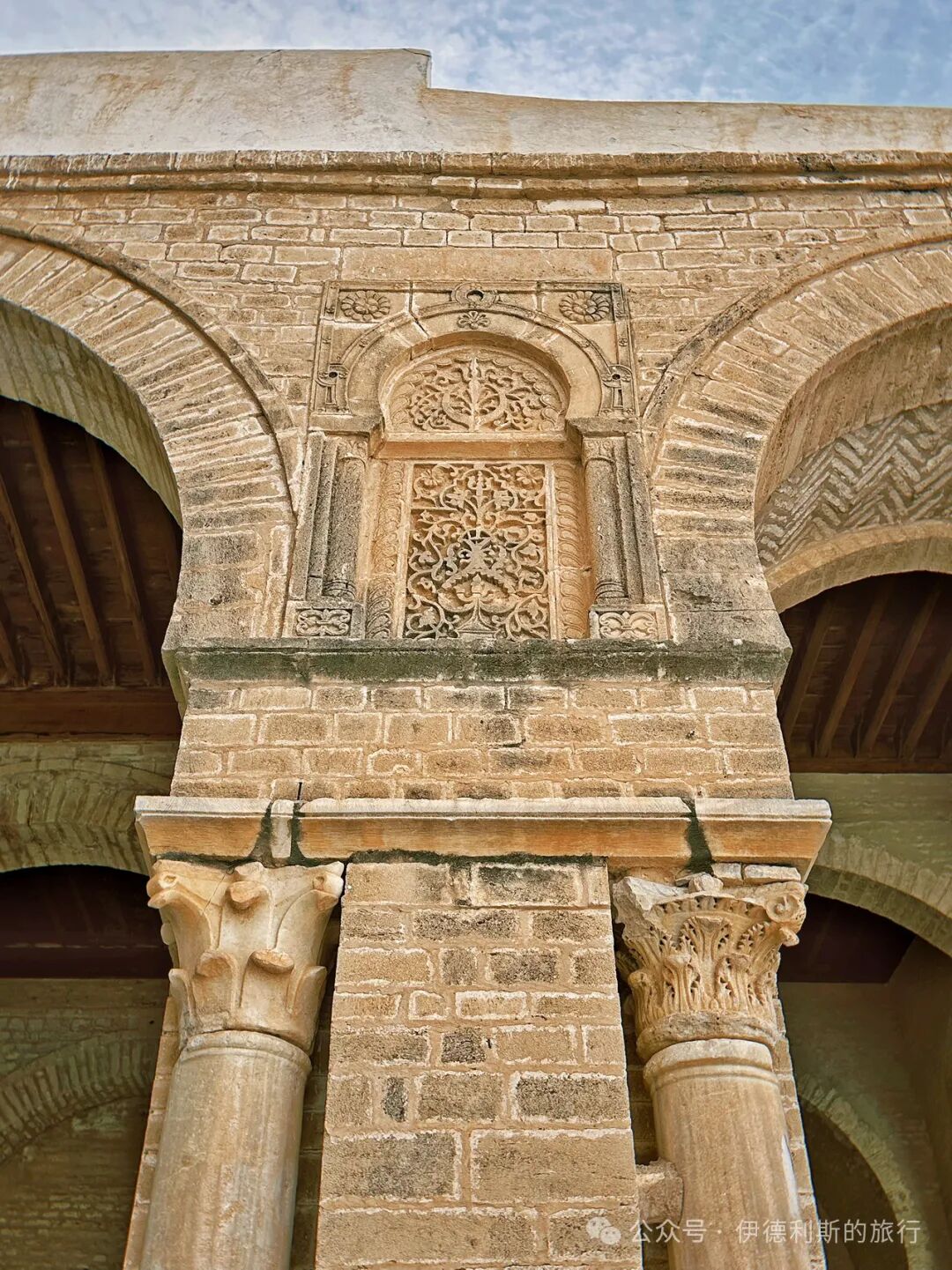
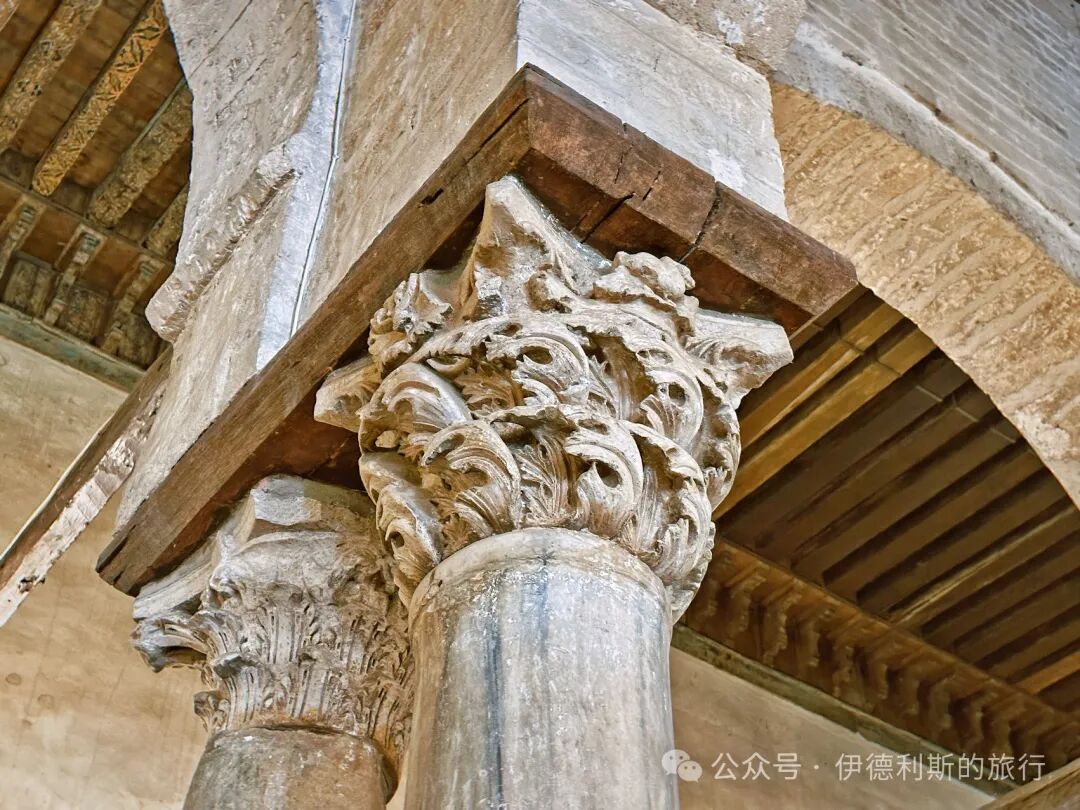
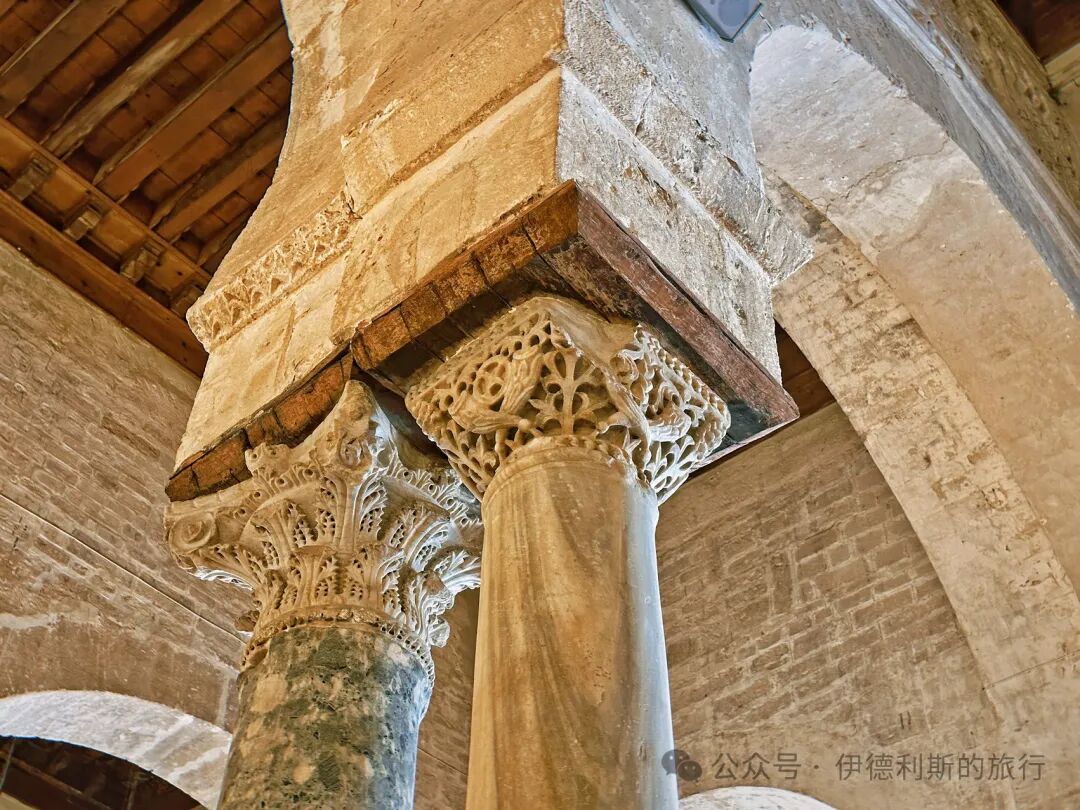
There are 414 stone columns inside the prayer hall. They are made of marble, granite, and porphyry, with capitals in styles including Corinthian, Ionic, and Composite. Some capitals were carved specifically for the prayer hall, while many others came from ancient Roman, Phoenician, and Byzantine sites in Tunisia, including the famous ancient city of Carthage.
The door inside the prayer hall's maksura is decorated with marble floral carvings. This door leads to the library behind the qibla wall, which is also where the imam usually stays. The imam only comes out from here to lead the prayer and deliver the khutbah.
The grand scene of Jumu'ah at the Great Mosque of Kairouan. After the adhan is finished, the imam slowly walks up the minbar to begin the khutbah. In Arabic-speaking regions, everyone understands the khutbah, so there is no sermon session beforehand.
Tunisia follows the Maliki school of thought. Their namaz movements are quite similar to our Hanafi school, including the initial takbir, but the main difference is that they also fold their arms when making intention.
After the prayer, we stood for janazah outside the prayer hall door. Because Jumu'ah was at three o'clock, we immediately returned to the prayer hall to perform Dhuhr after finishing.
From the 9th to the 11th century, the Great Mosque of Kairouan was the academic center for the entire Maghreb region and the Maliki school. to religious courses, it offered subjects like mathematics, astronomy, medicine, and botany. In 1045, the Zirid dynasty court in Kairouan announced its conversion to Sunni Islam. Upon hearing this, the Shi'a Fatimid dynasty in Egypt sent a group of Arab tribes to invade Kairouan. In 1057, these Arab tribes occupied and destroyed Kairouan. The Great Mosque of Kairouan declined from then on and did not slowly recover until after the 13th century.
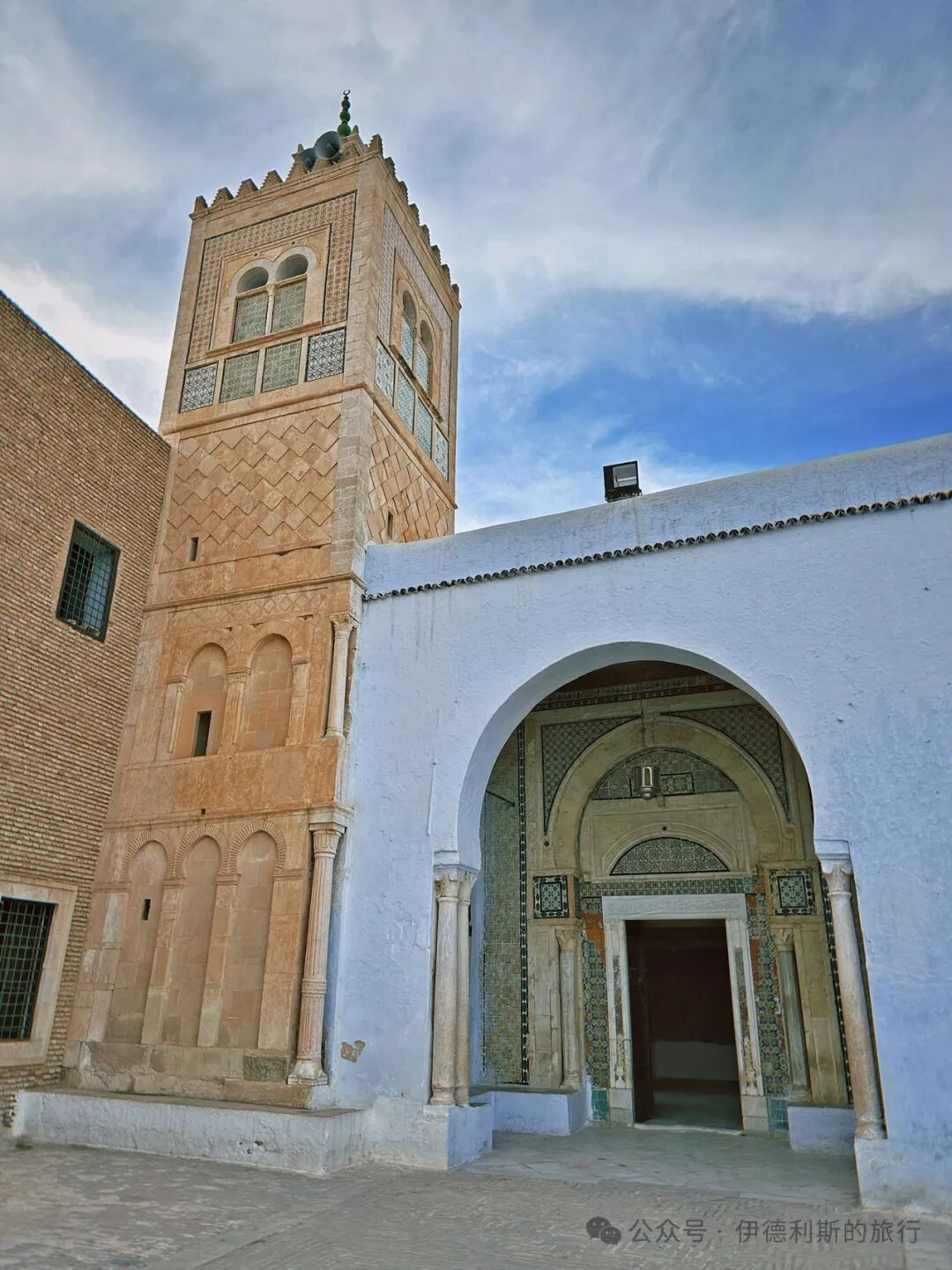
After leaving the Great Mosque of Kairouan, we started exploring the ancient medina of Kairouan. Besides the Great Mosque, the other ancient mosque remaining in Kairouan is the Mosque of the Three Doors (Masjid al-Thalathat Abwab), built in 866. This mosque has the oldest decorated facade of any religious building in the world.
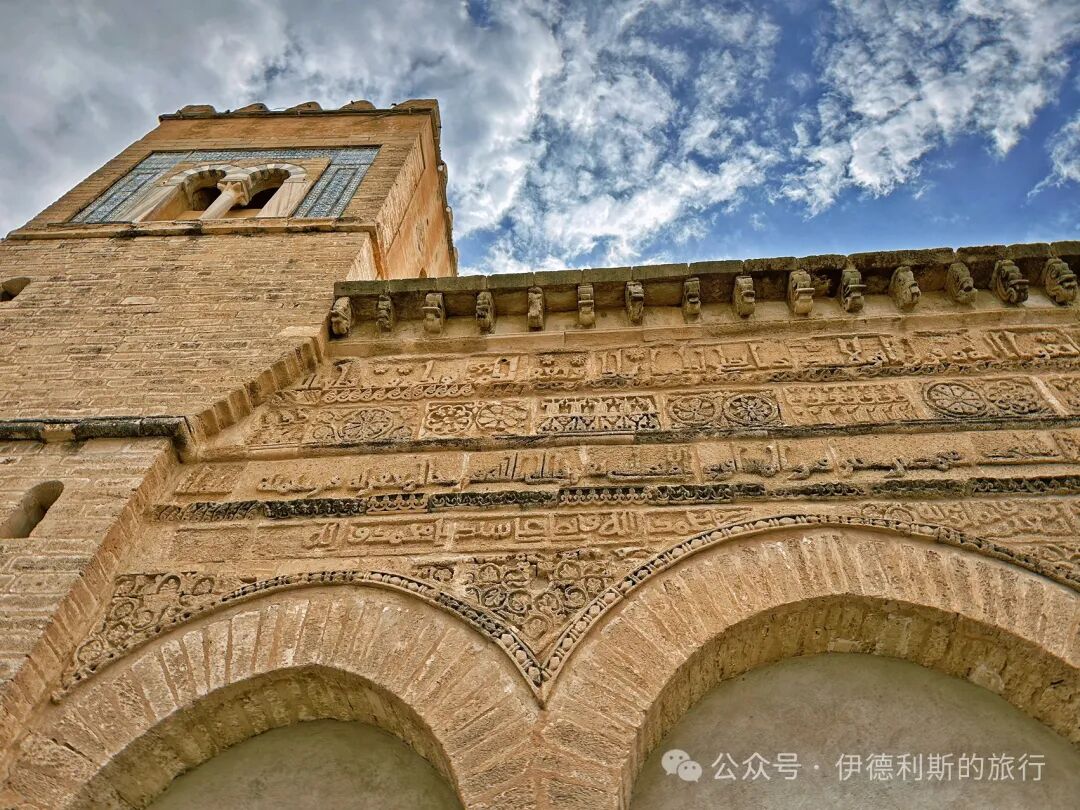
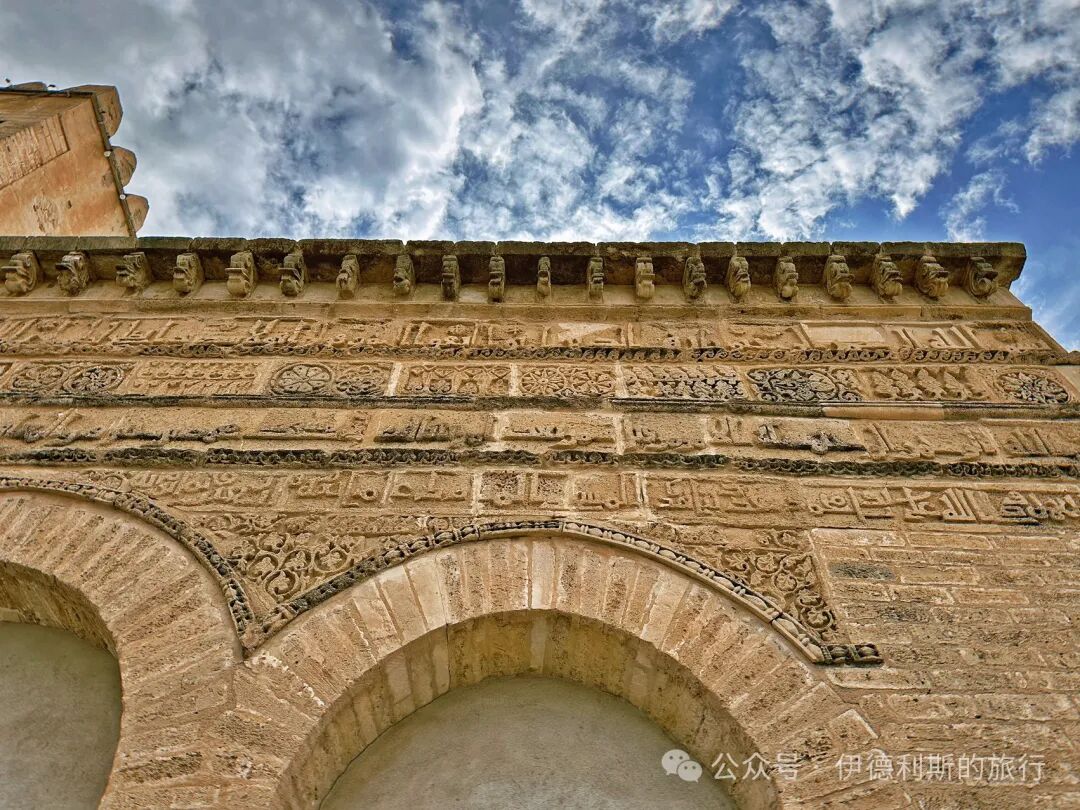
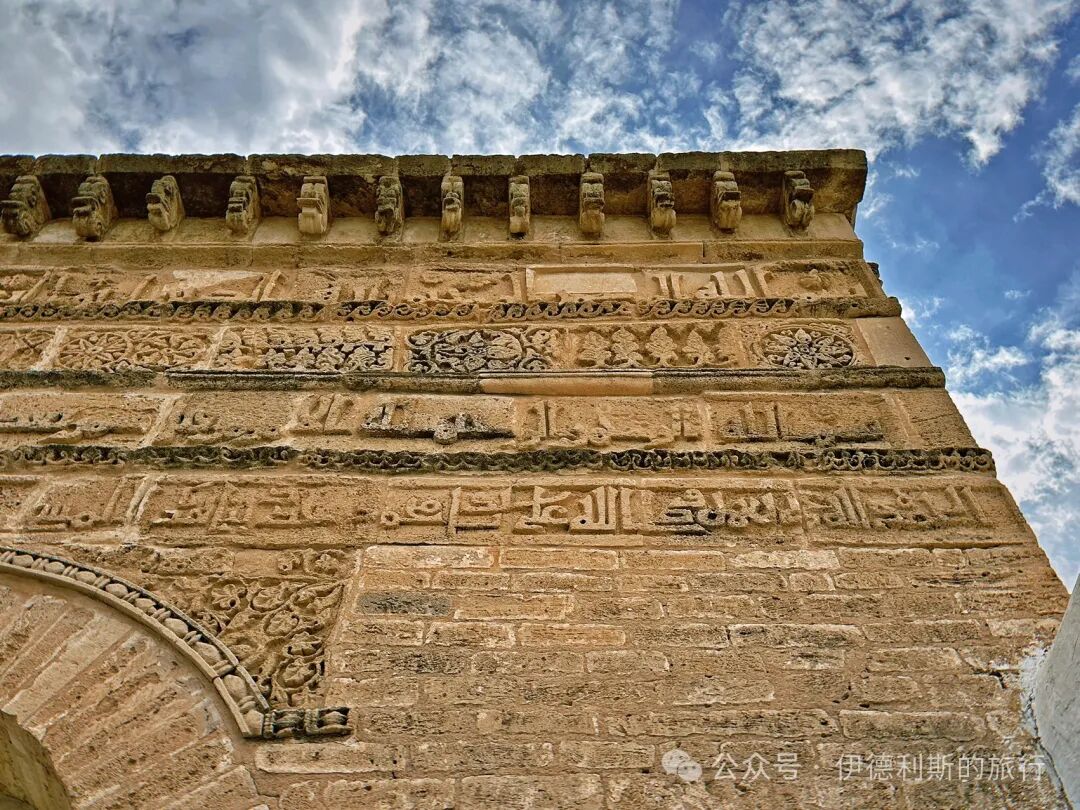
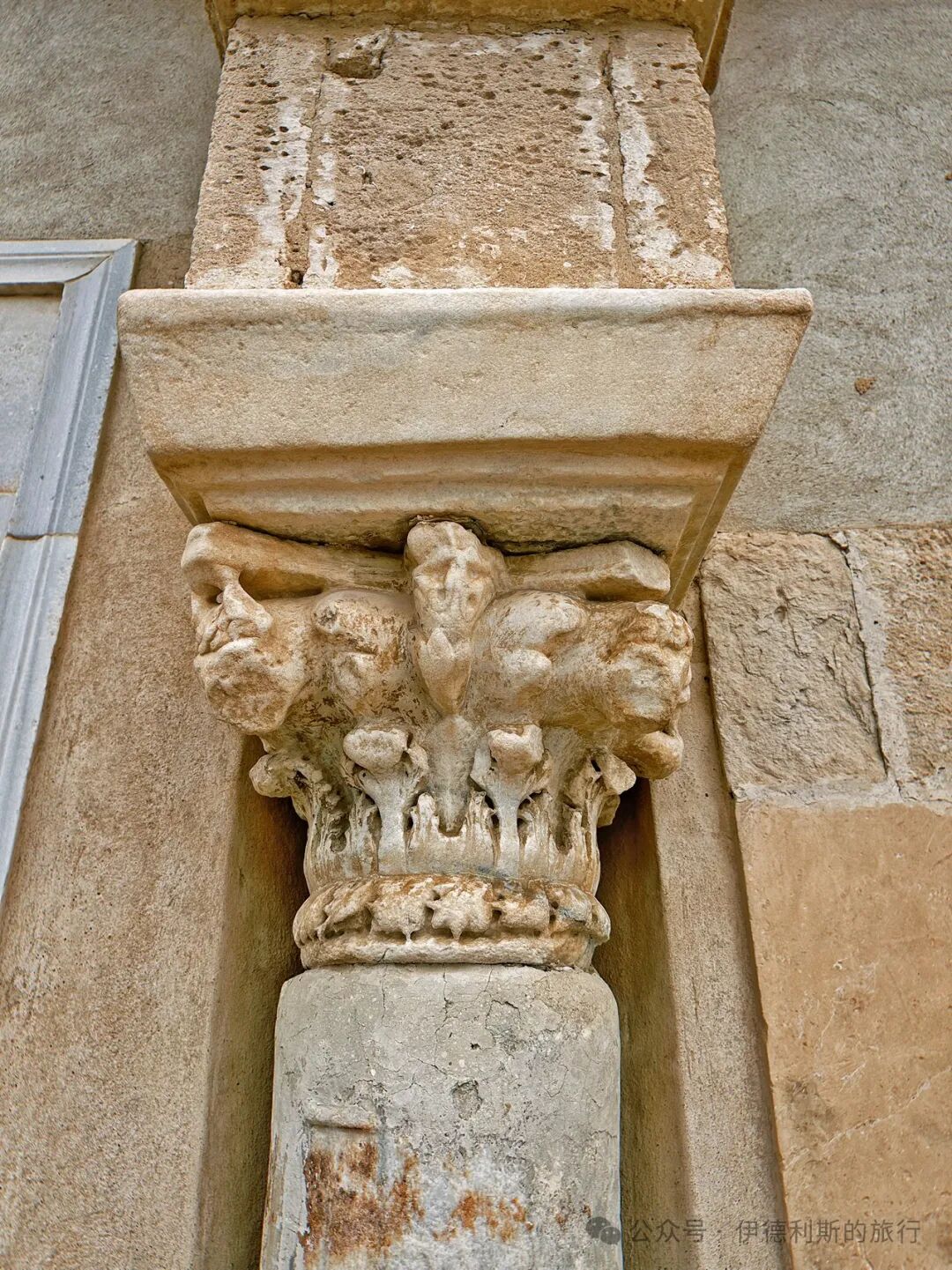
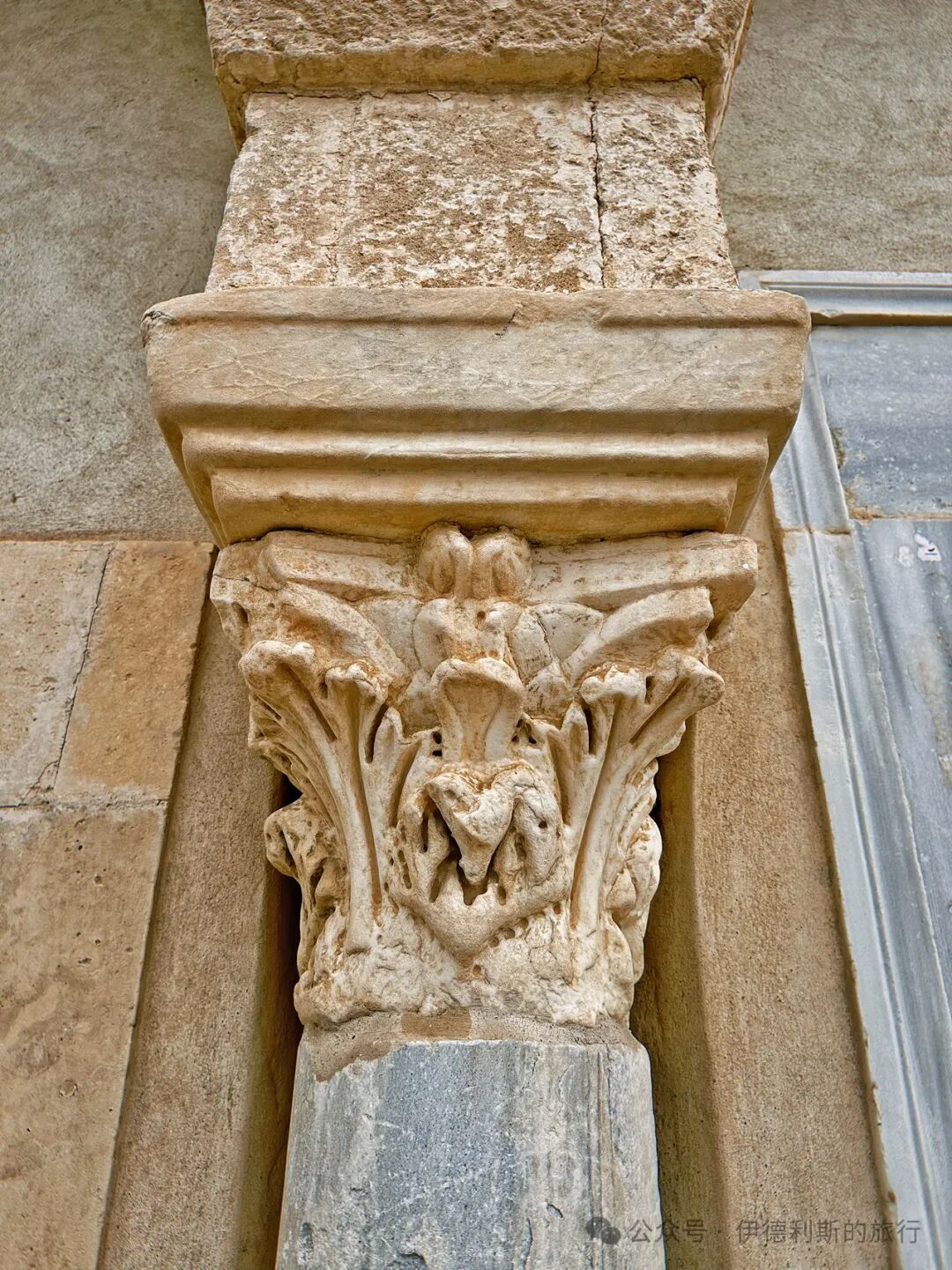
Today, only the facade of the Mosque of the Three Doors retains its 9th-century appearance, while the minaret next to it was added in 1440. The gate of the Mosque of the Three Doors consists of three horseshoe arches and features four ancient stone columns. The arch is carved with floral patterns and Kufic calligraphy, which includes verses from the Quran and the name of the builder, Muhammad ibn Khairun. Muhammad ibn Khairun was a scholar and merchant from Andalusia who traveled through Iraq and Egypt to reach Kairouan, Tunisia. When the minaret was added in 1440, the original 9th-century inscriptions were rearranged to make room for the new text.
In the northwest of the Kairouan Medina stands an important tomb for Sidi Sahib, a companion of the Prophet and his barber, which is why it is also called the Barber Mosque.
Legend says Sidi Sahib died in a battle in 654 and was buried here. By the 11th century, this place had become a famous holy site, and the tomb shrine (gongbei) was built in the 14th century. The Bey of Tunis, Hammuda Pasha (reigned 1631-66), expanded the tomb significantly in 1629 and built a new main hall. Another Bey, Mohamed (reigned 1675-96), built the minaret and a religious school (madrasa) between 1690 and 1695. Since the 19th century, the tomb of Sidi Sahib has undergone several renovations, but it still keeps its 17th-century architectural style.
The tomb of Sidi Sahib in Kairouan blends Andalusian, Italian Renaissance, and local Kairouan architectural styles. The interior features many classic 17th-century Tunisian Qallalin tiles and rich plaster carvings.
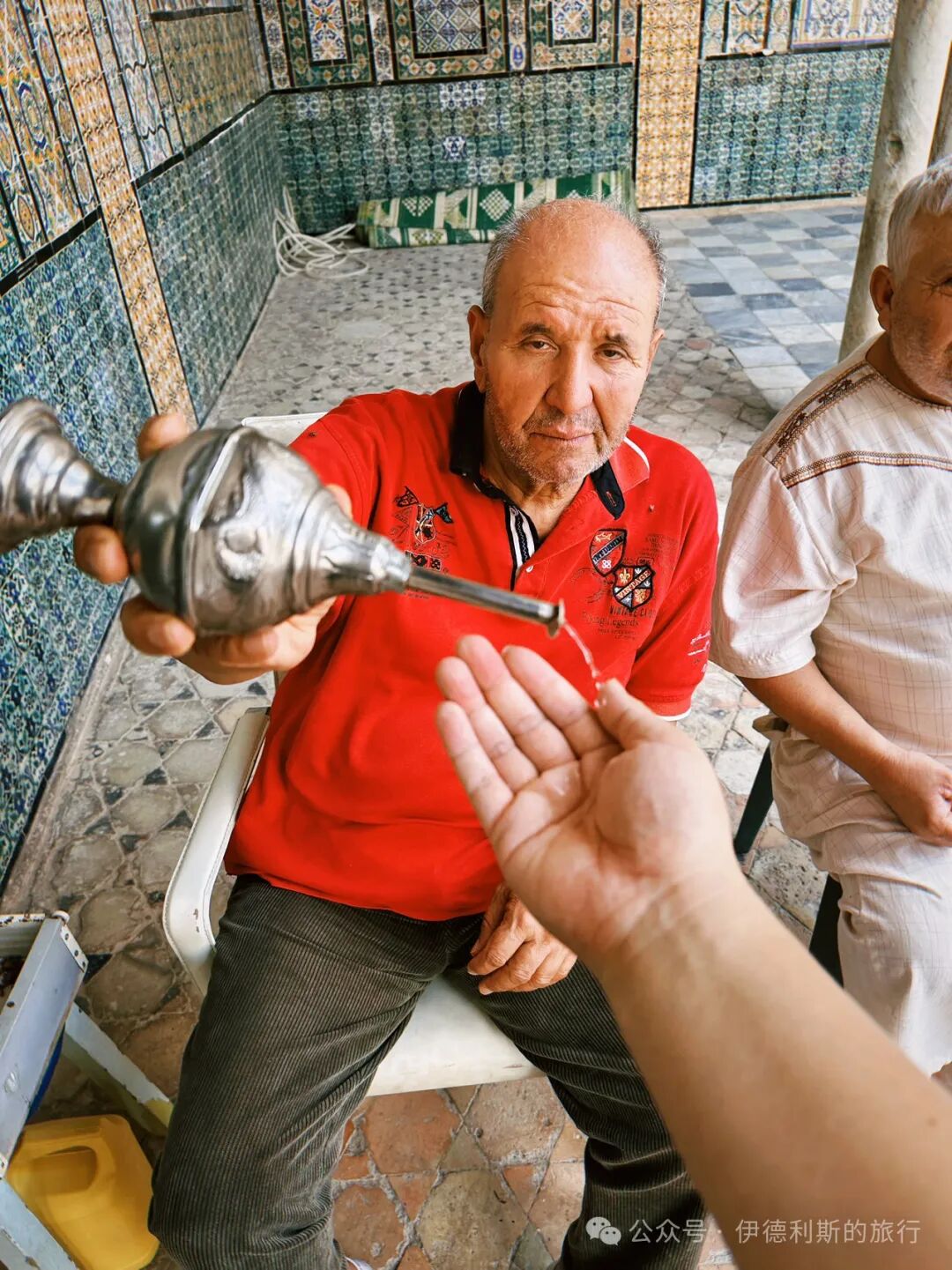
At the minaret, gate, and main hall of the Sidi Sahib tomb in Kairouan, an old man in the courtyard pours perfume into the hands of every visitor (dosti) who comes to pay their respects.
The Sidi Abid al-Ghariani school (madrasa) and shrine (zawiya) inside the Kairouan Medina were founded in the 14th century and expanded significantly in the 17th century. Abid al-Ghariani was a scholar, and his teacher, Al-Jadidi, was a famous judge in Kairouan. Al-Jadidi passed away in 1384 while on the Hajj pilgrimage in Mecca. Abid al-Ghariani took over his teacher's role to continue teaching in Kairouan, and after he died in 1402, he was buried next to the school.
Besides Abid al-Ghariani, the Hafsid dynasty Caliph Moulay Hasan (reigned 1526-1543) is also buried here. In 1534, the famous pirate Barbarossa led a fleet to invade Tunisia. Moulay Hasan eventually took back Tunisia with the help of the Holy Roman Empire, but he had to sign a treaty to become a vassal of Spain. In 1542, while Moulay Hasan was traveling to Italy to collect weapons and ammunition, his son usurped the throne, and he was eventually exiled. He lived in Naples and Sicily for several years and later met with the Holy Roman Emperor and the Pope, becoming the most well-known Arab monarch to Europeans of that era.
The city walls and gates of the Kairouan Medina.
Kairouan was founded in 670 by the Arab Umayyad general Uqba ibn Nafi, who chose the site to serve as a military base for the Arab conquest of Tunisia. Over the next hundred years, the Berbers launched wave after wave of uprisings against the Arabs. After surviving many attacks, Kairouan was finally captured by the Berbers in 745 and was not retaken until the end of the 8th century. view all
Summary: This first part follows a visit to the Great Mosque of Kairouan for Jumu'ah in one of Tunisia's most important Islamic cities. It keeps the original prayer experience, mosque history, photographs, and travel details for readers interested in Muslim heritage in North Africa.
On Friday, we left from the Louage station south of Sousse and reached Kairouan, the most important ancient city in Tunisia, in just one hour. The Louage station in Kairouan is on the west side of the city, but you can ask the driver to drop you off right at the gate of the Great Mosque of Kairouan.
When we arrived at the Great Mosque at twelve o'clock, it was already closed. A young man at the gate told us that other mosques in Kairouan hold Jumu'ah prayer at one o'clock, but only the Great Mosque holds it at three, so he suggested we come back later.
We used this time to look at the exterior of the mosque. The Great Mosque of Kairouan is the oldest and most spectacular Jumu'ah mosque in Tunisia. It was first built in 670 by order of Uqba ibn Nafi, a general of the Arab Umayyad Caliphate. It was destroyed by Christian Berbers in 690 and rebuilt by the Umayyad Caliphate in 703. As the Arab population in Tunisia grew, the number of Muslims in Kairouan increased. The Great Mosque was rebuilt and renovated many times between 724-728, 774, 836, 862-863, and 875, finally taking its current form in the 9th century.
The Great Mosque is a huge, irregular quadrilateral with a perimeter of 405 meters, looking like a fortress from the outside. The outer walls are 1.9 meters thick and built from stone, rubble, and bricks. Because the ground is quite soft, many buttresses were built on the outer walls to increase stability.
The Great Mosque has nine gates, some of which have porches and spiral-shaped domes. Bab Lalla Rihana on the southeast side was built in 1293 during the Hafsid dynasty. It features a horseshoe arch and ancient stone columns that blend perfectly with the 9th-century walls.
While waiting for Jumu'ah, we had lunch at El Brija Restaurant, located on the city wall next to the Great Mosque. The atmosphere and service were both good, and they serve traditional Tunisian food. I recommend eating here when visiting the Great Mosque.
We ordered a traditional appetizer platter and a mixed couscous stew. When eating at a proper restaurant in Tunisia, you really only need to order the main course, as most places provide side dishes and bread.
Our appetizer platter included Tunisian salad, Houria carrot salad, and Mechouia green pepper salad. We ate these three dishes almost every day in Tunisia. Tunisian salad is made of diced cucumbers, tomatoes, and onions mixed with olive oil, topped with boiled eggs and tuna. Mechouia salad contains green peppers, tomatoes, onions, garlic, and more. Tunisians love it, and it is rich in vitamins and very healthy. The couscous stew was very rich, containing lamb, Merguez sausage, chicken, beef, dried fruits, and preserved fruits. The Merguez sausage is seasoned with cumin and chili, making it very flavorful.
After the meal, we were served mint tea and Makroudh dessert. Makroudh is a classic North African Maghreb snack for breaking the fast. It is made of semolina on the outside, filled with date paste and dried fruits, then baked and soaked in syrup.
We returned to the Great Mosque after two o'clock, and people were already entering the prayer hall. Once inside the courtyard, the first thing you see is the oldest minaret (bangke ta) still in existence today. The minaret of the Great Mosque of Kairouan was built between the 8th and 9th centuries. The current structure mostly dates back to 836. It is one of the three most important early minarets, alongside the spiral minaret of the Great Mosque of Samarra in Iraq, built between 848 and 852, and the spiral minaret of the Abu Dulaf Mosque in Iraq, built in 859. These three served as models for later minarets across Andalusia and the Maghreb.
There were no minarets during the time of the Prophet and the four Caliphs. People called for prayer (adhan) from the mosque entrance or the roof. Platforms for calling the adhan appeared during the Umayyad dynasty in the 7th century, but true minarets did not emerge until the Abbasid dynasty in the 8th century. There is no final conclusion on the origin of the minaret. Some say it mimics the towers of Syrian churches, while others suggest it was inspired by the Lighthouse of Alexandria or Mesopotamian ziggurats. Four towers were built during the reconstruction of the Sacred Mosque in Mecca in the late 8th century, but they have not survived. The earliest surviving minarets are the one at the Great Mosque of Kairouan and the two in Iraq. The Bride's Minaret at the Umayyad Mosque in Damascus may also date to the 9th century, but there is no clear record of this.
The minaret of the Great Mosque of Kairouan is 31.5 meters tall. Its base dates back to the Umayyad period in 725, and you can see Latin inscriptions from the Roman era on the walls. The first and second levels of the minaret were built in 836 using carefully cut stone. The side facing the courtyard has windows, while the other three sides have arrow slits. The third level of the minaret is a four-arched structure (chahartaq), which was likely added later.
Three sides of the Great Mosque are surrounded by double-row horseshoe-shaped arcades. The columns come from various ancient Roman and Byzantine ruins, including some from the famous site of Carthage.
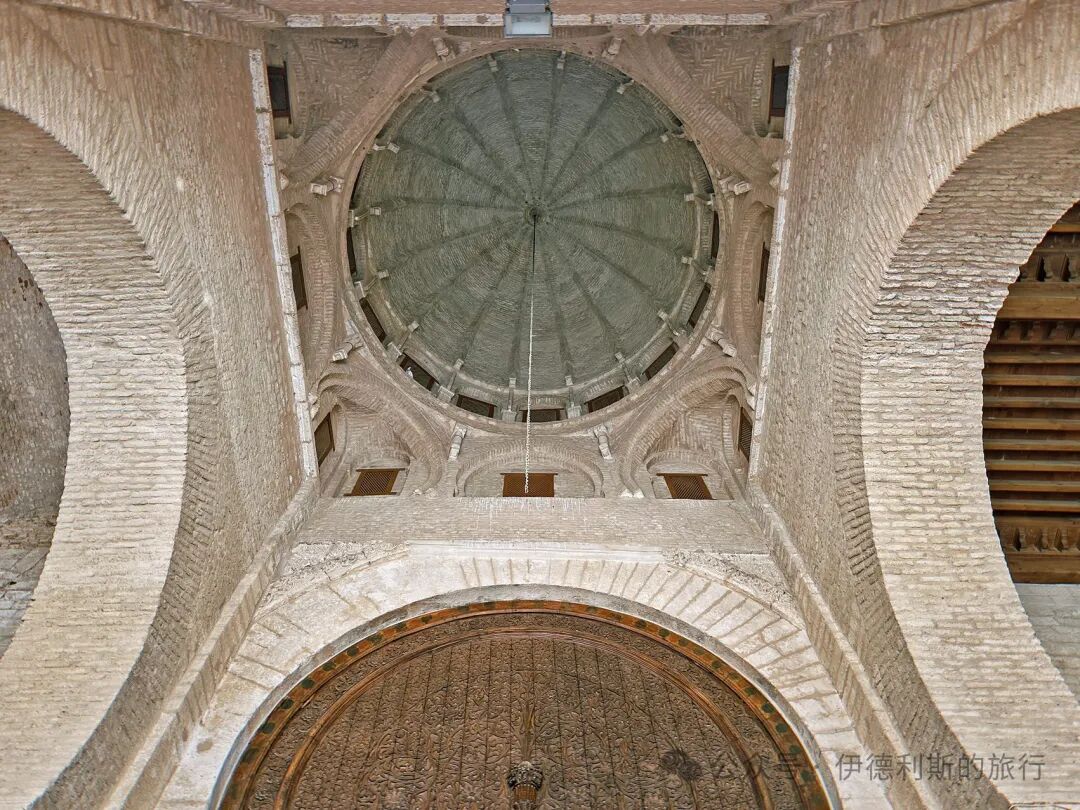
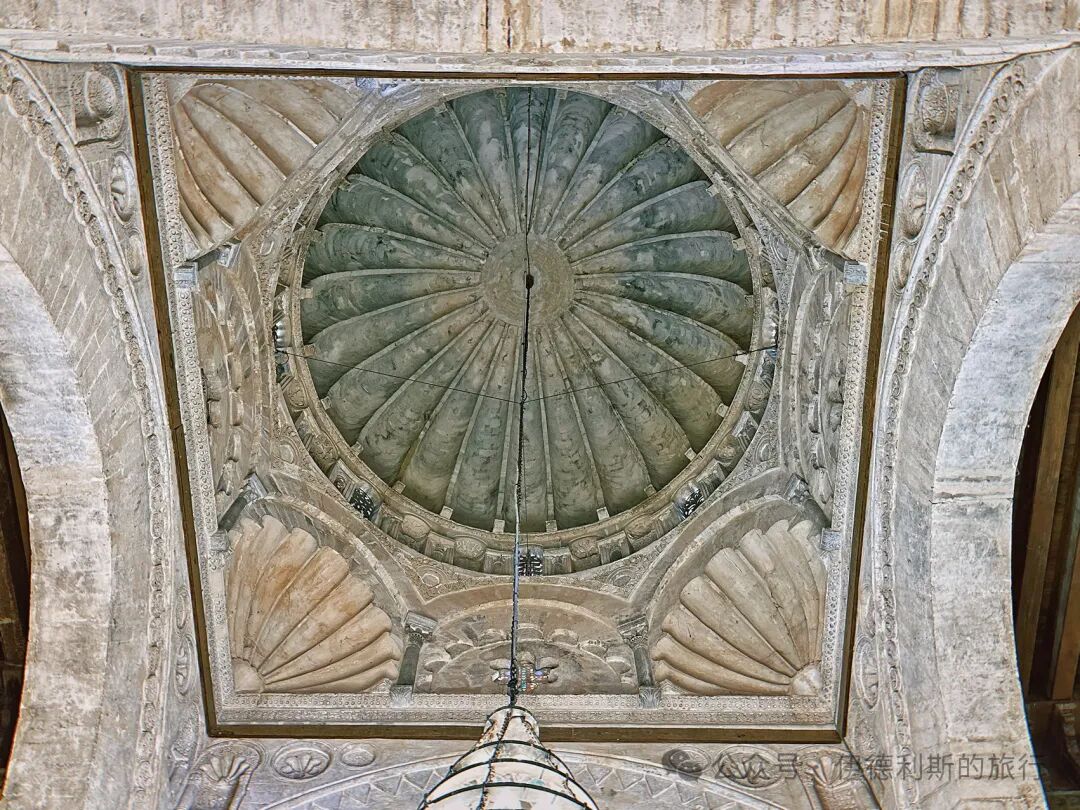
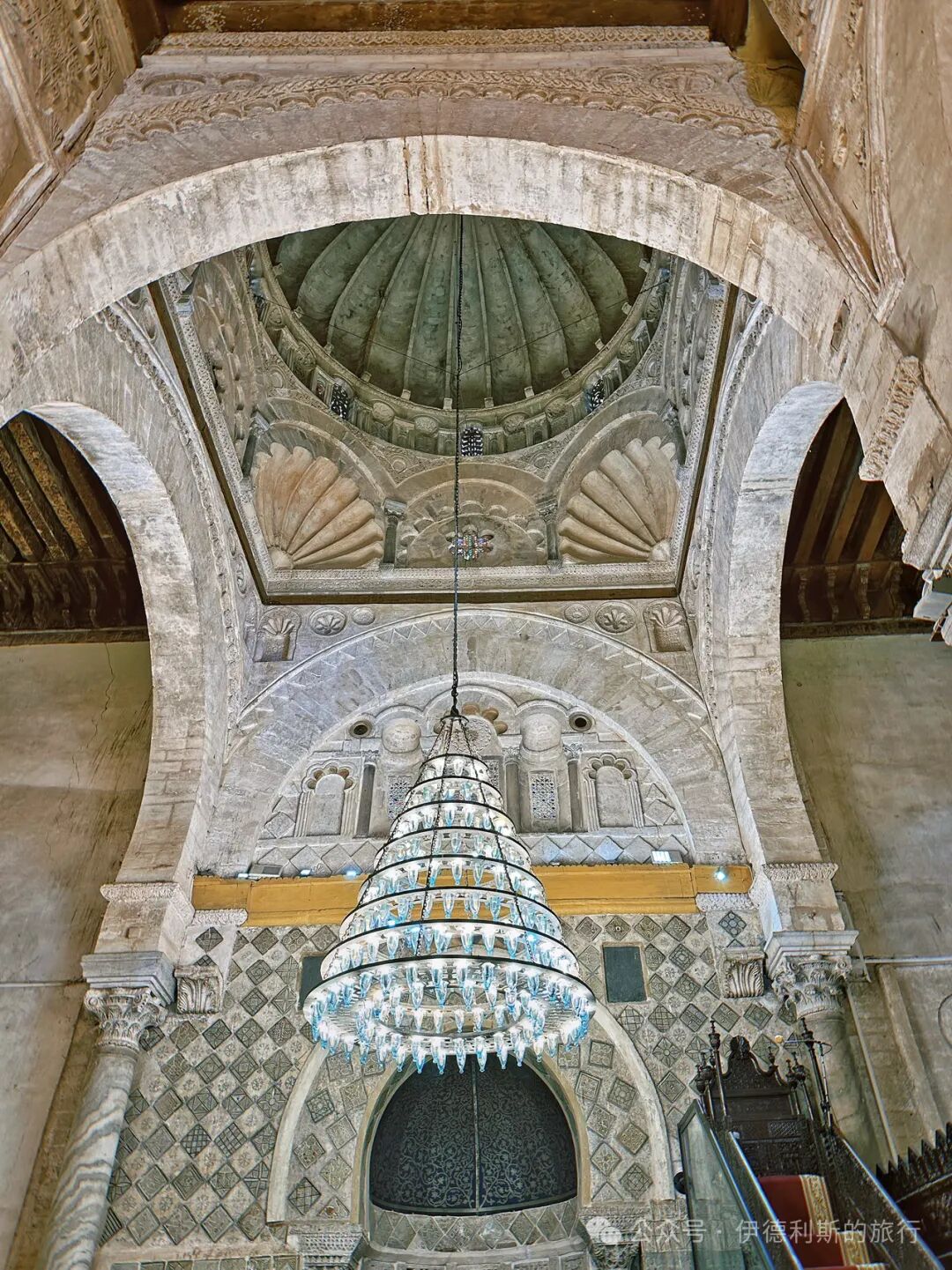
There is a dome above the main entrance of the prayer hall and another above the mihrab. These domes, built in 836, are important examples of early mosque domes.
The prayer hall connects to the arcades through 17 carved wooden doors. The most beautiful one in the center was built in 1828 and features rich geometric and floral patterns.
The mihrab of the Great Mosque is 5.1 meters high. It was built in 863 and is the oldest concave mihrab in the world. The main body of the mihrab is a horseshoe arch supported by two red marble columns. The columns have Byzantine-style capitals with very fine carvings.
The upper part of the mihrab features 139 iridescent ceramic tiles fired in the second half of the 9th century. This metallic-lustre glazed pottery originated in Abbasid-ruled Iraq and was traded throughout West Asia and North Africa. It is not yet certain whether the iridescent tiles of the Great Mosque of Kairouan were fired in Iraq or if Iraqi craftsmen were invited to Kairouan to make them.
The concave center of the upper part is made of painted wood, featuring complex vine patterns in yellow on a blue background. The lower part is inlaid with 28 white marble slabs carved with complex floral and geometric patterns, including stylized grape leaves, flowers, and shells.
Next to the mihrab are the pulpit (minbar) for the Friday sermon and the enclosure (maqsurah) used by kings and nobles.
The minbar of the Great Mosque of Kairouan was also built in 863 and is the oldest surviving minbar in the world. The minbar is made of teak imported from India and is assembled from over 300 wooden panels carved with floral and geometric patterns. Although it was restored in the early 20th century, all but nine of the wooden panels are original pieces from over a thousand years ago. Today, the sides of the minbar are protected by glass, making it difficult to take photos due to the reflection.
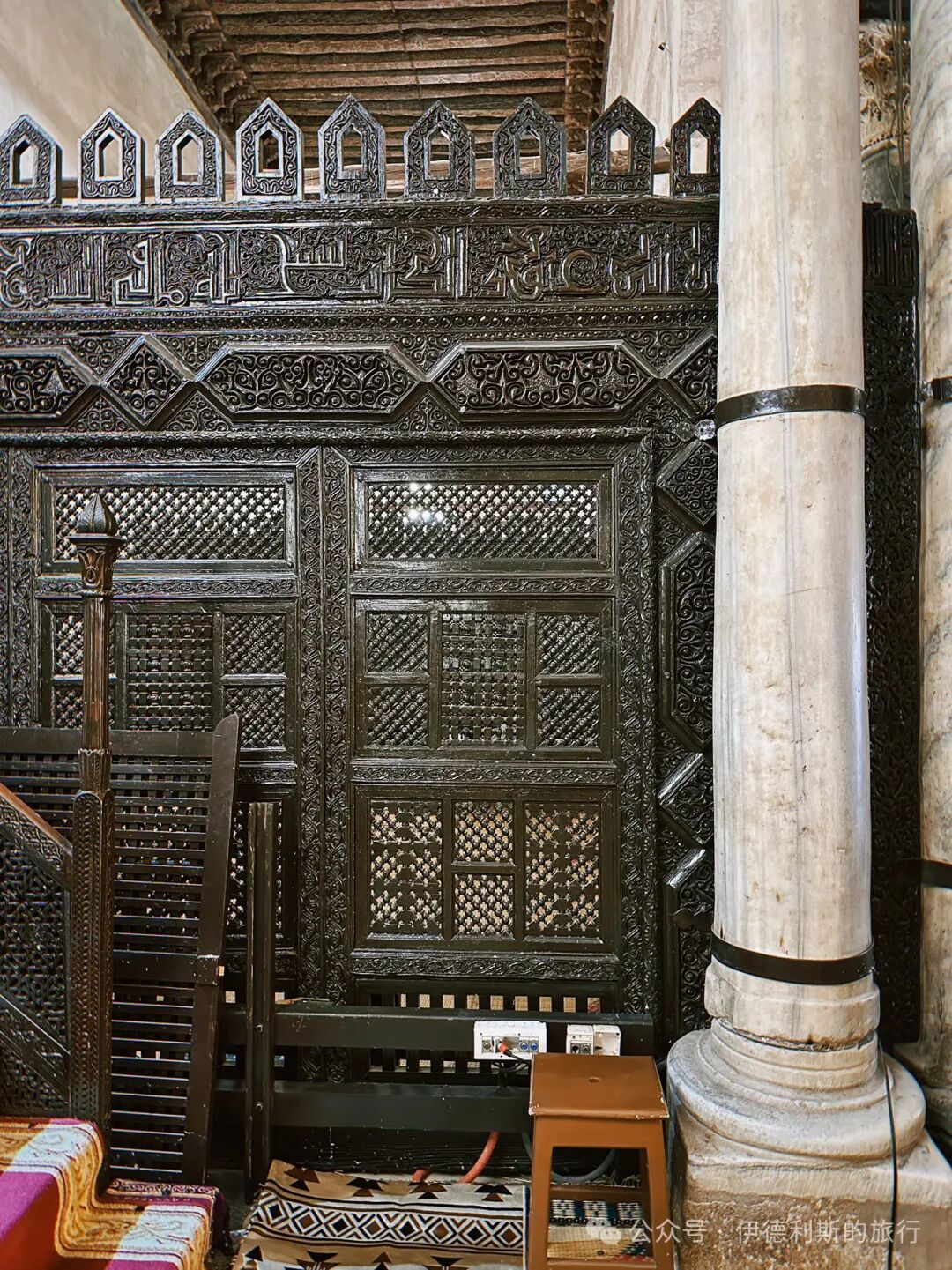
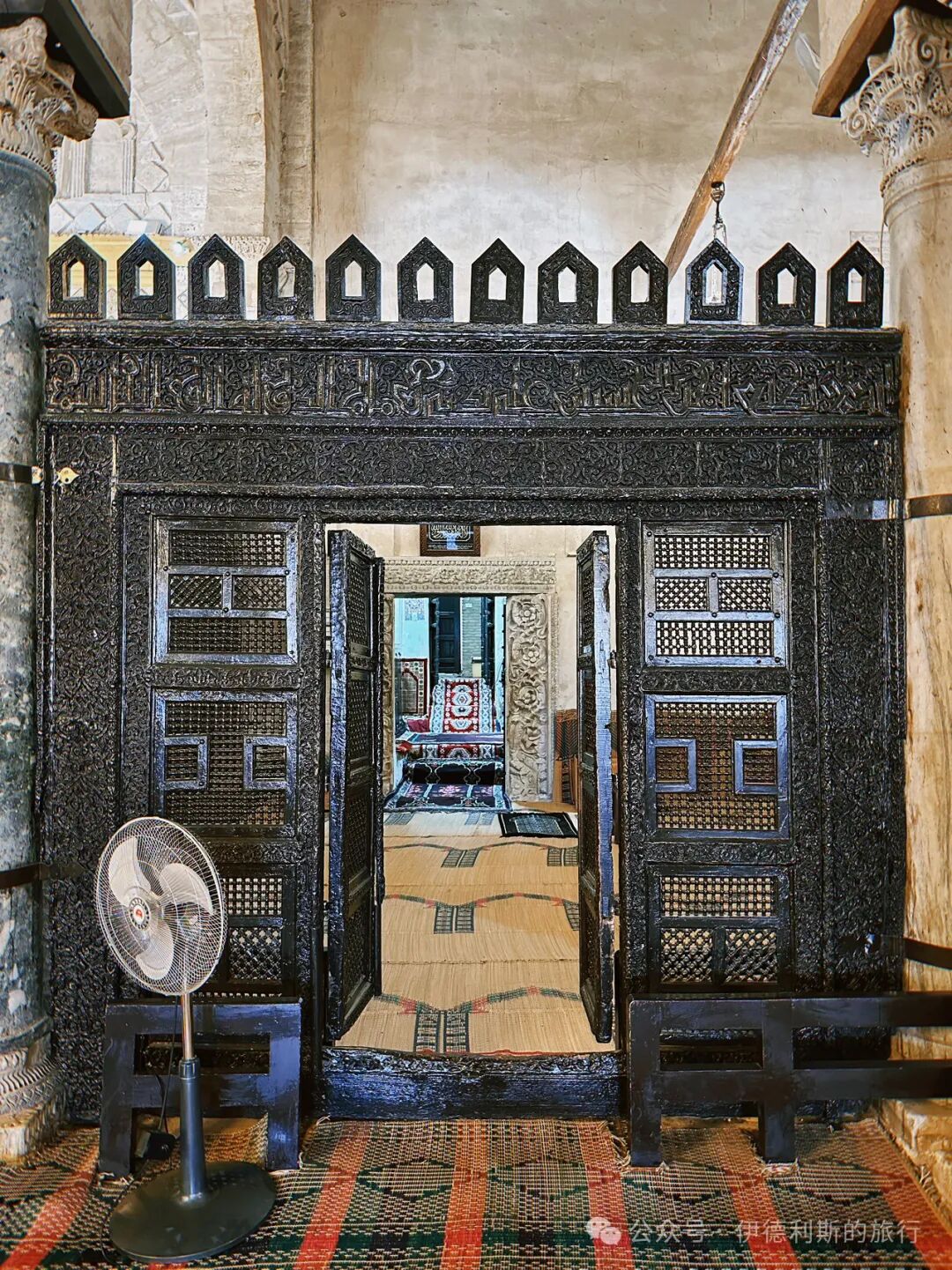
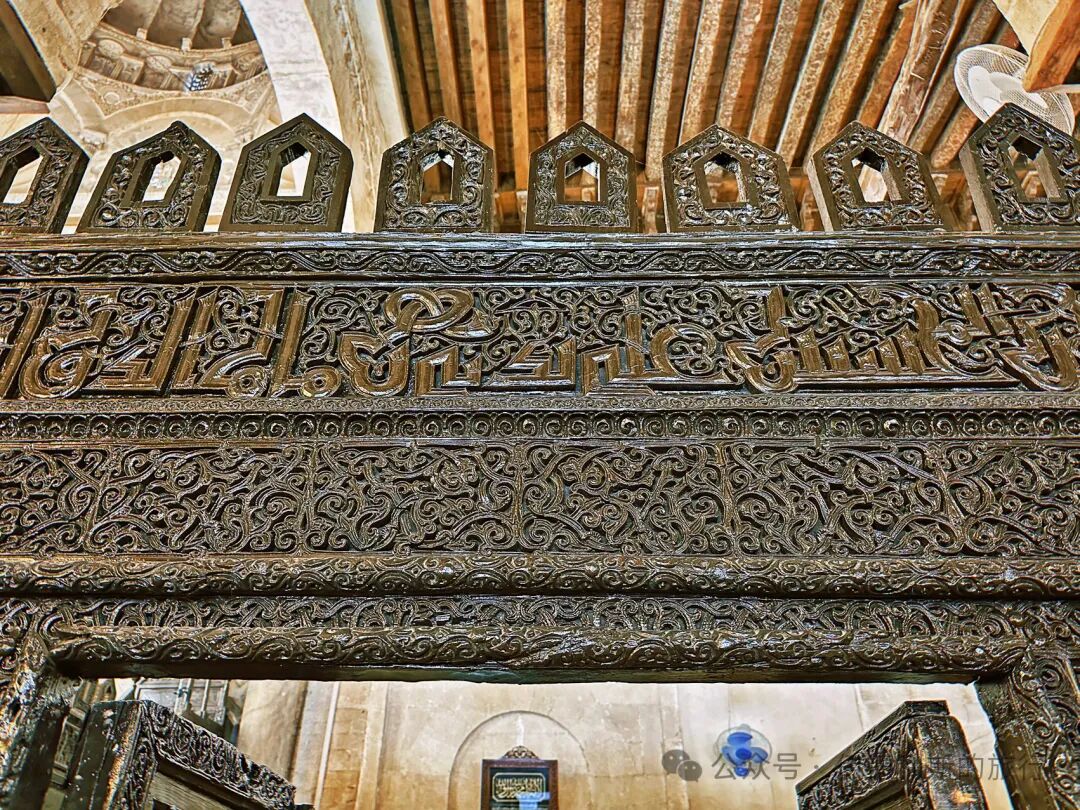
The maksura at the Great Mosque of Kairouan was built in the first half of the 11th century. It is the oldest maksura in the world still in use. The maksura at the Great Mosque of Cordoba in Spain was built in 965, but it is no longer used today. The maksura is made of cedar and is 14 meters long. It is carved with ornate Kufic calligraphy and floral patterns, representing the highest achievement in Tunisian carving art at that time.
The maksura originated during the time of Caliph Uthman in the mid-7th century. After Caliph Umar was assassinated inside the prayer hall, Uthman built a partition wall inside the hall to protect himself. Later, mosques where the Caliph resided would all have a maksura built inside.
The prayer hall of the Great Mosque of Kairouan is 70.6 meters wide and 37.5 meters deep. It consists of 17 aisles, with the aisle directly facing the mihrab being the tallest and widest. This layout was later adopted by major mosques across the Maghreb and Andalusia.
There are 414 stone columns inside the prayer hall. They are made of marble, granite, and porphyry, with capitals in styles including Corinthian, Ionic, and Composite. Some capitals were carved specifically for the prayer hall, while many others came from ancient Roman, Phoenician, and Byzantine sites in Tunisia, including the famous ancient city of Carthage.
The door inside the prayer hall's maksura is decorated with marble floral carvings. This door leads to the library behind the qibla wall, which is also where the imam usually stays. The imam only comes out from here to lead the prayer and deliver the khutbah.
The grand scene of Jumu'ah at the Great Mosque of Kairouan. After the adhan is finished, the imam slowly walks up the minbar to begin the khutbah. In Arabic-speaking regions, everyone understands the khutbah, so there is no sermon session beforehand.
Tunisia follows the Maliki school of thought. Their namaz movements are quite similar to our Hanafi school, including the initial takbir, but the main difference is that they also fold their arms when making intention.
After the prayer, we stood for janazah outside the prayer hall door. Because Jumu'ah was at three o'clock, we immediately returned to the prayer hall to perform Dhuhr after finishing.
From the 9th to the 11th century, the Great Mosque of Kairouan was the academic center for the entire Maghreb region and the Maliki school. to religious courses, it offered subjects like mathematics, astronomy, medicine, and botany. In 1045, the Zirid dynasty court in Kairouan announced its conversion to Sunni Islam. Upon hearing this, the Shi'a Fatimid dynasty in Egypt sent a group of Arab tribes to invade Kairouan. In 1057, these Arab tribes occupied and destroyed Kairouan. The Great Mosque of Kairouan declined from then on and did not slowly recover until after the 13th century.
After leaving the Great Mosque of Kairouan, we started exploring the ancient medina of Kairouan. Besides the Great Mosque, the other ancient mosque remaining in Kairouan is the Mosque of the Three Doors (Masjid al-Thalathat Abwab), built in 866. This mosque has the oldest decorated facade of any religious building in the world.
Today, only the facade of the Mosque of the Three Doors retains its 9th-century appearance, while the minaret next to it was added in 1440. The gate of the Mosque of the Three Doors consists of three horseshoe arches and features four ancient stone columns. The arch is carved with floral patterns and Kufic calligraphy, which includes verses from the Quran and the name of the builder, Muhammad ibn Khairun. Muhammad ibn Khairun was a scholar and merchant from Andalusia who traveled through Iraq and Egypt to reach Kairouan, Tunisia. When the minaret was added in 1440, the original 9th-century inscriptions were rearranged to make room for the new text.
In the northwest of the Kairouan Medina stands an important tomb for Sidi Sahib, a companion of the Prophet and his barber, which is why it is also called the Barber Mosque.
Legend says Sidi Sahib died in a battle in 654 and was buried here. By the 11th century, this place had become a famous holy site, and the tomb shrine (gongbei) was built in the 14th century. The Bey of Tunis, Hammuda Pasha (reigned 1631-66), expanded the tomb significantly in 1629 and built a new main hall. Another Bey, Mohamed (reigned 1675-96), built the minaret and a religious school (madrasa) between 1690 and 1695. Since the 19th century, the tomb of Sidi Sahib has undergone several renovations, but it still keeps its 17th-century architectural style.
The tomb of Sidi Sahib in Kairouan blends Andalusian, Italian Renaissance, and local Kairouan architectural styles. The interior features many classic 17th-century Tunisian Qallalin tiles and rich plaster carvings.
At the minaret, gate, and main hall of the Sidi Sahib tomb in Kairouan, an old man in the courtyard pours perfume into the hands of every visitor (dosti) who comes to pay their respects.
The Sidi Abid al-Ghariani school (madrasa) and shrine (zawiya) inside the Kairouan Medina were founded in the 14th century and expanded significantly in the 17th century. Abid al-Ghariani was a scholar, and his teacher, Al-Jadidi, was a famous judge in Kairouan. Al-Jadidi passed away in 1384 while on the Hajj pilgrimage in Mecca. Abid al-Ghariani took over his teacher's role to continue teaching in Kairouan, and after he died in 1402, he was buried next to the school.
Besides Abid al-Ghariani, the Hafsid dynasty Caliph Moulay Hasan (reigned 1526-1543) is also buried here. In 1534, the famous pirate Barbarossa led a fleet to invade Tunisia. Moulay Hasan eventually took back Tunisia with the help of the Holy Roman Empire, but he had to sign a treaty to become a vassal of Spain. In 1542, while Moulay Hasan was traveling to Italy to collect weapons and ammunition, his son usurped the throne, and he was eventually exiled. He lived in Naples and Sicily for several years and later met with the Holy Roman Emperor and the Pope, becoming the most well-known Arab monarch to Europeans of that era.
The city walls and gates of the Kairouan Medina.
Kairouan was founded in 670 by the Arab Umayyad general Uqba ibn Nafi, who chose the site to serve as a military base for the Arab conquest of Tunisia. Over the next hundred years, the Berbers launched wave after wave of uprisings against the Arabs. After surviving many attacks, Kairouan was finally captured by the Berbers in 745 and was not retaken until the end of the 8th century. view all
Reposted from the web
Summary: This first part follows a visit to the Great Mosque of Kairouan for Jumu'ah in one of Tunisia's most important Islamic cities. It keeps the original prayer experience, mosque history, photographs, and travel details for readers interested in Muslim heritage in North Africa.
On Friday, we left from the Louage station south of Sousse and reached Kairouan, the most important ancient city in Tunisia, in just one hour. The Louage station in Kairouan is on the west side of the city, but you can ask the driver to drop you off right at the gate of the Great Mosque of Kairouan.
When we arrived at the Great Mosque at twelve o'clock, it was already closed. A young man at the gate told us that other mosques in Kairouan hold Jumu'ah prayer at one o'clock, but only the Great Mosque holds it at three, so he suggested we come back later.
We used this time to look at the exterior of the mosque. The Great Mosque of Kairouan is the oldest and most spectacular Jumu'ah mosque in Tunisia. It was first built in 670 by order of Uqba ibn Nafi, a general of the Arab Umayyad Caliphate. It was destroyed by Christian Berbers in 690 and rebuilt by the Umayyad Caliphate in 703. As the Arab population in Tunisia grew, the number of Muslims in Kairouan increased. The Great Mosque was rebuilt and renovated many times between 724-728, 774, 836, 862-863, and 875, finally taking its current form in the 9th century.
The Great Mosque is a huge, irregular quadrilateral with a perimeter of 405 meters, looking like a fortress from the outside. The outer walls are 1.9 meters thick and built from stone, rubble, and bricks. Because the ground is quite soft, many buttresses were built on the outer walls to increase stability.
The Great Mosque has nine gates, some of which have porches and spiral-shaped domes. Bab Lalla Rihana on the southeast side was built in 1293 during the Hafsid dynasty. It features a horseshoe arch and ancient stone columns that blend perfectly with the 9th-century walls.
While waiting for Jumu'ah, we had lunch at El Brija Restaurant, located on the city wall next to the Great Mosque. The atmosphere and service were both good, and they serve traditional Tunisian food. I recommend eating here when visiting the Great Mosque.
We ordered a traditional appetizer platter and a mixed couscous stew. When eating at a proper restaurant in Tunisia, you really only need to order the main course, as most places provide side dishes and bread.
Our appetizer platter included Tunisian salad, Houria carrot salad, and Mechouia green pepper salad. We ate these three dishes almost every day in Tunisia. Tunisian salad is made of diced cucumbers, tomatoes, and onions mixed with olive oil, topped with boiled eggs and tuna. Mechouia salad contains green peppers, tomatoes, onions, garlic, and more. Tunisians love it, and it is rich in vitamins and very healthy. The couscous stew was very rich, containing lamb, Merguez sausage, chicken, beef, dried fruits, and preserved fruits. The Merguez sausage is seasoned with cumin and chili, making it very flavorful.
After the meal, we were served mint tea and Makroudh dessert. Makroudh is a classic North African Maghreb snack for breaking the fast. It is made of semolina on the outside, filled with date paste and dried fruits, then baked and soaked in syrup.
We returned to the Great Mosque after two o'clock, and people were already entering the prayer hall. Once inside the courtyard, the first thing you see is the oldest minaret (bangke ta) still in existence today. The minaret of the Great Mosque of Kairouan was built between the 8th and 9th centuries. The current structure mostly dates back to 836. It is one of the three most important early minarets, alongside the spiral minaret of the Great Mosque of Samarra in Iraq, built between 848 and 852, and the spiral minaret of the Abu Dulaf Mosque in Iraq, built in 859. These three served as models for later minarets across Andalusia and the Maghreb.
There were no minarets during the time of the Prophet and the four Caliphs. People called for prayer (adhan) from the mosque entrance or the roof. Platforms for calling the adhan appeared during the Umayyad dynasty in the 7th century, but true minarets did not emerge until the Abbasid dynasty in the 8th century. There is no final conclusion on the origin of the minaret. Some say it mimics the towers of Syrian churches, while others suggest it was inspired by the Lighthouse of Alexandria or Mesopotamian ziggurats. Four towers were built during the reconstruction of the Sacred Mosque in Mecca in the late 8th century, but they have not survived. The earliest surviving minarets are the one at the Great Mosque of Kairouan and the two in Iraq. The Bride's Minaret at the Umayyad Mosque in Damascus may also date to the 9th century, but there is no clear record of this.
The minaret of the Great Mosque of Kairouan is 31.5 meters tall. Its base dates back to the Umayyad period in 725, and you can see Latin inscriptions from the Roman era on the walls. The first and second levels of the minaret were built in 836 using carefully cut stone. The side facing the courtyard has windows, while the other three sides have arrow slits. The third level of the minaret is a four-arched structure (chahartaq), which was likely added later.
Three sides of the Great Mosque are surrounded by double-row horseshoe-shaped arcades. The columns come from various ancient Roman and Byzantine ruins, including some from the famous site of Carthage.
There is a dome above the main entrance of the prayer hall and another above the mihrab. These domes, built in 836, are important examples of early mosque domes.
The prayer hall connects to the arcades through 17 carved wooden doors. The most beautiful one in the center was built in 1828 and features rich geometric and floral patterns.
The mihrab of the Great Mosque is 5.1 meters high. It was built in 863 and is the oldest concave mihrab in the world. The main body of the mihrab is a horseshoe arch supported by two red marble columns. The columns have Byzantine-style capitals with very fine carvings.
The upper part of the mihrab features 139 iridescent ceramic tiles fired in the second half of the 9th century. This metallic-lustre glazed pottery originated in Abbasid-ruled Iraq and was traded throughout West Asia and North Africa. It is not yet certain whether the iridescent tiles of the Great Mosque of Kairouan were fired in Iraq or if Iraqi craftsmen were invited to Kairouan to make them.
The concave center of the upper part is made of painted wood, featuring complex vine patterns in yellow on a blue background. The lower part is inlaid with 28 white marble slabs carved with complex floral and geometric patterns, including stylized grape leaves, flowers, and shells.
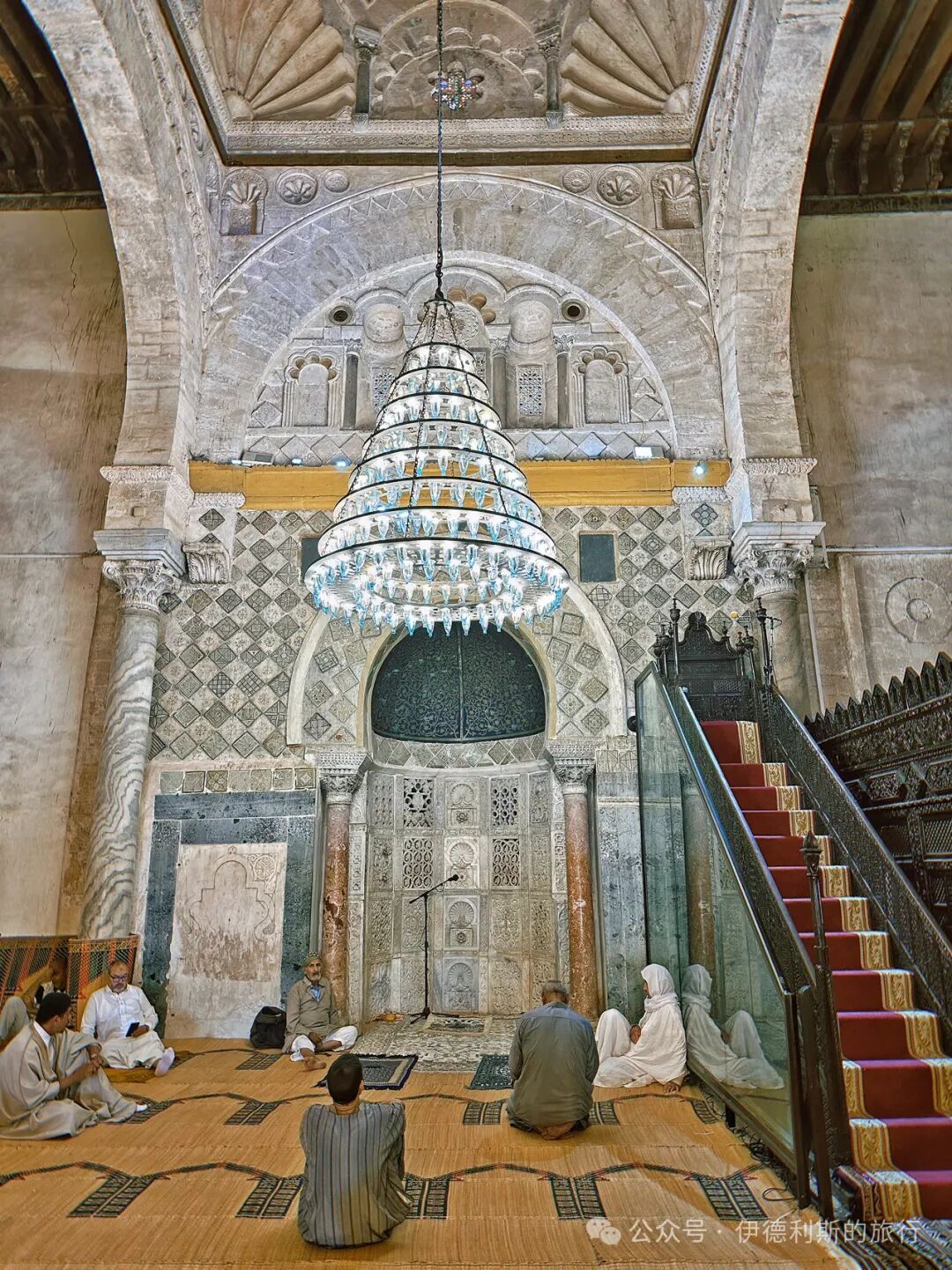
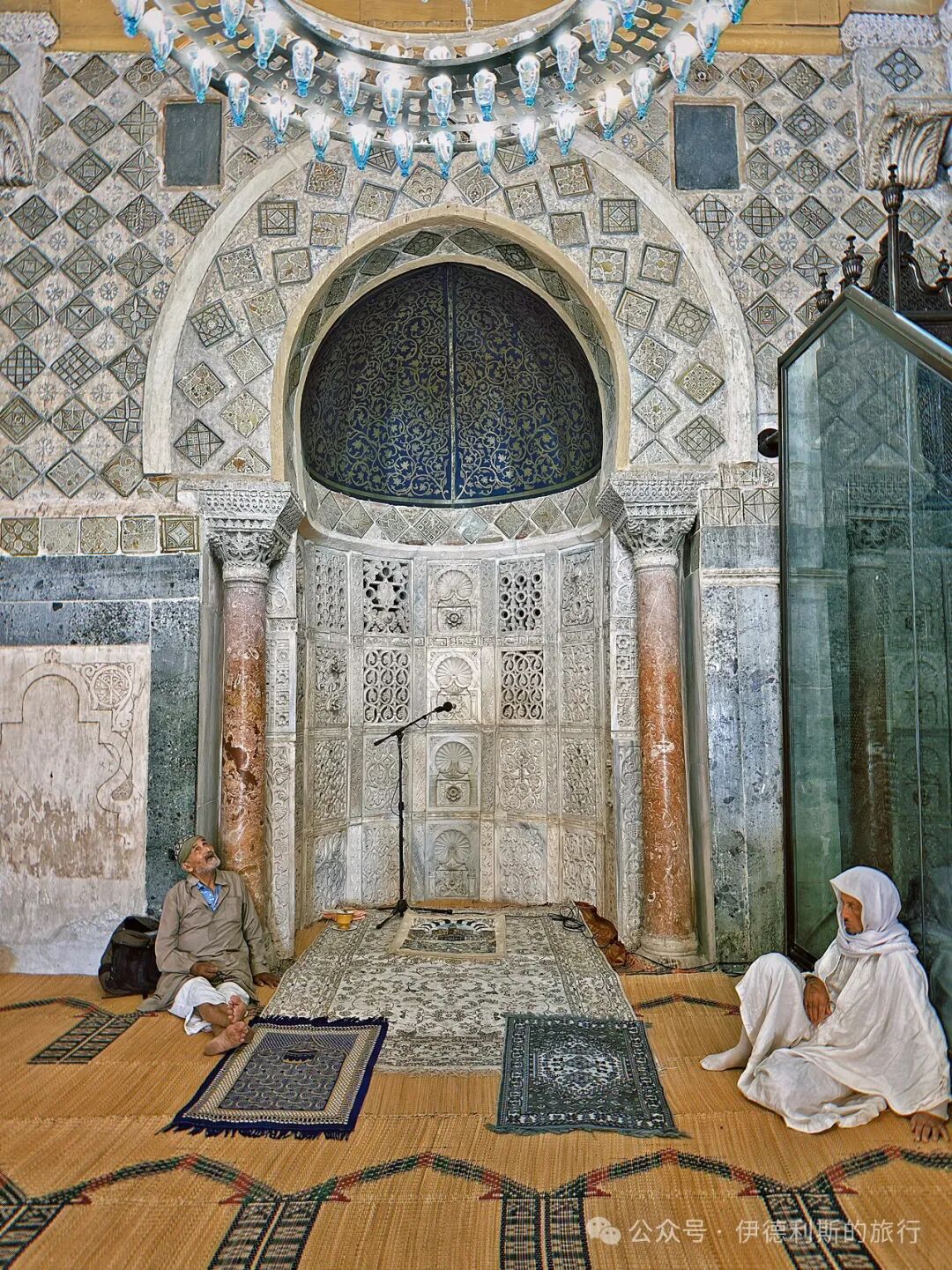
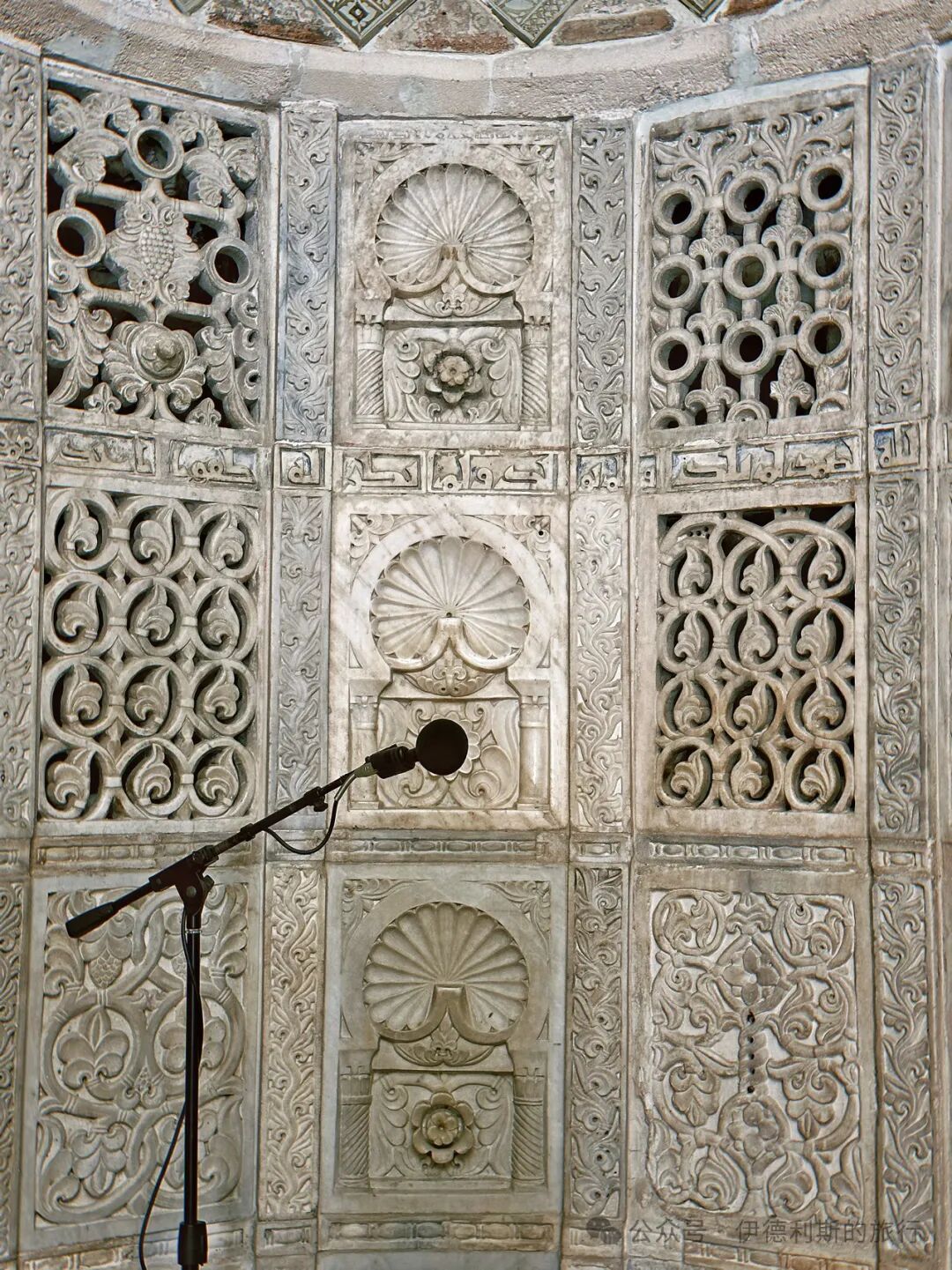
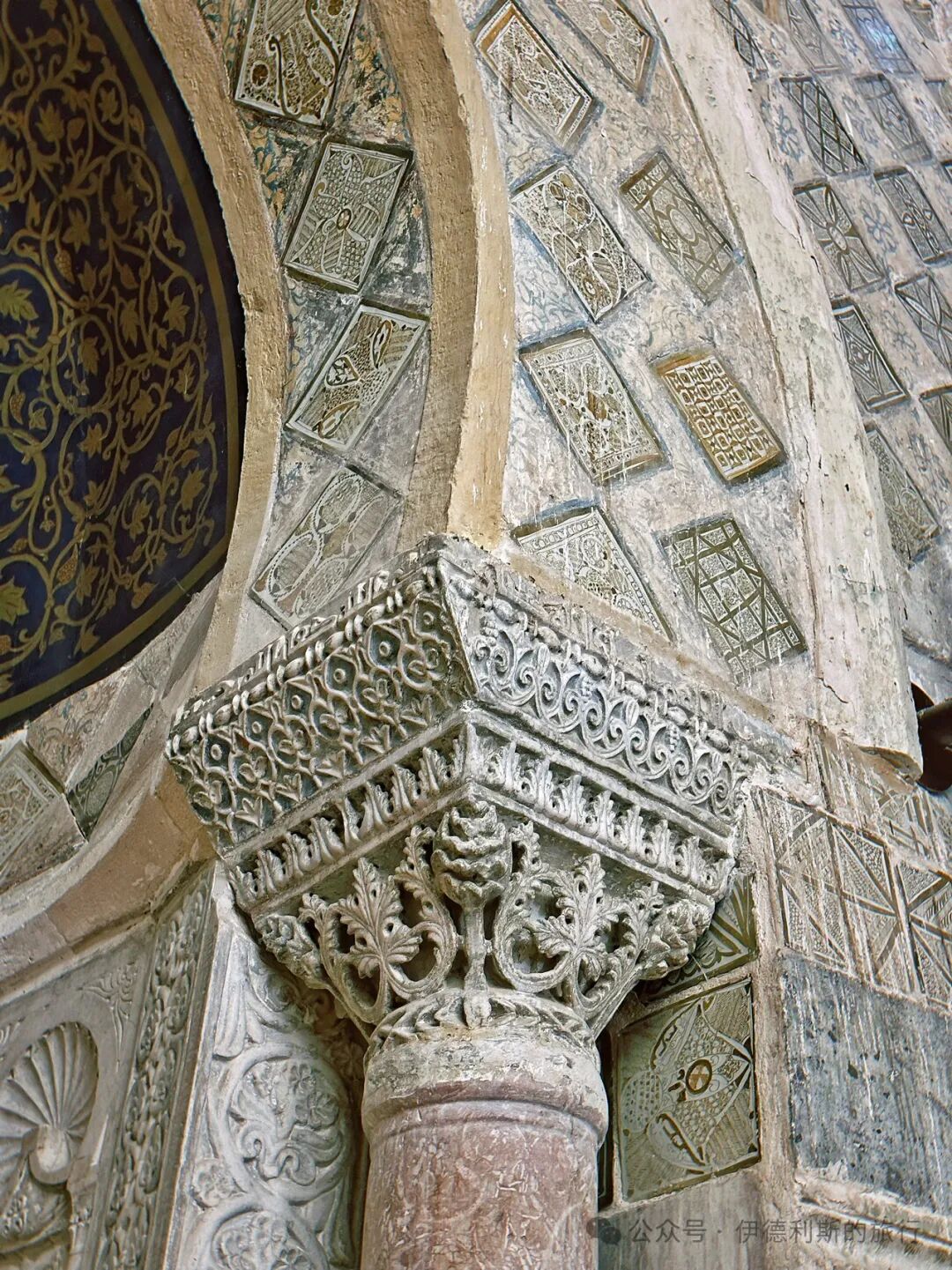
Next to the mihrab are the pulpit (minbar) for the Friday sermon and the enclosure (maqsurah) used by kings and nobles.
The minbar of the Great Mosque of Kairouan was also built in 863 and is the oldest surviving minbar in the world. The minbar is made of teak imported from India and is assembled from over 300 wooden panels carved with floral and geometric patterns. Although it was restored in the early 20th century, all but nine of the wooden panels are original pieces from over a thousand years ago. Today, the sides of the minbar are protected by glass, making it difficult to take photos due to the reflection.
The maksura at the Great Mosque of Kairouan was built in the first half of the 11th century. It is the oldest maksura in the world still in use. The maksura at the Great Mosque of Cordoba in Spain was built in 965, but it is no longer used today. The maksura is made of cedar and is 14 meters long. It is carved with ornate Kufic calligraphy and floral patterns, representing the highest achievement in Tunisian carving art at that time.
The maksura originated during the time of Caliph Uthman in the mid-7th century. After Caliph Umar was assassinated inside the prayer hall, Uthman built a partition wall inside the hall to protect himself. Later, mosques where the Caliph resided would all have a maksura built inside.
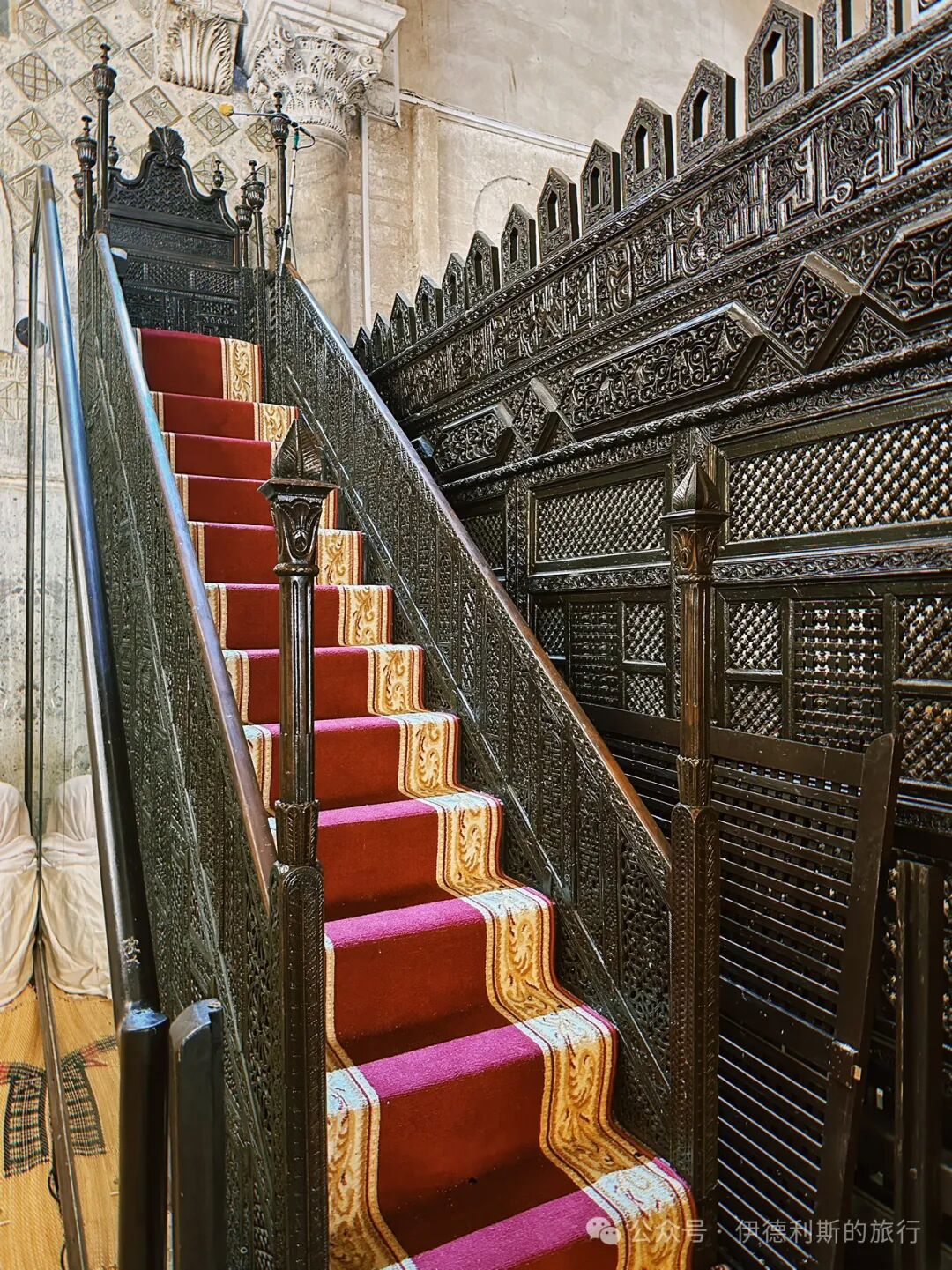
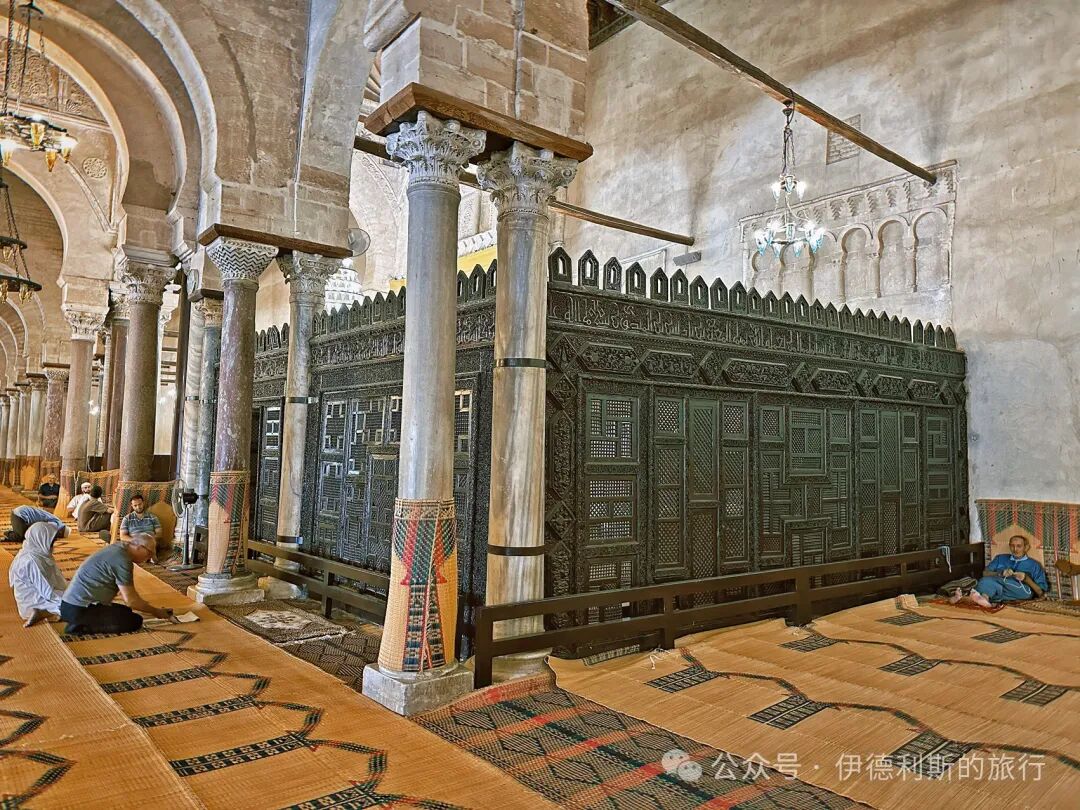
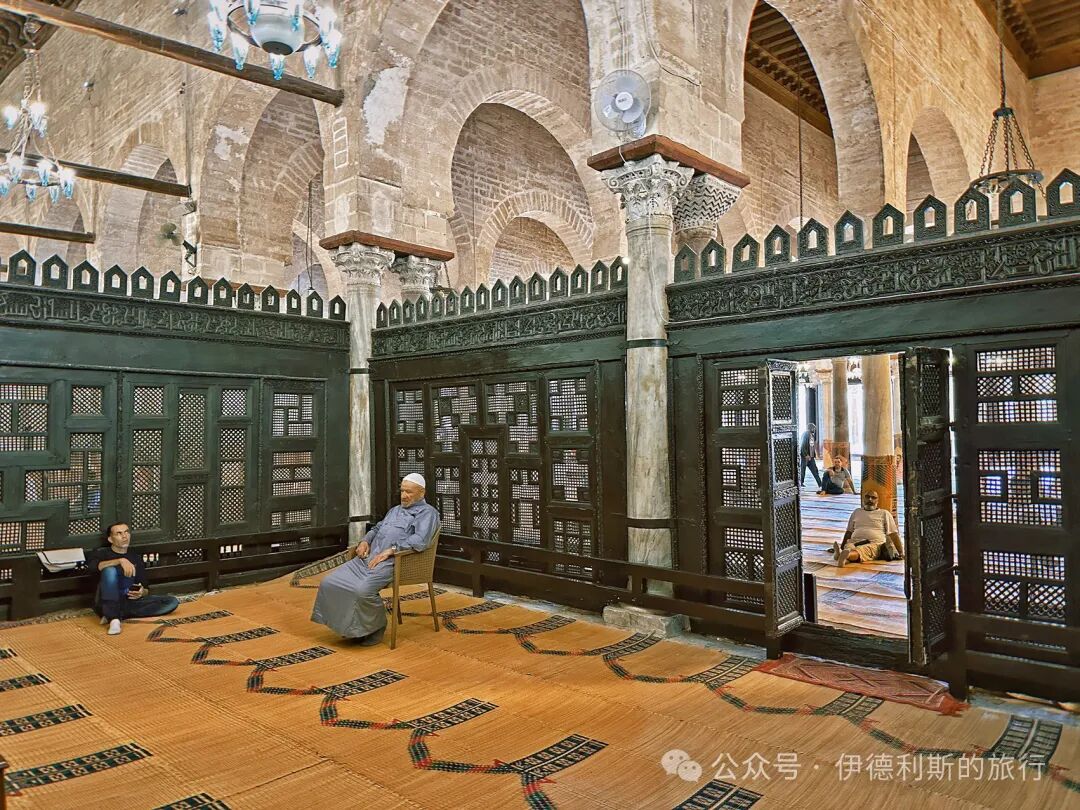
The prayer hall of the Great Mosque of Kairouan is 70.6 meters wide and 37.5 meters deep. It consists of 17 aisles, with the aisle directly facing the mihrab being the tallest and widest. This layout was later adopted by major mosques across the Maghreb and Andalusia.
There are 414 stone columns inside the prayer hall. They are made of marble, granite, and porphyry, with capitals in styles including Corinthian, Ionic, and Composite. Some capitals were carved specifically for the prayer hall, while many others came from ancient Roman, Phoenician, and Byzantine sites in Tunisia, including the famous ancient city of Carthage.
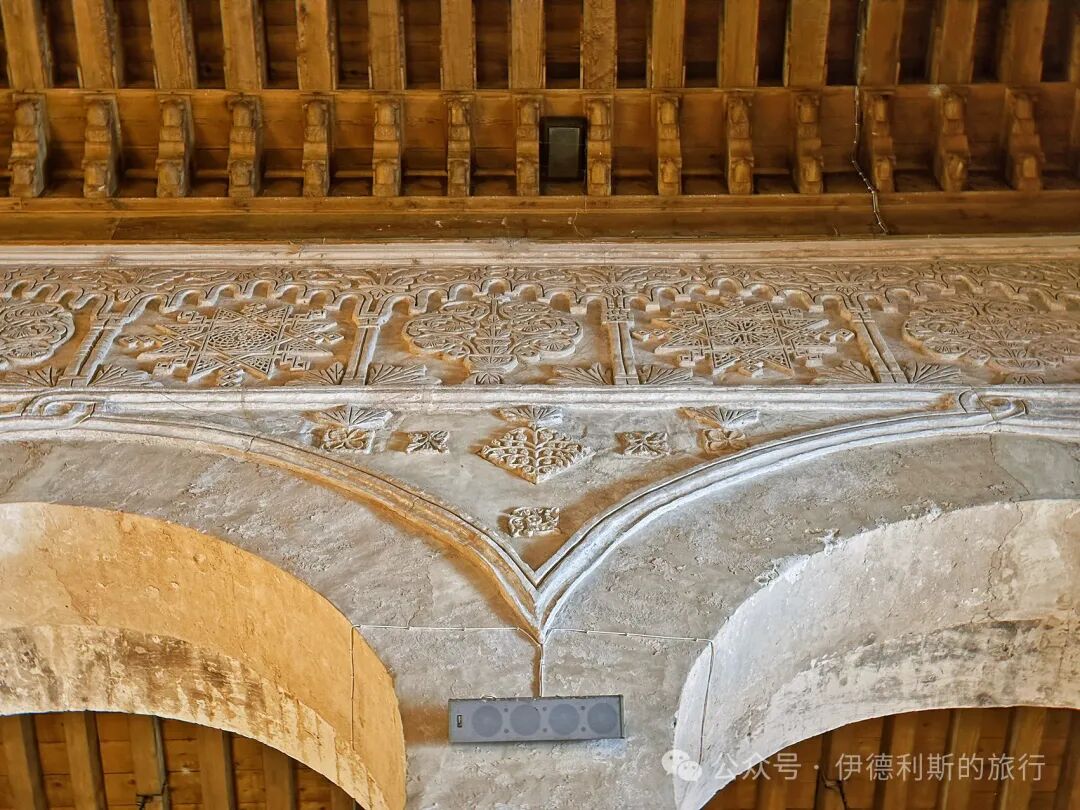
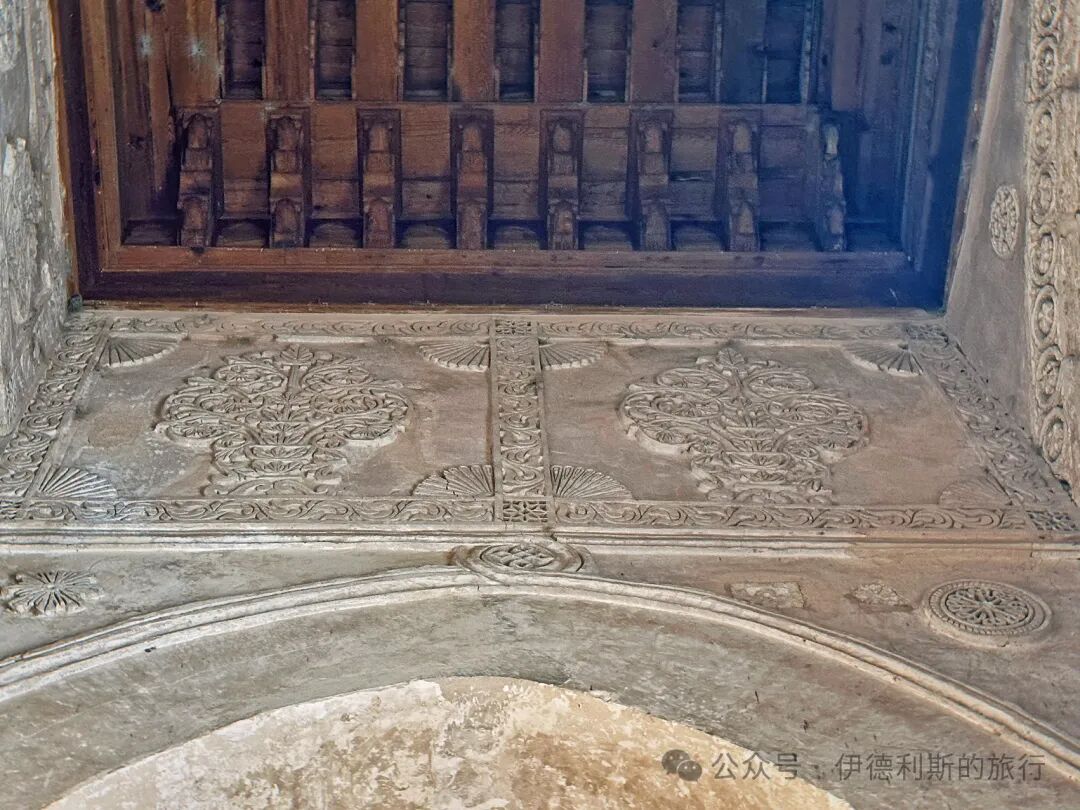
The door inside the prayer hall's maksura is decorated with marble floral carvings. This door leads to the library behind the qibla wall, which is also where the imam usually stays. The imam only comes out from here to lead the prayer and deliver the khutbah.
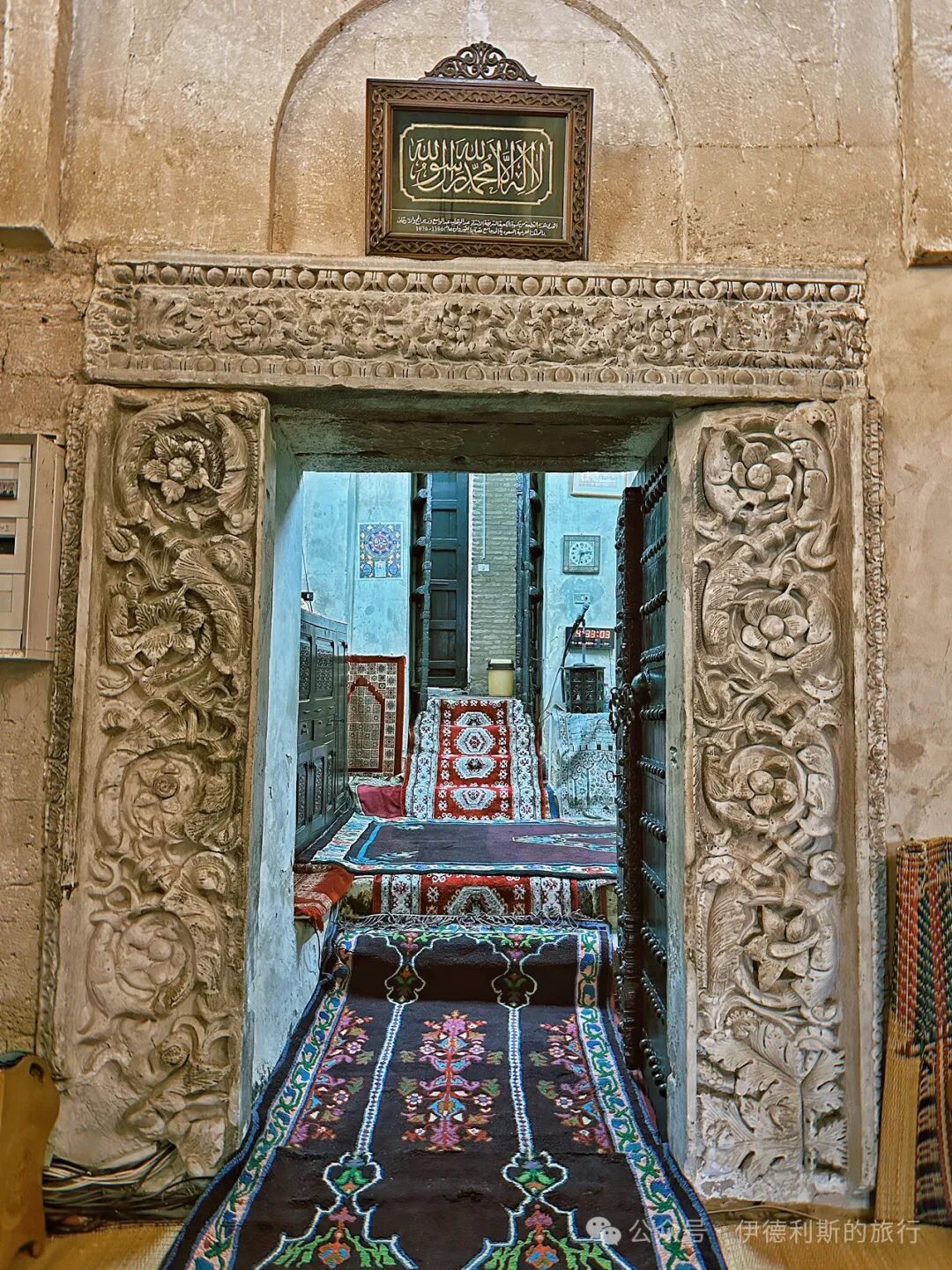
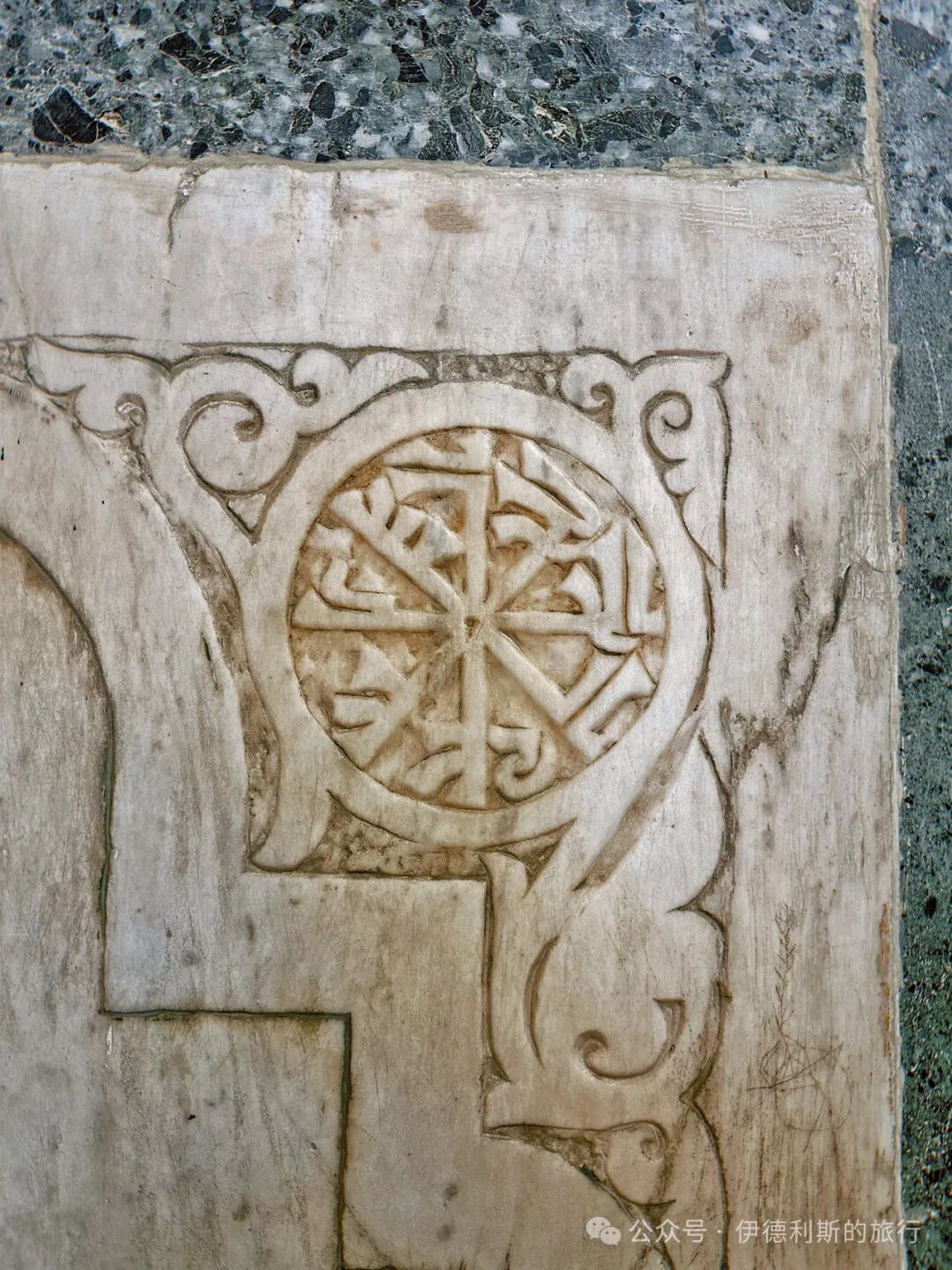
The grand scene of Jumu'ah at the Great Mosque of Kairouan. After the adhan is finished, the imam slowly walks up the minbar to begin the khutbah. In Arabic-speaking regions, everyone understands the khutbah, so there is no sermon session beforehand.
Tunisia follows the Maliki school of thought. Their namaz movements are quite similar to our Hanafi school, including the initial takbir, but the main difference is that they also fold their arms when making intention.
After the prayer, we stood for janazah outside the prayer hall door. Because Jumu'ah was at three o'clock, we immediately returned to the prayer hall to perform Dhuhr after finishing.
From the 9th to the 11th century, the Great Mosque of Kairouan was the academic center for the entire Maghreb region and the Maliki school. to religious courses, it offered subjects like mathematics, astronomy, medicine, and botany. In 1045, the Zirid dynasty court in Kairouan announced its conversion to Sunni Islam. Upon hearing this, the Shi'a Fatimid dynasty in Egypt sent a group of Arab tribes to invade Kairouan. In 1057, these Arab tribes occupied and destroyed Kairouan. The Great Mosque of Kairouan declined from then on and did not slowly recover until after the 13th century.
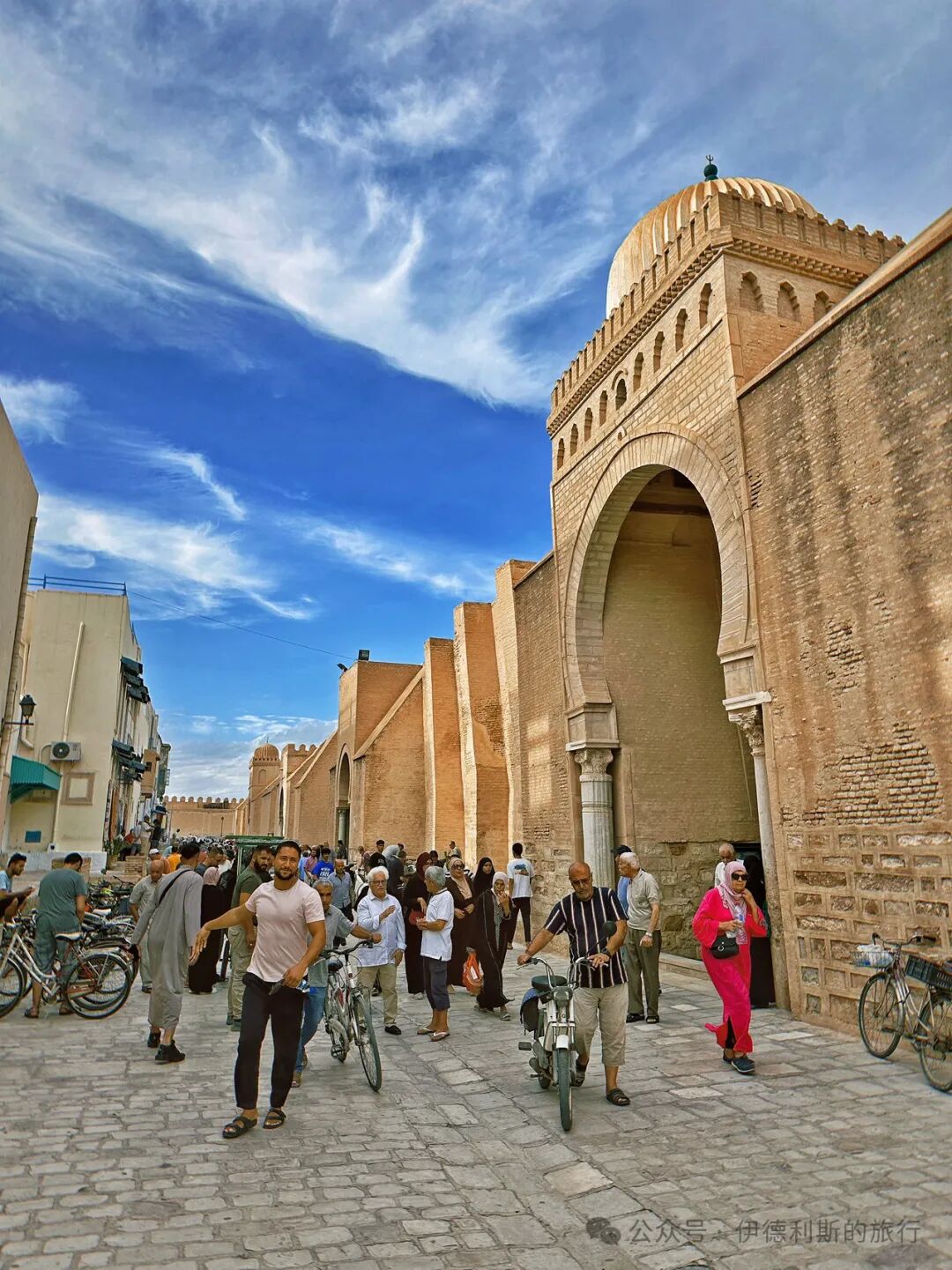
After leaving the Great Mosque of Kairouan, we started exploring the ancient medina of Kairouan. Besides the Great Mosque, the other ancient mosque remaining in Kairouan is the Mosque of the Three Doors (Masjid al-Thalathat Abwab), built in 866. This mosque has the oldest decorated facade of any religious building in the world.
Today, only the facade of the Mosque of the Three Doors retains its 9th-century appearance, while the minaret next to it was added in 1440. The gate of the Mosque of the Three Doors consists of three horseshoe arches and features four ancient stone columns. The arch is carved with floral patterns and Kufic calligraphy, which includes verses from the Quran and the name of the builder, Muhammad ibn Khairun. Muhammad ibn Khairun was a scholar and merchant from Andalusia who traveled through Iraq and Egypt to reach Kairouan, Tunisia. When the minaret was added in 1440, the original 9th-century inscriptions were rearranged to make room for the new text.
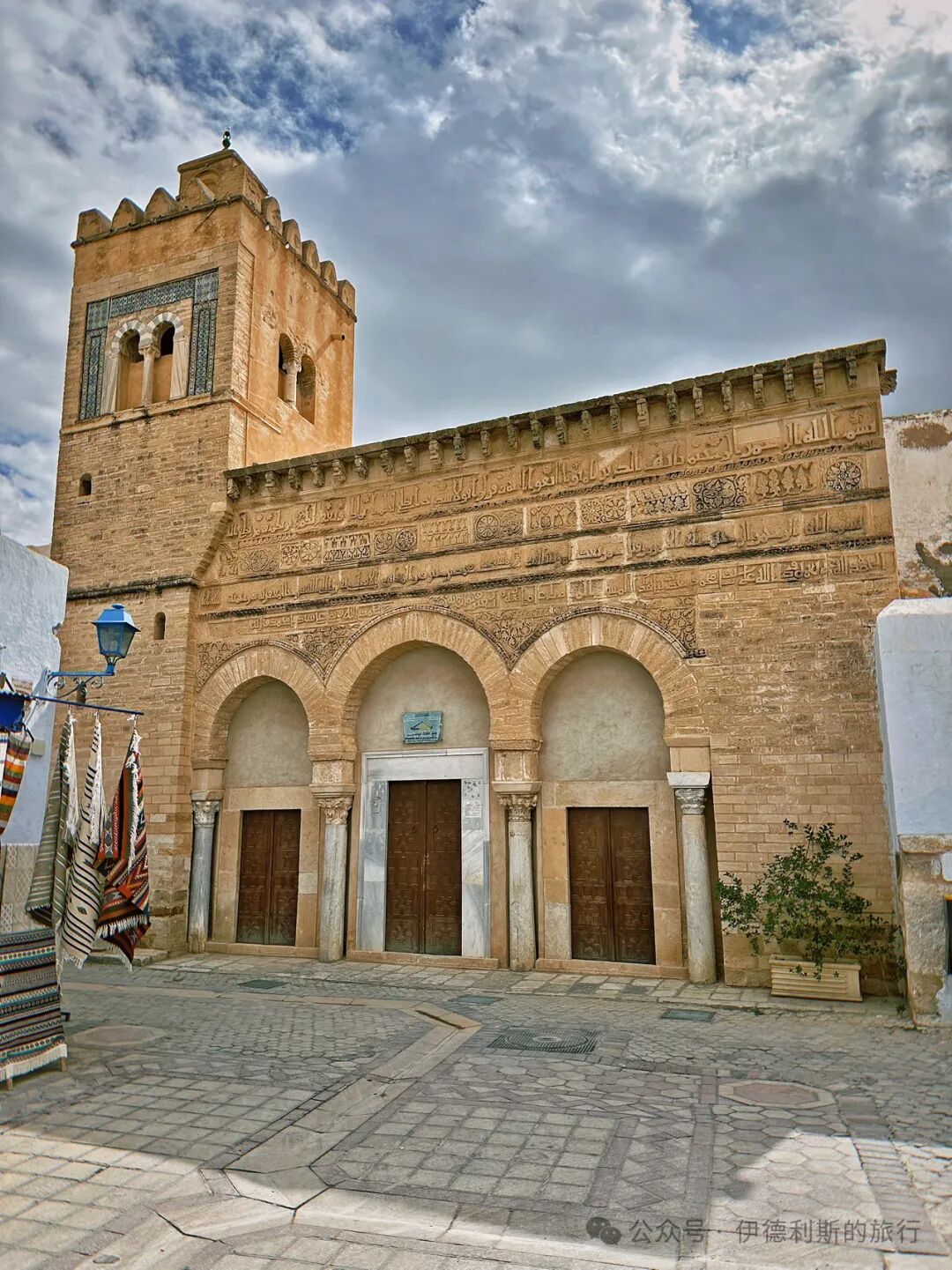
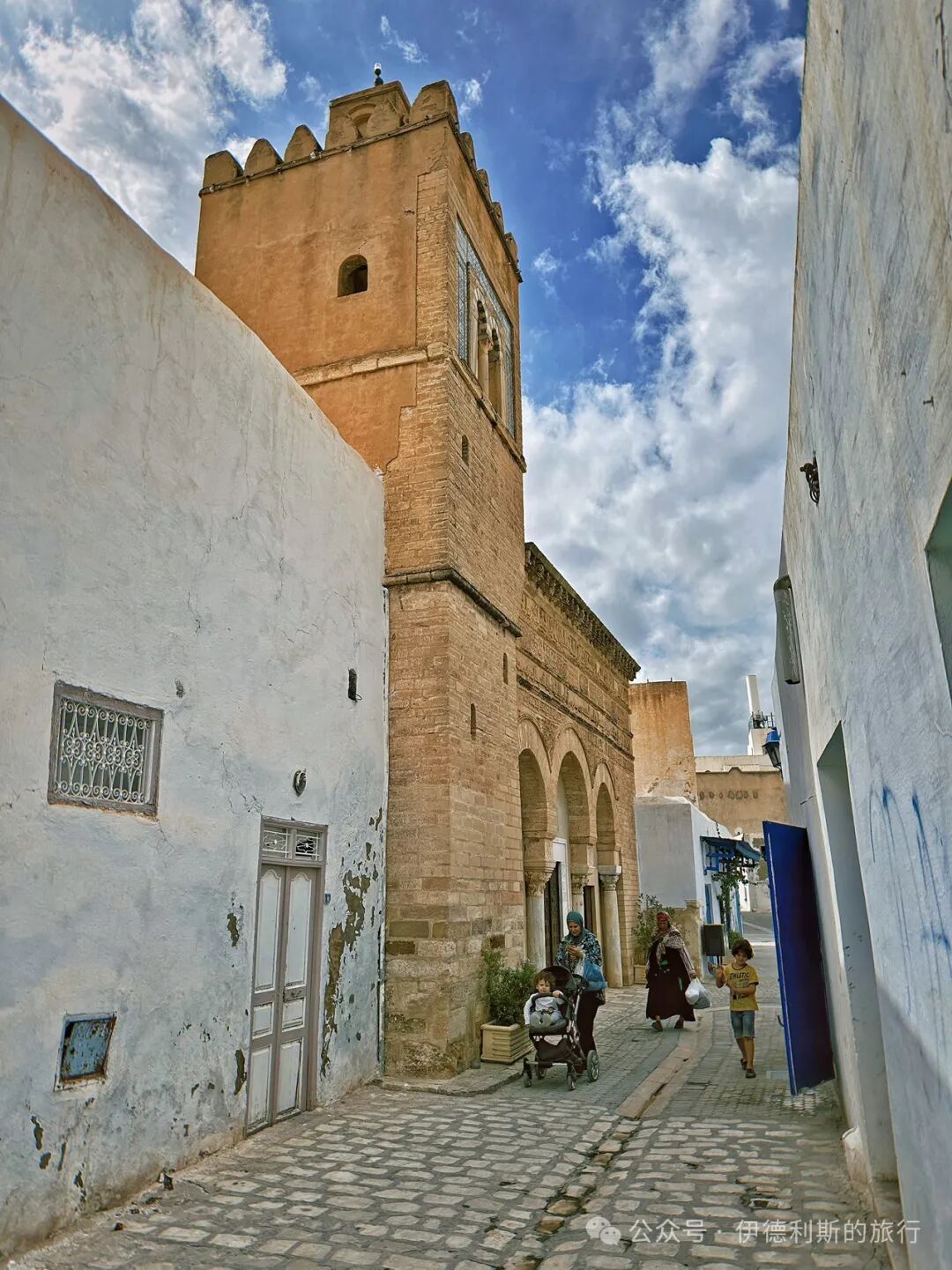
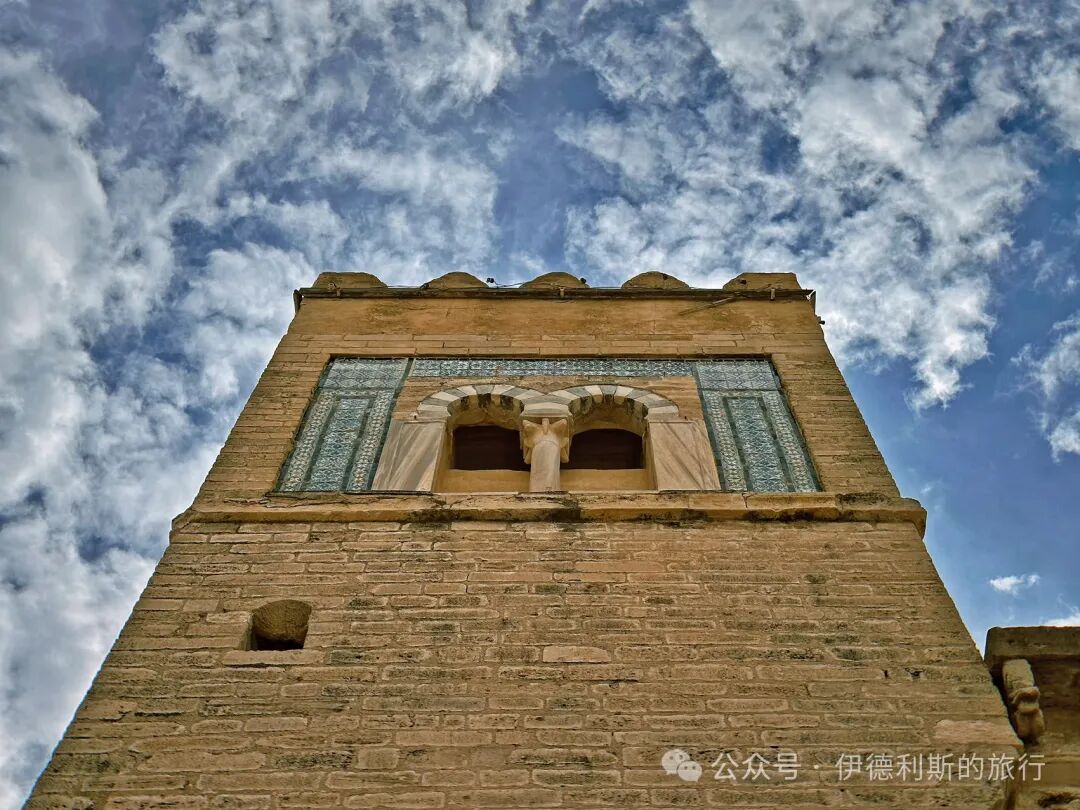
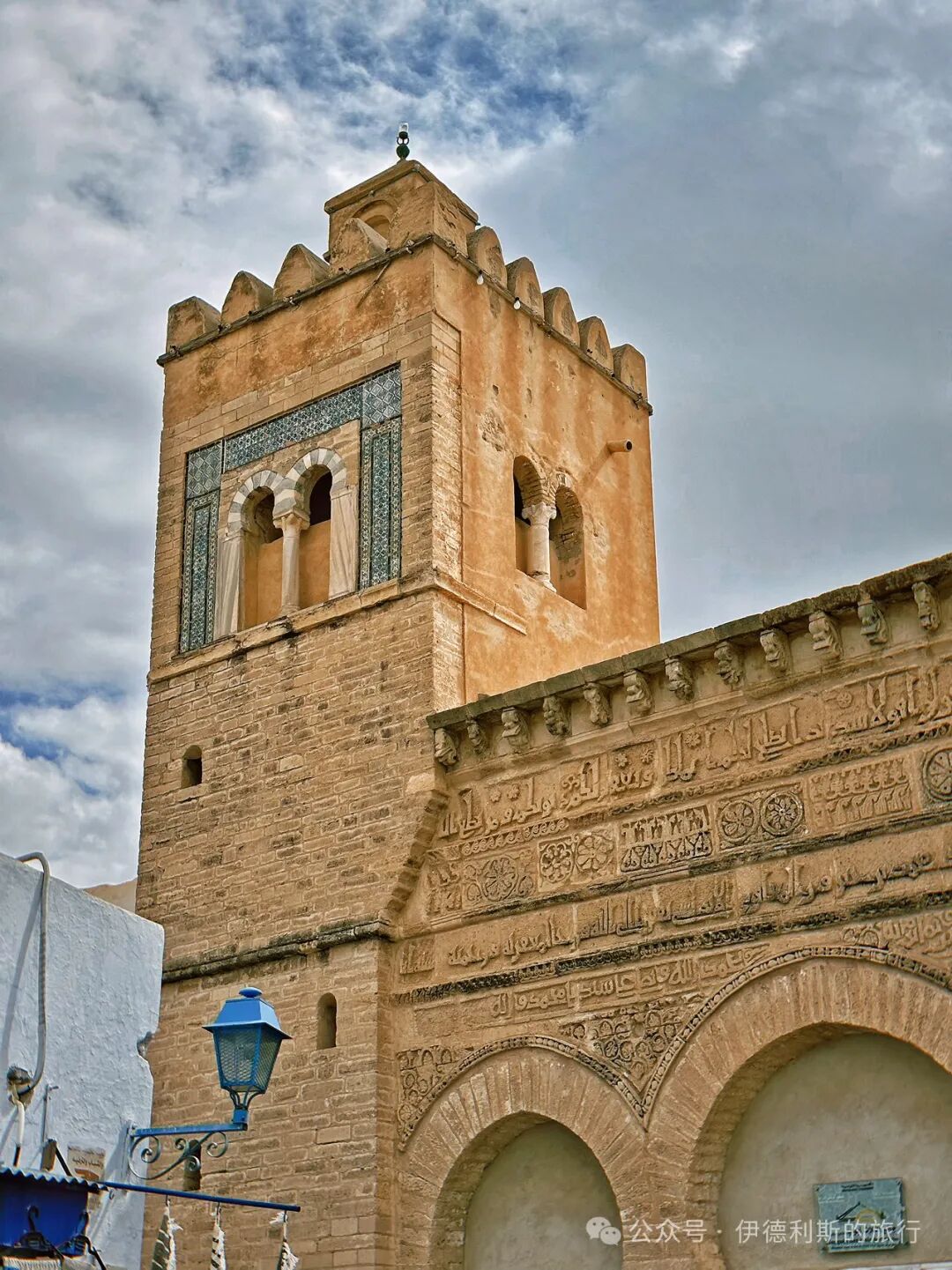
In the northwest of the Kairouan Medina stands an important tomb for Sidi Sahib, a companion of the Prophet and his barber, which is why it is also called the Barber Mosque.
Legend says Sidi Sahib died in a battle in 654 and was buried here. By the 11th century, this place had become a famous holy site, and the tomb shrine (gongbei) was built in the 14th century. The Bey of Tunis, Hammuda Pasha (reigned 1631-66), expanded the tomb significantly in 1629 and built a new main hall. Another Bey, Mohamed (reigned 1675-96), built the minaret and a religious school (madrasa) between 1690 and 1695. Since the 19th century, the tomb of Sidi Sahib has undergone several renovations, but it still keeps its 17th-century architectural style.
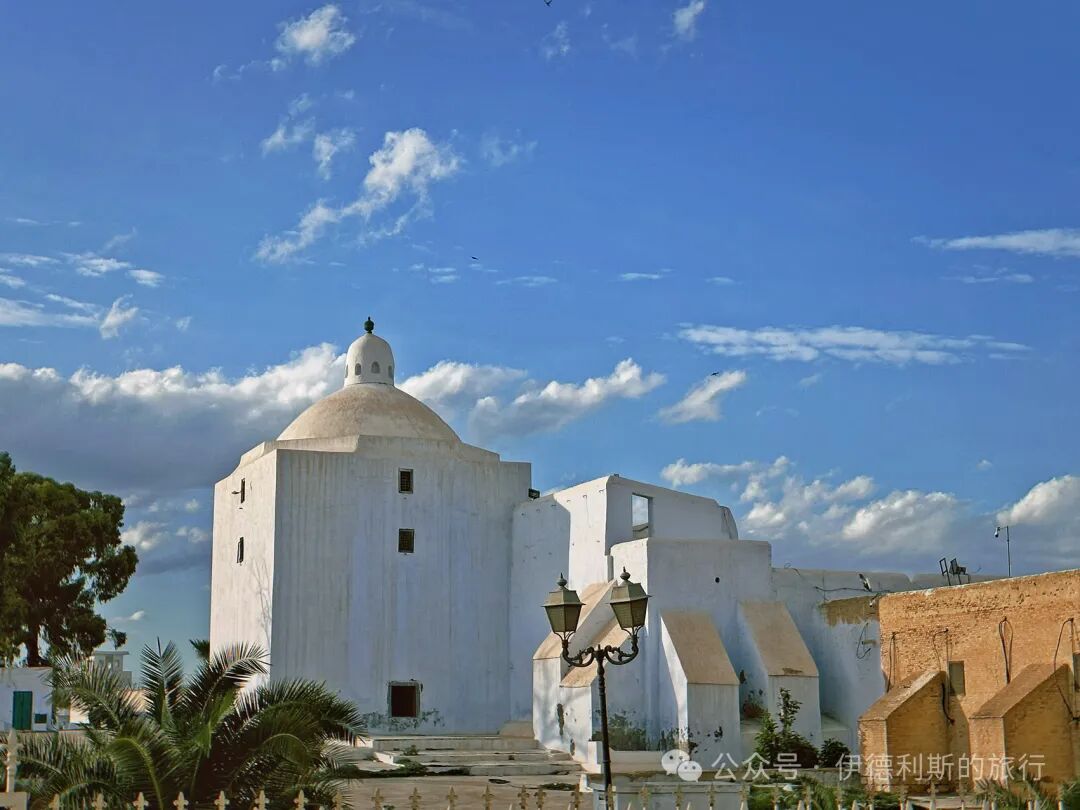
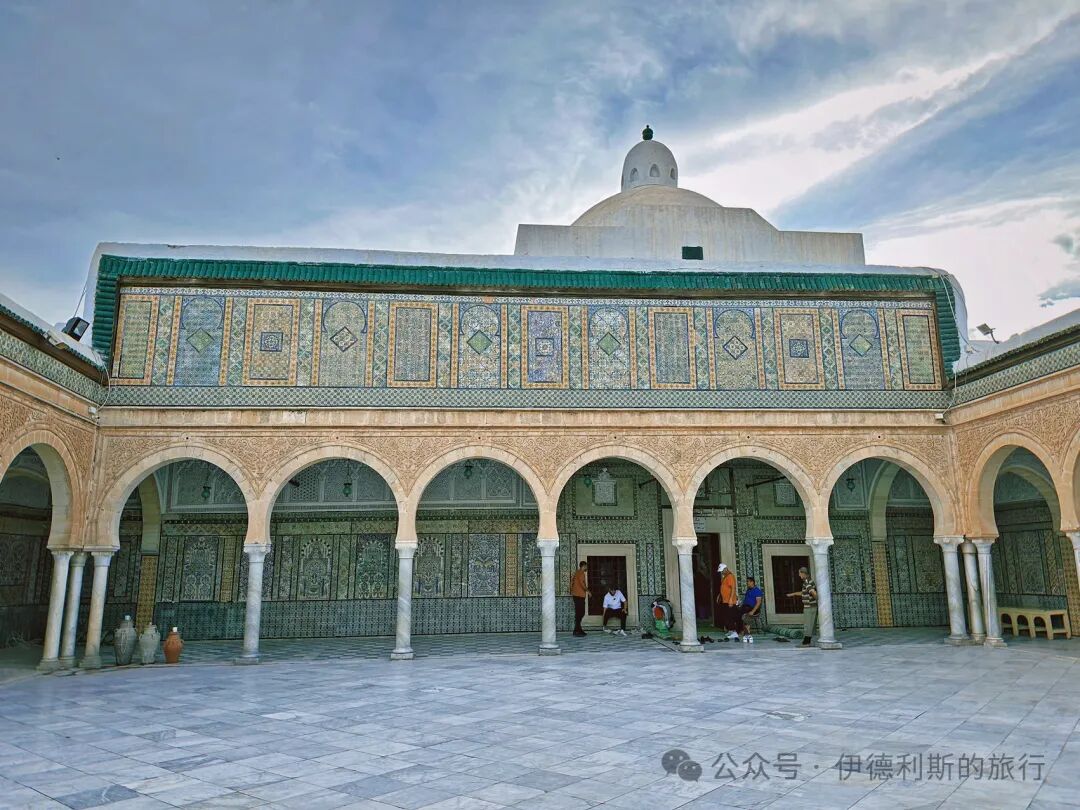
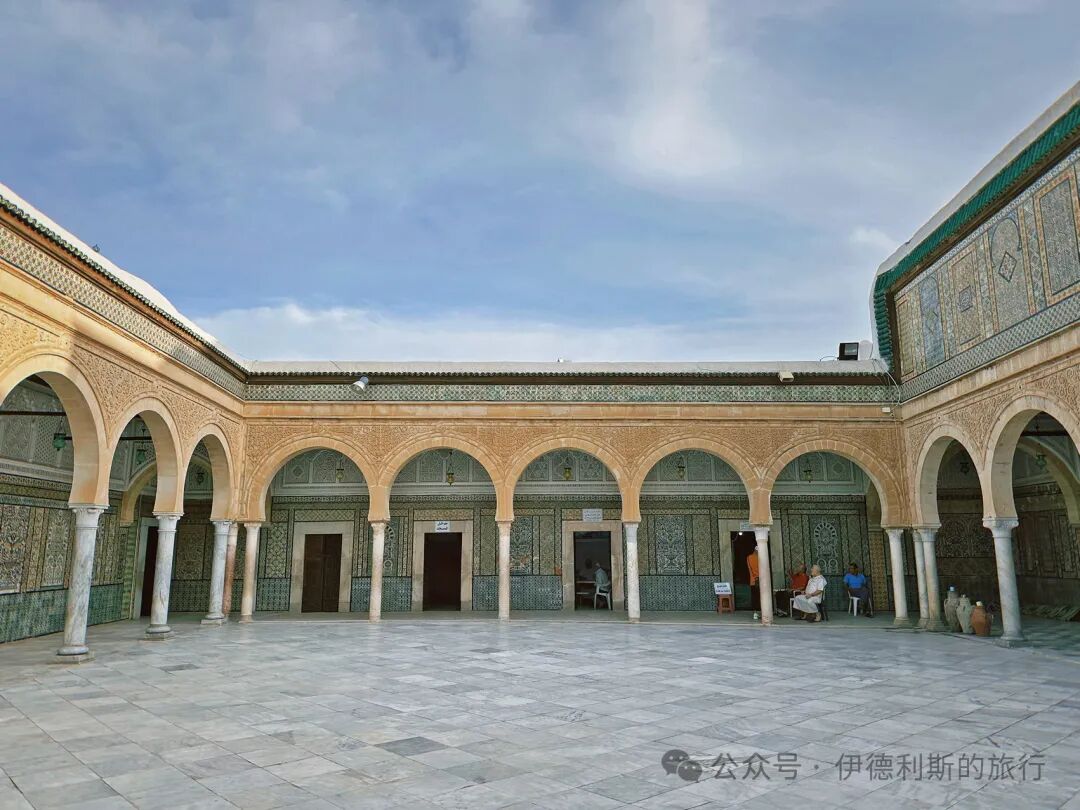
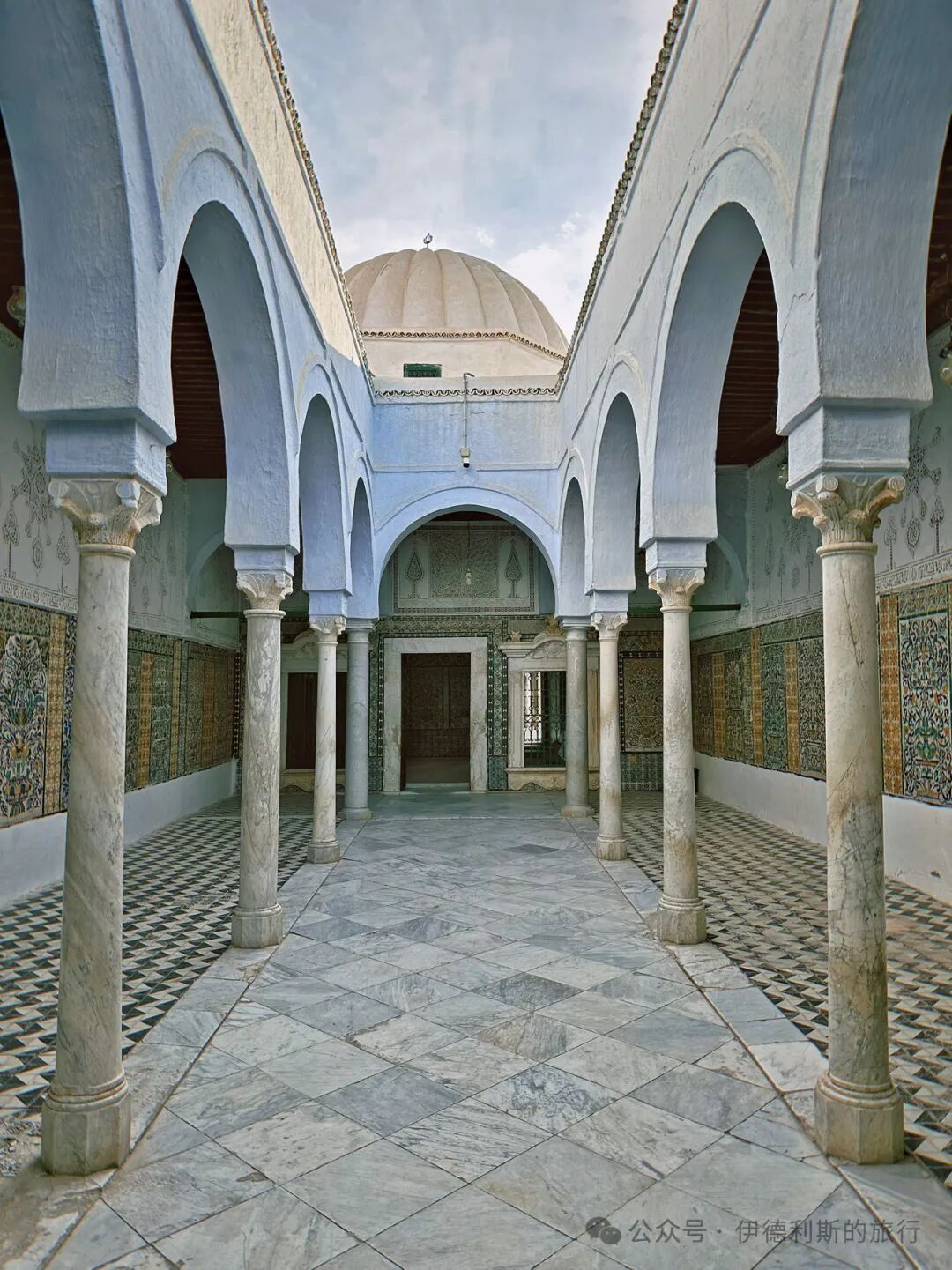
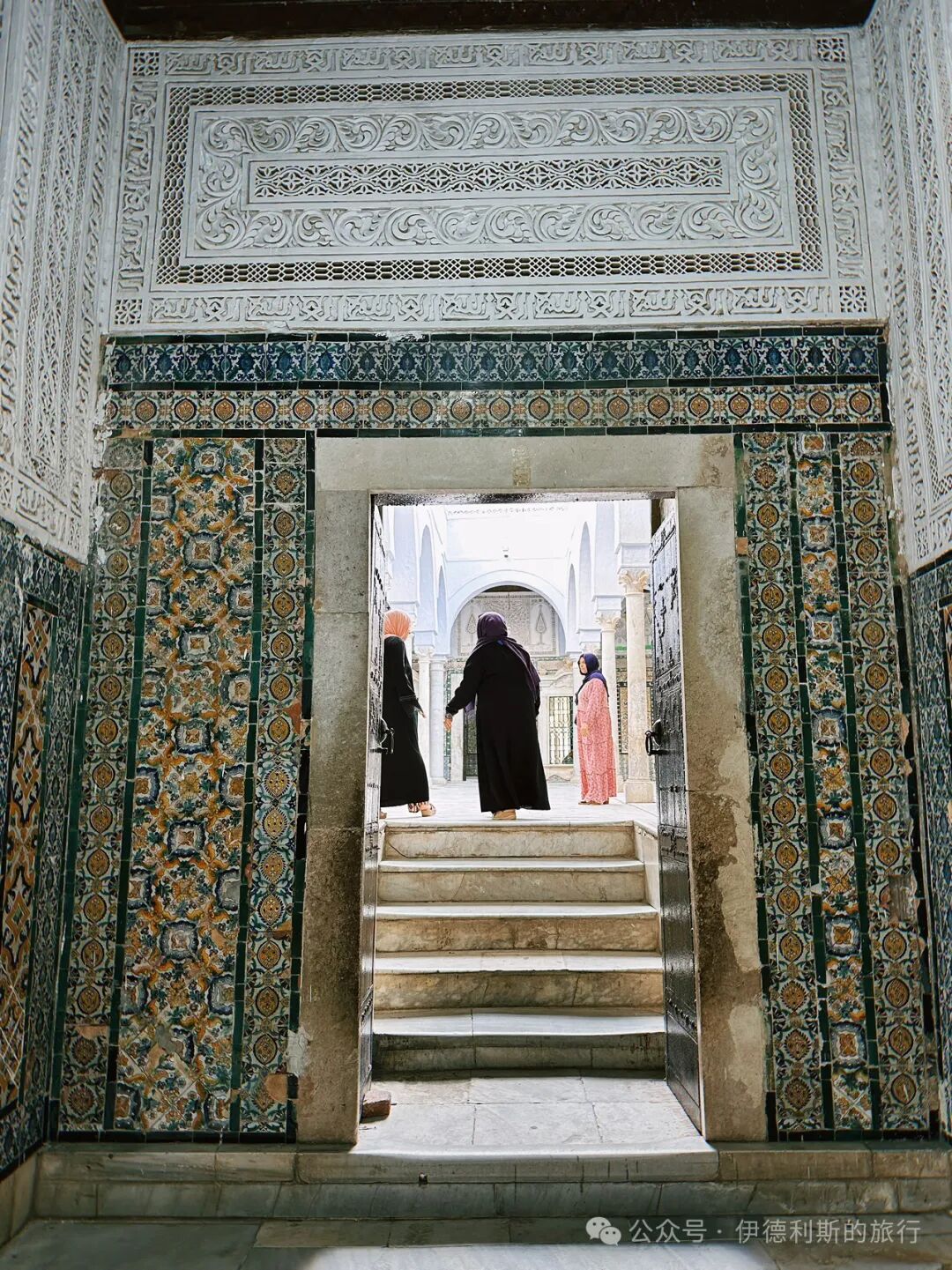
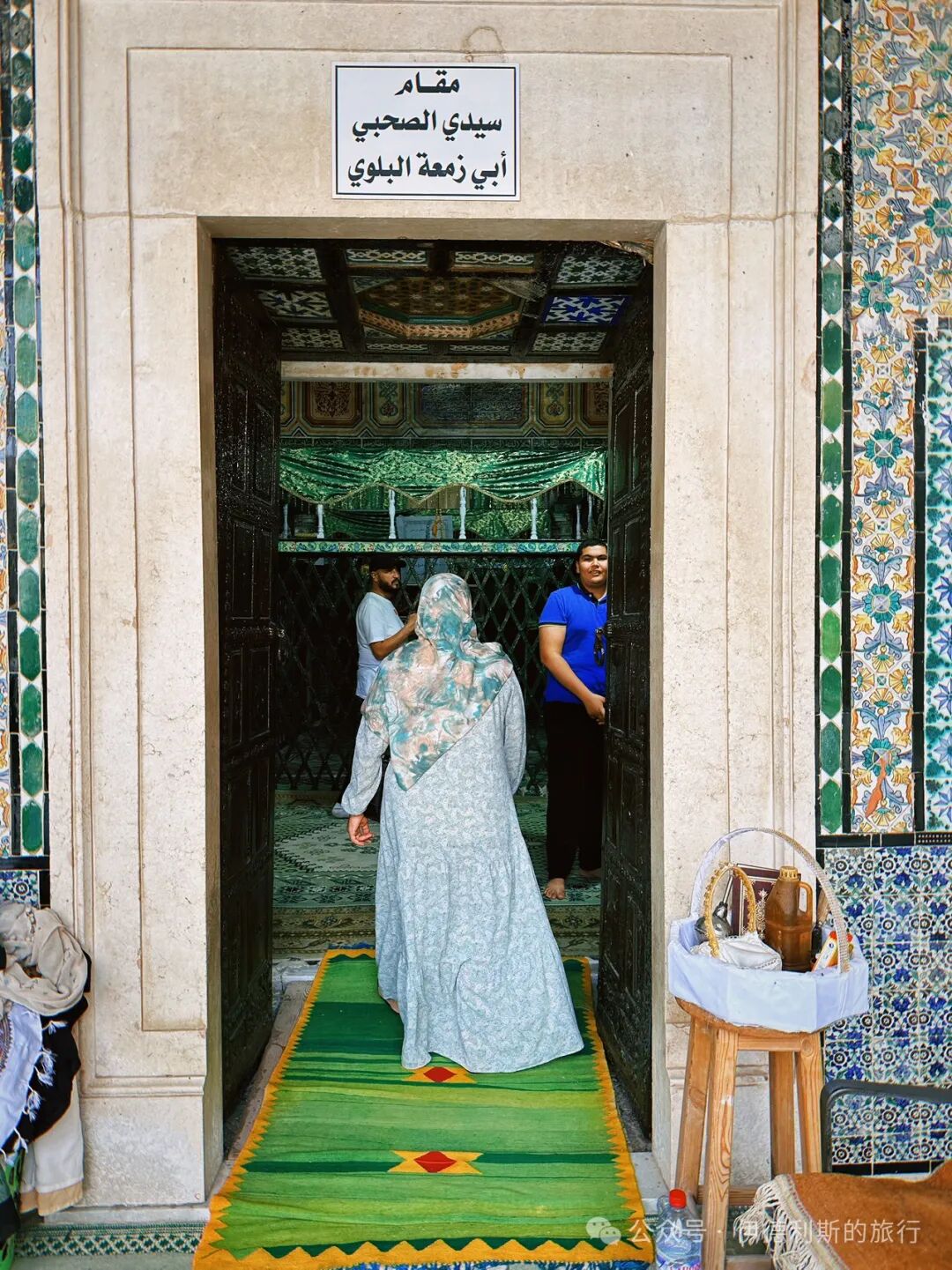
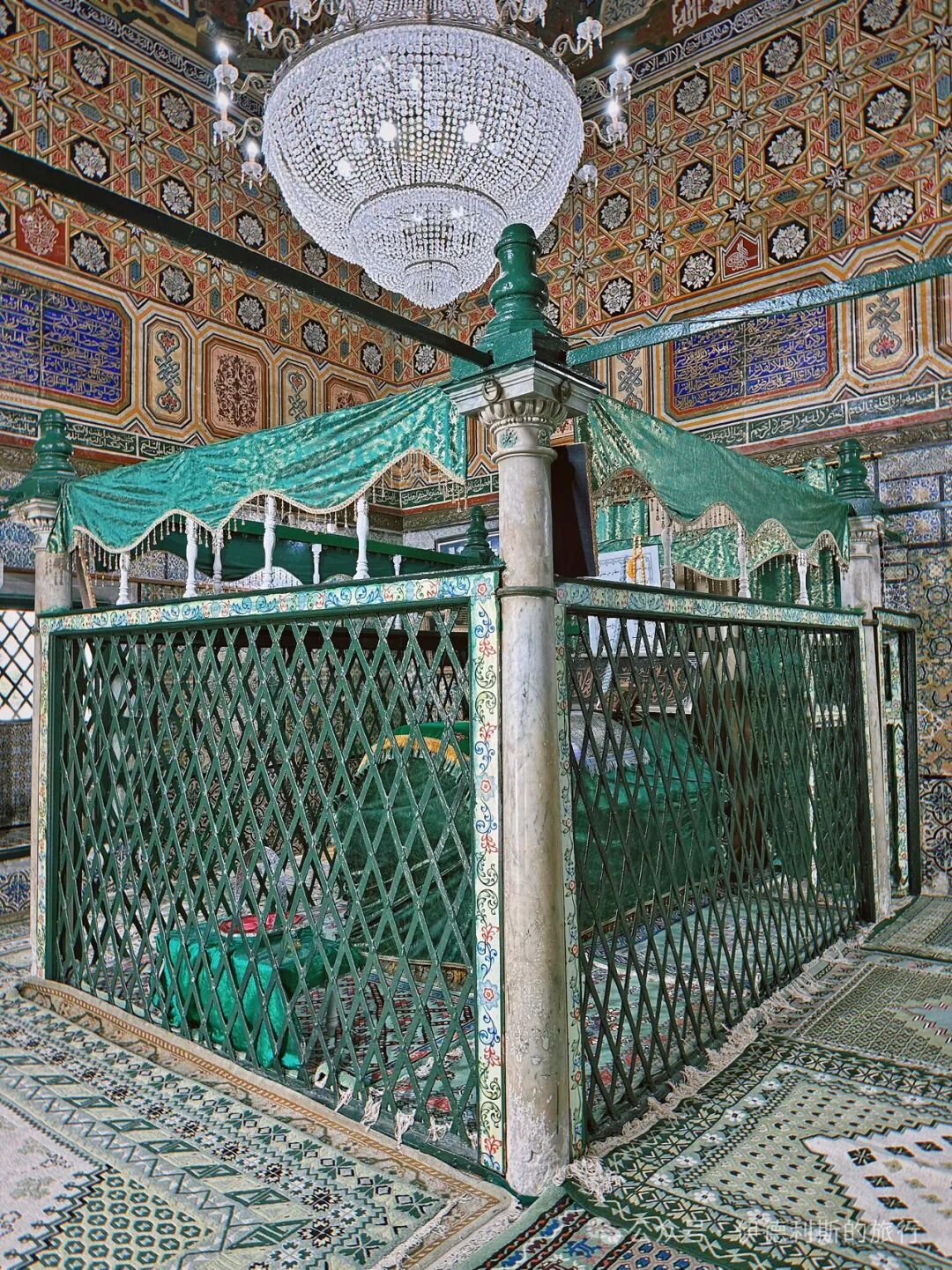
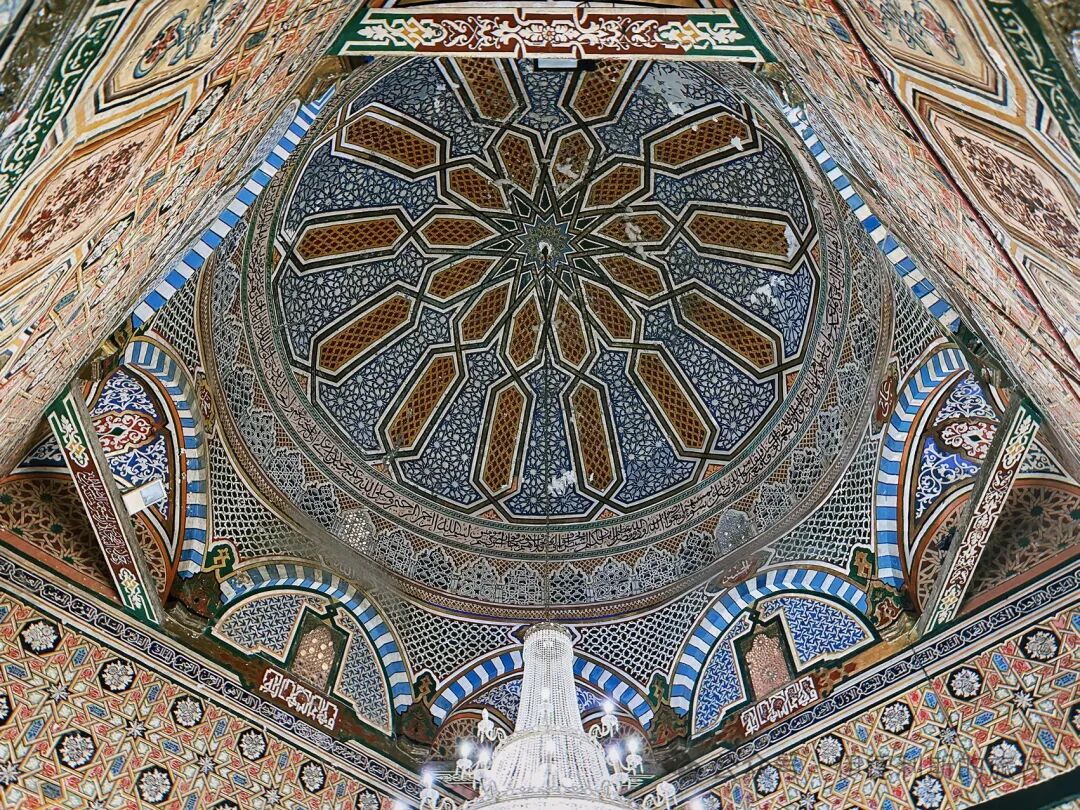
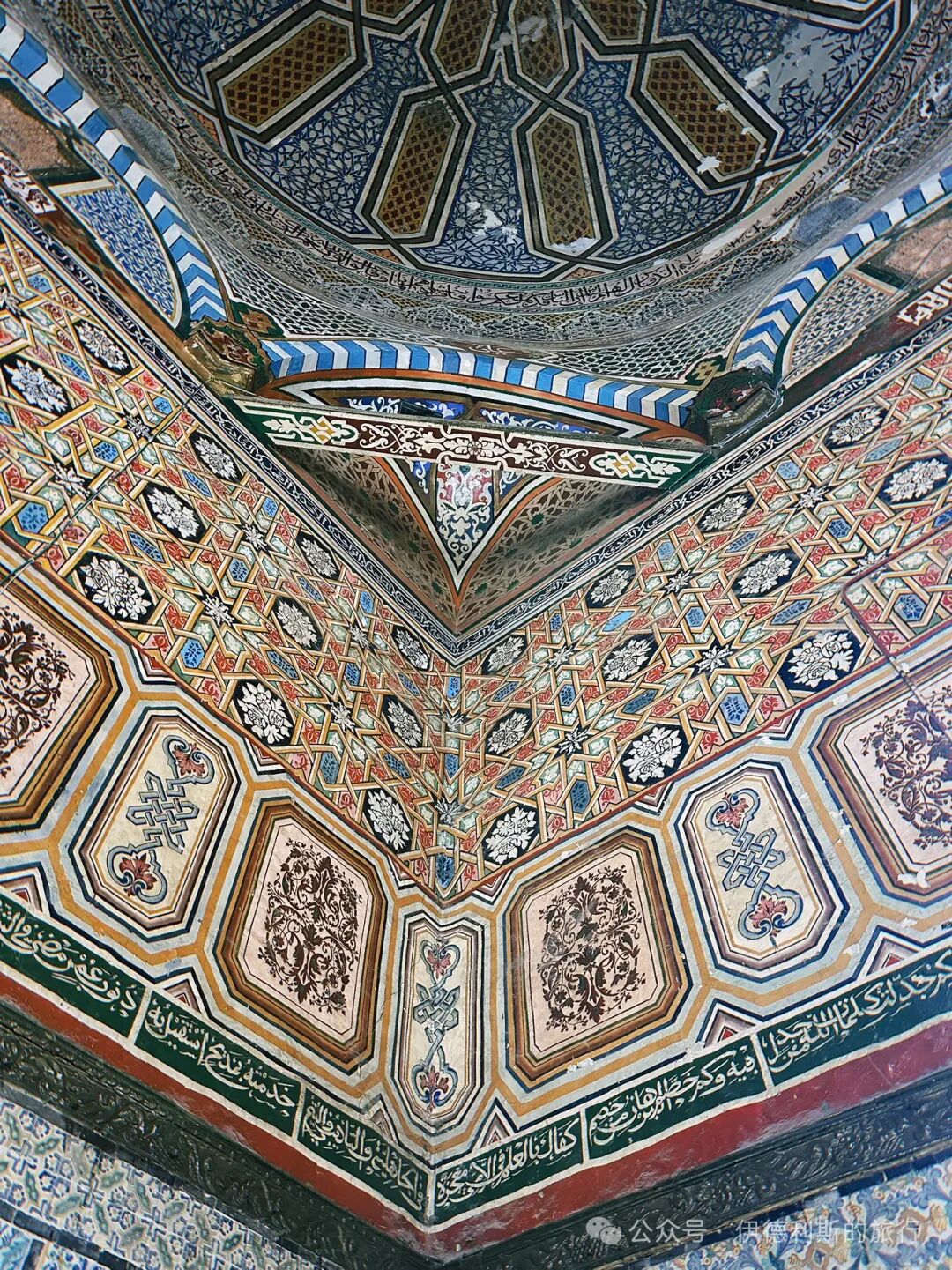
The tomb of Sidi Sahib in Kairouan blends Andalusian, Italian Renaissance, and local Kairouan architectural styles. The interior features many classic 17th-century Tunisian Qallalin tiles and rich plaster carvings.
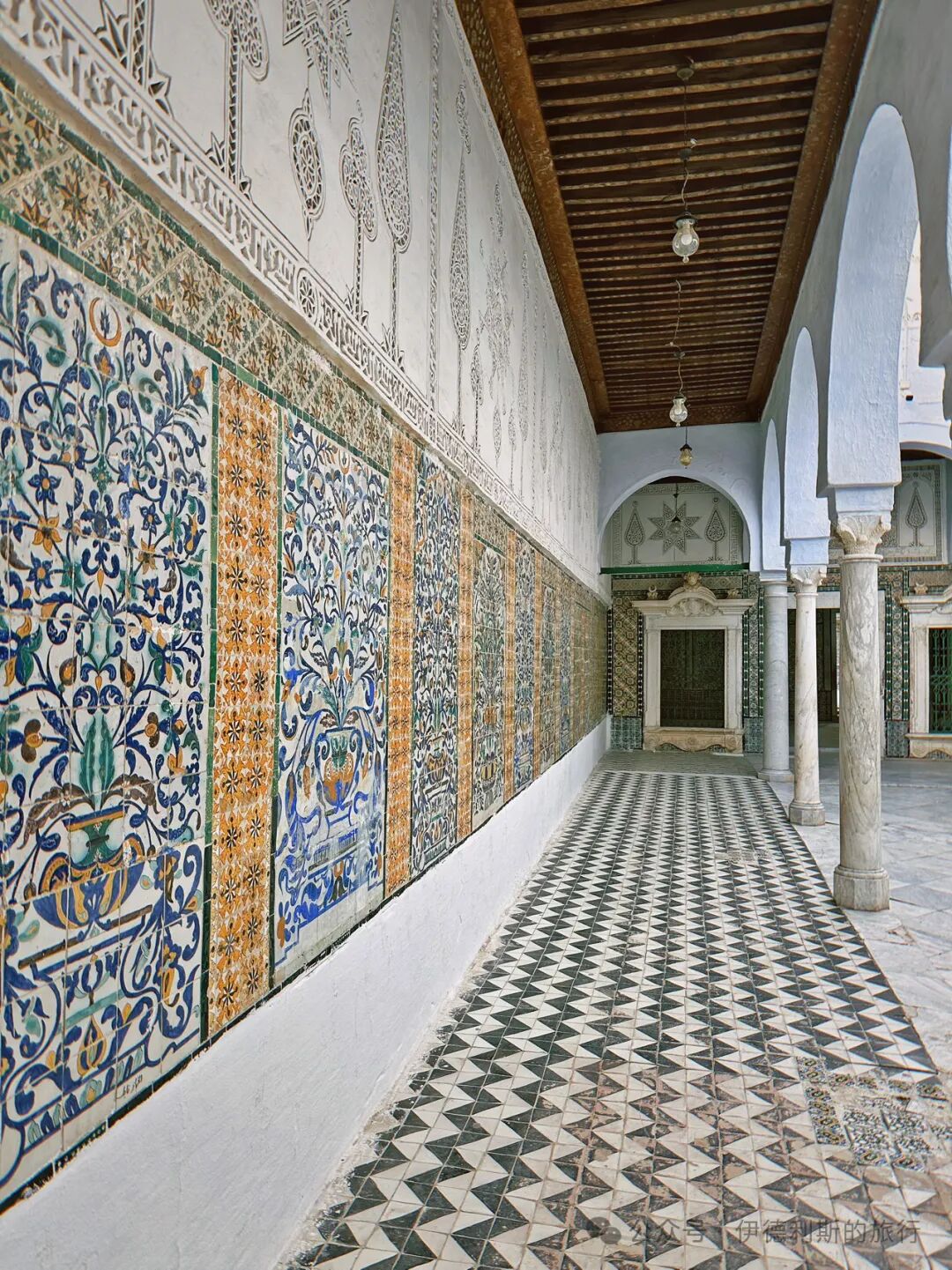
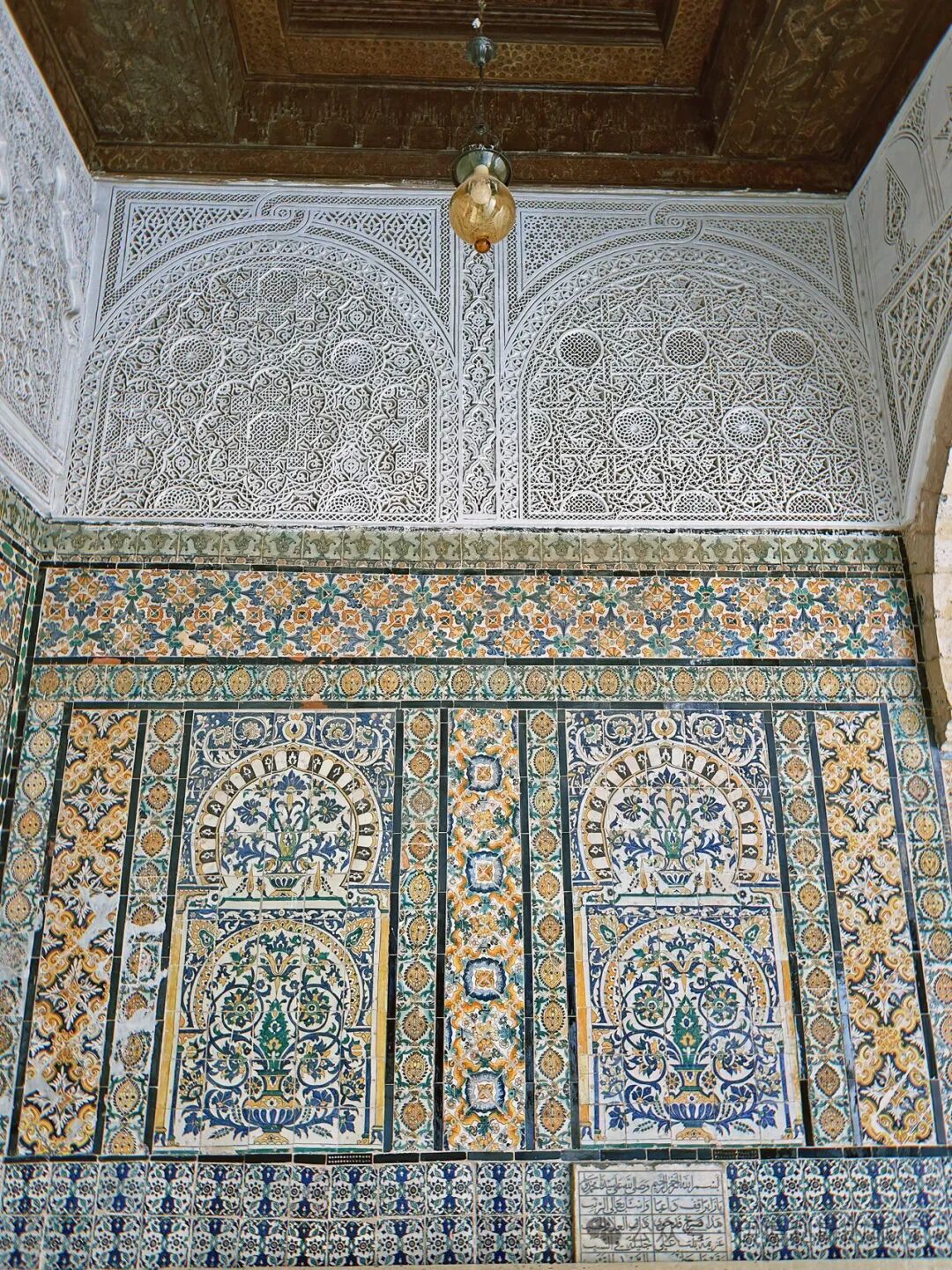
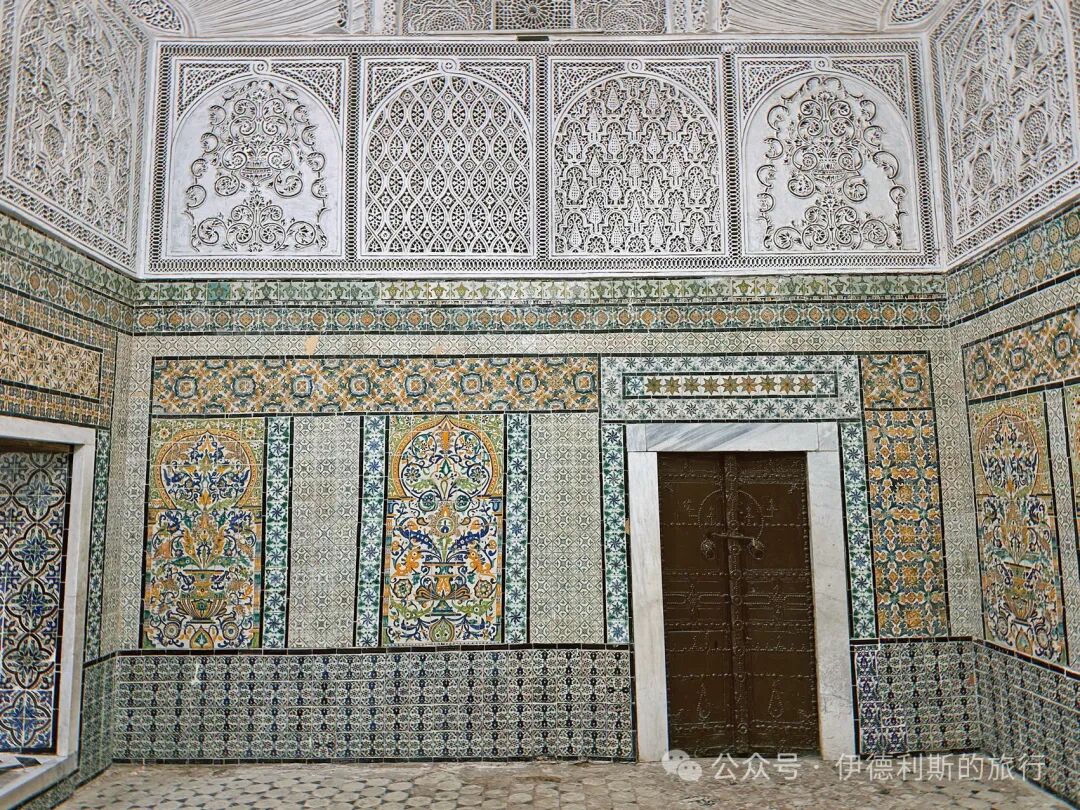
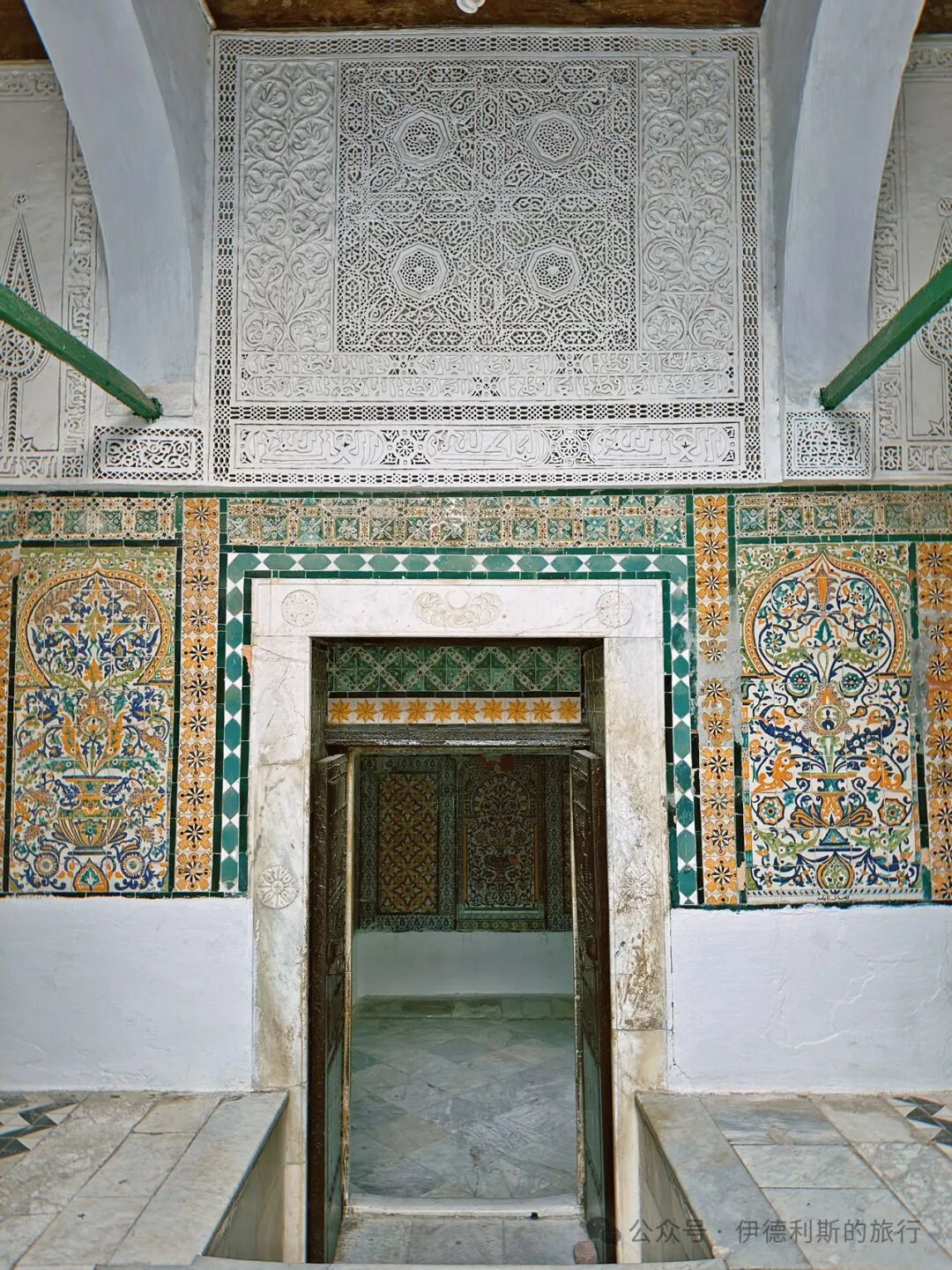
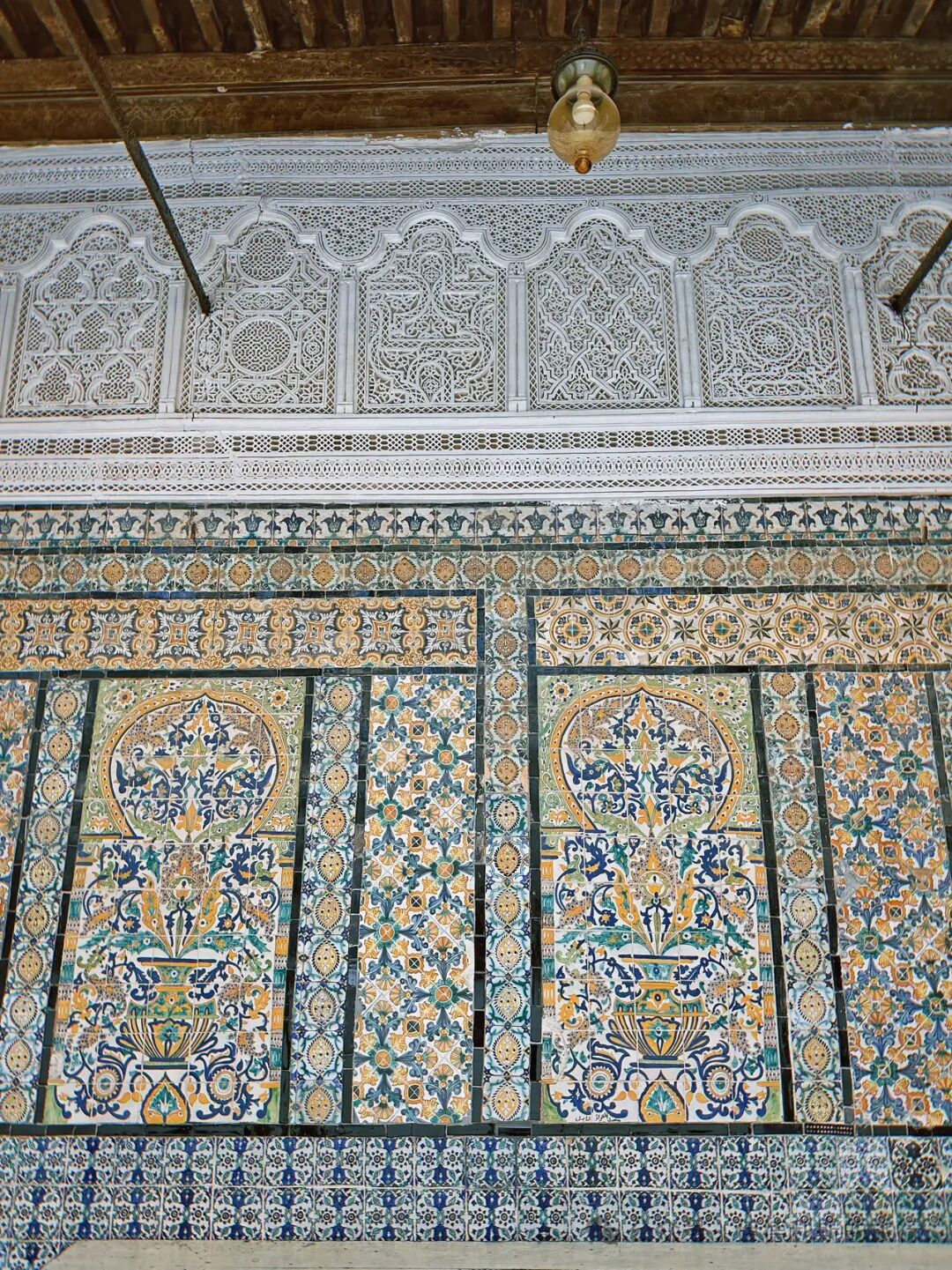
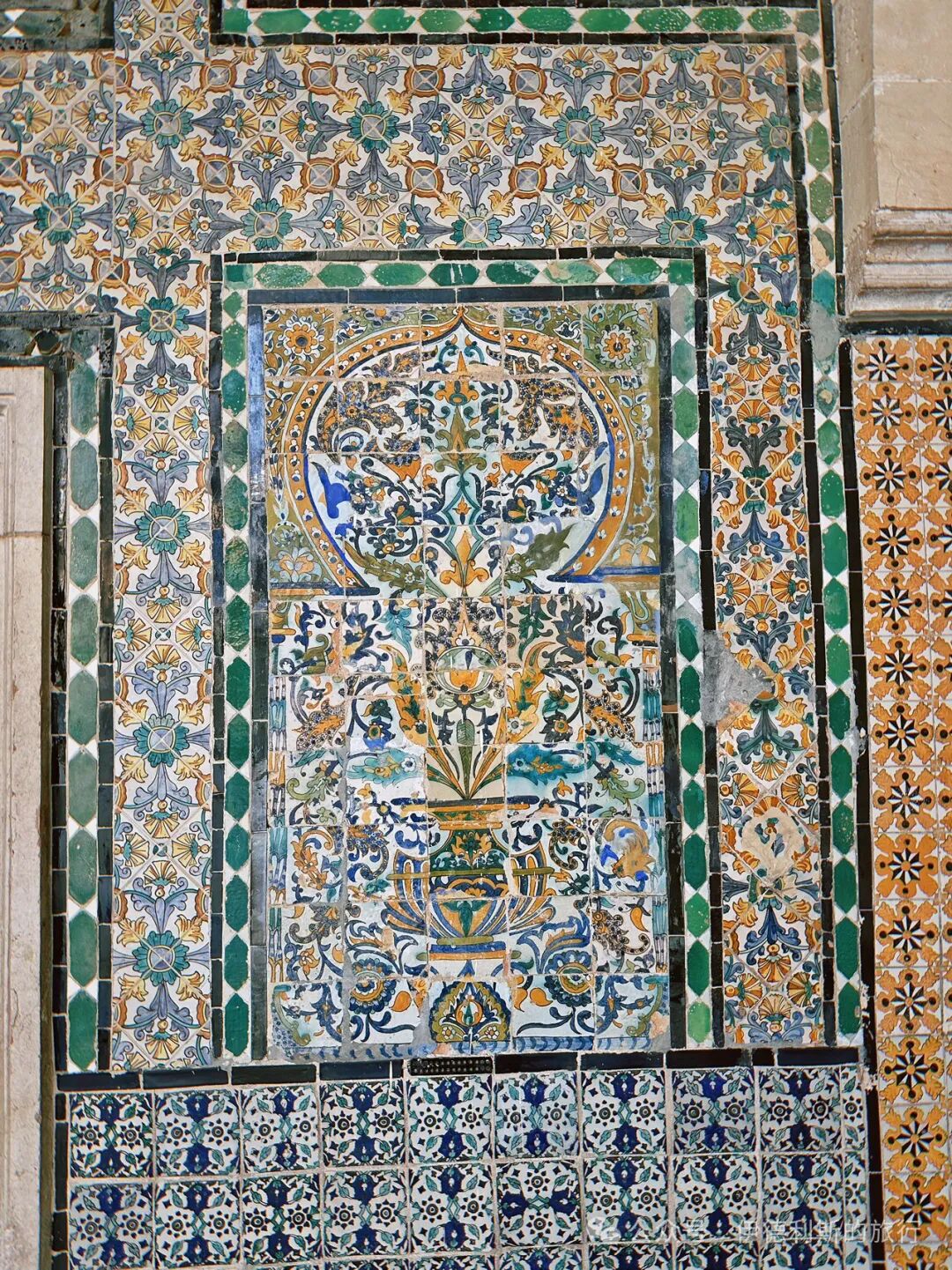
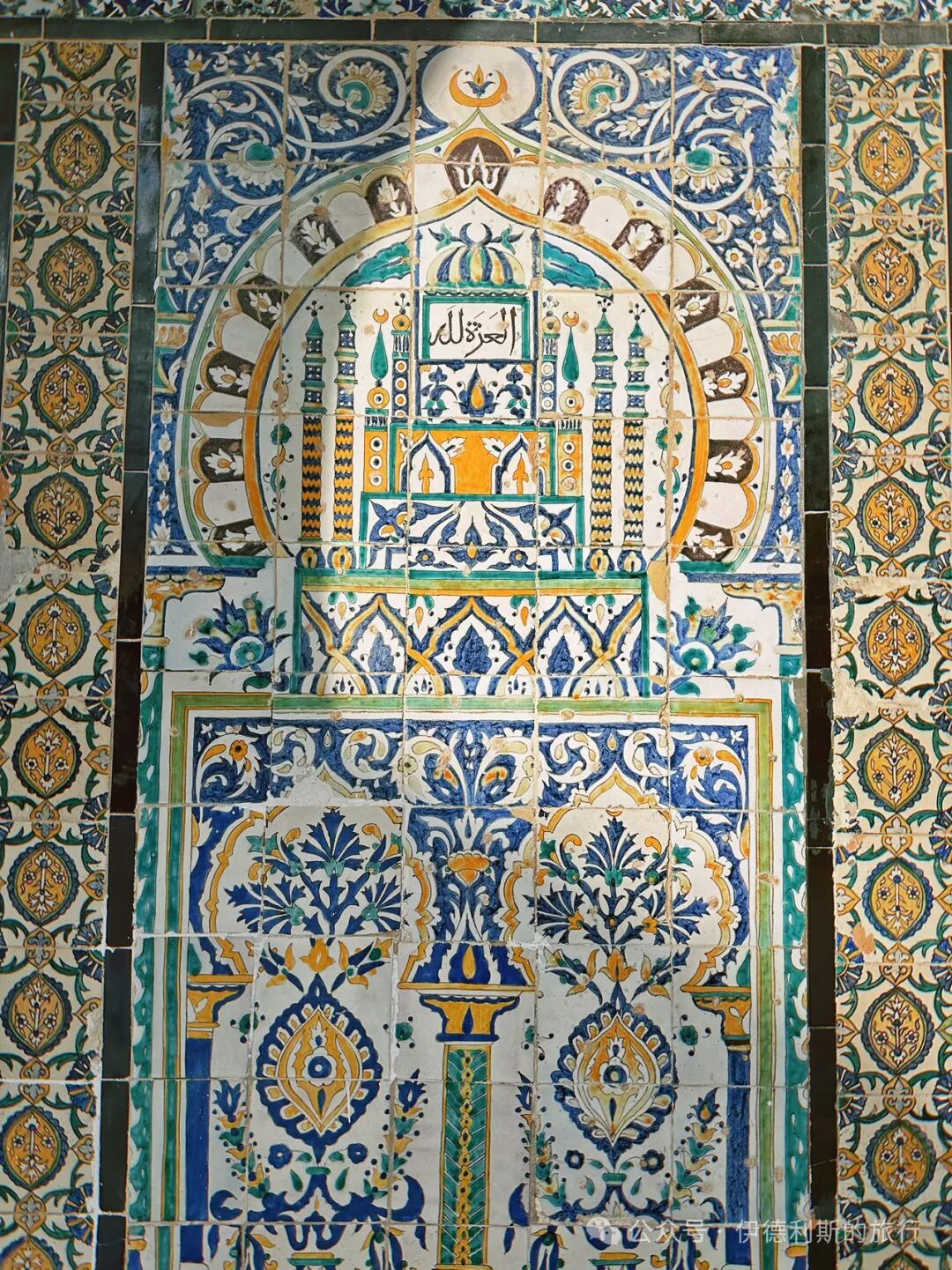
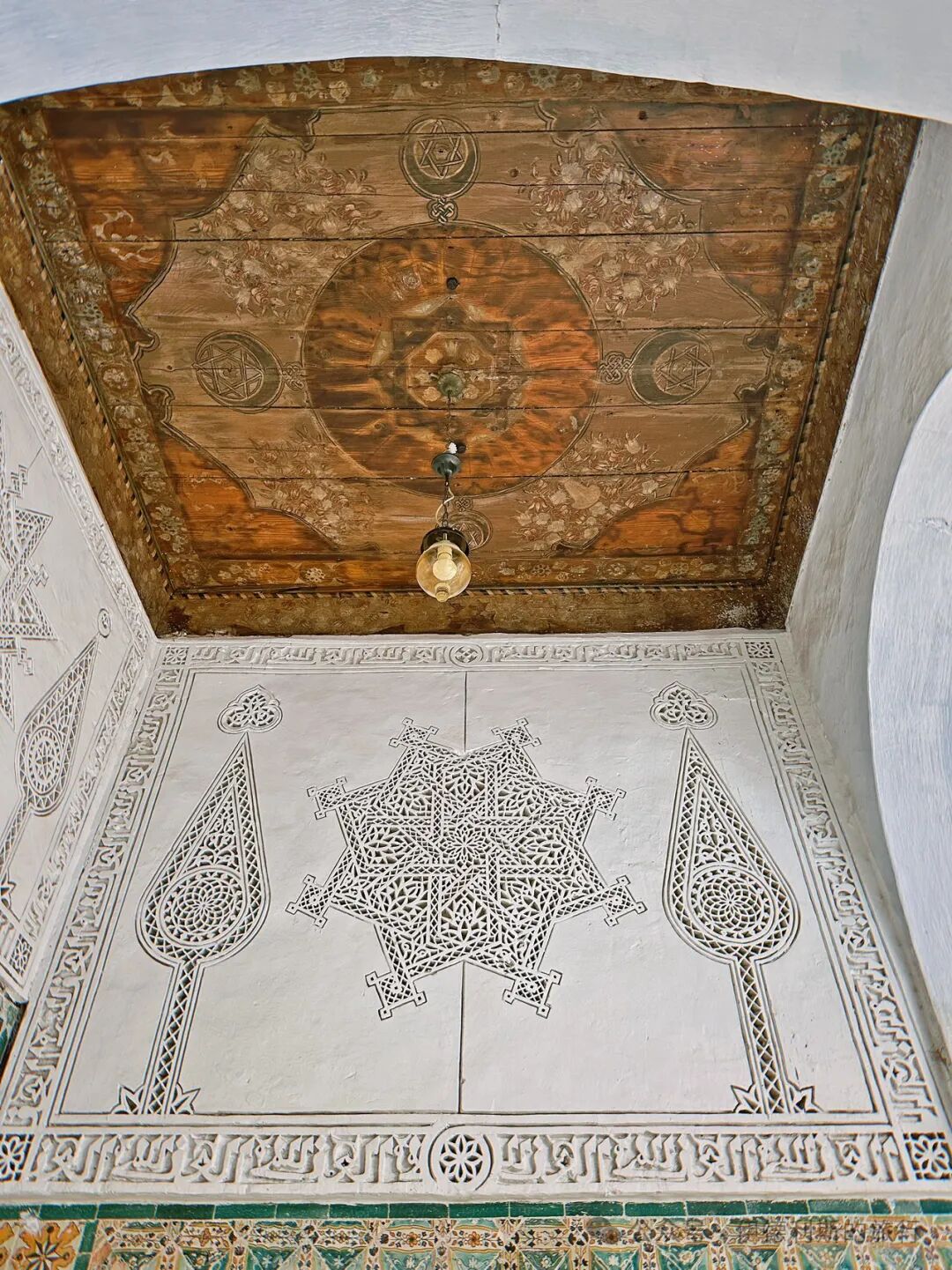
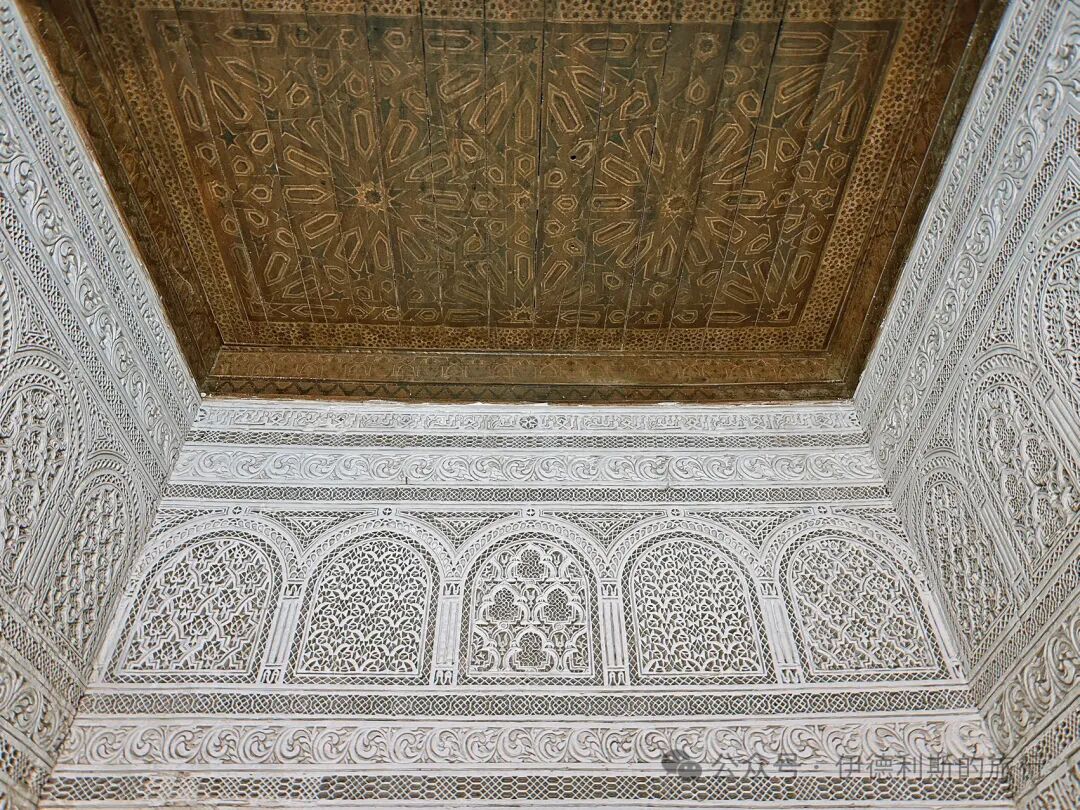
At the minaret, gate, and main hall of the Sidi Sahib tomb in Kairouan, an old man in the courtyard pours perfume into the hands of every visitor (dosti) who comes to pay their respects.
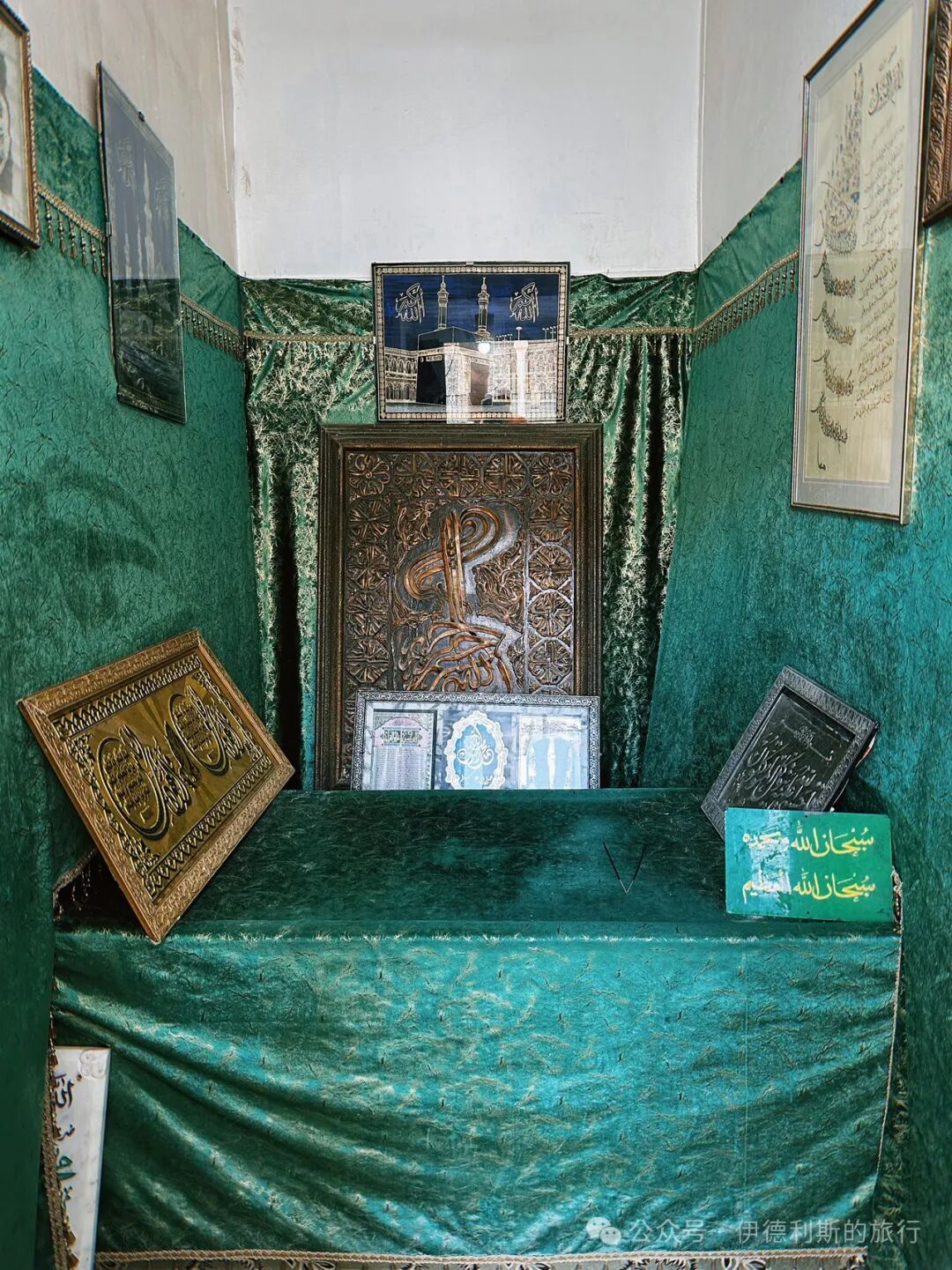
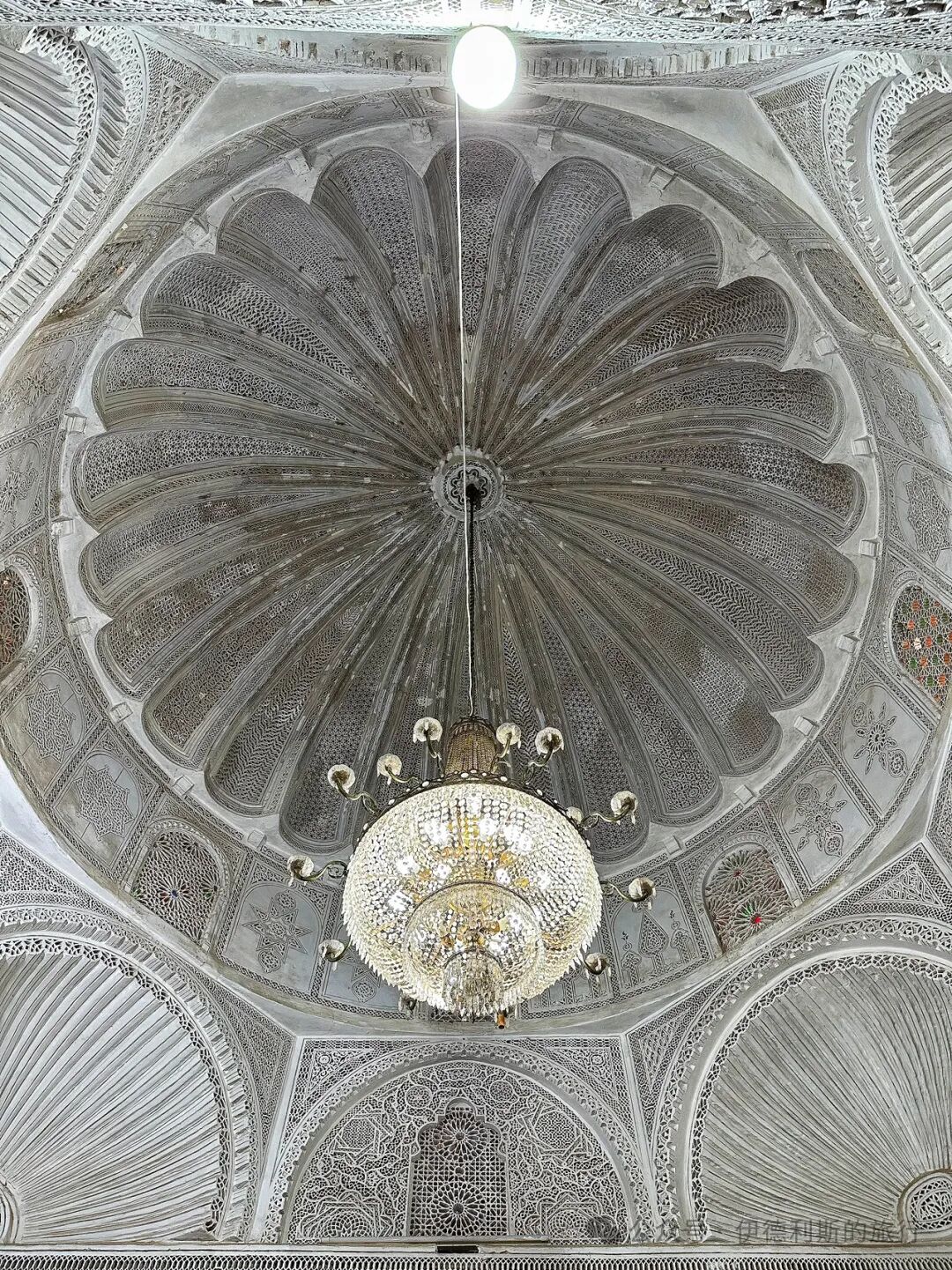
The Sidi Abid al-Ghariani school (madrasa) and shrine (zawiya) inside the Kairouan Medina were founded in the 14th century and expanded significantly in the 17th century. Abid al-Ghariani was a scholar, and his teacher, Al-Jadidi, was a famous judge in Kairouan. Al-Jadidi passed away in 1384 while on the Hajj pilgrimage in Mecca. Abid al-Ghariani took over his teacher's role to continue teaching in Kairouan, and after he died in 1402, he was buried next to the school.
Besides Abid al-Ghariani, the Hafsid dynasty Caliph Moulay Hasan (reigned 1526-1543) is also buried here. In 1534, the famous pirate Barbarossa led a fleet to invade Tunisia. Moulay Hasan eventually took back Tunisia with the help of the Holy Roman Empire, but he had to sign a treaty to become a vassal of Spain. In 1542, while Moulay Hasan was traveling to Italy to collect weapons and ammunition, his son usurped the throne, and he was eventually exiled. He lived in Naples and Sicily for several years and later met with the Holy Roman Emperor and the Pope, becoming the most well-known Arab monarch to Europeans of that era.
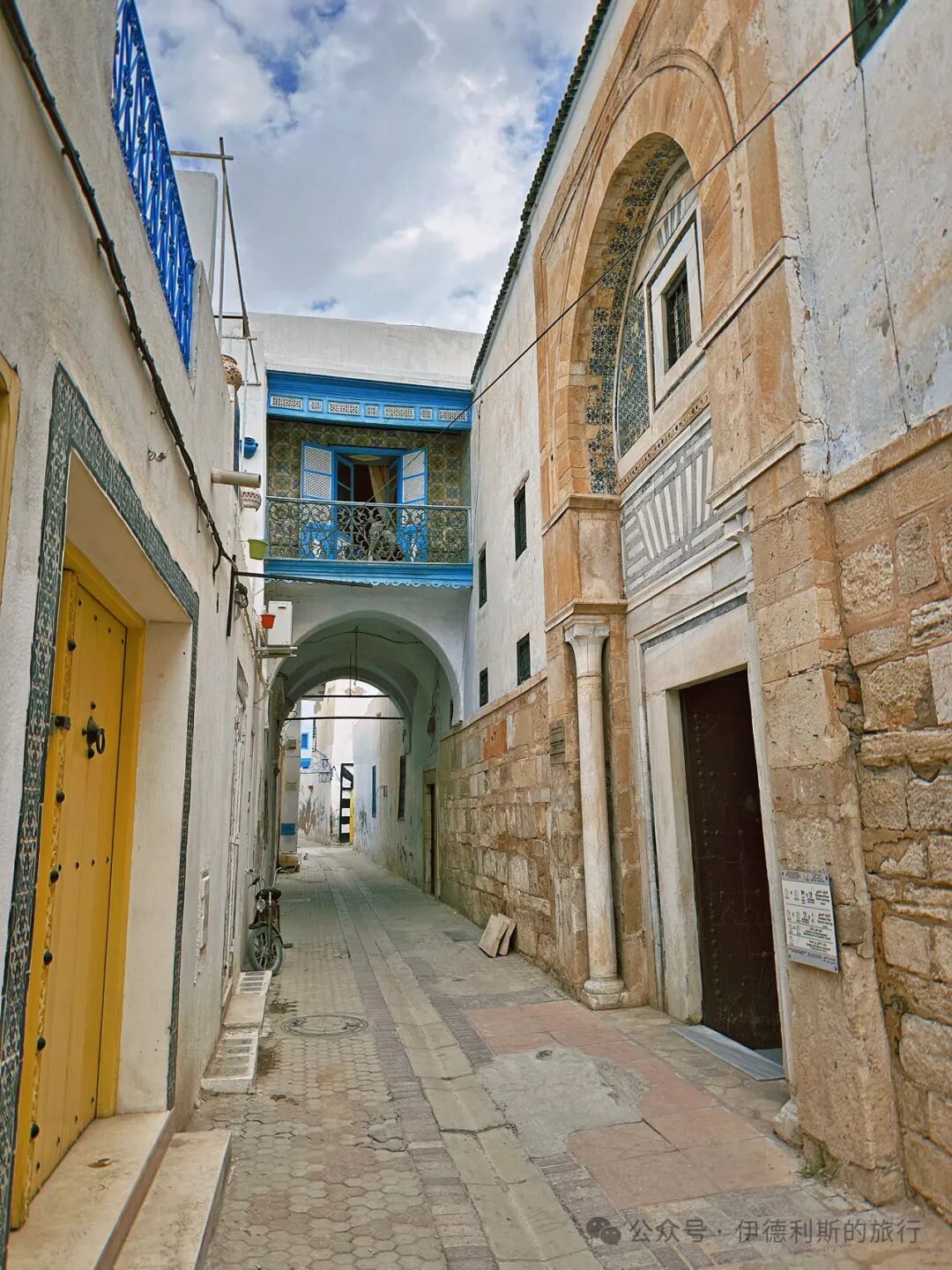
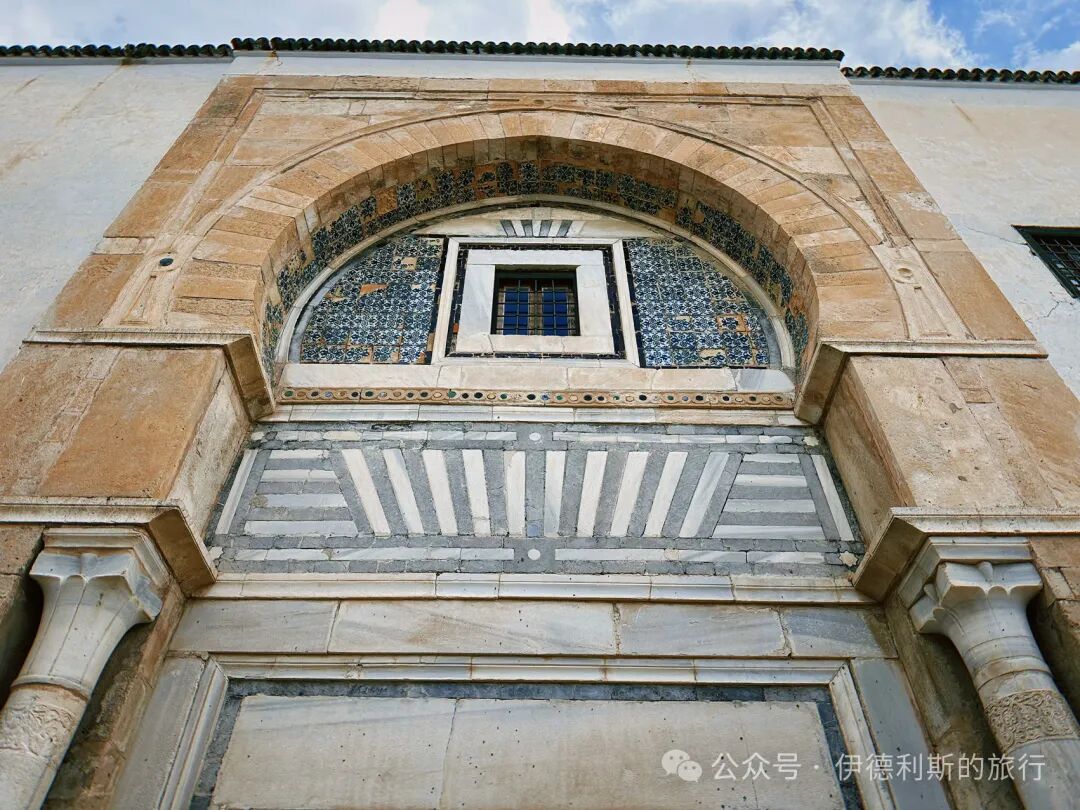
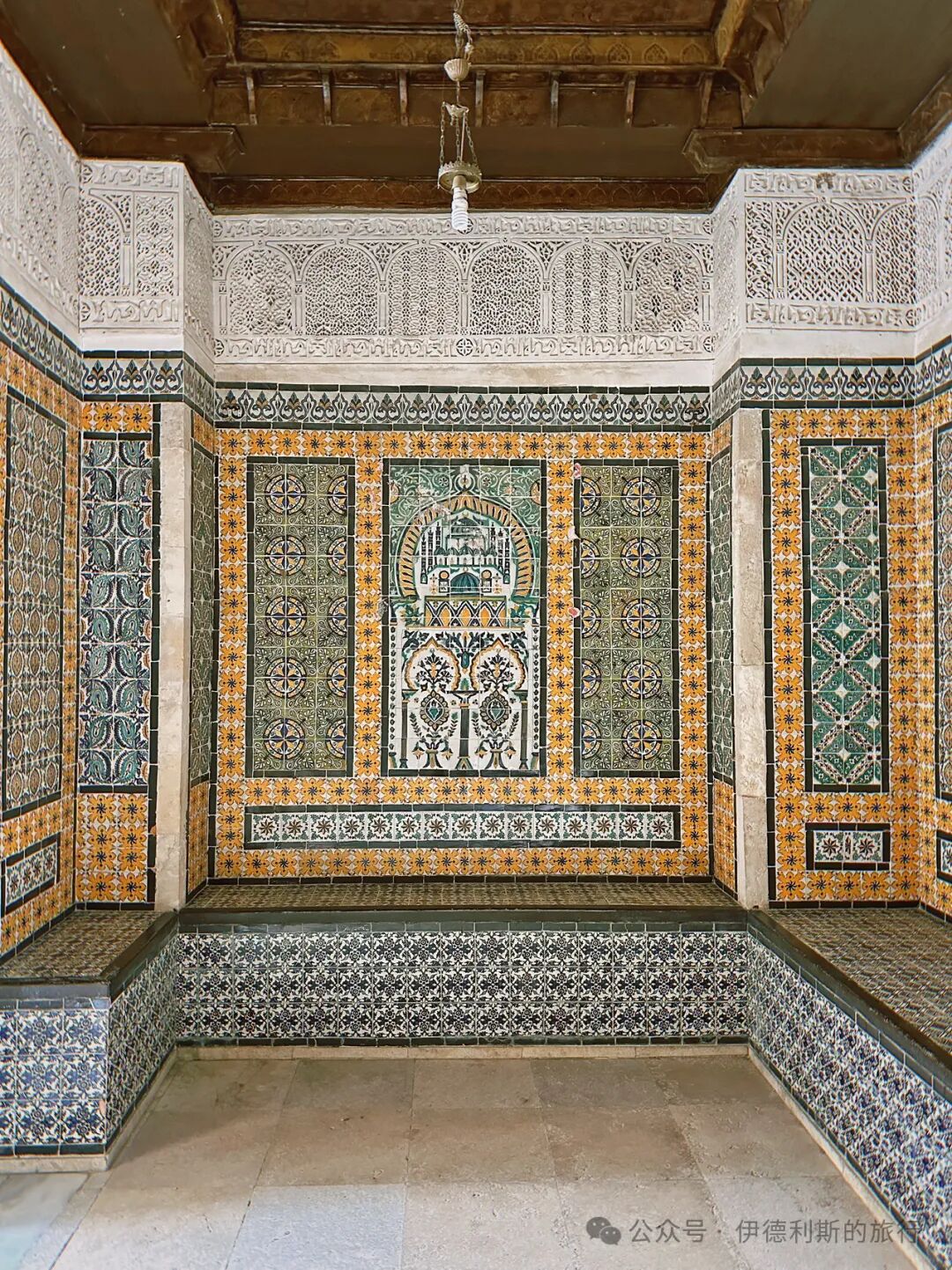
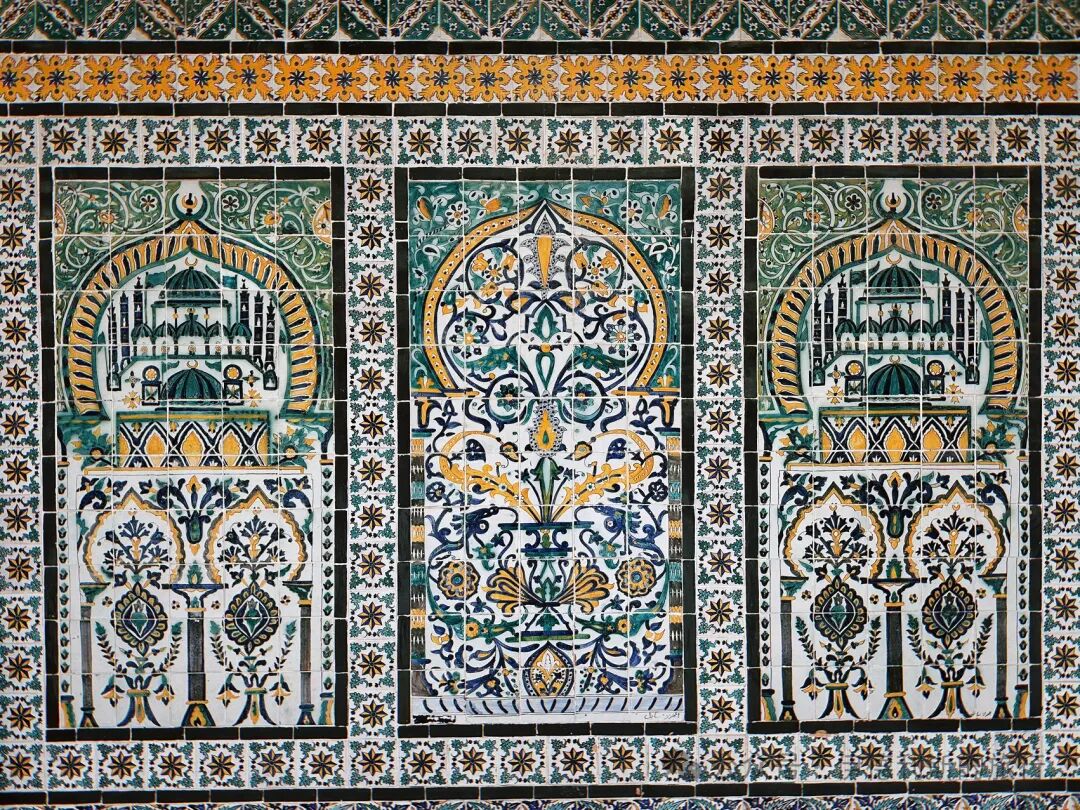
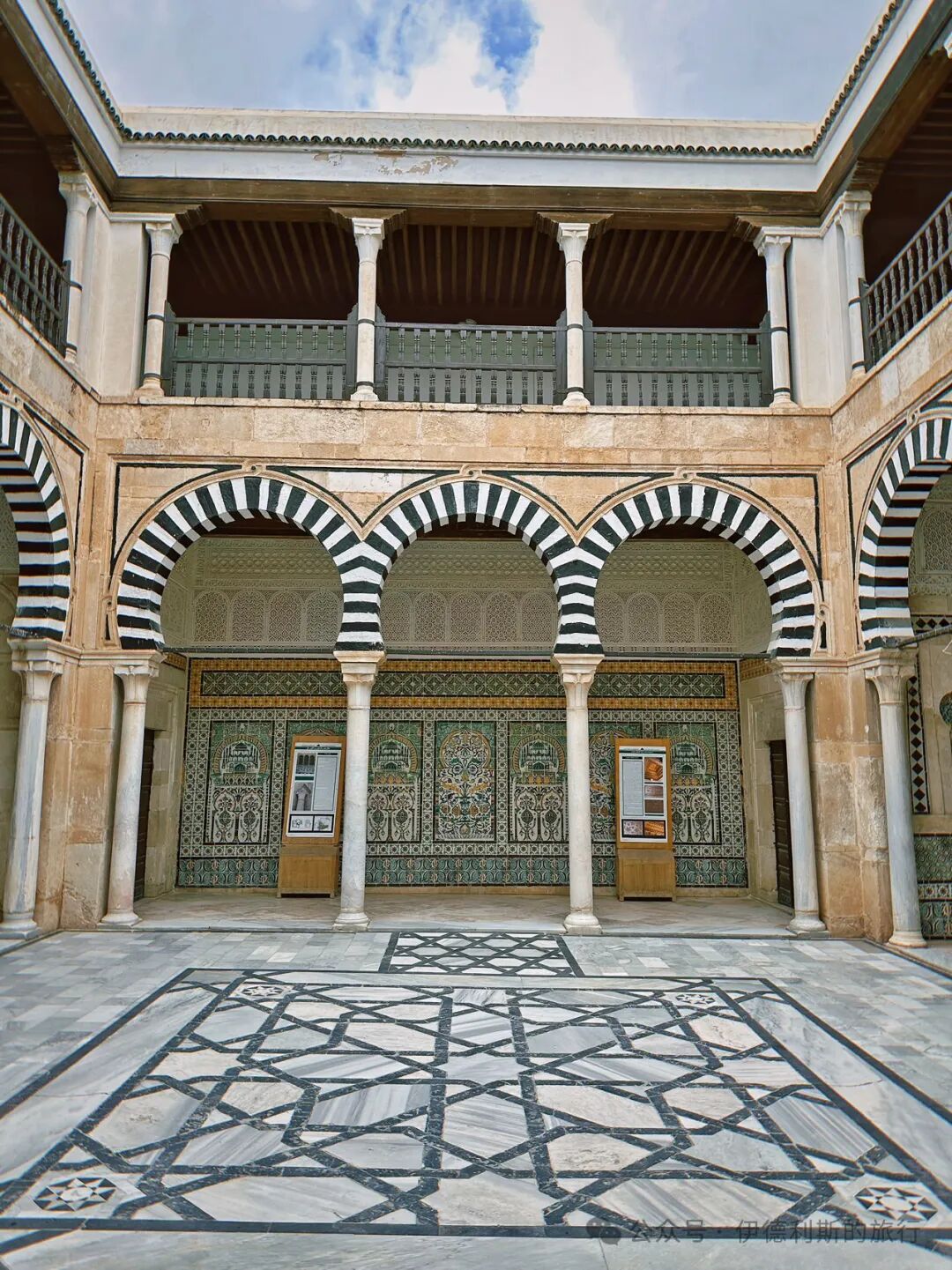
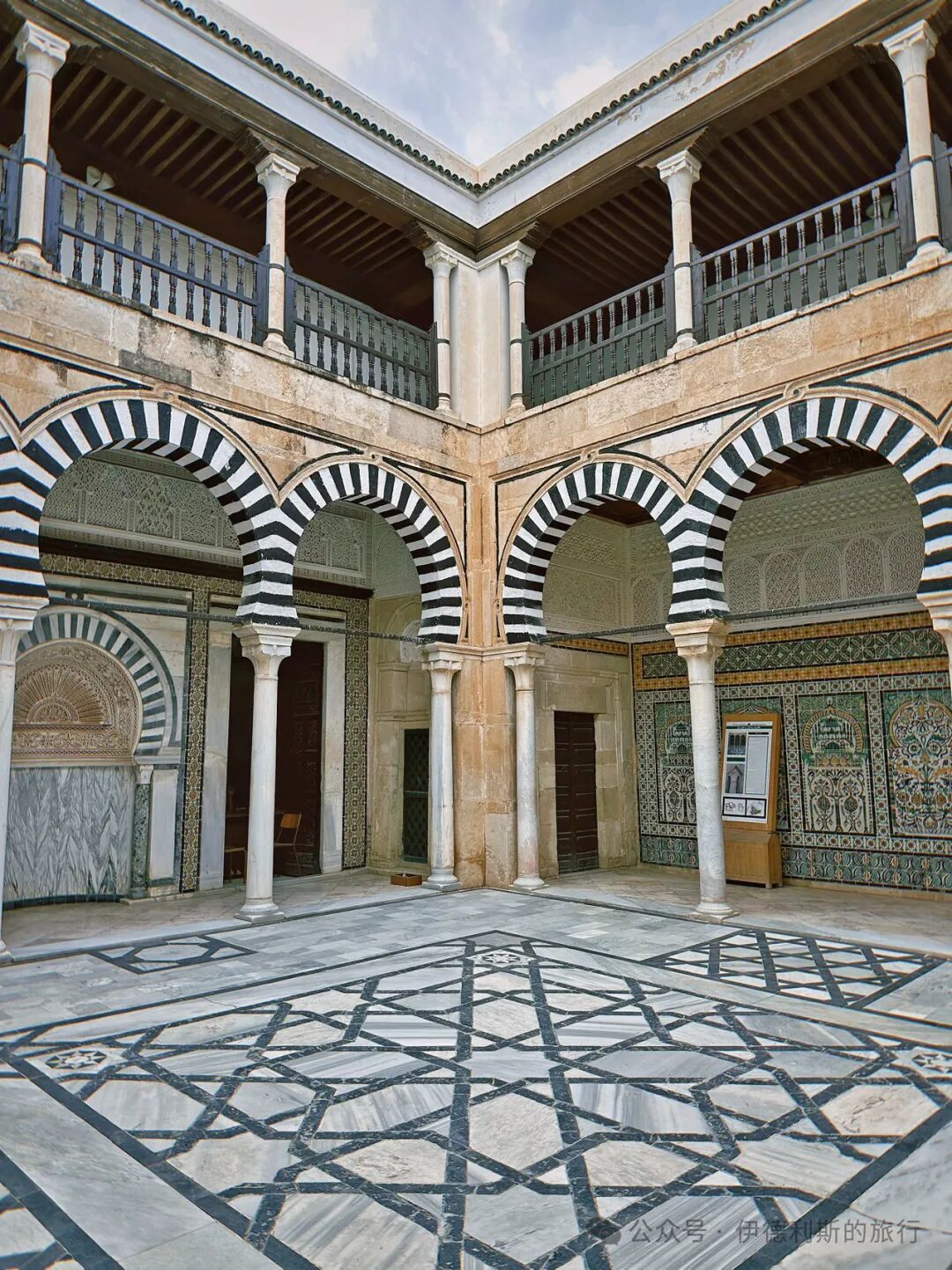
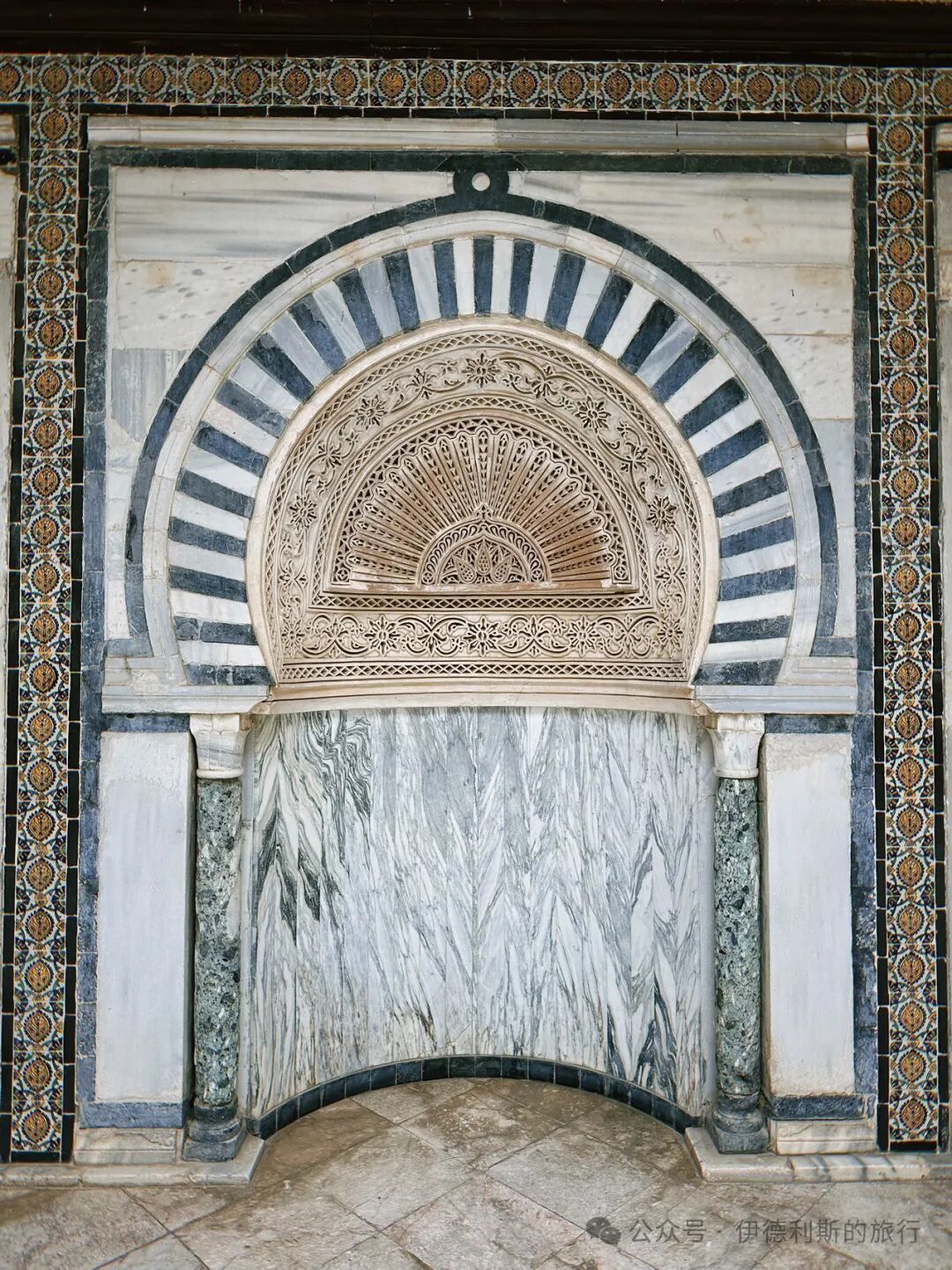
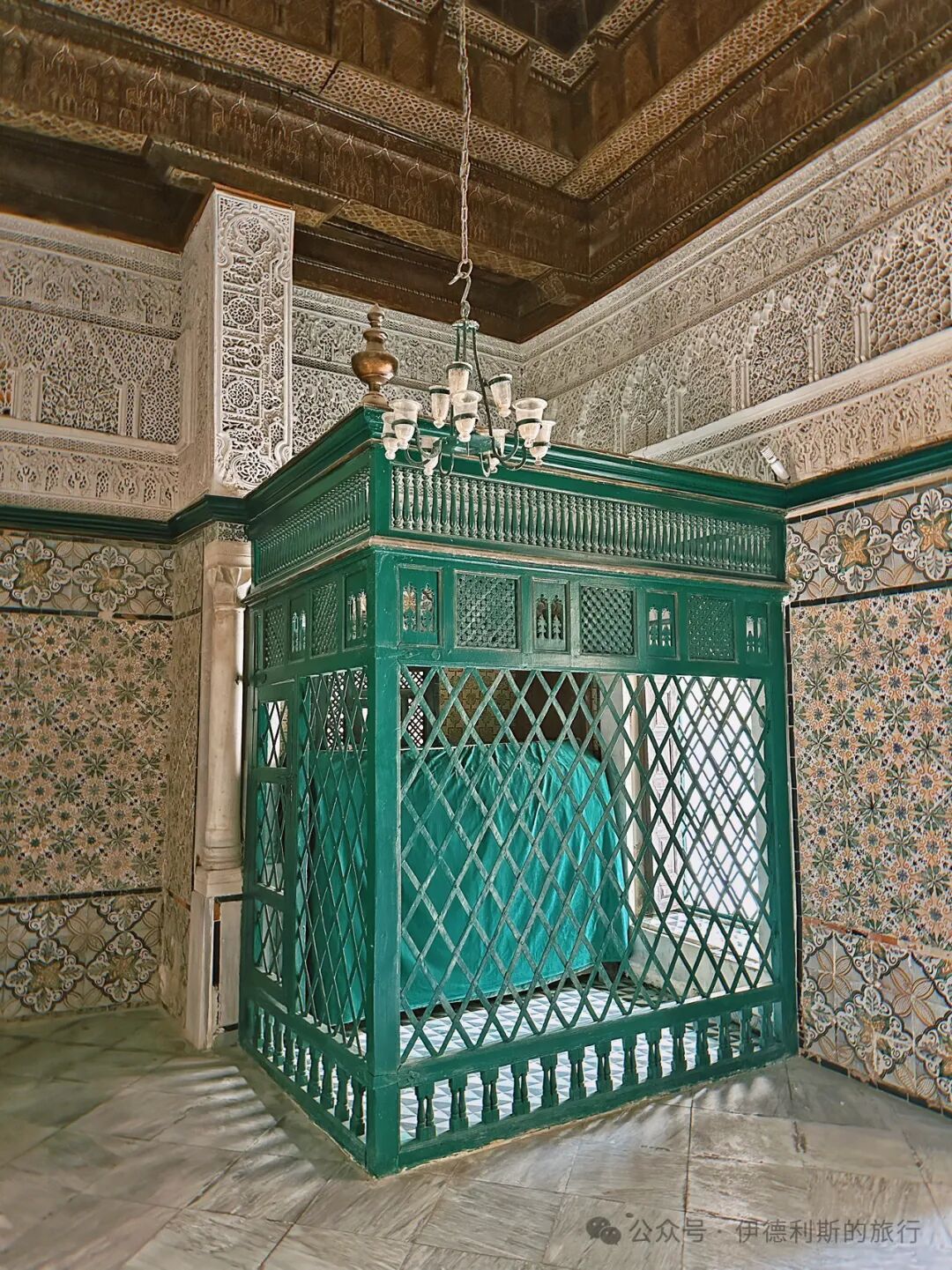
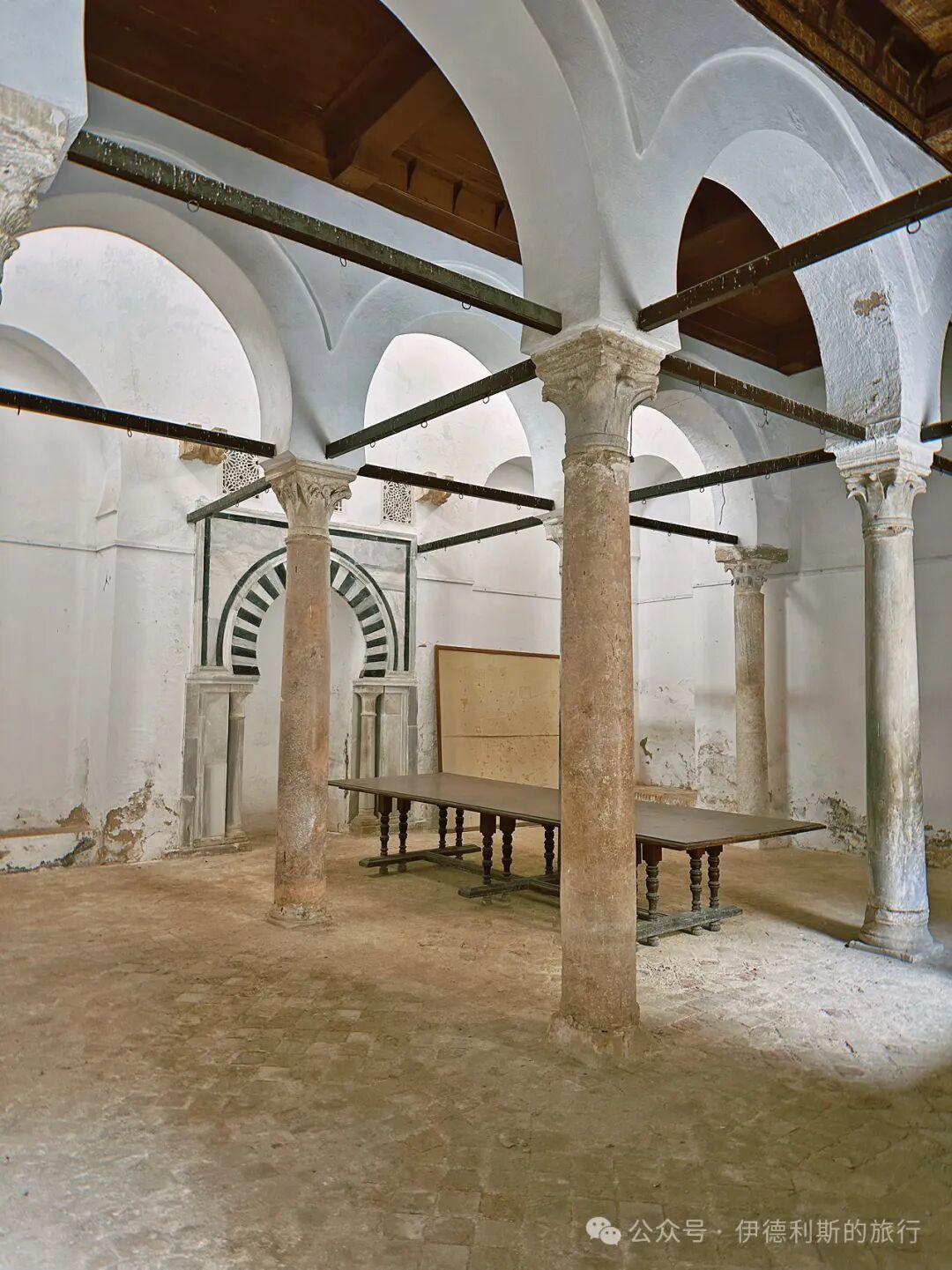
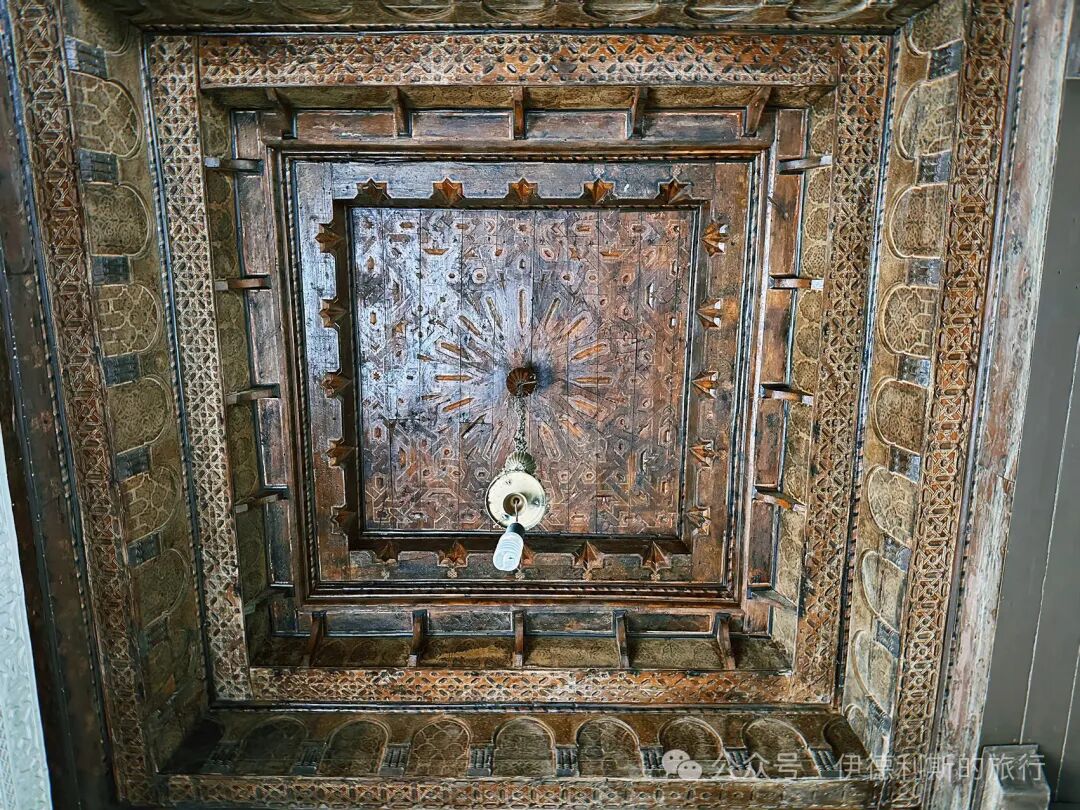
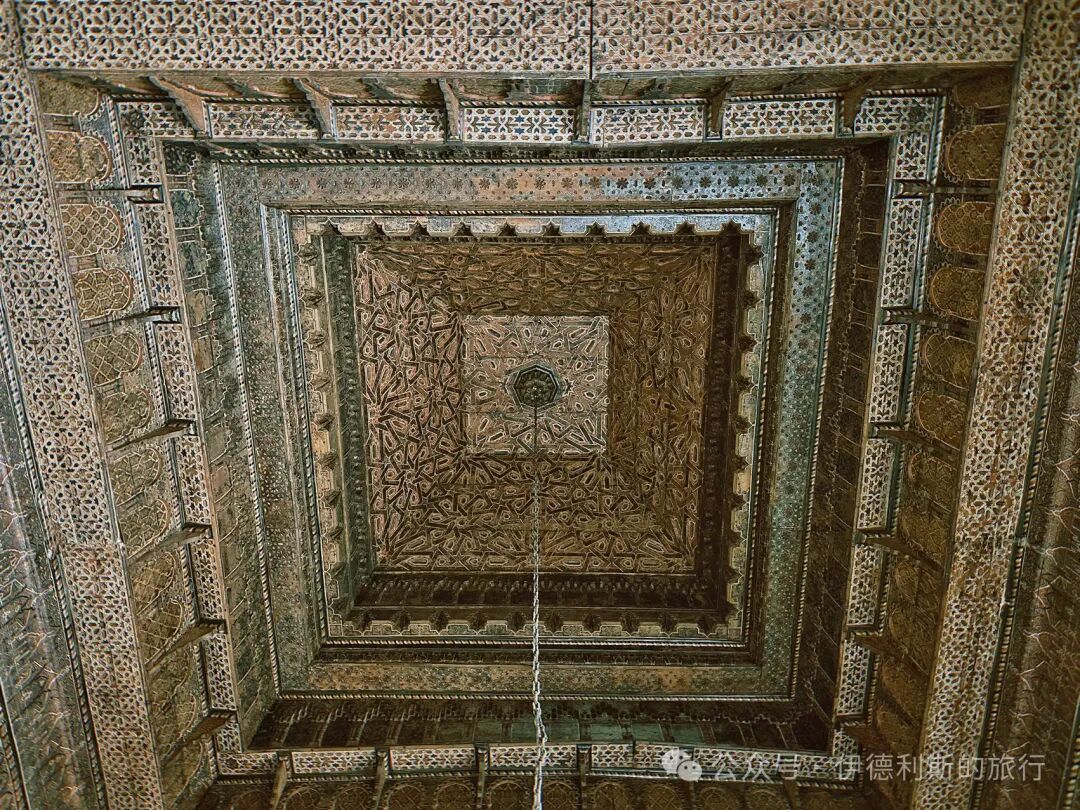
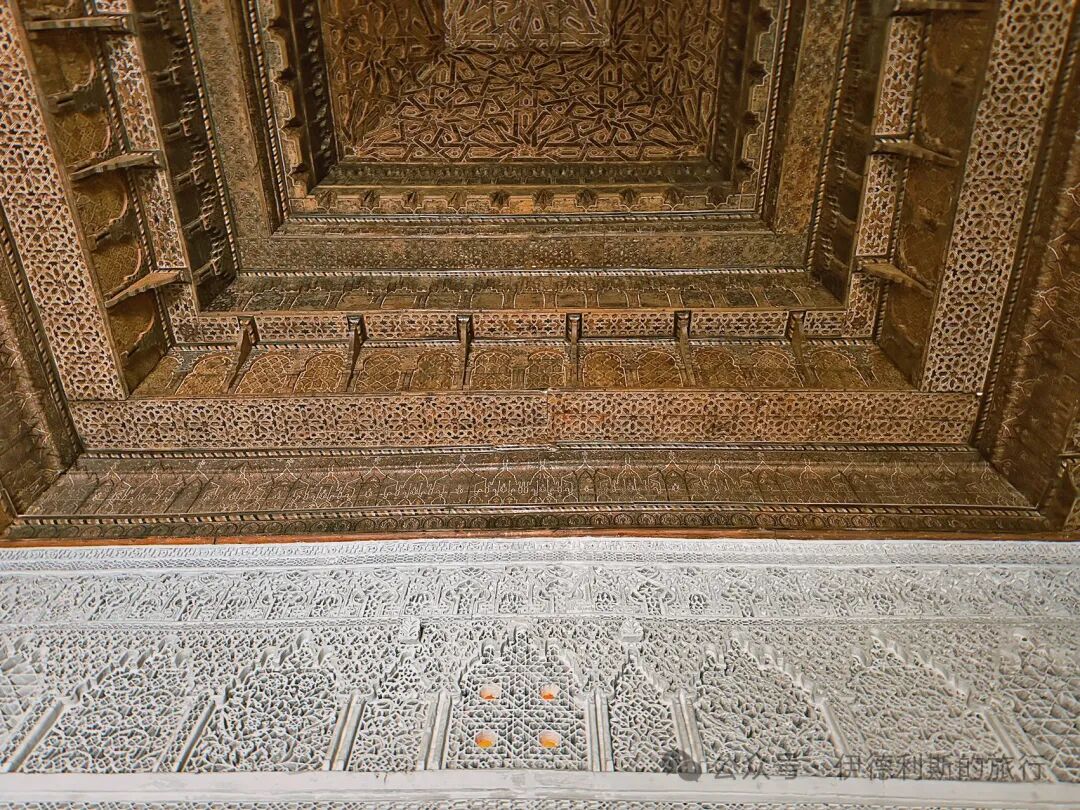
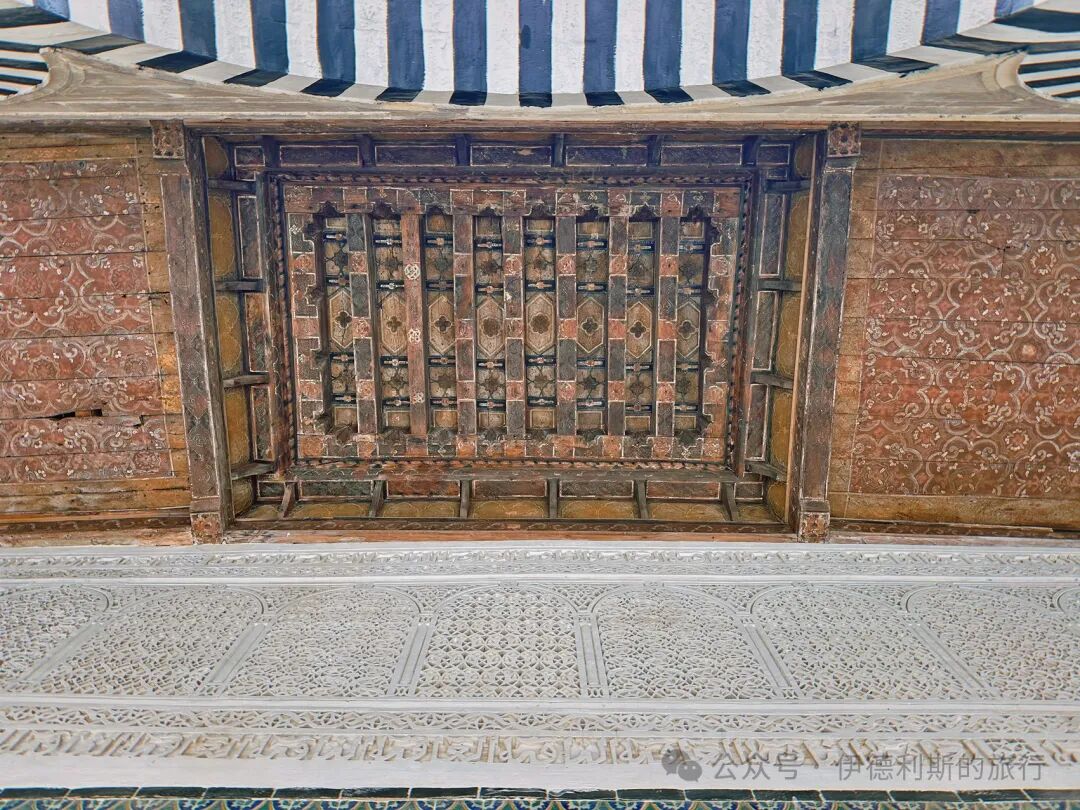
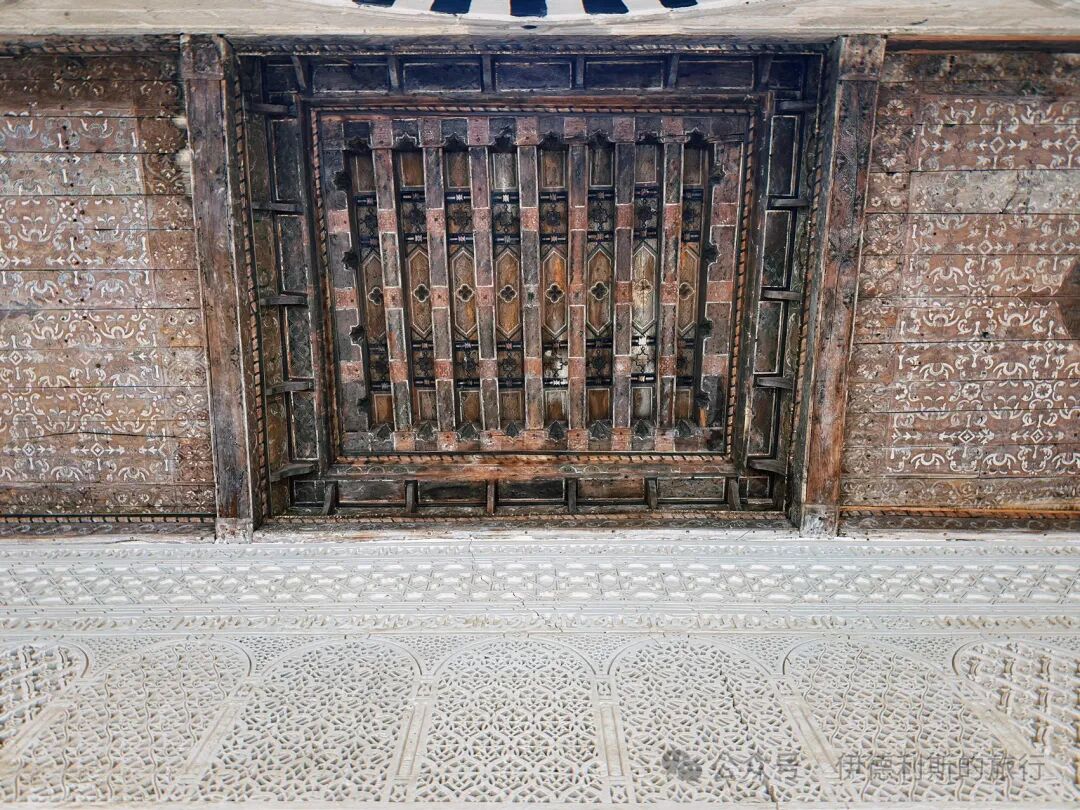
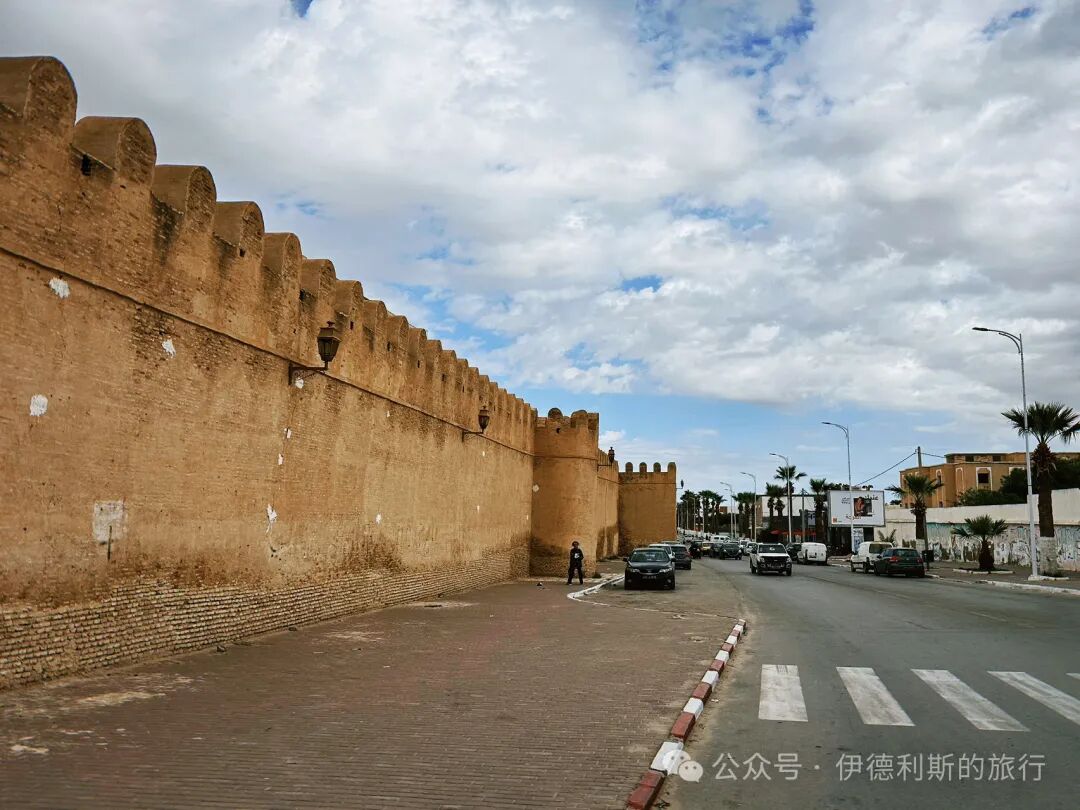
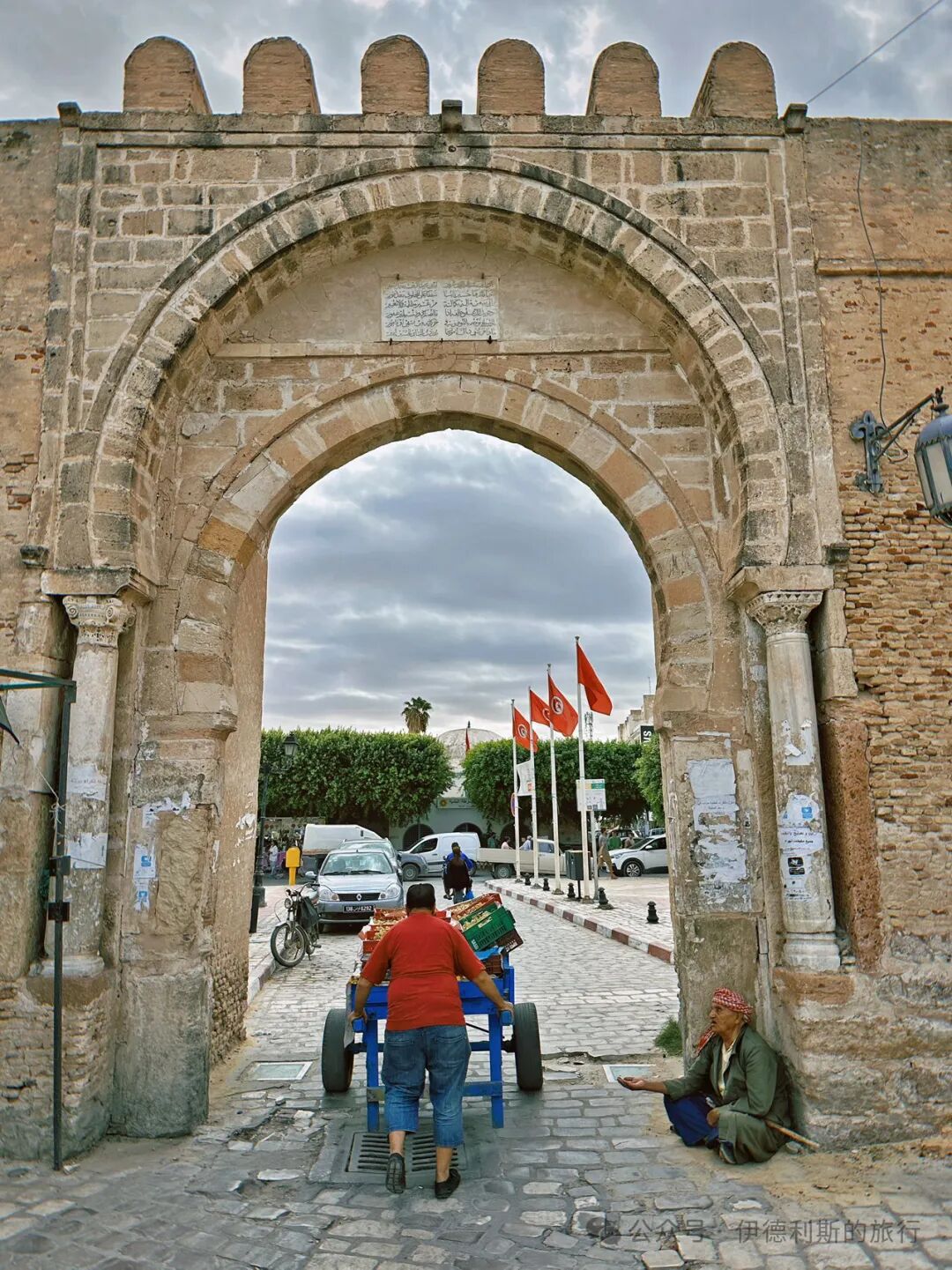
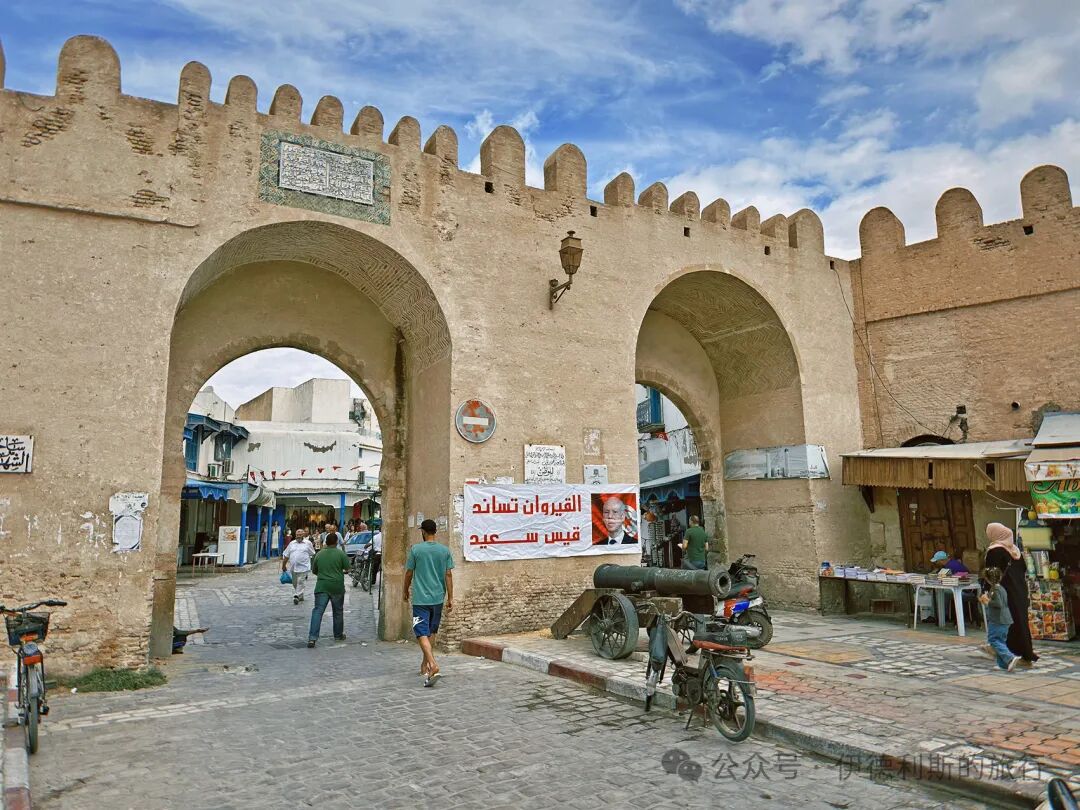
The city walls and gates of the Kairouan Medina.
Kairouan was founded in 670 by the Arab Umayyad general Uqba ibn Nafi, who chose the site to serve as a military base for the Arab conquest of Tunisia. Over the next hundred years, the Berbers launched wave after wave of uprisings against the Arabs. After surviving many attacks, Kairouan was finally captured by the Berbers in 745 and was not retaken until the end of the 8th century.
Summary: This first part follows a visit to the Great Mosque of Kairouan for Jumu'ah in one of Tunisia's most important Islamic cities. It keeps the original prayer experience, mosque history, photographs, and travel details for readers interested in Muslim heritage in North Africa.
On Friday, we left from the Louage station south of Sousse and reached Kairouan, the most important ancient city in Tunisia, in just one hour. The Louage station in Kairouan is on the west side of the city, but you can ask the driver to drop you off right at the gate of the Great Mosque of Kairouan.
When we arrived at the Great Mosque at twelve o'clock, it was already closed. A young man at the gate told us that other mosques in Kairouan hold Jumu'ah prayer at one o'clock, but only the Great Mosque holds it at three, so he suggested we come back later.
We used this time to look at the exterior of the mosque. The Great Mosque of Kairouan is the oldest and most spectacular Jumu'ah mosque in Tunisia. It was first built in 670 by order of Uqba ibn Nafi, a general of the Arab Umayyad Caliphate. It was destroyed by Christian Berbers in 690 and rebuilt by the Umayyad Caliphate in 703. As the Arab population in Tunisia grew, the number of Muslims in Kairouan increased. The Great Mosque was rebuilt and renovated many times between 724-728, 774, 836, 862-863, and 875, finally taking its current form in the 9th century.
The Great Mosque is a huge, irregular quadrilateral with a perimeter of 405 meters, looking like a fortress from the outside. The outer walls are 1.9 meters thick and built from stone, rubble, and bricks. Because the ground is quite soft, many buttresses were built on the outer walls to increase stability.
The Great Mosque has nine gates, some of which have porches and spiral-shaped domes. Bab Lalla Rihana on the southeast side was built in 1293 during the Hafsid dynasty. It features a horseshoe arch and ancient stone columns that blend perfectly with the 9th-century walls.
While waiting for Jumu'ah, we had lunch at El Brija Restaurant, located on the city wall next to the Great Mosque. The atmosphere and service were both good, and they serve traditional Tunisian food. I recommend eating here when visiting the Great Mosque.
We ordered a traditional appetizer platter and a mixed couscous stew. When eating at a proper restaurant in Tunisia, you really only need to order the main course, as most places provide side dishes and bread.
Our appetizer platter included Tunisian salad, Houria carrot salad, and Mechouia green pepper salad. We ate these three dishes almost every day in Tunisia. Tunisian salad is made of diced cucumbers, tomatoes, and onions mixed with olive oil, topped with boiled eggs and tuna. Mechouia salad contains green peppers, tomatoes, onions, garlic, and more. Tunisians love it, and it is rich in vitamins and very healthy. The couscous stew was very rich, containing lamb, Merguez sausage, chicken, beef, dried fruits, and preserved fruits. The Merguez sausage is seasoned with cumin and chili, making it very flavorful.
After the meal, we were served mint tea and Makroudh dessert. Makroudh is a classic North African Maghreb snack for breaking the fast. It is made of semolina on the outside, filled with date paste and dried fruits, then baked and soaked in syrup.
We returned to the Great Mosque after two o'clock, and people were already entering the prayer hall. Once inside the courtyard, the first thing you see is the oldest minaret (bangke ta) still in existence today. The minaret of the Great Mosque of Kairouan was built between the 8th and 9th centuries. The current structure mostly dates back to 836. It is one of the three most important early minarets, alongside the spiral minaret of the Great Mosque of Samarra in Iraq, built between 848 and 852, and the spiral minaret of the Abu Dulaf Mosque in Iraq, built in 859. These three served as models for later minarets across Andalusia and the Maghreb.
There were no minarets during the time of the Prophet and the four Caliphs. People called for prayer (adhan) from the mosque entrance or the roof. Platforms for calling the adhan appeared during the Umayyad dynasty in the 7th century, but true minarets did not emerge until the Abbasid dynasty in the 8th century. There is no final conclusion on the origin of the minaret. Some say it mimics the towers of Syrian churches, while others suggest it was inspired by the Lighthouse of Alexandria or Mesopotamian ziggurats. Four towers were built during the reconstruction of the Sacred Mosque in Mecca in the late 8th century, but they have not survived. The earliest surviving minarets are the one at the Great Mosque of Kairouan and the two in Iraq. The Bride's Minaret at the Umayyad Mosque in Damascus may also date to the 9th century, but there is no clear record of this.
The minaret of the Great Mosque of Kairouan is 31.5 meters tall. Its base dates back to the Umayyad period in 725, and you can see Latin inscriptions from the Roman era on the walls. The first and second levels of the minaret were built in 836 using carefully cut stone. The side facing the courtyard has windows, while the other three sides have arrow slits. The third level of the minaret is a four-arched structure (chahartaq), which was likely added later.
Three sides of the Great Mosque are surrounded by double-row horseshoe-shaped arcades. The columns come from various ancient Roman and Byzantine ruins, including some from the famous site of Carthage.
There is a dome above the main entrance of the prayer hall and another above the mihrab. These domes, built in 836, are important examples of early mosque domes.
The prayer hall connects to the arcades through 17 carved wooden doors. The most beautiful one in the center was built in 1828 and features rich geometric and floral patterns.
The mihrab of the Great Mosque is 5.1 meters high. It was built in 863 and is the oldest concave mihrab in the world. The main body of the mihrab is a horseshoe arch supported by two red marble columns. The columns have Byzantine-style capitals with very fine carvings.
The upper part of the mihrab features 139 iridescent ceramic tiles fired in the second half of the 9th century. This metallic-lustre glazed pottery originated in Abbasid-ruled Iraq and was traded throughout West Asia and North Africa. It is not yet certain whether the iridescent tiles of the Great Mosque of Kairouan were fired in Iraq or if Iraqi craftsmen were invited to Kairouan to make them.
The concave center of the upper part is made of painted wood, featuring complex vine patterns in yellow on a blue background. The lower part is inlaid with 28 white marble slabs carved with complex floral and geometric patterns, including stylized grape leaves, flowers, and shells.
Next to the mihrab are the pulpit (minbar) for the Friday sermon and the enclosure (maqsurah) used by kings and nobles.
The minbar of the Great Mosque of Kairouan was also built in 863 and is the oldest surviving minbar in the world. The minbar is made of teak imported from India and is assembled from over 300 wooden panels carved with floral and geometric patterns. Although it was restored in the early 20th century, all but nine of the wooden panels are original pieces from over a thousand years ago. Today, the sides of the minbar are protected by glass, making it difficult to take photos due to the reflection.
The maksura at the Great Mosque of Kairouan was built in the first half of the 11th century. It is the oldest maksura in the world still in use. The maksura at the Great Mosque of Cordoba in Spain was built in 965, but it is no longer used today. The maksura is made of cedar and is 14 meters long. It is carved with ornate Kufic calligraphy and floral patterns, representing the highest achievement in Tunisian carving art at that time.
The maksura originated during the time of Caliph Uthman in the mid-7th century. After Caliph Umar was assassinated inside the prayer hall, Uthman built a partition wall inside the hall to protect himself. Later, mosques where the Caliph resided would all have a maksura built inside.
The prayer hall of the Great Mosque of Kairouan is 70.6 meters wide and 37.5 meters deep. It consists of 17 aisles, with the aisle directly facing the mihrab being the tallest and widest. This layout was later adopted by major mosques across the Maghreb and Andalusia.
There are 414 stone columns inside the prayer hall. They are made of marble, granite, and porphyry, with capitals in styles including Corinthian, Ionic, and Composite. Some capitals were carved specifically for the prayer hall, while many others came from ancient Roman, Phoenician, and Byzantine sites in Tunisia, including the famous ancient city of Carthage.
The door inside the prayer hall's maksura is decorated with marble floral carvings. This door leads to the library behind the qibla wall, which is also where the imam usually stays. The imam only comes out from here to lead the prayer and deliver the khutbah.
The grand scene of Jumu'ah at the Great Mosque of Kairouan. After the adhan is finished, the imam slowly walks up the minbar to begin the khutbah. In Arabic-speaking regions, everyone understands the khutbah, so there is no sermon session beforehand.
Tunisia follows the Maliki school of thought. Their namaz movements are quite similar to our Hanafi school, including the initial takbir, but the main difference is that they also fold their arms when making intention.
After the prayer, we stood for janazah outside the prayer hall door. Because Jumu'ah was at three o'clock, we immediately returned to the prayer hall to perform Dhuhr after finishing.
From the 9th to the 11th century, the Great Mosque of Kairouan was the academic center for the entire Maghreb region and the Maliki school. to religious courses, it offered subjects like mathematics, astronomy, medicine, and botany. In 1045, the Zirid dynasty court in Kairouan announced its conversion to Sunni Islam. Upon hearing this, the Shi'a Fatimid dynasty in Egypt sent a group of Arab tribes to invade Kairouan. In 1057, these Arab tribes occupied and destroyed Kairouan. The Great Mosque of Kairouan declined from then on and did not slowly recover until after the 13th century.
After leaving the Great Mosque of Kairouan, we started exploring the ancient medina of Kairouan. Besides the Great Mosque, the other ancient mosque remaining in Kairouan is the Mosque of the Three Doors (Masjid al-Thalathat Abwab), built in 866. This mosque has the oldest decorated facade of any religious building in the world.
Today, only the facade of the Mosque of the Three Doors retains its 9th-century appearance, while the minaret next to it was added in 1440. The gate of the Mosque of the Three Doors consists of three horseshoe arches and features four ancient stone columns. The arch is carved with floral patterns and Kufic calligraphy, which includes verses from the Quran and the name of the builder, Muhammad ibn Khairun. Muhammad ibn Khairun was a scholar and merchant from Andalusia who traveled through Iraq and Egypt to reach Kairouan, Tunisia. When the minaret was added in 1440, the original 9th-century inscriptions were rearranged to make room for the new text.
In the northwest of the Kairouan Medina stands an important tomb for Sidi Sahib, a companion of the Prophet and his barber, which is why it is also called the Barber Mosque.
Legend says Sidi Sahib died in a battle in 654 and was buried here. By the 11th century, this place had become a famous holy site, and the tomb shrine (gongbei) was built in the 14th century. The Bey of Tunis, Hammuda Pasha (reigned 1631-66), expanded the tomb significantly in 1629 and built a new main hall. Another Bey, Mohamed (reigned 1675-96), built the minaret and a religious school (madrasa) between 1690 and 1695. Since the 19th century, the tomb of Sidi Sahib has undergone several renovations, but it still keeps its 17th-century architectural style.
The tomb of Sidi Sahib in Kairouan blends Andalusian, Italian Renaissance, and local Kairouan architectural styles. The interior features many classic 17th-century Tunisian Qallalin tiles and rich plaster carvings.
At the minaret, gate, and main hall of the Sidi Sahib tomb in Kairouan, an old man in the courtyard pours perfume into the hands of every visitor (dosti) who comes to pay their respects.
The Sidi Abid al-Ghariani school (madrasa) and shrine (zawiya) inside the Kairouan Medina were founded in the 14th century and expanded significantly in the 17th century. Abid al-Ghariani was a scholar, and his teacher, Al-Jadidi, was a famous judge in Kairouan. Al-Jadidi passed away in 1384 while on the Hajj pilgrimage in Mecca. Abid al-Ghariani took over his teacher's role to continue teaching in Kairouan, and after he died in 1402, he was buried next to the school.
Besides Abid al-Ghariani, the Hafsid dynasty Caliph Moulay Hasan (reigned 1526-1543) is also buried here. In 1534, the famous pirate Barbarossa led a fleet to invade Tunisia. Moulay Hasan eventually took back Tunisia with the help of the Holy Roman Empire, but he had to sign a treaty to become a vassal of Spain. In 1542, while Moulay Hasan was traveling to Italy to collect weapons and ammunition, his son usurped the throne, and he was eventually exiled. He lived in Naples and Sicily for several years and later met with the Holy Roman Emperor and the Pope, becoming the most well-known Arab monarch to Europeans of that era.
The city walls and gates of the Kairouan Medina.
Kairouan was founded in 670 by the Arab Umayyad general Uqba ibn Nafi, who chose the site to serve as a military base for the Arab conquest of Tunisia. Over the next hundred years, the Berbers launched wave after wave of uprisings against the Arabs. After surviving many attacks, Kairouan was finally captured by the Berbers in 745 and was not retaken until the end of the 8th century.
Muslim Travel Guide Urumqi Spring Festival: Hui Muslim Life, Jumu'ah and Family Visits
Articles • yusuf908 posted the article • 0 comments • 139 views • 2026-05-23 23:22
Reposted from the web
Summary: This Urumqi article records Hui Muslim life during the Spring Festival, including nianye, luohuali, Jumuah prayer, and visiting relatives and friends. It preserves the original religious customs, family scenes, food details, and community observations in natural English.
Night of Prayer (nianye).
During the 2024 Spring Festival holiday, I took Suleiman to visit his grandparents (anai aye) in Urumqi, just in time for the noble month of Sha'ban (the eighth month of the Islamic calendar). The evening of the 15th day of the eighth month is the Night of Bara'at, which means the Night of Atonement. On this night, the two angels on our shoulders replace the scrolls that record our good and bad deeds for the year. They seal the old scrolls and open new ones, which serve as evidence for questioning when we enter the afterlife, so it is also called the Night of Exchanging Scrolls. In the traditions of Hui Muslims in some regions, when the month of Sha'ban arrives, everyone takes turns inviting the imam and friends and family to their homes for a Night of Prayer. The main process includes reciting scriptures, praising the Prophet, performing repentance (tawbah), and asking for forgiveness for family members and the deceased. Afterward, everyone eats a rich meal to strengthen bonds, boost faith, and prepare for the noble month of Ramadan.
February 17 was our family's Night of Prayer, and we also celebrated Suleiman's first birthday (suisuizi). We invited four imams and a large group of relatives to recite surahs, recite the Bara'at praise, perform repentance, and receive dua, followed by a meal. First, we served appetizers (diediezi) and tea. The appetizers included nut tarts and baklava we bought at a Uyghur pastry shop on Hetian Street, as well as traditional flaky pastries and fried flour cakes (saqima) made by my aunt. After everyone chatted for a while, we cleared the appetizers and brought out the main dishes to officially start the feast.
With the help of my aunts, we prepared a rich feast. The main dishes were clear-stewed lamb, braised beef steak, followed by steamed starch jelly (mengzi), pearl meatballs, peppercorn chicken, steamed fish, sweet rice platter (tianpanzi), and various stir-fried dishes. The staples were fried dough (youxiang), steamed buns (momo), and rice.
The fried dough was deep-fried a day in advance. Before frying, we first performed ablution (wudu), then leavened the dough. After it rose, we scalded a small portion with hot oil and mixed in a little baking soda and fenugreek powder. We kneaded the scalded dough into the leavened dough, covered the basin, and let it rest for 15 minutes. After resting, we rolled it into a long shape, pinched off pieces, rolled them into flat cakes, cut four small slits with a knife, and it was ready to be fried. When putting them into the pot, we recited the Tasmiyah. We fried them for a while, flipped them, and tapped the edges with chopsticks; once they were firm, they were done.
To make sweet rice platter (tianpanzi), first wash the glutinous rice and soak it for three days. Then, add a little brown sugar (shazitang) and steam it, using more water than you would for regular rice. Next, wash red dates, walnut kernels, and raisins, and spread them at the bottom of a bowl. Cover them with the steamed glutinous rice and let it cool. After that, boil rock sugar to make a syrup. Finally, flip the bowl of rice onto a plate and pour the syrup over it.
Meatloaf (munzi) is made with ground beef. When mixing the filling, beat it repeatedly, then shape it into a cylinder. Pinch the top to look like a railing, pour an egg into the center, and steam it.
For spicy peppercorn chicken (jiaomaji), first wash a free-range chicken, cut it in half, and put it in a pressure cooker. Add water to cover it, along with red chili, Sichuan peppercorns, salt, bay leaves, cinnamon, and ginger slices. Once cooked, take it out, let it cool in a basin, tear the meat into strips, and top with green onions. Heat oil in a pan. Once hot, turn off the heat and add dried chili skins (lapizi), Sichuan peppercorns, salt, and white pepper. Stir well, pour in some chicken broth, and then pour everything over the chicken in the basin and mix well.
We spent the night at my aunt's house near the cement factory. My uncle is an imam at a small mosque in Shanxi, and we are very grateful (zhigan) for that.
The main dishes were definitely braised beef steak and clear-stewed lamb. The chicken was raised by my uncle himself, and the lamb was from the southern mountains of Urumqi.
We spent the night at my second aunt's house in the New City District. My aunt is the recognized master chef of our family. She makes authentic home-style stir-fries, meatloaf (munzi), stuffed meat slices (jiasha), and tripe.
We spent the night at my aunt's house near the flour mill and had basin meat (penpenrou) with fried dough (youxiang) for breakfast.
We hosted our guests at Lanpin Banquet. It is currently the most popular restaurant in Urumqi for Hui Muslims to hold religious gatherings (niansuoer). They don't sell alcohol, the food is refined, and the owner is warm and attentive. It is usually packed on weekends and holidays, so you must book in advance. On the day we went, they hosted 30 tables for a circumcision ceremony and 15 tables for a special occasion.
We ate stir-fried beef tendon, spicy peppercorn chicken (jiaomaji), cold-dressed beef, hand-grabbed lamb (shoubarou), sauced stuffed meat slices (jiasha), pearl meatballs, and flatfish, along with complimentary side dishes. These are the most popular dishes for Hui Muslim gatherings in Urumqi right now. Their hand-grabbed lamb (shoubarou) is excellent; the meat is tender and fragrant, making it perfect for elderly people to eat.
I spent the night at Uncle Saisai's house in the Changsheng Brigade in the southern suburbs of Urumqi. The hospitality was generous, with dishes like sweet platter (tianpanzi), fried dough snacks (youguozi), pearl meatballs (zhenzhu wanzi), braised ribbonfish, clear-stewed meat, and braised lamb. I also met many relatives.
Engagement acceptance ceremony (luohuali)
This time, I arrived just in time for my brother-in-law's engagement acceptance ceremony (luohuali). We had a feast at a small community (xiaofang) of the Jahriyya order (Zhepai) in Anningqu, in the northern suburbs of Urumqi, where I ate some homemade fried twisted sugar dough (tangningningzi). The feast started with small appetizer plates, which were then cleared to make room for the main dishes, including clear-stewed meat, braised meatballs, braised fish, and beef head meat.
The traditional wedding customs of Hui Muslims in Xinjiang are very specific. Before a formal marriage proposal, there is a 'preliminary inquiry' where the man's family learns about the woman's family. Then, they send a matchmaker with four types of gifts—tea leaves, sugar cubes, red dates, and walnuts (or pastries)—wrapped in four colors, known as the 'four-color gift' (sese li). The first time a matchmaker brings the four-color gift to propose, it is called the 'opening gift' (kaikouli). The matchmaker gives the red-cloth-wrapped gifts to the woman's family, but they do not give an answer right away. After careful consideration, the woman's family sends a message through the matchmaker. The man's family then sends the four-color gift again, which is called the 'engagement acceptance ceremony' (luohuali), and after that, they enter the engagement stage.
Friday prayer (Jumu'ah)
At noon, I attended the Friday prayer (Jumu'ah) at the Changsheng Grand Mosque. The Changsheng Grand Mosque is located in the Changsheng Brigade at the foot of Yaomo Mountain (Yamalike Mountain) in the southern suburbs of Urumqi. It has the highest number of congregants among the Hui Muslim mosques in the Saybagh District, with over a hundred people attending the Friday prayer (Jumu'ah). The Changsheng Brigade used to be a series of large courtyards where everyone farmed. Now, everyone has moved collectively to the Fumin Anju residential area, and the houses are very spacious.
Imam Fanta of the Changsheng Grand Mosque is my wife's uncle. Uncle Fanta is the one who performed our marriage contract (nikah). Uncle Fanta's surname is Su. The Su family is a large clan in Changsheng. Over three hundred years ago, they left Ankang, Shaanxi, and traveled through Ningxia and Jimsar to Urumqi to do business. Later, their business failed, and they eventually moved to Changsheng to farm, where they have lived ever since.
I bought fresh milk and handmade yogurt at the entrance of the Changsheng residential area. A large bucket of fresh milk only cost 20 yuan. After boiling it and adding two spoonfuls of milk skin (naipizi) I bought earlier on Hetian Street, it tasted amazing. The handmade yogurt comes with its own layer of milk skin (naipizi) and has a very rich milky flavor.
Visiting relatives and friends.
I visited my second aunt's house and had a lunch of Hui Muslim-style lamb dumpling soup (fentang yangrou jiaozi). The soup is the version Hui Muslims in Xinjiang make for Eid, and the dumplings are filled with lamb, onions (piyanzi), and pickled cabbage. They were small and delicate, and everyone loved them.
I attended a family dinner at my older sister's place. My brother-in-law is a great cook and made beef steak stew, spicy numbing chicken (jiaoma ji), pumpkin buns (kawa baozi), and smoked horse sausage. My brother-in-law makes amazing rice pilaf (zhuafan), so I made sure to ask him for his tips during the meal. Don't stir-fry the yellow carrots for the rice pilaf all the way through. Stewing them in water brings out their sweetness, so you don't need to add extra sugar. You must use plenty of oil for the rice pilaf. If you use too much, just tilt the pot and scoop the excess out. The extra oil from the rice pilaf is great for making cabbage and meat mixed noodles (banmian) because it adds so much flavor.
My great-aunt in Wusu invited us out to eat at Lanpin Banquet on Zhujiang Road. It shows how popular this place is among the older generation of Hui Muslims in Urumqi. As soon as we walked in, a young waiter greeted us with a salaam and showed us to our table. We have only been here twice, but the service is always excellent.
This time we had stir-fried black and white lung, yellow noodles with grilled meat (huangmian kaorou), sweet platter (tianpanzi), layered steamed bread (youtazi), spicy numbing chicken, and clear-stewed meat. Everyone loved these traditional dishes. view all
Summary: This Urumqi article records Hui Muslim life during the Spring Festival, including nianye, luohuali, Jumuah prayer, and visiting relatives and friends. It preserves the original religious customs, family scenes, food details, and community observations in natural English.
Night of Prayer (nianye).
During the 2024 Spring Festival holiday, I took Suleiman to visit his grandparents (anai aye) in Urumqi, just in time for the noble month of Sha'ban (the eighth month of the Islamic calendar). The evening of the 15th day of the eighth month is the Night of Bara'at, which means the Night of Atonement. On this night, the two angels on our shoulders replace the scrolls that record our good and bad deeds for the year. They seal the old scrolls and open new ones, which serve as evidence for questioning when we enter the afterlife, so it is also called the Night of Exchanging Scrolls. In the traditions of Hui Muslims in some regions, when the month of Sha'ban arrives, everyone takes turns inviting the imam and friends and family to their homes for a Night of Prayer. The main process includes reciting scriptures, praising the Prophet, performing repentance (tawbah), and asking for forgiveness for family members and the deceased. Afterward, everyone eats a rich meal to strengthen bonds, boost faith, and prepare for the noble month of Ramadan.
February 17 was our family's Night of Prayer, and we also celebrated Suleiman's first birthday (suisuizi). We invited four imams and a large group of relatives to recite surahs, recite the Bara'at praise, perform repentance, and receive dua, followed by a meal. First, we served appetizers (diediezi) and tea. The appetizers included nut tarts and baklava we bought at a Uyghur pastry shop on Hetian Street, as well as traditional flaky pastries and fried flour cakes (saqima) made by my aunt. After everyone chatted for a while, we cleared the appetizers and brought out the main dishes to officially start the feast.
With the help of my aunts, we prepared a rich feast. The main dishes were clear-stewed lamb, braised beef steak, followed by steamed starch jelly (mengzi), pearl meatballs, peppercorn chicken, steamed fish, sweet rice platter (tianpanzi), and various stir-fried dishes. The staples were fried dough (youxiang), steamed buns (momo), and rice.
The fried dough was deep-fried a day in advance. Before frying, we first performed ablution (wudu), then leavened the dough. After it rose, we scalded a small portion with hot oil and mixed in a little baking soda and fenugreek powder. We kneaded the scalded dough into the leavened dough, covered the basin, and let it rest for 15 minutes. After resting, we rolled it into a long shape, pinched off pieces, rolled them into flat cakes, cut four small slits with a knife, and it was ready to be fried. When putting them into the pot, we recited the Tasmiyah. We fried them for a while, flipped them, and tapped the edges with chopsticks; once they were firm, they were done.
To make sweet rice platter (tianpanzi), first wash the glutinous rice and soak it for three days. Then, add a little brown sugar (shazitang) and steam it, using more water than you would for regular rice. Next, wash red dates, walnut kernels, and raisins, and spread them at the bottom of a bowl. Cover them with the steamed glutinous rice and let it cool. After that, boil rock sugar to make a syrup. Finally, flip the bowl of rice onto a plate and pour the syrup over it.
Meatloaf (munzi) is made with ground beef. When mixing the filling, beat it repeatedly, then shape it into a cylinder. Pinch the top to look like a railing, pour an egg into the center, and steam it.
For spicy peppercorn chicken (jiaomaji), first wash a free-range chicken, cut it in half, and put it in a pressure cooker. Add water to cover it, along with red chili, Sichuan peppercorns, salt, bay leaves, cinnamon, and ginger slices. Once cooked, take it out, let it cool in a basin, tear the meat into strips, and top with green onions. Heat oil in a pan. Once hot, turn off the heat and add dried chili skins (lapizi), Sichuan peppercorns, salt, and white pepper. Stir well, pour in some chicken broth, and then pour everything over the chicken in the basin and mix well.
We spent the night at my aunt's house near the cement factory. My uncle is an imam at a small mosque in Shanxi, and we are very grateful (zhigan) for that.
The main dishes were definitely braised beef steak and clear-stewed lamb. The chicken was raised by my uncle himself, and the lamb was from the southern mountains of Urumqi.
We spent the night at my second aunt's house in the New City District. My aunt is the recognized master chef of our family. She makes authentic home-style stir-fries, meatloaf (munzi), stuffed meat slices (jiasha), and tripe.
We spent the night at my aunt's house near the flour mill and had basin meat (penpenrou) with fried dough (youxiang) for breakfast.
We hosted our guests at Lanpin Banquet. It is currently the most popular restaurant in Urumqi for Hui Muslims to hold religious gatherings (niansuoer). They don't sell alcohol, the food is refined, and the owner is warm and attentive. It is usually packed on weekends and holidays, so you must book in advance. On the day we went, they hosted 30 tables for a circumcision ceremony and 15 tables for a special occasion.
We ate stir-fried beef tendon, spicy peppercorn chicken (jiaomaji), cold-dressed beef, hand-grabbed lamb (shoubarou), sauced stuffed meat slices (jiasha), pearl meatballs, and flatfish, along with complimentary side dishes. These are the most popular dishes for Hui Muslim gatherings in Urumqi right now. Their hand-grabbed lamb (shoubarou) is excellent; the meat is tender and fragrant, making it perfect for elderly people to eat.
I spent the night at Uncle Saisai's house in the Changsheng Brigade in the southern suburbs of Urumqi. The hospitality was generous, with dishes like sweet platter (tianpanzi), fried dough snacks (youguozi), pearl meatballs (zhenzhu wanzi), braised ribbonfish, clear-stewed meat, and braised lamb. I also met many relatives.
Engagement acceptance ceremony (luohuali)
This time, I arrived just in time for my brother-in-law's engagement acceptance ceremony (luohuali). We had a feast at a small community (xiaofang) of the Jahriyya order (Zhepai) in Anningqu, in the northern suburbs of Urumqi, where I ate some homemade fried twisted sugar dough (tangningningzi). The feast started with small appetizer plates, which were then cleared to make room for the main dishes, including clear-stewed meat, braised meatballs, braised fish, and beef head meat.
The traditional wedding customs of Hui Muslims in Xinjiang are very specific. Before a formal marriage proposal, there is a 'preliminary inquiry' where the man's family learns about the woman's family. Then, they send a matchmaker with four types of gifts—tea leaves, sugar cubes, red dates, and walnuts (or pastries)—wrapped in four colors, known as the 'four-color gift' (sese li). The first time a matchmaker brings the four-color gift to propose, it is called the 'opening gift' (kaikouli). The matchmaker gives the red-cloth-wrapped gifts to the woman's family, but they do not give an answer right away. After careful consideration, the woman's family sends a message through the matchmaker. The man's family then sends the four-color gift again, which is called the 'engagement acceptance ceremony' (luohuali), and after that, they enter the engagement stage.
Friday prayer (Jumu'ah)
At noon, I attended the Friday prayer (Jumu'ah) at the Changsheng Grand Mosque. The Changsheng Grand Mosque is located in the Changsheng Brigade at the foot of Yaomo Mountain (Yamalike Mountain) in the southern suburbs of Urumqi. It has the highest number of congregants among the Hui Muslim mosques in the Saybagh District, with over a hundred people attending the Friday prayer (Jumu'ah). The Changsheng Brigade used to be a series of large courtyards where everyone farmed. Now, everyone has moved collectively to the Fumin Anju residential area, and the houses are very spacious.
Imam Fanta of the Changsheng Grand Mosque is my wife's uncle. Uncle Fanta is the one who performed our marriage contract (nikah). Uncle Fanta's surname is Su. The Su family is a large clan in Changsheng. Over three hundred years ago, they left Ankang, Shaanxi, and traveled through Ningxia and Jimsar to Urumqi to do business. Later, their business failed, and they eventually moved to Changsheng to farm, where they have lived ever since.
I bought fresh milk and handmade yogurt at the entrance of the Changsheng residential area. A large bucket of fresh milk only cost 20 yuan. After boiling it and adding two spoonfuls of milk skin (naipizi) I bought earlier on Hetian Street, it tasted amazing. The handmade yogurt comes with its own layer of milk skin (naipizi) and has a very rich milky flavor.
Visiting relatives and friends.
I visited my second aunt's house and had a lunch of Hui Muslim-style lamb dumpling soup (fentang yangrou jiaozi). The soup is the version Hui Muslims in Xinjiang make for Eid, and the dumplings are filled with lamb, onions (piyanzi), and pickled cabbage. They were small and delicate, and everyone loved them.
I attended a family dinner at my older sister's place. My brother-in-law is a great cook and made beef steak stew, spicy numbing chicken (jiaoma ji), pumpkin buns (kawa baozi), and smoked horse sausage. My brother-in-law makes amazing rice pilaf (zhuafan), so I made sure to ask him for his tips during the meal. Don't stir-fry the yellow carrots for the rice pilaf all the way through. Stewing them in water brings out their sweetness, so you don't need to add extra sugar. You must use plenty of oil for the rice pilaf. If you use too much, just tilt the pot and scoop the excess out. The extra oil from the rice pilaf is great for making cabbage and meat mixed noodles (banmian) because it adds so much flavor.
My great-aunt in Wusu invited us out to eat at Lanpin Banquet on Zhujiang Road. It shows how popular this place is among the older generation of Hui Muslims in Urumqi. As soon as we walked in, a young waiter greeted us with a salaam and showed us to our table. We have only been here twice, but the service is always excellent.
This time we had stir-fried black and white lung, yellow noodles with grilled meat (huangmian kaorou), sweet platter (tianpanzi), layered steamed bread (youtazi), spicy numbing chicken, and clear-stewed meat. Everyone loved these traditional dishes. view all
Reposted from the web
Summary: This Urumqi article records Hui Muslim life during the Spring Festival, including nianye, luohuali, Jumuah prayer, and visiting relatives and friends. It preserves the original religious customs, family scenes, food details, and community observations in natural English.
Night of Prayer (nianye).
During the 2024 Spring Festival holiday, I took Suleiman to visit his grandparents (anai aye) in Urumqi, just in time for the noble month of Sha'ban (the eighth month of the Islamic calendar). The evening of the 15th day of the eighth month is the Night of Bara'at, which means the Night of Atonement. On this night, the two angels on our shoulders replace the scrolls that record our good and bad deeds for the year. They seal the old scrolls and open new ones, which serve as evidence for questioning when we enter the afterlife, so it is also called the Night of Exchanging Scrolls. In the traditions of Hui Muslims in some regions, when the month of Sha'ban arrives, everyone takes turns inviting the imam and friends and family to their homes for a Night of Prayer. The main process includes reciting scriptures, praising the Prophet, performing repentance (tawbah), and asking for forgiveness for family members and the deceased. Afterward, everyone eats a rich meal to strengthen bonds, boost faith, and prepare for the noble month of Ramadan.
February 17 was our family's Night of Prayer, and we also celebrated Suleiman's first birthday (suisuizi). We invited four imams and a large group of relatives to recite surahs, recite the Bara'at praise, perform repentance, and receive dua, followed by a meal. First, we served appetizers (diediezi) and tea. The appetizers included nut tarts and baklava we bought at a Uyghur pastry shop on Hetian Street, as well as traditional flaky pastries and fried flour cakes (saqima) made by my aunt. After everyone chatted for a while, we cleared the appetizers and brought out the main dishes to officially start the feast.
With the help of my aunts, we prepared a rich feast. The main dishes were clear-stewed lamb, braised beef steak, followed by steamed starch jelly (mengzi), pearl meatballs, peppercorn chicken, steamed fish, sweet rice platter (tianpanzi), and various stir-fried dishes. The staples were fried dough (youxiang), steamed buns (momo), and rice.
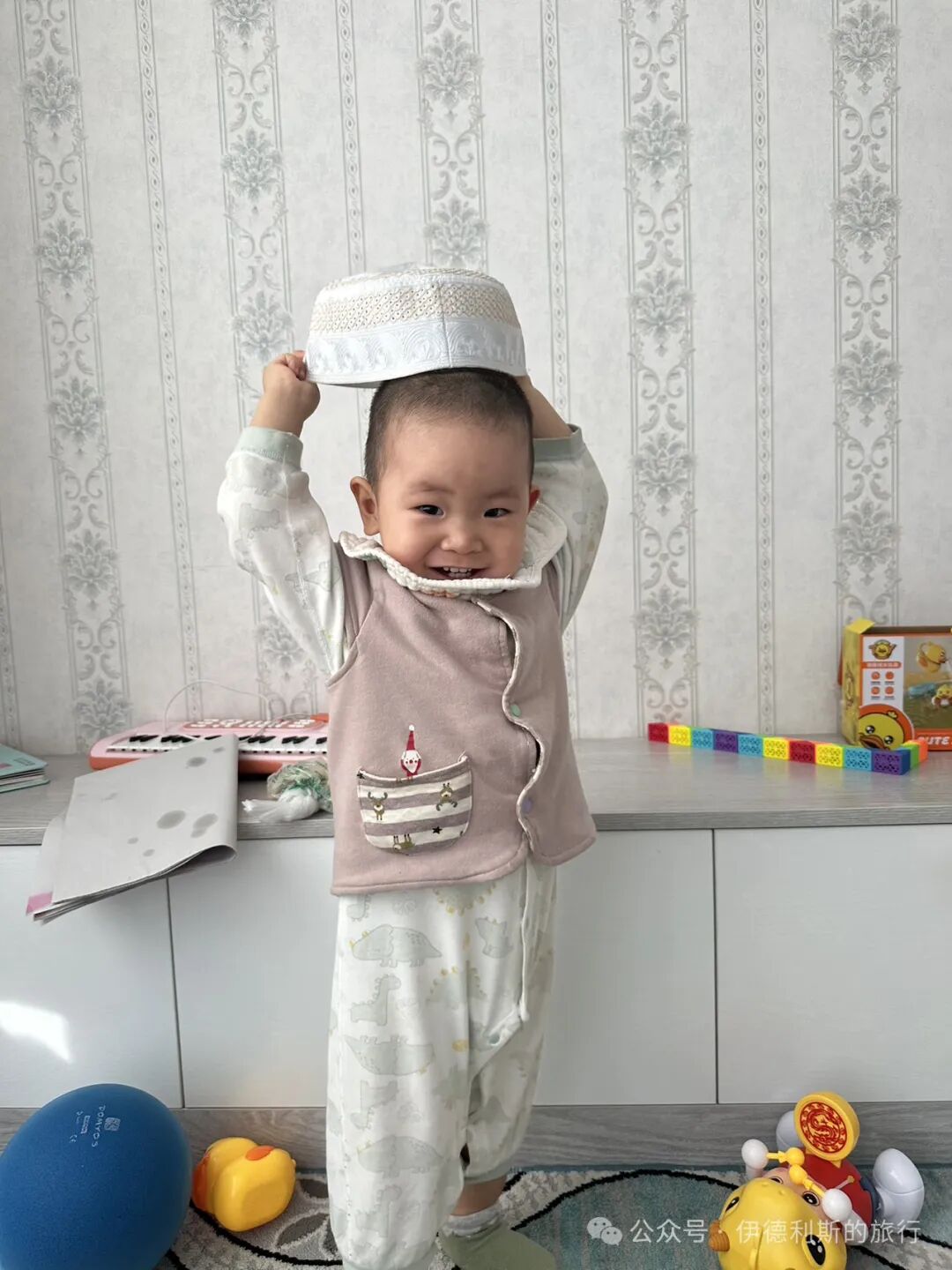
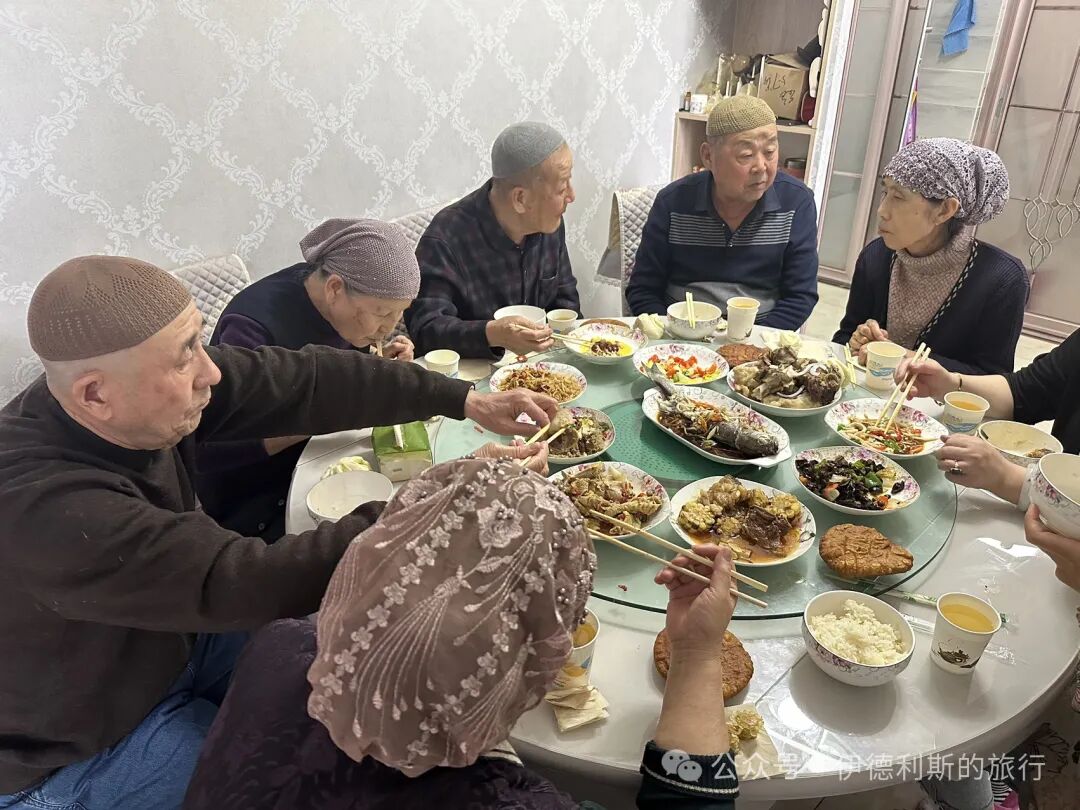
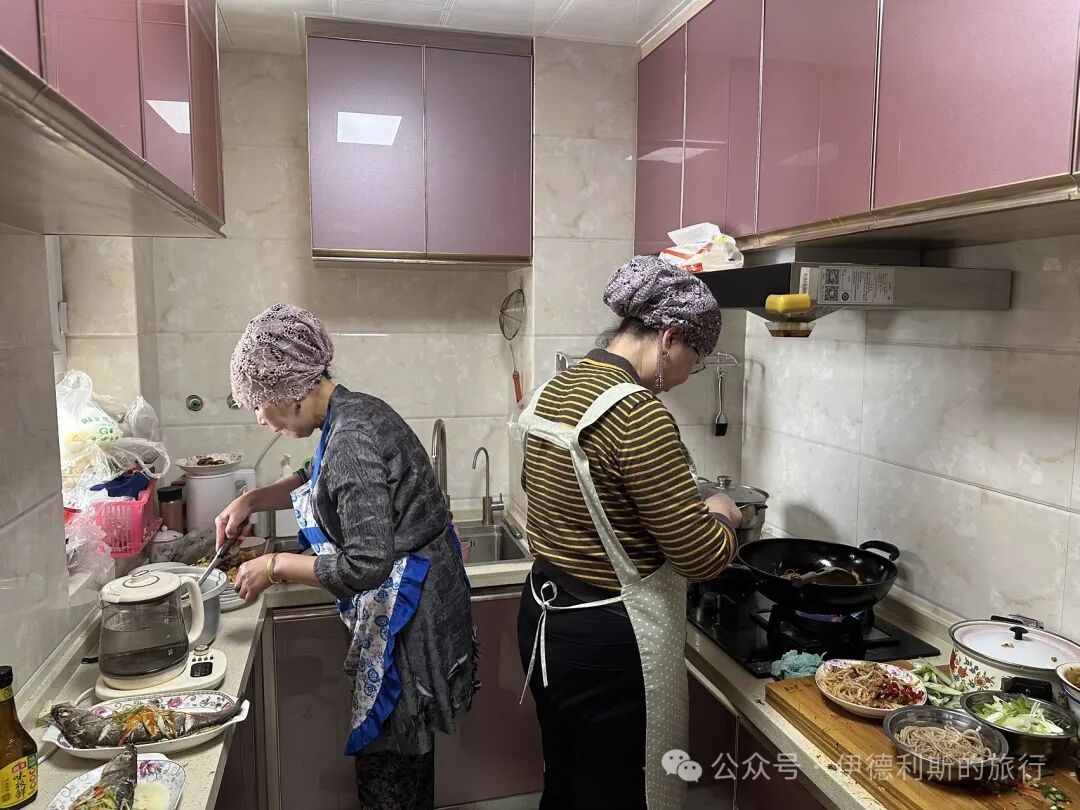
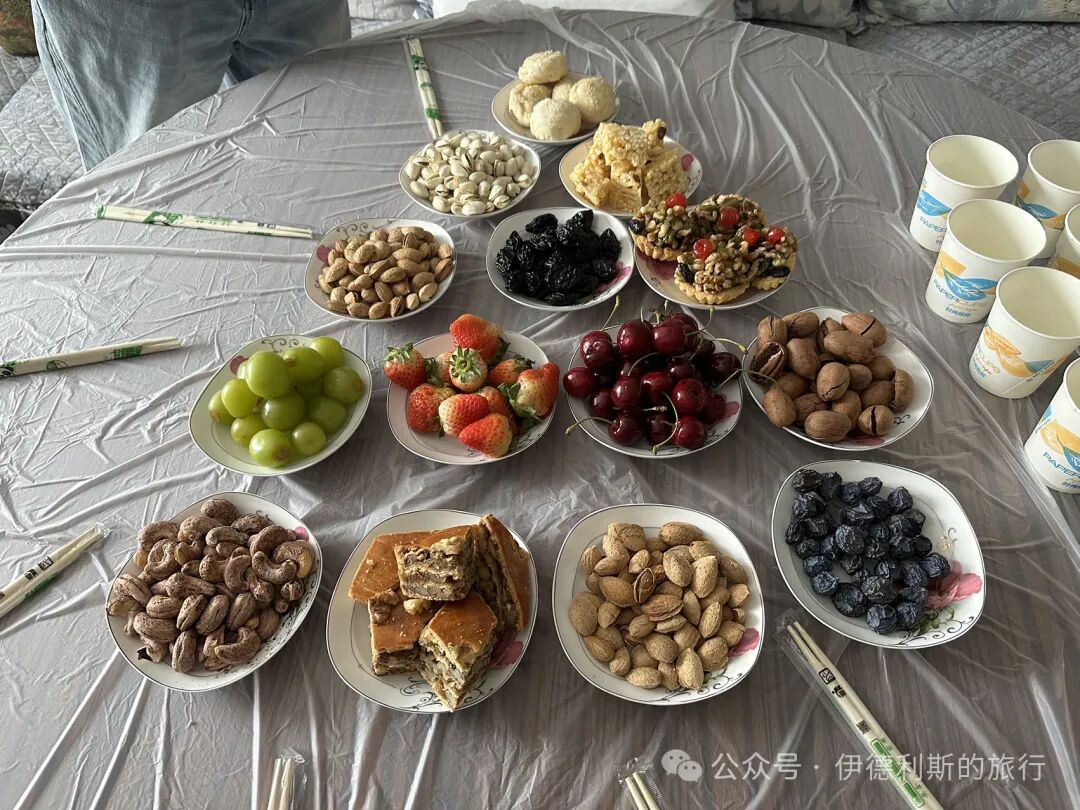
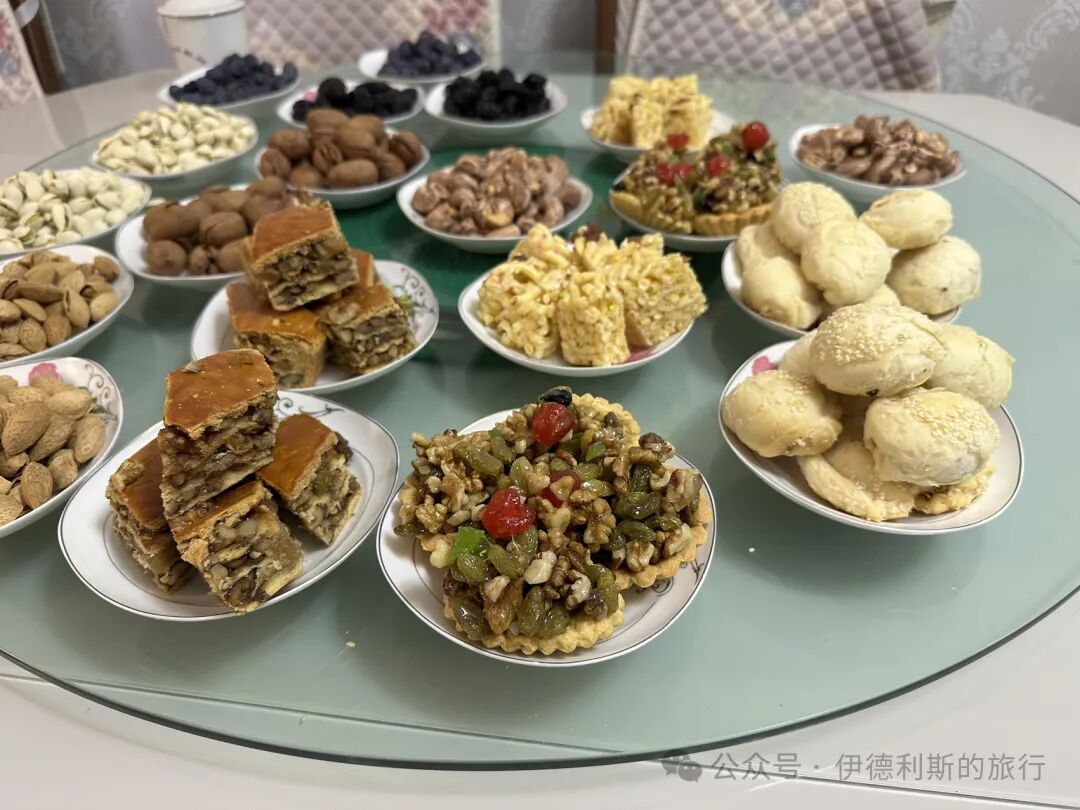
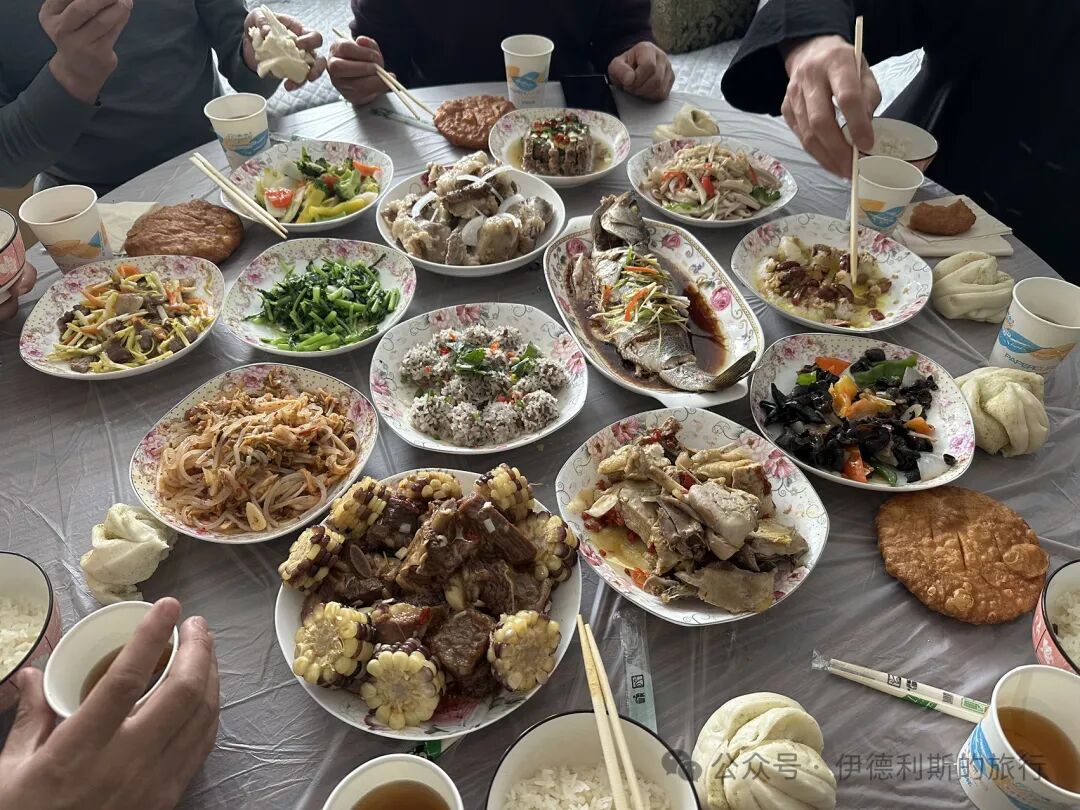
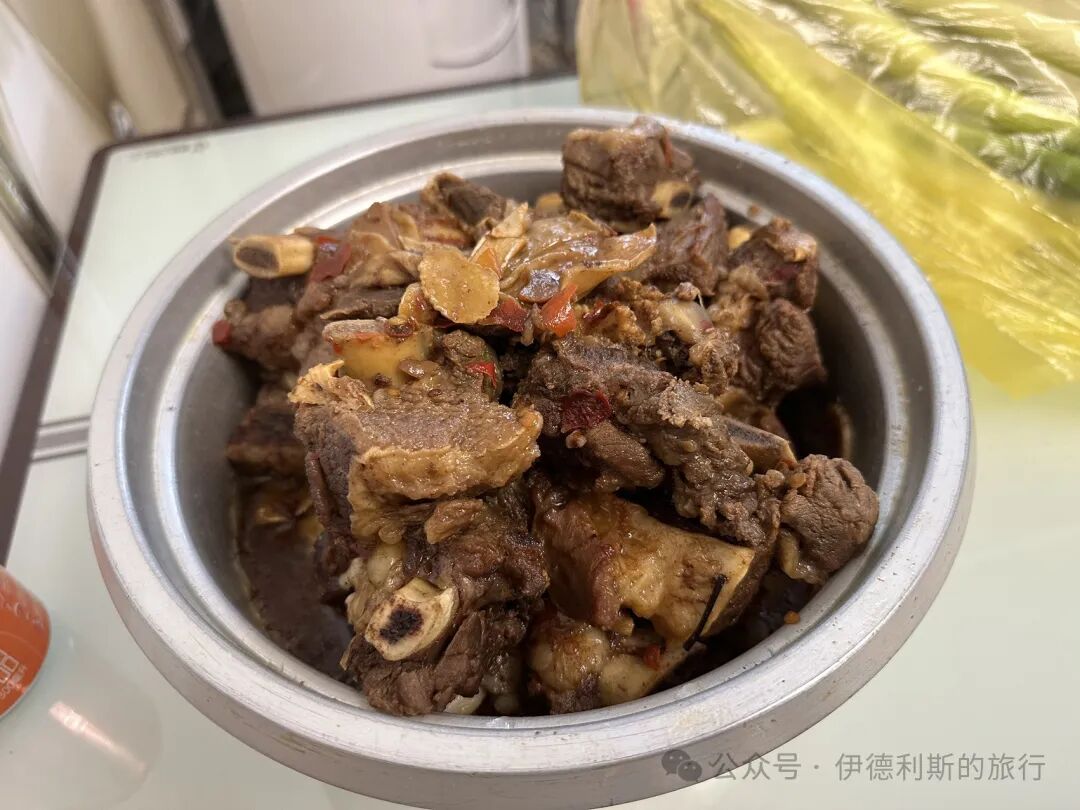
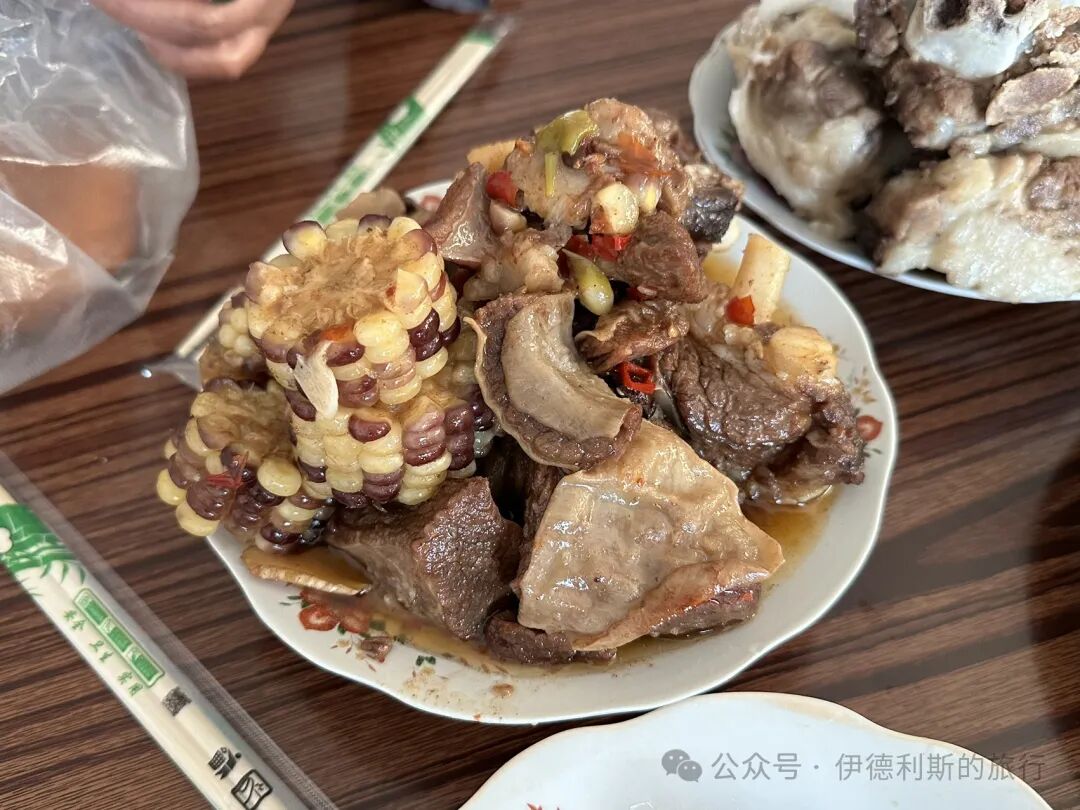
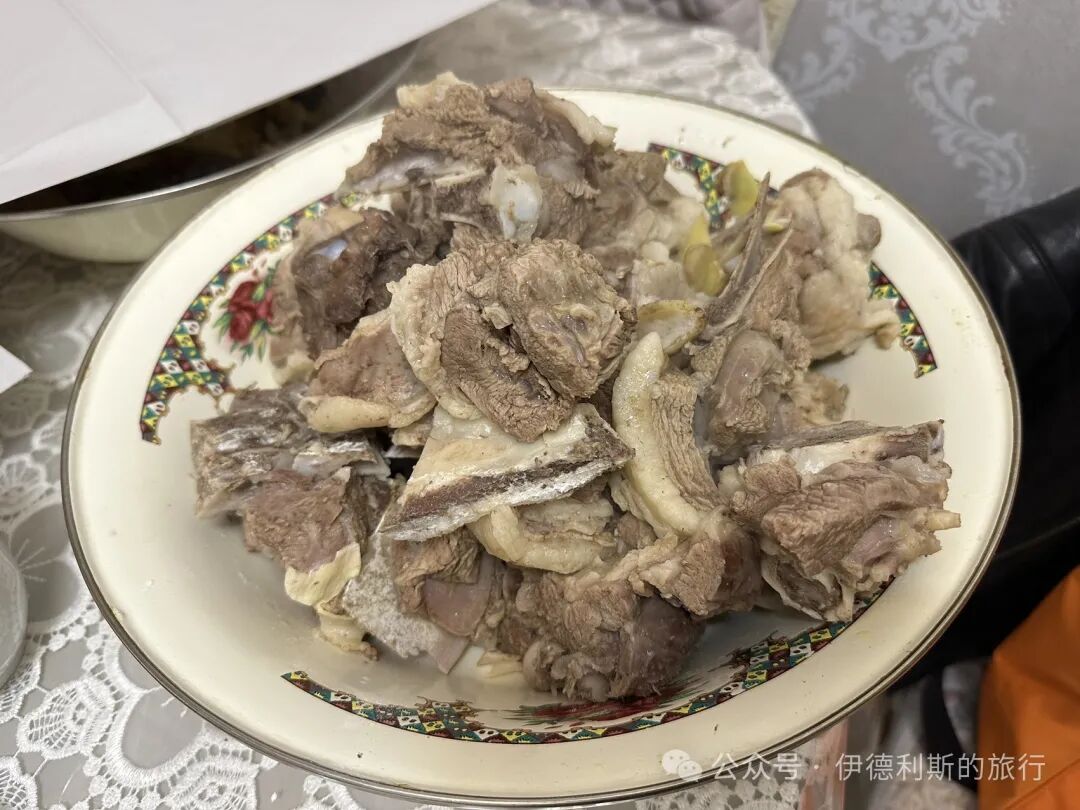
The fried dough was deep-fried a day in advance. Before frying, we first performed ablution (wudu), then leavened the dough. After it rose, we scalded a small portion with hot oil and mixed in a little baking soda and fenugreek powder. We kneaded the scalded dough into the leavened dough, covered the basin, and let it rest for 15 minutes. After resting, we rolled it into a long shape, pinched off pieces, rolled them into flat cakes, cut four small slits with a knife, and it was ready to be fried. When putting them into the pot, we recited the Tasmiyah. We fried them for a while, flipped them, and tapped the edges with chopsticks; once they were firm, they were done.
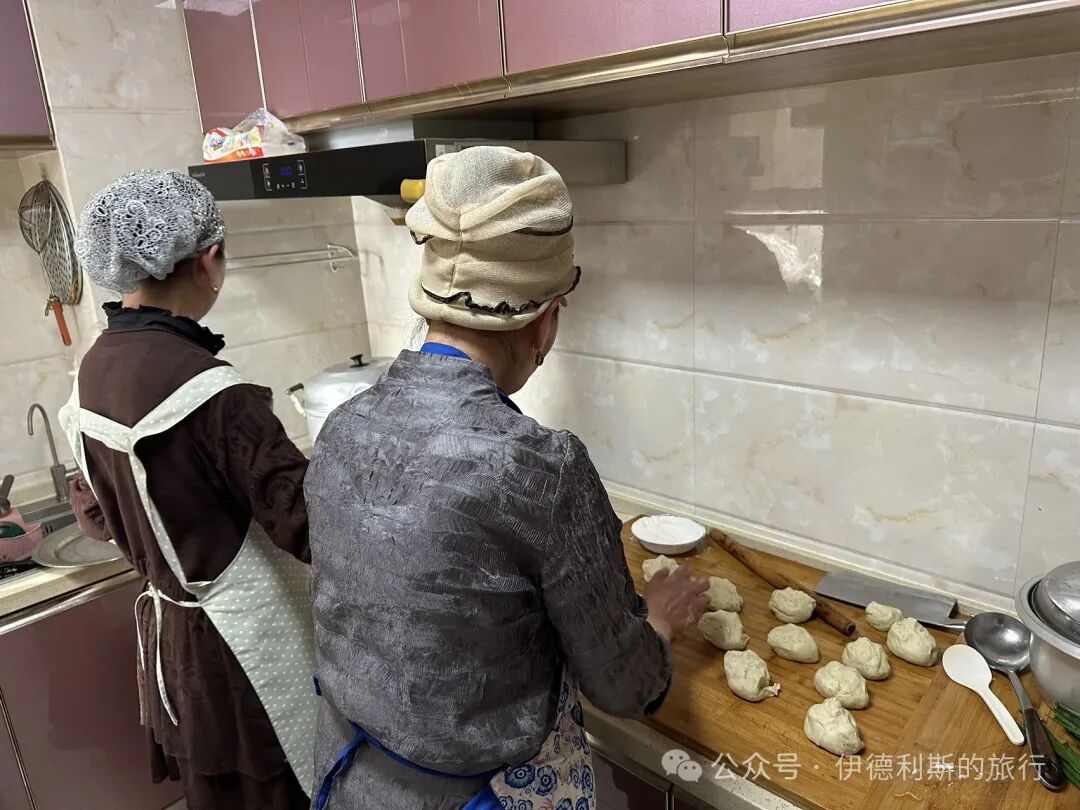
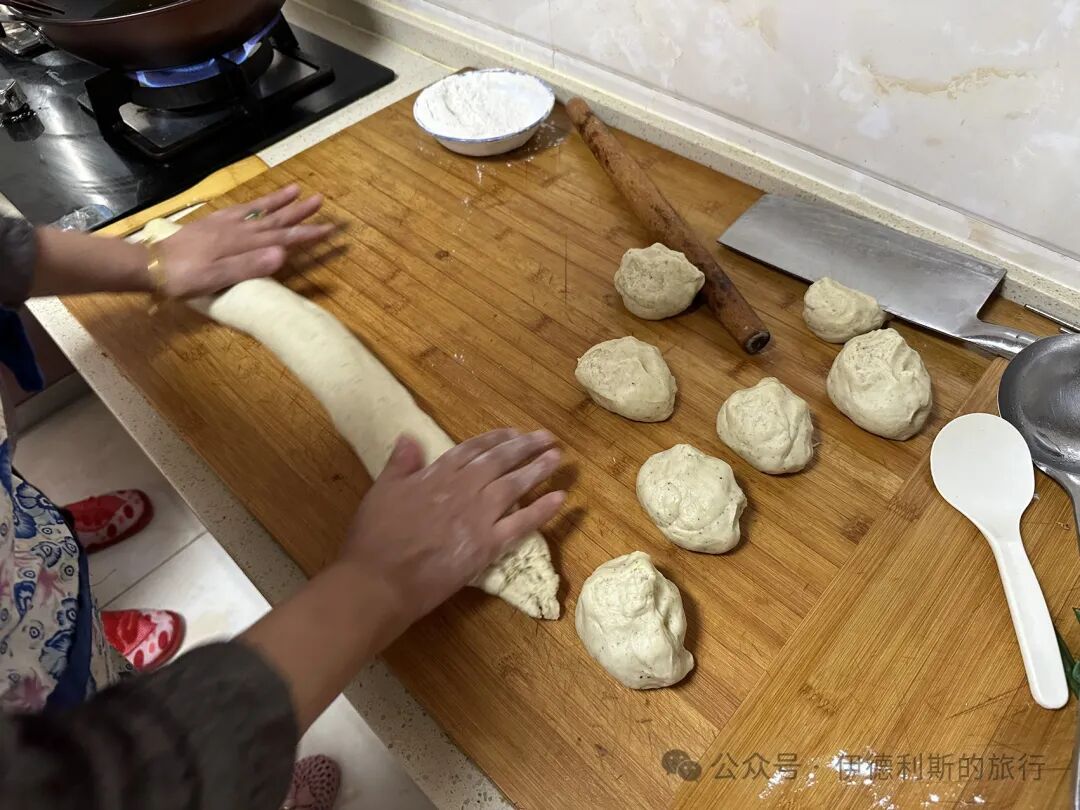
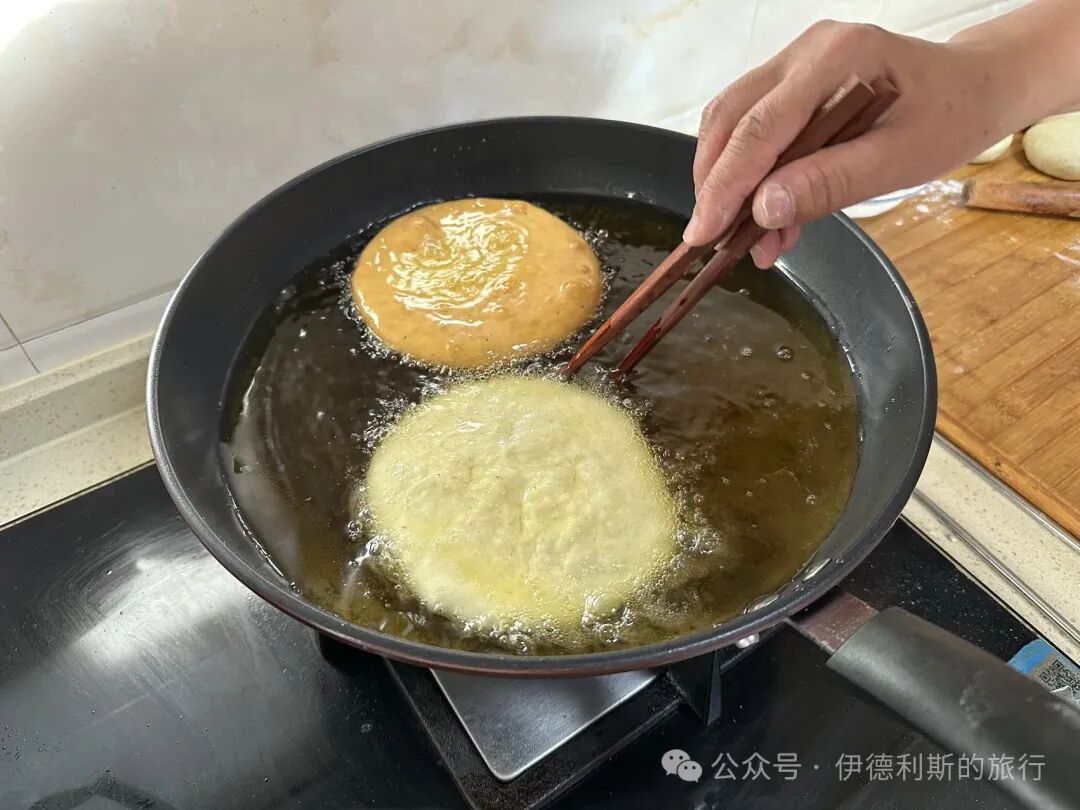
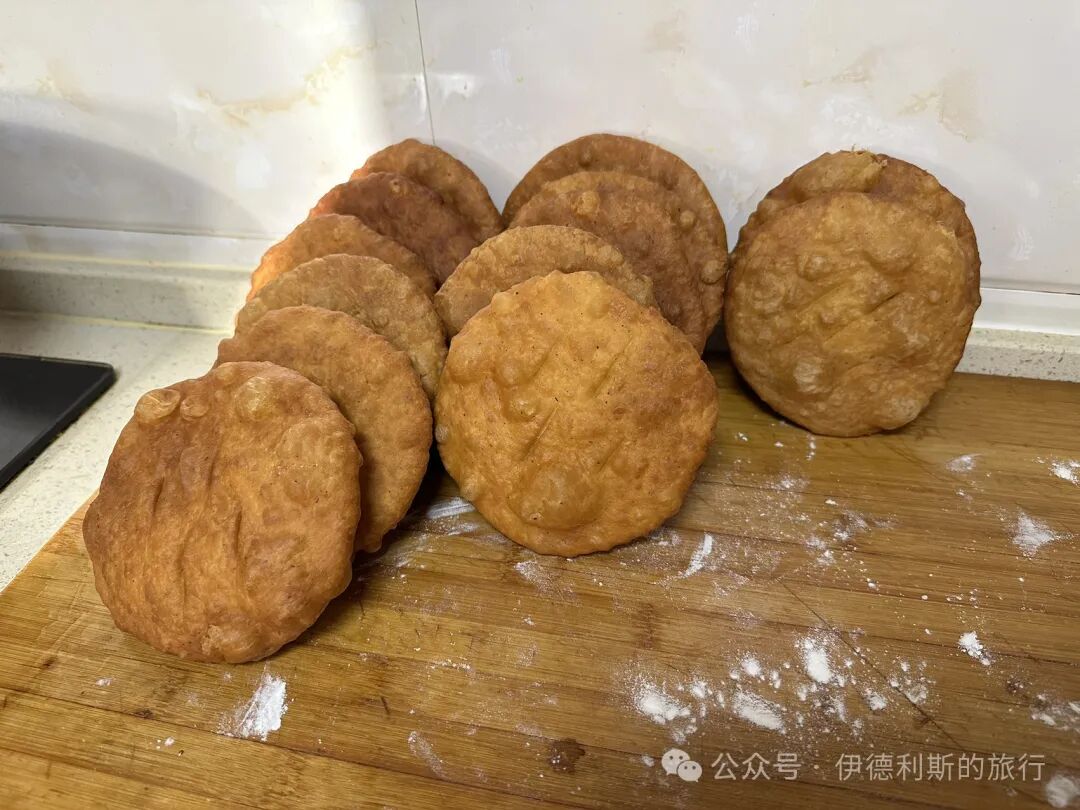
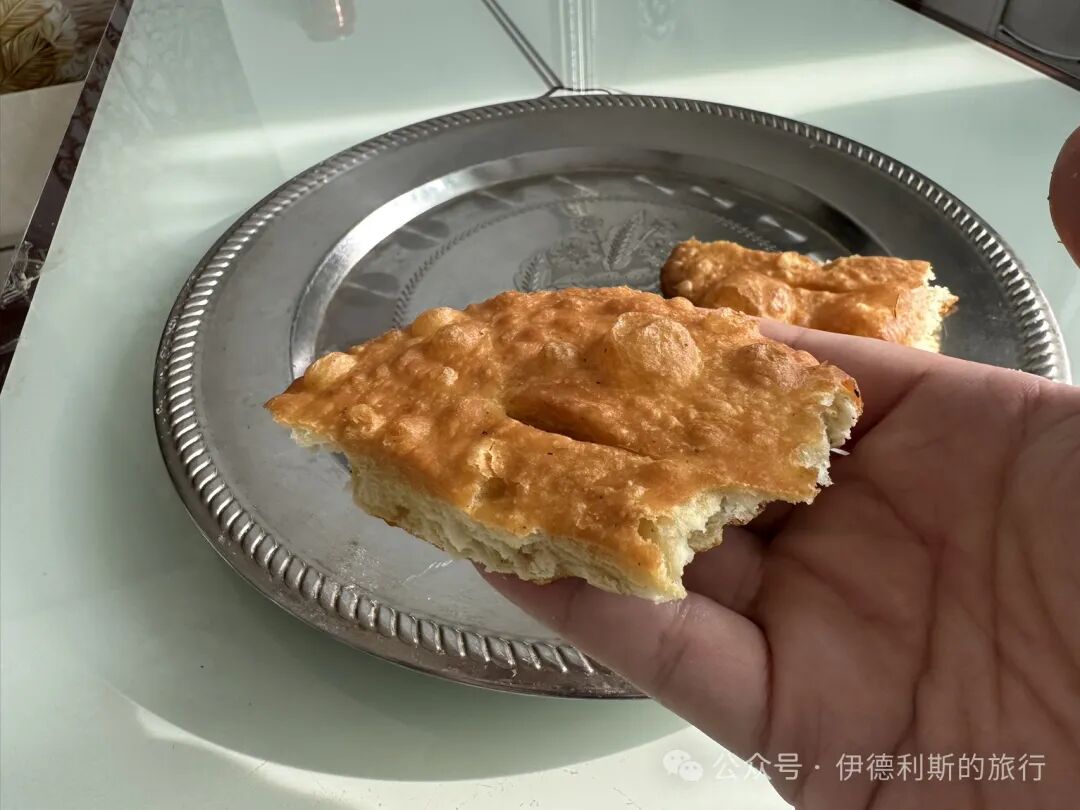
To make sweet rice platter (tianpanzi), first wash the glutinous rice and soak it for three days. Then, add a little brown sugar (shazitang) and steam it, using more water than you would for regular rice. Next, wash red dates, walnut kernels, and raisins, and spread them at the bottom of a bowl. Cover them with the steamed glutinous rice and let it cool. After that, boil rock sugar to make a syrup. Finally, flip the bowl of rice onto a plate and pour the syrup over it.
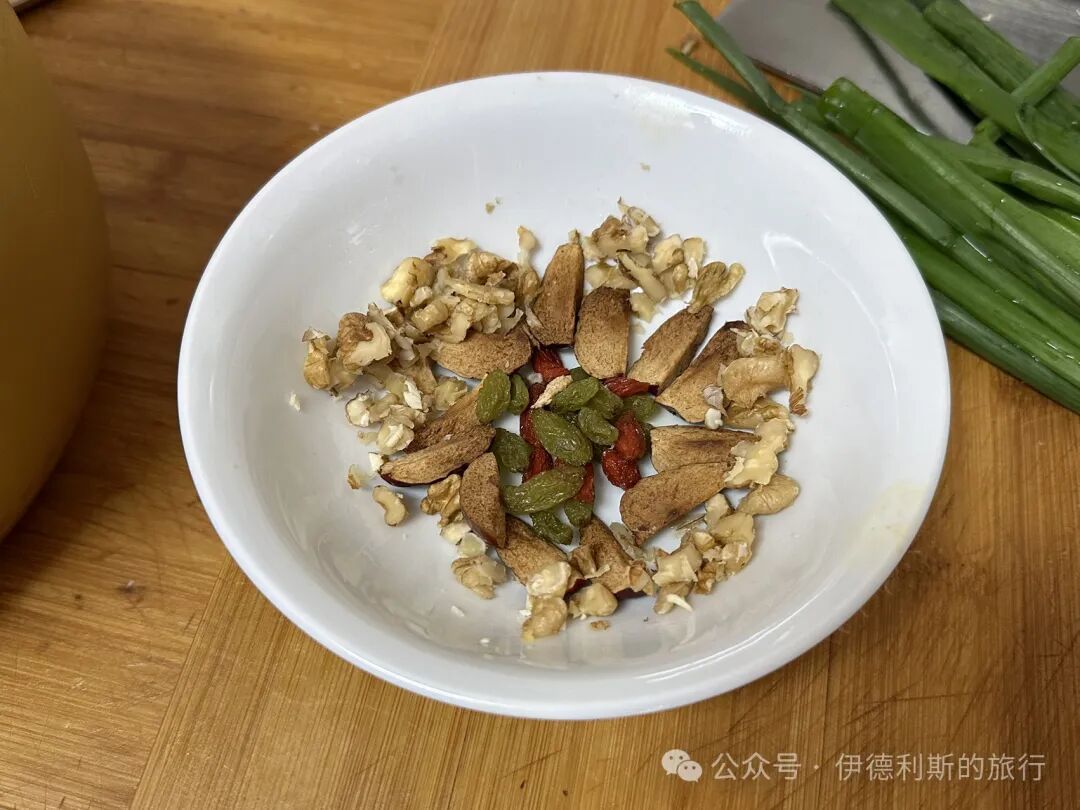
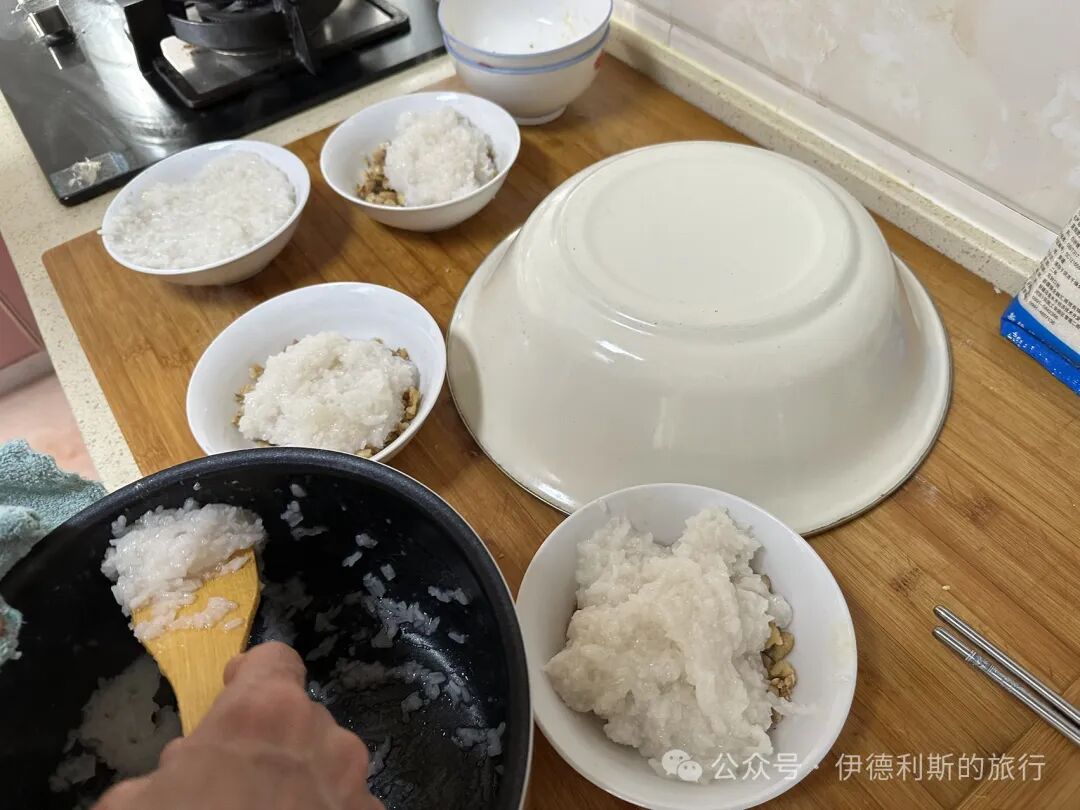
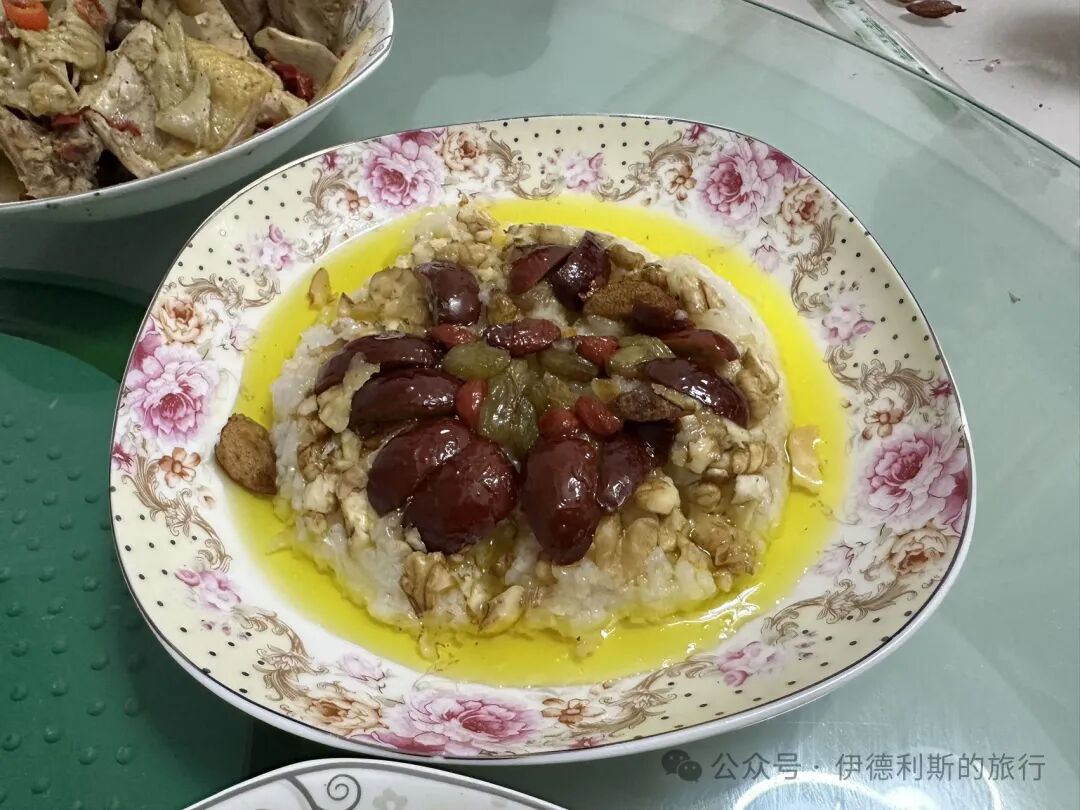
Meatloaf (munzi) is made with ground beef. When mixing the filling, beat it repeatedly, then shape it into a cylinder. Pinch the top to look like a railing, pour an egg into the center, and steam it.
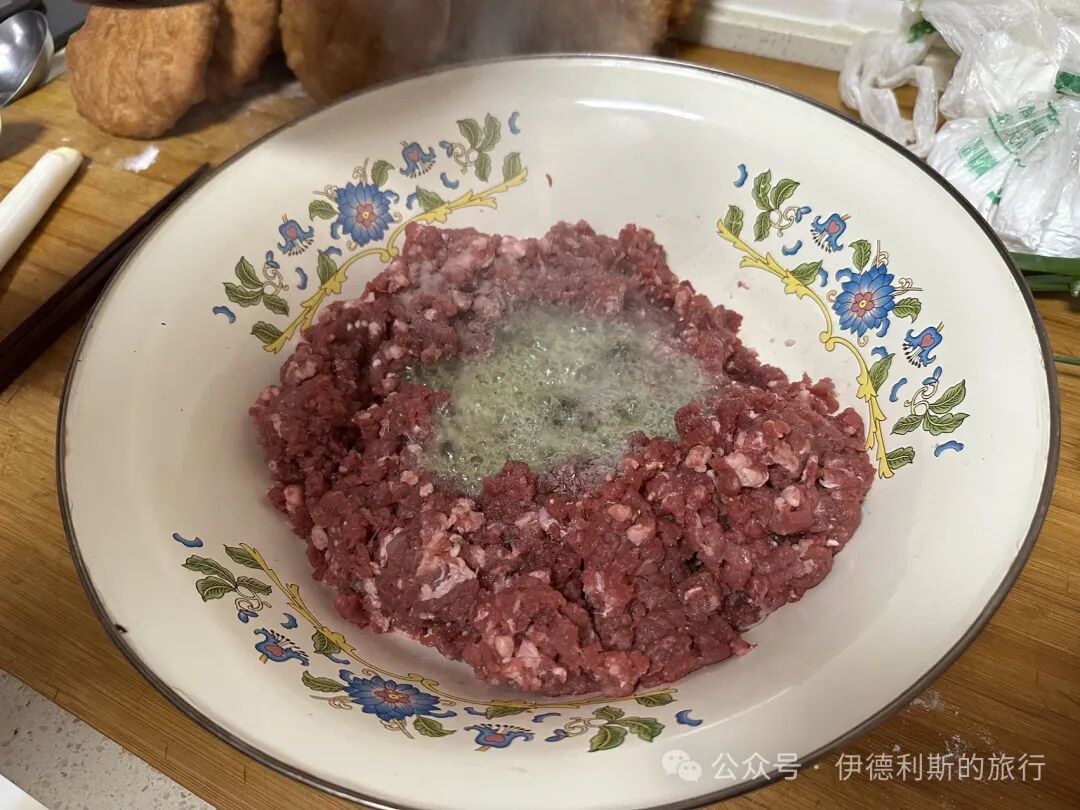
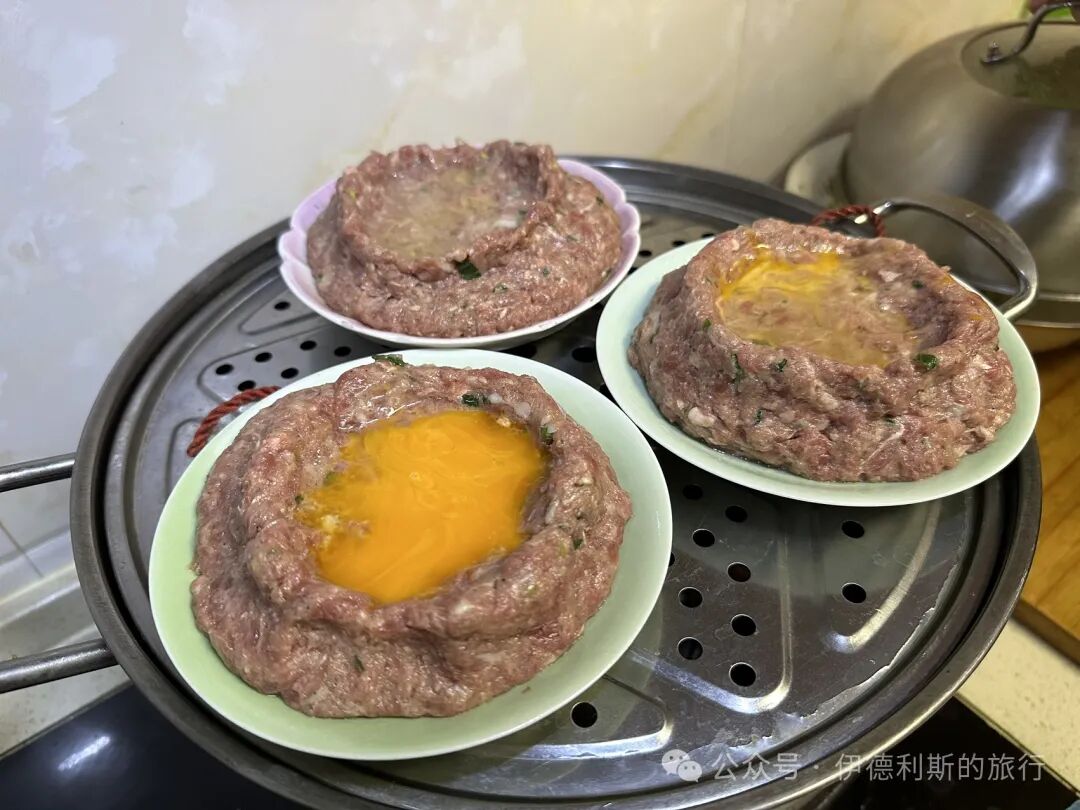
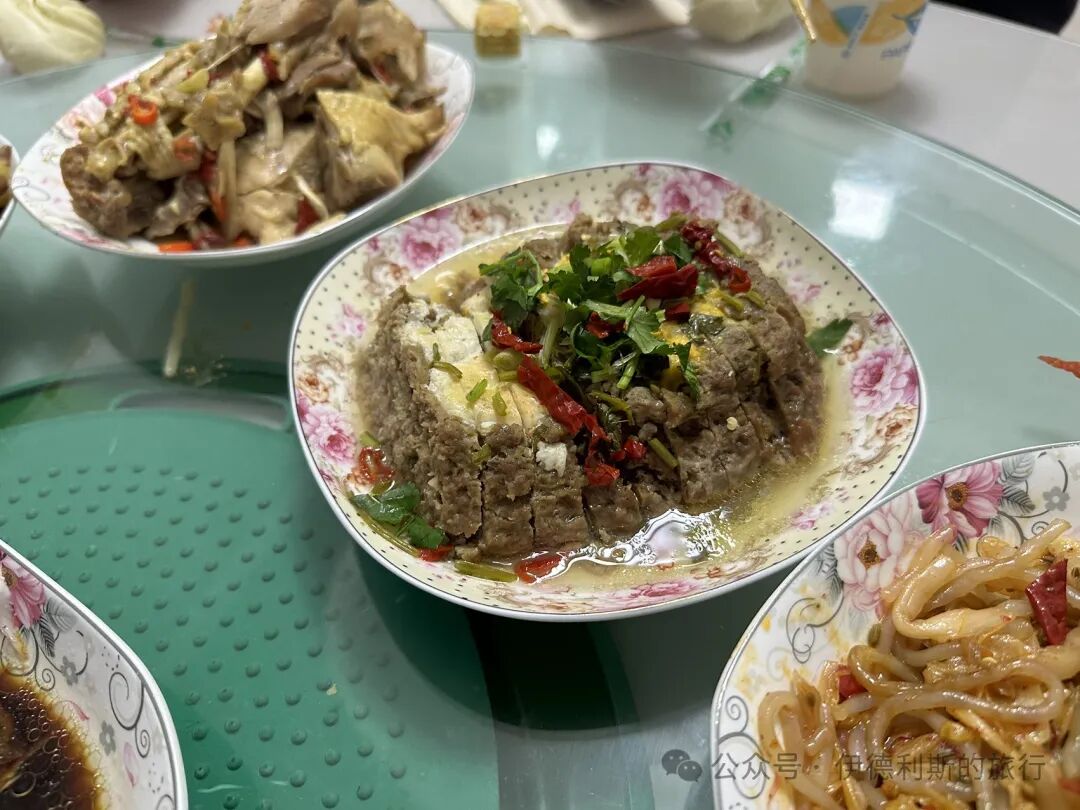
For spicy peppercorn chicken (jiaomaji), first wash a free-range chicken, cut it in half, and put it in a pressure cooker. Add water to cover it, along with red chili, Sichuan peppercorns, salt, bay leaves, cinnamon, and ginger slices. Once cooked, take it out, let it cool in a basin, tear the meat into strips, and top with green onions. Heat oil in a pan. Once hot, turn off the heat and add dried chili skins (lapizi), Sichuan peppercorns, salt, and white pepper. Stir well, pour in some chicken broth, and then pour everything over the chicken in the basin and mix well.
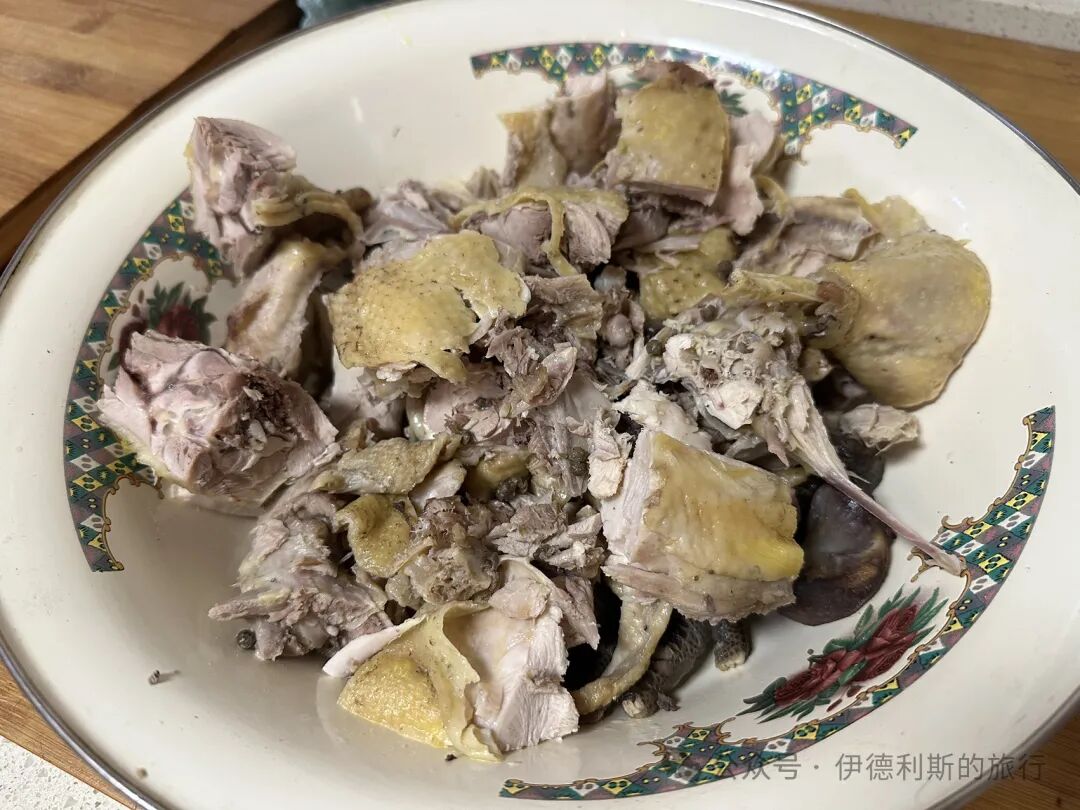
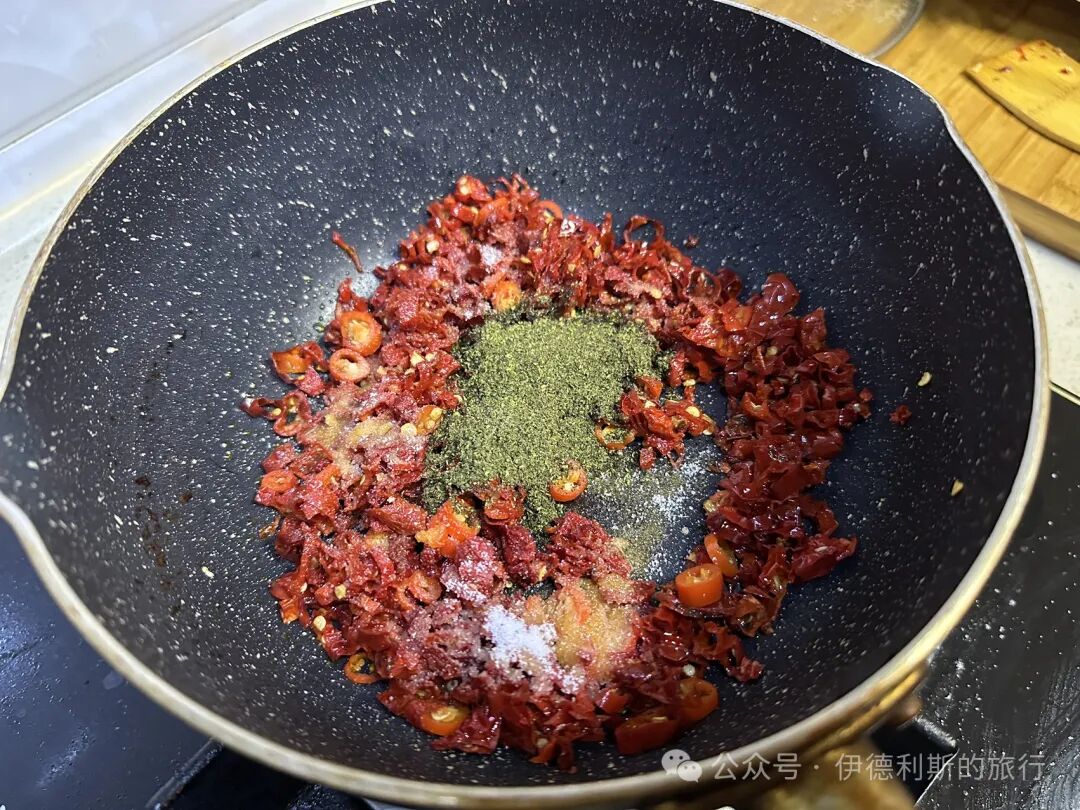
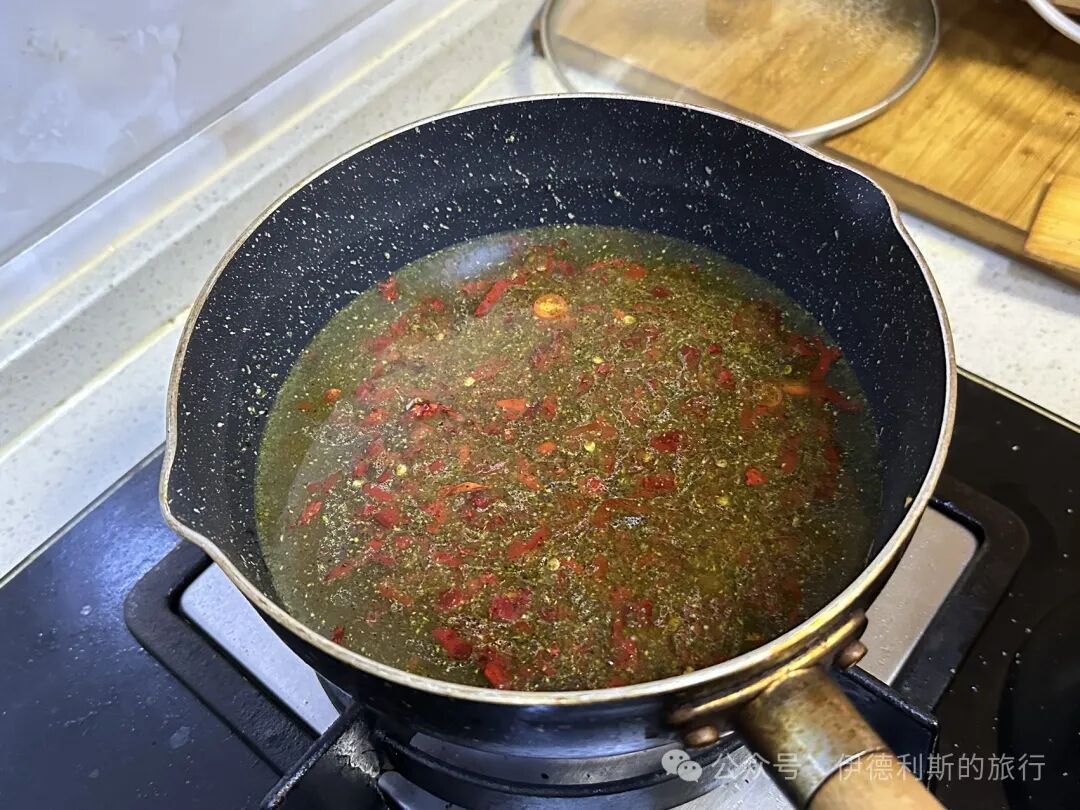
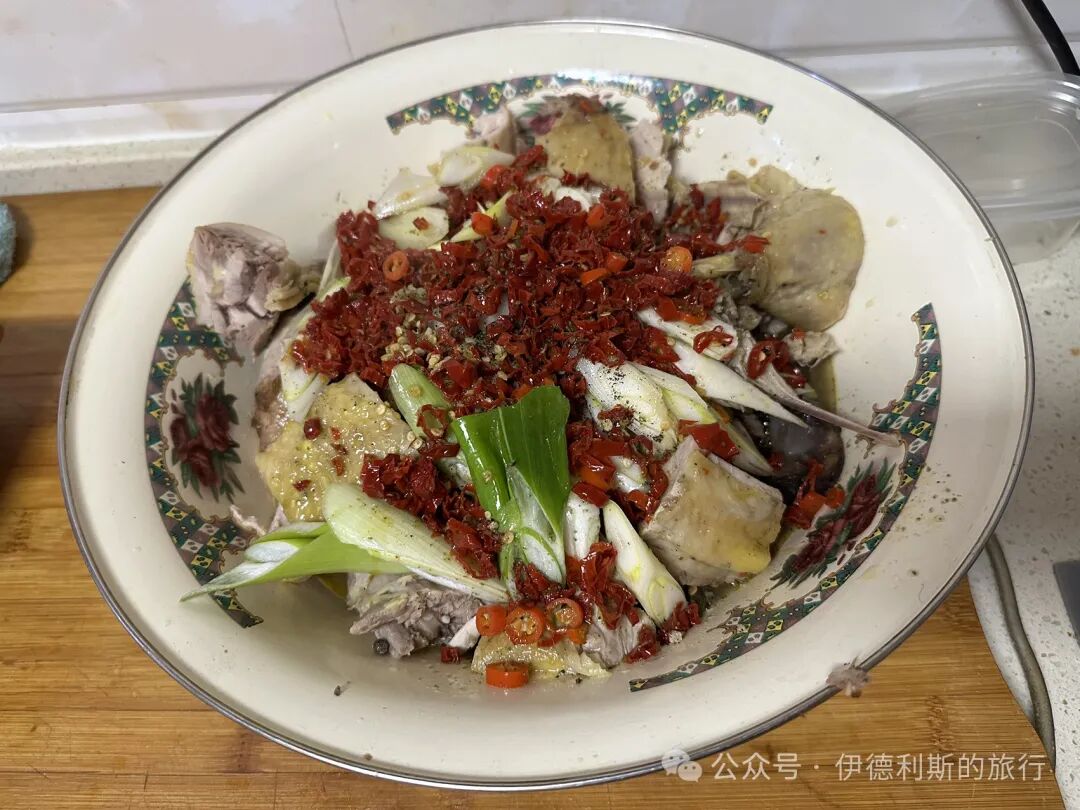
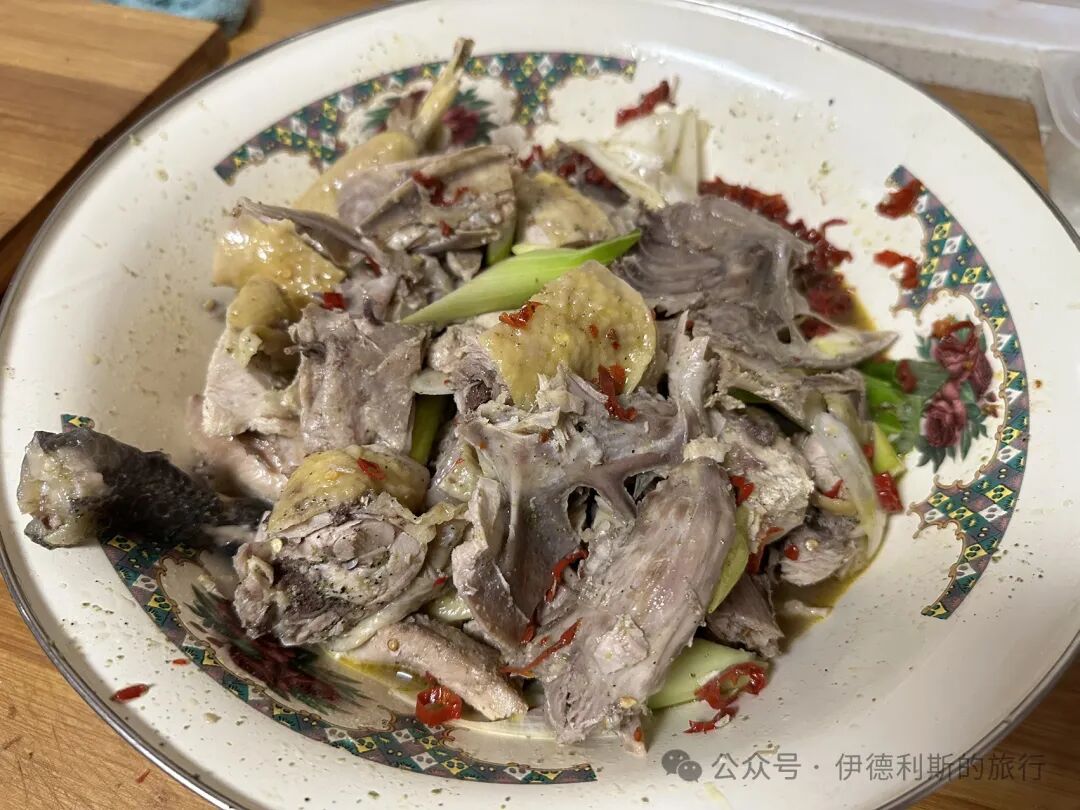
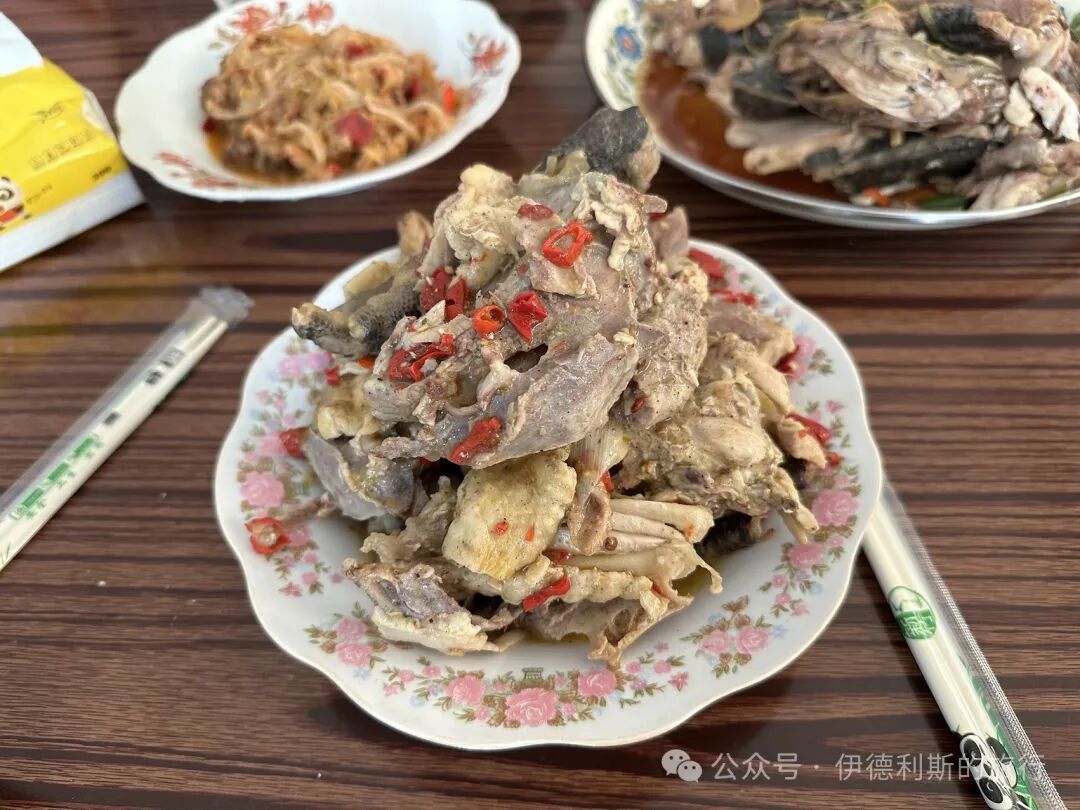
We spent the night at my aunt's house near the cement factory. My uncle is an imam at a small mosque in Shanxi, and we are very grateful (zhigan) for that.
The main dishes were definitely braised beef steak and clear-stewed lamb. The chicken was raised by my uncle himself, and the lamb was from the southern mountains of Urumqi.
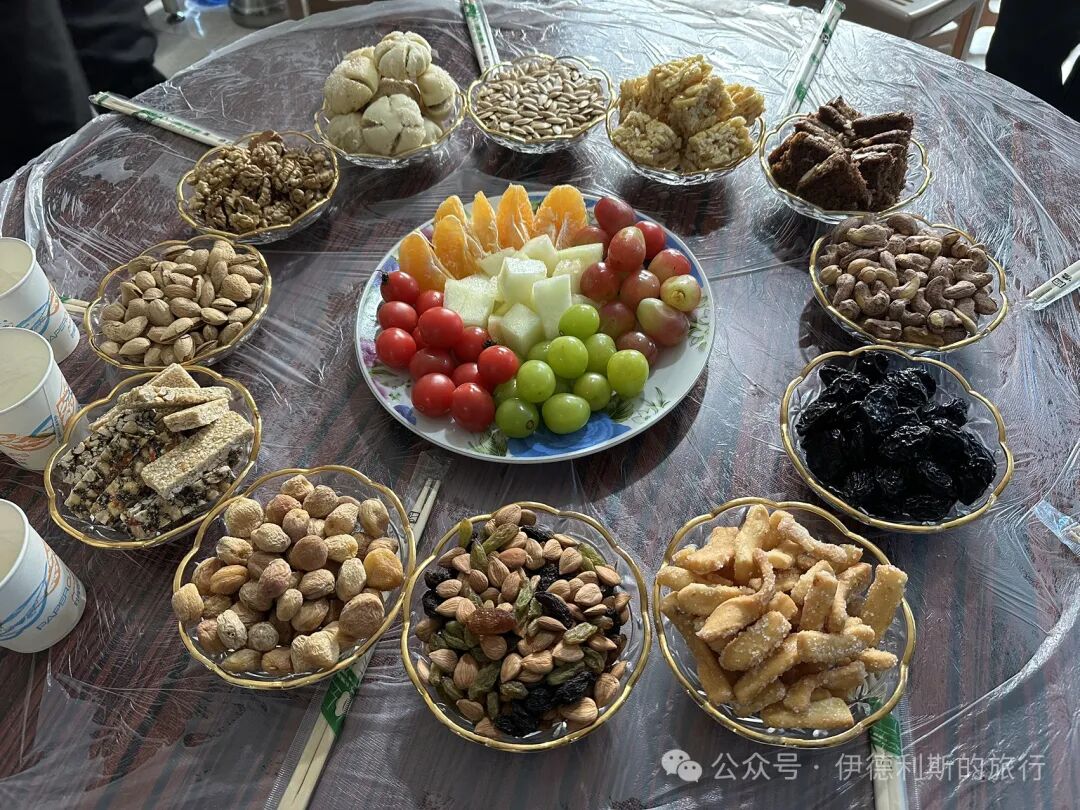
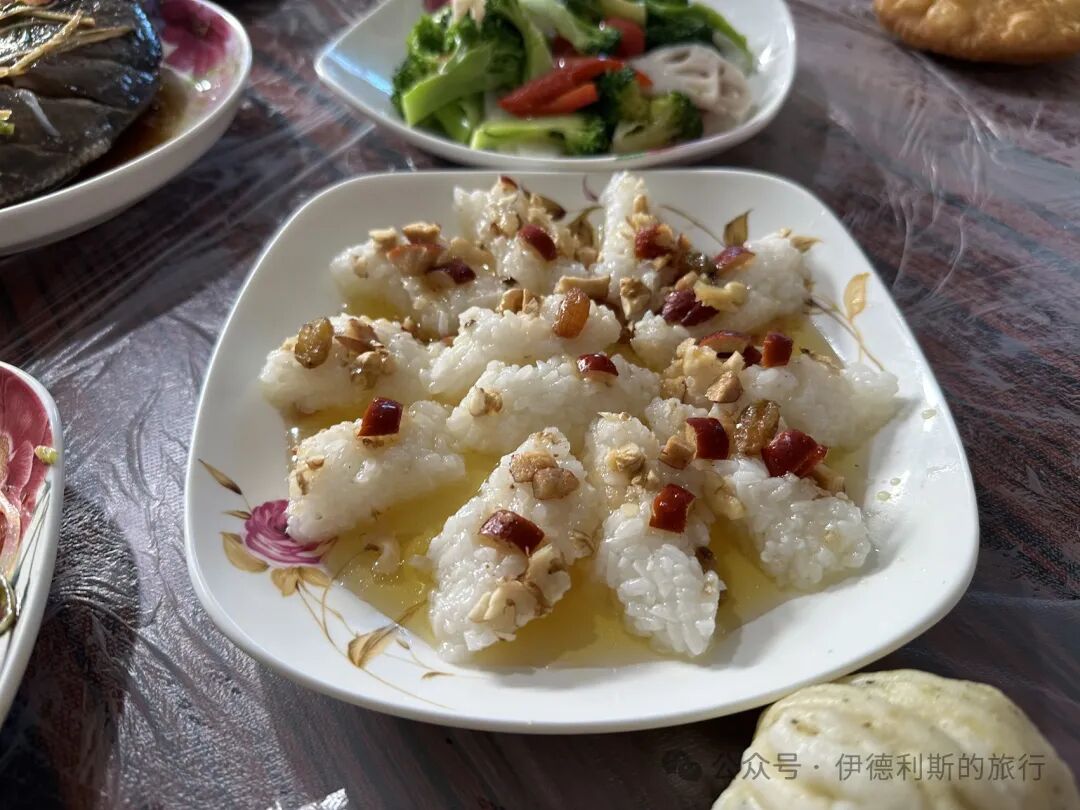
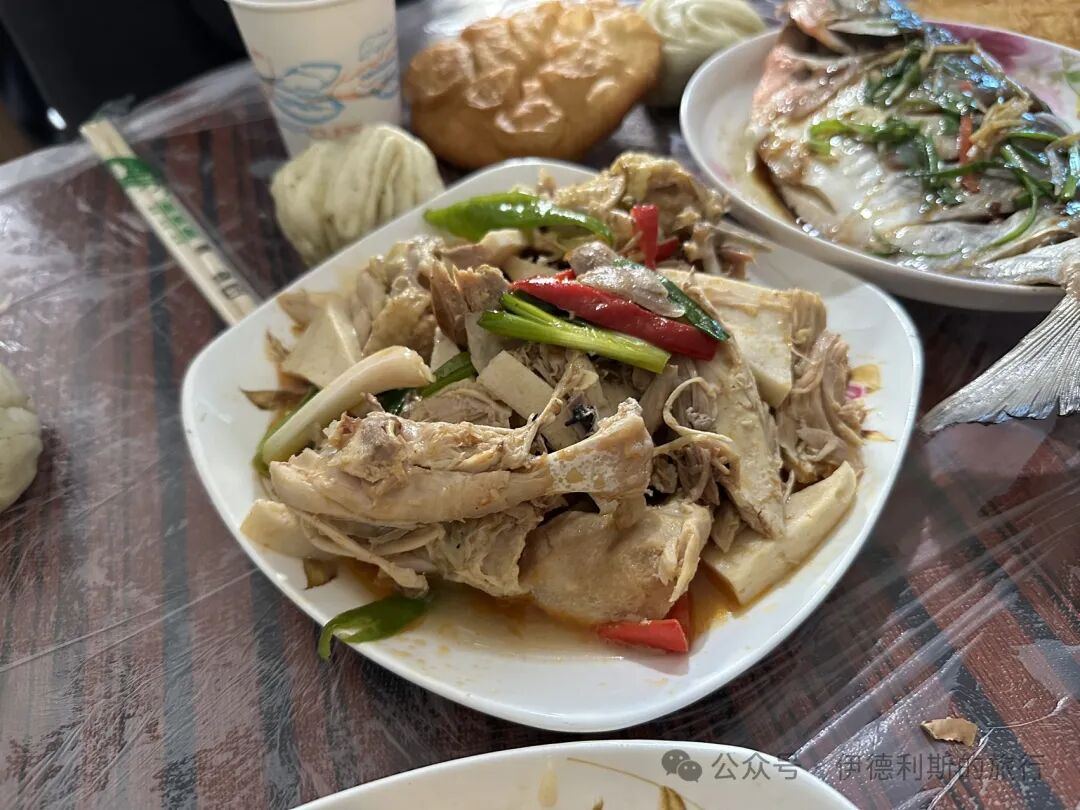
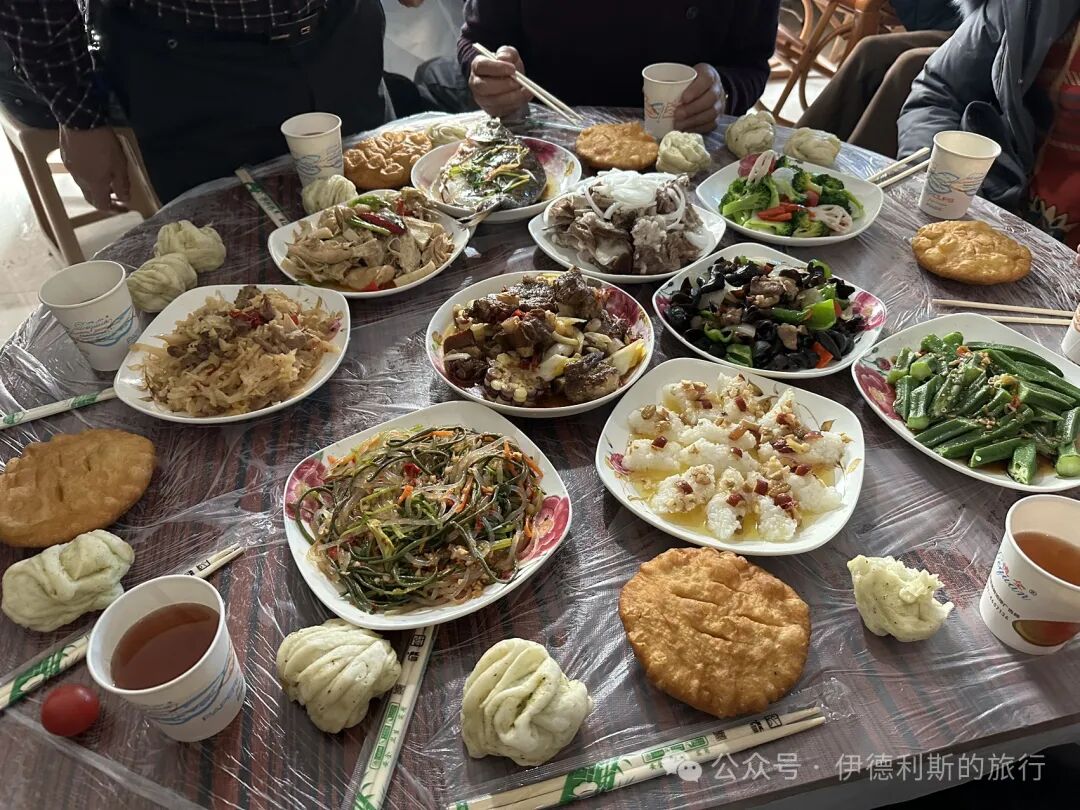
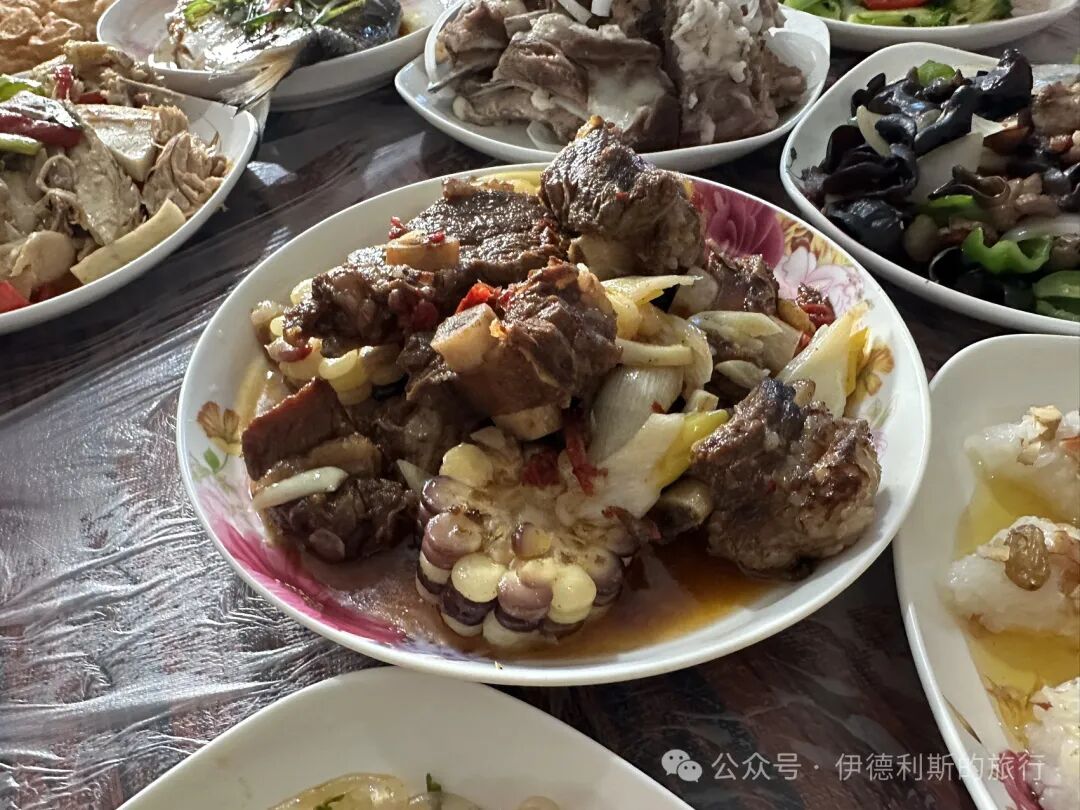
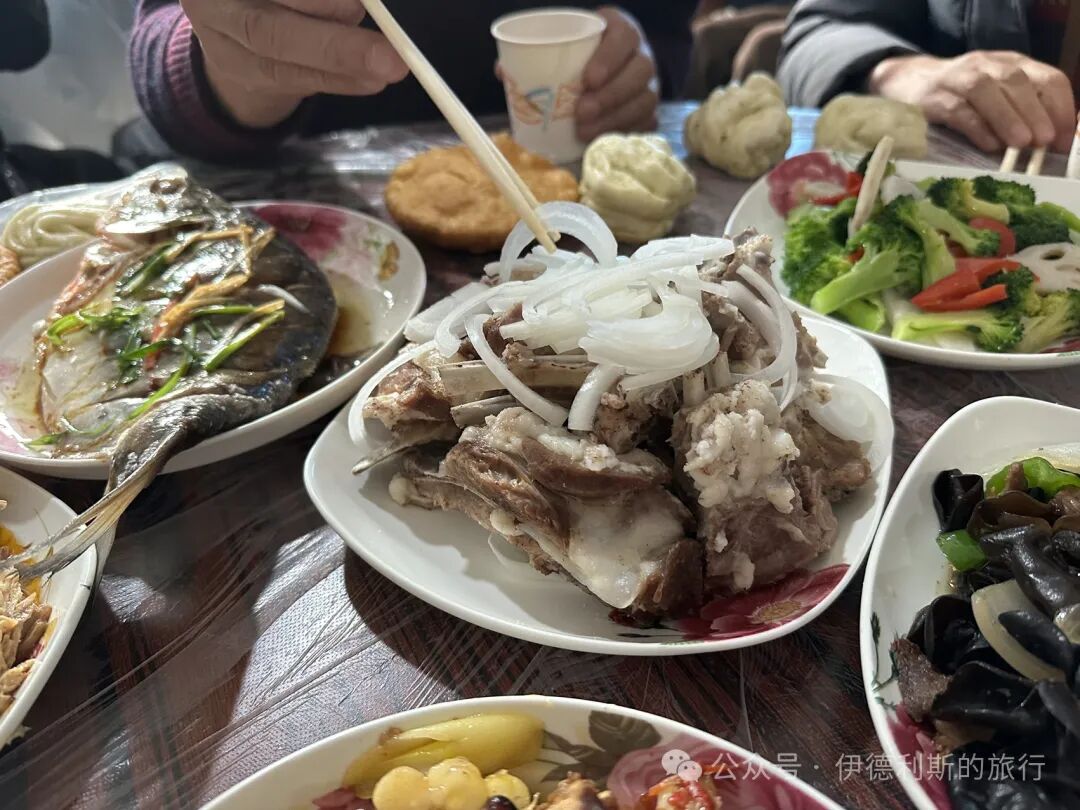
We spent the night at my second aunt's house in the New City District. My aunt is the recognized master chef of our family. She makes authentic home-style stir-fries, meatloaf (munzi), stuffed meat slices (jiasha), and tripe.
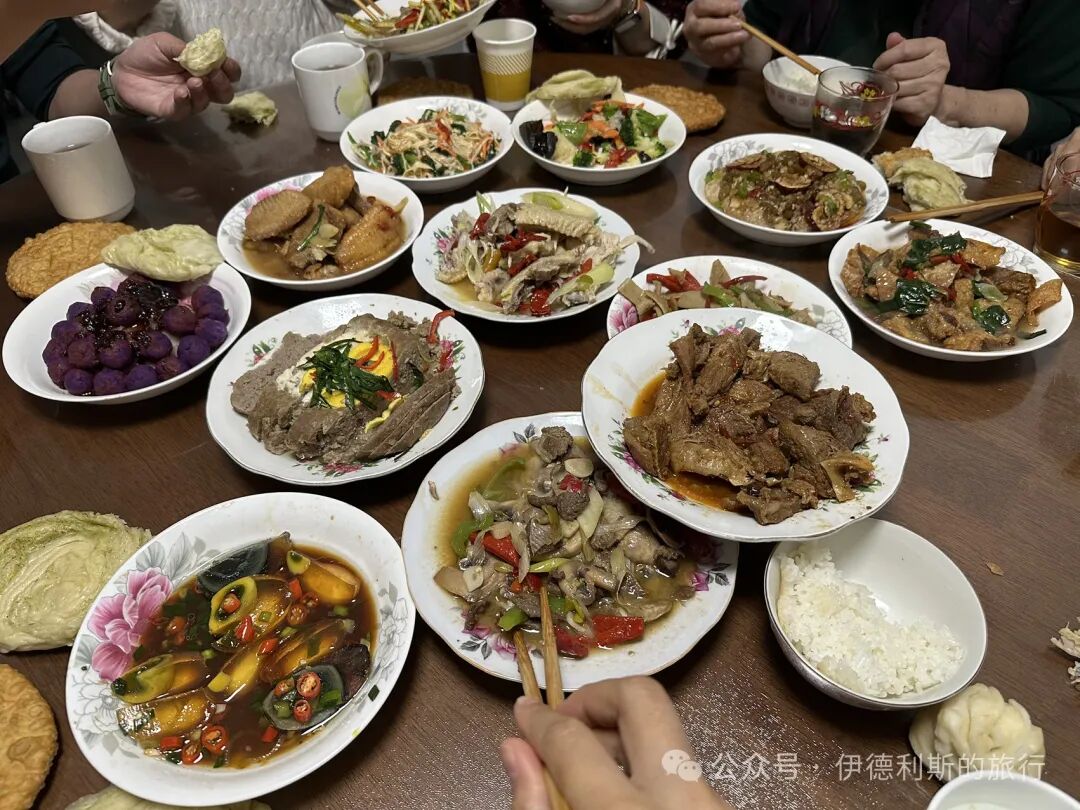
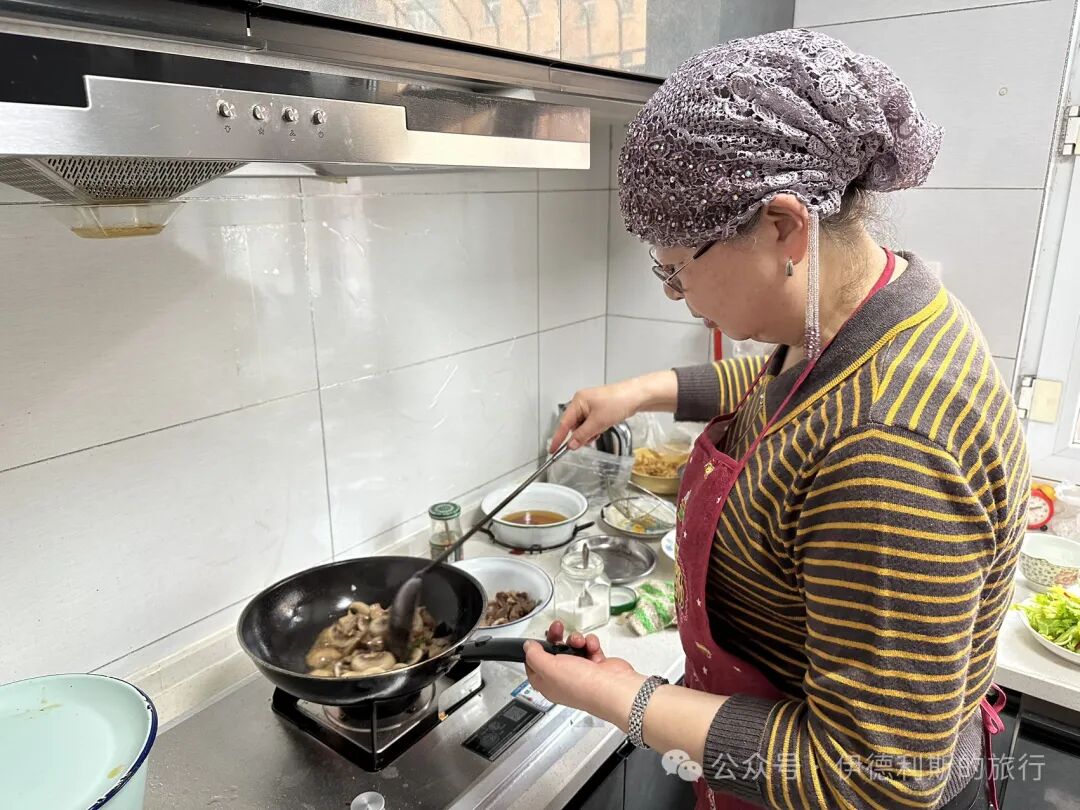
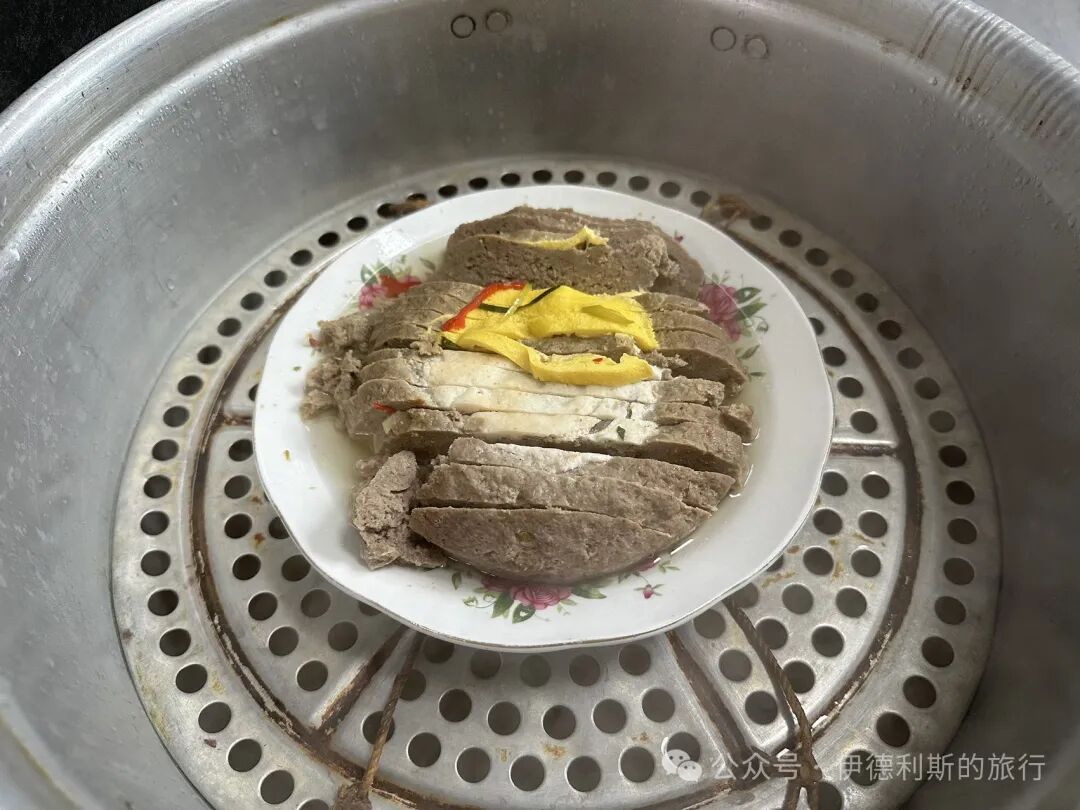
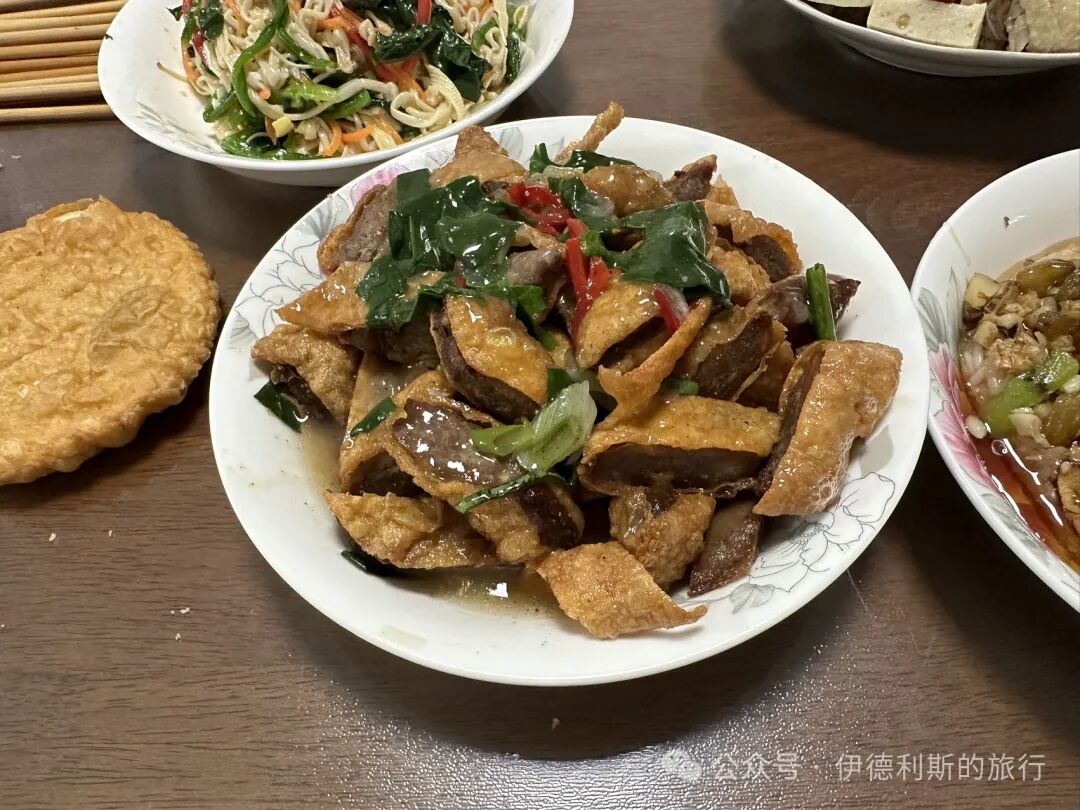
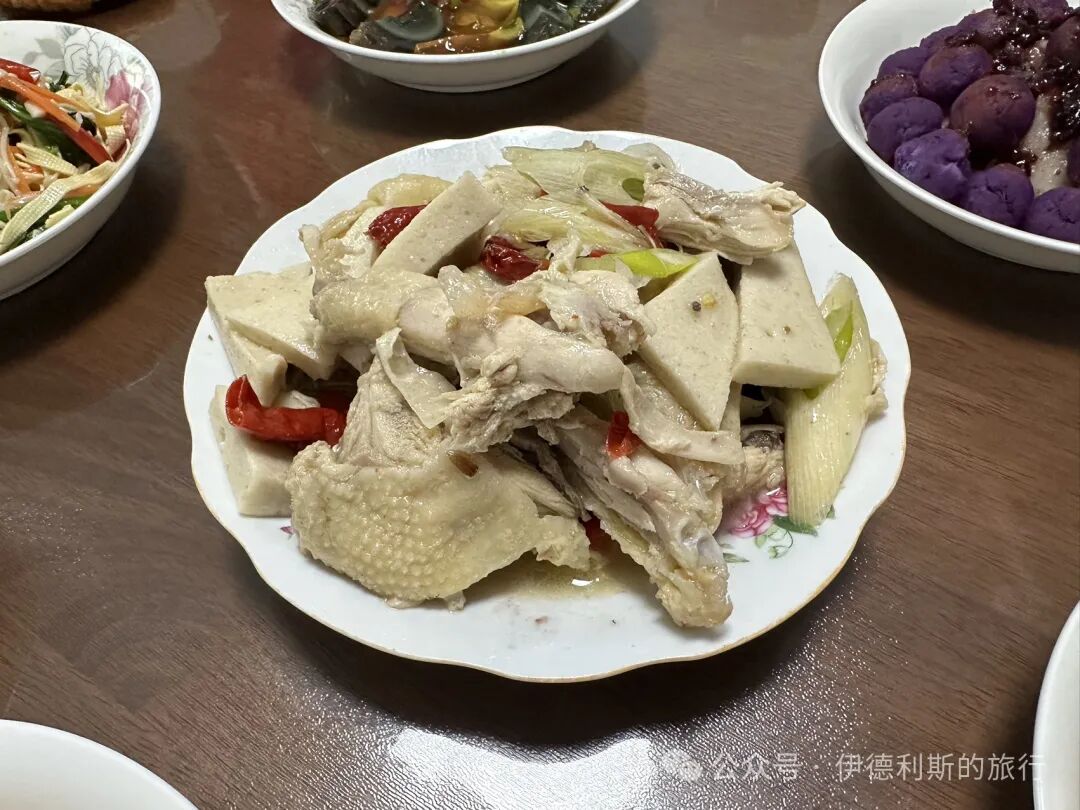
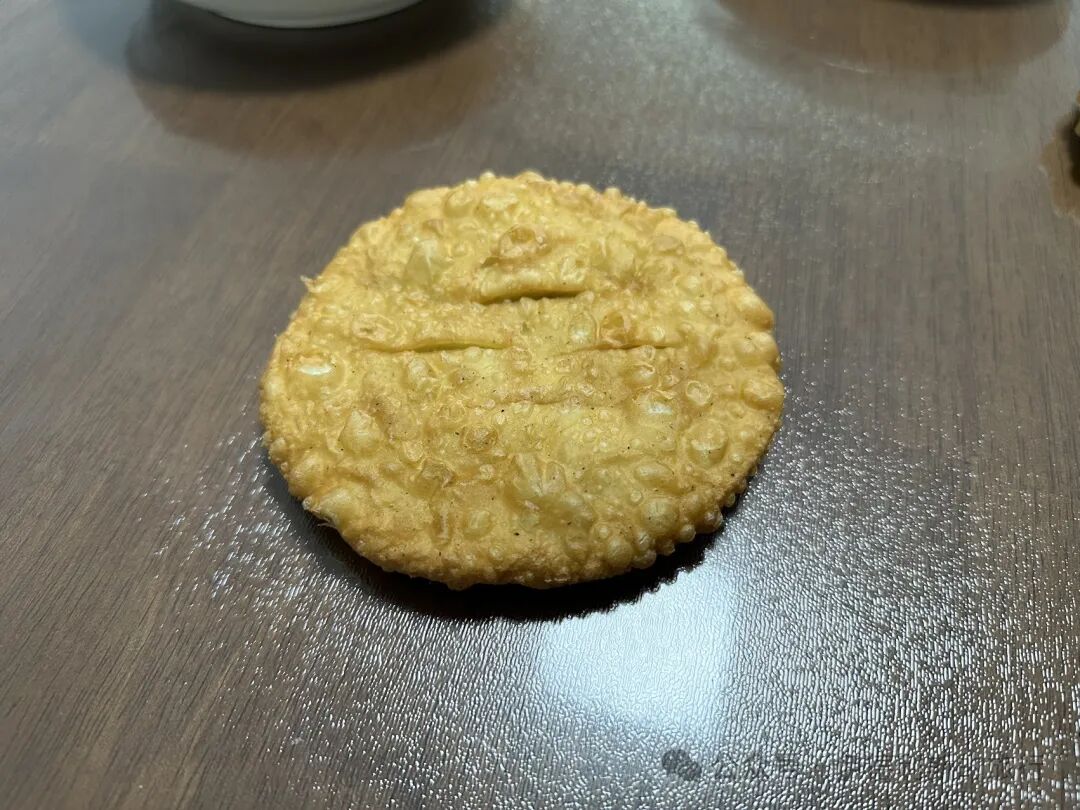
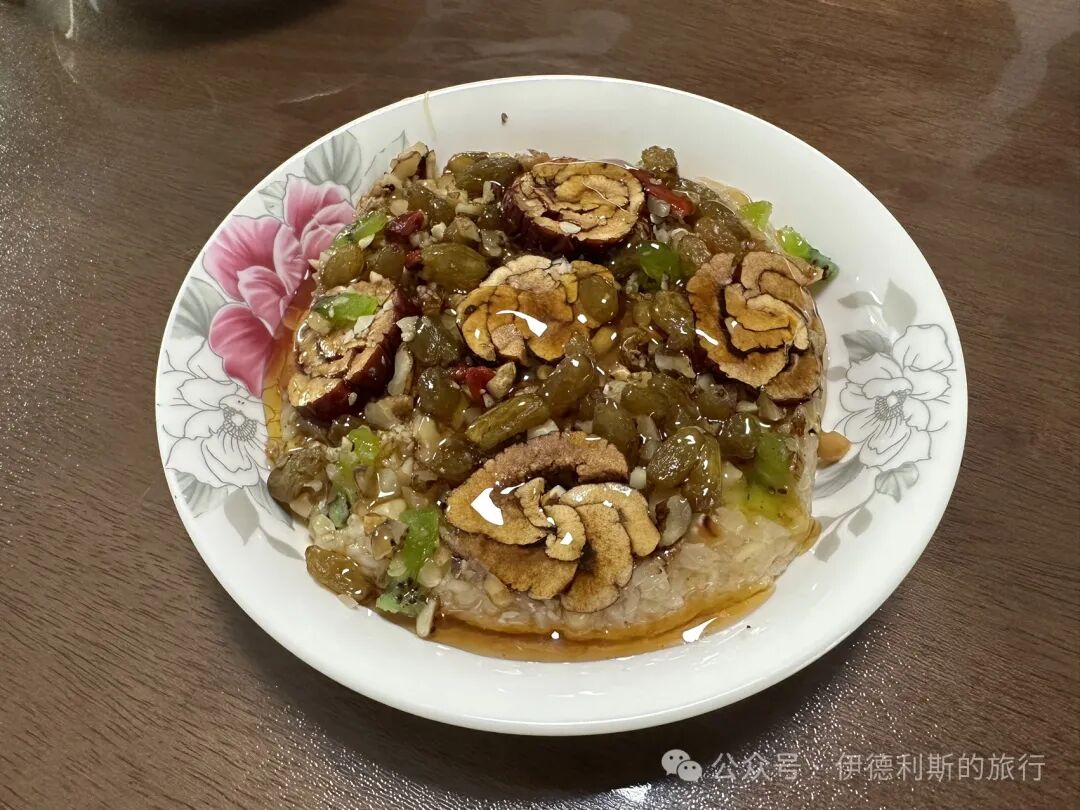
We spent the night at my aunt's house near the flour mill and had basin meat (penpenrou) with fried dough (youxiang) for breakfast.
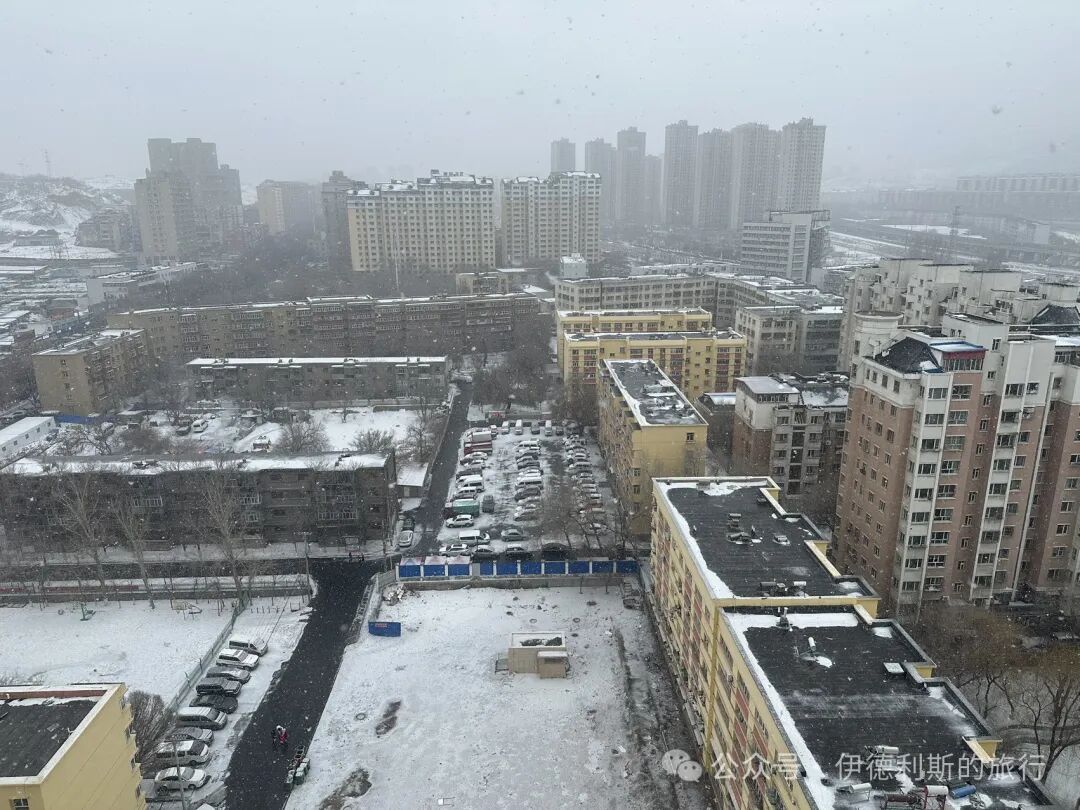
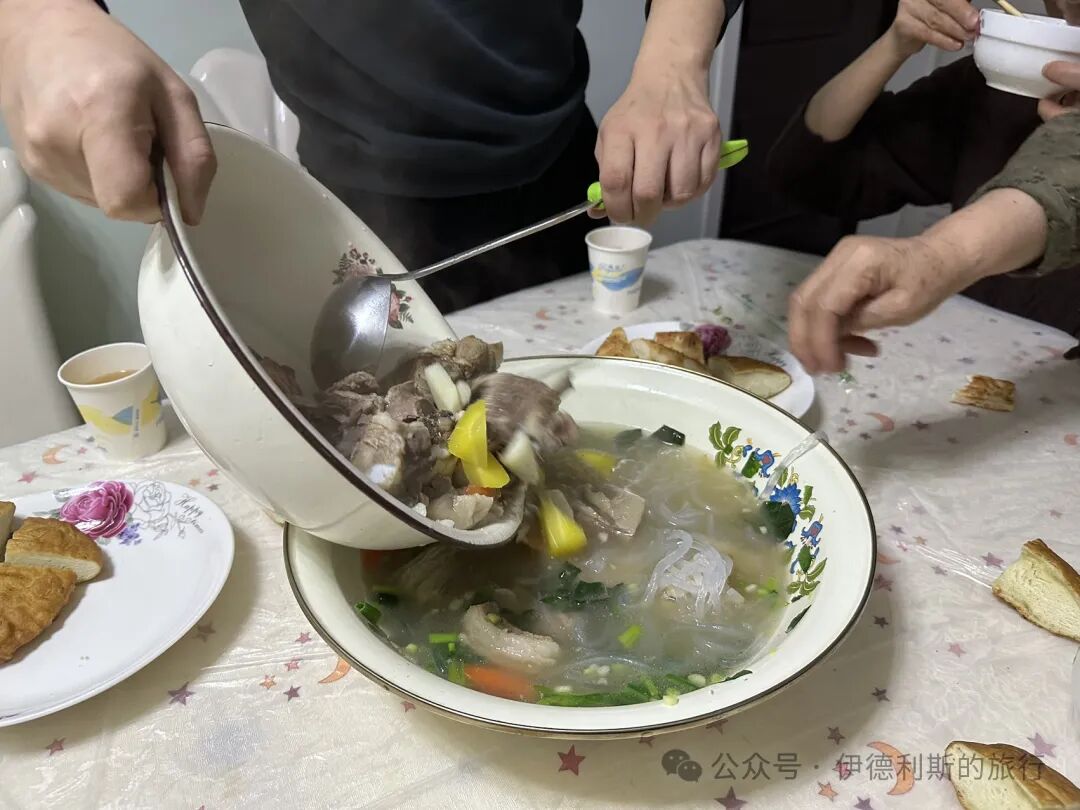
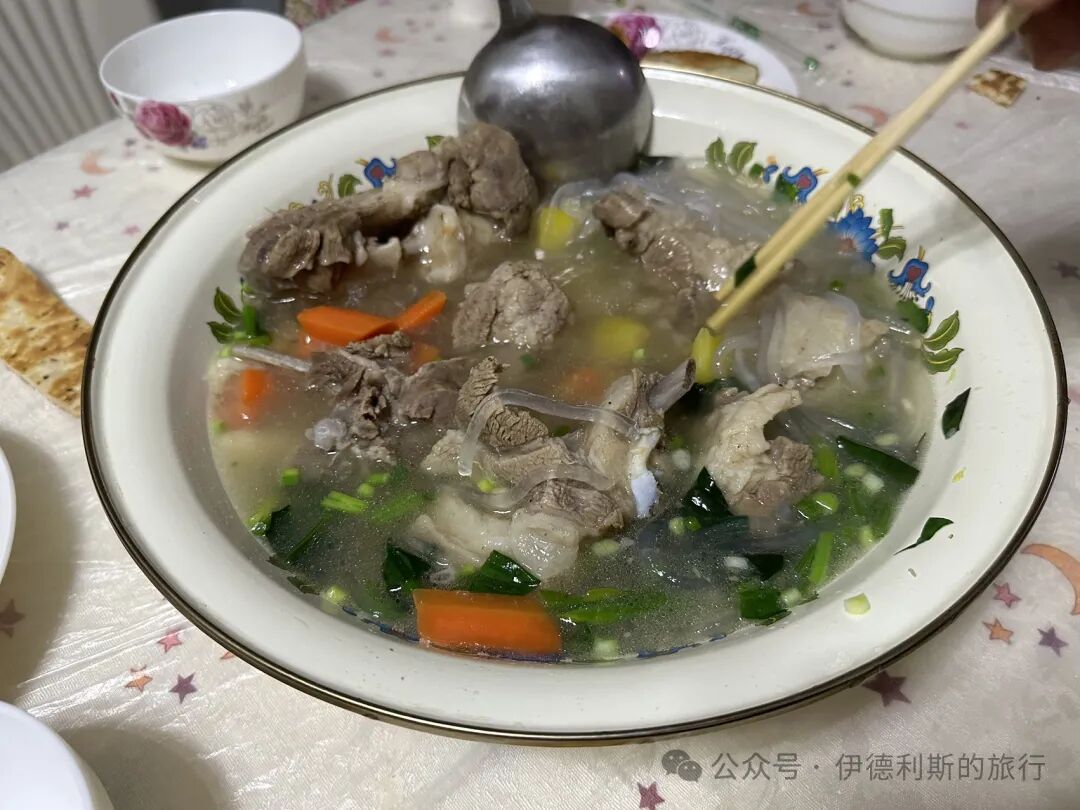
We hosted our guests at Lanpin Banquet. It is currently the most popular restaurant in Urumqi for Hui Muslims to hold religious gatherings (niansuoer). They don't sell alcohol, the food is refined, and the owner is warm and attentive. It is usually packed on weekends and holidays, so you must book in advance. On the day we went, they hosted 30 tables for a circumcision ceremony and 15 tables for a special occasion.
We ate stir-fried beef tendon, spicy peppercorn chicken (jiaomaji), cold-dressed beef, hand-grabbed lamb (shoubarou), sauced stuffed meat slices (jiasha), pearl meatballs, and flatfish, along with complimentary side dishes. These are the most popular dishes for Hui Muslim gatherings in Urumqi right now. Their hand-grabbed lamb (shoubarou) is excellent; the meat is tender and fragrant, making it perfect for elderly people to eat.
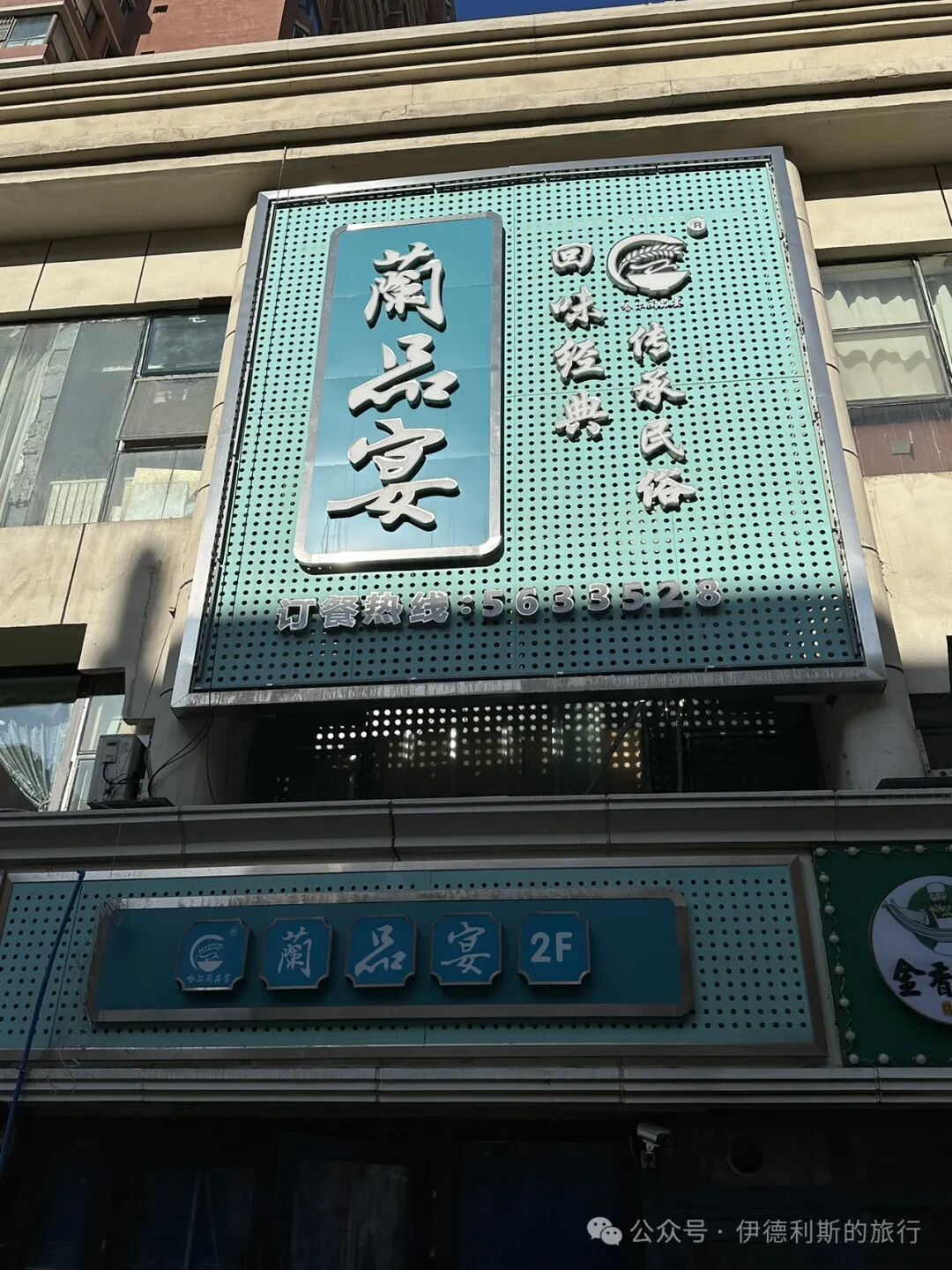
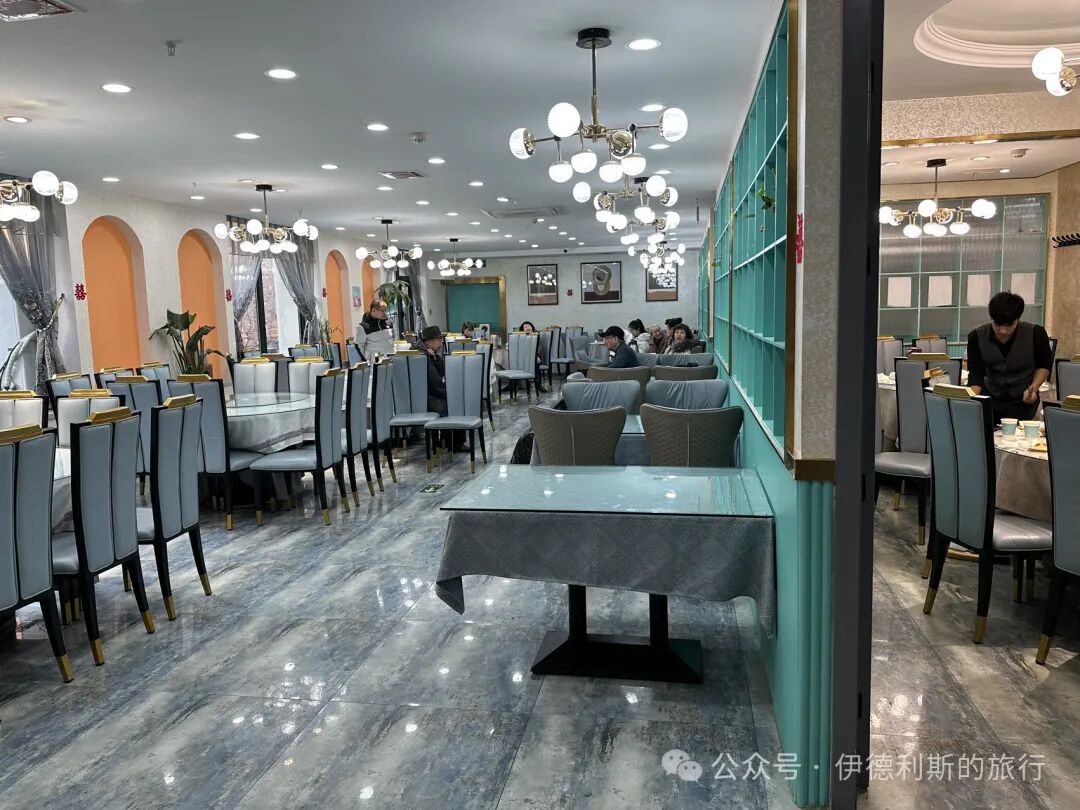
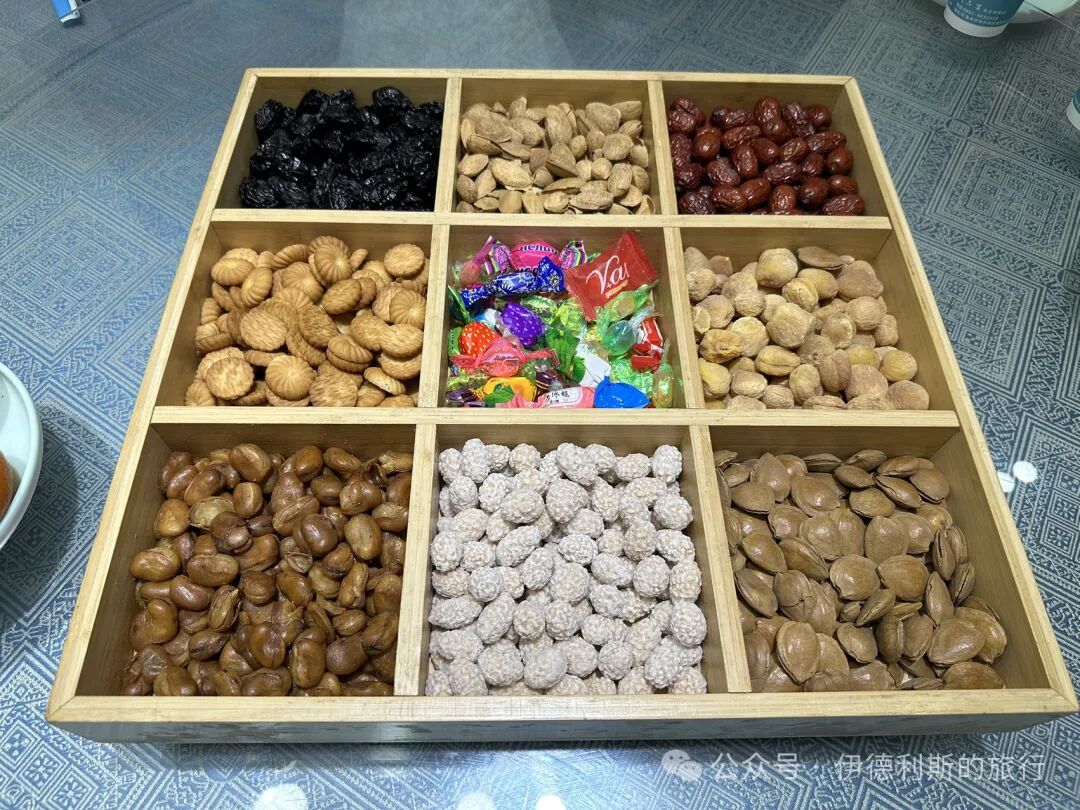
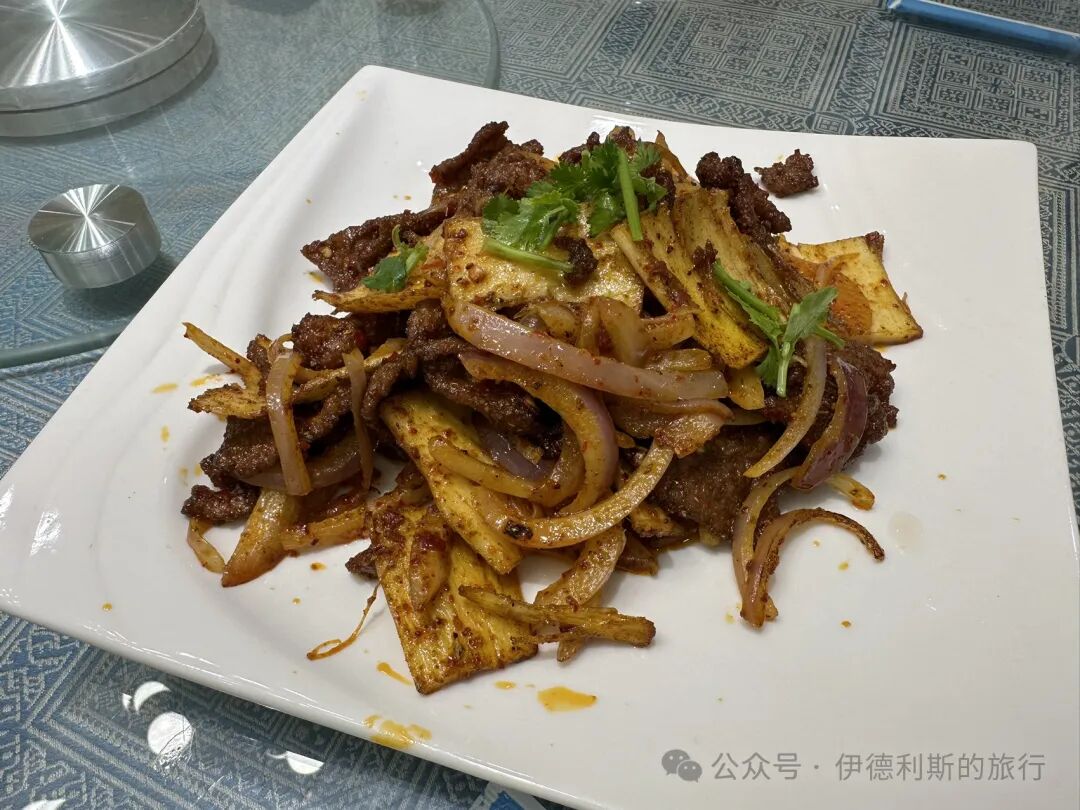
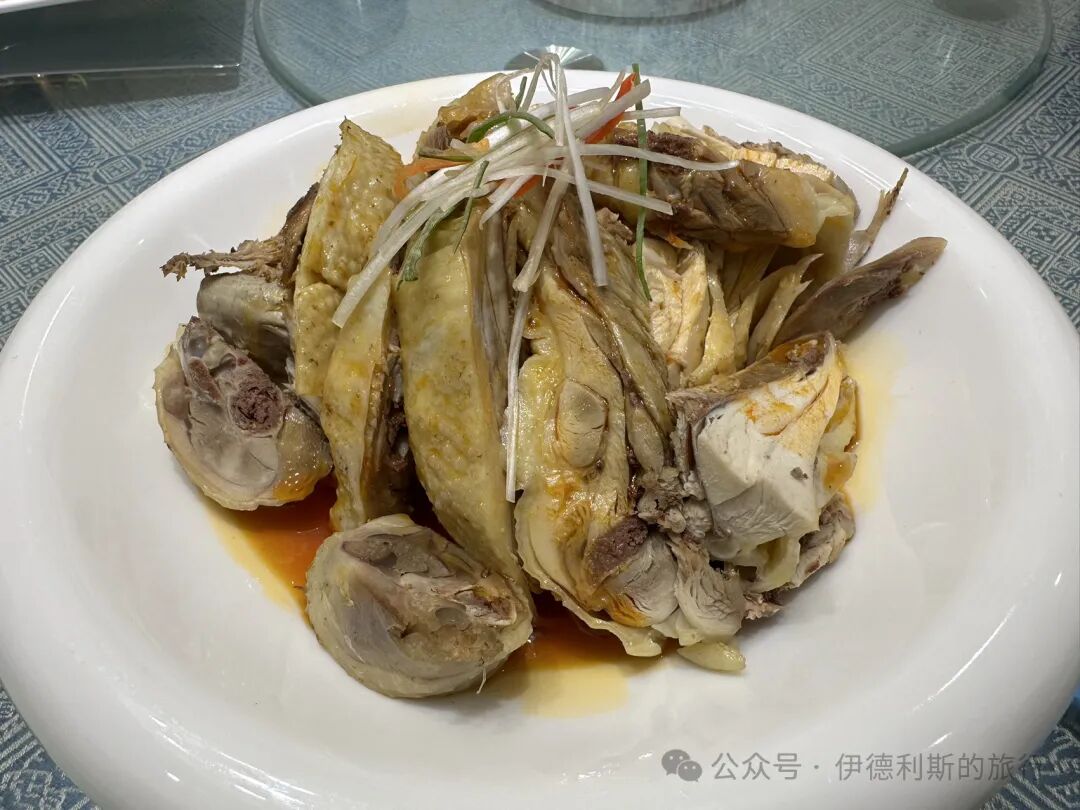
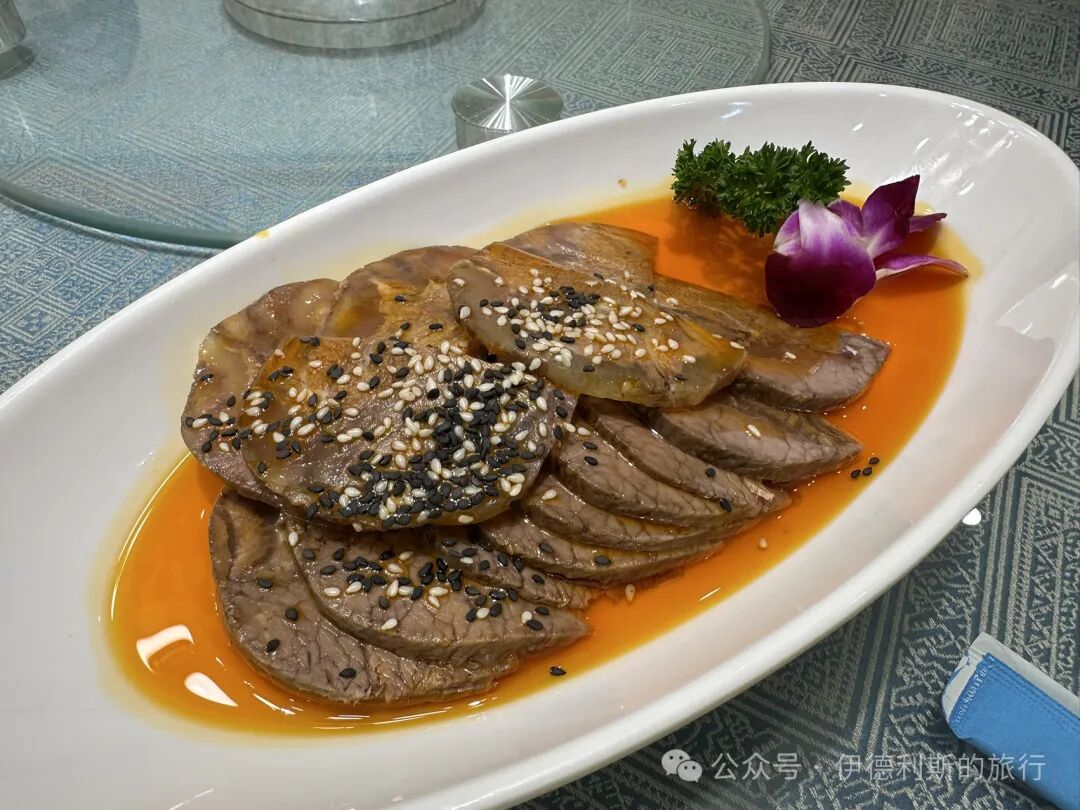
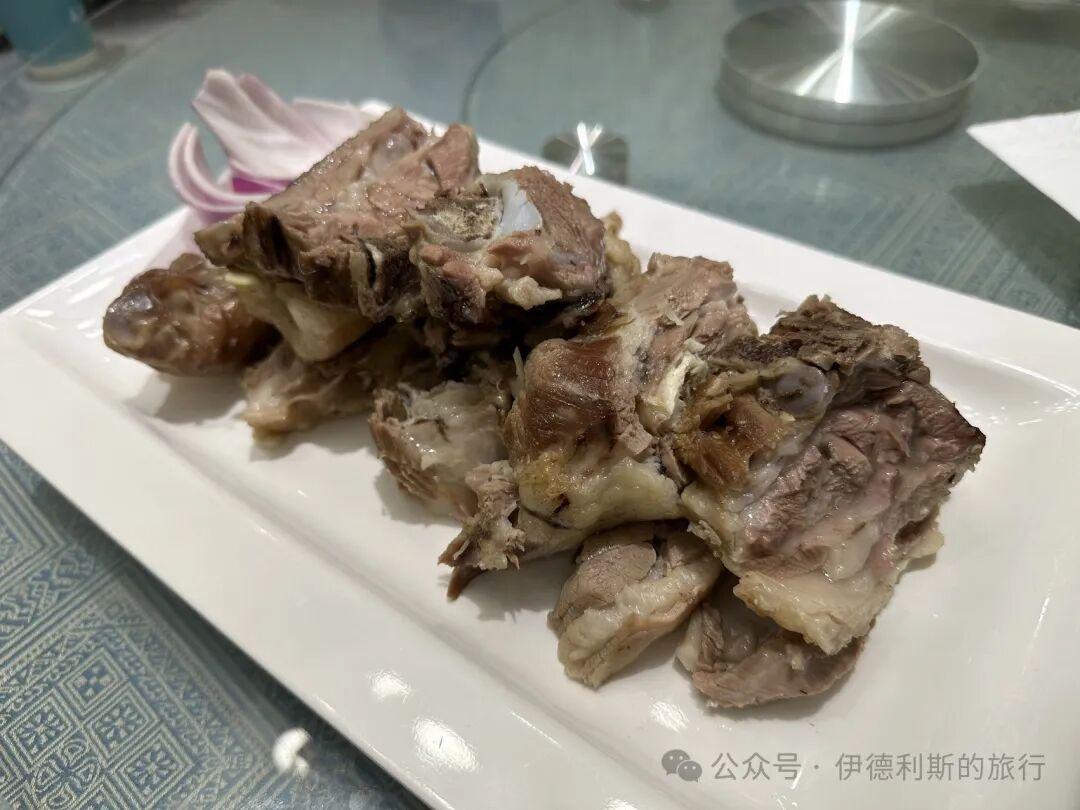
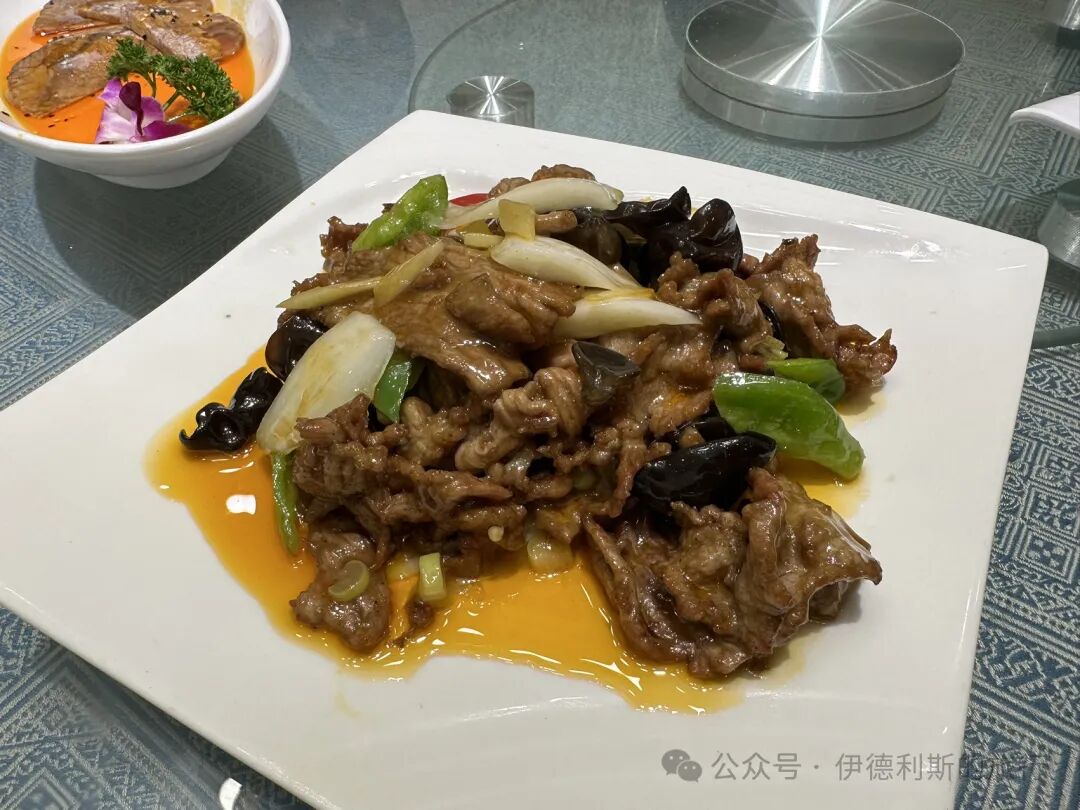
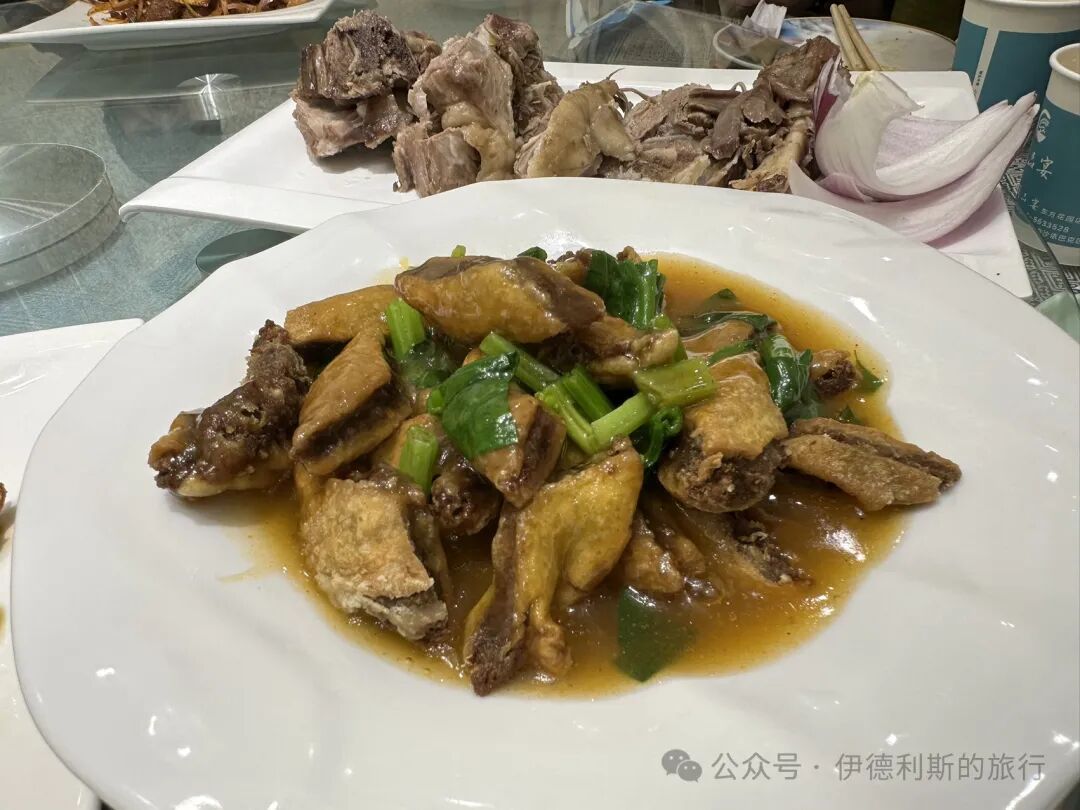
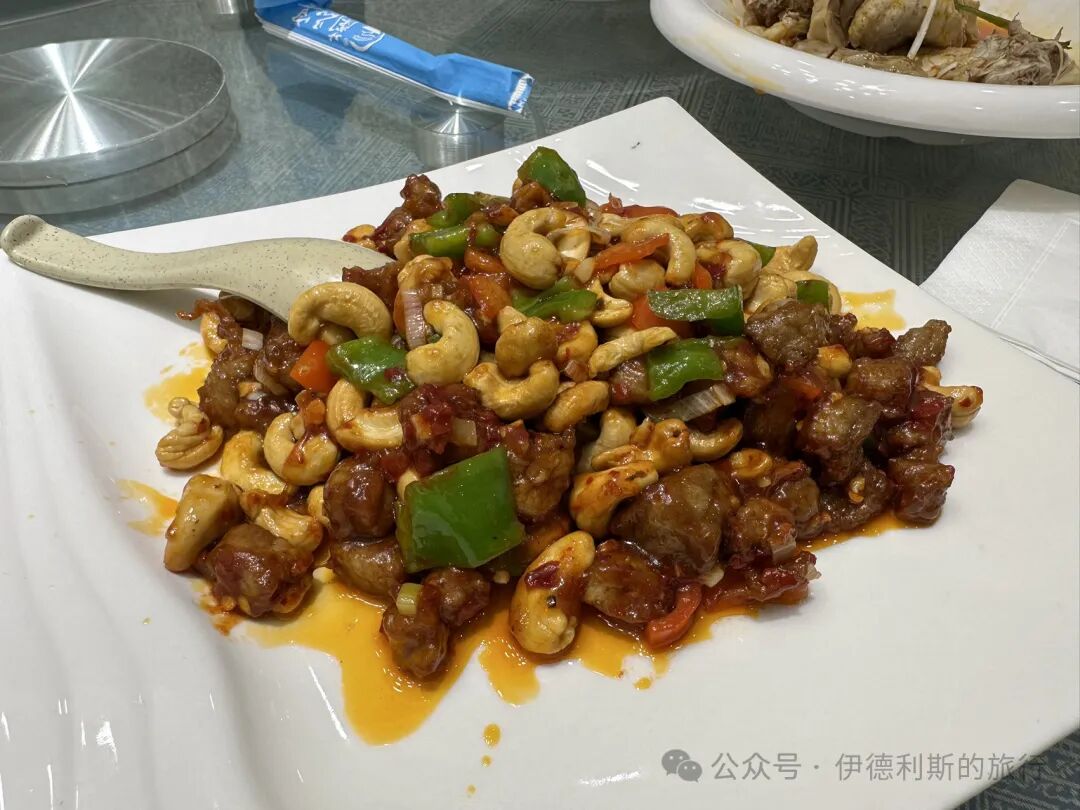
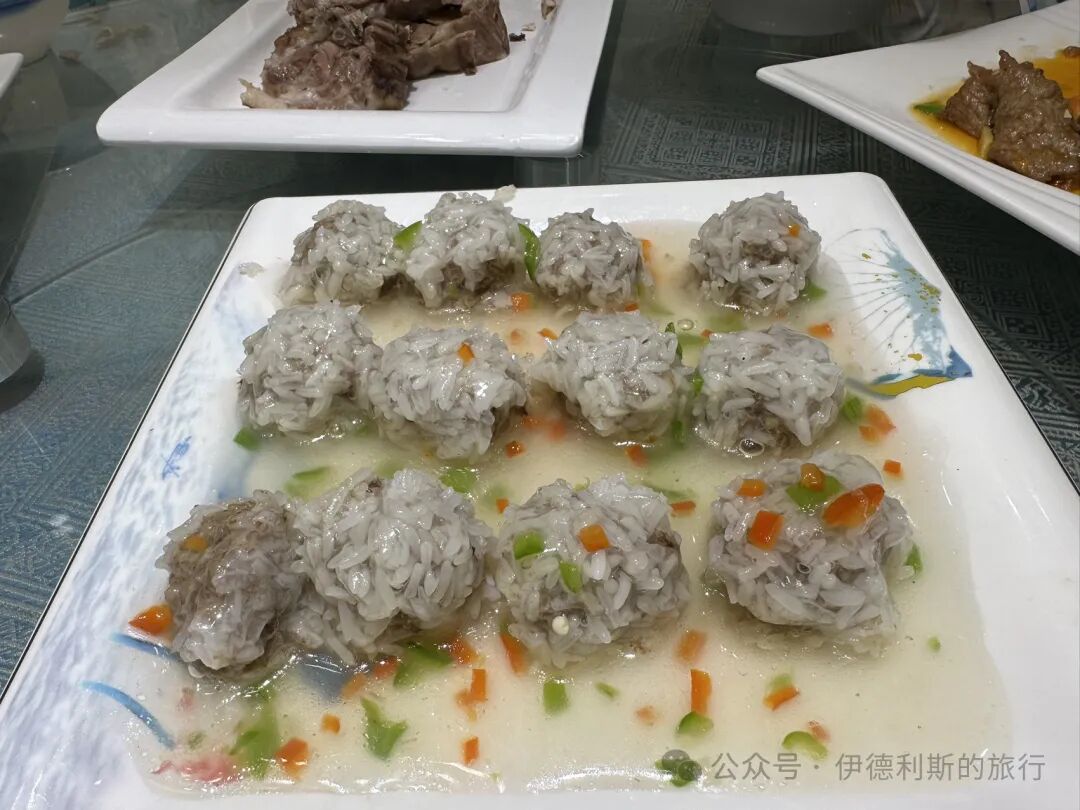
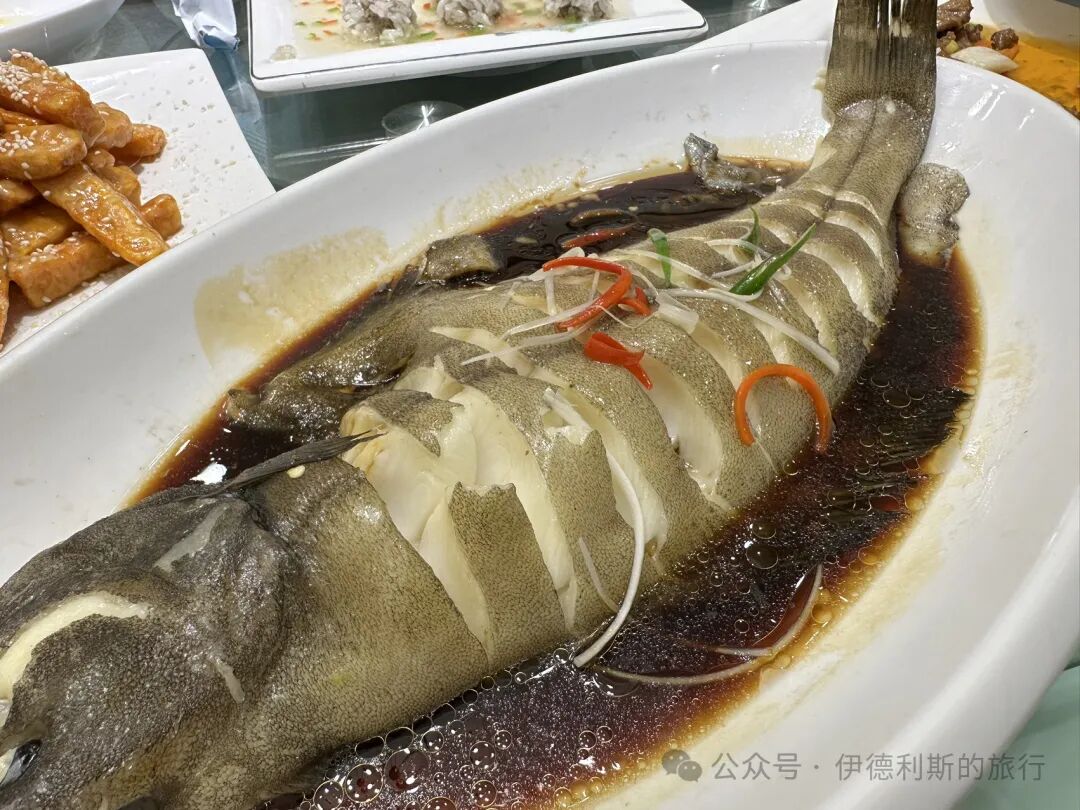
I spent the night at Uncle Saisai's house in the Changsheng Brigade in the southern suburbs of Urumqi. The hospitality was generous, with dishes like sweet platter (tianpanzi), fried dough snacks (youguozi), pearl meatballs (zhenzhu wanzi), braised ribbonfish, clear-stewed meat, and braised lamb. I also met many relatives.
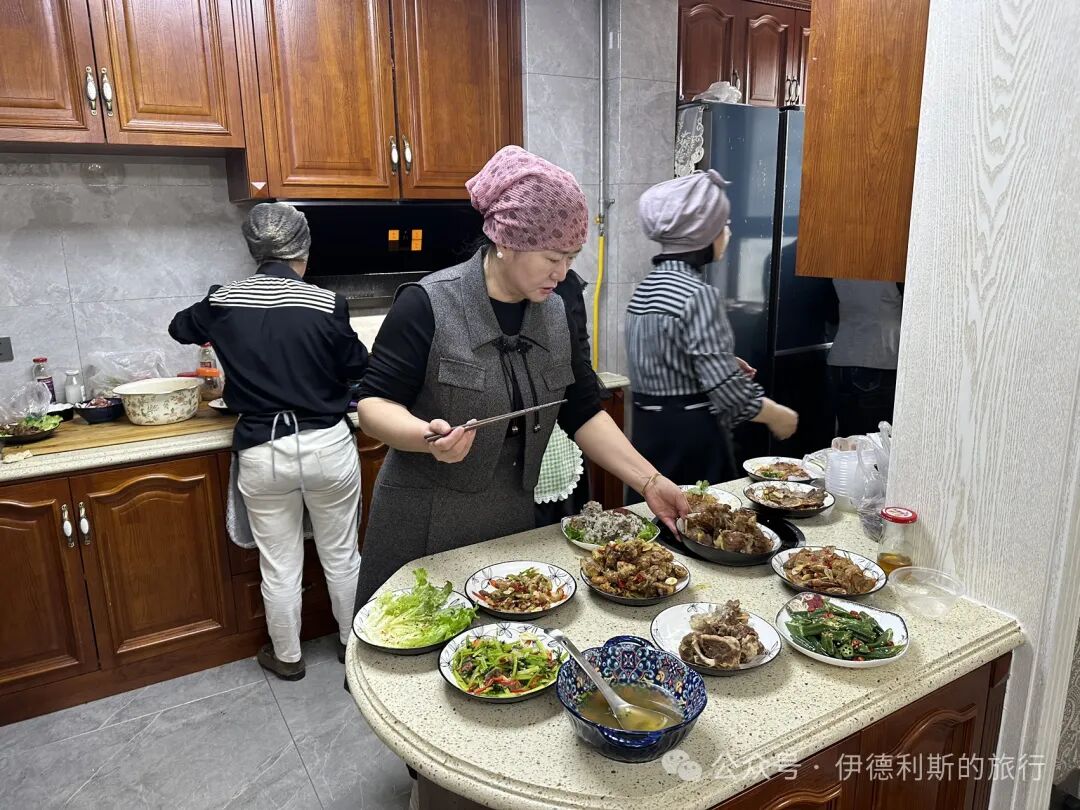
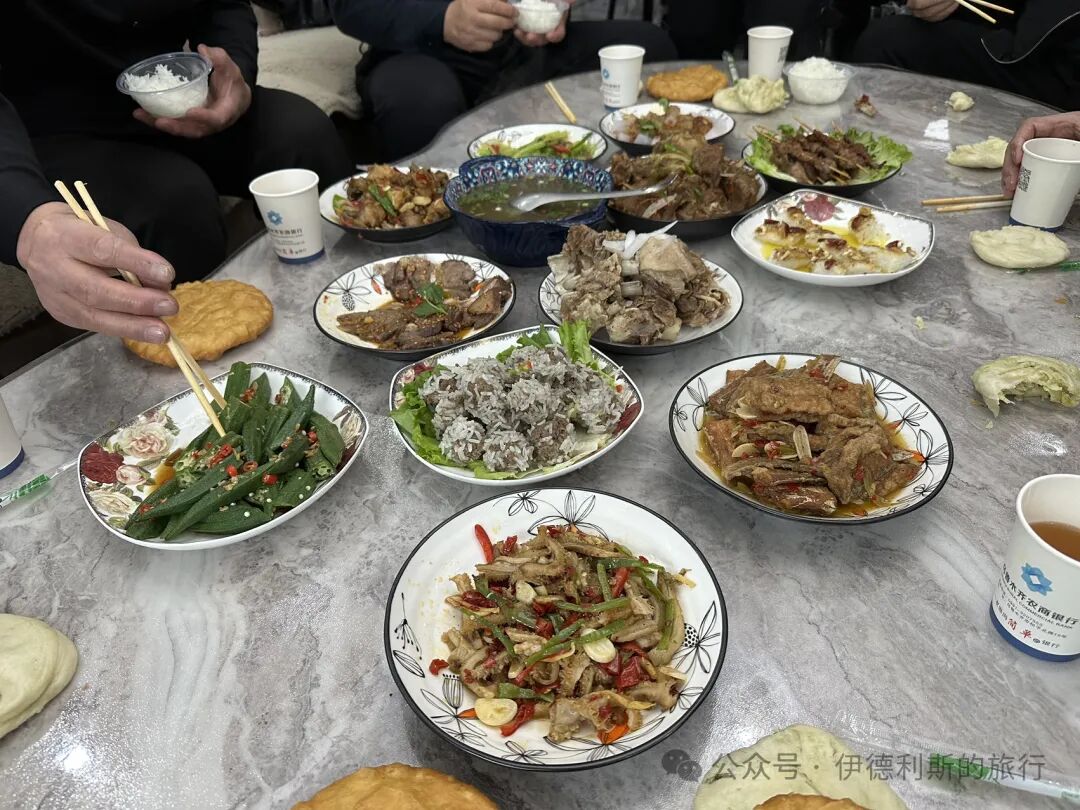
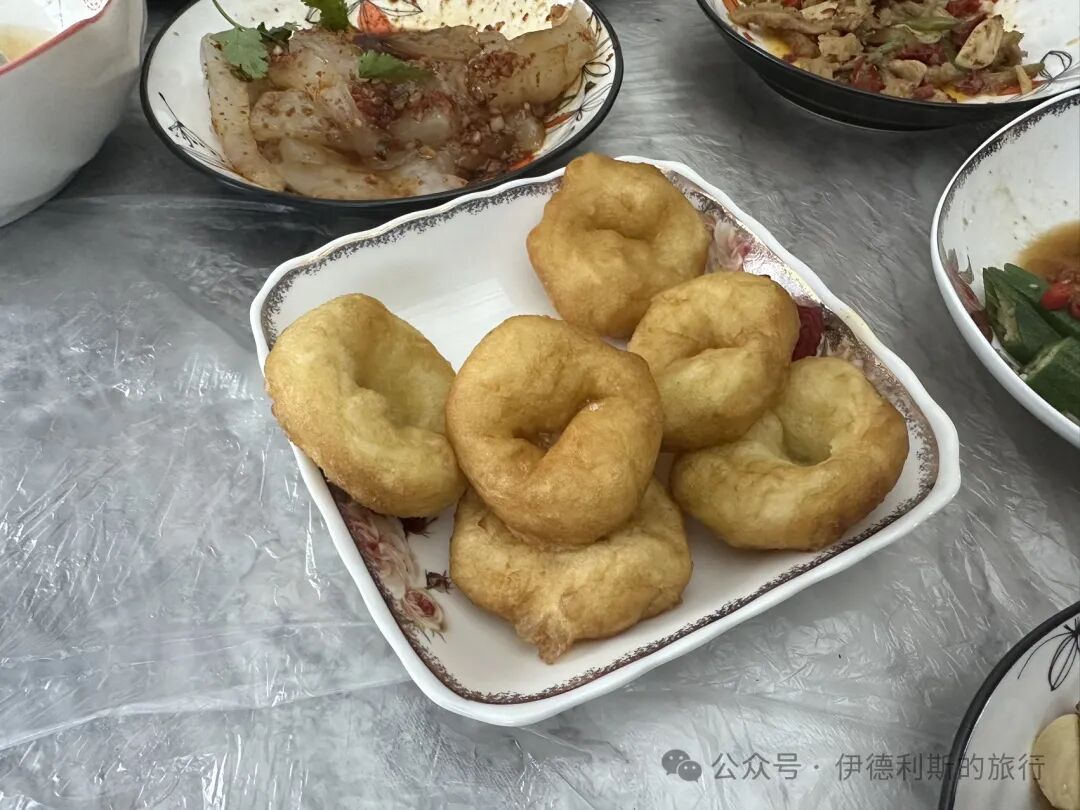
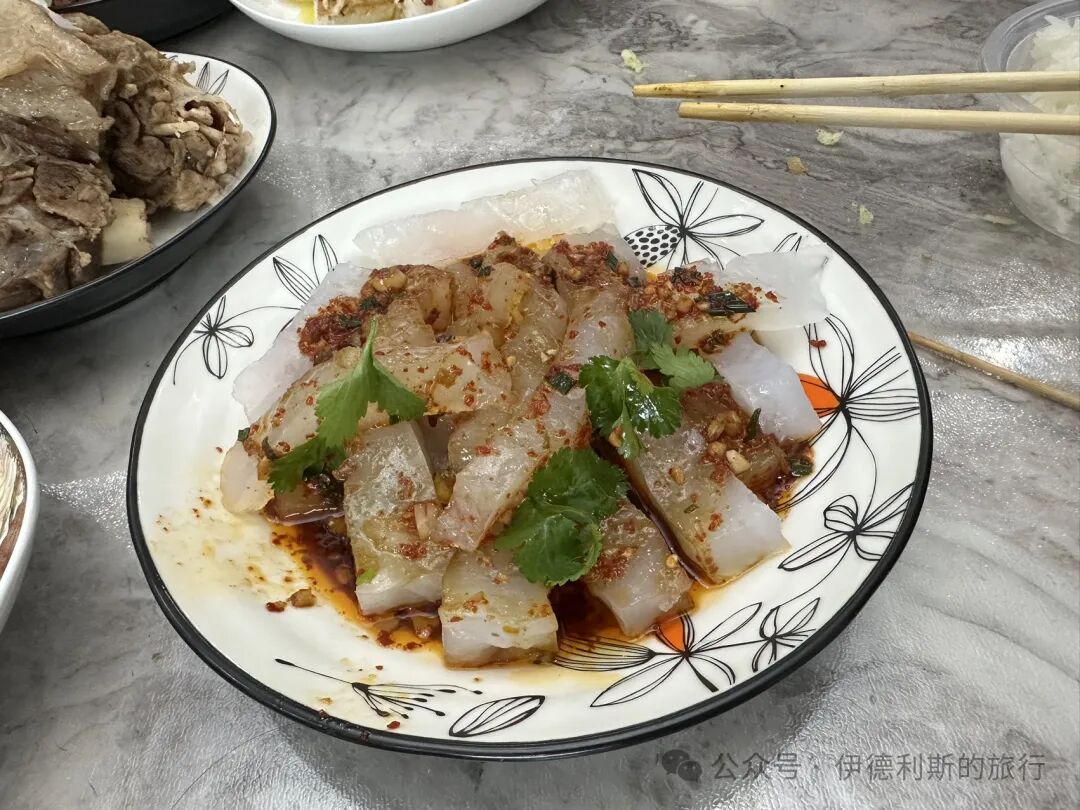
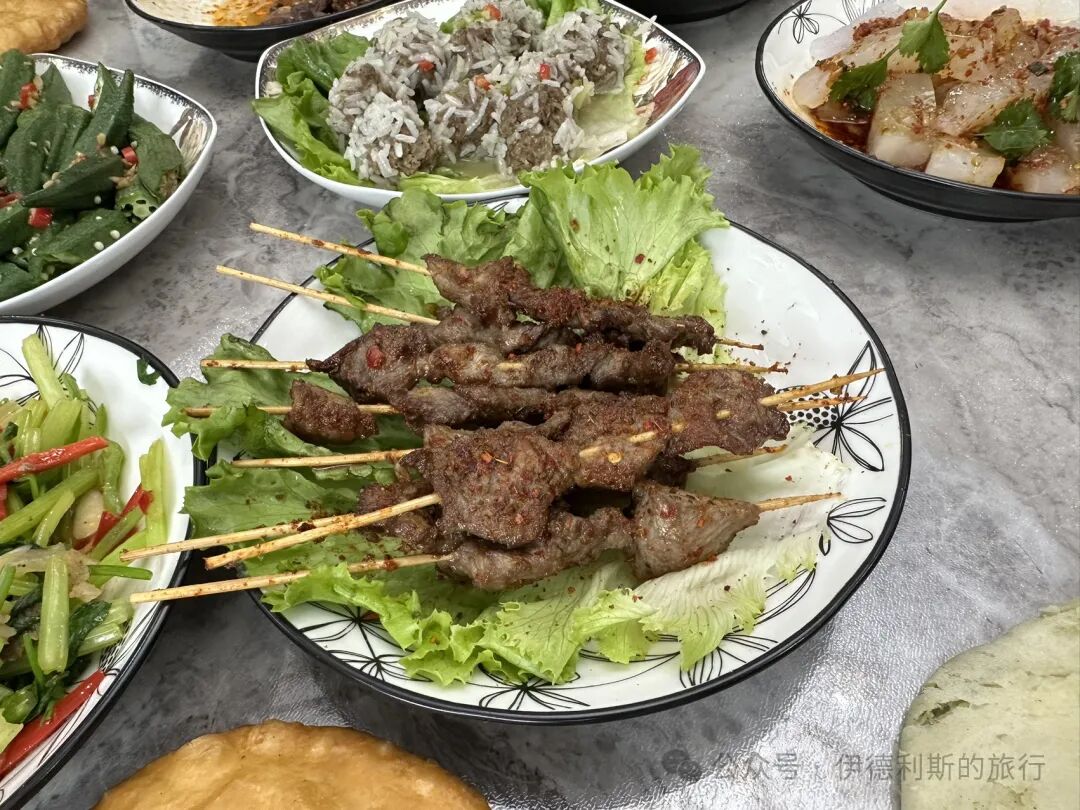
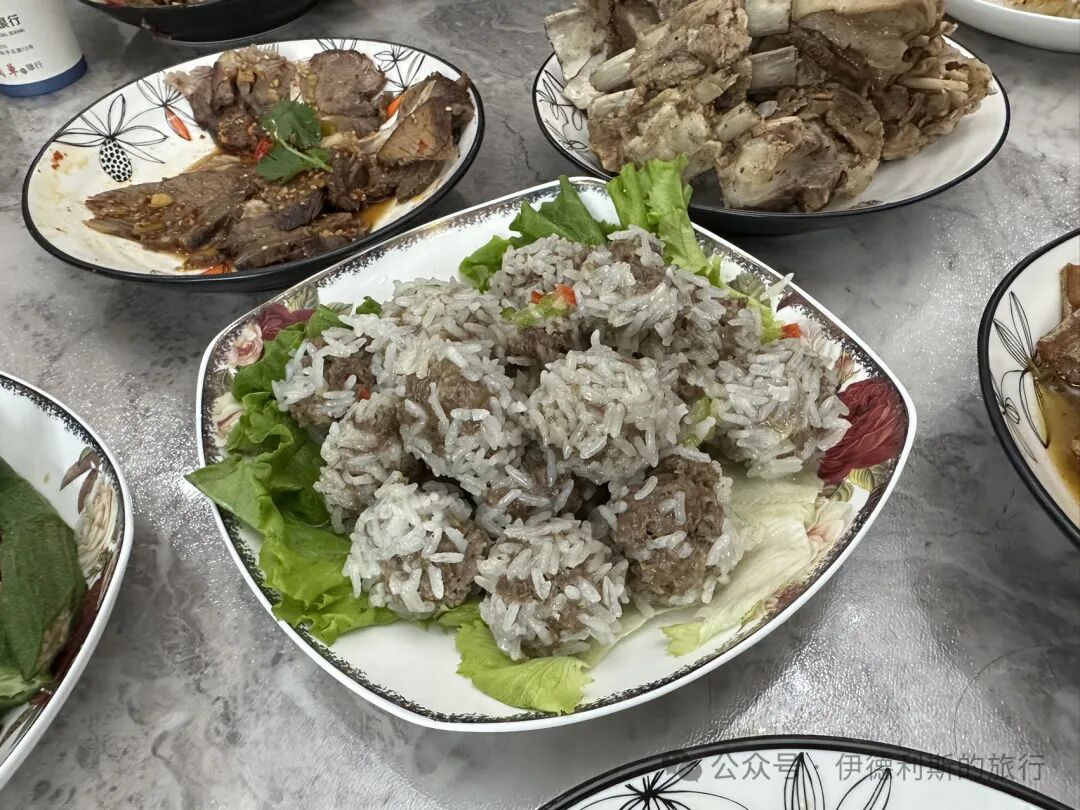
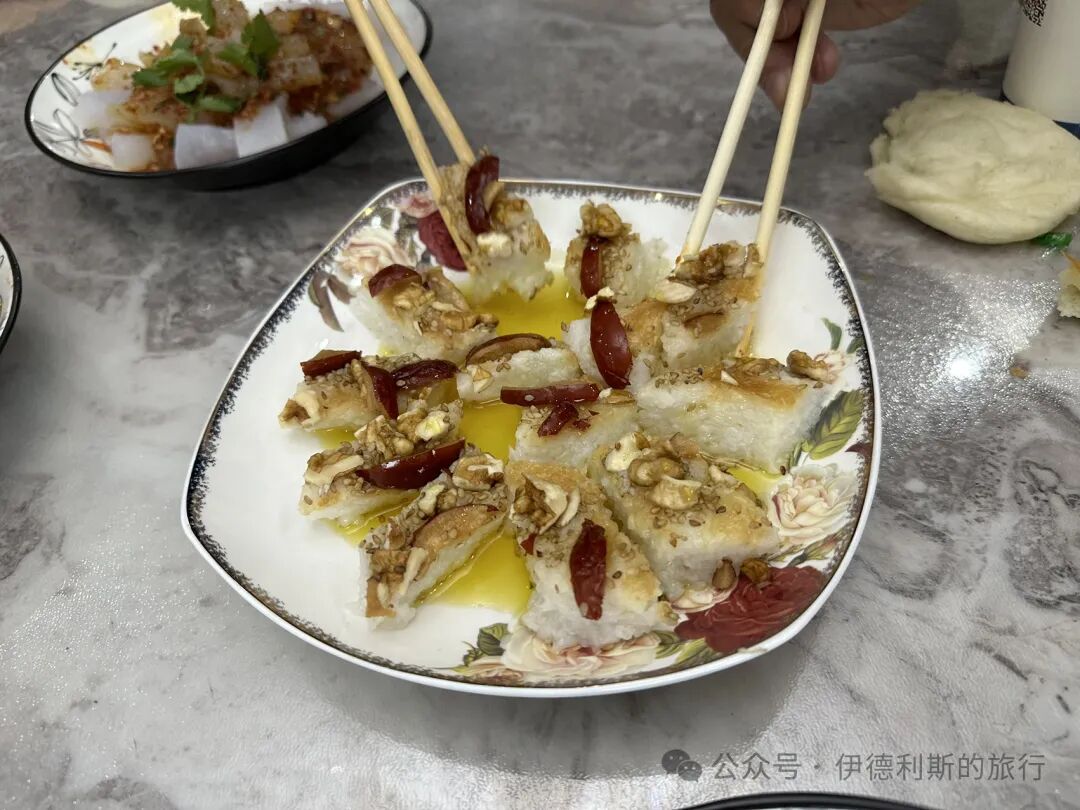
Engagement acceptance ceremony (luohuali)
This time, I arrived just in time for my brother-in-law's engagement acceptance ceremony (luohuali). We had a feast at a small community (xiaofang) of the Jahriyya order (Zhepai) in Anningqu, in the northern suburbs of Urumqi, where I ate some homemade fried twisted sugar dough (tangningningzi). The feast started with small appetizer plates, which were then cleared to make room for the main dishes, including clear-stewed meat, braised meatballs, braised fish, and beef head meat.
The traditional wedding customs of Hui Muslims in Xinjiang are very specific. Before a formal marriage proposal, there is a 'preliminary inquiry' where the man's family learns about the woman's family. Then, they send a matchmaker with four types of gifts—tea leaves, sugar cubes, red dates, and walnuts (or pastries)—wrapped in four colors, known as the 'four-color gift' (sese li). The first time a matchmaker brings the four-color gift to propose, it is called the 'opening gift' (kaikouli). The matchmaker gives the red-cloth-wrapped gifts to the woman's family, but they do not give an answer right away. After careful consideration, the woman's family sends a message through the matchmaker. The man's family then sends the four-color gift again, which is called the 'engagement acceptance ceremony' (luohuali), and after that, they enter the engagement stage.
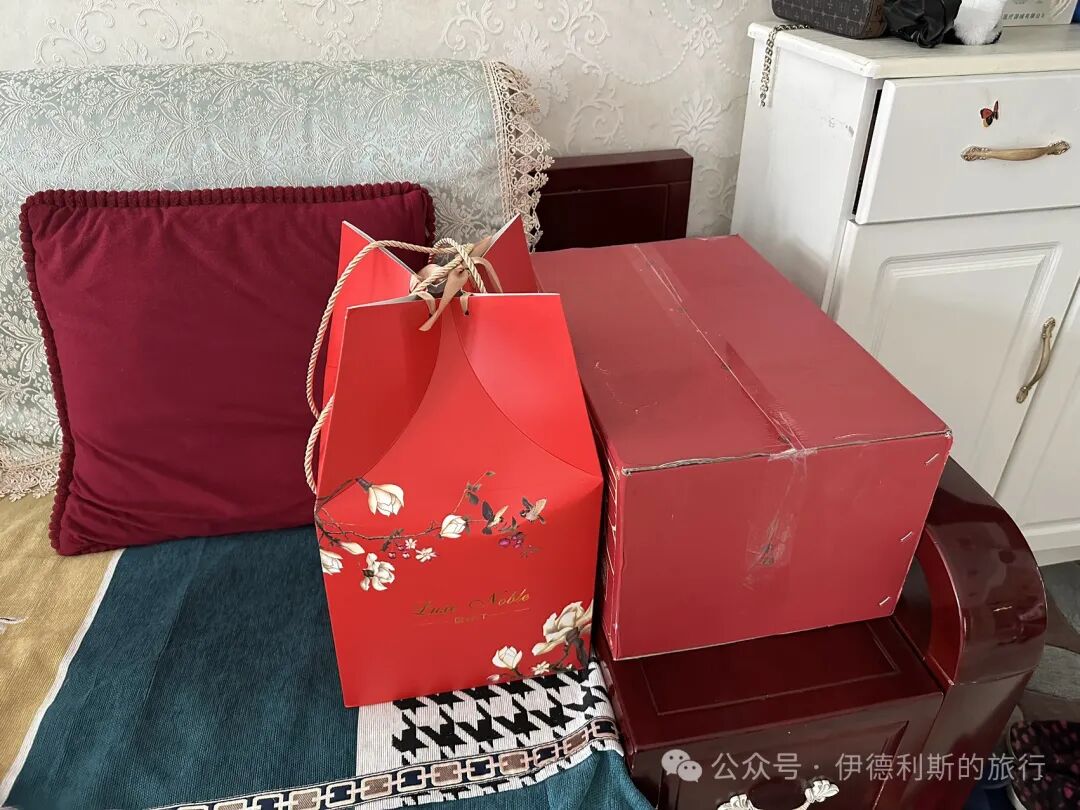
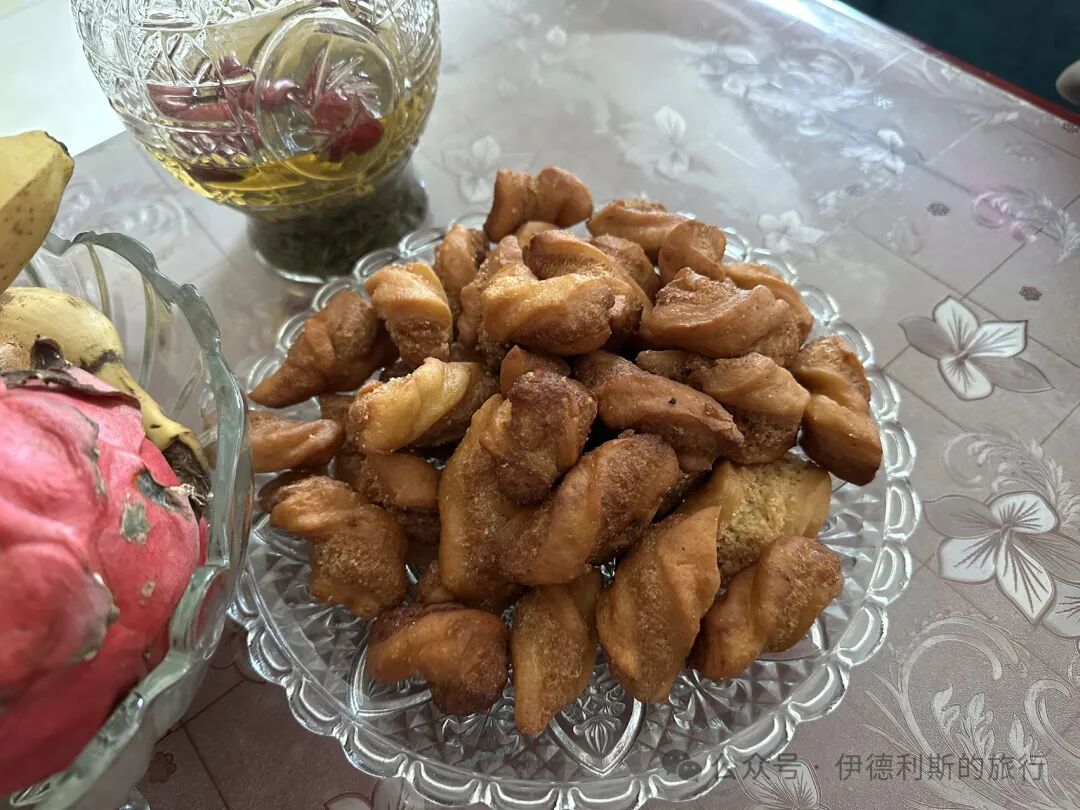
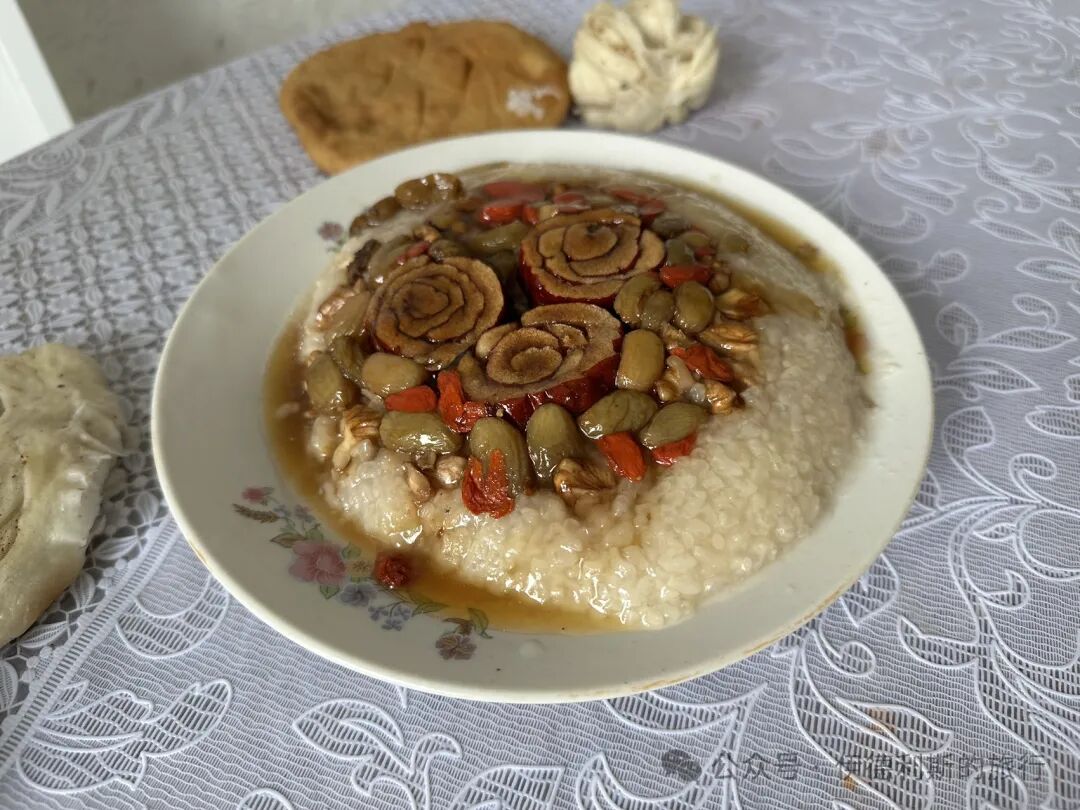
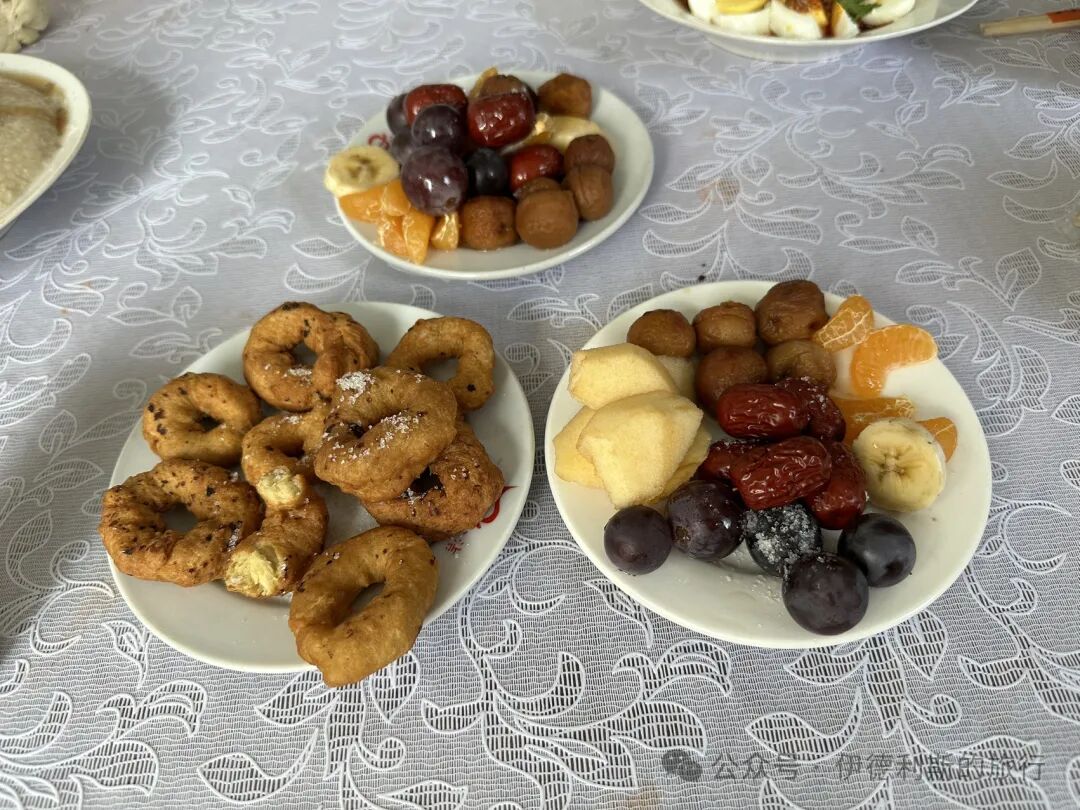
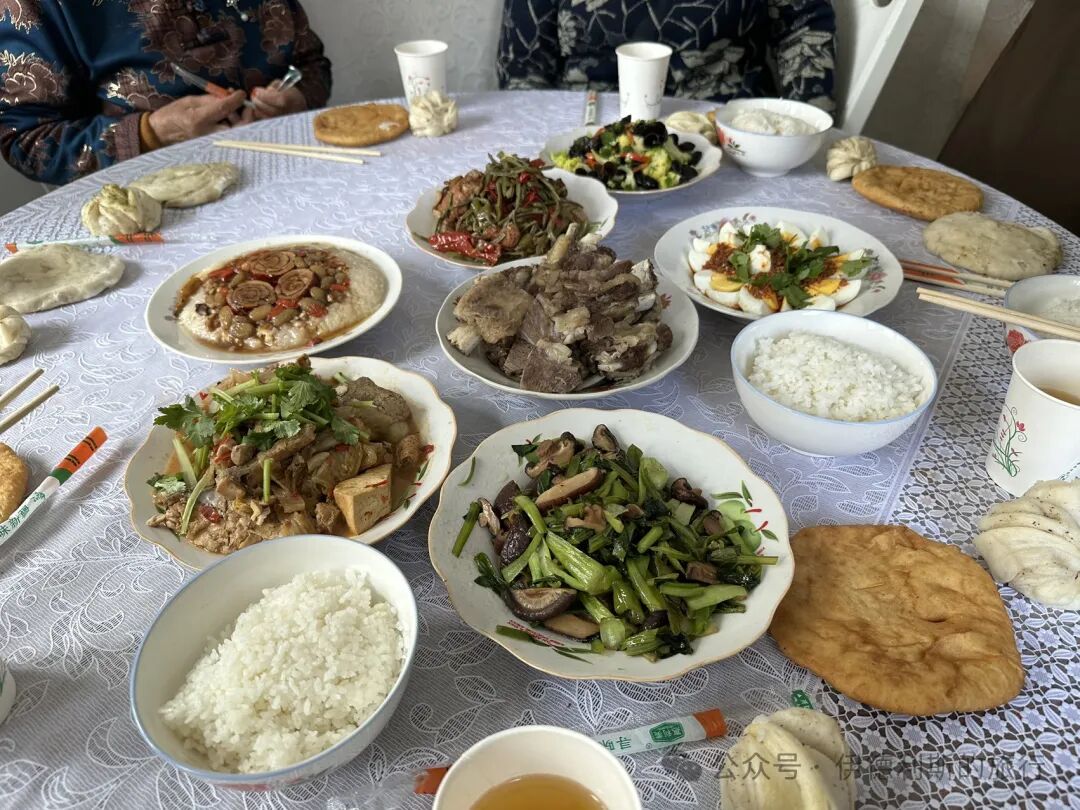
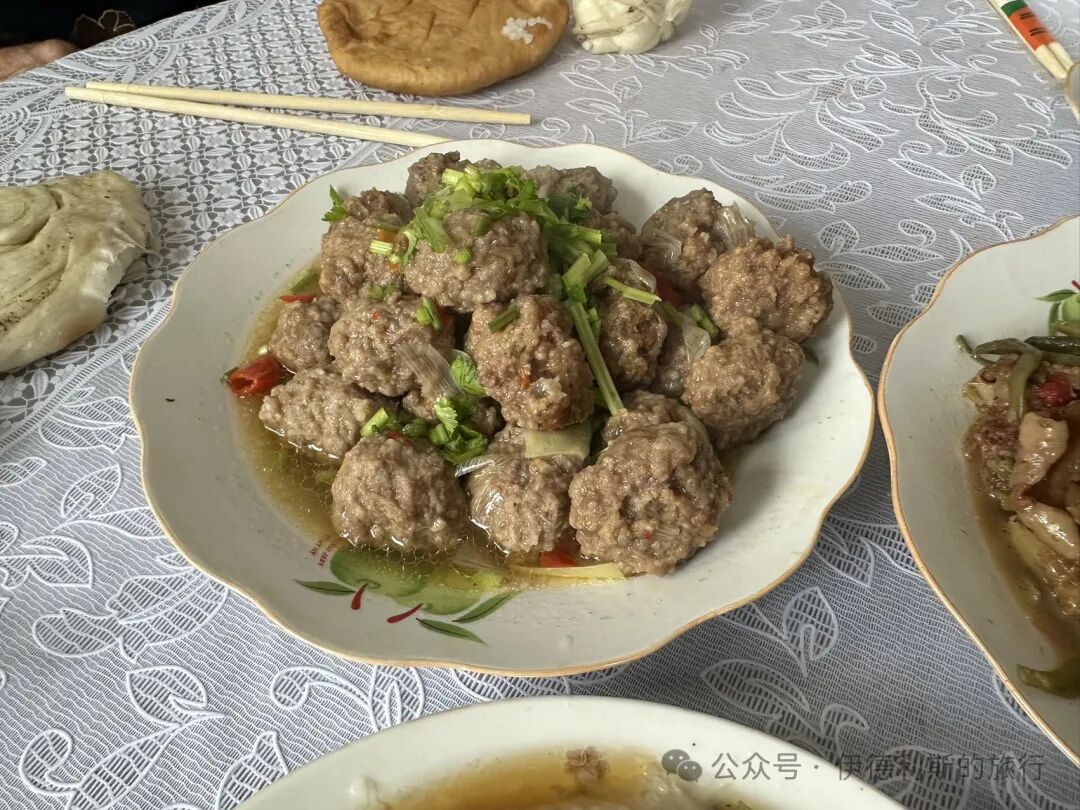
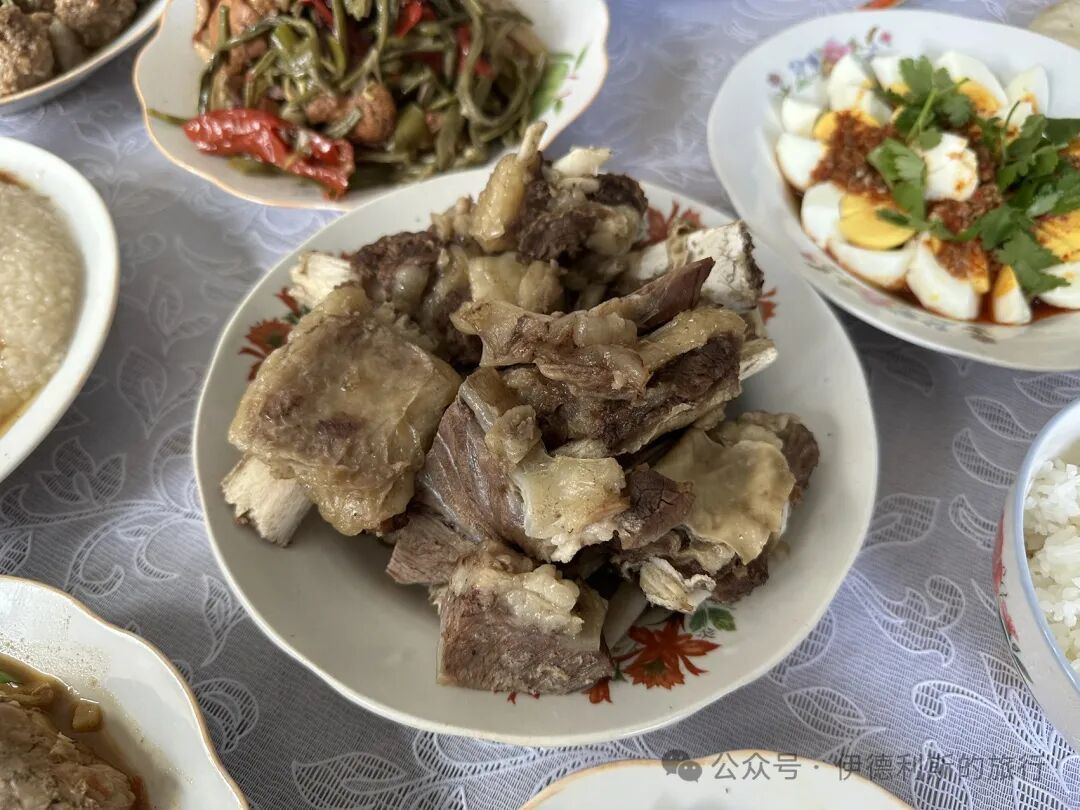
Friday prayer (Jumu'ah)
At noon, I attended the Friday prayer (Jumu'ah) at the Changsheng Grand Mosque. The Changsheng Grand Mosque is located in the Changsheng Brigade at the foot of Yaomo Mountain (Yamalike Mountain) in the southern suburbs of Urumqi. It has the highest number of congregants among the Hui Muslim mosques in the Saybagh District, with over a hundred people attending the Friday prayer (Jumu'ah). The Changsheng Brigade used to be a series of large courtyards where everyone farmed. Now, everyone has moved collectively to the Fumin Anju residential area, and the houses are very spacious.
Imam Fanta of the Changsheng Grand Mosque is my wife's uncle. Uncle Fanta is the one who performed our marriage contract (nikah). Uncle Fanta's surname is Su. The Su family is a large clan in Changsheng. Over three hundred years ago, they left Ankang, Shaanxi, and traveled through Ningxia and Jimsar to Urumqi to do business. Later, their business failed, and they eventually moved to Changsheng to farm, where they have lived ever since.
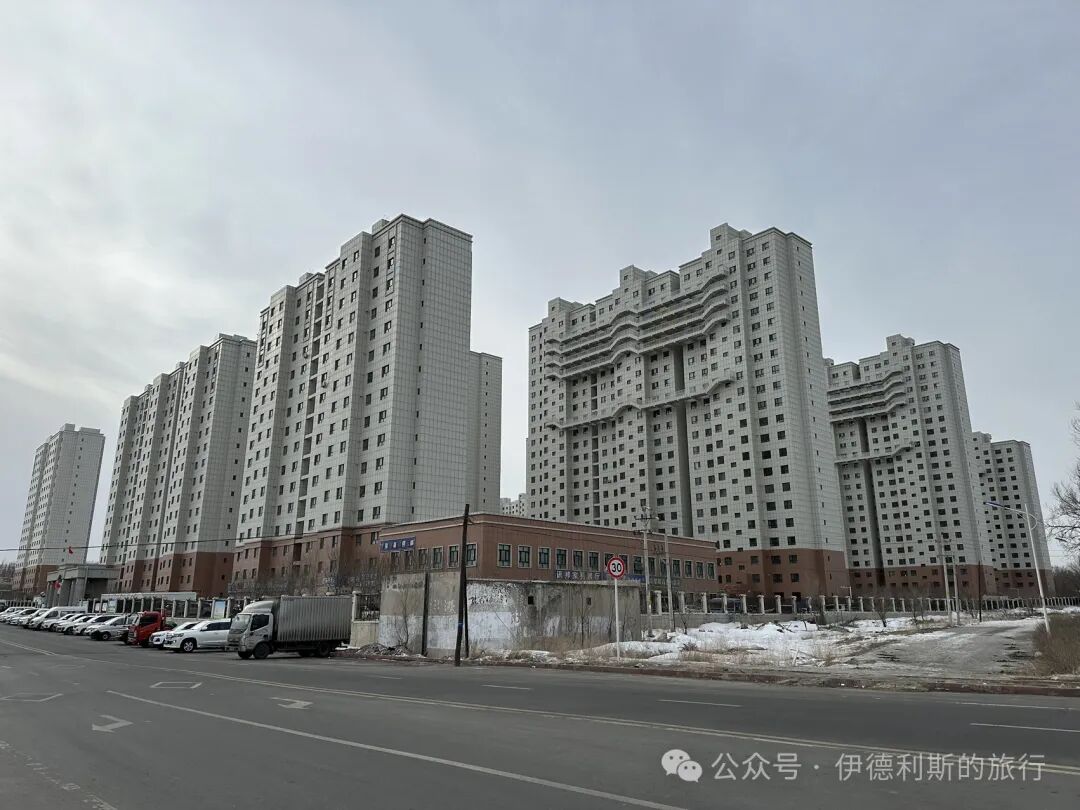
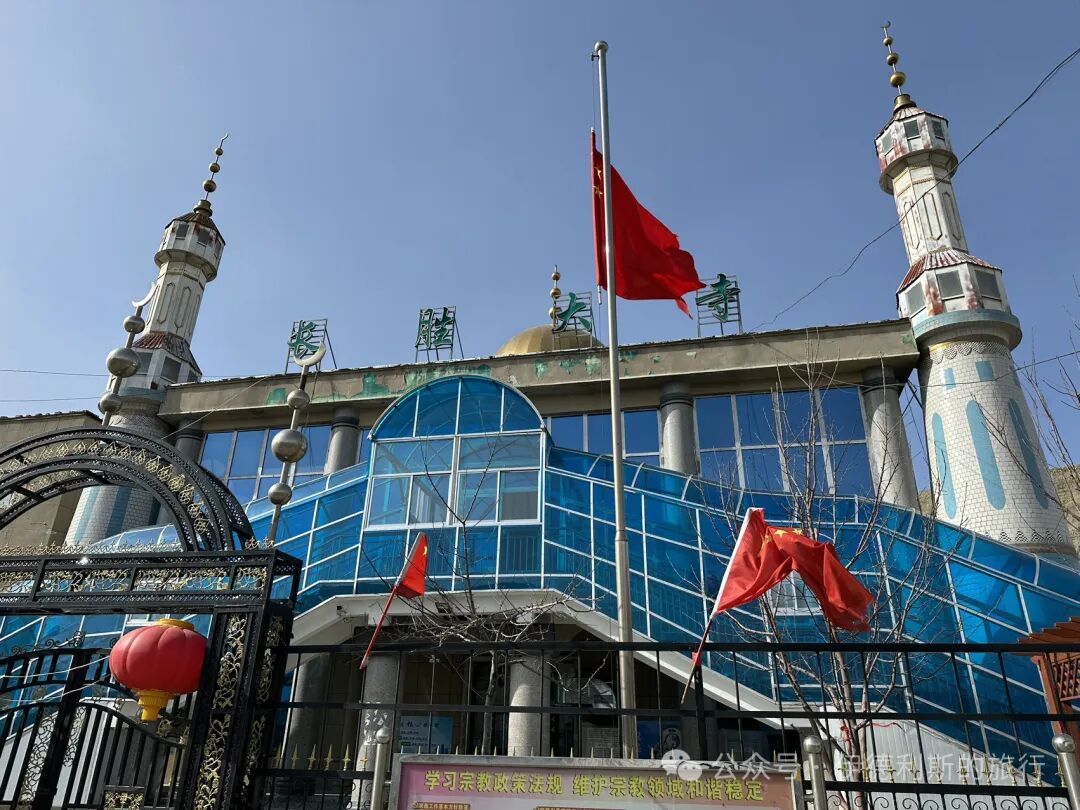
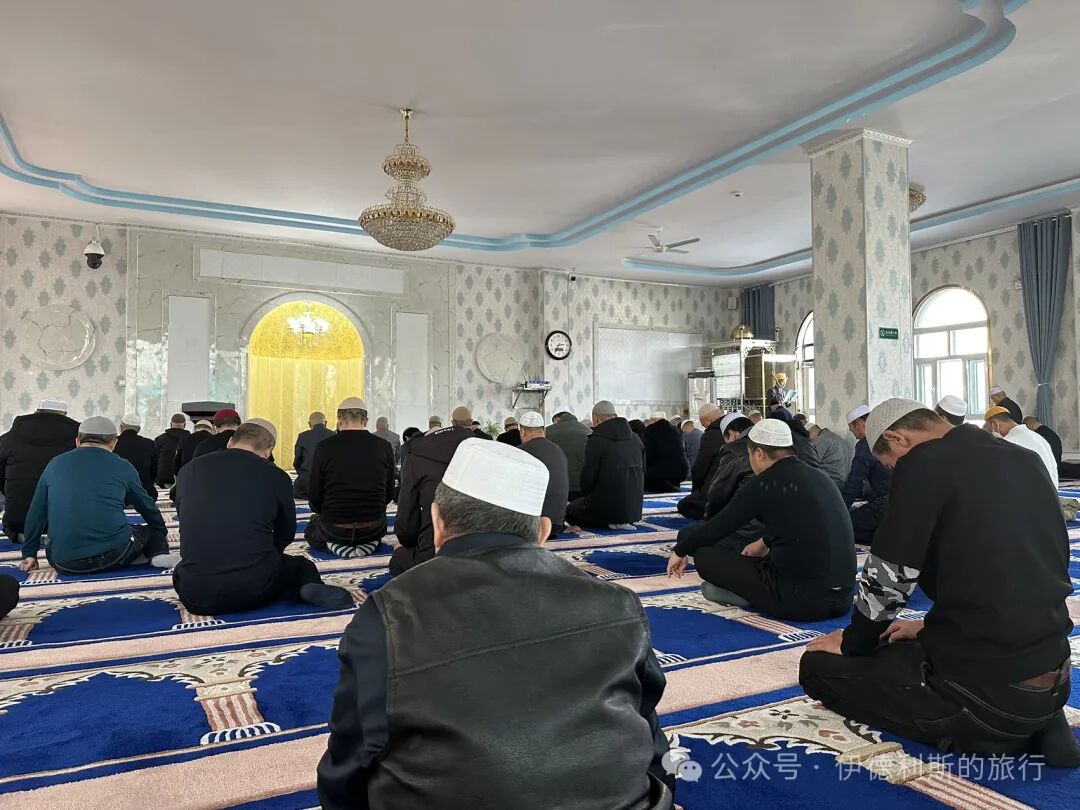
I bought fresh milk and handmade yogurt at the entrance of the Changsheng residential area. A large bucket of fresh milk only cost 20 yuan. After boiling it and adding two spoonfuls of milk skin (naipizi) I bought earlier on Hetian Street, it tasted amazing. The handmade yogurt comes with its own layer of milk skin (naipizi) and has a very rich milky flavor.

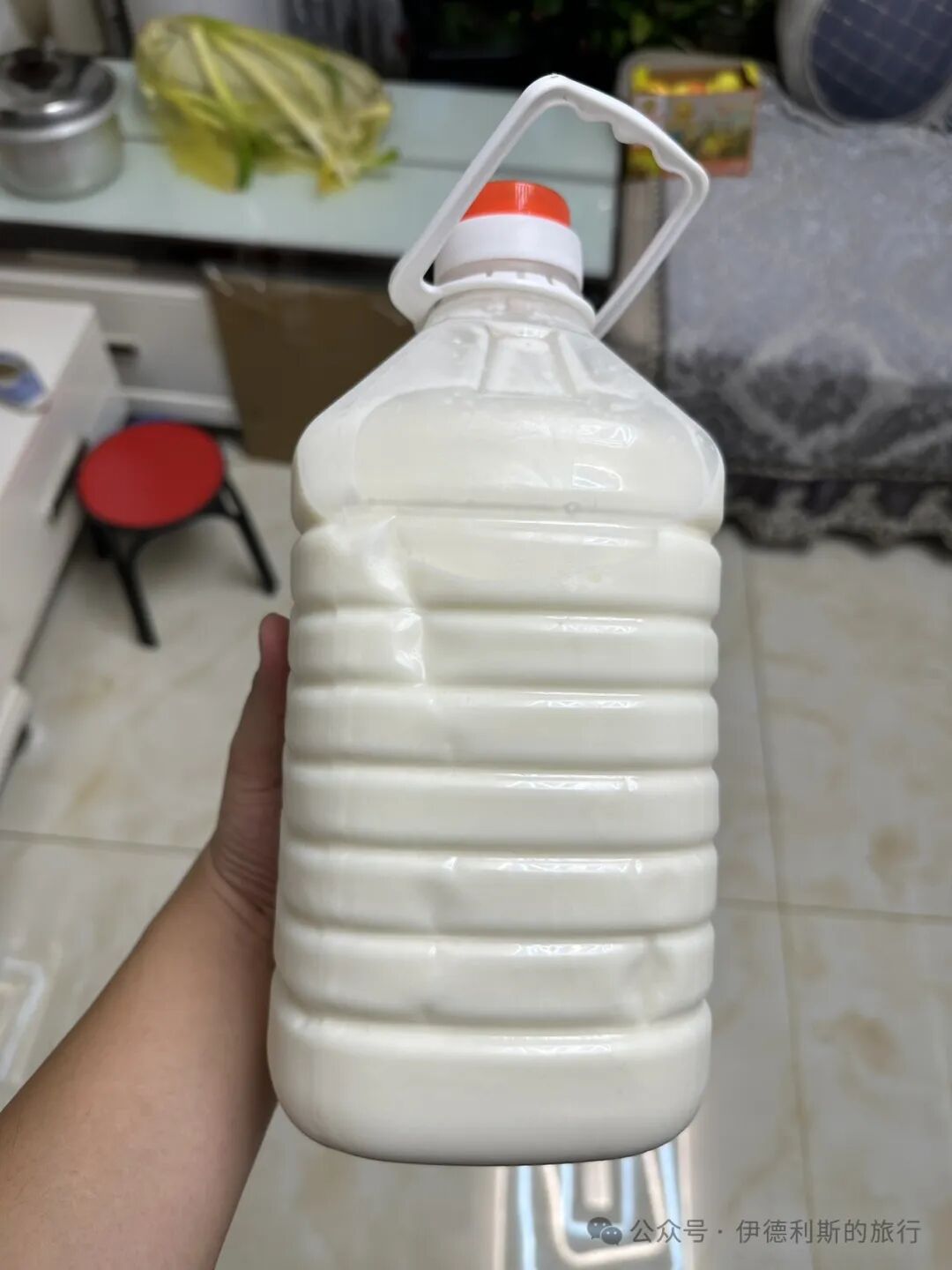
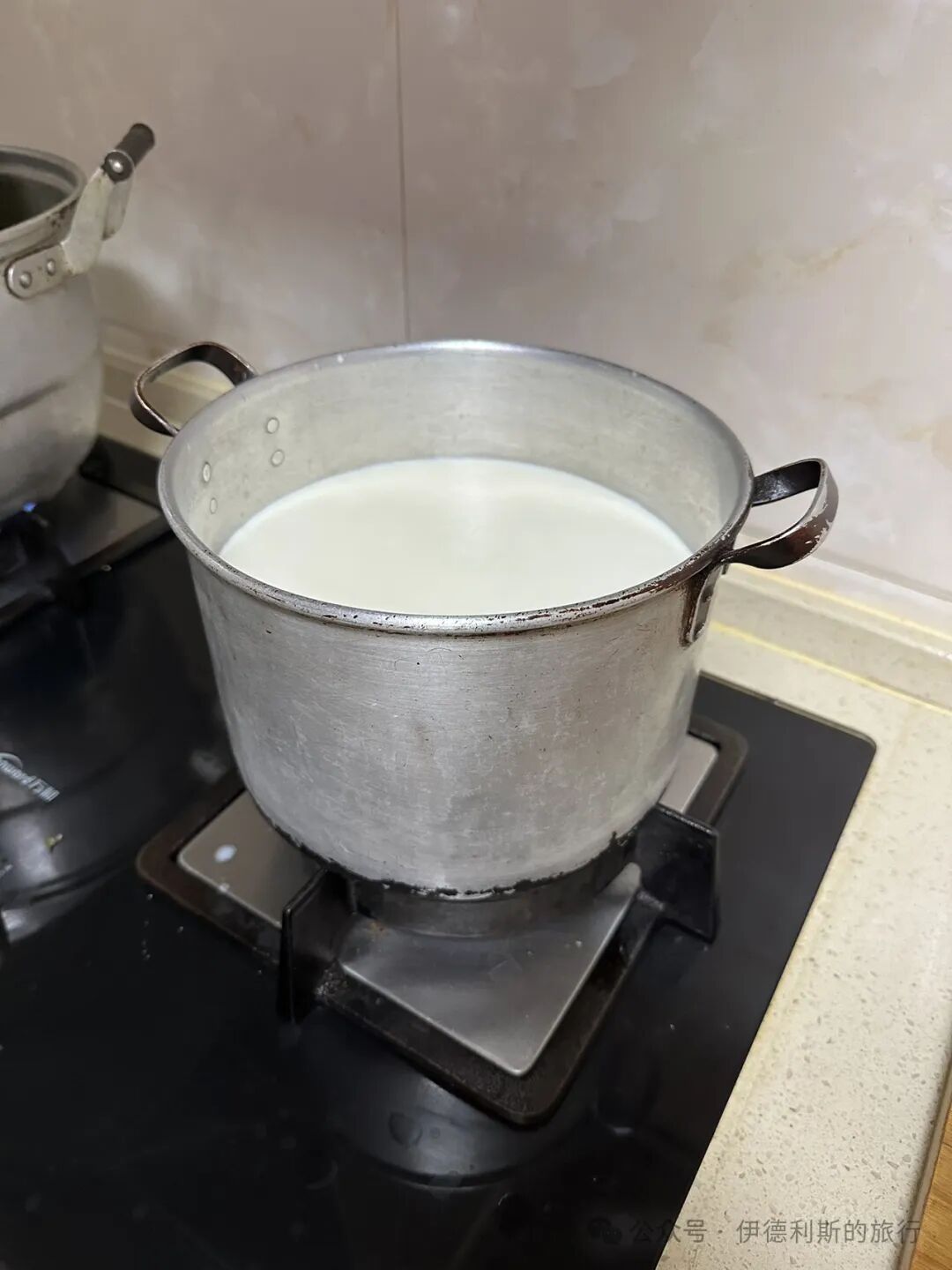
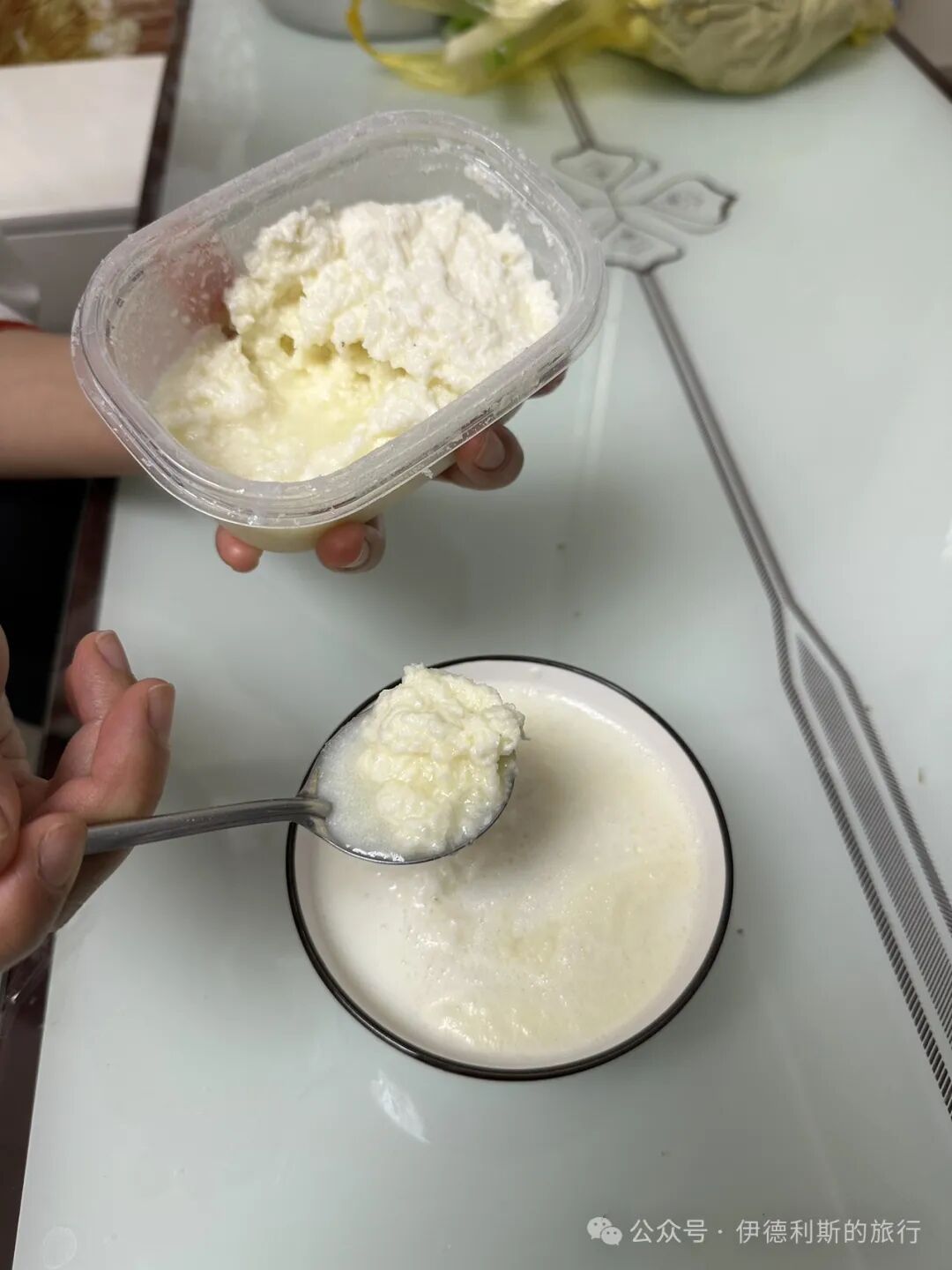
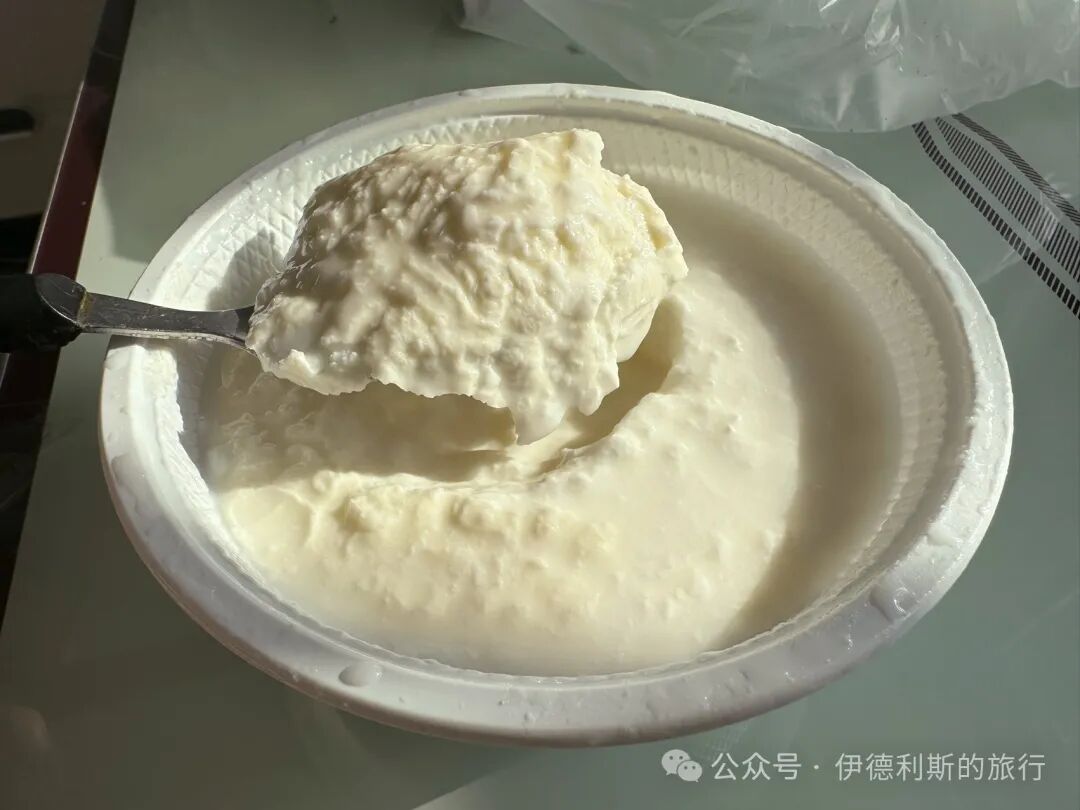
Visiting relatives and friends.
I visited my second aunt's house and had a lunch of Hui Muslim-style lamb dumpling soup (fentang yangrou jiaozi). The soup is the version Hui Muslims in Xinjiang make for Eid, and the dumplings are filled with lamb, onions (piyanzi), and pickled cabbage. They were small and delicate, and everyone loved them.
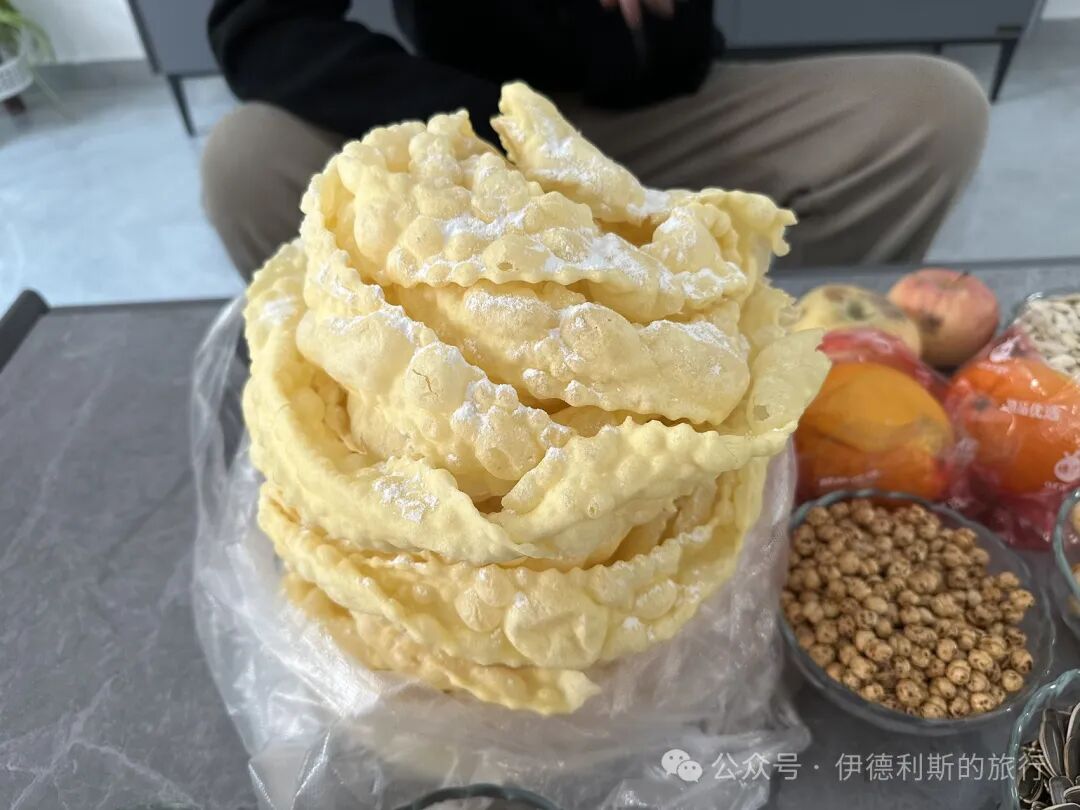
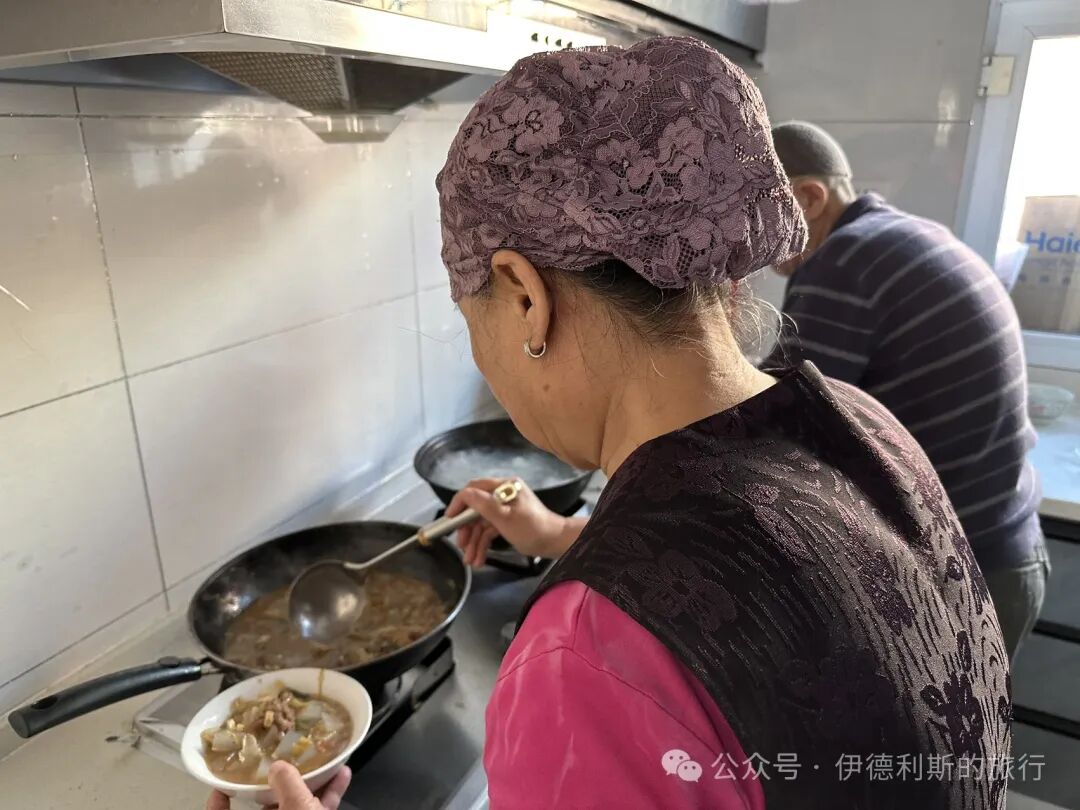
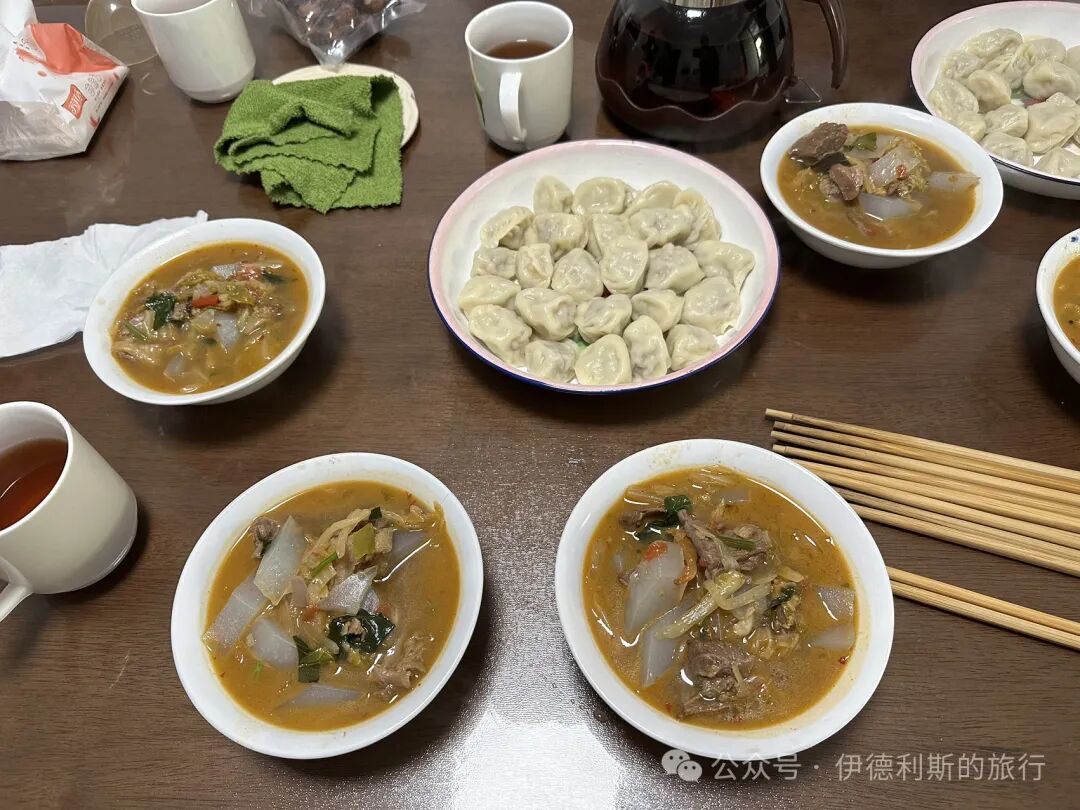
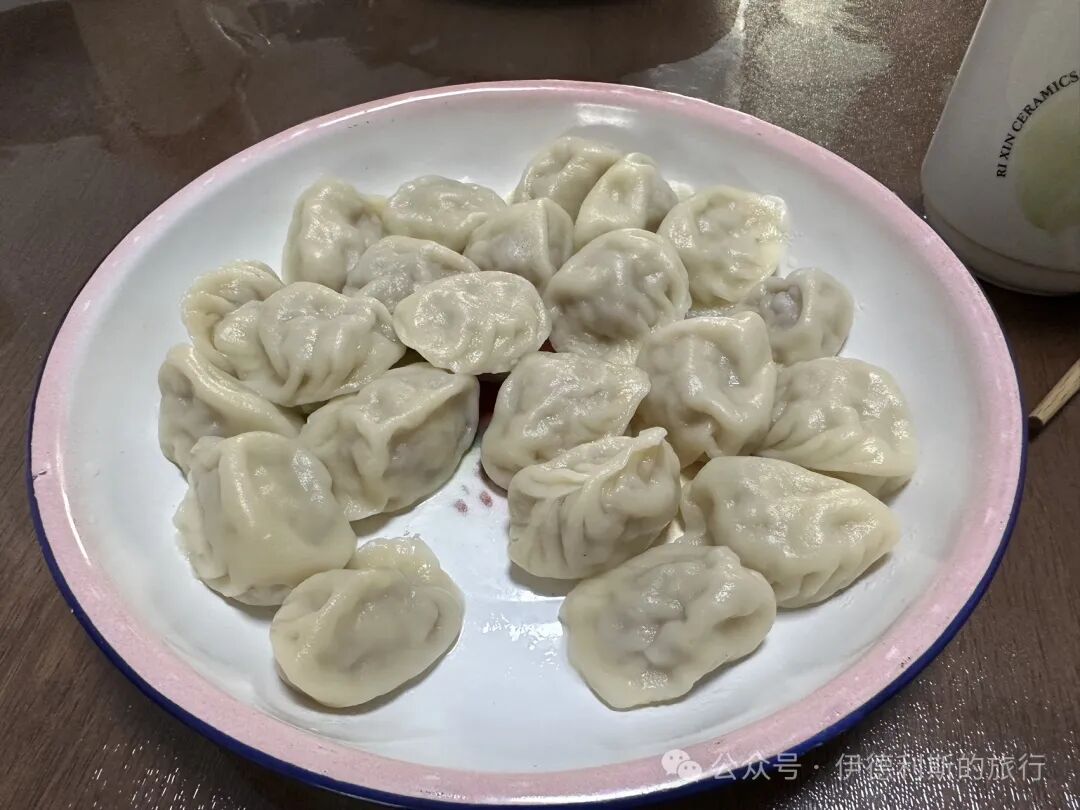
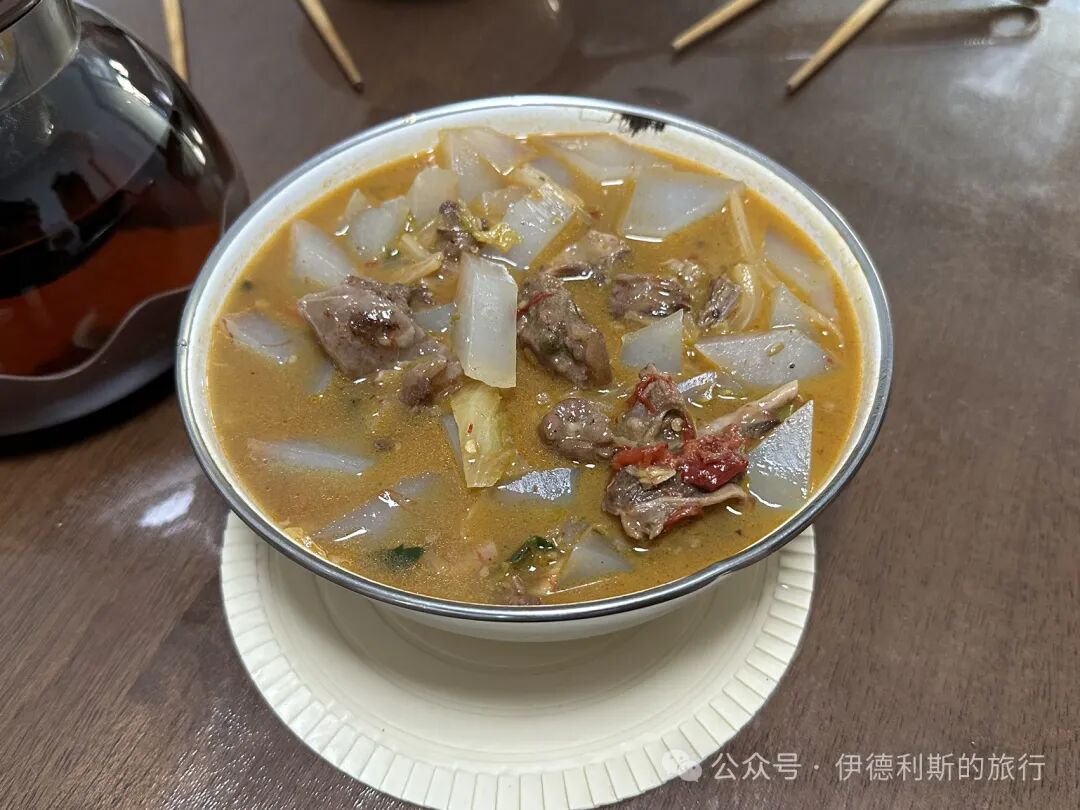
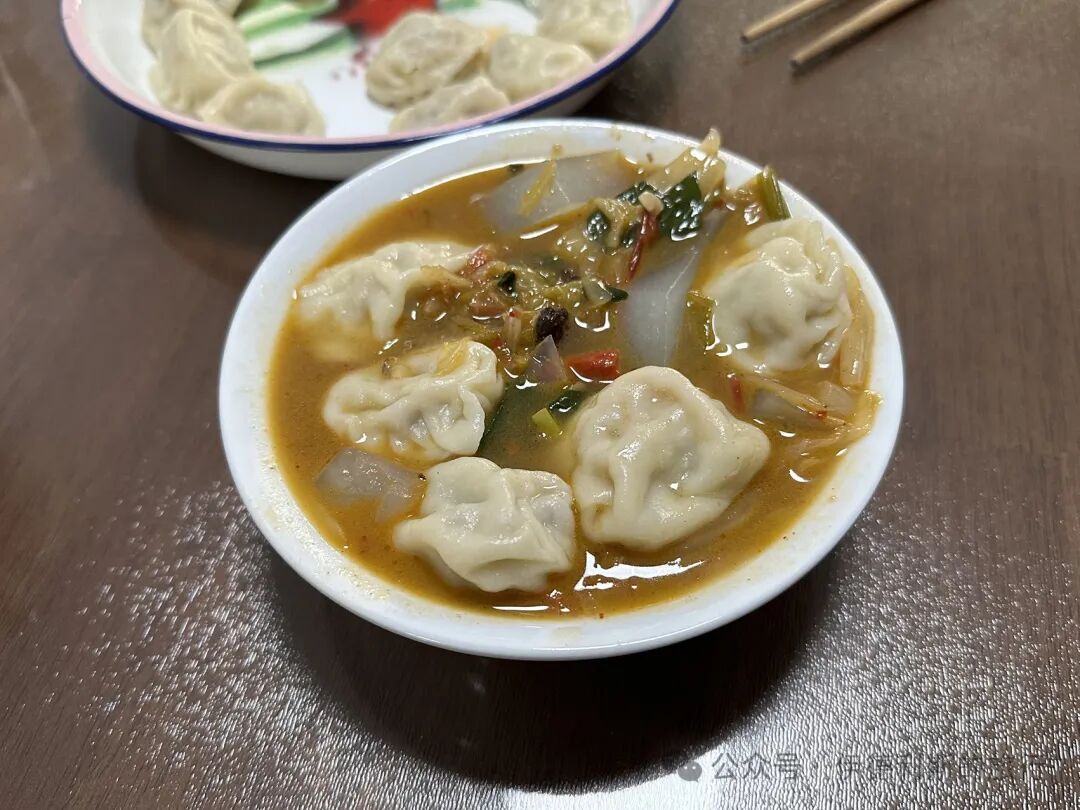
I attended a family dinner at my older sister's place. My brother-in-law is a great cook and made beef steak stew, spicy numbing chicken (jiaoma ji), pumpkin buns (kawa baozi), and smoked horse sausage. My brother-in-law makes amazing rice pilaf (zhuafan), so I made sure to ask him for his tips during the meal. Don't stir-fry the yellow carrots for the rice pilaf all the way through. Stewing them in water brings out their sweetness, so you don't need to add extra sugar. You must use plenty of oil for the rice pilaf. If you use too much, just tilt the pot and scoop the excess out. The extra oil from the rice pilaf is great for making cabbage and meat mixed noodles (banmian) because it adds so much flavor.
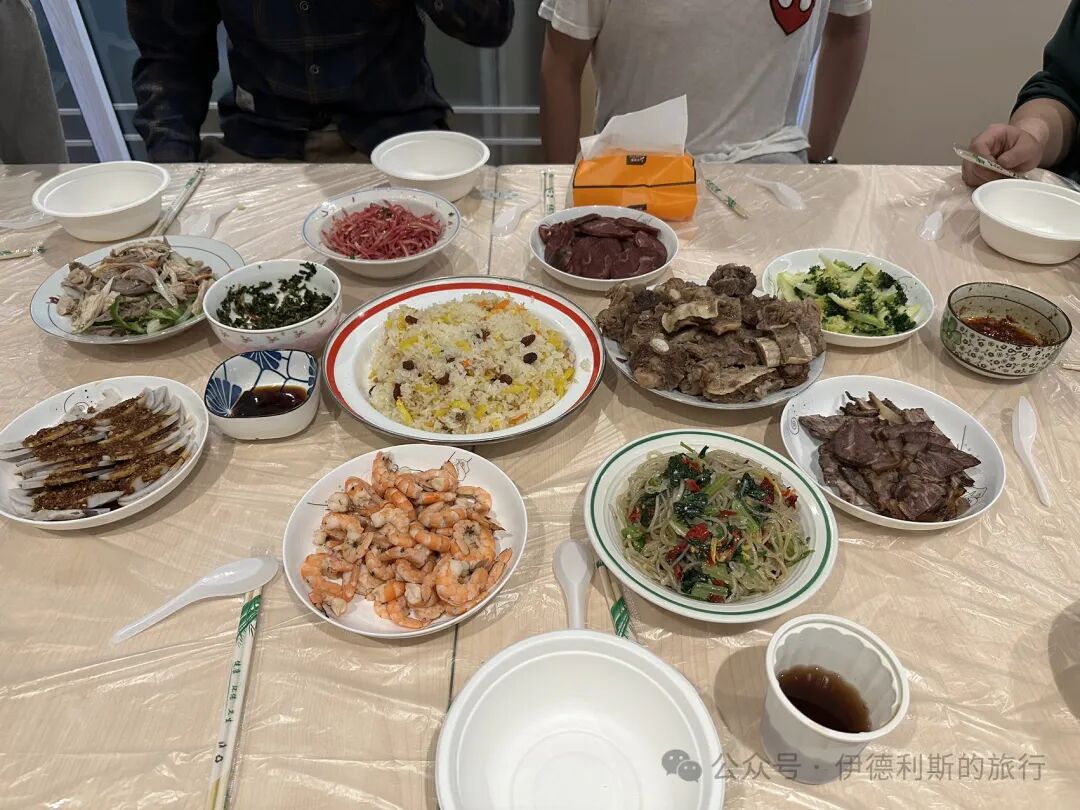
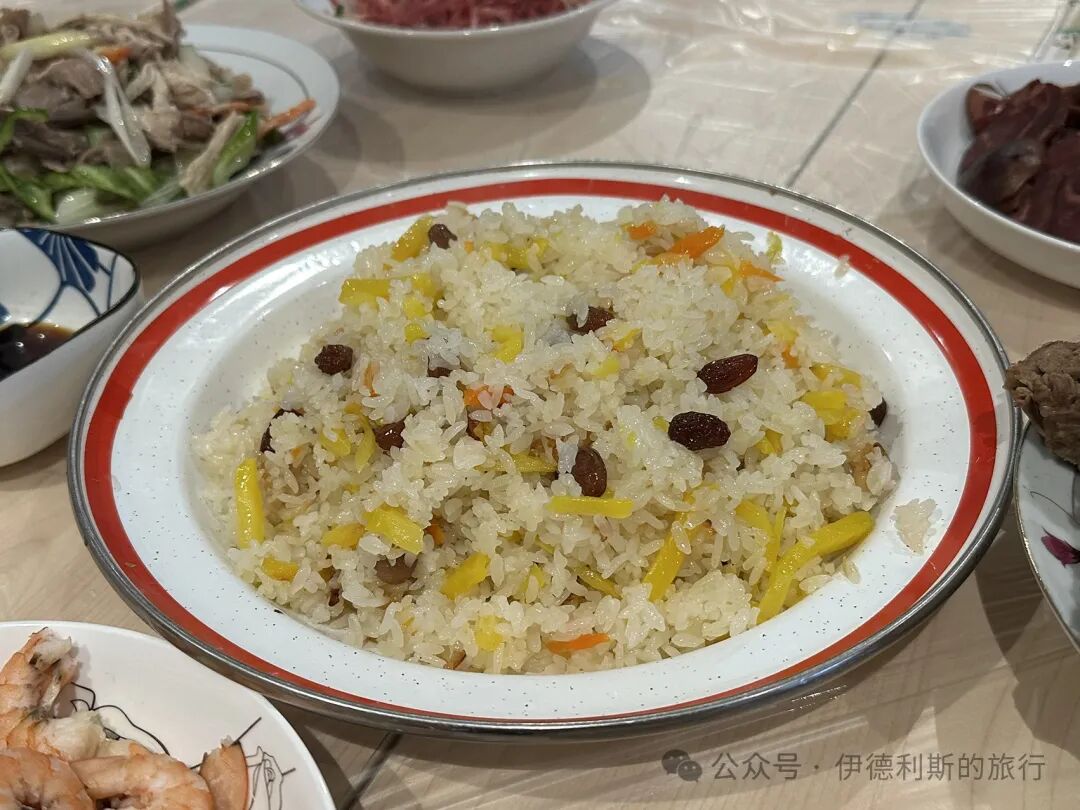
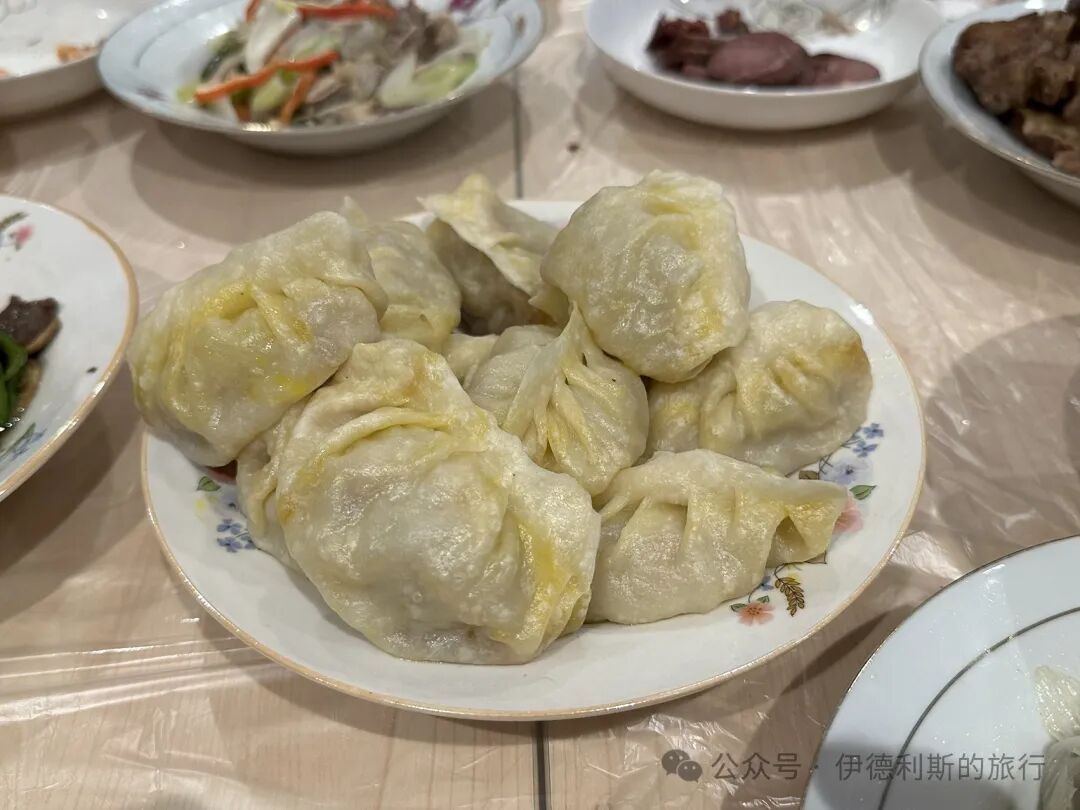
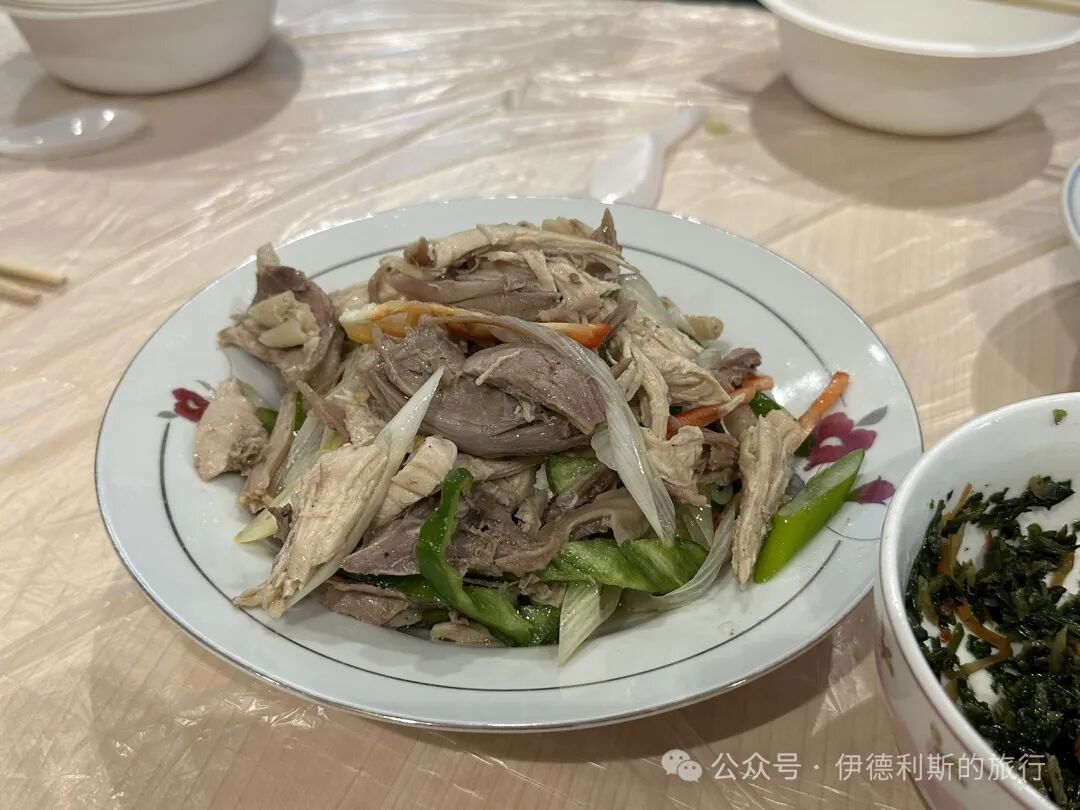
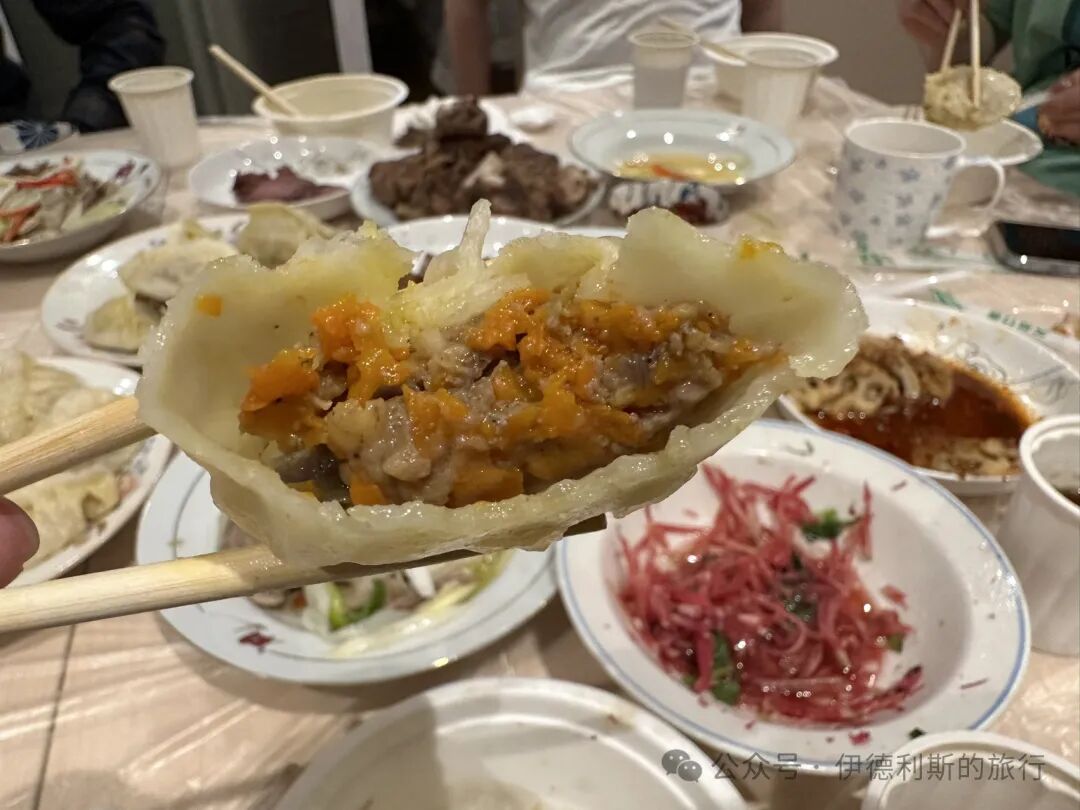
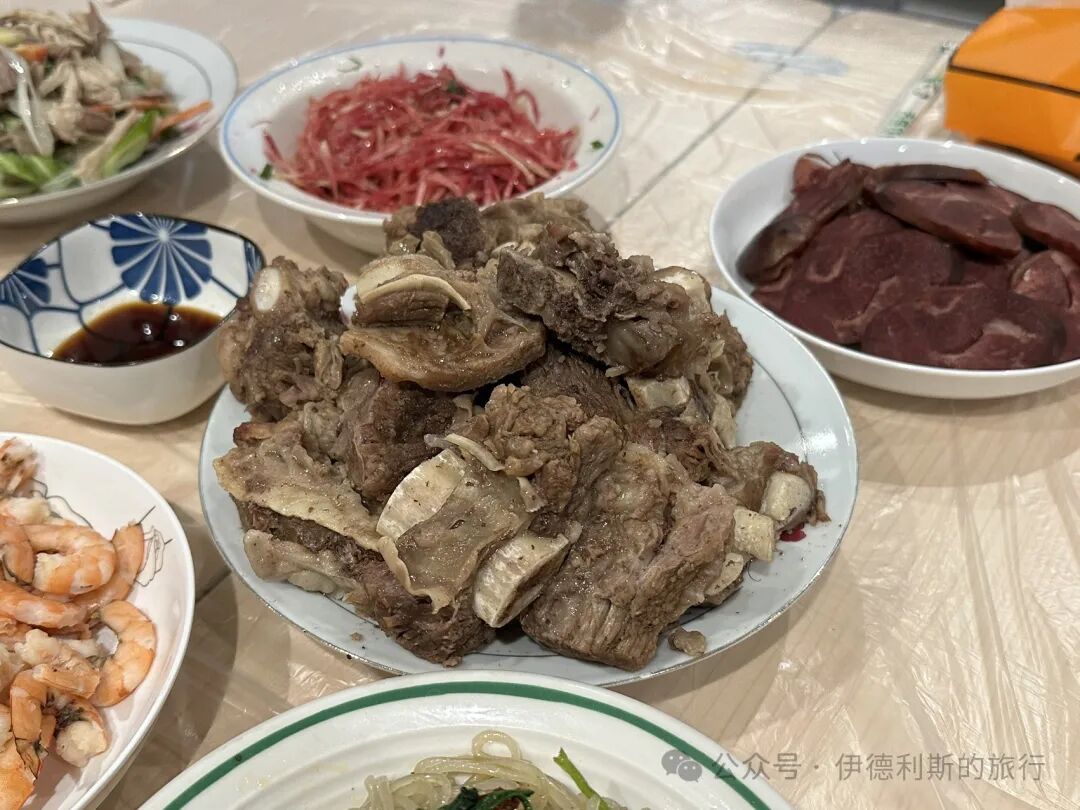
My great-aunt in Wusu invited us out to eat at Lanpin Banquet on Zhujiang Road. It shows how popular this place is among the older generation of Hui Muslims in Urumqi. As soon as we walked in, a young waiter greeted us with a salaam and showed us to our table. We have only been here twice, but the service is always excellent.
This time we had stir-fried black and white lung, yellow noodles with grilled meat (huangmian kaorou), sweet platter (tianpanzi), layered steamed bread (youtazi), spicy numbing chicken, and clear-stewed meat. Everyone loved these traditional dishes.
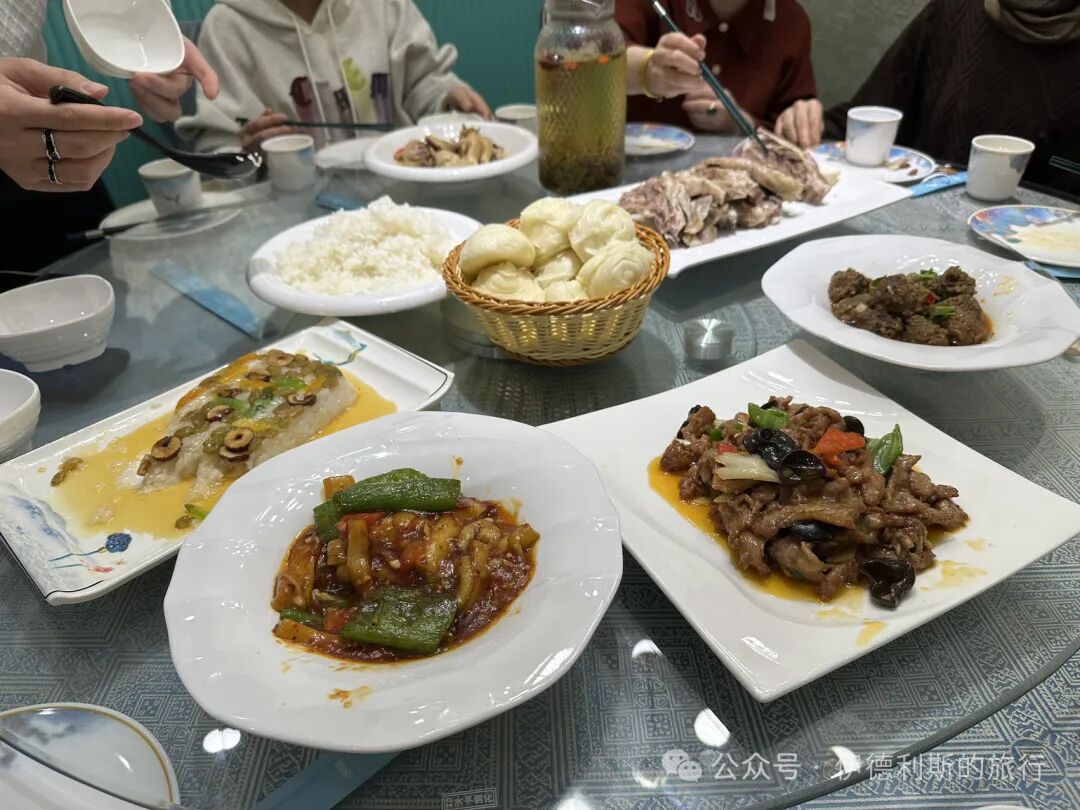
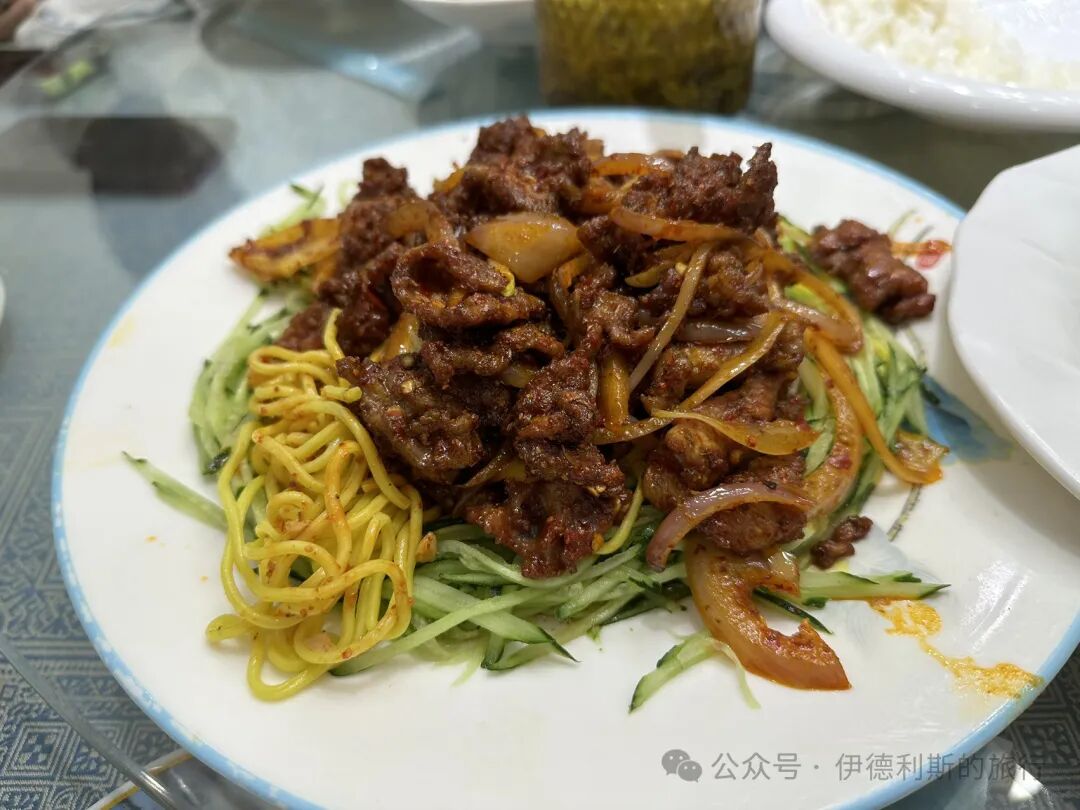
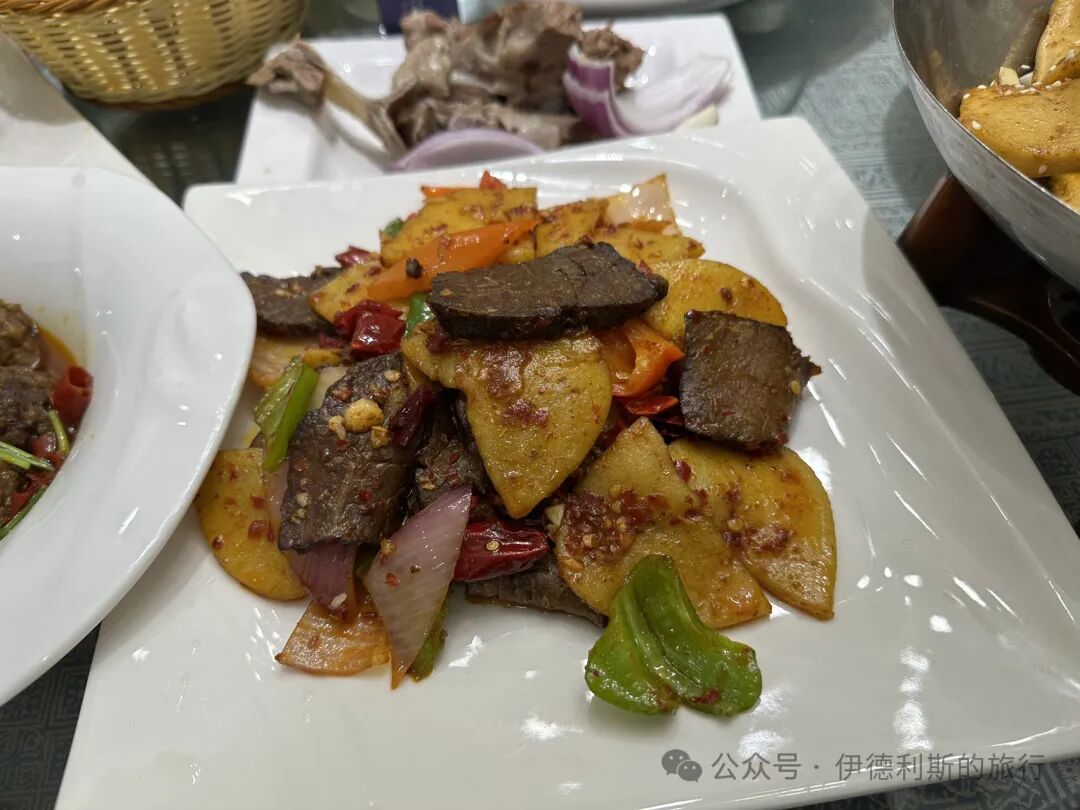
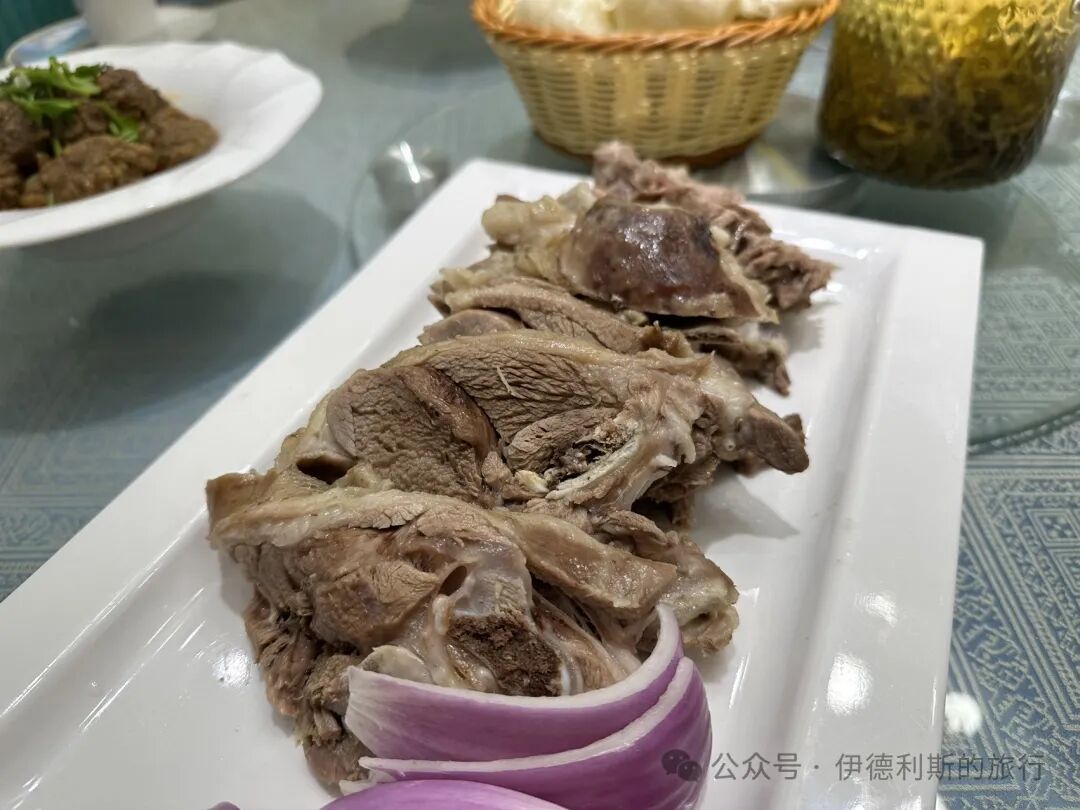
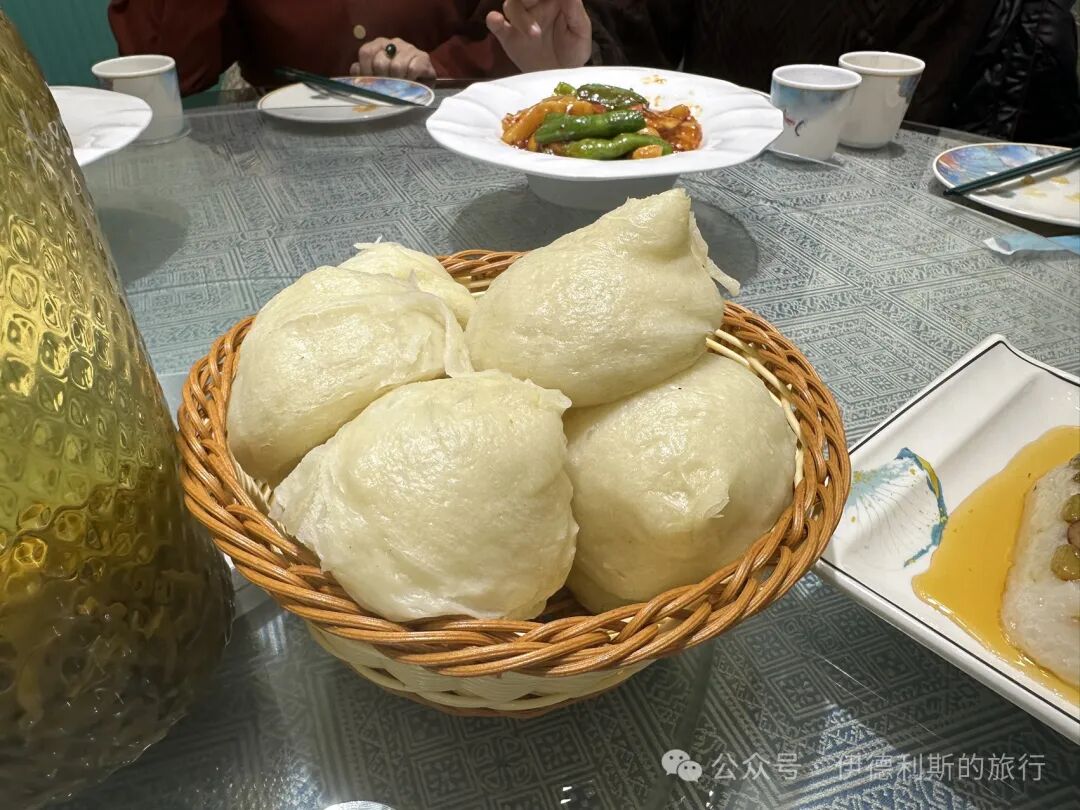
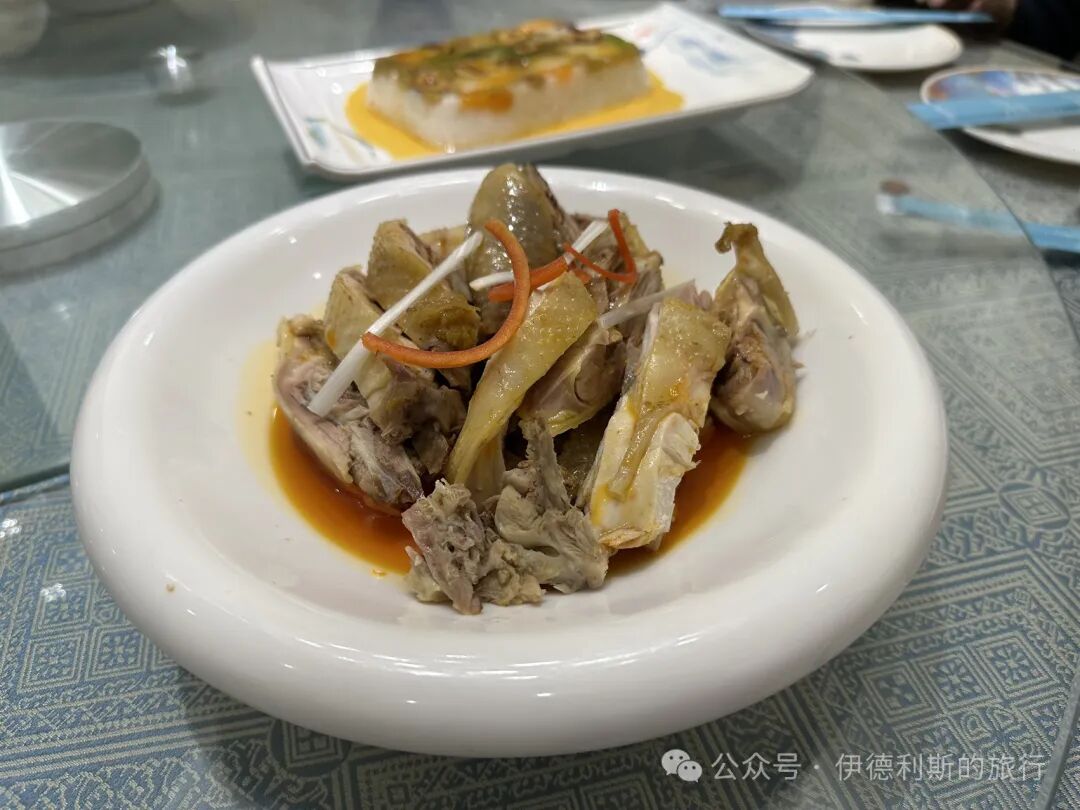
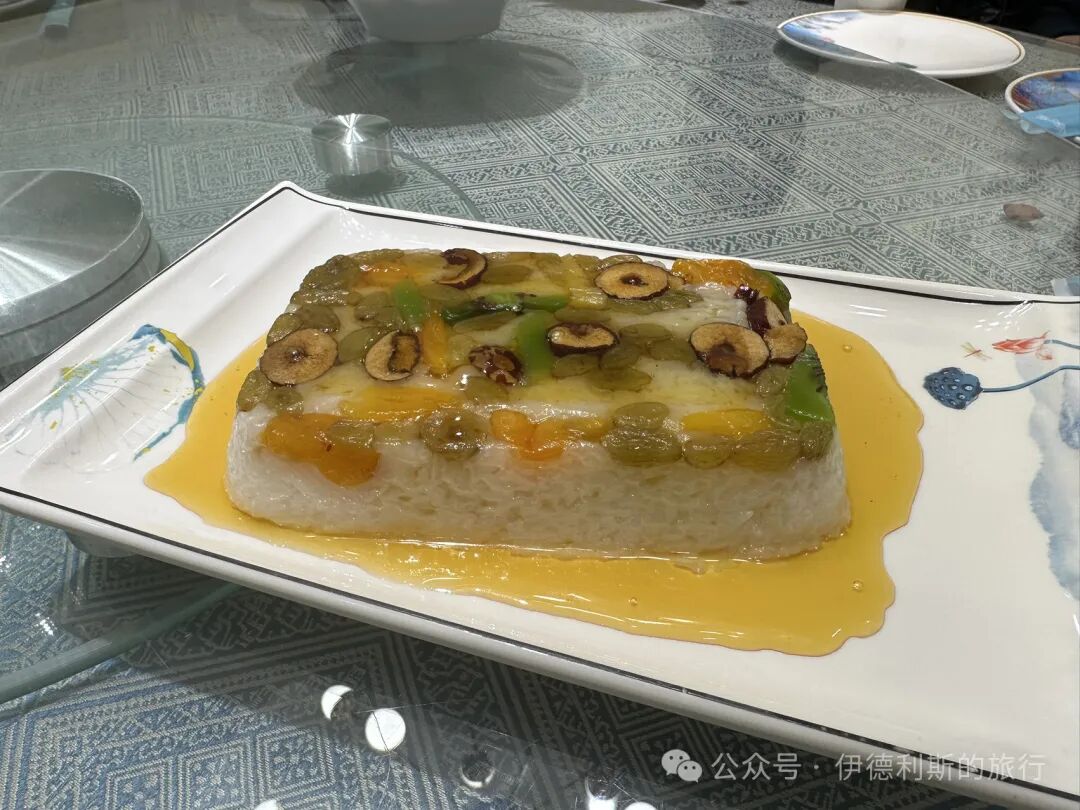
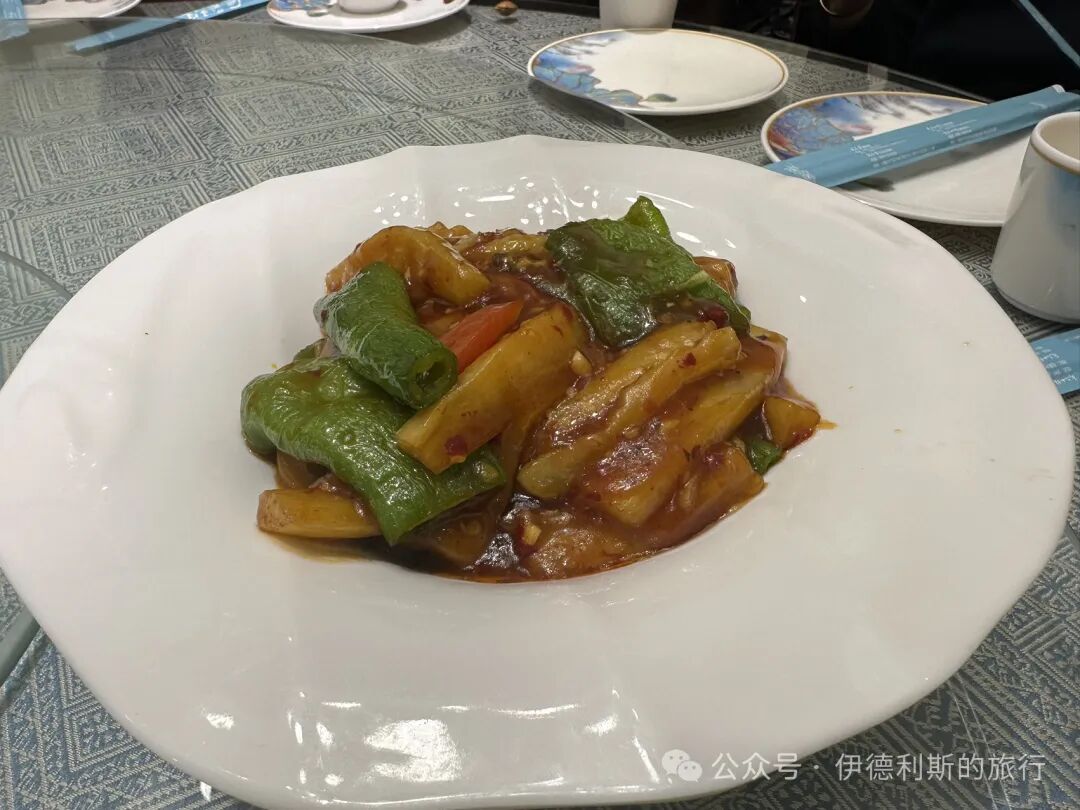
Summary: This Urumqi article records Hui Muslim life during the Spring Festival, including nianye, luohuali, Jumuah prayer, and visiting relatives and friends. It preserves the original religious customs, family scenes, food details, and community observations in natural English.
Night of Prayer (nianye).
During the 2024 Spring Festival holiday, I took Suleiman to visit his grandparents (anai aye) in Urumqi, just in time for the noble month of Sha'ban (the eighth month of the Islamic calendar). The evening of the 15th day of the eighth month is the Night of Bara'at, which means the Night of Atonement. On this night, the two angels on our shoulders replace the scrolls that record our good and bad deeds for the year. They seal the old scrolls and open new ones, which serve as evidence for questioning when we enter the afterlife, so it is also called the Night of Exchanging Scrolls. In the traditions of Hui Muslims in some regions, when the month of Sha'ban arrives, everyone takes turns inviting the imam and friends and family to their homes for a Night of Prayer. The main process includes reciting scriptures, praising the Prophet, performing repentance (tawbah), and asking for forgiveness for family members and the deceased. Afterward, everyone eats a rich meal to strengthen bonds, boost faith, and prepare for the noble month of Ramadan.
February 17 was our family's Night of Prayer, and we also celebrated Suleiman's first birthday (suisuizi). We invited four imams and a large group of relatives to recite surahs, recite the Bara'at praise, perform repentance, and receive dua, followed by a meal. First, we served appetizers (diediezi) and tea. The appetizers included nut tarts and baklava we bought at a Uyghur pastry shop on Hetian Street, as well as traditional flaky pastries and fried flour cakes (saqima) made by my aunt. After everyone chatted for a while, we cleared the appetizers and brought out the main dishes to officially start the feast.
With the help of my aunts, we prepared a rich feast. The main dishes were clear-stewed lamb, braised beef steak, followed by steamed starch jelly (mengzi), pearl meatballs, peppercorn chicken, steamed fish, sweet rice platter (tianpanzi), and various stir-fried dishes. The staples were fried dough (youxiang), steamed buns (momo), and rice.
The fried dough was deep-fried a day in advance. Before frying, we first performed ablution (wudu), then leavened the dough. After it rose, we scalded a small portion with hot oil and mixed in a little baking soda and fenugreek powder. We kneaded the scalded dough into the leavened dough, covered the basin, and let it rest for 15 minutes. After resting, we rolled it into a long shape, pinched off pieces, rolled them into flat cakes, cut four small slits with a knife, and it was ready to be fried. When putting them into the pot, we recited the Tasmiyah. We fried them for a while, flipped them, and tapped the edges with chopsticks; once they were firm, they were done.
To make sweet rice platter (tianpanzi), first wash the glutinous rice and soak it for three days. Then, add a little brown sugar (shazitang) and steam it, using more water than you would for regular rice. Next, wash red dates, walnut kernels, and raisins, and spread them at the bottom of a bowl. Cover them with the steamed glutinous rice and let it cool. After that, boil rock sugar to make a syrup. Finally, flip the bowl of rice onto a plate and pour the syrup over it.
Meatloaf (munzi) is made with ground beef. When mixing the filling, beat it repeatedly, then shape it into a cylinder. Pinch the top to look like a railing, pour an egg into the center, and steam it.
For spicy peppercorn chicken (jiaomaji), first wash a free-range chicken, cut it in half, and put it in a pressure cooker. Add water to cover it, along with red chili, Sichuan peppercorns, salt, bay leaves, cinnamon, and ginger slices. Once cooked, take it out, let it cool in a basin, tear the meat into strips, and top with green onions. Heat oil in a pan. Once hot, turn off the heat and add dried chili skins (lapizi), Sichuan peppercorns, salt, and white pepper. Stir well, pour in some chicken broth, and then pour everything over the chicken in the basin and mix well.
We spent the night at my aunt's house near the cement factory. My uncle is an imam at a small mosque in Shanxi, and we are very grateful (zhigan) for that.
The main dishes were definitely braised beef steak and clear-stewed lamb. The chicken was raised by my uncle himself, and the lamb was from the southern mountains of Urumqi.
We spent the night at my second aunt's house in the New City District. My aunt is the recognized master chef of our family. She makes authentic home-style stir-fries, meatloaf (munzi), stuffed meat slices (jiasha), and tripe.
We spent the night at my aunt's house near the flour mill and had basin meat (penpenrou) with fried dough (youxiang) for breakfast.
We hosted our guests at Lanpin Banquet. It is currently the most popular restaurant in Urumqi for Hui Muslims to hold religious gatherings (niansuoer). They don't sell alcohol, the food is refined, and the owner is warm and attentive. It is usually packed on weekends and holidays, so you must book in advance. On the day we went, they hosted 30 tables for a circumcision ceremony and 15 tables for a special occasion.
We ate stir-fried beef tendon, spicy peppercorn chicken (jiaomaji), cold-dressed beef, hand-grabbed lamb (shoubarou), sauced stuffed meat slices (jiasha), pearl meatballs, and flatfish, along with complimentary side dishes. These are the most popular dishes for Hui Muslim gatherings in Urumqi right now. Their hand-grabbed lamb (shoubarou) is excellent; the meat is tender and fragrant, making it perfect for elderly people to eat.
I spent the night at Uncle Saisai's house in the Changsheng Brigade in the southern suburbs of Urumqi. The hospitality was generous, with dishes like sweet platter (tianpanzi), fried dough snacks (youguozi), pearl meatballs (zhenzhu wanzi), braised ribbonfish, clear-stewed meat, and braised lamb. I also met many relatives.
Engagement acceptance ceremony (luohuali)
This time, I arrived just in time for my brother-in-law's engagement acceptance ceremony (luohuali). We had a feast at a small community (xiaofang) of the Jahriyya order (Zhepai) in Anningqu, in the northern suburbs of Urumqi, where I ate some homemade fried twisted sugar dough (tangningningzi). The feast started with small appetizer plates, which were then cleared to make room for the main dishes, including clear-stewed meat, braised meatballs, braised fish, and beef head meat.
The traditional wedding customs of Hui Muslims in Xinjiang are very specific. Before a formal marriage proposal, there is a 'preliminary inquiry' where the man's family learns about the woman's family. Then, they send a matchmaker with four types of gifts—tea leaves, sugar cubes, red dates, and walnuts (or pastries)—wrapped in four colors, known as the 'four-color gift' (sese li). The first time a matchmaker brings the four-color gift to propose, it is called the 'opening gift' (kaikouli). The matchmaker gives the red-cloth-wrapped gifts to the woman's family, but they do not give an answer right away. After careful consideration, the woman's family sends a message through the matchmaker. The man's family then sends the four-color gift again, which is called the 'engagement acceptance ceremony' (luohuali), and after that, they enter the engagement stage.
Friday prayer (Jumu'ah)
At noon, I attended the Friday prayer (Jumu'ah) at the Changsheng Grand Mosque. The Changsheng Grand Mosque is located in the Changsheng Brigade at the foot of Yaomo Mountain (Yamalike Mountain) in the southern suburbs of Urumqi. It has the highest number of congregants among the Hui Muslim mosques in the Saybagh District, with over a hundred people attending the Friday prayer (Jumu'ah). The Changsheng Brigade used to be a series of large courtyards where everyone farmed. Now, everyone has moved collectively to the Fumin Anju residential area, and the houses are very spacious.
Imam Fanta of the Changsheng Grand Mosque is my wife's uncle. Uncle Fanta is the one who performed our marriage contract (nikah). Uncle Fanta's surname is Su. The Su family is a large clan in Changsheng. Over three hundred years ago, they left Ankang, Shaanxi, and traveled through Ningxia and Jimsar to Urumqi to do business. Later, their business failed, and they eventually moved to Changsheng to farm, where they have lived ever since.
I bought fresh milk and handmade yogurt at the entrance of the Changsheng residential area. A large bucket of fresh milk only cost 20 yuan. After boiling it and adding two spoonfuls of milk skin (naipizi) I bought earlier on Hetian Street, it tasted amazing. The handmade yogurt comes with its own layer of milk skin (naipizi) and has a very rich milky flavor.
Visiting relatives and friends.
I visited my second aunt's house and had a lunch of Hui Muslim-style lamb dumpling soup (fentang yangrou jiaozi). The soup is the version Hui Muslims in Xinjiang make for Eid, and the dumplings are filled with lamb, onions (piyanzi), and pickled cabbage. They were small and delicate, and everyone loved them.
I attended a family dinner at my older sister's place. My brother-in-law is a great cook and made beef steak stew, spicy numbing chicken (jiaoma ji), pumpkin buns (kawa baozi), and smoked horse sausage. My brother-in-law makes amazing rice pilaf (zhuafan), so I made sure to ask him for his tips during the meal. Don't stir-fry the yellow carrots for the rice pilaf all the way through. Stewing them in water brings out their sweetness, so you don't need to add extra sugar. You must use plenty of oil for the rice pilaf. If you use too much, just tilt the pot and scoop the excess out. The extra oil from the rice pilaf is great for making cabbage and meat mixed noodles (banmian) because it adds so much flavor.
My great-aunt in Wusu invited us out to eat at Lanpin Banquet on Zhujiang Road. It shows how popular this place is among the older generation of Hui Muslims in Urumqi. As soon as we walked in, a young waiter greeted us with a salaam and showed us to our table. We have only been here twice, but the service is always excellent.
This time we had stir-fried black and white lung, yellow noodles with grilled meat (huangmian kaorou), sweet platter (tianpanzi), layered steamed bread (youtazi), spicy numbing chicken, and clear-stewed meat. Everyone loved these traditional dishes.
Jumu'ah at Moscow's Tatar Historical Mosque: Muslim Heritage in Russia
Articles • ali2007fr posted the article • 0 comments • 194 views • 2026-05-17 07:35
Reposted from the web
Summary: This travel note introduces Jumu'ah at Moscow's Tatar Historical Mosque: Muslim Heritage in Russia. Tatars from the Golden Horde began settling in Moscow as early as the 14th century. It is useful for readers interested in Moscow Mosque, Tatar Muslims, Jumu'ah.
Tatars from the Golden Horde began settling in Moscow as early as the 14th century. In 1571, the Crimean Tatars burned down almost the entire city of Moscow except for the Kremlin, and the early Tatar settlements were destroyed in an instant. In the early 17th century, with the establishment of the Romanov dynasty, the city of Moscow flourished again, and many Tatars from the Volga River and steppe regions came to trade. The Tatar community (Tatarskaya Sloboda) located south of the Moskva River, opposite the Kremlin, was officially formed, and the community's main street, Tatarskaya Street, was first mentioned in documents in 1682. The center of the Moscow Tatar community is the "Historical Mosque."
Historical Mosque of the Tatar community: 1823.
On a Friday at noon, I performed Jumu'ah (Friday prayer) at the Historical Mosque in Moscow's Tatar community and ate dates from the mosque.
The Tatar community mosque (mecheti v Tatarskoy slobode) is now called the "Historical Mosque (Istoricheskoy mecheti)." The earliest records of the mosque can be traced back to 1712, and it was also mentioned in the 1744 census. Due to the Moscow plague in the 1770s, the mosque's owner and congregants passed away one after another. The mosque was sold to a merchant and was eventually destroyed by fire when Napoleon withdrew from Moscow in 1812. After this, religious activities were conducted in the homes of local Tatar merchants.
After the old mosque was destroyed, Tatar Muslim merchants in Moscow repeatedly applied to build a new mosque, but were all refused. It was not until 1823 that Tatar merchant Nazarbay Khashalov was finally approved to build a mosque on Bolshaya Tatarskaya Street, on the condition that it could not be named a "mosque (mecheti)" and could not have the appearance of a mosque. Therefore, the mosque building constructed at that time looked almost the same as the surrounding houses.
A diagram of the original mosque.
Between 1833 and 1867, the Imam of the mosque was Rafek Bekbulatovich Ageev. Under his efforts, the Muslim community in Moscow gradually improved, and his home was also the first Islamic school in Moscow. The Imam of the mosque between 1867 and 1913 was Khairetdin Rafekovich Ageev. He graduated from a madrasa (Islamic school) in Kazan, was proficient in 8 languages, taught Islamic knowledge and the Tatar language to military cadets for many years, and was also a translator for the Armory.
In the mid-to-late 19th century, as the number of Muslims in Moscow continued to increase, many people could only pray outside the mosque during Jumu'ah, which was very cold, especially in winter. In 1881, Tsar Alexander II approved the mosque to have the appearance of a religious building. Therefore, in 1882, the mosque was expanded under the direction of architect Dmitry Pevnitsky. The new mosque was expanded on both the east and west facades and a minaret was added. After the expansion, it could accommodate 1,500 people.
The mosque in 1883 after reconstruction.
The Imam of the mosque from 1914 to 1937 was Abdulla Hasanovich Shamsutdinov. He was a Qasim Tatar who studied at an Islamic madrasa in Bukhara and had served as an Imam in Yining, Xinjiang. In 1914, he presided over the opening of a new Islamic madrasa at the mosque and helped the Moscow Muslim Charitable Society become active, making the Moscow Muslim community more united and organized. In the early 1920s, he also began working on translating the Quran into the Tatar language.
On April 29, 1936, the Imam and his wife were arrested on charges of participating in "anti-Soviet activities" due to a "conspiracy of religious leaders." On February 10, 1937, the Imam was executed by firing squad for being accused of treason, and his wife died in the interrogation room of the NKVD (People's Commissariat for Internal Affairs).
In 1939, the mosque was forced to close. During the Soviet era, the mosque was occupied by a printing house and several other departments in succession. Between 1944 and 1947, Moscow Muslims tried to reclaim the mosque, but were ultimately unsuccessful. In 1967, the mosque's minaret was demolished.
The mosque after the minaret was demolished.
The mosque after the minaret was demolished.
After the 1980s, the elders of the Tatar community repeatedly requested the return of the mosque. However, since the early 1980s, the art engraving association printing workshop that occupied the mosque had been protesting, so the return process was delayed until it was finally returned to the Muslims in 1991.
In 1992, the mosque was renovated and reopened in 1993. In 1997, the mosque was renovated again, becoming what it is today.
Eating samsa (baked meat buns) with tea at the Historical Mosque before Jumu'ah. Nowadays, most of the people who come to the Historical Mosque for Jumu'ah are Muslims from Central Asia and the Caucasus.
After Jumu'ah prayers, I ate lagman (hand-pulled noodles) and roast chicken at the restaurant in the Historical Mosque. The atmosphere here is very good and lively.
An uncle is peeling a pomegranate.
Then I walked around the Islamic goods store upstairs, which sells Tatar hats called Tubetei (traditional skullcaps).
Kazan Tea Bar.
There is a Tatar restaurant in the historic Tatar community called Kazan Tea Bar, which is also the center for Kazan cultural activities in Moscow and often organizes various Tatar cultural events.
I ate Beshbarmak (boiled meat with noodles), Kystyby (flatbread with filling), Tatar-style Kazy (horse meat sausage), plov (pilaf), Kazan chicken salad, and Tatar milk tea inside. Tatar milk tea is made of black tea + green tea + thyme + linden leaf + chamomile + oregano + mint leaf + sage.
Next to the Kazan Tea Bar is a shop selling Kazan Tatar souvenirs. I bought two Kazan Tatar female magnets and a Tubetei (traditional skullcap) worn by Kazan Tatars. view all
Summary: This travel note introduces Jumu'ah at Moscow's Tatar Historical Mosque: Muslim Heritage in Russia. Tatars from the Golden Horde began settling in Moscow as early as the 14th century. It is useful for readers interested in Moscow Mosque, Tatar Muslims, Jumu'ah.
Tatars from the Golden Horde began settling in Moscow as early as the 14th century. In 1571, the Crimean Tatars burned down almost the entire city of Moscow except for the Kremlin, and the early Tatar settlements were destroyed in an instant. In the early 17th century, with the establishment of the Romanov dynasty, the city of Moscow flourished again, and many Tatars from the Volga River and steppe regions came to trade. The Tatar community (Tatarskaya Sloboda) located south of the Moskva River, opposite the Kremlin, was officially formed, and the community's main street, Tatarskaya Street, was first mentioned in documents in 1682. The center of the Moscow Tatar community is the "Historical Mosque."
Historical Mosque of the Tatar community: 1823.
On a Friday at noon, I performed Jumu'ah (Friday prayer) at the Historical Mosque in Moscow's Tatar community and ate dates from the mosque.
The Tatar community mosque (mecheti v Tatarskoy slobode) is now called the "Historical Mosque (Istoricheskoy mecheti)." The earliest records of the mosque can be traced back to 1712, and it was also mentioned in the 1744 census. Due to the Moscow plague in the 1770s, the mosque's owner and congregants passed away one after another. The mosque was sold to a merchant and was eventually destroyed by fire when Napoleon withdrew from Moscow in 1812. After this, religious activities were conducted in the homes of local Tatar merchants.
After the old mosque was destroyed, Tatar Muslim merchants in Moscow repeatedly applied to build a new mosque, but were all refused. It was not until 1823 that Tatar merchant Nazarbay Khashalov was finally approved to build a mosque on Bolshaya Tatarskaya Street, on the condition that it could not be named a "mosque (mecheti)" and could not have the appearance of a mosque. Therefore, the mosque building constructed at that time looked almost the same as the surrounding houses.
A diagram of the original mosque.
Between 1833 and 1867, the Imam of the mosque was Rafek Bekbulatovich Ageev. Under his efforts, the Muslim community in Moscow gradually improved, and his home was also the first Islamic school in Moscow. The Imam of the mosque between 1867 and 1913 was Khairetdin Rafekovich Ageev. He graduated from a madrasa (Islamic school) in Kazan, was proficient in 8 languages, taught Islamic knowledge and the Tatar language to military cadets for many years, and was also a translator for the Armory.
In the mid-to-late 19th century, as the number of Muslims in Moscow continued to increase, many people could only pray outside the mosque during Jumu'ah, which was very cold, especially in winter. In 1881, Tsar Alexander II approved the mosque to have the appearance of a religious building. Therefore, in 1882, the mosque was expanded under the direction of architect Dmitry Pevnitsky. The new mosque was expanded on both the east and west facades and a minaret was added. After the expansion, it could accommodate 1,500 people.
The mosque in 1883 after reconstruction.
The Imam of the mosque from 1914 to 1937 was Abdulla Hasanovich Shamsutdinov. He was a Qasim Tatar who studied at an Islamic madrasa in Bukhara and had served as an Imam in Yining, Xinjiang. In 1914, he presided over the opening of a new Islamic madrasa at the mosque and helped the Moscow Muslim Charitable Society become active, making the Moscow Muslim community more united and organized. In the early 1920s, he also began working on translating the Quran into the Tatar language.
On April 29, 1936, the Imam and his wife were arrested on charges of participating in "anti-Soviet activities" due to a "conspiracy of religious leaders." On February 10, 1937, the Imam was executed by firing squad for being accused of treason, and his wife died in the interrogation room of the NKVD (People's Commissariat for Internal Affairs).
In 1939, the mosque was forced to close. During the Soviet era, the mosque was occupied by a printing house and several other departments in succession. Between 1944 and 1947, Moscow Muslims tried to reclaim the mosque, but were ultimately unsuccessful. In 1967, the mosque's minaret was demolished.
The mosque after the minaret was demolished.
The mosque after the minaret was demolished.
After the 1980s, the elders of the Tatar community repeatedly requested the return of the mosque. However, since the early 1980s, the art engraving association printing workshop that occupied the mosque had been protesting, so the return process was delayed until it was finally returned to the Muslims in 1991.
In 1992, the mosque was renovated and reopened in 1993. In 1997, the mosque was renovated again, becoming what it is today.
Eating samsa (baked meat buns) with tea at the Historical Mosque before Jumu'ah. Nowadays, most of the people who come to the Historical Mosque for Jumu'ah are Muslims from Central Asia and the Caucasus.
After Jumu'ah prayers, I ate lagman (hand-pulled noodles) and roast chicken at the restaurant in the Historical Mosque. The atmosphere here is very good and lively.
An uncle is peeling a pomegranate.
Then I walked around the Islamic goods store upstairs, which sells Tatar hats called Tubetei (traditional skullcaps).
Kazan Tea Bar.
There is a Tatar restaurant in the historic Tatar community called Kazan Tea Bar, which is also the center for Kazan cultural activities in Moscow and often organizes various Tatar cultural events.
I ate Beshbarmak (boiled meat with noodles), Kystyby (flatbread with filling), Tatar-style Kazy (horse meat sausage), plov (pilaf), Kazan chicken salad, and Tatar milk tea inside. Tatar milk tea is made of black tea + green tea + thyme + linden leaf + chamomile + oregano + mint leaf + sage.
Next to the Kazan Tea Bar is a shop selling Kazan Tatar souvenirs. I bought two Kazan Tatar female magnets and a Tubetei (traditional skullcap) worn by Kazan Tatars. view all
Reposted from the web
Summary: This travel note introduces Jumu'ah at Moscow's Tatar Historical Mosque: Muslim Heritage in Russia. Tatars from the Golden Horde began settling in Moscow as early as the 14th century. It is useful for readers interested in Moscow Mosque, Tatar Muslims, Jumu'ah.
Tatars from the Golden Horde began settling in Moscow as early as the 14th century. In 1571, the Crimean Tatars burned down almost the entire city of Moscow except for the Kremlin, and the early Tatar settlements were destroyed in an instant. In the early 17th century, with the establishment of the Romanov dynasty, the city of Moscow flourished again, and many Tatars from the Volga River and steppe regions came to trade. The Tatar community (Tatarskaya Sloboda) located south of the Moskva River, opposite the Kremlin, was officially formed, and the community's main street, Tatarskaya Street, was first mentioned in documents in 1682. The center of the Moscow Tatar community is the "Historical Mosque."
Historical Mosque of the Tatar community: 1823.
On a Friday at noon, I performed Jumu'ah (Friday prayer) at the Historical Mosque in Moscow's Tatar community and ate dates from the mosque.
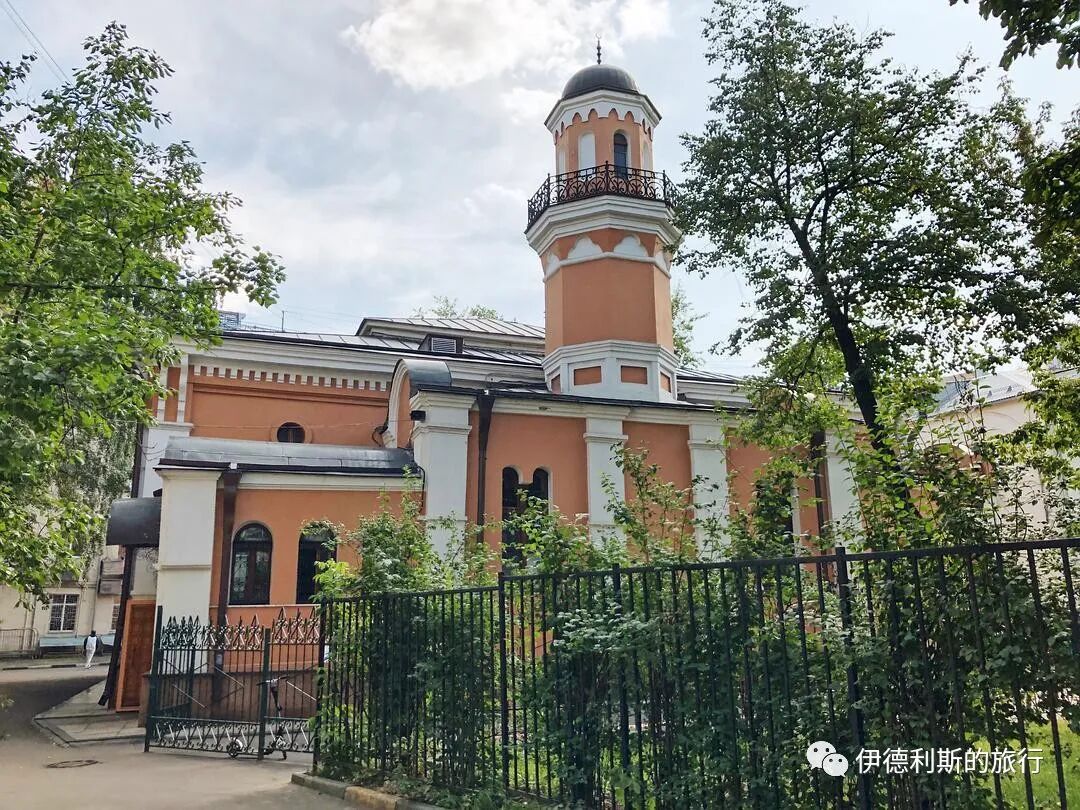
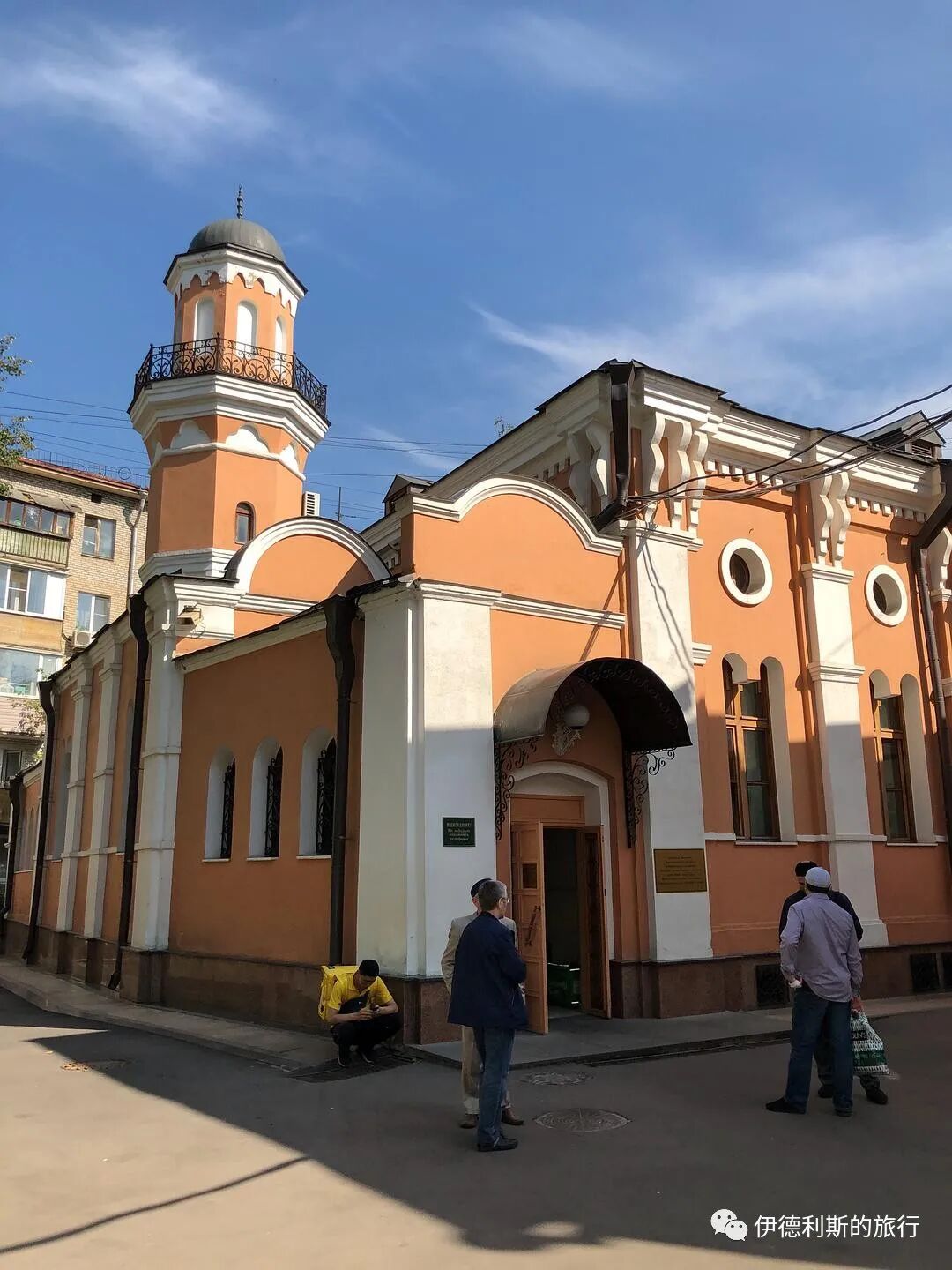
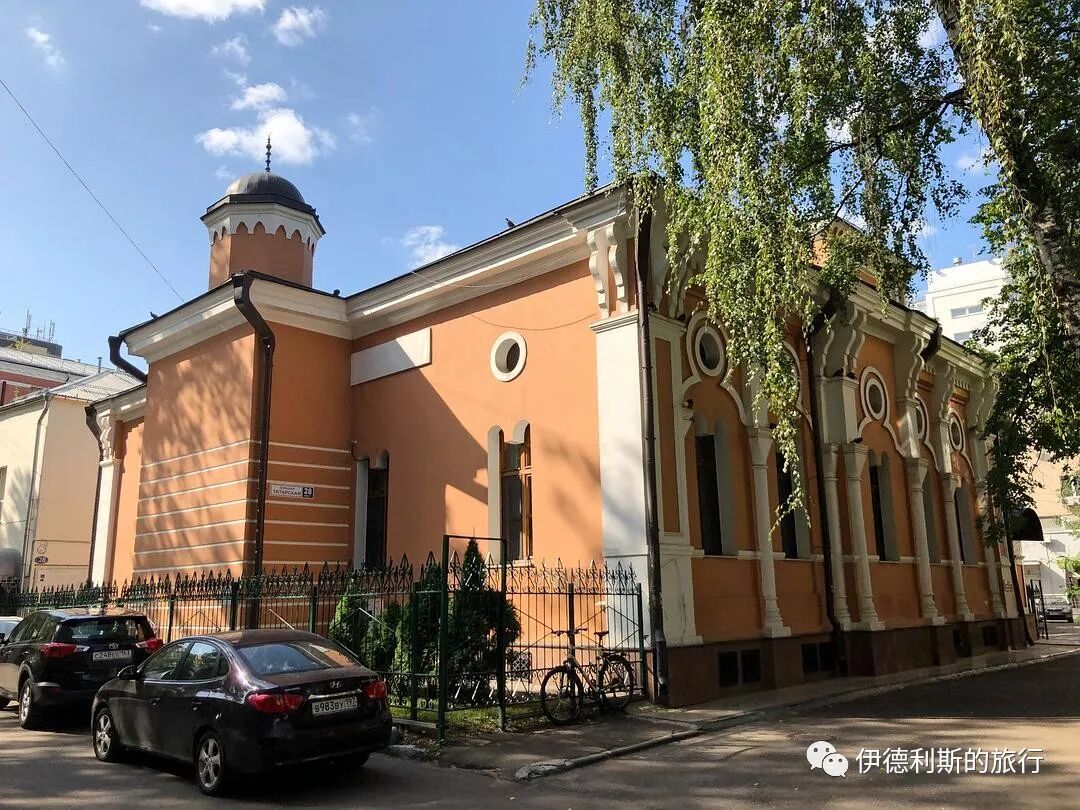
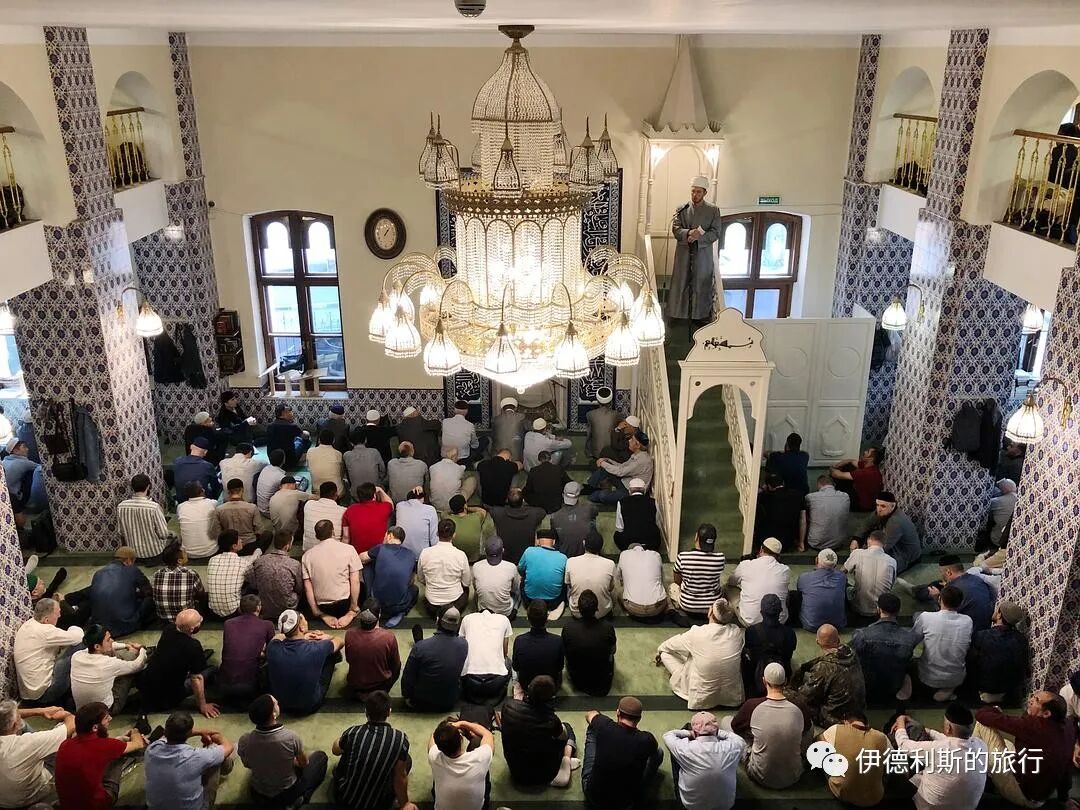
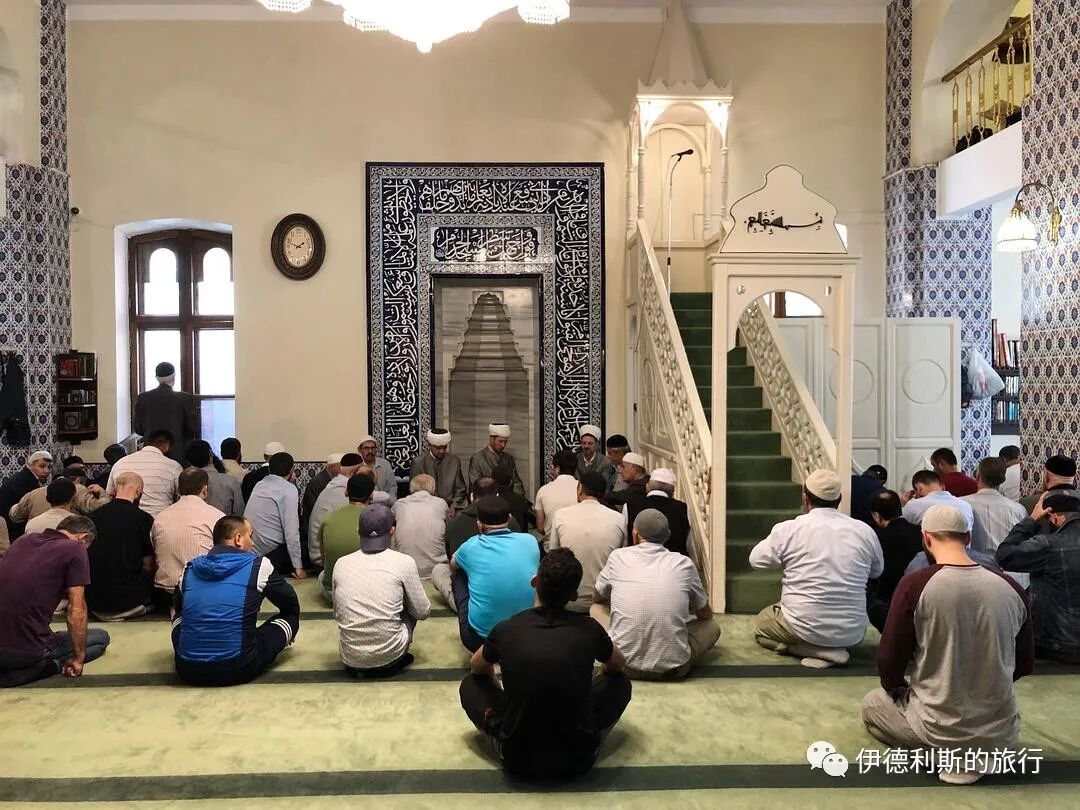
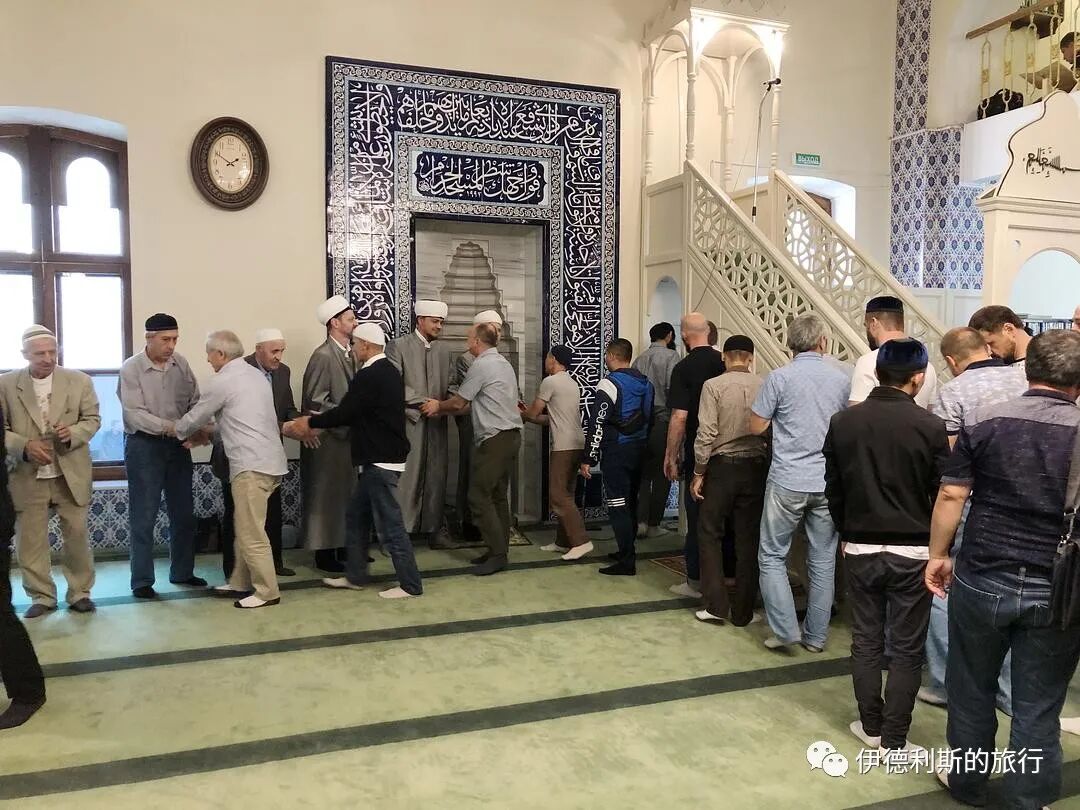
The Tatar community mosque (mecheti v Tatarskoy slobode) is now called the "Historical Mosque (Istoricheskoy mecheti)." The earliest records of the mosque can be traced back to 1712, and it was also mentioned in the 1744 census. Due to the Moscow plague in the 1770s, the mosque's owner and congregants passed away one after another. The mosque was sold to a merchant and was eventually destroyed by fire when Napoleon withdrew from Moscow in 1812. After this, religious activities were conducted in the homes of local Tatar merchants.
After the old mosque was destroyed, Tatar Muslim merchants in Moscow repeatedly applied to build a new mosque, but were all refused. It was not until 1823 that Tatar merchant Nazarbay Khashalov was finally approved to build a mosque on Bolshaya Tatarskaya Street, on the condition that it could not be named a "mosque (mecheti)" and could not have the appearance of a mosque. Therefore, the mosque building constructed at that time looked almost the same as the surrounding houses.
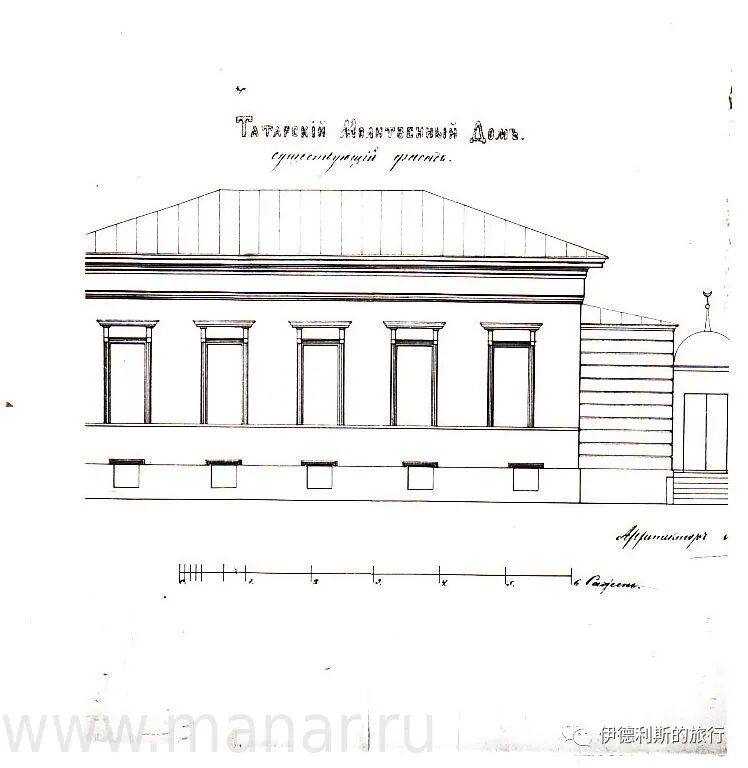
A diagram of the original mosque.
Between 1833 and 1867, the Imam of the mosque was Rafek Bekbulatovich Ageev. Under his efforts, the Muslim community in Moscow gradually improved, and his home was also the first Islamic school in Moscow. The Imam of the mosque between 1867 and 1913 was Khairetdin Rafekovich Ageev. He graduated from a madrasa (Islamic school) in Kazan, was proficient in 8 languages, taught Islamic knowledge and the Tatar language to military cadets for many years, and was also a translator for the Armory.
In the mid-to-late 19th century, as the number of Muslims in Moscow continued to increase, many people could only pray outside the mosque during Jumu'ah, which was very cold, especially in winter. In 1881, Tsar Alexander II approved the mosque to have the appearance of a religious building. Therefore, in 1882, the mosque was expanded under the direction of architect Dmitry Pevnitsky. The new mosque was expanded on both the east and west facades and a minaret was added. After the expansion, it could accommodate 1,500 people.
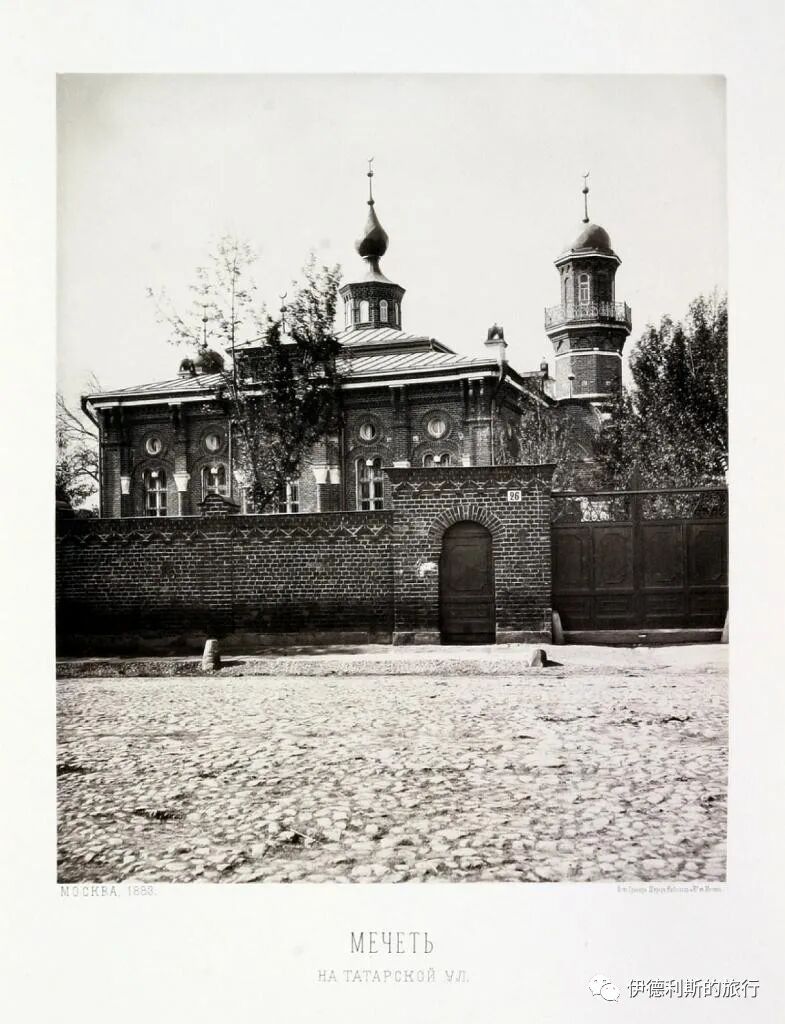
The mosque in 1883 after reconstruction.
The Imam of the mosque from 1914 to 1937 was Abdulla Hasanovich Shamsutdinov. He was a Qasim Tatar who studied at an Islamic madrasa in Bukhara and had served as an Imam in Yining, Xinjiang. In 1914, he presided over the opening of a new Islamic madrasa at the mosque and helped the Moscow Muslim Charitable Society become active, making the Moscow Muslim community more united and organized. In the early 1920s, he also began working on translating the Quran into the Tatar language.
On April 29, 1936, the Imam and his wife were arrested on charges of participating in "anti-Soviet activities" due to a "conspiracy of religious leaders." On February 10, 1937, the Imam was executed by firing squad for being accused of treason, and his wife died in the interrogation room of the NKVD (People's Commissariat for Internal Affairs).
In 1939, the mosque was forced to close. During the Soviet era, the mosque was occupied by a printing house and several other departments in succession. Between 1944 and 1947, Moscow Muslims tried to reclaim the mosque, but were ultimately unsuccessful. In 1967, the mosque's minaret was demolished.
The mosque after the minaret was demolished.
The mosque after the minaret was demolished.
After the 1980s, the elders of the Tatar community repeatedly requested the return of the mosque. However, since the early 1980s, the art engraving association printing workshop that occupied the mosque had been protesting, so the return process was delayed until it was finally returned to the Muslims in 1991.
In 1992, the mosque was renovated and reopened in 1993. In 1997, the mosque was renovated again, becoming what it is today.
Eating samsa (baked meat buns) with tea at the Historical Mosque before Jumu'ah. Nowadays, most of the people who come to the Historical Mosque for Jumu'ah are Muslims from Central Asia and the Caucasus.
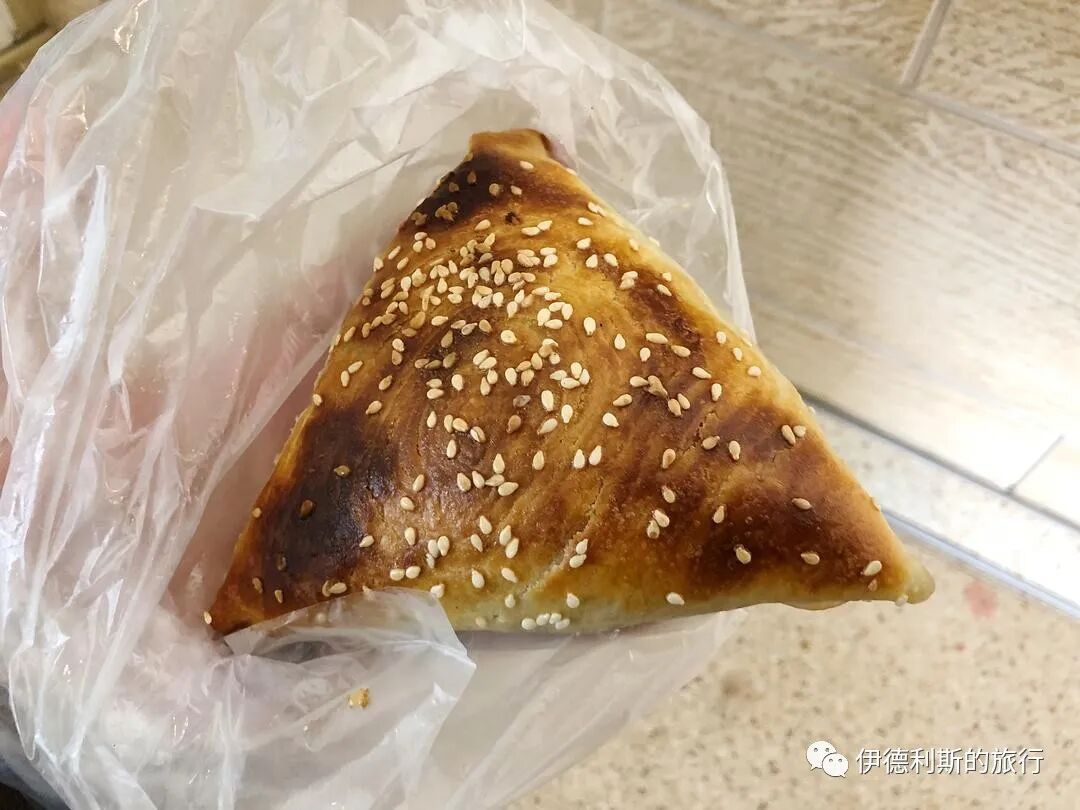
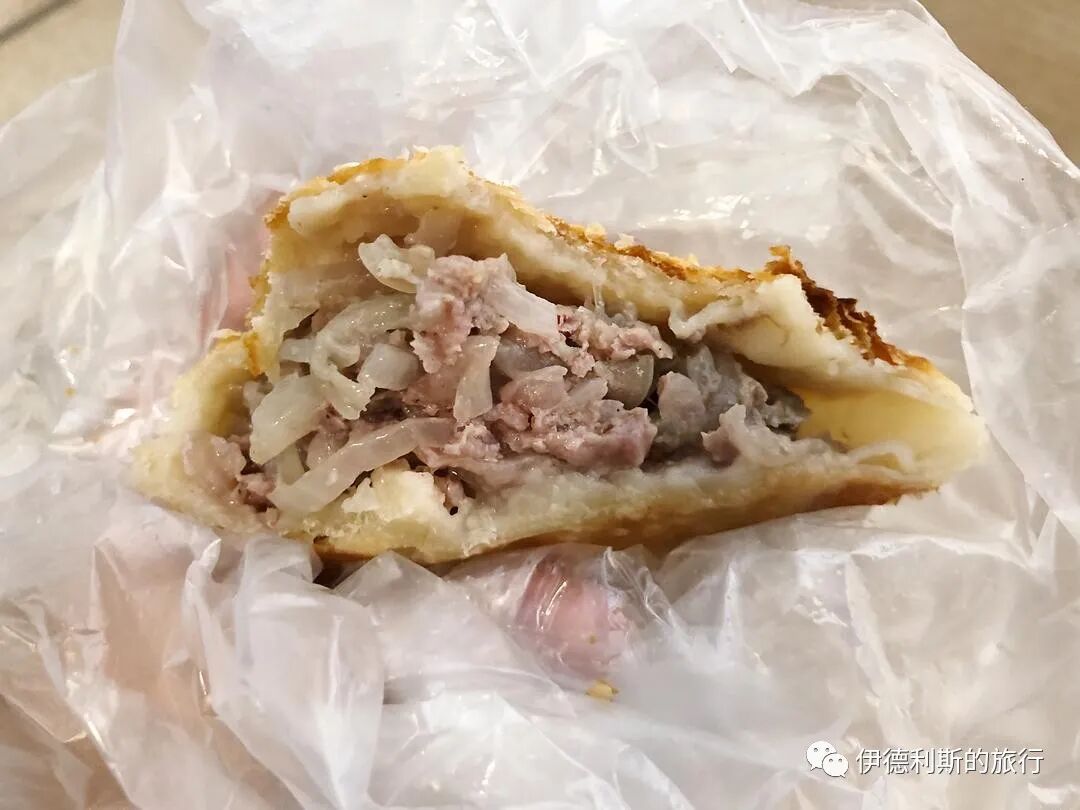
After Jumu'ah prayers, I ate lagman (hand-pulled noodles) and roast chicken at the restaurant in the Historical Mosque. The atmosphere here is very good and lively.
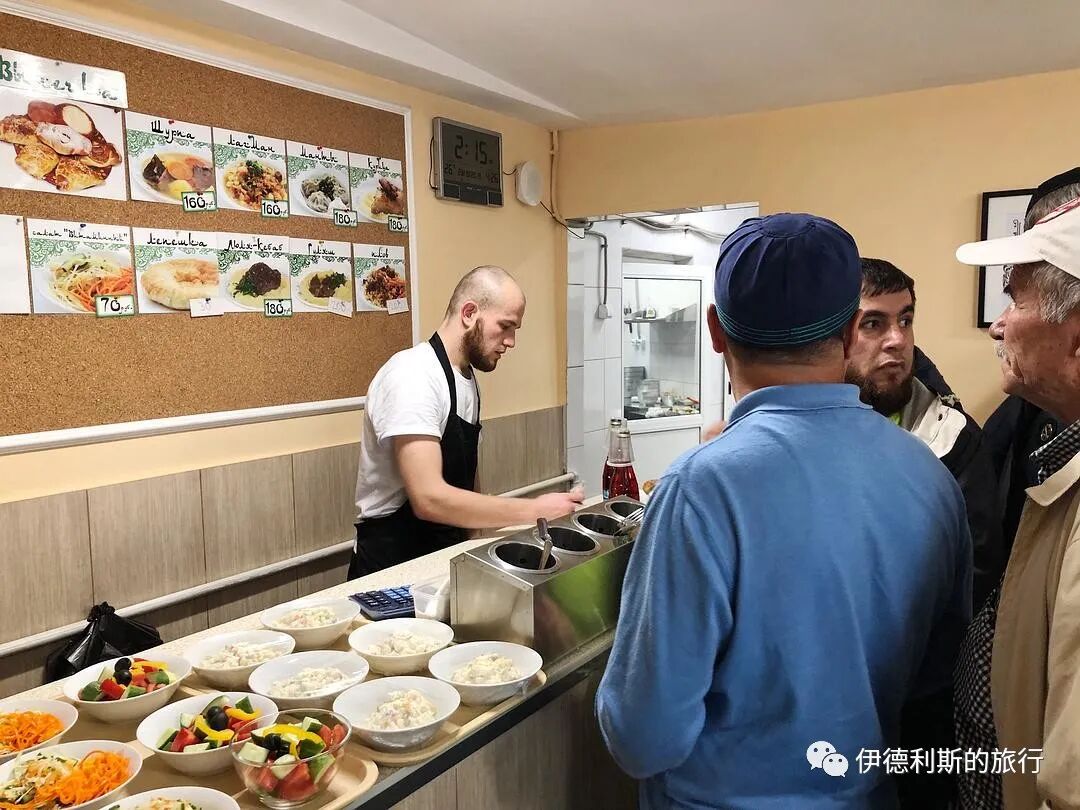
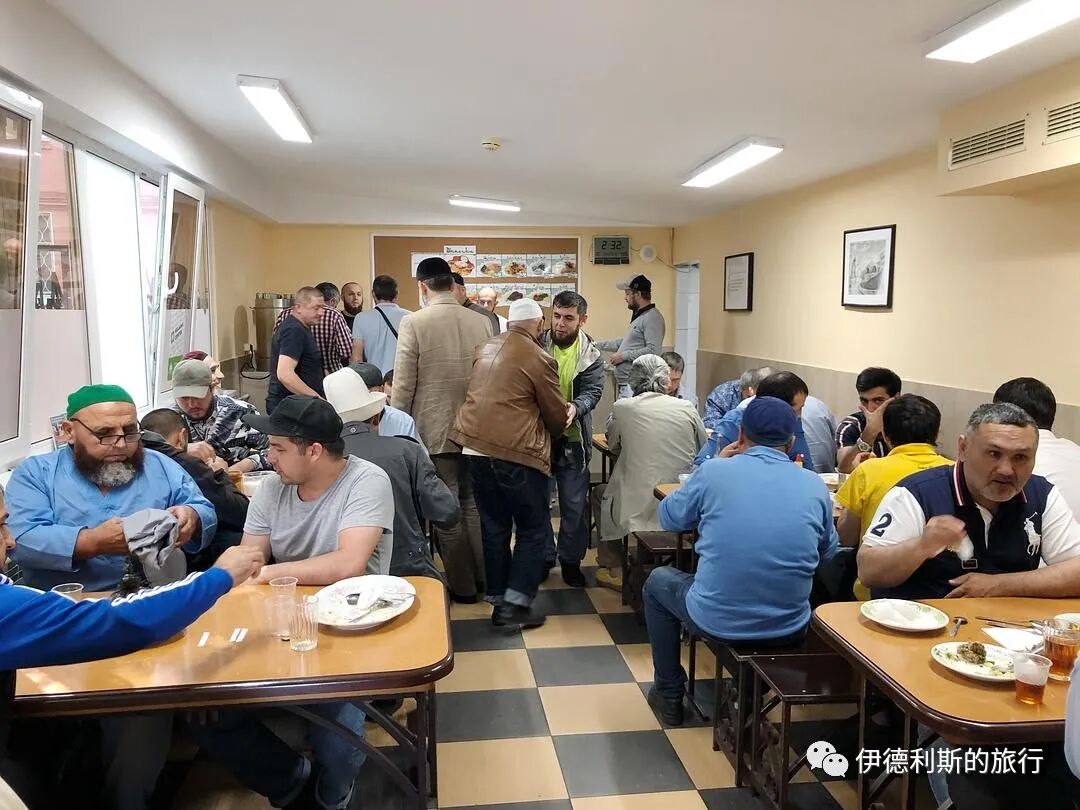
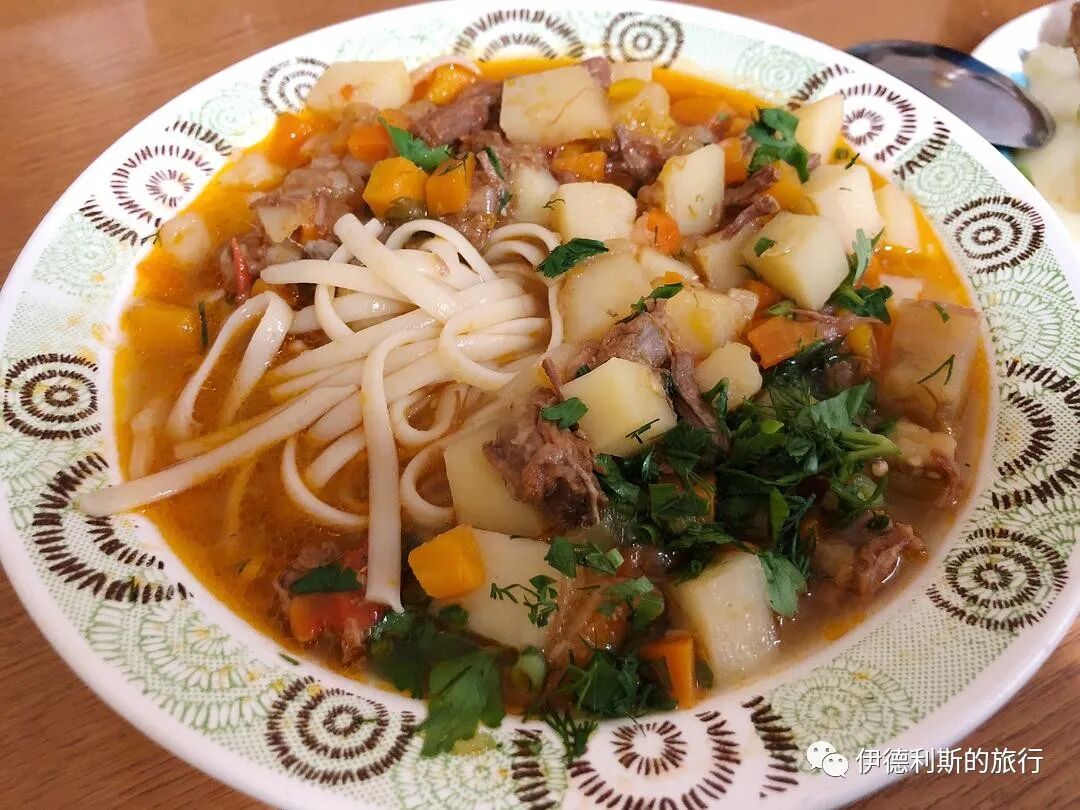
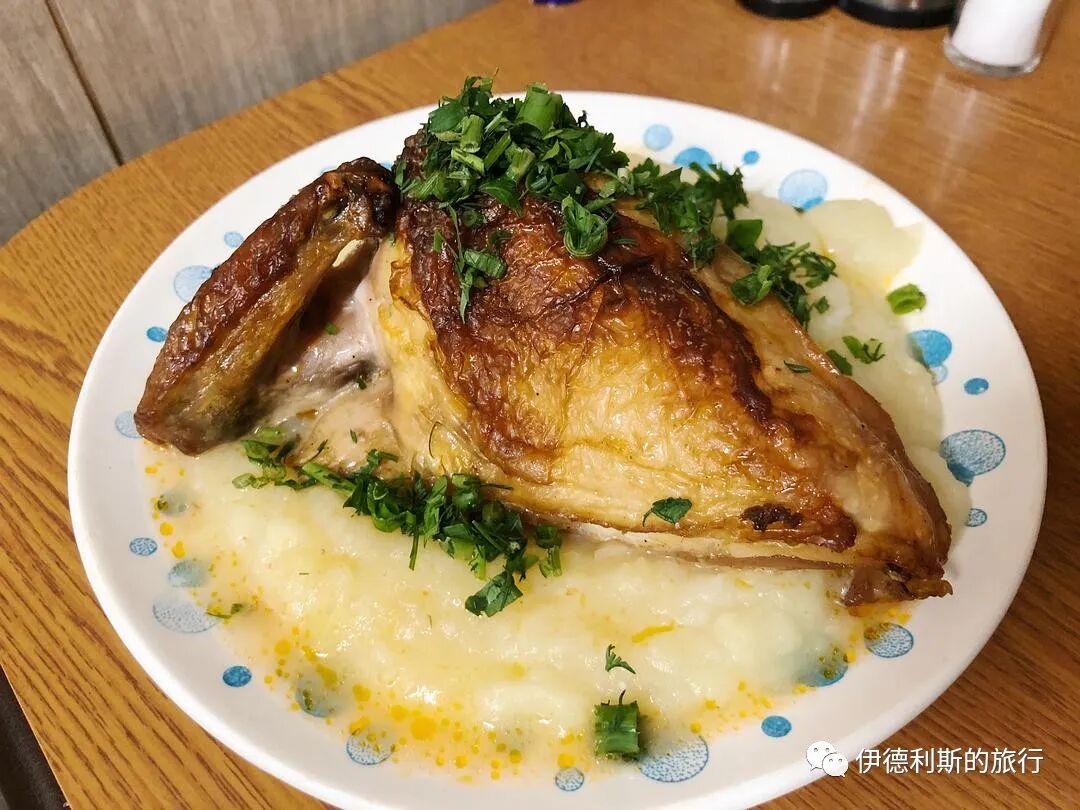
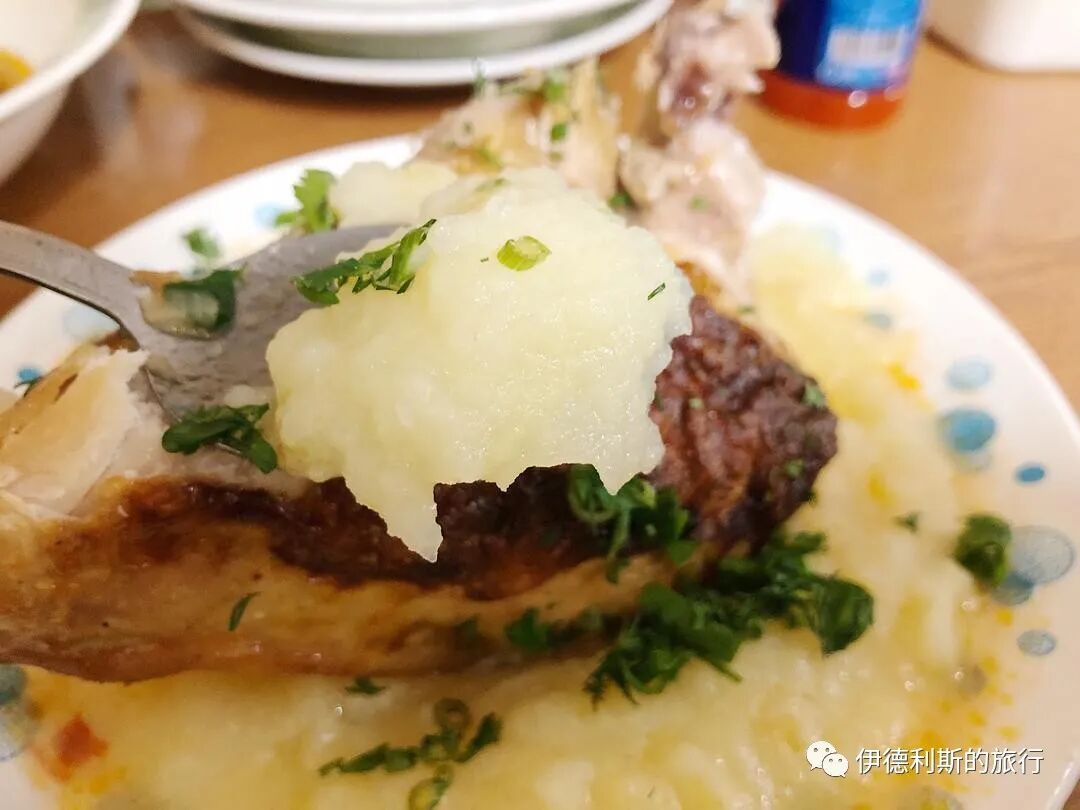
An uncle is peeling a pomegranate.
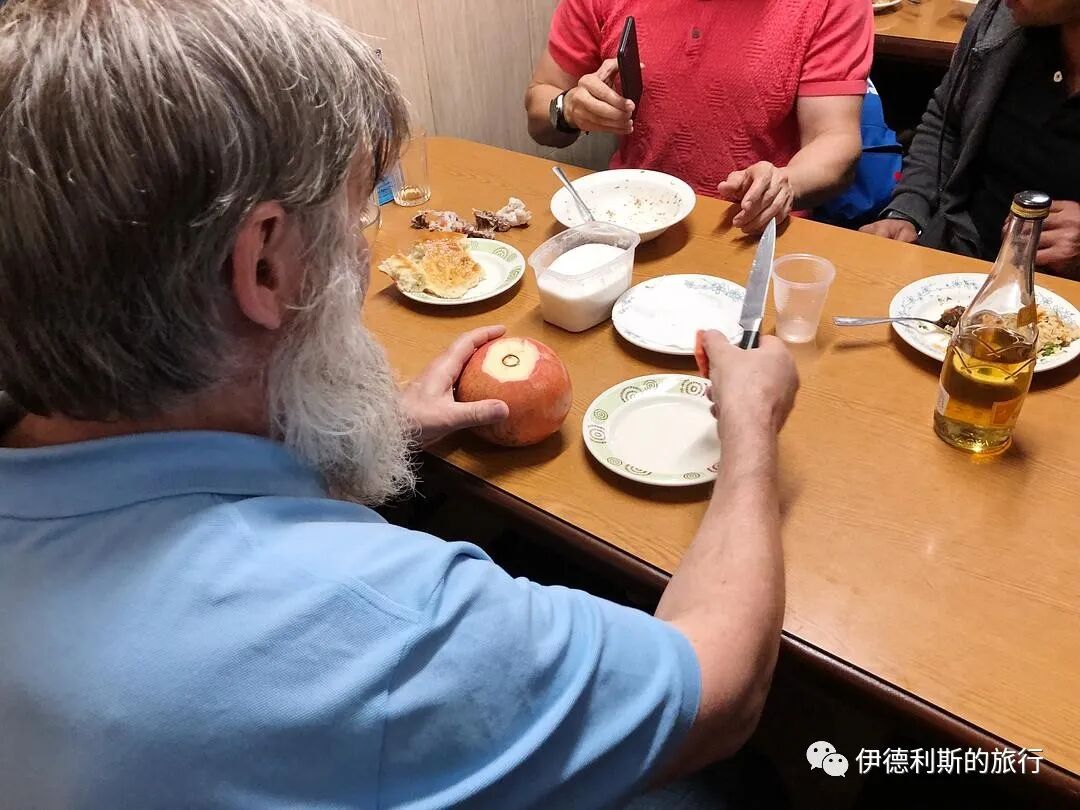
Then I walked around the Islamic goods store upstairs, which sells Tatar hats called Tubetei (traditional skullcaps).
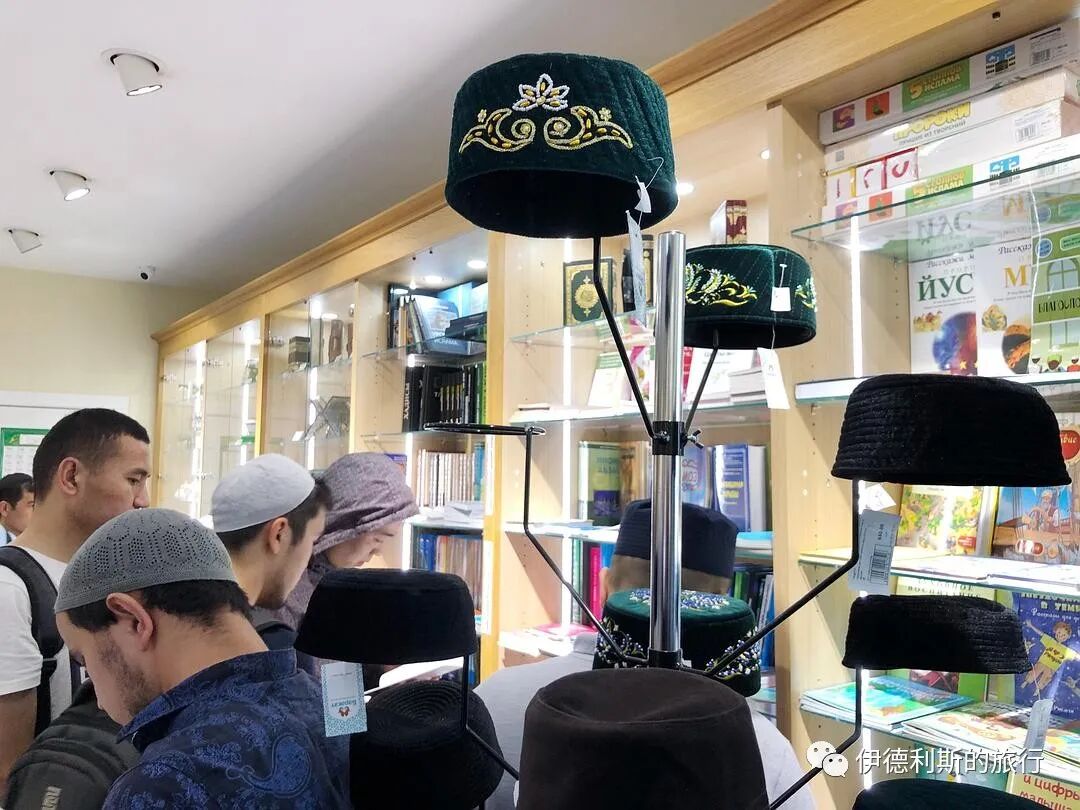
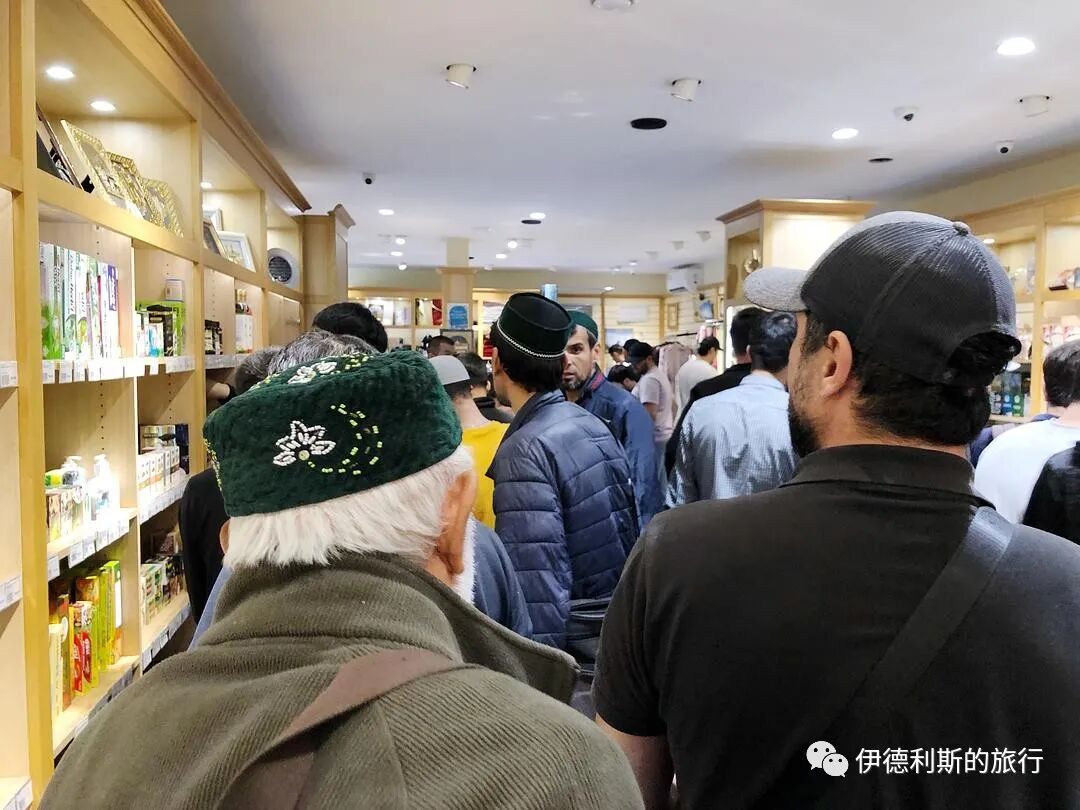
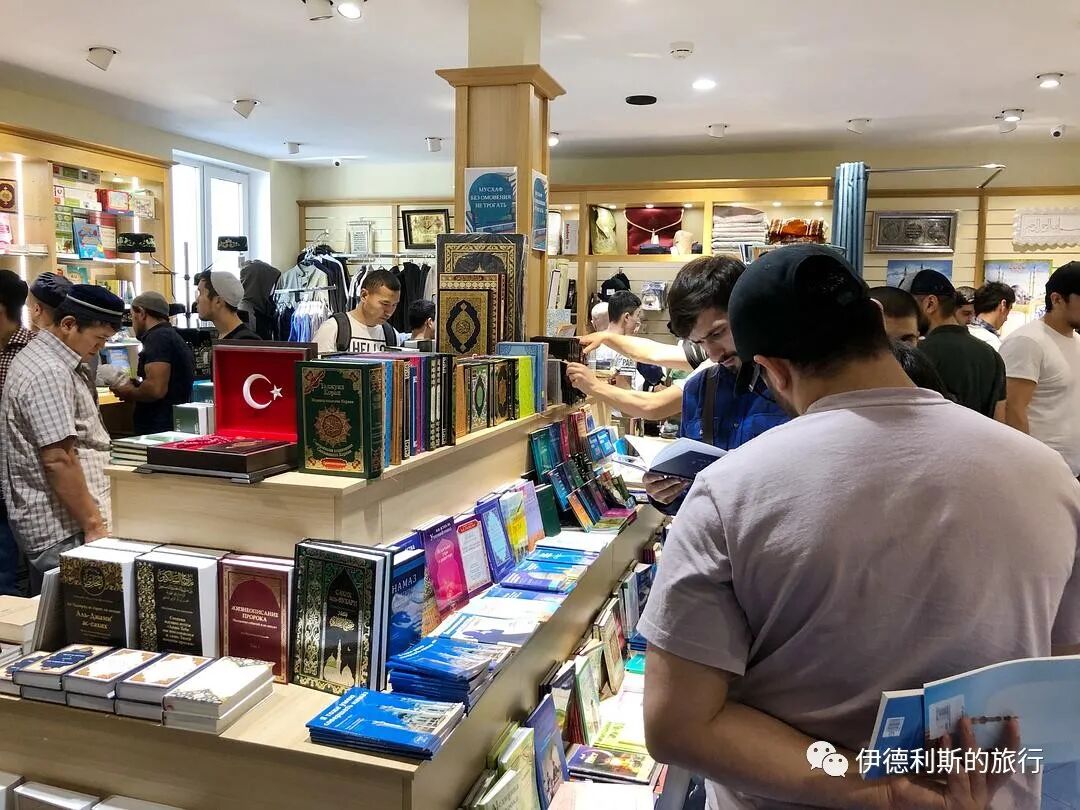
Kazan Tea Bar.
There is a Tatar restaurant in the historic Tatar community called Kazan Tea Bar, which is also the center for Kazan cultural activities in Moscow and often organizes various Tatar cultural events.
I ate Beshbarmak (boiled meat with noodles), Kystyby (flatbread with filling), Tatar-style Kazy (horse meat sausage), plov (pilaf), Kazan chicken salad, and Tatar milk tea inside. Tatar milk tea is made of black tea + green tea + thyme + linden leaf + chamomile + oregano + mint leaf + sage.
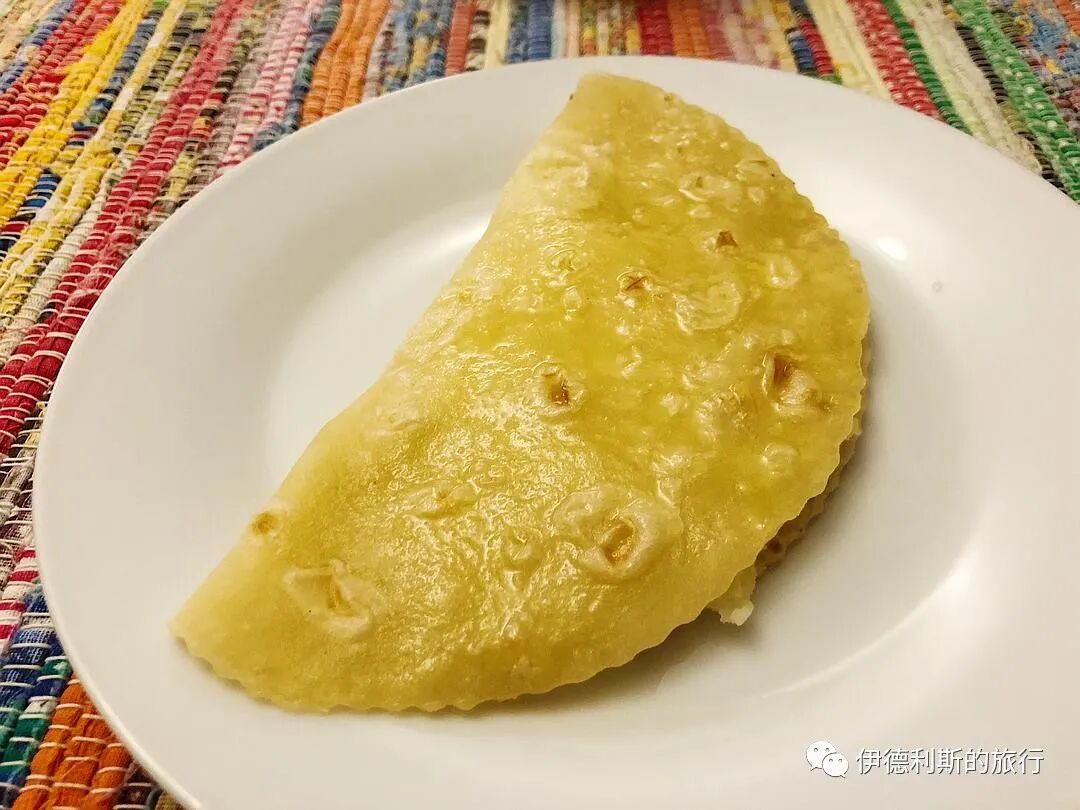
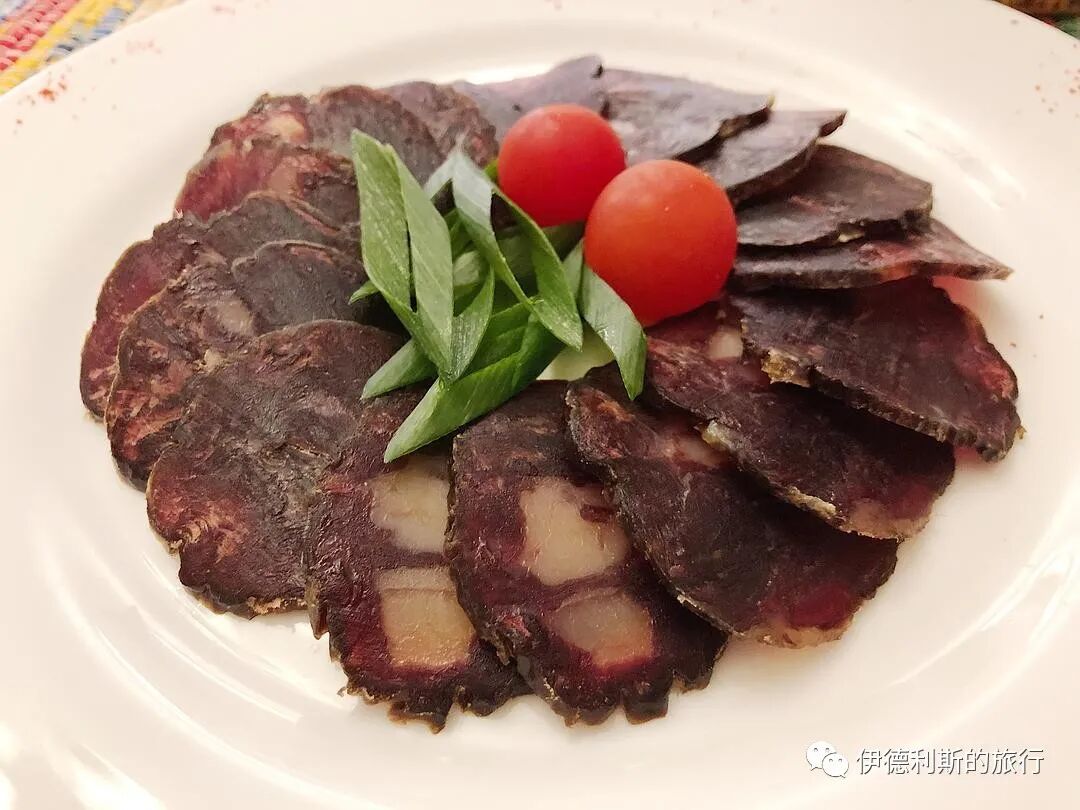
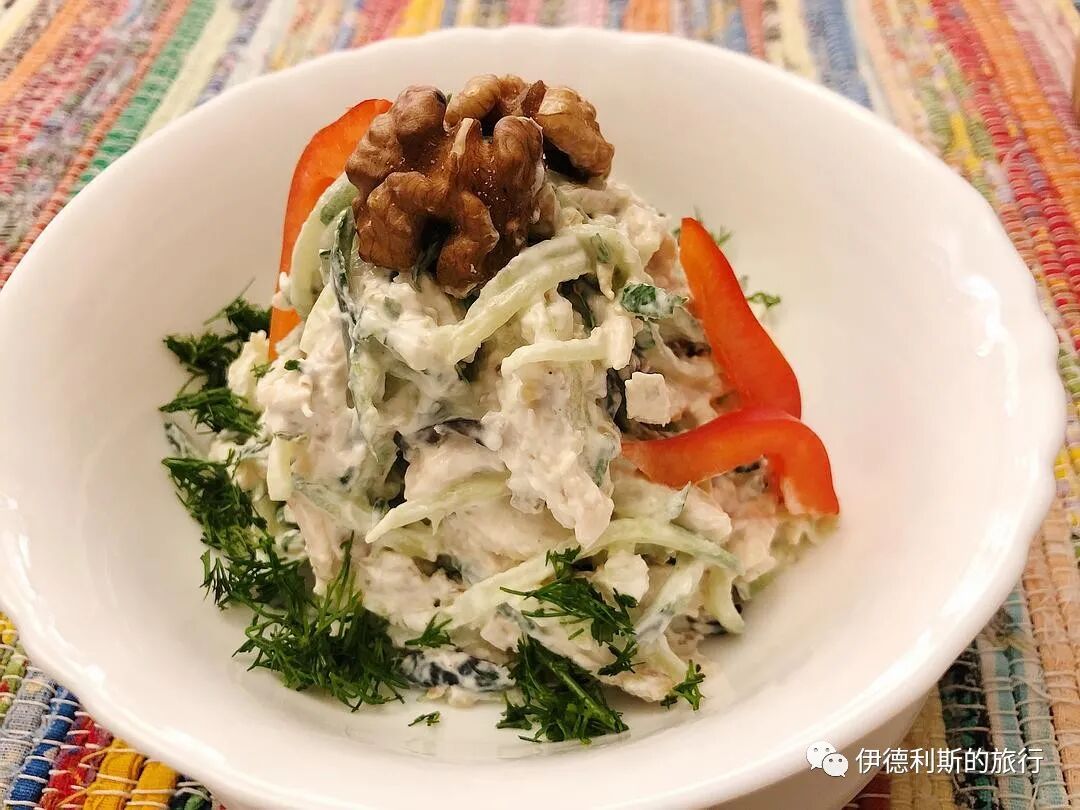
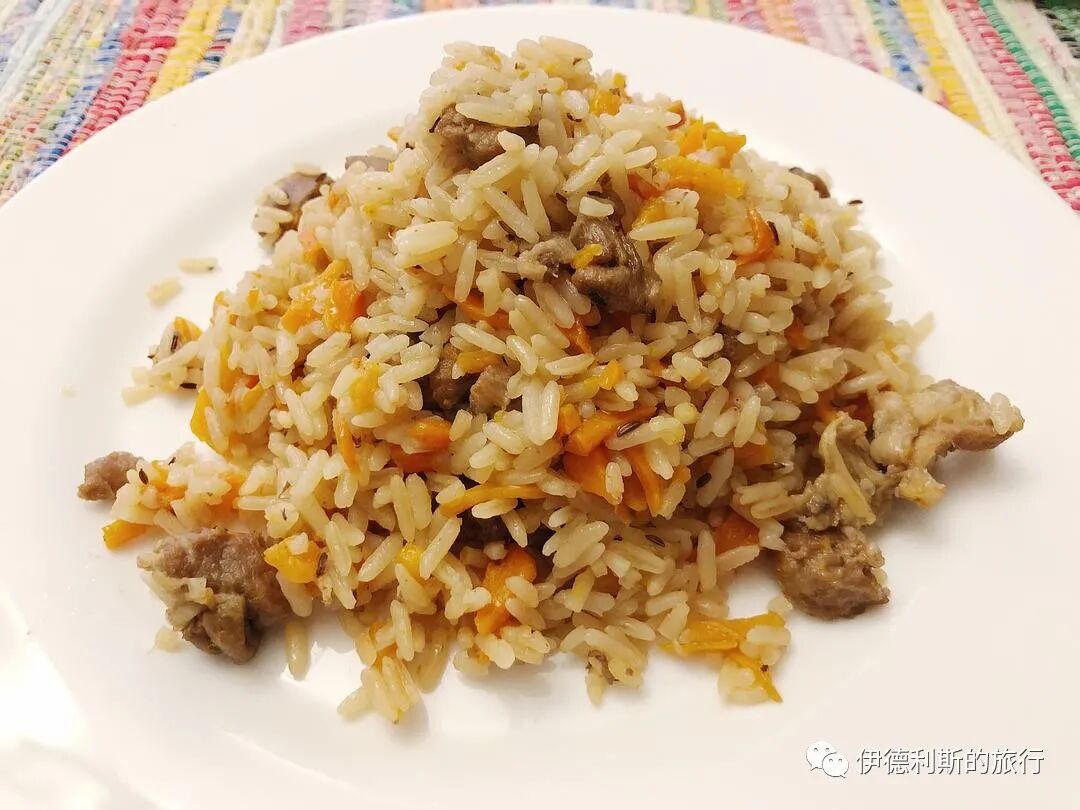
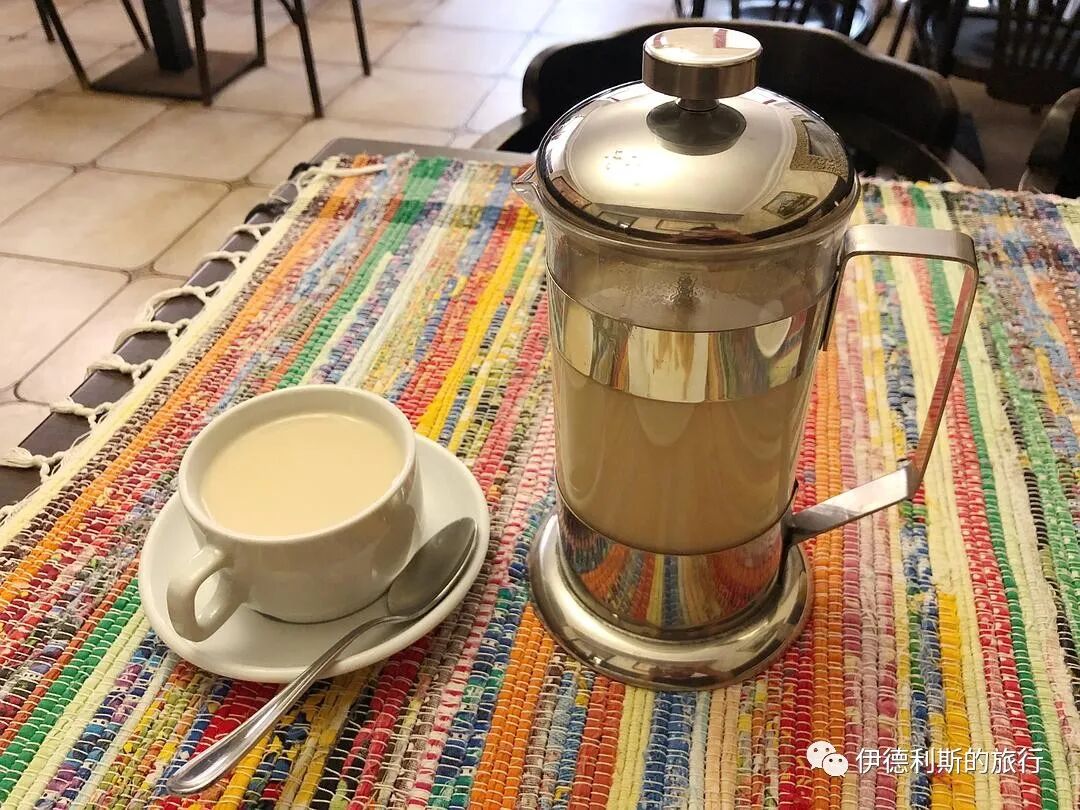
Next to the Kazan Tea Bar is a shop selling Kazan Tatar souvenirs. I bought two Kazan Tatar female magnets and a Tubetei (traditional skullcap) worn by Kazan Tatars.
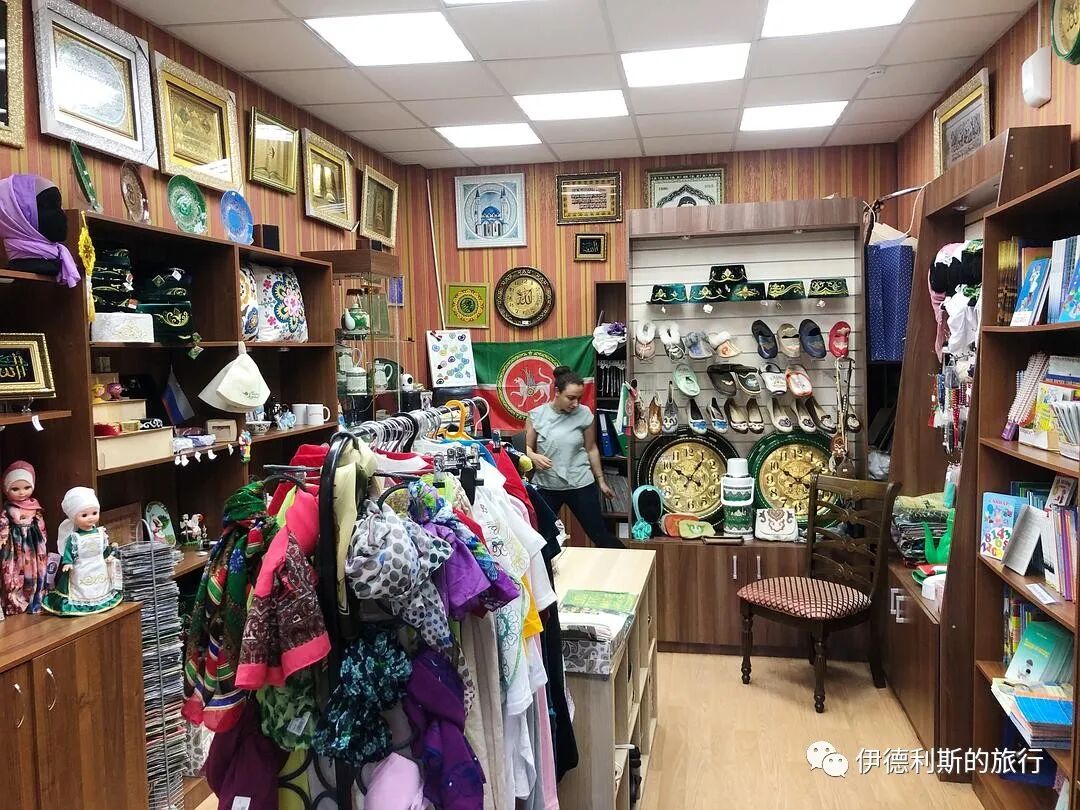
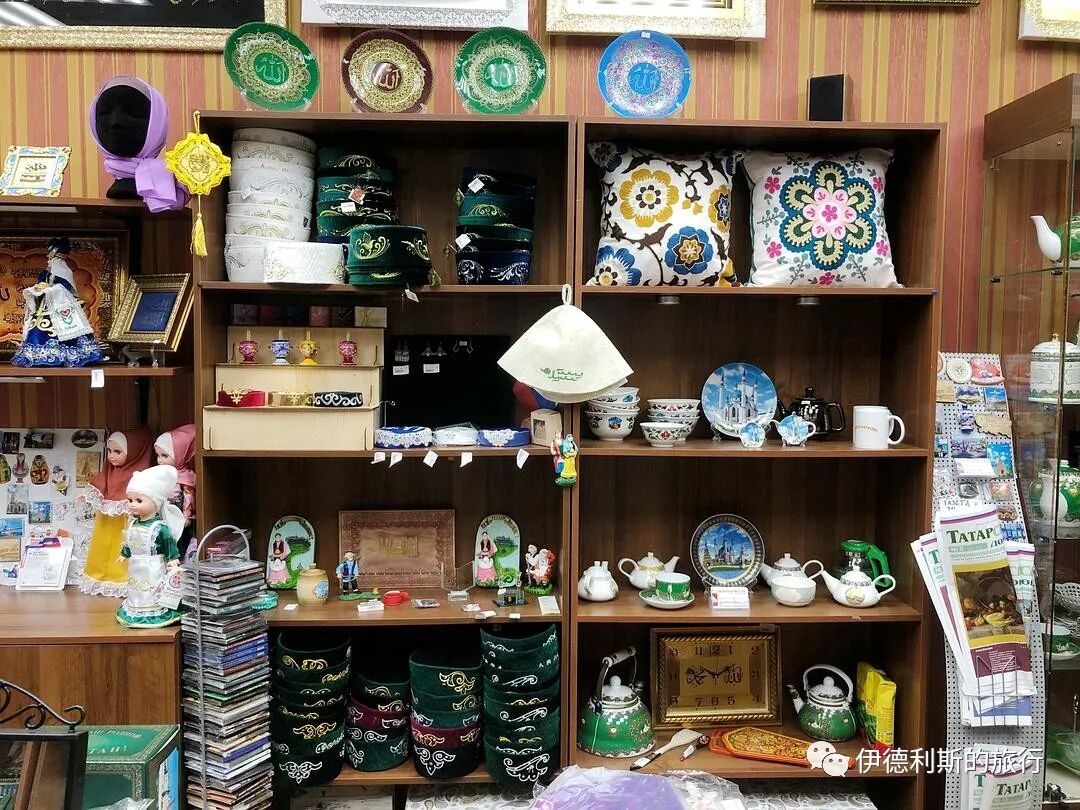
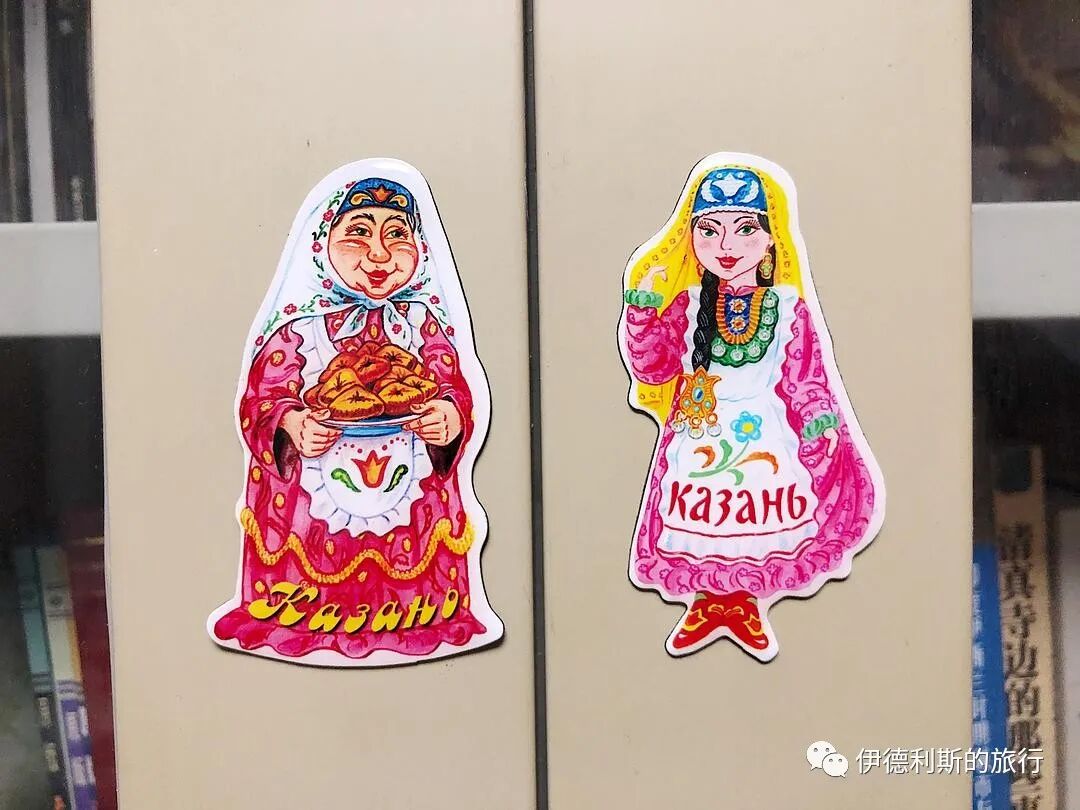
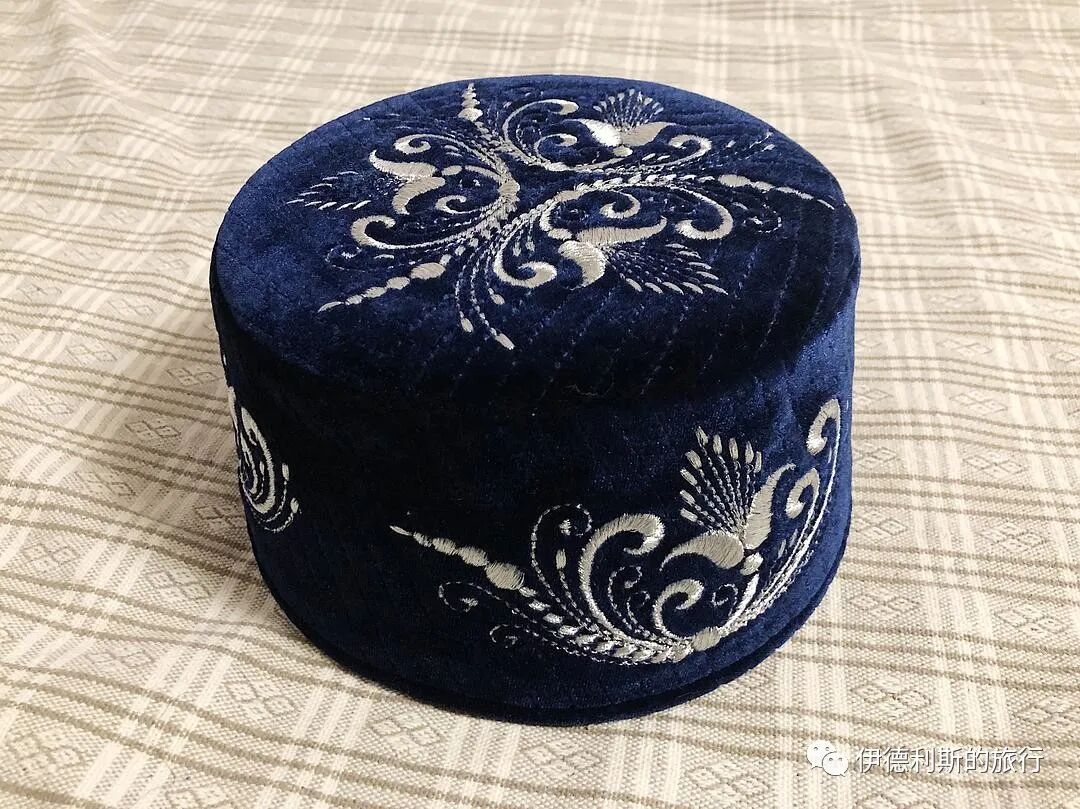
Summary: This travel note introduces Jumu'ah at Moscow's Tatar Historical Mosque: Muslim Heritage in Russia. Tatars from the Golden Horde began settling in Moscow as early as the 14th century. It is useful for readers interested in Moscow Mosque, Tatar Muslims, Jumu'ah.
Tatars from the Golden Horde began settling in Moscow as early as the 14th century. In 1571, the Crimean Tatars burned down almost the entire city of Moscow except for the Kremlin, and the early Tatar settlements were destroyed in an instant. In the early 17th century, with the establishment of the Romanov dynasty, the city of Moscow flourished again, and many Tatars from the Volga River and steppe regions came to trade. The Tatar community (Tatarskaya Sloboda) located south of the Moskva River, opposite the Kremlin, was officially formed, and the community's main street, Tatarskaya Street, was first mentioned in documents in 1682. The center of the Moscow Tatar community is the "Historical Mosque."
Historical Mosque of the Tatar community: 1823.
On a Friday at noon, I performed Jumu'ah (Friday prayer) at the Historical Mosque in Moscow's Tatar community and ate dates from the mosque.
The Tatar community mosque (mecheti v Tatarskoy slobode) is now called the "Historical Mosque (Istoricheskoy mecheti)." The earliest records of the mosque can be traced back to 1712, and it was also mentioned in the 1744 census. Due to the Moscow plague in the 1770s, the mosque's owner and congregants passed away one after another. The mosque was sold to a merchant and was eventually destroyed by fire when Napoleon withdrew from Moscow in 1812. After this, religious activities were conducted in the homes of local Tatar merchants.
After the old mosque was destroyed, Tatar Muslim merchants in Moscow repeatedly applied to build a new mosque, but were all refused. It was not until 1823 that Tatar merchant Nazarbay Khashalov was finally approved to build a mosque on Bolshaya Tatarskaya Street, on the condition that it could not be named a "mosque (mecheti)" and could not have the appearance of a mosque. Therefore, the mosque building constructed at that time looked almost the same as the surrounding houses.
A diagram of the original mosque.
Between 1833 and 1867, the Imam of the mosque was Rafek Bekbulatovich Ageev. Under his efforts, the Muslim community in Moscow gradually improved, and his home was also the first Islamic school in Moscow. The Imam of the mosque between 1867 and 1913 was Khairetdin Rafekovich Ageev. He graduated from a madrasa (Islamic school) in Kazan, was proficient in 8 languages, taught Islamic knowledge and the Tatar language to military cadets for many years, and was also a translator for the Armory.
In the mid-to-late 19th century, as the number of Muslims in Moscow continued to increase, many people could only pray outside the mosque during Jumu'ah, which was very cold, especially in winter. In 1881, Tsar Alexander II approved the mosque to have the appearance of a religious building. Therefore, in 1882, the mosque was expanded under the direction of architect Dmitry Pevnitsky. The new mosque was expanded on both the east and west facades and a minaret was added. After the expansion, it could accommodate 1,500 people.
The mosque in 1883 after reconstruction.
The Imam of the mosque from 1914 to 1937 was Abdulla Hasanovich Shamsutdinov. He was a Qasim Tatar who studied at an Islamic madrasa in Bukhara and had served as an Imam in Yining, Xinjiang. In 1914, he presided over the opening of a new Islamic madrasa at the mosque and helped the Moscow Muslim Charitable Society become active, making the Moscow Muslim community more united and organized. In the early 1920s, he also began working on translating the Quran into the Tatar language.
On April 29, 1936, the Imam and his wife were arrested on charges of participating in "anti-Soviet activities" due to a "conspiracy of religious leaders." On February 10, 1937, the Imam was executed by firing squad for being accused of treason, and his wife died in the interrogation room of the NKVD (People's Commissariat for Internal Affairs).
In 1939, the mosque was forced to close. During the Soviet era, the mosque was occupied by a printing house and several other departments in succession. Between 1944 and 1947, Moscow Muslims tried to reclaim the mosque, but were ultimately unsuccessful. In 1967, the mosque's minaret was demolished.
The mosque after the minaret was demolished.
The mosque after the minaret was demolished.
After the 1980s, the elders of the Tatar community repeatedly requested the return of the mosque. However, since the early 1980s, the art engraving association printing workshop that occupied the mosque had been protesting, so the return process was delayed until it was finally returned to the Muslims in 1991.
In 1992, the mosque was renovated and reopened in 1993. In 1997, the mosque was renovated again, becoming what it is today.
Eating samsa (baked meat buns) with tea at the Historical Mosque before Jumu'ah. Nowadays, most of the people who come to the Historical Mosque for Jumu'ah are Muslims from Central Asia and the Caucasus.
After Jumu'ah prayers, I ate lagman (hand-pulled noodles) and roast chicken at the restaurant in the Historical Mosque. The atmosphere here is very good and lively.
An uncle is peeling a pomegranate.
Then I walked around the Islamic goods store upstairs, which sells Tatar hats called Tubetei (traditional skullcaps).
Kazan Tea Bar.
There is a Tatar restaurant in the historic Tatar community called Kazan Tea Bar, which is also the center for Kazan cultural activities in Moscow and often organizes various Tatar cultural events.
I ate Beshbarmak (boiled meat with noodles), Kystyby (flatbread with filling), Tatar-style Kazy (horse meat sausage), plov (pilaf), Kazan chicken salad, and Tatar milk tea inside. Tatar milk tea is made of black tea + green tea + thyme + linden leaf + chamomile + oregano + mint leaf + sage.
Next to the Kazan Tea Bar is a shop selling Kazan Tatar souvenirs. I bought two Kazan Tatar female magnets and a Tubetei (traditional skullcap) worn by Kazan Tatars.
Muslim Travel Guide Tunisia Kairouan: Great Mosque, Jumu'ah and Islamic Heritage (Part 1)
Articles • yusuf908 posted the article • 0 comments • 236 views • 2026-05-23 23:23
Reposted from the web
Summary: This first part follows a visit to the Great Mosque of Kairouan for Jumu'ah in one of Tunisia's most important Islamic cities. It keeps the original prayer experience, mosque history, photographs, and travel details for readers interested in Muslim heritage in North Africa.
On Friday, we left from the Louage station south of Sousse and reached Kairouan, the most important ancient city in Tunisia, in just one hour. The Louage station in Kairouan is on the west side of the city, but you can ask the driver to drop you off right at the gate of the Great Mosque of Kairouan.
When we arrived at the Great Mosque at twelve o'clock, it was already closed. A young man at the gate told us that other mosques in Kairouan hold Jumu'ah prayer at one o'clock, but only the Great Mosque holds it at three, so he suggested we come back later.
We used this time to look at the exterior of the mosque. The Great Mosque of Kairouan is the oldest and most spectacular Jumu'ah mosque in Tunisia. It was first built in 670 by order of Uqba ibn Nafi, a general of the Arab Umayyad Caliphate. It was destroyed by Christian Berbers in 690 and rebuilt by the Umayyad Caliphate in 703. As the Arab population in Tunisia grew, the number of Muslims in Kairouan increased. The Great Mosque was rebuilt and renovated many times between 724-728, 774, 836, 862-863, and 875, finally taking its current form in the 9th century.
The Great Mosque is a huge, irregular quadrilateral with a perimeter of 405 meters, looking like a fortress from the outside. The outer walls are 1.9 meters thick and built from stone, rubble, and bricks. Because the ground is quite soft, many buttresses were built on the outer walls to increase stability.
The Great Mosque has nine gates, some of which have porches and spiral-shaped domes. Bab Lalla Rihana on the southeast side was built in 1293 during the Hafsid dynasty. It features a horseshoe arch and ancient stone columns that blend perfectly with the 9th-century walls.
While waiting for Jumu'ah, we had lunch at El Brija Restaurant, located on the city wall next to the Great Mosque. The atmosphere and service were both good, and they serve traditional Tunisian food. I recommend eating here when visiting the Great Mosque.
We ordered a traditional appetizer platter and a mixed couscous stew. When eating at a proper restaurant in Tunisia, you really only need to order the main course, as most places provide side dishes and bread.
Our appetizer platter included Tunisian salad, Houria carrot salad, and Mechouia green pepper salad. We ate these three dishes almost every day in Tunisia. Tunisian salad is made of diced cucumbers, tomatoes, and onions mixed with olive oil, topped with boiled eggs and tuna. Mechouia salad contains green peppers, tomatoes, onions, garlic, and more. Tunisians love it, and it is rich in vitamins and very healthy. The couscous stew was very rich, containing lamb, Merguez sausage, chicken, beef, dried fruits, and preserved fruits. The Merguez sausage is seasoned with cumin and chili, making it very flavorful.
After the meal, we were served mint tea and Makroudh dessert. Makroudh is a classic North African Maghreb snack for breaking the fast. It is made of semolina on the outside, filled with date paste and dried fruits, then baked and soaked in syrup.
We returned to the Great Mosque after two o'clock, and people were already entering the prayer hall. Once inside the courtyard, the first thing you see is the oldest minaret (bangke ta) still in existence today. The minaret of the Great Mosque of Kairouan was built between the 8th and 9th centuries. The current structure mostly dates back to 836. It is one of the three most important early minarets, alongside the spiral minaret of the Great Mosque of Samarra in Iraq, built between 848 and 852, and the spiral minaret of the Abu Dulaf Mosque in Iraq, built in 859. These three served as models for later minarets across Andalusia and the Maghreb.
There were no minarets during the time of the Prophet and the four Caliphs. People called for prayer (adhan) from the mosque entrance or the roof. Platforms for calling the adhan appeared during the Umayyad dynasty in the 7th century, but true minarets did not emerge until the Abbasid dynasty in the 8th century. There is no final conclusion on the origin of the minaret. Some say it mimics the towers of Syrian churches, while others suggest it was inspired by the Lighthouse of Alexandria or Mesopotamian ziggurats. Four towers were built during the reconstruction of the Sacred Mosque in Mecca in the late 8th century, but they have not survived. The earliest surviving minarets are the one at the Great Mosque of Kairouan and the two in Iraq. The Bride's Minaret at the Umayyad Mosque in Damascus may also date to the 9th century, but there is no clear record of this.
The minaret of the Great Mosque of Kairouan is 31.5 meters tall. Its base dates back to the Umayyad period in 725, and you can see Latin inscriptions from the Roman era on the walls. The first and second levels of the minaret were built in 836 using carefully cut stone. The side facing the courtyard has windows, while the other three sides have arrow slits. The third level of the minaret is a four-arched structure (chahartaq), which was likely added later.
Three sides of the Great Mosque are surrounded by double-row horseshoe-shaped arcades. The columns come from various ancient Roman and Byzantine ruins, including some from the famous site of Carthage.
There is a dome above the main entrance of the prayer hall and another above the mihrab. These domes, built in 836, are important examples of early mosque domes.
The prayer hall connects to the arcades through 17 carved wooden doors. The most beautiful one in the center was built in 1828 and features rich geometric and floral patterns.
The mihrab of the Great Mosque is 5.1 meters high. It was built in 863 and is the oldest concave mihrab in the world. The main body of the mihrab is a horseshoe arch supported by two red marble columns. The columns have Byzantine-style capitals with very fine carvings.
The upper part of the mihrab features 139 iridescent ceramic tiles fired in the second half of the 9th century. This metallic-lustre glazed pottery originated in Abbasid-ruled Iraq and was traded throughout West Asia and North Africa. It is not yet certain whether the iridescent tiles of the Great Mosque of Kairouan were fired in Iraq or if Iraqi craftsmen were invited to Kairouan to make them.
The concave center of the upper part is made of painted wood, featuring complex vine patterns in yellow on a blue background. The lower part is inlaid with 28 white marble slabs carved with complex floral and geometric patterns, including stylized grape leaves, flowers, and shells.
Next to the mihrab are the pulpit (minbar) for the Friday sermon and the enclosure (maqsurah) used by kings and nobles.
The minbar of the Great Mosque of Kairouan was also built in 863 and is the oldest surviving minbar in the world. The minbar is made of teak imported from India and is assembled from over 300 wooden panels carved with floral and geometric patterns. Although it was restored in the early 20th century, all but nine of the wooden panels are original pieces from over a thousand years ago. Today, the sides of the minbar are protected by glass, making it difficult to take photos due to the reflection.
The maksura at the Great Mosque of Kairouan was built in the first half of the 11th century. It is the oldest maksura in the world still in use. The maksura at the Great Mosque of Cordoba in Spain was built in 965, but it is no longer used today. The maksura is made of cedar and is 14 meters long. It is carved with ornate Kufic calligraphy and floral patterns, representing the highest achievement in Tunisian carving art at that time.
The maksura originated during the time of Caliph Uthman in the mid-7th century. After Caliph Umar was assassinated inside the prayer hall, Uthman built a partition wall inside the hall to protect himself. Later, mosques where the Caliph resided would all have a maksura built inside.
The prayer hall of the Great Mosque of Kairouan is 70.6 meters wide and 37.5 meters deep. It consists of 17 aisles, with the aisle directly facing the mihrab being the tallest and widest. This layout was later adopted by major mosques across the Maghreb and Andalusia.
There are 414 stone columns inside the prayer hall. They are made of marble, granite, and porphyry, with capitals in styles including Corinthian, Ionic, and Composite. Some capitals were carved specifically for the prayer hall, while many others came from ancient Roman, Phoenician, and Byzantine sites in Tunisia, including the famous ancient city of Carthage.
The door inside the prayer hall's maksura is decorated with marble floral carvings. This door leads to the library behind the qibla wall, which is also where the imam usually stays. The imam only comes out from here to lead the prayer and deliver the khutbah.
The grand scene of Jumu'ah at the Great Mosque of Kairouan. After the adhan is finished, the imam slowly walks up the minbar to begin the khutbah. In Arabic-speaking regions, everyone understands the khutbah, so there is no sermon session beforehand.
Tunisia follows the Maliki school of thought. Their namaz movements are quite similar to our Hanafi school, including the initial takbir, but the main difference is that they also fold their arms when making intention.
After the prayer, we stood for janazah outside the prayer hall door. Because Jumu'ah was at three o'clock, we immediately returned to the prayer hall to perform Dhuhr after finishing.
From the 9th to the 11th century, the Great Mosque of Kairouan was the academic center for the entire Maghreb region and the Maliki school. to religious courses, it offered subjects like mathematics, astronomy, medicine, and botany. In 1045, the Zirid dynasty court in Kairouan announced its conversion to Sunni Islam. Upon hearing this, the Shi'a Fatimid dynasty in Egypt sent a group of Arab tribes to invade Kairouan. In 1057, these Arab tribes occupied and destroyed Kairouan. The Great Mosque of Kairouan declined from then on and did not slowly recover until after the 13th century.
After leaving the Great Mosque of Kairouan, we started exploring the ancient medina of Kairouan. Besides the Great Mosque, the other ancient mosque remaining in Kairouan is the Mosque of the Three Doors (Masjid al-Thalathat Abwab), built in 866. This mosque has the oldest decorated facade of any religious building in the world.
Today, only the facade of the Mosque of the Three Doors retains its 9th-century appearance, while the minaret next to it was added in 1440. The gate of the Mosque of the Three Doors consists of three horseshoe arches and features four ancient stone columns. The arch is carved with floral patterns and Kufic calligraphy, which includes verses from the Quran and the name of the builder, Muhammad ibn Khairun. Muhammad ibn Khairun was a scholar and merchant from Andalusia who traveled through Iraq and Egypt to reach Kairouan, Tunisia. When the minaret was added in 1440, the original 9th-century inscriptions were rearranged to make room for the new text.
In the northwest of the Kairouan Medina stands an important tomb for Sidi Sahib, a companion of the Prophet and his barber, which is why it is also called the Barber Mosque.
Legend says Sidi Sahib died in a battle in 654 and was buried here. By the 11th century, this place had become a famous holy site, and the tomb shrine (gongbei) was built in the 14th century. The Bey of Tunis, Hammuda Pasha (reigned 1631-66), expanded the tomb significantly in 1629 and built a new main hall. Another Bey, Mohamed (reigned 1675-96), built the minaret and a religious school (madrasa) between 1690 and 1695. Since the 19th century, the tomb of Sidi Sahib has undergone several renovations, but it still keeps its 17th-century architectural style.
The tomb of Sidi Sahib in Kairouan blends Andalusian, Italian Renaissance, and local Kairouan architectural styles. The interior features many classic 17th-century Tunisian Qallalin tiles and rich plaster carvings.
At the minaret, gate, and main hall of the Sidi Sahib tomb in Kairouan, an old man in the courtyard pours perfume into the hands of every visitor (dosti) who comes to pay their respects.
The Sidi Abid al-Ghariani school (madrasa) and shrine (zawiya) inside the Kairouan Medina were founded in the 14th century and expanded significantly in the 17th century. Abid al-Ghariani was a scholar, and his teacher, Al-Jadidi, was a famous judge in Kairouan. Al-Jadidi passed away in 1384 while on the Hajj pilgrimage in Mecca. Abid al-Ghariani took over his teacher's role to continue teaching in Kairouan, and after he died in 1402, he was buried next to the school.
Besides Abid al-Ghariani, the Hafsid dynasty Caliph Moulay Hasan (reigned 1526-1543) is also buried here. In 1534, the famous pirate Barbarossa led a fleet to invade Tunisia. Moulay Hasan eventually took back Tunisia with the help of the Holy Roman Empire, but he had to sign a treaty to become a vassal of Spain. In 1542, while Moulay Hasan was traveling to Italy to collect weapons and ammunition, his son usurped the throne, and he was eventually exiled. He lived in Naples and Sicily for several years and later met with the Holy Roman Emperor and the Pope, becoming the most well-known Arab monarch to Europeans of that era.
The city walls and gates of the Kairouan Medina.
Kairouan was founded in 670 by the Arab Umayyad general Uqba ibn Nafi, who chose the site to serve as a military base for the Arab conquest of Tunisia. Over the next hundred years, the Berbers launched wave after wave of uprisings against the Arabs. After surviving many attacks, Kairouan was finally captured by the Berbers in 745 and was not retaken until the end of the 8th century. view all
Summary: This first part follows a visit to the Great Mosque of Kairouan for Jumu'ah in one of Tunisia's most important Islamic cities. It keeps the original prayer experience, mosque history, photographs, and travel details for readers interested in Muslim heritage in North Africa.
On Friday, we left from the Louage station south of Sousse and reached Kairouan, the most important ancient city in Tunisia, in just one hour. The Louage station in Kairouan is on the west side of the city, but you can ask the driver to drop you off right at the gate of the Great Mosque of Kairouan.
When we arrived at the Great Mosque at twelve o'clock, it was already closed. A young man at the gate told us that other mosques in Kairouan hold Jumu'ah prayer at one o'clock, but only the Great Mosque holds it at three, so he suggested we come back later.
We used this time to look at the exterior of the mosque. The Great Mosque of Kairouan is the oldest and most spectacular Jumu'ah mosque in Tunisia. It was first built in 670 by order of Uqba ibn Nafi, a general of the Arab Umayyad Caliphate. It was destroyed by Christian Berbers in 690 and rebuilt by the Umayyad Caliphate in 703. As the Arab population in Tunisia grew, the number of Muslims in Kairouan increased. The Great Mosque was rebuilt and renovated many times between 724-728, 774, 836, 862-863, and 875, finally taking its current form in the 9th century.
The Great Mosque is a huge, irregular quadrilateral with a perimeter of 405 meters, looking like a fortress from the outside. The outer walls are 1.9 meters thick and built from stone, rubble, and bricks. Because the ground is quite soft, many buttresses were built on the outer walls to increase stability.
The Great Mosque has nine gates, some of which have porches and spiral-shaped domes. Bab Lalla Rihana on the southeast side was built in 1293 during the Hafsid dynasty. It features a horseshoe arch and ancient stone columns that blend perfectly with the 9th-century walls.
While waiting for Jumu'ah, we had lunch at El Brija Restaurant, located on the city wall next to the Great Mosque. The atmosphere and service were both good, and they serve traditional Tunisian food. I recommend eating here when visiting the Great Mosque.
We ordered a traditional appetizer platter and a mixed couscous stew. When eating at a proper restaurant in Tunisia, you really only need to order the main course, as most places provide side dishes and bread.
Our appetizer platter included Tunisian salad, Houria carrot salad, and Mechouia green pepper salad. We ate these three dishes almost every day in Tunisia. Tunisian salad is made of diced cucumbers, tomatoes, and onions mixed with olive oil, topped with boiled eggs and tuna. Mechouia salad contains green peppers, tomatoes, onions, garlic, and more. Tunisians love it, and it is rich in vitamins and very healthy. The couscous stew was very rich, containing lamb, Merguez sausage, chicken, beef, dried fruits, and preserved fruits. The Merguez sausage is seasoned with cumin and chili, making it very flavorful.
After the meal, we were served mint tea and Makroudh dessert. Makroudh is a classic North African Maghreb snack for breaking the fast. It is made of semolina on the outside, filled with date paste and dried fruits, then baked and soaked in syrup.
We returned to the Great Mosque after two o'clock, and people were already entering the prayer hall. Once inside the courtyard, the first thing you see is the oldest minaret (bangke ta) still in existence today. The minaret of the Great Mosque of Kairouan was built between the 8th and 9th centuries. The current structure mostly dates back to 836. It is one of the three most important early minarets, alongside the spiral minaret of the Great Mosque of Samarra in Iraq, built between 848 and 852, and the spiral minaret of the Abu Dulaf Mosque in Iraq, built in 859. These three served as models for later minarets across Andalusia and the Maghreb.
There were no minarets during the time of the Prophet and the four Caliphs. People called for prayer (adhan) from the mosque entrance or the roof. Platforms for calling the adhan appeared during the Umayyad dynasty in the 7th century, but true minarets did not emerge until the Abbasid dynasty in the 8th century. There is no final conclusion on the origin of the minaret. Some say it mimics the towers of Syrian churches, while others suggest it was inspired by the Lighthouse of Alexandria or Mesopotamian ziggurats. Four towers were built during the reconstruction of the Sacred Mosque in Mecca in the late 8th century, but they have not survived. The earliest surviving minarets are the one at the Great Mosque of Kairouan and the two in Iraq. The Bride's Minaret at the Umayyad Mosque in Damascus may also date to the 9th century, but there is no clear record of this.
The minaret of the Great Mosque of Kairouan is 31.5 meters tall. Its base dates back to the Umayyad period in 725, and you can see Latin inscriptions from the Roman era on the walls. The first and second levels of the minaret were built in 836 using carefully cut stone. The side facing the courtyard has windows, while the other three sides have arrow slits. The third level of the minaret is a four-arched structure (chahartaq), which was likely added later.
Three sides of the Great Mosque are surrounded by double-row horseshoe-shaped arcades. The columns come from various ancient Roman and Byzantine ruins, including some from the famous site of Carthage.
There is a dome above the main entrance of the prayer hall and another above the mihrab. These domes, built in 836, are important examples of early mosque domes.
The prayer hall connects to the arcades through 17 carved wooden doors. The most beautiful one in the center was built in 1828 and features rich geometric and floral patterns.
The mihrab of the Great Mosque is 5.1 meters high. It was built in 863 and is the oldest concave mihrab in the world. The main body of the mihrab is a horseshoe arch supported by two red marble columns. The columns have Byzantine-style capitals with very fine carvings.
The upper part of the mihrab features 139 iridescent ceramic tiles fired in the second half of the 9th century. This metallic-lustre glazed pottery originated in Abbasid-ruled Iraq and was traded throughout West Asia and North Africa. It is not yet certain whether the iridescent tiles of the Great Mosque of Kairouan were fired in Iraq or if Iraqi craftsmen were invited to Kairouan to make them.
The concave center of the upper part is made of painted wood, featuring complex vine patterns in yellow on a blue background. The lower part is inlaid with 28 white marble slabs carved with complex floral and geometric patterns, including stylized grape leaves, flowers, and shells.
Next to the mihrab are the pulpit (minbar) for the Friday sermon and the enclosure (maqsurah) used by kings and nobles.
The minbar of the Great Mosque of Kairouan was also built in 863 and is the oldest surviving minbar in the world. The minbar is made of teak imported from India and is assembled from over 300 wooden panels carved with floral and geometric patterns. Although it was restored in the early 20th century, all but nine of the wooden panels are original pieces from over a thousand years ago. Today, the sides of the minbar are protected by glass, making it difficult to take photos due to the reflection.
The maksura at the Great Mosque of Kairouan was built in the first half of the 11th century. It is the oldest maksura in the world still in use. The maksura at the Great Mosque of Cordoba in Spain was built in 965, but it is no longer used today. The maksura is made of cedar and is 14 meters long. It is carved with ornate Kufic calligraphy and floral patterns, representing the highest achievement in Tunisian carving art at that time.
The maksura originated during the time of Caliph Uthman in the mid-7th century. After Caliph Umar was assassinated inside the prayer hall, Uthman built a partition wall inside the hall to protect himself. Later, mosques where the Caliph resided would all have a maksura built inside.
The prayer hall of the Great Mosque of Kairouan is 70.6 meters wide and 37.5 meters deep. It consists of 17 aisles, with the aisle directly facing the mihrab being the tallest and widest. This layout was later adopted by major mosques across the Maghreb and Andalusia.
There are 414 stone columns inside the prayer hall. They are made of marble, granite, and porphyry, with capitals in styles including Corinthian, Ionic, and Composite. Some capitals were carved specifically for the prayer hall, while many others came from ancient Roman, Phoenician, and Byzantine sites in Tunisia, including the famous ancient city of Carthage.
The door inside the prayer hall's maksura is decorated with marble floral carvings. This door leads to the library behind the qibla wall, which is also where the imam usually stays. The imam only comes out from here to lead the prayer and deliver the khutbah.
The grand scene of Jumu'ah at the Great Mosque of Kairouan. After the adhan is finished, the imam slowly walks up the minbar to begin the khutbah. In Arabic-speaking regions, everyone understands the khutbah, so there is no sermon session beforehand.
Tunisia follows the Maliki school of thought. Their namaz movements are quite similar to our Hanafi school, including the initial takbir, but the main difference is that they also fold their arms when making intention.
After the prayer, we stood for janazah outside the prayer hall door. Because Jumu'ah was at three o'clock, we immediately returned to the prayer hall to perform Dhuhr after finishing.
From the 9th to the 11th century, the Great Mosque of Kairouan was the academic center for the entire Maghreb region and the Maliki school. to religious courses, it offered subjects like mathematics, astronomy, medicine, and botany. In 1045, the Zirid dynasty court in Kairouan announced its conversion to Sunni Islam. Upon hearing this, the Shi'a Fatimid dynasty in Egypt sent a group of Arab tribes to invade Kairouan. In 1057, these Arab tribes occupied and destroyed Kairouan. The Great Mosque of Kairouan declined from then on and did not slowly recover until after the 13th century.
After leaving the Great Mosque of Kairouan, we started exploring the ancient medina of Kairouan. Besides the Great Mosque, the other ancient mosque remaining in Kairouan is the Mosque of the Three Doors (Masjid al-Thalathat Abwab), built in 866. This mosque has the oldest decorated facade of any religious building in the world.
Today, only the facade of the Mosque of the Three Doors retains its 9th-century appearance, while the minaret next to it was added in 1440. The gate of the Mosque of the Three Doors consists of three horseshoe arches and features four ancient stone columns. The arch is carved with floral patterns and Kufic calligraphy, which includes verses from the Quran and the name of the builder, Muhammad ibn Khairun. Muhammad ibn Khairun was a scholar and merchant from Andalusia who traveled through Iraq and Egypt to reach Kairouan, Tunisia. When the minaret was added in 1440, the original 9th-century inscriptions were rearranged to make room for the new text.
In the northwest of the Kairouan Medina stands an important tomb for Sidi Sahib, a companion of the Prophet and his barber, which is why it is also called the Barber Mosque.
Legend says Sidi Sahib died in a battle in 654 and was buried here. By the 11th century, this place had become a famous holy site, and the tomb shrine (gongbei) was built in the 14th century. The Bey of Tunis, Hammuda Pasha (reigned 1631-66), expanded the tomb significantly in 1629 and built a new main hall. Another Bey, Mohamed (reigned 1675-96), built the minaret and a religious school (madrasa) between 1690 and 1695. Since the 19th century, the tomb of Sidi Sahib has undergone several renovations, but it still keeps its 17th-century architectural style.
The tomb of Sidi Sahib in Kairouan blends Andalusian, Italian Renaissance, and local Kairouan architectural styles. The interior features many classic 17th-century Tunisian Qallalin tiles and rich plaster carvings.
At the minaret, gate, and main hall of the Sidi Sahib tomb in Kairouan, an old man in the courtyard pours perfume into the hands of every visitor (dosti) who comes to pay their respects.
The Sidi Abid al-Ghariani school (madrasa) and shrine (zawiya) inside the Kairouan Medina were founded in the 14th century and expanded significantly in the 17th century. Abid al-Ghariani was a scholar, and his teacher, Al-Jadidi, was a famous judge in Kairouan. Al-Jadidi passed away in 1384 while on the Hajj pilgrimage in Mecca. Abid al-Ghariani took over his teacher's role to continue teaching in Kairouan, and after he died in 1402, he was buried next to the school.
Besides Abid al-Ghariani, the Hafsid dynasty Caliph Moulay Hasan (reigned 1526-1543) is also buried here. In 1534, the famous pirate Barbarossa led a fleet to invade Tunisia. Moulay Hasan eventually took back Tunisia with the help of the Holy Roman Empire, but he had to sign a treaty to become a vassal of Spain. In 1542, while Moulay Hasan was traveling to Italy to collect weapons and ammunition, his son usurped the throne, and he was eventually exiled. He lived in Naples and Sicily for several years and later met with the Holy Roman Emperor and the Pope, becoming the most well-known Arab monarch to Europeans of that era.
The city walls and gates of the Kairouan Medina.
Kairouan was founded in 670 by the Arab Umayyad general Uqba ibn Nafi, who chose the site to serve as a military base for the Arab conquest of Tunisia. Over the next hundred years, the Berbers launched wave after wave of uprisings against the Arabs. After surviving many attacks, Kairouan was finally captured by the Berbers in 745 and was not retaken until the end of the 8th century. view all
Reposted from the web
Summary: This first part follows a visit to the Great Mosque of Kairouan for Jumu'ah in one of Tunisia's most important Islamic cities. It keeps the original prayer experience, mosque history, photographs, and travel details for readers interested in Muslim heritage in North Africa.
On Friday, we left from the Louage station south of Sousse and reached Kairouan, the most important ancient city in Tunisia, in just one hour. The Louage station in Kairouan is on the west side of the city, but you can ask the driver to drop you off right at the gate of the Great Mosque of Kairouan.
When we arrived at the Great Mosque at twelve o'clock, it was already closed. A young man at the gate told us that other mosques in Kairouan hold Jumu'ah prayer at one o'clock, but only the Great Mosque holds it at three, so he suggested we come back later.
We used this time to look at the exterior of the mosque. The Great Mosque of Kairouan is the oldest and most spectacular Jumu'ah mosque in Tunisia. It was first built in 670 by order of Uqba ibn Nafi, a general of the Arab Umayyad Caliphate. It was destroyed by Christian Berbers in 690 and rebuilt by the Umayyad Caliphate in 703. As the Arab population in Tunisia grew, the number of Muslims in Kairouan increased. The Great Mosque was rebuilt and renovated many times between 724-728, 774, 836, 862-863, and 875, finally taking its current form in the 9th century.
The Great Mosque is a huge, irregular quadrilateral with a perimeter of 405 meters, looking like a fortress from the outside. The outer walls are 1.9 meters thick and built from stone, rubble, and bricks. Because the ground is quite soft, many buttresses were built on the outer walls to increase stability.
The Great Mosque has nine gates, some of which have porches and spiral-shaped domes. Bab Lalla Rihana on the southeast side was built in 1293 during the Hafsid dynasty. It features a horseshoe arch and ancient stone columns that blend perfectly with the 9th-century walls.
While waiting for Jumu'ah, we had lunch at El Brija Restaurant, located on the city wall next to the Great Mosque. The atmosphere and service were both good, and they serve traditional Tunisian food. I recommend eating here when visiting the Great Mosque.
We ordered a traditional appetizer platter and a mixed couscous stew. When eating at a proper restaurant in Tunisia, you really only need to order the main course, as most places provide side dishes and bread.
Our appetizer platter included Tunisian salad, Houria carrot salad, and Mechouia green pepper salad. We ate these three dishes almost every day in Tunisia. Tunisian salad is made of diced cucumbers, tomatoes, and onions mixed with olive oil, topped with boiled eggs and tuna. Mechouia salad contains green peppers, tomatoes, onions, garlic, and more. Tunisians love it, and it is rich in vitamins and very healthy. The couscous stew was very rich, containing lamb, Merguez sausage, chicken, beef, dried fruits, and preserved fruits. The Merguez sausage is seasoned with cumin and chili, making it very flavorful.
After the meal, we were served mint tea and Makroudh dessert. Makroudh is a classic North African Maghreb snack for breaking the fast. It is made of semolina on the outside, filled with date paste and dried fruits, then baked and soaked in syrup.
We returned to the Great Mosque after two o'clock, and people were already entering the prayer hall. Once inside the courtyard, the first thing you see is the oldest minaret (bangke ta) still in existence today. The minaret of the Great Mosque of Kairouan was built between the 8th and 9th centuries. The current structure mostly dates back to 836. It is one of the three most important early minarets, alongside the spiral minaret of the Great Mosque of Samarra in Iraq, built between 848 and 852, and the spiral minaret of the Abu Dulaf Mosque in Iraq, built in 859. These three served as models for later minarets across Andalusia and the Maghreb.
There were no minarets during the time of the Prophet and the four Caliphs. People called for prayer (adhan) from the mosque entrance or the roof. Platforms for calling the adhan appeared during the Umayyad dynasty in the 7th century, but true minarets did not emerge until the Abbasid dynasty in the 8th century. There is no final conclusion on the origin of the minaret. Some say it mimics the towers of Syrian churches, while others suggest it was inspired by the Lighthouse of Alexandria or Mesopotamian ziggurats. Four towers were built during the reconstruction of the Sacred Mosque in Mecca in the late 8th century, but they have not survived. The earliest surviving minarets are the one at the Great Mosque of Kairouan and the two in Iraq. The Bride's Minaret at the Umayyad Mosque in Damascus may also date to the 9th century, but there is no clear record of this.
The minaret of the Great Mosque of Kairouan is 31.5 meters tall. Its base dates back to the Umayyad period in 725, and you can see Latin inscriptions from the Roman era on the walls. The first and second levels of the minaret were built in 836 using carefully cut stone. The side facing the courtyard has windows, while the other three sides have arrow slits. The third level of the minaret is a four-arched structure (chahartaq), which was likely added later.
Three sides of the Great Mosque are surrounded by double-row horseshoe-shaped arcades. The columns come from various ancient Roman and Byzantine ruins, including some from the famous site of Carthage.
There is a dome above the main entrance of the prayer hall and another above the mihrab. These domes, built in 836, are important examples of early mosque domes.
The prayer hall connects to the arcades through 17 carved wooden doors. The most beautiful one in the center was built in 1828 and features rich geometric and floral patterns.
The mihrab of the Great Mosque is 5.1 meters high. It was built in 863 and is the oldest concave mihrab in the world. The main body of the mihrab is a horseshoe arch supported by two red marble columns. The columns have Byzantine-style capitals with very fine carvings.
The upper part of the mihrab features 139 iridescent ceramic tiles fired in the second half of the 9th century. This metallic-lustre glazed pottery originated in Abbasid-ruled Iraq and was traded throughout West Asia and North Africa. It is not yet certain whether the iridescent tiles of the Great Mosque of Kairouan were fired in Iraq or if Iraqi craftsmen were invited to Kairouan to make them.
The concave center of the upper part is made of painted wood, featuring complex vine patterns in yellow on a blue background. The lower part is inlaid with 28 white marble slabs carved with complex floral and geometric patterns, including stylized grape leaves, flowers, and shells.
Next to the mihrab are the pulpit (minbar) for the Friday sermon and the enclosure (maqsurah) used by kings and nobles.
The minbar of the Great Mosque of Kairouan was also built in 863 and is the oldest surviving minbar in the world. The minbar is made of teak imported from India and is assembled from over 300 wooden panels carved with floral and geometric patterns. Although it was restored in the early 20th century, all but nine of the wooden panels are original pieces from over a thousand years ago. Today, the sides of the minbar are protected by glass, making it difficult to take photos due to the reflection.
The maksura at the Great Mosque of Kairouan was built in the first half of the 11th century. It is the oldest maksura in the world still in use. The maksura at the Great Mosque of Cordoba in Spain was built in 965, but it is no longer used today. The maksura is made of cedar and is 14 meters long. It is carved with ornate Kufic calligraphy and floral patterns, representing the highest achievement in Tunisian carving art at that time.
The maksura originated during the time of Caliph Uthman in the mid-7th century. After Caliph Umar was assassinated inside the prayer hall, Uthman built a partition wall inside the hall to protect himself. Later, mosques where the Caliph resided would all have a maksura built inside.
The prayer hall of the Great Mosque of Kairouan is 70.6 meters wide and 37.5 meters deep. It consists of 17 aisles, with the aisle directly facing the mihrab being the tallest and widest. This layout was later adopted by major mosques across the Maghreb and Andalusia.
There are 414 stone columns inside the prayer hall. They are made of marble, granite, and porphyry, with capitals in styles including Corinthian, Ionic, and Composite. Some capitals were carved specifically for the prayer hall, while many others came from ancient Roman, Phoenician, and Byzantine sites in Tunisia, including the famous ancient city of Carthage.
The door inside the prayer hall's maksura is decorated with marble floral carvings. This door leads to the library behind the qibla wall, which is also where the imam usually stays. The imam only comes out from here to lead the prayer and deliver the khutbah.
The grand scene of Jumu'ah at the Great Mosque of Kairouan. After the adhan is finished, the imam slowly walks up the minbar to begin the khutbah. In Arabic-speaking regions, everyone understands the khutbah, so there is no sermon session beforehand.
Tunisia follows the Maliki school of thought. Their namaz movements are quite similar to our Hanafi school, including the initial takbir, but the main difference is that they also fold their arms when making intention.
After the prayer, we stood for janazah outside the prayer hall door. Because Jumu'ah was at three o'clock, we immediately returned to the prayer hall to perform Dhuhr after finishing.
From the 9th to the 11th century, the Great Mosque of Kairouan was the academic center for the entire Maghreb region and the Maliki school. to religious courses, it offered subjects like mathematics, astronomy, medicine, and botany. In 1045, the Zirid dynasty court in Kairouan announced its conversion to Sunni Islam. Upon hearing this, the Shi'a Fatimid dynasty in Egypt sent a group of Arab tribes to invade Kairouan. In 1057, these Arab tribes occupied and destroyed Kairouan. The Great Mosque of Kairouan declined from then on and did not slowly recover until after the 13th century.
After leaving the Great Mosque of Kairouan, we started exploring the ancient medina of Kairouan. Besides the Great Mosque, the other ancient mosque remaining in Kairouan is the Mosque of the Three Doors (Masjid al-Thalathat Abwab), built in 866. This mosque has the oldest decorated facade of any religious building in the world.
Today, only the facade of the Mosque of the Three Doors retains its 9th-century appearance, while the minaret next to it was added in 1440. The gate of the Mosque of the Three Doors consists of three horseshoe arches and features four ancient stone columns. The arch is carved with floral patterns and Kufic calligraphy, which includes verses from the Quran and the name of the builder, Muhammad ibn Khairun. Muhammad ibn Khairun was a scholar and merchant from Andalusia who traveled through Iraq and Egypt to reach Kairouan, Tunisia. When the minaret was added in 1440, the original 9th-century inscriptions were rearranged to make room for the new text.
In the northwest of the Kairouan Medina stands an important tomb for Sidi Sahib, a companion of the Prophet and his barber, which is why it is also called the Barber Mosque.
Legend says Sidi Sahib died in a battle in 654 and was buried here. By the 11th century, this place had become a famous holy site, and the tomb shrine (gongbei) was built in the 14th century. The Bey of Tunis, Hammuda Pasha (reigned 1631-66), expanded the tomb significantly in 1629 and built a new main hall. Another Bey, Mohamed (reigned 1675-96), built the minaret and a religious school (madrasa) between 1690 and 1695. Since the 19th century, the tomb of Sidi Sahib has undergone several renovations, but it still keeps its 17th-century architectural style.
The tomb of Sidi Sahib in Kairouan blends Andalusian, Italian Renaissance, and local Kairouan architectural styles. The interior features many classic 17th-century Tunisian Qallalin tiles and rich plaster carvings.
At the minaret, gate, and main hall of the Sidi Sahib tomb in Kairouan, an old man in the courtyard pours perfume into the hands of every visitor (dosti) who comes to pay their respects.
The Sidi Abid al-Ghariani school (madrasa) and shrine (zawiya) inside the Kairouan Medina were founded in the 14th century and expanded significantly in the 17th century. Abid al-Ghariani was a scholar, and his teacher, Al-Jadidi, was a famous judge in Kairouan. Al-Jadidi passed away in 1384 while on the Hajj pilgrimage in Mecca. Abid al-Ghariani took over his teacher's role to continue teaching in Kairouan, and after he died in 1402, he was buried next to the school.
Besides Abid al-Ghariani, the Hafsid dynasty Caliph Moulay Hasan (reigned 1526-1543) is also buried here. In 1534, the famous pirate Barbarossa led a fleet to invade Tunisia. Moulay Hasan eventually took back Tunisia with the help of the Holy Roman Empire, but he had to sign a treaty to become a vassal of Spain. In 1542, while Moulay Hasan was traveling to Italy to collect weapons and ammunition, his son usurped the throne, and he was eventually exiled. He lived in Naples and Sicily for several years and later met with the Holy Roman Emperor and the Pope, becoming the most well-known Arab monarch to Europeans of that era.
The city walls and gates of the Kairouan Medina.
Kairouan was founded in 670 by the Arab Umayyad general Uqba ibn Nafi, who chose the site to serve as a military base for the Arab conquest of Tunisia. Over the next hundred years, the Berbers launched wave after wave of uprisings against the Arabs. After surviving many attacks, Kairouan was finally captured by the Berbers in 745 and was not retaken until the end of the 8th century.
Summary: This first part follows a visit to the Great Mosque of Kairouan for Jumu'ah in one of Tunisia's most important Islamic cities. It keeps the original prayer experience, mosque history, photographs, and travel details for readers interested in Muslim heritage in North Africa.
On Friday, we left from the Louage station south of Sousse and reached Kairouan, the most important ancient city in Tunisia, in just one hour. The Louage station in Kairouan is on the west side of the city, but you can ask the driver to drop you off right at the gate of the Great Mosque of Kairouan.
When we arrived at the Great Mosque at twelve o'clock, it was already closed. A young man at the gate told us that other mosques in Kairouan hold Jumu'ah prayer at one o'clock, but only the Great Mosque holds it at three, so he suggested we come back later.
We used this time to look at the exterior of the mosque. The Great Mosque of Kairouan is the oldest and most spectacular Jumu'ah mosque in Tunisia. It was first built in 670 by order of Uqba ibn Nafi, a general of the Arab Umayyad Caliphate. It was destroyed by Christian Berbers in 690 and rebuilt by the Umayyad Caliphate in 703. As the Arab population in Tunisia grew, the number of Muslims in Kairouan increased. The Great Mosque was rebuilt and renovated many times between 724-728, 774, 836, 862-863, and 875, finally taking its current form in the 9th century.
The Great Mosque is a huge, irregular quadrilateral with a perimeter of 405 meters, looking like a fortress from the outside. The outer walls are 1.9 meters thick and built from stone, rubble, and bricks. Because the ground is quite soft, many buttresses were built on the outer walls to increase stability.
The Great Mosque has nine gates, some of which have porches and spiral-shaped domes. Bab Lalla Rihana on the southeast side was built in 1293 during the Hafsid dynasty. It features a horseshoe arch and ancient stone columns that blend perfectly with the 9th-century walls.
While waiting for Jumu'ah, we had lunch at El Brija Restaurant, located on the city wall next to the Great Mosque. The atmosphere and service were both good, and they serve traditional Tunisian food. I recommend eating here when visiting the Great Mosque.
We ordered a traditional appetizer platter and a mixed couscous stew. When eating at a proper restaurant in Tunisia, you really only need to order the main course, as most places provide side dishes and bread.
Our appetizer platter included Tunisian salad, Houria carrot salad, and Mechouia green pepper salad. We ate these three dishes almost every day in Tunisia. Tunisian salad is made of diced cucumbers, tomatoes, and onions mixed with olive oil, topped with boiled eggs and tuna. Mechouia salad contains green peppers, tomatoes, onions, garlic, and more. Tunisians love it, and it is rich in vitamins and very healthy. The couscous stew was very rich, containing lamb, Merguez sausage, chicken, beef, dried fruits, and preserved fruits. The Merguez sausage is seasoned with cumin and chili, making it very flavorful.
After the meal, we were served mint tea and Makroudh dessert. Makroudh is a classic North African Maghreb snack for breaking the fast. It is made of semolina on the outside, filled with date paste and dried fruits, then baked and soaked in syrup.
We returned to the Great Mosque after two o'clock, and people were already entering the prayer hall. Once inside the courtyard, the first thing you see is the oldest minaret (bangke ta) still in existence today. The minaret of the Great Mosque of Kairouan was built between the 8th and 9th centuries. The current structure mostly dates back to 836. It is one of the three most important early minarets, alongside the spiral minaret of the Great Mosque of Samarra in Iraq, built between 848 and 852, and the spiral minaret of the Abu Dulaf Mosque in Iraq, built in 859. These three served as models for later minarets across Andalusia and the Maghreb.
There were no minarets during the time of the Prophet and the four Caliphs. People called for prayer (adhan) from the mosque entrance or the roof. Platforms for calling the adhan appeared during the Umayyad dynasty in the 7th century, but true minarets did not emerge until the Abbasid dynasty in the 8th century. There is no final conclusion on the origin of the minaret. Some say it mimics the towers of Syrian churches, while others suggest it was inspired by the Lighthouse of Alexandria or Mesopotamian ziggurats. Four towers were built during the reconstruction of the Sacred Mosque in Mecca in the late 8th century, but they have not survived. The earliest surviving minarets are the one at the Great Mosque of Kairouan and the two in Iraq. The Bride's Minaret at the Umayyad Mosque in Damascus may also date to the 9th century, but there is no clear record of this.
The minaret of the Great Mosque of Kairouan is 31.5 meters tall. Its base dates back to the Umayyad period in 725, and you can see Latin inscriptions from the Roman era on the walls. The first and second levels of the minaret were built in 836 using carefully cut stone. The side facing the courtyard has windows, while the other three sides have arrow slits. The third level of the minaret is a four-arched structure (chahartaq), which was likely added later.
Three sides of the Great Mosque are surrounded by double-row horseshoe-shaped arcades. The columns come from various ancient Roman and Byzantine ruins, including some from the famous site of Carthage.
There is a dome above the main entrance of the prayer hall and another above the mihrab. These domes, built in 836, are important examples of early mosque domes.
The prayer hall connects to the arcades through 17 carved wooden doors. The most beautiful one in the center was built in 1828 and features rich geometric and floral patterns.
The mihrab of the Great Mosque is 5.1 meters high. It was built in 863 and is the oldest concave mihrab in the world. The main body of the mihrab is a horseshoe arch supported by two red marble columns. The columns have Byzantine-style capitals with very fine carvings.
The upper part of the mihrab features 139 iridescent ceramic tiles fired in the second half of the 9th century. This metallic-lustre glazed pottery originated in Abbasid-ruled Iraq and was traded throughout West Asia and North Africa. It is not yet certain whether the iridescent tiles of the Great Mosque of Kairouan were fired in Iraq or if Iraqi craftsmen were invited to Kairouan to make them.
The concave center of the upper part is made of painted wood, featuring complex vine patterns in yellow on a blue background. The lower part is inlaid with 28 white marble slabs carved with complex floral and geometric patterns, including stylized grape leaves, flowers, and shells.
Next to the mihrab are the pulpit (minbar) for the Friday sermon and the enclosure (maqsurah) used by kings and nobles.
The minbar of the Great Mosque of Kairouan was also built in 863 and is the oldest surviving minbar in the world. The minbar is made of teak imported from India and is assembled from over 300 wooden panels carved with floral and geometric patterns. Although it was restored in the early 20th century, all but nine of the wooden panels are original pieces from over a thousand years ago. Today, the sides of the minbar are protected by glass, making it difficult to take photos due to the reflection.
The maksura at the Great Mosque of Kairouan was built in the first half of the 11th century. It is the oldest maksura in the world still in use. The maksura at the Great Mosque of Cordoba in Spain was built in 965, but it is no longer used today. The maksura is made of cedar and is 14 meters long. It is carved with ornate Kufic calligraphy and floral patterns, representing the highest achievement in Tunisian carving art at that time.
The maksura originated during the time of Caliph Uthman in the mid-7th century. After Caliph Umar was assassinated inside the prayer hall, Uthman built a partition wall inside the hall to protect himself. Later, mosques where the Caliph resided would all have a maksura built inside.
The prayer hall of the Great Mosque of Kairouan is 70.6 meters wide and 37.5 meters deep. It consists of 17 aisles, with the aisle directly facing the mihrab being the tallest and widest. This layout was later adopted by major mosques across the Maghreb and Andalusia.
There are 414 stone columns inside the prayer hall. They are made of marble, granite, and porphyry, with capitals in styles including Corinthian, Ionic, and Composite. Some capitals were carved specifically for the prayer hall, while many others came from ancient Roman, Phoenician, and Byzantine sites in Tunisia, including the famous ancient city of Carthage.
The door inside the prayer hall's maksura is decorated with marble floral carvings. This door leads to the library behind the qibla wall, which is also where the imam usually stays. The imam only comes out from here to lead the prayer and deliver the khutbah.
The grand scene of Jumu'ah at the Great Mosque of Kairouan. After the adhan is finished, the imam slowly walks up the minbar to begin the khutbah. In Arabic-speaking regions, everyone understands the khutbah, so there is no sermon session beforehand.
Tunisia follows the Maliki school of thought. Their namaz movements are quite similar to our Hanafi school, including the initial takbir, but the main difference is that they also fold their arms when making intention.
After the prayer, we stood for janazah outside the prayer hall door. Because Jumu'ah was at three o'clock, we immediately returned to the prayer hall to perform Dhuhr after finishing.
From the 9th to the 11th century, the Great Mosque of Kairouan was the academic center for the entire Maghreb region and the Maliki school. to religious courses, it offered subjects like mathematics, astronomy, medicine, and botany. In 1045, the Zirid dynasty court in Kairouan announced its conversion to Sunni Islam. Upon hearing this, the Shi'a Fatimid dynasty in Egypt sent a group of Arab tribes to invade Kairouan. In 1057, these Arab tribes occupied and destroyed Kairouan. The Great Mosque of Kairouan declined from then on and did not slowly recover until after the 13th century.
After leaving the Great Mosque of Kairouan, we started exploring the ancient medina of Kairouan. Besides the Great Mosque, the other ancient mosque remaining in Kairouan is the Mosque of the Three Doors (Masjid al-Thalathat Abwab), built in 866. This mosque has the oldest decorated facade of any religious building in the world.
Today, only the facade of the Mosque of the Three Doors retains its 9th-century appearance, while the minaret next to it was added in 1440. The gate of the Mosque of the Three Doors consists of three horseshoe arches and features four ancient stone columns. The arch is carved with floral patterns and Kufic calligraphy, which includes verses from the Quran and the name of the builder, Muhammad ibn Khairun. Muhammad ibn Khairun was a scholar and merchant from Andalusia who traveled through Iraq and Egypt to reach Kairouan, Tunisia. When the minaret was added in 1440, the original 9th-century inscriptions were rearranged to make room for the new text.
In the northwest of the Kairouan Medina stands an important tomb for Sidi Sahib, a companion of the Prophet and his barber, which is why it is also called the Barber Mosque.
Legend says Sidi Sahib died in a battle in 654 and was buried here. By the 11th century, this place had become a famous holy site, and the tomb shrine (gongbei) was built in the 14th century. The Bey of Tunis, Hammuda Pasha (reigned 1631-66), expanded the tomb significantly in 1629 and built a new main hall. Another Bey, Mohamed (reigned 1675-96), built the minaret and a religious school (madrasa) between 1690 and 1695. Since the 19th century, the tomb of Sidi Sahib has undergone several renovations, but it still keeps its 17th-century architectural style.
The tomb of Sidi Sahib in Kairouan blends Andalusian, Italian Renaissance, and local Kairouan architectural styles. The interior features many classic 17th-century Tunisian Qallalin tiles and rich plaster carvings.
At the minaret, gate, and main hall of the Sidi Sahib tomb in Kairouan, an old man in the courtyard pours perfume into the hands of every visitor (dosti) who comes to pay their respects.
The Sidi Abid al-Ghariani school (madrasa) and shrine (zawiya) inside the Kairouan Medina were founded in the 14th century and expanded significantly in the 17th century. Abid al-Ghariani was a scholar, and his teacher, Al-Jadidi, was a famous judge in Kairouan. Al-Jadidi passed away in 1384 while on the Hajj pilgrimage in Mecca. Abid al-Ghariani took over his teacher's role to continue teaching in Kairouan, and after he died in 1402, he was buried next to the school.
Besides Abid al-Ghariani, the Hafsid dynasty Caliph Moulay Hasan (reigned 1526-1543) is also buried here. In 1534, the famous pirate Barbarossa led a fleet to invade Tunisia. Moulay Hasan eventually took back Tunisia with the help of the Holy Roman Empire, but he had to sign a treaty to become a vassal of Spain. In 1542, while Moulay Hasan was traveling to Italy to collect weapons and ammunition, his son usurped the throne, and he was eventually exiled. He lived in Naples and Sicily for several years and later met with the Holy Roman Emperor and the Pope, becoming the most well-known Arab monarch to Europeans of that era.
The city walls and gates of the Kairouan Medina.
Kairouan was founded in 670 by the Arab Umayyad general Uqba ibn Nafi, who chose the site to serve as a military base for the Arab conquest of Tunisia. Over the next hundred years, the Berbers launched wave after wave of uprisings against the Arabs. After surviving many attacks, Kairouan was finally captured by the Berbers in 745 and was not retaken until the end of the 8th century.
Muslim Travel Guide Urumqi Spring Festival: Hui Muslim Life, Jumu'ah and Family Visits
Articles • yusuf908 posted the article • 0 comments • 139 views • 2026-05-23 23:22
Reposted from the web
Summary: This Urumqi article records Hui Muslim life during the Spring Festival, including nianye, luohuali, Jumuah prayer, and visiting relatives and friends. It preserves the original religious customs, family scenes, food details, and community observations in natural English.
Night of Prayer (nianye).
During the 2024 Spring Festival holiday, I took Suleiman to visit his grandparents (anai aye) in Urumqi, just in time for the noble month of Sha'ban (the eighth month of the Islamic calendar). The evening of the 15th day of the eighth month is the Night of Bara'at, which means the Night of Atonement. On this night, the two angels on our shoulders replace the scrolls that record our good and bad deeds for the year. They seal the old scrolls and open new ones, which serve as evidence for questioning when we enter the afterlife, so it is also called the Night of Exchanging Scrolls. In the traditions of Hui Muslims in some regions, when the month of Sha'ban arrives, everyone takes turns inviting the imam and friends and family to their homes for a Night of Prayer. The main process includes reciting scriptures, praising the Prophet, performing repentance (tawbah), and asking for forgiveness for family members and the deceased. Afterward, everyone eats a rich meal to strengthen bonds, boost faith, and prepare for the noble month of Ramadan.
February 17 was our family's Night of Prayer, and we also celebrated Suleiman's first birthday (suisuizi). We invited four imams and a large group of relatives to recite surahs, recite the Bara'at praise, perform repentance, and receive dua, followed by a meal. First, we served appetizers (diediezi) and tea. The appetizers included nut tarts and baklava we bought at a Uyghur pastry shop on Hetian Street, as well as traditional flaky pastries and fried flour cakes (saqima) made by my aunt. After everyone chatted for a while, we cleared the appetizers and brought out the main dishes to officially start the feast.
With the help of my aunts, we prepared a rich feast. The main dishes were clear-stewed lamb, braised beef steak, followed by steamed starch jelly (mengzi), pearl meatballs, peppercorn chicken, steamed fish, sweet rice platter (tianpanzi), and various stir-fried dishes. The staples were fried dough (youxiang), steamed buns (momo), and rice.
The fried dough was deep-fried a day in advance. Before frying, we first performed ablution (wudu), then leavened the dough. After it rose, we scalded a small portion with hot oil and mixed in a little baking soda and fenugreek powder. We kneaded the scalded dough into the leavened dough, covered the basin, and let it rest for 15 minutes. After resting, we rolled it into a long shape, pinched off pieces, rolled them into flat cakes, cut four small slits with a knife, and it was ready to be fried. When putting them into the pot, we recited the Tasmiyah. We fried them for a while, flipped them, and tapped the edges with chopsticks; once they were firm, they were done.
To make sweet rice platter (tianpanzi), first wash the glutinous rice and soak it for three days. Then, add a little brown sugar (shazitang) and steam it, using more water than you would for regular rice. Next, wash red dates, walnut kernels, and raisins, and spread them at the bottom of a bowl. Cover them with the steamed glutinous rice and let it cool. After that, boil rock sugar to make a syrup. Finally, flip the bowl of rice onto a plate and pour the syrup over it.
Meatloaf (munzi) is made with ground beef. When mixing the filling, beat it repeatedly, then shape it into a cylinder. Pinch the top to look like a railing, pour an egg into the center, and steam it.
For spicy peppercorn chicken (jiaomaji), first wash a free-range chicken, cut it in half, and put it in a pressure cooker. Add water to cover it, along with red chili, Sichuan peppercorns, salt, bay leaves, cinnamon, and ginger slices. Once cooked, take it out, let it cool in a basin, tear the meat into strips, and top with green onions. Heat oil in a pan. Once hot, turn off the heat and add dried chili skins (lapizi), Sichuan peppercorns, salt, and white pepper. Stir well, pour in some chicken broth, and then pour everything over the chicken in the basin and mix well.
We spent the night at my aunt's house near the cement factory. My uncle is an imam at a small mosque in Shanxi, and we are very grateful (zhigan) for that.
The main dishes were definitely braised beef steak and clear-stewed lamb. The chicken was raised by my uncle himself, and the lamb was from the southern mountains of Urumqi.
We spent the night at my second aunt's house in the New City District. My aunt is the recognized master chef of our family. She makes authentic home-style stir-fries, meatloaf (munzi), stuffed meat slices (jiasha), and tripe.
We spent the night at my aunt's house near the flour mill and had basin meat (penpenrou) with fried dough (youxiang) for breakfast.
We hosted our guests at Lanpin Banquet. It is currently the most popular restaurant in Urumqi for Hui Muslims to hold religious gatherings (niansuoer). They don't sell alcohol, the food is refined, and the owner is warm and attentive. It is usually packed on weekends and holidays, so you must book in advance. On the day we went, they hosted 30 tables for a circumcision ceremony and 15 tables for a special occasion.
We ate stir-fried beef tendon, spicy peppercorn chicken (jiaomaji), cold-dressed beef, hand-grabbed lamb (shoubarou), sauced stuffed meat slices (jiasha), pearl meatballs, and flatfish, along with complimentary side dishes. These are the most popular dishes for Hui Muslim gatherings in Urumqi right now. Their hand-grabbed lamb (shoubarou) is excellent; the meat is tender and fragrant, making it perfect for elderly people to eat.
I spent the night at Uncle Saisai's house in the Changsheng Brigade in the southern suburbs of Urumqi. The hospitality was generous, with dishes like sweet platter (tianpanzi), fried dough snacks (youguozi), pearl meatballs (zhenzhu wanzi), braised ribbonfish, clear-stewed meat, and braised lamb. I also met many relatives.
Engagement acceptance ceremony (luohuali)
This time, I arrived just in time for my brother-in-law's engagement acceptance ceremony (luohuali). We had a feast at a small community (xiaofang) of the Jahriyya order (Zhepai) in Anningqu, in the northern suburbs of Urumqi, where I ate some homemade fried twisted sugar dough (tangningningzi). The feast started with small appetizer plates, which were then cleared to make room for the main dishes, including clear-stewed meat, braised meatballs, braised fish, and beef head meat.
The traditional wedding customs of Hui Muslims in Xinjiang are very specific. Before a formal marriage proposal, there is a 'preliminary inquiry' where the man's family learns about the woman's family. Then, they send a matchmaker with four types of gifts—tea leaves, sugar cubes, red dates, and walnuts (or pastries)—wrapped in four colors, known as the 'four-color gift' (sese li). The first time a matchmaker brings the four-color gift to propose, it is called the 'opening gift' (kaikouli). The matchmaker gives the red-cloth-wrapped gifts to the woman's family, but they do not give an answer right away. After careful consideration, the woman's family sends a message through the matchmaker. The man's family then sends the four-color gift again, which is called the 'engagement acceptance ceremony' (luohuali), and after that, they enter the engagement stage.
Friday prayer (Jumu'ah)
At noon, I attended the Friday prayer (Jumu'ah) at the Changsheng Grand Mosque. The Changsheng Grand Mosque is located in the Changsheng Brigade at the foot of Yaomo Mountain (Yamalike Mountain) in the southern suburbs of Urumqi. It has the highest number of congregants among the Hui Muslim mosques in the Saybagh District, with over a hundred people attending the Friday prayer (Jumu'ah). The Changsheng Brigade used to be a series of large courtyards where everyone farmed. Now, everyone has moved collectively to the Fumin Anju residential area, and the houses are very spacious.
Imam Fanta of the Changsheng Grand Mosque is my wife's uncle. Uncle Fanta is the one who performed our marriage contract (nikah). Uncle Fanta's surname is Su. The Su family is a large clan in Changsheng. Over three hundred years ago, they left Ankang, Shaanxi, and traveled through Ningxia and Jimsar to Urumqi to do business. Later, their business failed, and they eventually moved to Changsheng to farm, where they have lived ever since.
I bought fresh milk and handmade yogurt at the entrance of the Changsheng residential area. A large bucket of fresh milk only cost 20 yuan. After boiling it and adding two spoonfuls of milk skin (naipizi) I bought earlier on Hetian Street, it tasted amazing. The handmade yogurt comes with its own layer of milk skin (naipizi) and has a very rich milky flavor.
Visiting relatives and friends.
I visited my second aunt's house and had a lunch of Hui Muslim-style lamb dumpling soup (fentang yangrou jiaozi). The soup is the version Hui Muslims in Xinjiang make for Eid, and the dumplings are filled with lamb, onions (piyanzi), and pickled cabbage. They were small and delicate, and everyone loved them.
I attended a family dinner at my older sister's place. My brother-in-law is a great cook and made beef steak stew, spicy numbing chicken (jiaoma ji), pumpkin buns (kawa baozi), and smoked horse sausage. My brother-in-law makes amazing rice pilaf (zhuafan), so I made sure to ask him for his tips during the meal. Don't stir-fry the yellow carrots for the rice pilaf all the way through. Stewing them in water brings out their sweetness, so you don't need to add extra sugar. You must use plenty of oil for the rice pilaf. If you use too much, just tilt the pot and scoop the excess out. The extra oil from the rice pilaf is great for making cabbage and meat mixed noodles (banmian) because it adds so much flavor.
My great-aunt in Wusu invited us out to eat at Lanpin Banquet on Zhujiang Road. It shows how popular this place is among the older generation of Hui Muslims in Urumqi. As soon as we walked in, a young waiter greeted us with a salaam and showed us to our table. We have only been here twice, but the service is always excellent.
This time we had stir-fried black and white lung, yellow noodles with grilled meat (huangmian kaorou), sweet platter (tianpanzi), layered steamed bread (youtazi), spicy numbing chicken, and clear-stewed meat. Everyone loved these traditional dishes. view all
Summary: This Urumqi article records Hui Muslim life during the Spring Festival, including nianye, luohuali, Jumuah prayer, and visiting relatives and friends. It preserves the original religious customs, family scenes, food details, and community observations in natural English.
Night of Prayer (nianye).
During the 2024 Spring Festival holiday, I took Suleiman to visit his grandparents (anai aye) in Urumqi, just in time for the noble month of Sha'ban (the eighth month of the Islamic calendar). The evening of the 15th day of the eighth month is the Night of Bara'at, which means the Night of Atonement. On this night, the two angels on our shoulders replace the scrolls that record our good and bad deeds for the year. They seal the old scrolls and open new ones, which serve as evidence for questioning when we enter the afterlife, so it is also called the Night of Exchanging Scrolls. In the traditions of Hui Muslims in some regions, when the month of Sha'ban arrives, everyone takes turns inviting the imam and friends and family to their homes for a Night of Prayer. The main process includes reciting scriptures, praising the Prophet, performing repentance (tawbah), and asking for forgiveness for family members and the deceased. Afterward, everyone eats a rich meal to strengthen bonds, boost faith, and prepare for the noble month of Ramadan.
February 17 was our family's Night of Prayer, and we also celebrated Suleiman's first birthday (suisuizi). We invited four imams and a large group of relatives to recite surahs, recite the Bara'at praise, perform repentance, and receive dua, followed by a meal. First, we served appetizers (diediezi) and tea. The appetizers included nut tarts and baklava we bought at a Uyghur pastry shop on Hetian Street, as well as traditional flaky pastries and fried flour cakes (saqima) made by my aunt. After everyone chatted for a while, we cleared the appetizers and brought out the main dishes to officially start the feast.
With the help of my aunts, we prepared a rich feast. The main dishes were clear-stewed lamb, braised beef steak, followed by steamed starch jelly (mengzi), pearl meatballs, peppercorn chicken, steamed fish, sweet rice platter (tianpanzi), and various stir-fried dishes. The staples were fried dough (youxiang), steamed buns (momo), and rice.
The fried dough was deep-fried a day in advance. Before frying, we first performed ablution (wudu), then leavened the dough. After it rose, we scalded a small portion with hot oil and mixed in a little baking soda and fenugreek powder. We kneaded the scalded dough into the leavened dough, covered the basin, and let it rest for 15 minutes. After resting, we rolled it into a long shape, pinched off pieces, rolled them into flat cakes, cut four small slits with a knife, and it was ready to be fried. When putting them into the pot, we recited the Tasmiyah. We fried them for a while, flipped them, and tapped the edges with chopsticks; once they were firm, they were done.
To make sweet rice platter (tianpanzi), first wash the glutinous rice and soak it for three days. Then, add a little brown sugar (shazitang) and steam it, using more water than you would for regular rice. Next, wash red dates, walnut kernels, and raisins, and spread them at the bottom of a bowl. Cover them with the steamed glutinous rice and let it cool. After that, boil rock sugar to make a syrup. Finally, flip the bowl of rice onto a plate and pour the syrup over it.
Meatloaf (munzi) is made with ground beef. When mixing the filling, beat it repeatedly, then shape it into a cylinder. Pinch the top to look like a railing, pour an egg into the center, and steam it.
For spicy peppercorn chicken (jiaomaji), first wash a free-range chicken, cut it in half, and put it in a pressure cooker. Add water to cover it, along with red chili, Sichuan peppercorns, salt, bay leaves, cinnamon, and ginger slices. Once cooked, take it out, let it cool in a basin, tear the meat into strips, and top with green onions. Heat oil in a pan. Once hot, turn off the heat and add dried chili skins (lapizi), Sichuan peppercorns, salt, and white pepper. Stir well, pour in some chicken broth, and then pour everything over the chicken in the basin and mix well.
We spent the night at my aunt's house near the cement factory. My uncle is an imam at a small mosque in Shanxi, and we are very grateful (zhigan) for that.
The main dishes were definitely braised beef steak and clear-stewed lamb. The chicken was raised by my uncle himself, and the lamb was from the southern mountains of Urumqi.
We spent the night at my second aunt's house in the New City District. My aunt is the recognized master chef of our family. She makes authentic home-style stir-fries, meatloaf (munzi), stuffed meat slices (jiasha), and tripe.
We spent the night at my aunt's house near the flour mill and had basin meat (penpenrou) with fried dough (youxiang) for breakfast.
We hosted our guests at Lanpin Banquet. It is currently the most popular restaurant in Urumqi for Hui Muslims to hold religious gatherings (niansuoer). They don't sell alcohol, the food is refined, and the owner is warm and attentive. It is usually packed on weekends and holidays, so you must book in advance. On the day we went, they hosted 30 tables for a circumcision ceremony and 15 tables for a special occasion.
We ate stir-fried beef tendon, spicy peppercorn chicken (jiaomaji), cold-dressed beef, hand-grabbed lamb (shoubarou), sauced stuffed meat slices (jiasha), pearl meatballs, and flatfish, along with complimentary side dishes. These are the most popular dishes for Hui Muslim gatherings in Urumqi right now. Their hand-grabbed lamb (shoubarou) is excellent; the meat is tender and fragrant, making it perfect for elderly people to eat.
I spent the night at Uncle Saisai's house in the Changsheng Brigade in the southern suburbs of Urumqi. The hospitality was generous, with dishes like sweet platter (tianpanzi), fried dough snacks (youguozi), pearl meatballs (zhenzhu wanzi), braised ribbonfish, clear-stewed meat, and braised lamb. I also met many relatives.
Engagement acceptance ceremony (luohuali)
This time, I arrived just in time for my brother-in-law's engagement acceptance ceremony (luohuali). We had a feast at a small community (xiaofang) of the Jahriyya order (Zhepai) in Anningqu, in the northern suburbs of Urumqi, where I ate some homemade fried twisted sugar dough (tangningningzi). The feast started with small appetizer plates, which were then cleared to make room for the main dishes, including clear-stewed meat, braised meatballs, braised fish, and beef head meat.
The traditional wedding customs of Hui Muslims in Xinjiang are very specific. Before a formal marriage proposal, there is a 'preliminary inquiry' where the man's family learns about the woman's family. Then, they send a matchmaker with four types of gifts—tea leaves, sugar cubes, red dates, and walnuts (or pastries)—wrapped in four colors, known as the 'four-color gift' (sese li). The first time a matchmaker brings the four-color gift to propose, it is called the 'opening gift' (kaikouli). The matchmaker gives the red-cloth-wrapped gifts to the woman's family, but they do not give an answer right away. After careful consideration, the woman's family sends a message through the matchmaker. The man's family then sends the four-color gift again, which is called the 'engagement acceptance ceremony' (luohuali), and after that, they enter the engagement stage.
Friday prayer (Jumu'ah)
At noon, I attended the Friday prayer (Jumu'ah) at the Changsheng Grand Mosque. The Changsheng Grand Mosque is located in the Changsheng Brigade at the foot of Yaomo Mountain (Yamalike Mountain) in the southern suburbs of Urumqi. It has the highest number of congregants among the Hui Muslim mosques in the Saybagh District, with over a hundred people attending the Friday prayer (Jumu'ah). The Changsheng Brigade used to be a series of large courtyards where everyone farmed. Now, everyone has moved collectively to the Fumin Anju residential area, and the houses are very spacious.
Imam Fanta of the Changsheng Grand Mosque is my wife's uncle. Uncle Fanta is the one who performed our marriage contract (nikah). Uncle Fanta's surname is Su. The Su family is a large clan in Changsheng. Over three hundred years ago, they left Ankang, Shaanxi, and traveled through Ningxia and Jimsar to Urumqi to do business. Later, their business failed, and they eventually moved to Changsheng to farm, where they have lived ever since.
I bought fresh milk and handmade yogurt at the entrance of the Changsheng residential area. A large bucket of fresh milk only cost 20 yuan. After boiling it and adding two spoonfuls of milk skin (naipizi) I bought earlier on Hetian Street, it tasted amazing. The handmade yogurt comes with its own layer of milk skin (naipizi) and has a very rich milky flavor.
Visiting relatives and friends.
I visited my second aunt's house and had a lunch of Hui Muslim-style lamb dumpling soup (fentang yangrou jiaozi). The soup is the version Hui Muslims in Xinjiang make for Eid, and the dumplings are filled with lamb, onions (piyanzi), and pickled cabbage. They were small and delicate, and everyone loved them.
I attended a family dinner at my older sister's place. My brother-in-law is a great cook and made beef steak stew, spicy numbing chicken (jiaoma ji), pumpkin buns (kawa baozi), and smoked horse sausage. My brother-in-law makes amazing rice pilaf (zhuafan), so I made sure to ask him for his tips during the meal. Don't stir-fry the yellow carrots for the rice pilaf all the way through. Stewing them in water brings out their sweetness, so you don't need to add extra sugar. You must use plenty of oil for the rice pilaf. If you use too much, just tilt the pot and scoop the excess out. The extra oil from the rice pilaf is great for making cabbage and meat mixed noodles (banmian) because it adds so much flavor.
My great-aunt in Wusu invited us out to eat at Lanpin Banquet on Zhujiang Road. It shows how popular this place is among the older generation of Hui Muslims in Urumqi. As soon as we walked in, a young waiter greeted us with a salaam and showed us to our table. We have only been here twice, but the service is always excellent.
This time we had stir-fried black and white lung, yellow noodles with grilled meat (huangmian kaorou), sweet platter (tianpanzi), layered steamed bread (youtazi), spicy numbing chicken, and clear-stewed meat. Everyone loved these traditional dishes. view all
Reposted from the web
Summary: This Urumqi article records Hui Muslim life during the Spring Festival, including nianye, luohuali, Jumuah prayer, and visiting relatives and friends. It preserves the original religious customs, family scenes, food details, and community observations in natural English.
Night of Prayer (nianye).
During the 2024 Spring Festival holiday, I took Suleiman to visit his grandparents (anai aye) in Urumqi, just in time for the noble month of Sha'ban (the eighth month of the Islamic calendar). The evening of the 15th day of the eighth month is the Night of Bara'at, which means the Night of Atonement. On this night, the two angels on our shoulders replace the scrolls that record our good and bad deeds for the year. They seal the old scrolls and open new ones, which serve as evidence for questioning when we enter the afterlife, so it is also called the Night of Exchanging Scrolls. In the traditions of Hui Muslims in some regions, when the month of Sha'ban arrives, everyone takes turns inviting the imam and friends and family to their homes for a Night of Prayer. The main process includes reciting scriptures, praising the Prophet, performing repentance (tawbah), and asking for forgiveness for family members and the deceased. Afterward, everyone eats a rich meal to strengthen bonds, boost faith, and prepare for the noble month of Ramadan.
February 17 was our family's Night of Prayer, and we also celebrated Suleiman's first birthday (suisuizi). We invited four imams and a large group of relatives to recite surahs, recite the Bara'at praise, perform repentance, and receive dua, followed by a meal. First, we served appetizers (diediezi) and tea. The appetizers included nut tarts and baklava we bought at a Uyghur pastry shop on Hetian Street, as well as traditional flaky pastries and fried flour cakes (saqima) made by my aunt. After everyone chatted for a while, we cleared the appetizers and brought out the main dishes to officially start the feast.
With the help of my aunts, we prepared a rich feast. The main dishes were clear-stewed lamb, braised beef steak, followed by steamed starch jelly (mengzi), pearl meatballs, peppercorn chicken, steamed fish, sweet rice platter (tianpanzi), and various stir-fried dishes. The staples were fried dough (youxiang), steamed buns (momo), and rice.
The fried dough was deep-fried a day in advance. Before frying, we first performed ablution (wudu), then leavened the dough. After it rose, we scalded a small portion with hot oil and mixed in a little baking soda and fenugreek powder. We kneaded the scalded dough into the leavened dough, covered the basin, and let it rest for 15 minutes. After resting, we rolled it into a long shape, pinched off pieces, rolled them into flat cakes, cut four small slits with a knife, and it was ready to be fried. When putting them into the pot, we recited the Tasmiyah. We fried them for a while, flipped them, and tapped the edges with chopsticks; once they were firm, they were done.
To make sweet rice platter (tianpanzi), first wash the glutinous rice and soak it for three days. Then, add a little brown sugar (shazitang) and steam it, using more water than you would for regular rice. Next, wash red dates, walnut kernels, and raisins, and spread them at the bottom of a bowl. Cover them with the steamed glutinous rice and let it cool. After that, boil rock sugar to make a syrup. Finally, flip the bowl of rice onto a plate and pour the syrup over it.
Meatloaf (munzi) is made with ground beef. When mixing the filling, beat it repeatedly, then shape it into a cylinder. Pinch the top to look like a railing, pour an egg into the center, and steam it.
For spicy peppercorn chicken (jiaomaji), first wash a free-range chicken, cut it in half, and put it in a pressure cooker. Add water to cover it, along with red chili, Sichuan peppercorns, salt, bay leaves, cinnamon, and ginger slices. Once cooked, take it out, let it cool in a basin, tear the meat into strips, and top with green onions. Heat oil in a pan. Once hot, turn off the heat and add dried chili skins (lapizi), Sichuan peppercorns, salt, and white pepper. Stir well, pour in some chicken broth, and then pour everything over the chicken in the basin and mix well.
We spent the night at my aunt's house near the cement factory. My uncle is an imam at a small mosque in Shanxi, and we are very grateful (zhigan) for that.
The main dishes were definitely braised beef steak and clear-stewed lamb. The chicken was raised by my uncle himself, and the lamb was from the southern mountains of Urumqi.
We spent the night at my second aunt's house in the New City District. My aunt is the recognized master chef of our family. She makes authentic home-style stir-fries, meatloaf (munzi), stuffed meat slices (jiasha), and tripe.
We spent the night at my aunt's house near the flour mill and had basin meat (penpenrou) with fried dough (youxiang) for breakfast.
We hosted our guests at Lanpin Banquet. It is currently the most popular restaurant in Urumqi for Hui Muslims to hold religious gatherings (niansuoer). They don't sell alcohol, the food is refined, and the owner is warm and attentive. It is usually packed on weekends and holidays, so you must book in advance. On the day we went, they hosted 30 tables for a circumcision ceremony and 15 tables for a special occasion.
We ate stir-fried beef tendon, spicy peppercorn chicken (jiaomaji), cold-dressed beef, hand-grabbed lamb (shoubarou), sauced stuffed meat slices (jiasha), pearl meatballs, and flatfish, along with complimentary side dishes. These are the most popular dishes for Hui Muslim gatherings in Urumqi right now. Their hand-grabbed lamb (shoubarou) is excellent; the meat is tender and fragrant, making it perfect for elderly people to eat.
I spent the night at Uncle Saisai's house in the Changsheng Brigade in the southern suburbs of Urumqi. The hospitality was generous, with dishes like sweet platter (tianpanzi), fried dough snacks (youguozi), pearl meatballs (zhenzhu wanzi), braised ribbonfish, clear-stewed meat, and braised lamb. I also met many relatives.
Engagement acceptance ceremony (luohuali)
This time, I arrived just in time for my brother-in-law's engagement acceptance ceremony (luohuali). We had a feast at a small community (xiaofang) of the Jahriyya order (Zhepai) in Anningqu, in the northern suburbs of Urumqi, where I ate some homemade fried twisted sugar dough (tangningningzi). The feast started with small appetizer plates, which were then cleared to make room for the main dishes, including clear-stewed meat, braised meatballs, braised fish, and beef head meat.
The traditional wedding customs of Hui Muslims in Xinjiang are very specific. Before a formal marriage proposal, there is a 'preliminary inquiry' where the man's family learns about the woman's family. Then, they send a matchmaker with four types of gifts—tea leaves, sugar cubes, red dates, and walnuts (or pastries)—wrapped in four colors, known as the 'four-color gift' (sese li). The first time a matchmaker brings the four-color gift to propose, it is called the 'opening gift' (kaikouli). The matchmaker gives the red-cloth-wrapped gifts to the woman's family, but they do not give an answer right away. After careful consideration, the woman's family sends a message through the matchmaker. The man's family then sends the four-color gift again, which is called the 'engagement acceptance ceremony' (luohuali), and after that, they enter the engagement stage.
Friday prayer (Jumu'ah)
At noon, I attended the Friday prayer (Jumu'ah) at the Changsheng Grand Mosque. The Changsheng Grand Mosque is located in the Changsheng Brigade at the foot of Yaomo Mountain (Yamalike Mountain) in the southern suburbs of Urumqi. It has the highest number of congregants among the Hui Muslim mosques in the Saybagh District, with over a hundred people attending the Friday prayer (Jumu'ah). The Changsheng Brigade used to be a series of large courtyards where everyone farmed. Now, everyone has moved collectively to the Fumin Anju residential area, and the houses are very spacious.
Imam Fanta of the Changsheng Grand Mosque is my wife's uncle. Uncle Fanta is the one who performed our marriage contract (nikah). Uncle Fanta's surname is Su. The Su family is a large clan in Changsheng. Over three hundred years ago, they left Ankang, Shaanxi, and traveled through Ningxia and Jimsar to Urumqi to do business. Later, their business failed, and they eventually moved to Changsheng to farm, where they have lived ever since.
I bought fresh milk and handmade yogurt at the entrance of the Changsheng residential area. A large bucket of fresh milk only cost 20 yuan. After boiling it and adding two spoonfuls of milk skin (naipizi) I bought earlier on Hetian Street, it tasted amazing. The handmade yogurt comes with its own layer of milk skin (naipizi) and has a very rich milky flavor.
Visiting relatives and friends.
I visited my second aunt's house and had a lunch of Hui Muslim-style lamb dumpling soup (fentang yangrou jiaozi). The soup is the version Hui Muslims in Xinjiang make for Eid, and the dumplings are filled with lamb, onions (piyanzi), and pickled cabbage. They were small and delicate, and everyone loved them.
I attended a family dinner at my older sister's place. My brother-in-law is a great cook and made beef steak stew, spicy numbing chicken (jiaoma ji), pumpkin buns (kawa baozi), and smoked horse sausage. My brother-in-law makes amazing rice pilaf (zhuafan), so I made sure to ask him for his tips during the meal. Don't stir-fry the yellow carrots for the rice pilaf all the way through. Stewing them in water brings out their sweetness, so you don't need to add extra sugar. You must use plenty of oil for the rice pilaf. If you use too much, just tilt the pot and scoop the excess out. The extra oil from the rice pilaf is great for making cabbage and meat mixed noodles (banmian) because it adds so much flavor.
My great-aunt in Wusu invited us out to eat at Lanpin Banquet on Zhujiang Road. It shows how popular this place is among the older generation of Hui Muslims in Urumqi. As soon as we walked in, a young waiter greeted us with a salaam and showed us to our table. We have only been here twice, but the service is always excellent.
This time we had stir-fried black and white lung, yellow noodles with grilled meat (huangmian kaorou), sweet platter (tianpanzi), layered steamed bread (youtazi), spicy numbing chicken, and clear-stewed meat. Everyone loved these traditional dishes.
Summary: This Urumqi article records Hui Muslim life during the Spring Festival, including nianye, luohuali, Jumuah prayer, and visiting relatives and friends. It preserves the original religious customs, family scenes, food details, and community observations in natural English.
Night of Prayer (nianye).
During the 2024 Spring Festival holiday, I took Suleiman to visit his grandparents (anai aye) in Urumqi, just in time for the noble month of Sha'ban (the eighth month of the Islamic calendar). The evening of the 15th day of the eighth month is the Night of Bara'at, which means the Night of Atonement. On this night, the two angels on our shoulders replace the scrolls that record our good and bad deeds for the year. They seal the old scrolls and open new ones, which serve as evidence for questioning when we enter the afterlife, so it is also called the Night of Exchanging Scrolls. In the traditions of Hui Muslims in some regions, when the month of Sha'ban arrives, everyone takes turns inviting the imam and friends and family to their homes for a Night of Prayer. The main process includes reciting scriptures, praising the Prophet, performing repentance (tawbah), and asking for forgiveness for family members and the deceased. Afterward, everyone eats a rich meal to strengthen bonds, boost faith, and prepare for the noble month of Ramadan.
February 17 was our family's Night of Prayer, and we also celebrated Suleiman's first birthday (suisuizi). We invited four imams and a large group of relatives to recite surahs, recite the Bara'at praise, perform repentance, and receive dua, followed by a meal. First, we served appetizers (diediezi) and tea. The appetizers included nut tarts and baklava we bought at a Uyghur pastry shop on Hetian Street, as well as traditional flaky pastries and fried flour cakes (saqima) made by my aunt. After everyone chatted for a while, we cleared the appetizers and brought out the main dishes to officially start the feast.
With the help of my aunts, we prepared a rich feast. The main dishes were clear-stewed lamb, braised beef steak, followed by steamed starch jelly (mengzi), pearl meatballs, peppercorn chicken, steamed fish, sweet rice platter (tianpanzi), and various stir-fried dishes. The staples were fried dough (youxiang), steamed buns (momo), and rice.
The fried dough was deep-fried a day in advance. Before frying, we first performed ablution (wudu), then leavened the dough. After it rose, we scalded a small portion with hot oil and mixed in a little baking soda and fenugreek powder. We kneaded the scalded dough into the leavened dough, covered the basin, and let it rest for 15 minutes. After resting, we rolled it into a long shape, pinched off pieces, rolled them into flat cakes, cut four small slits with a knife, and it was ready to be fried. When putting them into the pot, we recited the Tasmiyah. We fried them for a while, flipped them, and tapped the edges with chopsticks; once they were firm, they were done.
To make sweet rice platter (tianpanzi), first wash the glutinous rice and soak it for three days. Then, add a little brown sugar (shazitang) and steam it, using more water than you would for regular rice. Next, wash red dates, walnut kernels, and raisins, and spread them at the bottom of a bowl. Cover them with the steamed glutinous rice and let it cool. After that, boil rock sugar to make a syrup. Finally, flip the bowl of rice onto a plate and pour the syrup over it.
Meatloaf (munzi) is made with ground beef. When mixing the filling, beat it repeatedly, then shape it into a cylinder. Pinch the top to look like a railing, pour an egg into the center, and steam it.
For spicy peppercorn chicken (jiaomaji), first wash a free-range chicken, cut it in half, and put it in a pressure cooker. Add water to cover it, along with red chili, Sichuan peppercorns, salt, bay leaves, cinnamon, and ginger slices. Once cooked, take it out, let it cool in a basin, tear the meat into strips, and top with green onions. Heat oil in a pan. Once hot, turn off the heat and add dried chili skins (lapizi), Sichuan peppercorns, salt, and white pepper. Stir well, pour in some chicken broth, and then pour everything over the chicken in the basin and mix well.
We spent the night at my aunt's house near the cement factory. My uncle is an imam at a small mosque in Shanxi, and we are very grateful (zhigan) for that.
The main dishes were definitely braised beef steak and clear-stewed lamb. The chicken was raised by my uncle himself, and the lamb was from the southern mountains of Urumqi.
We spent the night at my second aunt's house in the New City District. My aunt is the recognized master chef of our family. She makes authentic home-style stir-fries, meatloaf (munzi), stuffed meat slices (jiasha), and tripe.
We spent the night at my aunt's house near the flour mill and had basin meat (penpenrou) with fried dough (youxiang) for breakfast.
We hosted our guests at Lanpin Banquet. It is currently the most popular restaurant in Urumqi for Hui Muslims to hold religious gatherings (niansuoer). They don't sell alcohol, the food is refined, and the owner is warm and attentive. It is usually packed on weekends and holidays, so you must book in advance. On the day we went, they hosted 30 tables for a circumcision ceremony and 15 tables for a special occasion.
We ate stir-fried beef tendon, spicy peppercorn chicken (jiaomaji), cold-dressed beef, hand-grabbed lamb (shoubarou), sauced stuffed meat slices (jiasha), pearl meatballs, and flatfish, along with complimentary side dishes. These are the most popular dishes for Hui Muslim gatherings in Urumqi right now. Their hand-grabbed lamb (shoubarou) is excellent; the meat is tender and fragrant, making it perfect for elderly people to eat.
I spent the night at Uncle Saisai's house in the Changsheng Brigade in the southern suburbs of Urumqi. The hospitality was generous, with dishes like sweet platter (tianpanzi), fried dough snacks (youguozi), pearl meatballs (zhenzhu wanzi), braised ribbonfish, clear-stewed meat, and braised lamb. I also met many relatives.
Engagement acceptance ceremony (luohuali)
This time, I arrived just in time for my brother-in-law's engagement acceptance ceremony (luohuali). We had a feast at a small community (xiaofang) of the Jahriyya order (Zhepai) in Anningqu, in the northern suburbs of Urumqi, where I ate some homemade fried twisted sugar dough (tangningningzi). The feast started with small appetizer plates, which were then cleared to make room for the main dishes, including clear-stewed meat, braised meatballs, braised fish, and beef head meat.
The traditional wedding customs of Hui Muslims in Xinjiang are very specific. Before a formal marriage proposal, there is a 'preliminary inquiry' where the man's family learns about the woman's family. Then, they send a matchmaker with four types of gifts—tea leaves, sugar cubes, red dates, and walnuts (or pastries)—wrapped in four colors, known as the 'four-color gift' (sese li). The first time a matchmaker brings the four-color gift to propose, it is called the 'opening gift' (kaikouli). The matchmaker gives the red-cloth-wrapped gifts to the woman's family, but they do not give an answer right away. After careful consideration, the woman's family sends a message through the matchmaker. The man's family then sends the four-color gift again, which is called the 'engagement acceptance ceremony' (luohuali), and after that, they enter the engagement stage.
Friday prayer (Jumu'ah)
At noon, I attended the Friday prayer (Jumu'ah) at the Changsheng Grand Mosque. The Changsheng Grand Mosque is located in the Changsheng Brigade at the foot of Yaomo Mountain (Yamalike Mountain) in the southern suburbs of Urumqi. It has the highest number of congregants among the Hui Muslim mosques in the Saybagh District, with over a hundred people attending the Friday prayer (Jumu'ah). The Changsheng Brigade used to be a series of large courtyards where everyone farmed. Now, everyone has moved collectively to the Fumin Anju residential area, and the houses are very spacious.
Imam Fanta of the Changsheng Grand Mosque is my wife's uncle. Uncle Fanta is the one who performed our marriage contract (nikah). Uncle Fanta's surname is Su. The Su family is a large clan in Changsheng. Over three hundred years ago, they left Ankang, Shaanxi, and traveled through Ningxia and Jimsar to Urumqi to do business. Later, their business failed, and they eventually moved to Changsheng to farm, where they have lived ever since.
I bought fresh milk and handmade yogurt at the entrance of the Changsheng residential area. A large bucket of fresh milk only cost 20 yuan. After boiling it and adding two spoonfuls of milk skin (naipizi) I bought earlier on Hetian Street, it tasted amazing. The handmade yogurt comes with its own layer of milk skin (naipizi) and has a very rich milky flavor.
Visiting relatives and friends.
I visited my second aunt's house and had a lunch of Hui Muslim-style lamb dumpling soup (fentang yangrou jiaozi). The soup is the version Hui Muslims in Xinjiang make for Eid, and the dumplings are filled with lamb, onions (piyanzi), and pickled cabbage. They were small and delicate, and everyone loved them.
I attended a family dinner at my older sister's place. My brother-in-law is a great cook and made beef steak stew, spicy numbing chicken (jiaoma ji), pumpkin buns (kawa baozi), and smoked horse sausage. My brother-in-law makes amazing rice pilaf (zhuafan), so I made sure to ask him for his tips during the meal. Don't stir-fry the yellow carrots for the rice pilaf all the way through. Stewing them in water brings out their sweetness, so you don't need to add extra sugar. You must use plenty of oil for the rice pilaf. If you use too much, just tilt the pot and scoop the excess out. The extra oil from the rice pilaf is great for making cabbage and meat mixed noodles (banmian) because it adds so much flavor.
My great-aunt in Wusu invited us out to eat at Lanpin Banquet on Zhujiang Road. It shows how popular this place is among the older generation of Hui Muslims in Urumqi. As soon as we walked in, a young waiter greeted us with a salaam and showed us to our table. We have only been here twice, but the service is always excellent.
This time we had stir-fried black and white lung, yellow noodles with grilled meat (huangmian kaorou), sweet platter (tianpanzi), layered steamed bread (youtazi), spicy numbing chicken, and clear-stewed meat. Everyone loved these traditional dishes.
Jumu'ah at Moscow's Tatar Historical Mosque: Muslim Heritage in Russia
Articles • ali2007fr posted the article • 0 comments • 194 views • 2026-05-17 07:35
Reposted from the web
Summary: This travel note introduces Jumu'ah at Moscow's Tatar Historical Mosque: Muslim Heritage in Russia. Tatars from the Golden Horde began settling in Moscow as early as the 14th century. It is useful for readers interested in Moscow Mosque, Tatar Muslims, Jumu'ah.
Tatars from the Golden Horde began settling in Moscow as early as the 14th century. In 1571, the Crimean Tatars burned down almost the entire city of Moscow except for the Kremlin, and the early Tatar settlements were destroyed in an instant. In the early 17th century, with the establishment of the Romanov dynasty, the city of Moscow flourished again, and many Tatars from the Volga River and steppe regions came to trade. The Tatar community (Tatarskaya Sloboda) located south of the Moskva River, opposite the Kremlin, was officially formed, and the community's main street, Tatarskaya Street, was first mentioned in documents in 1682. The center of the Moscow Tatar community is the "Historical Mosque."
Historical Mosque of the Tatar community: 1823.
On a Friday at noon, I performed Jumu'ah (Friday prayer) at the Historical Mosque in Moscow's Tatar community and ate dates from the mosque.
The Tatar community mosque (mecheti v Tatarskoy slobode) is now called the "Historical Mosque (Istoricheskoy mecheti)." The earliest records of the mosque can be traced back to 1712, and it was also mentioned in the 1744 census. Due to the Moscow plague in the 1770s, the mosque's owner and congregants passed away one after another. The mosque was sold to a merchant and was eventually destroyed by fire when Napoleon withdrew from Moscow in 1812. After this, religious activities were conducted in the homes of local Tatar merchants.
After the old mosque was destroyed, Tatar Muslim merchants in Moscow repeatedly applied to build a new mosque, but were all refused. It was not until 1823 that Tatar merchant Nazarbay Khashalov was finally approved to build a mosque on Bolshaya Tatarskaya Street, on the condition that it could not be named a "mosque (mecheti)" and could not have the appearance of a mosque. Therefore, the mosque building constructed at that time looked almost the same as the surrounding houses.
A diagram of the original mosque.
Between 1833 and 1867, the Imam of the mosque was Rafek Bekbulatovich Ageev. Under his efforts, the Muslim community in Moscow gradually improved, and his home was also the first Islamic school in Moscow. The Imam of the mosque between 1867 and 1913 was Khairetdin Rafekovich Ageev. He graduated from a madrasa (Islamic school) in Kazan, was proficient in 8 languages, taught Islamic knowledge and the Tatar language to military cadets for many years, and was also a translator for the Armory.
In the mid-to-late 19th century, as the number of Muslims in Moscow continued to increase, many people could only pray outside the mosque during Jumu'ah, which was very cold, especially in winter. In 1881, Tsar Alexander II approved the mosque to have the appearance of a religious building. Therefore, in 1882, the mosque was expanded under the direction of architect Dmitry Pevnitsky. The new mosque was expanded on both the east and west facades and a minaret was added. After the expansion, it could accommodate 1,500 people.
The mosque in 1883 after reconstruction.
The Imam of the mosque from 1914 to 1937 was Abdulla Hasanovich Shamsutdinov. He was a Qasim Tatar who studied at an Islamic madrasa in Bukhara and had served as an Imam in Yining, Xinjiang. In 1914, he presided over the opening of a new Islamic madrasa at the mosque and helped the Moscow Muslim Charitable Society become active, making the Moscow Muslim community more united and organized. In the early 1920s, he also began working on translating the Quran into the Tatar language.
On April 29, 1936, the Imam and his wife were arrested on charges of participating in "anti-Soviet activities" due to a "conspiracy of religious leaders." On February 10, 1937, the Imam was executed by firing squad for being accused of treason, and his wife died in the interrogation room of the NKVD (People's Commissariat for Internal Affairs).
In 1939, the mosque was forced to close. During the Soviet era, the mosque was occupied by a printing house and several other departments in succession. Between 1944 and 1947, Moscow Muslims tried to reclaim the mosque, but were ultimately unsuccessful. In 1967, the mosque's minaret was demolished.
The mosque after the minaret was demolished.
The mosque after the minaret was demolished.
After the 1980s, the elders of the Tatar community repeatedly requested the return of the mosque. However, since the early 1980s, the art engraving association printing workshop that occupied the mosque had been protesting, so the return process was delayed until it was finally returned to the Muslims in 1991.
In 1992, the mosque was renovated and reopened in 1993. In 1997, the mosque was renovated again, becoming what it is today.
Eating samsa (baked meat buns) with tea at the Historical Mosque before Jumu'ah. Nowadays, most of the people who come to the Historical Mosque for Jumu'ah are Muslims from Central Asia and the Caucasus.
After Jumu'ah prayers, I ate lagman (hand-pulled noodles) and roast chicken at the restaurant in the Historical Mosque. The atmosphere here is very good and lively.
An uncle is peeling a pomegranate.
Then I walked around the Islamic goods store upstairs, which sells Tatar hats called Tubetei (traditional skullcaps).
Kazan Tea Bar.
There is a Tatar restaurant in the historic Tatar community called Kazan Tea Bar, which is also the center for Kazan cultural activities in Moscow and often organizes various Tatar cultural events.
I ate Beshbarmak (boiled meat with noodles), Kystyby (flatbread with filling), Tatar-style Kazy (horse meat sausage), plov (pilaf), Kazan chicken salad, and Tatar milk tea inside. Tatar milk tea is made of black tea + green tea + thyme + linden leaf + chamomile + oregano + mint leaf + sage.
Next to the Kazan Tea Bar is a shop selling Kazan Tatar souvenirs. I bought two Kazan Tatar female magnets and a Tubetei (traditional skullcap) worn by Kazan Tatars. view all
Summary: This travel note introduces Jumu'ah at Moscow's Tatar Historical Mosque: Muslim Heritage in Russia. Tatars from the Golden Horde began settling in Moscow as early as the 14th century. It is useful for readers interested in Moscow Mosque, Tatar Muslims, Jumu'ah.
Tatars from the Golden Horde began settling in Moscow as early as the 14th century. In 1571, the Crimean Tatars burned down almost the entire city of Moscow except for the Kremlin, and the early Tatar settlements were destroyed in an instant. In the early 17th century, with the establishment of the Romanov dynasty, the city of Moscow flourished again, and many Tatars from the Volga River and steppe regions came to trade. The Tatar community (Tatarskaya Sloboda) located south of the Moskva River, opposite the Kremlin, was officially formed, and the community's main street, Tatarskaya Street, was first mentioned in documents in 1682. The center of the Moscow Tatar community is the "Historical Mosque."
Historical Mosque of the Tatar community: 1823.
On a Friday at noon, I performed Jumu'ah (Friday prayer) at the Historical Mosque in Moscow's Tatar community and ate dates from the mosque.
The Tatar community mosque (mecheti v Tatarskoy slobode) is now called the "Historical Mosque (Istoricheskoy mecheti)." The earliest records of the mosque can be traced back to 1712, and it was also mentioned in the 1744 census. Due to the Moscow plague in the 1770s, the mosque's owner and congregants passed away one after another. The mosque was sold to a merchant and was eventually destroyed by fire when Napoleon withdrew from Moscow in 1812. After this, religious activities were conducted in the homes of local Tatar merchants.
After the old mosque was destroyed, Tatar Muslim merchants in Moscow repeatedly applied to build a new mosque, but were all refused. It was not until 1823 that Tatar merchant Nazarbay Khashalov was finally approved to build a mosque on Bolshaya Tatarskaya Street, on the condition that it could not be named a "mosque (mecheti)" and could not have the appearance of a mosque. Therefore, the mosque building constructed at that time looked almost the same as the surrounding houses.
A diagram of the original mosque.
Between 1833 and 1867, the Imam of the mosque was Rafek Bekbulatovich Ageev. Under his efforts, the Muslim community in Moscow gradually improved, and his home was also the first Islamic school in Moscow. The Imam of the mosque between 1867 and 1913 was Khairetdin Rafekovich Ageev. He graduated from a madrasa (Islamic school) in Kazan, was proficient in 8 languages, taught Islamic knowledge and the Tatar language to military cadets for many years, and was also a translator for the Armory.
In the mid-to-late 19th century, as the number of Muslims in Moscow continued to increase, many people could only pray outside the mosque during Jumu'ah, which was very cold, especially in winter. In 1881, Tsar Alexander II approved the mosque to have the appearance of a religious building. Therefore, in 1882, the mosque was expanded under the direction of architect Dmitry Pevnitsky. The new mosque was expanded on both the east and west facades and a minaret was added. After the expansion, it could accommodate 1,500 people.
The mosque in 1883 after reconstruction.
The Imam of the mosque from 1914 to 1937 was Abdulla Hasanovich Shamsutdinov. He was a Qasim Tatar who studied at an Islamic madrasa in Bukhara and had served as an Imam in Yining, Xinjiang. In 1914, he presided over the opening of a new Islamic madrasa at the mosque and helped the Moscow Muslim Charitable Society become active, making the Moscow Muslim community more united and organized. In the early 1920s, he also began working on translating the Quran into the Tatar language.
On April 29, 1936, the Imam and his wife were arrested on charges of participating in "anti-Soviet activities" due to a "conspiracy of religious leaders." On February 10, 1937, the Imam was executed by firing squad for being accused of treason, and his wife died in the interrogation room of the NKVD (People's Commissariat for Internal Affairs).
In 1939, the mosque was forced to close. During the Soviet era, the mosque was occupied by a printing house and several other departments in succession. Between 1944 and 1947, Moscow Muslims tried to reclaim the mosque, but were ultimately unsuccessful. In 1967, the mosque's minaret was demolished.
The mosque after the minaret was demolished.
The mosque after the minaret was demolished.
After the 1980s, the elders of the Tatar community repeatedly requested the return of the mosque. However, since the early 1980s, the art engraving association printing workshop that occupied the mosque had been protesting, so the return process was delayed until it was finally returned to the Muslims in 1991.
In 1992, the mosque was renovated and reopened in 1993. In 1997, the mosque was renovated again, becoming what it is today.
Eating samsa (baked meat buns) with tea at the Historical Mosque before Jumu'ah. Nowadays, most of the people who come to the Historical Mosque for Jumu'ah are Muslims from Central Asia and the Caucasus.
After Jumu'ah prayers, I ate lagman (hand-pulled noodles) and roast chicken at the restaurant in the Historical Mosque. The atmosphere here is very good and lively.
An uncle is peeling a pomegranate.
Then I walked around the Islamic goods store upstairs, which sells Tatar hats called Tubetei (traditional skullcaps).
Kazan Tea Bar.
There is a Tatar restaurant in the historic Tatar community called Kazan Tea Bar, which is also the center for Kazan cultural activities in Moscow and often organizes various Tatar cultural events.
I ate Beshbarmak (boiled meat with noodles), Kystyby (flatbread with filling), Tatar-style Kazy (horse meat sausage), plov (pilaf), Kazan chicken salad, and Tatar milk tea inside. Tatar milk tea is made of black tea + green tea + thyme + linden leaf + chamomile + oregano + mint leaf + sage.
Next to the Kazan Tea Bar is a shop selling Kazan Tatar souvenirs. I bought two Kazan Tatar female magnets and a Tubetei (traditional skullcap) worn by Kazan Tatars. view all
Reposted from the web
Summary: This travel note introduces Jumu'ah at Moscow's Tatar Historical Mosque: Muslim Heritage in Russia. Tatars from the Golden Horde began settling in Moscow as early as the 14th century. It is useful for readers interested in Moscow Mosque, Tatar Muslims, Jumu'ah.
Tatars from the Golden Horde began settling in Moscow as early as the 14th century. In 1571, the Crimean Tatars burned down almost the entire city of Moscow except for the Kremlin, and the early Tatar settlements were destroyed in an instant. In the early 17th century, with the establishment of the Romanov dynasty, the city of Moscow flourished again, and many Tatars from the Volga River and steppe regions came to trade. The Tatar community (Tatarskaya Sloboda) located south of the Moskva River, opposite the Kremlin, was officially formed, and the community's main street, Tatarskaya Street, was first mentioned in documents in 1682. The center of the Moscow Tatar community is the "Historical Mosque."
Historical Mosque of the Tatar community: 1823.
On a Friday at noon, I performed Jumu'ah (Friday prayer) at the Historical Mosque in Moscow's Tatar community and ate dates from the mosque.
The Tatar community mosque (mecheti v Tatarskoy slobode) is now called the "Historical Mosque (Istoricheskoy mecheti)." The earliest records of the mosque can be traced back to 1712, and it was also mentioned in the 1744 census. Due to the Moscow plague in the 1770s, the mosque's owner and congregants passed away one after another. The mosque was sold to a merchant and was eventually destroyed by fire when Napoleon withdrew from Moscow in 1812. After this, religious activities were conducted in the homes of local Tatar merchants.
After the old mosque was destroyed, Tatar Muslim merchants in Moscow repeatedly applied to build a new mosque, but were all refused. It was not until 1823 that Tatar merchant Nazarbay Khashalov was finally approved to build a mosque on Bolshaya Tatarskaya Street, on the condition that it could not be named a "mosque (mecheti)" and could not have the appearance of a mosque. Therefore, the mosque building constructed at that time looked almost the same as the surrounding houses.
A diagram of the original mosque.
Between 1833 and 1867, the Imam of the mosque was Rafek Bekbulatovich Ageev. Under his efforts, the Muslim community in Moscow gradually improved, and his home was also the first Islamic school in Moscow. The Imam of the mosque between 1867 and 1913 was Khairetdin Rafekovich Ageev. He graduated from a madrasa (Islamic school) in Kazan, was proficient in 8 languages, taught Islamic knowledge and the Tatar language to military cadets for many years, and was also a translator for the Armory.
In the mid-to-late 19th century, as the number of Muslims in Moscow continued to increase, many people could only pray outside the mosque during Jumu'ah, which was very cold, especially in winter. In 1881, Tsar Alexander II approved the mosque to have the appearance of a religious building. Therefore, in 1882, the mosque was expanded under the direction of architect Dmitry Pevnitsky. The new mosque was expanded on both the east and west facades and a minaret was added. After the expansion, it could accommodate 1,500 people.
The mosque in 1883 after reconstruction.
The Imam of the mosque from 1914 to 1937 was Abdulla Hasanovich Shamsutdinov. He was a Qasim Tatar who studied at an Islamic madrasa in Bukhara and had served as an Imam in Yining, Xinjiang. In 1914, he presided over the opening of a new Islamic madrasa at the mosque and helped the Moscow Muslim Charitable Society become active, making the Moscow Muslim community more united and organized. In the early 1920s, he also began working on translating the Quran into the Tatar language.
On April 29, 1936, the Imam and his wife were arrested on charges of participating in "anti-Soviet activities" due to a "conspiracy of religious leaders." On February 10, 1937, the Imam was executed by firing squad for being accused of treason, and his wife died in the interrogation room of the NKVD (People's Commissariat for Internal Affairs).
In 1939, the mosque was forced to close. During the Soviet era, the mosque was occupied by a printing house and several other departments in succession. Between 1944 and 1947, Moscow Muslims tried to reclaim the mosque, but were ultimately unsuccessful. In 1967, the mosque's minaret was demolished.
The mosque after the minaret was demolished.
The mosque after the minaret was demolished.
After the 1980s, the elders of the Tatar community repeatedly requested the return of the mosque. However, since the early 1980s, the art engraving association printing workshop that occupied the mosque had been protesting, so the return process was delayed until it was finally returned to the Muslims in 1991.
In 1992, the mosque was renovated and reopened in 1993. In 1997, the mosque was renovated again, becoming what it is today.
Eating samsa (baked meat buns) with tea at the Historical Mosque before Jumu'ah. Nowadays, most of the people who come to the Historical Mosque for Jumu'ah are Muslims from Central Asia and the Caucasus.
After Jumu'ah prayers, I ate lagman (hand-pulled noodles) and roast chicken at the restaurant in the Historical Mosque. The atmosphere here is very good and lively.
An uncle is peeling a pomegranate.
Then I walked around the Islamic goods store upstairs, which sells Tatar hats called Tubetei (traditional skullcaps).
Kazan Tea Bar.
There is a Tatar restaurant in the historic Tatar community called Kazan Tea Bar, which is also the center for Kazan cultural activities in Moscow and often organizes various Tatar cultural events.
I ate Beshbarmak (boiled meat with noodles), Kystyby (flatbread with filling), Tatar-style Kazy (horse meat sausage), plov (pilaf), Kazan chicken salad, and Tatar milk tea inside. Tatar milk tea is made of black tea + green tea + thyme + linden leaf + chamomile + oregano + mint leaf + sage.
Next to the Kazan Tea Bar is a shop selling Kazan Tatar souvenirs. I bought two Kazan Tatar female magnets and a Tubetei (traditional skullcap) worn by Kazan Tatars.
Summary: This travel note introduces Jumu'ah at Moscow's Tatar Historical Mosque: Muslim Heritage in Russia. Tatars from the Golden Horde began settling in Moscow as early as the 14th century. It is useful for readers interested in Moscow Mosque, Tatar Muslims, Jumu'ah.
Tatars from the Golden Horde began settling in Moscow as early as the 14th century. In 1571, the Crimean Tatars burned down almost the entire city of Moscow except for the Kremlin, and the early Tatar settlements were destroyed in an instant. In the early 17th century, with the establishment of the Romanov dynasty, the city of Moscow flourished again, and many Tatars from the Volga River and steppe regions came to trade. The Tatar community (Tatarskaya Sloboda) located south of the Moskva River, opposite the Kremlin, was officially formed, and the community's main street, Tatarskaya Street, was first mentioned in documents in 1682. The center of the Moscow Tatar community is the "Historical Mosque."
Historical Mosque of the Tatar community: 1823.
On a Friday at noon, I performed Jumu'ah (Friday prayer) at the Historical Mosque in Moscow's Tatar community and ate dates from the mosque.
The Tatar community mosque (mecheti v Tatarskoy slobode) is now called the "Historical Mosque (Istoricheskoy mecheti)." The earliest records of the mosque can be traced back to 1712, and it was also mentioned in the 1744 census. Due to the Moscow plague in the 1770s, the mosque's owner and congregants passed away one after another. The mosque was sold to a merchant and was eventually destroyed by fire when Napoleon withdrew from Moscow in 1812. After this, religious activities were conducted in the homes of local Tatar merchants.
After the old mosque was destroyed, Tatar Muslim merchants in Moscow repeatedly applied to build a new mosque, but were all refused. It was not until 1823 that Tatar merchant Nazarbay Khashalov was finally approved to build a mosque on Bolshaya Tatarskaya Street, on the condition that it could not be named a "mosque (mecheti)" and could not have the appearance of a mosque. Therefore, the mosque building constructed at that time looked almost the same as the surrounding houses.
A diagram of the original mosque.
Between 1833 and 1867, the Imam of the mosque was Rafek Bekbulatovich Ageev. Under his efforts, the Muslim community in Moscow gradually improved, and his home was also the first Islamic school in Moscow. The Imam of the mosque between 1867 and 1913 was Khairetdin Rafekovich Ageev. He graduated from a madrasa (Islamic school) in Kazan, was proficient in 8 languages, taught Islamic knowledge and the Tatar language to military cadets for many years, and was also a translator for the Armory.
In the mid-to-late 19th century, as the number of Muslims in Moscow continued to increase, many people could only pray outside the mosque during Jumu'ah, which was very cold, especially in winter. In 1881, Tsar Alexander II approved the mosque to have the appearance of a religious building. Therefore, in 1882, the mosque was expanded under the direction of architect Dmitry Pevnitsky. The new mosque was expanded on both the east and west facades and a minaret was added. After the expansion, it could accommodate 1,500 people.
The mosque in 1883 after reconstruction.
The Imam of the mosque from 1914 to 1937 was Abdulla Hasanovich Shamsutdinov. He was a Qasim Tatar who studied at an Islamic madrasa in Bukhara and had served as an Imam in Yining, Xinjiang. In 1914, he presided over the opening of a new Islamic madrasa at the mosque and helped the Moscow Muslim Charitable Society become active, making the Moscow Muslim community more united and organized. In the early 1920s, he also began working on translating the Quran into the Tatar language.
On April 29, 1936, the Imam and his wife were arrested on charges of participating in "anti-Soviet activities" due to a "conspiracy of religious leaders." On February 10, 1937, the Imam was executed by firing squad for being accused of treason, and his wife died in the interrogation room of the NKVD (People's Commissariat for Internal Affairs).
In 1939, the mosque was forced to close. During the Soviet era, the mosque was occupied by a printing house and several other departments in succession. Between 1944 and 1947, Moscow Muslims tried to reclaim the mosque, but were ultimately unsuccessful. In 1967, the mosque's minaret was demolished.
The mosque after the minaret was demolished.
The mosque after the minaret was demolished.
After the 1980s, the elders of the Tatar community repeatedly requested the return of the mosque. However, since the early 1980s, the art engraving association printing workshop that occupied the mosque had been protesting, so the return process was delayed until it was finally returned to the Muslims in 1991.
In 1992, the mosque was renovated and reopened in 1993. In 1997, the mosque was renovated again, becoming what it is today.
Eating samsa (baked meat buns) with tea at the Historical Mosque before Jumu'ah. Nowadays, most of the people who come to the Historical Mosque for Jumu'ah are Muslims from Central Asia and the Caucasus.
After Jumu'ah prayers, I ate lagman (hand-pulled noodles) and roast chicken at the restaurant in the Historical Mosque. The atmosphere here is very good and lively.
An uncle is peeling a pomegranate.
Then I walked around the Islamic goods store upstairs, which sells Tatar hats called Tubetei (traditional skullcaps).
Kazan Tea Bar.
There is a Tatar restaurant in the historic Tatar community called Kazan Tea Bar, which is also the center for Kazan cultural activities in Moscow and often organizes various Tatar cultural events.
I ate Beshbarmak (boiled meat with noodles), Kystyby (flatbread with filling), Tatar-style Kazy (horse meat sausage), plov (pilaf), Kazan chicken salad, and Tatar milk tea inside. Tatar milk tea is made of black tea + green tea + thyme + linden leaf + chamomile + oregano + mint leaf + sage.
Next to the Kazan Tea Bar is a shop selling Kazan Tatar souvenirs. I bought two Kazan Tatar female magnets and a Tubetei (traditional skullcap) worn by Kazan Tatars.