

Kashgar Mosque
Muslim Travel Guide China: Kashgar Id Kah Mosque, Abakh Khoja Mazar and Uyghur Heritage
Articles • yusuf908 posted the article • 0 comments • 146 views • 2026-05-22 21:11
Reposted from the web
Summary: This Muslim travel guide to Kashgar covers Id Kah Mosque, Kashgar Old City, Abakh Khoja Mazar in Fragrant Concubine Garden, Sufi heritage, prayer experiences, Uyghur daily life, and local halal food.
A Kashgar Mosque Tour: The Abakh Khoja Tomb (Mazar) Inside the Fragrant Concubine Garden (Xiangfei Yuan) is presented here as a firsthand travel account in clear English, beginning with this scene: The charm of Kashgar lies in the fact that it has both the tourist-friendly Kashgar Old City and Fragrant Concubine Garden (Xiangfeiyuan), as well as shrines (mazar) and mosques where various Sufi orders (menhuan) visit. The account keeps its focus on Halal Travel, Yiwu Food, Mosque Travel while preserving the names, places, food, and historical details from the Chinese source.
The charm of Kashgar lies in the fact that it has both the tourist-friendly Kashgar Old City and Fragrant Concubine Garden (Xiangfeiyuan), as well as shrines (mazar) and mosques where various Sufi orders (menhuan) visit to honor their ancestors. Everyone experiences Kashgar in their own way.
We spent three days and two nights in Kashgar. We drove all the way from Beijing, covering about 5,000 kilometers. I had the car serviced before leaving Beijing, and it was just time for another service when we arrived in Kashgar.
We found a repair shop near the Old City. The owner is a local Han Chinese born and raised in Kashgar, and he employs a group of Uyghur youths. The owner is very talkative and speaks Uyghur. He had a Uyghur girlfriend when he was young, but they broke up because her family opposed the relationship. Now, he leads a group of Uyghur guys in his business. According to him, there are about 100,000 old Kashgar Han Chinese like him who are fluent in Uyghur, but his son cannot speak the language.
We greeted the Uyghur mechanic with a salaam. He touched his chest, and then he worked even harder.
We found a nice homestay in the Kashgar Old City. Because it is located at the entrance of the Old City and is very close to the underground parking lot, the price is high. It is called Wasting Half a Lifetime (Langfei Bansheng). The homestay is in a Moroccan style, which fits perfectly in the Kashgar Old City and feels very appropriate.
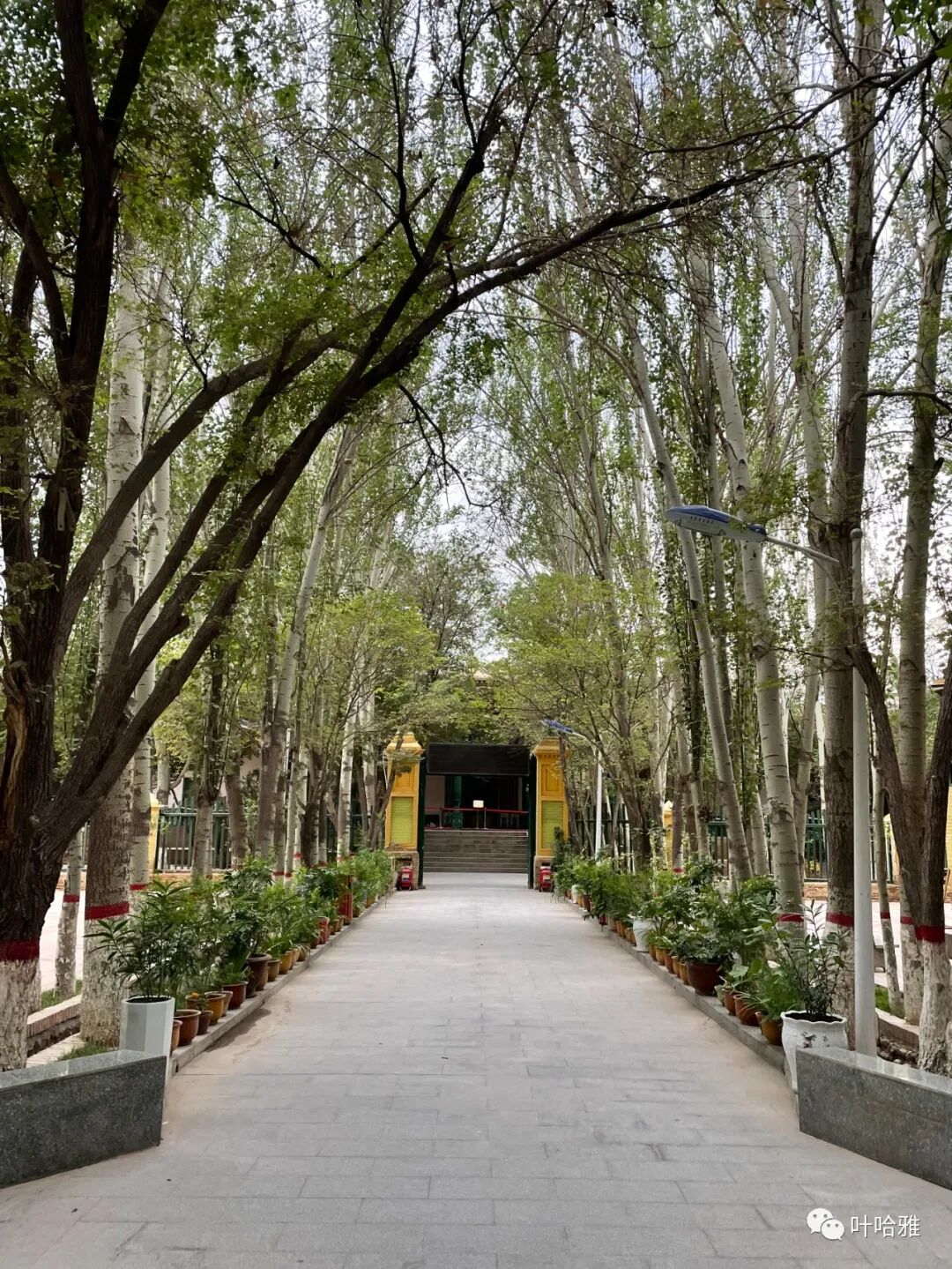
The famous Id Kah Mosque (Aitigaer) is right on the Old City square. I had looked forward to visiting it for many years, but after actually walking inside, I felt a bit disappointed.
There are many mosques in Xinjiang called Id Kah, which means a place for festival prayers. The one in Kashgar is the largest Id Kah Mosque in Xinjiang, covering 16,800 square meters, and it was first built in 1442.
It is comforting that people can still pray here, but only during prayer times. At other times, it is open for tourists to visit for a 30-yuan ticket. Many tourists pay to come in, walk around, and then say it is not worth the visit.
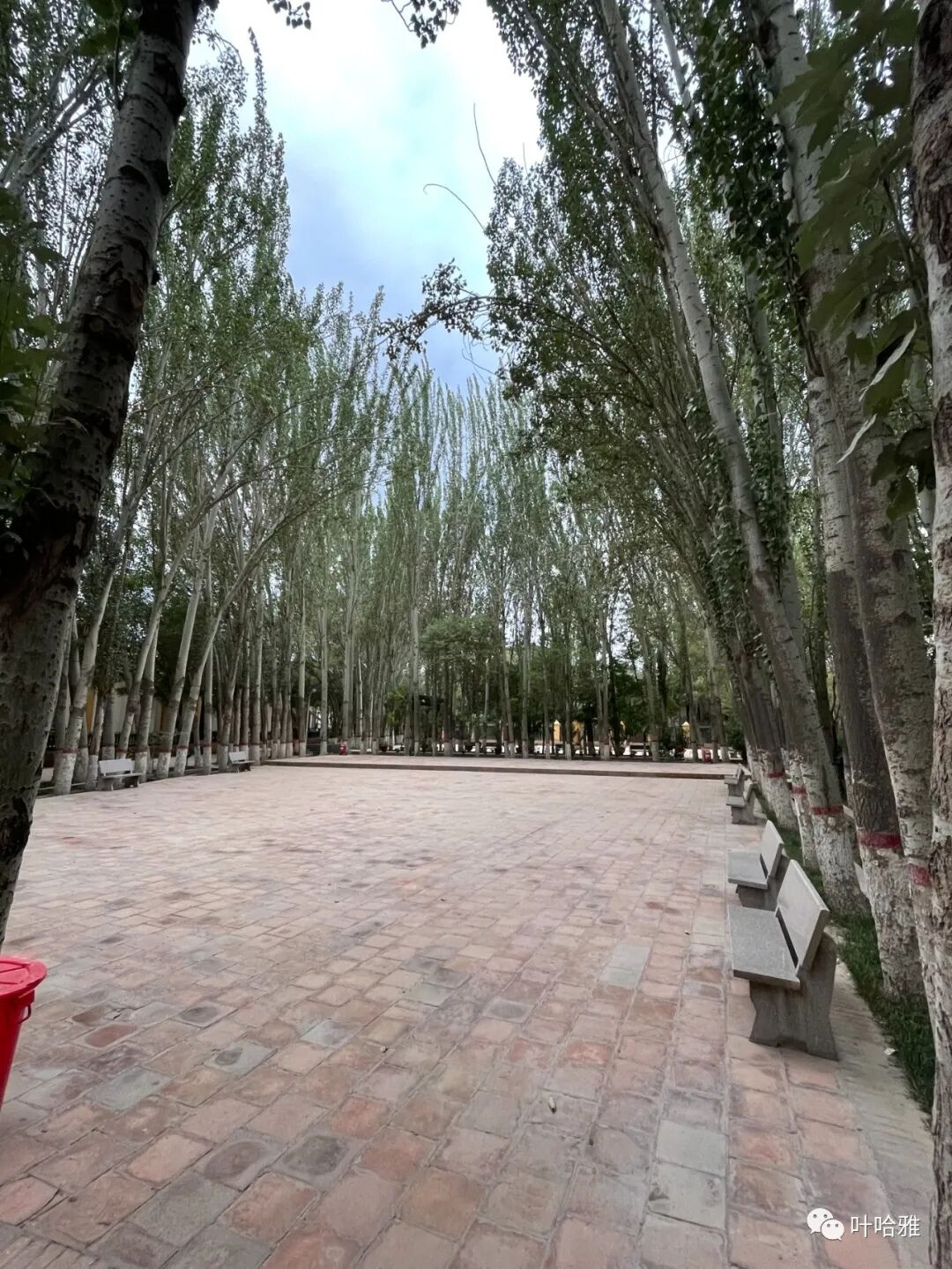
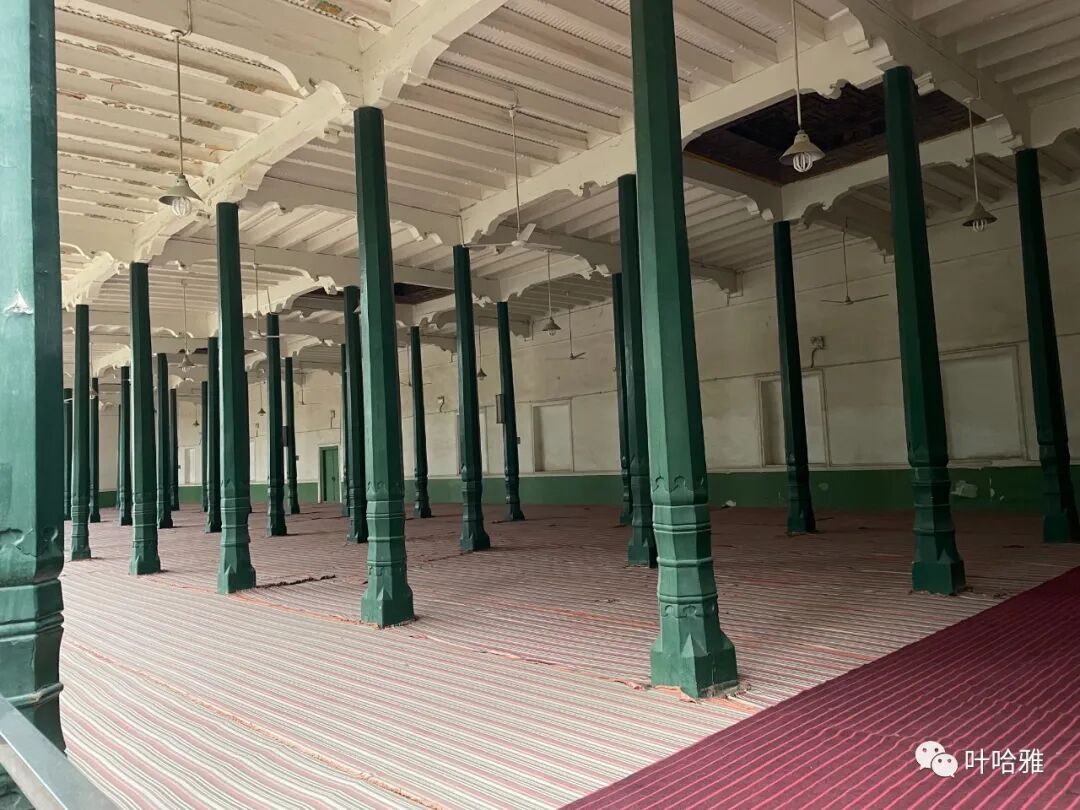
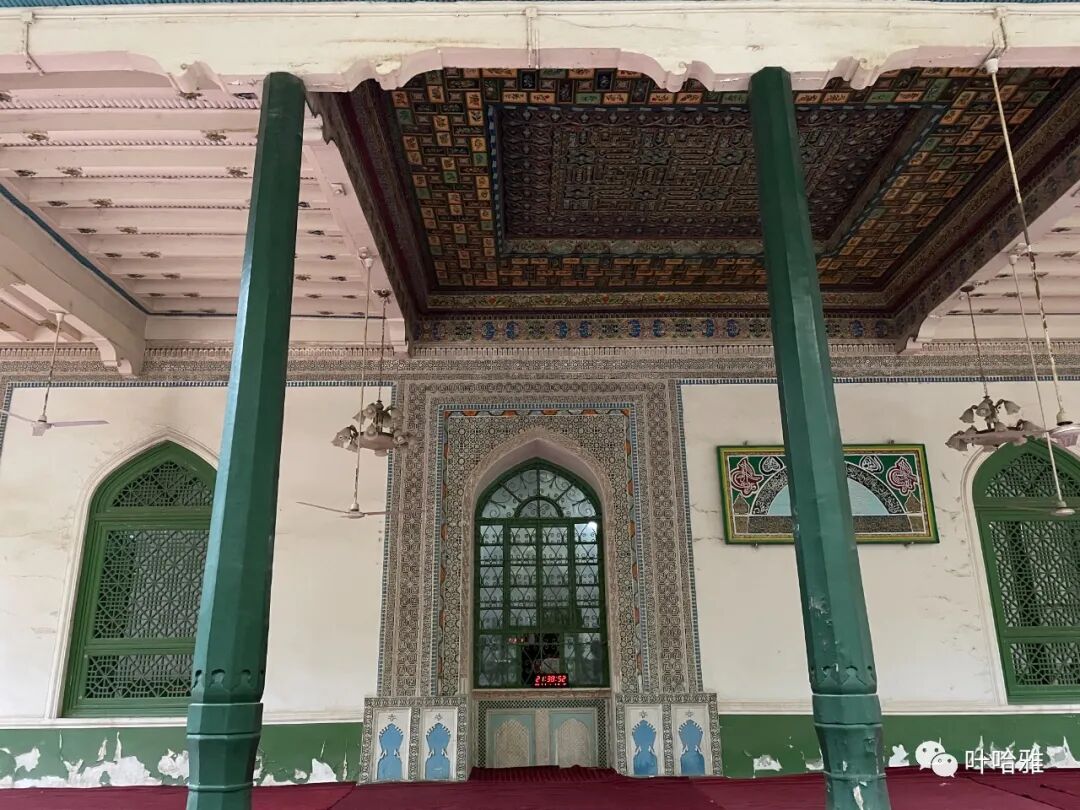
The Id Kah Mosque is not as big as I imagined. Perhaps it is because the main hall building is relatively small, and most of the area is the open space in front of the hall. Also, the entire mosque has been renovated, so you cannot see any ancient traces.
In the middle of the main hall, a tour guide was explaining things to a group of tourists. I walked to the side and performed two rak'ahs of prayer. My heart was not calm during these two rak'ahs because this was the first time on our trip through Southern Xinjiang that we were able to perform a normal prayer.
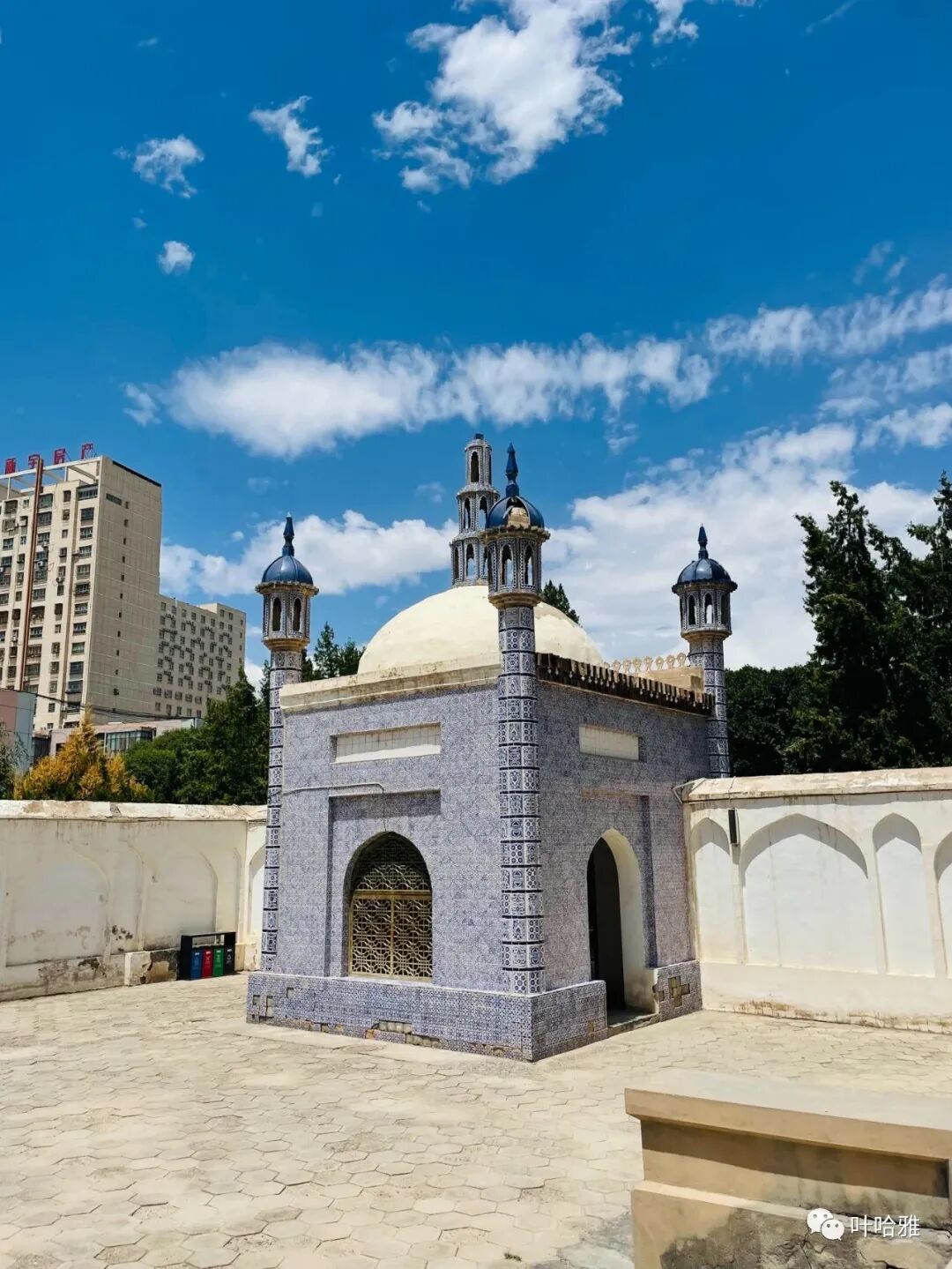
The streets and alleys of Kashgar are full of advertisements for the Fragrant Concubine Tomb scenic area. However, after the Fragrant Concubine married the Qianlong Emperor, she was buried in Beijing. This tomb in Kashgar is only a cenotaph for her, and her family members are buried inside. In this cemetery, the most worth mentioning is the shrine (mazar) of Afaq Khoja, as the Fragrant Concubine was his great-granddaughter.
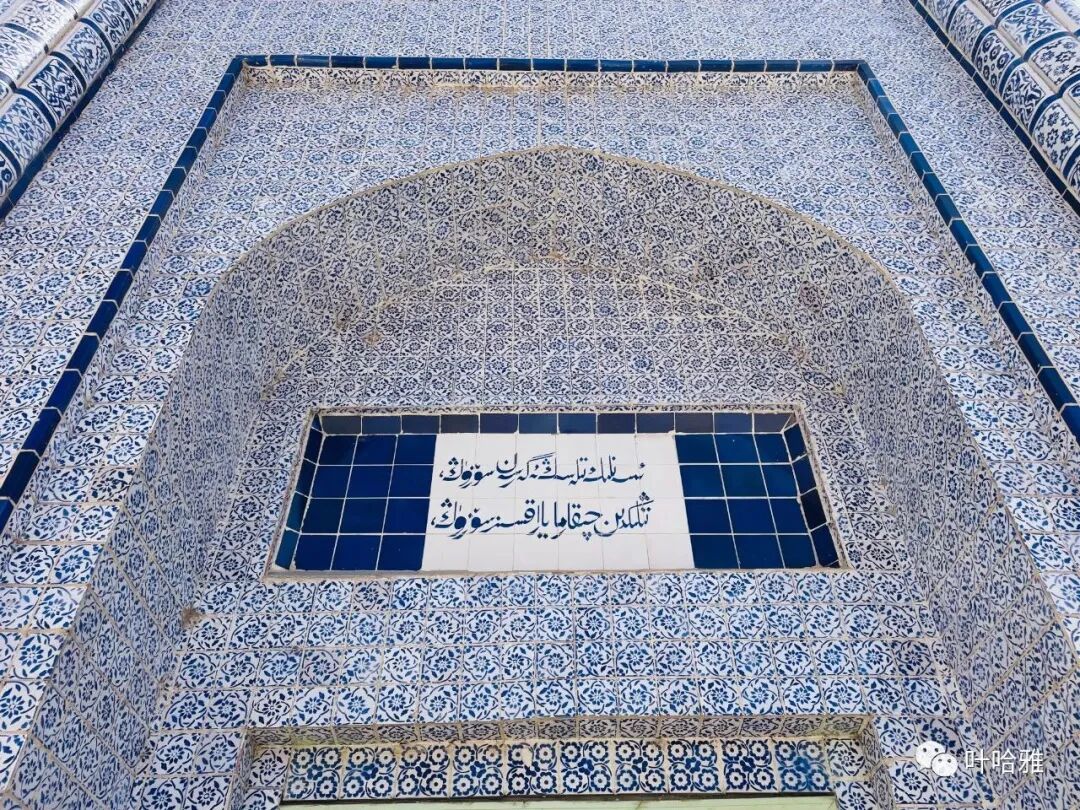
The Fragrant Concubine Tomb (Xiangfei Muyuan) is very large and has complete facilities. It is a spot worth visiting for photos. The tomb (mazar) of Afaq Khoja is inside, but you might miss it if you do not look carefully because there are no clear signs around it.
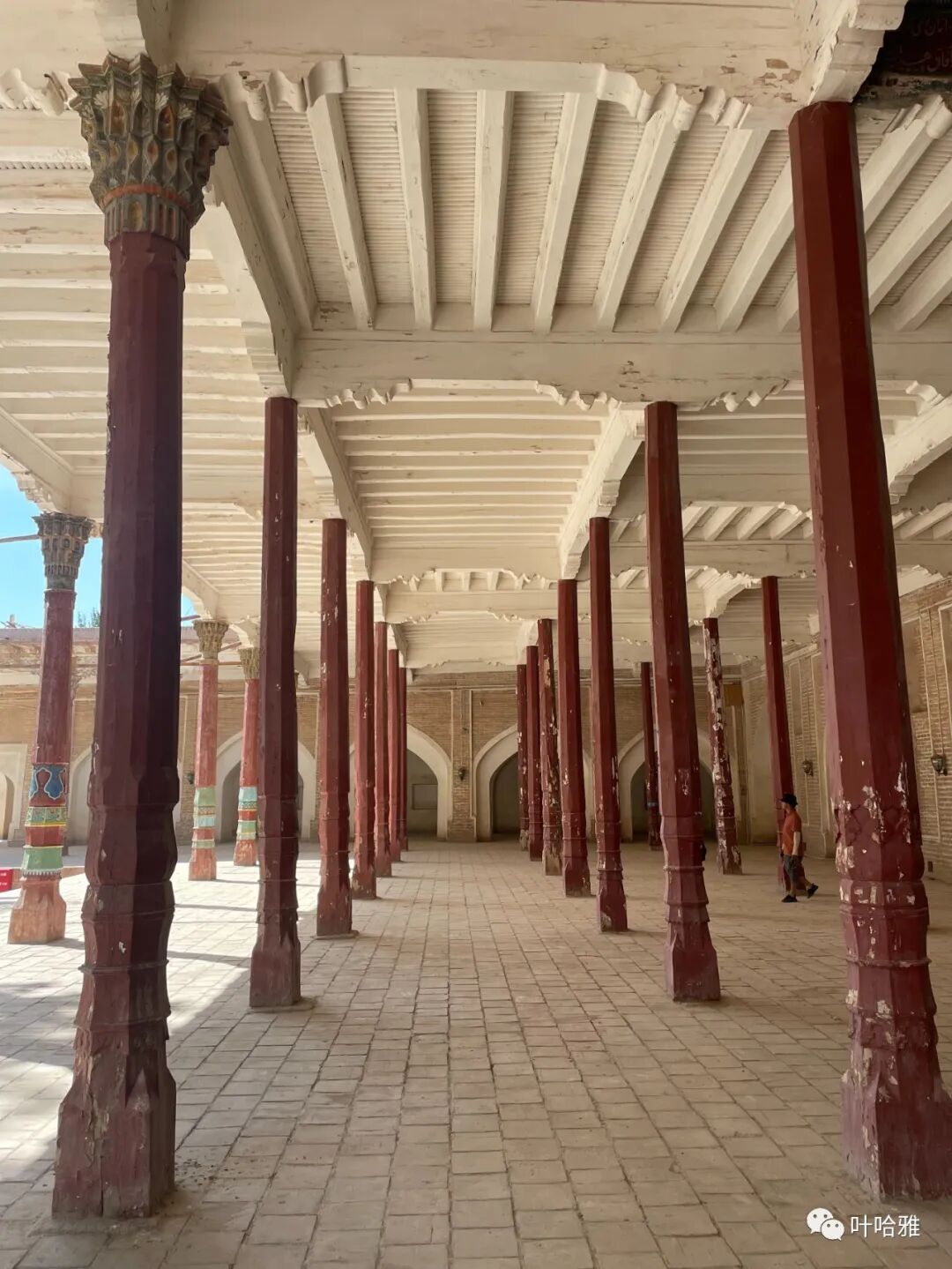
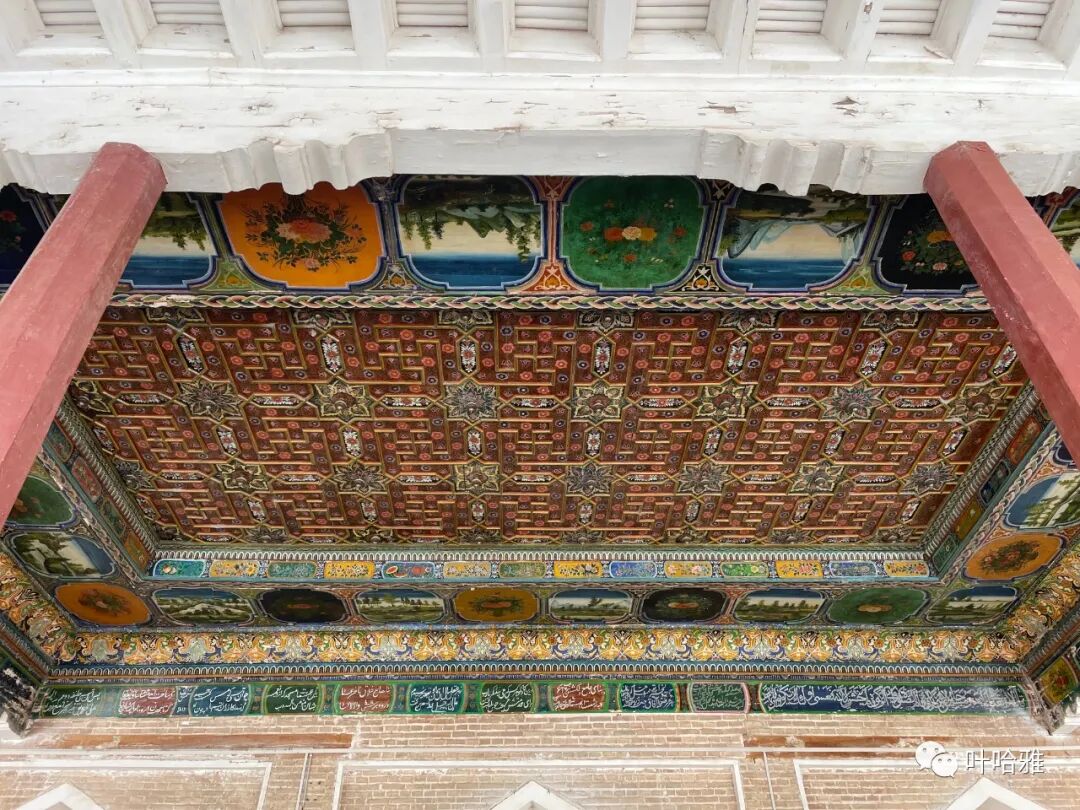
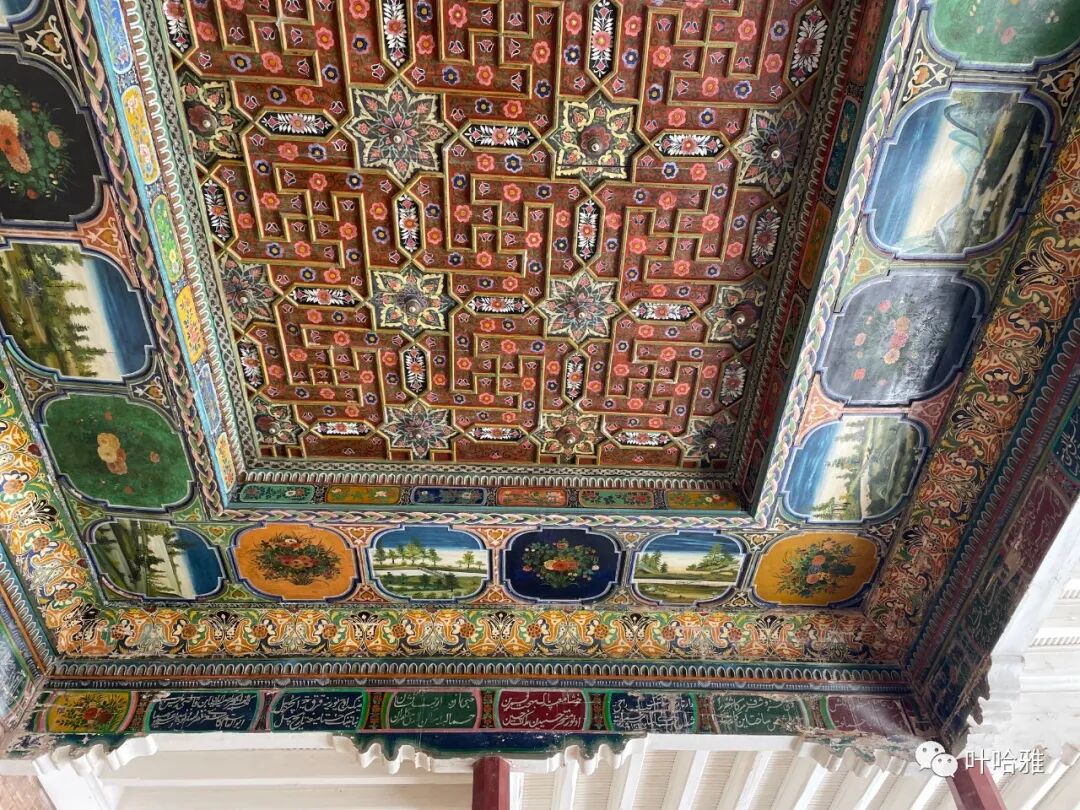
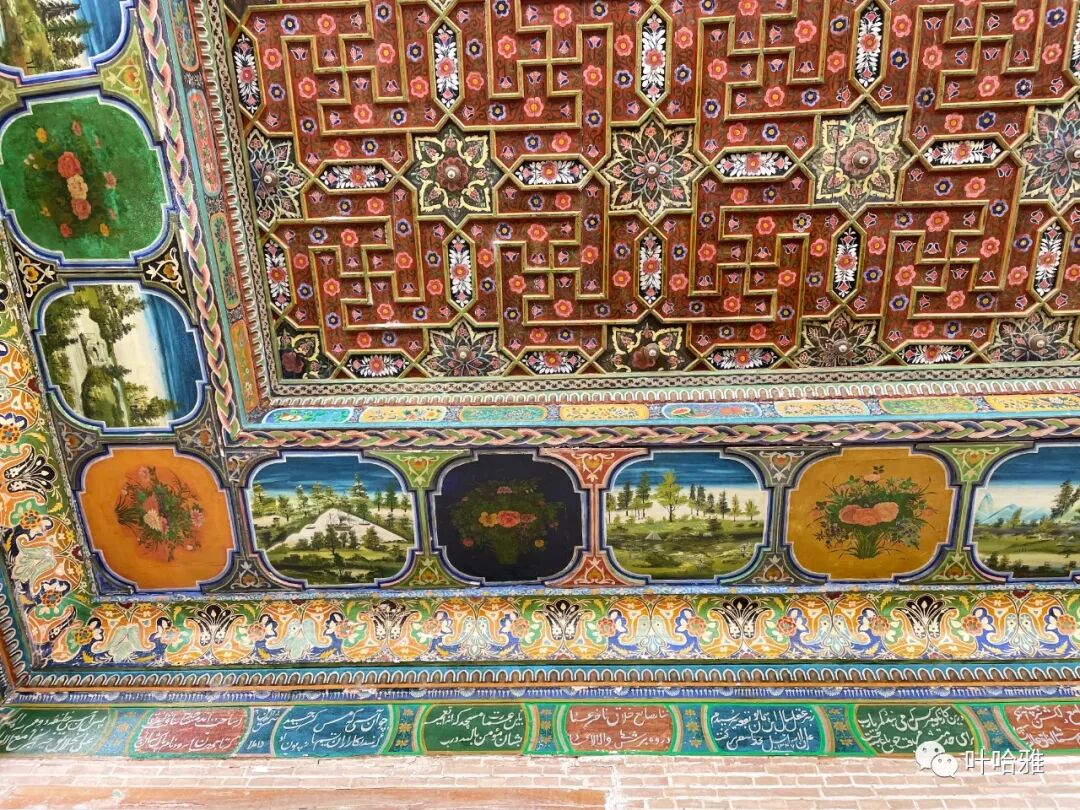
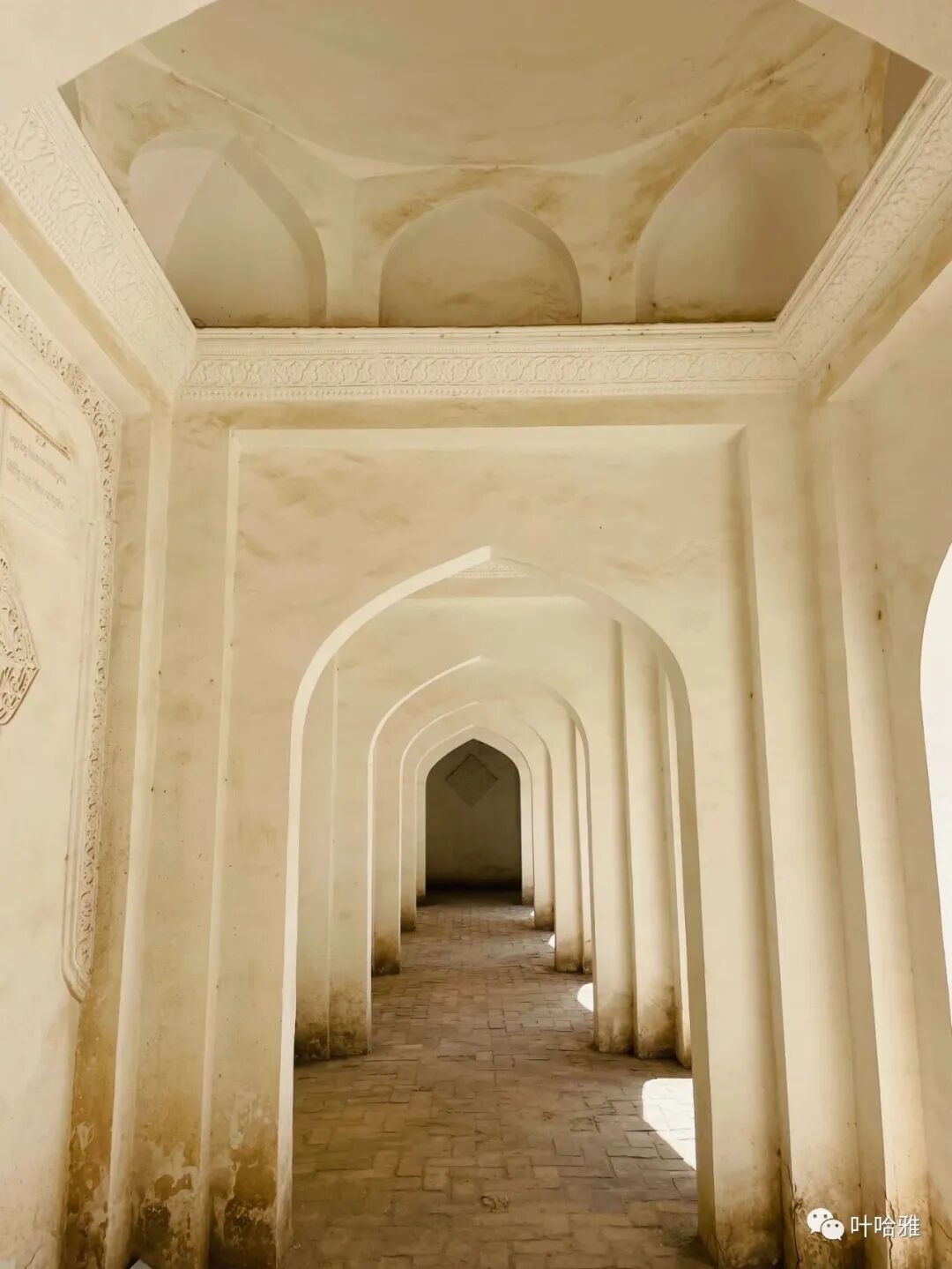
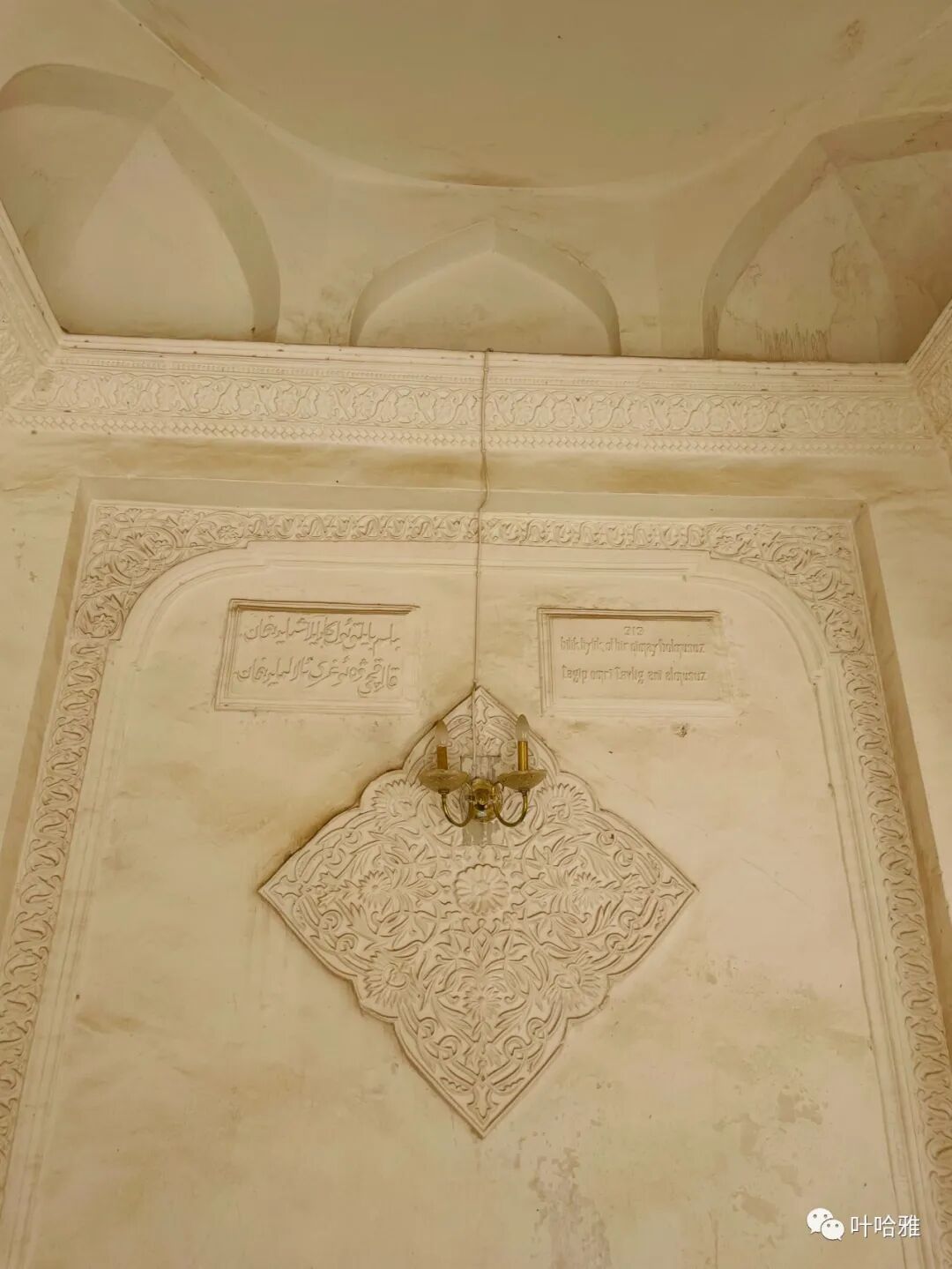
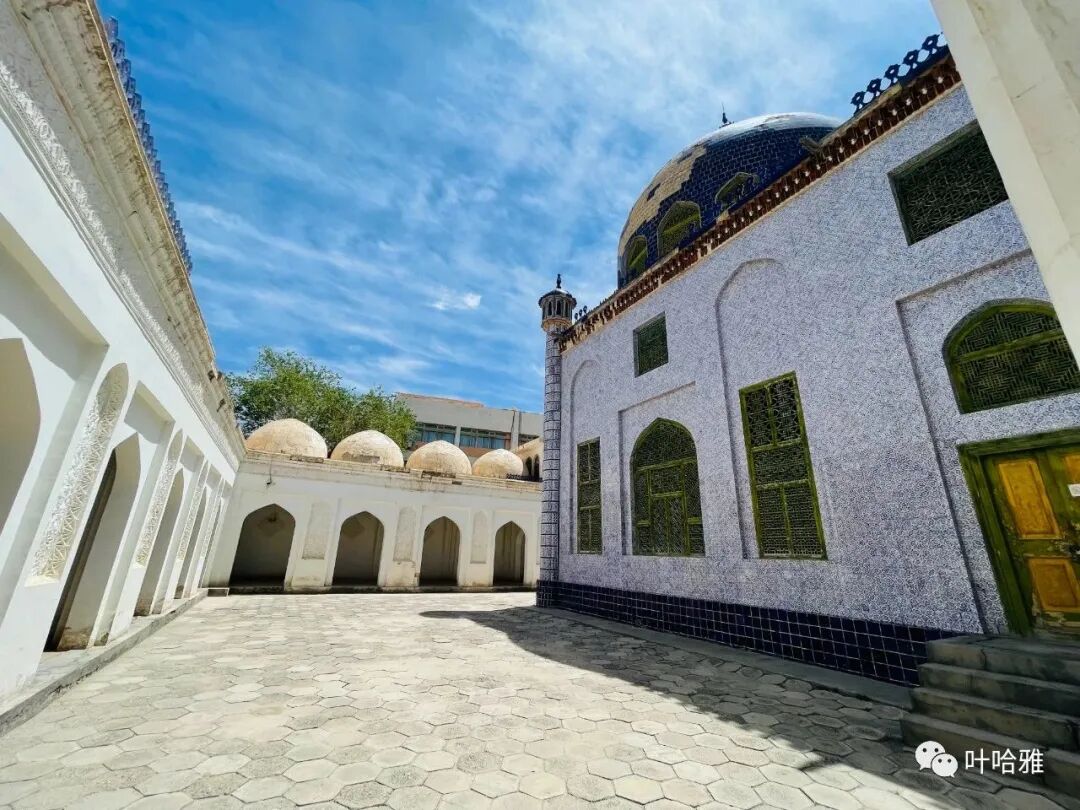
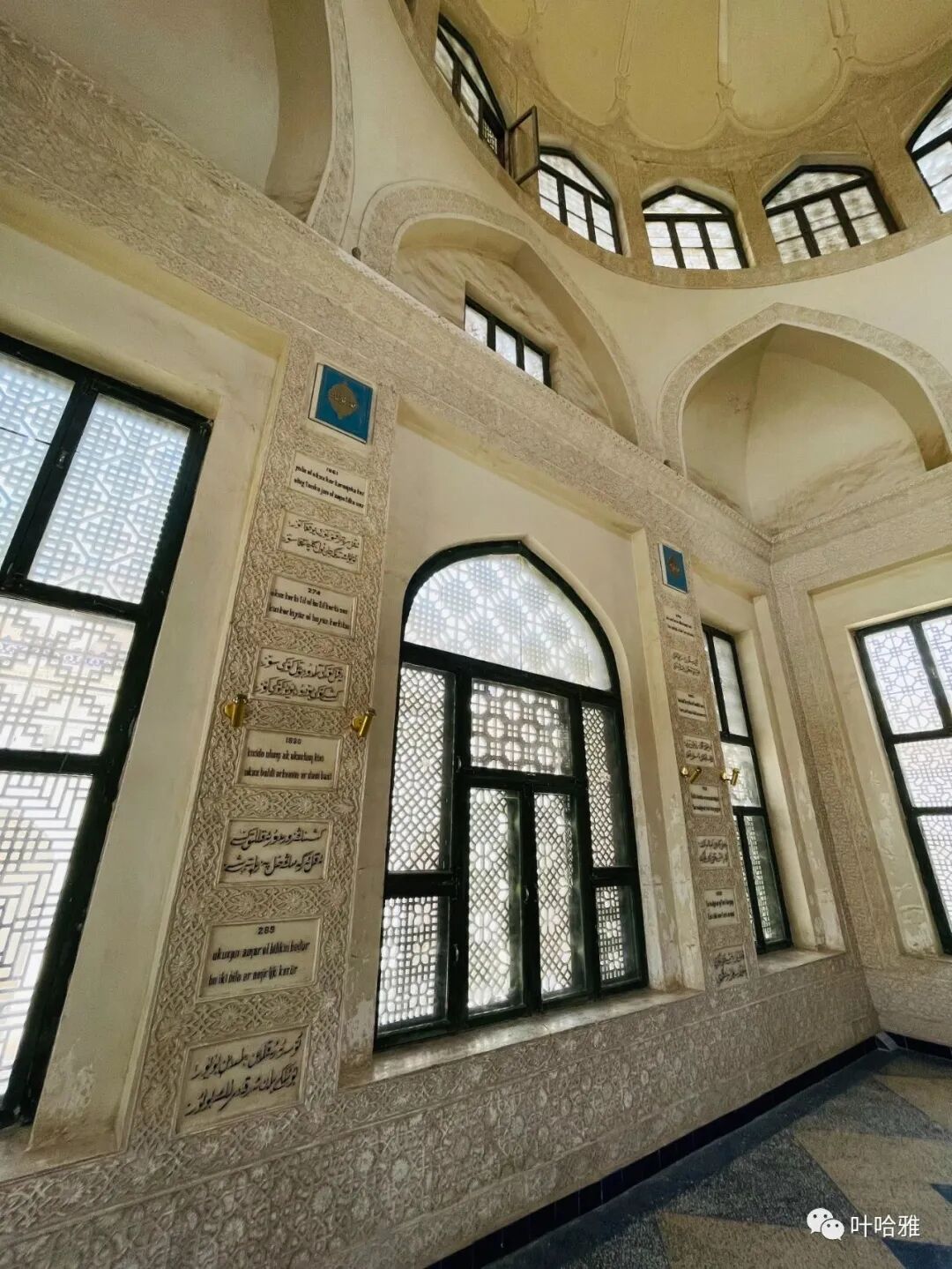
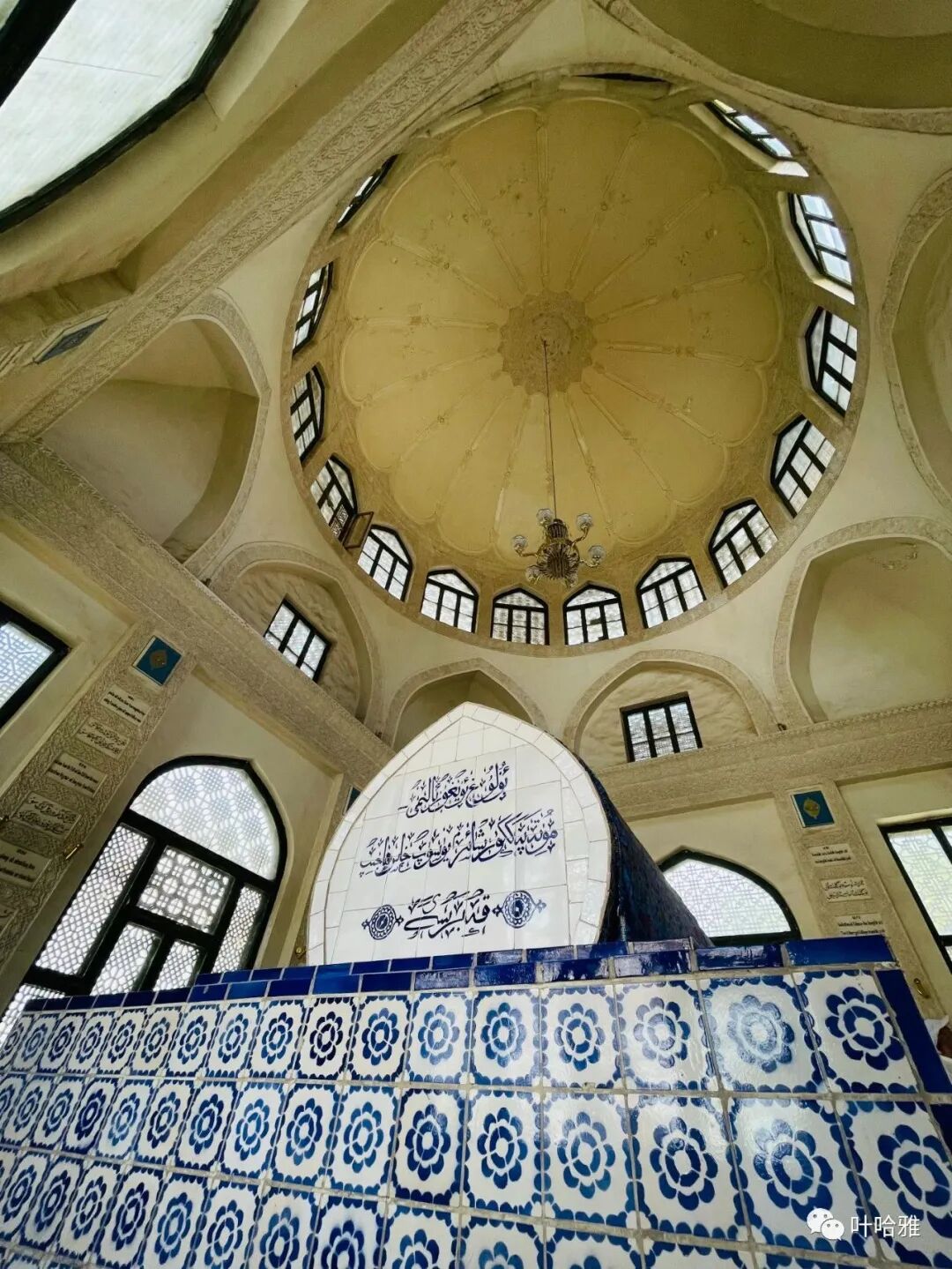
The mazar of Afaq Khoja is right next to the Jiaman Mosque. Since there are no signs, most tourists do not walk this way, making it look especially quiet in the busy Fragrant Concubine Garden.
Afaq Khoja is very important to the various Sufi orders (menhuan) in China, and his influence is closely linked to their history. His disciples include leaders of the Jahriyya, Xianmen, Bi Jichang, Mufti, Ma Diangong, Liu Boyang, Tong Tai Baba, Li Tai Baba, and Anxi Taiye. Ma Laichi of the Huasi menhuan was also born after receiving a blessing from Afaq Khoja, so the records of these menhuan all trace back to Afaq Khoja in Xinjiang.
Because of his struggle with the Black Mountain sect, Afaq Khoja was forced to move to inland areas like Gansu, Ningxia, and Qinghai. Later, he sought help from the Fifth Dalai Lama, who instructed Galdan to support Afaq Khoja's return to Yarkand. Afaq Khoja returned to Yarkand and later died during the struggle against the Black Mountain sect.
Both the Black Mountain sect and the White Mountain sect come from the same Khoja family. Ishaq, the youngest son of Makhdum-i-Azam, was the founder of the Black Mountain sect. Mamut Yusuph, the grandson of Makhdum-i-Azam, was the founder of the White Mountain sect, and Afaq Khoja was the son of Mamut Yusuph.
Across from the Jiaman Mosque, there is another prayer hall, but it is no longer in use.
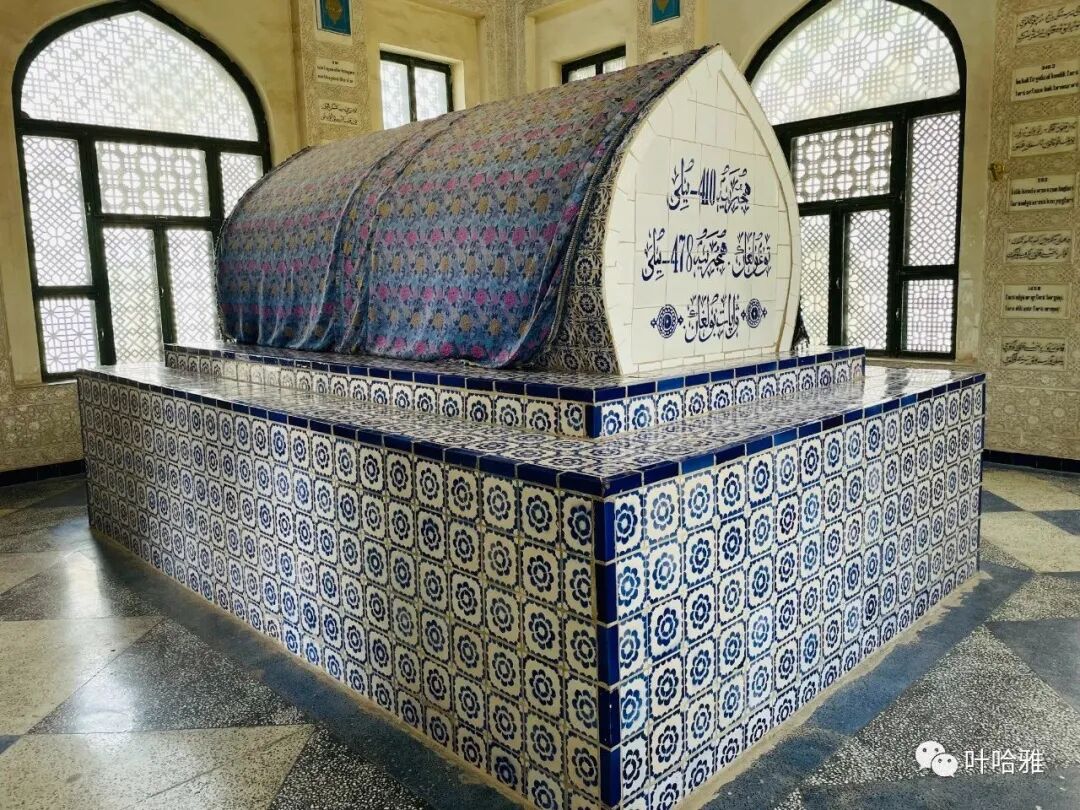
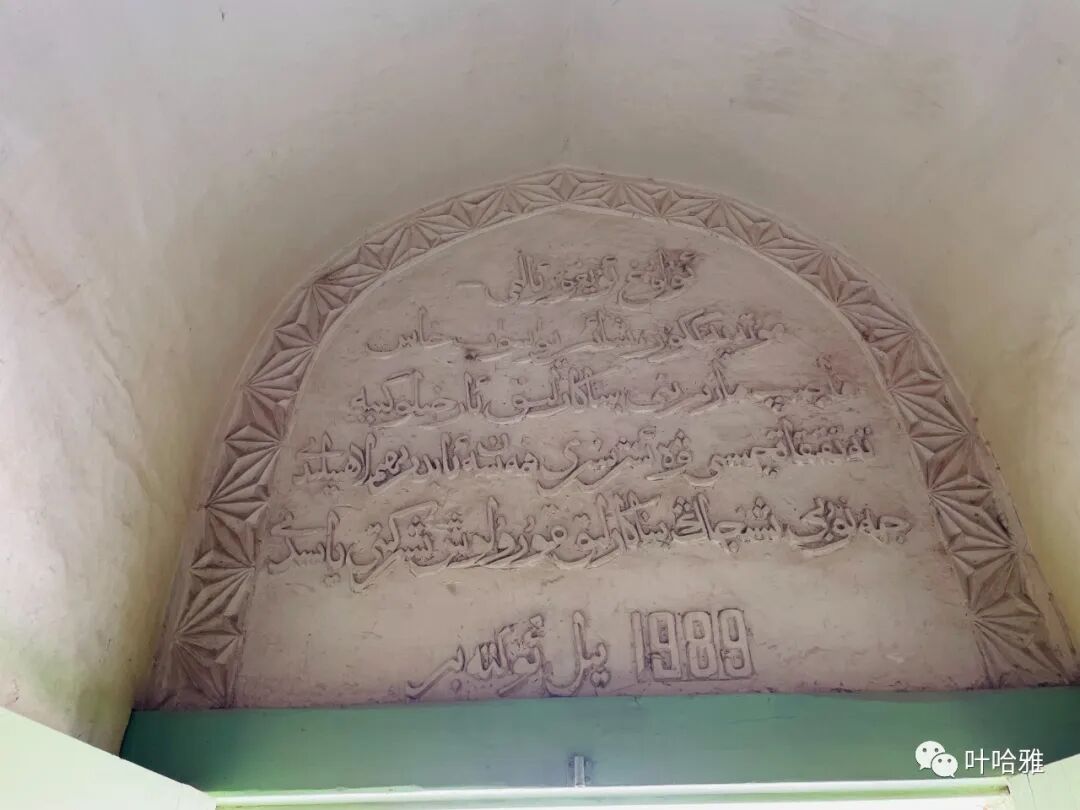
About two or three kilometers from the Kashgar Old City, there is another tomb complex similar in style to the Fragrant Concubine Garden that is also worth mentioning: the Tomb of Yusuf Khass Hajib (1019-1085).
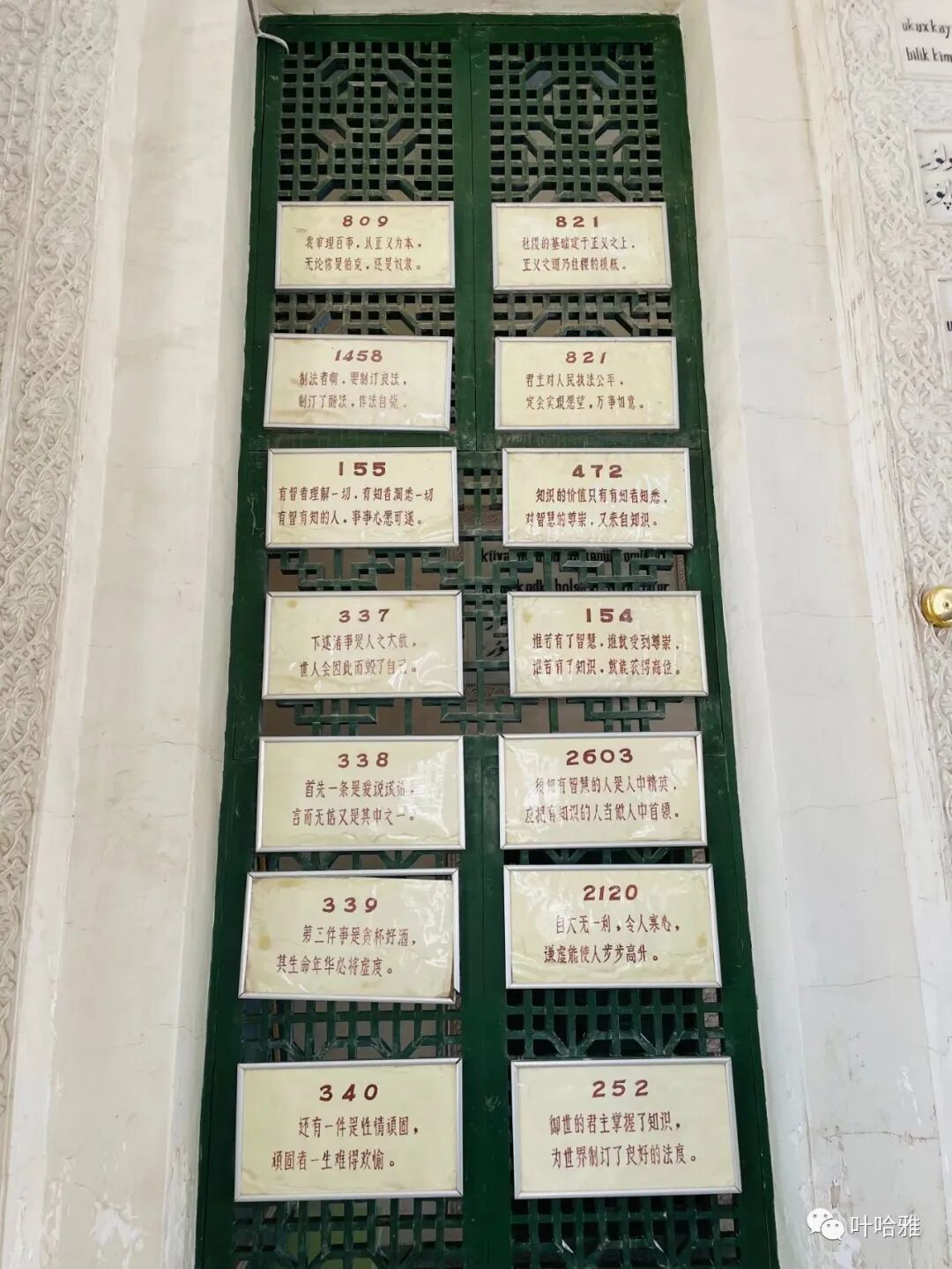
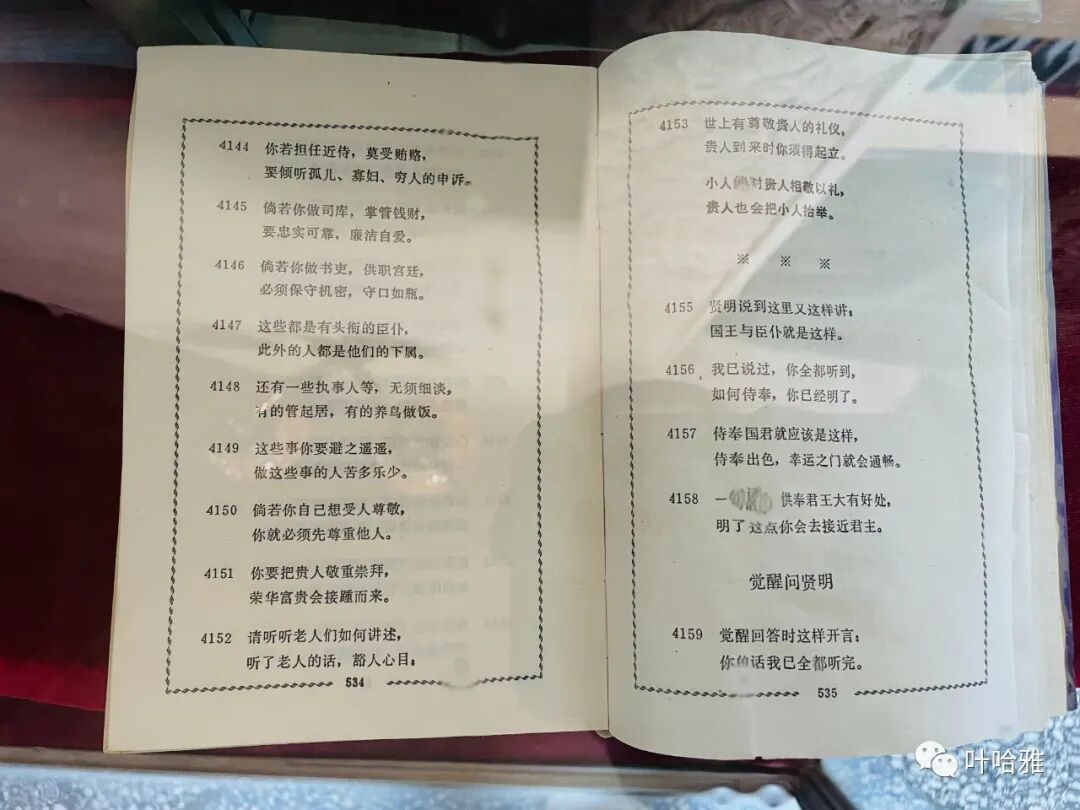
Yusuf Khass Hajib, the famous poet and author of Wisdom of Royal Glory (Kutadgu Bilig), was a Kyrgyz person and a court official for the Karakhanid dynasty. Kashgar was the capital of the dynasty at the time, and Khass Hajib means court official. His portrait is still printed on Kyrgyz banknotes today.
Yusuf Khass Hajib had a huge influence on Uyghur language and literature, much like Confucius for the Chinese people. However, because Han people do not know much about him, very few tourists visit his tomb.
In Kashgar, you have to wait until almost 11:00 PM for it to get dark, which is a time difference of nearly three hours from Beijing. It is very sunny during the day, so you can visit the Night Market (Han Bazar) in the Old City at night. There are many tourists there, and it is still busy until 1:00 AM.
The old man's melon at the Han Bazar costs 3 yuan a slice; it is delicious and cheap.
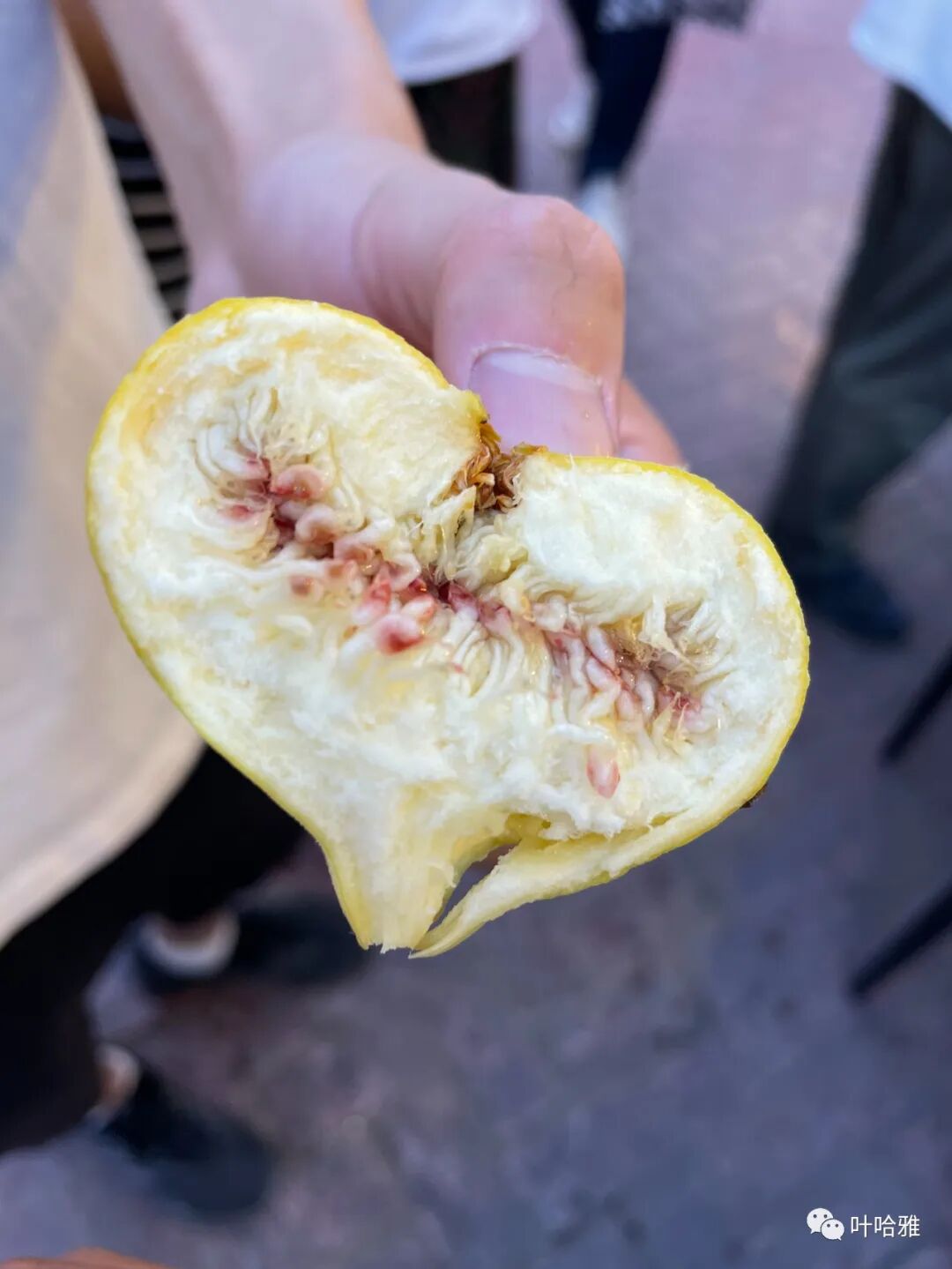
Figs (wuhuaguo).
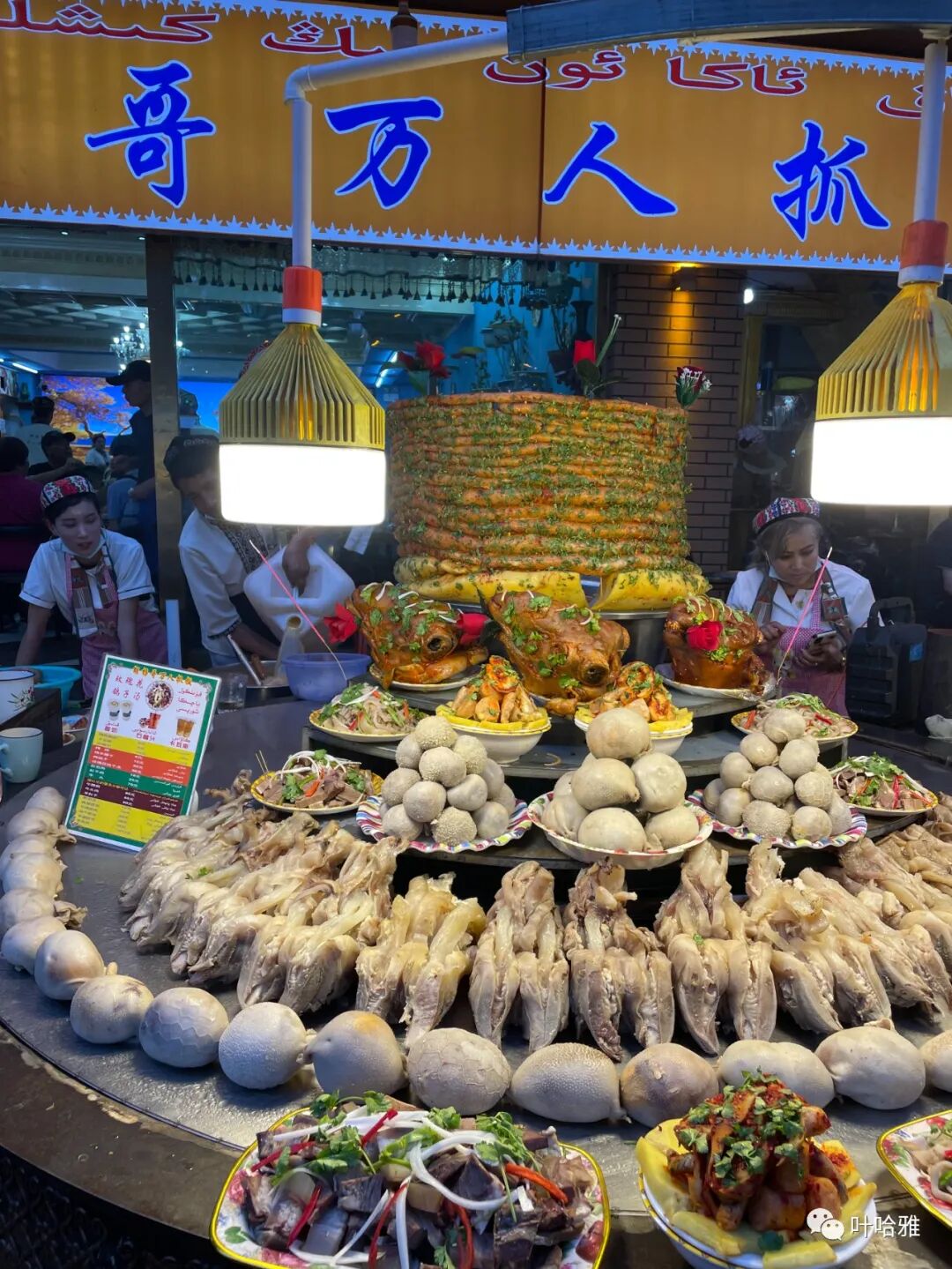
Braised meat (gangzirou)
Rose pigeon soup (meiguihua gezi tang)
Rice sausage and lung (michang mianfei)
Roasted goose egg (kao edan)
Thin-skinned steamed bun (baopi baozi)
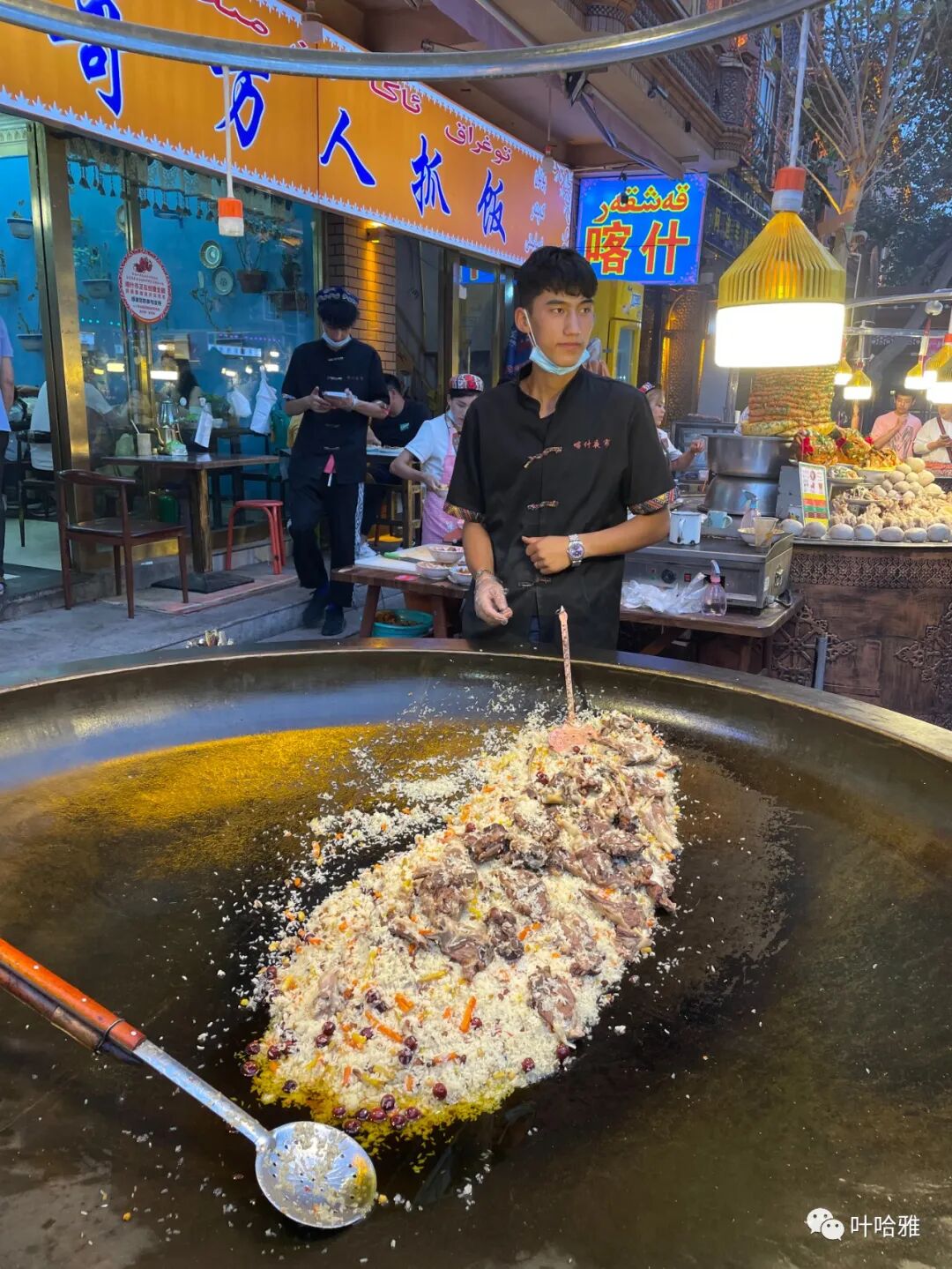
The snacks at the night market (hanbazha) taste great. They have almost all the unique snacks from Xinjiang here, which is very friendly for tourists. Since the old town was renovated, it has attracted many couples who come here to take portraits.
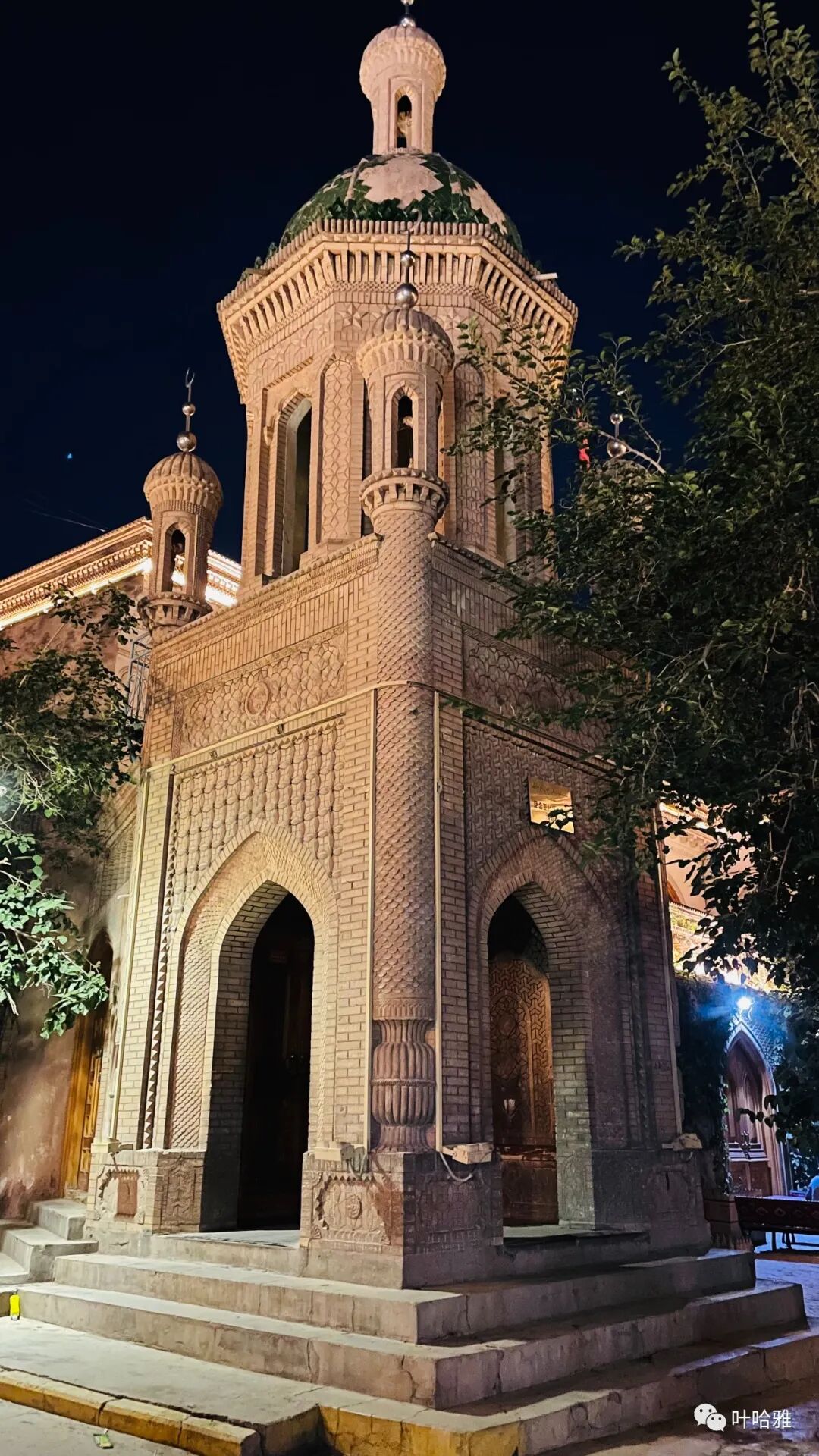
While wandering around the old town, we accidentally found a few mosques that were not open to the public. Even though some did not have signs, we could easily recognize them by their distinct minarets.
Sahaya Community Oil Market Mosque (Sahaya shequ youbazha qingzhensi)
Wuerdashike Mosque (Wuerdashike qingzhensi)
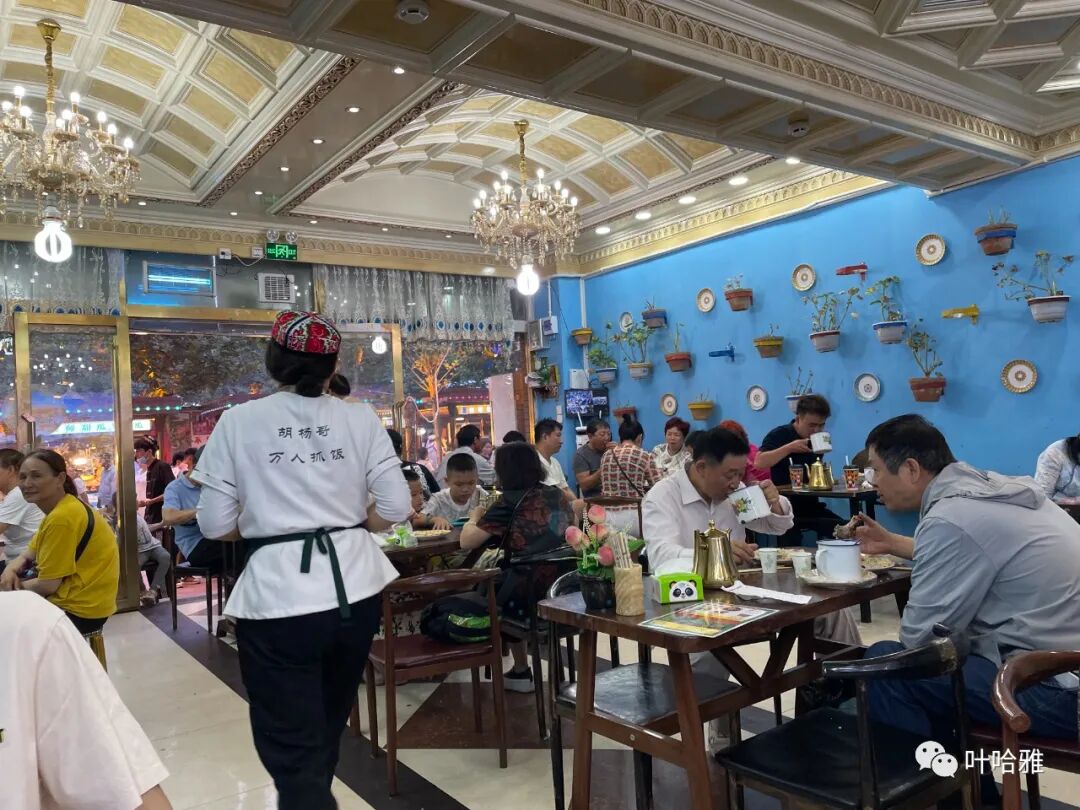
Finding a good restaurant in southern Xinjiang is actually simple. Just look at the name. Some names sound a bit strange because they are direct translations from the Uyghur language. For example, a restaurant called 'Seven Generations of Food' means that seven generations of their family have worked in the food business. Han Chinese people usually do not choose names like that.
Uyghur people have a great tradition of being very quiet when eating in public. If you are observant, you can notice this.
Before leaving Kashgar, I visited a friend. She just had her second child and was on maternity leave. Her parents moved from Sichuan to settle in Kashgar. She has completely adapted to the climate in Kashgar and would actually find it uncomfortable to live in the south now.
We had our last meal in Kashgar at this meatball soup (wanzi tang) shop called Miquan Wonton. The name tells you the owner is from Miquan, a district in Urumqi. After leaving Kashgar, we drove north toward our destination, Urumqi.
The taxi trunk had a bilingual sticker that said, Please do not slam the door. Experience tells me that in Xinjiang, the trunk is the part of the car that breaks the easiest. Can you guess why? view all
Summary: This Muslim travel guide to Kashgar covers Id Kah Mosque, Kashgar Old City, Abakh Khoja Mazar in Fragrant Concubine Garden, Sufi heritage, prayer experiences, Uyghur daily life, and local halal food.
A Kashgar Mosque Tour: The Abakh Khoja Tomb (Mazar) Inside the Fragrant Concubine Garden (Xiangfei Yuan) is presented here as a firsthand travel account in clear English, beginning with this scene: The charm of Kashgar lies in the fact that it has both the tourist-friendly Kashgar Old City and Fragrant Concubine Garden (Xiangfeiyuan), as well as shrines (mazar) and mosques where various Sufi orders (menhuan) visit. The account keeps its focus on Halal Travel, Yiwu Food, Mosque Travel while preserving the names, places, food, and historical details from the Chinese source.
The charm of Kashgar lies in the fact that it has both the tourist-friendly Kashgar Old City and Fragrant Concubine Garden (Xiangfeiyuan), as well as shrines (mazar) and mosques where various Sufi orders (menhuan) visit to honor their ancestors. Everyone experiences Kashgar in their own way.
We spent three days and two nights in Kashgar. We drove all the way from Beijing, covering about 5,000 kilometers. I had the car serviced before leaving Beijing, and it was just time for another service when we arrived in Kashgar.
We found a repair shop near the Old City. The owner is a local Han Chinese born and raised in Kashgar, and he employs a group of Uyghur youths. The owner is very talkative and speaks Uyghur. He had a Uyghur girlfriend when he was young, but they broke up because her family opposed the relationship. Now, he leads a group of Uyghur guys in his business. According to him, there are about 100,000 old Kashgar Han Chinese like him who are fluent in Uyghur, but his son cannot speak the language.
We greeted the Uyghur mechanic with a salaam. He touched his chest, and then he worked even harder.
We found a nice homestay in the Kashgar Old City. Because it is located at the entrance of the Old City and is very close to the underground parking lot, the price is high. It is called Wasting Half a Lifetime (Langfei Bansheng). The homestay is in a Moroccan style, which fits perfectly in the Kashgar Old City and feels very appropriate.
The famous Id Kah Mosque (Aitigaer) is right on the Old City square. I had looked forward to visiting it for many years, but after actually walking inside, I felt a bit disappointed.
There are many mosques in Xinjiang called Id Kah, which means a place for festival prayers. The one in Kashgar is the largest Id Kah Mosque in Xinjiang, covering 16,800 square meters, and it was first built in 1442.
It is comforting that people can still pray here, but only during prayer times. At other times, it is open for tourists to visit for a 30-yuan ticket. Many tourists pay to come in, walk around, and then say it is not worth the visit.
The Id Kah Mosque is not as big as I imagined. Perhaps it is because the main hall building is relatively small, and most of the area is the open space in front of the hall. Also, the entire mosque has been renovated, so you cannot see any ancient traces.
In the middle of the main hall, a tour guide was explaining things to a group of tourists. I walked to the side and performed two rak'ahs of prayer. My heart was not calm during these two rak'ahs because this was the first time on our trip through Southern Xinjiang that we were able to perform a normal prayer.
The streets and alleys of Kashgar are full of advertisements for the Fragrant Concubine Tomb scenic area. However, after the Fragrant Concubine married the Qianlong Emperor, she was buried in Beijing. This tomb in Kashgar is only a cenotaph for her, and her family members are buried inside. In this cemetery, the most worth mentioning is the shrine (mazar) of Afaq Khoja, as the Fragrant Concubine was his great-granddaughter.
The Fragrant Concubine Tomb (Xiangfei Muyuan) is very large and has complete facilities. It is a spot worth visiting for photos. The tomb (mazar) of Afaq Khoja is inside, but you might miss it if you do not look carefully because there are no clear signs around it.
The mazar of Afaq Khoja is right next to the Jiaman Mosque. Since there are no signs, most tourists do not walk this way, making it look especially quiet in the busy Fragrant Concubine Garden.
Afaq Khoja is very important to the various Sufi orders (menhuan) in China, and his influence is closely linked to their history. His disciples include leaders of the Jahriyya, Xianmen, Bi Jichang, Mufti, Ma Diangong, Liu Boyang, Tong Tai Baba, Li Tai Baba, and Anxi Taiye. Ma Laichi of the Huasi menhuan was also born after receiving a blessing from Afaq Khoja, so the records of these menhuan all trace back to Afaq Khoja in Xinjiang.
Because of his struggle with the Black Mountain sect, Afaq Khoja was forced to move to inland areas like Gansu, Ningxia, and Qinghai. Later, he sought help from the Fifth Dalai Lama, who instructed Galdan to support Afaq Khoja's return to Yarkand. Afaq Khoja returned to Yarkand and later died during the struggle against the Black Mountain sect.
Both the Black Mountain sect and the White Mountain sect come from the same Khoja family. Ishaq, the youngest son of Makhdum-i-Azam, was the founder of the Black Mountain sect. Mamut Yusuph, the grandson of Makhdum-i-Azam, was the founder of the White Mountain sect, and Afaq Khoja was the son of Mamut Yusuph.
Across from the Jiaman Mosque, there is another prayer hall, but it is no longer in use.
About two or three kilometers from the Kashgar Old City, there is another tomb complex similar in style to the Fragrant Concubine Garden that is also worth mentioning: the Tomb of Yusuf Khass Hajib (1019-1085).
Yusuf Khass Hajib, the famous poet and author of Wisdom of Royal Glory (Kutadgu Bilig), was a Kyrgyz person and a court official for the Karakhanid dynasty. Kashgar was the capital of the dynasty at the time, and Khass Hajib means court official. His portrait is still printed on Kyrgyz banknotes today.
Yusuf Khass Hajib had a huge influence on Uyghur language and literature, much like Confucius for the Chinese people. However, because Han people do not know much about him, very few tourists visit his tomb.
In Kashgar, you have to wait until almost 11:00 PM for it to get dark, which is a time difference of nearly three hours from Beijing. It is very sunny during the day, so you can visit the Night Market (Han Bazar) in the Old City at night. There are many tourists there, and it is still busy until 1:00 AM.
The old man's melon at the Han Bazar costs 3 yuan a slice; it is delicious and cheap.
Figs (wuhuaguo).
Braised meat (gangzirou)
Rose pigeon soup (meiguihua gezi tang)
Rice sausage and lung (michang mianfei)
Roasted goose egg (kao edan)
Thin-skinned steamed bun (baopi baozi)
The snacks at the night market (hanbazha) taste great. They have almost all the unique snacks from Xinjiang here, which is very friendly for tourists. Since the old town was renovated, it has attracted many couples who come here to take portraits.
While wandering around the old town, we accidentally found a few mosques that were not open to the public. Even though some did not have signs, we could easily recognize them by their distinct minarets.
Sahaya Community Oil Market Mosque (Sahaya shequ youbazha qingzhensi)
Wuerdashike Mosque (Wuerdashike qingzhensi)
Finding a good restaurant in southern Xinjiang is actually simple. Just look at the name. Some names sound a bit strange because they are direct translations from the Uyghur language. For example, a restaurant called 'Seven Generations of Food' means that seven generations of their family have worked in the food business. Han Chinese people usually do not choose names like that.
Uyghur people have a great tradition of being very quiet when eating in public. If you are observant, you can notice this.
Before leaving Kashgar, I visited a friend. She just had her second child and was on maternity leave. Her parents moved from Sichuan to settle in Kashgar. She has completely adapted to the climate in Kashgar and would actually find it uncomfortable to live in the south now.
We had our last meal in Kashgar at this meatball soup (wanzi tang) shop called Miquan Wonton. The name tells you the owner is from Miquan, a district in Urumqi. After leaving Kashgar, we drove north toward our destination, Urumqi.
The taxi trunk had a bilingual sticker that said, Please do not slam the door. Experience tells me that in Xinjiang, the trunk is the part of the car that breaks the easiest. Can you guess why? view all
Reposted from the web
Summary: This Muslim travel guide to Kashgar covers Id Kah Mosque, Kashgar Old City, Abakh Khoja Mazar in Fragrant Concubine Garden, Sufi heritage, prayer experiences, Uyghur daily life, and local halal food.
A Kashgar Mosque Tour: The Abakh Khoja Tomb (Mazar) Inside the Fragrant Concubine Garden (Xiangfei Yuan) is presented here as a firsthand travel account in clear English, beginning with this scene: The charm of Kashgar lies in the fact that it has both the tourist-friendly Kashgar Old City and Fragrant Concubine Garden (Xiangfeiyuan), as well as shrines (mazar) and mosques where various Sufi orders (menhuan) visit. The account keeps its focus on Halal Travel, Yiwu Food, Mosque Travel while preserving the names, places, food, and historical details from the Chinese source.
The charm of Kashgar lies in the fact that it has both the tourist-friendly Kashgar Old City and Fragrant Concubine Garden (Xiangfeiyuan), as well as shrines (mazar) and mosques where various Sufi orders (menhuan) visit to honor their ancestors. Everyone experiences Kashgar in their own way.
We spent three days and two nights in Kashgar. We drove all the way from Beijing, covering about 5,000 kilometers. I had the car serviced before leaving Beijing, and it was just time for another service when we arrived in Kashgar.
We found a repair shop near the Old City. The owner is a local Han Chinese born and raised in Kashgar, and he employs a group of Uyghur youths. The owner is very talkative and speaks Uyghur. He had a Uyghur girlfriend when he was young, but they broke up because her family opposed the relationship. Now, he leads a group of Uyghur guys in his business. According to him, there are about 100,000 old Kashgar Han Chinese like him who are fluent in Uyghur, but his son cannot speak the language.
We greeted the Uyghur mechanic with a salaam. He touched his chest, and then he worked even harder.
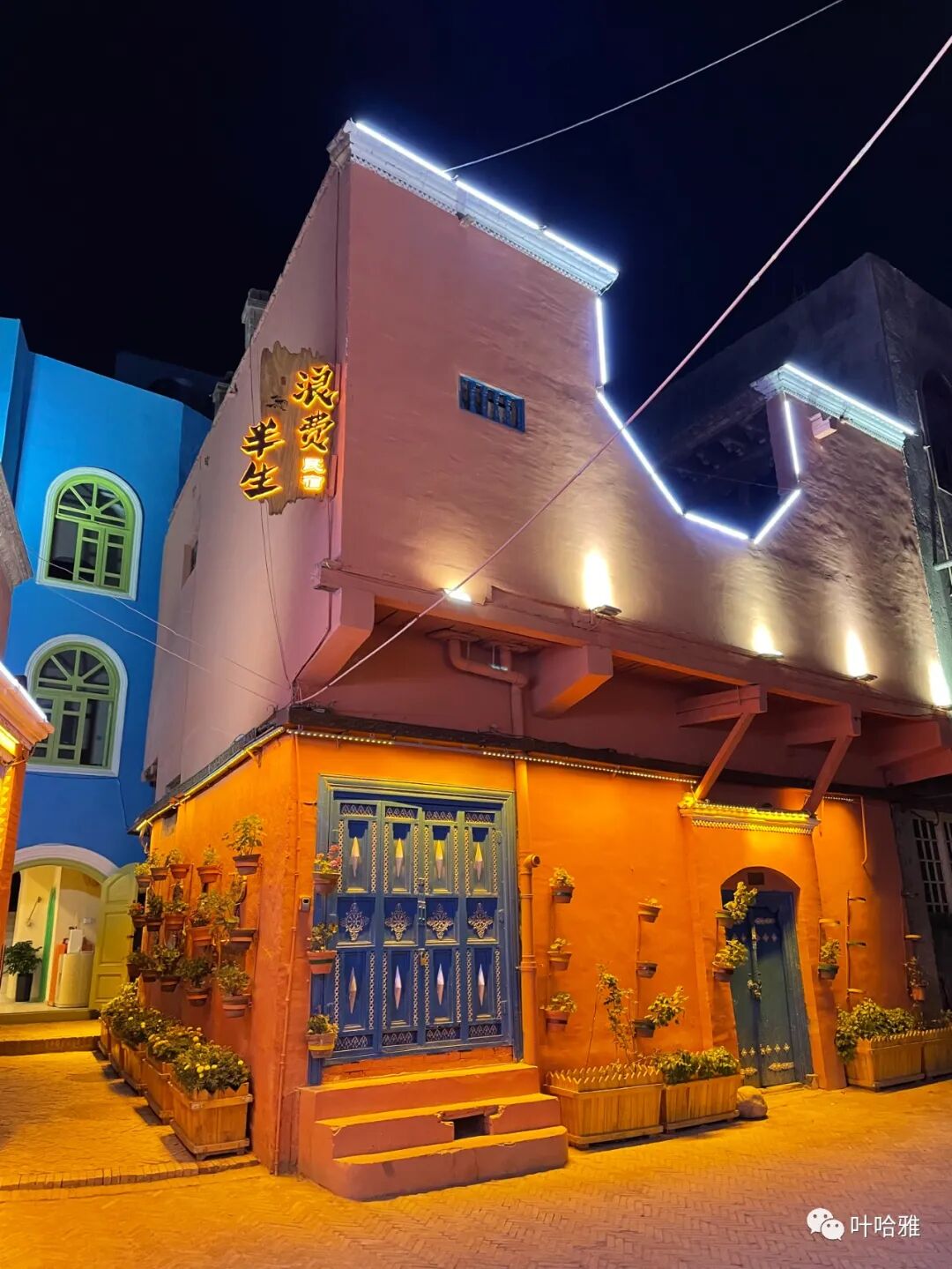
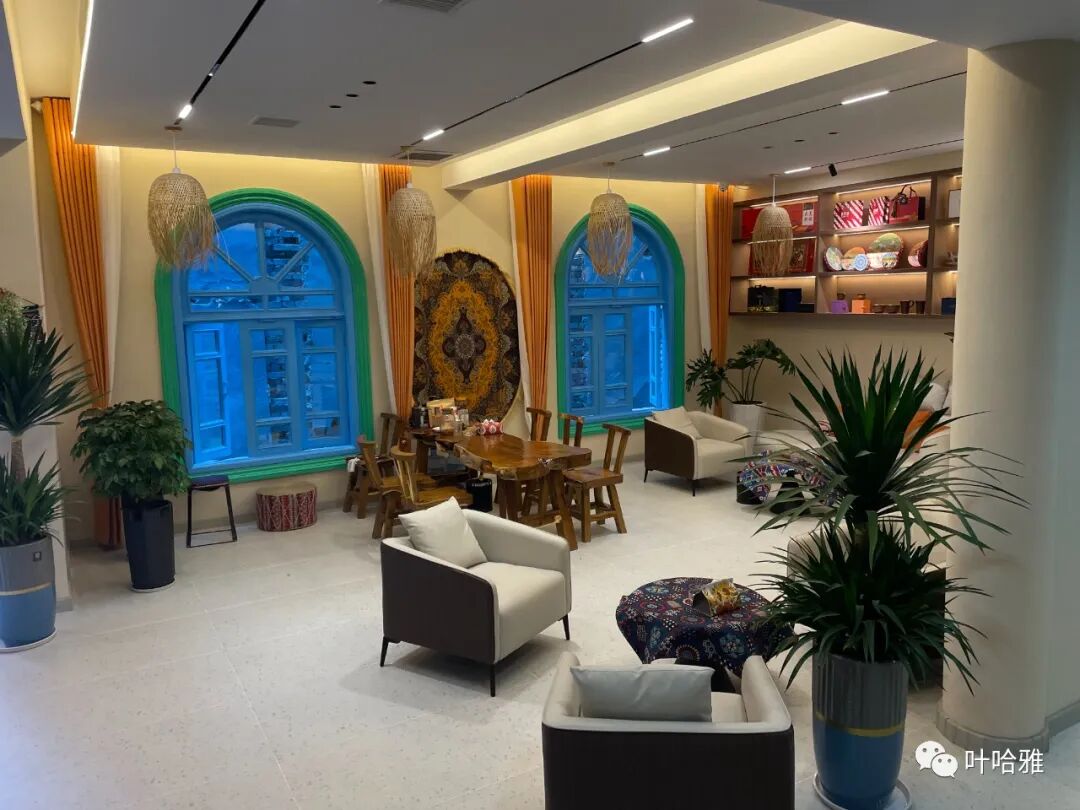
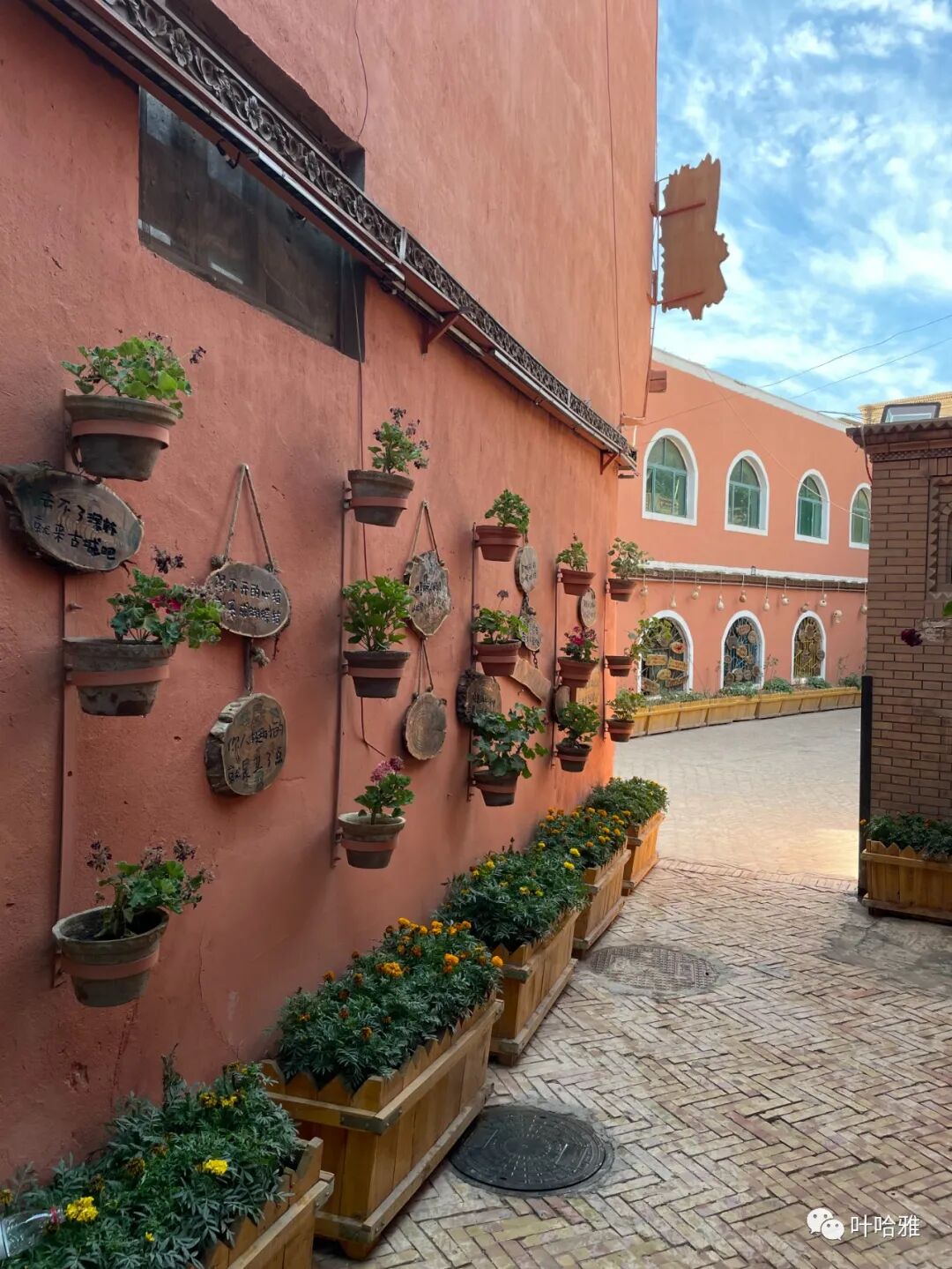
We found a nice homestay in the Kashgar Old City. Because it is located at the entrance of the Old City and is very close to the underground parking lot, the price is high. It is called Wasting Half a Lifetime (Langfei Bansheng). The homestay is in a Moroccan style, which fits perfectly in the Kashgar Old City and feels very appropriate.
The famous Id Kah Mosque (Aitigaer) is right on the Old City square. I had looked forward to visiting it for many years, but after actually walking inside, I felt a bit disappointed.
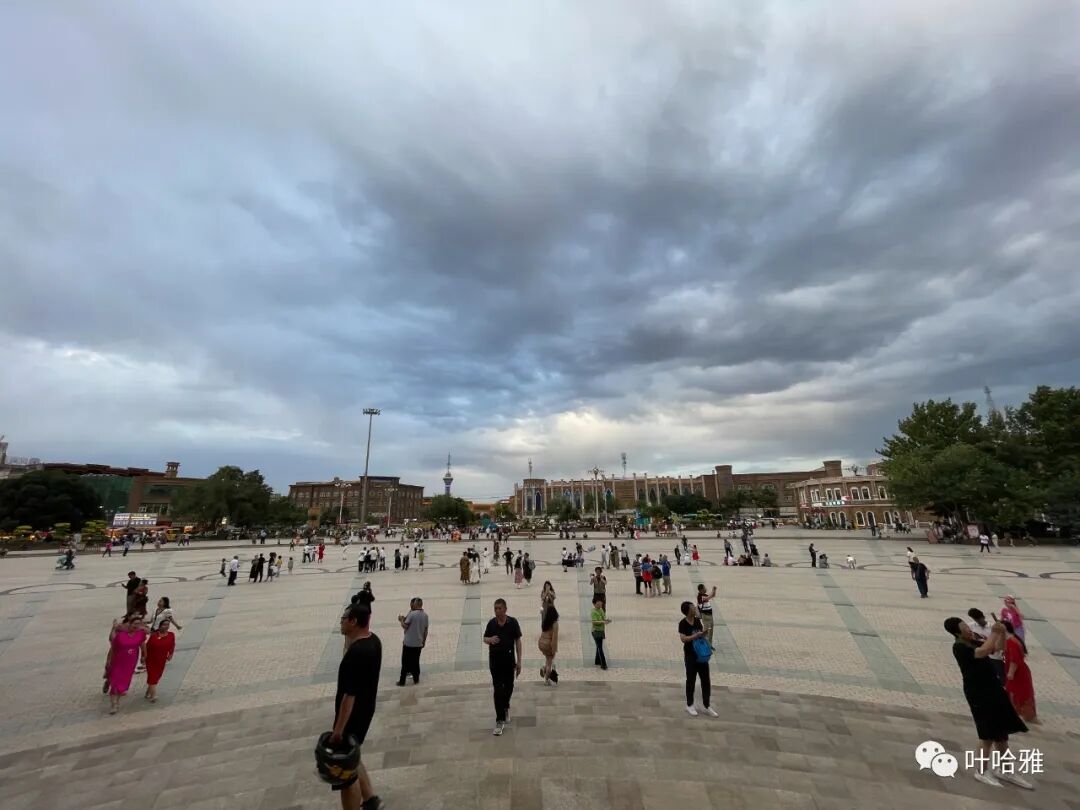
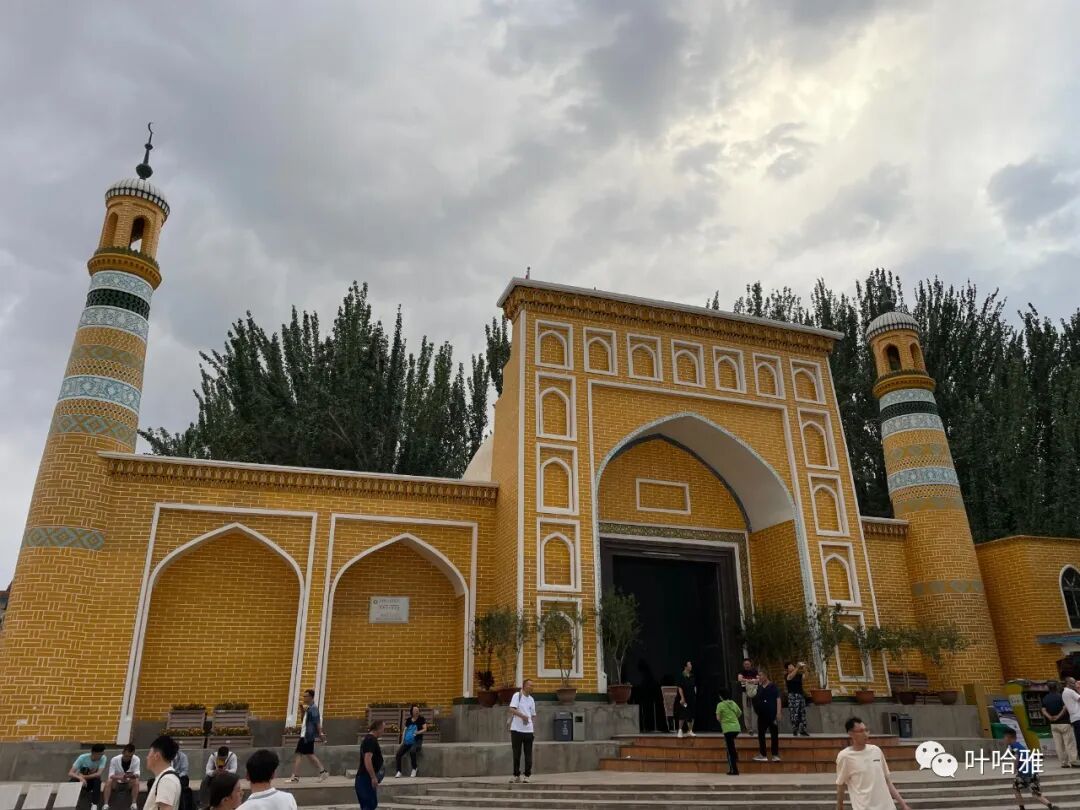
There are many mosques in Xinjiang called Id Kah, which means a place for festival prayers. The one in Kashgar is the largest Id Kah Mosque in Xinjiang, covering 16,800 square meters, and it was first built in 1442.
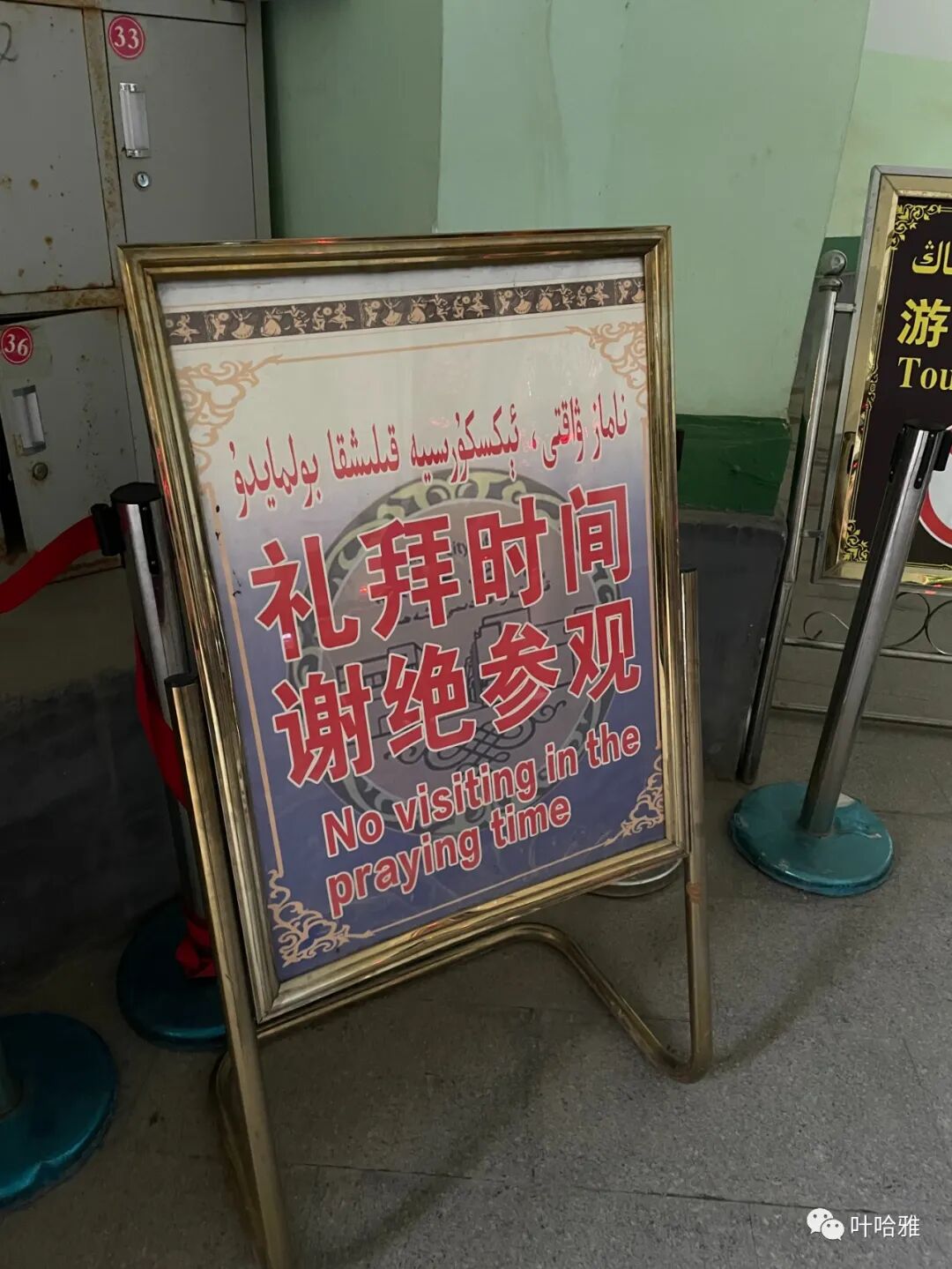
It is comforting that people can still pray here, but only during prayer times. At other times, it is open for tourists to visit for a 30-yuan ticket. Many tourists pay to come in, walk around, and then say it is not worth the visit.
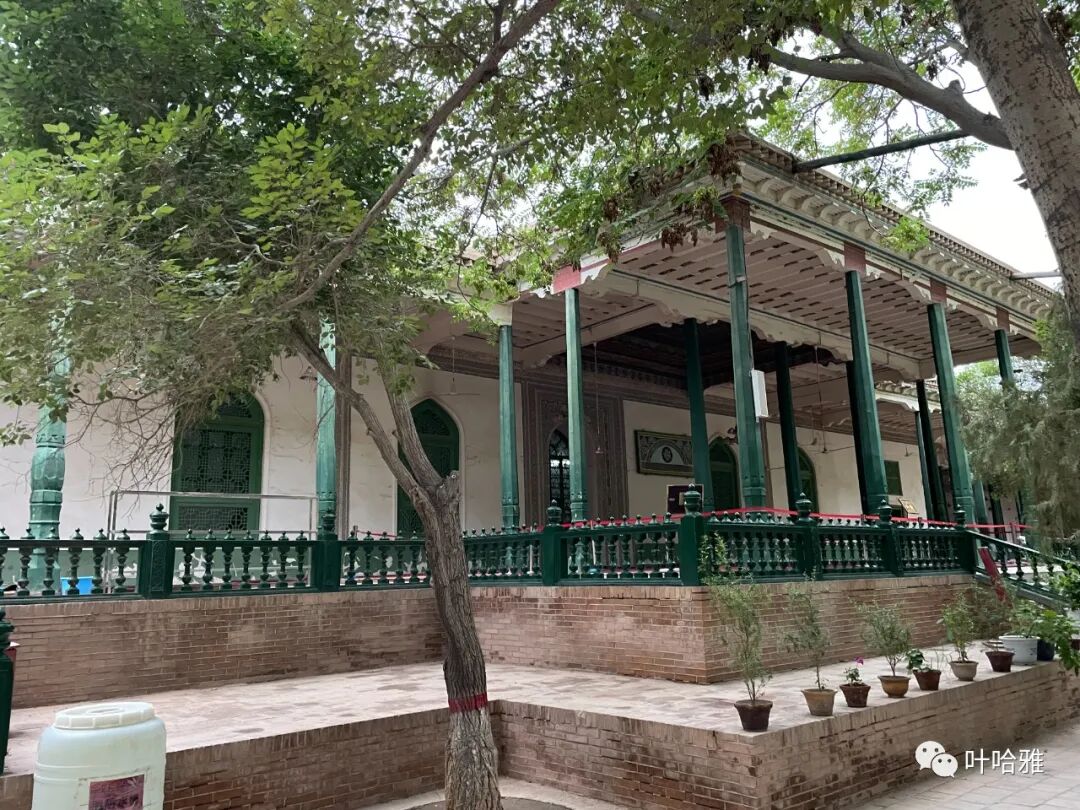
The Id Kah Mosque is not as big as I imagined. Perhaps it is because the main hall building is relatively small, and most of the area is the open space in front of the hall. Also, the entire mosque has been renovated, so you cannot see any ancient traces.
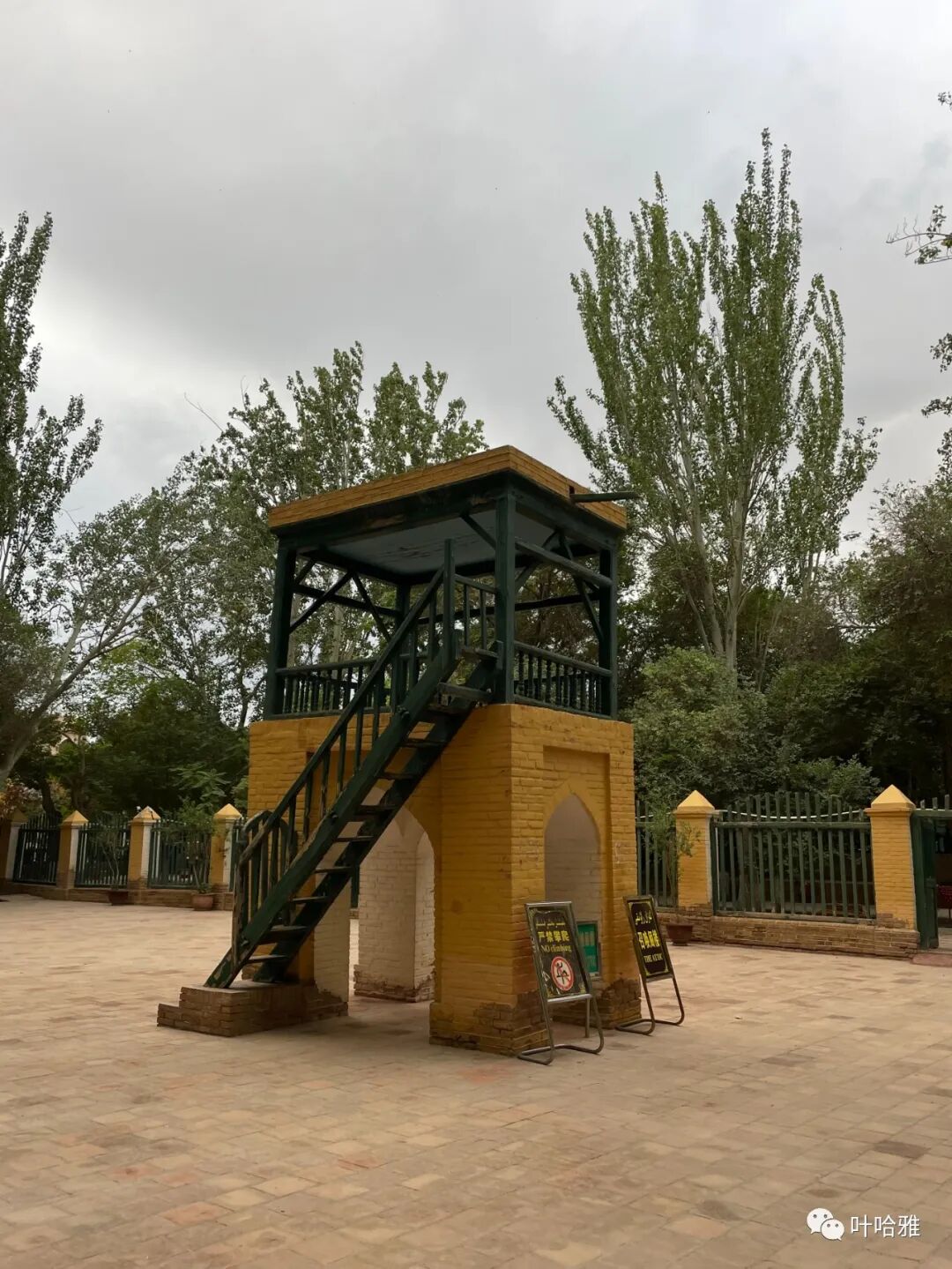
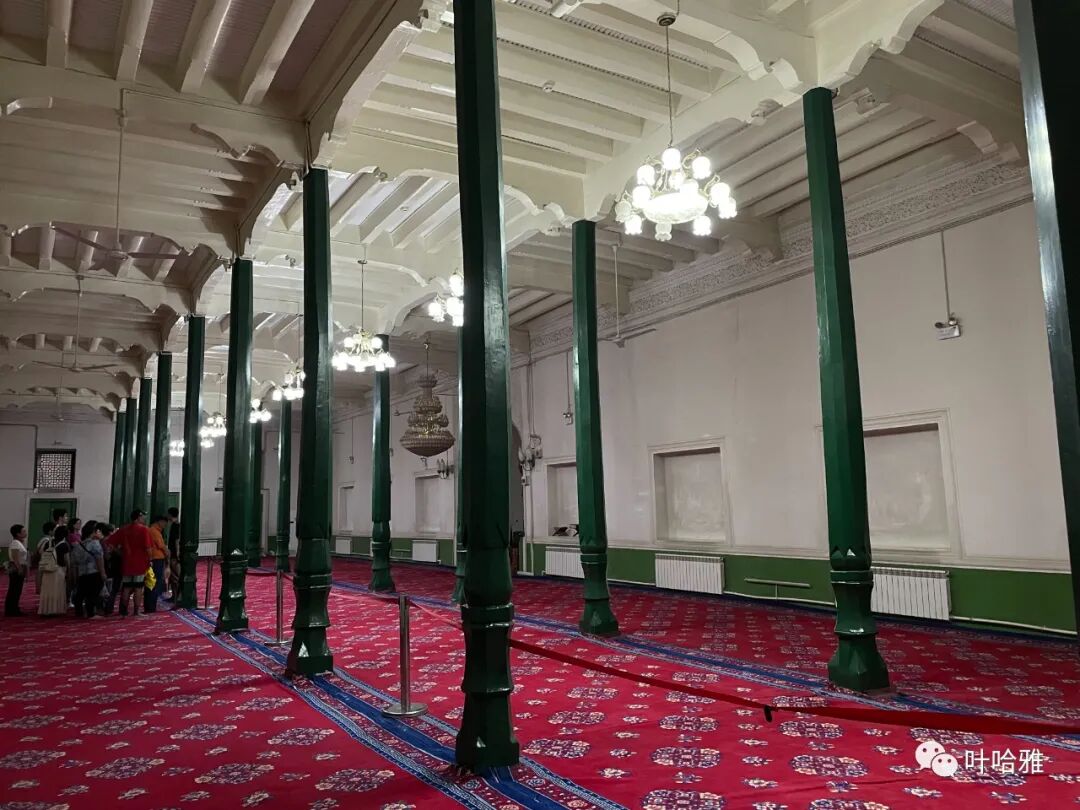
In the middle of the main hall, a tour guide was explaining things to a group of tourists. I walked to the side and performed two rak'ahs of prayer. My heart was not calm during these two rak'ahs because this was the first time on our trip through Southern Xinjiang that we were able to perform a normal prayer.
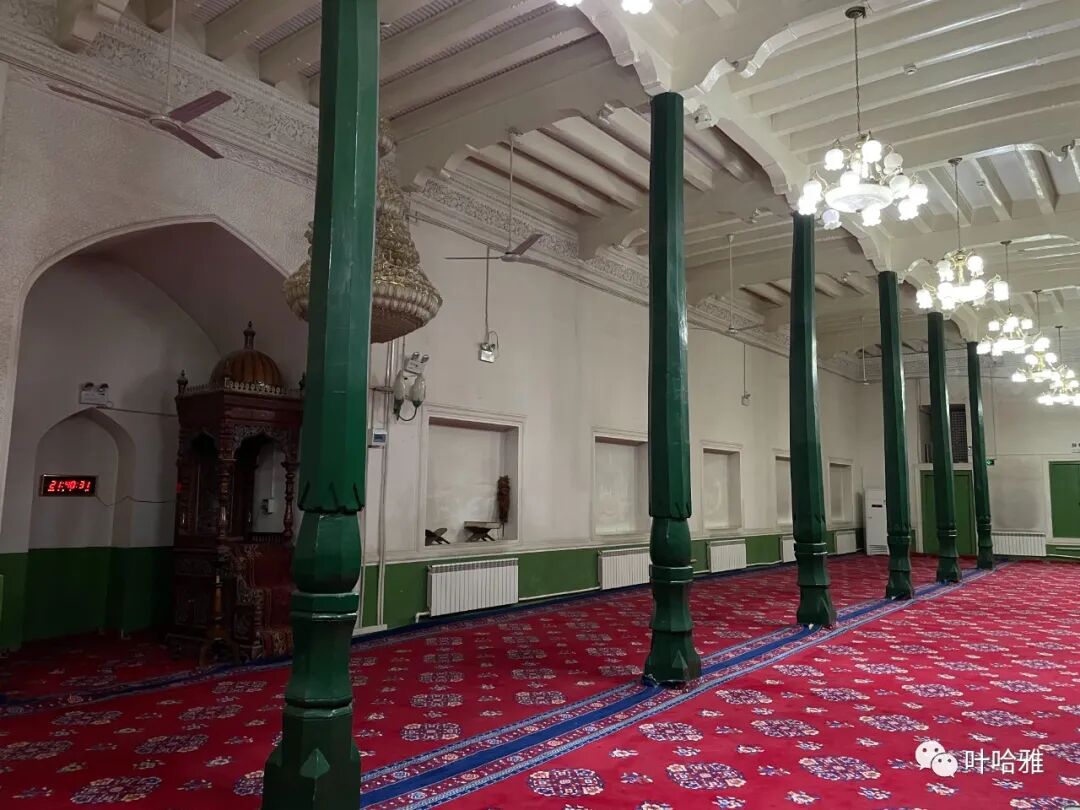
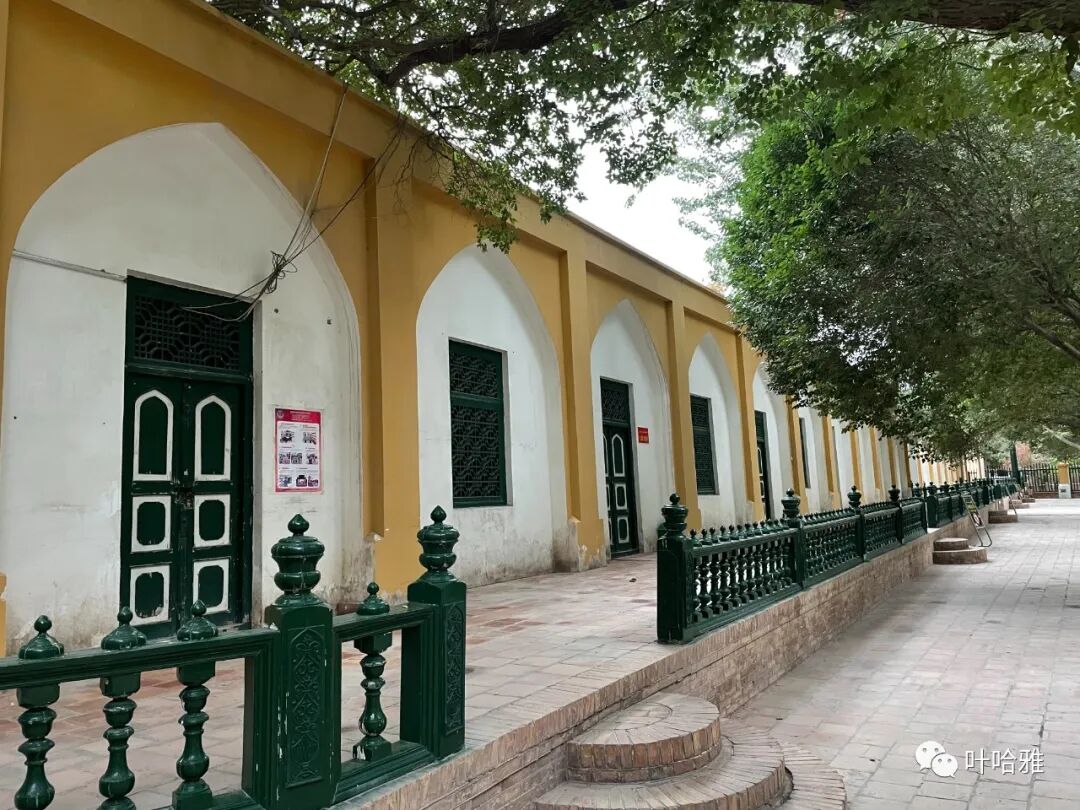
The streets and alleys of Kashgar are full of advertisements for the Fragrant Concubine Tomb scenic area. However, after the Fragrant Concubine married the Qianlong Emperor, she was buried in Beijing. This tomb in Kashgar is only a cenotaph for her, and her family members are buried inside. In this cemetery, the most worth mentioning is the shrine (mazar) of Afaq Khoja, as the Fragrant Concubine was his great-granddaughter.
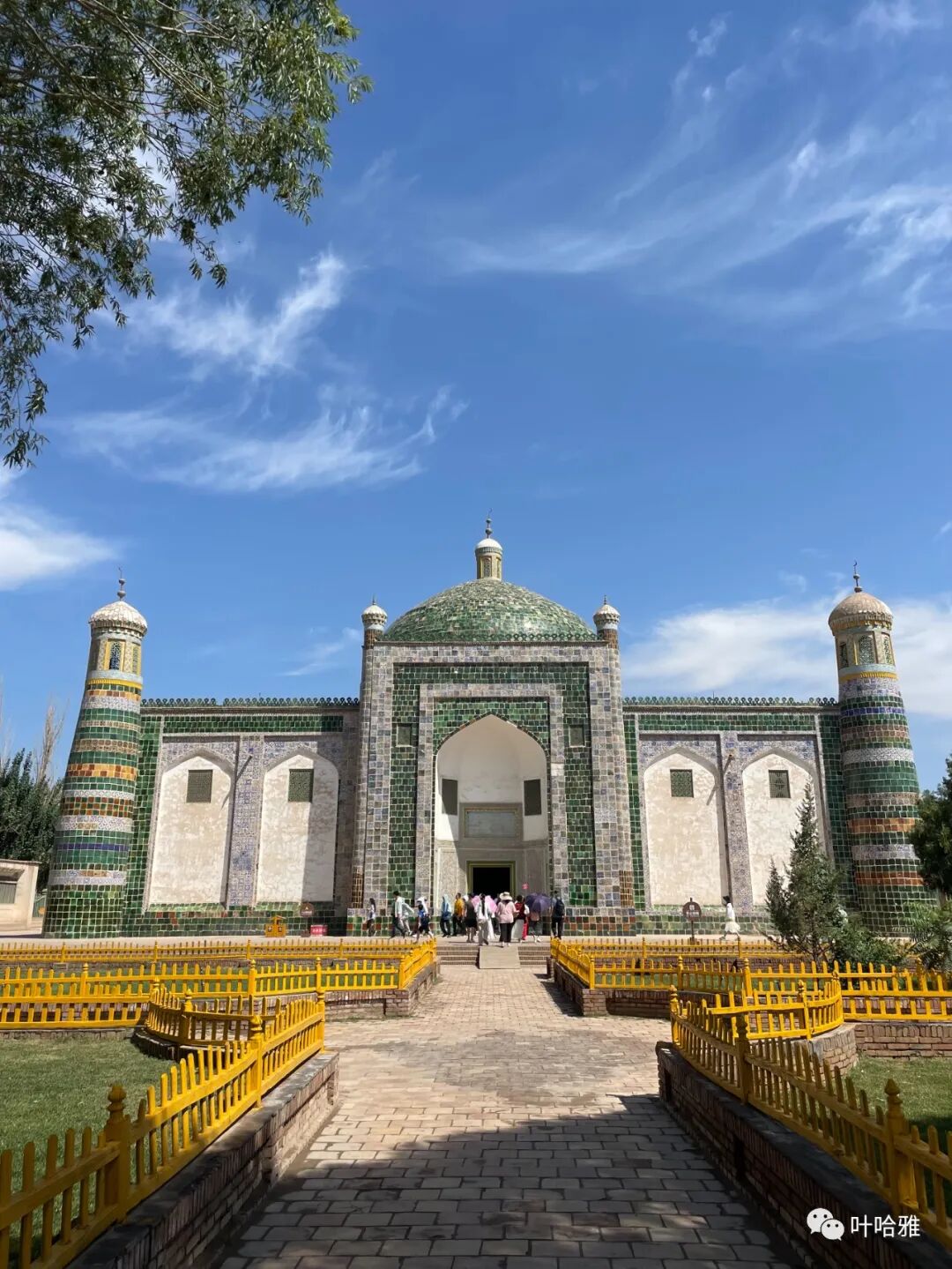
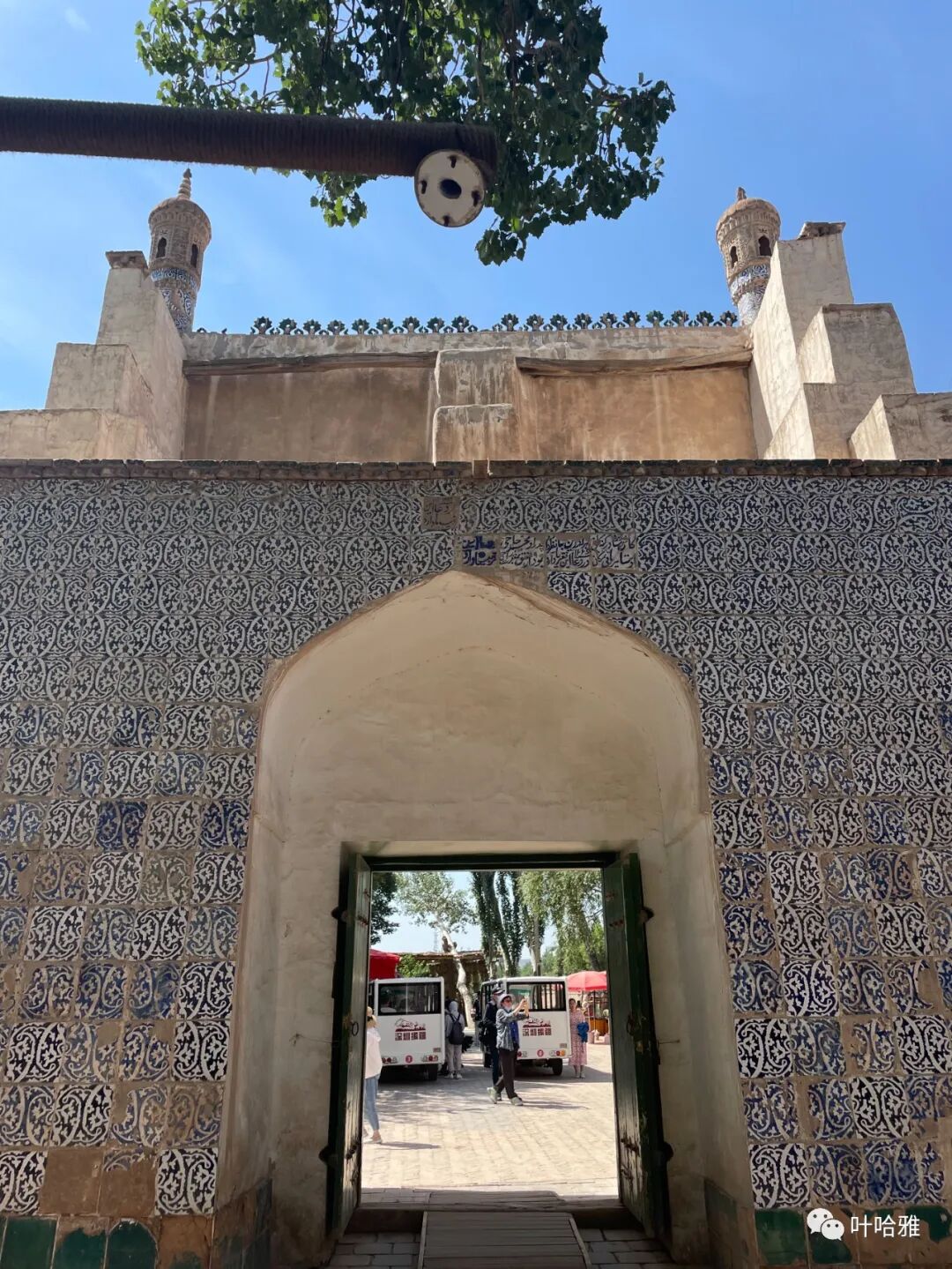
The Fragrant Concubine Tomb (Xiangfei Muyuan) is very large and has complete facilities. It is a spot worth visiting for photos. The tomb (mazar) of Afaq Khoja is inside, but you might miss it if you do not look carefully because there are no clear signs around it.
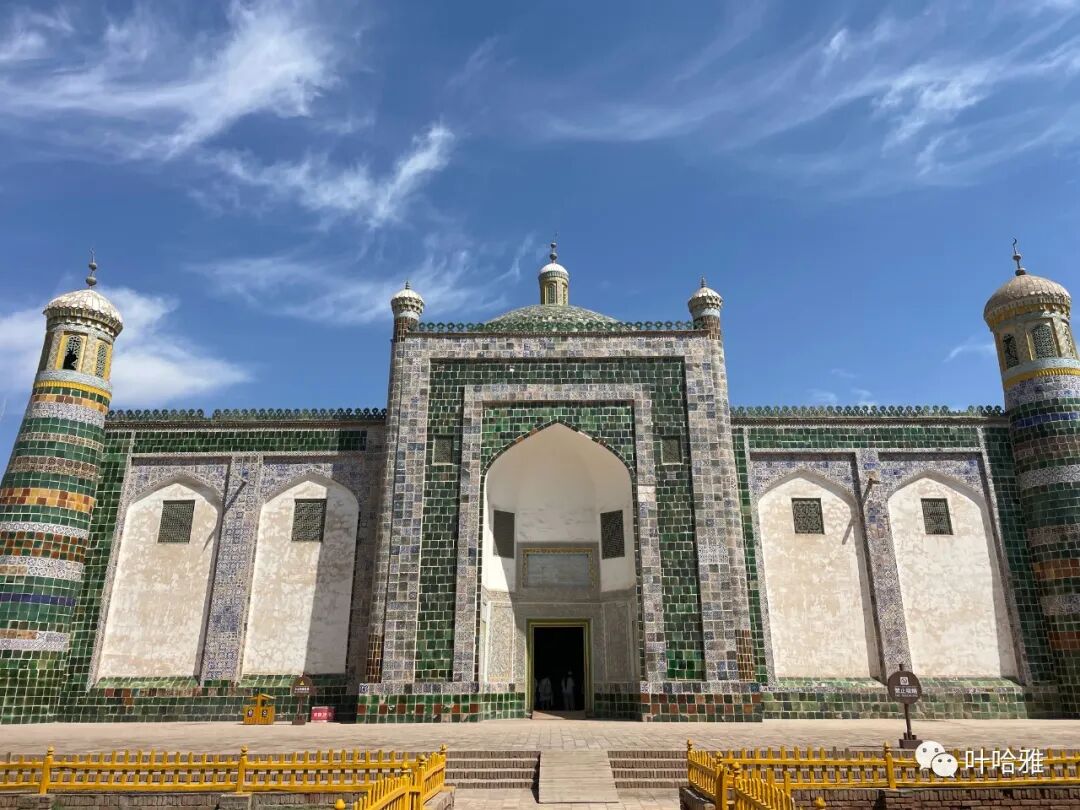
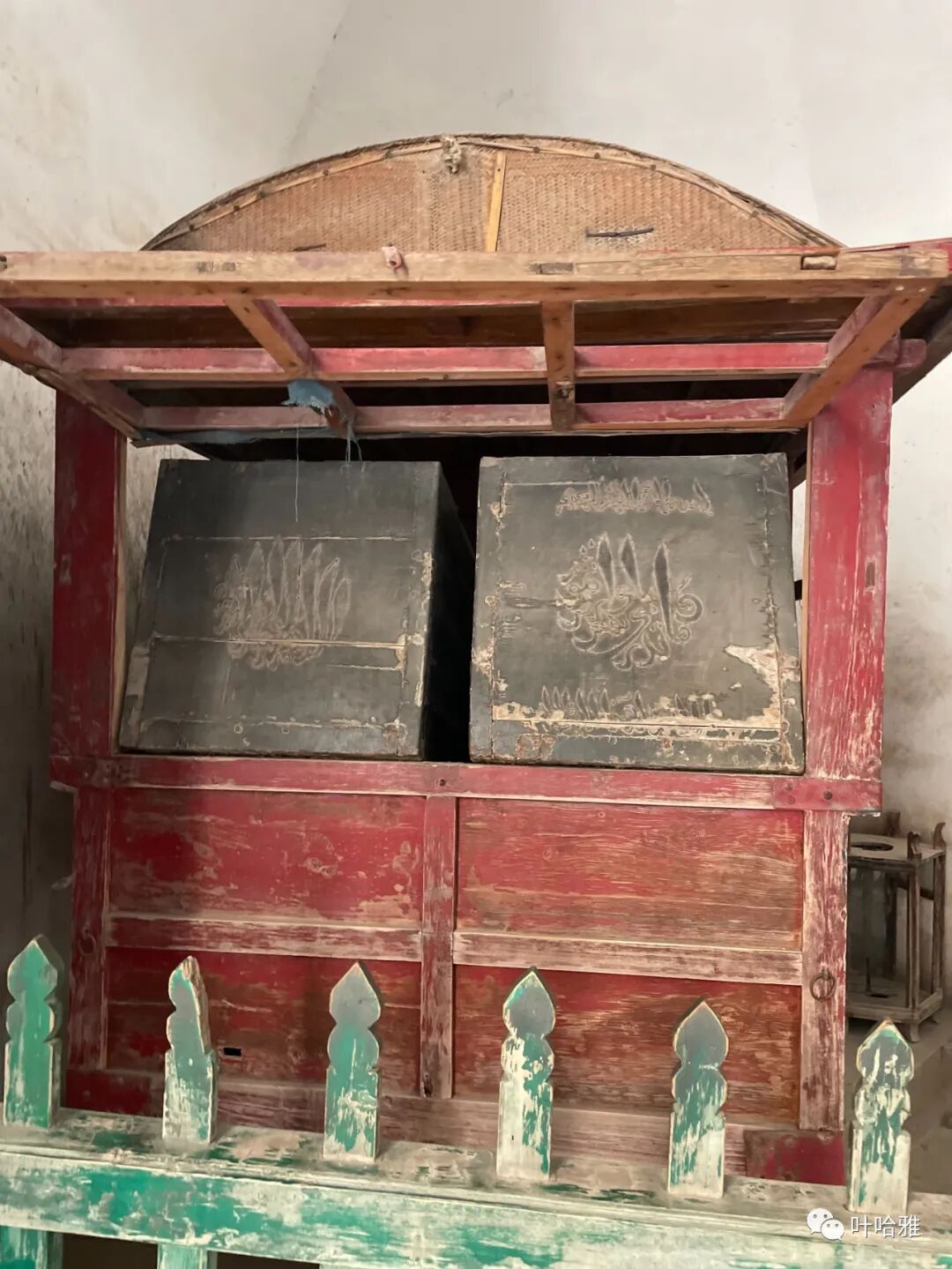
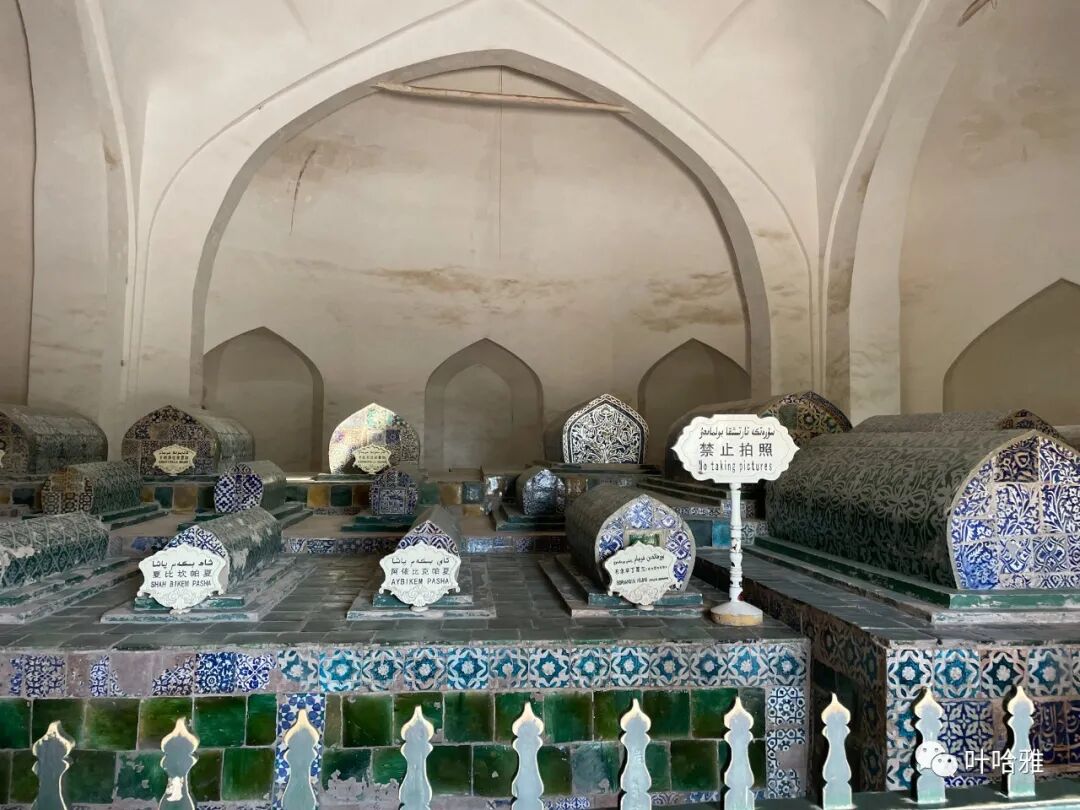
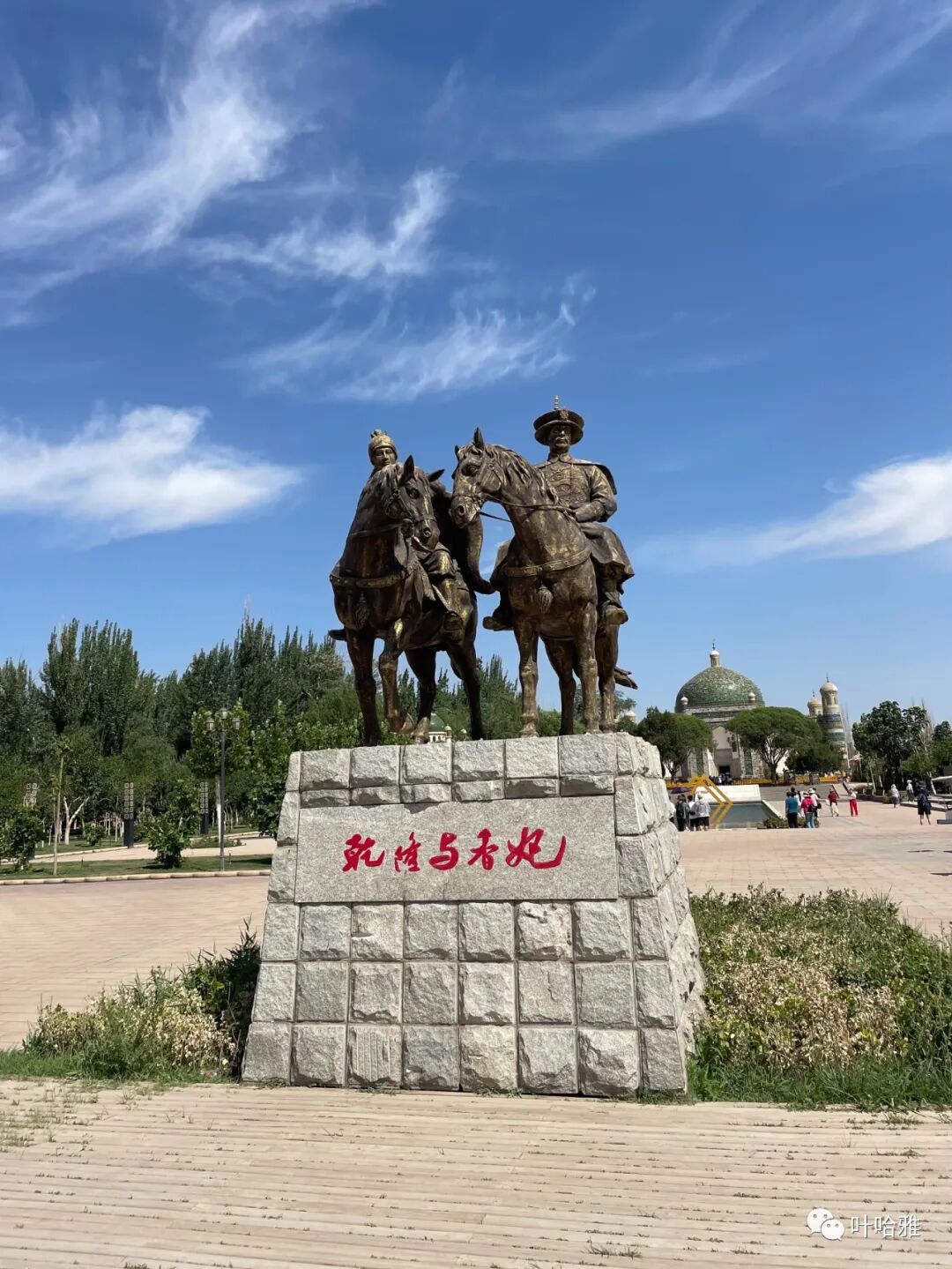
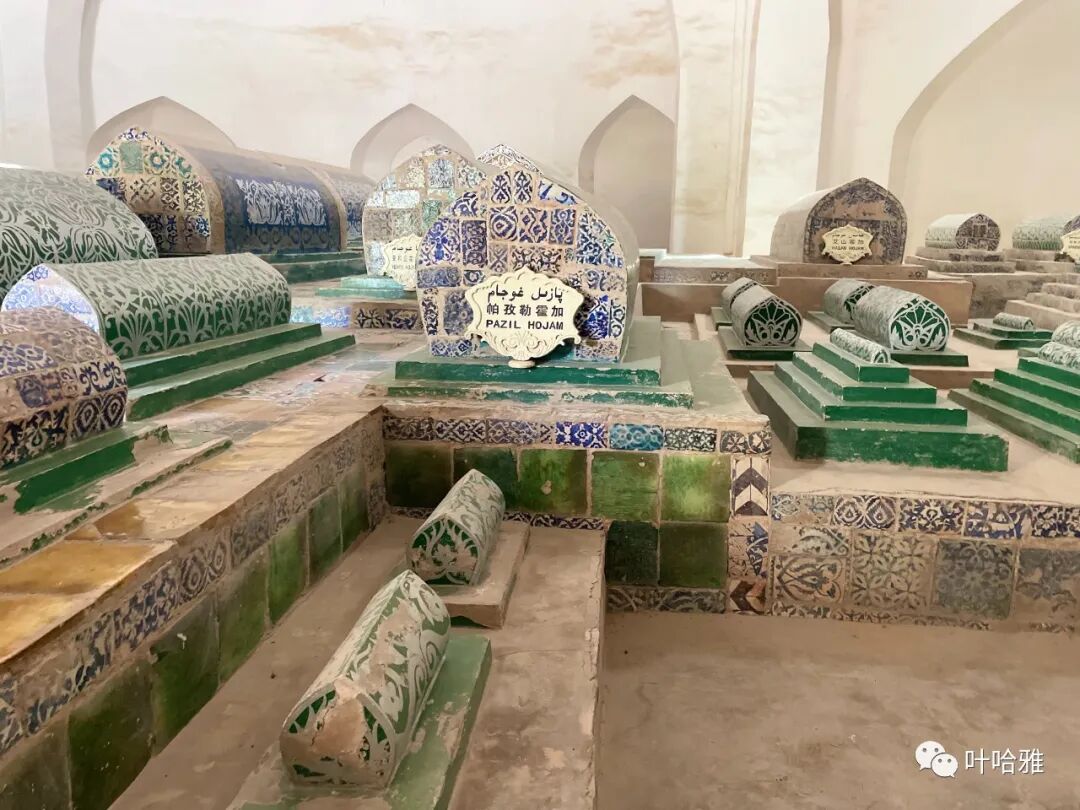
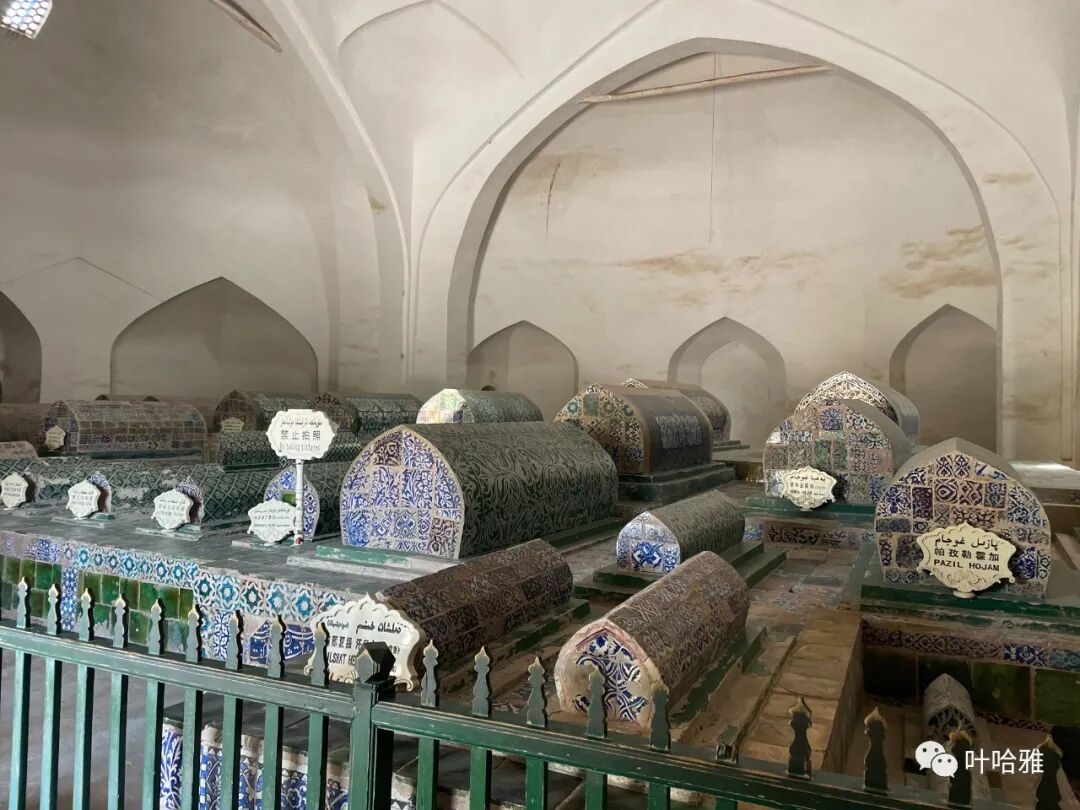
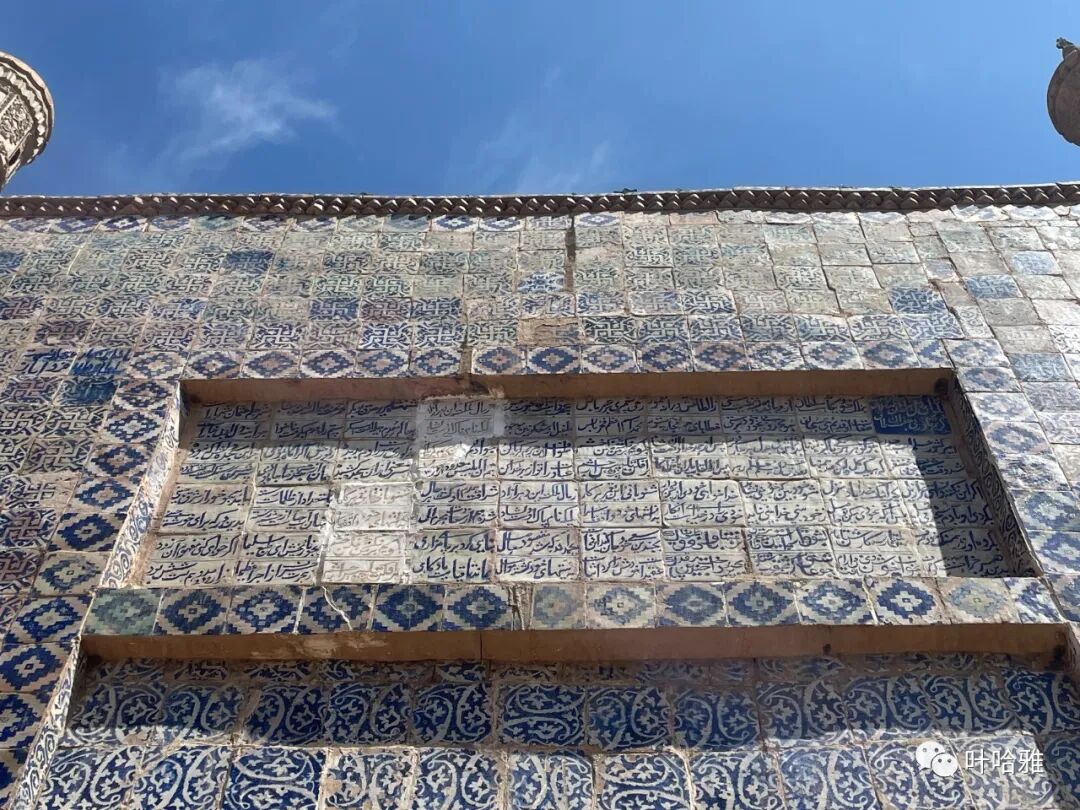
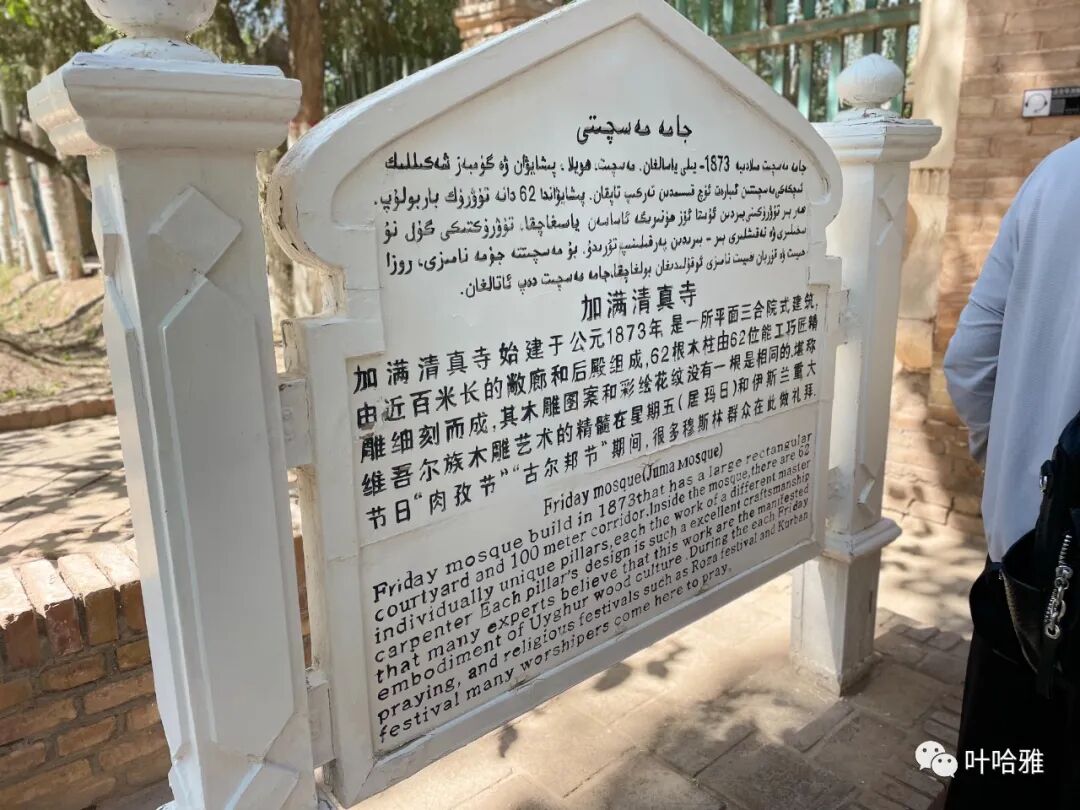
The mazar of Afaq Khoja is right next to the Jiaman Mosque. Since there are no signs, most tourists do not walk this way, making it look especially quiet in the busy Fragrant Concubine Garden.
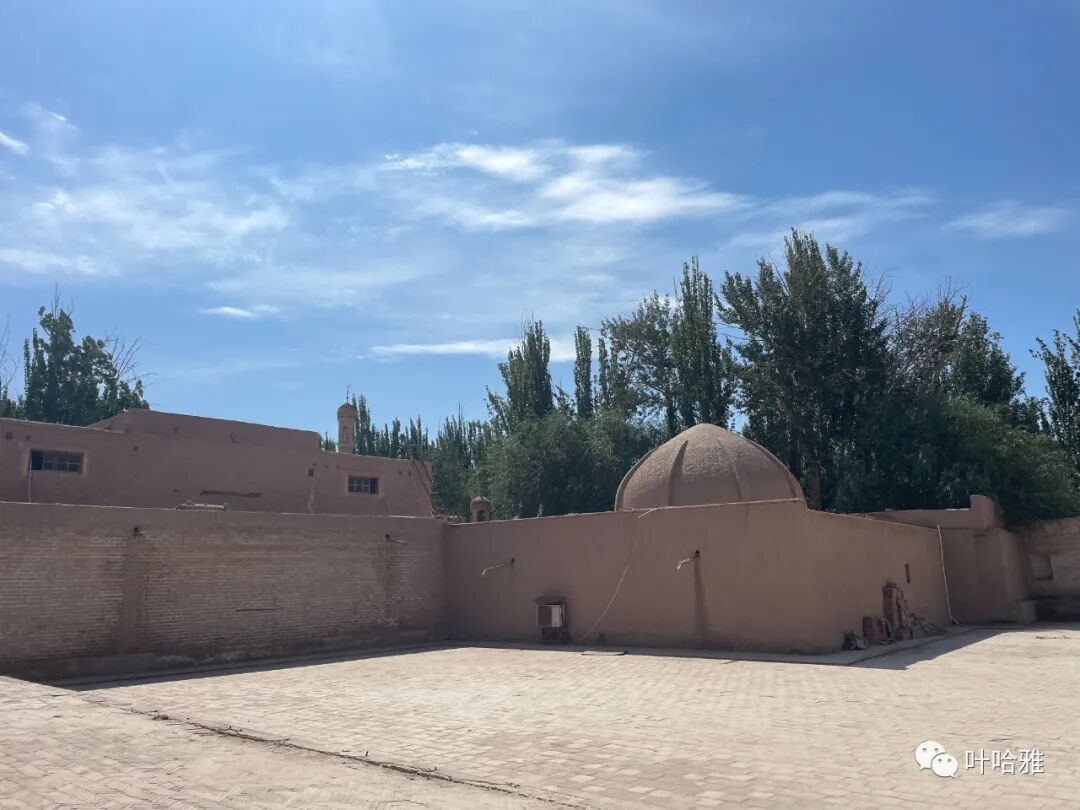
Afaq Khoja is very important to the various Sufi orders (menhuan) in China, and his influence is closely linked to their history. His disciples include leaders of the Jahriyya, Xianmen, Bi Jichang, Mufti, Ma Diangong, Liu Boyang, Tong Tai Baba, Li Tai Baba, and Anxi Taiye. Ma Laichi of the Huasi menhuan was also born after receiving a blessing from Afaq Khoja, so the records of these menhuan all trace back to Afaq Khoja in Xinjiang.
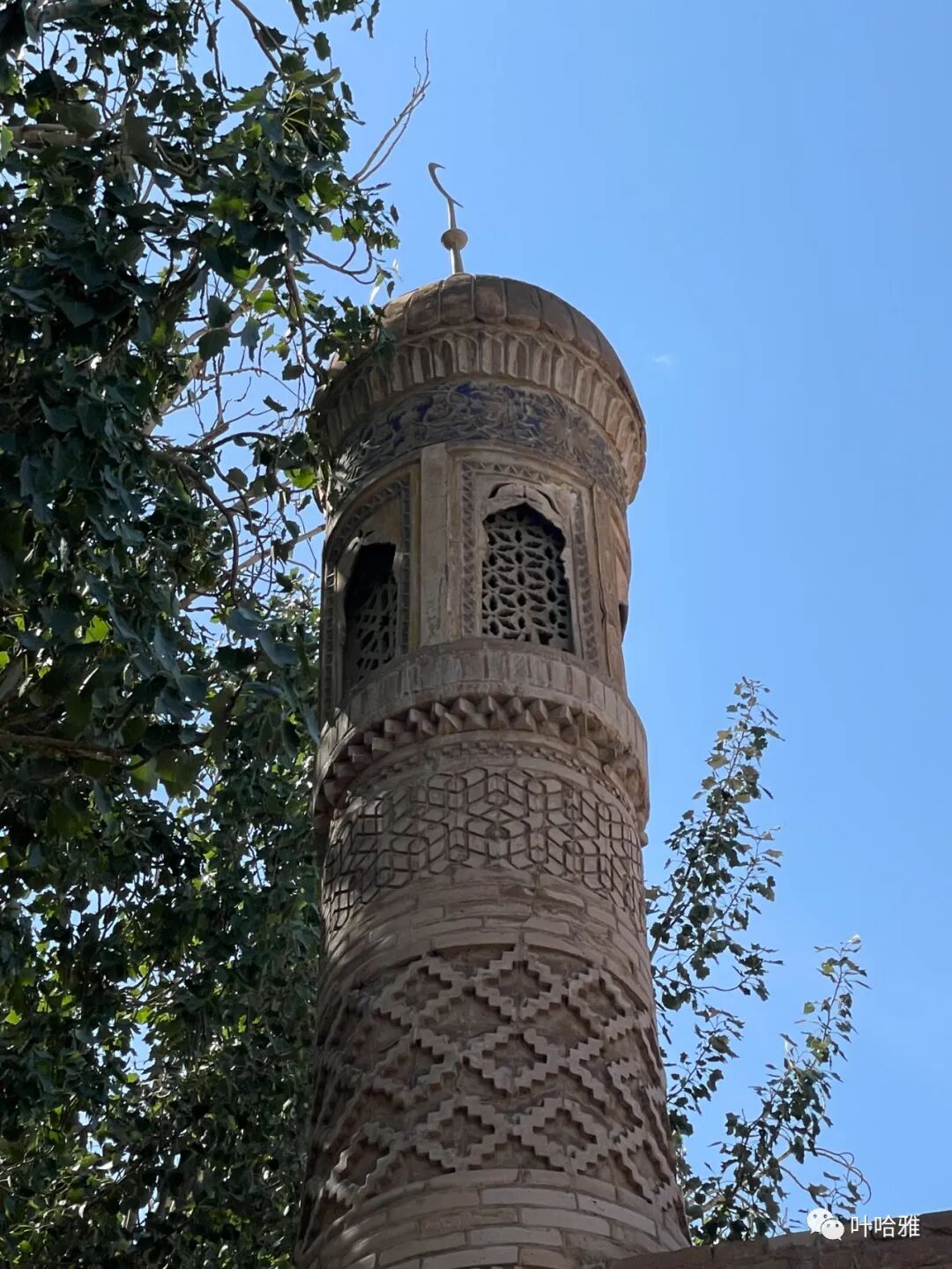
Because of his struggle with the Black Mountain sect, Afaq Khoja was forced to move to inland areas like Gansu, Ningxia, and Qinghai. Later, he sought help from the Fifth Dalai Lama, who instructed Galdan to support Afaq Khoja's return to Yarkand. Afaq Khoja returned to Yarkand and later died during the struggle against the Black Mountain sect.
Both the Black Mountain sect and the White Mountain sect come from the same Khoja family. Ishaq, the youngest son of Makhdum-i-Azam, was the founder of the Black Mountain sect. Mamut Yusuph, the grandson of Makhdum-i-Azam, was the founder of the White Mountain sect, and Afaq Khoja was the son of Mamut Yusuph.
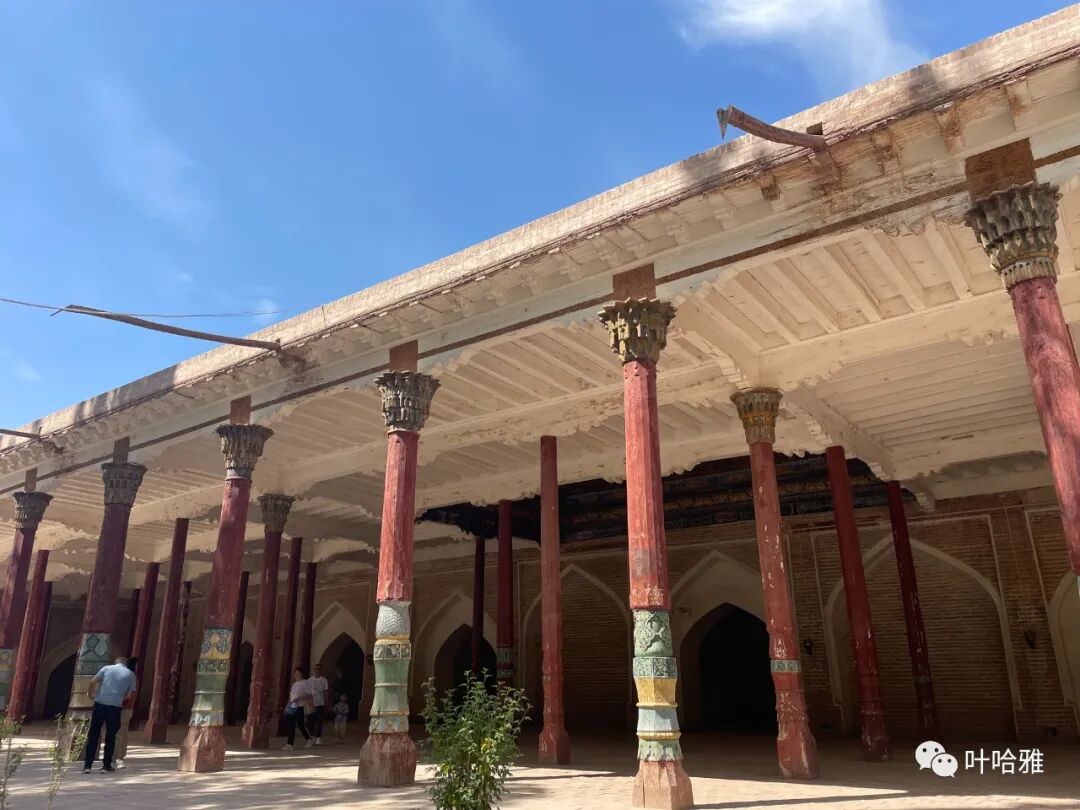
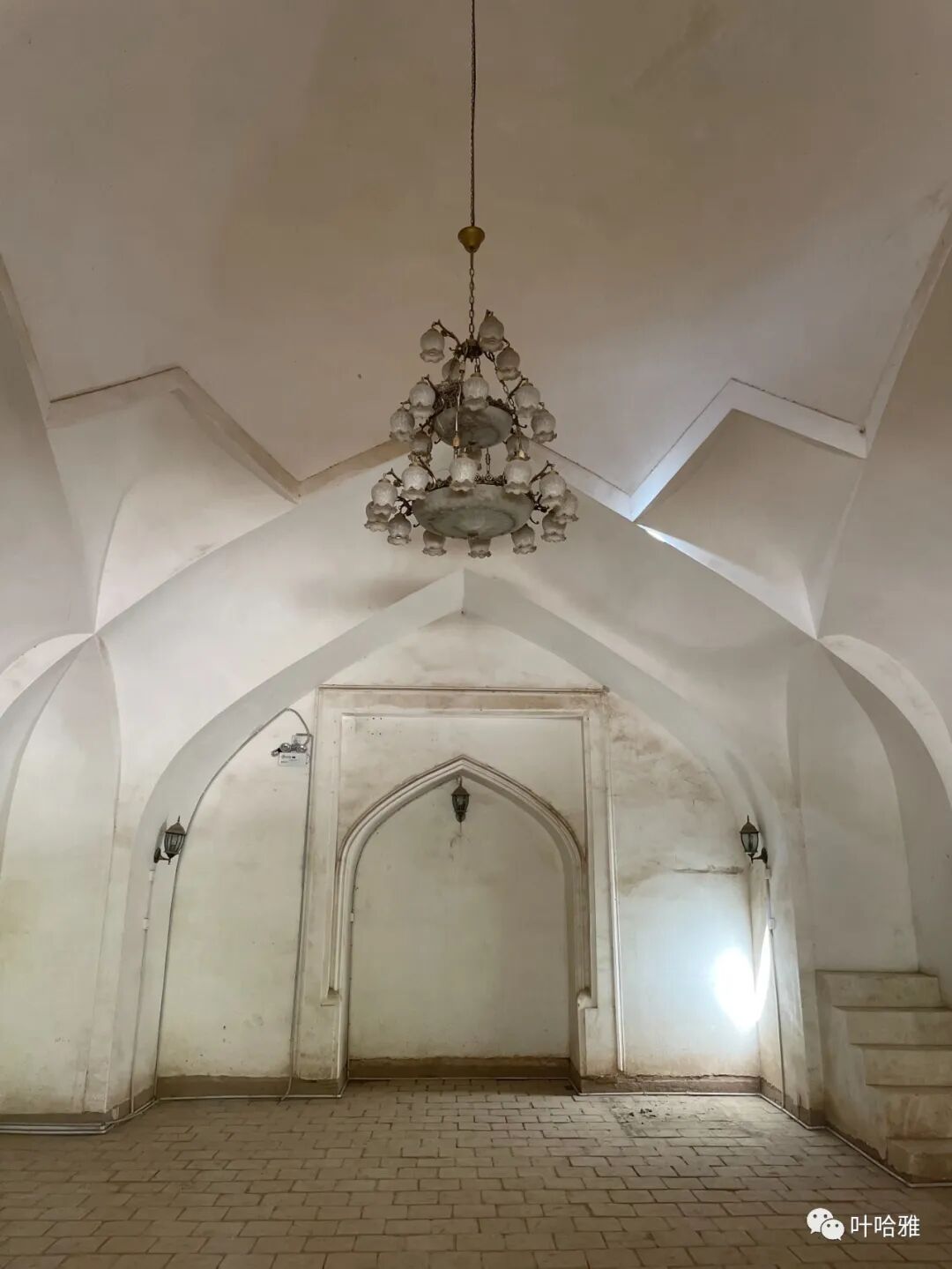
Across from the Jiaman Mosque, there is another prayer hall, but it is no longer in use.
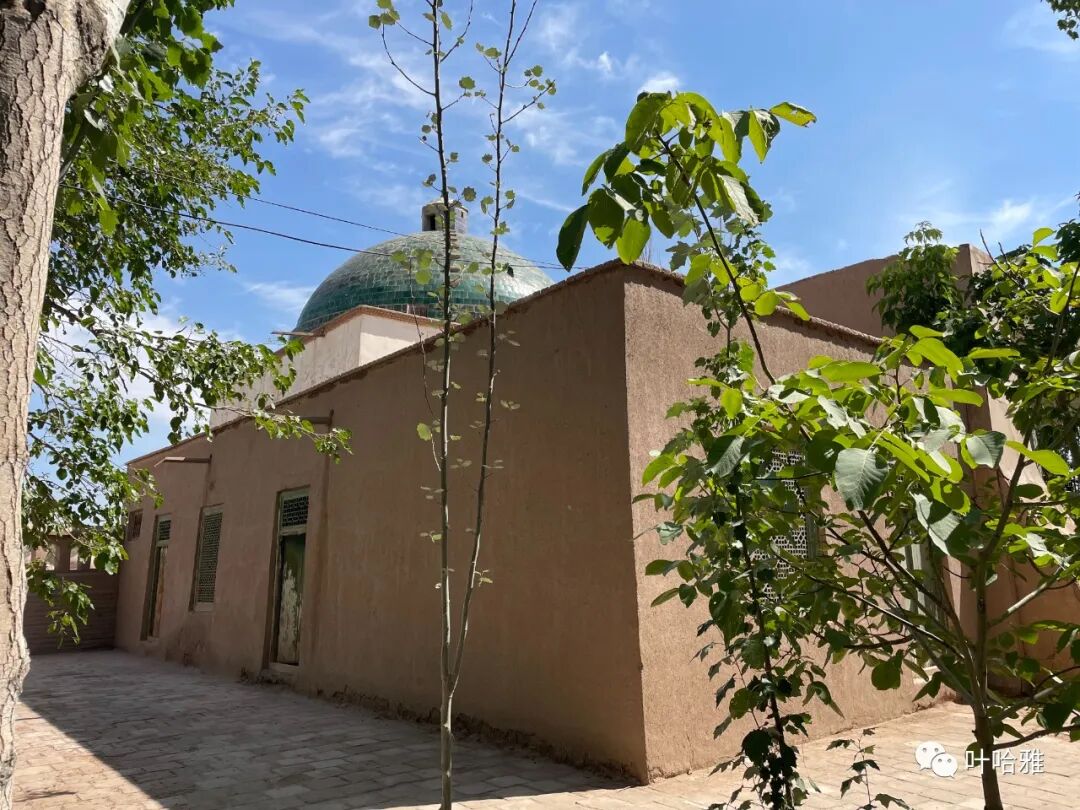
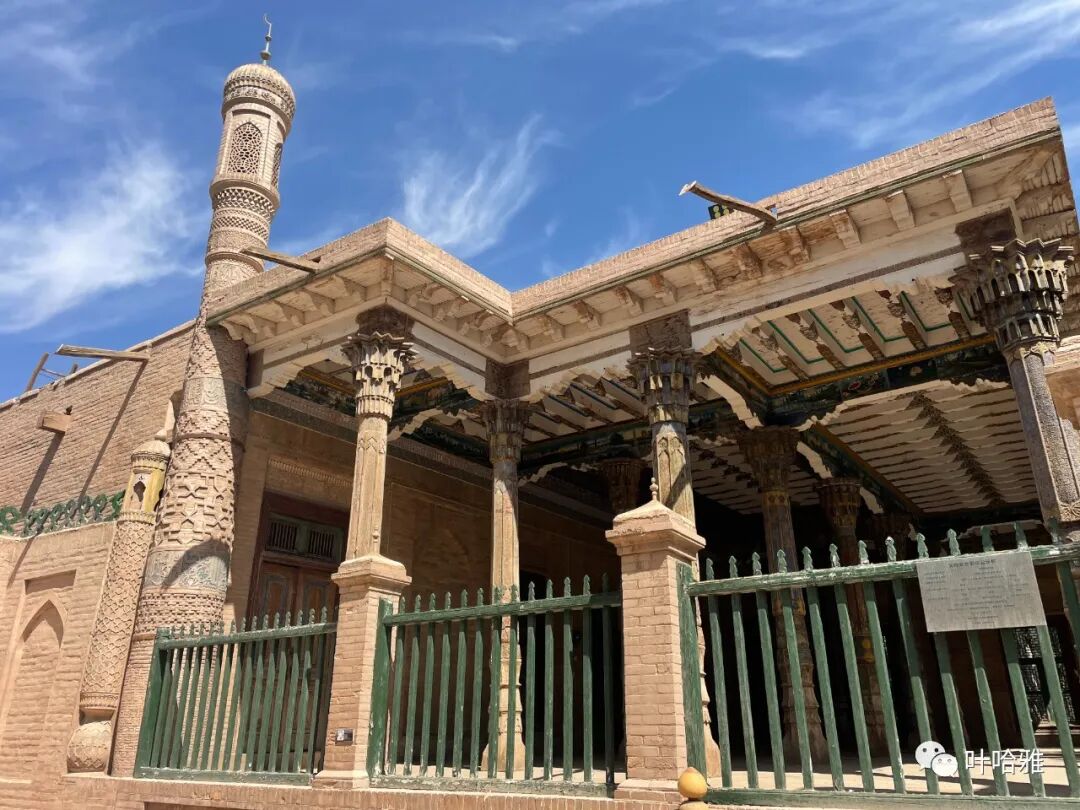
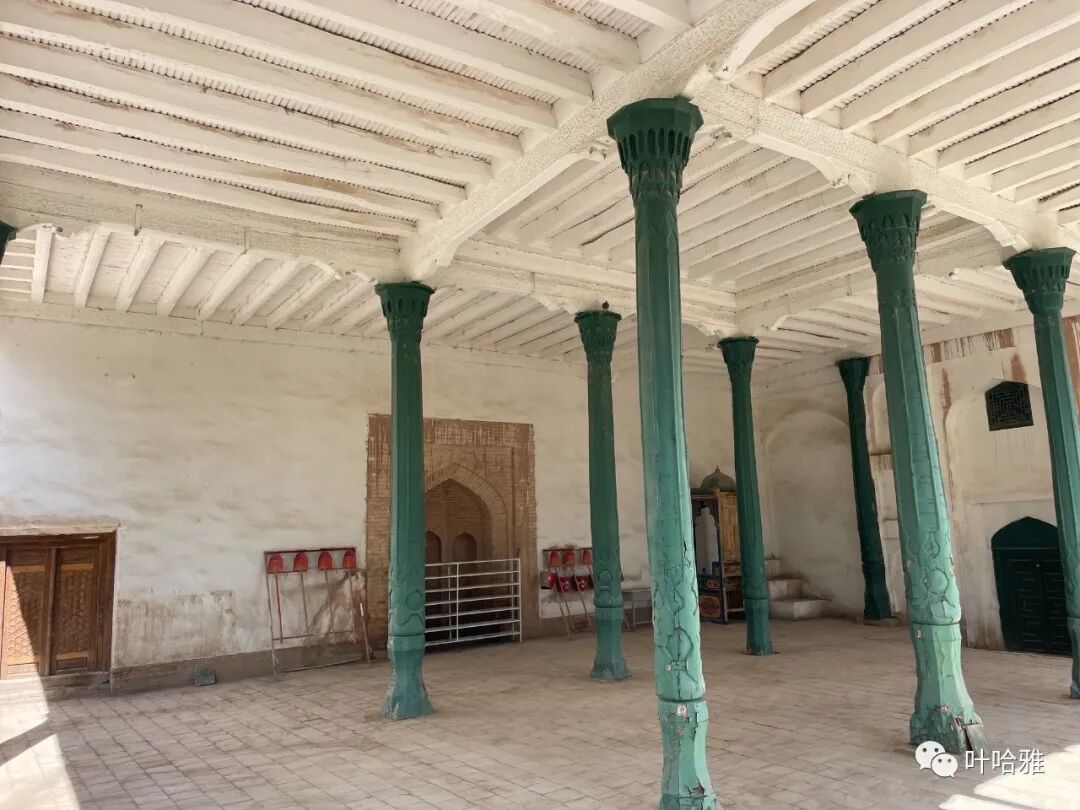
About two or three kilometers from the Kashgar Old City, there is another tomb complex similar in style to the Fragrant Concubine Garden that is also worth mentioning: the Tomb of Yusuf Khass Hajib (1019-1085).
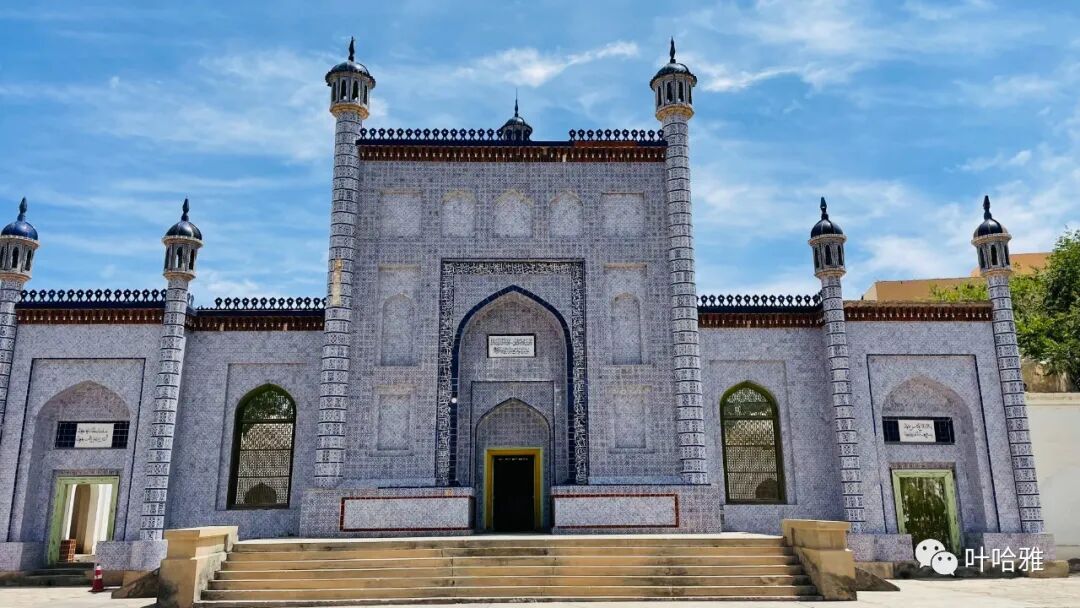
Yusuf Khass Hajib, the famous poet and author of Wisdom of Royal Glory (Kutadgu Bilig), was a Kyrgyz person and a court official for the Karakhanid dynasty. Kashgar was the capital of the dynasty at the time, and Khass Hajib means court official. His portrait is still printed on Kyrgyz banknotes today.

Yusuf Khass Hajib had a huge influence on Uyghur language and literature, much like Confucius for the Chinese people. However, because Han people do not know much about him, very few tourists visit his tomb.
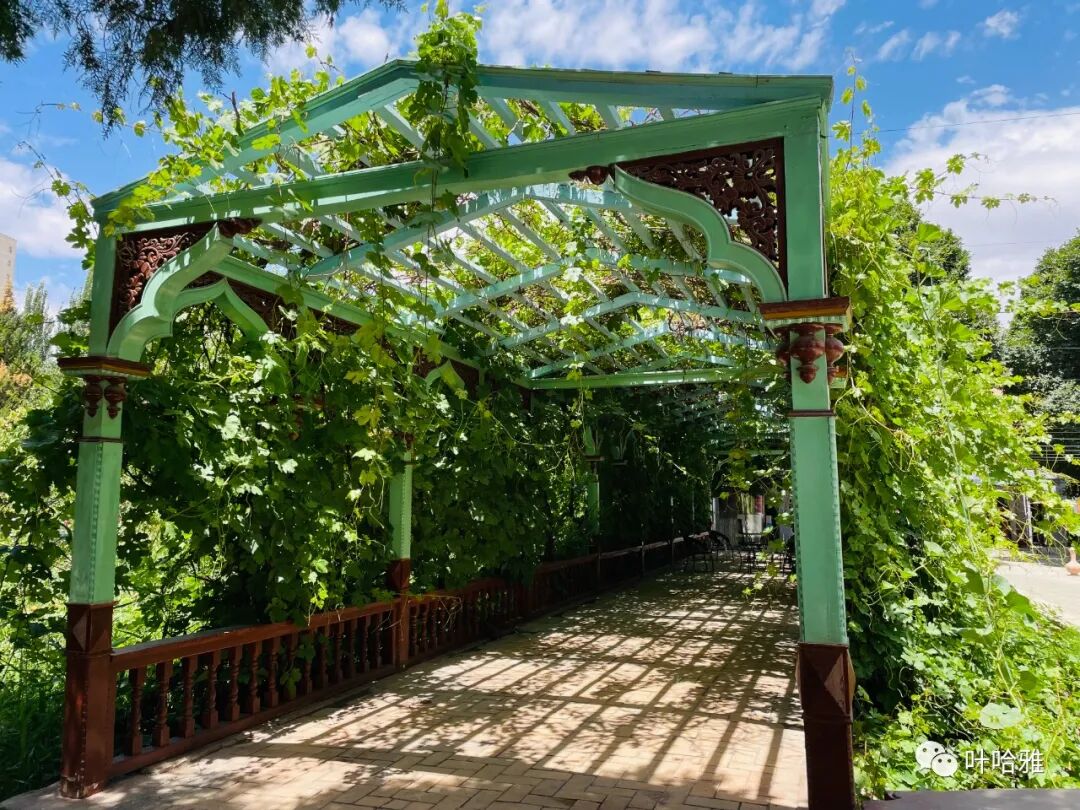
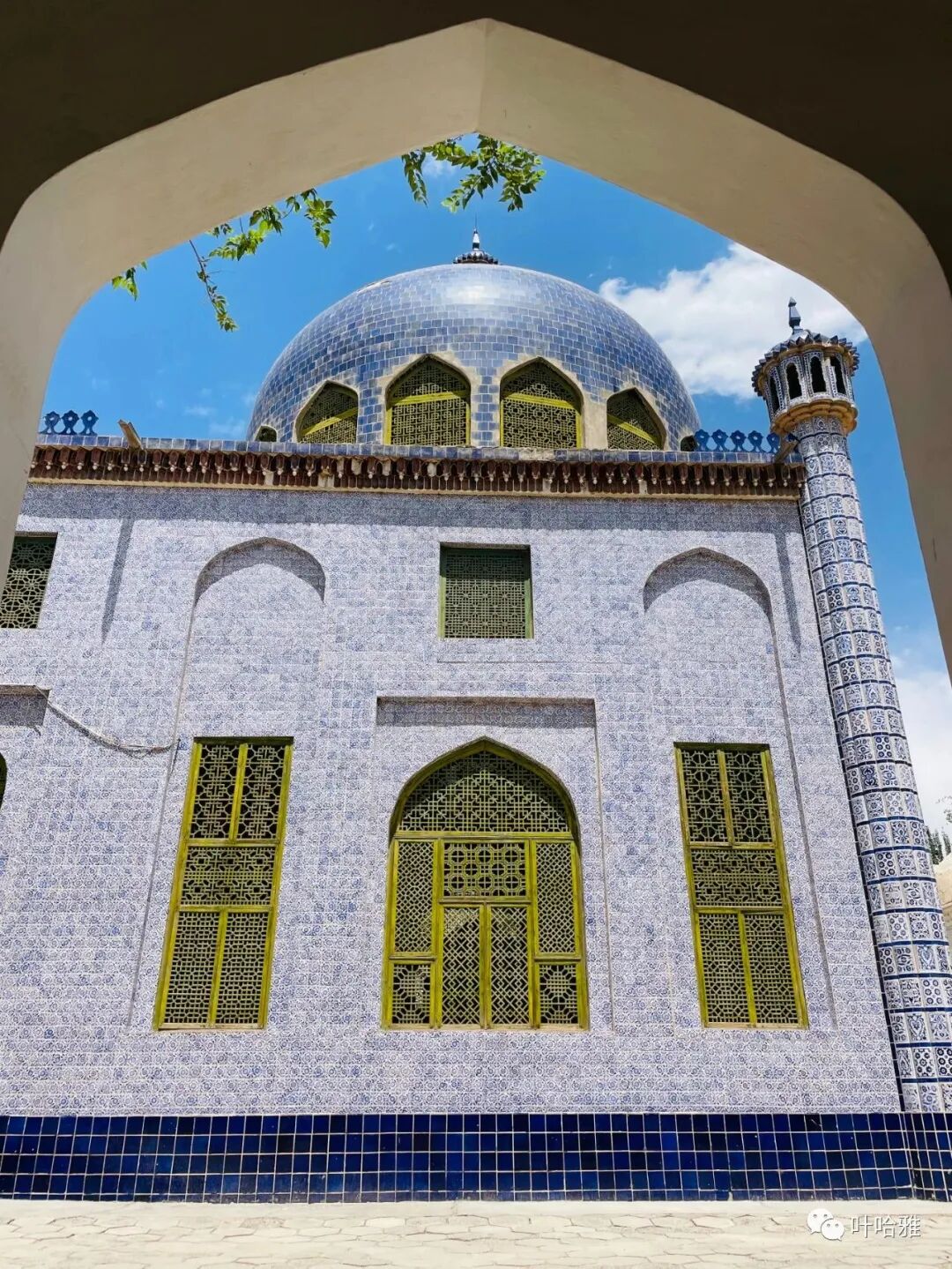
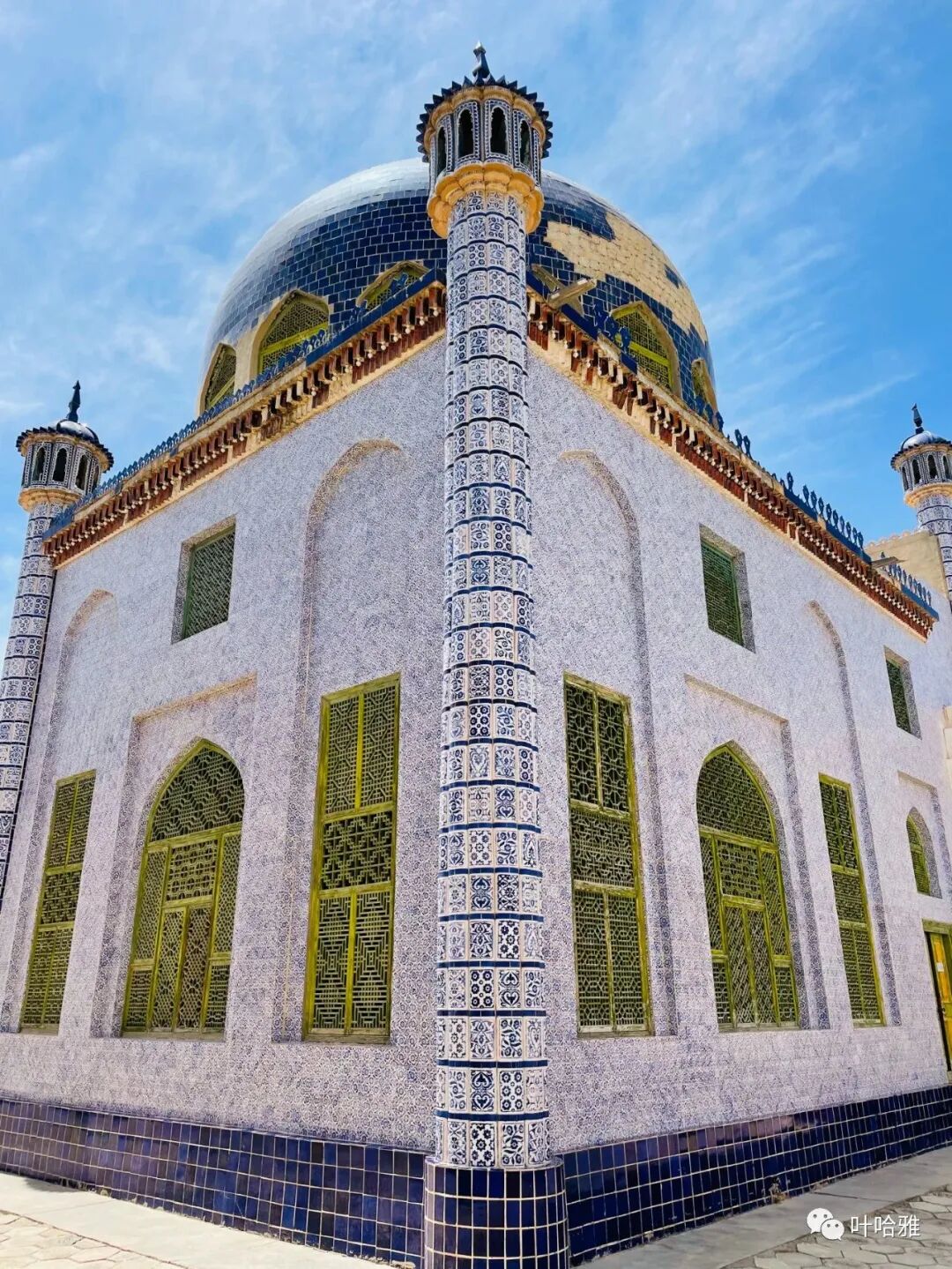
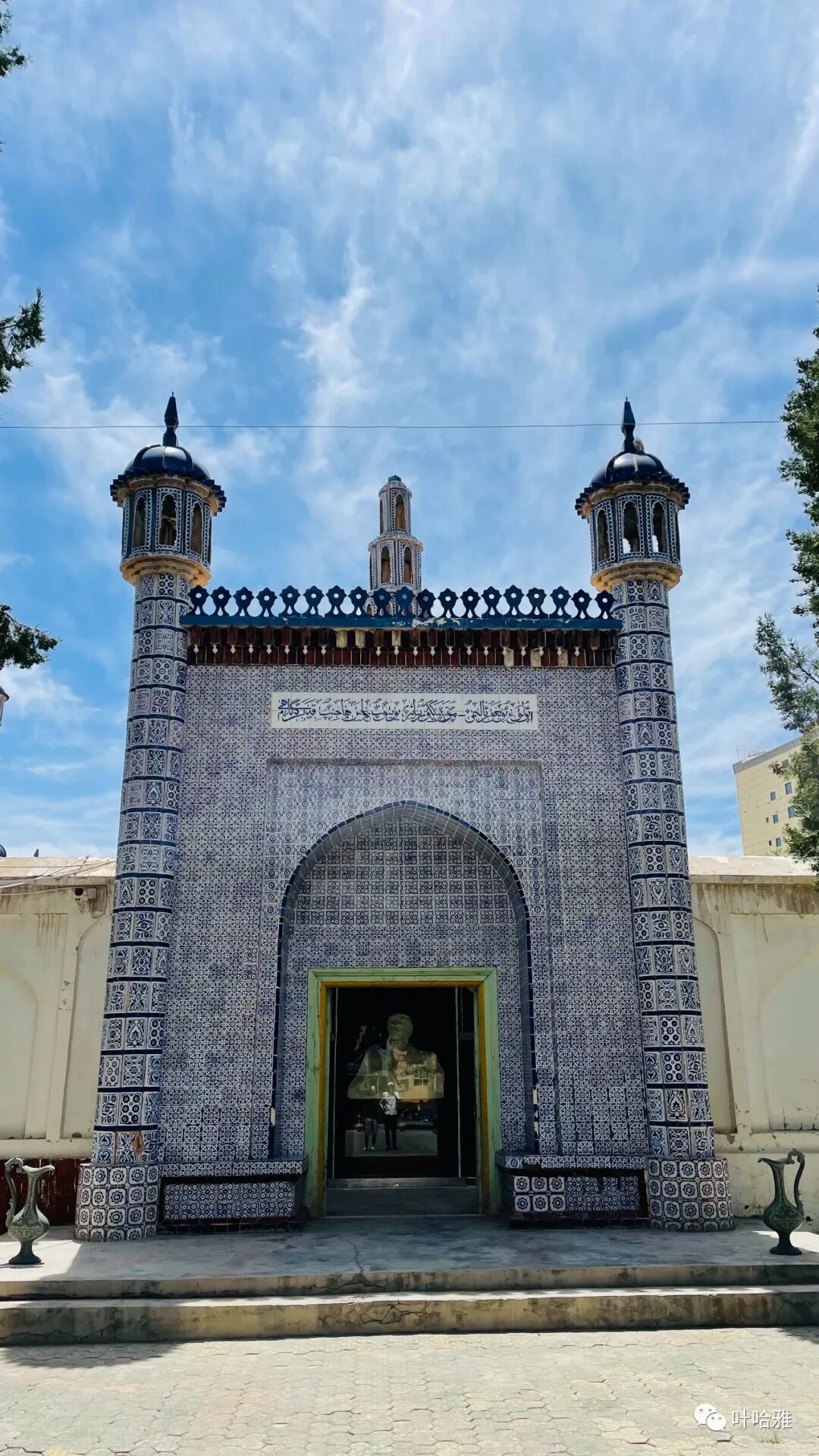
In Kashgar, you have to wait until almost 11:00 PM for it to get dark, which is a time difference of nearly three hours from Beijing. It is very sunny during the day, so you can visit the Night Market (Han Bazar) in the Old City at night. There are many tourists there, and it is still busy until 1:00 AM.
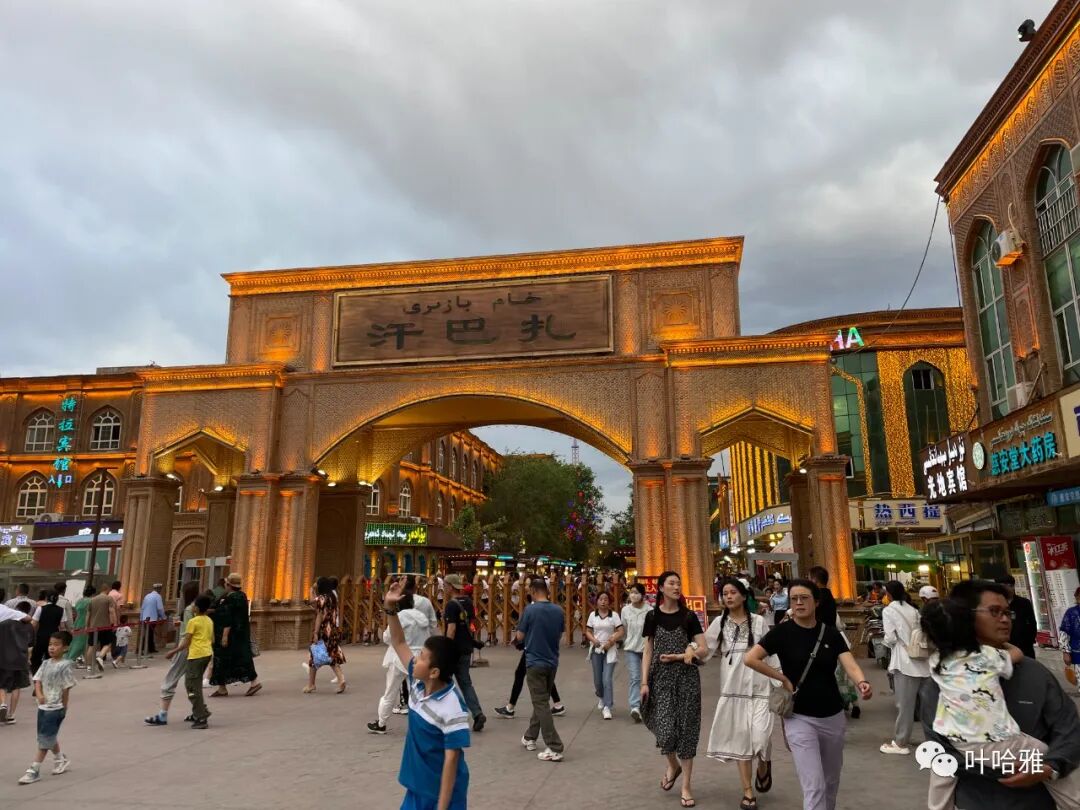
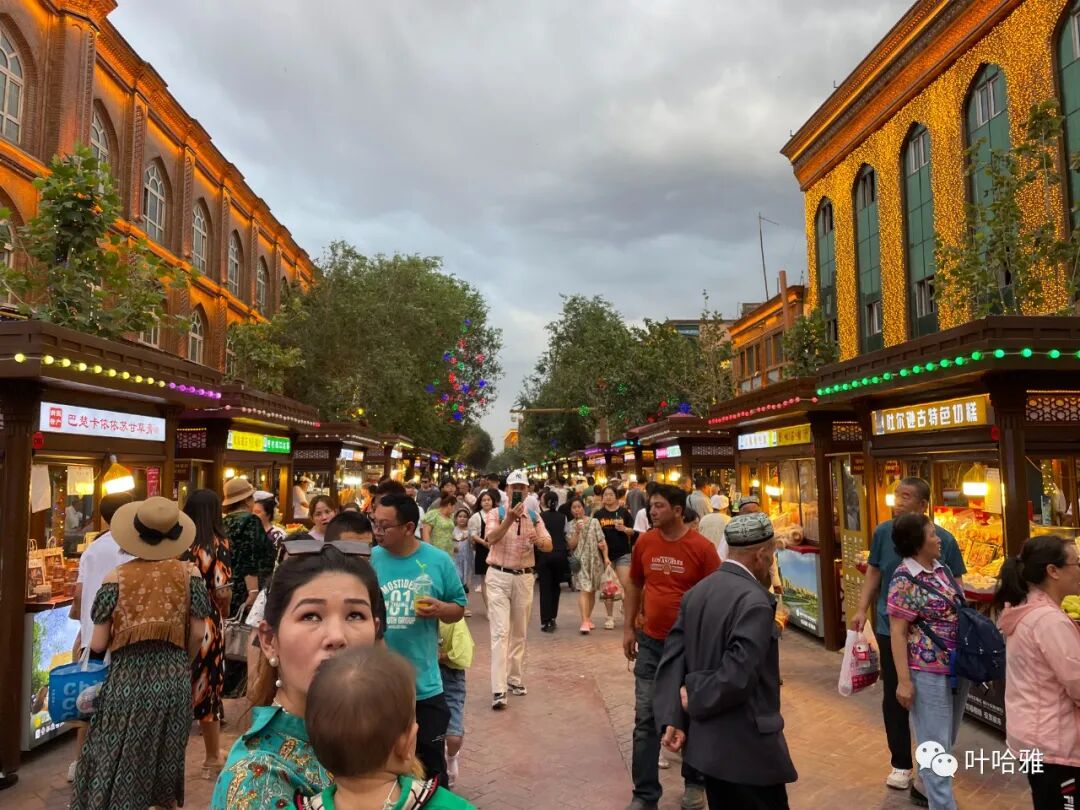
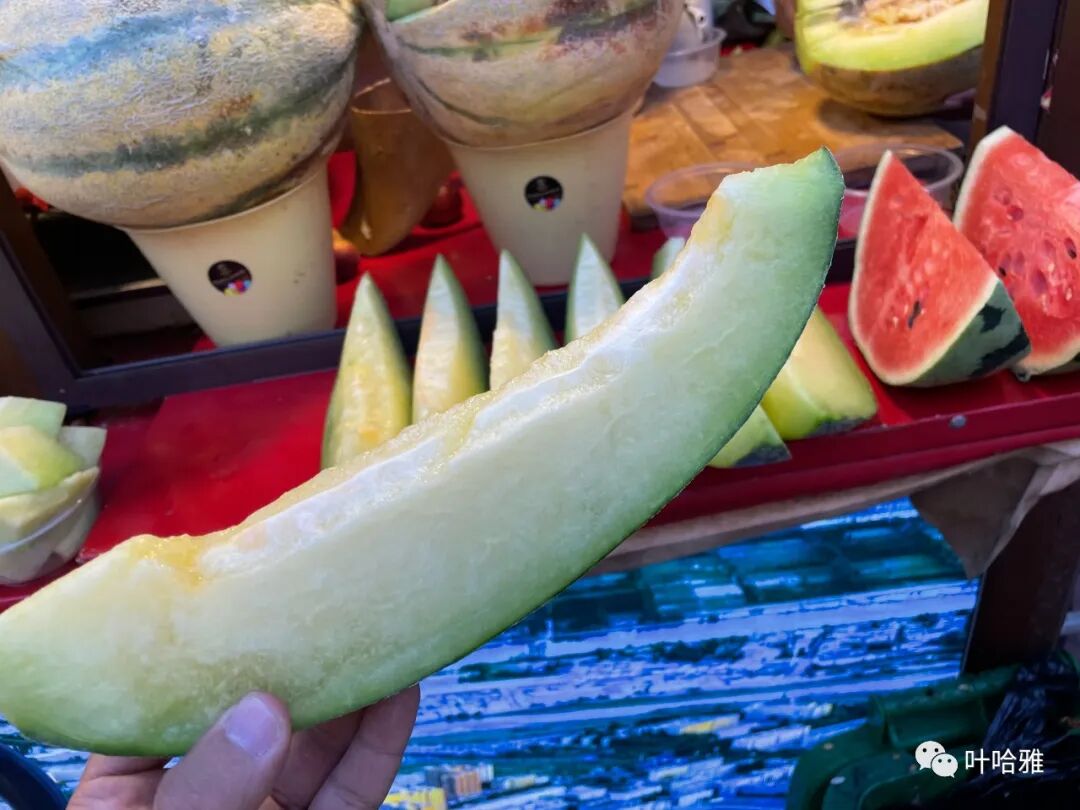
The old man's melon at the Han Bazar costs 3 yuan a slice; it is delicious and cheap.
Figs (wuhuaguo).
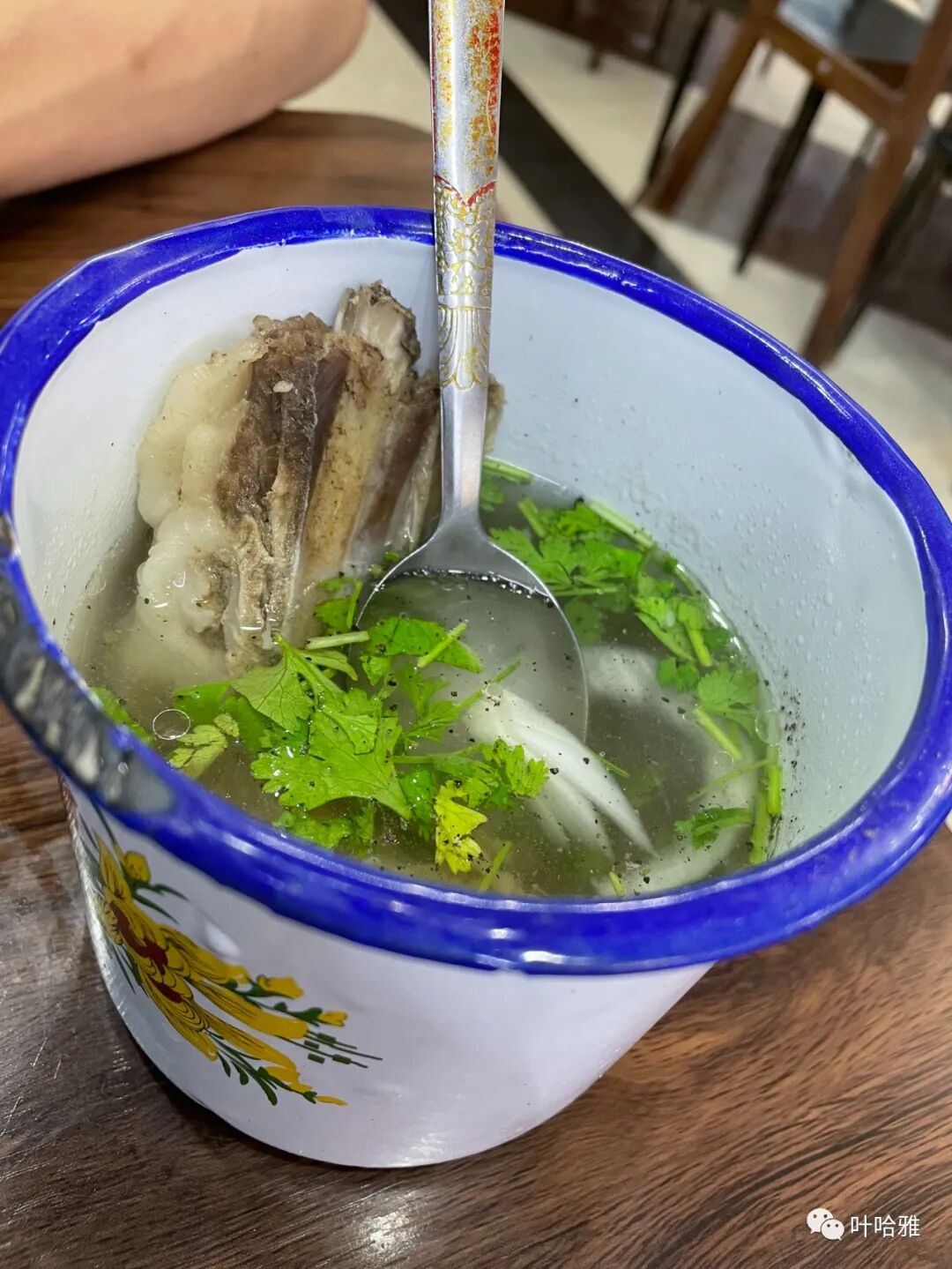
Braised meat (gangzirou)
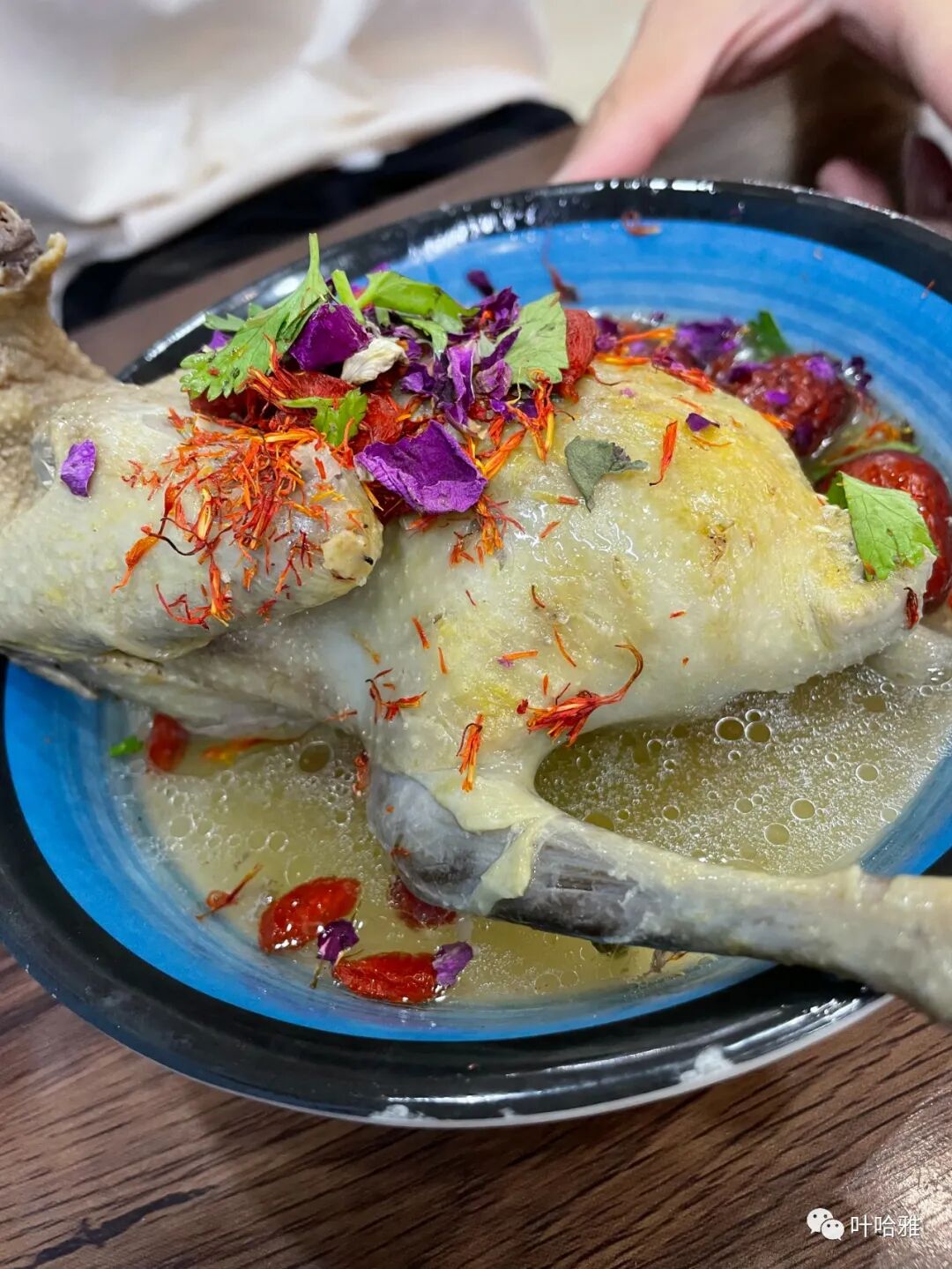
Rose pigeon soup (meiguihua gezi tang)
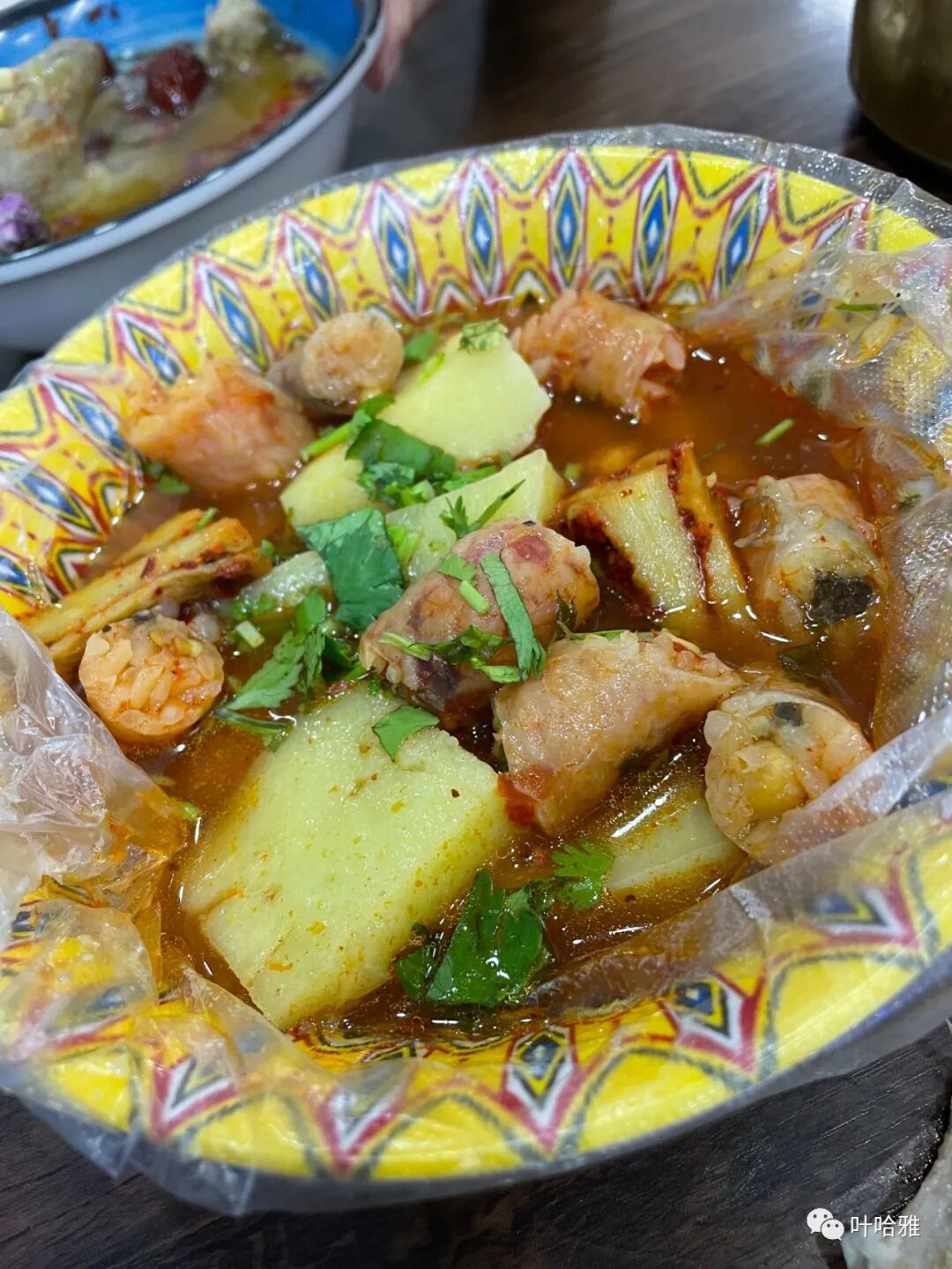
Rice sausage and lung (michang mianfei)
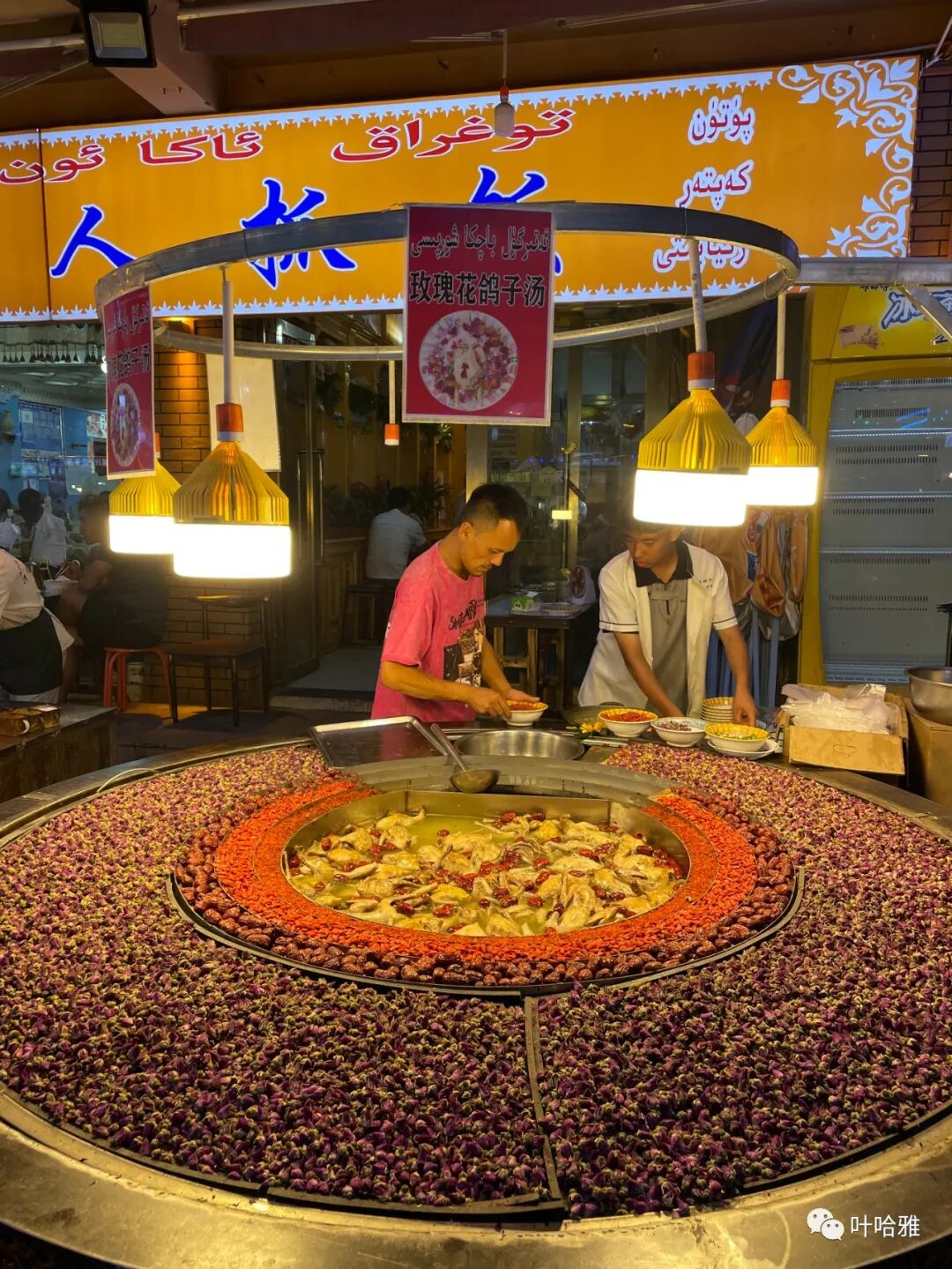
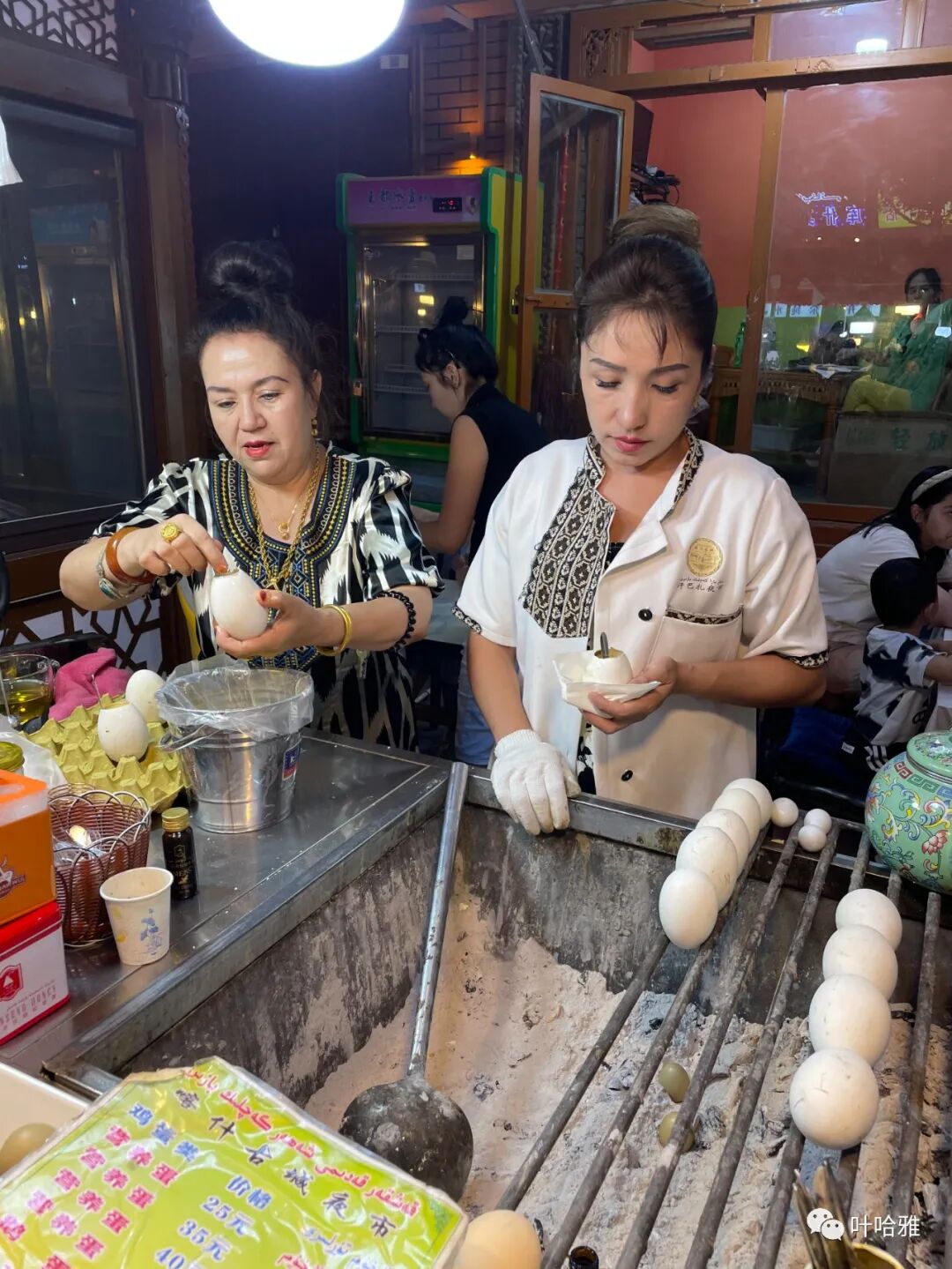
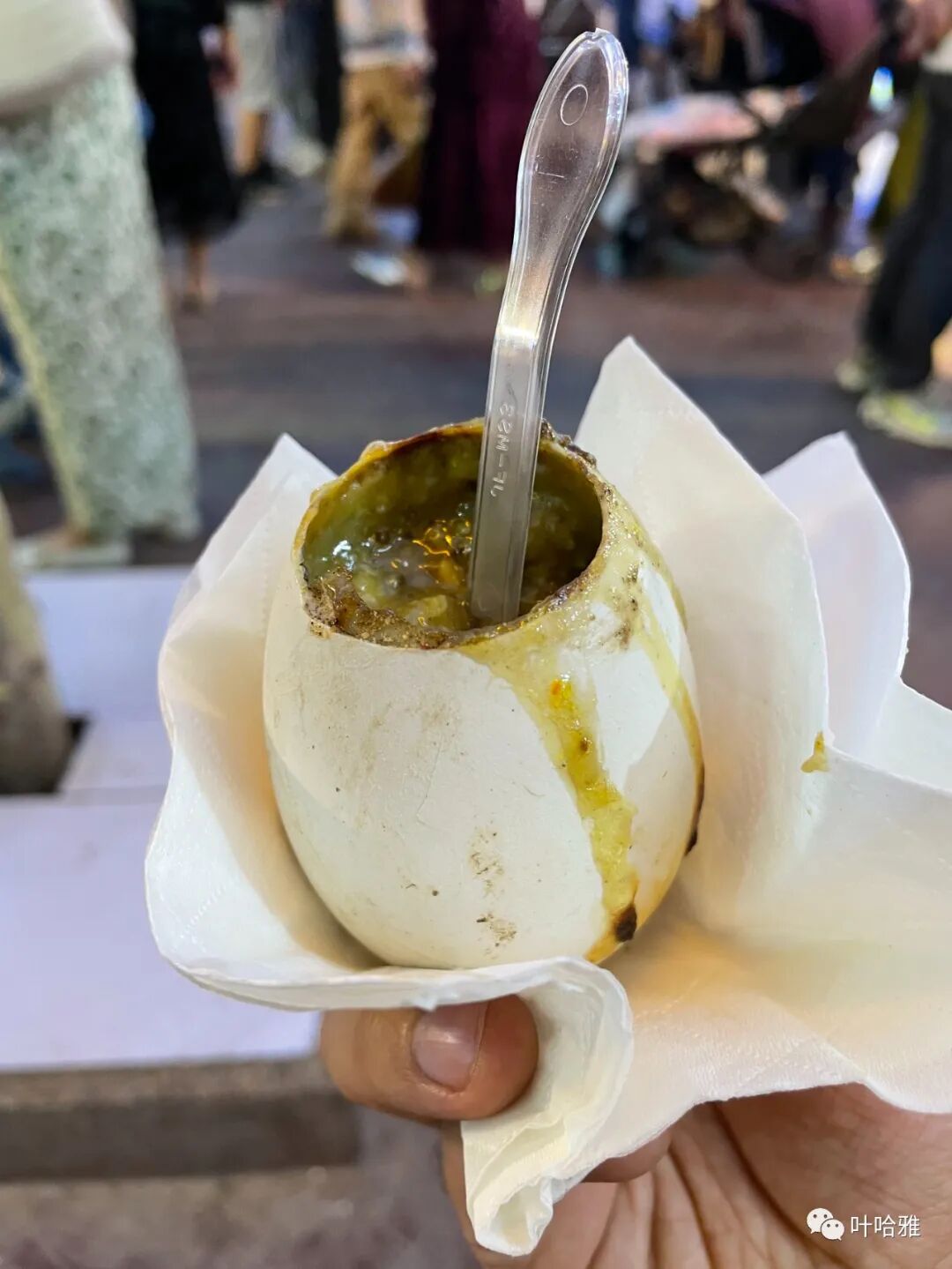
Roasted goose egg (kao edan)
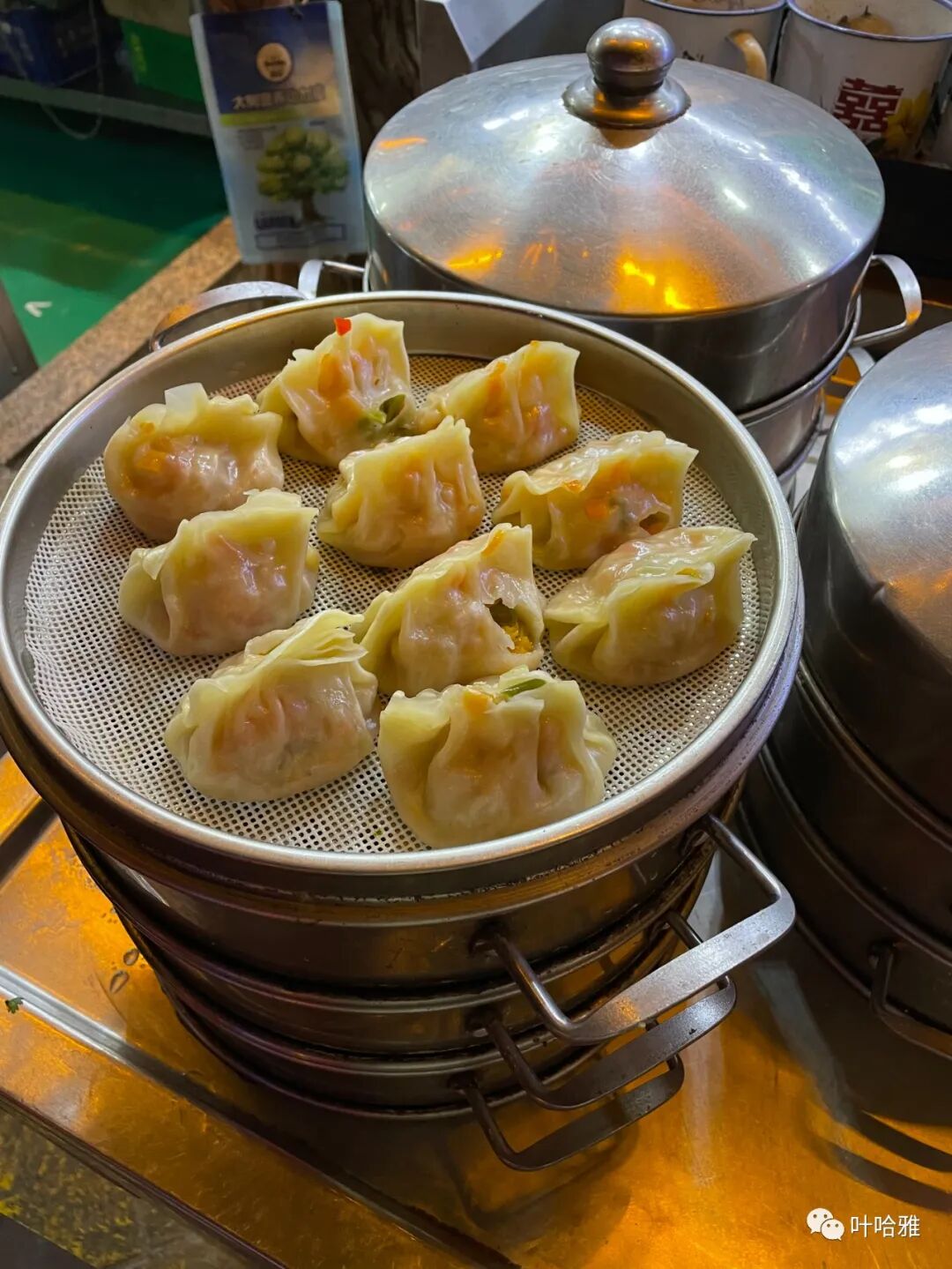
Thin-skinned steamed bun (baopi baozi)
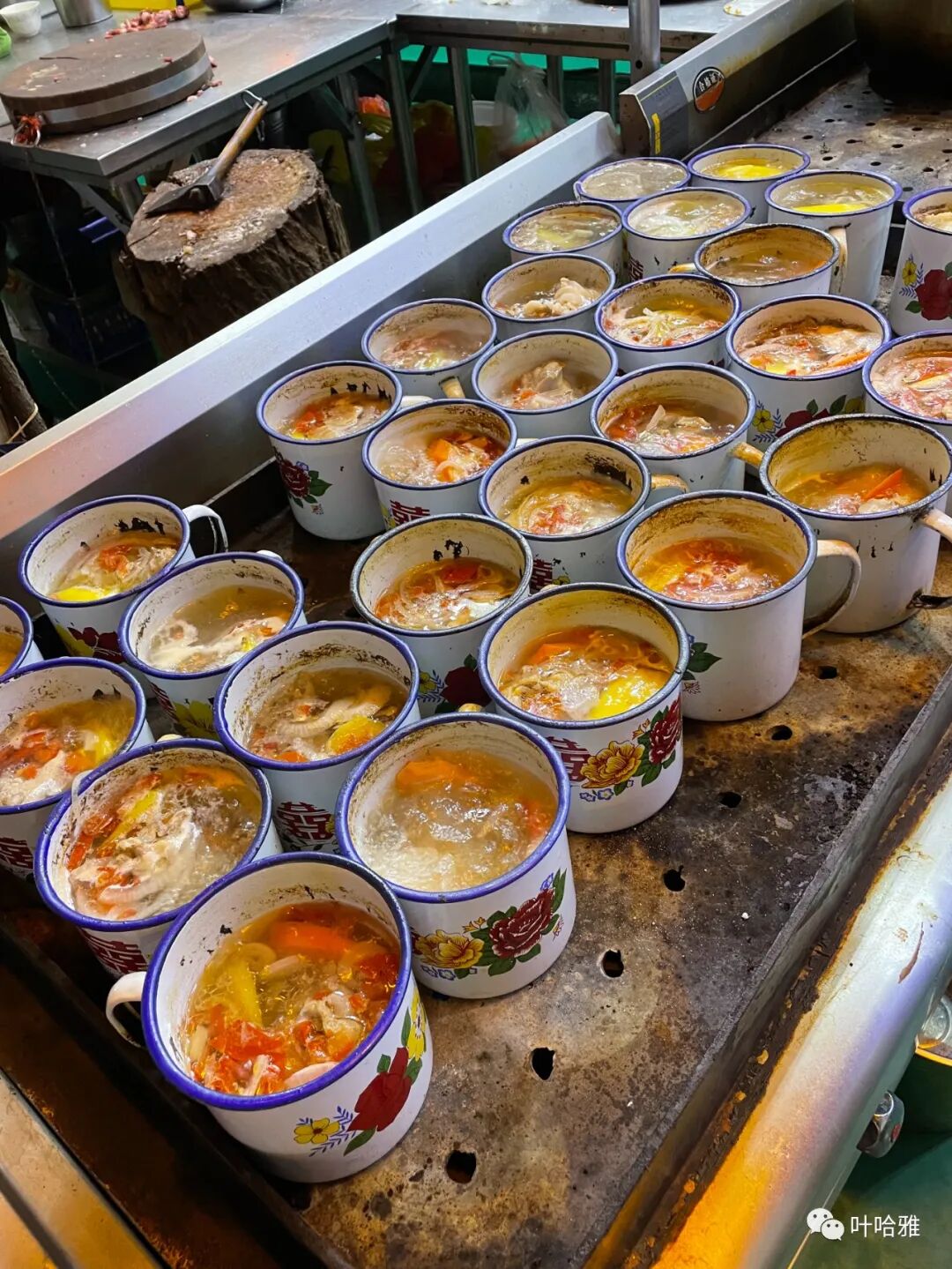
The snacks at the night market (hanbazha) taste great. They have almost all the unique snacks from Xinjiang here, which is very friendly for tourists. Since the old town was renovated, it has attracted many couples who come here to take portraits.
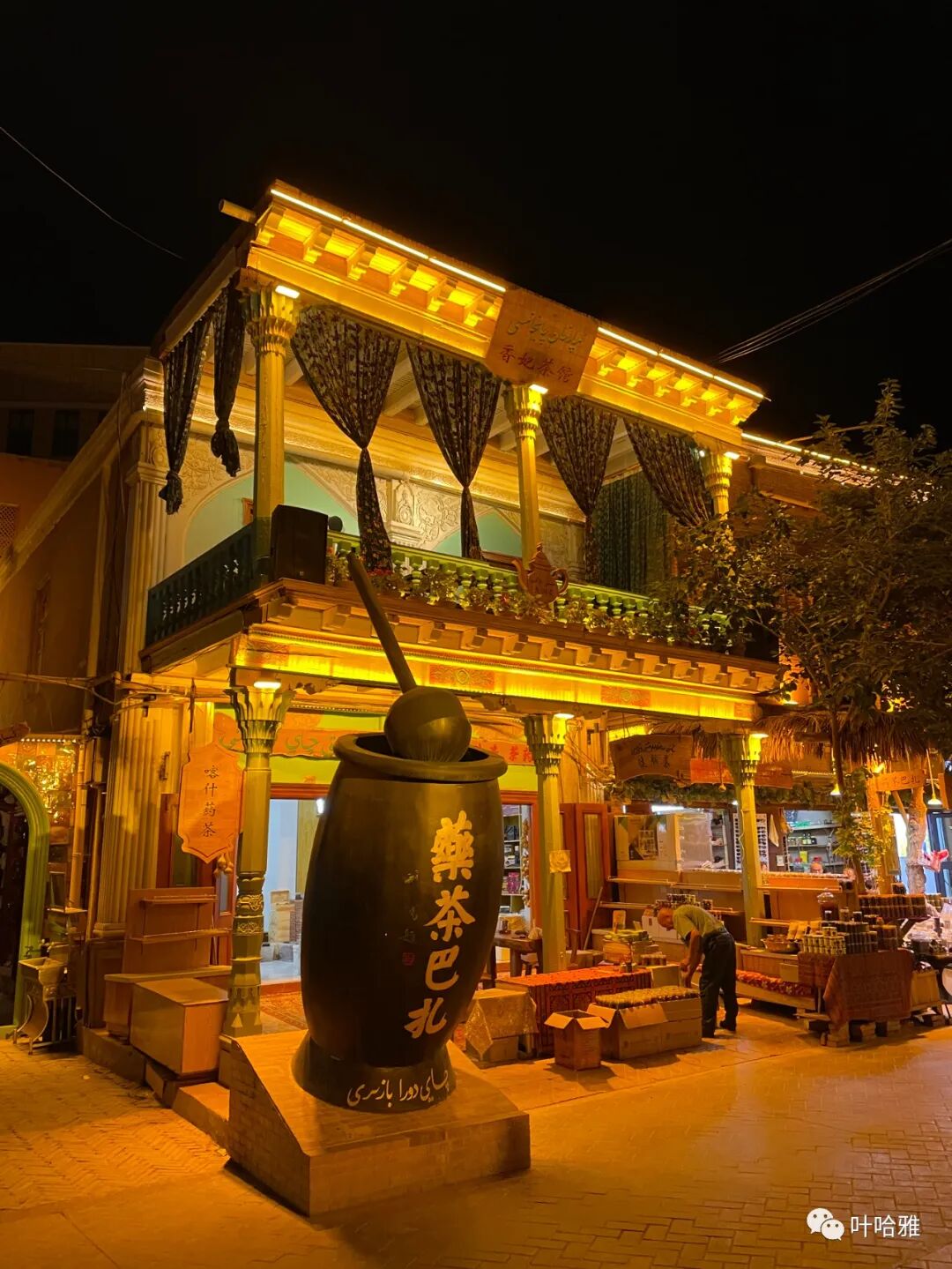
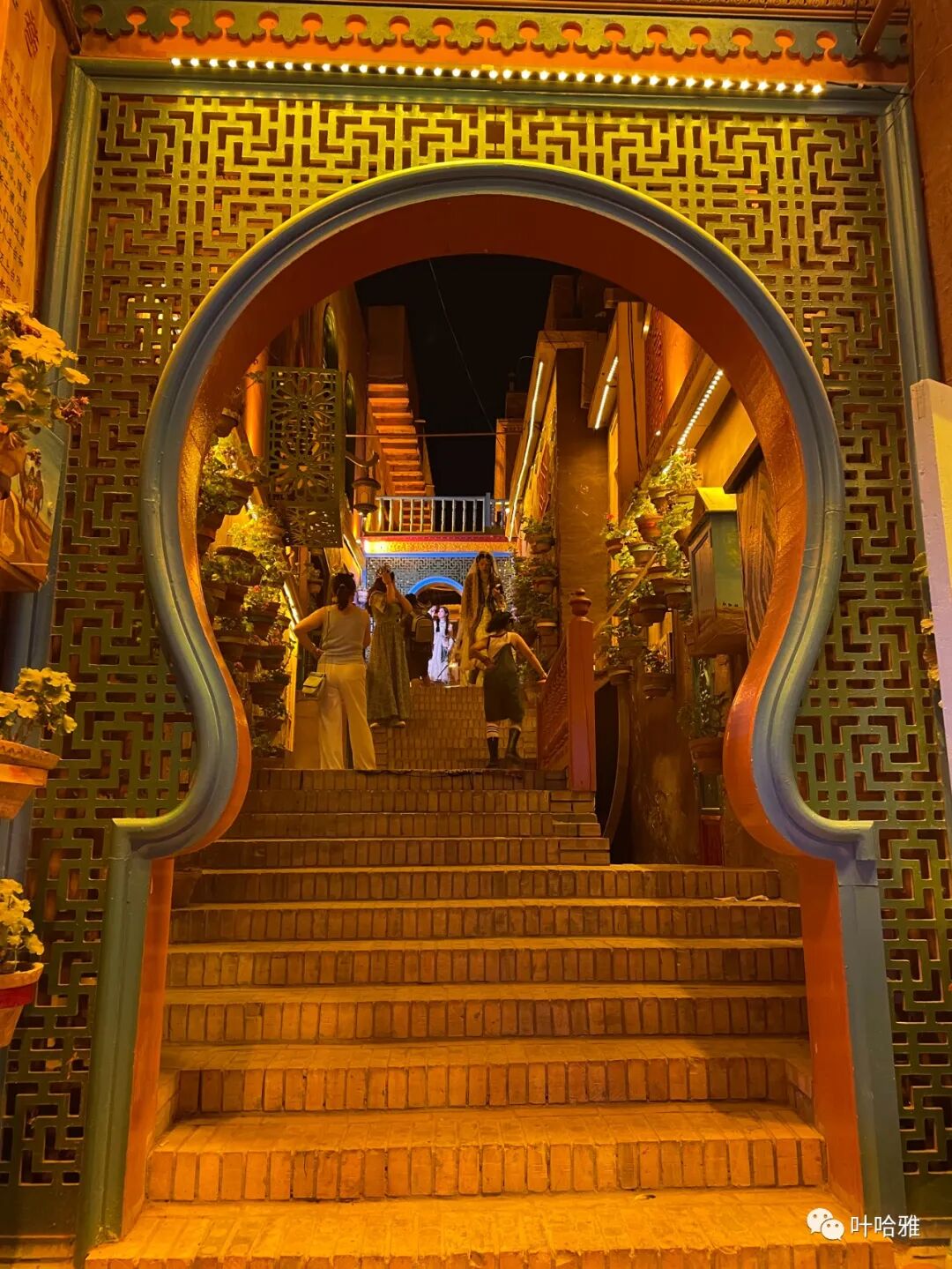
While wandering around the old town, we accidentally found a few mosques that were not open to the public. Even though some did not have signs, we could easily recognize them by their distinct minarets.
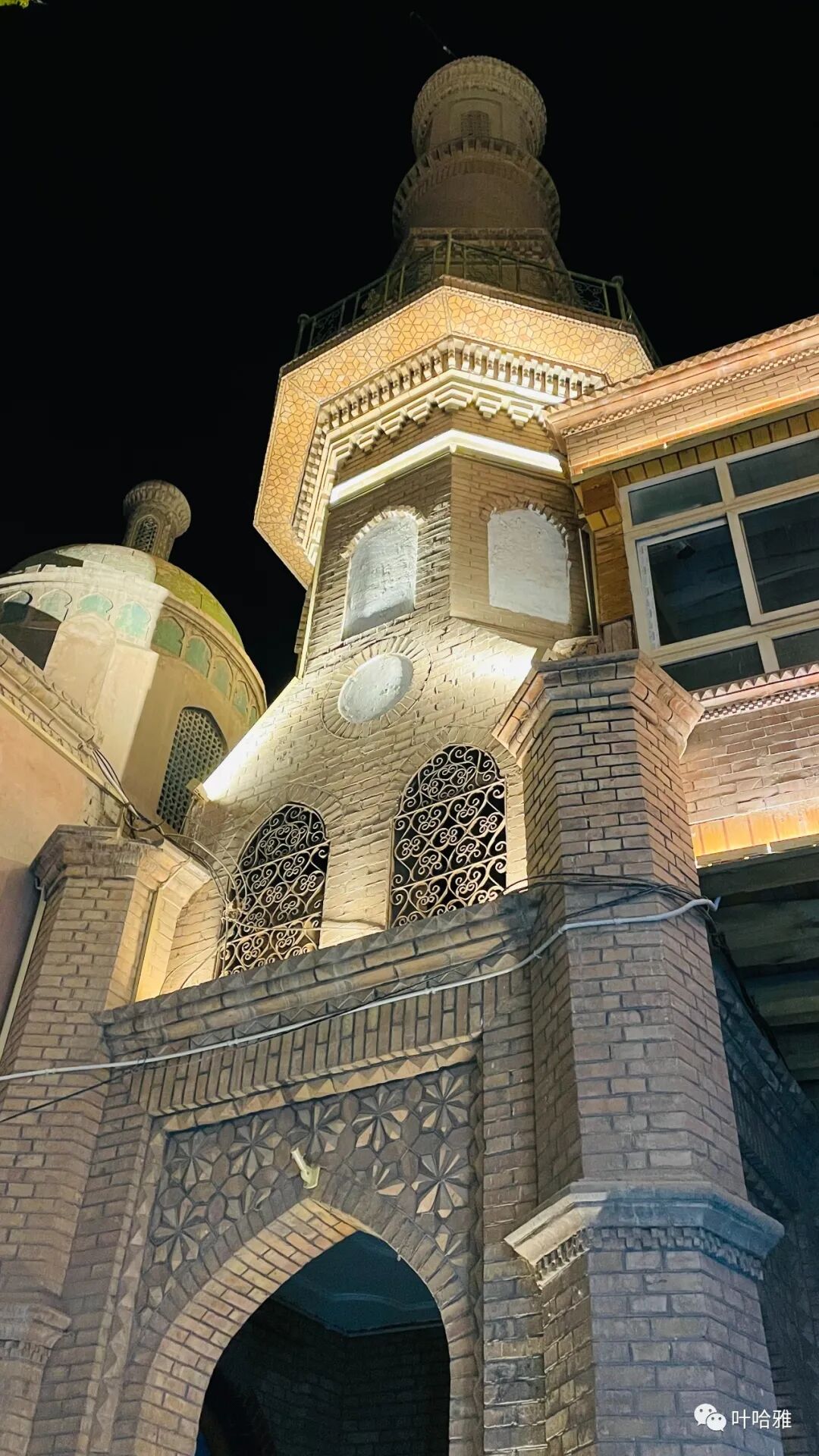
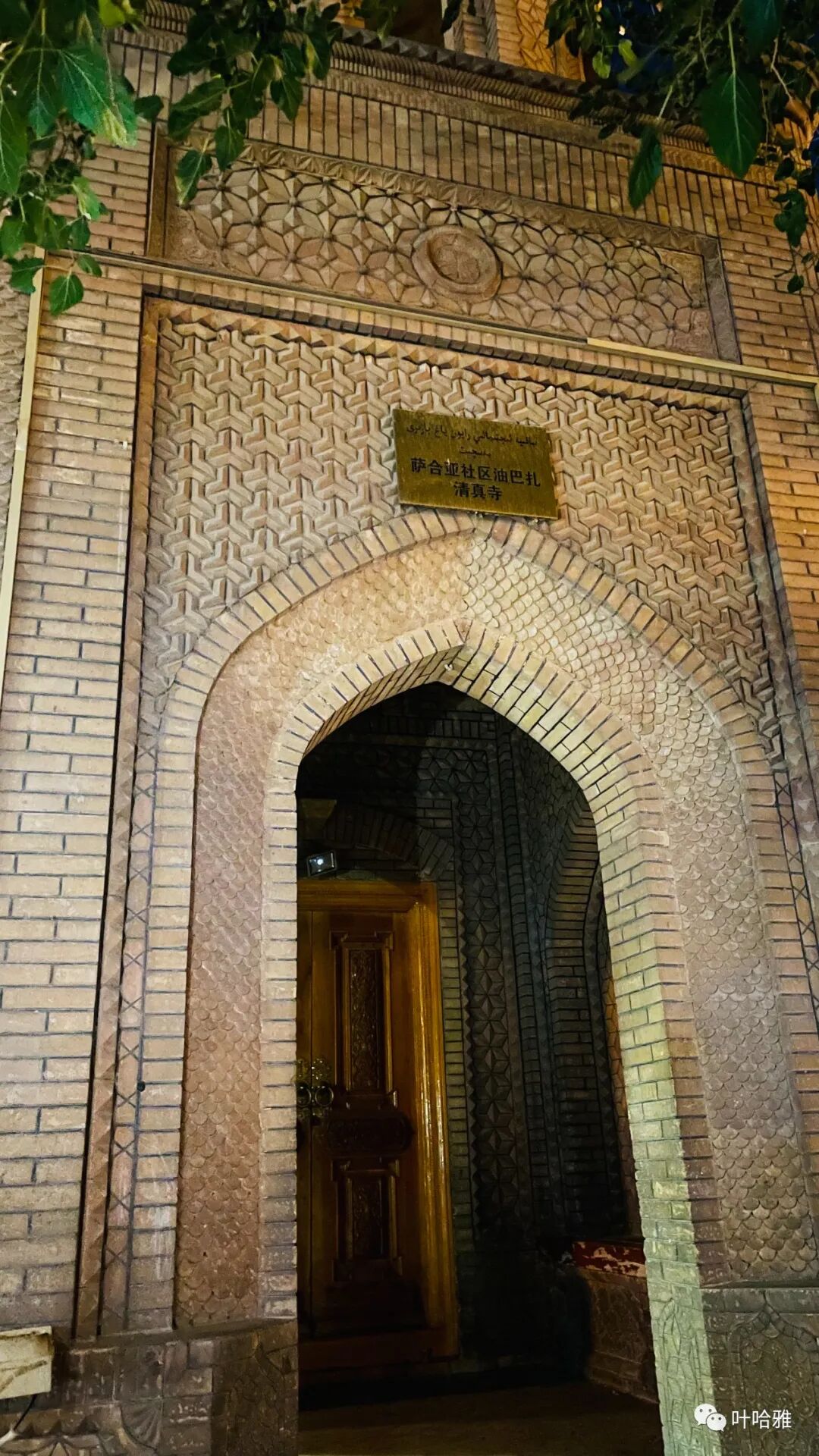
Sahaya Community Oil Market Mosque (Sahaya shequ youbazha qingzhensi)
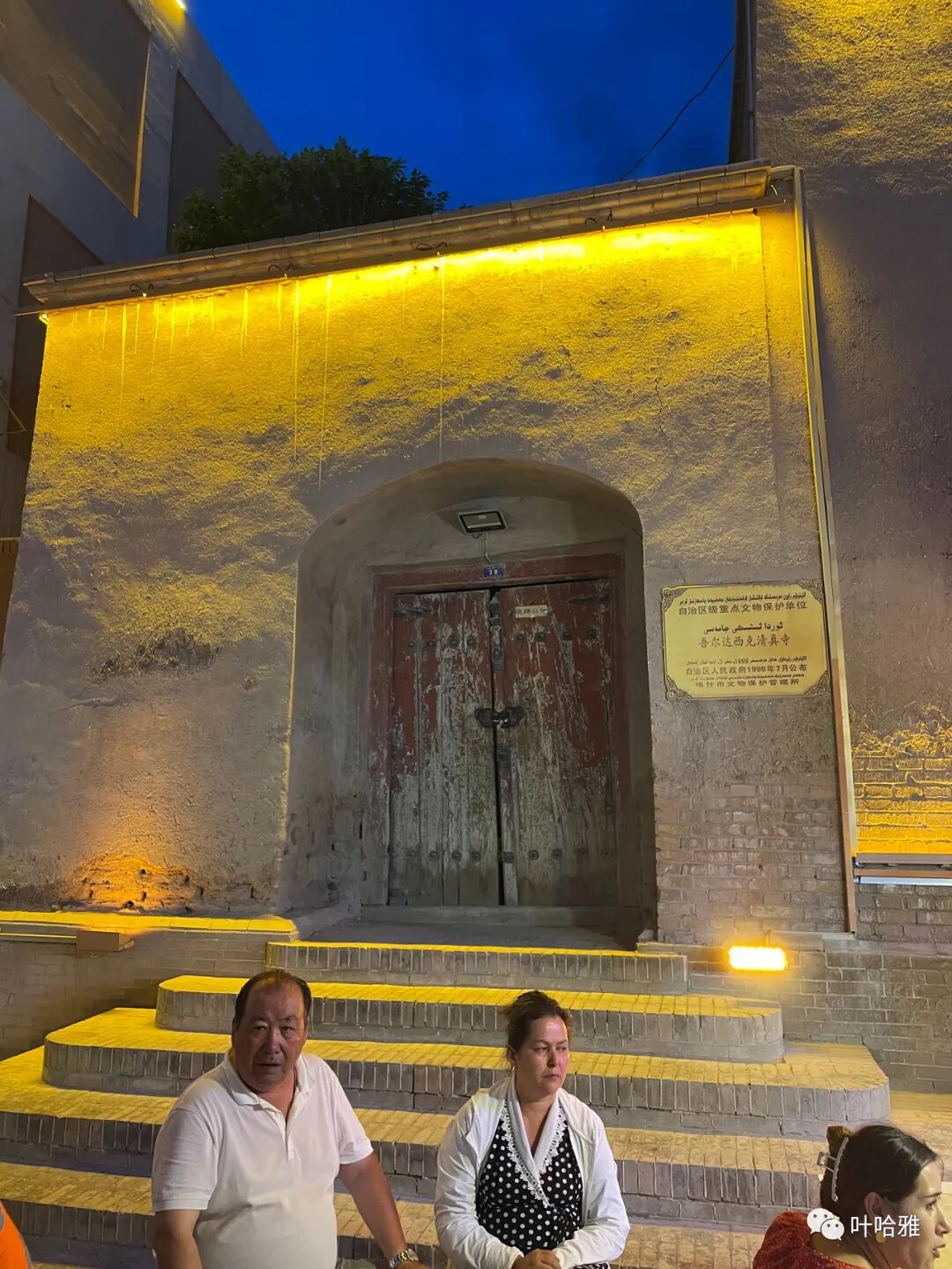
Wuerdashike Mosque (Wuerdashike qingzhensi)
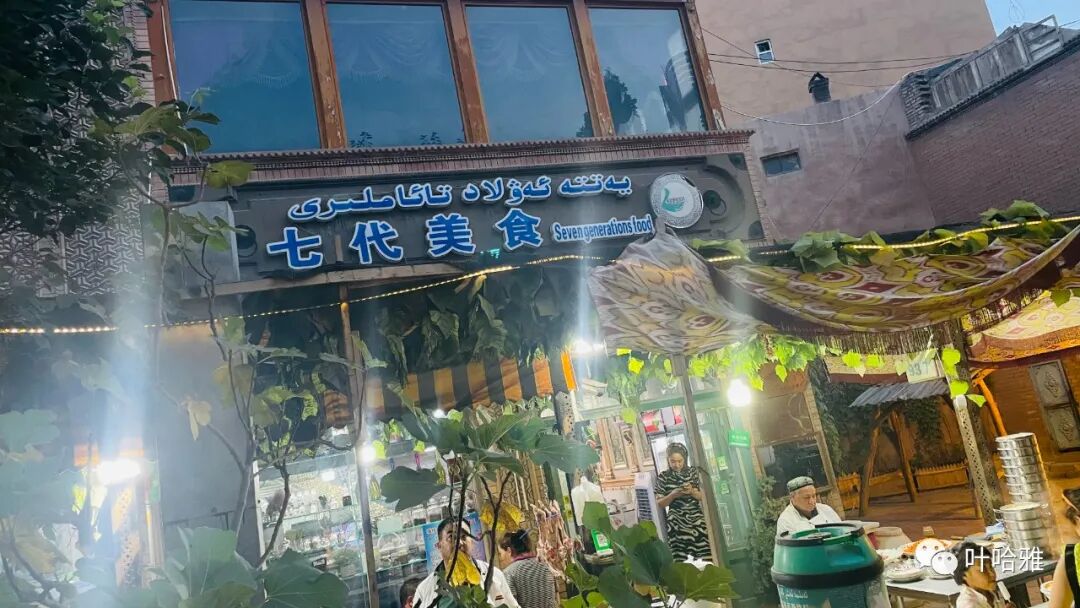
Finding a good restaurant in southern Xinjiang is actually simple. Just look at the name. Some names sound a bit strange because they are direct translations from the Uyghur language. For example, a restaurant called 'Seven Generations of Food' means that seven generations of their family have worked in the food business. Han Chinese people usually do not choose names like that.
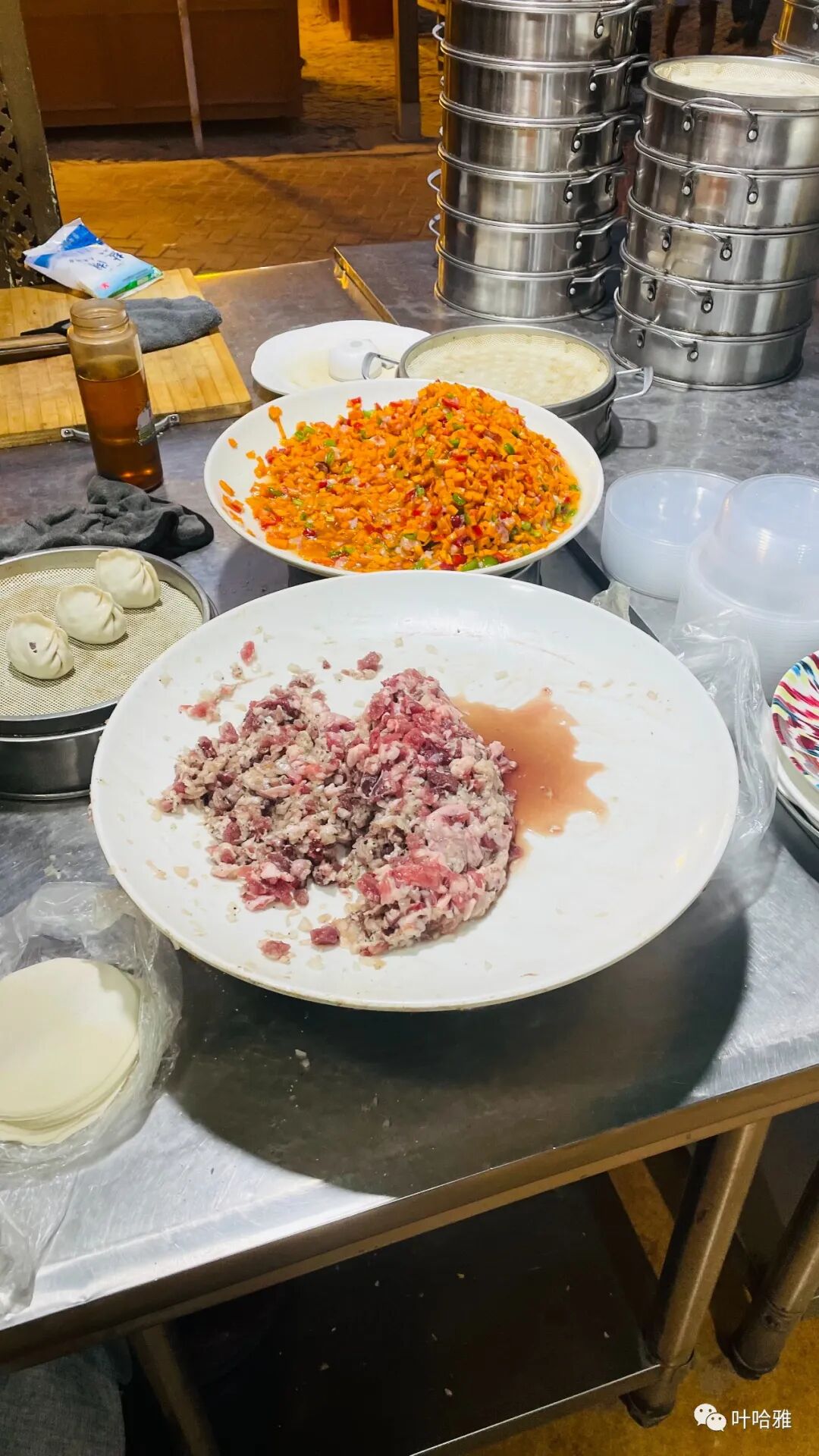
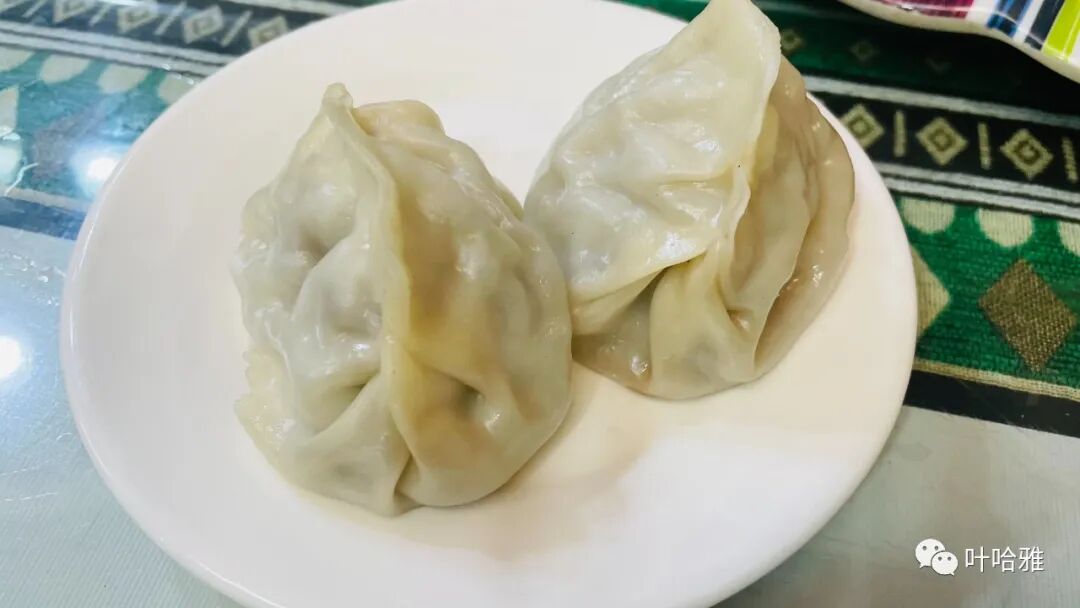
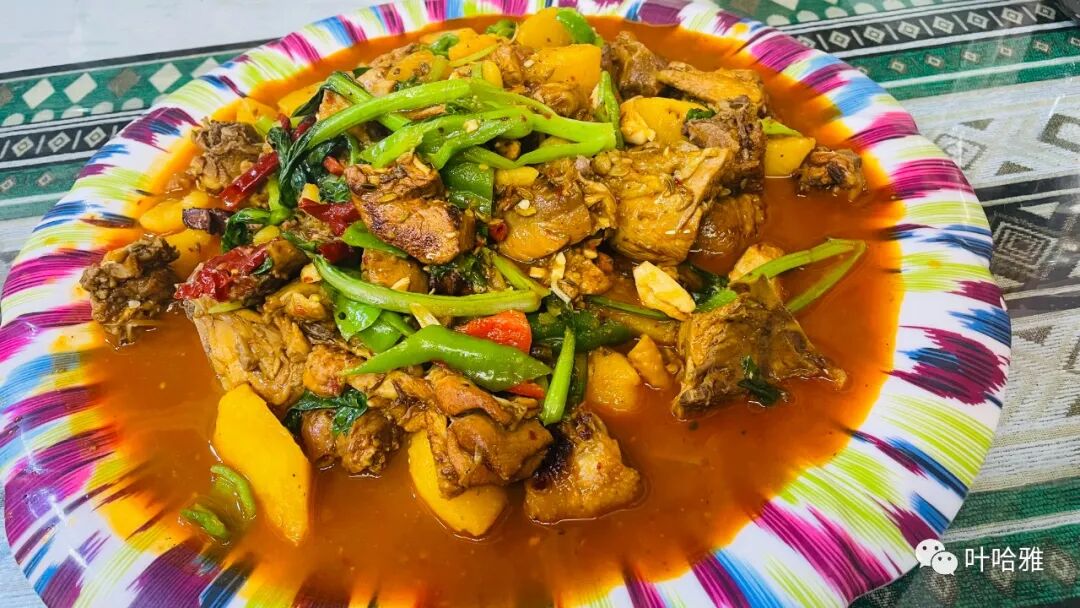
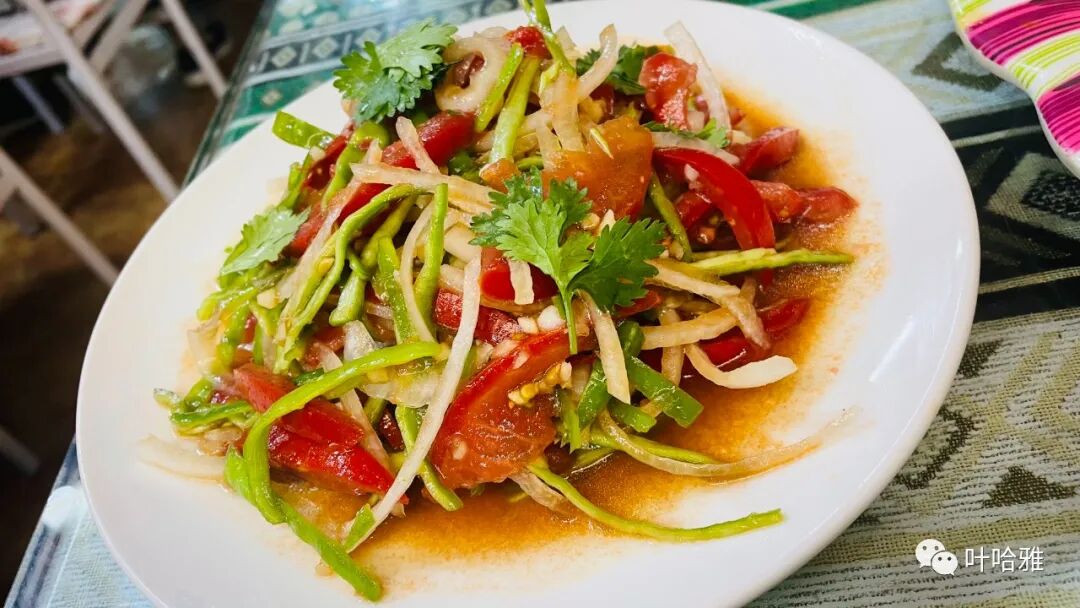
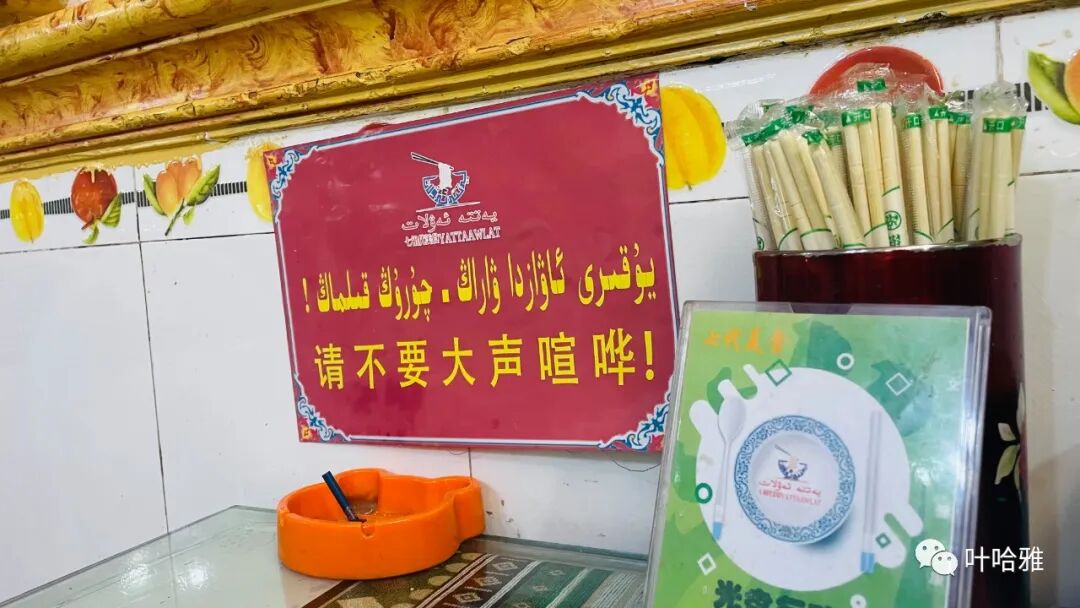
Uyghur people have a great tradition of being very quiet when eating in public. If you are observant, you can notice this.
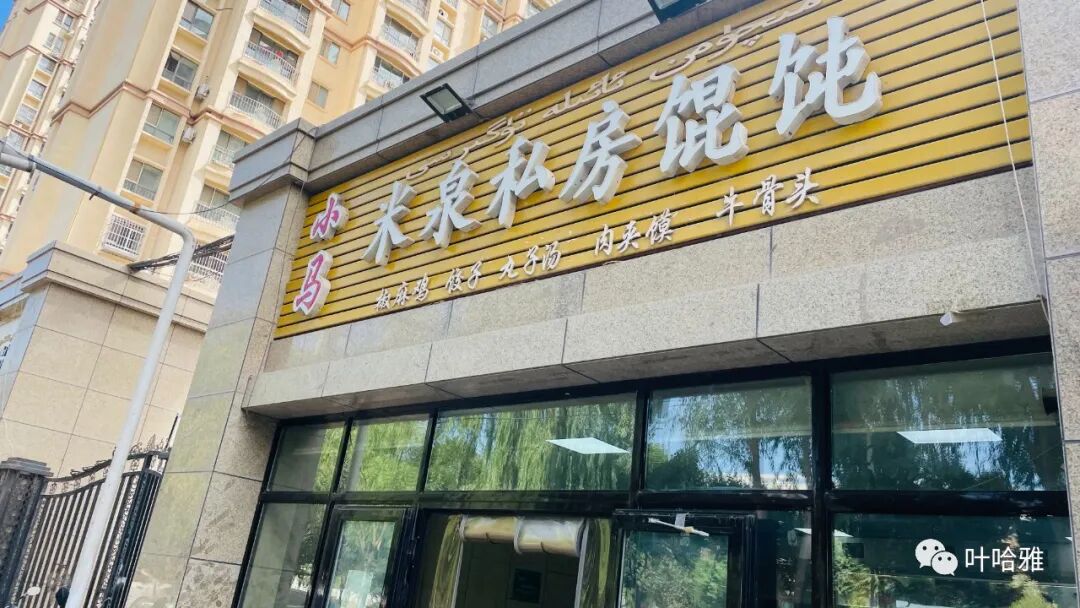
Before leaving Kashgar, I visited a friend. She just had her second child and was on maternity leave. Her parents moved from Sichuan to settle in Kashgar. She has completely adapted to the climate in Kashgar and would actually find it uncomfortable to live in the south now.
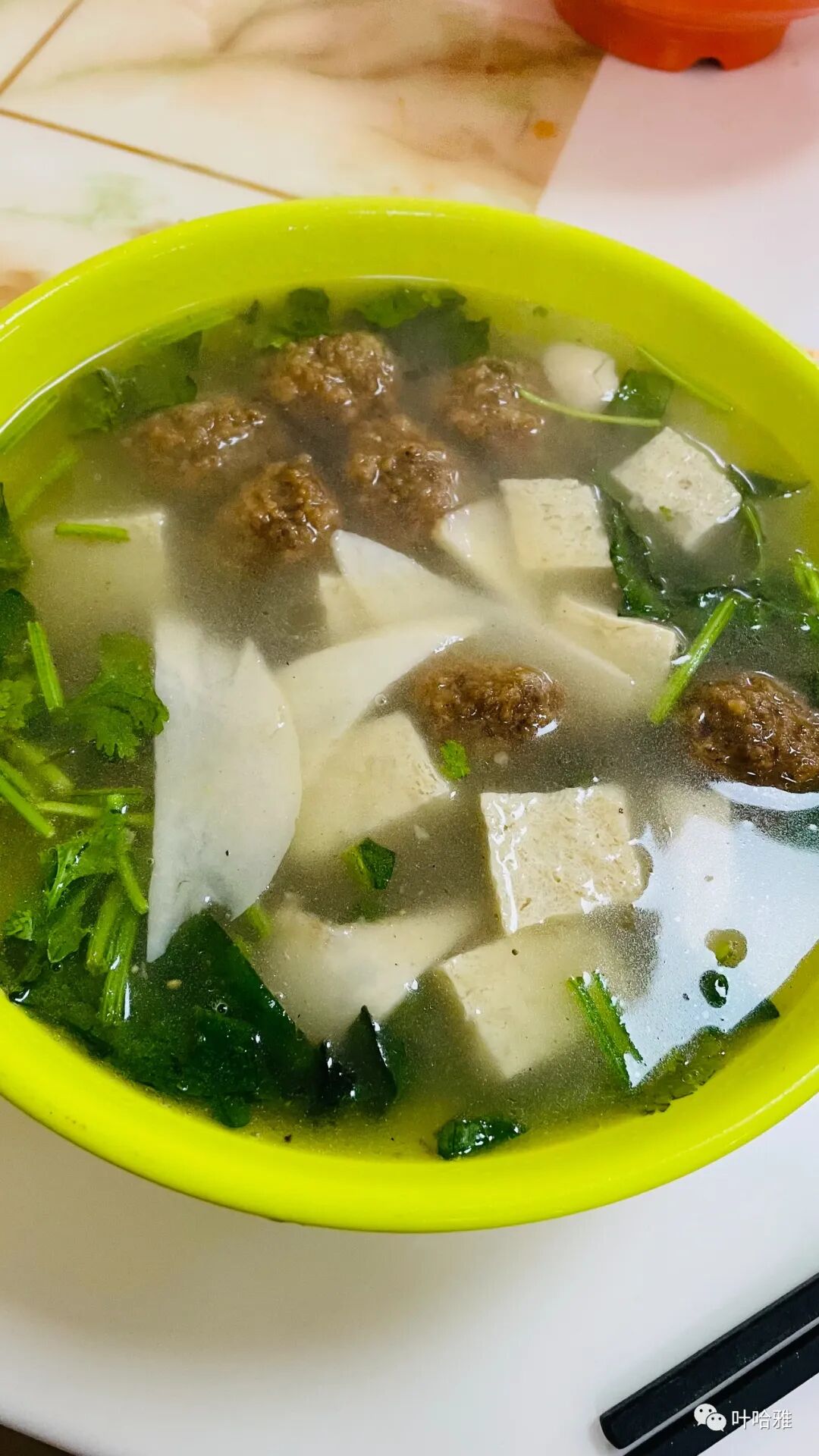
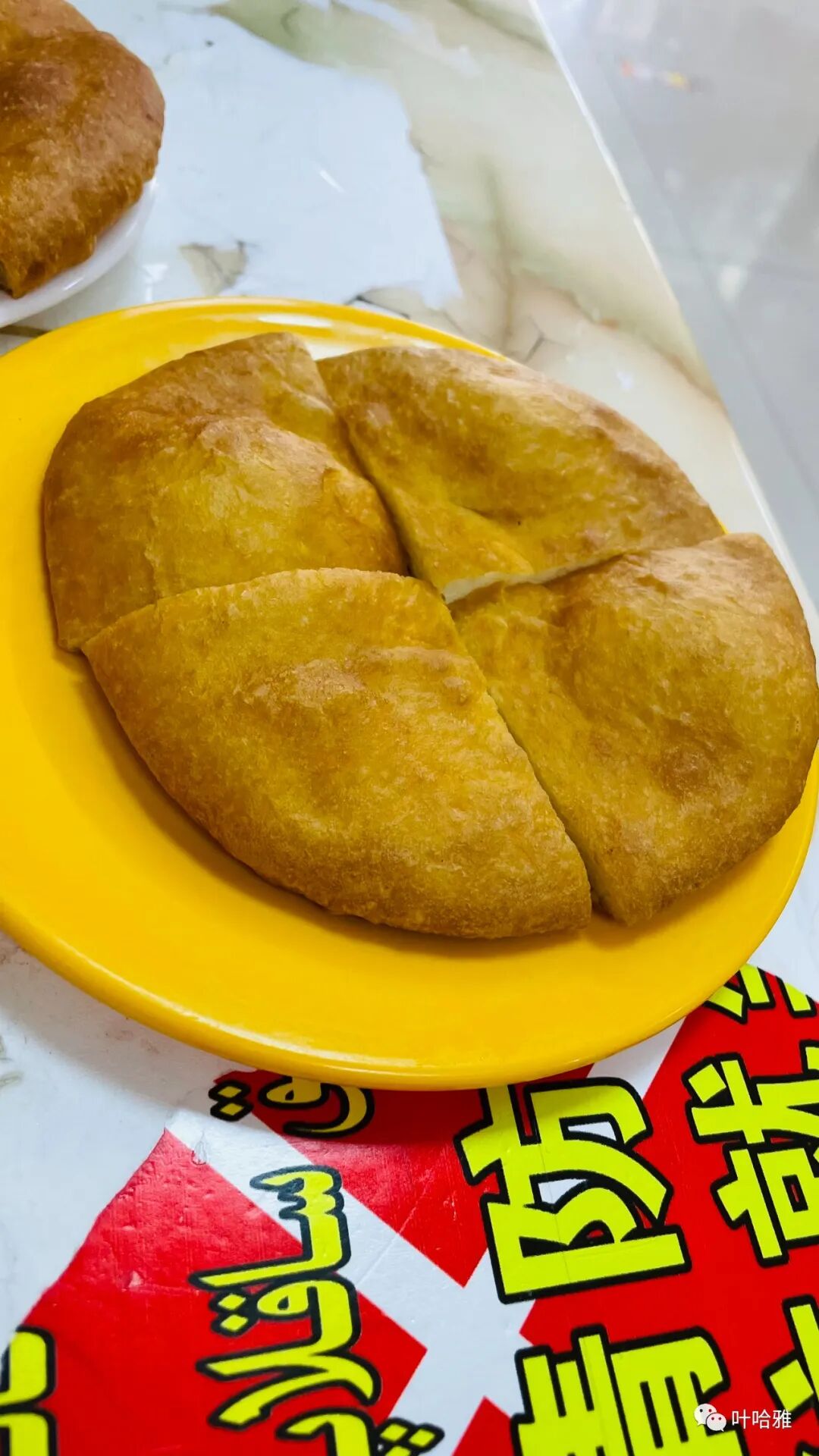
We had our last meal in Kashgar at this meatball soup (wanzi tang) shop called Miquan Wonton. The name tells you the owner is from Miquan, a district in Urumqi. After leaving Kashgar, we drove north toward our destination, Urumqi.

The taxi trunk had a bilingual sticker that said, Please do not slam the door. Experience tells me that in Xinjiang, the trunk is the part of the car that breaks the easiest. Can you guess why?
Summary: This Muslim travel guide to Kashgar covers Id Kah Mosque, Kashgar Old City, Abakh Khoja Mazar in Fragrant Concubine Garden, Sufi heritage, prayer experiences, Uyghur daily life, and local halal food.
A Kashgar Mosque Tour: The Abakh Khoja Tomb (Mazar) Inside the Fragrant Concubine Garden (Xiangfei Yuan) is presented here as a firsthand travel account in clear English, beginning with this scene: The charm of Kashgar lies in the fact that it has both the tourist-friendly Kashgar Old City and Fragrant Concubine Garden (Xiangfeiyuan), as well as shrines (mazar) and mosques where various Sufi orders (menhuan) visit. The account keeps its focus on Halal Travel, Yiwu Food, Mosque Travel while preserving the names, places, food, and historical details from the Chinese source.
The charm of Kashgar lies in the fact that it has both the tourist-friendly Kashgar Old City and Fragrant Concubine Garden (Xiangfeiyuan), as well as shrines (mazar) and mosques where various Sufi orders (menhuan) visit to honor their ancestors. Everyone experiences Kashgar in their own way.
We spent three days and two nights in Kashgar. We drove all the way from Beijing, covering about 5,000 kilometers. I had the car serviced before leaving Beijing, and it was just time for another service when we arrived in Kashgar.
We found a repair shop near the Old City. The owner is a local Han Chinese born and raised in Kashgar, and he employs a group of Uyghur youths. The owner is very talkative and speaks Uyghur. He had a Uyghur girlfriend when he was young, but they broke up because her family opposed the relationship. Now, he leads a group of Uyghur guys in his business. According to him, there are about 100,000 old Kashgar Han Chinese like him who are fluent in Uyghur, but his son cannot speak the language.
We greeted the Uyghur mechanic with a salaam. He touched his chest, and then he worked even harder.
We found a nice homestay in the Kashgar Old City. Because it is located at the entrance of the Old City and is very close to the underground parking lot, the price is high. It is called Wasting Half a Lifetime (Langfei Bansheng). The homestay is in a Moroccan style, which fits perfectly in the Kashgar Old City and feels very appropriate.
The famous Id Kah Mosque (Aitigaer) is right on the Old City square. I had looked forward to visiting it for many years, but after actually walking inside, I felt a bit disappointed.
There are many mosques in Xinjiang called Id Kah, which means a place for festival prayers. The one in Kashgar is the largest Id Kah Mosque in Xinjiang, covering 16,800 square meters, and it was first built in 1442.
It is comforting that people can still pray here, but only during prayer times. At other times, it is open for tourists to visit for a 30-yuan ticket. Many tourists pay to come in, walk around, and then say it is not worth the visit.
The Id Kah Mosque is not as big as I imagined. Perhaps it is because the main hall building is relatively small, and most of the area is the open space in front of the hall. Also, the entire mosque has been renovated, so you cannot see any ancient traces.
In the middle of the main hall, a tour guide was explaining things to a group of tourists. I walked to the side and performed two rak'ahs of prayer. My heart was not calm during these two rak'ahs because this was the first time on our trip through Southern Xinjiang that we were able to perform a normal prayer.
The streets and alleys of Kashgar are full of advertisements for the Fragrant Concubine Tomb scenic area. However, after the Fragrant Concubine married the Qianlong Emperor, she was buried in Beijing. This tomb in Kashgar is only a cenotaph for her, and her family members are buried inside. In this cemetery, the most worth mentioning is the shrine (mazar) of Afaq Khoja, as the Fragrant Concubine was his great-granddaughter.
The Fragrant Concubine Tomb (Xiangfei Muyuan) is very large and has complete facilities. It is a spot worth visiting for photos. The tomb (mazar) of Afaq Khoja is inside, but you might miss it if you do not look carefully because there are no clear signs around it.
The mazar of Afaq Khoja is right next to the Jiaman Mosque. Since there are no signs, most tourists do not walk this way, making it look especially quiet in the busy Fragrant Concubine Garden.
Afaq Khoja is very important to the various Sufi orders (menhuan) in China, and his influence is closely linked to their history. His disciples include leaders of the Jahriyya, Xianmen, Bi Jichang, Mufti, Ma Diangong, Liu Boyang, Tong Tai Baba, Li Tai Baba, and Anxi Taiye. Ma Laichi of the Huasi menhuan was also born after receiving a blessing from Afaq Khoja, so the records of these menhuan all trace back to Afaq Khoja in Xinjiang.
Because of his struggle with the Black Mountain sect, Afaq Khoja was forced to move to inland areas like Gansu, Ningxia, and Qinghai. Later, he sought help from the Fifth Dalai Lama, who instructed Galdan to support Afaq Khoja's return to Yarkand. Afaq Khoja returned to Yarkand and later died during the struggle against the Black Mountain sect.
Both the Black Mountain sect and the White Mountain sect come from the same Khoja family. Ishaq, the youngest son of Makhdum-i-Azam, was the founder of the Black Mountain sect. Mamut Yusuph, the grandson of Makhdum-i-Azam, was the founder of the White Mountain sect, and Afaq Khoja was the son of Mamut Yusuph.
Across from the Jiaman Mosque, there is another prayer hall, but it is no longer in use.
About two or three kilometers from the Kashgar Old City, there is another tomb complex similar in style to the Fragrant Concubine Garden that is also worth mentioning: the Tomb of Yusuf Khass Hajib (1019-1085).
Yusuf Khass Hajib, the famous poet and author of Wisdom of Royal Glory (Kutadgu Bilig), was a Kyrgyz person and a court official for the Karakhanid dynasty. Kashgar was the capital of the dynasty at the time, and Khass Hajib means court official. His portrait is still printed on Kyrgyz banknotes today.
Yusuf Khass Hajib had a huge influence on Uyghur language and literature, much like Confucius for the Chinese people. However, because Han people do not know much about him, very few tourists visit his tomb.
In Kashgar, you have to wait until almost 11:00 PM for it to get dark, which is a time difference of nearly three hours from Beijing. It is very sunny during the day, so you can visit the Night Market (Han Bazar) in the Old City at night. There are many tourists there, and it is still busy until 1:00 AM.
The old man's melon at the Han Bazar costs 3 yuan a slice; it is delicious and cheap.
Figs (wuhuaguo).
Braised meat (gangzirou)
Rose pigeon soup (meiguihua gezi tang)
Rice sausage and lung (michang mianfei)
Roasted goose egg (kao edan)
Thin-skinned steamed bun (baopi baozi)
The snacks at the night market (hanbazha) taste great. They have almost all the unique snacks from Xinjiang here, which is very friendly for tourists. Since the old town was renovated, it has attracted many couples who come here to take portraits.
While wandering around the old town, we accidentally found a few mosques that were not open to the public. Even though some did not have signs, we could easily recognize them by their distinct minarets.
Sahaya Community Oil Market Mosque (Sahaya shequ youbazha qingzhensi)
Wuerdashike Mosque (Wuerdashike qingzhensi)
Finding a good restaurant in southern Xinjiang is actually simple. Just look at the name. Some names sound a bit strange because they are direct translations from the Uyghur language. For example, a restaurant called 'Seven Generations of Food' means that seven generations of their family have worked in the food business. Han Chinese people usually do not choose names like that.
Uyghur people have a great tradition of being very quiet when eating in public. If you are observant, you can notice this.
Before leaving Kashgar, I visited a friend. She just had her second child and was on maternity leave. Her parents moved from Sichuan to settle in Kashgar. She has completely adapted to the climate in Kashgar and would actually find it uncomfortable to live in the south now.
We had our last meal in Kashgar at this meatball soup (wanzi tang) shop called Miquan Wonton. The name tells you the owner is from Miquan, a district in Urumqi. After leaving Kashgar, we drove north toward our destination, Urumqi.
The taxi trunk had a bilingual sticker that said, Please do not slam the door. Experience tells me that in Xinjiang, the trunk is the part of the car that breaks the easiest. Can you guess why?
Muslim Travel Guide China: Kashgar Id Kah Mosque, Abakh Khoja Mazar and Uyghur Heritage
Articles • yusuf908 posted the article • 0 comments • 146 views • 2026-05-22 21:11
Reposted from the web
Summary: This Muslim travel guide to Kashgar covers Id Kah Mosque, Kashgar Old City, Abakh Khoja Mazar in Fragrant Concubine Garden, Sufi heritage, prayer experiences, Uyghur daily life, and local halal food.
A Kashgar Mosque Tour: The Abakh Khoja Tomb (Mazar) Inside the Fragrant Concubine Garden (Xiangfei Yuan) is presented here as a firsthand travel account in clear English, beginning with this scene: The charm of Kashgar lies in the fact that it has both the tourist-friendly Kashgar Old City and Fragrant Concubine Garden (Xiangfeiyuan), as well as shrines (mazar) and mosques where various Sufi orders (menhuan) visit. The account keeps its focus on Halal Travel, Yiwu Food, Mosque Travel while preserving the names, places, food, and historical details from the Chinese source.
The charm of Kashgar lies in the fact that it has both the tourist-friendly Kashgar Old City and Fragrant Concubine Garden (Xiangfeiyuan), as well as shrines (mazar) and mosques where various Sufi orders (menhuan) visit to honor their ancestors. Everyone experiences Kashgar in their own way.
We spent three days and two nights in Kashgar. We drove all the way from Beijing, covering about 5,000 kilometers. I had the car serviced before leaving Beijing, and it was just time for another service when we arrived in Kashgar.
We found a repair shop near the Old City. The owner is a local Han Chinese born and raised in Kashgar, and he employs a group of Uyghur youths. The owner is very talkative and speaks Uyghur. He had a Uyghur girlfriend when he was young, but they broke up because her family opposed the relationship. Now, he leads a group of Uyghur guys in his business. According to him, there are about 100,000 old Kashgar Han Chinese like him who are fluent in Uyghur, but his son cannot speak the language.
We greeted the Uyghur mechanic with a salaam. He touched his chest, and then he worked even harder.
We found a nice homestay in the Kashgar Old City. Because it is located at the entrance of the Old City and is very close to the underground parking lot, the price is high. It is called Wasting Half a Lifetime (Langfei Bansheng). The homestay is in a Moroccan style, which fits perfectly in the Kashgar Old City and feels very appropriate.
The famous Id Kah Mosque (Aitigaer) is right on the Old City square. I had looked forward to visiting it for many years, but after actually walking inside, I felt a bit disappointed.
There are many mosques in Xinjiang called Id Kah, which means a place for festival prayers. The one in Kashgar is the largest Id Kah Mosque in Xinjiang, covering 16,800 square meters, and it was first built in 1442.
It is comforting that people can still pray here, but only during prayer times. At other times, it is open for tourists to visit for a 30-yuan ticket. Many tourists pay to come in, walk around, and then say it is not worth the visit.
The Id Kah Mosque is not as big as I imagined. Perhaps it is because the main hall building is relatively small, and most of the area is the open space in front of the hall. Also, the entire mosque has been renovated, so you cannot see any ancient traces.
In the middle of the main hall, a tour guide was explaining things to a group of tourists. I walked to the side and performed two rak'ahs of prayer. My heart was not calm during these two rak'ahs because this was the first time on our trip through Southern Xinjiang that we were able to perform a normal prayer.
The streets and alleys of Kashgar are full of advertisements for the Fragrant Concubine Tomb scenic area. However, after the Fragrant Concubine married the Qianlong Emperor, she was buried in Beijing. This tomb in Kashgar is only a cenotaph for her, and her family members are buried inside. In this cemetery, the most worth mentioning is the shrine (mazar) of Afaq Khoja, as the Fragrant Concubine was his great-granddaughter.
The Fragrant Concubine Tomb (Xiangfei Muyuan) is very large and has complete facilities. It is a spot worth visiting for photos. The tomb (mazar) of Afaq Khoja is inside, but you might miss it if you do not look carefully because there are no clear signs around it.
The mazar of Afaq Khoja is right next to the Jiaman Mosque. Since there are no signs, most tourists do not walk this way, making it look especially quiet in the busy Fragrant Concubine Garden.
Afaq Khoja is very important to the various Sufi orders (menhuan) in China, and his influence is closely linked to their history. His disciples include leaders of the Jahriyya, Xianmen, Bi Jichang, Mufti, Ma Diangong, Liu Boyang, Tong Tai Baba, Li Tai Baba, and Anxi Taiye. Ma Laichi of the Huasi menhuan was also born after receiving a blessing from Afaq Khoja, so the records of these menhuan all trace back to Afaq Khoja in Xinjiang.
Because of his struggle with the Black Mountain sect, Afaq Khoja was forced to move to inland areas like Gansu, Ningxia, and Qinghai. Later, he sought help from the Fifth Dalai Lama, who instructed Galdan to support Afaq Khoja's return to Yarkand. Afaq Khoja returned to Yarkand and later died during the struggle against the Black Mountain sect.
Both the Black Mountain sect and the White Mountain sect come from the same Khoja family. Ishaq, the youngest son of Makhdum-i-Azam, was the founder of the Black Mountain sect. Mamut Yusuph, the grandson of Makhdum-i-Azam, was the founder of the White Mountain sect, and Afaq Khoja was the son of Mamut Yusuph.
Across from the Jiaman Mosque, there is another prayer hall, but it is no longer in use.
About two or three kilometers from the Kashgar Old City, there is another tomb complex similar in style to the Fragrant Concubine Garden that is also worth mentioning: the Tomb of Yusuf Khass Hajib (1019-1085).
Yusuf Khass Hajib, the famous poet and author of Wisdom of Royal Glory (Kutadgu Bilig), was a Kyrgyz person and a court official for the Karakhanid dynasty. Kashgar was the capital of the dynasty at the time, and Khass Hajib means court official. His portrait is still printed on Kyrgyz banknotes today.
Yusuf Khass Hajib had a huge influence on Uyghur language and literature, much like Confucius for the Chinese people. However, because Han people do not know much about him, very few tourists visit his tomb.
In Kashgar, you have to wait until almost 11:00 PM for it to get dark, which is a time difference of nearly three hours from Beijing. It is very sunny during the day, so you can visit the Night Market (Han Bazar) in the Old City at night. There are many tourists there, and it is still busy until 1:00 AM.
The old man's melon at the Han Bazar costs 3 yuan a slice; it is delicious and cheap.
Figs (wuhuaguo).
Braised meat (gangzirou)
Rose pigeon soup (meiguihua gezi tang)
Rice sausage and lung (michang mianfei)
Roasted goose egg (kao edan)
Thin-skinned steamed bun (baopi baozi)
The snacks at the night market (hanbazha) taste great. They have almost all the unique snacks from Xinjiang here, which is very friendly for tourists. Since the old town was renovated, it has attracted many couples who come here to take portraits.
While wandering around the old town, we accidentally found a few mosques that were not open to the public. Even though some did not have signs, we could easily recognize them by their distinct minarets.
Sahaya Community Oil Market Mosque (Sahaya shequ youbazha qingzhensi)
Wuerdashike Mosque (Wuerdashike qingzhensi)
Finding a good restaurant in southern Xinjiang is actually simple. Just look at the name. Some names sound a bit strange because they are direct translations from the Uyghur language. For example, a restaurant called 'Seven Generations of Food' means that seven generations of their family have worked in the food business. Han Chinese people usually do not choose names like that.
Uyghur people have a great tradition of being very quiet when eating in public. If you are observant, you can notice this.
Before leaving Kashgar, I visited a friend. She just had her second child and was on maternity leave. Her parents moved from Sichuan to settle in Kashgar. She has completely adapted to the climate in Kashgar and would actually find it uncomfortable to live in the south now.
We had our last meal in Kashgar at this meatball soup (wanzi tang) shop called Miquan Wonton. The name tells you the owner is from Miquan, a district in Urumqi. After leaving Kashgar, we drove north toward our destination, Urumqi.
The taxi trunk had a bilingual sticker that said, Please do not slam the door. Experience tells me that in Xinjiang, the trunk is the part of the car that breaks the easiest. Can you guess why? view all
Summary: This Muslim travel guide to Kashgar covers Id Kah Mosque, Kashgar Old City, Abakh Khoja Mazar in Fragrant Concubine Garden, Sufi heritage, prayer experiences, Uyghur daily life, and local halal food.
A Kashgar Mosque Tour: The Abakh Khoja Tomb (Mazar) Inside the Fragrant Concubine Garden (Xiangfei Yuan) is presented here as a firsthand travel account in clear English, beginning with this scene: The charm of Kashgar lies in the fact that it has both the tourist-friendly Kashgar Old City and Fragrant Concubine Garden (Xiangfeiyuan), as well as shrines (mazar) and mosques where various Sufi orders (menhuan) visit. The account keeps its focus on Halal Travel, Yiwu Food, Mosque Travel while preserving the names, places, food, and historical details from the Chinese source.
The charm of Kashgar lies in the fact that it has both the tourist-friendly Kashgar Old City and Fragrant Concubine Garden (Xiangfeiyuan), as well as shrines (mazar) and mosques where various Sufi orders (menhuan) visit to honor their ancestors. Everyone experiences Kashgar in their own way.
We spent three days and two nights in Kashgar. We drove all the way from Beijing, covering about 5,000 kilometers. I had the car serviced before leaving Beijing, and it was just time for another service when we arrived in Kashgar.
We found a repair shop near the Old City. The owner is a local Han Chinese born and raised in Kashgar, and he employs a group of Uyghur youths. The owner is very talkative and speaks Uyghur. He had a Uyghur girlfriend when he was young, but they broke up because her family opposed the relationship. Now, he leads a group of Uyghur guys in his business. According to him, there are about 100,000 old Kashgar Han Chinese like him who are fluent in Uyghur, but his son cannot speak the language.
We greeted the Uyghur mechanic with a salaam. He touched his chest, and then he worked even harder.
We found a nice homestay in the Kashgar Old City. Because it is located at the entrance of the Old City and is very close to the underground parking lot, the price is high. It is called Wasting Half a Lifetime (Langfei Bansheng). The homestay is in a Moroccan style, which fits perfectly in the Kashgar Old City and feels very appropriate.
The famous Id Kah Mosque (Aitigaer) is right on the Old City square. I had looked forward to visiting it for many years, but after actually walking inside, I felt a bit disappointed.
There are many mosques in Xinjiang called Id Kah, which means a place for festival prayers. The one in Kashgar is the largest Id Kah Mosque in Xinjiang, covering 16,800 square meters, and it was first built in 1442.
It is comforting that people can still pray here, but only during prayer times. At other times, it is open for tourists to visit for a 30-yuan ticket. Many tourists pay to come in, walk around, and then say it is not worth the visit.
The Id Kah Mosque is not as big as I imagined. Perhaps it is because the main hall building is relatively small, and most of the area is the open space in front of the hall. Also, the entire mosque has been renovated, so you cannot see any ancient traces.
In the middle of the main hall, a tour guide was explaining things to a group of tourists. I walked to the side and performed two rak'ahs of prayer. My heart was not calm during these two rak'ahs because this was the first time on our trip through Southern Xinjiang that we were able to perform a normal prayer.
The streets and alleys of Kashgar are full of advertisements for the Fragrant Concubine Tomb scenic area. However, after the Fragrant Concubine married the Qianlong Emperor, she was buried in Beijing. This tomb in Kashgar is only a cenotaph for her, and her family members are buried inside. In this cemetery, the most worth mentioning is the shrine (mazar) of Afaq Khoja, as the Fragrant Concubine was his great-granddaughter.
The Fragrant Concubine Tomb (Xiangfei Muyuan) is very large and has complete facilities. It is a spot worth visiting for photos. The tomb (mazar) of Afaq Khoja is inside, but you might miss it if you do not look carefully because there are no clear signs around it.
The mazar of Afaq Khoja is right next to the Jiaman Mosque. Since there are no signs, most tourists do not walk this way, making it look especially quiet in the busy Fragrant Concubine Garden.
Afaq Khoja is very important to the various Sufi orders (menhuan) in China, and his influence is closely linked to their history. His disciples include leaders of the Jahriyya, Xianmen, Bi Jichang, Mufti, Ma Diangong, Liu Boyang, Tong Tai Baba, Li Tai Baba, and Anxi Taiye. Ma Laichi of the Huasi menhuan was also born after receiving a blessing from Afaq Khoja, so the records of these menhuan all trace back to Afaq Khoja in Xinjiang.
Because of his struggle with the Black Mountain sect, Afaq Khoja was forced to move to inland areas like Gansu, Ningxia, and Qinghai. Later, he sought help from the Fifth Dalai Lama, who instructed Galdan to support Afaq Khoja's return to Yarkand. Afaq Khoja returned to Yarkand and later died during the struggle against the Black Mountain sect.
Both the Black Mountain sect and the White Mountain sect come from the same Khoja family. Ishaq, the youngest son of Makhdum-i-Azam, was the founder of the Black Mountain sect. Mamut Yusuph, the grandson of Makhdum-i-Azam, was the founder of the White Mountain sect, and Afaq Khoja was the son of Mamut Yusuph.
Across from the Jiaman Mosque, there is another prayer hall, but it is no longer in use.
About two or three kilometers from the Kashgar Old City, there is another tomb complex similar in style to the Fragrant Concubine Garden that is also worth mentioning: the Tomb of Yusuf Khass Hajib (1019-1085).
Yusuf Khass Hajib, the famous poet and author of Wisdom of Royal Glory (Kutadgu Bilig), was a Kyrgyz person and a court official for the Karakhanid dynasty. Kashgar was the capital of the dynasty at the time, and Khass Hajib means court official. His portrait is still printed on Kyrgyz banknotes today.
Yusuf Khass Hajib had a huge influence on Uyghur language and literature, much like Confucius for the Chinese people. However, because Han people do not know much about him, very few tourists visit his tomb.
In Kashgar, you have to wait until almost 11:00 PM for it to get dark, which is a time difference of nearly three hours from Beijing. It is very sunny during the day, so you can visit the Night Market (Han Bazar) in the Old City at night. There are many tourists there, and it is still busy until 1:00 AM.
The old man's melon at the Han Bazar costs 3 yuan a slice; it is delicious and cheap.
Figs (wuhuaguo).
Braised meat (gangzirou)
Rose pigeon soup (meiguihua gezi tang)
Rice sausage and lung (michang mianfei)
Roasted goose egg (kao edan)
Thin-skinned steamed bun (baopi baozi)
The snacks at the night market (hanbazha) taste great. They have almost all the unique snacks from Xinjiang here, which is very friendly for tourists. Since the old town was renovated, it has attracted many couples who come here to take portraits.
While wandering around the old town, we accidentally found a few mosques that were not open to the public. Even though some did not have signs, we could easily recognize them by their distinct minarets.
Sahaya Community Oil Market Mosque (Sahaya shequ youbazha qingzhensi)
Wuerdashike Mosque (Wuerdashike qingzhensi)
Finding a good restaurant in southern Xinjiang is actually simple. Just look at the name. Some names sound a bit strange because they are direct translations from the Uyghur language. For example, a restaurant called 'Seven Generations of Food' means that seven generations of their family have worked in the food business. Han Chinese people usually do not choose names like that.
Uyghur people have a great tradition of being very quiet when eating in public. If you are observant, you can notice this.
Before leaving Kashgar, I visited a friend. She just had her second child and was on maternity leave. Her parents moved from Sichuan to settle in Kashgar. She has completely adapted to the climate in Kashgar and would actually find it uncomfortable to live in the south now.
We had our last meal in Kashgar at this meatball soup (wanzi tang) shop called Miquan Wonton. The name tells you the owner is from Miquan, a district in Urumqi. After leaving Kashgar, we drove north toward our destination, Urumqi.
The taxi trunk had a bilingual sticker that said, Please do not slam the door. Experience tells me that in Xinjiang, the trunk is the part of the car that breaks the easiest. Can you guess why? view all
Reposted from the web
Summary: This Muslim travel guide to Kashgar covers Id Kah Mosque, Kashgar Old City, Abakh Khoja Mazar in Fragrant Concubine Garden, Sufi heritage, prayer experiences, Uyghur daily life, and local halal food.
A Kashgar Mosque Tour: The Abakh Khoja Tomb (Mazar) Inside the Fragrant Concubine Garden (Xiangfei Yuan) is presented here as a firsthand travel account in clear English, beginning with this scene: The charm of Kashgar lies in the fact that it has both the tourist-friendly Kashgar Old City and Fragrant Concubine Garden (Xiangfeiyuan), as well as shrines (mazar) and mosques where various Sufi orders (menhuan) visit. The account keeps its focus on Halal Travel, Yiwu Food, Mosque Travel while preserving the names, places, food, and historical details from the Chinese source.
The charm of Kashgar lies in the fact that it has both the tourist-friendly Kashgar Old City and Fragrant Concubine Garden (Xiangfeiyuan), as well as shrines (mazar) and mosques where various Sufi orders (menhuan) visit to honor their ancestors. Everyone experiences Kashgar in their own way.
We spent three days and two nights in Kashgar. We drove all the way from Beijing, covering about 5,000 kilometers. I had the car serviced before leaving Beijing, and it was just time for another service when we arrived in Kashgar.
We found a repair shop near the Old City. The owner is a local Han Chinese born and raised in Kashgar, and he employs a group of Uyghur youths. The owner is very talkative and speaks Uyghur. He had a Uyghur girlfriend when he was young, but they broke up because her family opposed the relationship. Now, he leads a group of Uyghur guys in his business. According to him, there are about 100,000 old Kashgar Han Chinese like him who are fluent in Uyghur, but his son cannot speak the language.
We greeted the Uyghur mechanic with a salaam. He touched his chest, and then he worked even harder.
We found a nice homestay in the Kashgar Old City. Because it is located at the entrance of the Old City and is very close to the underground parking lot, the price is high. It is called Wasting Half a Lifetime (Langfei Bansheng). The homestay is in a Moroccan style, which fits perfectly in the Kashgar Old City and feels very appropriate.
The famous Id Kah Mosque (Aitigaer) is right on the Old City square. I had looked forward to visiting it for many years, but after actually walking inside, I felt a bit disappointed.
There are many mosques in Xinjiang called Id Kah, which means a place for festival prayers. The one in Kashgar is the largest Id Kah Mosque in Xinjiang, covering 16,800 square meters, and it was first built in 1442.
It is comforting that people can still pray here, but only during prayer times. At other times, it is open for tourists to visit for a 30-yuan ticket. Many tourists pay to come in, walk around, and then say it is not worth the visit.
The Id Kah Mosque is not as big as I imagined. Perhaps it is because the main hall building is relatively small, and most of the area is the open space in front of the hall. Also, the entire mosque has been renovated, so you cannot see any ancient traces.
In the middle of the main hall, a tour guide was explaining things to a group of tourists. I walked to the side and performed two rak'ahs of prayer. My heart was not calm during these two rak'ahs because this was the first time on our trip through Southern Xinjiang that we were able to perform a normal prayer.
The streets and alleys of Kashgar are full of advertisements for the Fragrant Concubine Tomb scenic area. However, after the Fragrant Concubine married the Qianlong Emperor, she was buried in Beijing. This tomb in Kashgar is only a cenotaph for her, and her family members are buried inside. In this cemetery, the most worth mentioning is the shrine (mazar) of Afaq Khoja, as the Fragrant Concubine was his great-granddaughter.
The Fragrant Concubine Tomb (Xiangfei Muyuan) is very large and has complete facilities. It is a spot worth visiting for photos. The tomb (mazar) of Afaq Khoja is inside, but you might miss it if you do not look carefully because there are no clear signs around it.
The mazar of Afaq Khoja is right next to the Jiaman Mosque. Since there are no signs, most tourists do not walk this way, making it look especially quiet in the busy Fragrant Concubine Garden.
Afaq Khoja is very important to the various Sufi orders (menhuan) in China, and his influence is closely linked to their history. His disciples include leaders of the Jahriyya, Xianmen, Bi Jichang, Mufti, Ma Diangong, Liu Boyang, Tong Tai Baba, Li Tai Baba, and Anxi Taiye. Ma Laichi of the Huasi menhuan was also born after receiving a blessing from Afaq Khoja, so the records of these menhuan all trace back to Afaq Khoja in Xinjiang.
Because of his struggle with the Black Mountain sect, Afaq Khoja was forced to move to inland areas like Gansu, Ningxia, and Qinghai. Later, he sought help from the Fifth Dalai Lama, who instructed Galdan to support Afaq Khoja's return to Yarkand. Afaq Khoja returned to Yarkand and later died during the struggle against the Black Mountain sect.
Both the Black Mountain sect and the White Mountain sect come from the same Khoja family. Ishaq, the youngest son of Makhdum-i-Azam, was the founder of the Black Mountain sect. Mamut Yusuph, the grandson of Makhdum-i-Azam, was the founder of the White Mountain sect, and Afaq Khoja was the son of Mamut Yusuph.
Across from the Jiaman Mosque, there is another prayer hall, but it is no longer in use.
About two or three kilometers from the Kashgar Old City, there is another tomb complex similar in style to the Fragrant Concubine Garden that is also worth mentioning: the Tomb of Yusuf Khass Hajib (1019-1085).
Yusuf Khass Hajib, the famous poet and author of Wisdom of Royal Glory (Kutadgu Bilig), was a Kyrgyz person and a court official for the Karakhanid dynasty. Kashgar was the capital of the dynasty at the time, and Khass Hajib means court official. His portrait is still printed on Kyrgyz banknotes today.
Yusuf Khass Hajib had a huge influence on Uyghur language and literature, much like Confucius for the Chinese people. However, because Han people do not know much about him, very few tourists visit his tomb.
In Kashgar, you have to wait until almost 11:00 PM for it to get dark, which is a time difference of nearly three hours from Beijing. It is very sunny during the day, so you can visit the Night Market (Han Bazar) in the Old City at night. There are many tourists there, and it is still busy until 1:00 AM.
The old man's melon at the Han Bazar costs 3 yuan a slice; it is delicious and cheap.
Figs (wuhuaguo).
Braised meat (gangzirou)
Rose pigeon soup (meiguihua gezi tang)
Rice sausage and lung (michang mianfei)
Roasted goose egg (kao edan)
Thin-skinned steamed bun (baopi baozi)
The snacks at the night market (hanbazha) taste great. They have almost all the unique snacks from Xinjiang here, which is very friendly for tourists. Since the old town was renovated, it has attracted many couples who come here to take portraits.
While wandering around the old town, we accidentally found a few mosques that were not open to the public. Even though some did not have signs, we could easily recognize them by their distinct minarets.
Sahaya Community Oil Market Mosque (Sahaya shequ youbazha qingzhensi)
Wuerdashike Mosque (Wuerdashike qingzhensi)
Finding a good restaurant in southern Xinjiang is actually simple. Just look at the name. Some names sound a bit strange because they are direct translations from the Uyghur language. For example, a restaurant called 'Seven Generations of Food' means that seven generations of their family have worked in the food business. Han Chinese people usually do not choose names like that.
Uyghur people have a great tradition of being very quiet when eating in public. If you are observant, you can notice this.
Before leaving Kashgar, I visited a friend. She just had her second child and was on maternity leave. Her parents moved from Sichuan to settle in Kashgar. She has completely adapted to the climate in Kashgar and would actually find it uncomfortable to live in the south now.
We had our last meal in Kashgar at this meatball soup (wanzi tang) shop called Miquan Wonton. The name tells you the owner is from Miquan, a district in Urumqi. After leaving Kashgar, we drove north toward our destination, Urumqi.
The taxi trunk had a bilingual sticker that said, Please do not slam the door. Experience tells me that in Xinjiang, the trunk is the part of the car that breaks the easiest. Can you guess why?
Summary: This Muslim travel guide to Kashgar covers Id Kah Mosque, Kashgar Old City, Abakh Khoja Mazar in Fragrant Concubine Garden, Sufi heritage, prayer experiences, Uyghur daily life, and local halal food.
A Kashgar Mosque Tour: The Abakh Khoja Tomb (Mazar) Inside the Fragrant Concubine Garden (Xiangfei Yuan) is presented here as a firsthand travel account in clear English, beginning with this scene: The charm of Kashgar lies in the fact that it has both the tourist-friendly Kashgar Old City and Fragrant Concubine Garden (Xiangfeiyuan), as well as shrines (mazar) and mosques where various Sufi orders (menhuan) visit. The account keeps its focus on Halal Travel, Yiwu Food, Mosque Travel while preserving the names, places, food, and historical details from the Chinese source.
The charm of Kashgar lies in the fact that it has both the tourist-friendly Kashgar Old City and Fragrant Concubine Garden (Xiangfeiyuan), as well as shrines (mazar) and mosques where various Sufi orders (menhuan) visit to honor their ancestors. Everyone experiences Kashgar in their own way.
We spent three days and two nights in Kashgar. We drove all the way from Beijing, covering about 5,000 kilometers. I had the car serviced before leaving Beijing, and it was just time for another service when we arrived in Kashgar.
We found a repair shop near the Old City. The owner is a local Han Chinese born and raised in Kashgar, and he employs a group of Uyghur youths. The owner is very talkative and speaks Uyghur. He had a Uyghur girlfriend when he was young, but they broke up because her family opposed the relationship. Now, he leads a group of Uyghur guys in his business. According to him, there are about 100,000 old Kashgar Han Chinese like him who are fluent in Uyghur, but his son cannot speak the language.
We greeted the Uyghur mechanic with a salaam. He touched his chest, and then he worked even harder.
We found a nice homestay in the Kashgar Old City. Because it is located at the entrance of the Old City and is very close to the underground parking lot, the price is high. It is called Wasting Half a Lifetime (Langfei Bansheng). The homestay is in a Moroccan style, which fits perfectly in the Kashgar Old City and feels very appropriate.
The famous Id Kah Mosque (Aitigaer) is right on the Old City square. I had looked forward to visiting it for many years, but after actually walking inside, I felt a bit disappointed.
There are many mosques in Xinjiang called Id Kah, which means a place for festival prayers. The one in Kashgar is the largest Id Kah Mosque in Xinjiang, covering 16,800 square meters, and it was first built in 1442.
It is comforting that people can still pray here, but only during prayer times. At other times, it is open for tourists to visit for a 30-yuan ticket. Many tourists pay to come in, walk around, and then say it is not worth the visit.
The Id Kah Mosque is not as big as I imagined. Perhaps it is because the main hall building is relatively small, and most of the area is the open space in front of the hall. Also, the entire mosque has been renovated, so you cannot see any ancient traces.
In the middle of the main hall, a tour guide was explaining things to a group of tourists. I walked to the side and performed two rak'ahs of prayer. My heart was not calm during these two rak'ahs because this was the first time on our trip through Southern Xinjiang that we were able to perform a normal prayer.
The streets and alleys of Kashgar are full of advertisements for the Fragrant Concubine Tomb scenic area. However, after the Fragrant Concubine married the Qianlong Emperor, she was buried in Beijing. This tomb in Kashgar is only a cenotaph for her, and her family members are buried inside. In this cemetery, the most worth mentioning is the shrine (mazar) of Afaq Khoja, as the Fragrant Concubine was his great-granddaughter.
The Fragrant Concubine Tomb (Xiangfei Muyuan) is very large and has complete facilities. It is a spot worth visiting for photos. The tomb (mazar) of Afaq Khoja is inside, but you might miss it if you do not look carefully because there are no clear signs around it.
The mazar of Afaq Khoja is right next to the Jiaman Mosque. Since there are no signs, most tourists do not walk this way, making it look especially quiet in the busy Fragrant Concubine Garden.
Afaq Khoja is very important to the various Sufi orders (menhuan) in China, and his influence is closely linked to their history. His disciples include leaders of the Jahriyya, Xianmen, Bi Jichang, Mufti, Ma Diangong, Liu Boyang, Tong Tai Baba, Li Tai Baba, and Anxi Taiye. Ma Laichi of the Huasi menhuan was also born after receiving a blessing from Afaq Khoja, so the records of these menhuan all trace back to Afaq Khoja in Xinjiang.
Because of his struggle with the Black Mountain sect, Afaq Khoja was forced to move to inland areas like Gansu, Ningxia, and Qinghai. Later, he sought help from the Fifth Dalai Lama, who instructed Galdan to support Afaq Khoja's return to Yarkand. Afaq Khoja returned to Yarkand and later died during the struggle against the Black Mountain sect.
Both the Black Mountain sect and the White Mountain sect come from the same Khoja family. Ishaq, the youngest son of Makhdum-i-Azam, was the founder of the Black Mountain sect. Mamut Yusuph, the grandson of Makhdum-i-Azam, was the founder of the White Mountain sect, and Afaq Khoja was the son of Mamut Yusuph.
Across from the Jiaman Mosque, there is another prayer hall, but it is no longer in use.
About two or three kilometers from the Kashgar Old City, there is another tomb complex similar in style to the Fragrant Concubine Garden that is also worth mentioning: the Tomb of Yusuf Khass Hajib (1019-1085).
Yusuf Khass Hajib, the famous poet and author of Wisdom of Royal Glory (Kutadgu Bilig), was a Kyrgyz person and a court official for the Karakhanid dynasty. Kashgar was the capital of the dynasty at the time, and Khass Hajib means court official. His portrait is still printed on Kyrgyz banknotes today.
Yusuf Khass Hajib had a huge influence on Uyghur language and literature, much like Confucius for the Chinese people. However, because Han people do not know much about him, very few tourists visit his tomb.
In Kashgar, you have to wait until almost 11:00 PM for it to get dark, which is a time difference of nearly three hours from Beijing. It is very sunny during the day, so you can visit the Night Market (Han Bazar) in the Old City at night. There are many tourists there, and it is still busy until 1:00 AM.
The old man's melon at the Han Bazar costs 3 yuan a slice; it is delicious and cheap.
Figs (wuhuaguo).
Braised meat (gangzirou)
Rose pigeon soup (meiguihua gezi tang)
Rice sausage and lung (michang mianfei)
Roasted goose egg (kao edan)
Thin-skinned steamed bun (baopi baozi)
The snacks at the night market (hanbazha) taste great. They have almost all the unique snacks from Xinjiang here, which is very friendly for tourists. Since the old town was renovated, it has attracted many couples who come here to take portraits.
While wandering around the old town, we accidentally found a few mosques that were not open to the public. Even though some did not have signs, we could easily recognize them by their distinct minarets.
Sahaya Community Oil Market Mosque (Sahaya shequ youbazha qingzhensi)
Wuerdashike Mosque (Wuerdashike qingzhensi)
Finding a good restaurant in southern Xinjiang is actually simple. Just look at the name. Some names sound a bit strange because they are direct translations from the Uyghur language. For example, a restaurant called 'Seven Generations of Food' means that seven generations of their family have worked in the food business. Han Chinese people usually do not choose names like that.
Uyghur people have a great tradition of being very quiet when eating in public. If you are observant, you can notice this.
Before leaving Kashgar, I visited a friend. She just had her second child and was on maternity leave. Her parents moved from Sichuan to settle in Kashgar. She has completely adapted to the climate in Kashgar and would actually find it uncomfortable to live in the south now.
We had our last meal in Kashgar at this meatball soup (wanzi tang) shop called Miquan Wonton. The name tells you the owner is from Miquan, a district in Urumqi. After leaving Kashgar, we drove north toward our destination, Urumqi.
The taxi trunk had a bilingual sticker that said, Please do not slam the door. Experience tells me that in Xinjiang, the trunk is the part of the car that breaks the easiest. Can you guess why?