

Kazan Travel
Halal Travel Guide: Kazan, Tatarstan - Mosques, Food and Muslim History
Articles • ali2007fr posted the article • 0 comments • 198 views • 2026-05-20 08:14
Summary: Kazan, the capital of Tatarstan, is shown through the Kazan Kremlin, Tatar Muslim history, mosques, markets, and local food. This account keeps the original route, historical background, Tatar names, and photographs from the trip.
Castle
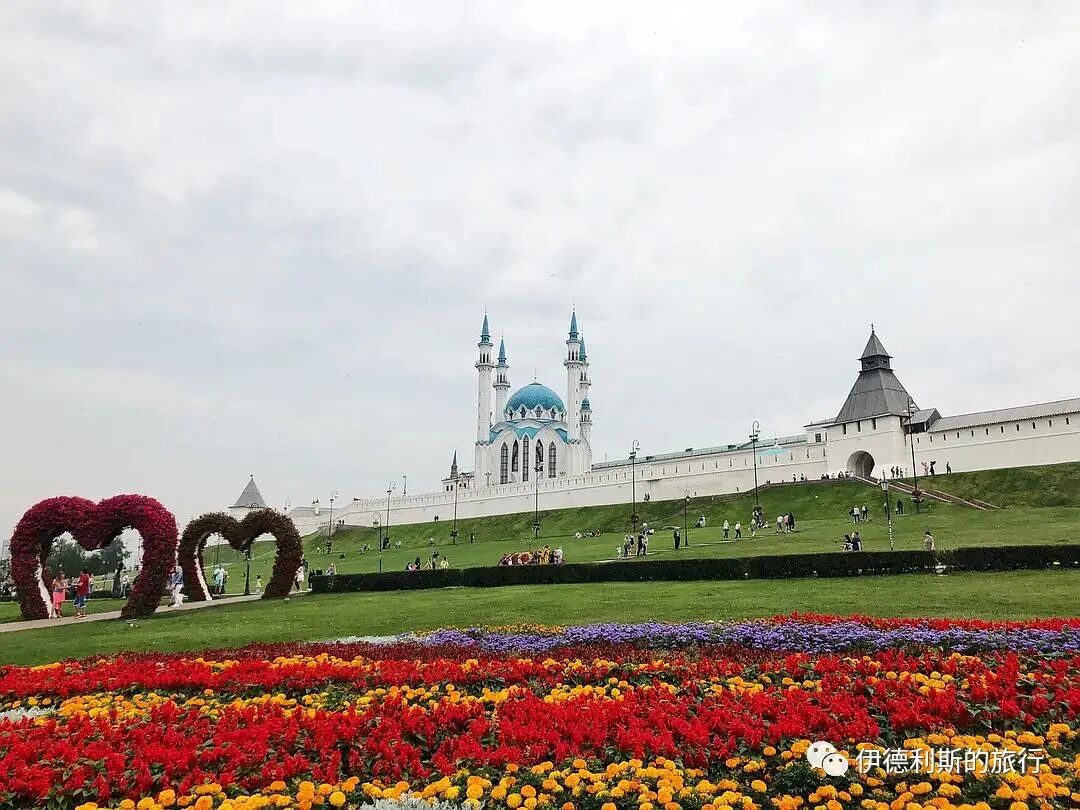
The Kazan Kremlin is in the heart of Kazan, the capital of Tatarstan, and it started as a fortress for the Volga Bulgaria khanate. After the 9th century, the Bulgars along the Volga River kept expanding to the northwest. To protect trade routes on the Volga, the Bulgars built a military fortress at the turn of the 10th and 11th centuries in the middle reaches of the river, featuring a 4-meter-deep steep trench and a 3-meter-high earthen wall, which marks the beginning of Kazan's history as a city.
In the late 12th century, because Russian principalities kept attacking the Volga Bulgaria khanate, the khanate added 2-meter-thick white stone walls to the city of Kazan. After Kazan was incorporated into the Golden Horde in the 13th century, it jumped from a border fortress to become a political and economic center in the middle Volga region, famous for leather, jewelry, ceramics, and metalwork.
After the Golden Horde collapsed in the 15th century, the Kazan Khanate (1438-1552) was established in Kazan. As the capital, Kazan's population grew quickly, and many homes and public buildings were built, including the khan's palace, courtyards, mosques, and mausoleums, with tall minarets defining the city skyline.
In 1552, Ivan the Terrible of Russia attacked Kazan, destroyed the Kazan Khanate, and drove all Tatars out of the city, allowing only Russians to settle there. Between 1556 and 1562, Ivan the Terrible ordered the construction of the Kazan Kremlin on the site of the old Kazan Khanate fortress. The mosques, the Kazan khan's palace, and the mausoleums were first used as weapon and ammunition depots, but they were all eventually torn down in the 18th century.
In 1977, a hydraulic engineer accidentally dug up a grave while laying rainwater pipes at the Kazan Kremlin and immediately contacted the archaeology department. Archaeological excavations lasted for 10 years and uncovered 5 graves, 2 of which were confirmed to be those of the actual founders of the Kazan Khanate, Mäxmüd Khan (died 1463 or 1466) and his grandson, Möxämmät Ämin (died 1518). The tomb was originally made of white stone and eventually collapsed in the 17th century.
For further research, the remains of the two Kazan khans, Mäxmüd and Möxämmät Ämin, were kept at the Institute of Archaeology of the Tatarstan Academy of Sciences for 40 years. In May 2017, after continuous efforts by the Tatar Muslims of Kazan, the two khans were finally reburied not far from their original graves.
Mahmud Khan was the eldest son of Ulugh Muhammad, the Great Khan of the Golden Horde, and a descendant of Jochi, the eldest son of Genghis Khan. Mahmud took the throne in 1445 and kept control over Moscow. During his reign, Kazan completely separated from the Golden Horde, marking the beginning of what later generations call the Kazan Khanate.
Muhammad Amin Khan was the grandson of Mahmud Khan. He got involved in the internal struggles between pro-Russian and anti-Russian factions in the khanate at age 10. As a khan supported by Moscow, he took the throne three times: from 1484 to 1485, 1487 to 1495, and 1502 to 1518. He also paid tribute to Grand Prince Ivan III of Moscow. Later in his reign, he stopped paying tribute to Moscow and worked to strengthen his country to oppose the Grand Duchy of Moscow.
Between 2004 and 2005, the Institute of Archaeology at the Tatarstan Academy of Sciences re-excavated the Kazan Khan tombs. They found the graves of four more Kazan khans: Khalil (died 1467), Ibrahim (died 1478), Safa Giray (died 1549), and Canghali (died 1535). Today, these four khans' graves are protected under a glass roof.
Khalil Khan was the eldest son of Mahmud Khan. He was known for breaking treaties with the Grand Prince of Moscow and for his poor relationship with the Nogai tribe. The young khan died early, not long after taking the throne. One legend says he died in prison due to the war with the Golden Horde.
Ibrahim Khan was Khalil Khan's younger brother. He fought the Grand Duchy of Moscow many times and won a major victory in 1467 while resisting Grand Prince Ivan III of Moscow.
Safa Giray Khan came from the Giray family of the Crimean Khanate. He served as the Kazan khan three times: from 1524 to 1531, 1535 to 1546, and 1546 to 1549.
Canghali Khan was originally the khan of the Qasim Khanate, a vassal state of the Grand Duchy of Moscow. In 1532, Grand Prince Vasily III of Moscow defeated the Kazan khan, Safa Giray, and installed 16-year-old Canghali as the pro-Russian khan of Kazan. He died in 1535 during a coup by Kazan nobles.
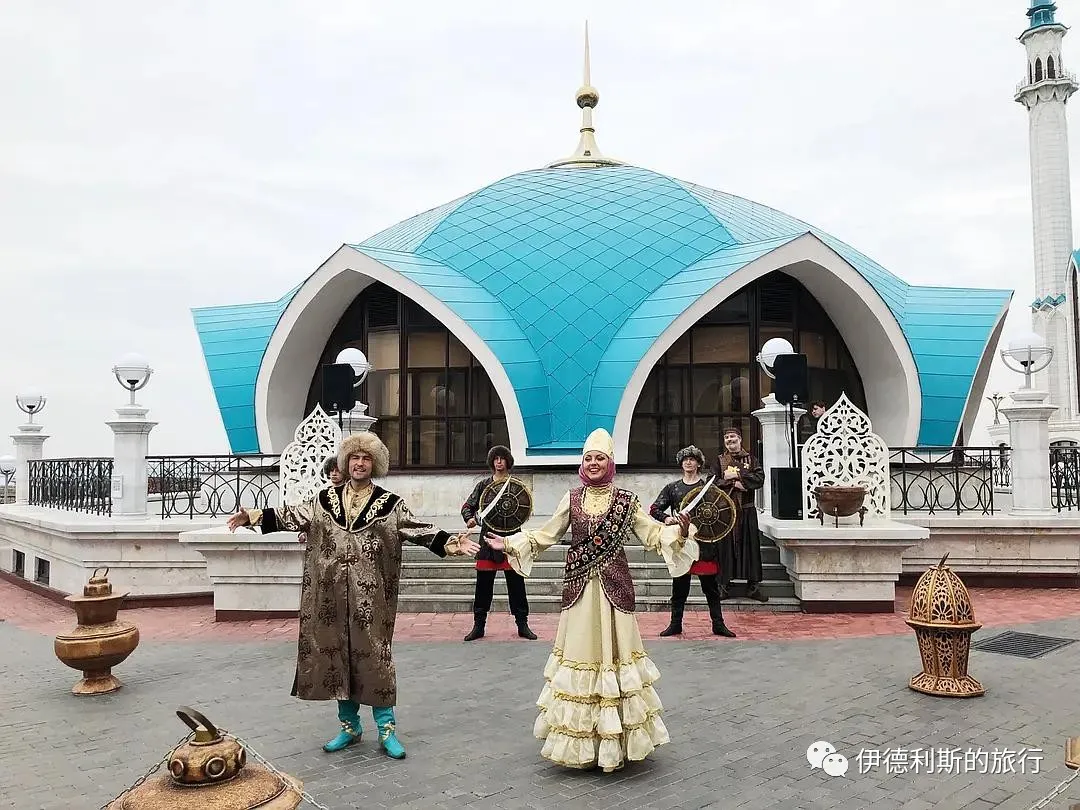
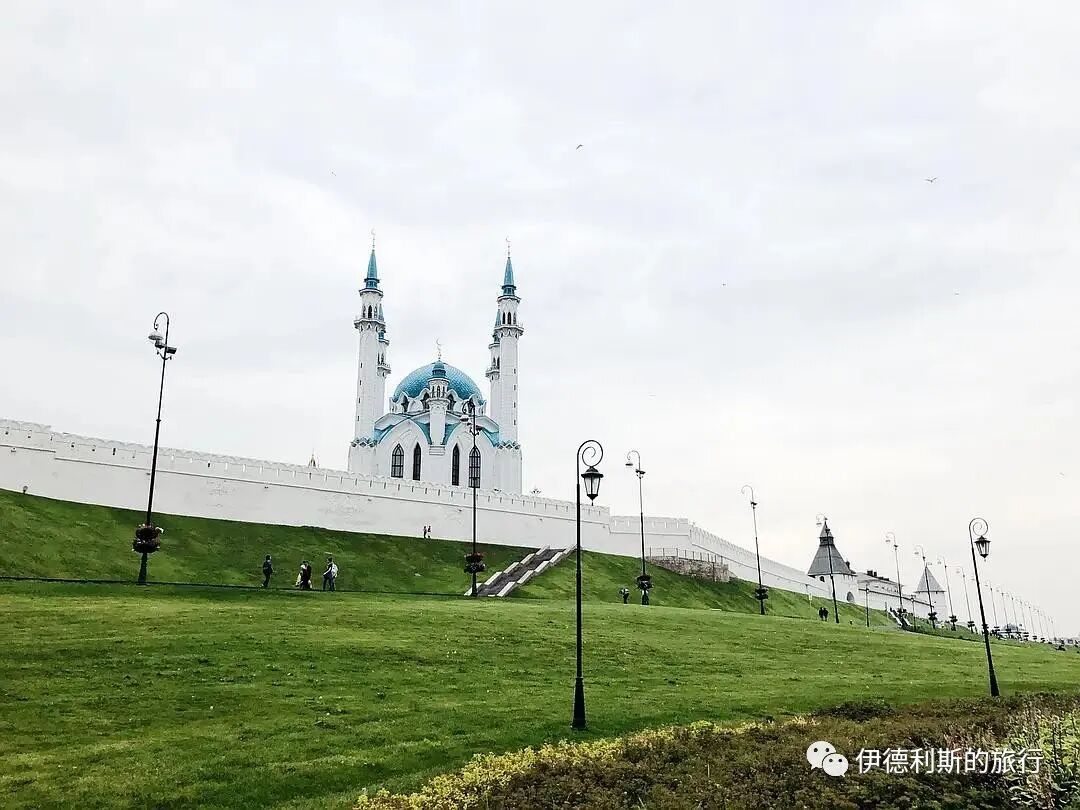
At the entrance of the Kul Sharif mosque inside the Kazan Kremlin, there are performances about the Siege of Kazan. In 1552, Ivan the Terrible besieged Kazan. The last imam of the Kazan Khanate, Seid Kul Sharif, led the people in a final stand and died in the city. Today, Seid Kul Sharif is a national hero to the Kazan Tatars, and the Kul Sharif Mosque, built in 2005, is named after him.
Museums
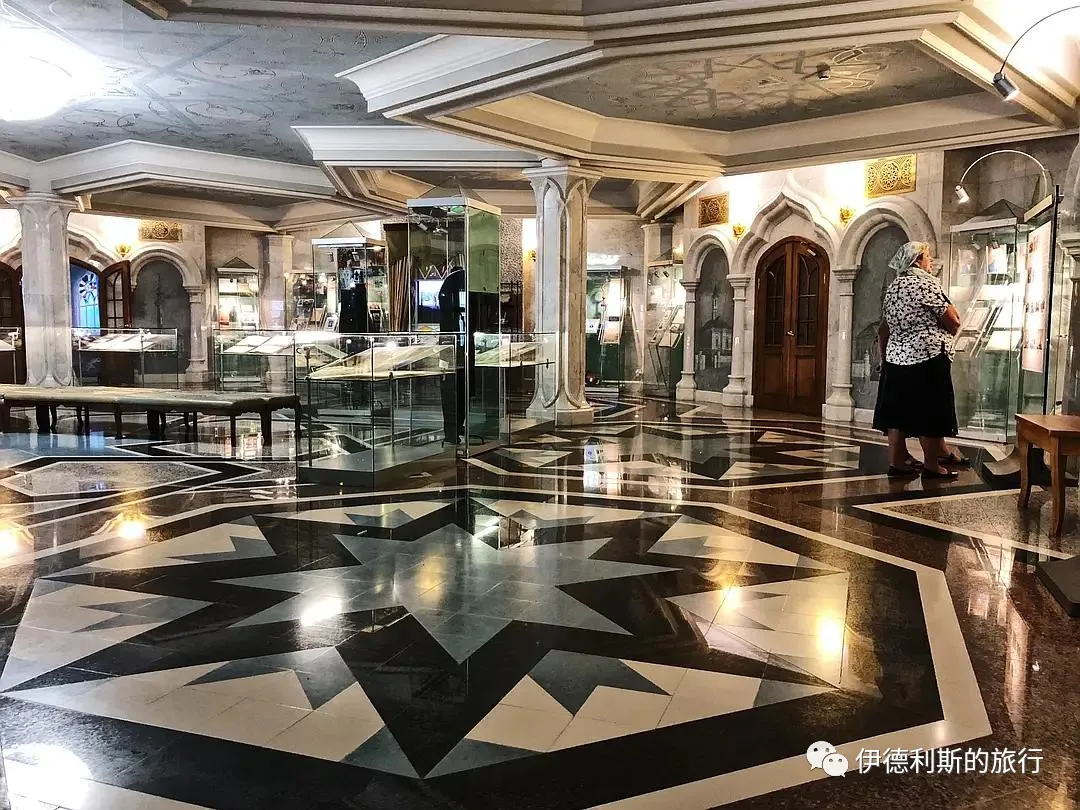
There is a small museum of Islamic culture on the basement level of the Kul Sharif Mosque.
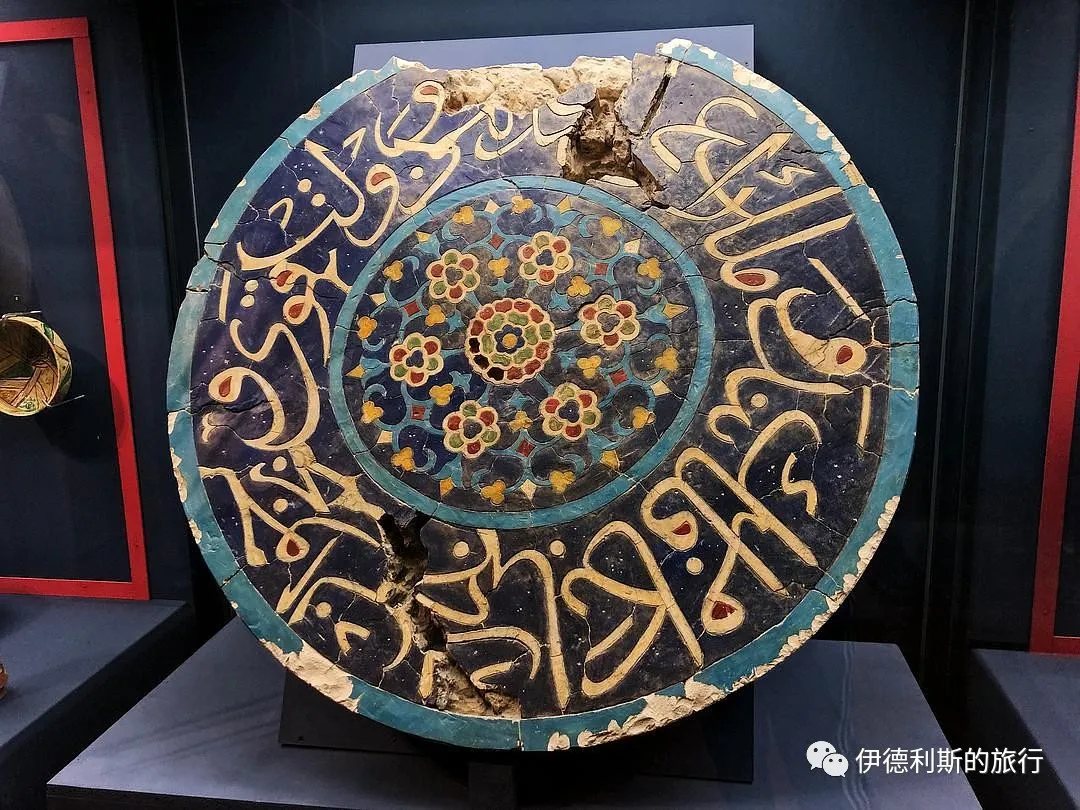
The Kazan Kremlin also hosts regular exhibitions. When I visited in 2019, I saw a special exhibition called The Golden Horde and the Black Sea Coast: Lessons from the Genghis Khan Empire. The items came from the State Hermitage Museum in St. Petersburg and nine other museums, showcasing the history of the Golden Horde and the Mongol Empire.
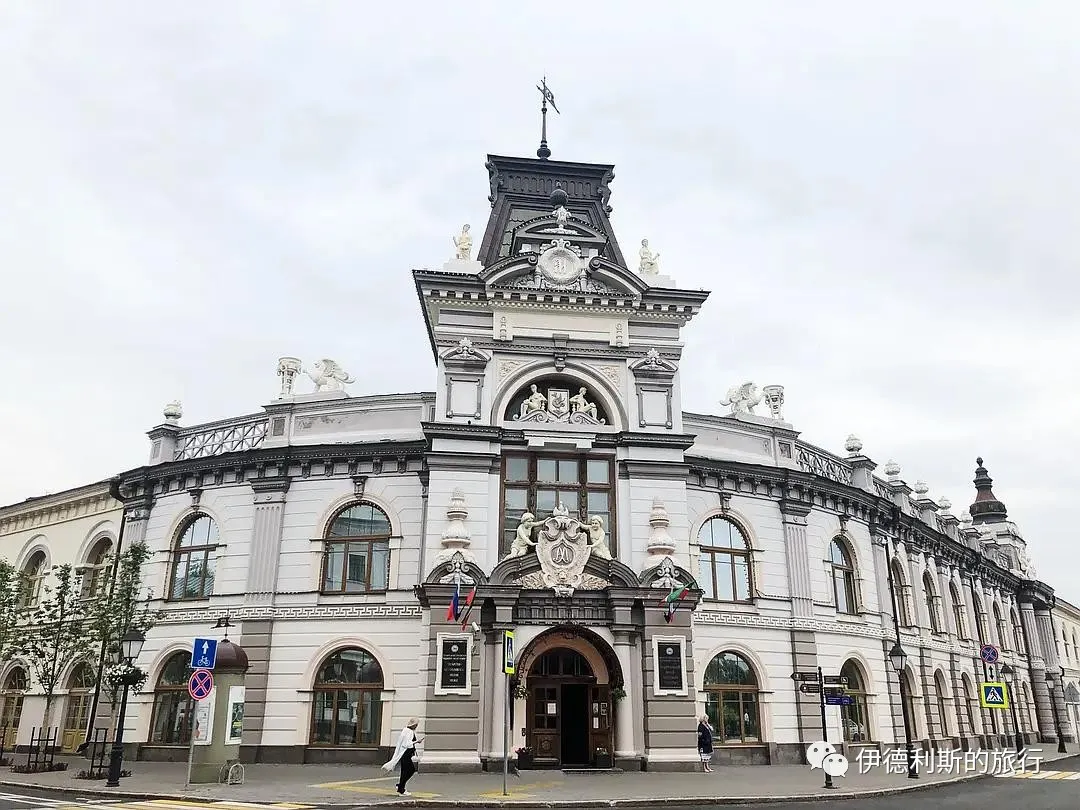
The National Museum of the Republic of Tatarstan opened in 1895. The building was once the Gostinniy guesthouse and is a historical monument itself. The museum holds over 800,000 items, including pieces related to the Golden Horde, the Kazan Khanate, and the Kazan Tatars.
The Çäkçäk Museum in Kazan is the most direct way to experience traditional Tatar culture. The museum is located in a Tatar wooden house in the historic Tatar district of Kazan. The interior does a great job of recreating a traditional Tatar home, which feels very authentic. If you have a group of six, they can teach you how to make honey cake (çäkçäk) on the spot. Since I was alone, I booked a tasting and tour session on their website (https://www.muzeino.ru/). The museum staff will email you to confirm if you want the tour in English or Russian.
The experience was wonderful. When I arrived at the museum at the scheduled time, a Tatar woman who spoke fluent English was already waiting for me. The whole process felt like visiting a Tatar family. She told me various Tatar legends, daily customs, and cultural traditions, then explained the detailed process of making the national dessert, çäkçäk. Afterward, she brewed some Tatar tea for me. As I tasted traditional Tatar sweets, she told me about Tatar clothing, silver jewelry, and embroidery, and we had a great time chatting.
Mosques
In 1552, Ivan the Terrible conquered the Kazan Khanate, massacred most of the Tatars in Kazan, and tore down every mosque in the city. In 1556, Russia rebuilt the city of Kazan and settled 7,000 Russians there. The Tatars were forced to convert to Christianity, and those who remained were relocated to settlements far from the city. After this, some Tatars who served Russia settled by Lake Kaban, southwest of Kazan. Later, Tatar merchants and craftspeople moved there as well, and the Old Tatar Quarter (Staro-Tatarskaya Sloboda) gradually formed. However, during this time, Kazan did not have any official mosques.
Before the 18th century, most buildings in Kazan were made of wood and were very prone to fires. During the reign of Catherine the Great (who ruled from 1762 to 1796), the city of Kazan began to be rebuilt using brick and stone.
In 1770, more than 200 years after the fall of Kazan, the first brick mosque was completed with the approval of Catherine the Great. From then on, the Kazan Tatars had an official mosque again. Between 1770 and 1930, a period of 160 years, Tatar merchants built many mosques in Kazan, centered around the Old Tatar Quarter. Twelve of these still survive today. Mosques from this period combined traditional Tatar architecture with Baroque, Classical, and Eclectic styles to create a unique Kazan Tatar mosque architectural style.
In 1930, Stalin ordered the closure of the mosques. Except for the earliest one, the Marjani Mosque, all 11 other mosques in Kazan were closed and repurposed. Many mosque buildings were damaged, and their minarets were torn down. It was not until the late 1980s that these mosques were gradually returned to the Kazan Tatar Muslims.
The Marjani Mosque was built between 1766 and 1770 with the permission of Catherine the Great. It was the first brick mosque built in Kazan after Russia destroyed the Kazan Khanate in 1552. This mosque is the oldest surviving mosque in Tatarstan and the only one in Kazan that was not closed during the Soviet era.
The interior of the mosque uses a St. Petersburg Baroque style. The merchant İ.Ğ. Yunısov donated funds to build a staircase in 1861 and expanded the mihrab in 1863. At that time, the mosque was named the Yunısovs' Mosque after his family. In 1885, the merchant Z. Ğosmanov donated funds to renovate the minaret. In 1887, merchants W. Ğizzätullin and M. Wälişin added decorative window balconies to the minaret.
The Apanay (Apanaevskaya) Mosque was the second mosque approved by Catherine the Great to be built in Kazan. It was donated by the merchant Apanaev and built between 1768 and 1771. The mosque architecture blends traditional Tatar style with Moscow Baroque style. In 1872, architect P. I. Romanov expanded the mosque by adding a second floor. In 1882, the mosque built a brick perimeter wall and added a shop. In 1887, the shop was expanded to include a second floor.
The mosque closed in 1930, its minaret was torn down, and it later became a kindergarten. The mosque reopened after 1995, and the minaret was rebuilt in 2011.
Galeevskaya Mosque was built between 1798 and 1801 with funds donated by merchant Musa Mamyashev. The mosque was originally built in the early classicism style of the late 18th century, then expanded twice in the late classicism style in 1882 and 1897.
The mosque was closed in the 1930s, its minaret was torn down, and it was designated an architectural monument in 1981. By 1992, the mosque housed a hotel, a collective farm building, and various utility facilities. After 1998, the site became a campus for the Russian Islamic University and a dormitory for female students of the Muhammad Madrasa. The mosque reopened in 2015 after undergoing restoration.
İske Taş, also known as the Big Stone Mosque, was built in 1802 with a donation from merchant Ğabdulla Ütämişev. Legend says this mosque was built on the site of a grave for soldiers who died defending the city of Kazan in 1552, marked by an ancient big stone (zur iske taş).
In 1830, Alexander Schmidt rebuilt the mosque in a classicism style, featuring a three-story minaret that resembles those found in the ancient Bolghar and Kasimov regions of the Tatars.
Following a decision by the Central Executive Committee of the Tatar Autonomous Soviet Socialist Republic in the late 1930s, the mosque was closed and later turned into a school and warehouse, only being returned to the Muslims in 1994.
The White Mosque was built between 1801 and 1805. It looks like the Iske Tash mosque built in the same period and has a classic style. The mosque closed in 1929 and became a school and a fur workshop. In the 1930s, the minaret was torn down, and the east and south parts of the main hall were rebuilt. The mosque became an architectural monument in 1960. It was returned to the Muslims in 2004, but it is still not open.
The Pink (Rozovaya) Mosque was built in 1808 with a donation from merchant Musa Apanaev. It is the Islamic center of the Novaya Tatarskaya Sloboda area in Kazan. The mosque closed in 1931 and reopened in 1991. By then, Novaya Tatarskaya Sloboda had become an industrial area. Today, it is the Kazan Higher Muslim Islamic Madrasa.
The Blue (Zangar) Mosque was built between 1815 and 1819 with money from merchant Akhmet Aitov-Zamanov. The architect was Alexander Schmidt. Bolshaya Meshchanskaya Street used to be home to the poorest residents of the old Tatar community. These residents built a wooden mosque here in 1778. In 1815, the original wooden mosque was moved to another village, and the current brick mosque in the classic style was built here.
The mosque was expanded twice, in 1864 and 1907. The mosque closed in 1932, the minaret was torn down, and it was turned into housing. It reopened in 1993, and the minaret was rebuilt in 2009.
The Nurulla Mosque was built between 1845 and 1849 with donations from merchant G. M. Yunisov. It has a minaret in the ancient Volga Bulgar style and a dome in the Middle Eastern style.
The mosque is part of a group of buildings around the Sennoy Bazaar. The Sennoy Bazaar was the trade center for the old Tatar community in Kazan during the 18th and 19th centuries. At that time, the mosque was mainly used by Tatar merchants doing business at the Sennoy Bazaar. It was originally named the Sennobazarnaya Mosque after the bazaar.
The mosque was closed in 1929 and turned into apartments and offices. During that time, the minaret was destroyed. It was not returned to the Muslims until 1992 and was renamed Nurulla Mosque. The minaret was restored between 1990 and 1995.
Soltan Mosque was built in 1868 with a donation from the Tatar merchant Zigansha Usmanov. The area where the mosque is located is called Zabulachye, which means behind the Bulak Canal. During the Kazan Khanate period, this place was outside the city and had a settlement called Kuraisheva Sloboda. After Ivan the Terrible conquered Kazan in 1552, this area remained a place where Tatars lived, but it was gradually surrounded by Russian settlements, and churches began to be built right next to the mosque.
In the 19th century, the Tatar merchant Cihanşa Ğosmanov decided to build a mosque here that looked better than the church next to it. The mosque was completed in 1868, and to honor him, people called it Ğosmanov Mosque or Cihanşa Mosque.
At first, the walls of the mosque were red, so it was also called the Red Mosque. Now the mosque is called Soltan Mosque to honor Zigansha's son, Sultan Abdulgaziz Usmanov, who continued to look after the local community after his father passed away.
The mosque closed in 1931, and later the minaret was destroyed. It became an architectural monument in 1980. The minaret was rebuilt in 1990, and the mosque reopened in 1994.
Bornay (Burnaevskaya) Mosque was built in 1872 with funds donated by the Tatar merchant Mukhametsadyk Burnayev, and the architect was Peter Romanov.
The mosque is located in the Old Tatar neighborhood behind Kaban Lake. In 1799, the Tatar merchant Salikh Mustafin built a wooden mosque here. The mosque was first built for students at the Apanaev madrasa, and later, local residents began using it too. Unfortunately, the mosque was later destroyed in a fire. In 1872, Tatar merchant Mukhametsadyk Burnayev donated money to build the current brick mosque on the site of the burned-down wooden one, and it was named after him.
The mosque features a national romantic eclectic style, blending Russian and Tatar architectural decorations. In 1895, shortly before Burnayev passed away, a magnificent minaret was built based on designs by architects Fyodor Malinovsky and Lev Khrshonovich.
The mosque closed in 1930, but fortunately, the minaret was preserved. It reopened in 1994.
The Azimov Mosque was built between 1887 and 1890 with donations from Tatar merchant Mortaza Äcimev. The mosque was built in a national romantic eclectic style and is known as the most beautiful mosque in Kazan.
The mosque is located in an area called Pleten (wicker fence), situated between the Old Tatar and New Tatar neighborhoods. In 1851, Tatar merchant Mustafa Azimov built a wooden mosque here. Between 1887 and 1890, his son Murtaza Azimov donated funds to build the current brick mosque, which was named after them. Because many Muslim workers from soap factories lived in the Pleten area, it is also called Zavodskaya (factory mosque).
The mosque closed in 1930 and was used as a school. It was returned to the Muslims in 1989 and reopened in 1992.
The Zakabannaya Mosque, also known as the Mosque of the 1000th Anniversary of the Adoption of Islam, was built between 1924 and 1926 to commemorate the 1000th anniversary of the Volga Bulgars converting to Islam in 922. Stalin personally approved the construction of the mosque. It was designed by architect A. E. Pechnikov in 1914 and built with public donations.
The mosque closed in 1930 and reopened in 1991. It was the last mosque built in Kazan before Stalin ordered the closure of mosques in 1930.
Accommodation
I stayed at a traditional Tatar estate called Tatarskaya Usadba by the shore of Lake Kaban, which was originally the home of a 19th-century Tatar merchant named Khamit Sabitov. The estate offers both lodging and dining, but since I didn't book a main meal in advance, I only had breakfast, which was also in the traditional Tatar style.
Cultural Activities
I was very lucky to attend the Tatar cultural festival called the Pechen Bazaar (Pechen bazary) in Kazan. It was very lively, with various Tatar designers, poets, musicians, and filmmakers showing their work and sharing ideas.
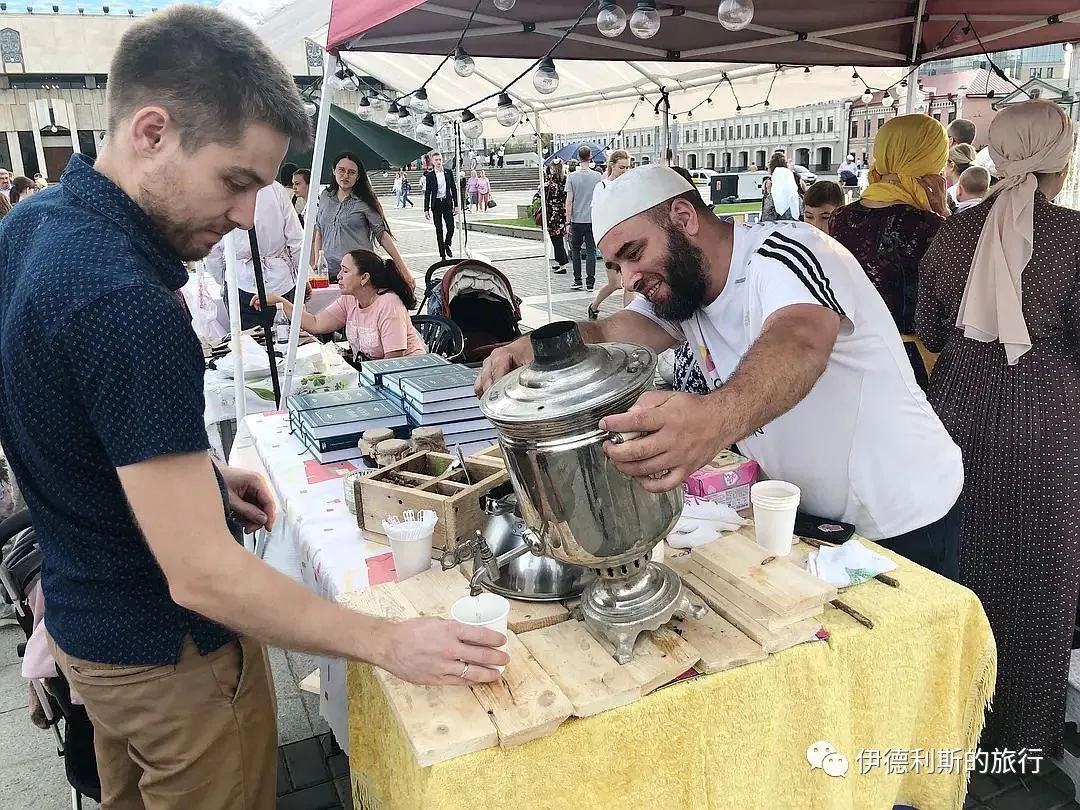
For traditional Tatar tea, you can see ingredients like thyme, linden leaves, chamomile, oregano, mint, and sage added to the brew. I also saw an uncle toss pine cones directly into the tea stove, which made it smell wonderful.
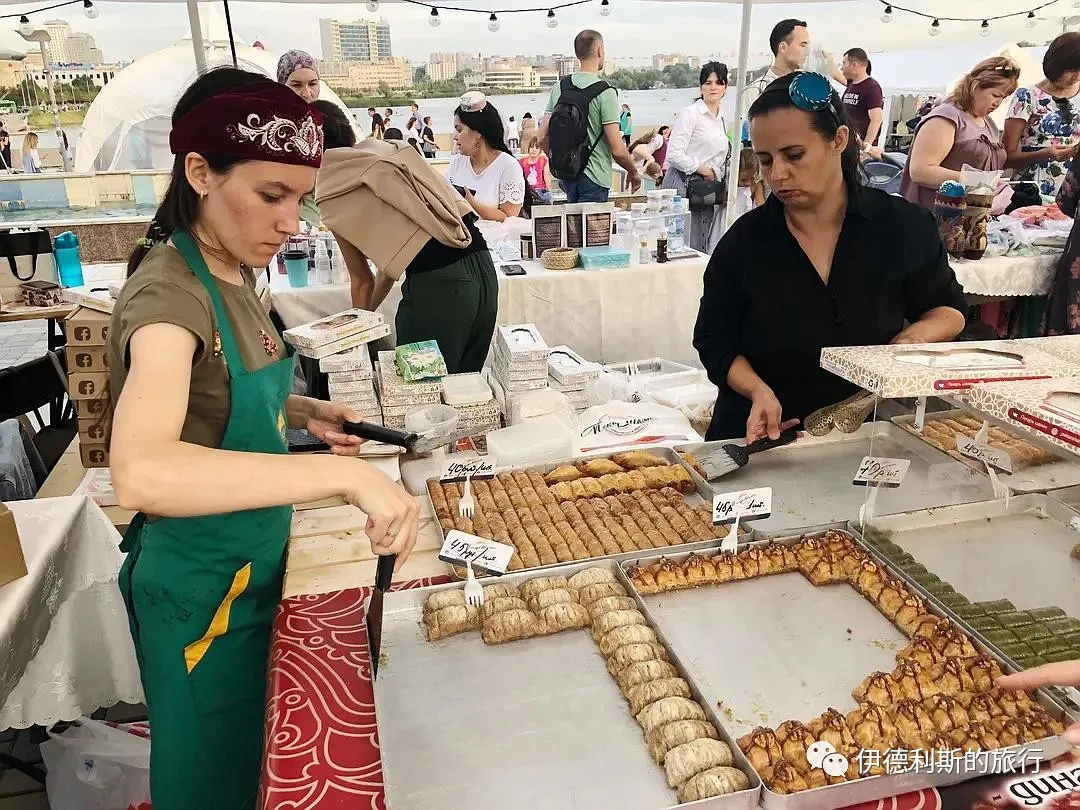
Traditional Tatar desserts are a bit like Turkish sweets and go perfectly with tea.
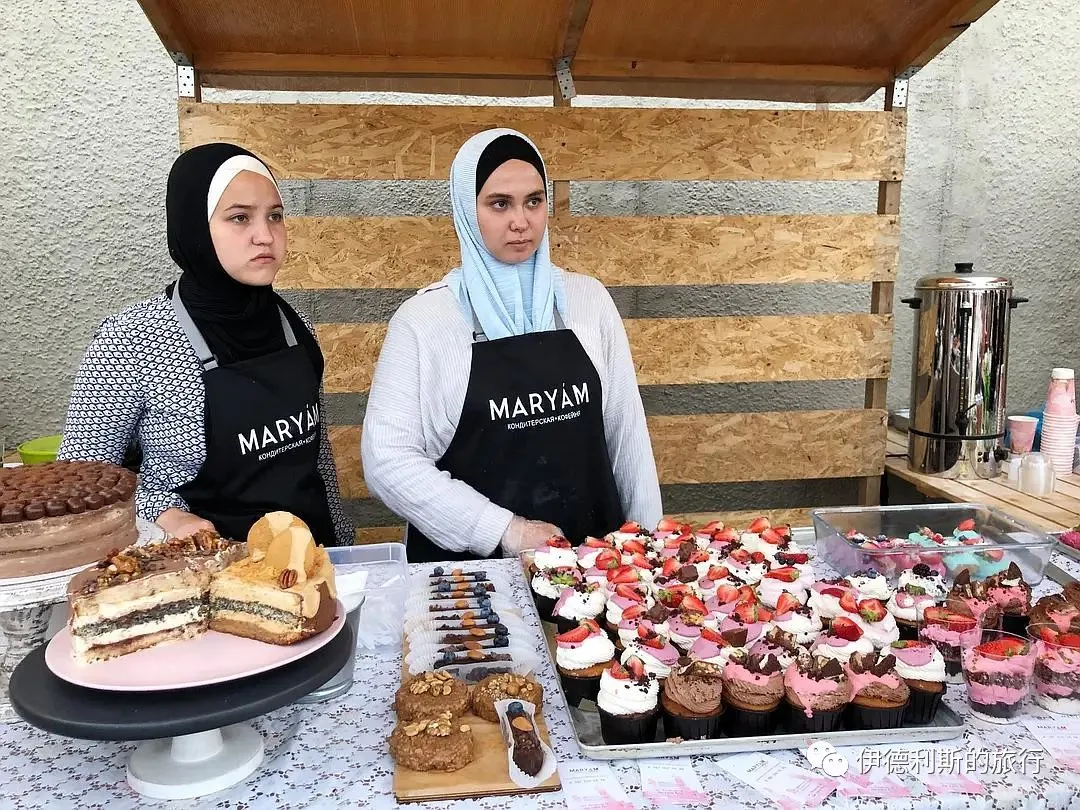
Cakes made by Tatar girls.
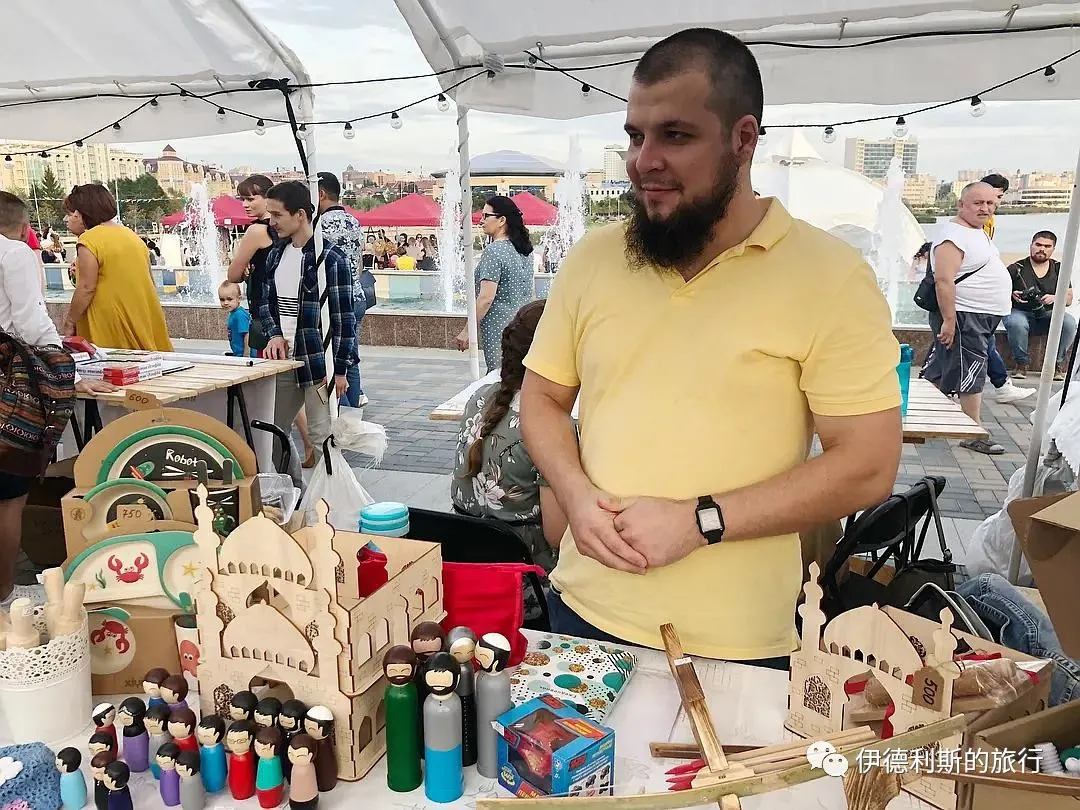
Tatar craftspeople.
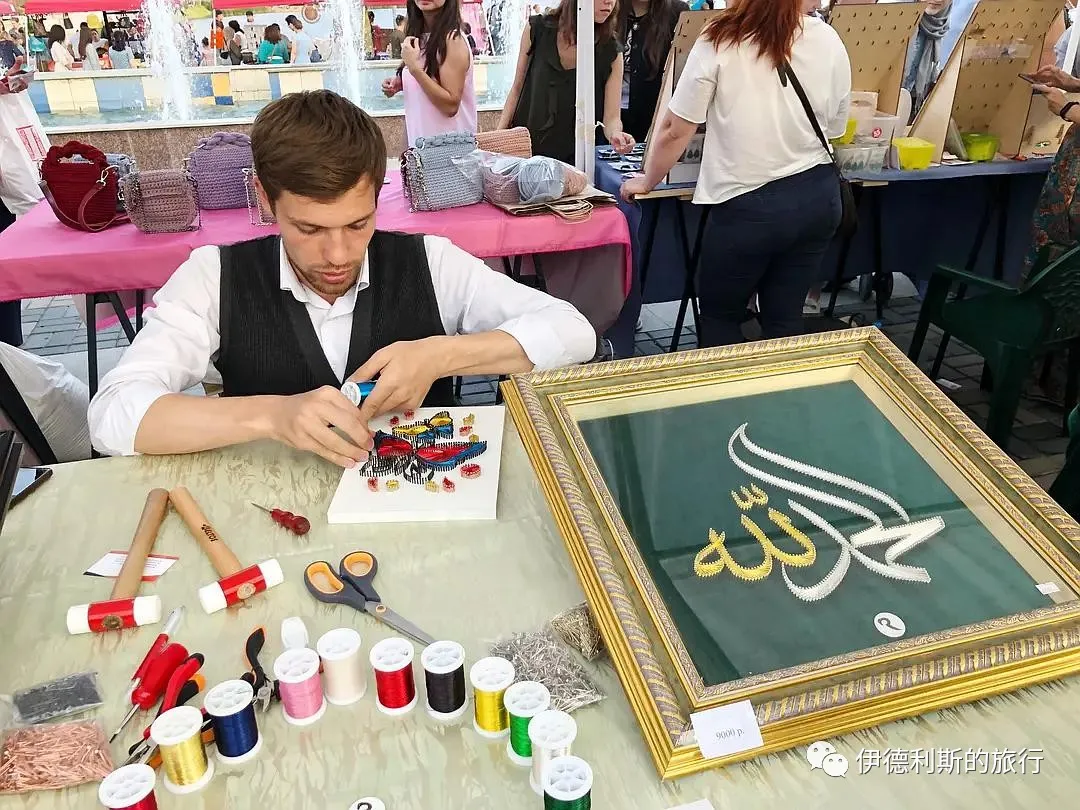
A young Tatar person is creating Arabic calligraphy on the spot using thread.
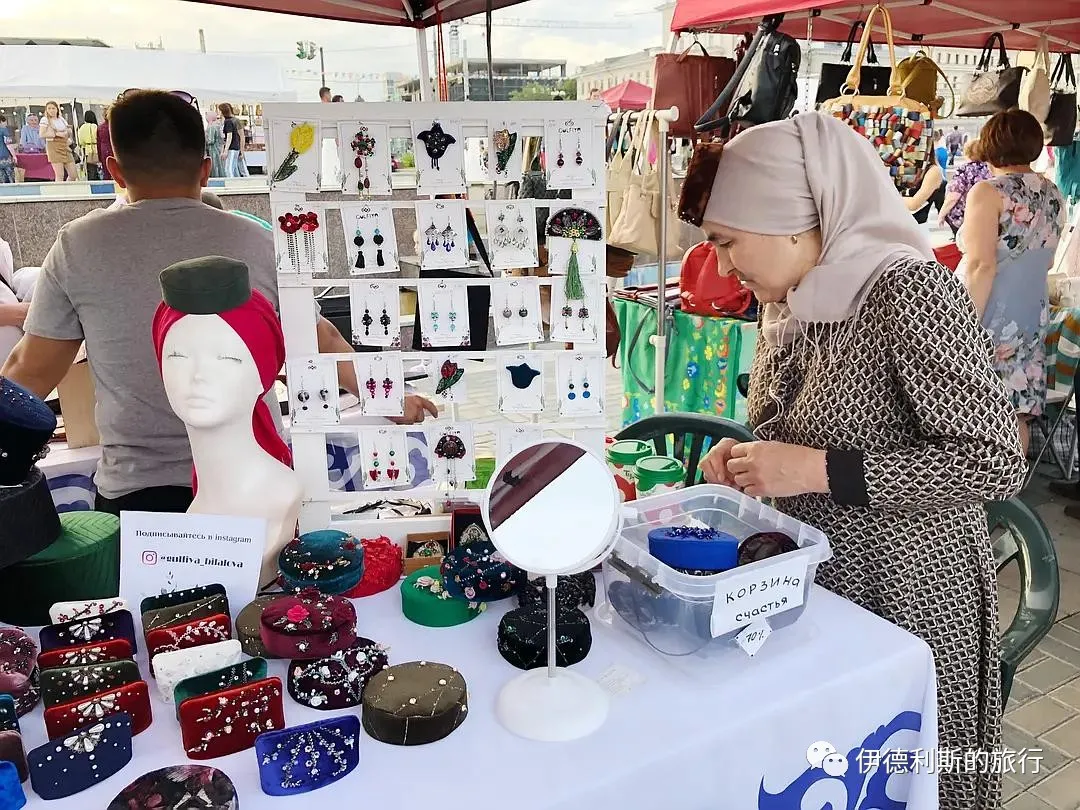
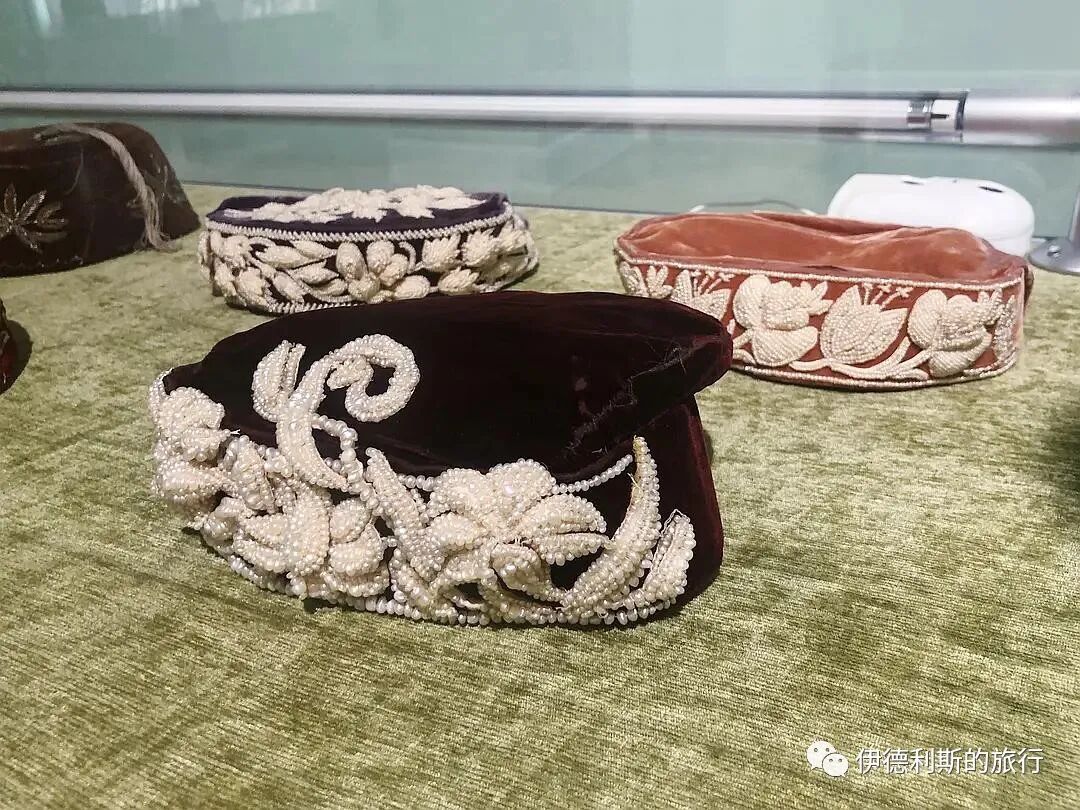
A Tatar auntie is selling headpieces for Kazan Tatar women, which are decorated with pearls and look very beautiful.
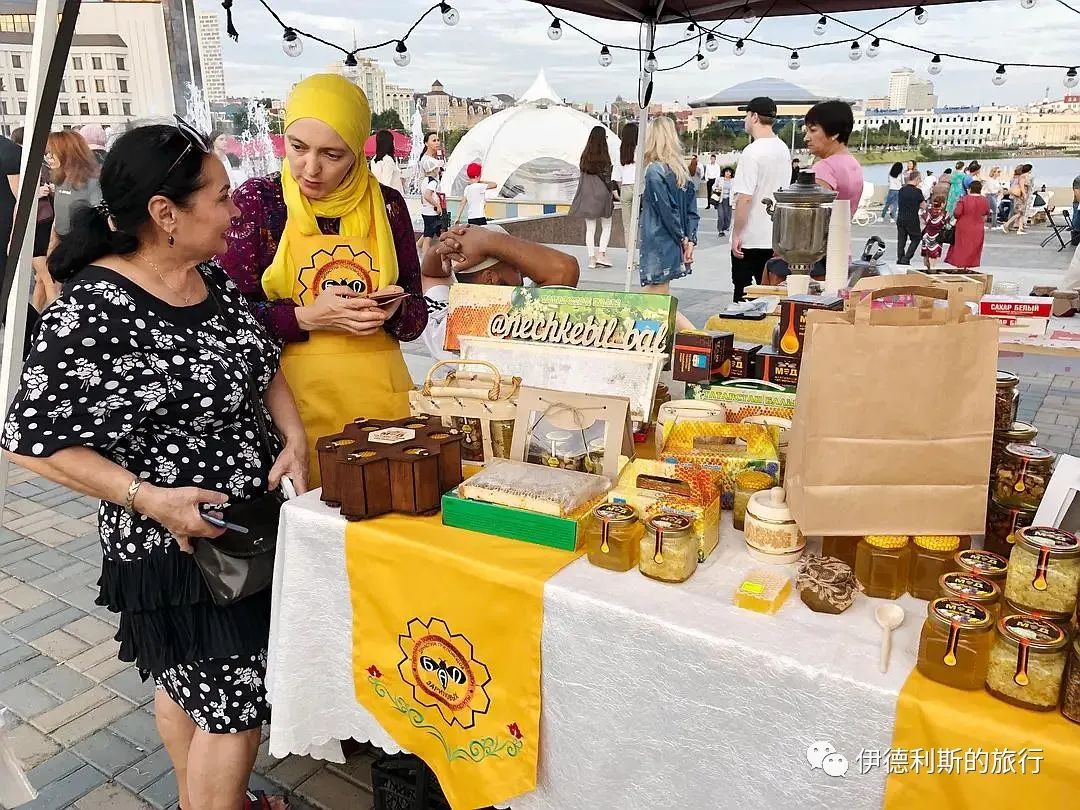
At the honey stall, the festival invited some Tatar people living in the countryside to sell their own honey, cheese, and sausages, which was also very interesting.
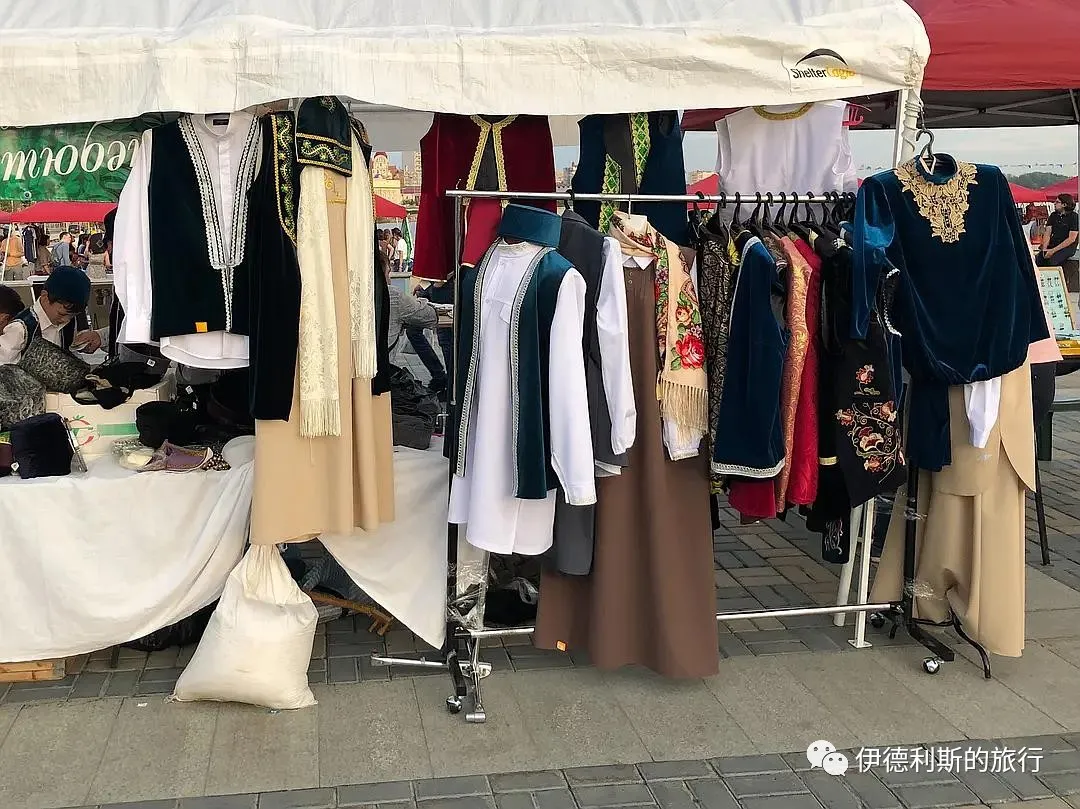
A stall selling traditional Tatar clothing.
An uncle who is an architect specializing in building mosques is sharing how to construct them.
A young Tatar female poet is reading her poetry.
The outfit worn by the host is the formal attire of urban Kazan Tatars from the early 20th century.
This stall is a creative brand featuring a sweet Islamic style inspired by Tatar culture.
A stall selling books about Tatar culture.
Restaurant
While in Kazan, I ate at the famous traditional Tatar restaurant Dom Tatarskoi Kulinarii (Tatar Cuisine House) on Bauman Street. The restaurant opened in 1969. It was founded by Yunus Akhmetzyanov, a Tatar food expert and author of "Dishes of Tatar cuisine," who served as the head chef until 1984.
In the evening, I ate at Teatr Natsionalnoi Kukhni, a restaurant inside another Tatar estate by Lake Kaban that was once the home of the wealthy Tatar merchant Bikmukhametov. I ordered horse meat salad, cream of pumpkin soup with dried apricots and cream cheese, and a fresh horse meat stew called Kullama. Kullama is the Tatar version of the national dish of Kazakhstan, five-finger stew (Beshbarmak).
Tubatay is a fast-food restaurant selling traditional Tatar dishes, and they also have a shop inside the ancient city of Bolghar. The name "Tubatay" refers to the traditional round cap worn by Tatar people.
I ordered steamed dumplings (Manti), a signature meat pie (Belesh) made with sour cream dough and a filling of beef, potatoes, and onions, Tatar clear soup dumplings (Pilmen) served with sour cream (Smetana), and Tatar tea.
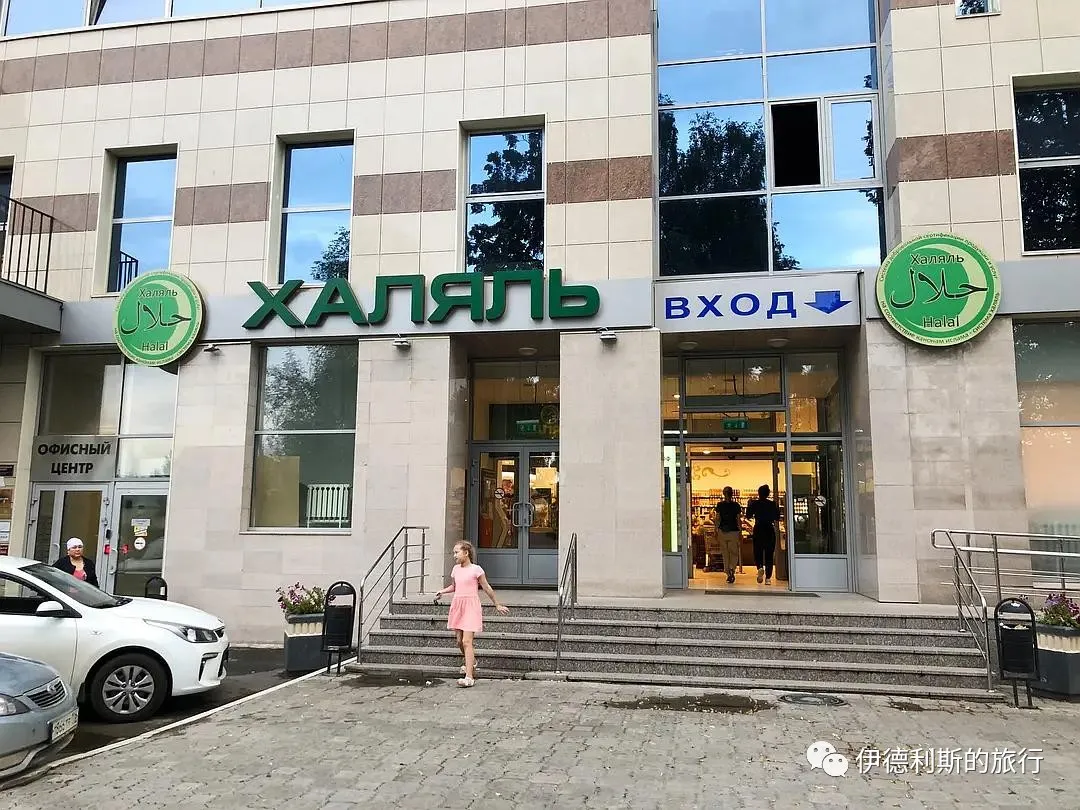
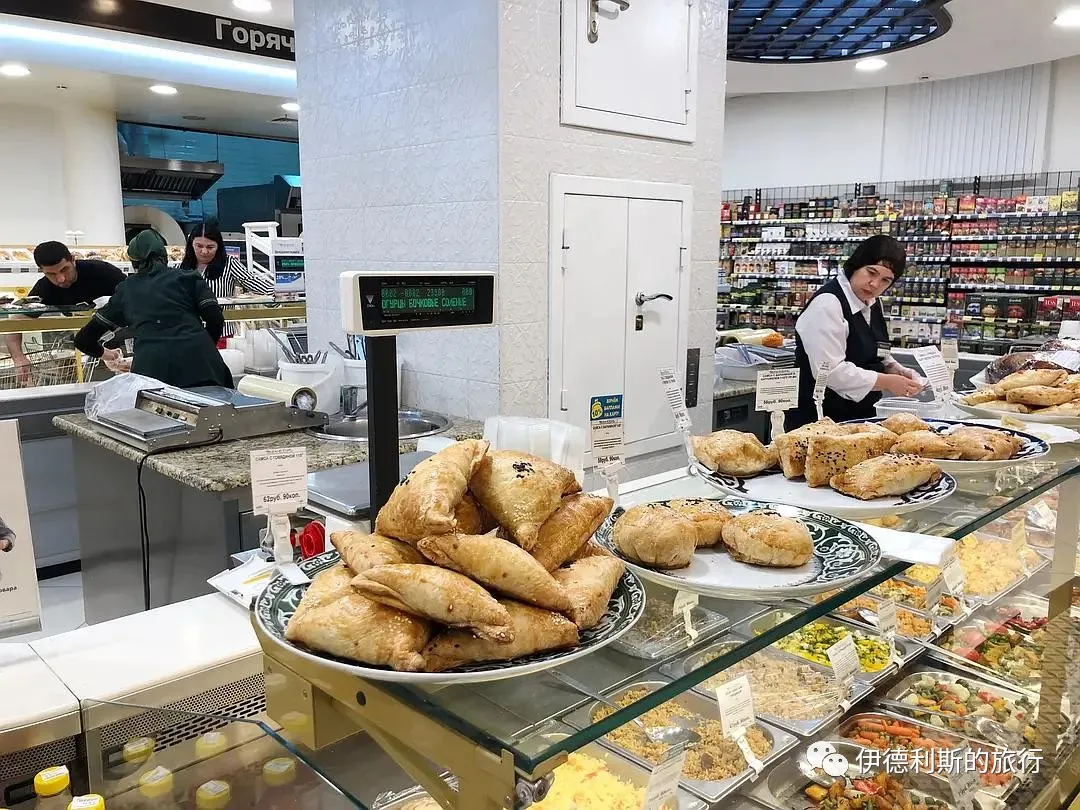
Next to where I stayed, there was a large halal supermarket specializing in Tatar goods, with a dazzling variety of traditional Tatar desserts.
Street view
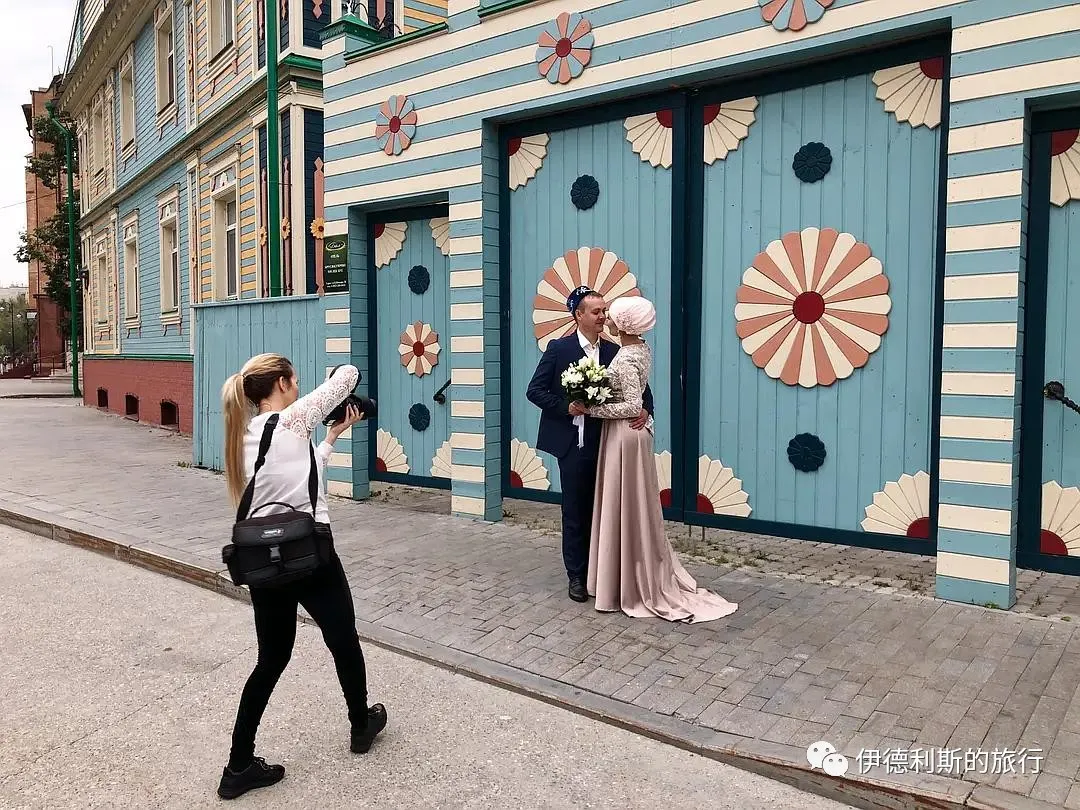
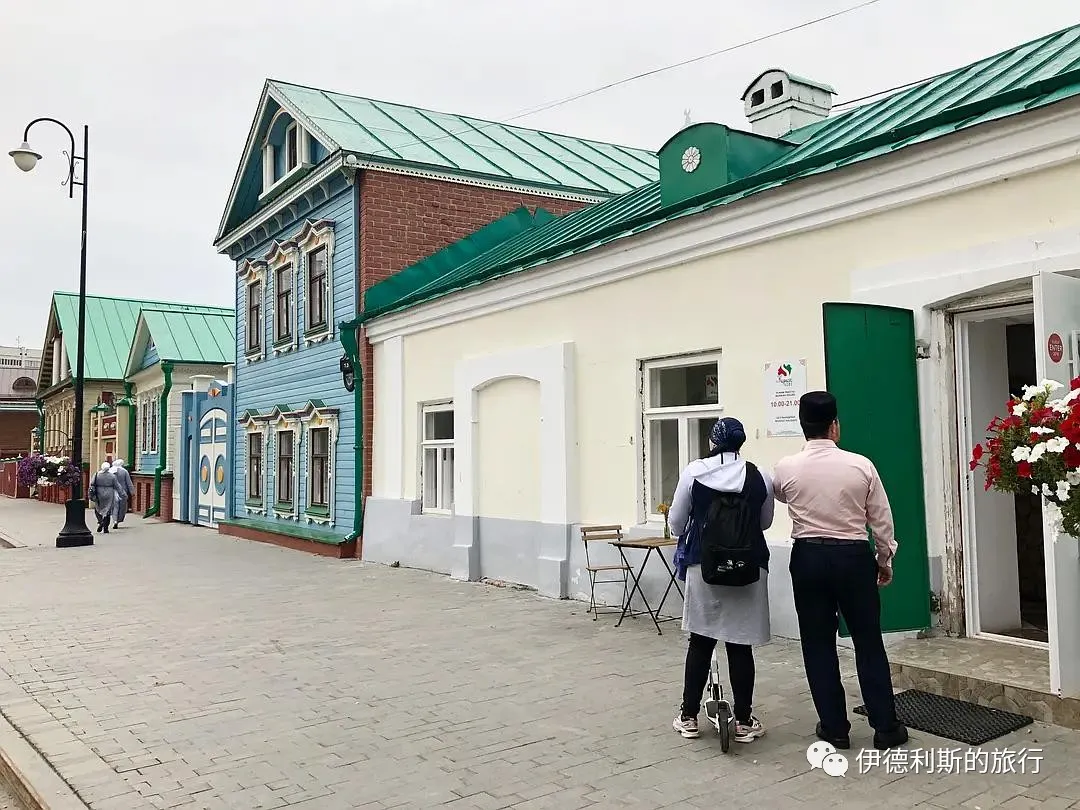
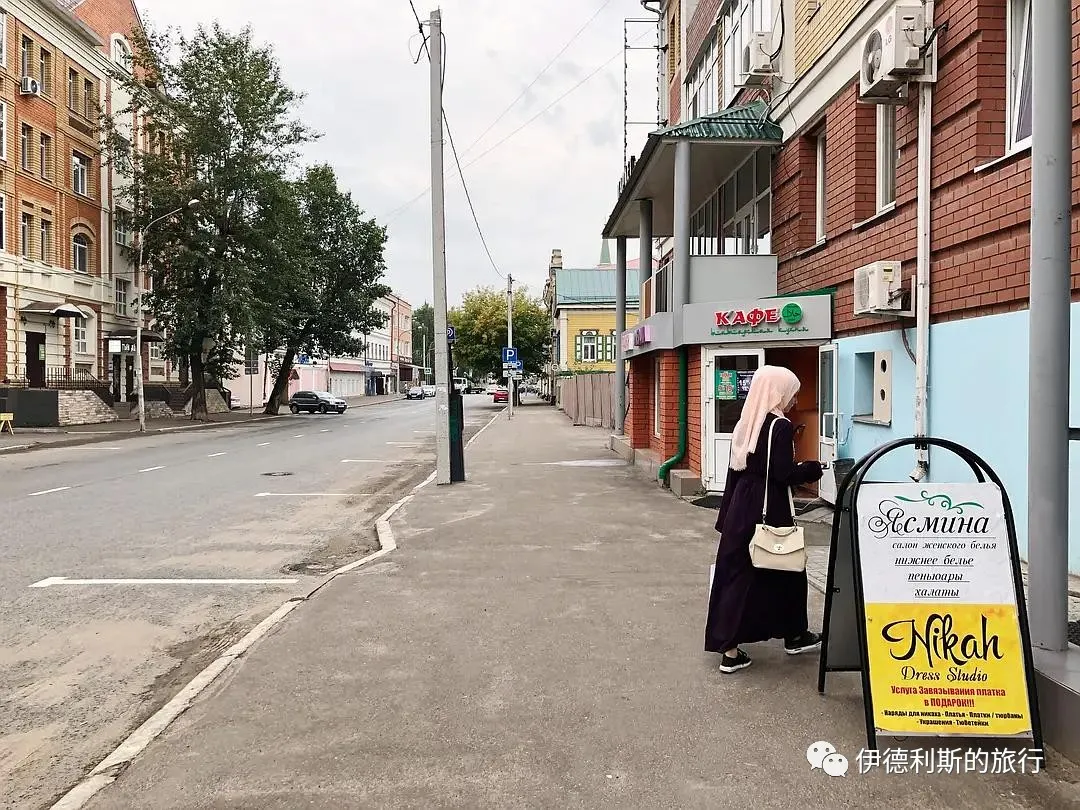
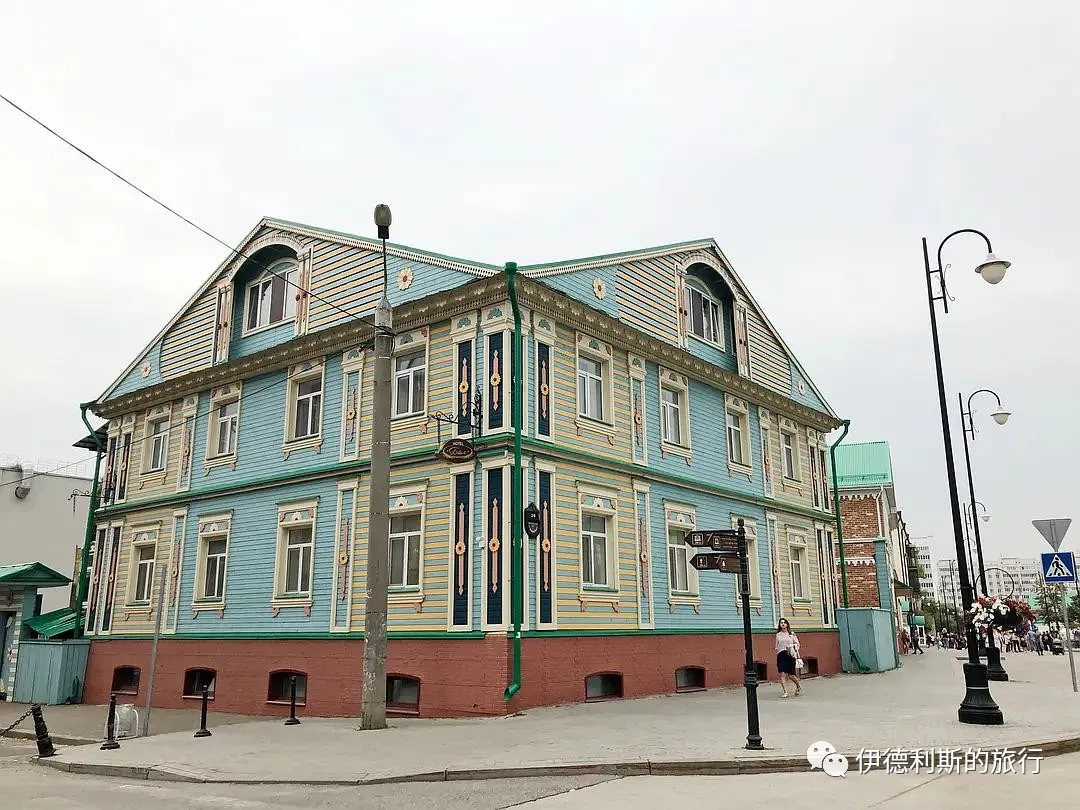
Street view of the Tatar community in Kazan view all
Summary: Kazan, the capital of Tatarstan, is shown through the Kazan Kremlin, Tatar Muslim history, mosques, markets, and local food. This account keeps the original route, historical background, Tatar names, and photographs from the trip.
Castle
The Kazan Kremlin is in the heart of Kazan, the capital of Tatarstan, and it started as a fortress for the Volga Bulgaria khanate. After the 9th century, the Bulgars along the Volga River kept expanding to the northwest. To protect trade routes on the Volga, the Bulgars built a military fortress at the turn of the 10th and 11th centuries in the middle reaches of the river, featuring a 4-meter-deep steep trench and a 3-meter-high earthen wall, which marks the beginning of Kazan's history as a city.
In the late 12th century, because Russian principalities kept attacking the Volga Bulgaria khanate, the khanate added 2-meter-thick white stone walls to the city of Kazan. After Kazan was incorporated into the Golden Horde in the 13th century, it jumped from a border fortress to become a political and economic center in the middle Volga region, famous for leather, jewelry, ceramics, and metalwork.
After the Golden Horde collapsed in the 15th century, the Kazan Khanate (1438-1552) was established in Kazan. As the capital, Kazan's population grew quickly, and many homes and public buildings were built, including the khan's palace, courtyards, mosques, and mausoleums, with tall minarets defining the city skyline.
In 1552, Ivan the Terrible of Russia attacked Kazan, destroyed the Kazan Khanate, and drove all Tatars out of the city, allowing only Russians to settle there. Between 1556 and 1562, Ivan the Terrible ordered the construction of the Kazan Kremlin on the site of the old Kazan Khanate fortress. The mosques, the Kazan khan's palace, and the mausoleums were first used as weapon and ammunition depots, but they were all eventually torn down in the 18th century.
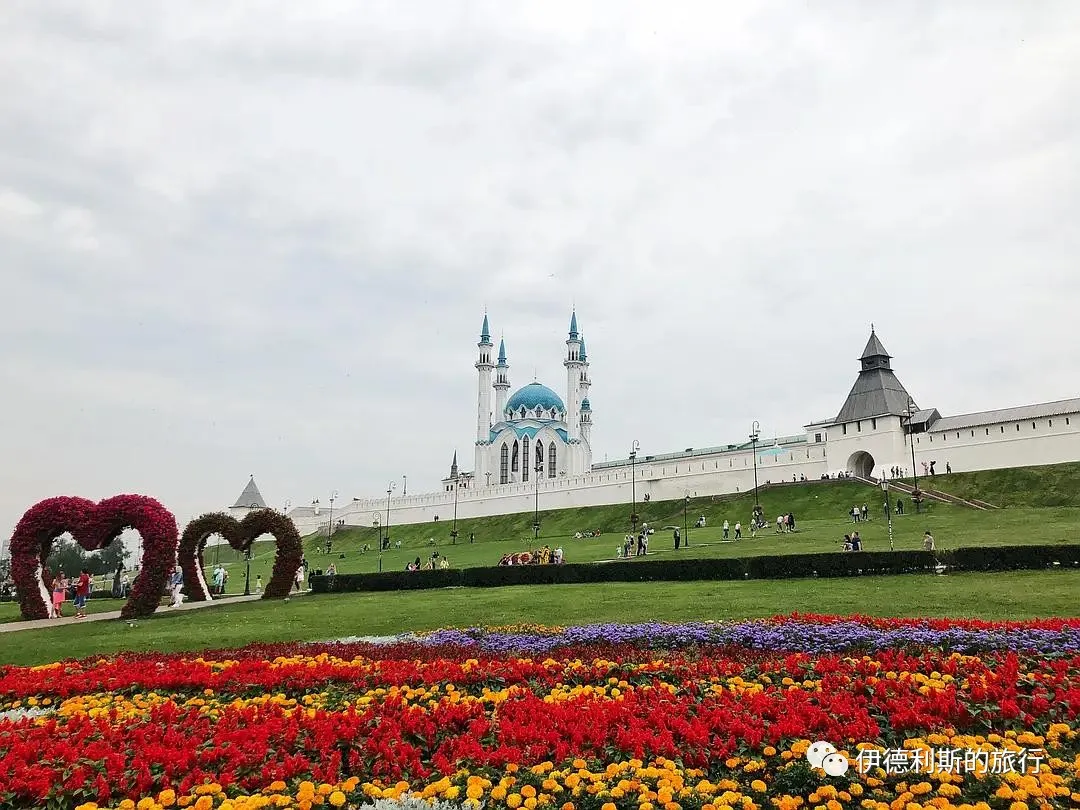
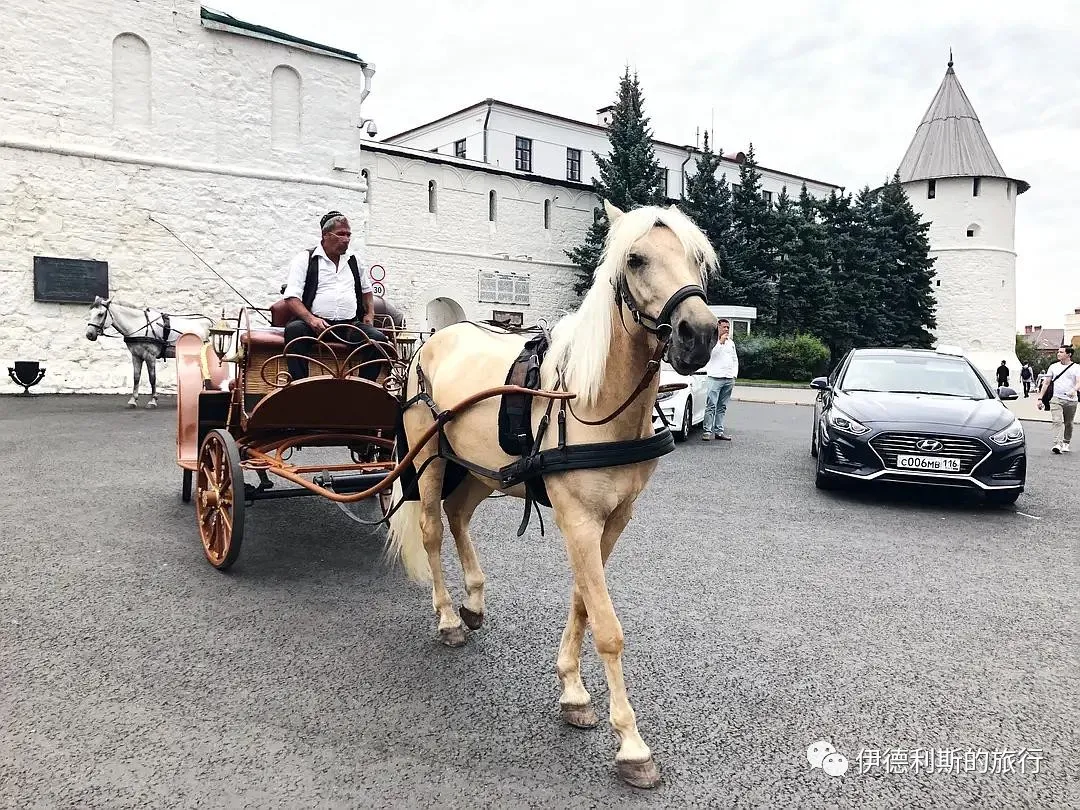
In 1977, a hydraulic engineer accidentally dug up a grave while laying rainwater pipes at the Kazan Kremlin and immediately contacted the archaeology department. Archaeological excavations lasted for 10 years and uncovered 5 graves, 2 of which were confirmed to be those of the actual founders of the Kazan Khanate, Mäxmüd Khan (died 1463 or 1466) and his grandson, Möxämmät Ämin (died 1518). The tomb was originally made of white stone and eventually collapsed in the 17th century.
For further research, the remains of the two Kazan khans, Mäxmüd and Möxämmät Ämin, were kept at the Institute of Archaeology of the Tatarstan Academy of Sciences for 40 years. In May 2017, after continuous efforts by the Tatar Muslims of Kazan, the two khans were finally reburied not far from their original graves.
Mahmud Khan was the eldest son of Ulugh Muhammad, the Great Khan of the Golden Horde, and a descendant of Jochi, the eldest son of Genghis Khan. Mahmud took the throne in 1445 and kept control over Moscow. During his reign, Kazan completely separated from the Golden Horde, marking the beginning of what later generations call the Kazan Khanate.
Muhammad Amin Khan was the grandson of Mahmud Khan. He got involved in the internal struggles between pro-Russian and anti-Russian factions in the khanate at age 10. As a khan supported by Moscow, he took the throne three times: from 1484 to 1485, 1487 to 1495, and 1502 to 1518. He also paid tribute to Grand Prince Ivan III of Moscow. Later in his reign, he stopped paying tribute to Moscow and worked to strengthen his country to oppose the Grand Duchy of Moscow.
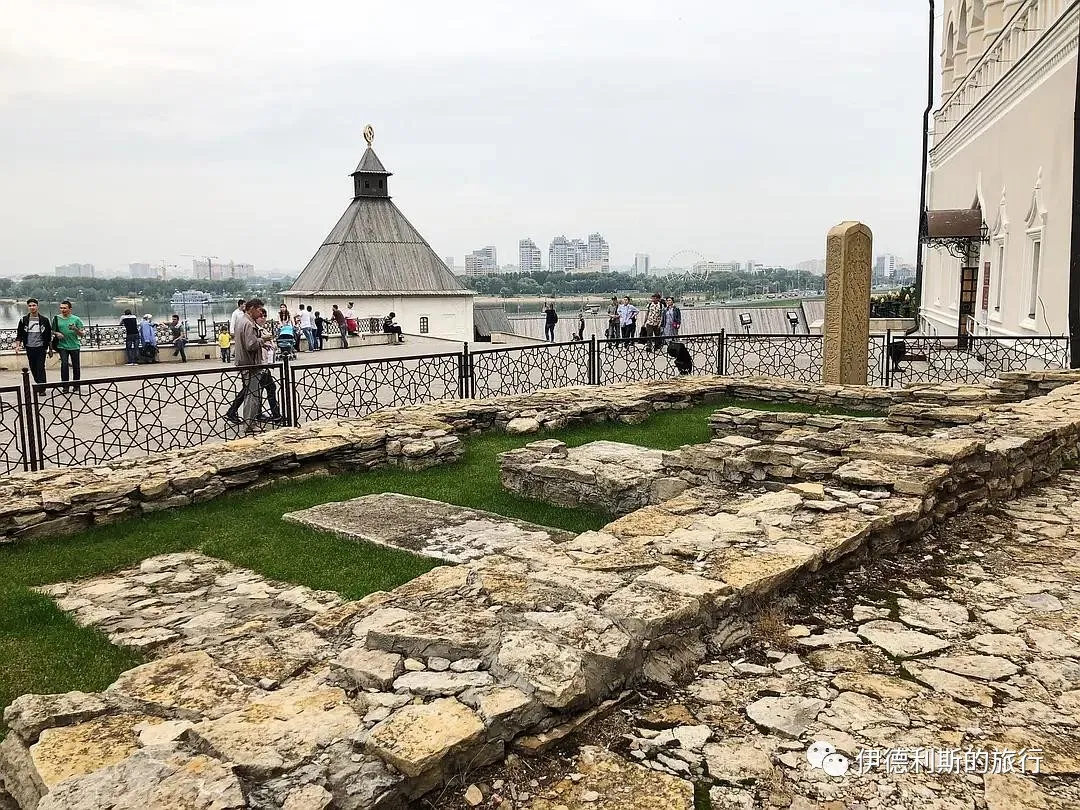
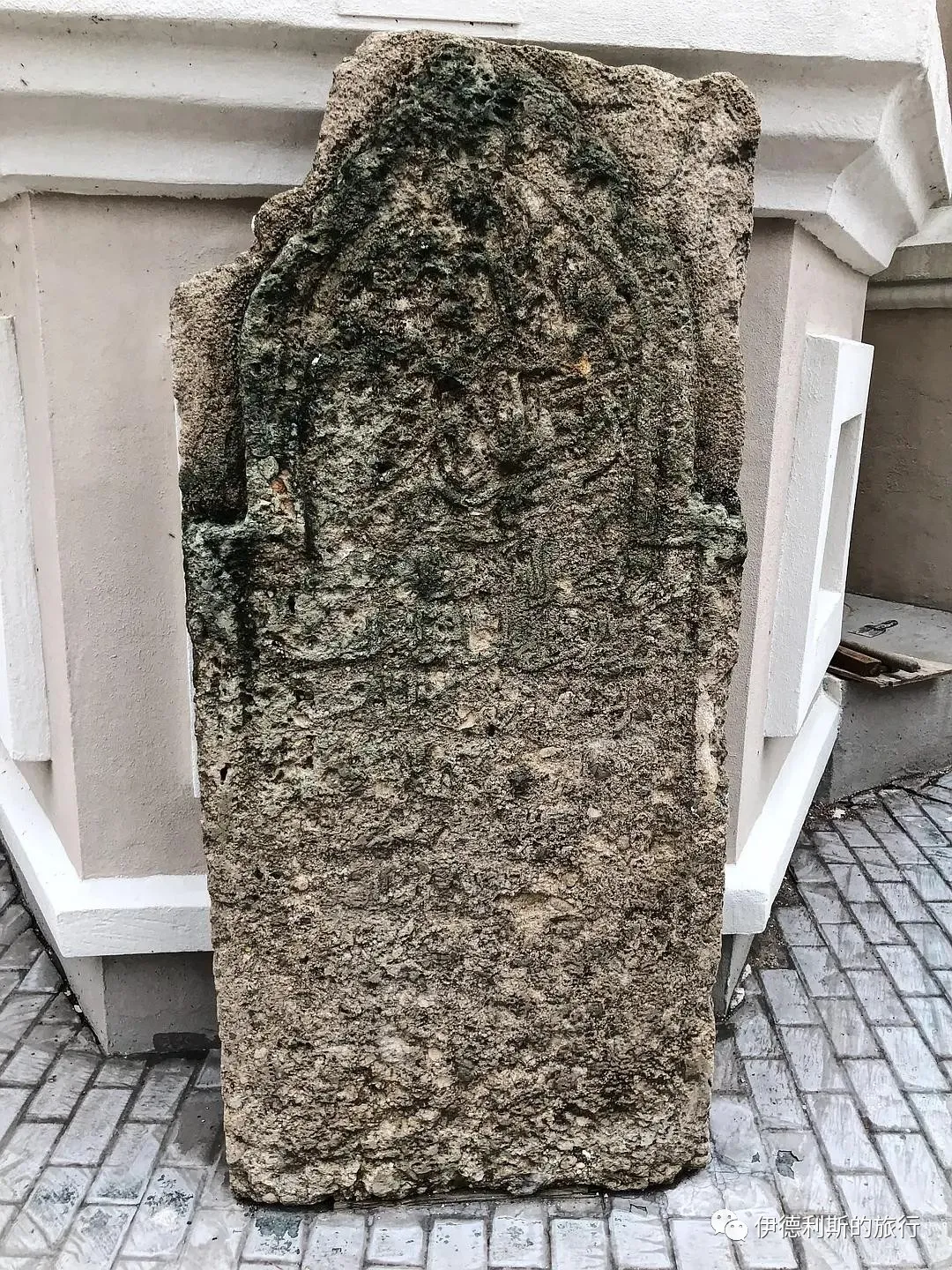
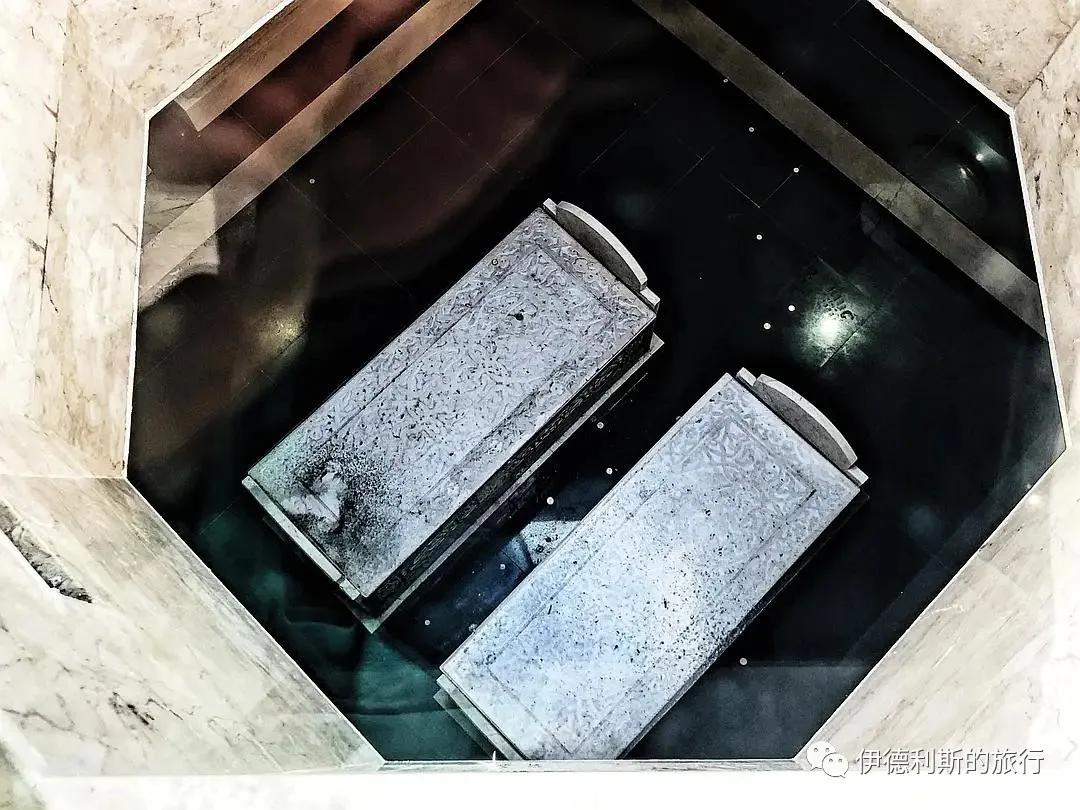
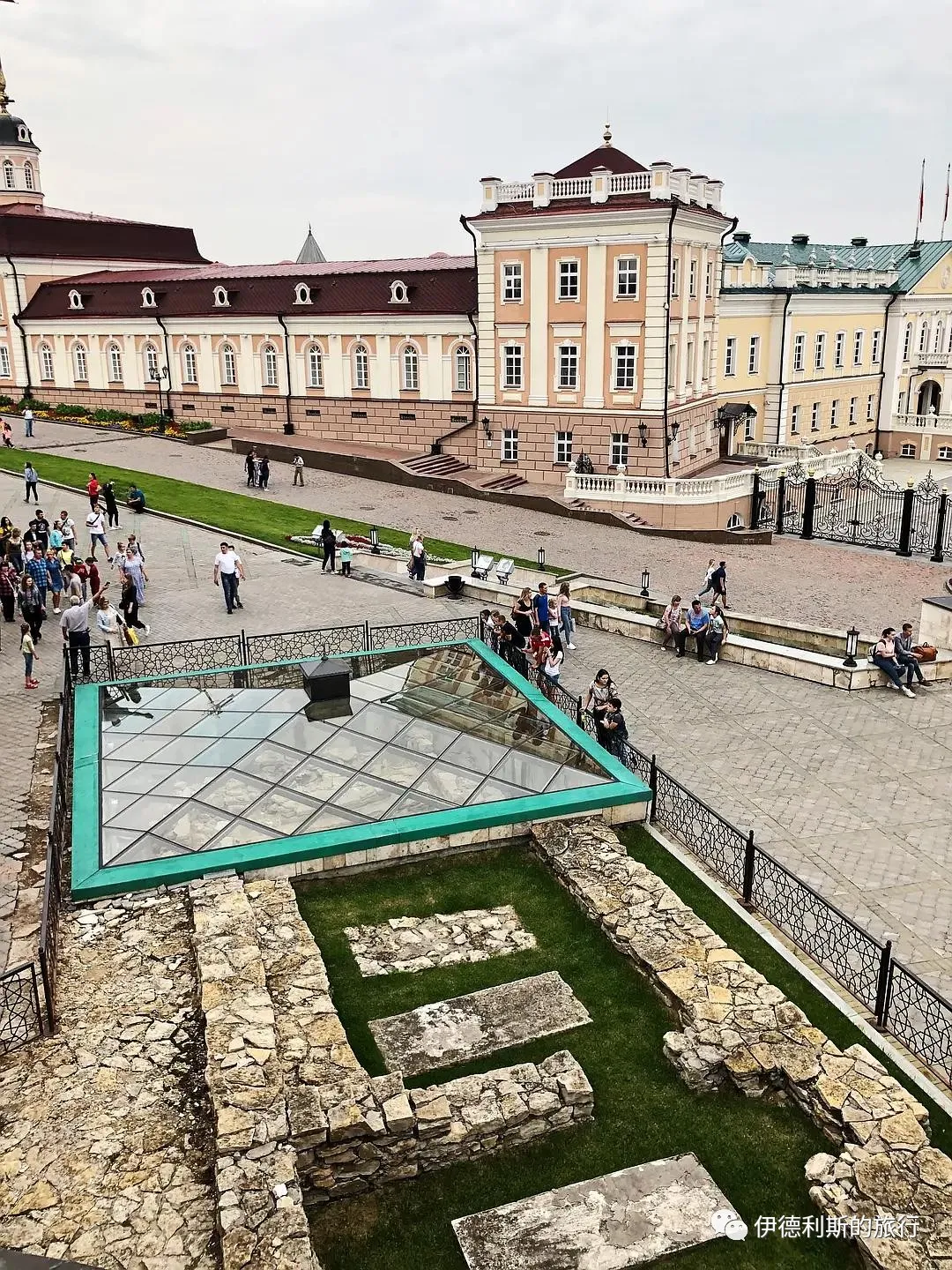
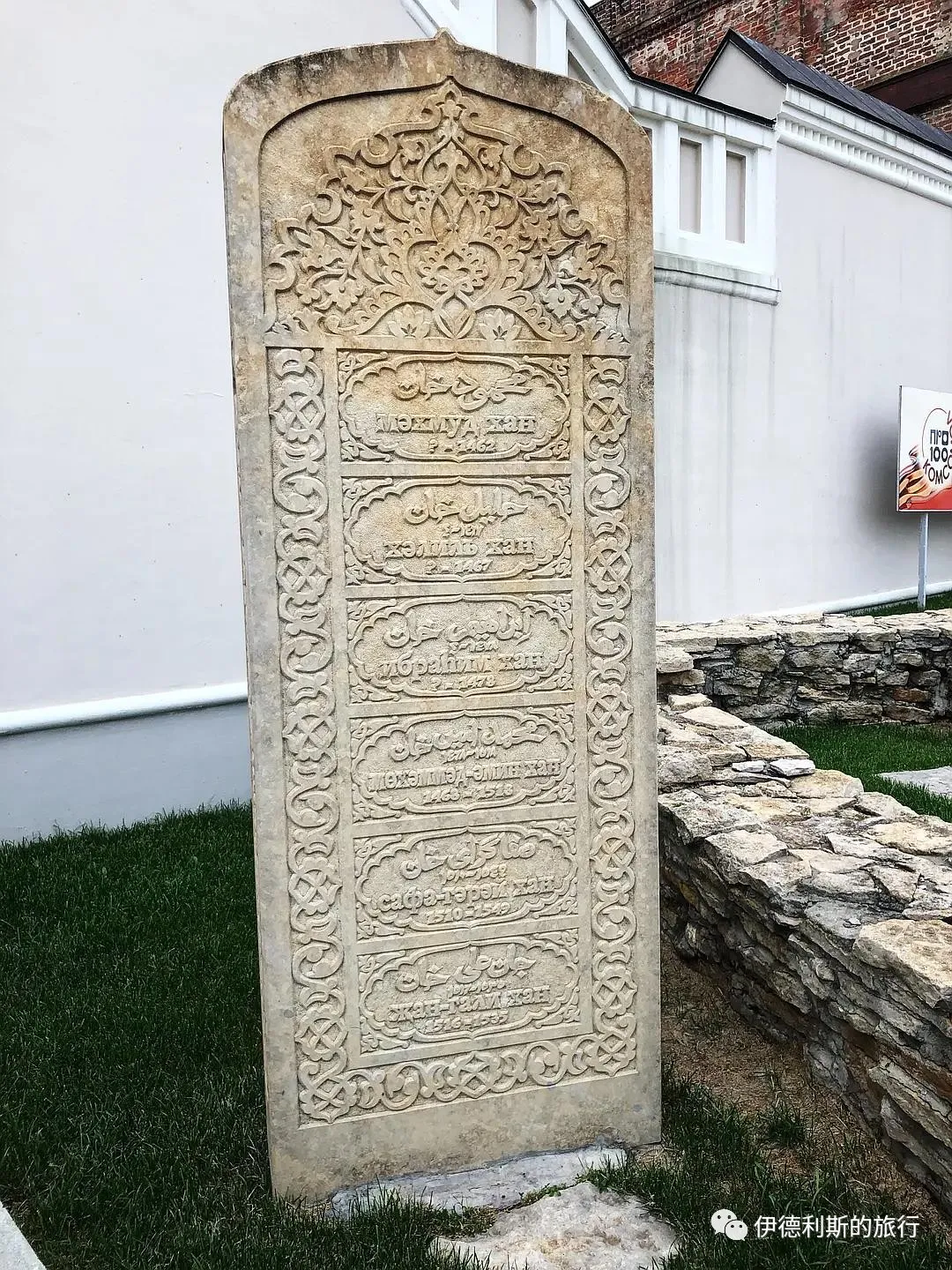
Between 2004 and 2005, the Institute of Archaeology at the Tatarstan Academy of Sciences re-excavated the Kazan Khan tombs. They found the graves of four more Kazan khans: Khalil (died 1467), Ibrahim (died 1478), Safa Giray (died 1549), and Canghali (died 1535). Today, these four khans' graves are protected under a glass roof.
Khalil Khan was the eldest son of Mahmud Khan. He was known for breaking treaties with the Grand Prince of Moscow and for his poor relationship with the Nogai tribe. The young khan died early, not long after taking the throne. One legend says he died in prison due to the war with the Golden Horde.
Ibrahim Khan was Khalil Khan's younger brother. He fought the Grand Duchy of Moscow many times and won a major victory in 1467 while resisting Grand Prince Ivan III of Moscow.
Safa Giray Khan came from the Giray family of the Crimean Khanate. He served as the Kazan khan three times: from 1524 to 1531, 1535 to 1546, and 1546 to 1549.
Canghali Khan was originally the khan of the Qasim Khanate, a vassal state of the Grand Duchy of Moscow. In 1532, Grand Prince Vasily III of Moscow defeated the Kazan khan, Safa Giray, and installed 16-year-old Canghali as the pro-Russian khan of Kazan. He died in 1535 during a coup by Kazan nobles.
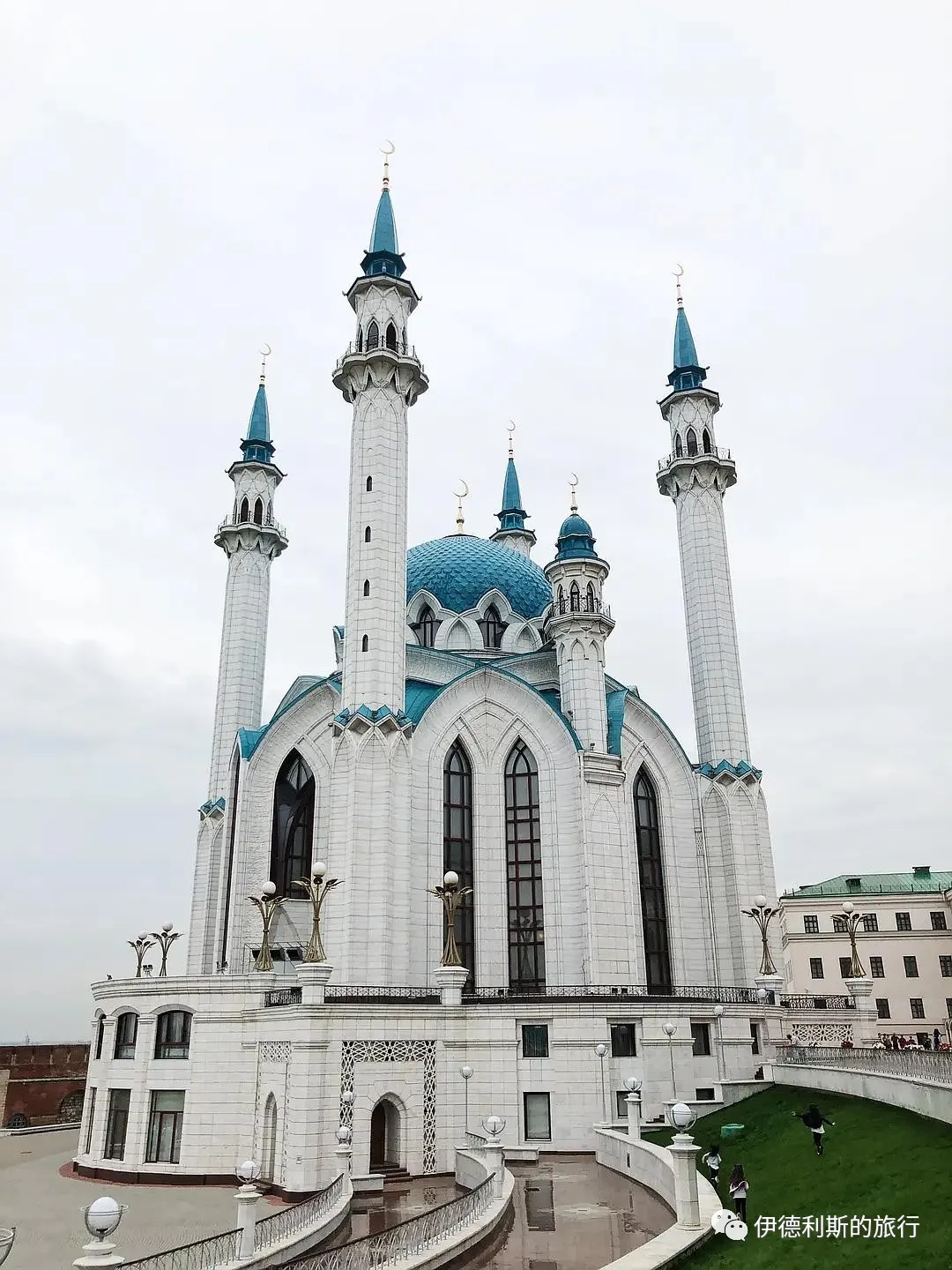
At the entrance of the Kul Sharif mosque inside the Kazan Kremlin, there are performances about the Siege of Kazan. In 1552, Ivan the Terrible besieged Kazan. The last imam of the Kazan Khanate, Seid Kul Sharif, led the people in a final stand and died in the city. Today, Seid Kul Sharif is a national hero to the Kazan Tatars, and the Kul Sharif Mosque, built in 2005, is named after him.
Museums
There is a small museum of Islamic culture on the basement level of the Kul Sharif Mosque.
The Kazan Kremlin also hosts regular exhibitions. When I visited in 2019, I saw a special exhibition called The Golden Horde and the Black Sea Coast: Lessons from the Genghis Khan Empire. The items came from the State Hermitage Museum in St. Petersburg and nine other museums, showcasing the history of the Golden Horde and the Mongol Empire.
The National Museum of the Republic of Tatarstan opened in 1895. The building was once the Gostinniy guesthouse and is a historical monument itself. The museum holds over 800,000 items, including pieces related to the Golden Horde, the Kazan Khanate, and the Kazan Tatars.
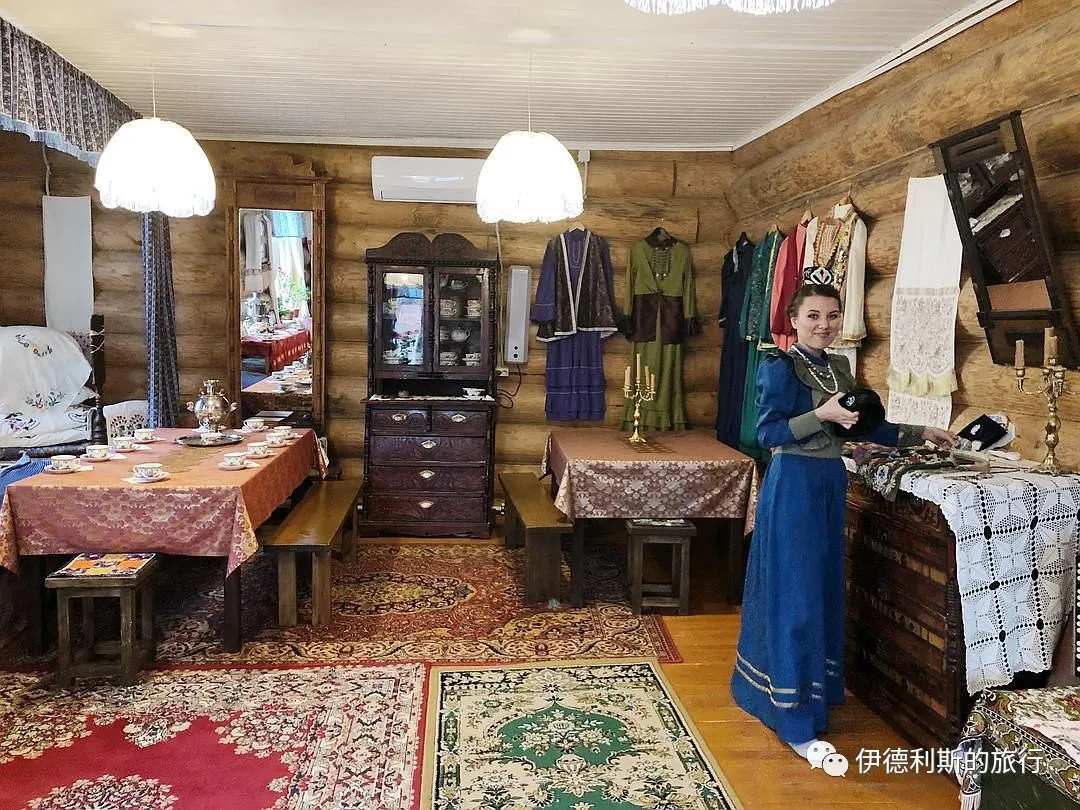
The Çäkçäk Museum in Kazan is the most direct way to experience traditional Tatar culture. The museum is located in a Tatar wooden house in the historic Tatar district of Kazan. The interior does a great job of recreating a traditional Tatar home, which feels very authentic. If you have a group of six, they can teach you how to make honey cake (çäkçäk) on the spot. Since I was alone, I booked a tasting and tour session on their website (https://www.muzeino.ru/). The museum staff will email you to confirm if you want the tour in English or Russian.
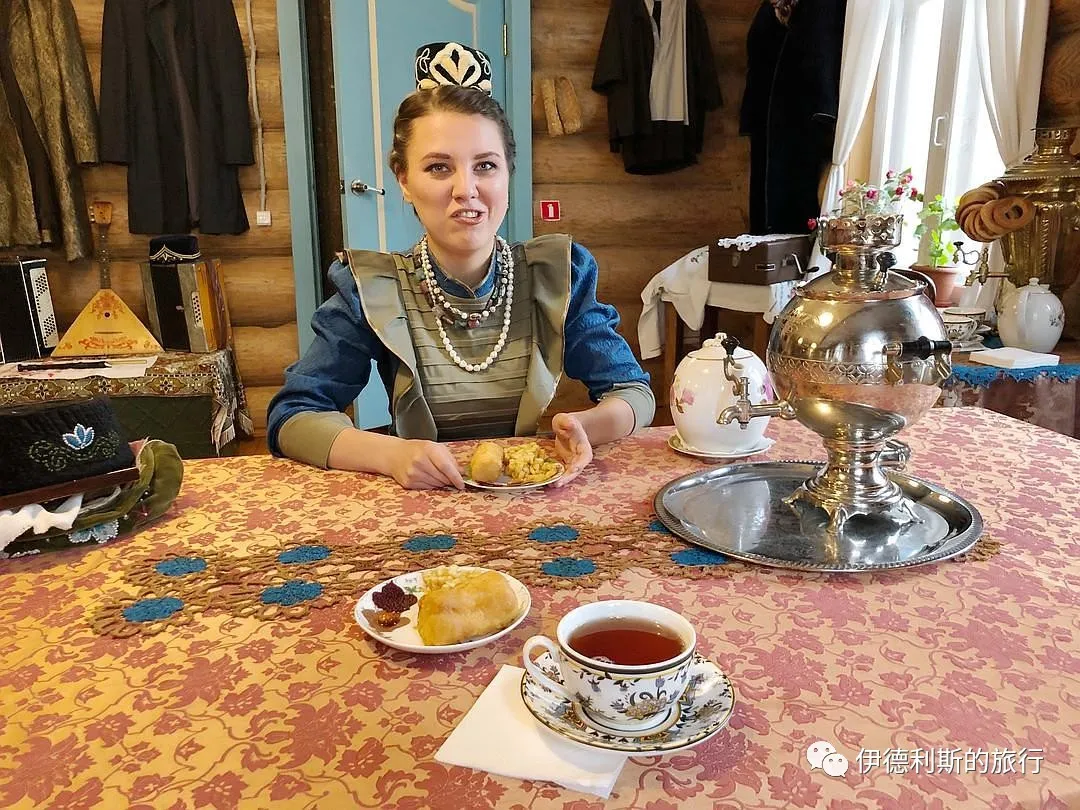
The experience was wonderful. When I arrived at the museum at the scheduled time, a Tatar woman who spoke fluent English was already waiting for me. The whole process felt like visiting a Tatar family. She told me various Tatar legends, daily customs, and cultural traditions, then explained the detailed process of making the national dessert, çäkçäk. Afterward, she brewed some Tatar tea for me. As I tasted traditional Tatar sweets, she told me about Tatar clothing, silver jewelry, and embroidery, and we had a great time chatting.
Mosques
In 1552, Ivan the Terrible conquered the Kazan Khanate, massacred most of the Tatars in Kazan, and tore down every mosque in the city. In 1556, Russia rebuilt the city of Kazan and settled 7,000 Russians there. The Tatars were forced to convert to Christianity, and those who remained were relocated to settlements far from the city. After this, some Tatars who served Russia settled by Lake Kaban, southwest of Kazan. Later, Tatar merchants and craftspeople moved there as well, and the Old Tatar Quarter (Staro-Tatarskaya Sloboda) gradually formed. However, during this time, Kazan did not have any official mosques.
Before the 18th century, most buildings in Kazan were made of wood and were very prone to fires. During the reign of Catherine the Great (who ruled from 1762 to 1796), the city of Kazan began to be rebuilt using brick and stone.
In 1770, more than 200 years after the fall of Kazan, the first brick mosque was completed with the approval of Catherine the Great. From then on, the Kazan Tatars had an official mosque again. Between 1770 and 1930, a period of 160 years, Tatar merchants built many mosques in Kazan, centered around the Old Tatar Quarter. Twelve of these still survive today. Mosques from this period combined traditional Tatar architecture with Baroque, Classical, and Eclectic styles to create a unique Kazan Tatar mosque architectural style.
In 1930, Stalin ordered the closure of the mosques. Except for the earliest one, the Marjani Mosque, all 11 other mosques in Kazan were closed and repurposed. Many mosque buildings were damaged, and their minarets were torn down. It was not until the late 1980s that these mosques were gradually returned to the Kazan Tatar Muslims.
The Marjani Mosque was built between 1766 and 1770 with the permission of Catherine the Great. It was the first brick mosque built in Kazan after Russia destroyed the Kazan Khanate in 1552. This mosque is the oldest surviving mosque in Tatarstan and the only one in Kazan that was not closed during the Soviet era.
The interior of the mosque uses a St. Petersburg Baroque style. The merchant İ.Ğ. Yunısov donated funds to build a staircase in 1861 and expanded the mihrab in 1863. At that time, the mosque was named the Yunısovs' Mosque after his family. In 1885, the merchant Z. Ğosmanov donated funds to renovate the minaret. In 1887, merchants W. Ğizzätullin and M. Wälişin added decorative window balconies to the minaret.
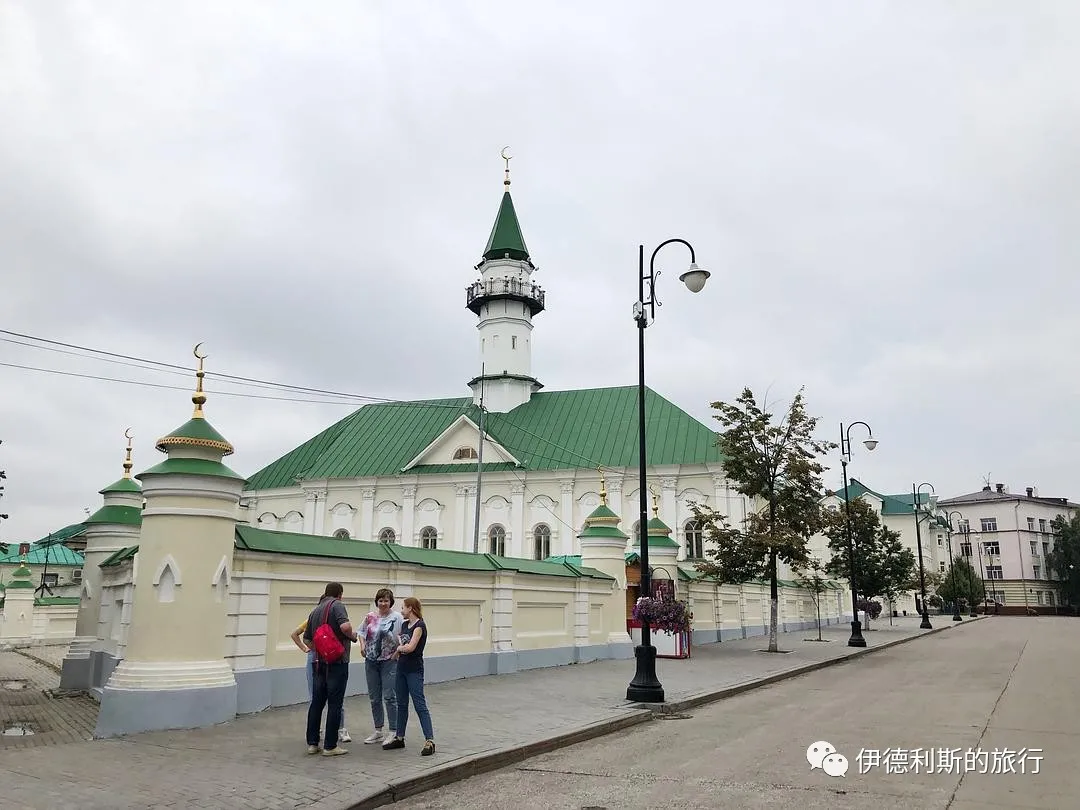
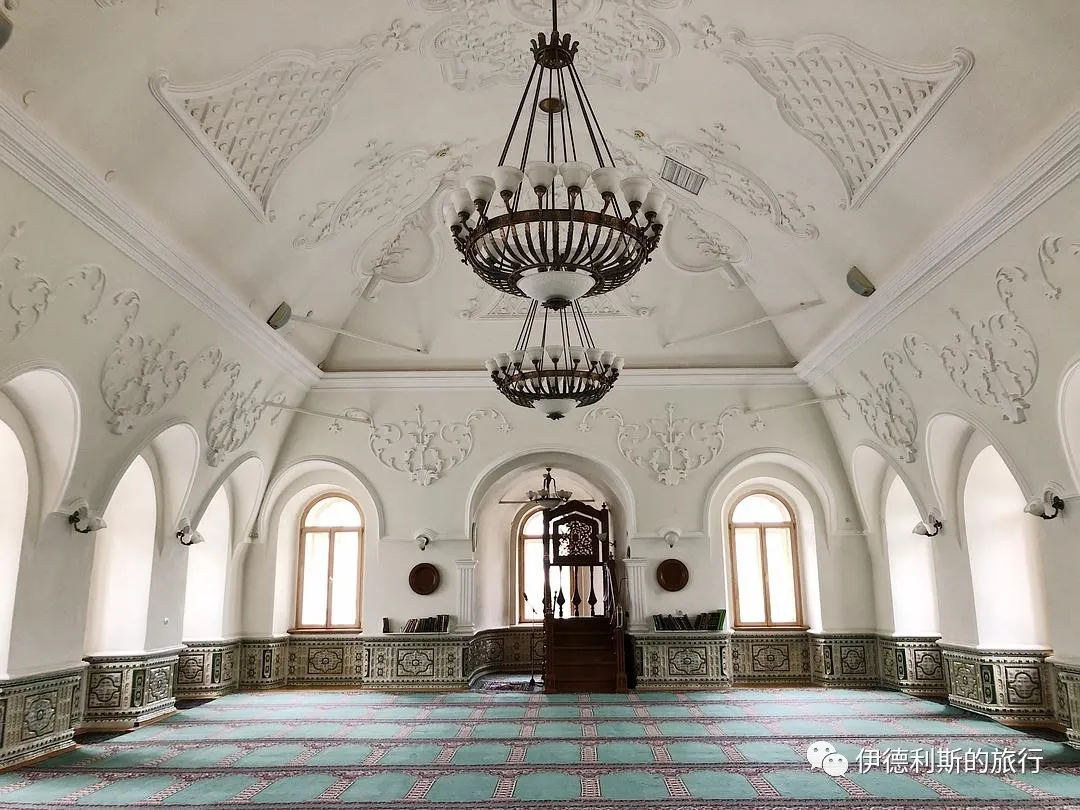
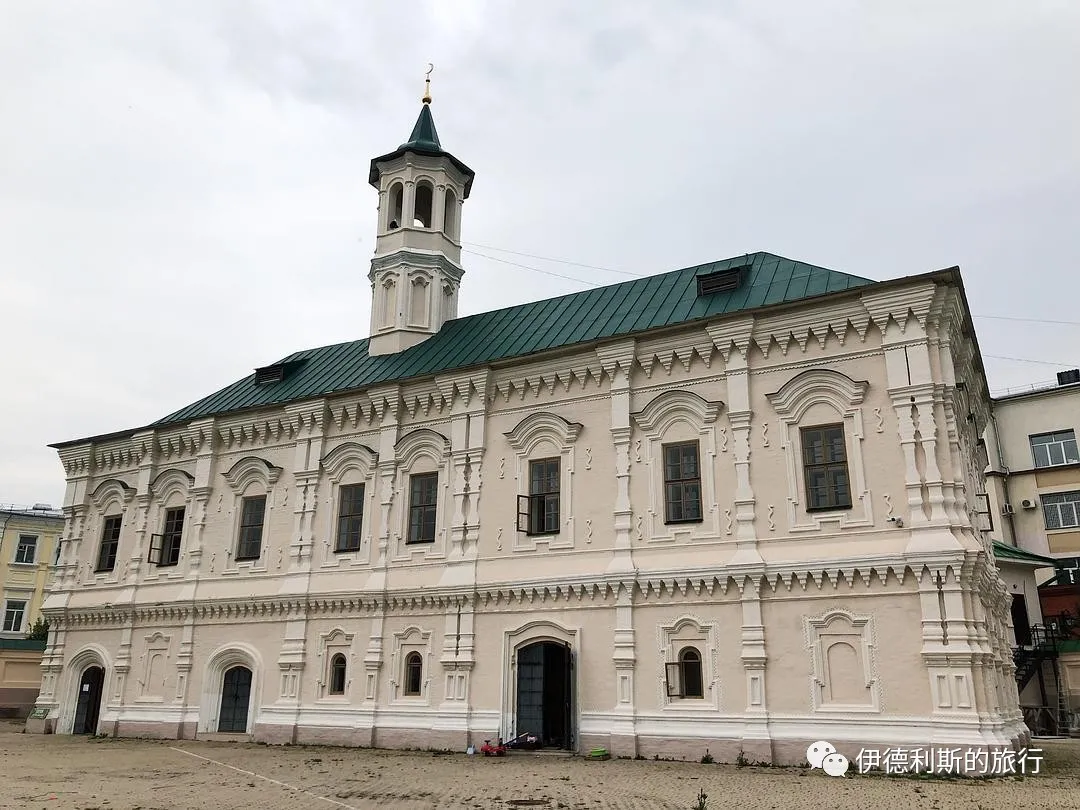
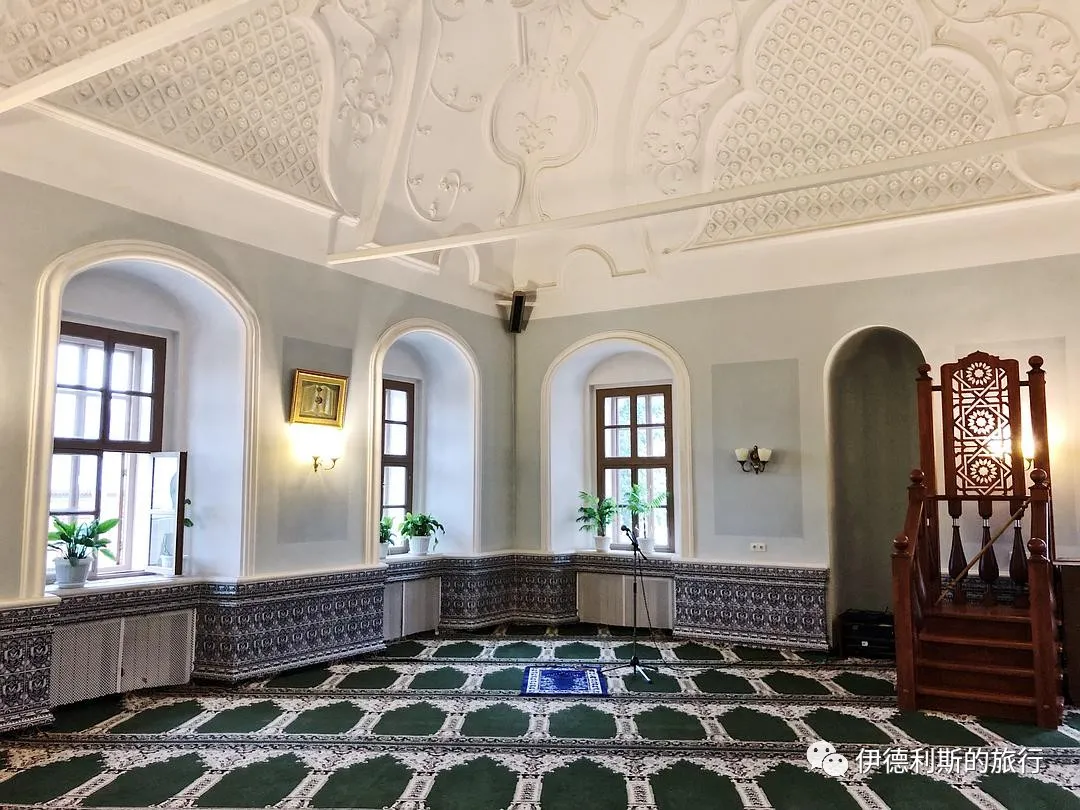
The Apanay (Apanaevskaya) Mosque was the second mosque approved by Catherine the Great to be built in Kazan. It was donated by the merchant Apanaev and built between 1768 and 1771. The mosque architecture blends traditional Tatar style with Moscow Baroque style. In 1872, architect P. I. Romanov expanded the mosque by adding a second floor. In 1882, the mosque built a brick perimeter wall and added a shop. In 1887, the shop was expanded to include a second floor.
The mosque closed in 1930, its minaret was torn down, and it later became a kindergarten. The mosque reopened after 1995, and the minaret was rebuilt in 2011.
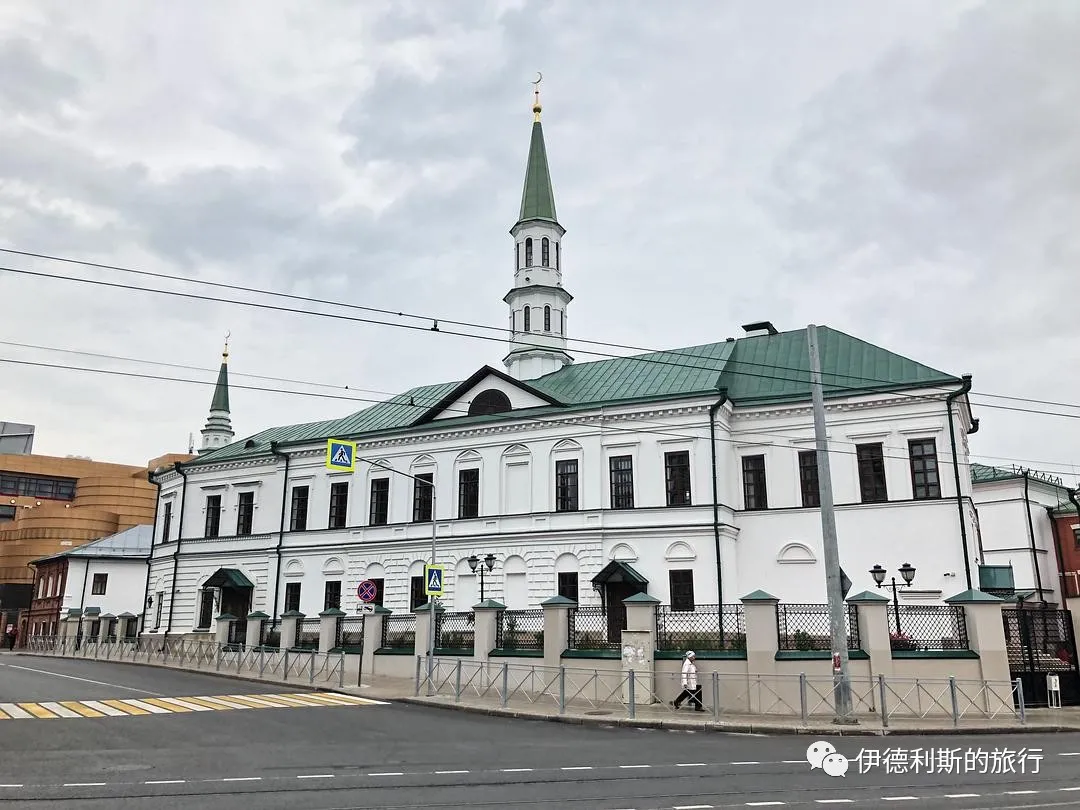
Galeevskaya Mosque was built between 1798 and 1801 with funds donated by merchant Musa Mamyashev. The mosque was originally built in the early classicism style of the late 18th century, then expanded twice in the late classicism style in 1882 and 1897.
The mosque was closed in the 1930s, its minaret was torn down, and it was designated an architectural monument in 1981. By 1992, the mosque housed a hotel, a collective farm building, and various utility facilities. After 1998, the site became a campus for the Russian Islamic University and a dormitory for female students of the Muhammad Madrasa. The mosque reopened in 2015 after undergoing restoration.
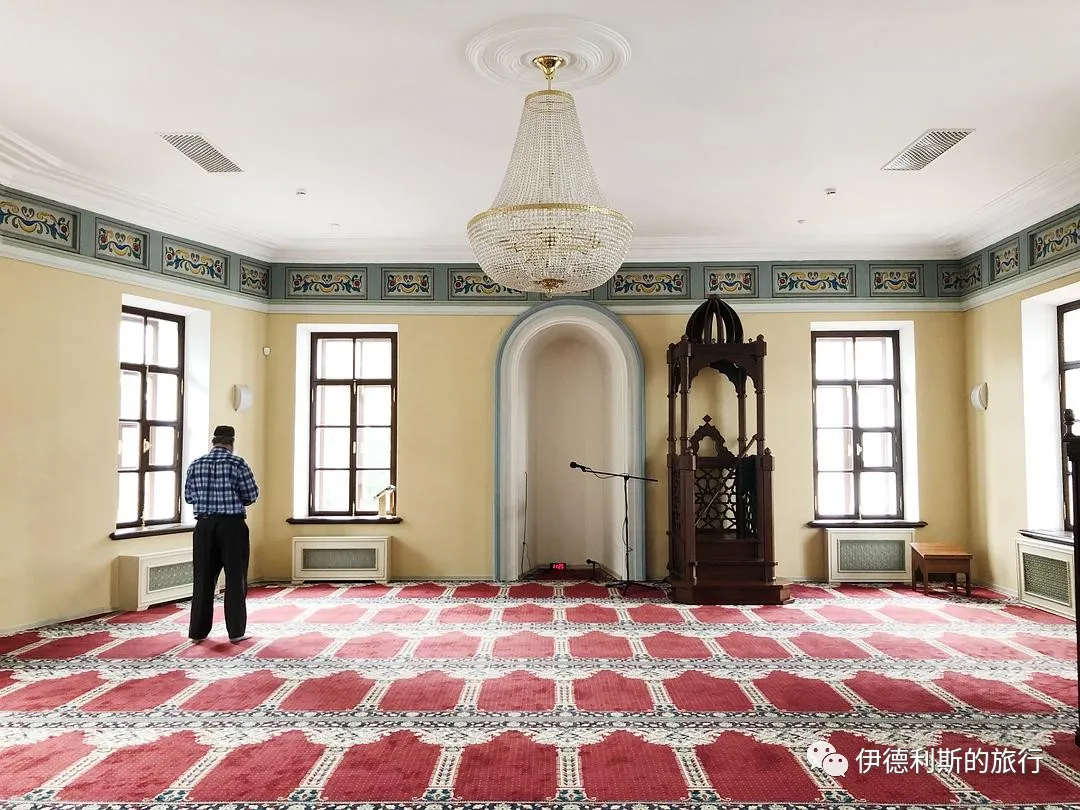
İske Taş, also known as the Big Stone Mosque, was built in 1802 with a donation from merchant Ğabdulla Ütämişev. Legend says this mosque was built on the site of a grave for soldiers who died defending the city of Kazan in 1552, marked by an ancient big stone (zur iske taş).
In 1830, Alexander Schmidt rebuilt the mosque in a classicism style, featuring a three-story minaret that resembles those found in the ancient Bolghar and Kasimov regions of the Tatars.
Following a decision by the Central Executive Committee of the Tatar Autonomous Soviet Socialist Republic in the late 1930s, the mosque was closed and later turned into a school and warehouse, only being returned to the Muslims in 1994.
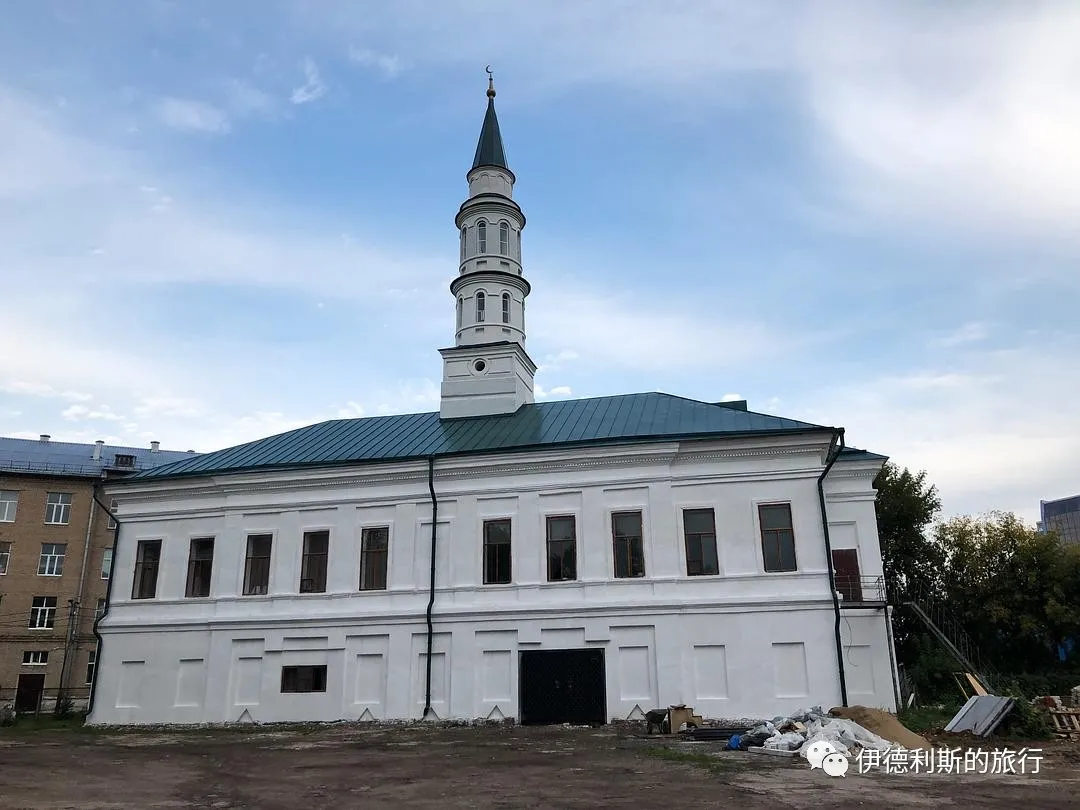
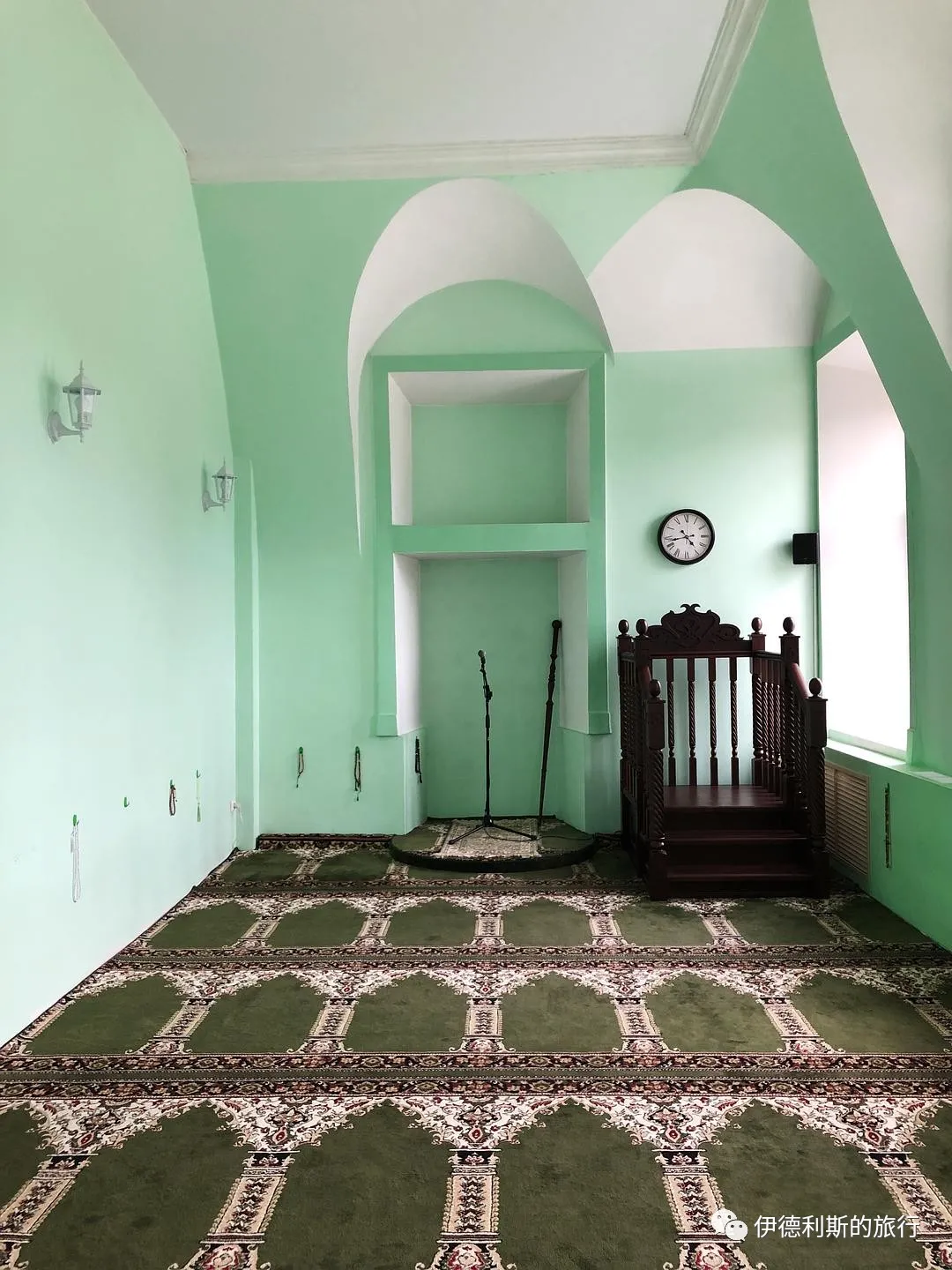
The White Mosque was built between 1801 and 1805. It looks like the Iske Tash mosque built in the same period and has a classic style. The mosque closed in 1929 and became a school and a fur workshop. In the 1930s, the minaret was torn down, and the east and south parts of the main hall were rebuilt. The mosque became an architectural monument in 1960. It was returned to the Muslims in 2004, but it is still not open.
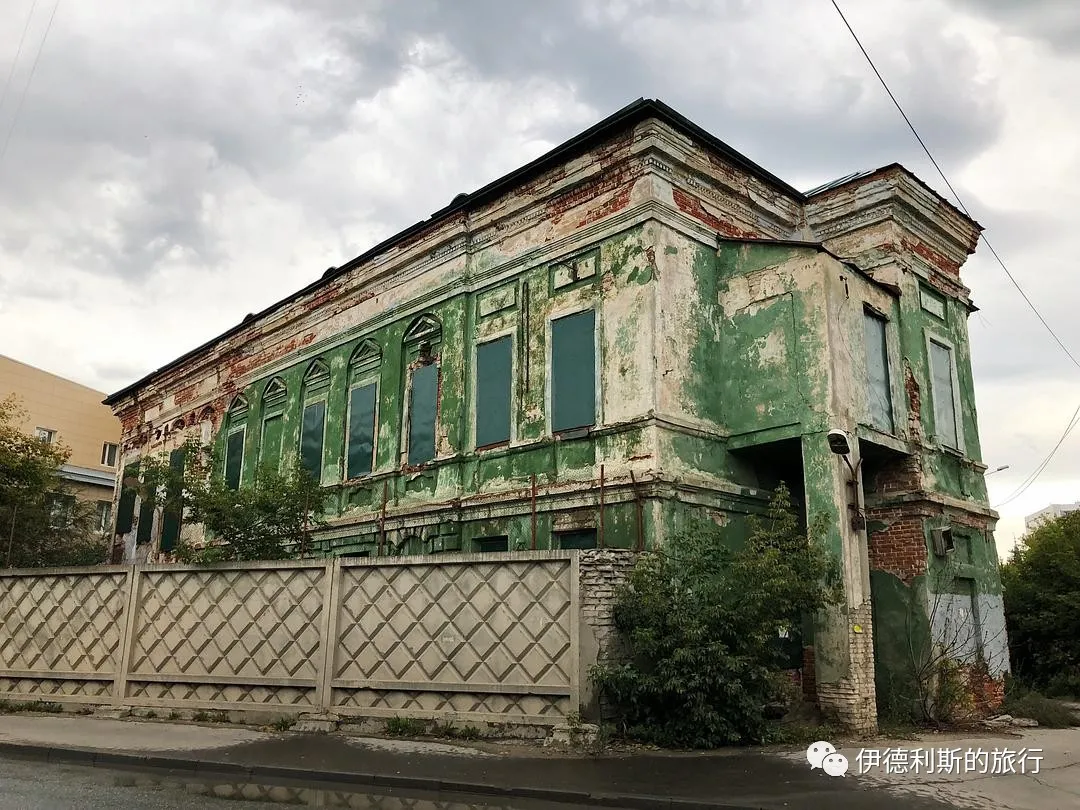
The Pink (Rozovaya) Mosque was built in 1808 with a donation from merchant Musa Apanaev. It is the Islamic center of the Novaya Tatarskaya Sloboda area in Kazan. The mosque closed in 1931 and reopened in 1991. By then, Novaya Tatarskaya Sloboda had become an industrial area. Today, it is the Kazan Higher Muslim Islamic Madrasa.
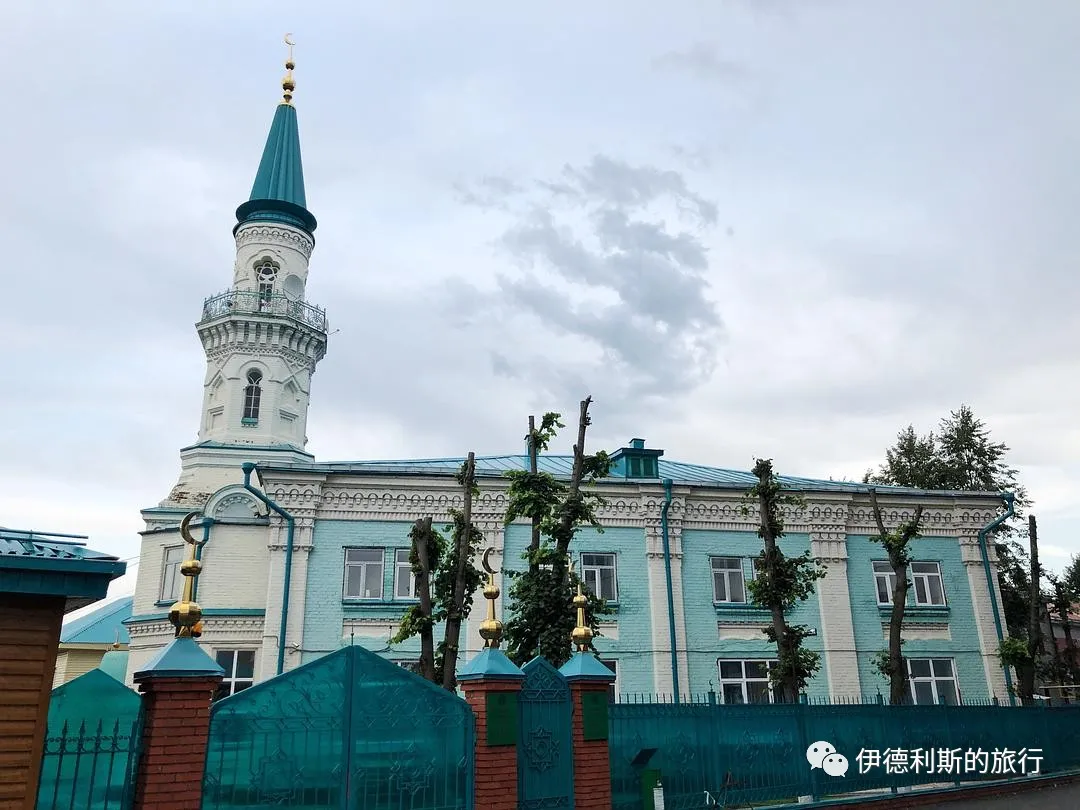
The Blue (Zangar) Mosque was built between 1815 and 1819 with money from merchant Akhmet Aitov-Zamanov. The architect was Alexander Schmidt. Bolshaya Meshchanskaya Street used to be home to the poorest residents of the old Tatar community. These residents built a wooden mosque here in 1778. In 1815, the original wooden mosque was moved to another village, and the current brick mosque in the classic style was built here.
The mosque was expanded twice, in 1864 and 1907. The mosque closed in 1932, the minaret was torn down, and it was turned into housing. It reopened in 1993, and the minaret was rebuilt in 2009.
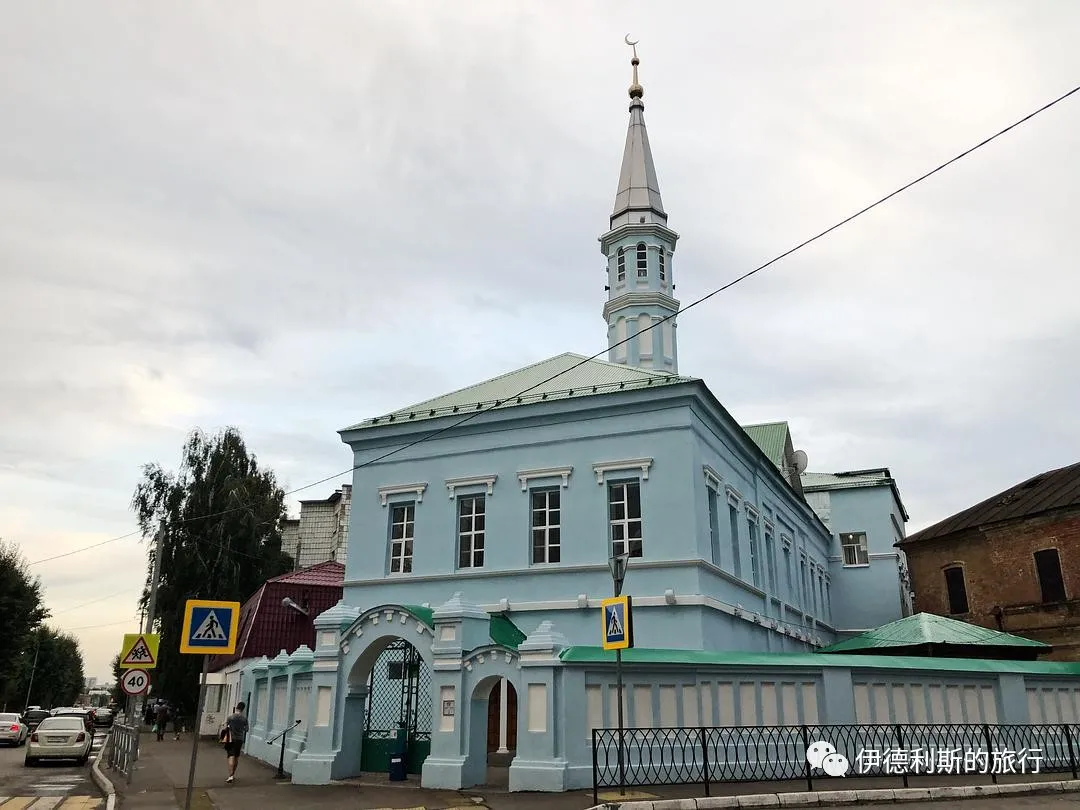
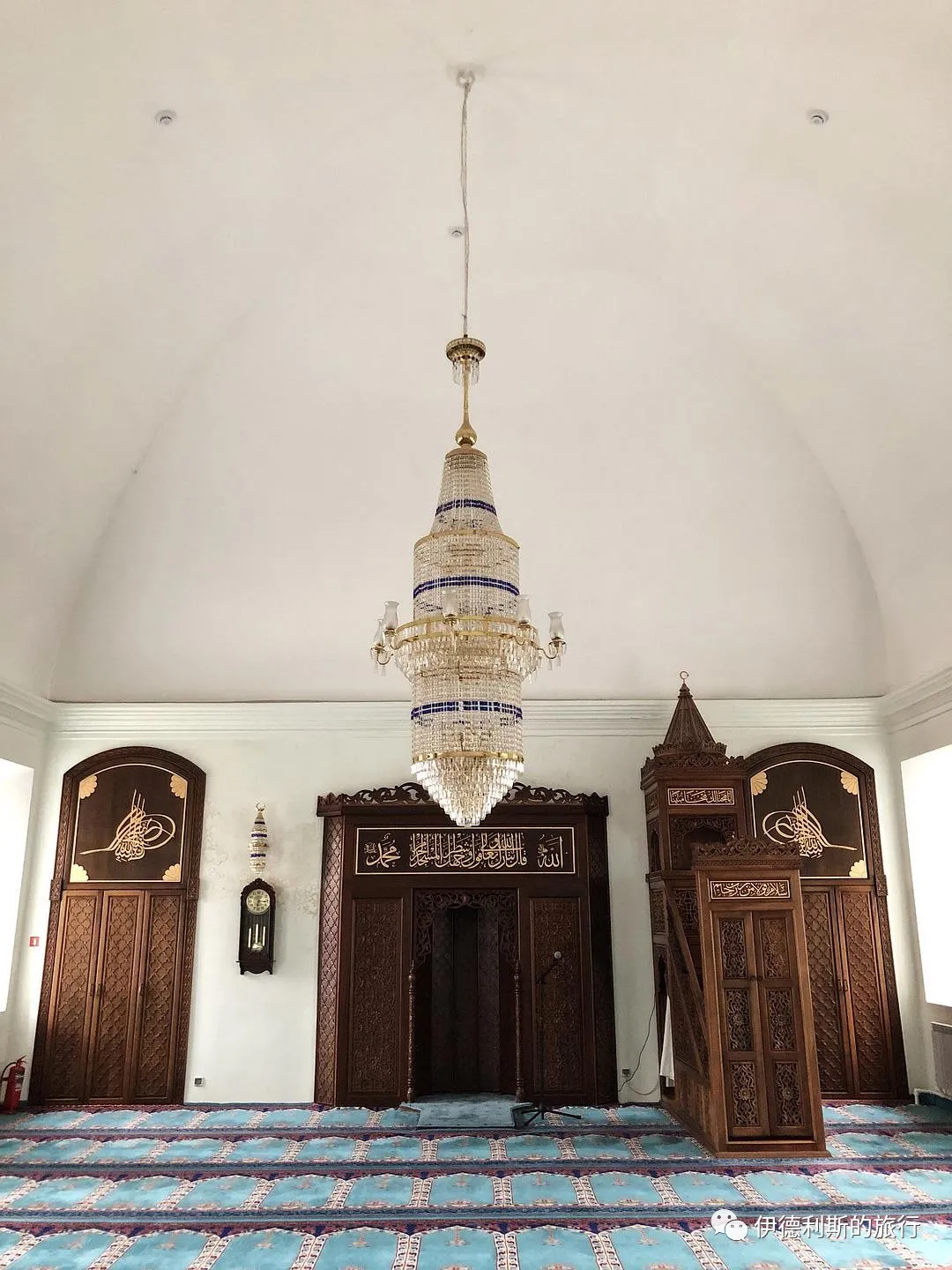
The Nurulla Mosque was built between 1845 and 1849 with donations from merchant G. M. Yunisov. It has a minaret in the ancient Volga Bulgar style and a dome in the Middle Eastern style.
The mosque is part of a group of buildings around the Sennoy Bazaar. The Sennoy Bazaar was the trade center for the old Tatar community in Kazan during the 18th and 19th centuries. At that time, the mosque was mainly used by Tatar merchants doing business at the Sennoy Bazaar. It was originally named the Sennobazarnaya Mosque after the bazaar.
The mosque was closed in 1929 and turned into apartments and offices. During that time, the minaret was destroyed. It was not returned to the Muslims until 1992 and was renamed Nurulla Mosque. The minaret was restored between 1990 and 1995.
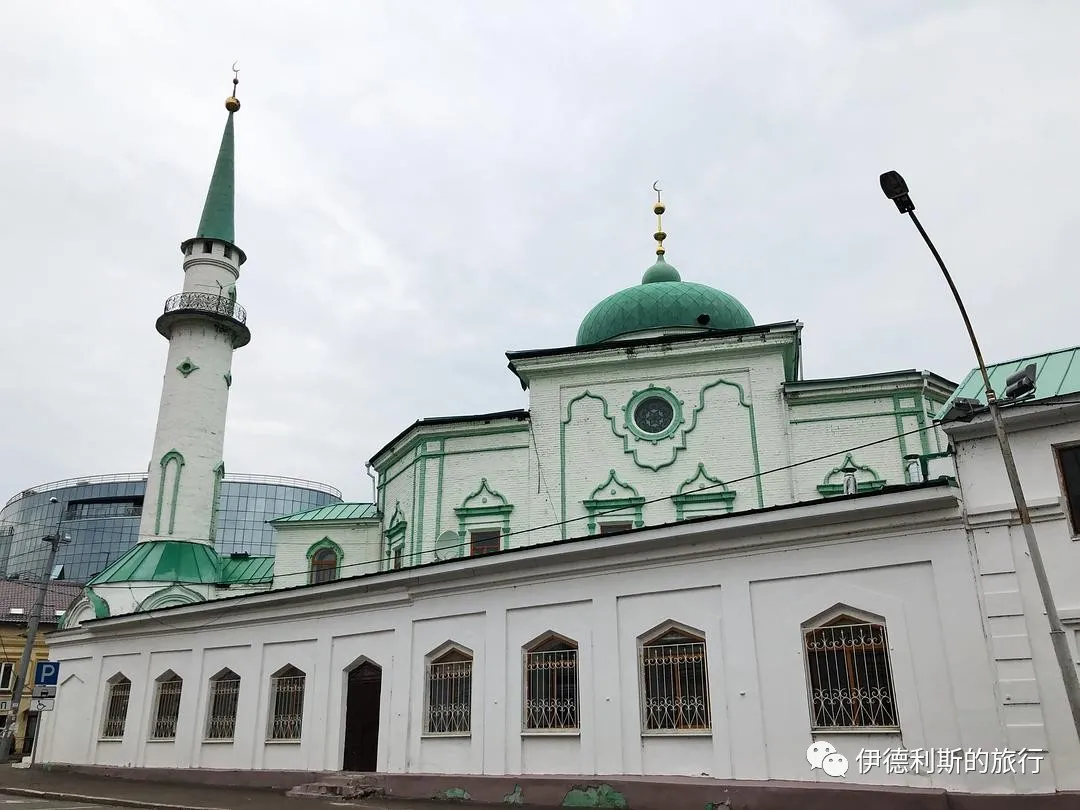
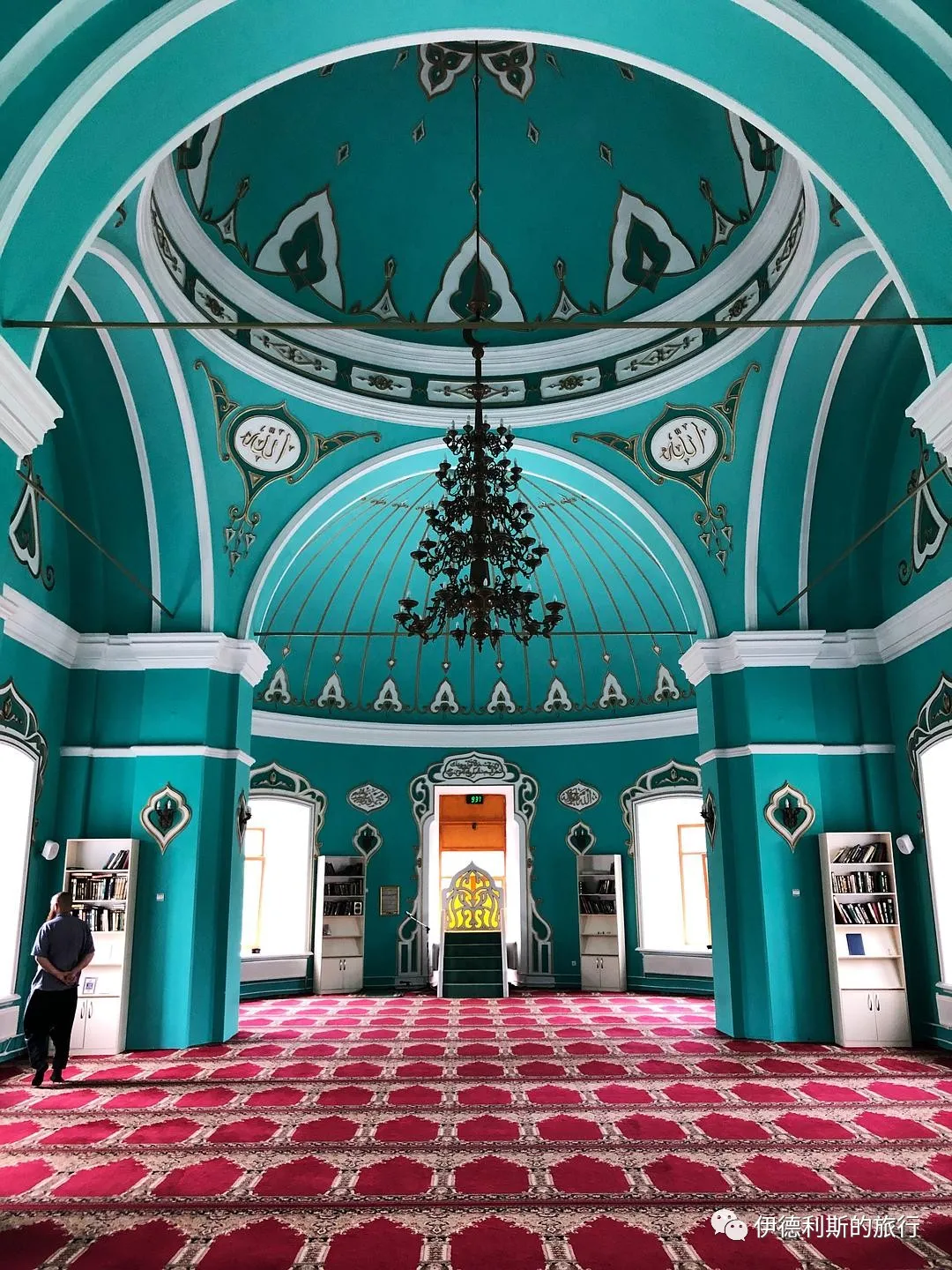
Soltan Mosque was built in 1868 with a donation from the Tatar merchant Zigansha Usmanov. The area where the mosque is located is called Zabulachye, which means behind the Bulak Canal. During the Kazan Khanate period, this place was outside the city and had a settlement called Kuraisheva Sloboda. After Ivan the Terrible conquered Kazan in 1552, this area remained a place where Tatars lived, but it was gradually surrounded by Russian settlements, and churches began to be built right next to the mosque.
In the 19th century, the Tatar merchant Cihanşa Ğosmanov decided to build a mosque here that looked better than the church next to it. The mosque was completed in 1868, and to honor him, people called it Ğosmanov Mosque or Cihanşa Mosque.
At first, the walls of the mosque were red, so it was also called the Red Mosque. Now the mosque is called Soltan Mosque to honor Zigansha's son, Sultan Abdulgaziz Usmanov, who continued to look after the local community after his father passed away.
The mosque closed in 1931, and later the minaret was destroyed. It became an architectural monument in 1980. The minaret was rebuilt in 1990, and the mosque reopened in 1994.
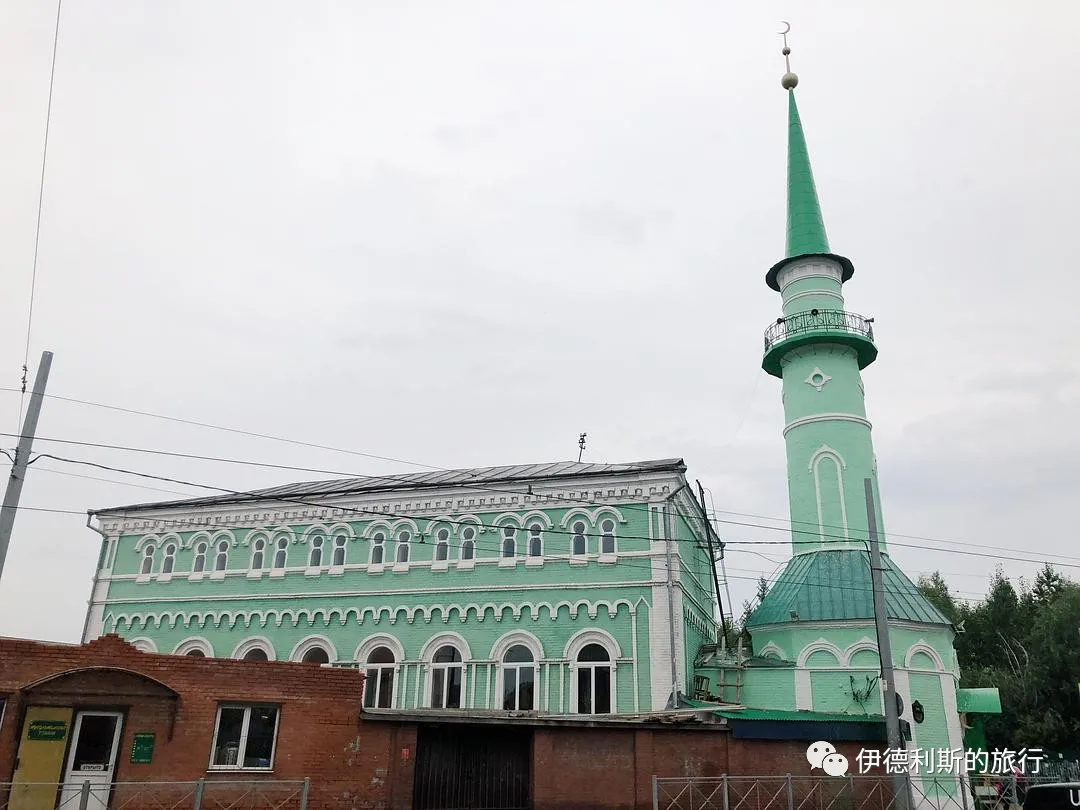
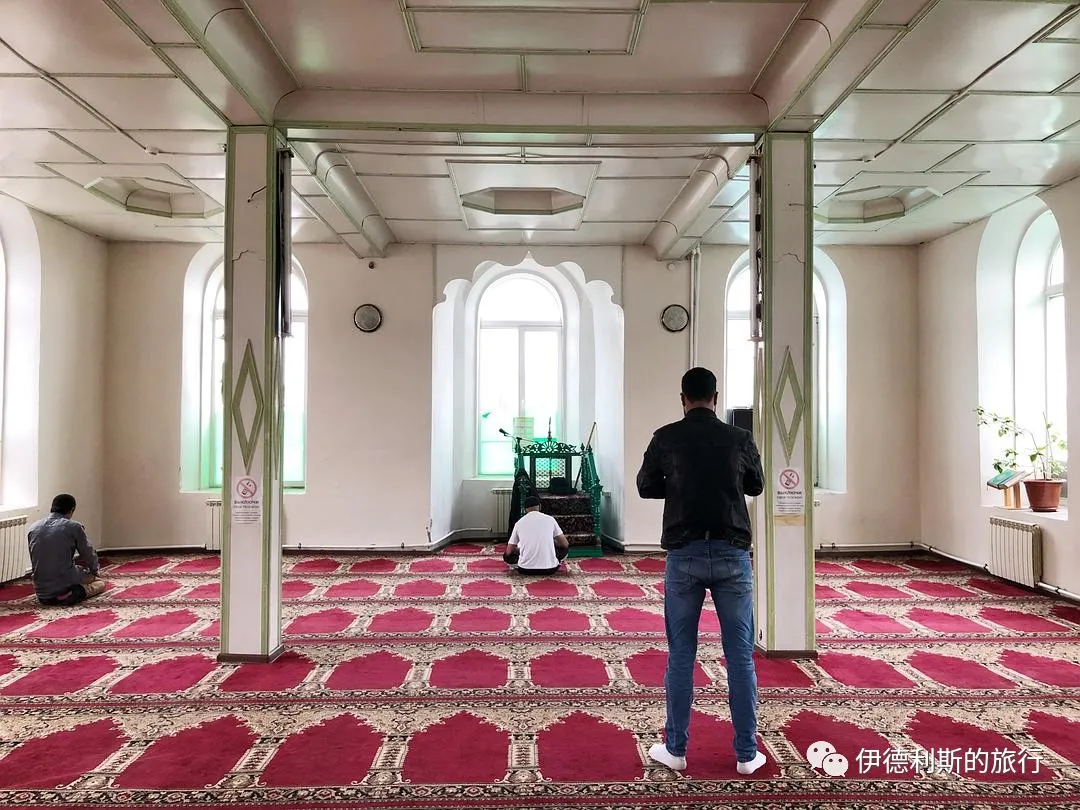
Bornay (Burnaevskaya) Mosque was built in 1872 with funds donated by the Tatar merchant Mukhametsadyk Burnayev, and the architect was Peter Romanov.
The mosque is located in the Old Tatar neighborhood behind Kaban Lake. In 1799, the Tatar merchant Salikh Mustafin built a wooden mosque here. The mosque was first built for students at the Apanaev madrasa, and later, local residents began using it too. Unfortunately, the mosque was later destroyed in a fire. In 1872, Tatar merchant Mukhametsadyk Burnayev donated money to build the current brick mosque on the site of the burned-down wooden one, and it was named after him.
The mosque features a national romantic eclectic style, blending Russian and Tatar architectural decorations. In 1895, shortly before Burnayev passed away, a magnificent minaret was built based on designs by architects Fyodor Malinovsky and Lev Khrshonovich.
The mosque closed in 1930, but fortunately, the minaret was preserved. It reopened in 1994.
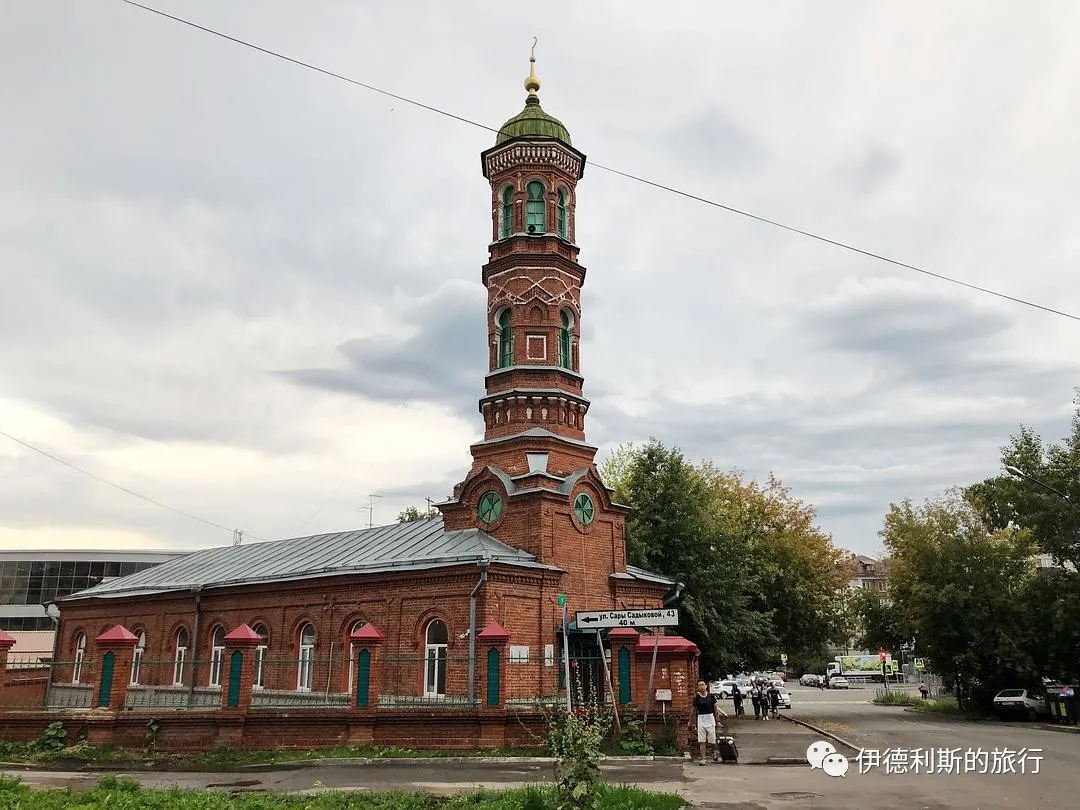
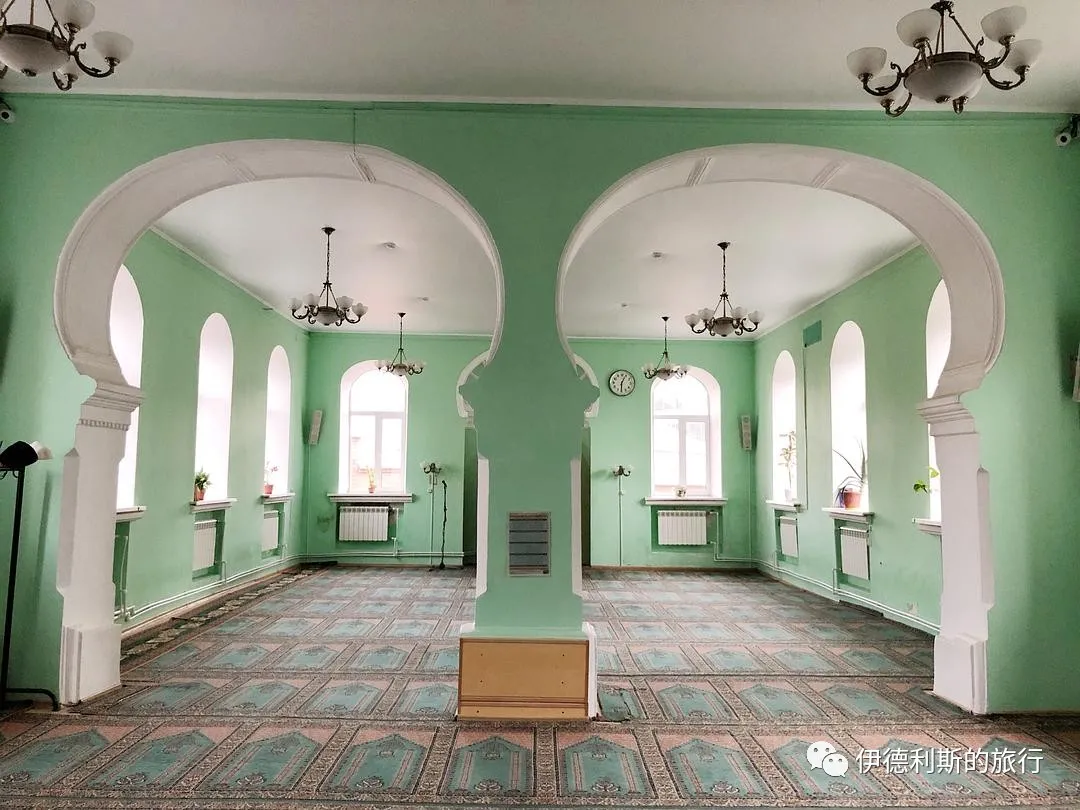
The Azimov Mosque was built between 1887 and 1890 with donations from Tatar merchant Mortaza Äcimev. The mosque was built in a national romantic eclectic style and is known as the most beautiful mosque in Kazan.
The mosque is located in an area called Pleten (wicker fence), situated between the Old Tatar and New Tatar neighborhoods. In 1851, Tatar merchant Mustafa Azimov built a wooden mosque here. Between 1887 and 1890, his son Murtaza Azimov donated funds to build the current brick mosque, which was named after them. Because many Muslim workers from soap factories lived in the Pleten area, it is also called Zavodskaya (factory mosque).
The mosque closed in 1930 and was used as a school. It was returned to the Muslims in 1989 and reopened in 1992.
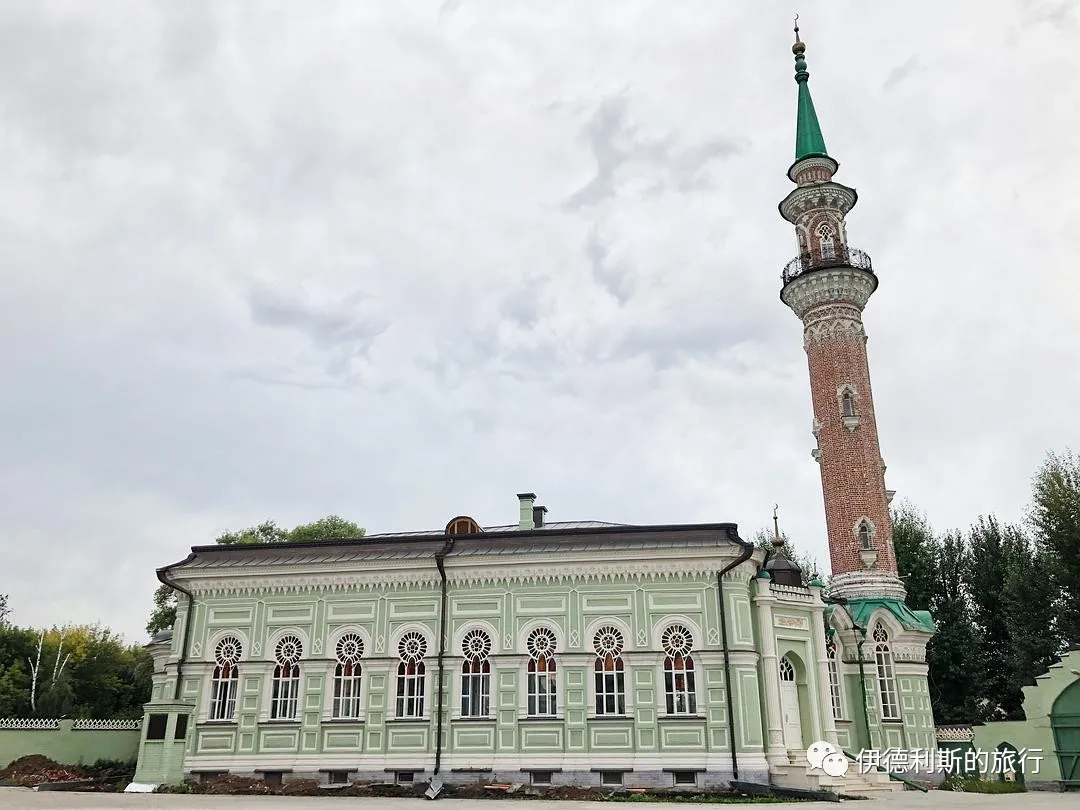
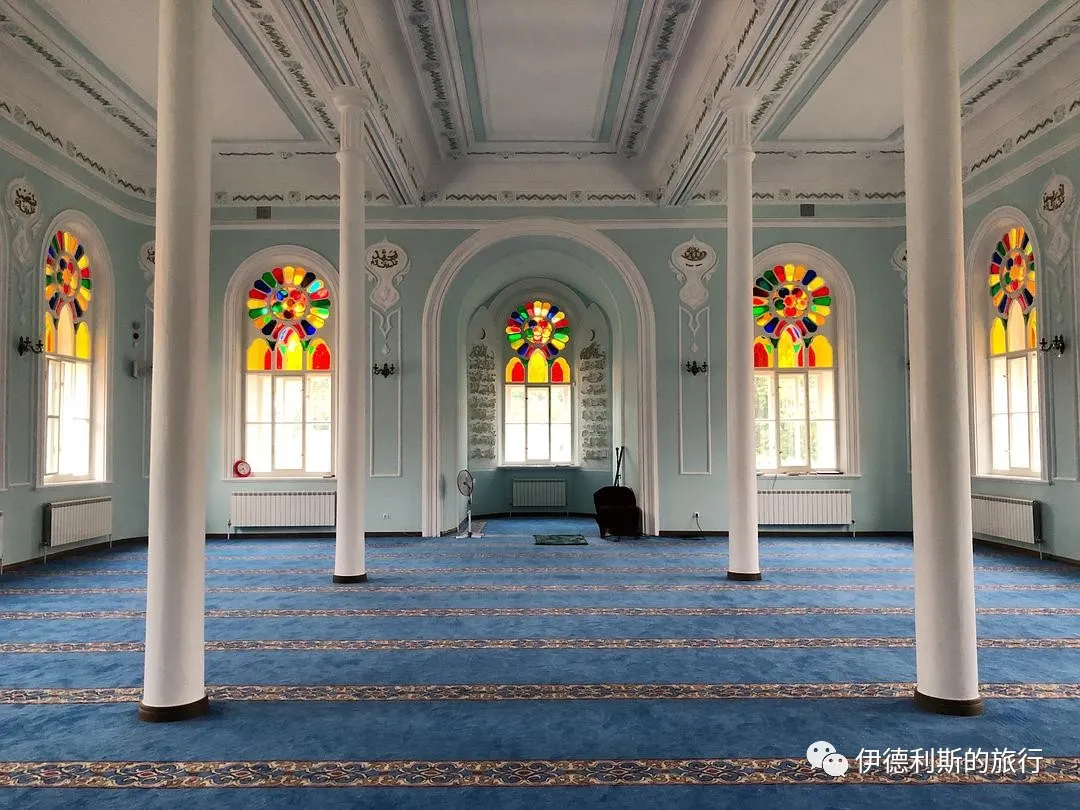
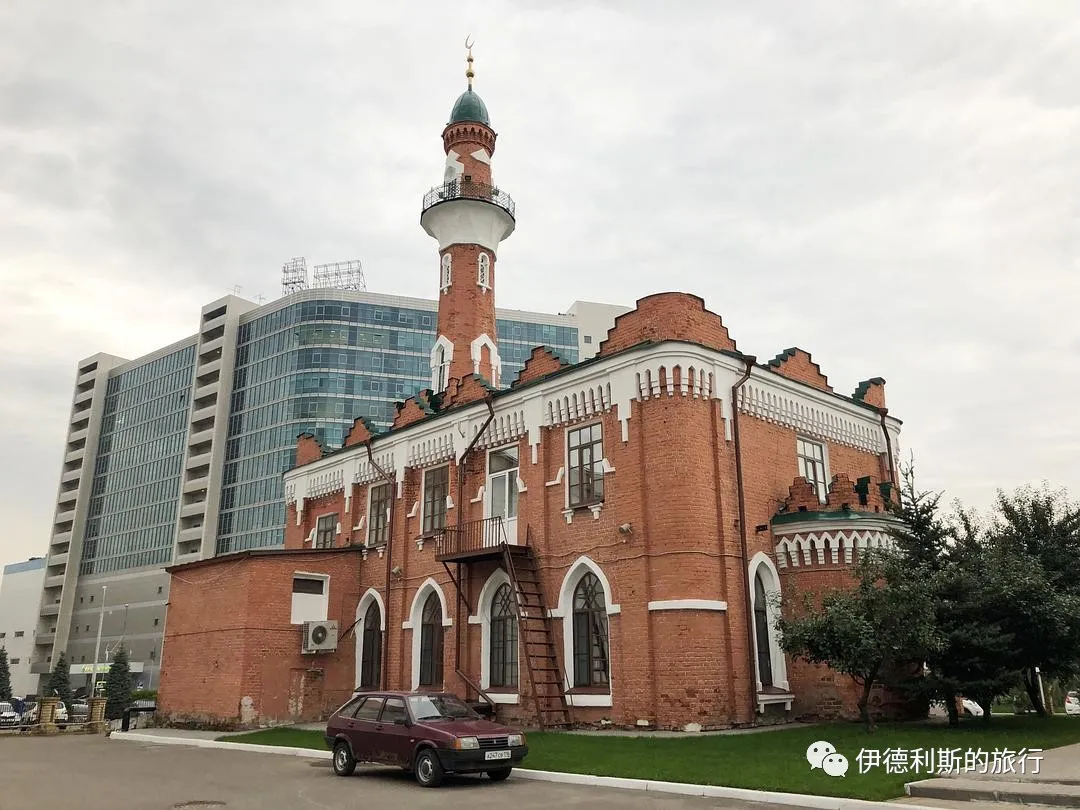
The Zakabannaya Mosque, also known as the Mosque of the 1000th Anniversary of the Adoption of Islam, was built between 1924 and 1926 to commemorate the 1000th anniversary of the Volga Bulgars converting to Islam in 922. Stalin personally approved the construction of the mosque. It was designed by architect A. E. Pechnikov in 1914 and built with public donations.
The mosque closed in 1930 and reopened in 1991. It was the last mosque built in Kazan before Stalin ordered the closure of mosques in 1930.
Accommodation
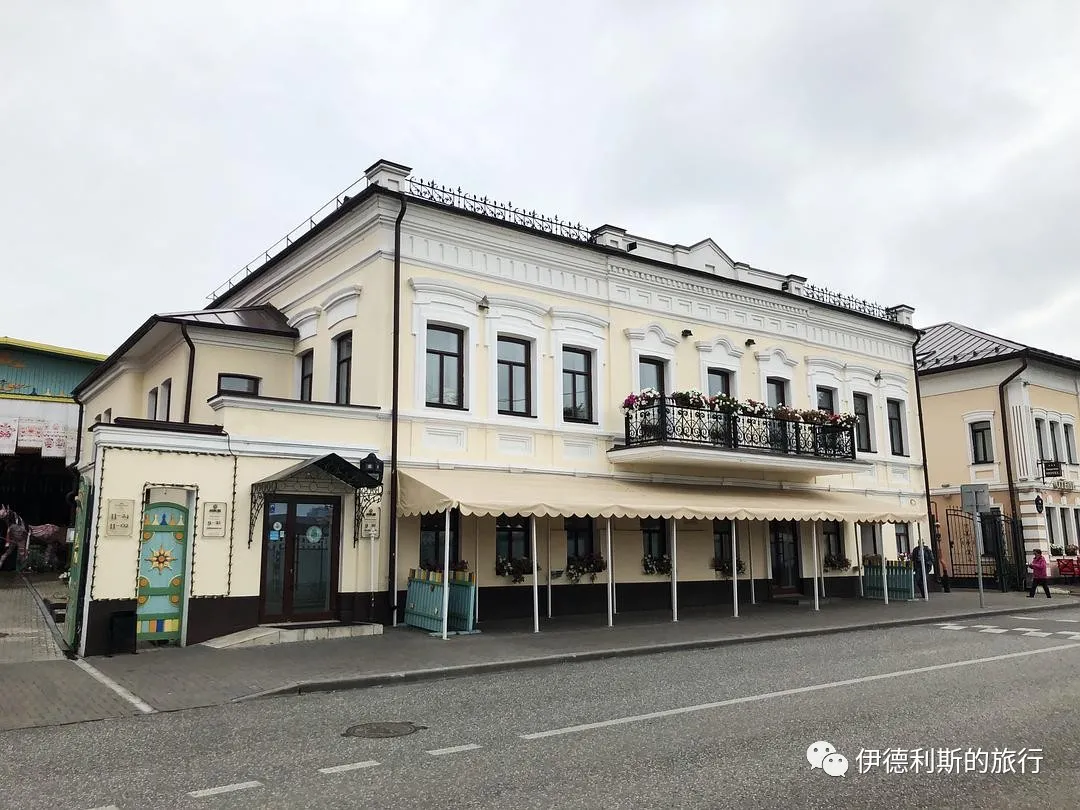
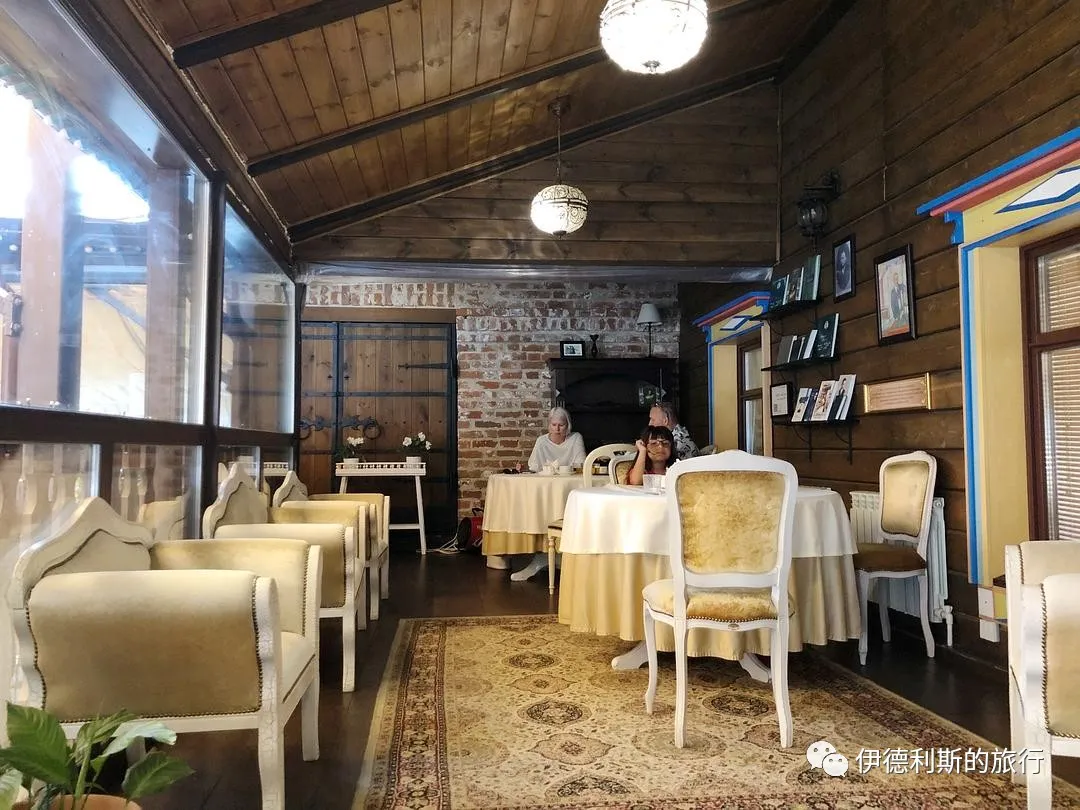
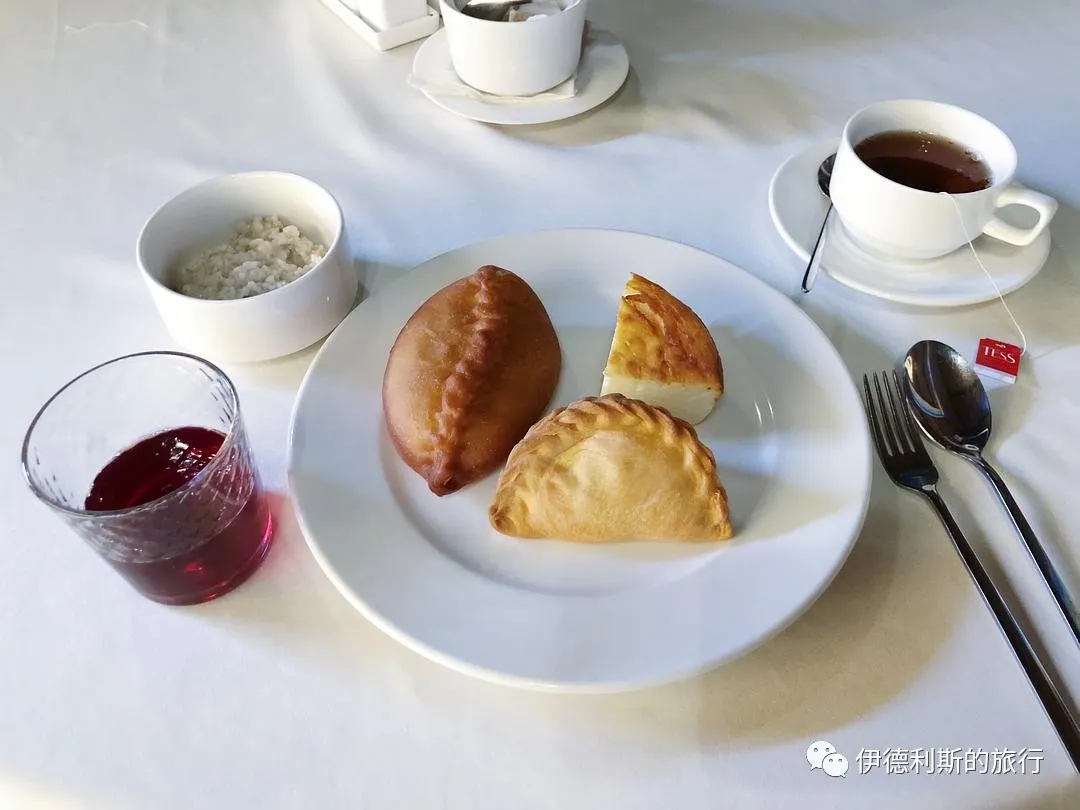
I stayed at a traditional Tatar estate called Tatarskaya Usadba by the shore of Lake Kaban, which was originally the home of a 19th-century Tatar merchant named Khamit Sabitov. The estate offers both lodging and dining, but since I didn't book a main meal in advance, I only had breakfast, which was also in the traditional Tatar style.
Cultural Activities
I was very lucky to attend the Tatar cultural festival called the Pechen Bazaar (Pechen bazary) in Kazan. It was very lively, with various Tatar designers, poets, musicians, and filmmakers showing their work and sharing ideas.
For traditional Tatar tea, you can see ingredients like thyme, linden leaves, chamomile, oregano, mint, and sage added to the brew. I also saw an uncle toss pine cones directly into the tea stove, which made it smell wonderful.
Traditional Tatar desserts are a bit like Turkish sweets and go perfectly with tea.
Cakes made by Tatar girls.
Tatar craftspeople.
A young Tatar person is creating Arabic calligraphy on the spot using thread.
A Tatar auntie is selling headpieces for Kazan Tatar women, which are decorated with pearls and look very beautiful.
At the honey stall, the festival invited some Tatar people living in the countryside to sell their own honey, cheese, and sausages, which was also very interesting.
A stall selling traditional Tatar clothing.
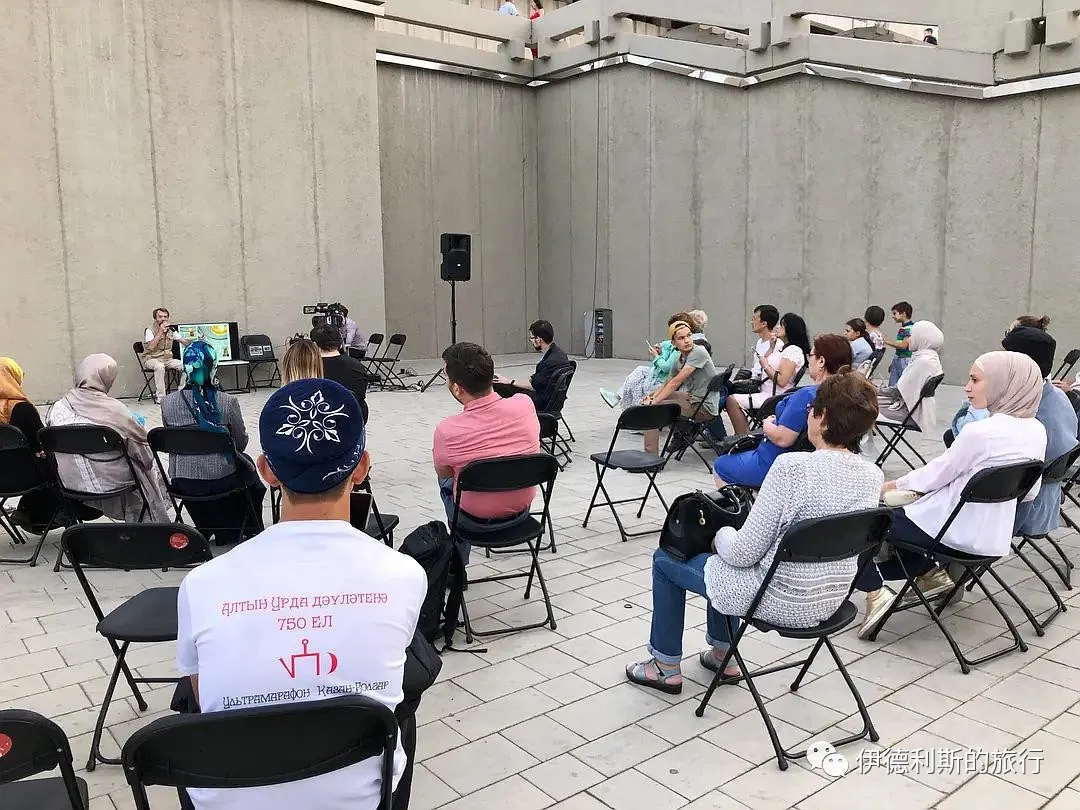
An uncle who is an architect specializing in building mosques is sharing how to construct them.
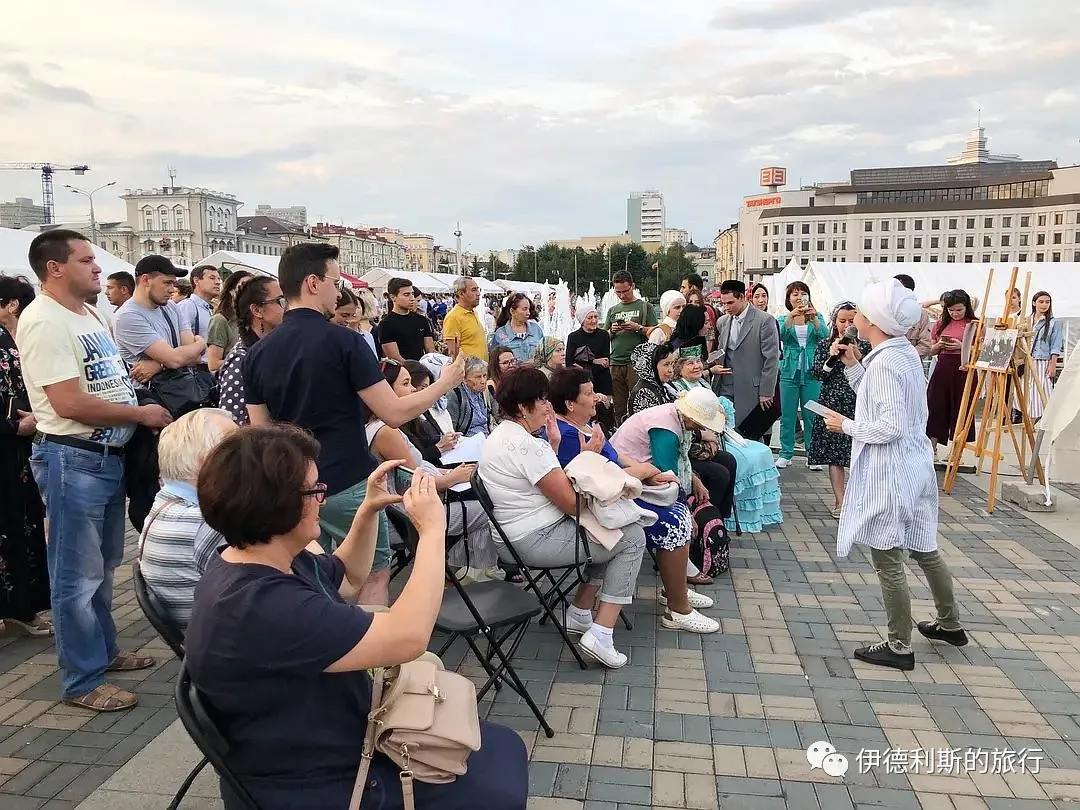
A young Tatar female poet is reading her poetry.
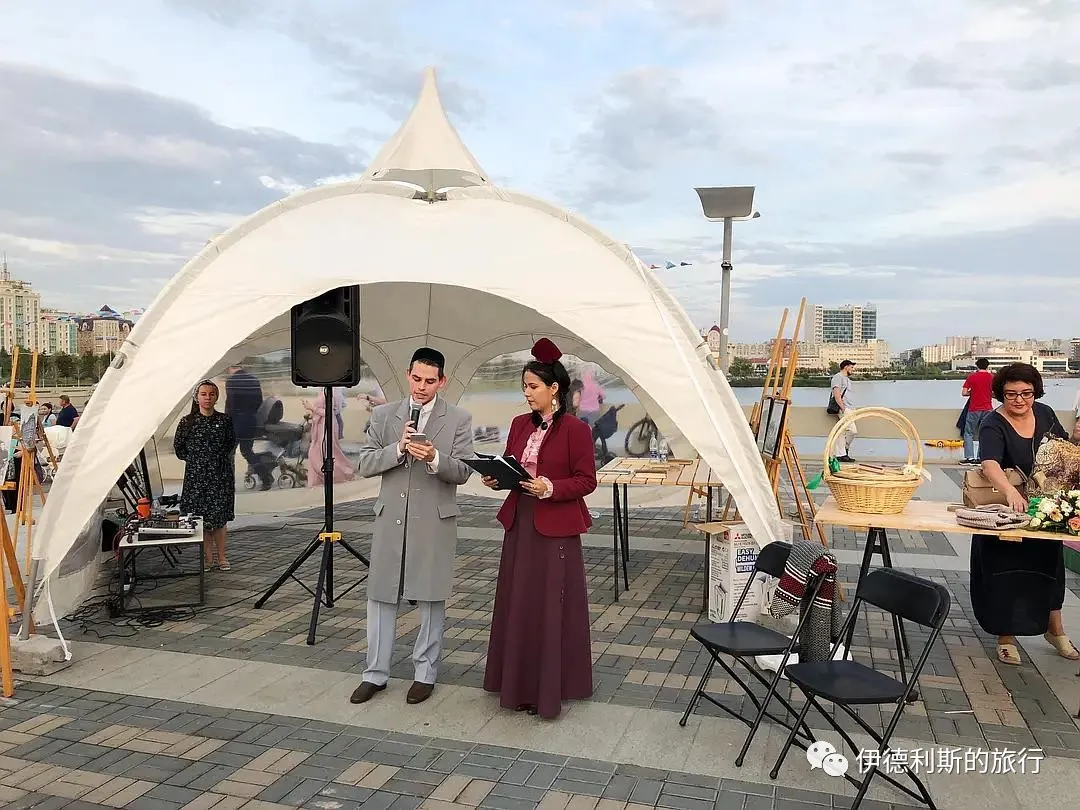
The outfit worn by the host is the formal attire of urban Kazan Tatars from the early 20th century.
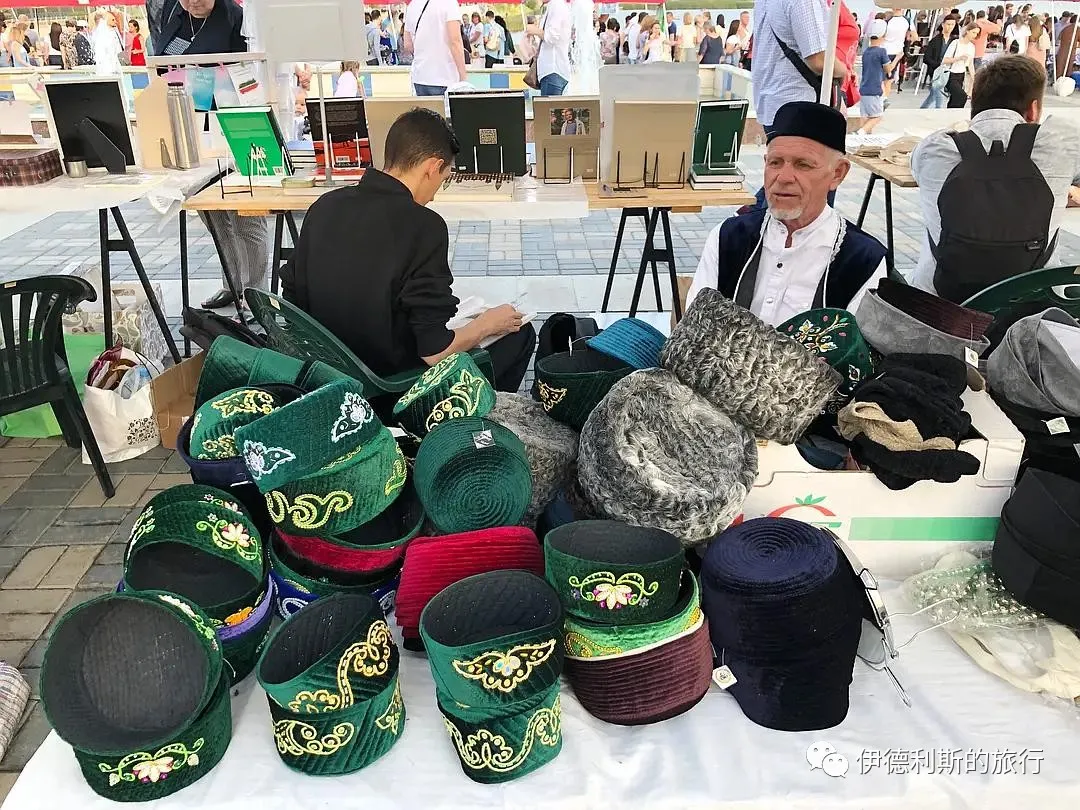
This stall is a creative brand featuring a sweet Islamic style inspired by Tatar culture.
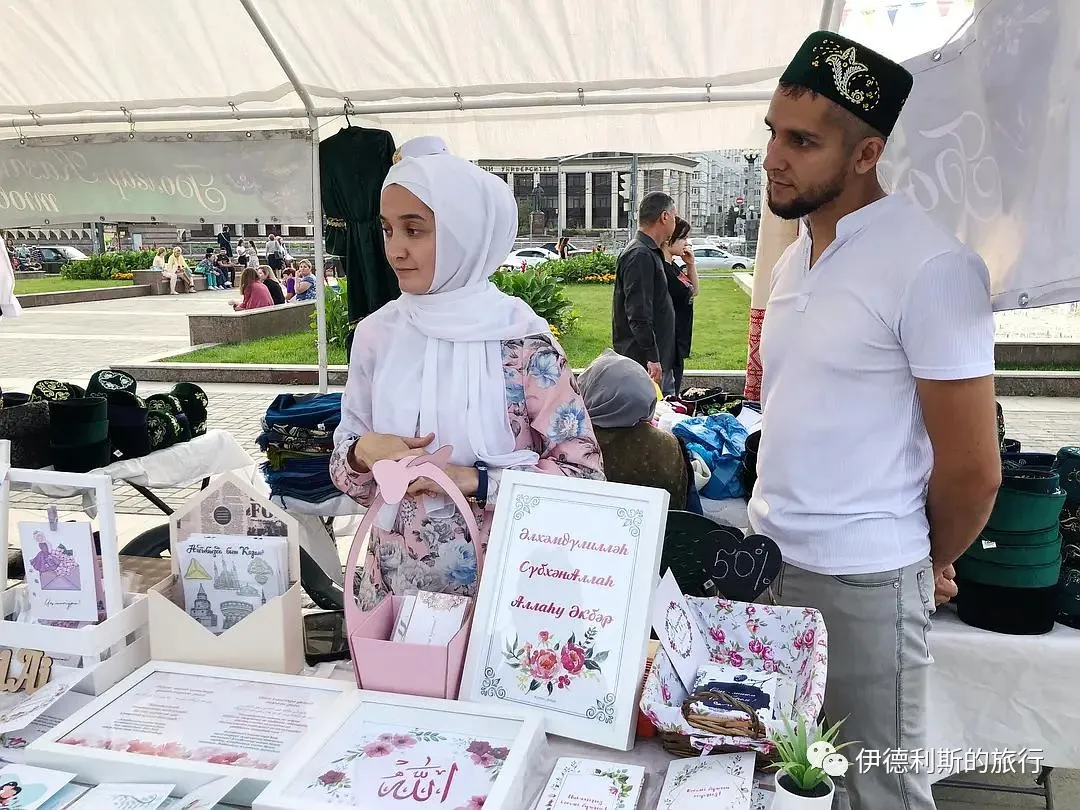
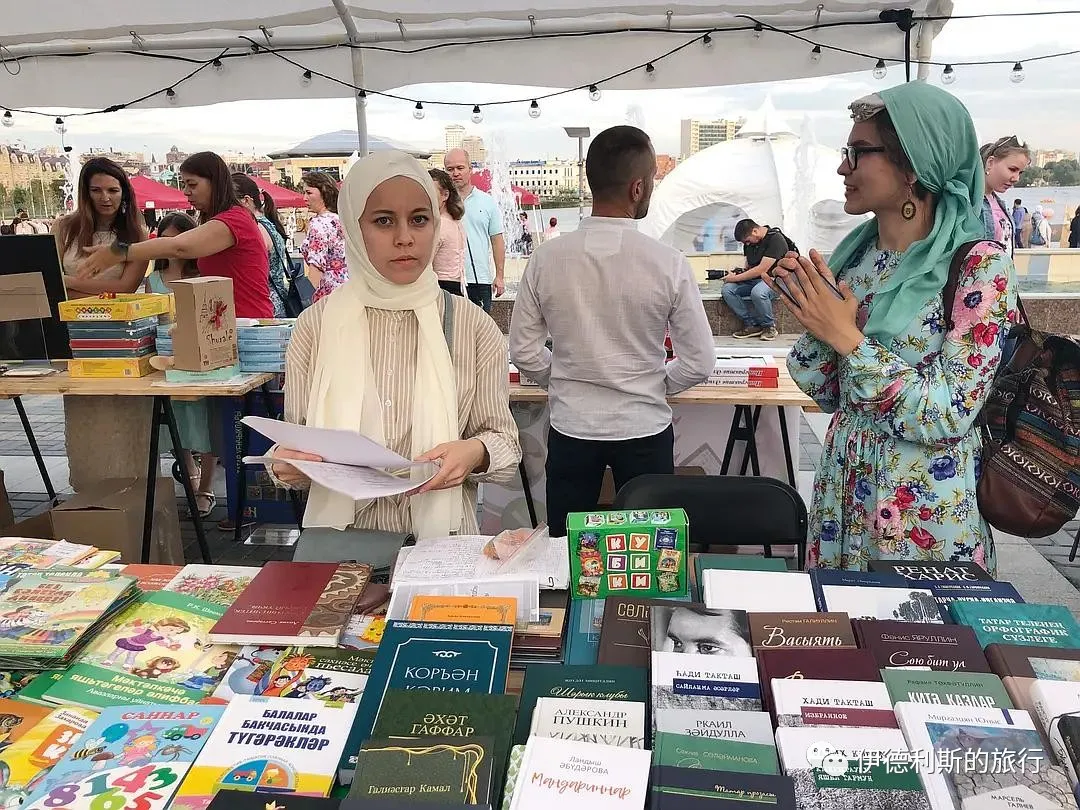
A stall selling books about Tatar culture.
Restaurant
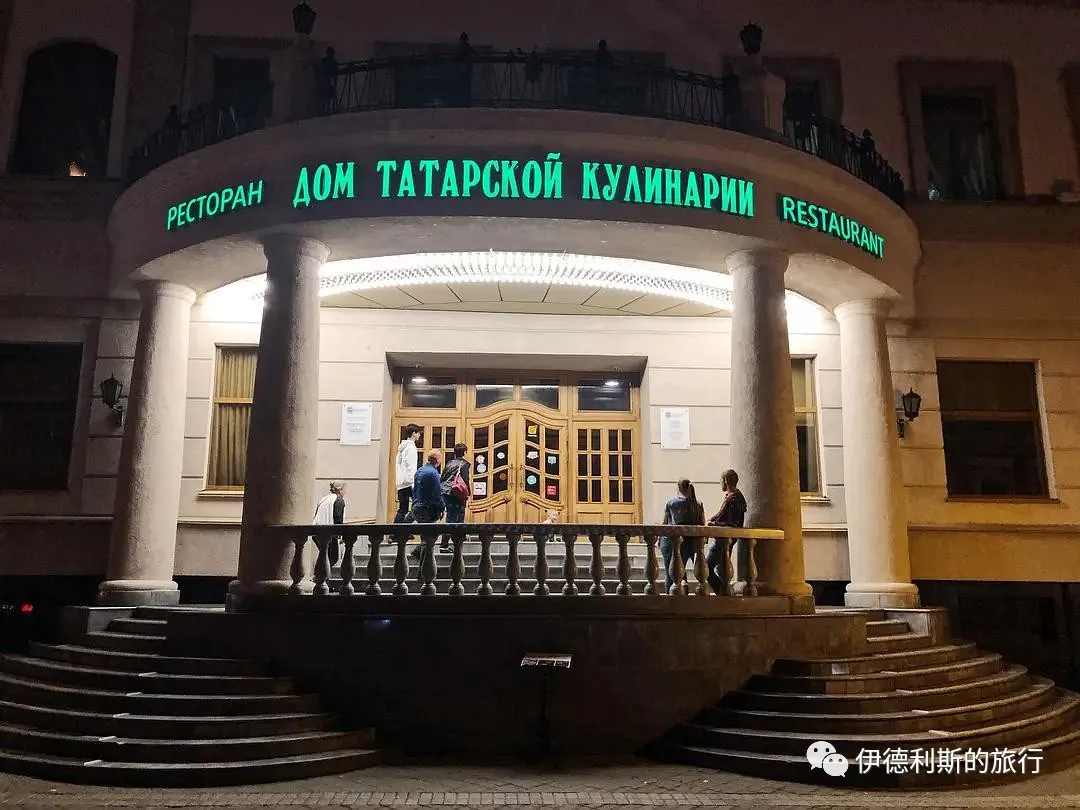
While in Kazan, I ate at the famous traditional Tatar restaurant Dom Tatarskoi Kulinarii (Tatar Cuisine House) on Bauman Street. The restaurant opened in 1969. It was founded by Yunus Akhmetzyanov, a Tatar food expert and author of "Dishes of Tatar cuisine," who served as the head chef until 1984.
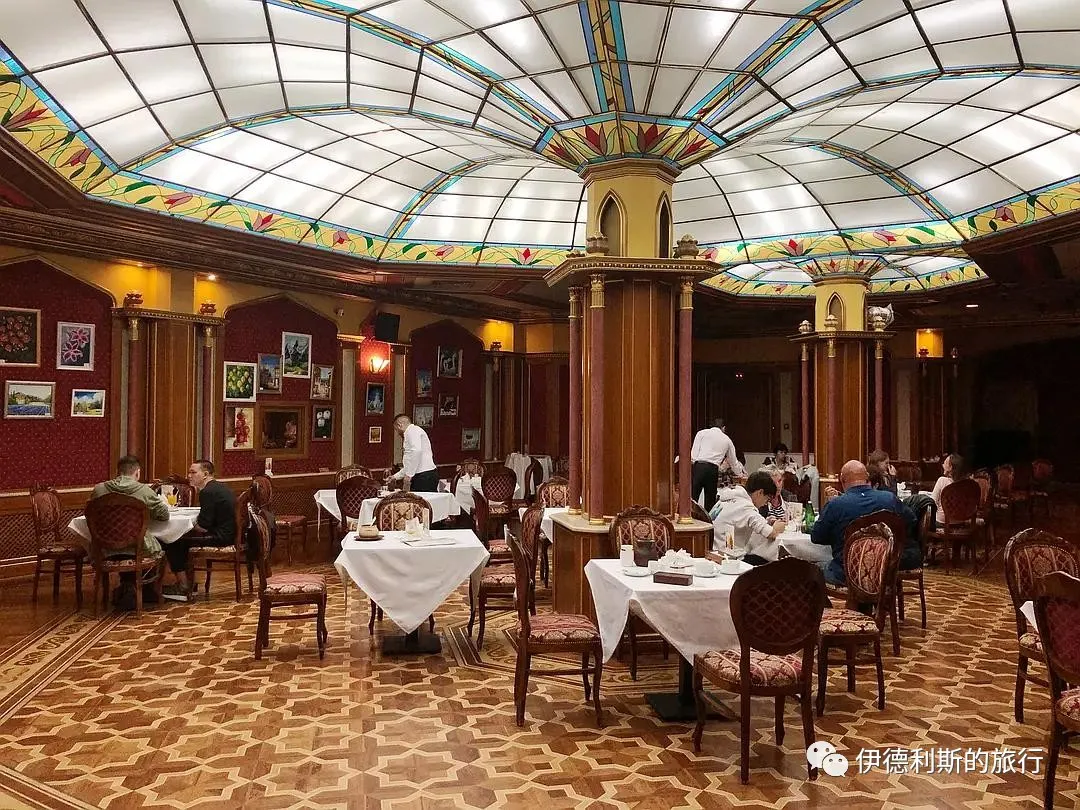
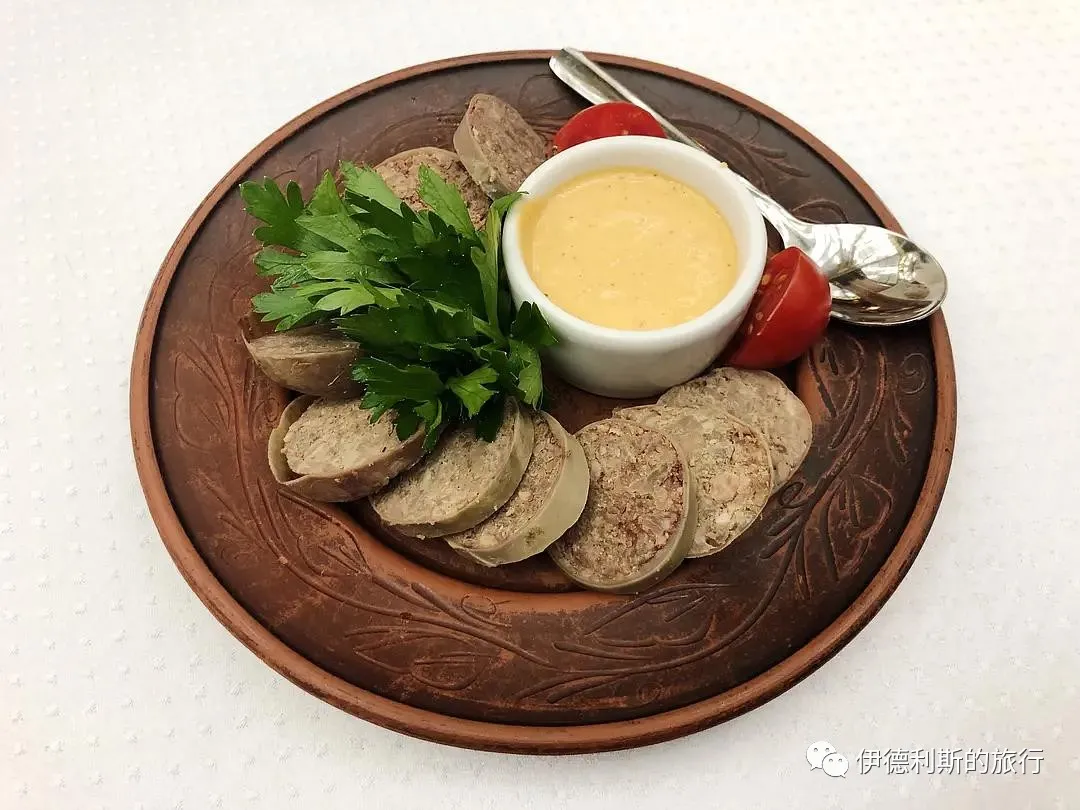
In the evening, I ate at Teatr Natsionalnoi Kukhni, a restaurant inside another Tatar estate by Lake Kaban that was once the home of the wealthy Tatar merchant Bikmukhametov. I ordered horse meat salad, cream of pumpkin soup with dried apricots and cream cheese, and a fresh horse meat stew called Kullama. Kullama is the Tatar version of the national dish of Kazakhstan, five-finger stew (Beshbarmak).
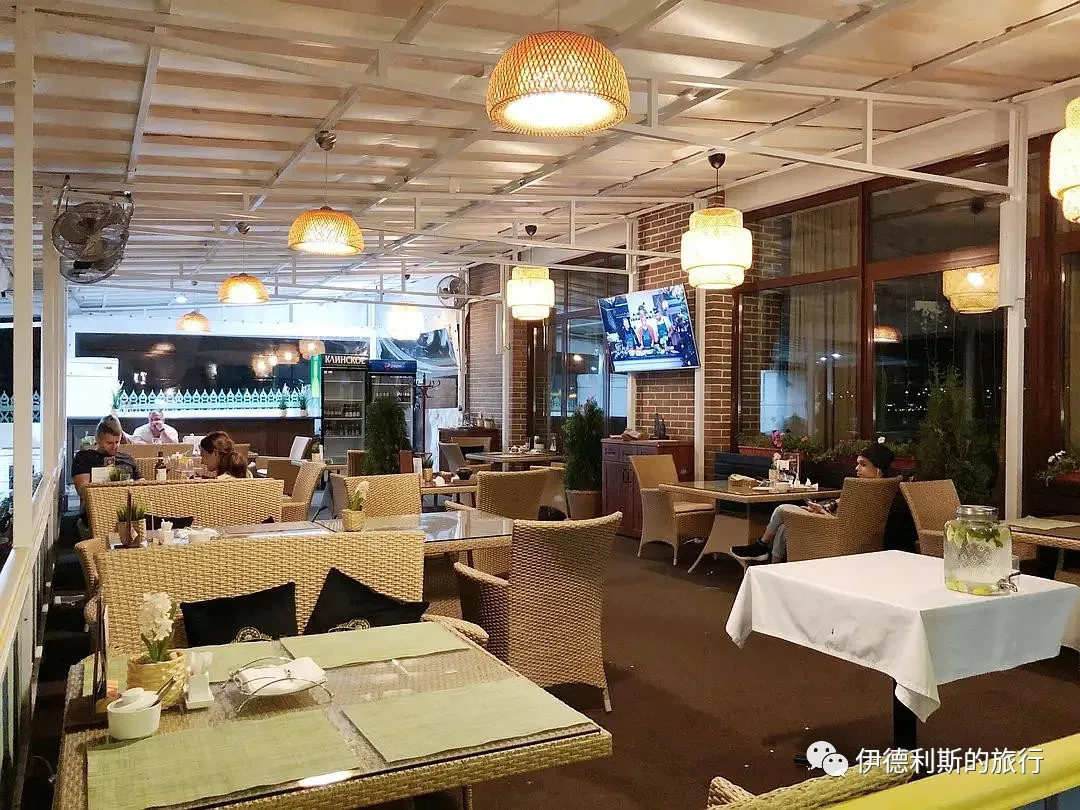
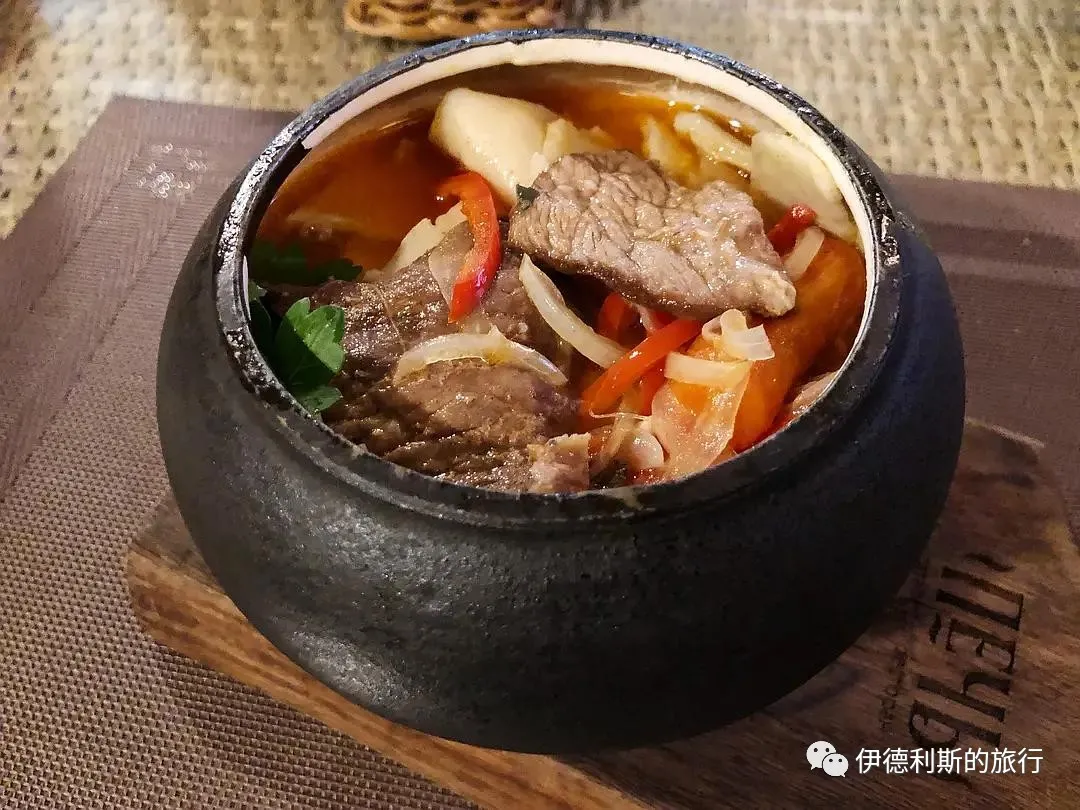
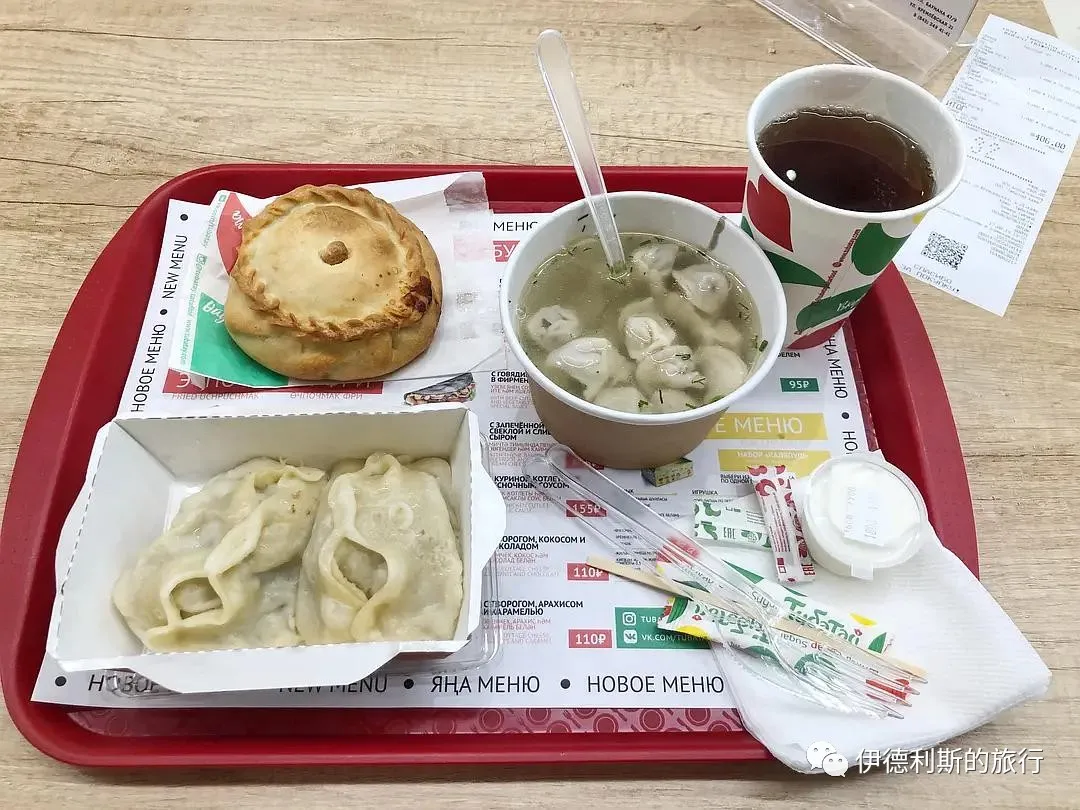
Tubatay is a fast-food restaurant selling traditional Tatar dishes, and they also have a shop inside the ancient city of Bolghar. The name "Tubatay" refers to the traditional round cap worn by Tatar people.
I ordered steamed dumplings (Manti), a signature meat pie (Belesh) made with sour cream dough and a filling of beef, potatoes, and onions, Tatar clear soup dumplings (Pilmen) served with sour cream (Smetana), and Tatar tea.

Next to where I stayed, there was a large halal supermarket specializing in Tatar goods, with a dazzling variety of traditional Tatar desserts.
Street view
Street view of the Tatar community in Kazan
Halal Travel Guide: Kazan Kremlin — Tatarstan Museum and Muslim Heritage
Articles • ali2007fr posted the article • 0 comments • 148 views • 2026-05-18 02:38
Summary: Kazan Kremlin — Tatarstan Museum and Muslim Heritage is presented here as a firsthand travel account in clear English, beginning with this scene: Kazan Kremlin sits in the heart of Kazan, the capital of Tatarstan, and started as a fortress for the Volga Bulgaria khanate. The account keeps its focus on Kazan Travel, Tatarstan Museum, Muslim Heritage while preserving the names, places, food, and historical details from the Chinese source.
The history of Kazan city.
Kazan Kremlin sits in the heart of Kazan, the capital of Tatarstan, and started as a fortress for the Volga Bulgaria khanate. After the 9th century, the Bulgars living along the Volga River kept expanding to the northwest. To protect trade routes on the Volga, the Bulgars built a military fortress between the 10th and 11th centuries in the middle reaches of the river, featuring a 4-meter-deep steep trench and a 3-meter-high earthen wall; this marks the beginning of Kazan's history as a city.
In the late 12th century, the Volga Bulgaria khanate added a 2-meter-thick white stone wall to Kazan city to defend against constant attacks from Russian principalities. After Kazan joined the Golden Horde in the 13th century, it jumped from a border fortress to become the political and economic center of the middle Volga, famous for leather, jewelry, ceramics, and metalwork.
After the Golden Horde collapsed in the 15th century, the Kazan Khanate (1438-1552) was established in Kazan. As the capital, Kazan's population grew quickly, and many homes and public buildings were built, including the Kazan Khan's palace, courtyards, mosques, and tombs, with tall minarets defining the city skyline.
In 1552, Ivan the Terrible of Russia attacked Kazan, destroyed the Kazan Khanate, and forced all Tatars out of the city, allowing only Russians to settle there. Between 1556 and 1562, Ivan the Terrible ordered the construction of the Kazan Kremlin on the site of the old Kazan Khanate fortress. The mosques, the Kazan Khan's palace, and the tombs were first used as armories and ammunition depots, but they were all torn down by the 18th century.
Restoration images of the Volga Bulgaria and Kazan Khanate periods from the official Kazan Kremlin website.
The tomb of the Kazan Khan.
In 1977, water engineers digging for a rainwater pipe at the Kazan Kremlin accidentally uncovered a tomb and immediately contacted the archaeology department. Archaeological excavations lasted for 10 years and uncovered five graves. Two were confirmed to be those of the actual founders of the Kazan Khanate: Kazan Khan Mäxmüd (died in 1463 or 1466) and his grandson, Kazan Khan Möxämmät Ämin (died in 1518). The tomb was originally built from white stone and eventually collapsed in the 17th century.
For further research, the remains of the two Kazan Khans, Mäxmüd and Möxämmät Ämin, were kept at the Institute of Archaeology of the Tatarstan Academy of Sciences for 40 years. In May 2017, after persistent efforts by the Tatar Muslims of Kazan, the two Kazan Khans were finally reburied not far from the original tomb site.
The burial site discovered in 1977.
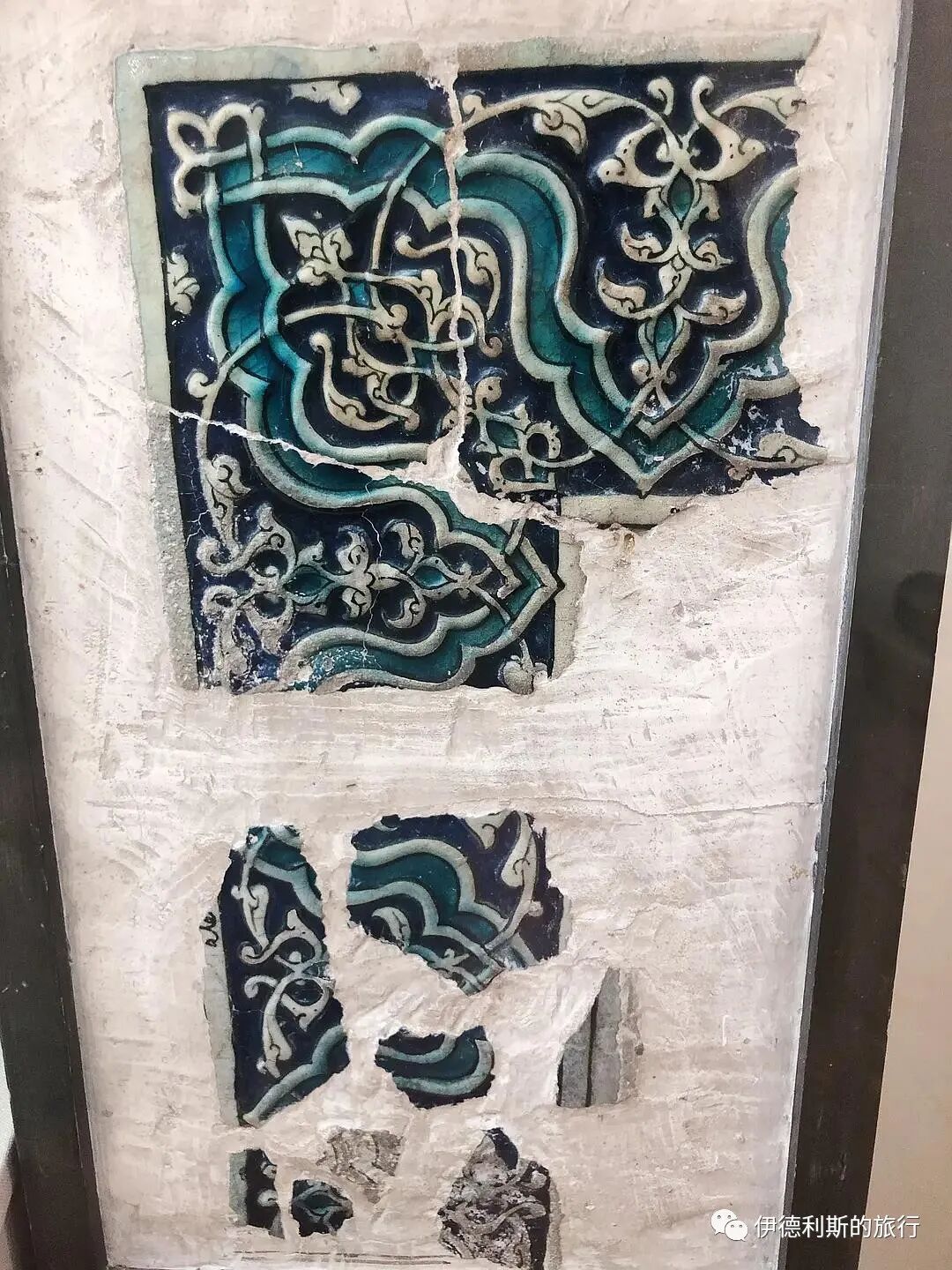
Likely relics from the Khan's palace mosque.
Khan Mäxmüd was the eldest son of Ulugh Muhammad, the Great Khan of the Golden Horde, and a descendant of Genghis Khan's eldest son, Jochi. In 1438, his father Ulugh Muhammad occupied Kazan and began constant raids on the Grand Duchy of Moscow. Mäxmüd joined his father's attack on Moscow and won a major victory in 1445, capturing Grand Prince Vasily II and forcing the Grand Duchy of Moscow to pay tribute to Kazan. Mäxmüd took the throne in 1445 and kept control over Moscow. During his reign, Kazan completely separated from the Golden Horde, marking the beginning of what later generations called the Kazan Khanate.
Khan Muhammad Amin was the grandson of Khan Mahmud. From the age of 10, he was involved in the struggles between pro-Russian and anti-Russian factions within the khanate. As a khan supported by Moscow, he took the throne three times: from 1484 to 1485, 1487 to 1495, and 1502 to 1518. He also paid tribute to Grand Prince Ivan III of Moscow. Later in his reign, he stopped paying tribute to Moscow and worked to strengthen his country to oppose the Grand Duchy of Moscow.
The burial site was re-interred in 2017.
Between 2004 and 2005, the Institute of Archaeology of the Tatarstan Academy of Sciences re-excavated the Kazan Khan mausoleum. They discovered the graves of four more Kazan khans: Khalil (died 1467), Ibrahim (died 1478), Safa Giray (died 1549), and Canghali (died 1535). Today, these four Kazan khan graves are protected under a glass roof.
Khan Khalil was the eldest son of Khan Mahmud. He was known for violating treaties with the Grand Prince of Moscow and for his poor relationship with the Nogai tribe. The young khan died early, not long after taking the throne. One legend says he died in prison due to the war with the Golden Horde.
Khan Ibrahim was the younger brother of Khan Khalil. He fought against the Grand Duchy of Moscow many times and won a great victory in the 1467 war against Grand Prince Ivan III of Moscow.
Khan Safa Giray came from the Giray family of the Crimean Khanate. He served as the Kazan khan three times: from 1524 to 1531, 1535 to 1546, and 1546 to 1549. Safa Giray was an anti-Russian Kazan khan. His first reign ended when the Grand Duchy of Moscow attacked Kazan. Four years later, he took the throne again after Kazan nobles overthrew the pro-Russian khan. Eleven years later, internal unrest in Kazan led to him being overthrown again by the pro-Russian Kazan Khan. Safa Giray fled to his father-in-law's Nogai tribe, returned to Kazan with a Nogai army a few months later, and became the Kazan Khan for the third time.
Khan Ghali was originally the khan of the Qasim Khanate, a vassal state of the Grand Duchy of Moscow. In 1532, Grand Prince Vasily III of Moscow defeated the Kazan Khan Safa Giray and installed 16-year-old Khan Ghali as the pro-Russian Kazan Khan. He died in 1535 during a coup by Kazan nobles.
The names of six Kazan khans
Kul Sharif Mosque
At the entrance of the Kul Sharif Mosque inside the Kazan Kremlin, there are performances about the Siege of Kazan. In 1552, Ivan the Terrible besieged Kazan. The last imam of the Kazan Khanate, Seid Kul Sharif, led the people in a final stand and eventually died in the city. Today, Seid Kul Sharif is a national hero to the Kazan Tatars, and the new Kul Sharif Mosque built in 2005 is named after him.
The imam chanting inside the mosque has a beautiful and moving voice. This is the first time I have seen a mosque open to tourists to experience chanting firsthand.
There is a small Islamic culture museum on the basement level of the mosque.
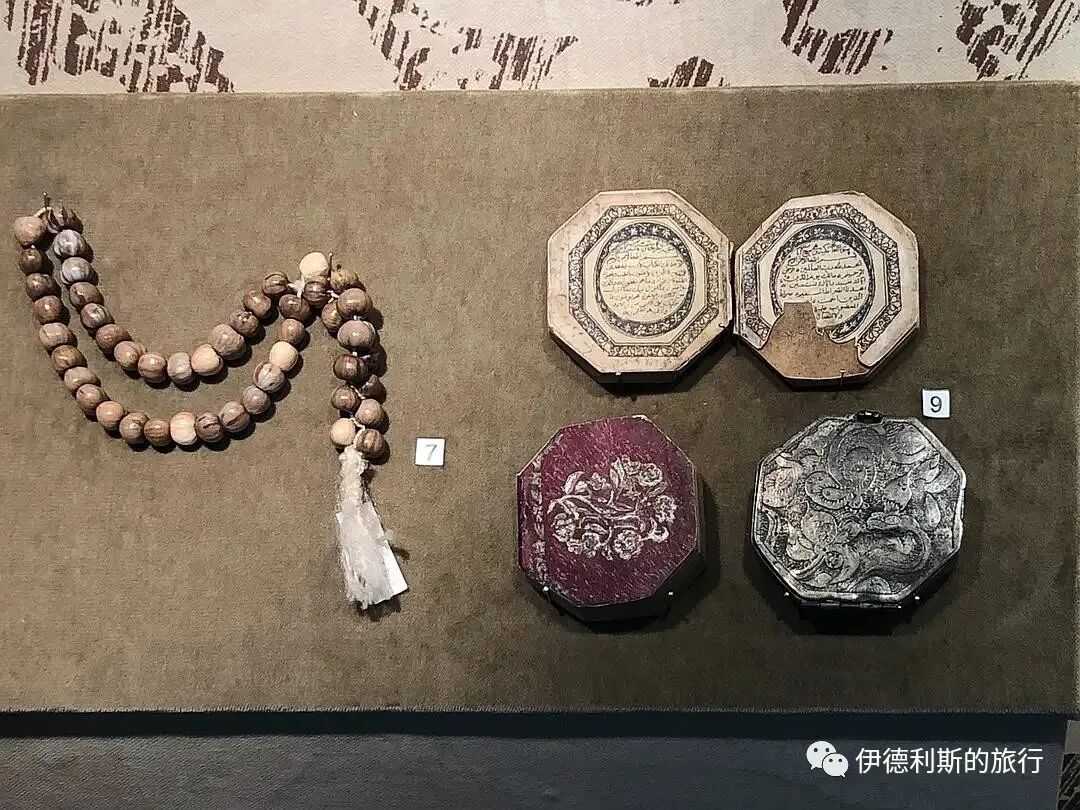
A pocket-sized Quran (gureani) from the Kazan Tatars in the late 19th century.
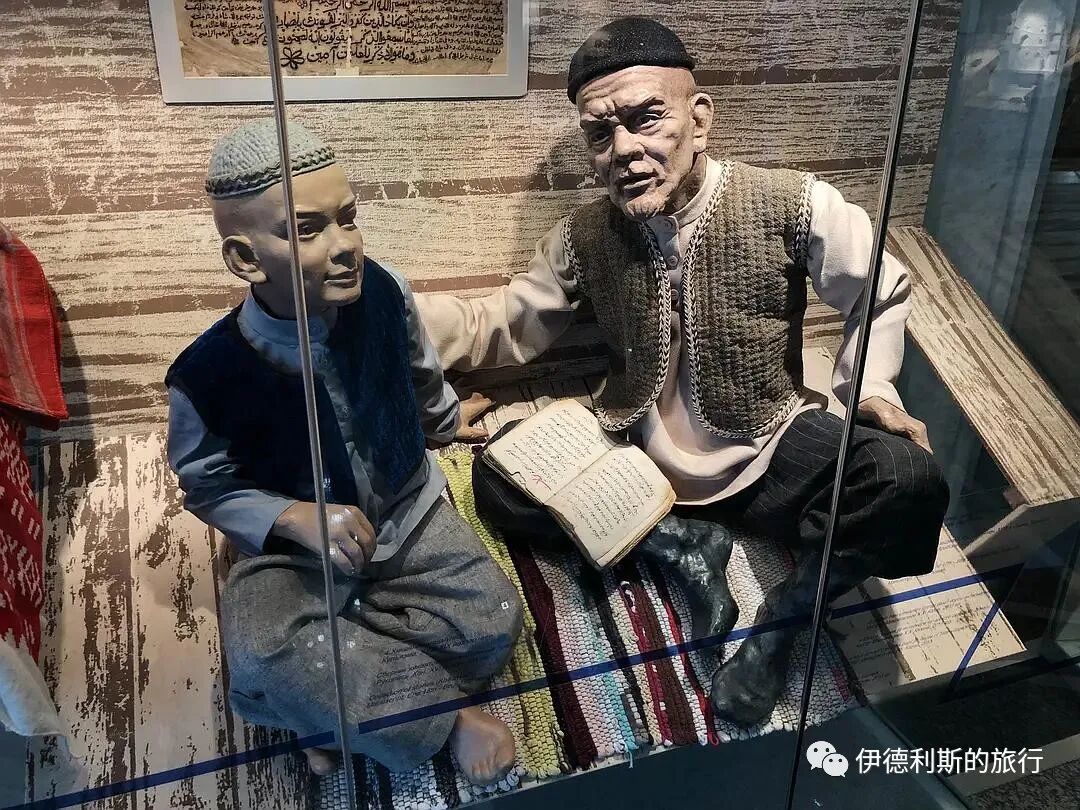
A display showing an imam and a student (hailifan) teaching scripture in the 19th century.
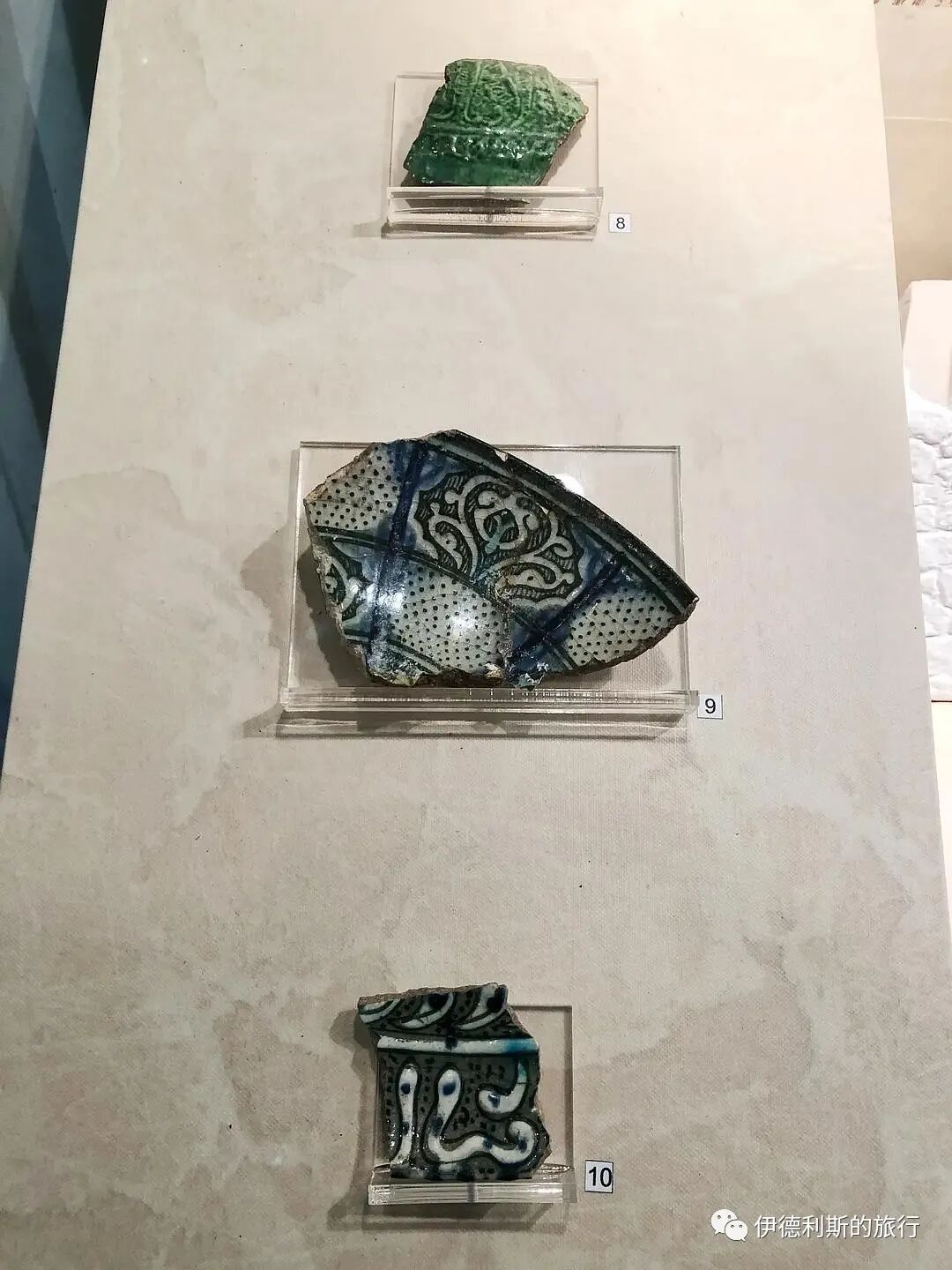
Porcelain from the ancient city of Bolghar dating back to the 10th to 13th centuries.
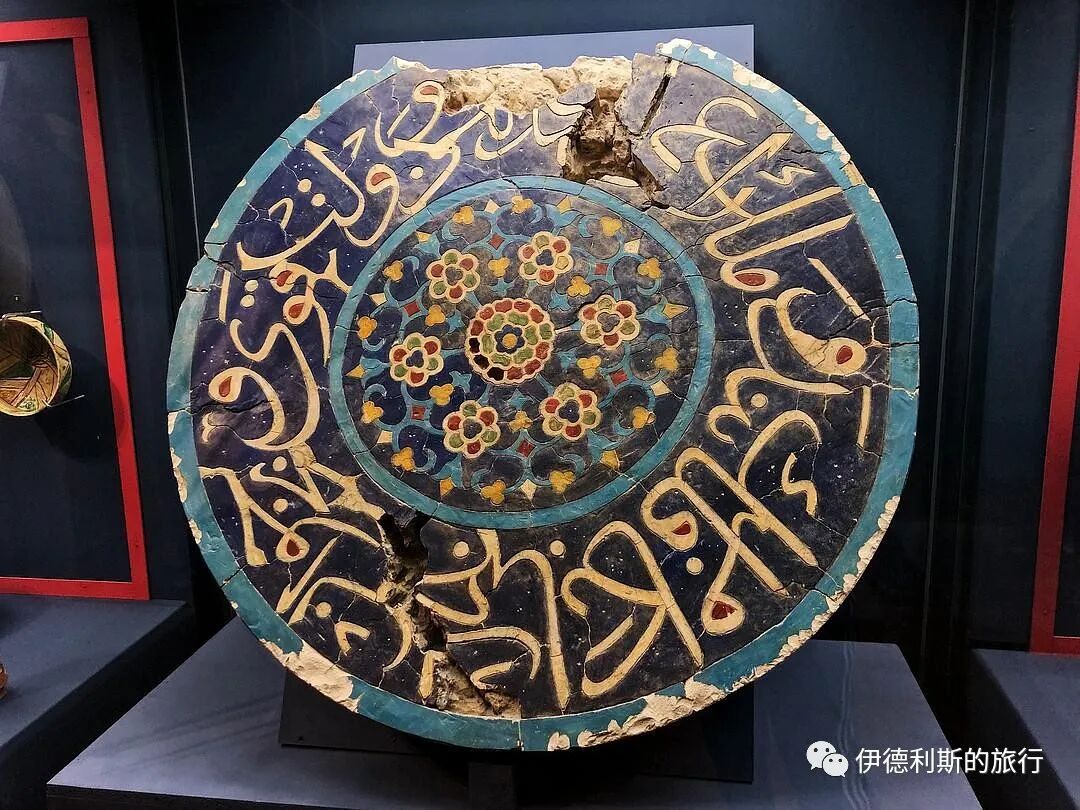
A decorative panel from the Golden Horde period.
Literacy materials and magazines for Kazan Tatars from the early 20th century.
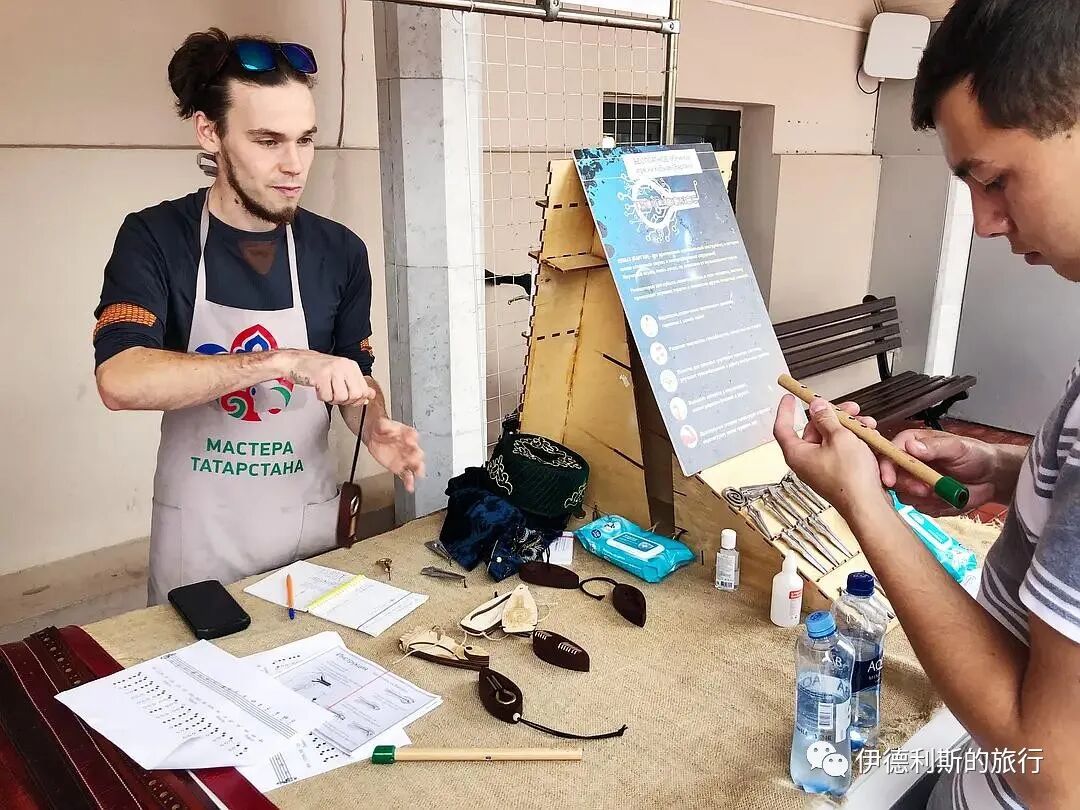
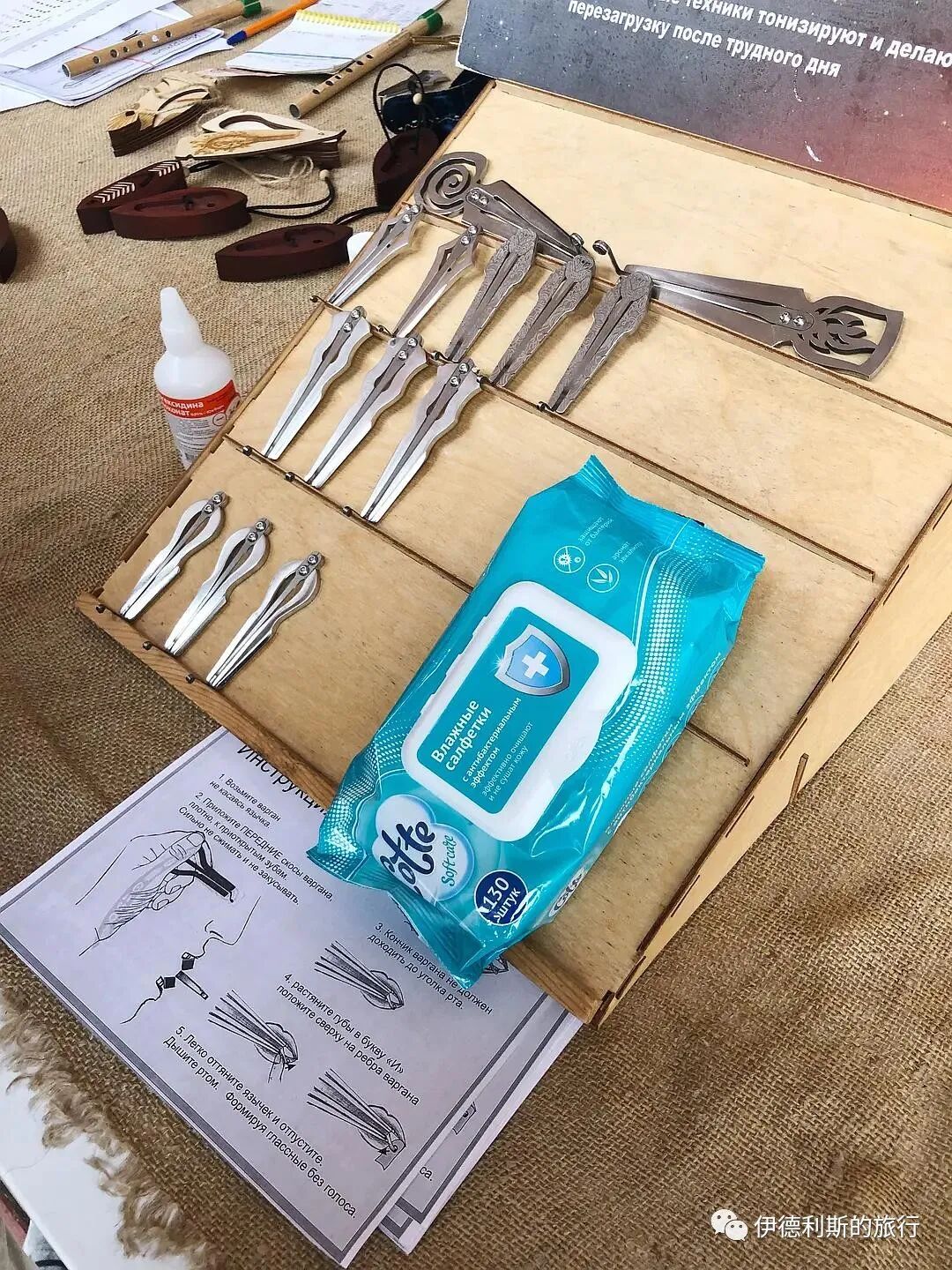
A handsome Tatar guy was selling mouth harps (kouxian) at the mosque entrance, and I really regret not buying one.
Republic of Tatarstan Museum
The National Museum of the Republic of Tatarstan opened in 1895. The building was once the Gostinniy Hotel and is a historical monument of Tatarstan itself. The museum has over 800,000 items in its collection, including pieces related to the Golden Horde, the Kazan Khanate, and the Kazan Tatars.
A letter written in 1523 by Sahib I Giray, the Khan of Kazan who reigned from 1521 to 1524. There is a replica of this letter inside the Kazan Kremlin.
Sahib Giray was a descendant of Jochi, the eldest son of Genghis Khan, and his grandfather founded the Crimean Khanate. In 1521, the Kazan Khanate wanted to break free from the Grand Duchy of Moscow. They overthrew the pro-Moscow Kazan Khan, Shahghali, and invited Sahib Giray from Crimea to Kazan to become the new Khan.
Sahib Giray attacked Moscow twice, in 1521 and 1522, and brought back many captives. In 1524, Moscow sent a large army to attack Kazan, forcing Sahib Giray to flee back to Crimea.
People actually know Sahib Giray better for what happened after that. In 1532, the Ottoman Empire installed Sahib Giray as the Crimean Khan. That same year, he built a new capital, Bakhchisarai, in a valley downstream from the old capital of the Crimean Khanate. For the next 250 years, Bakhchisarai served as the capital of the Crimean Khanate, where successive Khans built palaces and various mosque buildings. Today in Bakhchisarai, you can still see the Great Khan Mosque and the Sary Guzel bathhouse, both built under the direction of Sahib Giray in 1532.
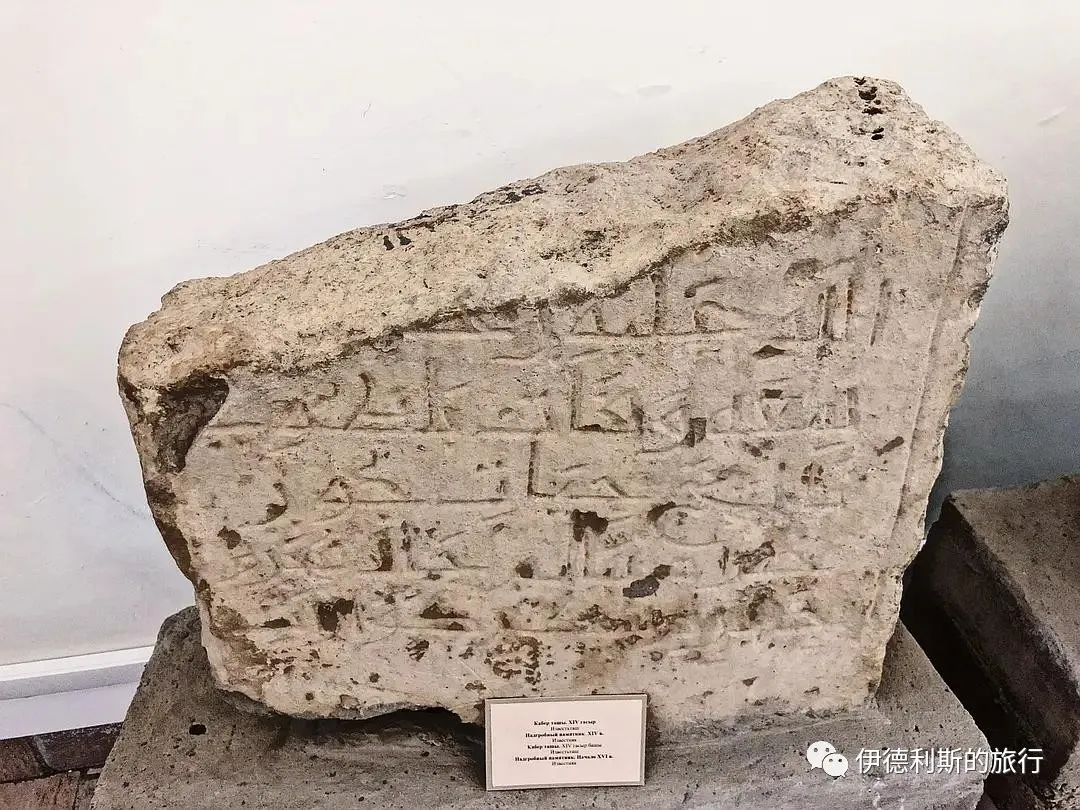
A tombstone from the Golden Horde period in the 14th century.
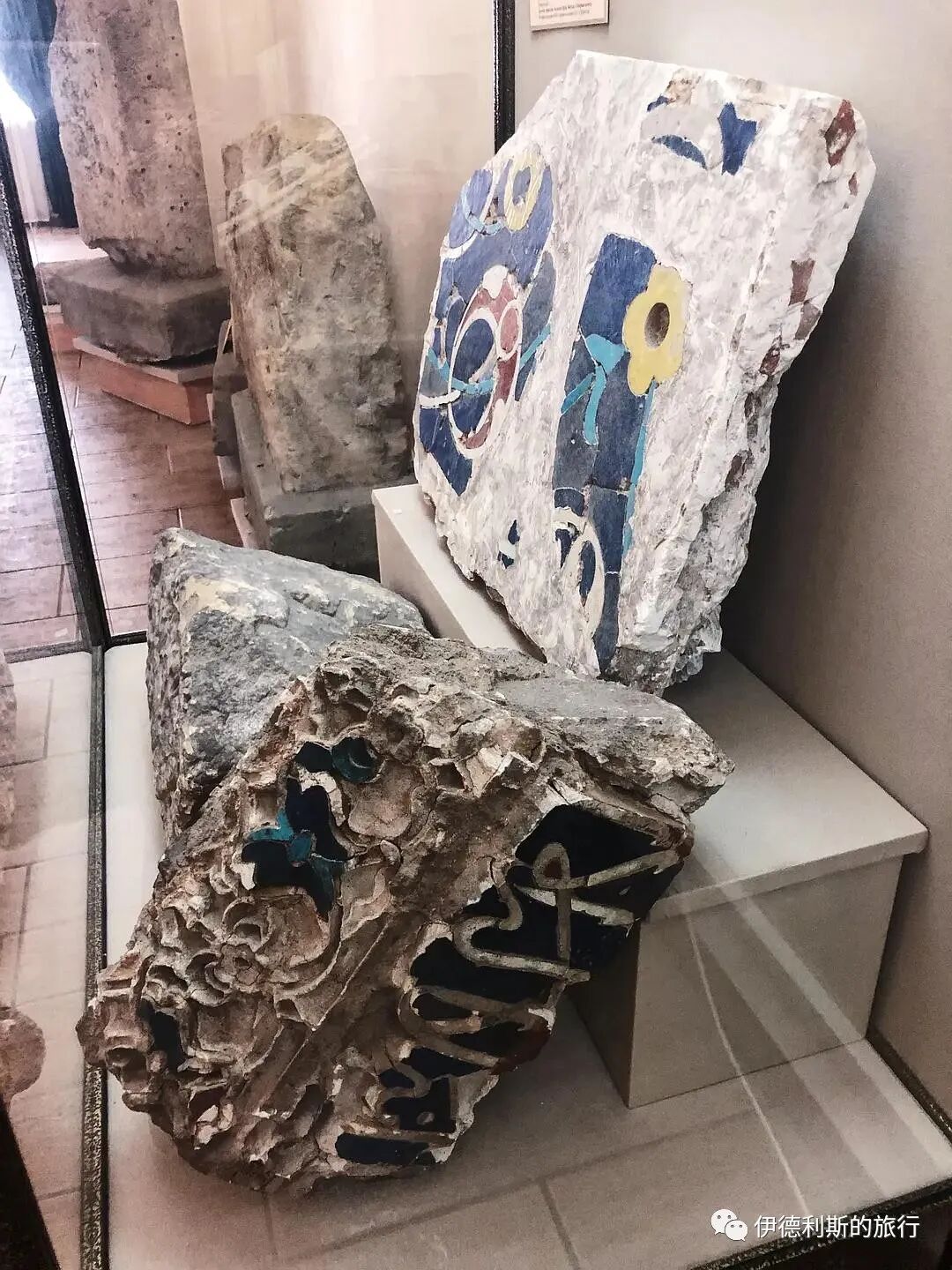
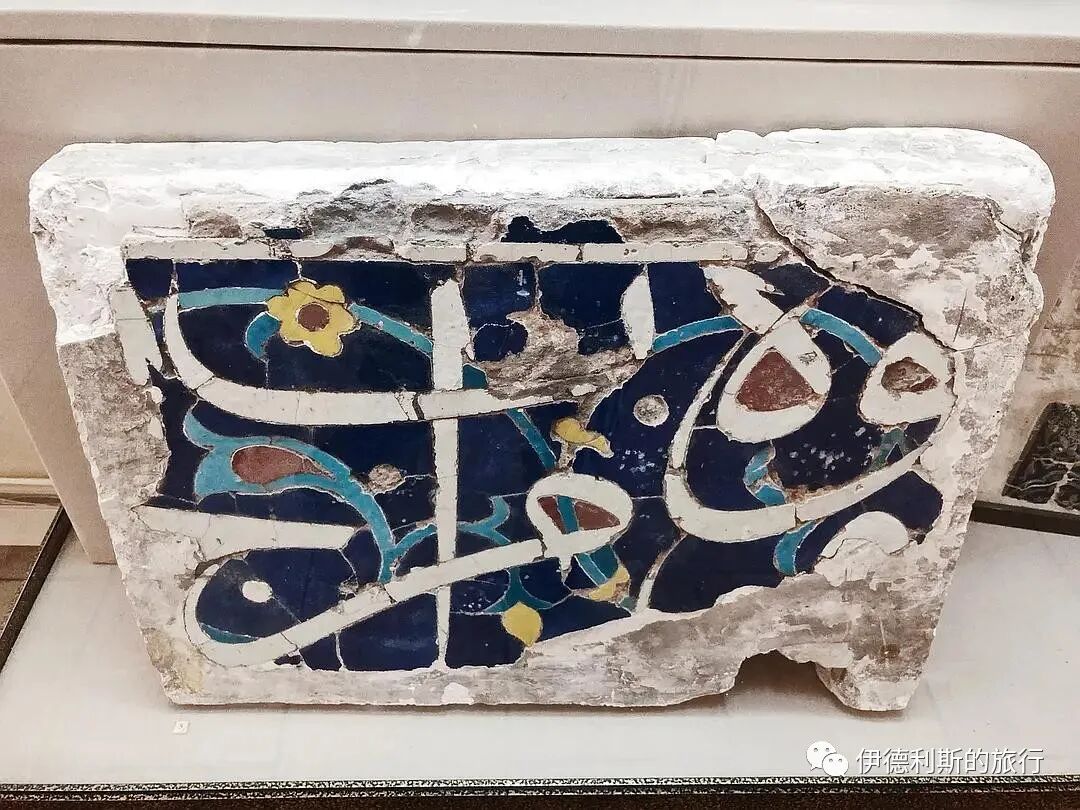
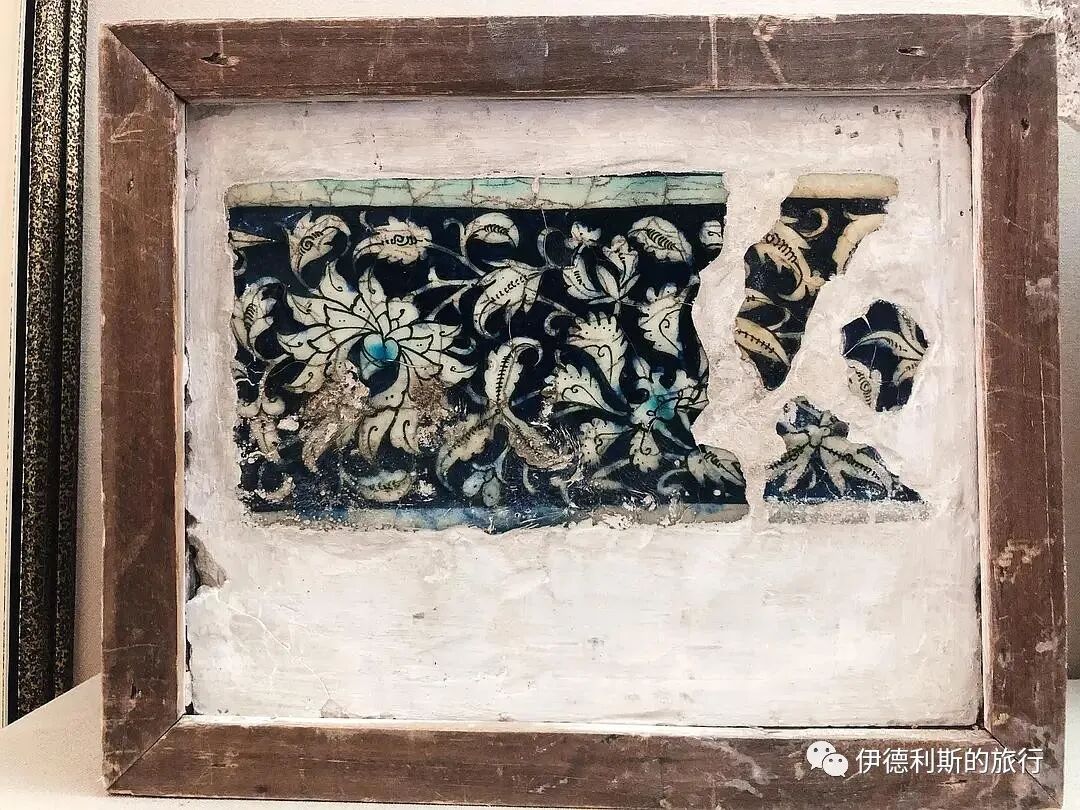
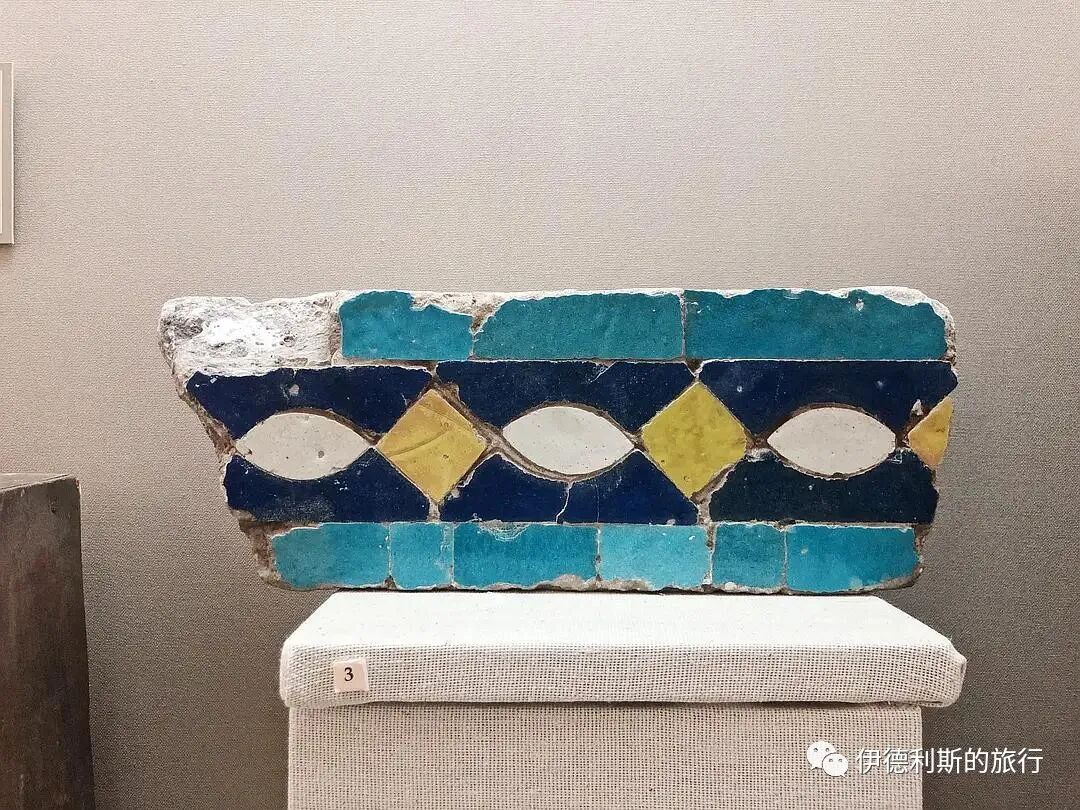
Architectural pieces from the Golden Horde period in the 14th century. The bottom left shows pieces from the Great Mosque of Bolghar, dating from the late 13th to early 14th century.
A water basin from a public bathhouse in the ancient city of Bolghar during the 14th-century Golden Horde period.
Gate components from the Great Mosque of Bolghar during the Golden Horde period, dating from the late 13th to early 14th century.
A tombstone from Kazan during the Golden Horde period in the early 14th century.
A tombstone from the 14th to 15th century, dating back to the Golden Horde or Kazan Khanate period.
A miniature Quran box used by Kazan Tatars from the late 18th to the 19th century.
Jewelry worn by Kazan Tatars from the late 18th to the 19th century.
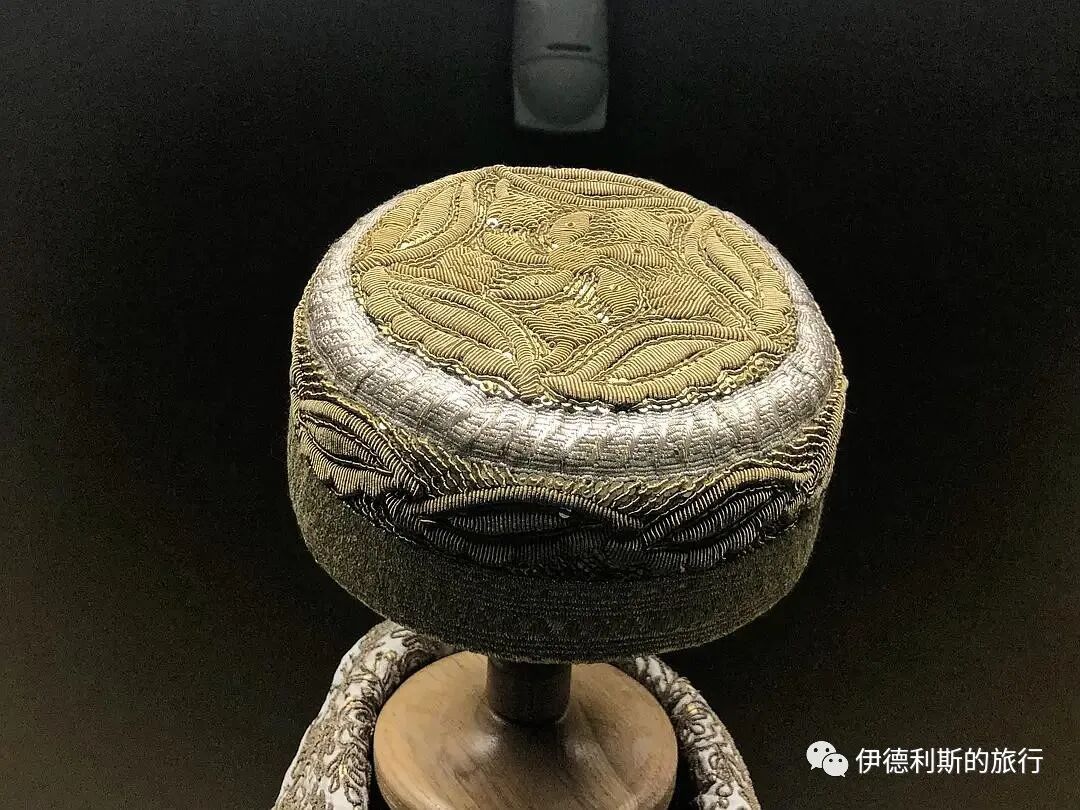
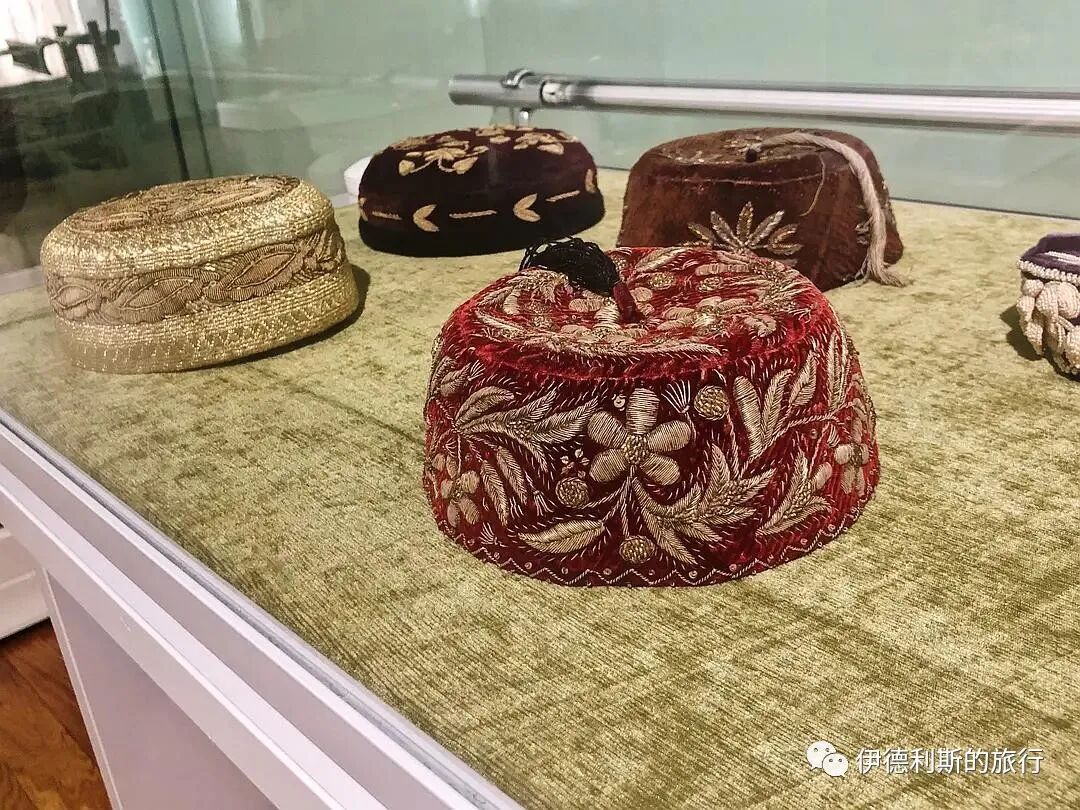
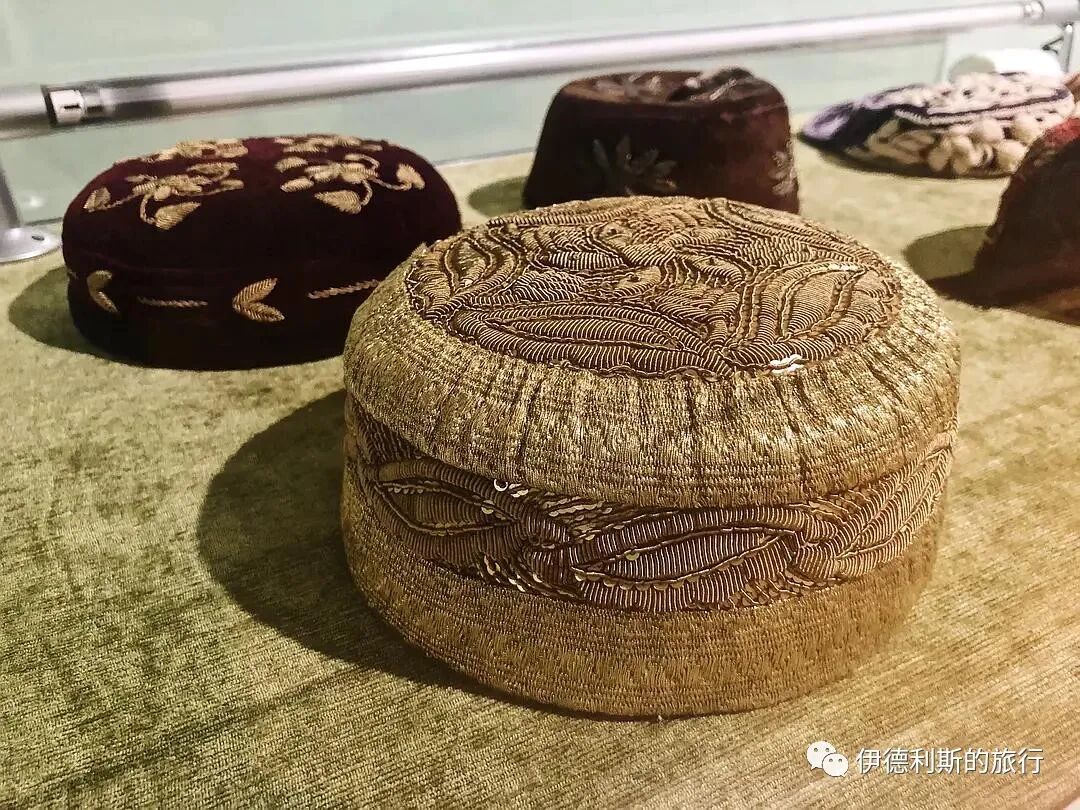
Embroidered caps worn by Kazan Tatars from the 19th to the early 20th century.
A 1902 publication from Kazan University Press introducing the ship Nu Hai and artifacts from the ancient city of Bolghar.
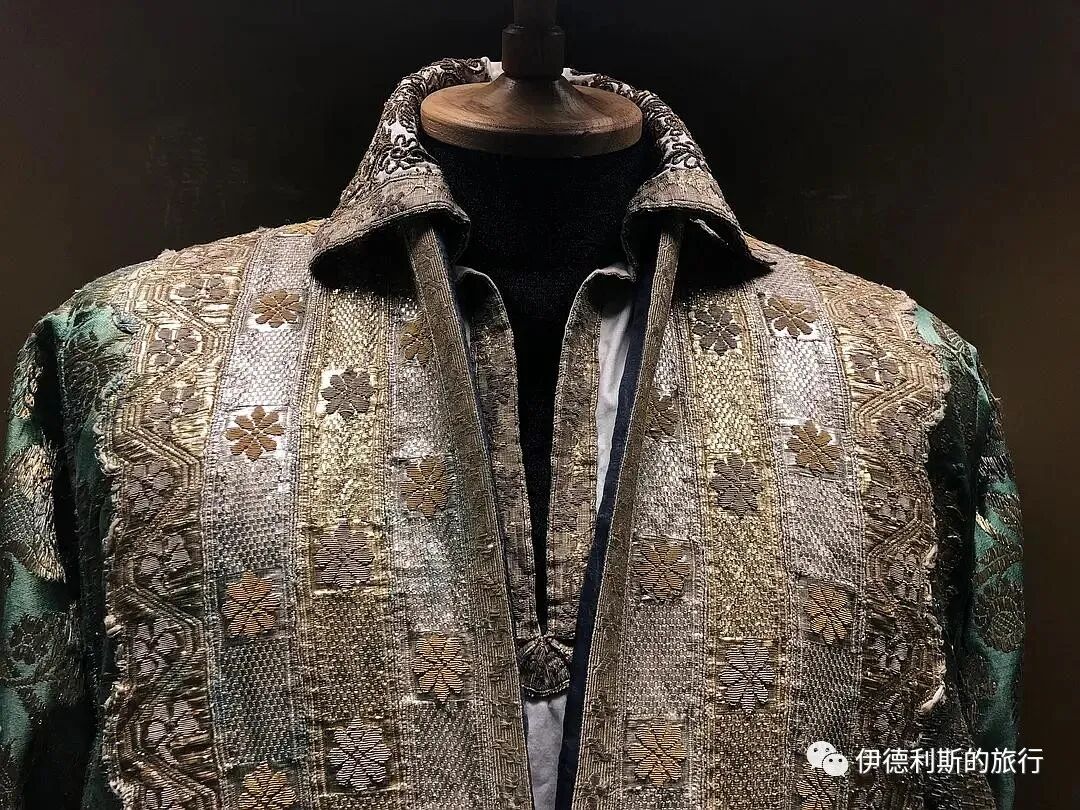
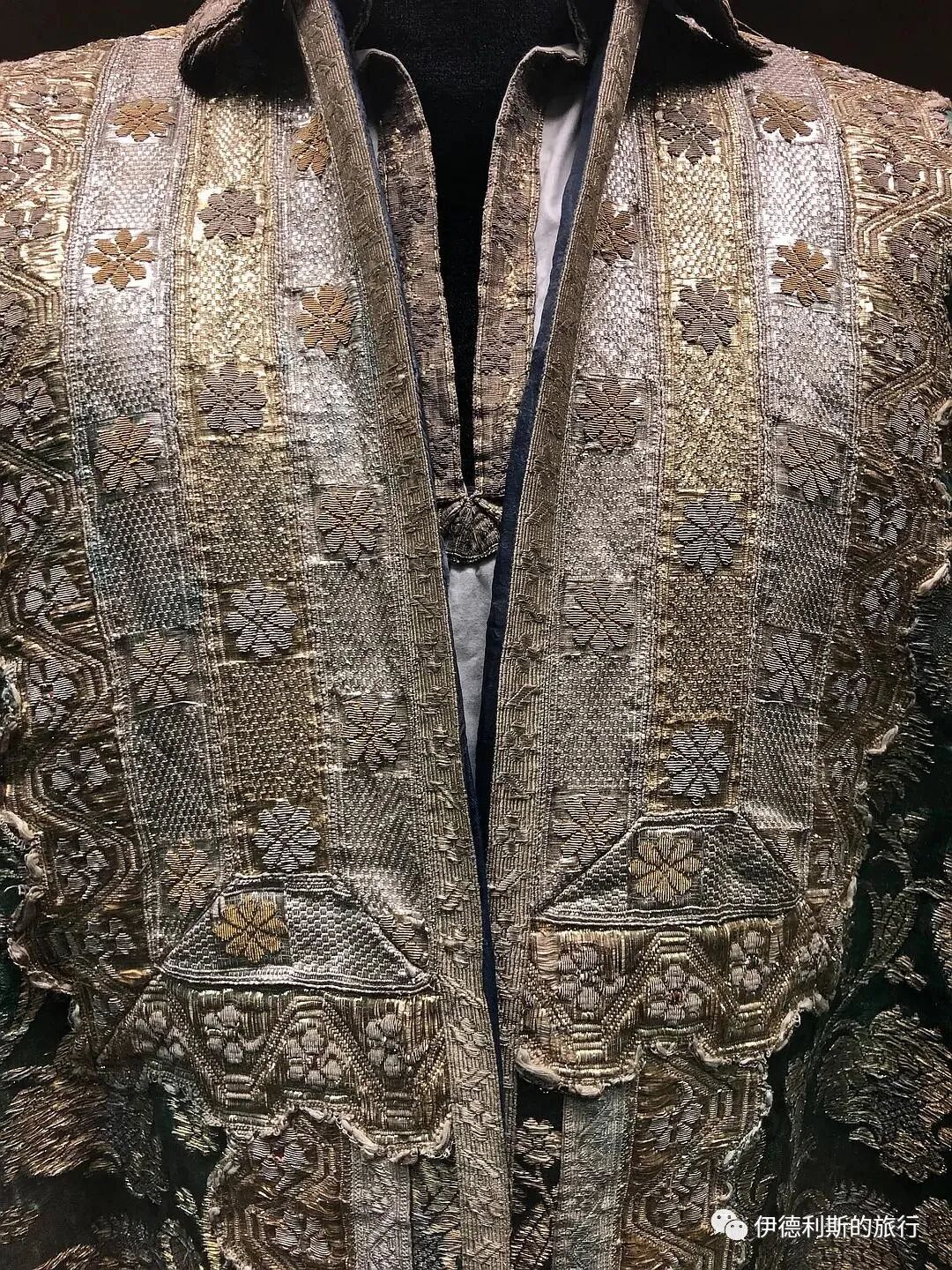
Traditional clothing of the Kazan Tatars from the 19th to the early 20th century. view all
Summary: Kazan Kremlin — Tatarstan Museum and Muslim Heritage is presented here as a firsthand travel account in clear English, beginning with this scene: Kazan Kremlin sits in the heart of Kazan, the capital of Tatarstan, and started as a fortress for the Volga Bulgaria khanate. The account keeps its focus on Kazan Travel, Tatarstan Museum, Muslim Heritage while preserving the names, places, food, and historical details from the Chinese source.
The history of Kazan city.
Kazan Kremlin sits in the heart of Kazan, the capital of Tatarstan, and started as a fortress for the Volga Bulgaria khanate. After the 9th century, the Bulgars living along the Volga River kept expanding to the northwest. To protect trade routes on the Volga, the Bulgars built a military fortress between the 10th and 11th centuries in the middle reaches of the river, featuring a 4-meter-deep steep trench and a 3-meter-high earthen wall; this marks the beginning of Kazan's history as a city.
In the late 12th century, the Volga Bulgaria khanate added a 2-meter-thick white stone wall to Kazan city to defend against constant attacks from Russian principalities. After Kazan joined the Golden Horde in the 13th century, it jumped from a border fortress to become the political and economic center of the middle Volga, famous for leather, jewelry, ceramics, and metalwork.
After the Golden Horde collapsed in the 15th century, the Kazan Khanate (1438-1552) was established in Kazan. As the capital, Kazan's population grew quickly, and many homes and public buildings were built, including the Kazan Khan's palace, courtyards, mosques, and tombs, with tall minarets defining the city skyline.
In 1552, Ivan the Terrible of Russia attacked Kazan, destroyed the Kazan Khanate, and forced all Tatars out of the city, allowing only Russians to settle there. Between 1556 and 1562, Ivan the Terrible ordered the construction of the Kazan Kremlin on the site of the old Kazan Khanate fortress. The mosques, the Kazan Khan's palace, and the tombs were first used as armories and ammunition depots, but they were all torn down by the 18th century.
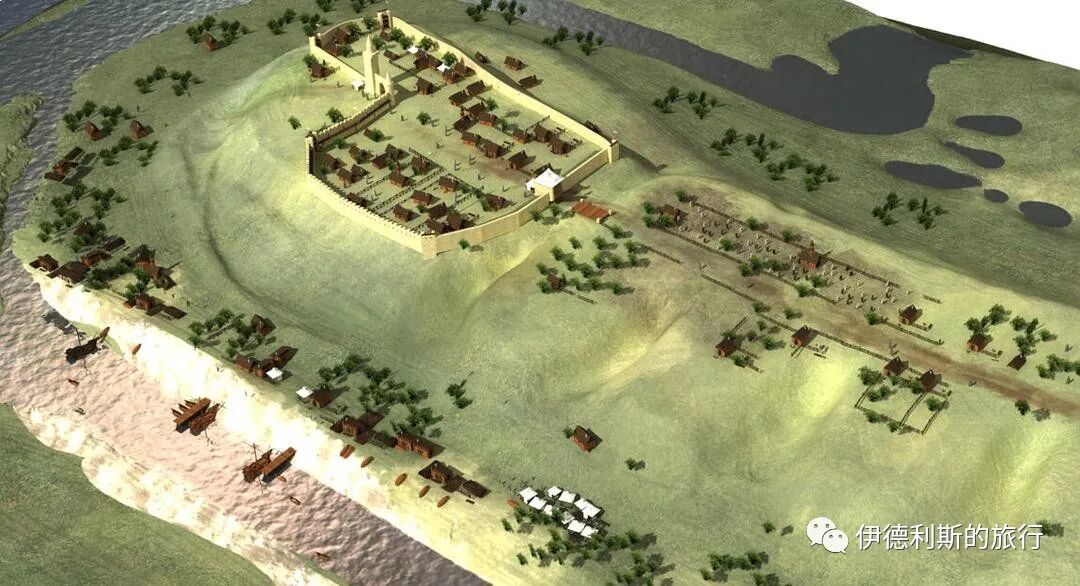
Restoration images of the Volga Bulgaria and Kazan Khanate periods from the official Kazan Kremlin website.
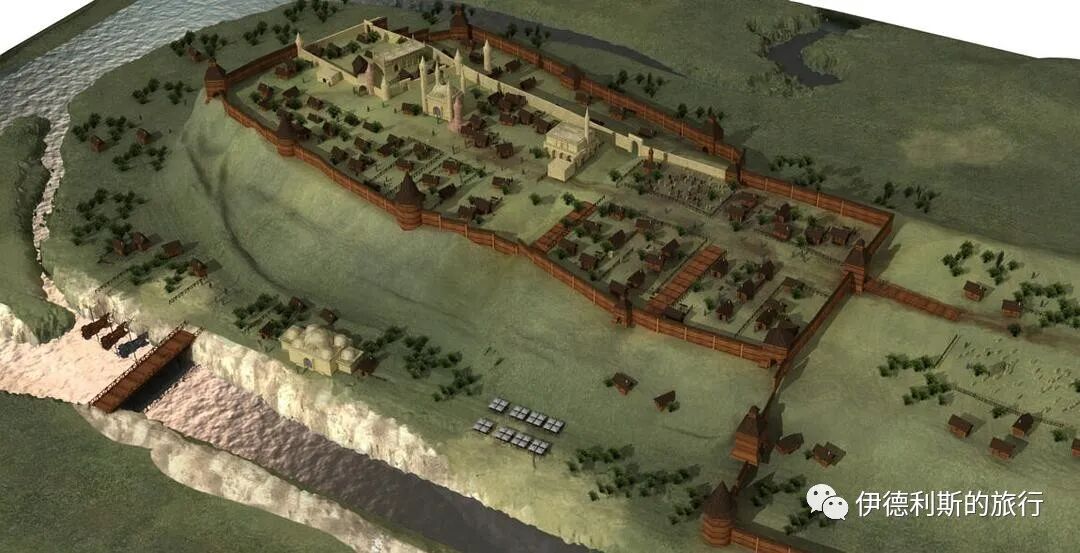
The tomb of the Kazan Khan.
In 1977, water engineers digging for a rainwater pipe at the Kazan Kremlin accidentally uncovered a tomb and immediately contacted the archaeology department. Archaeological excavations lasted for 10 years and uncovered five graves. Two were confirmed to be those of the actual founders of the Kazan Khanate: Kazan Khan Mäxmüd (died in 1463 or 1466) and his grandson, Kazan Khan Möxämmät Ämin (died in 1518). The tomb was originally built from white stone and eventually collapsed in the 17th century.
For further research, the remains of the two Kazan Khans, Mäxmüd and Möxämmät Ämin, were kept at the Institute of Archaeology of the Tatarstan Academy of Sciences for 40 years. In May 2017, after persistent efforts by the Tatar Muslims of Kazan, the two Kazan Khans were finally reburied not far from the original tomb site.
The burial site discovered in 1977.
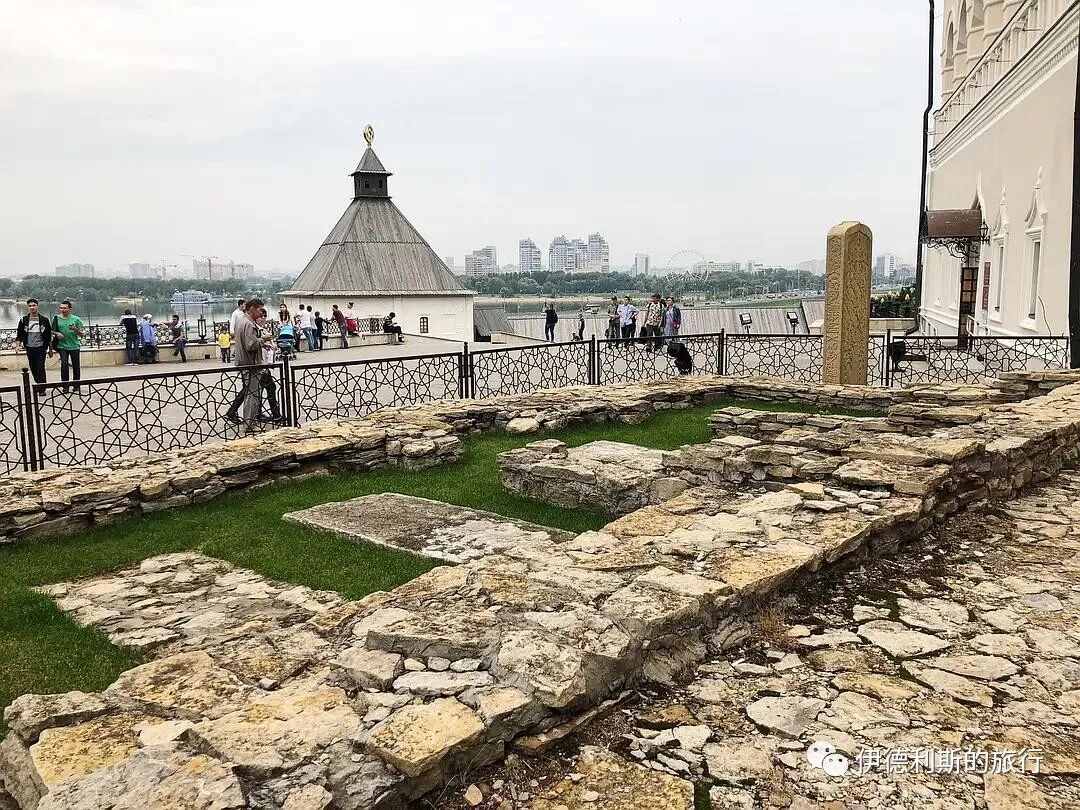
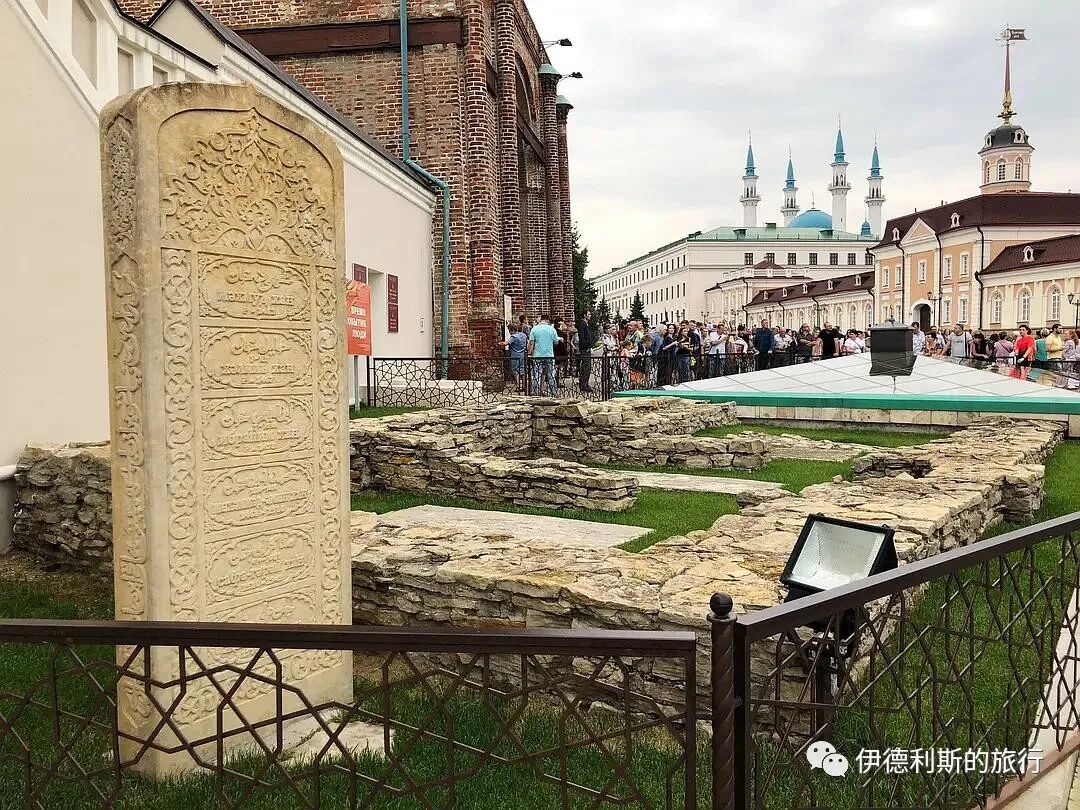
Likely relics from the Khan's palace mosque.
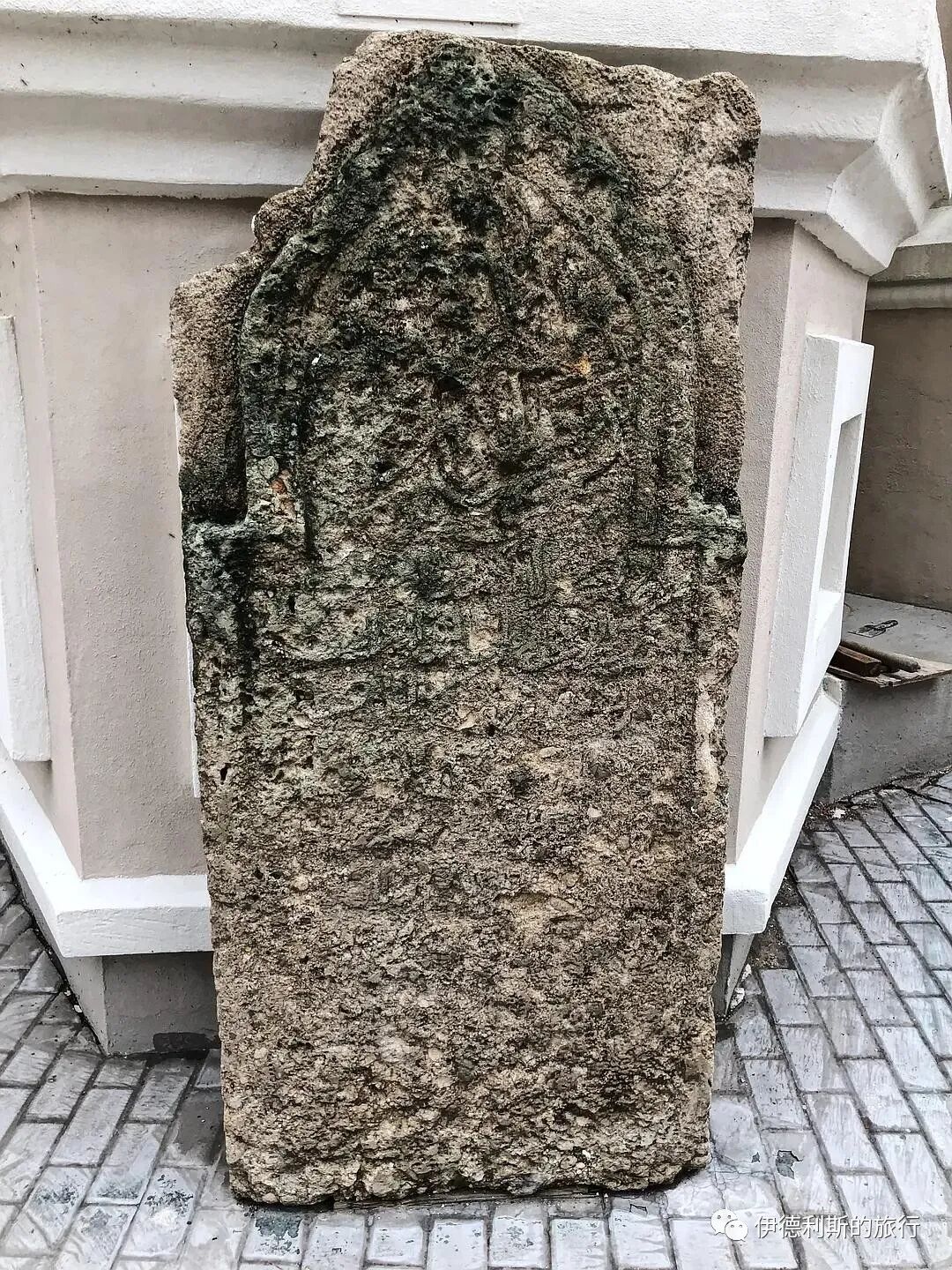
Khan Mäxmüd was the eldest son of Ulugh Muhammad, the Great Khan of the Golden Horde, and a descendant of Genghis Khan's eldest son, Jochi. In 1438, his father Ulugh Muhammad occupied Kazan and began constant raids on the Grand Duchy of Moscow. Mäxmüd joined his father's attack on Moscow and won a major victory in 1445, capturing Grand Prince Vasily II and forcing the Grand Duchy of Moscow to pay tribute to Kazan. Mäxmüd took the throne in 1445 and kept control over Moscow. During his reign, Kazan completely separated from the Golden Horde, marking the beginning of what later generations called the Kazan Khanate.
Khan Muhammad Amin was the grandson of Khan Mahmud. From the age of 10, he was involved in the struggles between pro-Russian and anti-Russian factions within the khanate. As a khan supported by Moscow, he took the throne three times: from 1484 to 1485, 1487 to 1495, and 1502 to 1518. He also paid tribute to Grand Prince Ivan III of Moscow. Later in his reign, he stopped paying tribute to Moscow and worked to strengthen his country to oppose the Grand Duchy of Moscow.
The burial site was re-interred in 2017.
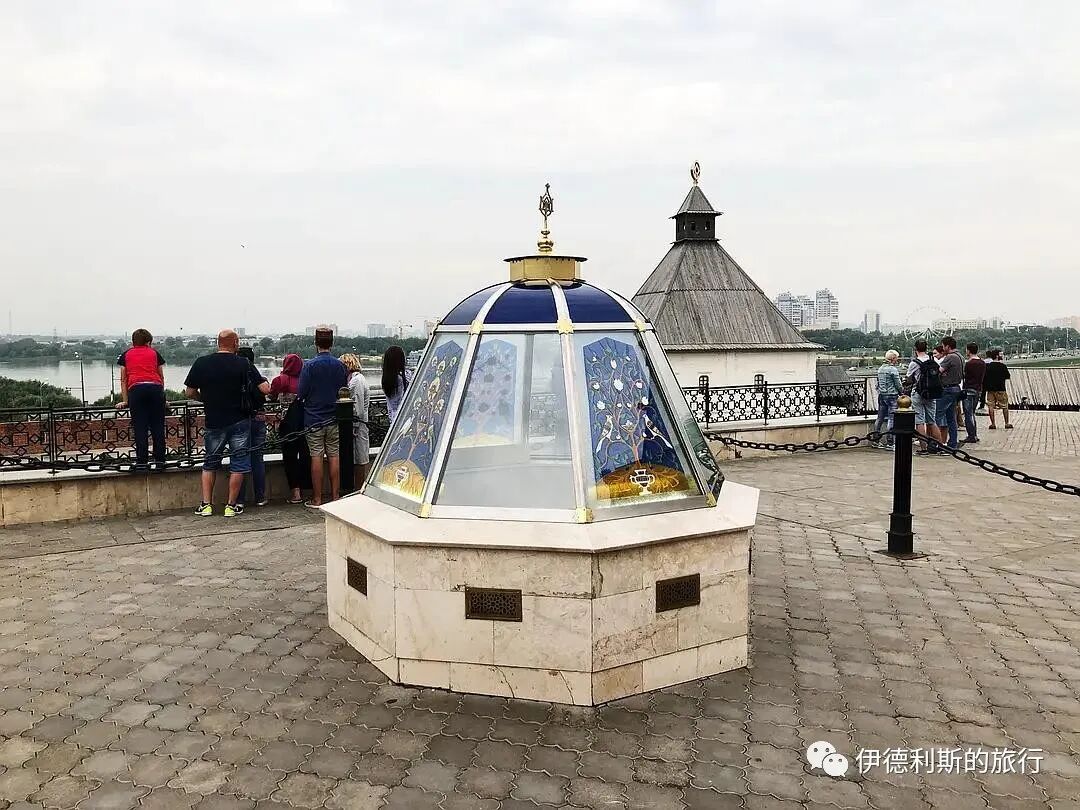
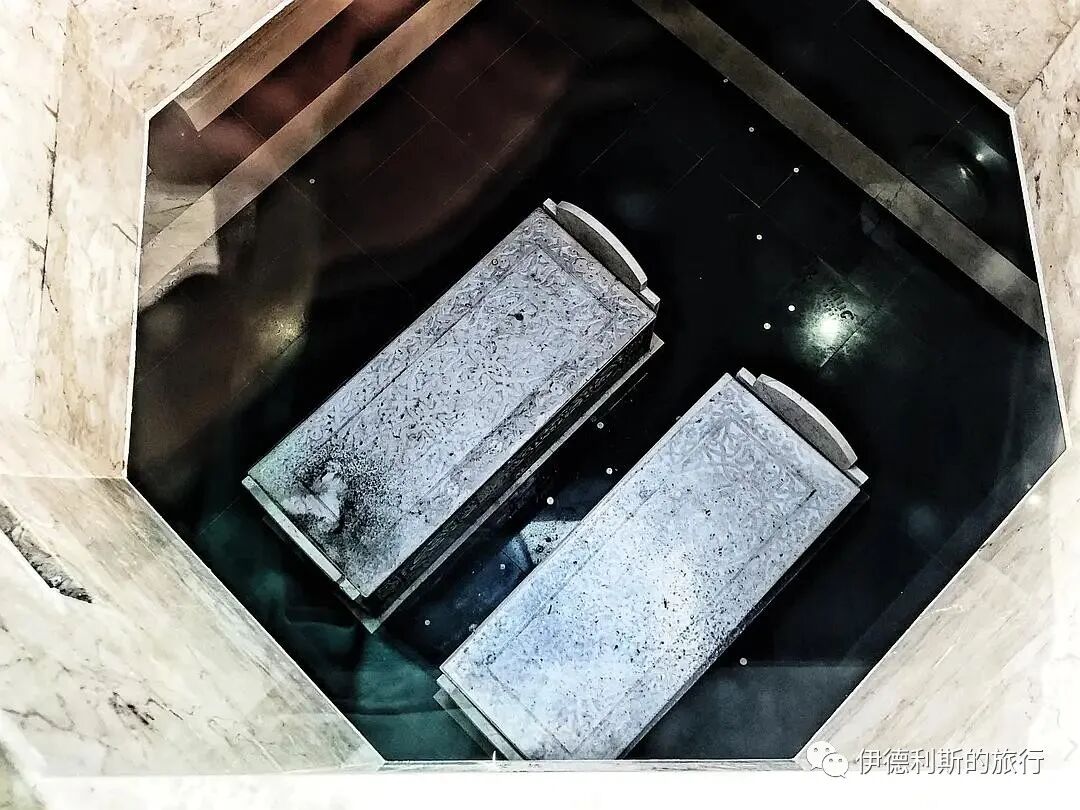
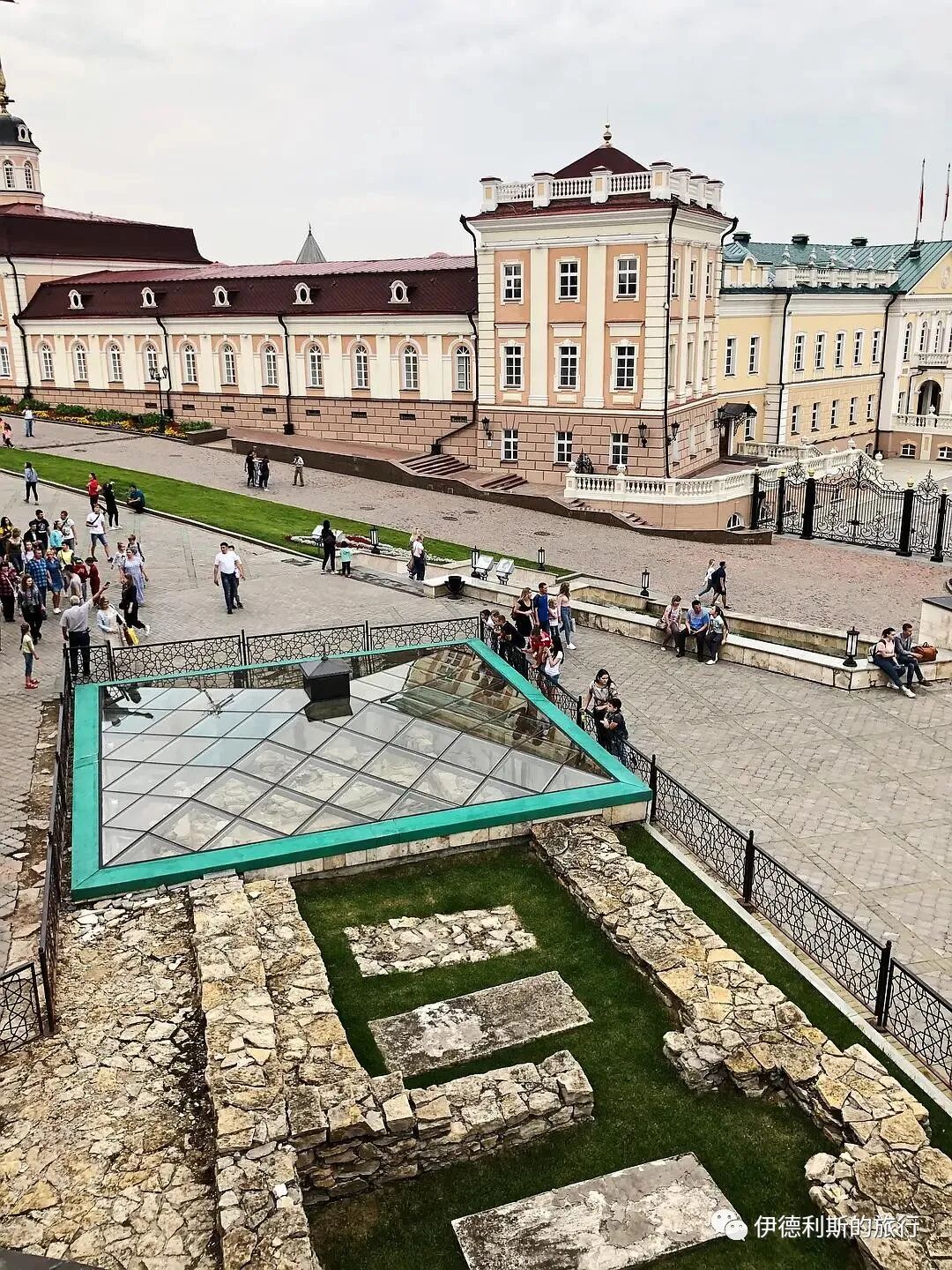
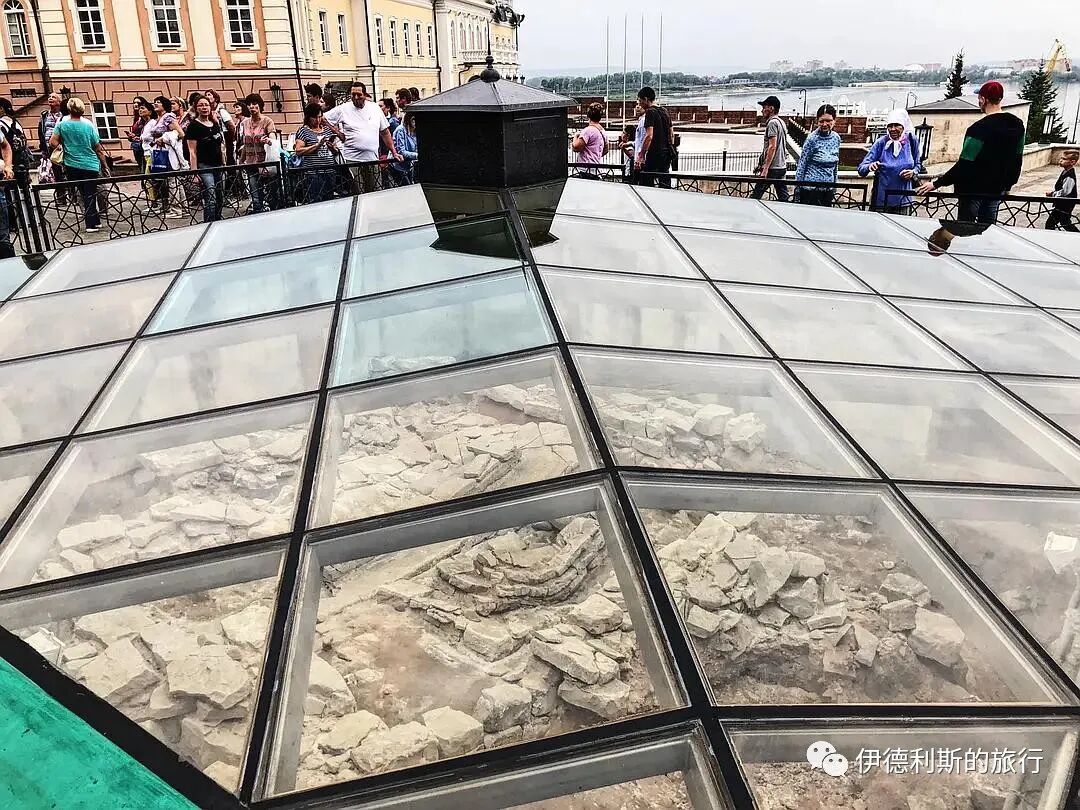
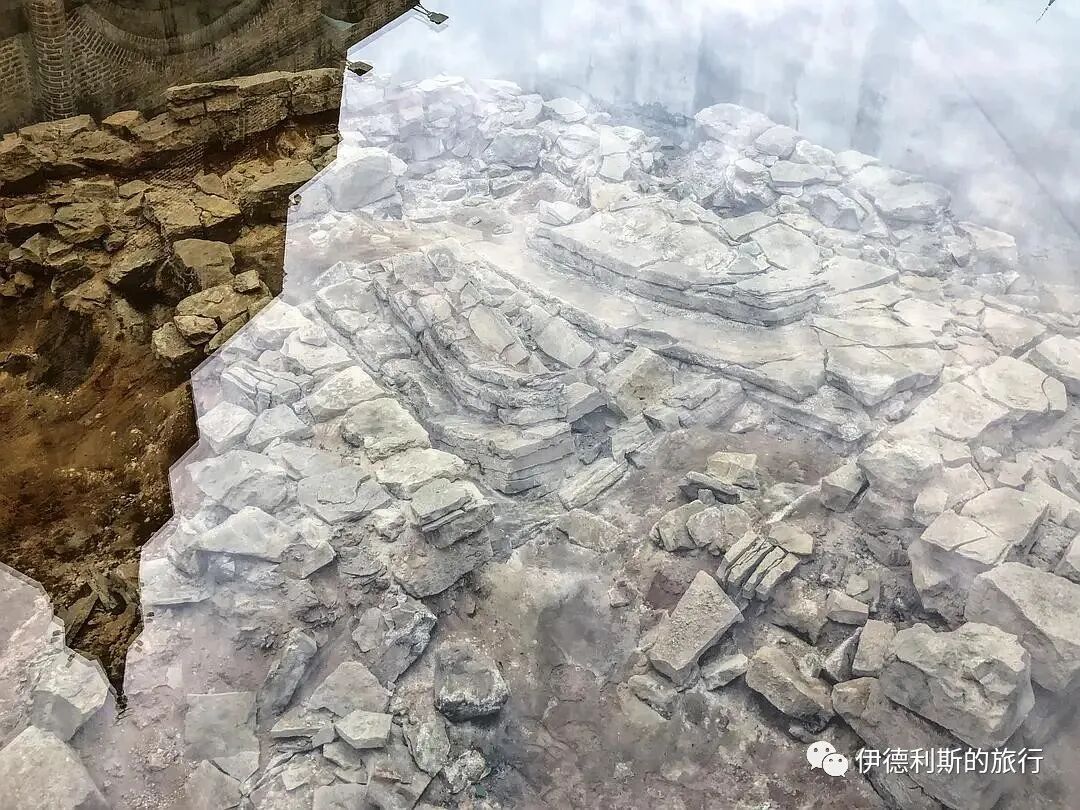
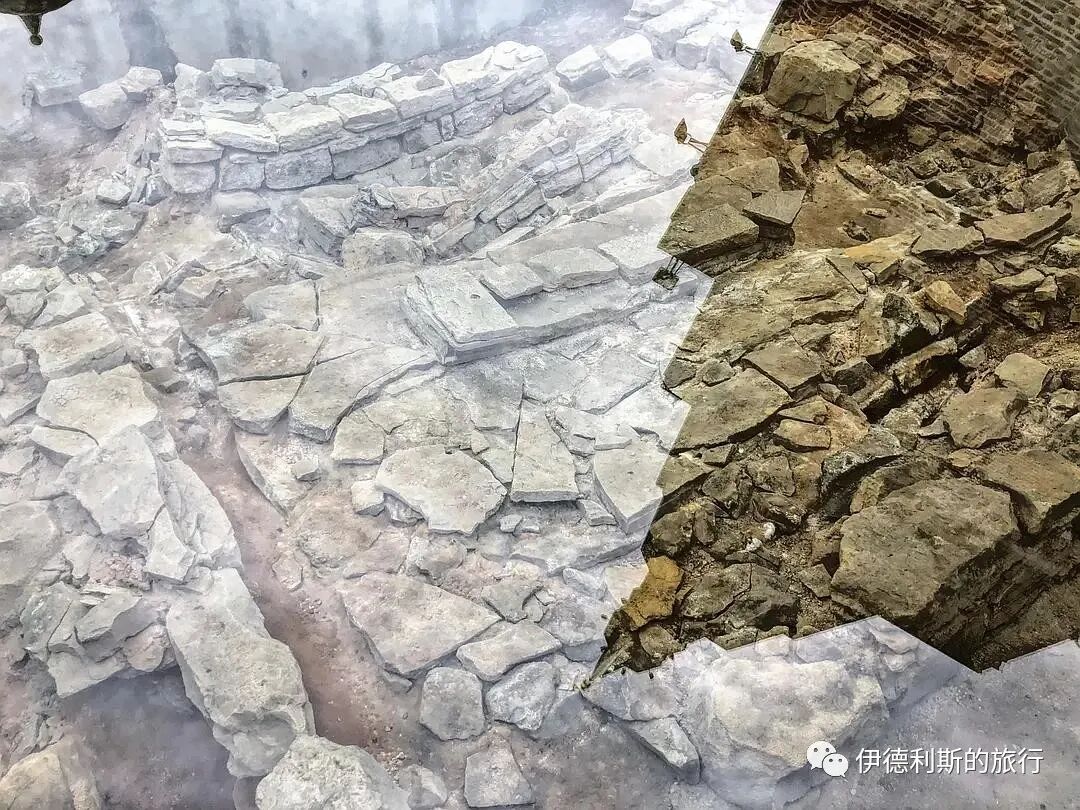
Between 2004 and 2005, the Institute of Archaeology of the Tatarstan Academy of Sciences re-excavated the Kazan Khan mausoleum. They discovered the graves of four more Kazan khans: Khalil (died 1467), Ibrahim (died 1478), Safa Giray (died 1549), and Canghali (died 1535). Today, these four Kazan khan graves are protected under a glass roof.
Khan Khalil was the eldest son of Khan Mahmud. He was known for violating treaties with the Grand Prince of Moscow and for his poor relationship with the Nogai tribe. The young khan died early, not long after taking the throne. One legend says he died in prison due to the war with the Golden Horde.
Khan Ibrahim was the younger brother of Khan Khalil. He fought against the Grand Duchy of Moscow many times and won a great victory in the 1467 war against Grand Prince Ivan III of Moscow.
Khan Safa Giray came from the Giray family of the Crimean Khanate. He served as the Kazan khan three times: from 1524 to 1531, 1535 to 1546, and 1546 to 1549. Safa Giray was an anti-Russian Kazan khan. His first reign ended when the Grand Duchy of Moscow attacked Kazan. Four years later, he took the throne again after Kazan nobles overthrew the pro-Russian khan. Eleven years later, internal unrest in Kazan led to him being overthrown again by the pro-Russian Kazan Khan. Safa Giray fled to his father-in-law's Nogai tribe, returned to Kazan with a Nogai army a few months later, and became the Kazan Khan for the third time.
Khan Ghali was originally the khan of the Qasim Khanate, a vassal state of the Grand Duchy of Moscow. In 1532, Grand Prince Vasily III of Moscow defeated the Kazan Khan Safa Giray and installed 16-year-old Khan Ghali as the pro-Russian Kazan Khan. He died in 1535 during a coup by Kazan nobles.
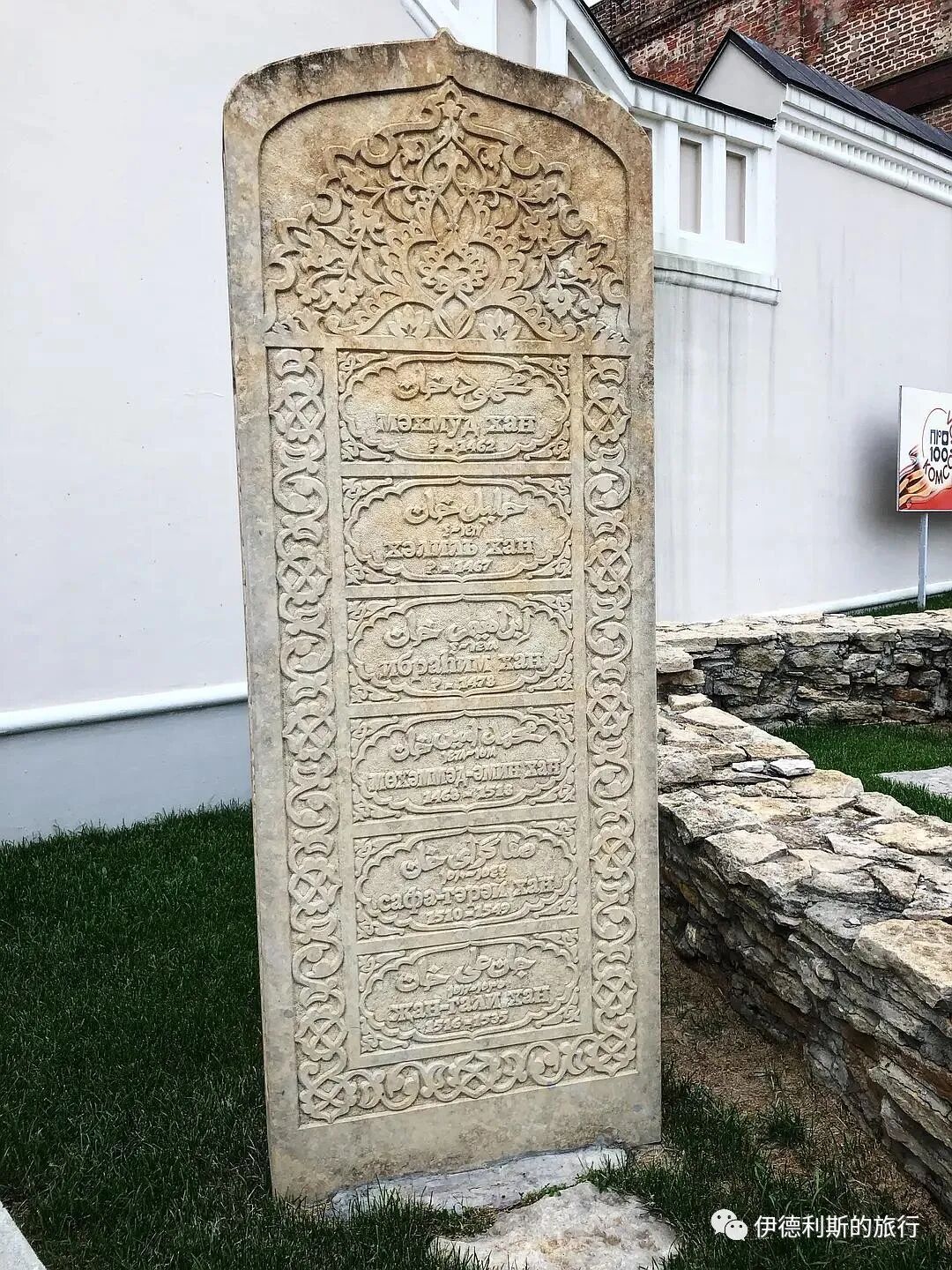
The names of six Kazan khans
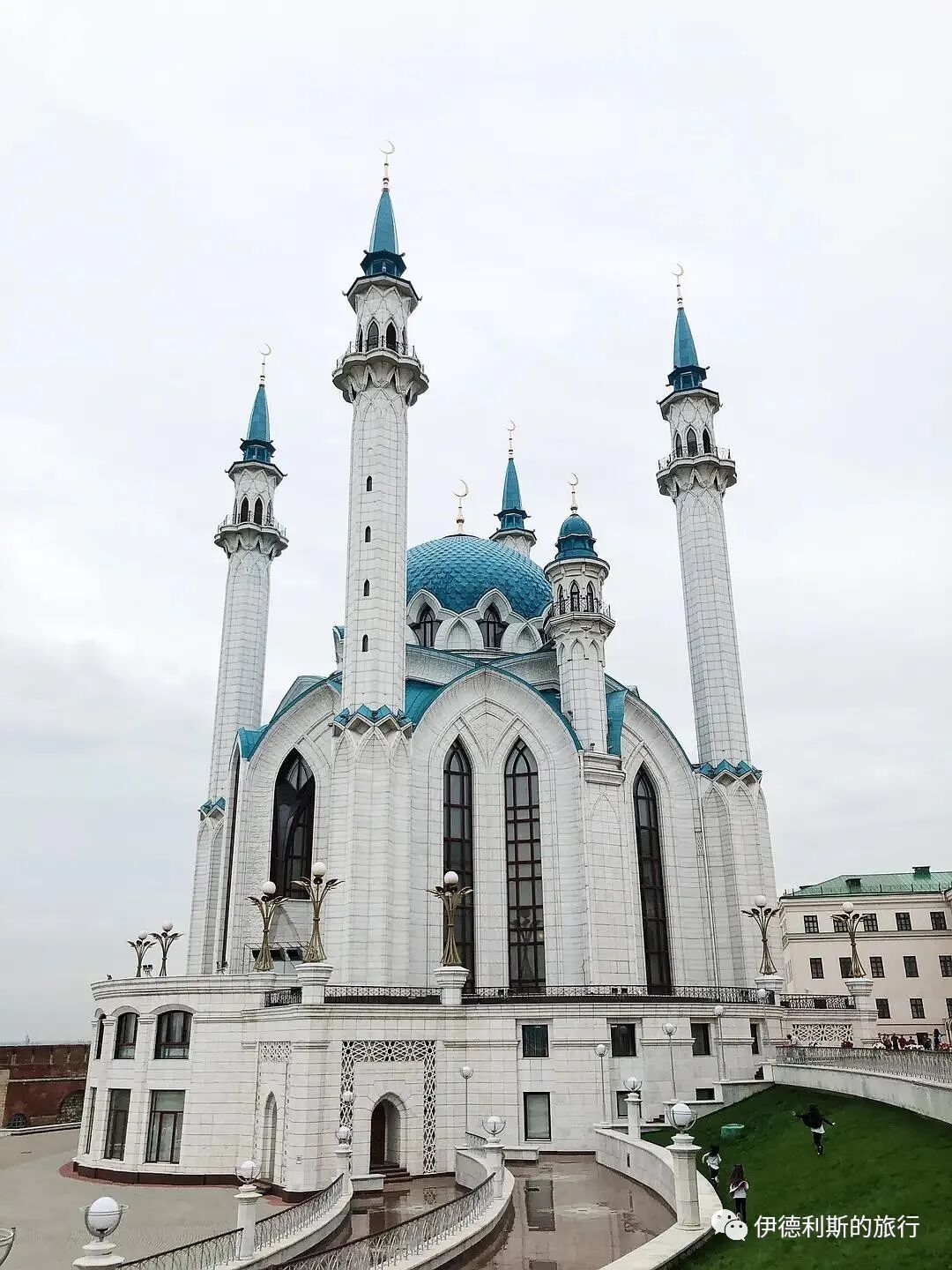
Kul Sharif Mosque
At the entrance of the Kul Sharif Mosque inside the Kazan Kremlin, there are performances about the Siege of Kazan. In 1552, Ivan the Terrible besieged Kazan. The last imam of the Kazan Khanate, Seid Kul Sharif, led the people in a final stand and eventually died in the city. Today, Seid Kul Sharif is a national hero to the Kazan Tatars, and the new Kul Sharif Mosque built in 2005 is named after him.
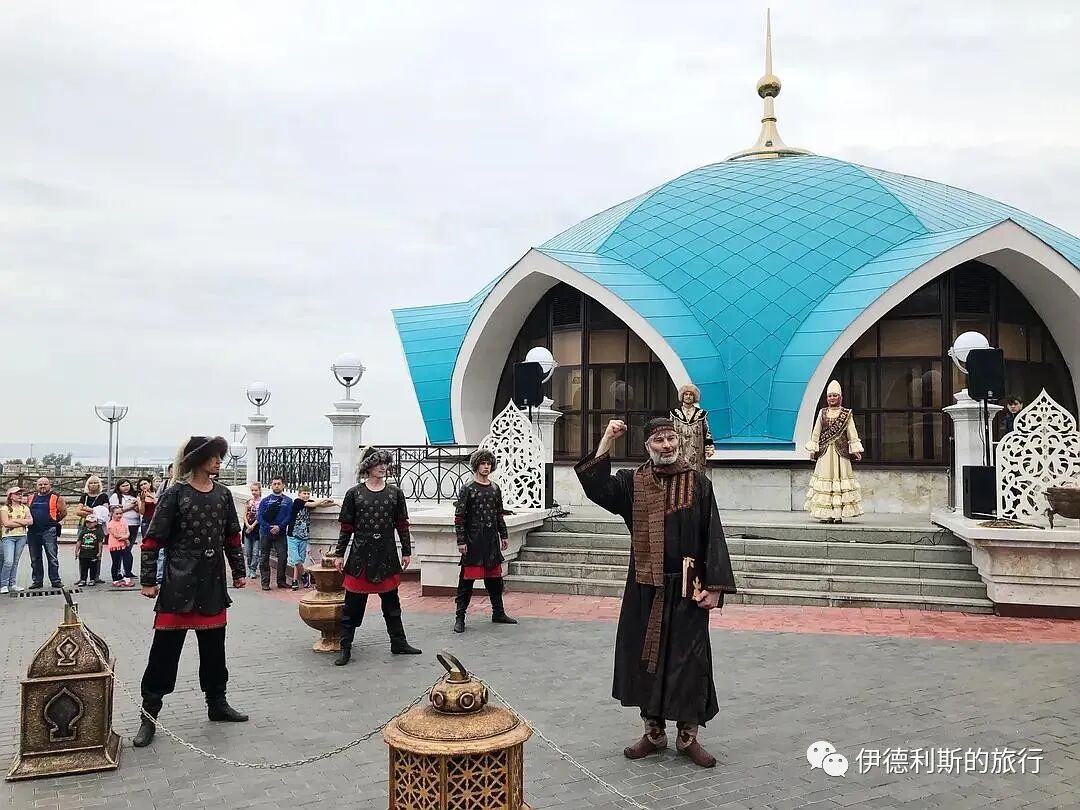
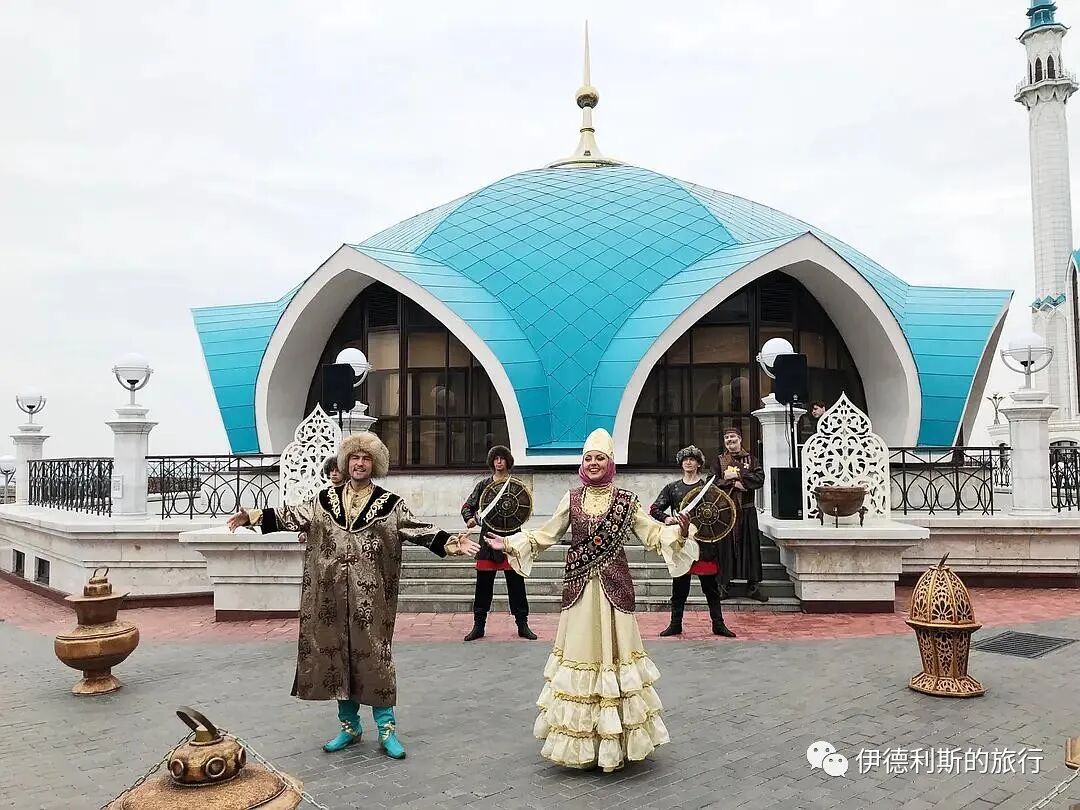
The imam chanting inside the mosque has a beautiful and moving voice. This is the first time I have seen a mosque open to tourists to experience chanting firsthand.
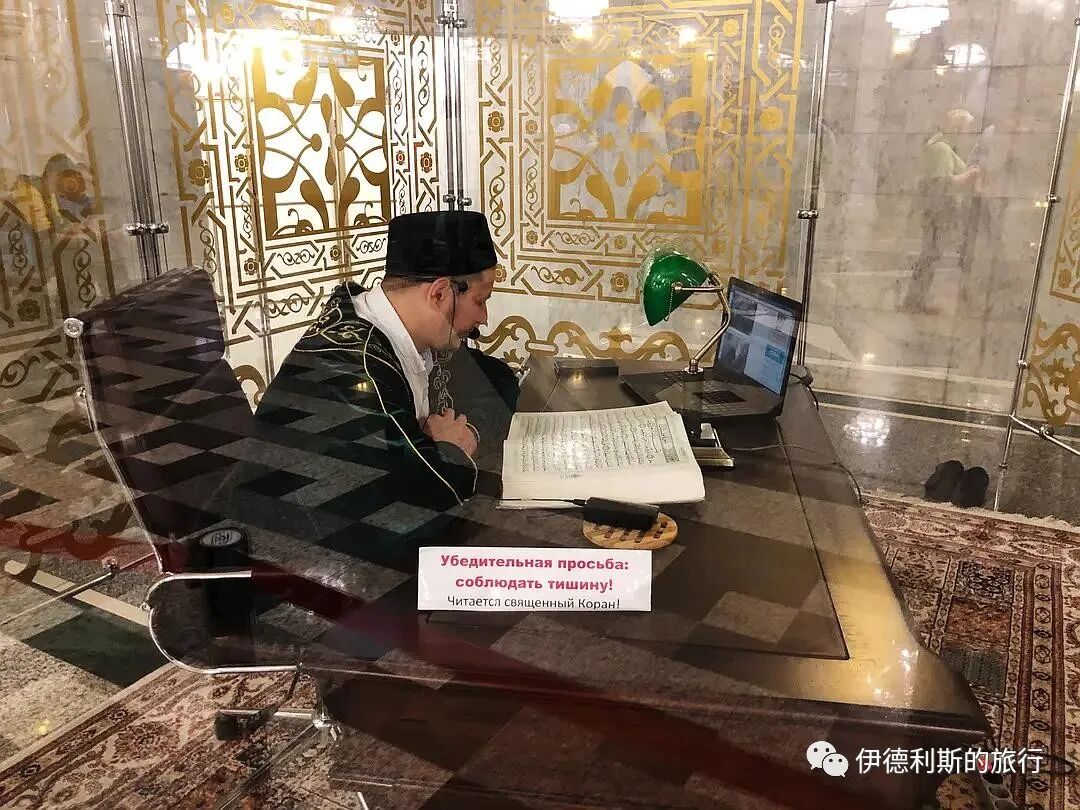
There is a small Islamic culture museum on the basement level of the mosque.
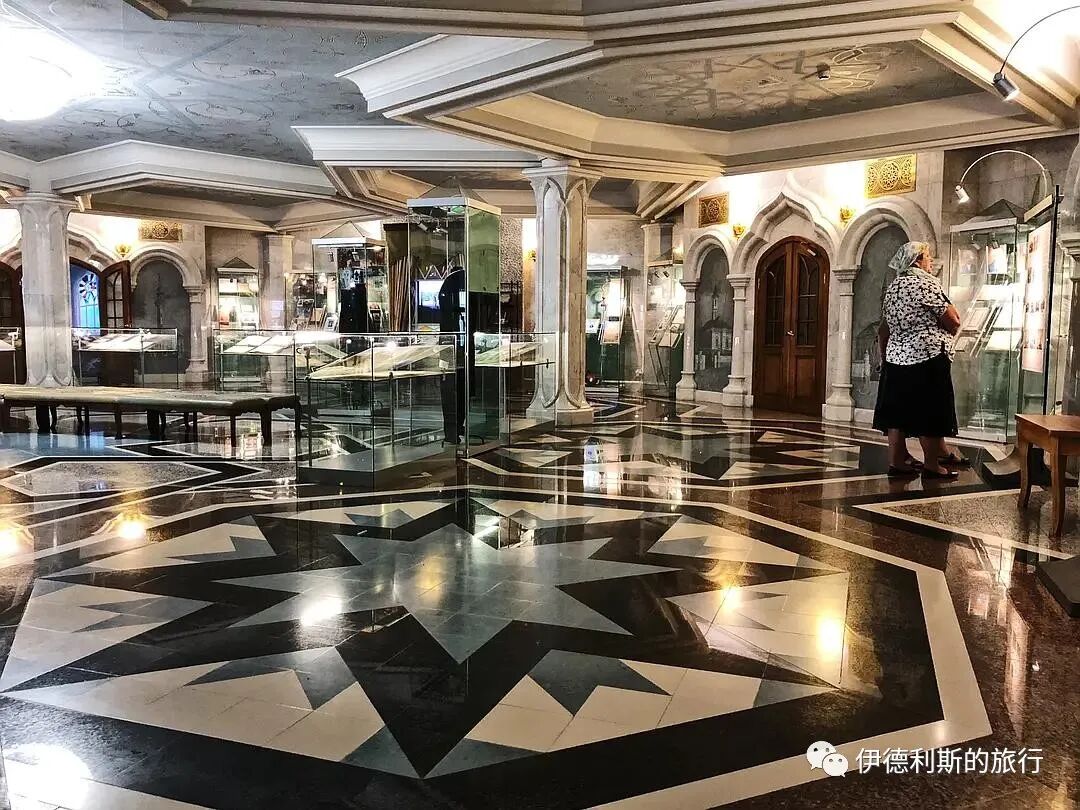
A pocket-sized Quran (gureani) from the Kazan Tatars in the late 19th century.
A display showing an imam and a student (hailifan) teaching scripture in the 19th century.
Porcelain from the ancient city of Bolghar dating back to the 10th to 13th centuries.
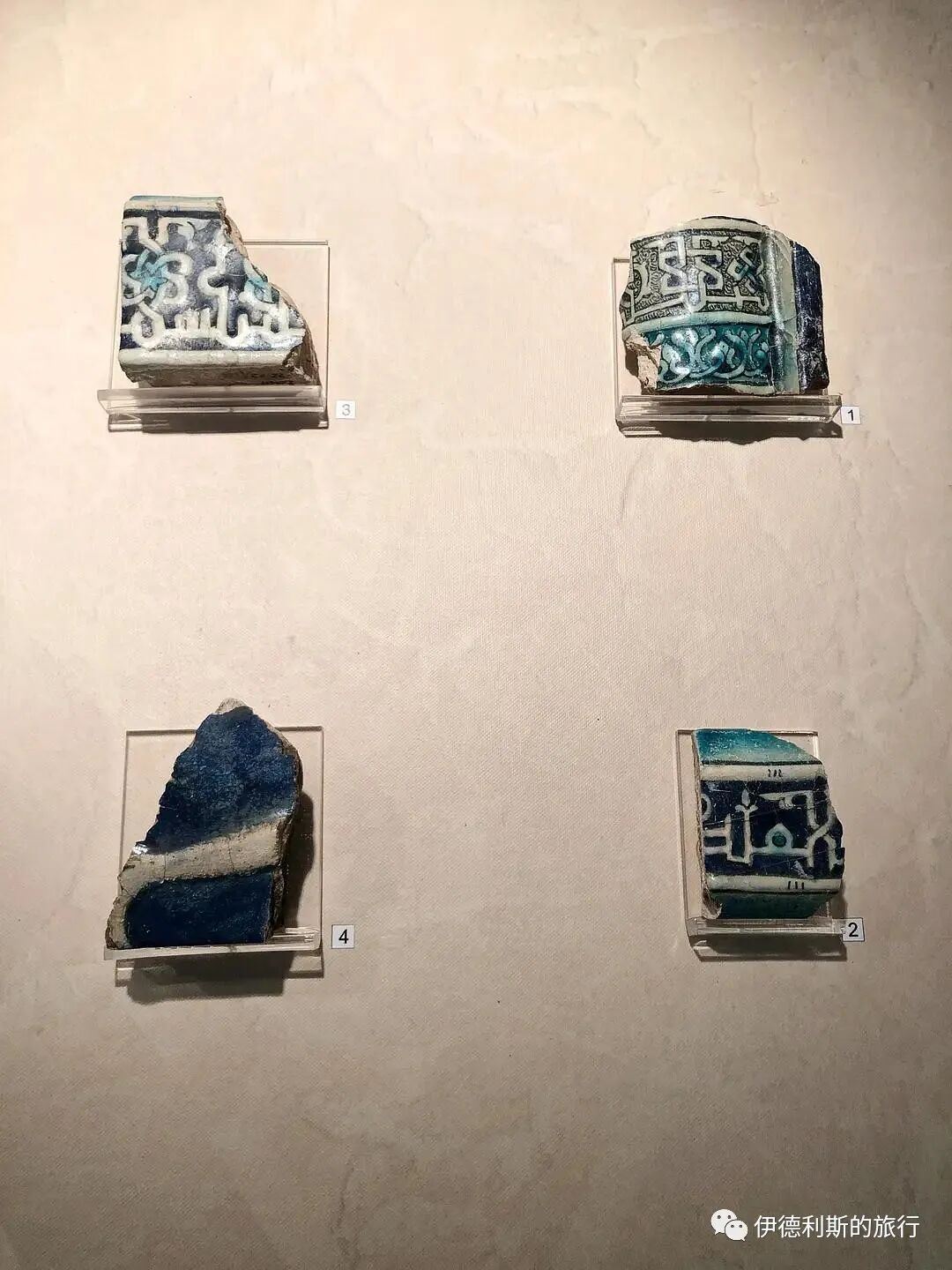
A decorative panel from the Golden Horde period.
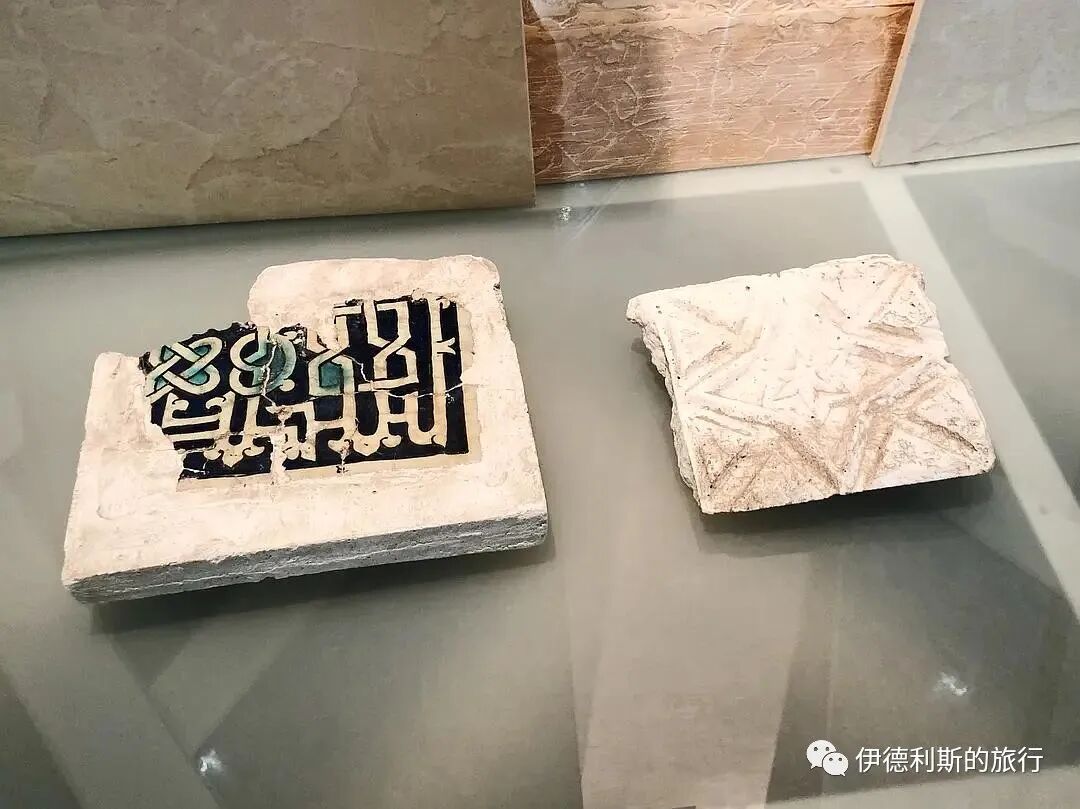
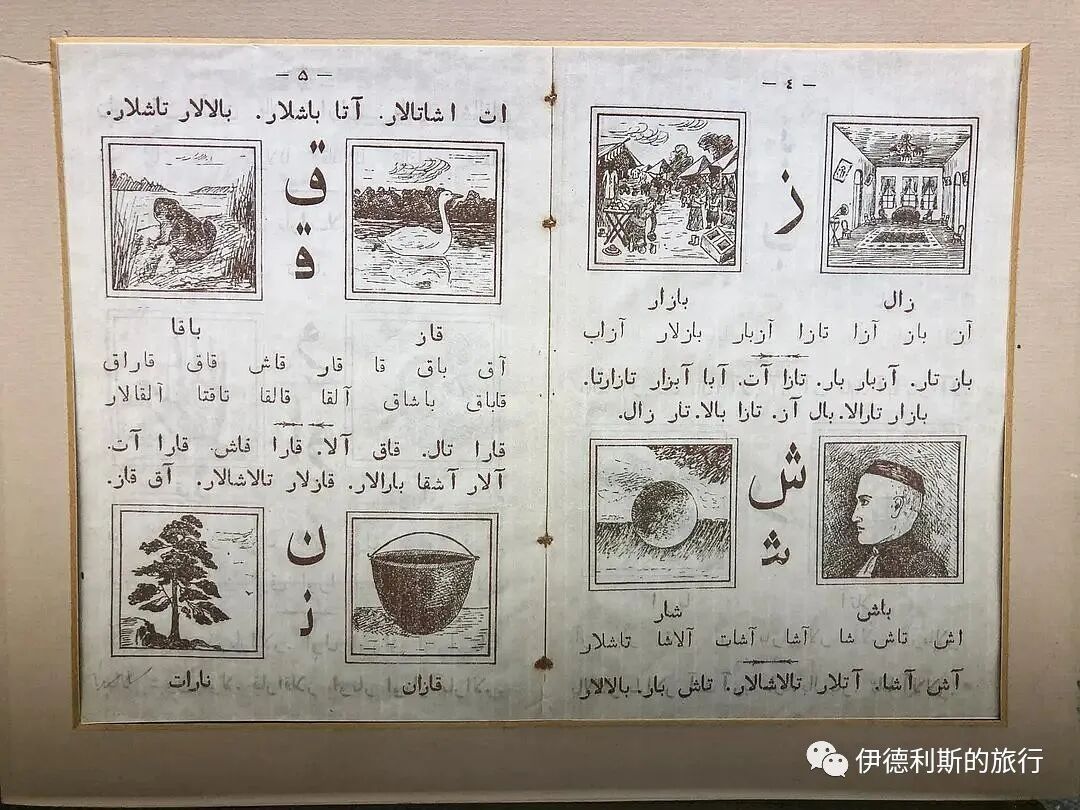
Literacy materials and magazines for Kazan Tatars from the early 20th century.
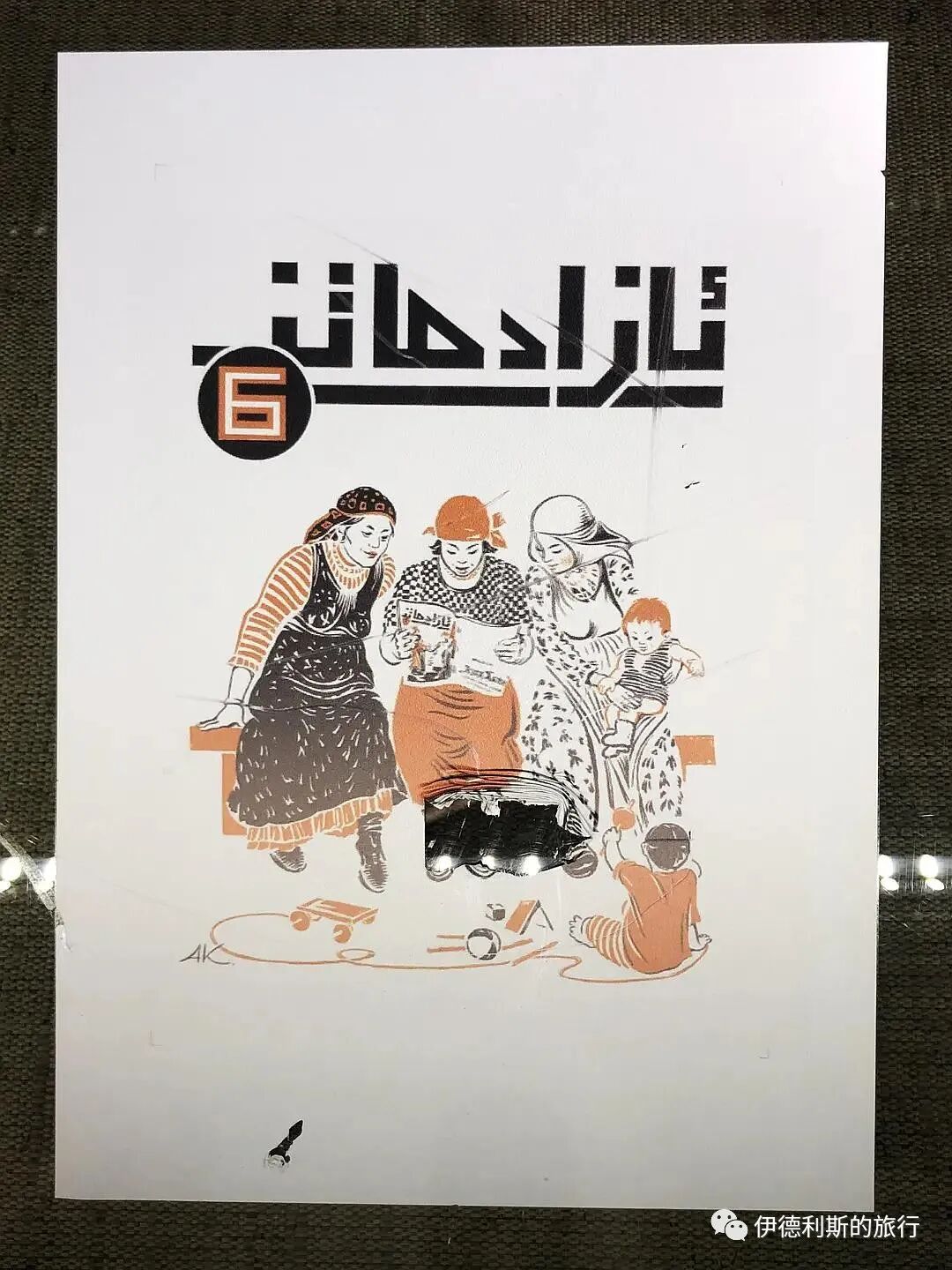
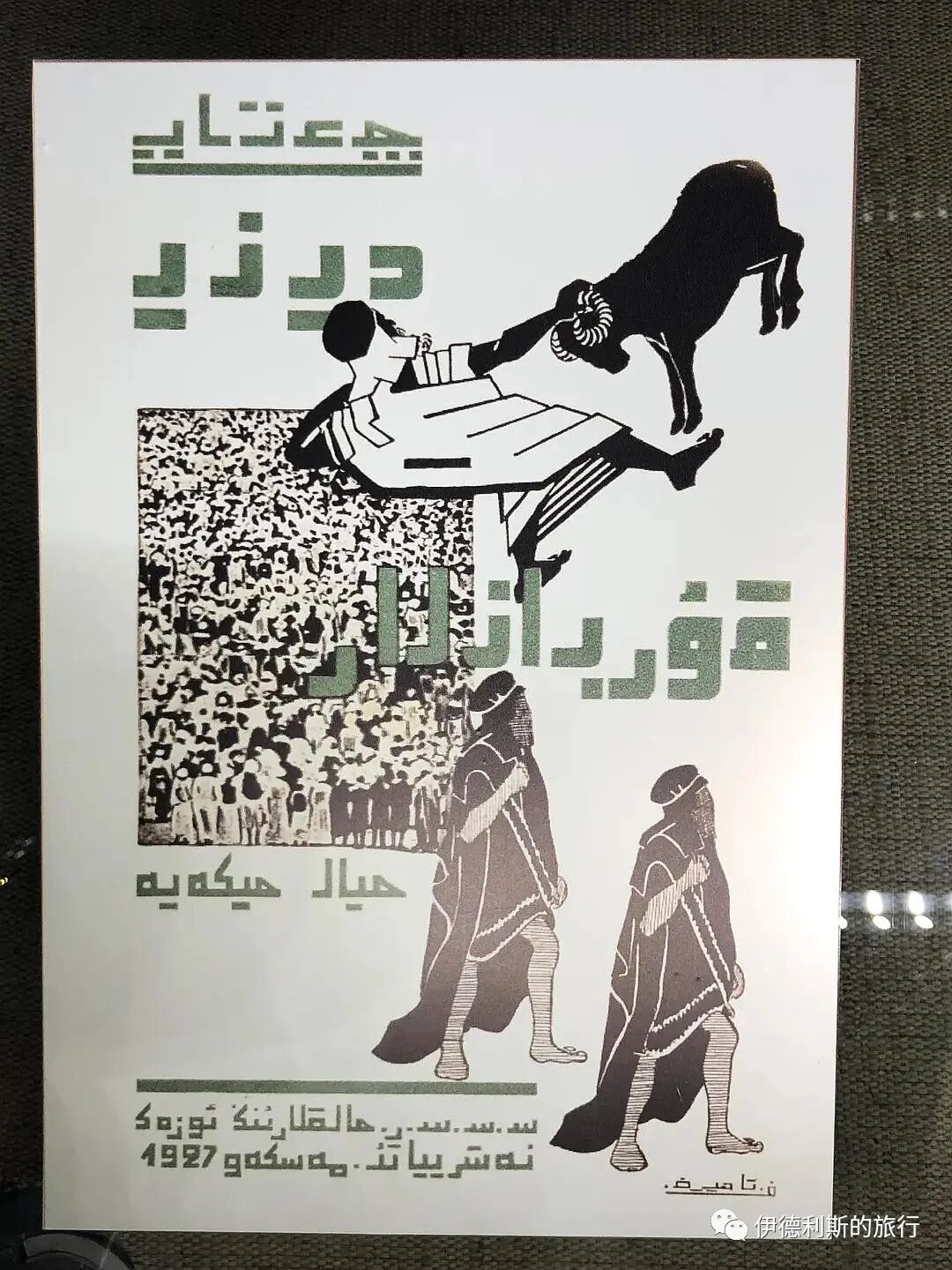
A handsome Tatar guy was selling mouth harps (kouxian) at the mosque entrance, and I really regret not buying one.
Republic of Tatarstan Museum
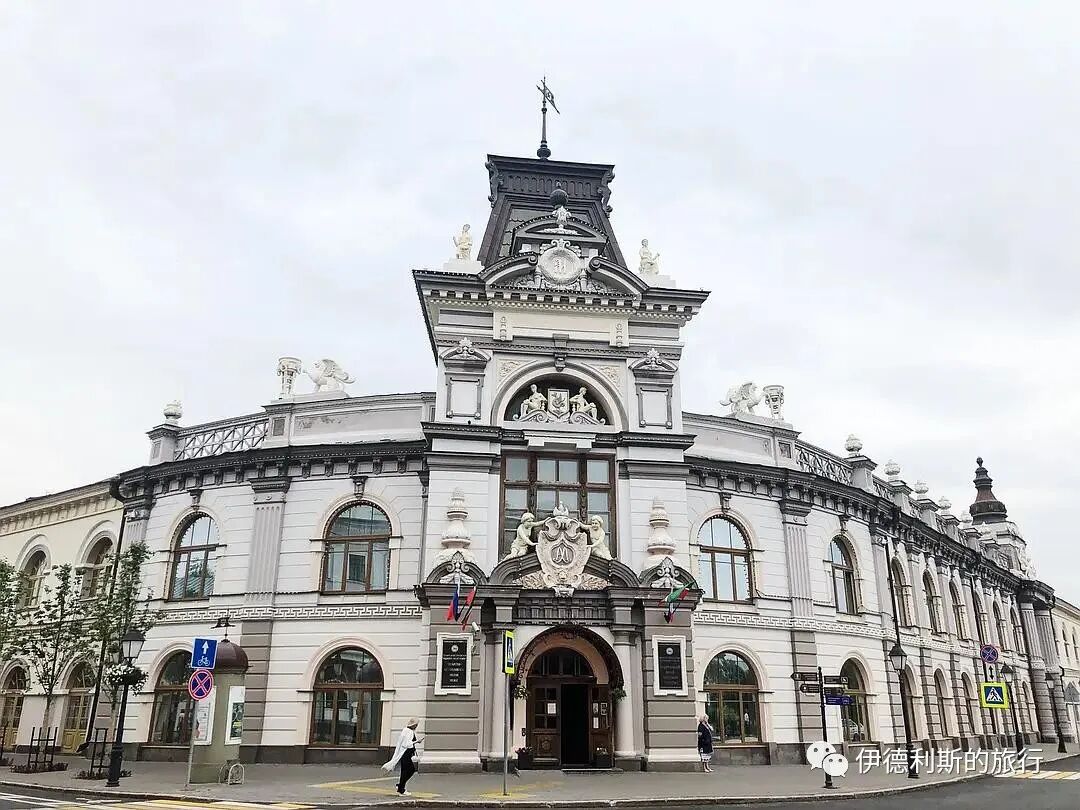
The National Museum of the Republic of Tatarstan opened in 1895. The building was once the Gostinniy Hotel and is a historical monument of Tatarstan itself. The museum has over 800,000 items in its collection, including pieces related to the Golden Horde, the Kazan Khanate, and the Kazan Tatars.
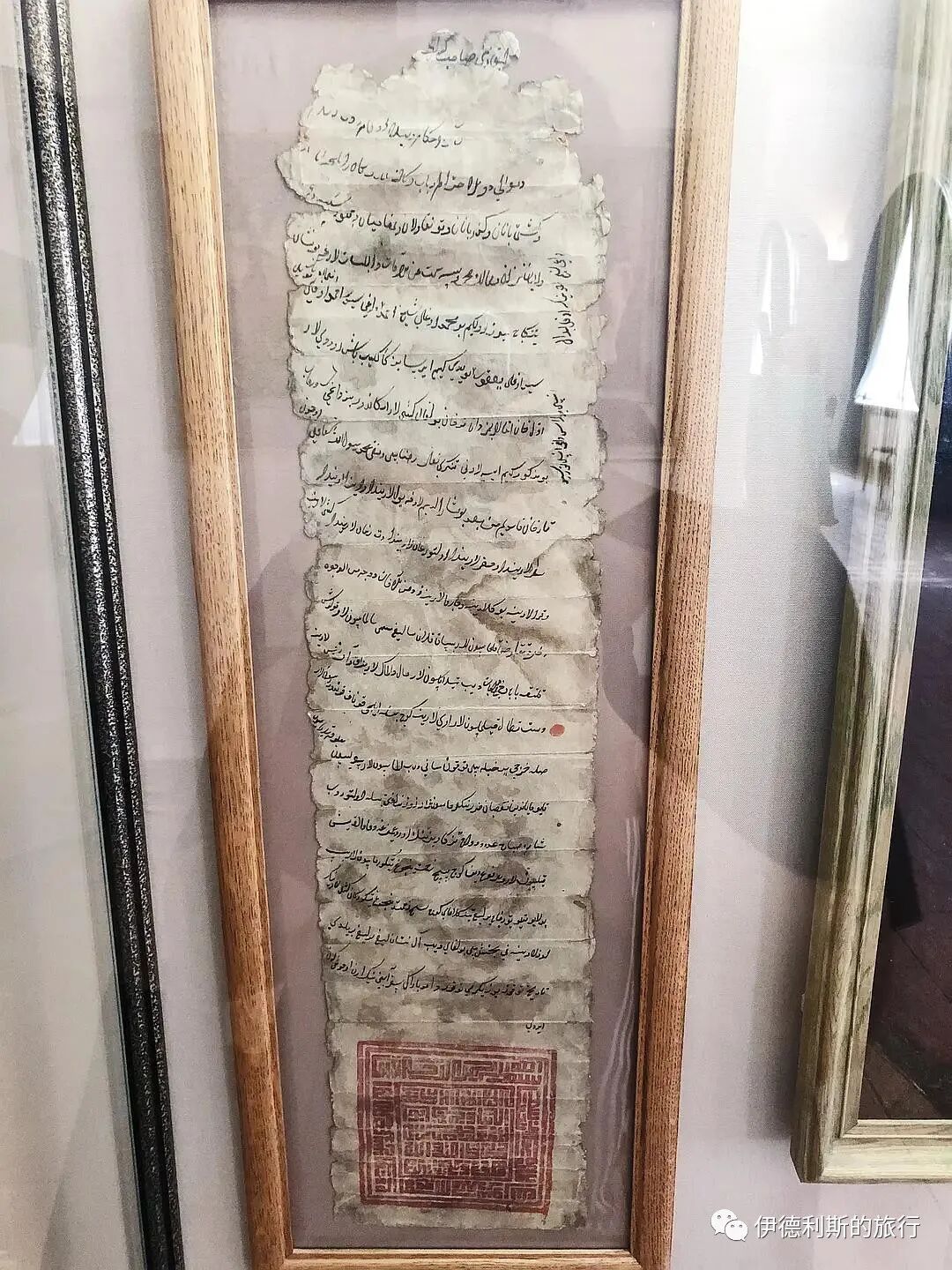
A letter written in 1523 by Sahib I Giray, the Khan of Kazan who reigned from 1521 to 1524. There is a replica of this letter inside the Kazan Kremlin.
Sahib Giray was a descendant of Jochi, the eldest son of Genghis Khan, and his grandfather founded the Crimean Khanate. In 1521, the Kazan Khanate wanted to break free from the Grand Duchy of Moscow. They overthrew the pro-Moscow Kazan Khan, Shahghali, and invited Sahib Giray from Crimea to Kazan to become the new Khan.
Sahib Giray attacked Moscow twice, in 1521 and 1522, and brought back many captives. In 1524, Moscow sent a large army to attack Kazan, forcing Sahib Giray to flee back to Crimea.
People actually know Sahib Giray better for what happened after that. In 1532, the Ottoman Empire installed Sahib Giray as the Crimean Khan. That same year, he built a new capital, Bakhchisarai, in a valley downstream from the old capital of the Crimean Khanate. For the next 250 years, Bakhchisarai served as the capital of the Crimean Khanate, where successive Khans built palaces and various mosque buildings. Today in Bakhchisarai, you can still see the Great Khan Mosque and the Sary Guzel bathhouse, both built under the direction of Sahib Giray in 1532.
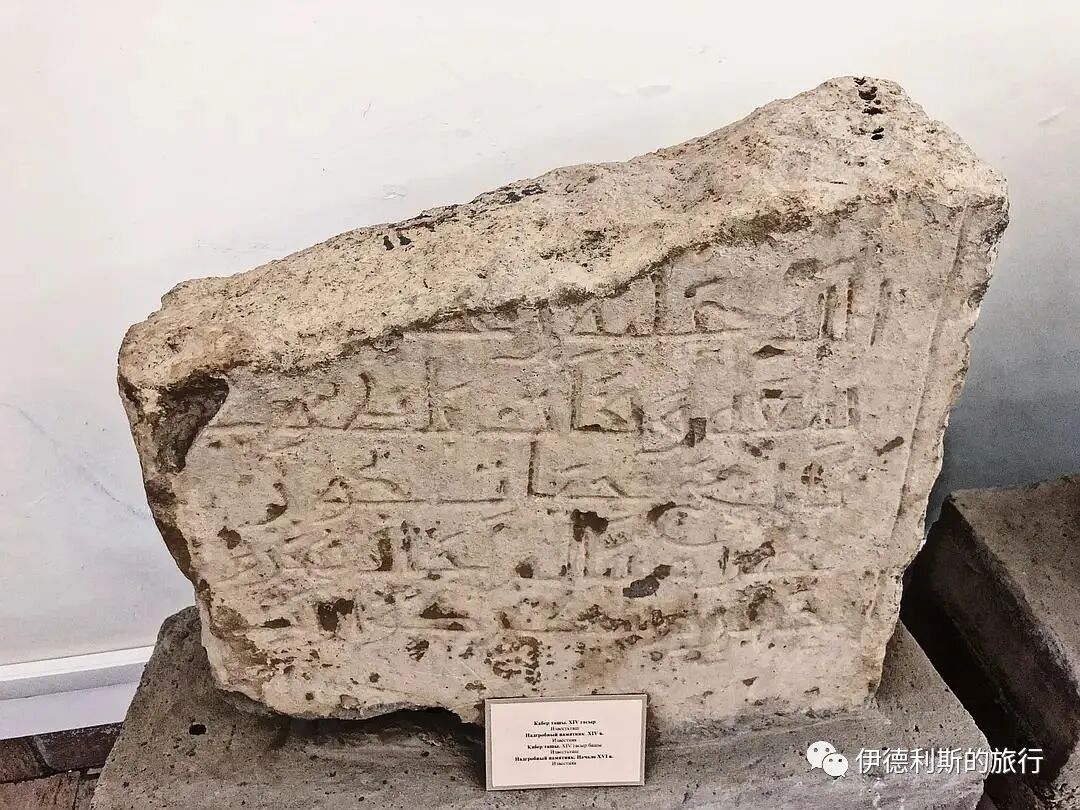
A tombstone from the Golden Horde period in the 14th century.
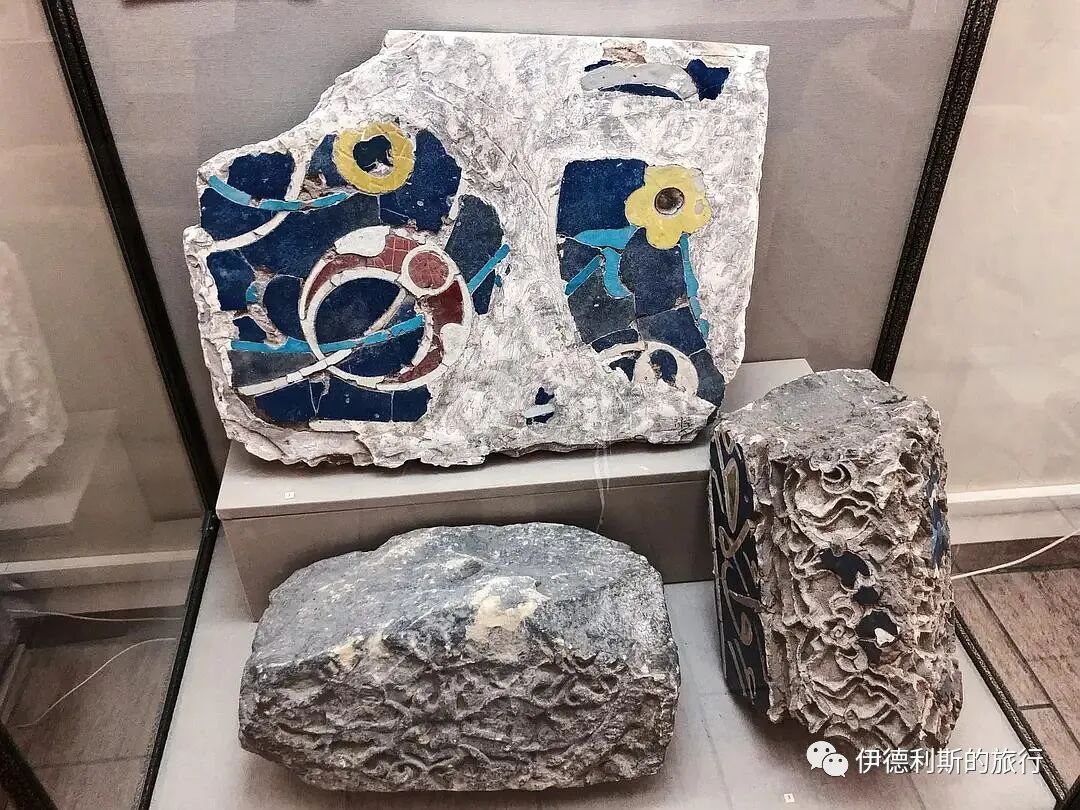
Architectural pieces from the Golden Horde period in the 14th century. The bottom left shows pieces from the Great Mosque of Bolghar, dating from the late 13th to early 14th century.
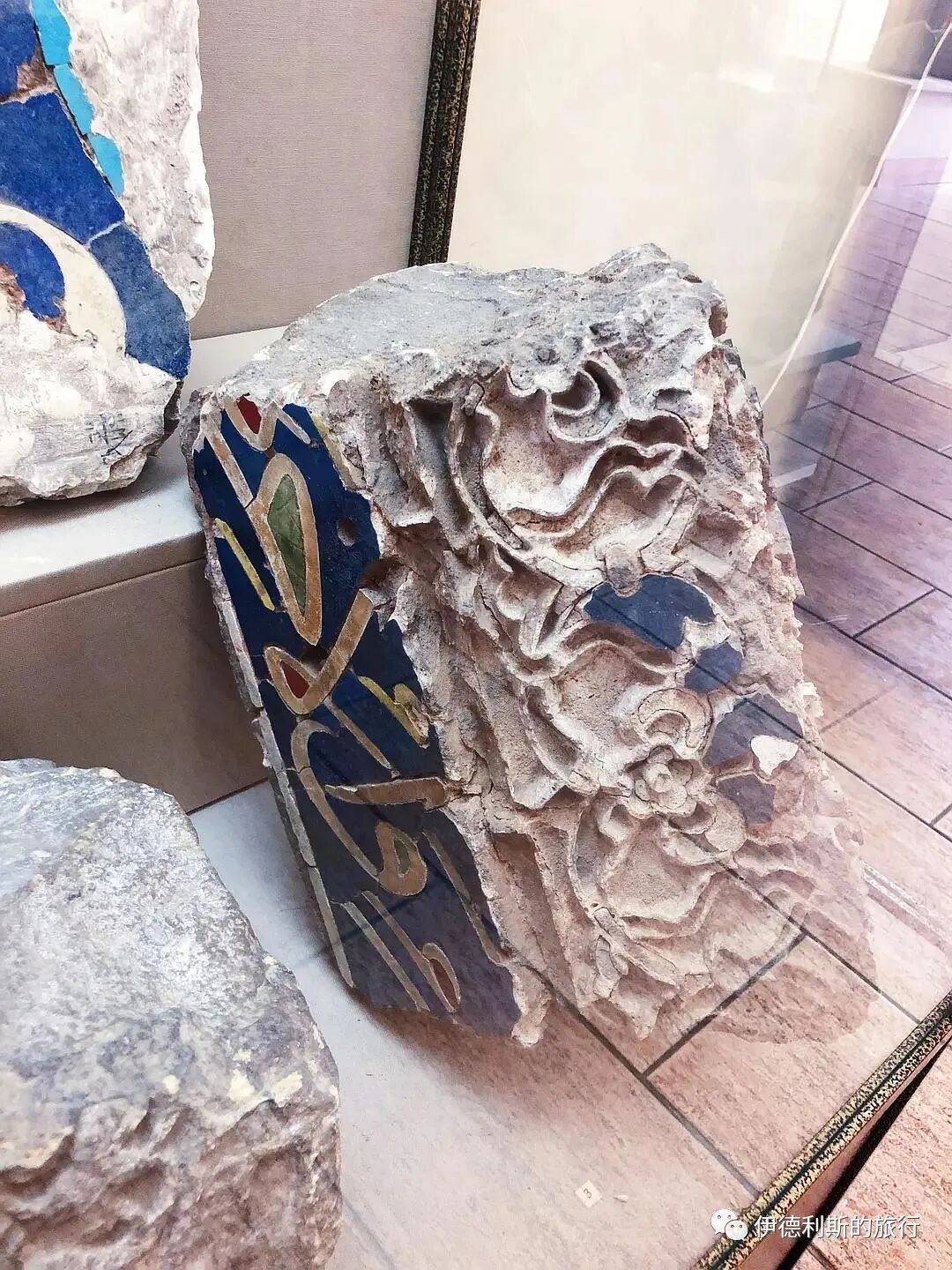
A water basin from a public bathhouse in the ancient city of Bolghar during the 14th-century Golden Horde period.
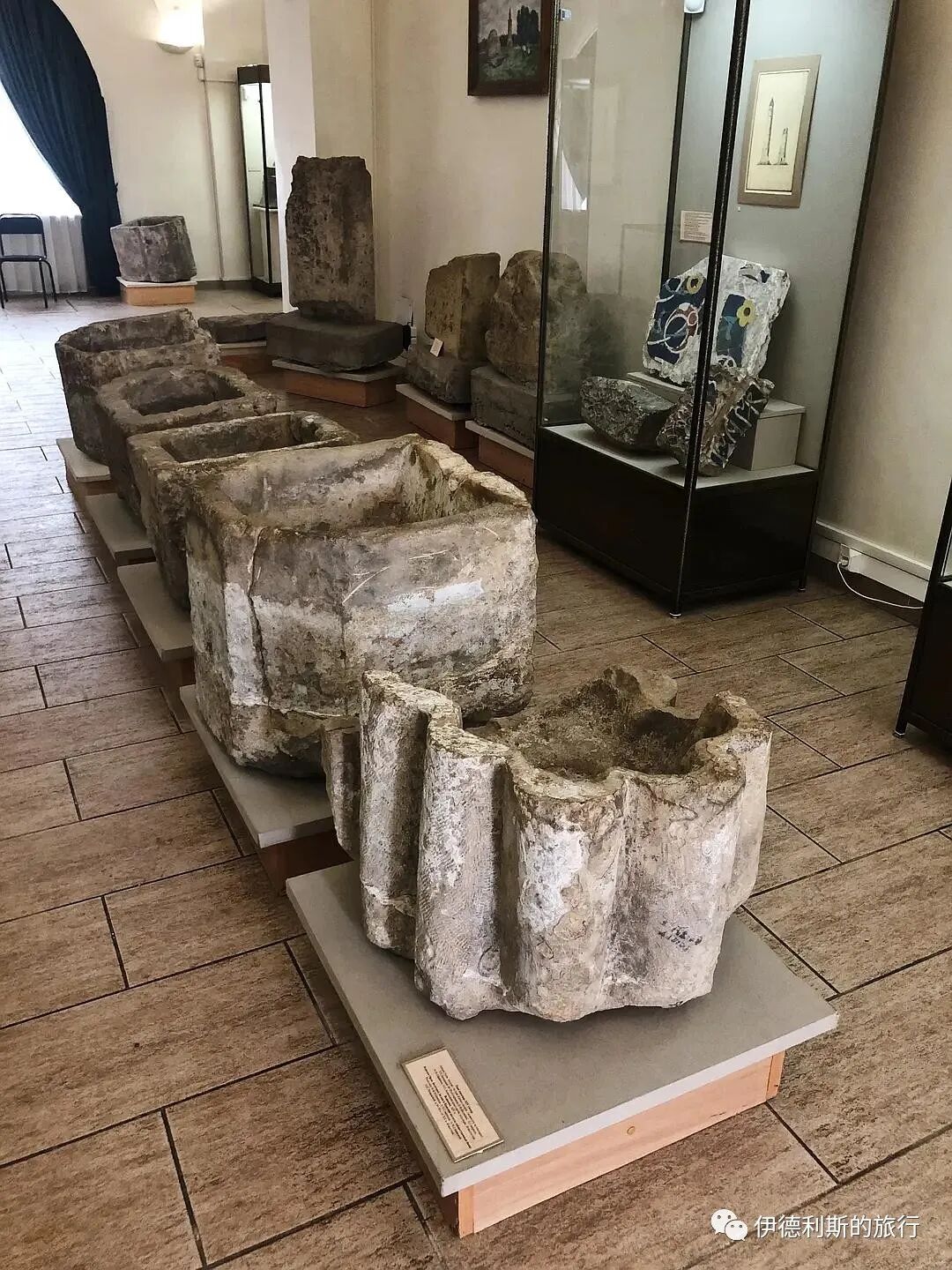
Gate components from the Great Mosque of Bolghar during the Golden Horde period, dating from the late 13th to early 14th century.
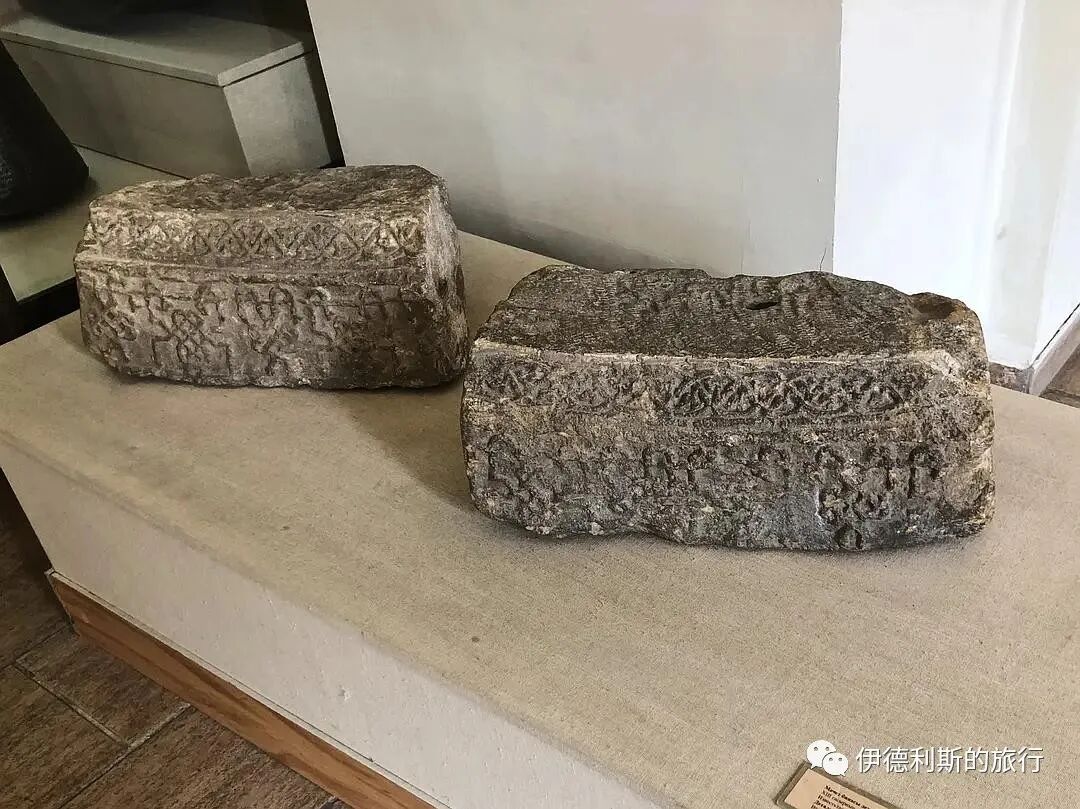
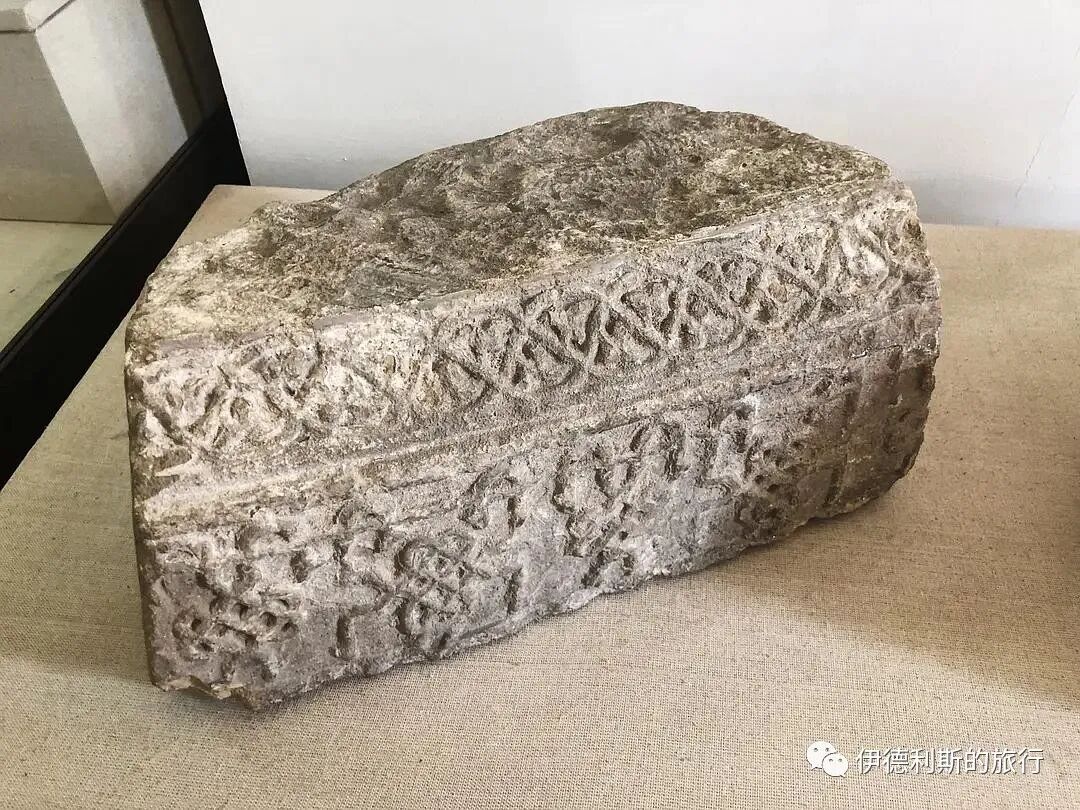
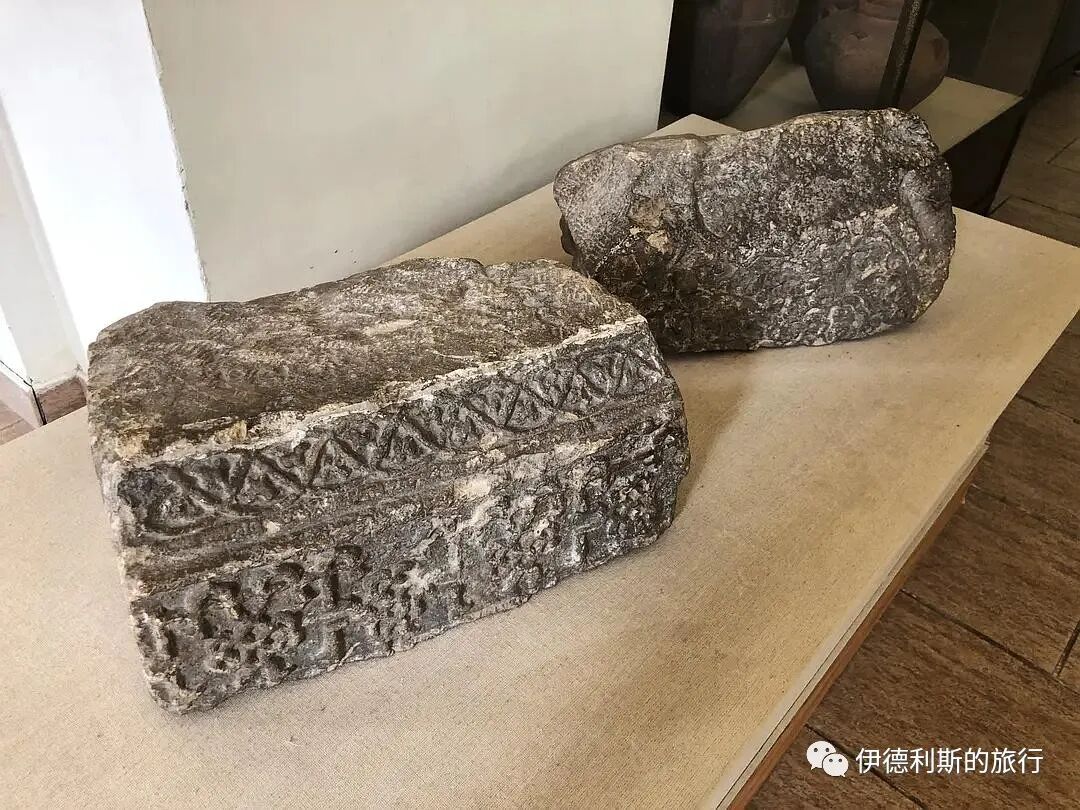
A tombstone from Kazan during the Golden Horde period in the early 14th century.
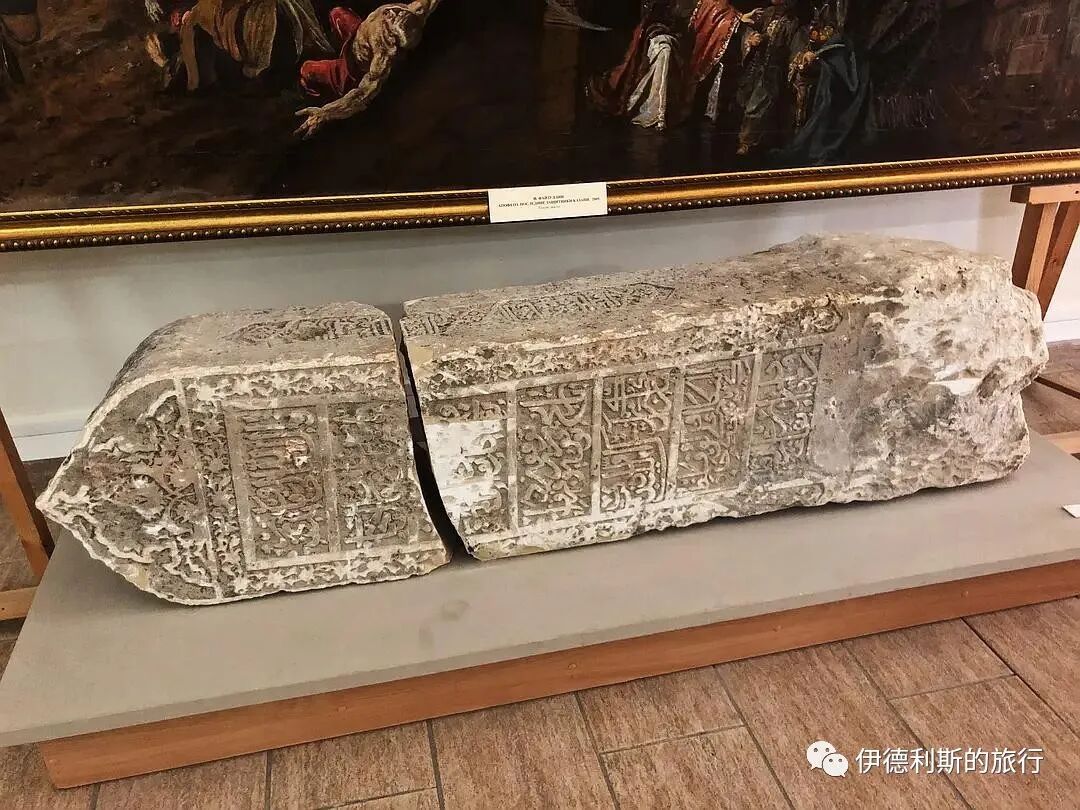
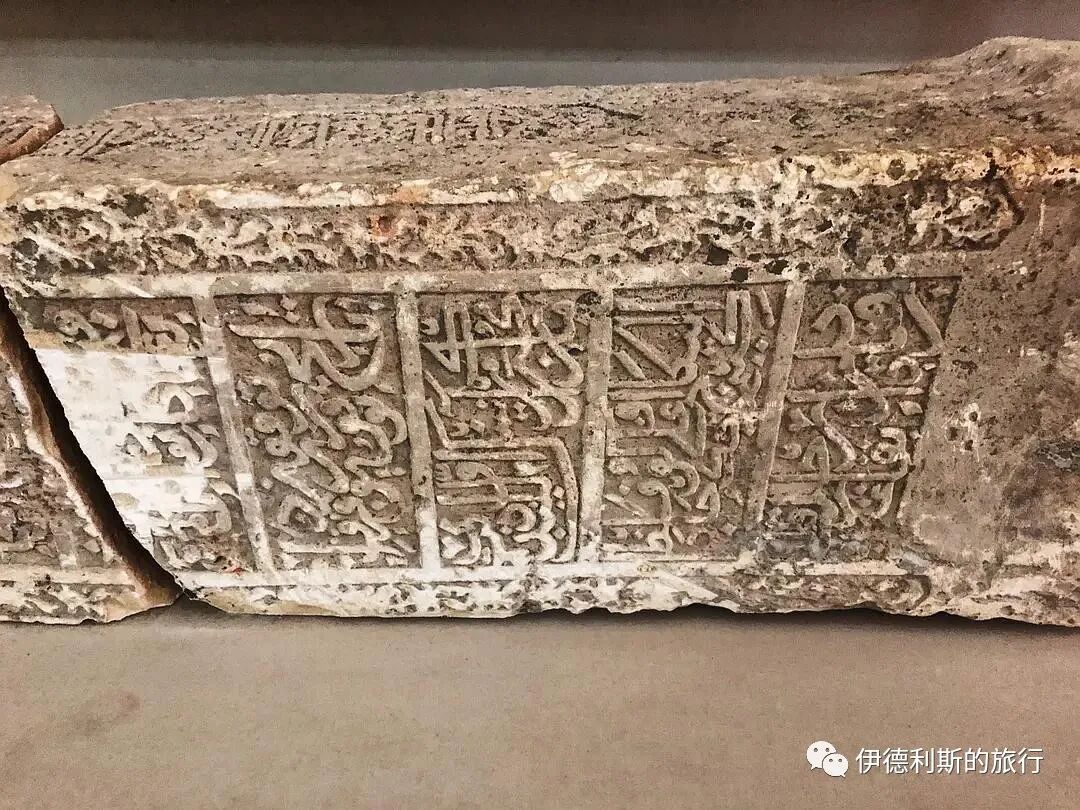
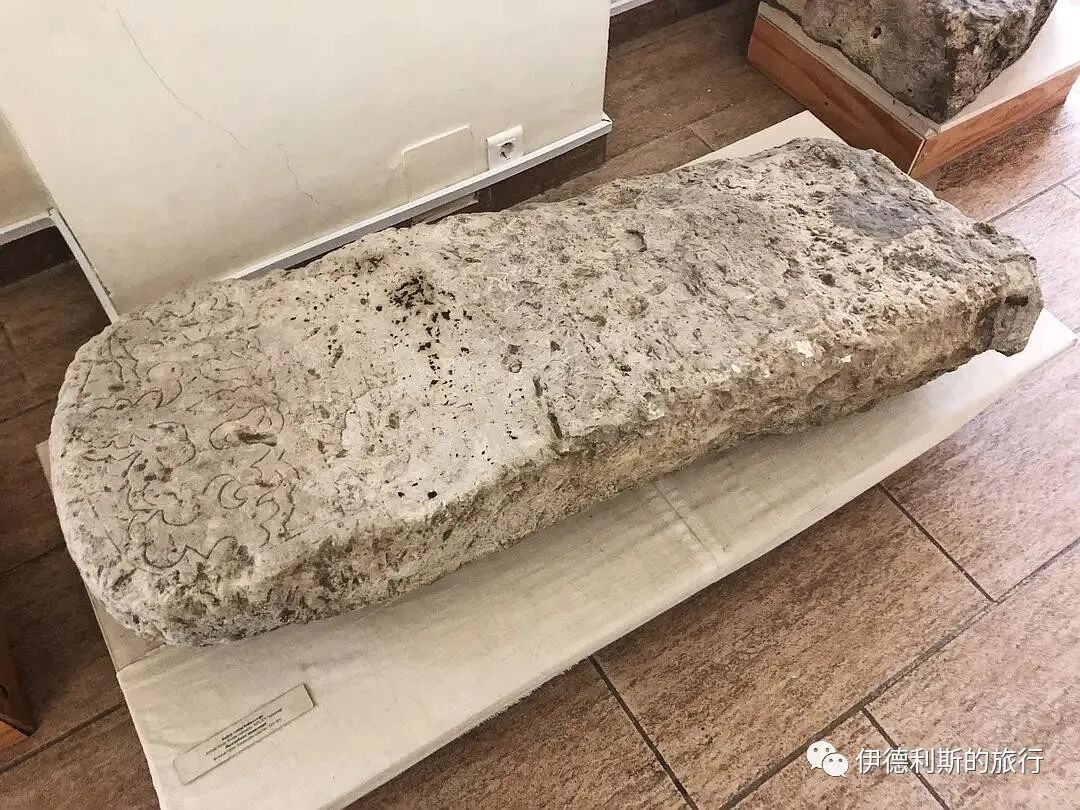
A tombstone from the 14th to 15th century, dating back to the Golden Horde or Kazan Khanate period.
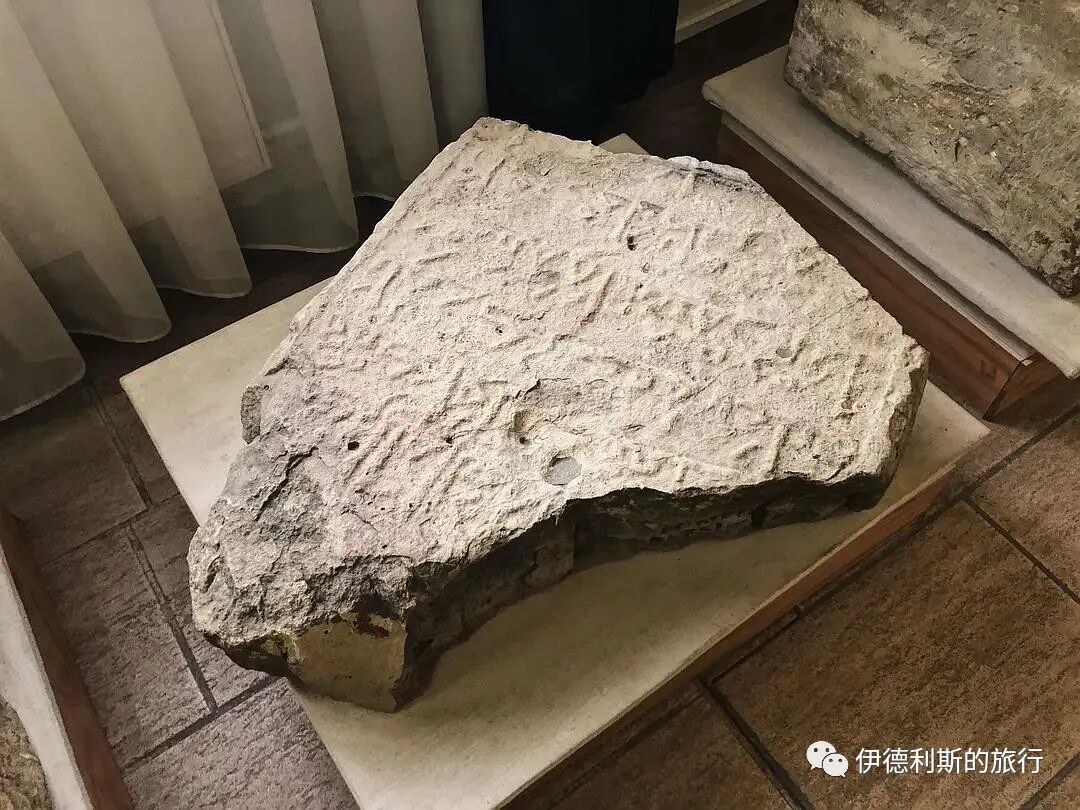
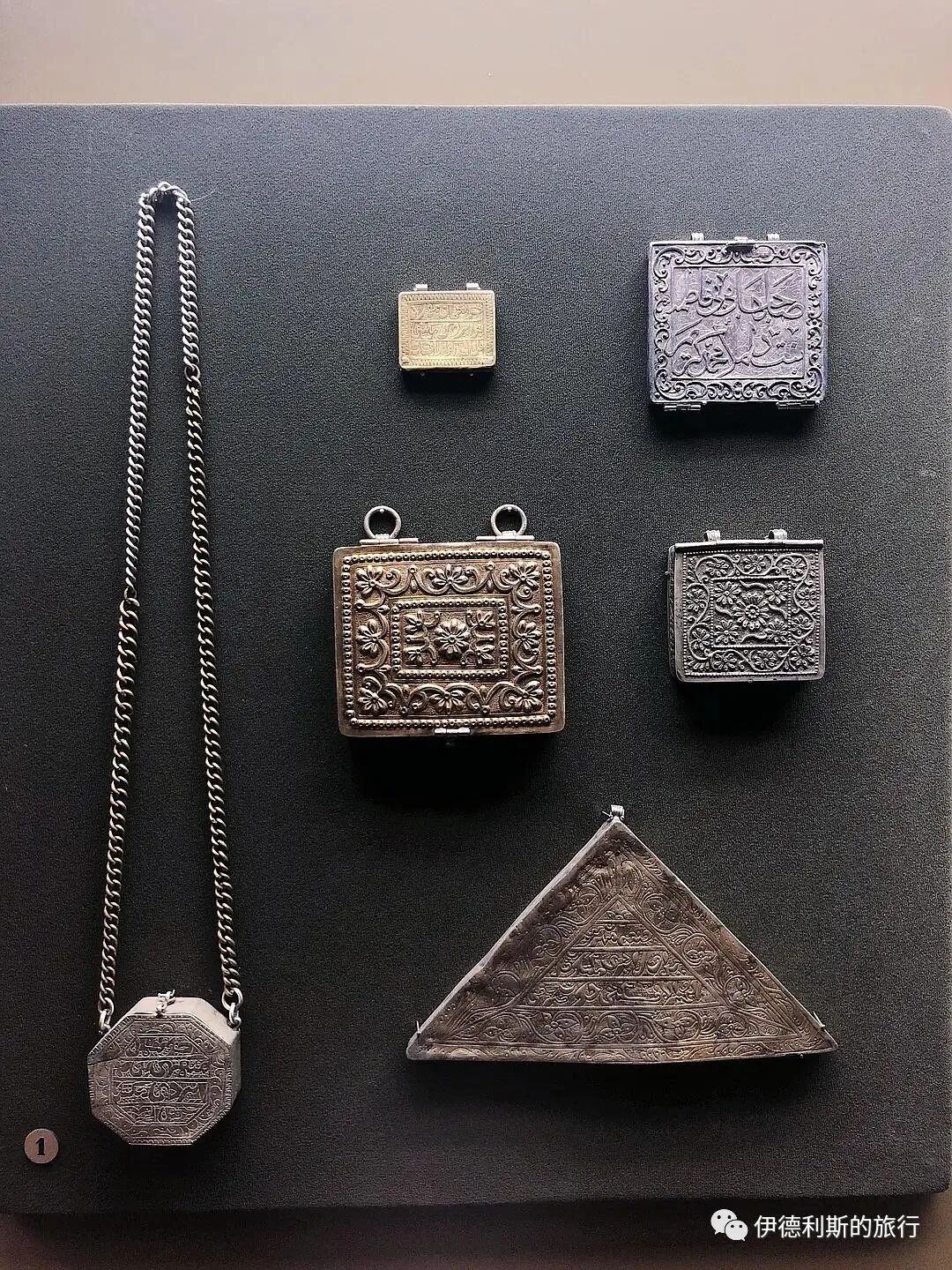
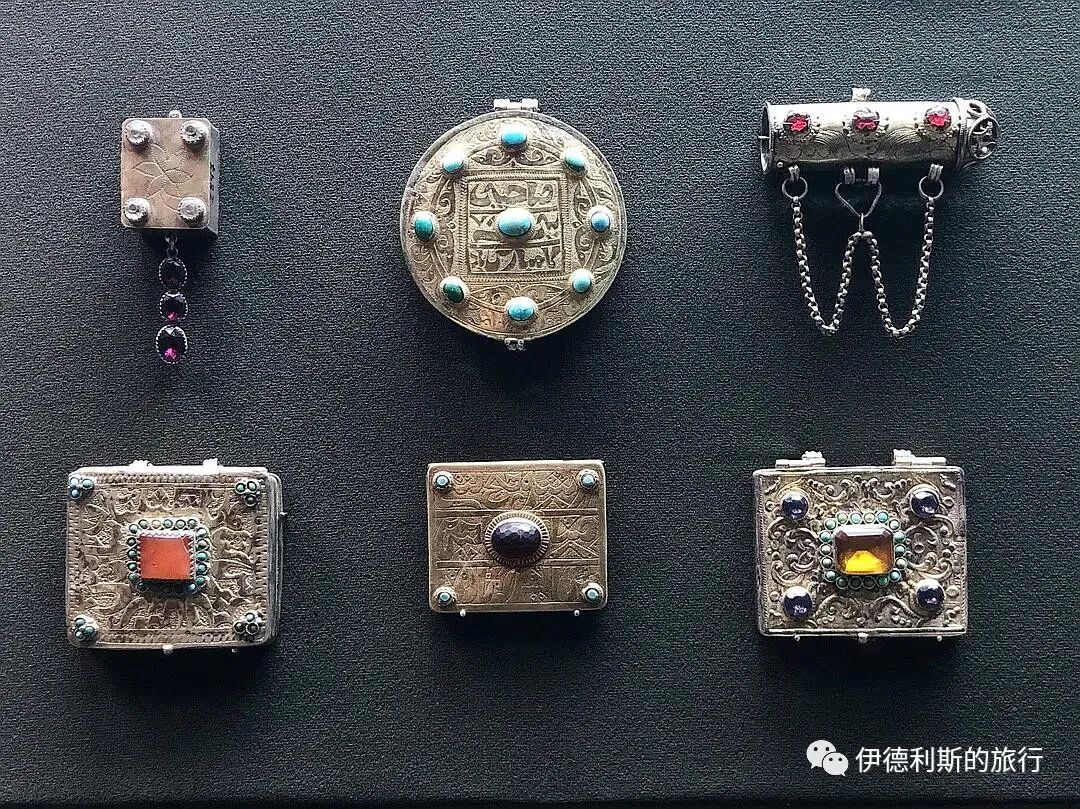
A miniature Quran box used by Kazan Tatars from the late 18th to the 19th century.
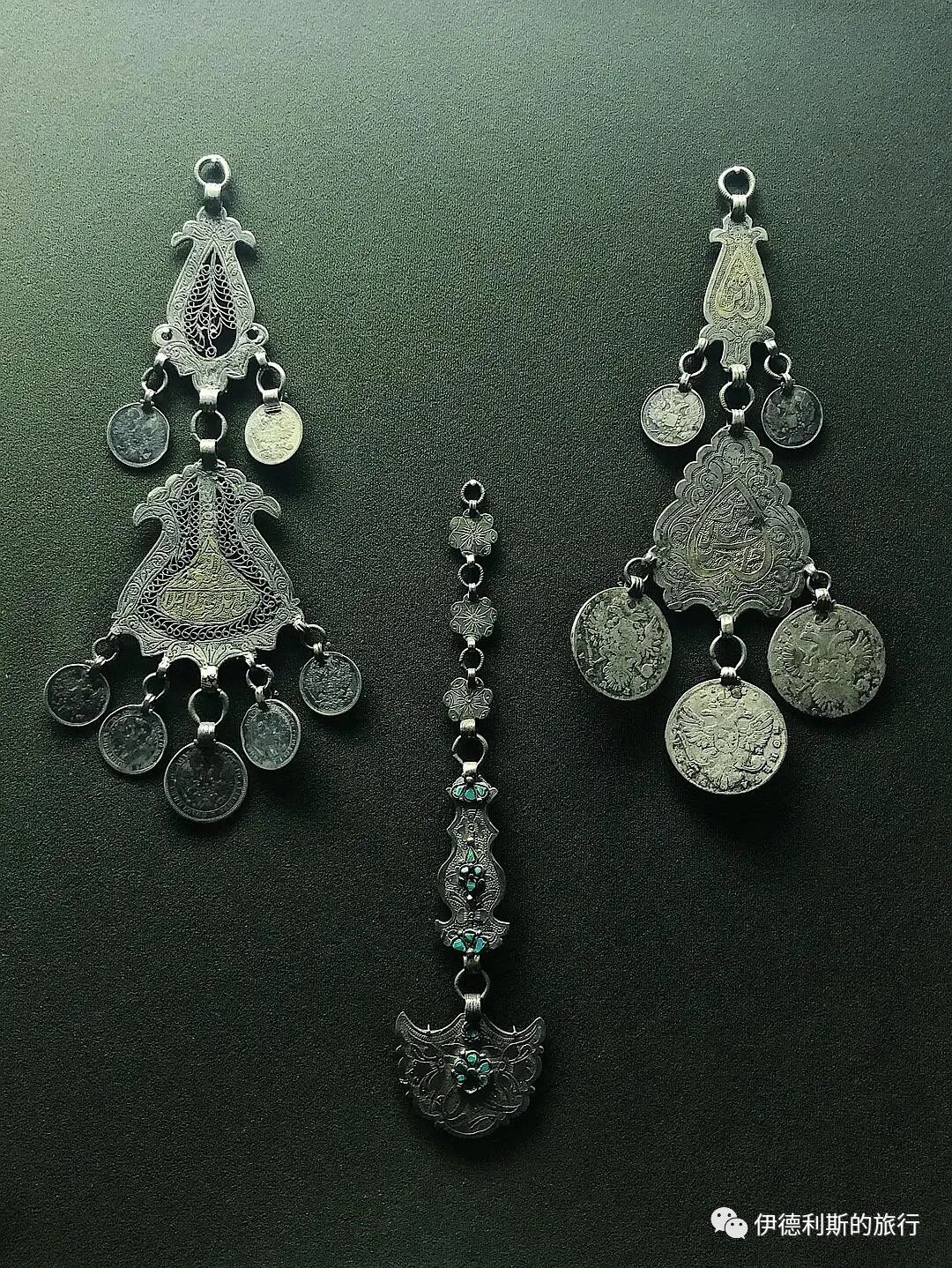
Jewelry worn by Kazan Tatars from the late 18th to the 19th century.
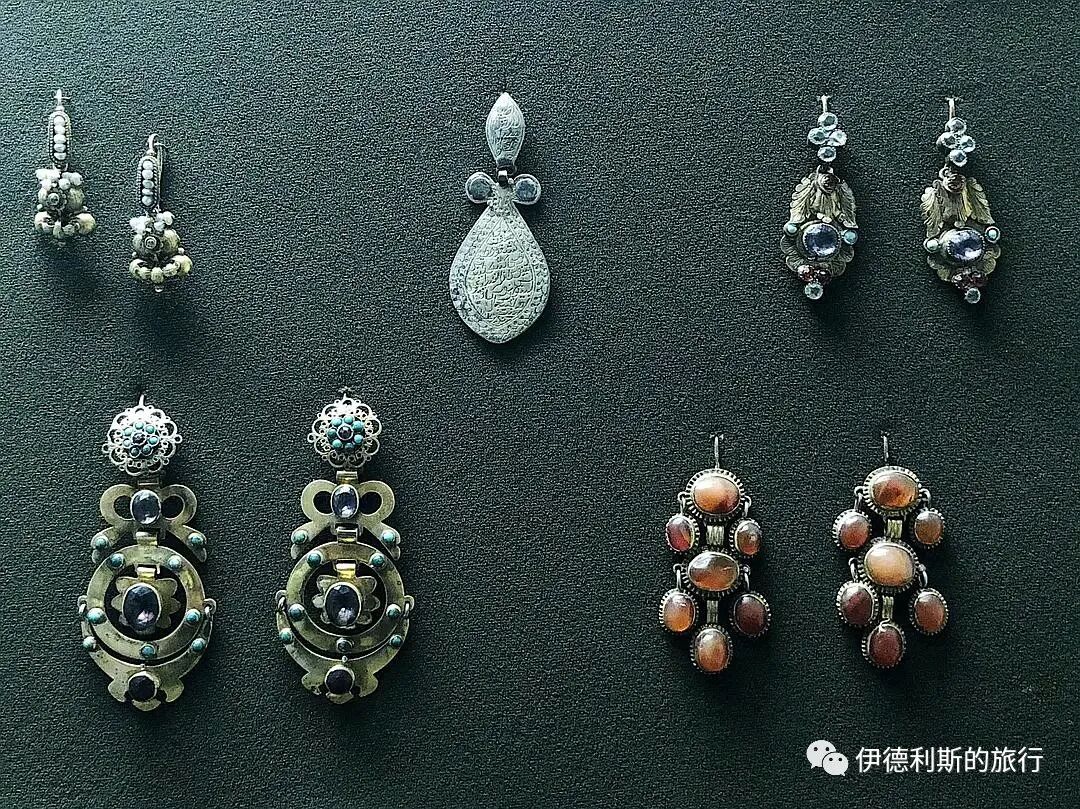
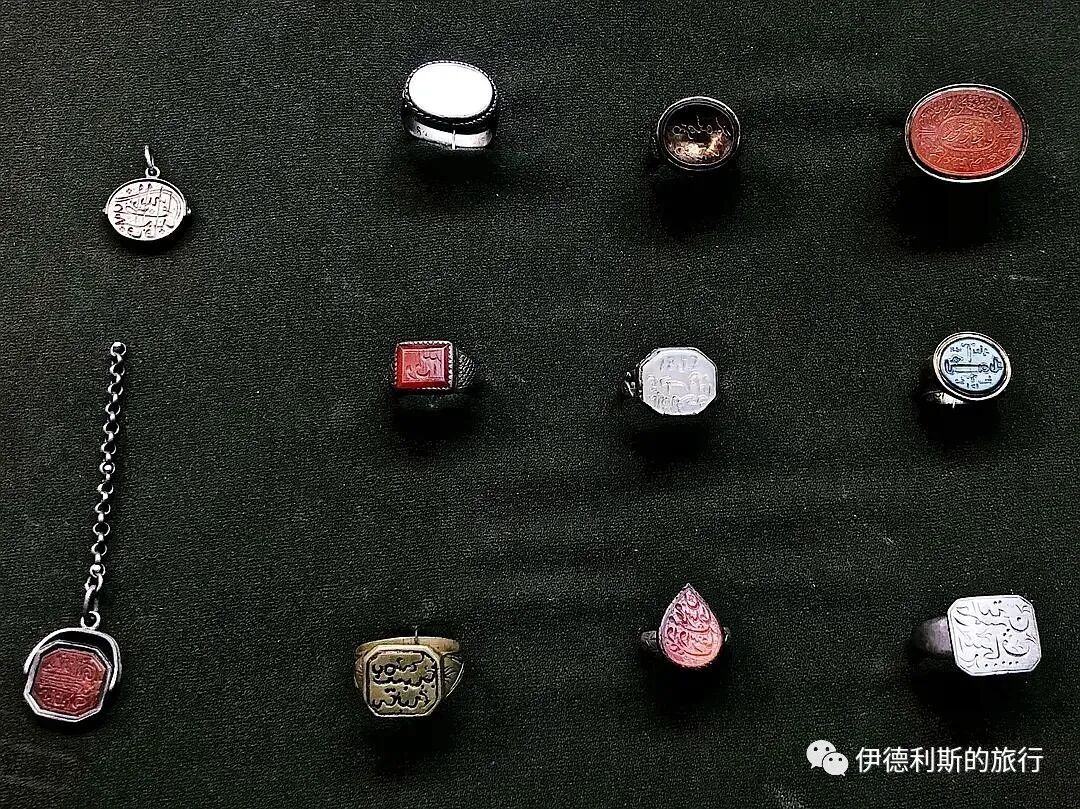
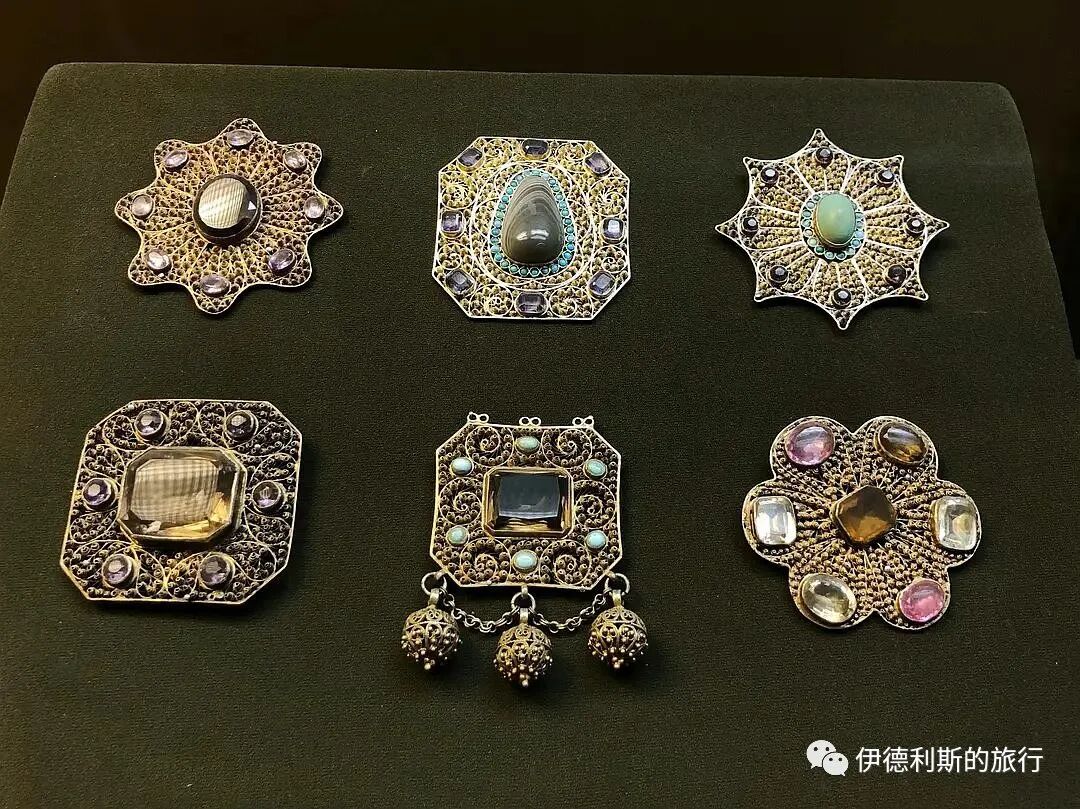
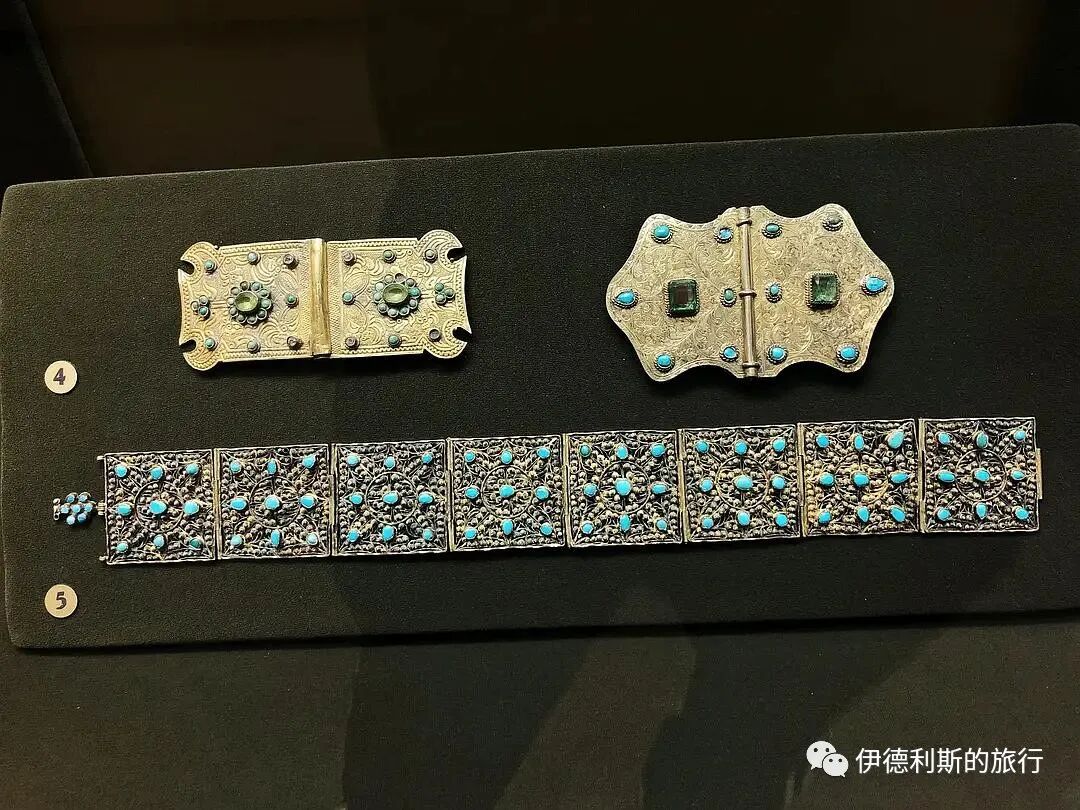
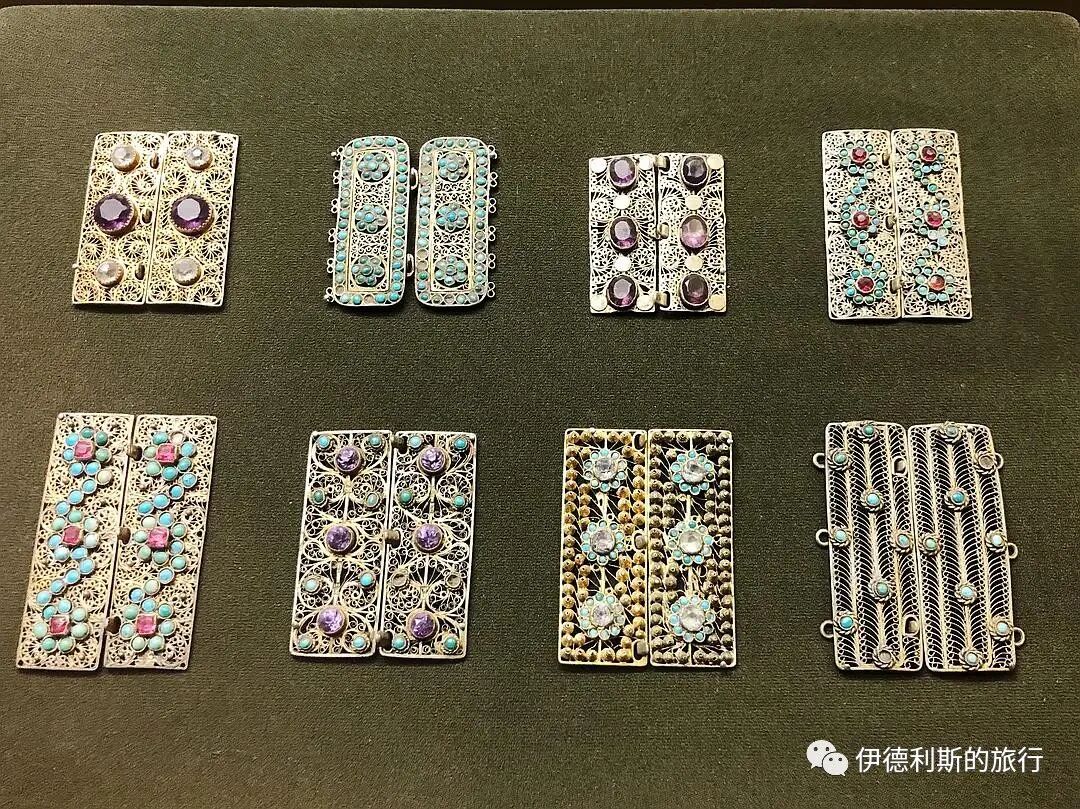
Embroidered caps worn by Kazan Tatars from the 19th to the early 20th century.
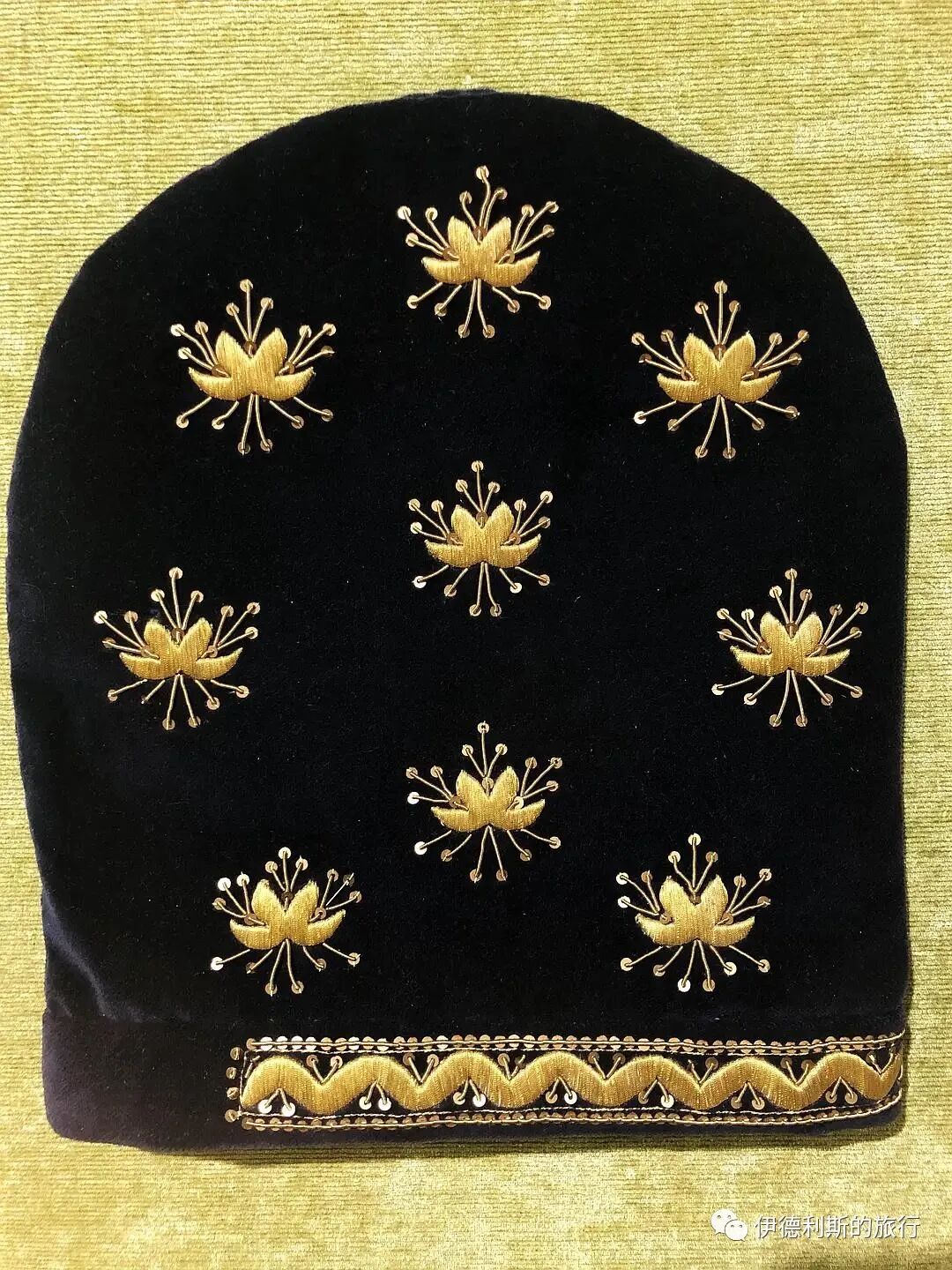
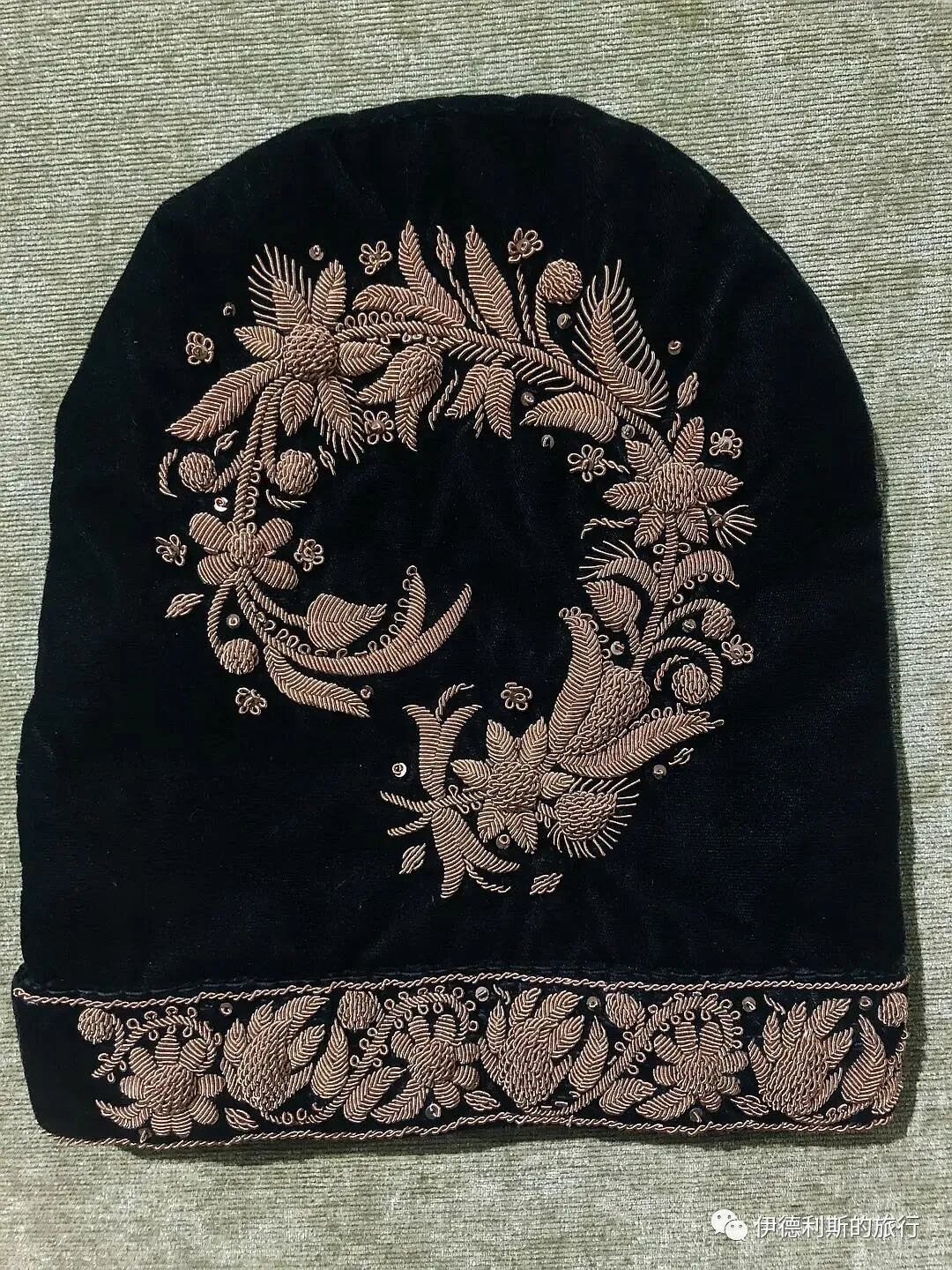
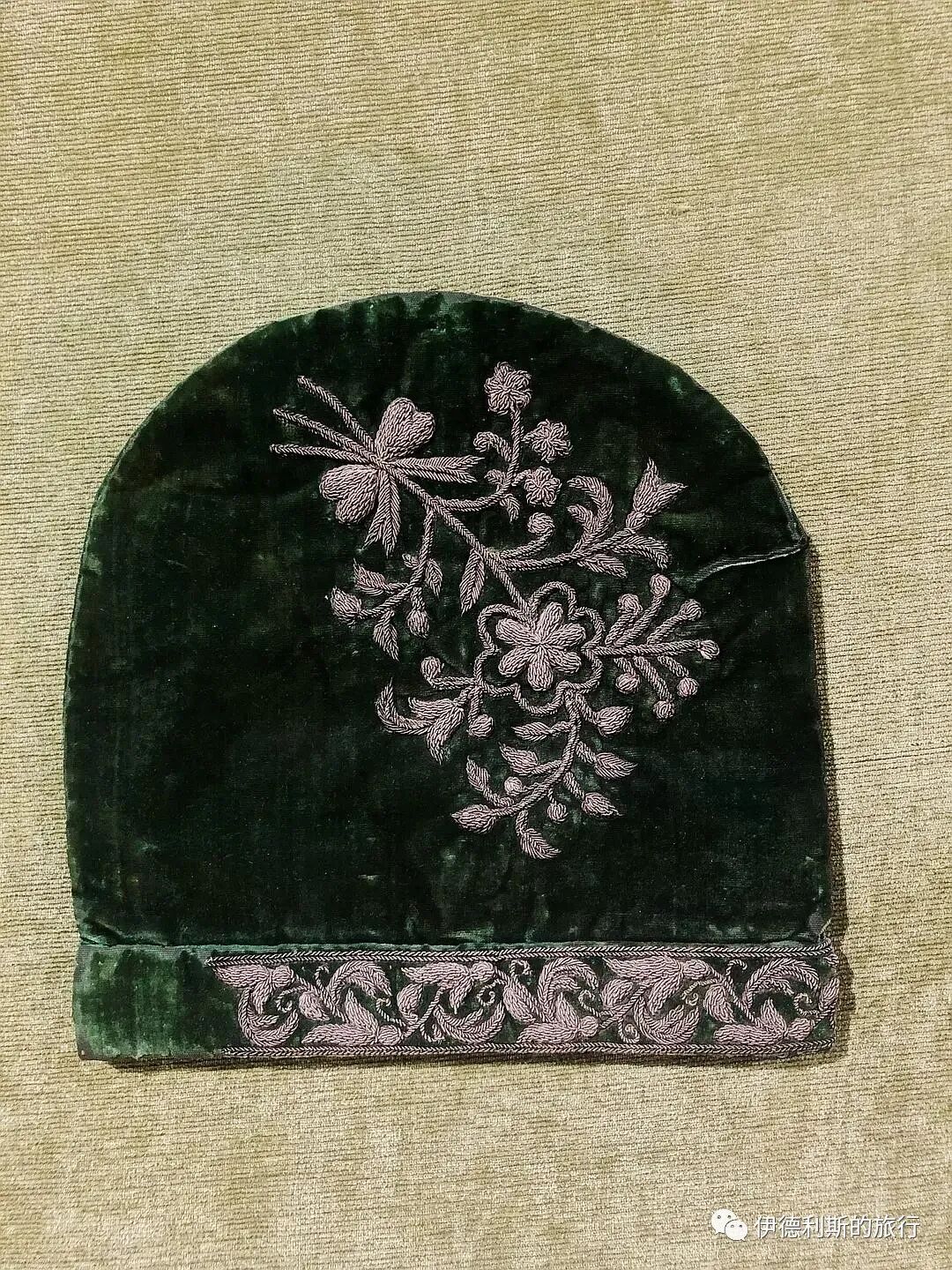
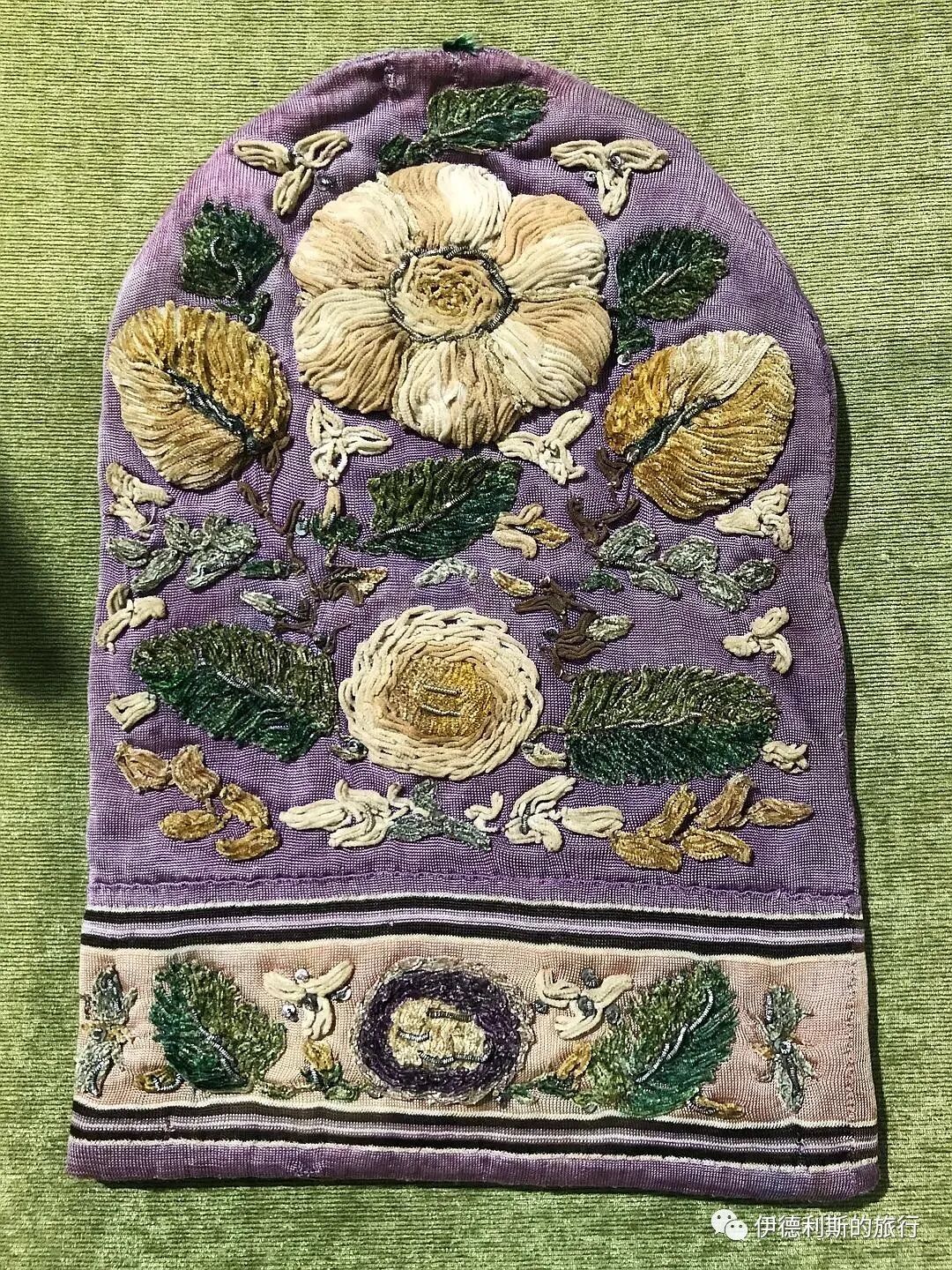
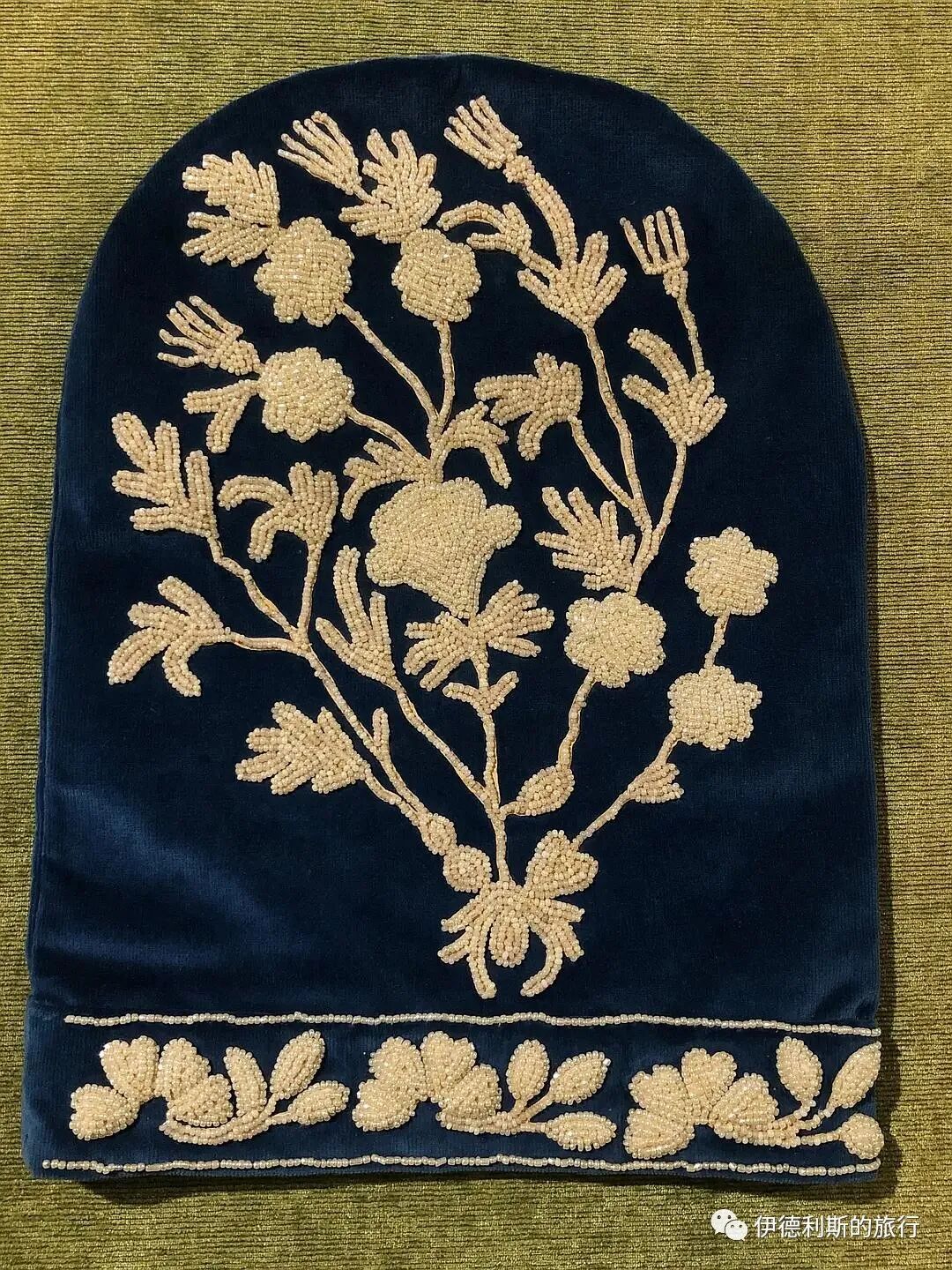
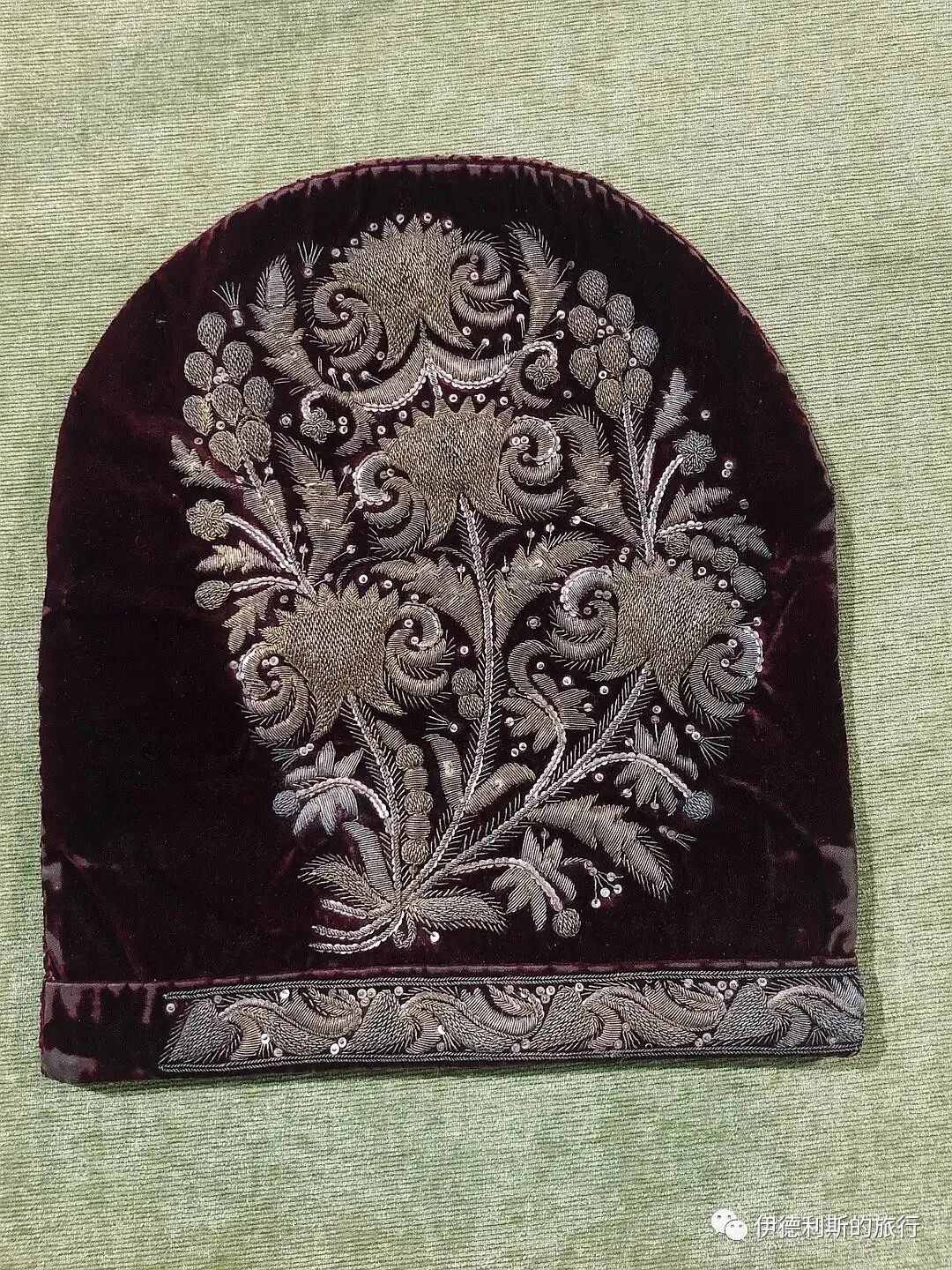
A 1902 publication from Kazan University Press introducing the ship Nu Hai and artifacts from the ancient city of Bolghar.
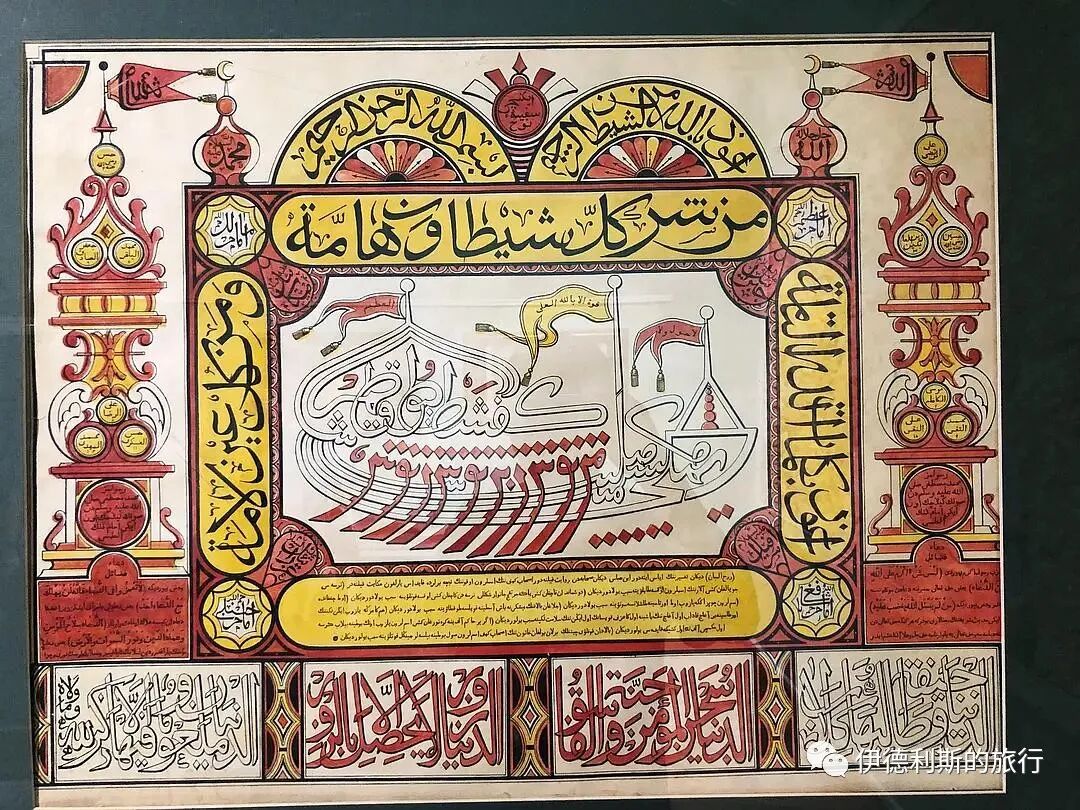
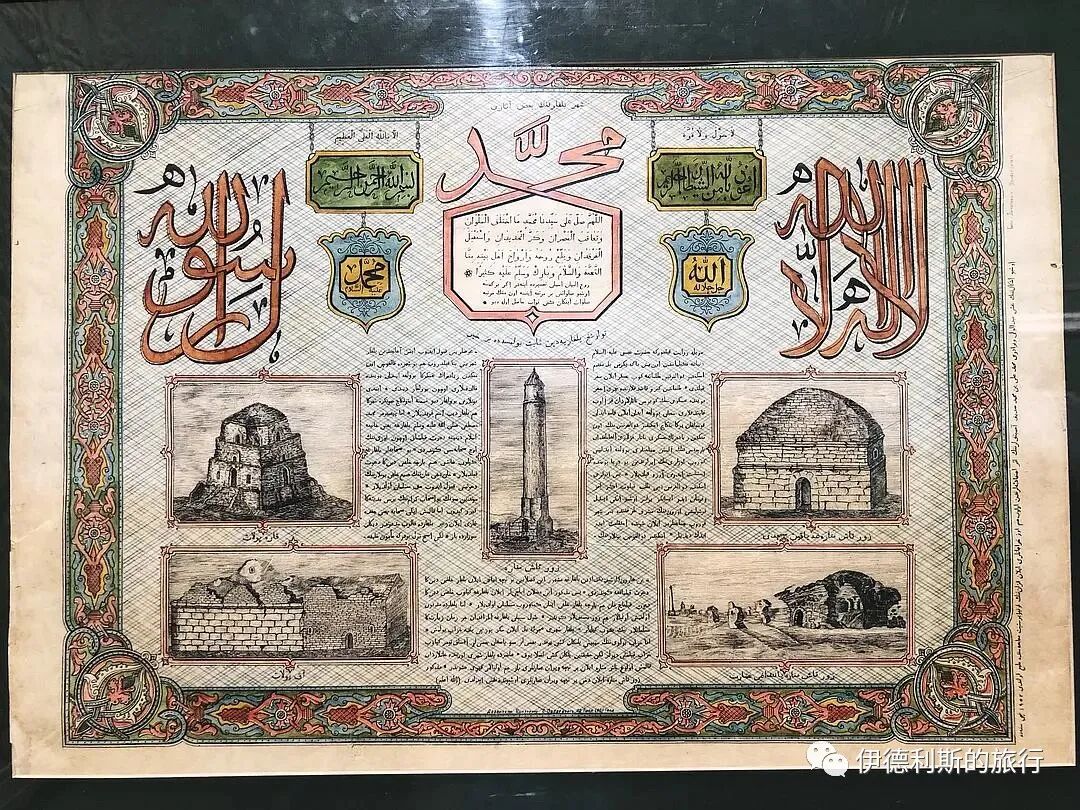
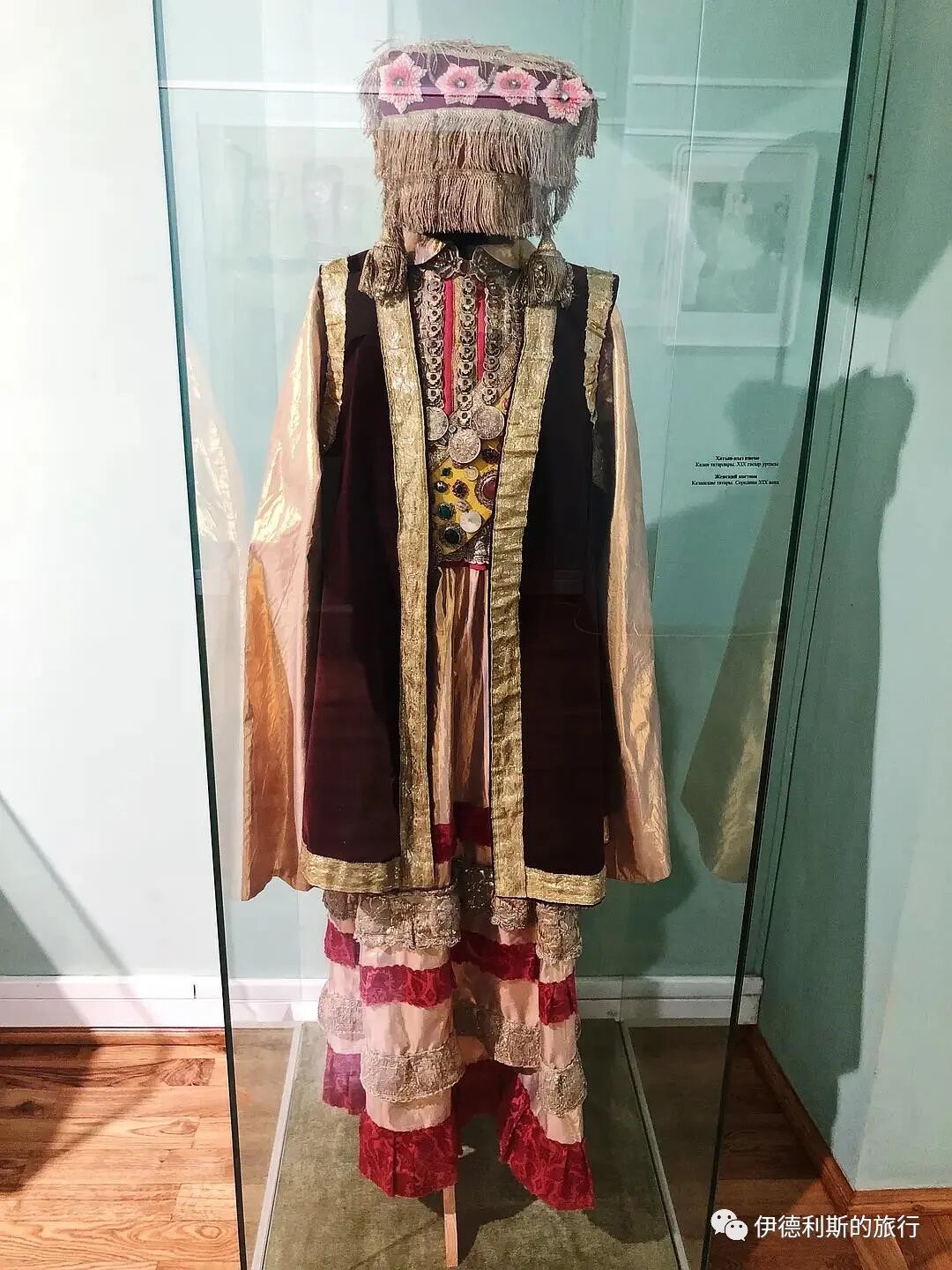
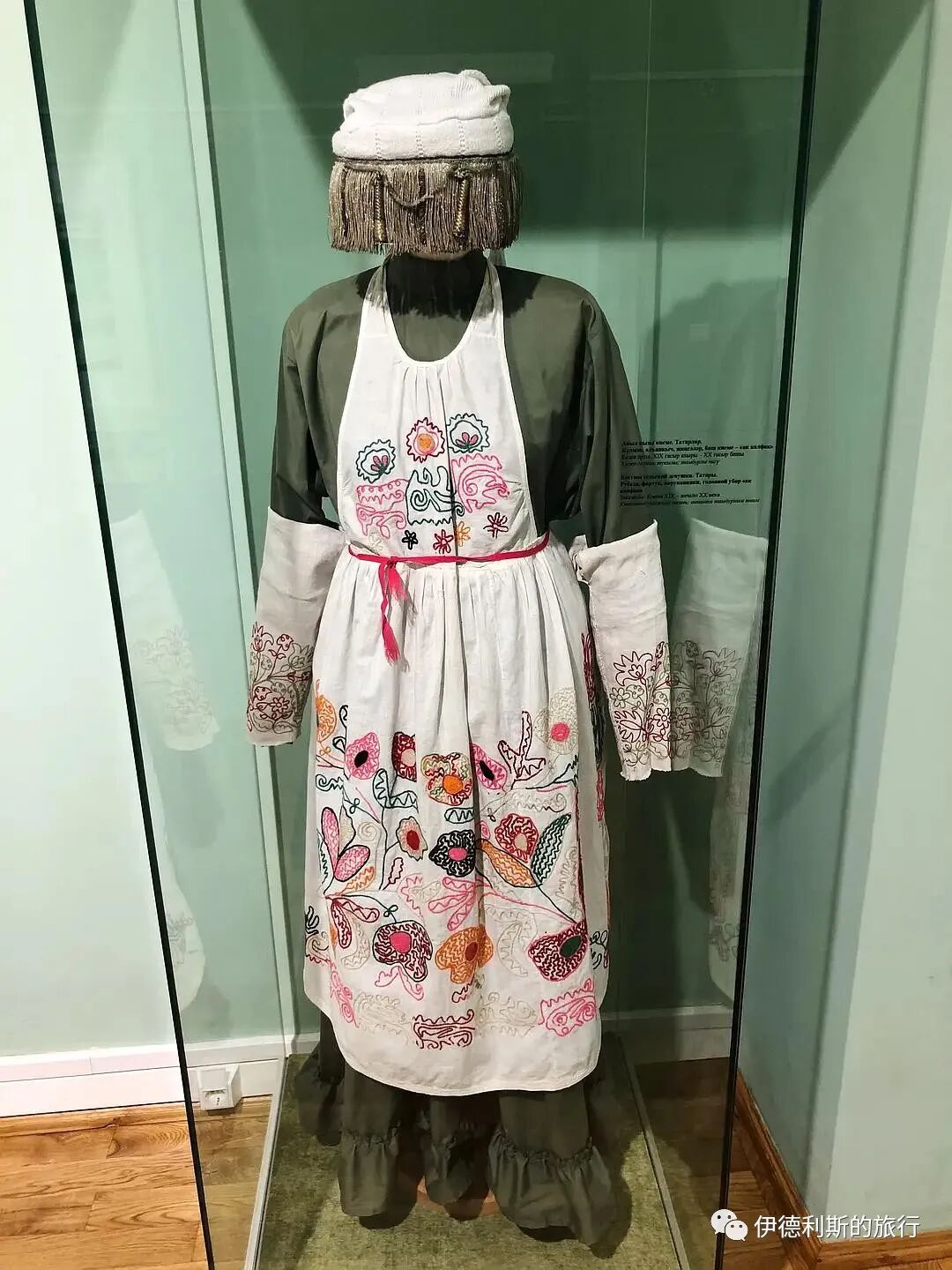
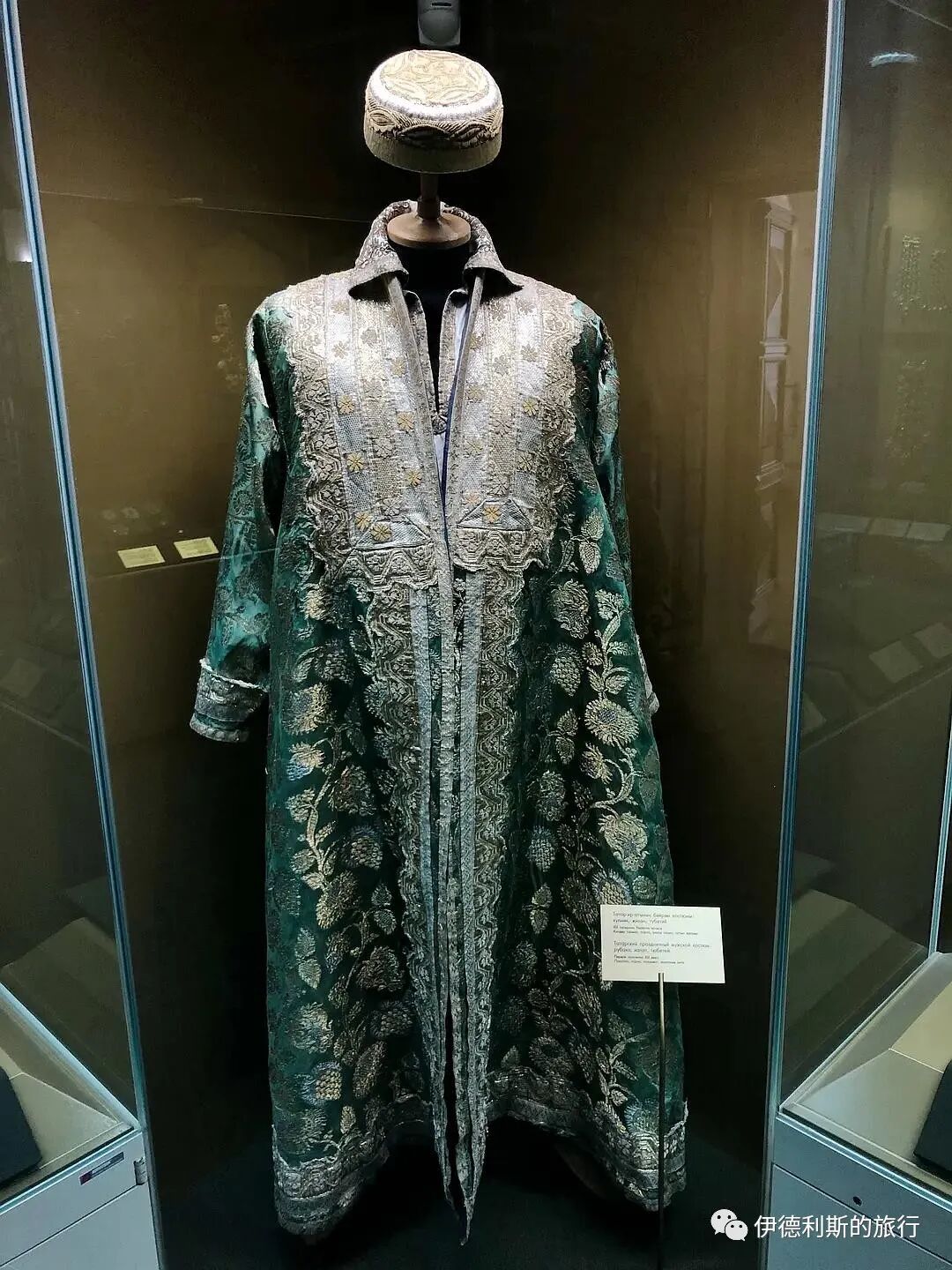
Traditional clothing of the Kazan Tatars from the 19th to the early 20th century.
Kazan Kremlin Exhibition: Golden Horde, Mongol Empire and Muslim Heritage
Articles • ali2007fr posted the article • 0 comments • 134 views • 2026-05-18 01:58
Summary: Kazan Kremlin Exhibition: Golden Horde, Mongol Empire and Muslim Heritage is presented here as a firsthand travel account in clear English, beginning with this scene: In the summer of 2019, I visited Kazan in Tatarstan. At the Hermitage-Kazan Exhibition Centre inside the Kazan Kremlin, I saw a special exhibition called The Golden Horde and the Black Sea Coast: Lessons of the. The account keeps its focus on Golden Horde, Kazan Travel, Muslim Heritage while preserving the names, places, food, and historical details from the Chinese source.
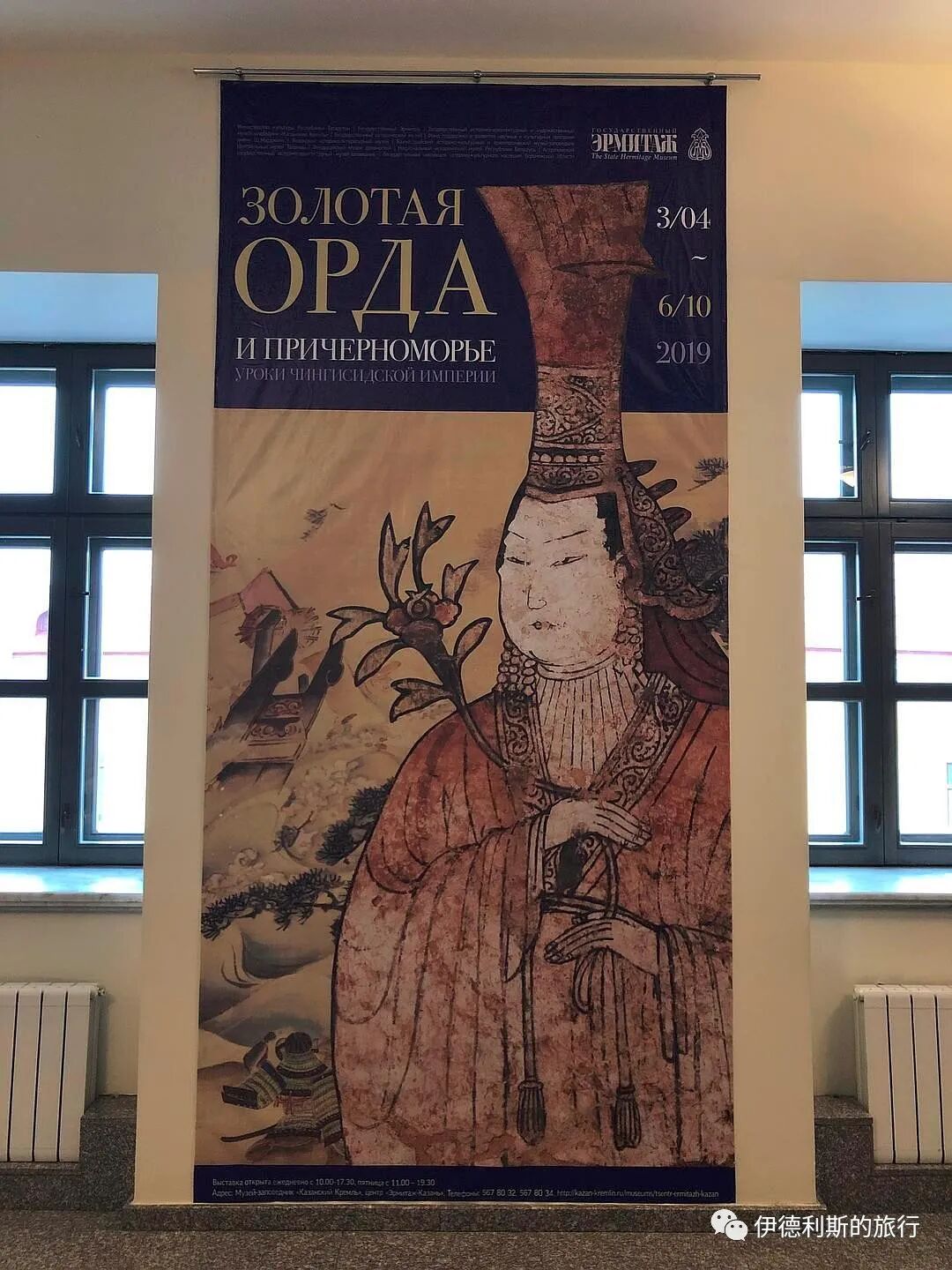
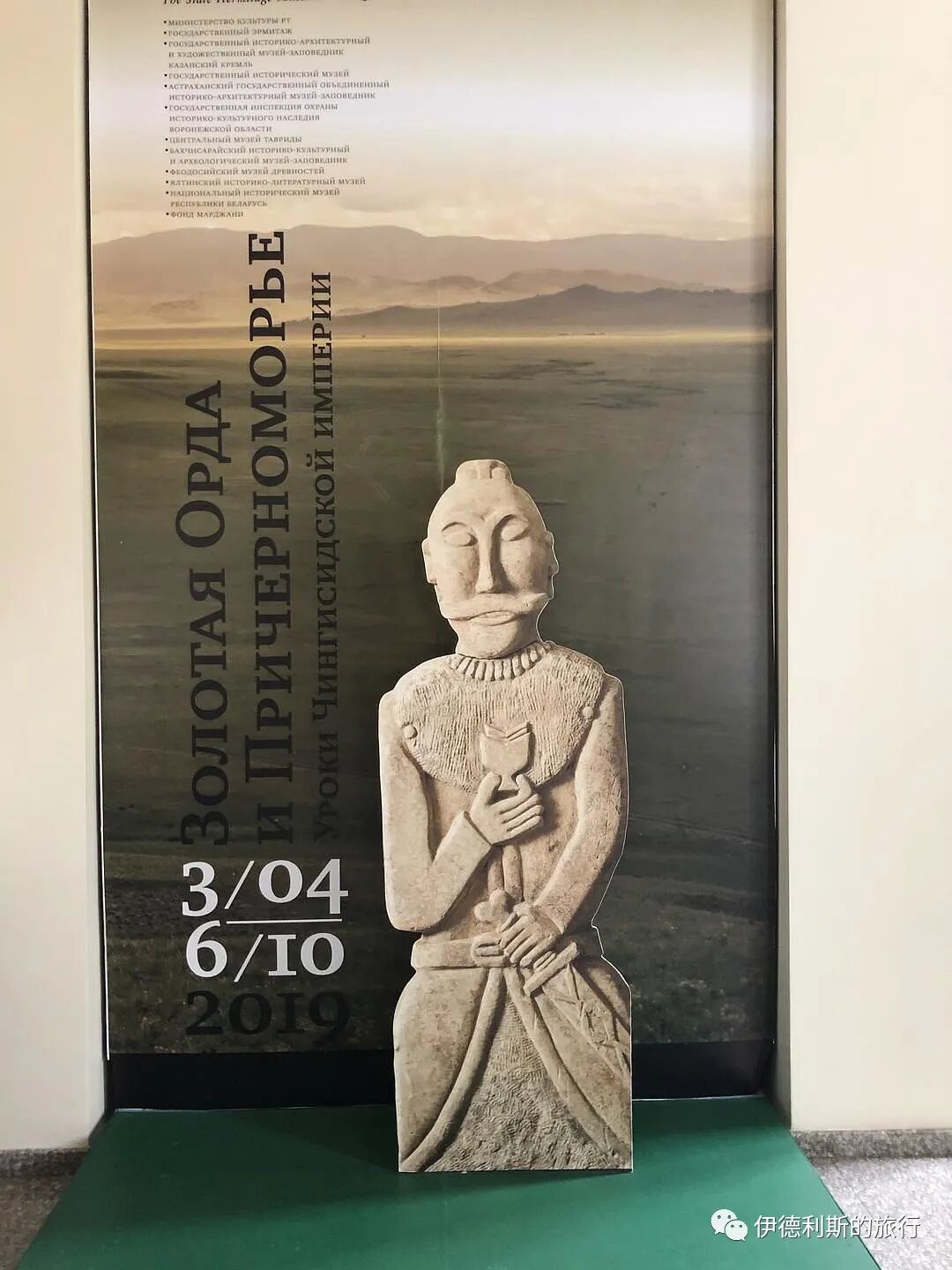
In the summer of 2019, I visited Kazan in Tatarstan. At the Hermitage-Kazan Exhibition Centre inside the Kazan Kremlin, I saw a special exhibition called The Golden Horde and the Black Sea Coast: Lessons of the Genghisid Empire. The items came from the State Hermitage Museum in St. Petersburg and nine other museums, showing the history of the Golden Horde and the Mongol Empire.
New Sarai, the capital of the Golden Horde.
A 14th-century Persian tile found in the 1980s at the palace ruins of the Golden Horde capital, New Sarai.
New Sarai sits 85 kilometers east of Volgograd. It was the second capital of the Golden Horde, built in the 14th century by Öz Beg Khan, who reigned from 1312 to 1341. During the time of Öz Beg Khan, the Golden Horde fully embraced Islam. The famous traveler Ibn Battuta described New Sarai in his journals as one of the most beautiful cities, full of people, with lovely markets and wide streets. He noted it had 13 Friday mosques and many smaller mosques.
New Sarai was destroyed many times. Timur first damaged New Sarai in 1395. Meñli I Giray, the Khan of the Crimean Khanate, destroyed it again in 1502. Finally, Ivan the Terrible of Russia crushed the entire city in 1556 when he conquered the Astrakhan Khanate.
In 1965, a Volga archaeological team led by the German researcher Alekseevich Fedorov-Davydov excavated 25,000 square meters of the ancient city ruins. During the 1960s and 1980s, they discovered ruins of manors, a mosque, a large cemetery, and artisan workshops in the ancient city.
Stary Krym, the capital of the Golden Horde on the Crimean Peninsula.
Muslim tombstones from the 14th and 15th centuries during the Golden Horde period, all from the ancient city of Stary Krym in the eastern part of the Crimean Peninsula.
Stary Krym started as a fortress for the Khazars. After the Mongol conquest, Batu Khan, the founder of the Golden Horde, made it the capital of the Golden Horde on the Crimean Peninsula. Stary Krym grew into a prosperous city in the 14th century, but it was destroyed in the late 15th century by the Crimean Khan, Mengli Girai.
Stary Krym played an important role in cultural exchange between Southern Europe, Byzantium, and Asia Minor. Latin-Byzantine culture and Turkic-Mongol culture met here, creating a unique artistic style.
A marble Muslim tombstone from the second half of the 14th to the 15th century.
Two marble Muslim tombstones from 1371 and 1429, found in 1925 in the furrows of the ancient city of Stary Krym.
Two sandstone Muslim tombstones from the 14th century, excavated in 1979 from the castle on the hill in the ancient city of Stary Krym.
A stone stele showing a warrior from the late 12th or early 13th century. It was found near the ancient city of Stary Krym on the Crimean Peninsula and came from the Seljuk Sultanate of Rum in Asia Minor.
The North Caucasus during the Golden Horde era.
A 14th-century shale stone carving from Kubachi in Dagestan, North Caucasus. Kubachi is a center for traditional metalwork, stone carving, and wood carving in the Caucasus. It has been famous for making weapons and chainmail since the Middle Ages.
Images of Mongols from Turpan, Xinjiang.
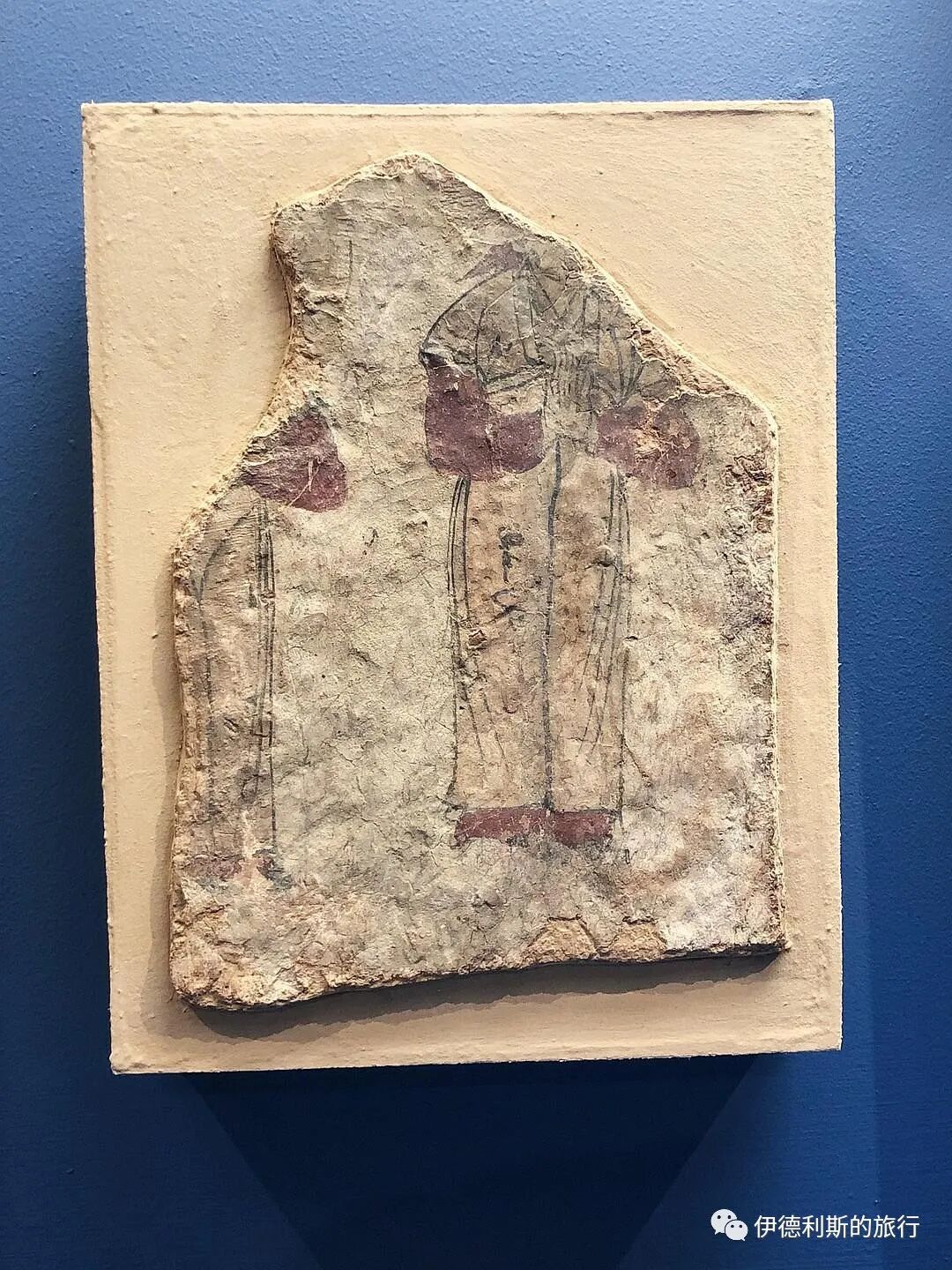
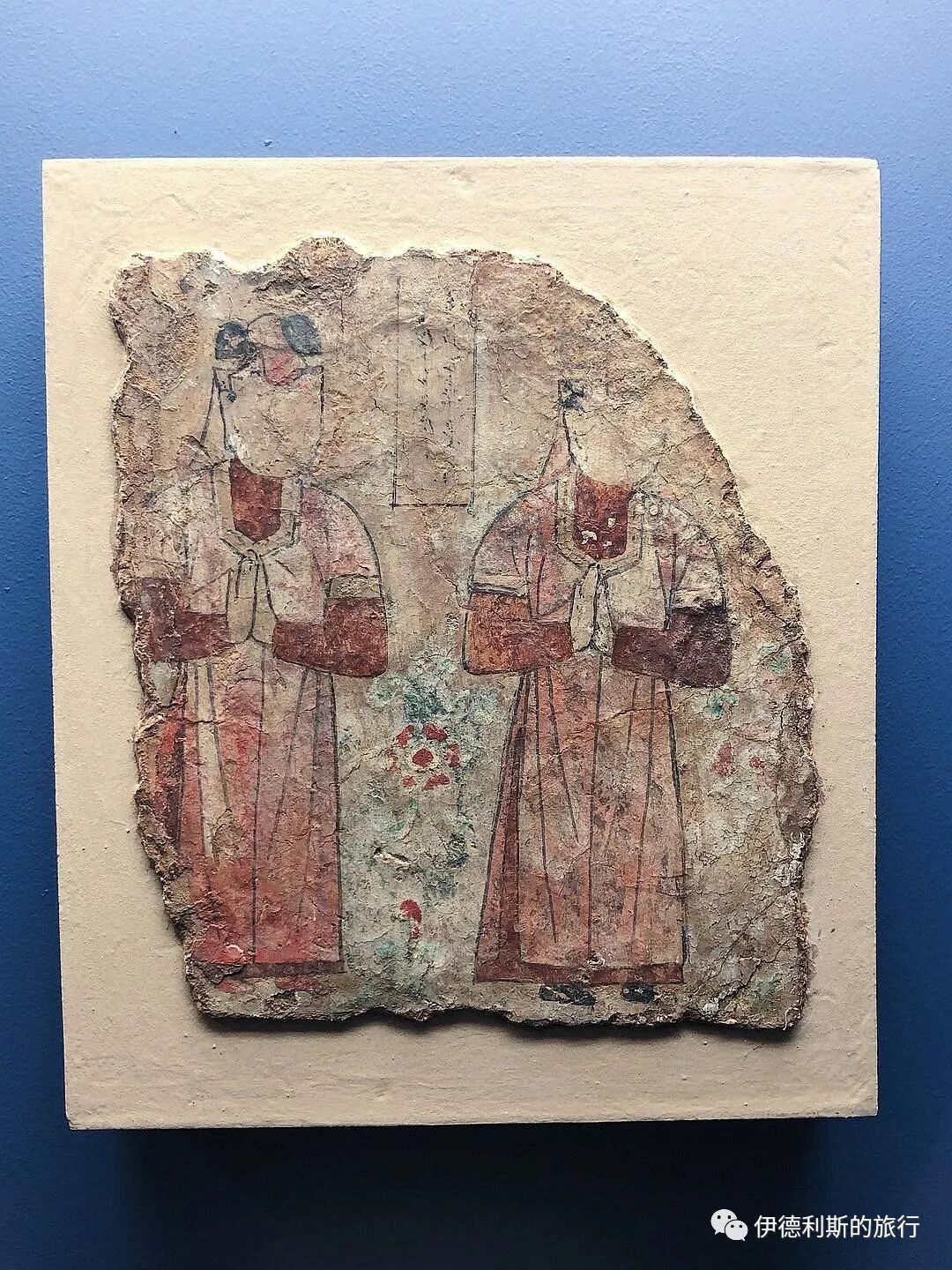
Four wall paintings of Mongols from Turpan, Xinjiang, dating to the 13th and 14th centuries. They are kept at the State Hermitage Museum in St. Petersburg. Before 1945, they belonged to the Ethnological Museum of Berlin, but were later taken to the Soviet Union by the Red Army.
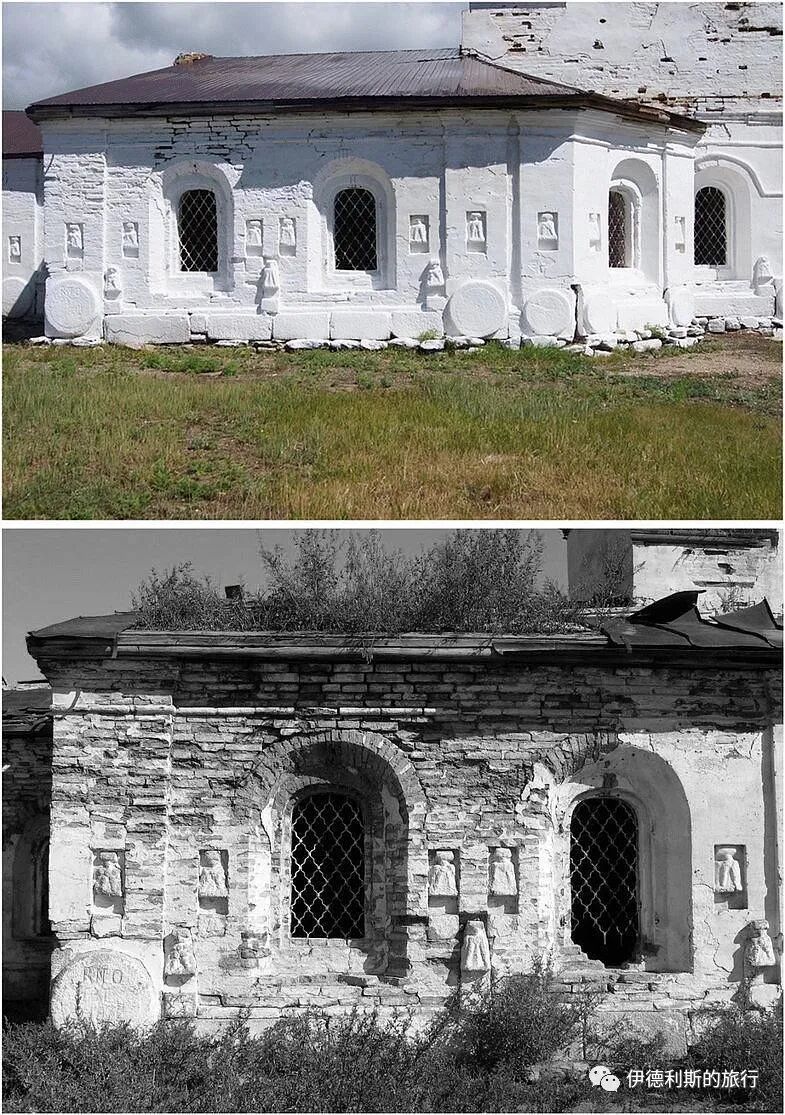
An Orthodox church born on the ruins of a Mongol palace
I read an interesting article on Weibo called 'An Orthodox church born on the ruins of a Mongol palace,' and I was surprised to see the actual artifacts at a special exhibition in the Kazan Kremlin.
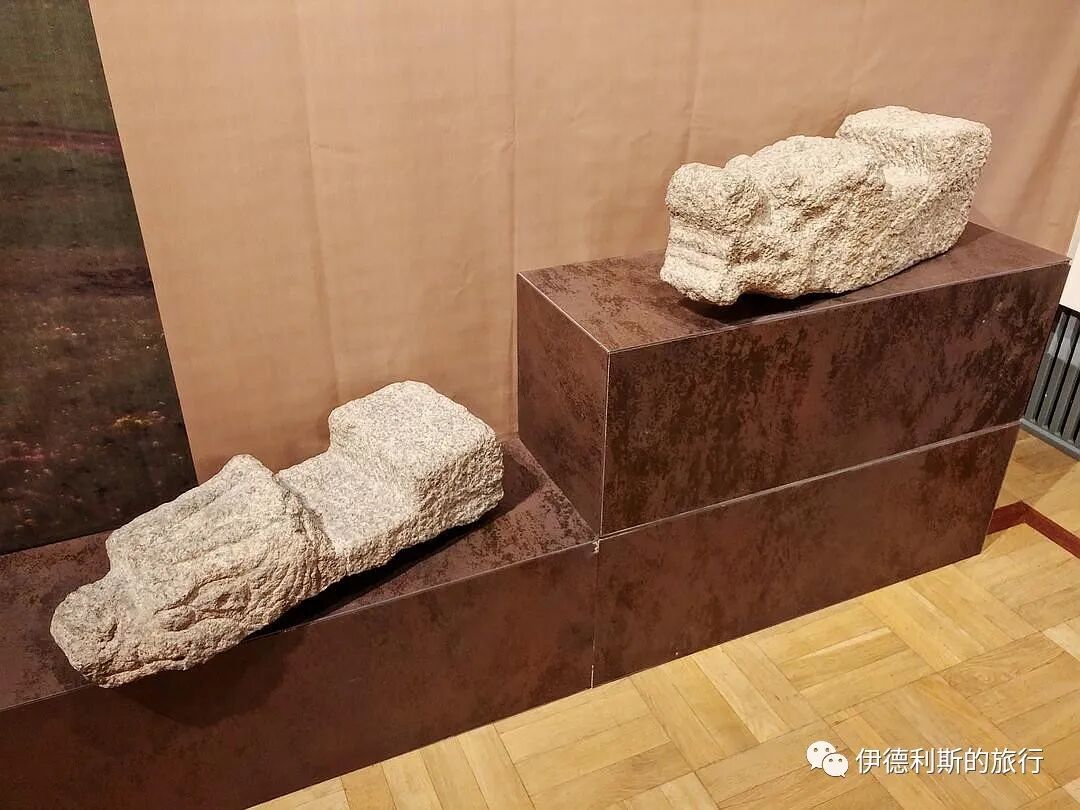
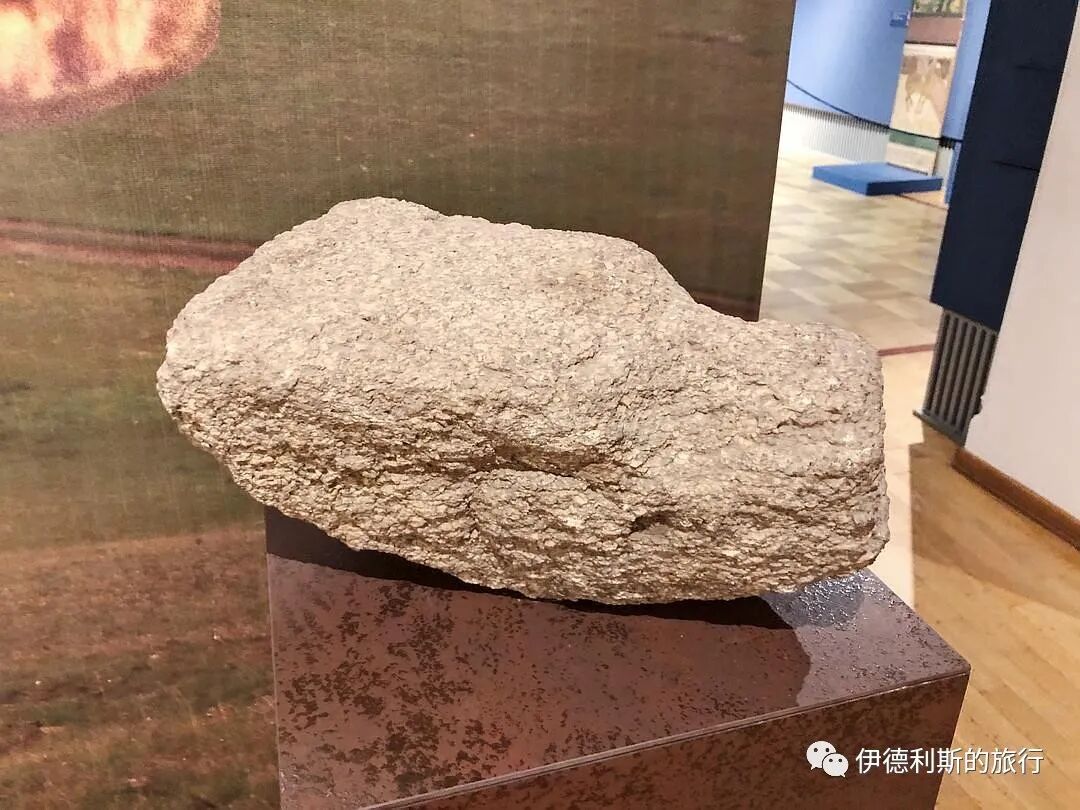
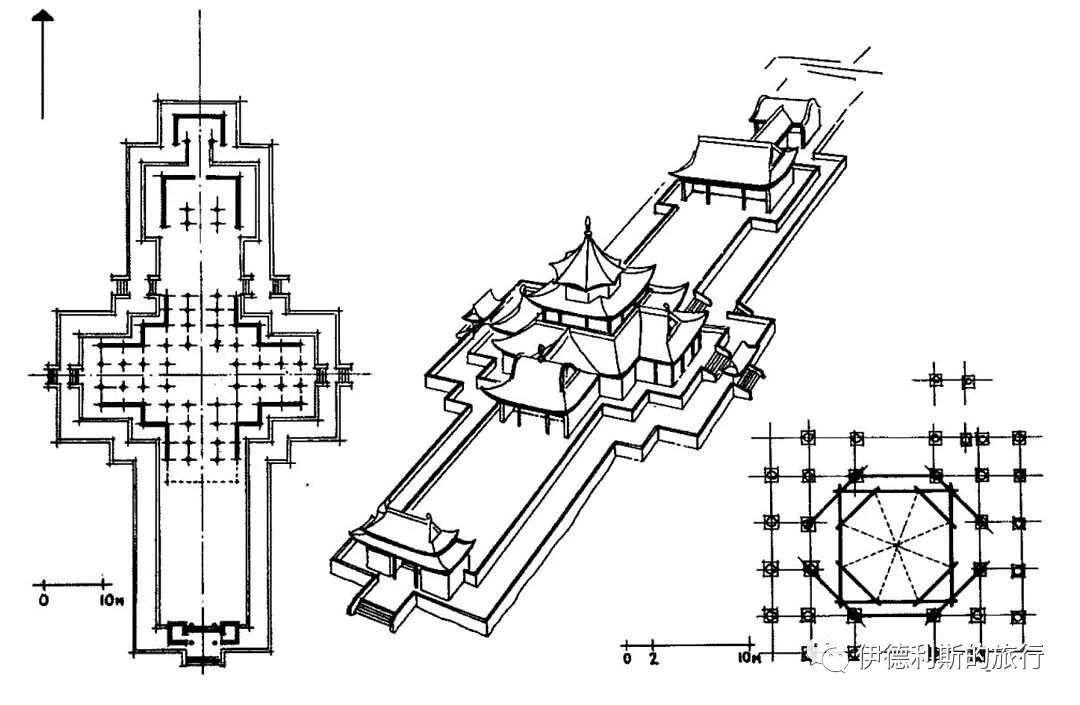
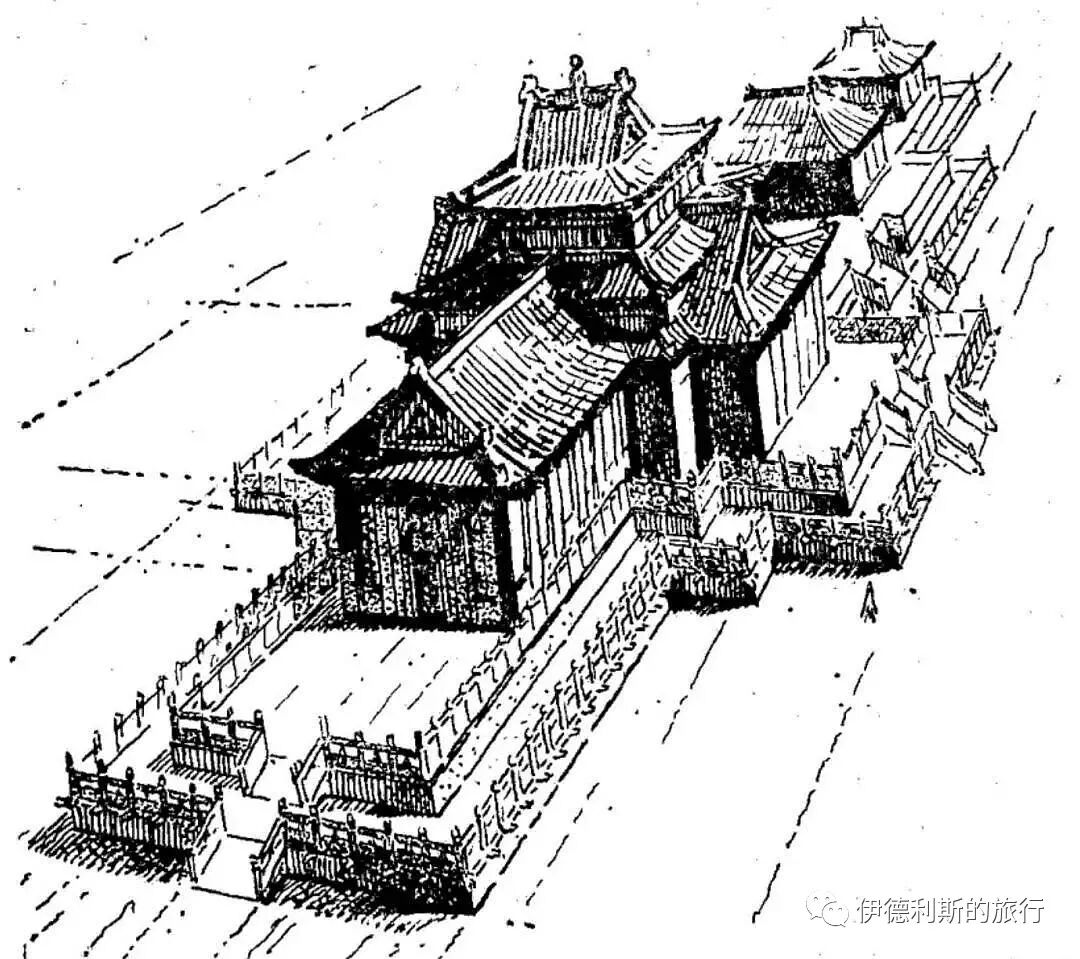
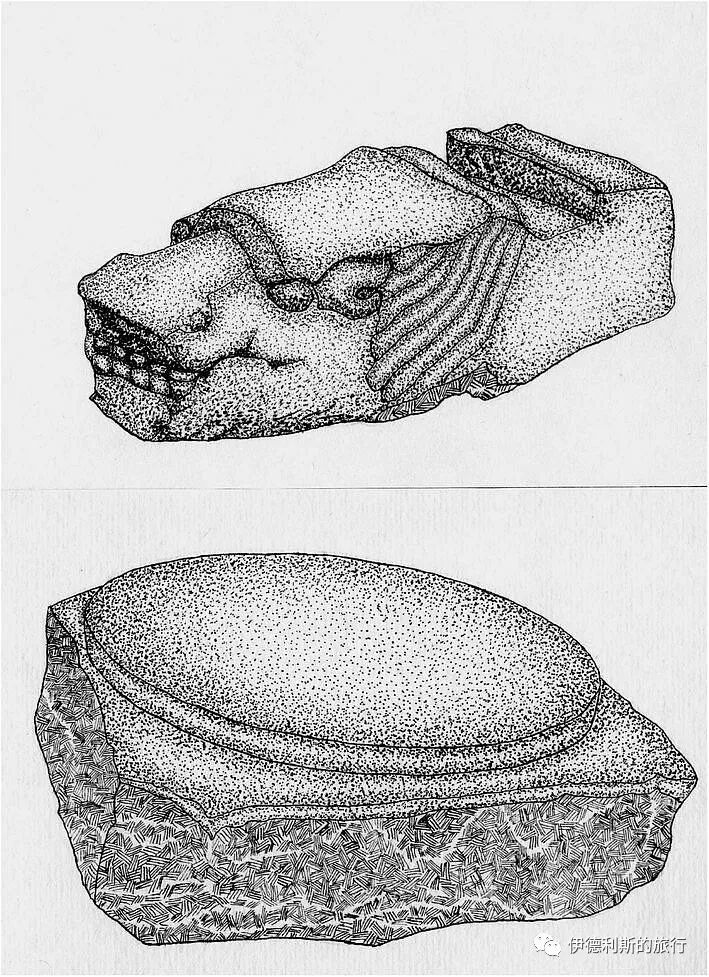
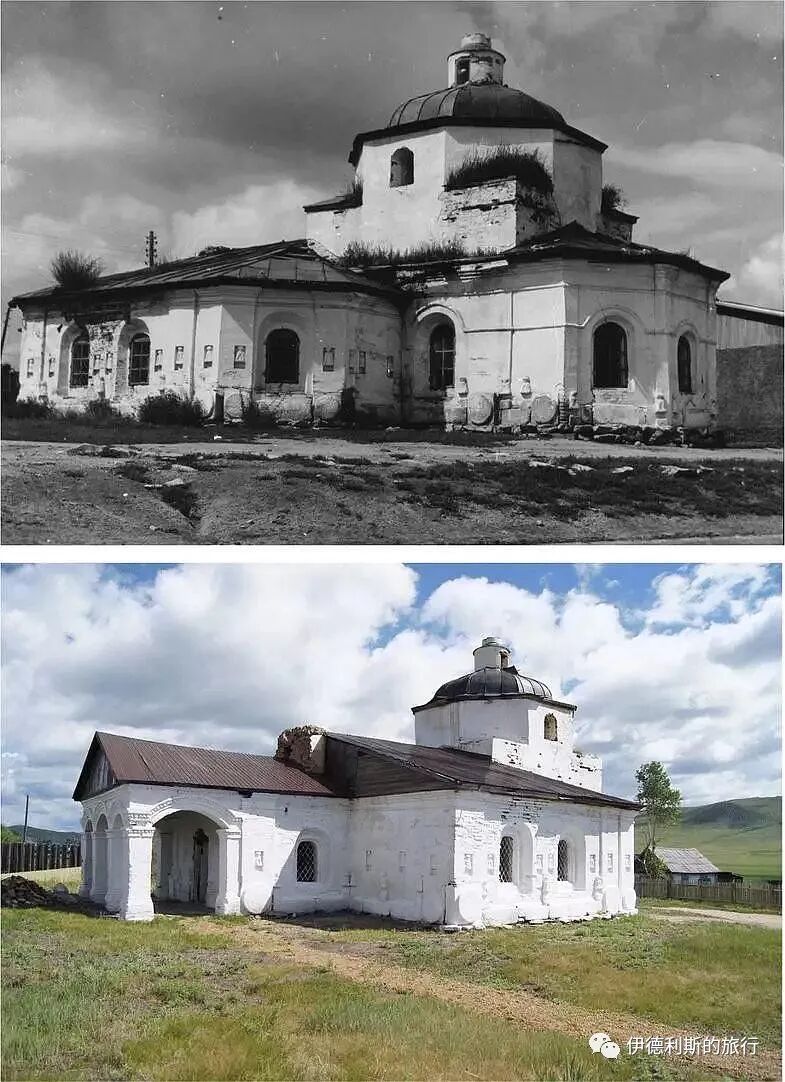
The story takes place near Hulunbuir, at a Cossack border outpost called Konduy on the grasslands of the Zabaykalsky Krai region in Russia. In 1804, a Cossack sergeant happened to find a strange hill near the village. Under the topsoil, he discovered a large amount of exquisite stone carvings, glazed tiles, and ceramics, along with what seemed like an endless supply of regular stones and bricks. The villagers then started using these building materials to construct their church and houses. In 1806, the village church was completed. Except for the outer walls, it was built entirely with bricks and stones hauled from the ruins, using 64 stone dragon-head carvings (chishou) alone. It was not until 1957 that S. V. Kiselev from the Soviet Academy of Sciences led the Mongolian Academy of Sciences to excavate the site, finally revealing the true face of this 'Konduyskoye' Mongol palace to the world. This Mongol palace was built during the Mongol Empire and was one of the important grassland cities in eastern Mongolia at that time. The central hall sat on a five-tiered platform. Each baluster pillar had a dragon-head carving at its base, and the palace roof featured green glazed tiles and yellow ridge beasts.
The stone dragon-head carving I saw this time belongs to this site.
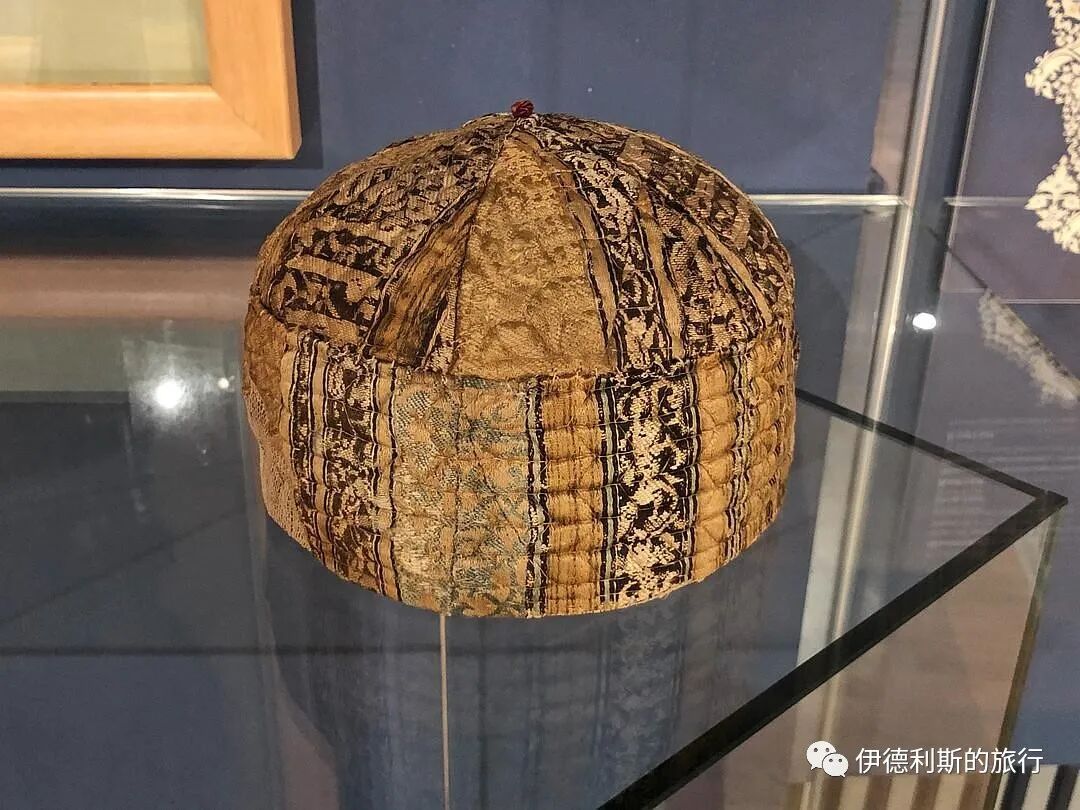
The Middle East during the Mongol era
A 14th-century Egyptian hexagonal hat made from scraps of high-quality fabric.
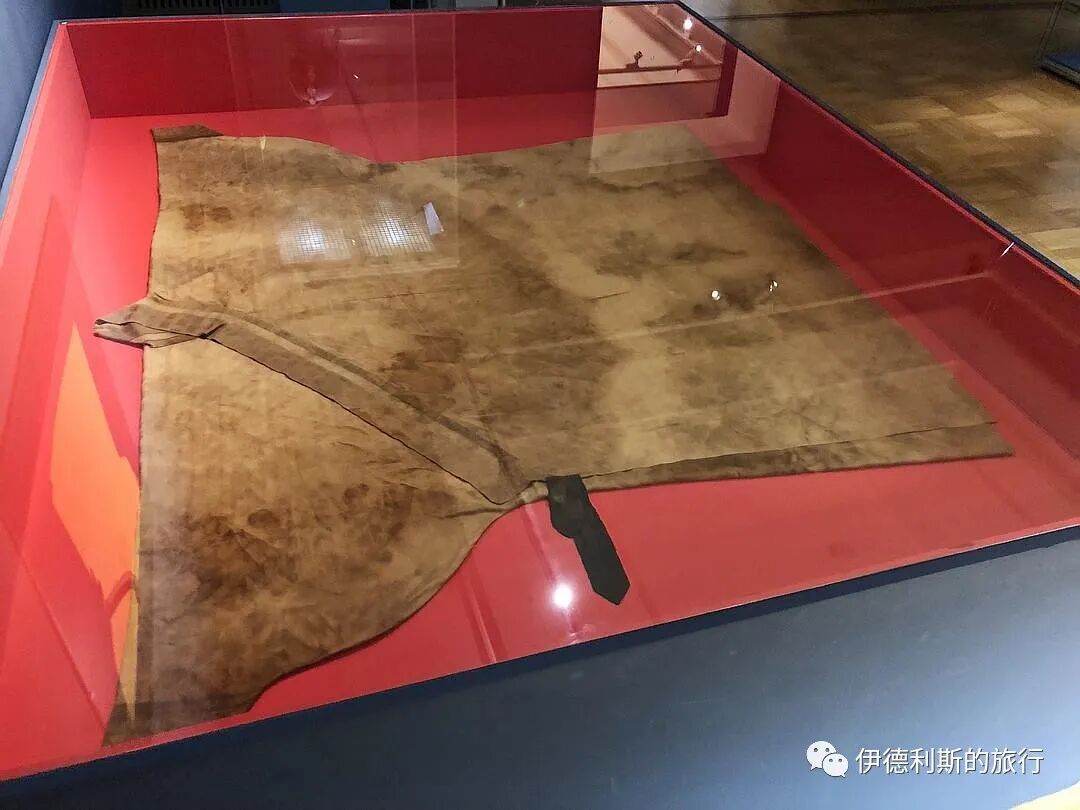
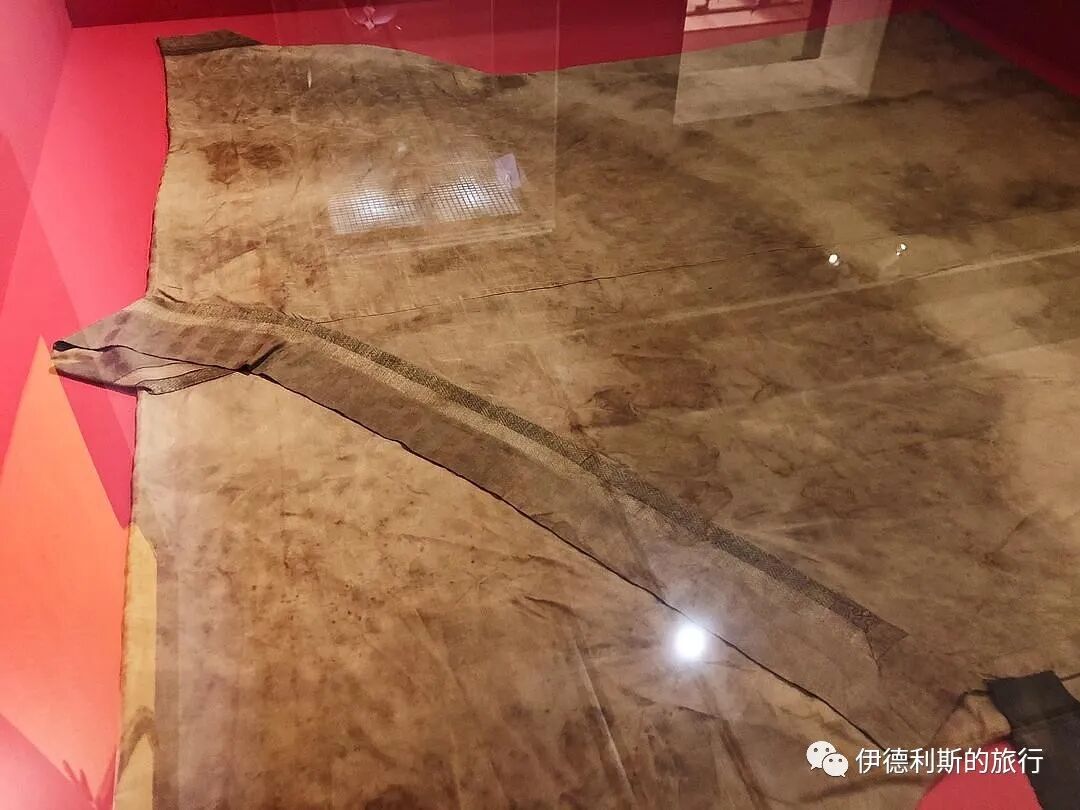
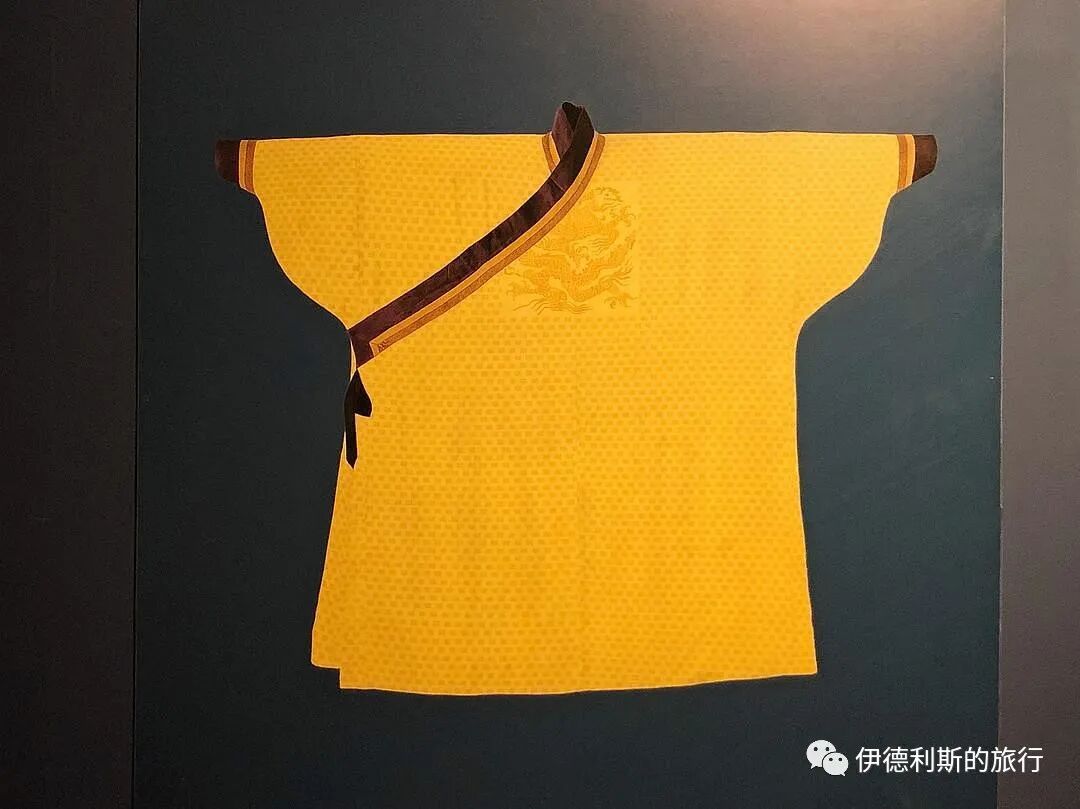
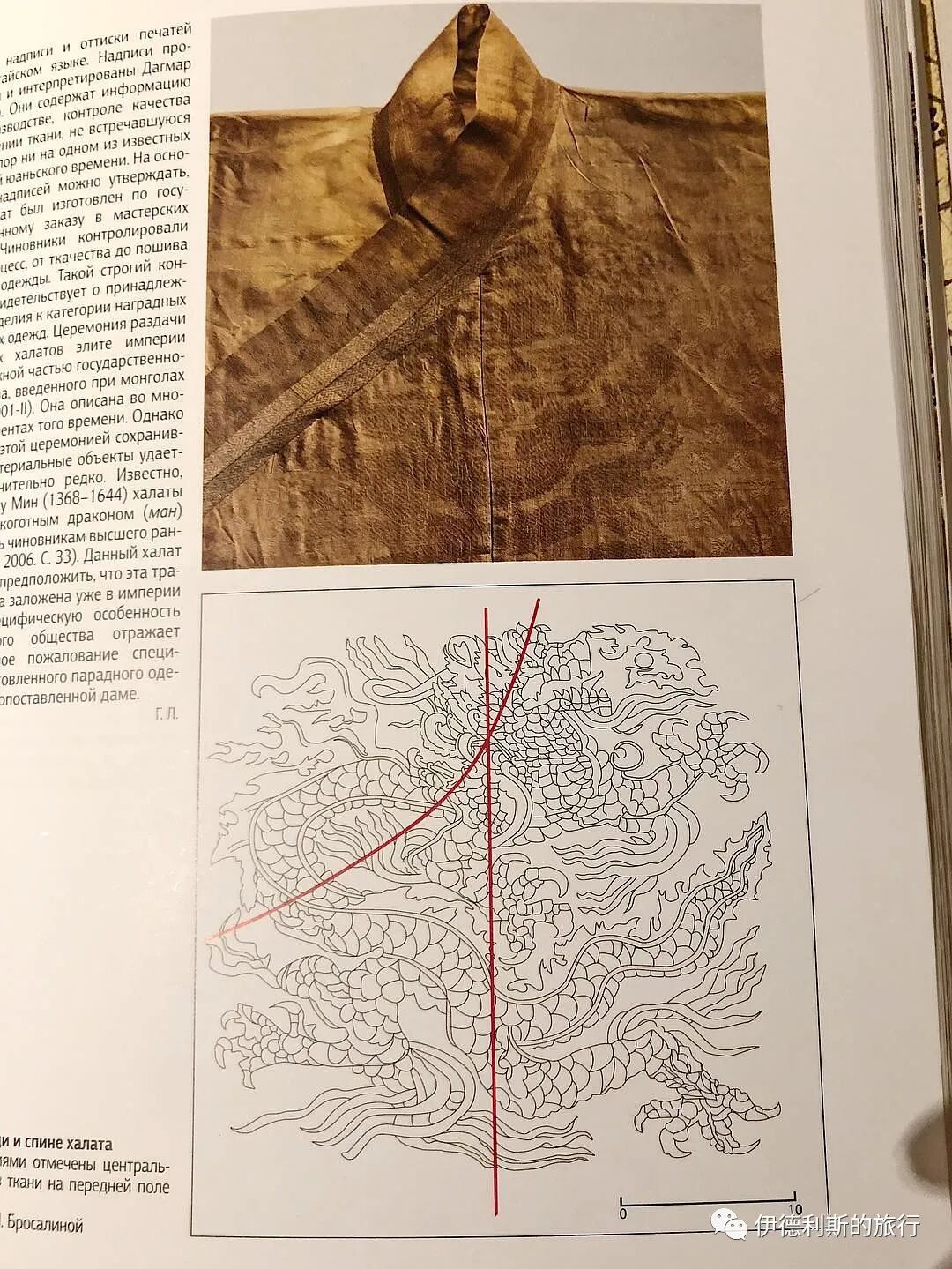
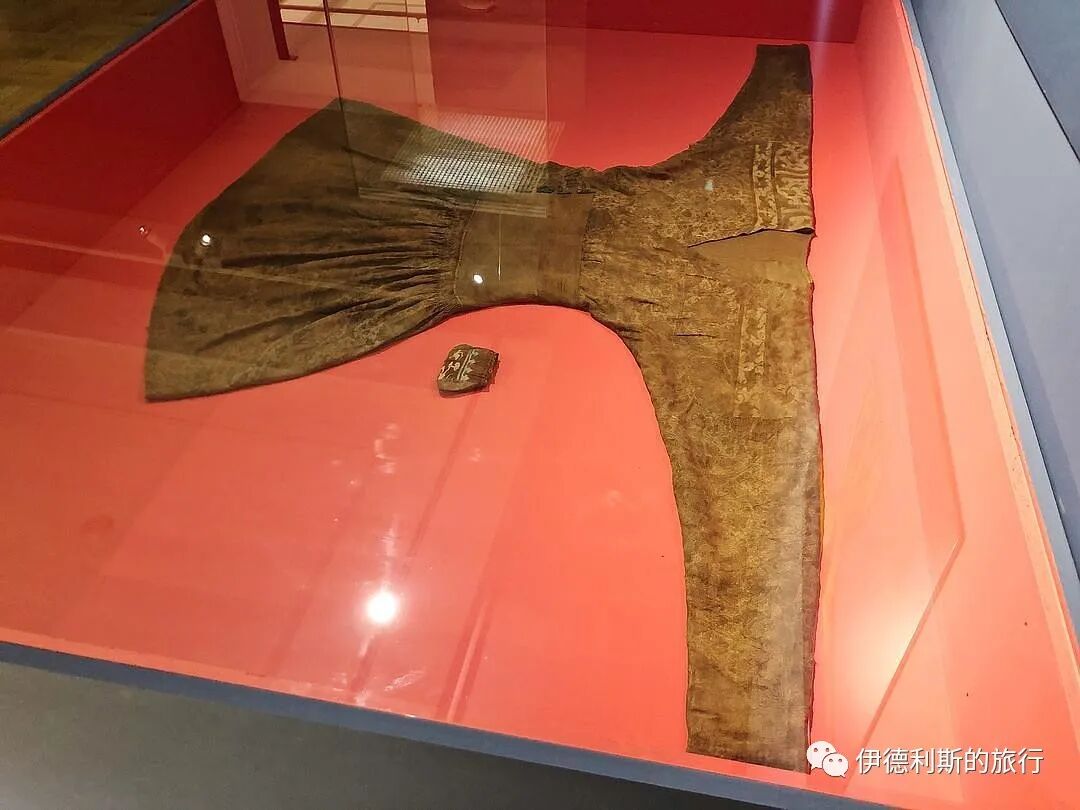
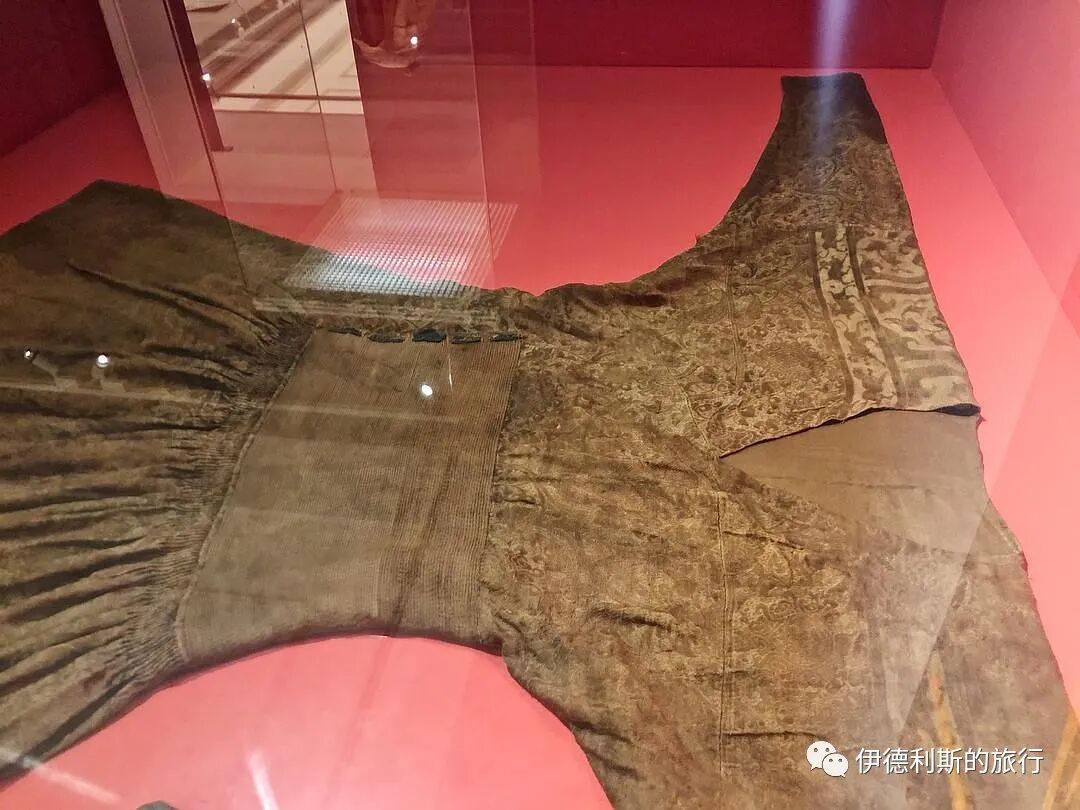
Clothing of the Yuan Dynasty view all
Summary: Kazan Kremlin Exhibition: Golden Horde, Mongol Empire and Muslim Heritage is presented here as a firsthand travel account in clear English, beginning with this scene: In the summer of 2019, I visited Kazan in Tatarstan. At the Hermitage-Kazan Exhibition Centre inside the Kazan Kremlin, I saw a special exhibition called The Golden Horde and the Black Sea Coast: Lessons of the. The account keeps its focus on Golden Horde, Kazan Travel, Muslim Heritage while preserving the names, places, food, and historical details from the Chinese source.
In the summer of 2019, I visited Kazan in Tatarstan. At the Hermitage-Kazan Exhibition Centre inside the Kazan Kremlin, I saw a special exhibition called The Golden Horde and the Black Sea Coast: Lessons of the Genghisid Empire. The items came from the State Hermitage Museum in St. Petersburg and nine other museums, showing the history of the Golden Horde and the Mongol Empire.
New Sarai, the capital of the Golden Horde.
A 14th-century Persian tile found in the 1980s at the palace ruins of the Golden Horde capital, New Sarai.
New Sarai sits 85 kilometers east of Volgograd. It was the second capital of the Golden Horde, built in the 14th century by Öz Beg Khan, who reigned from 1312 to 1341. During the time of Öz Beg Khan, the Golden Horde fully embraced Islam. The famous traveler Ibn Battuta described New Sarai in his journals as one of the most beautiful cities, full of people, with lovely markets and wide streets. He noted it had 13 Friday mosques and many smaller mosques.
New Sarai was destroyed many times. Timur first damaged New Sarai in 1395. Meñli I Giray, the Khan of the Crimean Khanate, destroyed it again in 1502. Finally, Ivan the Terrible of Russia crushed the entire city in 1556 when he conquered the Astrakhan Khanate.
In 1965, a Volga archaeological team led by the German researcher Alekseevich Fedorov-Davydov excavated 25,000 square meters of the ancient city ruins. During the 1960s and 1980s, they discovered ruins of manors, a mosque, a large cemetery, and artisan workshops in the ancient city.
Stary Krym, the capital of the Golden Horde on the Crimean Peninsula.
Muslim tombstones from the 14th and 15th centuries during the Golden Horde period, all from the ancient city of Stary Krym in the eastern part of the Crimean Peninsula.
Stary Krym started as a fortress for the Khazars. After the Mongol conquest, Batu Khan, the founder of the Golden Horde, made it the capital of the Golden Horde on the Crimean Peninsula. Stary Krym grew into a prosperous city in the 14th century, but it was destroyed in the late 15th century by the Crimean Khan, Mengli Girai.
Stary Krym played an important role in cultural exchange between Southern Europe, Byzantium, and Asia Minor. Latin-Byzantine culture and Turkic-Mongol culture met here, creating a unique artistic style.
A marble Muslim tombstone from the second half of the 14th to the 15th century.
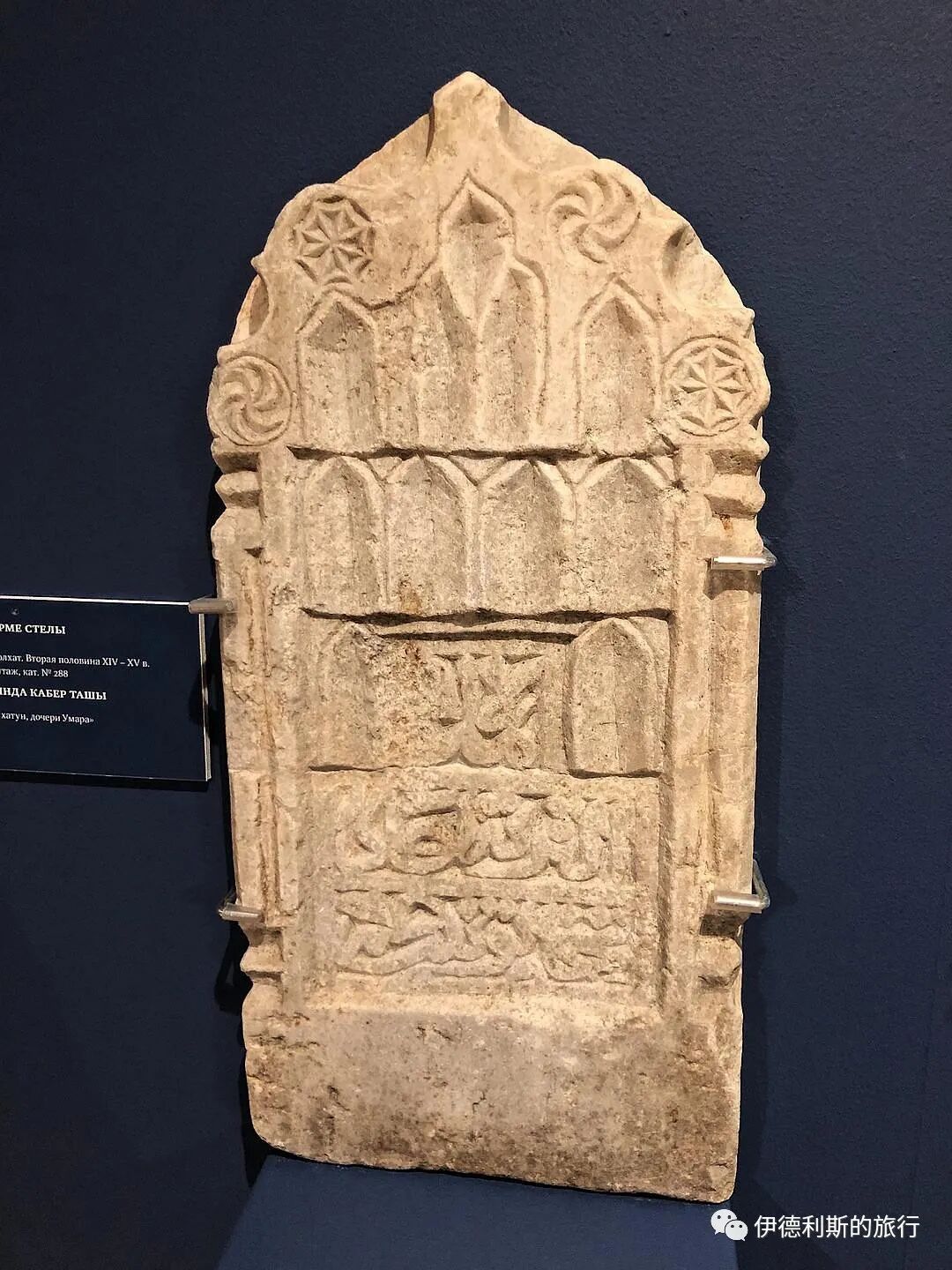
Two marble Muslim tombstones from 1371 and 1429, found in 1925 in the furrows of the ancient city of Stary Krym.
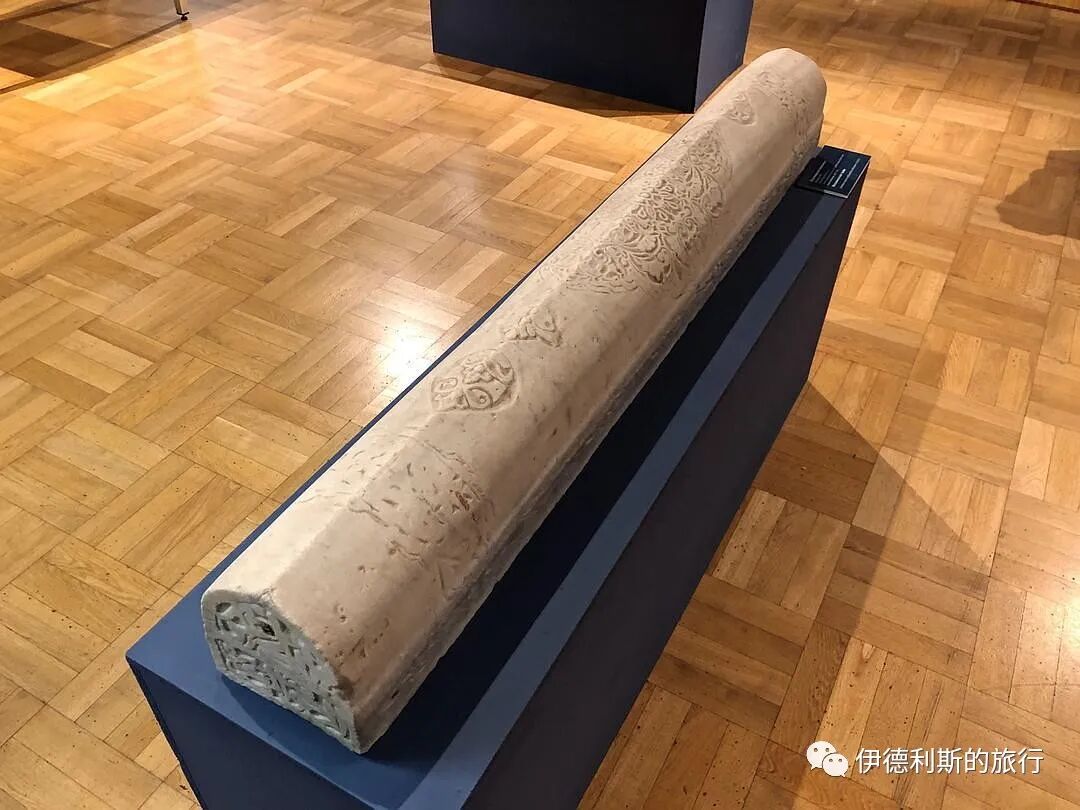
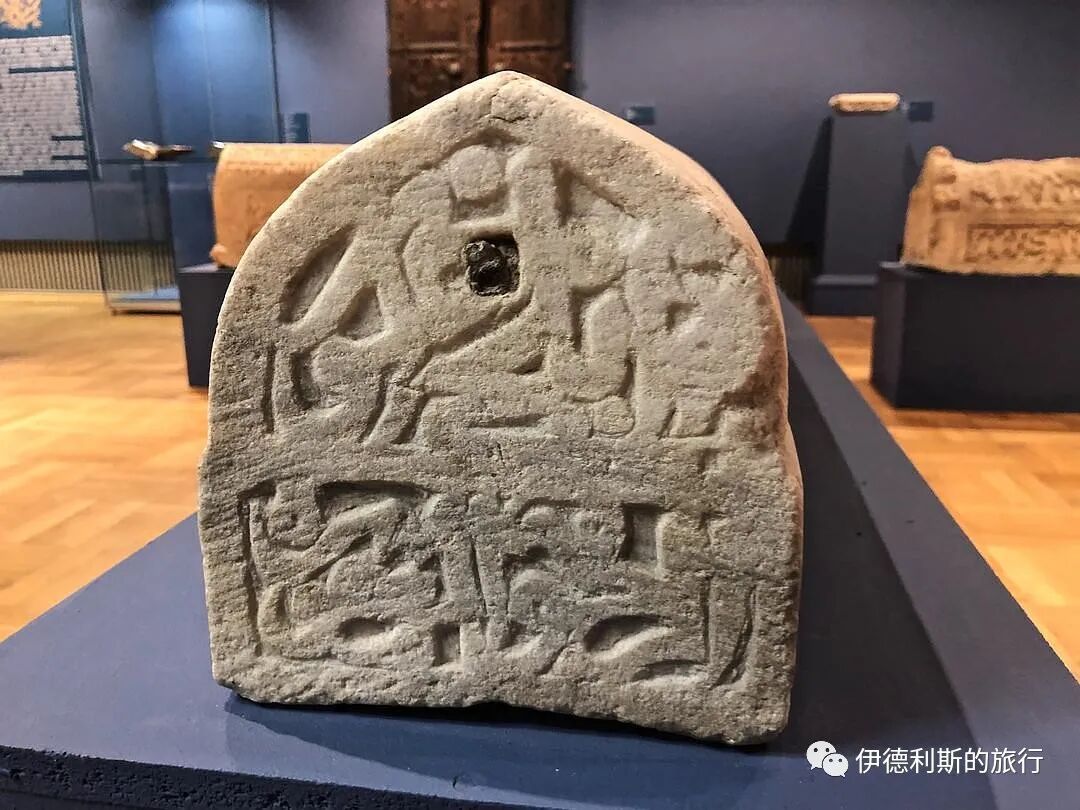
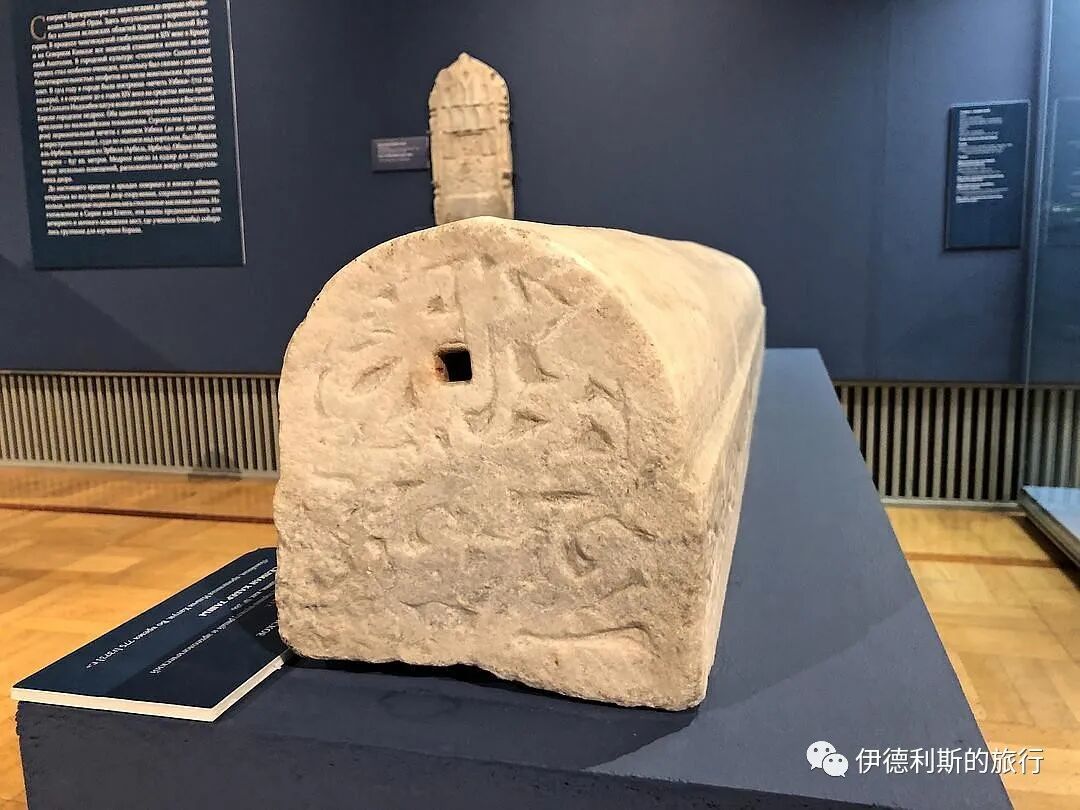
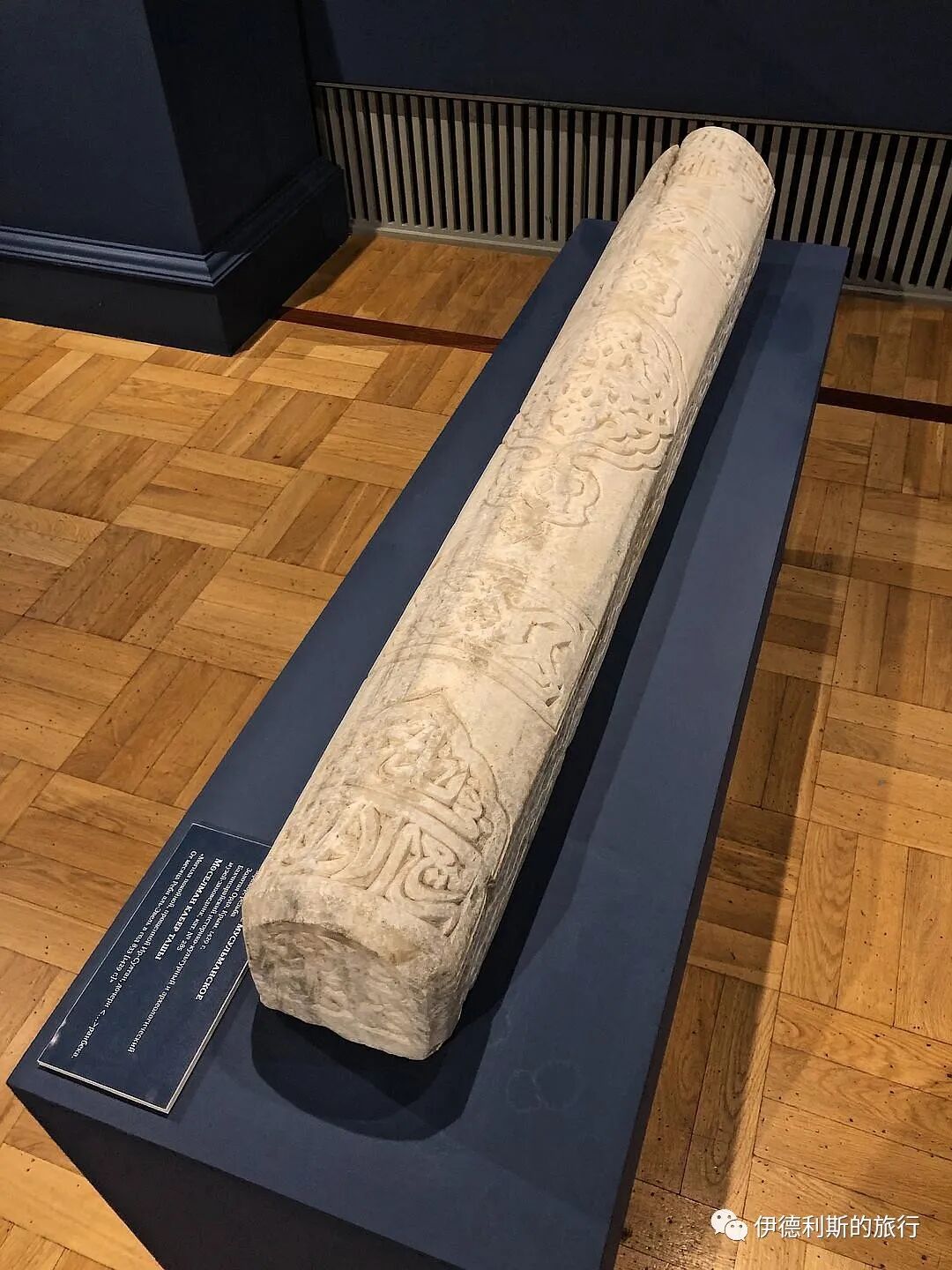
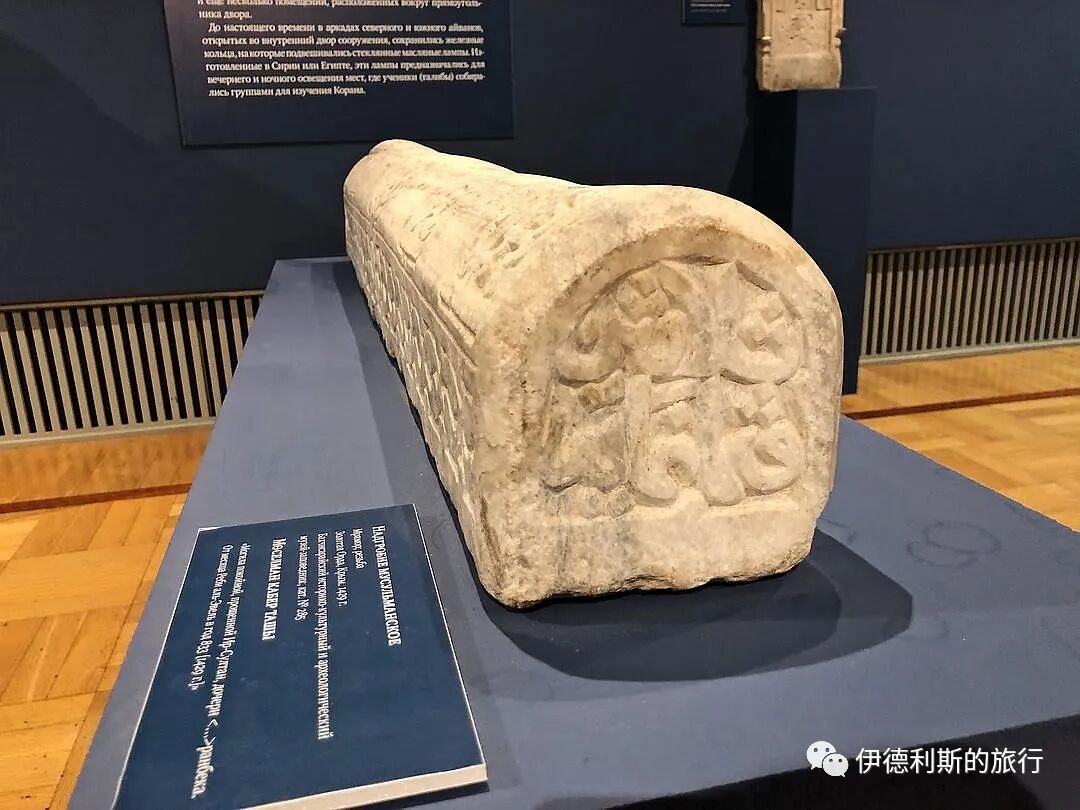
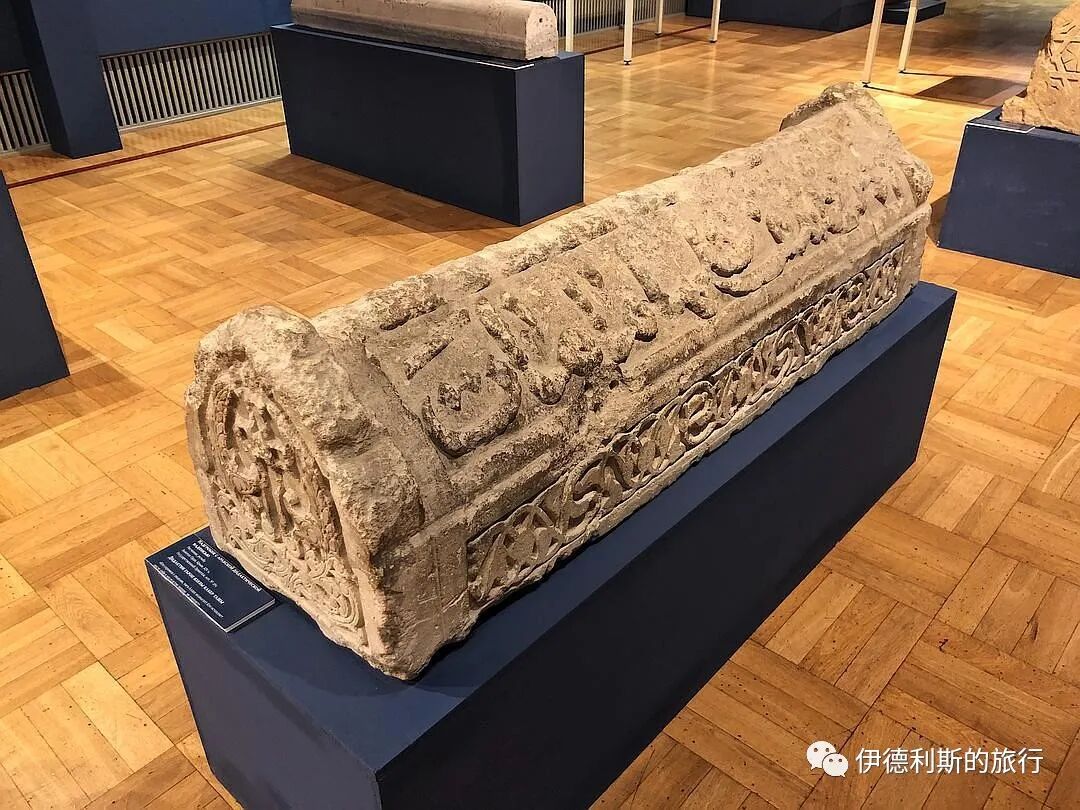
Two sandstone Muslim tombstones from the 14th century, excavated in 1979 from the castle on the hill in the ancient city of Stary Krym.
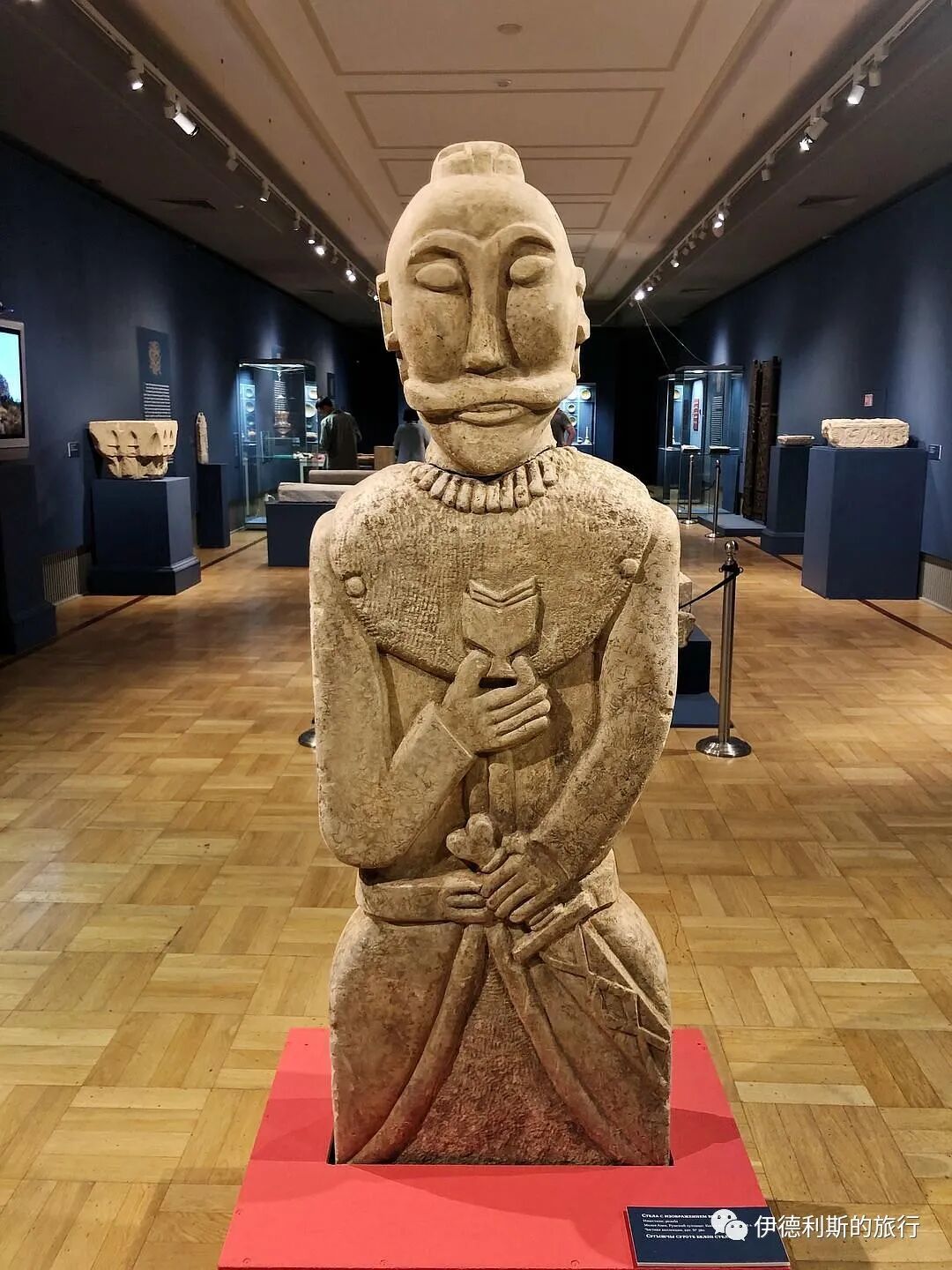
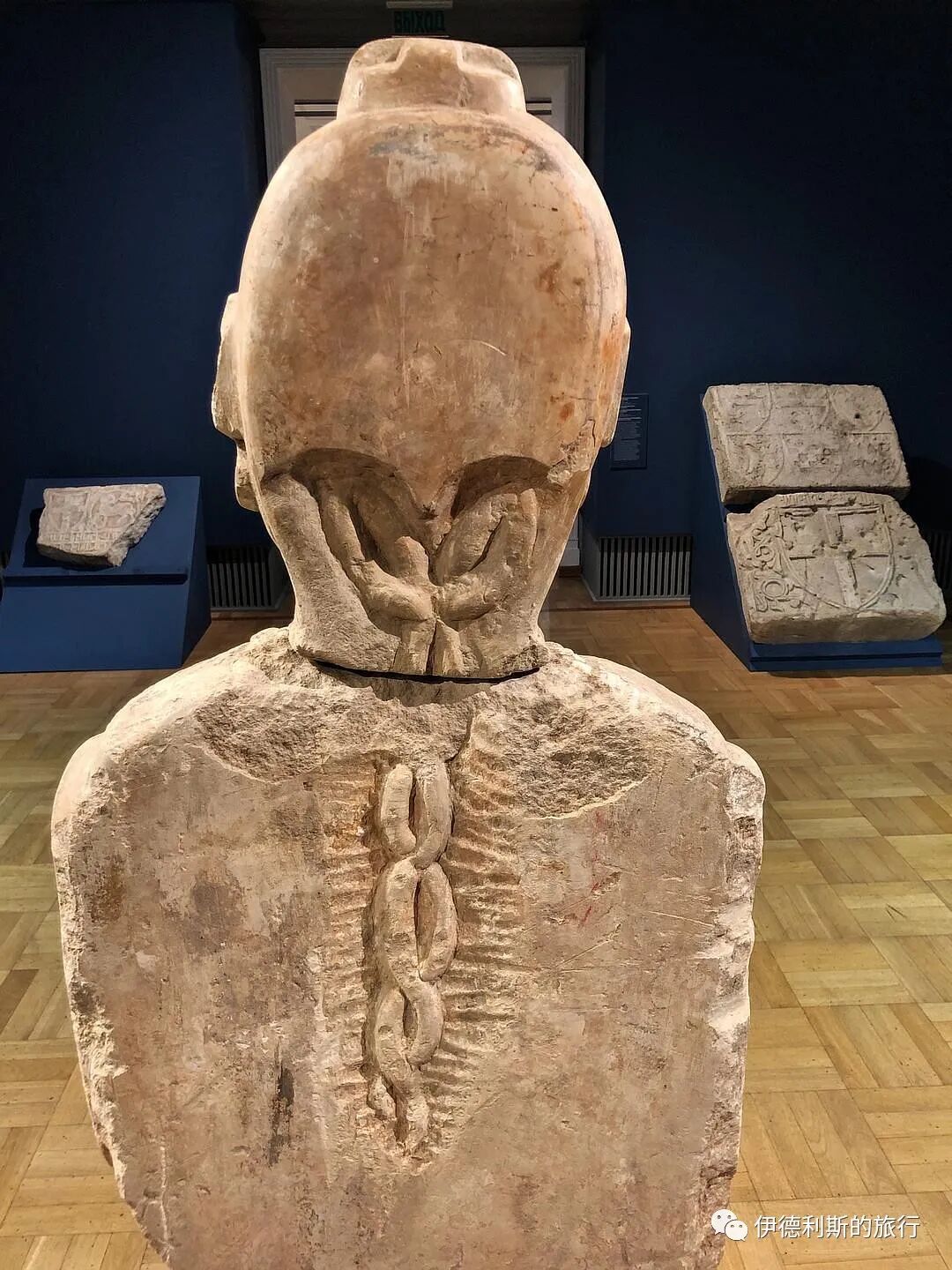
A stone stele showing a warrior from the late 12th or early 13th century. It was found near the ancient city of Stary Krym on the Crimean Peninsula and came from the Seljuk Sultanate of Rum in Asia Minor.
The North Caucasus during the Golden Horde era.
A 14th-century shale stone carving from Kubachi in Dagestan, North Caucasus. Kubachi is a center for traditional metalwork, stone carving, and wood carving in the Caucasus. It has been famous for making weapons and chainmail since the Middle Ages.
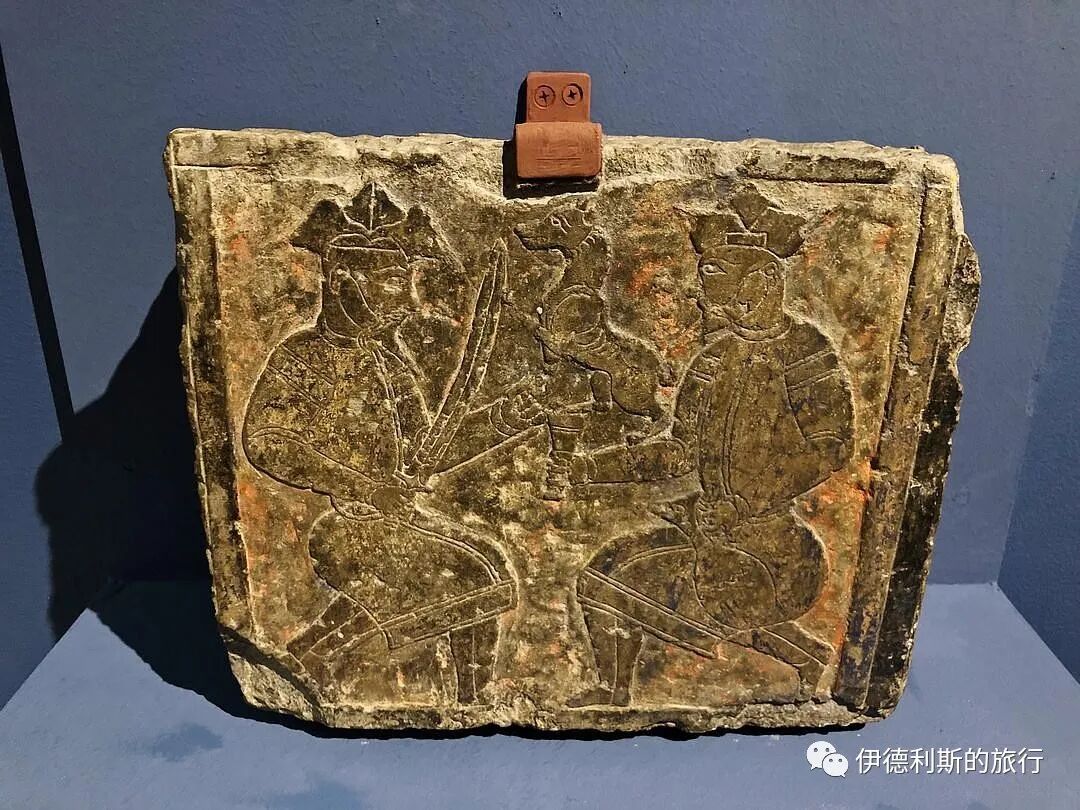
Images of Mongols from Turpan, Xinjiang.
Four wall paintings of Mongols from Turpan, Xinjiang, dating to the 13th and 14th centuries. They are kept at the State Hermitage Museum in St. Petersburg. Before 1945, they belonged to the Ethnological Museum of Berlin, but were later taken to the Soviet Union by the Red Army.
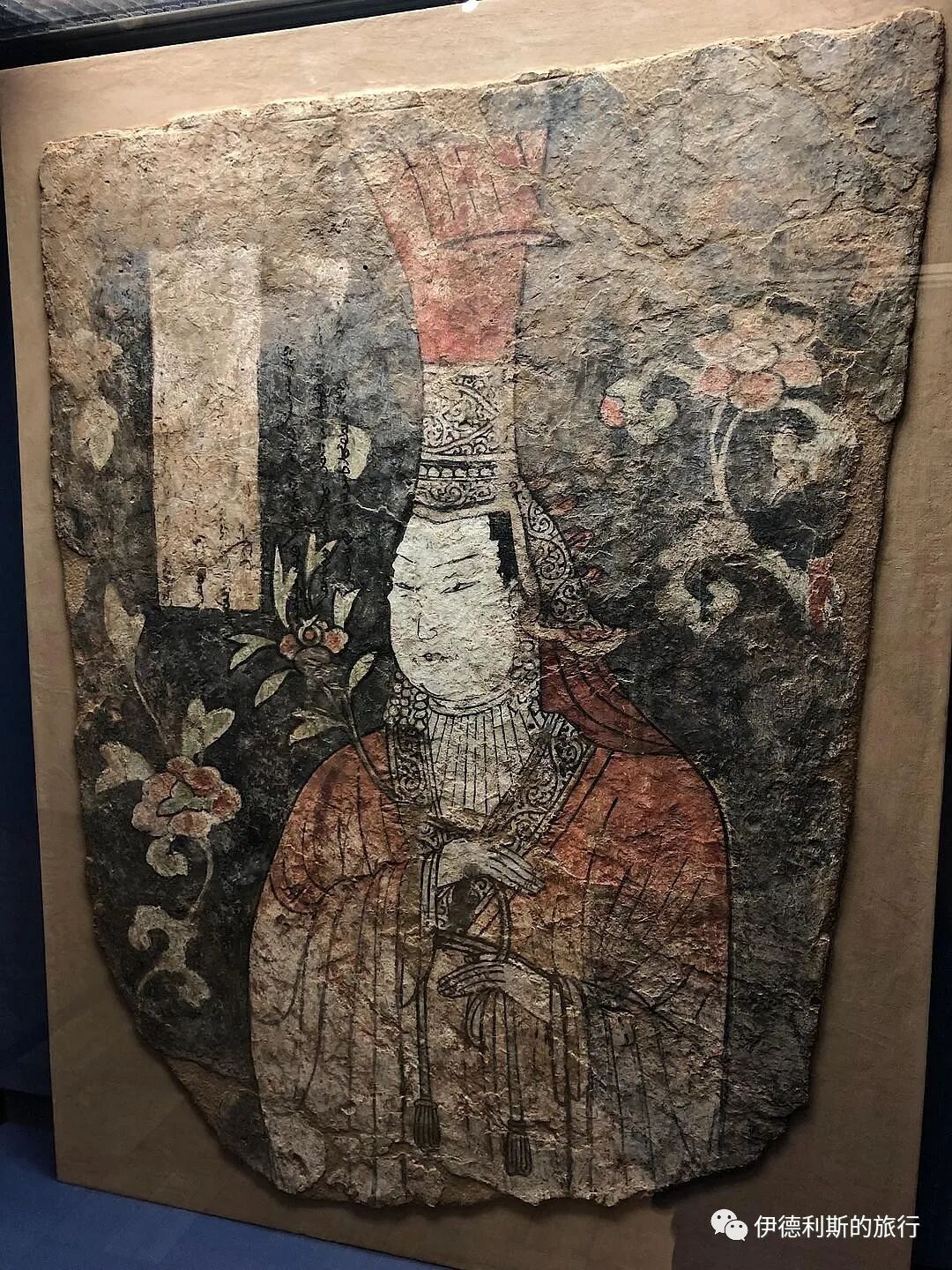
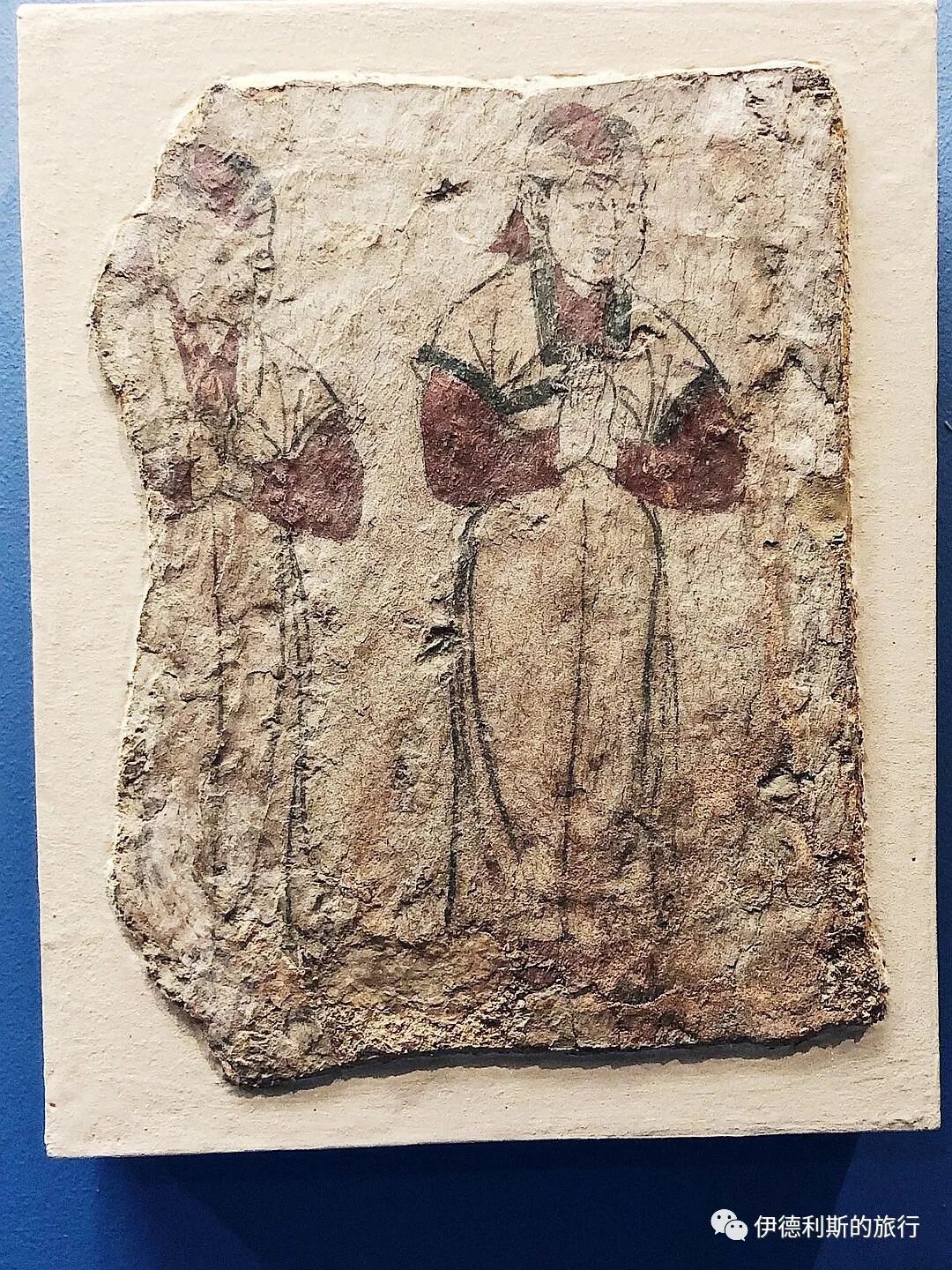
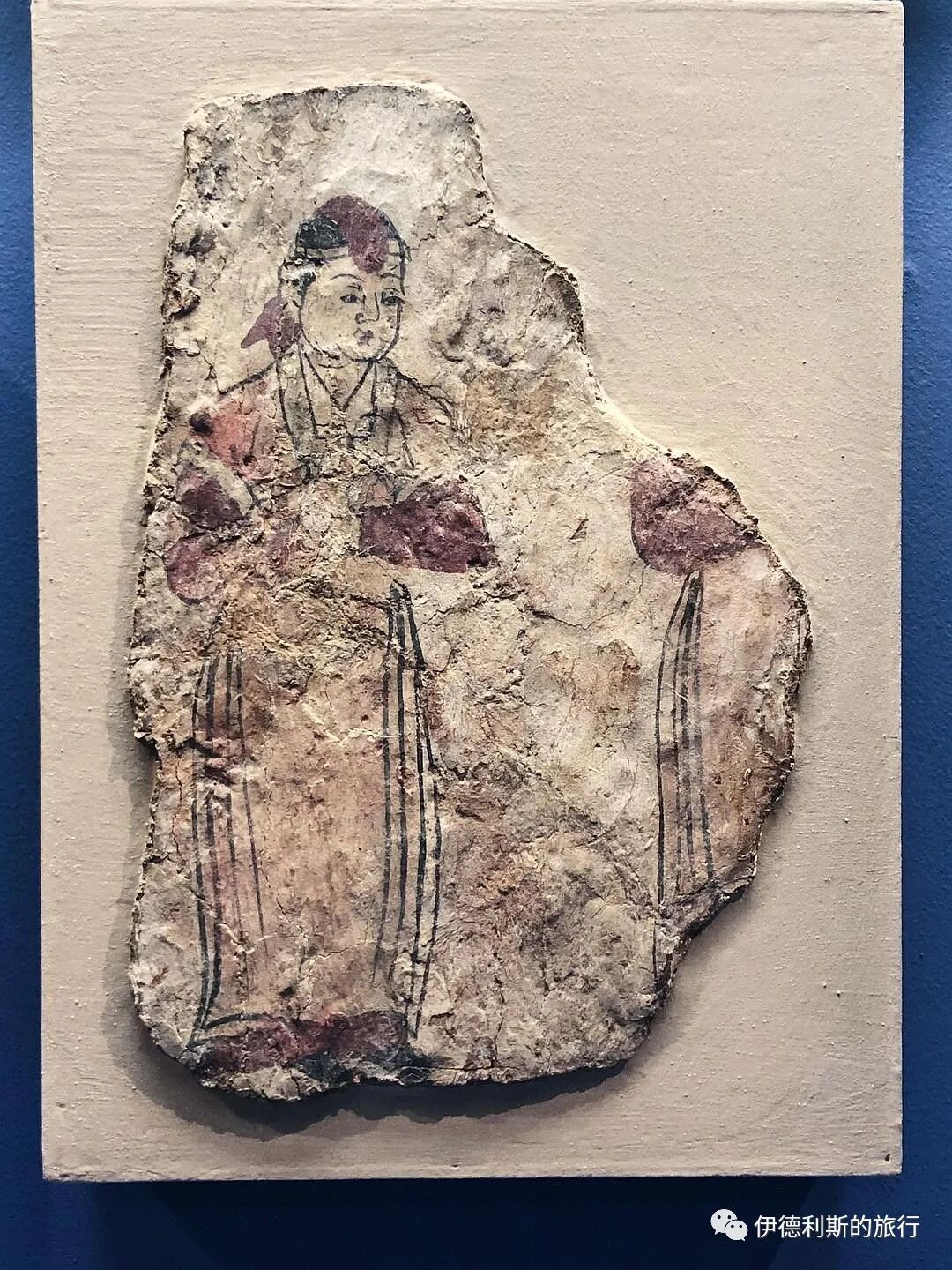
An Orthodox church born on the ruins of a Mongol palace
I read an interesting article on Weibo called 'An Orthodox church born on the ruins of a Mongol palace,' and I was surprised to see the actual artifacts at a special exhibition in the Kazan Kremlin.
The story takes place near Hulunbuir, at a Cossack border outpost called Konduy on the grasslands of the Zabaykalsky Krai region in Russia. In 1804, a Cossack sergeant happened to find a strange hill near the village. Under the topsoil, he discovered a large amount of exquisite stone carvings, glazed tiles, and ceramics, along with what seemed like an endless supply of regular stones and bricks. The villagers then started using these building materials to construct their church and houses. In 1806, the village church was completed. Except for the outer walls, it was built entirely with bricks and stones hauled from the ruins, using 64 stone dragon-head carvings (chishou) alone. It was not until 1957 that S. V. Kiselev from the Soviet Academy of Sciences led the Mongolian Academy of Sciences to excavate the site, finally revealing the true face of this 'Konduyskoye' Mongol palace to the world. This Mongol palace was built during the Mongol Empire and was one of the important grassland cities in eastern Mongolia at that time. The central hall sat on a five-tiered platform. Each baluster pillar had a dragon-head carving at its base, and the palace roof featured green glazed tiles and yellow ridge beasts.
The stone dragon-head carving I saw this time belongs to this site.
The Middle East during the Mongol era
A 14th-century Egyptian hexagonal hat made from scraps of high-quality fabric.
Clothing of the Yuan Dynasty
Tatars in Kazan: Mosques, Muslim Heritage and City Life (Part 1)
Articles • ali2007fr posted the article • 0 comments • 177 views • 2026-05-17 07:35
Summary: This travel note introduces Tatars in Kazan: Mosques, Muslim Heritage and City Life (Part 1). As the former capital of the Kazan Khanate, the city of Kazan was completely destroyed after being conquered by Ivan the Terrible in 1552. It is useful for readers interested in Kazan Travel, Tatar Muslims, Islamic Heritage.
As the former capital of the Kazan Khanate, the city of Kazan was completely destroyed after being conquered by Ivan the Terrible in 1552. In 1556, the Russians built a new city of Kazan, settling 7,000 Russians within it, while the remaining Tatars settled on the banks of Lake Kaban to the southwest of the city, gradually forming the Old Tatar Quarter (Staro-Tatarskaya Sloboda).
The early Old Tatar Quarter consisted of wooden buildings, which were very prone to fires. During the reign of Catherine the Great (reigned 1762-1796), the city of Kazan was rebuilt using brick and stone, gradually forming the current appearance of the Old Tatar historical district.
The scope of the Old Tatar Quarter in Kazan.
Although part of the district was converted into an industrial zone during the Soviet era, the current Old Tatar historical district still covers 88 hectares and preserves 75 historical buildings from the 18th to the 20th centuries, including mosques in the traditional Tatar style, mansions of wealthy Tatar merchants, and theaters. I have previously shared the 13 historical buildings of traditional-style mosques preserved in the community (see "Traditional Mosques of the Kazan Tatars"), and this time I will share my experience of eating and exploring in the Old Tatar historical district.
Tatarskaya Usadba (Tatar Manor).
This time I stayed in a traditional Tatar manor on the banks of Lake Kaban, which was originally the residence of the 19th-century Tatar merchant Khamit Sabitov. The manor offers both accommodation and dining. Because I did not book their main meals in advance, I only had breakfast, which was also in the traditional Tatar style.
Bekken, a Tatar specialty pie, is made with sour cream dough and filled with cabbage and egg.
Sochni cake with frosting and Pirozhki (Eastern European stuffed buns).
Tatar cultural festival "Pechen Bazar" (Hay Market).
I was very lucky to attend the Tatar cultural festival "Pechen Bazar" (Hay Market) in Kazan this time. The festival was held on the banks of Lake Kaban for two days, August 17th and 18th, with various Tatar designers, poets, musicians, and filmmakers showcasing and sharing their work; it was especially lively.
First, I will share what I ate at the festival. The first stall was traditional Tatar tea. You could see many ingredients in the tea, such as thyme, linden leaves, chamomile flowers, oregano leaves, mint leaves, and sage. You could also see the uncle throwing pine cones directly into the tea stove, which was especially fragrant.
I really like the drawing on the cup, it is Tatar trendy!
This stall sold traditional Tatar desserts, which are a bit like Turkish desserts and go very well with tea.
This stall sold jam.
I ate cakes made by Tatar girls and also drank lemonade.
Stalls with various Tatar snacks.
Many Tatar artisans also came this time.
I bought two wooden puppets made by a Tatar brother; they are images of Tatar youth.
A Tatar youth is making Arabic calligraphy on the spot with thread.
A Tatar auntie was selling headpieces for Kazan Tatar women, decorated with pearls, which looked very beautiful.
A stall selling honey. This festival invited some Tatars living in the countryside to sell the honey, cheese, and sausages they made themselves, which was also very interesting.
I bought three hats at the festival. The first felt hat (VOYLOCHNAYA TYUBETEYKA) came from a Tatar brand that makes leather and wool felt products, which is quite interesting. And the two girls in the picture below are dressed so beautifully!
The second hat stall; I really should have bought this traditional Tatar vest at that time.
The third hat stall.
A stall at the festival selling traditional Kazan Tatar flower hats, and also selling traditional Kazan Tatar clothing; I was very tempted.
Live music performance; on the right, you can see the traditional Tatar house where I stayed.
The uncle is an architect who builds mosques, sharing how to build a mosque.
A young Tatar female poet is reading poetry.
The clothing worn by the host is the formal wear of urban Kazan Tatars in the early 20th century.
It was a live demonstration on how to tie a headscarf. I took a look and it was quite complicated, requiring many steps.
The dessert stall with the longest queue at the entire festival.
This stall is a Tatar creative brand that follows a sweet Islamic style.
A stall selling books on Tatar culture.
In the evening, they were showing a documentary about the Kazan Tatars, but unfortunately, I couldn't understand it.
Chak-Chak Museum.
The Chak-Chak Museum in Kazan is one of the most intuitive places to experience traditional Tatar culture. The museum itself is located in a Tatar wooden house in the Kazan Tatar historical district, and the interior well restores the home decor of a traditional Tatar family, which is especially atmospheric. If there are 6 people, they can teach you how to make Chak-Chak on the spot. Because I was alone, I booked a tasting and guided tour on the official website (https://www.muzeino.ru/), and the museum staff will email you to confirm whether to use English or Russian.
The experience that day was great. After arriving at the museum at the appointed time, a Tatar lady with fluent English was already waiting for me. The whole process was really like being a guest in a Tatar home. The lady told me various Tatar legends, daily customs, and cultural traditions, and then explained in detail the production process of the national dessert, Chak-Chak.
Chak-Chak is very similar to Sachima (a sweet fried dough treat). It is made by mixing flour with milk and eggs, deep-frying it, and then pouring honey over it. Chak-Chak is popular in Tatarstan and Bashkortostan. It is said to have originated from the ancient Bulgar Khanate. In addition, there are similar desserts among the Kazakh, Kyrgyz, and Uzbek people. Chak-Chak is an important food at Kazan Tatar weddings. In the past, every Kazan Tatar woman had to learn how to make Chak-Chak, usually taught by a mother to her daughter or a grandmother to her granddaughter.
Afterwards, the Tatar lady made me some Tatar tea and, while letting me taste traditional Tatar desserts, told me about Tatar clothing, silver jewelry, embroidery, and other handicrafts. We had a very happy chat.
The museum before restoration.
Magnets bought at the museum.
Dom Tatarskoi Kulinarii (House of Tatar Cuisine).
When I was in Kazan, I ate at the famous traditional Tatar restaurant Dom Tatarskoi Kulinarii (House of Tatar Cuisine) on Bauman Pedestrian Street. The restaurant opened in 1969. The founder was Yunus Akhmetzyanov, a Tatar cuisine expert and author of "Dishes of Tatar cuisine," who remained the head chef until 1984.
It is a pity that the horse sausage was sold out when I went, so I ordered another type of beef sausage called "Kuchmeche Kolbasasy," which contains heart, liver, and lung in addition to meat. I also ordered a Bulgar stewed lamb, which is placed in parchment paper and served with roasted apples, honey, and crushed nuts. Bulgar is an ancient millennium-old capital in Tatarstan and the spiritual home of the Kazan Tatars.
For soup, I ordered Tatar Azu (Tatar beef casserole soup), and also drank sea buckthorn tea, which contained honey and cinnamon in addition to sea buckthorn.
Teatr Natsionalnoi Kukhni (Tatar Restaurant).
In the evening, I ate at the restaurant Teatr Natsionalnoi Kukhni in another Tatar manor on the banks of Lake Kaban, which was once the residence of the wealthy Tatar merchant Bikmukhametov. I ordered horse meat salad, pumpkin cream soup with dried apricots and cream cheese, and stewed fresh horse meat, Kullama. Kullama is the Tatar version of the Kazakh national dish Beshbarmak (five-finger stew).
Tubatay Fast Food Restaurant.
Tubatay (Tyubetey) is a fast-food restaurant that sells traditional Tatar dishes, and there is also a branch in the ancient city of Bulgar. "Tubatay" means the characteristic round hat of the Tatars.
I ordered Manti (steamed dumplings), a specialty meat pie Belesh (made with sour cream dough and filled with beef, potatoes, and onions), Tatar clear soup dumplings Pilmen served with sour cream Smetana, and Tatar tea.
Large Tatar specialty halal supermarket.
Next to where I stayed, there was a large Tatar specialty halal supermarket. The variety of traditional Tatar desserts was dazzling, so I bought some to eat back at my accommodation.
The Kazan Tatar version of horse sausage; the horse meat flavor is much stronger than the Uzbek way of making horse sausage.
Kumis (fermented mare's milk), which is more sour than the Kazakh version.
It is called Smetannik, which means sour cream. The outside is made of butter dough (Sdobnoye testo), and the middle is sour cream, which is super delicious.
This nut cake is called Oriental dessert (vostochnaya sladost).
Central Market.
The Central Market in Kazan, where mushrooms are sold in the summer.
Tatar round hat bought at the Central Market.
Small shop in the mosque.
Two Tatar magnets bought at the Märcani Mosque, showing the rural life of the Volga Tatars, one hunting rabbits and the other keeping bees.
Goose meat sold in the mosque; smoked goose meat and smoked horse meat are specialty delicacies of the Kazan Tatars.
Tubetei (Tyubetey), a hat of the Kazan Tatars, bought at the shop of the Nurulla Mosque. view all
Summary: This travel note introduces Tatars in Kazan: Mosques, Muslim Heritage and City Life (Part 1). As the former capital of the Kazan Khanate, the city of Kazan was completely destroyed after being conquered by Ivan the Terrible in 1552. It is useful for readers interested in Kazan Travel, Tatar Muslims, Islamic Heritage.
As the former capital of the Kazan Khanate, the city of Kazan was completely destroyed after being conquered by Ivan the Terrible in 1552. In 1556, the Russians built a new city of Kazan, settling 7,000 Russians within it, while the remaining Tatars settled on the banks of Lake Kaban to the southwest of the city, gradually forming the Old Tatar Quarter (Staro-Tatarskaya Sloboda).
The early Old Tatar Quarter consisted of wooden buildings, which were very prone to fires. During the reign of Catherine the Great (reigned 1762-1796), the city of Kazan was rebuilt using brick and stone, gradually forming the current appearance of the Old Tatar historical district.
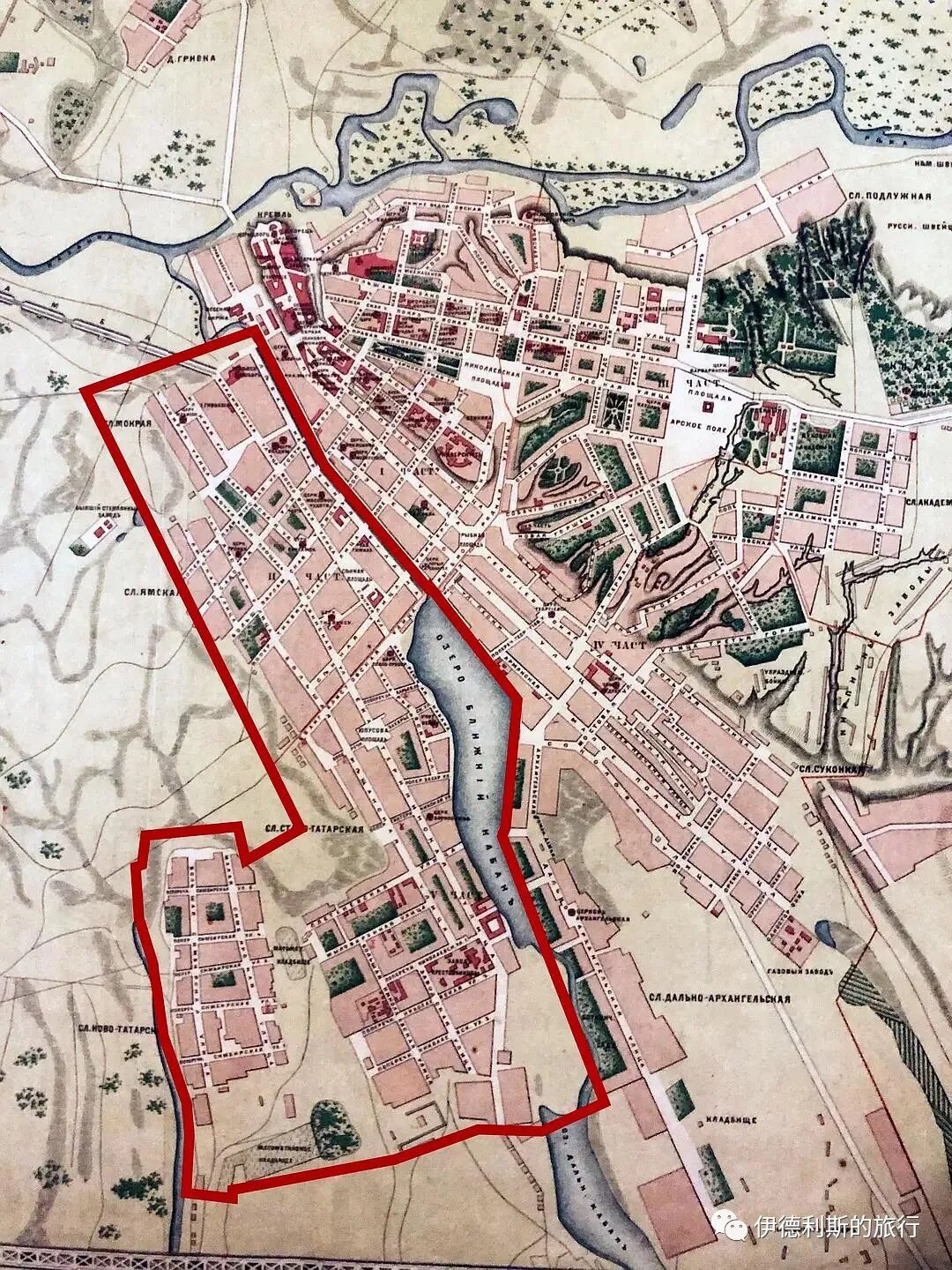
The scope of the Old Tatar Quarter in Kazan.
Although part of the district was converted into an industrial zone during the Soviet era, the current Old Tatar historical district still covers 88 hectares and preserves 75 historical buildings from the 18th to the 20th centuries, including mosques in the traditional Tatar style, mansions of wealthy Tatar merchants, and theaters. I have previously shared the 13 historical buildings of traditional-style mosques preserved in the community (see "Traditional Mosques of the Kazan Tatars"), and this time I will share my experience of eating and exploring in the Old Tatar historical district.
Tatarskaya Usadba (Tatar Manor).
This time I stayed in a traditional Tatar manor on the banks of Lake Kaban, which was originally the residence of the 19th-century Tatar merchant Khamit Sabitov. The manor offers both accommodation and dining. Because I did not book their main meals in advance, I only had breakfast, which was also in the traditional Tatar style.
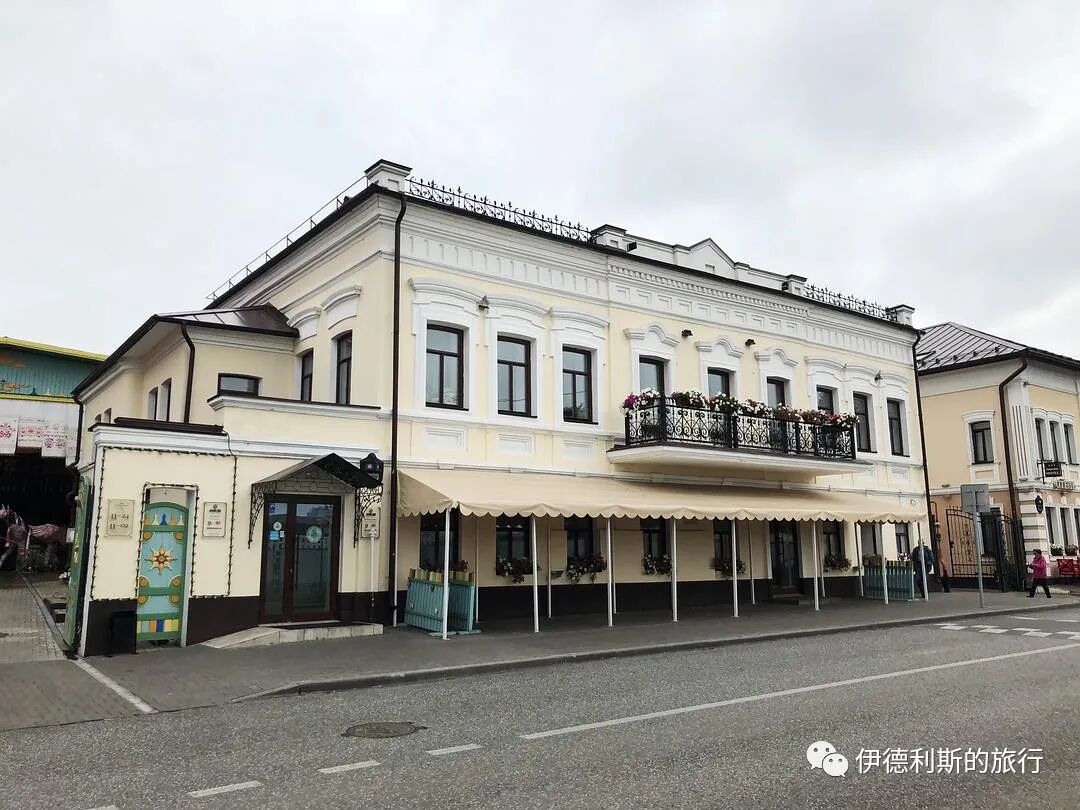
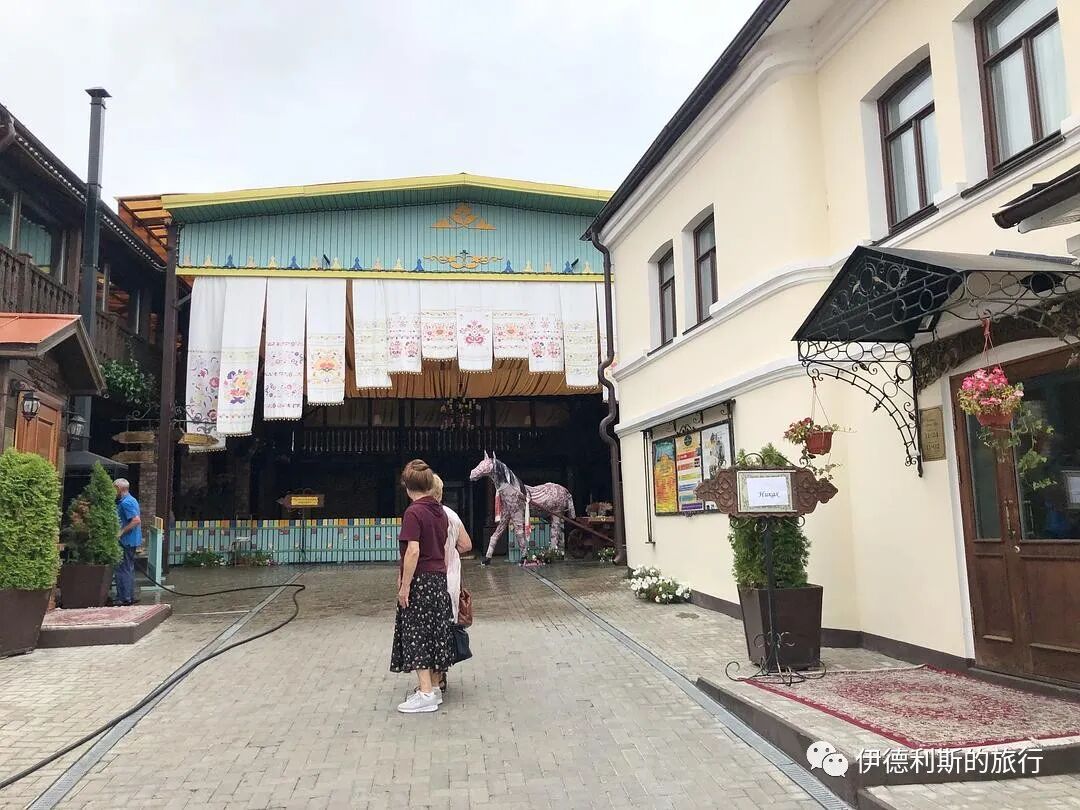
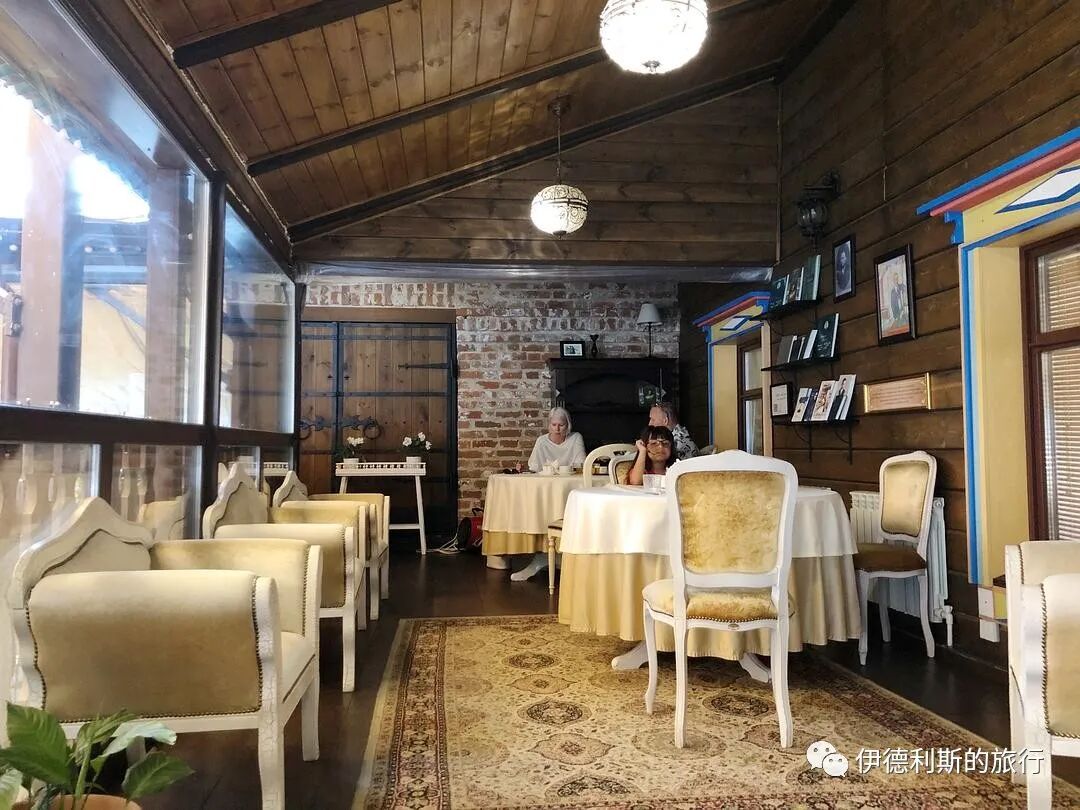
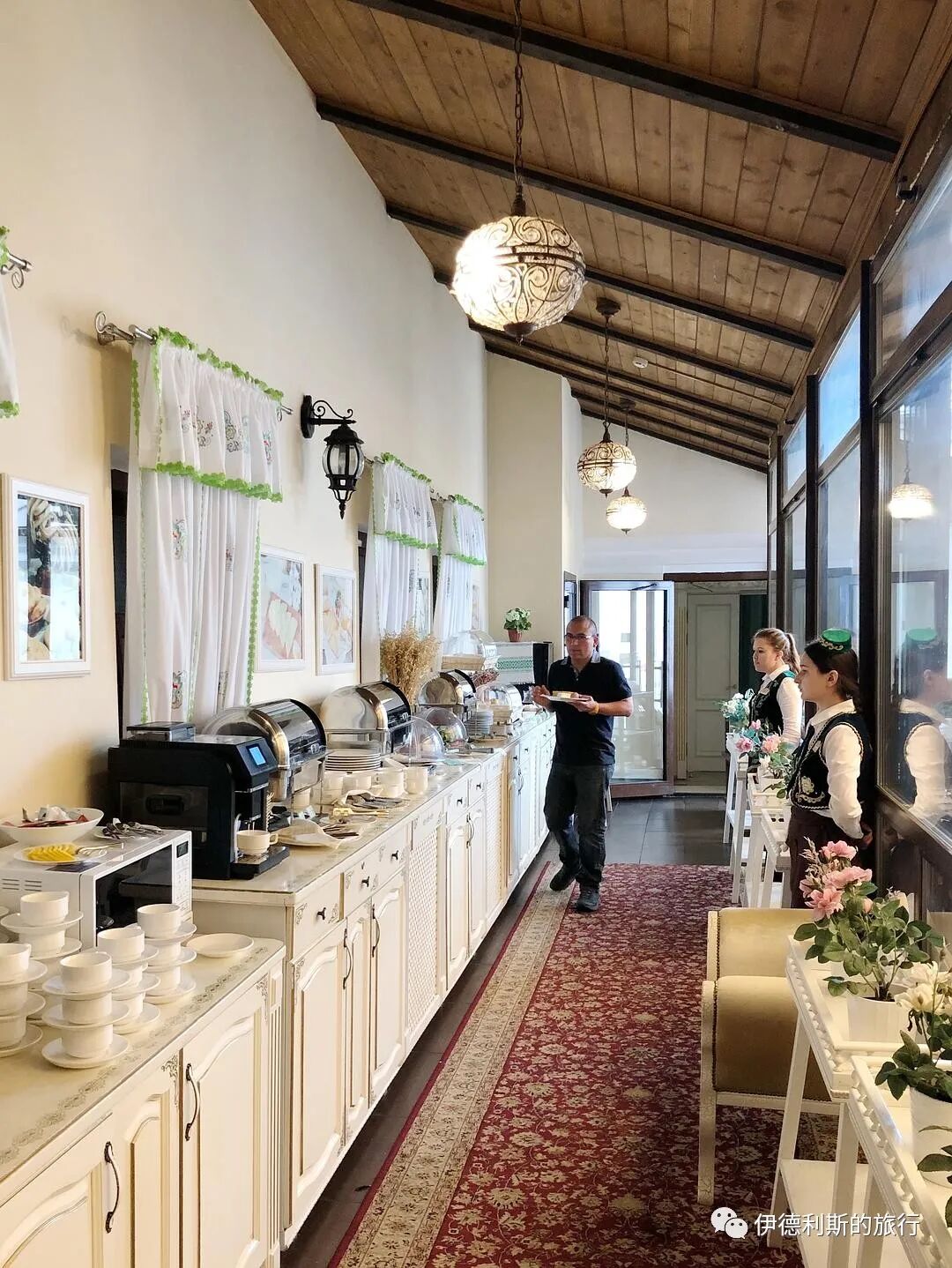
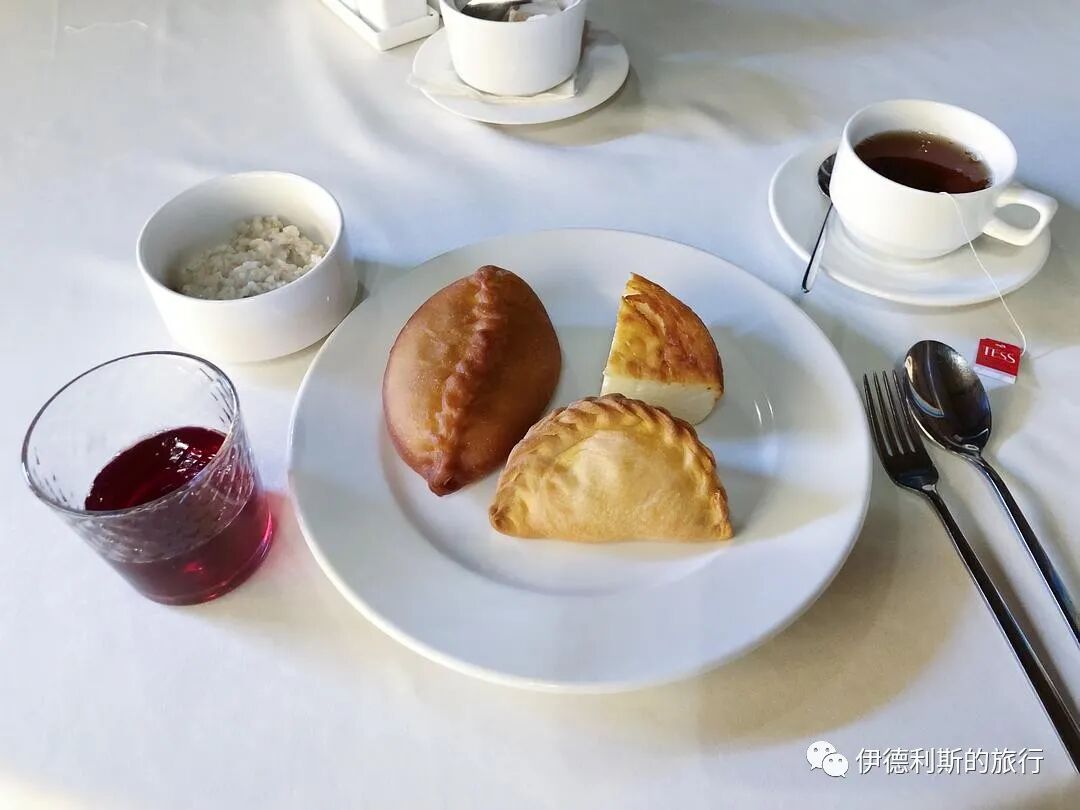
Bekken, a Tatar specialty pie, is made with sour cream dough and filled with cabbage and egg.
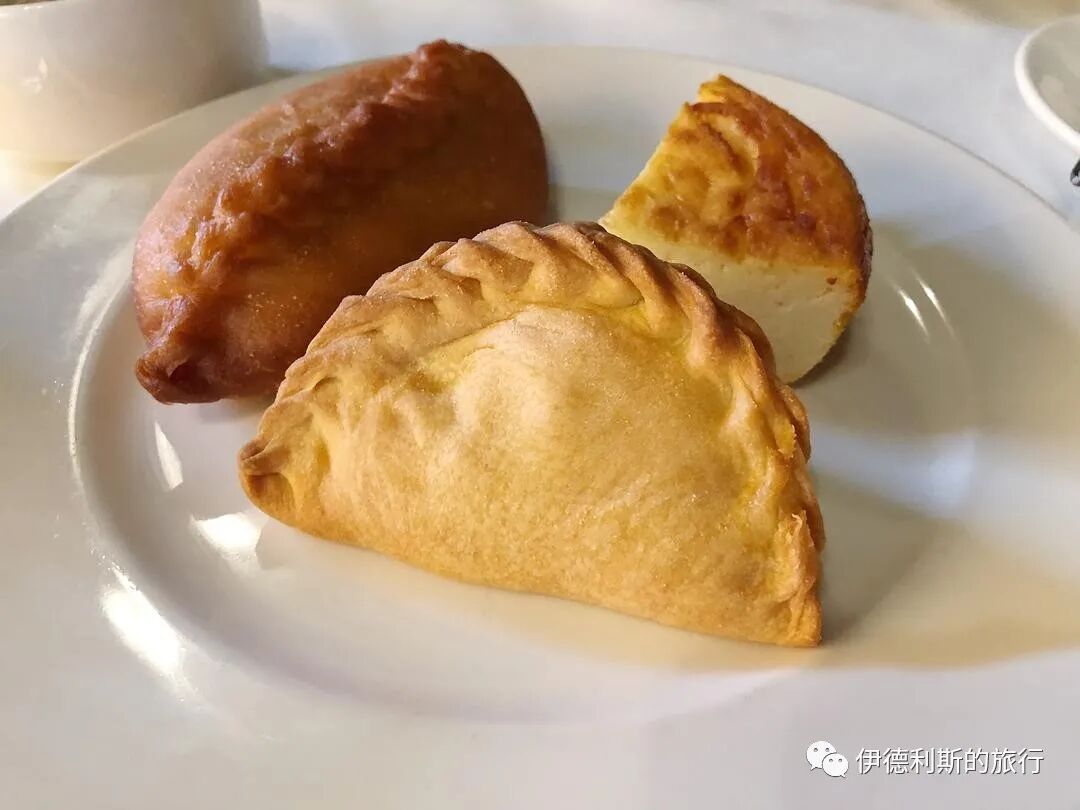
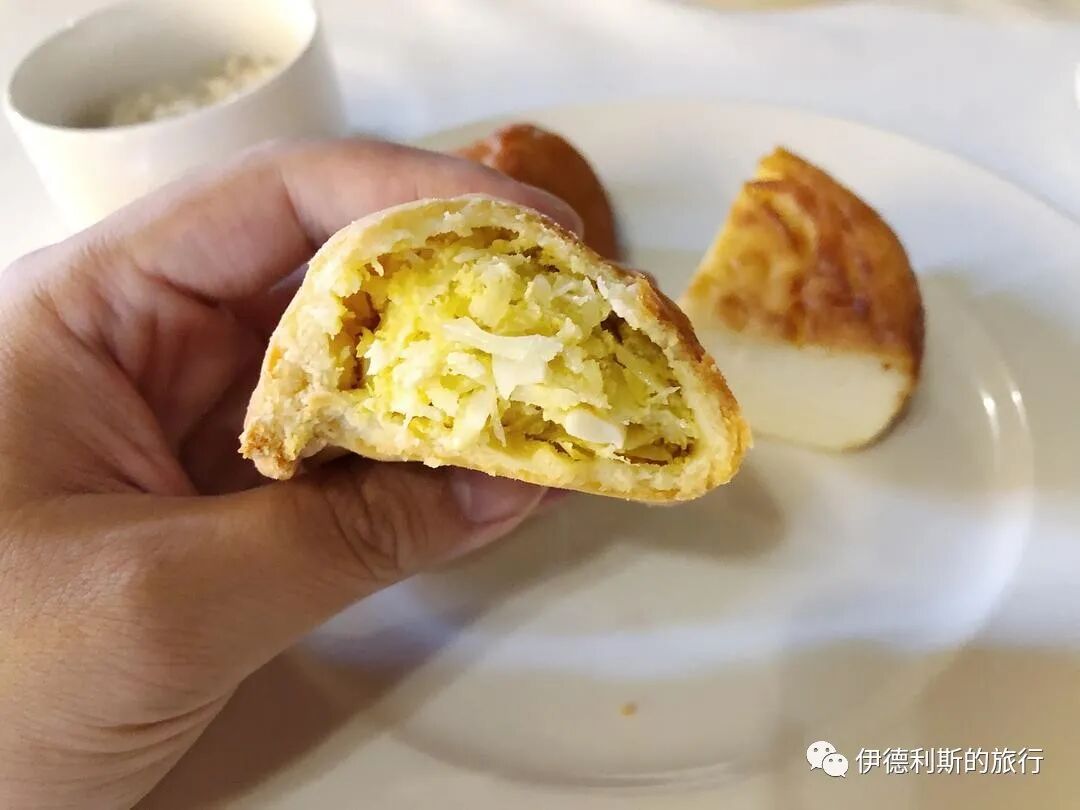
Sochni cake with frosting and Pirozhki (Eastern European stuffed buns).
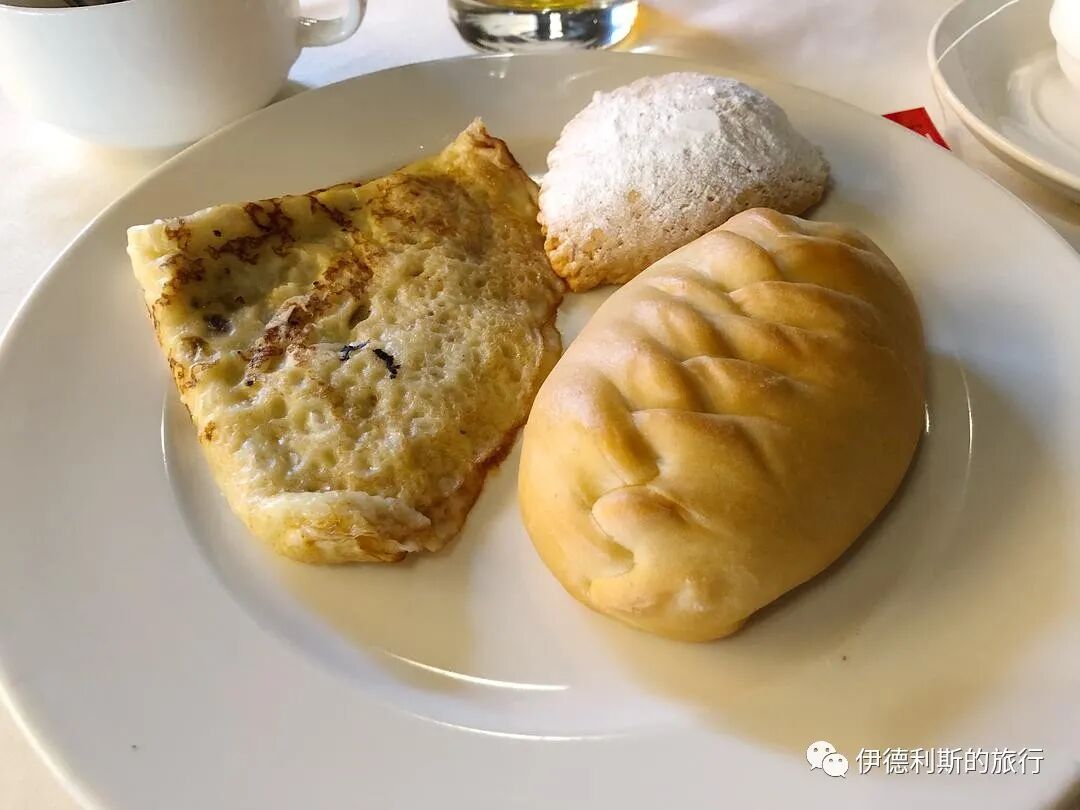
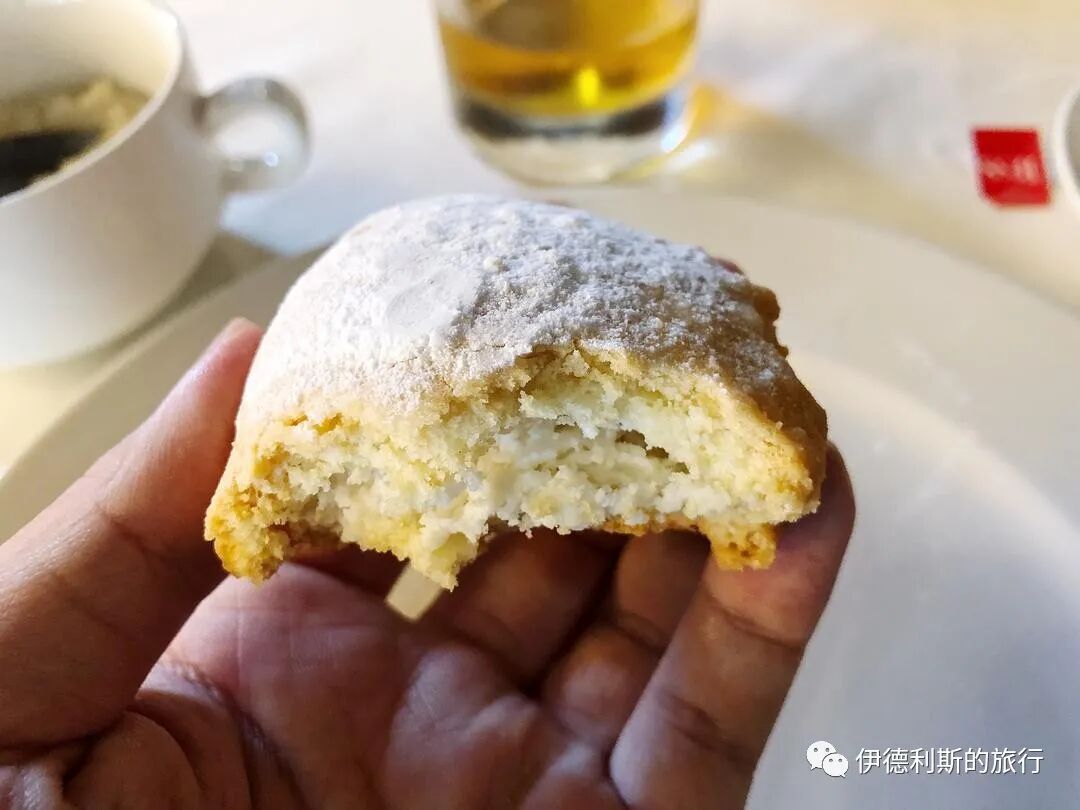
Tatar cultural festival "Pechen Bazar" (Hay Market).
I was very lucky to attend the Tatar cultural festival "Pechen Bazar" (Hay Market) in Kazan this time. The festival was held on the banks of Lake Kaban for two days, August 17th and 18th, with various Tatar designers, poets, musicians, and filmmakers showcasing and sharing their work; it was especially lively.
First, I will share what I ate at the festival. The first stall was traditional Tatar tea. You could see many ingredients in the tea, such as thyme, linden leaves, chamomile flowers, oregano leaves, mint leaves, and sage. You could also see the uncle throwing pine cones directly into the tea stove, which was especially fragrant.
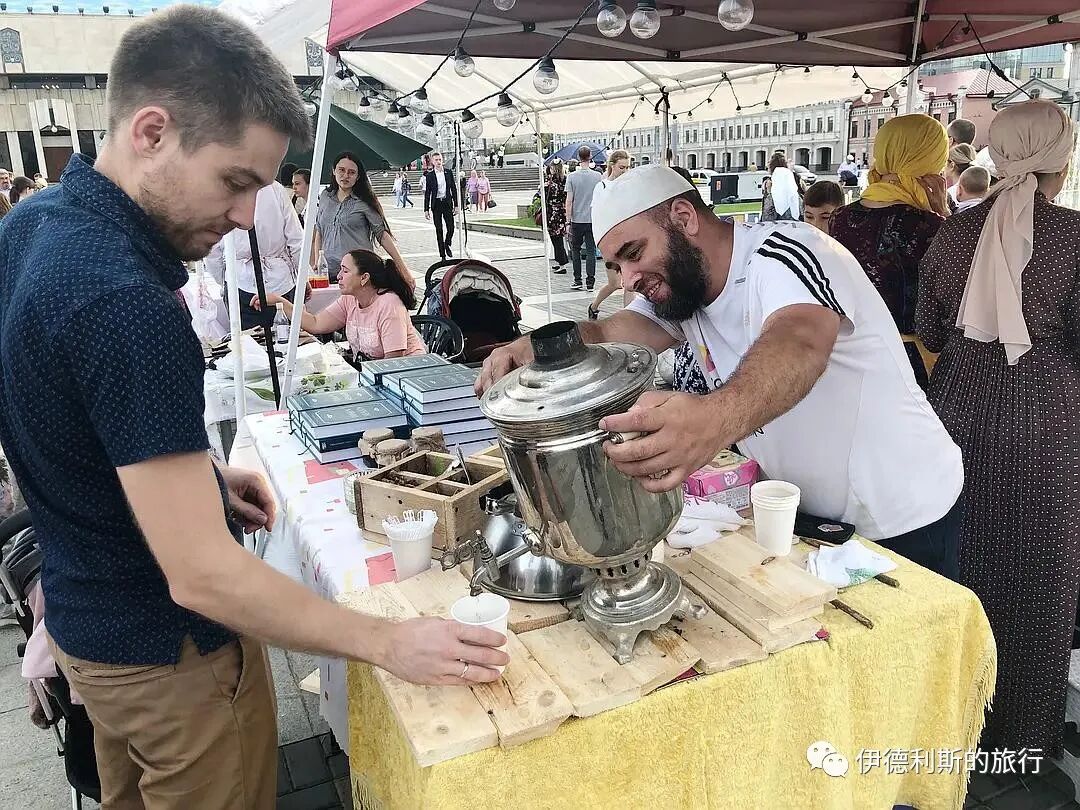

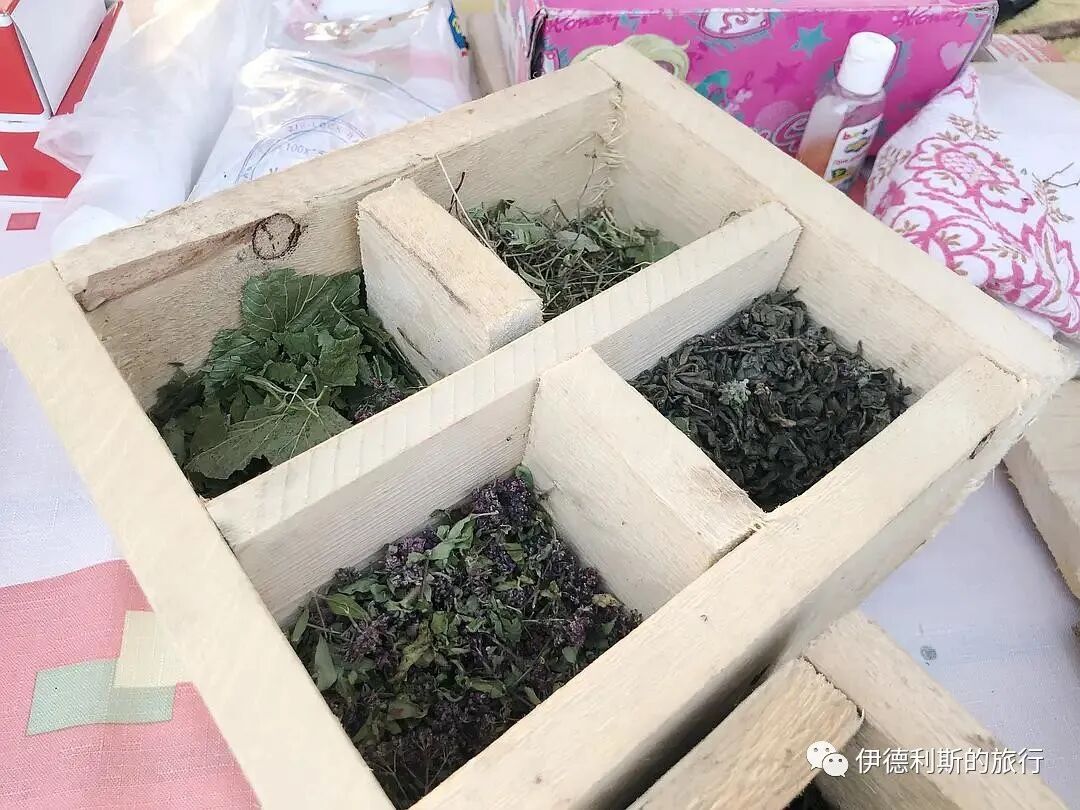
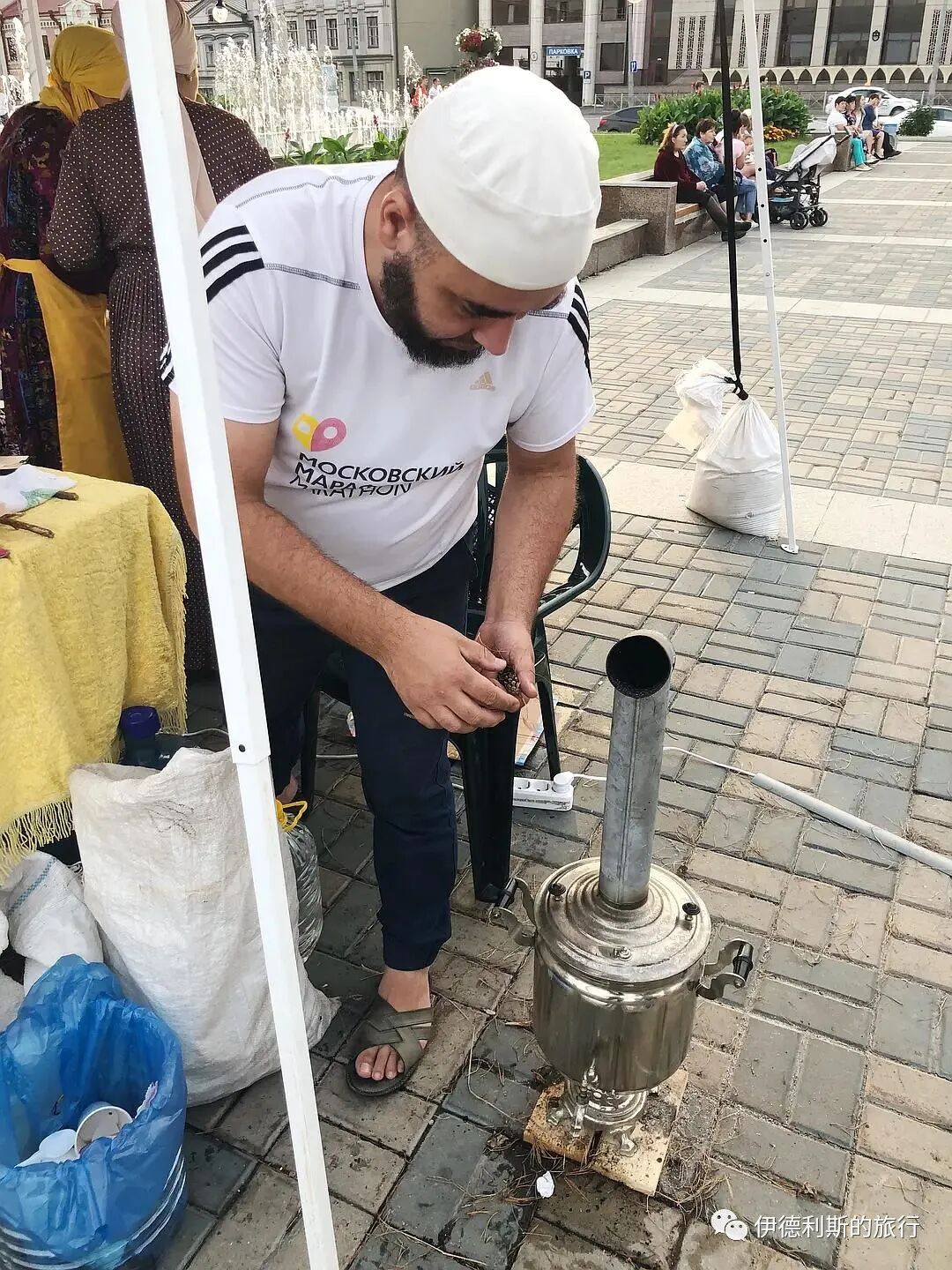
I really like the drawing on the cup, it is Tatar trendy!
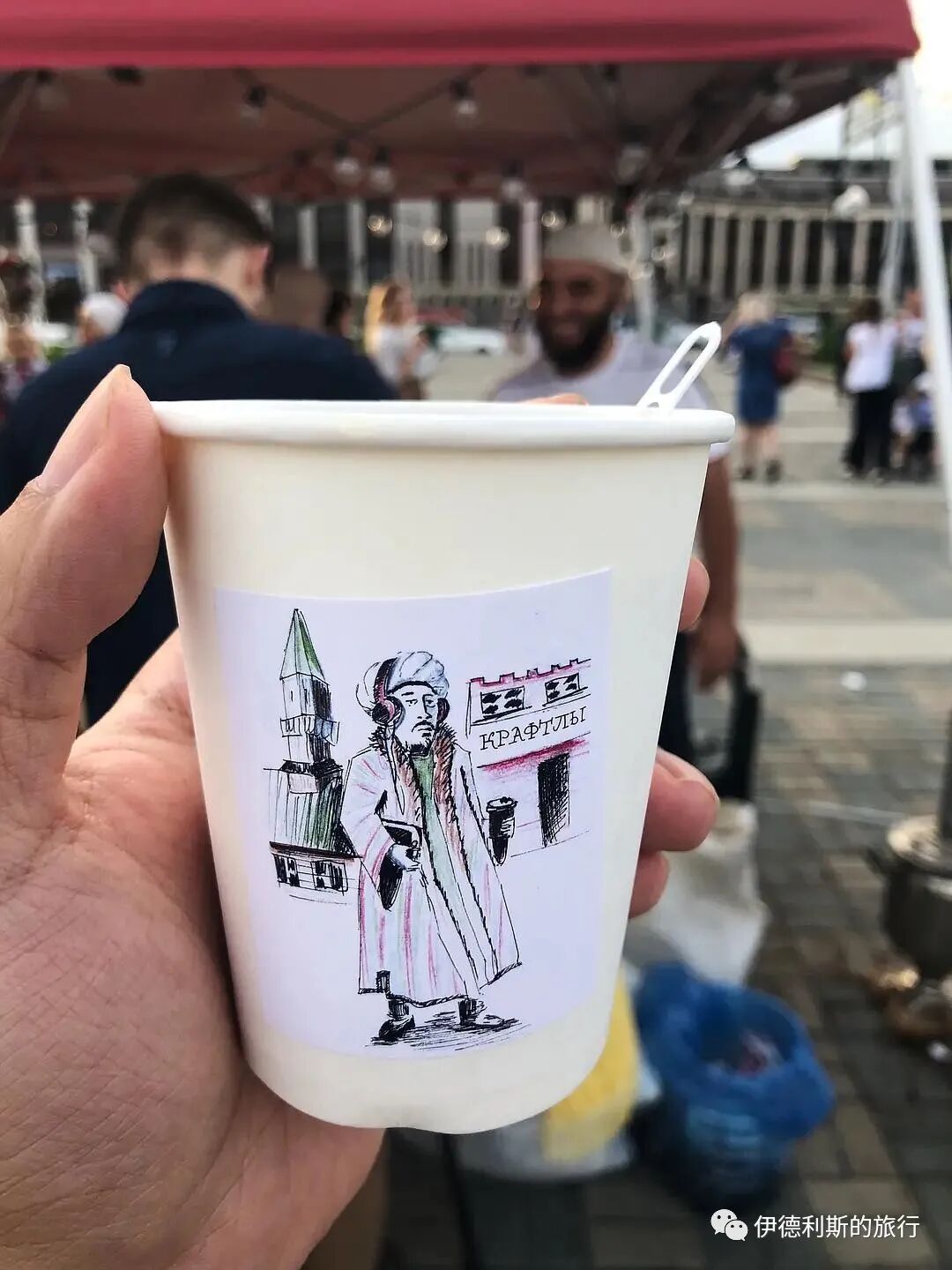
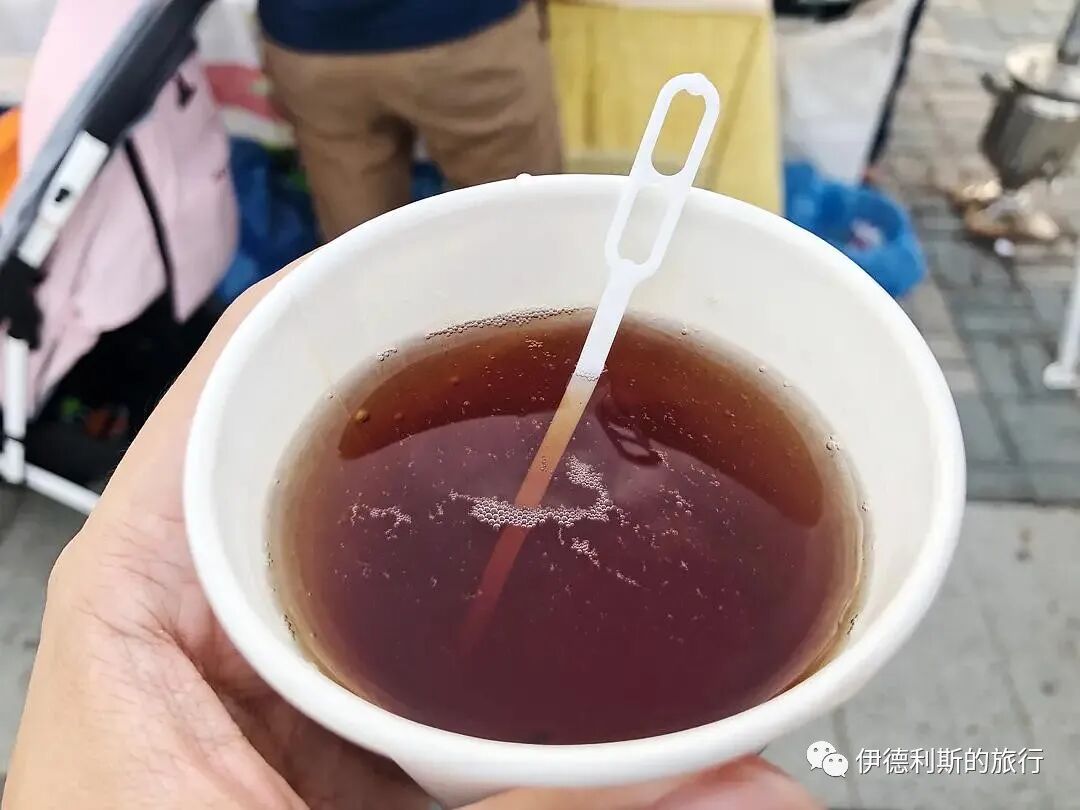
This stall sold traditional Tatar desserts, which are a bit like Turkish desserts and go very well with tea.
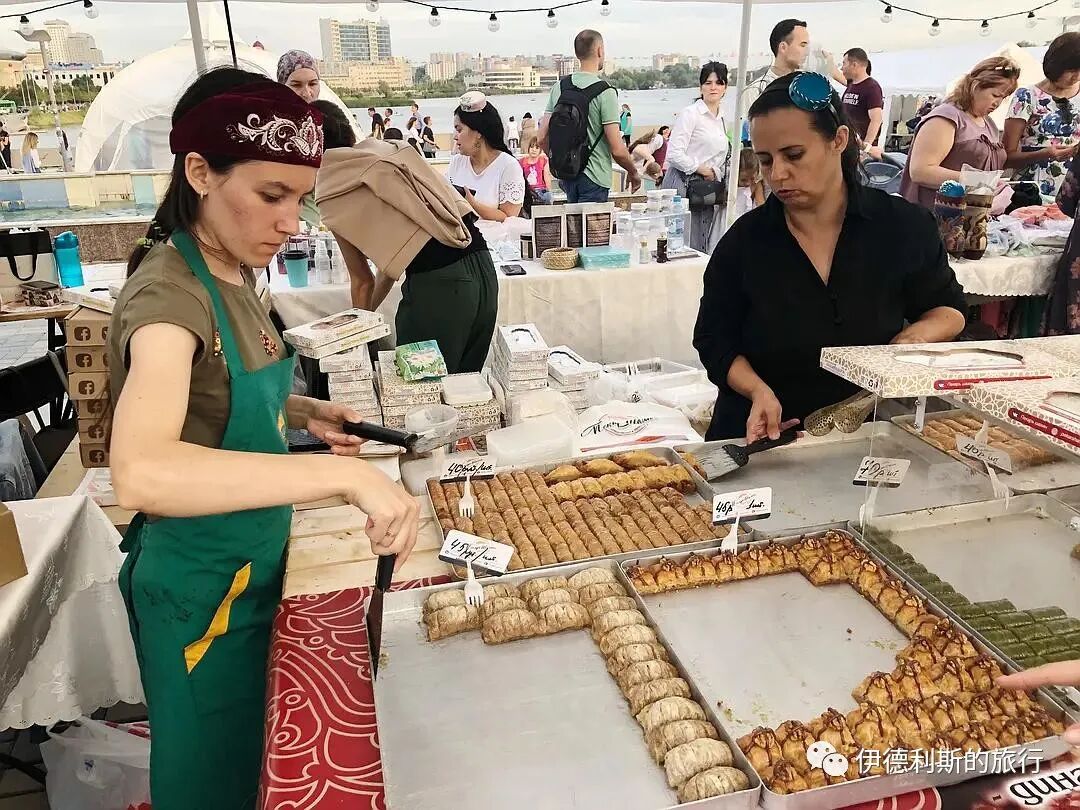
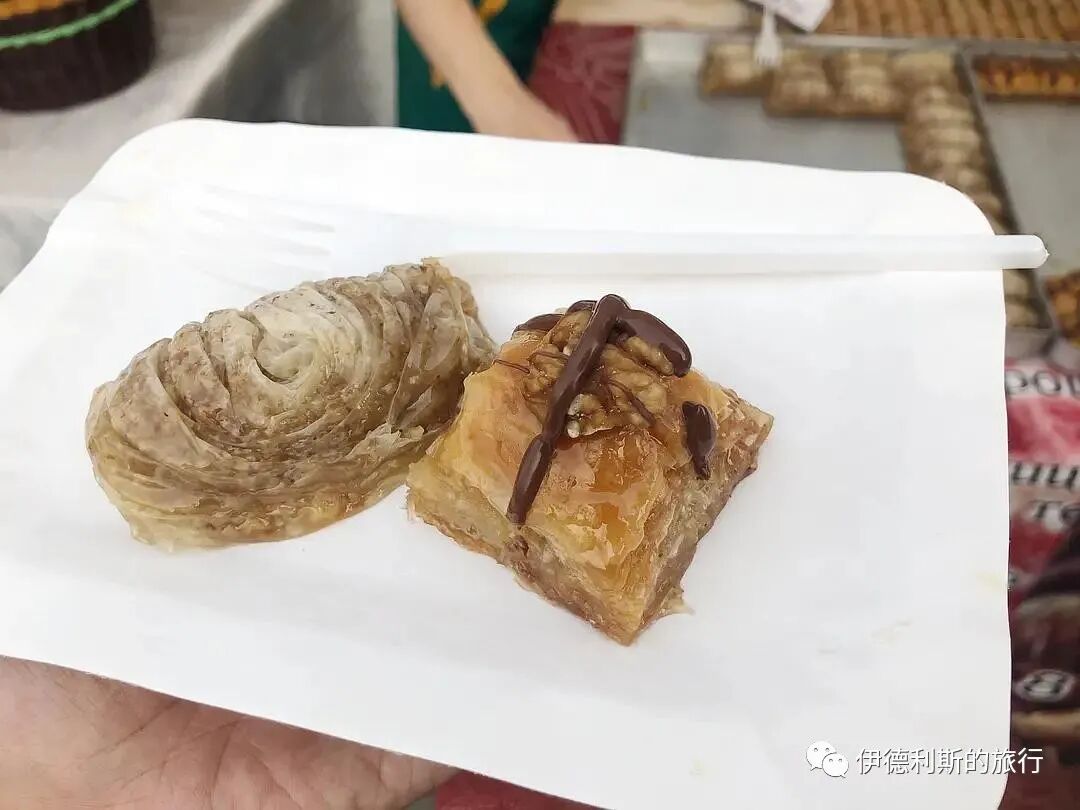
This stall sold jam.
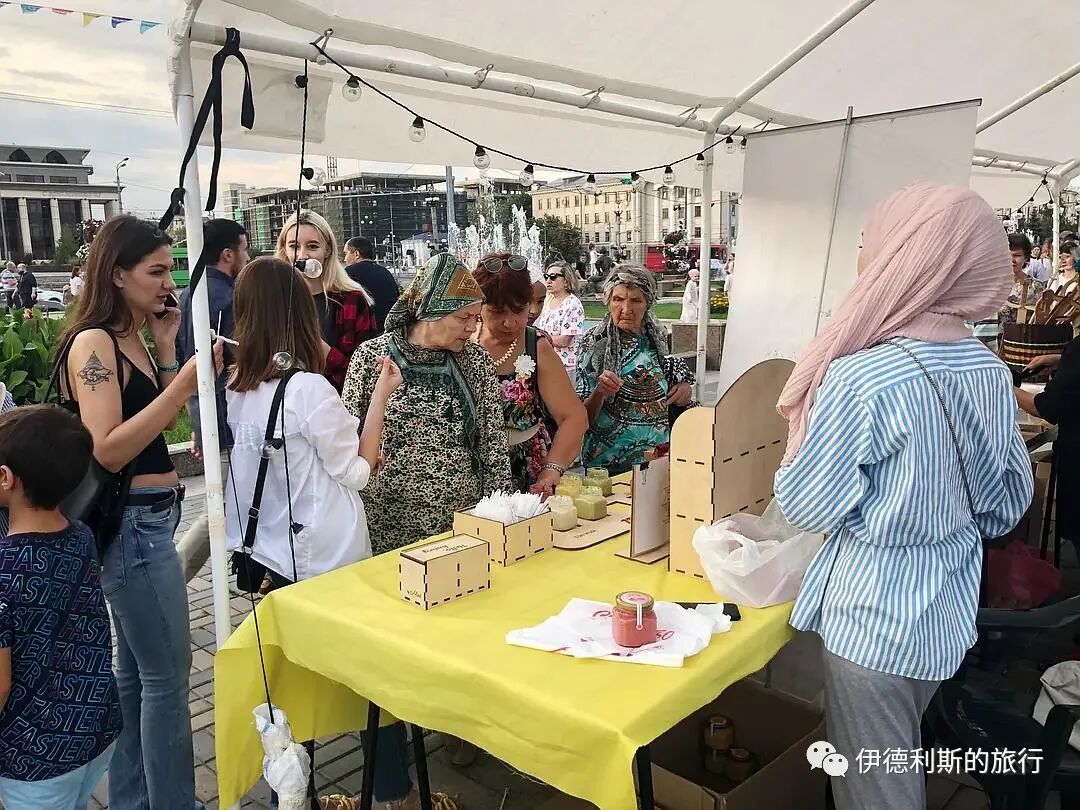
I ate cakes made by Tatar girls and also drank lemonade.
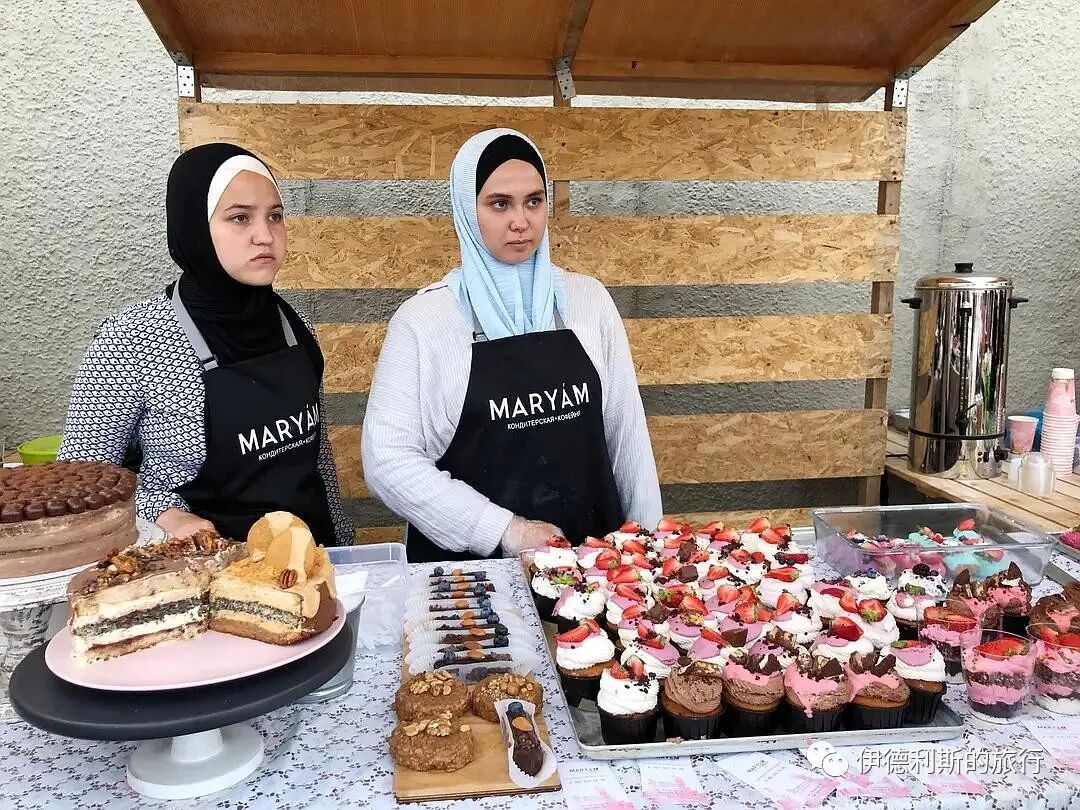
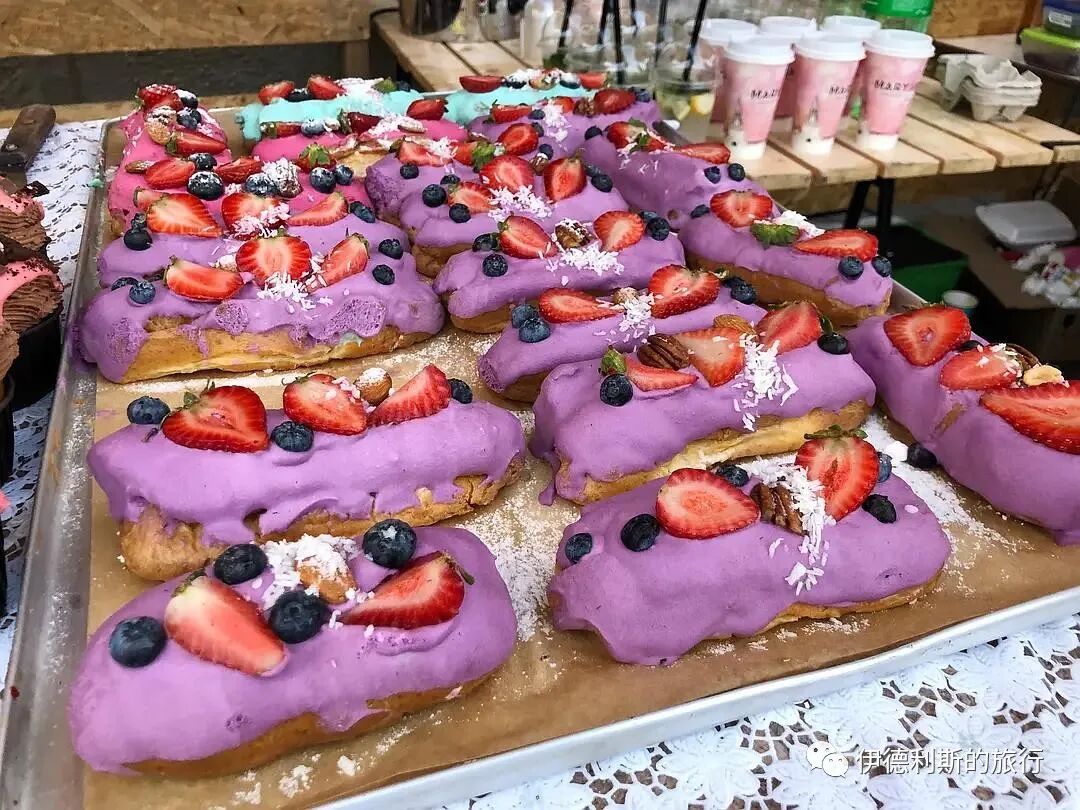

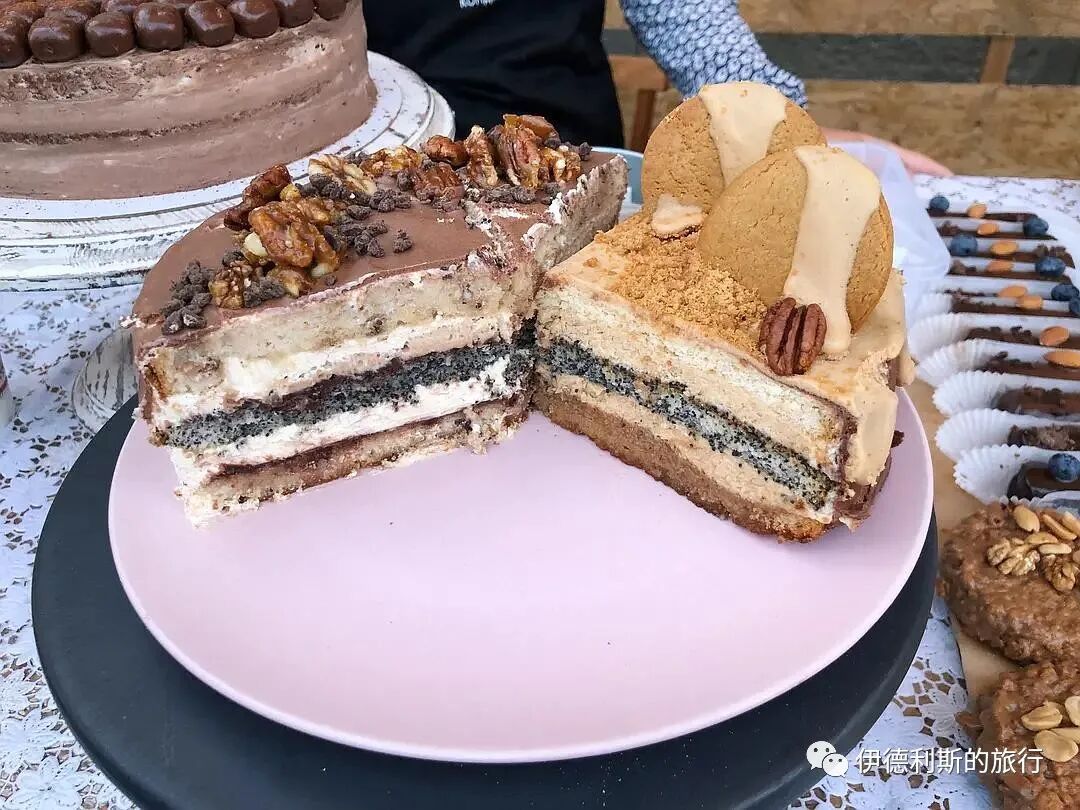

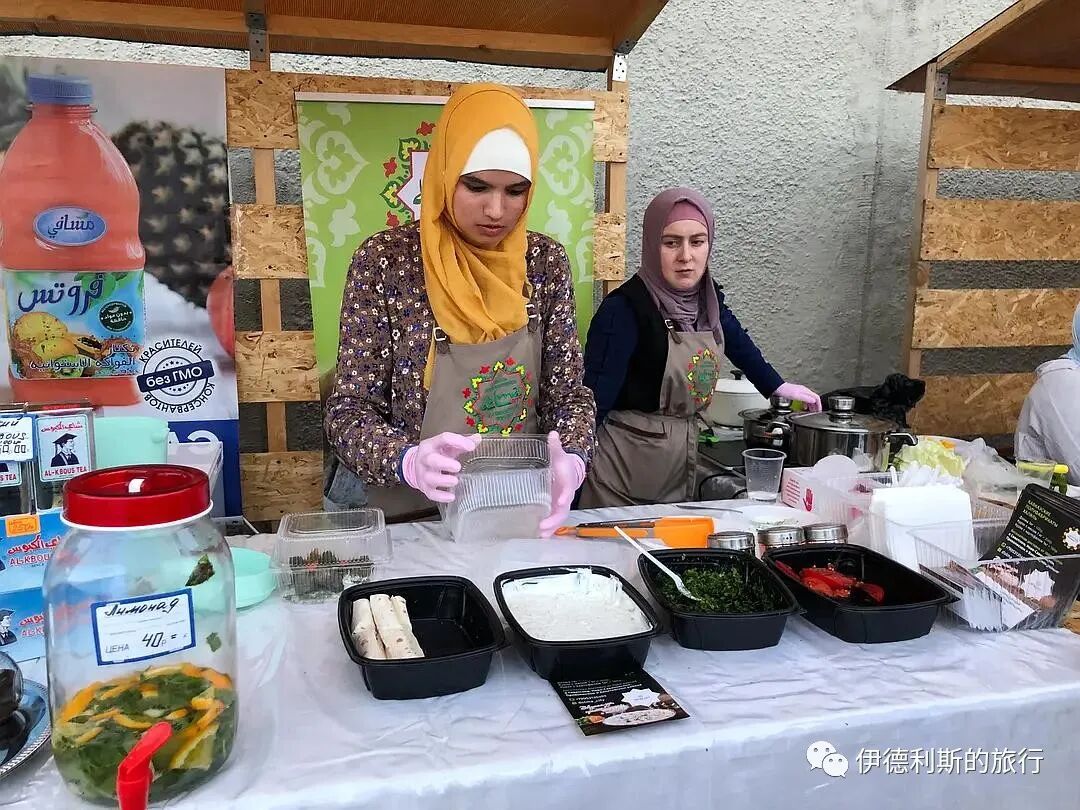
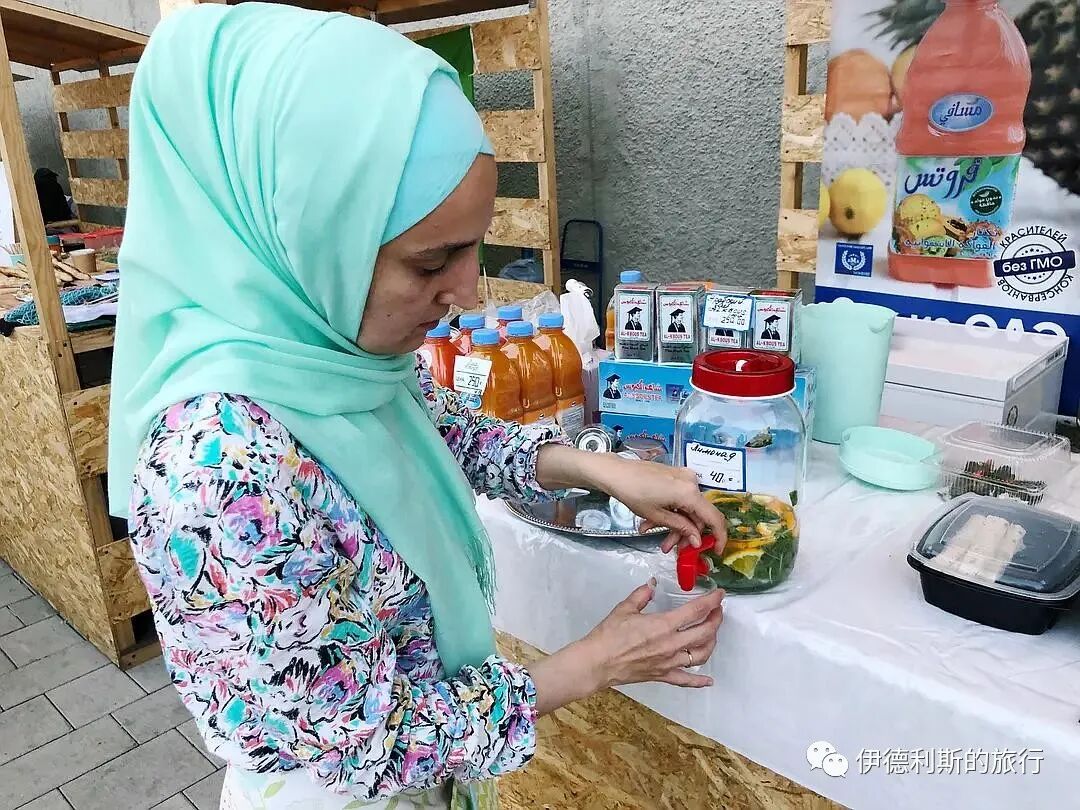

Stalls with various Tatar snacks.

Many Tatar artisans also came this time.
I bought two wooden puppets made by a Tatar brother; they are images of Tatar youth.
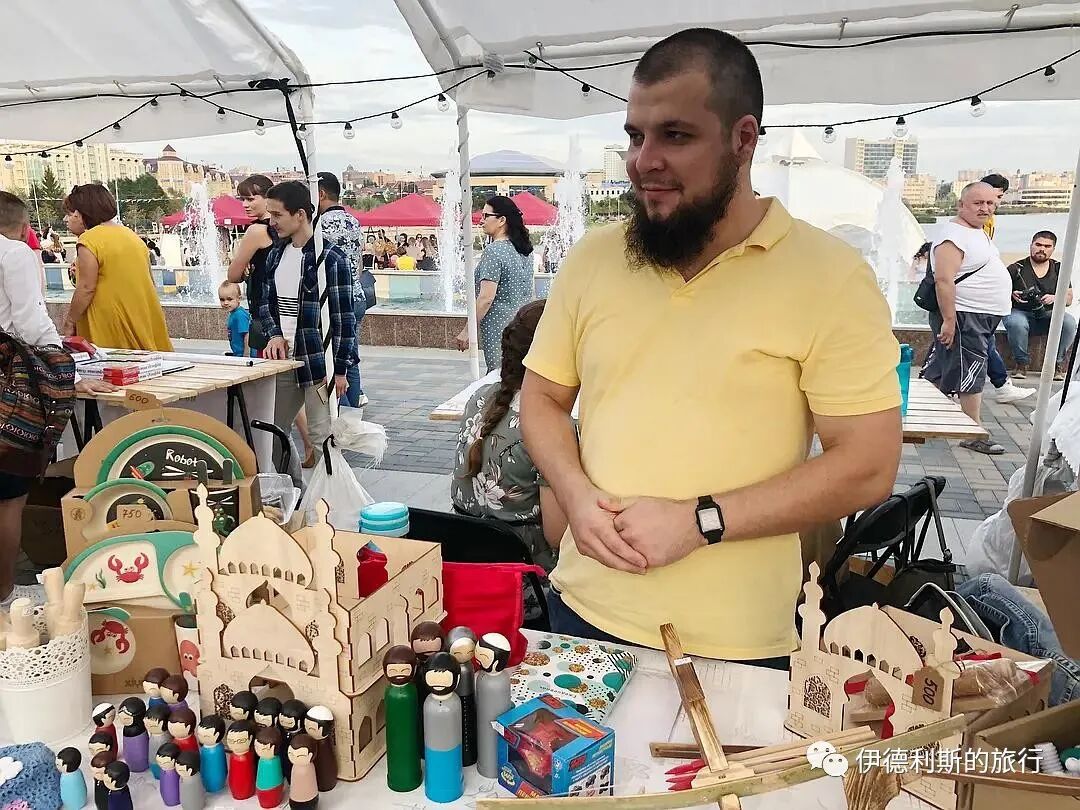
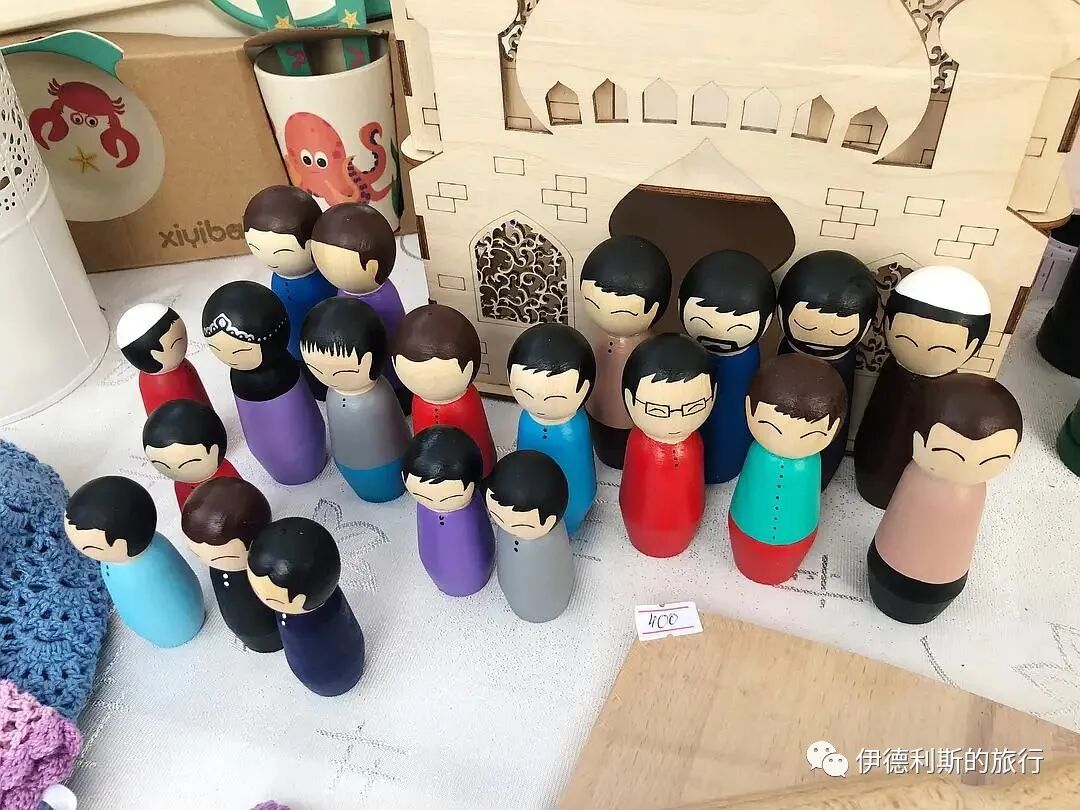
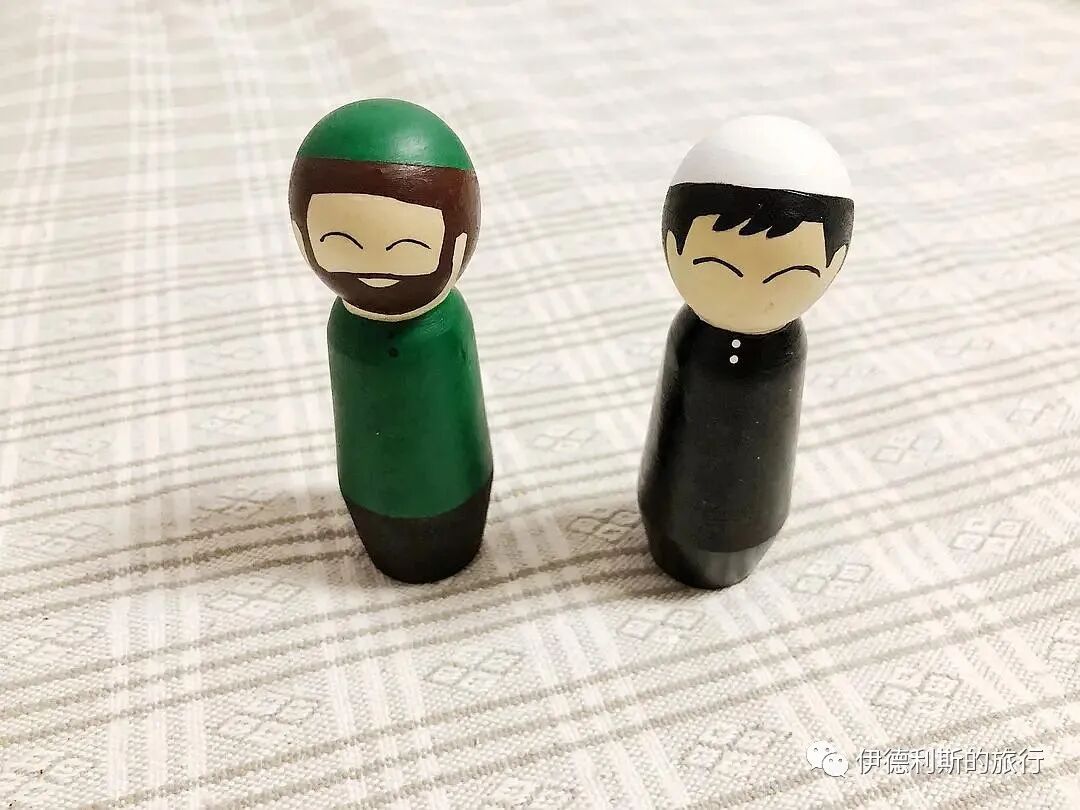
A Tatar youth is making Arabic calligraphy on the spot with thread.
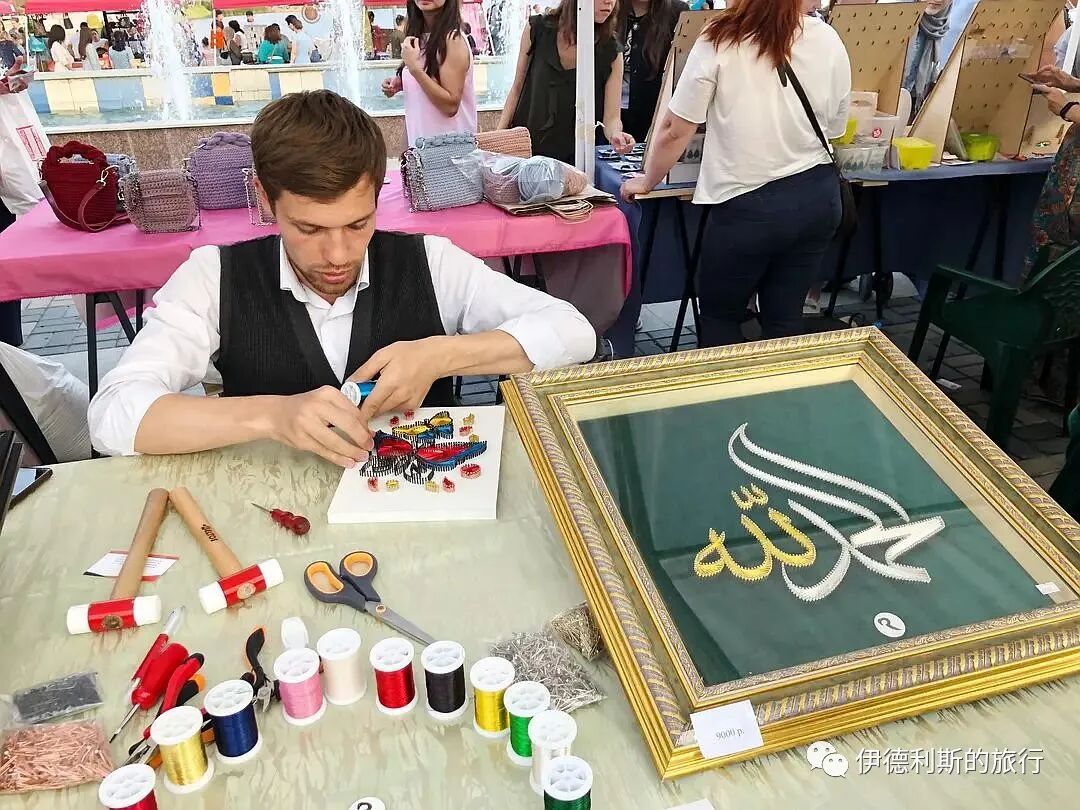
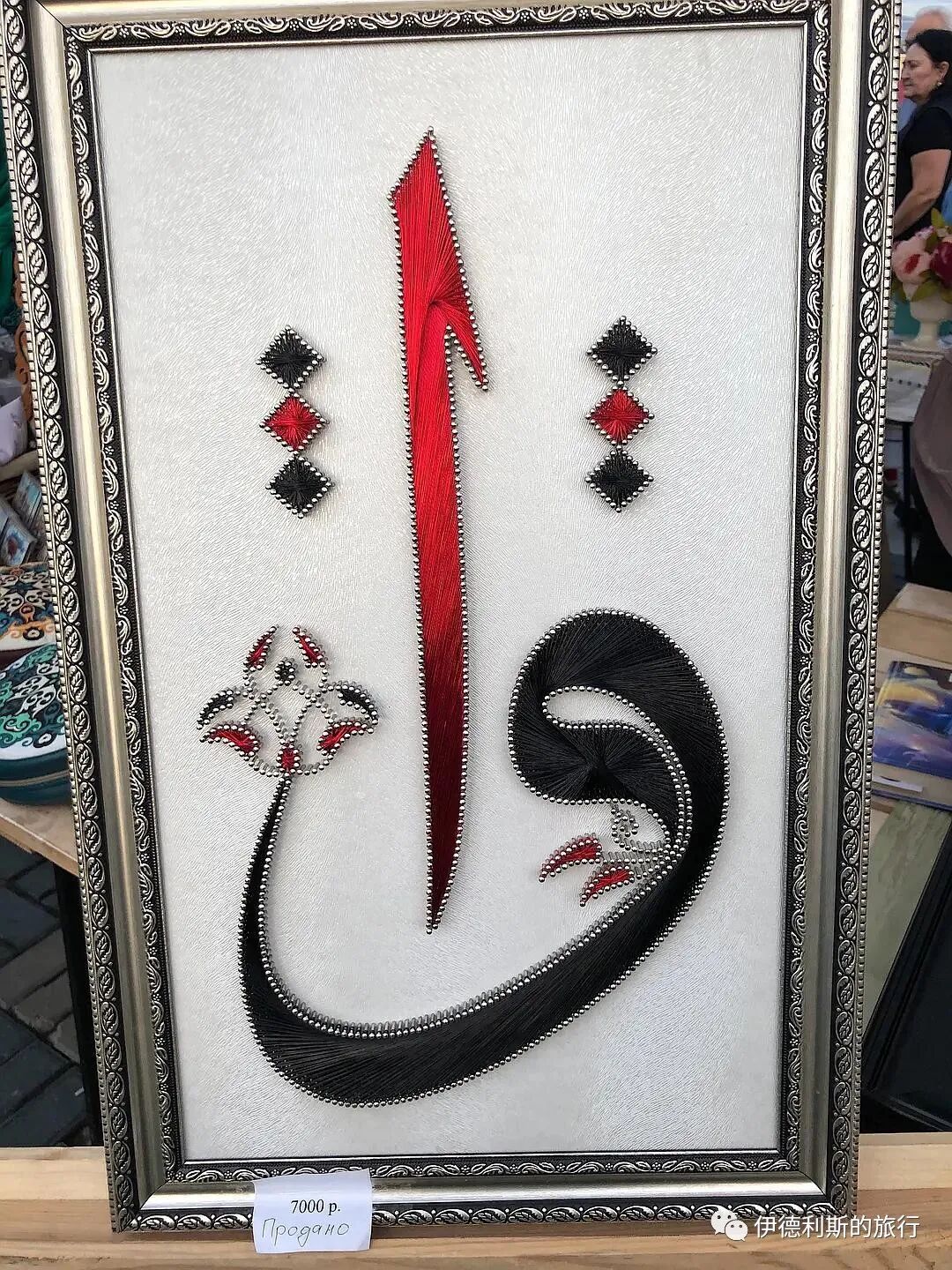
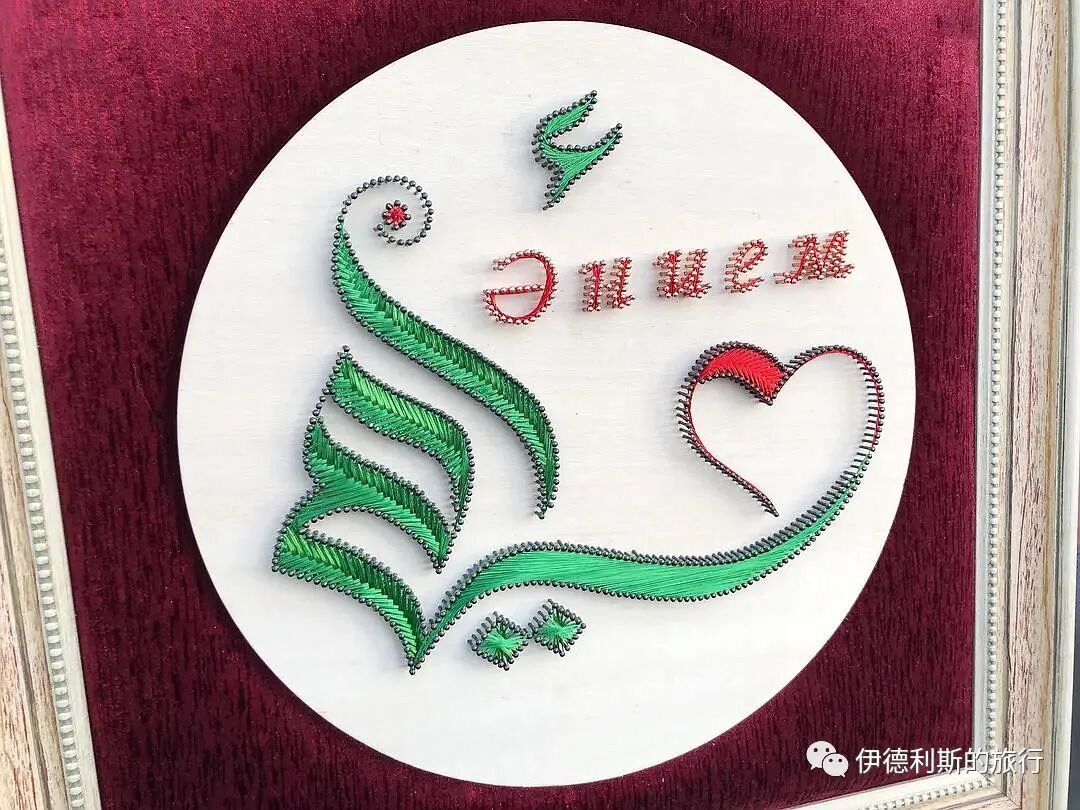
A Tatar auntie was selling headpieces for Kazan Tatar women, decorated with pearls, which looked very beautiful.
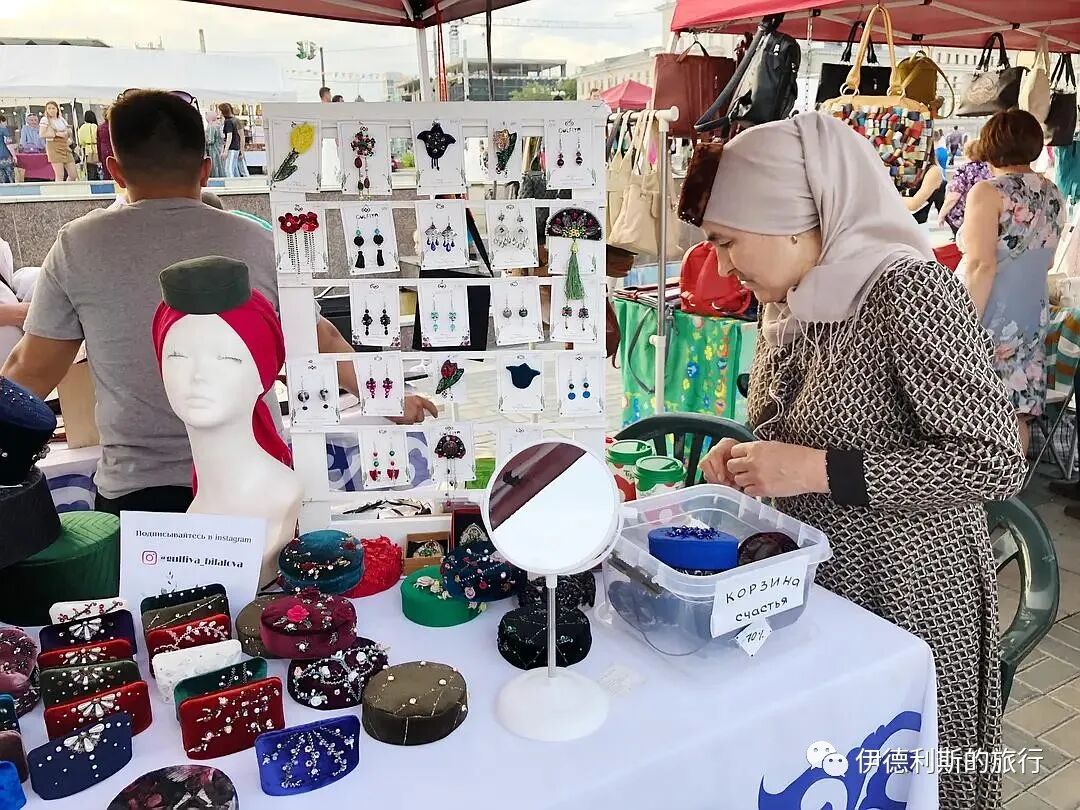
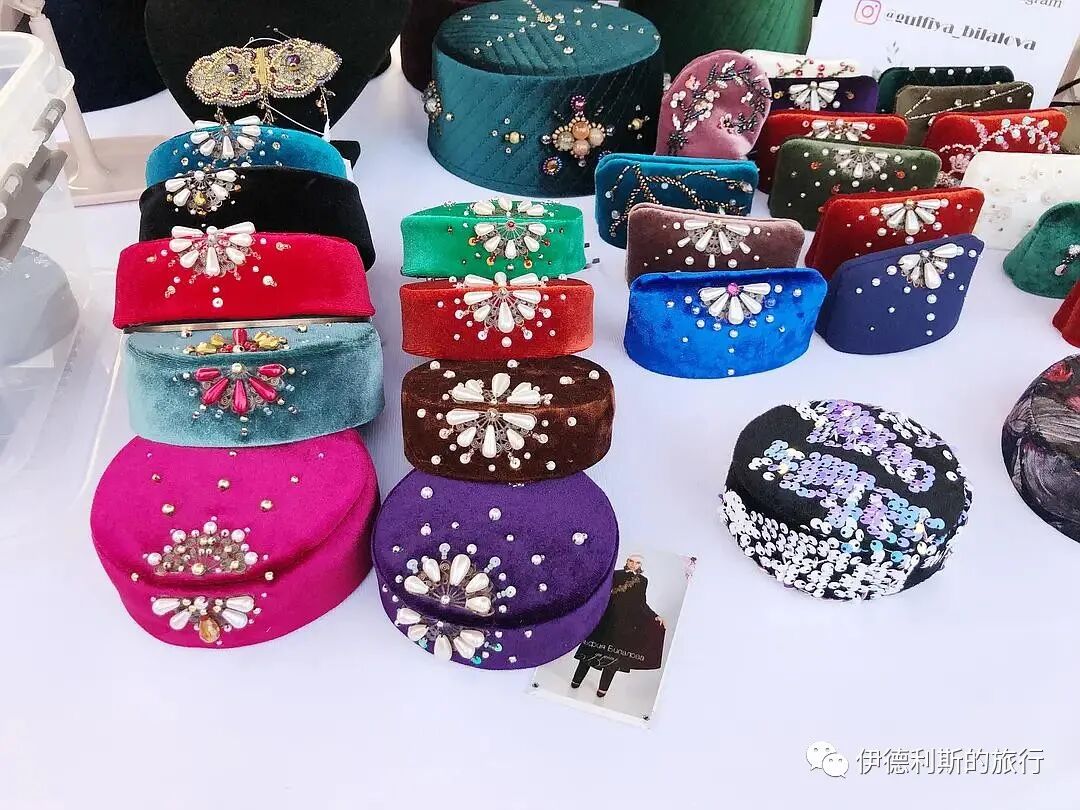
A stall selling honey. This festival invited some Tatars living in the countryside to sell the honey, cheese, and sausages they made themselves, which was also very interesting.
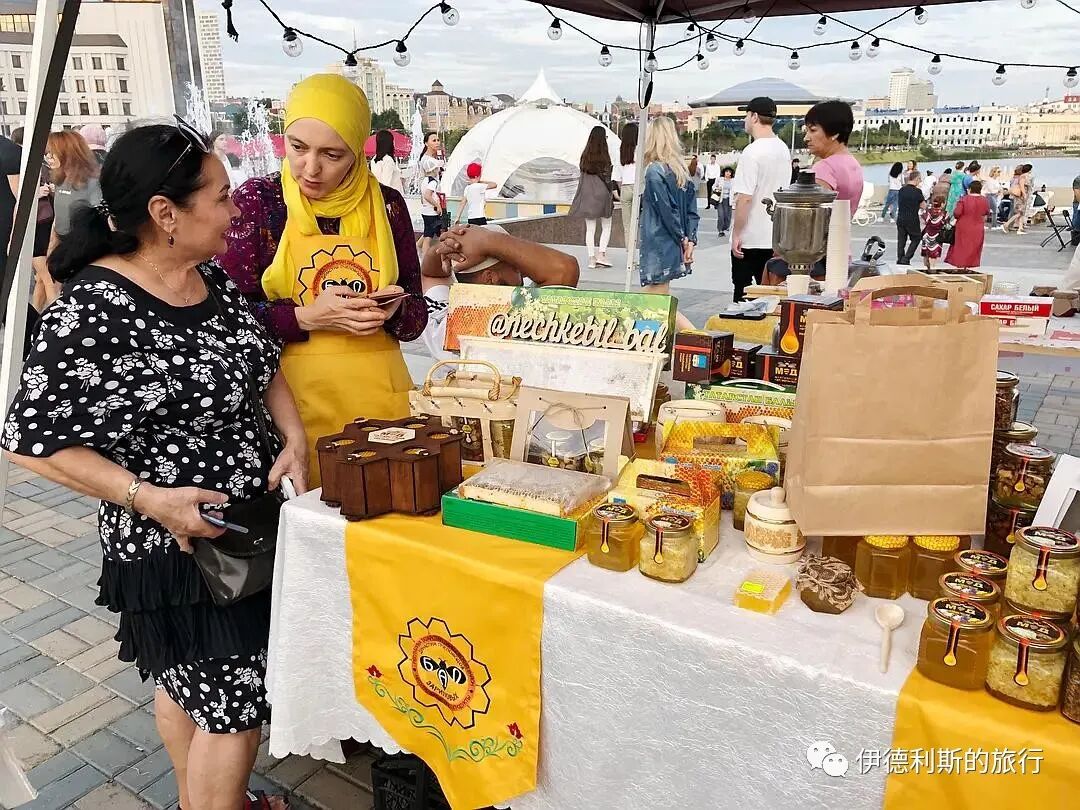
I bought three hats at the festival. The first felt hat (VOYLOCHNAYA TYUBETEYKA) came from a Tatar brand that makes leather and wool felt products, which is quite interesting. And the two girls in the picture below are dressed so beautifully!
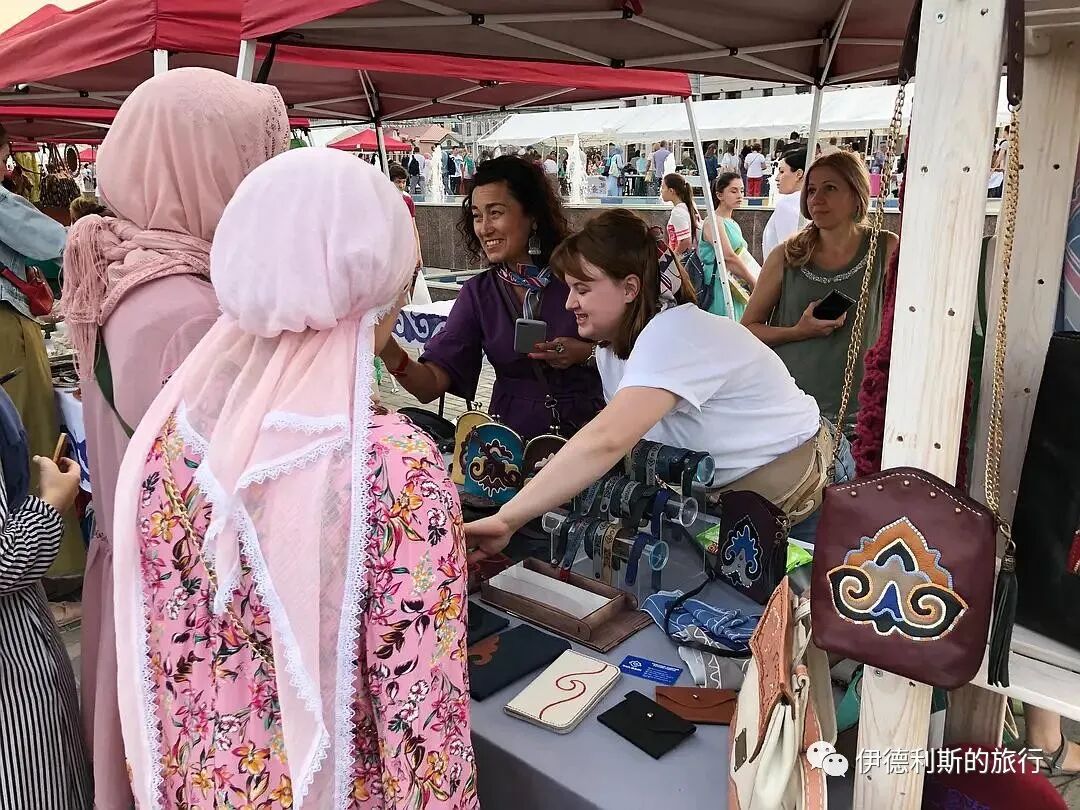
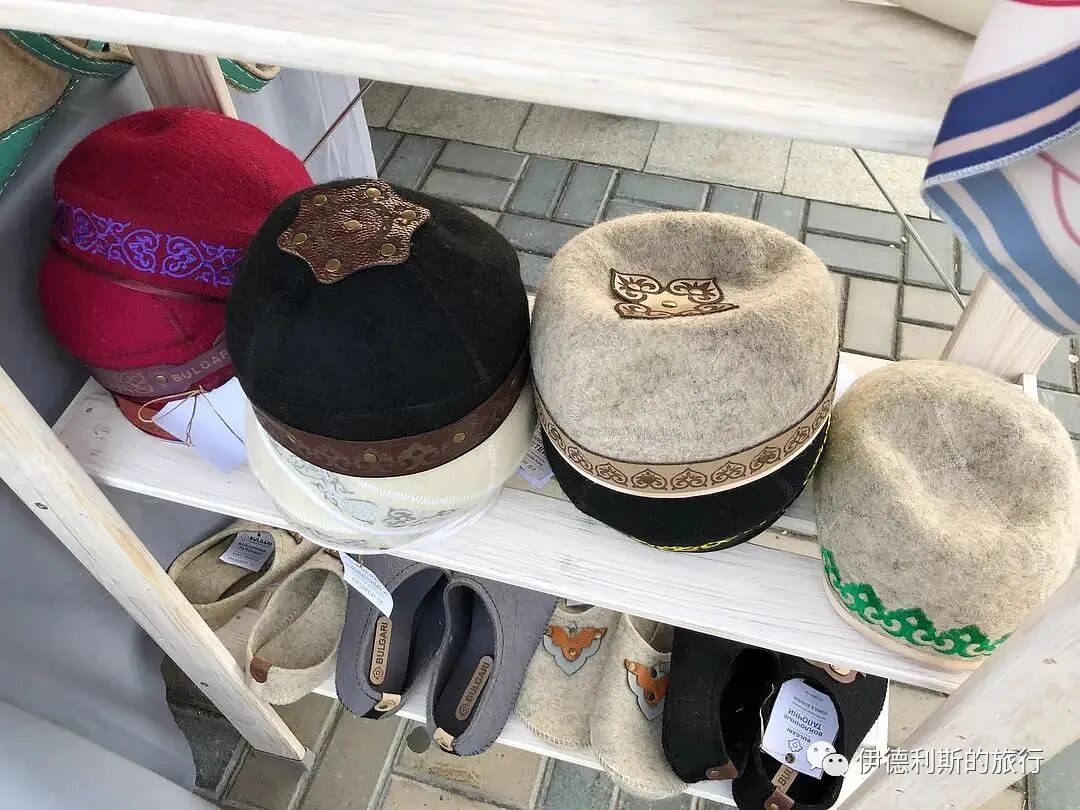
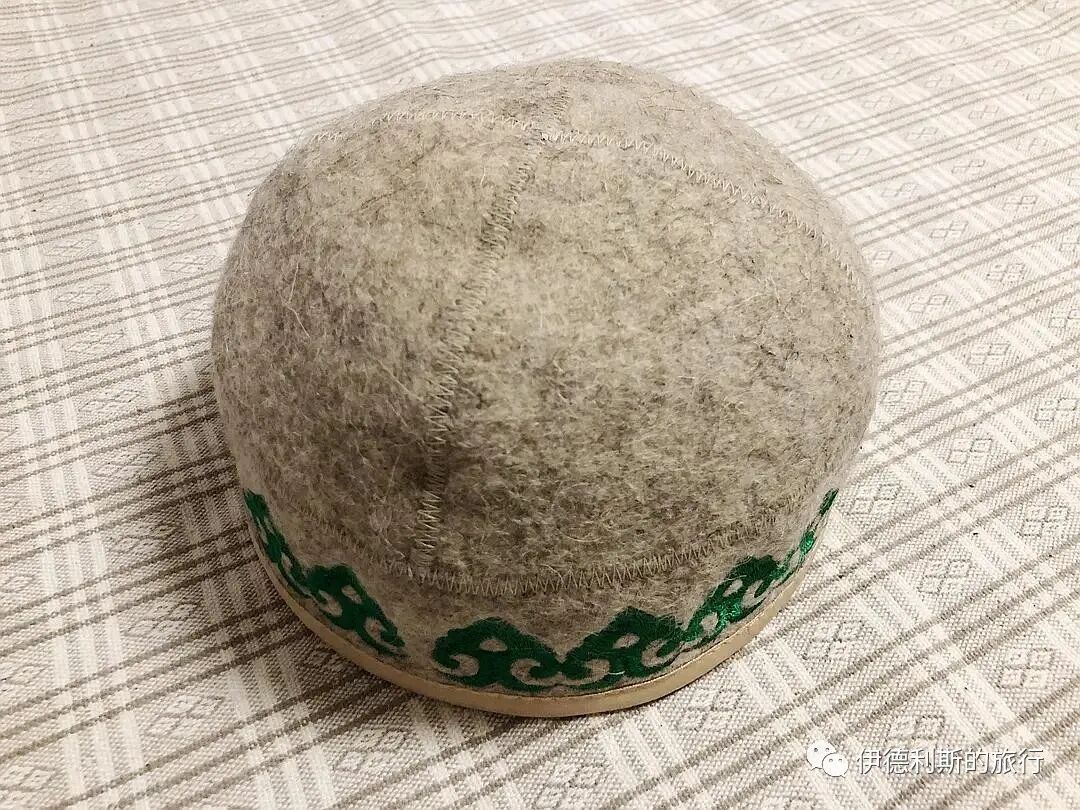
The second hat stall; I really should have bought this traditional Tatar vest at that time.
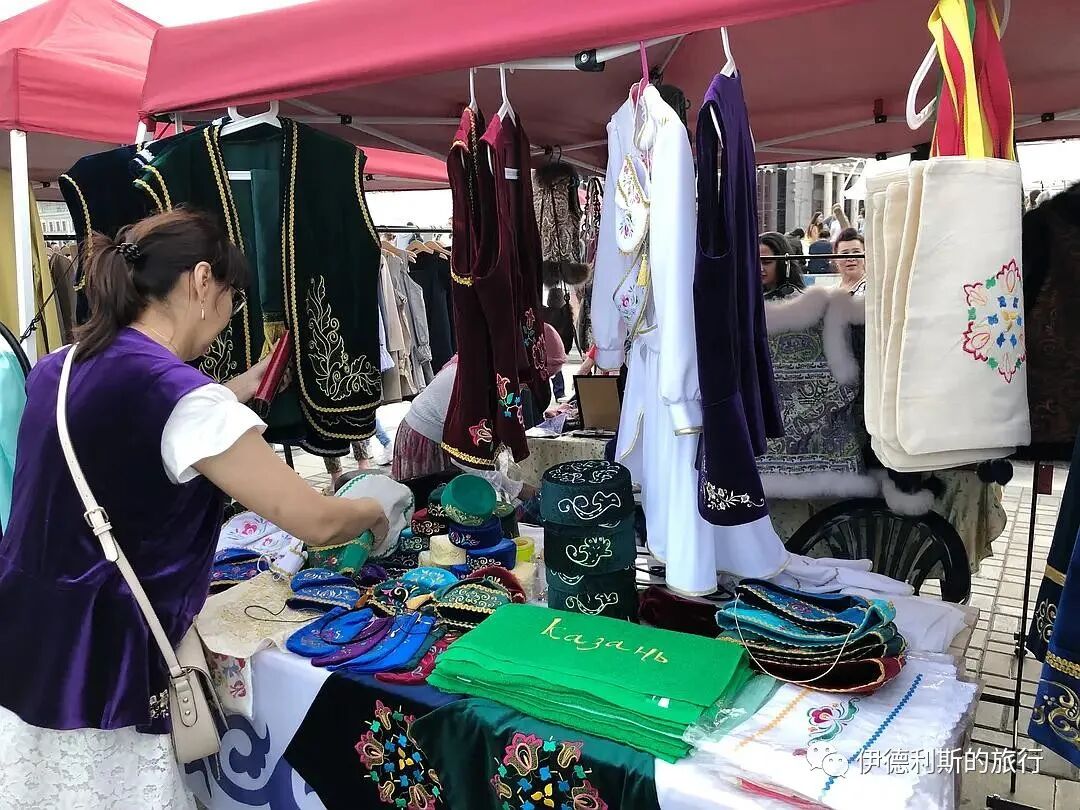
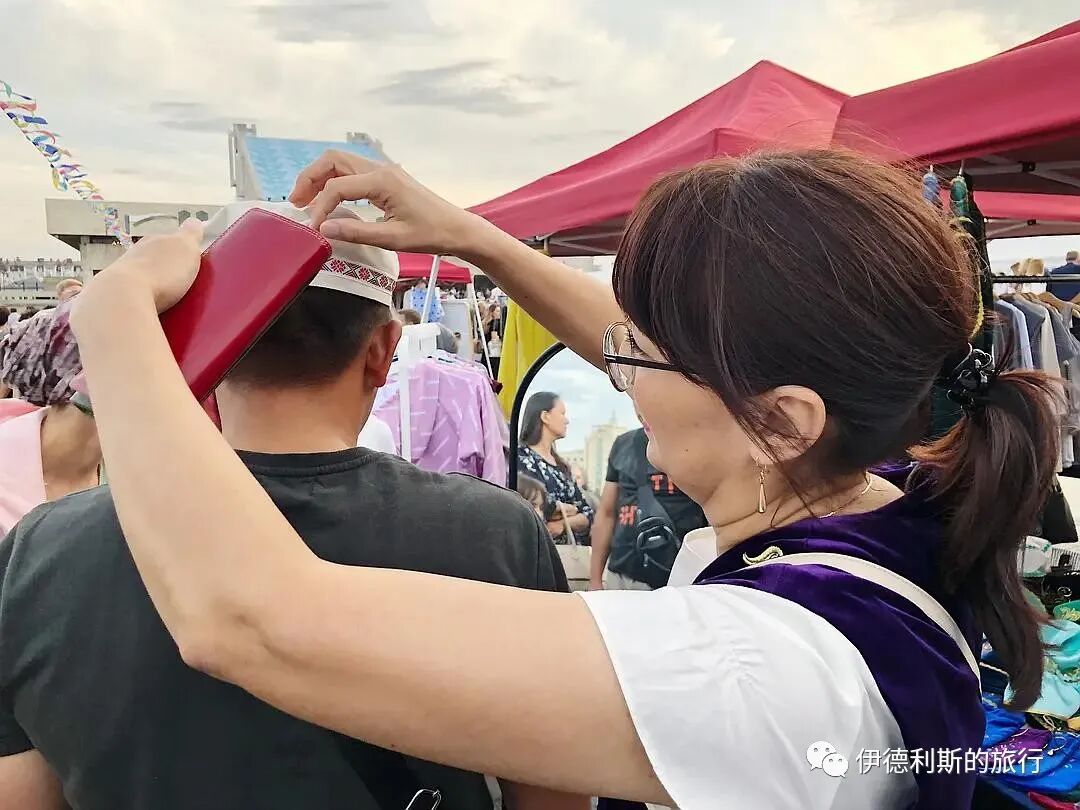
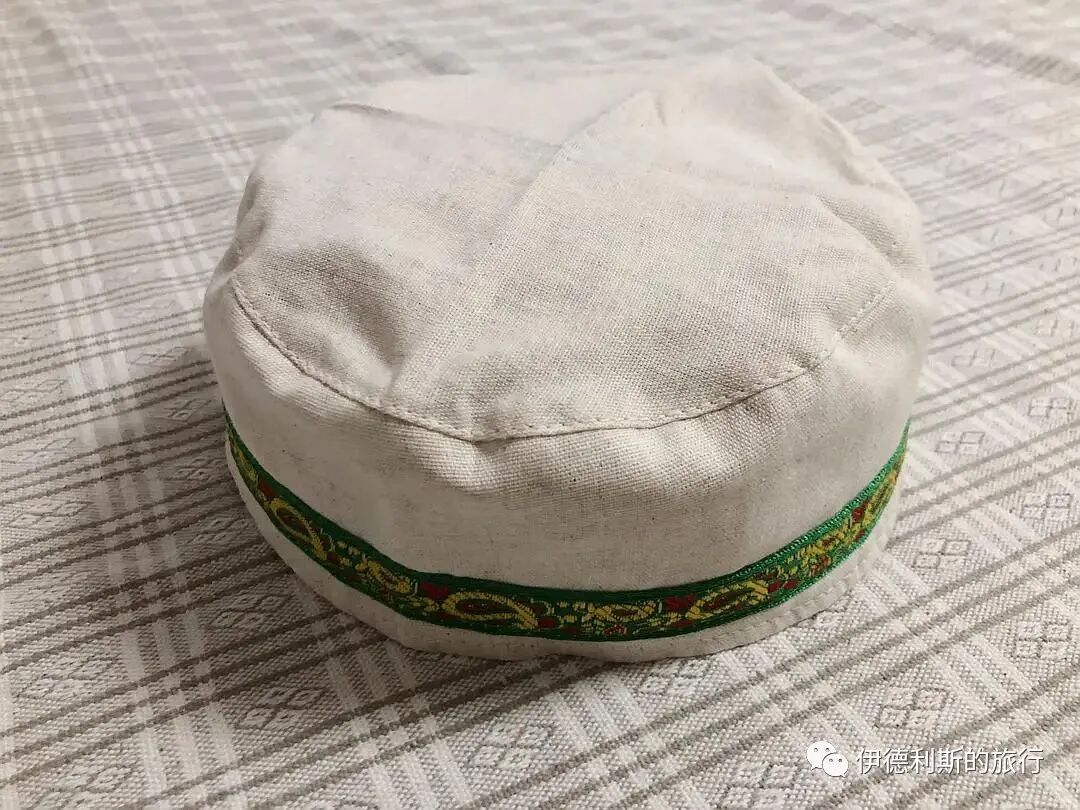
The third hat stall.
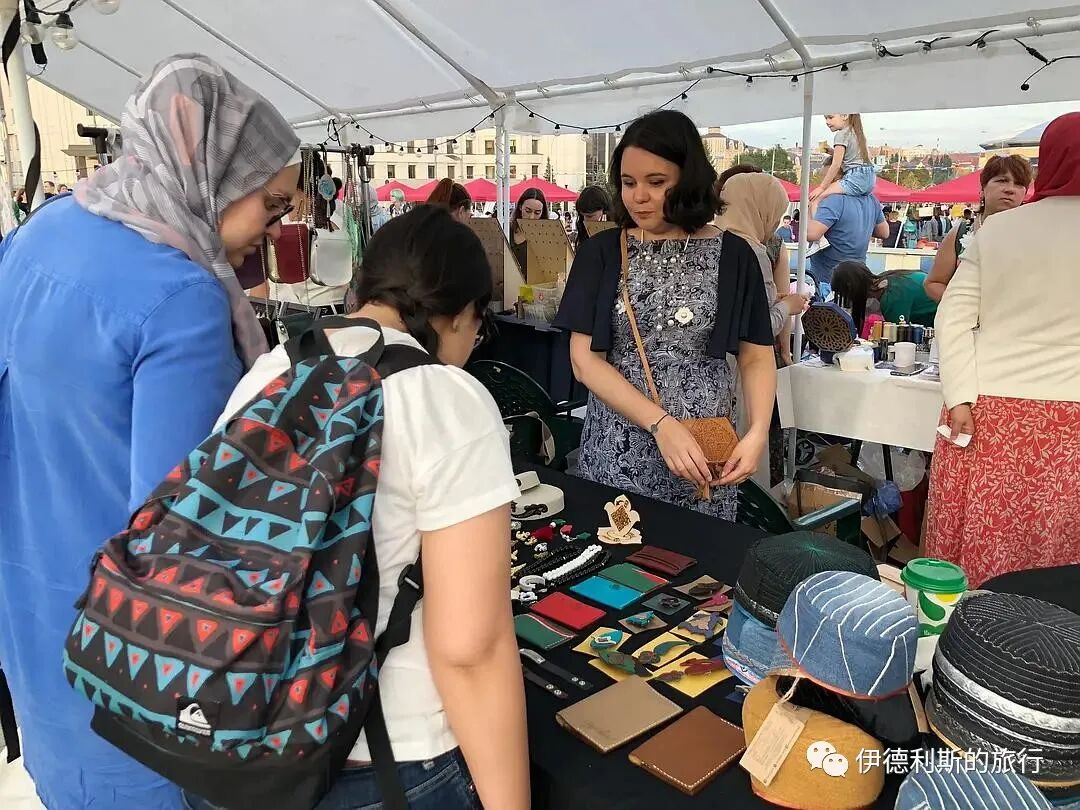
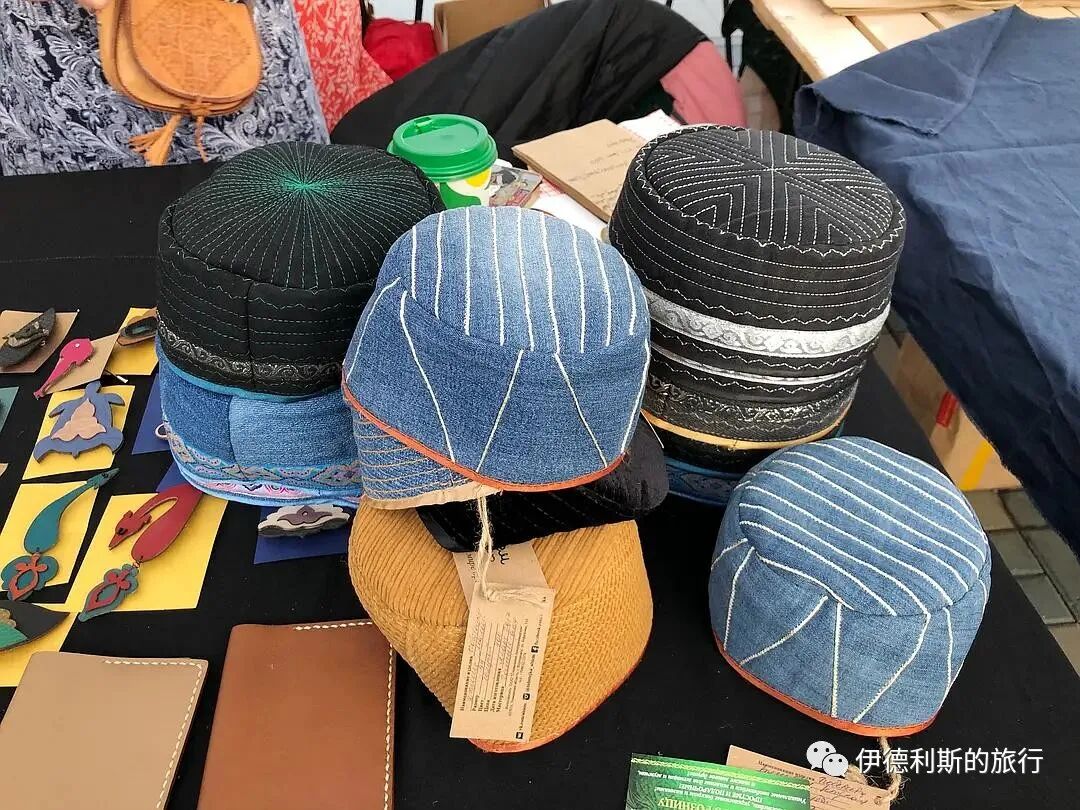
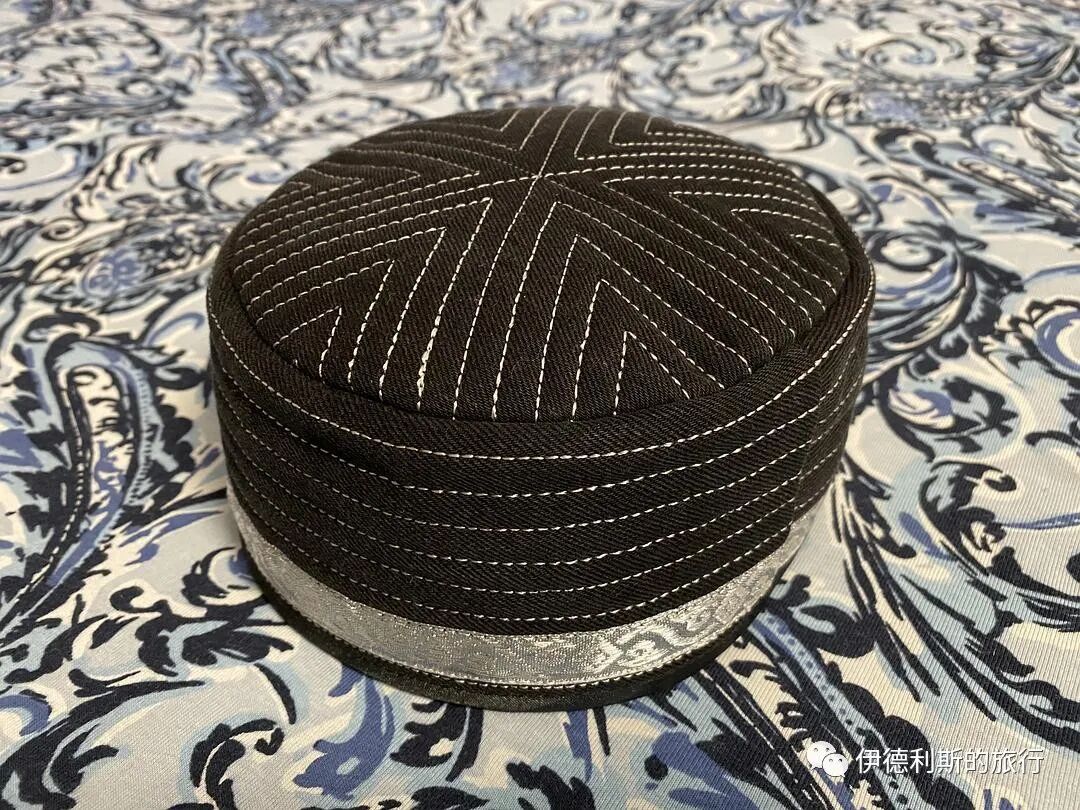
A stall at the festival selling traditional Kazan Tatar flower hats, and also selling traditional Kazan Tatar clothing; I was very tempted.
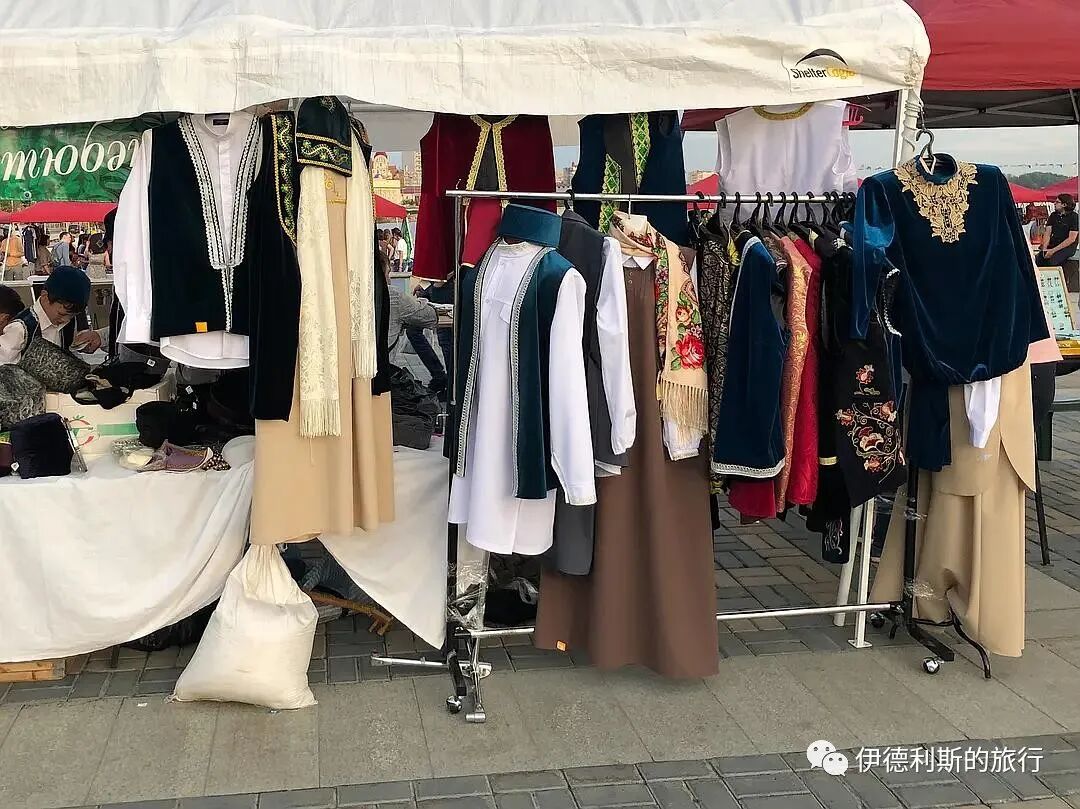
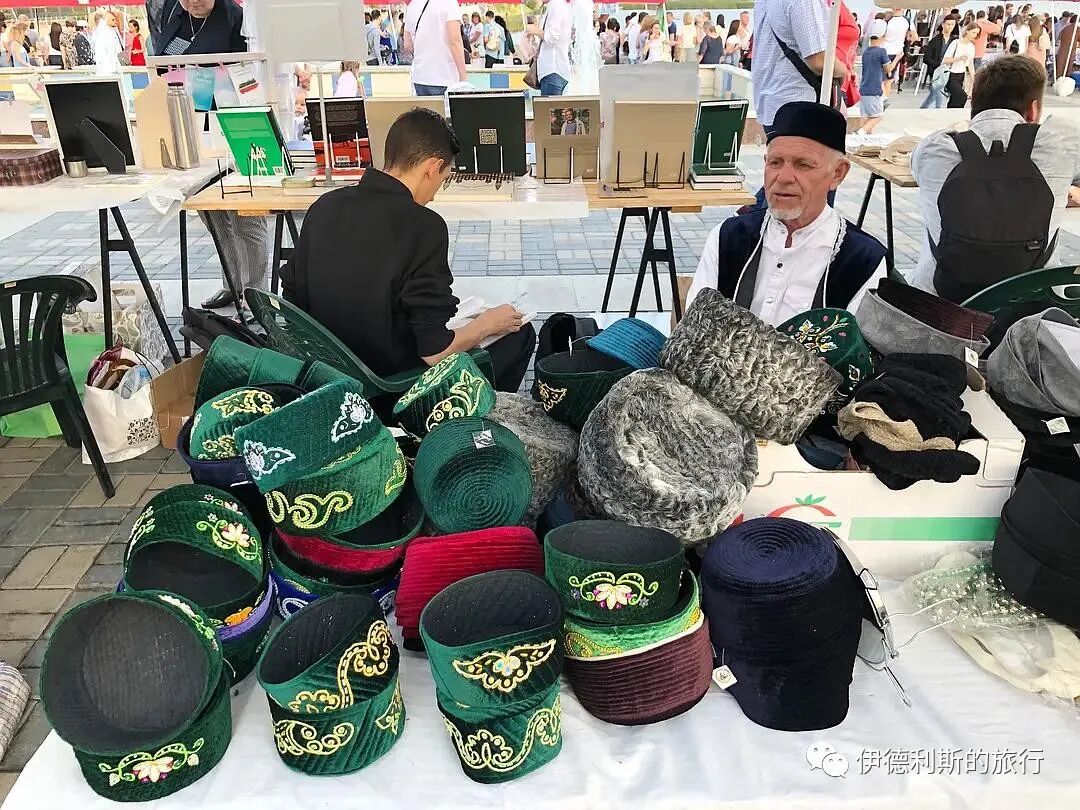
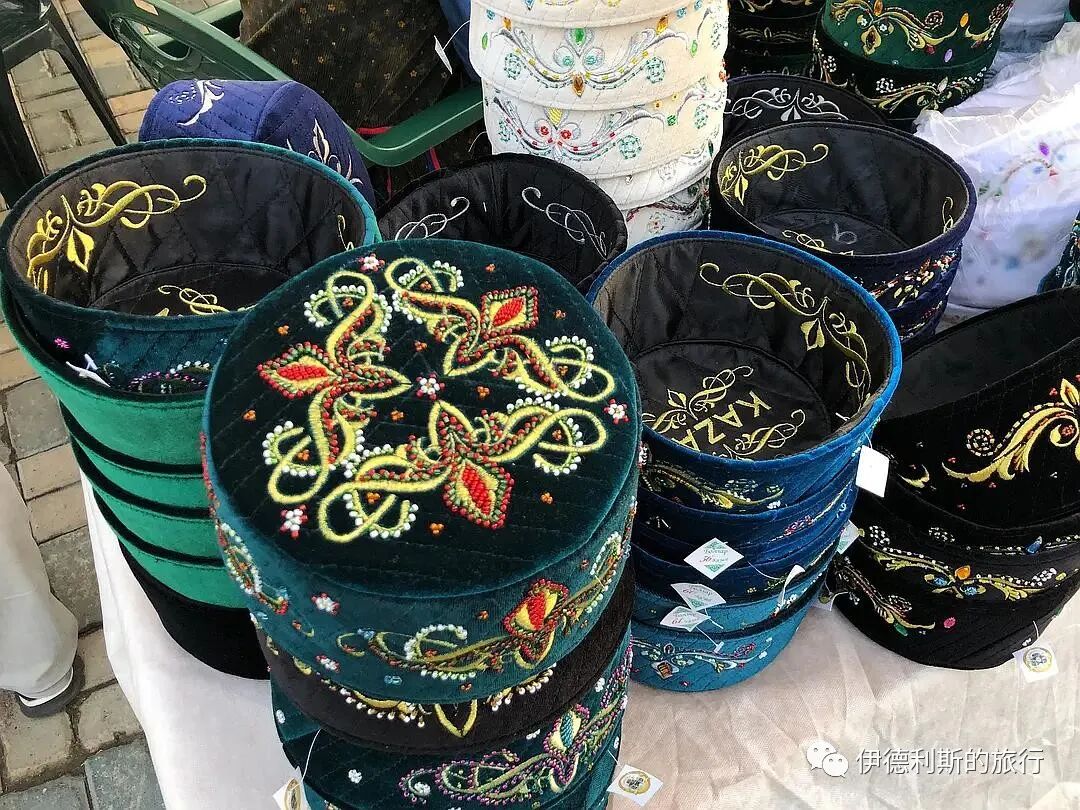
Live music performance; on the right, you can see the traditional Tatar house where I stayed.
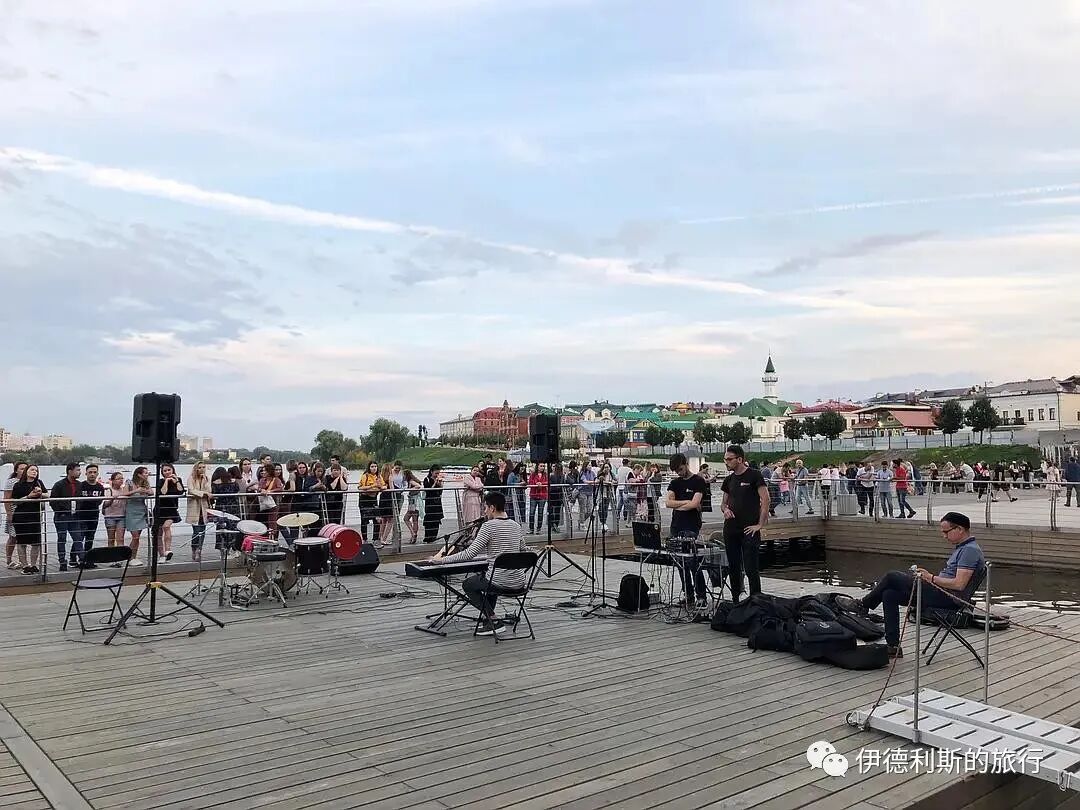
The uncle is an architect who builds mosques, sharing how to build a mosque.
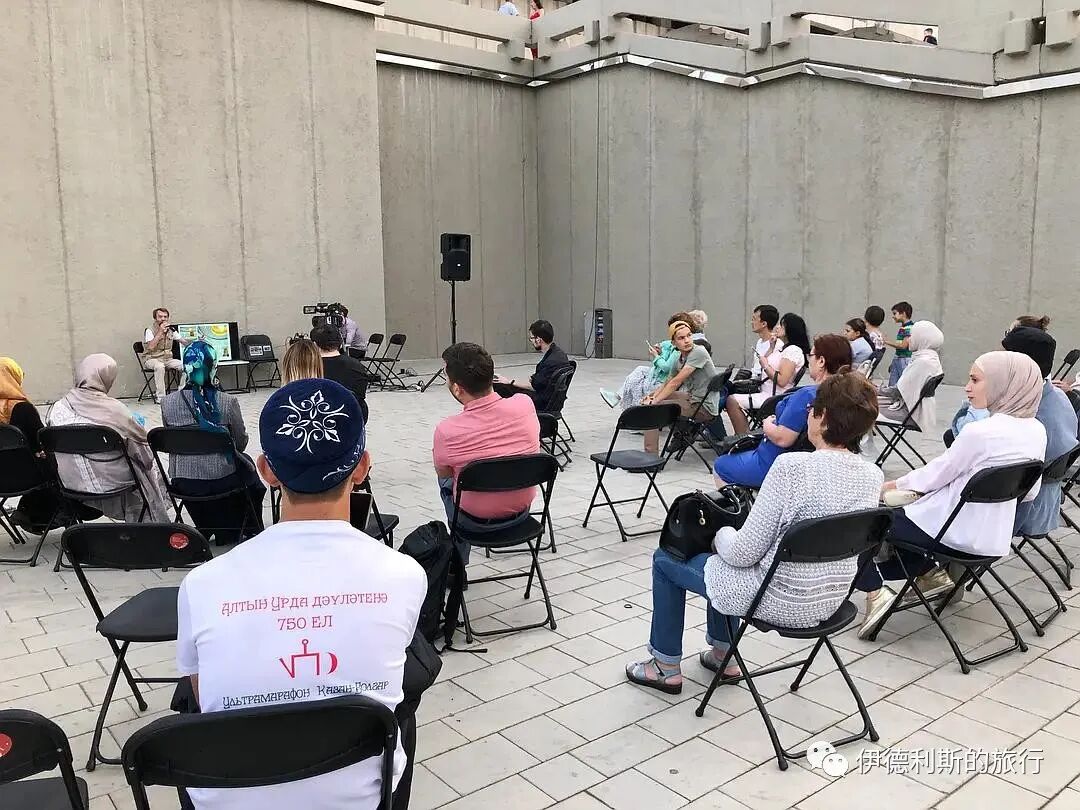
A young Tatar female poet is reading poetry.
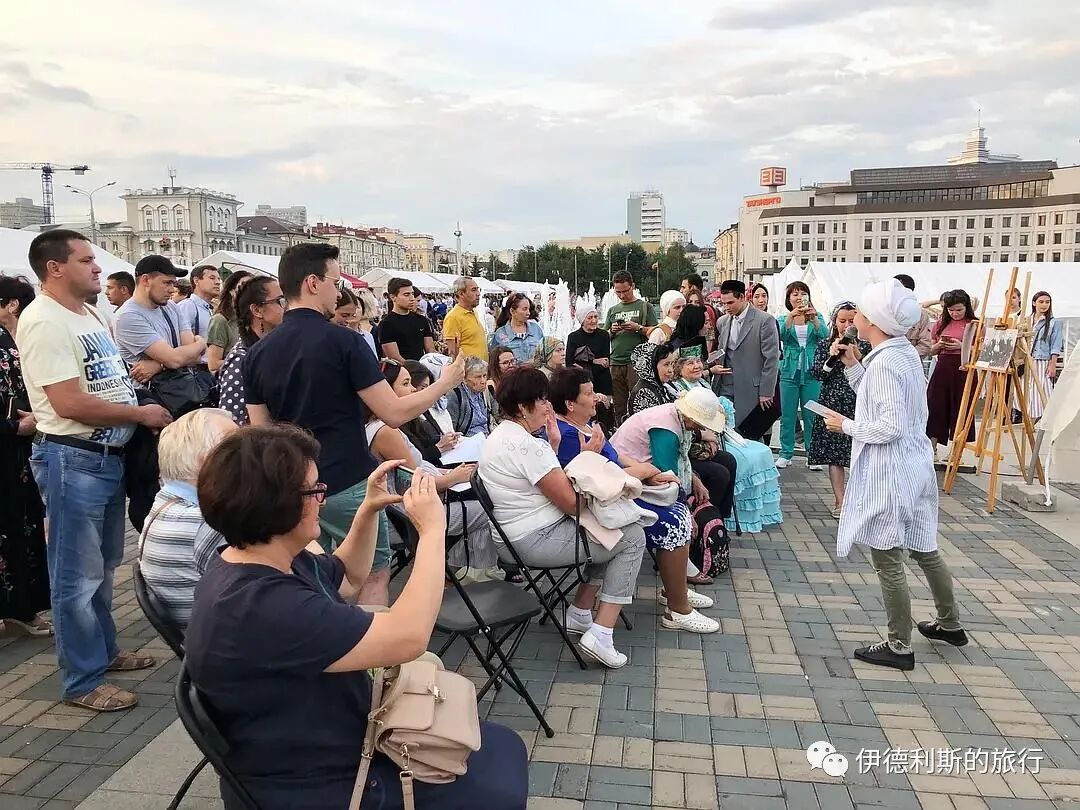
The clothing worn by the host is the formal wear of urban Kazan Tatars in the early 20th century.
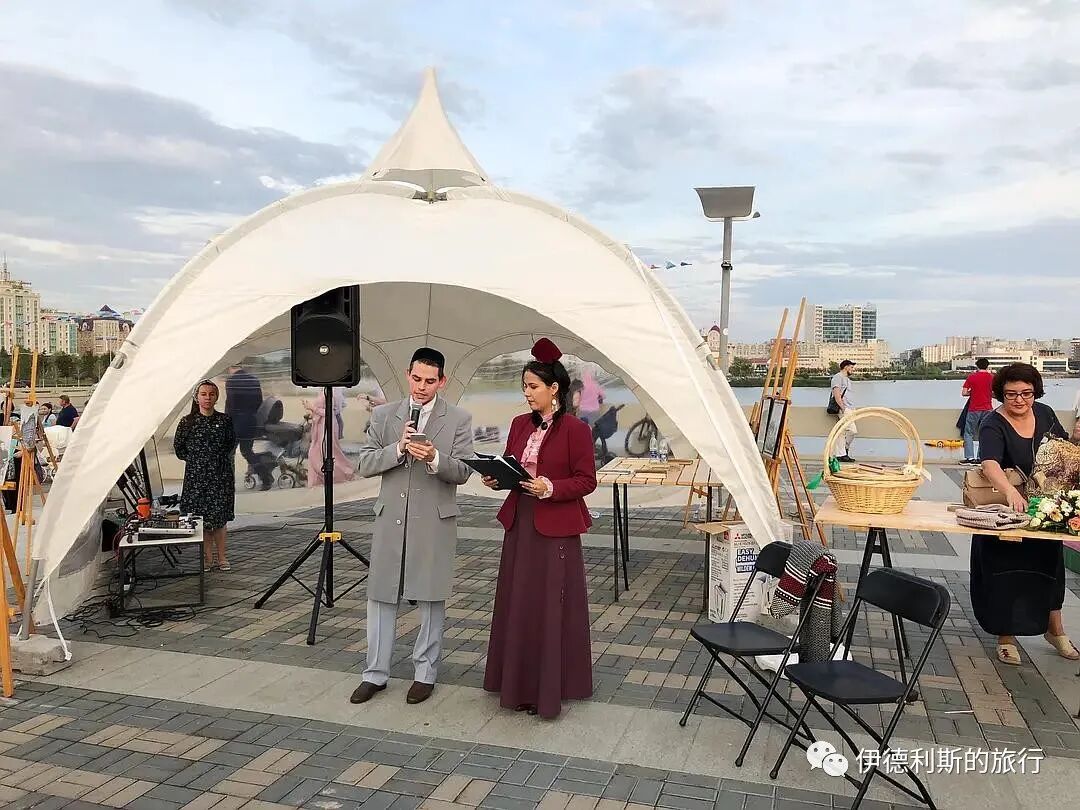
It was a live demonstration on how to tie a headscarf. I took a look and it was quite complicated, requiring many steps.
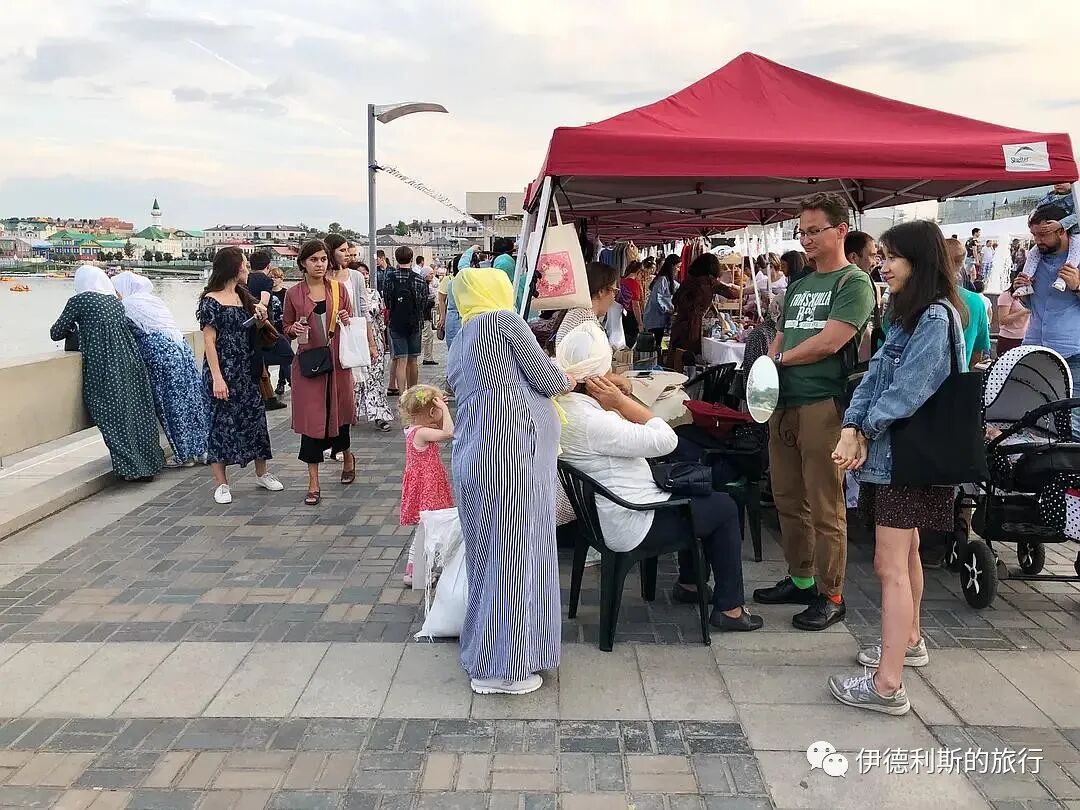
The dessert stall with the longest queue at the entire festival.
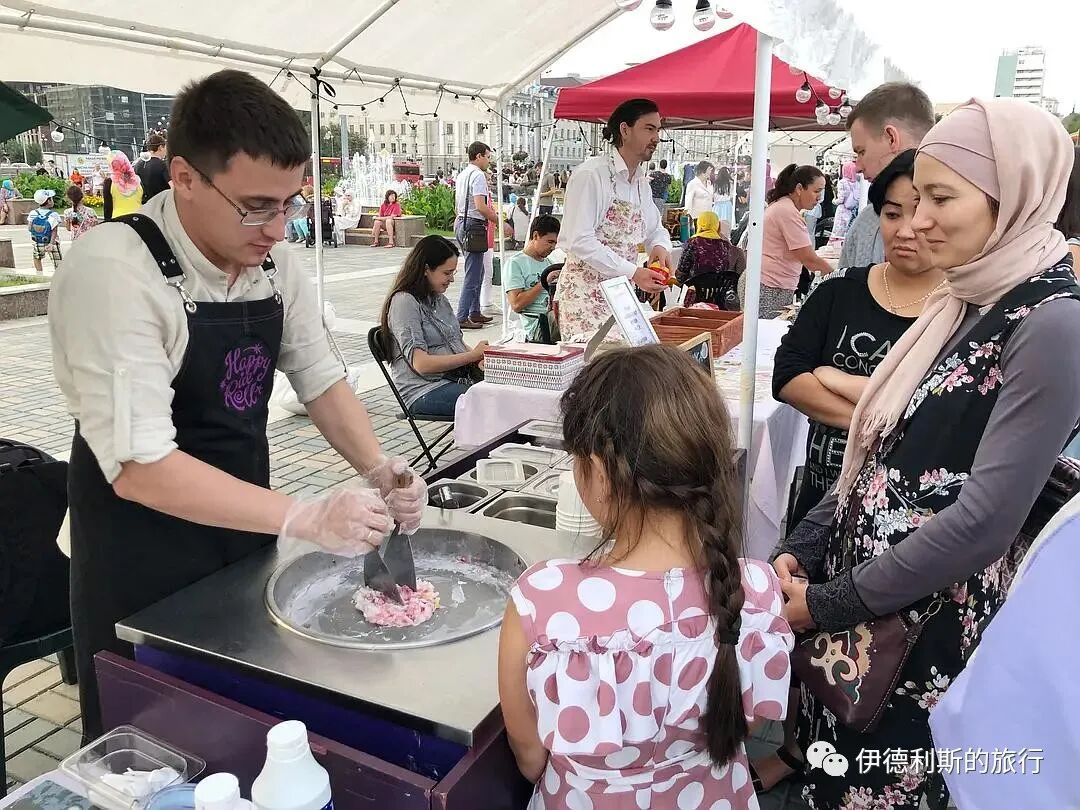
This stall is a Tatar creative brand that follows a sweet Islamic style.
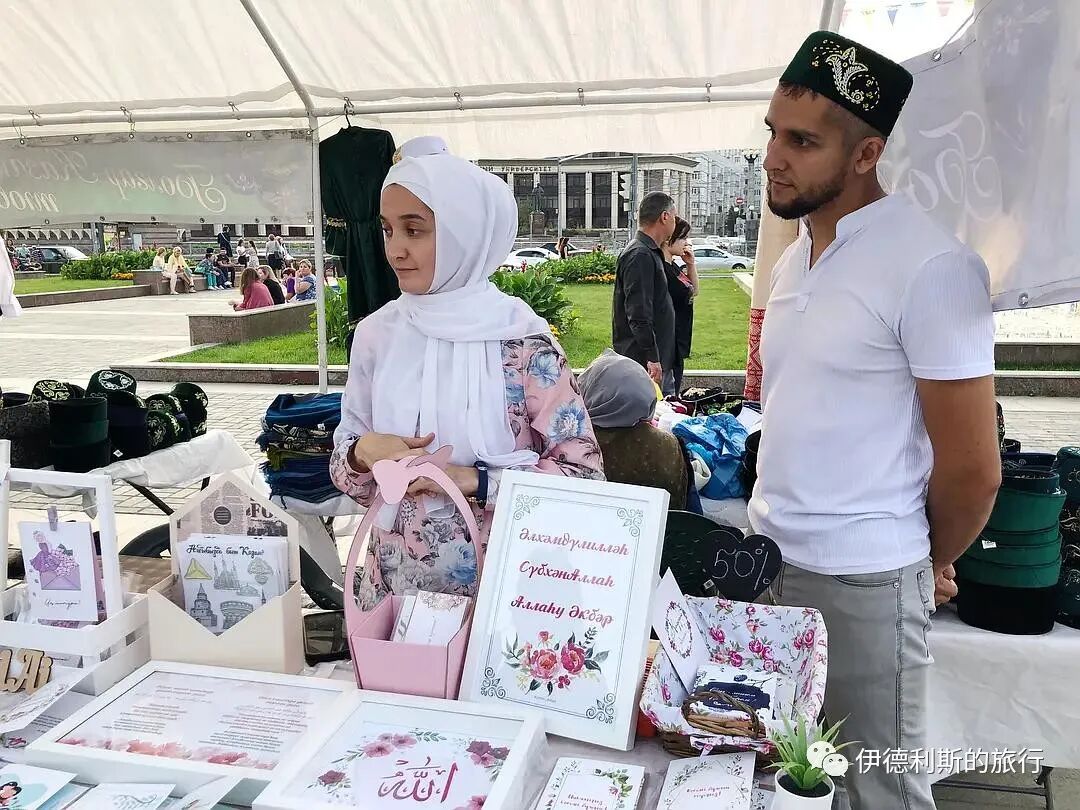
A stall selling books on Tatar culture.
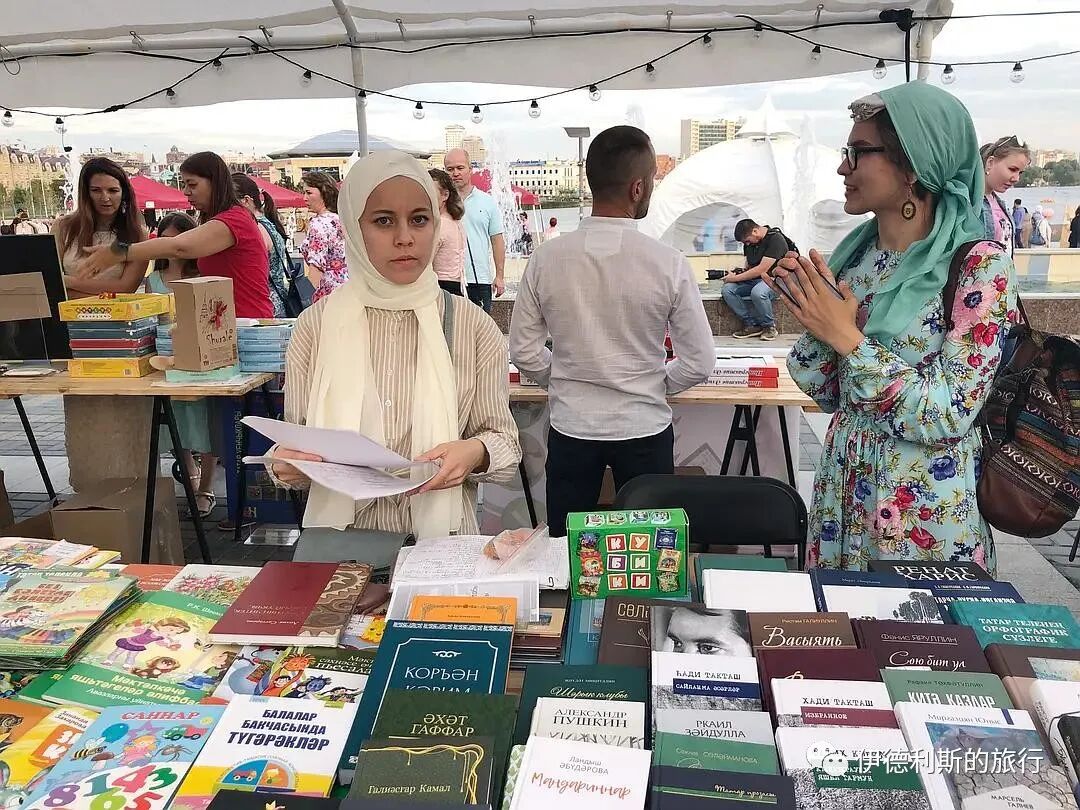
In the evening, they were showing a documentary about the Kazan Tatars, but unfortunately, I couldn't understand it.
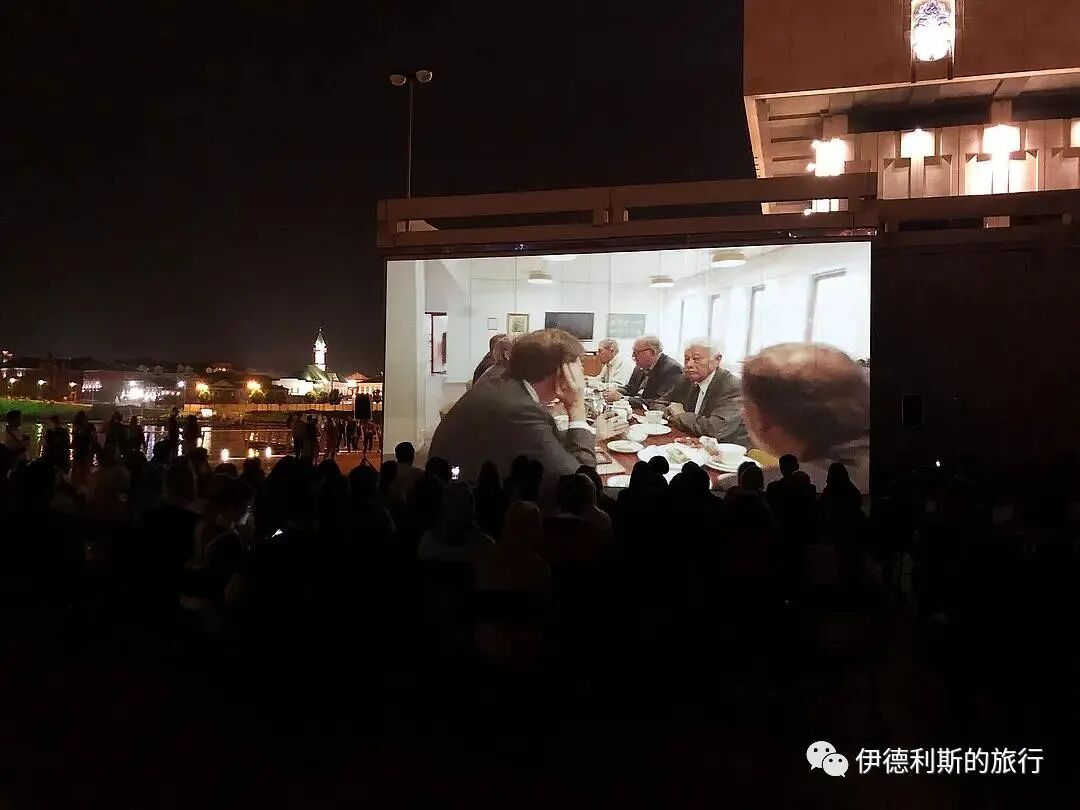
Chak-Chak Museum.
The Chak-Chak Museum in Kazan is one of the most intuitive places to experience traditional Tatar culture. The museum itself is located in a Tatar wooden house in the Kazan Tatar historical district, and the interior well restores the home decor of a traditional Tatar family, which is especially atmospheric. If there are 6 people, they can teach you how to make Chak-Chak on the spot. Because I was alone, I booked a tasting and guided tour on the official website (https://www.muzeino.ru/), and the museum staff will email you to confirm whether to use English or Russian.
The experience that day was great. After arriving at the museum at the appointed time, a Tatar lady with fluent English was already waiting for me. The whole process was really like being a guest in a Tatar home. The lady told me various Tatar legends, daily customs, and cultural traditions, and then explained in detail the production process of the national dessert, Chak-Chak.
Chak-Chak is very similar to Sachima (a sweet fried dough treat). It is made by mixing flour with milk and eggs, deep-frying it, and then pouring honey over it. Chak-Chak is popular in Tatarstan and Bashkortostan. It is said to have originated from the ancient Bulgar Khanate. In addition, there are similar desserts among the Kazakh, Kyrgyz, and Uzbek people. Chak-Chak is an important food at Kazan Tatar weddings. In the past, every Kazan Tatar woman had to learn how to make Chak-Chak, usually taught by a mother to her daughter or a grandmother to her granddaughter.
Afterwards, the Tatar lady made me some Tatar tea and, while letting me taste traditional Tatar desserts, told me about Tatar clothing, silver jewelry, embroidery, and other handicrafts. We had a very happy chat.
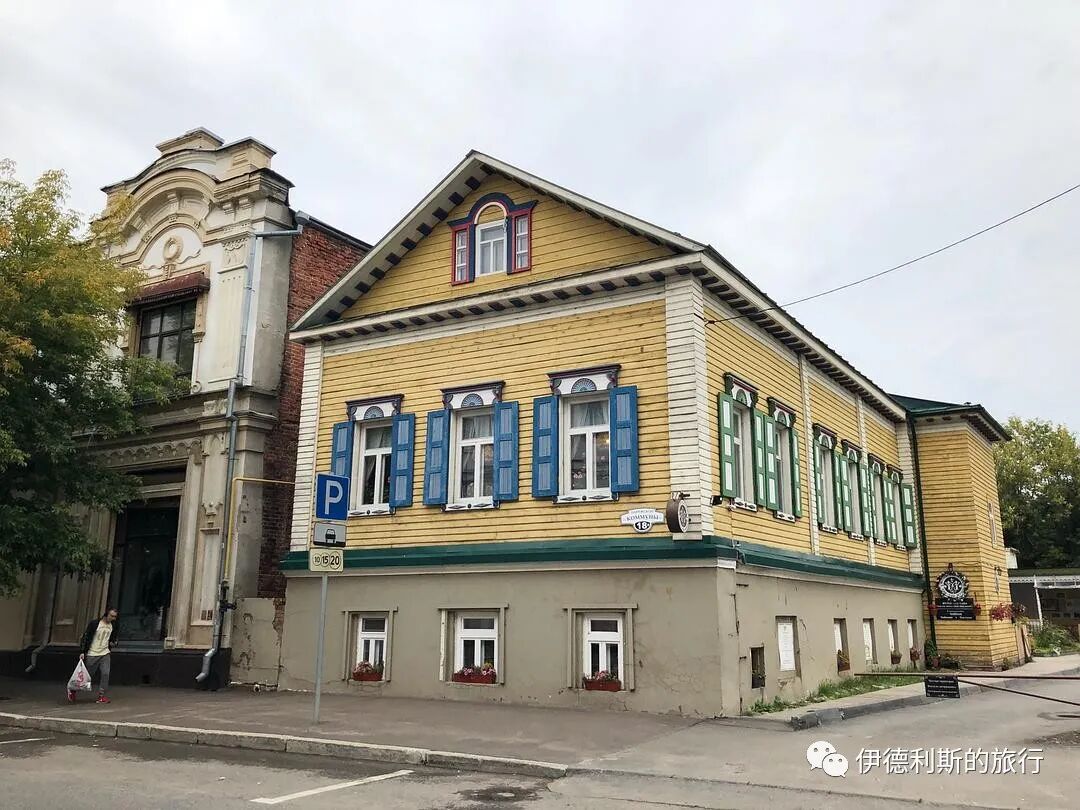
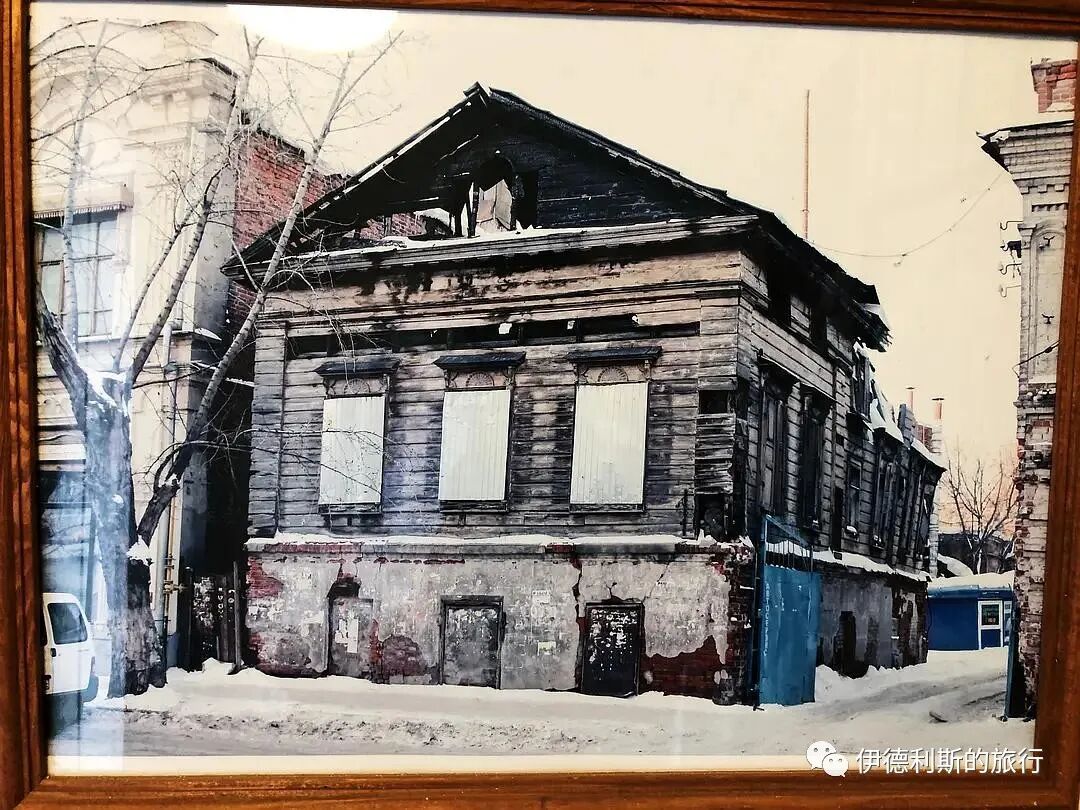
The museum before restoration.
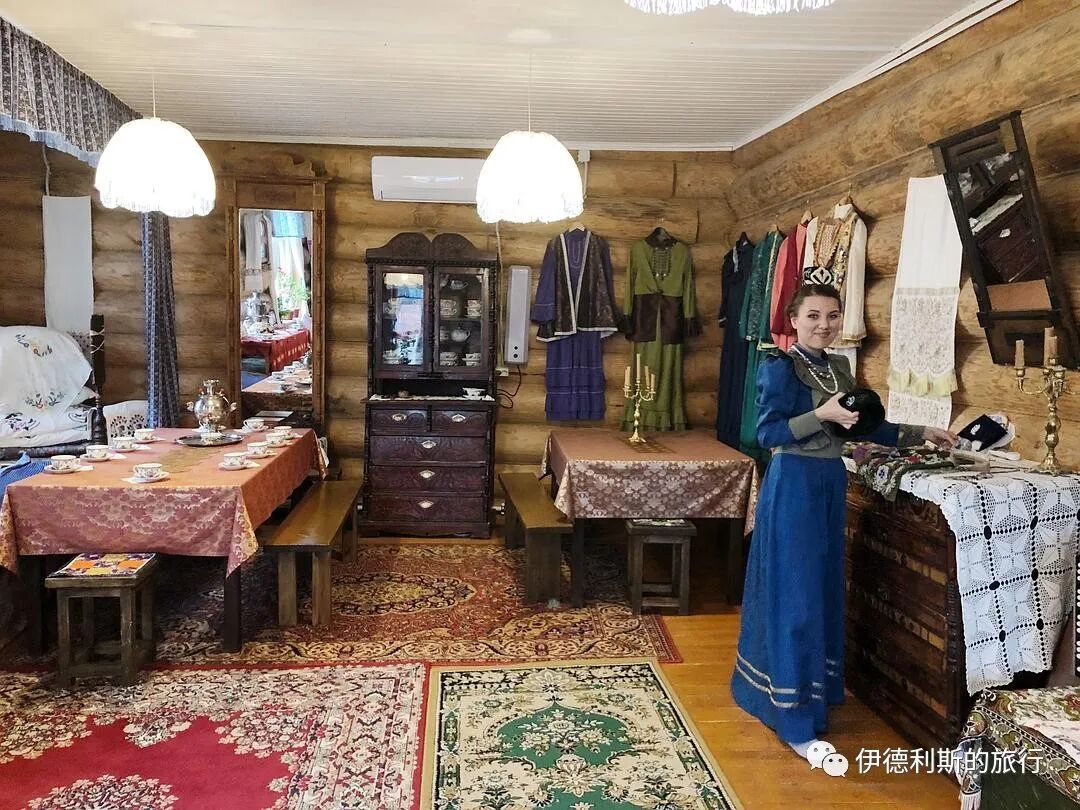
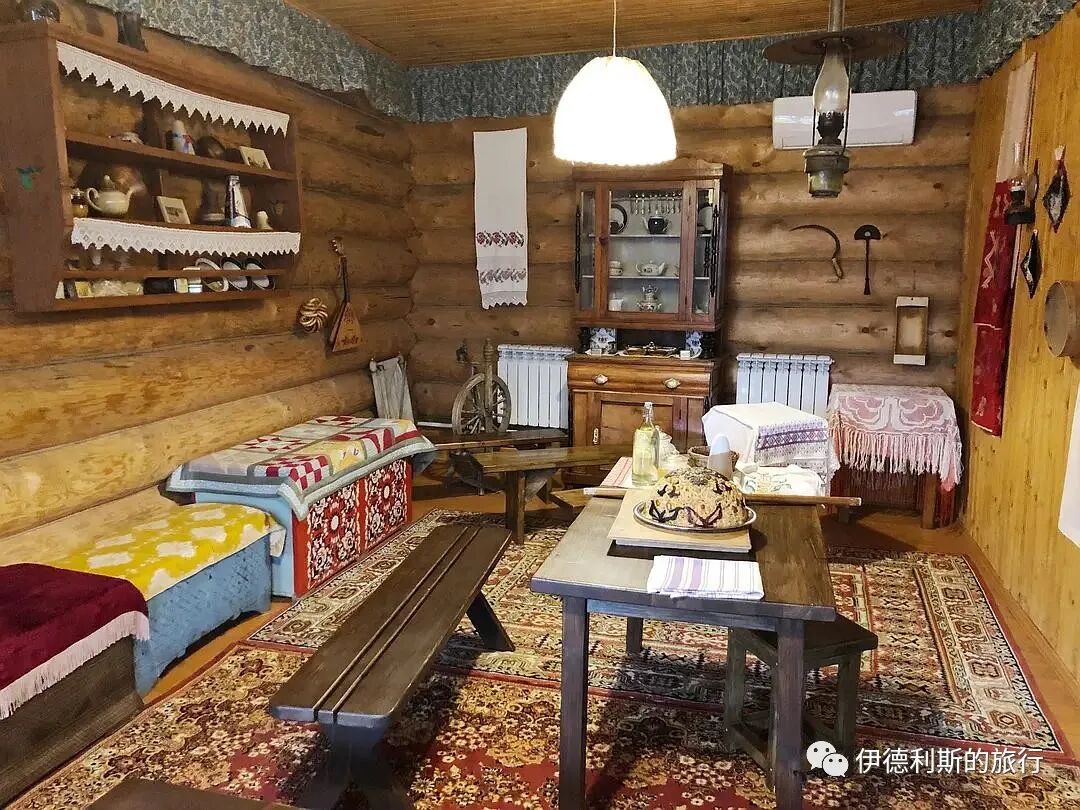
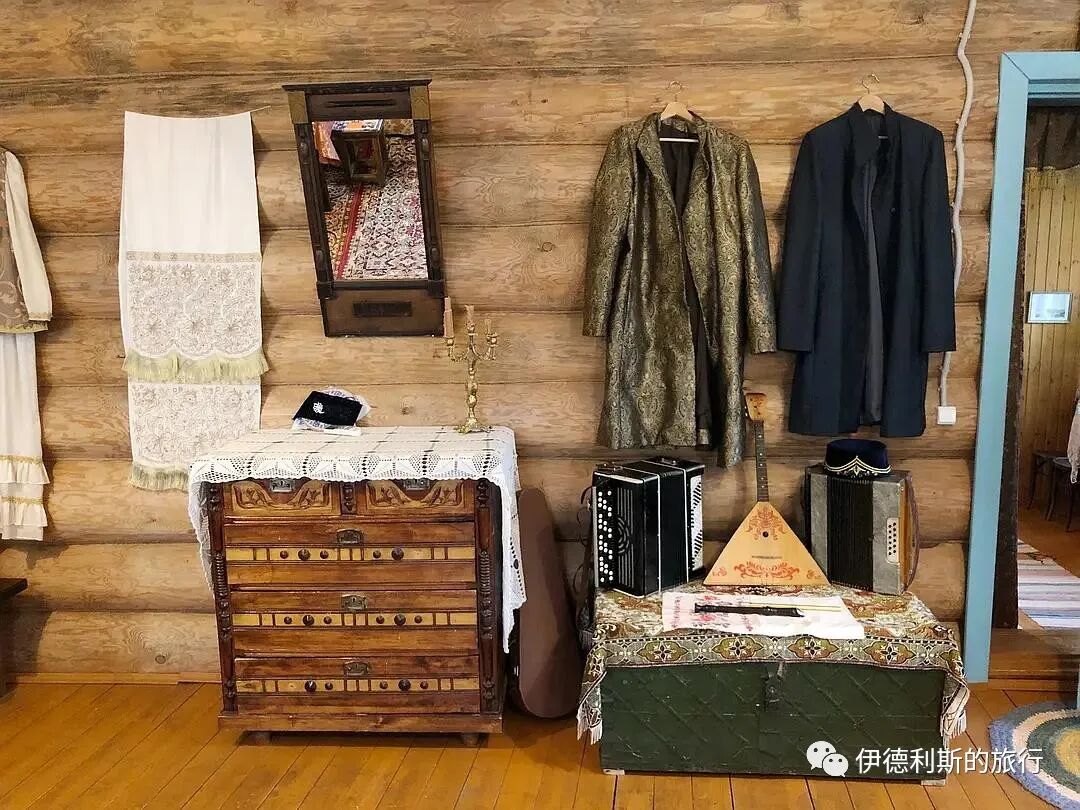
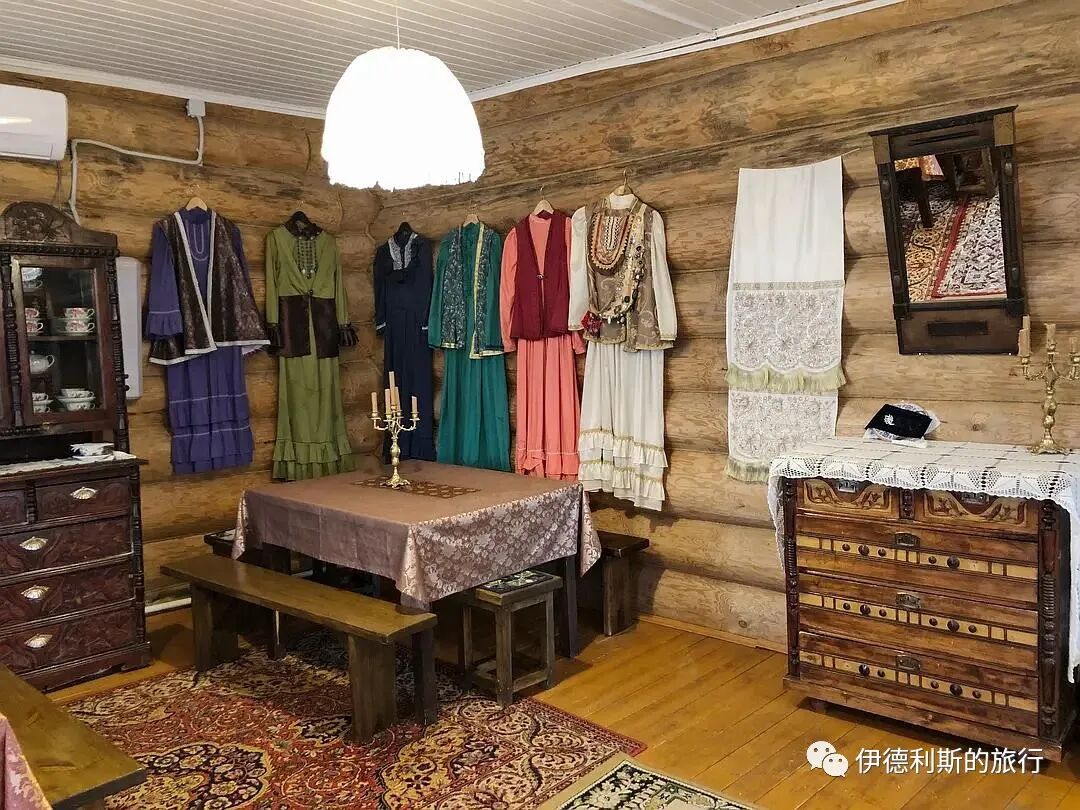
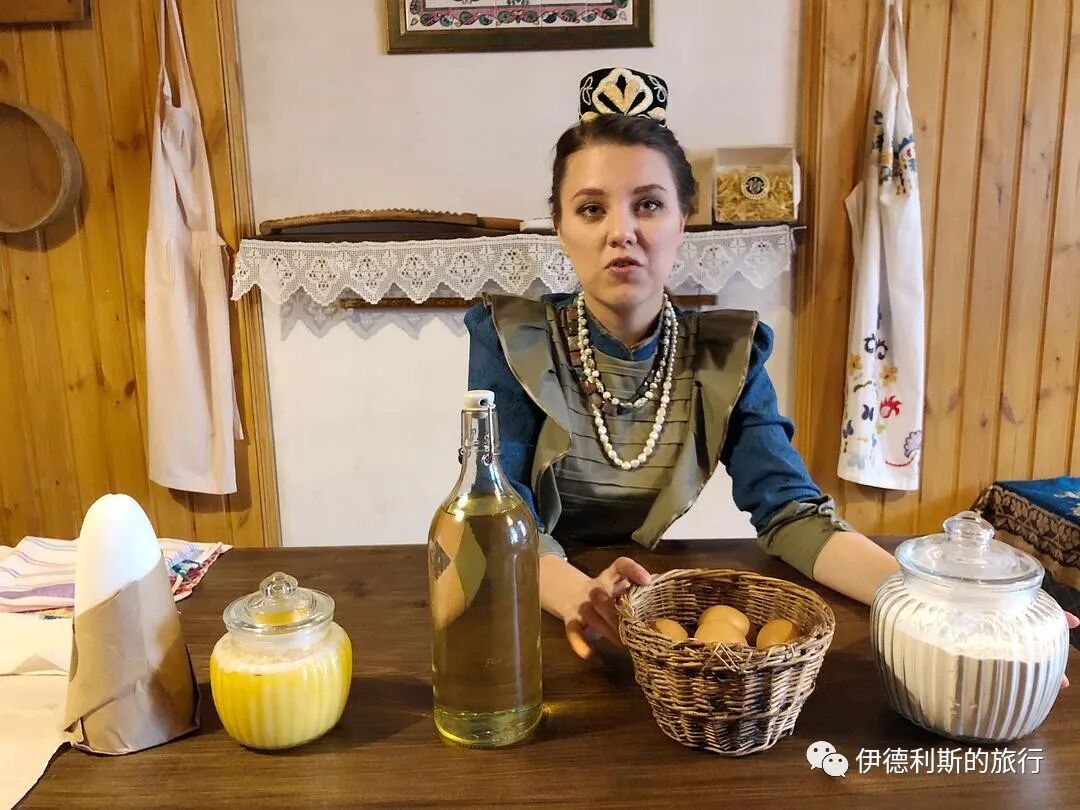
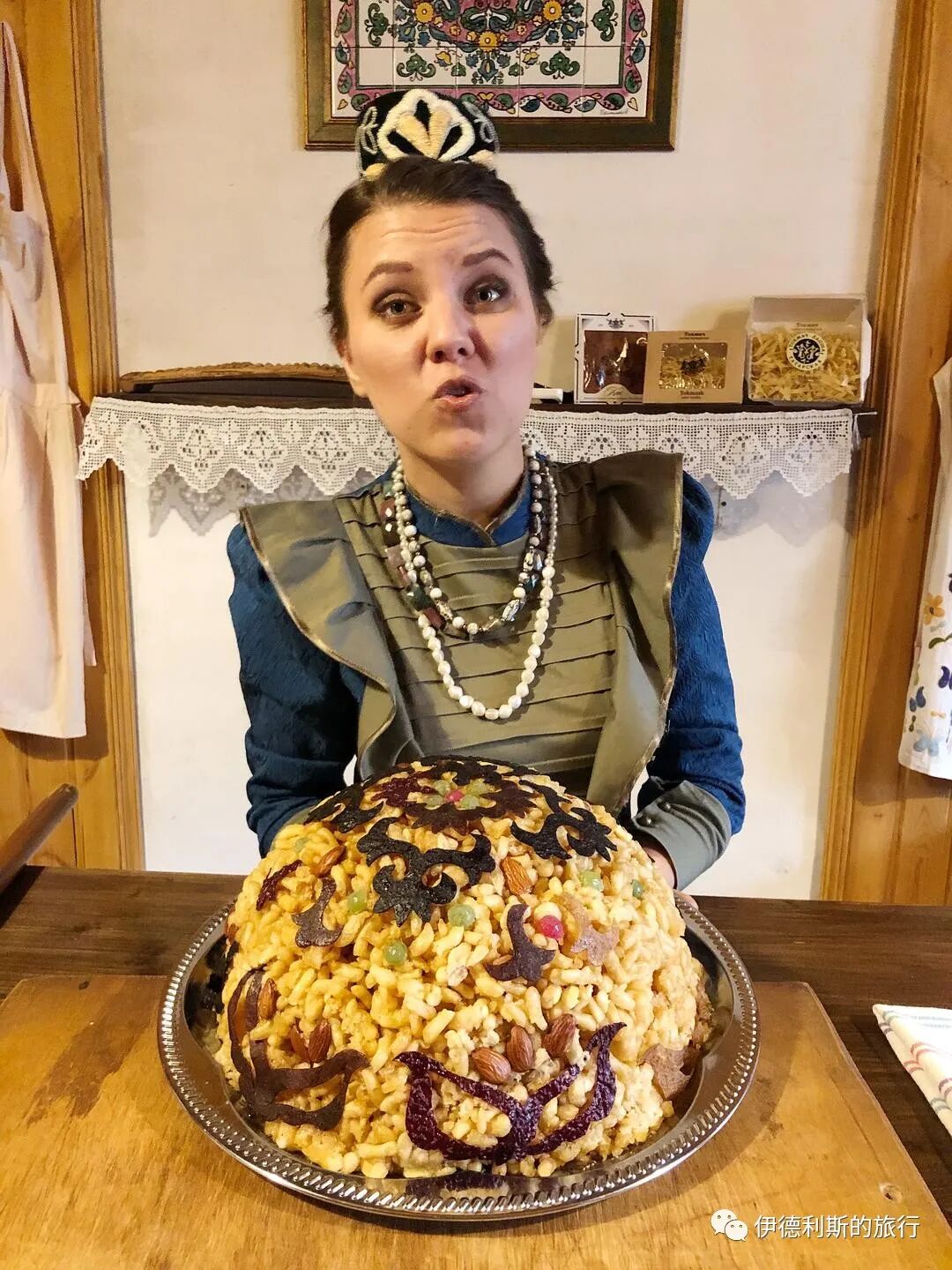
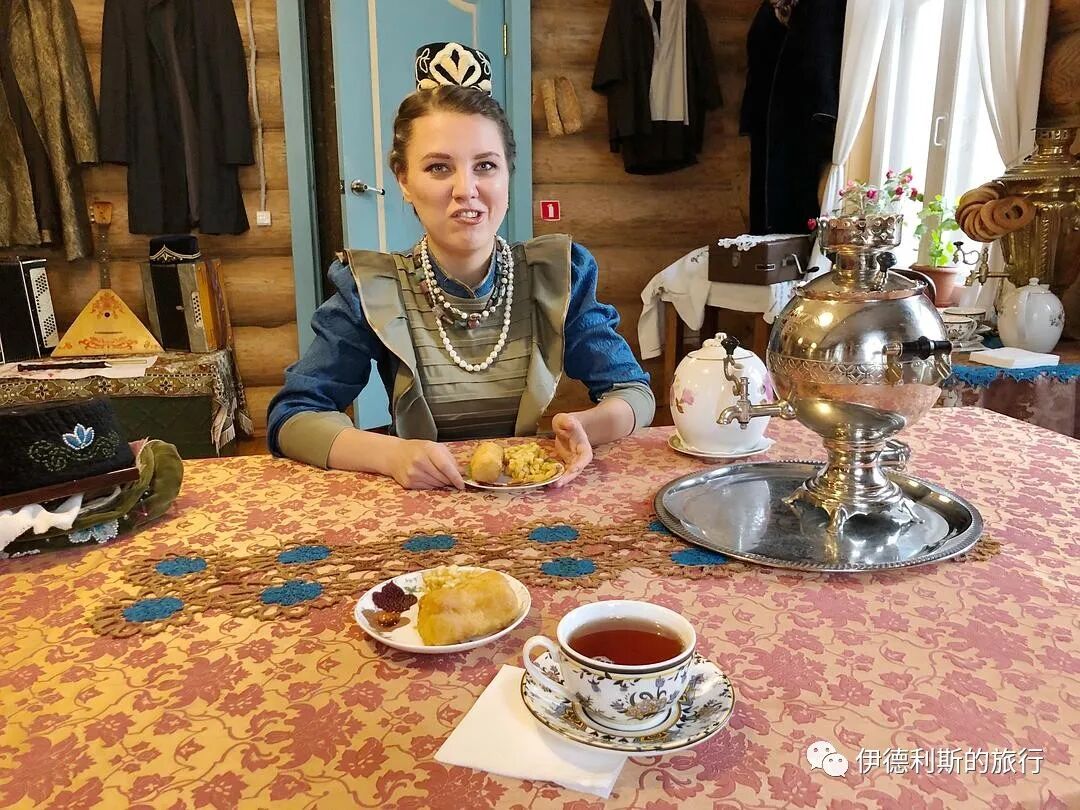
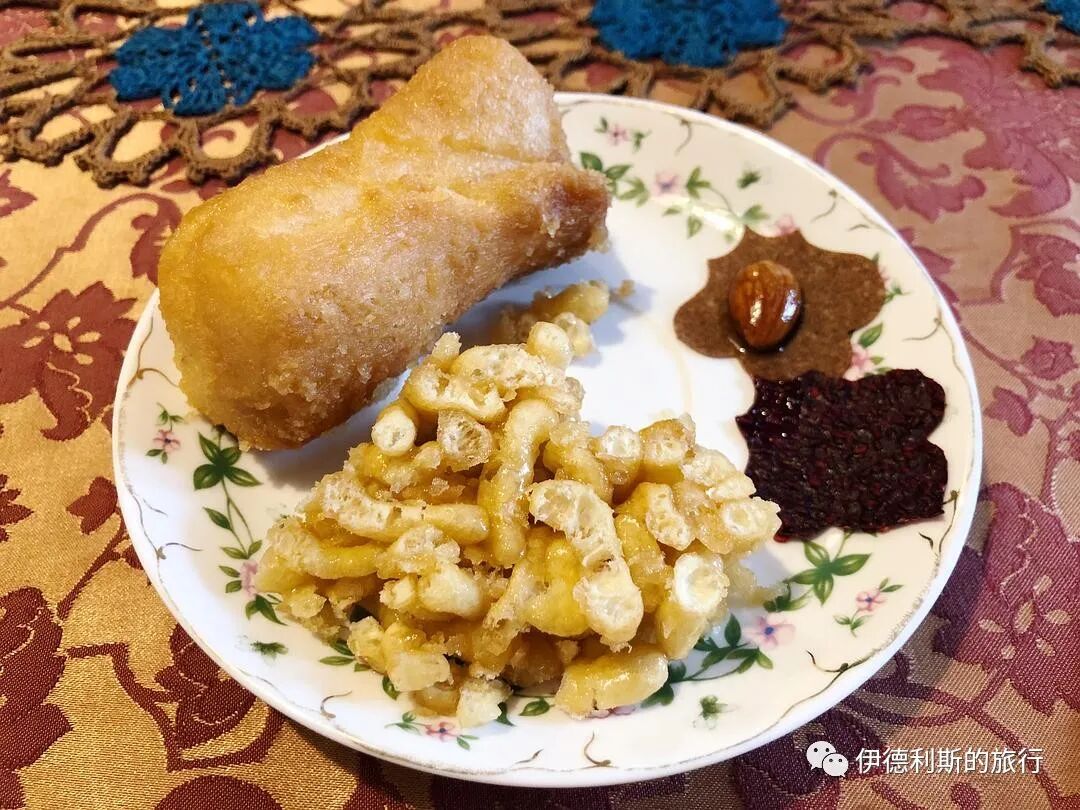
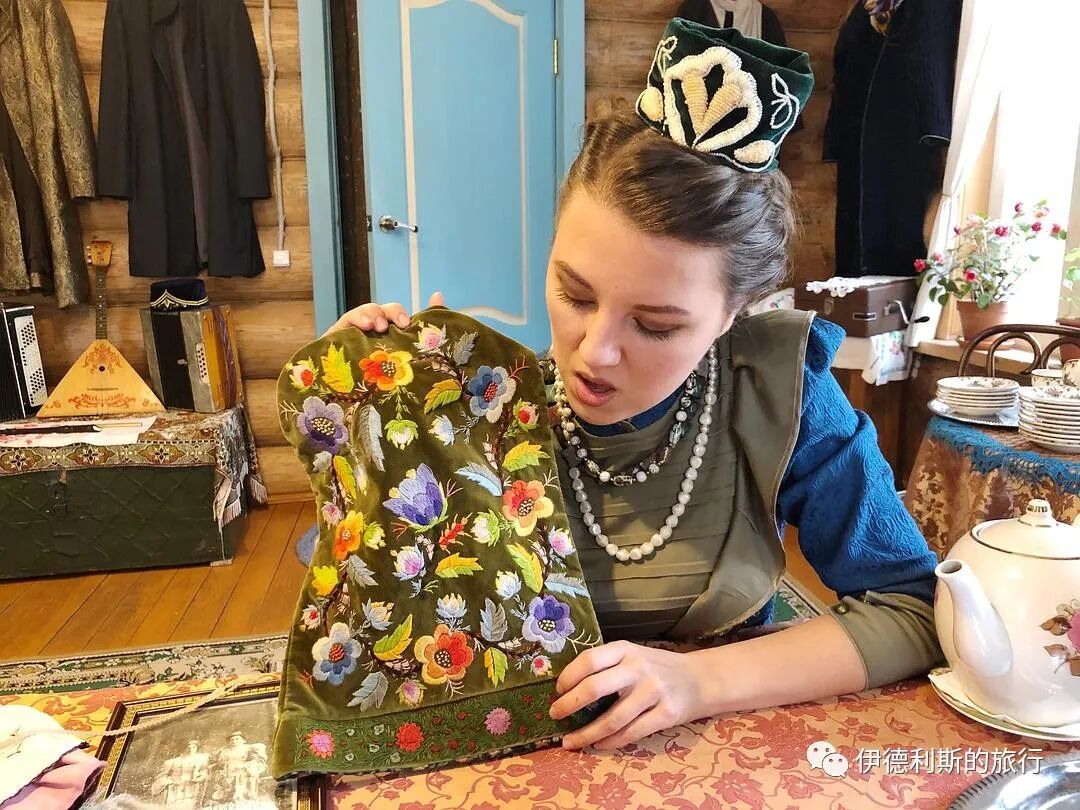
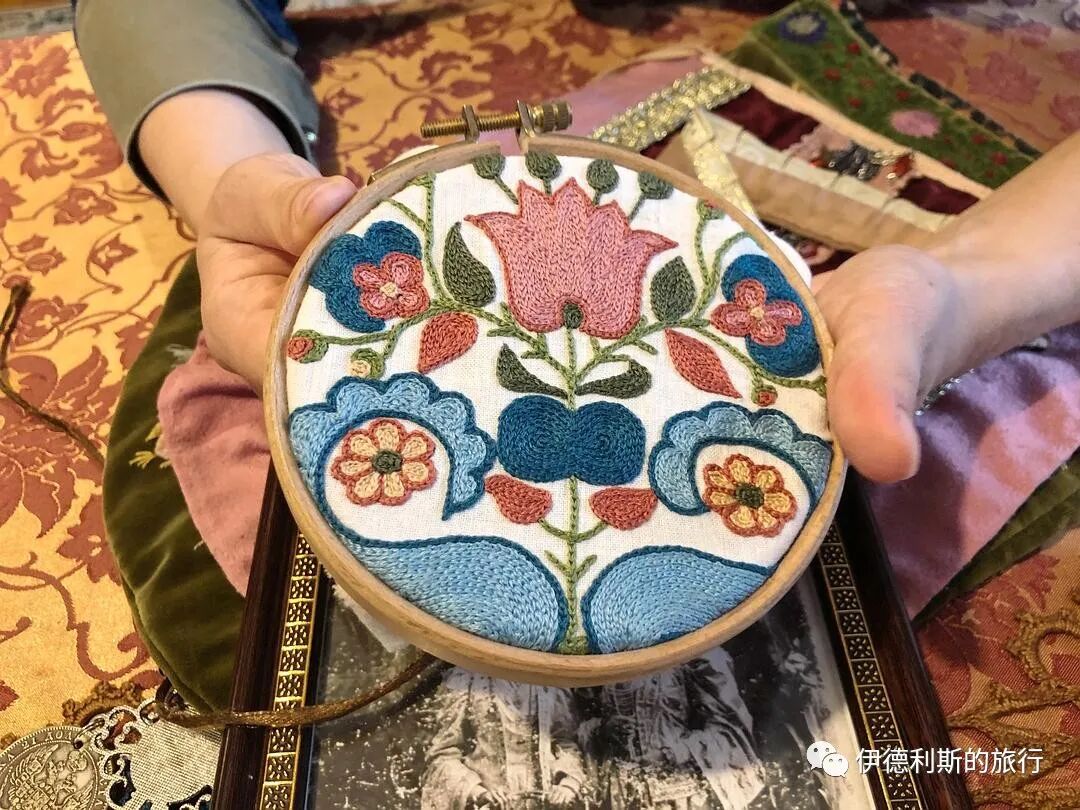
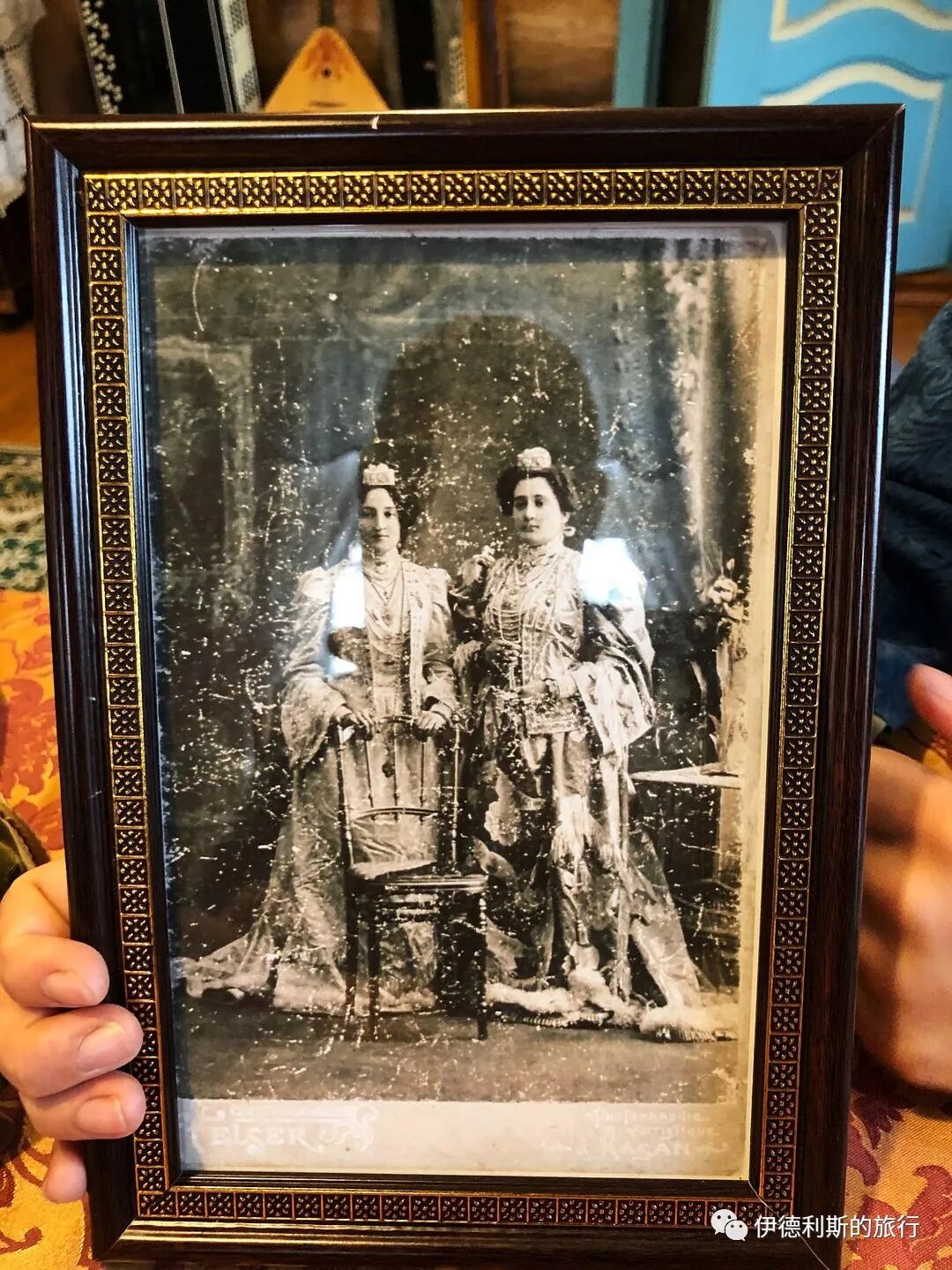
Magnets bought at the museum.
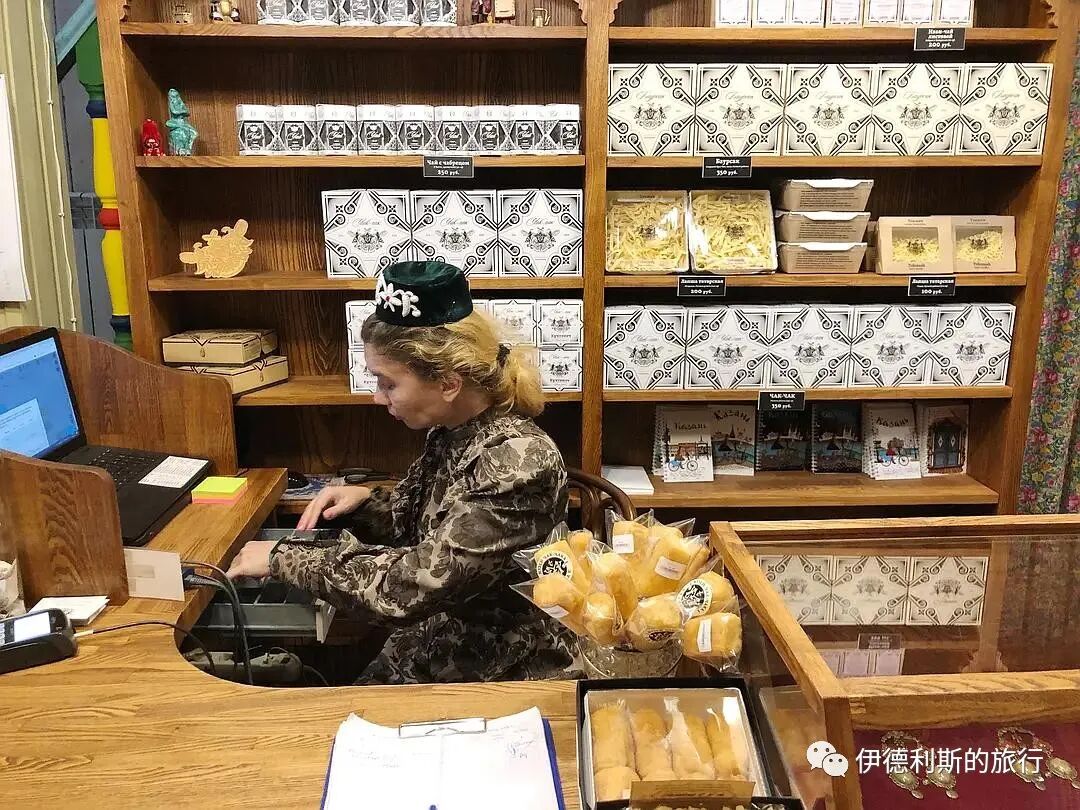
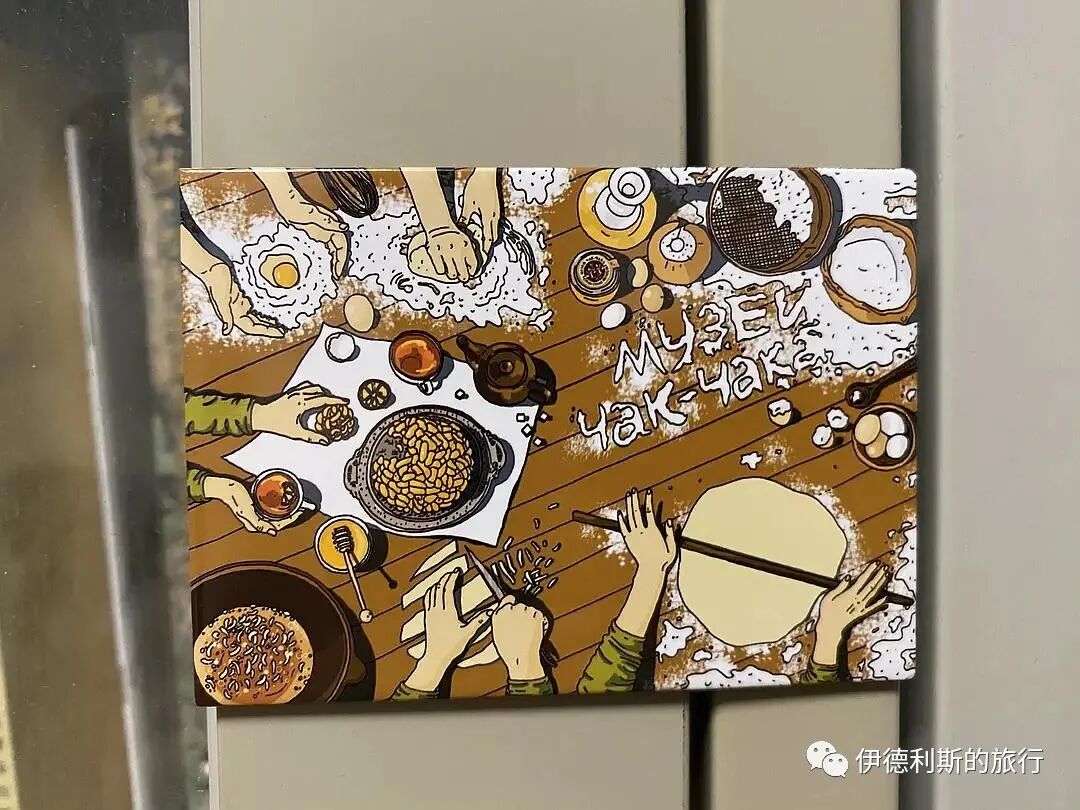
Dom Tatarskoi Kulinarii (House of Tatar Cuisine).
When I was in Kazan, I ate at the famous traditional Tatar restaurant Dom Tatarskoi Kulinarii (House of Tatar Cuisine) on Bauman Pedestrian Street. The restaurant opened in 1969. The founder was Yunus Akhmetzyanov, a Tatar cuisine expert and author of "Dishes of Tatar cuisine," who remained the head chef until 1984.
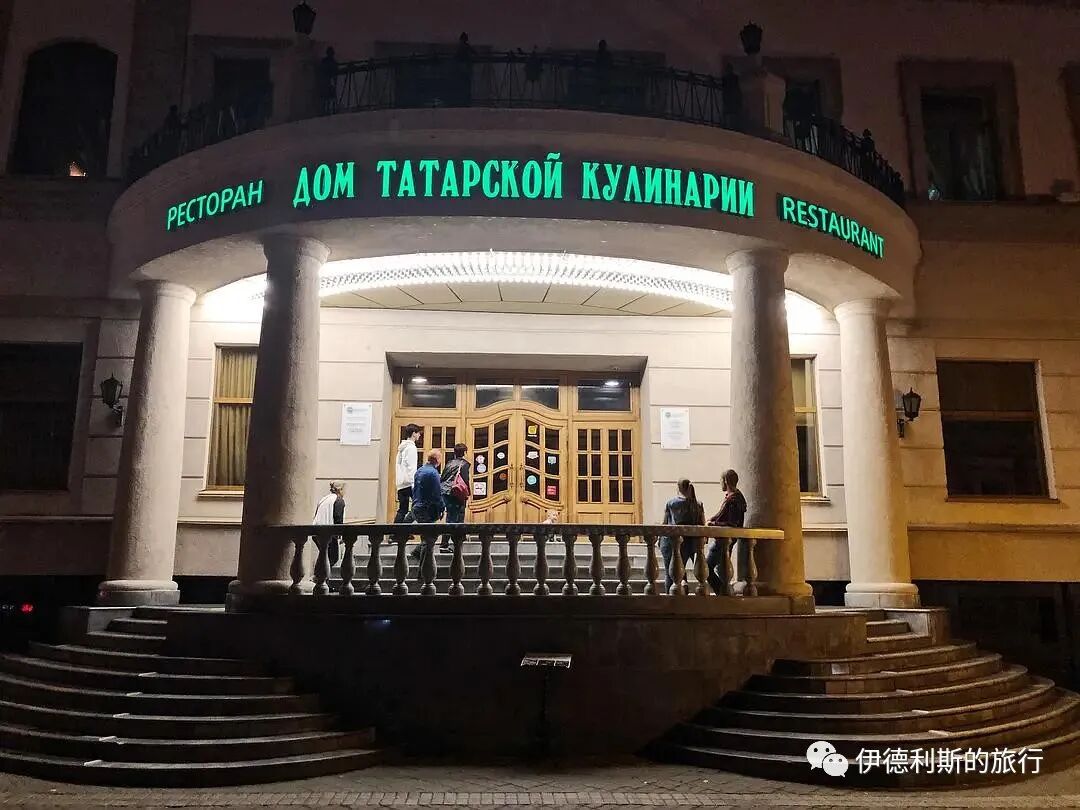
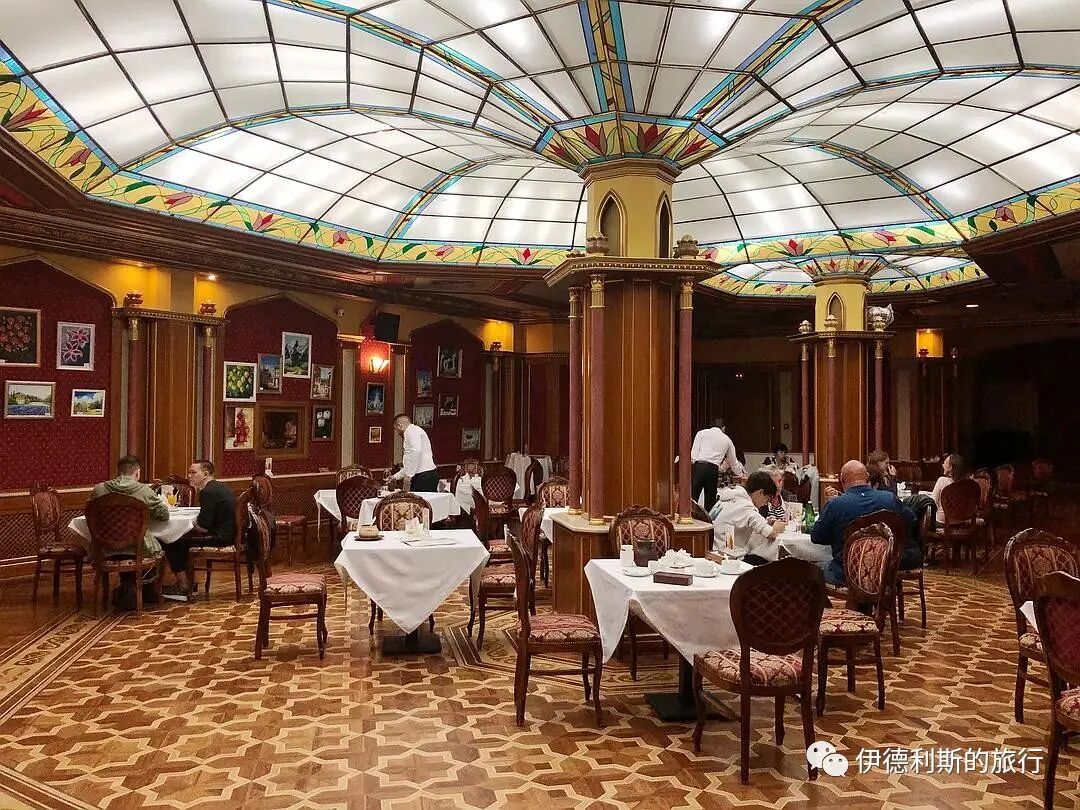
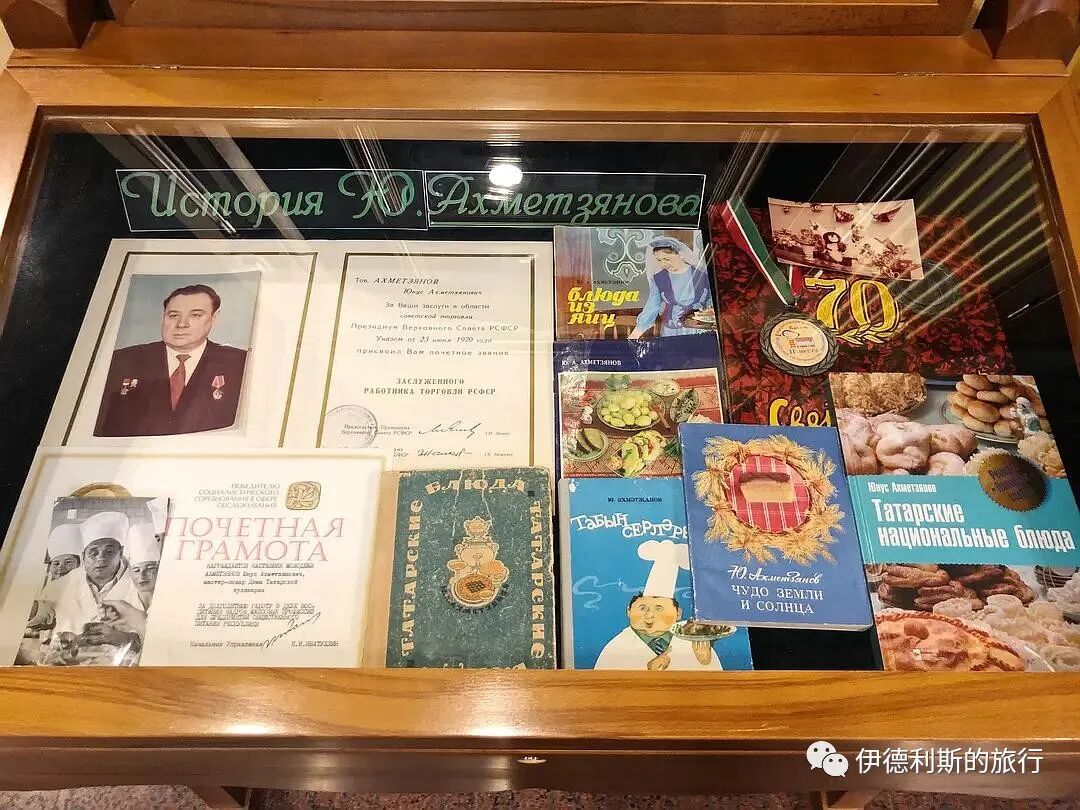
It is a pity that the horse sausage was sold out when I went, so I ordered another type of beef sausage called "Kuchmeche Kolbasasy," which contains heart, liver, and lung in addition to meat. I also ordered a Bulgar stewed lamb, which is placed in parchment paper and served with roasted apples, honey, and crushed nuts. Bulgar is an ancient millennium-old capital in Tatarstan and the spiritual home of the Kazan Tatars.
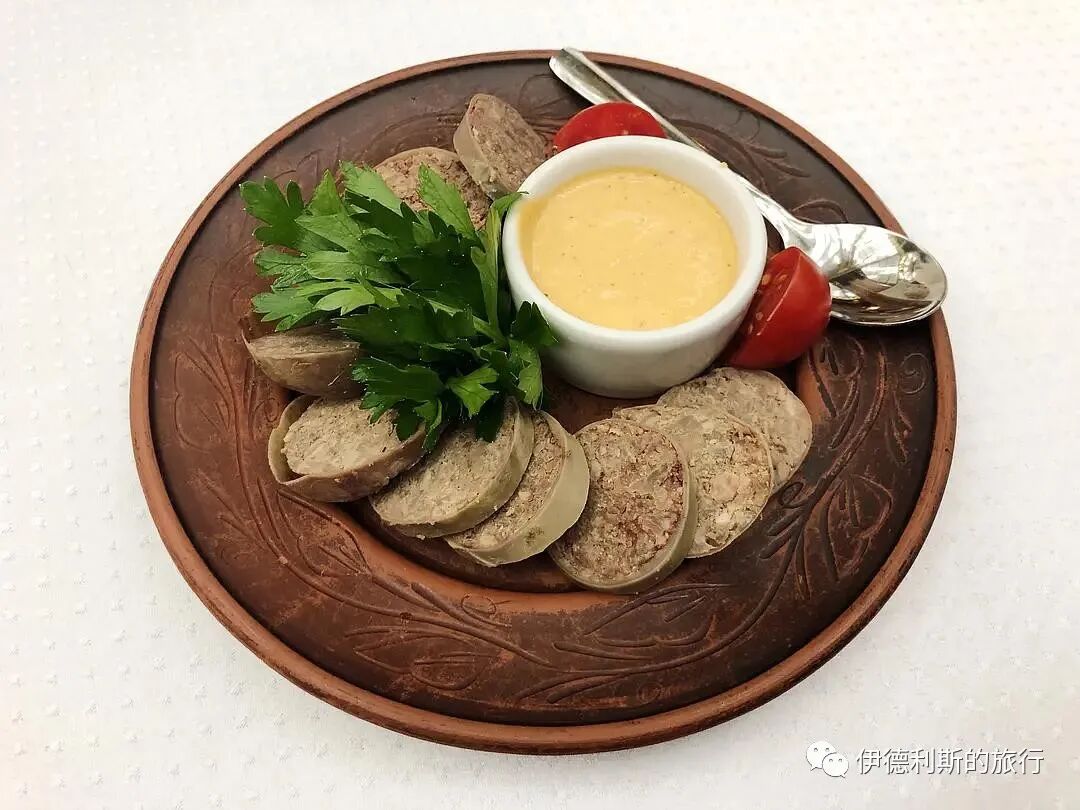
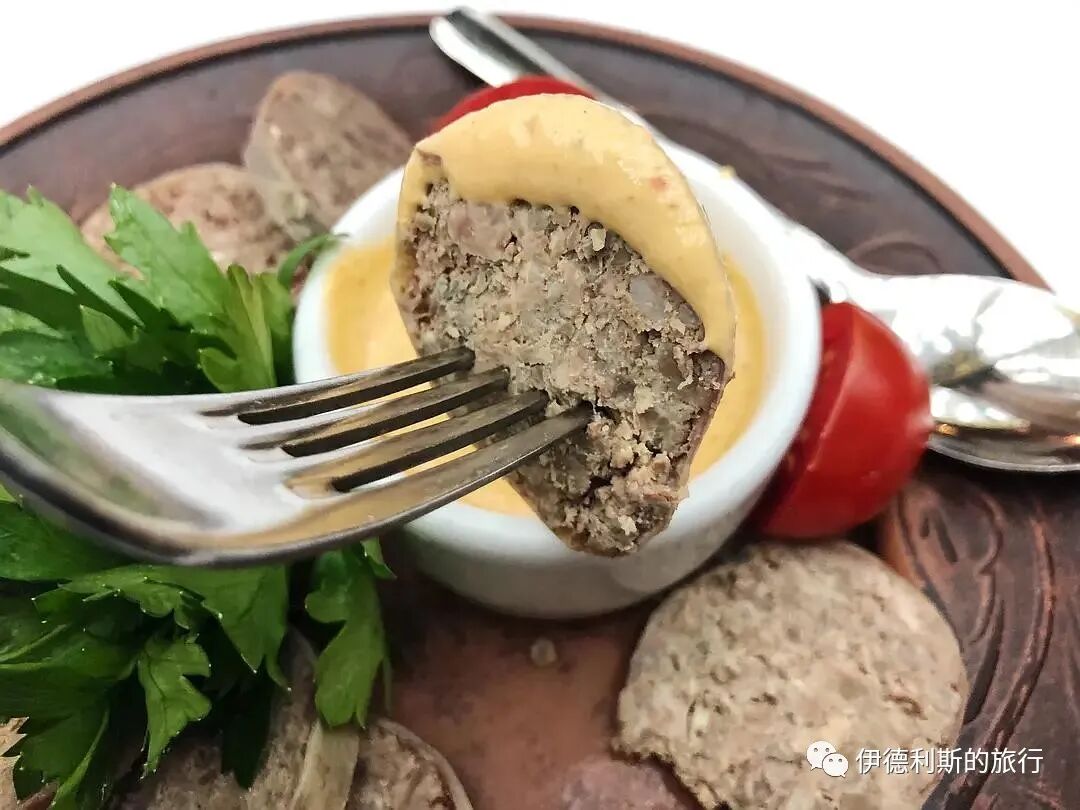
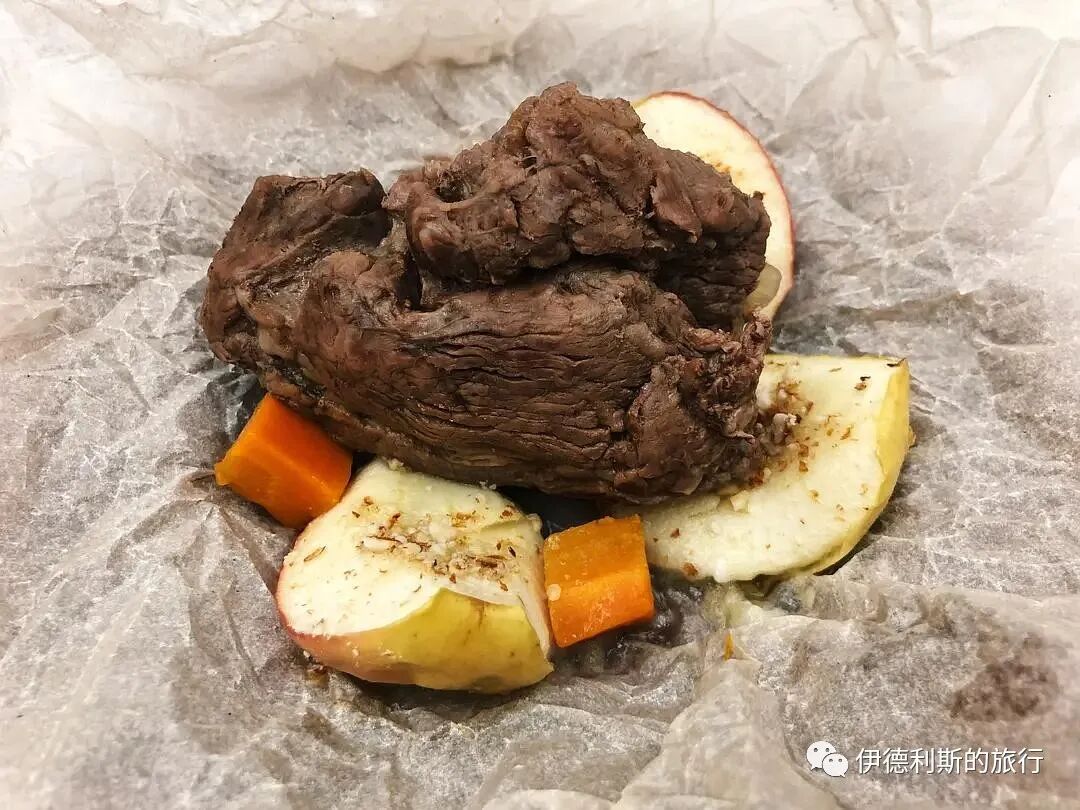
For soup, I ordered Tatar Azu (Tatar beef casserole soup), and also drank sea buckthorn tea, which contained honey and cinnamon in addition to sea buckthorn.
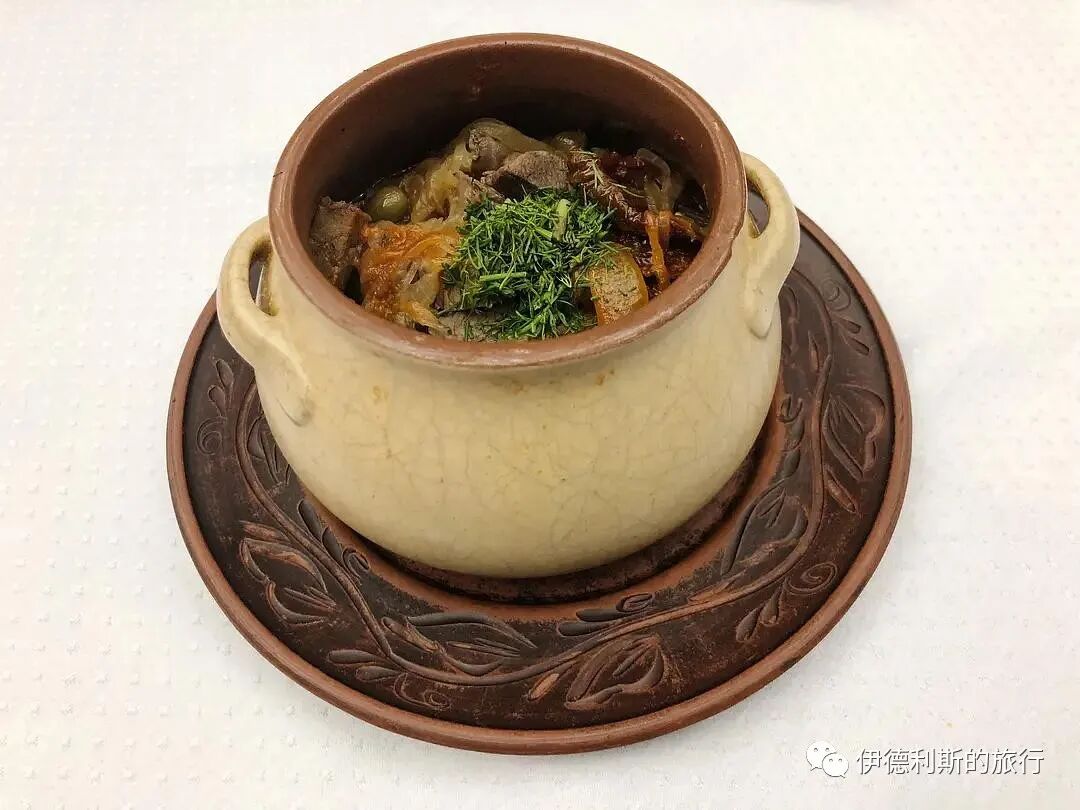
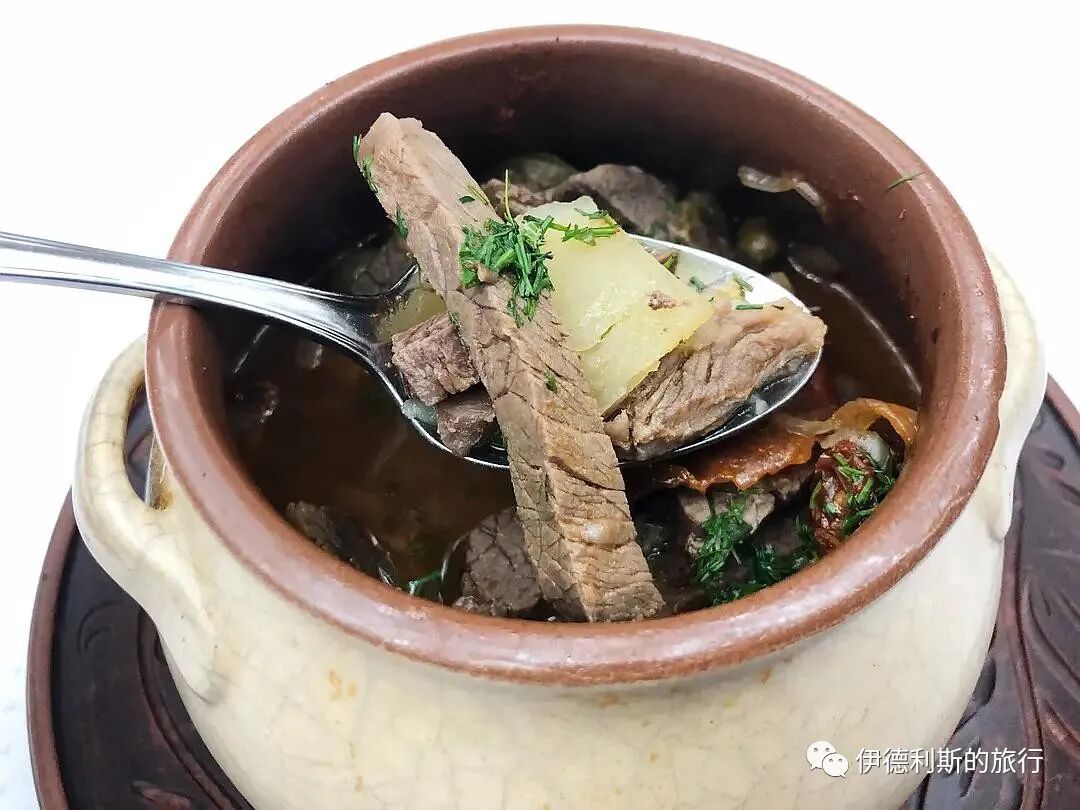
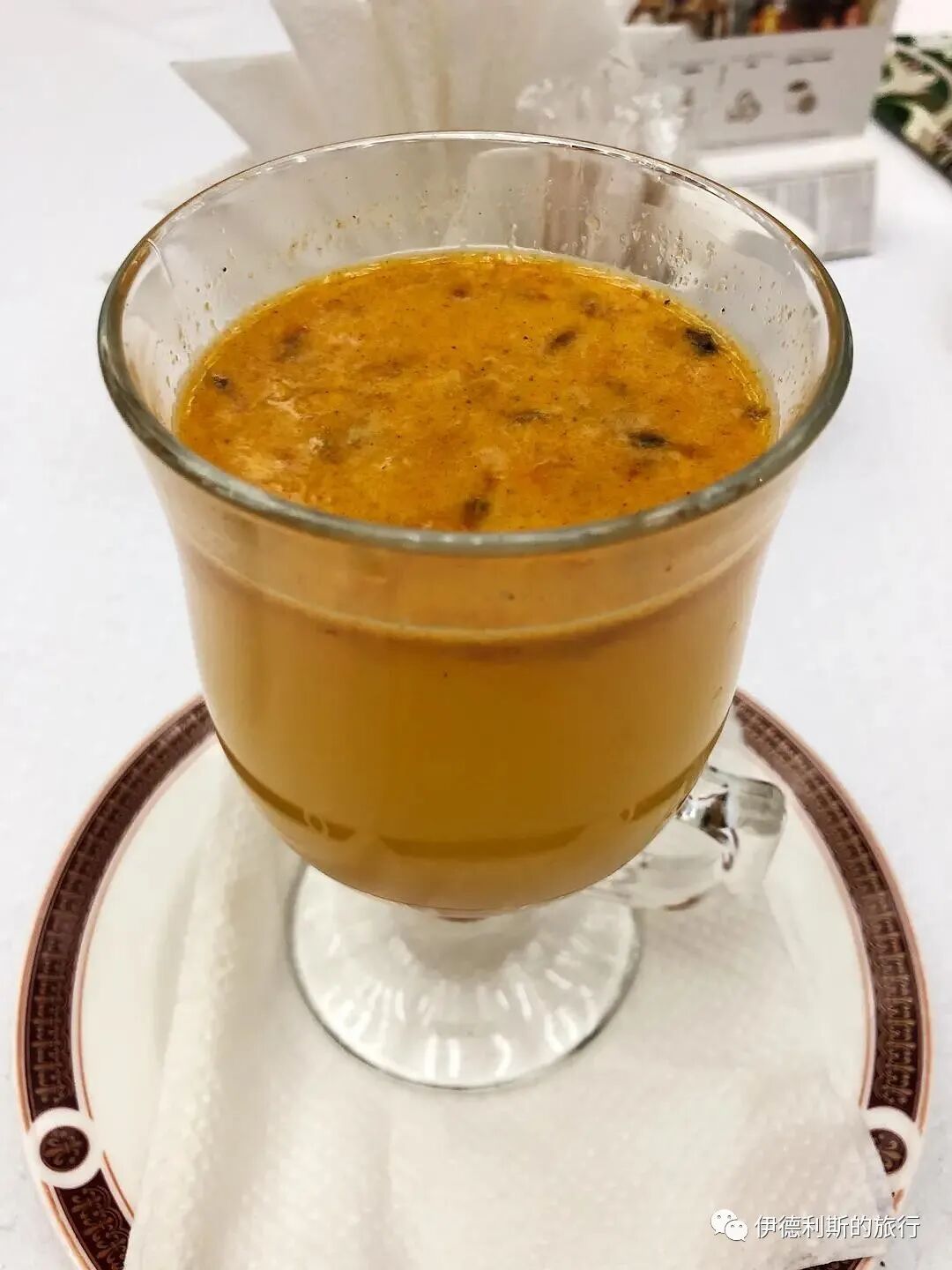
Teatr Natsionalnoi Kukhni (Tatar Restaurant).
In the evening, I ate at the restaurant Teatr Natsionalnoi Kukhni in another Tatar manor on the banks of Lake Kaban, which was once the residence of the wealthy Tatar merchant Bikmukhametov. I ordered horse meat salad, pumpkin cream soup with dried apricots and cream cheese, and stewed fresh horse meat, Kullama. Kullama is the Tatar version of the Kazakh national dish Beshbarmak (five-finger stew).
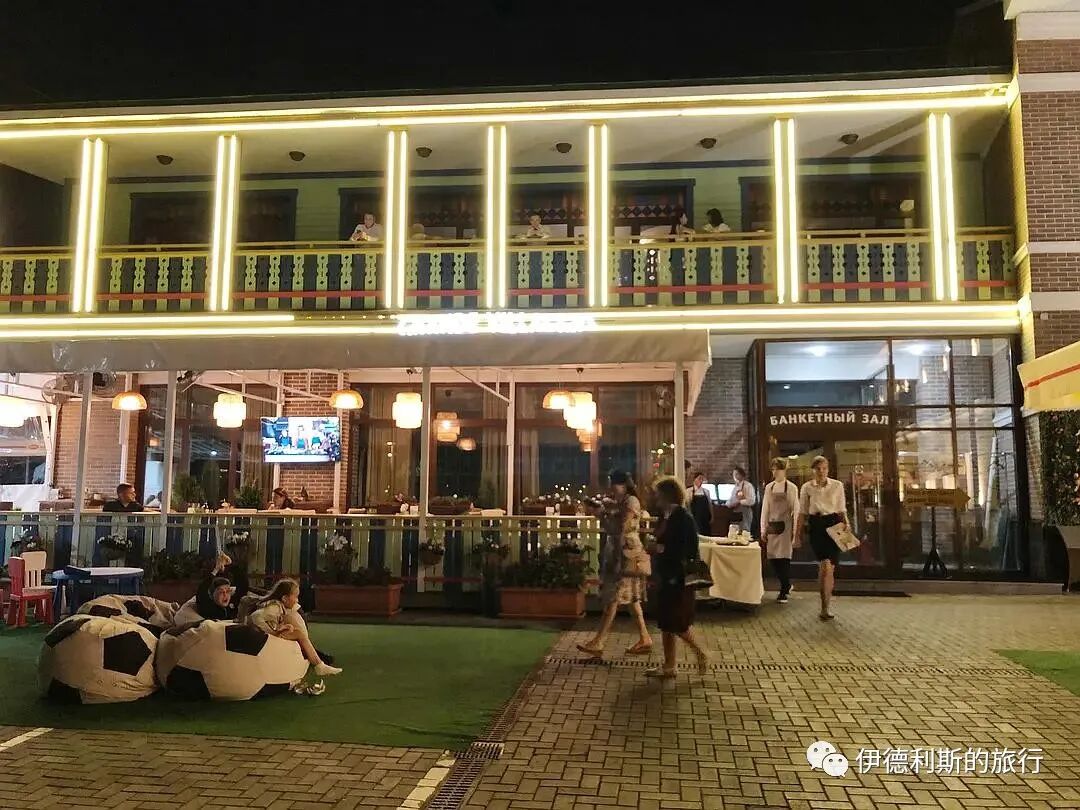
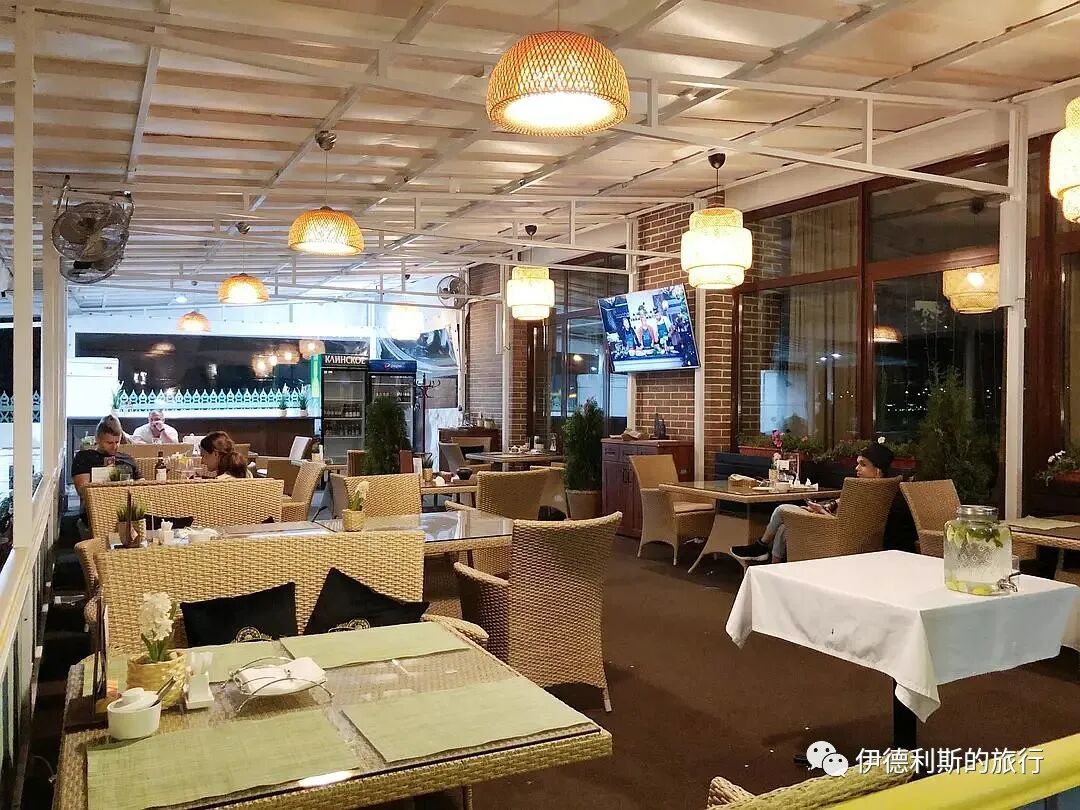
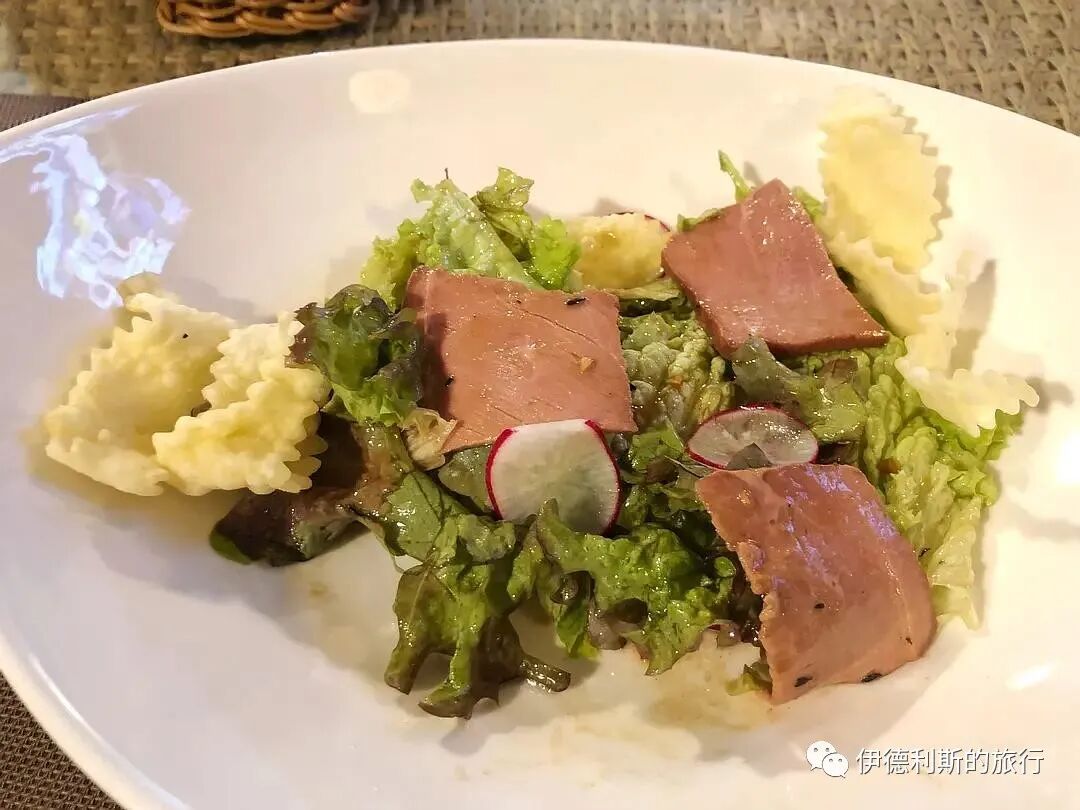
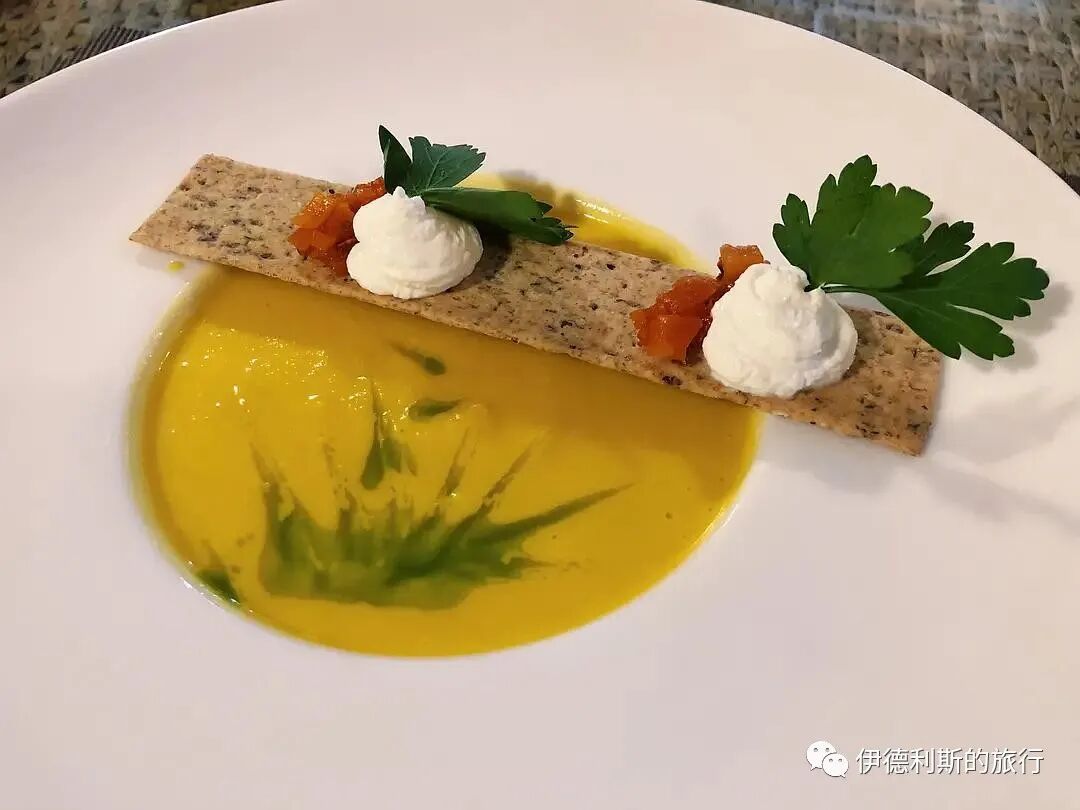
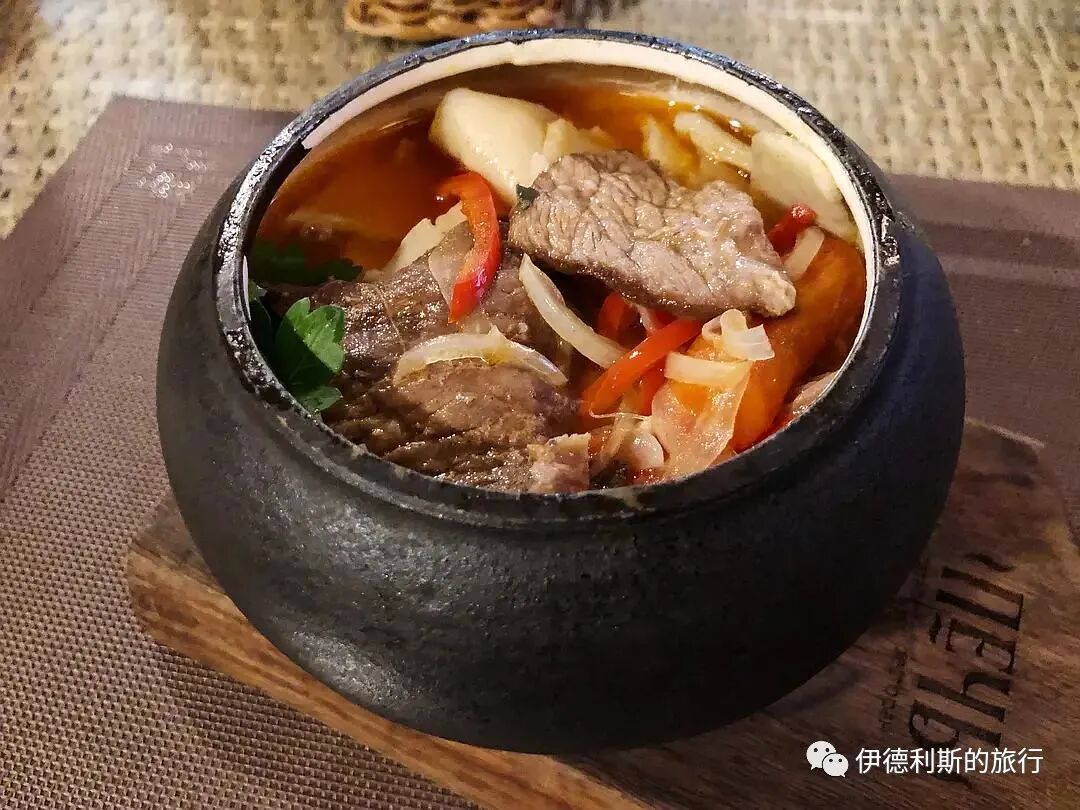
Tubatay Fast Food Restaurant.
Tubatay (Tyubetey) is a fast-food restaurant that sells traditional Tatar dishes, and there is also a branch in the ancient city of Bulgar. "Tubatay" means the characteristic round hat of the Tatars.
I ordered Manti (steamed dumplings), a specialty meat pie Belesh (made with sour cream dough and filled with beef, potatoes, and onions), Tatar clear soup dumplings Pilmen served with sour cream Smetana, and Tatar tea.
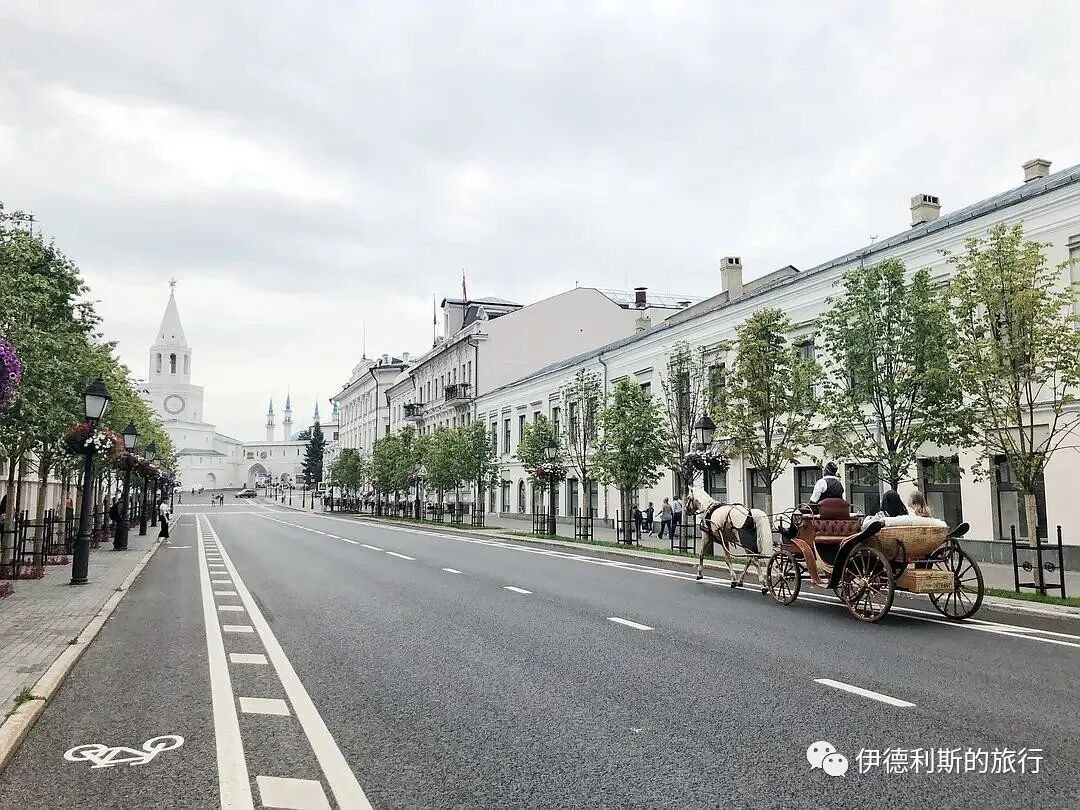
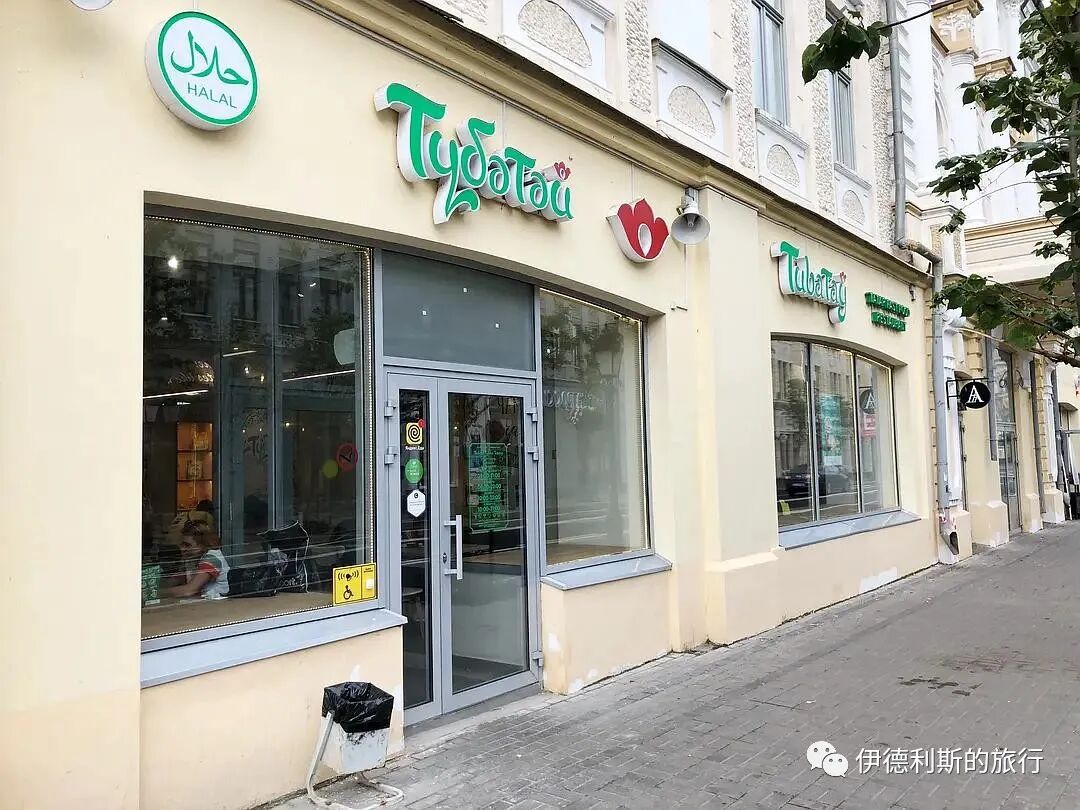
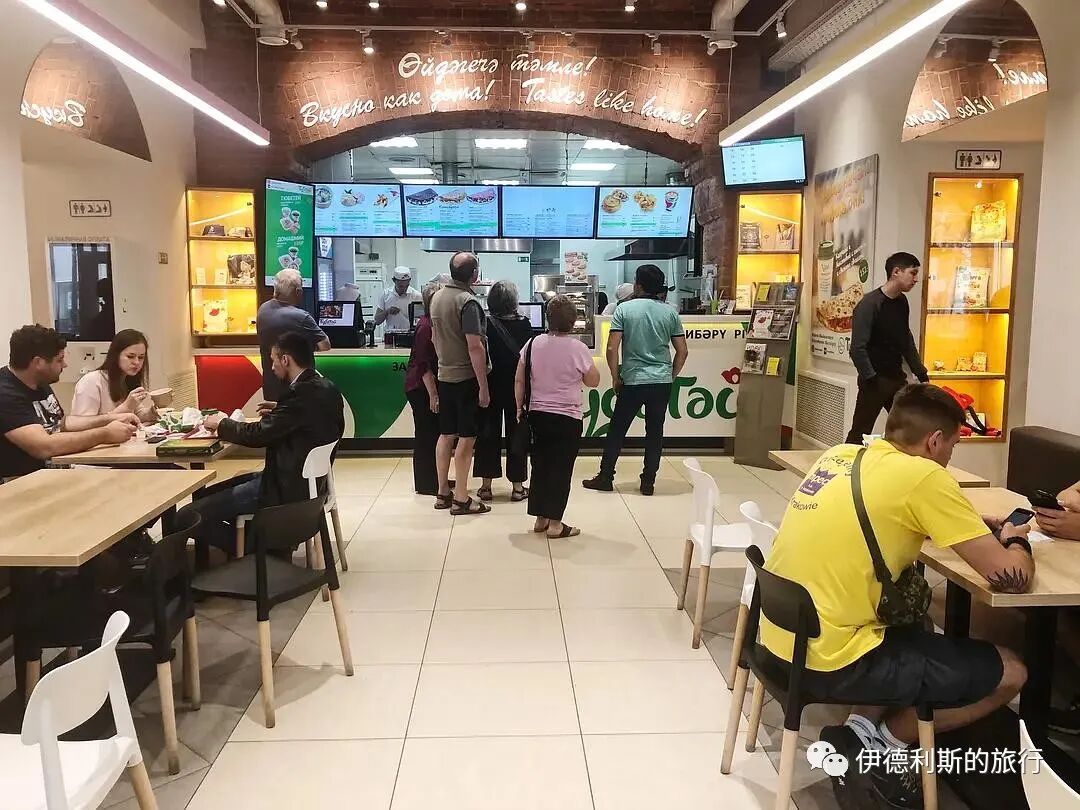

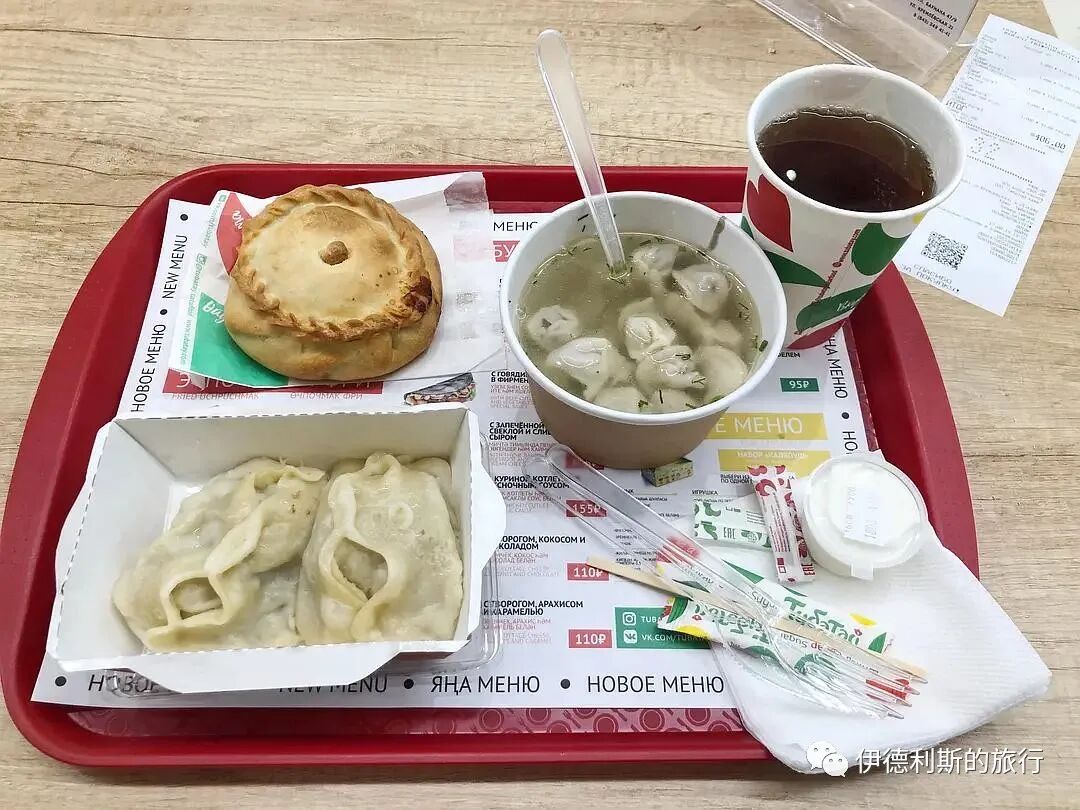
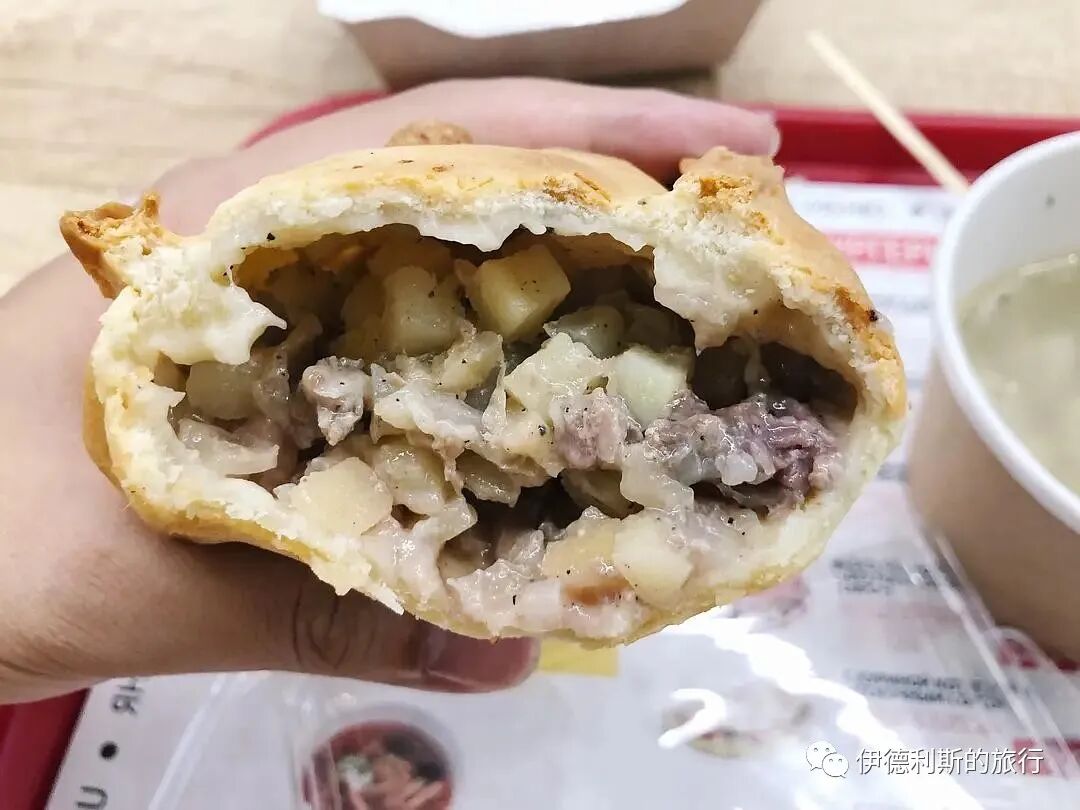
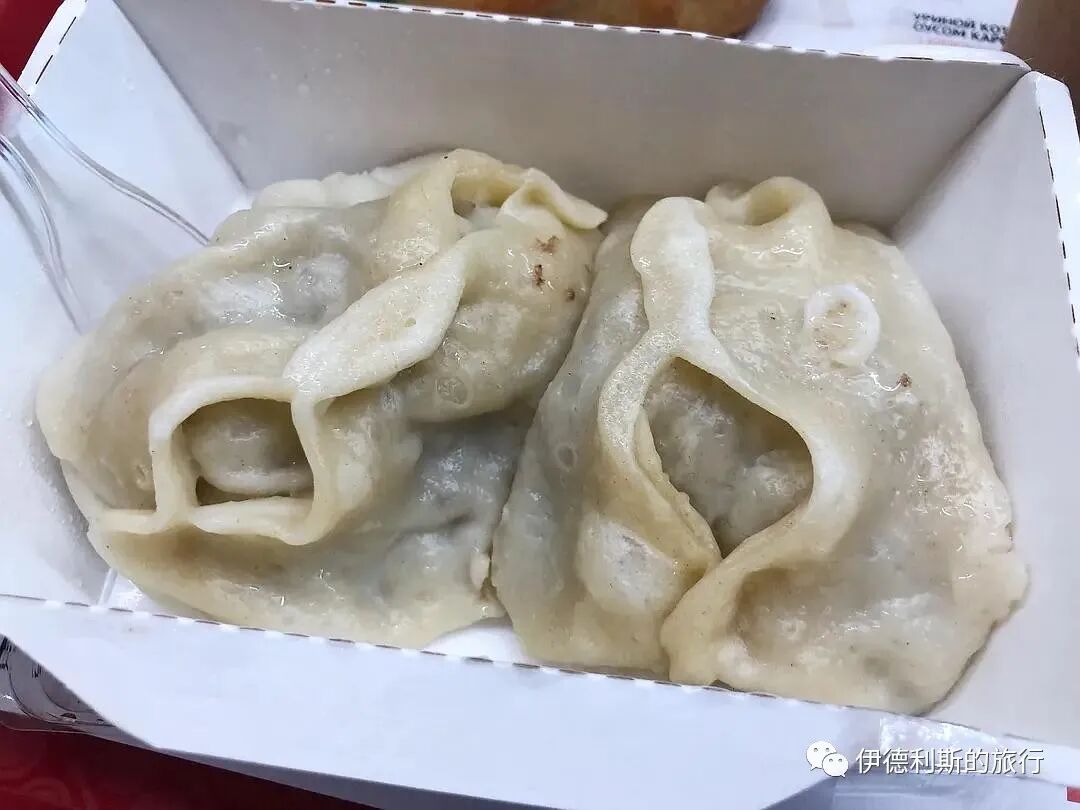
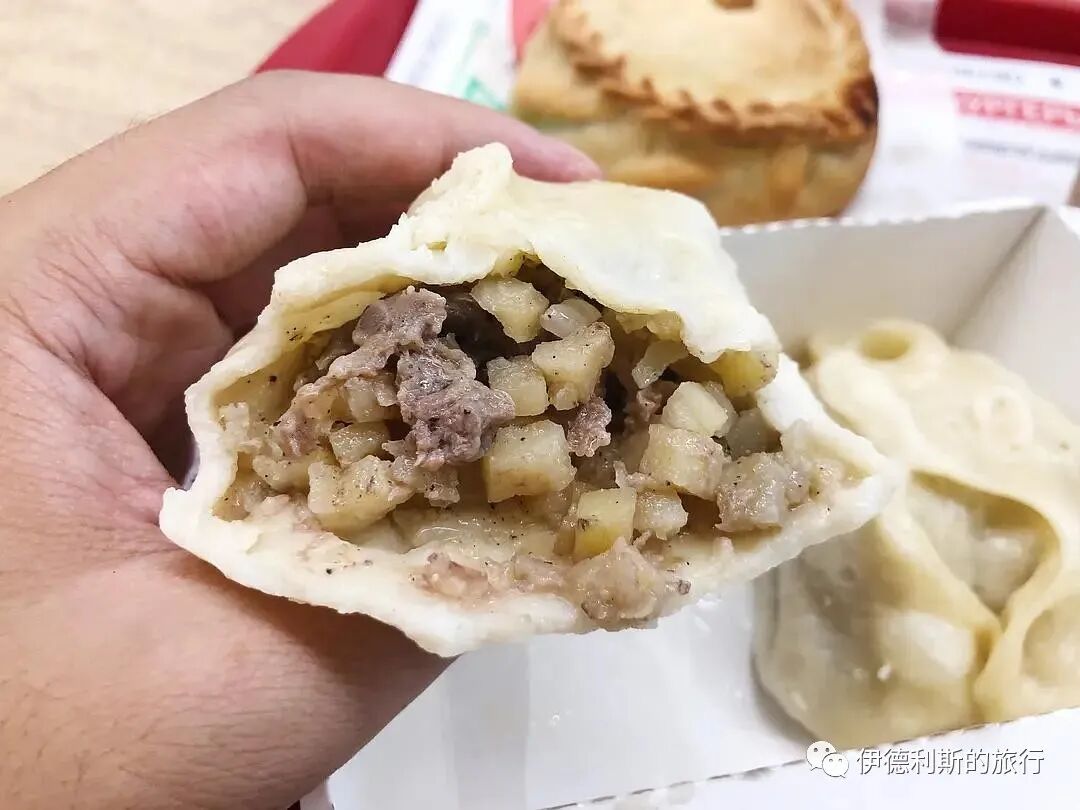
Large Tatar specialty halal supermarket.
Next to where I stayed, there was a large Tatar specialty halal supermarket. The variety of traditional Tatar desserts was dazzling, so I bought some to eat back at my accommodation.
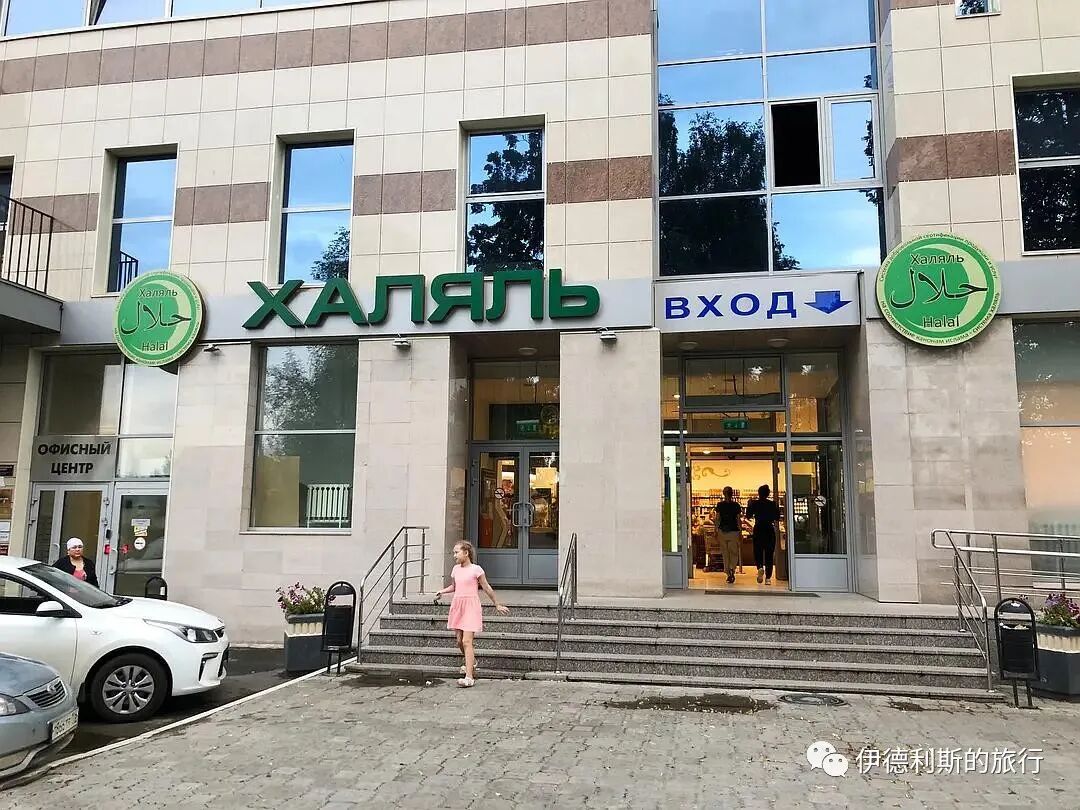
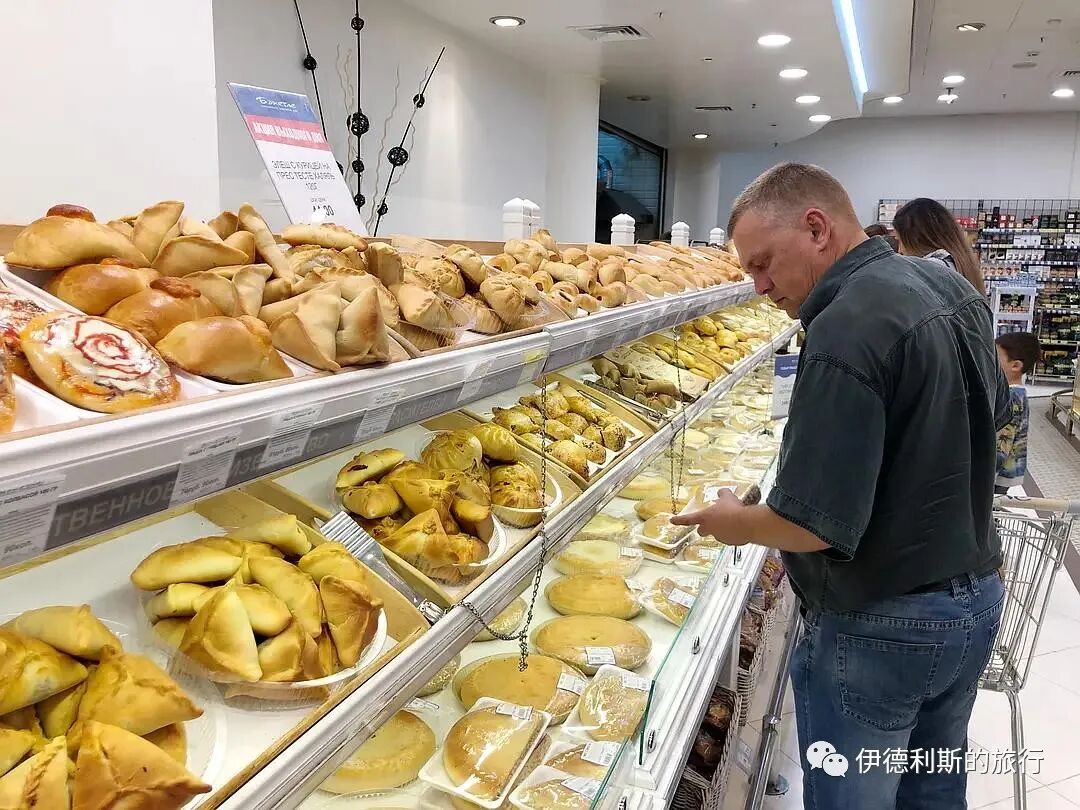
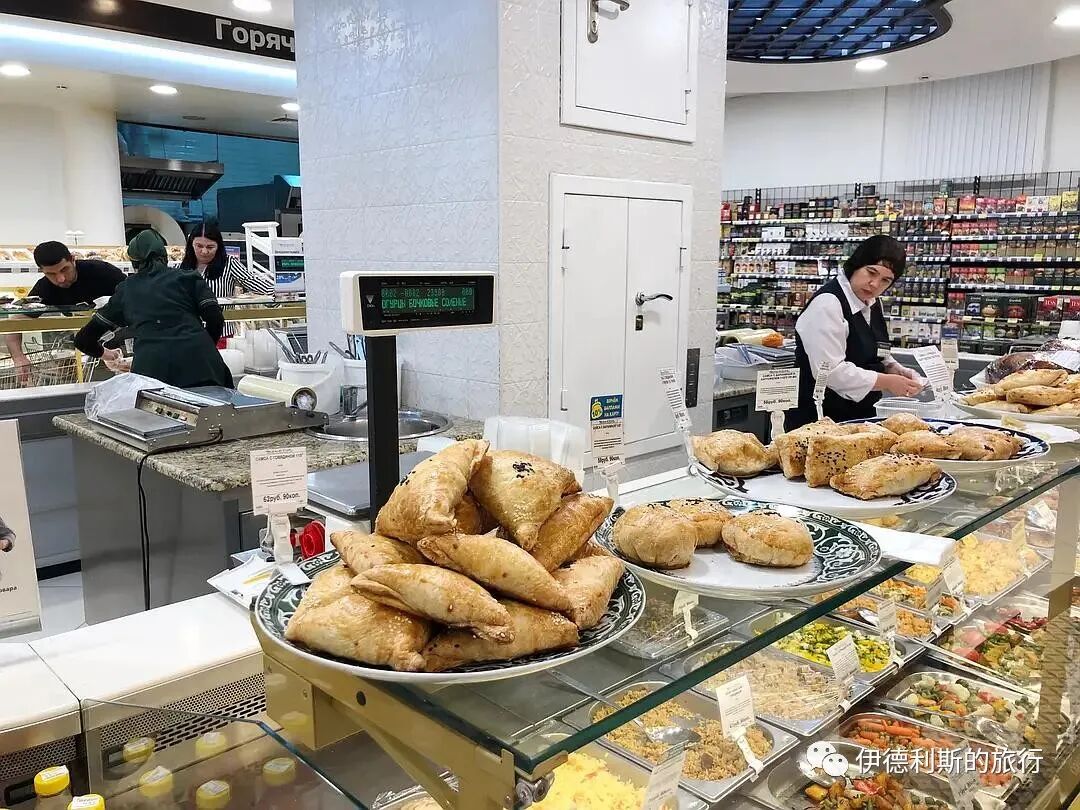
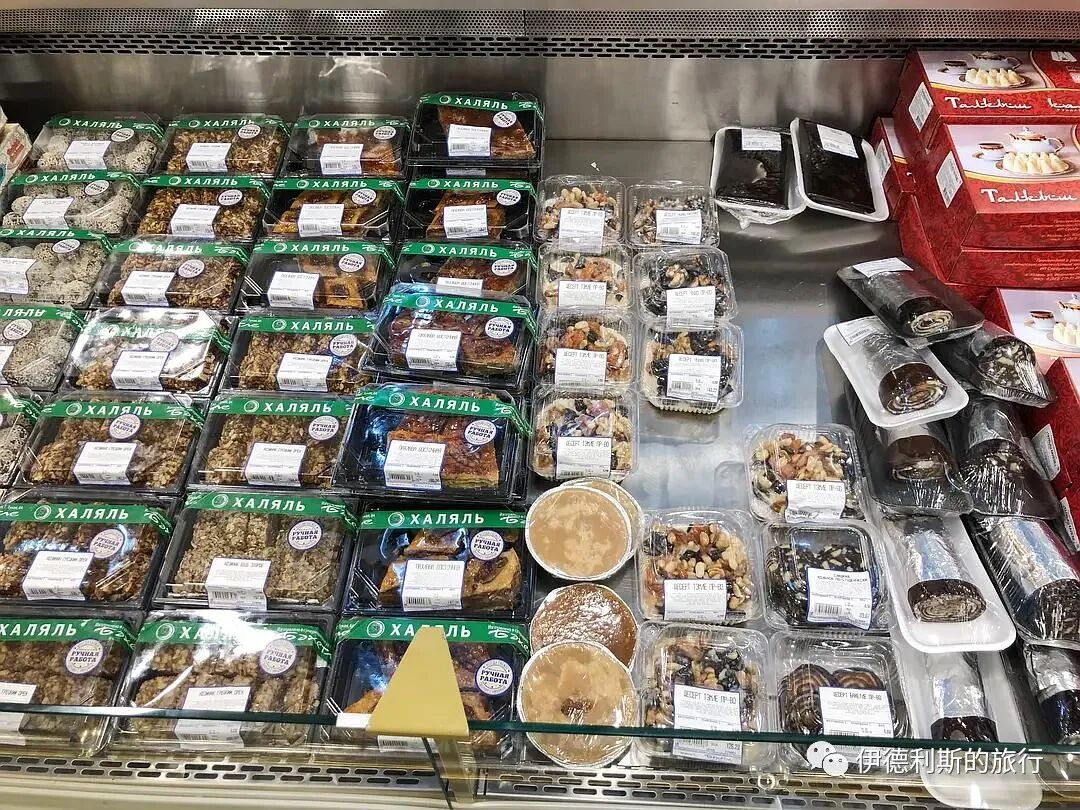
The Kazan Tatar version of horse sausage; the horse meat flavor is much stronger than the Uzbek way of making horse sausage.
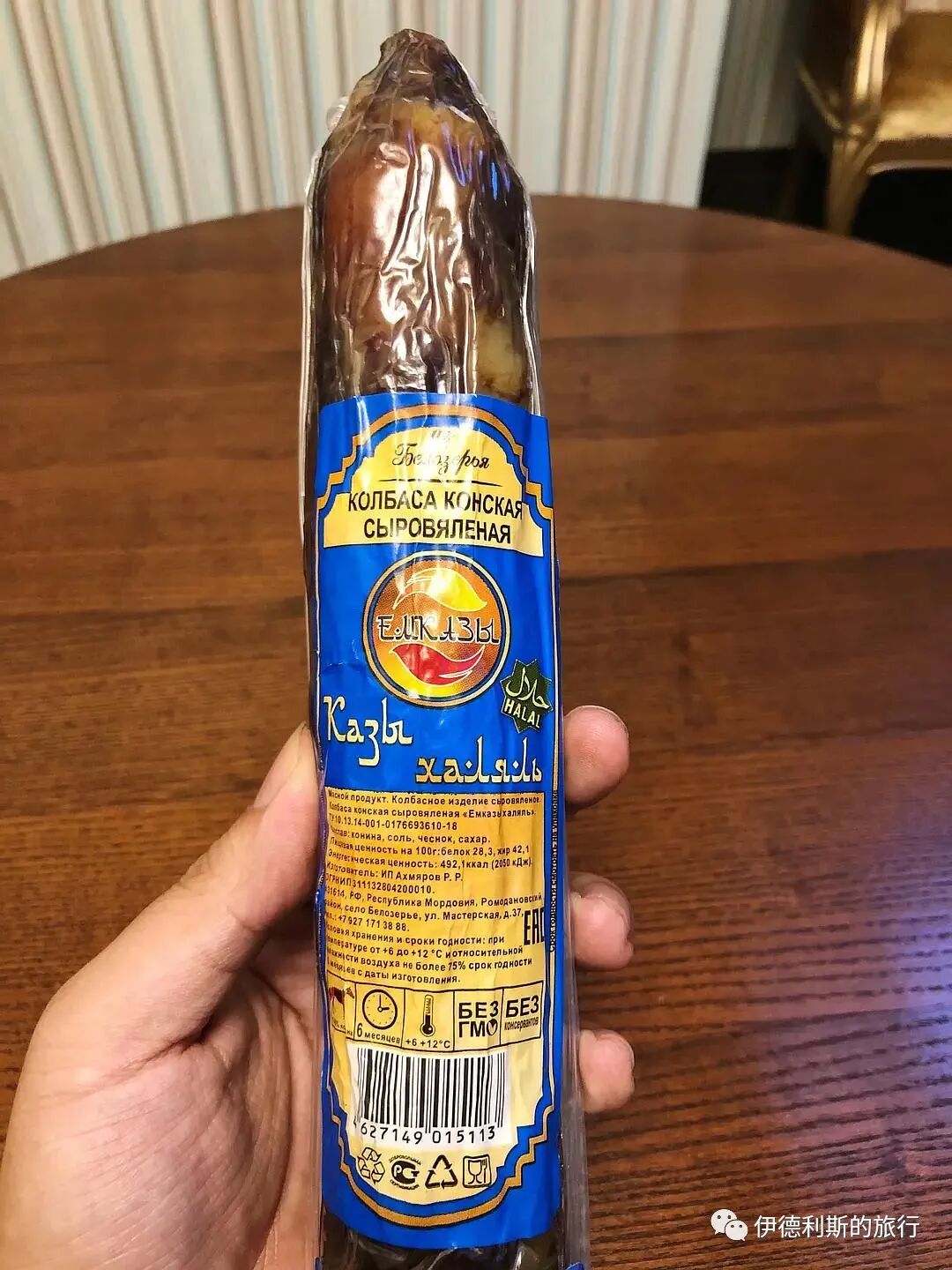
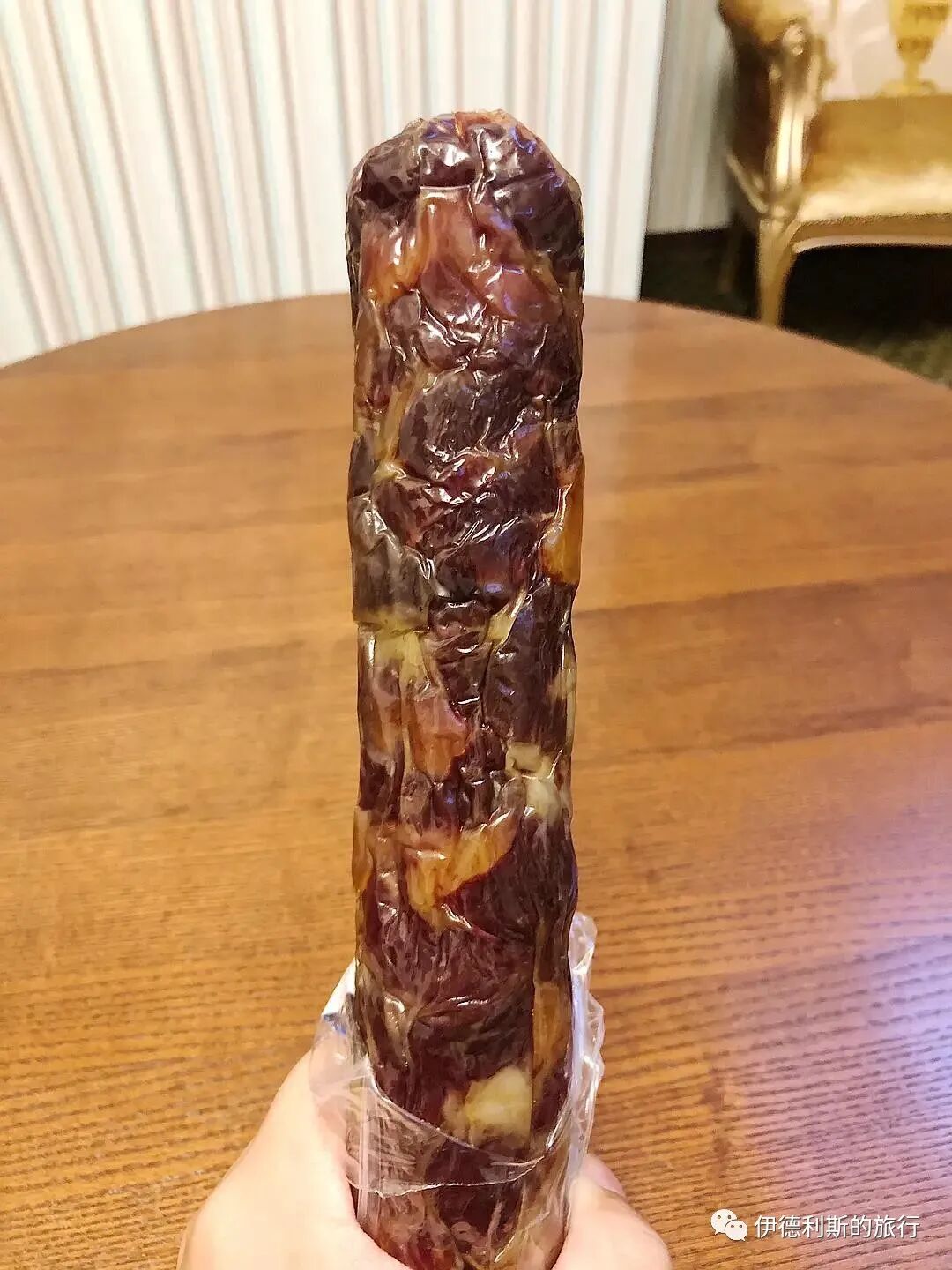
Kumis (fermented mare's milk), which is more sour than the Kazakh version.
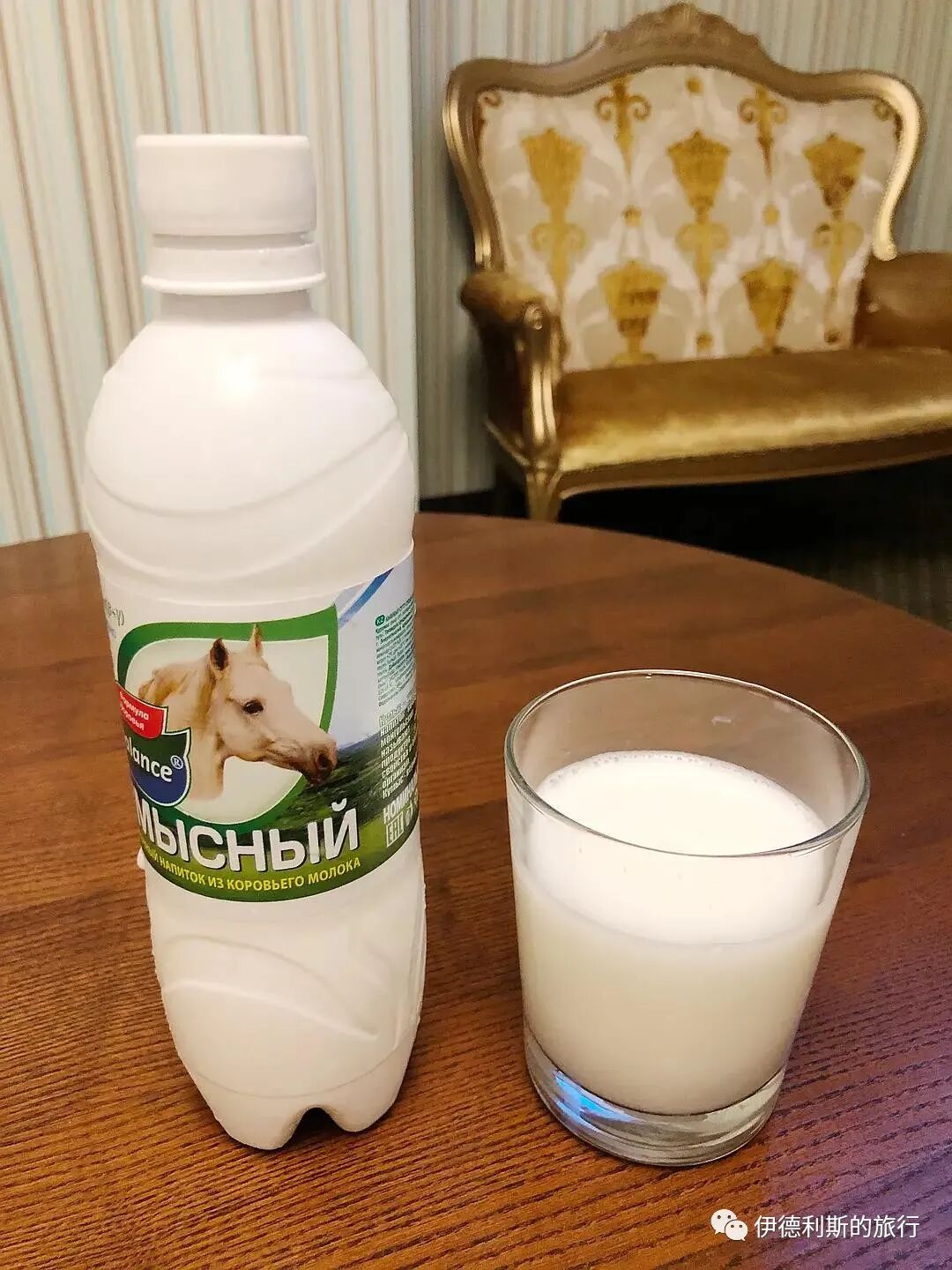
It is called Smetannik, which means sour cream. The outside is made of butter dough (Sdobnoye testo), and the middle is sour cream, which is super delicious.

This nut cake is called Oriental dessert (vostochnaya sladost).
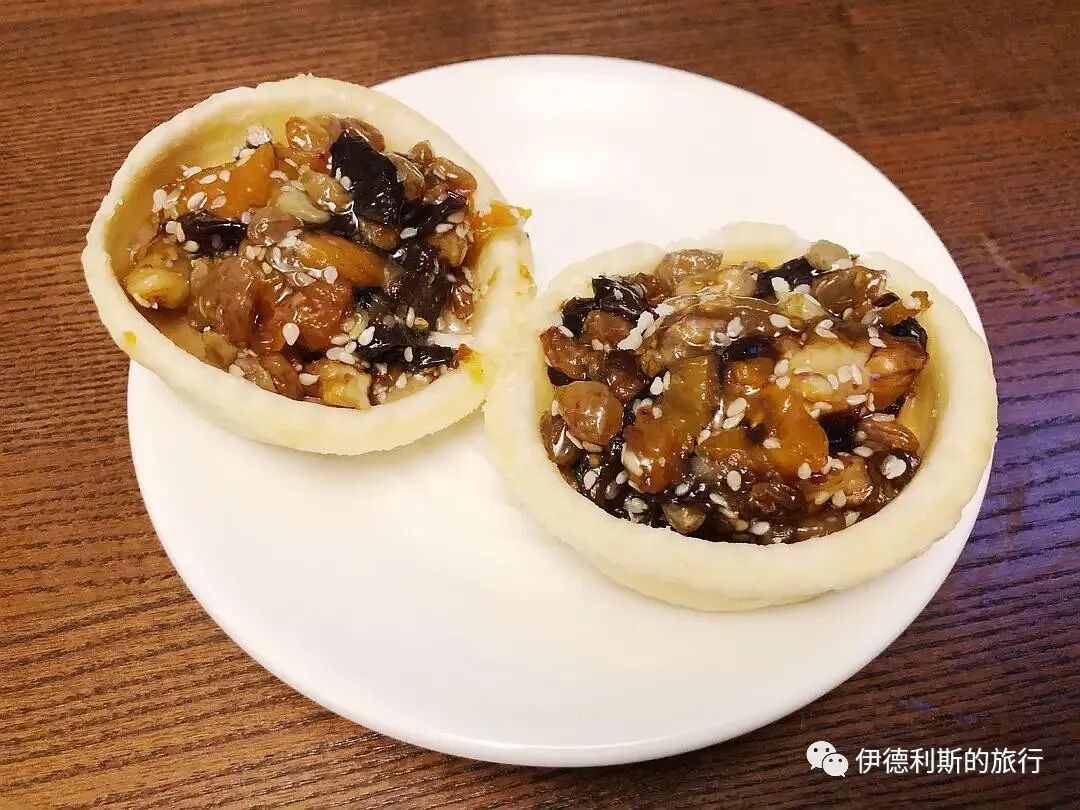
Central Market.
The Central Market in Kazan, where mushrooms are sold in the summer.
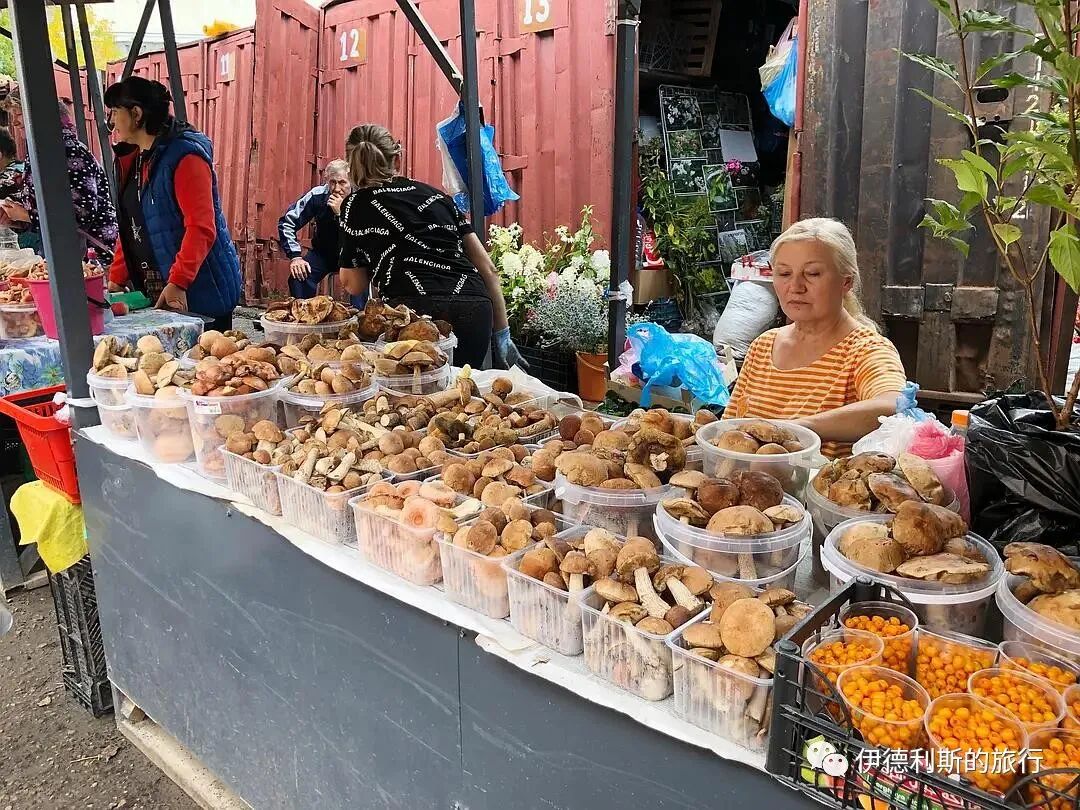
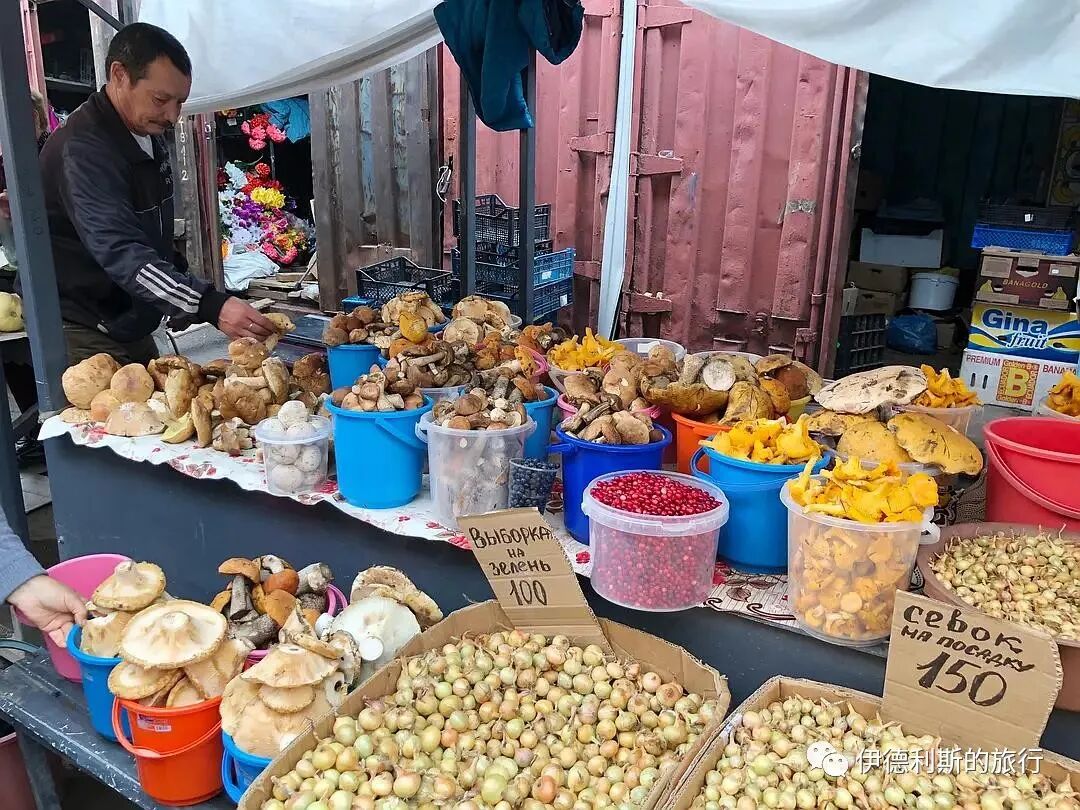
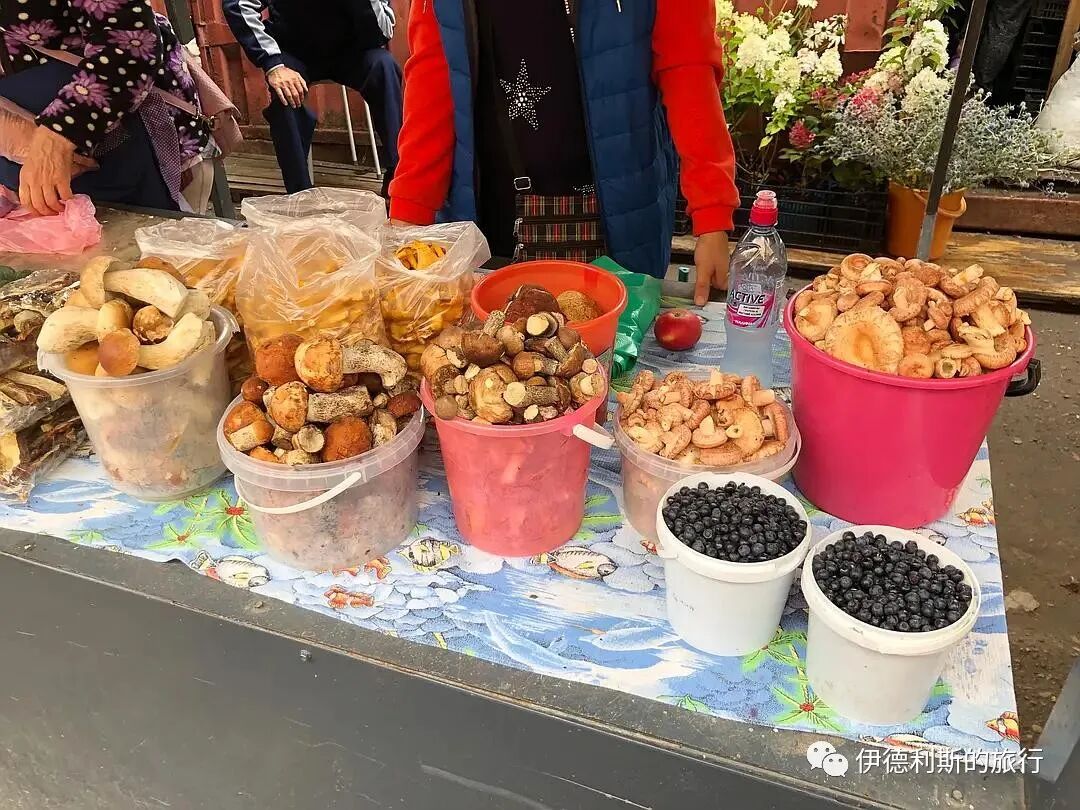
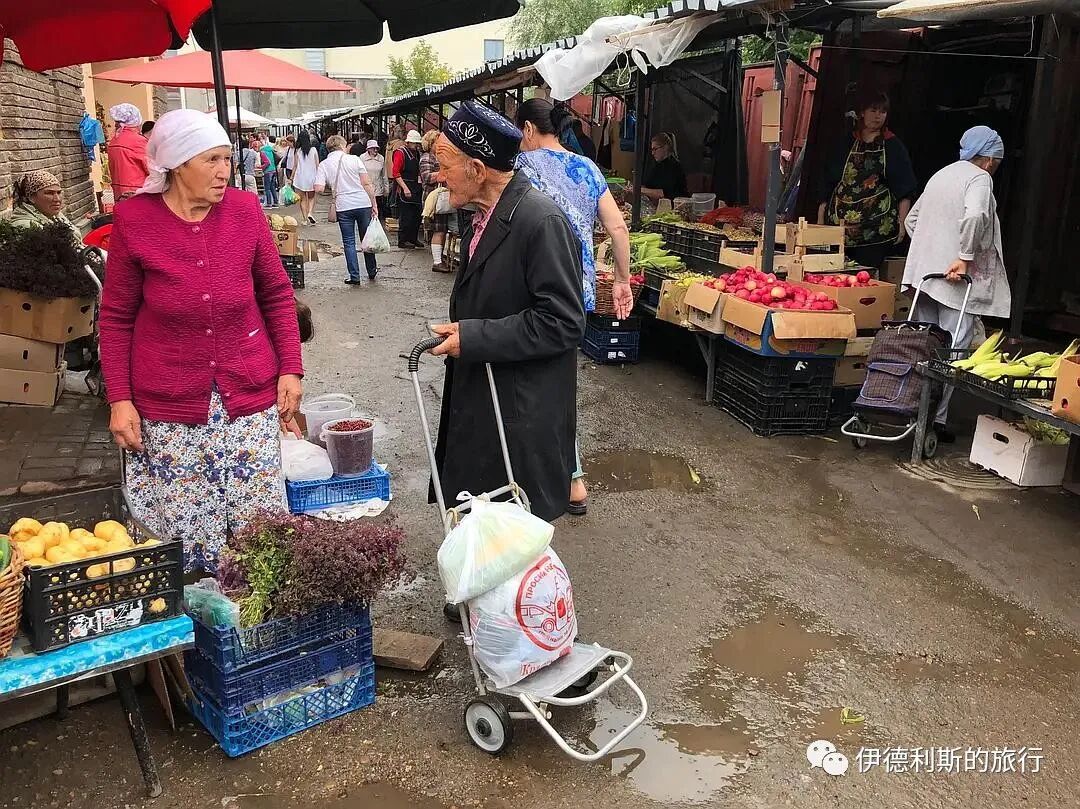
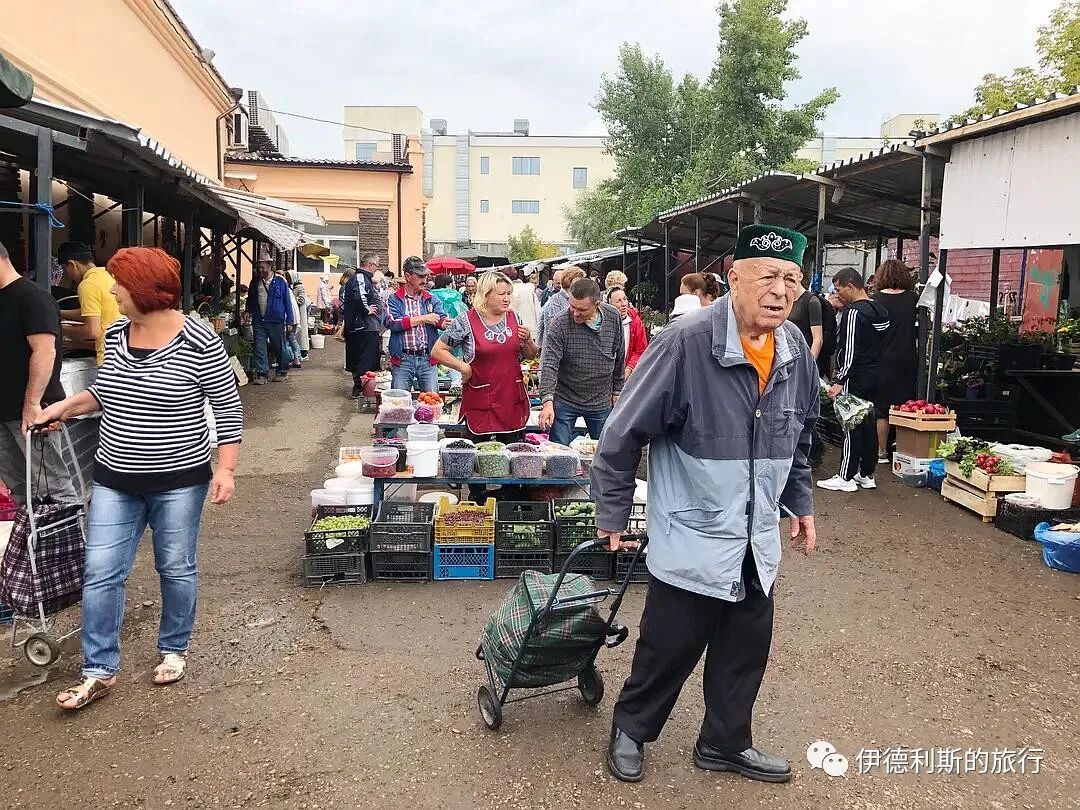
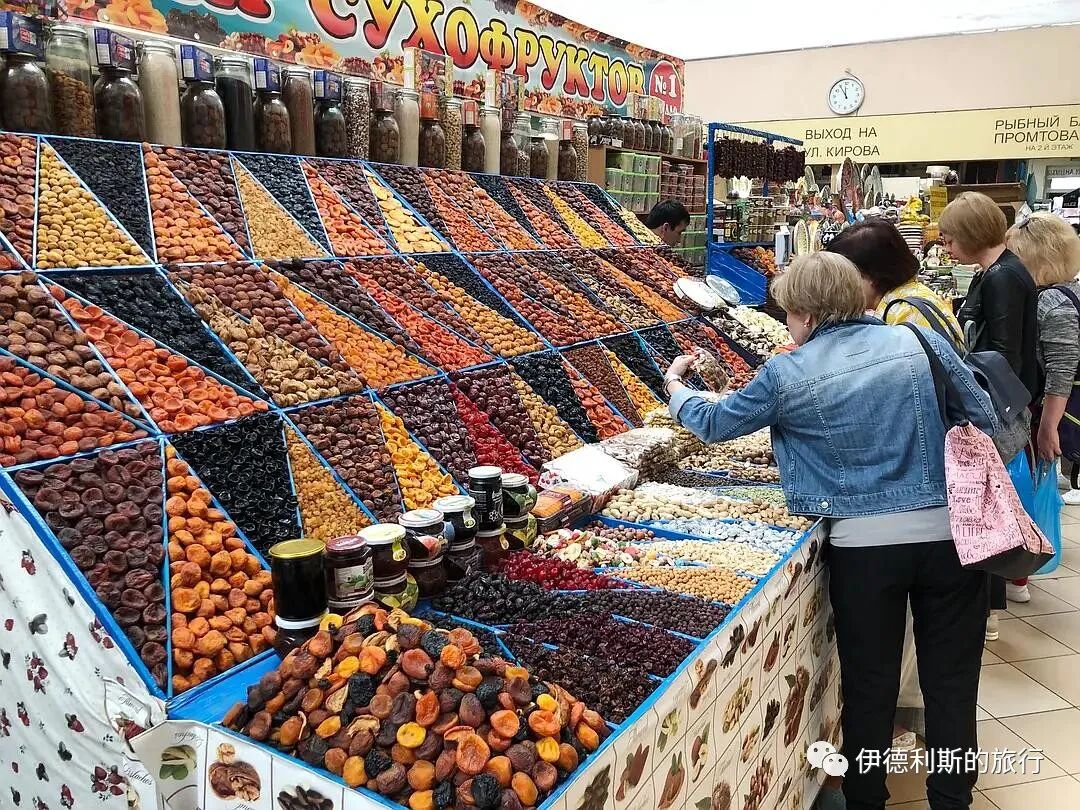
Tatar round hat bought at the Central Market.
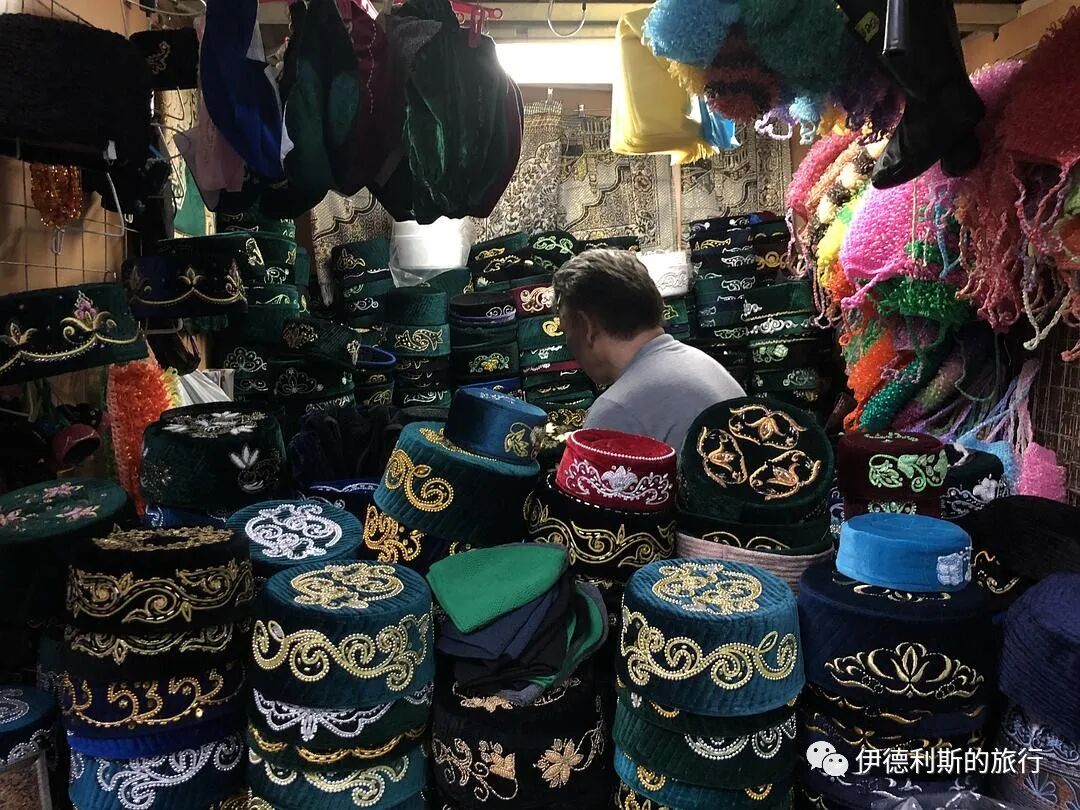
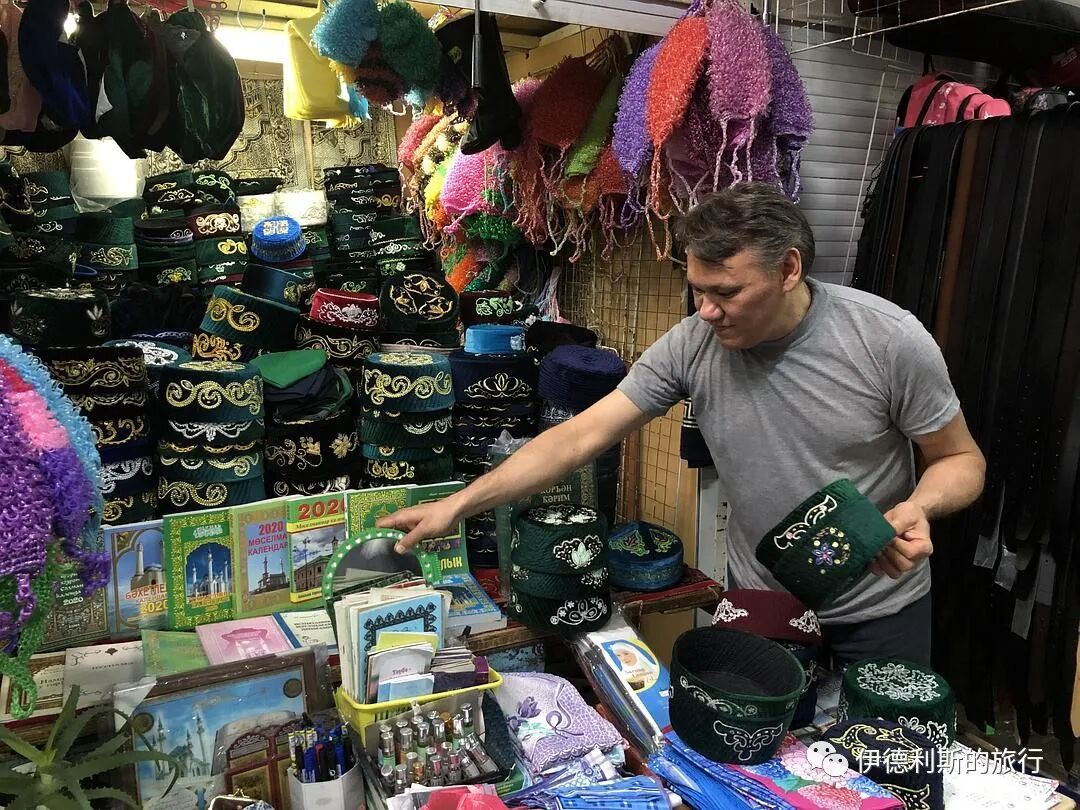
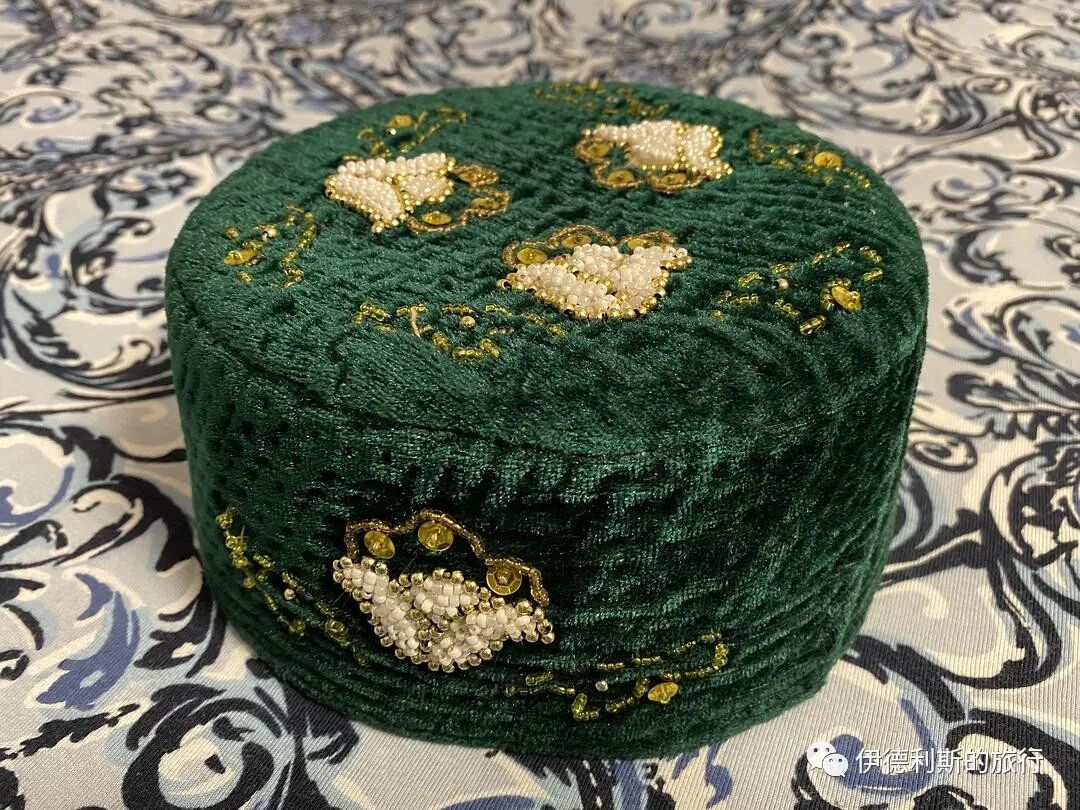
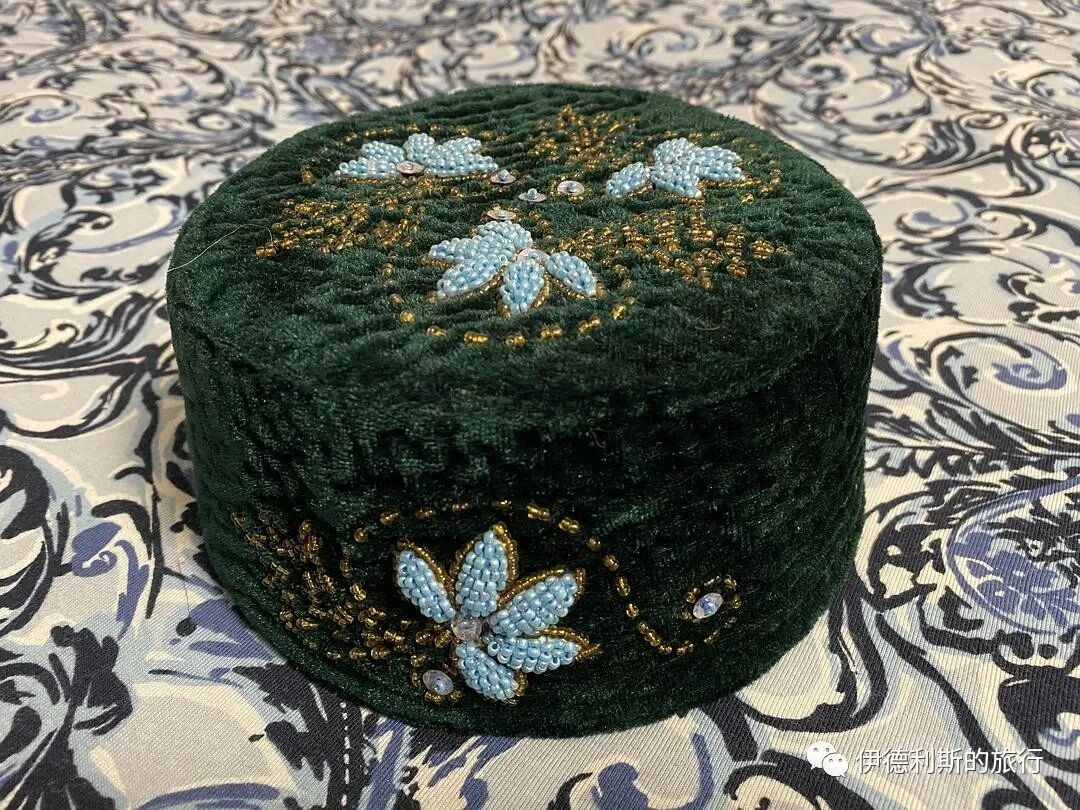
Small shop in the mosque.
Two Tatar magnets bought at the Märcani Mosque, showing the rural life of the Volga Tatars, one hunting rabbits and the other keeping bees.
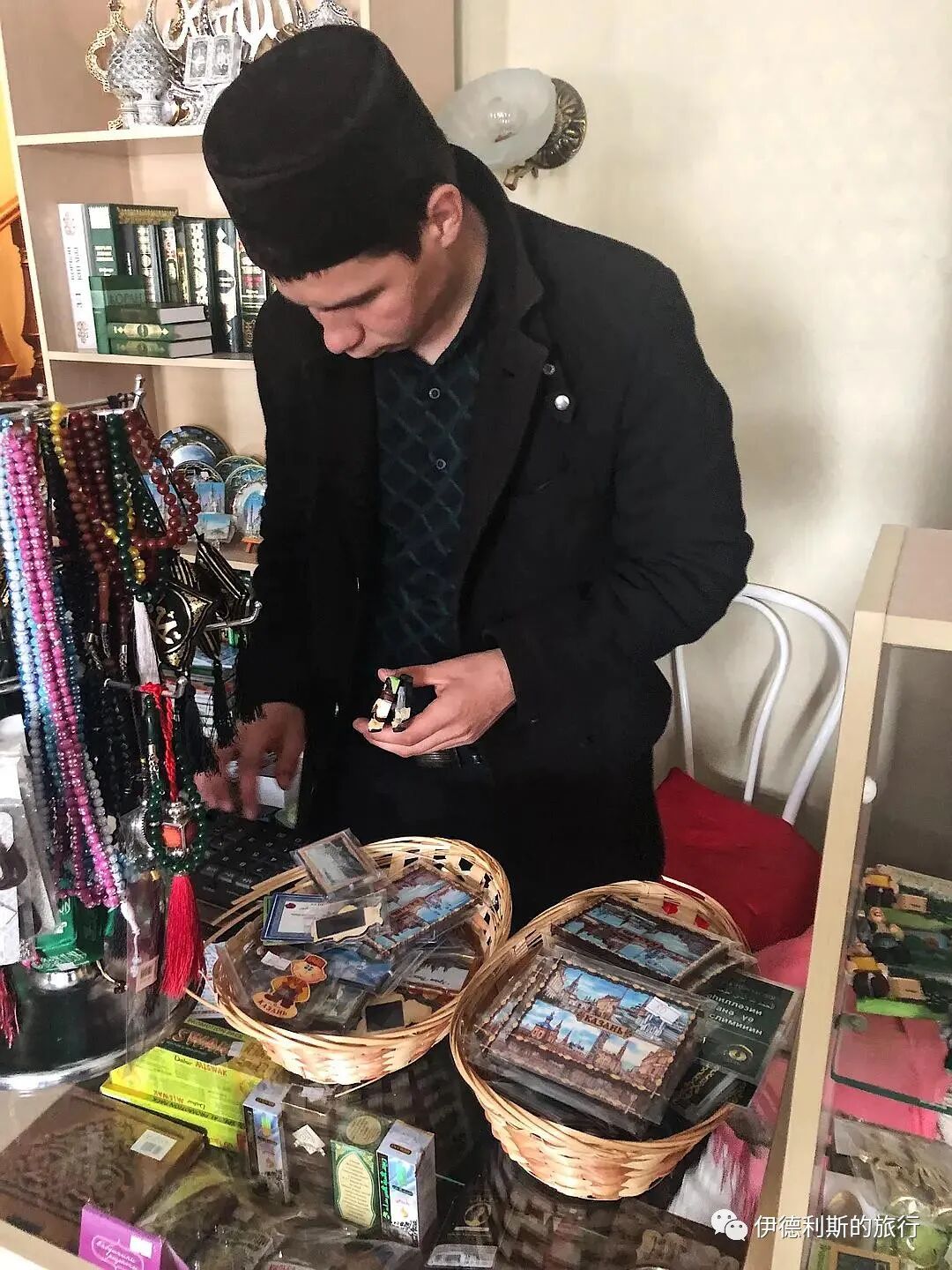
Goose meat sold in the mosque; smoked goose meat and smoked horse meat are specialty delicacies of the Kazan Tatars.
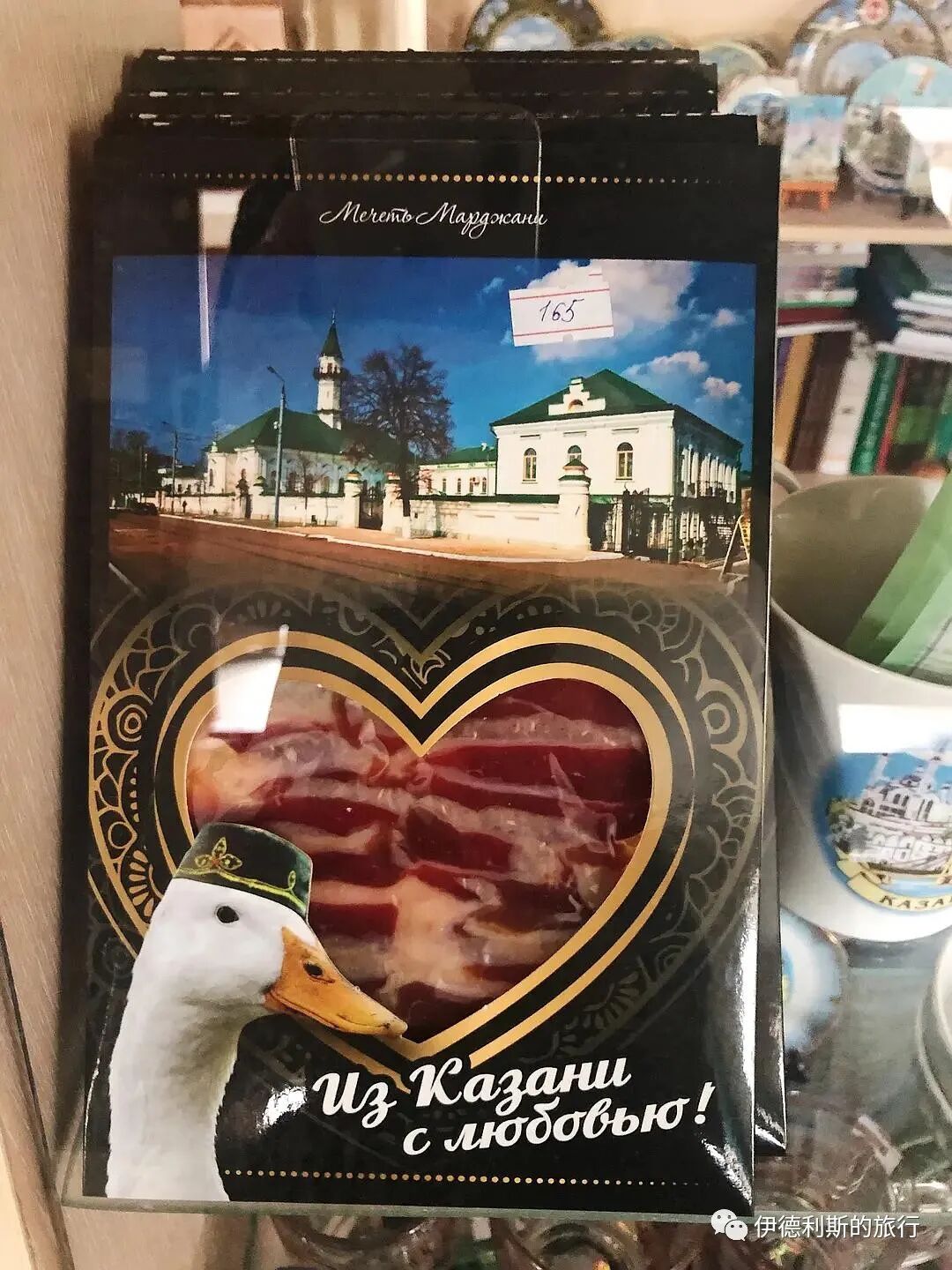
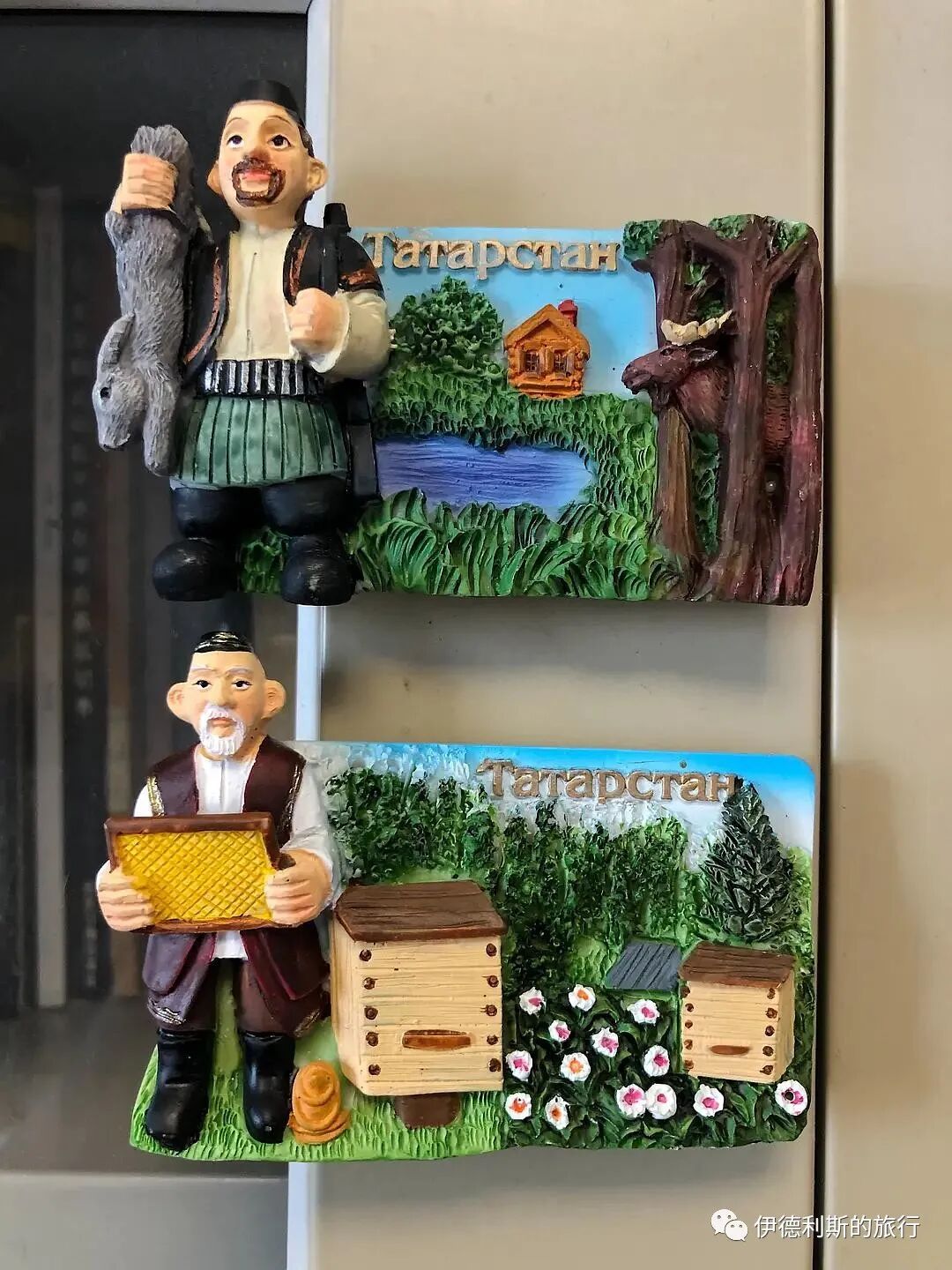
Tubetei (Tyubetey), a hat of the Kazan Tatars, bought at the shop of the Nurulla Mosque.
Tatars in Kazan: Mosques, Muslim Heritage and City Life (Part 2)
Articles • ali2007fr posted the article • 0 comments • 162 views • 2026-05-17 07:35
Summary: This travel note introduces Tatars in Kazan: Mosques, Muslim Heritage and City Life (Part 2). Finally, sharing some Tatar wooden houses and historical buildings in the Old Tatar historical district. It is useful for readers interested in Kazan Travel, Tatar Muslims, Islamic Heritage.
Street view of the Old Tatar historical district.
Finally, sharing some Tatar wooden houses and historical buildings in the Old Tatar historical district. view all
Summary: This travel note introduces Tatars in Kazan: Mosques, Muslim Heritage and City Life (Part 2). Finally, sharing some Tatar wooden houses and historical buildings in the Old Tatar historical district. It is useful for readers interested in Kazan Travel, Tatar Muslims, Islamic Heritage.
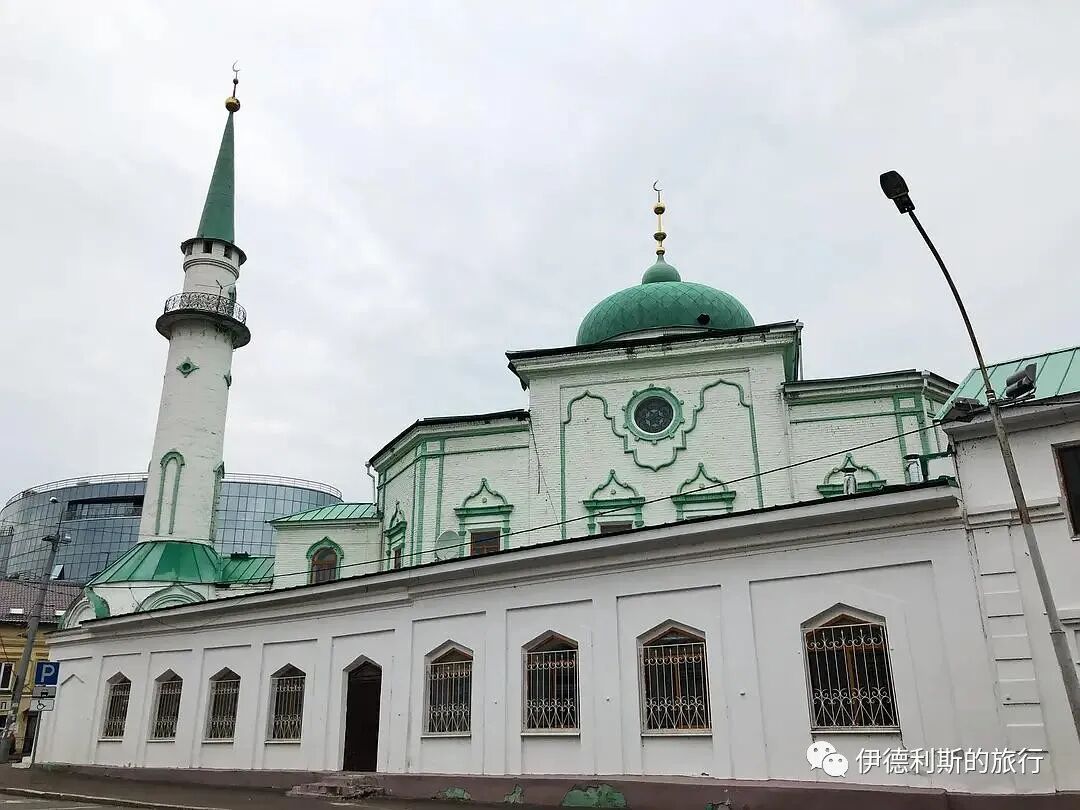
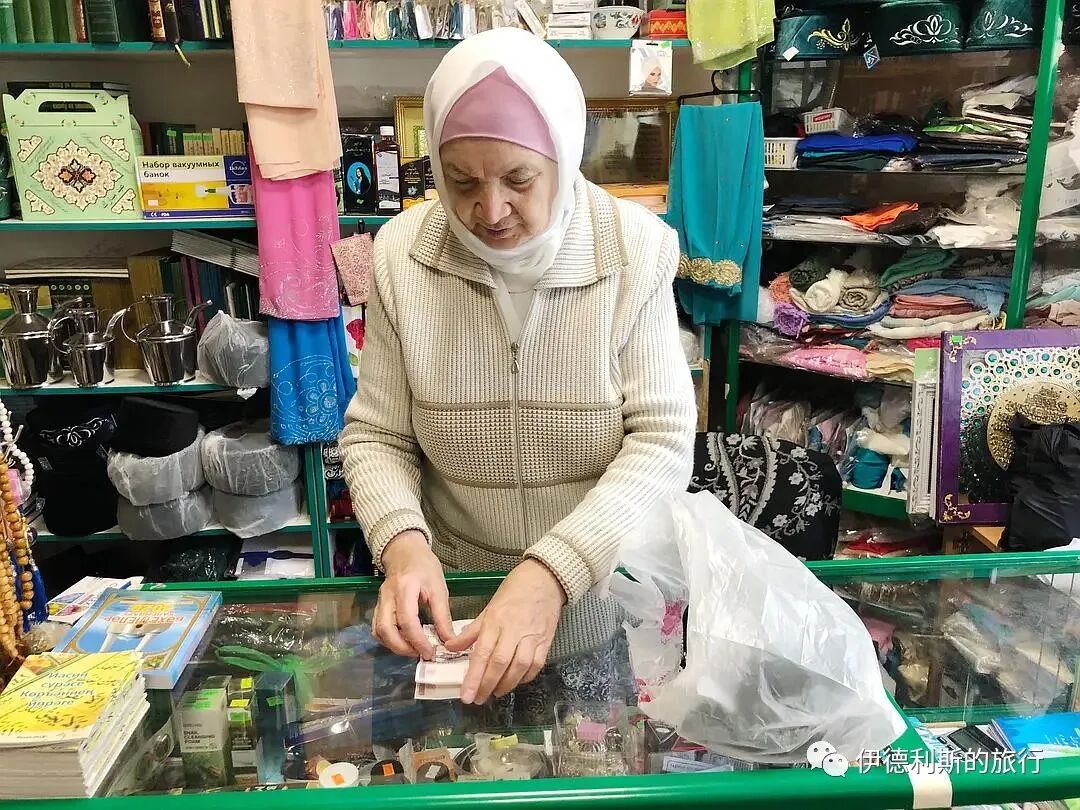
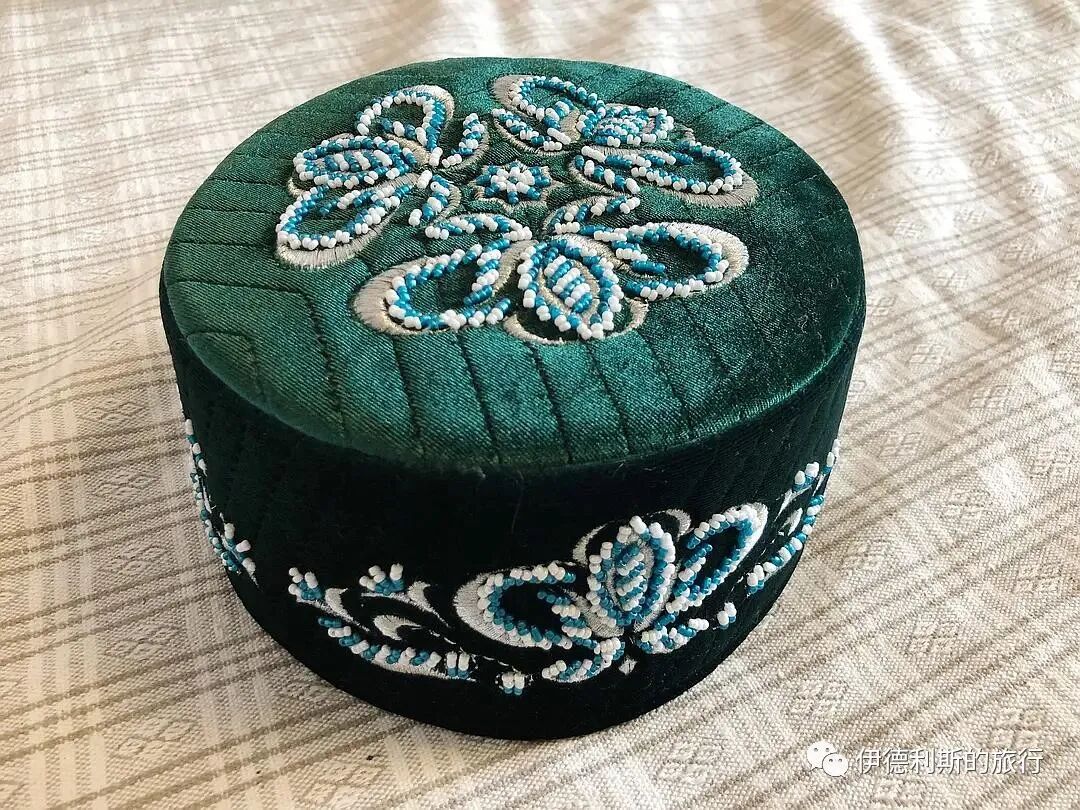
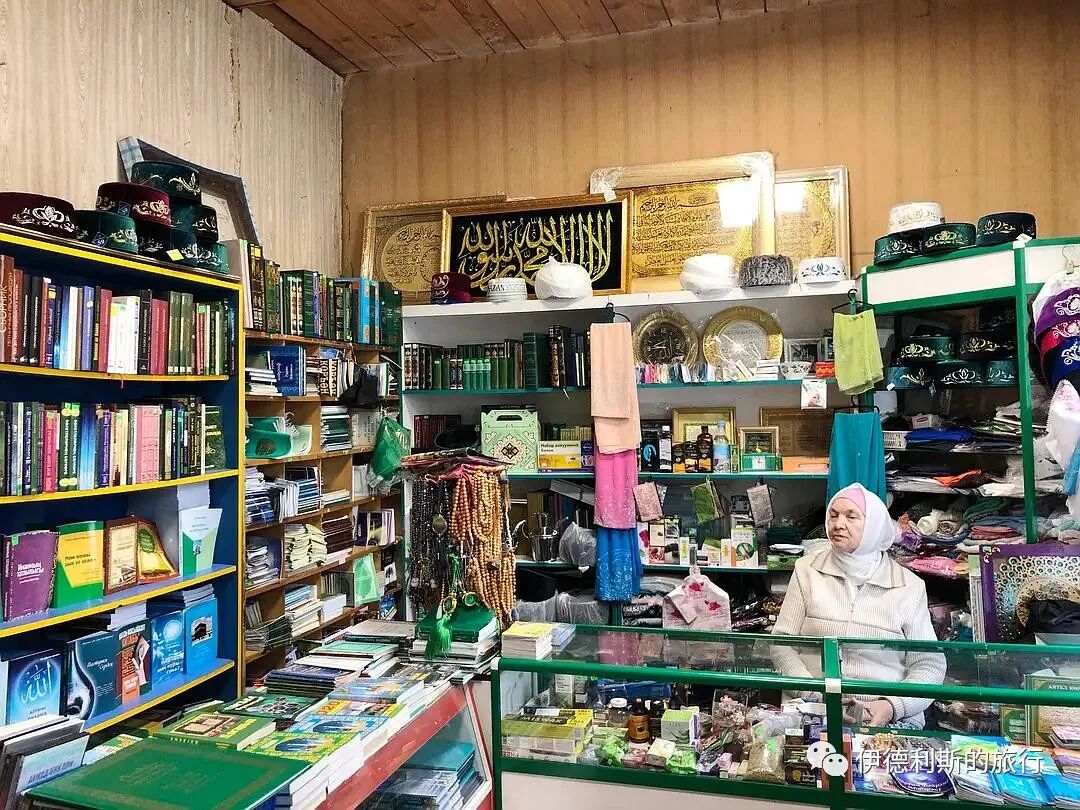
Street view of the Old Tatar historical district.
Finally, sharing some Tatar wooden houses and historical buildings in the Old Tatar historical district.
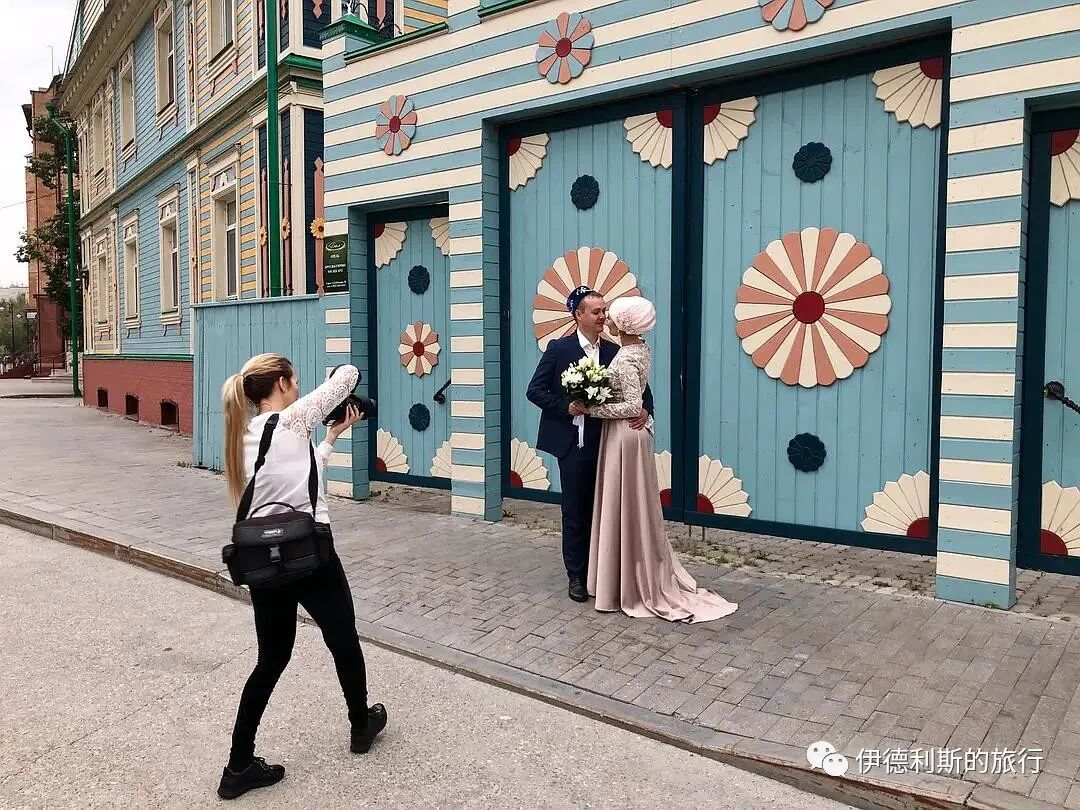
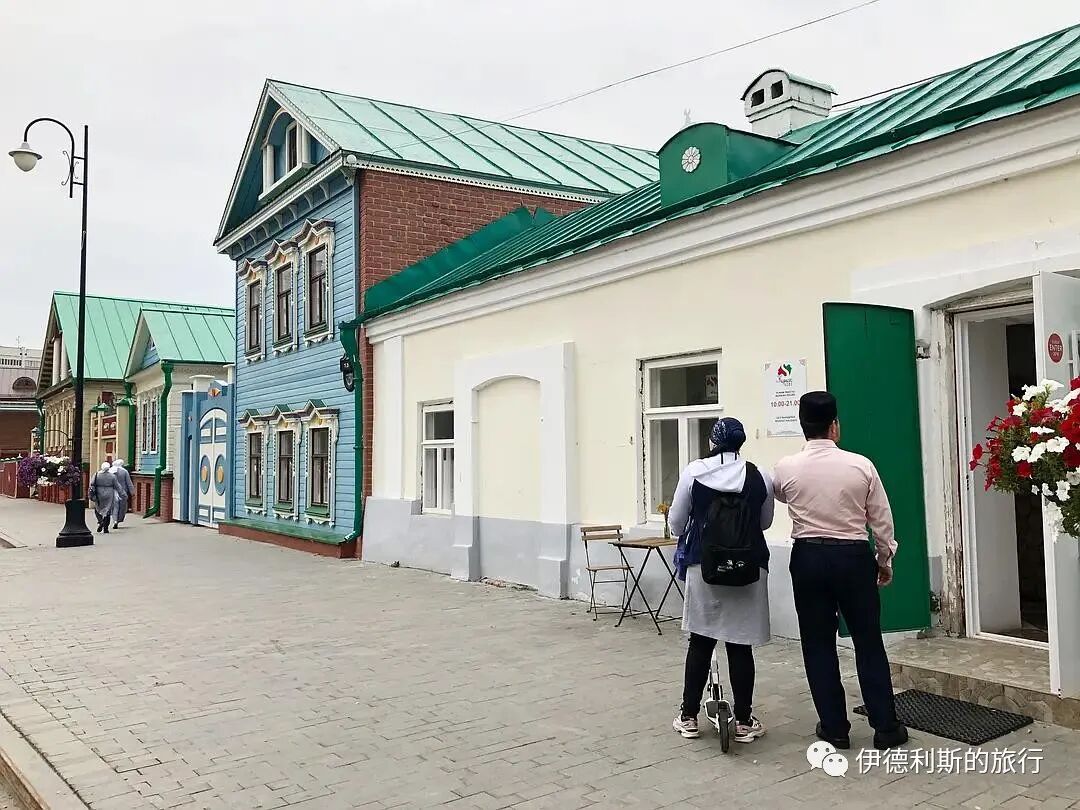
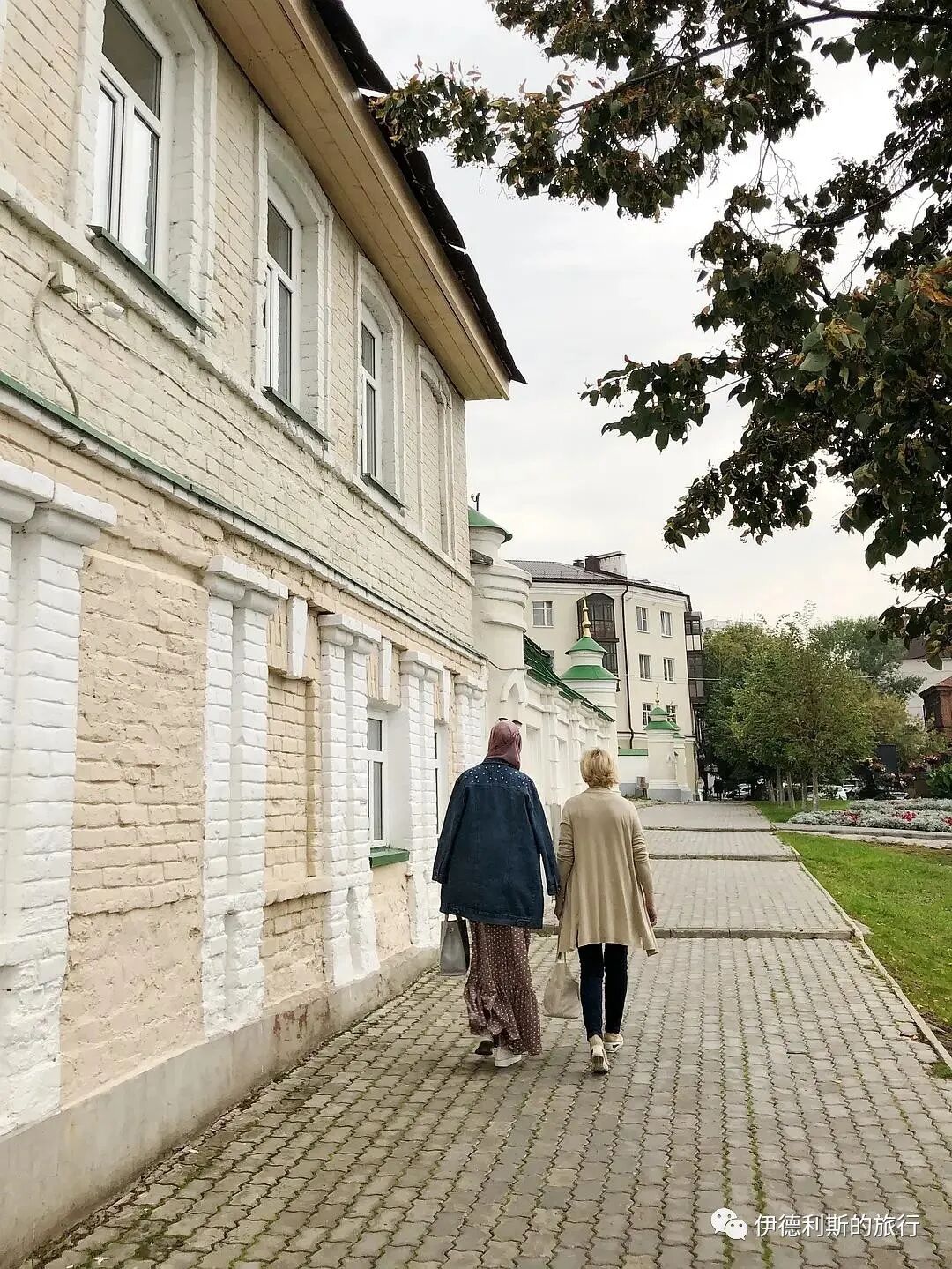
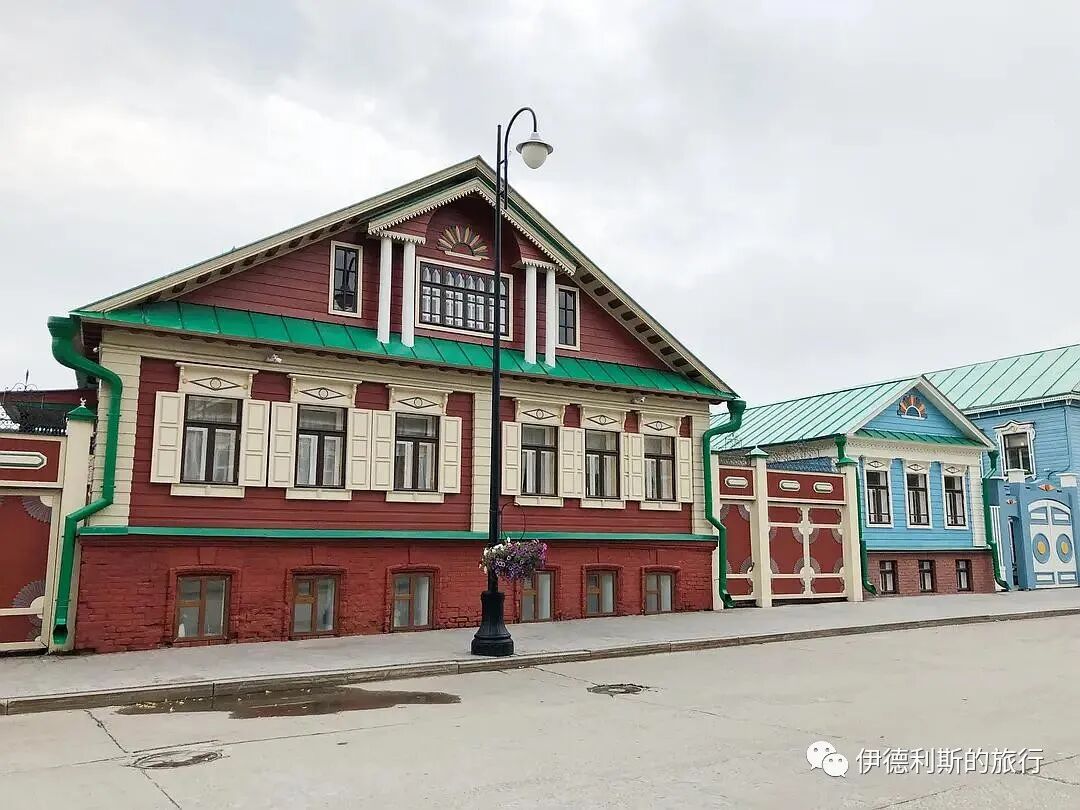
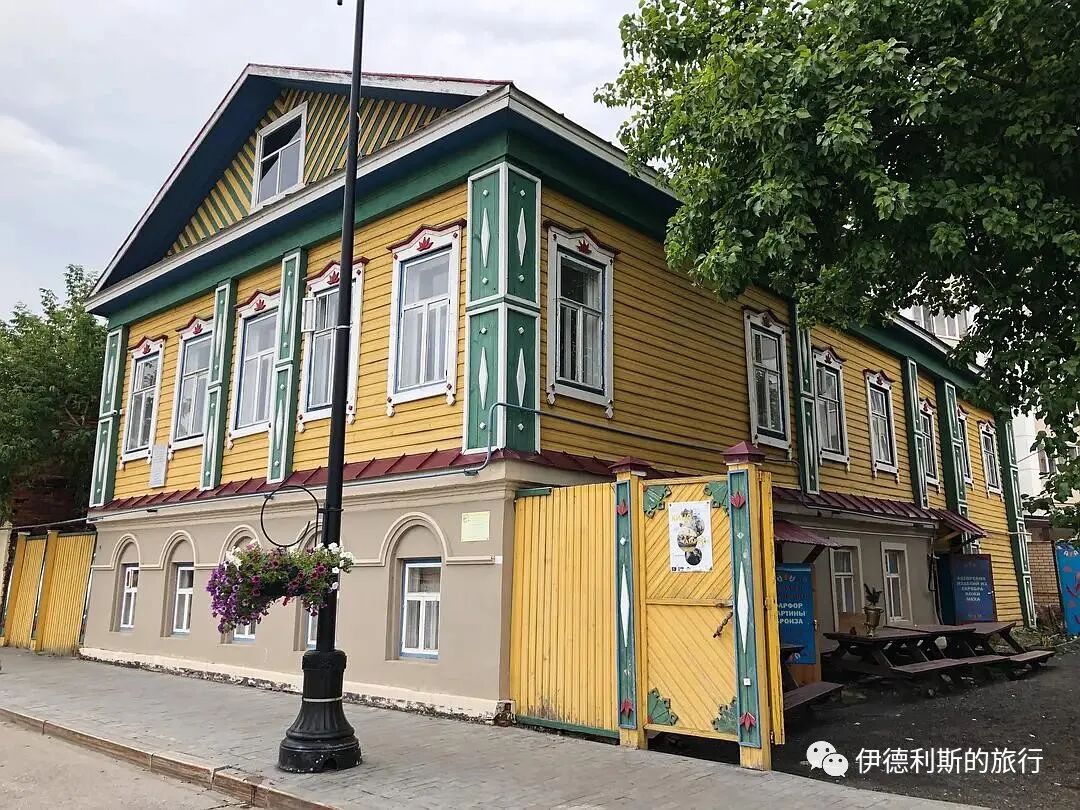
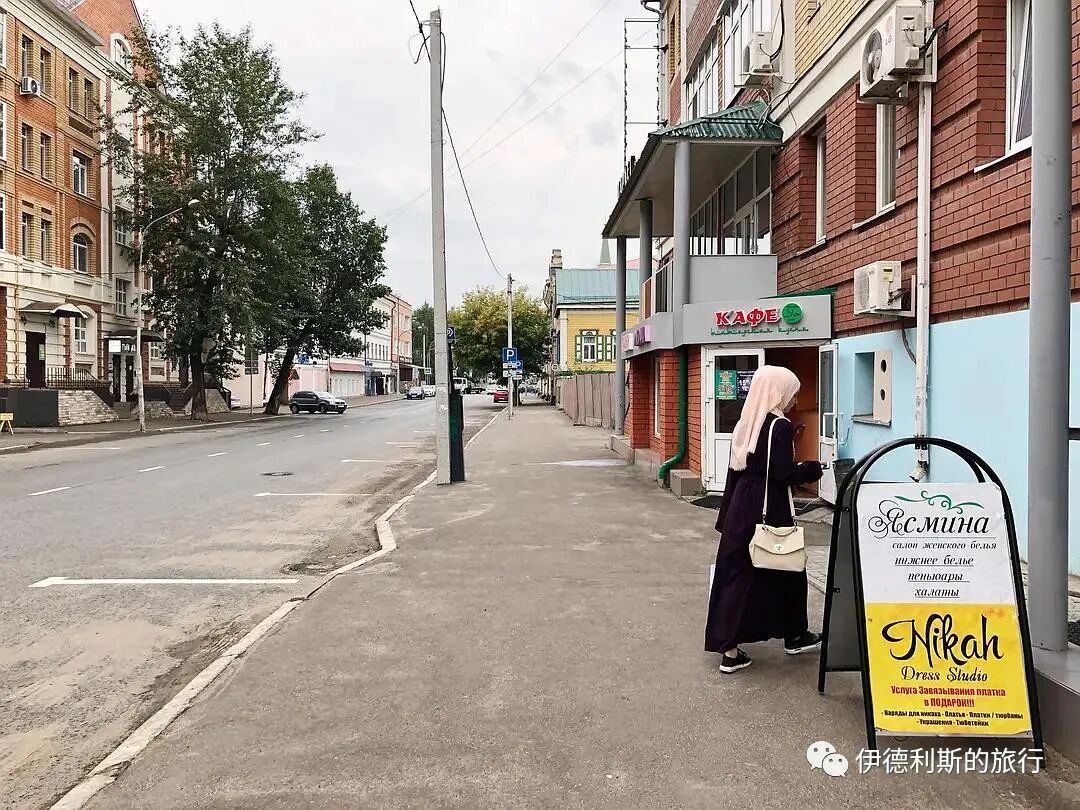
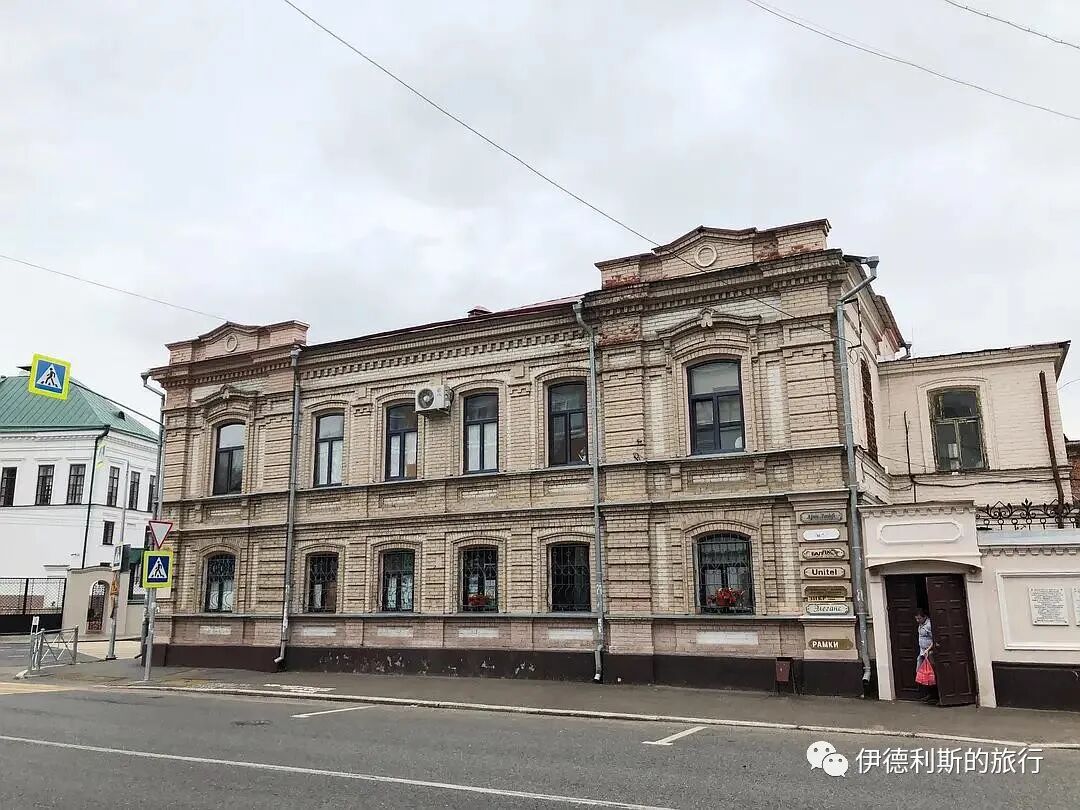
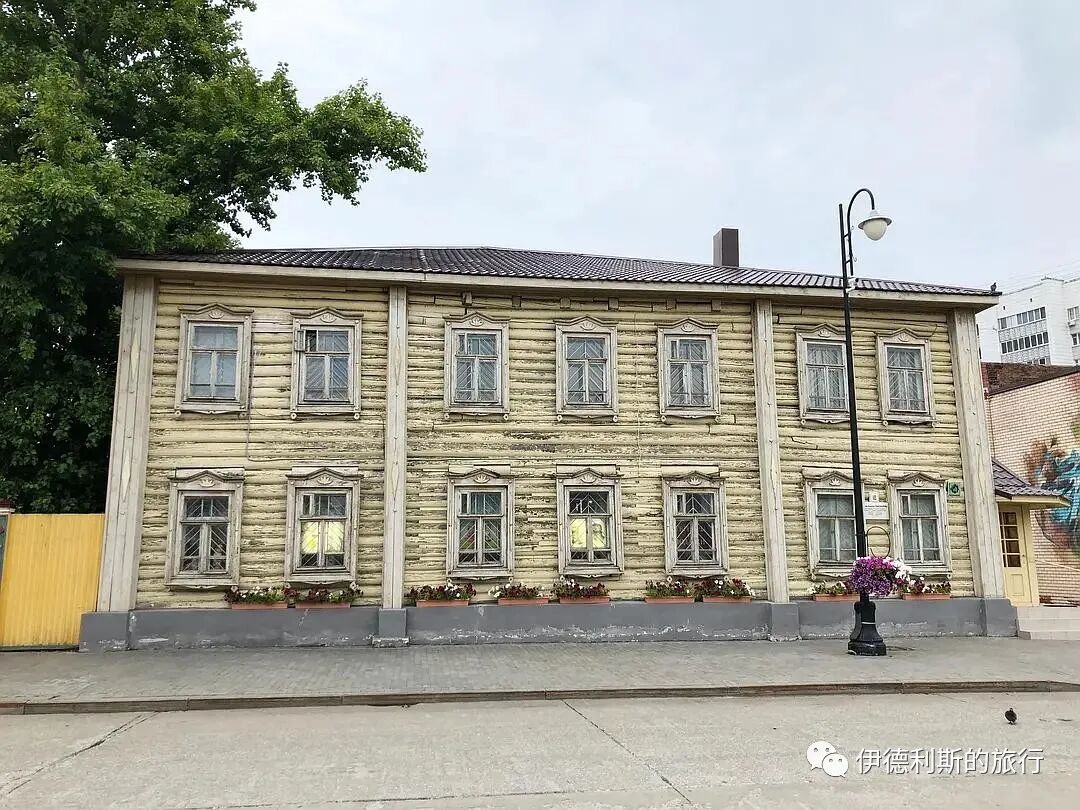
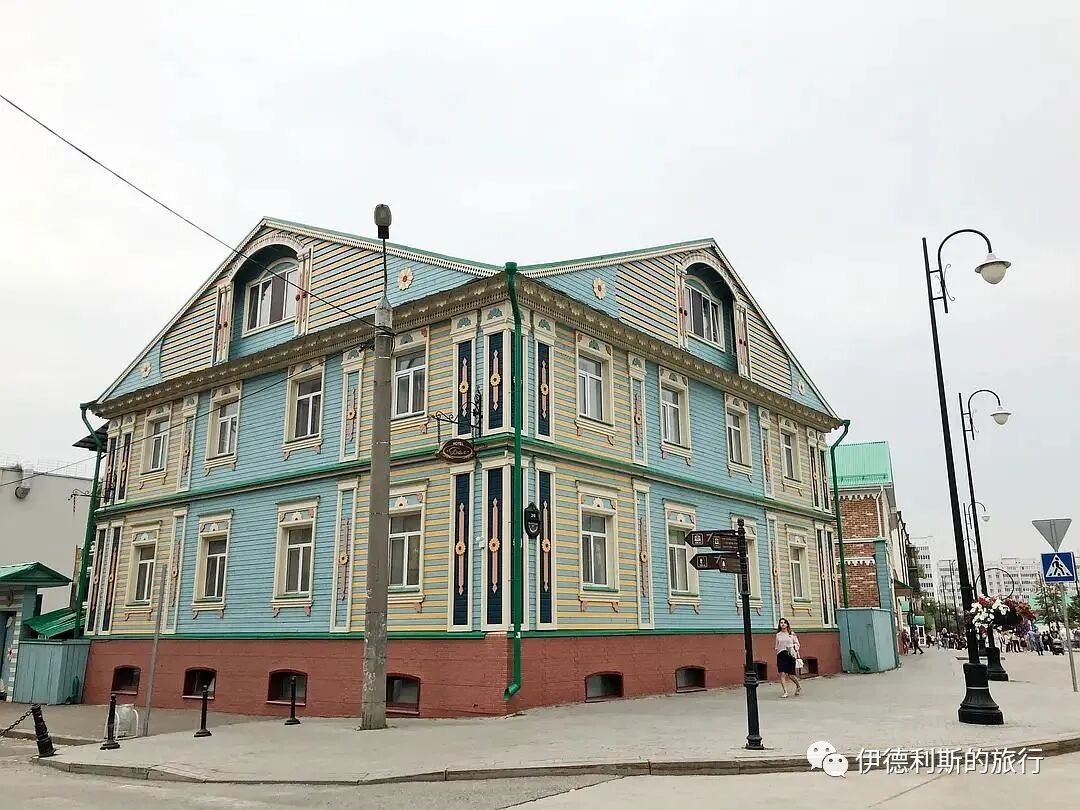
Halal Travel Guide: Kazan, Tatarstan - Mosques, Food and Muslim History
Articles • ali2007fr posted the article • 0 comments • 198 views • 2026-05-20 08:14
Summary: Kazan, the capital of Tatarstan, is shown through the Kazan Kremlin, Tatar Muslim history, mosques, markets, and local food. This account keeps the original route, historical background, Tatar names, and photographs from the trip.
Castle
The Kazan Kremlin is in the heart of Kazan, the capital of Tatarstan, and it started as a fortress for the Volga Bulgaria khanate. After the 9th century, the Bulgars along the Volga River kept expanding to the northwest. To protect trade routes on the Volga, the Bulgars built a military fortress at the turn of the 10th and 11th centuries in the middle reaches of the river, featuring a 4-meter-deep steep trench and a 3-meter-high earthen wall, which marks the beginning of Kazan's history as a city.
In the late 12th century, because Russian principalities kept attacking the Volga Bulgaria khanate, the khanate added 2-meter-thick white stone walls to the city of Kazan. After Kazan was incorporated into the Golden Horde in the 13th century, it jumped from a border fortress to become a political and economic center in the middle Volga region, famous for leather, jewelry, ceramics, and metalwork.
After the Golden Horde collapsed in the 15th century, the Kazan Khanate (1438-1552) was established in Kazan. As the capital, Kazan's population grew quickly, and many homes and public buildings were built, including the khan's palace, courtyards, mosques, and mausoleums, with tall minarets defining the city skyline.
In 1552, Ivan the Terrible of Russia attacked Kazan, destroyed the Kazan Khanate, and drove all Tatars out of the city, allowing only Russians to settle there. Between 1556 and 1562, Ivan the Terrible ordered the construction of the Kazan Kremlin on the site of the old Kazan Khanate fortress. The mosques, the Kazan khan's palace, and the mausoleums were first used as weapon and ammunition depots, but they were all eventually torn down in the 18th century.
In 1977, a hydraulic engineer accidentally dug up a grave while laying rainwater pipes at the Kazan Kremlin and immediately contacted the archaeology department. Archaeological excavations lasted for 10 years and uncovered 5 graves, 2 of which were confirmed to be those of the actual founders of the Kazan Khanate, Mäxmüd Khan (died 1463 or 1466) and his grandson, Möxämmät Ämin (died 1518). The tomb was originally made of white stone and eventually collapsed in the 17th century.
For further research, the remains of the two Kazan khans, Mäxmüd and Möxämmät Ämin, were kept at the Institute of Archaeology of the Tatarstan Academy of Sciences for 40 years. In May 2017, after continuous efforts by the Tatar Muslims of Kazan, the two khans were finally reburied not far from their original graves.
Mahmud Khan was the eldest son of Ulugh Muhammad, the Great Khan of the Golden Horde, and a descendant of Jochi, the eldest son of Genghis Khan. Mahmud took the throne in 1445 and kept control over Moscow. During his reign, Kazan completely separated from the Golden Horde, marking the beginning of what later generations call the Kazan Khanate.
Muhammad Amin Khan was the grandson of Mahmud Khan. He got involved in the internal struggles between pro-Russian and anti-Russian factions in the khanate at age 10. As a khan supported by Moscow, he took the throne three times: from 1484 to 1485, 1487 to 1495, and 1502 to 1518. He also paid tribute to Grand Prince Ivan III of Moscow. Later in his reign, he stopped paying tribute to Moscow and worked to strengthen his country to oppose the Grand Duchy of Moscow.
Between 2004 and 2005, the Institute of Archaeology at the Tatarstan Academy of Sciences re-excavated the Kazan Khan tombs. They found the graves of four more Kazan khans: Khalil (died 1467), Ibrahim (died 1478), Safa Giray (died 1549), and Canghali (died 1535). Today, these four khans' graves are protected under a glass roof.
Khalil Khan was the eldest son of Mahmud Khan. He was known for breaking treaties with the Grand Prince of Moscow and for his poor relationship with the Nogai tribe. The young khan died early, not long after taking the throne. One legend says he died in prison due to the war with the Golden Horde.
Ibrahim Khan was Khalil Khan's younger brother. He fought the Grand Duchy of Moscow many times and won a major victory in 1467 while resisting Grand Prince Ivan III of Moscow.
Safa Giray Khan came from the Giray family of the Crimean Khanate. He served as the Kazan khan three times: from 1524 to 1531, 1535 to 1546, and 1546 to 1549.
Canghali Khan was originally the khan of the Qasim Khanate, a vassal state of the Grand Duchy of Moscow. In 1532, Grand Prince Vasily III of Moscow defeated the Kazan khan, Safa Giray, and installed 16-year-old Canghali as the pro-Russian khan of Kazan. He died in 1535 during a coup by Kazan nobles.
At the entrance of the Kul Sharif mosque inside the Kazan Kremlin, there are performances about the Siege of Kazan. In 1552, Ivan the Terrible besieged Kazan. The last imam of the Kazan Khanate, Seid Kul Sharif, led the people in a final stand and died in the city. Today, Seid Kul Sharif is a national hero to the Kazan Tatars, and the Kul Sharif Mosque, built in 2005, is named after him.
Museums
There is a small museum of Islamic culture on the basement level of the Kul Sharif Mosque.
The Kazan Kremlin also hosts regular exhibitions. When I visited in 2019, I saw a special exhibition called The Golden Horde and the Black Sea Coast: Lessons from the Genghis Khan Empire. The items came from the State Hermitage Museum in St. Petersburg and nine other museums, showcasing the history of the Golden Horde and the Mongol Empire.
The National Museum of the Republic of Tatarstan opened in 1895. The building was once the Gostinniy guesthouse and is a historical monument itself. The museum holds over 800,000 items, including pieces related to the Golden Horde, the Kazan Khanate, and the Kazan Tatars.
The Çäkçäk Museum in Kazan is the most direct way to experience traditional Tatar culture. The museum is located in a Tatar wooden house in the historic Tatar district of Kazan. The interior does a great job of recreating a traditional Tatar home, which feels very authentic. If you have a group of six, they can teach you how to make honey cake (çäkçäk) on the spot. Since I was alone, I booked a tasting and tour session on their website (https://www.muzeino.ru/). The museum staff will email you to confirm if you want the tour in English or Russian.
The experience was wonderful. When I arrived at the museum at the scheduled time, a Tatar woman who spoke fluent English was already waiting for me. The whole process felt like visiting a Tatar family. She told me various Tatar legends, daily customs, and cultural traditions, then explained the detailed process of making the national dessert, çäkçäk. Afterward, she brewed some Tatar tea for me. As I tasted traditional Tatar sweets, she told me about Tatar clothing, silver jewelry, and embroidery, and we had a great time chatting.
Mosques
In 1552, Ivan the Terrible conquered the Kazan Khanate, massacred most of the Tatars in Kazan, and tore down every mosque in the city. In 1556, Russia rebuilt the city of Kazan and settled 7,000 Russians there. The Tatars were forced to convert to Christianity, and those who remained were relocated to settlements far from the city. After this, some Tatars who served Russia settled by Lake Kaban, southwest of Kazan. Later, Tatar merchants and craftspeople moved there as well, and the Old Tatar Quarter (Staro-Tatarskaya Sloboda) gradually formed. However, during this time, Kazan did not have any official mosques.
Before the 18th century, most buildings in Kazan were made of wood and were very prone to fires. During the reign of Catherine the Great (who ruled from 1762 to 1796), the city of Kazan began to be rebuilt using brick and stone.
In 1770, more than 200 years after the fall of Kazan, the first brick mosque was completed with the approval of Catherine the Great. From then on, the Kazan Tatars had an official mosque again. Between 1770 and 1930, a period of 160 years, Tatar merchants built many mosques in Kazan, centered around the Old Tatar Quarter. Twelve of these still survive today. Mosques from this period combined traditional Tatar architecture with Baroque, Classical, and Eclectic styles to create a unique Kazan Tatar mosque architectural style.
In 1930, Stalin ordered the closure of the mosques. Except for the earliest one, the Marjani Mosque, all 11 other mosques in Kazan were closed and repurposed. Many mosque buildings were damaged, and their minarets were torn down. It was not until the late 1980s that these mosques were gradually returned to the Kazan Tatar Muslims.
The Marjani Mosque was built between 1766 and 1770 with the permission of Catherine the Great. It was the first brick mosque built in Kazan after Russia destroyed the Kazan Khanate in 1552. This mosque is the oldest surviving mosque in Tatarstan and the only one in Kazan that was not closed during the Soviet era.
The interior of the mosque uses a St. Petersburg Baroque style. The merchant İ.Ğ. Yunısov donated funds to build a staircase in 1861 and expanded the mihrab in 1863. At that time, the mosque was named the Yunısovs' Mosque after his family. In 1885, the merchant Z. Ğosmanov donated funds to renovate the minaret. In 1887, merchants W. Ğizzätullin and M. Wälişin added decorative window balconies to the minaret.
The Apanay (Apanaevskaya) Mosque was the second mosque approved by Catherine the Great to be built in Kazan. It was donated by the merchant Apanaev and built between 1768 and 1771. The mosque architecture blends traditional Tatar style with Moscow Baroque style. In 1872, architect P. I. Romanov expanded the mosque by adding a second floor. In 1882, the mosque built a brick perimeter wall and added a shop. In 1887, the shop was expanded to include a second floor.
The mosque closed in 1930, its minaret was torn down, and it later became a kindergarten. The mosque reopened after 1995, and the minaret was rebuilt in 2011.
Galeevskaya Mosque was built between 1798 and 1801 with funds donated by merchant Musa Mamyashev. The mosque was originally built in the early classicism style of the late 18th century, then expanded twice in the late classicism style in 1882 and 1897.
The mosque was closed in the 1930s, its minaret was torn down, and it was designated an architectural monument in 1981. By 1992, the mosque housed a hotel, a collective farm building, and various utility facilities. After 1998, the site became a campus for the Russian Islamic University and a dormitory for female students of the Muhammad Madrasa. The mosque reopened in 2015 after undergoing restoration.
İske Taş, also known as the Big Stone Mosque, was built in 1802 with a donation from merchant Ğabdulla Ütämişev. Legend says this mosque was built on the site of a grave for soldiers who died defending the city of Kazan in 1552, marked by an ancient big stone (zur iske taş).
In 1830, Alexander Schmidt rebuilt the mosque in a classicism style, featuring a three-story minaret that resembles those found in the ancient Bolghar and Kasimov regions of the Tatars.
Following a decision by the Central Executive Committee of the Tatar Autonomous Soviet Socialist Republic in the late 1930s, the mosque was closed and later turned into a school and warehouse, only being returned to the Muslims in 1994.
The White Mosque was built between 1801 and 1805. It looks like the Iske Tash mosque built in the same period and has a classic style. The mosque closed in 1929 and became a school and a fur workshop. In the 1930s, the minaret was torn down, and the east and south parts of the main hall were rebuilt. The mosque became an architectural monument in 1960. It was returned to the Muslims in 2004, but it is still not open.
The Pink (Rozovaya) Mosque was built in 1808 with a donation from merchant Musa Apanaev. It is the Islamic center of the Novaya Tatarskaya Sloboda area in Kazan. The mosque closed in 1931 and reopened in 1991. By then, Novaya Tatarskaya Sloboda had become an industrial area. Today, it is the Kazan Higher Muslim Islamic Madrasa.
The Blue (Zangar) Mosque was built between 1815 and 1819 with money from merchant Akhmet Aitov-Zamanov. The architect was Alexander Schmidt. Bolshaya Meshchanskaya Street used to be home to the poorest residents of the old Tatar community. These residents built a wooden mosque here in 1778. In 1815, the original wooden mosque was moved to another village, and the current brick mosque in the classic style was built here.
The mosque was expanded twice, in 1864 and 1907. The mosque closed in 1932, the minaret was torn down, and it was turned into housing. It reopened in 1993, and the minaret was rebuilt in 2009.
The Nurulla Mosque was built between 1845 and 1849 with donations from merchant G. M. Yunisov. It has a minaret in the ancient Volga Bulgar style and a dome in the Middle Eastern style.
The mosque is part of a group of buildings around the Sennoy Bazaar. The Sennoy Bazaar was the trade center for the old Tatar community in Kazan during the 18th and 19th centuries. At that time, the mosque was mainly used by Tatar merchants doing business at the Sennoy Bazaar. It was originally named the Sennobazarnaya Mosque after the bazaar.
The mosque was closed in 1929 and turned into apartments and offices. During that time, the minaret was destroyed. It was not returned to the Muslims until 1992 and was renamed Nurulla Mosque. The minaret was restored between 1990 and 1995.
Soltan Mosque was built in 1868 with a donation from the Tatar merchant Zigansha Usmanov. The area where the mosque is located is called Zabulachye, which means behind the Bulak Canal. During the Kazan Khanate period, this place was outside the city and had a settlement called Kuraisheva Sloboda. After Ivan the Terrible conquered Kazan in 1552, this area remained a place where Tatars lived, but it was gradually surrounded by Russian settlements, and churches began to be built right next to the mosque.
In the 19th century, the Tatar merchant Cihanşa Ğosmanov decided to build a mosque here that looked better than the church next to it. The mosque was completed in 1868, and to honor him, people called it Ğosmanov Mosque or Cihanşa Mosque.
At first, the walls of the mosque were red, so it was also called the Red Mosque. Now the mosque is called Soltan Mosque to honor Zigansha's son, Sultan Abdulgaziz Usmanov, who continued to look after the local community after his father passed away.
The mosque closed in 1931, and later the minaret was destroyed. It became an architectural monument in 1980. The minaret was rebuilt in 1990, and the mosque reopened in 1994.
Bornay (Burnaevskaya) Mosque was built in 1872 with funds donated by the Tatar merchant Mukhametsadyk Burnayev, and the architect was Peter Romanov.
The mosque is located in the Old Tatar neighborhood behind Kaban Lake. In 1799, the Tatar merchant Salikh Mustafin built a wooden mosque here. The mosque was first built for students at the Apanaev madrasa, and later, local residents began using it too. Unfortunately, the mosque was later destroyed in a fire. In 1872, Tatar merchant Mukhametsadyk Burnayev donated money to build the current brick mosque on the site of the burned-down wooden one, and it was named after him.
The mosque features a national romantic eclectic style, blending Russian and Tatar architectural decorations. In 1895, shortly before Burnayev passed away, a magnificent minaret was built based on designs by architects Fyodor Malinovsky and Lev Khrshonovich.
The mosque closed in 1930, but fortunately, the minaret was preserved. It reopened in 1994.
The Azimov Mosque was built between 1887 and 1890 with donations from Tatar merchant Mortaza Äcimev. The mosque was built in a national romantic eclectic style and is known as the most beautiful mosque in Kazan.
The mosque is located in an area called Pleten (wicker fence), situated between the Old Tatar and New Tatar neighborhoods. In 1851, Tatar merchant Mustafa Azimov built a wooden mosque here. Between 1887 and 1890, his son Murtaza Azimov donated funds to build the current brick mosque, which was named after them. Because many Muslim workers from soap factories lived in the Pleten area, it is also called Zavodskaya (factory mosque).
The mosque closed in 1930 and was used as a school. It was returned to the Muslims in 1989 and reopened in 1992.
The Zakabannaya Mosque, also known as the Mosque of the 1000th Anniversary of the Adoption of Islam, was built between 1924 and 1926 to commemorate the 1000th anniversary of the Volga Bulgars converting to Islam in 922. Stalin personally approved the construction of the mosque. It was designed by architect A. E. Pechnikov in 1914 and built with public donations.
The mosque closed in 1930 and reopened in 1991. It was the last mosque built in Kazan before Stalin ordered the closure of mosques in 1930.
Accommodation
I stayed at a traditional Tatar estate called Tatarskaya Usadba by the shore of Lake Kaban, which was originally the home of a 19th-century Tatar merchant named Khamit Sabitov. The estate offers both lodging and dining, but since I didn't book a main meal in advance, I only had breakfast, which was also in the traditional Tatar style.
Cultural Activities
I was very lucky to attend the Tatar cultural festival called the Pechen Bazaar (Pechen bazary) in Kazan. It was very lively, with various Tatar designers, poets, musicians, and filmmakers showing their work and sharing ideas.
For traditional Tatar tea, you can see ingredients like thyme, linden leaves, chamomile, oregano, mint, and sage added to the brew. I also saw an uncle toss pine cones directly into the tea stove, which made it smell wonderful.
Traditional Tatar desserts are a bit like Turkish sweets and go perfectly with tea.
Cakes made by Tatar girls.
Tatar craftspeople.
A young Tatar person is creating Arabic calligraphy on the spot using thread.
A Tatar auntie is selling headpieces for Kazan Tatar women, which are decorated with pearls and look very beautiful.
At the honey stall, the festival invited some Tatar people living in the countryside to sell their own honey, cheese, and sausages, which was also very interesting.
A stall selling traditional Tatar clothing.
An uncle who is an architect specializing in building mosques is sharing how to construct them.
A young Tatar female poet is reading her poetry.
The outfit worn by the host is the formal attire of urban Kazan Tatars from the early 20th century.
This stall is a creative brand featuring a sweet Islamic style inspired by Tatar culture.
A stall selling books about Tatar culture.
Restaurant
While in Kazan, I ate at the famous traditional Tatar restaurant Dom Tatarskoi Kulinarii (Tatar Cuisine House) on Bauman Street. The restaurant opened in 1969. It was founded by Yunus Akhmetzyanov, a Tatar food expert and author of "Dishes of Tatar cuisine," who served as the head chef until 1984.
In the evening, I ate at Teatr Natsionalnoi Kukhni, a restaurant inside another Tatar estate by Lake Kaban that was once the home of the wealthy Tatar merchant Bikmukhametov. I ordered horse meat salad, cream of pumpkin soup with dried apricots and cream cheese, and a fresh horse meat stew called Kullama. Kullama is the Tatar version of the national dish of Kazakhstan, five-finger stew (Beshbarmak).
Tubatay is a fast-food restaurant selling traditional Tatar dishes, and they also have a shop inside the ancient city of Bolghar. The name "Tubatay" refers to the traditional round cap worn by Tatar people.
I ordered steamed dumplings (Manti), a signature meat pie (Belesh) made with sour cream dough and a filling of beef, potatoes, and onions, Tatar clear soup dumplings (Pilmen) served with sour cream (Smetana), and Tatar tea.
Next to where I stayed, there was a large halal supermarket specializing in Tatar goods, with a dazzling variety of traditional Tatar desserts.
Street view
Street view of the Tatar community in Kazan view all
Summary: Kazan, the capital of Tatarstan, is shown through the Kazan Kremlin, Tatar Muslim history, mosques, markets, and local food. This account keeps the original route, historical background, Tatar names, and photographs from the trip.
Castle
The Kazan Kremlin is in the heart of Kazan, the capital of Tatarstan, and it started as a fortress for the Volga Bulgaria khanate. After the 9th century, the Bulgars along the Volga River kept expanding to the northwest. To protect trade routes on the Volga, the Bulgars built a military fortress at the turn of the 10th and 11th centuries in the middle reaches of the river, featuring a 4-meter-deep steep trench and a 3-meter-high earthen wall, which marks the beginning of Kazan's history as a city.
In the late 12th century, because Russian principalities kept attacking the Volga Bulgaria khanate, the khanate added 2-meter-thick white stone walls to the city of Kazan. After Kazan was incorporated into the Golden Horde in the 13th century, it jumped from a border fortress to become a political and economic center in the middle Volga region, famous for leather, jewelry, ceramics, and metalwork.
After the Golden Horde collapsed in the 15th century, the Kazan Khanate (1438-1552) was established in Kazan. As the capital, Kazan's population grew quickly, and many homes and public buildings were built, including the khan's palace, courtyards, mosques, and mausoleums, with tall minarets defining the city skyline.
In 1552, Ivan the Terrible of Russia attacked Kazan, destroyed the Kazan Khanate, and drove all Tatars out of the city, allowing only Russians to settle there. Between 1556 and 1562, Ivan the Terrible ordered the construction of the Kazan Kremlin on the site of the old Kazan Khanate fortress. The mosques, the Kazan khan's palace, and the mausoleums were first used as weapon and ammunition depots, but they were all eventually torn down in the 18th century.
In 1977, a hydraulic engineer accidentally dug up a grave while laying rainwater pipes at the Kazan Kremlin and immediately contacted the archaeology department. Archaeological excavations lasted for 10 years and uncovered 5 graves, 2 of which were confirmed to be those of the actual founders of the Kazan Khanate, Mäxmüd Khan (died 1463 or 1466) and his grandson, Möxämmät Ämin (died 1518). The tomb was originally made of white stone and eventually collapsed in the 17th century.
For further research, the remains of the two Kazan khans, Mäxmüd and Möxämmät Ämin, were kept at the Institute of Archaeology of the Tatarstan Academy of Sciences for 40 years. In May 2017, after continuous efforts by the Tatar Muslims of Kazan, the two khans were finally reburied not far from their original graves.
Mahmud Khan was the eldest son of Ulugh Muhammad, the Great Khan of the Golden Horde, and a descendant of Jochi, the eldest son of Genghis Khan. Mahmud took the throne in 1445 and kept control over Moscow. During his reign, Kazan completely separated from the Golden Horde, marking the beginning of what later generations call the Kazan Khanate.
Muhammad Amin Khan was the grandson of Mahmud Khan. He got involved in the internal struggles between pro-Russian and anti-Russian factions in the khanate at age 10. As a khan supported by Moscow, he took the throne three times: from 1484 to 1485, 1487 to 1495, and 1502 to 1518. He also paid tribute to Grand Prince Ivan III of Moscow. Later in his reign, he stopped paying tribute to Moscow and worked to strengthen his country to oppose the Grand Duchy of Moscow.
Between 2004 and 2005, the Institute of Archaeology at the Tatarstan Academy of Sciences re-excavated the Kazan Khan tombs. They found the graves of four more Kazan khans: Khalil (died 1467), Ibrahim (died 1478), Safa Giray (died 1549), and Canghali (died 1535). Today, these four khans' graves are protected under a glass roof.
Khalil Khan was the eldest son of Mahmud Khan. He was known for breaking treaties with the Grand Prince of Moscow and for his poor relationship with the Nogai tribe. The young khan died early, not long after taking the throne. One legend says he died in prison due to the war with the Golden Horde.
Ibrahim Khan was Khalil Khan's younger brother. He fought the Grand Duchy of Moscow many times and won a major victory in 1467 while resisting Grand Prince Ivan III of Moscow.
Safa Giray Khan came from the Giray family of the Crimean Khanate. He served as the Kazan khan three times: from 1524 to 1531, 1535 to 1546, and 1546 to 1549.
Canghali Khan was originally the khan of the Qasim Khanate, a vassal state of the Grand Duchy of Moscow. In 1532, Grand Prince Vasily III of Moscow defeated the Kazan khan, Safa Giray, and installed 16-year-old Canghali as the pro-Russian khan of Kazan. He died in 1535 during a coup by Kazan nobles.
At the entrance of the Kul Sharif mosque inside the Kazan Kremlin, there are performances about the Siege of Kazan. In 1552, Ivan the Terrible besieged Kazan. The last imam of the Kazan Khanate, Seid Kul Sharif, led the people in a final stand and died in the city. Today, Seid Kul Sharif is a national hero to the Kazan Tatars, and the Kul Sharif Mosque, built in 2005, is named after him.
Museums
There is a small museum of Islamic culture on the basement level of the Kul Sharif Mosque.
The Kazan Kremlin also hosts regular exhibitions. When I visited in 2019, I saw a special exhibition called The Golden Horde and the Black Sea Coast: Lessons from the Genghis Khan Empire. The items came from the State Hermitage Museum in St. Petersburg and nine other museums, showcasing the history of the Golden Horde and the Mongol Empire.
The National Museum of the Republic of Tatarstan opened in 1895. The building was once the Gostinniy guesthouse and is a historical monument itself. The museum holds over 800,000 items, including pieces related to the Golden Horde, the Kazan Khanate, and the Kazan Tatars.
The Çäkçäk Museum in Kazan is the most direct way to experience traditional Tatar culture. The museum is located in a Tatar wooden house in the historic Tatar district of Kazan. The interior does a great job of recreating a traditional Tatar home, which feels very authentic. If you have a group of six, they can teach you how to make honey cake (çäkçäk) on the spot. Since I was alone, I booked a tasting and tour session on their website (https://www.muzeino.ru/). The museum staff will email you to confirm if you want the tour in English or Russian.
The experience was wonderful. When I arrived at the museum at the scheduled time, a Tatar woman who spoke fluent English was already waiting for me. The whole process felt like visiting a Tatar family. She told me various Tatar legends, daily customs, and cultural traditions, then explained the detailed process of making the national dessert, çäkçäk. Afterward, she brewed some Tatar tea for me. As I tasted traditional Tatar sweets, she told me about Tatar clothing, silver jewelry, and embroidery, and we had a great time chatting.
Mosques
In 1552, Ivan the Terrible conquered the Kazan Khanate, massacred most of the Tatars in Kazan, and tore down every mosque in the city. In 1556, Russia rebuilt the city of Kazan and settled 7,000 Russians there. The Tatars were forced to convert to Christianity, and those who remained were relocated to settlements far from the city. After this, some Tatars who served Russia settled by Lake Kaban, southwest of Kazan. Later, Tatar merchants and craftspeople moved there as well, and the Old Tatar Quarter (Staro-Tatarskaya Sloboda) gradually formed. However, during this time, Kazan did not have any official mosques.
Before the 18th century, most buildings in Kazan were made of wood and were very prone to fires. During the reign of Catherine the Great (who ruled from 1762 to 1796), the city of Kazan began to be rebuilt using brick and stone.
In 1770, more than 200 years after the fall of Kazan, the first brick mosque was completed with the approval of Catherine the Great. From then on, the Kazan Tatars had an official mosque again. Between 1770 and 1930, a period of 160 years, Tatar merchants built many mosques in Kazan, centered around the Old Tatar Quarter. Twelve of these still survive today. Mosques from this period combined traditional Tatar architecture with Baroque, Classical, and Eclectic styles to create a unique Kazan Tatar mosque architectural style.
In 1930, Stalin ordered the closure of the mosques. Except for the earliest one, the Marjani Mosque, all 11 other mosques in Kazan were closed and repurposed. Many mosque buildings were damaged, and their minarets were torn down. It was not until the late 1980s that these mosques were gradually returned to the Kazan Tatar Muslims.
The Marjani Mosque was built between 1766 and 1770 with the permission of Catherine the Great. It was the first brick mosque built in Kazan after Russia destroyed the Kazan Khanate in 1552. This mosque is the oldest surviving mosque in Tatarstan and the only one in Kazan that was not closed during the Soviet era.
The interior of the mosque uses a St. Petersburg Baroque style. The merchant İ.Ğ. Yunısov donated funds to build a staircase in 1861 and expanded the mihrab in 1863. At that time, the mosque was named the Yunısovs' Mosque after his family. In 1885, the merchant Z. Ğosmanov donated funds to renovate the minaret. In 1887, merchants W. Ğizzätullin and M. Wälişin added decorative window balconies to the minaret.
The Apanay (Apanaevskaya) Mosque was the second mosque approved by Catherine the Great to be built in Kazan. It was donated by the merchant Apanaev and built between 1768 and 1771. The mosque architecture blends traditional Tatar style with Moscow Baroque style. In 1872, architect P. I. Romanov expanded the mosque by adding a second floor. In 1882, the mosque built a brick perimeter wall and added a shop. In 1887, the shop was expanded to include a second floor.
The mosque closed in 1930, its minaret was torn down, and it later became a kindergarten. The mosque reopened after 1995, and the minaret was rebuilt in 2011.
Galeevskaya Mosque was built between 1798 and 1801 with funds donated by merchant Musa Mamyashev. The mosque was originally built in the early classicism style of the late 18th century, then expanded twice in the late classicism style in 1882 and 1897.
The mosque was closed in the 1930s, its minaret was torn down, and it was designated an architectural monument in 1981. By 1992, the mosque housed a hotel, a collective farm building, and various utility facilities. After 1998, the site became a campus for the Russian Islamic University and a dormitory for female students of the Muhammad Madrasa. The mosque reopened in 2015 after undergoing restoration.
İske Taş, also known as the Big Stone Mosque, was built in 1802 with a donation from merchant Ğabdulla Ütämişev. Legend says this mosque was built on the site of a grave for soldiers who died defending the city of Kazan in 1552, marked by an ancient big stone (zur iske taş).
In 1830, Alexander Schmidt rebuilt the mosque in a classicism style, featuring a three-story minaret that resembles those found in the ancient Bolghar and Kasimov regions of the Tatars.
Following a decision by the Central Executive Committee of the Tatar Autonomous Soviet Socialist Republic in the late 1930s, the mosque was closed and later turned into a school and warehouse, only being returned to the Muslims in 1994.
The White Mosque was built between 1801 and 1805. It looks like the Iske Tash mosque built in the same period and has a classic style. The mosque closed in 1929 and became a school and a fur workshop. In the 1930s, the minaret was torn down, and the east and south parts of the main hall were rebuilt. The mosque became an architectural monument in 1960. It was returned to the Muslims in 2004, but it is still not open.
The Pink (Rozovaya) Mosque was built in 1808 with a donation from merchant Musa Apanaev. It is the Islamic center of the Novaya Tatarskaya Sloboda area in Kazan. The mosque closed in 1931 and reopened in 1991. By then, Novaya Tatarskaya Sloboda had become an industrial area. Today, it is the Kazan Higher Muslim Islamic Madrasa.
The Blue (Zangar) Mosque was built between 1815 and 1819 with money from merchant Akhmet Aitov-Zamanov. The architect was Alexander Schmidt. Bolshaya Meshchanskaya Street used to be home to the poorest residents of the old Tatar community. These residents built a wooden mosque here in 1778. In 1815, the original wooden mosque was moved to another village, and the current brick mosque in the classic style was built here.
The mosque was expanded twice, in 1864 and 1907. The mosque closed in 1932, the minaret was torn down, and it was turned into housing. It reopened in 1993, and the minaret was rebuilt in 2009.
The Nurulla Mosque was built between 1845 and 1849 with donations from merchant G. M. Yunisov. It has a minaret in the ancient Volga Bulgar style and a dome in the Middle Eastern style.
The mosque is part of a group of buildings around the Sennoy Bazaar. The Sennoy Bazaar was the trade center for the old Tatar community in Kazan during the 18th and 19th centuries. At that time, the mosque was mainly used by Tatar merchants doing business at the Sennoy Bazaar. It was originally named the Sennobazarnaya Mosque after the bazaar.
The mosque was closed in 1929 and turned into apartments and offices. During that time, the minaret was destroyed. It was not returned to the Muslims until 1992 and was renamed Nurulla Mosque. The minaret was restored between 1990 and 1995.
Soltan Mosque was built in 1868 with a donation from the Tatar merchant Zigansha Usmanov. The area where the mosque is located is called Zabulachye, which means behind the Bulak Canal. During the Kazan Khanate period, this place was outside the city and had a settlement called Kuraisheva Sloboda. After Ivan the Terrible conquered Kazan in 1552, this area remained a place where Tatars lived, but it was gradually surrounded by Russian settlements, and churches began to be built right next to the mosque.
In the 19th century, the Tatar merchant Cihanşa Ğosmanov decided to build a mosque here that looked better than the church next to it. The mosque was completed in 1868, and to honor him, people called it Ğosmanov Mosque or Cihanşa Mosque.
At first, the walls of the mosque were red, so it was also called the Red Mosque. Now the mosque is called Soltan Mosque to honor Zigansha's son, Sultan Abdulgaziz Usmanov, who continued to look after the local community after his father passed away.
The mosque closed in 1931, and later the minaret was destroyed. It became an architectural monument in 1980. The minaret was rebuilt in 1990, and the mosque reopened in 1994.
Bornay (Burnaevskaya) Mosque was built in 1872 with funds donated by the Tatar merchant Mukhametsadyk Burnayev, and the architect was Peter Romanov.
The mosque is located in the Old Tatar neighborhood behind Kaban Lake. In 1799, the Tatar merchant Salikh Mustafin built a wooden mosque here. The mosque was first built for students at the Apanaev madrasa, and later, local residents began using it too. Unfortunately, the mosque was later destroyed in a fire. In 1872, Tatar merchant Mukhametsadyk Burnayev donated money to build the current brick mosque on the site of the burned-down wooden one, and it was named after him.
The mosque features a national romantic eclectic style, blending Russian and Tatar architectural decorations. In 1895, shortly before Burnayev passed away, a magnificent minaret was built based on designs by architects Fyodor Malinovsky and Lev Khrshonovich.
The mosque closed in 1930, but fortunately, the minaret was preserved. It reopened in 1994.
The Azimov Mosque was built between 1887 and 1890 with donations from Tatar merchant Mortaza Äcimev. The mosque was built in a national romantic eclectic style and is known as the most beautiful mosque in Kazan.
The mosque is located in an area called Pleten (wicker fence), situated between the Old Tatar and New Tatar neighborhoods. In 1851, Tatar merchant Mustafa Azimov built a wooden mosque here. Between 1887 and 1890, his son Murtaza Azimov donated funds to build the current brick mosque, which was named after them. Because many Muslim workers from soap factories lived in the Pleten area, it is also called Zavodskaya (factory mosque).
The mosque closed in 1930 and was used as a school. It was returned to the Muslims in 1989 and reopened in 1992.
The Zakabannaya Mosque, also known as the Mosque of the 1000th Anniversary of the Adoption of Islam, was built between 1924 and 1926 to commemorate the 1000th anniversary of the Volga Bulgars converting to Islam in 922. Stalin personally approved the construction of the mosque. It was designed by architect A. E. Pechnikov in 1914 and built with public donations.
The mosque closed in 1930 and reopened in 1991. It was the last mosque built in Kazan before Stalin ordered the closure of mosques in 1930.
Accommodation
I stayed at a traditional Tatar estate called Tatarskaya Usadba by the shore of Lake Kaban, which was originally the home of a 19th-century Tatar merchant named Khamit Sabitov. The estate offers both lodging and dining, but since I didn't book a main meal in advance, I only had breakfast, which was also in the traditional Tatar style.
Cultural Activities
I was very lucky to attend the Tatar cultural festival called the Pechen Bazaar (Pechen bazary) in Kazan. It was very lively, with various Tatar designers, poets, musicians, and filmmakers showing their work and sharing ideas.
For traditional Tatar tea, you can see ingredients like thyme, linden leaves, chamomile, oregano, mint, and sage added to the brew. I also saw an uncle toss pine cones directly into the tea stove, which made it smell wonderful.
Traditional Tatar desserts are a bit like Turkish sweets and go perfectly with tea.
Cakes made by Tatar girls.
Tatar craftspeople.
A young Tatar person is creating Arabic calligraphy on the spot using thread.
A Tatar auntie is selling headpieces for Kazan Tatar women, which are decorated with pearls and look very beautiful.
At the honey stall, the festival invited some Tatar people living in the countryside to sell their own honey, cheese, and sausages, which was also very interesting.
A stall selling traditional Tatar clothing.
An uncle who is an architect specializing in building mosques is sharing how to construct them.
A young Tatar female poet is reading her poetry.
The outfit worn by the host is the formal attire of urban Kazan Tatars from the early 20th century.
This stall is a creative brand featuring a sweet Islamic style inspired by Tatar culture.
A stall selling books about Tatar culture.
Restaurant
While in Kazan, I ate at the famous traditional Tatar restaurant Dom Tatarskoi Kulinarii (Tatar Cuisine House) on Bauman Street. The restaurant opened in 1969. It was founded by Yunus Akhmetzyanov, a Tatar food expert and author of "Dishes of Tatar cuisine," who served as the head chef until 1984.
In the evening, I ate at Teatr Natsionalnoi Kukhni, a restaurant inside another Tatar estate by Lake Kaban that was once the home of the wealthy Tatar merchant Bikmukhametov. I ordered horse meat salad, cream of pumpkin soup with dried apricots and cream cheese, and a fresh horse meat stew called Kullama. Kullama is the Tatar version of the national dish of Kazakhstan, five-finger stew (Beshbarmak).
Tubatay is a fast-food restaurant selling traditional Tatar dishes, and they also have a shop inside the ancient city of Bolghar. The name "Tubatay" refers to the traditional round cap worn by Tatar people.
I ordered steamed dumplings (Manti), a signature meat pie (Belesh) made with sour cream dough and a filling of beef, potatoes, and onions, Tatar clear soup dumplings (Pilmen) served with sour cream (Smetana), and Tatar tea.
Next to where I stayed, there was a large halal supermarket specializing in Tatar goods, with a dazzling variety of traditional Tatar desserts.
Street view
Street view of the Tatar community in Kazan
Halal Travel Guide: Kazan Kremlin — Tatarstan Museum and Muslim Heritage
Articles • ali2007fr posted the article • 0 comments • 148 views • 2026-05-18 02:38
Summary: Kazan Kremlin — Tatarstan Museum and Muslim Heritage is presented here as a firsthand travel account in clear English, beginning with this scene: Kazan Kremlin sits in the heart of Kazan, the capital of Tatarstan, and started as a fortress for the Volga Bulgaria khanate. The account keeps its focus on Kazan Travel, Tatarstan Museum, Muslim Heritage while preserving the names, places, food, and historical details from the Chinese source.
The history of Kazan city.
Kazan Kremlin sits in the heart of Kazan, the capital of Tatarstan, and started as a fortress for the Volga Bulgaria khanate. After the 9th century, the Bulgars living along the Volga River kept expanding to the northwest. To protect trade routes on the Volga, the Bulgars built a military fortress between the 10th and 11th centuries in the middle reaches of the river, featuring a 4-meter-deep steep trench and a 3-meter-high earthen wall; this marks the beginning of Kazan's history as a city.
In the late 12th century, the Volga Bulgaria khanate added a 2-meter-thick white stone wall to Kazan city to defend against constant attacks from Russian principalities. After Kazan joined the Golden Horde in the 13th century, it jumped from a border fortress to become the political and economic center of the middle Volga, famous for leather, jewelry, ceramics, and metalwork.
After the Golden Horde collapsed in the 15th century, the Kazan Khanate (1438-1552) was established in Kazan. As the capital, Kazan's population grew quickly, and many homes and public buildings were built, including the Kazan Khan's palace, courtyards, mosques, and tombs, with tall minarets defining the city skyline.
In 1552, Ivan the Terrible of Russia attacked Kazan, destroyed the Kazan Khanate, and forced all Tatars out of the city, allowing only Russians to settle there. Between 1556 and 1562, Ivan the Terrible ordered the construction of the Kazan Kremlin on the site of the old Kazan Khanate fortress. The mosques, the Kazan Khan's palace, and the tombs were first used as armories and ammunition depots, but they were all torn down by the 18th century.
Restoration images of the Volga Bulgaria and Kazan Khanate periods from the official Kazan Kremlin website.
The tomb of the Kazan Khan.
In 1977, water engineers digging for a rainwater pipe at the Kazan Kremlin accidentally uncovered a tomb and immediately contacted the archaeology department. Archaeological excavations lasted for 10 years and uncovered five graves. Two were confirmed to be those of the actual founders of the Kazan Khanate: Kazan Khan Mäxmüd (died in 1463 or 1466) and his grandson, Kazan Khan Möxämmät Ämin (died in 1518). The tomb was originally built from white stone and eventually collapsed in the 17th century.
For further research, the remains of the two Kazan Khans, Mäxmüd and Möxämmät Ämin, were kept at the Institute of Archaeology of the Tatarstan Academy of Sciences for 40 years. In May 2017, after persistent efforts by the Tatar Muslims of Kazan, the two Kazan Khans were finally reburied not far from the original tomb site.
The burial site discovered in 1977.
Likely relics from the Khan's palace mosque.
Khan Mäxmüd was the eldest son of Ulugh Muhammad, the Great Khan of the Golden Horde, and a descendant of Genghis Khan's eldest son, Jochi. In 1438, his father Ulugh Muhammad occupied Kazan and began constant raids on the Grand Duchy of Moscow. Mäxmüd joined his father's attack on Moscow and won a major victory in 1445, capturing Grand Prince Vasily II and forcing the Grand Duchy of Moscow to pay tribute to Kazan. Mäxmüd took the throne in 1445 and kept control over Moscow. During his reign, Kazan completely separated from the Golden Horde, marking the beginning of what later generations called the Kazan Khanate.
Khan Muhammad Amin was the grandson of Khan Mahmud. From the age of 10, he was involved in the struggles between pro-Russian and anti-Russian factions within the khanate. As a khan supported by Moscow, he took the throne three times: from 1484 to 1485, 1487 to 1495, and 1502 to 1518. He also paid tribute to Grand Prince Ivan III of Moscow. Later in his reign, he stopped paying tribute to Moscow and worked to strengthen his country to oppose the Grand Duchy of Moscow.
The burial site was re-interred in 2017.
Between 2004 and 2005, the Institute of Archaeology of the Tatarstan Academy of Sciences re-excavated the Kazan Khan mausoleum. They discovered the graves of four more Kazan khans: Khalil (died 1467), Ibrahim (died 1478), Safa Giray (died 1549), and Canghali (died 1535). Today, these four Kazan khan graves are protected under a glass roof.
Khan Khalil was the eldest son of Khan Mahmud. He was known for violating treaties with the Grand Prince of Moscow and for his poor relationship with the Nogai tribe. The young khan died early, not long after taking the throne. One legend says he died in prison due to the war with the Golden Horde.
Khan Ibrahim was the younger brother of Khan Khalil. He fought against the Grand Duchy of Moscow many times and won a great victory in the 1467 war against Grand Prince Ivan III of Moscow.
Khan Safa Giray came from the Giray family of the Crimean Khanate. He served as the Kazan khan three times: from 1524 to 1531, 1535 to 1546, and 1546 to 1549. Safa Giray was an anti-Russian Kazan khan. His first reign ended when the Grand Duchy of Moscow attacked Kazan. Four years later, he took the throne again after Kazan nobles overthrew the pro-Russian khan. Eleven years later, internal unrest in Kazan led to him being overthrown again by the pro-Russian Kazan Khan. Safa Giray fled to his father-in-law's Nogai tribe, returned to Kazan with a Nogai army a few months later, and became the Kazan Khan for the third time.
Khan Ghali was originally the khan of the Qasim Khanate, a vassal state of the Grand Duchy of Moscow. In 1532, Grand Prince Vasily III of Moscow defeated the Kazan Khan Safa Giray and installed 16-year-old Khan Ghali as the pro-Russian Kazan Khan. He died in 1535 during a coup by Kazan nobles.
The names of six Kazan khans
Kul Sharif Mosque
At the entrance of the Kul Sharif Mosque inside the Kazan Kremlin, there are performances about the Siege of Kazan. In 1552, Ivan the Terrible besieged Kazan. The last imam of the Kazan Khanate, Seid Kul Sharif, led the people in a final stand and eventually died in the city. Today, Seid Kul Sharif is a national hero to the Kazan Tatars, and the new Kul Sharif Mosque built in 2005 is named after him.
The imam chanting inside the mosque has a beautiful and moving voice. This is the first time I have seen a mosque open to tourists to experience chanting firsthand.
There is a small Islamic culture museum on the basement level of the mosque.
A pocket-sized Quran (gureani) from the Kazan Tatars in the late 19th century.
A display showing an imam and a student (hailifan) teaching scripture in the 19th century.
Porcelain from the ancient city of Bolghar dating back to the 10th to 13th centuries.
A decorative panel from the Golden Horde period.
Literacy materials and magazines for Kazan Tatars from the early 20th century.
A handsome Tatar guy was selling mouth harps (kouxian) at the mosque entrance, and I really regret not buying one.
Republic of Tatarstan Museum
The National Museum of the Republic of Tatarstan opened in 1895. The building was once the Gostinniy Hotel and is a historical monument of Tatarstan itself. The museum has over 800,000 items in its collection, including pieces related to the Golden Horde, the Kazan Khanate, and the Kazan Tatars.
A letter written in 1523 by Sahib I Giray, the Khan of Kazan who reigned from 1521 to 1524. There is a replica of this letter inside the Kazan Kremlin.
Sahib Giray was a descendant of Jochi, the eldest son of Genghis Khan, and his grandfather founded the Crimean Khanate. In 1521, the Kazan Khanate wanted to break free from the Grand Duchy of Moscow. They overthrew the pro-Moscow Kazan Khan, Shahghali, and invited Sahib Giray from Crimea to Kazan to become the new Khan.
Sahib Giray attacked Moscow twice, in 1521 and 1522, and brought back many captives. In 1524, Moscow sent a large army to attack Kazan, forcing Sahib Giray to flee back to Crimea.
People actually know Sahib Giray better for what happened after that. In 1532, the Ottoman Empire installed Sahib Giray as the Crimean Khan. That same year, he built a new capital, Bakhchisarai, in a valley downstream from the old capital of the Crimean Khanate. For the next 250 years, Bakhchisarai served as the capital of the Crimean Khanate, where successive Khans built palaces and various mosque buildings. Today in Bakhchisarai, you can still see the Great Khan Mosque and the Sary Guzel bathhouse, both built under the direction of Sahib Giray in 1532.
A tombstone from the Golden Horde period in the 14th century.
Architectural pieces from the Golden Horde period in the 14th century. The bottom left shows pieces from the Great Mosque of Bolghar, dating from the late 13th to early 14th century.
A water basin from a public bathhouse in the ancient city of Bolghar during the 14th-century Golden Horde period.
Gate components from the Great Mosque of Bolghar during the Golden Horde period, dating from the late 13th to early 14th century.
A tombstone from Kazan during the Golden Horde period in the early 14th century.
A tombstone from the 14th to 15th century, dating back to the Golden Horde or Kazan Khanate period.
A miniature Quran box used by Kazan Tatars from the late 18th to the 19th century.
Jewelry worn by Kazan Tatars from the late 18th to the 19th century.
Embroidered caps worn by Kazan Tatars from the 19th to the early 20th century.
A 1902 publication from Kazan University Press introducing the ship Nu Hai and artifacts from the ancient city of Bolghar.
Traditional clothing of the Kazan Tatars from the 19th to the early 20th century. view all
Summary: Kazan Kremlin — Tatarstan Museum and Muslim Heritage is presented here as a firsthand travel account in clear English, beginning with this scene: Kazan Kremlin sits in the heart of Kazan, the capital of Tatarstan, and started as a fortress for the Volga Bulgaria khanate. The account keeps its focus on Kazan Travel, Tatarstan Museum, Muslim Heritage while preserving the names, places, food, and historical details from the Chinese source.
The history of Kazan city.
Kazan Kremlin sits in the heart of Kazan, the capital of Tatarstan, and started as a fortress for the Volga Bulgaria khanate. After the 9th century, the Bulgars living along the Volga River kept expanding to the northwest. To protect trade routes on the Volga, the Bulgars built a military fortress between the 10th and 11th centuries in the middle reaches of the river, featuring a 4-meter-deep steep trench and a 3-meter-high earthen wall; this marks the beginning of Kazan's history as a city.
In the late 12th century, the Volga Bulgaria khanate added a 2-meter-thick white stone wall to Kazan city to defend against constant attacks from Russian principalities. After Kazan joined the Golden Horde in the 13th century, it jumped from a border fortress to become the political and economic center of the middle Volga, famous for leather, jewelry, ceramics, and metalwork.
After the Golden Horde collapsed in the 15th century, the Kazan Khanate (1438-1552) was established in Kazan. As the capital, Kazan's population grew quickly, and many homes and public buildings were built, including the Kazan Khan's palace, courtyards, mosques, and tombs, with tall minarets defining the city skyline.
In 1552, Ivan the Terrible of Russia attacked Kazan, destroyed the Kazan Khanate, and forced all Tatars out of the city, allowing only Russians to settle there. Between 1556 and 1562, Ivan the Terrible ordered the construction of the Kazan Kremlin on the site of the old Kazan Khanate fortress. The mosques, the Kazan Khan's palace, and the tombs were first used as armories and ammunition depots, but they were all torn down by the 18th century.
Restoration images of the Volga Bulgaria and Kazan Khanate periods from the official Kazan Kremlin website.
The tomb of the Kazan Khan.
In 1977, water engineers digging for a rainwater pipe at the Kazan Kremlin accidentally uncovered a tomb and immediately contacted the archaeology department. Archaeological excavations lasted for 10 years and uncovered five graves. Two were confirmed to be those of the actual founders of the Kazan Khanate: Kazan Khan Mäxmüd (died in 1463 or 1466) and his grandson, Kazan Khan Möxämmät Ämin (died in 1518). The tomb was originally built from white stone and eventually collapsed in the 17th century.
For further research, the remains of the two Kazan Khans, Mäxmüd and Möxämmät Ämin, were kept at the Institute of Archaeology of the Tatarstan Academy of Sciences for 40 years. In May 2017, after persistent efforts by the Tatar Muslims of Kazan, the two Kazan Khans were finally reburied not far from the original tomb site.
The burial site discovered in 1977.
Likely relics from the Khan's palace mosque.
Khan Mäxmüd was the eldest son of Ulugh Muhammad, the Great Khan of the Golden Horde, and a descendant of Genghis Khan's eldest son, Jochi. In 1438, his father Ulugh Muhammad occupied Kazan and began constant raids on the Grand Duchy of Moscow. Mäxmüd joined his father's attack on Moscow and won a major victory in 1445, capturing Grand Prince Vasily II and forcing the Grand Duchy of Moscow to pay tribute to Kazan. Mäxmüd took the throne in 1445 and kept control over Moscow. During his reign, Kazan completely separated from the Golden Horde, marking the beginning of what later generations called the Kazan Khanate.
Khan Muhammad Amin was the grandson of Khan Mahmud. From the age of 10, he was involved in the struggles between pro-Russian and anti-Russian factions within the khanate. As a khan supported by Moscow, he took the throne three times: from 1484 to 1485, 1487 to 1495, and 1502 to 1518. He also paid tribute to Grand Prince Ivan III of Moscow. Later in his reign, he stopped paying tribute to Moscow and worked to strengthen his country to oppose the Grand Duchy of Moscow.
The burial site was re-interred in 2017.
Between 2004 and 2005, the Institute of Archaeology of the Tatarstan Academy of Sciences re-excavated the Kazan Khan mausoleum. They discovered the graves of four more Kazan khans: Khalil (died 1467), Ibrahim (died 1478), Safa Giray (died 1549), and Canghali (died 1535). Today, these four Kazan khan graves are protected under a glass roof.
Khan Khalil was the eldest son of Khan Mahmud. He was known for violating treaties with the Grand Prince of Moscow and for his poor relationship with the Nogai tribe. The young khan died early, not long after taking the throne. One legend says he died in prison due to the war with the Golden Horde.
Khan Ibrahim was the younger brother of Khan Khalil. He fought against the Grand Duchy of Moscow many times and won a great victory in the 1467 war against Grand Prince Ivan III of Moscow.
Khan Safa Giray came from the Giray family of the Crimean Khanate. He served as the Kazan khan three times: from 1524 to 1531, 1535 to 1546, and 1546 to 1549. Safa Giray was an anti-Russian Kazan khan. His first reign ended when the Grand Duchy of Moscow attacked Kazan. Four years later, he took the throne again after Kazan nobles overthrew the pro-Russian khan. Eleven years later, internal unrest in Kazan led to him being overthrown again by the pro-Russian Kazan Khan. Safa Giray fled to his father-in-law's Nogai tribe, returned to Kazan with a Nogai army a few months later, and became the Kazan Khan for the third time.
Khan Ghali was originally the khan of the Qasim Khanate, a vassal state of the Grand Duchy of Moscow. In 1532, Grand Prince Vasily III of Moscow defeated the Kazan Khan Safa Giray and installed 16-year-old Khan Ghali as the pro-Russian Kazan Khan. He died in 1535 during a coup by Kazan nobles.
The names of six Kazan khans
Kul Sharif Mosque
At the entrance of the Kul Sharif Mosque inside the Kazan Kremlin, there are performances about the Siege of Kazan. In 1552, Ivan the Terrible besieged Kazan. The last imam of the Kazan Khanate, Seid Kul Sharif, led the people in a final stand and eventually died in the city. Today, Seid Kul Sharif is a national hero to the Kazan Tatars, and the new Kul Sharif Mosque built in 2005 is named after him.
The imam chanting inside the mosque has a beautiful and moving voice. This is the first time I have seen a mosque open to tourists to experience chanting firsthand.
There is a small Islamic culture museum on the basement level of the mosque.
A pocket-sized Quran (gureani) from the Kazan Tatars in the late 19th century.
A display showing an imam and a student (hailifan) teaching scripture in the 19th century.
Porcelain from the ancient city of Bolghar dating back to the 10th to 13th centuries.
A decorative panel from the Golden Horde period.
Literacy materials and magazines for Kazan Tatars from the early 20th century.
A handsome Tatar guy was selling mouth harps (kouxian) at the mosque entrance, and I really regret not buying one.
Republic of Tatarstan Museum
The National Museum of the Republic of Tatarstan opened in 1895. The building was once the Gostinniy Hotel and is a historical monument of Tatarstan itself. The museum has over 800,000 items in its collection, including pieces related to the Golden Horde, the Kazan Khanate, and the Kazan Tatars.
A letter written in 1523 by Sahib I Giray, the Khan of Kazan who reigned from 1521 to 1524. There is a replica of this letter inside the Kazan Kremlin.
Sahib Giray was a descendant of Jochi, the eldest son of Genghis Khan, and his grandfather founded the Crimean Khanate. In 1521, the Kazan Khanate wanted to break free from the Grand Duchy of Moscow. They overthrew the pro-Moscow Kazan Khan, Shahghali, and invited Sahib Giray from Crimea to Kazan to become the new Khan.
Sahib Giray attacked Moscow twice, in 1521 and 1522, and brought back many captives. In 1524, Moscow sent a large army to attack Kazan, forcing Sahib Giray to flee back to Crimea.
People actually know Sahib Giray better for what happened after that. In 1532, the Ottoman Empire installed Sahib Giray as the Crimean Khan. That same year, he built a new capital, Bakhchisarai, in a valley downstream from the old capital of the Crimean Khanate. For the next 250 years, Bakhchisarai served as the capital of the Crimean Khanate, where successive Khans built palaces and various mosque buildings. Today in Bakhchisarai, you can still see the Great Khan Mosque and the Sary Guzel bathhouse, both built under the direction of Sahib Giray in 1532.
A tombstone from the Golden Horde period in the 14th century.
Architectural pieces from the Golden Horde period in the 14th century. The bottom left shows pieces from the Great Mosque of Bolghar, dating from the late 13th to early 14th century.
A water basin from a public bathhouse in the ancient city of Bolghar during the 14th-century Golden Horde period.
Gate components from the Great Mosque of Bolghar during the Golden Horde period, dating from the late 13th to early 14th century.
A tombstone from Kazan during the Golden Horde period in the early 14th century.
A tombstone from the 14th to 15th century, dating back to the Golden Horde or Kazan Khanate period.
A miniature Quran box used by Kazan Tatars from the late 18th to the 19th century.
Jewelry worn by Kazan Tatars from the late 18th to the 19th century.
Embroidered caps worn by Kazan Tatars from the 19th to the early 20th century.
A 1902 publication from Kazan University Press introducing the ship Nu Hai and artifacts from the ancient city of Bolghar.
Traditional clothing of the Kazan Tatars from the 19th to the early 20th century.
Kazan Kremlin Exhibition: Golden Horde, Mongol Empire and Muslim Heritage
Articles • ali2007fr posted the article • 0 comments • 134 views • 2026-05-18 01:58
Summary: Kazan Kremlin Exhibition: Golden Horde, Mongol Empire and Muslim Heritage is presented here as a firsthand travel account in clear English, beginning with this scene: In the summer of 2019, I visited Kazan in Tatarstan. At the Hermitage-Kazan Exhibition Centre inside the Kazan Kremlin, I saw a special exhibition called The Golden Horde and the Black Sea Coast: Lessons of the. The account keeps its focus on Golden Horde, Kazan Travel, Muslim Heritage while preserving the names, places, food, and historical details from the Chinese source.
In the summer of 2019, I visited Kazan in Tatarstan. At the Hermitage-Kazan Exhibition Centre inside the Kazan Kremlin, I saw a special exhibition called The Golden Horde and the Black Sea Coast: Lessons of the Genghisid Empire. The items came from the State Hermitage Museum in St. Petersburg and nine other museums, showing the history of the Golden Horde and the Mongol Empire.
New Sarai, the capital of the Golden Horde.
A 14th-century Persian tile found in the 1980s at the palace ruins of the Golden Horde capital, New Sarai.
New Sarai sits 85 kilometers east of Volgograd. It was the second capital of the Golden Horde, built in the 14th century by Öz Beg Khan, who reigned from 1312 to 1341. During the time of Öz Beg Khan, the Golden Horde fully embraced Islam. The famous traveler Ibn Battuta described New Sarai in his journals as one of the most beautiful cities, full of people, with lovely markets and wide streets. He noted it had 13 Friday mosques and many smaller mosques.
New Sarai was destroyed many times. Timur first damaged New Sarai in 1395. Meñli I Giray, the Khan of the Crimean Khanate, destroyed it again in 1502. Finally, Ivan the Terrible of Russia crushed the entire city in 1556 when he conquered the Astrakhan Khanate.
In 1965, a Volga archaeological team led by the German researcher Alekseevich Fedorov-Davydov excavated 25,000 square meters of the ancient city ruins. During the 1960s and 1980s, they discovered ruins of manors, a mosque, a large cemetery, and artisan workshops in the ancient city.
Stary Krym, the capital of the Golden Horde on the Crimean Peninsula.
Muslim tombstones from the 14th and 15th centuries during the Golden Horde period, all from the ancient city of Stary Krym in the eastern part of the Crimean Peninsula.
Stary Krym started as a fortress for the Khazars. After the Mongol conquest, Batu Khan, the founder of the Golden Horde, made it the capital of the Golden Horde on the Crimean Peninsula. Stary Krym grew into a prosperous city in the 14th century, but it was destroyed in the late 15th century by the Crimean Khan, Mengli Girai.
Stary Krym played an important role in cultural exchange between Southern Europe, Byzantium, and Asia Minor. Latin-Byzantine culture and Turkic-Mongol culture met here, creating a unique artistic style.
A marble Muslim tombstone from the second half of the 14th to the 15th century.
Two marble Muslim tombstones from 1371 and 1429, found in 1925 in the furrows of the ancient city of Stary Krym.
Two sandstone Muslim tombstones from the 14th century, excavated in 1979 from the castle on the hill in the ancient city of Stary Krym.
A stone stele showing a warrior from the late 12th or early 13th century. It was found near the ancient city of Stary Krym on the Crimean Peninsula and came from the Seljuk Sultanate of Rum in Asia Minor.
The North Caucasus during the Golden Horde era.
A 14th-century shale stone carving from Kubachi in Dagestan, North Caucasus. Kubachi is a center for traditional metalwork, stone carving, and wood carving in the Caucasus. It has been famous for making weapons and chainmail since the Middle Ages.
Images of Mongols from Turpan, Xinjiang.
Four wall paintings of Mongols from Turpan, Xinjiang, dating to the 13th and 14th centuries. They are kept at the State Hermitage Museum in St. Petersburg. Before 1945, they belonged to the Ethnological Museum of Berlin, but were later taken to the Soviet Union by the Red Army.
An Orthodox church born on the ruins of a Mongol palace
I read an interesting article on Weibo called 'An Orthodox church born on the ruins of a Mongol palace,' and I was surprised to see the actual artifacts at a special exhibition in the Kazan Kremlin.
The story takes place near Hulunbuir, at a Cossack border outpost called Konduy on the grasslands of the Zabaykalsky Krai region in Russia. In 1804, a Cossack sergeant happened to find a strange hill near the village. Under the topsoil, he discovered a large amount of exquisite stone carvings, glazed tiles, and ceramics, along with what seemed like an endless supply of regular stones and bricks. The villagers then started using these building materials to construct their church and houses. In 1806, the village church was completed. Except for the outer walls, it was built entirely with bricks and stones hauled from the ruins, using 64 stone dragon-head carvings (chishou) alone. It was not until 1957 that S. V. Kiselev from the Soviet Academy of Sciences led the Mongolian Academy of Sciences to excavate the site, finally revealing the true face of this 'Konduyskoye' Mongol palace to the world. This Mongol palace was built during the Mongol Empire and was one of the important grassland cities in eastern Mongolia at that time. The central hall sat on a five-tiered platform. Each baluster pillar had a dragon-head carving at its base, and the palace roof featured green glazed tiles and yellow ridge beasts.
The stone dragon-head carving I saw this time belongs to this site.
The Middle East during the Mongol era
A 14th-century Egyptian hexagonal hat made from scraps of high-quality fabric.
Clothing of the Yuan Dynasty view all
Summary: Kazan Kremlin Exhibition: Golden Horde, Mongol Empire and Muslim Heritage is presented here as a firsthand travel account in clear English, beginning with this scene: In the summer of 2019, I visited Kazan in Tatarstan. At the Hermitage-Kazan Exhibition Centre inside the Kazan Kremlin, I saw a special exhibition called The Golden Horde and the Black Sea Coast: Lessons of the. The account keeps its focus on Golden Horde, Kazan Travel, Muslim Heritage while preserving the names, places, food, and historical details from the Chinese source.
In the summer of 2019, I visited Kazan in Tatarstan. At the Hermitage-Kazan Exhibition Centre inside the Kazan Kremlin, I saw a special exhibition called The Golden Horde and the Black Sea Coast: Lessons of the Genghisid Empire. The items came from the State Hermitage Museum in St. Petersburg and nine other museums, showing the history of the Golden Horde and the Mongol Empire.
New Sarai, the capital of the Golden Horde.
A 14th-century Persian tile found in the 1980s at the palace ruins of the Golden Horde capital, New Sarai.
New Sarai sits 85 kilometers east of Volgograd. It was the second capital of the Golden Horde, built in the 14th century by Öz Beg Khan, who reigned from 1312 to 1341. During the time of Öz Beg Khan, the Golden Horde fully embraced Islam. The famous traveler Ibn Battuta described New Sarai in his journals as one of the most beautiful cities, full of people, with lovely markets and wide streets. He noted it had 13 Friday mosques and many smaller mosques.
New Sarai was destroyed many times. Timur first damaged New Sarai in 1395. Meñli I Giray, the Khan of the Crimean Khanate, destroyed it again in 1502. Finally, Ivan the Terrible of Russia crushed the entire city in 1556 when he conquered the Astrakhan Khanate.
In 1965, a Volga archaeological team led by the German researcher Alekseevich Fedorov-Davydov excavated 25,000 square meters of the ancient city ruins. During the 1960s and 1980s, they discovered ruins of manors, a mosque, a large cemetery, and artisan workshops in the ancient city.
Stary Krym, the capital of the Golden Horde on the Crimean Peninsula.
Muslim tombstones from the 14th and 15th centuries during the Golden Horde period, all from the ancient city of Stary Krym in the eastern part of the Crimean Peninsula.
Stary Krym started as a fortress for the Khazars. After the Mongol conquest, Batu Khan, the founder of the Golden Horde, made it the capital of the Golden Horde on the Crimean Peninsula. Stary Krym grew into a prosperous city in the 14th century, but it was destroyed in the late 15th century by the Crimean Khan, Mengli Girai.
Stary Krym played an important role in cultural exchange between Southern Europe, Byzantium, and Asia Minor. Latin-Byzantine culture and Turkic-Mongol culture met here, creating a unique artistic style.
A marble Muslim tombstone from the second half of the 14th to the 15th century.
Two marble Muslim tombstones from 1371 and 1429, found in 1925 in the furrows of the ancient city of Stary Krym.
Two sandstone Muslim tombstones from the 14th century, excavated in 1979 from the castle on the hill in the ancient city of Stary Krym.
A stone stele showing a warrior from the late 12th or early 13th century. It was found near the ancient city of Stary Krym on the Crimean Peninsula and came from the Seljuk Sultanate of Rum in Asia Minor.
The North Caucasus during the Golden Horde era.
A 14th-century shale stone carving from Kubachi in Dagestan, North Caucasus. Kubachi is a center for traditional metalwork, stone carving, and wood carving in the Caucasus. It has been famous for making weapons and chainmail since the Middle Ages.
Images of Mongols from Turpan, Xinjiang.
Four wall paintings of Mongols from Turpan, Xinjiang, dating to the 13th and 14th centuries. They are kept at the State Hermitage Museum in St. Petersburg. Before 1945, they belonged to the Ethnological Museum of Berlin, but were later taken to the Soviet Union by the Red Army.
An Orthodox church born on the ruins of a Mongol palace
I read an interesting article on Weibo called 'An Orthodox church born on the ruins of a Mongol palace,' and I was surprised to see the actual artifacts at a special exhibition in the Kazan Kremlin.
The story takes place near Hulunbuir, at a Cossack border outpost called Konduy on the grasslands of the Zabaykalsky Krai region in Russia. In 1804, a Cossack sergeant happened to find a strange hill near the village. Under the topsoil, he discovered a large amount of exquisite stone carvings, glazed tiles, and ceramics, along with what seemed like an endless supply of regular stones and bricks. The villagers then started using these building materials to construct their church and houses. In 1806, the village church was completed. Except for the outer walls, it was built entirely with bricks and stones hauled from the ruins, using 64 stone dragon-head carvings (chishou) alone. It was not until 1957 that S. V. Kiselev from the Soviet Academy of Sciences led the Mongolian Academy of Sciences to excavate the site, finally revealing the true face of this 'Konduyskoye' Mongol palace to the world. This Mongol palace was built during the Mongol Empire and was one of the important grassland cities in eastern Mongolia at that time. The central hall sat on a five-tiered platform. Each baluster pillar had a dragon-head carving at its base, and the palace roof featured green glazed tiles and yellow ridge beasts.
The stone dragon-head carving I saw this time belongs to this site.
The Middle East during the Mongol era
A 14th-century Egyptian hexagonal hat made from scraps of high-quality fabric.
Clothing of the Yuan Dynasty
Tatars in Kazan: Mosques, Muslim Heritage and City Life (Part 1)
Articles • ali2007fr posted the article • 0 comments • 177 views • 2026-05-17 07:35
Summary: This travel note introduces Tatars in Kazan: Mosques, Muslim Heritage and City Life (Part 1). As the former capital of the Kazan Khanate, the city of Kazan was completely destroyed after being conquered by Ivan the Terrible in 1552. It is useful for readers interested in Kazan Travel, Tatar Muslims, Islamic Heritage.
As the former capital of the Kazan Khanate, the city of Kazan was completely destroyed after being conquered by Ivan the Terrible in 1552. In 1556, the Russians built a new city of Kazan, settling 7,000 Russians within it, while the remaining Tatars settled on the banks of Lake Kaban to the southwest of the city, gradually forming the Old Tatar Quarter (Staro-Tatarskaya Sloboda).
The early Old Tatar Quarter consisted of wooden buildings, which were very prone to fires. During the reign of Catherine the Great (reigned 1762-1796), the city of Kazan was rebuilt using brick and stone, gradually forming the current appearance of the Old Tatar historical district.
The scope of the Old Tatar Quarter in Kazan.
Although part of the district was converted into an industrial zone during the Soviet era, the current Old Tatar historical district still covers 88 hectares and preserves 75 historical buildings from the 18th to the 20th centuries, including mosques in the traditional Tatar style, mansions of wealthy Tatar merchants, and theaters. I have previously shared the 13 historical buildings of traditional-style mosques preserved in the community (see "Traditional Mosques of the Kazan Tatars"), and this time I will share my experience of eating and exploring in the Old Tatar historical district.
Tatarskaya Usadba (Tatar Manor).
This time I stayed in a traditional Tatar manor on the banks of Lake Kaban, which was originally the residence of the 19th-century Tatar merchant Khamit Sabitov. The manor offers both accommodation and dining. Because I did not book their main meals in advance, I only had breakfast, which was also in the traditional Tatar style.
Bekken, a Tatar specialty pie, is made with sour cream dough and filled with cabbage and egg.
Sochni cake with frosting and Pirozhki (Eastern European stuffed buns).
Tatar cultural festival "Pechen Bazar" (Hay Market).
I was very lucky to attend the Tatar cultural festival "Pechen Bazar" (Hay Market) in Kazan this time. The festival was held on the banks of Lake Kaban for two days, August 17th and 18th, with various Tatar designers, poets, musicians, and filmmakers showcasing and sharing their work; it was especially lively.
First, I will share what I ate at the festival. The first stall was traditional Tatar tea. You could see many ingredients in the tea, such as thyme, linden leaves, chamomile flowers, oregano leaves, mint leaves, and sage. You could also see the uncle throwing pine cones directly into the tea stove, which was especially fragrant.
I really like the drawing on the cup, it is Tatar trendy!
This stall sold traditional Tatar desserts, which are a bit like Turkish desserts and go very well with tea.
This stall sold jam.
I ate cakes made by Tatar girls and also drank lemonade.
Stalls with various Tatar snacks.
Many Tatar artisans also came this time.
I bought two wooden puppets made by a Tatar brother; they are images of Tatar youth.
A Tatar youth is making Arabic calligraphy on the spot with thread.
A Tatar auntie was selling headpieces for Kazan Tatar women, decorated with pearls, which looked very beautiful.
A stall selling honey. This festival invited some Tatars living in the countryside to sell the honey, cheese, and sausages they made themselves, which was also very interesting.
I bought three hats at the festival. The first felt hat (VOYLOCHNAYA TYUBETEYKA) came from a Tatar brand that makes leather and wool felt products, which is quite interesting. And the two girls in the picture below are dressed so beautifully!
The second hat stall; I really should have bought this traditional Tatar vest at that time.
The third hat stall.
A stall at the festival selling traditional Kazan Tatar flower hats, and also selling traditional Kazan Tatar clothing; I was very tempted.
Live music performance; on the right, you can see the traditional Tatar house where I stayed.
The uncle is an architect who builds mosques, sharing how to build a mosque.
A young Tatar female poet is reading poetry.
The clothing worn by the host is the formal wear of urban Kazan Tatars in the early 20th century.
It was a live demonstration on how to tie a headscarf. I took a look and it was quite complicated, requiring many steps.
The dessert stall with the longest queue at the entire festival.
This stall is a Tatar creative brand that follows a sweet Islamic style.
A stall selling books on Tatar culture.
In the evening, they were showing a documentary about the Kazan Tatars, but unfortunately, I couldn't understand it.
Chak-Chak Museum.
The Chak-Chak Museum in Kazan is one of the most intuitive places to experience traditional Tatar culture. The museum itself is located in a Tatar wooden house in the Kazan Tatar historical district, and the interior well restores the home decor of a traditional Tatar family, which is especially atmospheric. If there are 6 people, they can teach you how to make Chak-Chak on the spot. Because I was alone, I booked a tasting and guided tour on the official website (https://www.muzeino.ru/), and the museum staff will email you to confirm whether to use English or Russian.
The experience that day was great. After arriving at the museum at the appointed time, a Tatar lady with fluent English was already waiting for me. The whole process was really like being a guest in a Tatar home. The lady told me various Tatar legends, daily customs, and cultural traditions, and then explained in detail the production process of the national dessert, Chak-Chak.
Chak-Chak is very similar to Sachima (a sweet fried dough treat). It is made by mixing flour with milk and eggs, deep-frying it, and then pouring honey over it. Chak-Chak is popular in Tatarstan and Bashkortostan. It is said to have originated from the ancient Bulgar Khanate. In addition, there are similar desserts among the Kazakh, Kyrgyz, and Uzbek people. Chak-Chak is an important food at Kazan Tatar weddings. In the past, every Kazan Tatar woman had to learn how to make Chak-Chak, usually taught by a mother to her daughter or a grandmother to her granddaughter.
Afterwards, the Tatar lady made me some Tatar tea and, while letting me taste traditional Tatar desserts, told me about Tatar clothing, silver jewelry, embroidery, and other handicrafts. We had a very happy chat.
The museum before restoration.
Magnets bought at the museum.
Dom Tatarskoi Kulinarii (House of Tatar Cuisine).
When I was in Kazan, I ate at the famous traditional Tatar restaurant Dom Tatarskoi Kulinarii (House of Tatar Cuisine) on Bauman Pedestrian Street. The restaurant opened in 1969. The founder was Yunus Akhmetzyanov, a Tatar cuisine expert and author of "Dishes of Tatar cuisine," who remained the head chef until 1984.
It is a pity that the horse sausage was sold out when I went, so I ordered another type of beef sausage called "Kuchmeche Kolbasasy," which contains heart, liver, and lung in addition to meat. I also ordered a Bulgar stewed lamb, which is placed in parchment paper and served with roasted apples, honey, and crushed nuts. Bulgar is an ancient millennium-old capital in Tatarstan and the spiritual home of the Kazan Tatars.
For soup, I ordered Tatar Azu (Tatar beef casserole soup), and also drank sea buckthorn tea, which contained honey and cinnamon in addition to sea buckthorn.
Teatr Natsionalnoi Kukhni (Tatar Restaurant).
In the evening, I ate at the restaurant Teatr Natsionalnoi Kukhni in another Tatar manor on the banks of Lake Kaban, which was once the residence of the wealthy Tatar merchant Bikmukhametov. I ordered horse meat salad, pumpkin cream soup with dried apricots and cream cheese, and stewed fresh horse meat, Kullama. Kullama is the Tatar version of the Kazakh national dish Beshbarmak (five-finger stew).
Tubatay Fast Food Restaurant.
Tubatay (Tyubetey) is a fast-food restaurant that sells traditional Tatar dishes, and there is also a branch in the ancient city of Bulgar. "Tubatay" means the characteristic round hat of the Tatars.
I ordered Manti (steamed dumplings), a specialty meat pie Belesh (made with sour cream dough and filled with beef, potatoes, and onions), Tatar clear soup dumplings Pilmen served with sour cream Smetana, and Tatar tea.
Large Tatar specialty halal supermarket.
Next to where I stayed, there was a large Tatar specialty halal supermarket. The variety of traditional Tatar desserts was dazzling, so I bought some to eat back at my accommodation.
The Kazan Tatar version of horse sausage; the horse meat flavor is much stronger than the Uzbek way of making horse sausage.
Kumis (fermented mare's milk), which is more sour than the Kazakh version.
It is called Smetannik, which means sour cream. The outside is made of butter dough (Sdobnoye testo), and the middle is sour cream, which is super delicious.
This nut cake is called Oriental dessert (vostochnaya sladost).
Central Market.
The Central Market in Kazan, where mushrooms are sold in the summer.
Tatar round hat bought at the Central Market.
Small shop in the mosque.
Two Tatar magnets bought at the Märcani Mosque, showing the rural life of the Volga Tatars, one hunting rabbits and the other keeping bees.
Goose meat sold in the mosque; smoked goose meat and smoked horse meat are specialty delicacies of the Kazan Tatars.
Tubetei (Tyubetey), a hat of the Kazan Tatars, bought at the shop of the Nurulla Mosque. view all
Summary: This travel note introduces Tatars in Kazan: Mosques, Muslim Heritage and City Life (Part 1). As the former capital of the Kazan Khanate, the city of Kazan was completely destroyed after being conquered by Ivan the Terrible in 1552. It is useful for readers interested in Kazan Travel, Tatar Muslims, Islamic Heritage.
As the former capital of the Kazan Khanate, the city of Kazan was completely destroyed after being conquered by Ivan the Terrible in 1552. In 1556, the Russians built a new city of Kazan, settling 7,000 Russians within it, while the remaining Tatars settled on the banks of Lake Kaban to the southwest of the city, gradually forming the Old Tatar Quarter (Staro-Tatarskaya Sloboda).
The early Old Tatar Quarter consisted of wooden buildings, which were very prone to fires. During the reign of Catherine the Great (reigned 1762-1796), the city of Kazan was rebuilt using brick and stone, gradually forming the current appearance of the Old Tatar historical district.
The scope of the Old Tatar Quarter in Kazan.
Although part of the district was converted into an industrial zone during the Soviet era, the current Old Tatar historical district still covers 88 hectares and preserves 75 historical buildings from the 18th to the 20th centuries, including mosques in the traditional Tatar style, mansions of wealthy Tatar merchants, and theaters. I have previously shared the 13 historical buildings of traditional-style mosques preserved in the community (see "Traditional Mosques of the Kazan Tatars"), and this time I will share my experience of eating and exploring in the Old Tatar historical district.
Tatarskaya Usadba (Tatar Manor).
This time I stayed in a traditional Tatar manor on the banks of Lake Kaban, which was originally the residence of the 19th-century Tatar merchant Khamit Sabitov. The manor offers both accommodation and dining. Because I did not book their main meals in advance, I only had breakfast, which was also in the traditional Tatar style.
Bekken, a Tatar specialty pie, is made with sour cream dough and filled with cabbage and egg.
Sochni cake with frosting and Pirozhki (Eastern European stuffed buns).
Tatar cultural festival "Pechen Bazar" (Hay Market).
I was very lucky to attend the Tatar cultural festival "Pechen Bazar" (Hay Market) in Kazan this time. The festival was held on the banks of Lake Kaban for two days, August 17th and 18th, with various Tatar designers, poets, musicians, and filmmakers showcasing and sharing their work; it was especially lively.
First, I will share what I ate at the festival. The first stall was traditional Tatar tea. You could see many ingredients in the tea, such as thyme, linden leaves, chamomile flowers, oregano leaves, mint leaves, and sage. You could also see the uncle throwing pine cones directly into the tea stove, which was especially fragrant.
I really like the drawing on the cup, it is Tatar trendy!
This stall sold traditional Tatar desserts, which are a bit like Turkish desserts and go very well with tea.
This stall sold jam.
I ate cakes made by Tatar girls and also drank lemonade.
Stalls with various Tatar snacks.
Many Tatar artisans also came this time.
I bought two wooden puppets made by a Tatar brother; they are images of Tatar youth.
A Tatar youth is making Arabic calligraphy on the spot with thread.
A Tatar auntie was selling headpieces for Kazan Tatar women, decorated with pearls, which looked very beautiful.
A stall selling honey. This festival invited some Tatars living in the countryside to sell the honey, cheese, and sausages they made themselves, which was also very interesting.
I bought three hats at the festival. The first felt hat (VOYLOCHNAYA TYUBETEYKA) came from a Tatar brand that makes leather and wool felt products, which is quite interesting. And the two girls in the picture below are dressed so beautifully!
The second hat stall; I really should have bought this traditional Tatar vest at that time.
The third hat stall.
A stall at the festival selling traditional Kazan Tatar flower hats, and also selling traditional Kazan Tatar clothing; I was very tempted.
Live music performance; on the right, you can see the traditional Tatar house where I stayed.
The uncle is an architect who builds mosques, sharing how to build a mosque.
A young Tatar female poet is reading poetry.
The clothing worn by the host is the formal wear of urban Kazan Tatars in the early 20th century.
It was a live demonstration on how to tie a headscarf. I took a look and it was quite complicated, requiring many steps.
The dessert stall with the longest queue at the entire festival.
This stall is a Tatar creative brand that follows a sweet Islamic style.
A stall selling books on Tatar culture.
In the evening, they were showing a documentary about the Kazan Tatars, but unfortunately, I couldn't understand it.
Chak-Chak Museum.
The Chak-Chak Museum in Kazan is one of the most intuitive places to experience traditional Tatar culture. The museum itself is located in a Tatar wooden house in the Kazan Tatar historical district, and the interior well restores the home decor of a traditional Tatar family, which is especially atmospheric. If there are 6 people, they can teach you how to make Chak-Chak on the spot. Because I was alone, I booked a tasting and guided tour on the official website (https://www.muzeino.ru/), and the museum staff will email you to confirm whether to use English or Russian.
The experience that day was great. After arriving at the museum at the appointed time, a Tatar lady with fluent English was already waiting for me. The whole process was really like being a guest in a Tatar home. The lady told me various Tatar legends, daily customs, and cultural traditions, and then explained in detail the production process of the national dessert, Chak-Chak.
Chak-Chak is very similar to Sachima (a sweet fried dough treat). It is made by mixing flour with milk and eggs, deep-frying it, and then pouring honey over it. Chak-Chak is popular in Tatarstan and Bashkortostan. It is said to have originated from the ancient Bulgar Khanate. In addition, there are similar desserts among the Kazakh, Kyrgyz, and Uzbek people. Chak-Chak is an important food at Kazan Tatar weddings. In the past, every Kazan Tatar woman had to learn how to make Chak-Chak, usually taught by a mother to her daughter or a grandmother to her granddaughter.
Afterwards, the Tatar lady made me some Tatar tea and, while letting me taste traditional Tatar desserts, told me about Tatar clothing, silver jewelry, embroidery, and other handicrafts. We had a very happy chat.
The museum before restoration.
Magnets bought at the museum.
Dom Tatarskoi Kulinarii (House of Tatar Cuisine).
When I was in Kazan, I ate at the famous traditional Tatar restaurant Dom Tatarskoi Kulinarii (House of Tatar Cuisine) on Bauman Pedestrian Street. The restaurant opened in 1969. The founder was Yunus Akhmetzyanov, a Tatar cuisine expert and author of "Dishes of Tatar cuisine," who remained the head chef until 1984.
It is a pity that the horse sausage was sold out when I went, so I ordered another type of beef sausage called "Kuchmeche Kolbasasy," which contains heart, liver, and lung in addition to meat. I also ordered a Bulgar stewed lamb, which is placed in parchment paper and served with roasted apples, honey, and crushed nuts. Bulgar is an ancient millennium-old capital in Tatarstan and the spiritual home of the Kazan Tatars.
For soup, I ordered Tatar Azu (Tatar beef casserole soup), and also drank sea buckthorn tea, which contained honey and cinnamon in addition to sea buckthorn.
Teatr Natsionalnoi Kukhni (Tatar Restaurant).
In the evening, I ate at the restaurant Teatr Natsionalnoi Kukhni in another Tatar manor on the banks of Lake Kaban, which was once the residence of the wealthy Tatar merchant Bikmukhametov. I ordered horse meat salad, pumpkin cream soup with dried apricots and cream cheese, and stewed fresh horse meat, Kullama. Kullama is the Tatar version of the Kazakh national dish Beshbarmak (five-finger stew).
Tubatay Fast Food Restaurant.
Tubatay (Tyubetey) is a fast-food restaurant that sells traditional Tatar dishes, and there is also a branch in the ancient city of Bulgar. "Tubatay" means the characteristic round hat of the Tatars.
I ordered Manti (steamed dumplings), a specialty meat pie Belesh (made with sour cream dough and filled with beef, potatoes, and onions), Tatar clear soup dumplings Pilmen served with sour cream Smetana, and Tatar tea.
Large Tatar specialty halal supermarket.
Next to where I stayed, there was a large Tatar specialty halal supermarket. The variety of traditional Tatar desserts was dazzling, so I bought some to eat back at my accommodation.
The Kazan Tatar version of horse sausage; the horse meat flavor is much stronger than the Uzbek way of making horse sausage.
Kumis (fermented mare's milk), which is more sour than the Kazakh version.
It is called Smetannik, which means sour cream. The outside is made of butter dough (Sdobnoye testo), and the middle is sour cream, which is super delicious.
This nut cake is called Oriental dessert (vostochnaya sladost).
Central Market.
The Central Market in Kazan, where mushrooms are sold in the summer.
Tatar round hat bought at the Central Market.
Small shop in the mosque.
Two Tatar magnets bought at the Märcani Mosque, showing the rural life of the Volga Tatars, one hunting rabbits and the other keeping bees.
Goose meat sold in the mosque; smoked goose meat and smoked horse meat are specialty delicacies of the Kazan Tatars.
Tubetei (Tyubetey), a hat of the Kazan Tatars, bought at the shop of the Nurulla Mosque.
Tatars in Kazan: Mosques, Muslim Heritage and City Life (Part 2)
Articles • ali2007fr posted the article • 0 comments • 162 views • 2026-05-17 07:35
Summary: This travel note introduces Tatars in Kazan: Mosques, Muslim Heritage and City Life (Part 2). Finally, sharing some Tatar wooden houses and historical buildings in the Old Tatar historical district. It is useful for readers interested in Kazan Travel, Tatar Muslims, Islamic Heritage.
Street view of the Old Tatar historical district.
Finally, sharing some Tatar wooden houses and historical buildings in the Old Tatar historical district. view all
Summary: This travel note introduces Tatars in Kazan: Mosques, Muslim Heritage and City Life (Part 2). Finally, sharing some Tatar wooden houses and historical buildings in the Old Tatar historical district. It is useful for readers interested in Kazan Travel, Tatar Muslims, Islamic Heritage.
Street view of the Old Tatar historical district.
Finally, sharing some Tatar wooden houses and historical buildings in the Old Tatar historical district.