

Korea Muslim Travel
Muslim Travel Guide Korea Busan: Busan Mosque, Turkish Imam, Friday Prayer and Muslim Community
Articles • yusuf908 posted the article • 0 comments • 235 views • 2026-05-23 22:23
Reposted from the web
Summary: This Korea Muslim travel guide visits Busan Mosque, describing the quiet neighborhood, Turkish-style interior, TIKA renovation note, conversations with the imam from Turkiye, Friday prayer, Muslims from Uzbekistan, Korean converts, and a later stop by the sea.
After staying in Seoul for about eight days, I planned to visit other places in Korea. I took a train from Seoul Station and arrived in Busan, the second largest city in Korea, in a few hours. Although it is the second largest, there is indeed a lot of difference between the second largest and the first largest.
Busan does not look very big, it can only be said to be a medium-sized city. If Seoul is equivalent to Beijing or Shanghai, then Busan can only be said to be equivalent to Qingdao.
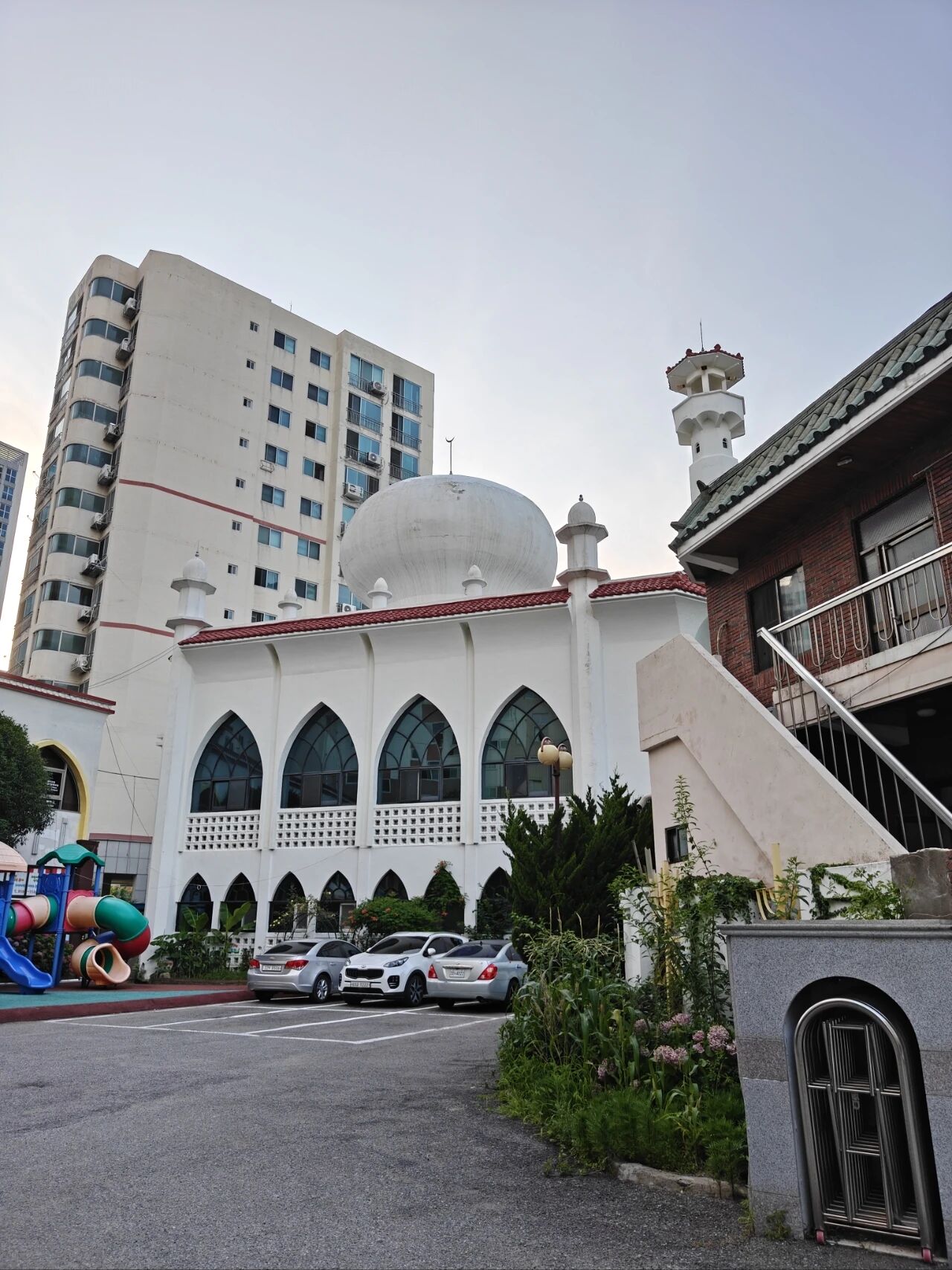
I checked into a hotel in downtown Busan. At the same price, the accommodation environment was much better than in Seoul. After that, I set off to the largest mosque in Busan. This mosque is a little far from the actual city. In fact, there are mosques in Busan city, but they are very small.
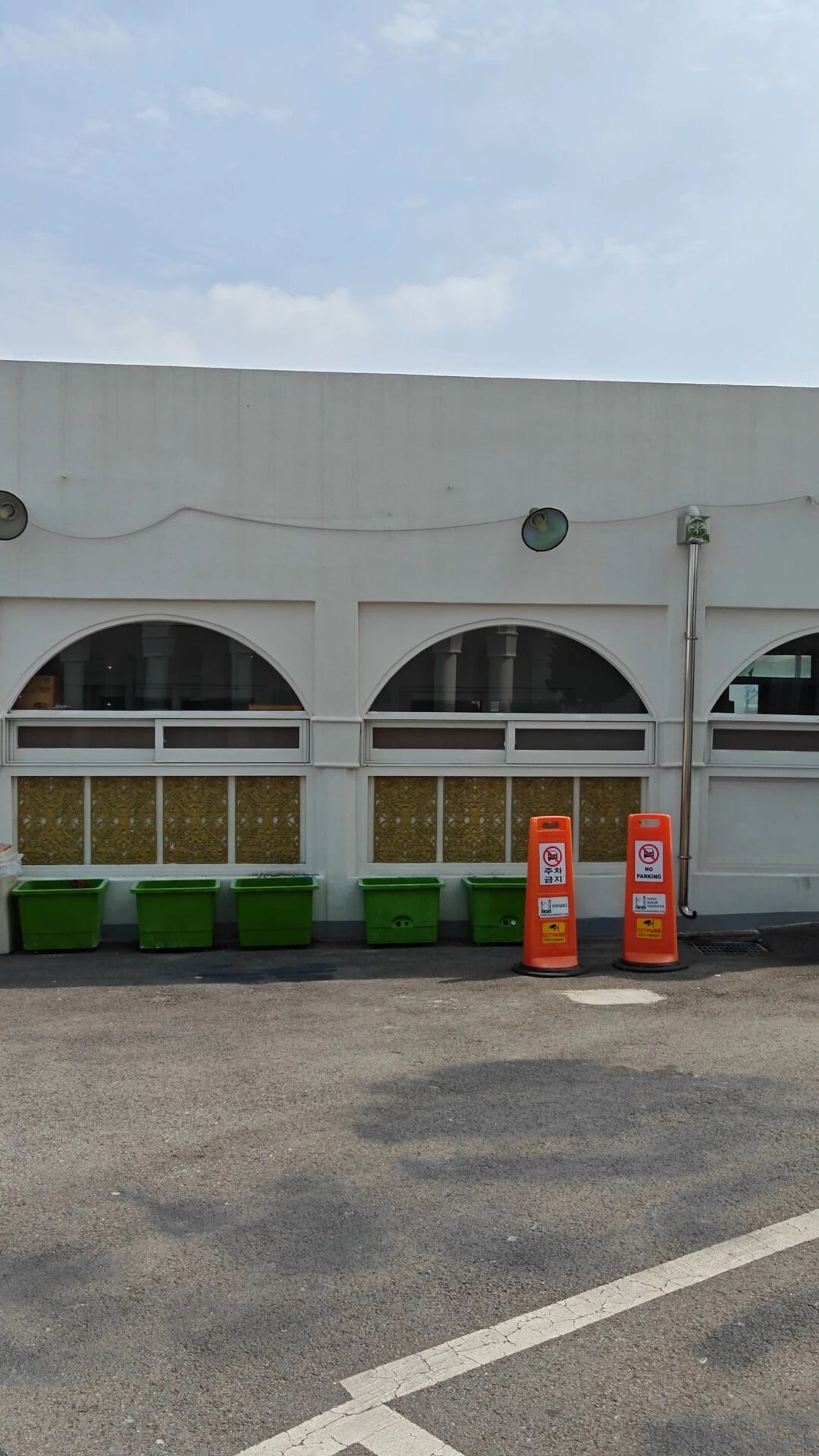
After taking the subway for several stops, we almost arrived at the Busan Mosque. The environment here is quiet and quiet, without the hustle and bustle of the city. You can also see Islamic-themed wall paintings around the mosque (picture 2). There is also a kindergarten in the courtyard of the mosque, but I later learned that it has nothing to do with the mosque.
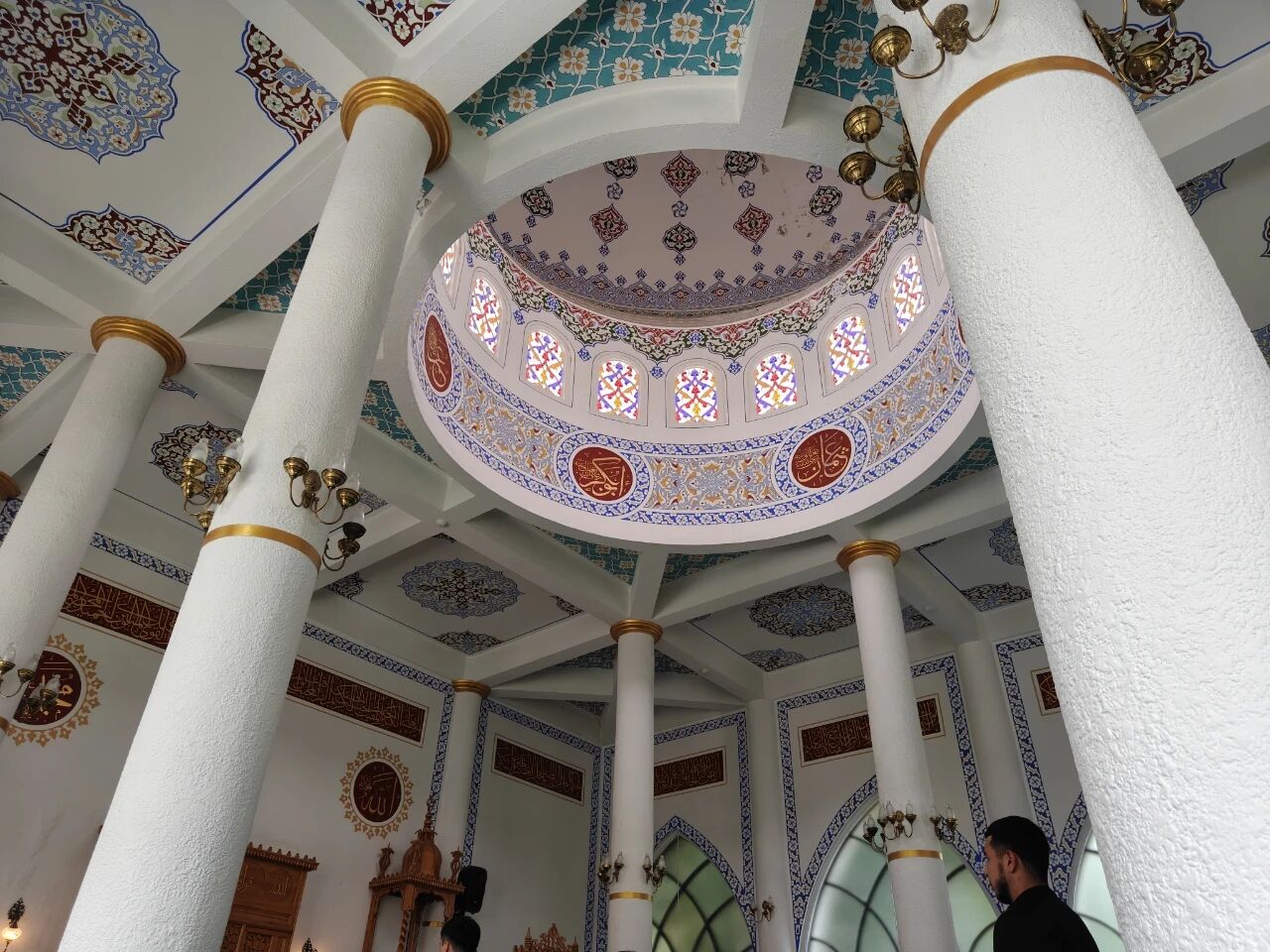
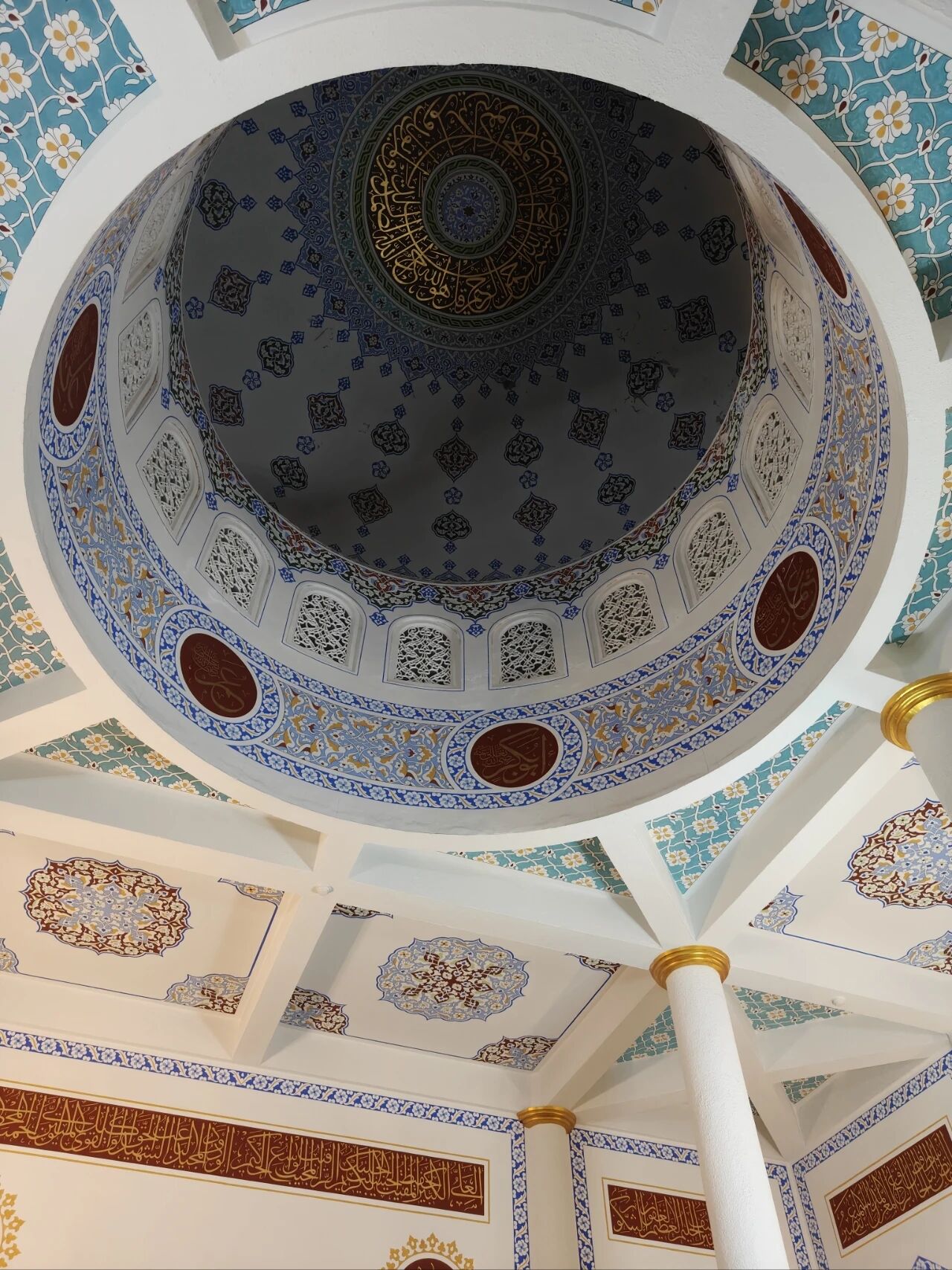
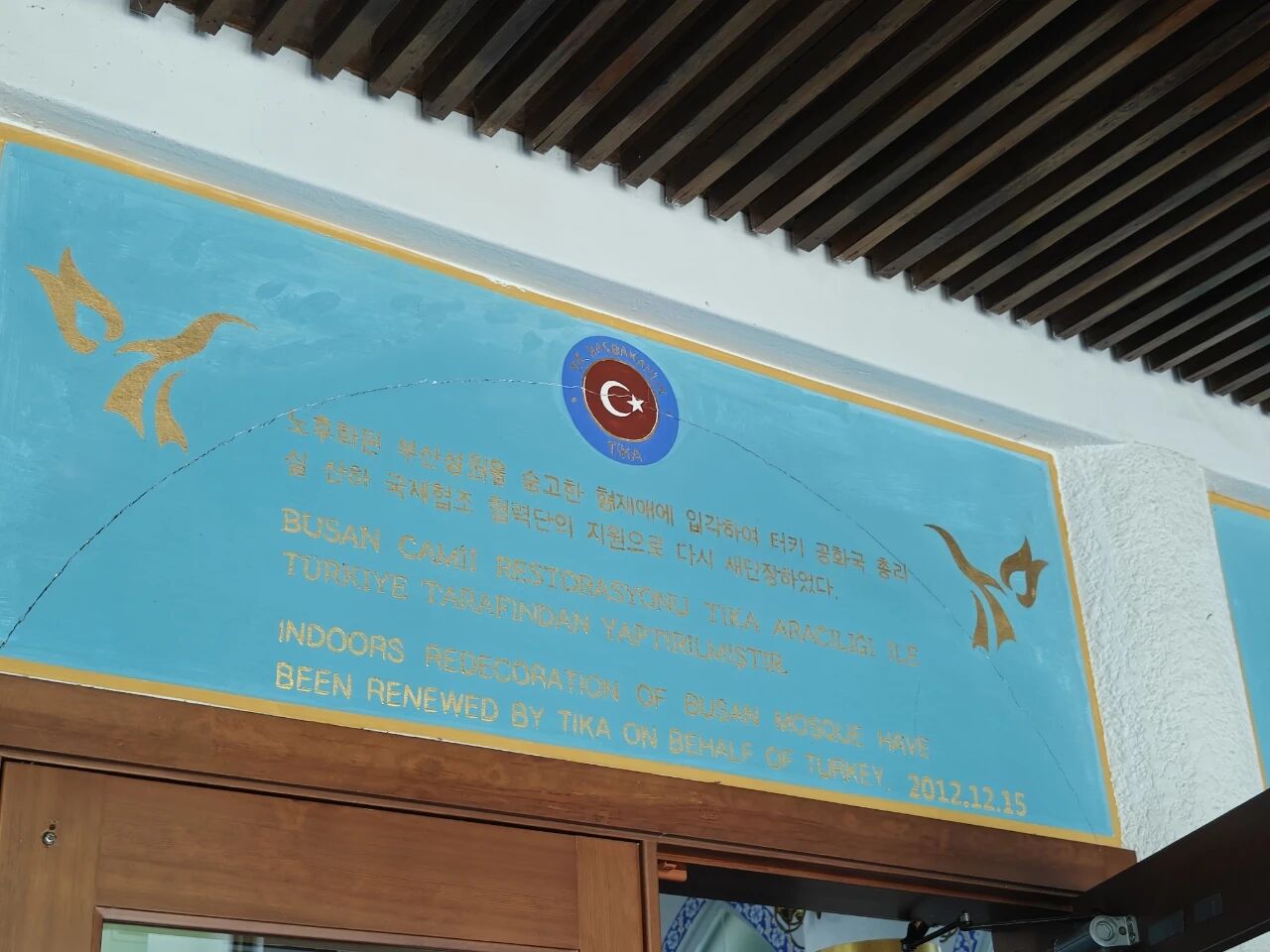
The wudu area and toilet are on the first floor, just below the steps from the mosque into the prayer hall. the prayer hall is also painted in Turkish style. On the door of the prayer hall, it is written in Korean, Turkish and English that "TIKA maintains and updates the interior decoration of the Busan Mosque on behalf of Turkiye."
So what kind of organization is this TIKA? I found out it was the Turkish Cooperation and Coordination Agency, which is Turkiye's overseas aid organization.
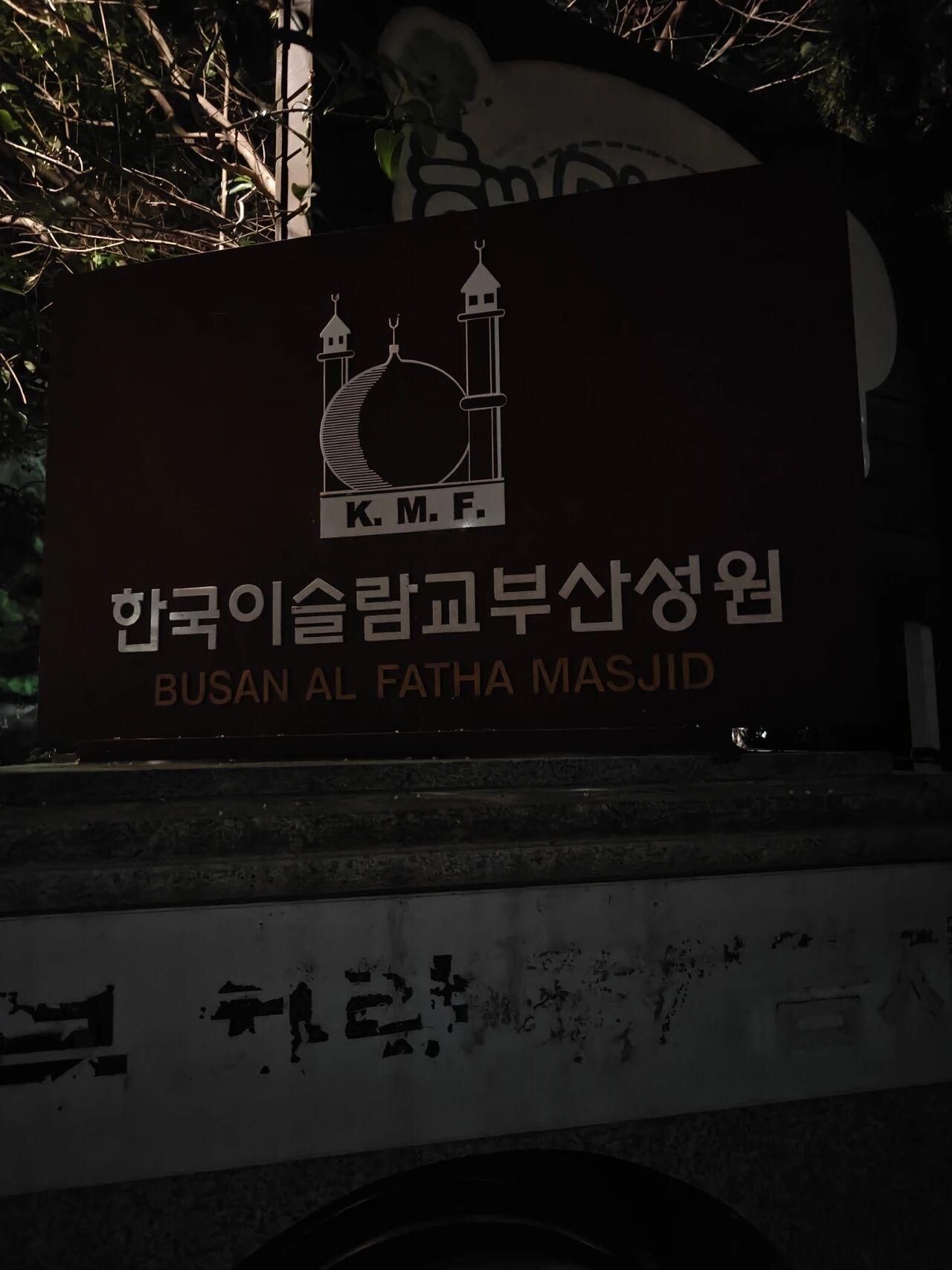
The full name of the place is also written on the door of the mosque (Picture 8): Busan Fateh (Beginning) Mosque.
There were not many people in the prayer hall, except for a Korean uncle, and most of them did not have East Asian faces, so I seemed a bit conspicuous. The imam who was born in Turkiye asked me where I was from, and I answered China. After salah he asked me to sit in his office for a while.
When we arrived at the office, we started chatting using translation software. As we chatted about politics, the imam said that there are two big countries in the world, one is the United States and the other is China, and China is gaining the upper hand.
Then the imam asked me some information about China, such as the average salary in Shanghai. He said it turned out to be similar to Turkiye. Maybe he thought the Chinese earned higher wages than the Turks. It was getting late at that time, and we separated after chatting for more than an hour.
The next day was Friday prayer day, and I came to the Busan Mosque again. Because it was a gathering day, there were many people in the prayer hall. The imam said that most of the people who came here were from Uzbekistan and other countries. There are some Koreans who have accepted Islam, but not many.
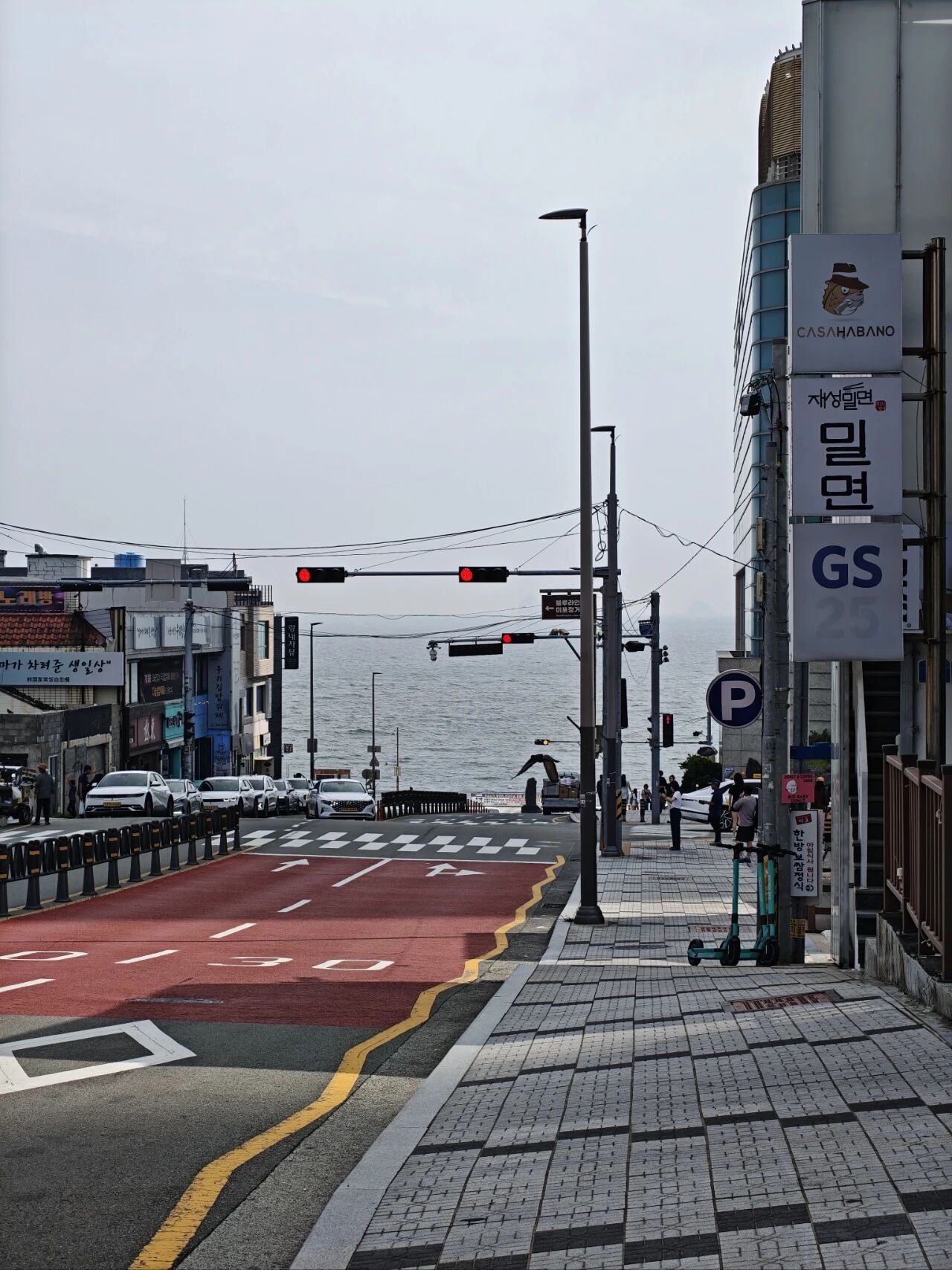
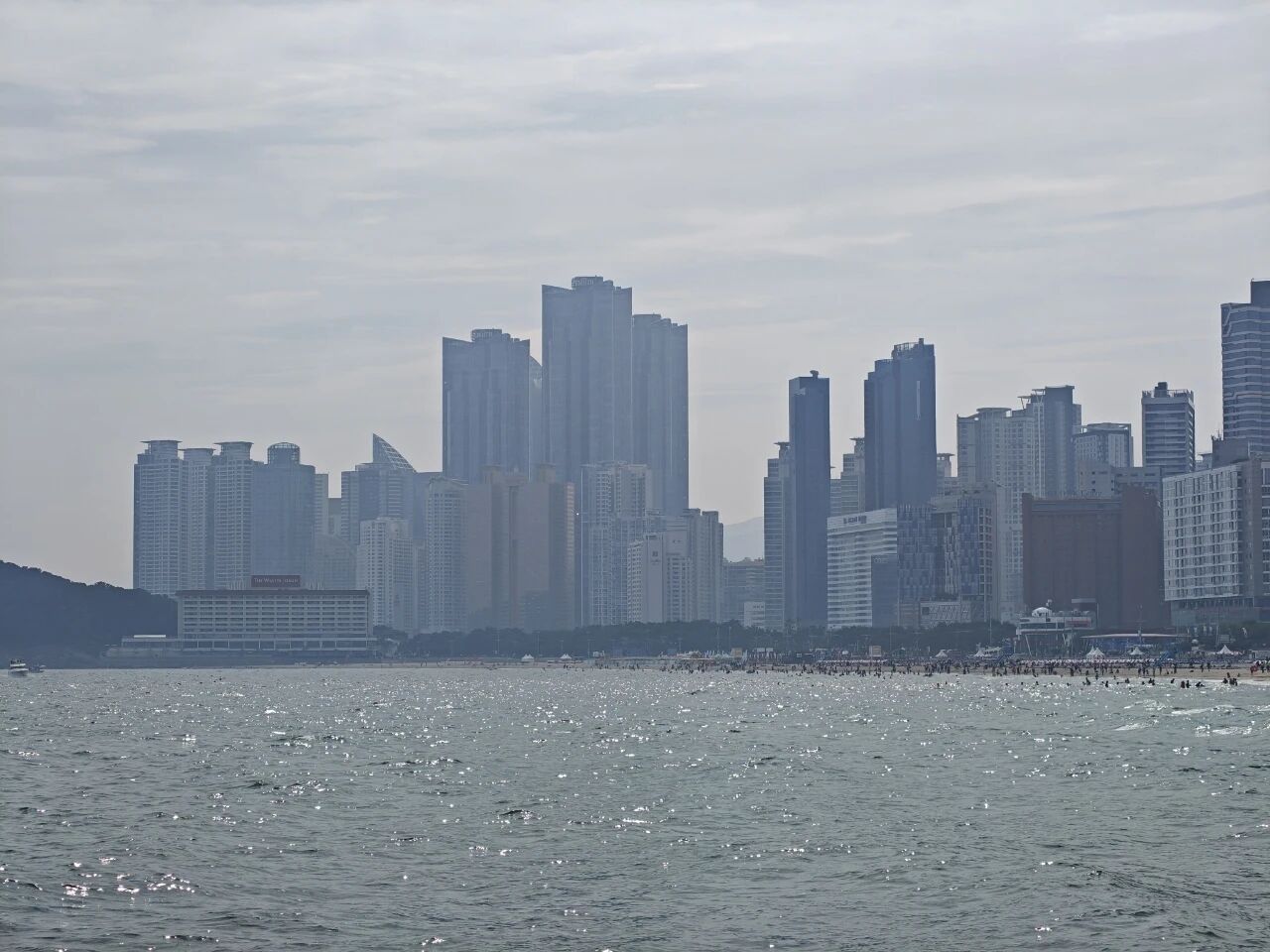
After the prayer, I left the Busan Mosque and went to the famous Mipo in Busan to watch the sea. view all
Summary: This Korea Muslim travel guide visits Busan Mosque, describing the quiet neighborhood, Turkish-style interior, TIKA renovation note, conversations with the imam from Turkiye, Friday prayer, Muslims from Uzbekistan, Korean converts, and a later stop by the sea.
After staying in Seoul for about eight days, I planned to visit other places in Korea. I took a train from Seoul Station and arrived in Busan, the second largest city in Korea, in a few hours. Although it is the second largest, there is indeed a lot of difference between the second largest and the first largest.
Busan does not look very big, it can only be said to be a medium-sized city. If Seoul is equivalent to Beijing or Shanghai, then Busan can only be said to be equivalent to Qingdao.
I checked into a hotel in downtown Busan. At the same price, the accommodation environment was much better than in Seoul. After that, I set off to the largest mosque in Busan. This mosque is a little far from the actual city. In fact, there are mosques in Busan city, but they are very small.
After taking the subway for several stops, we almost arrived at the Busan Mosque. The environment here is quiet and quiet, without the hustle and bustle of the city. You can also see Islamic-themed wall paintings around the mosque (picture 2). There is also a kindergarten in the courtyard of the mosque, but I later learned that it has nothing to do with the mosque.
The wudu area and toilet are on the first floor, just below the steps from the mosque into the prayer hall. the prayer hall is also painted in Turkish style. On the door of the prayer hall, it is written in Korean, Turkish and English that "TIKA maintains and updates the interior decoration of the Busan Mosque on behalf of Turkiye."
So what kind of organization is this TIKA? I found out it was the Turkish Cooperation and Coordination Agency, which is Turkiye's overseas aid organization.
The full name of the place is also written on the door of the mosque (Picture 8): Busan Fateh (Beginning) Mosque.
There were not many people in the prayer hall, except for a Korean uncle, and most of them did not have East Asian faces, so I seemed a bit conspicuous. The imam who was born in Turkiye asked me where I was from, and I answered China. After salah he asked me to sit in his office for a while.
When we arrived at the office, we started chatting using translation software. As we chatted about politics, the imam said that there are two big countries in the world, one is the United States and the other is China, and China is gaining the upper hand.
Then the imam asked me some information about China, such as the average salary in Shanghai. He said it turned out to be similar to Turkiye. Maybe he thought the Chinese earned higher wages than the Turks. It was getting late at that time, and we separated after chatting for more than an hour.
The next day was Friday prayer day, and I came to the Busan Mosque again. Because it was a gathering day, there were many people in the prayer hall. The imam said that most of the people who came here were from Uzbekistan and other countries. There are some Koreans who have accepted Islam, but not many.
After the prayer, I left the Busan Mosque and went to the famous Mipo in Busan to watch the sea. view all
Reposted from the web
Summary: This Korea Muslim travel guide visits Busan Mosque, describing the quiet neighborhood, Turkish-style interior, TIKA renovation note, conversations with the imam from Turkiye, Friday prayer, Muslims from Uzbekistan, Korean converts, and a later stop by the sea.
After staying in Seoul for about eight days, I planned to visit other places in Korea. I took a train from Seoul Station and arrived in Busan, the second largest city in Korea, in a few hours. Although it is the second largest, there is indeed a lot of difference between the second largest and the first largest.
Busan does not look very big, it can only be said to be a medium-sized city. If Seoul is equivalent to Beijing or Shanghai, then Busan can only be said to be equivalent to Qingdao.
I checked into a hotel in downtown Busan. At the same price, the accommodation environment was much better than in Seoul. After that, I set off to the largest mosque in Busan. This mosque is a little far from the actual city. In fact, there are mosques in Busan city, but they are very small.
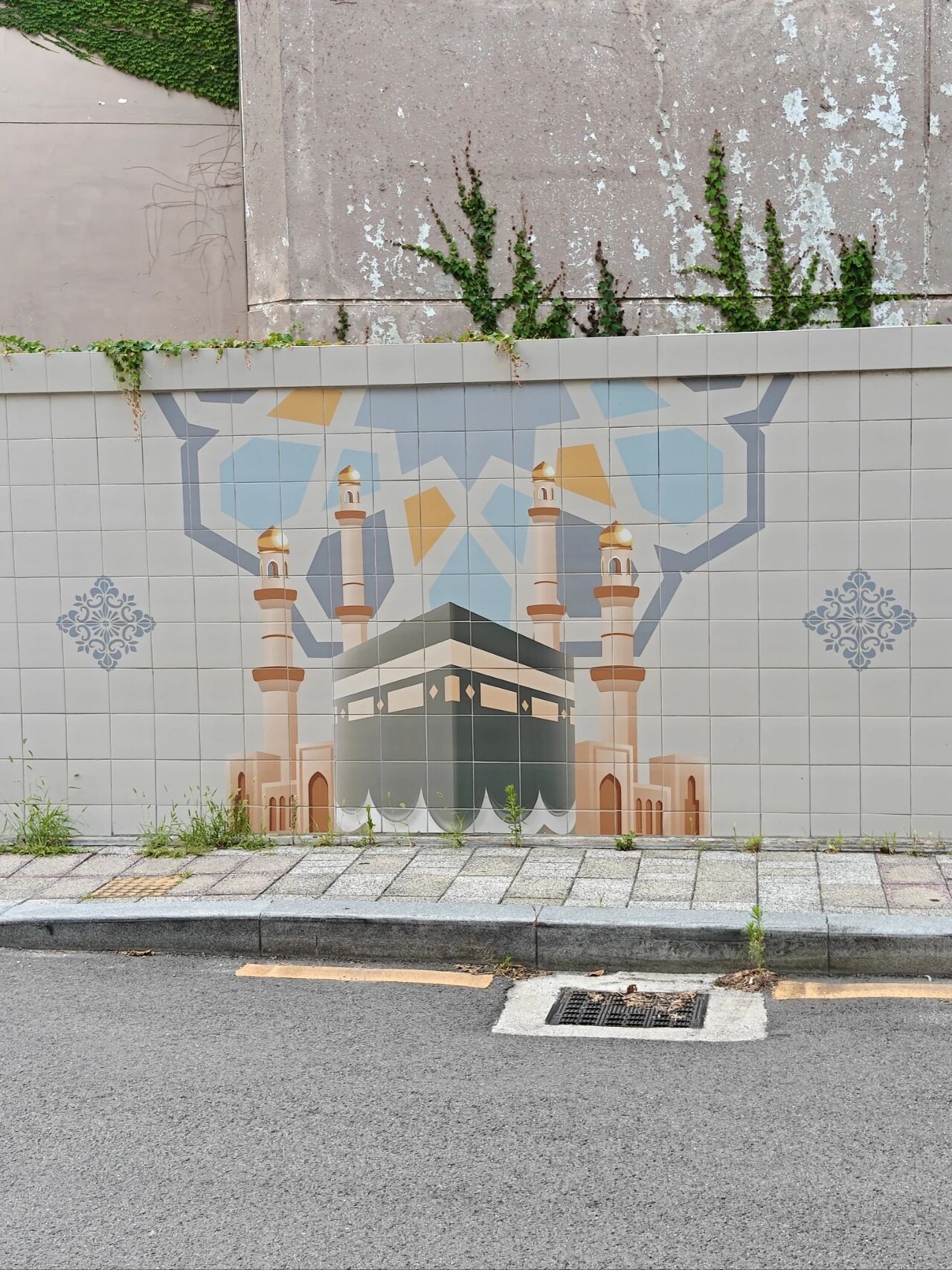
After taking the subway for several stops, we almost arrived at the Busan Mosque. The environment here is quiet and quiet, without the hustle and bustle of the city. You can also see Islamic-themed wall paintings around the mosque (picture 2). There is also a kindergarten in the courtyard of the mosque, but I later learned that it has nothing to do with the mosque.
The wudu area and toilet are on the first floor, just below the steps from the mosque into the prayer hall. the prayer hall is also painted in Turkish style. On the door of the prayer hall, it is written in Korean, Turkish and English that "TIKA maintains and updates the interior decoration of the Busan Mosque on behalf of Turkiye."
So what kind of organization is this TIKA? I found out it was the Turkish Cooperation and Coordination Agency, which is Turkiye's overseas aid organization.
The full name of the place is also written on the door of the mosque (Picture 8): Busan Fateh (Beginning) Mosque.
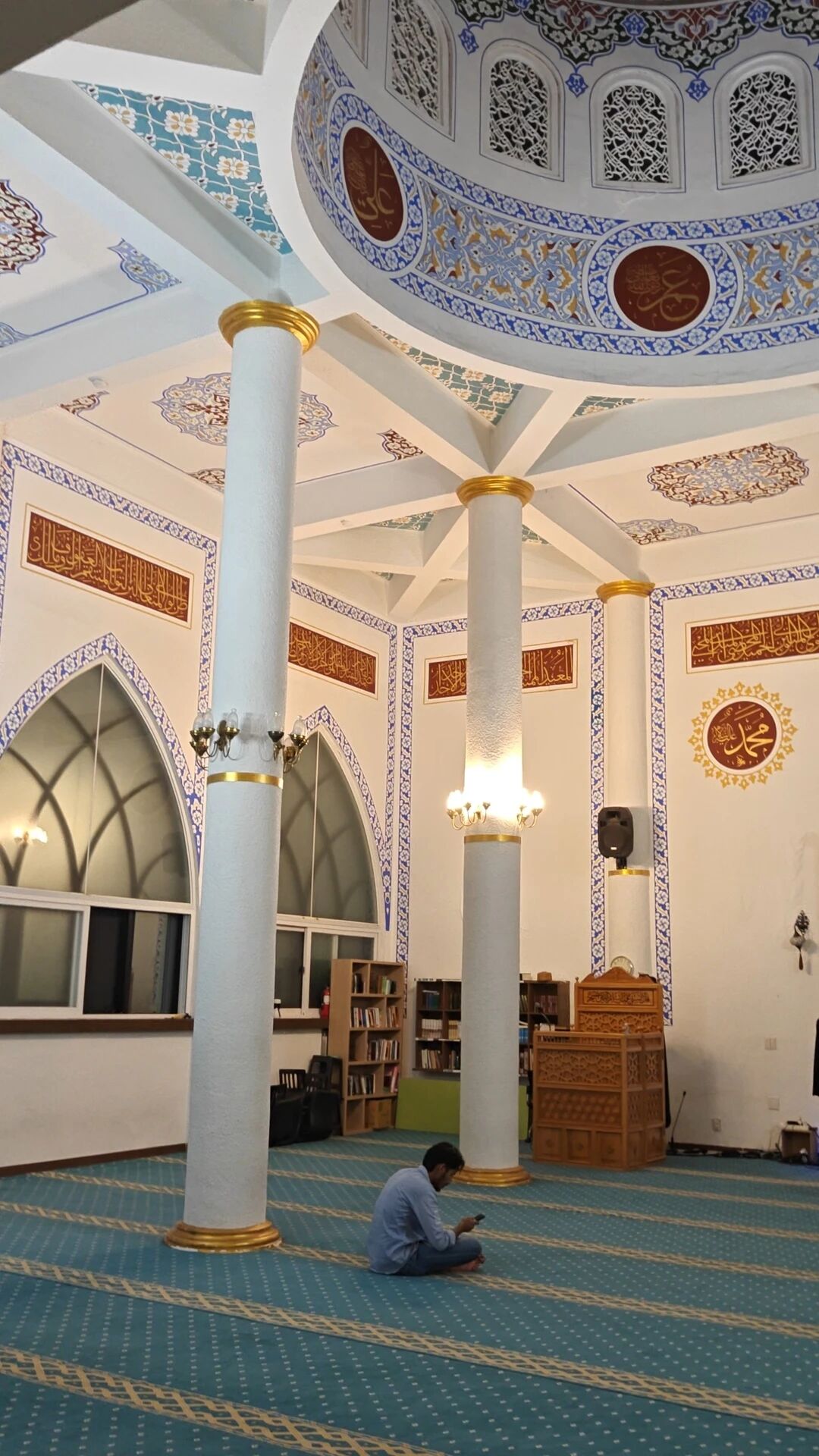
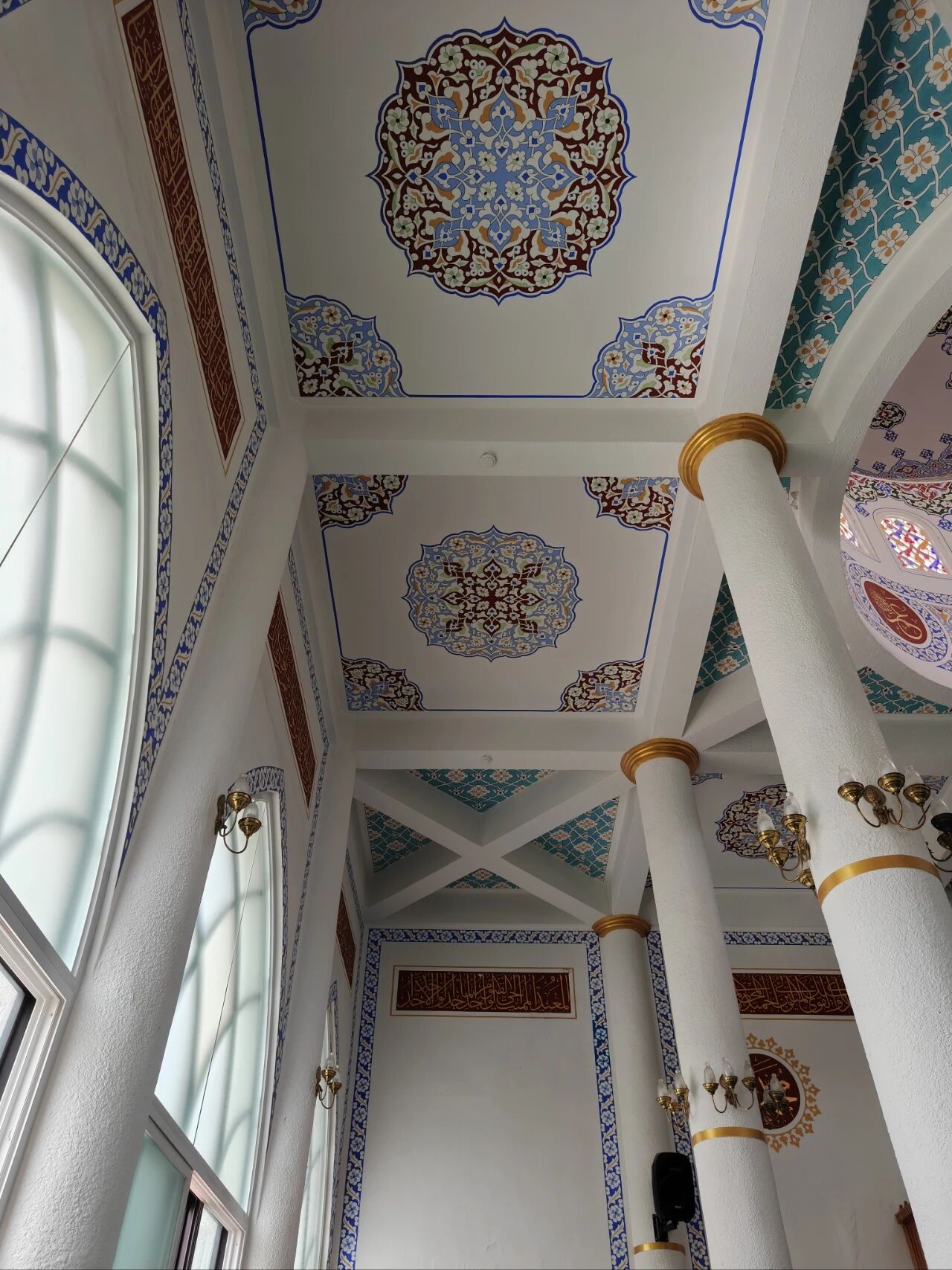
There were not many people in the prayer hall, except for a Korean uncle, and most of them did not have East Asian faces, so I seemed a bit conspicuous. The imam who was born in Turkiye asked me where I was from, and I answered China. After salah he asked me to sit in his office for a while.
When we arrived at the office, we started chatting using translation software. As we chatted about politics, the imam said that there are two big countries in the world, one is the United States and the other is China, and China is gaining the upper hand.
Then the imam asked me some information about China, such as the average salary in Shanghai. He said it turned out to be similar to Turkiye. Maybe he thought the Chinese earned higher wages than the Turks. It was getting late at that time, and we separated after chatting for more than an hour.
The next day was Friday prayer day, and I came to the Busan Mosque again. Because it was a gathering day, there were many people in the prayer hall. The imam said that most of the people who came here were from Uzbekistan and other countries. There are some Koreans who have accepted Islam, but not many.
After the prayer, I left the Busan Mosque and went to the famous Mipo in Busan to watch the sea.
Summary: This Korea Muslim travel guide visits Busan Mosque, describing the quiet neighborhood, Turkish-style interior, TIKA renovation note, conversations with the imam from Turkiye, Friday prayer, Muslims from Uzbekistan, Korean converts, and a later stop by the sea.
After staying in Seoul for about eight days, I planned to visit other places in Korea. I took a train from Seoul Station and arrived in Busan, the second largest city in Korea, in a few hours. Although it is the second largest, there is indeed a lot of difference between the second largest and the first largest.
Busan does not look very big, it can only be said to be a medium-sized city. If Seoul is equivalent to Beijing or Shanghai, then Busan can only be said to be equivalent to Qingdao.
I checked into a hotel in downtown Busan. At the same price, the accommodation environment was much better than in Seoul. After that, I set off to the largest mosque in Busan. This mosque is a little far from the actual city. In fact, there are mosques in Busan city, but they are very small.
After taking the subway for several stops, we almost arrived at the Busan Mosque. The environment here is quiet and quiet, without the hustle and bustle of the city. You can also see Islamic-themed wall paintings around the mosque (picture 2). There is also a kindergarten in the courtyard of the mosque, but I later learned that it has nothing to do with the mosque.
The wudu area and toilet are on the first floor, just below the steps from the mosque into the prayer hall. the prayer hall is also painted in Turkish style. On the door of the prayer hall, it is written in Korean, Turkish and English that "TIKA maintains and updates the interior decoration of the Busan Mosque on behalf of Turkiye."
So what kind of organization is this TIKA? I found out it was the Turkish Cooperation and Coordination Agency, which is Turkiye's overseas aid organization.
The full name of the place is also written on the door of the mosque (Picture 8): Busan Fateh (Beginning) Mosque.
There were not many people in the prayer hall, except for a Korean uncle, and most of them did not have East Asian faces, so I seemed a bit conspicuous. The imam who was born in Turkiye asked me where I was from, and I answered China. After salah he asked me to sit in his office for a while.
When we arrived at the office, we started chatting using translation software. As we chatted about politics, the imam said that there are two big countries in the world, one is the United States and the other is China, and China is gaining the upper hand.
Then the imam asked me some information about China, such as the average salary in Shanghai. He said it turned out to be similar to Turkiye. Maybe he thought the Chinese earned higher wages than the Turks. It was getting late at that time, and we separated after chatting for more than an hour.
The next day was Friday prayer day, and I came to the Busan Mosque again. Because it was a gathering day, there were many people in the prayer hall. The imam said that most of the people who came here were from Uzbekistan and other countries. There are some Koreans who have accepted Islam, but not many.
After the prayer, I left the Busan Mosque and went to the famous Mipo in Busan to watch the sea.
Muslim Travel Guide Korea Seoul: Seoul Central Mosque, Friday Prayer, Muslim School and Itaewon Community
Articles • yusuf908 posted the article • 0 comments • 244 views • 2026-05-23 22:22
Reposted from the web
Summary: This Korea Muslim travel guide visits Seoul Central Mosque in Itaewon, showing its hillside location, Turkish-style prayer hall, Friday prayer lunch boxes, Korean Muslims, mosque classes, a school bus, and the history of the first modern mosque in Korea.
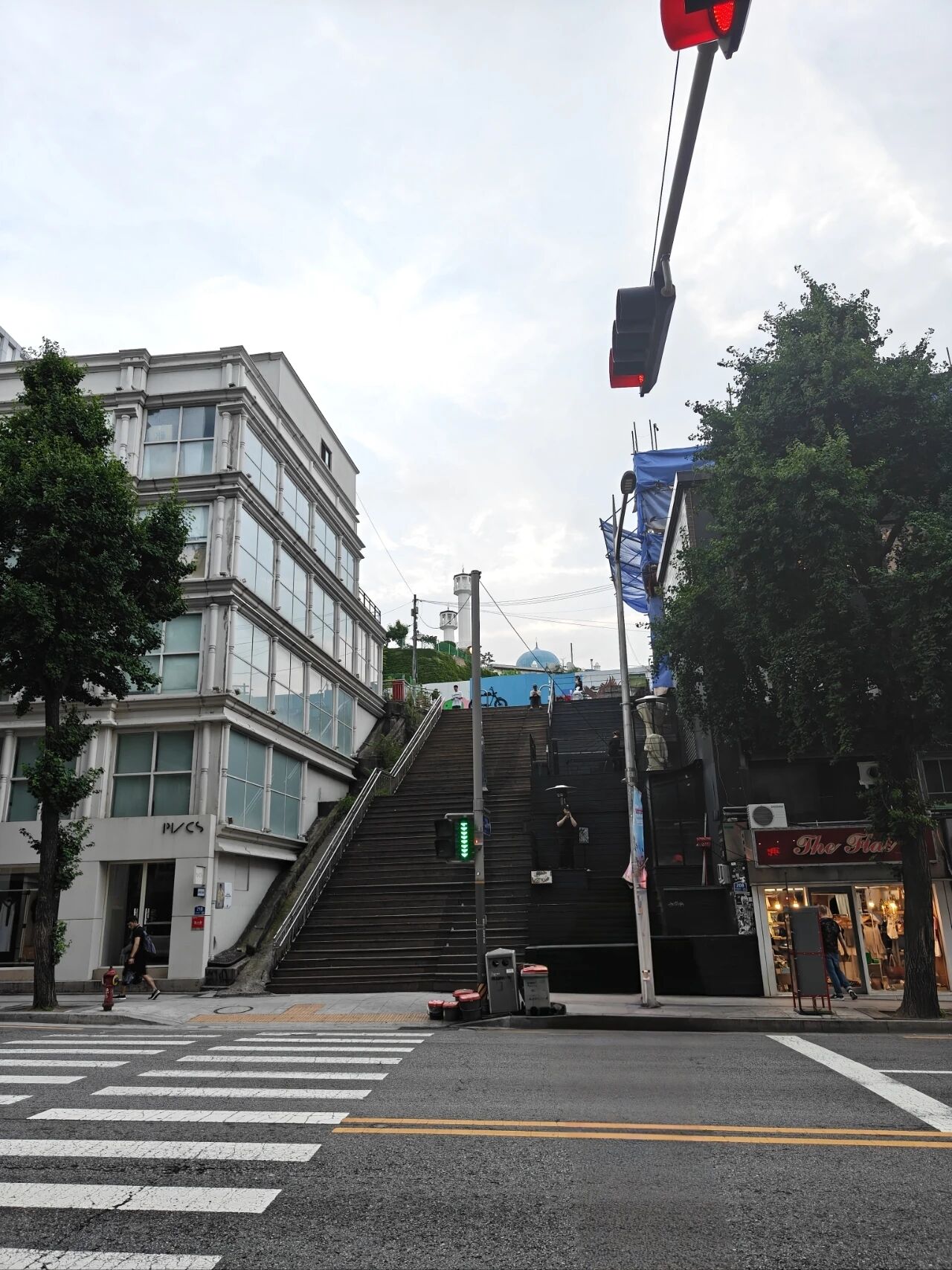
Seoul is a city built on hills. The terrain here is uneven, and you can often see various settlements built on small hills. Seoul Central Mosque is located at the eastern foot of Namsan Mountain. After climbing up the high steps shown in Picture 2, you still have to walk uphill for a while to reach it.
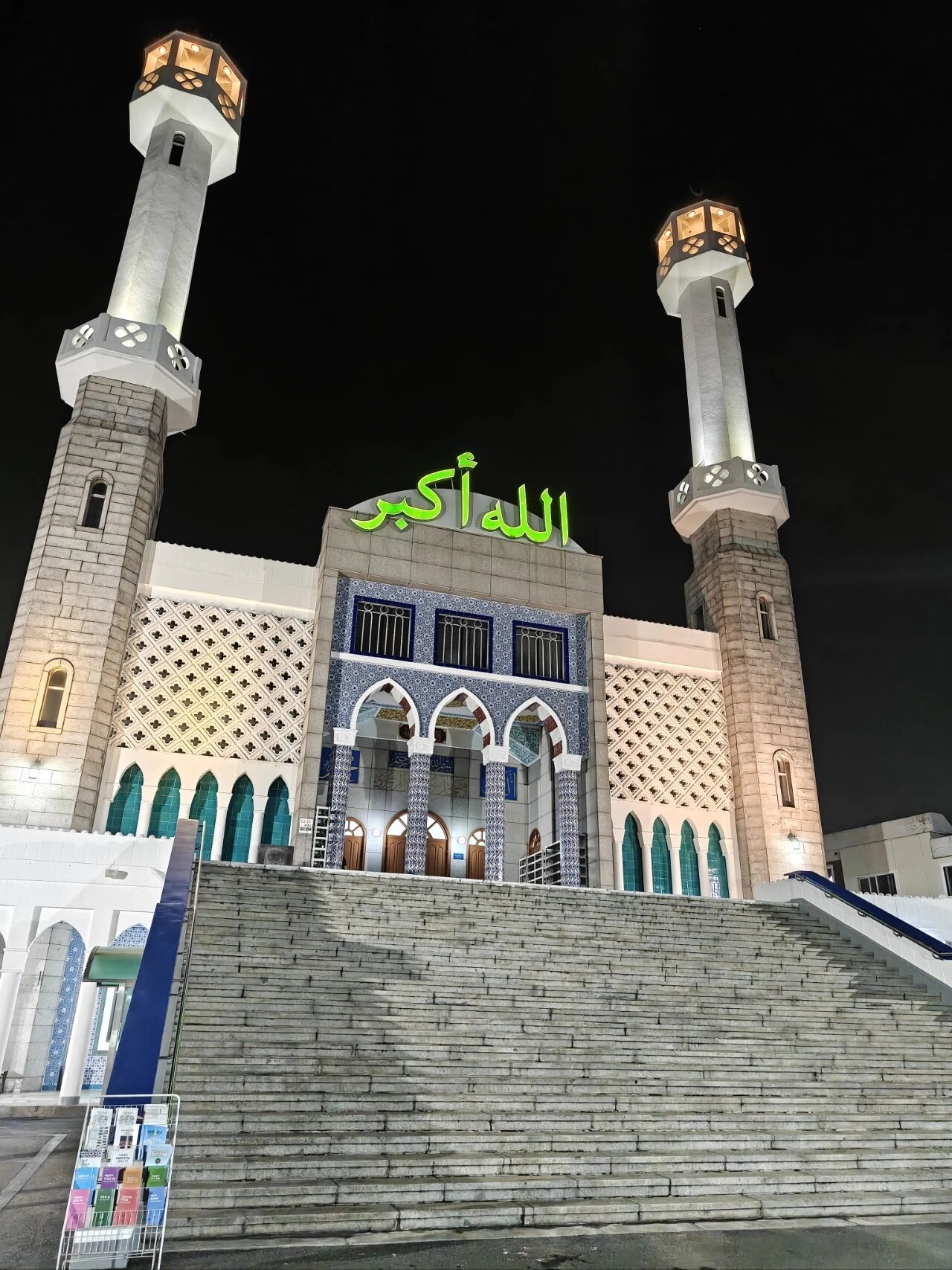
As you can see in Picture 1, there is a set of steps leading to the prayer hall. In fact, there is another set of steps on the other side of the prayer hall.
Picture 3: There are some introductory Islam materials placed next to the steps of the prayer hall, all of which are in Korean. There is no translation in English or Chinese.
Picture 4: Entering the prayer hall, you will find that it is also in Turkish style. This was originally the location of the military camp of the Turkish army stationed in South Korea.
Picture 5: You can overlook the surrounding area from the mosque courtyard, but if you want to see the whole of Seoul, it is recommended to go to Seoul Namsan Tower not far away.
Picture 6: After Friday prayers, free lunch boxes will be distributed in the mosque’s cafeteria, conference room and museum. I tasted it for everyone and it tasted good. There is beef, kimchi, dried fish, and something similar to tofu skin.
In the cafeteria I met some Korean Muslims who had accepted Islam. I briefly communicated with one of them using a translator. He said that he had read about the Hui Muslims in China before in books, and today was the first time he saw them. There is also an old woman who is originally from Jilin and wears a headscarf.
But she only speaks Korean.
Picture 7: There is a school bus parked in the courtyard, and there are several classrooms nearby. It seems that some Korean Muslims (mainly foreigners) will send their children here to receive some basic education.
Picture 8: The canteen just now is also the exhibition room of the mosque. The photos on the wall record the history of this first mosque in modern Korea. view all
Summary: This Korea Muslim travel guide visits Seoul Central Mosque in Itaewon, showing its hillside location, Turkish-style prayer hall, Friday prayer lunch boxes, Korean Muslims, mosque classes, a school bus, and the history of the first modern mosque in Korea.
Seoul is a city built on hills. The terrain here is uneven, and you can often see various settlements built on small hills. Seoul Central Mosque is located at the eastern foot of Namsan Mountain. After climbing up the high steps shown in Picture 2, you still have to walk uphill for a while to reach it.
As you can see in Picture 1, there is a set of steps leading to the prayer hall. In fact, there is another set of steps on the other side of the prayer hall.
Picture 3: There are some introductory Islam materials placed next to the steps of the prayer hall, all of which are in Korean. There is no translation in English or Chinese.
Picture 4: Entering the prayer hall, you will find that it is also in Turkish style. This was originally the location of the military camp of the Turkish army stationed in South Korea.
Picture 5: You can overlook the surrounding area from the mosque courtyard, but if you want to see the whole of Seoul, it is recommended to go to Seoul Namsan Tower not far away.
Picture 6: After Friday prayers, free lunch boxes will be distributed in the mosque’s cafeteria, conference room and museum. I tasted it for everyone and it tasted good. There is beef, kimchi, dried fish, and something similar to tofu skin.
In the cafeteria I met some Korean Muslims who had accepted Islam. I briefly communicated with one of them using a translator. He said that he had read about the Hui Muslims in China before in books, and today was the first time he saw them. There is also an old woman who is originally from Jilin and wears a headscarf.
But she only speaks Korean.
Picture 7: There is a school bus parked in the courtyard, and there are several classrooms nearby. It seems that some Korean Muslims (mainly foreigners) will send their children here to receive some basic education.
Picture 8: The canteen just now is also the exhibition room of the mosque. The photos on the wall record the history of this first mosque in modern Korea. view all
Reposted from the web
Summary: This Korea Muslim travel guide visits Seoul Central Mosque in Itaewon, showing its hillside location, Turkish-style prayer hall, Friday prayer lunch boxes, Korean Muslims, mosque classes, a school bus, and the history of the first modern mosque in Korea.
Seoul is a city built on hills. The terrain here is uneven, and you can often see various settlements built on small hills. Seoul Central Mosque is located at the eastern foot of Namsan Mountain. After climbing up the high steps shown in Picture 2, you still have to walk uphill for a while to reach it.
As you can see in Picture 1, there is a set of steps leading to the prayer hall. In fact, there is another set of steps on the other side of the prayer hall.
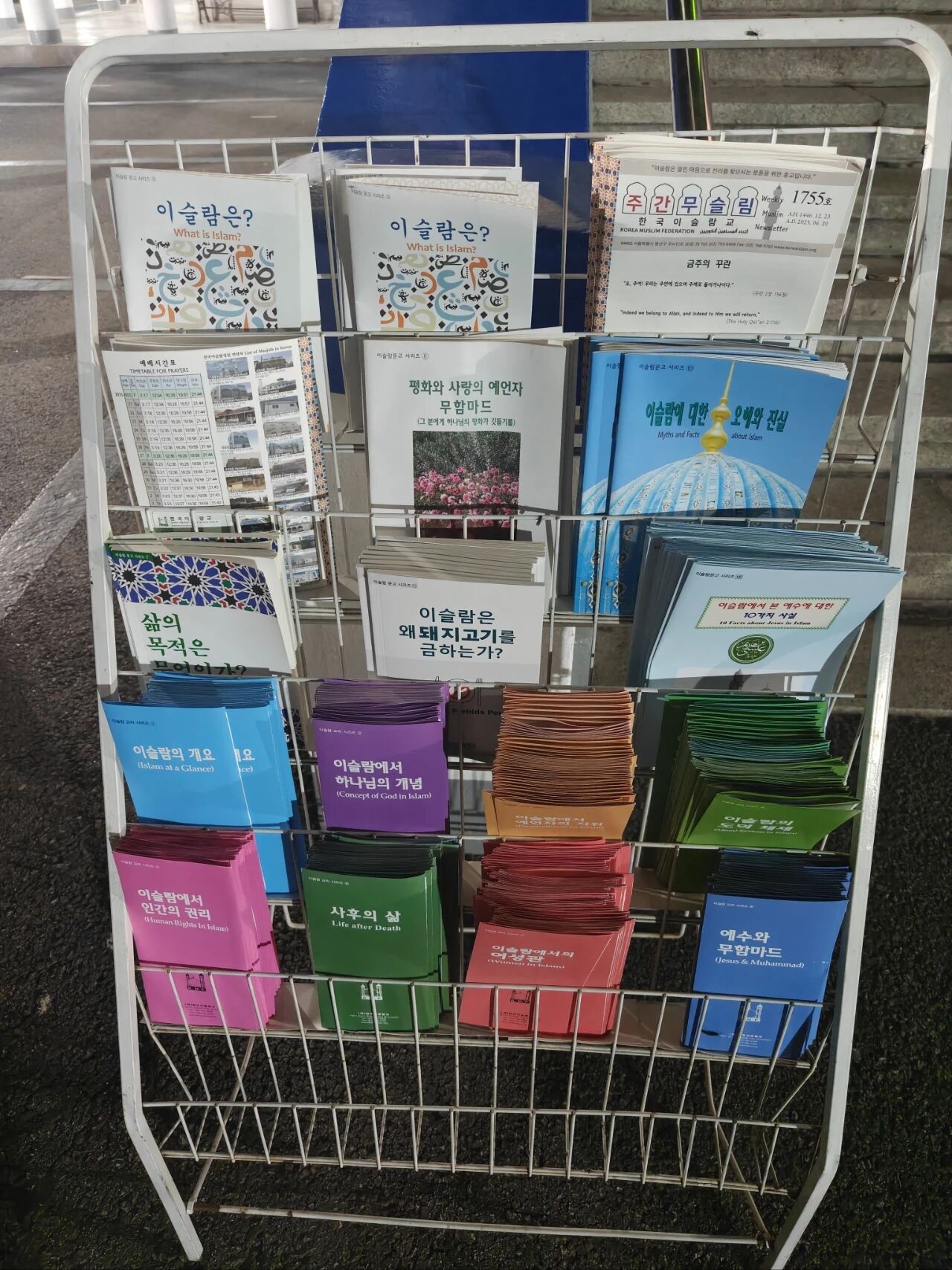
Picture 3: There are some introductory Islam materials placed next to the steps of the prayer hall, all of which are in Korean. There is no translation in English or Chinese.
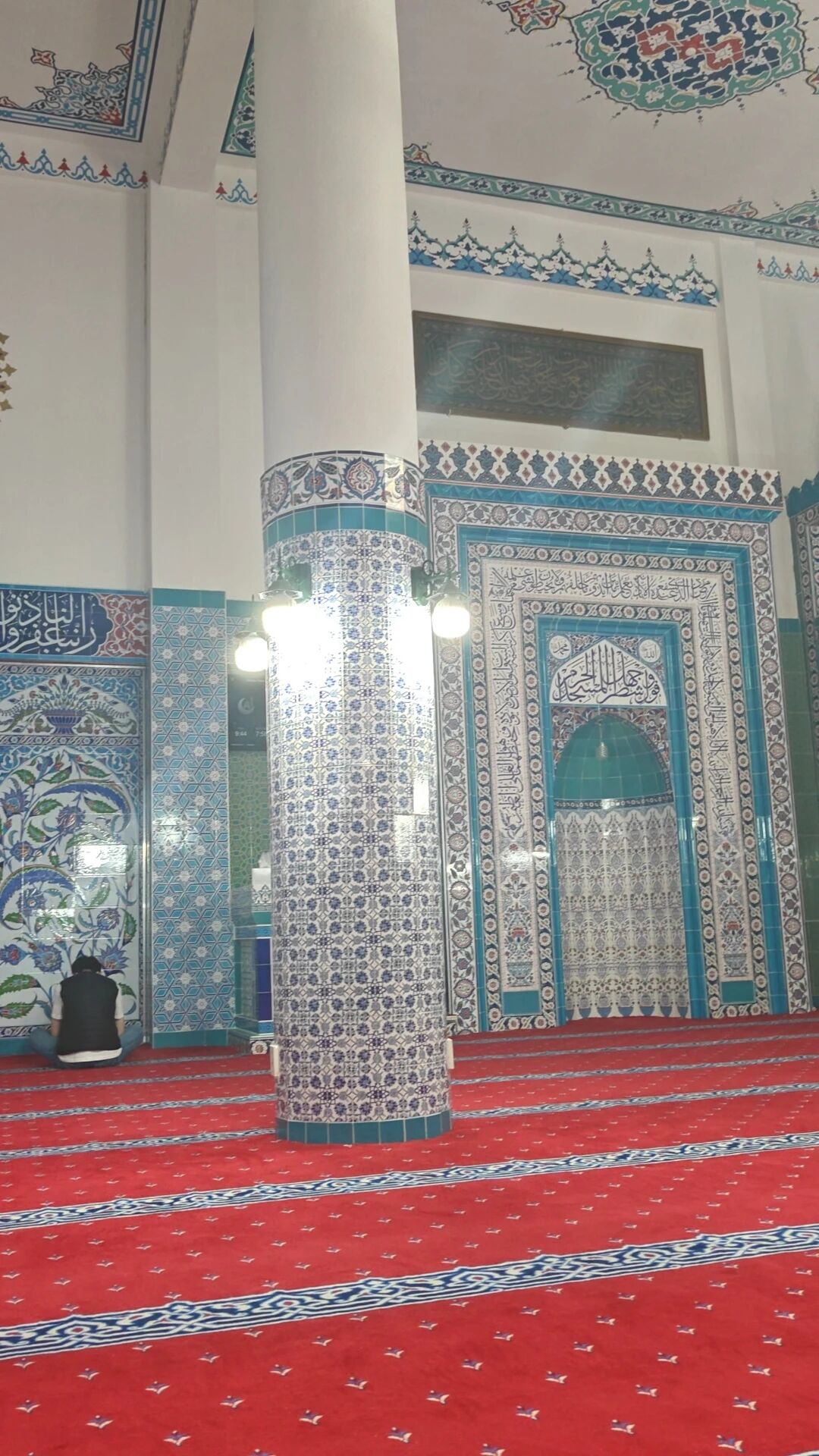
Picture 4: Entering the prayer hall, you will find that it is also in Turkish style. This was originally the location of the military camp of the Turkish army stationed in South Korea.
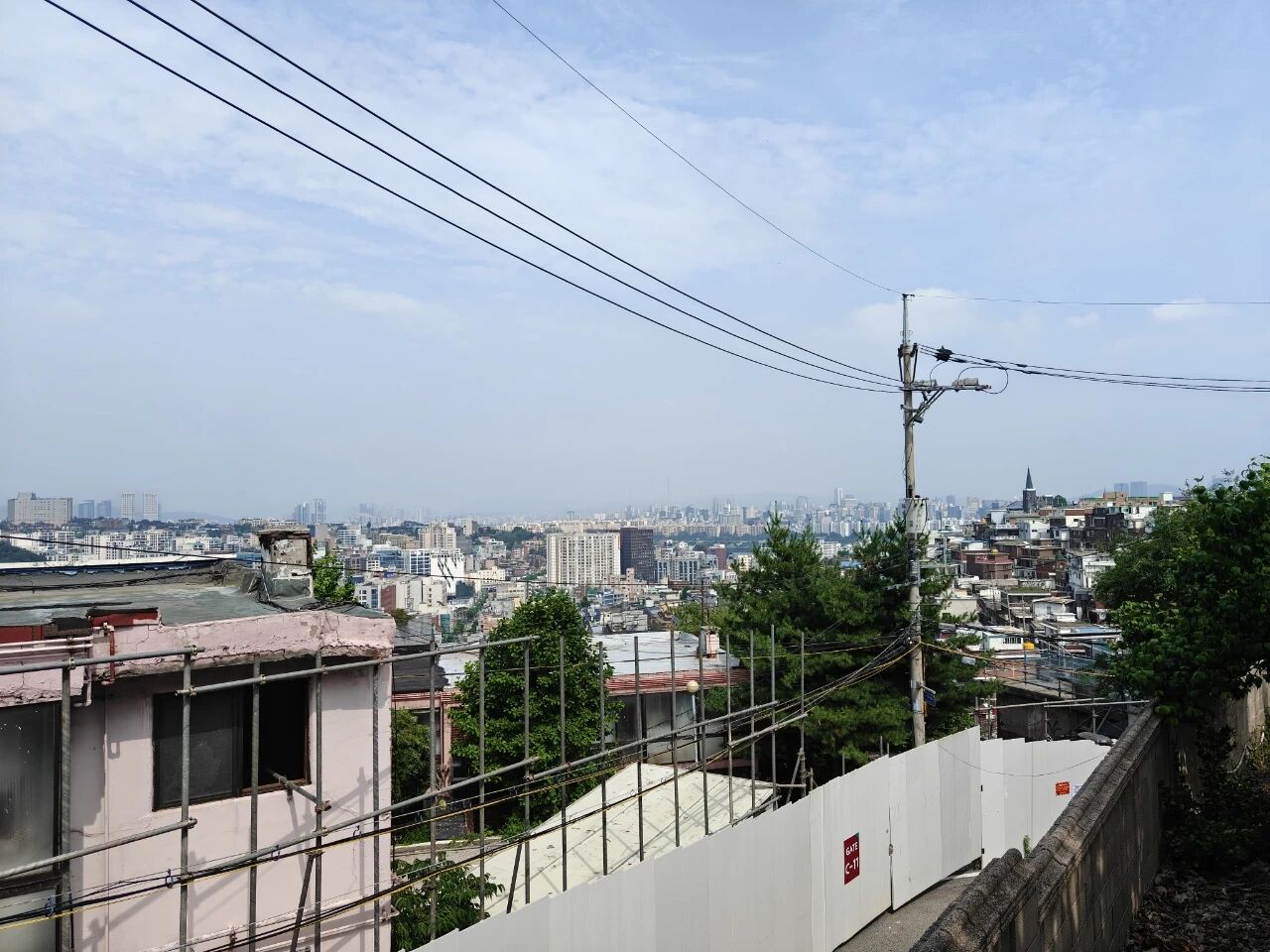
Picture 5: You can overlook the surrounding area from the mosque courtyard, but if you want to see the whole of Seoul, it is recommended to go to Seoul Namsan Tower not far away.
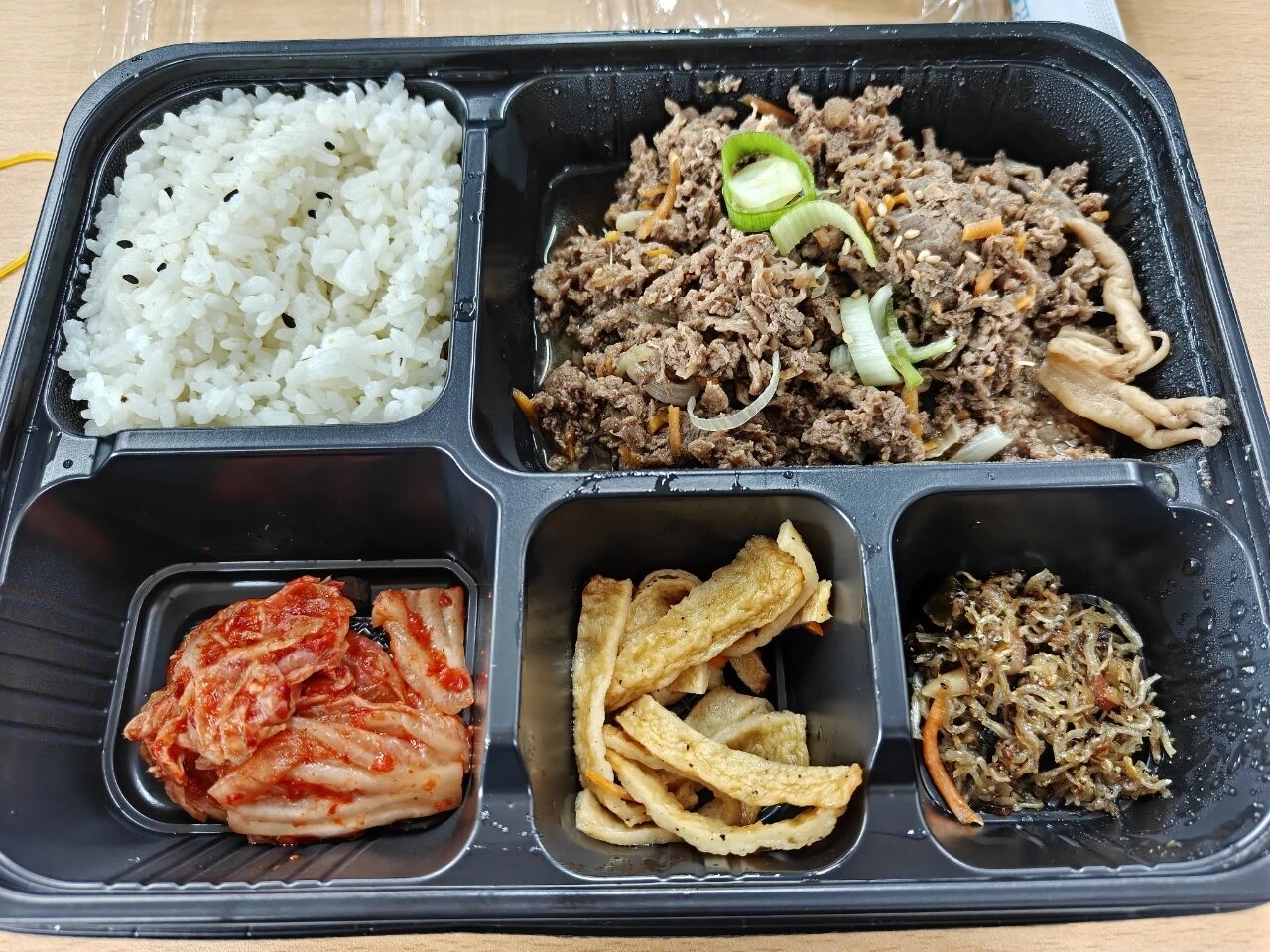
Picture 6: After Friday prayers, free lunch boxes will be distributed in the mosque’s cafeteria, conference room and museum. I tasted it for everyone and it tasted good. There is beef, kimchi, dried fish, and something similar to tofu skin.
In the cafeteria I met some Korean Muslims who had accepted Islam. I briefly communicated with one of them using a translator. He said that he had read about the Hui Muslims in China before in books, and today was the first time he saw them. There is also an old woman who is originally from Jilin and wears a headscarf.
But she only speaks Korean.
Picture 7: There is a school bus parked in the courtyard, and there are several classrooms nearby. It seems that some Korean Muslims (mainly foreigners) will send their children here to receive some basic education.
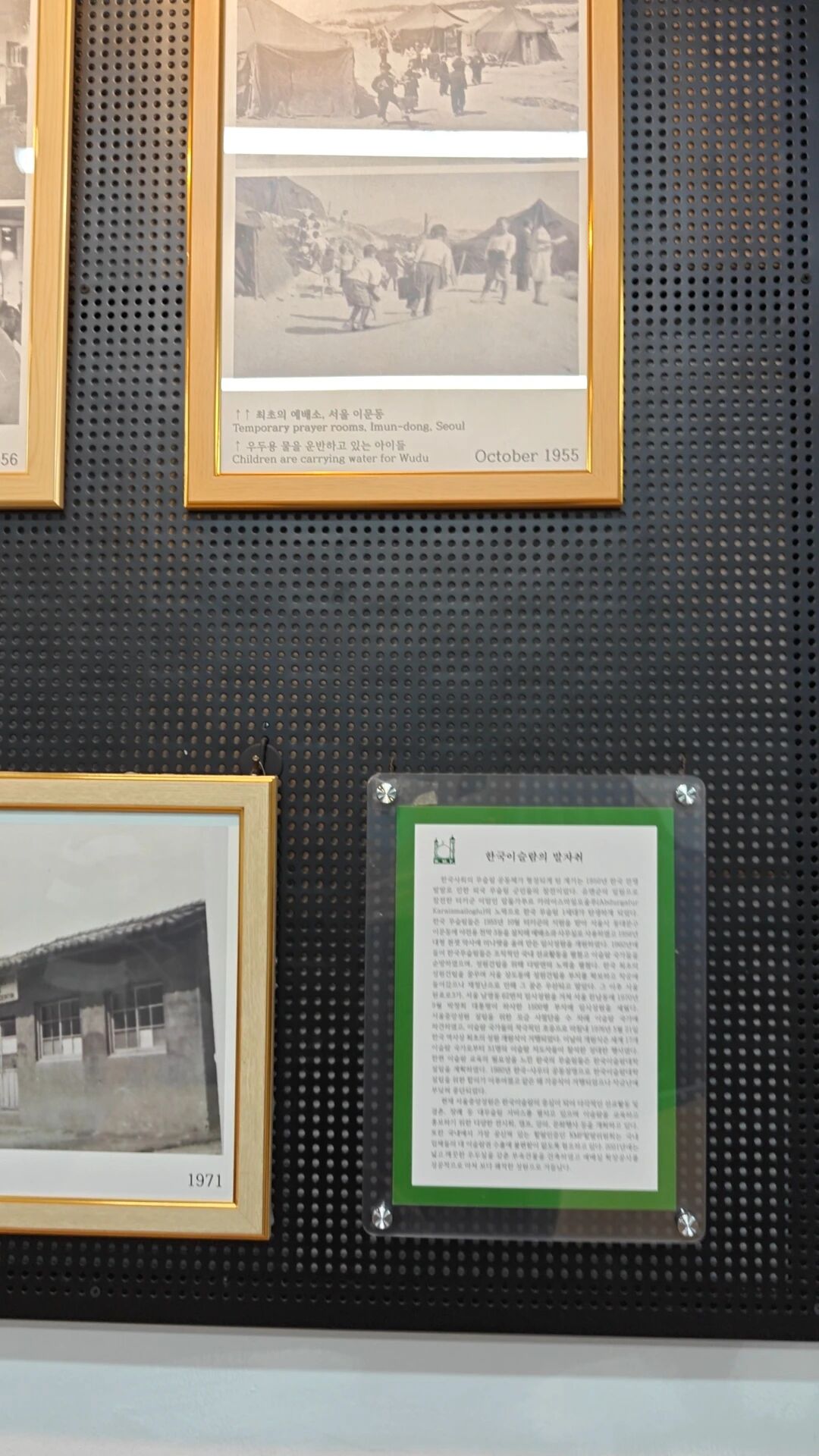
Picture 8: The canteen just now is also the exhibition room of the mosque. The photos on the wall record the history of this first mosque in modern Korea.
Summary: This Korea Muslim travel guide visits Seoul Central Mosque in Itaewon, showing its hillside location, Turkish-style prayer hall, Friday prayer lunch boxes, Korean Muslims, mosque classes, a school bus, and the history of the first modern mosque in Korea.
Seoul is a city built on hills. The terrain here is uneven, and you can often see various settlements built on small hills. Seoul Central Mosque is located at the eastern foot of Namsan Mountain. After climbing up the high steps shown in Picture 2, you still have to walk uphill for a while to reach it.
As you can see in Picture 1, there is a set of steps leading to the prayer hall. In fact, there is another set of steps on the other side of the prayer hall.
Picture 3: There are some introductory Islam materials placed next to the steps of the prayer hall, all of which are in Korean. There is no translation in English or Chinese.
Picture 4: Entering the prayer hall, you will find that it is also in Turkish style. This was originally the location of the military camp of the Turkish army stationed in South Korea.
Picture 5: You can overlook the surrounding area from the mosque courtyard, but if you want to see the whole of Seoul, it is recommended to go to Seoul Namsan Tower not far away.
Picture 6: After Friday prayers, free lunch boxes will be distributed in the mosque’s cafeteria, conference room and museum. I tasted it for everyone and it tasted good. There is beef, kimchi, dried fish, and something similar to tofu skin.
In the cafeteria I met some Korean Muslims who had accepted Islam. I briefly communicated with one of them using a translator. He said that he had read about the Hui Muslims in China before in books, and today was the first time he saw them. There is also an old woman who is originally from Jilin and wears a headscarf.
But she only speaks Korean.
Picture 7: There is a school bus parked in the courtyard, and there are several classrooms nearby. It seems that some Korean Muslims (mainly foreigners) will send their children here to receive some basic education.
Picture 8: The canteen just now is also the exhibition room of the mosque. The photos on the wall record the history of this first mosque in modern Korea.
Muslim Travel Guide Korea Busan: Busan Mosque, Turkish Imam, Friday Prayer and Muslim Community
Articles • yusuf908 posted the article • 0 comments • 235 views • 2026-05-23 22:23
Reposted from the web
Summary: This Korea Muslim travel guide visits Busan Mosque, describing the quiet neighborhood, Turkish-style interior, TIKA renovation note, conversations with the imam from Turkiye, Friday prayer, Muslims from Uzbekistan, Korean converts, and a later stop by the sea.
After staying in Seoul for about eight days, I planned to visit other places in Korea. I took a train from Seoul Station and arrived in Busan, the second largest city in Korea, in a few hours. Although it is the second largest, there is indeed a lot of difference between the second largest and the first largest.
Busan does not look very big, it can only be said to be a medium-sized city. If Seoul is equivalent to Beijing or Shanghai, then Busan can only be said to be equivalent to Qingdao.
I checked into a hotel in downtown Busan. At the same price, the accommodation environment was much better than in Seoul. After that, I set off to the largest mosque in Busan. This mosque is a little far from the actual city. In fact, there are mosques in Busan city, but they are very small.
After taking the subway for several stops, we almost arrived at the Busan Mosque. The environment here is quiet and quiet, without the hustle and bustle of the city. You can also see Islamic-themed wall paintings around the mosque (picture 2). There is also a kindergarten in the courtyard of the mosque, but I later learned that it has nothing to do with the mosque.
The wudu area and toilet are on the first floor, just below the steps from the mosque into the prayer hall. the prayer hall is also painted in Turkish style. On the door of the prayer hall, it is written in Korean, Turkish and English that "TIKA maintains and updates the interior decoration of the Busan Mosque on behalf of Turkiye."
So what kind of organization is this TIKA? I found out it was the Turkish Cooperation and Coordination Agency, which is Turkiye's overseas aid organization.
The full name of the place is also written on the door of the mosque (Picture 8): Busan Fateh (Beginning) Mosque.
There were not many people in the prayer hall, except for a Korean uncle, and most of them did not have East Asian faces, so I seemed a bit conspicuous. The imam who was born in Turkiye asked me where I was from, and I answered China. After salah he asked me to sit in his office for a while.
When we arrived at the office, we started chatting using translation software. As we chatted about politics, the imam said that there are two big countries in the world, one is the United States and the other is China, and China is gaining the upper hand.
Then the imam asked me some information about China, such as the average salary in Shanghai. He said it turned out to be similar to Turkiye. Maybe he thought the Chinese earned higher wages than the Turks. It was getting late at that time, and we separated after chatting for more than an hour.
The next day was Friday prayer day, and I came to the Busan Mosque again. Because it was a gathering day, there were many people in the prayer hall. The imam said that most of the people who came here were from Uzbekistan and other countries. There are some Koreans who have accepted Islam, but not many.
After the prayer, I left the Busan Mosque and went to the famous Mipo in Busan to watch the sea. view all
Summary: This Korea Muslim travel guide visits Busan Mosque, describing the quiet neighborhood, Turkish-style interior, TIKA renovation note, conversations with the imam from Turkiye, Friday prayer, Muslims from Uzbekistan, Korean converts, and a later stop by the sea.
After staying in Seoul for about eight days, I planned to visit other places in Korea. I took a train from Seoul Station and arrived in Busan, the second largest city in Korea, in a few hours. Although it is the second largest, there is indeed a lot of difference between the second largest and the first largest.
Busan does not look very big, it can only be said to be a medium-sized city. If Seoul is equivalent to Beijing or Shanghai, then Busan can only be said to be equivalent to Qingdao.
I checked into a hotel in downtown Busan. At the same price, the accommodation environment was much better than in Seoul. After that, I set off to the largest mosque in Busan. This mosque is a little far from the actual city. In fact, there are mosques in Busan city, but they are very small.
After taking the subway for several stops, we almost arrived at the Busan Mosque. The environment here is quiet and quiet, without the hustle and bustle of the city. You can also see Islamic-themed wall paintings around the mosque (picture 2). There is also a kindergarten in the courtyard of the mosque, but I later learned that it has nothing to do with the mosque.
The wudu area and toilet are on the first floor, just below the steps from the mosque into the prayer hall. the prayer hall is also painted in Turkish style. On the door of the prayer hall, it is written in Korean, Turkish and English that "TIKA maintains and updates the interior decoration of the Busan Mosque on behalf of Turkiye."
So what kind of organization is this TIKA? I found out it was the Turkish Cooperation and Coordination Agency, which is Turkiye's overseas aid organization.
The full name of the place is also written on the door of the mosque (Picture 8): Busan Fateh (Beginning) Mosque.
There were not many people in the prayer hall, except for a Korean uncle, and most of them did not have East Asian faces, so I seemed a bit conspicuous. The imam who was born in Turkiye asked me where I was from, and I answered China. After salah he asked me to sit in his office for a while.
When we arrived at the office, we started chatting using translation software. As we chatted about politics, the imam said that there are two big countries in the world, one is the United States and the other is China, and China is gaining the upper hand.
Then the imam asked me some information about China, such as the average salary in Shanghai. He said it turned out to be similar to Turkiye. Maybe he thought the Chinese earned higher wages than the Turks. It was getting late at that time, and we separated after chatting for more than an hour.
The next day was Friday prayer day, and I came to the Busan Mosque again. Because it was a gathering day, there were many people in the prayer hall. The imam said that most of the people who came here were from Uzbekistan and other countries. There are some Koreans who have accepted Islam, but not many.
After the prayer, I left the Busan Mosque and went to the famous Mipo in Busan to watch the sea. view all
Reposted from the web
Summary: This Korea Muslim travel guide visits Busan Mosque, describing the quiet neighborhood, Turkish-style interior, TIKA renovation note, conversations with the imam from Turkiye, Friday prayer, Muslims from Uzbekistan, Korean converts, and a later stop by the sea.
After staying in Seoul for about eight days, I planned to visit other places in Korea. I took a train from Seoul Station and arrived in Busan, the second largest city in Korea, in a few hours. Although it is the second largest, there is indeed a lot of difference between the second largest and the first largest.
Busan does not look very big, it can only be said to be a medium-sized city. If Seoul is equivalent to Beijing or Shanghai, then Busan can only be said to be equivalent to Qingdao.
I checked into a hotel in downtown Busan. At the same price, the accommodation environment was much better than in Seoul. After that, I set off to the largest mosque in Busan. This mosque is a little far from the actual city. In fact, there are mosques in Busan city, but they are very small.
After taking the subway for several stops, we almost arrived at the Busan Mosque. The environment here is quiet and quiet, without the hustle and bustle of the city. You can also see Islamic-themed wall paintings around the mosque (picture 2). There is also a kindergarten in the courtyard of the mosque, but I later learned that it has nothing to do with the mosque.
The wudu area and toilet are on the first floor, just below the steps from the mosque into the prayer hall. the prayer hall is also painted in Turkish style. On the door of the prayer hall, it is written in Korean, Turkish and English that "TIKA maintains and updates the interior decoration of the Busan Mosque on behalf of Turkiye."
So what kind of organization is this TIKA? I found out it was the Turkish Cooperation and Coordination Agency, which is Turkiye's overseas aid organization.
The full name of the place is also written on the door of the mosque (Picture 8): Busan Fateh (Beginning) Mosque.
There were not many people in the prayer hall, except for a Korean uncle, and most of them did not have East Asian faces, so I seemed a bit conspicuous. The imam who was born in Turkiye asked me where I was from, and I answered China. After salah he asked me to sit in his office for a while.
When we arrived at the office, we started chatting using translation software. As we chatted about politics, the imam said that there are two big countries in the world, one is the United States and the other is China, and China is gaining the upper hand.
Then the imam asked me some information about China, such as the average salary in Shanghai. He said it turned out to be similar to Turkiye. Maybe he thought the Chinese earned higher wages than the Turks. It was getting late at that time, and we separated after chatting for more than an hour.
The next day was Friday prayer day, and I came to the Busan Mosque again. Because it was a gathering day, there were many people in the prayer hall. The imam said that most of the people who came here were from Uzbekistan and other countries. There are some Koreans who have accepted Islam, but not many.
After the prayer, I left the Busan Mosque and went to the famous Mipo in Busan to watch the sea.
Summary: This Korea Muslim travel guide visits Busan Mosque, describing the quiet neighborhood, Turkish-style interior, TIKA renovation note, conversations with the imam from Turkiye, Friday prayer, Muslims from Uzbekistan, Korean converts, and a later stop by the sea.
After staying in Seoul for about eight days, I planned to visit other places in Korea. I took a train from Seoul Station and arrived in Busan, the second largest city in Korea, in a few hours. Although it is the second largest, there is indeed a lot of difference between the second largest and the first largest.
Busan does not look very big, it can only be said to be a medium-sized city. If Seoul is equivalent to Beijing or Shanghai, then Busan can only be said to be equivalent to Qingdao.
I checked into a hotel in downtown Busan. At the same price, the accommodation environment was much better than in Seoul. After that, I set off to the largest mosque in Busan. This mosque is a little far from the actual city. In fact, there are mosques in Busan city, but they are very small.
After taking the subway for several stops, we almost arrived at the Busan Mosque. The environment here is quiet and quiet, without the hustle and bustle of the city. You can also see Islamic-themed wall paintings around the mosque (picture 2). There is also a kindergarten in the courtyard of the mosque, but I later learned that it has nothing to do with the mosque.
The wudu area and toilet are on the first floor, just below the steps from the mosque into the prayer hall. the prayer hall is also painted in Turkish style. On the door of the prayer hall, it is written in Korean, Turkish and English that "TIKA maintains and updates the interior decoration of the Busan Mosque on behalf of Turkiye."
So what kind of organization is this TIKA? I found out it was the Turkish Cooperation and Coordination Agency, which is Turkiye's overseas aid organization.
The full name of the place is also written on the door of the mosque (Picture 8): Busan Fateh (Beginning) Mosque.
There were not many people in the prayer hall, except for a Korean uncle, and most of them did not have East Asian faces, so I seemed a bit conspicuous. The imam who was born in Turkiye asked me where I was from, and I answered China. After salah he asked me to sit in his office for a while.
When we arrived at the office, we started chatting using translation software. As we chatted about politics, the imam said that there are two big countries in the world, one is the United States and the other is China, and China is gaining the upper hand.
Then the imam asked me some information about China, such as the average salary in Shanghai. He said it turned out to be similar to Turkiye. Maybe he thought the Chinese earned higher wages than the Turks. It was getting late at that time, and we separated after chatting for more than an hour.
The next day was Friday prayer day, and I came to the Busan Mosque again. Because it was a gathering day, there were many people in the prayer hall. The imam said that most of the people who came here were from Uzbekistan and other countries. There are some Koreans who have accepted Islam, but not many.
After the prayer, I left the Busan Mosque and went to the famous Mipo in Busan to watch the sea.
Muslim Travel Guide Korea Seoul: Seoul Central Mosque, Friday Prayer, Muslim School and Itaewon Community
Articles • yusuf908 posted the article • 0 comments • 244 views • 2026-05-23 22:22
Reposted from the web
Summary: This Korea Muslim travel guide visits Seoul Central Mosque in Itaewon, showing its hillside location, Turkish-style prayer hall, Friday prayer lunch boxes, Korean Muslims, mosque classes, a school bus, and the history of the first modern mosque in Korea.
Seoul is a city built on hills. The terrain here is uneven, and you can often see various settlements built on small hills. Seoul Central Mosque is located at the eastern foot of Namsan Mountain. After climbing up the high steps shown in Picture 2, you still have to walk uphill for a while to reach it.
As you can see in Picture 1, there is a set of steps leading to the prayer hall. In fact, there is another set of steps on the other side of the prayer hall.
Picture 3: There are some introductory Islam materials placed next to the steps of the prayer hall, all of which are in Korean. There is no translation in English or Chinese.
Picture 4: Entering the prayer hall, you will find that it is also in Turkish style. This was originally the location of the military camp of the Turkish army stationed in South Korea.
Picture 5: You can overlook the surrounding area from the mosque courtyard, but if you want to see the whole of Seoul, it is recommended to go to Seoul Namsan Tower not far away.
Picture 6: After Friday prayers, free lunch boxes will be distributed in the mosque’s cafeteria, conference room and museum. I tasted it for everyone and it tasted good. There is beef, kimchi, dried fish, and something similar to tofu skin.
In the cafeteria I met some Korean Muslims who had accepted Islam. I briefly communicated with one of them using a translator. He said that he had read about the Hui Muslims in China before in books, and today was the first time he saw them. There is also an old woman who is originally from Jilin and wears a headscarf.
But she only speaks Korean.
Picture 7: There is a school bus parked in the courtyard, and there are several classrooms nearby. It seems that some Korean Muslims (mainly foreigners) will send their children here to receive some basic education.
Picture 8: The canteen just now is also the exhibition room of the mosque. The photos on the wall record the history of this first mosque in modern Korea. view all
Summary: This Korea Muslim travel guide visits Seoul Central Mosque in Itaewon, showing its hillside location, Turkish-style prayer hall, Friday prayer lunch boxes, Korean Muslims, mosque classes, a school bus, and the history of the first modern mosque in Korea.
Seoul is a city built on hills. The terrain here is uneven, and you can often see various settlements built on small hills. Seoul Central Mosque is located at the eastern foot of Namsan Mountain. After climbing up the high steps shown in Picture 2, you still have to walk uphill for a while to reach it.
As you can see in Picture 1, there is a set of steps leading to the prayer hall. In fact, there is another set of steps on the other side of the prayer hall.
Picture 3: There are some introductory Islam materials placed next to the steps of the prayer hall, all of which are in Korean. There is no translation in English or Chinese.
Picture 4: Entering the prayer hall, you will find that it is also in Turkish style. This was originally the location of the military camp of the Turkish army stationed in South Korea.
Picture 5: You can overlook the surrounding area from the mosque courtyard, but if you want to see the whole of Seoul, it is recommended to go to Seoul Namsan Tower not far away.
Picture 6: After Friday prayers, free lunch boxes will be distributed in the mosque’s cafeteria, conference room and museum. I tasted it for everyone and it tasted good. There is beef, kimchi, dried fish, and something similar to tofu skin.
In the cafeteria I met some Korean Muslims who had accepted Islam. I briefly communicated with one of them using a translator. He said that he had read about the Hui Muslims in China before in books, and today was the first time he saw them. There is also an old woman who is originally from Jilin and wears a headscarf.
But she only speaks Korean.
Picture 7: There is a school bus parked in the courtyard, and there are several classrooms nearby. It seems that some Korean Muslims (mainly foreigners) will send their children here to receive some basic education.
Picture 8: The canteen just now is also the exhibition room of the mosque. The photos on the wall record the history of this first mosque in modern Korea. view all
Reposted from the web
Summary: This Korea Muslim travel guide visits Seoul Central Mosque in Itaewon, showing its hillside location, Turkish-style prayer hall, Friday prayer lunch boxes, Korean Muslims, mosque classes, a school bus, and the history of the first modern mosque in Korea.
Seoul is a city built on hills. The terrain here is uneven, and you can often see various settlements built on small hills. Seoul Central Mosque is located at the eastern foot of Namsan Mountain. After climbing up the high steps shown in Picture 2, you still have to walk uphill for a while to reach it.
As you can see in Picture 1, there is a set of steps leading to the prayer hall. In fact, there is another set of steps on the other side of the prayer hall.
Picture 3: There are some introductory Islam materials placed next to the steps of the prayer hall, all of which are in Korean. There is no translation in English or Chinese.
Picture 4: Entering the prayer hall, you will find that it is also in Turkish style. This was originally the location of the military camp of the Turkish army stationed in South Korea.
Picture 5: You can overlook the surrounding area from the mosque courtyard, but if you want to see the whole of Seoul, it is recommended to go to Seoul Namsan Tower not far away.
Picture 6: After Friday prayers, free lunch boxes will be distributed in the mosque’s cafeteria, conference room and museum. I tasted it for everyone and it tasted good. There is beef, kimchi, dried fish, and something similar to tofu skin.
In the cafeteria I met some Korean Muslims who had accepted Islam. I briefly communicated with one of them using a translator. He said that he had read about the Hui Muslims in China before in books, and today was the first time he saw them. There is also an old woman who is originally from Jilin and wears a headscarf.
But she only speaks Korean.
Picture 7: There is a school bus parked in the courtyard, and there are several classrooms nearby. It seems that some Korean Muslims (mainly foreigners) will send their children here to receive some basic education.
Picture 8: The canteen just now is also the exhibition room of the mosque. The photos on the wall record the history of this first mosque in modern Korea.
Summary: This Korea Muslim travel guide visits Seoul Central Mosque in Itaewon, showing its hillside location, Turkish-style prayer hall, Friday prayer lunch boxes, Korean Muslims, mosque classes, a school bus, and the history of the first modern mosque in Korea.
Seoul is a city built on hills. The terrain here is uneven, and you can often see various settlements built on small hills. Seoul Central Mosque is located at the eastern foot of Namsan Mountain. After climbing up the high steps shown in Picture 2, you still have to walk uphill for a while to reach it.
As you can see in Picture 1, there is a set of steps leading to the prayer hall. In fact, there is another set of steps on the other side of the prayer hall.
Picture 3: There are some introductory Islam materials placed next to the steps of the prayer hall, all of which are in Korean. There is no translation in English or Chinese.
Picture 4: Entering the prayer hall, you will find that it is also in Turkish style. This was originally the location of the military camp of the Turkish army stationed in South Korea.
Picture 5: You can overlook the surrounding area from the mosque courtyard, but if you want to see the whole of Seoul, it is recommended to go to Seoul Namsan Tower not far away.
Picture 6: After Friday prayers, free lunch boxes will be distributed in the mosque’s cafeteria, conference room and museum. I tasted it for everyone and it tasted good. There is beef, kimchi, dried fish, and something similar to tofu skin.
In the cafeteria I met some Korean Muslims who had accepted Islam. I briefly communicated with one of them using a translator. He said that he had read about the Hui Muslims in China before in books, and today was the first time he saw them. There is also an old woman who is originally from Jilin and wears a headscarf.
But she only speaks Korean.
Picture 7: There is a school bus parked in the courtyard, and there are several classrooms nearby. It seems that some Korean Muslims (mainly foreigners) will send their children here to receive some basic education.
Picture 8: The canteen just now is also the exhibition room of the mosque. The photos on the wall record the history of this first mosque in modern Korea.