

Kusumba Mosque
Kusumba Mosque in Rajshahi: Explore the Stunning 'Black Jewel' of Bangladesh Islamic Architecture
Articles • Hasan09 posted the article • 0 comments • 14 views • 6 hours ago
Check out 40 exclusive photos diving deep into the Kusumba Mosque in Rajshahi, Bangladesh, built back in 1558. We’re breaking down the late Sultanate-era stone artistry of this 'Black Jewel of Bangladesh,' famous for its dark grey basalt construction, its intricate mihrab (prayer niche), and the history behind why it’s featured on local currency.
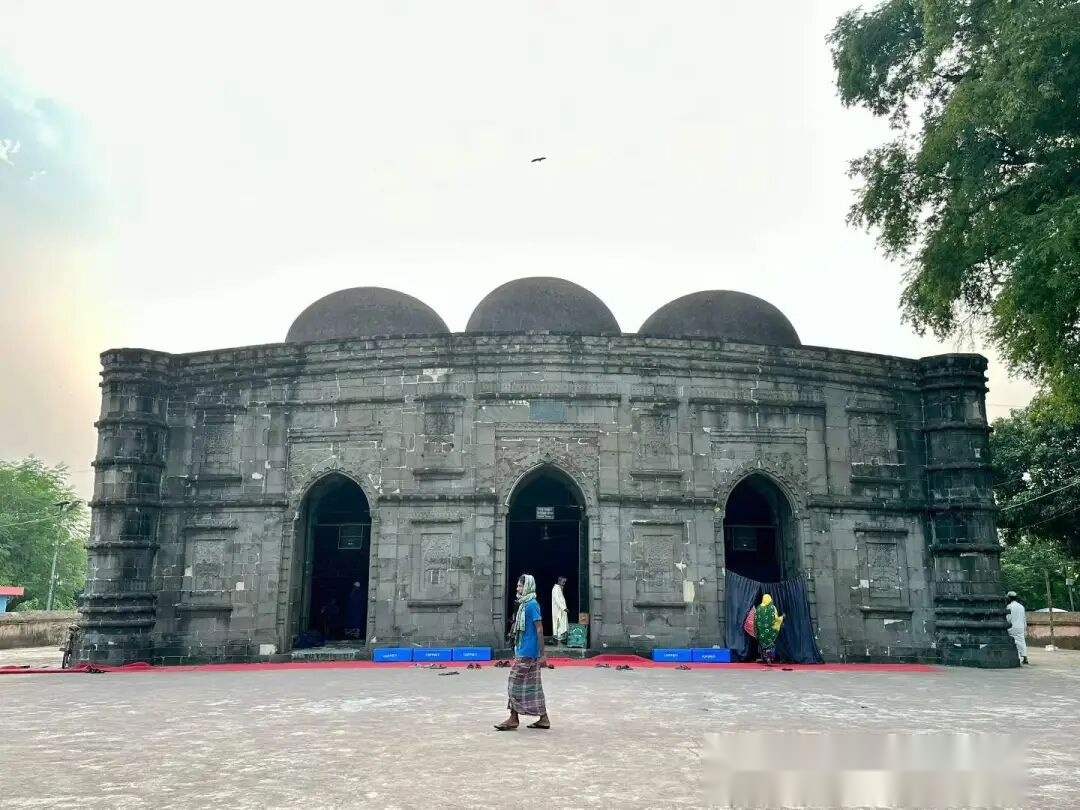
The Kusumba Mosque sits in Rajshahi, in northwestern Bangladesh, and was constructed between 1558 and 1559, making it one of the most important major mosques from the late Bengal Sultanate period. It’s nicknamed the 'Black Jewel of Bangladesh' because of its dark basalt stone cladding, and you can even spot it on the 5-taka bill.
The mosque was commissioned by a high-ranking official named Sulaiman during the reign of the Sultan of Bengal, Ghiyasuddin Bahadur Shah (who ruled from 1554 to 1556).
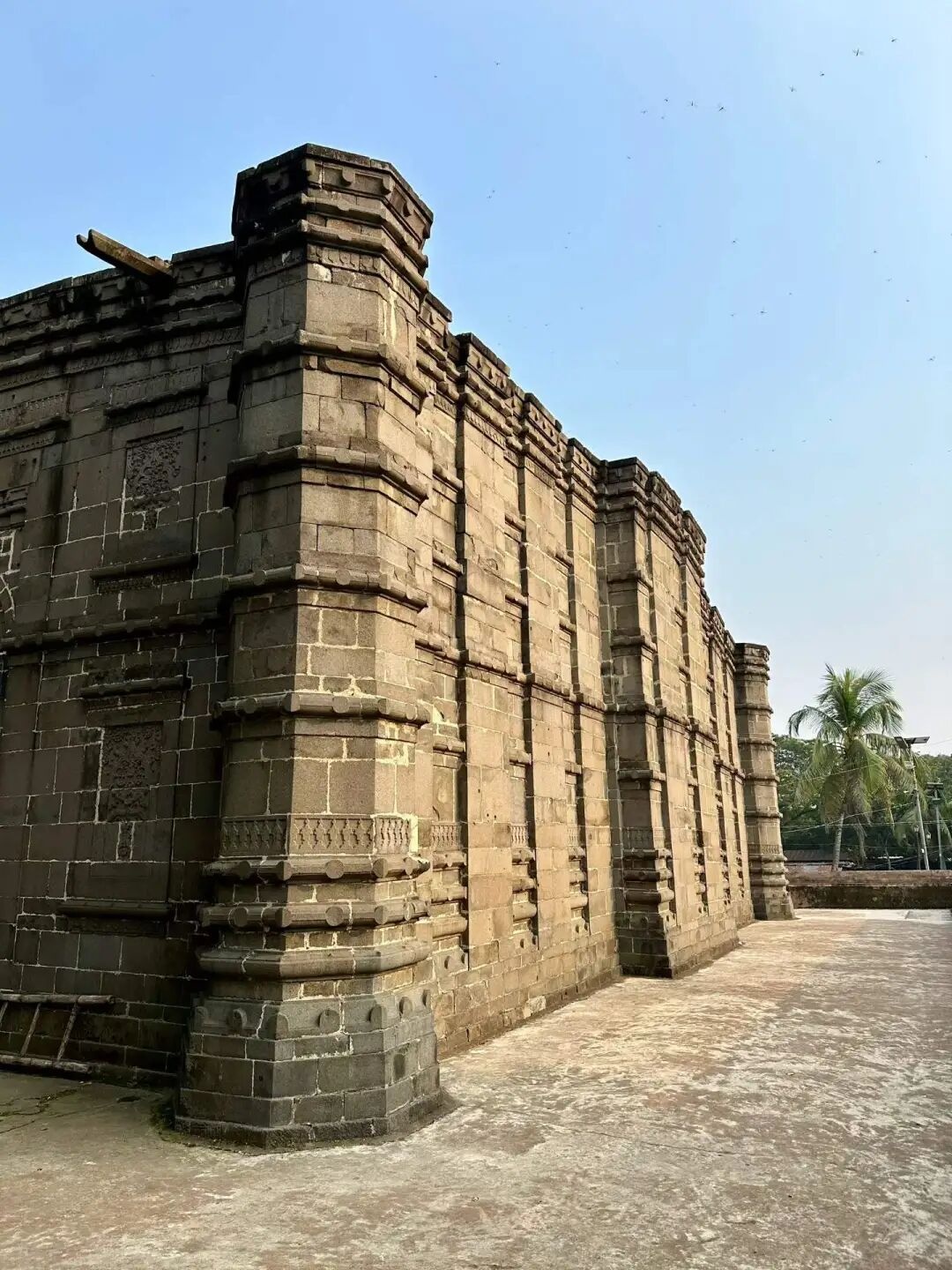
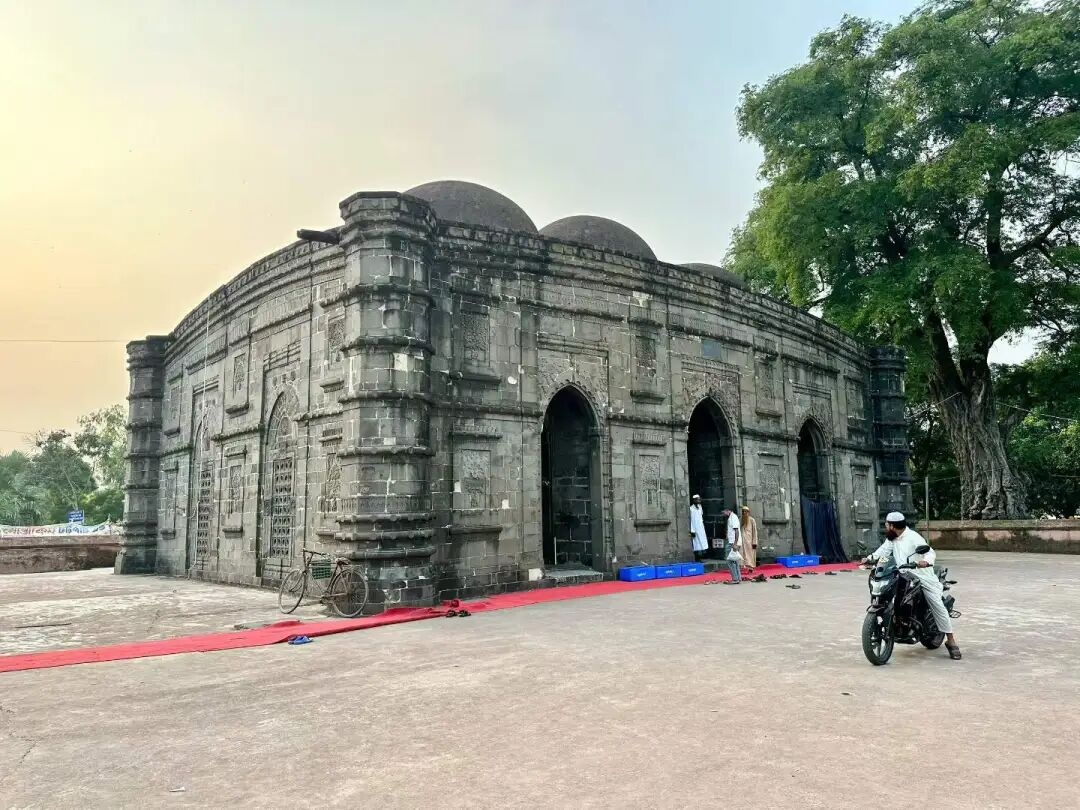
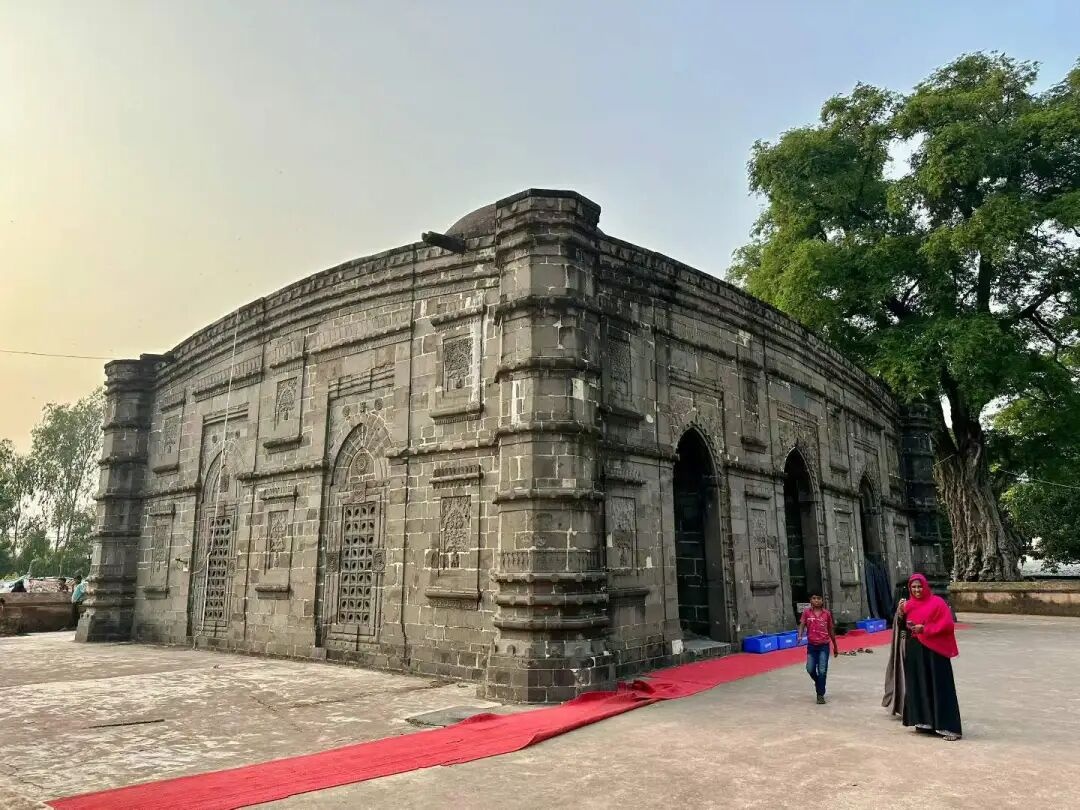
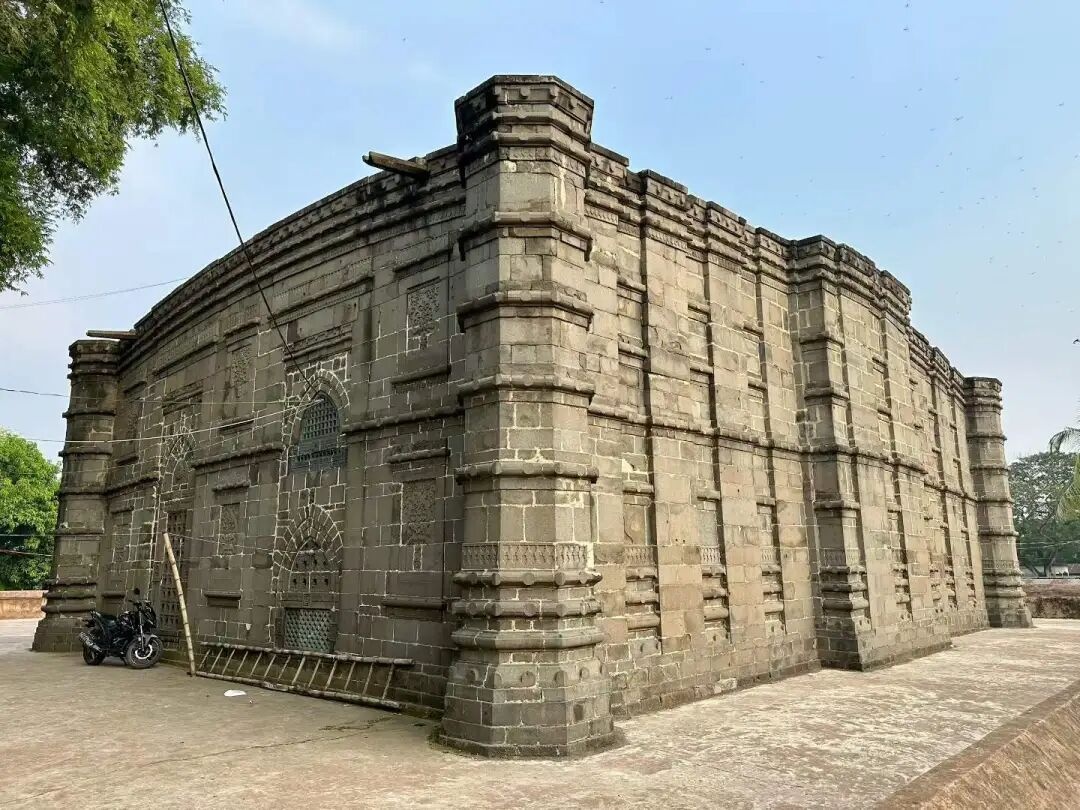
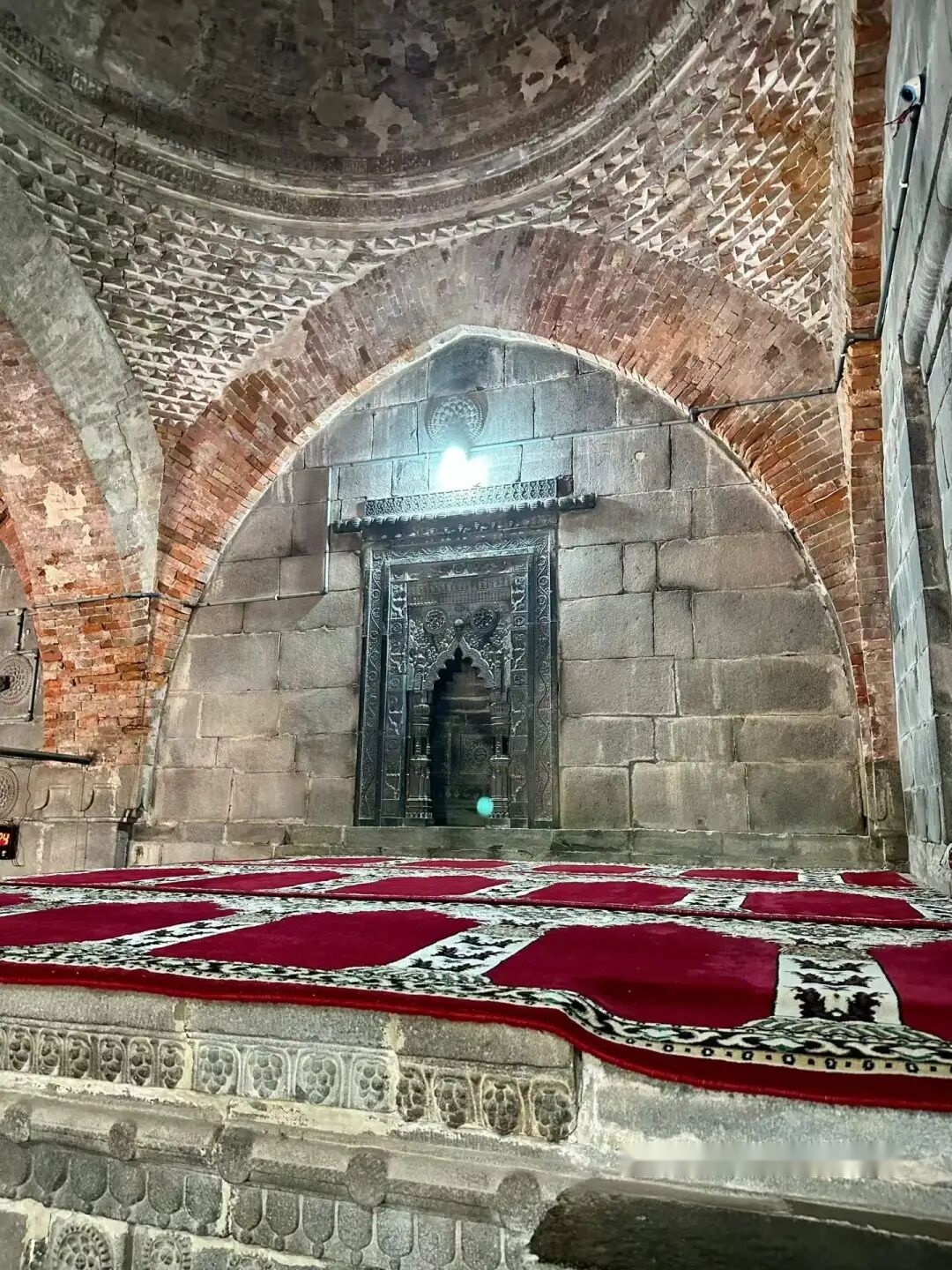
Since stone was pretty hard to find in the Bengal Delta, most mosques back in the Sultanate days were built with red brick and terracotta. But the Kusumba Mosque is different—its exterior walls and even the interior up to the squinch arches are completely covered in dark basalt. The stone was polished to a dull shine, giving the whole place a nearly black look. For ancient architecture in this region, building a huge mosque entirely out of basalt was a massive flex, showing off just how wealthy and influential that local official really was.
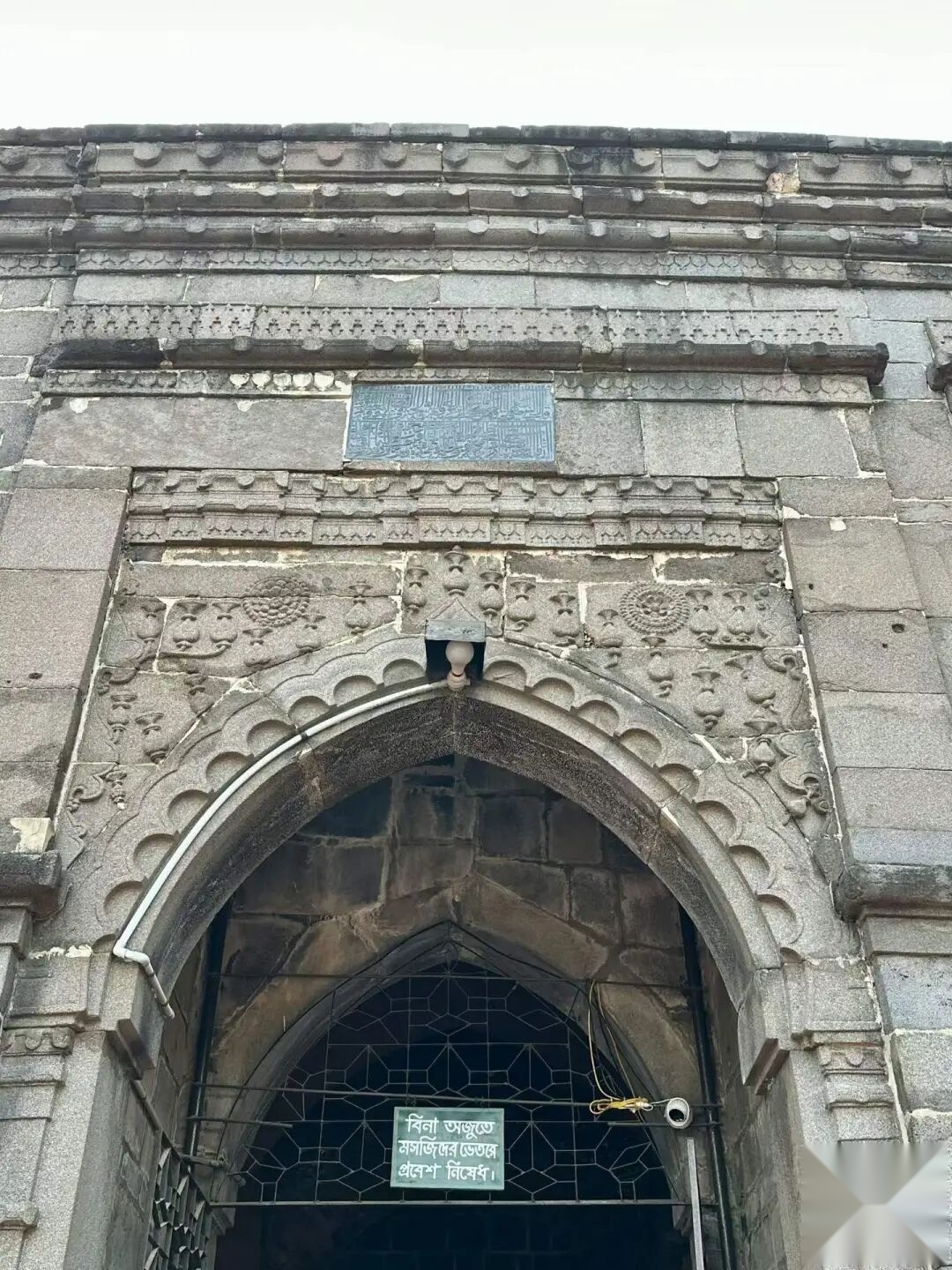
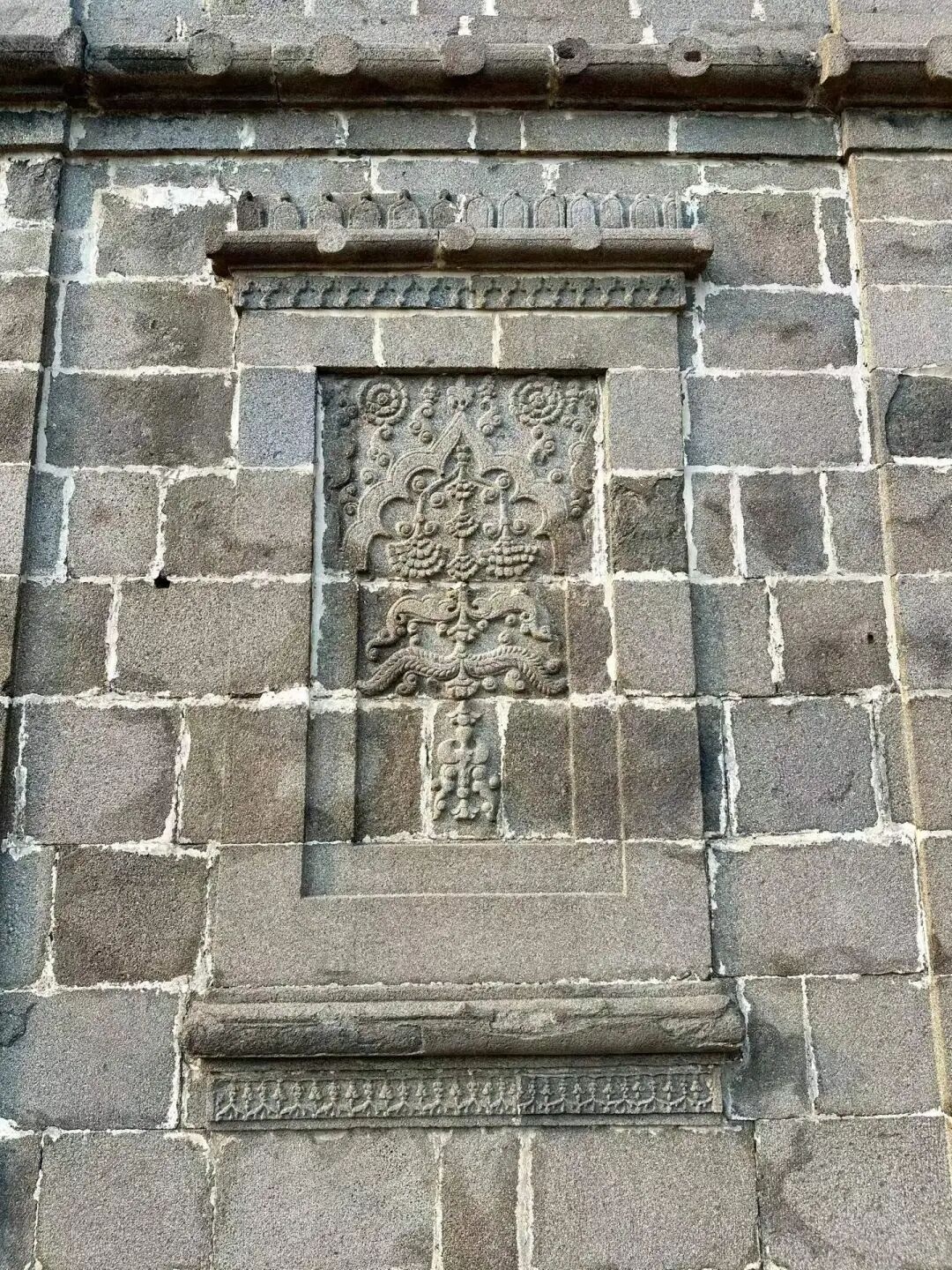
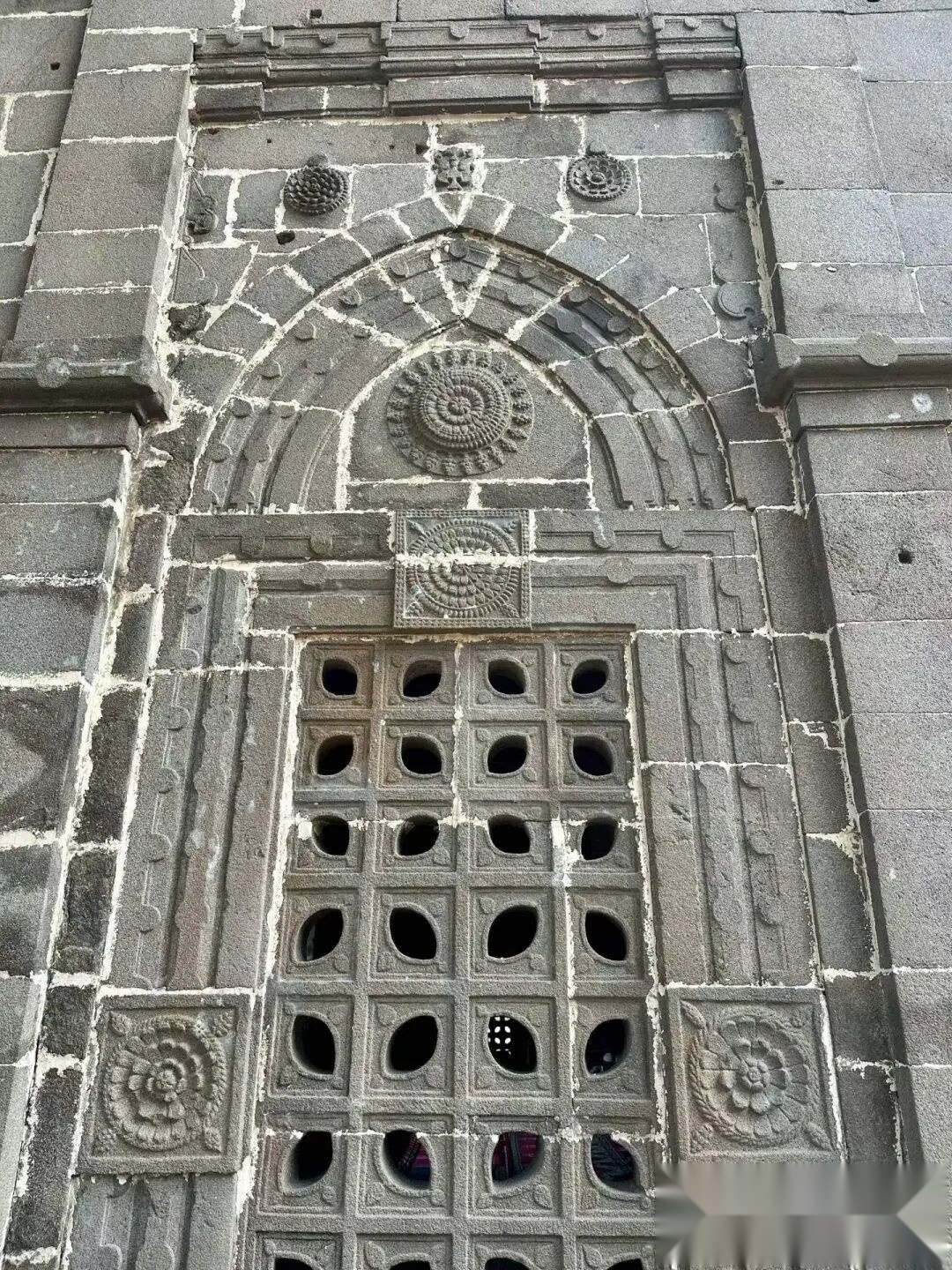
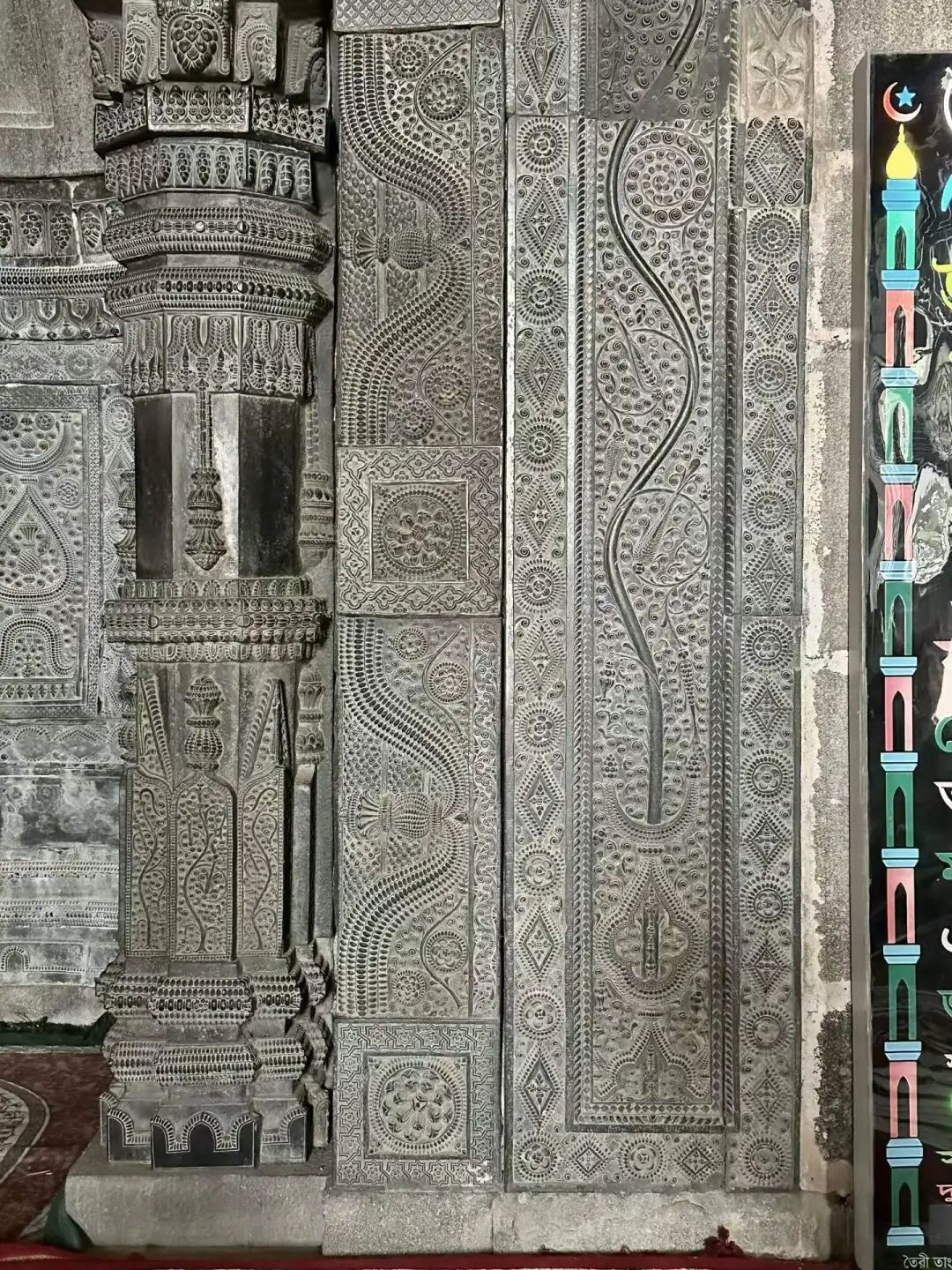
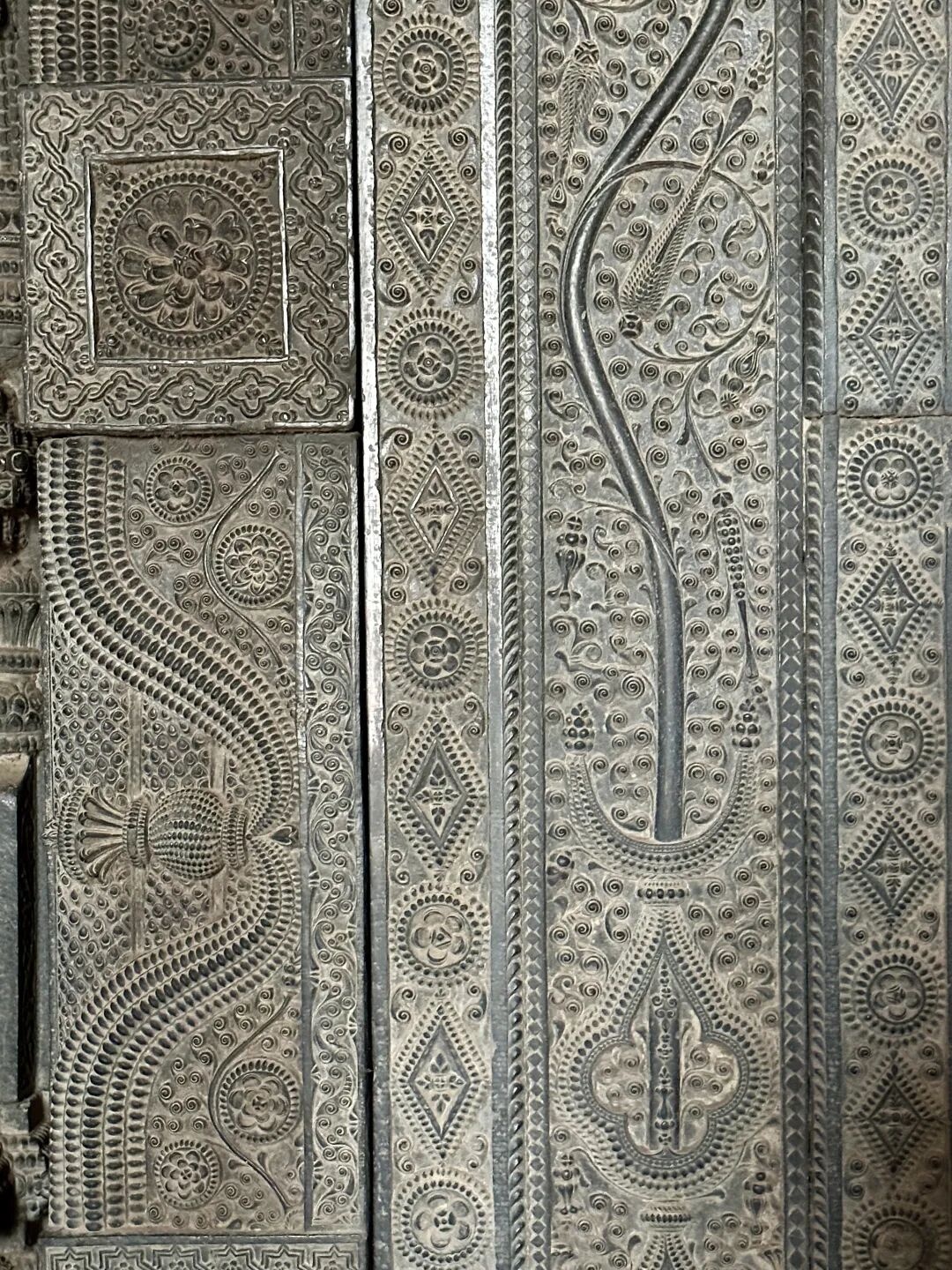
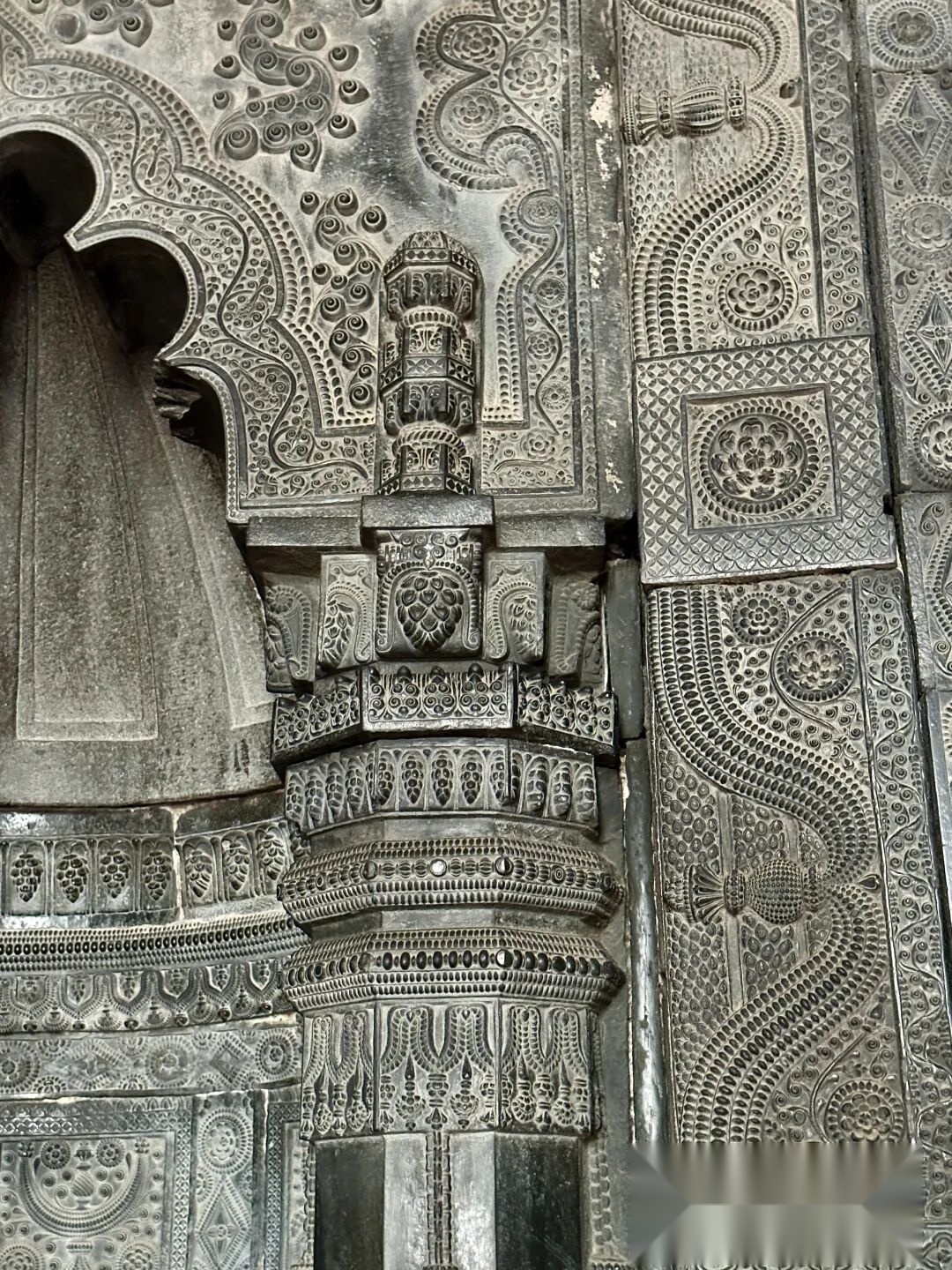
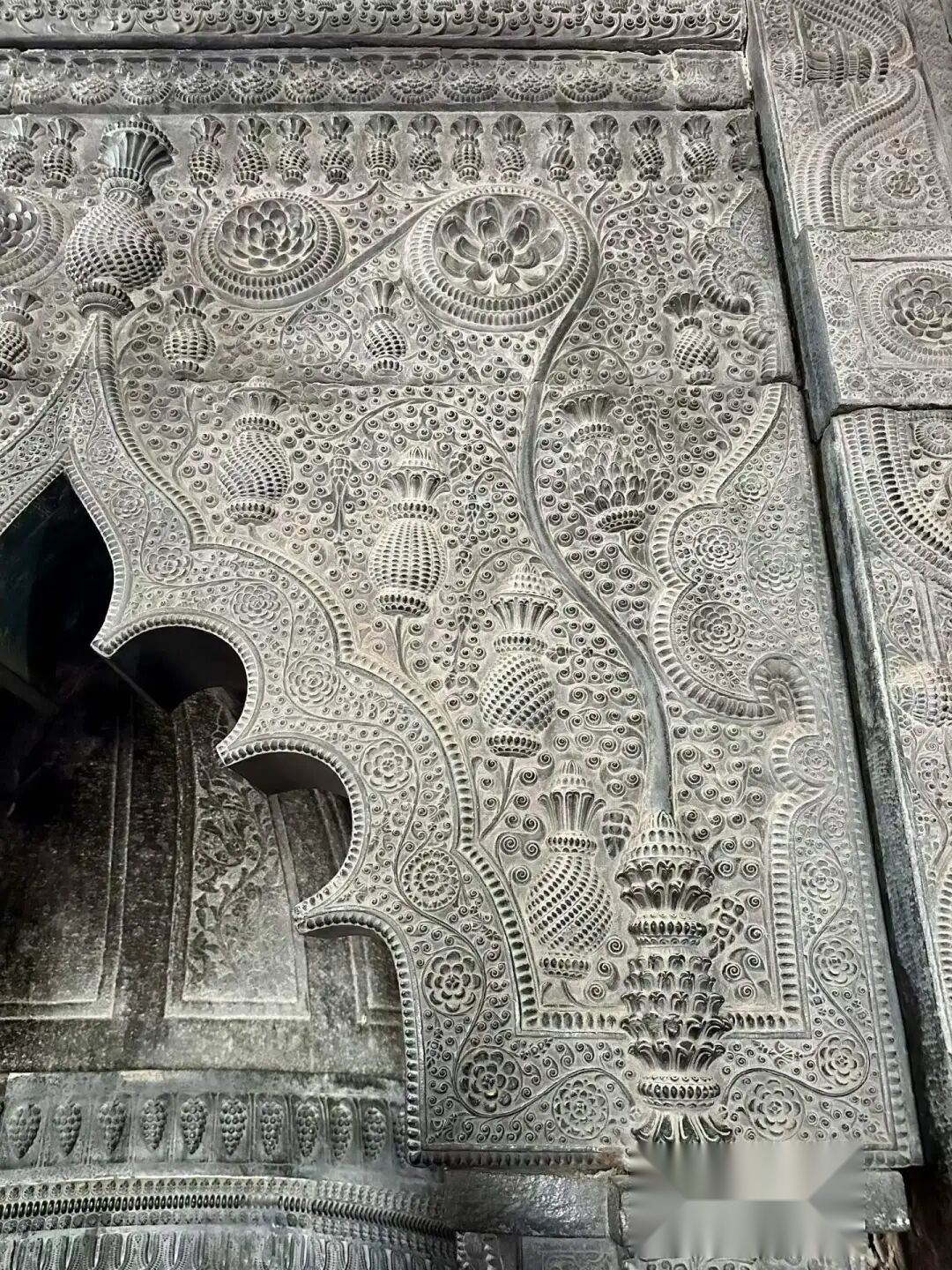
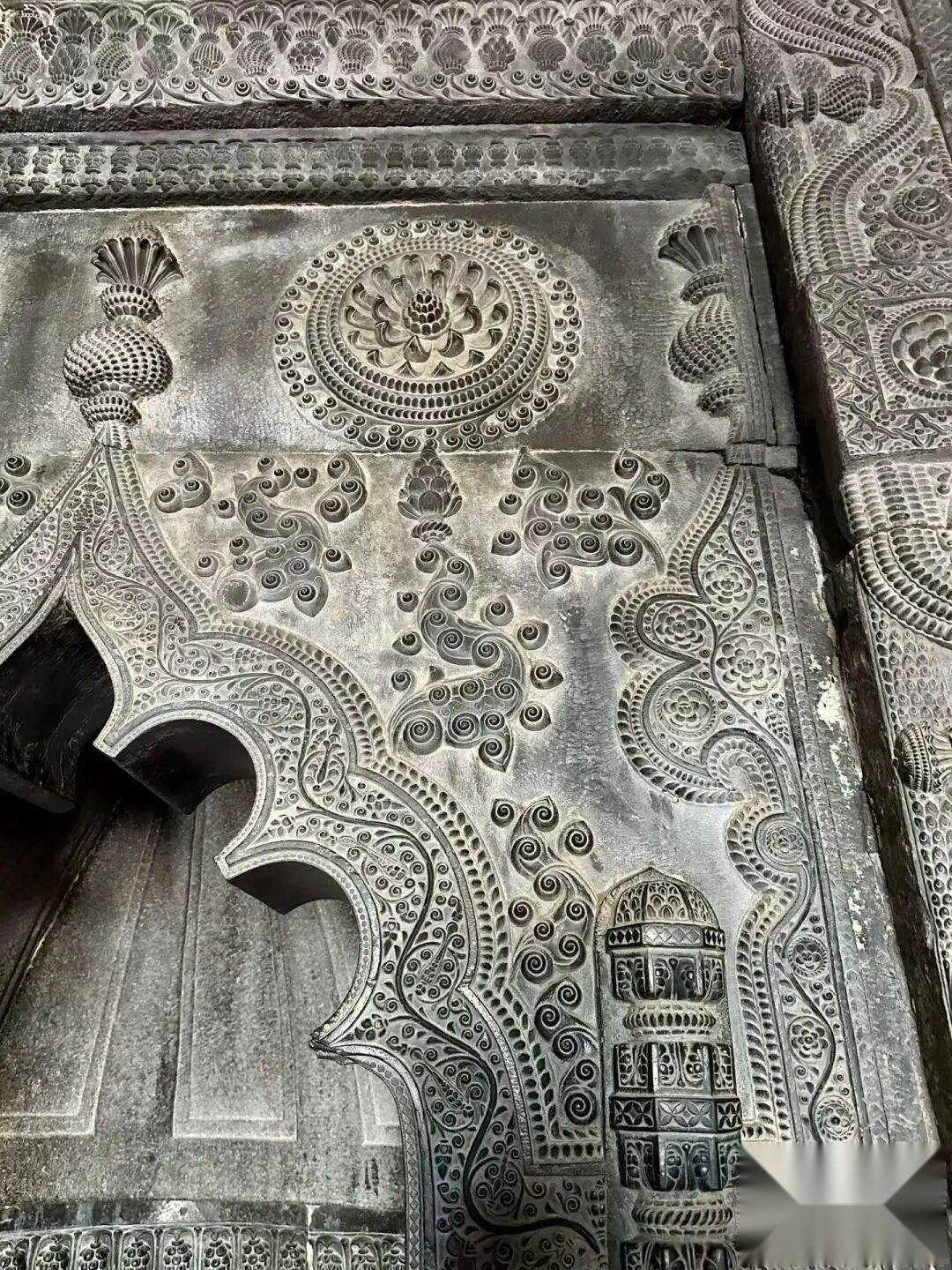
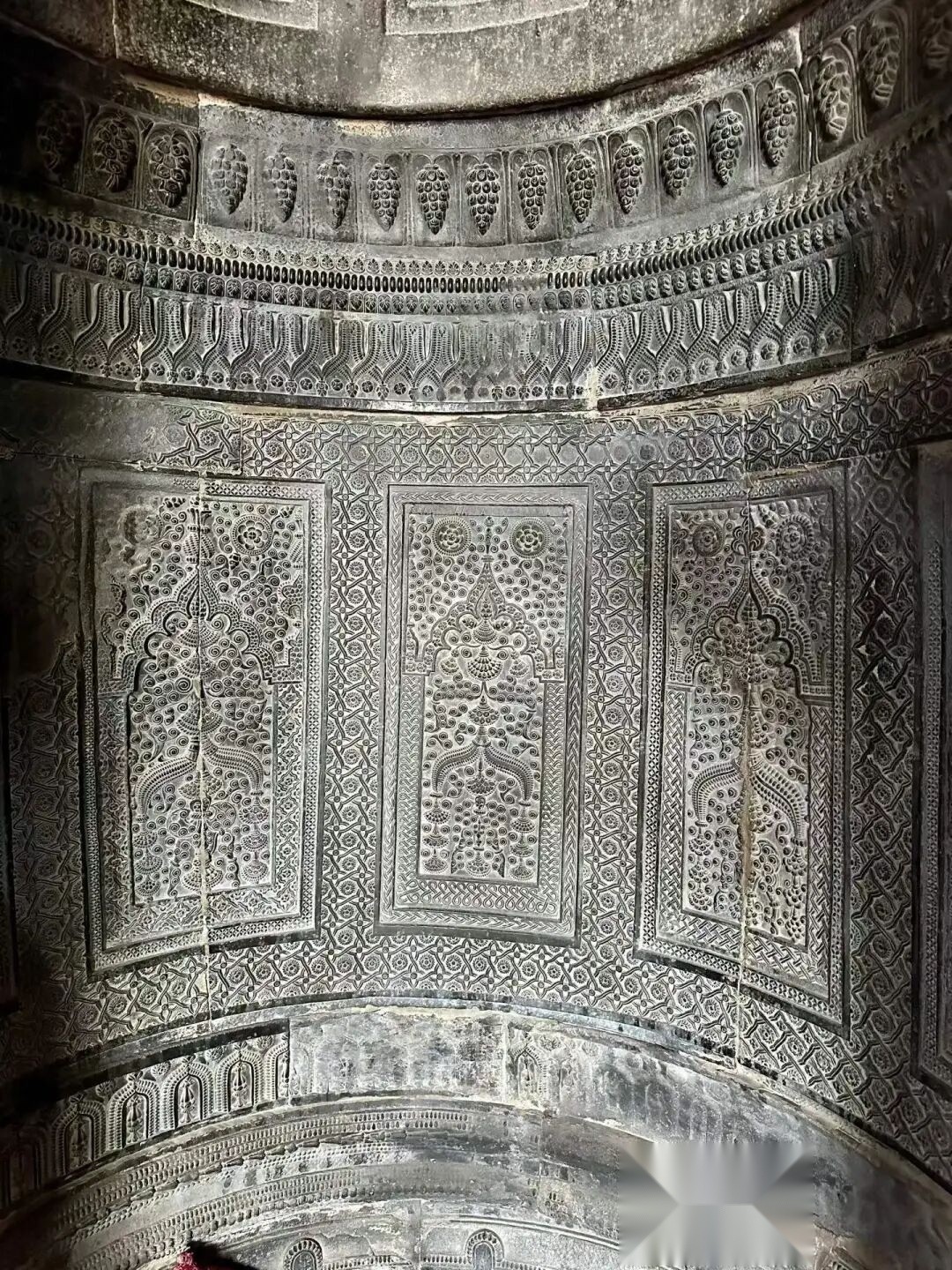
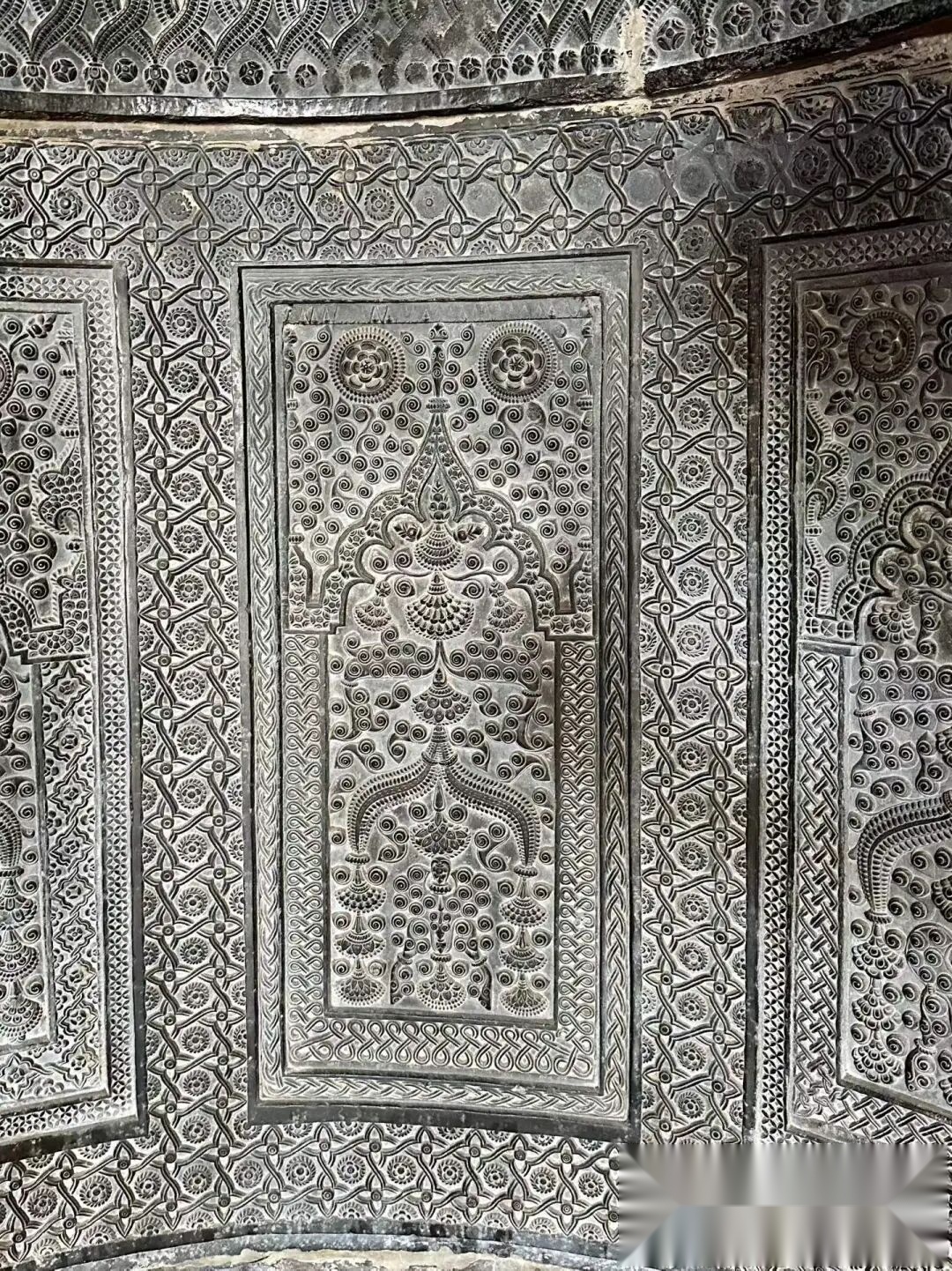
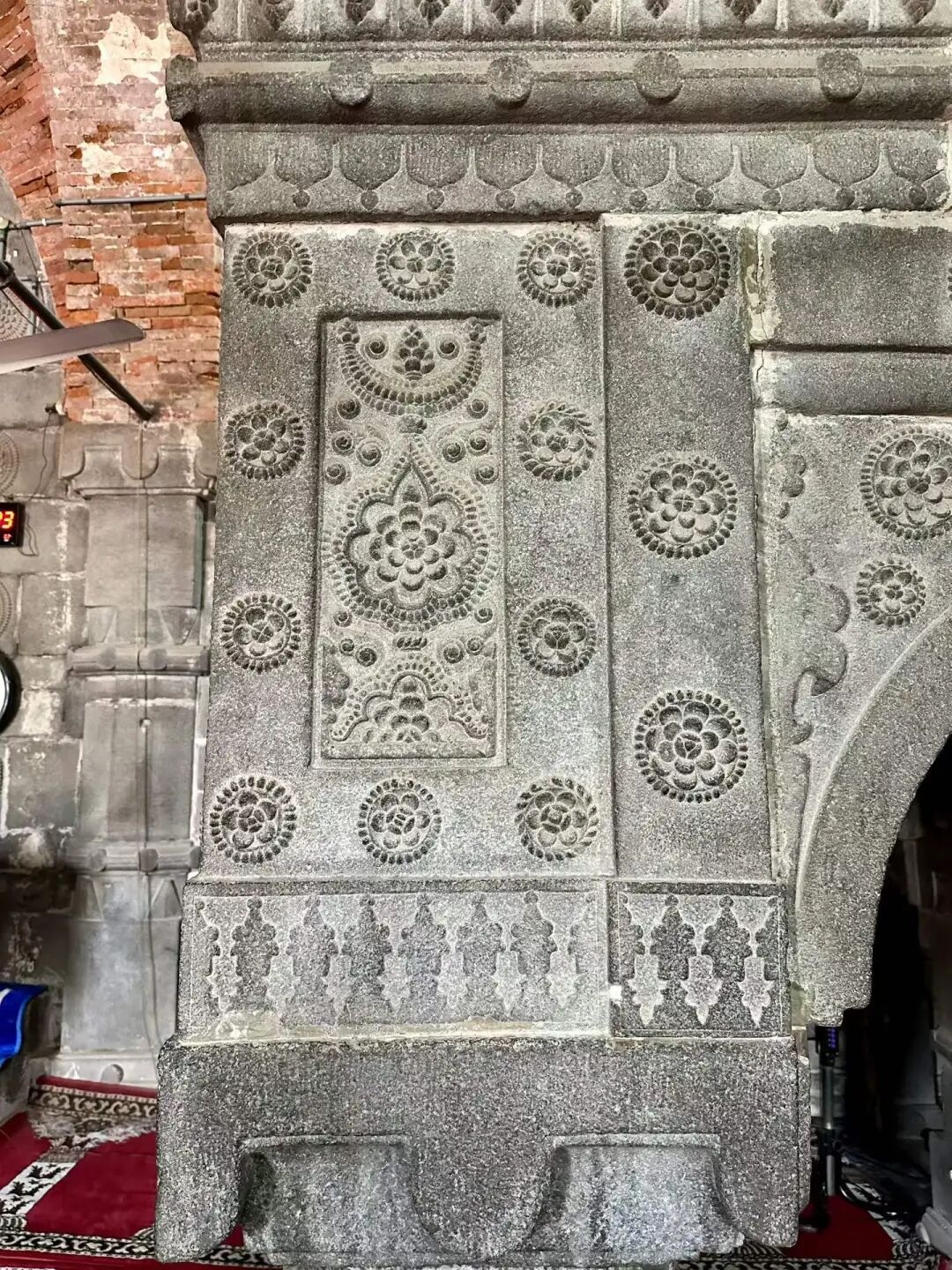
The roof cornice of the main hall features that classic curved style you only see in Bengal, and the four corners have octagonal towers built right into the walls. The black stone is decorated with shallow carvings of hanging chains, lotuses, grapevines, rosettes, and geometric patterns, while the door and niche arches use a multi-lobed horseshoe shape that shows clear influence from Persia and Central Asia.
Inside, the prayer hall is split into two sections and three bays by two central stone pillars. These pillars are square with beveled, chamfered edges. On the north and south walls, there are lattice stone screens that do triple duty: they bring in light, keep the air moving, and provide a bit of privacy.
Just like back home, there's a protocol for entering the mosque: you need to cover your head. There’s a stack of caps waiting in the main hall, so if you show up without one, you just grab one for yourself.
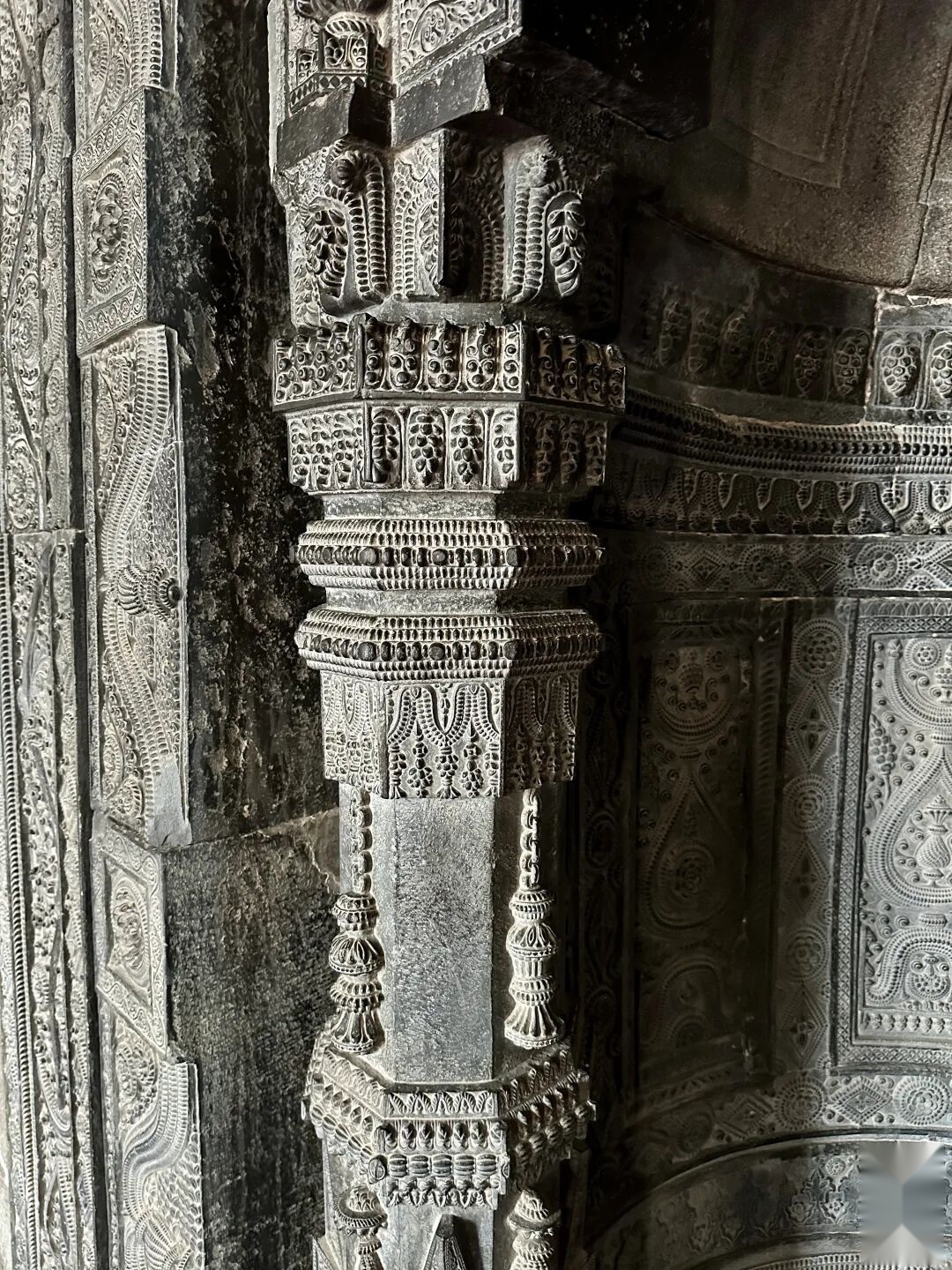
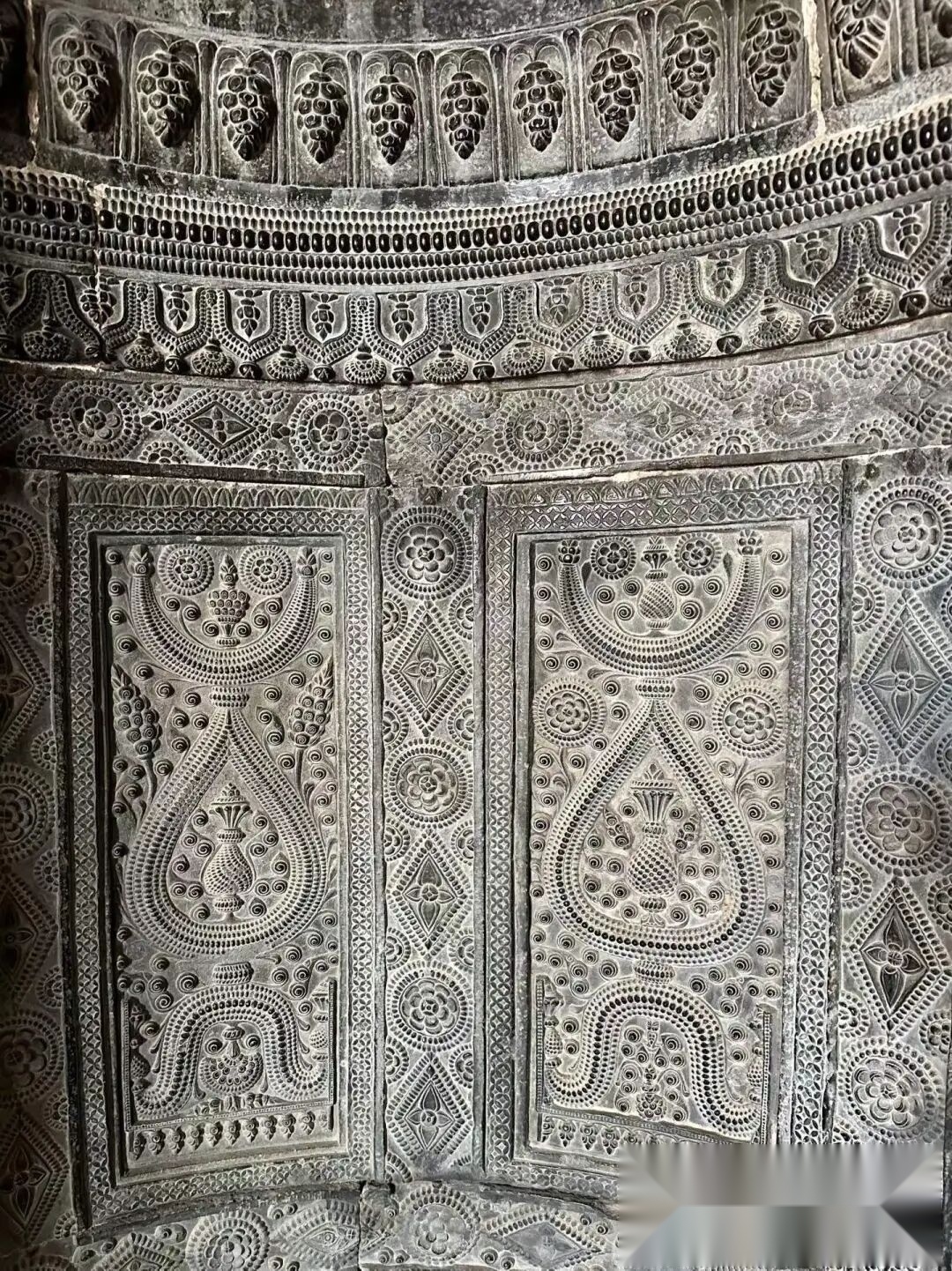
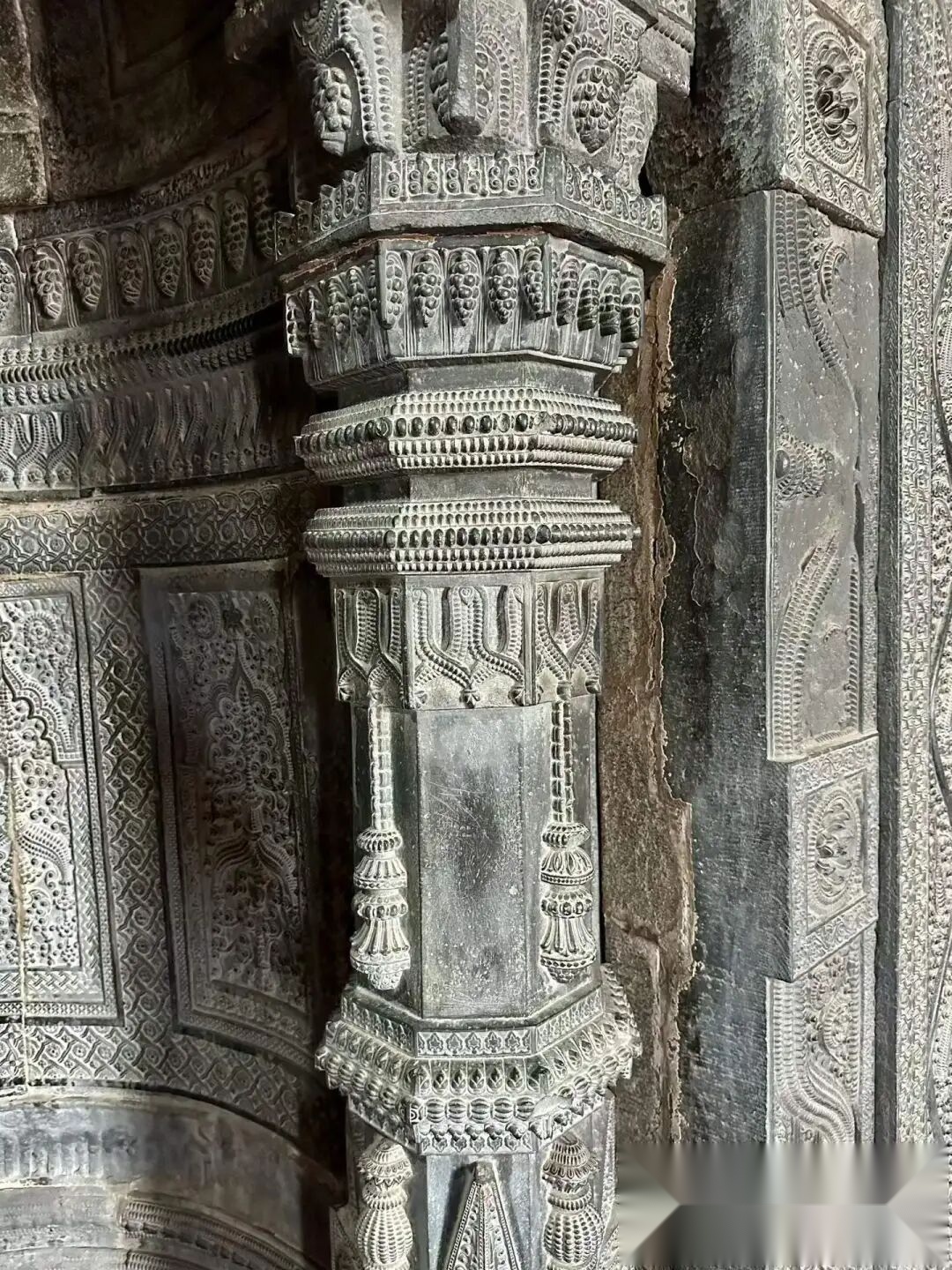
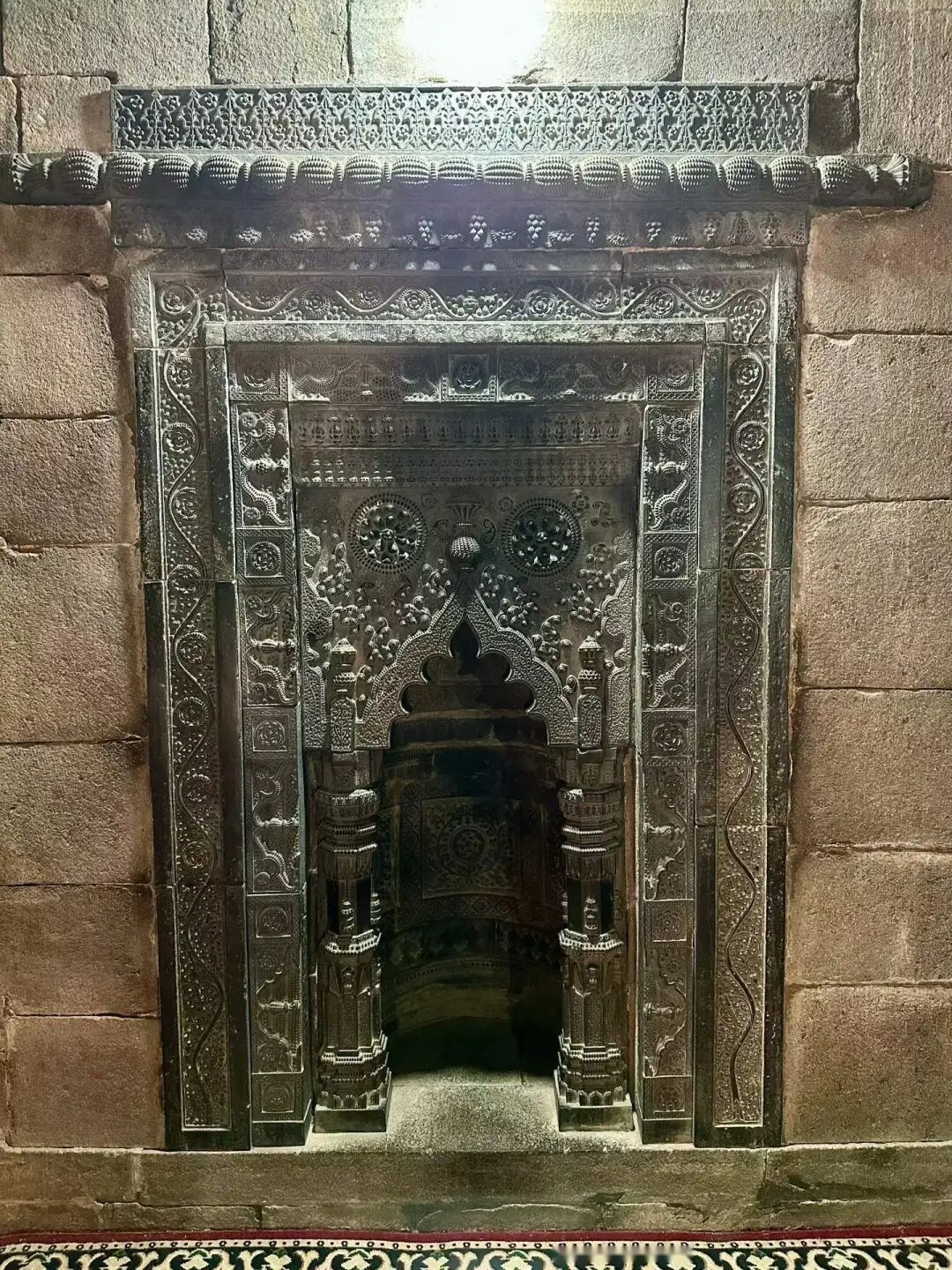
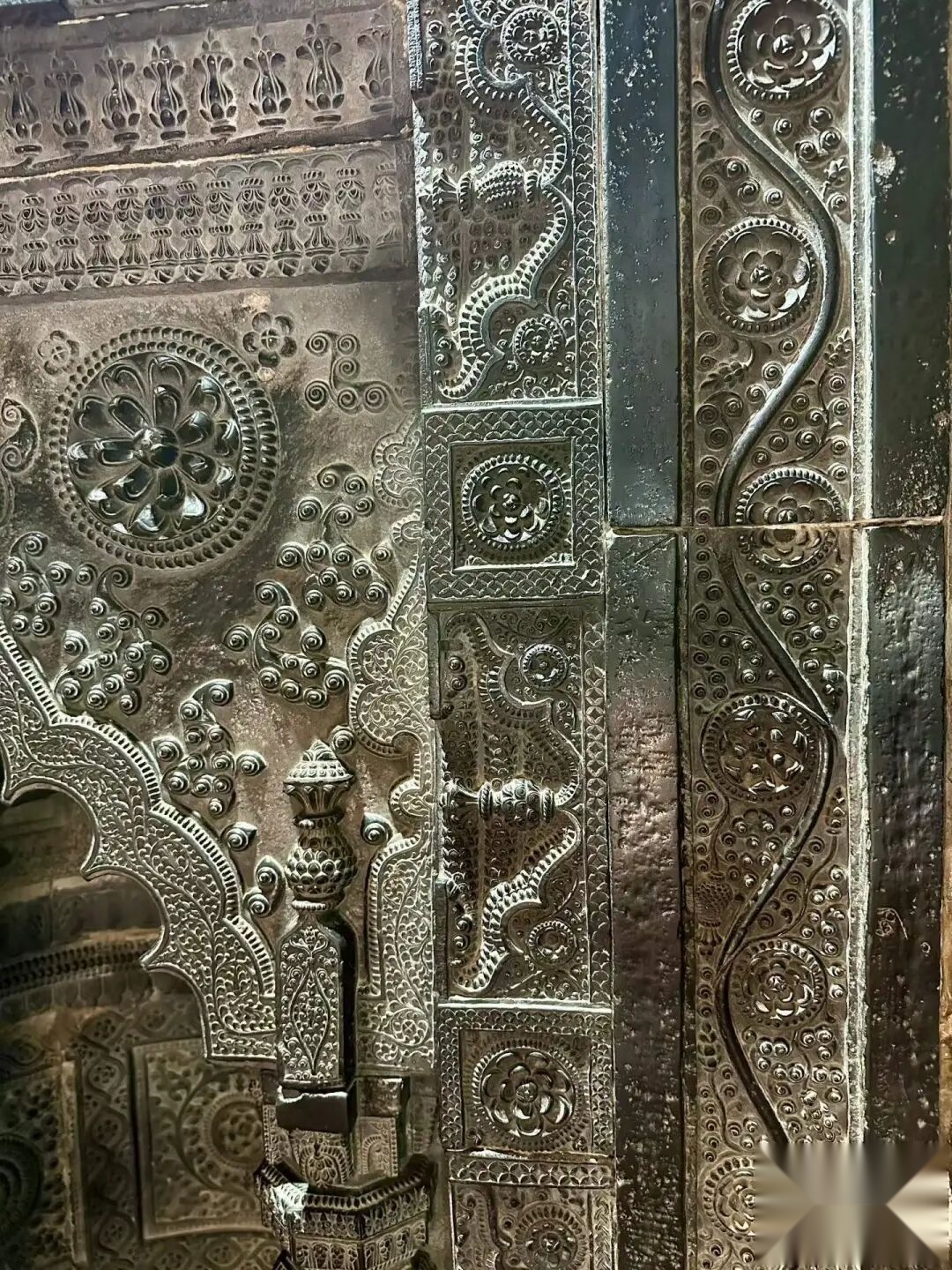
The stone carvings on the mihrab are top-tier: it’s got multi-lobed arches topped with vase-shaped finials, pillars decorated with scrolling vines and hanging tassels, snaking grapevines, and lotus petals and pedestals simplified into tiny dots. This was the signature style for late Sultanate stonework—rather than trying to make everything look hyper-realistic, they went for this dense, dotted visual texture.
The vase-shaped finials (kalasa) were actually borrowed from Hindu-Buddhist architecture, where they were originally symbols of good luck and prosperity.
The lotus pedestals are a core motif straight out of Buddhist stone carving traditions.
Those grapevines and scrolling vines are classic botanical patterns from the Persian-Central Asian decorative style.
The hanging tassels and chains come from the 'suspension' motif common in religious architecture, designed to look like fabric curtains or hangings.
In the northwest corner of the hall, there’s a staircase leading up to an upper level called the Badshah-ka-takhti (Royal Gallery). This was reserved for the Sultan’s family and women, a feature you only see in the high-status mosques of the Bengal Sultanate. The shoulders of the arches on this platform are covered in lotuses, which really highlights the 'elevated' nature of the space visually. view all
Check out 40 exclusive photos diving deep into the Kusumba Mosque in Rajshahi, Bangladesh, built back in 1558. We’re breaking down the late Sultanate-era stone artistry of this 'Black Jewel of Bangladesh,' famous for its dark grey basalt construction, its intricate mihrab (prayer niche), and the history behind why it’s featured on local currency.
The Kusumba Mosque sits in Rajshahi, in northwestern Bangladesh, and was constructed between 1558 and 1559, making it one of the most important major mosques from the late Bengal Sultanate period. It’s nicknamed the 'Black Jewel of Bangladesh' because of its dark basalt stone cladding, and you can even spot it on the 5-taka bill.
The mosque was commissioned by a high-ranking official named Sulaiman during the reign of the Sultan of Bengal, Ghiyasuddin Bahadur Shah (who ruled from 1554 to 1556).
Since stone was pretty hard to find in the Bengal Delta, most mosques back in the Sultanate days were built with red brick and terracotta. But the Kusumba Mosque is different—its exterior walls and even the interior up to the squinch arches are completely covered in dark basalt. The stone was polished to a dull shine, giving the whole place a nearly black look. For ancient architecture in this region, building a huge mosque entirely out of basalt was a massive flex, showing off just how wealthy and influential that local official really was.
The roof cornice of the main hall features that classic curved style you only see in Bengal, and the four corners have octagonal towers built right into the walls. The black stone is decorated with shallow carvings of hanging chains, lotuses, grapevines, rosettes, and geometric patterns, while the door and niche arches use a multi-lobed horseshoe shape that shows clear influence from Persia and Central Asia.
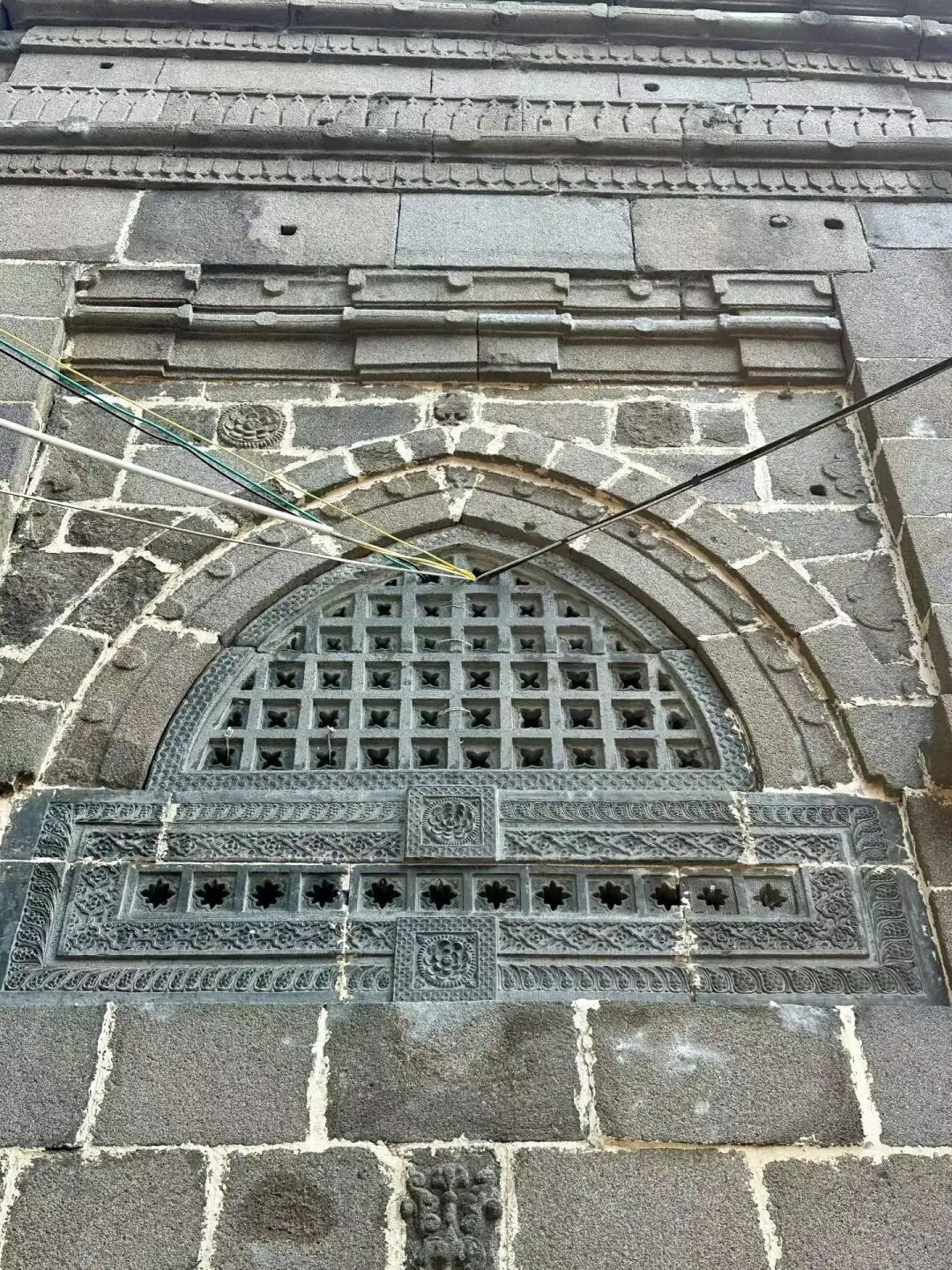
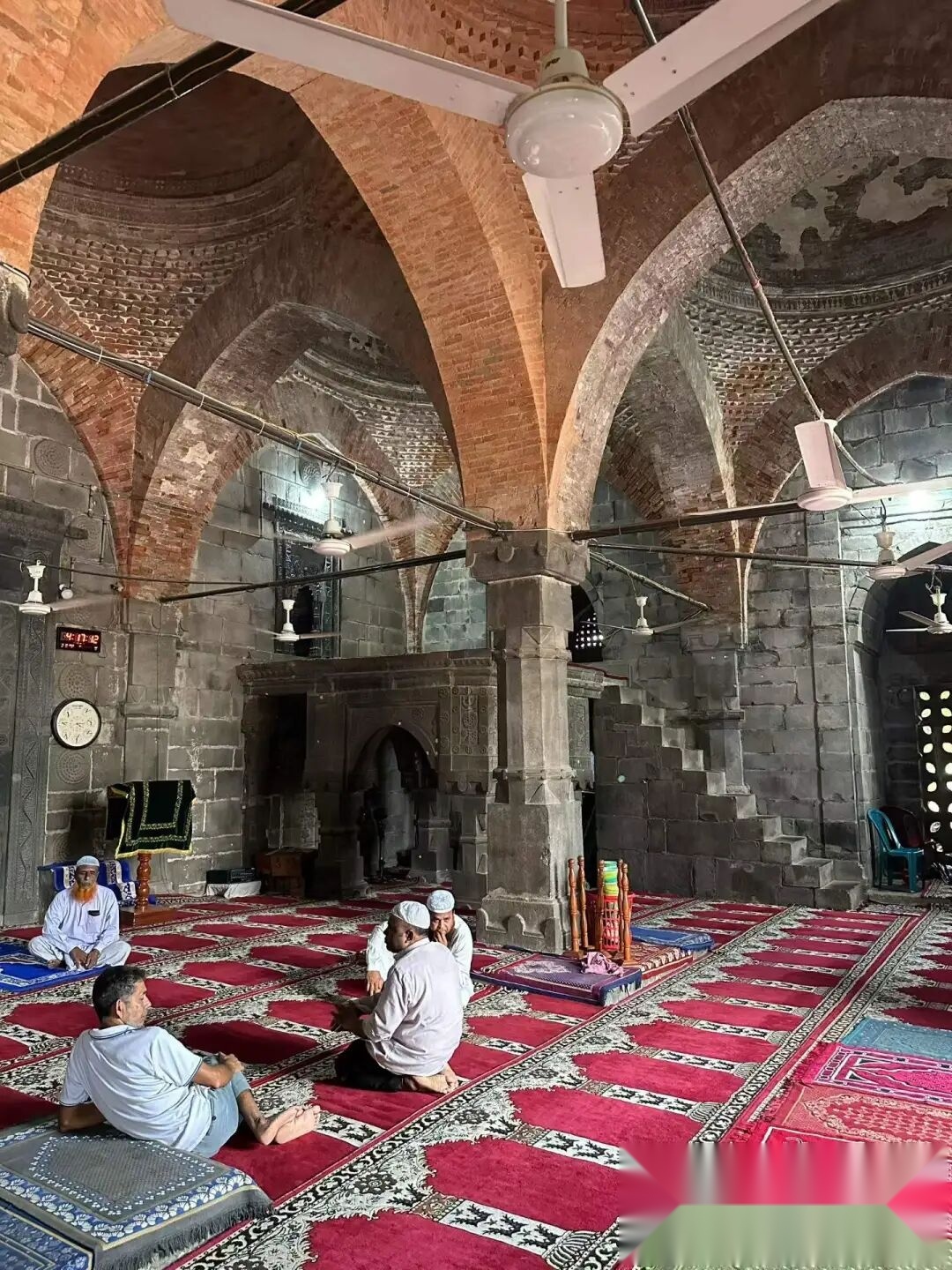
Inside, the prayer hall is split into two sections and three bays by two central stone pillars. These pillars are square with beveled, chamfered edges. On the north and south walls, there are lattice stone screens that do triple duty: they bring in light, keep the air moving, and provide a bit of privacy.
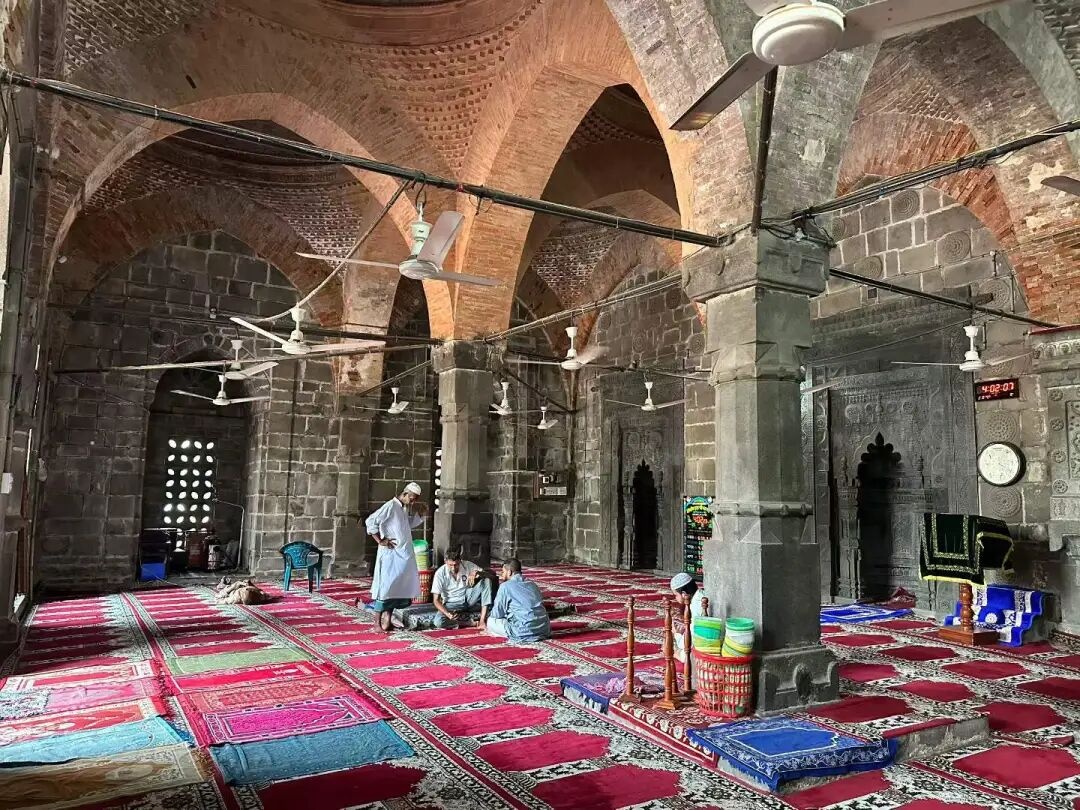
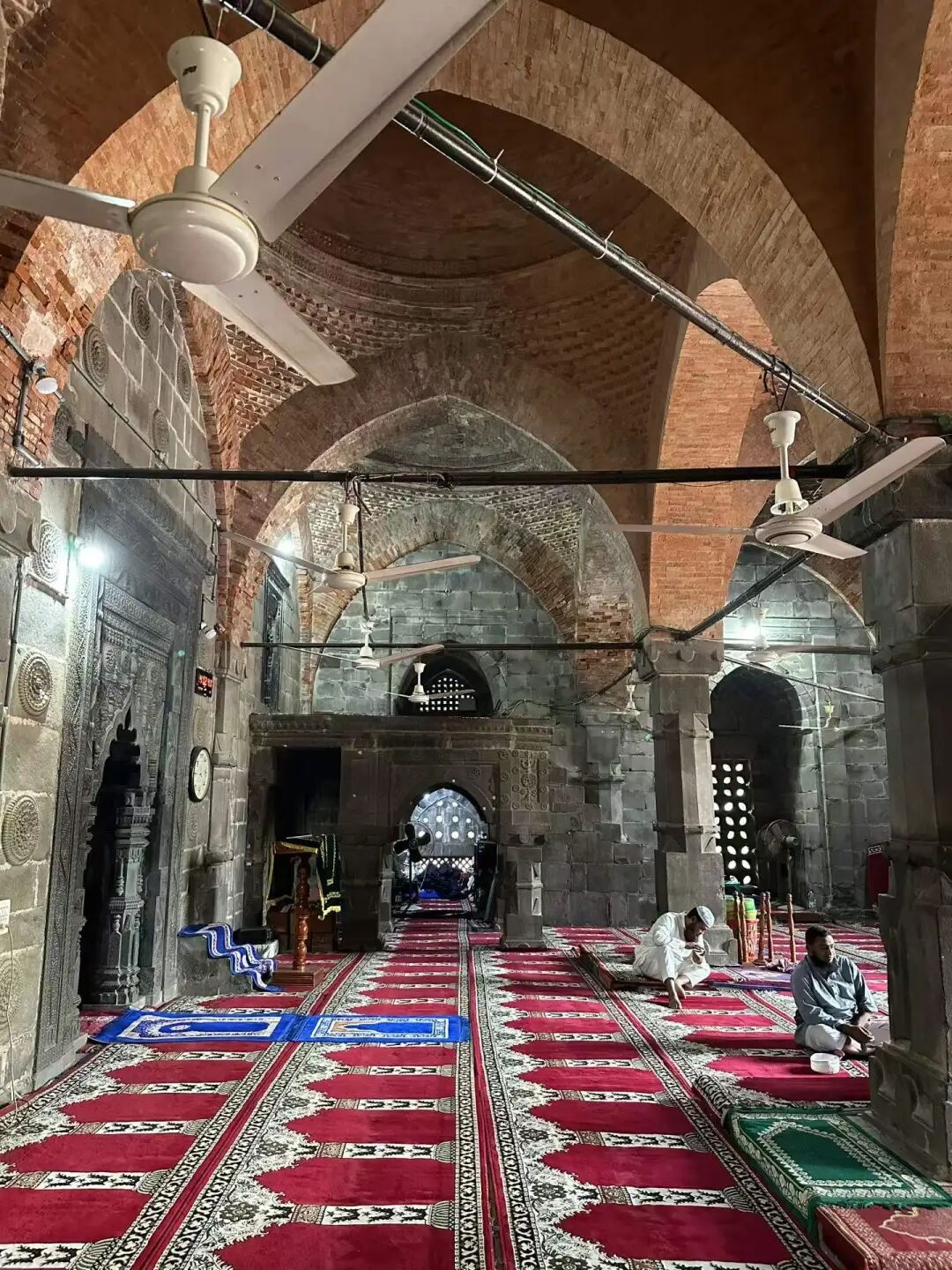
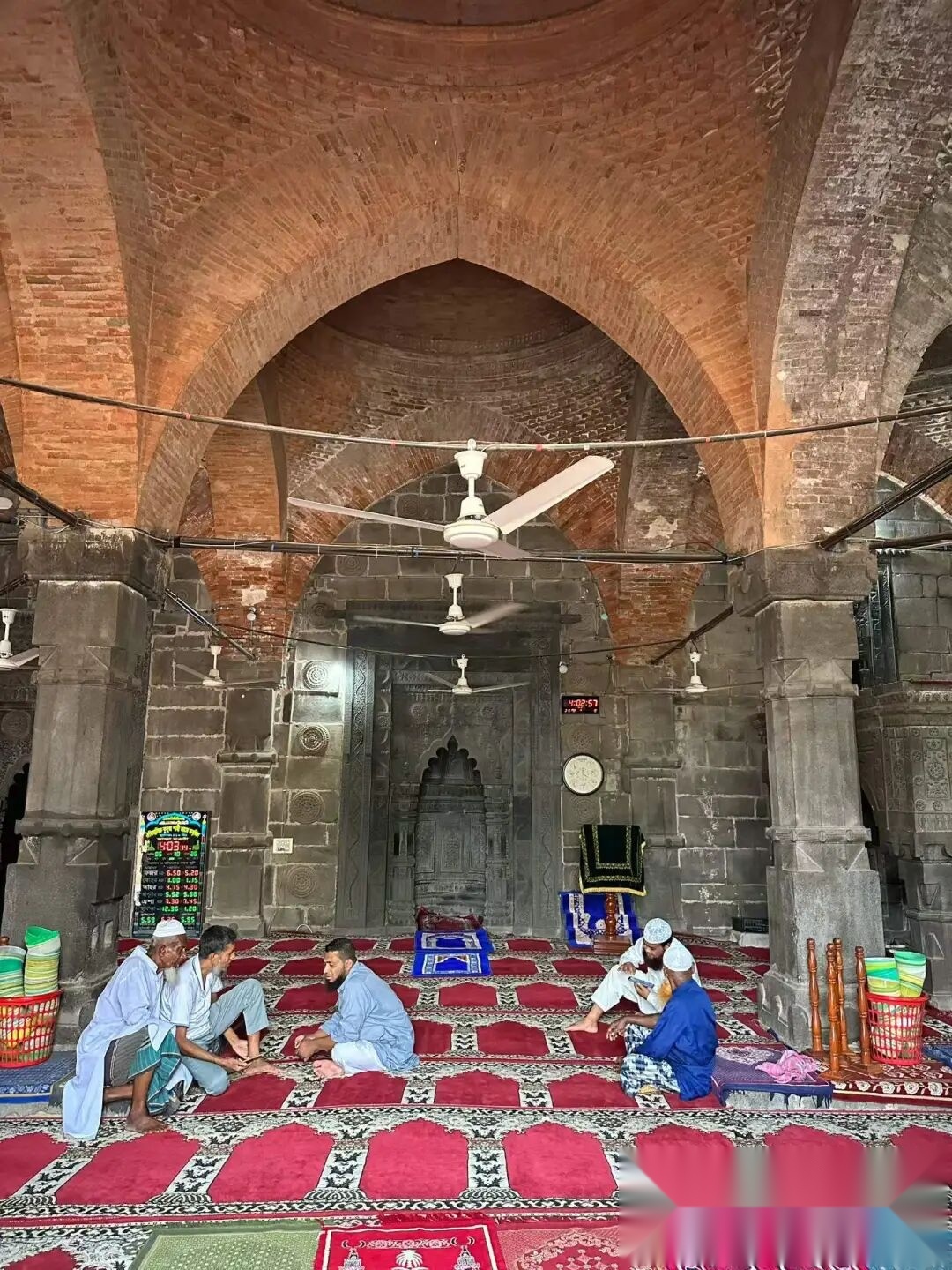
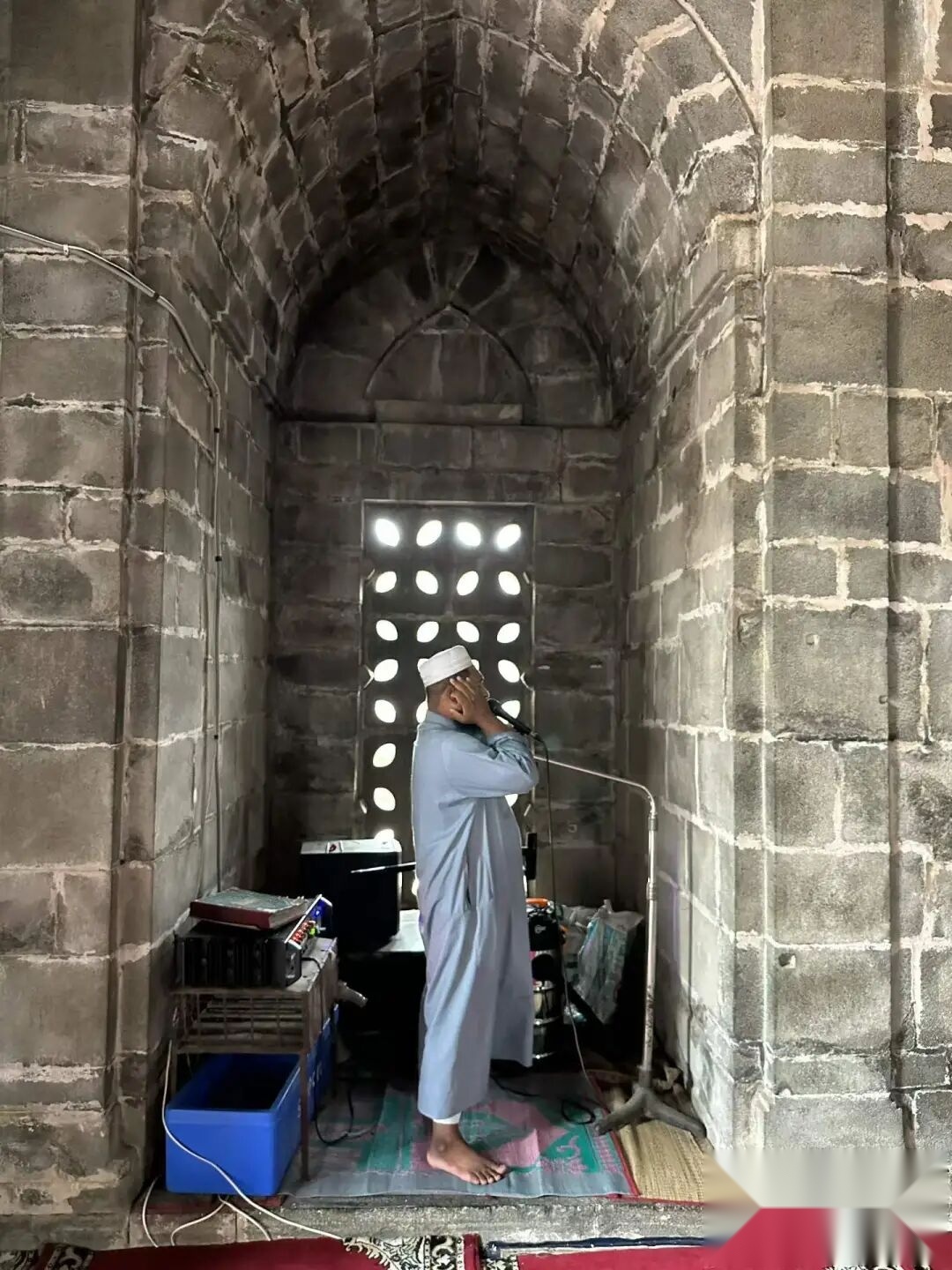
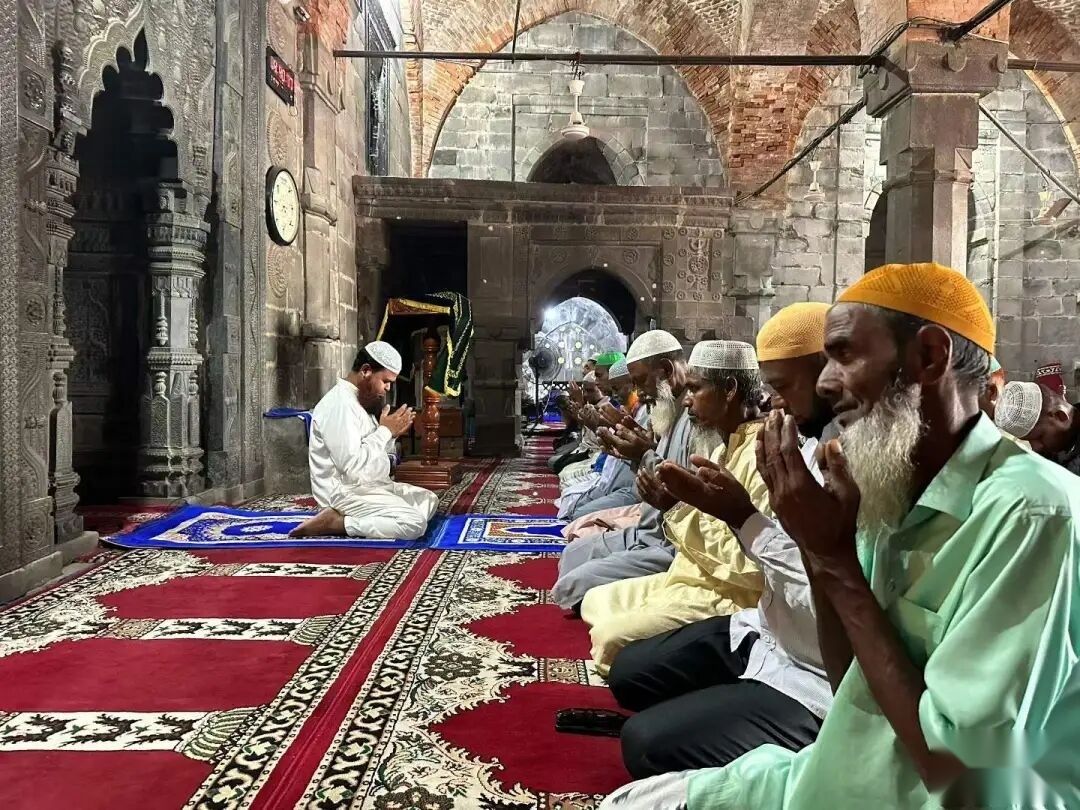
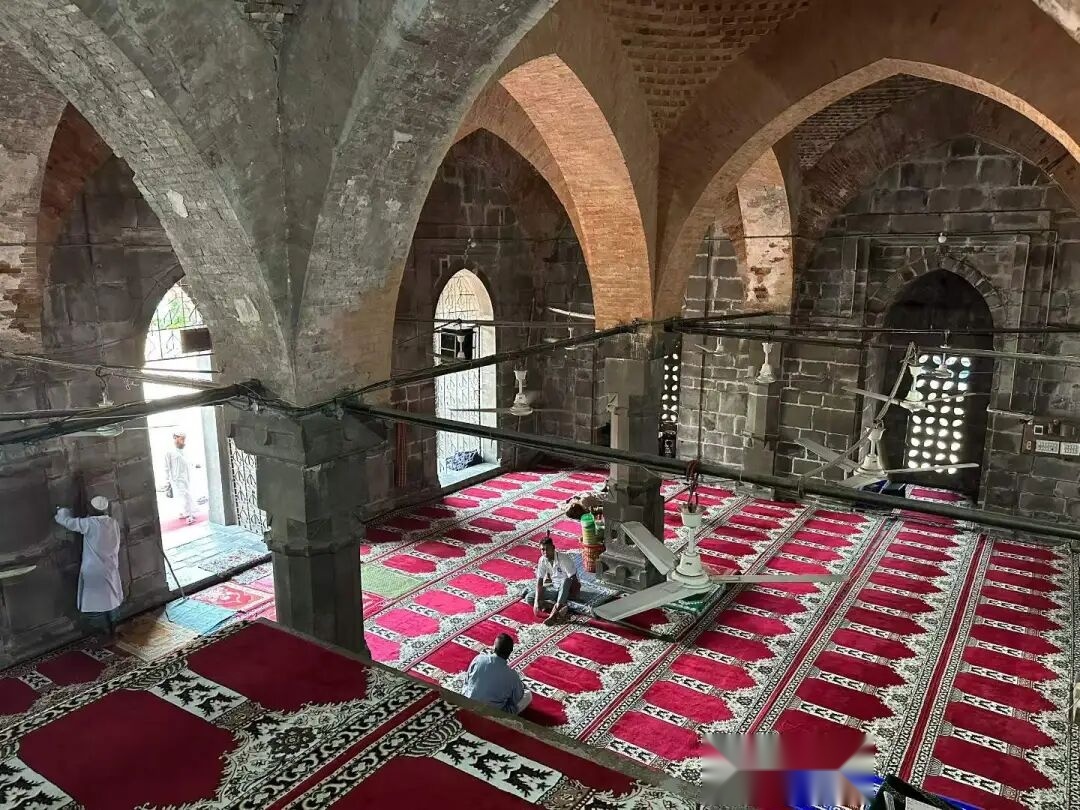
Just like back home, there's a protocol for entering the mosque: you need to cover your head. There’s a stack of caps waiting in the main hall, so if you show up without one, you just grab one for yourself.
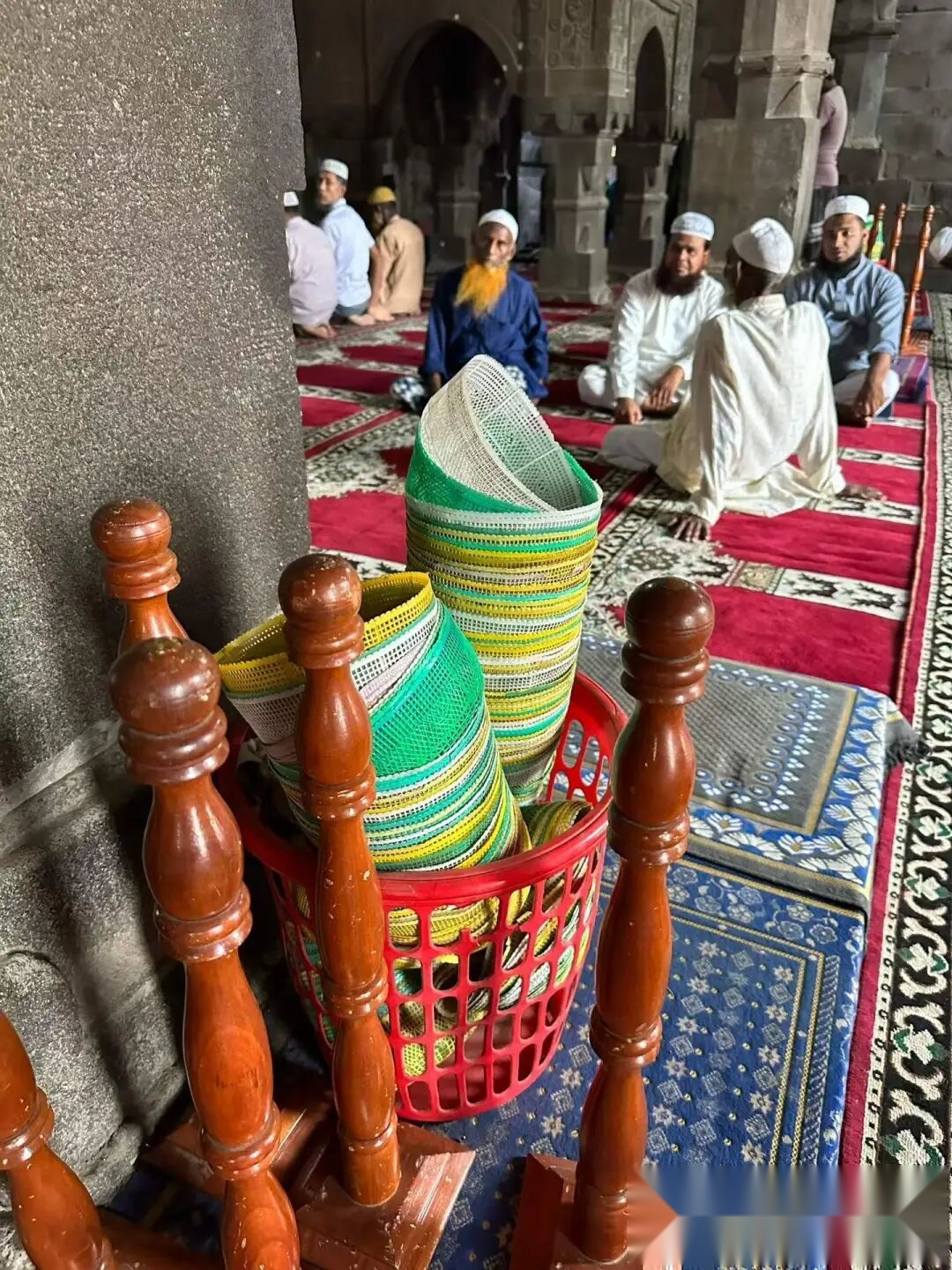
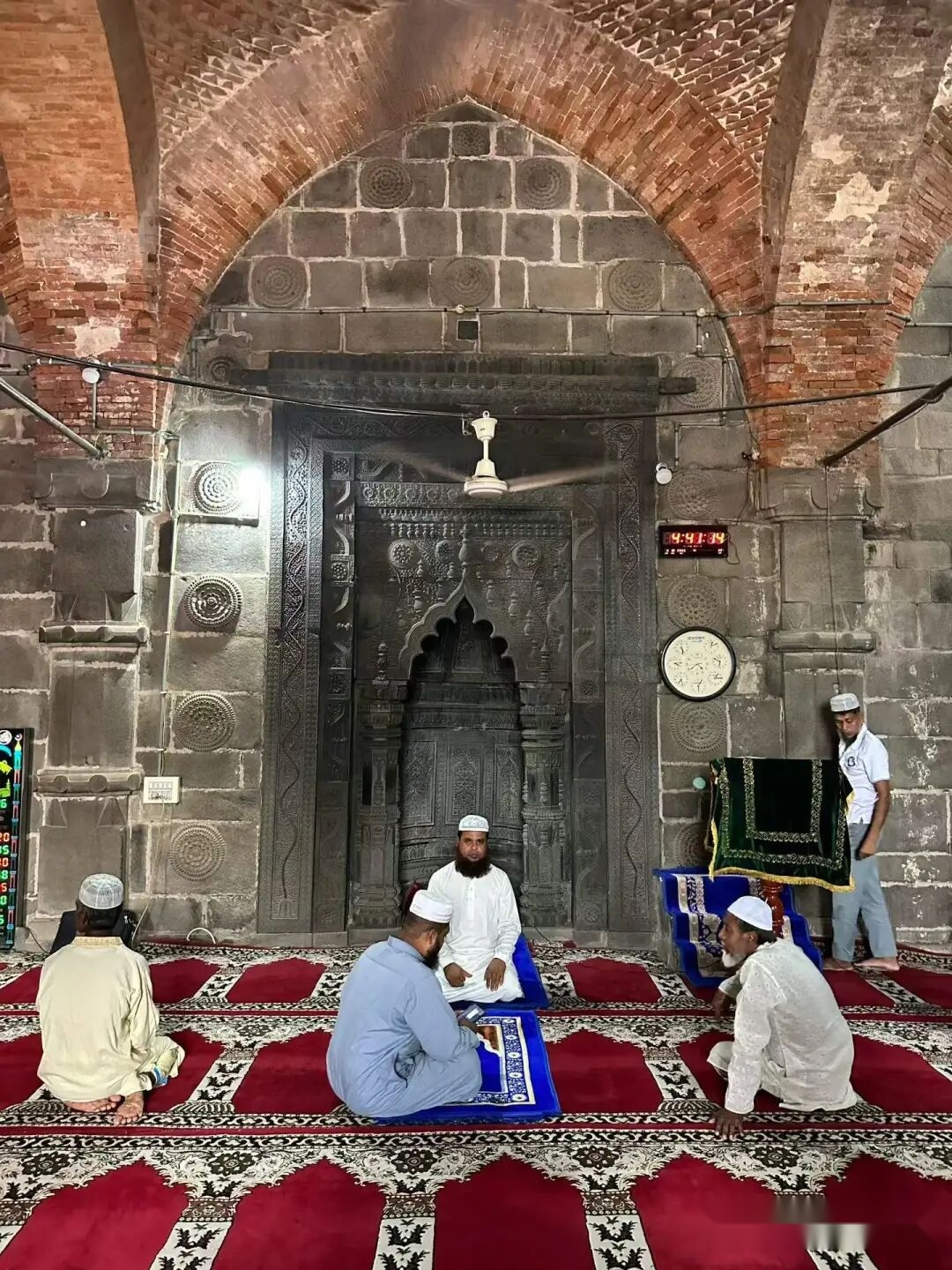
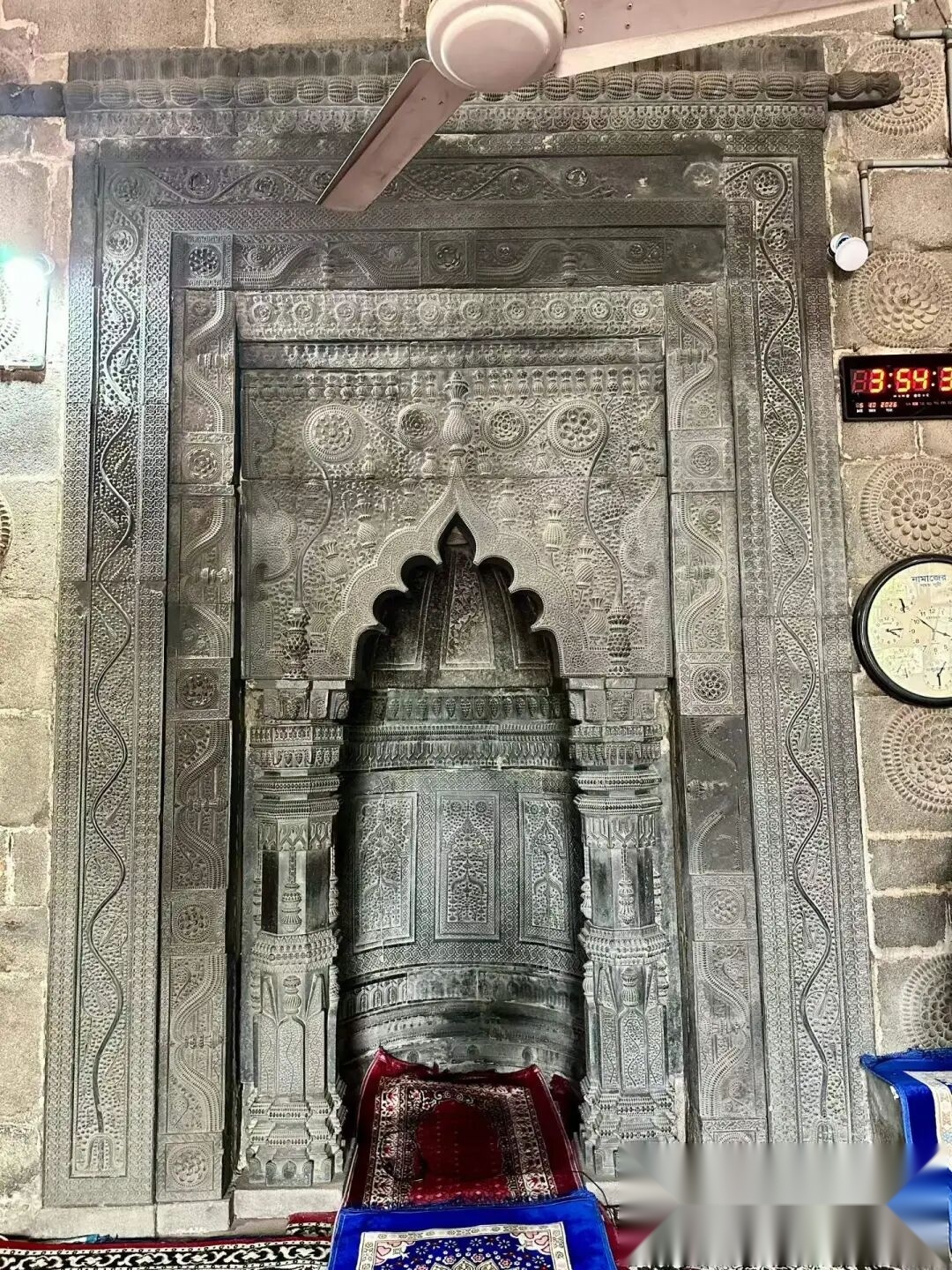
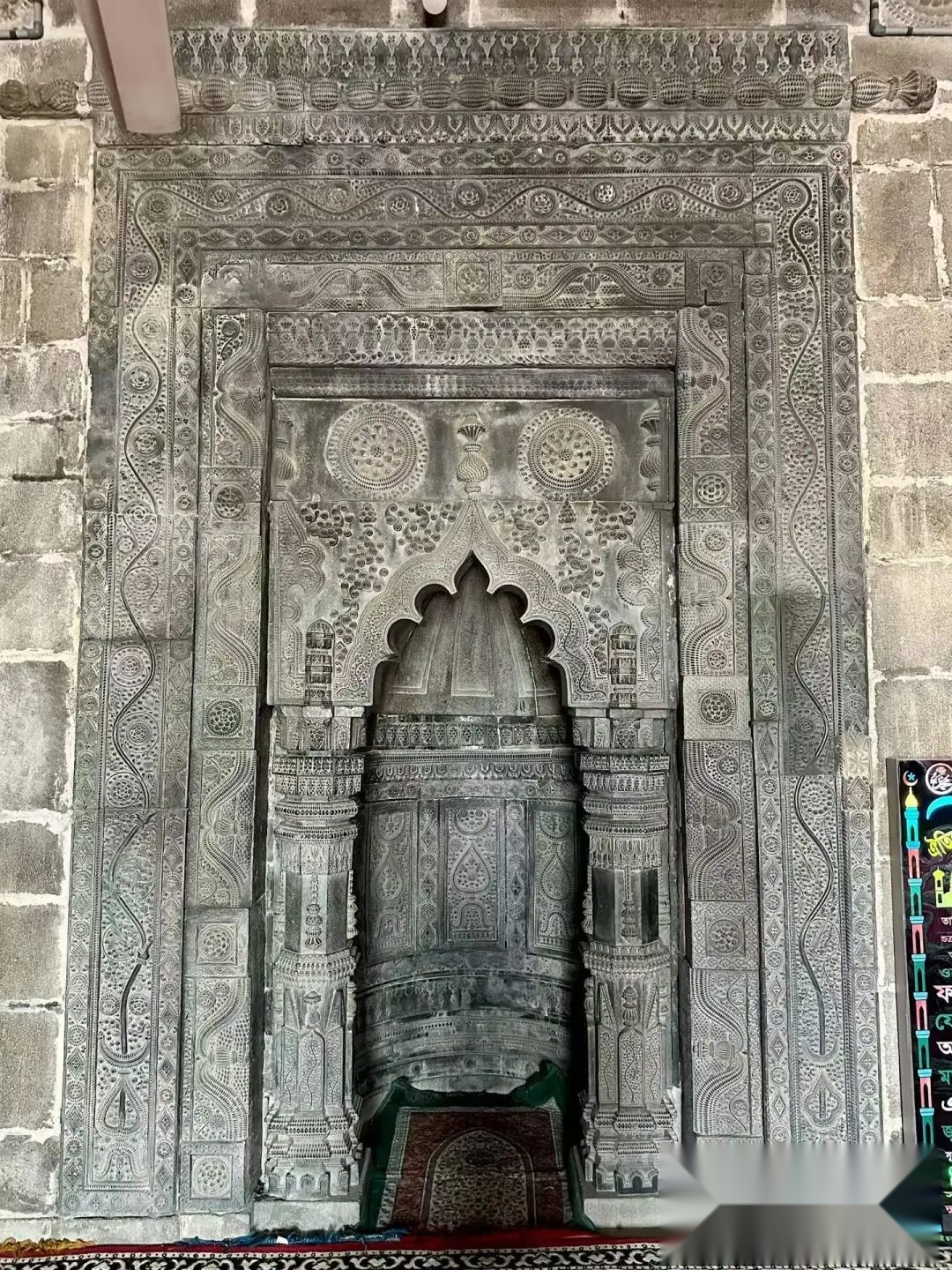
The stone carvings on the mihrab are top-tier: it’s got multi-lobed arches topped with vase-shaped finials, pillars decorated with scrolling vines and hanging tassels, snaking grapevines, and lotus petals and pedestals simplified into tiny dots. This was the signature style for late Sultanate stonework—rather than trying to make everything look hyper-realistic, they went for this dense, dotted visual texture.
The vase-shaped finials (kalasa) were actually borrowed from Hindu-Buddhist architecture, where they were originally symbols of good luck and prosperity.
The lotus pedestals are a core motif straight out of Buddhist stone carving traditions.
Those grapevines and scrolling vines are classic botanical patterns from the Persian-Central Asian decorative style.
The hanging tassels and chains come from the 'suspension' motif common in religious architecture, designed to look like fabric curtains or hangings.
In the northwest corner of the hall, there’s a staircase leading up to an upper level called the Badshah-ka-takhti (Royal Gallery). This was reserved for the Sultan’s family and women, a feature you only see in the high-status mosques of the Bengal Sultanate. The shoulders of the arches on this platform are covered in lotuses, which really highlights the 'elevated' nature of the space visually.
The Kusumba Mosque sits in Rajshahi, in northwestern Bangladesh, and was constructed between 1558 and 1559, making it one of the most important major mosques from the late Bengal Sultanate period. It’s nicknamed the 'Black Jewel of Bangladesh' because of its dark basalt stone cladding, and you can even spot it on the 5-taka bill.
The mosque was commissioned by a high-ranking official named Sulaiman during the reign of the Sultan of Bengal, Ghiyasuddin Bahadur Shah (who ruled from 1554 to 1556).
Since stone was pretty hard to find in the Bengal Delta, most mosques back in the Sultanate days were built with red brick and terracotta. But the Kusumba Mosque is different—its exterior walls and even the interior up to the squinch arches are completely covered in dark basalt. The stone was polished to a dull shine, giving the whole place a nearly black look. For ancient architecture in this region, building a huge mosque entirely out of basalt was a massive flex, showing off just how wealthy and influential that local official really was.
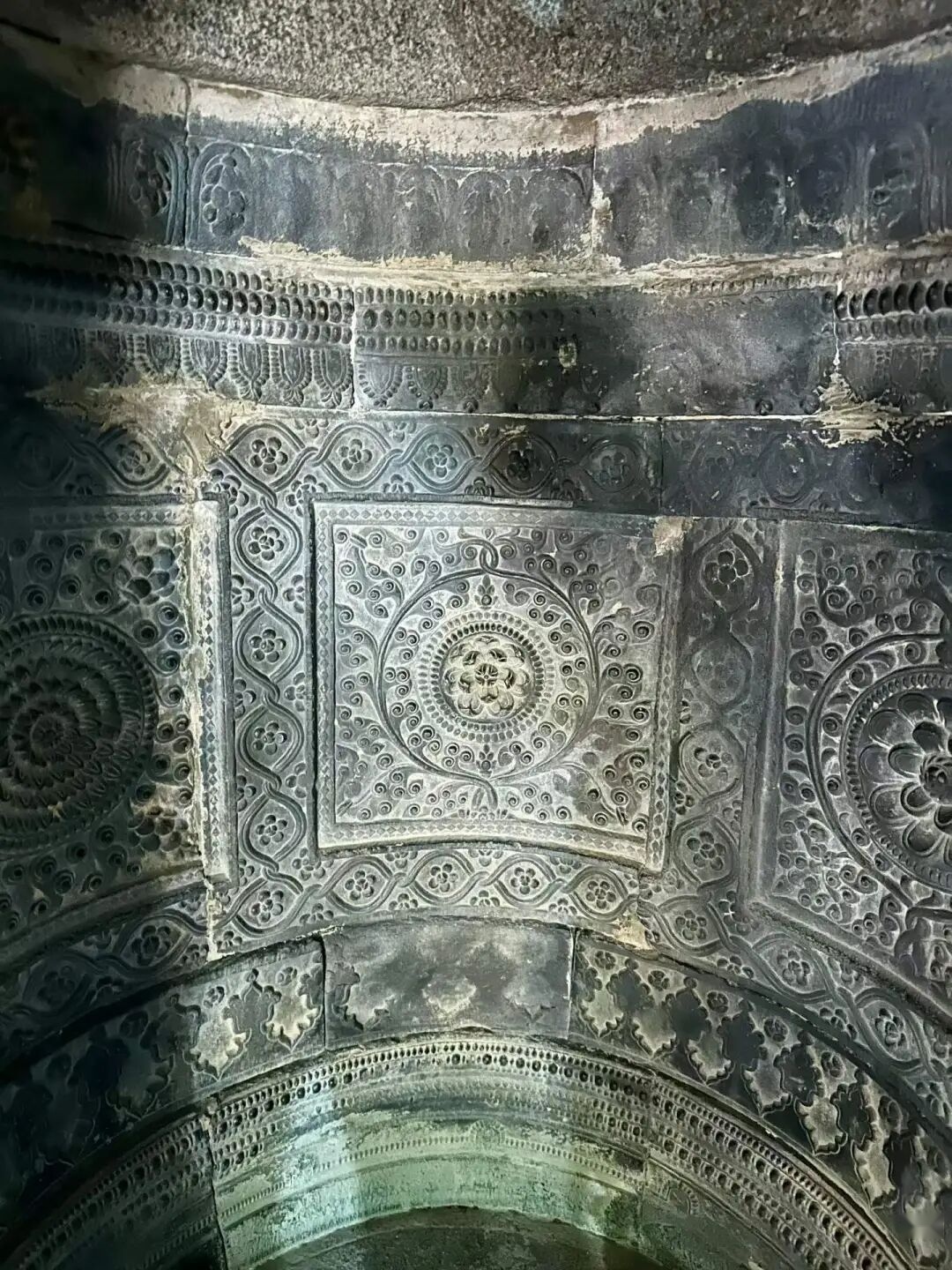
The roof cornice of the main hall features that classic curved style you only see in Bengal, and the four corners have octagonal towers built right into the walls. The black stone is decorated with shallow carvings of hanging chains, lotuses, grapevines, rosettes, and geometric patterns, while the door and niche arches use a multi-lobed horseshoe shape that shows clear influence from Persia and Central Asia.
Inside, the prayer hall is split into two sections and three bays by two central stone pillars. These pillars are square with beveled, chamfered edges. On the north and south walls, there are lattice stone screens that do triple duty: they bring in light, keep the air moving, and provide a bit of privacy.
Just like back home, there's a protocol for entering the mosque: you need to cover your head. There’s a stack of caps waiting in the main hall, so if you show up without one, you just grab one for yourself.
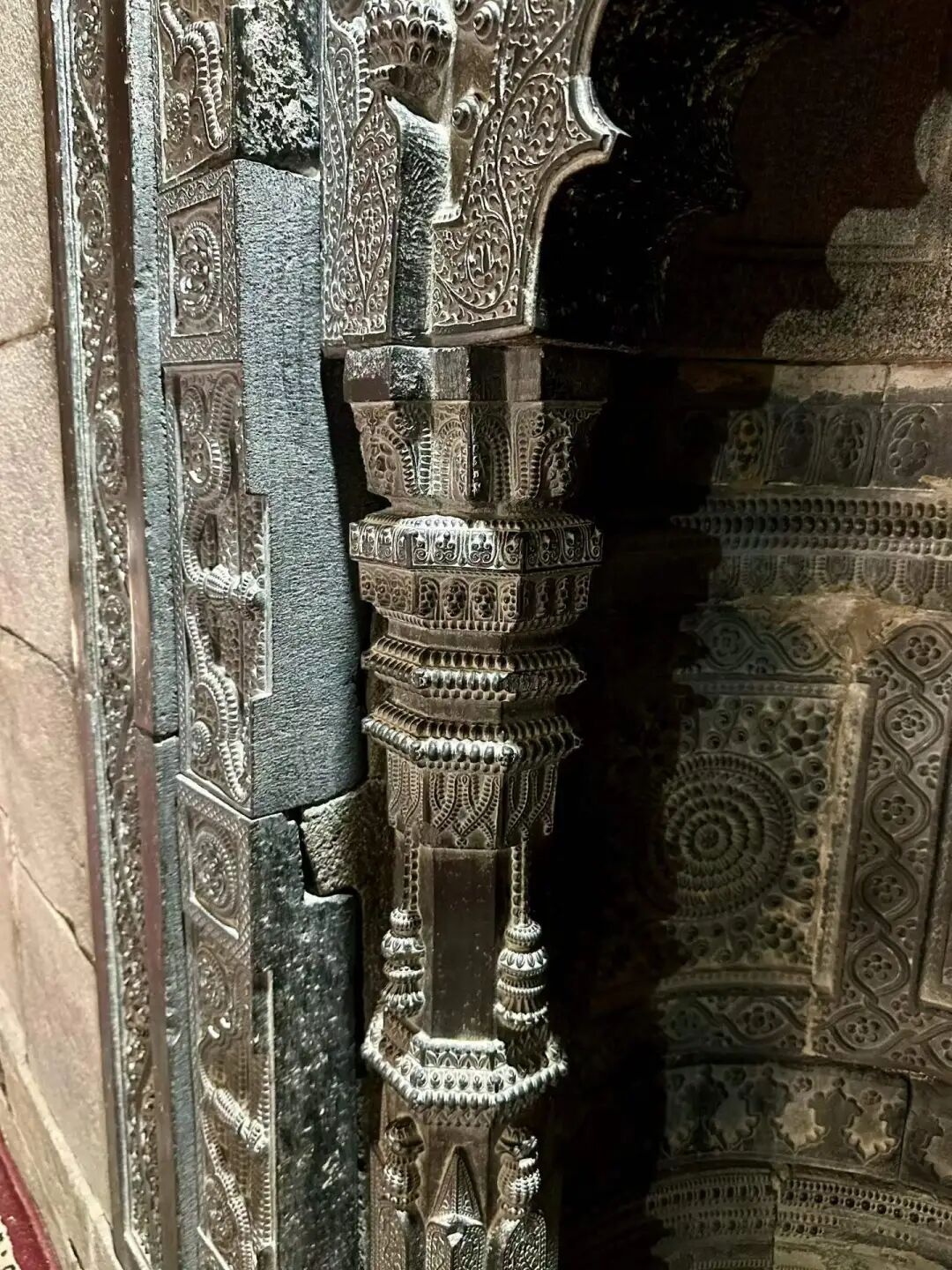
The stone carvings on the mihrab are top-tier: it’s got multi-lobed arches topped with vase-shaped finials, pillars decorated with scrolling vines and hanging tassels, snaking grapevines, and lotus petals and pedestals simplified into tiny dots. This was the signature style for late Sultanate stonework—rather than trying to make everything look hyper-realistic, they went for this dense, dotted visual texture.
The vase-shaped finials (kalasa) were actually borrowed from Hindu-Buddhist architecture, where they were originally symbols of good luck and prosperity.
The lotus pedestals are a core motif straight out of Buddhist stone carving traditions.
Those grapevines and scrolling vines are classic botanical patterns from the Persian-Central Asian decorative style.
The hanging tassels and chains come from the 'suspension' motif common in religious architecture, designed to look like fabric curtains or hangings.
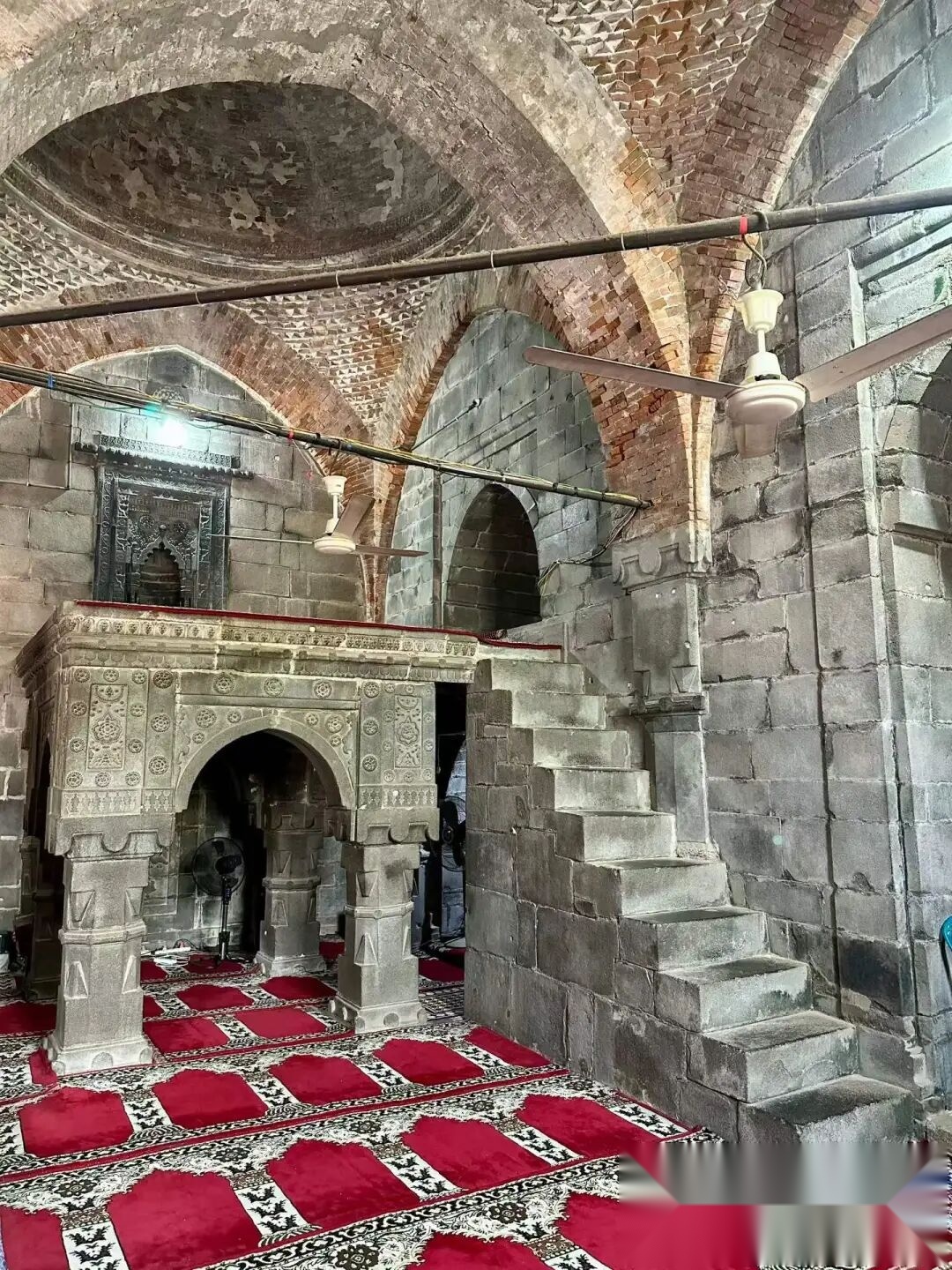
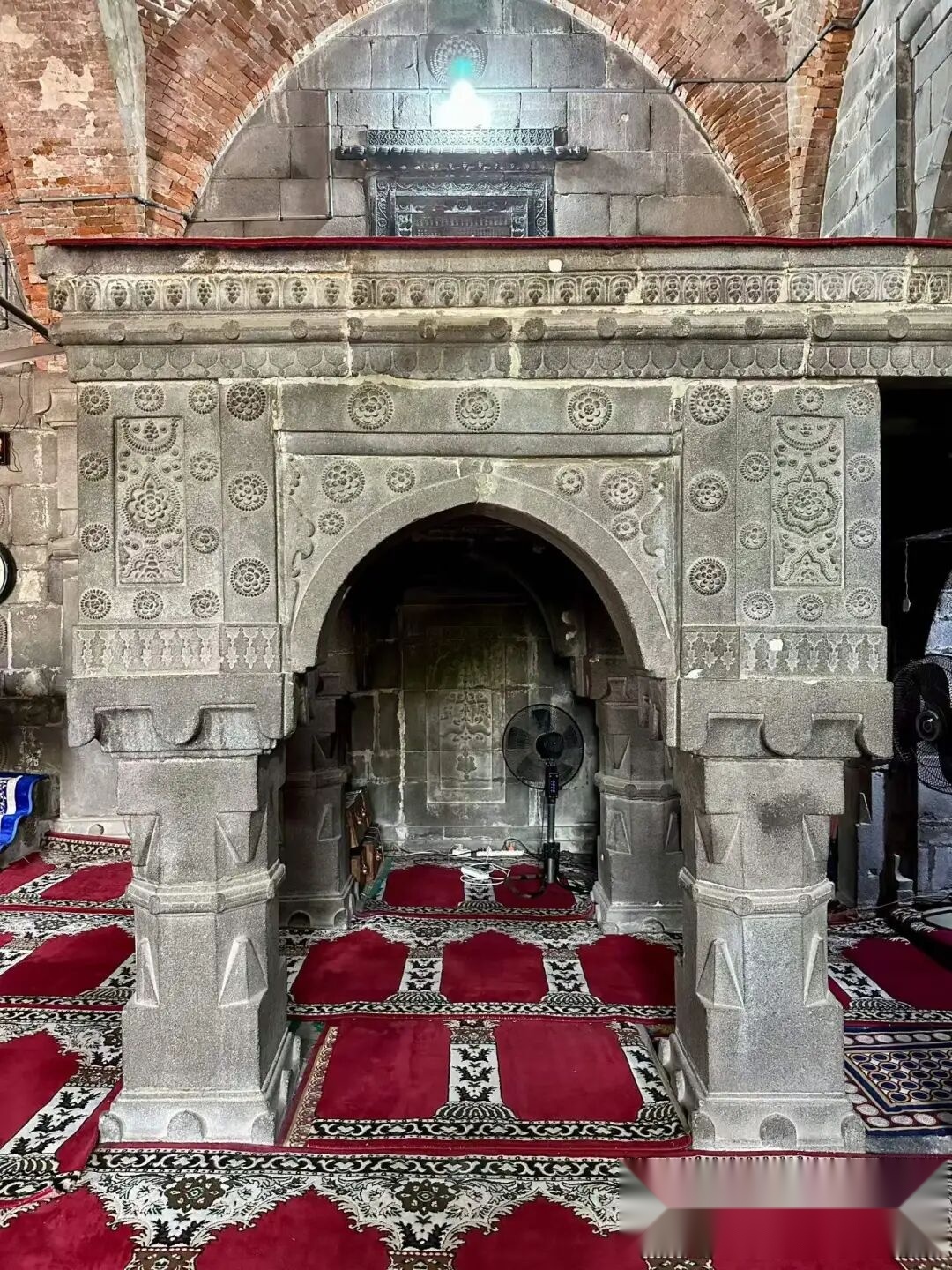
In the northwest corner of the hall, there’s a staircase leading up to an upper level called the Badshah-ka-takhti (Royal Gallery). This was reserved for the Sultan’s family and women, a feature you only see in the high-status mosques of the Bengal Sultanate. The shoulders of the arches on this platform are covered in lotuses, which really highlights the 'elevated' nature of the space visually.
Kusumba Mosque in Rajshahi: Explore the Stunning 'Black Jewel' of Bangladesh Islamic Architecture
Articles • Hasan09 posted the article • 0 comments • 14 views • 6 hours ago
Check out 40 exclusive photos diving deep into the Kusumba Mosque in Rajshahi, Bangladesh, built back in 1558. We’re breaking down the late Sultanate-era stone artistry of this 'Black Jewel of Bangladesh,' famous for its dark grey basalt construction, its intricate mihrab (prayer niche), and the history behind why it’s featured on local currency.
The Kusumba Mosque sits in Rajshahi, in northwestern Bangladesh, and was constructed between 1558 and 1559, making it one of the most important major mosques from the late Bengal Sultanate period. It’s nicknamed the 'Black Jewel of Bangladesh' because of its dark basalt stone cladding, and you can even spot it on the 5-taka bill.
The mosque was commissioned by a high-ranking official named Sulaiman during the reign of the Sultan of Bengal, Ghiyasuddin Bahadur Shah (who ruled from 1554 to 1556).
Since stone was pretty hard to find in the Bengal Delta, most mosques back in the Sultanate days were built with red brick and terracotta. But the Kusumba Mosque is different—its exterior walls and even the interior up to the squinch arches are completely covered in dark basalt. The stone was polished to a dull shine, giving the whole place a nearly black look. For ancient architecture in this region, building a huge mosque entirely out of basalt was a massive flex, showing off just how wealthy and influential that local official really was.
The roof cornice of the main hall features that classic curved style you only see in Bengal, and the four corners have octagonal towers built right into the walls. The black stone is decorated with shallow carvings of hanging chains, lotuses, grapevines, rosettes, and geometric patterns, while the door and niche arches use a multi-lobed horseshoe shape that shows clear influence from Persia and Central Asia.
Inside, the prayer hall is split into two sections and three bays by two central stone pillars. These pillars are square with beveled, chamfered edges. On the north and south walls, there are lattice stone screens that do triple duty: they bring in light, keep the air moving, and provide a bit of privacy.
Just like back home, there's a protocol for entering the mosque: you need to cover your head. There’s a stack of caps waiting in the main hall, so if you show up without one, you just grab one for yourself.
The stone carvings on the mihrab are top-tier: it’s got multi-lobed arches topped with vase-shaped finials, pillars decorated with scrolling vines and hanging tassels, snaking grapevines, and lotus petals and pedestals simplified into tiny dots. This was the signature style for late Sultanate stonework—rather than trying to make everything look hyper-realistic, they went for this dense, dotted visual texture.
The vase-shaped finials (kalasa) were actually borrowed from Hindu-Buddhist architecture, where they were originally symbols of good luck and prosperity.
The lotus pedestals are a core motif straight out of Buddhist stone carving traditions.
Those grapevines and scrolling vines are classic botanical patterns from the Persian-Central Asian decorative style.
The hanging tassels and chains come from the 'suspension' motif common in religious architecture, designed to look like fabric curtains or hangings.
In the northwest corner of the hall, there’s a staircase leading up to an upper level called the Badshah-ka-takhti (Royal Gallery). This was reserved for the Sultan’s family and women, a feature you only see in the high-status mosques of the Bengal Sultanate. The shoulders of the arches on this platform are covered in lotuses, which really highlights the 'elevated' nature of the space visually. view all
The Kusumba Mosque sits in Rajshahi, in northwestern Bangladesh, and was constructed between 1558 and 1559, making it one of the most important major mosques from the late Bengal Sultanate period. It’s nicknamed the 'Black Jewel of Bangladesh' because of its dark basalt stone cladding, and you can even spot it on the 5-taka bill.
The mosque was commissioned by a high-ranking official named Sulaiman during the reign of the Sultan of Bengal, Ghiyasuddin Bahadur Shah (who ruled from 1554 to 1556).
Since stone was pretty hard to find in the Bengal Delta, most mosques back in the Sultanate days were built with red brick and terracotta. But the Kusumba Mosque is different—its exterior walls and even the interior up to the squinch arches are completely covered in dark basalt. The stone was polished to a dull shine, giving the whole place a nearly black look. For ancient architecture in this region, building a huge mosque entirely out of basalt was a massive flex, showing off just how wealthy and influential that local official really was.
The roof cornice of the main hall features that classic curved style you only see in Bengal, and the four corners have octagonal towers built right into the walls. The black stone is decorated with shallow carvings of hanging chains, lotuses, grapevines, rosettes, and geometric patterns, while the door and niche arches use a multi-lobed horseshoe shape that shows clear influence from Persia and Central Asia.
Inside, the prayer hall is split into two sections and three bays by two central stone pillars. These pillars are square with beveled, chamfered edges. On the north and south walls, there are lattice stone screens that do triple duty: they bring in light, keep the air moving, and provide a bit of privacy.
Just like back home, there's a protocol for entering the mosque: you need to cover your head. There’s a stack of caps waiting in the main hall, so if you show up without one, you just grab one for yourself.
The stone carvings on the mihrab are top-tier: it’s got multi-lobed arches topped with vase-shaped finials, pillars decorated with scrolling vines and hanging tassels, snaking grapevines, and lotus petals and pedestals simplified into tiny dots. This was the signature style for late Sultanate stonework—rather than trying to make everything look hyper-realistic, they went for this dense, dotted visual texture.
The vase-shaped finials (kalasa) were actually borrowed from Hindu-Buddhist architecture, where they were originally symbols of good luck and prosperity.
The lotus pedestals are a core motif straight out of Buddhist stone carving traditions.
Those grapevines and scrolling vines are classic botanical patterns from the Persian-Central Asian decorative style.
The hanging tassels and chains come from the 'suspension' motif common in religious architecture, designed to look like fabric curtains or hangings.
In the northwest corner of the hall, there’s a staircase leading up to an upper level called the Badshah-ka-takhti (Royal Gallery). This was reserved for the Sultan’s family and women, a feature you only see in the high-status mosques of the Bengal Sultanate. The shoulders of the arches on this platform are covered in lotuses, which really highlights the 'elevated' nature of the space visually. view all
Check out 40 exclusive photos diving deep into the Kusumba Mosque in Rajshahi, Bangladesh, built back in 1558. We’re breaking down the late Sultanate-era stone artistry of this 'Black Jewel of Bangladesh,' famous for its dark grey basalt construction, its intricate mihrab (prayer niche), and the history behind why it’s featured on local currency.
The Kusumba Mosque sits in Rajshahi, in northwestern Bangladesh, and was constructed between 1558 and 1559, making it one of the most important major mosques from the late Bengal Sultanate period. It’s nicknamed the 'Black Jewel of Bangladesh' because of its dark basalt stone cladding, and you can even spot it on the 5-taka bill.
The mosque was commissioned by a high-ranking official named Sulaiman during the reign of the Sultan of Bengal, Ghiyasuddin Bahadur Shah (who ruled from 1554 to 1556).
Since stone was pretty hard to find in the Bengal Delta, most mosques back in the Sultanate days were built with red brick and terracotta. But the Kusumba Mosque is different—its exterior walls and even the interior up to the squinch arches are completely covered in dark basalt. The stone was polished to a dull shine, giving the whole place a nearly black look. For ancient architecture in this region, building a huge mosque entirely out of basalt was a massive flex, showing off just how wealthy and influential that local official really was.
The roof cornice of the main hall features that classic curved style you only see in Bengal, and the four corners have octagonal towers built right into the walls. The black stone is decorated with shallow carvings of hanging chains, lotuses, grapevines, rosettes, and geometric patterns, while the door and niche arches use a multi-lobed horseshoe shape that shows clear influence from Persia and Central Asia.
Inside, the prayer hall is split into two sections and three bays by two central stone pillars. These pillars are square with beveled, chamfered edges. On the north and south walls, there are lattice stone screens that do triple duty: they bring in light, keep the air moving, and provide a bit of privacy.
Just like back home, there's a protocol for entering the mosque: you need to cover your head. There’s a stack of caps waiting in the main hall, so if you show up without one, you just grab one for yourself.
The stone carvings on the mihrab are top-tier: it’s got multi-lobed arches topped with vase-shaped finials, pillars decorated with scrolling vines and hanging tassels, snaking grapevines, and lotus petals and pedestals simplified into tiny dots. This was the signature style for late Sultanate stonework—rather than trying to make everything look hyper-realistic, they went for this dense, dotted visual texture.
The vase-shaped finials (kalasa) were actually borrowed from Hindu-Buddhist architecture, where they were originally symbols of good luck and prosperity.
The lotus pedestals are a core motif straight out of Buddhist stone carving traditions.
Those grapevines and scrolling vines are classic botanical patterns from the Persian-Central Asian decorative style.
The hanging tassels and chains come from the 'suspension' motif common in religious architecture, designed to look like fabric curtains or hangings.
In the northwest corner of the hall, there’s a staircase leading up to an upper level called the Badshah-ka-takhti (Royal Gallery). This was reserved for the Sultan’s family and women, a feature you only see in the high-status mosques of the Bengal Sultanate. The shoulders of the arches on this platform are covered in lotuses, which really highlights the 'elevated' nature of the space visually.