

Lanzhou Halal Food
Best Halal Food Beijing: Japanese BBQ Buffet, Xinjiang Cuisine and Lanzhou Muslim Snacks
Articles • yusuf908 posted the article • 0 comments • 142 views • 2026-05-22 21:33
Summary: This Beijing halal food guide maps issue 37 of the restaurant series, featuring a Japanese barbecue buffet, Xinjiang cuisine, Heluo noodles, lamb soup, hot pot, sour soup, Lanzhou dishes, and practical notes for Muslim diners.
Beijing Halal Food Map (37) is presented here as a firsthand travel account in clear English, beginning with this scene: It has been just two months since my last Beijing halal food map (36), and I have already found eight new halal restaurants worth visiting. The account keeps its focus on Beijing Halal Food, Muslim Travel, Middle Eastern Food while preserving the names, places, food, and historical details from the Chinese source.
It has been just two months since my last Beijing halal food map (36), and I have already found eight new halal restaurants worth visiting. I still have a long list of places saved that I have not tried yet. I stick to my rule of only writing original content based on my own experiences, so I will take my time to visit these spots one by one. Here is the list of restaurants for this issue:
1. Shixiang Japanese BBQ Buffet & Jiangguoer Xinjiang Cuisine
2. Xihan Meatball Soup
3. Yixiangyuan Restaurant
4. Niuwanfeng Heluo Noodles
5. Laohui Lamb Soup
6. Big Head Hot Pot (Danaodai Shuanrou)
7. Xiangshui Sour Soup Hot Pot
8. Lan 931
1. Shixiang Japanese BBQ Buffet & Jiangguoer Xinjiang Cuisine
This new Japanese BBQ buffet is right by the Guangqumen subway station. The owner used to run the Musefeilin Xinjiang Restaurant and the Yinmadeng Skewer Hot Pot. He also worked at the Xinjiang Office in Beijing for many years. After closing his previous two shops, he opened this new place. The buffet costs 188, 238, or 298 yuan per person, and the 298 yuan option includes all-you-can-eat fresh durian.
This is the menu. Once you sit down, just tell the server what you want to eat and wait for your food. You can help yourself to the fruit and drinks.
They have a full range of Japanese snacks like sushi, mixed rice (bibimbap), and cold noodles (lengmian).
They serve steamed seafood, and it arrives at the table alive. One crab even crawled out of the pot.
The server felt a bit embarrassed about the runaway crab, but I told them it was fine because it showed the food was fresh. The restaurant buys crabs in bulk without tying their legs with string. It is hard to tell if a tied crab is alive, and the string just adds extra weight anyway.
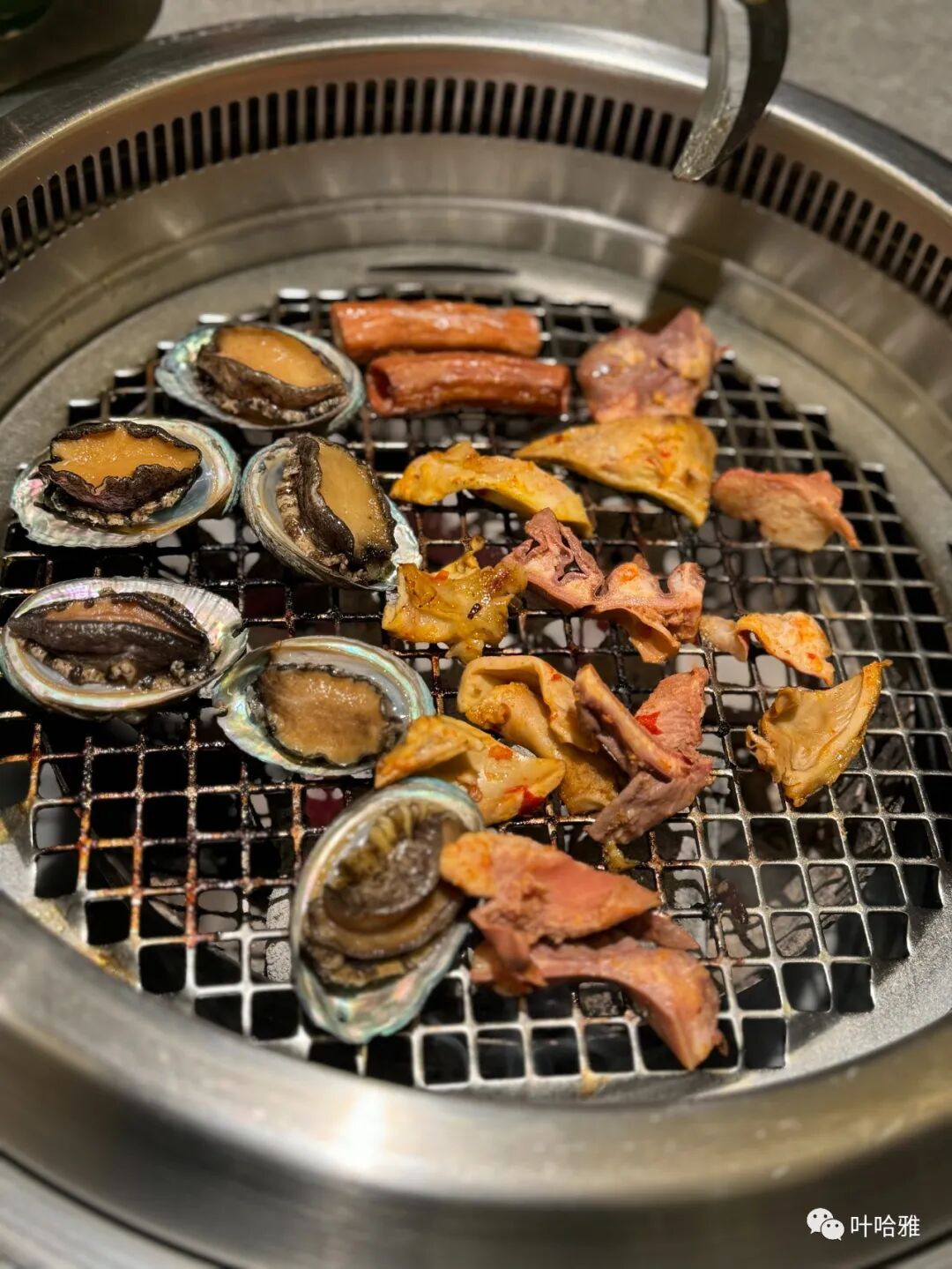
I think the best thing about this place is how fresh the ingredients are. The abalone also comes to the table alive, and you have to grill it on an iron plate before eating.
There is unlimited sushi.
They have beef rice bowls and ice cream. The ice cream is the Mengniu brand.
There is a four-part platter of marbled beef. The beef on top is my favorite; it is fragrant and tender once grilled.
Baked crab casserole with cheese.
Roasted durian.
Grilled oysters.
Cold noodles (lengmian).
Mustard shrimp balls
Pasteurized egg, a very small one, used for dipping sauce.
Matsutake mushroom soup
Sashimi platter
Unlimited drinks of all kinds
Mention Dosti to eat at Shixiang buffet, and friends of Tiyehaya can get 20 yuan off the set meal. You can get 15% off at Jiangguo Xinjiang Restaurant. This is a secret between us, so don't tell anyone else.
2. Xihan Xinjiang meatball soup
A Xinjiang meatball soup shop on the first floor of Jianwai SOHO East District, decorated in a fresh and artistic style.
The main color is Ili blue. They specialize in meatball soup and also serve various Xinjiang snacks.
Meatball soup
Meatball soup served with steamed flower rolls (huajuan), absolutely delicious.
Steamed flower rolls (huajuan)
Deep-fried cake (youzhagao)
Ili smoked horse sausage (yili xunmachang)
Jabir ibn Abdullah (may Allah be pleased with him and his father) reported that on the day of the Battle of Khaybar, the Prophet (peace and blessings of Allah be upon him) forbade eating donkey meat but allowed eating horse meat. (Sahih al-Bukhari)
Asma bint Abu Bakr reported: During the time of the Prophet, we slaughtered a horse and ate its meat (Sahih Muslim).
3. Yixiangyuan Restaurant
There is a Yufa Town mosque (Yufa Zhen Qingzhensi) near Daxing Airport. After visiting the Yufa mosque, I went to the nearby Dongwenggezhuang Village for a quick meal.
This is the closest restaurant to the Yufa mosque. I ordered the stir-fried beef with chestnuts, and it tasted pretty good.
4. Niuwanfeng Heluo Noodles
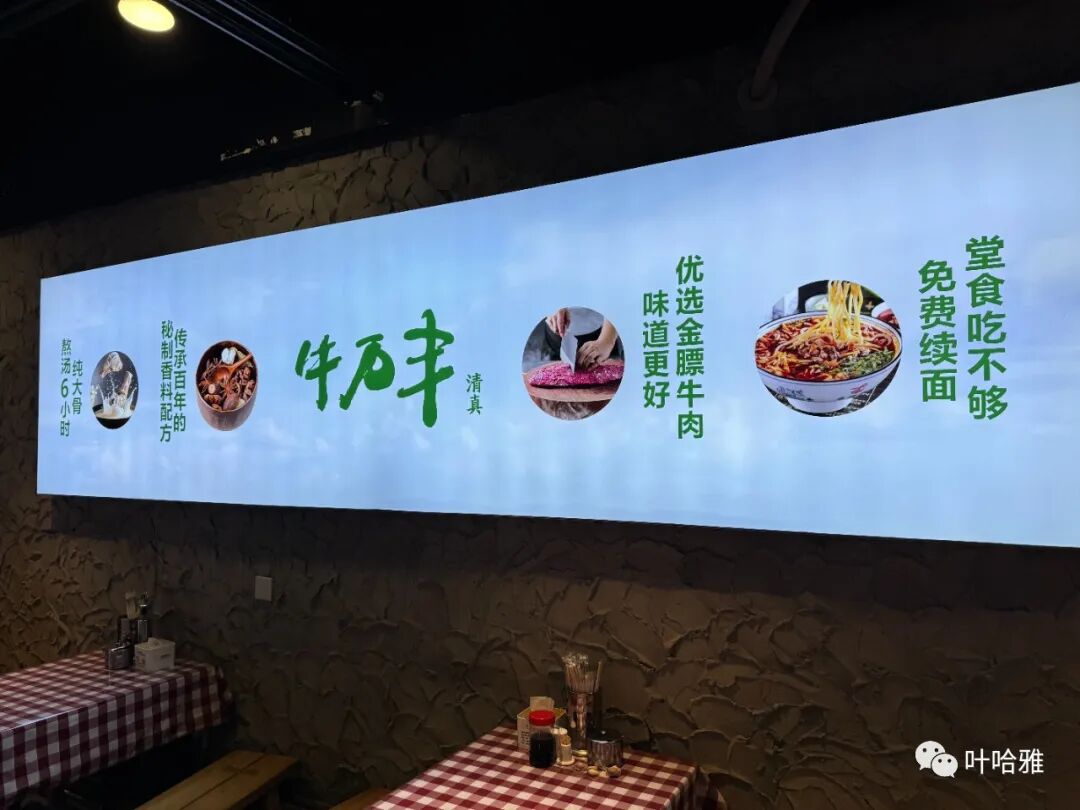
A new Jia County noodle shop (hela mian) from Henan opened in Fengtai. I have been there twice, and the taste is quite authentic.
Jia County noodle soup is made with lamb broth. They use plenty of high-quality lamb, and the soup is good enough to drink on its own.
They fry their chili in lamb fat, so the flavor is very strong.
Besides the buckwheat noodles (heluo mian), their spiced beef (jiang niurou) is also quite good. The kitchen staff are all cousins from Henan.
Lamb liver
Spiced beef (jiang niurou)
5. Laohui Lamb Soup
Pingquan is a county in Chengde, Hebei, famous for its lamb soup (yangtang). This shop, Lao Hui, is a lamb soup restaurant opened by people from Pingquan.
You can get free refills on the lamb soup (yangtang). This shop really boils it from scratch, and you have to eat it with a sesame flatbread (shaobing).
A bowl of lamb soup (yangtang) on a cold day warms you right up. The shop also offers charity meal sets for people in specific professions.
6. Big Head Hot Pot (Danaodai Shuanrou)
A Beijing-style hot pot restaurant opened not far from the North Square of the West Railway Station. Now I have another option if I am not in a rush when visiting the station.
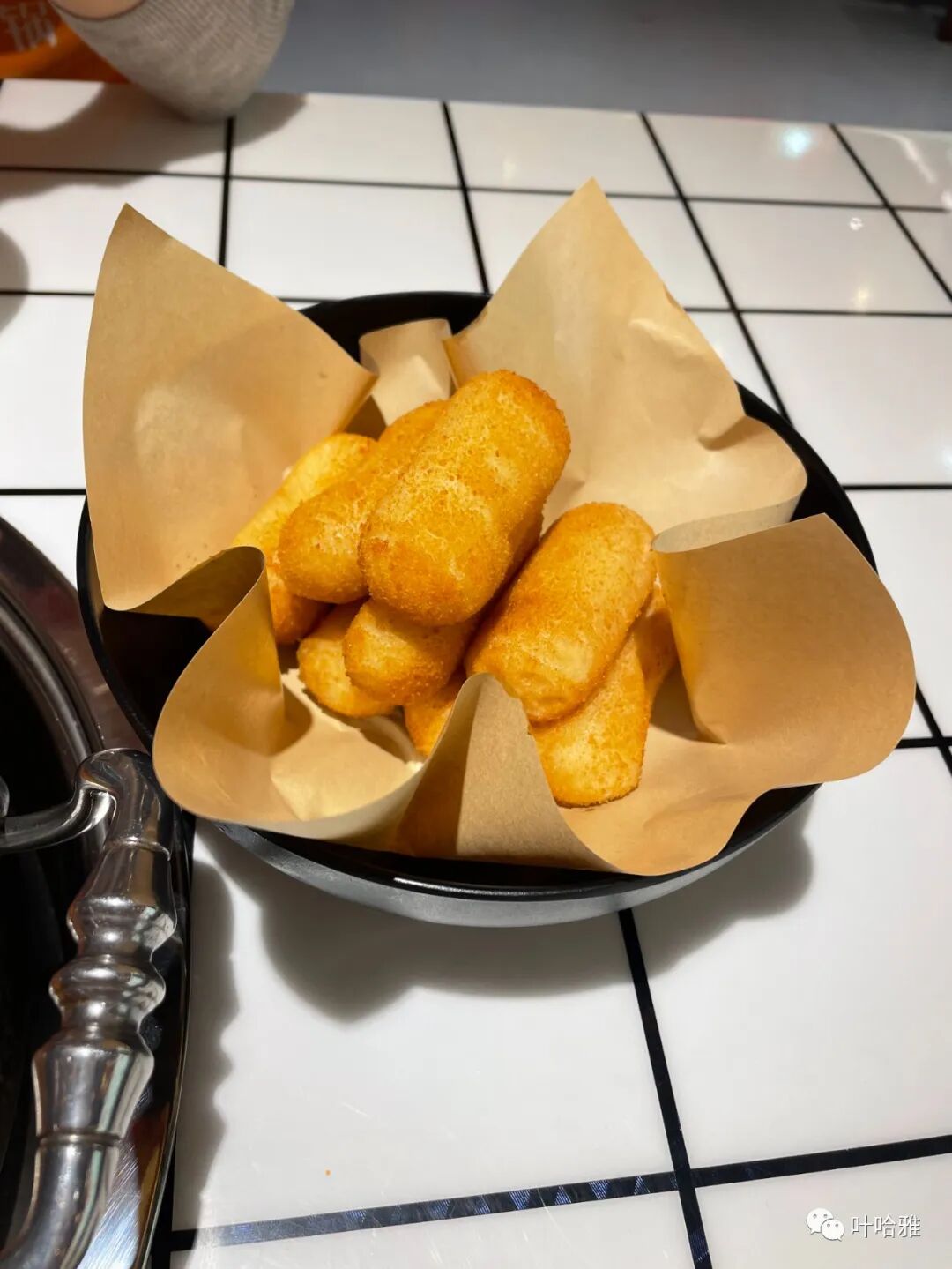
Fennel mini fried dough sticks (huixiang xiao youtiao)
Overall, the place feels quite affordable. They have copper charcoal pots and individual small pots, costing about 100 per person.
7. Xiangshui Sour Soup Hot Pot
The sour soup hot pot restaurant at the entrance of Nanxiapo Mosque uses property owned by the mosque, so they do not sell alcohol.
I recommend the yellow lantern chili and red tomato soup split pot, so you can try both flavors.
The signature Zhongjiang large fried dough sticks (youtiao) are delicious, especially when soaked in the soup.
Their hand-crushed lemon black tea and green tea are both great, and they are better to drink than alcohol.
8. Lan 931
This is a high-end Lanzhou specialty restaurant located quite far away in the Tongzhou National Defense Art District.
They have a full range of Lanzhou snacks and dishes, with an average cost of about 150 per person.
Cold starch noodles (niangpi)
Sweet pea soup (huidouzi)
Hand-grabbed lamb (shouzhu)
Cold sliced beef (niurou liangpian)
Fermented vegetable starch noodles (jiangshui yu)
Stir-fried meat with chili (lazi chaorou)
Spicy hot pot bowl (maocai)
Lily bulb (baihe)
Jingyuan lamb (Jingyuan yanggaorou)
Traditional Lanzhou mixed vegetable stew (lao Lanzhou huicai)
Hui Muslim meat-stuffed egg rolls (Hui min jiasha)
Hezhou steamed buns (Hezhou baozi)
Dongxiang potato slices (Dongxiang tudoupian)
Lamb bone broth (yangtang)
Except for the beef noodles, we tried all the signature Lanzhou dishes at the restaurant. Overall, it was just average. Unless you are staying nearby, there is no need to travel far to eat here. For snacks, it is better to visit smaller shops for more authentic flavor. view all
Summary: This Beijing halal food guide maps issue 37 of the restaurant series, featuring a Japanese barbecue buffet, Xinjiang cuisine, Heluo noodles, lamb soup, hot pot, sour soup, Lanzhou dishes, and practical notes for Muslim diners.
Beijing Halal Food Map (37) is presented here as a firsthand travel account in clear English, beginning with this scene: It has been just two months since my last Beijing halal food map (36), and I have already found eight new halal restaurants worth visiting. The account keeps its focus on Beijing Halal Food, Muslim Travel, Middle Eastern Food while preserving the names, places, food, and historical details from the Chinese source.
It has been just two months since my last Beijing halal food map (36), and I have already found eight new halal restaurants worth visiting. I still have a long list of places saved that I have not tried yet. I stick to my rule of only writing original content based on my own experiences, so I will take my time to visit these spots one by one. Here is the list of restaurants for this issue:
1. Shixiang Japanese BBQ Buffet & Jiangguoer Xinjiang Cuisine
2. Xihan Meatball Soup
3. Yixiangyuan Restaurant
4. Niuwanfeng Heluo Noodles
5. Laohui Lamb Soup
6. Big Head Hot Pot (Danaodai Shuanrou)
7. Xiangshui Sour Soup Hot Pot
8. Lan 931
1. Shixiang Japanese BBQ Buffet & Jiangguoer Xinjiang Cuisine
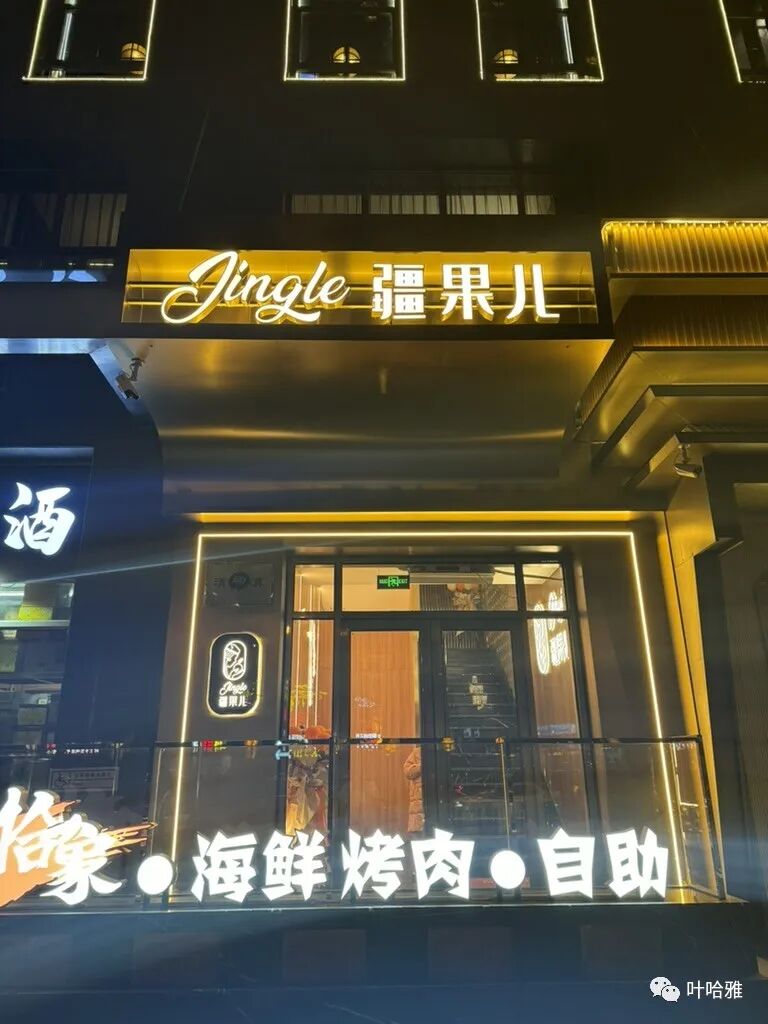
This new Japanese BBQ buffet is right by the Guangqumen subway station. The owner used to run the Musefeilin Xinjiang Restaurant and the Yinmadeng Skewer Hot Pot. He also worked at the Xinjiang Office in Beijing for many years. After closing his previous two shops, he opened this new place. The buffet costs 188, 238, or 298 yuan per person, and the 298 yuan option includes all-you-can-eat fresh durian.
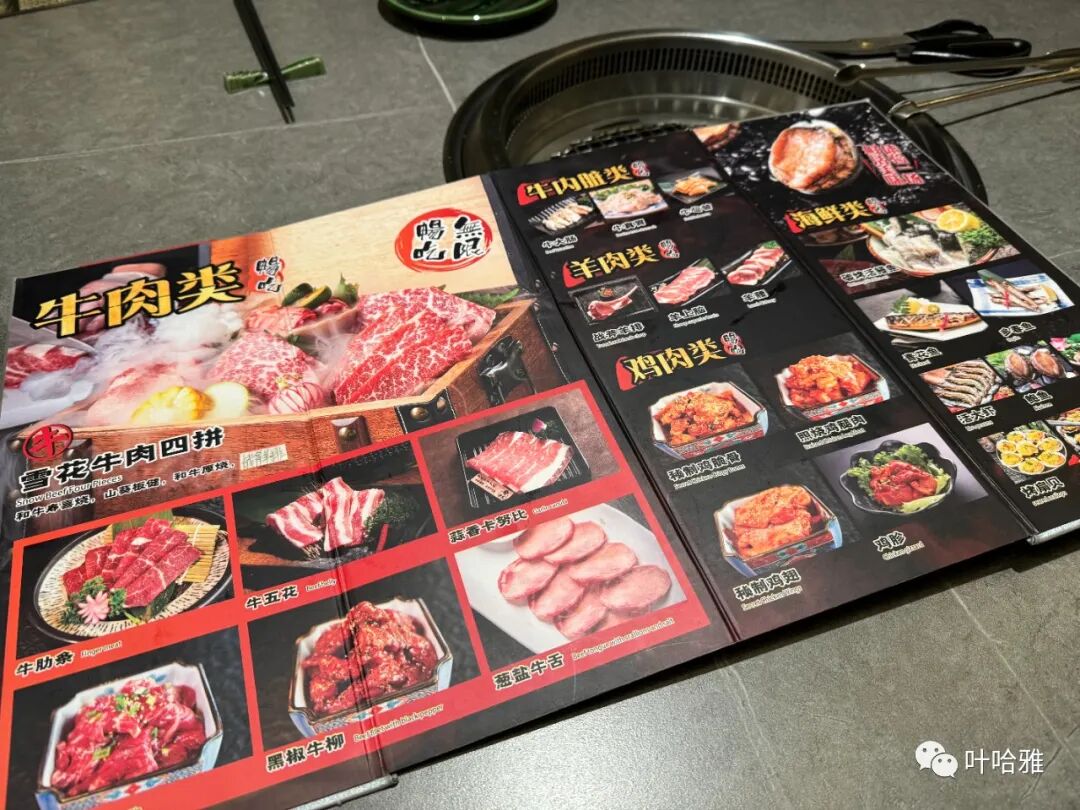
This is the menu. Once you sit down, just tell the server what you want to eat and wait for your food. You can help yourself to the fruit and drinks.
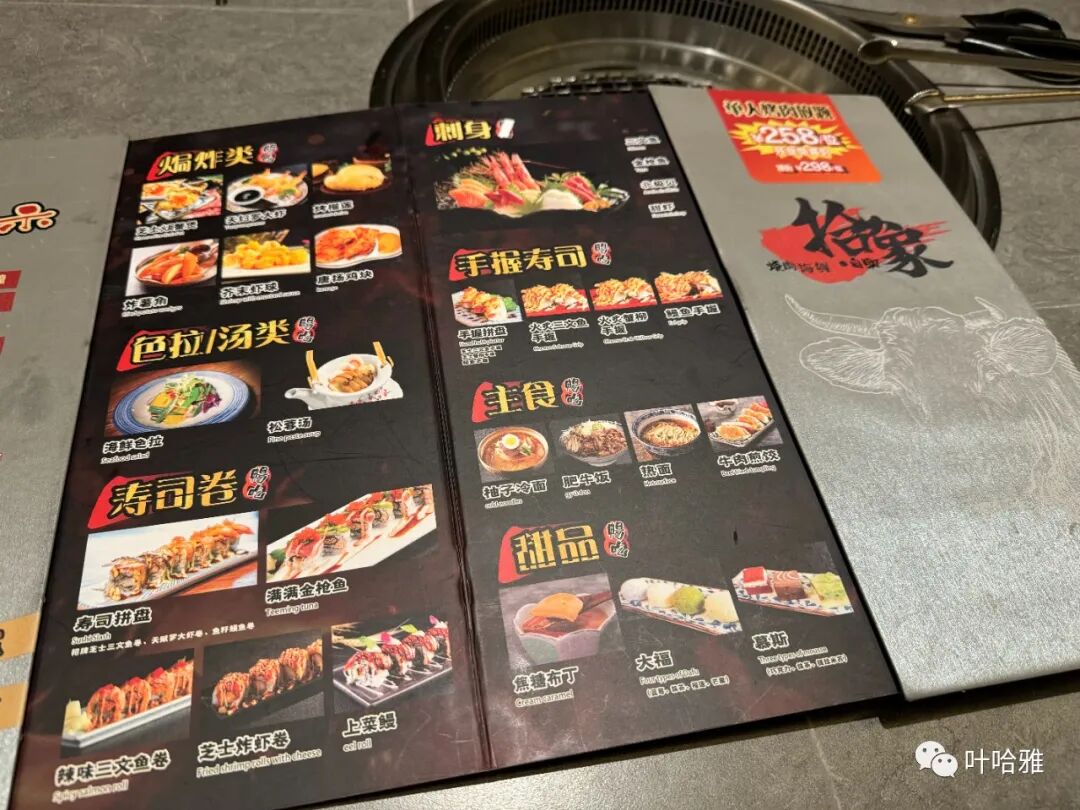
They have a full range of Japanese snacks like sushi, mixed rice (bibimbap), and cold noodles (lengmian).
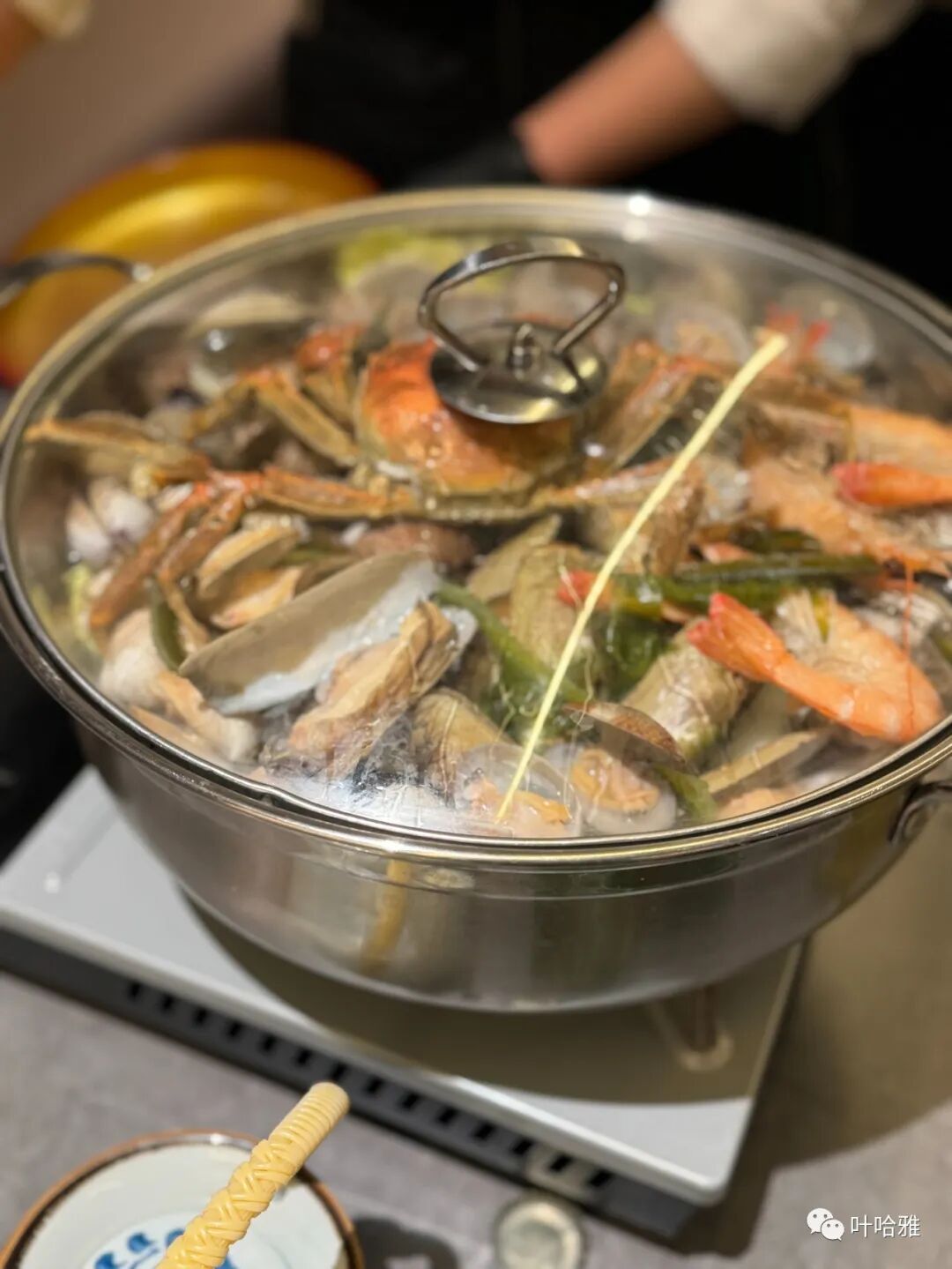
They serve steamed seafood, and it arrives at the table alive. One crab even crawled out of the pot.
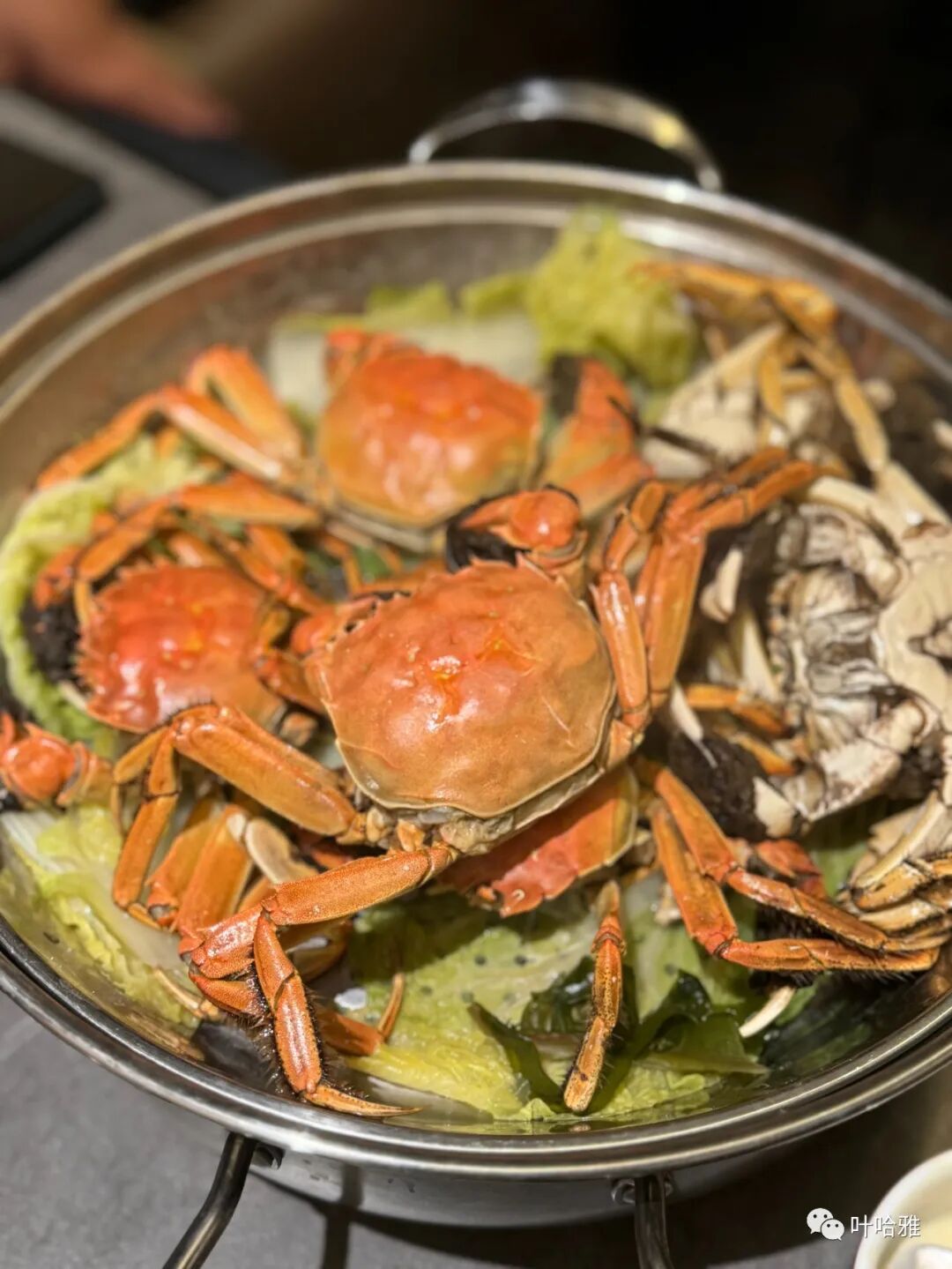
The server felt a bit embarrassed about the runaway crab, but I told them it was fine because it showed the food was fresh. The restaurant buys crabs in bulk without tying their legs with string. It is hard to tell if a tied crab is alive, and the string just adds extra weight anyway.
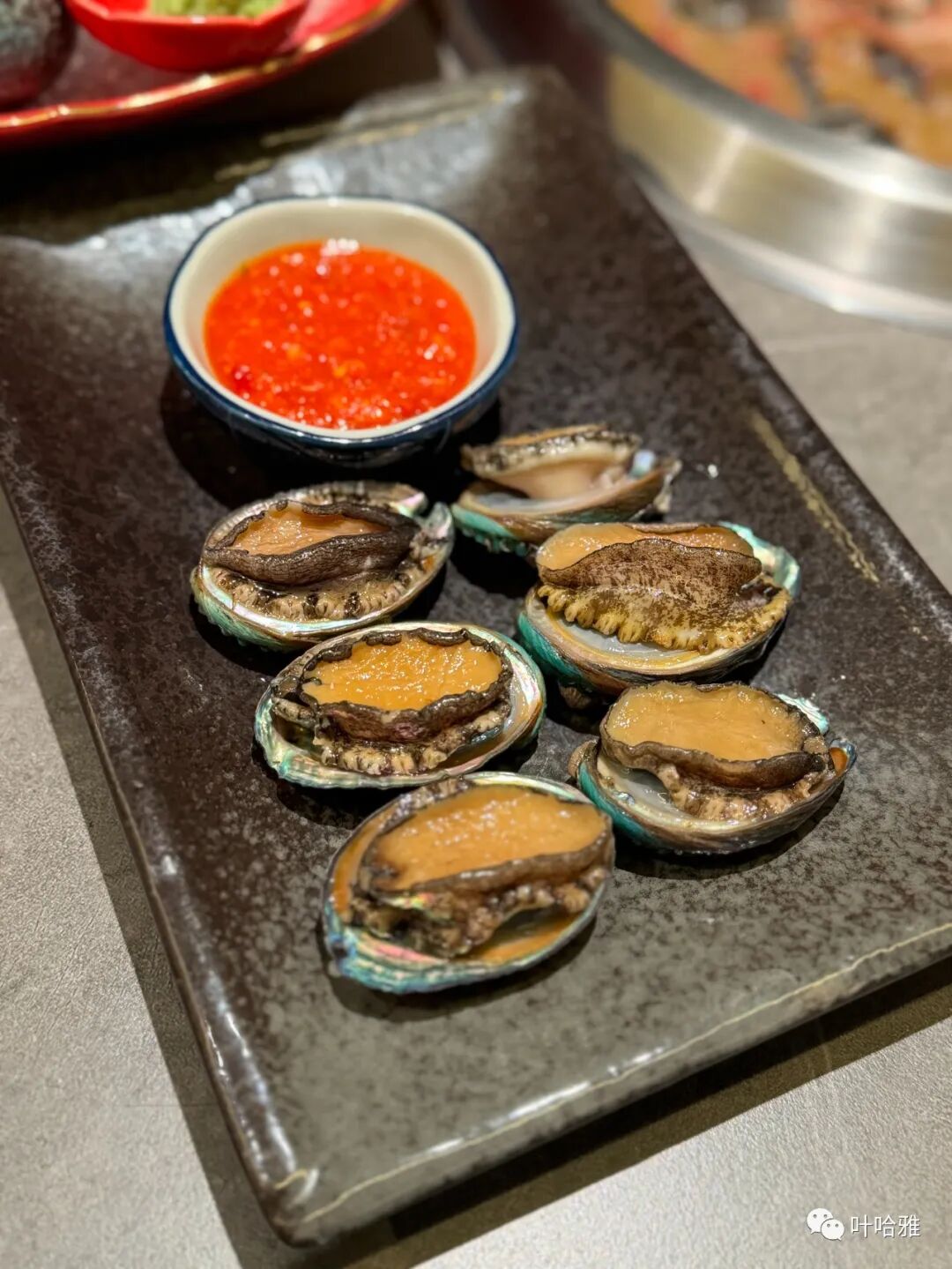
I think the best thing about this place is how fresh the ingredients are. The abalone also comes to the table alive, and you have to grill it on an iron plate before eating.
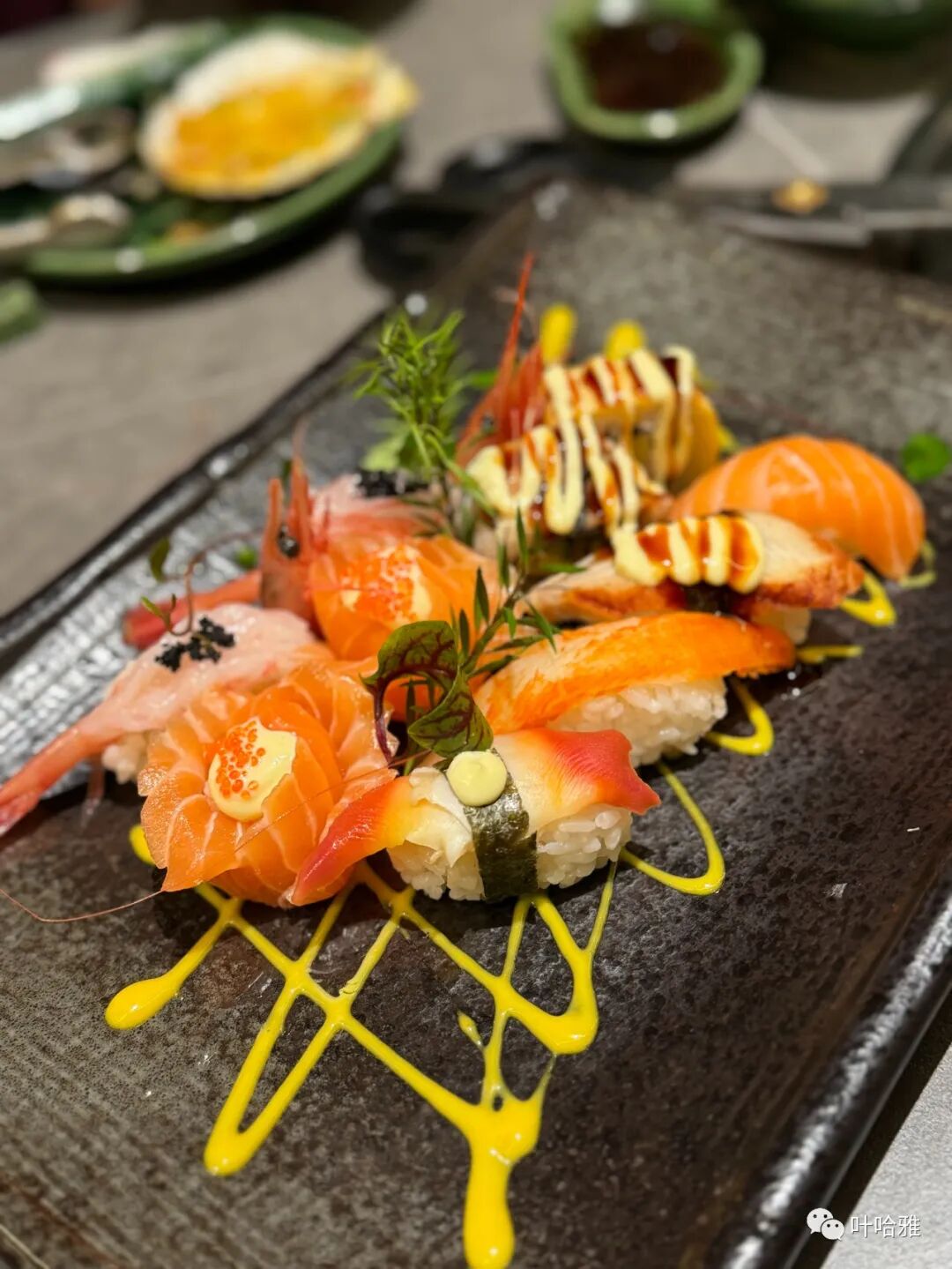
There is unlimited sushi.
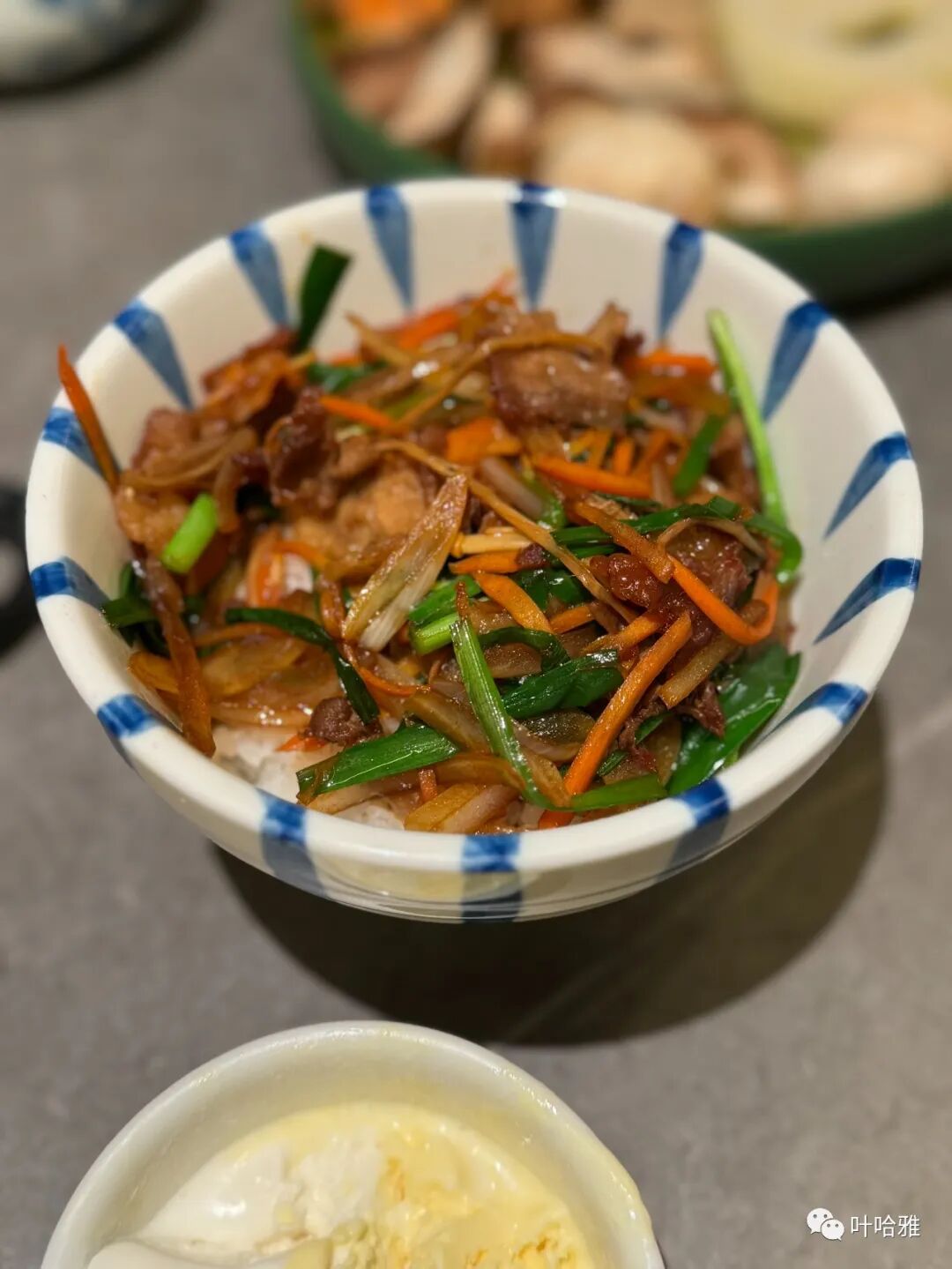
They have beef rice bowls and ice cream. The ice cream is the Mengniu brand.
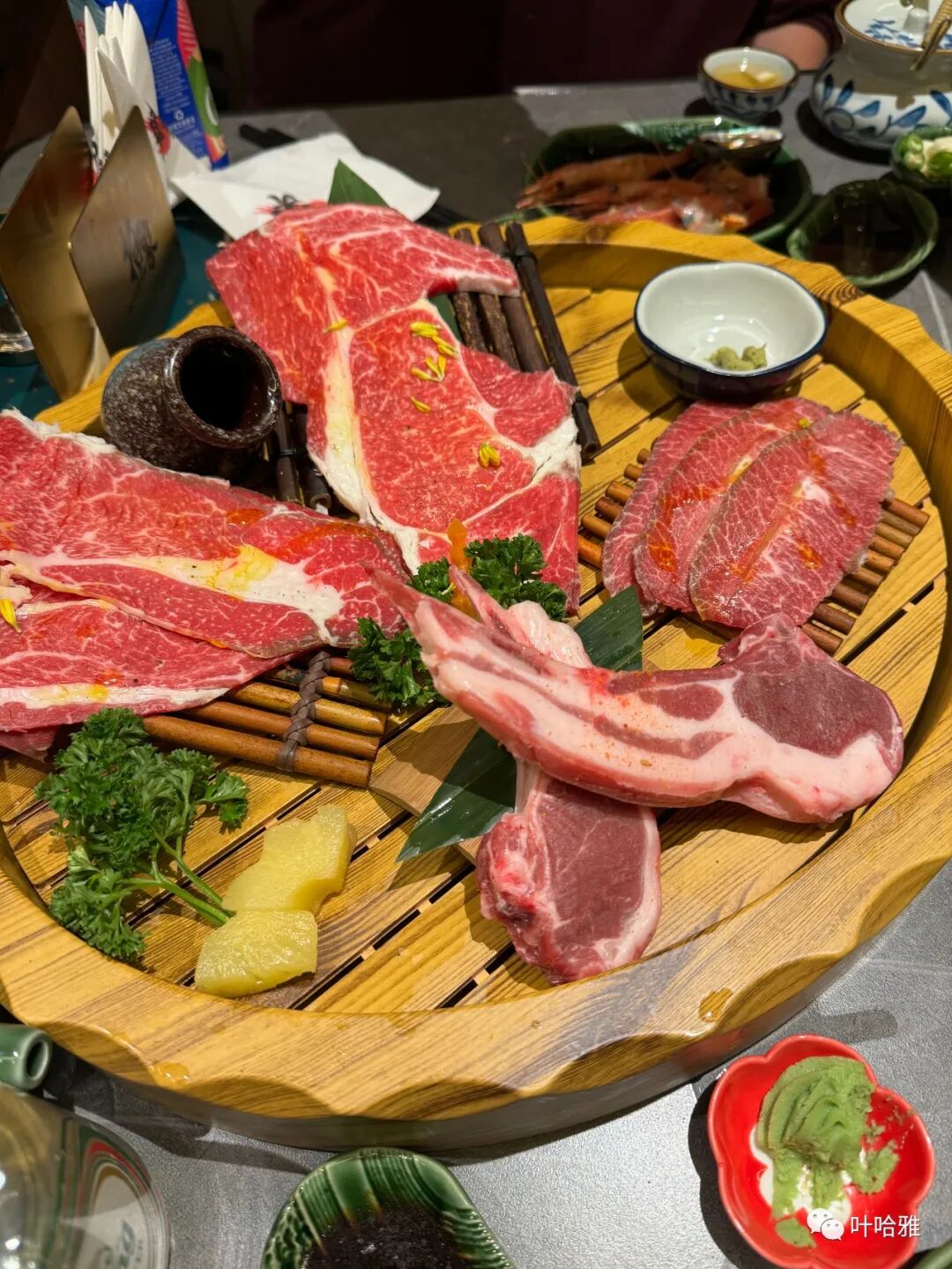
There is a four-part platter of marbled beef. The beef on top is my favorite; it is fragrant and tender once grilled.
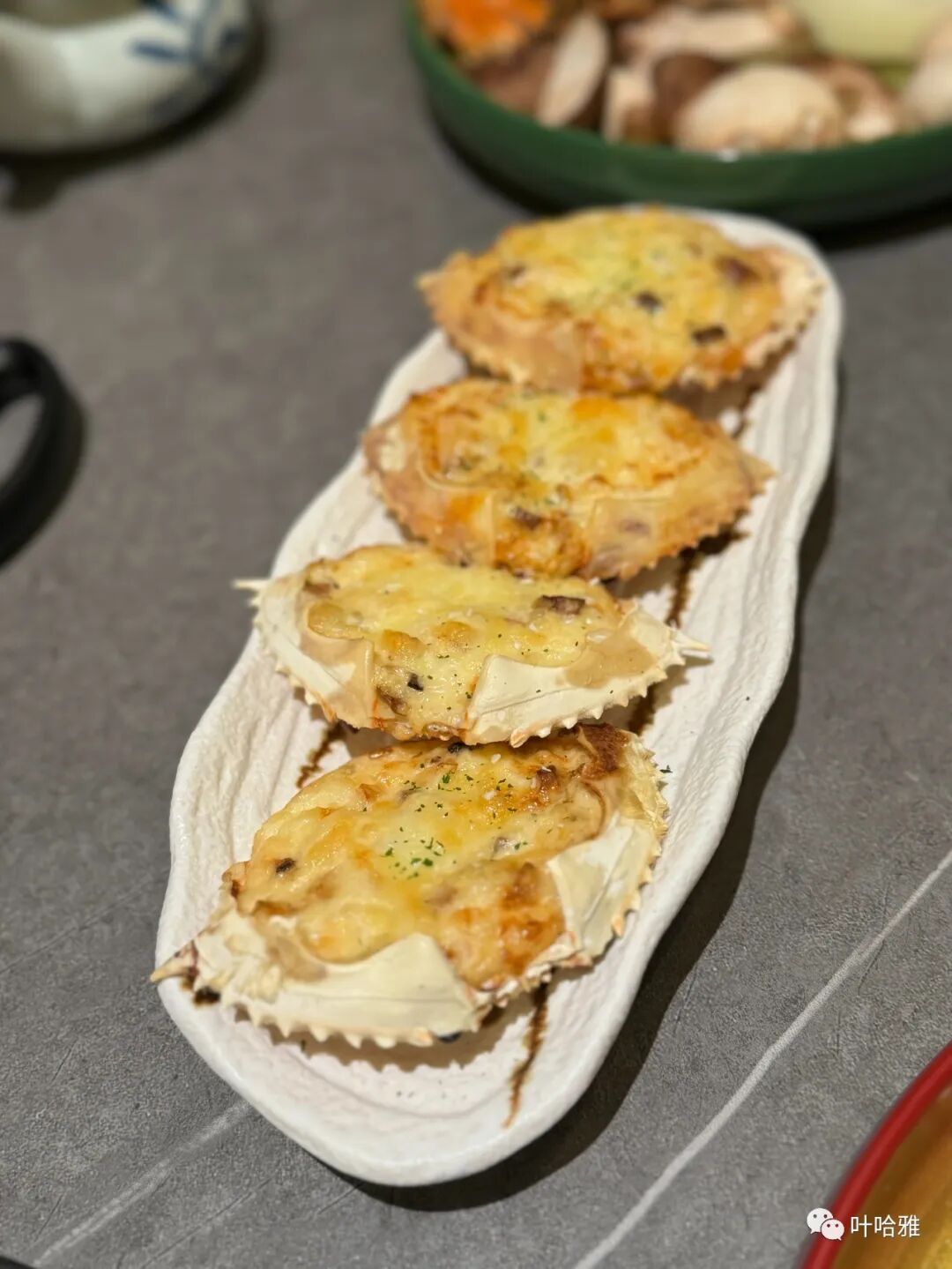
Baked crab casserole with cheese.
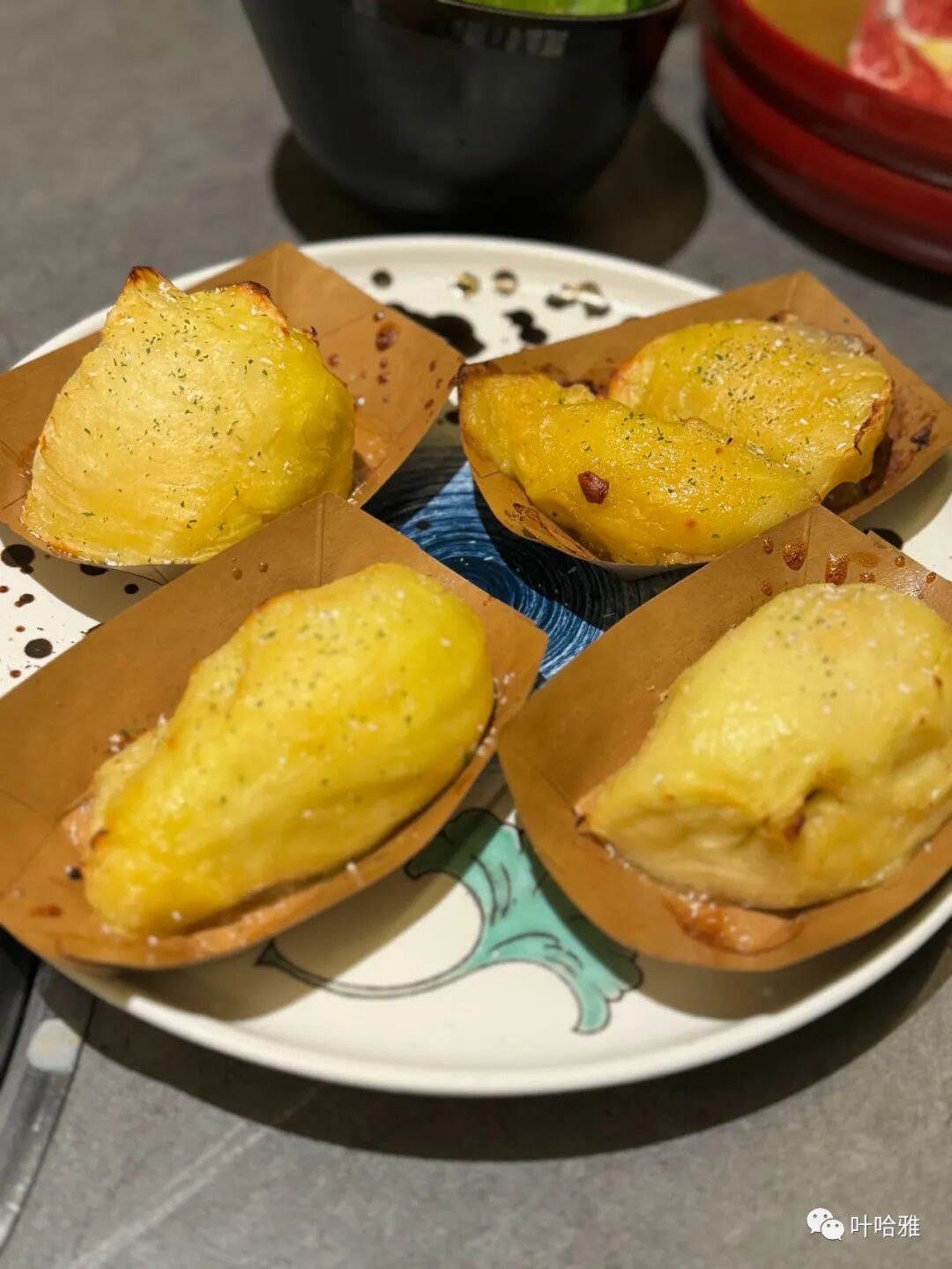
Roasted durian.
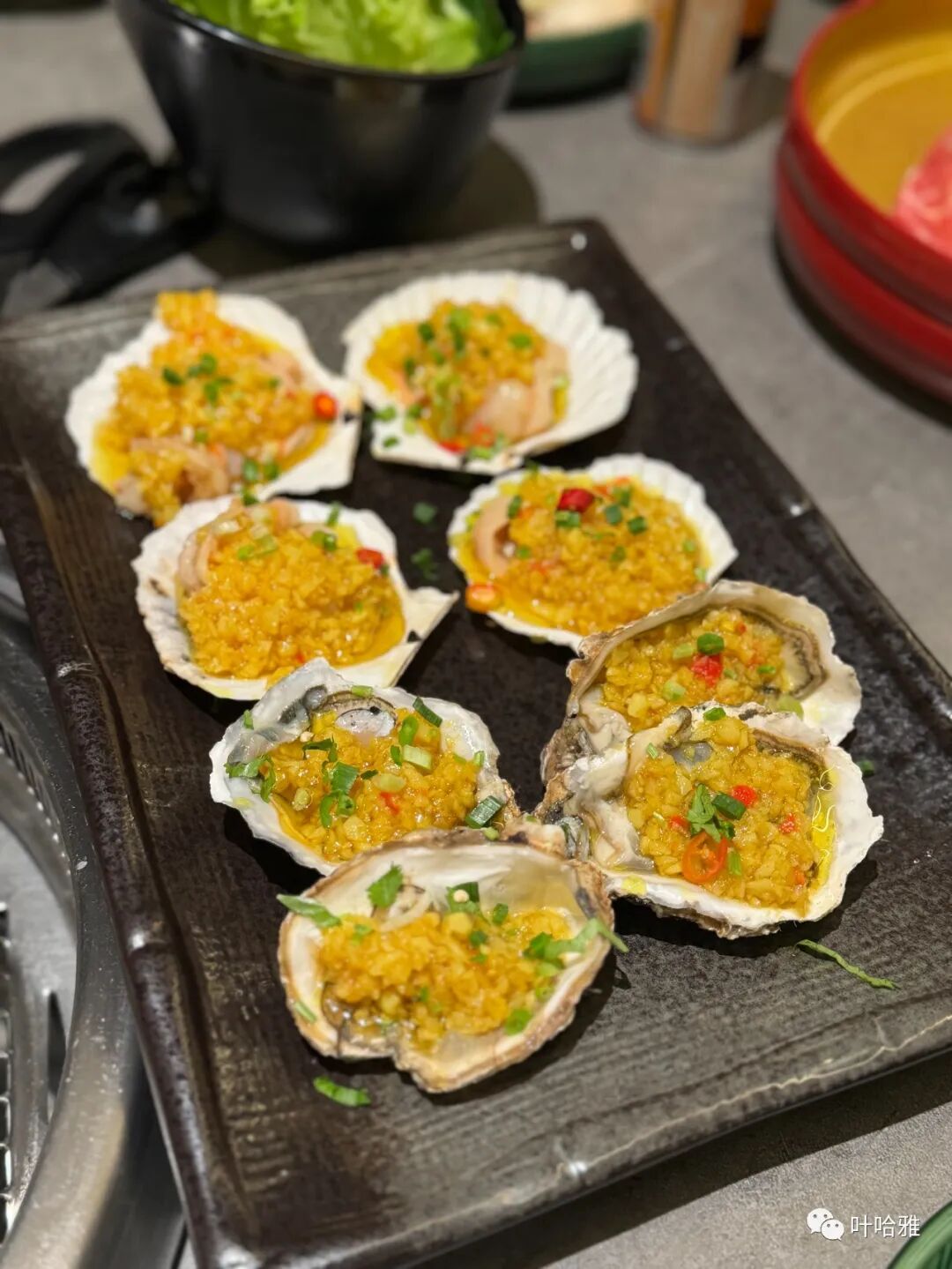
Grilled oysters.
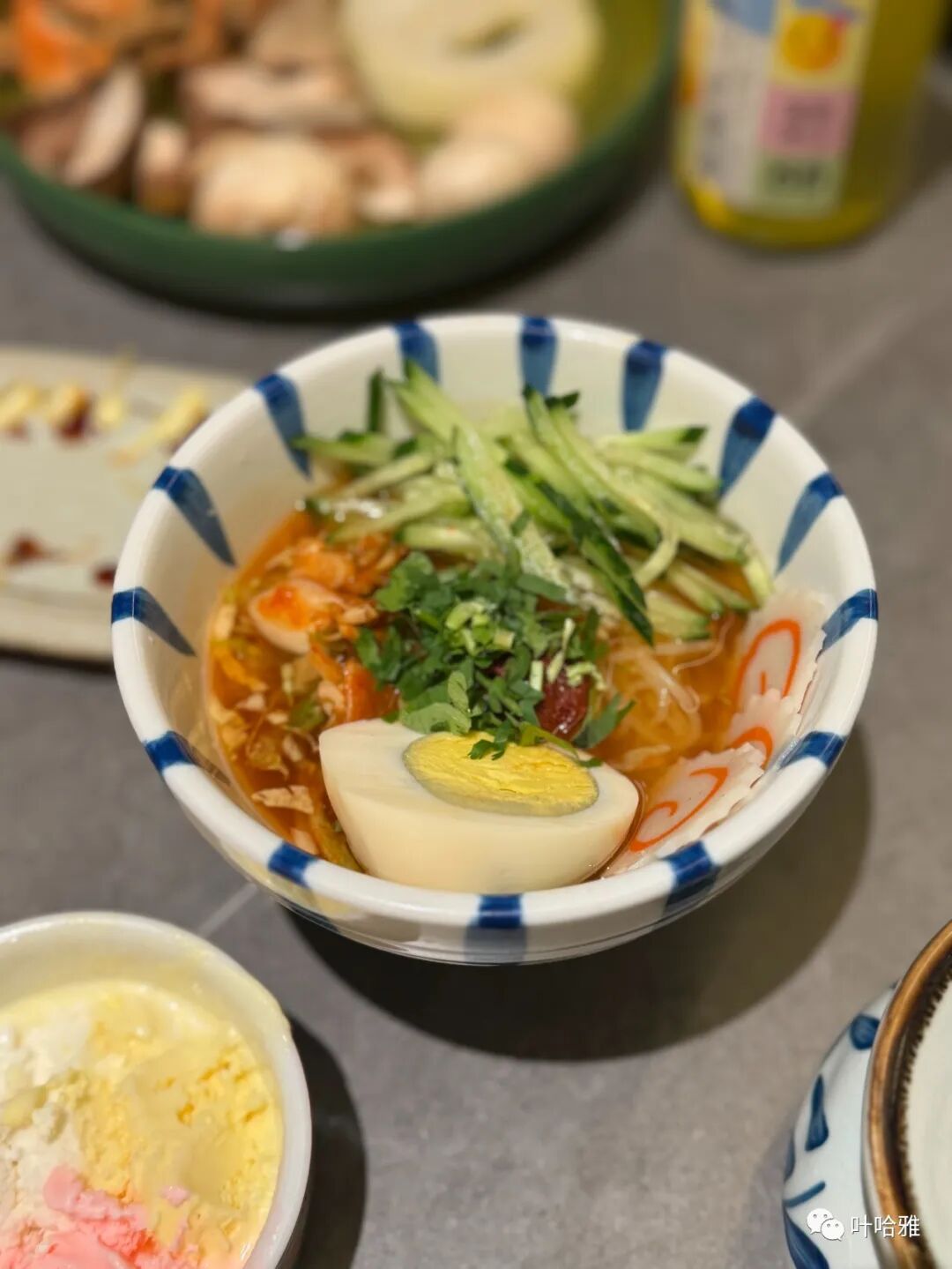
Cold noodles (lengmian).
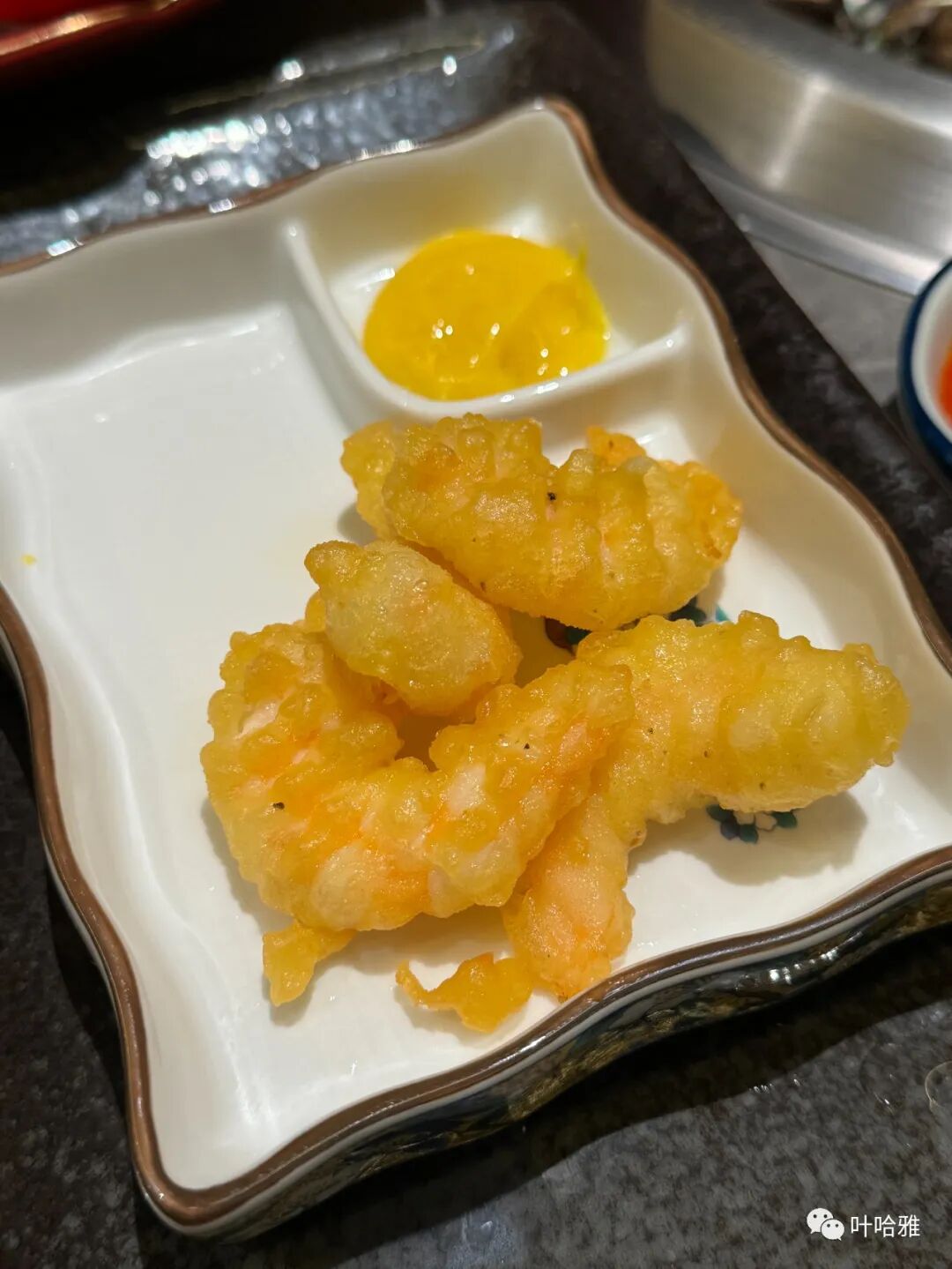
Mustard shrimp balls
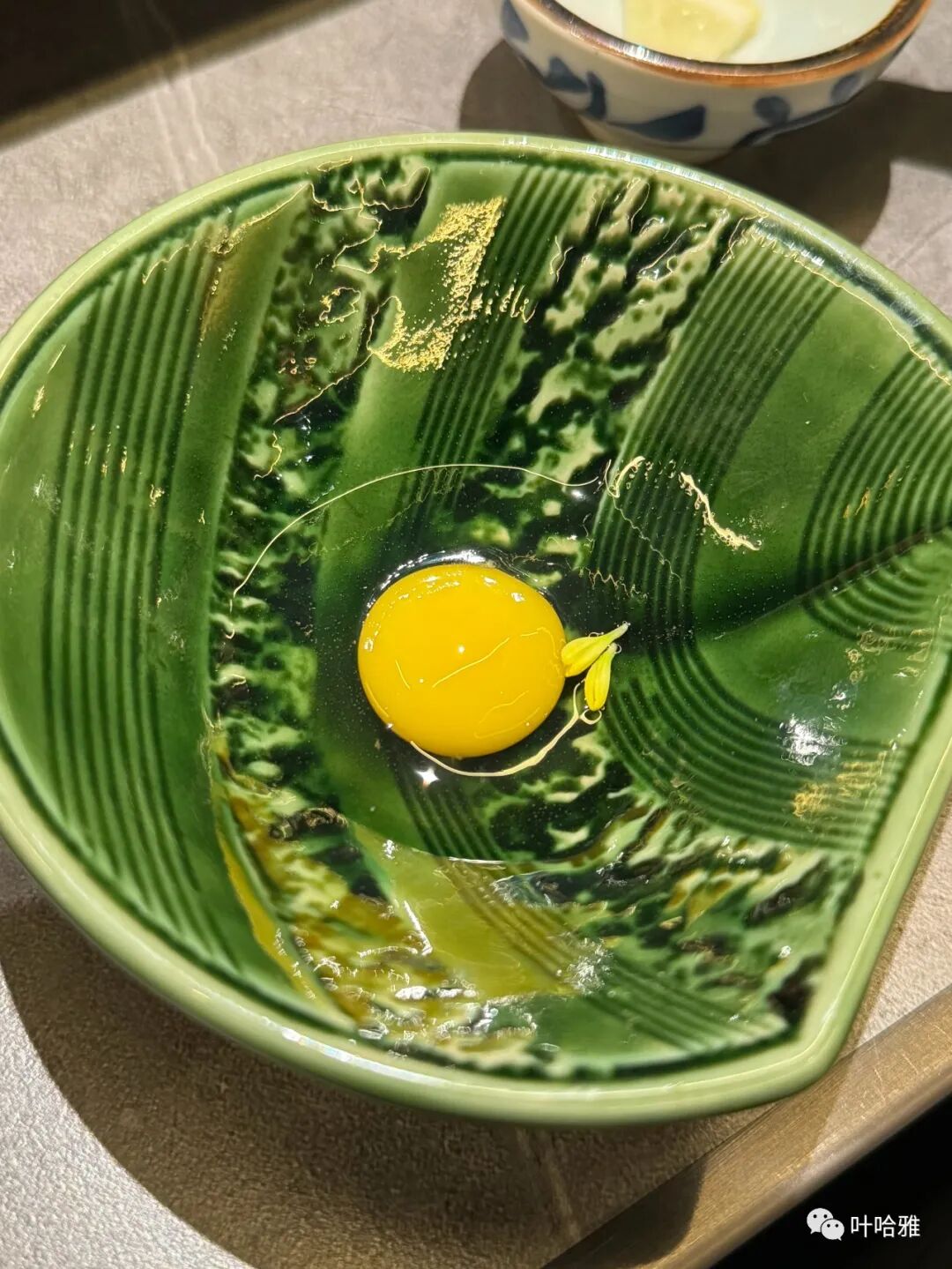
Pasteurized egg, a very small one, used for dipping sauce.
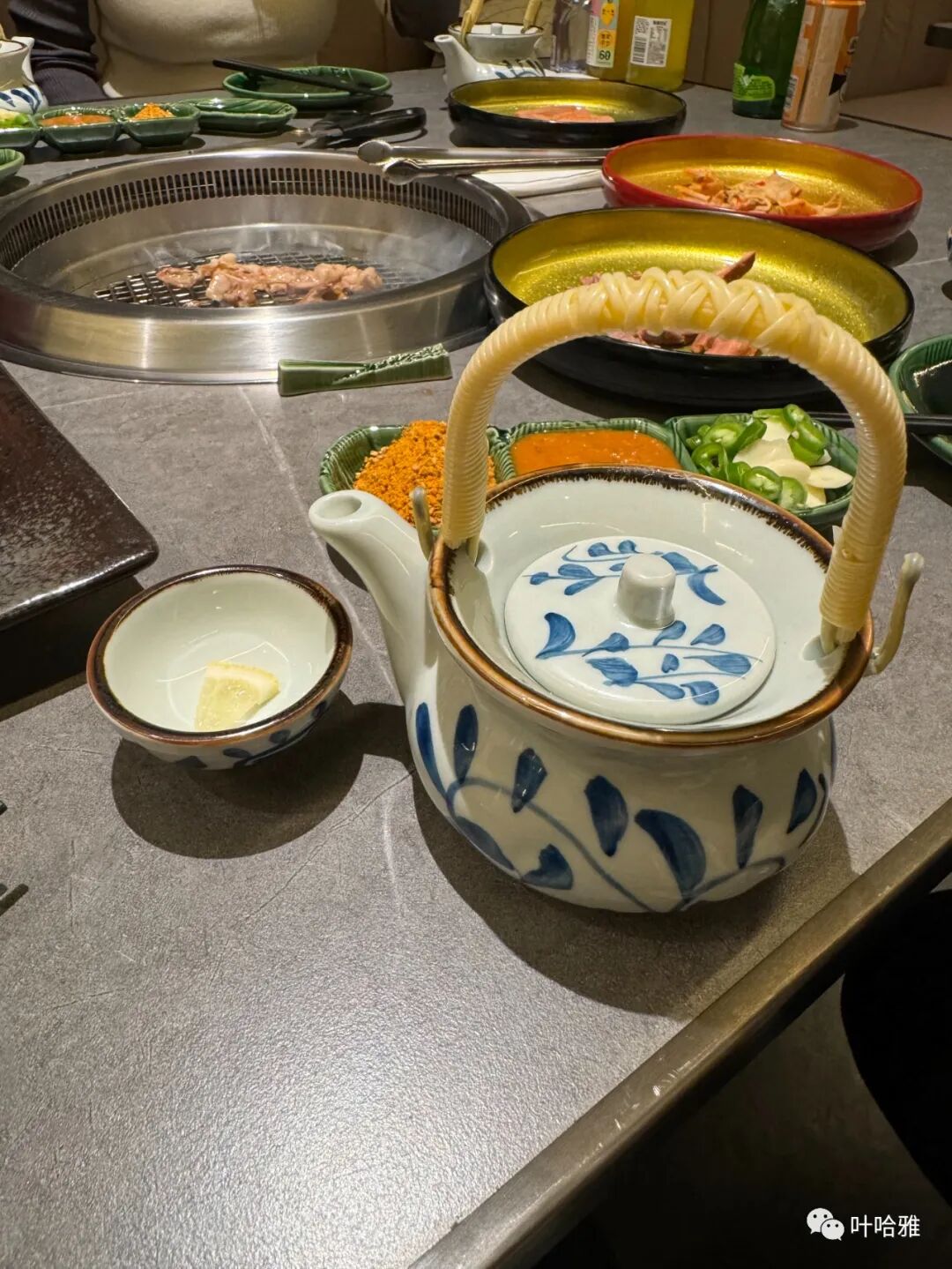
Matsutake mushroom soup
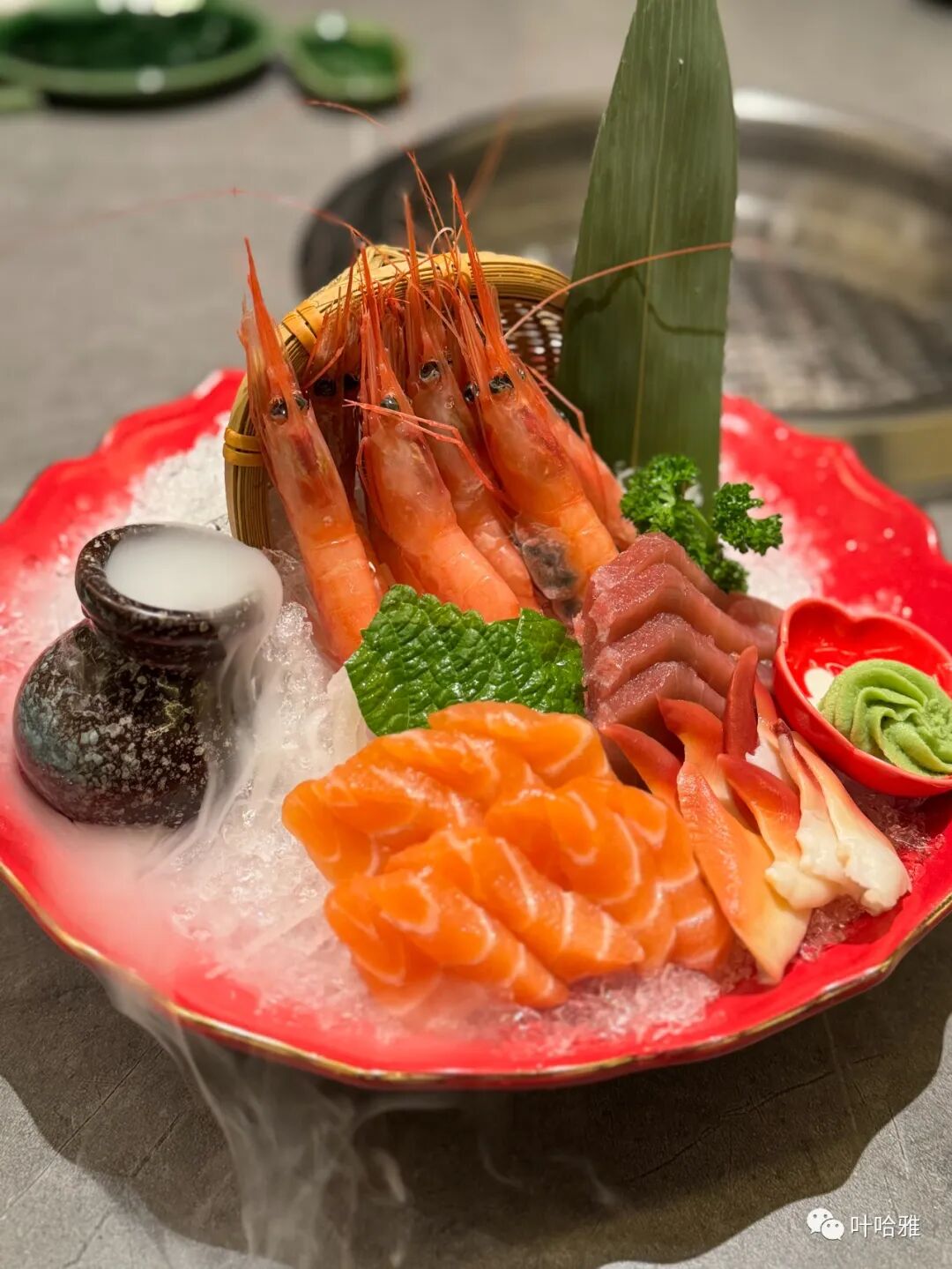
Sashimi platter
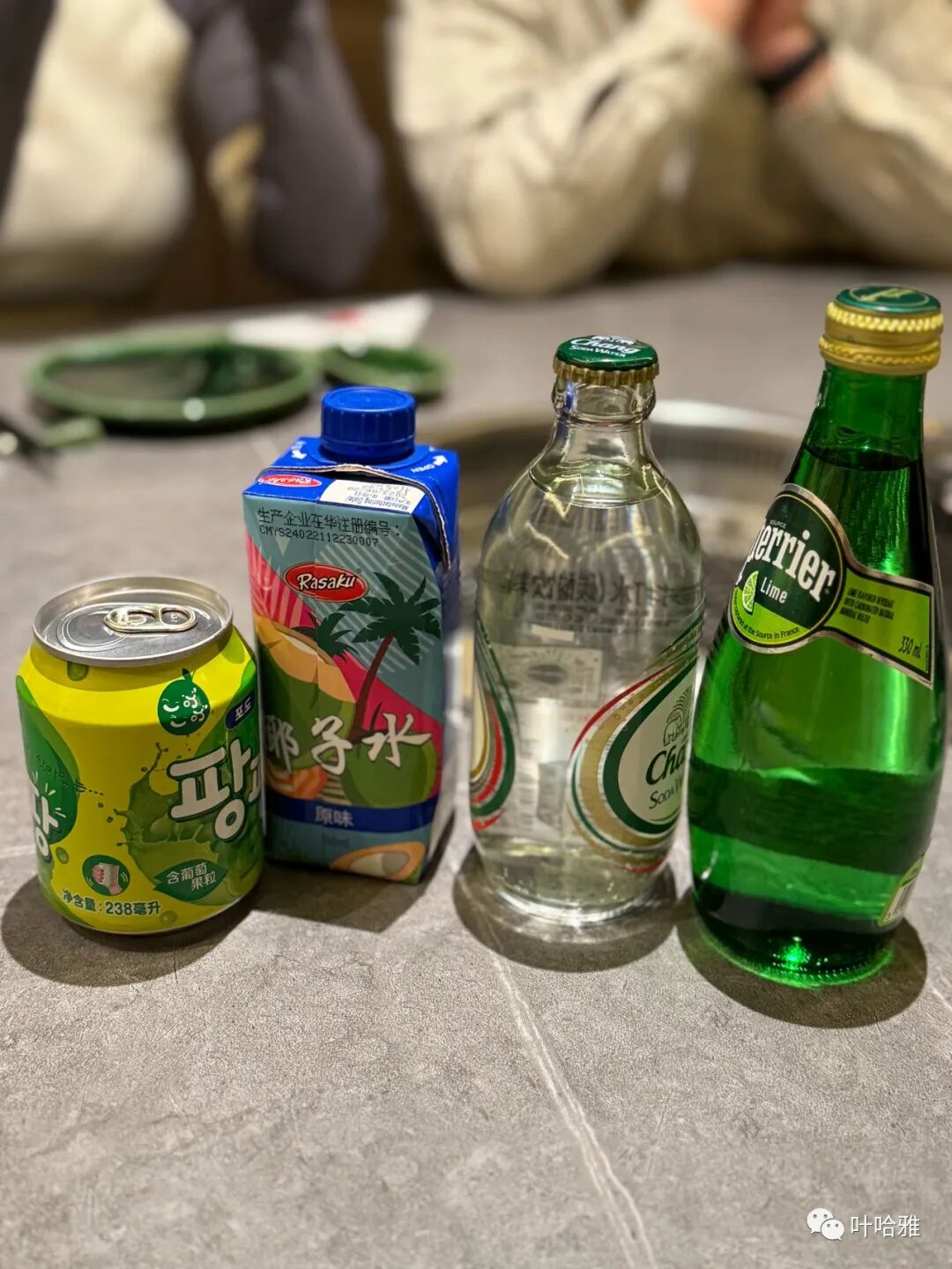
Unlimited drinks of all kinds
Mention Dosti to eat at Shixiang buffet, and friends of Tiyehaya can get 20 yuan off the set meal. You can get 15% off at Jiangguo Xinjiang Restaurant. This is a secret between us, so don't tell anyone else.
2. Xihan Xinjiang meatball soup
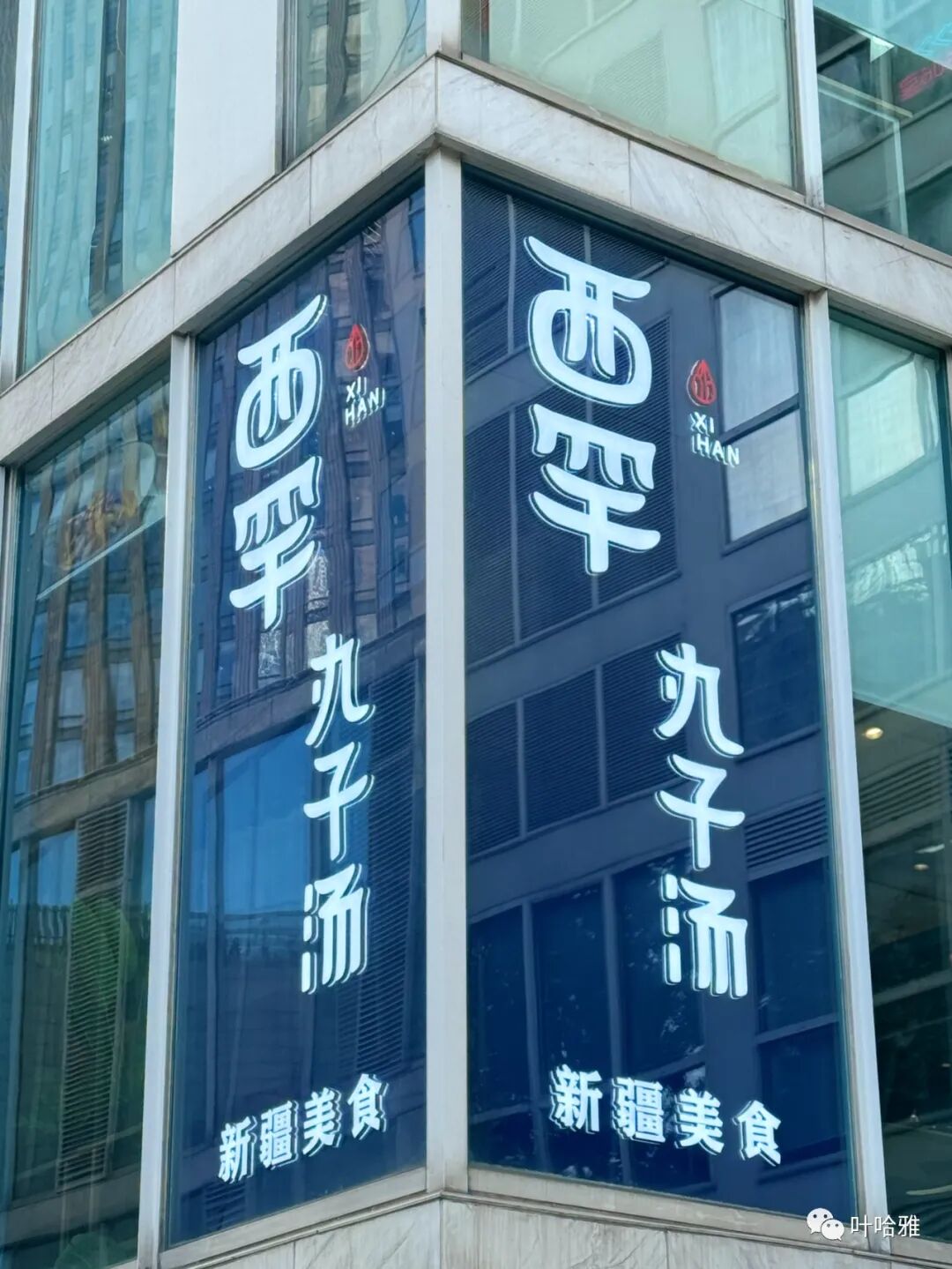
A Xinjiang meatball soup shop on the first floor of Jianwai SOHO East District, decorated in a fresh and artistic style.
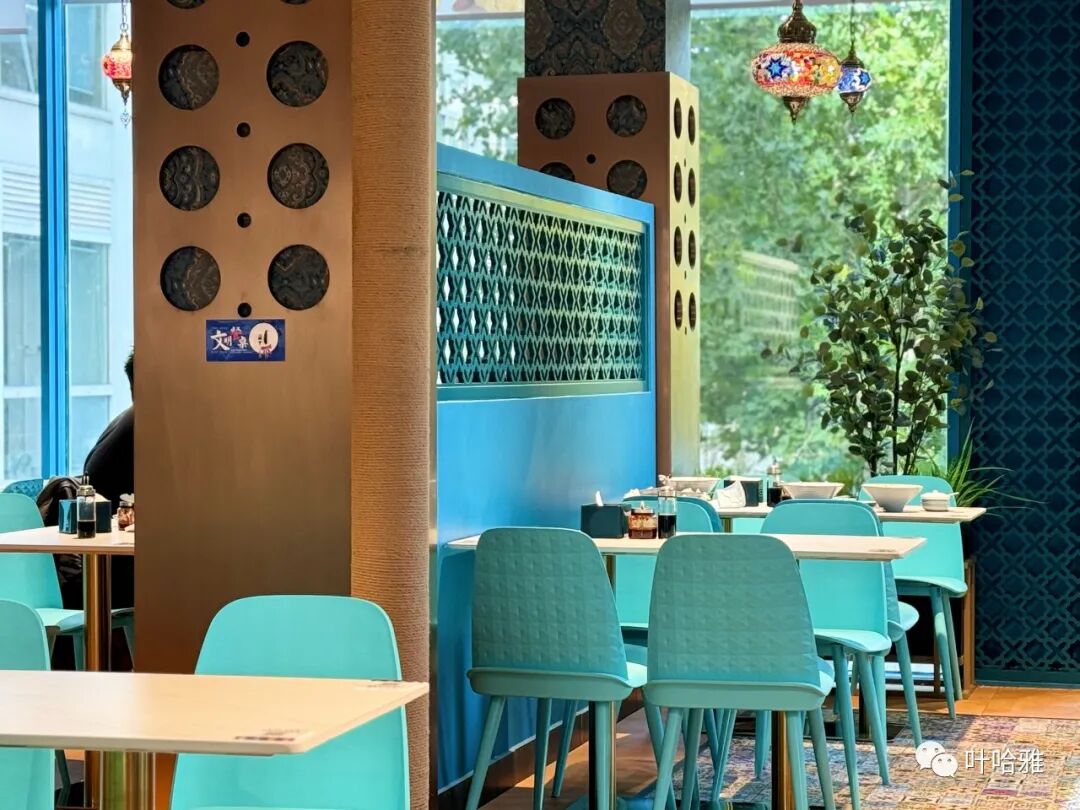
The main color is Ili blue. They specialize in meatball soup and also serve various Xinjiang snacks.
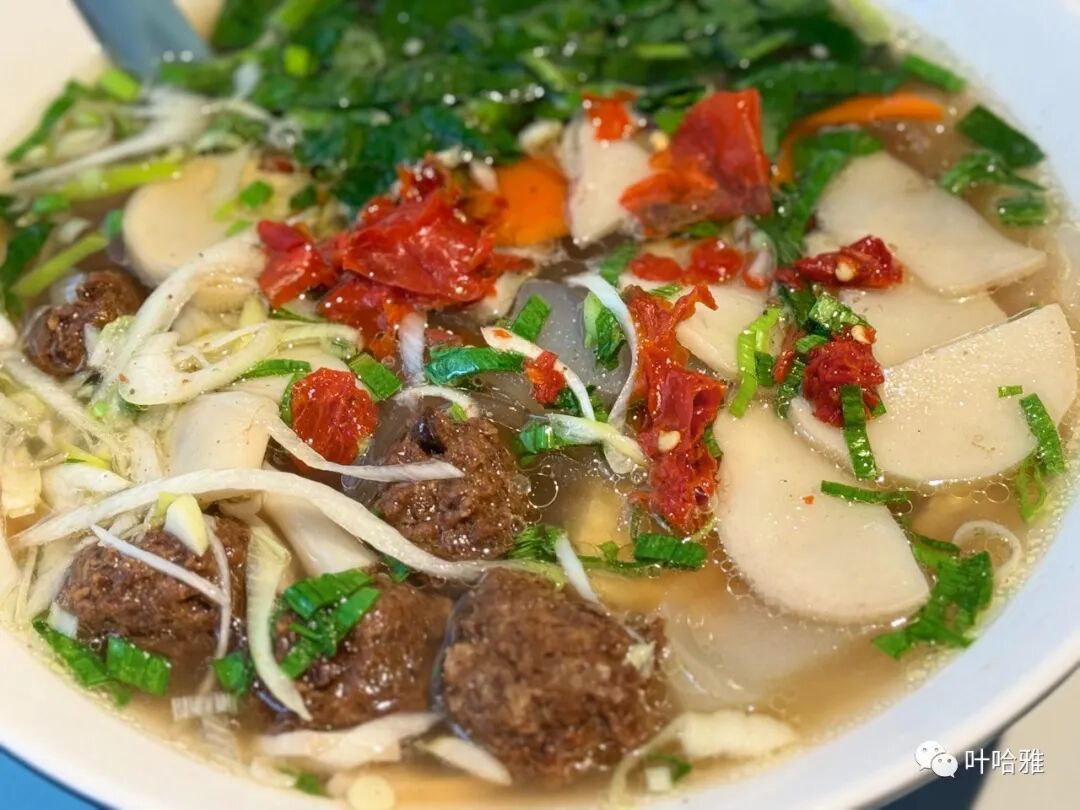
Meatball soup
Meatball soup served with steamed flower rolls (huajuan), absolutely delicious.
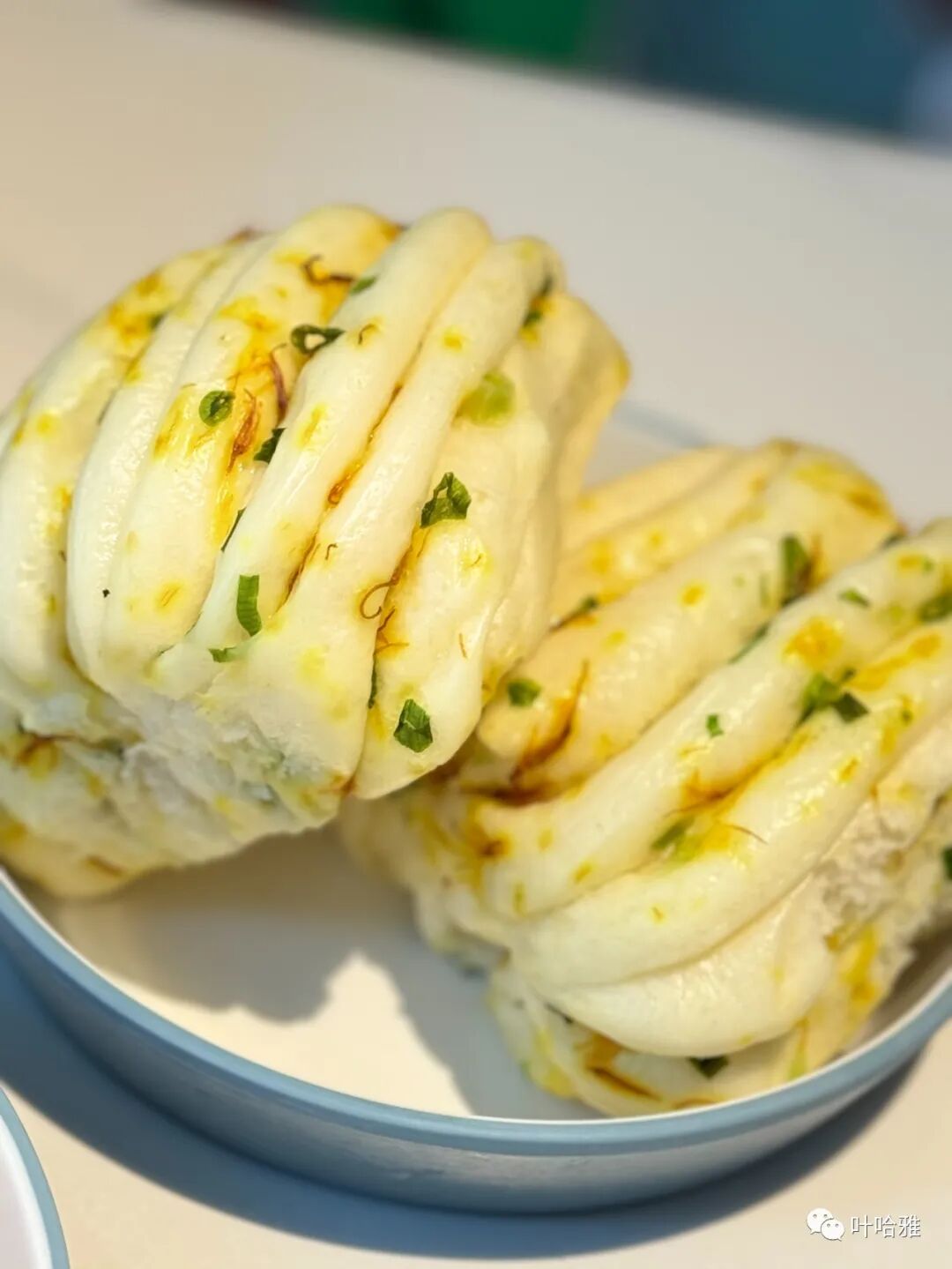
Steamed flower rolls (huajuan)
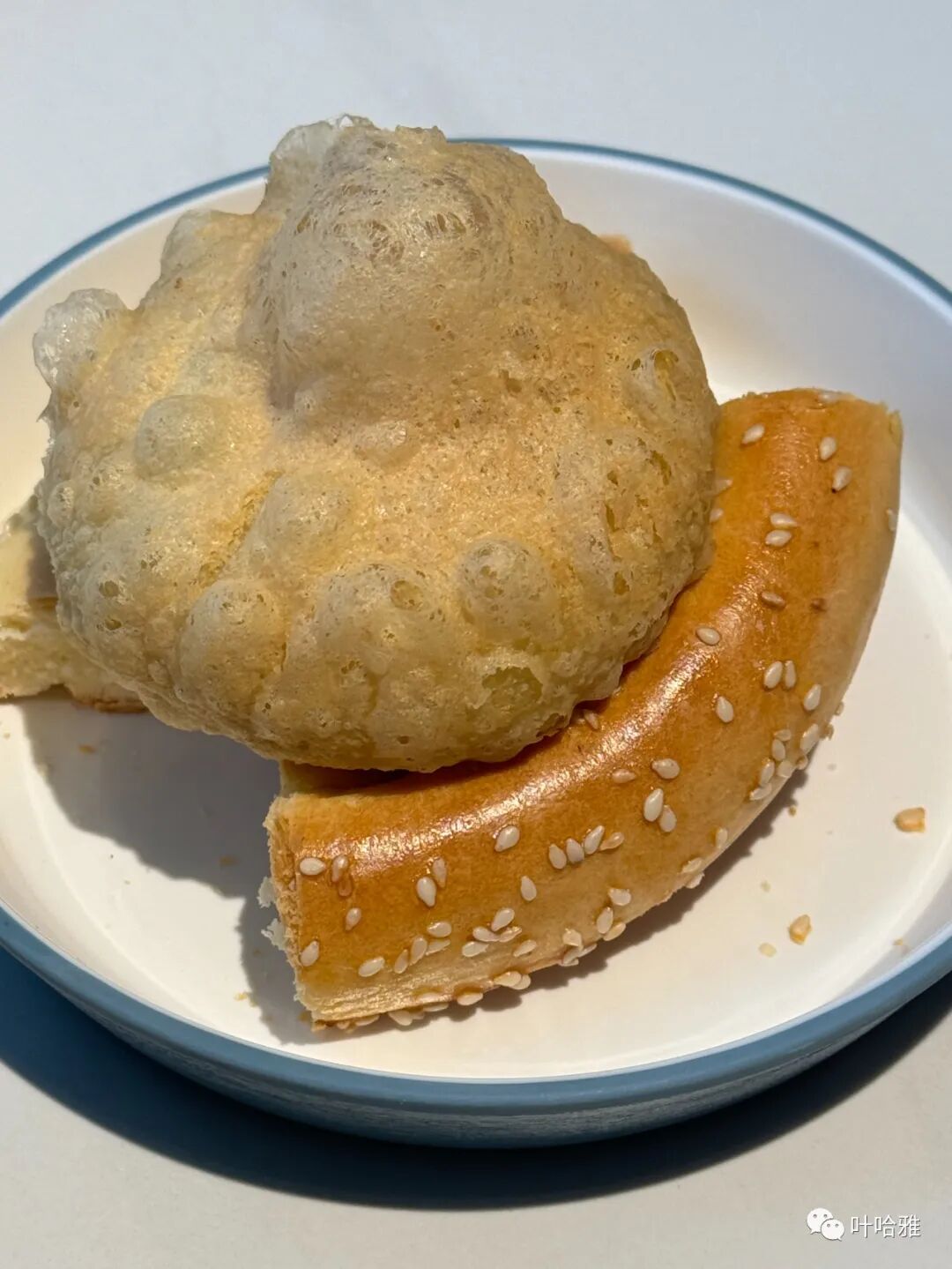
Deep-fried cake (youzhagao)
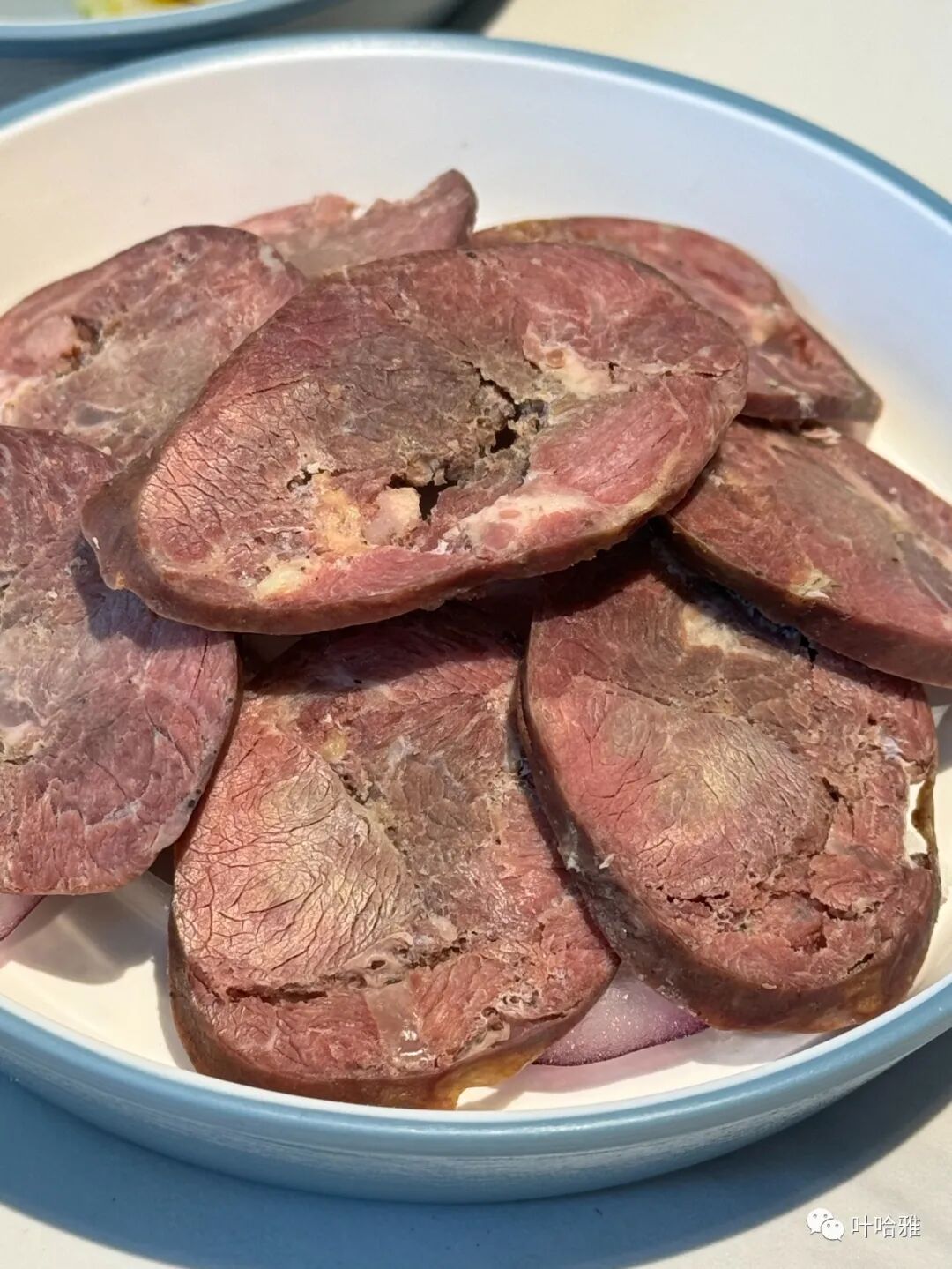
Ili smoked horse sausage (yili xunmachang)
Jabir ibn Abdullah (may Allah be pleased with him and his father) reported that on the day of the Battle of Khaybar, the Prophet (peace and blessings of Allah be upon him) forbade eating donkey meat but allowed eating horse meat. (Sahih al-Bukhari)
Asma bint Abu Bakr reported: During the time of the Prophet, we slaughtered a horse and ate its meat (Sahih Muslim).
3. Yixiangyuan Restaurant
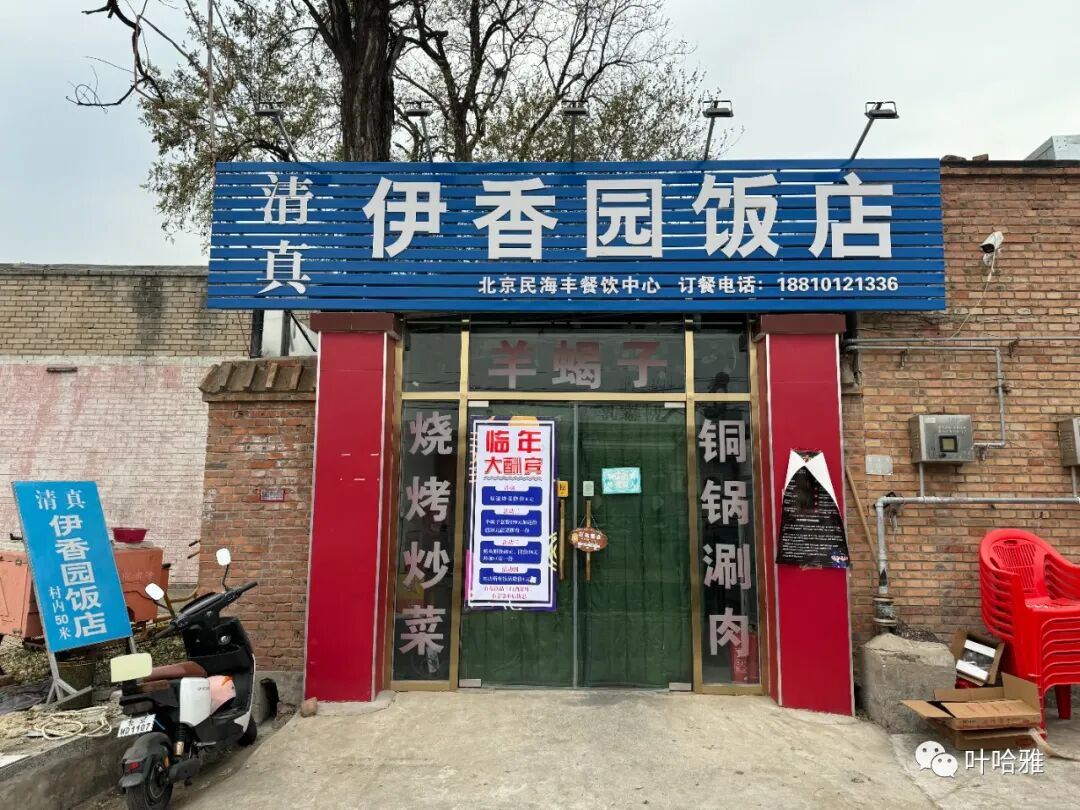
There is a Yufa Town mosque (Yufa Zhen Qingzhensi) near Daxing Airport. After visiting the Yufa mosque, I went to the nearby Dongwenggezhuang Village for a quick meal.
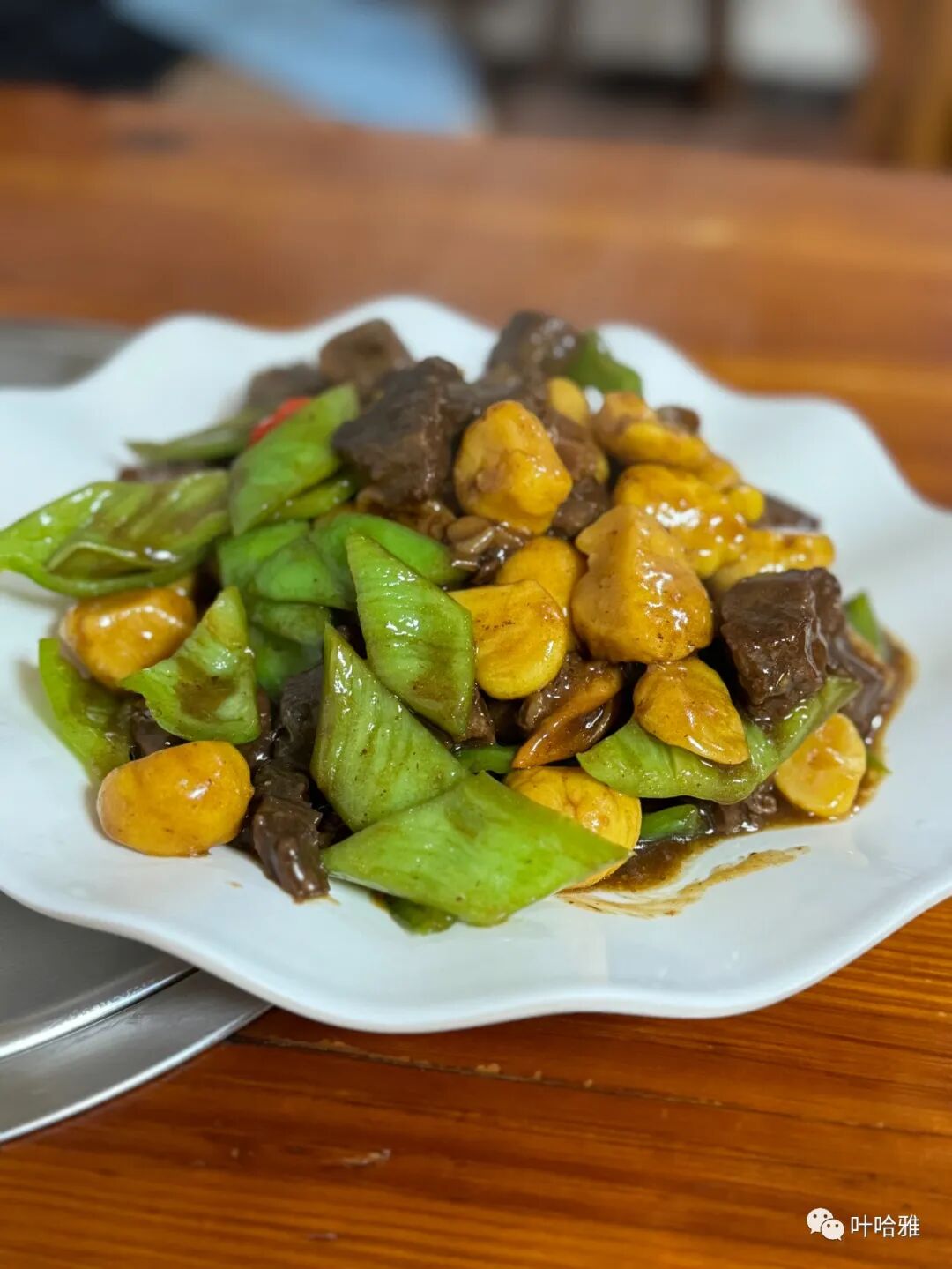
This is the closest restaurant to the Yufa mosque. I ordered the stir-fried beef with chestnuts, and it tasted pretty good.
4. Niuwanfeng Heluo Noodles
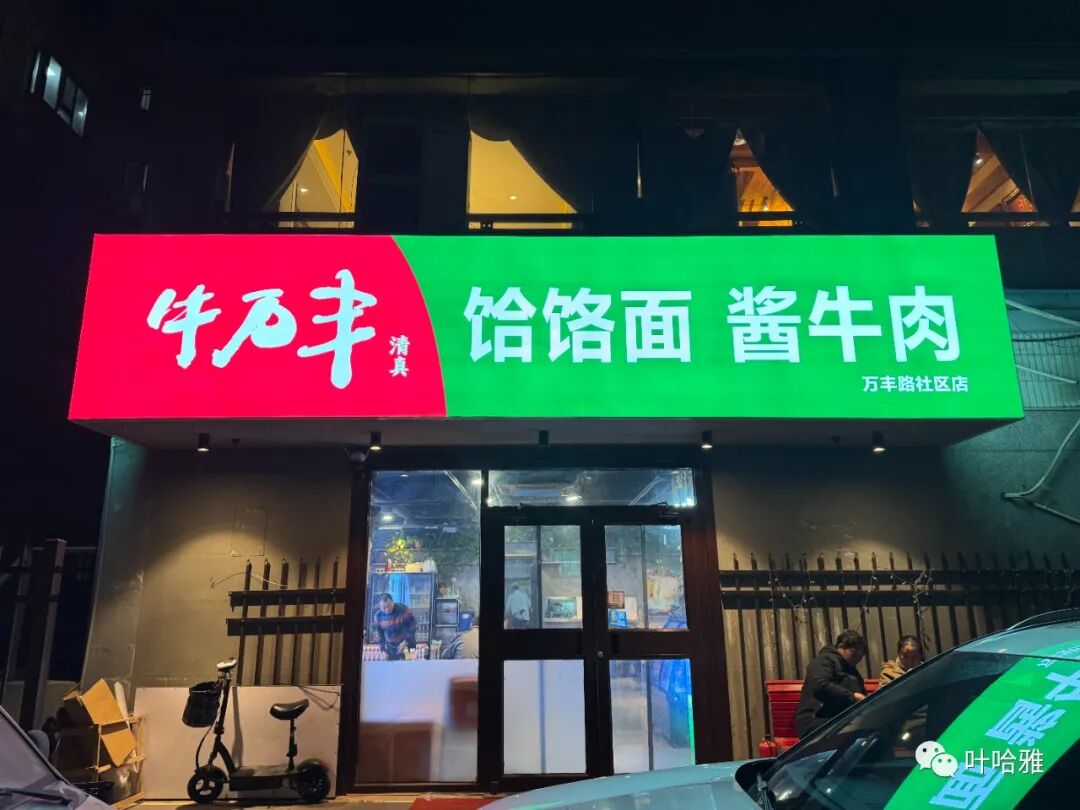
A new Jia County noodle shop (hela mian) from Henan opened in Fengtai. I have been there twice, and the taste is quite authentic.
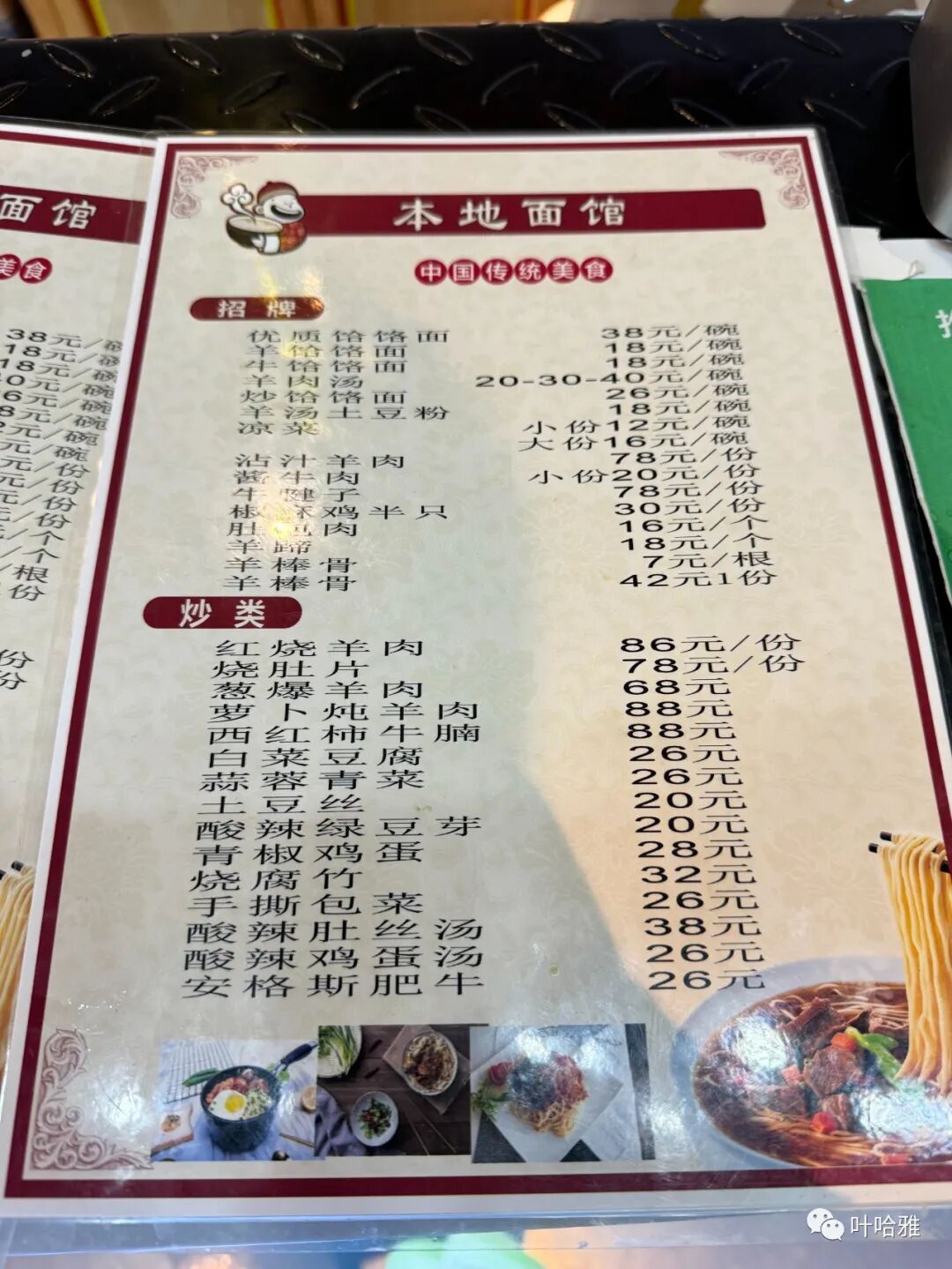
Jia County noodle soup is made with lamb broth. They use plenty of high-quality lamb, and the soup is good enough to drink on its own.
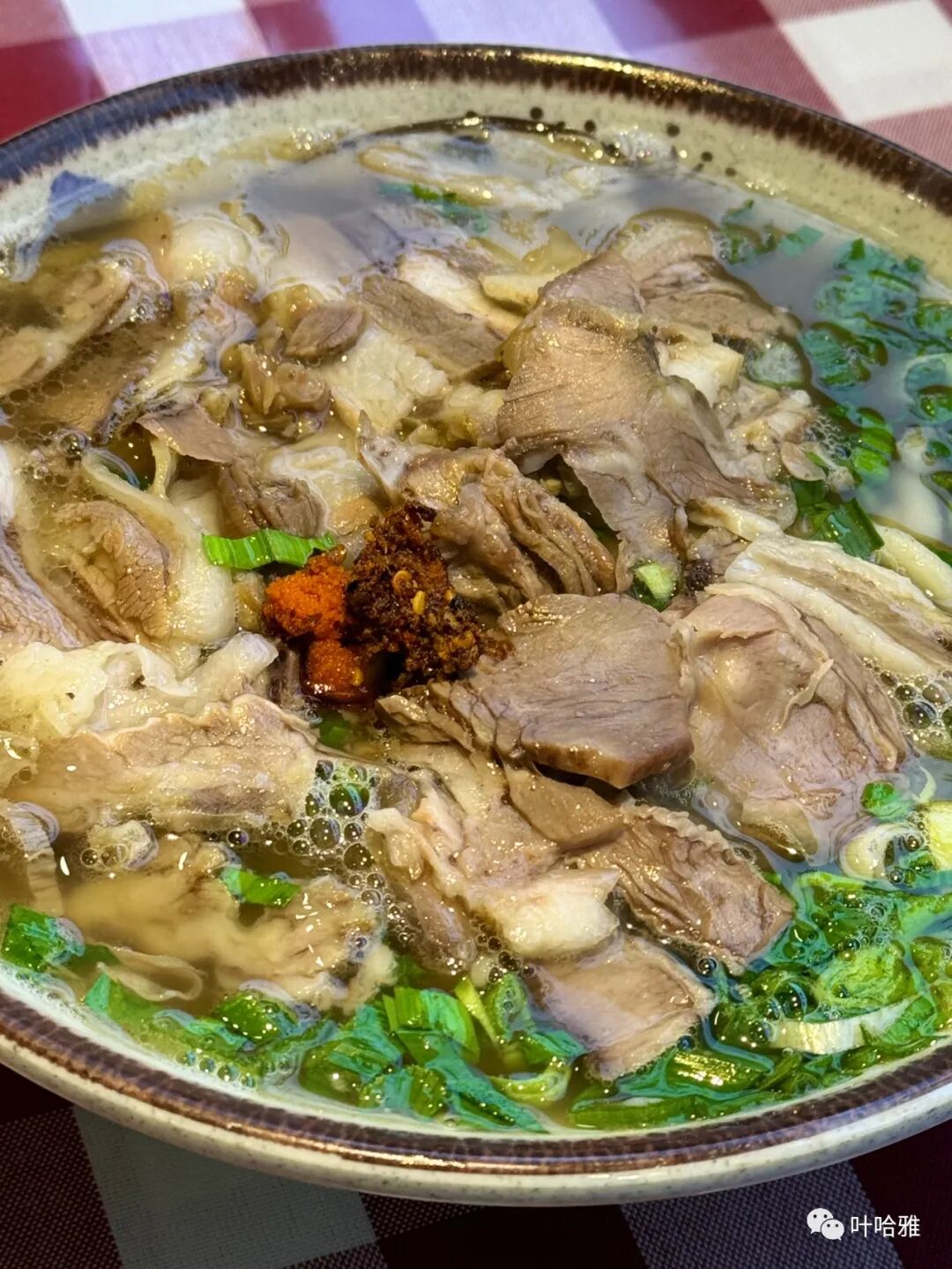
They fry their chili in lamb fat, so the flavor is very strong.
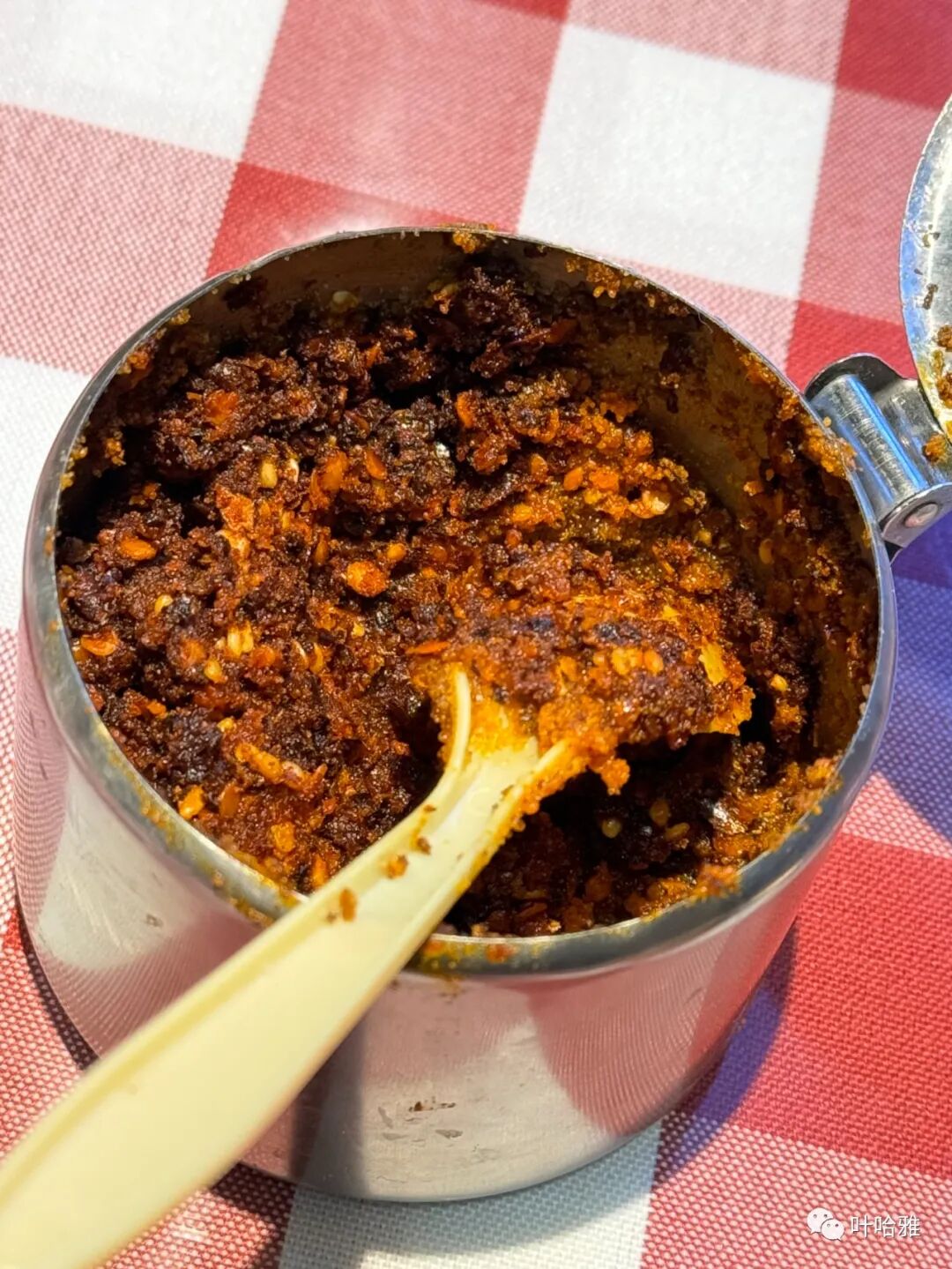
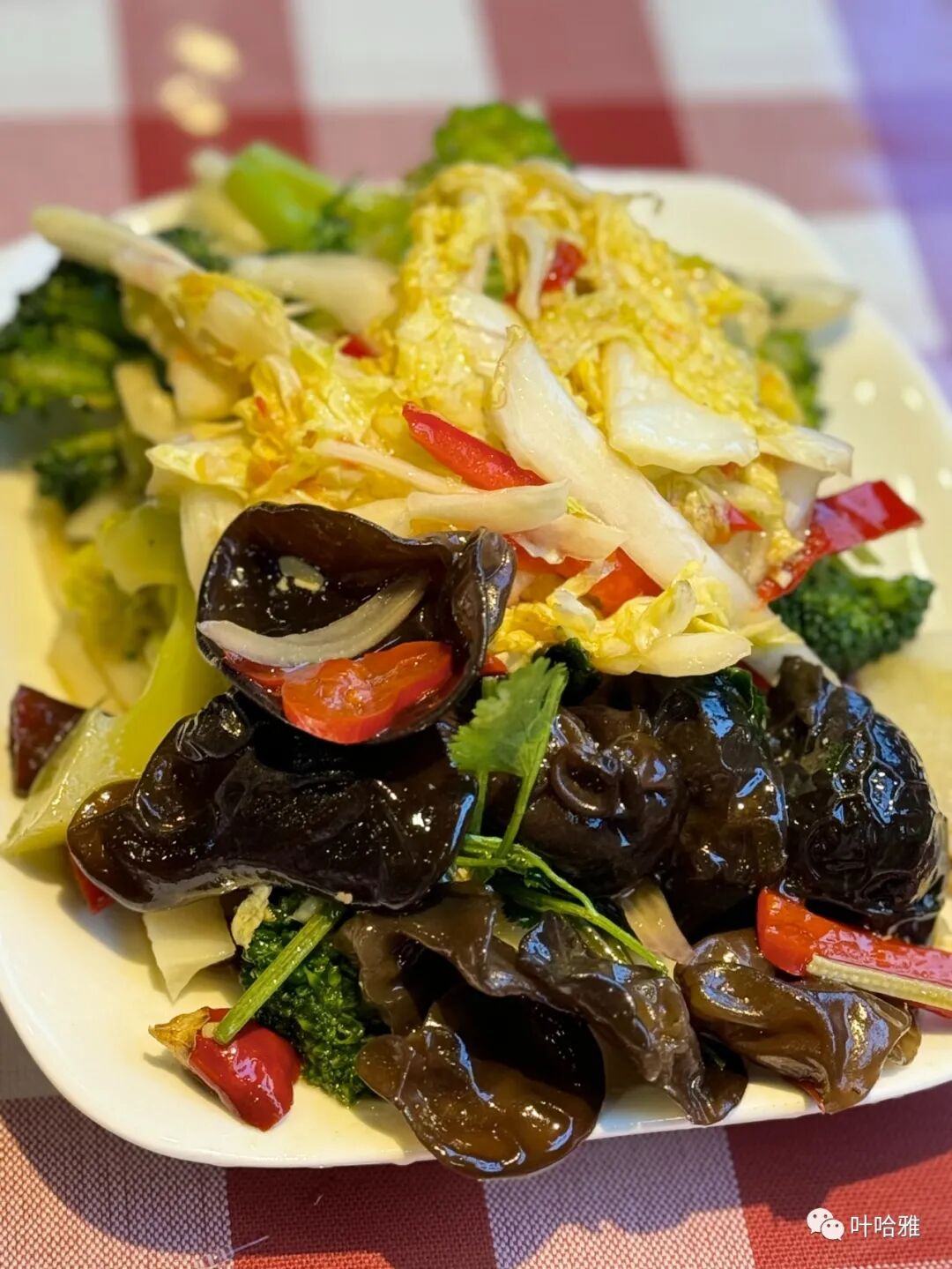
Besides the buckwheat noodles (heluo mian), their spiced beef (jiang niurou) is also quite good. The kitchen staff are all cousins from Henan.
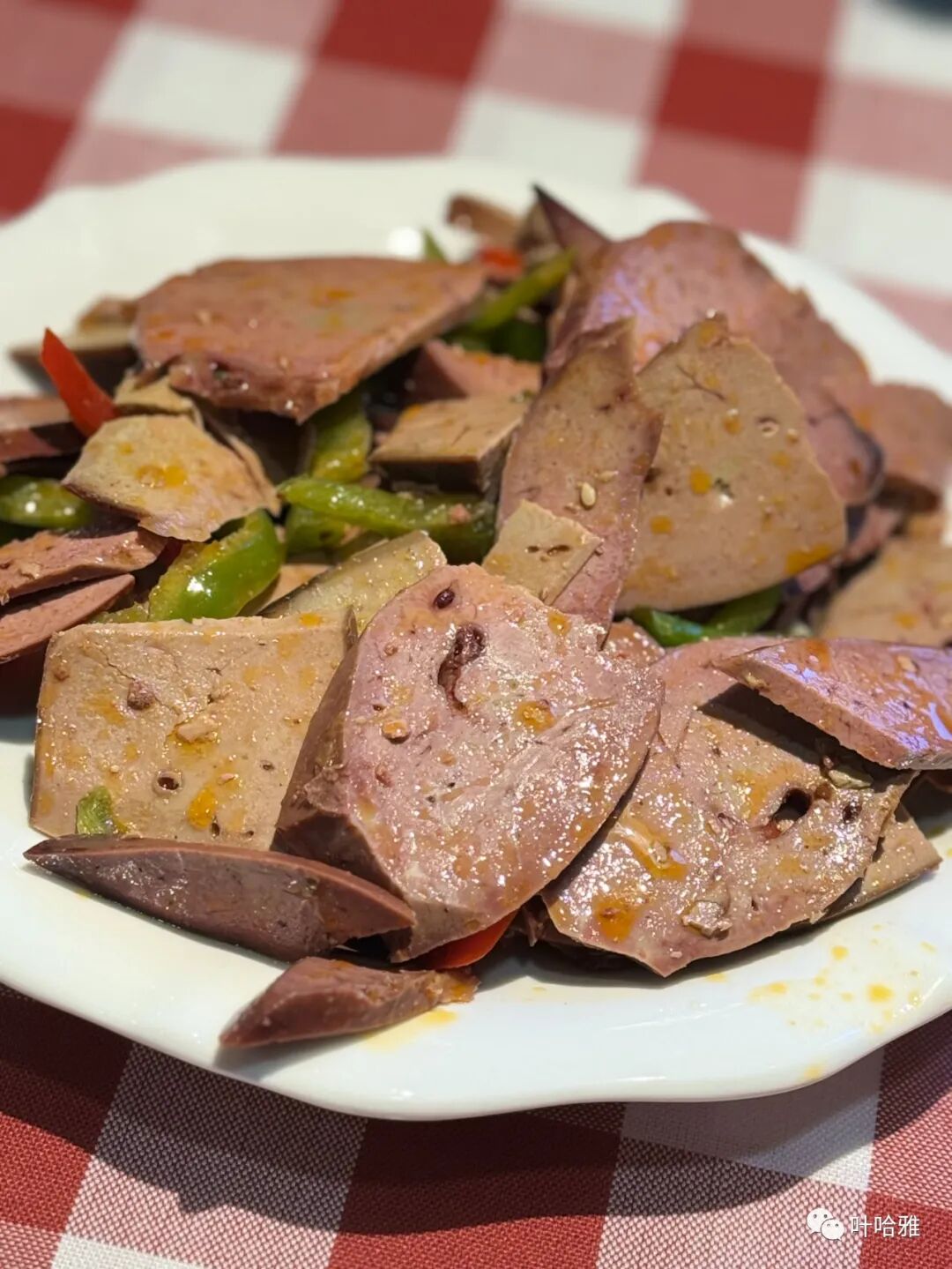
Lamb liver
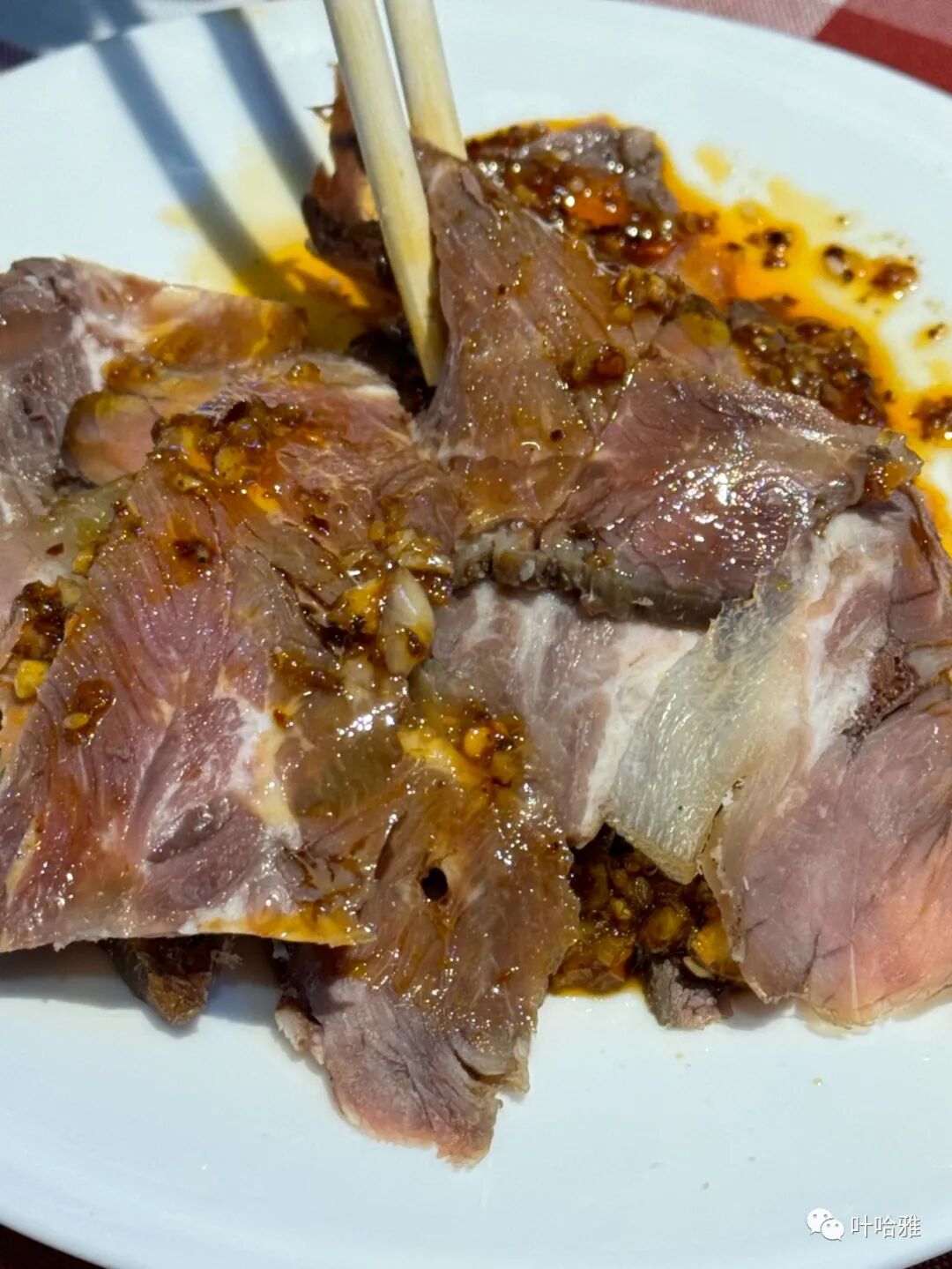
Spiced beef (jiang niurou)
5. Laohui Lamb Soup
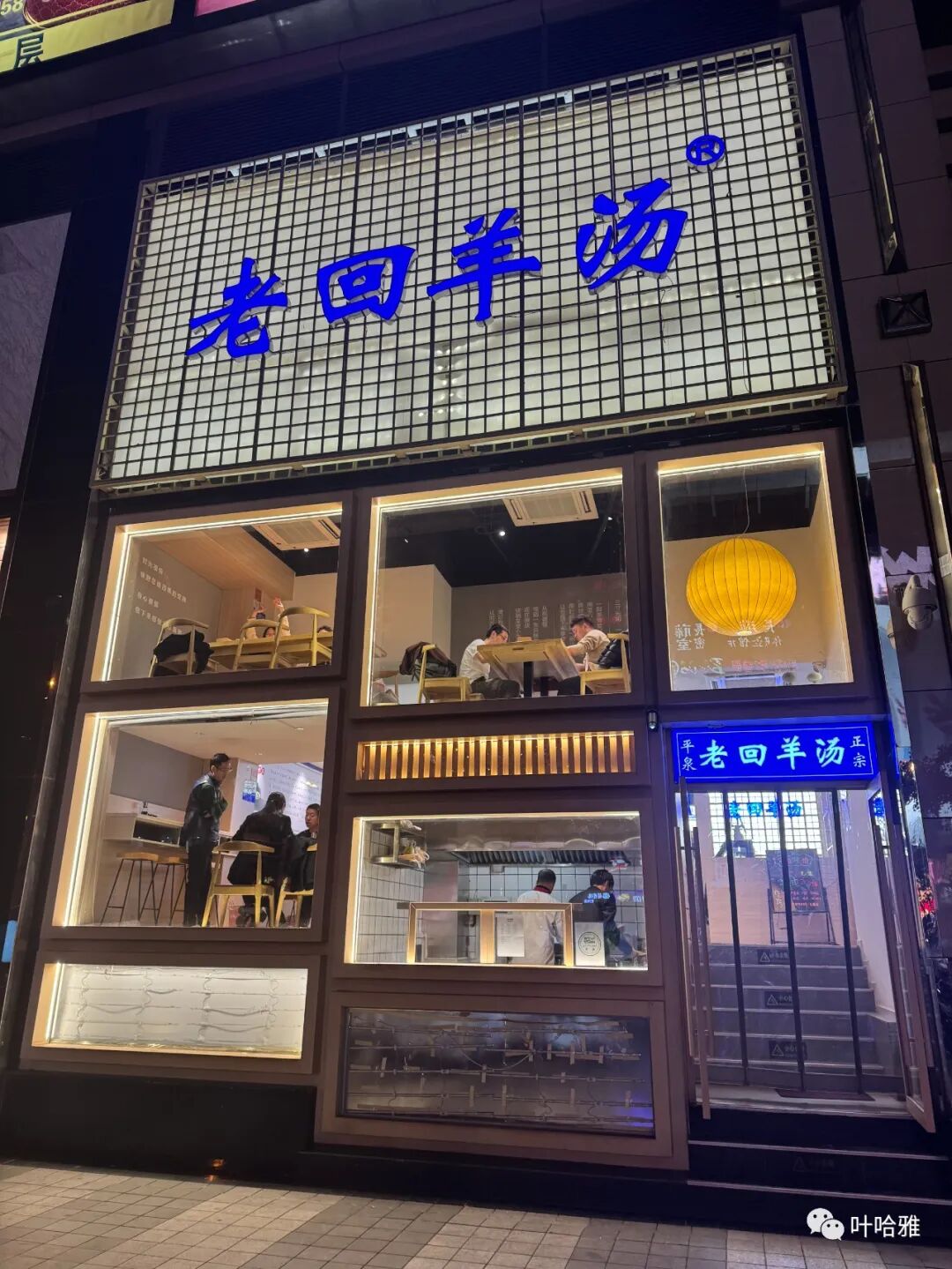
Pingquan is a county in Chengde, Hebei, famous for its lamb soup (yangtang). This shop, Lao Hui, is a lamb soup restaurant opened by people from Pingquan.
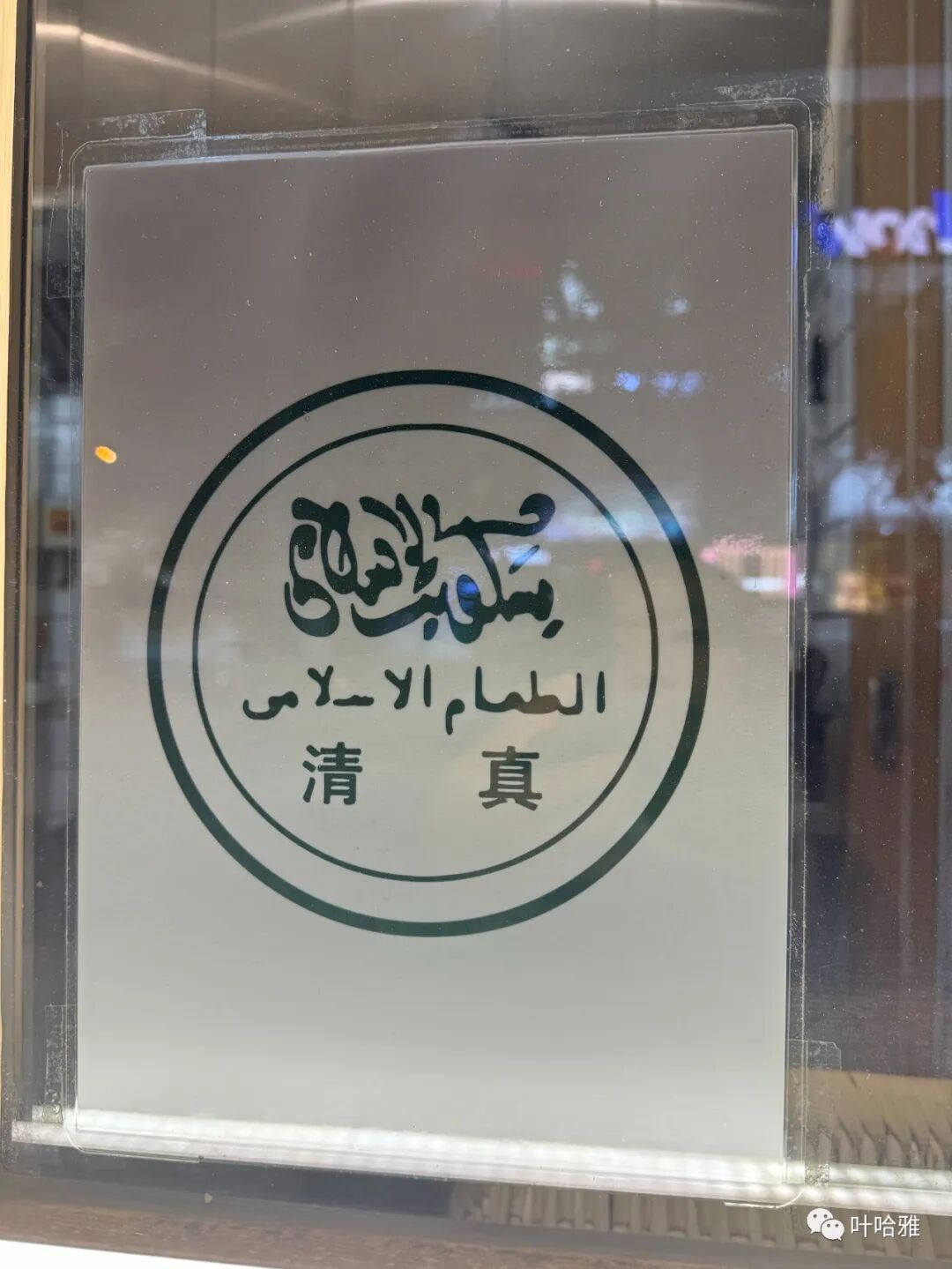
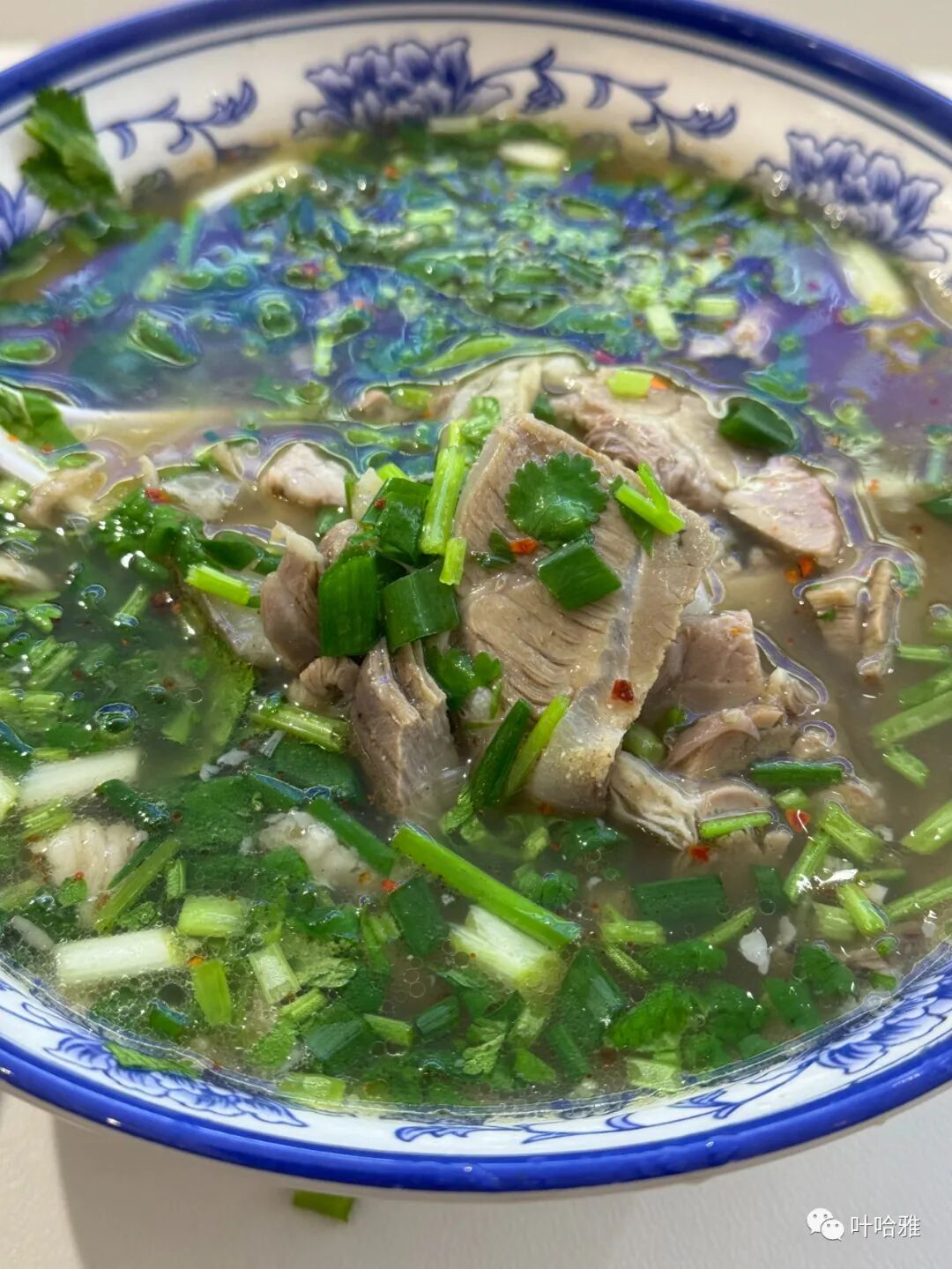
You can get free refills on the lamb soup (yangtang). This shop really boils it from scratch, and you have to eat it with a sesame flatbread (shaobing).
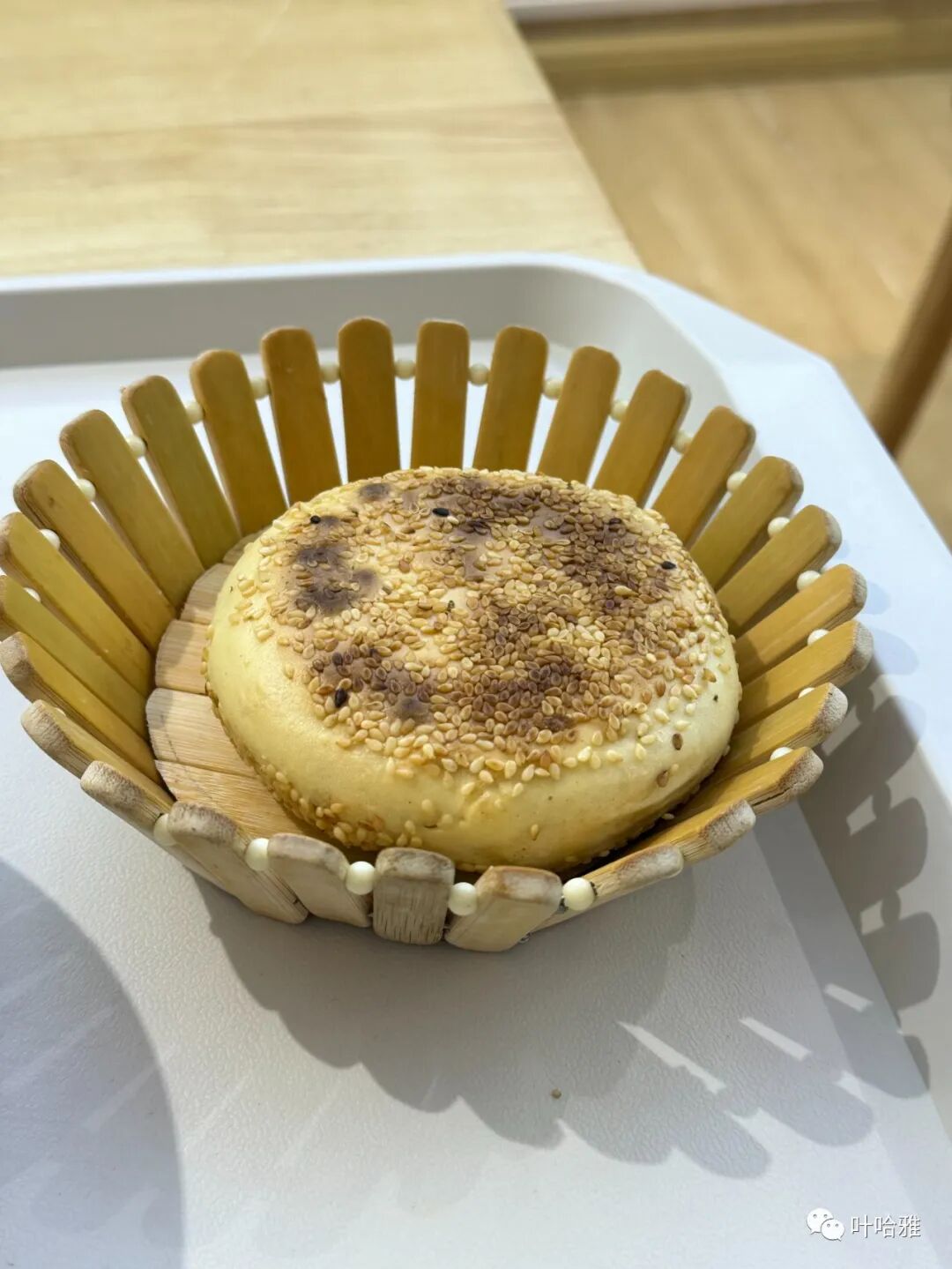
A bowl of lamb soup (yangtang) on a cold day warms you right up. The shop also offers charity meal sets for people in specific professions.
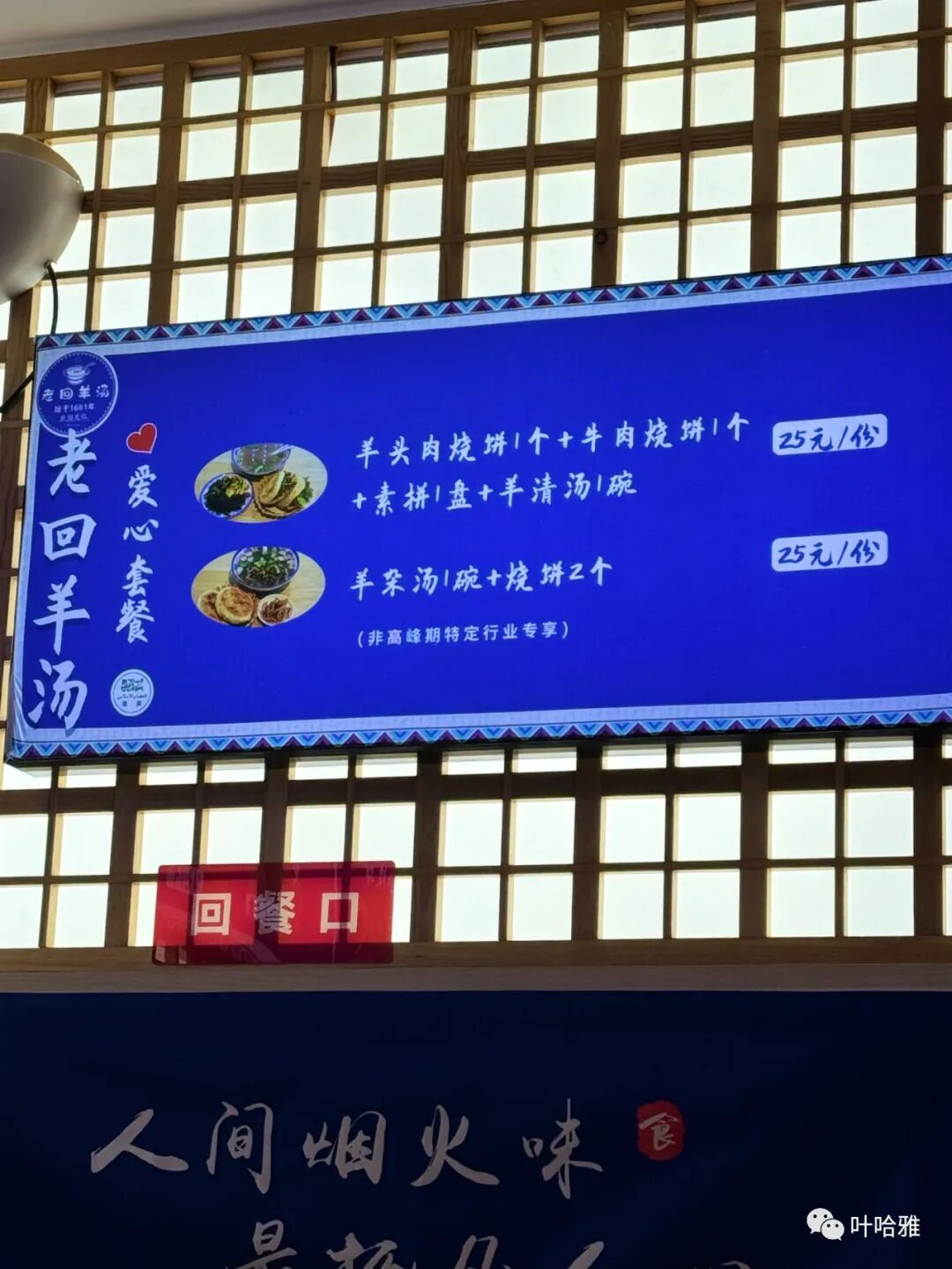
6. Big Head Hot Pot (Danaodai Shuanrou)
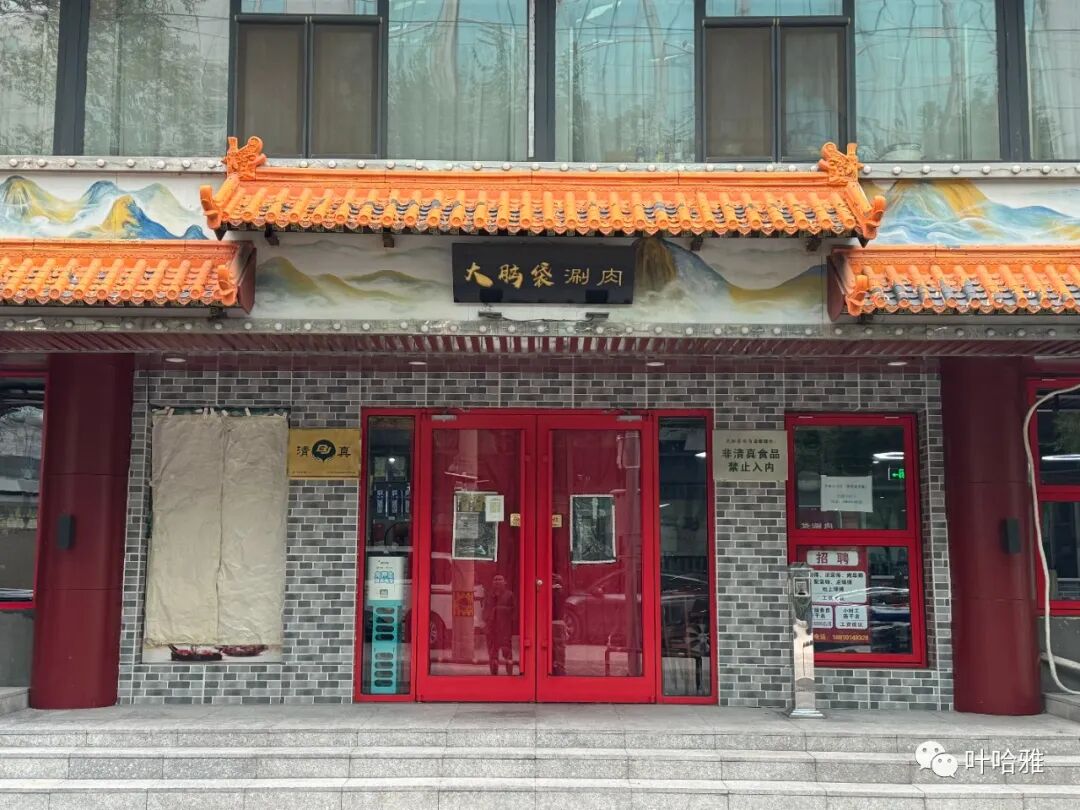
A Beijing-style hot pot restaurant opened not far from the North Square of the West Railway Station. Now I have another option if I am not in a rush when visiting the station.
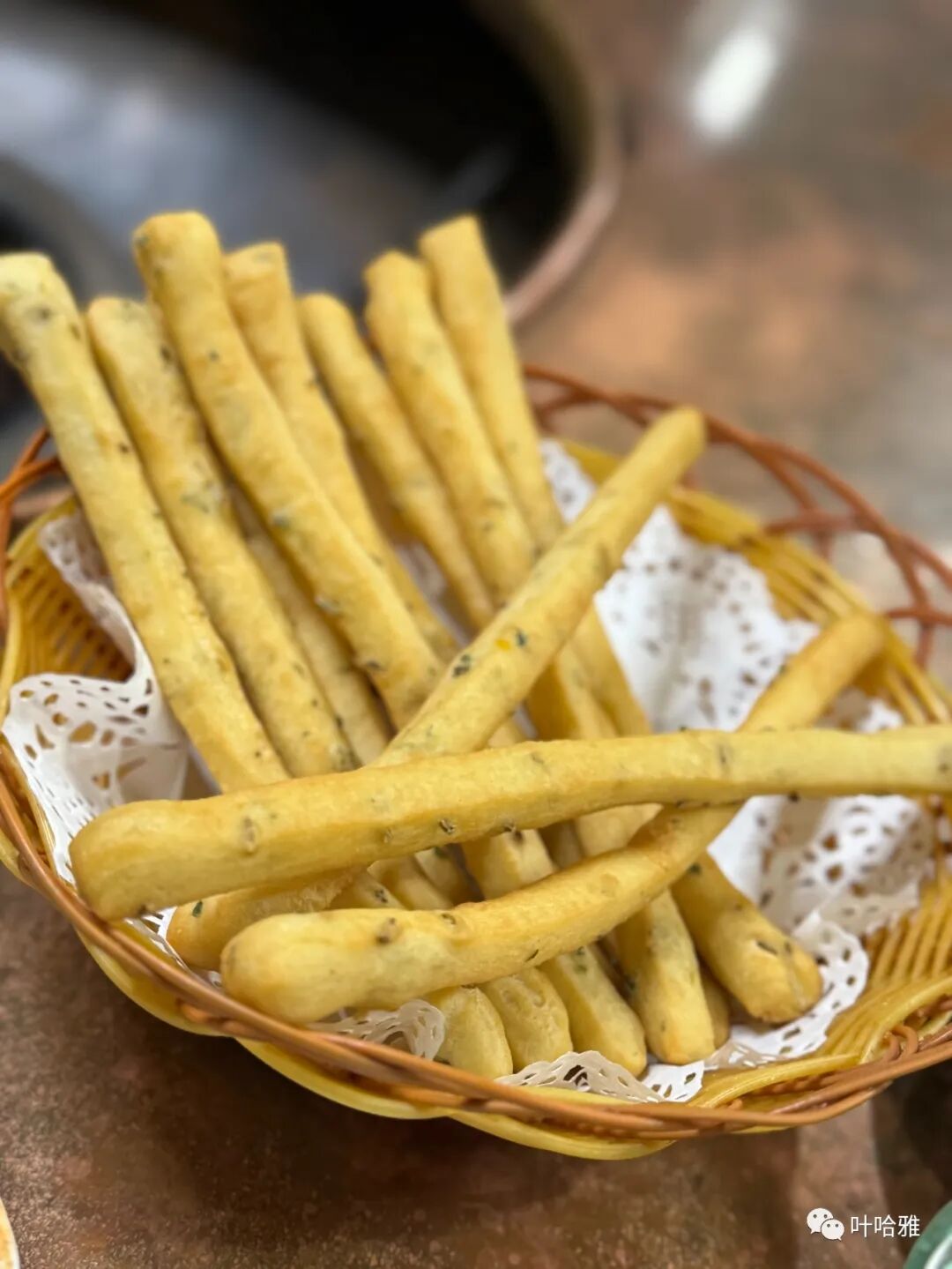
Fennel mini fried dough sticks (huixiang xiao youtiao)
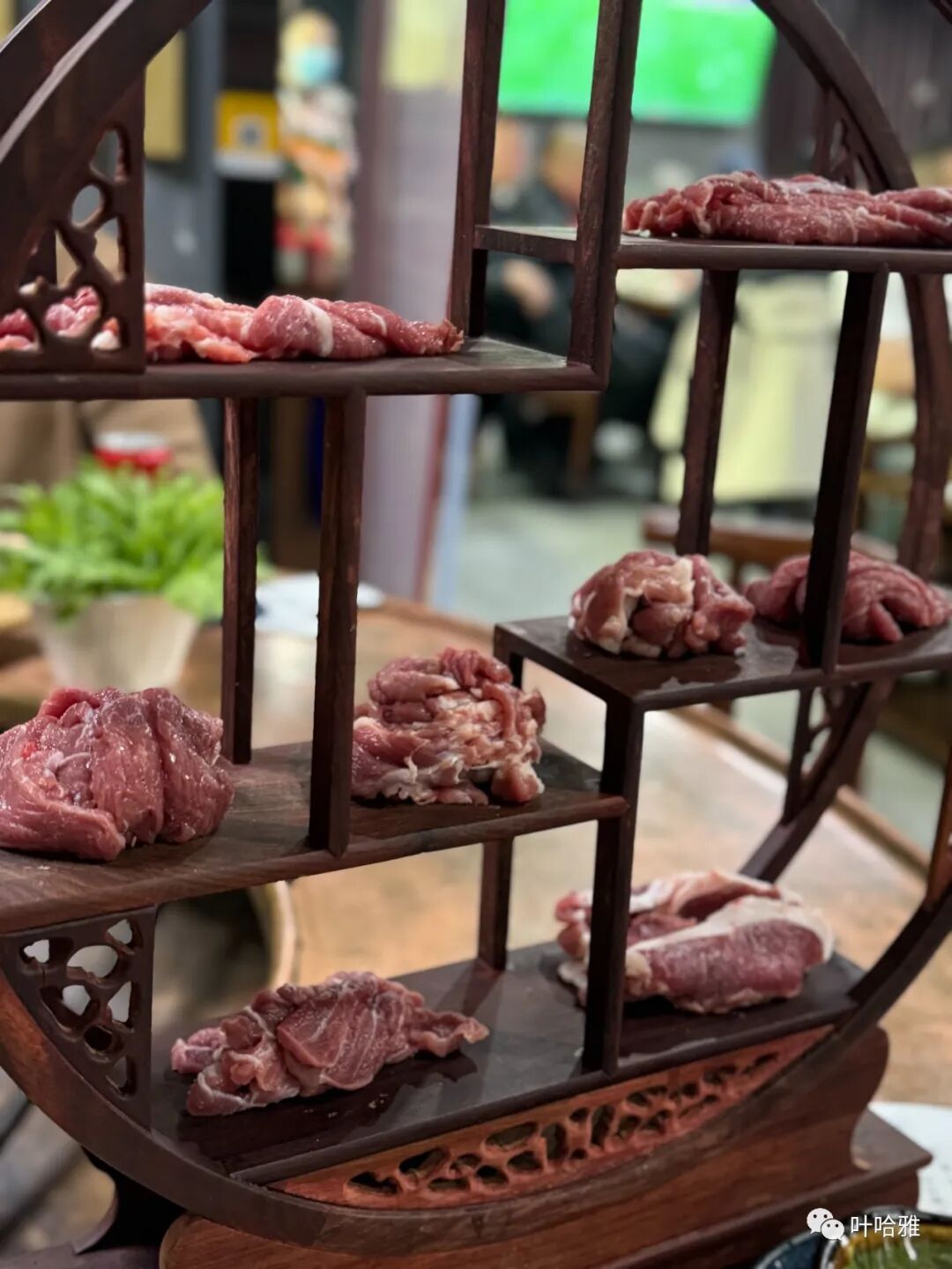
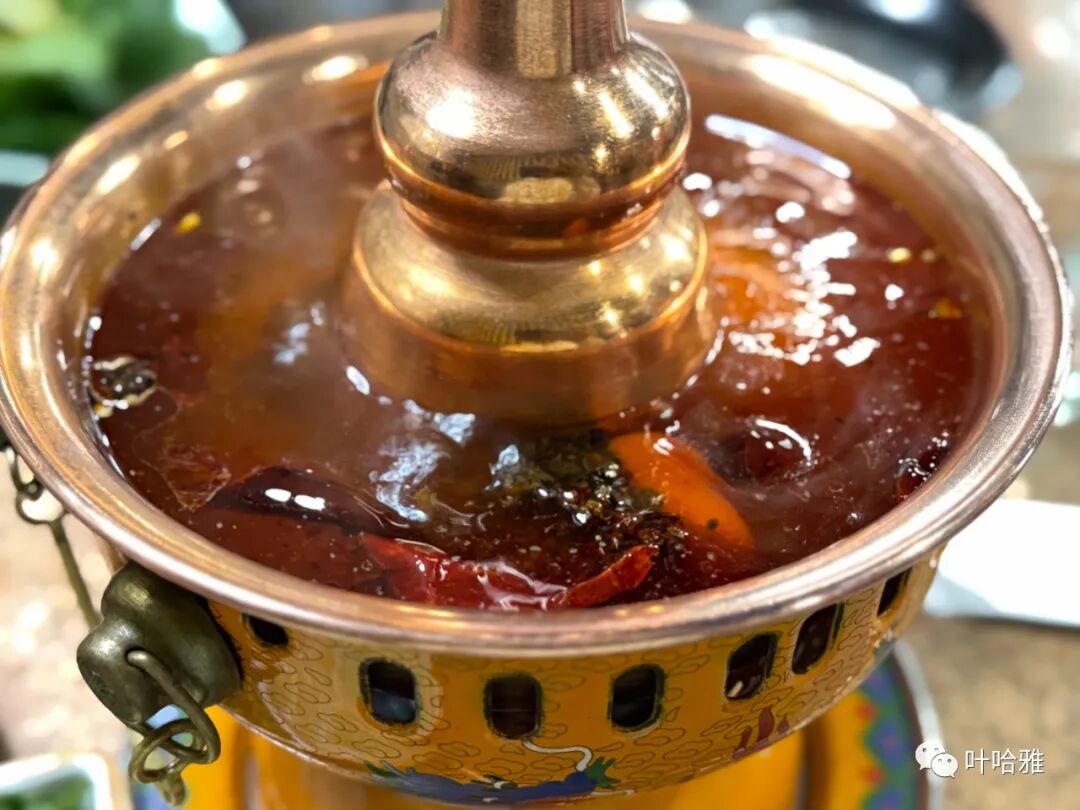
Overall, the place feels quite affordable. They have copper charcoal pots and individual small pots, costing about 100 per person.
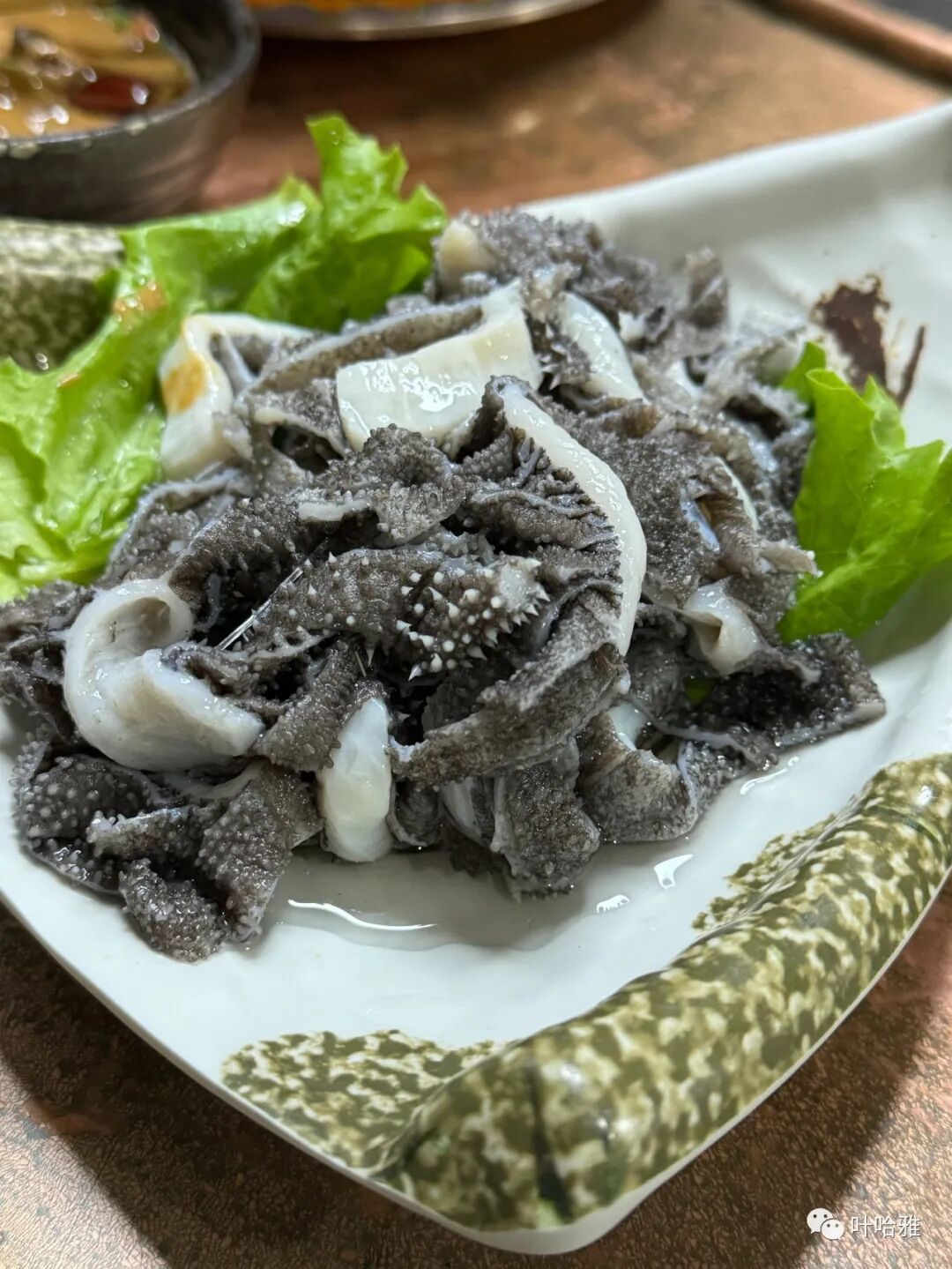
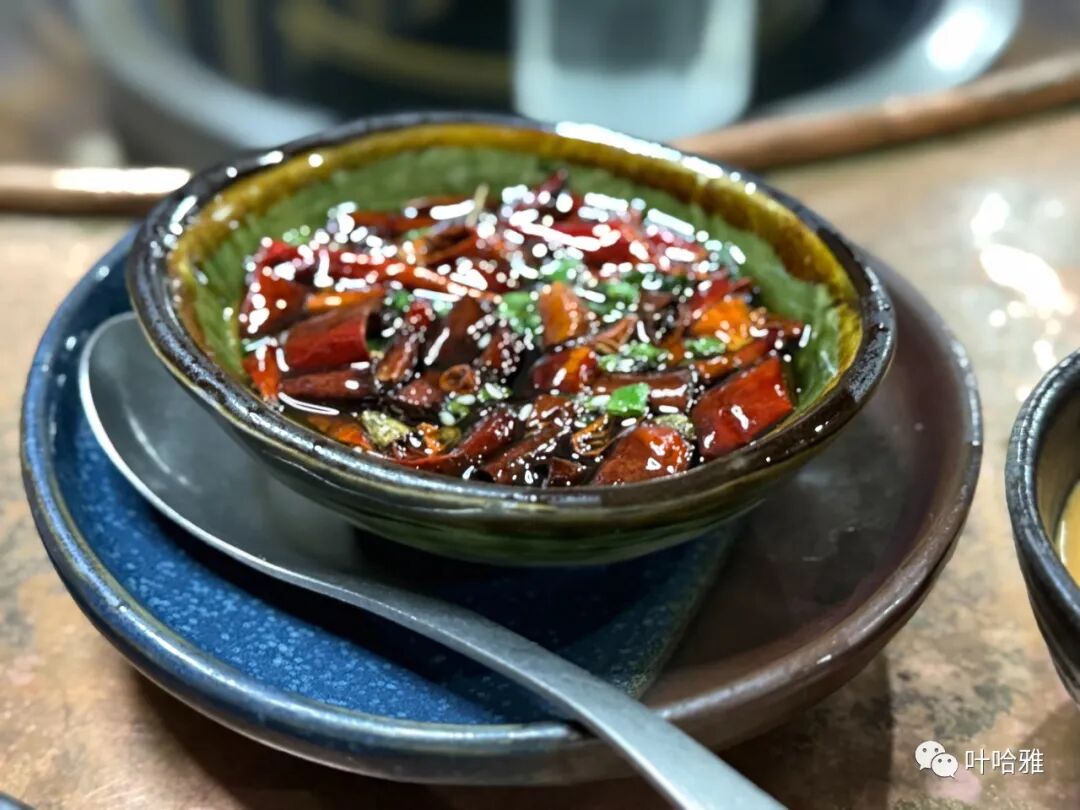
7. Xiangshui Sour Soup Hot Pot
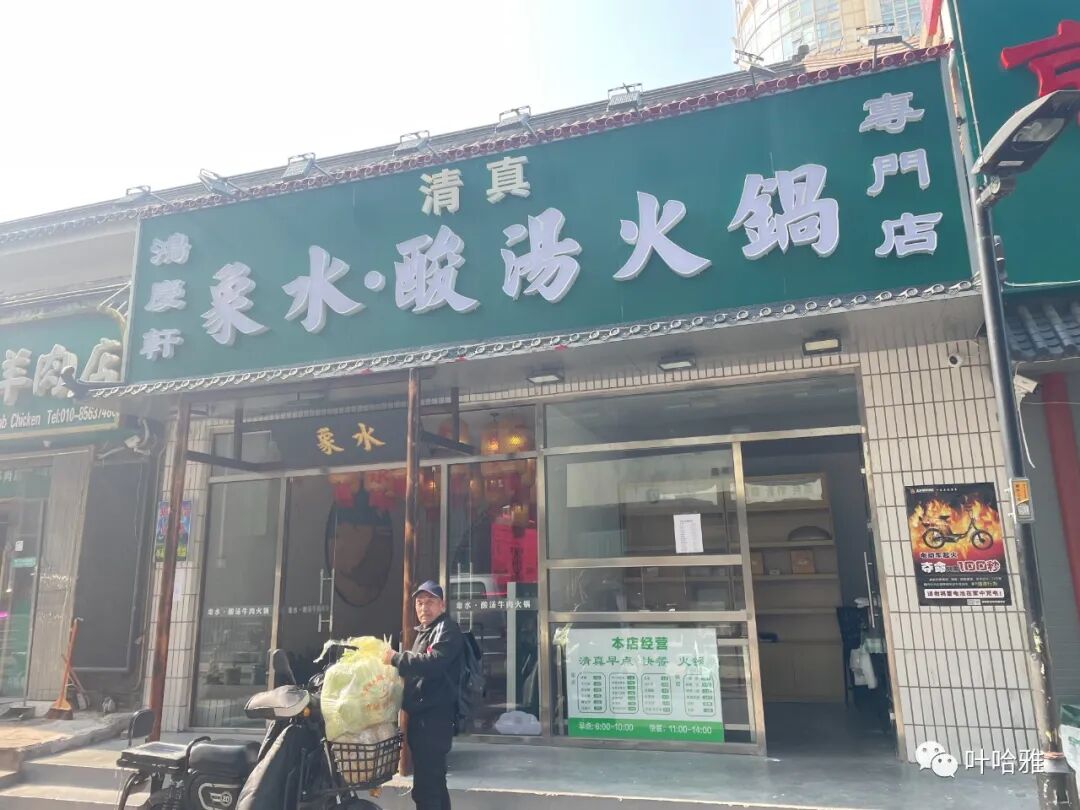
The sour soup hot pot restaurant at the entrance of Nanxiapo Mosque uses property owned by the mosque, so they do not sell alcohol.
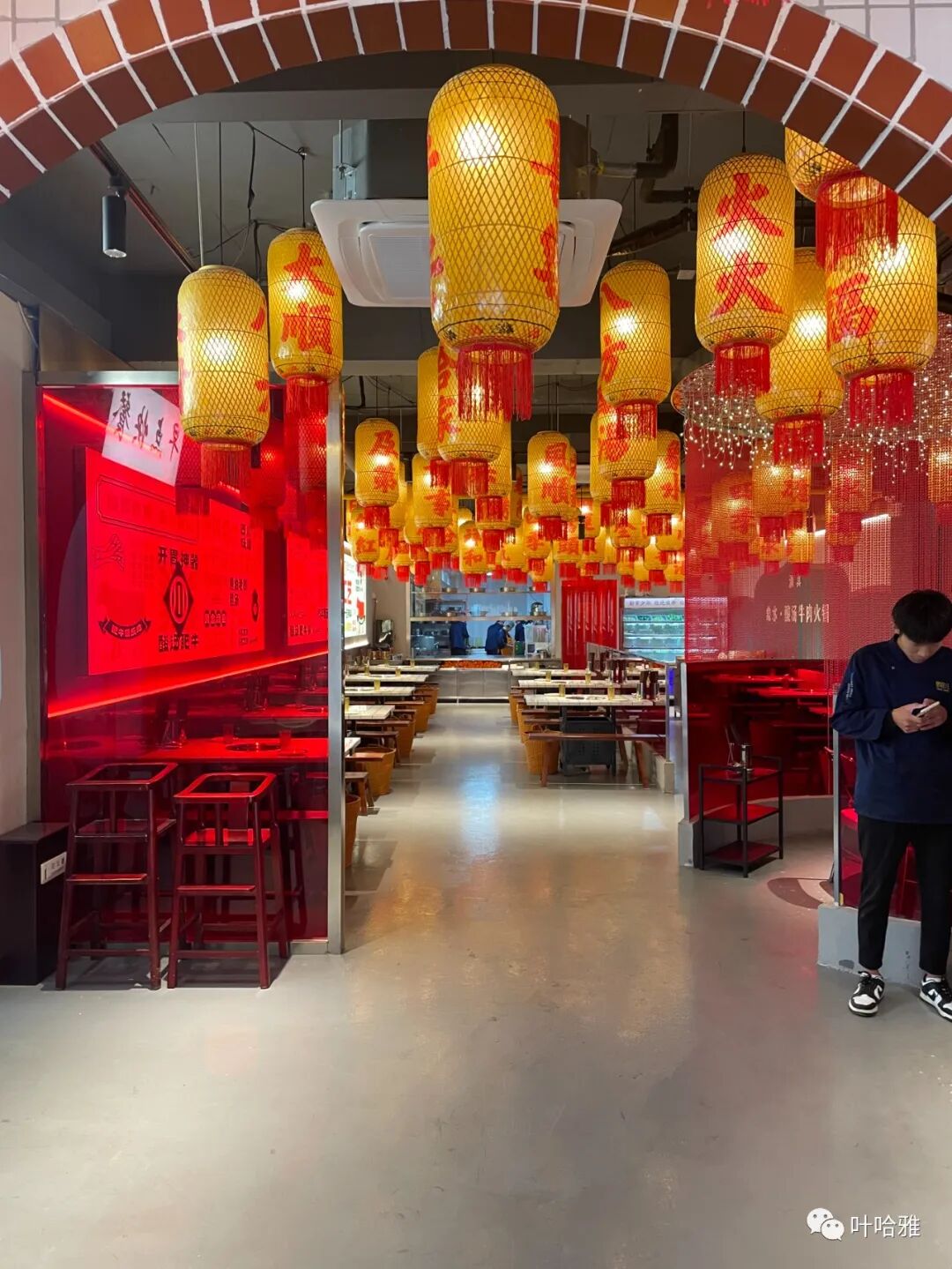
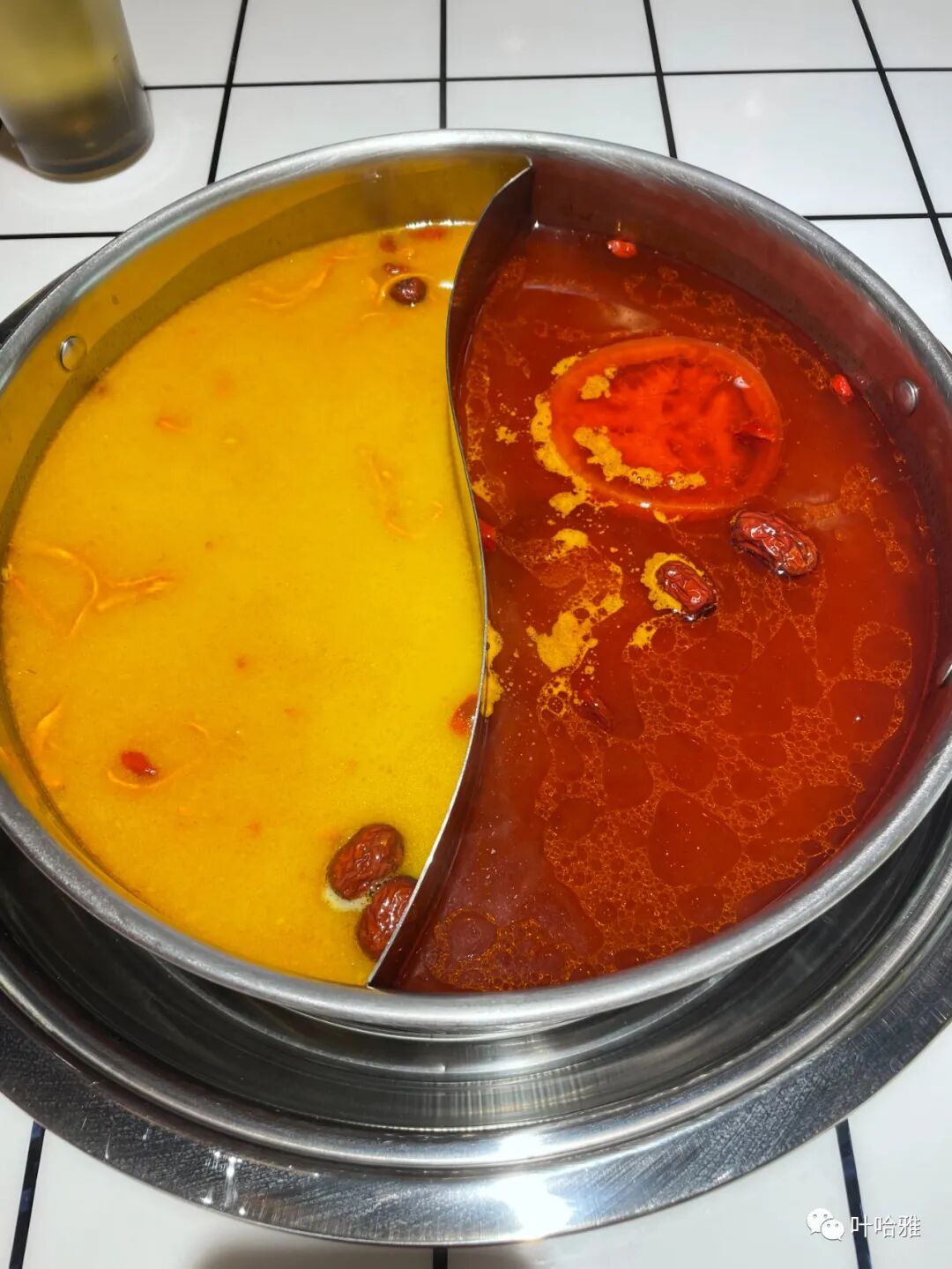
I recommend the yellow lantern chili and red tomato soup split pot, so you can try both flavors.
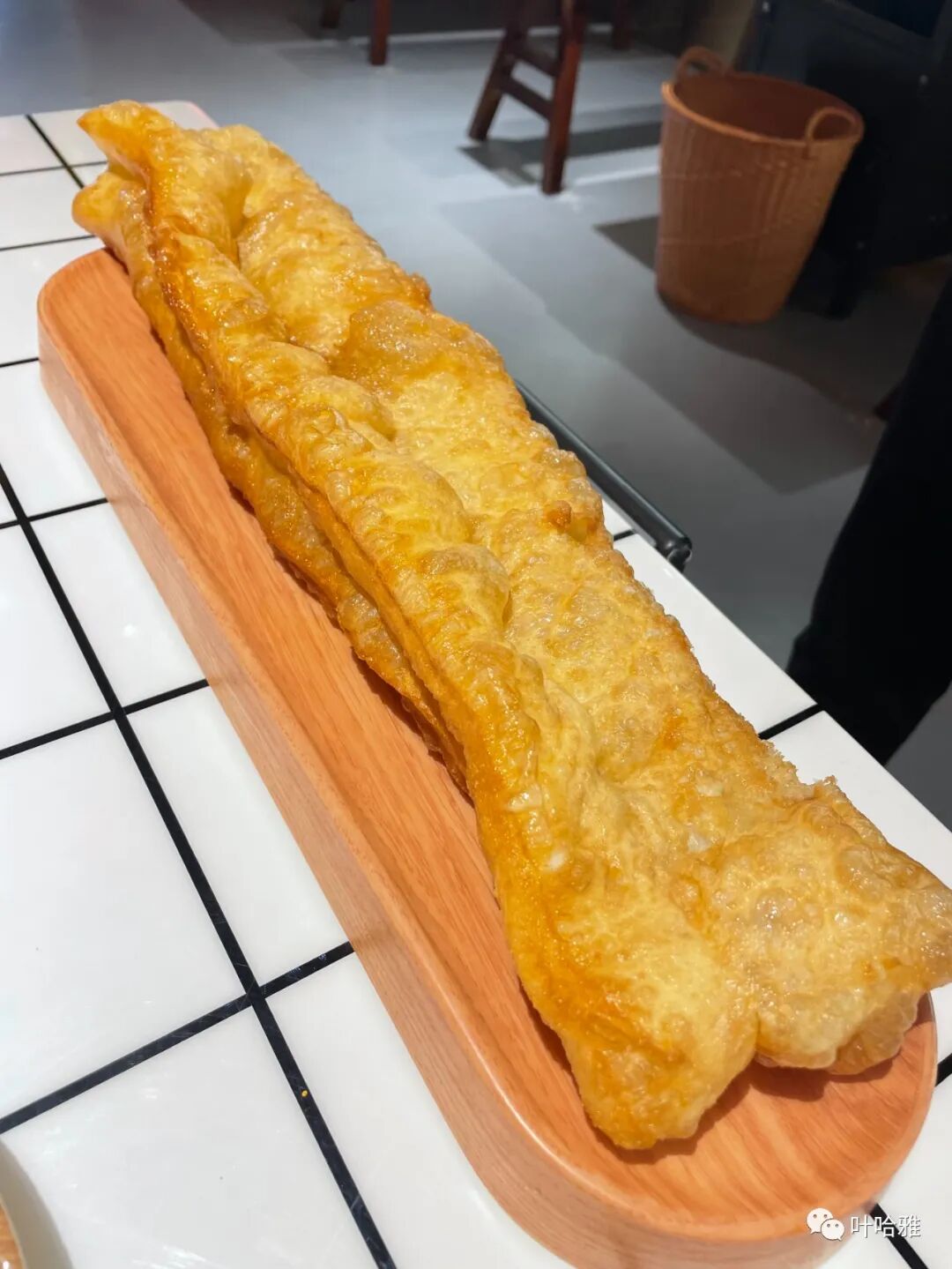
The signature Zhongjiang large fried dough sticks (youtiao) are delicious, especially when soaked in the soup.
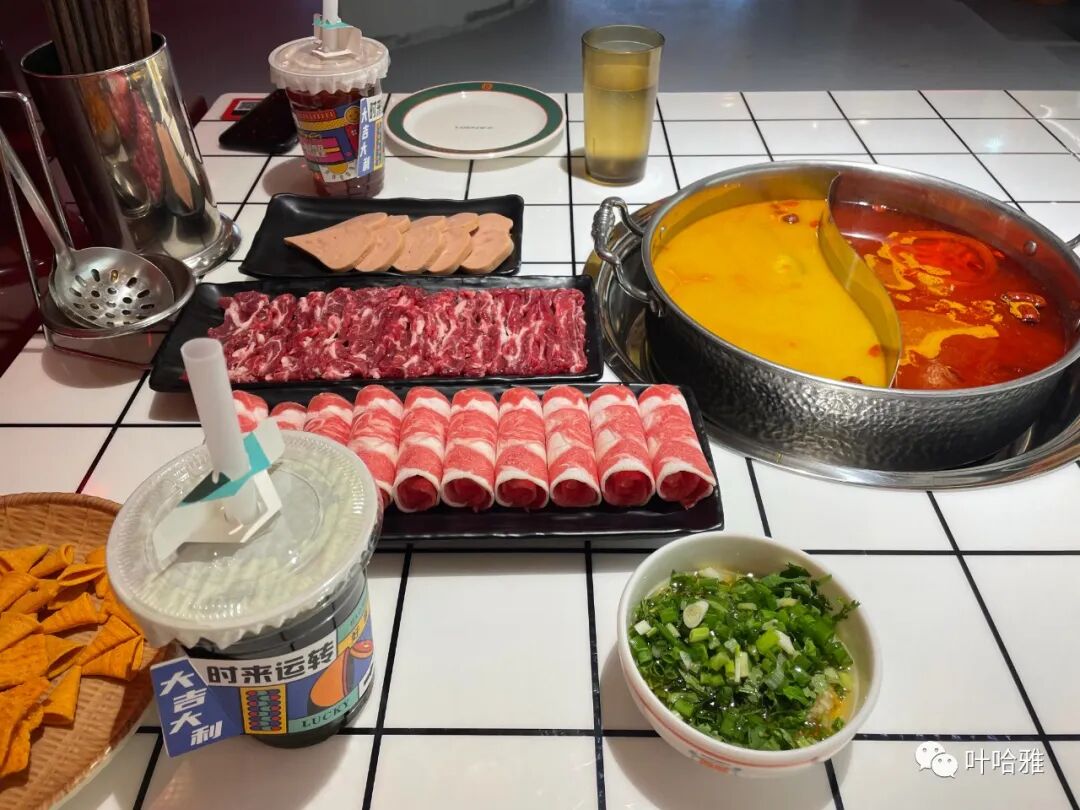
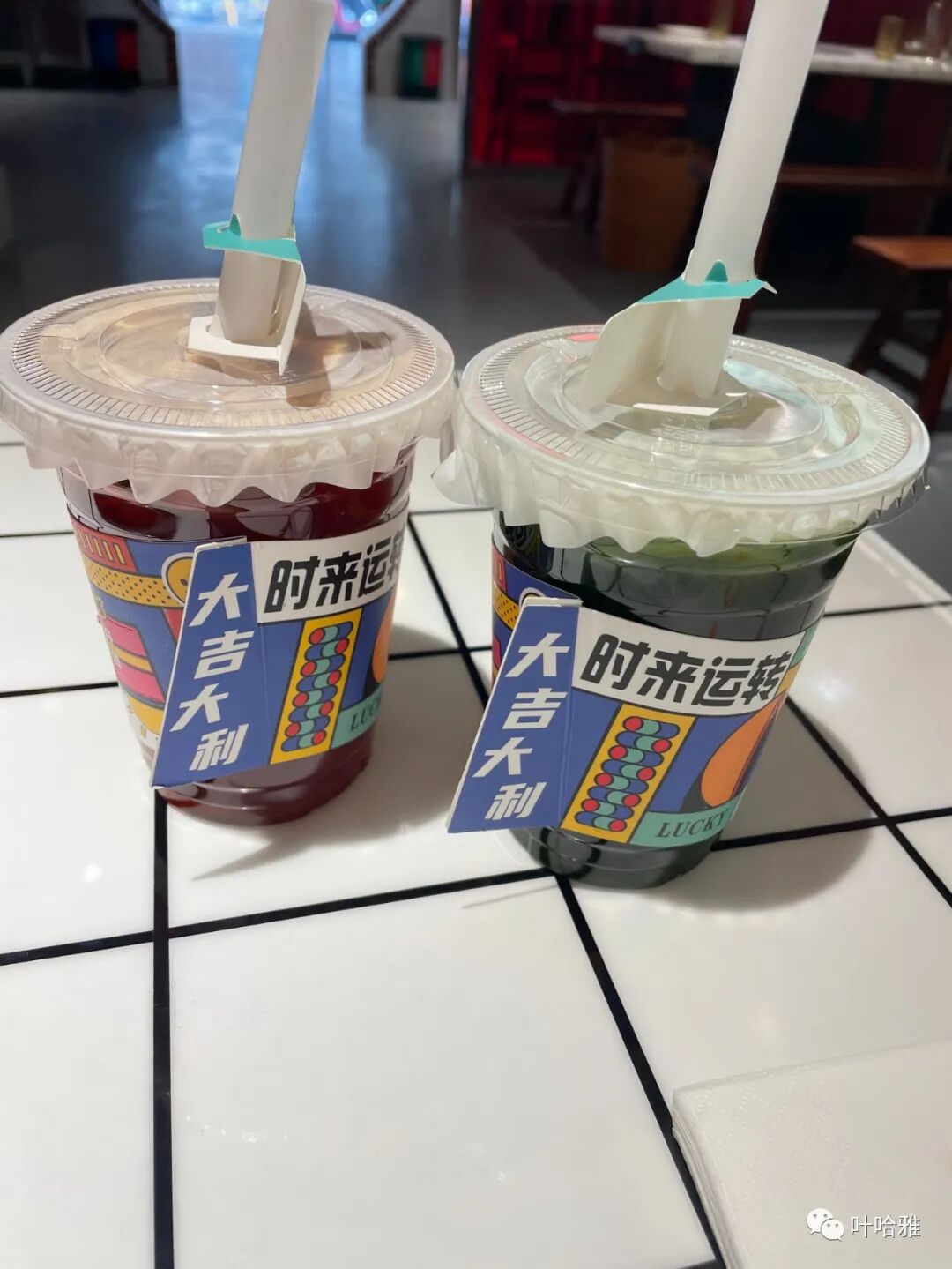
Their hand-crushed lemon black tea and green tea are both great, and they are better to drink than alcohol.
8. Lan 931
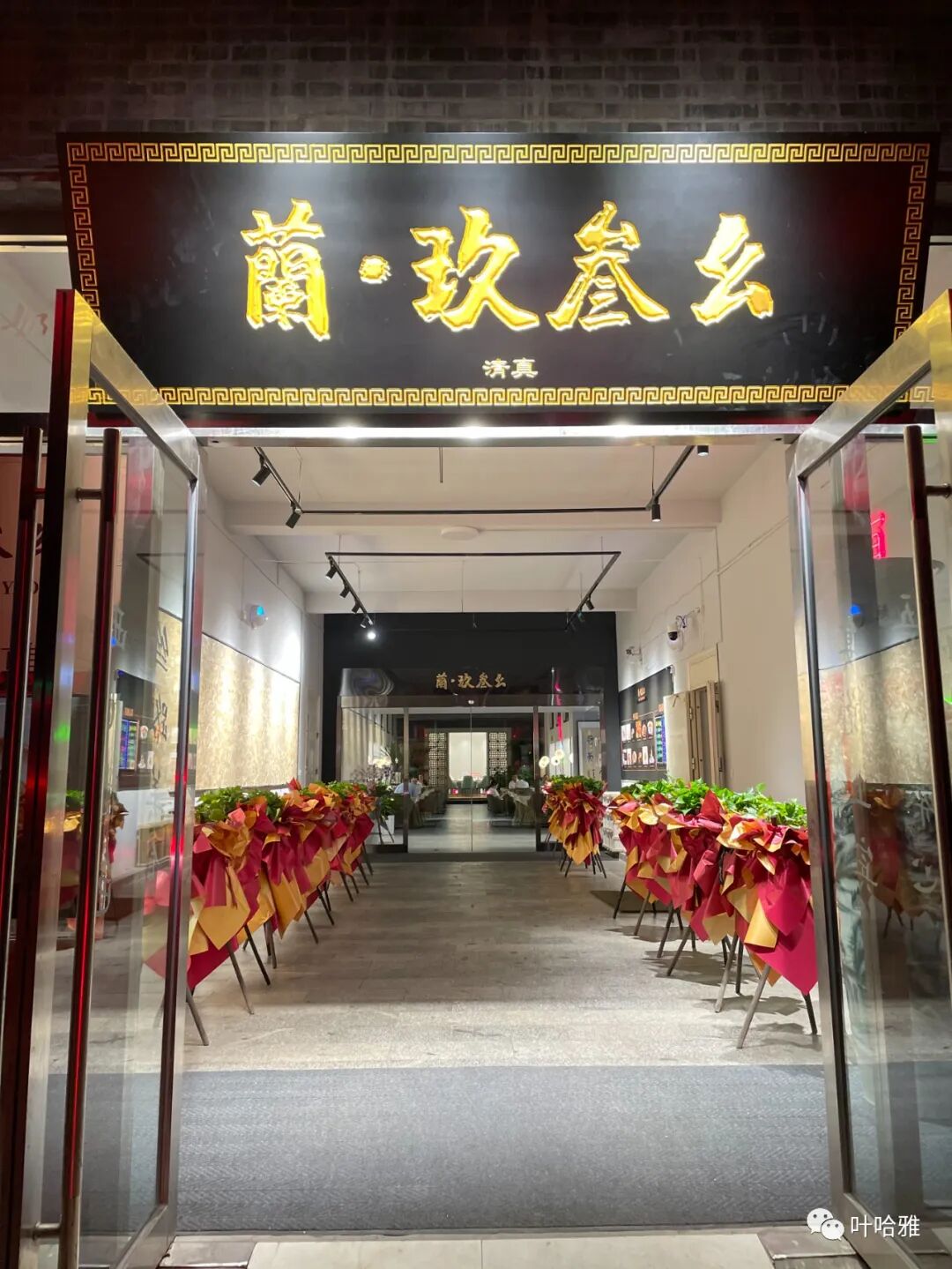
This is a high-end Lanzhou specialty restaurant located quite far away in the Tongzhou National Defense Art District.
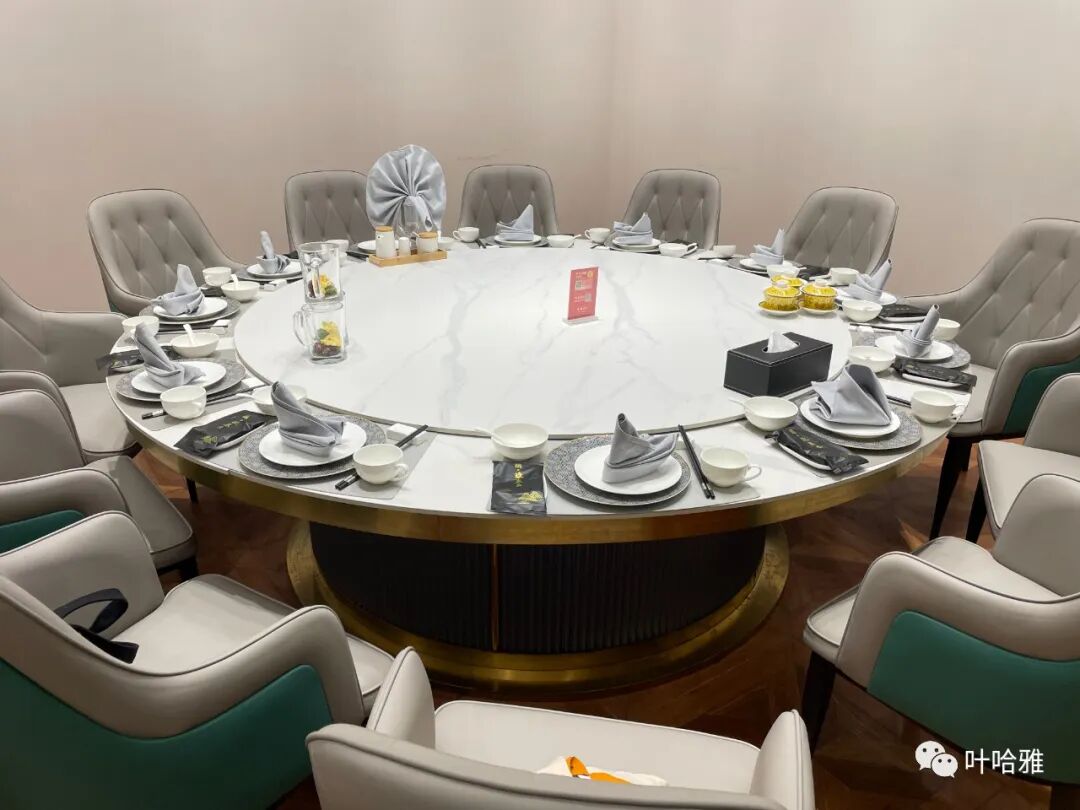
They have a full range of Lanzhou snacks and dishes, with an average cost of about 150 per person.
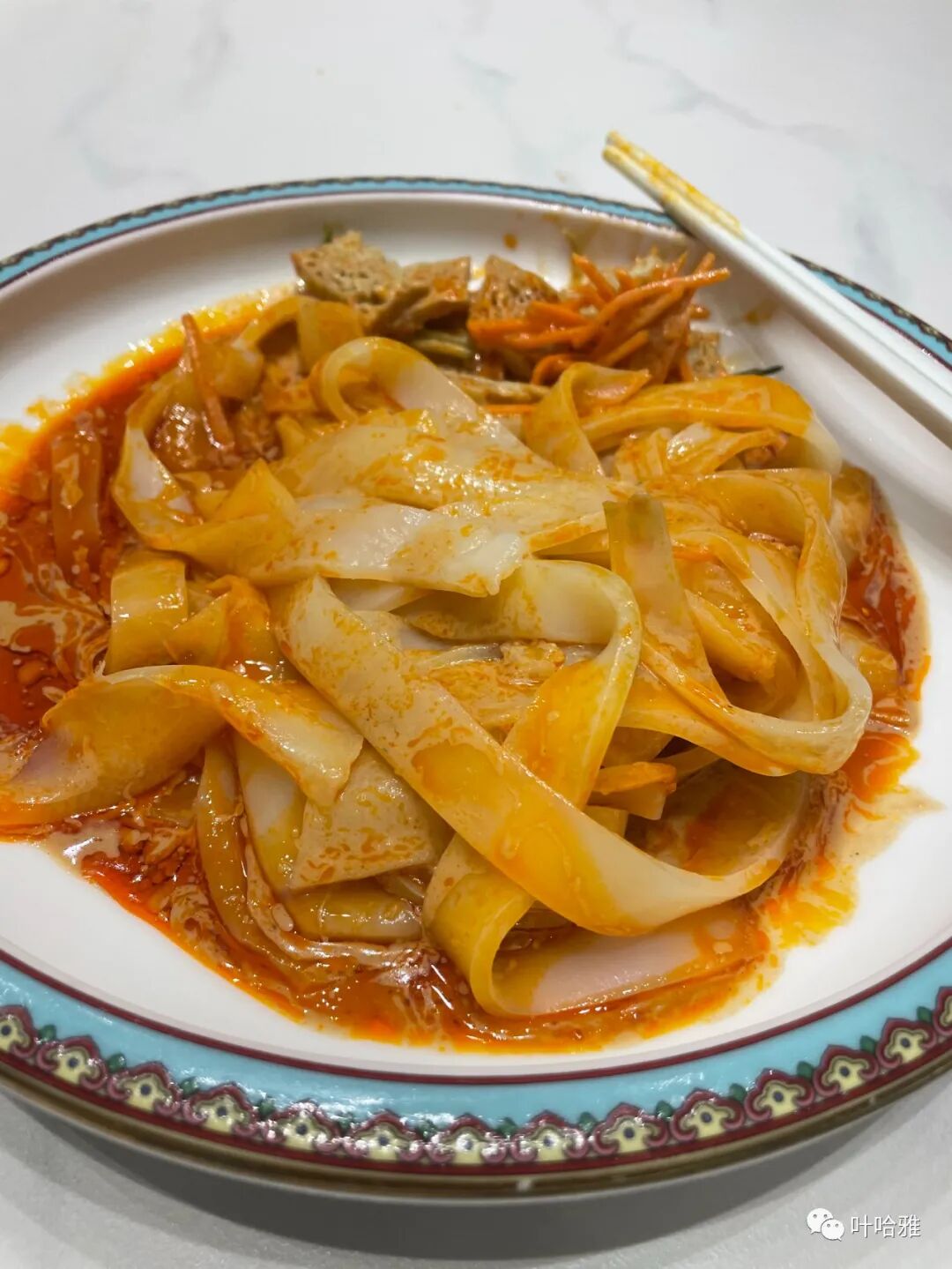
Cold starch noodles (niangpi)
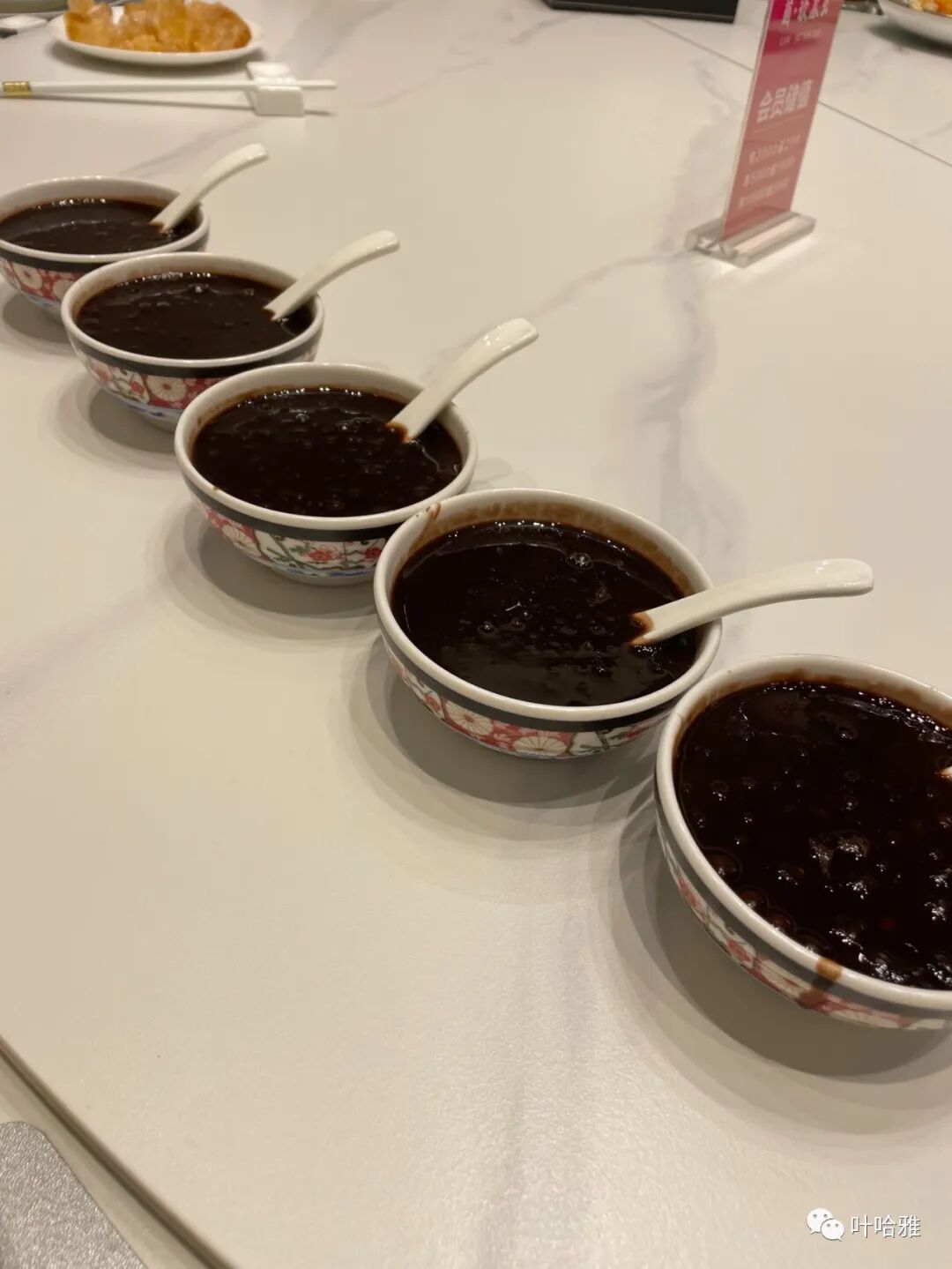
Sweet pea soup (huidouzi)
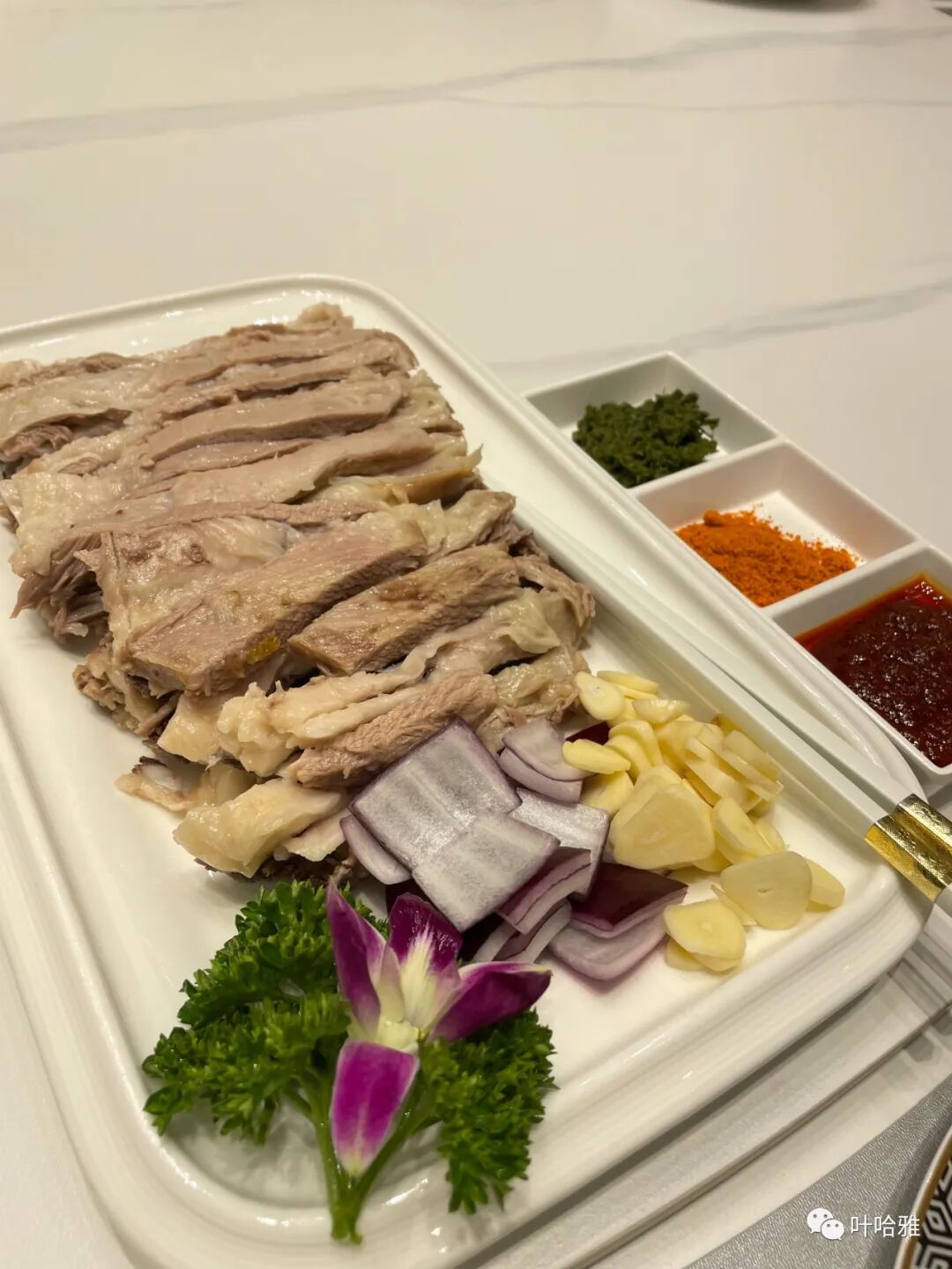
Hand-grabbed lamb (shouzhu)
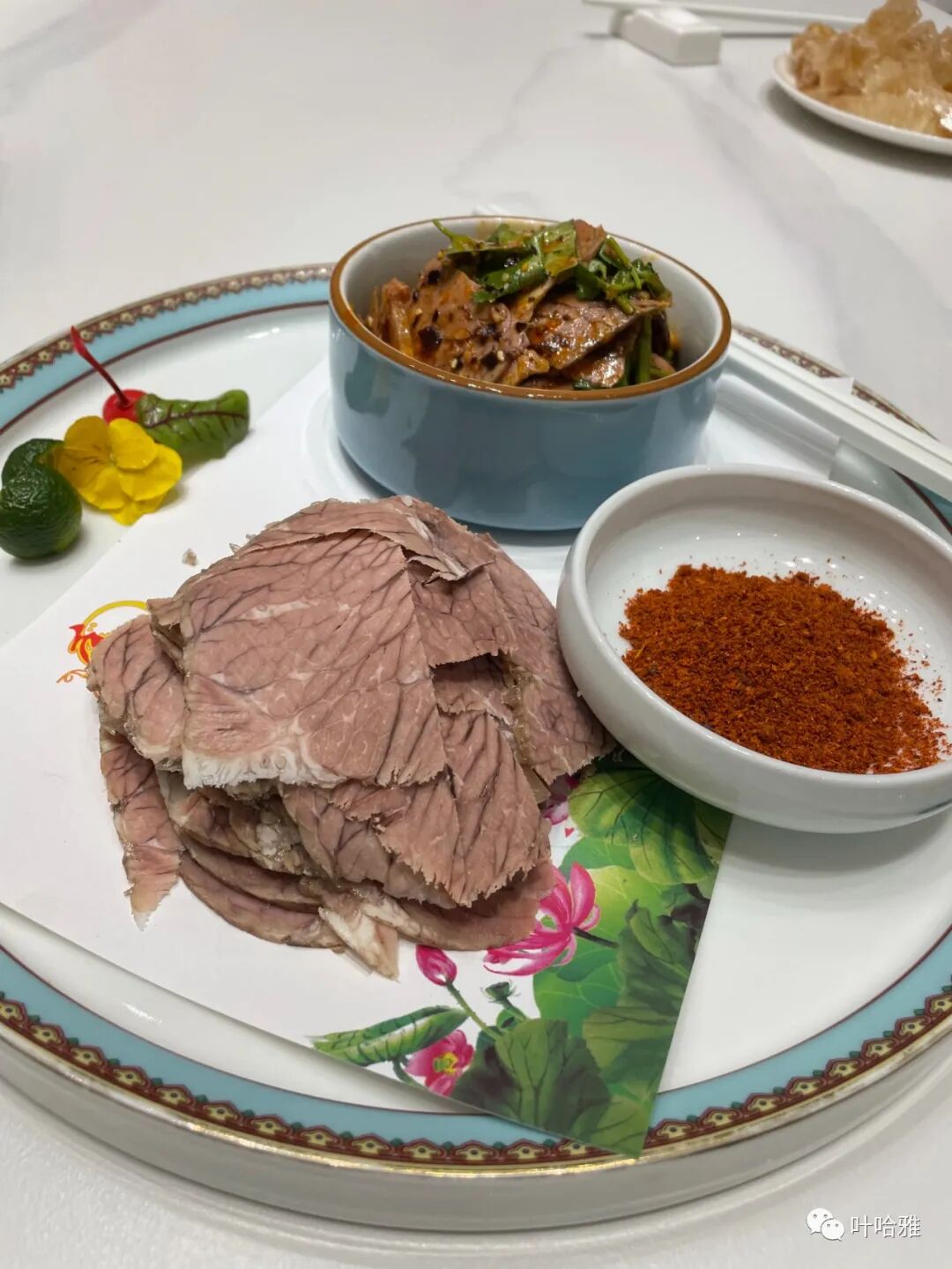
Cold sliced beef (niurou liangpian)
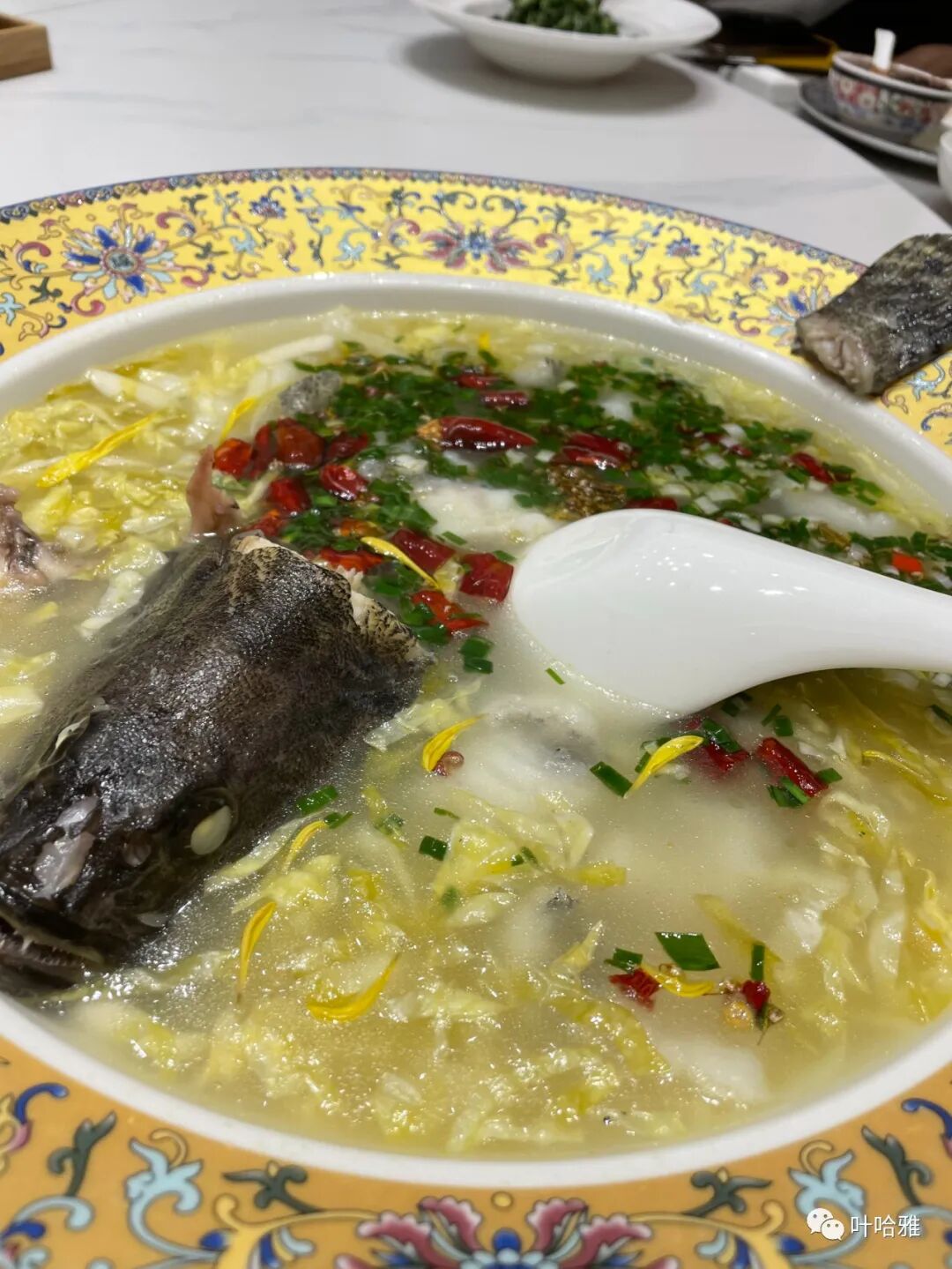
Fermented vegetable starch noodles (jiangshui yu)
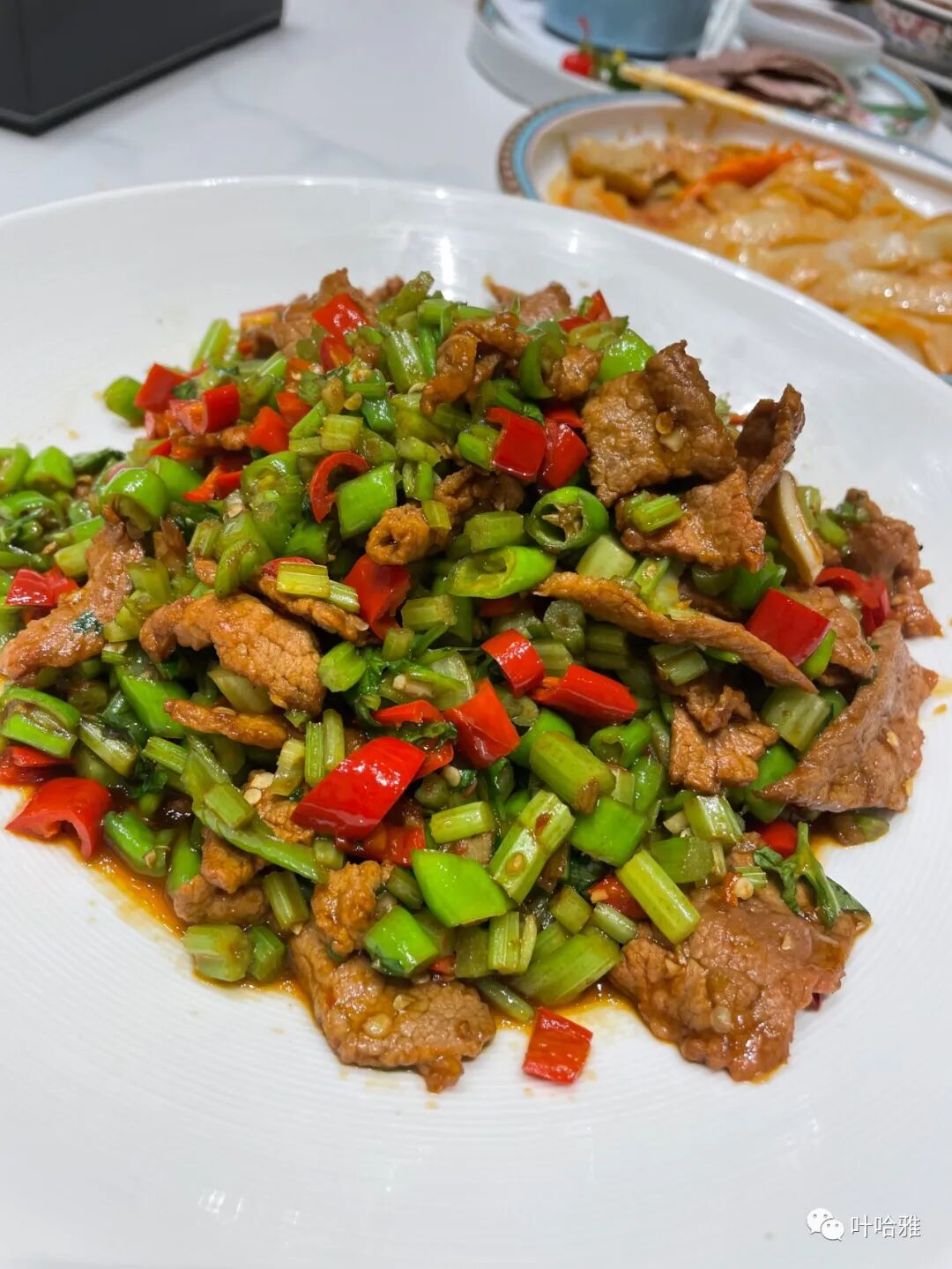
Stir-fried meat with chili (lazi chaorou)
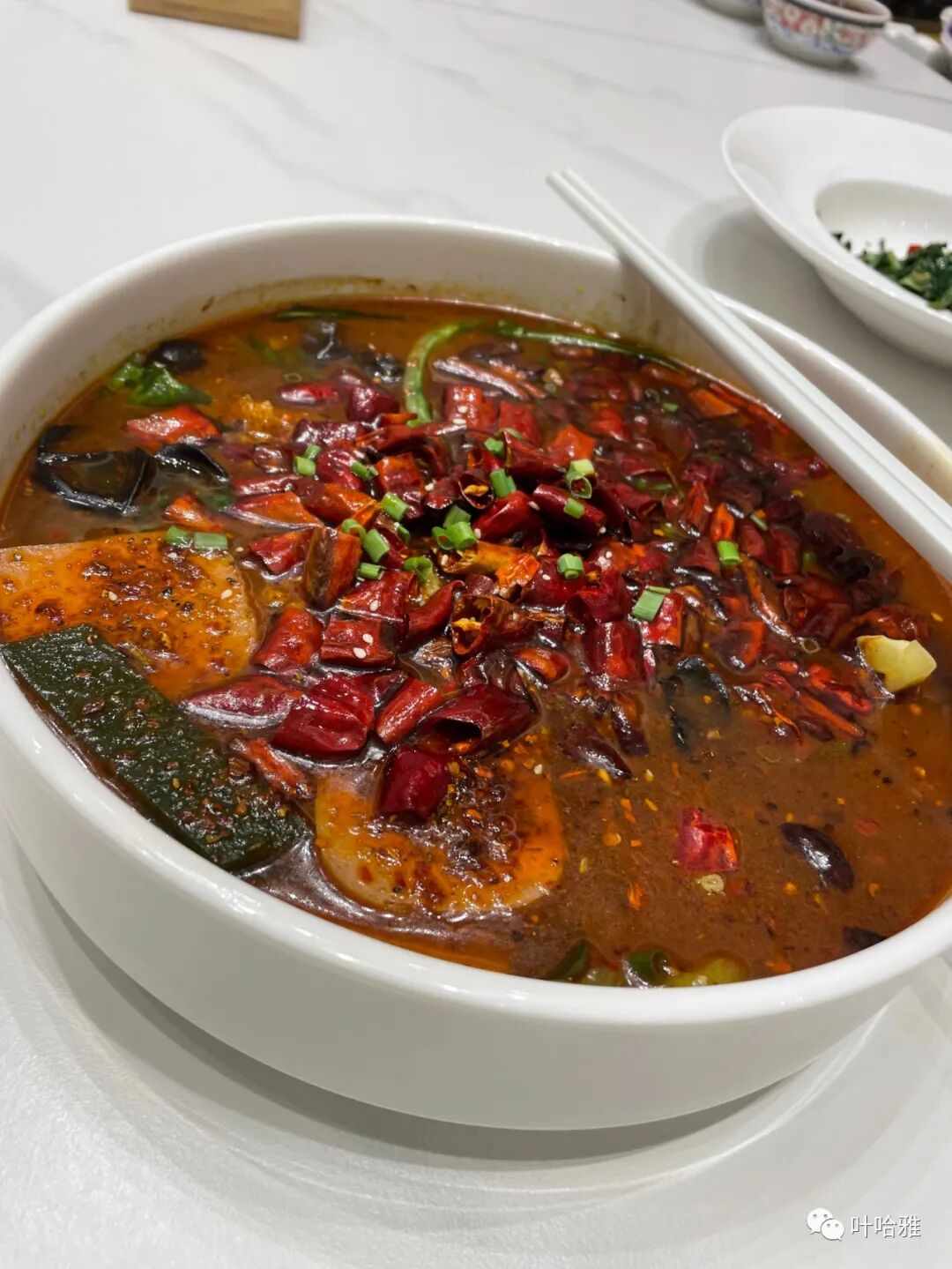
Spicy hot pot bowl (maocai)
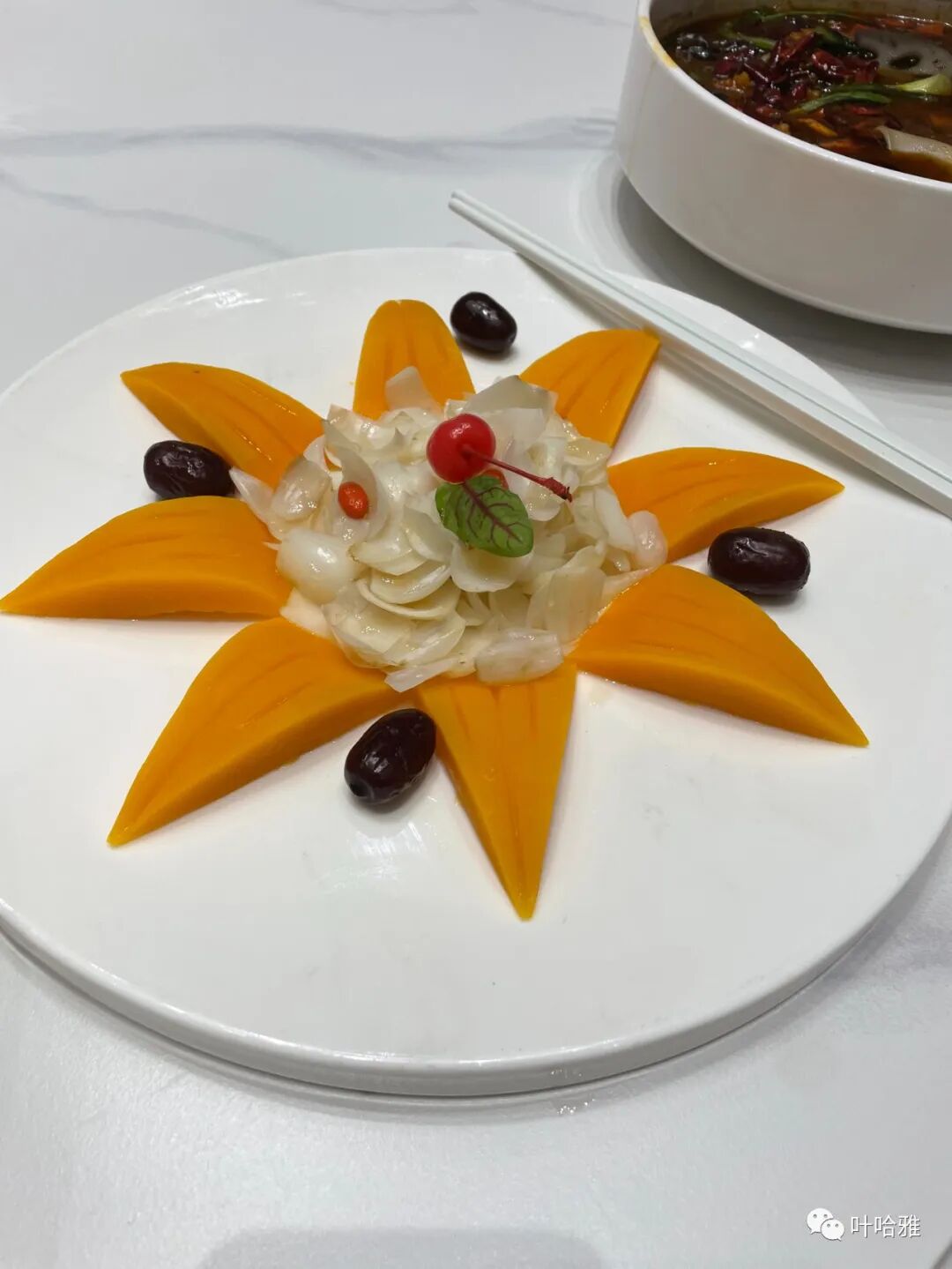
Lily bulb (baihe)
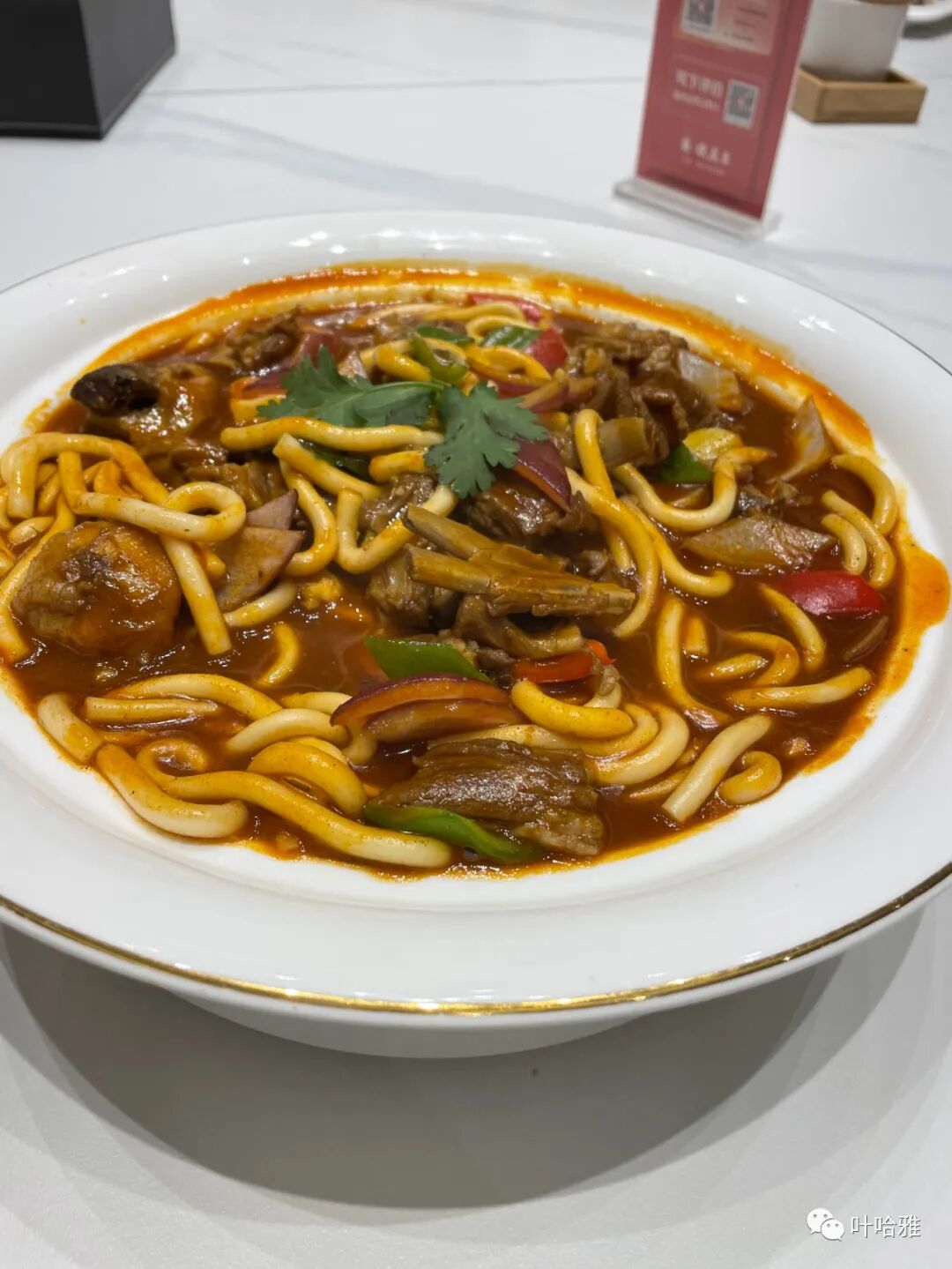
Jingyuan lamb (Jingyuan yanggaorou)
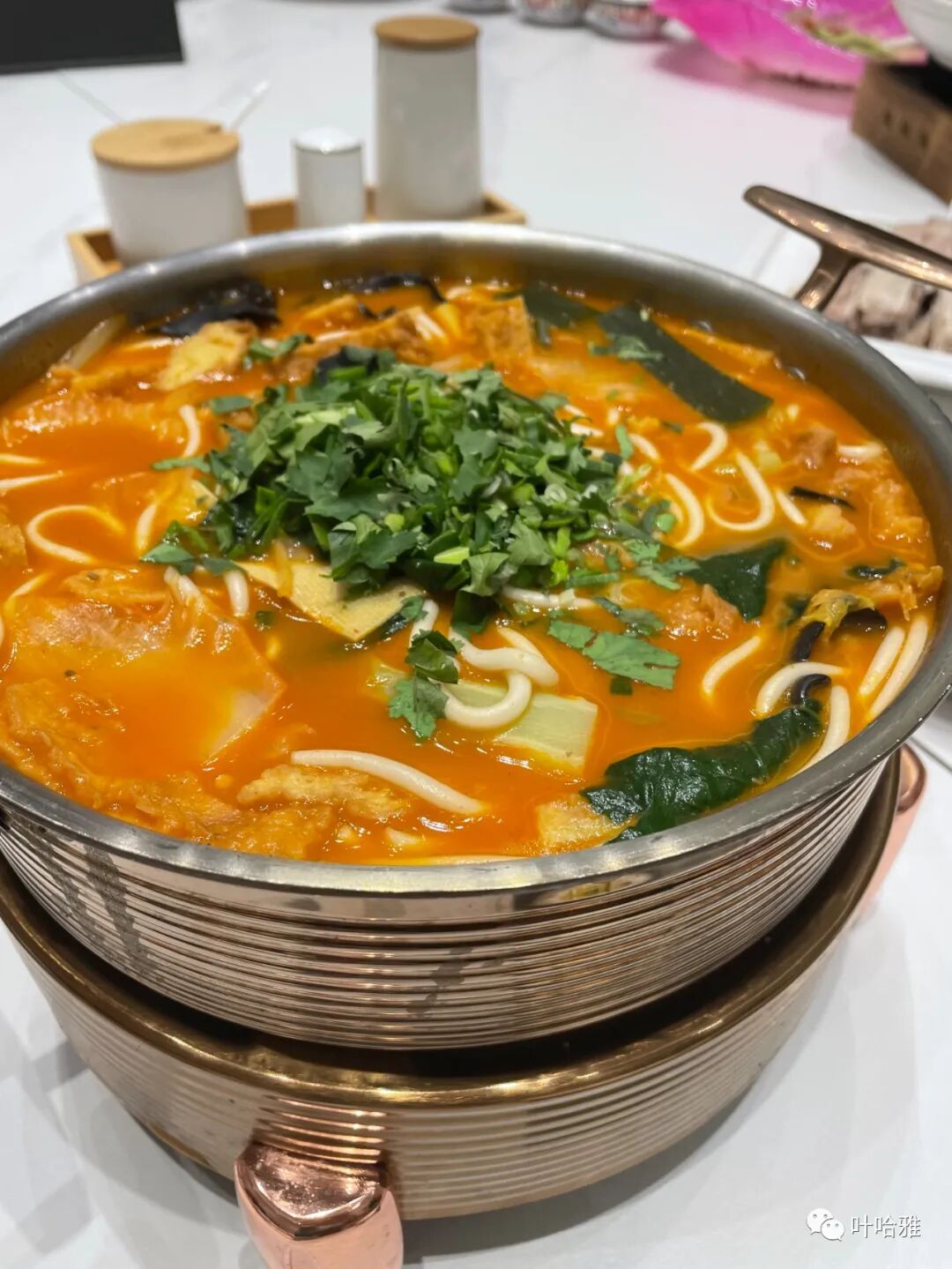
Traditional Lanzhou mixed vegetable stew (lao Lanzhou huicai)
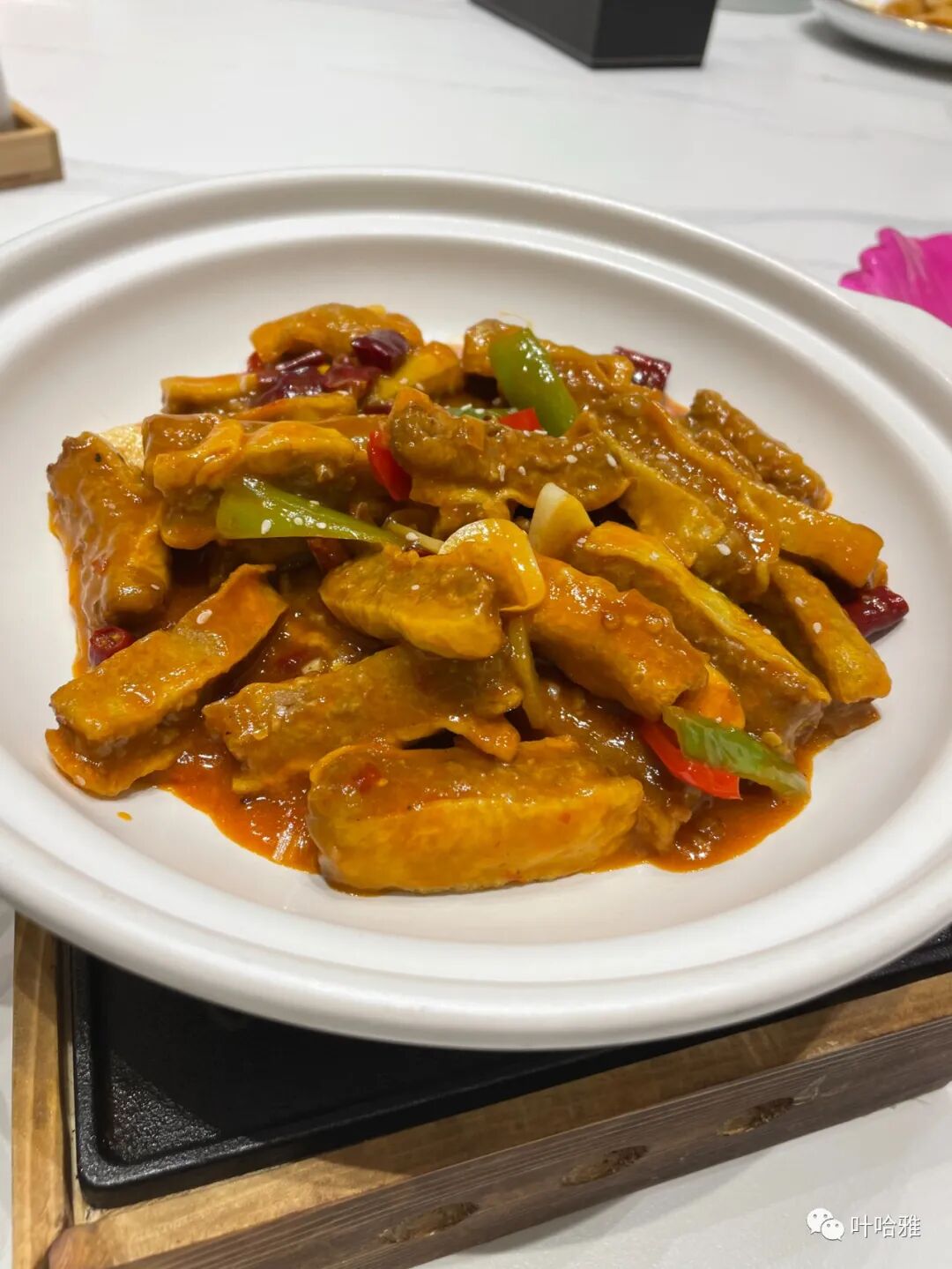
Hui Muslim meat-stuffed egg rolls (Hui min jiasha)
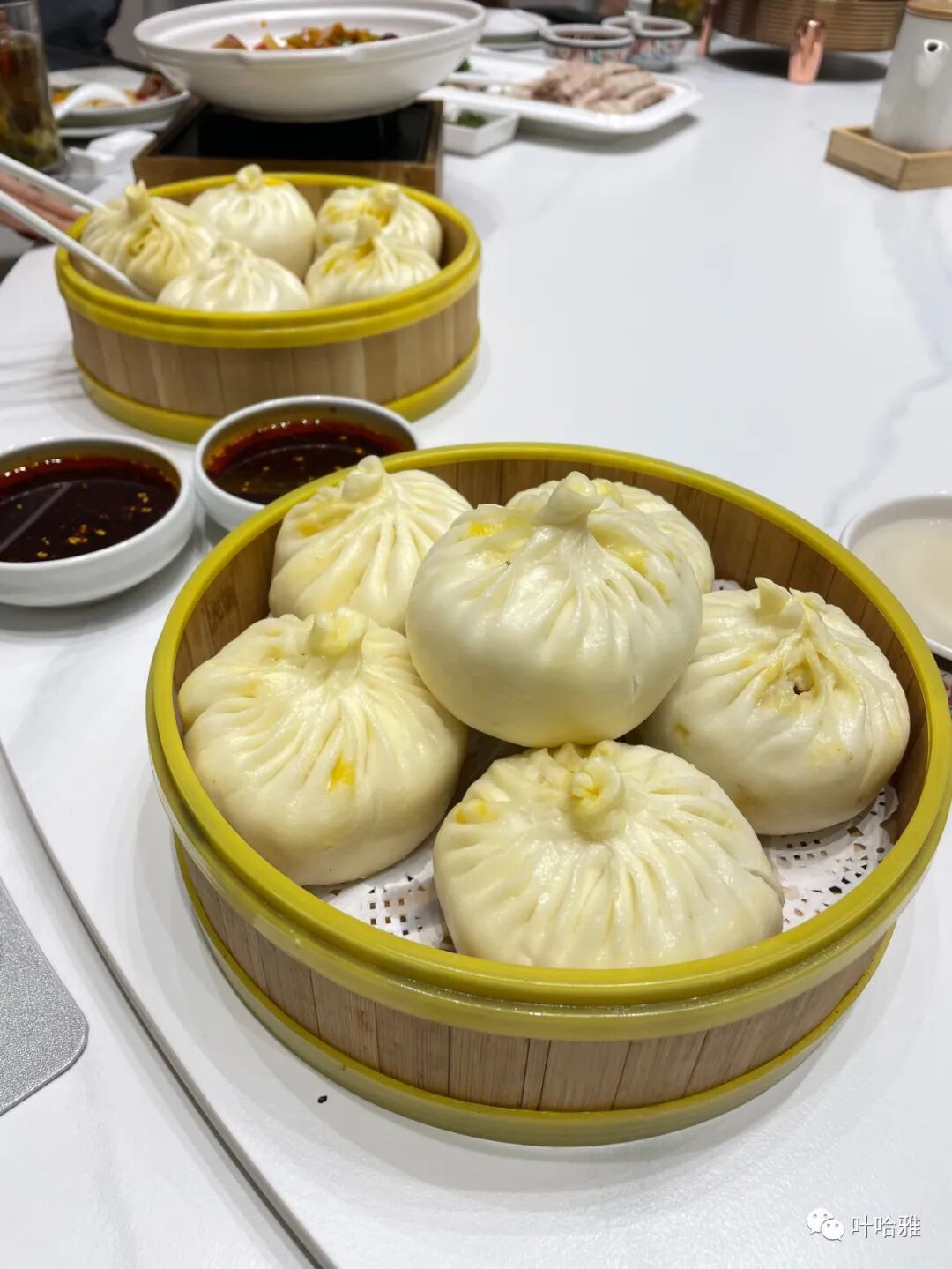
Hezhou steamed buns (Hezhou baozi)
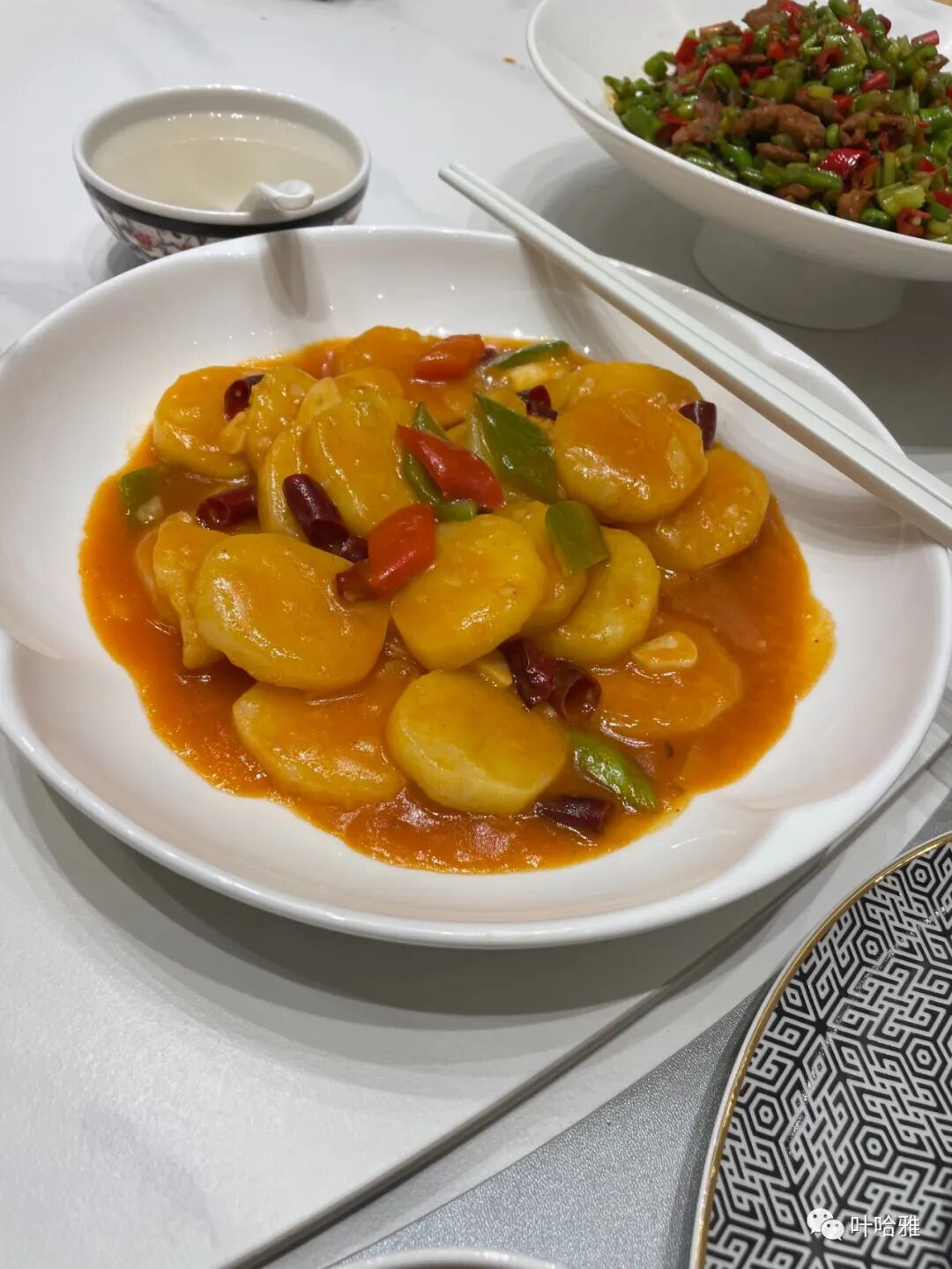
Dongxiang potato slices (Dongxiang tudoupian)
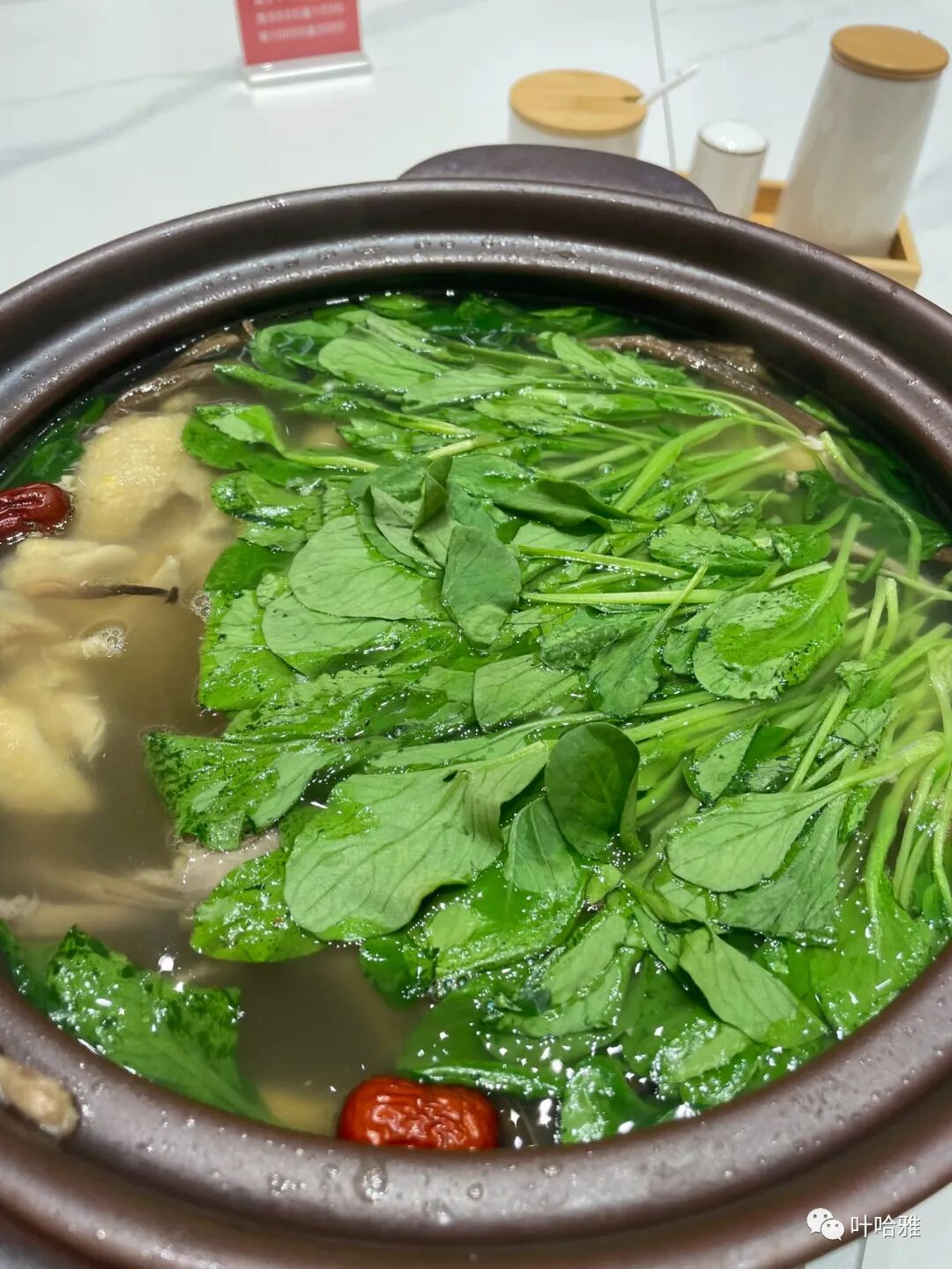
Lamb bone broth (yangtang)
Except for the beef noodles, we tried all the signature Lanzhou dishes at the restaurant. Overall, it was just average. Unless you are staying nearby, there is no need to travel far to eat here. For snacks, it is better to visit smaller shops for more authentic flavor.
China Mosque Travel Guide: Lanzhou Wuxingping Lingmingtang Gongbei, Halal Hyatt and Beef Noodles
Articles • yusuf908 posted the article • 0 comments • 160 views • 2026-05-22 21:12
Summary: This China mosque travel guide to Lanzhou covers Wuxingping Lingmingtang, one of China’s largest gongbei sites, Xinguan Mosque, halal Hyatt breakfast, Lanzhou beef noodles, hand-grabbed lamb, and local Muslim heritage.
A Halal Tour of Lanzhou: The Five-Star Terrace Spiritual Light Hall (Wuxingping Lingmingtang), the Largest Gongbei in China is presented here as a firsthand travel account in clear English, beginning with this scene: I wrote a map of halal food in Lanzhou in 2016. This is my fifth time in Lanzhou. The account keeps its focus on Qinghai Mosques, Chinese Muslims, Muslim Heritage while preserving the names, places, food, and historical details from the Chinese source.
I wrote a map of halal food in Lanzhou in 2016. This is my fifth time in Lanzhou. I flew the first four times, but this time I drove. It is about 1,400 kilometers from Beijing to Lanzhou, and the first city I stopped in after entering Gansu was Baiyin.
On the way, I took a highway called Wuma. It is named after the Wuhai to Maqin expressway, but it happens to sound like the Arabic word for nation.
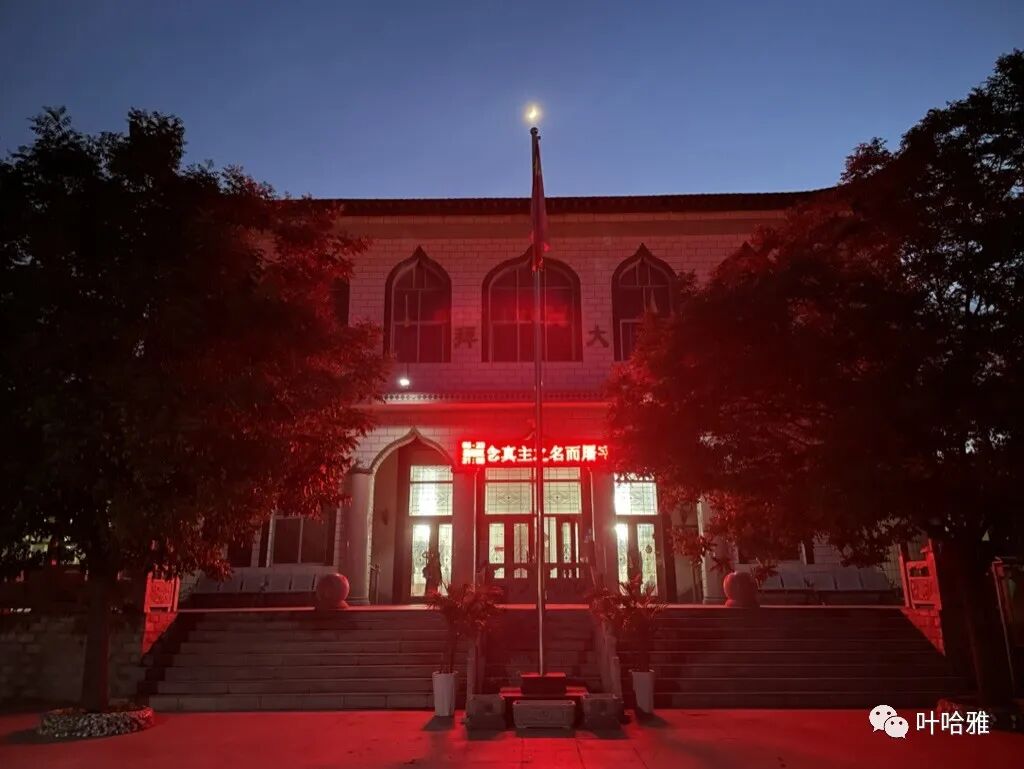
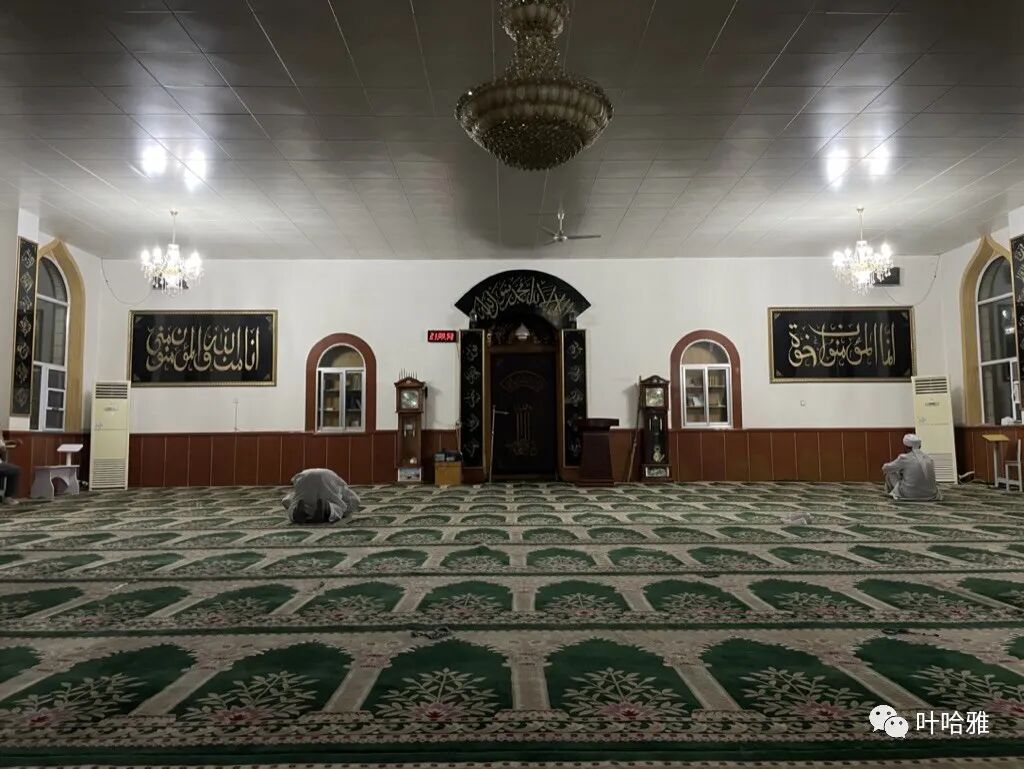
After praying Maghrib (shamu) at the Great Mosque of Baiyin, I walked around the city looking for food, but I found there were not many choices.
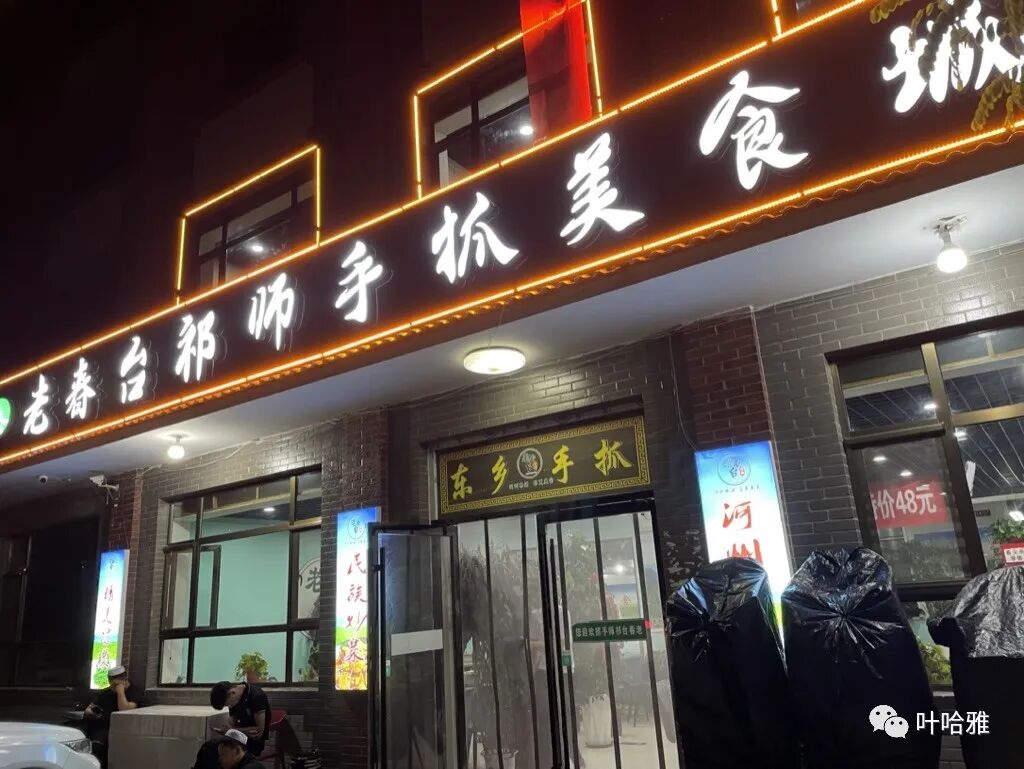
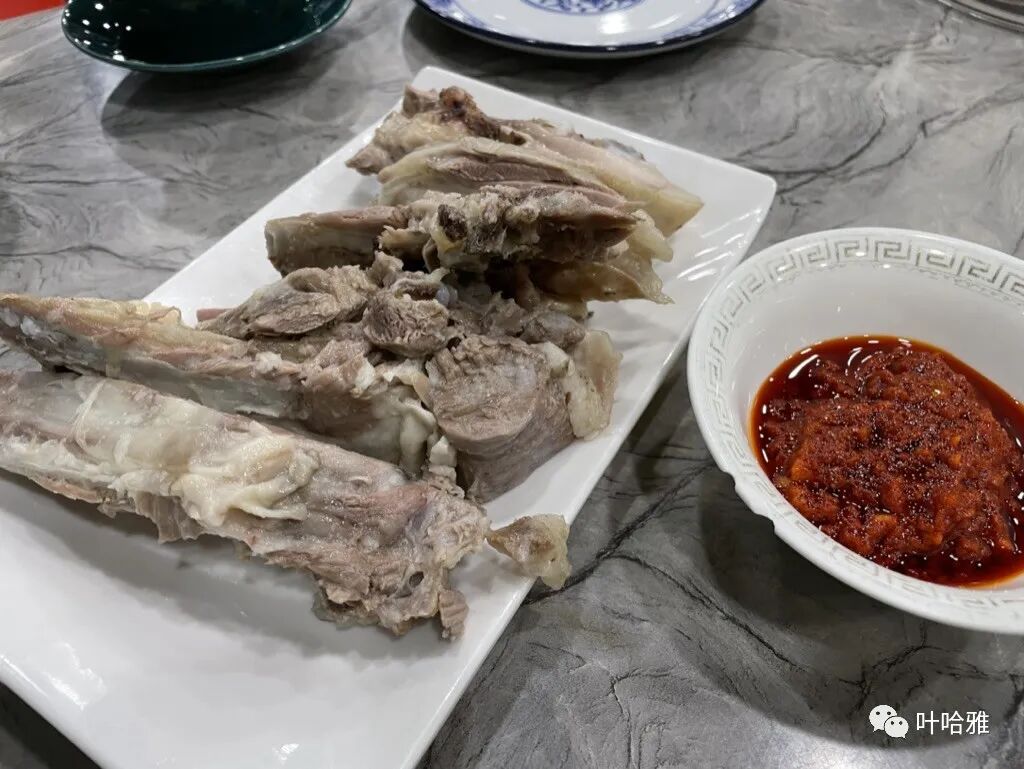
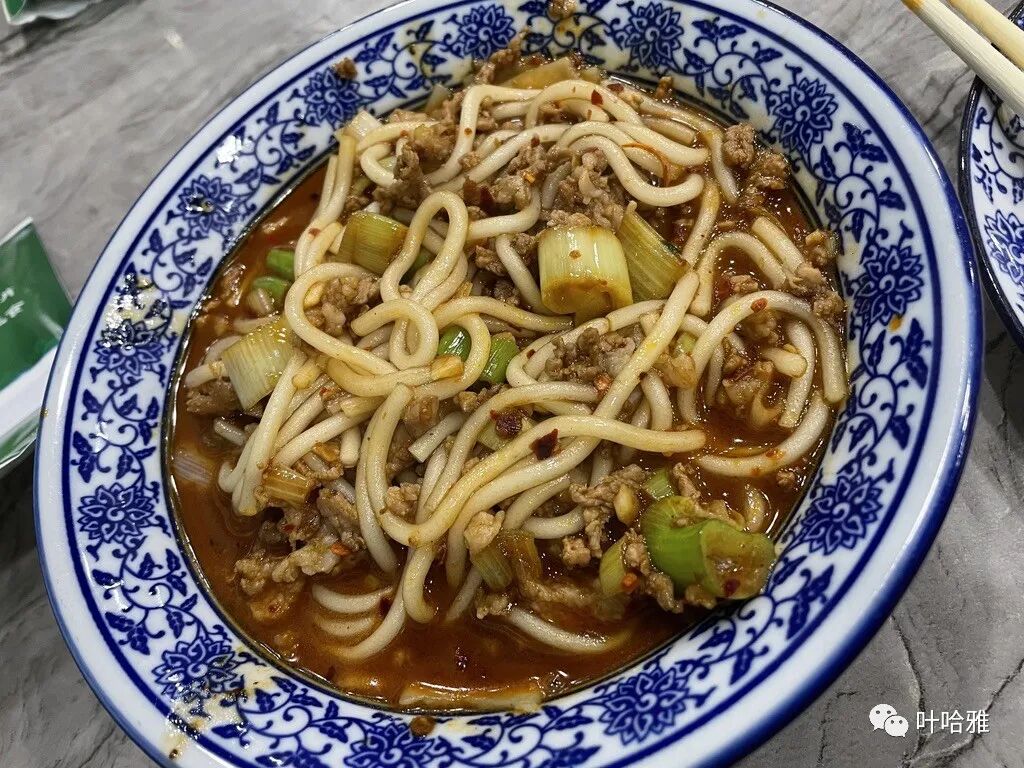
I found this Chuntai Hand-Grabbed Meat Restaurant (Chuntai Shouzhua Meishicheng). Chuntai is a township in Dongxiang, Linxia, and it is famous for its delicious hand-grabbed lamb.
The food was really good. Both the hand-grabbed lamb and the firecracker noodles (paozhuang mian) were delicious.
I stayed in Baiyin for one night and walked around, but I did not find any places worth remembering.
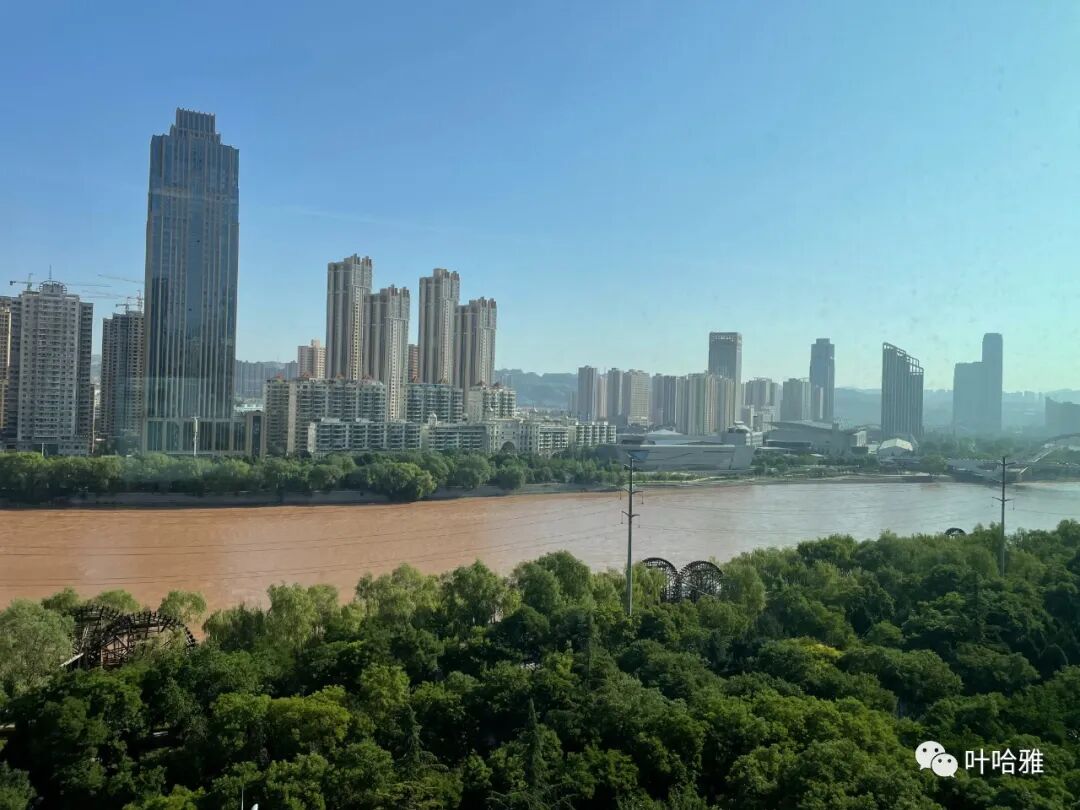
When I saw the Yellow River Bridge, I knew I had arrived in Lanzhou. This time I stayed at the Hyatt Regency. I chose it because it is a halal Hyatt, which is rare in China. The owner is a Dongxiang person.
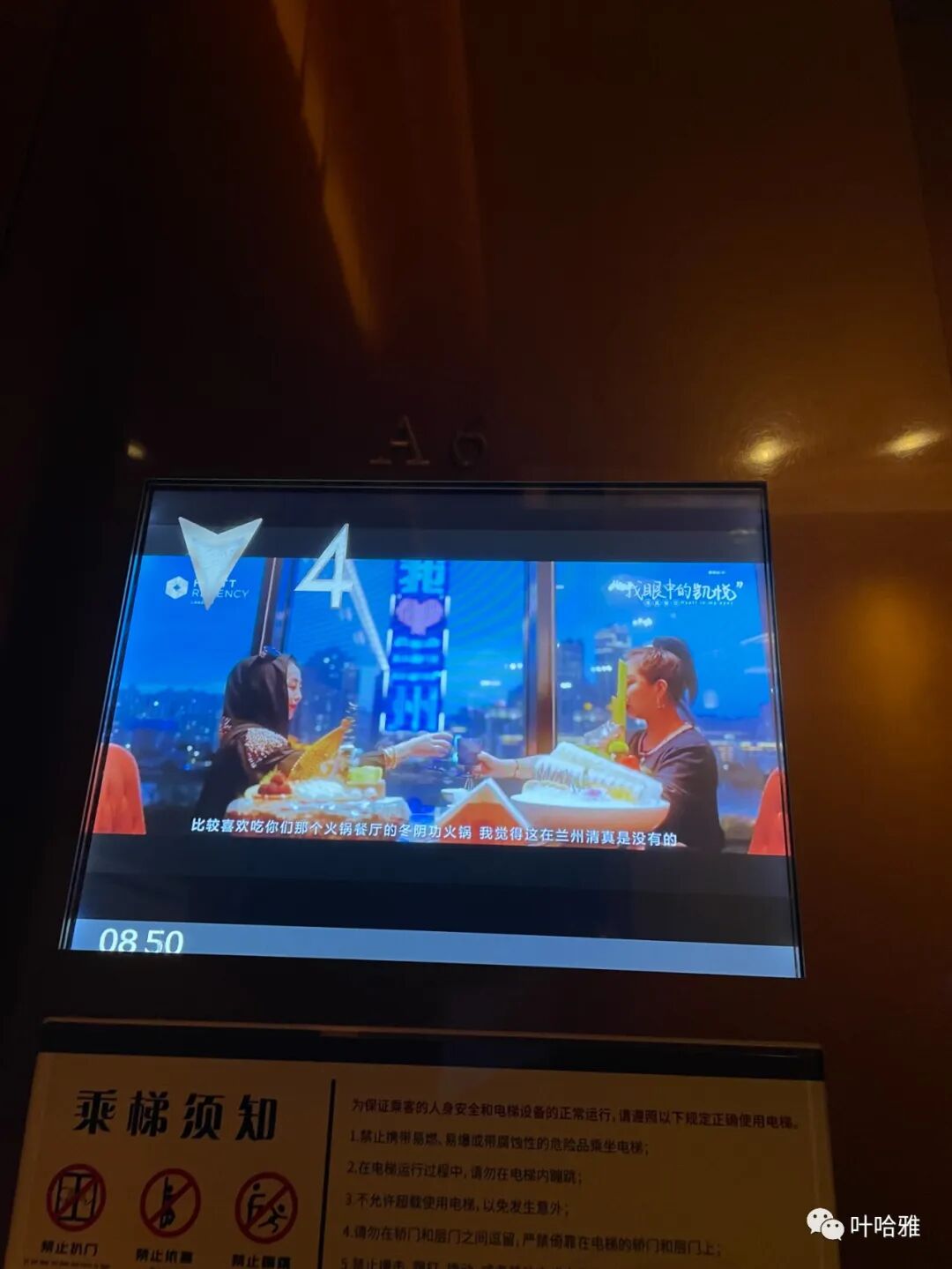
The promotional video for the Hyatt playing in the elevator features girls wearing headscarves.
The gym at the Lanzhou Hyatt is very large. It is rare for a five-star hotel in China to have such a big gym.
The gym faces the Yellow River, so the view is excellent.
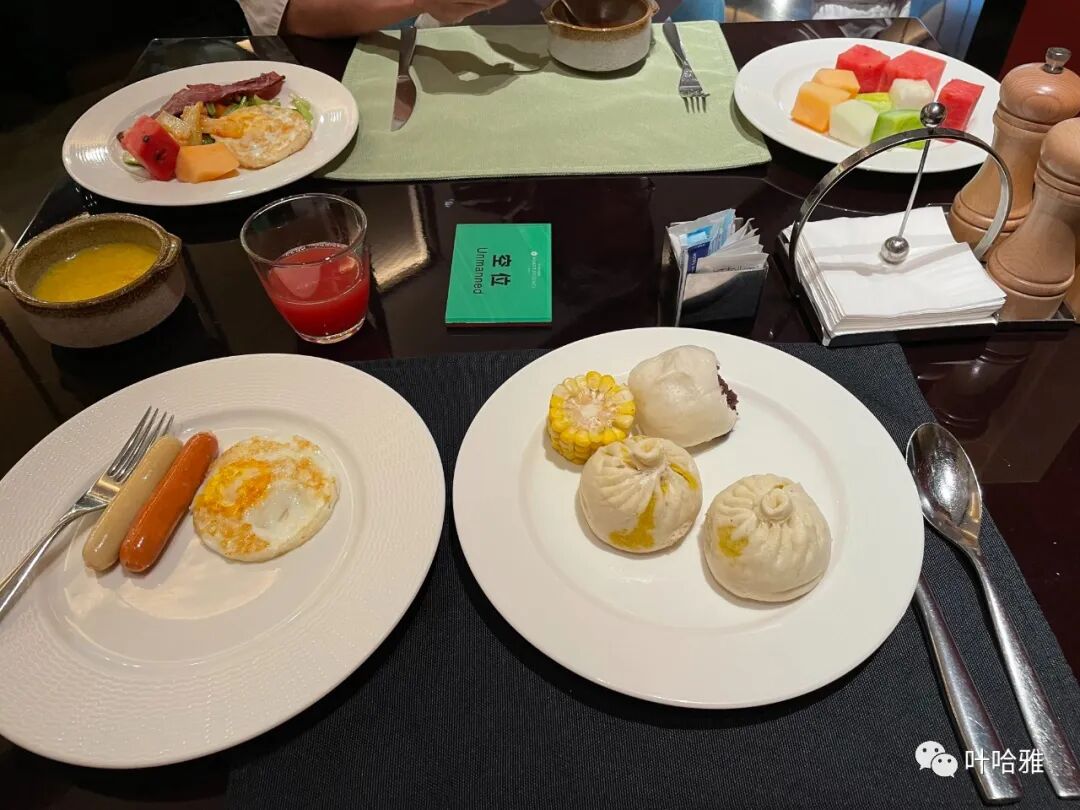
What attracts me most about the Hyatt is the rich breakfast. Everything is halal, and you can choose whatever you want. Besides regular Western desserts, they also have local Northwest specialties.
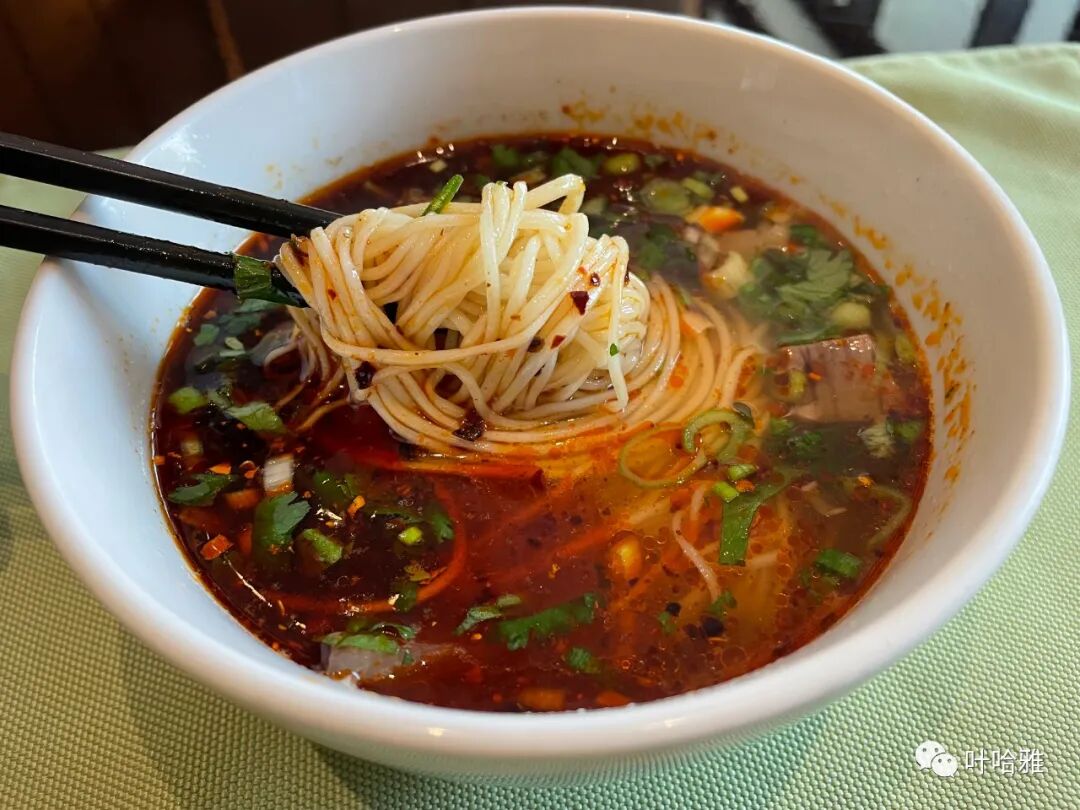
The Lanzhou beef noodles at the Hyatt were the only beef noodles I ate on this trip to Lanzhou. They were truly delicious and just as good as any of the old, famous shops I have visited in Lanzhou.
Xinguan Mosque
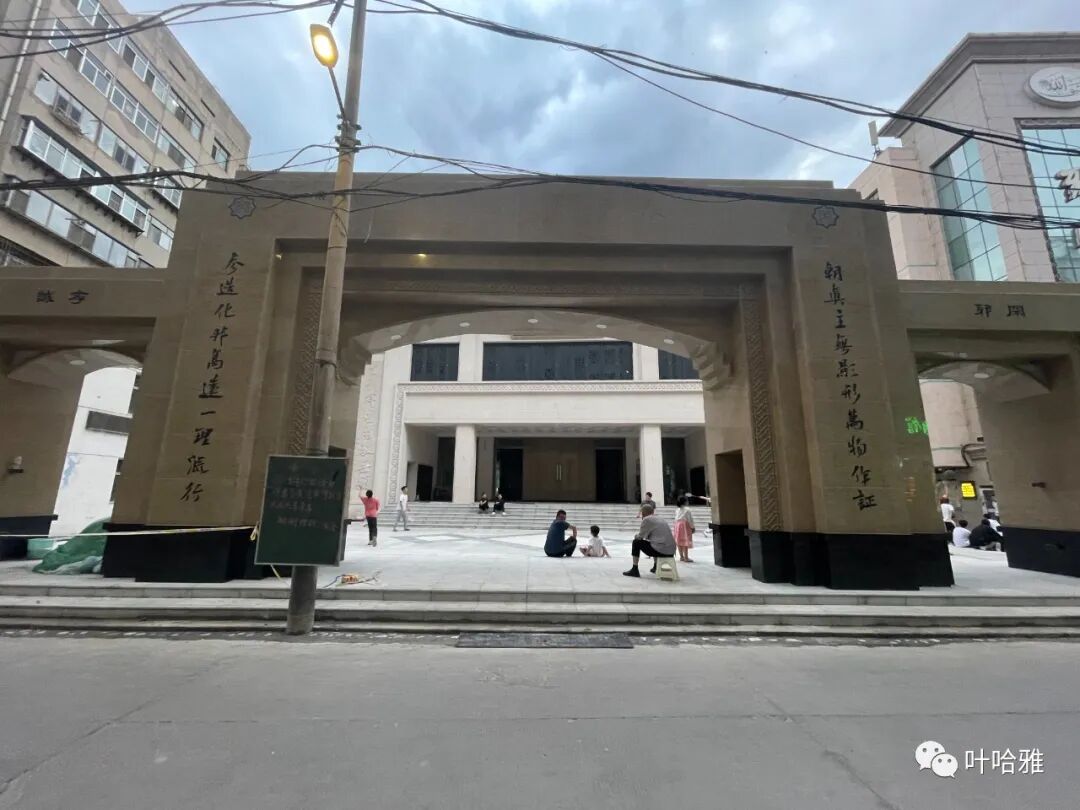
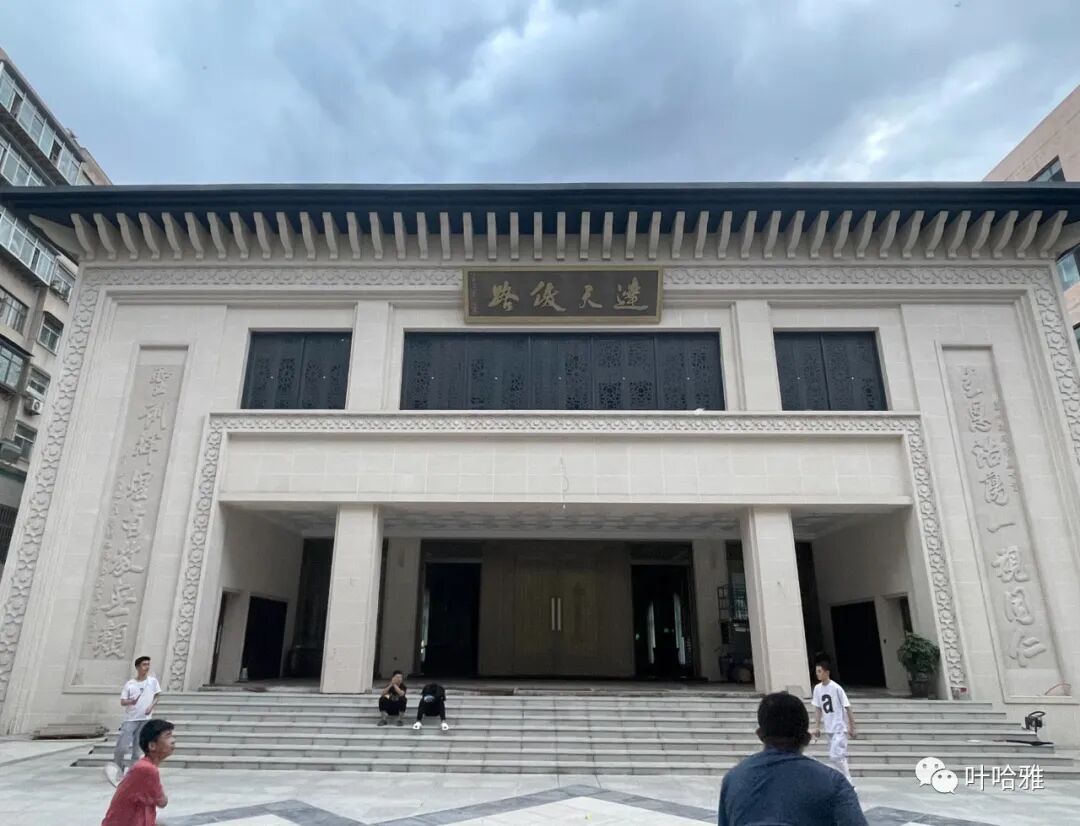
Local elders in Lanzhou highly recommended I visit Xinguan Mosque. People say it is very popular with young people because the imam, Ma Jun, gives lively and vivid sermons (wa'az) in Mandarin.
The mosque gate is completely open to the public, and many children play at the entrance.
Yixiang Stir-fry
Next to Xinguan Mosque is a Lanzhou stir-fry shop that a long-time Lanzhou local specifically recommended to me as a place for authentic local dishes.
This shop has been open in Lanzhou for over ten years, and the customers are mostly local residents from the neighborhood.
I really enjoy eating at these popular local spots. You can taste the quality in the cooking here, and I probably would not have noticed this place if a friend had not shown me the way.
Lanzhou thick-sauce lamb (hu yang)
This was my first time eating thick-sauce lamb. I noticed that traditional Lanzhou stir-fry is mostly salty, fresh, and sweet, and the way they use starch to thicken sauces is similar to Beijing cuisine.
Sweet and sour meat-stuffed crepes (suanla jiasha)
Sweet and sour pork tenderloin (tangcu liji)
If you get tired of eating Northwest-style noodles, remember to stop by Yixiang Stir-fry when you are in Lanzhou.
Miaotanzi Gadan
Local elders picked this Miaotanzi Gadan as another special Lanzhou barbecue stall for me. The environment is basically non-existent. It has been open for over a decade and is full of locals. People sit on stools by the roadside to eat, or just stand and dip their skewers.
Lanzhou barbecue is known for using iron skewers over an open flame with plenty of seasoning. They come in bundles of 20, and it is easy for one person to eat 30 or 50. I like these small skewers. Large ones fill me up after one or two, which feels less satisfying.
Aliya Art Restaurant
After spending a long time in Northwest cities, I cannot handle heavy dishes anymore. I specifically chose this refreshing art restaurant to meet a friend. You can have afternoon tea here, or choose from light meals.
Aliya Lanzhou Center branch. Their desserts are excellent. They also serve sushi and salads, which are rare, light food options in the Northwest.
Things like sushi and spring rolls are much easier to eat.
Hongyunxuan Macau Charcoal Hot Pot
I have had this halal hot pot (dabanlu) place saved in my Beijing list for a long time as a Lanzhou specialty. Hongyunxuan previously ran a Hong Kong-style tea restaurant in Macau, but it closed during the pandemic. I did not expect them to open a hot pot place in Lanzhou.
The restaurant decor is very Cantonese. It has not been open long, so I wonder how long it will last.
We chose two types of seafood porridge bases. You can drink the porridge first, then cook the meat.
Fish maw (huajiao) porridge base
This Cantonese-style hot pot (dabanlu) tastes good and is light. I hope it stays open because it really helps add variety to the food scene in the Northwest.
Shancheng Hand-Grabbed Lamb (Shancheng shouzhuo)
I met an elder (xianglao) from the Lingming Hall (Lingmingtang) in Lanzhou at Shancheng Hand-Grabbed Lamb. Shancheng is a village in Linxia, and many friends in Lanzhou recommend this place. Most people working in the halal restaurant business in Lanzhou are from Linxia.
Before eating, they serve tea. You can grab whatever you like from the Three-Fortress Tea (sanpaotai) platter. The rose inside is a local Lanzhou specialty, and you must add it.
The hand-grabbed lamb is tender with a good mix of fat and lean meat, mostly lean, which is how I like it.
Yogurt with fermented oat grains (tianpei) is a creative new combination. Fermented oat grains are a popular Lanzhou snack.
Soup made with hair moss (facai). Hair moss is a specialty of the Northwest and can be used as medicine.
The lily bulbs in the assorted shrimp dish are another Lanzhou specialty. You must try lily bulbs when you come to Lanzhou.
Hot and sour stuffed meat (suanla jiasha). The outer layer of the stuffed meat is made of egg, similar to Beijing's fried meat strips (songrou), but those use bean curd skin.
Cold tossed wild onion (shacong). This is a wild vegetable from the Northwest, and it has become more common in Beijing over the last two years.
Sugar oil cake (tangyougao) is a bit like the Qinghai dog-pissing pancake (goujiaoniao). It is hollow inside. My friends chose these local specialties for me, and Shancheng Hand-Grabbed Lamb lives up to its reputation. It is worth recommending.
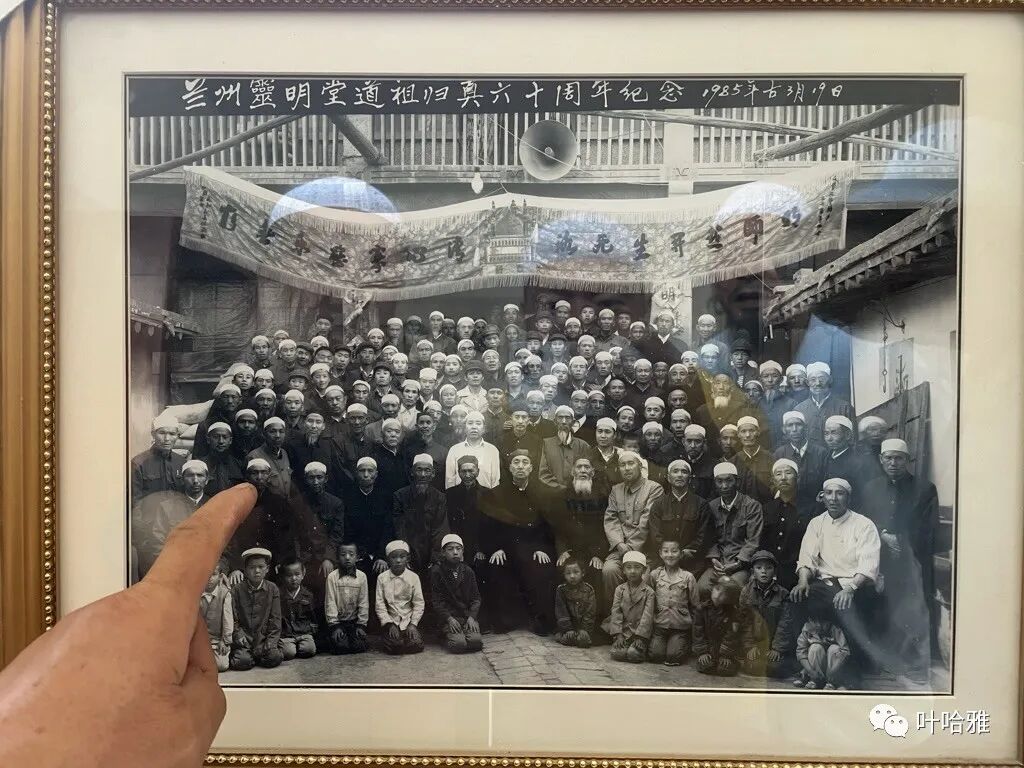
After the meal, we visited the home of the elder from Lingming Hall and saw this biography, The Brief Biography of Master Lingming (Lingming Shangren Zhuanlue).
On the way to Lingmingtang Gongbei, I passed through Gongbei Gully and saw several gongbei built halfway up the mountain.
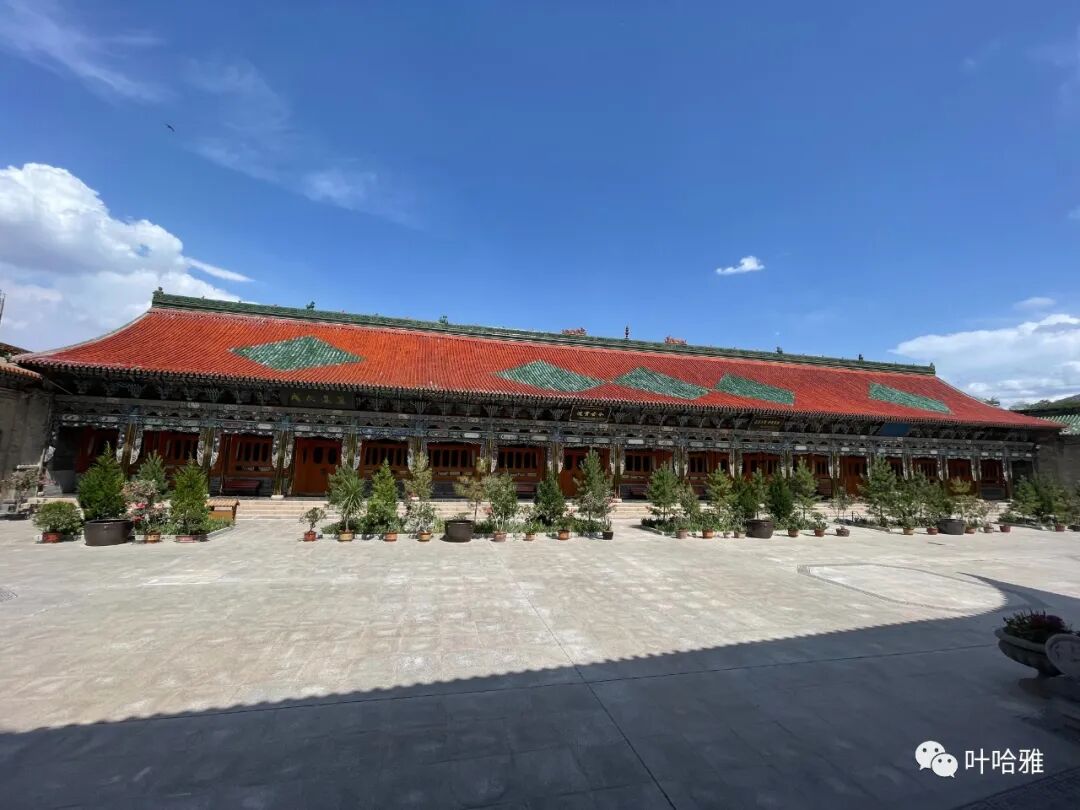
The Lingmingtang Gongbei sits on the top of Wuxingping Mountain in Lanzhou, covering an area of over 30,000 square meters, and it is the largest gongbei I have ever seen.
The founding master of Lingmingtang Gongbei was Ma Yilong (1853-1925), whose courtesy name was Lingming. He once studied under the Great Incense Master of the Kashgar Daotang and accepted the teachings of the Qadiriyya. In his final words, he mentioned being the 'answerer promised by the Bab gate,' which led some to believe he was influenced by the Babi faith. However, some descendants of Lingmingtang deny this, as detailed in the article 'A Discussion on the Possibility of Historical Contact Between Lingmingtang and the Babi Sect'.
During his lifetime, Ma Lingming lived a life of poverty and appeared eccentric, remaining unmoved even when children played around him or passersby mocked him. People often asked him questions, and he would sometimes give hints without taking a penny. Over time, some felt his guidance came true, and they began to respect him.
Whenever a Sufi elder gains the support of the public, they must have some extraordinary qualities. This is especially true for local illiterate believers, as it is hard to win hearts through reasoning and education alone.
As Ma Lingming's followers grew, he caught the attention of local officials, who supported him to keep other menhuan in check.
Ma Lingming himself remained indifferent to fame and wealth. He had no sons, only two daughters, and his noble character earned him the support of many believers.
The religious authority of Lingmingtang is passed to the worthy rather than to one's own children. Before Ma Lingming passed away, he publicly gathered his followers to elect a second-generation successor. They finally chose Shan Zijiu (1888-1953) from Lanzhou. The election process was very complex and required many rituals to complete the succession.
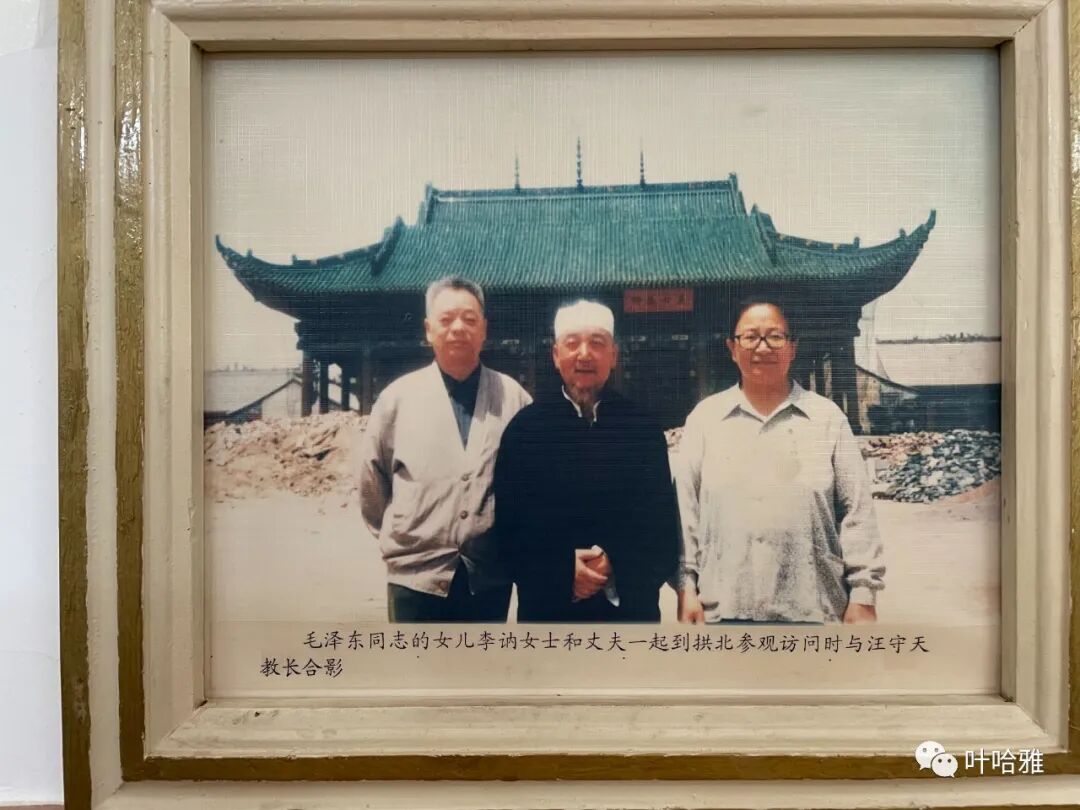
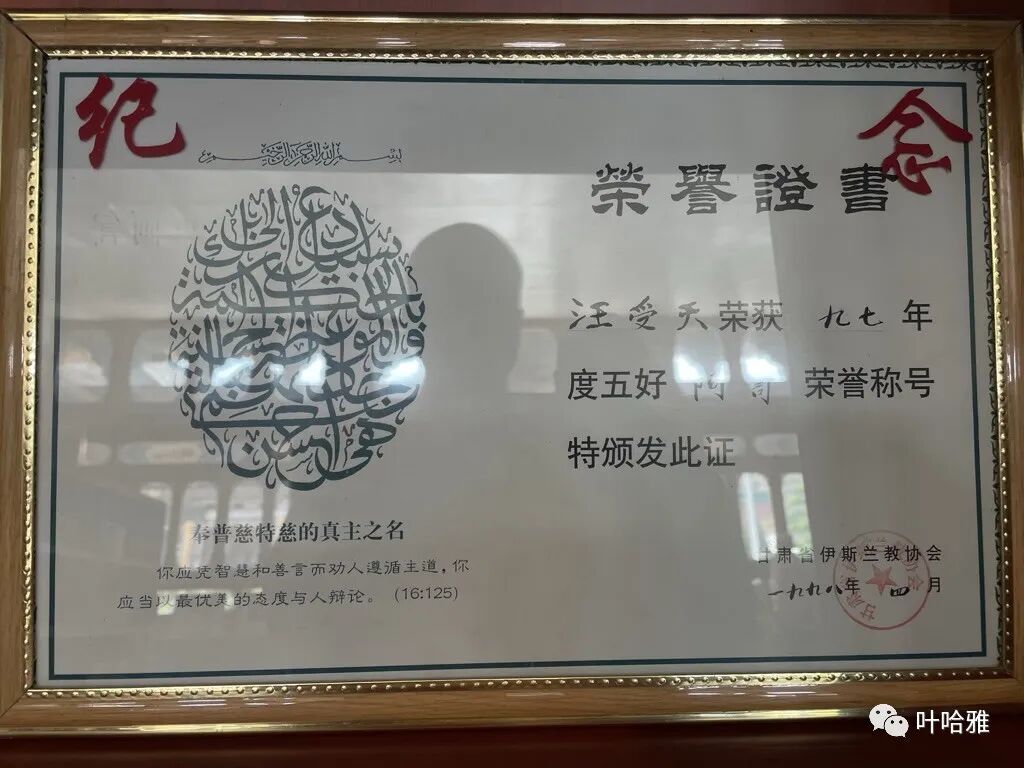
After Shan Zijiu, the religious authority was passed to Wang Shoutian (1924-2021), an elder from Tangwangchuan in Dongxiang County.
Between 1958 and 1979, Wang Shoutian was imprisoned during the anti-religious and anti-feudal movements. After his release, he began leading the construction of the Lingmingtang Gongbei, and the current Wuxingping site was allocated to Lingmingtang by the government in 1982.
Wang Shoutian valued education, and in 1993, he took the lead in donating money to convert Tangwang Primary School into a middle school.
At the same time, Wang Shoutian also valued business and encouraged followers to develop production. He even believed that young people should focus on their careers, which is why Lingmingtang has better economic strength than other menhuan and the financial resources to build such a grand gongbei.
Ma Lingming left behind no personal property. The construction of the Lingmingtang gongbei cost over 100 million yuan, all of which came from donations by believers.
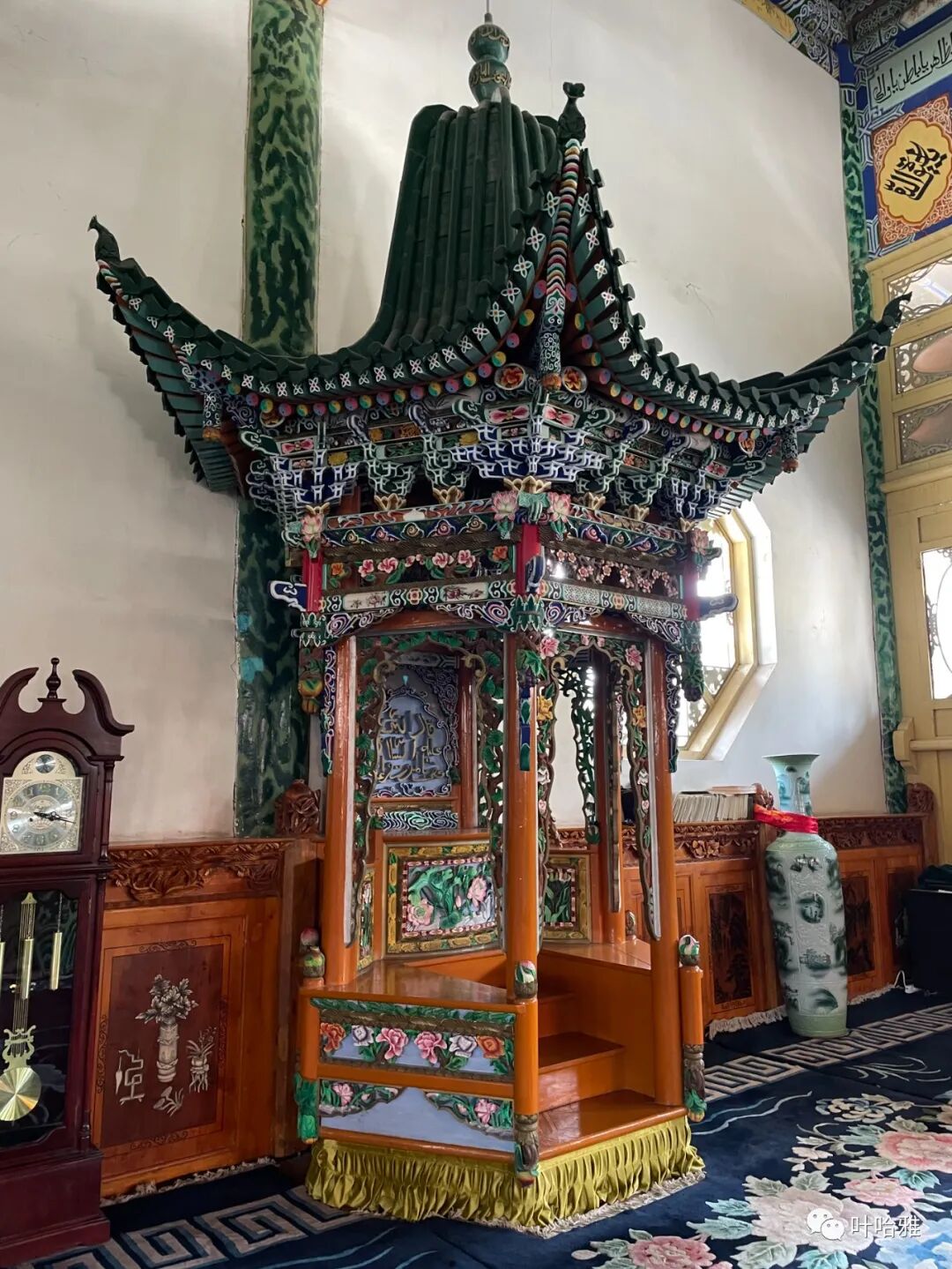
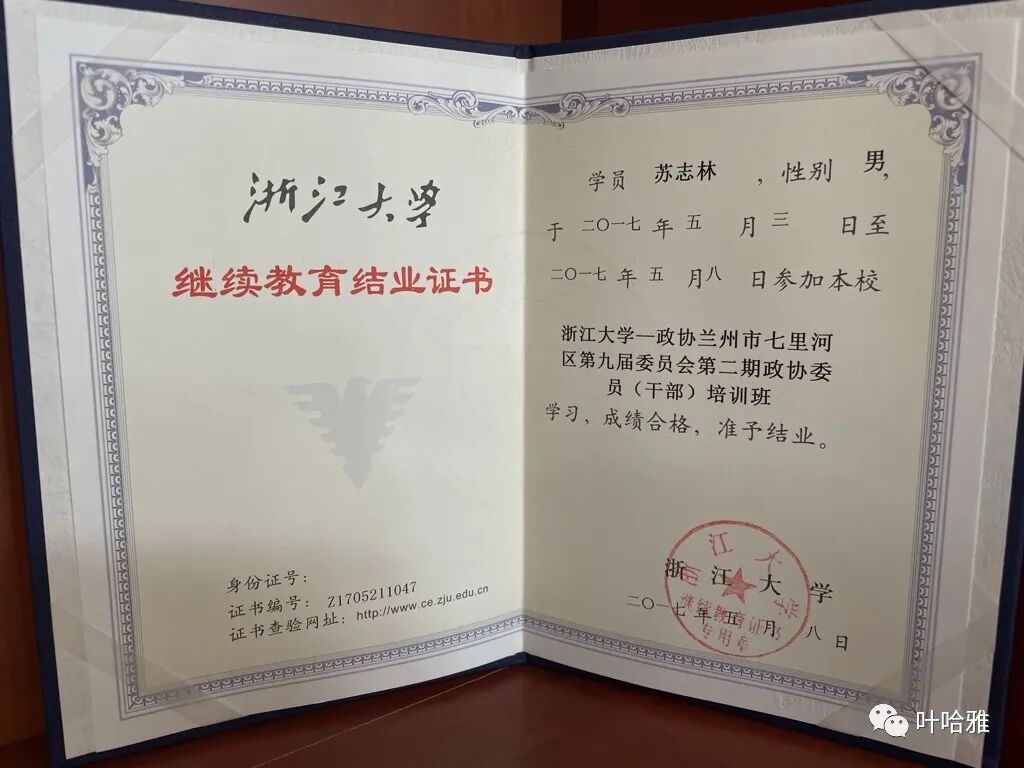
Currently, there are Lingmingtang branch gongbei in Guyuan, Linxia, Hami, and Luoyang. The current fourth-generation leader is named Su Zhilin. He is in his thirties and was elected by the community elders.
The election of the leader is only considered complete after it is approved by the relevant authorities.
The former residence of the elder Wang Shoutian is inside the Lingmingtang gongbei. During his lifetime, he often sat in the courtyard with people gathered around him to listen to his teachings. Because he had a strong Tangwang accent—or perhaps he was speaking the Dongxiang language—someone would sit by his side to translate for him.
The elder did not know Chinese characters, but he was fluent in the mosque language (jingtangyu), so he usually read scriptures in Arabic.
Our Lingmingtang elder did not want to enter the former residence because it reminded him of the elder when he was alive. His eyes turned red instantly, so he waited outside the hall.
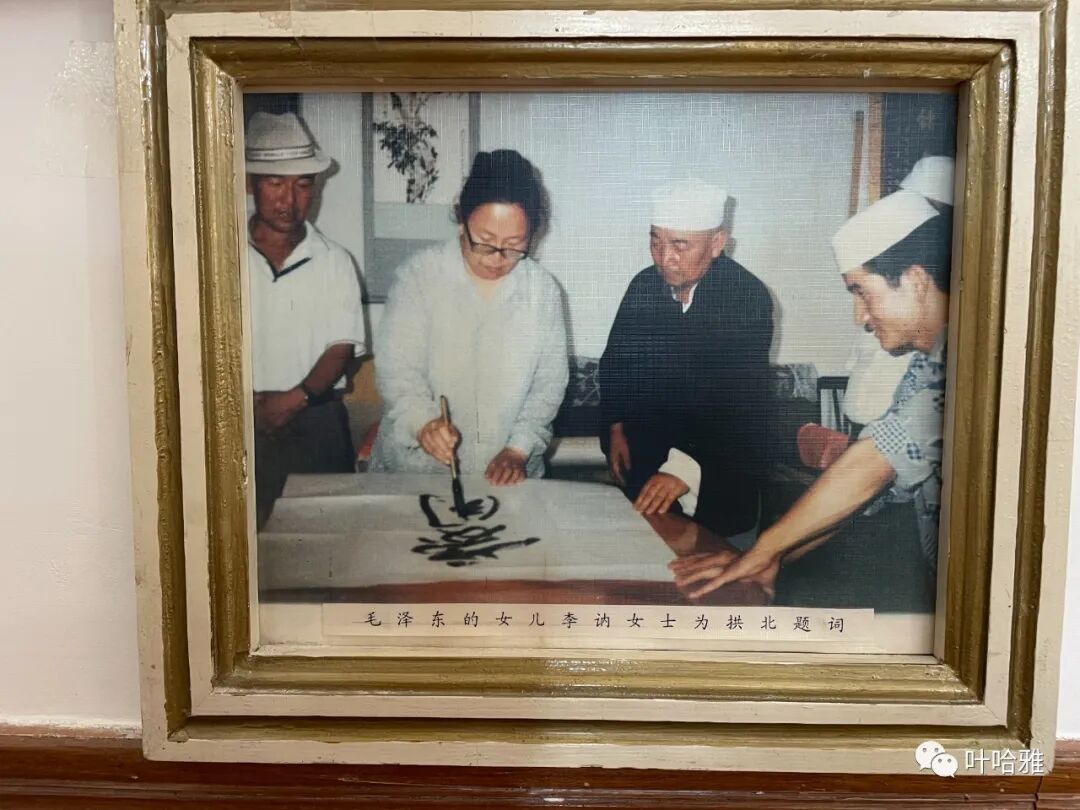
There is an exhibition room inside the gongbei that houses some antiques, paintings, and personal items used by the elder during his lifetime.
It is clear that the elder was very high-profile during his life. He was passionate about public welfare, open-minded, and progressive. This felt completely different from my visits to other menhuan gongbei. Some menhuan do not want outside attention; they allow visits but do not want publicity. Others focus on spiritual practice and stay away from the world. Lingmingtang is the opposite. It is more like a family business that encourages people to focus on their careers before the age of 60. These ideas have gained support from a significant number of wealthy believers. view all
Summary: This China mosque travel guide to Lanzhou covers Wuxingping Lingmingtang, one of China’s largest gongbei sites, Xinguan Mosque, halal Hyatt breakfast, Lanzhou beef noodles, hand-grabbed lamb, and local Muslim heritage.
A Halal Tour of Lanzhou: The Five-Star Terrace Spiritual Light Hall (Wuxingping Lingmingtang), the Largest Gongbei in China is presented here as a firsthand travel account in clear English, beginning with this scene: I wrote a map of halal food in Lanzhou in 2016. This is my fifth time in Lanzhou. The account keeps its focus on Qinghai Mosques, Chinese Muslims, Muslim Heritage while preserving the names, places, food, and historical details from the Chinese source.
I wrote a map of halal food in Lanzhou in 2016. This is my fifth time in Lanzhou. I flew the first four times, but this time I drove. It is about 1,400 kilometers from Beijing to Lanzhou, and the first city I stopped in after entering Gansu was Baiyin.
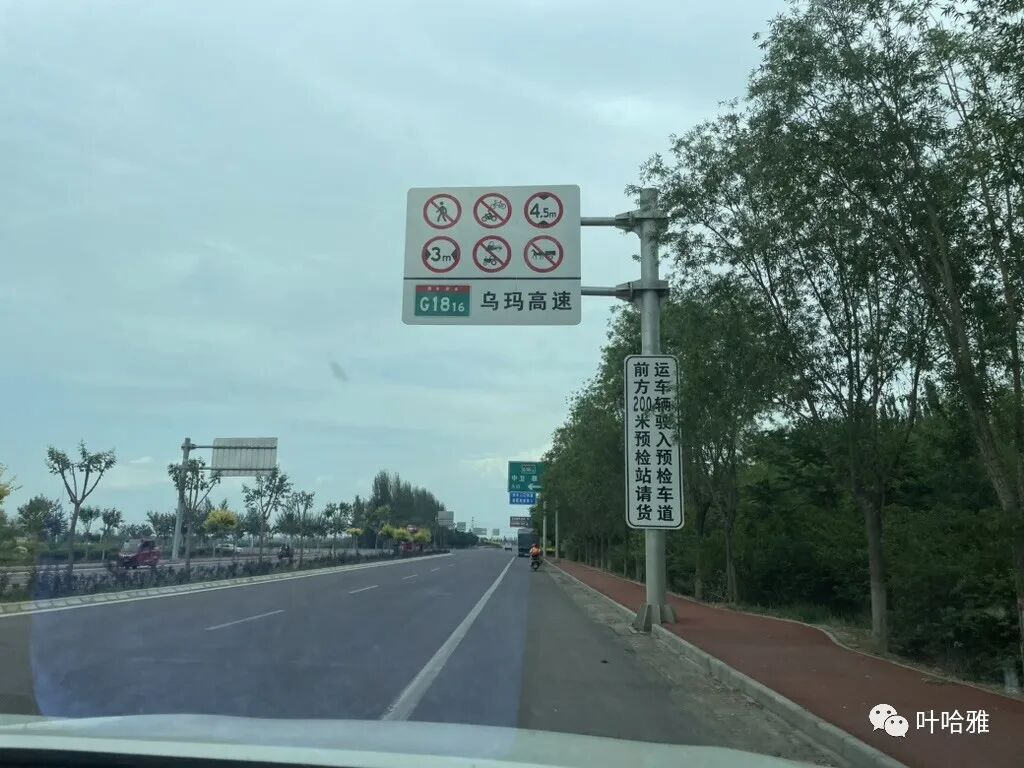
On the way, I took a highway called Wuma. It is named after the Wuhai to Maqin expressway, but it happens to sound like the Arabic word for nation.
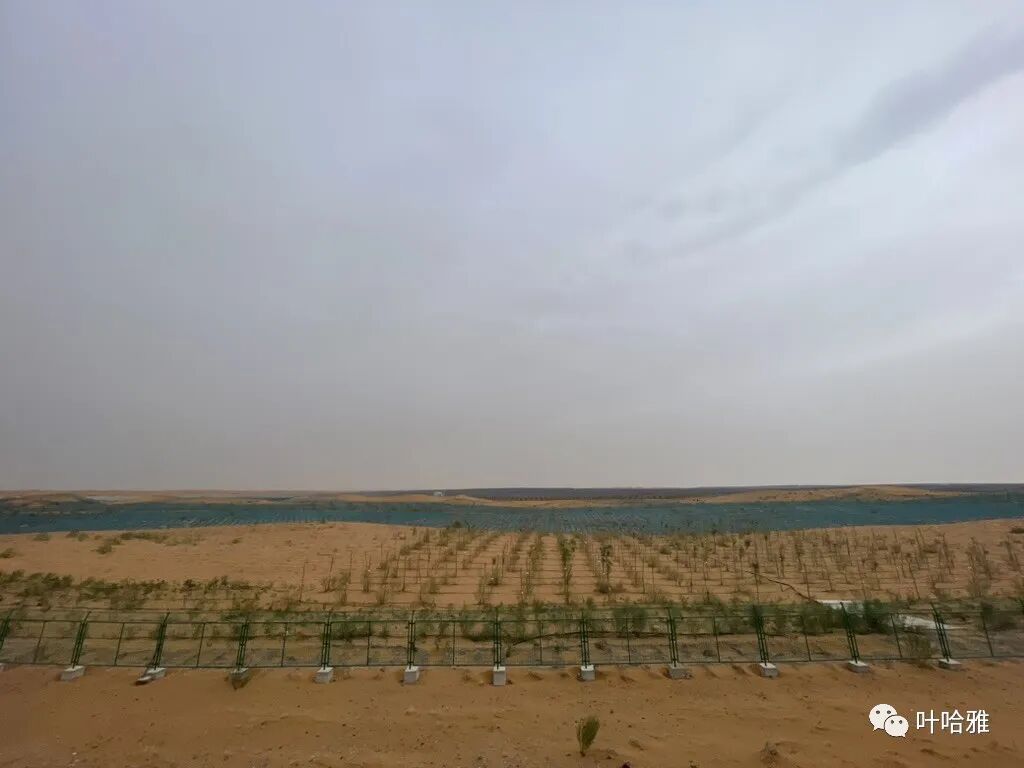
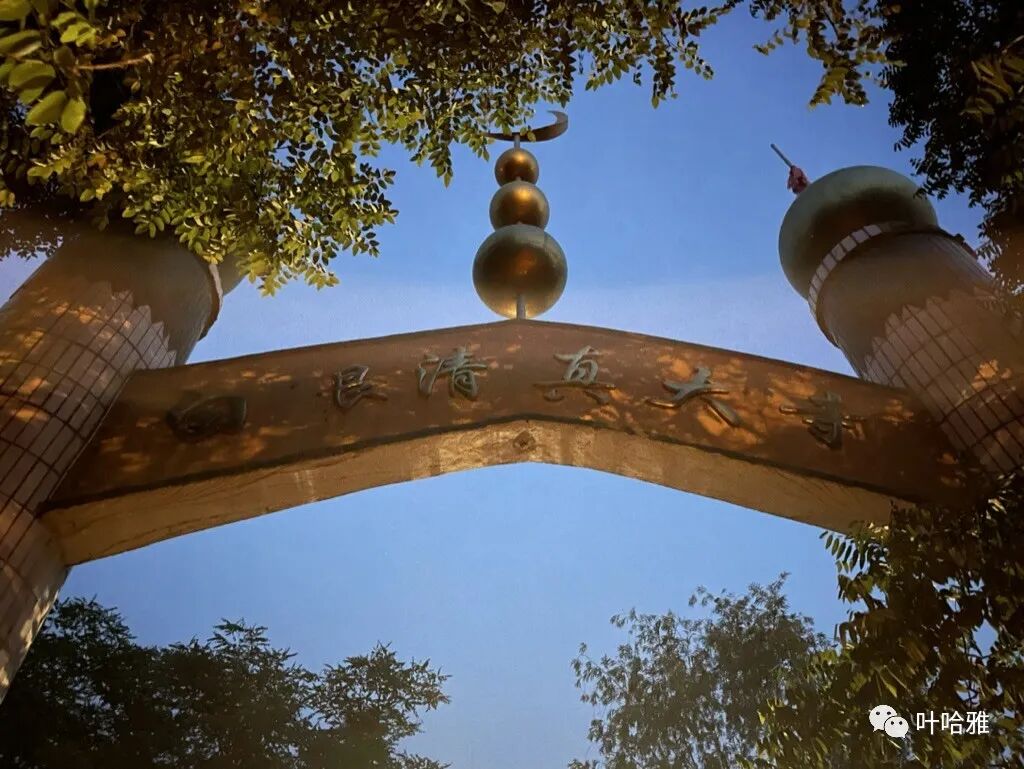
After praying Maghrib (shamu) at the Great Mosque of Baiyin, I walked around the city looking for food, but I found there were not many choices.
I found this Chuntai Hand-Grabbed Meat Restaurant (Chuntai Shouzhua Meishicheng). Chuntai is a township in Dongxiang, Linxia, and it is famous for its delicious hand-grabbed lamb.
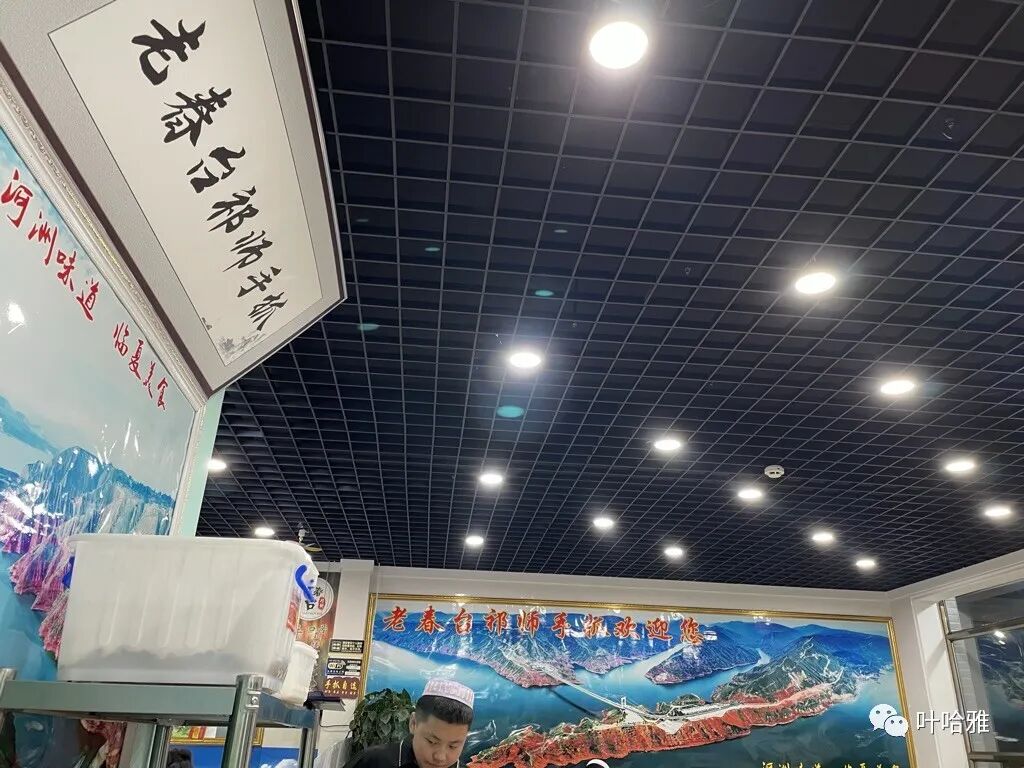
The food was really good. Both the hand-grabbed lamb and the firecracker noodles (paozhuang mian) were delicious.
I stayed in Baiyin for one night and walked around, but I did not find any places worth remembering.
When I saw the Yellow River Bridge, I knew I had arrived in Lanzhou. This time I stayed at the Hyatt Regency. I chose it because it is a halal Hyatt, which is rare in China. The owner is a Dongxiang person.
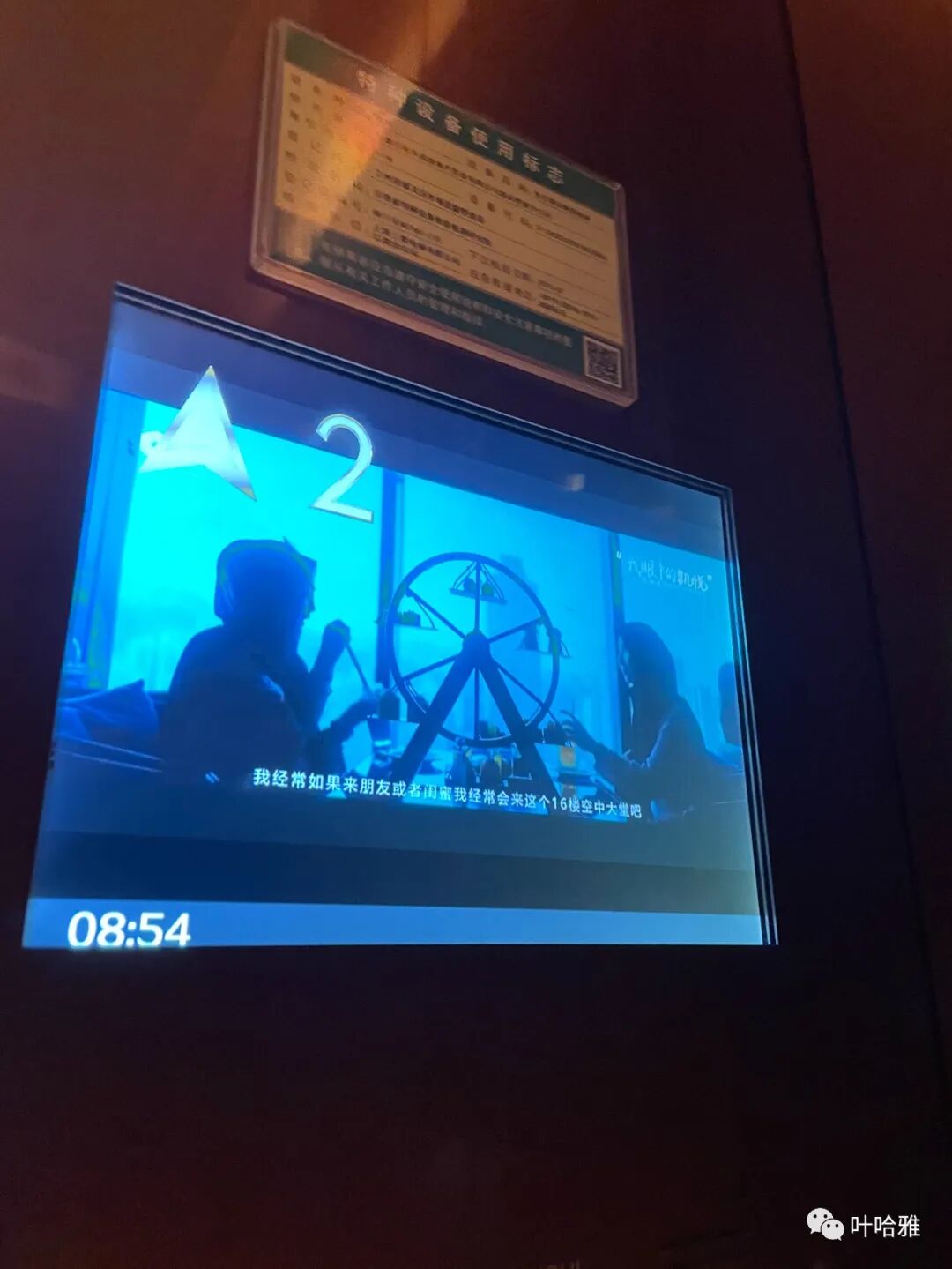
The promotional video for the Hyatt playing in the elevator features girls wearing headscarves.
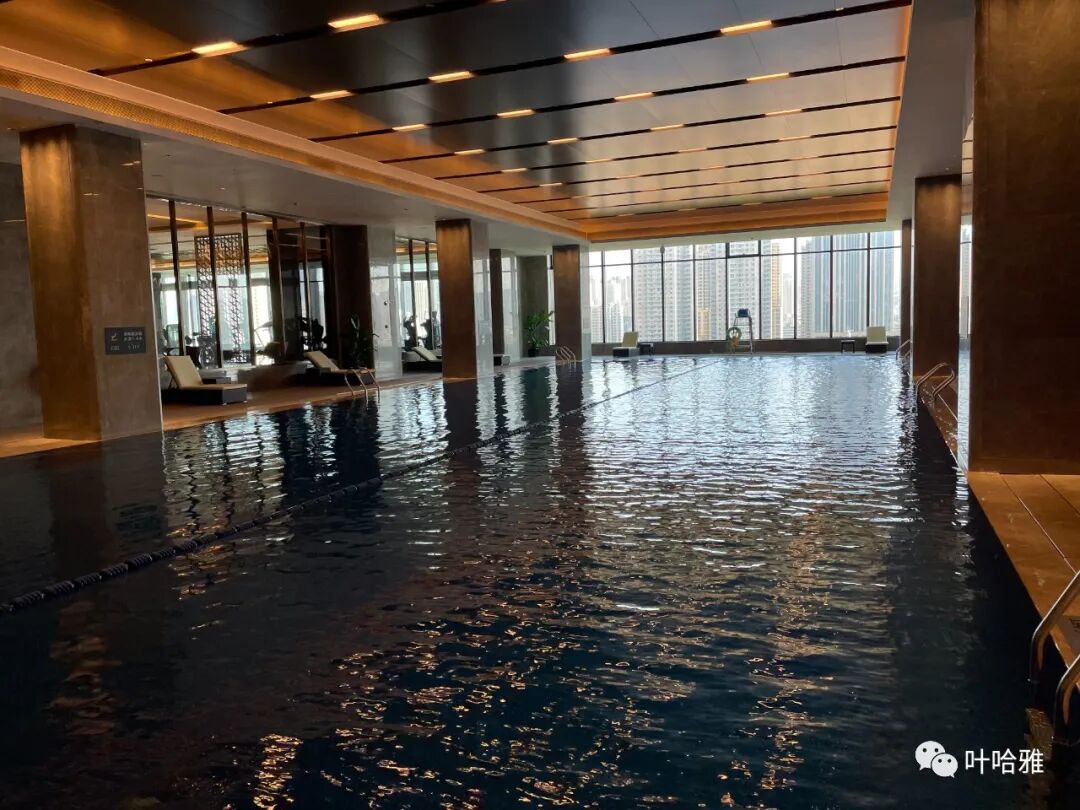
The gym at the Lanzhou Hyatt is very large. It is rare for a five-star hotel in China to have such a big gym.
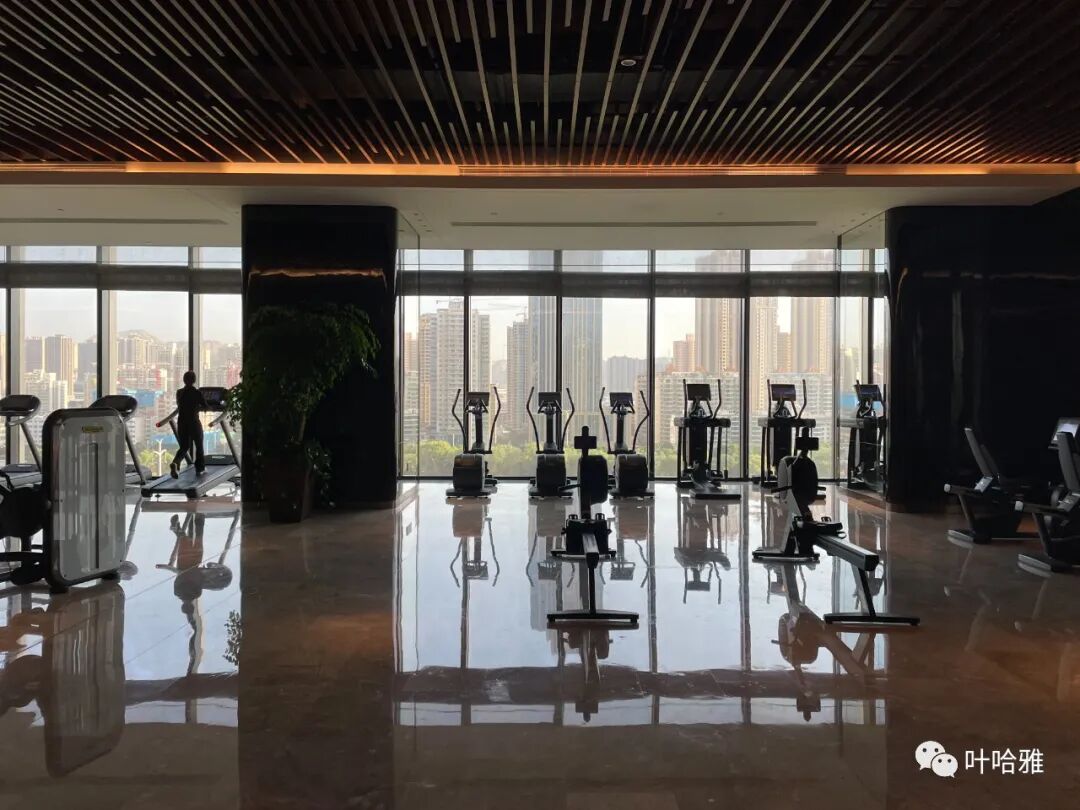
The gym faces the Yellow River, so the view is excellent.
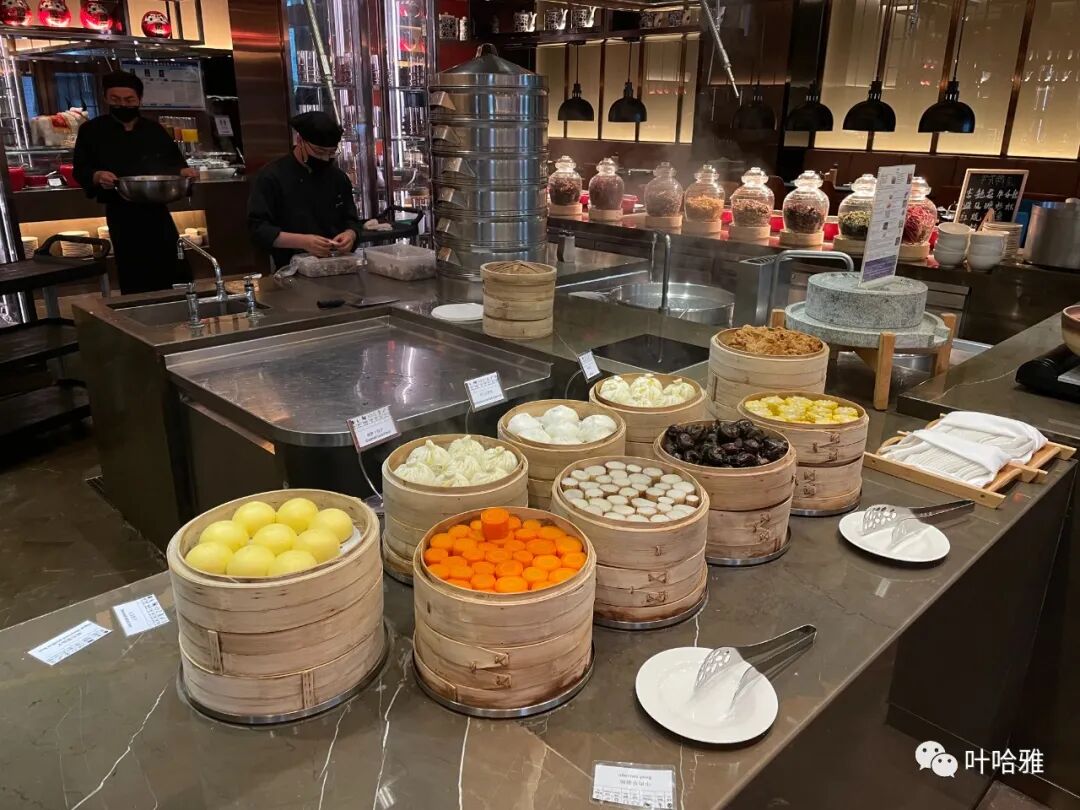
What attracts me most about the Hyatt is the rich breakfast. Everything is halal, and you can choose whatever you want. Besides regular Western desserts, they also have local Northwest specialties.
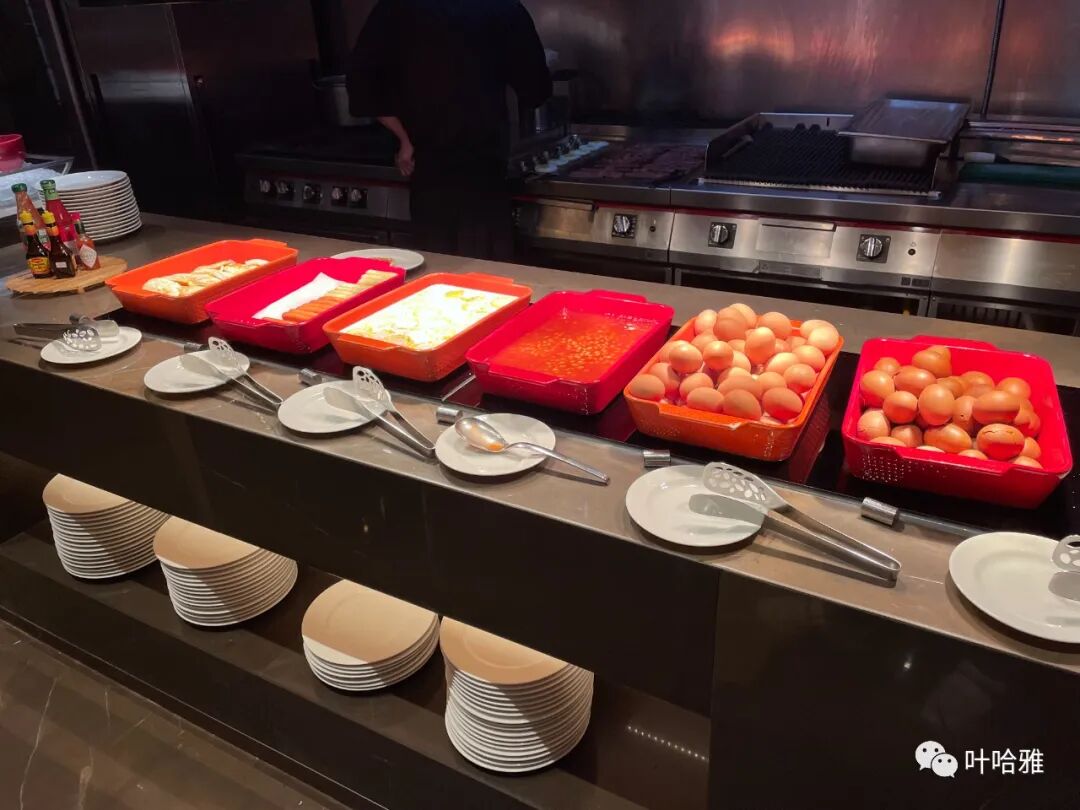
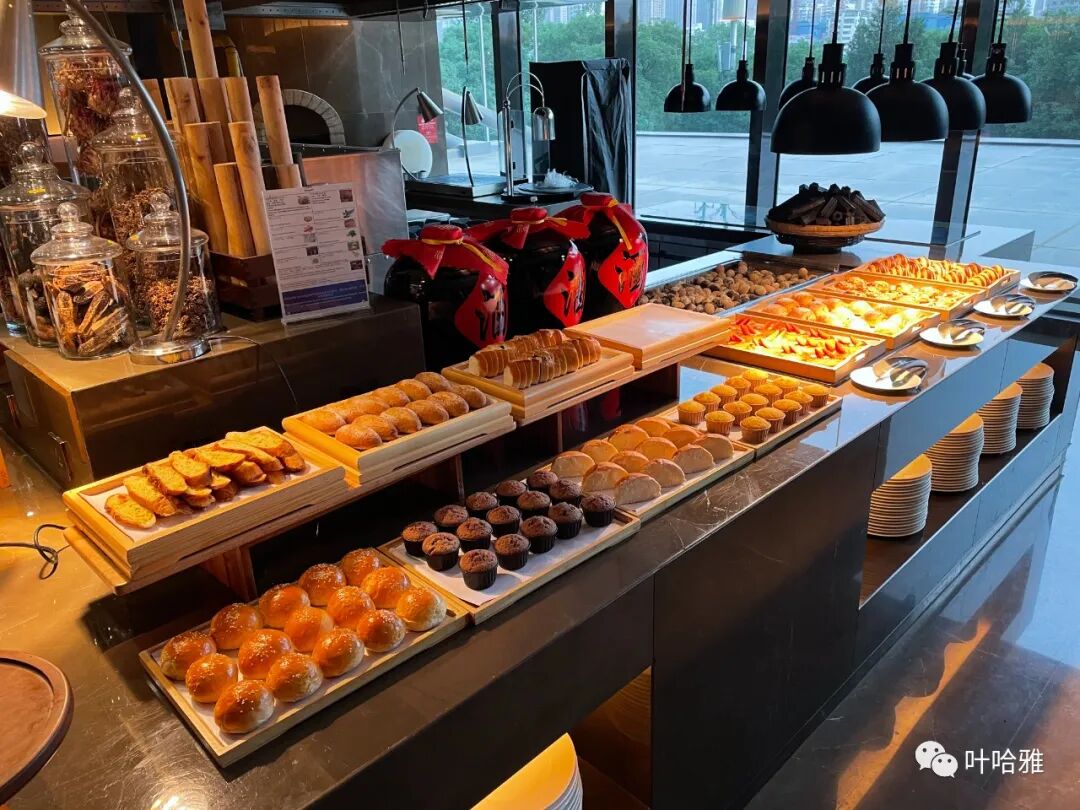
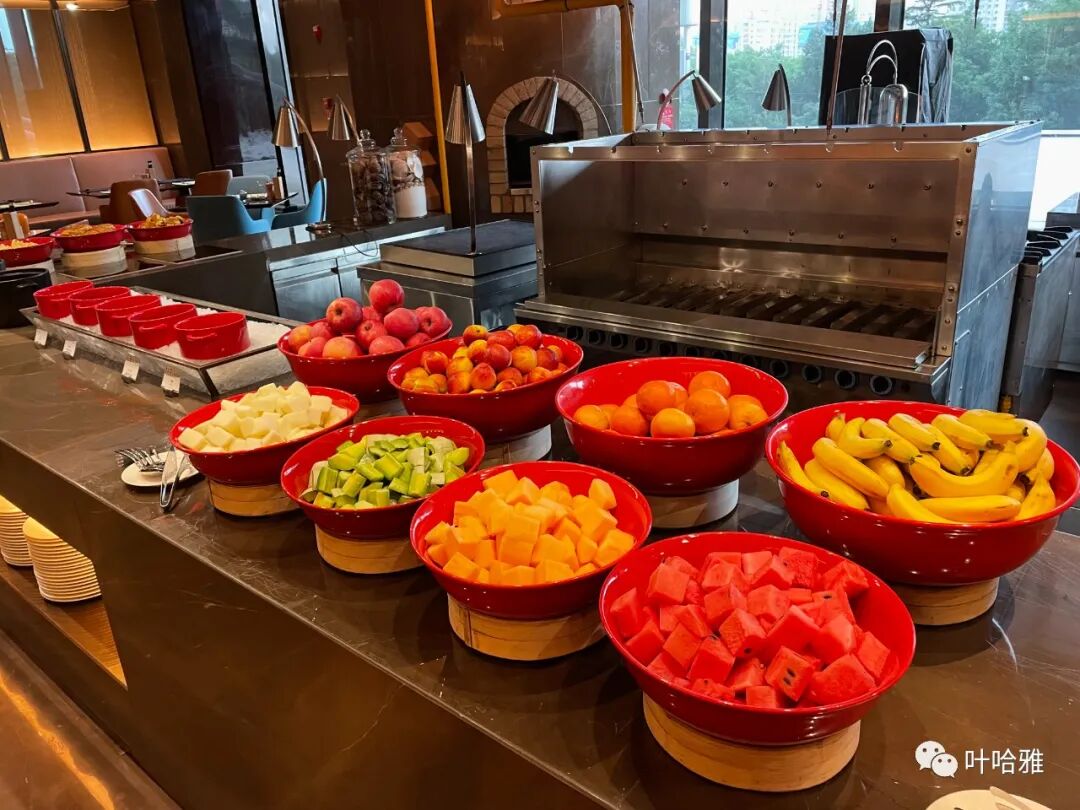
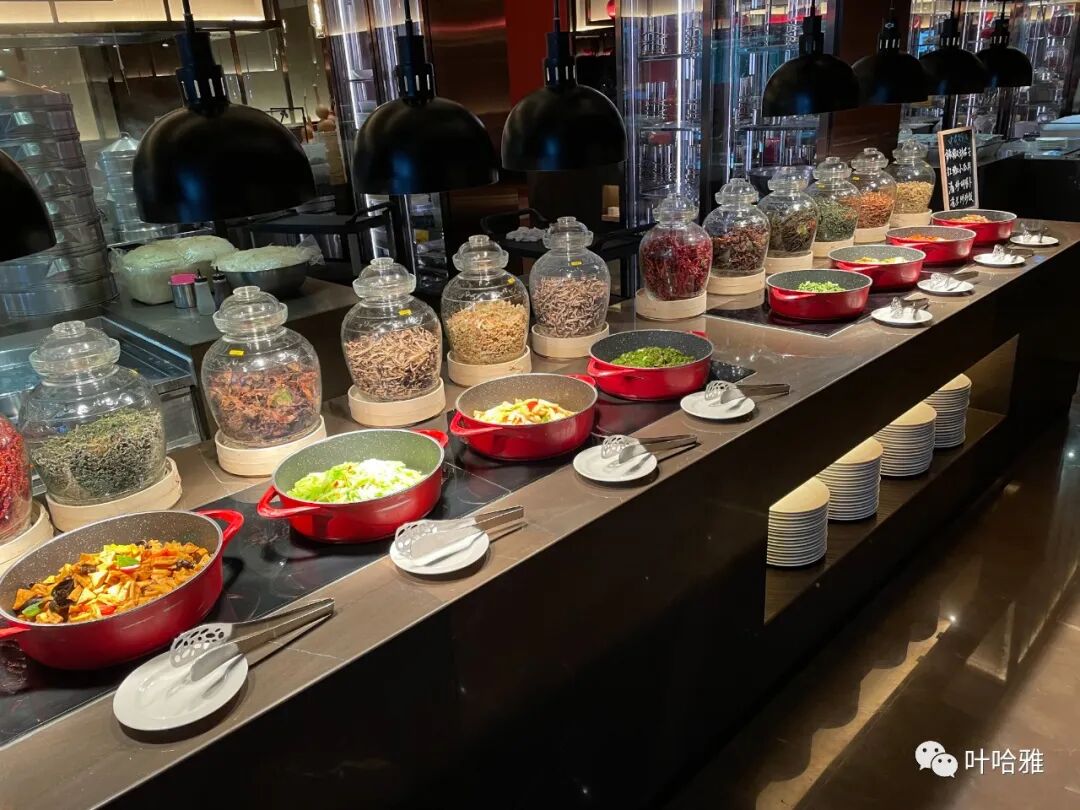
The Lanzhou beef noodles at the Hyatt were the only beef noodles I ate on this trip to Lanzhou. They were truly delicious and just as good as any of the old, famous shops I have visited in Lanzhou.
Xinguan Mosque
Local elders in Lanzhou highly recommended I visit Xinguan Mosque. People say it is very popular with young people because the imam, Ma Jun, gives lively and vivid sermons (wa'az) in Mandarin.
The mosque gate is completely open to the public, and many children play at the entrance.
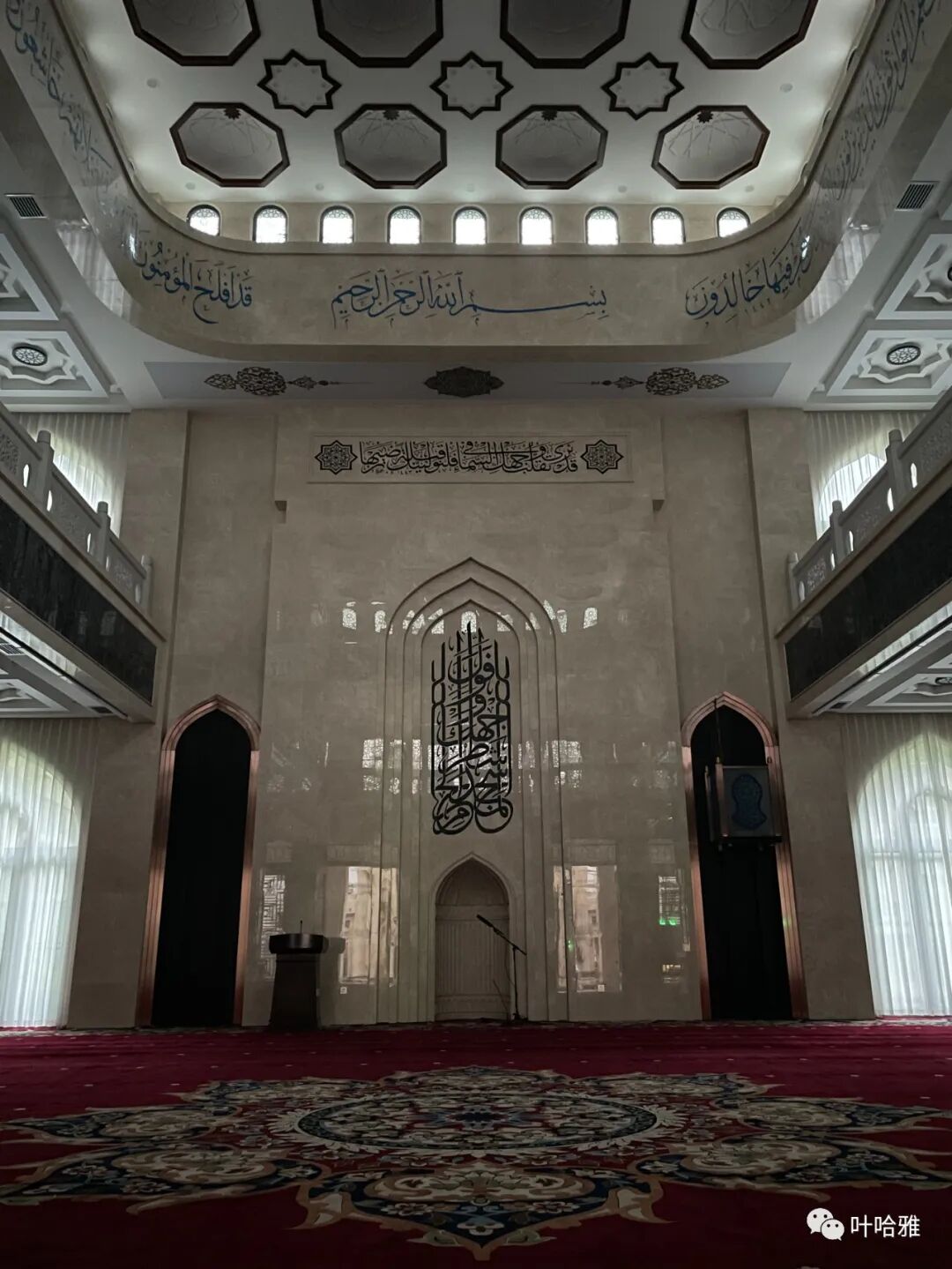
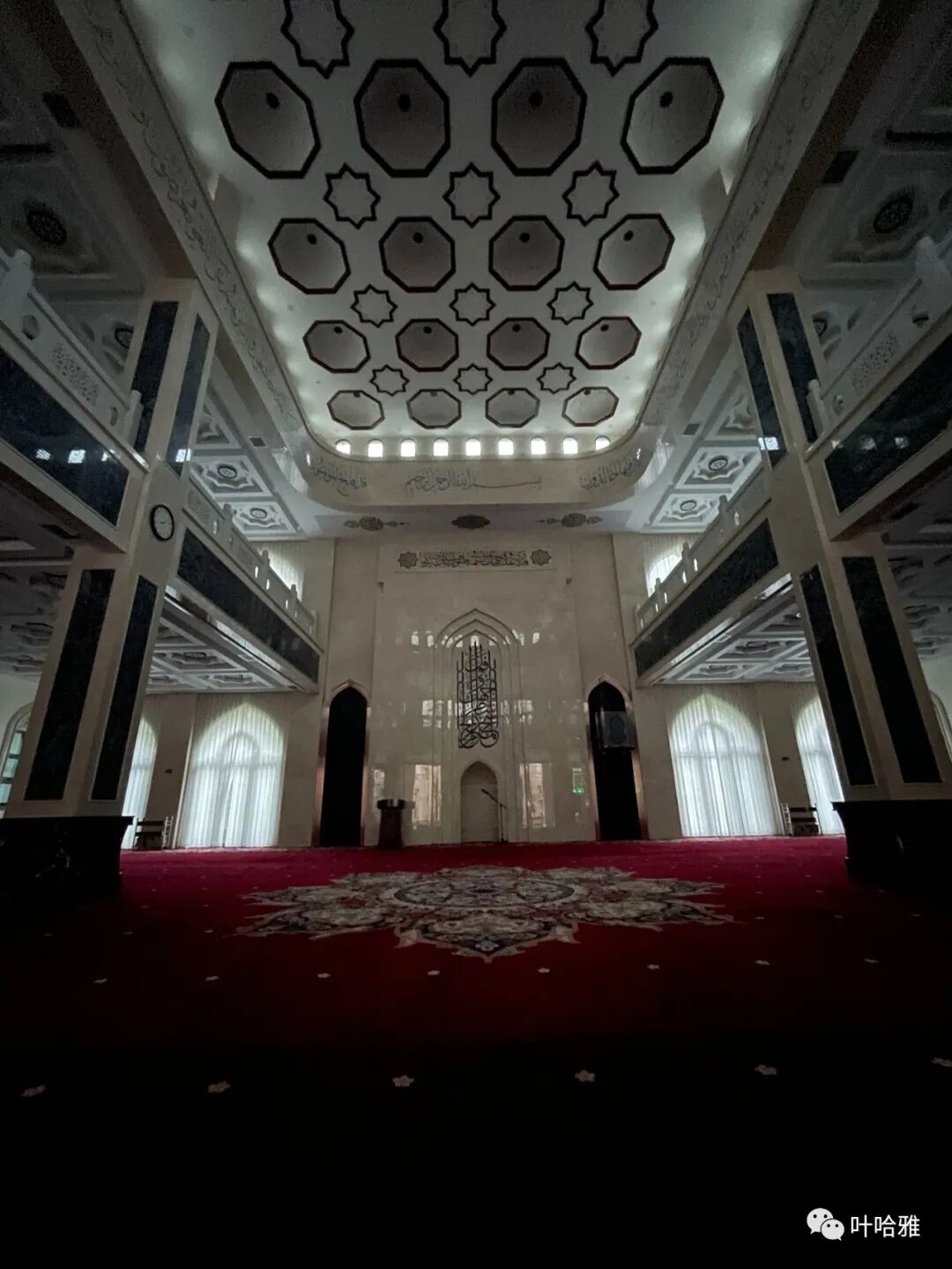
Yixiang Stir-fry
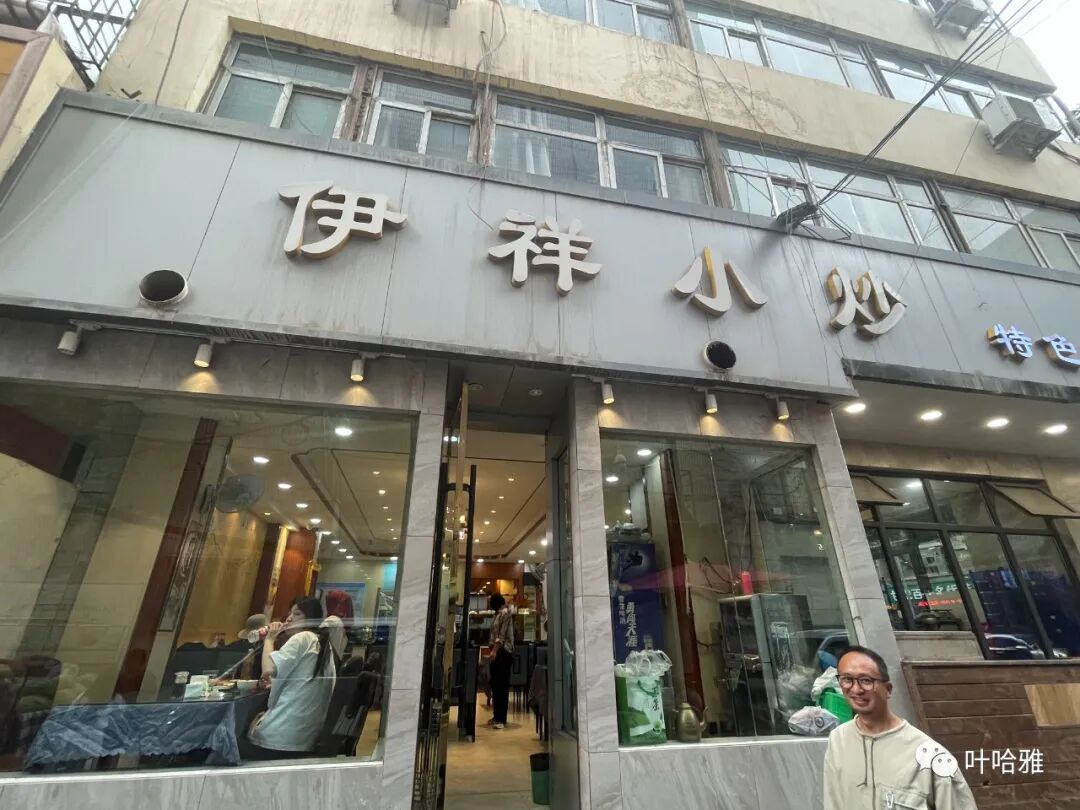
Next to Xinguan Mosque is a Lanzhou stir-fry shop that a long-time Lanzhou local specifically recommended to me as a place for authentic local dishes.
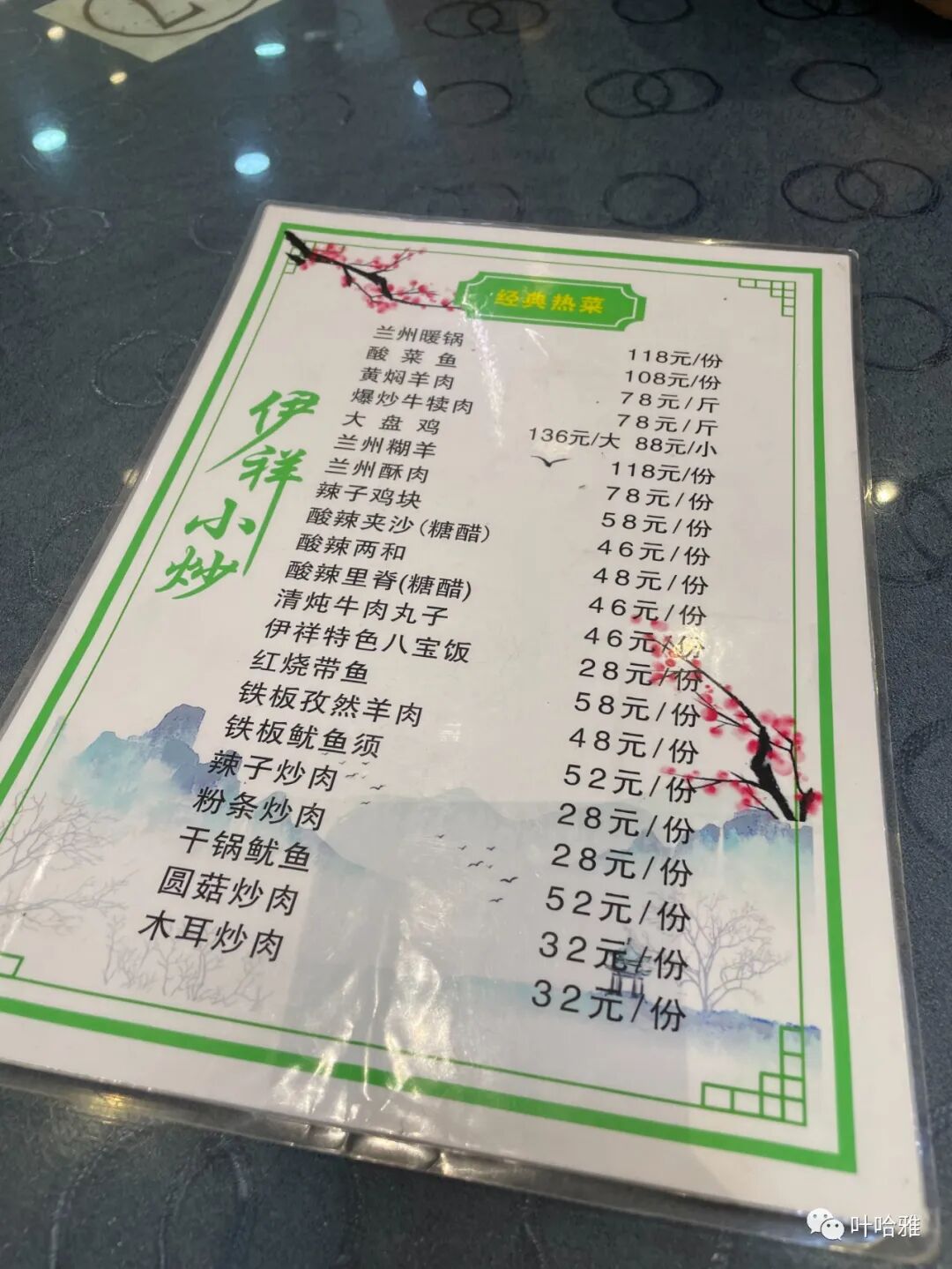
This shop has been open in Lanzhou for over ten years, and the customers are mostly local residents from the neighborhood.
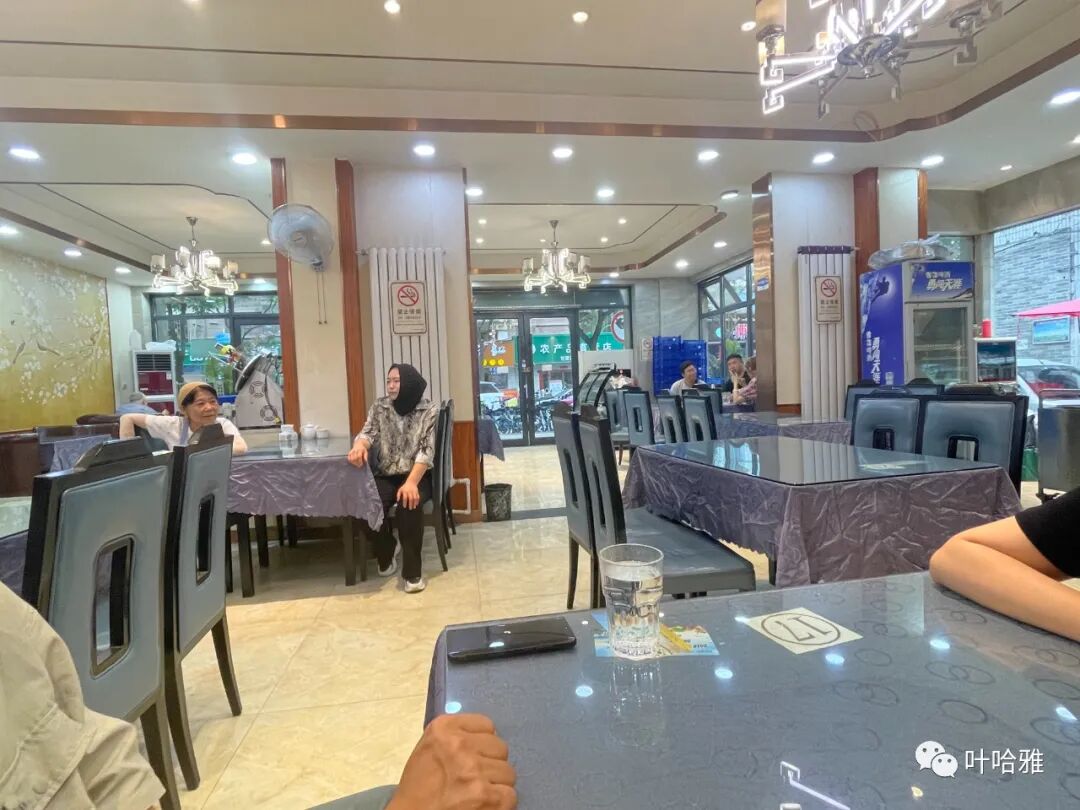
I really enjoy eating at these popular local spots. You can taste the quality in the cooking here, and I probably would not have noticed this place if a friend had not shown me the way.
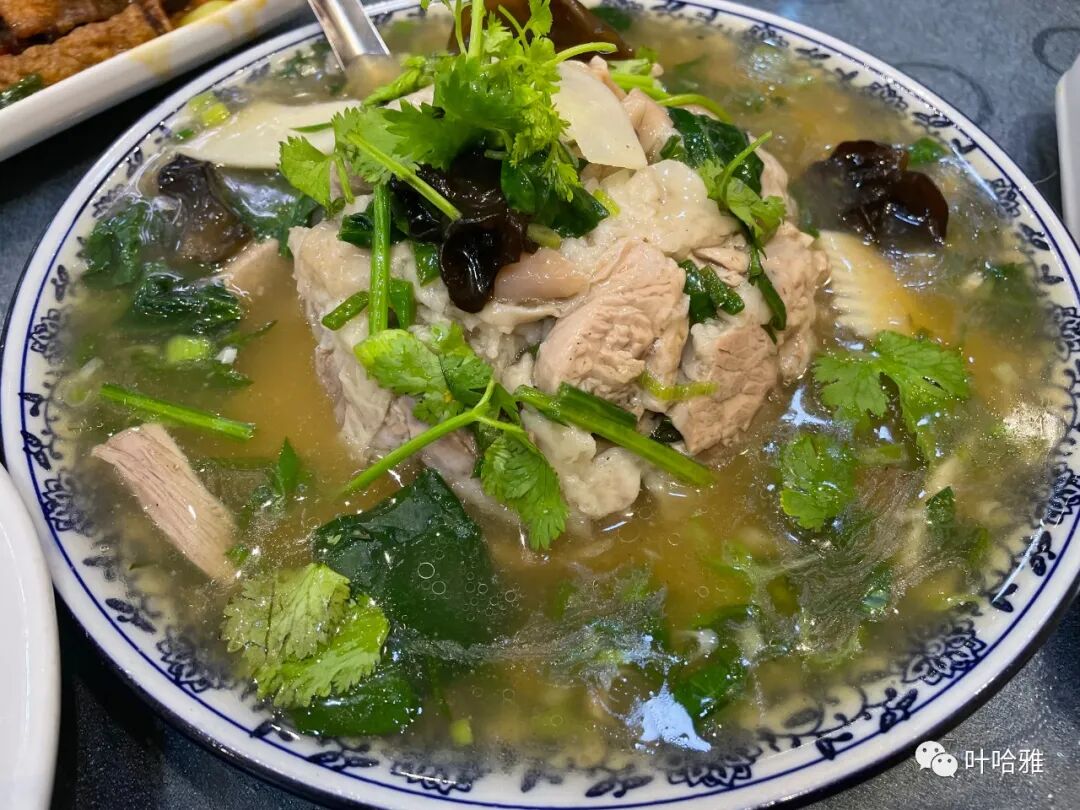
Lanzhou thick-sauce lamb (hu yang)
This was my first time eating thick-sauce lamb. I noticed that traditional Lanzhou stir-fry is mostly salty, fresh, and sweet, and the way they use starch to thicken sauces is similar to Beijing cuisine.
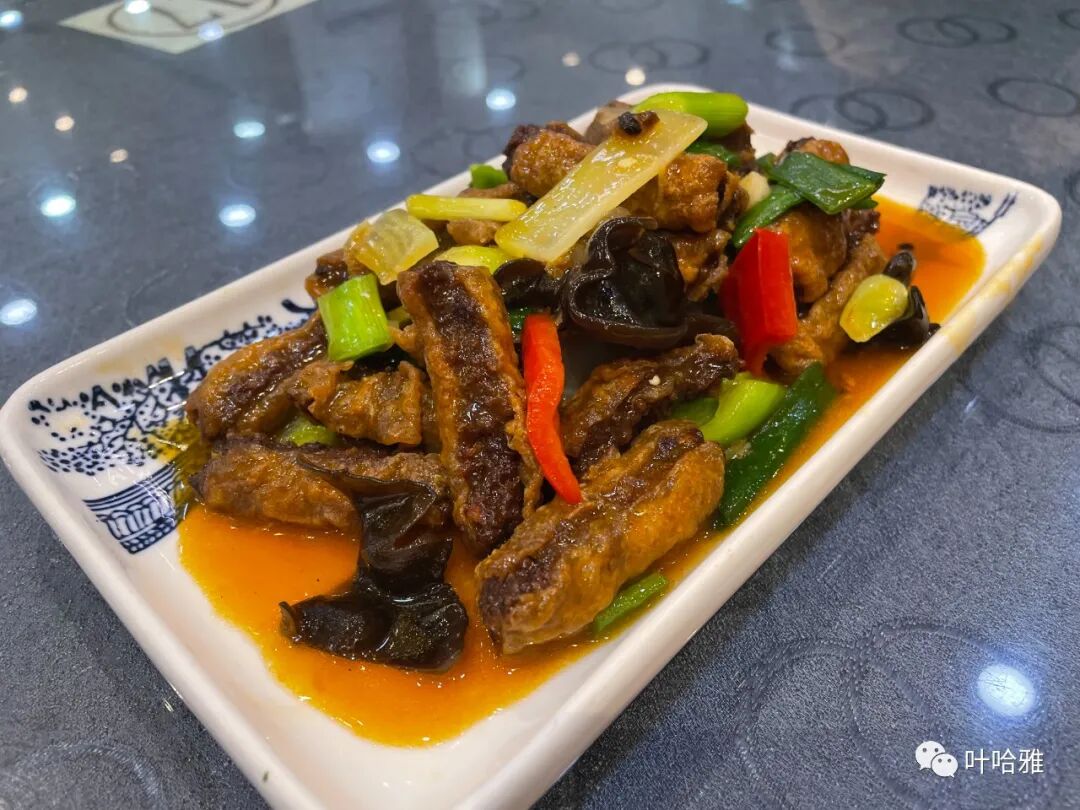
Sweet and sour meat-stuffed crepes (suanla jiasha)
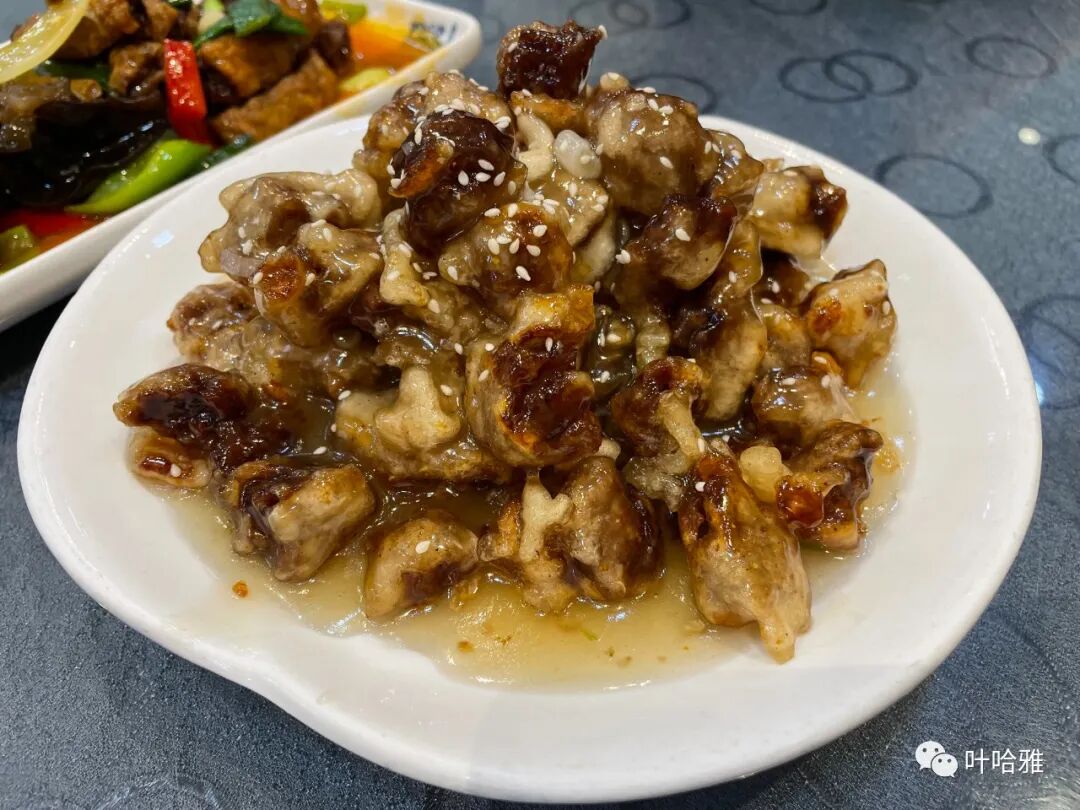
Sweet and sour pork tenderloin (tangcu liji)
If you get tired of eating Northwest-style noodles, remember to stop by Yixiang Stir-fry when you are in Lanzhou.
Miaotanzi Gadan
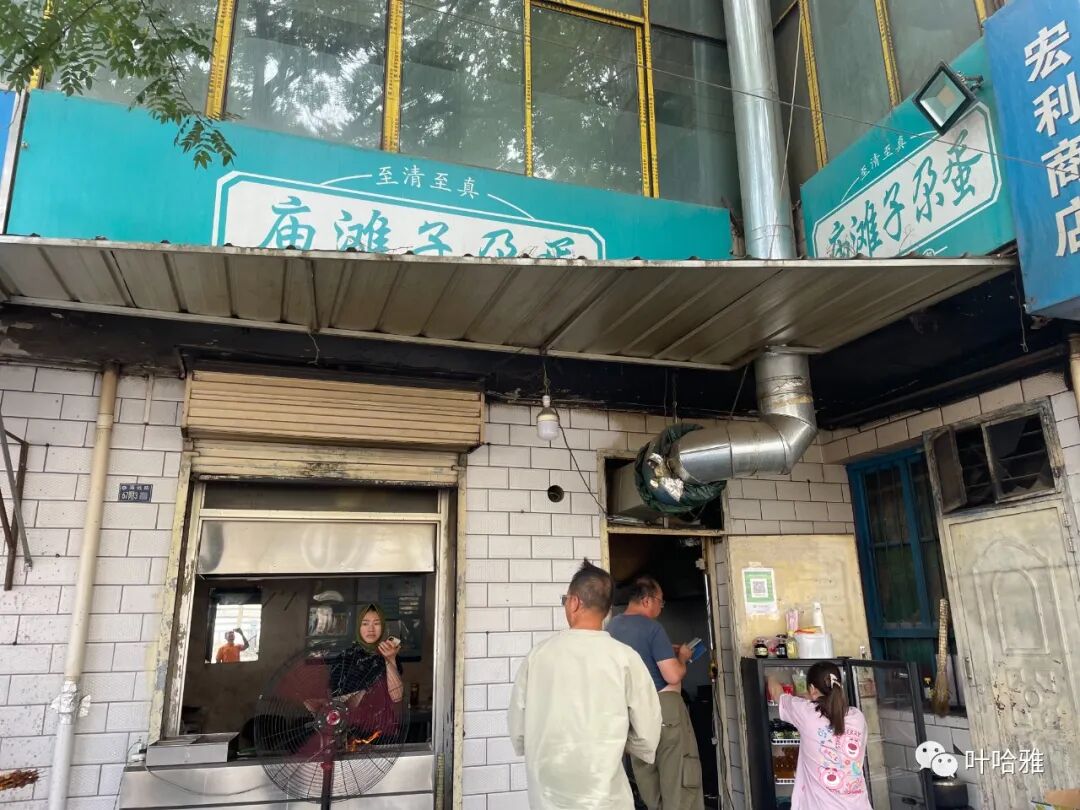
Local elders picked this Miaotanzi Gadan as another special Lanzhou barbecue stall for me. The environment is basically non-existent. It has been open for over a decade and is full of locals. People sit on stools by the roadside to eat, or just stand and dip their skewers.
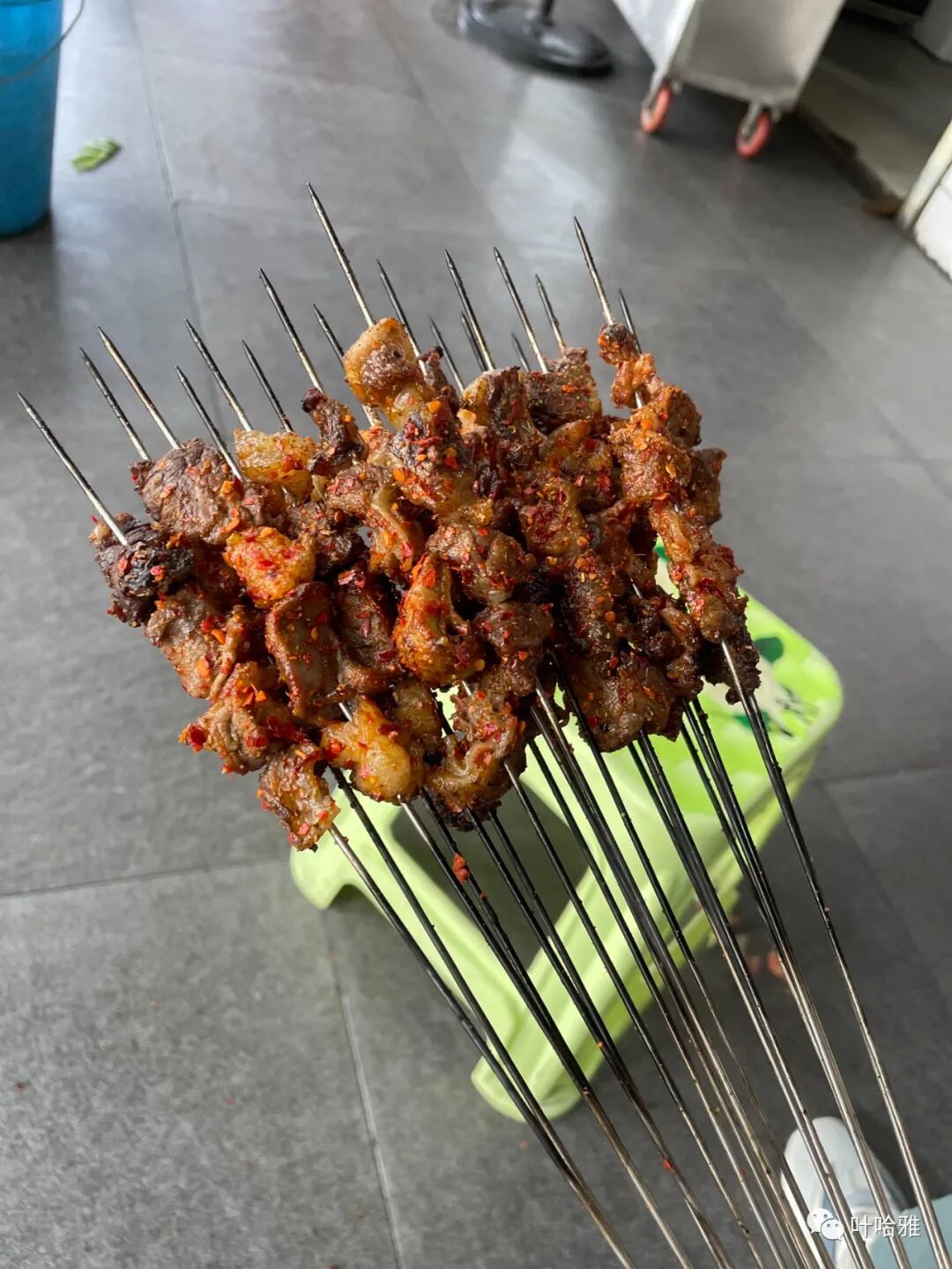
Lanzhou barbecue is known for using iron skewers over an open flame with plenty of seasoning. They come in bundles of 20, and it is easy for one person to eat 30 or 50. I like these small skewers. Large ones fill me up after one or two, which feels less satisfying.
Aliya Art Restaurant
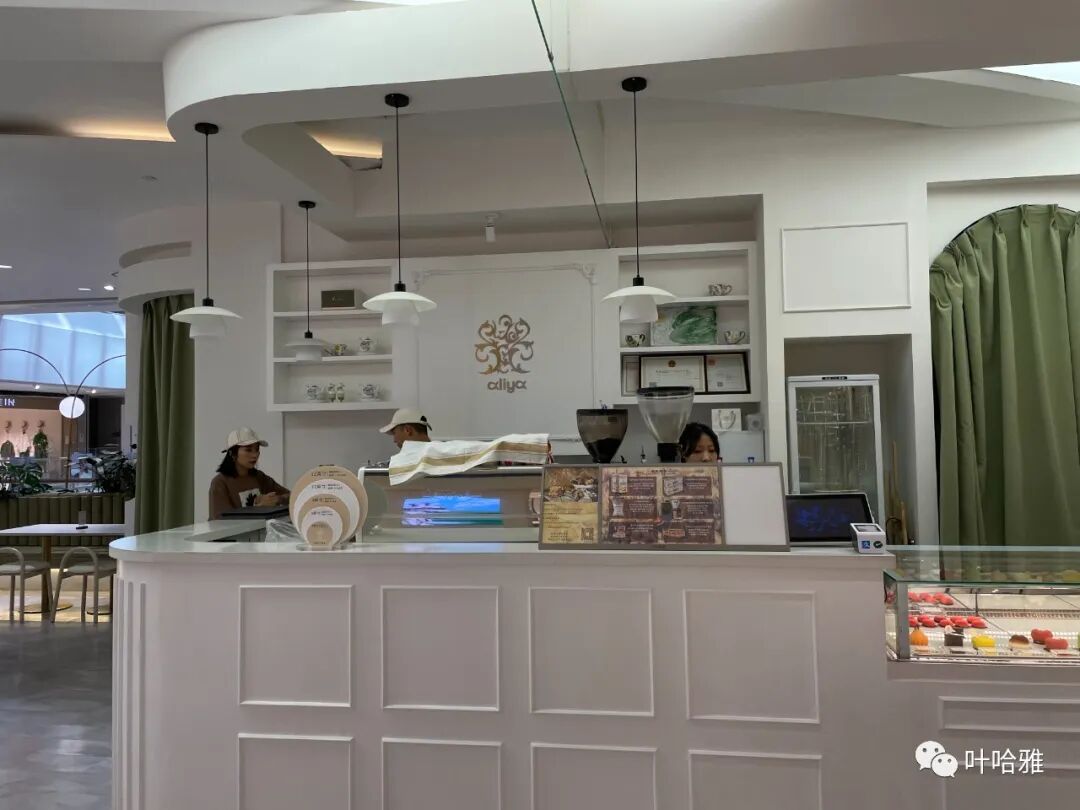
After spending a long time in Northwest cities, I cannot handle heavy dishes anymore. I specifically chose this refreshing art restaurant to meet a friend. You can have afternoon tea here, or choose from light meals.
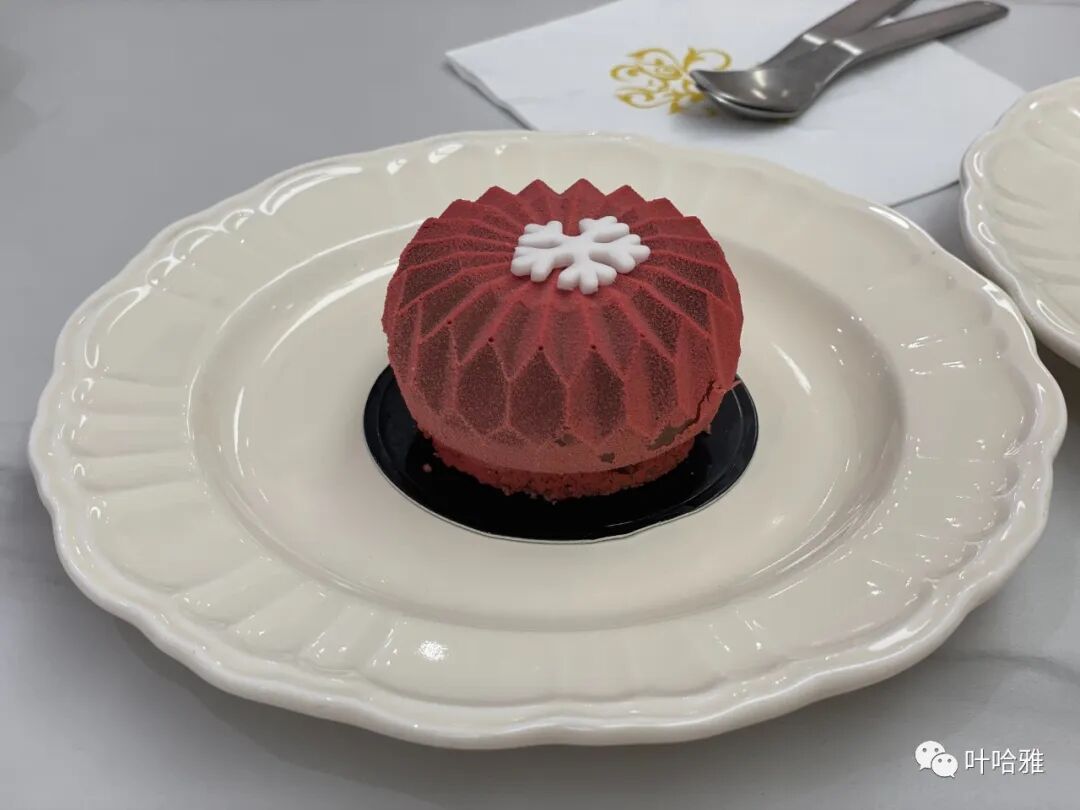
Aliya Lanzhou Center branch. Their desserts are excellent. They also serve sushi and salads, which are rare, light food options in the Northwest.
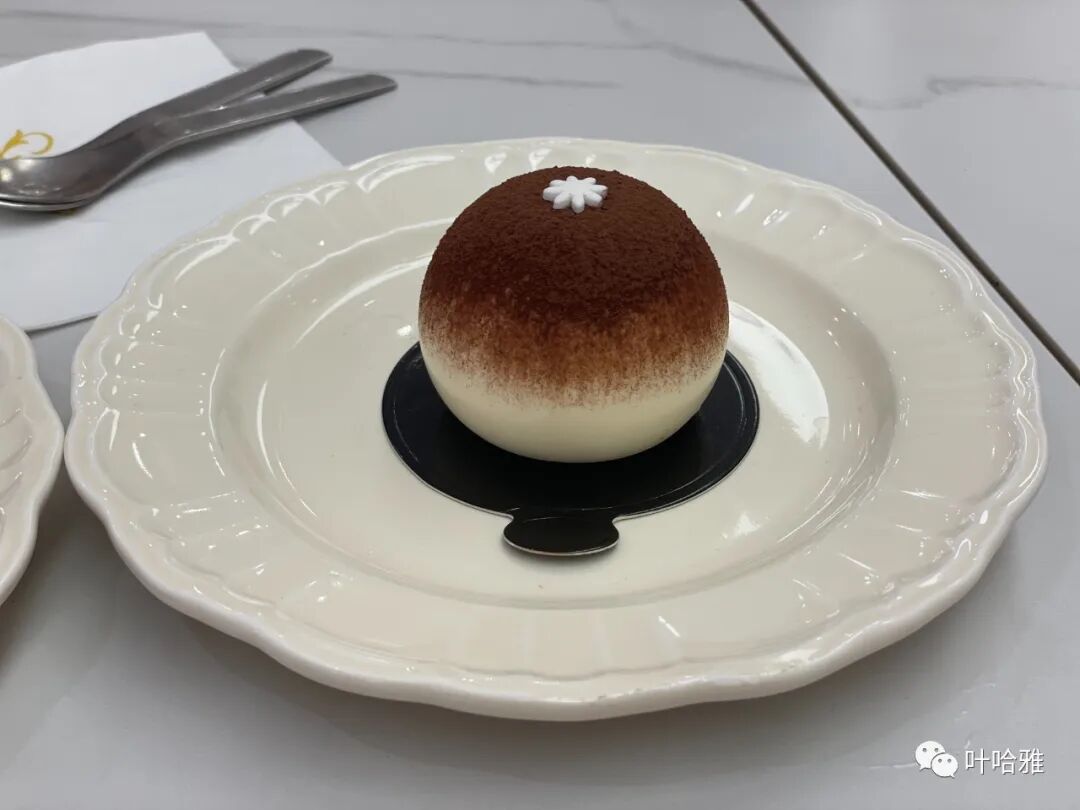
Things like sushi and spring rolls are much easier to eat.
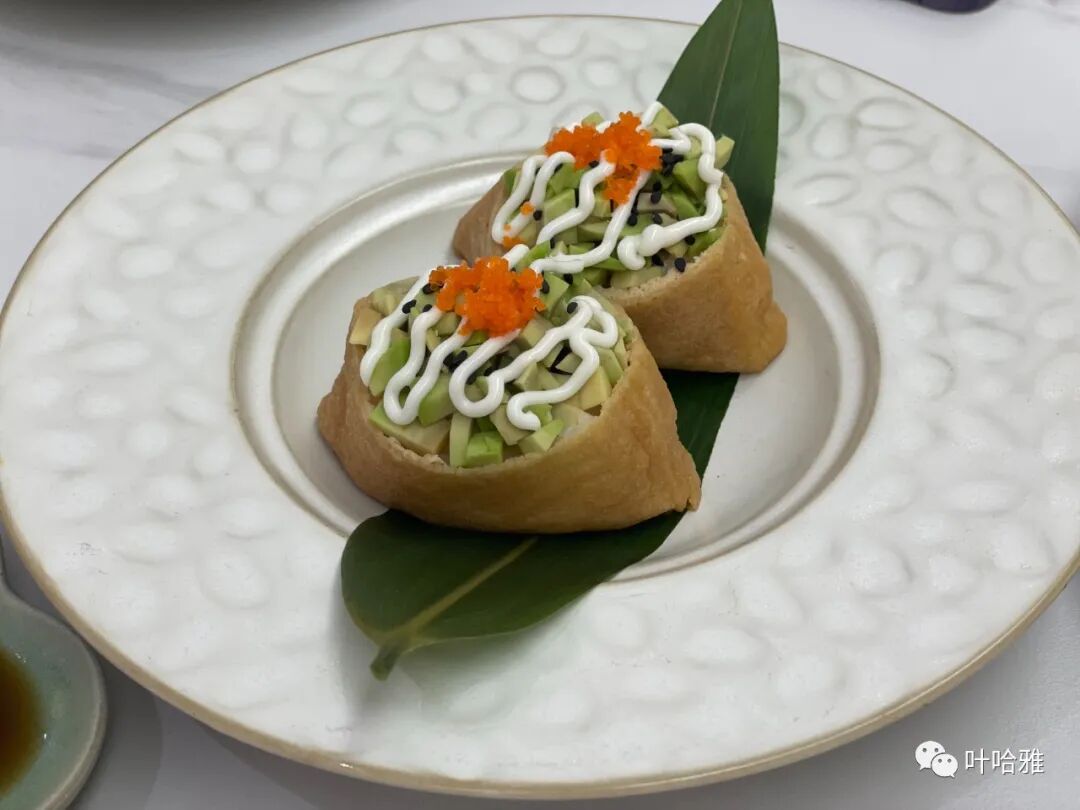
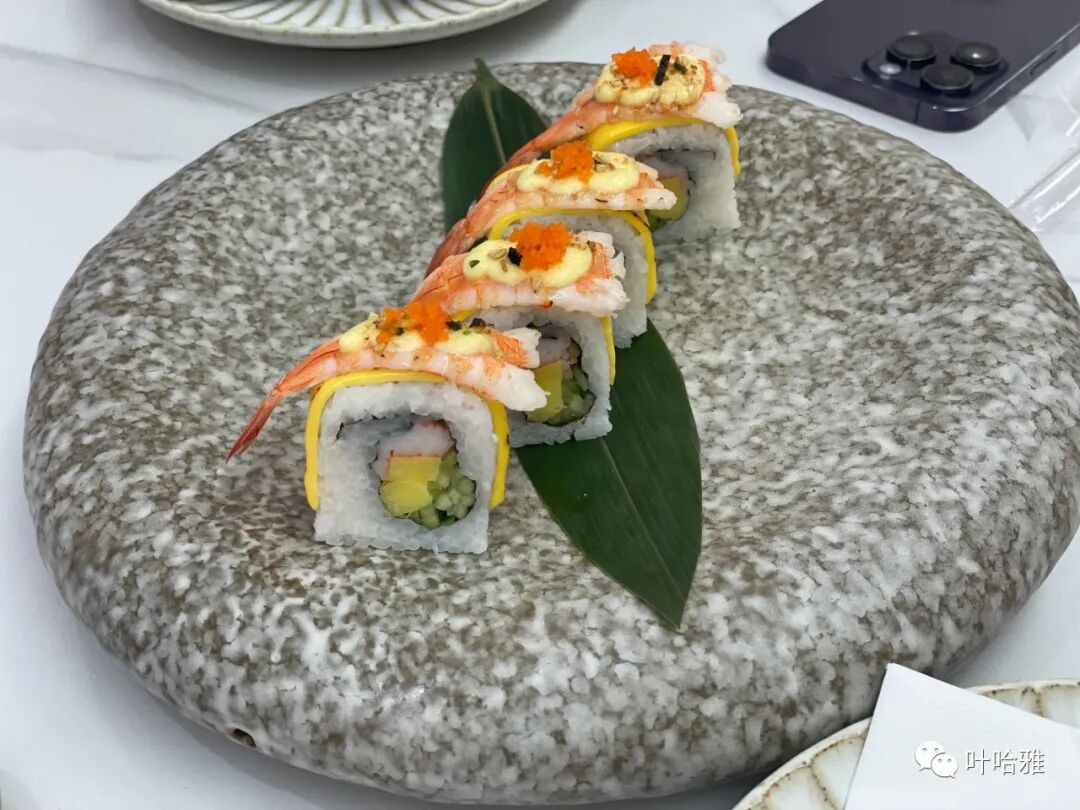
Hongyunxuan Macau Charcoal Hot Pot
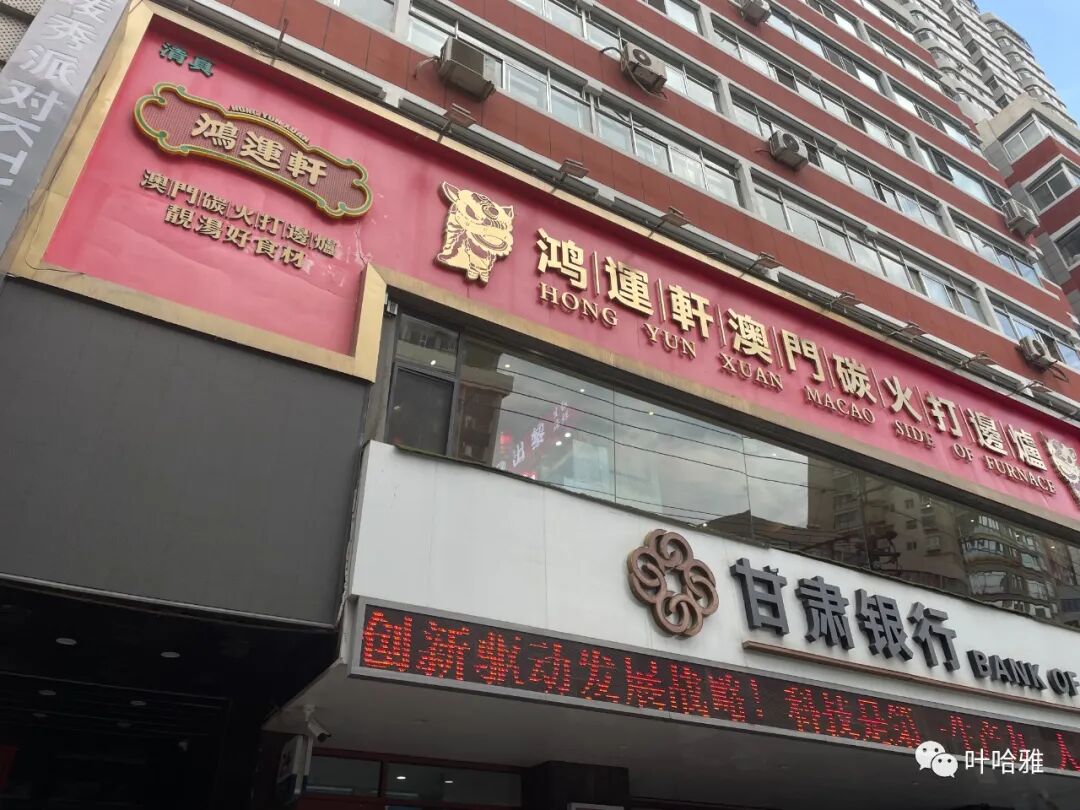
I have had this halal hot pot (dabanlu) place saved in my Beijing list for a long time as a Lanzhou specialty. Hongyunxuan previously ran a Hong Kong-style tea restaurant in Macau, but it closed during the pandemic. I did not expect them to open a hot pot place in Lanzhou.
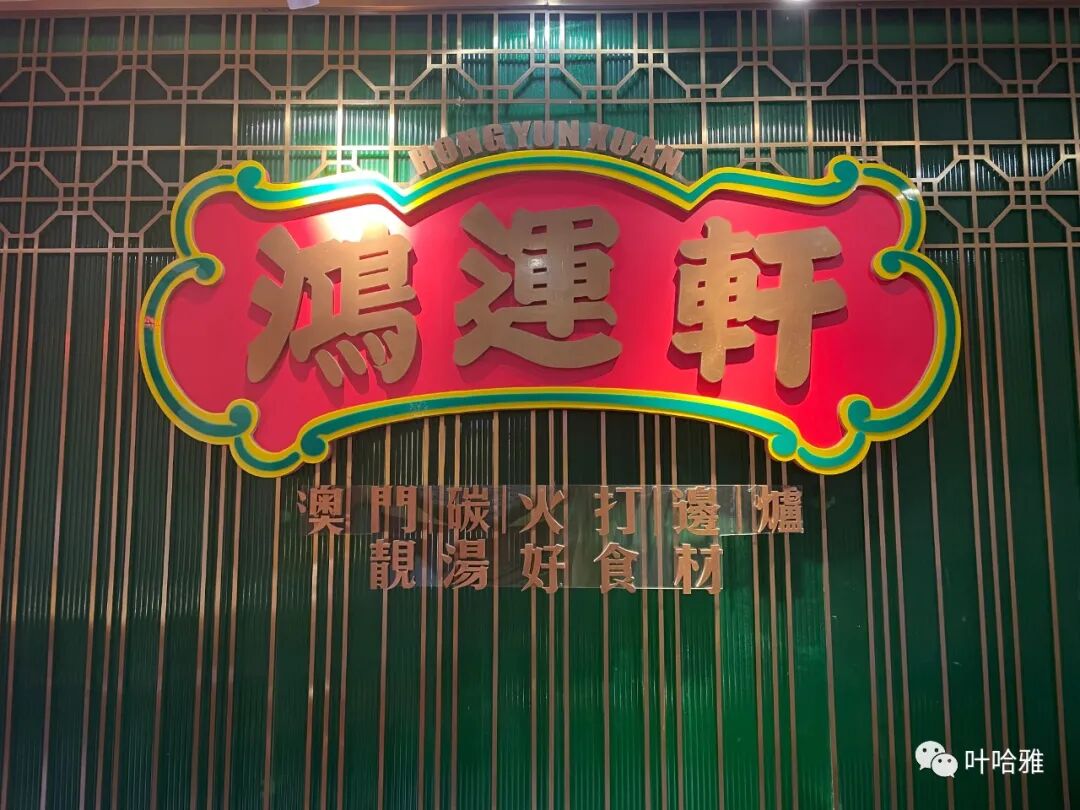
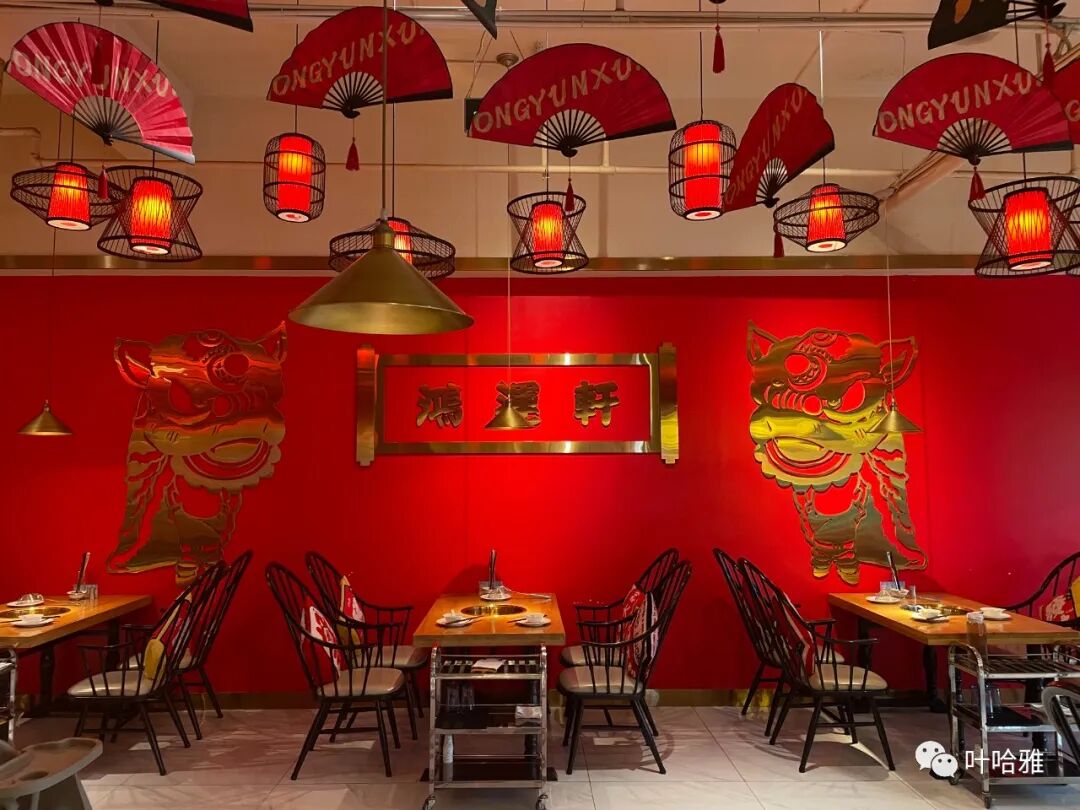
The restaurant decor is very Cantonese. It has not been open long, so I wonder how long it will last.
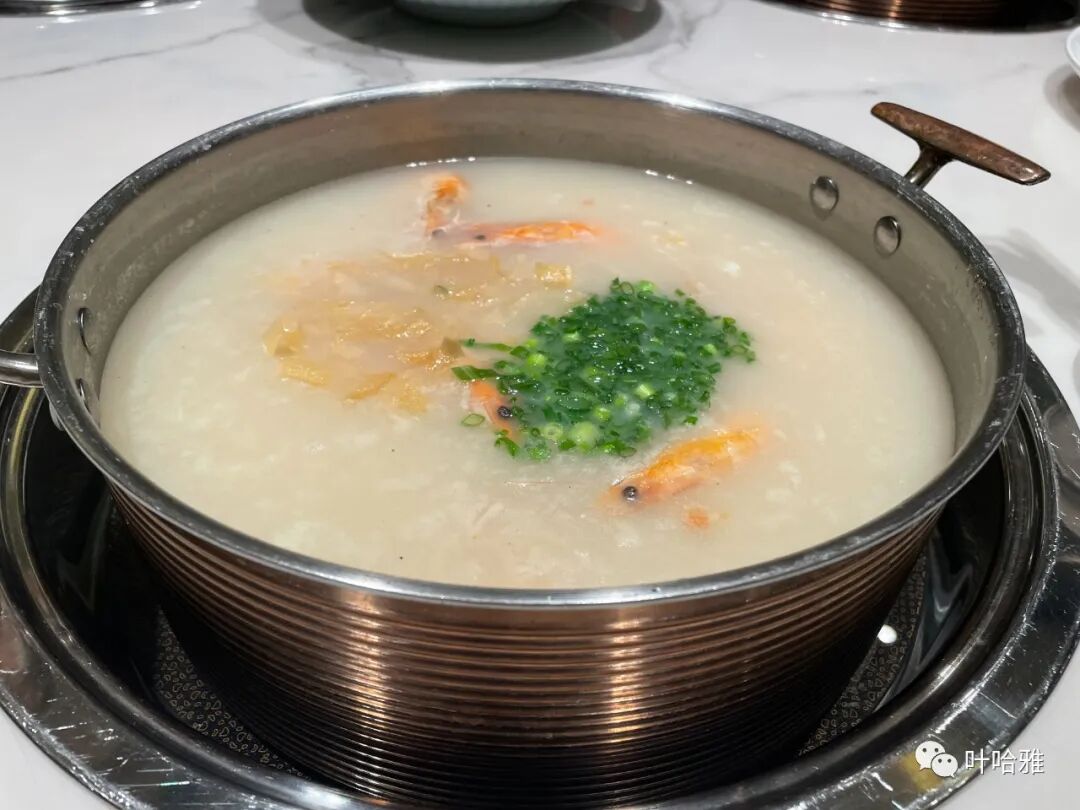
We chose two types of seafood porridge bases. You can drink the porridge first, then cook the meat.
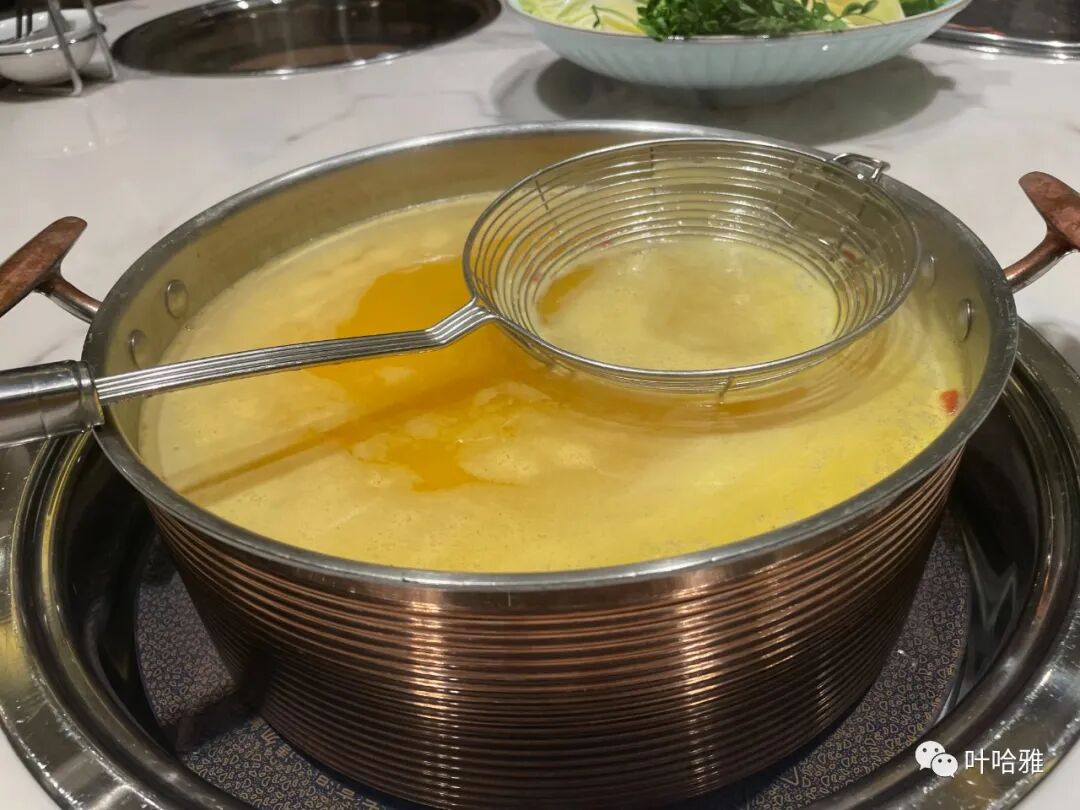
Fish maw (huajiao) porridge base
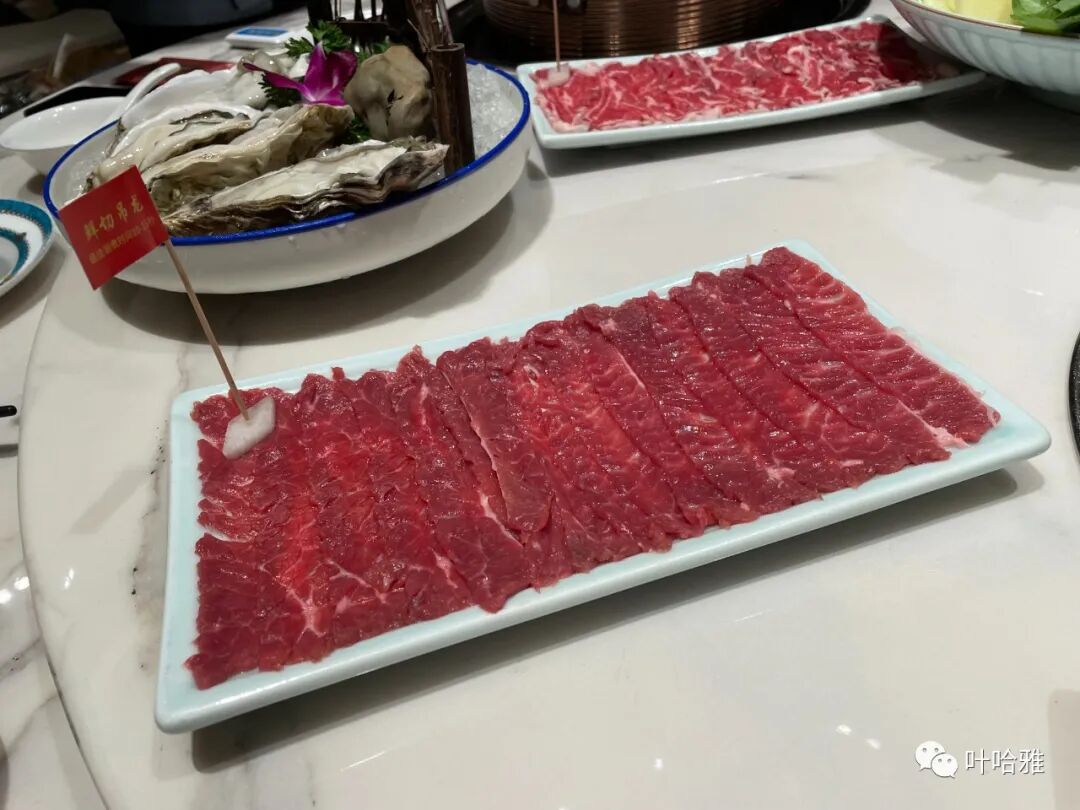
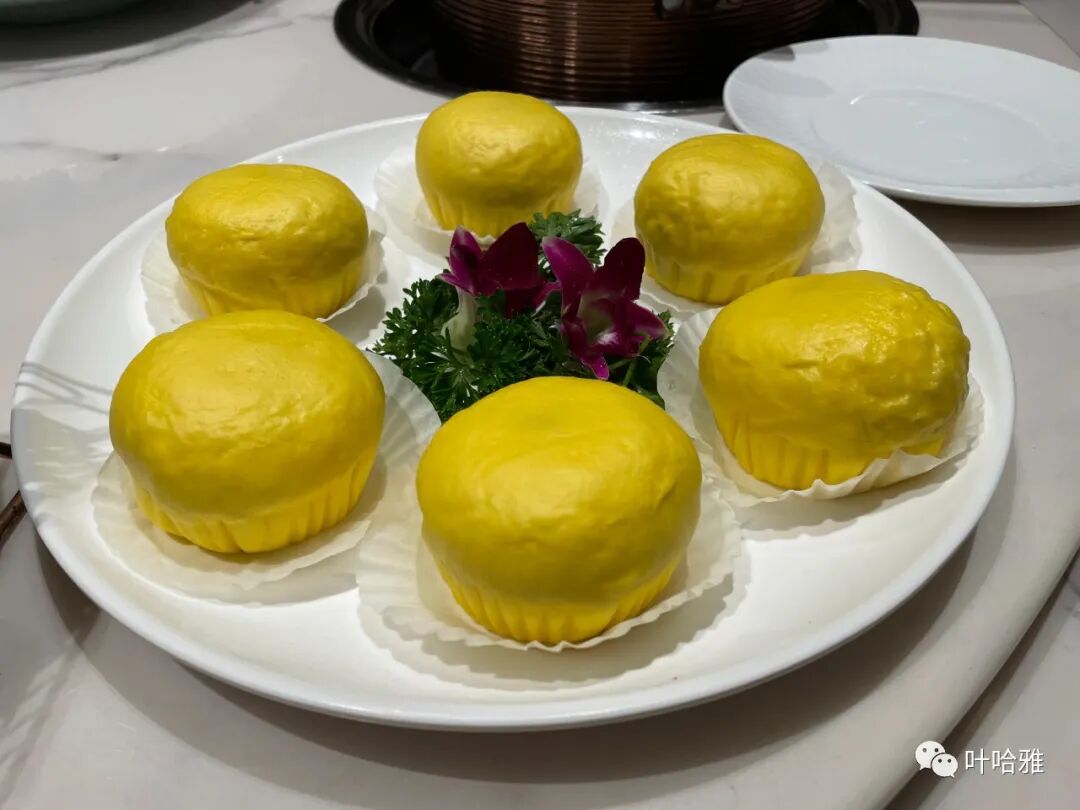
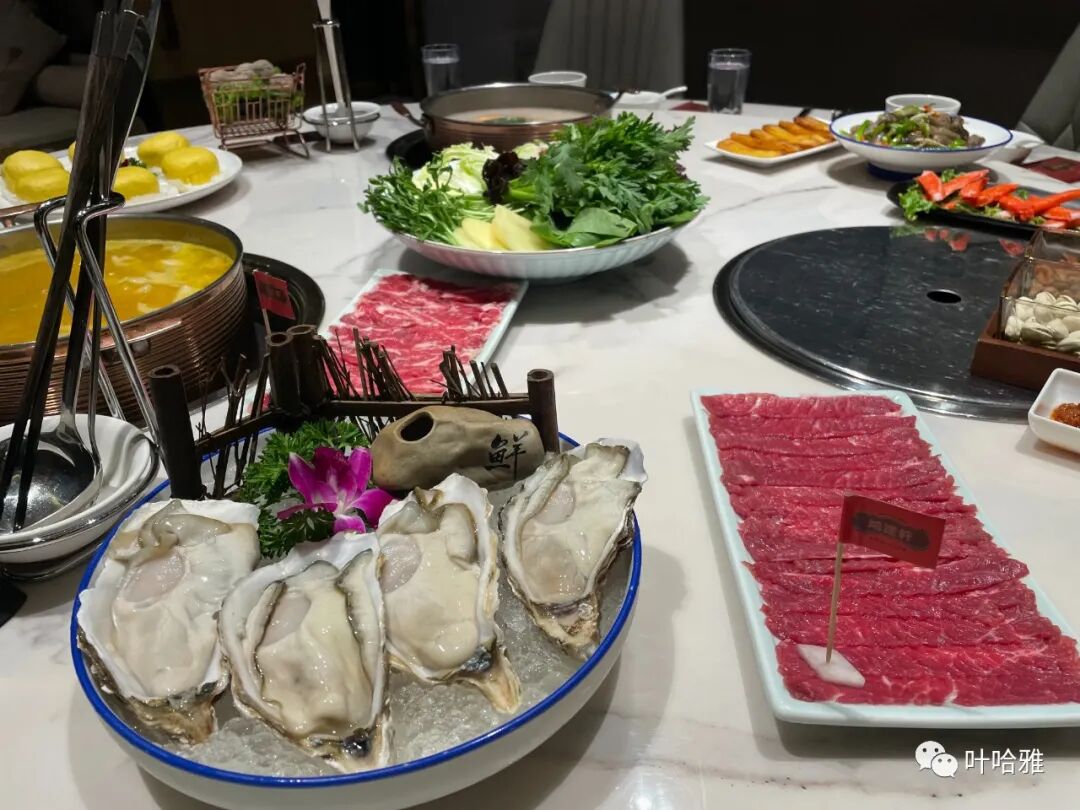
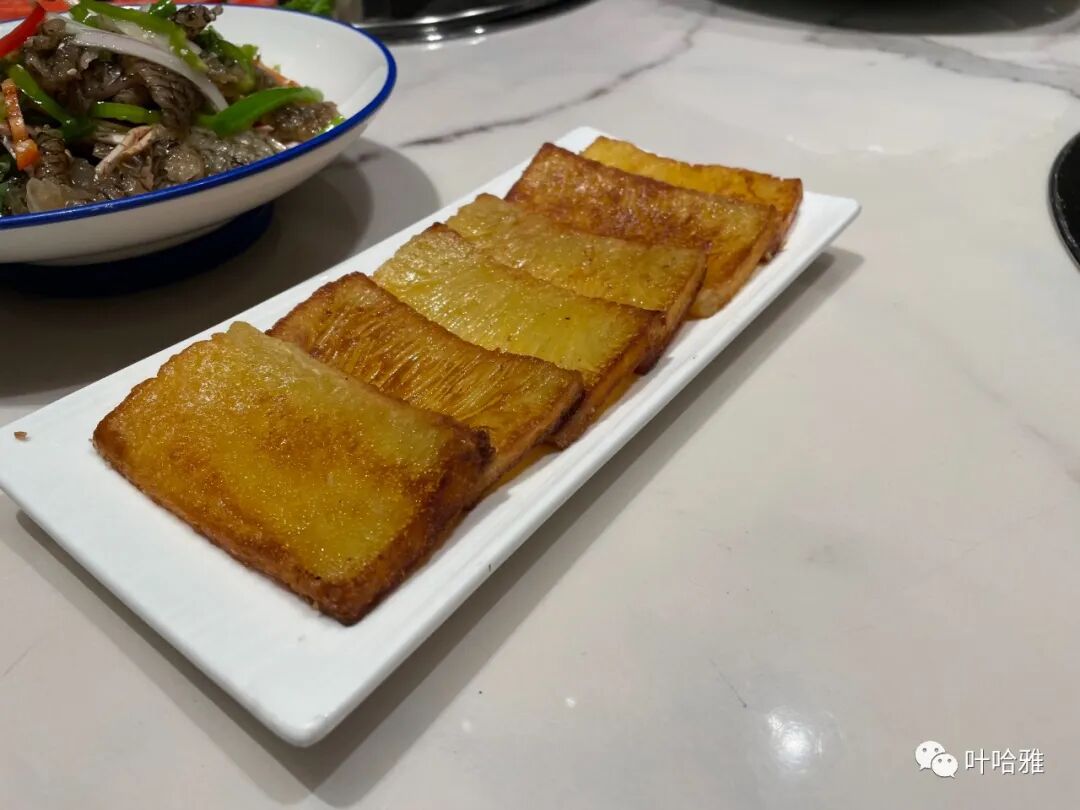
This Cantonese-style hot pot (dabanlu) tastes good and is light. I hope it stays open because it really helps add variety to the food scene in the Northwest.
Shancheng Hand-Grabbed Lamb (Shancheng shouzhuo)
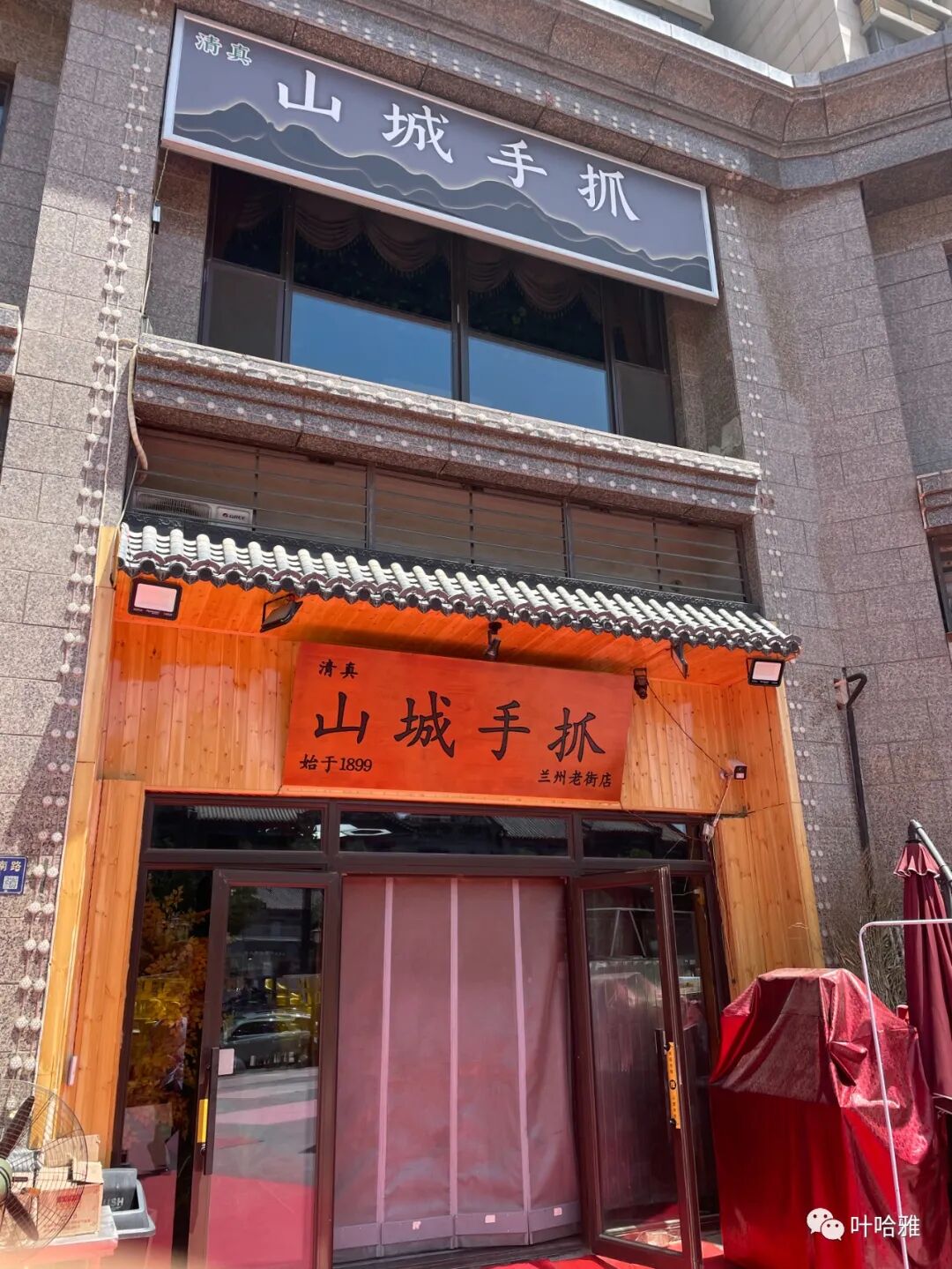
I met an elder (xianglao) from the Lingming Hall (Lingmingtang) in Lanzhou at Shancheng Hand-Grabbed Lamb. Shancheng is a village in Linxia, and many friends in Lanzhou recommend this place. Most people working in the halal restaurant business in Lanzhou are from Linxia.
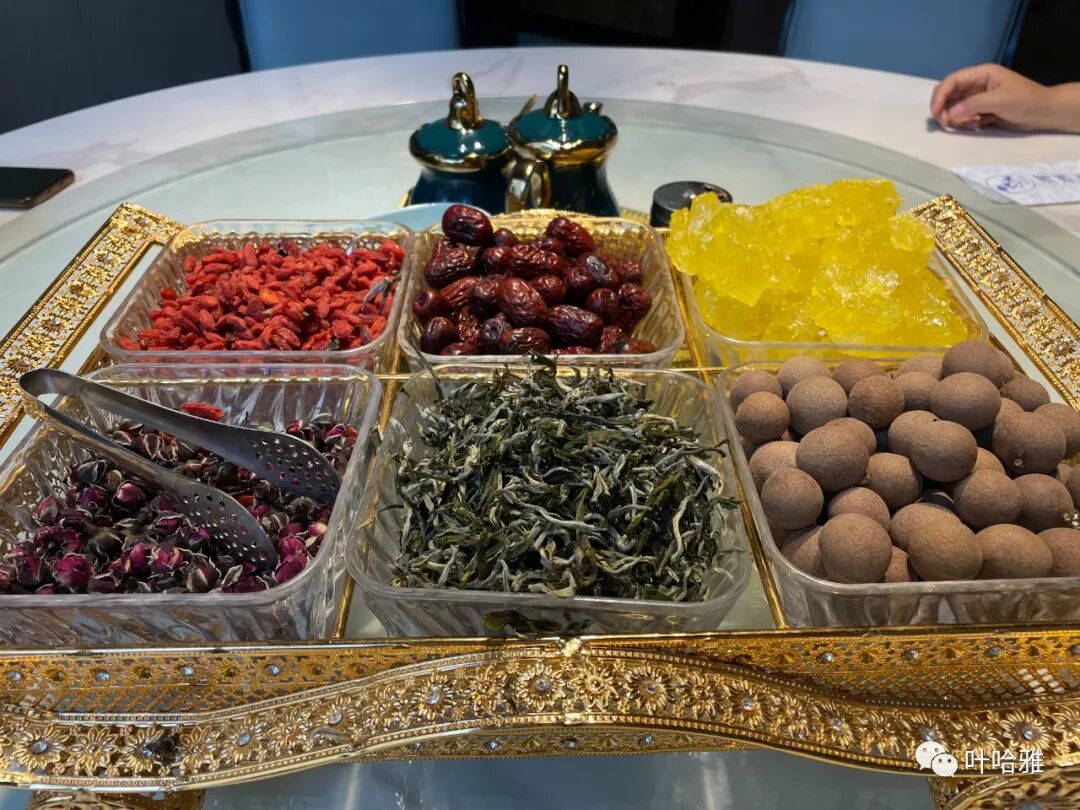
Before eating, they serve tea. You can grab whatever you like from the Three-Fortress Tea (sanpaotai) platter. The rose inside is a local Lanzhou specialty, and you must add it.
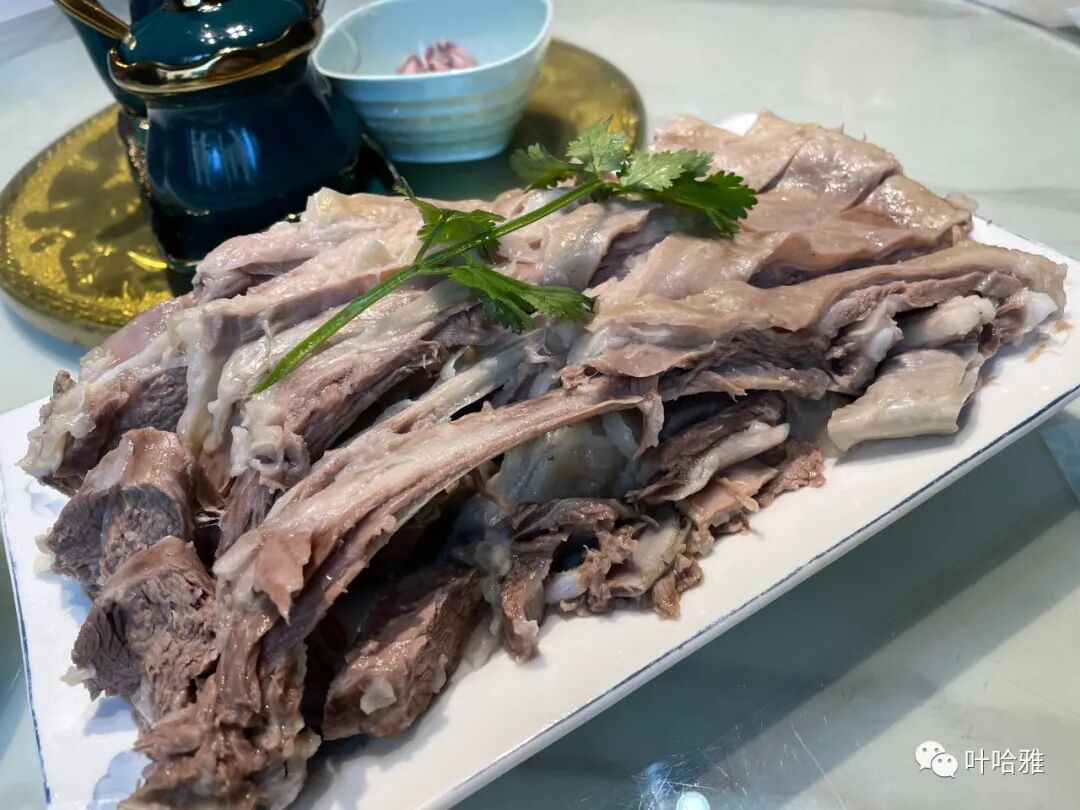
The hand-grabbed lamb is tender with a good mix of fat and lean meat, mostly lean, which is how I like it.
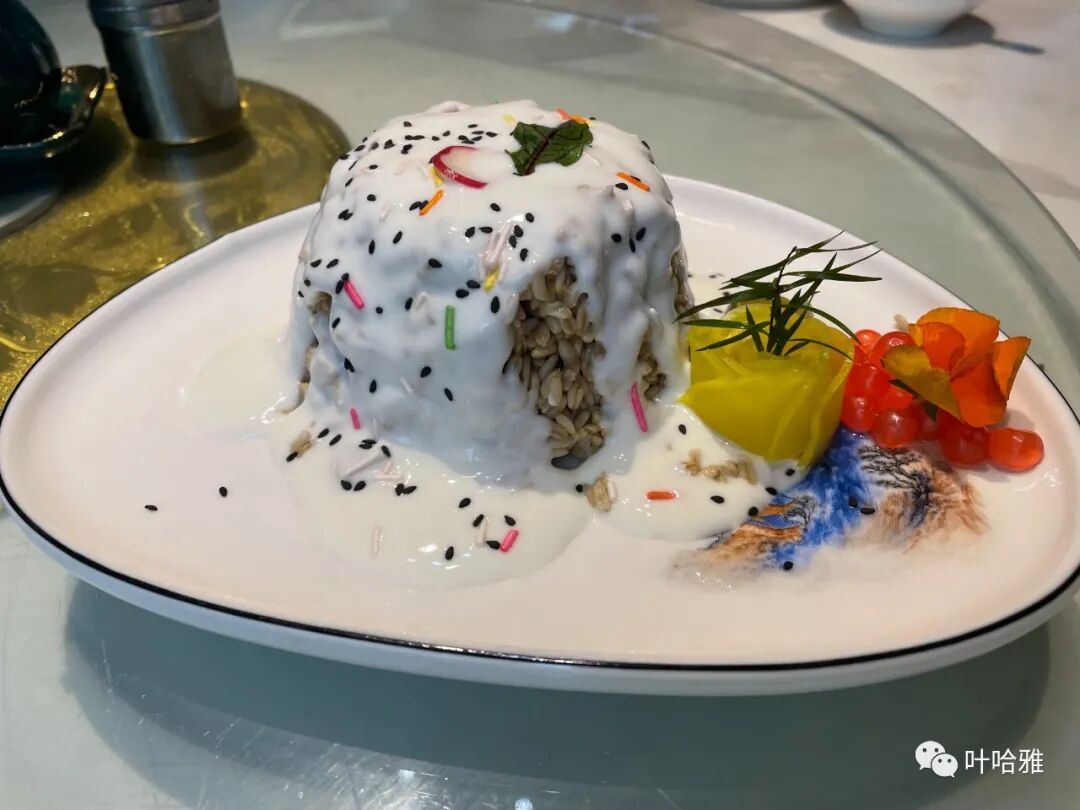
Yogurt with fermented oat grains (tianpei) is a creative new combination. Fermented oat grains are a popular Lanzhou snack.
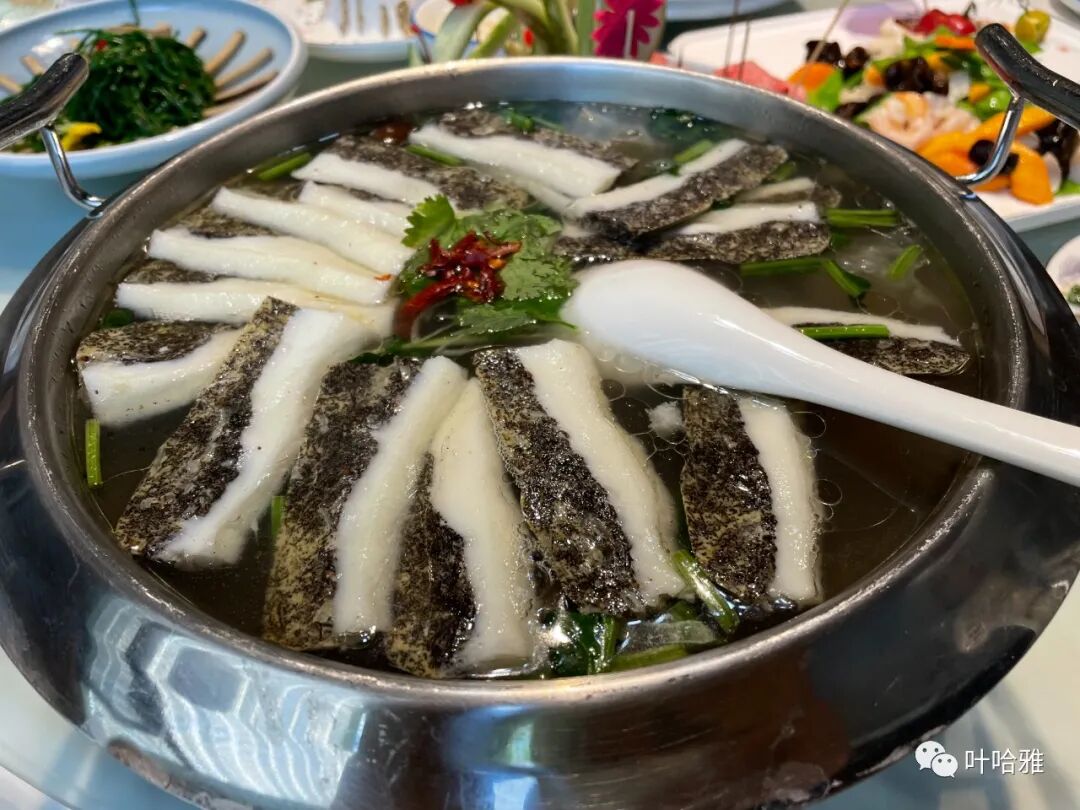
Soup made with hair moss (facai). Hair moss is a specialty of the Northwest and can be used as medicine.
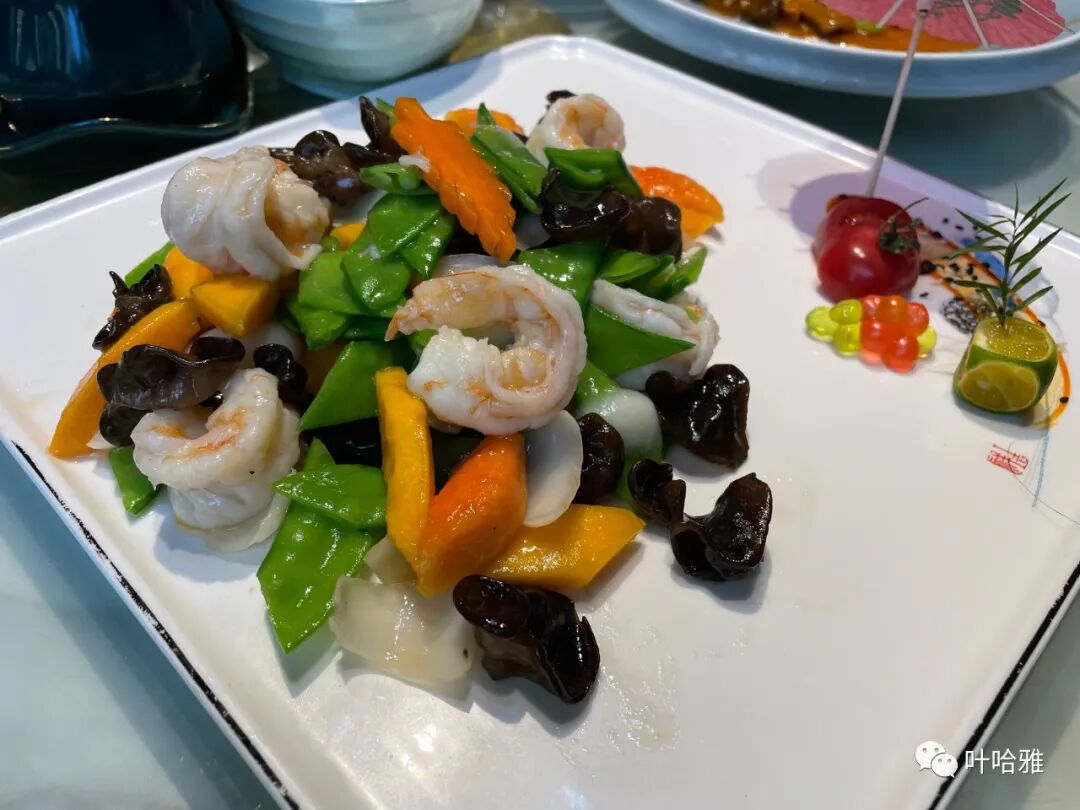
The lily bulbs in the assorted shrimp dish are another Lanzhou specialty. You must try lily bulbs when you come to Lanzhou.
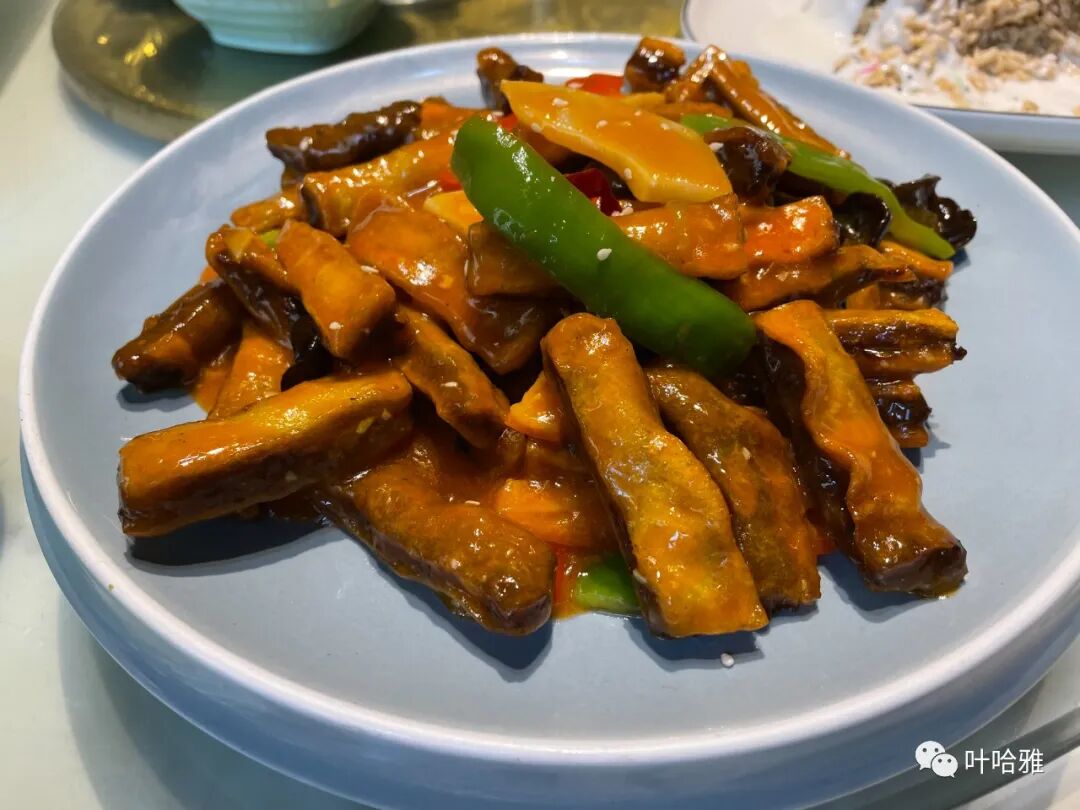
Hot and sour stuffed meat (suanla jiasha). The outer layer of the stuffed meat is made of egg, similar to Beijing's fried meat strips (songrou), but those use bean curd skin.
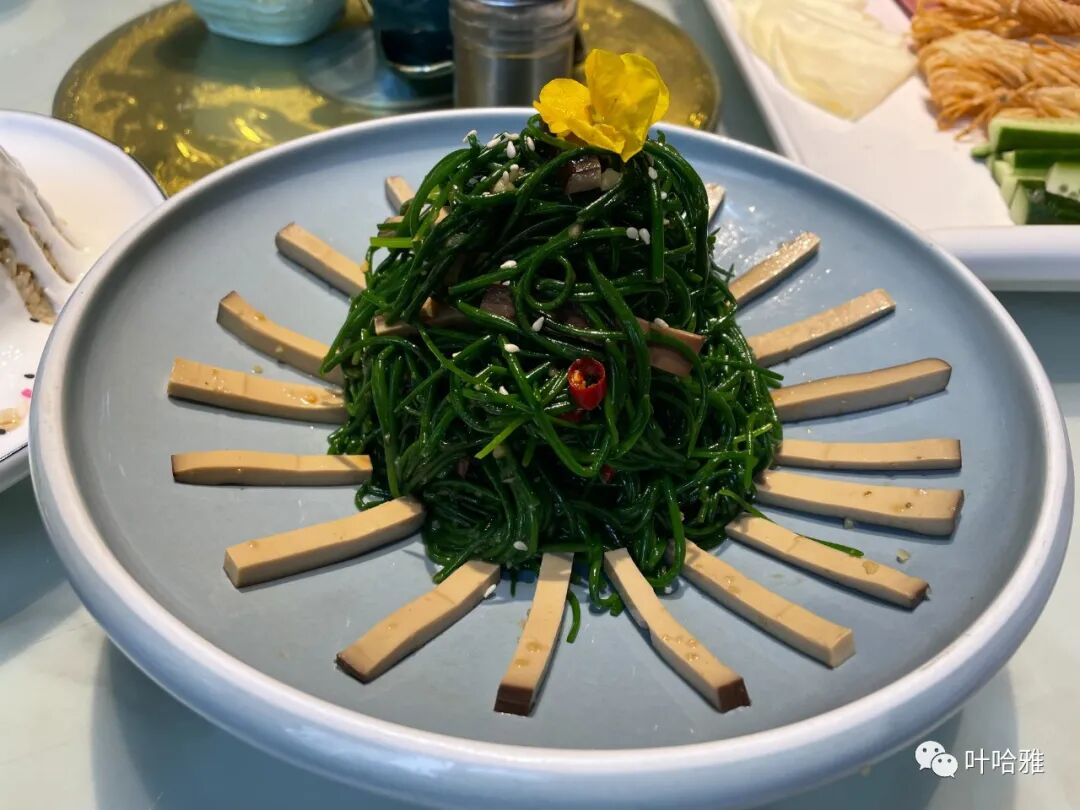
Cold tossed wild onion (shacong). This is a wild vegetable from the Northwest, and it has become more common in Beijing over the last two years.
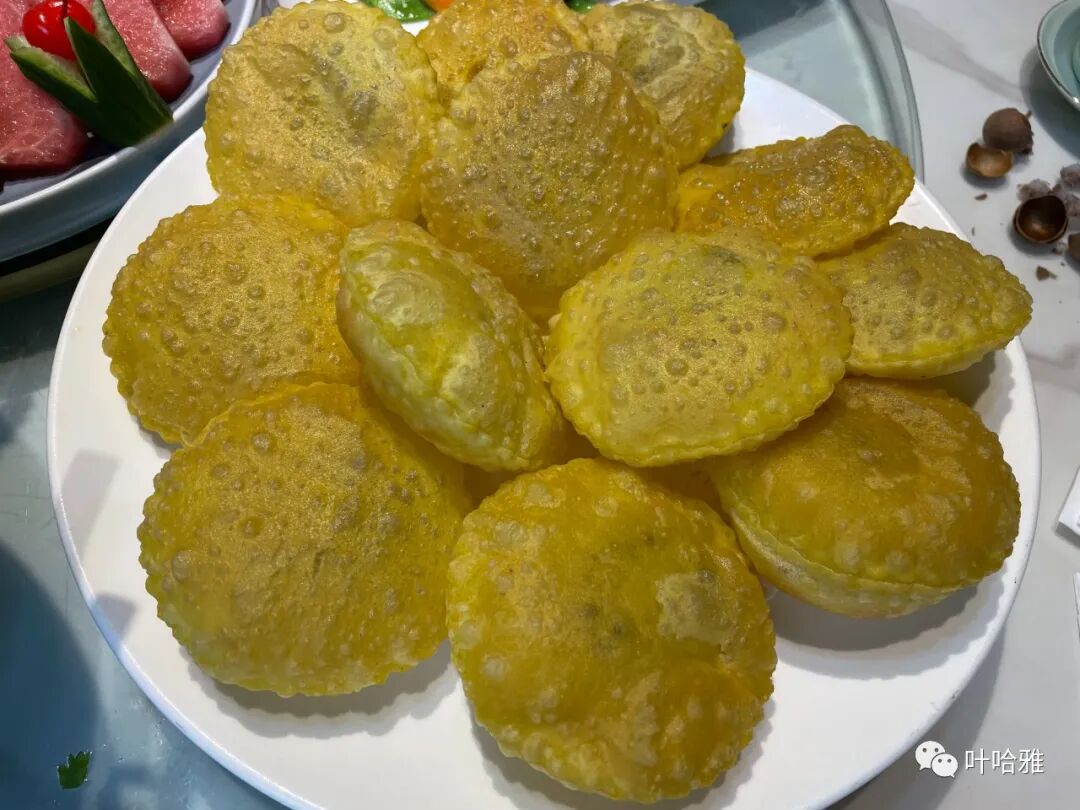
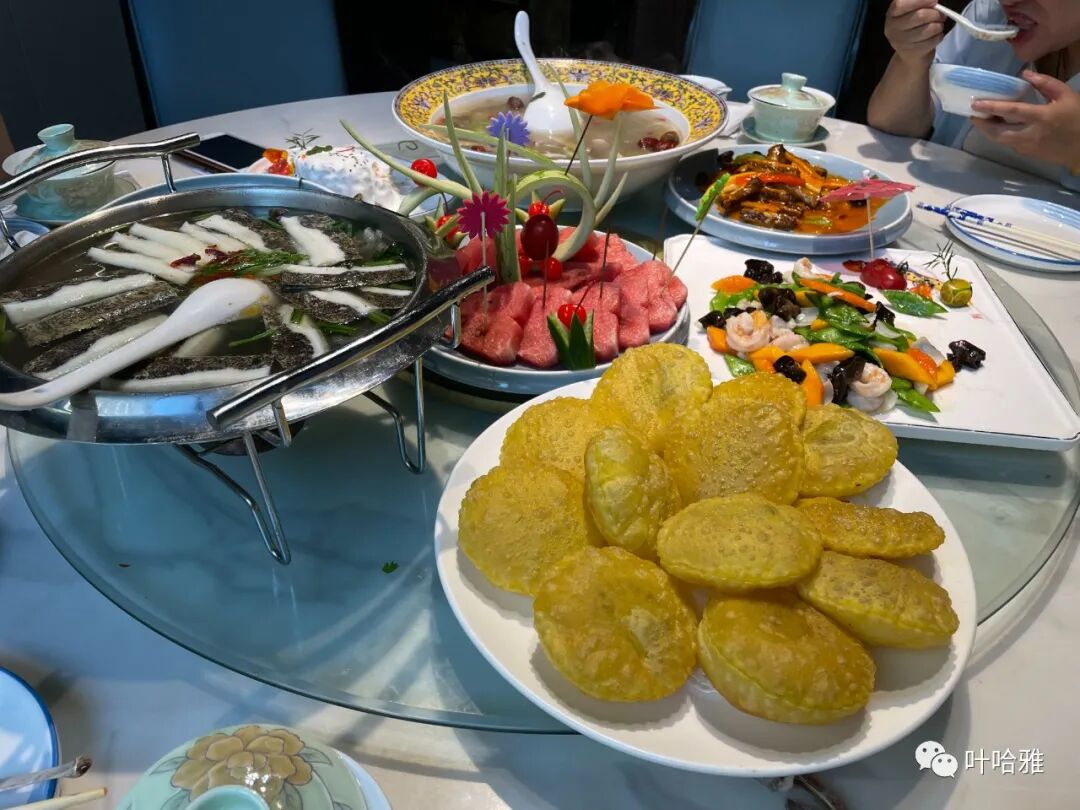
Sugar oil cake (tangyougao) is a bit like the Qinghai dog-pissing pancake (goujiaoniao). It is hollow inside. My friends chose these local specialties for me, and Shancheng Hand-Grabbed Lamb lives up to its reputation. It is worth recommending.
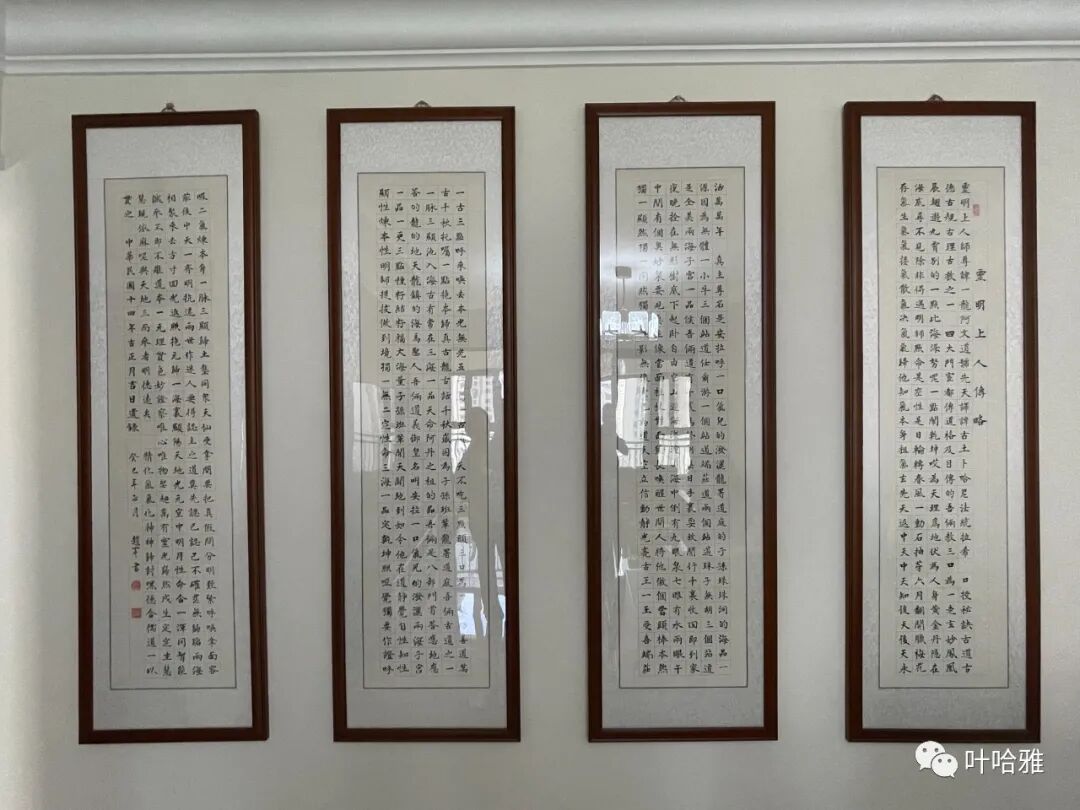
After the meal, we visited the home of the elder from Lingming Hall and saw this biography, The Brief Biography of Master Lingming (Lingming Shangren Zhuanlue).
On the way to Lingmingtang Gongbei, I passed through Gongbei Gully and saw several gongbei built halfway up the mountain.
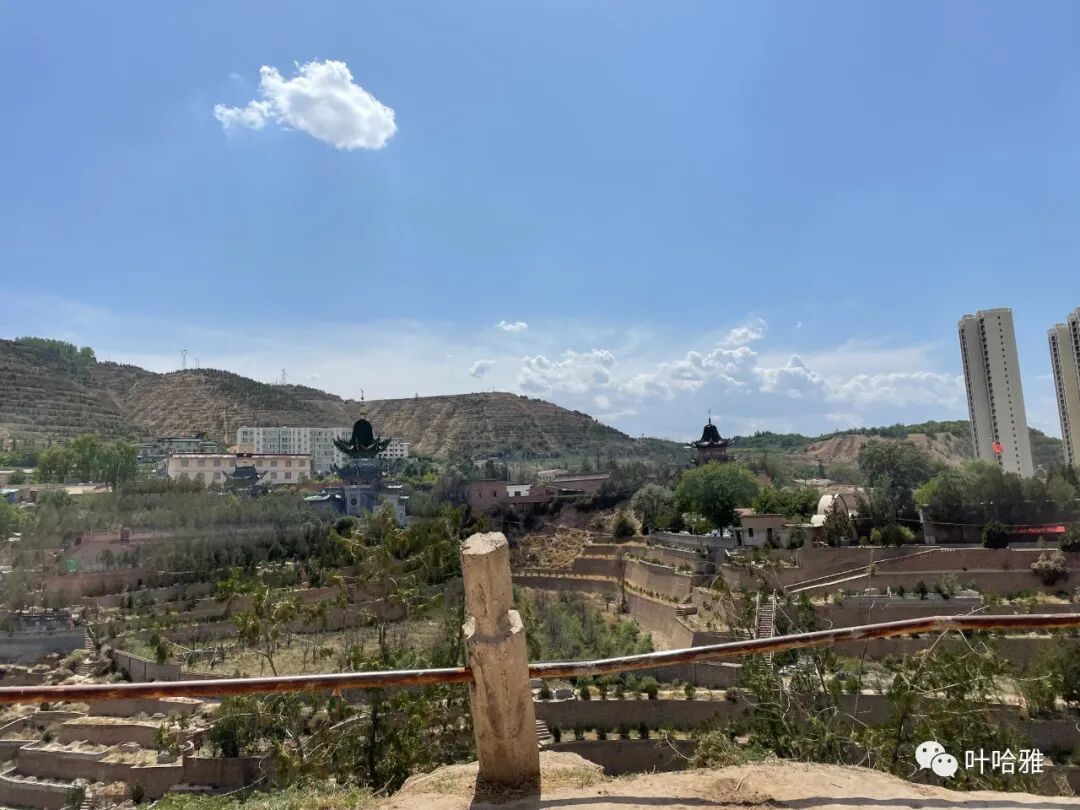
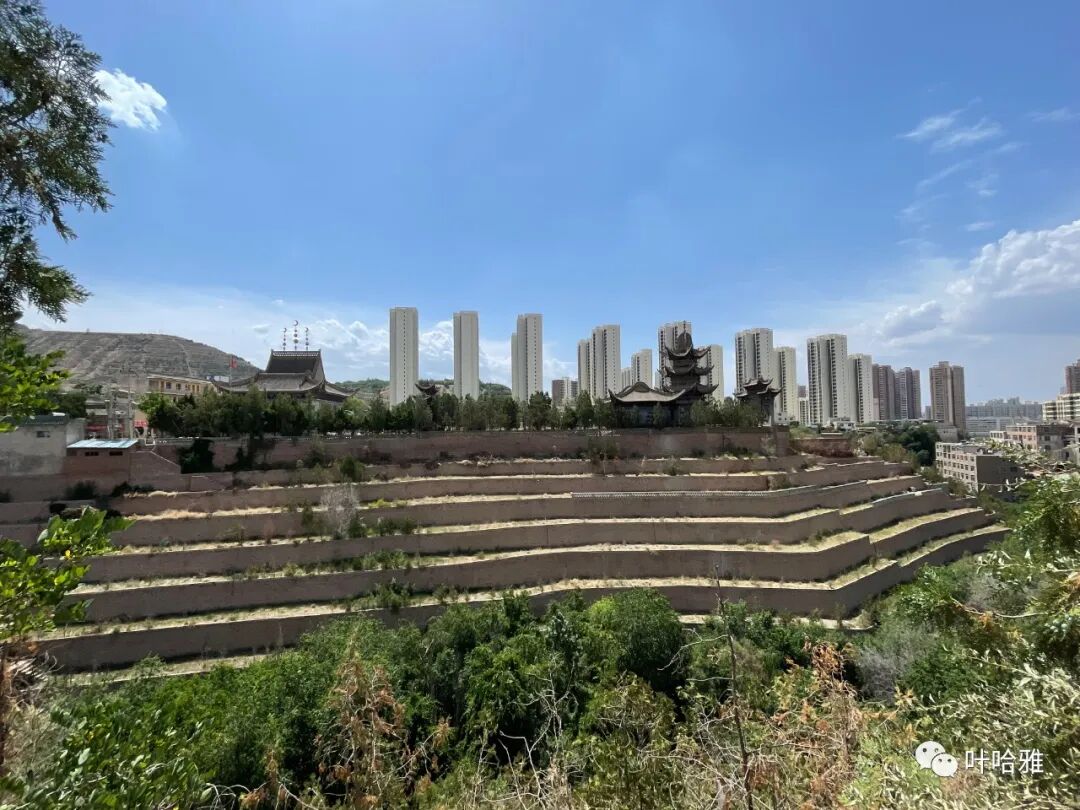
The Lingmingtang Gongbei sits on the top of Wuxingping Mountain in Lanzhou, covering an area of over 30,000 square meters, and it is the largest gongbei I have ever seen.
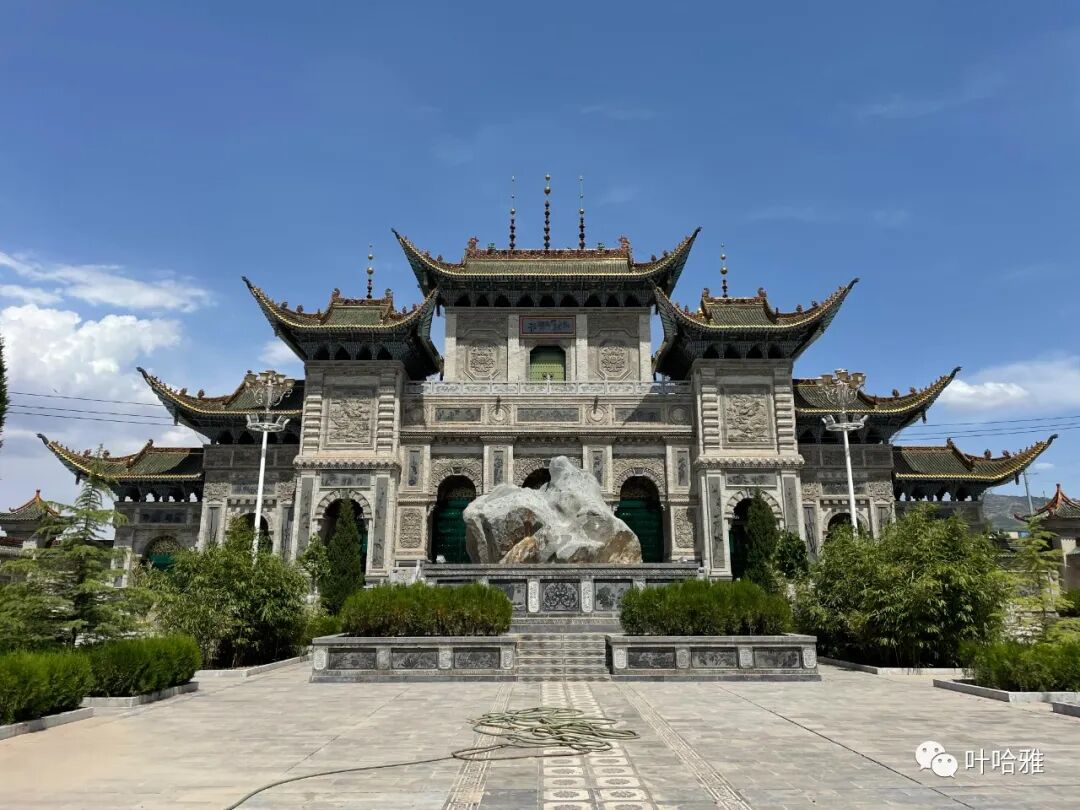
The founding master of Lingmingtang Gongbei was Ma Yilong (1853-1925), whose courtesy name was Lingming. He once studied under the Great Incense Master of the Kashgar Daotang and accepted the teachings of the Qadiriyya. In his final words, he mentioned being the 'answerer promised by the Bab gate,' which led some to believe he was influenced by the Babi faith. However, some descendants of Lingmingtang deny this, as detailed in the article 'A Discussion on the Possibility of Historical Contact Between Lingmingtang and the Babi Sect'.
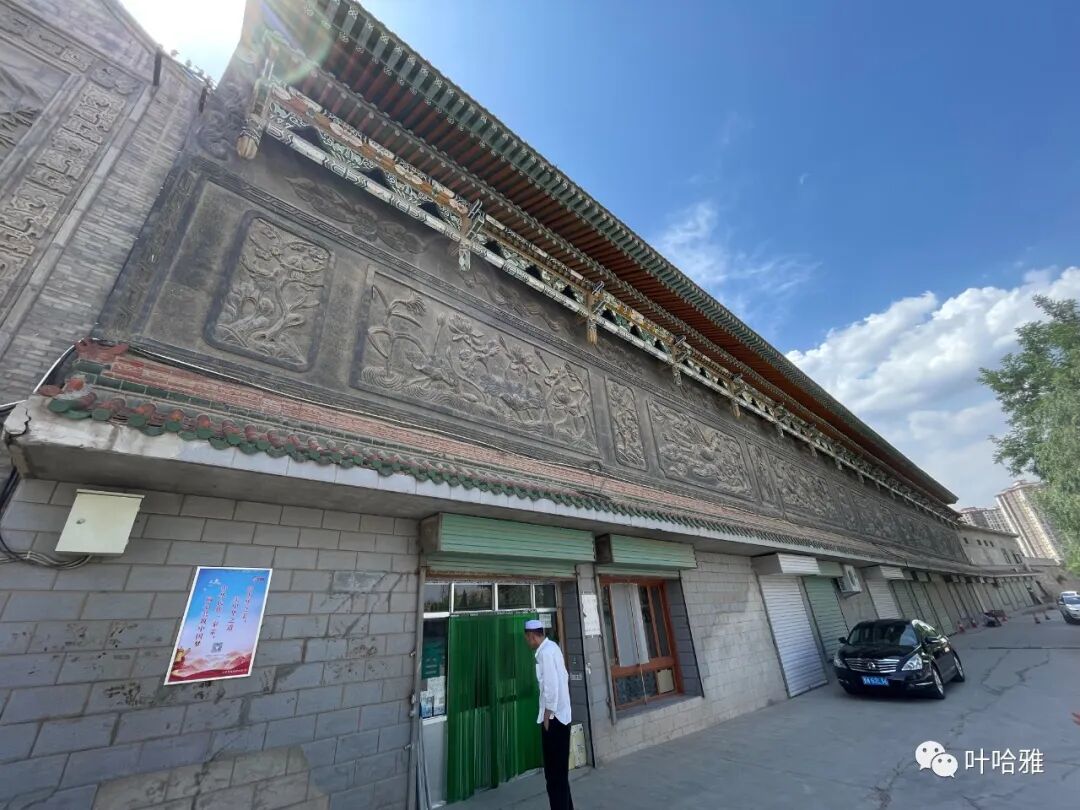
During his lifetime, Ma Lingming lived a life of poverty and appeared eccentric, remaining unmoved even when children played around him or passersby mocked him. People often asked him questions, and he would sometimes give hints without taking a penny. Over time, some felt his guidance came true, and they began to respect him.
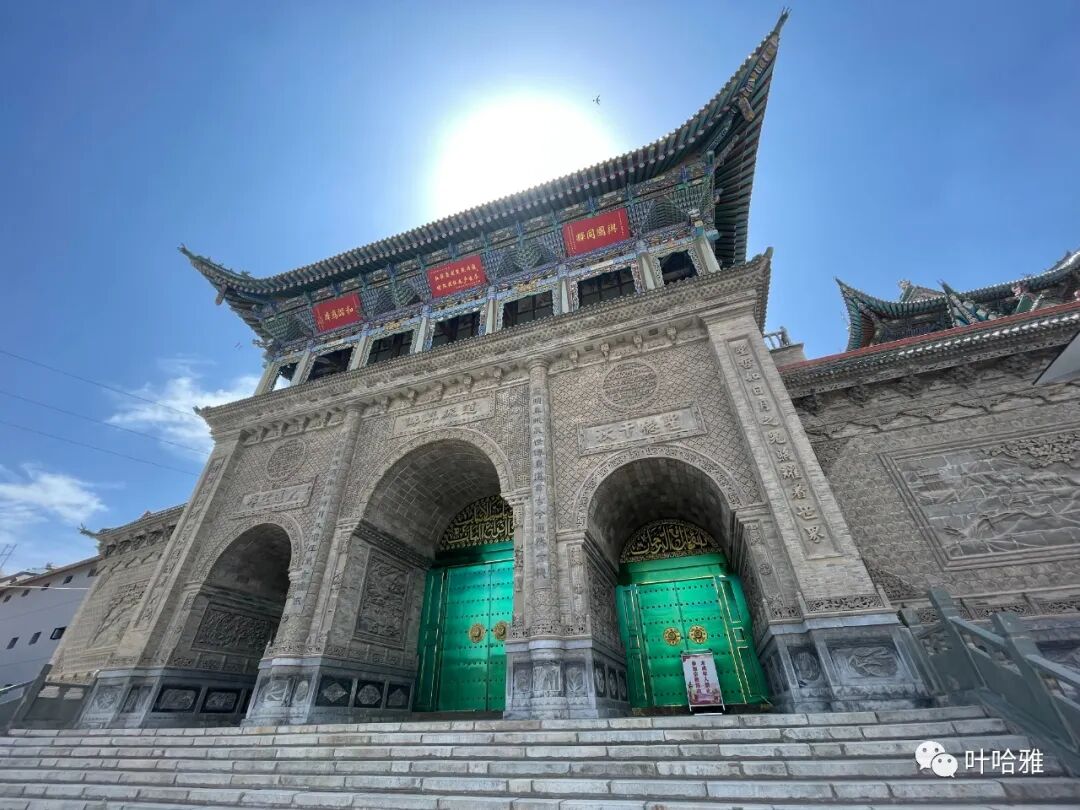
Whenever a Sufi elder gains the support of the public, they must have some extraordinary qualities. This is especially true for local illiterate believers, as it is hard to win hearts through reasoning and education alone.
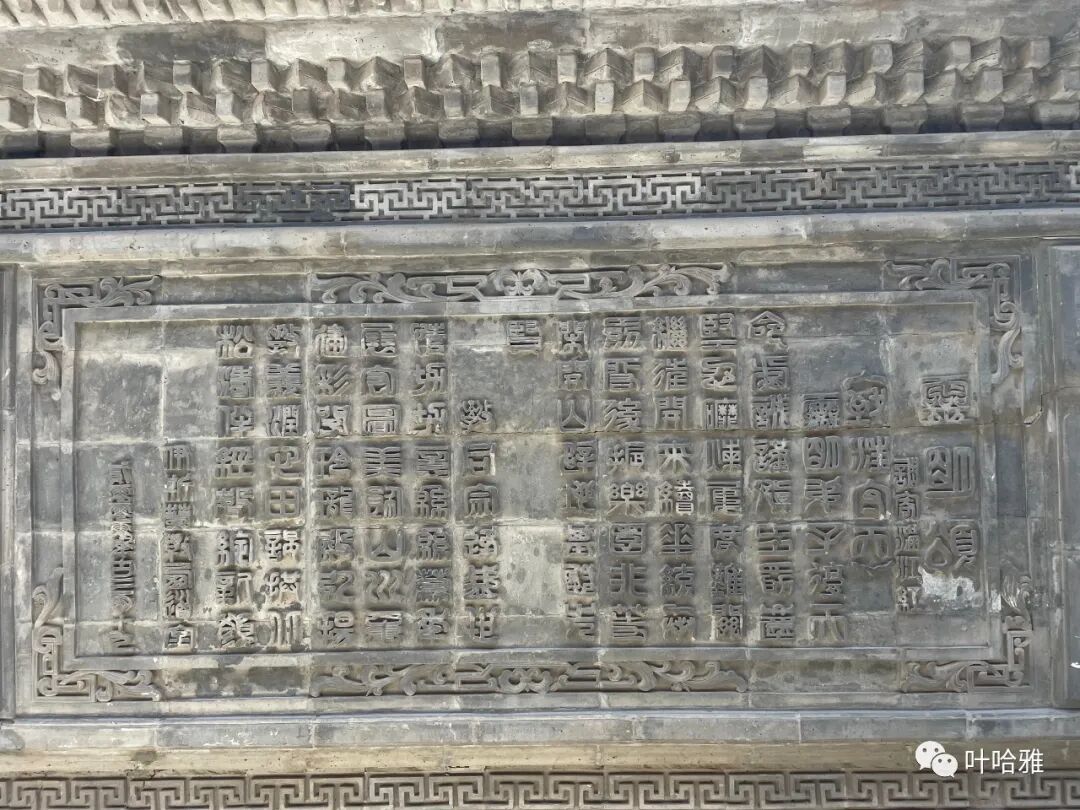
As Ma Lingming's followers grew, he caught the attention of local officials, who supported him to keep other menhuan in check.
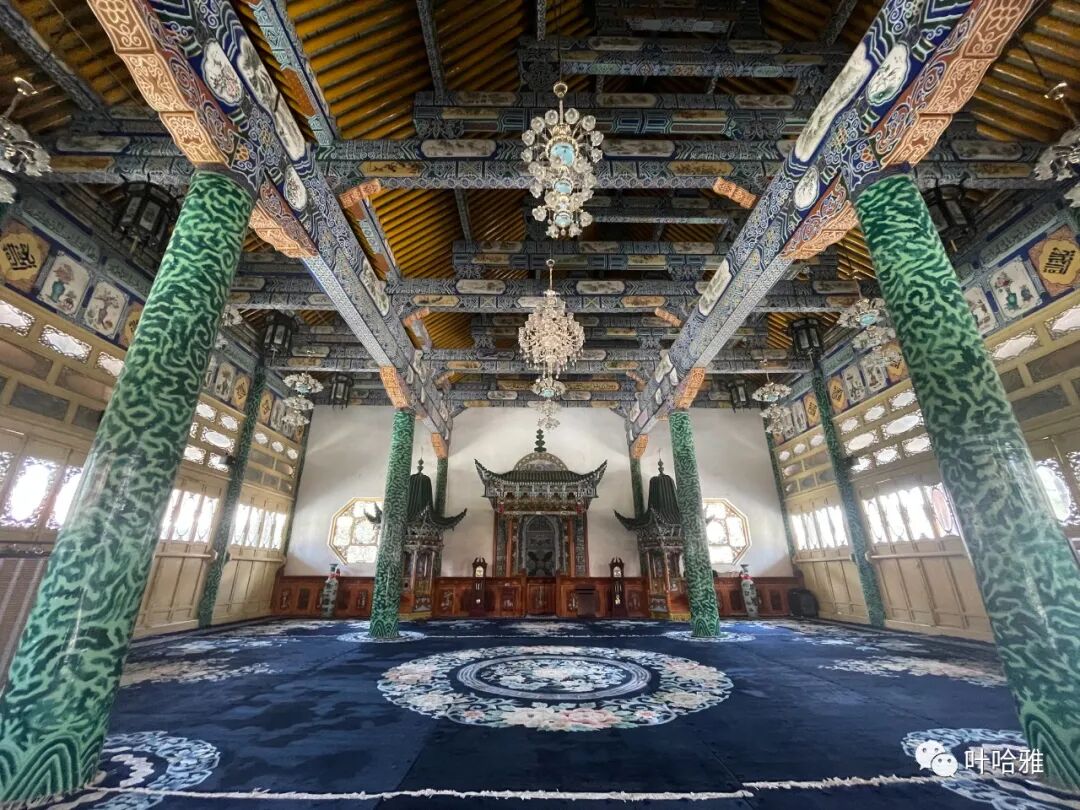
Ma Lingming himself remained indifferent to fame and wealth. He had no sons, only two daughters, and his noble character earned him the support of many believers.
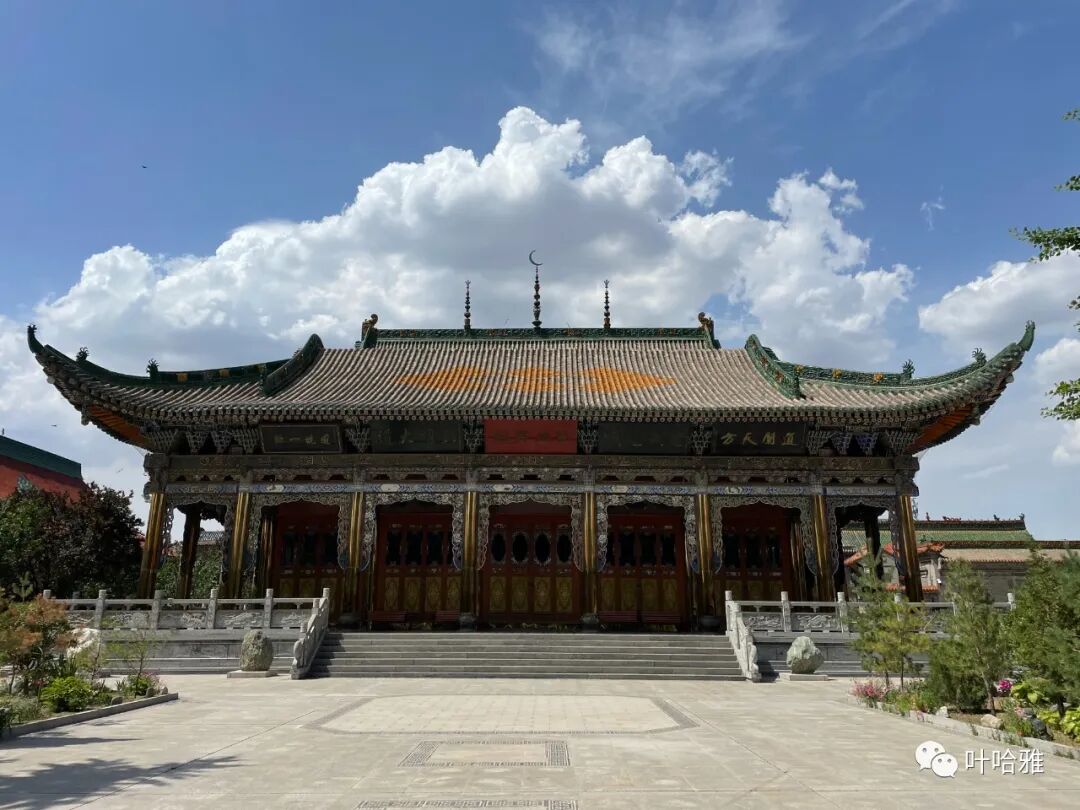
The religious authority of Lingmingtang is passed to the worthy rather than to one's own children. Before Ma Lingming passed away, he publicly gathered his followers to elect a second-generation successor. They finally chose Shan Zijiu (1888-1953) from Lanzhou. The election process was very complex and required many rituals to complete the succession.
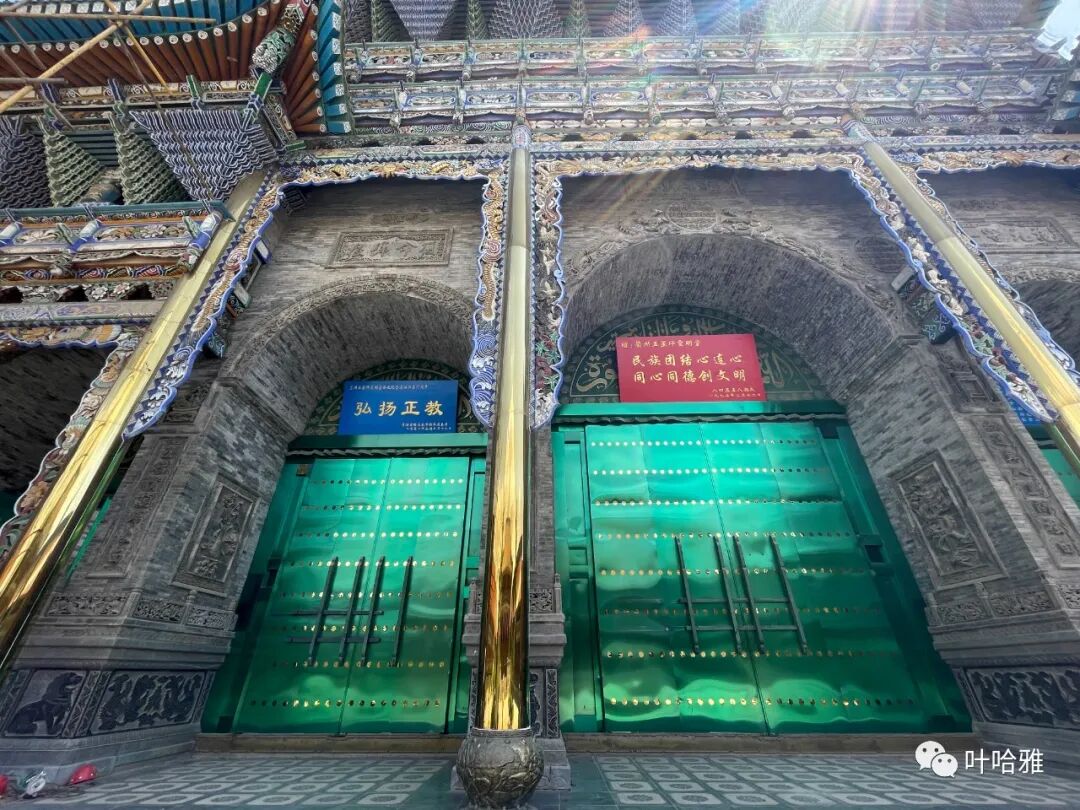
After Shan Zijiu, the religious authority was passed to Wang Shoutian (1924-2021), an elder from Tangwangchuan in Dongxiang County.
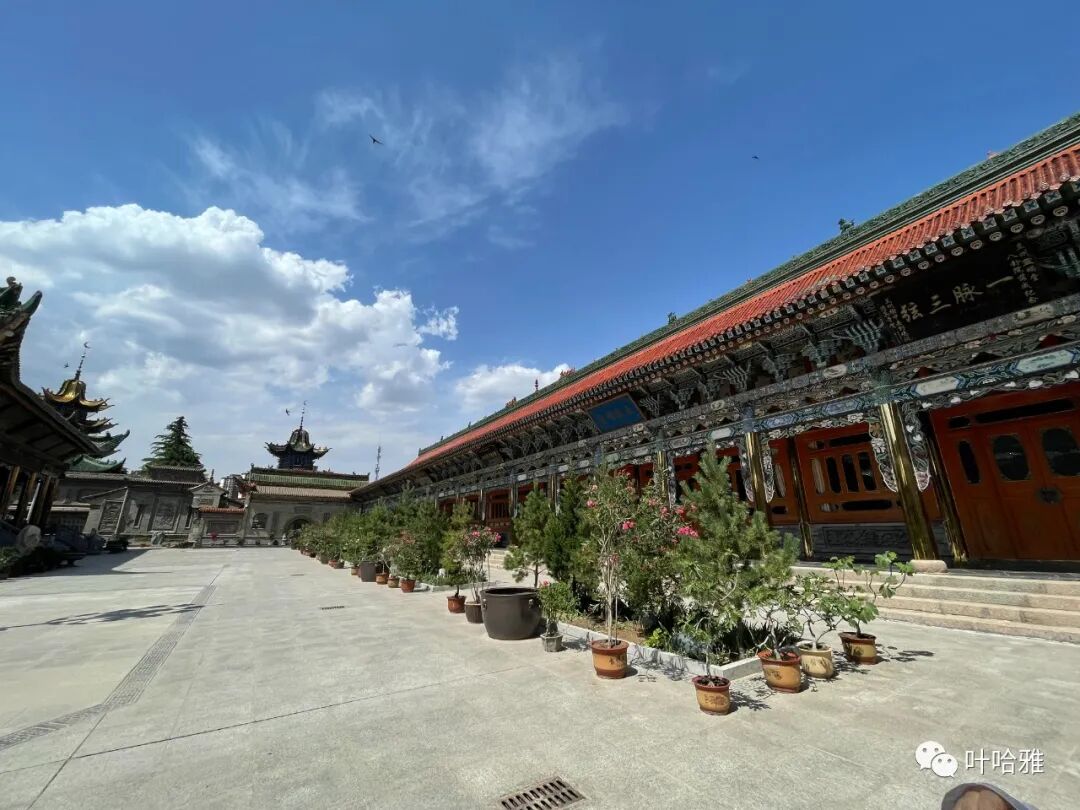
Between 1958 and 1979, Wang Shoutian was imprisoned during the anti-religious and anti-feudal movements. After his release, he began leading the construction of the Lingmingtang Gongbei, and the current Wuxingping site was allocated to Lingmingtang by the government in 1982.
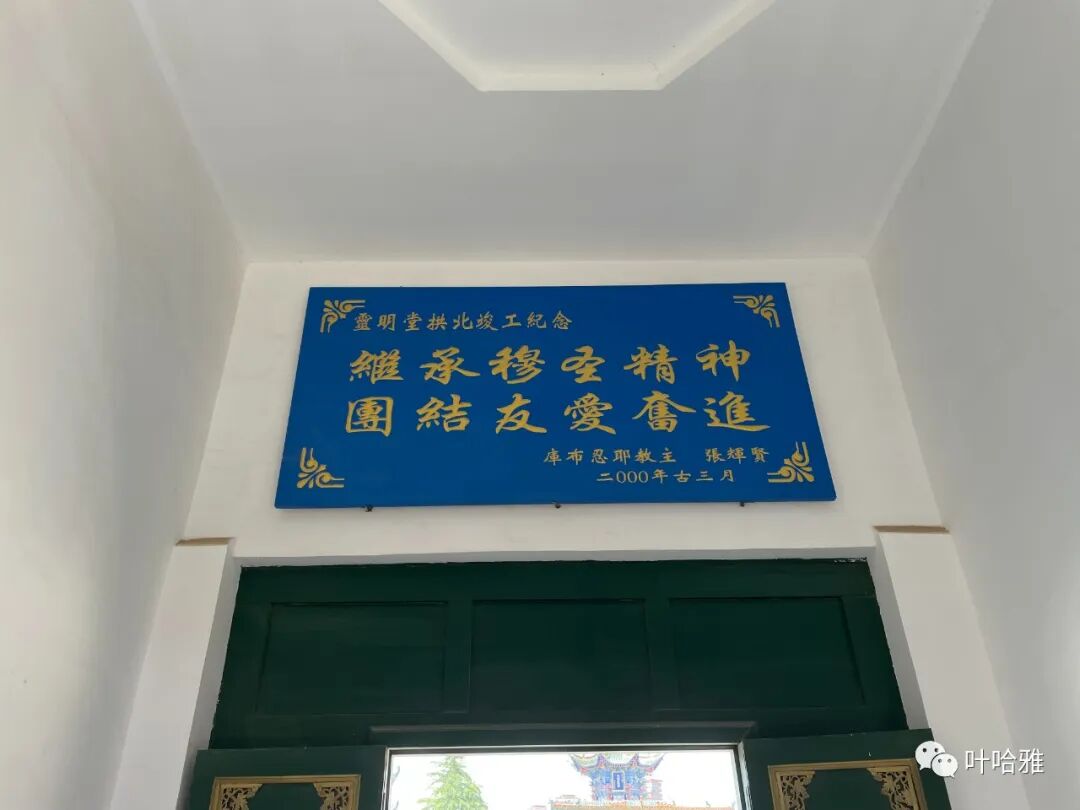
Wang Shoutian valued education, and in 1993, he took the lead in donating money to convert Tangwang Primary School into a middle school.
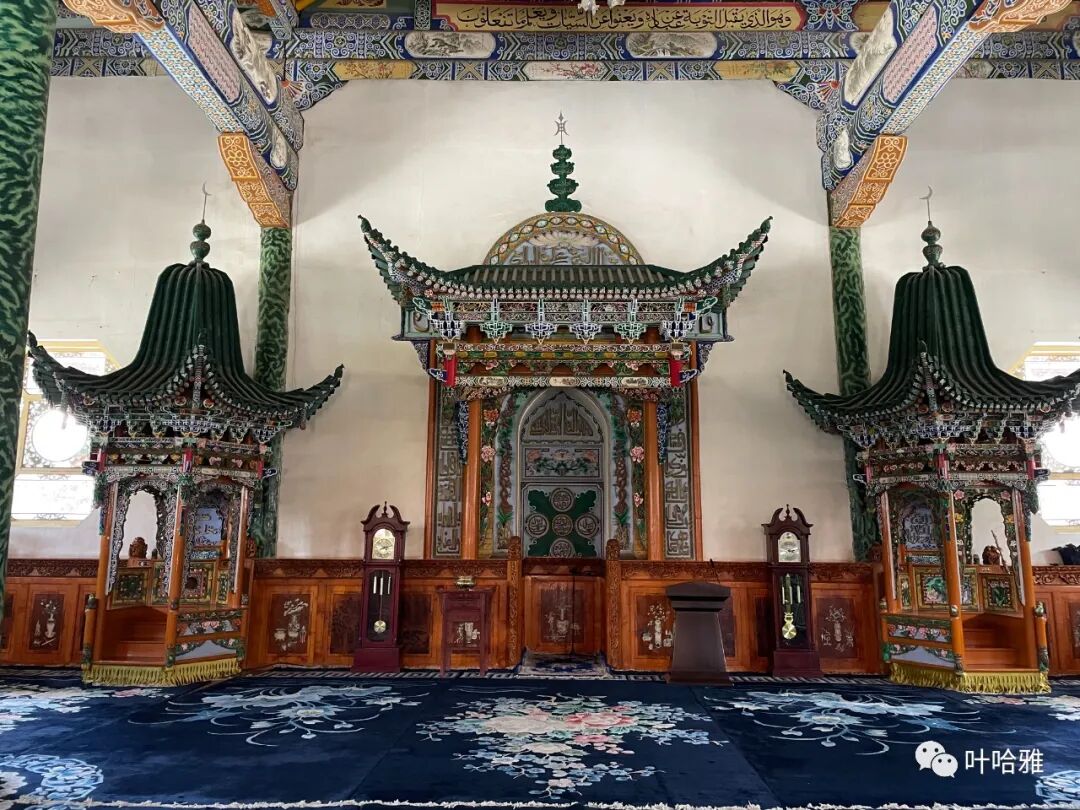
At the same time, Wang Shoutian also valued business and encouraged followers to develop production. He even believed that young people should focus on their careers, which is why Lingmingtang has better economic strength than other menhuan and the financial resources to build such a grand gongbei.
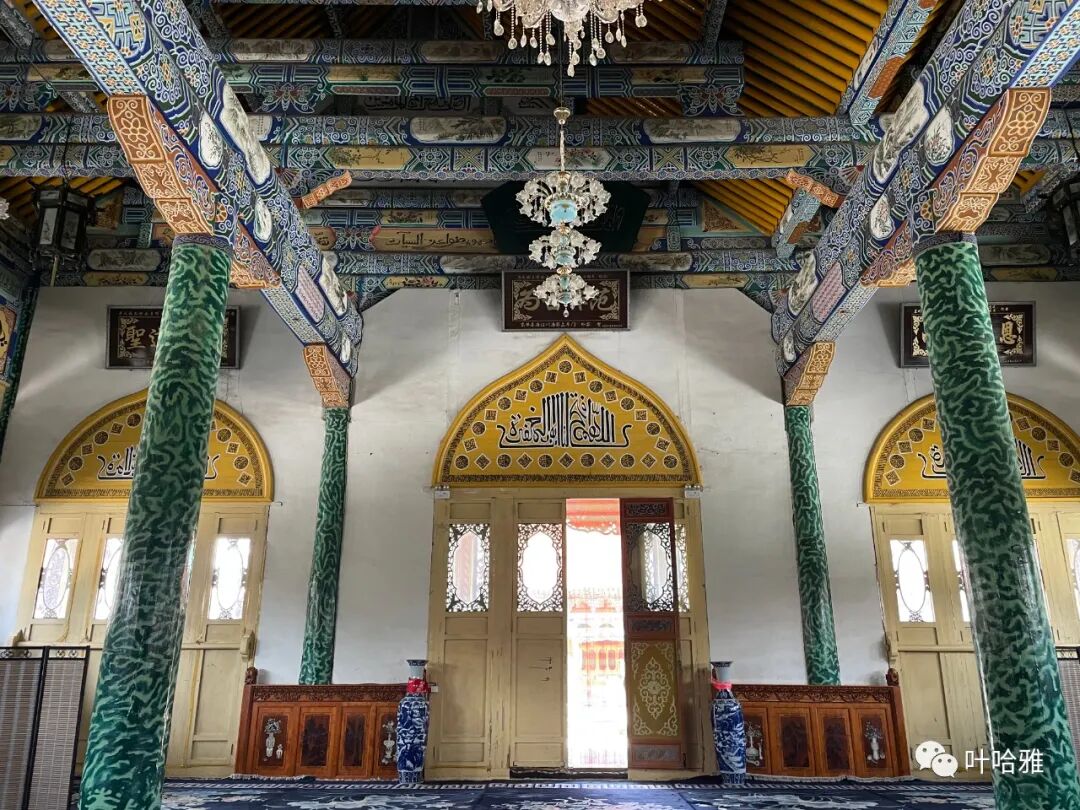
Ma Lingming left behind no personal property. The construction of the Lingmingtang gongbei cost over 100 million yuan, all of which came from donations by believers.
Currently, there are Lingmingtang branch gongbei in Guyuan, Linxia, Hami, and Luoyang. The current fourth-generation leader is named Su Zhilin. He is in his thirties and was elected by the community elders.
The election of the leader is only considered complete after it is approved by the relevant authorities.
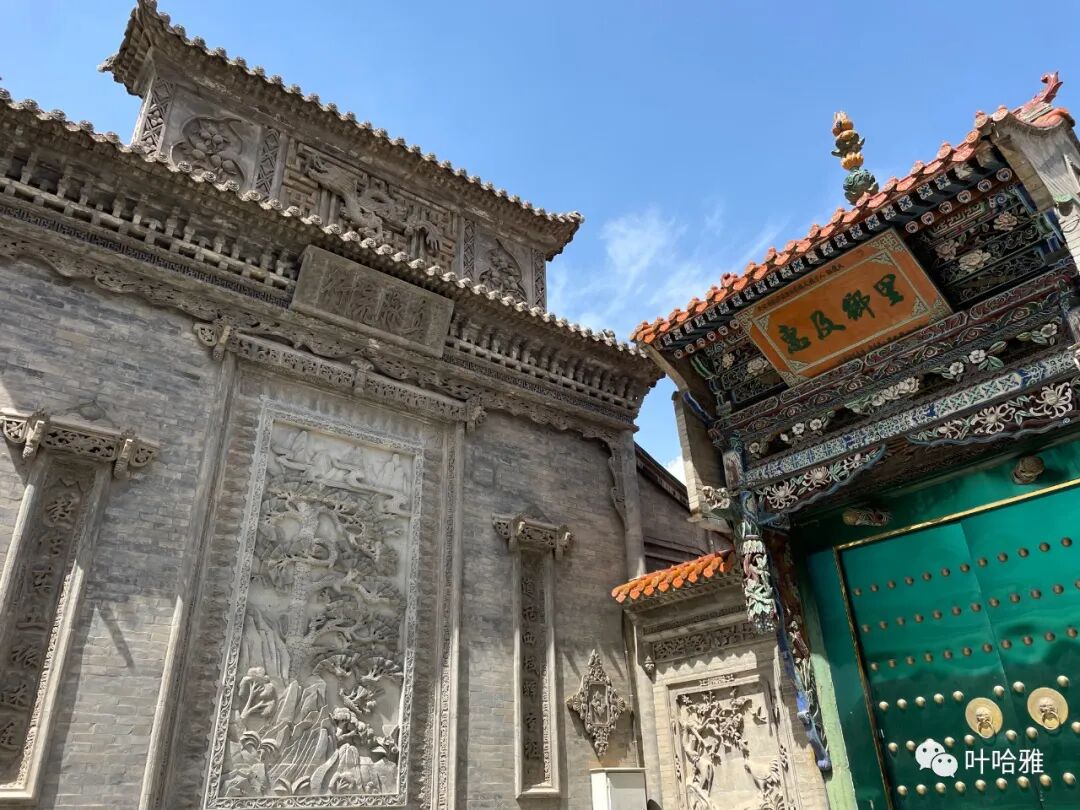
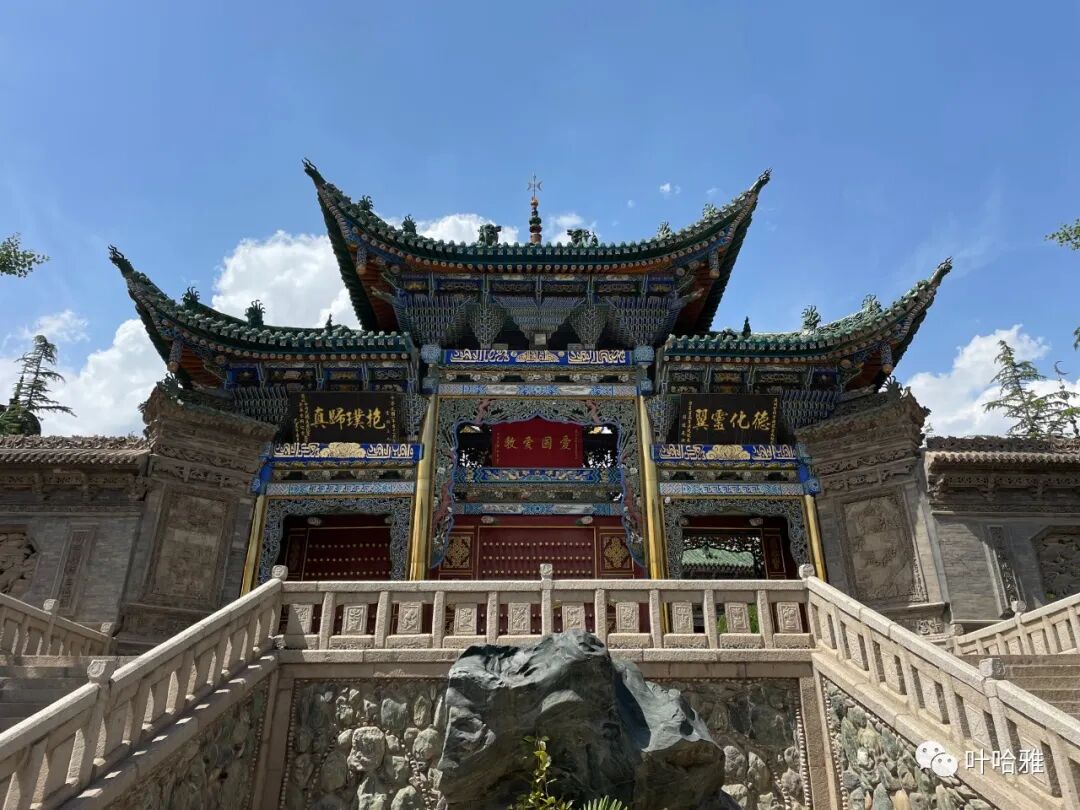
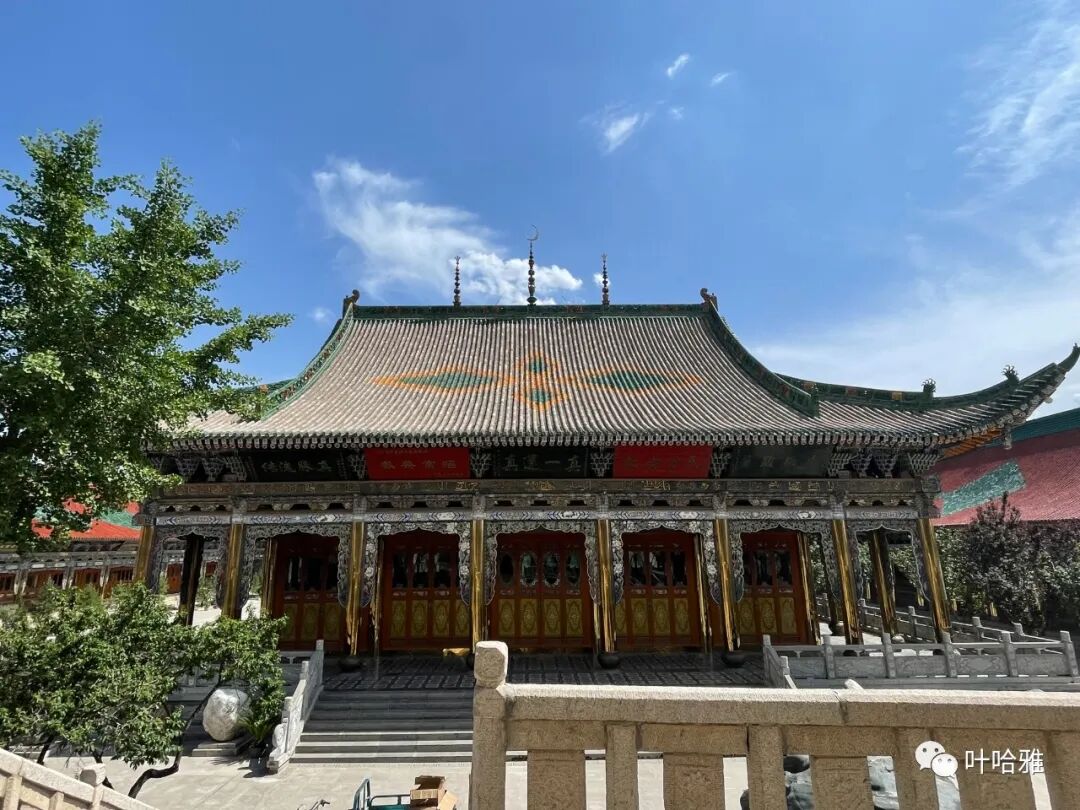
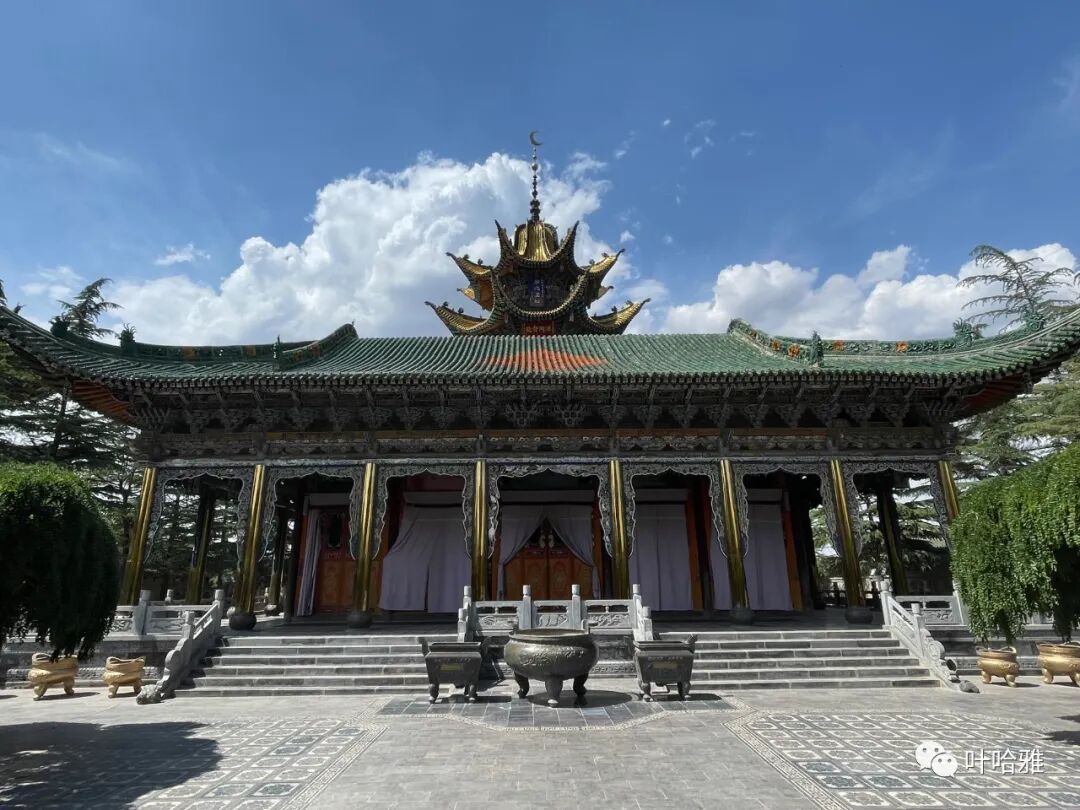
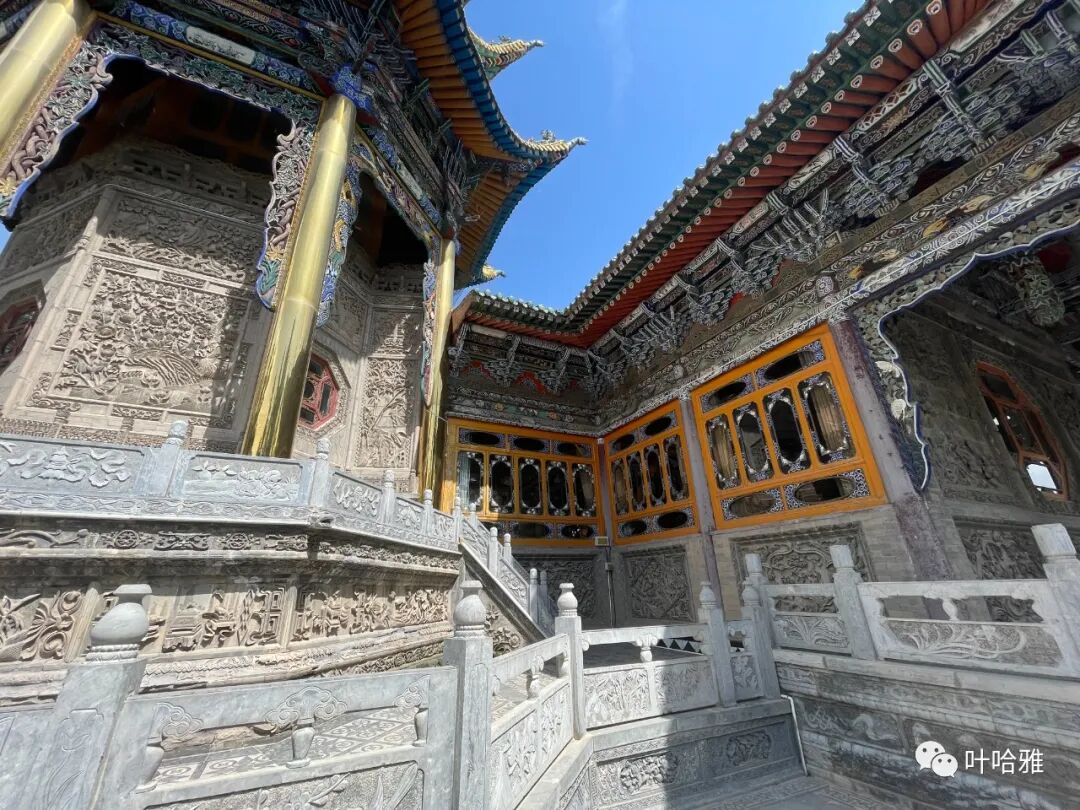
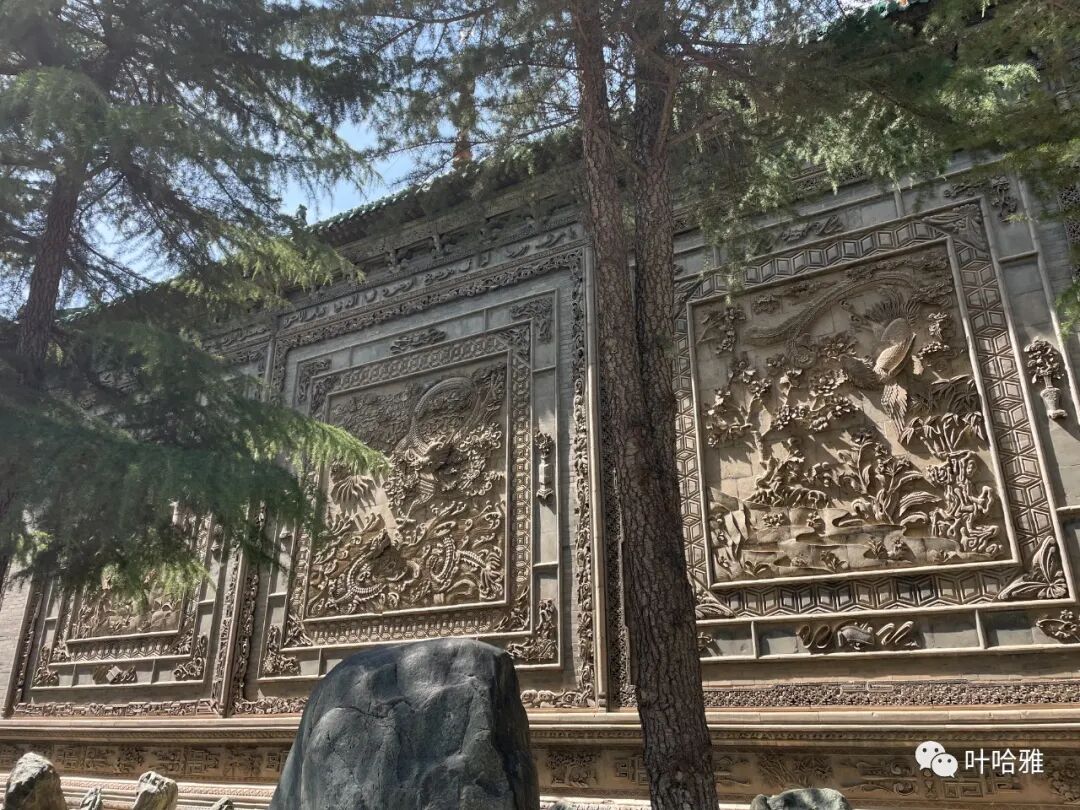
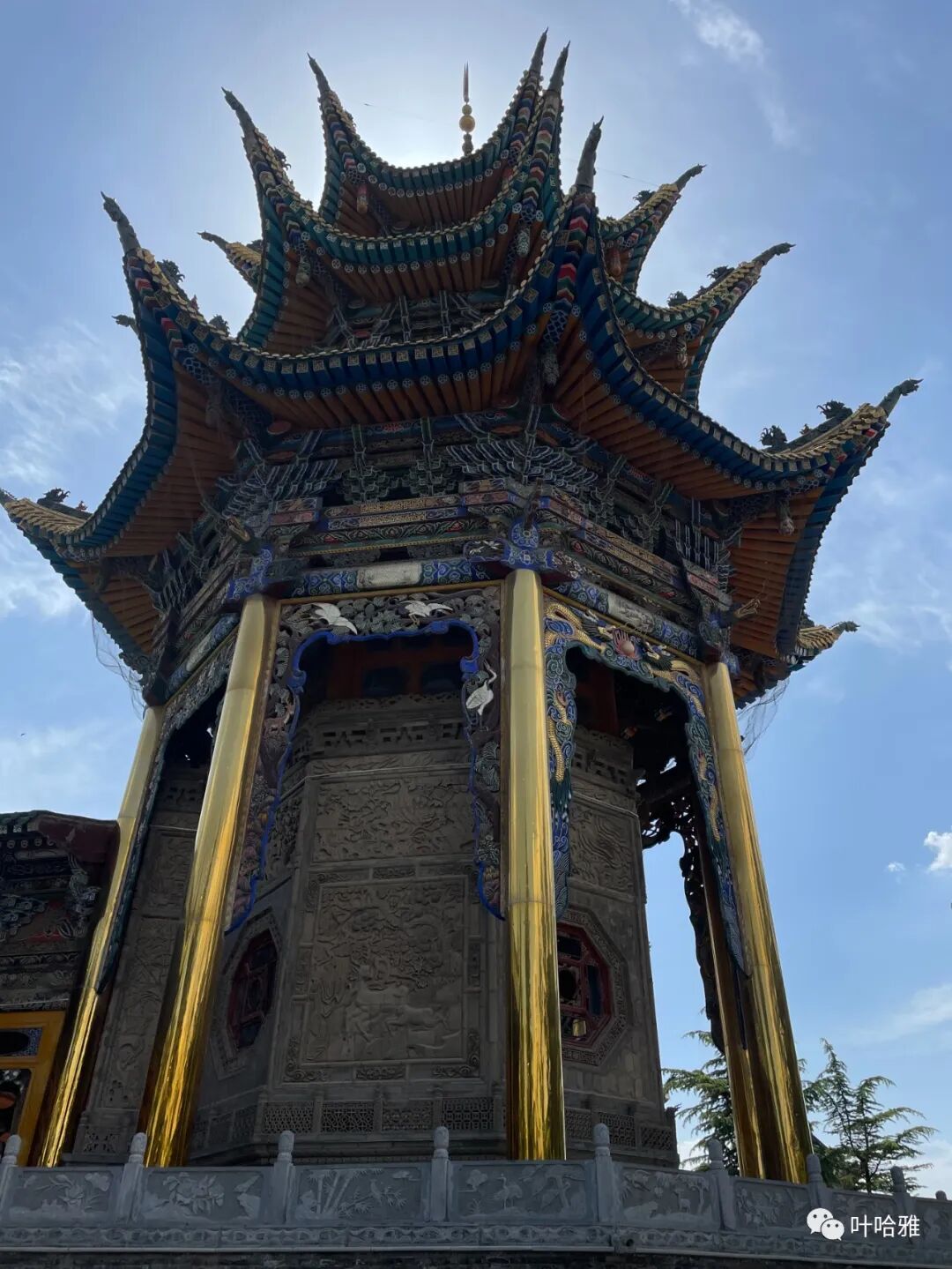
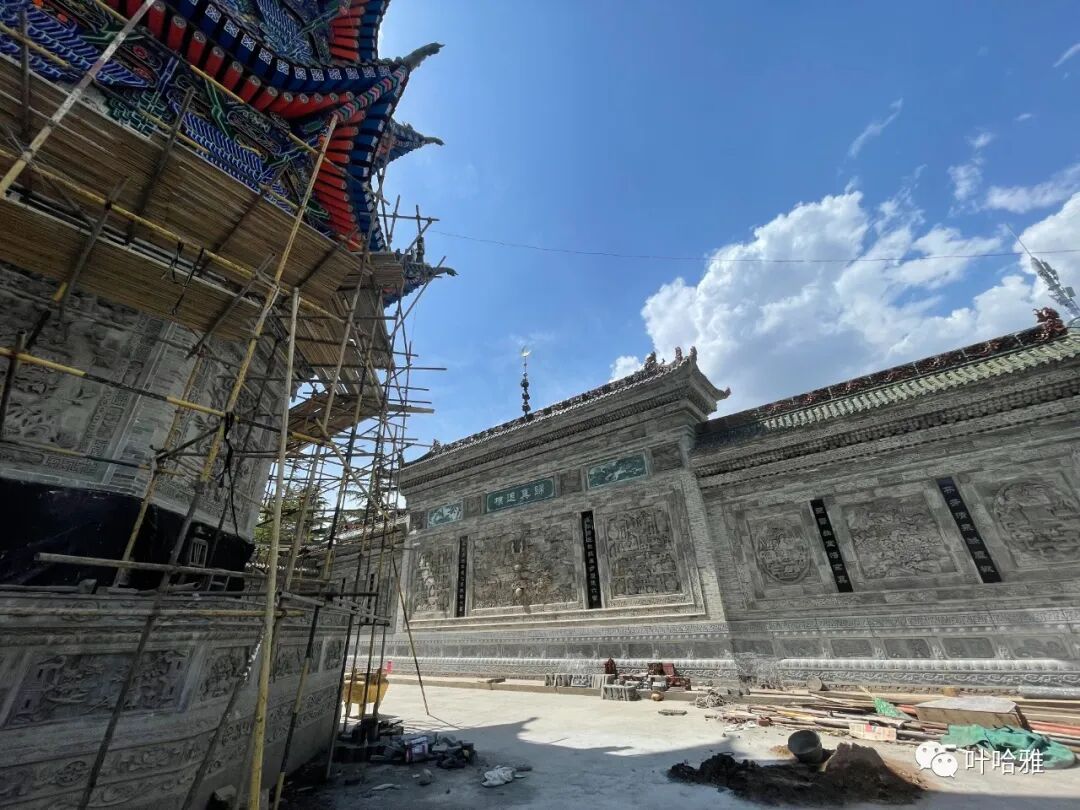
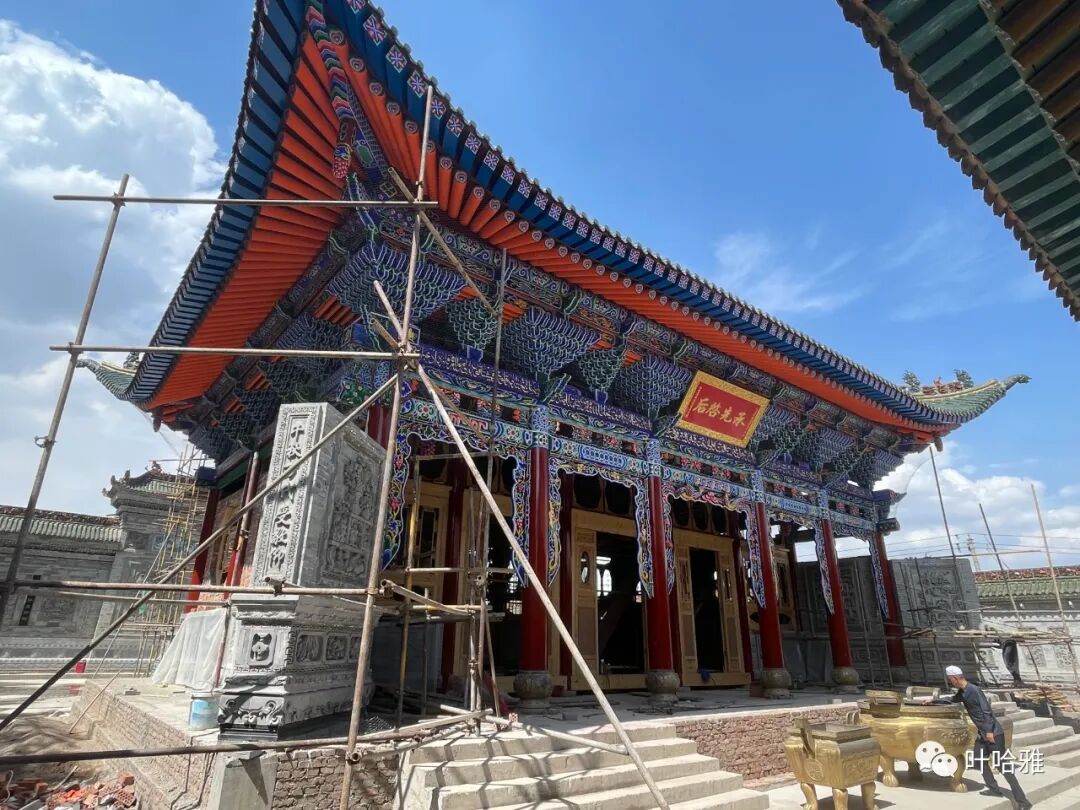
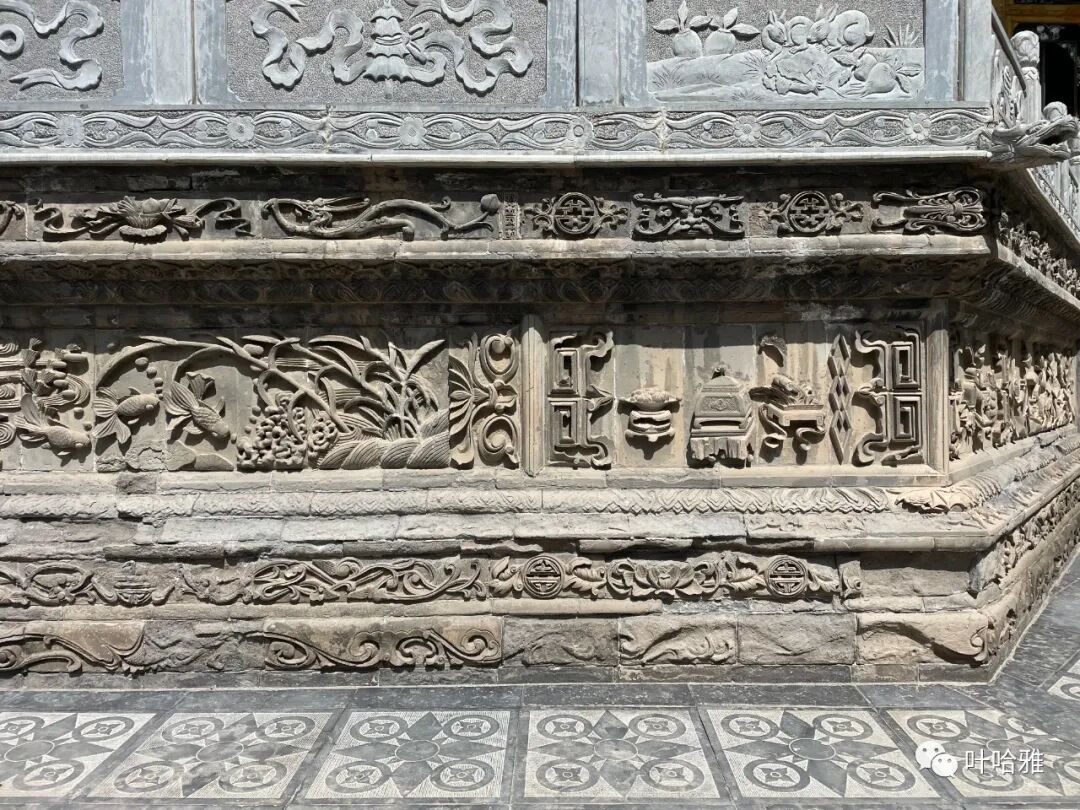
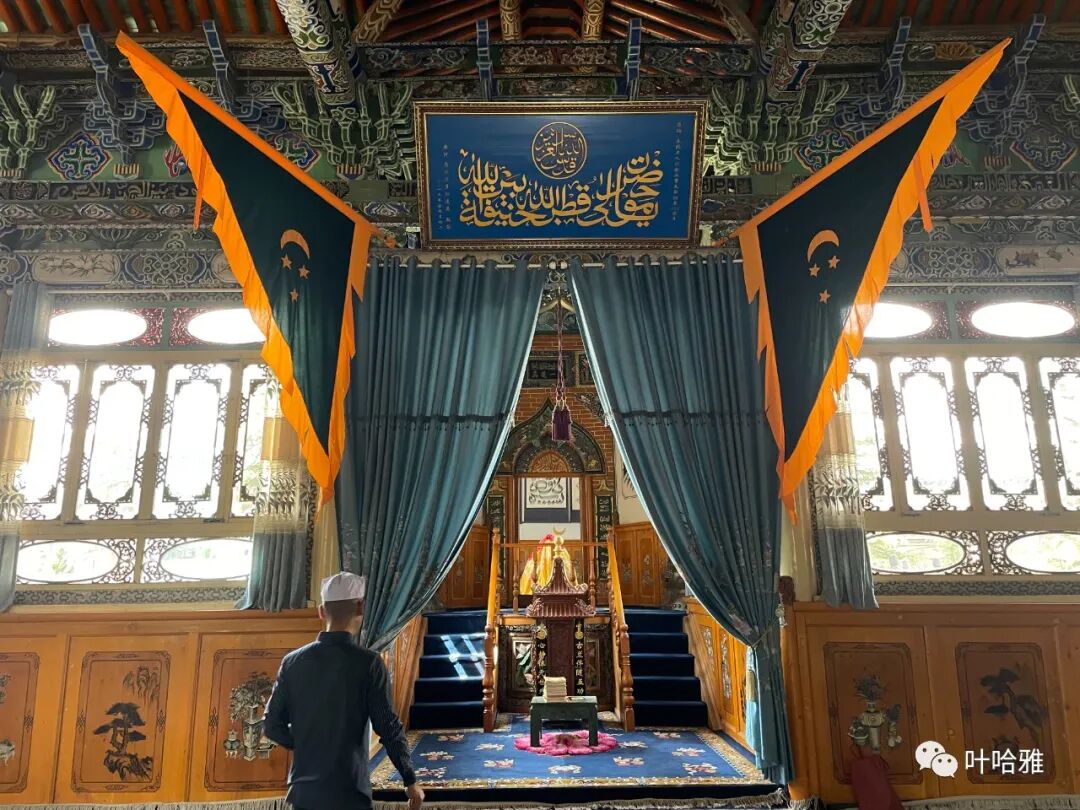
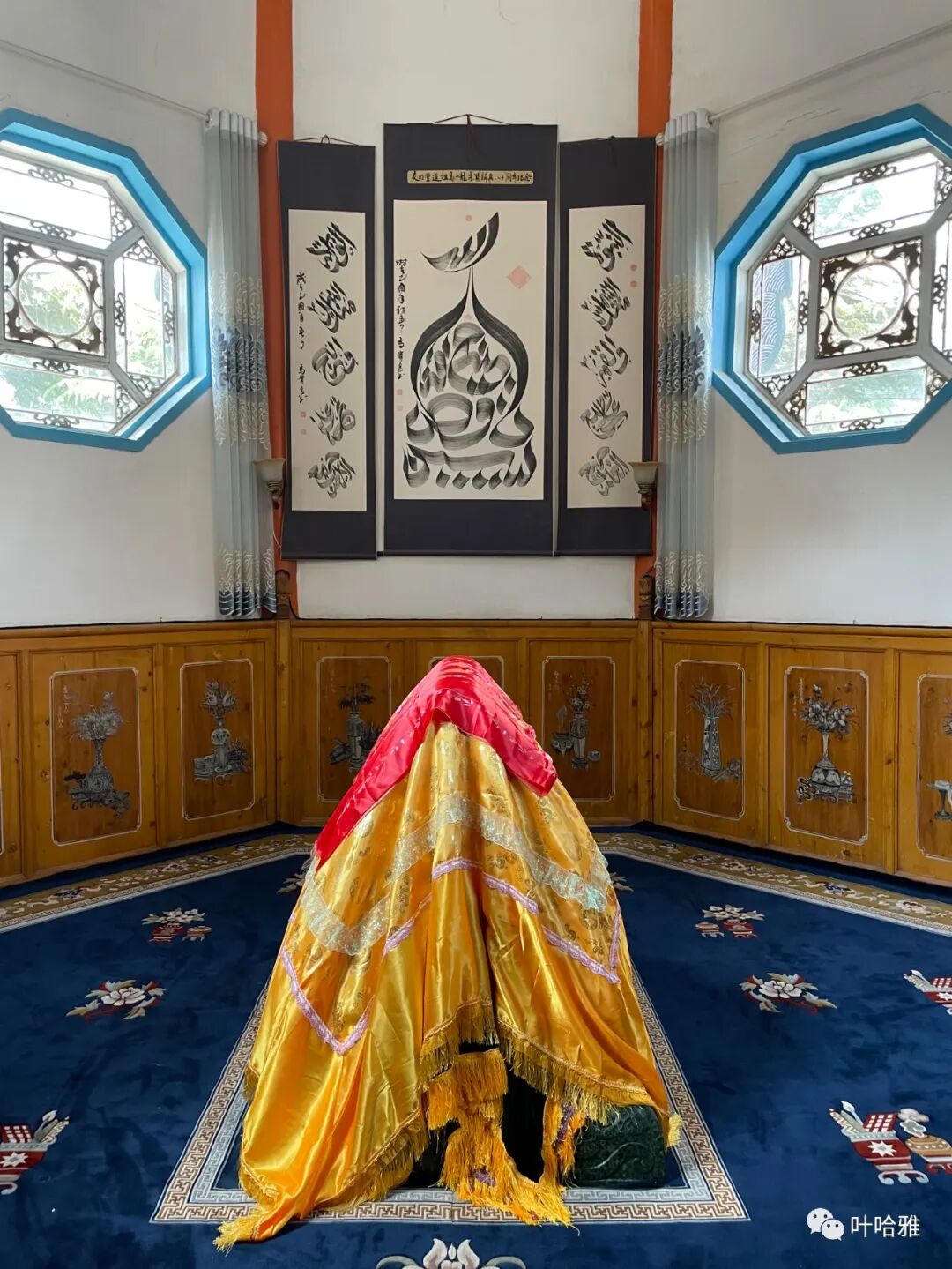
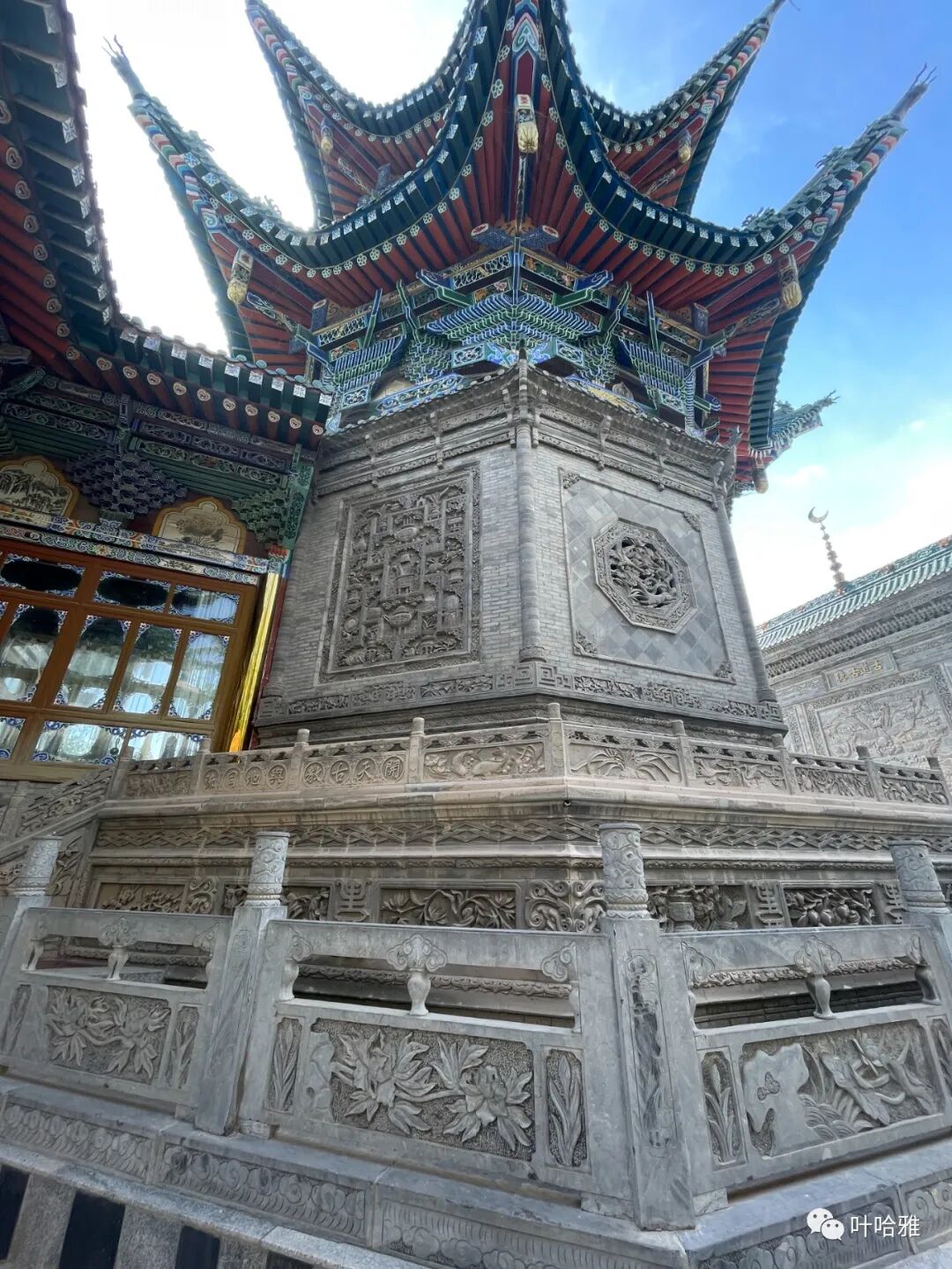
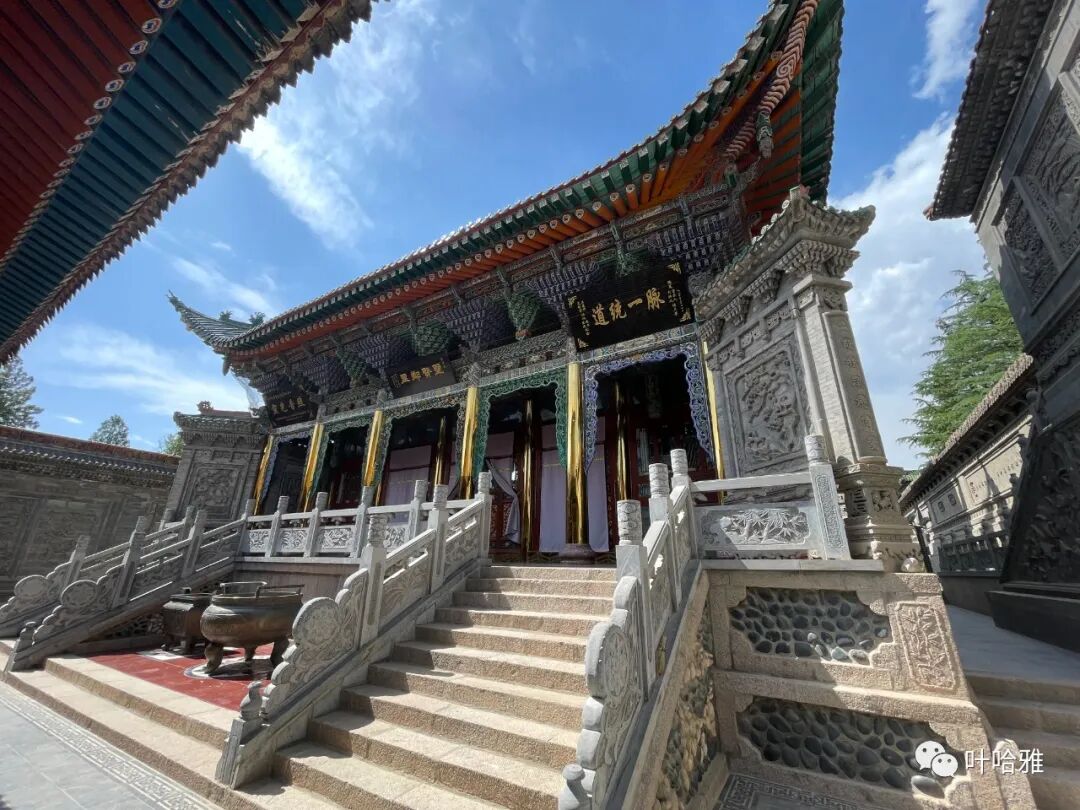
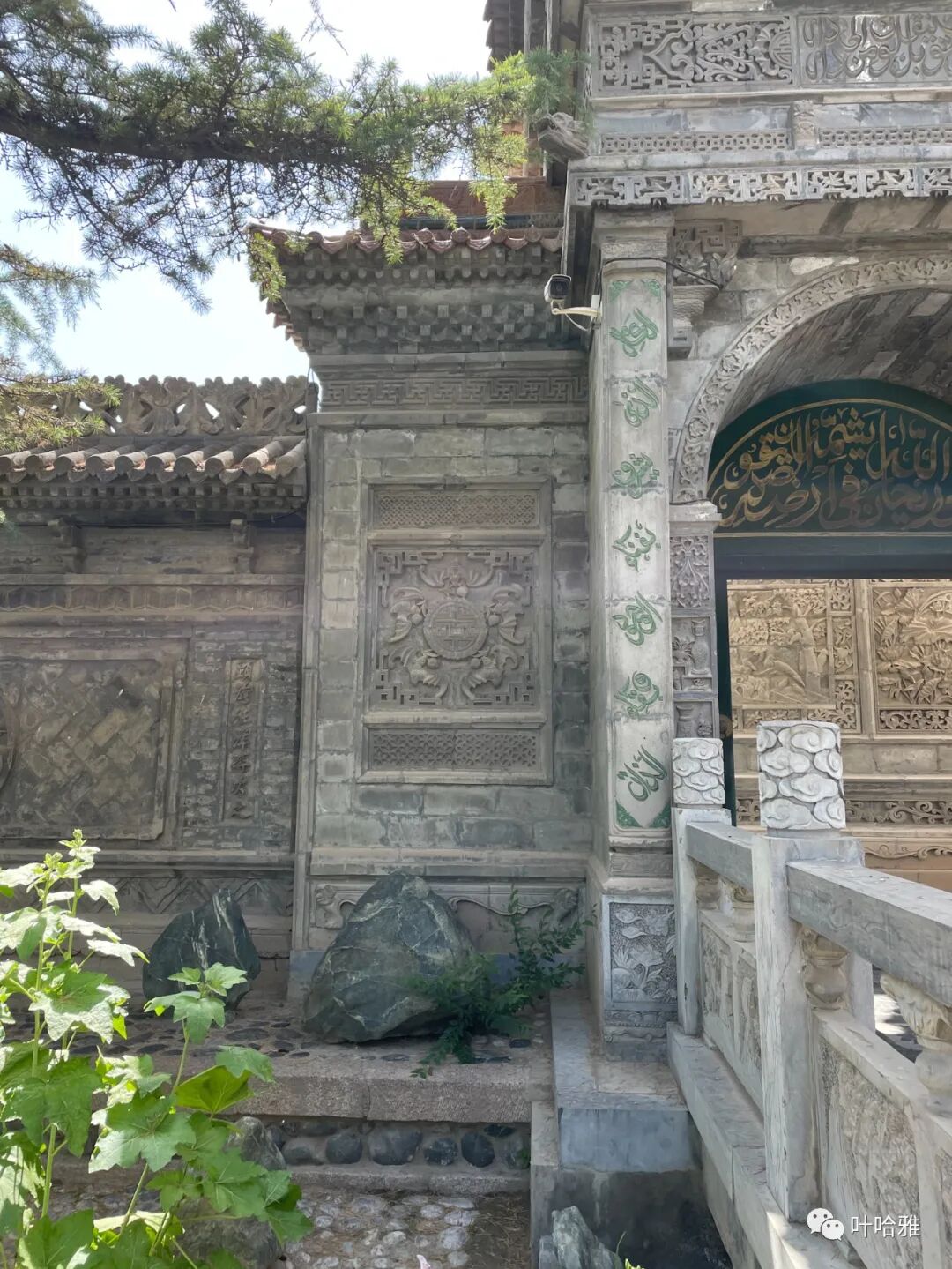
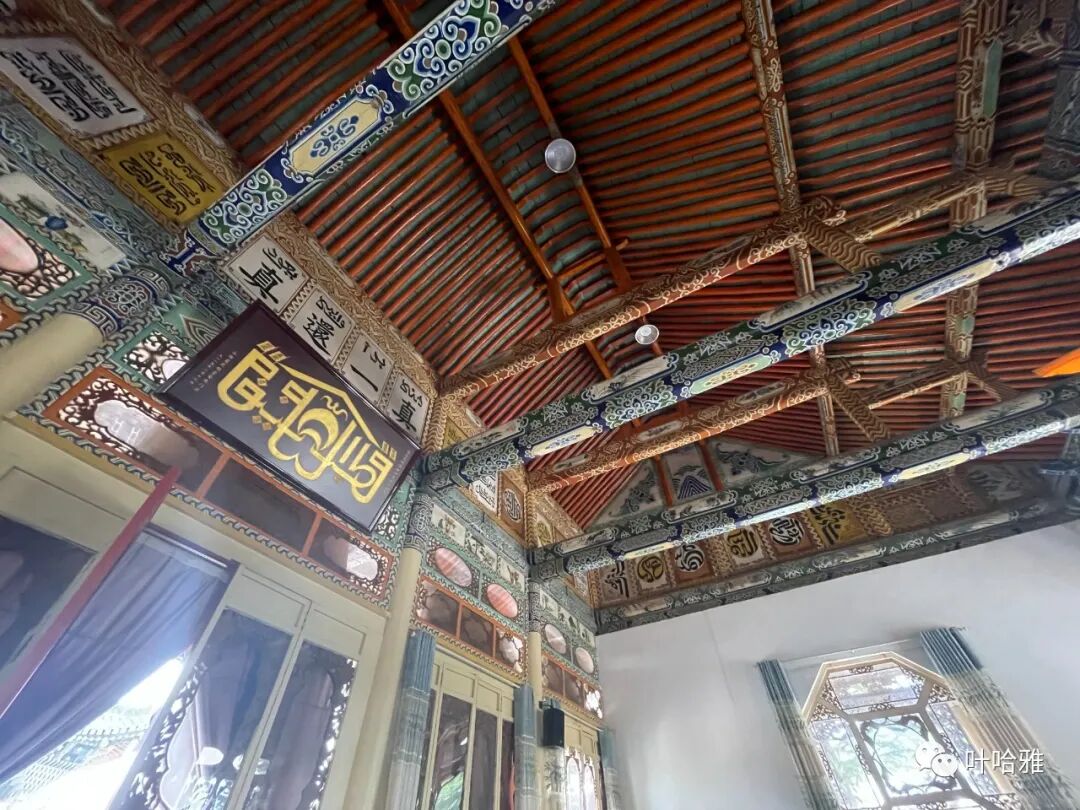
The former residence of the elder Wang Shoutian is inside the Lingmingtang gongbei. During his lifetime, he often sat in the courtyard with people gathered around him to listen to his teachings. Because he had a strong Tangwang accent—or perhaps he was speaking the Dongxiang language—someone would sit by his side to translate for him.
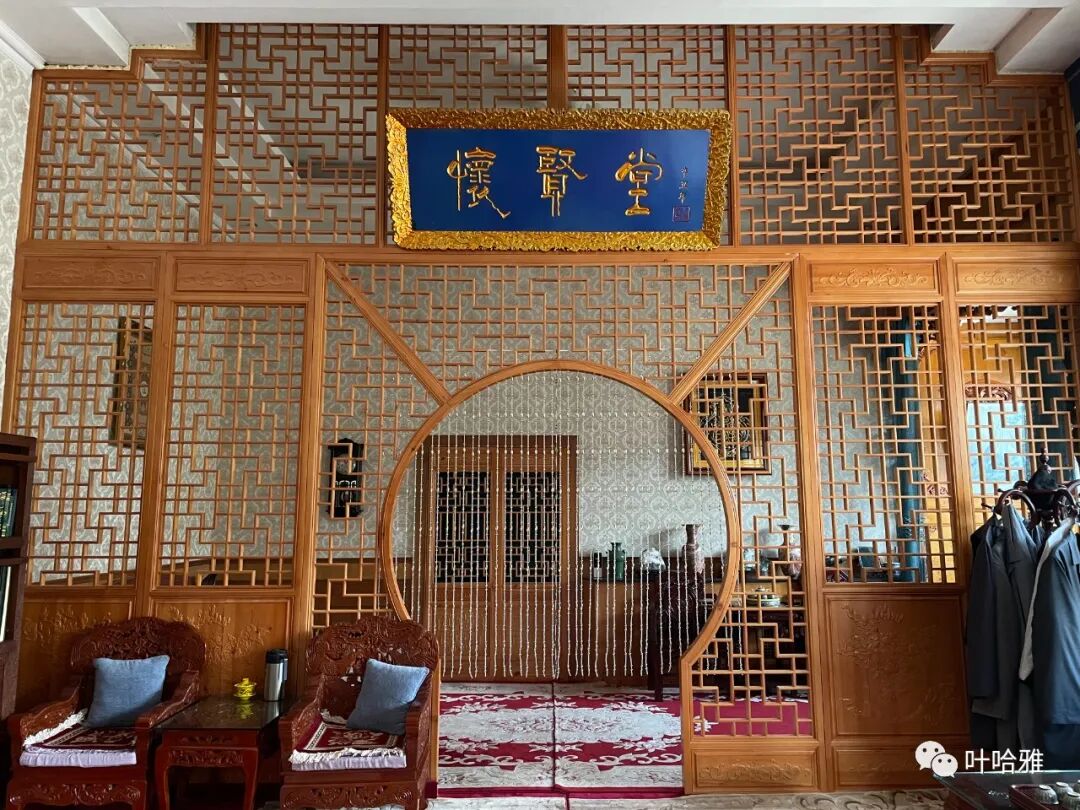
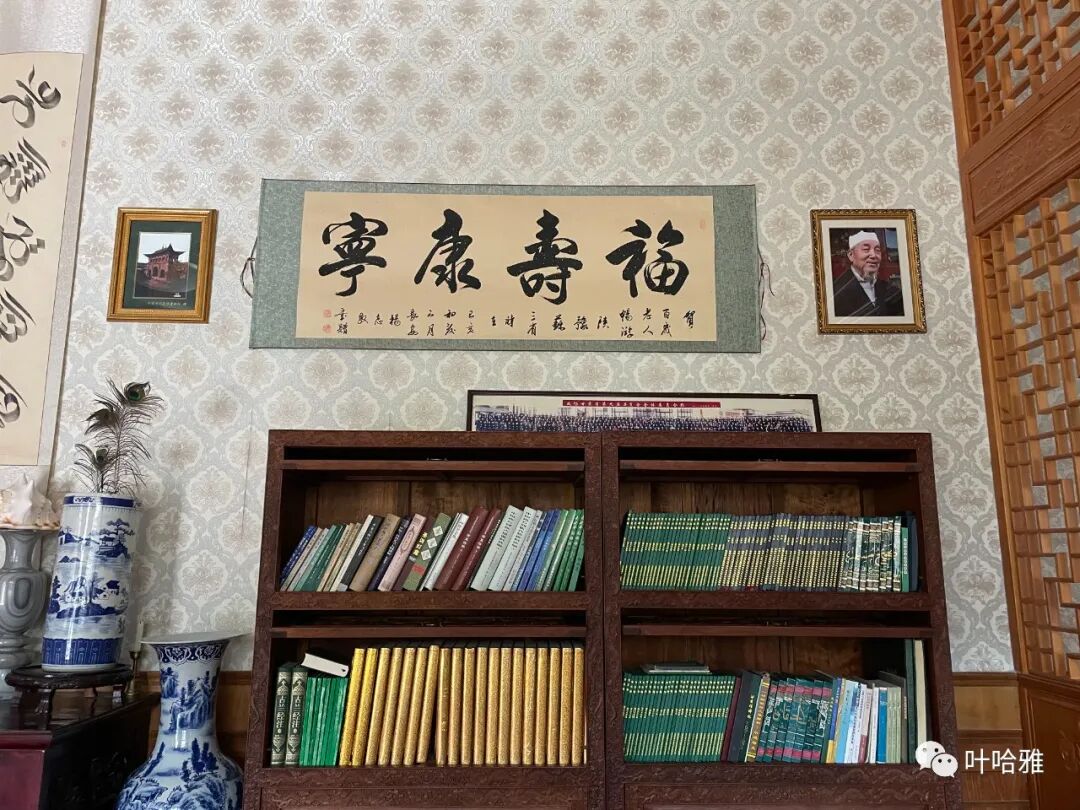
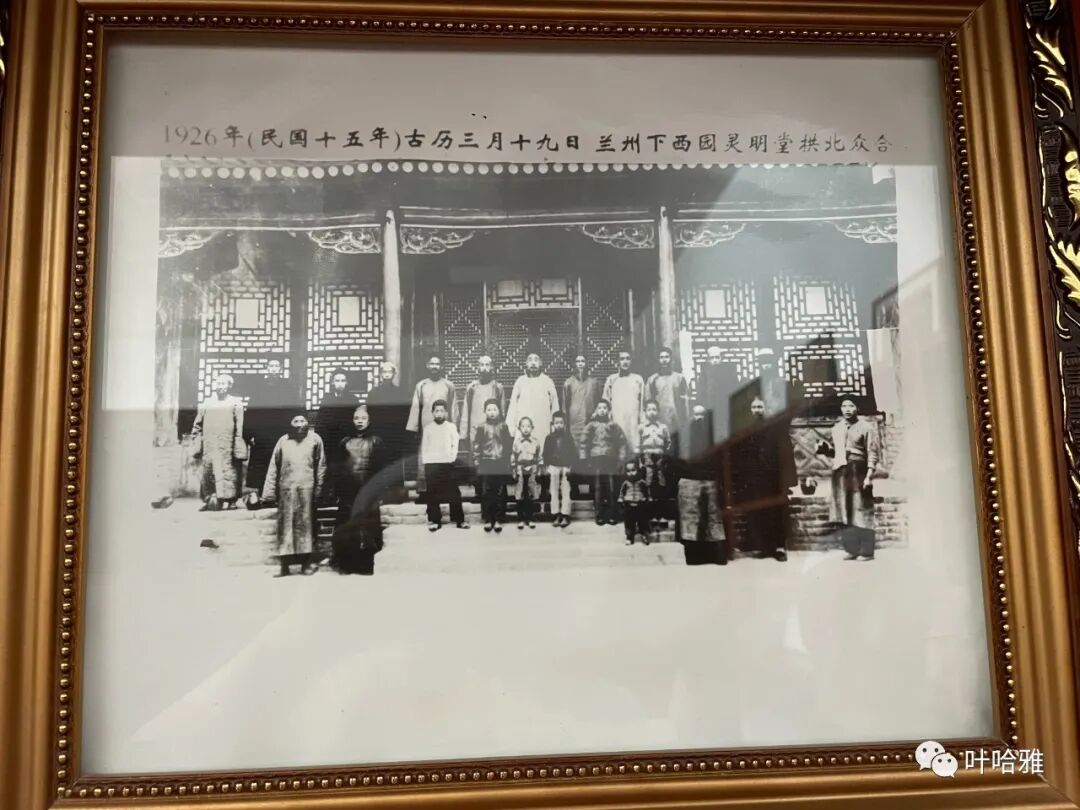
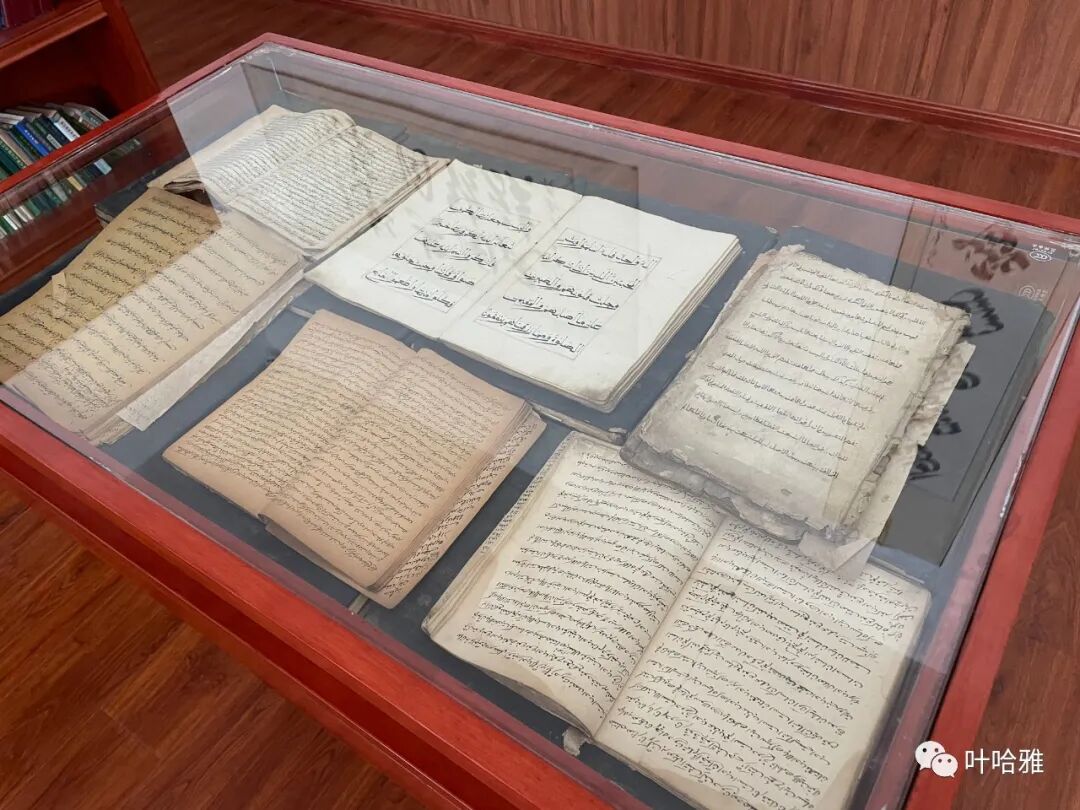
The elder did not know Chinese characters, but he was fluent in the mosque language (jingtangyu), so he usually read scriptures in Arabic.
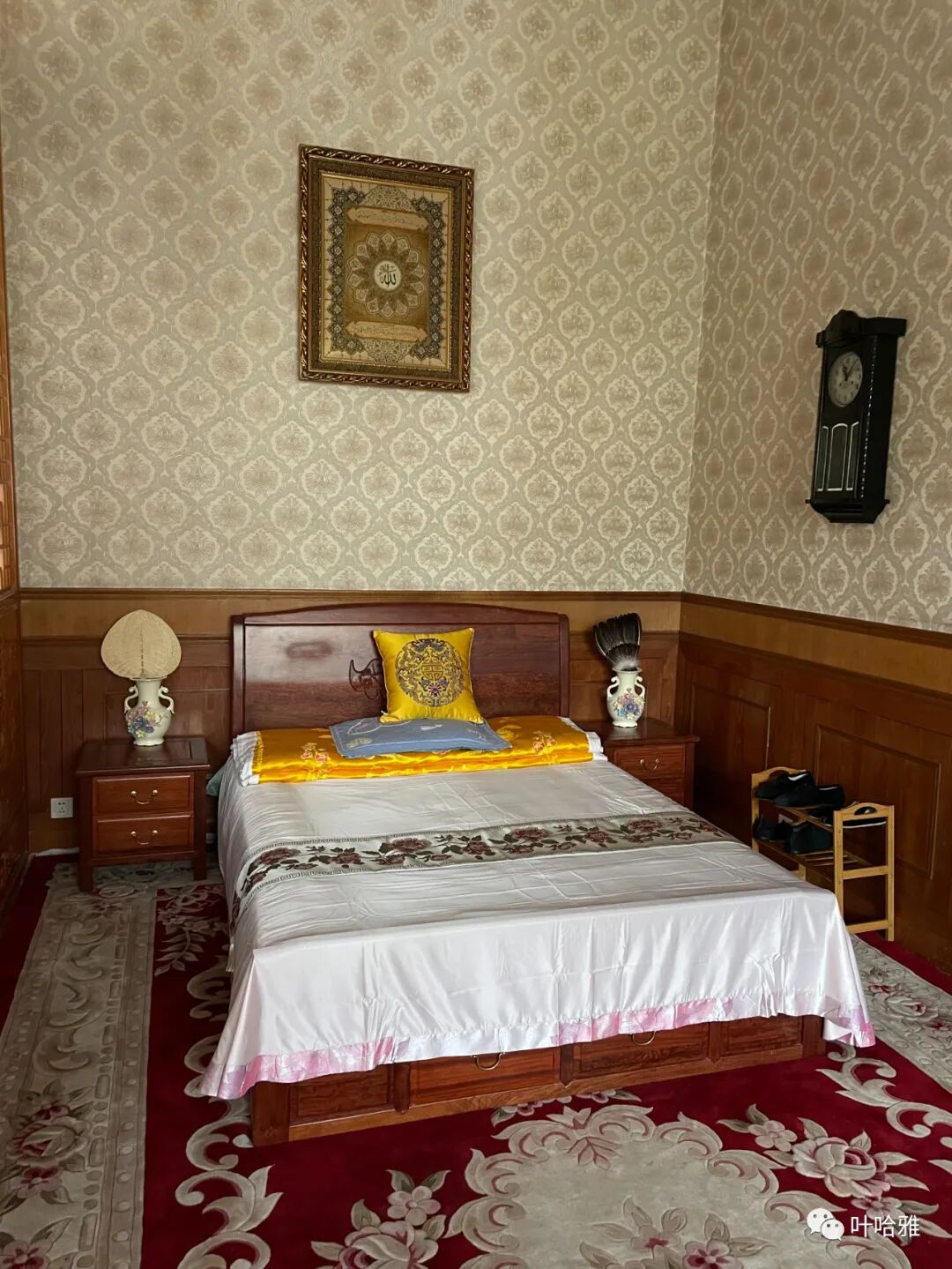
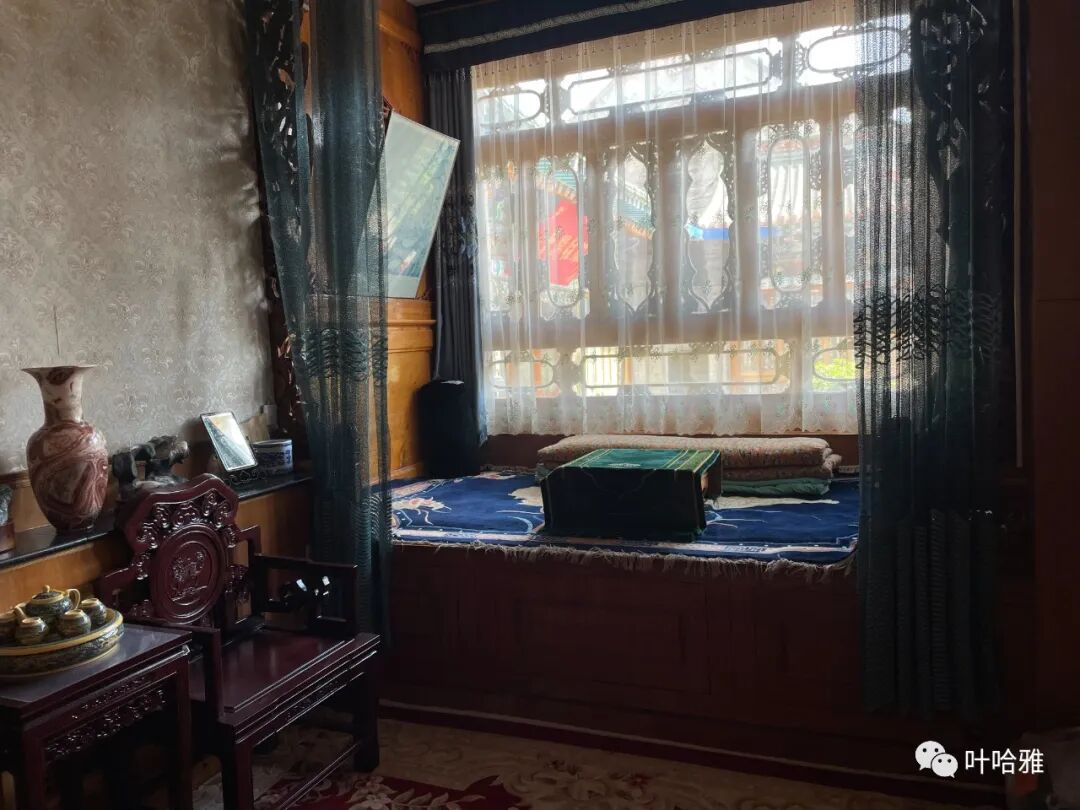
Our Lingmingtang elder did not want to enter the former residence because it reminded him of the elder when he was alive. His eyes turned red instantly, so he waited outside the hall.
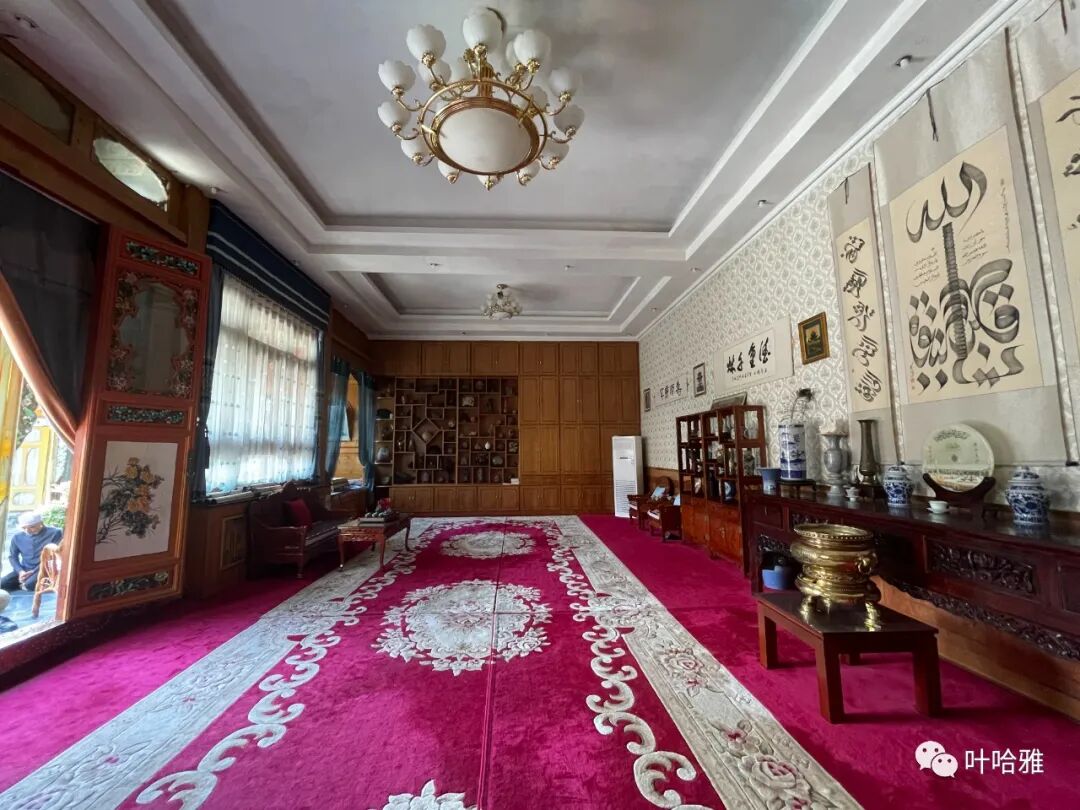
There is an exhibition room inside the gongbei that houses some antiques, paintings, and personal items used by the elder during his lifetime.
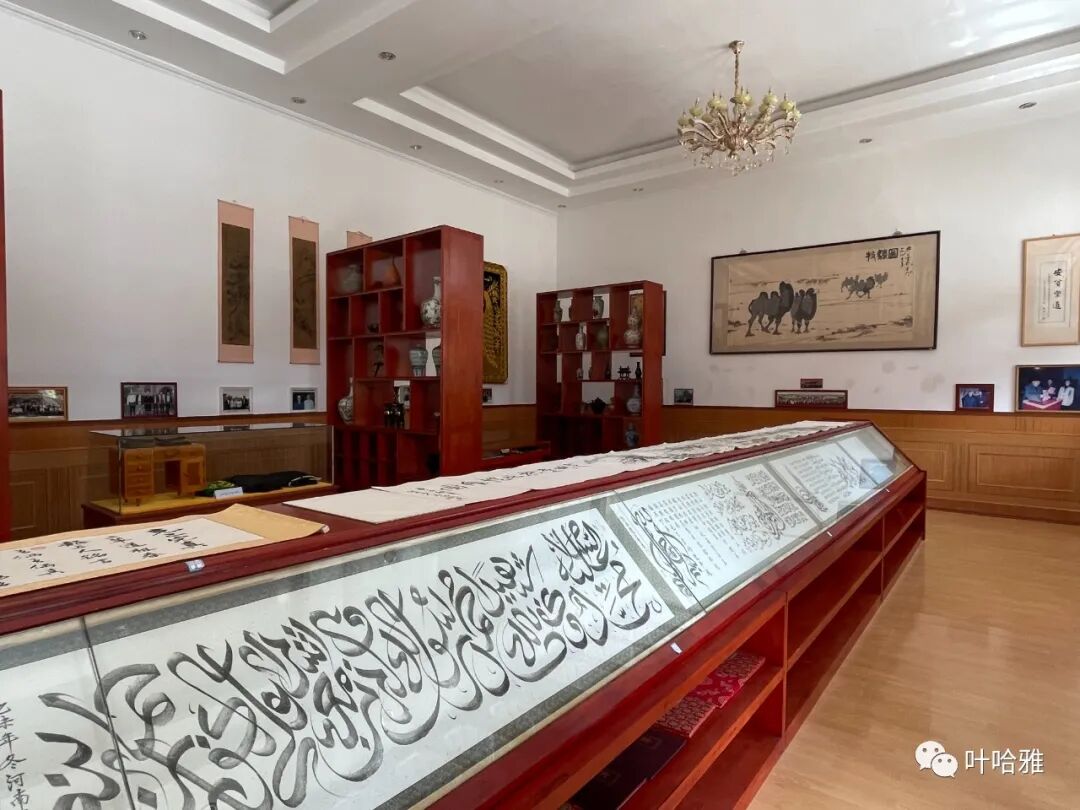
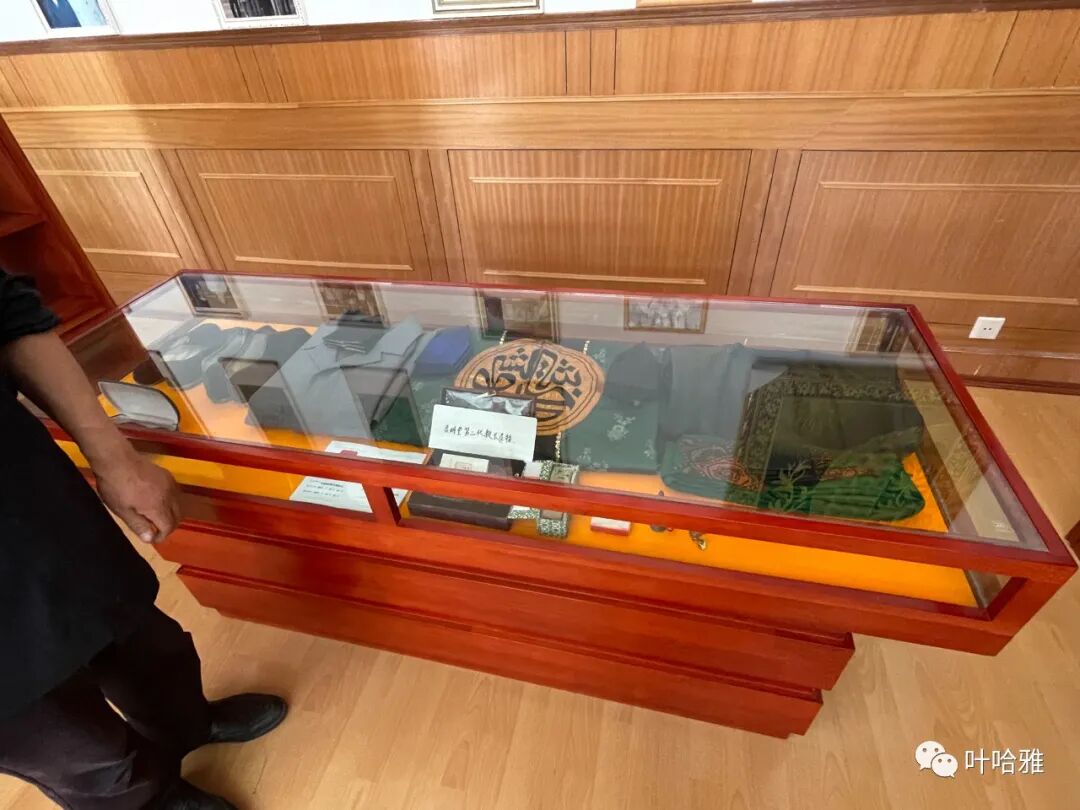
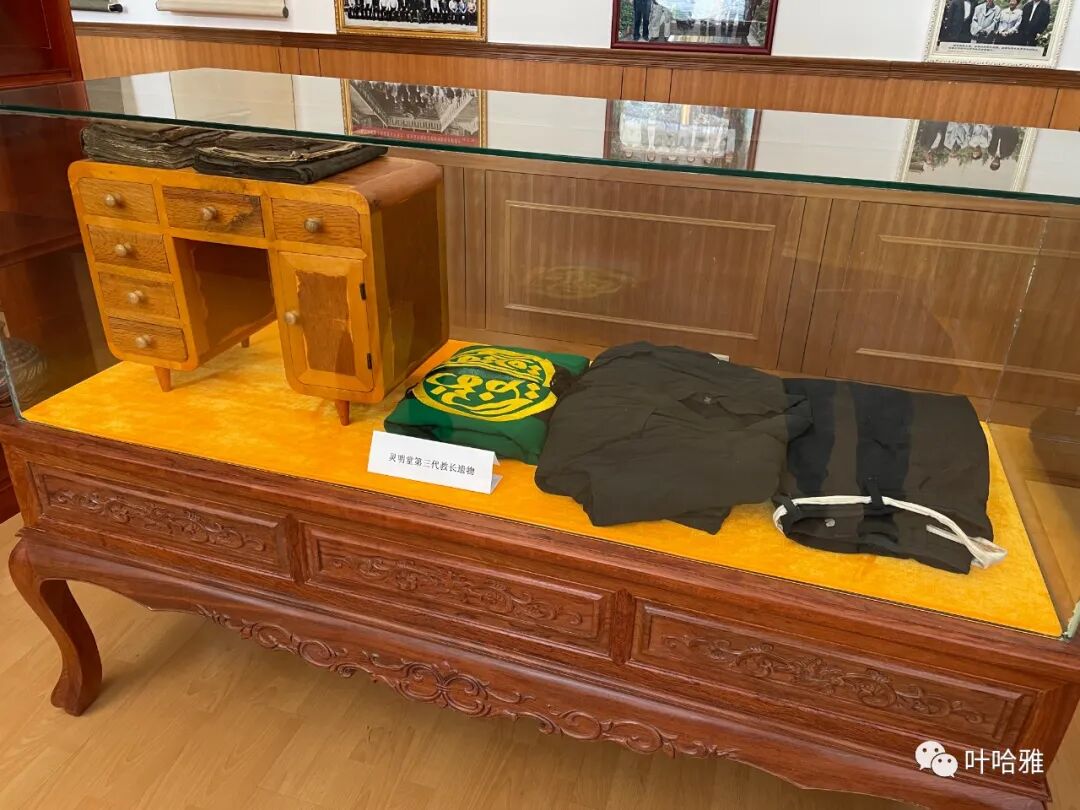
It is clear that the elder was very high-profile during his life. He was passionate about public welfare, open-minded, and progressive. This felt completely different from my visits to other menhuan gongbei. Some menhuan do not want outside attention; they allow visits but do not want publicity. Others focus on spiritual practice and stay away from the world. Lingmingtang is the opposite. It is more like a family business that encourages people to focus on their careers before the age of 60. These ideas have gained support from a significant number of wealthy believers.
Best Halal Food in Lanzhou: Beef Noodles, Hui Muslim Snacks and Local Restaurants
Articles • ali2007fr posted the article • 0 comments • 314 views • 2026-05-21 08:19
Summary: This Lanzhou halal food map highlights beef noodles, Hui Muslim snacks, restaurants, and local food routes in Lanzhou, keeping dish names and practical details from the original guide.
1. Mazilu Beef Noodles
Lanzhou beef noodles taste and feel very different from ramen shops across the country. This might be due to the local environment. Even with the same ingredients and the same people, noodles made in Lanzhou taste different than those made elsewhere. It is not easy to pick the most popular beef noodle shop in Lanzhou, as everyone has their own favorite brand. However, in terms of tradition, the century-old Mazilu Beef Noodles is very representative. Their noodles are special because of the chili oil, which is seasoned and processed to be fragrant rather than spicy.
Lanzhou beef noodles focus on five elements: clear soup, white radish, red chili, green scallions, and yellow noodles. Locals have a way of eating called "meat and egg double fly" (roudan shuangfei), where you order an extra portion of beef and an egg to soak in the bowl, making it even more delicious.
This is the "meat and egg double fly" at Youde Beef Noodles. It is best to eat beef noodles between 7 and 8 in the morning because that is when the first batch of soup is ready. After 9 o'clock, you might miss out on that first-batch flavor.
This is Mogouyan Beef Noodles, a long-established shop. Their beef is excellent.
Mazilu Beef Noodles address: No. 86 Dazhong Lane, Chengguan District, Lanzhou City, Gansu Province (chain store).
Mogouyan Beef Noodles address: No. 46 Mogouyan, Xijin East Road (near Nanbinhe).
Youde Beef Noodles address: No. 27 Nanbinhe East Road, Chengguan District, Lanzhou City, Gansu Province.
(Chain store)
2. Mingdegong
If you think all beef noodle shops in Lanzhou are small roadside stalls, you are wrong. Mingdegong offers a luxury beef noodle set for 888 yuan.
Mingdegong has two floors. The first floor is a traditional public restaurant, and the second floor offers more refined set meals.
Here, a large bowl of noodles can be served in two smaller bowls. You can choose the noodle shape, such as hair-thin (maoxi), thin (xi), second-thin (erxi), or leek-leaf (jiuye). The waiter waits for you to finish the first bowl before telling the kitchen to prepare the second, ensuring the quality of the meal.
Address: No. 328 Jiuquan Road, Chengguan District, Lanzhou.
3. Huayu Kaiguo Lamb
The first meal I had when I came to Lanzhou was Huayu Kaiguo Lamb.
The soup left a deep impression on me. I usually don't drink hot pot soup, but this shop's soup is truly delicious. You can chew the lamb brisket with the bone.
You can try the moss-filled steamed buns (dida xian baozi), made from a locally grown moss.
Address: No. 39 Nongmin Lane (intersection of Yizhichuan North Street and Nongmin Lane).
4. Kelan Hot Pot
This shop is known for its spotted fish hot pot.
You can choose a split pot (yuanyang guo), with seafood porridge as the base on the left and a mildly spicy base on the right. The fish is served in small plates, and one person can eat over a dozen plates.
Address: 50 meters diagonally opposite the People's Theater on Jiuquan Road (near Zhongshanlin 102 bus station).
5. Ma Laoliu Halal Restaurant
Ma Laoliu is quite famous locally, and their hand-grabbed lamb (shouzhua yangrou) is the signature dish.
When you are in the Northwest, you have to eat hand-grabbed lamb, and it is only authentic if you eat it with garlic.
You can pair it with a serving of grey bean soup (huidouzi) and sweet fermented oat porridge (tianbeizi), both of which are famous Northwest snacks.
Ma Laoliu's hot pot lamb (kaiguo yangrou) is also popular, so you will have to wait in line if you arrive during meal times.
For the hot pot, I recommend choosing the lamb that comes with bones.
Try the secret dipping sauce at Ma Laoliu; it looks red, but it is actually not spicy and very fragrant.
Ma Laoliu Hand-grabbed Lamb address: No. 17 Tongwei Road, Chengguan District, Lanzhou (near Zhangye Road Pedestrian Street).
Ma Laoliu Hot Pot address: No. 9 Tongwei Road (south side of Tongwei Road Primary School).
6.
777 Tasty Grilled Fish
I discovered that people in the Northwest have a special fondness for fish and seafood.
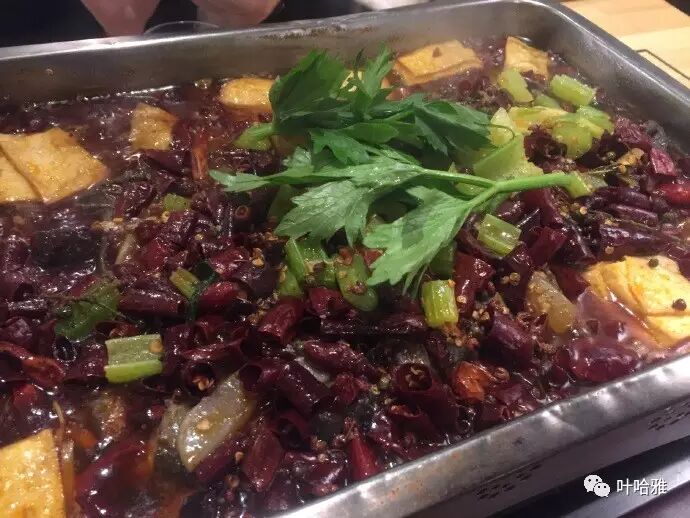
The menu is very simple. There is one set meal, and you do not even need to choose the side dishes yourself; you just tell them the weight of the fish and place your order, which is very convenient.
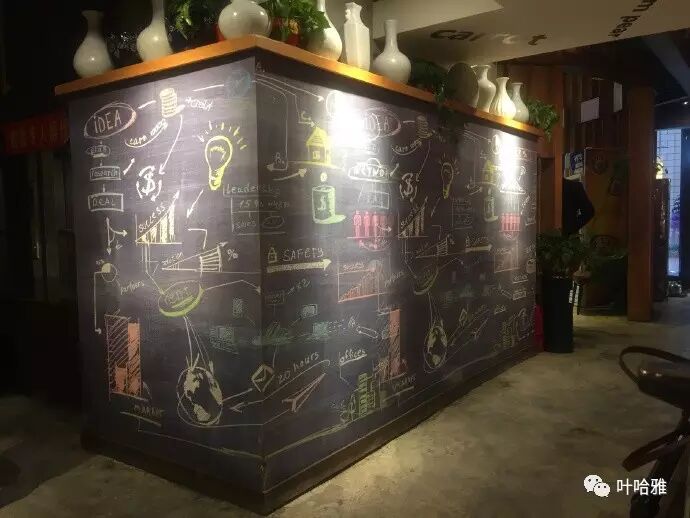
The decor is also quite unique.
Address: Jinyan Lane, next to Wanda Plaza. In the same lane, there is also halal Korean fried chicken and seafood porridge.
7. Northern Shaanxi Iron Pot Lamb
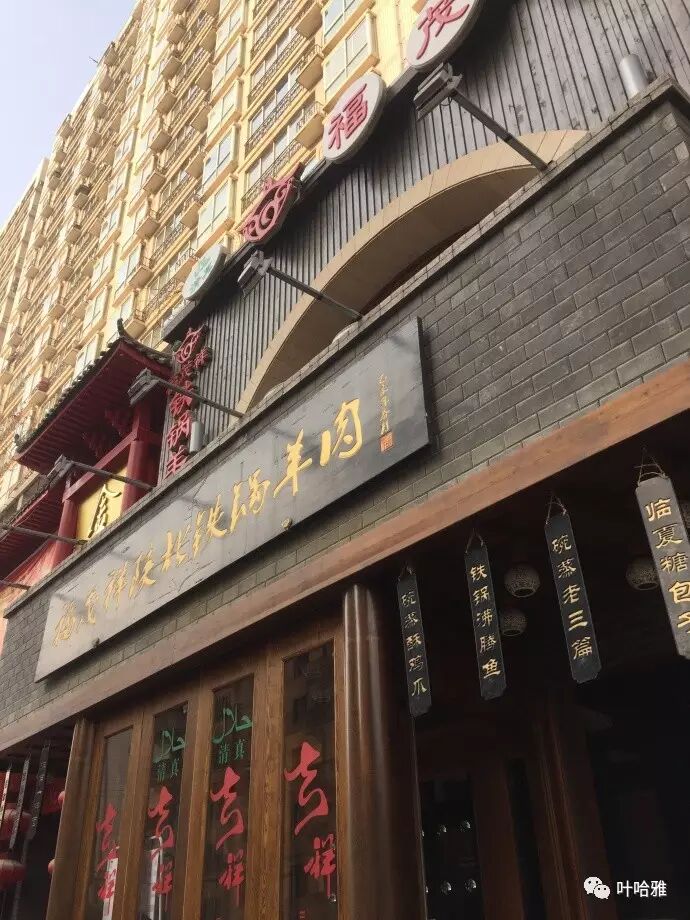
This is a delicacy I only got to taste because a friend in Lanzhou treated me.
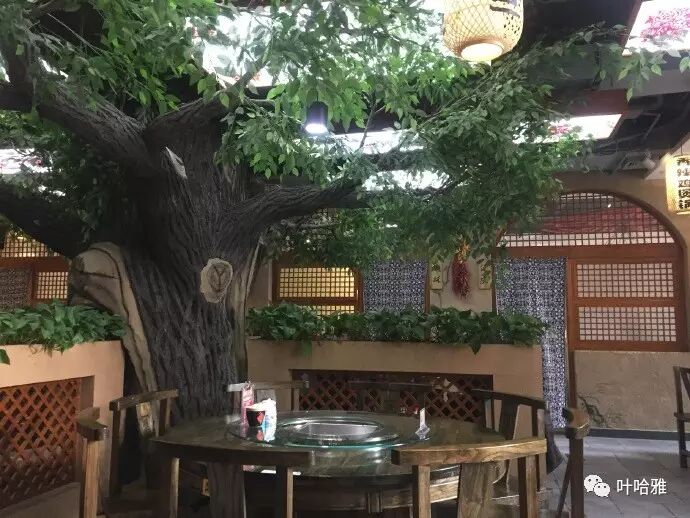
It has a strong Northern Shaanxi style.
The iron pot is brought to the table and then lit to heat up.
You can start eating after a short while.
Try the secret chicken feet; do not be afraid of the red color, as they are really not spicy.
The yogurt with sweet fermented oat porridge is hard to find.
They serve a soup made with eggplant, corn, and other ingredients that feels comfortable in your stomach and helps with digestion.
Address: 300 meters west of the Guangchang Beikou bus stop in Chengguan District.
8. Haitian Ranch Hot Pot and Barbecue Buffet
75 yuan per person.
There is a wide variety of fruits, snacks, and other dishes.
They specialize in seafood that you can either boil in hot pot or grill, and it is a great value.
Address: 6th floor of Xinda Department Store at the Yantan RT-Mart.
9. Tasimi Halal Food Court
You can tell from the name that it serves halal snacks.
It has all kinds of snacks and is a good place to eat alone.
They also have fried chicken.
There are many different brands, and the environment is quite nice.
Address: No. 235 Zhangye Road (Tasimi Food Court, Stall 9, Basement Level 1, Block A, Minji Xincheng).
10. Aijia Dapaidang
When I heard the name, I thought it was a casual street food stall (dapaidang), but when I arrived, I realized it was a high-end restaurant (dapaidang).
The setting is very upscale, and it has the same owner as Mingde Palace.
There is a rich variety of dishes to choose from, like an upgraded version of a street food stall.
Tea tree mushroom hot pot (guozai chashugu).
Iron skewer barbecue, the meat is fresh and tender.
Vegetable-filled potstickers (su xian guotie).
The frozen pear soup (dongli tang) is their signature dish and worth a try.
Cheese shrimp.
Grilled oysters, the price is very affordable.
Address: No. 173 Qingyang Road, Chengguan District.
11. Ding Hot Pot
Ding Hot Pot, owned by the Yilan Group, is one of the few 24-hour hot pot restaurants in Lanzhou. It is still packed with people at midnight.
I ordered the split-pot (yuanyang guo) as usual so I could try both sides.
I highly recommend the hand-cut fresh lamb.
You have to get used to the dipping sauce made of sesame oil and minced garlic here, as that is how they eat Sichuan-style food.
Address: 4th Floor, Kangqiao International Shopping Center, No. 3 Anning West Road, Anning District, Lanzhou City, Gansu Province.
12. Yilan Zige
The brands under the Yilan Group are quite famous, and this restaurant is a place for stir-fried dishes.
In Lanzhou, you should drink tea with a three-piece covered cup (sanpaotai).
The boiled fish is a little bit spicy.
Stir-fried okra with peppercorns (qiangchao qiukui).
There are also delicate pastries with fruit fillings.
Address: Next to Tongwei Road Primary School.
13. Siji Yuge
This is a very popular place for braised hot pot (munguo).
After you pick your ingredients, it starts like this, then you put the lid on to let it braise.
It looks like this once it is finished, and the aroma is amazing.
Address:
500 meters west of the Shuangchengmen intersection in Lanzhou.
14. Shujiuxiang
This is a very famous Sichuan hot pot restaurant, and you can eat a halal version here in Lanzhou.
How could Sichuan-style hot pot not be spicy?
The beef is marinated in seasonings, so it is very flavorful.
The authentic dipping sauce for Sichuan hot pot is sesame oil and minced garlic.
Address: No. 868 Nongmin Lane, Chengguan District, Lanzhou (east side of the Northwest Hotel).
15. Xiwu Teahouse
You can drink tea and order meals here. The environment is nice and quiet. It is a good place to spend time if you are near the train station.
Drinking three-cannon tea (sanpaotai) is the authentic way to go. Lanzhou is famous for its lilies and roses, so if you like rose tea, you are in luck.
Sour soup beef (suantang feiniu)
Make sure to try the peppercorn chicken (jiaomaji) at least once.
Address: 6th Floor, Huisheng, 242 Yongchang Middle Road, Chengguan District, Lanzhou
16. Zhengning Road Night Market
You can find all the Lanzhou snacks you want to eat here.
You have to wait in a long line to get the milk, egg, and fermented rice soup (niunai jidan liaozao).
The crowd is packed three layers deep inside and out.
They also sell baked buns (kao baozi), but these iron-griddle baked buns are not as good as the ones baked in a coal oven.
There is a very famous sweet fermented oat milk tea shop in Lanzhou called "Fangxia." Locals call it "Fangha," but since the "Fangha" trademark was registered by someone else, the milk tea is now called "Fangxia." Lanzhou people say that if you do not drink Fangxia milk tea, you have not really been to Lanzhou. They sell it at the night market, so if you are interested, go give it a try. view all
Summary: This Lanzhou halal food map highlights beef noodles, Hui Muslim snacks, restaurants, and local food routes in Lanzhou, keeping dish names and practical details from the original guide.
1. Mazilu Beef Noodles
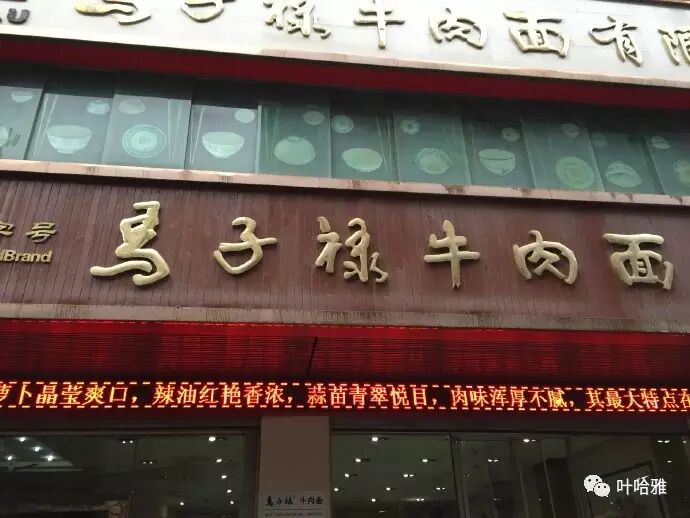
Lanzhou beef noodles taste and feel very different from ramen shops across the country. This might be due to the local environment. Even with the same ingredients and the same people, noodles made in Lanzhou taste different than those made elsewhere. It is not easy to pick the most popular beef noodle shop in Lanzhou, as everyone has their own favorite brand. However, in terms of tradition, the century-old Mazilu Beef Noodles is very representative. Their noodles are special because of the chili oil, which is seasoned and processed to be fragrant rather than spicy.
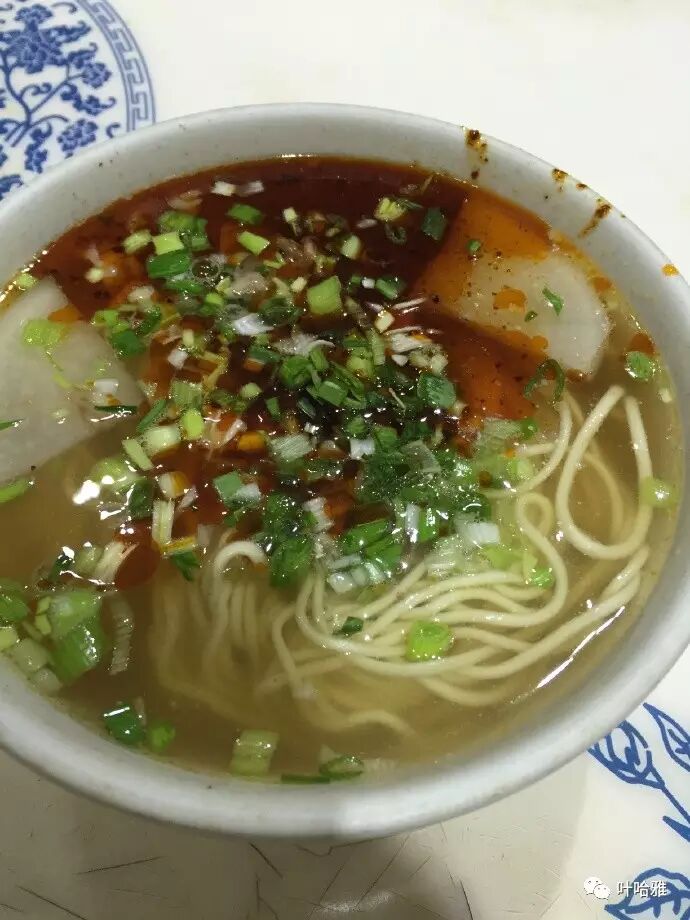
Lanzhou beef noodles focus on five elements: clear soup, white radish, red chili, green scallions, and yellow noodles. Locals have a way of eating called "meat and egg double fly" (roudan shuangfei), where you order an extra portion of beef and an egg to soak in the bowl, making it even more delicious.
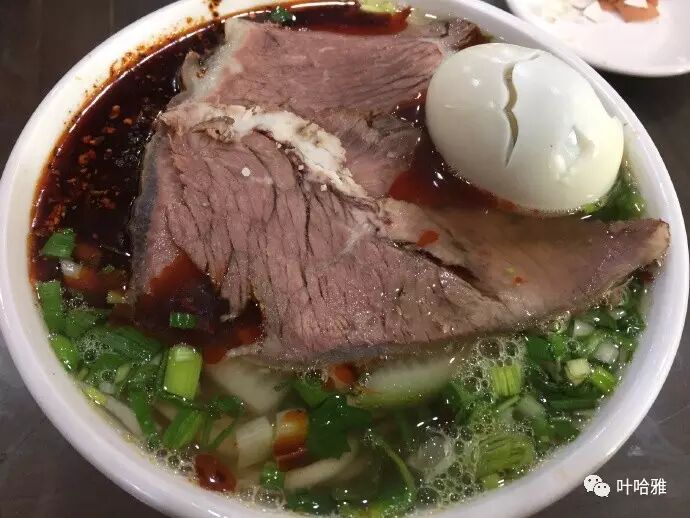
This is the "meat and egg double fly" at Youde Beef Noodles. It is best to eat beef noodles between 7 and 8 in the morning because that is when the first batch of soup is ready. After 9 o'clock, you might miss out on that first-batch flavor.
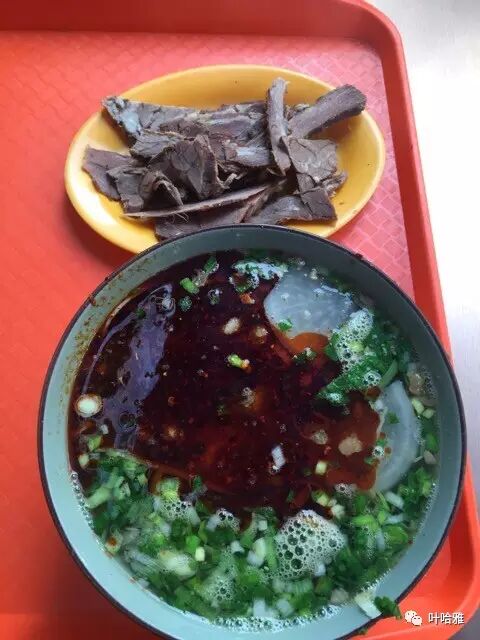
This is Mogouyan Beef Noodles, a long-established shop. Their beef is excellent.
Mazilu Beef Noodles address: No. 86 Dazhong Lane, Chengguan District, Lanzhou City, Gansu Province (chain store).
Mogouyan Beef Noodles address: No. 46 Mogouyan, Xijin East Road (near Nanbinhe).
Youde Beef Noodles address: No. 27 Nanbinhe East Road, Chengguan District, Lanzhou City, Gansu Province.
(Chain store)
2. Mingdegong
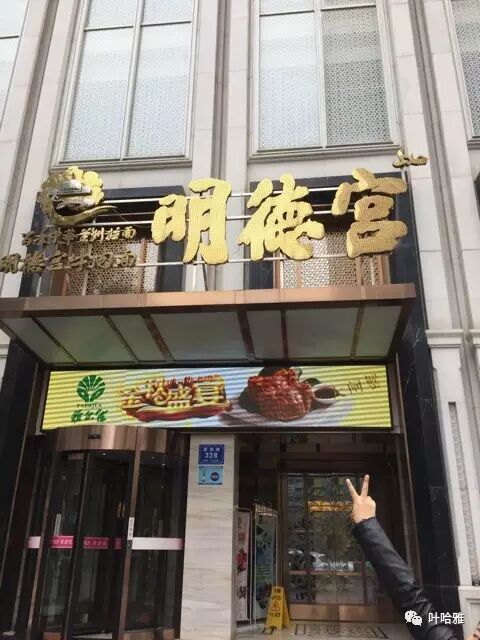
If you think all beef noodle shops in Lanzhou are small roadside stalls, you are wrong. Mingdegong offers a luxury beef noodle set for 888 yuan.
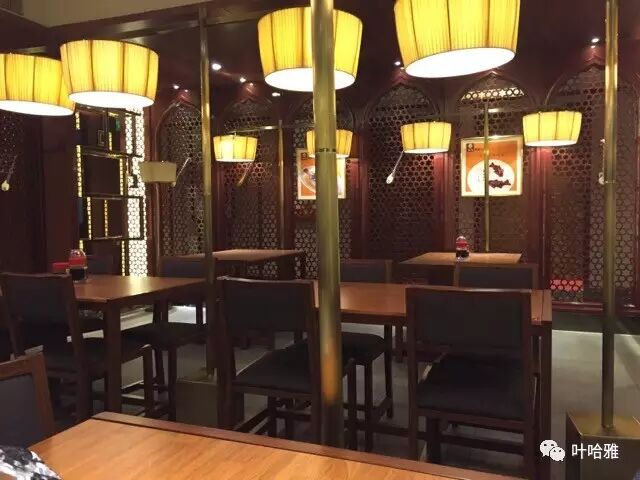
Mingdegong has two floors. The first floor is a traditional public restaurant, and the second floor offers more refined set meals.
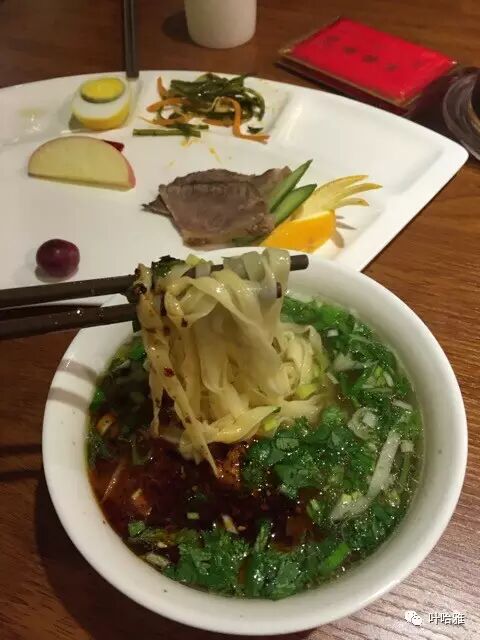
Here, a large bowl of noodles can be served in two smaller bowls. You can choose the noodle shape, such as hair-thin (maoxi), thin (xi), second-thin (erxi), or leek-leaf (jiuye). The waiter waits for you to finish the first bowl before telling the kitchen to prepare the second, ensuring the quality of the meal.
Address: No. 328 Jiuquan Road, Chengguan District, Lanzhou.
3. Huayu Kaiguo Lamb
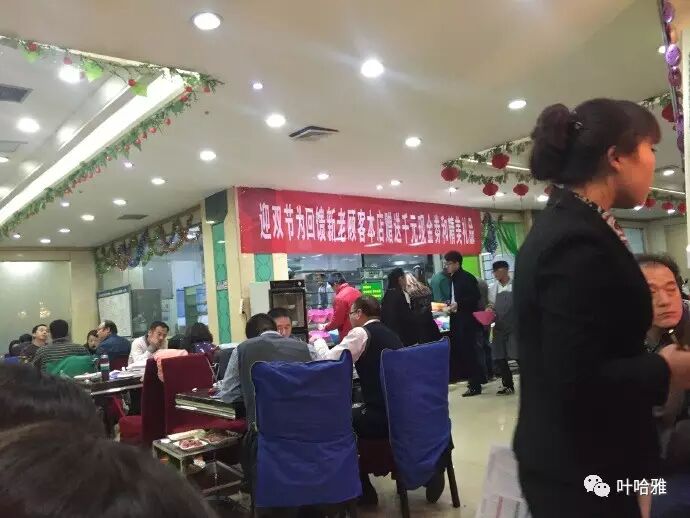
The first meal I had when I came to Lanzhou was Huayu Kaiguo Lamb.
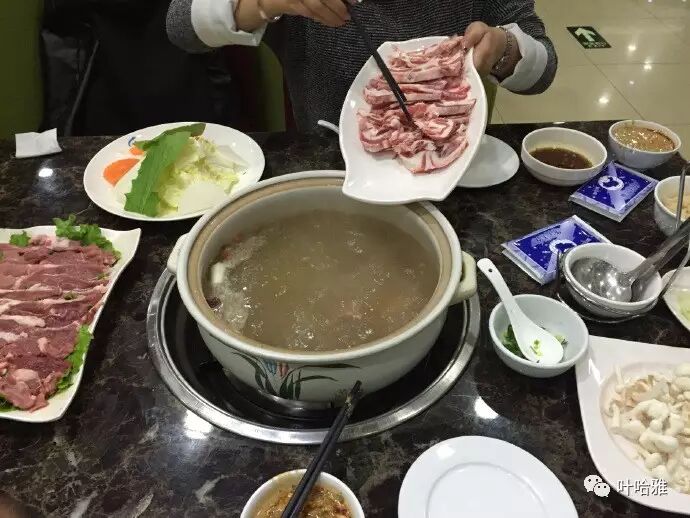
The soup left a deep impression on me. I usually don't drink hot pot soup, but this shop's soup is truly delicious. You can chew the lamb brisket with the bone.
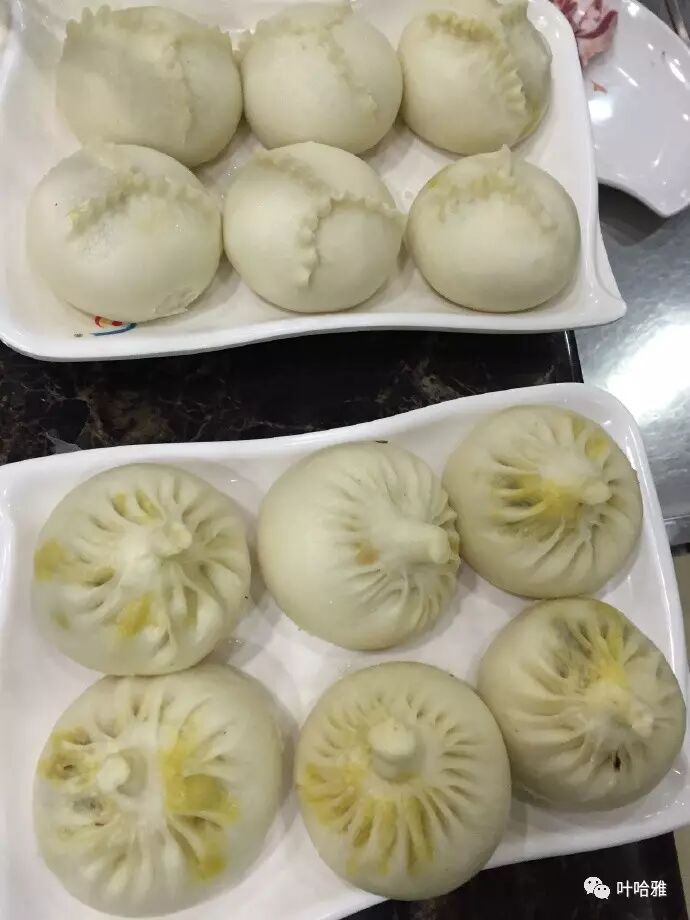
You can try the moss-filled steamed buns (dida xian baozi), made from a locally grown moss.
Address: No. 39 Nongmin Lane (intersection of Yizhichuan North Street and Nongmin Lane).
4. Kelan Hot Pot
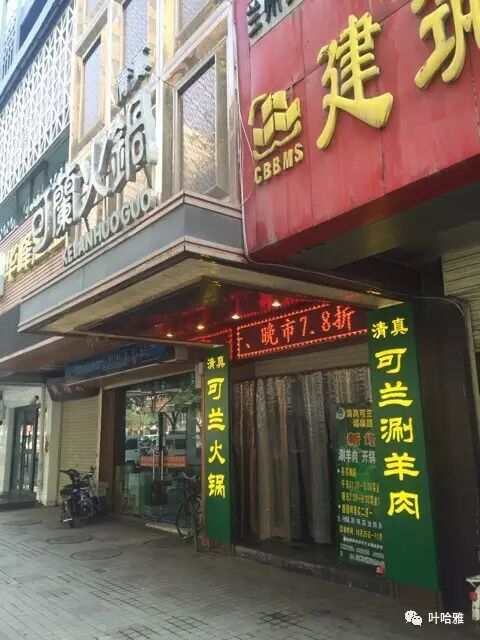
This shop is known for its spotted fish hot pot.
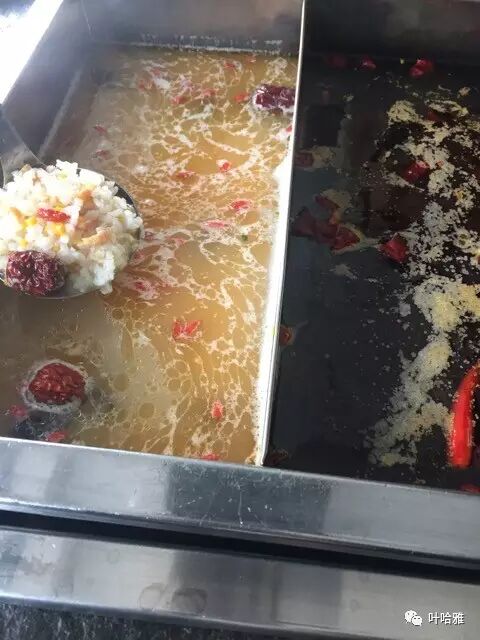
You can choose a split pot (yuanyang guo), with seafood porridge as the base on the left and a mildly spicy base on the right. The fish is served in small plates, and one person can eat over a dozen plates.
Address: 50 meters diagonally opposite the People's Theater on Jiuquan Road (near Zhongshanlin 102 bus station).
5. Ma Laoliu Halal Restaurant
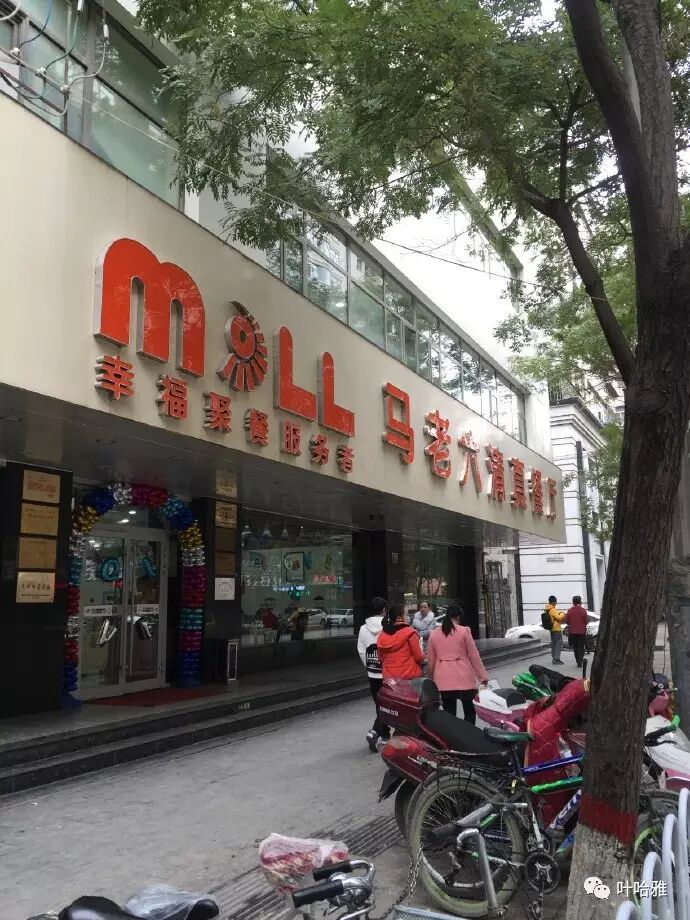
Ma Laoliu is quite famous locally, and their hand-grabbed lamb (shouzhua yangrou) is the signature dish.
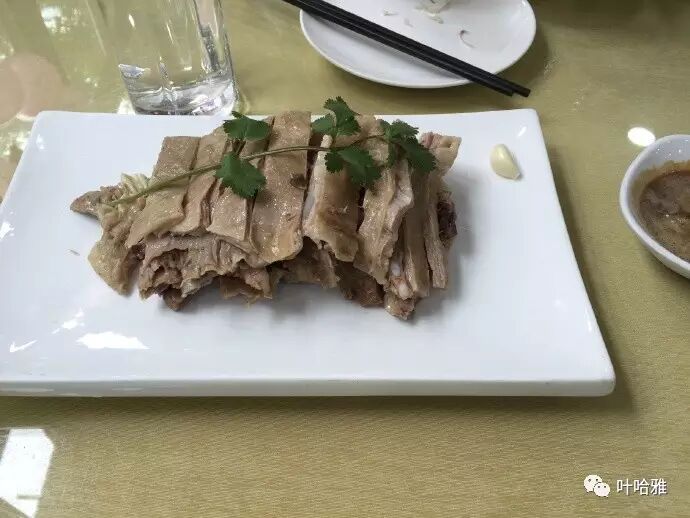
When you are in the Northwest, you have to eat hand-grabbed lamb, and it is only authentic if you eat it with garlic.
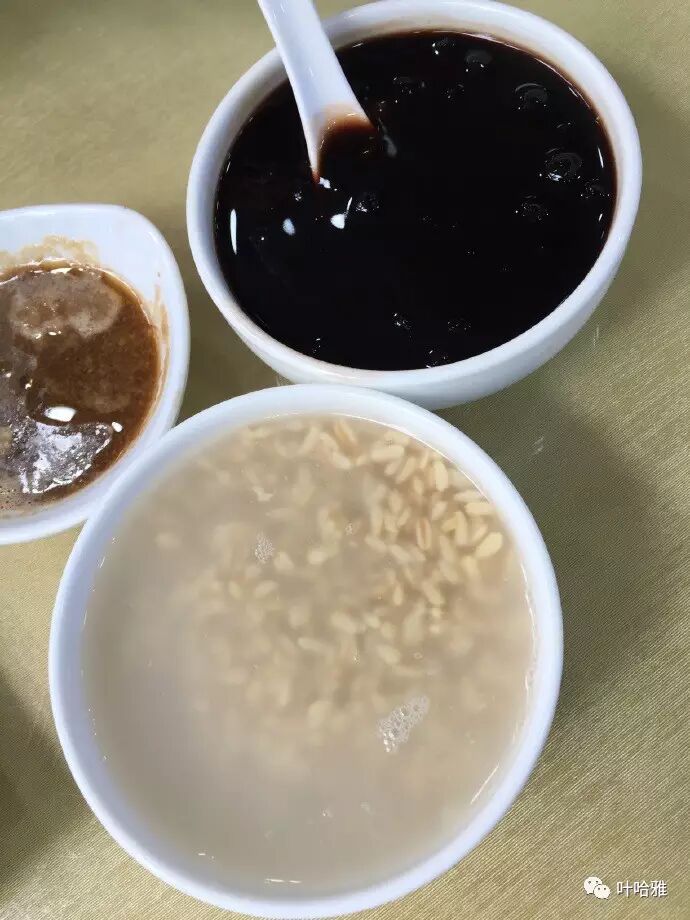
You can pair it with a serving of grey bean soup (huidouzi) and sweet fermented oat porridge (tianbeizi), both of which are famous Northwest snacks.
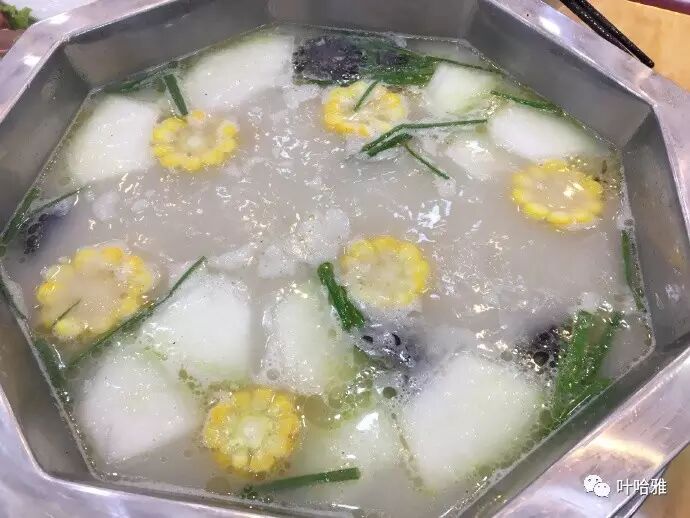
Ma Laoliu's hot pot lamb (kaiguo yangrou) is also popular, so you will have to wait in line if you arrive during meal times.
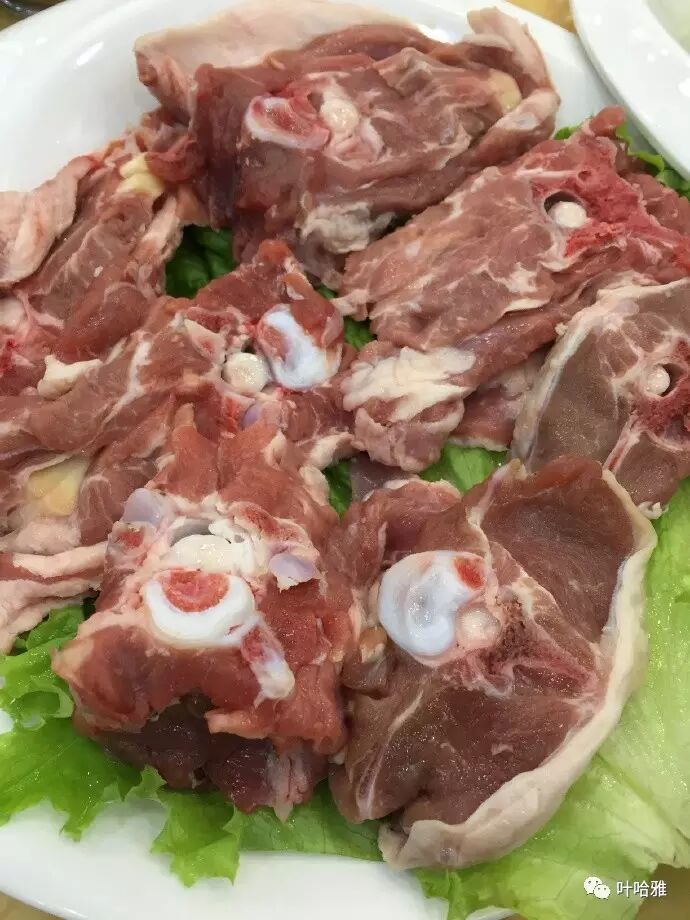
For the hot pot, I recommend choosing the lamb that comes with bones.
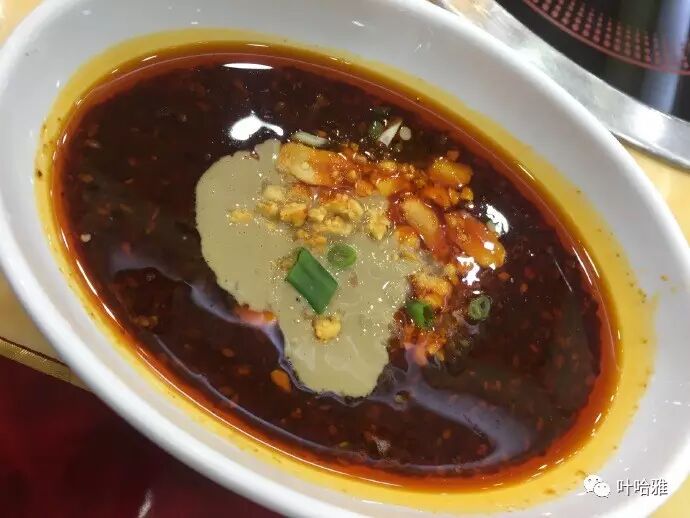
Try the secret dipping sauce at Ma Laoliu; it looks red, but it is actually not spicy and very fragrant.
Ma Laoliu Hand-grabbed Lamb address: No. 17 Tongwei Road, Chengguan District, Lanzhou (near Zhangye Road Pedestrian Street).
Ma Laoliu Hot Pot address: No. 9 Tongwei Road (south side of Tongwei Road Primary School).
6.
777 Tasty Grilled Fish
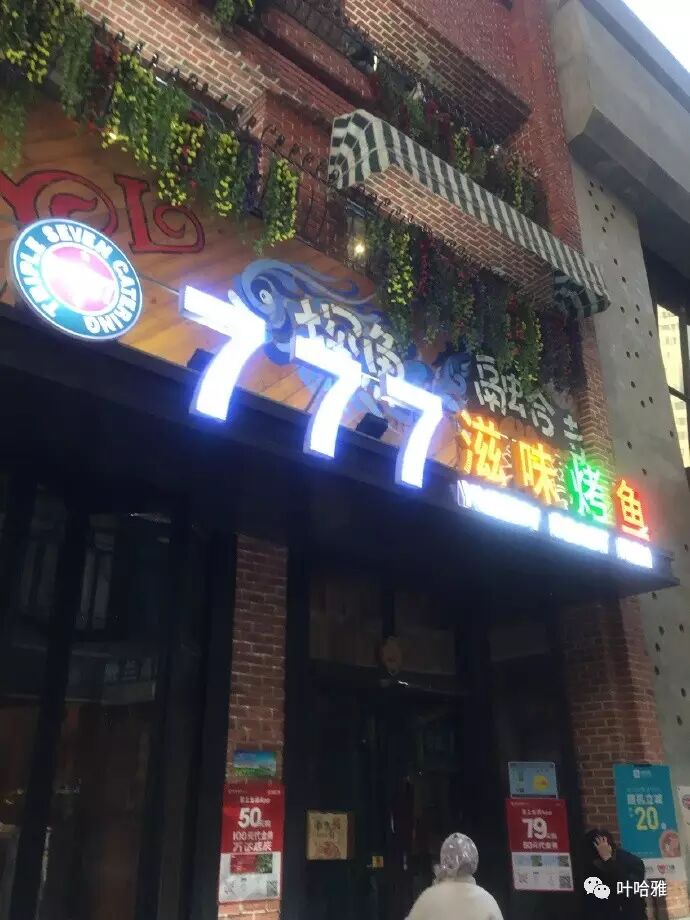
I discovered that people in the Northwest have a special fondness for fish and seafood.
The menu is very simple. There is one set meal, and you do not even need to choose the side dishes yourself; you just tell them the weight of the fish and place your order, which is very convenient.
The decor is also quite unique.
Address: Jinyan Lane, next to Wanda Plaza. In the same lane, there is also halal Korean fried chicken and seafood porridge.
7. Northern Shaanxi Iron Pot Lamb
This is a delicacy I only got to taste because a friend in Lanzhou treated me.
It has a strong Northern Shaanxi style.
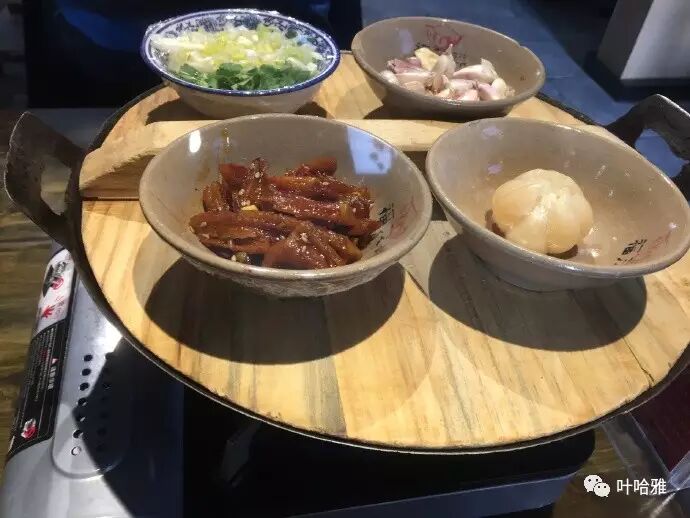
The iron pot is brought to the table and then lit to heat up.
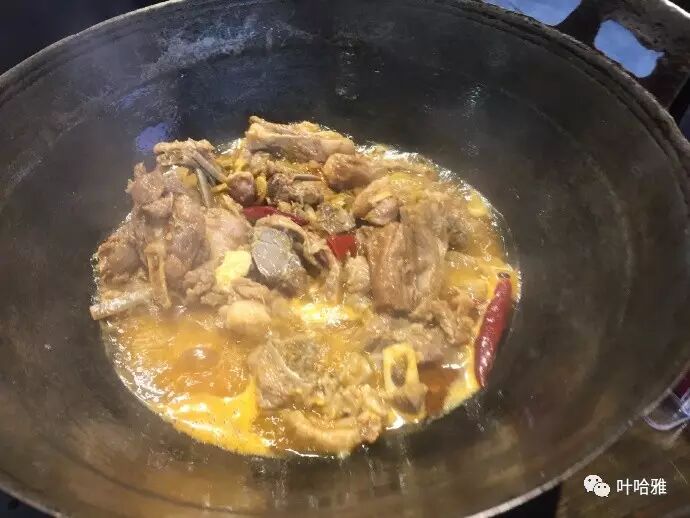
You can start eating after a short while.
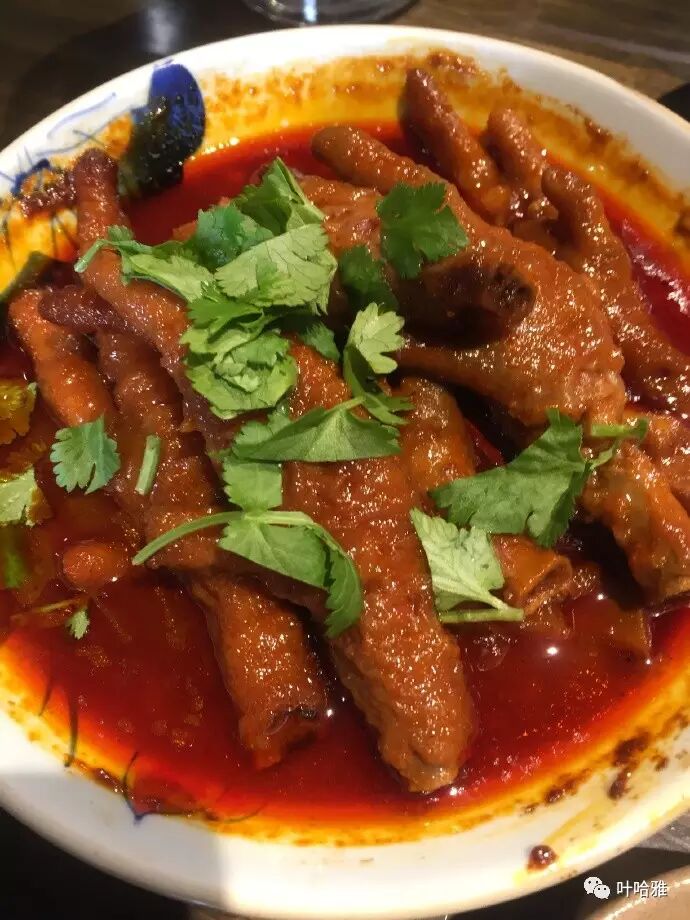
Try the secret chicken feet; do not be afraid of the red color, as they are really not spicy.
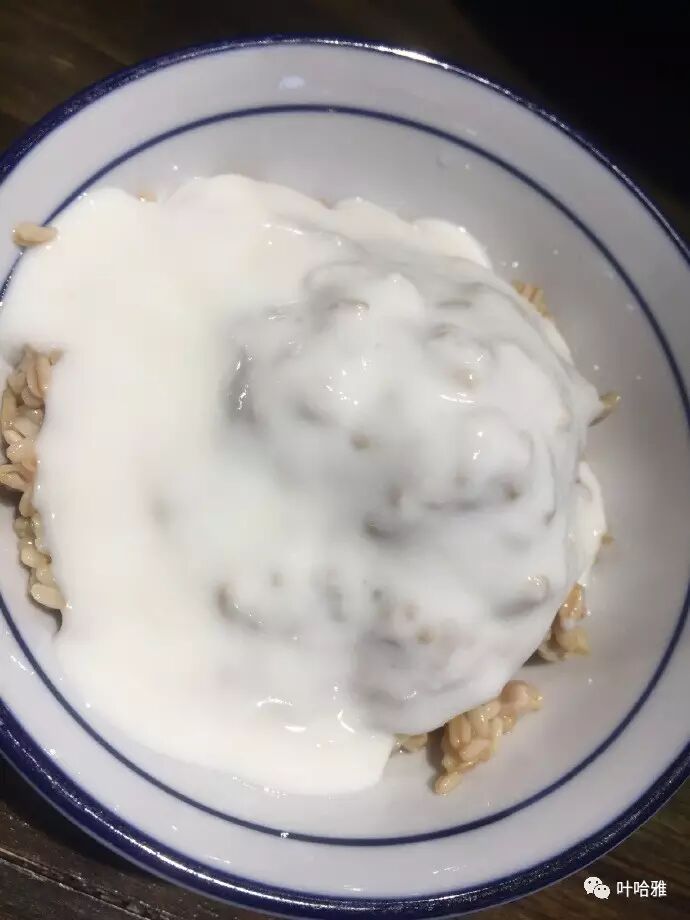
The yogurt with sweet fermented oat porridge is hard to find.
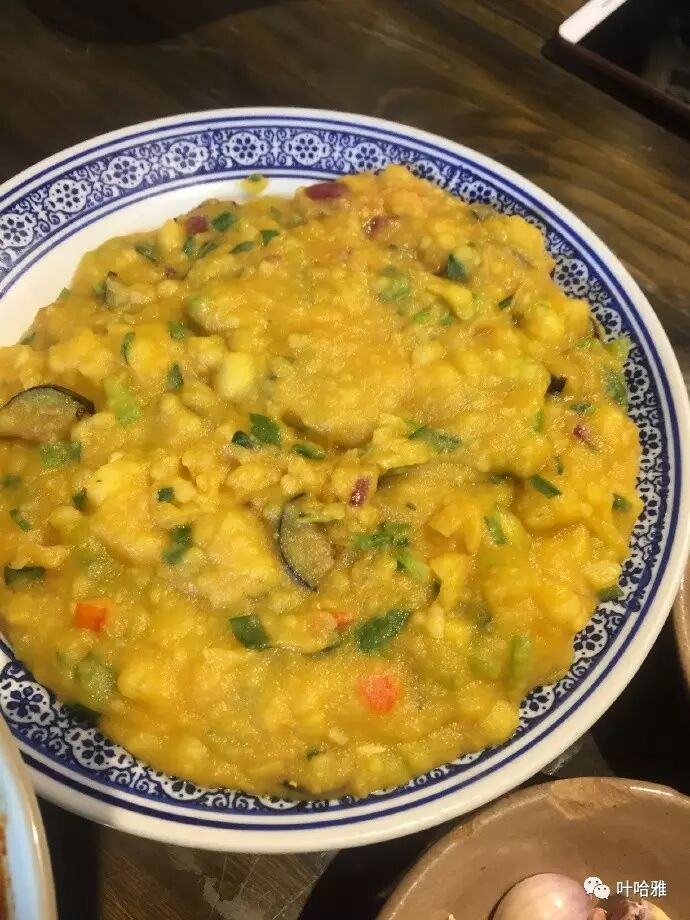
They serve a soup made with eggplant, corn, and other ingredients that feels comfortable in your stomach and helps with digestion.
Address: 300 meters west of the Guangchang Beikou bus stop in Chengguan District.
8. Haitian Ranch Hot Pot and Barbecue Buffet
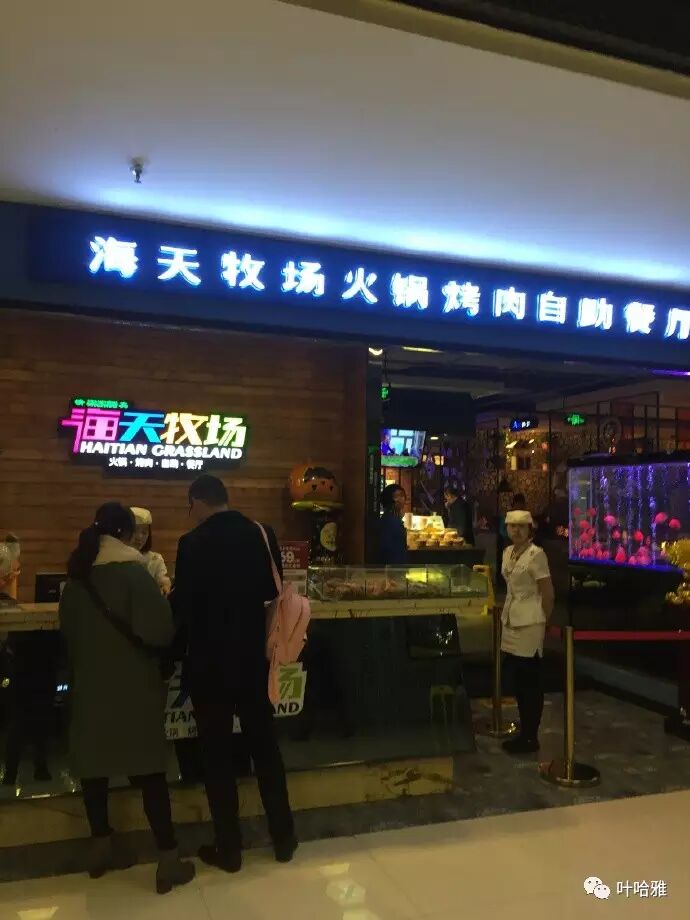
75 yuan per person.
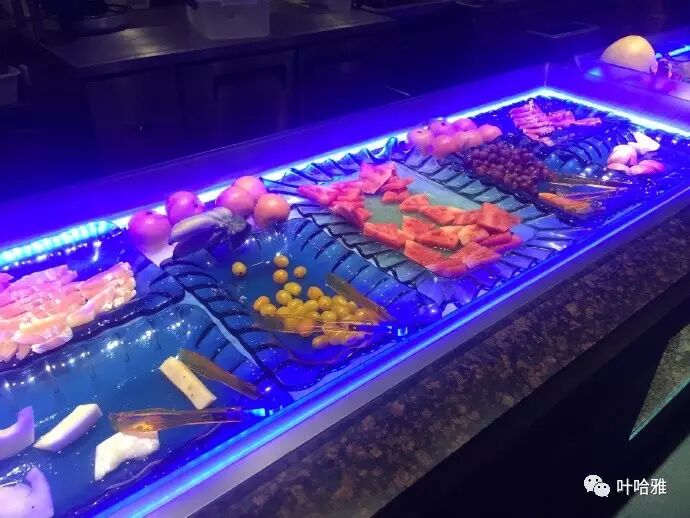
There is a wide variety of fruits, snacks, and other dishes.
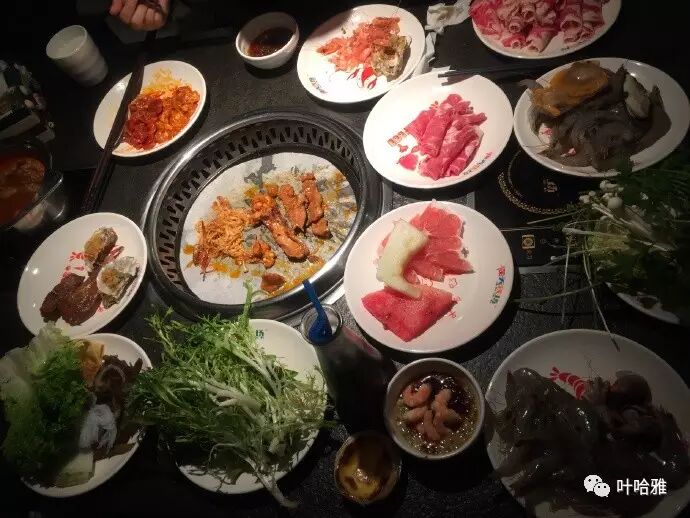
They specialize in seafood that you can either boil in hot pot or grill, and it is a great value.
Address: 6th floor of Xinda Department Store at the Yantan RT-Mart.
9. Tasimi Halal Food Court
You can tell from the name that it serves halal snacks.
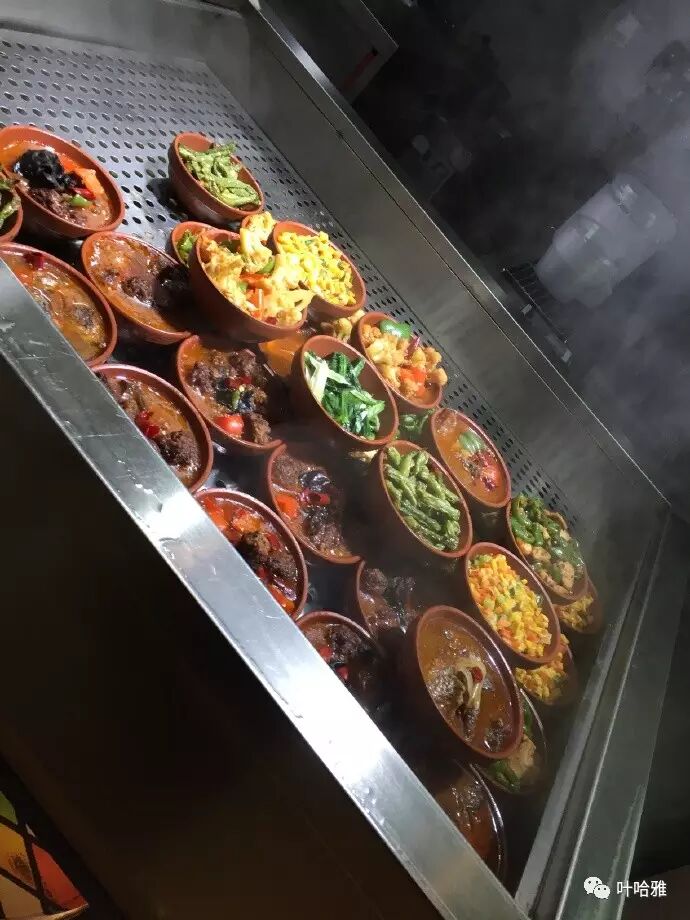
It has all kinds of snacks and is a good place to eat alone.
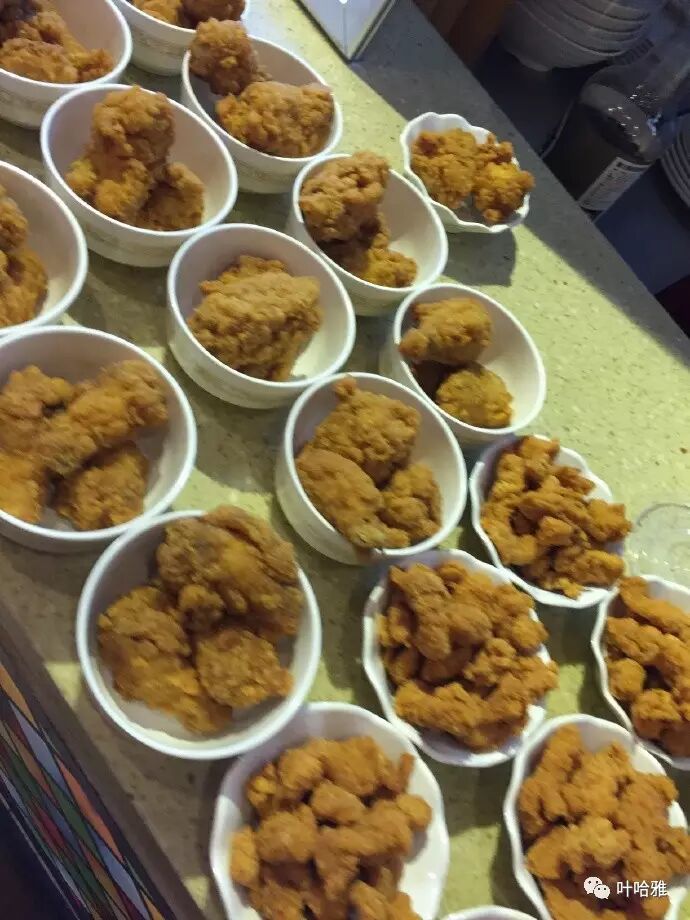
They also have fried chicken.
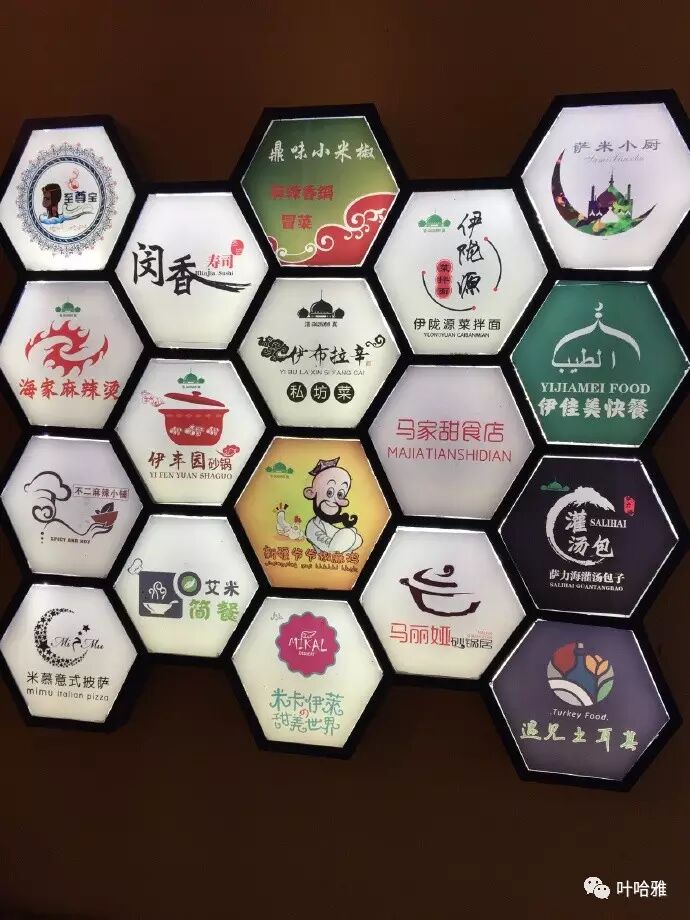
There are many different brands, and the environment is quite nice.
Address: No. 235 Zhangye Road (Tasimi Food Court, Stall 9, Basement Level 1, Block A, Minji Xincheng).
10. Aijia Dapaidang
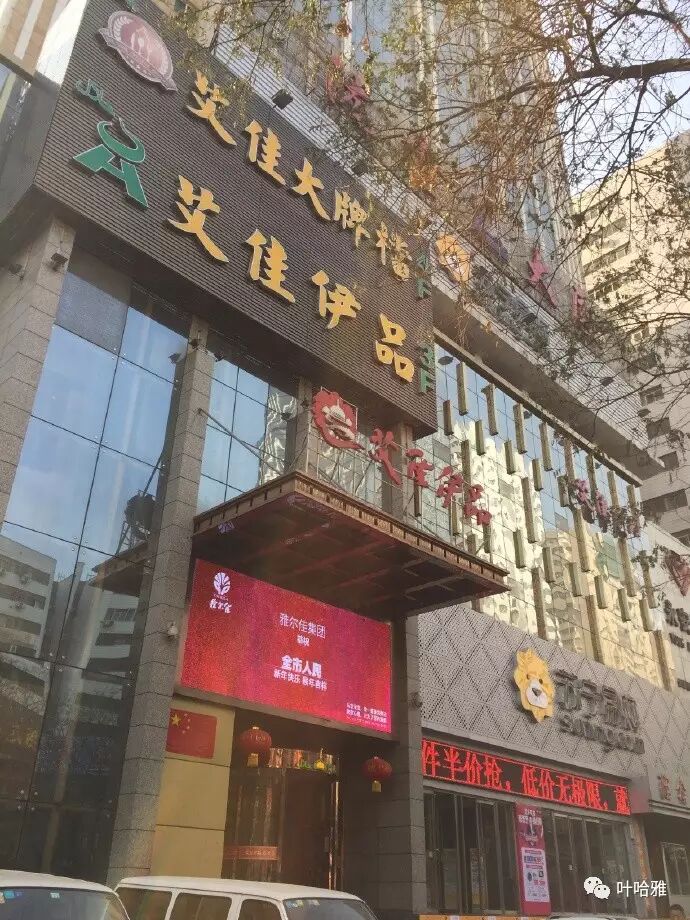
When I heard the name, I thought it was a casual street food stall (dapaidang), but when I arrived, I realized it was a high-end restaurant (dapaidang).
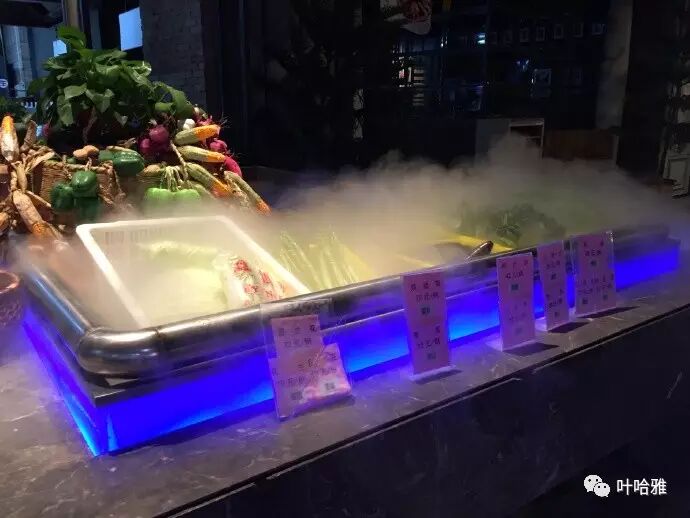
The setting is very upscale, and it has the same owner as Mingde Palace.
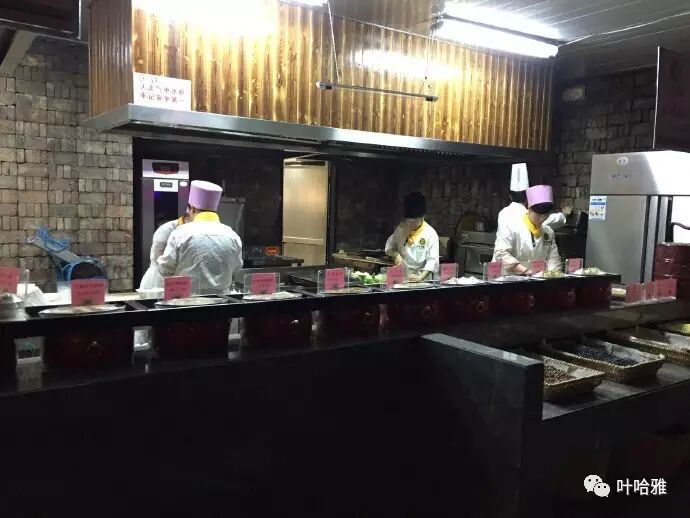
There is a rich variety of dishes to choose from, like an upgraded version of a street food stall.
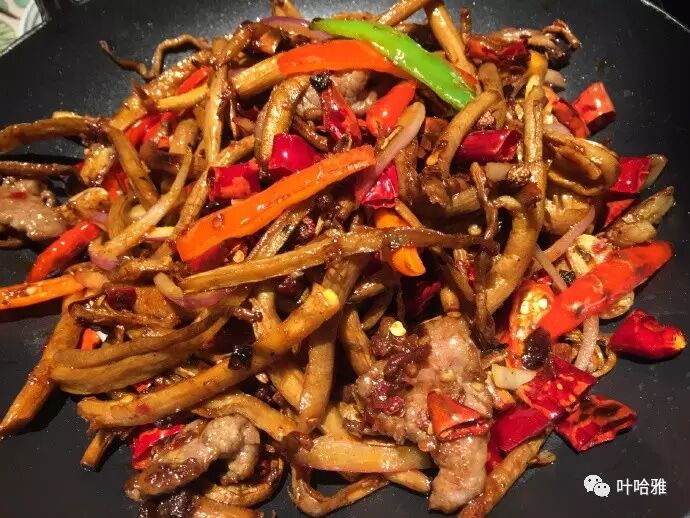
Tea tree mushroom hot pot (guozai chashugu).
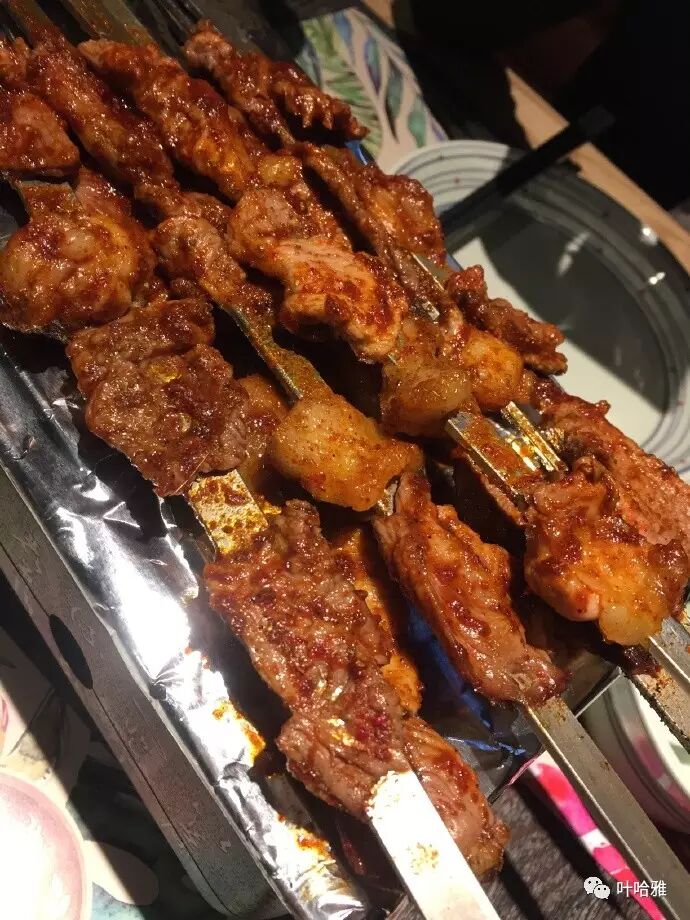
Iron skewer barbecue, the meat is fresh and tender.
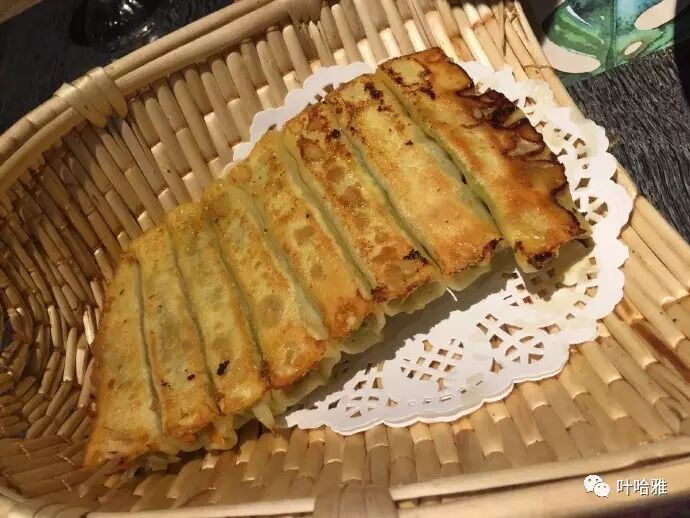
Vegetable-filled potstickers (su xian guotie).
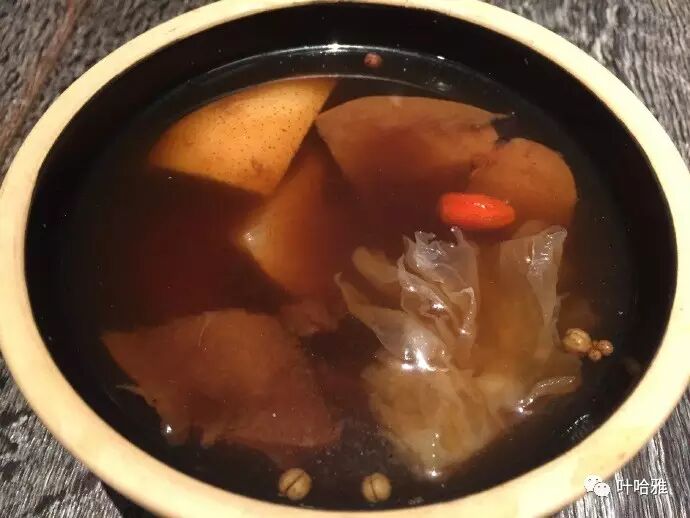
The frozen pear soup (dongli tang) is their signature dish and worth a try.
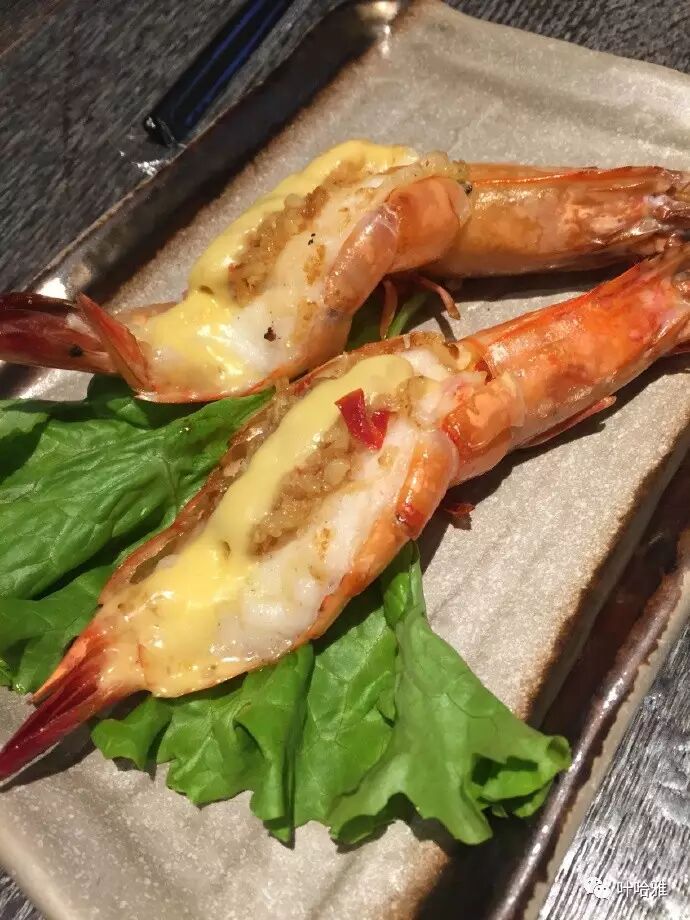
Cheese shrimp.
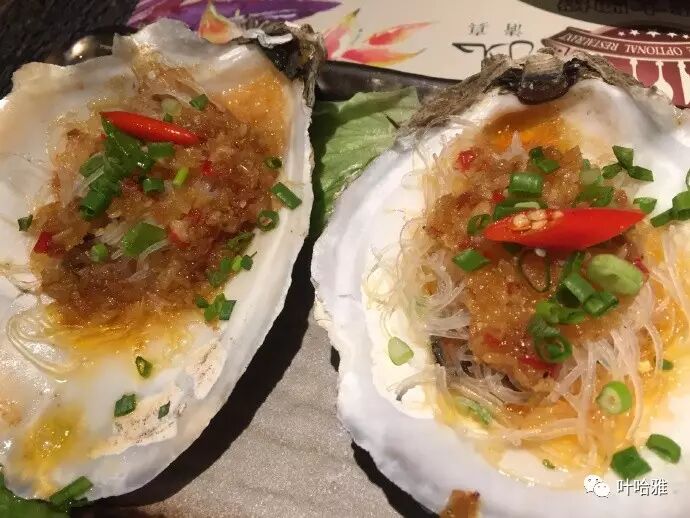
Grilled oysters, the price is very affordable.
Address: No. 173 Qingyang Road, Chengguan District.
11. Ding Hot Pot
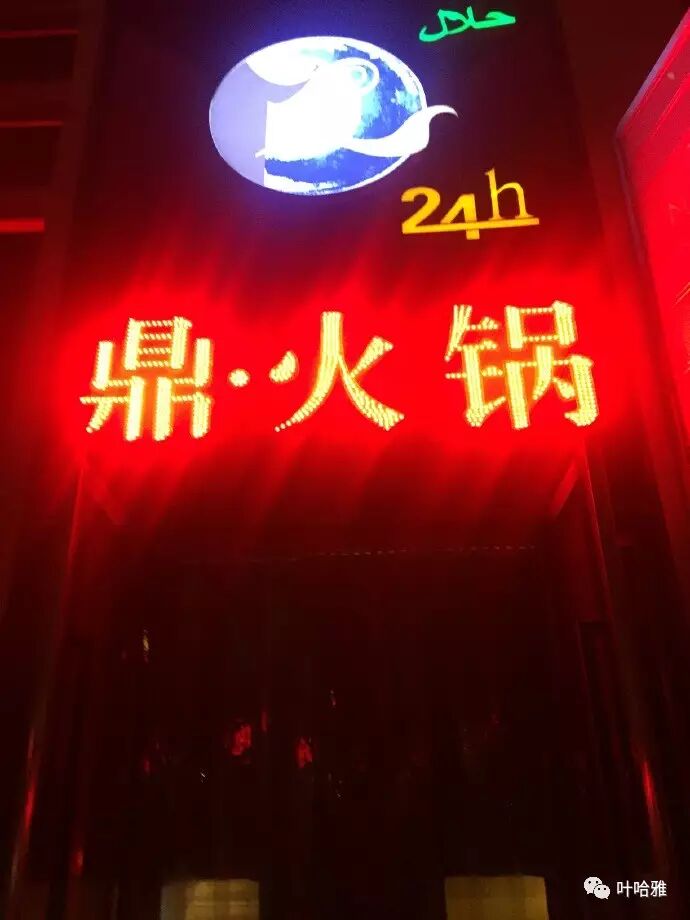
Ding Hot Pot, owned by the Yilan Group, is one of the few 24-hour hot pot restaurants in Lanzhou. It is still packed with people at midnight.
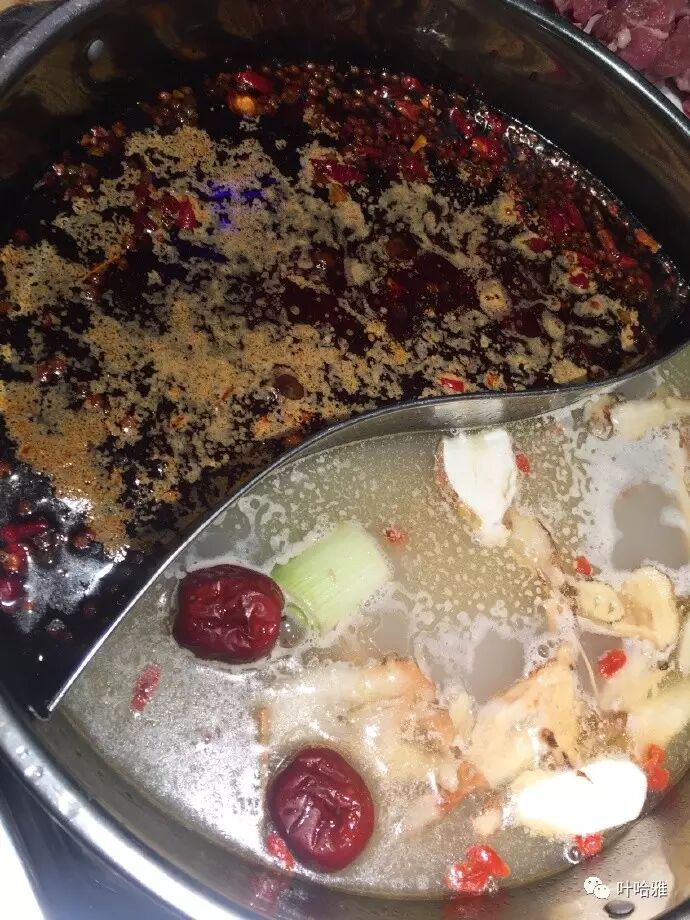
I ordered the split-pot (yuanyang guo) as usual so I could try both sides.
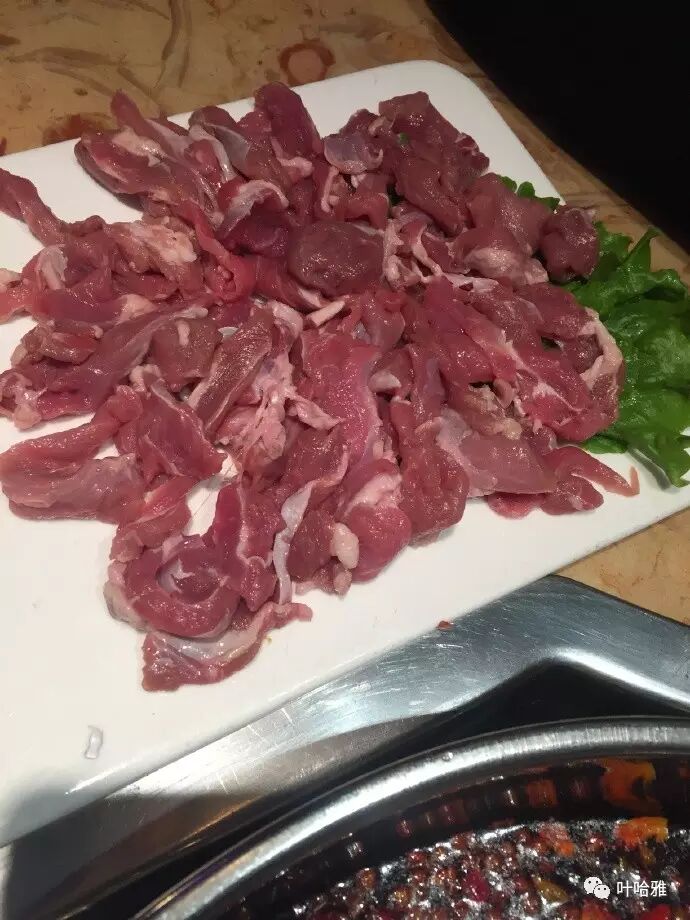
I highly recommend the hand-cut fresh lamb.
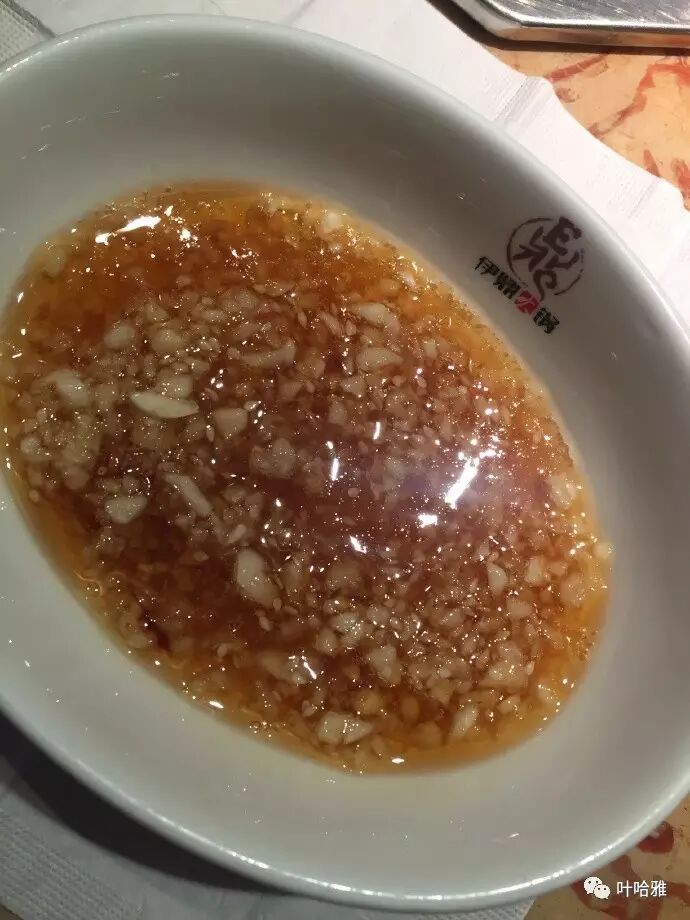
You have to get used to the dipping sauce made of sesame oil and minced garlic here, as that is how they eat Sichuan-style food.
Address: 4th Floor, Kangqiao International Shopping Center, No. 3 Anning West Road, Anning District, Lanzhou City, Gansu Province.
12. Yilan Zige
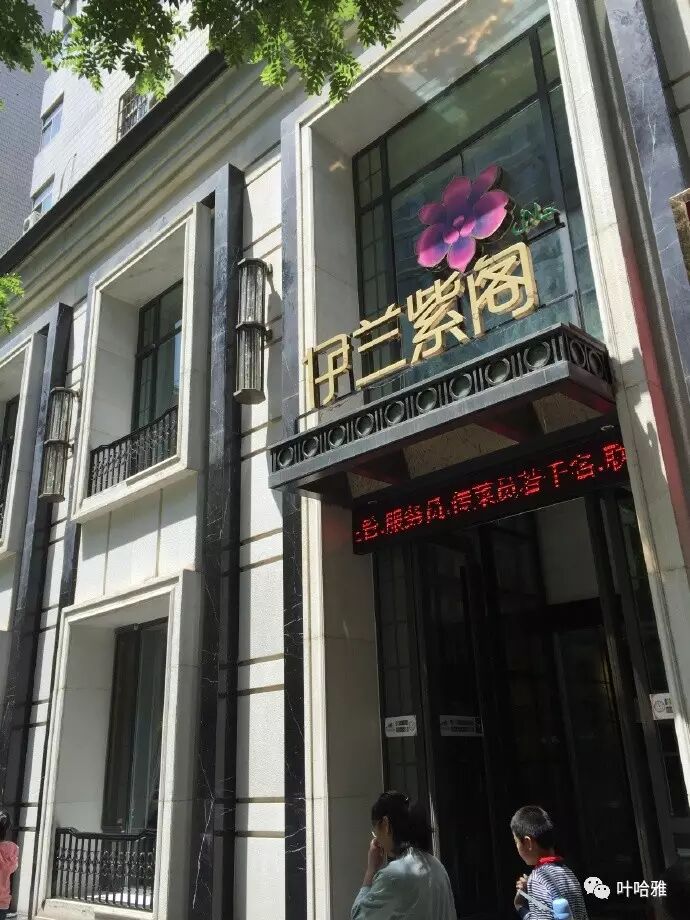
The brands under the Yilan Group are quite famous, and this restaurant is a place for stir-fried dishes.
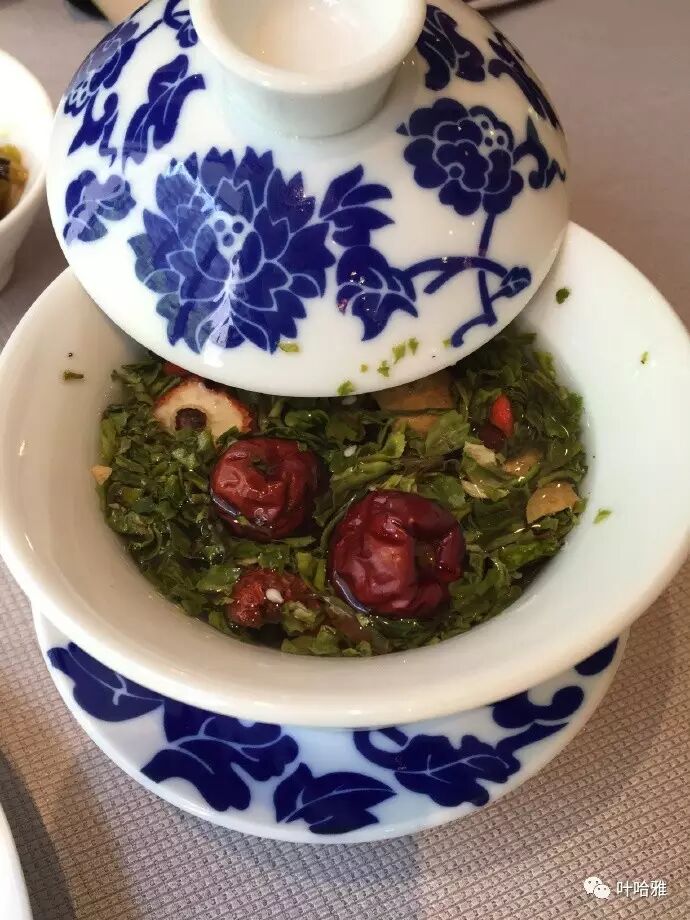
In Lanzhou, you should drink tea with a three-piece covered cup (sanpaotai).
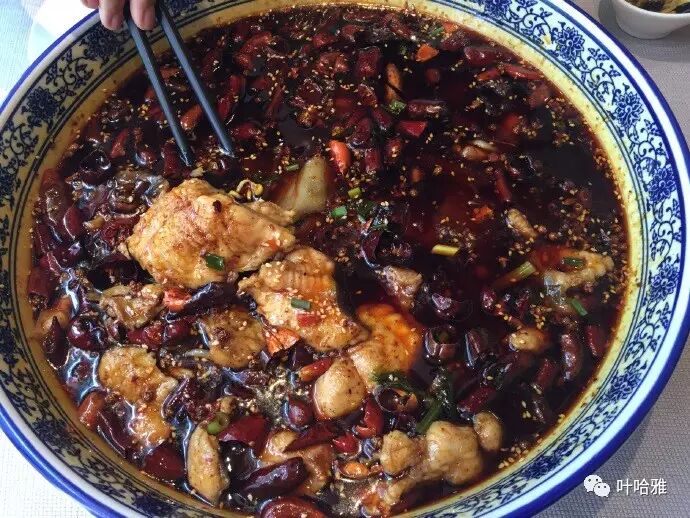
The boiled fish is a little bit spicy.
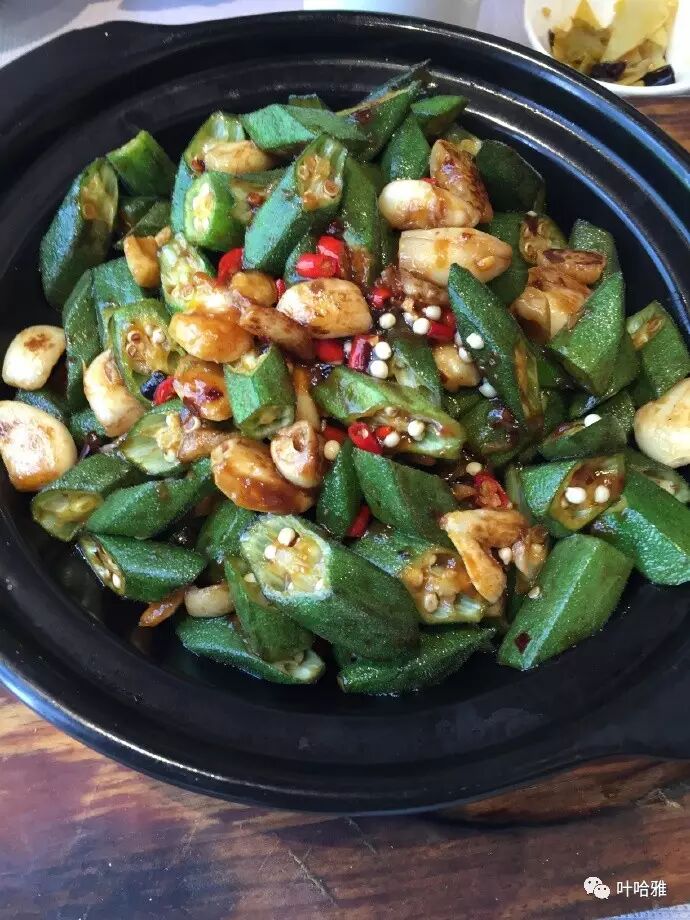
Stir-fried okra with peppercorns (qiangchao qiukui).
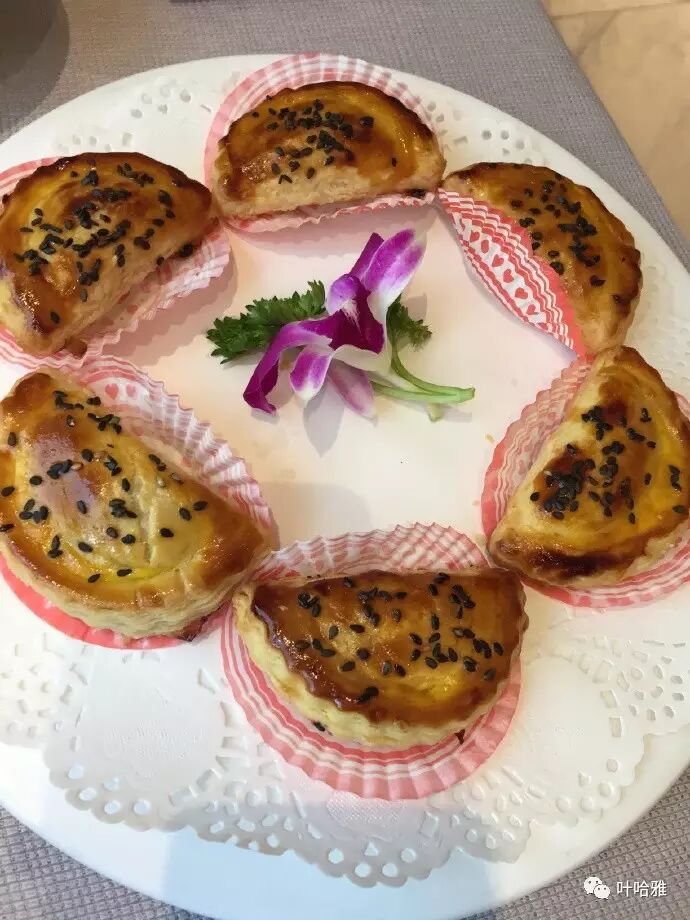
There are also delicate pastries with fruit fillings.
Address: Next to Tongwei Road Primary School.
13. Siji Yuge
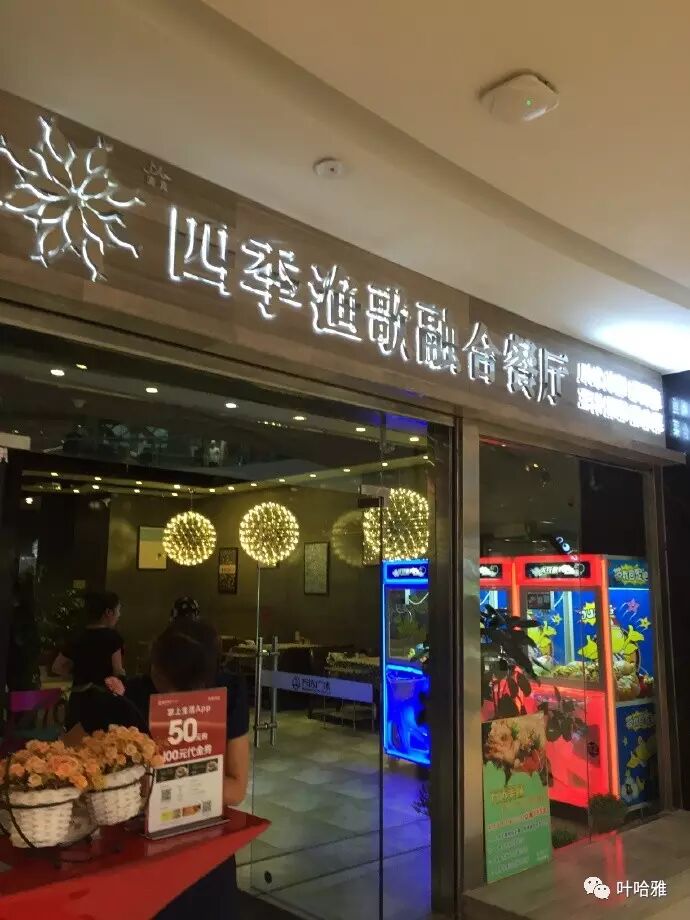
This is a very popular place for braised hot pot (munguo).
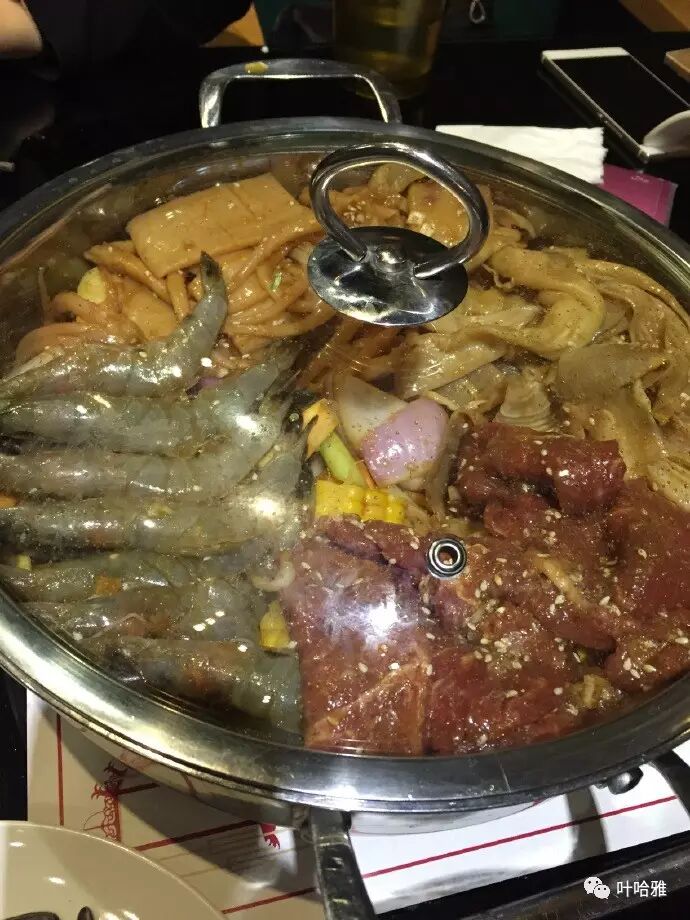
After you pick your ingredients, it starts like this, then you put the lid on to let it braise.
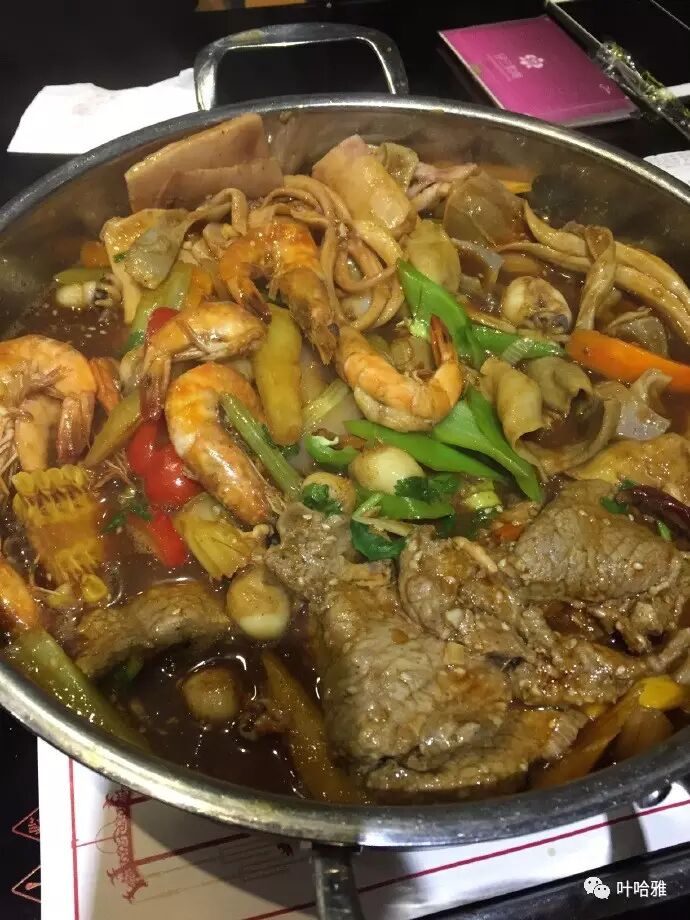
It looks like this once it is finished, and the aroma is amazing.
Address:
500 meters west of the Shuangchengmen intersection in Lanzhou.
14. Shujiuxiang
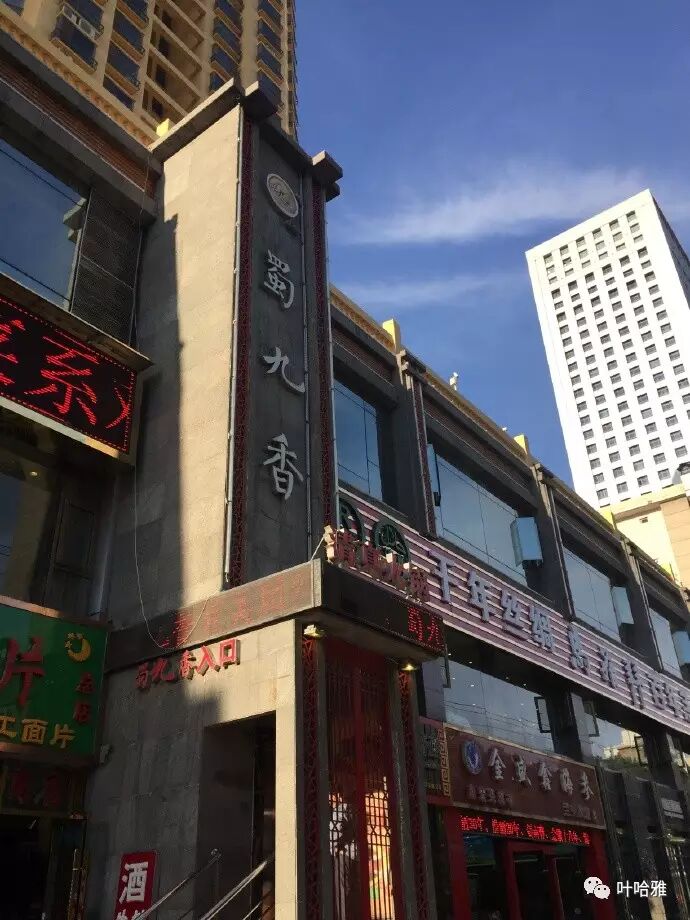
This is a very famous Sichuan hot pot restaurant, and you can eat a halal version here in Lanzhou.
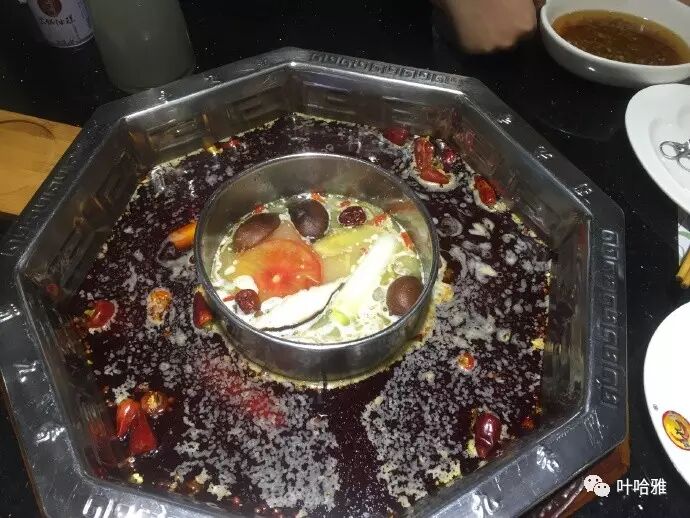
How could Sichuan-style hot pot not be spicy?
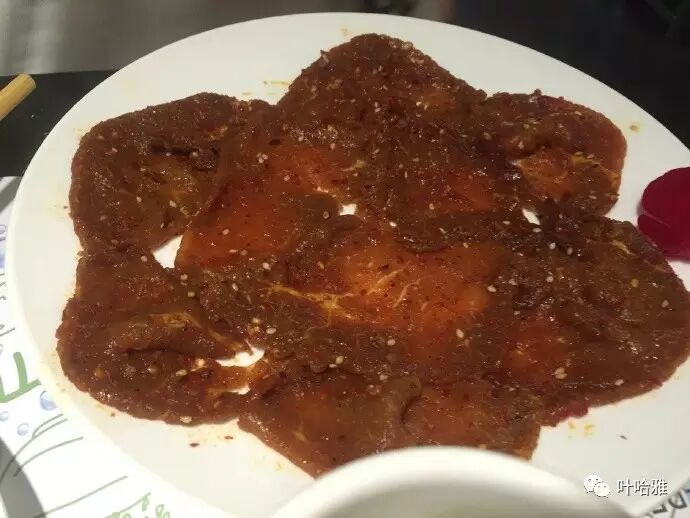
The beef is marinated in seasonings, so it is very flavorful.
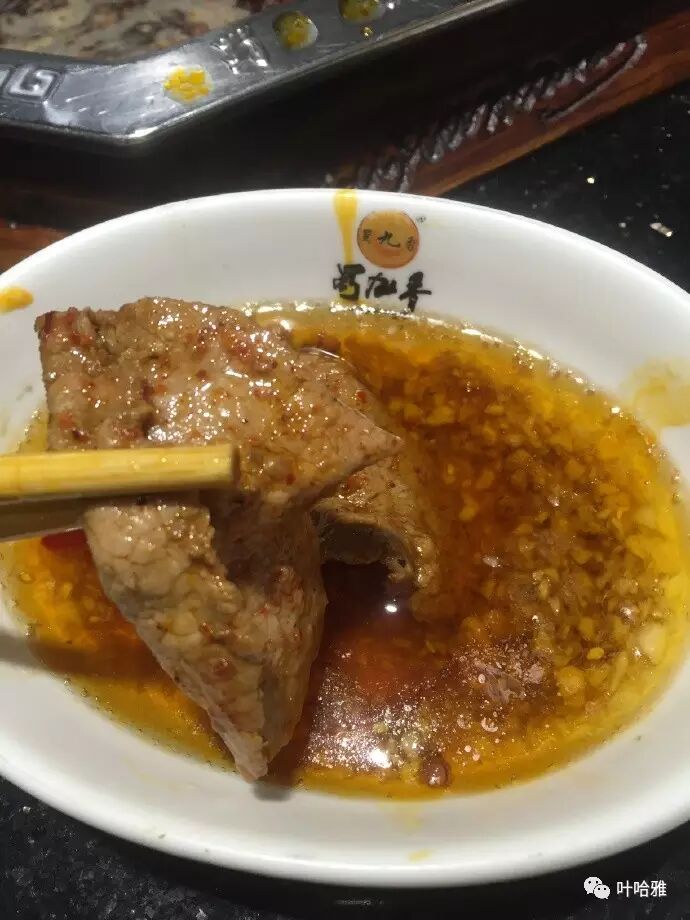
The authentic dipping sauce for Sichuan hot pot is sesame oil and minced garlic.
Address: No. 868 Nongmin Lane, Chengguan District, Lanzhou (east side of the Northwest Hotel).
15. Xiwu Teahouse
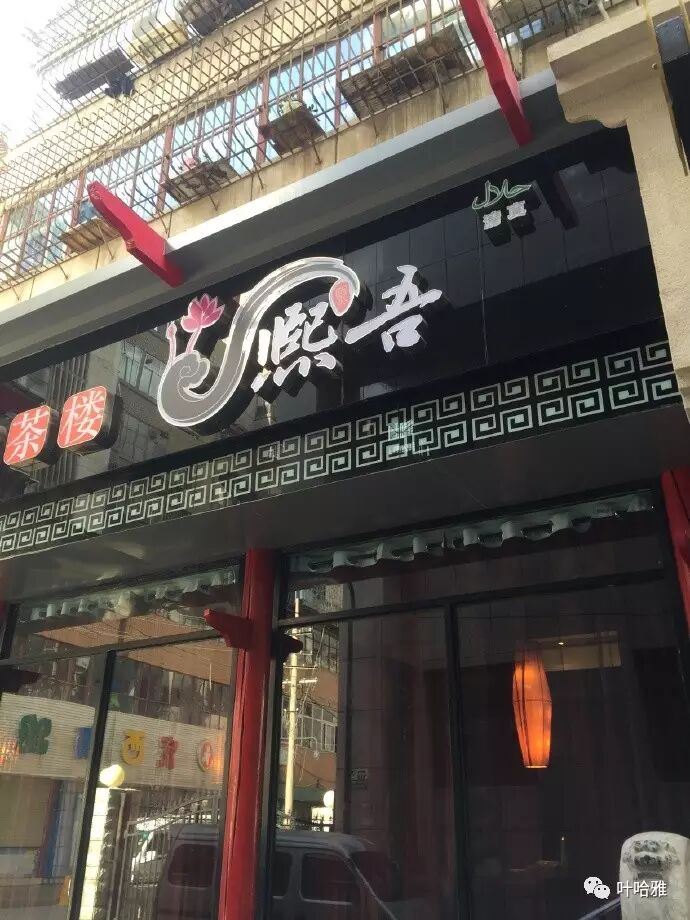
You can drink tea and order meals here. The environment is nice and quiet. It is a good place to spend time if you are near the train station.
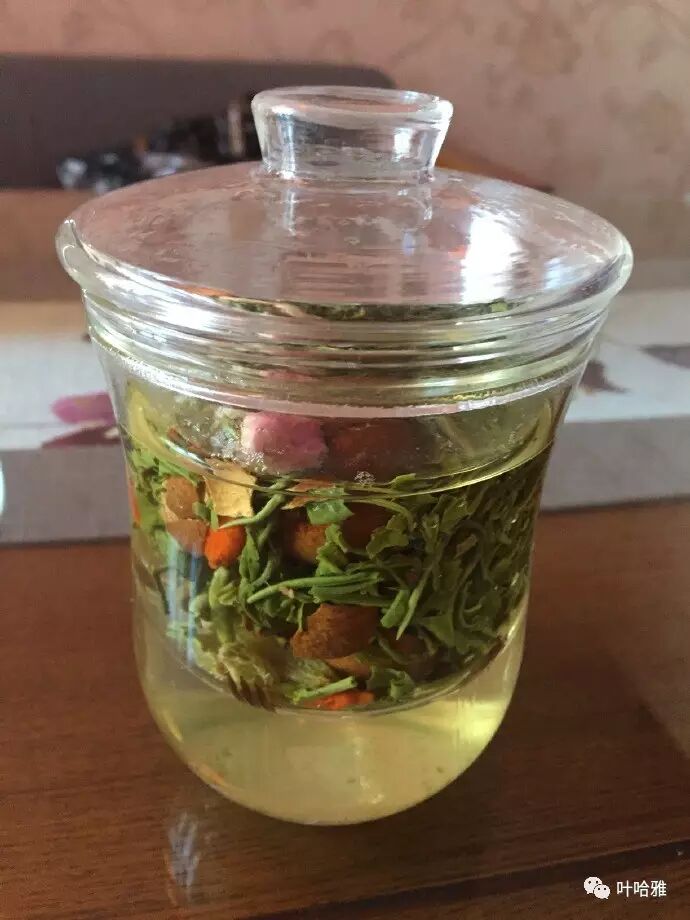
Drinking three-cannon tea (sanpaotai) is the authentic way to go. Lanzhou is famous for its lilies and roses, so if you like rose tea, you are in luck.
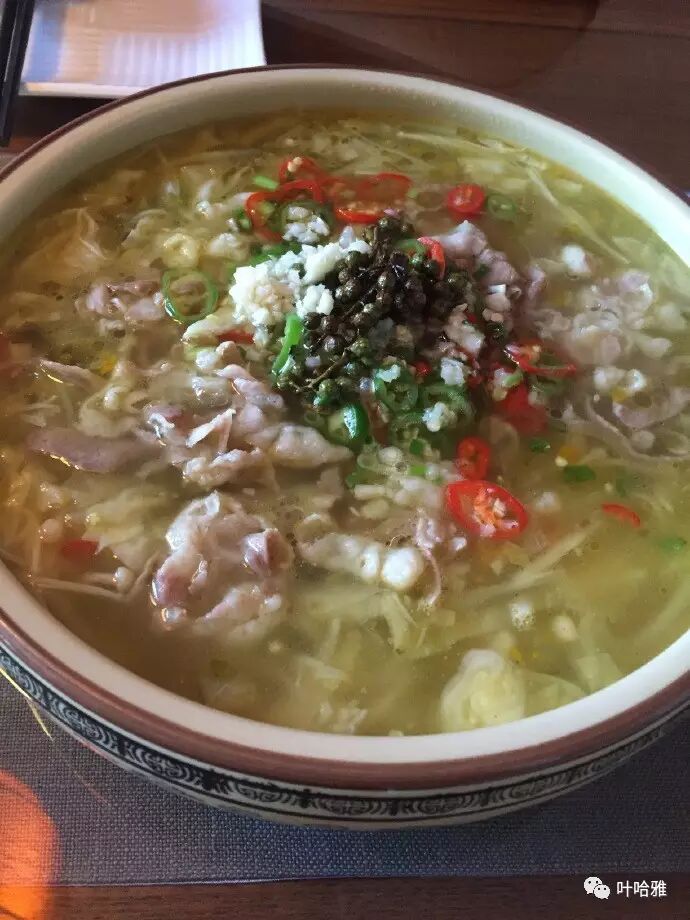
Sour soup beef (suantang feiniu)
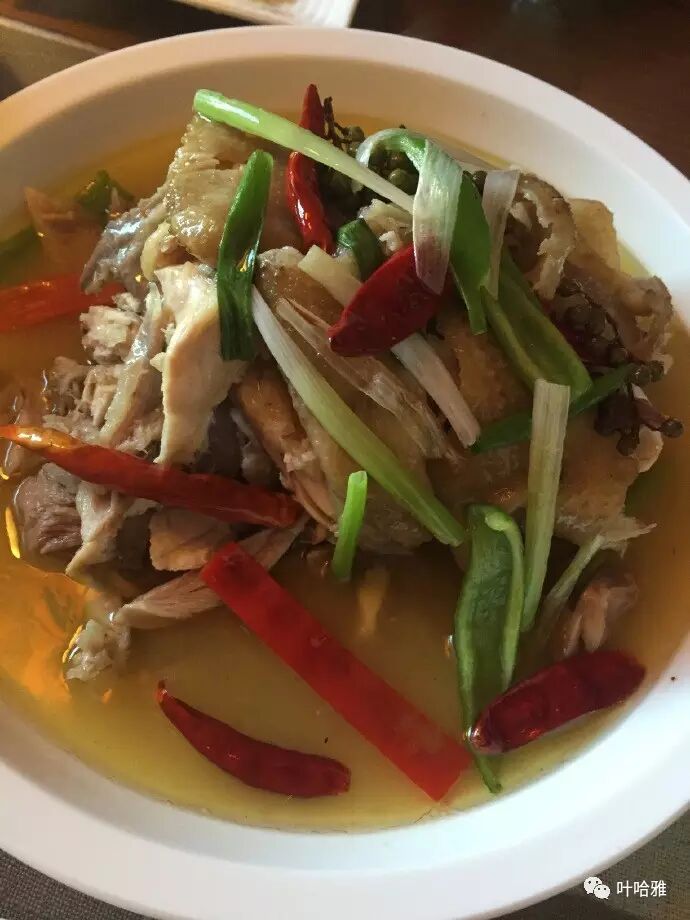
Make sure to try the peppercorn chicken (jiaomaji) at least once.
Address: 6th Floor, Huisheng, 242 Yongchang Middle Road, Chengguan District, Lanzhou
16. Zhengning Road Night Market
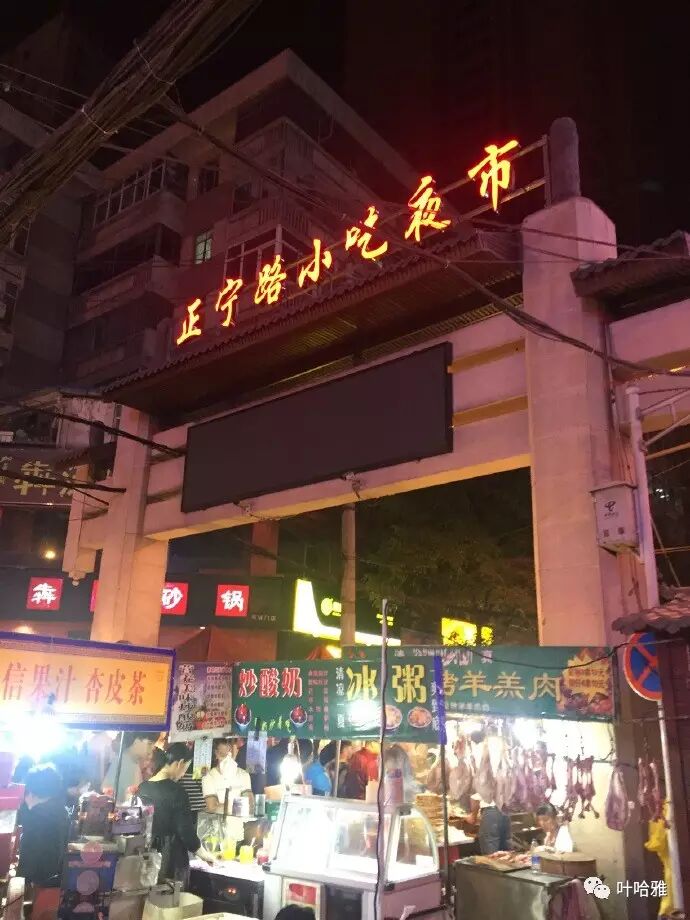
You can find all the Lanzhou snacks you want to eat here.
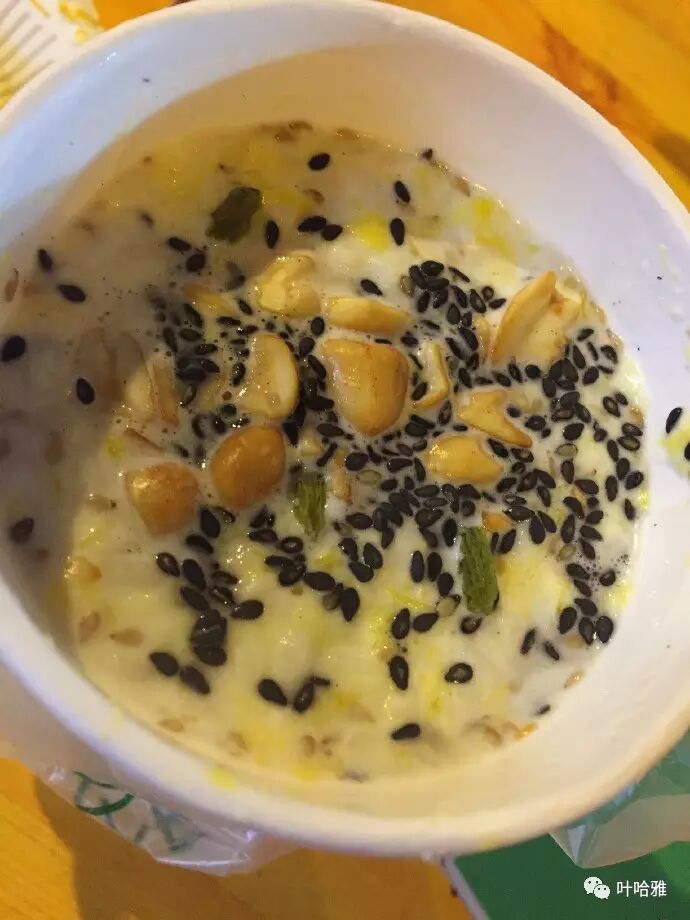
You have to wait in a long line to get the milk, egg, and fermented rice soup (niunai jidan liaozao).
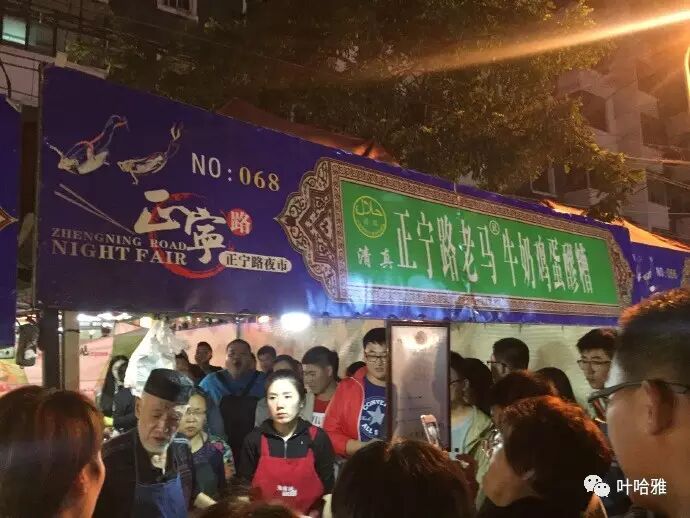
The crowd is packed three layers deep inside and out.
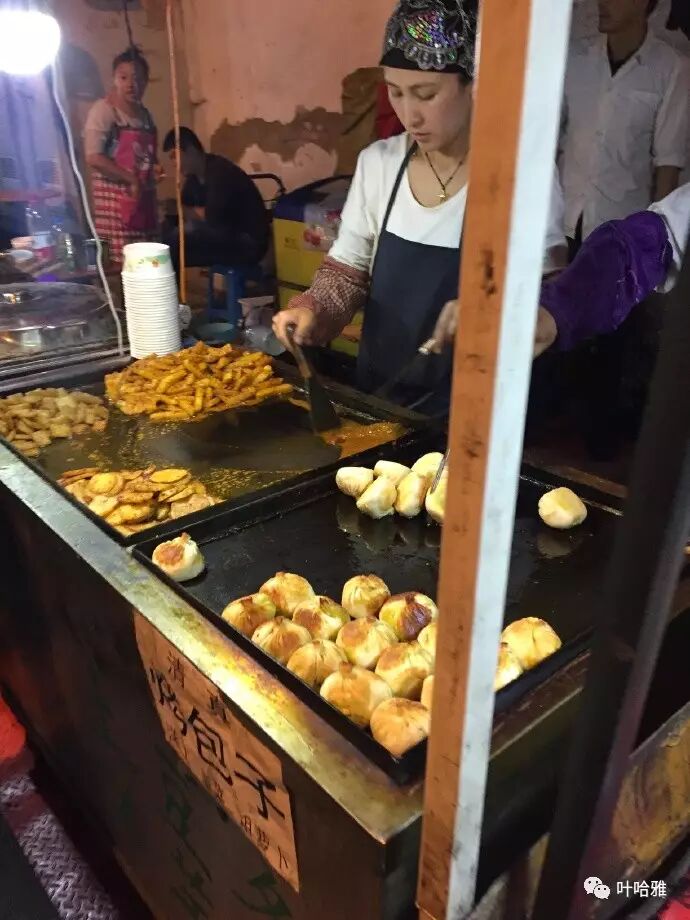
They also sell baked buns (kao baozi), but these iron-griddle baked buns are not as good as the ones baked in a coal oven.
There is a very famous sweet fermented oat milk tea shop in Lanzhou called "Fangxia." Locals call it "Fangha," but since the "Fangha" trademark was registered by someone else, the milk tea is now called "Fangxia." Lanzhou people say that if you do not drink Fangxia milk tea, you have not really been to Lanzhou. They sell it at the night market, so if you are interested, go give it a try.
Halal Food Guide: Lanzhou Xiaoxihu — Dongxiang Muslim Food and Local Eats
Articles • ali2007fr posted the article • 0 comments • 146 views • 2026-05-18 07:38
Summary: Halal Food Guide: Lanzhou Xiaoxihu — Dongxiang Muslim Food and Local Eats is presented here as a firsthand travel account in clear English, beginning with this scene: The Dongxiang people are a Muslim ethnic group who speak the Dongxiang language, which belongs to the Mongolic language family. The account keeps its focus on Lanzhou Halal Food, Dongxiang Food, Xiaoxihu while preserving the names, places, food, and historical details from the Chinese source.
The Dongxiang people are a Muslim ethnic group who speak the Dongxiang language, which belongs to the Mongolic language family. They mainly live in Dongxiang Autonomous County, Hezheng County, and Guanghe County within the Linxia Hui Autonomous Prefecture of Gansu Province. The loess hills where the Dongxiang people live are quite barren, so many people chose to move to Lanzhou to make a living after the 1980s. Xiaoxihu is located at the end of the road from Linxia to Lanzhou. It is near the Xiyuan and Xihu Hui Muslim communities that have existed since the Qing Dynasty. With the commercial growth driven by the Xiaoxihu Yiwu Trade City since the 1990s, Xiaoxihu has become the main residential area for Dongxiang people in Lanzhou.
In Xiaoxihu, the Dongxiang people are most concentrated in Baishu Lane, Jiangouyan, and Shangxiyuan, where you can find all kinds of Dongxiang food.
Pre-dawn meal (suhoor)
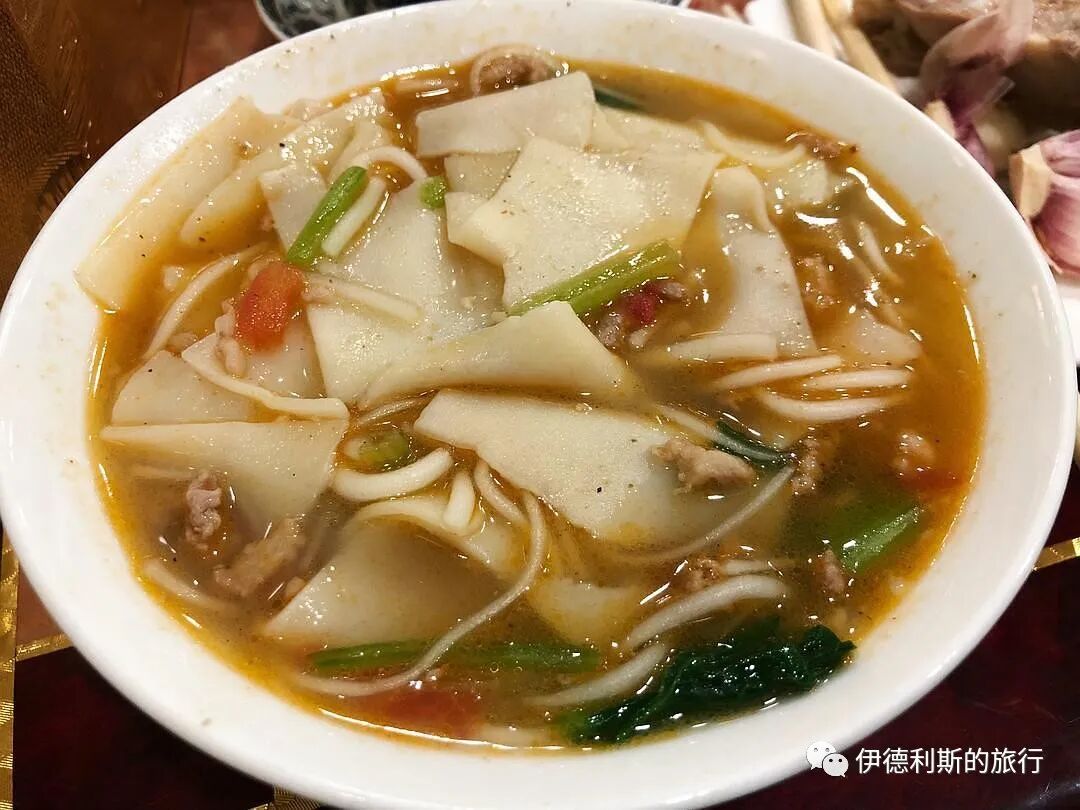
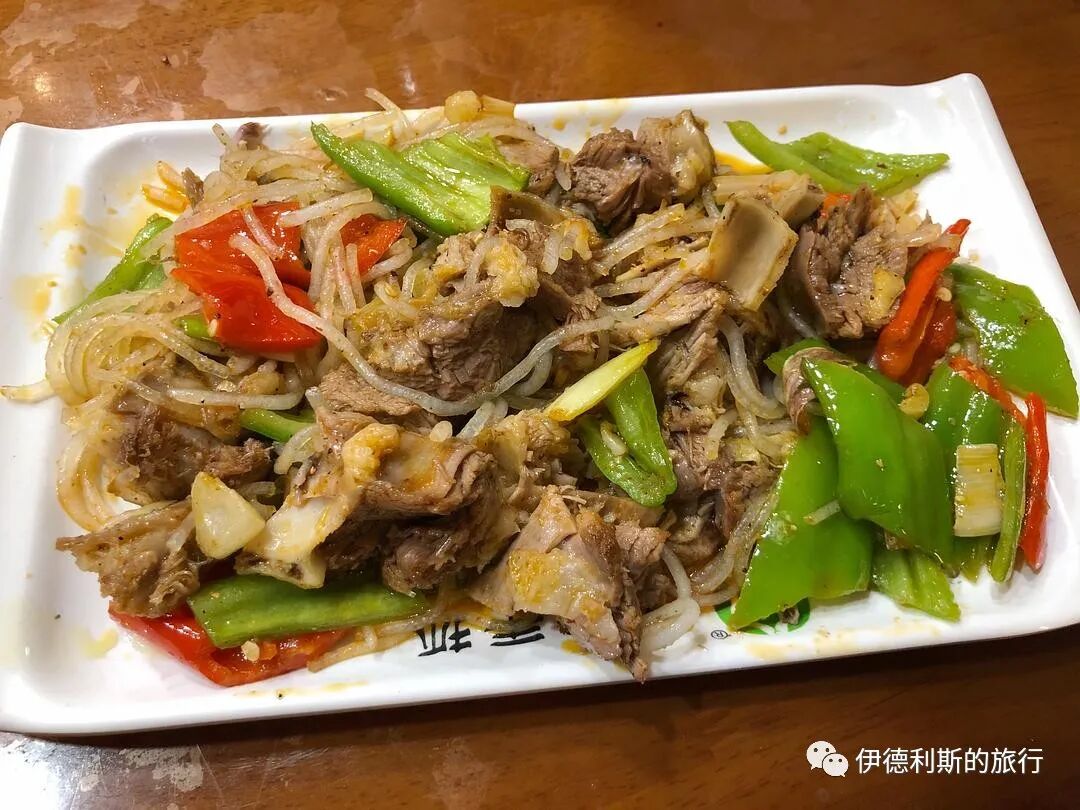
I first visited Xiaoxihu during Ramadan. At three in the morning, I ate a Dongxiang pre-dawn meal (suhoor) there, ordering hand-grabbed lamb (shouzhua) and lamb noodle soup (yangrou mianpian). Because it was the last of the hand-grabbed lamb (shouzhua) for the day, it didn't look very pretty, but it tasted great.
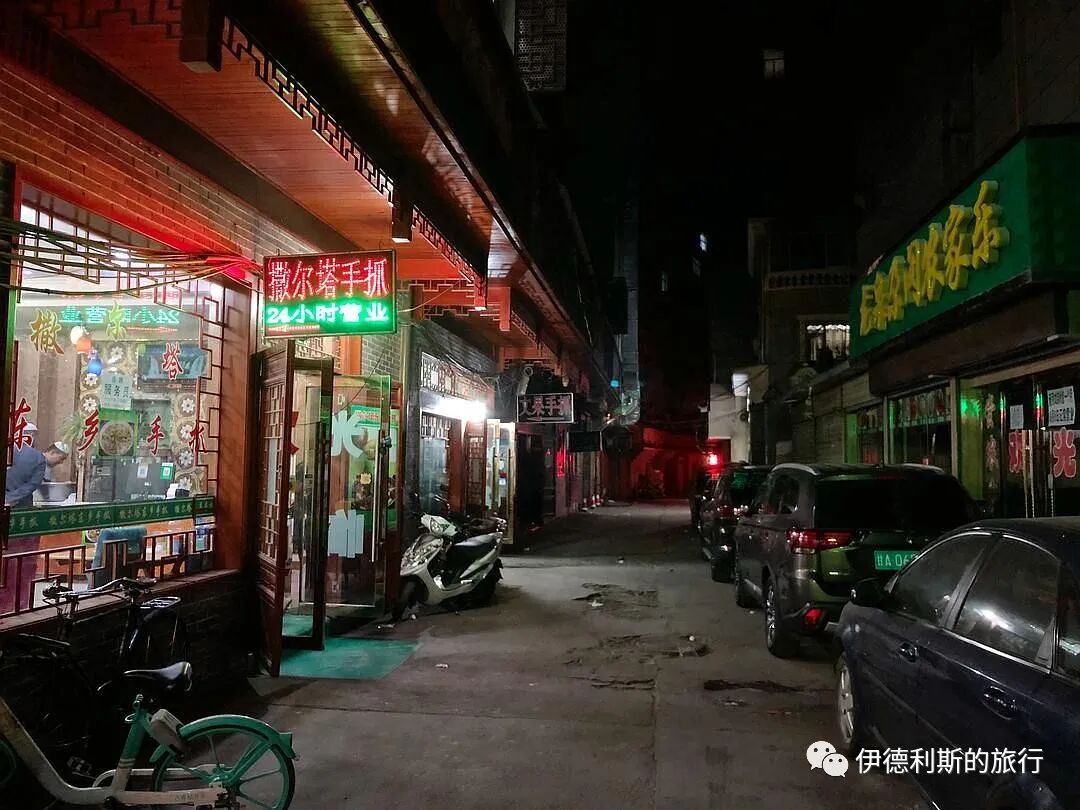
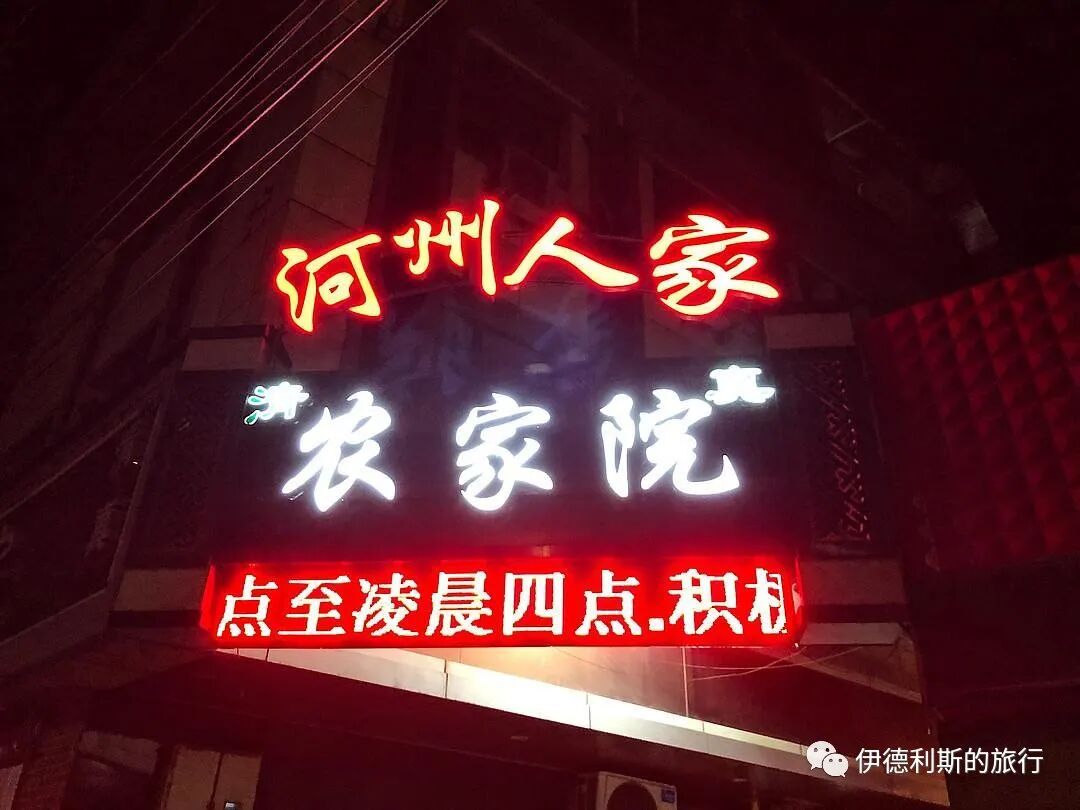
During Ramadan, many restaurants in Xiaoxihu stay open until four in the morning.
Zhonghua Hand-grabbed Lamb King (Zhonghua Shouzhua Dawang)
I went back to Xiaoxihu to eat and explore the week after Eid al-Fitr. As soon as I got off the plane, I headed straight to Zhonghua Hand-grabbed Lamb King (Zhonghua Shouzhua Dawang) on Jiangouyan Street. This place is very popular in Xiaoxihu, and you have to share tables at noon. I felt very satisfied drinking tea with dried fruits and rock sugar (sanpaotai) while eating half a jin of lamb ribs, a small bowl of lentil and sparrow-tongue noodles (biandou queshe mian), and a plate of cold starch noodles (liangpizi). The environment and service here are both good. They refill your tea often, and the tea with dried fruits and rock sugar (sanpaotai) itself is delicious.
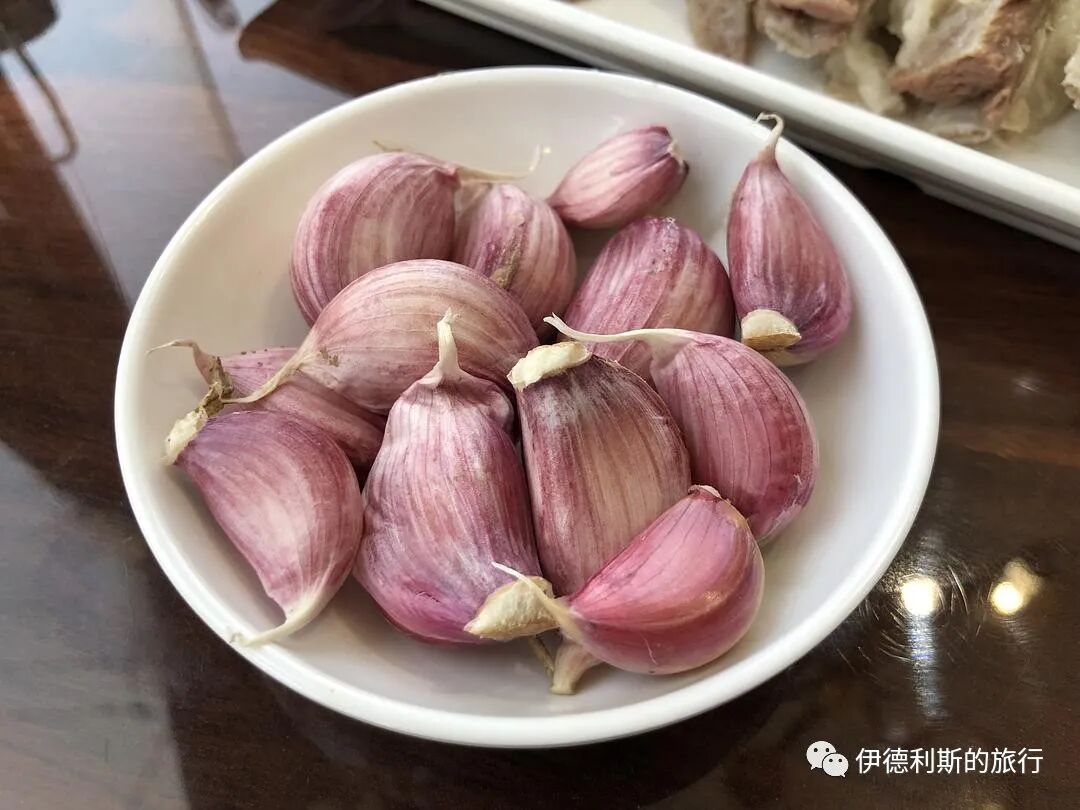
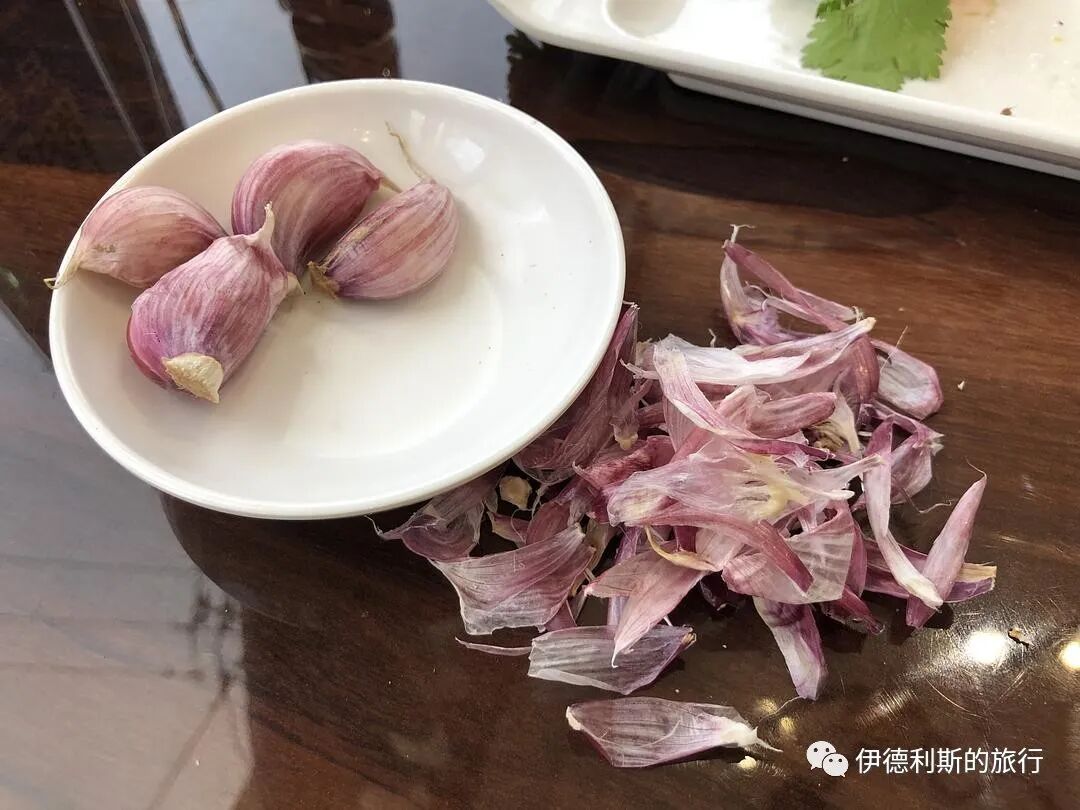
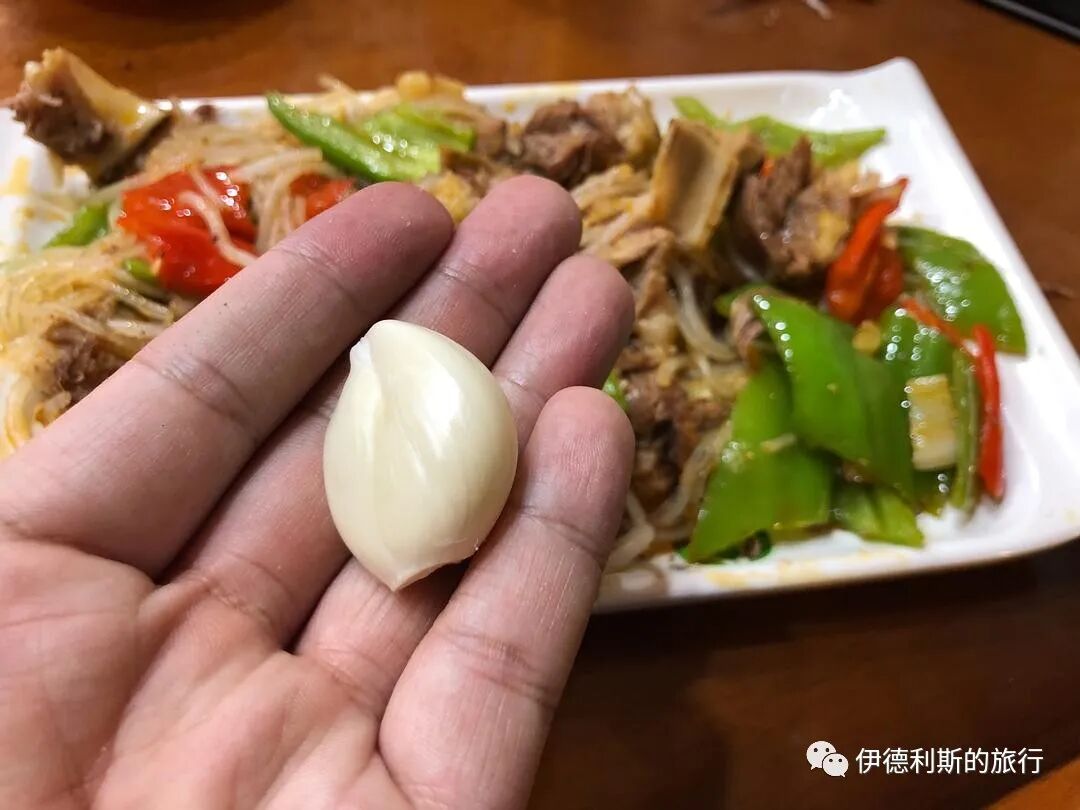
The lamb tastes very authentic. You basically eat one piece of meat with one clove of garlic, and the garlic is very fragrant too.
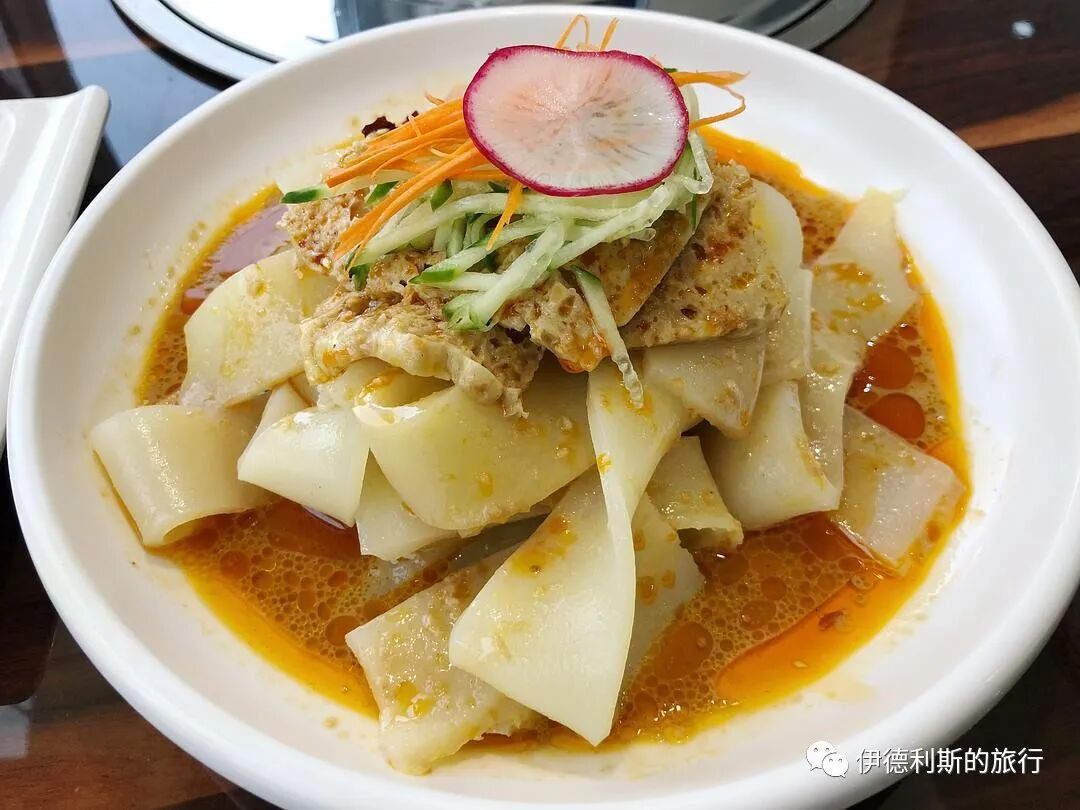
Cold starch noodles (liangpizi)
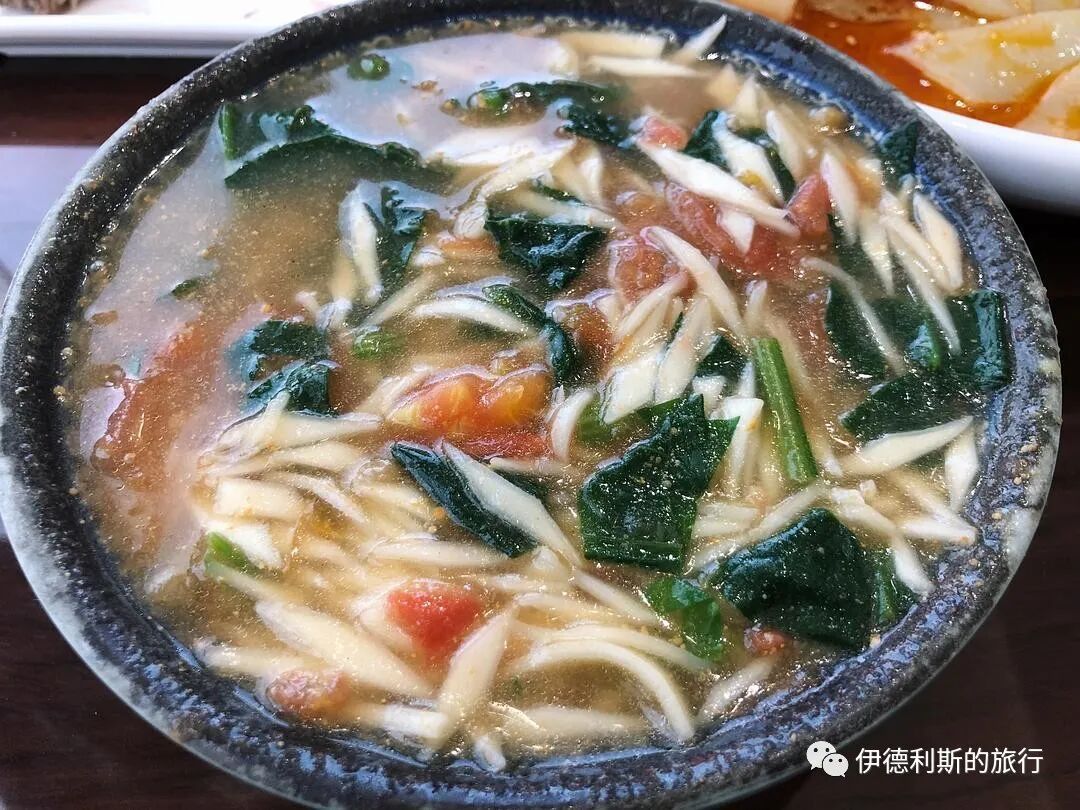
Lentil and sparrow-tongue noodles (biandou queshe mian)
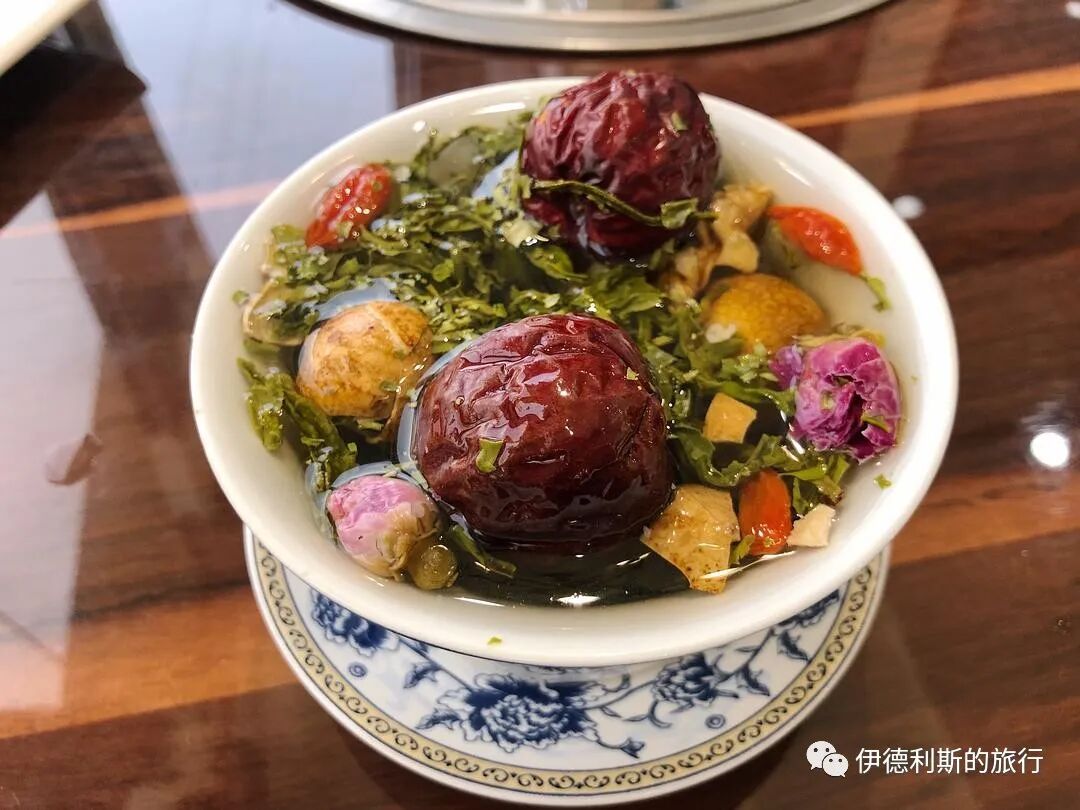
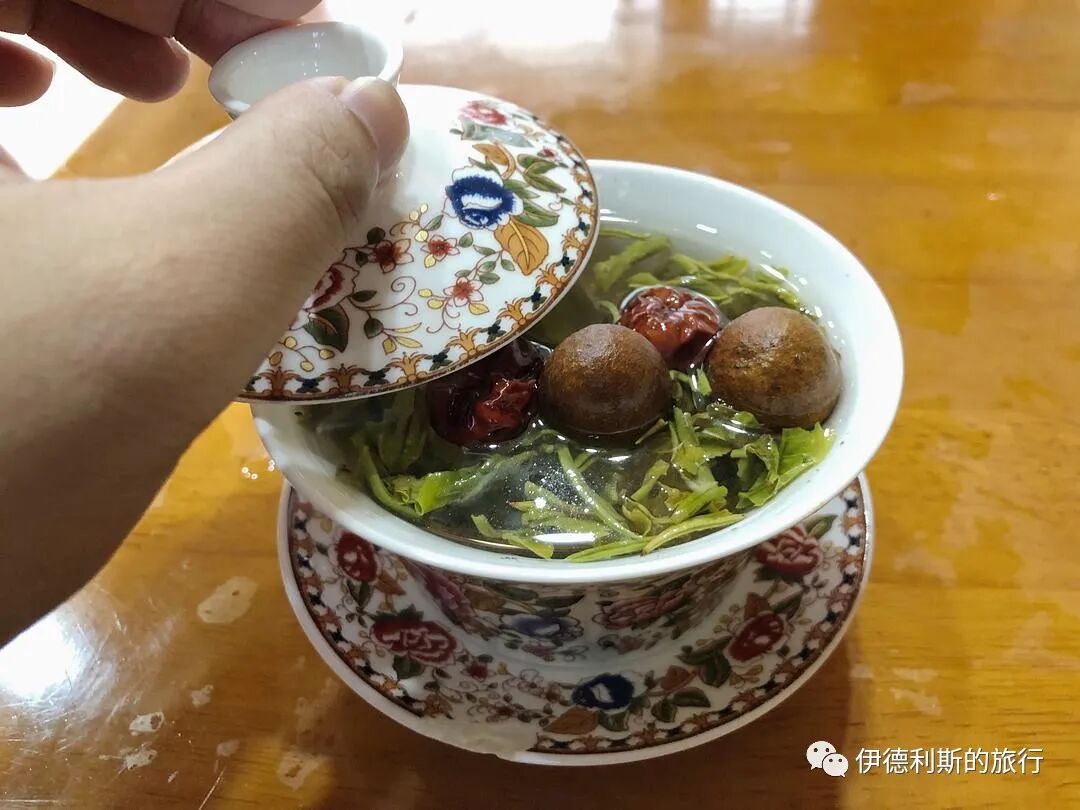
Rose-flavored tea with dried fruits and rock sugar (meigui sanpaotai). I wanted more after finishing it, so I ended up buying a lot at the supermarket to take home.
River-style noodle soup (heyan mianpian)
There are many restaurants one after another on Jiangouyan Street. I also ate river-style noodle soup (heyan mianpian) and braised lamb (huangmen yangrou) at this place. River-style noodle soup (heyan mianpian) originated in Guanghe County, Linxia. It evolved from stir-fried noodle soup (chao mianpian), but the flavor is much richer.
Shangxiyuan Market
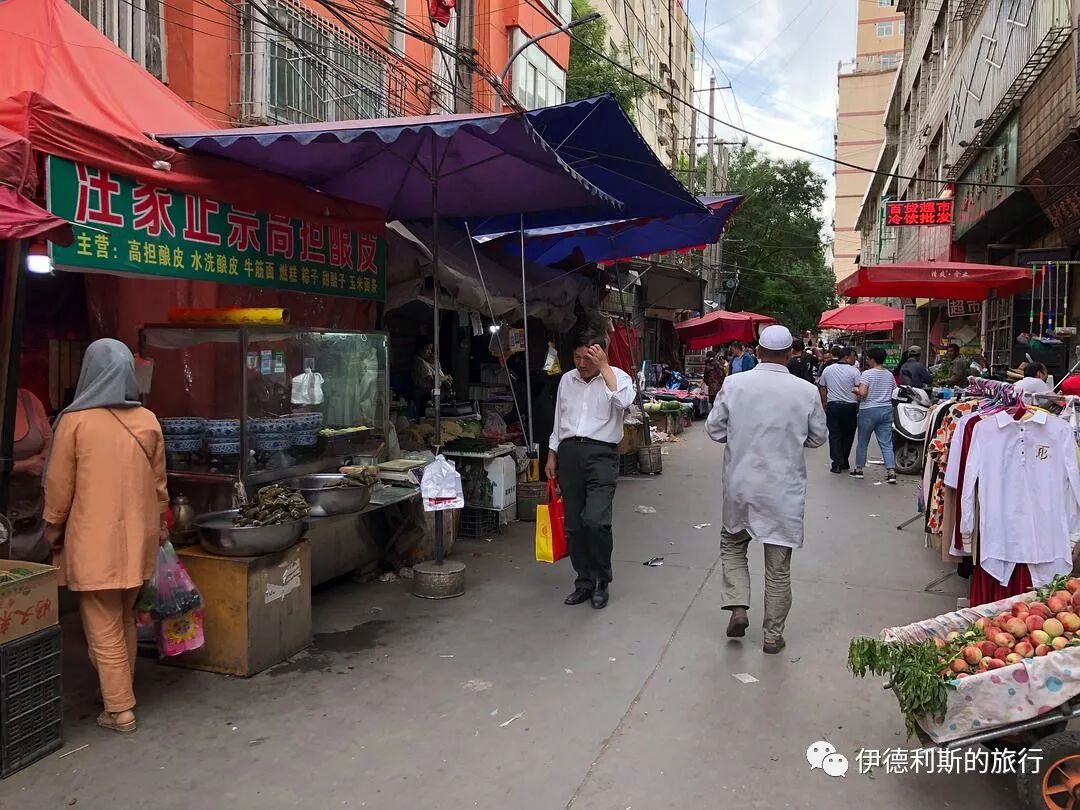
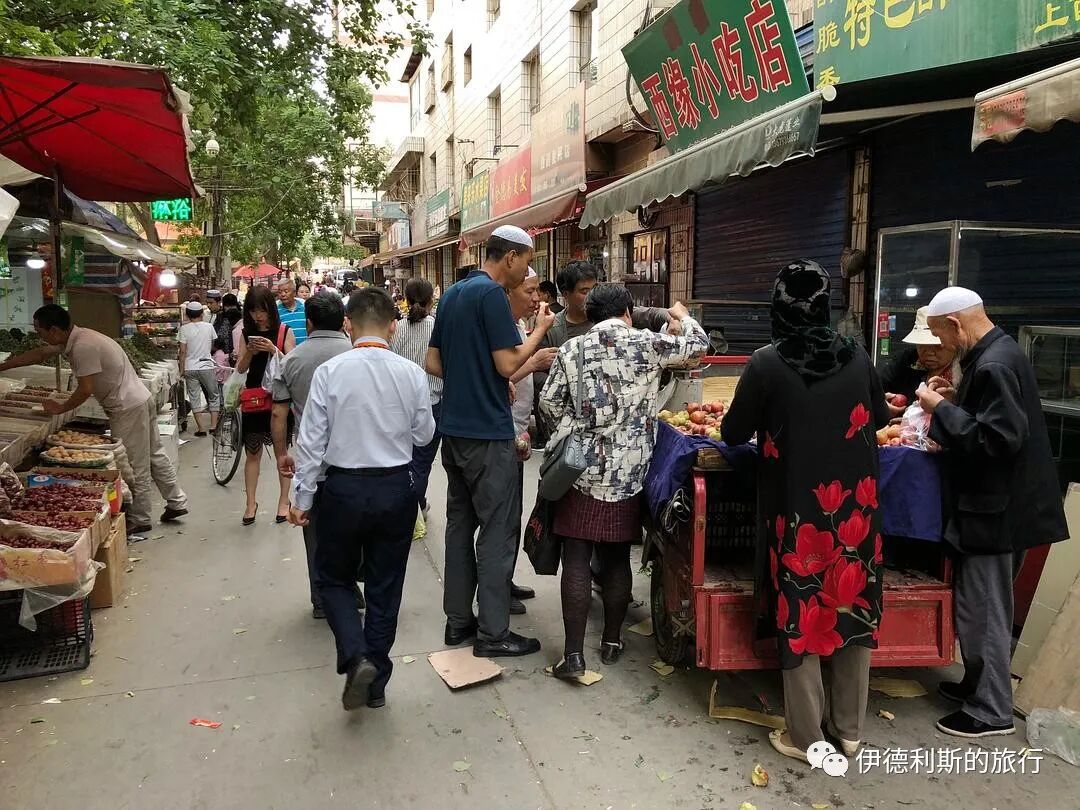
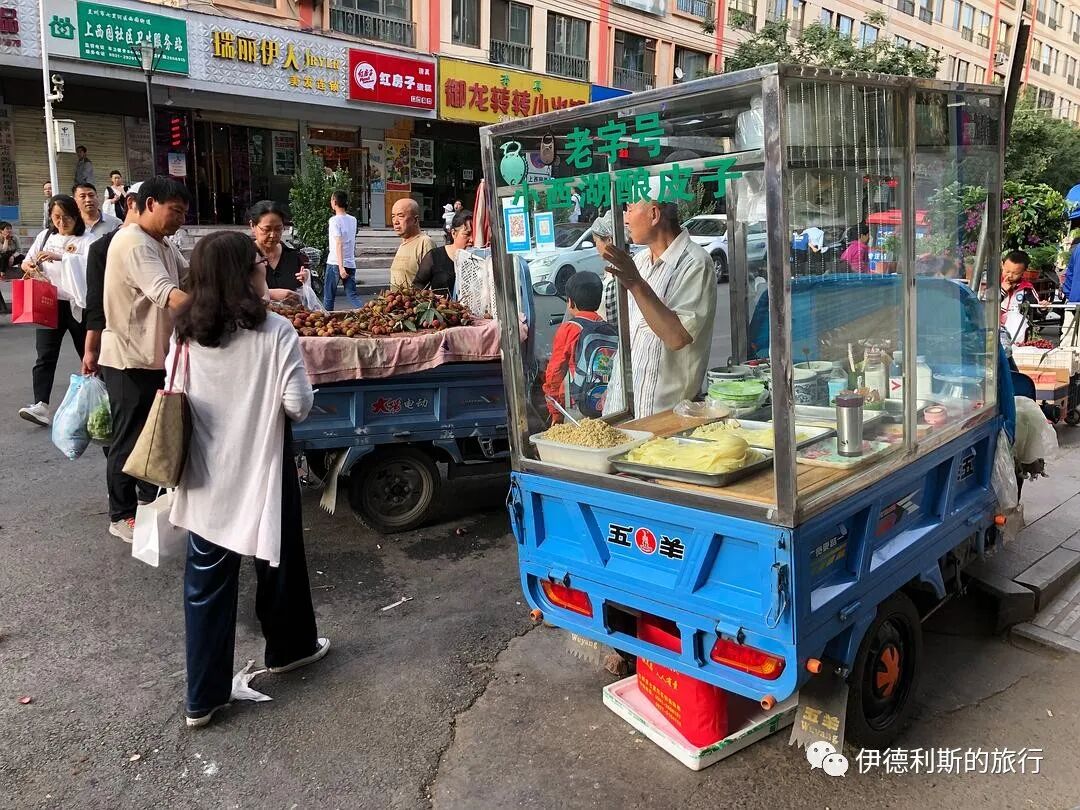
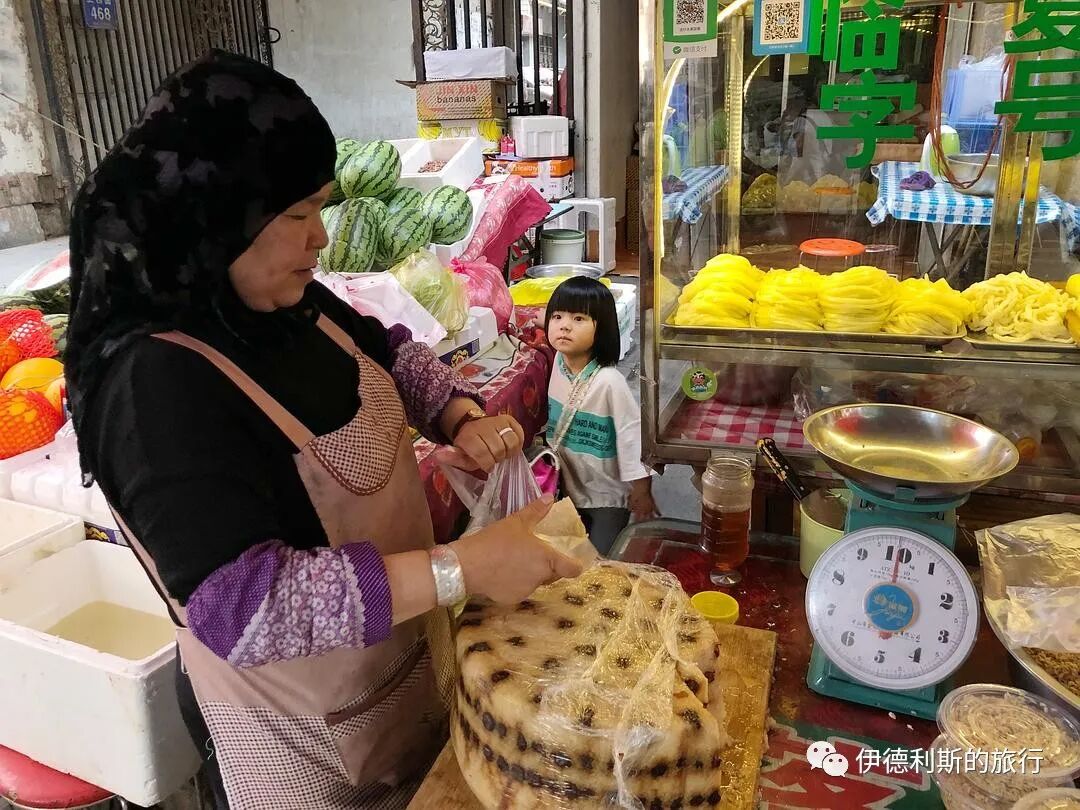
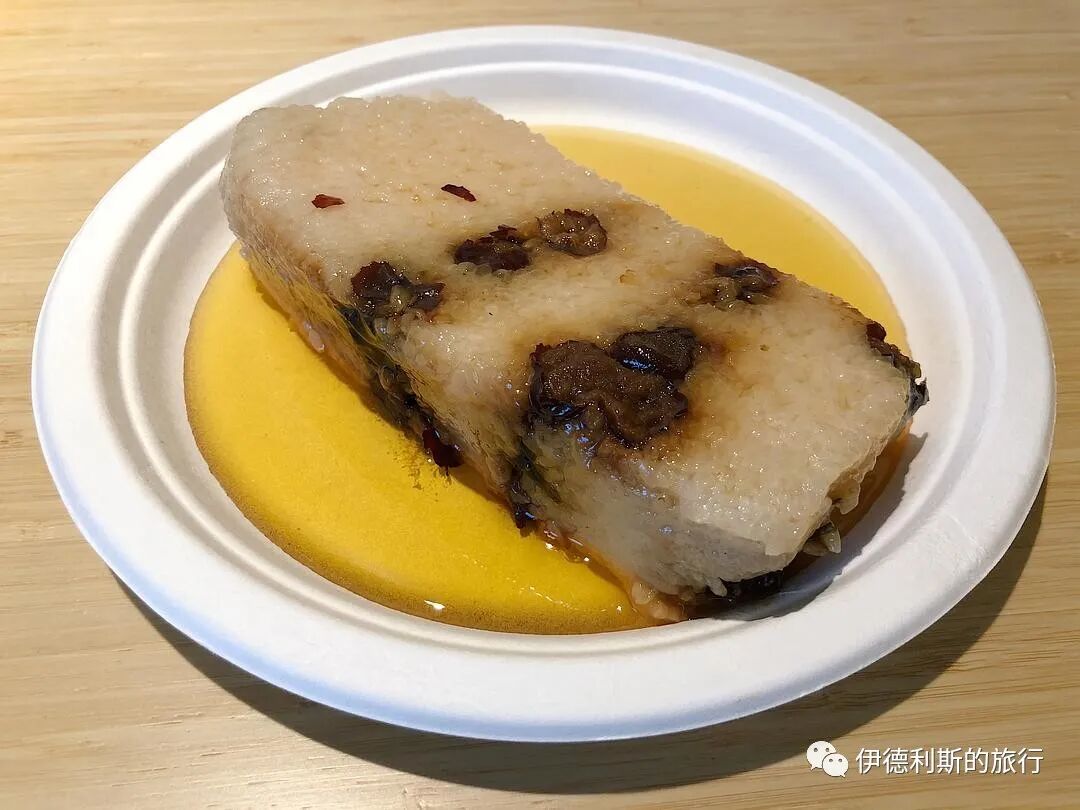
There is an alley on the south side of the road in Shangxiyuan where residents near Little West Lake buy their groceries. I bought cold skin noodles (liangpizi), honey sticky rice cake (fengmi niangao), and black rice sticky rice dumpling (heimi zongzi) here.
Street view of Shangxiyuan Market
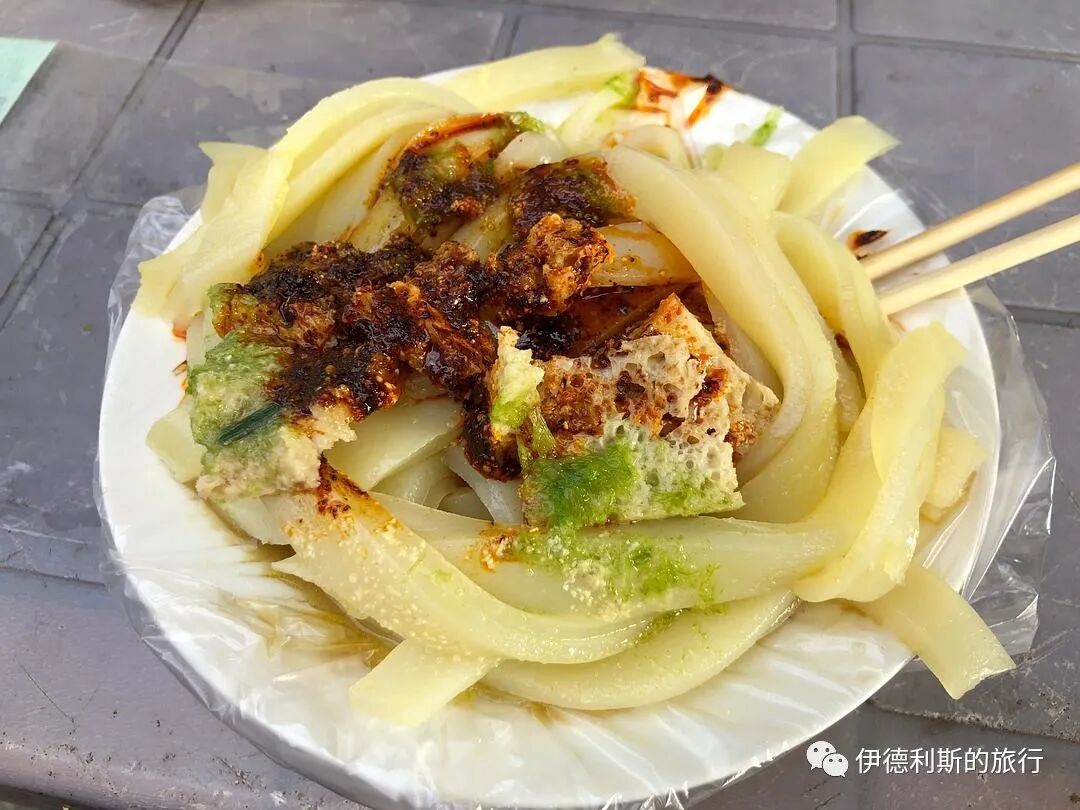
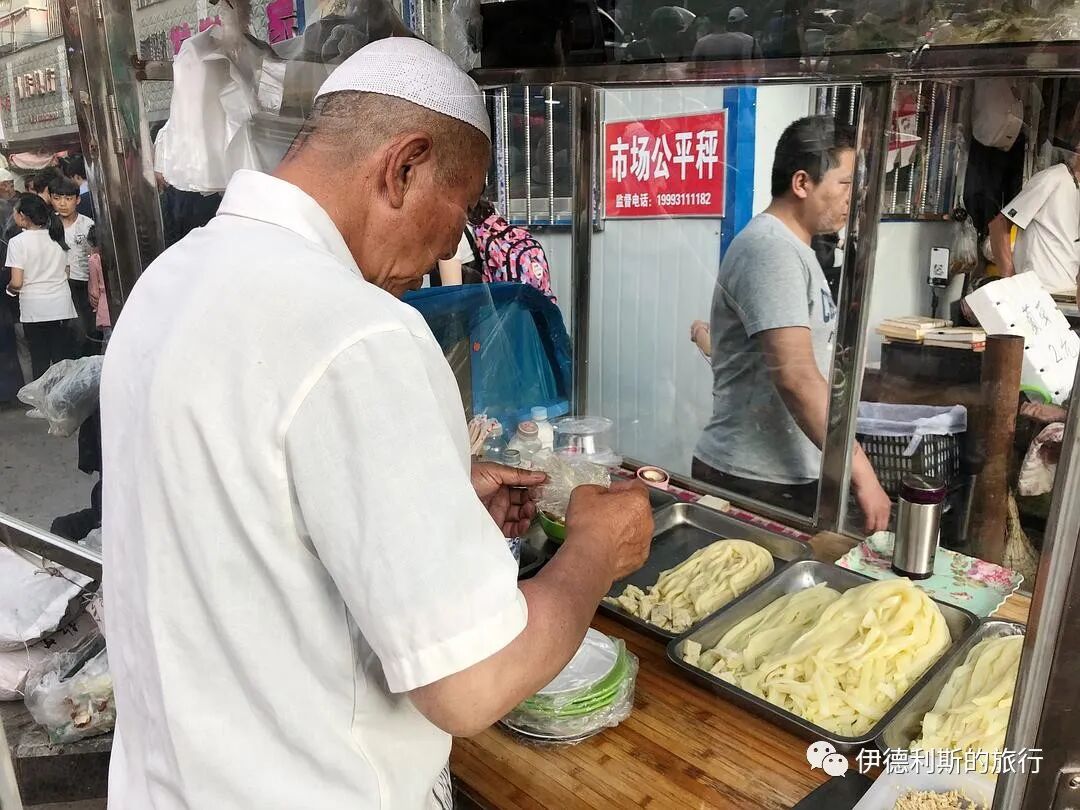
Cold starch noodles (liangpizi)
Honey sticky rice cake (fengmi niangao)
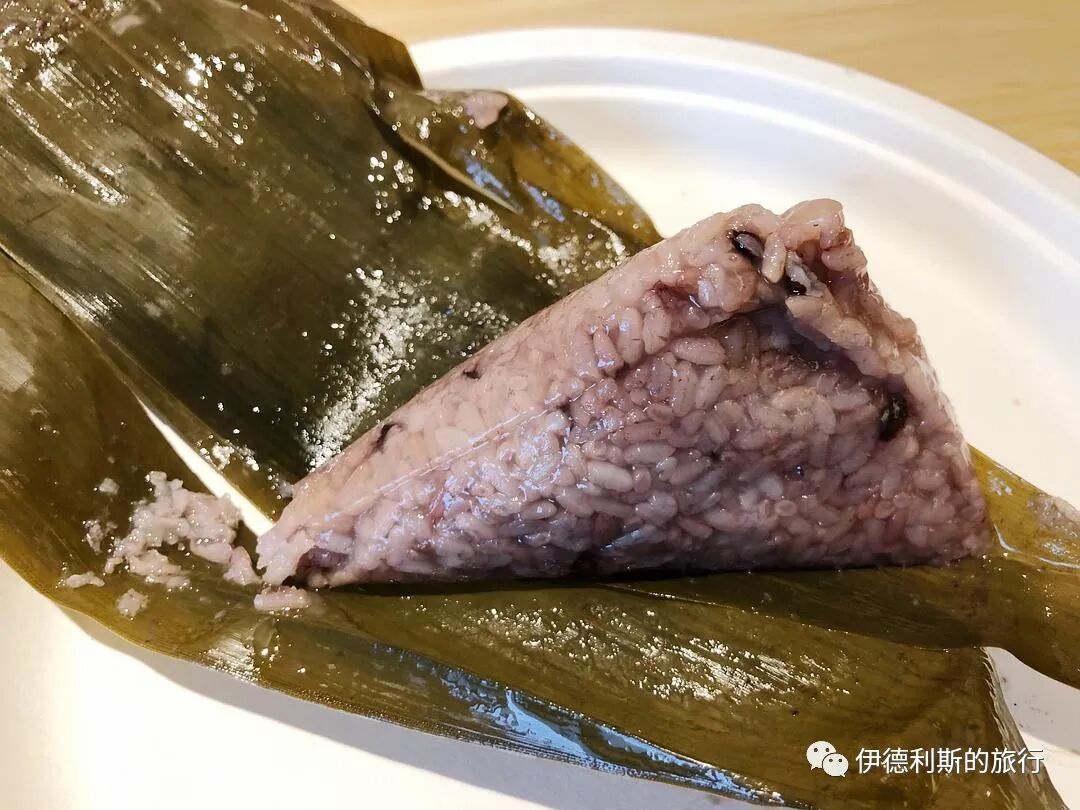
Black rice sticky rice dumpling (heimi zongzi), which you should actually peel and dip in honey to eat.
A big pot of fermented oat drink (tianpeizi)
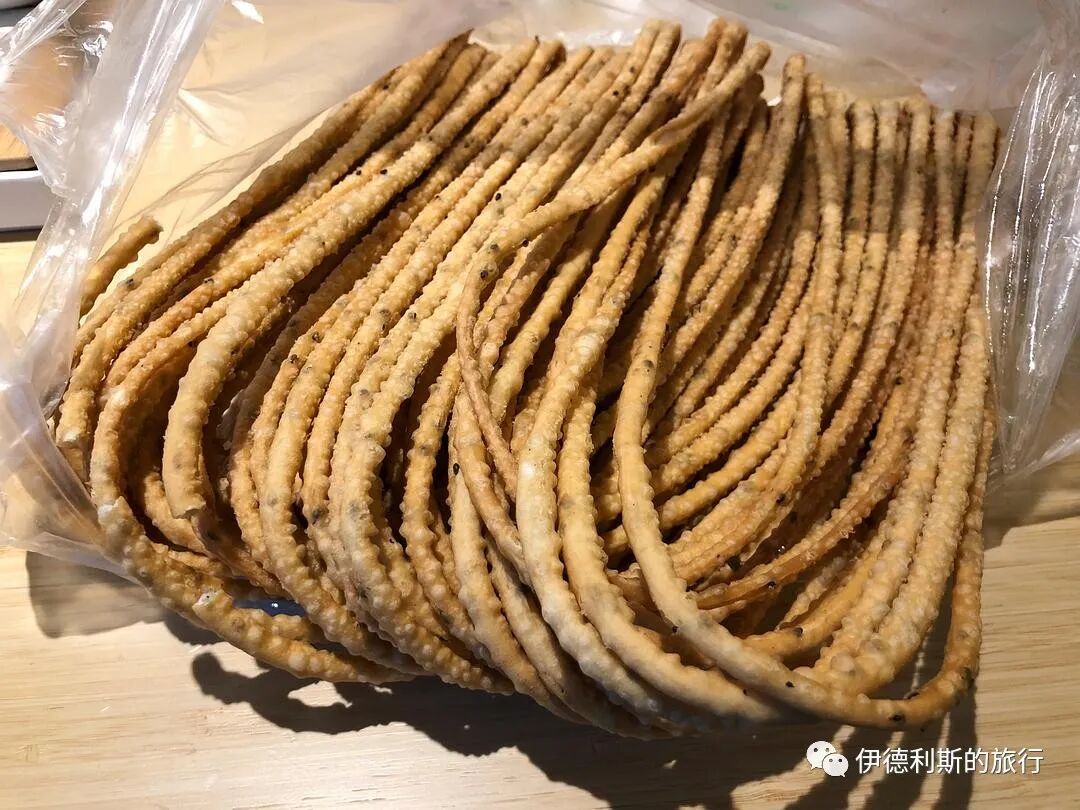
Fried dough twists (sanzi)
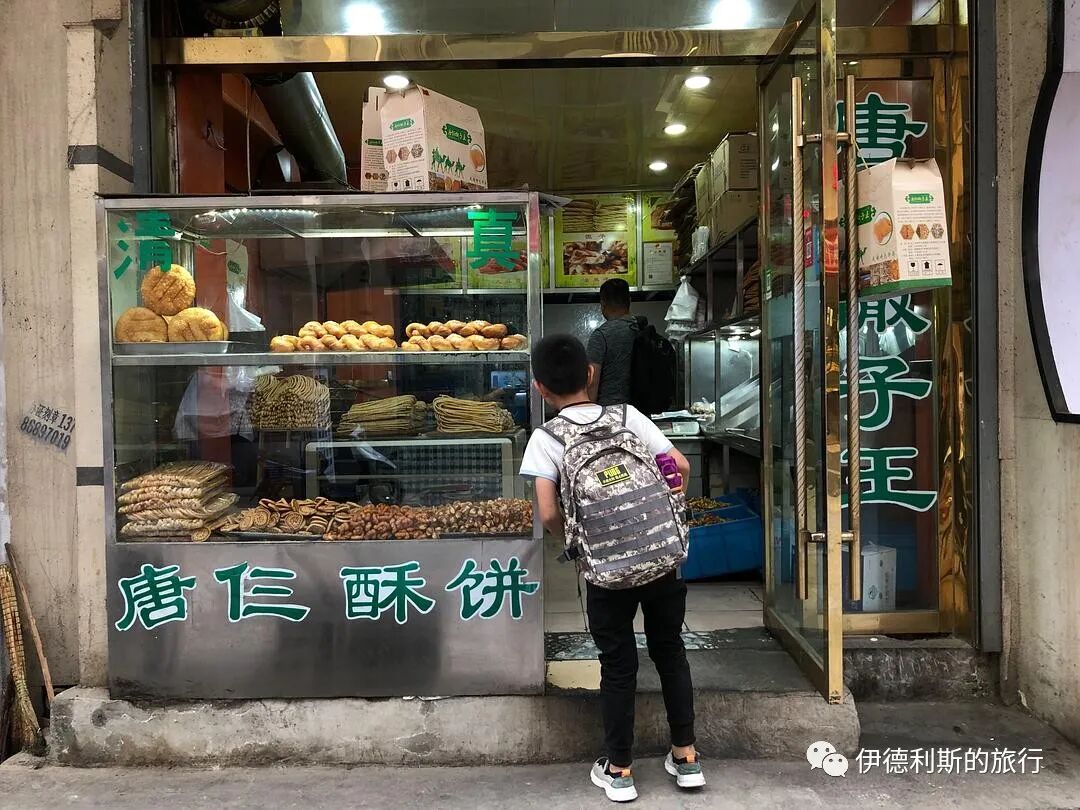
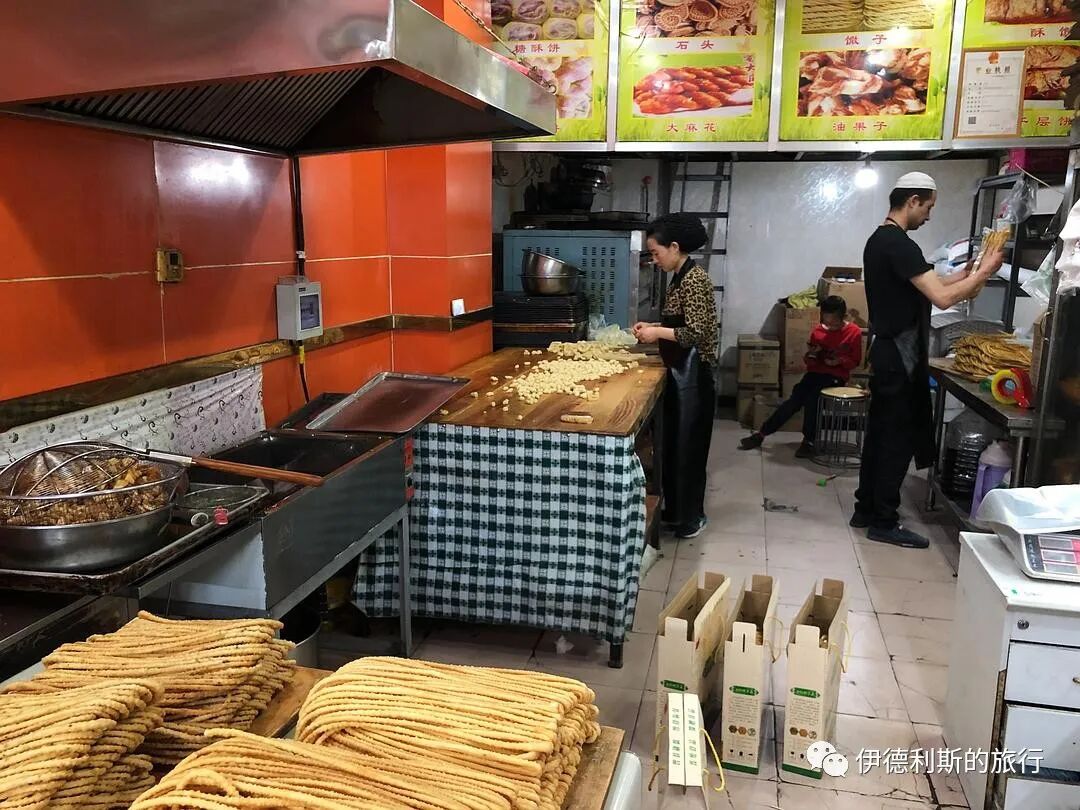
The alley behind Yiwu Trade City has dozens of Dongxiang restaurants. They mostly serve Dongxiang-style hand-grabbed lamb (shouzhua), but you can also buy steamed buns (baozi), old-broth chicken (laotang ji), and various snacks like fried dough twists (sanzi).
Sesame fried dough twists (sanzi) I bought at this shop view all
Summary: Halal Food Guide: Lanzhou Xiaoxihu — Dongxiang Muslim Food and Local Eats is presented here as a firsthand travel account in clear English, beginning with this scene: The Dongxiang people are a Muslim ethnic group who speak the Dongxiang language, which belongs to the Mongolic language family. The account keeps its focus on Lanzhou Halal Food, Dongxiang Food, Xiaoxihu while preserving the names, places, food, and historical details from the Chinese source.
The Dongxiang people are a Muslim ethnic group who speak the Dongxiang language, which belongs to the Mongolic language family. They mainly live in Dongxiang Autonomous County, Hezheng County, and Guanghe County within the Linxia Hui Autonomous Prefecture of Gansu Province. The loess hills where the Dongxiang people live are quite barren, so many people chose to move to Lanzhou to make a living after the 1980s. Xiaoxihu is located at the end of the road from Linxia to Lanzhou. It is near the Xiyuan and Xihu Hui Muslim communities that have existed since the Qing Dynasty. With the commercial growth driven by the Xiaoxihu Yiwu Trade City since the 1990s, Xiaoxihu has become the main residential area for Dongxiang people in Lanzhou.
In Xiaoxihu, the Dongxiang people are most concentrated in Baishu Lane, Jiangouyan, and Shangxiyuan, where you can find all kinds of Dongxiang food.
Pre-dawn meal (suhoor)
I first visited Xiaoxihu during Ramadan. At three in the morning, I ate a Dongxiang pre-dawn meal (suhoor) there, ordering hand-grabbed lamb (shouzhua) and lamb noodle soup (yangrou mianpian). Because it was the last of the hand-grabbed lamb (shouzhua) for the day, it didn't look very pretty, but it tasted great.
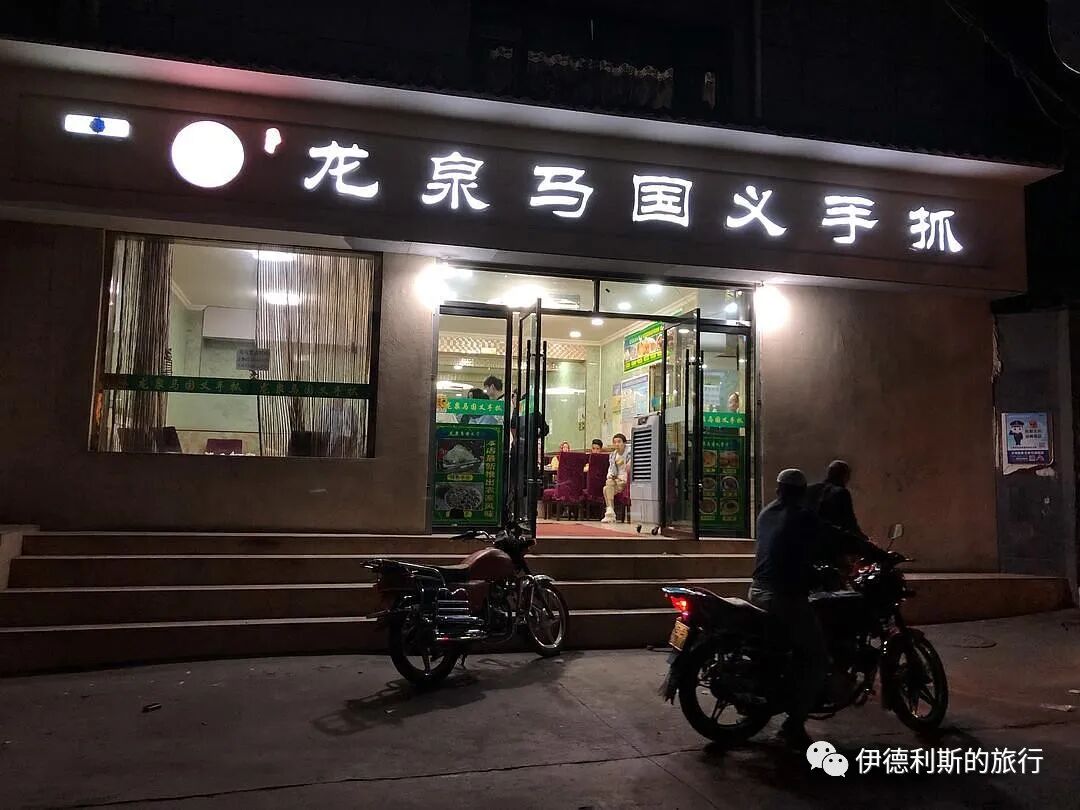
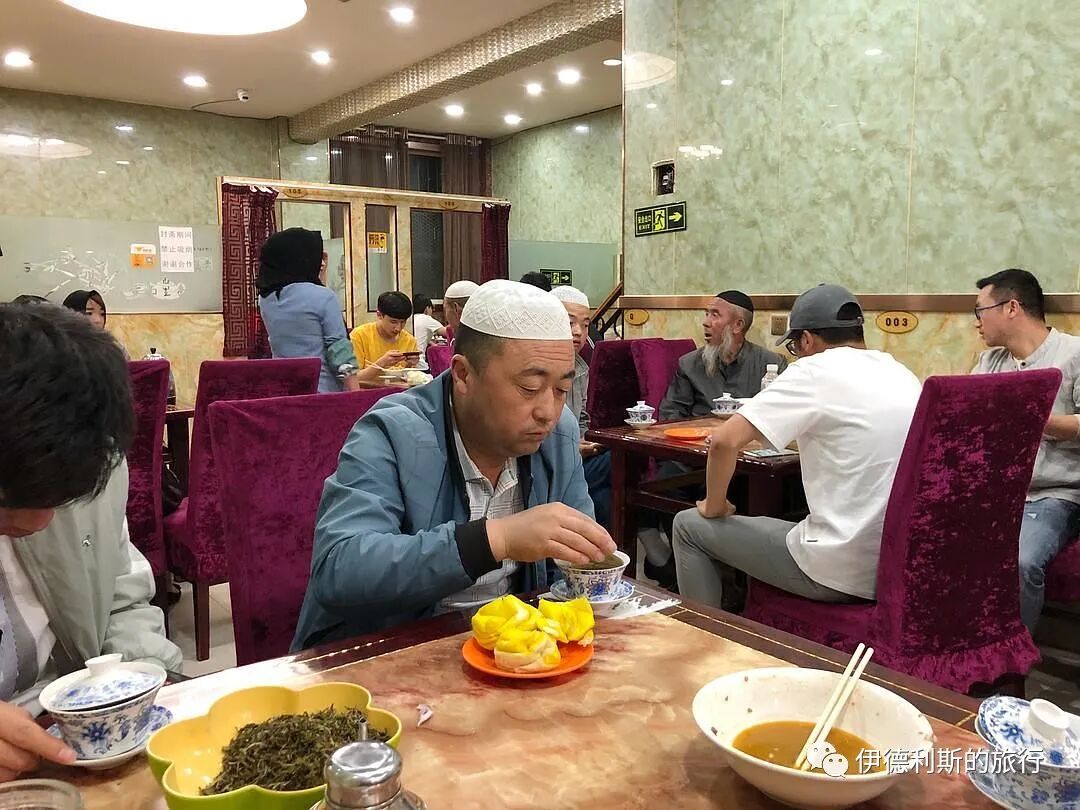
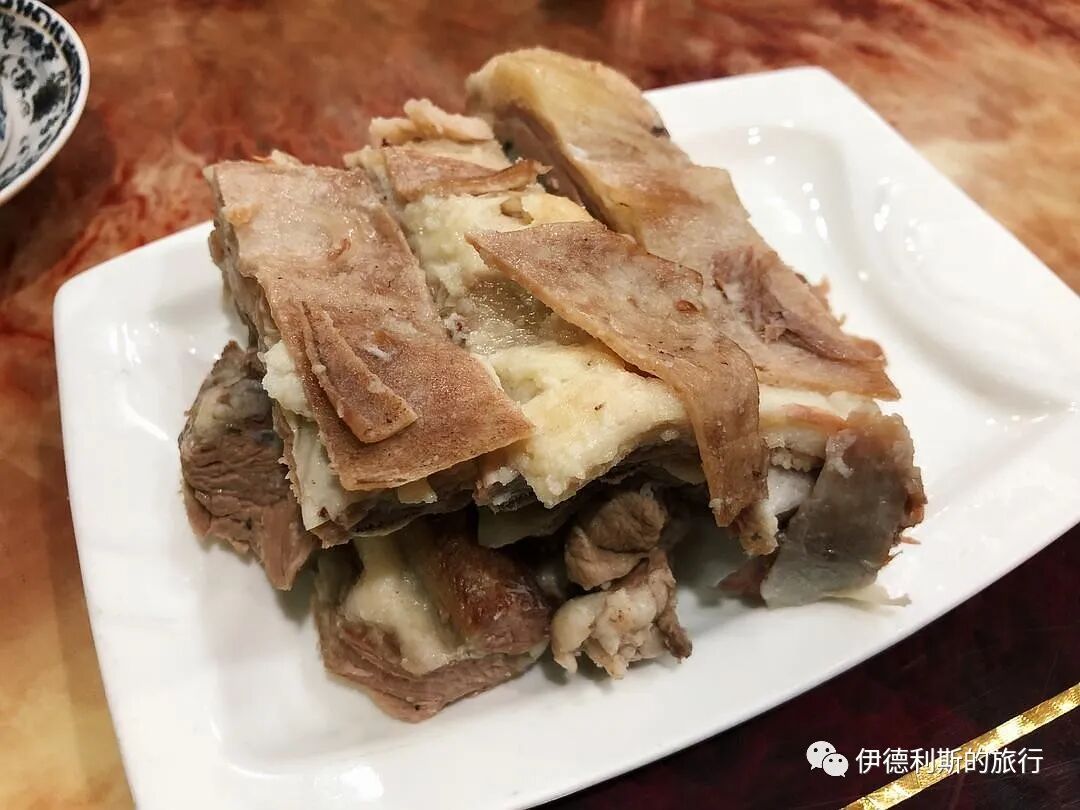
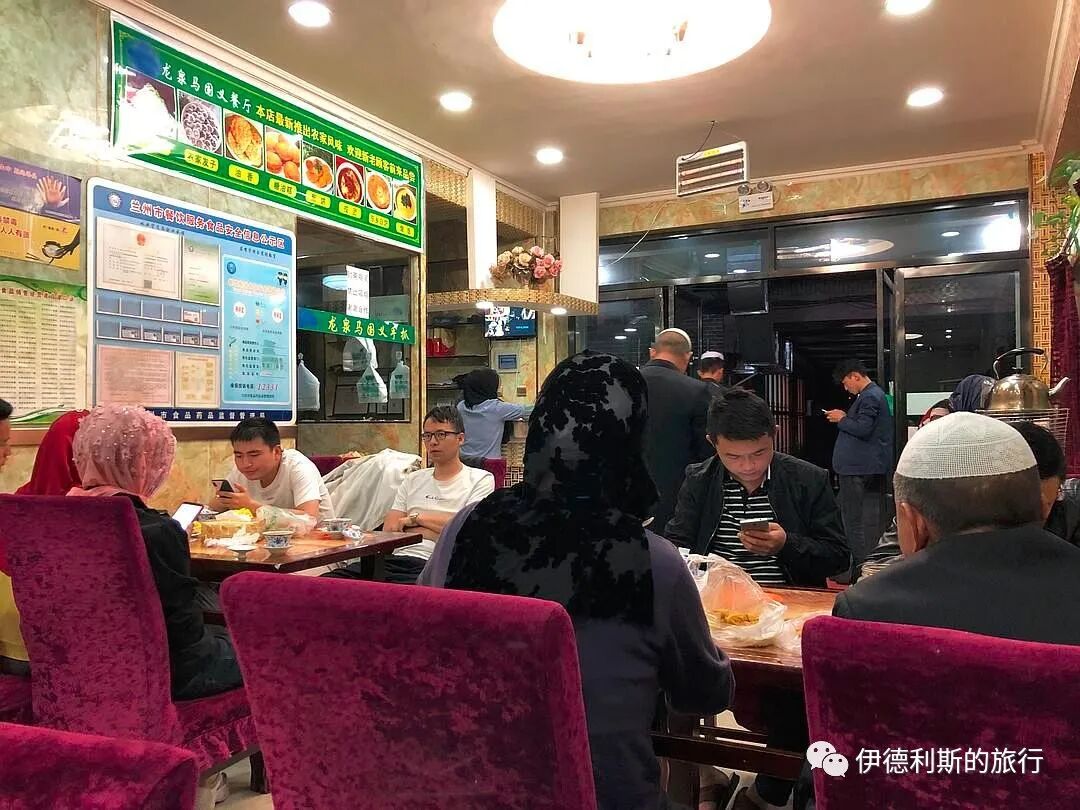
During Ramadan, many restaurants in Xiaoxihu stay open until four in the morning.
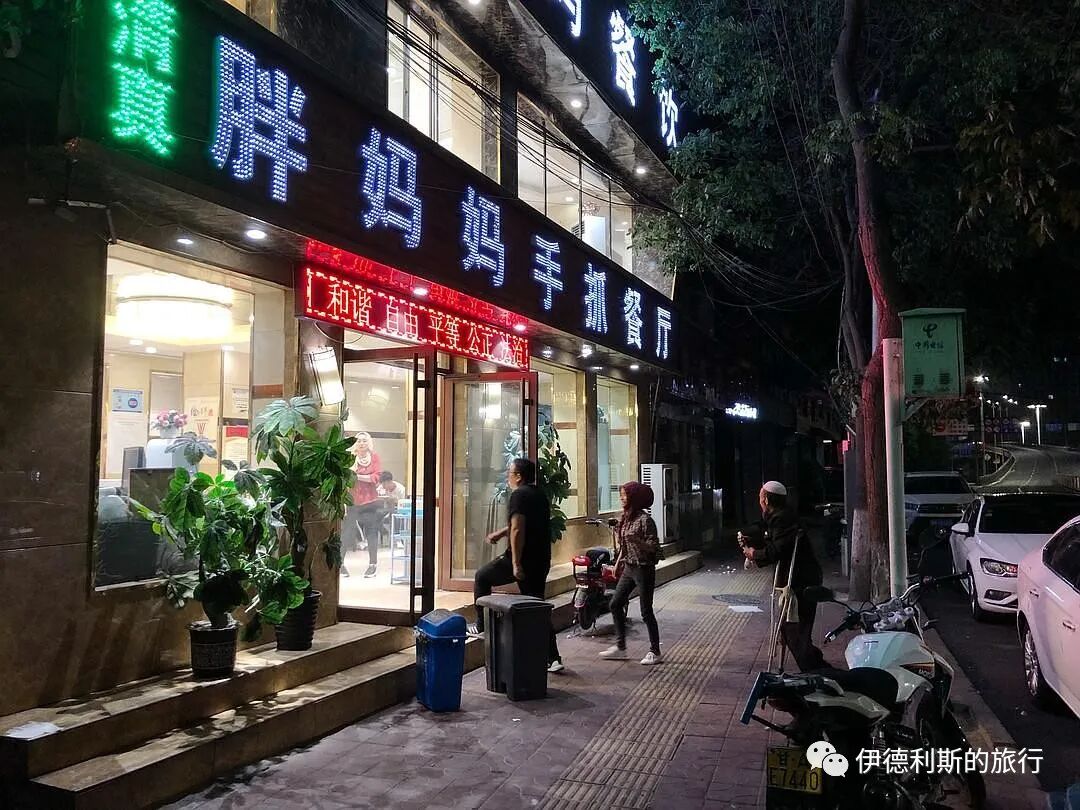
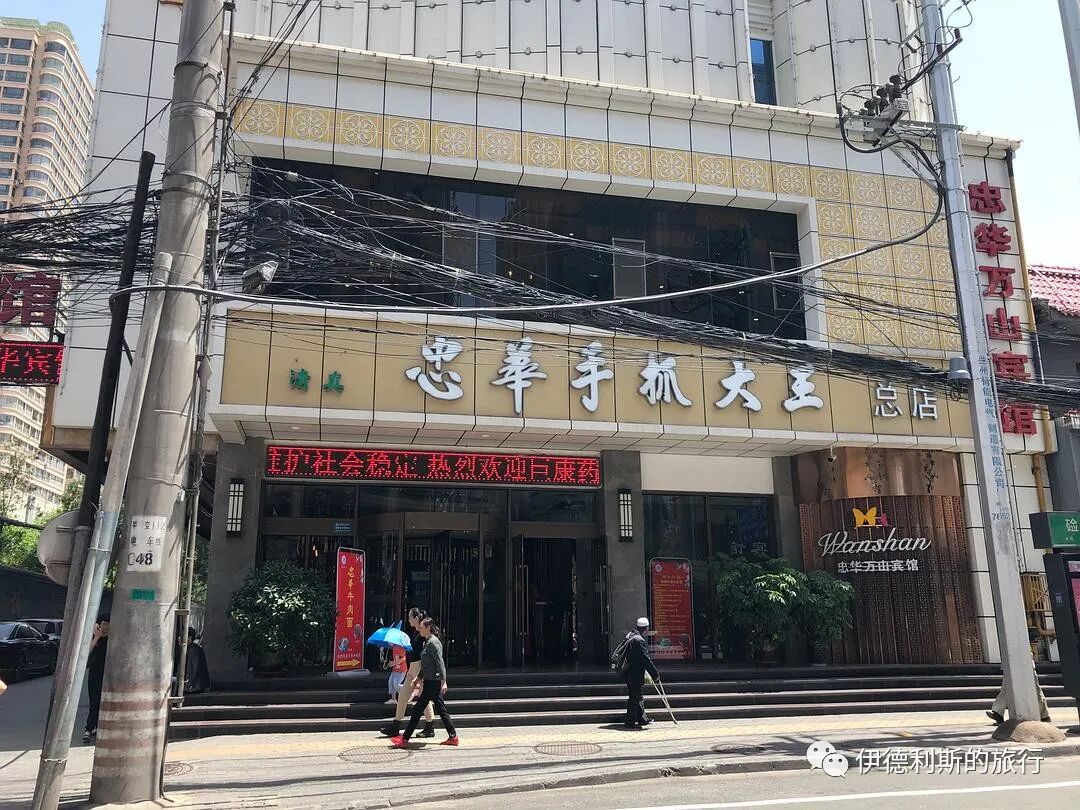
Zhonghua Hand-grabbed Lamb King (Zhonghua Shouzhua Dawang)
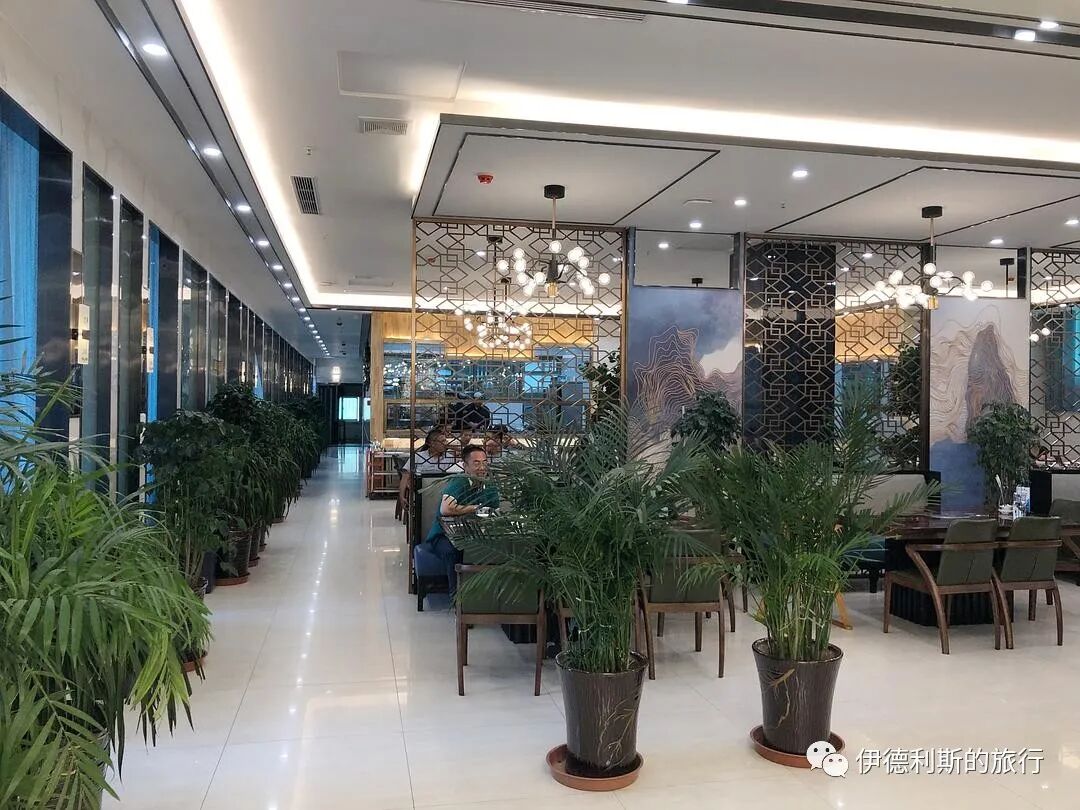
I went back to Xiaoxihu to eat and explore the week after Eid al-Fitr. As soon as I got off the plane, I headed straight to Zhonghua Hand-grabbed Lamb King (Zhonghua Shouzhua Dawang) on Jiangouyan Street. This place is very popular in Xiaoxihu, and you have to share tables at noon. I felt very satisfied drinking tea with dried fruits and rock sugar (sanpaotai) while eating half a jin of lamb ribs, a small bowl of lentil and sparrow-tongue noodles (biandou queshe mian), and a plate of cold starch noodles (liangpizi). The environment and service here are both good. They refill your tea often, and the tea with dried fruits and rock sugar (sanpaotai) itself is delicious.
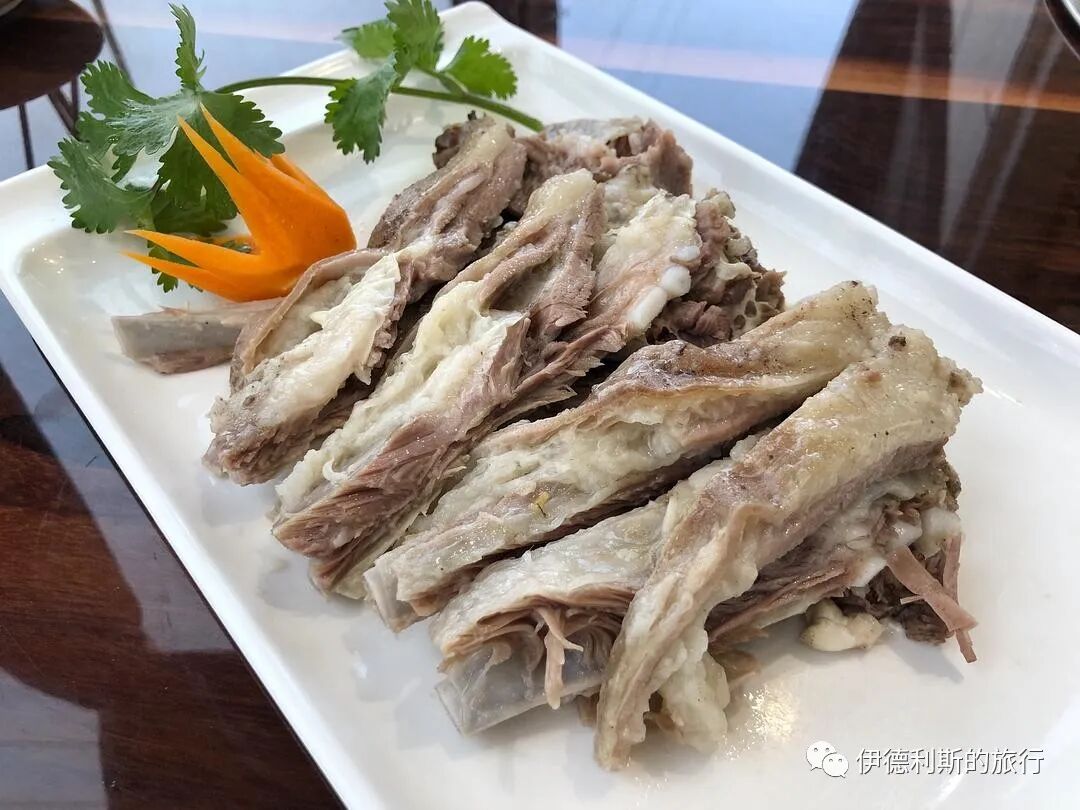
The lamb tastes very authentic. You basically eat one piece of meat with one clove of garlic, and the garlic is very fragrant too.
Cold starch noodles (liangpizi)
Lentil and sparrow-tongue noodles (biandou queshe mian)
Rose-flavored tea with dried fruits and rock sugar (meigui sanpaotai). I wanted more after finishing it, so I ended up buying a lot at the supermarket to take home.
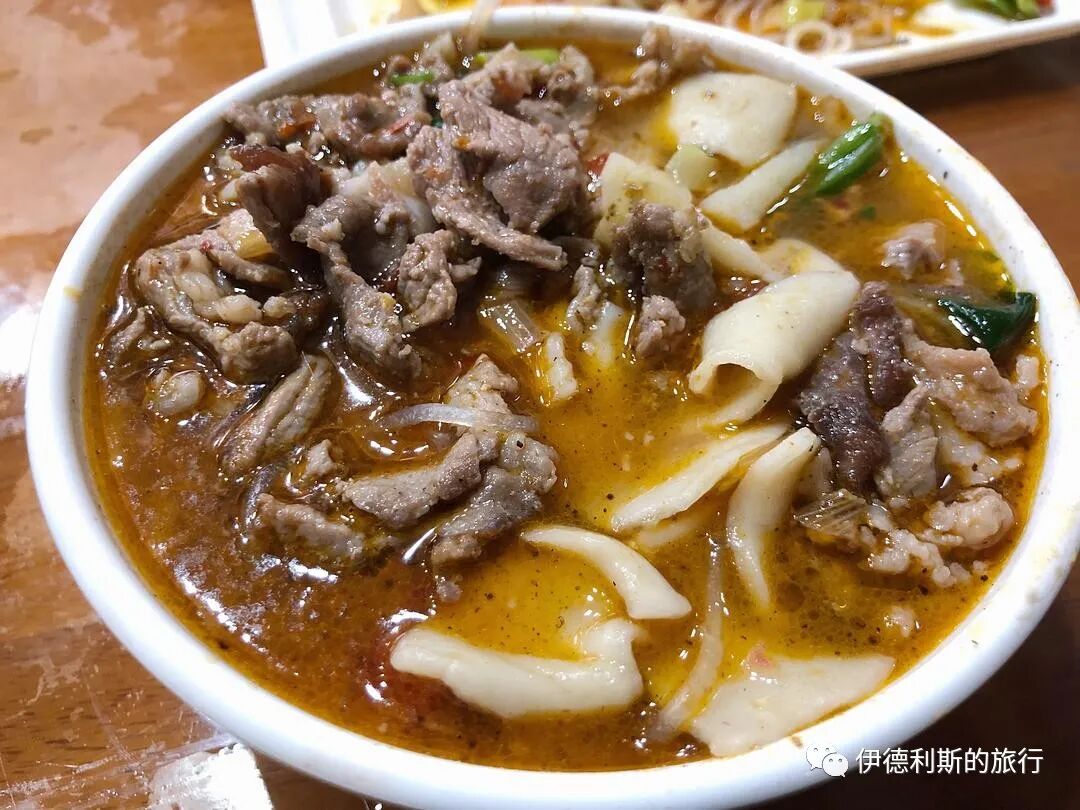
River-style noodle soup (heyan mianpian)
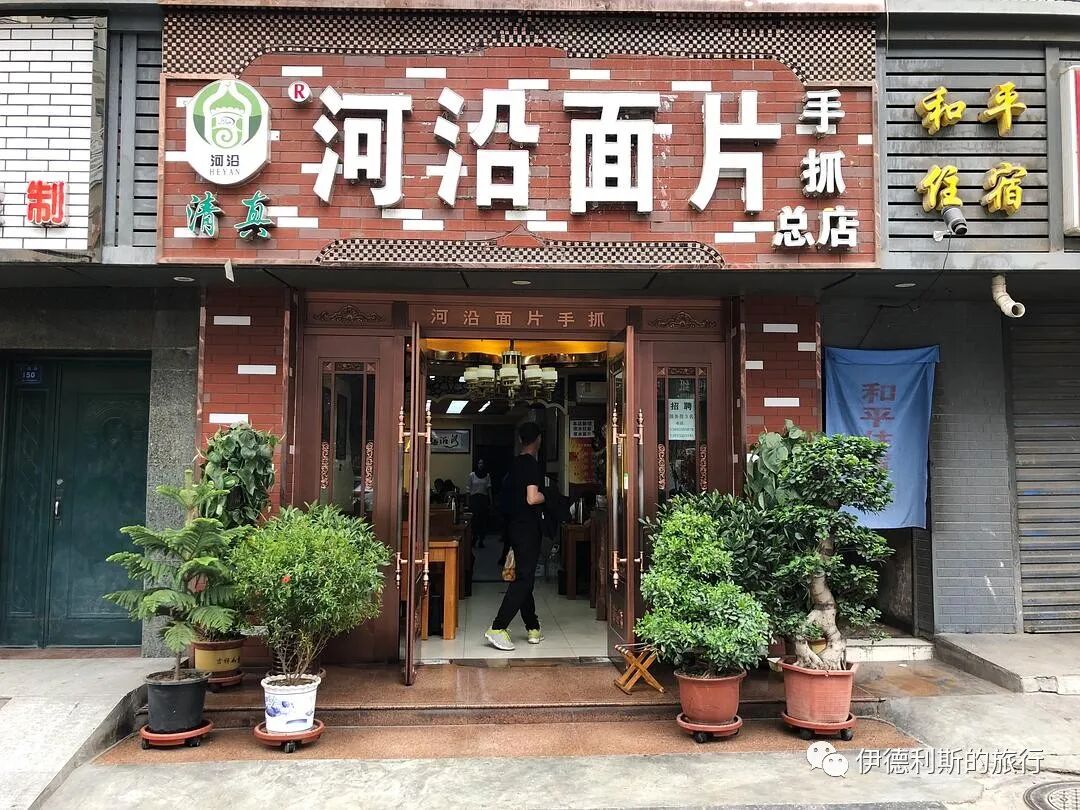
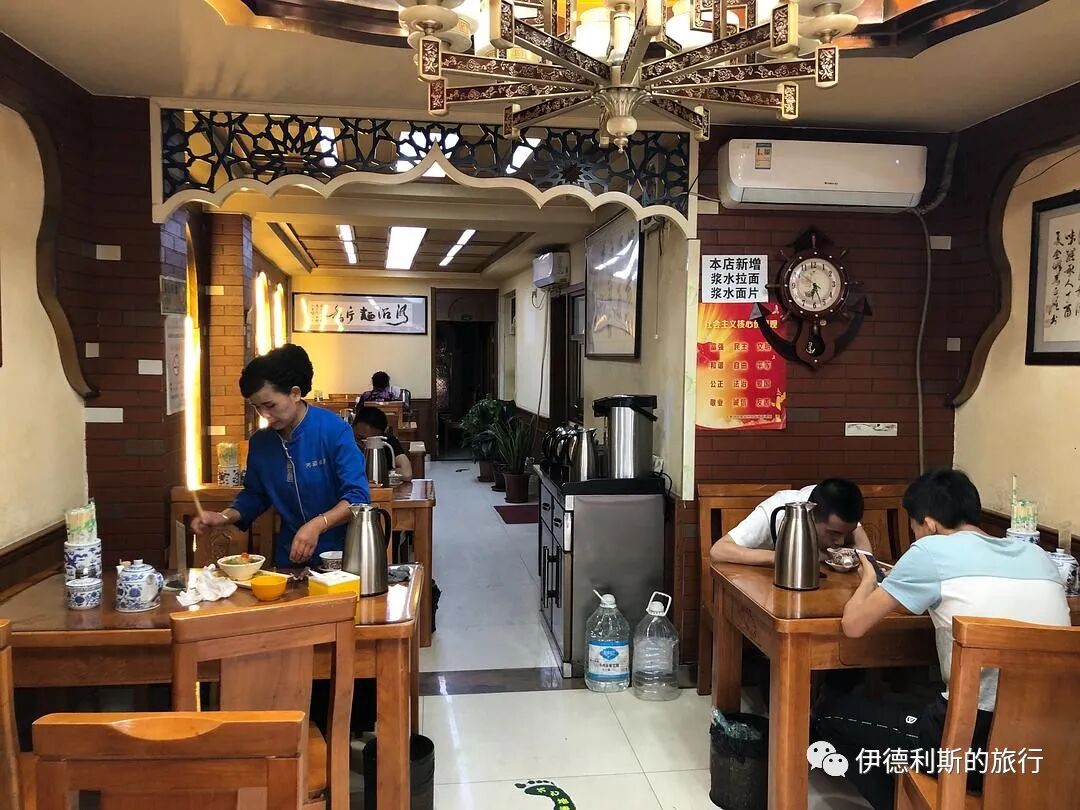
There are many restaurants one after another on Jiangouyan Street. I also ate river-style noodle soup (heyan mianpian) and braised lamb (huangmen yangrou) at this place. River-style noodle soup (heyan mianpian) originated in Guanghe County, Linxia. It evolved from stir-fried noodle soup (chao mianpian), but the flavor is much richer.
Shangxiyuan Market
There is an alley on the south side of the road in Shangxiyuan where residents near Little West Lake buy their groceries. I bought cold skin noodles (liangpizi), honey sticky rice cake (fengmi niangao), and black rice sticky rice dumpling (heimi zongzi) here.
Street view of Shangxiyuan Market
Cold starch noodles (liangpizi)
Honey sticky rice cake (fengmi niangao)
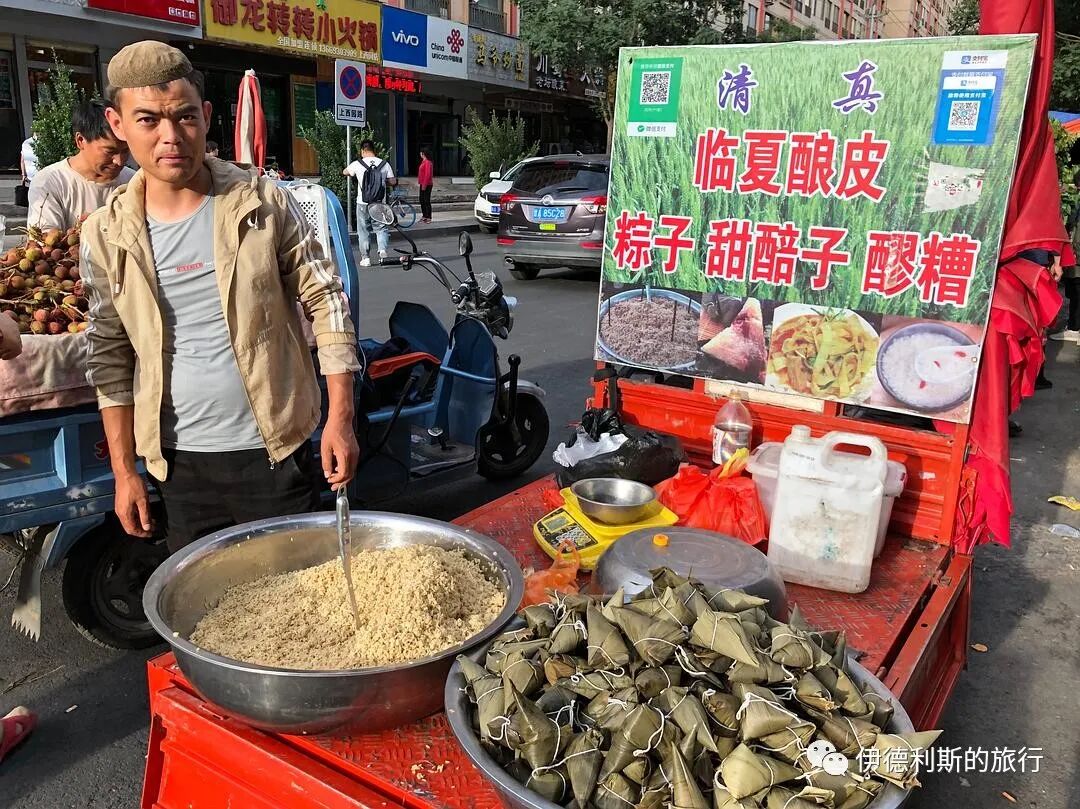
Black rice sticky rice dumpling (heimi zongzi), which you should actually peel and dip in honey to eat.
A big pot of fermented oat drink (tianpeizi)
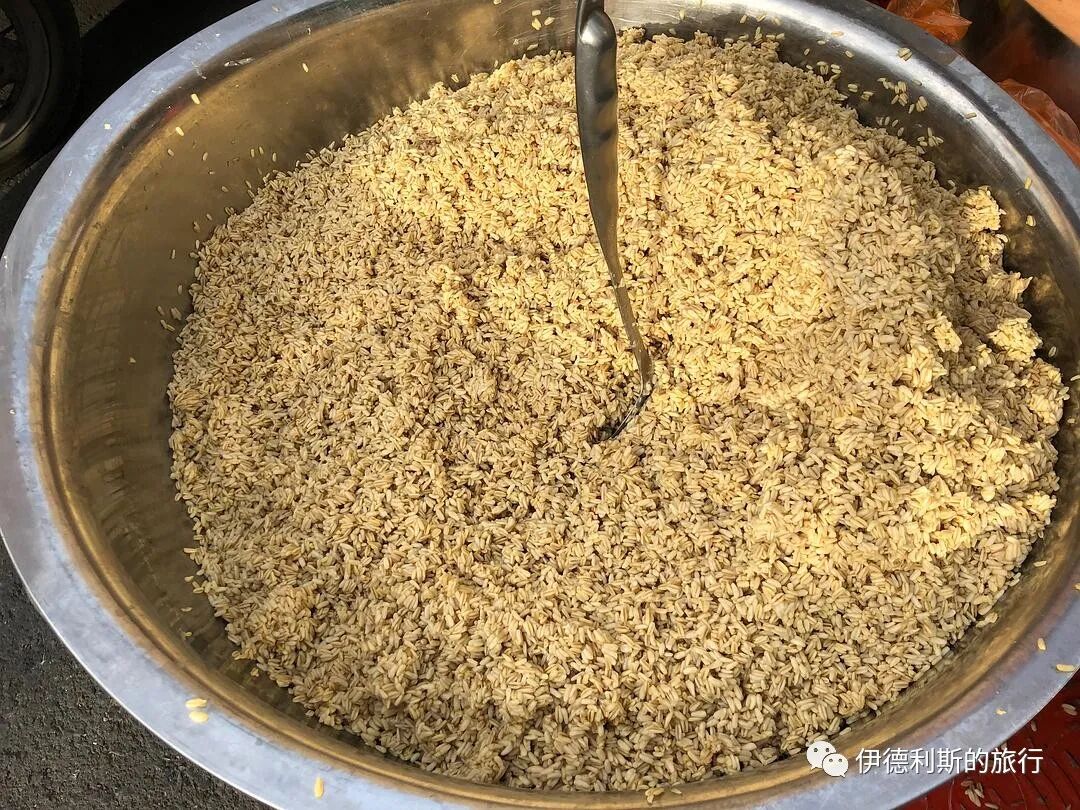
Fried dough twists (sanzi)
The alley behind Yiwu Trade City has dozens of Dongxiang restaurants. They mostly serve Dongxiang-style hand-grabbed lamb (shouzhua), but you can also buy steamed buns (baozi), old-broth chicken (laotang ji), and various snacks like fried dough twists (sanzi).
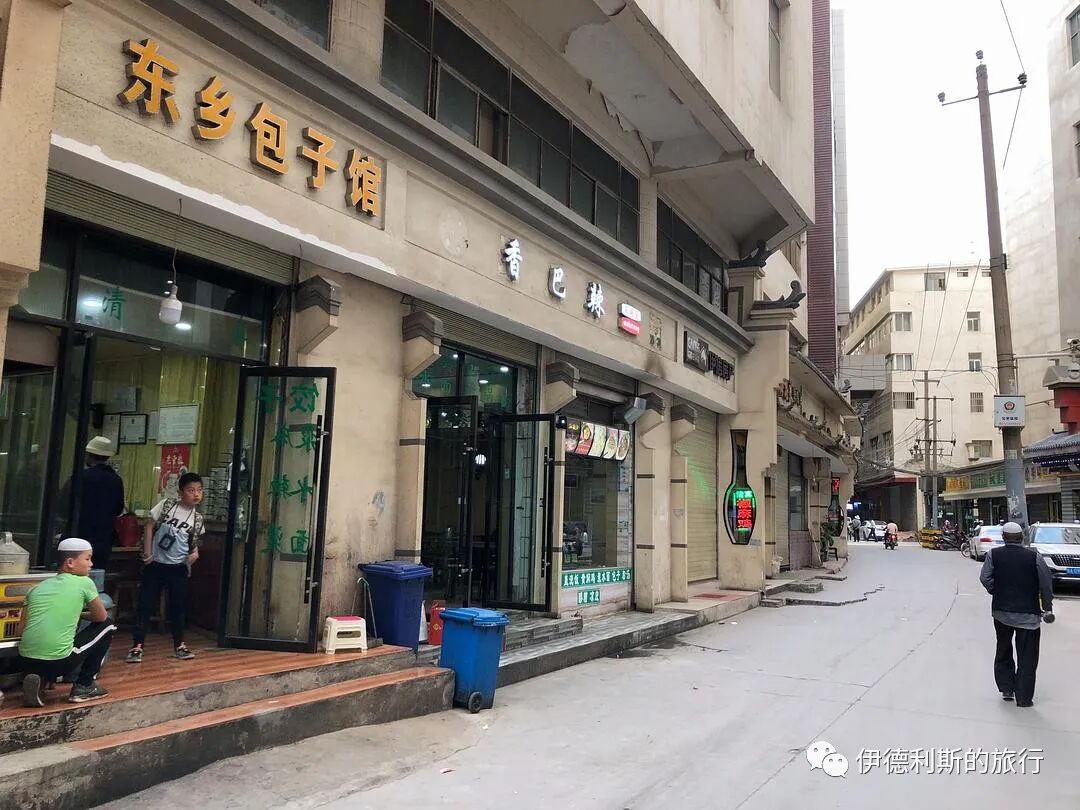
Sesame fried dough twists (sanzi) I bought at this shop
Best Halal Food Beijing: Japanese BBQ Buffet, Xinjiang Cuisine and Lanzhou Muslim Snacks
Articles • yusuf908 posted the article • 0 comments • 142 views • 2026-05-22 21:33
Summary: This Beijing halal food guide maps issue 37 of the restaurant series, featuring a Japanese barbecue buffet, Xinjiang cuisine, Heluo noodles, lamb soup, hot pot, sour soup, Lanzhou dishes, and practical notes for Muslim diners.
Beijing Halal Food Map (37) is presented here as a firsthand travel account in clear English, beginning with this scene: It has been just two months since my last Beijing halal food map (36), and I have already found eight new halal restaurants worth visiting. The account keeps its focus on Beijing Halal Food, Muslim Travel, Middle Eastern Food while preserving the names, places, food, and historical details from the Chinese source.
It has been just two months since my last Beijing halal food map (36), and I have already found eight new halal restaurants worth visiting. I still have a long list of places saved that I have not tried yet. I stick to my rule of only writing original content based on my own experiences, so I will take my time to visit these spots one by one. Here is the list of restaurants for this issue:
1. Shixiang Japanese BBQ Buffet & Jiangguoer Xinjiang Cuisine
2. Xihan Meatball Soup
3. Yixiangyuan Restaurant
4. Niuwanfeng Heluo Noodles
5. Laohui Lamb Soup
6. Big Head Hot Pot (Danaodai Shuanrou)
7. Xiangshui Sour Soup Hot Pot
8. Lan 931
1. Shixiang Japanese BBQ Buffet & Jiangguoer Xinjiang Cuisine
This new Japanese BBQ buffet is right by the Guangqumen subway station. The owner used to run the Musefeilin Xinjiang Restaurant and the Yinmadeng Skewer Hot Pot. He also worked at the Xinjiang Office in Beijing for many years. After closing his previous two shops, he opened this new place. The buffet costs 188, 238, or 298 yuan per person, and the 298 yuan option includes all-you-can-eat fresh durian.
This is the menu. Once you sit down, just tell the server what you want to eat and wait for your food. You can help yourself to the fruit and drinks.
They have a full range of Japanese snacks like sushi, mixed rice (bibimbap), and cold noodles (lengmian).
They serve steamed seafood, and it arrives at the table alive. One crab even crawled out of the pot.
The server felt a bit embarrassed about the runaway crab, but I told them it was fine because it showed the food was fresh. The restaurant buys crabs in bulk without tying their legs with string. It is hard to tell if a tied crab is alive, and the string just adds extra weight anyway.
I think the best thing about this place is how fresh the ingredients are. The abalone also comes to the table alive, and you have to grill it on an iron plate before eating.
There is unlimited sushi.
They have beef rice bowls and ice cream. The ice cream is the Mengniu brand.
There is a four-part platter of marbled beef. The beef on top is my favorite; it is fragrant and tender once grilled.
Baked crab casserole with cheese.
Roasted durian.
Grilled oysters.
Cold noodles (lengmian).
Mustard shrimp balls
Pasteurized egg, a very small one, used for dipping sauce.
Matsutake mushroom soup
Sashimi platter
Unlimited drinks of all kinds
Mention Dosti to eat at Shixiang buffet, and friends of Tiyehaya can get 20 yuan off the set meal. You can get 15% off at Jiangguo Xinjiang Restaurant. This is a secret between us, so don't tell anyone else.
2. Xihan Xinjiang meatball soup
A Xinjiang meatball soup shop on the first floor of Jianwai SOHO East District, decorated in a fresh and artistic style.
The main color is Ili blue. They specialize in meatball soup and also serve various Xinjiang snacks.
Meatball soup
Meatball soup served with steamed flower rolls (huajuan), absolutely delicious.
Steamed flower rolls (huajuan)
Deep-fried cake (youzhagao)
Ili smoked horse sausage (yili xunmachang)
Jabir ibn Abdullah (may Allah be pleased with him and his father) reported that on the day of the Battle of Khaybar, the Prophet (peace and blessings of Allah be upon him) forbade eating donkey meat but allowed eating horse meat. (Sahih al-Bukhari)
Asma bint Abu Bakr reported: During the time of the Prophet, we slaughtered a horse and ate its meat (Sahih Muslim).
3. Yixiangyuan Restaurant
There is a Yufa Town mosque (Yufa Zhen Qingzhensi) near Daxing Airport. After visiting the Yufa mosque, I went to the nearby Dongwenggezhuang Village for a quick meal.
This is the closest restaurant to the Yufa mosque. I ordered the stir-fried beef with chestnuts, and it tasted pretty good.
4. Niuwanfeng Heluo Noodles
A new Jia County noodle shop (hela mian) from Henan opened in Fengtai. I have been there twice, and the taste is quite authentic.
Jia County noodle soup is made with lamb broth. They use plenty of high-quality lamb, and the soup is good enough to drink on its own.
They fry their chili in lamb fat, so the flavor is very strong.
Besides the buckwheat noodles (heluo mian), their spiced beef (jiang niurou) is also quite good. The kitchen staff are all cousins from Henan.
Lamb liver
Spiced beef (jiang niurou)
5. Laohui Lamb Soup
Pingquan is a county in Chengde, Hebei, famous for its lamb soup (yangtang). This shop, Lao Hui, is a lamb soup restaurant opened by people from Pingquan.
You can get free refills on the lamb soup (yangtang). This shop really boils it from scratch, and you have to eat it with a sesame flatbread (shaobing).
A bowl of lamb soup (yangtang) on a cold day warms you right up. The shop also offers charity meal sets for people in specific professions.
6. Big Head Hot Pot (Danaodai Shuanrou)
A Beijing-style hot pot restaurant opened not far from the North Square of the West Railway Station. Now I have another option if I am not in a rush when visiting the station.
Fennel mini fried dough sticks (huixiang xiao youtiao)
Overall, the place feels quite affordable. They have copper charcoal pots and individual small pots, costing about 100 per person.
7. Xiangshui Sour Soup Hot Pot
The sour soup hot pot restaurant at the entrance of Nanxiapo Mosque uses property owned by the mosque, so they do not sell alcohol.
I recommend the yellow lantern chili and red tomato soup split pot, so you can try both flavors.
The signature Zhongjiang large fried dough sticks (youtiao) are delicious, especially when soaked in the soup.
Their hand-crushed lemon black tea and green tea are both great, and they are better to drink than alcohol.
8. Lan 931
This is a high-end Lanzhou specialty restaurant located quite far away in the Tongzhou National Defense Art District.
They have a full range of Lanzhou snacks and dishes, with an average cost of about 150 per person.
Cold starch noodles (niangpi)
Sweet pea soup (huidouzi)
Hand-grabbed lamb (shouzhu)
Cold sliced beef (niurou liangpian)
Fermented vegetable starch noodles (jiangshui yu)
Stir-fried meat with chili (lazi chaorou)
Spicy hot pot bowl (maocai)
Lily bulb (baihe)
Jingyuan lamb (Jingyuan yanggaorou)
Traditional Lanzhou mixed vegetable stew (lao Lanzhou huicai)
Hui Muslim meat-stuffed egg rolls (Hui min jiasha)
Hezhou steamed buns (Hezhou baozi)
Dongxiang potato slices (Dongxiang tudoupian)
Lamb bone broth (yangtang)
Except for the beef noodles, we tried all the signature Lanzhou dishes at the restaurant. Overall, it was just average. Unless you are staying nearby, there is no need to travel far to eat here. For snacks, it is better to visit smaller shops for more authentic flavor. view all
Summary: This Beijing halal food guide maps issue 37 of the restaurant series, featuring a Japanese barbecue buffet, Xinjiang cuisine, Heluo noodles, lamb soup, hot pot, sour soup, Lanzhou dishes, and practical notes for Muslim diners.
Beijing Halal Food Map (37) is presented here as a firsthand travel account in clear English, beginning with this scene: It has been just two months since my last Beijing halal food map (36), and I have already found eight new halal restaurants worth visiting. The account keeps its focus on Beijing Halal Food, Muslim Travel, Middle Eastern Food while preserving the names, places, food, and historical details from the Chinese source.
It has been just two months since my last Beijing halal food map (36), and I have already found eight new halal restaurants worth visiting. I still have a long list of places saved that I have not tried yet. I stick to my rule of only writing original content based on my own experiences, so I will take my time to visit these spots one by one. Here is the list of restaurants for this issue:
1. Shixiang Japanese BBQ Buffet & Jiangguoer Xinjiang Cuisine
2. Xihan Meatball Soup
3. Yixiangyuan Restaurant
4. Niuwanfeng Heluo Noodles
5. Laohui Lamb Soup
6. Big Head Hot Pot (Danaodai Shuanrou)
7. Xiangshui Sour Soup Hot Pot
8. Lan 931
1. Shixiang Japanese BBQ Buffet & Jiangguoer Xinjiang Cuisine
This new Japanese BBQ buffet is right by the Guangqumen subway station. The owner used to run the Musefeilin Xinjiang Restaurant and the Yinmadeng Skewer Hot Pot. He also worked at the Xinjiang Office in Beijing for many years. After closing his previous two shops, he opened this new place. The buffet costs 188, 238, or 298 yuan per person, and the 298 yuan option includes all-you-can-eat fresh durian.
This is the menu. Once you sit down, just tell the server what you want to eat and wait for your food. You can help yourself to the fruit and drinks.
They have a full range of Japanese snacks like sushi, mixed rice (bibimbap), and cold noodles (lengmian).
They serve steamed seafood, and it arrives at the table alive. One crab even crawled out of the pot.
The server felt a bit embarrassed about the runaway crab, but I told them it was fine because it showed the food was fresh. The restaurant buys crabs in bulk without tying their legs with string. It is hard to tell if a tied crab is alive, and the string just adds extra weight anyway.
I think the best thing about this place is how fresh the ingredients are. The abalone also comes to the table alive, and you have to grill it on an iron plate before eating.
There is unlimited sushi.
They have beef rice bowls and ice cream. The ice cream is the Mengniu brand.
There is a four-part platter of marbled beef. The beef on top is my favorite; it is fragrant and tender once grilled.
Baked crab casserole with cheese.
Roasted durian.
Grilled oysters.
Cold noodles (lengmian).
Mustard shrimp balls
Pasteurized egg, a very small one, used for dipping sauce.
Matsutake mushroom soup
Sashimi platter
Unlimited drinks of all kinds
Mention Dosti to eat at Shixiang buffet, and friends of Tiyehaya can get 20 yuan off the set meal. You can get 15% off at Jiangguo Xinjiang Restaurant. This is a secret between us, so don't tell anyone else.
2. Xihan Xinjiang meatball soup
A Xinjiang meatball soup shop on the first floor of Jianwai SOHO East District, decorated in a fresh and artistic style.
The main color is Ili blue. They specialize in meatball soup and also serve various Xinjiang snacks.
Meatball soup
Meatball soup served with steamed flower rolls (huajuan), absolutely delicious.
Steamed flower rolls (huajuan)
Deep-fried cake (youzhagao)
Ili smoked horse sausage (yili xunmachang)
Jabir ibn Abdullah (may Allah be pleased with him and his father) reported that on the day of the Battle of Khaybar, the Prophet (peace and blessings of Allah be upon him) forbade eating donkey meat but allowed eating horse meat. (Sahih al-Bukhari)
Asma bint Abu Bakr reported: During the time of the Prophet, we slaughtered a horse and ate its meat (Sahih Muslim).
3. Yixiangyuan Restaurant
There is a Yufa Town mosque (Yufa Zhen Qingzhensi) near Daxing Airport. After visiting the Yufa mosque, I went to the nearby Dongwenggezhuang Village for a quick meal.
This is the closest restaurant to the Yufa mosque. I ordered the stir-fried beef with chestnuts, and it tasted pretty good.
4. Niuwanfeng Heluo Noodles
A new Jia County noodle shop (hela mian) from Henan opened in Fengtai. I have been there twice, and the taste is quite authentic.
Jia County noodle soup is made with lamb broth. They use plenty of high-quality lamb, and the soup is good enough to drink on its own.
They fry their chili in lamb fat, so the flavor is very strong.
Besides the buckwheat noodles (heluo mian), their spiced beef (jiang niurou) is also quite good. The kitchen staff are all cousins from Henan.
Lamb liver
Spiced beef (jiang niurou)
5. Laohui Lamb Soup
Pingquan is a county in Chengde, Hebei, famous for its lamb soup (yangtang). This shop, Lao Hui, is a lamb soup restaurant opened by people from Pingquan.
You can get free refills on the lamb soup (yangtang). This shop really boils it from scratch, and you have to eat it with a sesame flatbread (shaobing).
A bowl of lamb soup (yangtang) on a cold day warms you right up. The shop also offers charity meal sets for people in specific professions.
6. Big Head Hot Pot (Danaodai Shuanrou)
A Beijing-style hot pot restaurant opened not far from the North Square of the West Railway Station. Now I have another option if I am not in a rush when visiting the station.
Fennel mini fried dough sticks (huixiang xiao youtiao)
Overall, the place feels quite affordable. They have copper charcoal pots and individual small pots, costing about 100 per person.
7. Xiangshui Sour Soup Hot Pot
The sour soup hot pot restaurant at the entrance of Nanxiapo Mosque uses property owned by the mosque, so they do not sell alcohol.
I recommend the yellow lantern chili and red tomato soup split pot, so you can try both flavors.
The signature Zhongjiang large fried dough sticks (youtiao) are delicious, especially when soaked in the soup.
Their hand-crushed lemon black tea and green tea are both great, and they are better to drink than alcohol.
8. Lan 931
This is a high-end Lanzhou specialty restaurant located quite far away in the Tongzhou National Defense Art District.
They have a full range of Lanzhou snacks and dishes, with an average cost of about 150 per person.
Cold starch noodles (niangpi)
Sweet pea soup (huidouzi)
Hand-grabbed lamb (shouzhu)
Cold sliced beef (niurou liangpian)
Fermented vegetable starch noodles (jiangshui yu)
Stir-fried meat with chili (lazi chaorou)
Spicy hot pot bowl (maocai)
Lily bulb (baihe)
Jingyuan lamb (Jingyuan yanggaorou)
Traditional Lanzhou mixed vegetable stew (lao Lanzhou huicai)
Hui Muslim meat-stuffed egg rolls (Hui min jiasha)
Hezhou steamed buns (Hezhou baozi)
Dongxiang potato slices (Dongxiang tudoupian)
Lamb bone broth (yangtang)
Except for the beef noodles, we tried all the signature Lanzhou dishes at the restaurant. Overall, it was just average. Unless you are staying nearby, there is no need to travel far to eat here. For snacks, it is better to visit smaller shops for more authentic flavor.
China Mosque Travel Guide: Lanzhou Wuxingping Lingmingtang Gongbei, Halal Hyatt and Beef Noodles
Articles • yusuf908 posted the article • 0 comments • 160 views • 2026-05-22 21:12
Summary: This China mosque travel guide to Lanzhou covers Wuxingping Lingmingtang, one of China’s largest gongbei sites, Xinguan Mosque, halal Hyatt breakfast, Lanzhou beef noodles, hand-grabbed lamb, and local Muslim heritage.
A Halal Tour of Lanzhou: The Five-Star Terrace Spiritual Light Hall (Wuxingping Lingmingtang), the Largest Gongbei in China is presented here as a firsthand travel account in clear English, beginning with this scene: I wrote a map of halal food in Lanzhou in 2016. This is my fifth time in Lanzhou. The account keeps its focus on Qinghai Mosques, Chinese Muslims, Muslim Heritage while preserving the names, places, food, and historical details from the Chinese source.
I wrote a map of halal food in Lanzhou in 2016. This is my fifth time in Lanzhou. I flew the first four times, but this time I drove. It is about 1,400 kilometers from Beijing to Lanzhou, and the first city I stopped in after entering Gansu was Baiyin.
On the way, I took a highway called Wuma. It is named after the Wuhai to Maqin expressway, but it happens to sound like the Arabic word for nation.
After praying Maghrib (shamu) at the Great Mosque of Baiyin, I walked around the city looking for food, but I found there were not many choices.
I found this Chuntai Hand-Grabbed Meat Restaurant (Chuntai Shouzhua Meishicheng). Chuntai is a township in Dongxiang, Linxia, and it is famous for its delicious hand-grabbed lamb.
The food was really good. Both the hand-grabbed lamb and the firecracker noodles (paozhuang mian) were delicious.
I stayed in Baiyin for one night and walked around, but I did not find any places worth remembering.
When I saw the Yellow River Bridge, I knew I had arrived in Lanzhou. This time I stayed at the Hyatt Regency. I chose it because it is a halal Hyatt, which is rare in China. The owner is a Dongxiang person.
The promotional video for the Hyatt playing in the elevator features girls wearing headscarves.
The gym at the Lanzhou Hyatt is very large. It is rare for a five-star hotel in China to have such a big gym.
The gym faces the Yellow River, so the view is excellent.
What attracts me most about the Hyatt is the rich breakfast. Everything is halal, and you can choose whatever you want. Besides regular Western desserts, they also have local Northwest specialties.
The Lanzhou beef noodles at the Hyatt were the only beef noodles I ate on this trip to Lanzhou. They were truly delicious and just as good as any of the old, famous shops I have visited in Lanzhou.
Xinguan Mosque
Local elders in Lanzhou highly recommended I visit Xinguan Mosque. People say it is very popular with young people because the imam, Ma Jun, gives lively and vivid sermons (wa'az) in Mandarin.
The mosque gate is completely open to the public, and many children play at the entrance.
Yixiang Stir-fry
Next to Xinguan Mosque is a Lanzhou stir-fry shop that a long-time Lanzhou local specifically recommended to me as a place for authentic local dishes.
This shop has been open in Lanzhou for over ten years, and the customers are mostly local residents from the neighborhood.
I really enjoy eating at these popular local spots. You can taste the quality in the cooking here, and I probably would not have noticed this place if a friend had not shown me the way.
Lanzhou thick-sauce lamb (hu yang)
This was my first time eating thick-sauce lamb. I noticed that traditional Lanzhou stir-fry is mostly salty, fresh, and sweet, and the way they use starch to thicken sauces is similar to Beijing cuisine.
Sweet and sour meat-stuffed crepes (suanla jiasha)
Sweet and sour pork tenderloin (tangcu liji)
If you get tired of eating Northwest-style noodles, remember to stop by Yixiang Stir-fry when you are in Lanzhou.
Miaotanzi Gadan
Local elders picked this Miaotanzi Gadan as another special Lanzhou barbecue stall for me. The environment is basically non-existent. It has been open for over a decade and is full of locals. People sit on stools by the roadside to eat, or just stand and dip their skewers.
Lanzhou barbecue is known for using iron skewers over an open flame with plenty of seasoning. They come in bundles of 20, and it is easy for one person to eat 30 or 50. I like these small skewers. Large ones fill me up after one or two, which feels less satisfying.
Aliya Art Restaurant
After spending a long time in Northwest cities, I cannot handle heavy dishes anymore. I specifically chose this refreshing art restaurant to meet a friend. You can have afternoon tea here, or choose from light meals.
Aliya Lanzhou Center branch. Their desserts are excellent. They also serve sushi and salads, which are rare, light food options in the Northwest.
Things like sushi and spring rolls are much easier to eat.
Hongyunxuan Macau Charcoal Hot Pot
I have had this halal hot pot (dabanlu) place saved in my Beijing list for a long time as a Lanzhou specialty. Hongyunxuan previously ran a Hong Kong-style tea restaurant in Macau, but it closed during the pandemic. I did not expect them to open a hot pot place in Lanzhou.
The restaurant decor is very Cantonese. It has not been open long, so I wonder how long it will last.
We chose two types of seafood porridge bases. You can drink the porridge first, then cook the meat.
Fish maw (huajiao) porridge base
This Cantonese-style hot pot (dabanlu) tastes good and is light. I hope it stays open because it really helps add variety to the food scene in the Northwest.
Shancheng Hand-Grabbed Lamb (Shancheng shouzhuo)
I met an elder (xianglao) from the Lingming Hall (Lingmingtang) in Lanzhou at Shancheng Hand-Grabbed Lamb. Shancheng is a village in Linxia, and many friends in Lanzhou recommend this place. Most people working in the halal restaurant business in Lanzhou are from Linxia.
Before eating, they serve tea. You can grab whatever you like from the Three-Fortress Tea (sanpaotai) platter. The rose inside is a local Lanzhou specialty, and you must add it.
The hand-grabbed lamb is tender with a good mix of fat and lean meat, mostly lean, which is how I like it.
Yogurt with fermented oat grains (tianpei) is a creative new combination. Fermented oat grains are a popular Lanzhou snack.
Soup made with hair moss (facai). Hair moss is a specialty of the Northwest and can be used as medicine.
The lily bulbs in the assorted shrimp dish are another Lanzhou specialty. You must try lily bulbs when you come to Lanzhou.
Hot and sour stuffed meat (suanla jiasha). The outer layer of the stuffed meat is made of egg, similar to Beijing's fried meat strips (songrou), but those use bean curd skin.
Cold tossed wild onion (shacong). This is a wild vegetable from the Northwest, and it has become more common in Beijing over the last two years.
Sugar oil cake (tangyougao) is a bit like the Qinghai dog-pissing pancake (goujiaoniao). It is hollow inside. My friends chose these local specialties for me, and Shancheng Hand-Grabbed Lamb lives up to its reputation. It is worth recommending.
After the meal, we visited the home of the elder from Lingming Hall and saw this biography, The Brief Biography of Master Lingming (Lingming Shangren Zhuanlue).
On the way to Lingmingtang Gongbei, I passed through Gongbei Gully and saw several gongbei built halfway up the mountain.
The Lingmingtang Gongbei sits on the top of Wuxingping Mountain in Lanzhou, covering an area of over 30,000 square meters, and it is the largest gongbei I have ever seen.
The founding master of Lingmingtang Gongbei was Ma Yilong (1853-1925), whose courtesy name was Lingming. He once studied under the Great Incense Master of the Kashgar Daotang and accepted the teachings of the Qadiriyya. In his final words, he mentioned being the 'answerer promised by the Bab gate,' which led some to believe he was influenced by the Babi faith. However, some descendants of Lingmingtang deny this, as detailed in the article 'A Discussion on the Possibility of Historical Contact Between Lingmingtang and the Babi Sect'.
During his lifetime, Ma Lingming lived a life of poverty and appeared eccentric, remaining unmoved even when children played around him or passersby mocked him. People often asked him questions, and he would sometimes give hints without taking a penny. Over time, some felt his guidance came true, and they began to respect him.
Whenever a Sufi elder gains the support of the public, they must have some extraordinary qualities. This is especially true for local illiterate believers, as it is hard to win hearts through reasoning and education alone.
As Ma Lingming's followers grew, he caught the attention of local officials, who supported him to keep other menhuan in check.
Ma Lingming himself remained indifferent to fame and wealth. He had no sons, only two daughters, and his noble character earned him the support of many believers.
The religious authority of Lingmingtang is passed to the worthy rather than to one's own children. Before Ma Lingming passed away, he publicly gathered his followers to elect a second-generation successor. They finally chose Shan Zijiu (1888-1953) from Lanzhou. The election process was very complex and required many rituals to complete the succession.
After Shan Zijiu, the religious authority was passed to Wang Shoutian (1924-2021), an elder from Tangwangchuan in Dongxiang County.
Between 1958 and 1979, Wang Shoutian was imprisoned during the anti-religious and anti-feudal movements. After his release, he began leading the construction of the Lingmingtang Gongbei, and the current Wuxingping site was allocated to Lingmingtang by the government in 1982.
Wang Shoutian valued education, and in 1993, he took the lead in donating money to convert Tangwang Primary School into a middle school.
At the same time, Wang Shoutian also valued business and encouraged followers to develop production. He even believed that young people should focus on their careers, which is why Lingmingtang has better economic strength than other menhuan and the financial resources to build such a grand gongbei.
Ma Lingming left behind no personal property. The construction of the Lingmingtang gongbei cost over 100 million yuan, all of which came from donations by believers.
Currently, there are Lingmingtang branch gongbei in Guyuan, Linxia, Hami, and Luoyang. The current fourth-generation leader is named Su Zhilin. He is in his thirties and was elected by the community elders.
The election of the leader is only considered complete after it is approved by the relevant authorities.
The former residence of the elder Wang Shoutian is inside the Lingmingtang gongbei. During his lifetime, he often sat in the courtyard with people gathered around him to listen to his teachings. Because he had a strong Tangwang accent—or perhaps he was speaking the Dongxiang language—someone would sit by his side to translate for him.
The elder did not know Chinese characters, but he was fluent in the mosque language (jingtangyu), so he usually read scriptures in Arabic.
Our Lingmingtang elder did not want to enter the former residence because it reminded him of the elder when he was alive. His eyes turned red instantly, so he waited outside the hall.
There is an exhibition room inside the gongbei that houses some antiques, paintings, and personal items used by the elder during his lifetime.
It is clear that the elder was very high-profile during his life. He was passionate about public welfare, open-minded, and progressive. This felt completely different from my visits to other menhuan gongbei. Some menhuan do not want outside attention; they allow visits but do not want publicity. Others focus on spiritual practice and stay away from the world. Lingmingtang is the opposite. It is more like a family business that encourages people to focus on their careers before the age of 60. These ideas have gained support from a significant number of wealthy believers. view all
Summary: This China mosque travel guide to Lanzhou covers Wuxingping Lingmingtang, one of China’s largest gongbei sites, Xinguan Mosque, halal Hyatt breakfast, Lanzhou beef noodles, hand-grabbed lamb, and local Muslim heritage.
A Halal Tour of Lanzhou: The Five-Star Terrace Spiritual Light Hall (Wuxingping Lingmingtang), the Largest Gongbei in China is presented here as a firsthand travel account in clear English, beginning with this scene: I wrote a map of halal food in Lanzhou in 2016. This is my fifth time in Lanzhou. The account keeps its focus on Qinghai Mosques, Chinese Muslims, Muslim Heritage while preserving the names, places, food, and historical details from the Chinese source.
I wrote a map of halal food in Lanzhou in 2016. This is my fifth time in Lanzhou. I flew the first four times, but this time I drove. It is about 1,400 kilometers from Beijing to Lanzhou, and the first city I stopped in after entering Gansu was Baiyin.
On the way, I took a highway called Wuma. It is named after the Wuhai to Maqin expressway, but it happens to sound like the Arabic word for nation.
After praying Maghrib (shamu) at the Great Mosque of Baiyin, I walked around the city looking for food, but I found there were not many choices.
I found this Chuntai Hand-Grabbed Meat Restaurant (Chuntai Shouzhua Meishicheng). Chuntai is a township in Dongxiang, Linxia, and it is famous for its delicious hand-grabbed lamb.
The food was really good. Both the hand-grabbed lamb and the firecracker noodles (paozhuang mian) were delicious.
I stayed in Baiyin for one night and walked around, but I did not find any places worth remembering.
When I saw the Yellow River Bridge, I knew I had arrived in Lanzhou. This time I stayed at the Hyatt Regency. I chose it because it is a halal Hyatt, which is rare in China. The owner is a Dongxiang person.
The promotional video for the Hyatt playing in the elevator features girls wearing headscarves.
The gym at the Lanzhou Hyatt is very large. It is rare for a five-star hotel in China to have such a big gym.
The gym faces the Yellow River, so the view is excellent.
What attracts me most about the Hyatt is the rich breakfast. Everything is halal, and you can choose whatever you want. Besides regular Western desserts, they also have local Northwest specialties.
The Lanzhou beef noodles at the Hyatt were the only beef noodles I ate on this trip to Lanzhou. They were truly delicious and just as good as any of the old, famous shops I have visited in Lanzhou.
Xinguan Mosque
Local elders in Lanzhou highly recommended I visit Xinguan Mosque. People say it is very popular with young people because the imam, Ma Jun, gives lively and vivid sermons (wa'az) in Mandarin.
The mosque gate is completely open to the public, and many children play at the entrance.
Yixiang Stir-fry
Next to Xinguan Mosque is a Lanzhou stir-fry shop that a long-time Lanzhou local specifically recommended to me as a place for authentic local dishes.
This shop has been open in Lanzhou for over ten years, and the customers are mostly local residents from the neighborhood.
I really enjoy eating at these popular local spots. You can taste the quality in the cooking here, and I probably would not have noticed this place if a friend had not shown me the way.
Lanzhou thick-sauce lamb (hu yang)
This was my first time eating thick-sauce lamb. I noticed that traditional Lanzhou stir-fry is mostly salty, fresh, and sweet, and the way they use starch to thicken sauces is similar to Beijing cuisine.
Sweet and sour meat-stuffed crepes (suanla jiasha)
Sweet and sour pork tenderloin (tangcu liji)
If you get tired of eating Northwest-style noodles, remember to stop by Yixiang Stir-fry when you are in Lanzhou.
Miaotanzi Gadan
Local elders picked this Miaotanzi Gadan as another special Lanzhou barbecue stall for me. The environment is basically non-existent. It has been open for over a decade and is full of locals. People sit on stools by the roadside to eat, or just stand and dip their skewers.
Lanzhou barbecue is known for using iron skewers over an open flame with plenty of seasoning. They come in bundles of 20, and it is easy for one person to eat 30 or 50. I like these small skewers. Large ones fill me up after one or two, which feels less satisfying.
Aliya Art Restaurant
After spending a long time in Northwest cities, I cannot handle heavy dishes anymore. I specifically chose this refreshing art restaurant to meet a friend. You can have afternoon tea here, or choose from light meals.
Aliya Lanzhou Center branch. Their desserts are excellent. They also serve sushi and salads, which are rare, light food options in the Northwest.
Things like sushi and spring rolls are much easier to eat.
Hongyunxuan Macau Charcoal Hot Pot
I have had this halal hot pot (dabanlu) place saved in my Beijing list for a long time as a Lanzhou specialty. Hongyunxuan previously ran a Hong Kong-style tea restaurant in Macau, but it closed during the pandemic. I did not expect them to open a hot pot place in Lanzhou.
The restaurant decor is very Cantonese. It has not been open long, so I wonder how long it will last.
We chose two types of seafood porridge bases. You can drink the porridge first, then cook the meat.
Fish maw (huajiao) porridge base
This Cantonese-style hot pot (dabanlu) tastes good and is light. I hope it stays open because it really helps add variety to the food scene in the Northwest.
Shancheng Hand-Grabbed Lamb (Shancheng shouzhuo)
I met an elder (xianglao) from the Lingming Hall (Lingmingtang) in Lanzhou at Shancheng Hand-Grabbed Lamb. Shancheng is a village in Linxia, and many friends in Lanzhou recommend this place. Most people working in the halal restaurant business in Lanzhou are from Linxia.
Before eating, they serve tea. You can grab whatever you like from the Three-Fortress Tea (sanpaotai) platter. The rose inside is a local Lanzhou specialty, and you must add it.
The hand-grabbed lamb is tender with a good mix of fat and lean meat, mostly lean, which is how I like it.
Yogurt with fermented oat grains (tianpei) is a creative new combination. Fermented oat grains are a popular Lanzhou snack.
Soup made with hair moss (facai). Hair moss is a specialty of the Northwest and can be used as medicine.
The lily bulbs in the assorted shrimp dish are another Lanzhou specialty. You must try lily bulbs when you come to Lanzhou.
Hot and sour stuffed meat (suanla jiasha). The outer layer of the stuffed meat is made of egg, similar to Beijing's fried meat strips (songrou), but those use bean curd skin.
Cold tossed wild onion (shacong). This is a wild vegetable from the Northwest, and it has become more common in Beijing over the last two years.
Sugar oil cake (tangyougao) is a bit like the Qinghai dog-pissing pancake (goujiaoniao). It is hollow inside. My friends chose these local specialties for me, and Shancheng Hand-Grabbed Lamb lives up to its reputation. It is worth recommending.
After the meal, we visited the home of the elder from Lingming Hall and saw this biography, The Brief Biography of Master Lingming (Lingming Shangren Zhuanlue).
On the way to Lingmingtang Gongbei, I passed through Gongbei Gully and saw several gongbei built halfway up the mountain.
The Lingmingtang Gongbei sits on the top of Wuxingping Mountain in Lanzhou, covering an area of over 30,000 square meters, and it is the largest gongbei I have ever seen.
The founding master of Lingmingtang Gongbei was Ma Yilong (1853-1925), whose courtesy name was Lingming. He once studied under the Great Incense Master of the Kashgar Daotang and accepted the teachings of the Qadiriyya. In his final words, he mentioned being the 'answerer promised by the Bab gate,' which led some to believe he was influenced by the Babi faith. However, some descendants of Lingmingtang deny this, as detailed in the article 'A Discussion on the Possibility of Historical Contact Between Lingmingtang and the Babi Sect'.
During his lifetime, Ma Lingming lived a life of poverty and appeared eccentric, remaining unmoved even when children played around him or passersby mocked him. People often asked him questions, and he would sometimes give hints without taking a penny. Over time, some felt his guidance came true, and they began to respect him.
Whenever a Sufi elder gains the support of the public, they must have some extraordinary qualities. This is especially true for local illiterate believers, as it is hard to win hearts through reasoning and education alone.
As Ma Lingming's followers grew, he caught the attention of local officials, who supported him to keep other menhuan in check.
Ma Lingming himself remained indifferent to fame and wealth. He had no sons, only two daughters, and his noble character earned him the support of many believers.
The religious authority of Lingmingtang is passed to the worthy rather than to one's own children. Before Ma Lingming passed away, he publicly gathered his followers to elect a second-generation successor. They finally chose Shan Zijiu (1888-1953) from Lanzhou. The election process was very complex and required many rituals to complete the succession.
After Shan Zijiu, the religious authority was passed to Wang Shoutian (1924-2021), an elder from Tangwangchuan in Dongxiang County.
Between 1958 and 1979, Wang Shoutian was imprisoned during the anti-religious and anti-feudal movements. After his release, he began leading the construction of the Lingmingtang Gongbei, and the current Wuxingping site was allocated to Lingmingtang by the government in 1982.
Wang Shoutian valued education, and in 1993, he took the lead in donating money to convert Tangwang Primary School into a middle school.
At the same time, Wang Shoutian also valued business and encouraged followers to develop production. He even believed that young people should focus on their careers, which is why Lingmingtang has better economic strength than other menhuan and the financial resources to build such a grand gongbei.
Ma Lingming left behind no personal property. The construction of the Lingmingtang gongbei cost over 100 million yuan, all of which came from donations by believers.
Currently, there are Lingmingtang branch gongbei in Guyuan, Linxia, Hami, and Luoyang. The current fourth-generation leader is named Su Zhilin. He is in his thirties and was elected by the community elders.
The election of the leader is only considered complete after it is approved by the relevant authorities.
The former residence of the elder Wang Shoutian is inside the Lingmingtang gongbei. During his lifetime, he often sat in the courtyard with people gathered around him to listen to his teachings. Because he had a strong Tangwang accent—or perhaps he was speaking the Dongxiang language—someone would sit by his side to translate for him.
The elder did not know Chinese characters, but he was fluent in the mosque language (jingtangyu), so he usually read scriptures in Arabic.
Our Lingmingtang elder did not want to enter the former residence because it reminded him of the elder when he was alive. His eyes turned red instantly, so he waited outside the hall.
There is an exhibition room inside the gongbei that houses some antiques, paintings, and personal items used by the elder during his lifetime.
It is clear that the elder was very high-profile during his life. He was passionate about public welfare, open-minded, and progressive. This felt completely different from my visits to other menhuan gongbei. Some menhuan do not want outside attention; they allow visits but do not want publicity. Others focus on spiritual practice and stay away from the world. Lingmingtang is the opposite. It is more like a family business that encourages people to focus on their careers before the age of 60. These ideas have gained support from a significant number of wealthy believers.
Best Halal Food in Lanzhou: Beef Noodles, Hui Muslim Snacks and Local Restaurants
Articles • ali2007fr posted the article • 0 comments • 314 views • 2026-05-21 08:19
Summary: This Lanzhou halal food map highlights beef noodles, Hui Muslim snacks, restaurants, and local food routes in Lanzhou, keeping dish names and practical details from the original guide.
1. Mazilu Beef Noodles
Lanzhou beef noodles taste and feel very different from ramen shops across the country. This might be due to the local environment. Even with the same ingredients and the same people, noodles made in Lanzhou taste different than those made elsewhere. It is not easy to pick the most popular beef noodle shop in Lanzhou, as everyone has their own favorite brand. However, in terms of tradition, the century-old Mazilu Beef Noodles is very representative. Their noodles are special because of the chili oil, which is seasoned and processed to be fragrant rather than spicy.
Lanzhou beef noodles focus on five elements: clear soup, white radish, red chili, green scallions, and yellow noodles. Locals have a way of eating called "meat and egg double fly" (roudan shuangfei), where you order an extra portion of beef and an egg to soak in the bowl, making it even more delicious.
This is the "meat and egg double fly" at Youde Beef Noodles. It is best to eat beef noodles between 7 and 8 in the morning because that is when the first batch of soup is ready. After 9 o'clock, you might miss out on that first-batch flavor.
This is Mogouyan Beef Noodles, a long-established shop. Their beef is excellent.
Mazilu Beef Noodles address: No. 86 Dazhong Lane, Chengguan District, Lanzhou City, Gansu Province (chain store).
Mogouyan Beef Noodles address: No. 46 Mogouyan, Xijin East Road (near Nanbinhe).
Youde Beef Noodles address: No. 27 Nanbinhe East Road, Chengguan District, Lanzhou City, Gansu Province.
(Chain store)
2. Mingdegong
If you think all beef noodle shops in Lanzhou are small roadside stalls, you are wrong. Mingdegong offers a luxury beef noodle set for 888 yuan.
Mingdegong has two floors. The first floor is a traditional public restaurant, and the second floor offers more refined set meals.
Here, a large bowl of noodles can be served in two smaller bowls. You can choose the noodle shape, such as hair-thin (maoxi), thin (xi), second-thin (erxi), or leek-leaf (jiuye). The waiter waits for you to finish the first bowl before telling the kitchen to prepare the second, ensuring the quality of the meal.
Address: No. 328 Jiuquan Road, Chengguan District, Lanzhou.
3. Huayu Kaiguo Lamb
The first meal I had when I came to Lanzhou was Huayu Kaiguo Lamb.
The soup left a deep impression on me. I usually don't drink hot pot soup, but this shop's soup is truly delicious. You can chew the lamb brisket with the bone.
You can try the moss-filled steamed buns (dida xian baozi), made from a locally grown moss.
Address: No. 39 Nongmin Lane (intersection of Yizhichuan North Street and Nongmin Lane).
4. Kelan Hot Pot
This shop is known for its spotted fish hot pot.
You can choose a split pot (yuanyang guo), with seafood porridge as the base on the left and a mildly spicy base on the right. The fish is served in small plates, and one person can eat over a dozen plates.
Address: 50 meters diagonally opposite the People's Theater on Jiuquan Road (near Zhongshanlin 102 bus station).
5. Ma Laoliu Halal Restaurant
Ma Laoliu is quite famous locally, and their hand-grabbed lamb (shouzhua yangrou) is the signature dish.
When you are in the Northwest, you have to eat hand-grabbed lamb, and it is only authentic if you eat it with garlic.
You can pair it with a serving of grey bean soup (huidouzi) and sweet fermented oat porridge (tianbeizi), both of which are famous Northwest snacks.
Ma Laoliu's hot pot lamb (kaiguo yangrou) is also popular, so you will have to wait in line if you arrive during meal times.
For the hot pot, I recommend choosing the lamb that comes with bones.
Try the secret dipping sauce at Ma Laoliu; it looks red, but it is actually not spicy and very fragrant.
Ma Laoliu Hand-grabbed Lamb address: No. 17 Tongwei Road, Chengguan District, Lanzhou (near Zhangye Road Pedestrian Street).
Ma Laoliu Hot Pot address: No. 9 Tongwei Road (south side of Tongwei Road Primary School).
6.
777 Tasty Grilled Fish
I discovered that people in the Northwest have a special fondness for fish and seafood.
The menu is very simple. There is one set meal, and you do not even need to choose the side dishes yourself; you just tell them the weight of the fish and place your order, which is very convenient.
The decor is also quite unique.
Address: Jinyan Lane, next to Wanda Plaza. In the same lane, there is also halal Korean fried chicken and seafood porridge.
7. Northern Shaanxi Iron Pot Lamb
This is a delicacy I only got to taste because a friend in Lanzhou treated me.
It has a strong Northern Shaanxi style.
The iron pot is brought to the table and then lit to heat up.
You can start eating after a short while.
Try the secret chicken feet; do not be afraid of the red color, as they are really not spicy.
The yogurt with sweet fermented oat porridge is hard to find.
They serve a soup made with eggplant, corn, and other ingredients that feels comfortable in your stomach and helps with digestion.
Address: 300 meters west of the Guangchang Beikou bus stop in Chengguan District.
8. Haitian Ranch Hot Pot and Barbecue Buffet
75 yuan per person.
There is a wide variety of fruits, snacks, and other dishes.
They specialize in seafood that you can either boil in hot pot or grill, and it is a great value.
Address: 6th floor of Xinda Department Store at the Yantan RT-Mart.
9. Tasimi Halal Food Court
You can tell from the name that it serves halal snacks.
It has all kinds of snacks and is a good place to eat alone.
They also have fried chicken.
There are many different brands, and the environment is quite nice.
Address: No. 235 Zhangye Road (Tasimi Food Court, Stall 9, Basement Level 1, Block A, Minji Xincheng).
10. Aijia Dapaidang
When I heard the name, I thought it was a casual street food stall (dapaidang), but when I arrived, I realized it was a high-end restaurant (dapaidang).
The setting is very upscale, and it has the same owner as Mingde Palace.
There is a rich variety of dishes to choose from, like an upgraded version of a street food stall.
Tea tree mushroom hot pot (guozai chashugu).
Iron skewer barbecue, the meat is fresh and tender.
Vegetable-filled potstickers (su xian guotie).
The frozen pear soup (dongli tang) is their signature dish and worth a try.
Cheese shrimp.
Grilled oysters, the price is very affordable.
Address: No. 173 Qingyang Road, Chengguan District.
11. Ding Hot Pot
Ding Hot Pot, owned by the Yilan Group, is one of the few 24-hour hot pot restaurants in Lanzhou. It is still packed with people at midnight.
I ordered the split-pot (yuanyang guo) as usual so I could try both sides.
I highly recommend the hand-cut fresh lamb.
You have to get used to the dipping sauce made of sesame oil and minced garlic here, as that is how they eat Sichuan-style food.
Address: 4th Floor, Kangqiao International Shopping Center, No. 3 Anning West Road, Anning District, Lanzhou City, Gansu Province.
12. Yilan Zige
The brands under the Yilan Group are quite famous, and this restaurant is a place for stir-fried dishes.
In Lanzhou, you should drink tea with a three-piece covered cup (sanpaotai).
The boiled fish is a little bit spicy.
Stir-fried okra with peppercorns (qiangchao qiukui).
There are also delicate pastries with fruit fillings.
Address: Next to Tongwei Road Primary School.
13. Siji Yuge
This is a very popular place for braised hot pot (munguo).
After you pick your ingredients, it starts like this, then you put the lid on to let it braise.
It looks like this once it is finished, and the aroma is amazing.
Address:
500 meters west of the Shuangchengmen intersection in Lanzhou.
14. Shujiuxiang
This is a very famous Sichuan hot pot restaurant, and you can eat a halal version here in Lanzhou.
How could Sichuan-style hot pot not be spicy?
The beef is marinated in seasonings, so it is very flavorful.
The authentic dipping sauce for Sichuan hot pot is sesame oil and minced garlic.
Address: No. 868 Nongmin Lane, Chengguan District, Lanzhou (east side of the Northwest Hotel).
15. Xiwu Teahouse
You can drink tea and order meals here. The environment is nice and quiet. It is a good place to spend time if you are near the train station.
Drinking three-cannon tea (sanpaotai) is the authentic way to go. Lanzhou is famous for its lilies and roses, so if you like rose tea, you are in luck.
Sour soup beef (suantang feiniu)
Make sure to try the peppercorn chicken (jiaomaji) at least once.
Address: 6th Floor, Huisheng, 242 Yongchang Middle Road, Chengguan District, Lanzhou
16. Zhengning Road Night Market
You can find all the Lanzhou snacks you want to eat here.
You have to wait in a long line to get the milk, egg, and fermented rice soup (niunai jidan liaozao).
The crowd is packed three layers deep inside and out.
They also sell baked buns (kao baozi), but these iron-griddle baked buns are not as good as the ones baked in a coal oven.
There is a very famous sweet fermented oat milk tea shop in Lanzhou called "Fangxia." Locals call it "Fangha," but since the "Fangha" trademark was registered by someone else, the milk tea is now called "Fangxia." Lanzhou people say that if you do not drink Fangxia milk tea, you have not really been to Lanzhou. They sell it at the night market, so if you are interested, go give it a try. view all
Summary: This Lanzhou halal food map highlights beef noodles, Hui Muslim snacks, restaurants, and local food routes in Lanzhou, keeping dish names and practical details from the original guide.
1. Mazilu Beef Noodles
Lanzhou beef noodles taste and feel very different from ramen shops across the country. This might be due to the local environment. Even with the same ingredients and the same people, noodles made in Lanzhou taste different than those made elsewhere. It is not easy to pick the most popular beef noodle shop in Lanzhou, as everyone has their own favorite brand. However, in terms of tradition, the century-old Mazilu Beef Noodles is very representative. Their noodles are special because of the chili oil, which is seasoned and processed to be fragrant rather than spicy.
Lanzhou beef noodles focus on five elements: clear soup, white radish, red chili, green scallions, and yellow noodles. Locals have a way of eating called "meat and egg double fly" (roudan shuangfei), where you order an extra portion of beef and an egg to soak in the bowl, making it even more delicious.
This is the "meat and egg double fly" at Youde Beef Noodles. It is best to eat beef noodles between 7 and 8 in the morning because that is when the first batch of soup is ready. After 9 o'clock, you might miss out on that first-batch flavor.
This is Mogouyan Beef Noodles, a long-established shop. Their beef is excellent.
Mazilu Beef Noodles address: No. 86 Dazhong Lane, Chengguan District, Lanzhou City, Gansu Province (chain store).
Mogouyan Beef Noodles address: No. 46 Mogouyan, Xijin East Road (near Nanbinhe).
Youde Beef Noodles address: No. 27 Nanbinhe East Road, Chengguan District, Lanzhou City, Gansu Province.
(Chain store)
2. Mingdegong
If you think all beef noodle shops in Lanzhou are small roadside stalls, you are wrong. Mingdegong offers a luxury beef noodle set for 888 yuan.
Mingdegong has two floors. The first floor is a traditional public restaurant, and the second floor offers more refined set meals.
Here, a large bowl of noodles can be served in two smaller bowls. You can choose the noodle shape, such as hair-thin (maoxi), thin (xi), second-thin (erxi), or leek-leaf (jiuye). The waiter waits for you to finish the first bowl before telling the kitchen to prepare the second, ensuring the quality of the meal.
Address: No. 328 Jiuquan Road, Chengguan District, Lanzhou.
3. Huayu Kaiguo Lamb
The first meal I had when I came to Lanzhou was Huayu Kaiguo Lamb.
The soup left a deep impression on me. I usually don't drink hot pot soup, but this shop's soup is truly delicious. You can chew the lamb brisket with the bone.
You can try the moss-filled steamed buns (dida xian baozi), made from a locally grown moss.
Address: No. 39 Nongmin Lane (intersection of Yizhichuan North Street and Nongmin Lane).
4. Kelan Hot Pot
This shop is known for its spotted fish hot pot.
You can choose a split pot (yuanyang guo), with seafood porridge as the base on the left and a mildly spicy base on the right. The fish is served in small plates, and one person can eat over a dozen plates.
Address: 50 meters diagonally opposite the People's Theater on Jiuquan Road (near Zhongshanlin 102 bus station).
5. Ma Laoliu Halal Restaurant
Ma Laoliu is quite famous locally, and their hand-grabbed lamb (shouzhua yangrou) is the signature dish.
When you are in the Northwest, you have to eat hand-grabbed lamb, and it is only authentic if you eat it with garlic.
You can pair it with a serving of grey bean soup (huidouzi) and sweet fermented oat porridge (tianbeizi), both of which are famous Northwest snacks.
Ma Laoliu's hot pot lamb (kaiguo yangrou) is also popular, so you will have to wait in line if you arrive during meal times.
For the hot pot, I recommend choosing the lamb that comes with bones.
Try the secret dipping sauce at Ma Laoliu; it looks red, but it is actually not spicy and very fragrant.
Ma Laoliu Hand-grabbed Lamb address: No. 17 Tongwei Road, Chengguan District, Lanzhou (near Zhangye Road Pedestrian Street).
Ma Laoliu Hot Pot address: No. 9 Tongwei Road (south side of Tongwei Road Primary School).
6.
777 Tasty Grilled Fish
I discovered that people in the Northwest have a special fondness for fish and seafood.
The menu is very simple. There is one set meal, and you do not even need to choose the side dishes yourself; you just tell them the weight of the fish and place your order, which is very convenient.
The decor is also quite unique.
Address: Jinyan Lane, next to Wanda Plaza. In the same lane, there is also halal Korean fried chicken and seafood porridge.
7. Northern Shaanxi Iron Pot Lamb
This is a delicacy I only got to taste because a friend in Lanzhou treated me.
It has a strong Northern Shaanxi style.
The iron pot is brought to the table and then lit to heat up.
You can start eating after a short while.
Try the secret chicken feet; do not be afraid of the red color, as they are really not spicy.
The yogurt with sweet fermented oat porridge is hard to find.
They serve a soup made with eggplant, corn, and other ingredients that feels comfortable in your stomach and helps with digestion.
Address: 300 meters west of the Guangchang Beikou bus stop in Chengguan District.
8. Haitian Ranch Hot Pot and Barbecue Buffet
75 yuan per person.
There is a wide variety of fruits, snacks, and other dishes.
They specialize in seafood that you can either boil in hot pot or grill, and it is a great value.
Address: 6th floor of Xinda Department Store at the Yantan RT-Mart.
9. Tasimi Halal Food Court
You can tell from the name that it serves halal snacks.
It has all kinds of snacks and is a good place to eat alone.
They also have fried chicken.
There are many different brands, and the environment is quite nice.
Address: No. 235 Zhangye Road (Tasimi Food Court, Stall 9, Basement Level 1, Block A, Minji Xincheng).
10. Aijia Dapaidang
When I heard the name, I thought it was a casual street food stall (dapaidang), but when I arrived, I realized it was a high-end restaurant (dapaidang).
The setting is very upscale, and it has the same owner as Mingde Palace.
There is a rich variety of dishes to choose from, like an upgraded version of a street food stall.
Tea tree mushroom hot pot (guozai chashugu).
Iron skewer barbecue, the meat is fresh and tender.
Vegetable-filled potstickers (su xian guotie).
The frozen pear soup (dongli tang) is their signature dish and worth a try.
Cheese shrimp.
Grilled oysters, the price is very affordable.
Address: No. 173 Qingyang Road, Chengguan District.
11. Ding Hot Pot
Ding Hot Pot, owned by the Yilan Group, is one of the few 24-hour hot pot restaurants in Lanzhou. It is still packed with people at midnight.
I ordered the split-pot (yuanyang guo) as usual so I could try both sides.
I highly recommend the hand-cut fresh lamb.
You have to get used to the dipping sauce made of sesame oil and minced garlic here, as that is how they eat Sichuan-style food.
Address: 4th Floor, Kangqiao International Shopping Center, No. 3 Anning West Road, Anning District, Lanzhou City, Gansu Province.
12. Yilan Zige
The brands under the Yilan Group are quite famous, and this restaurant is a place for stir-fried dishes.
In Lanzhou, you should drink tea with a three-piece covered cup (sanpaotai).
The boiled fish is a little bit spicy.
Stir-fried okra with peppercorns (qiangchao qiukui).
There are also delicate pastries with fruit fillings.
Address: Next to Tongwei Road Primary School.
13. Siji Yuge
This is a very popular place for braised hot pot (munguo).
After you pick your ingredients, it starts like this, then you put the lid on to let it braise.
It looks like this once it is finished, and the aroma is amazing.
Address:
500 meters west of the Shuangchengmen intersection in Lanzhou.
14. Shujiuxiang
This is a very famous Sichuan hot pot restaurant, and you can eat a halal version here in Lanzhou.
How could Sichuan-style hot pot not be spicy?
The beef is marinated in seasonings, so it is very flavorful.
The authentic dipping sauce for Sichuan hot pot is sesame oil and minced garlic.
Address: No. 868 Nongmin Lane, Chengguan District, Lanzhou (east side of the Northwest Hotel).
15. Xiwu Teahouse
You can drink tea and order meals here. The environment is nice and quiet. It is a good place to spend time if you are near the train station.
Drinking three-cannon tea (sanpaotai) is the authentic way to go. Lanzhou is famous for its lilies and roses, so if you like rose tea, you are in luck.
Sour soup beef (suantang feiniu)
Make sure to try the peppercorn chicken (jiaomaji) at least once.
Address: 6th Floor, Huisheng, 242 Yongchang Middle Road, Chengguan District, Lanzhou
16. Zhengning Road Night Market
You can find all the Lanzhou snacks you want to eat here.
You have to wait in a long line to get the milk, egg, and fermented rice soup (niunai jidan liaozao).
The crowd is packed three layers deep inside and out.
They also sell baked buns (kao baozi), but these iron-griddle baked buns are not as good as the ones baked in a coal oven.
There is a very famous sweet fermented oat milk tea shop in Lanzhou called "Fangxia." Locals call it "Fangha," but since the "Fangha" trademark was registered by someone else, the milk tea is now called "Fangxia." Lanzhou people say that if you do not drink Fangxia milk tea, you have not really been to Lanzhou. They sell it at the night market, so if you are interested, go give it a try.
Halal Food Guide: Lanzhou Xiaoxihu — Dongxiang Muslim Food and Local Eats
Articles • ali2007fr posted the article • 0 comments • 146 views • 2026-05-18 07:38
Summary: Halal Food Guide: Lanzhou Xiaoxihu — Dongxiang Muslim Food and Local Eats is presented here as a firsthand travel account in clear English, beginning with this scene: The Dongxiang people are a Muslim ethnic group who speak the Dongxiang language, which belongs to the Mongolic language family. The account keeps its focus on Lanzhou Halal Food, Dongxiang Food, Xiaoxihu while preserving the names, places, food, and historical details from the Chinese source.
The Dongxiang people are a Muslim ethnic group who speak the Dongxiang language, which belongs to the Mongolic language family. They mainly live in Dongxiang Autonomous County, Hezheng County, and Guanghe County within the Linxia Hui Autonomous Prefecture of Gansu Province. The loess hills where the Dongxiang people live are quite barren, so many people chose to move to Lanzhou to make a living after the 1980s. Xiaoxihu is located at the end of the road from Linxia to Lanzhou. It is near the Xiyuan and Xihu Hui Muslim communities that have existed since the Qing Dynasty. With the commercial growth driven by the Xiaoxihu Yiwu Trade City since the 1990s, Xiaoxihu has become the main residential area for Dongxiang people in Lanzhou.
In Xiaoxihu, the Dongxiang people are most concentrated in Baishu Lane, Jiangouyan, and Shangxiyuan, where you can find all kinds of Dongxiang food.
Pre-dawn meal (suhoor)
I first visited Xiaoxihu during Ramadan. At three in the morning, I ate a Dongxiang pre-dawn meal (suhoor) there, ordering hand-grabbed lamb (shouzhua) and lamb noodle soup (yangrou mianpian). Because it was the last of the hand-grabbed lamb (shouzhua) for the day, it didn't look very pretty, but it tasted great.
During Ramadan, many restaurants in Xiaoxihu stay open until four in the morning.
Zhonghua Hand-grabbed Lamb King (Zhonghua Shouzhua Dawang)
I went back to Xiaoxihu to eat and explore the week after Eid al-Fitr. As soon as I got off the plane, I headed straight to Zhonghua Hand-grabbed Lamb King (Zhonghua Shouzhua Dawang) on Jiangouyan Street. This place is very popular in Xiaoxihu, and you have to share tables at noon. I felt very satisfied drinking tea with dried fruits and rock sugar (sanpaotai) while eating half a jin of lamb ribs, a small bowl of lentil and sparrow-tongue noodles (biandou queshe mian), and a plate of cold starch noodles (liangpizi). The environment and service here are both good. They refill your tea often, and the tea with dried fruits and rock sugar (sanpaotai) itself is delicious.
The lamb tastes very authentic. You basically eat one piece of meat with one clove of garlic, and the garlic is very fragrant too.
Cold starch noodles (liangpizi)
Lentil and sparrow-tongue noodles (biandou queshe mian)
Rose-flavored tea with dried fruits and rock sugar (meigui sanpaotai). I wanted more after finishing it, so I ended up buying a lot at the supermarket to take home.
River-style noodle soup (heyan mianpian)
There are many restaurants one after another on Jiangouyan Street. I also ate river-style noodle soup (heyan mianpian) and braised lamb (huangmen yangrou) at this place. River-style noodle soup (heyan mianpian) originated in Guanghe County, Linxia. It evolved from stir-fried noodle soup (chao mianpian), but the flavor is much richer.
Shangxiyuan Market
There is an alley on the south side of the road in Shangxiyuan where residents near Little West Lake buy their groceries. I bought cold skin noodles (liangpizi), honey sticky rice cake (fengmi niangao), and black rice sticky rice dumpling (heimi zongzi) here.
Street view of Shangxiyuan Market
Cold starch noodles (liangpizi)
Honey sticky rice cake (fengmi niangao)
Black rice sticky rice dumpling (heimi zongzi), which you should actually peel and dip in honey to eat.
A big pot of fermented oat drink (tianpeizi)
Fried dough twists (sanzi)
The alley behind Yiwu Trade City has dozens of Dongxiang restaurants. They mostly serve Dongxiang-style hand-grabbed lamb (shouzhua), but you can also buy steamed buns (baozi), old-broth chicken (laotang ji), and various snacks like fried dough twists (sanzi).
Sesame fried dough twists (sanzi) I bought at this shop view all
Summary: Halal Food Guide: Lanzhou Xiaoxihu — Dongxiang Muslim Food and Local Eats is presented here as a firsthand travel account in clear English, beginning with this scene: The Dongxiang people are a Muslim ethnic group who speak the Dongxiang language, which belongs to the Mongolic language family. The account keeps its focus on Lanzhou Halal Food, Dongxiang Food, Xiaoxihu while preserving the names, places, food, and historical details from the Chinese source.
The Dongxiang people are a Muslim ethnic group who speak the Dongxiang language, which belongs to the Mongolic language family. They mainly live in Dongxiang Autonomous County, Hezheng County, and Guanghe County within the Linxia Hui Autonomous Prefecture of Gansu Province. The loess hills where the Dongxiang people live are quite barren, so many people chose to move to Lanzhou to make a living after the 1980s. Xiaoxihu is located at the end of the road from Linxia to Lanzhou. It is near the Xiyuan and Xihu Hui Muslim communities that have existed since the Qing Dynasty. With the commercial growth driven by the Xiaoxihu Yiwu Trade City since the 1990s, Xiaoxihu has become the main residential area for Dongxiang people in Lanzhou.
In Xiaoxihu, the Dongxiang people are most concentrated in Baishu Lane, Jiangouyan, and Shangxiyuan, where you can find all kinds of Dongxiang food.
Pre-dawn meal (suhoor)
I first visited Xiaoxihu during Ramadan. At three in the morning, I ate a Dongxiang pre-dawn meal (suhoor) there, ordering hand-grabbed lamb (shouzhua) and lamb noodle soup (yangrou mianpian). Because it was the last of the hand-grabbed lamb (shouzhua) for the day, it didn't look very pretty, but it tasted great.
During Ramadan, many restaurants in Xiaoxihu stay open until four in the morning.
Zhonghua Hand-grabbed Lamb King (Zhonghua Shouzhua Dawang)
I went back to Xiaoxihu to eat and explore the week after Eid al-Fitr. As soon as I got off the plane, I headed straight to Zhonghua Hand-grabbed Lamb King (Zhonghua Shouzhua Dawang) on Jiangouyan Street. This place is very popular in Xiaoxihu, and you have to share tables at noon. I felt very satisfied drinking tea with dried fruits and rock sugar (sanpaotai) while eating half a jin of lamb ribs, a small bowl of lentil and sparrow-tongue noodles (biandou queshe mian), and a plate of cold starch noodles (liangpizi). The environment and service here are both good. They refill your tea often, and the tea with dried fruits and rock sugar (sanpaotai) itself is delicious.
The lamb tastes very authentic. You basically eat one piece of meat with one clove of garlic, and the garlic is very fragrant too.
Cold starch noodles (liangpizi)
Lentil and sparrow-tongue noodles (biandou queshe mian)
Rose-flavored tea with dried fruits and rock sugar (meigui sanpaotai). I wanted more after finishing it, so I ended up buying a lot at the supermarket to take home.
River-style noodle soup (heyan mianpian)
There are many restaurants one after another on Jiangouyan Street. I also ate river-style noodle soup (heyan mianpian) and braised lamb (huangmen yangrou) at this place. River-style noodle soup (heyan mianpian) originated in Guanghe County, Linxia. It evolved from stir-fried noodle soup (chao mianpian), but the flavor is much richer.
Shangxiyuan Market
There is an alley on the south side of the road in Shangxiyuan where residents near Little West Lake buy their groceries. I bought cold skin noodles (liangpizi), honey sticky rice cake (fengmi niangao), and black rice sticky rice dumpling (heimi zongzi) here.
Street view of Shangxiyuan Market
Cold starch noodles (liangpizi)
Honey sticky rice cake (fengmi niangao)
Black rice sticky rice dumpling (heimi zongzi), which you should actually peel and dip in honey to eat.
A big pot of fermented oat drink (tianpeizi)
Fried dough twists (sanzi)
The alley behind Yiwu Trade City has dozens of Dongxiang restaurants. They mostly serve Dongxiang-style hand-grabbed lamb (shouzhua), but you can also buy steamed buns (baozi), old-broth chicken (laotang ji), and various snacks like fried dough twists (sanzi).
Sesame fried dough twists (sanzi) I bought at this shop