

Lanzhou Muslim Travel
China Mosque Travel Guide: Lanzhou Wuxingping Lingmingtang Gongbei, Halal Hyatt and Beef Noodles
Articles • yusuf908 posted the article • 0 comments • 160 views • 2026-05-22 21:12
Reposted from the web
Summary: This China mosque travel guide to Lanzhou covers Wuxingping Lingmingtang, one of China’s largest gongbei sites, Xinguan Mosque, halal Hyatt breakfast, Lanzhou beef noodles, hand-grabbed lamb, and local Muslim heritage.
A Halal Tour of Lanzhou: The Five-Star Terrace Spiritual Light Hall (Wuxingping Lingmingtang), the Largest Gongbei in China is presented here as a firsthand travel account in clear English, beginning with this scene: I wrote a map of halal food in Lanzhou in 2016. This is my fifth time in Lanzhou. The account keeps its focus on Qinghai Mosques, Chinese Muslims, Muslim Heritage while preserving the names, places, food, and historical details from the Chinese source.
I wrote a map of halal food in Lanzhou in 2016. This is my fifth time in Lanzhou. I flew the first four times, but this time I drove. It is about 1,400 kilometers from Beijing to Lanzhou, and the first city I stopped in after entering Gansu was Baiyin.
On the way, I took a highway called Wuma. It is named after the Wuhai to Maqin expressway, but it happens to sound like the Arabic word for nation.
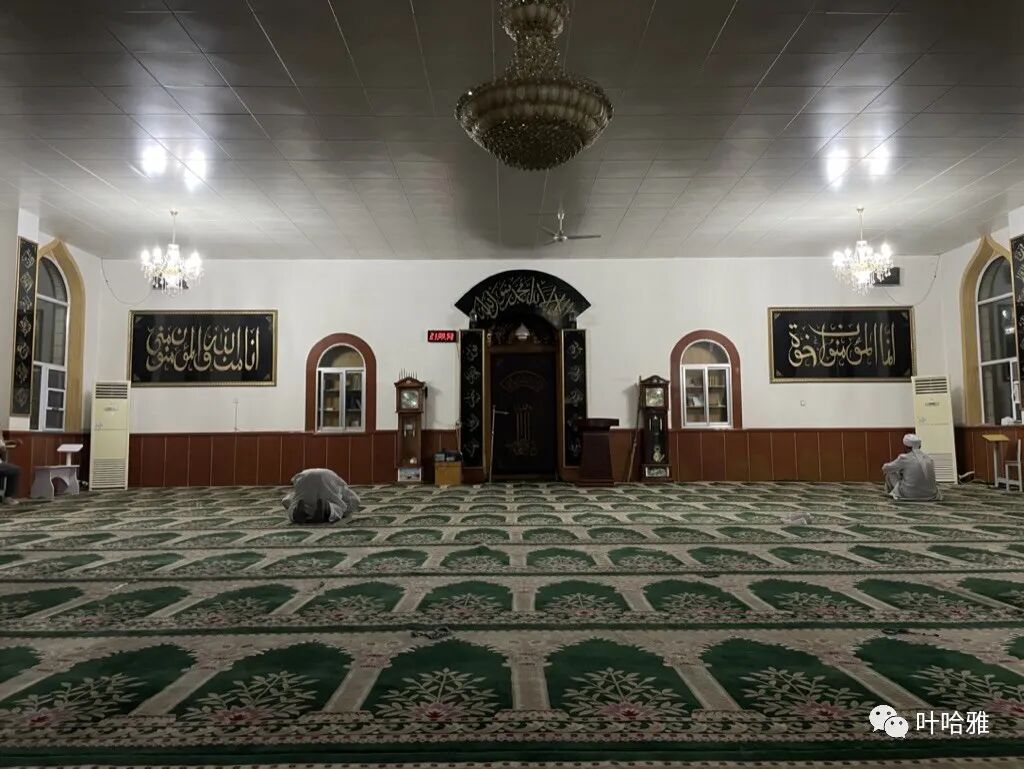
After praying Maghrib (shamu) at the Great Mosque of Baiyin, I walked around the city looking for food, but I found there were not many choices.
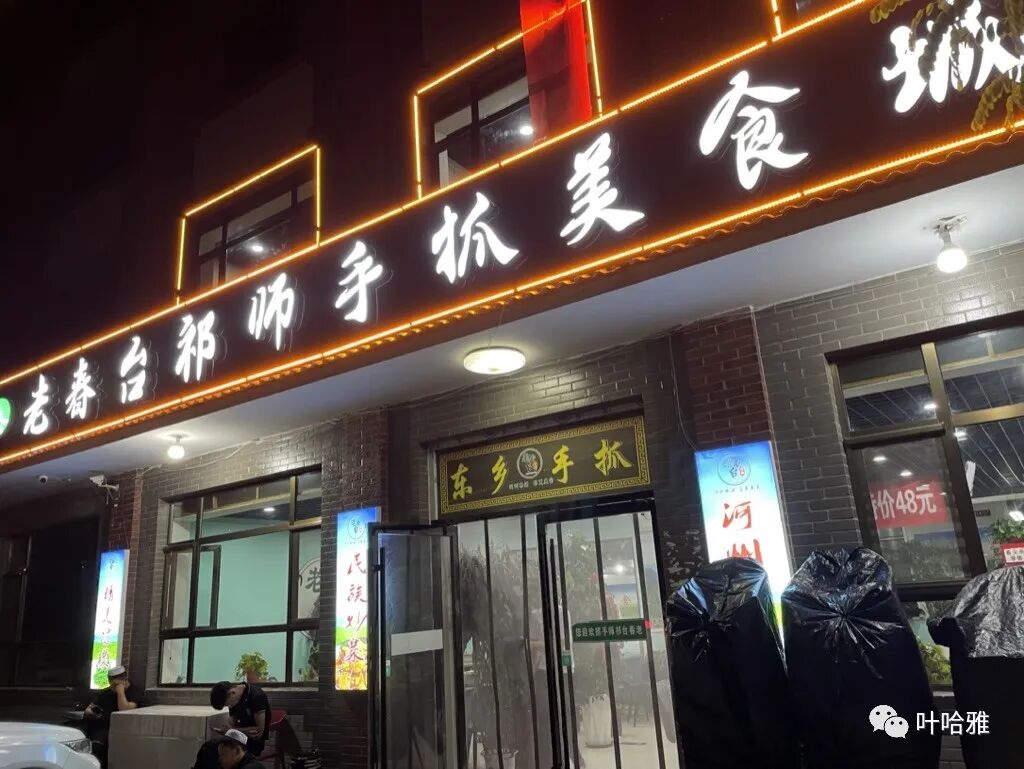
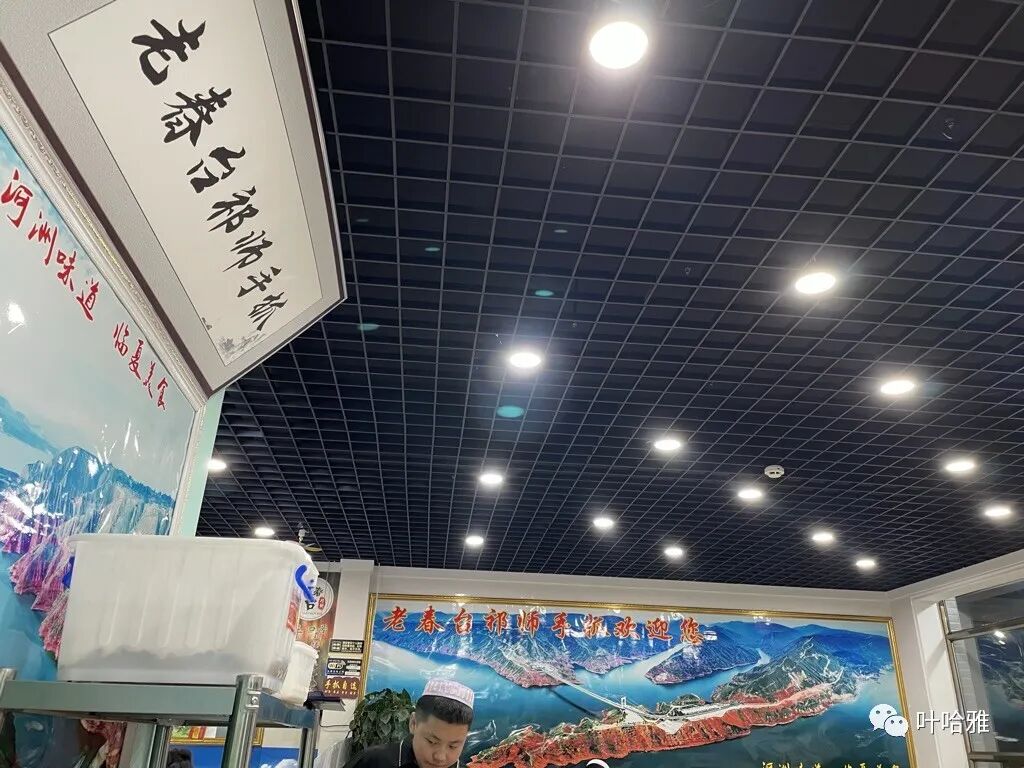
I found this Chuntai Hand-Grabbed Meat Restaurant (Chuntai Shouzhua Meishicheng). Chuntai is a township in Dongxiang, Linxia, and it is famous for its delicious hand-grabbed lamb.
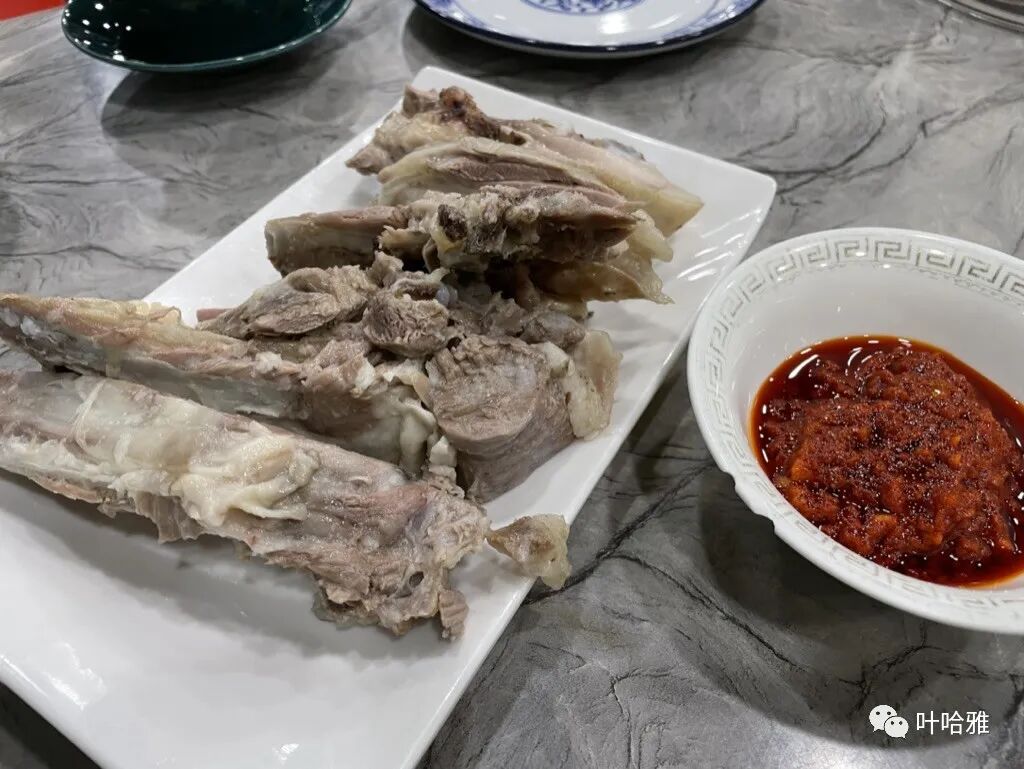
The food was really good. Both the hand-grabbed lamb and the firecracker noodles (paozhuang mian) were delicious.
I stayed in Baiyin for one night and walked around, but I did not find any places worth remembering.
When I saw the Yellow River Bridge, I knew I had arrived in Lanzhou. This time I stayed at the Hyatt Regency. I chose it because it is a halal Hyatt, which is rare in China. The owner is a Dongxiang person.
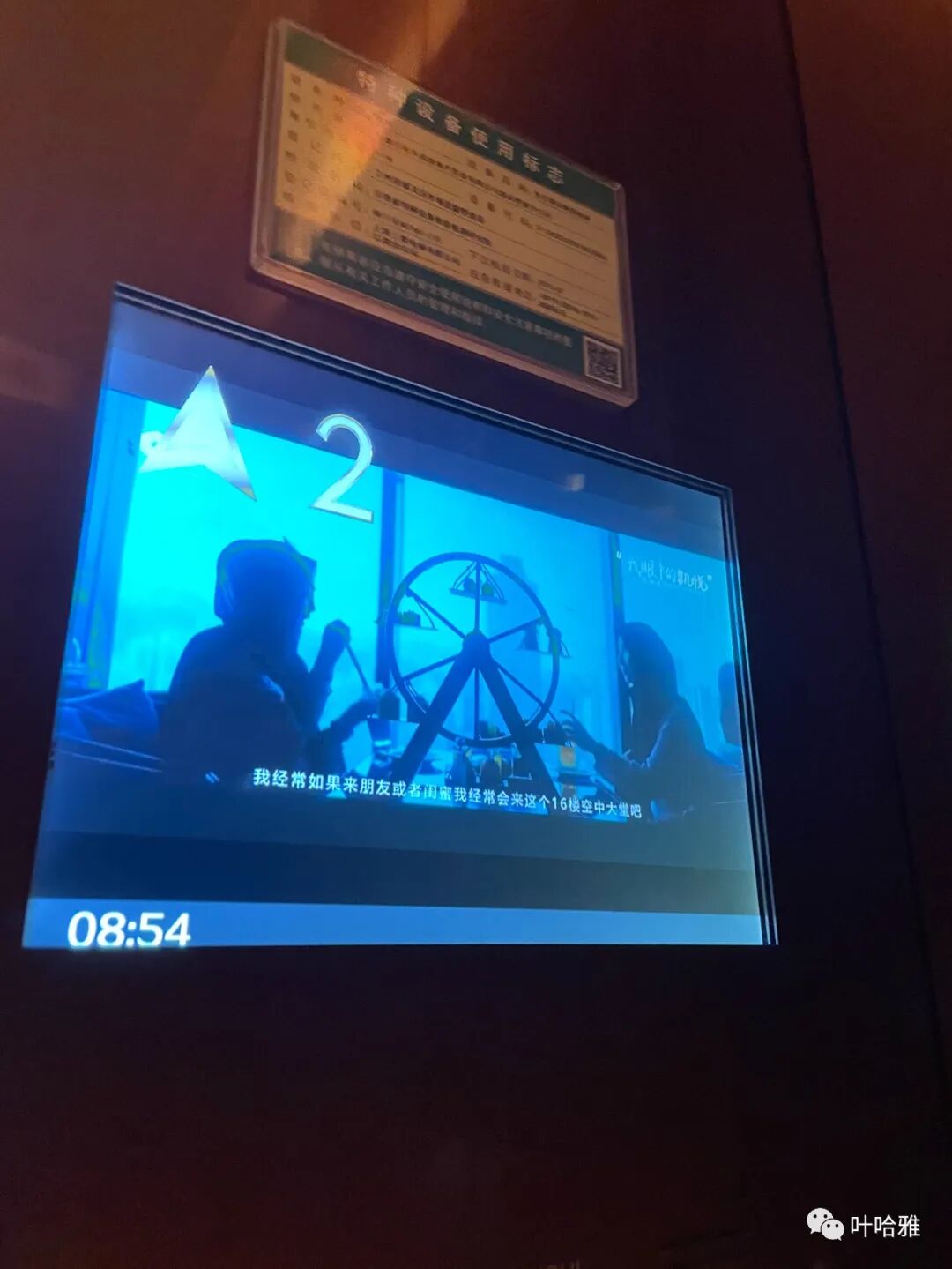
The promotional video for the Hyatt playing in the elevator features girls wearing headscarves.
The gym at the Lanzhou Hyatt is very large. It is rare for a five-star hotel in China to have such a big gym.
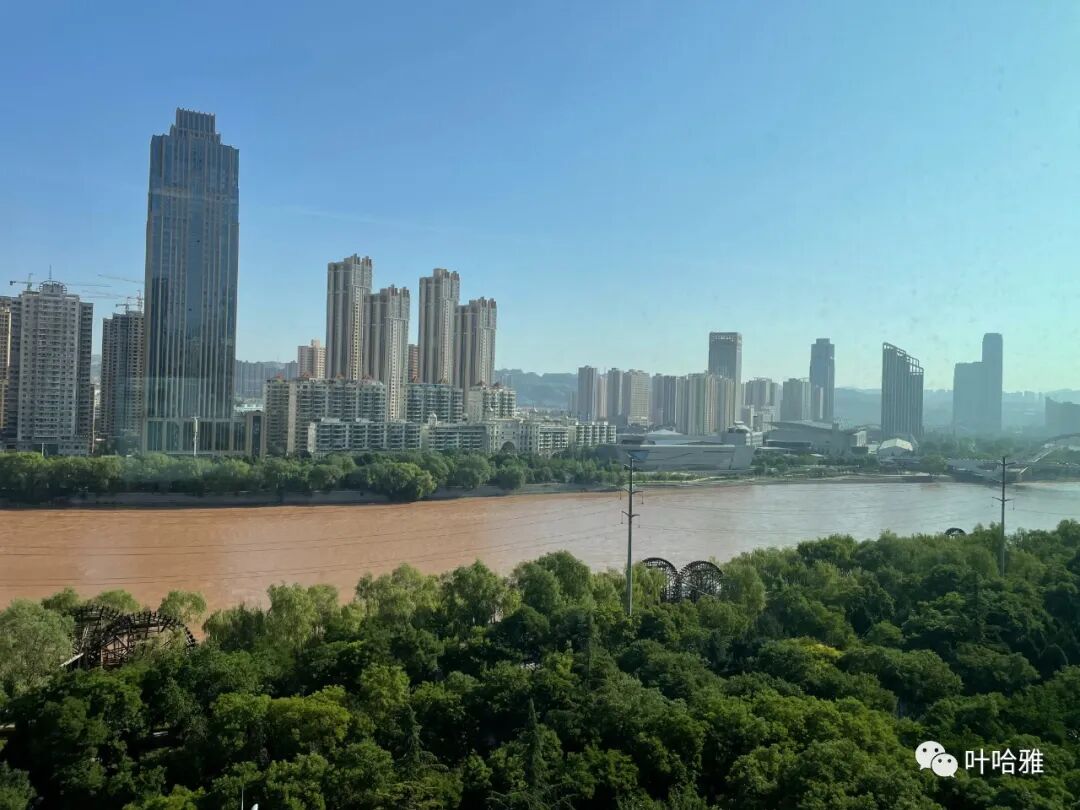
The gym faces the Yellow River, so the view is excellent.
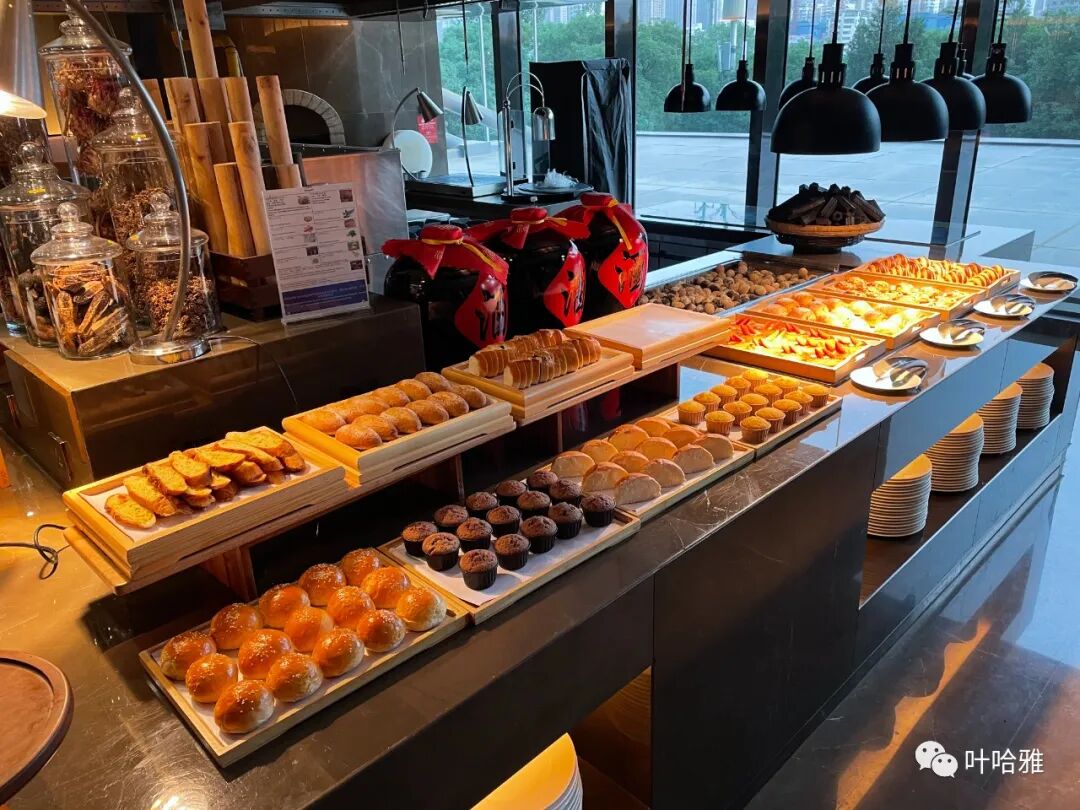
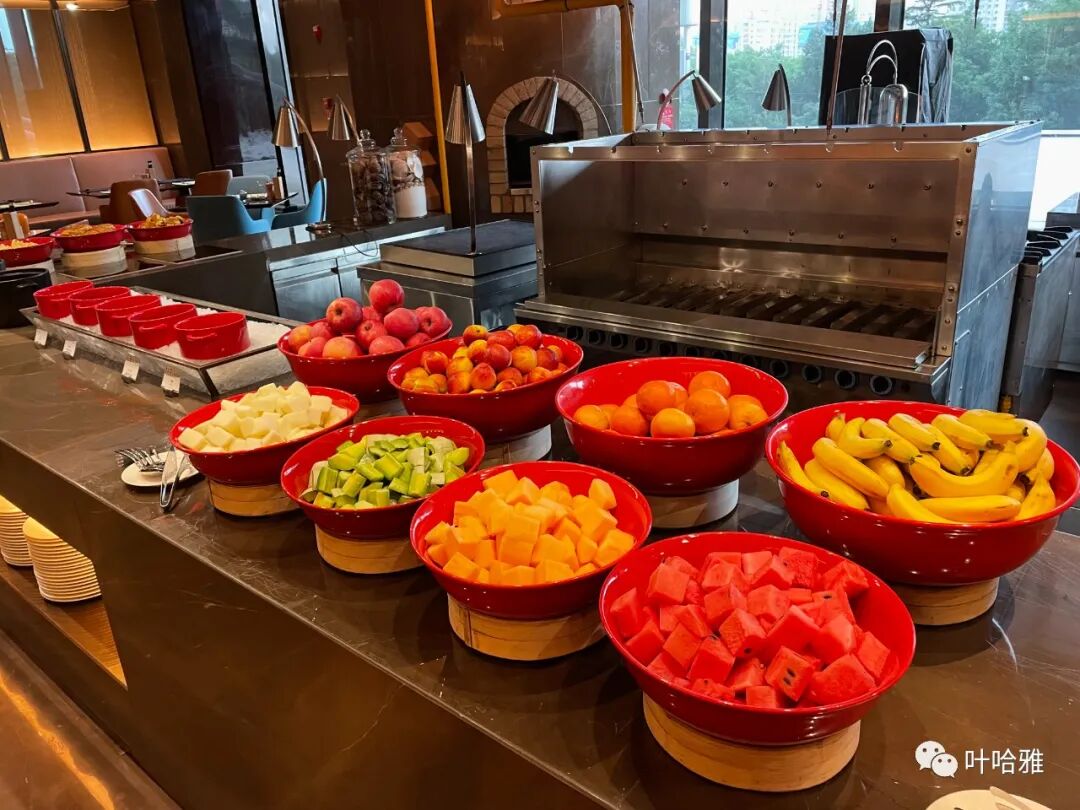
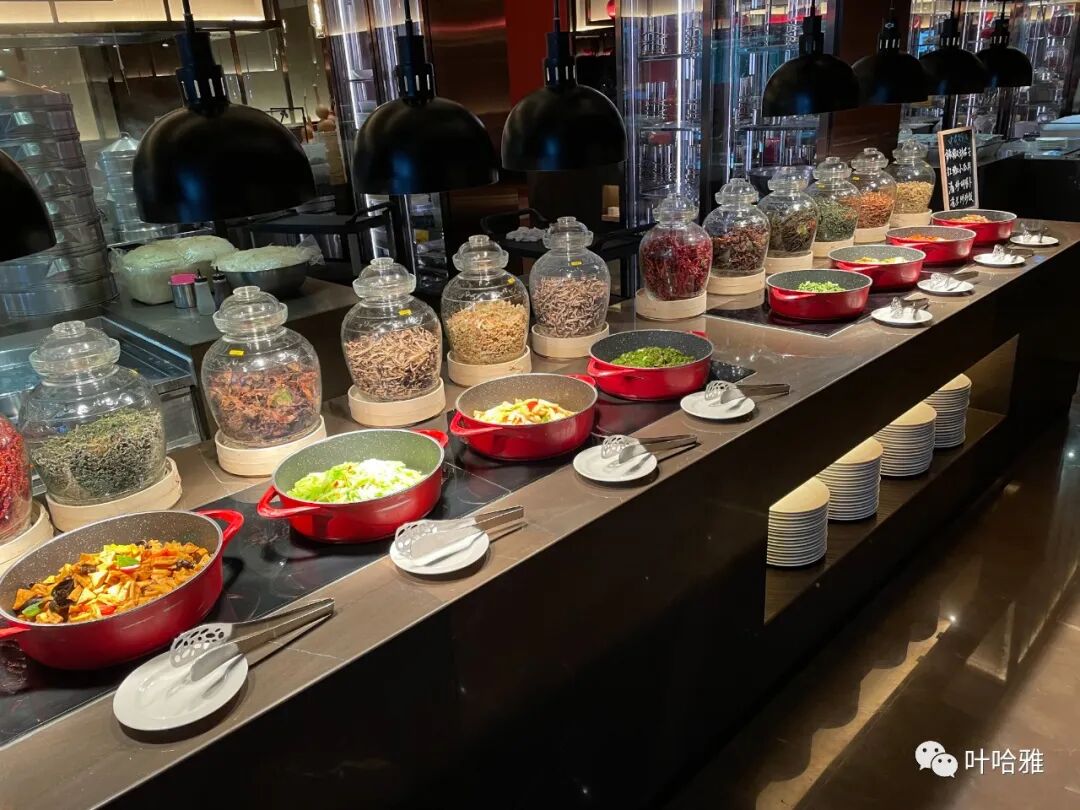
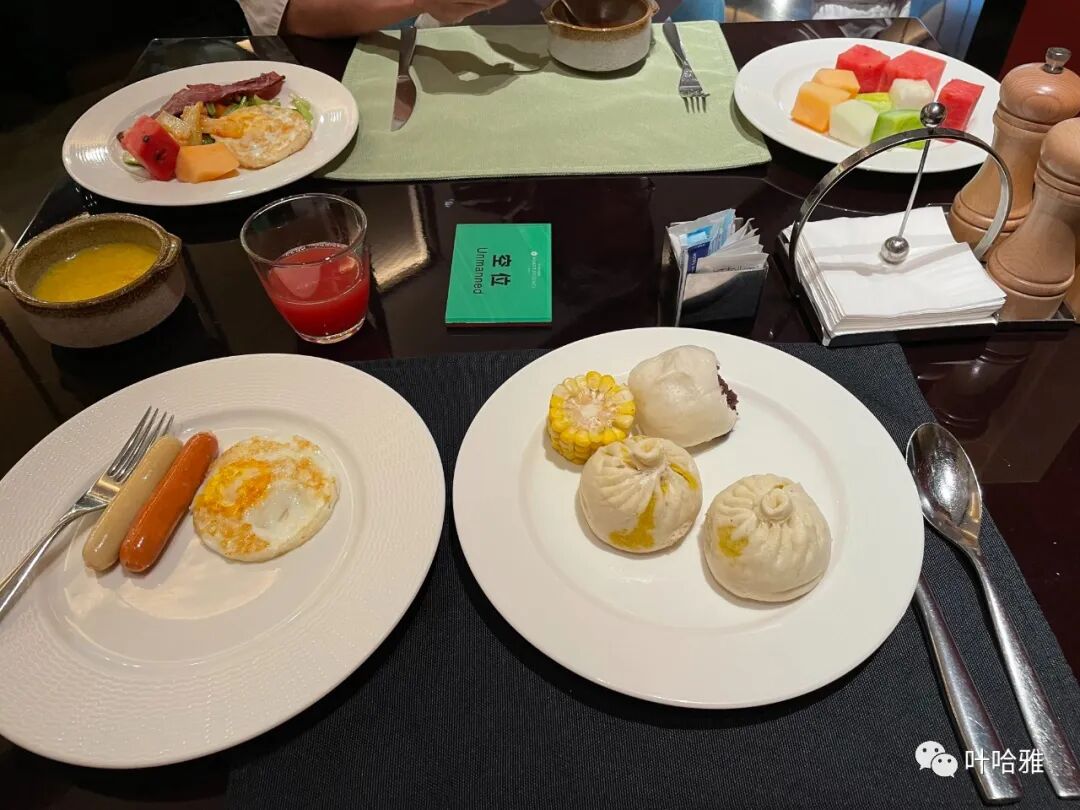
What attracts me most about the Hyatt is the rich breakfast. Everything is halal, and you can choose whatever you want. Besides regular Western desserts, they also have local Northwest specialties.
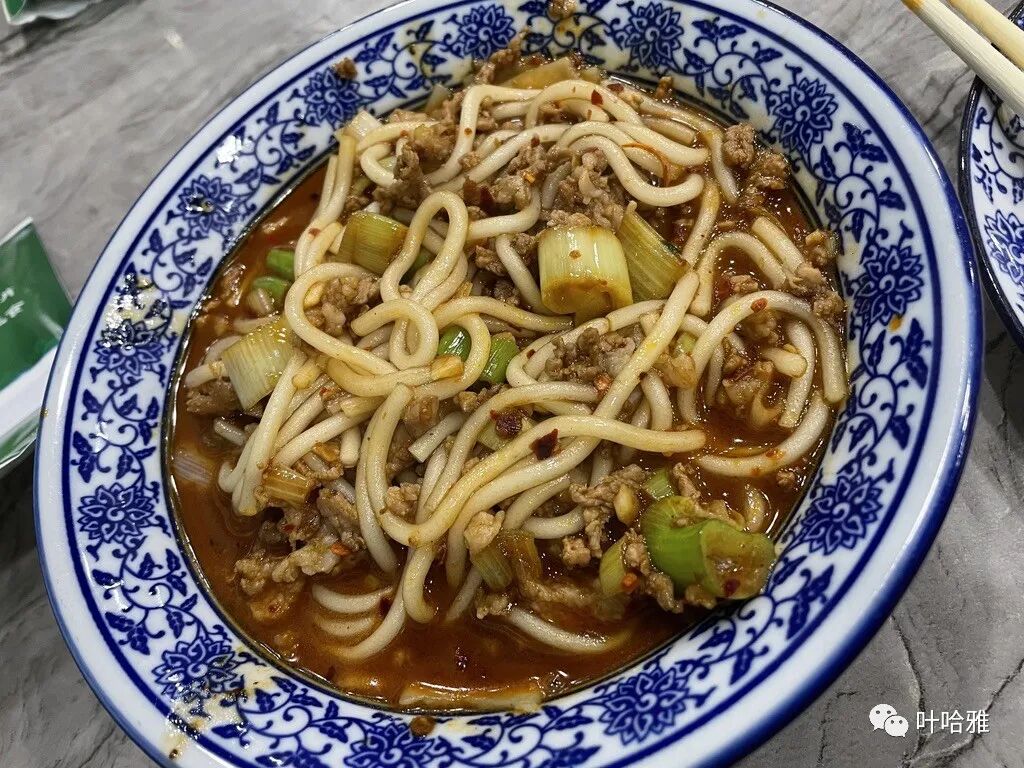
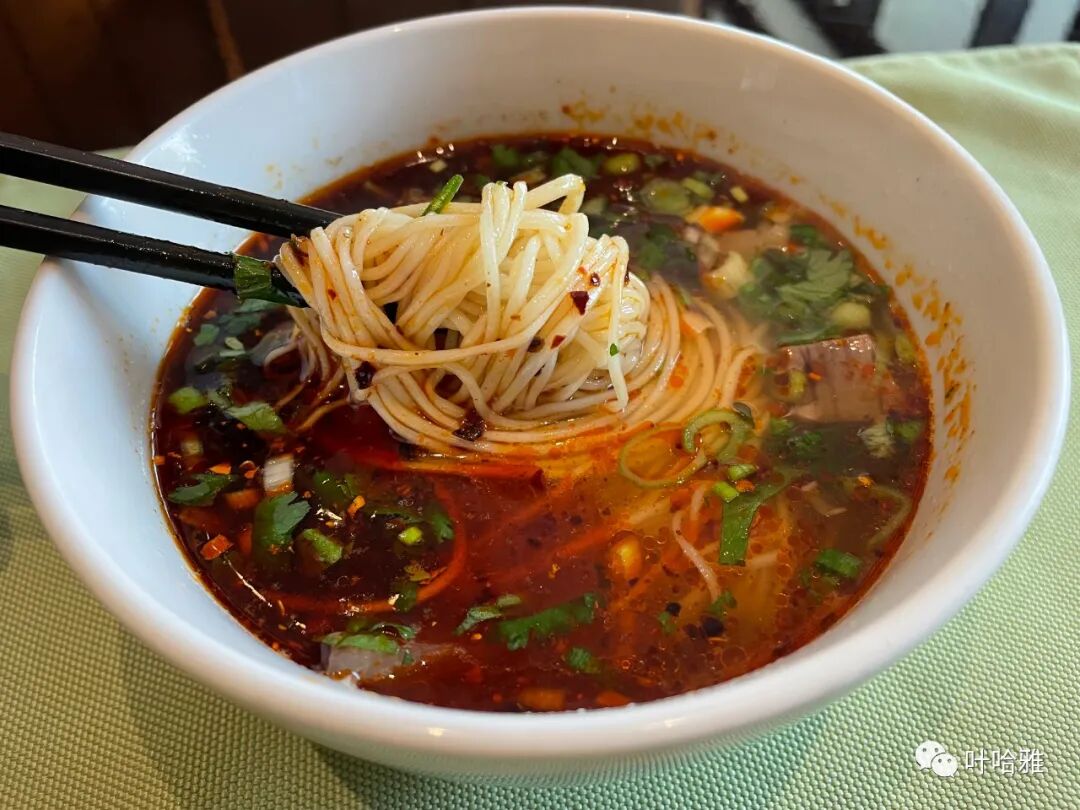
The Lanzhou beef noodles at the Hyatt were the only beef noodles I ate on this trip to Lanzhou. They were truly delicious and just as good as any of the old, famous shops I have visited in Lanzhou.
Xinguan Mosque
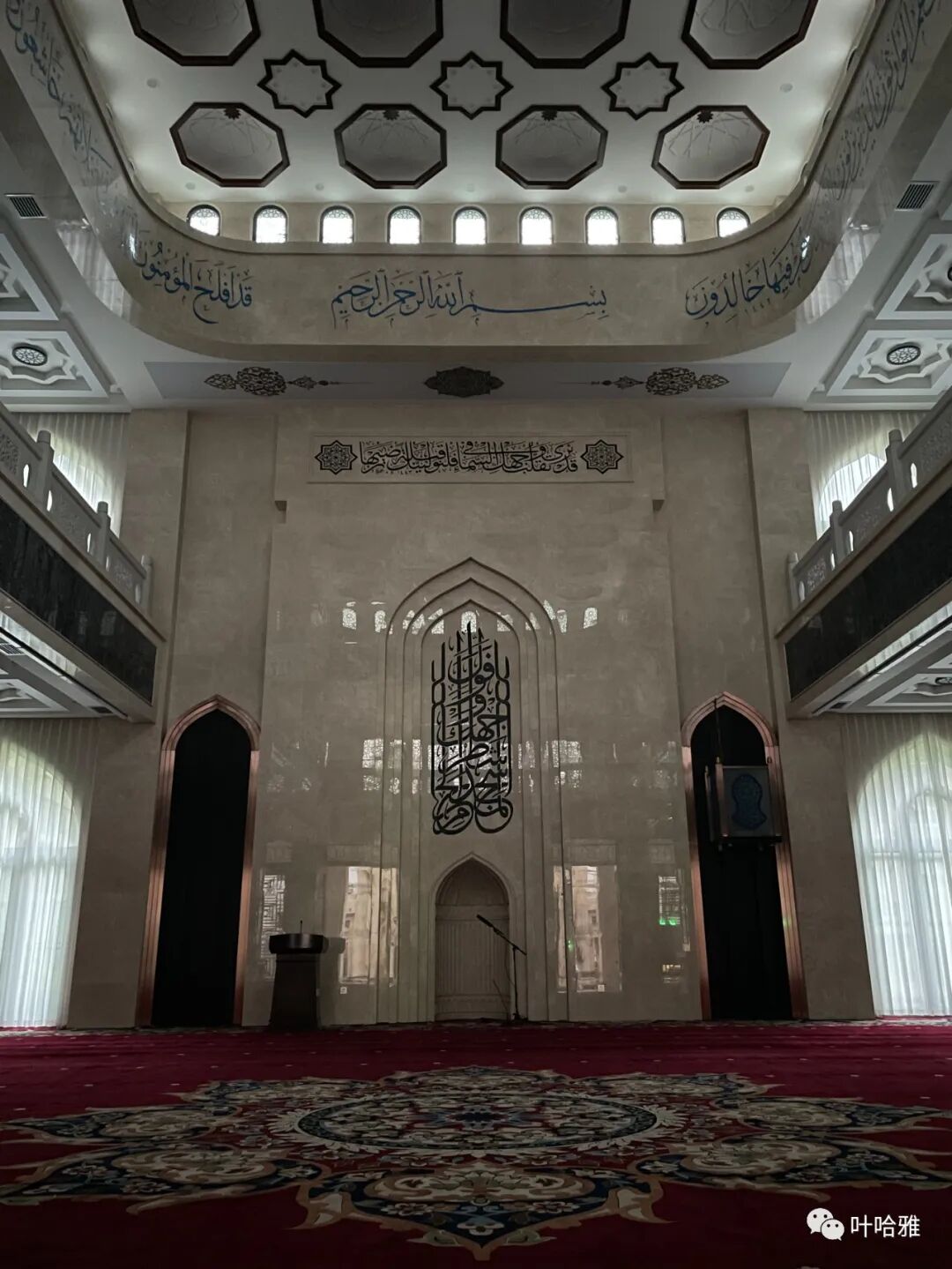
Local elders in Lanzhou highly recommended I visit Xinguan Mosque. People say it is very popular with young people because the imam, Ma Jun, gives lively and vivid sermons (wa'az) in Mandarin.
The mosque gate is completely open to the public, and many children play at the entrance.
Yixiang Stir-fry
Next to Xinguan Mosque is a Lanzhou stir-fry shop that a long-time Lanzhou local specifically recommended to me as a place for authentic local dishes.
This shop has been open in Lanzhou for over ten years, and the customers are mostly local residents from the neighborhood.
I really enjoy eating at these popular local spots. You can taste the quality in the cooking here, and I probably would not have noticed this place if a friend had not shown me the way.
Lanzhou thick-sauce lamb (hu yang)
This was my first time eating thick-sauce lamb. I noticed that traditional Lanzhou stir-fry is mostly salty, fresh, and sweet, and the way they use starch to thicken sauces is similar to Beijing cuisine.
Sweet and sour meat-stuffed crepes (suanla jiasha)
Sweet and sour pork tenderloin (tangcu liji)
If you get tired of eating Northwest-style noodles, remember to stop by Yixiang Stir-fry when you are in Lanzhou.
Miaotanzi Gadan
Local elders picked this Miaotanzi Gadan as another special Lanzhou barbecue stall for me. The environment is basically non-existent. It has been open for over a decade and is full of locals. People sit on stools by the roadside to eat, or just stand and dip their skewers.
Lanzhou barbecue is known for using iron skewers over an open flame with plenty of seasoning. They come in bundles of 20, and it is easy for one person to eat 30 or 50. I like these small skewers. Large ones fill me up after one or two, which feels less satisfying.
Aliya Art Restaurant
After spending a long time in Northwest cities, I cannot handle heavy dishes anymore. I specifically chose this refreshing art restaurant to meet a friend. You can have afternoon tea here, or choose from light meals.
Aliya Lanzhou Center branch. Their desserts are excellent. They also serve sushi and salads, which are rare, light food options in the Northwest.
Things like sushi and spring rolls are much easier to eat.
Hongyunxuan Macau Charcoal Hot Pot
I have had this halal hot pot (dabanlu) place saved in my Beijing list for a long time as a Lanzhou specialty. Hongyunxuan previously ran a Hong Kong-style tea restaurant in Macau, but it closed during the pandemic. I did not expect them to open a hot pot place in Lanzhou.
The restaurant decor is very Cantonese. It has not been open long, so I wonder how long it will last.
We chose two types of seafood porridge bases. You can drink the porridge first, then cook the meat.
Fish maw (huajiao) porridge base
This Cantonese-style hot pot (dabanlu) tastes good and is light. I hope it stays open because it really helps add variety to the food scene in the Northwest.
Shancheng Hand-Grabbed Lamb (Shancheng shouzhuo)
I met an elder (xianglao) from the Lingming Hall (Lingmingtang) in Lanzhou at Shancheng Hand-Grabbed Lamb. Shancheng is a village in Linxia, and many friends in Lanzhou recommend this place. Most people working in the halal restaurant business in Lanzhou are from Linxia.
Before eating, they serve tea. You can grab whatever you like from the Three-Fortress Tea (sanpaotai) platter. The rose inside is a local Lanzhou specialty, and you must add it.
The hand-grabbed lamb is tender with a good mix of fat and lean meat, mostly lean, which is how I like it.
Yogurt with fermented oat grains (tianpei) is a creative new combination. Fermented oat grains are a popular Lanzhou snack.
Soup made with hair moss (facai). Hair moss is a specialty of the Northwest and can be used as medicine.
The lily bulbs in the assorted shrimp dish are another Lanzhou specialty. You must try lily bulbs when you come to Lanzhou.
Hot and sour stuffed meat (suanla jiasha). The outer layer of the stuffed meat is made of egg, similar to Beijing's fried meat strips (songrou), but those use bean curd skin.
Cold tossed wild onion (shacong). This is a wild vegetable from the Northwest, and it has become more common in Beijing over the last two years.
Sugar oil cake (tangyougao) is a bit like the Qinghai dog-pissing pancake (goujiaoniao). It is hollow inside. My friends chose these local specialties for me, and Shancheng Hand-Grabbed Lamb lives up to its reputation. It is worth recommending.
After the meal, we visited the home of the elder from Lingming Hall and saw this biography, The Brief Biography of Master Lingming (Lingming Shangren Zhuanlue).
On the way to Lingmingtang Gongbei, I passed through Gongbei Gully and saw several gongbei built halfway up the mountain.
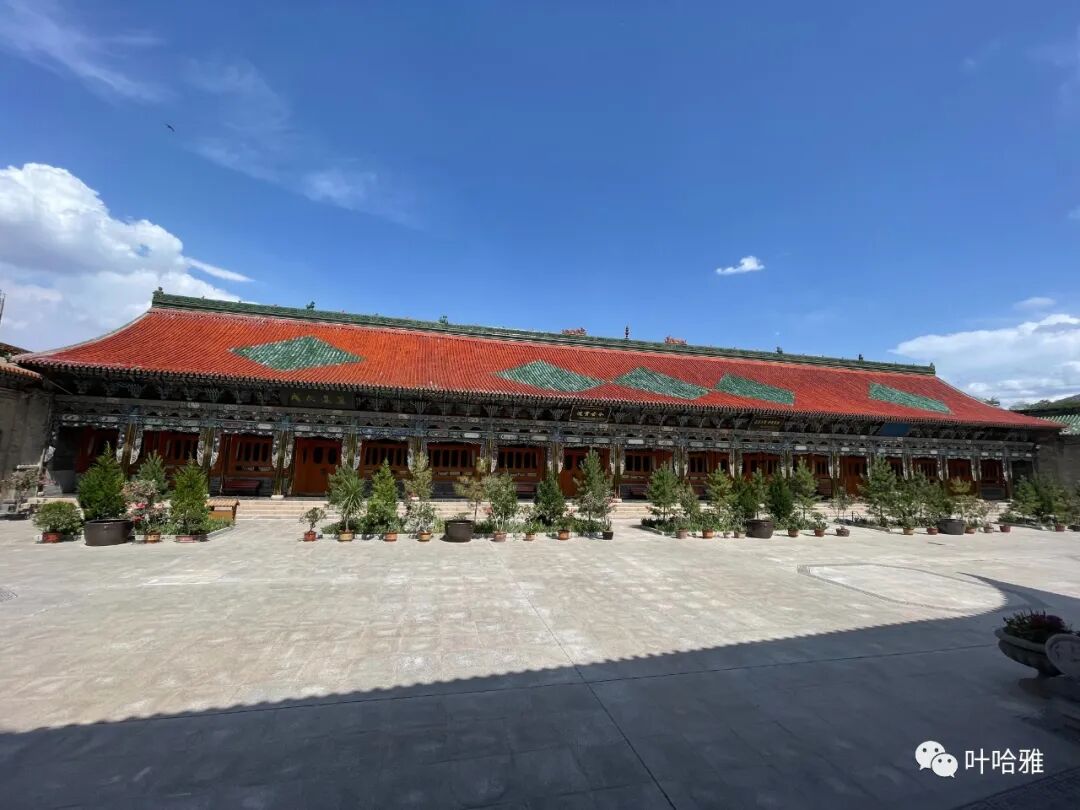
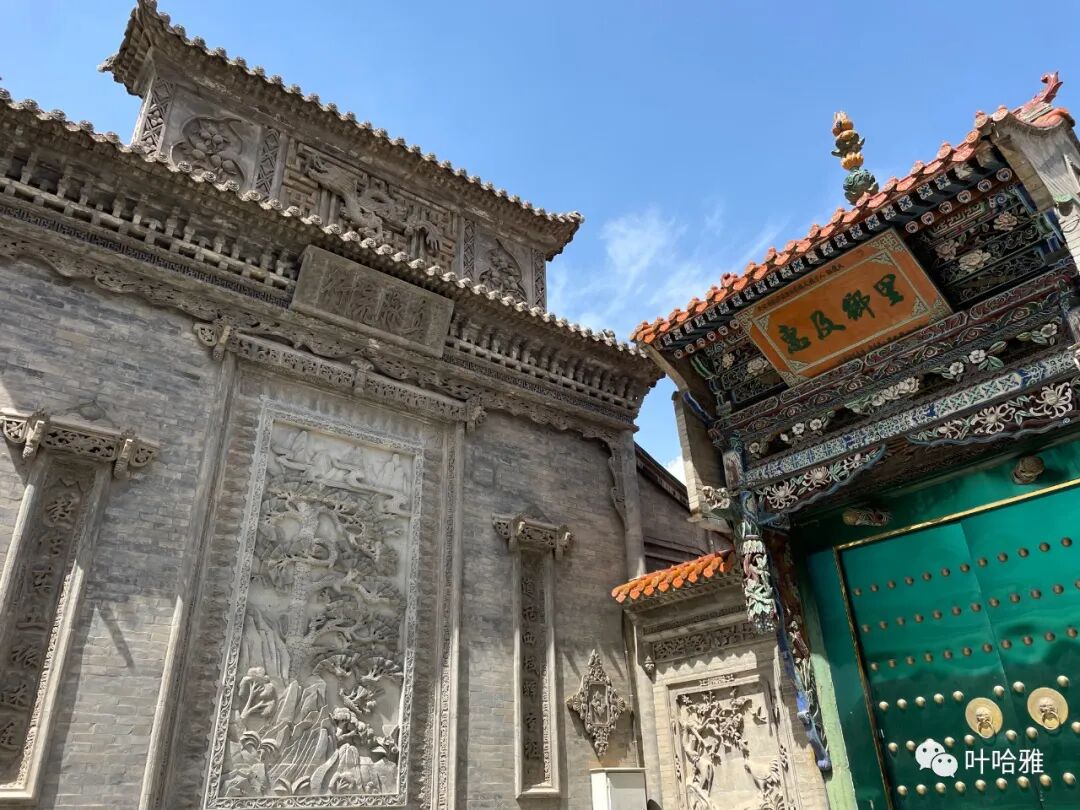
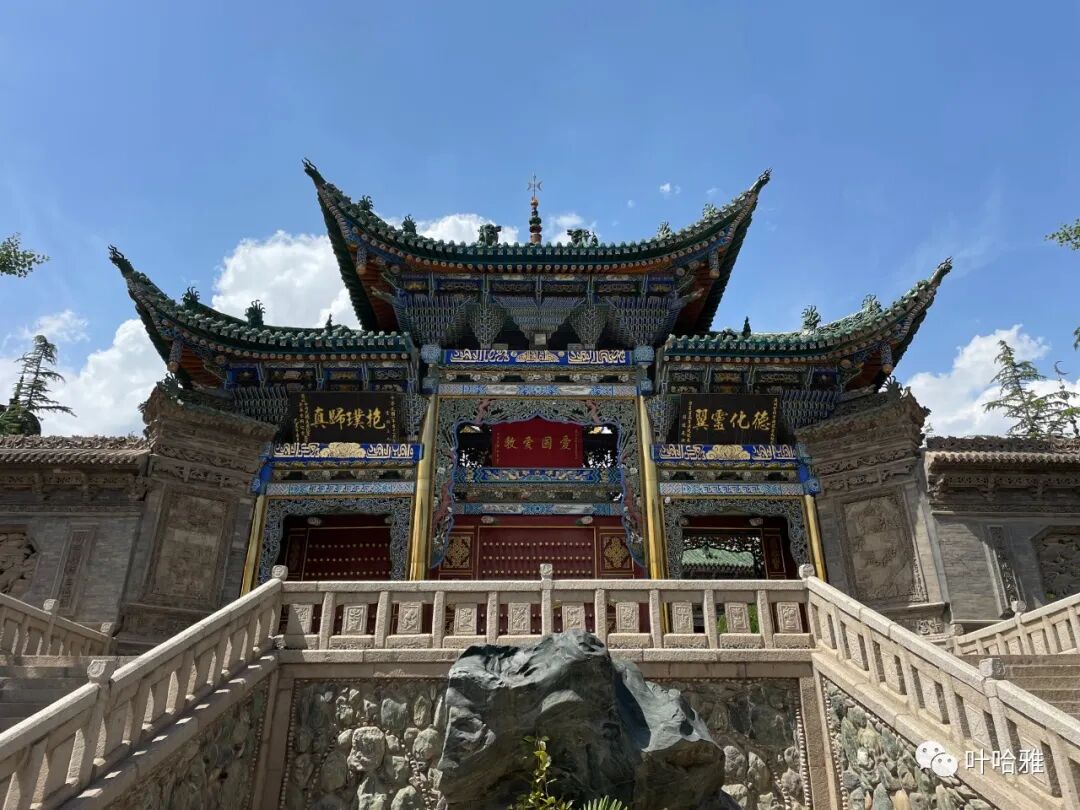
The Lingmingtang Gongbei sits on the top of Wuxingping Mountain in Lanzhou, covering an area of over 30,000 square meters, and it is the largest gongbei I have ever seen.
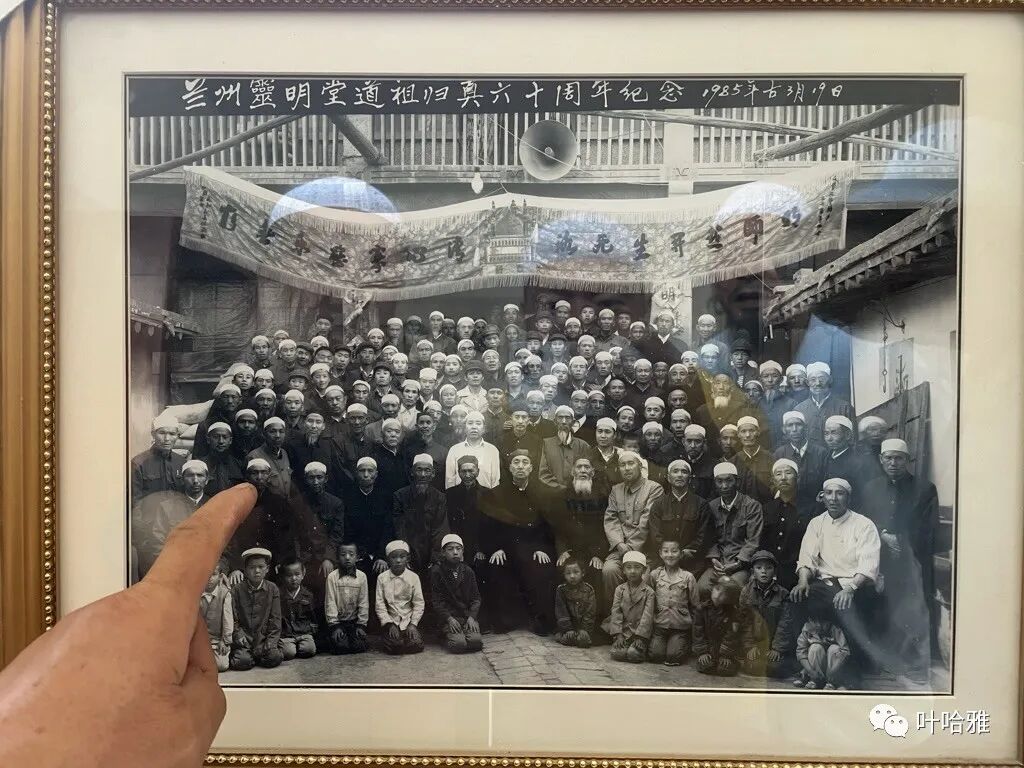
The founding master of Lingmingtang Gongbei was Ma Yilong (1853-1925), whose courtesy name was Lingming. He once studied under the Great Incense Master of the Kashgar Daotang and accepted the teachings of the Qadiriyya. In his final words, he mentioned being the 'answerer promised by the Bab gate,' which led some to believe he was influenced by the Babi faith. However, some descendants of Lingmingtang deny this, as detailed in the article 'A Discussion on the Possibility of Historical Contact Between Lingmingtang and the Babi Sect'.
During his lifetime, Ma Lingming lived a life of poverty and appeared eccentric, remaining unmoved even when children played around him or passersby mocked him. People often asked him questions, and he would sometimes give hints without taking a penny. Over time, some felt his guidance came true, and they began to respect him.
Whenever a Sufi elder gains the support of the public, they must have some extraordinary qualities. This is especially true for local illiterate believers, as it is hard to win hearts through reasoning and education alone.
As Ma Lingming's followers grew, he caught the attention of local officials, who supported him to keep other menhuan in check.
Ma Lingming himself remained indifferent to fame and wealth. He had no sons, only two daughters, and his noble character earned him the support of many believers.
The religious authority of Lingmingtang is passed to the worthy rather than to one's own children. Before Ma Lingming passed away, he publicly gathered his followers to elect a second-generation successor. They finally chose Shan Zijiu (1888-1953) from Lanzhou. The election process was very complex and required many rituals to complete the succession.
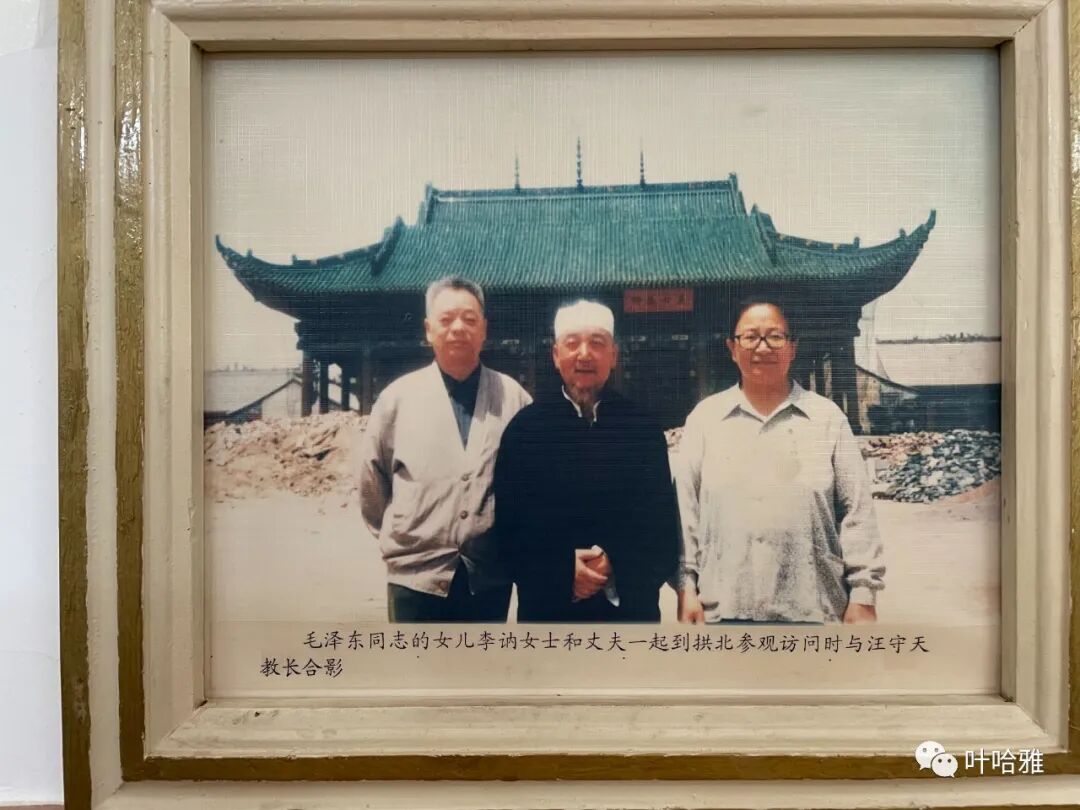
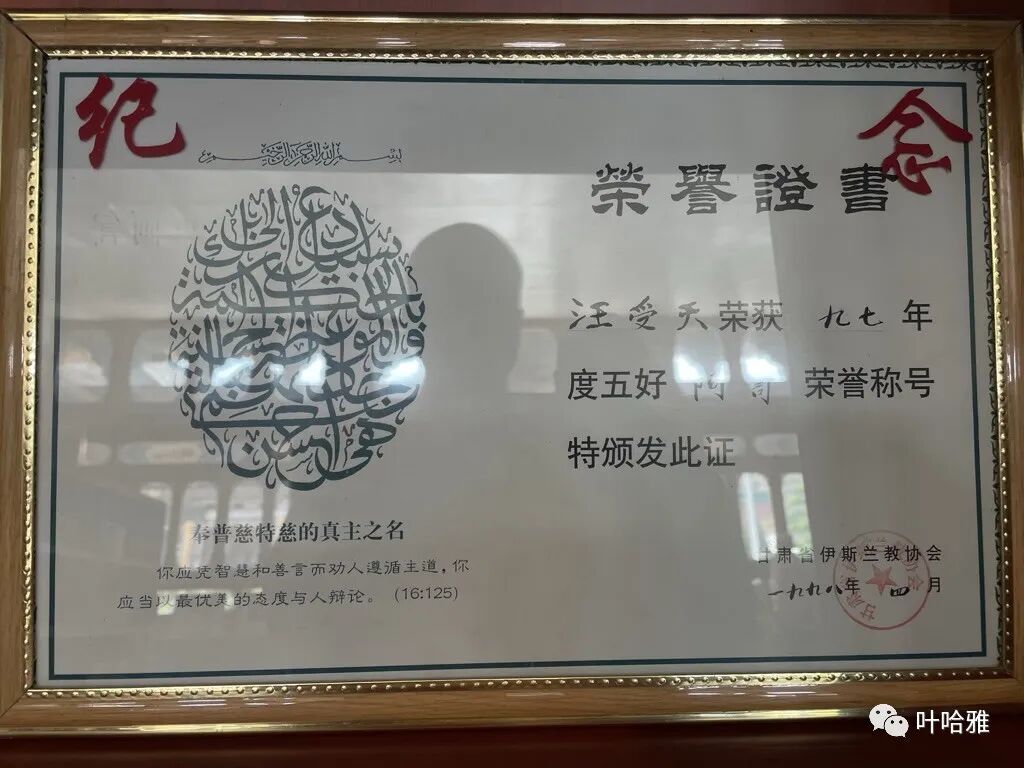
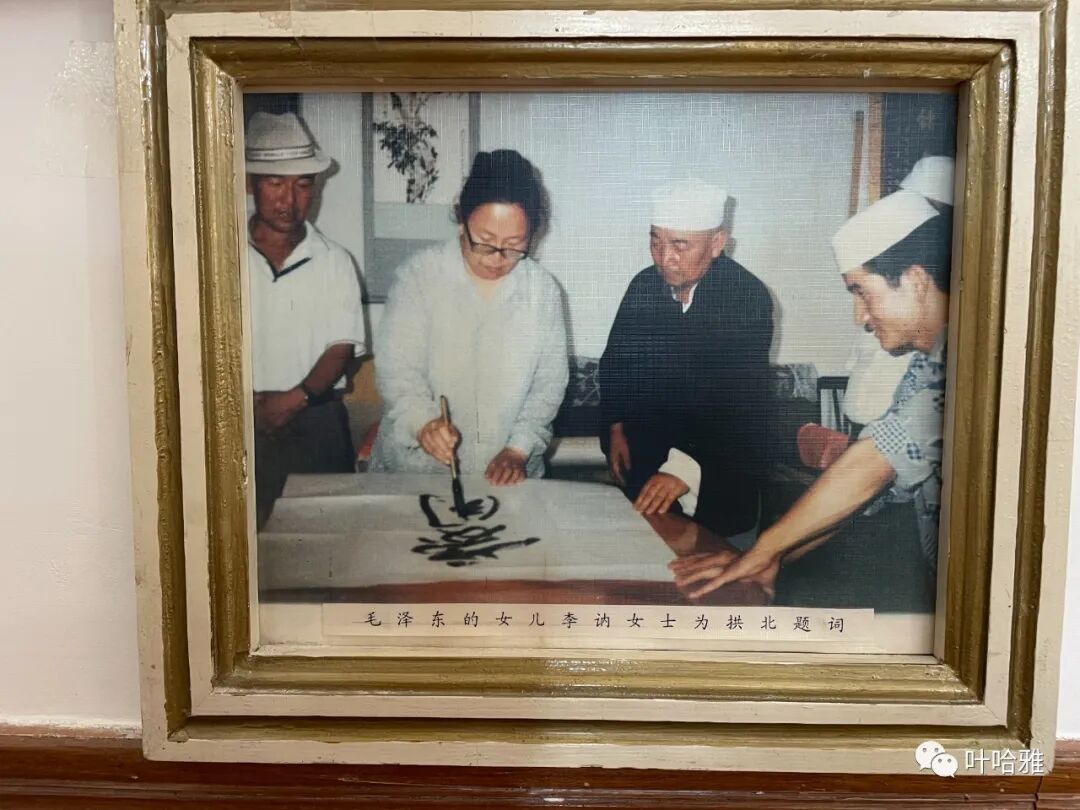
After Shan Zijiu, the religious authority was passed to Wang Shoutian (1924-2021), an elder from Tangwangchuan in Dongxiang County.
Between 1958 and 1979, Wang Shoutian was imprisoned during the anti-religious and anti-feudal movements. After his release, he began leading the construction of the Lingmingtang Gongbei, and the current Wuxingping site was allocated to Lingmingtang by the government in 1982.
Wang Shoutian valued education, and in 1993, he took the lead in donating money to convert Tangwang Primary School into a middle school.
At the same time, Wang Shoutian also valued business and encouraged followers to develop production. He even believed that young people should focus on their careers, which is why Lingmingtang has better economic strength than other menhuan and the financial resources to build such a grand gongbei.
Ma Lingming left behind no personal property. The construction of the Lingmingtang gongbei cost over 100 million yuan, all of which came from donations by believers.
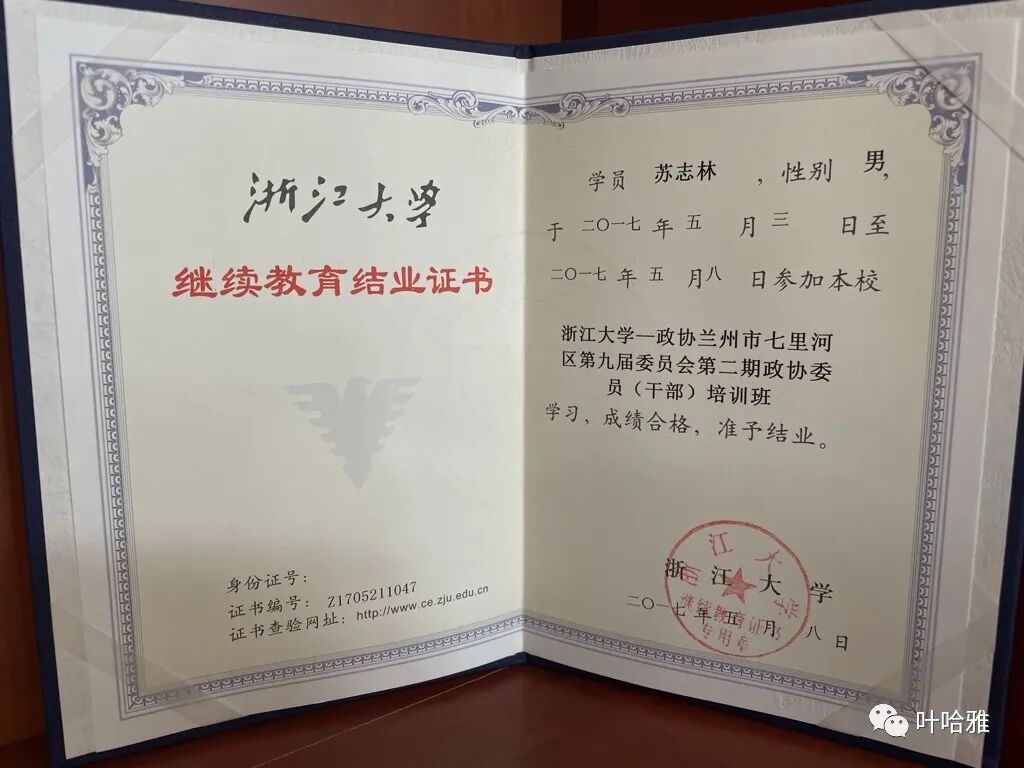
Currently, there are Lingmingtang branch gongbei in Guyuan, Linxia, Hami, and Luoyang. The current fourth-generation leader is named Su Zhilin. He is in his thirties and was elected by the community elders.
The election of the leader is only considered complete after it is approved by the relevant authorities.
The former residence of the elder Wang Shoutian is inside the Lingmingtang gongbei. During his lifetime, he often sat in the courtyard with people gathered around him to listen to his teachings. Because he had a strong Tangwang accent—or perhaps he was speaking the Dongxiang language—someone would sit by his side to translate for him.
The elder did not know Chinese characters, but he was fluent in the mosque language (jingtangyu), so he usually read scriptures in Arabic.
Our Lingmingtang elder did not want to enter the former residence because it reminded him of the elder when he was alive. His eyes turned red instantly, so he waited outside the hall.
There is an exhibition room inside the gongbei that houses some antiques, paintings, and personal items used by the elder during his lifetime.
It is clear that the elder was very high-profile during his life. He was passionate about public welfare, open-minded, and progressive. This felt completely different from my visits to other menhuan gongbei. Some menhuan do not want outside attention; they allow visits but do not want publicity. Others focus on spiritual practice and stay away from the world. Lingmingtang is the opposite. It is more like a family business that encourages people to focus on their careers before the age of 60. These ideas have gained support from a significant number of wealthy believers. view all
Summary: This China mosque travel guide to Lanzhou covers Wuxingping Lingmingtang, one of China’s largest gongbei sites, Xinguan Mosque, halal Hyatt breakfast, Lanzhou beef noodles, hand-grabbed lamb, and local Muslim heritage.
A Halal Tour of Lanzhou: The Five-Star Terrace Spiritual Light Hall (Wuxingping Lingmingtang), the Largest Gongbei in China is presented here as a firsthand travel account in clear English, beginning with this scene: I wrote a map of halal food in Lanzhou in 2016. This is my fifth time in Lanzhou. The account keeps its focus on Qinghai Mosques, Chinese Muslims, Muslim Heritage while preserving the names, places, food, and historical details from the Chinese source.
I wrote a map of halal food in Lanzhou in 2016. This is my fifth time in Lanzhou. I flew the first four times, but this time I drove. It is about 1,400 kilometers from Beijing to Lanzhou, and the first city I stopped in after entering Gansu was Baiyin.
On the way, I took a highway called Wuma. It is named after the Wuhai to Maqin expressway, but it happens to sound like the Arabic word for nation.
After praying Maghrib (shamu) at the Great Mosque of Baiyin, I walked around the city looking for food, but I found there were not many choices.
I found this Chuntai Hand-Grabbed Meat Restaurant (Chuntai Shouzhua Meishicheng). Chuntai is a township in Dongxiang, Linxia, and it is famous for its delicious hand-grabbed lamb.
The food was really good. Both the hand-grabbed lamb and the firecracker noodles (paozhuang mian) were delicious.
I stayed in Baiyin for one night and walked around, but I did not find any places worth remembering.
When I saw the Yellow River Bridge, I knew I had arrived in Lanzhou. This time I stayed at the Hyatt Regency. I chose it because it is a halal Hyatt, which is rare in China. The owner is a Dongxiang person.
The promotional video for the Hyatt playing in the elevator features girls wearing headscarves.
The gym at the Lanzhou Hyatt is very large. It is rare for a five-star hotel in China to have such a big gym.
The gym faces the Yellow River, so the view is excellent.
What attracts me most about the Hyatt is the rich breakfast. Everything is halal, and you can choose whatever you want. Besides regular Western desserts, they also have local Northwest specialties.
The Lanzhou beef noodles at the Hyatt were the only beef noodles I ate on this trip to Lanzhou. They were truly delicious and just as good as any of the old, famous shops I have visited in Lanzhou.
Xinguan Mosque
Local elders in Lanzhou highly recommended I visit Xinguan Mosque. People say it is very popular with young people because the imam, Ma Jun, gives lively and vivid sermons (wa'az) in Mandarin.
The mosque gate is completely open to the public, and many children play at the entrance.
Yixiang Stir-fry
Next to Xinguan Mosque is a Lanzhou stir-fry shop that a long-time Lanzhou local specifically recommended to me as a place for authentic local dishes.
This shop has been open in Lanzhou for over ten years, and the customers are mostly local residents from the neighborhood.
I really enjoy eating at these popular local spots. You can taste the quality in the cooking here, and I probably would not have noticed this place if a friend had not shown me the way.
Lanzhou thick-sauce lamb (hu yang)
This was my first time eating thick-sauce lamb. I noticed that traditional Lanzhou stir-fry is mostly salty, fresh, and sweet, and the way they use starch to thicken sauces is similar to Beijing cuisine.
Sweet and sour meat-stuffed crepes (suanla jiasha)
Sweet and sour pork tenderloin (tangcu liji)
If you get tired of eating Northwest-style noodles, remember to stop by Yixiang Stir-fry when you are in Lanzhou.
Miaotanzi Gadan
Local elders picked this Miaotanzi Gadan as another special Lanzhou barbecue stall for me. The environment is basically non-existent. It has been open for over a decade and is full of locals. People sit on stools by the roadside to eat, or just stand and dip their skewers.
Lanzhou barbecue is known for using iron skewers over an open flame with plenty of seasoning. They come in bundles of 20, and it is easy for one person to eat 30 or 50. I like these small skewers. Large ones fill me up after one or two, which feels less satisfying.
Aliya Art Restaurant
After spending a long time in Northwest cities, I cannot handle heavy dishes anymore. I specifically chose this refreshing art restaurant to meet a friend. You can have afternoon tea here, or choose from light meals.
Aliya Lanzhou Center branch. Their desserts are excellent. They also serve sushi and salads, which are rare, light food options in the Northwest.
Things like sushi and spring rolls are much easier to eat.
Hongyunxuan Macau Charcoal Hot Pot
I have had this halal hot pot (dabanlu) place saved in my Beijing list for a long time as a Lanzhou specialty. Hongyunxuan previously ran a Hong Kong-style tea restaurant in Macau, but it closed during the pandemic. I did not expect them to open a hot pot place in Lanzhou.
The restaurant decor is very Cantonese. It has not been open long, so I wonder how long it will last.
We chose two types of seafood porridge bases. You can drink the porridge first, then cook the meat.
Fish maw (huajiao) porridge base
This Cantonese-style hot pot (dabanlu) tastes good and is light. I hope it stays open because it really helps add variety to the food scene in the Northwest.
Shancheng Hand-Grabbed Lamb (Shancheng shouzhuo)
I met an elder (xianglao) from the Lingming Hall (Lingmingtang) in Lanzhou at Shancheng Hand-Grabbed Lamb. Shancheng is a village in Linxia, and many friends in Lanzhou recommend this place. Most people working in the halal restaurant business in Lanzhou are from Linxia.
Before eating, they serve tea. You can grab whatever you like from the Three-Fortress Tea (sanpaotai) platter. The rose inside is a local Lanzhou specialty, and you must add it.
The hand-grabbed lamb is tender with a good mix of fat and lean meat, mostly lean, which is how I like it.
Yogurt with fermented oat grains (tianpei) is a creative new combination. Fermented oat grains are a popular Lanzhou snack.
Soup made with hair moss (facai). Hair moss is a specialty of the Northwest and can be used as medicine.
The lily bulbs in the assorted shrimp dish are another Lanzhou specialty. You must try lily bulbs when you come to Lanzhou.
Hot and sour stuffed meat (suanla jiasha). The outer layer of the stuffed meat is made of egg, similar to Beijing's fried meat strips (songrou), but those use bean curd skin.
Cold tossed wild onion (shacong). This is a wild vegetable from the Northwest, and it has become more common in Beijing over the last two years.
Sugar oil cake (tangyougao) is a bit like the Qinghai dog-pissing pancake (goujiaoniao). It is hollow inside. My friends chose these local specialties for me, and Shancheng Hand-Grabbed Lamb lives up to its reputation. It is worth recommending.
After the meal, we visited the home of the elder from Lingming Hall and saw this biography, The Brief Biography of Master Lingming (Lingming Shangren Zhuanlue).
On the way to Lingmingtang Gongbei, I passed through Gongbei Gully and saw several gongbei built halfway up the mountain.
The Lingmingtang Gongbei sits on the top of Wuxingping Mountain in Lanzhou, covering an area of over 30,000 square meters, and it is the largest gongbei I have ever seen.
The founding master of Lingmingtang Gongbei was Ma Yilong (1853-1925), whose courtesy name was Lingming. He once studied under the Great Incense Master of the Kashgar Daotang and accepted the teachings of the Qadiriyya. In his final words, he mentioned being the 'answerer promised by the Bab gate,' which led some to believe he was influenced by the Babi faith. However, some descendants of Lingmingtang deny this, as detailed in the article 'A Discussion on the Possibility of Historical Contact Between Lingmingtang and the Babi Sect'.
During his lifetime, Ma Lingming lived a life of poverty and appeared eccentric, remaining unmoved even when children played around him or passersby mocked him. People often asked him questions, and he would sometimes give hints without taking a penny. Over time, some felt his guidance came true, and they began to respect him.
Whenever a Sufi elder gains the support of the public, they must have some extraordinary qualities. This is especially true for local illiterate believers, as it is hard to win hearts through reasoning and education alone.
As Ma Lingming's followers grew, he caught the attention of local officials, who supported him to keep other menhuan in check.
Ma Lingming himself remained indifferent to fame and wealth. He had no sons, only two daughters, and his noble character earned him the support of many believers.
The religious authority of Lingmingtang is passed to the worthy rather than to one's own children. Before Ma Lingming passed away, he publicly gathered his followers to elect a second-generation successor. They finally chose Shan Zijiu (1888-1953) from Lanzhou. The election process was very complex and required many rituals to complete the succession.
After Shan Zijiu, the religious authority was passed to Wang Shoutian (1924-2021), an elder from Tangwangchuan in Dongxiang County.
Between 1958 and 1979, Wang Shoutian was imprisoned during the anti-religious and anti-feudal movements. After his release, he began leading the construction of the Lingmingtang Gongbei, and the current Wuxingping site was allocated to Lingmingtang by the government in 1982.
Wang Shoutian valued education, and in 1993, he took the lead in donating money to convert Tangwang Primary School into a middle school.
At the same time, Wang Shoutian also valued business and encouraged followers to develop production. He even believed that young people should focus on their careers, which is why Lingmingtang has better economic strength than other menhuan and the financial resources to build such a grand gongbei.
Ma Lingming left behind no personal property. The construction of the Lingmingtang gongbei cost over 100 million yuan, all of which came from donations by believers.
Currently, there are Lingmingtang branch gongbei in Guyuan, Linxia, Hami, and Luoyang. The current fourth-generation leader is named Su Zhilin. He is in his thirties and was elected by the community elders.
The election of the leader is only considered complete after it is approved by the relevant authorities.
The former residence of the elder Wang Shoutian is inside the Lingmingtang gongbei. During his lifetime, he often sat in the courtyard with people gathered around him to listen to his teachings. Because he had a strong Tangwang accent—or perhaps he was speaking the Dongxiang language—someone would sit by his side to translate for him.
The elder did not know Chinese characters, but he was fluent in the mosque language (jingtangyu), so he usually read scriptures in Arabic.
Our Lingmingtang elder did not want to enter the former residence because it reminded him of the elder when he was alive. His eyes turned red instantly, so he waited outside the hall.
There is an exhibition room inside the gongbei that houses some antiques, paintings, and personal items used by the elder during his lifetime.
It is clear that the elder was very high-profile during his life. He was passionate about public welfare, open-minded, and progressive. This felt completely different from my visits to other menhuan gongbei. Some menhuan do not want outside attention; they allow visits but do not want publicity. Others focus on spiritual practice and stay away from the world. Lingmingtang is the opposite. It is more like a family business that encourages people to focus on their careers before the age of 60. These ideas have gained support from a significant number of wealthy believers. view all
Reposted from the web
Summary: This China mosque travel guide to Lanzhou covers Wuxingping Lingmingtang, one of China’s largest gongbei sites, Xinguan Mosque, halal Hyatt breakfast, Lanzhou beef noodles, hand-grabbed lamb, and local Muslim heritage.
A Halal Tour of Lanzhou: The Five-Star Terrace Spiritual Light Hall (Wuxingping Lingmingtang), the Largest Gongbei in China is presented here as a firsthand travel account in clear English, beginning with this scene: I wrote a map of halal food in Lanzhou in 2016. This is my fifth time in Lanzhou. The account keeps its focus on Qinghai Mosques, Chinese Muslims, Muslim Heritage while preserving the names, places, food, and historical details from the Chinese source.
I wrote a map of halal food in Lanzhou in 2016. This is my fifth time in Lanzhou. I flew the first four times, but this time I drove. It is about 1,400 kilometers from Beijing to Lanzhou, and the first city I stopped in after entering Gansu was Baiyin.
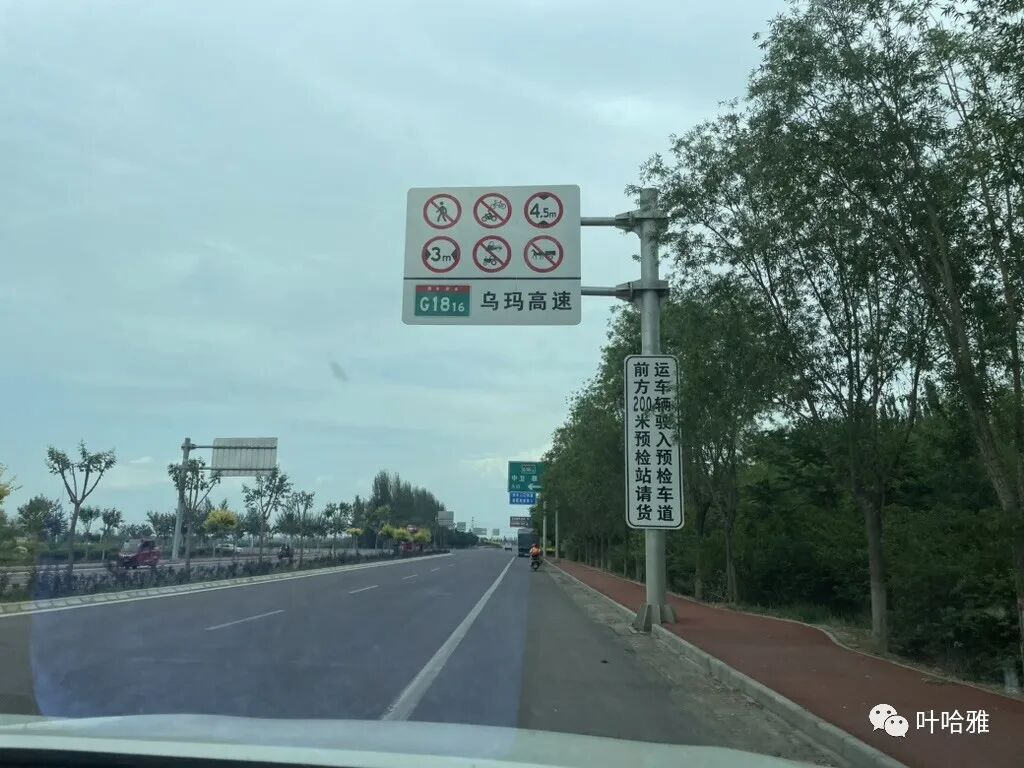
On the way, I took a highway called Wuma. It is named after the Wuhai to Maqin expressway, but it happens to sound like the Arabic word for nation.
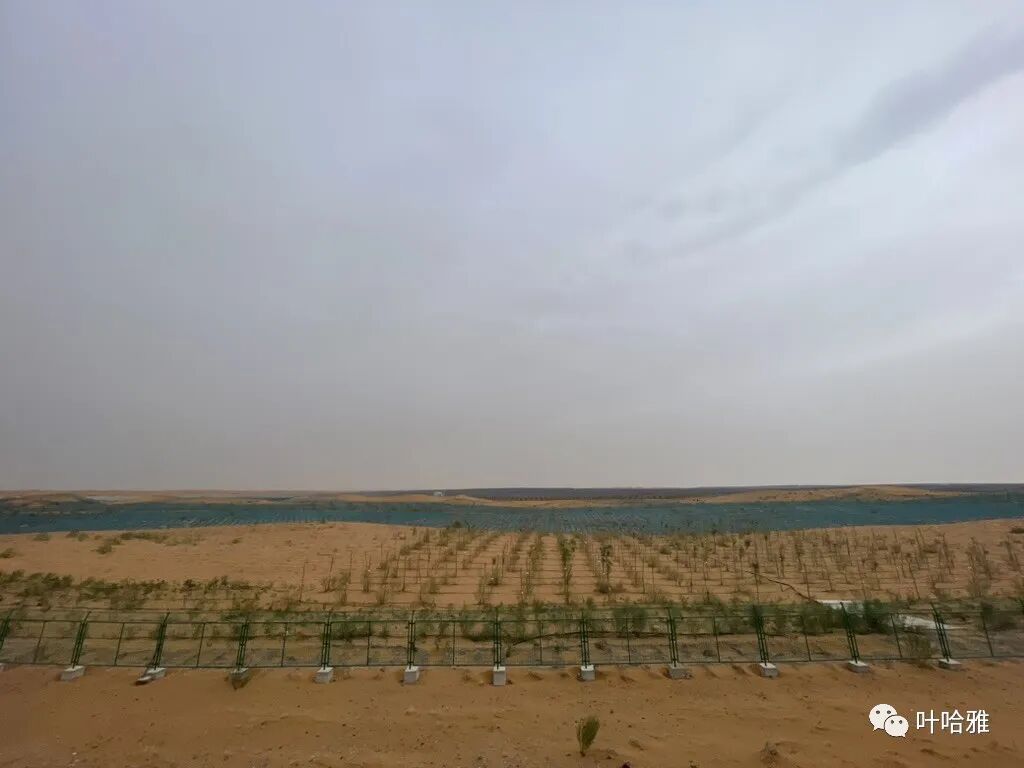
After praying Maghrib (shamu) at the Great Mosque of Baiyin, I walked around the city looking for food, but I found there were not many choices.
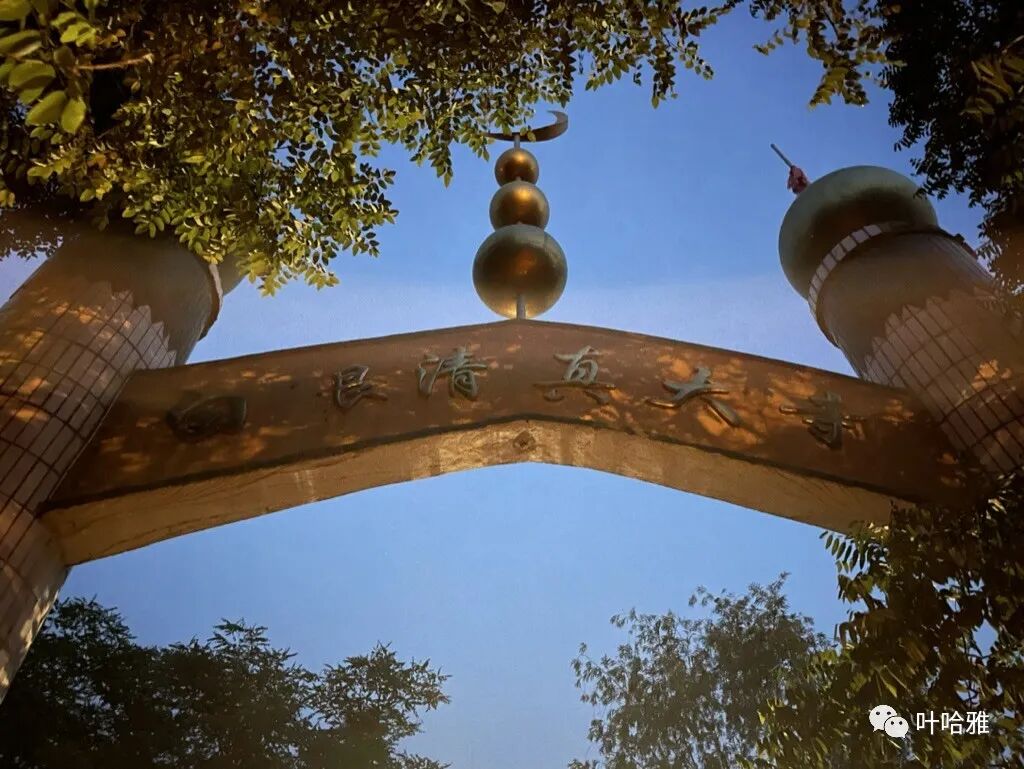
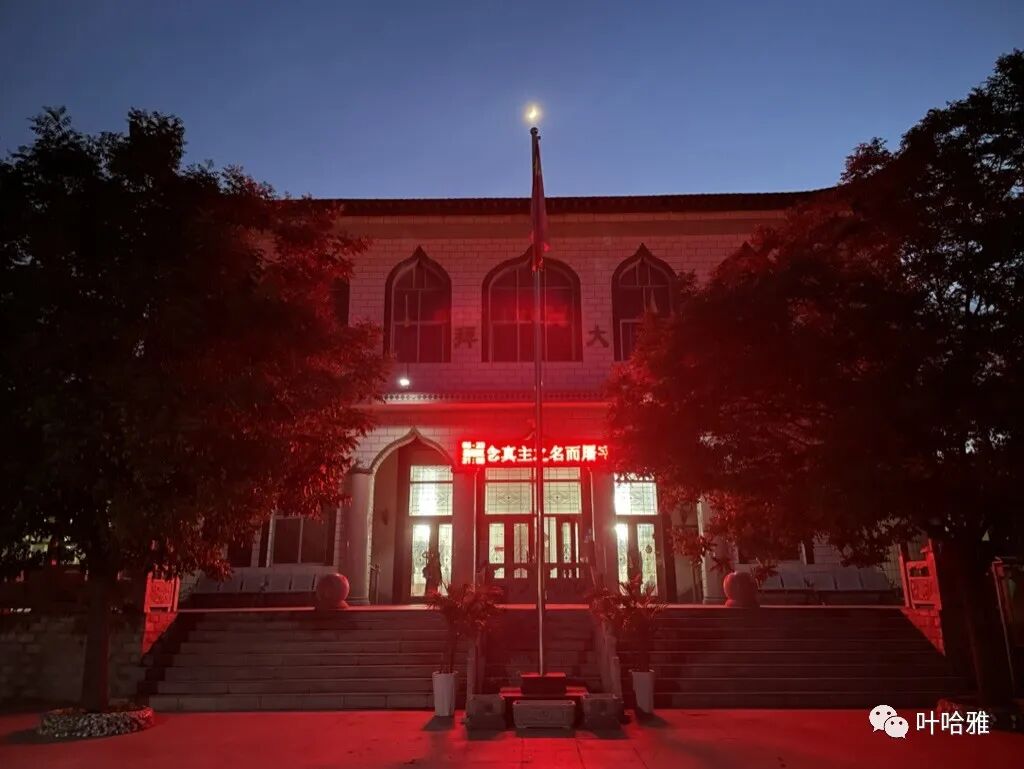
I found this Chuntai Hand-Grabbed Meat Restaurant (Chuntai Shouzhua Meishicheng). Chuntai is a township in Dongxiang, Linxia, and it is famous for its delicious hand-grabbed lamb.
The food was really good. Both the hand-grabbed lamb and the firecracker noodles (paozhuang mian) were delicious.
I stayed in Baiyin for one night and walked around, but I did not find any places worth remembering.
When I saw the Yellow River Bridge, I knew I had arrived in Lanzhou. This time I stayed at the Hyatt Regency. I chose it because it is a halal Hyatt, which is rare in China. The owner is a Dongxiang person.
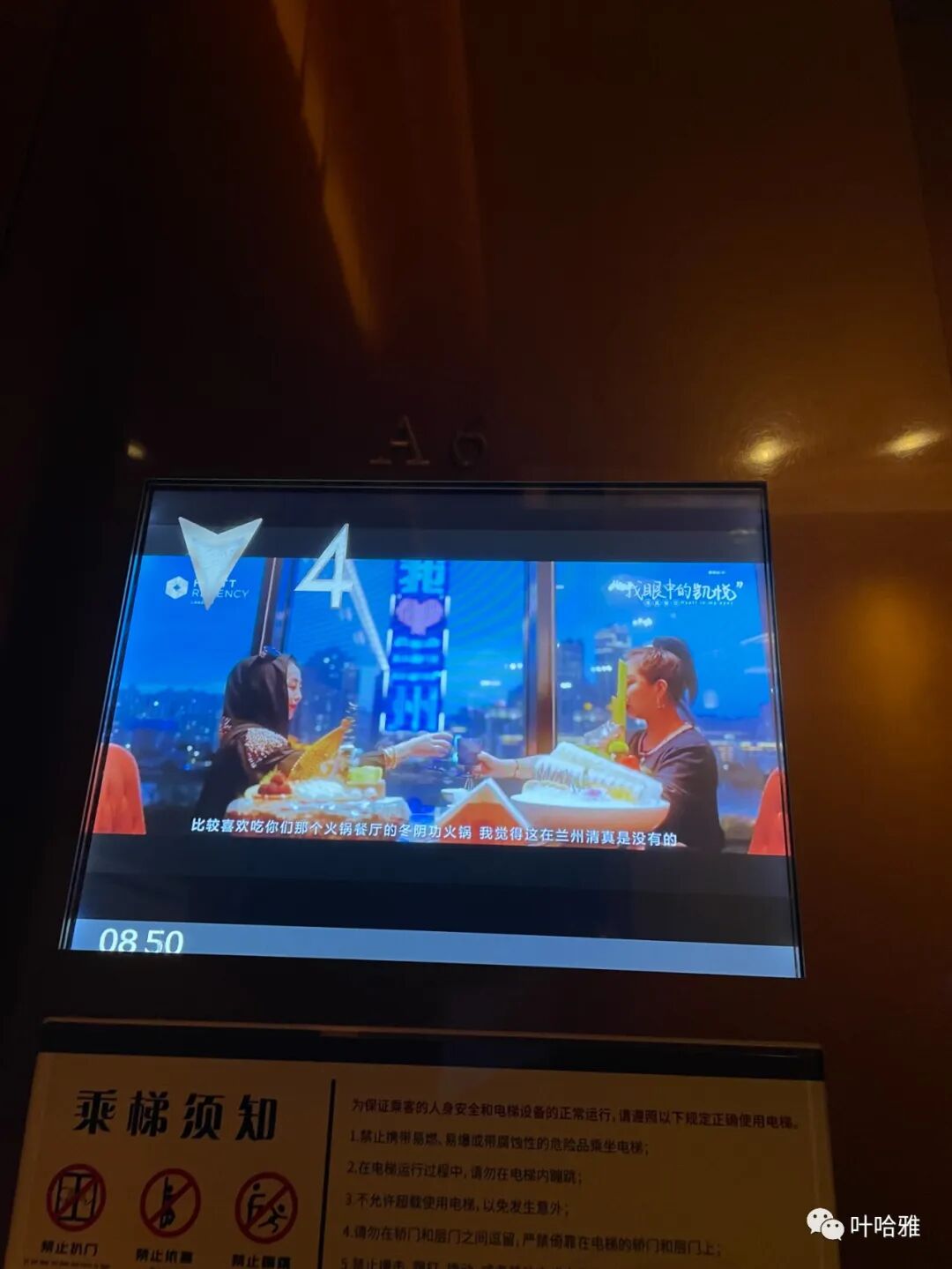
The promotional video for the Hyatt playing in the elevator features girls wearing headscarves.
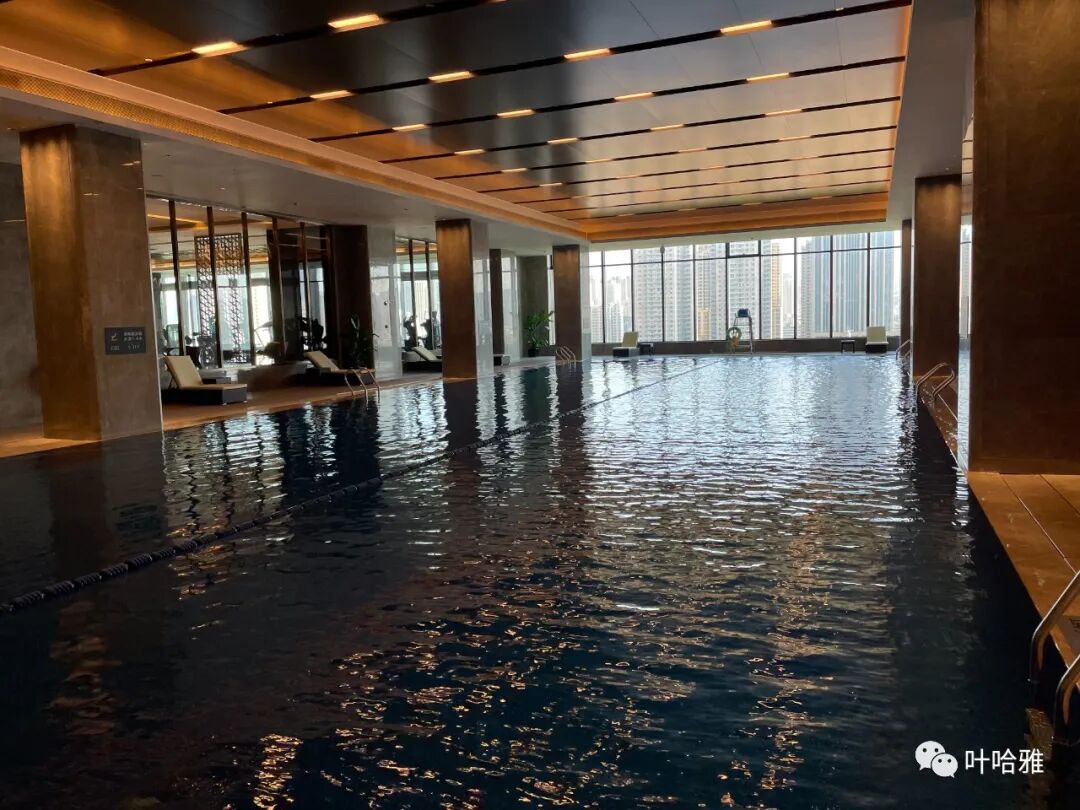
The gym at the Lanzhou Hyatt is very large. It is rare for a five-star hotel in China to have such a big gym.
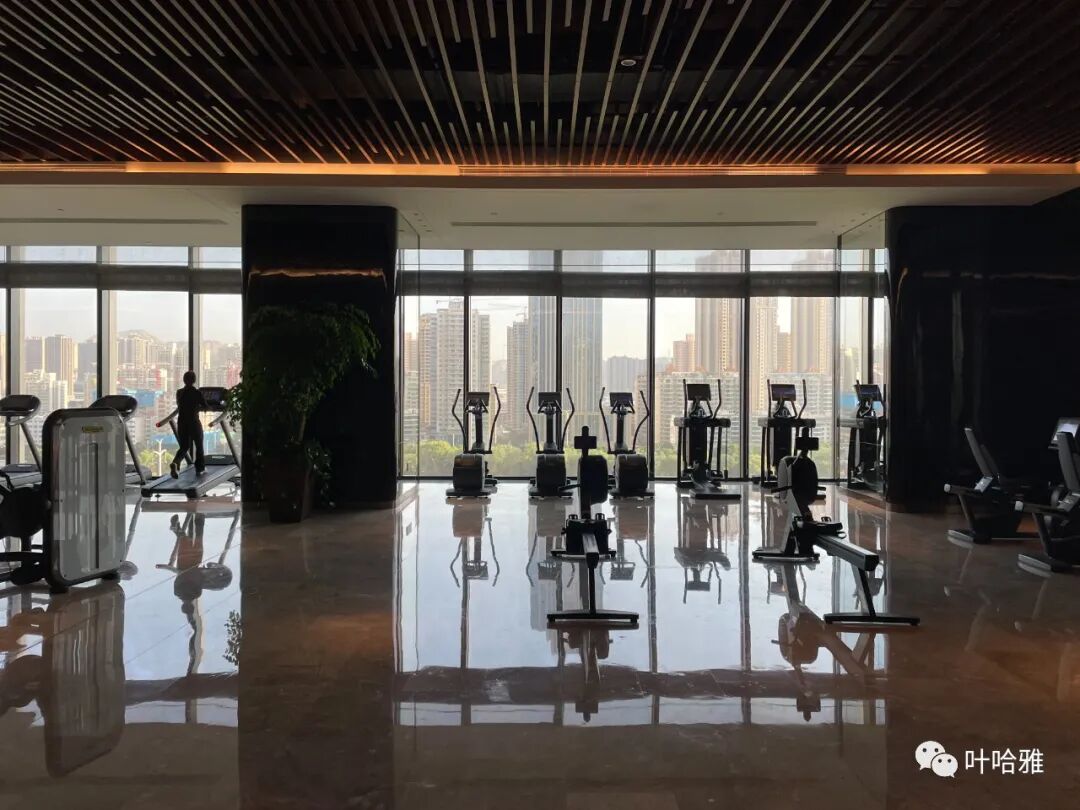
The gym faces the Yellow River, so the view is excellent.
What attracts me most about the Hyatt is the rich breakfast. Everything is halal, and you can choose whatever you want. Besides regular Western desserts, they also have local Northwest specialties.
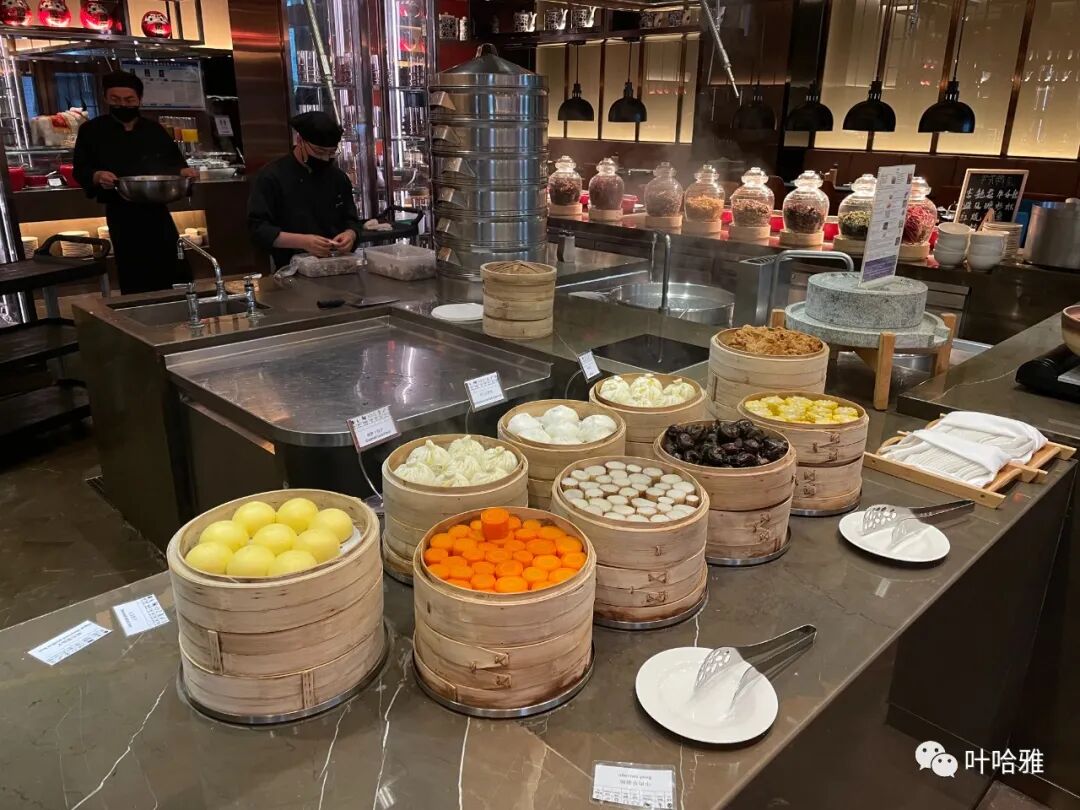
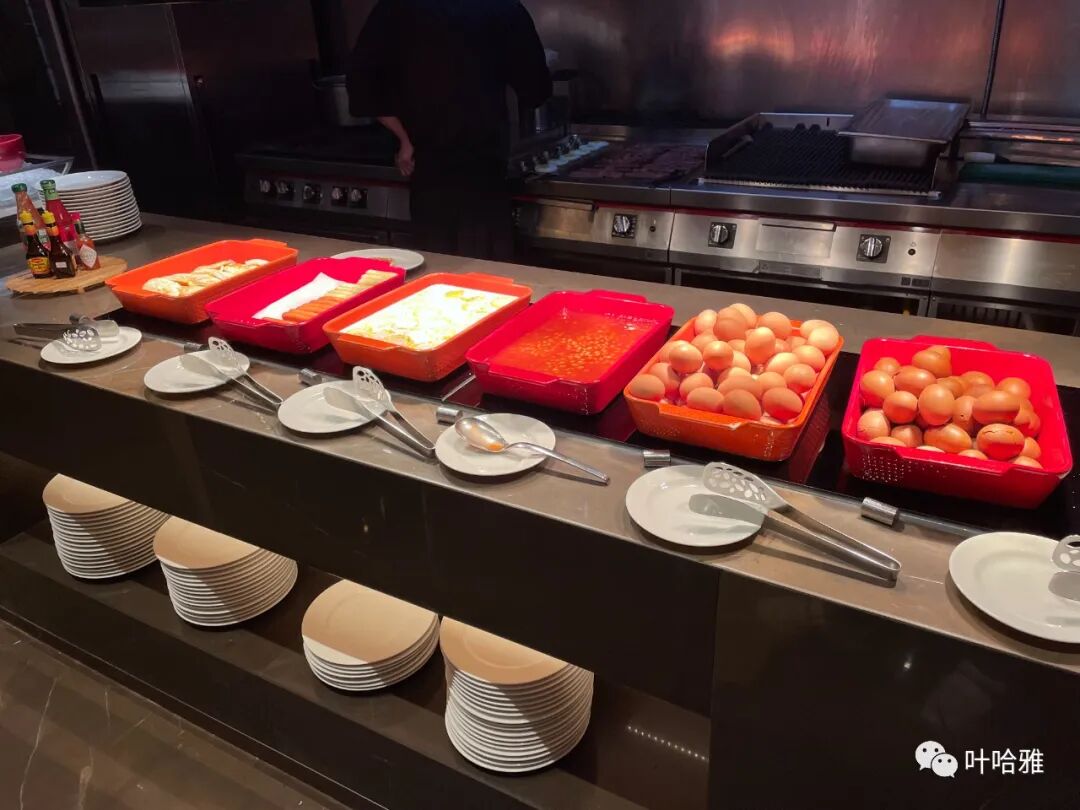
The Lanzhou beef noodles at the Hyatt were the only beef noodles I ate on this trip to Lanzhou. They were truly delicious and just as good as any of the old, famous shops I have visited in Lanzhou.
Xinguan Mosque
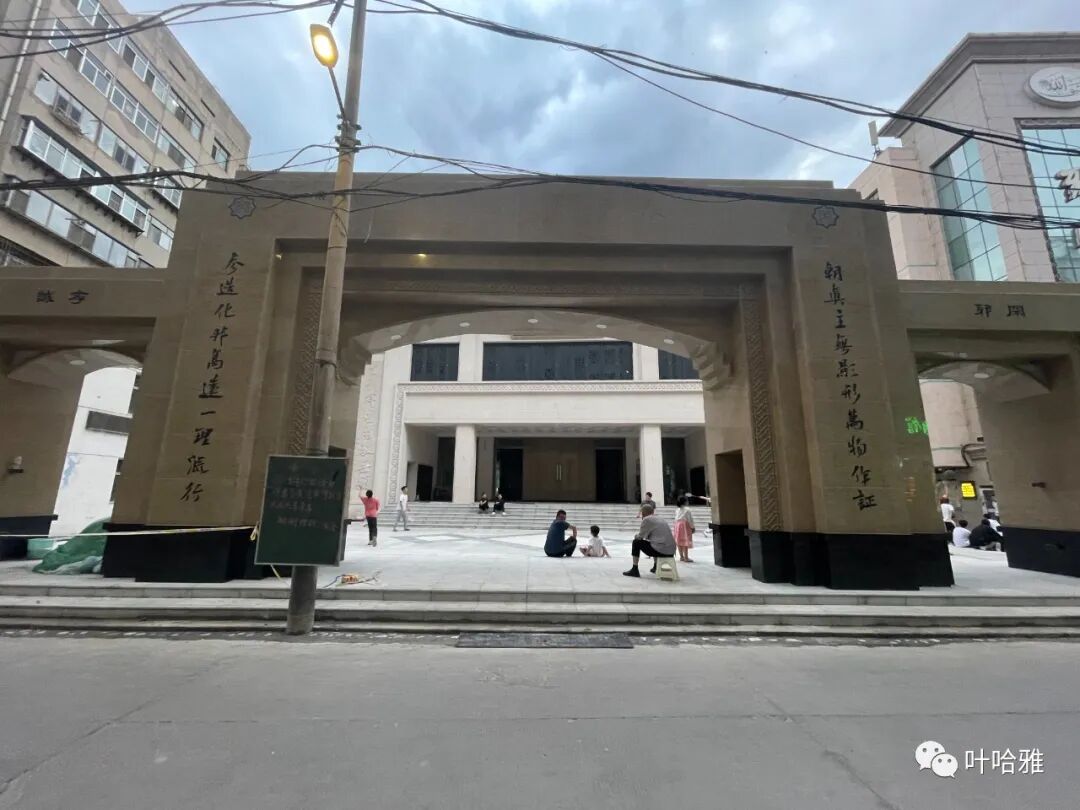
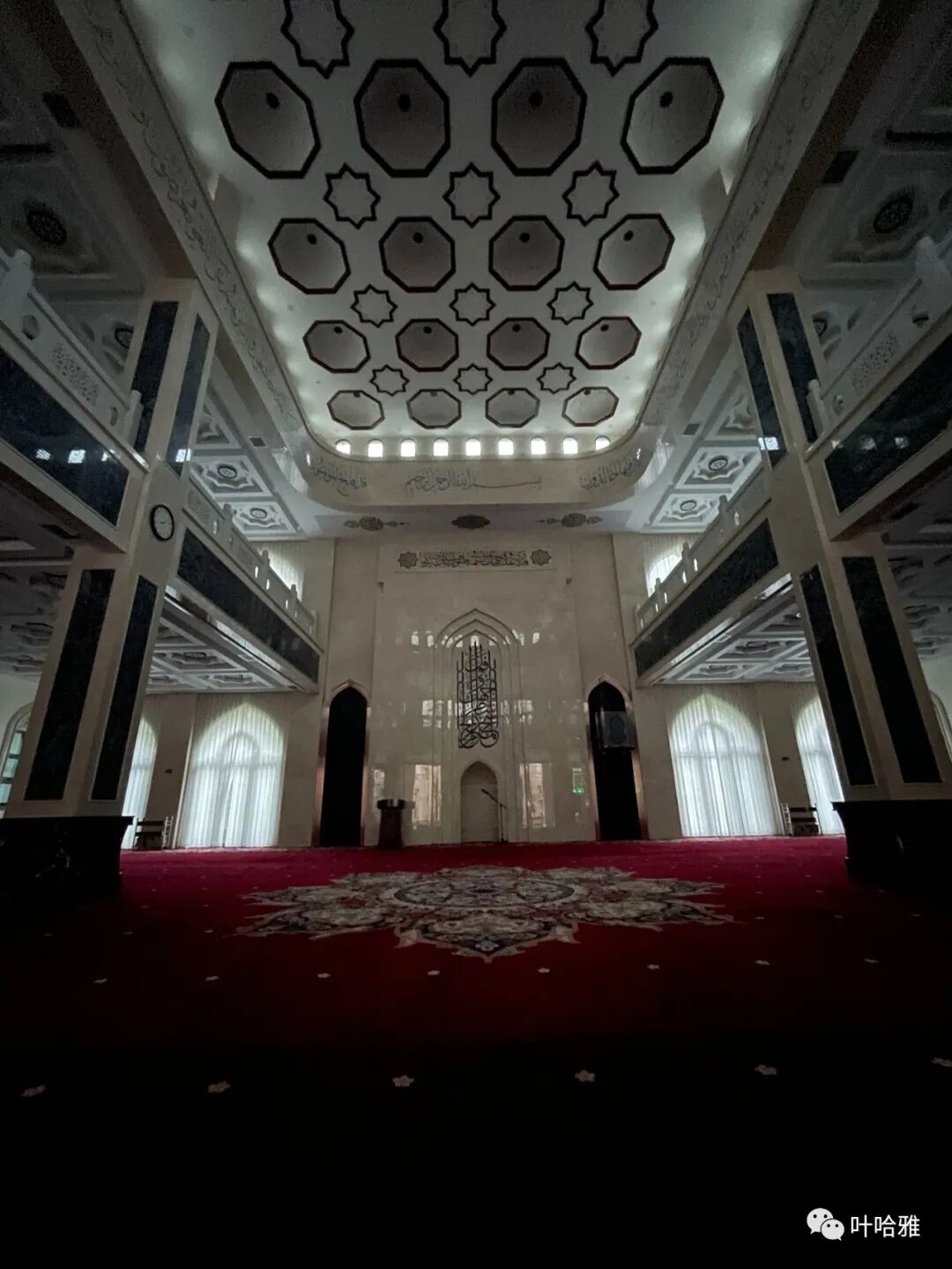
Local elders in Lanzhou highly recommended I visit Xinguan Mosque. People say it is very popular with young people because the imam, Ma Jun, gives lively and vivid sermons (wa'az) in Mandarin.
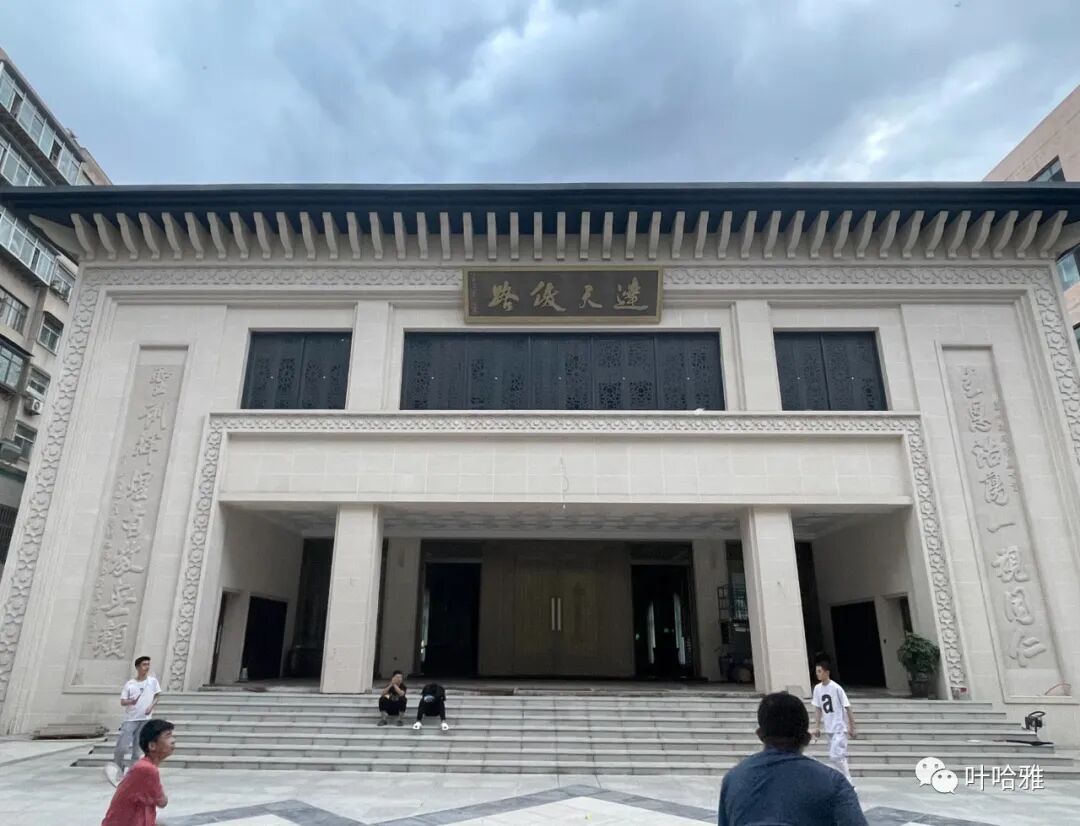
The mosque gate is completely open to the public, and many children play at the entrance.
Yixiang Stir-fry
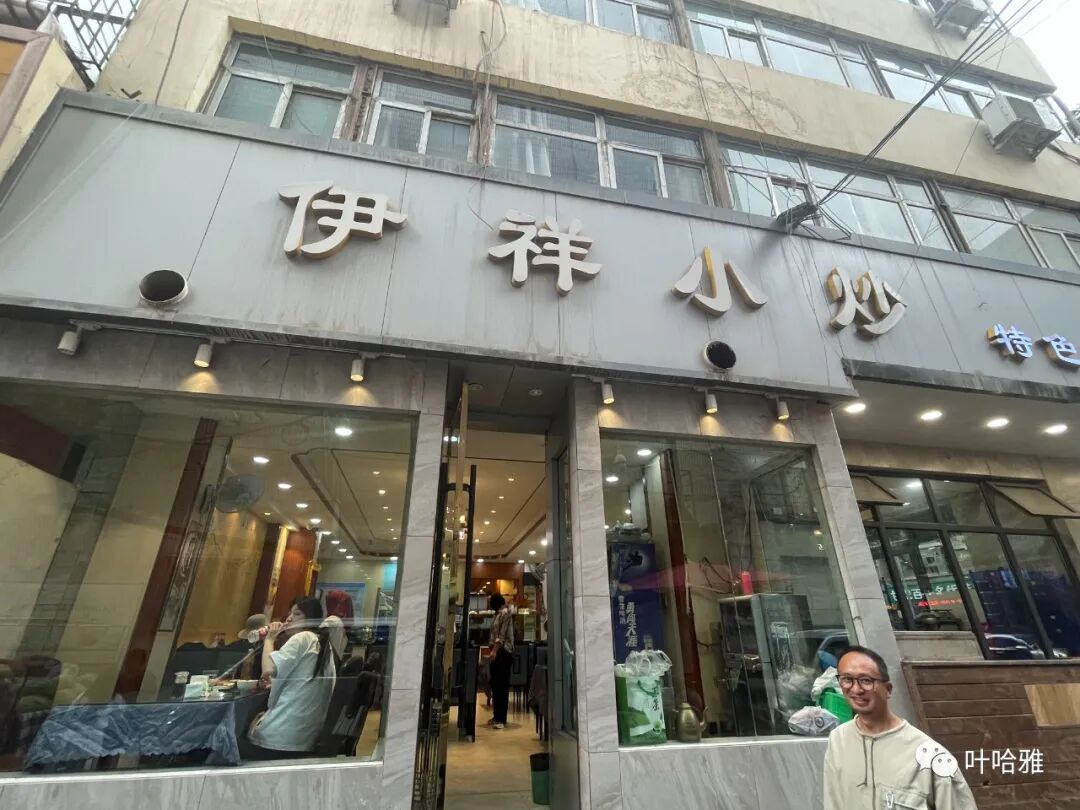
Next to Xinguan Mosque is a Lanzhou stir-fry shop that a long-time Lanzhou local specifically recommended to me as a place for authentic local dishes.
This shop has been open in Lanzhou for over ten years, and the customers are mostly local residents from the neighborhood.
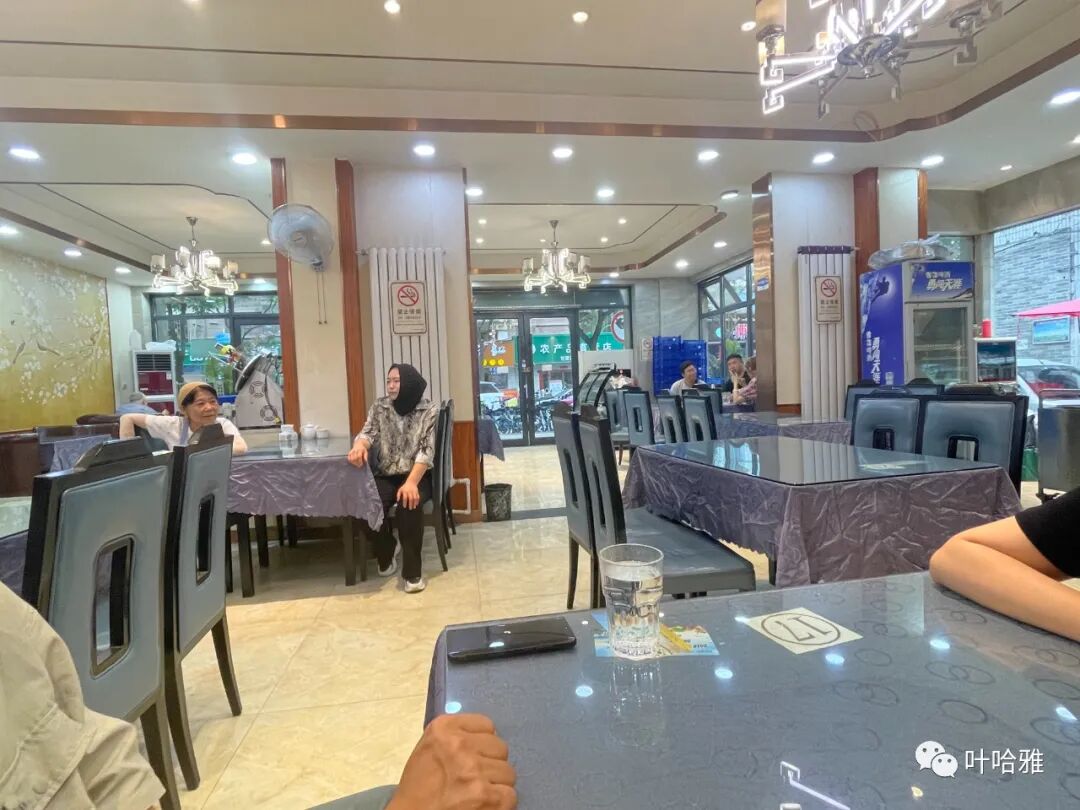
I really enjoy eating at these popular local spots. You can taste the quality in the cooking here, and I probably would not have noticed this place if a friend had not shown me the way.
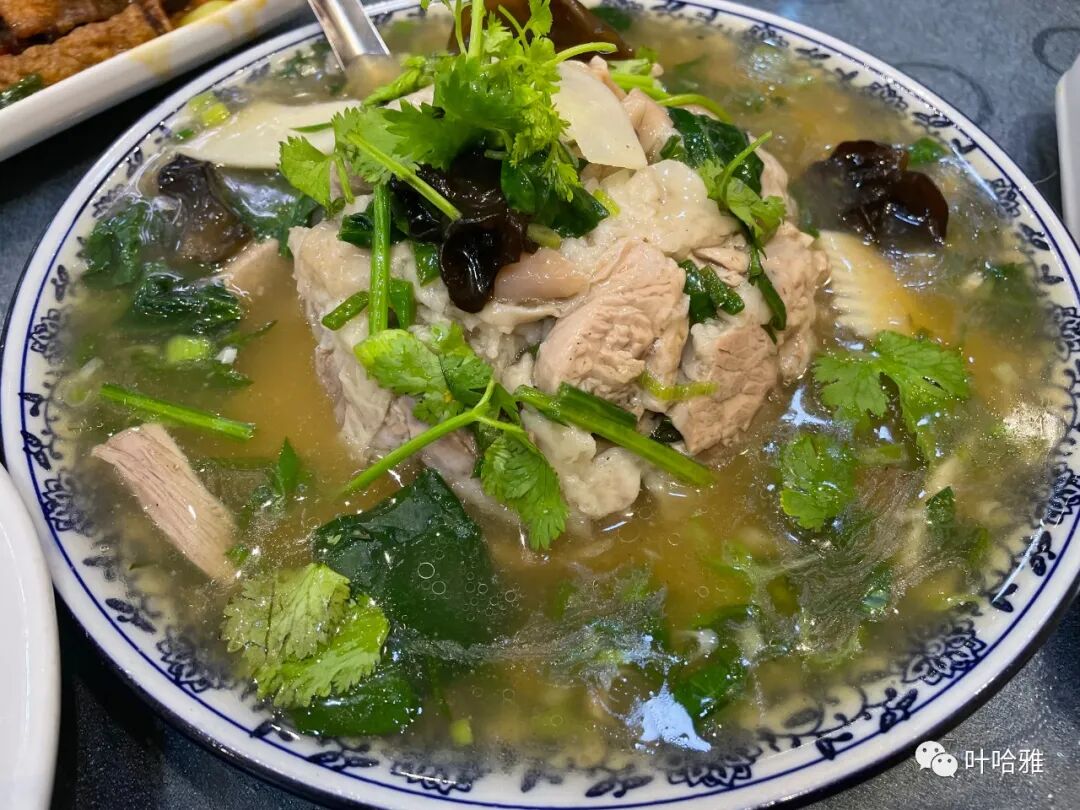
Lanzhou thick-sauce lamb (hu yang)
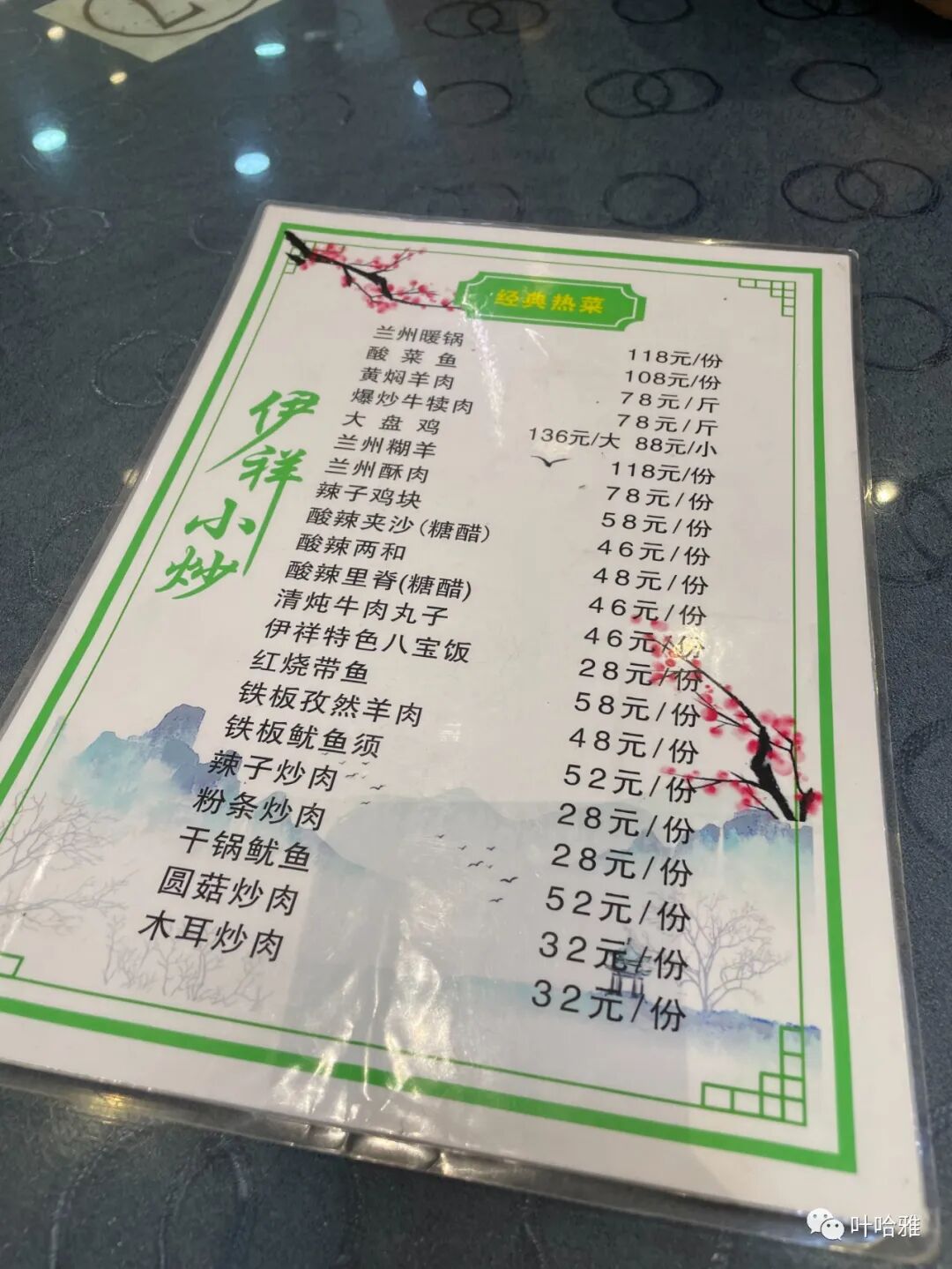
This was my first time eating thick-sauce lamb. I noticed that traditional Lanzhou stir-fry is mostly salty, fresh, and sweet, and the way they use starch to thicken sauces is similar to Beijing cuisine.
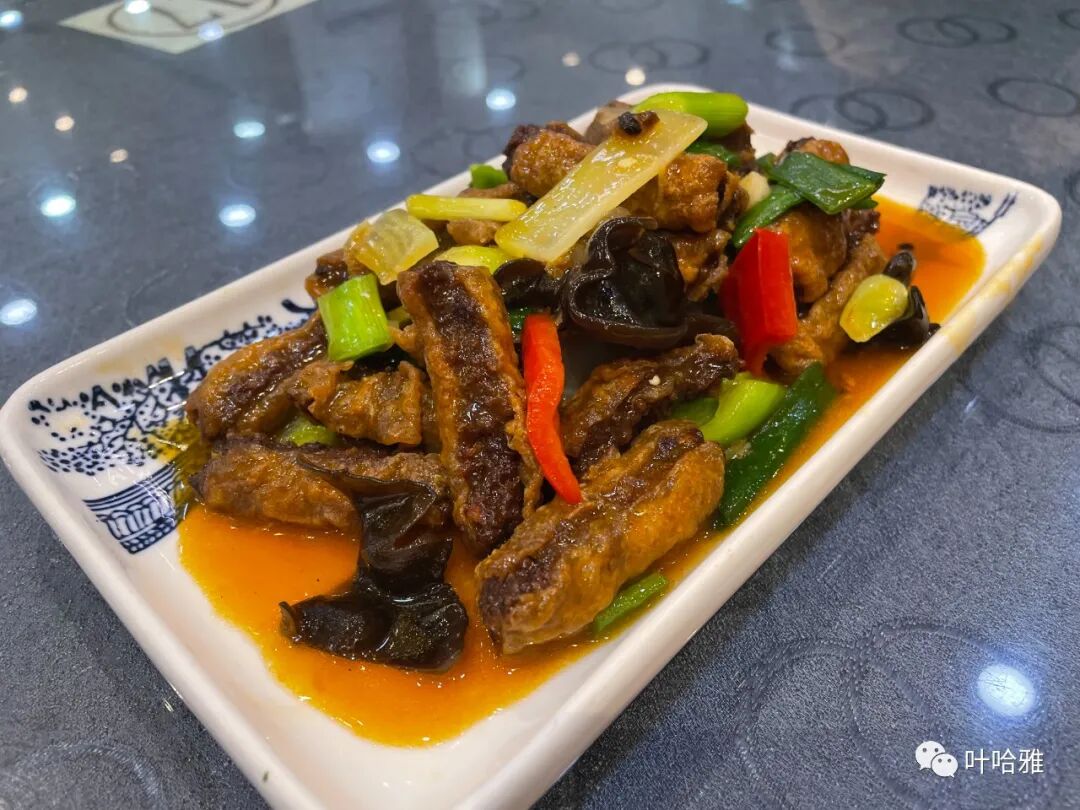
Sweet and sour meat-stuffed crepes (suanla jiasha)
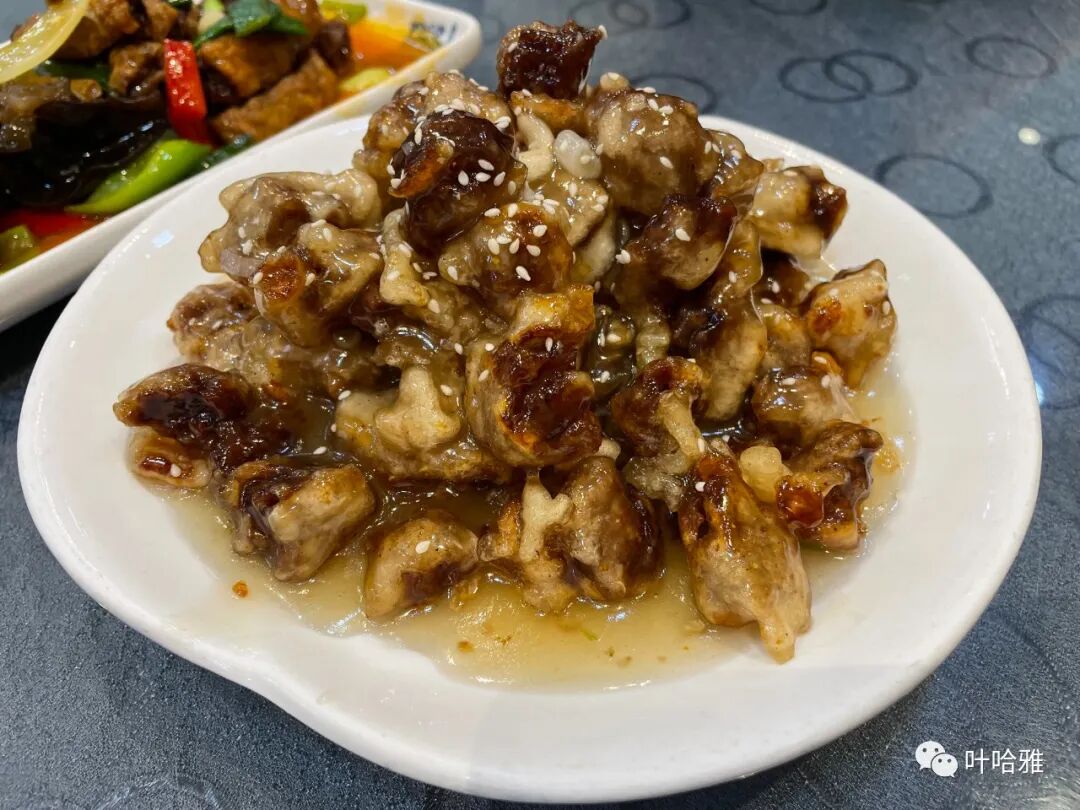
Sweet and sour pork tenderloin (tangcu liji)
If you get tired of eating Northwest-style noodles, remember to stop by Yixiang Stir-fry when you are in Lanzhou.
Miaotanzi Gadan
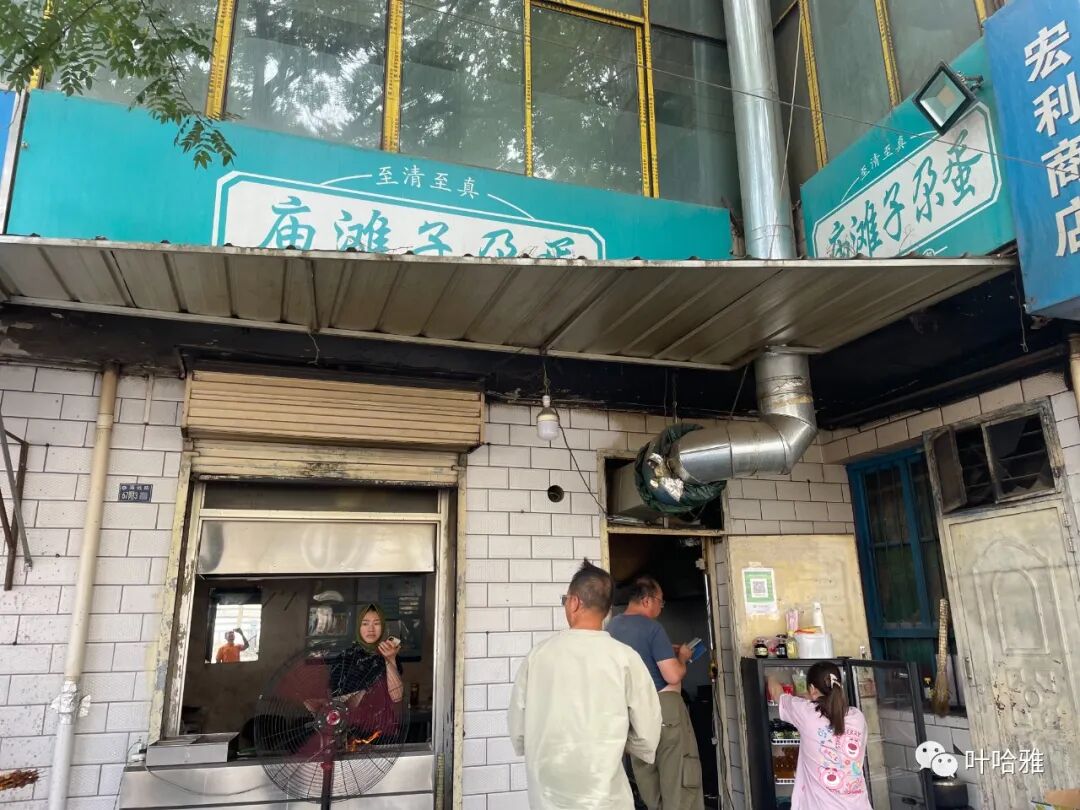
Local elders picked this Miaotanzi Gadan as another special Lanzhou barbecue stall for me. The environment is basically non-existent. It has been open for over a decade and is full of locals. People sit on stools by the roadside to eat, or just stand and dip their skewers.
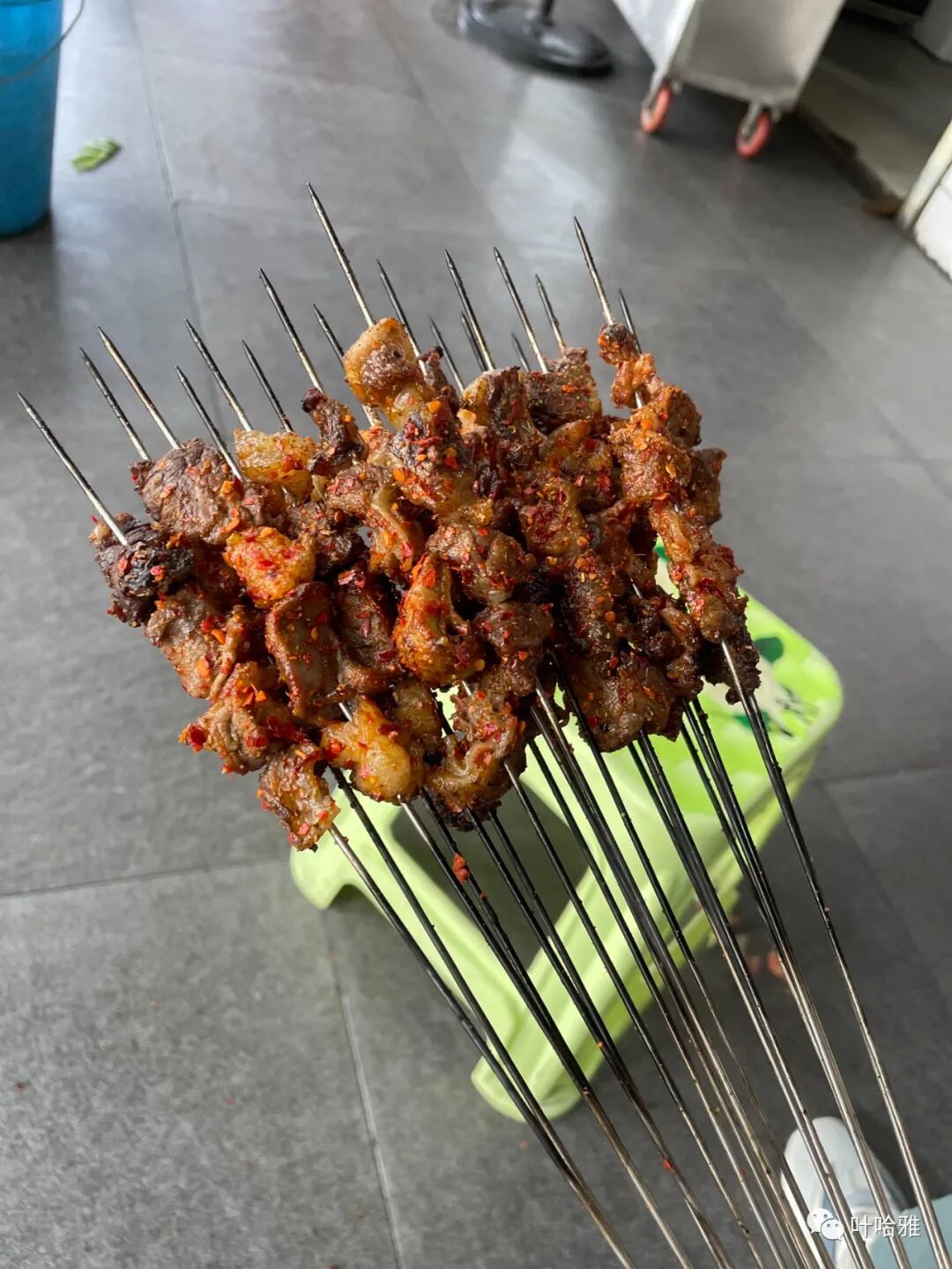
Lanzhou barbecue is known for using iron skewers over an open flame with plenty of seasoning. They come in bundles of 20, and it is easy for one person to eat 30 or 50. I like these small skewers. Large ones fill me up after one or two, which feels less satisfying.
Aliya Art Restaurant
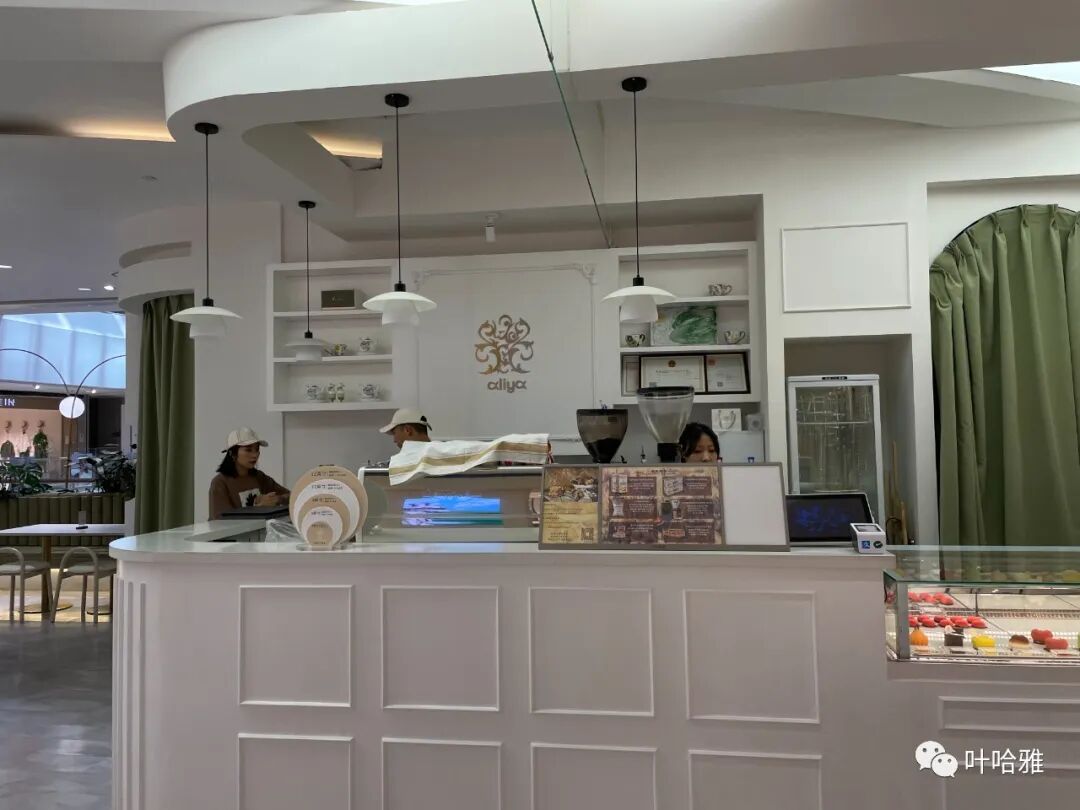
After spending a long time in Northwest cities, I cannot handle heavy dishes anymore. I specifically chose this refreshing art restaurant to meet a friend. You can have afternoon tea here, or choose from light meals.
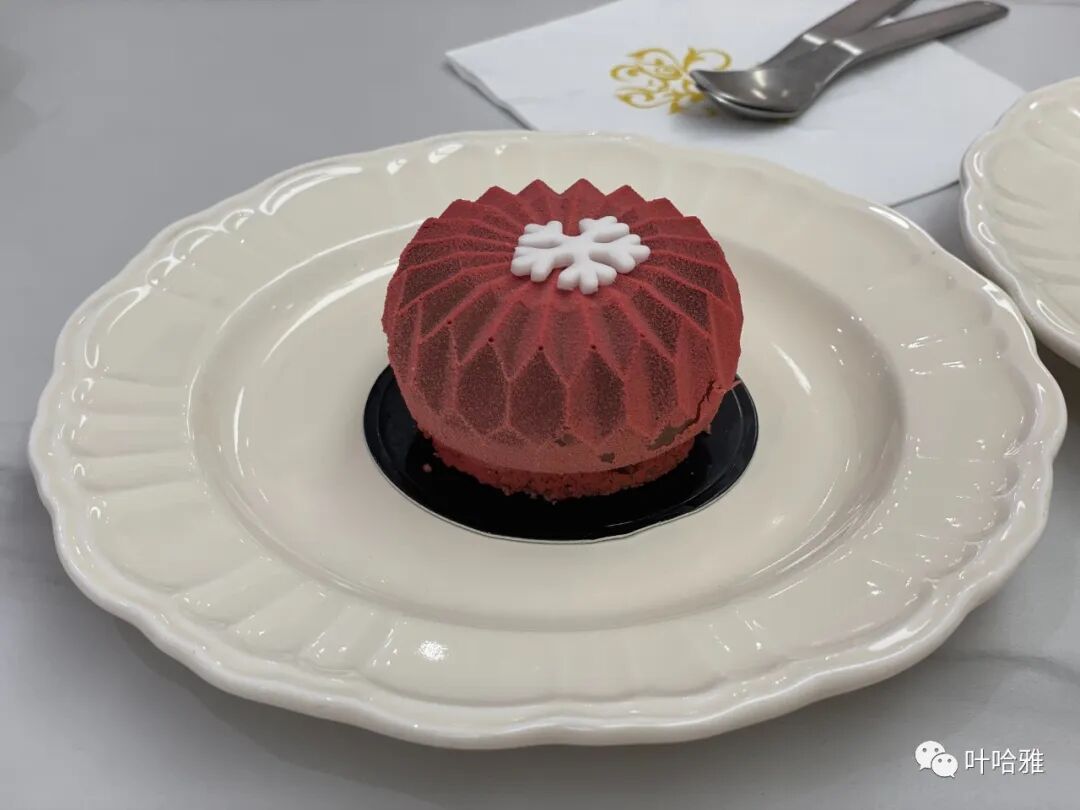
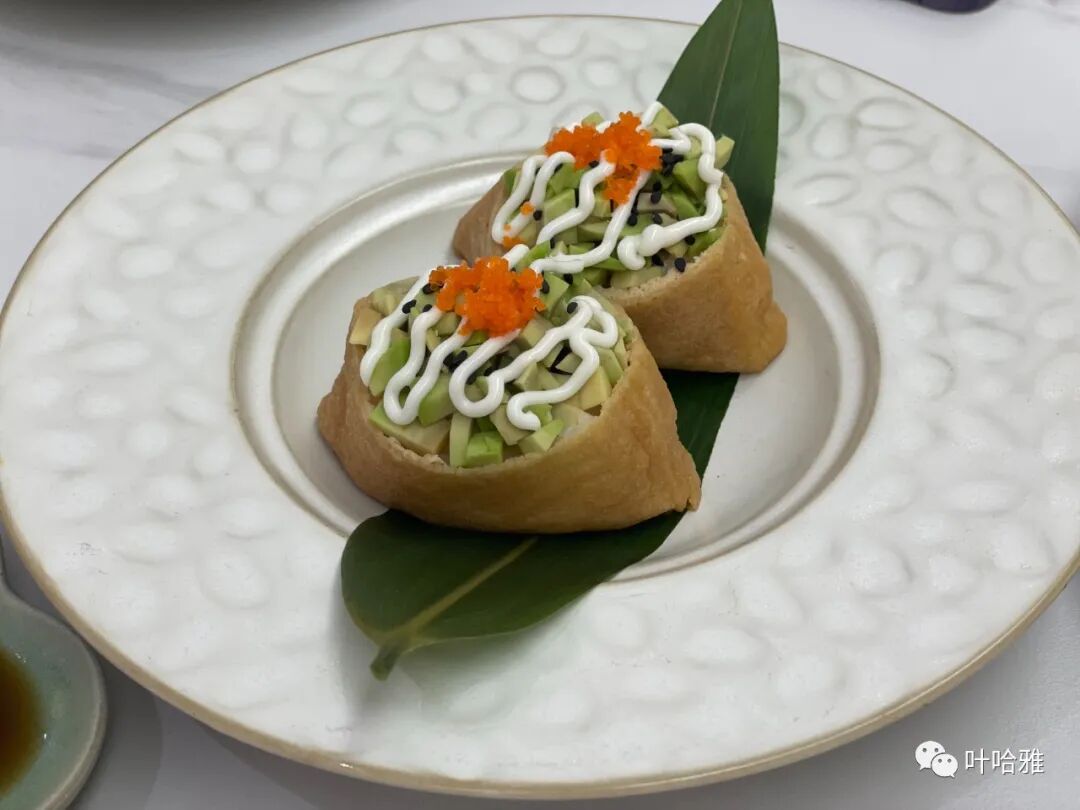
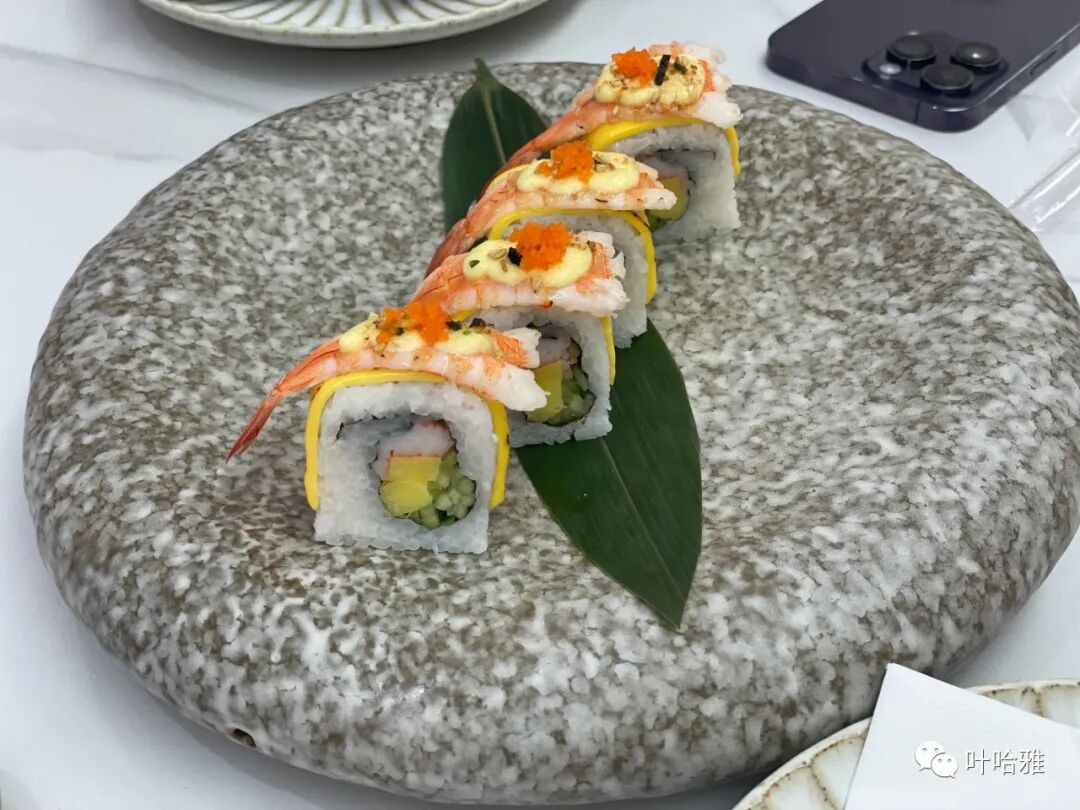
Aliya Lanzhou Center branch. Their desserts are excellent. They also serve sushi and salads, which are rare, light food options in the Northwest.
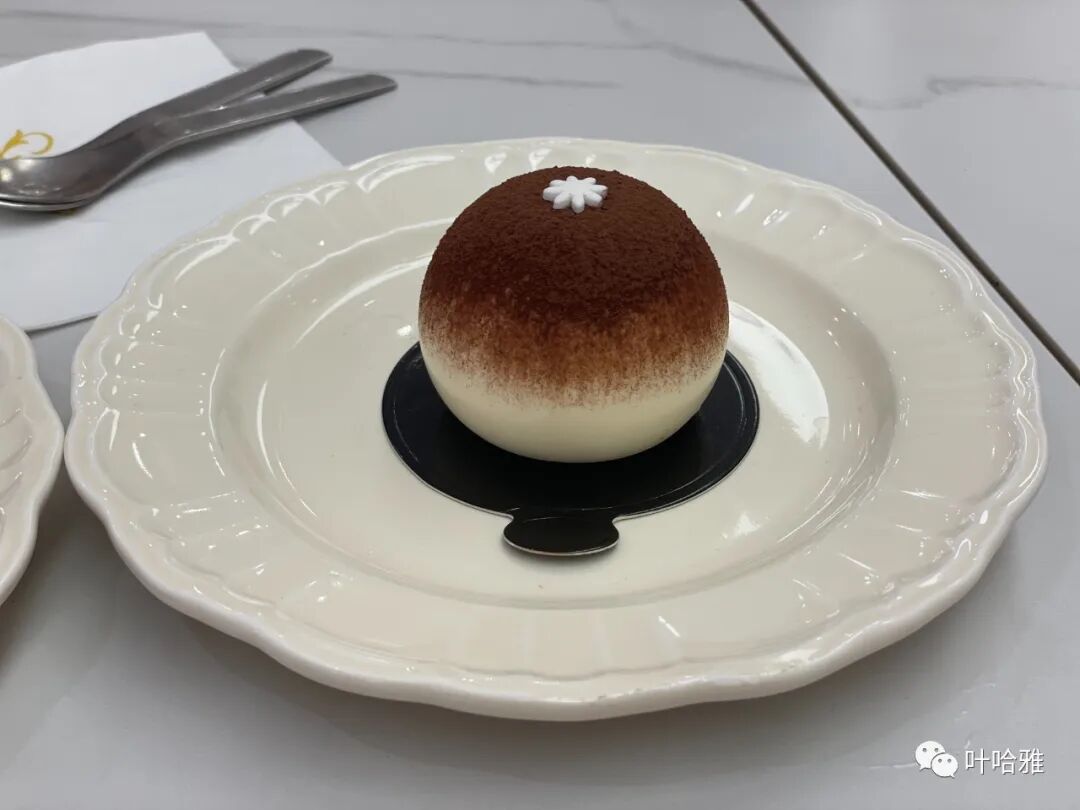
Things like sushi and spring rolls are much easier to eat.
Hongyunxuan Macau Charcoal Hot Pot
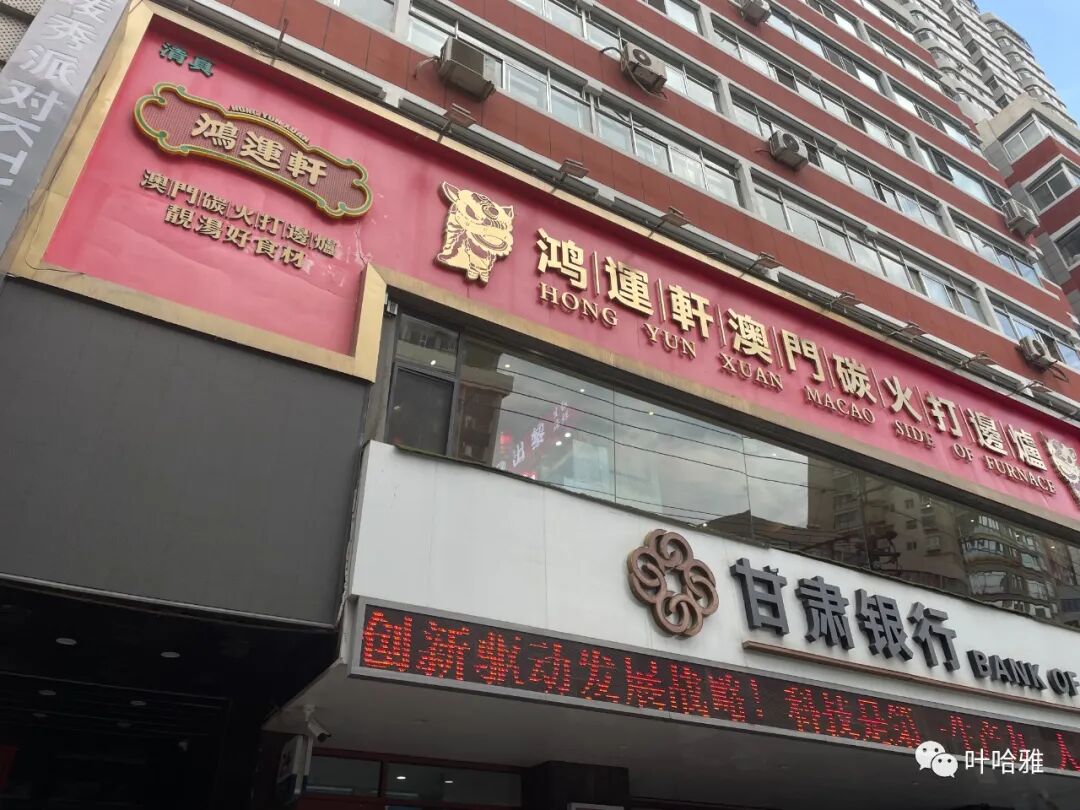
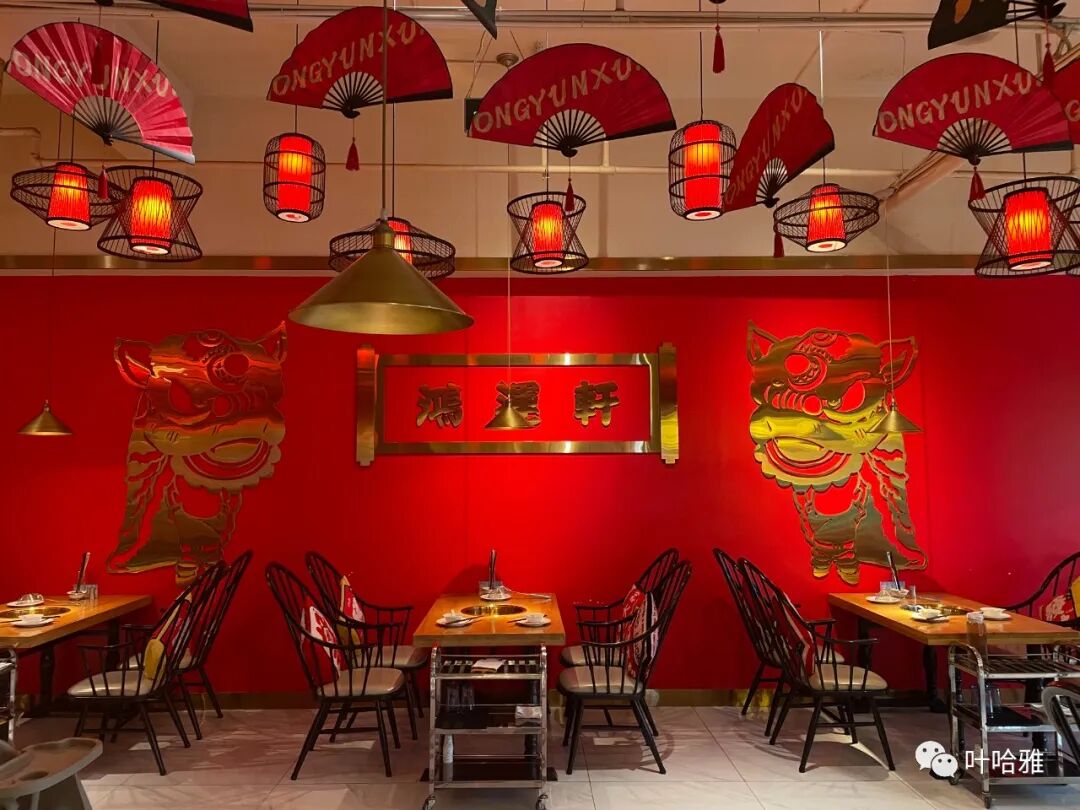
I have had this halal hot pot (dabanlu) place saved in my Beijing list for a long time as a Lanzhou specialty. Hongyunxuan previously ran a Hong Kong-style tea restaurant in Macau, but it closed during the pandemic. I did not expect them to open a hot pot place in Lanzhou.
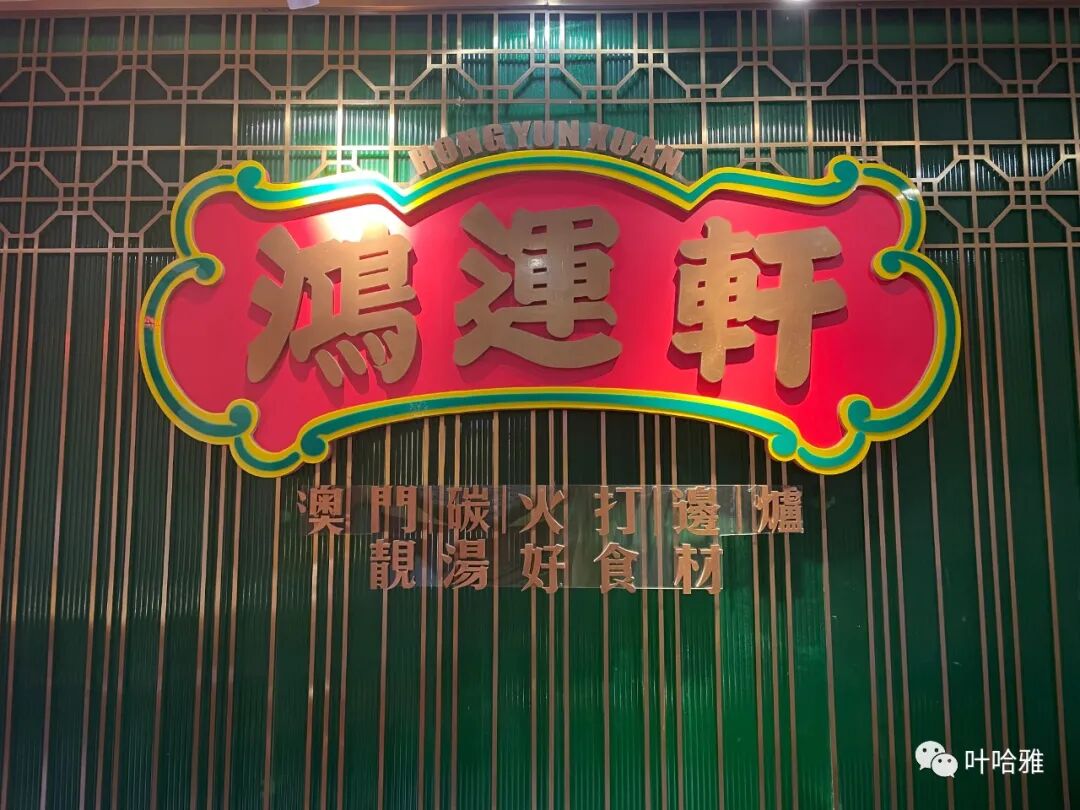
The restaurant decor is very Cantonese. It has not been open long, so I wonder how long it will last.
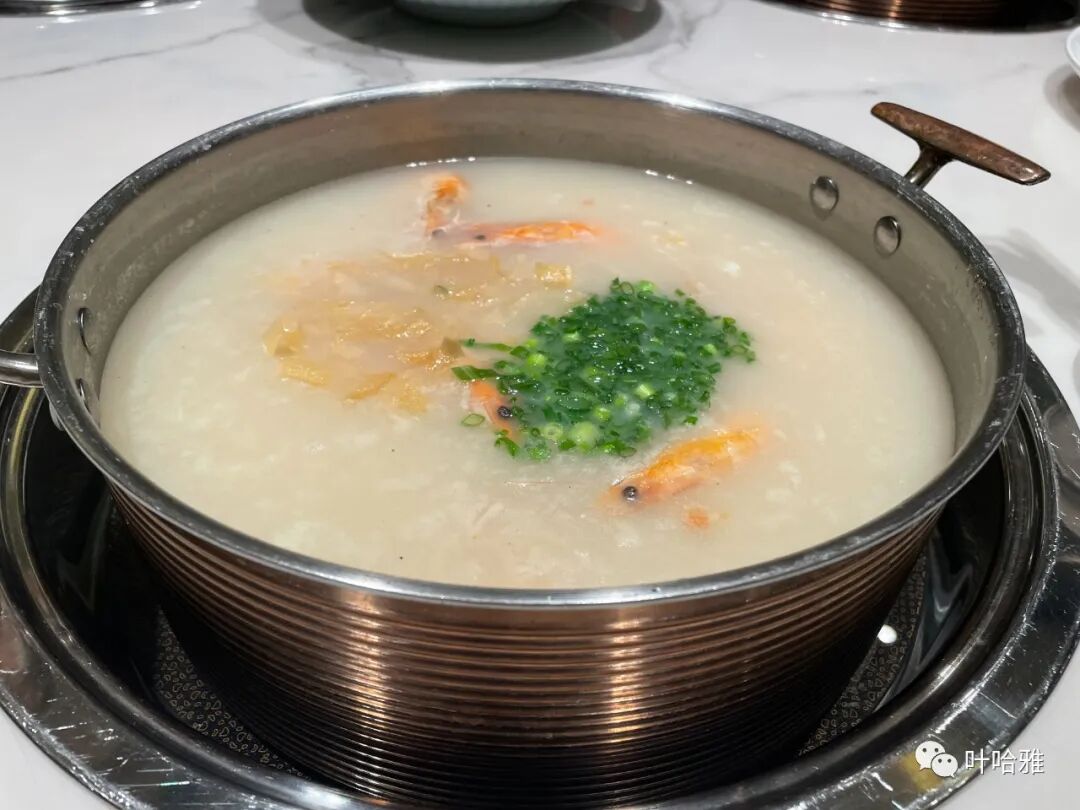
We chose two types of seafood porridge bases. You can drink the porridge first, then cook the meat.
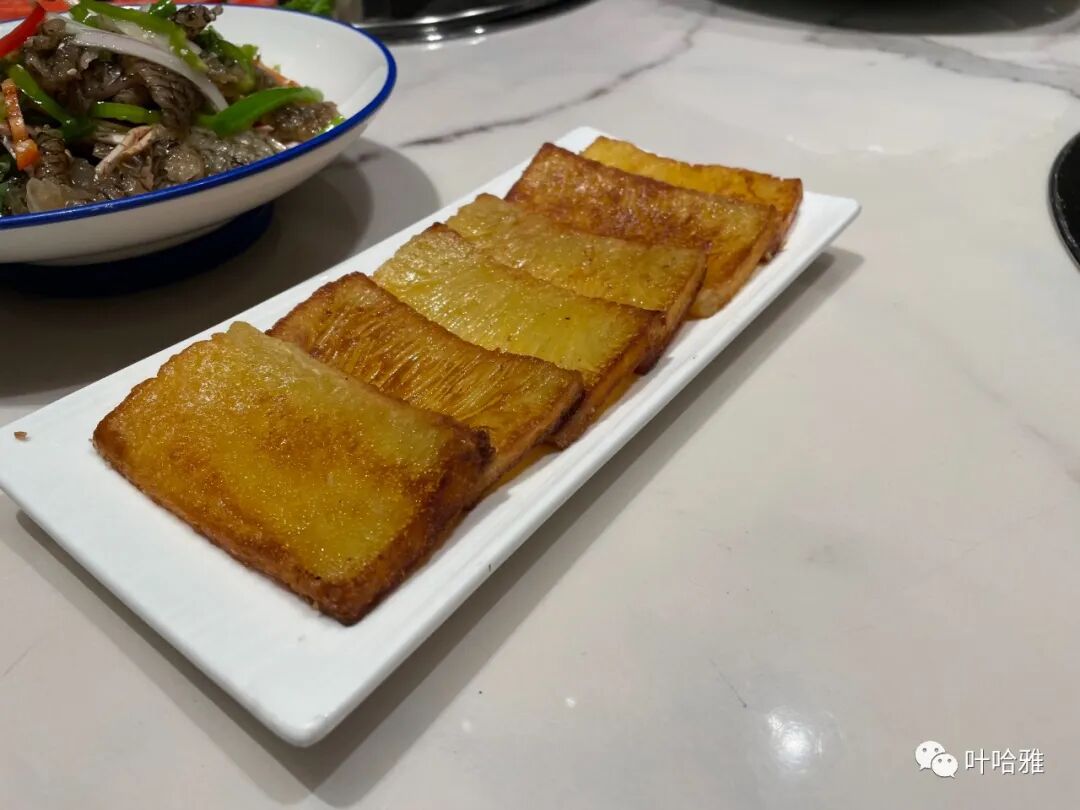
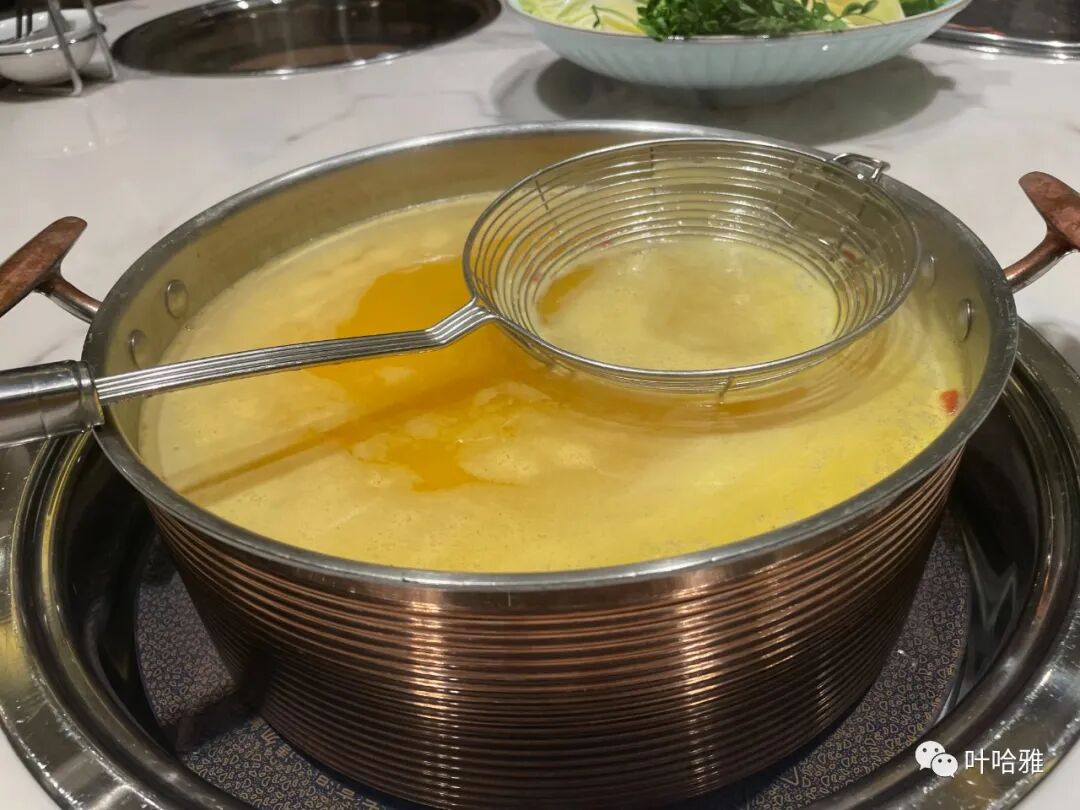
Fish maw (huajiao) porridge base
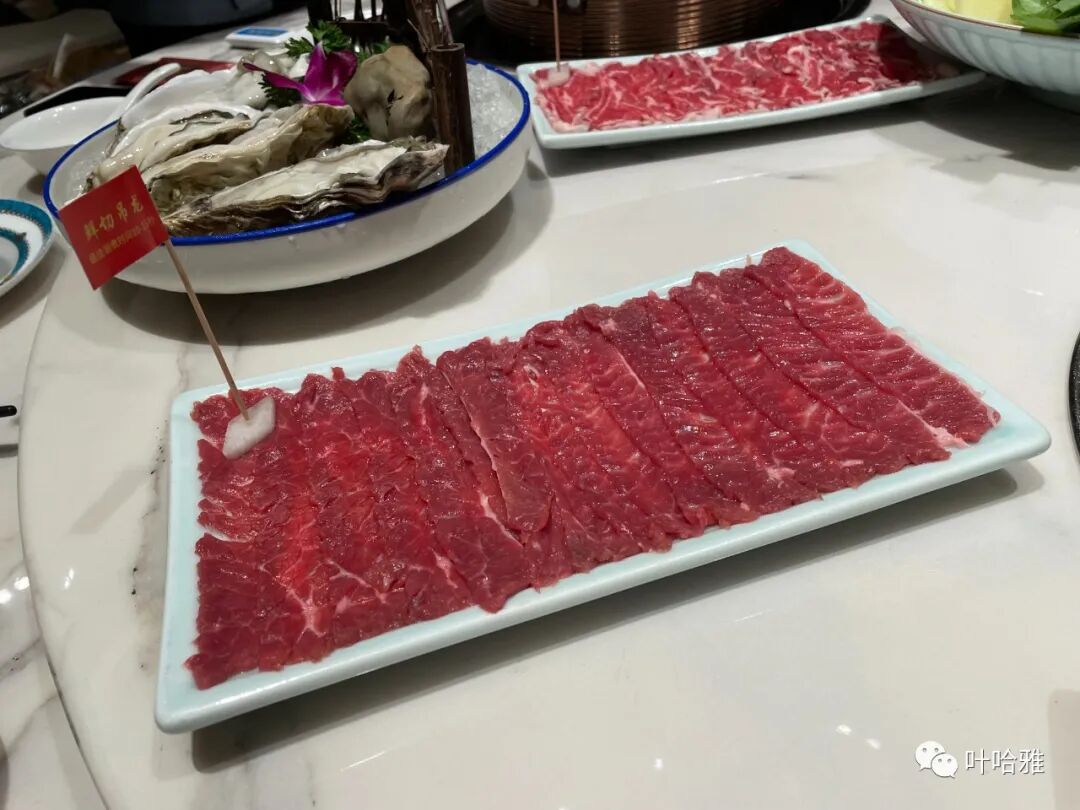
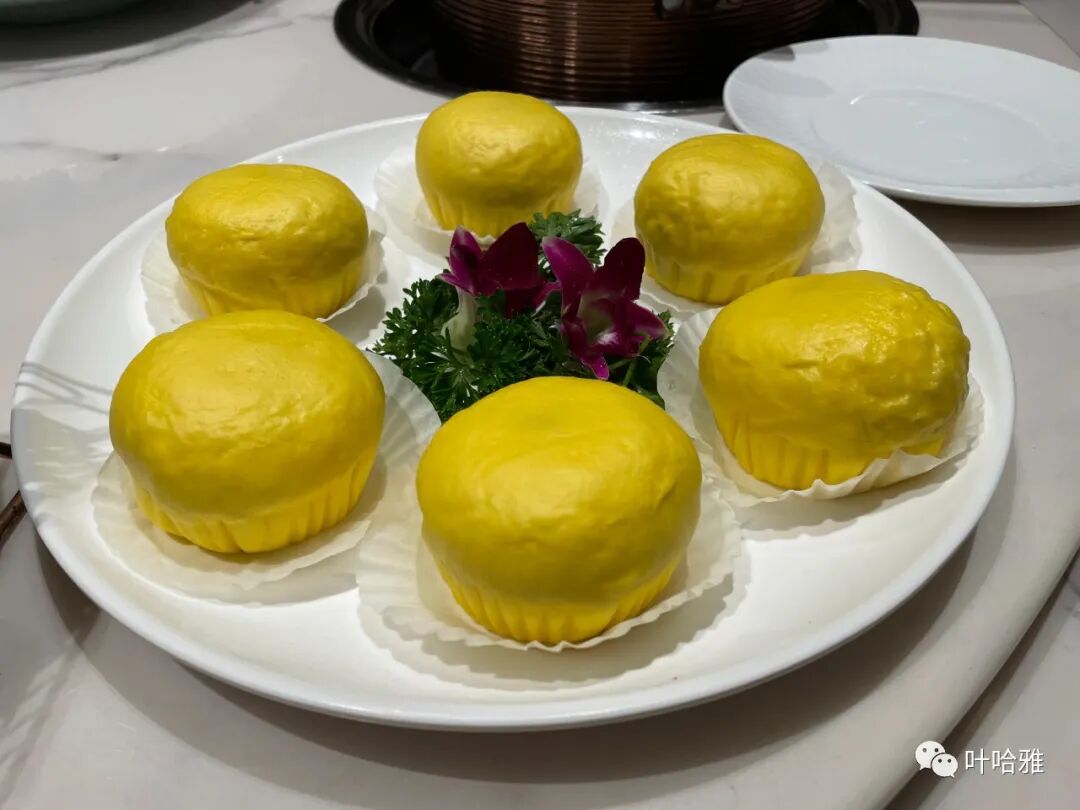
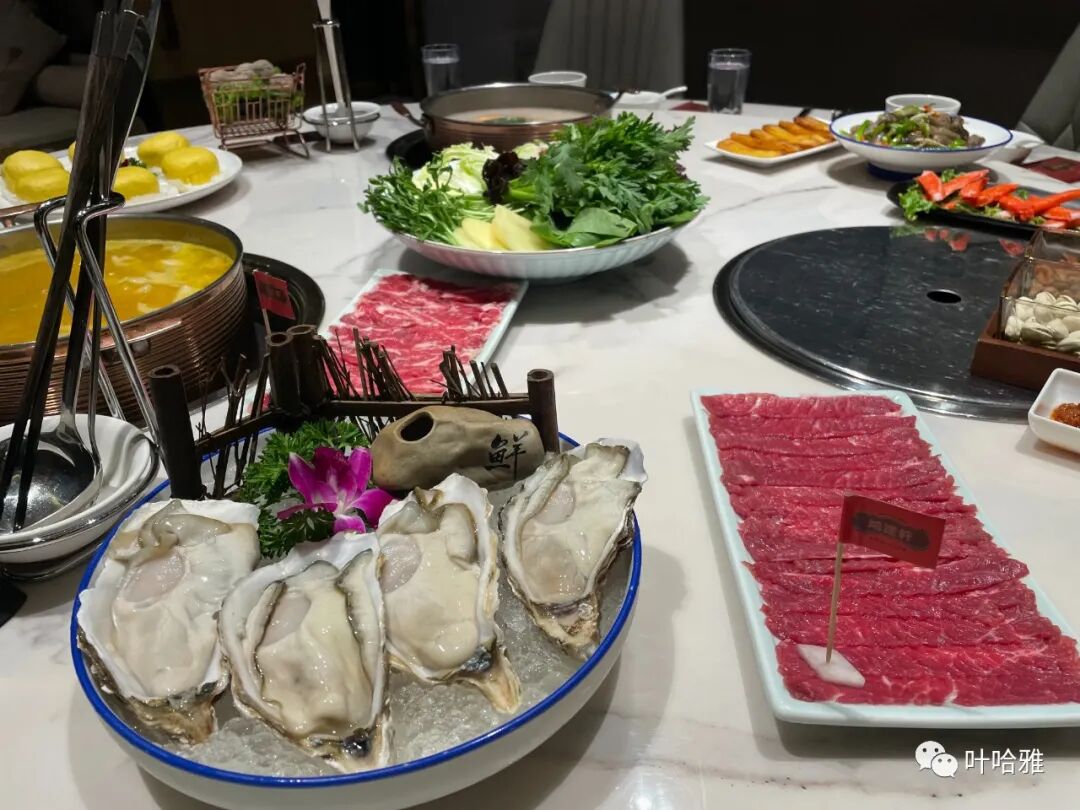
This Cantonese-style hot pot (dabanlu) tastes good and is light. I hope it stays open because it really helps add variety to the food scene in the Northwest.
Shancheng Hand-Grabbed Lamb (Shancheng shouzhuo)
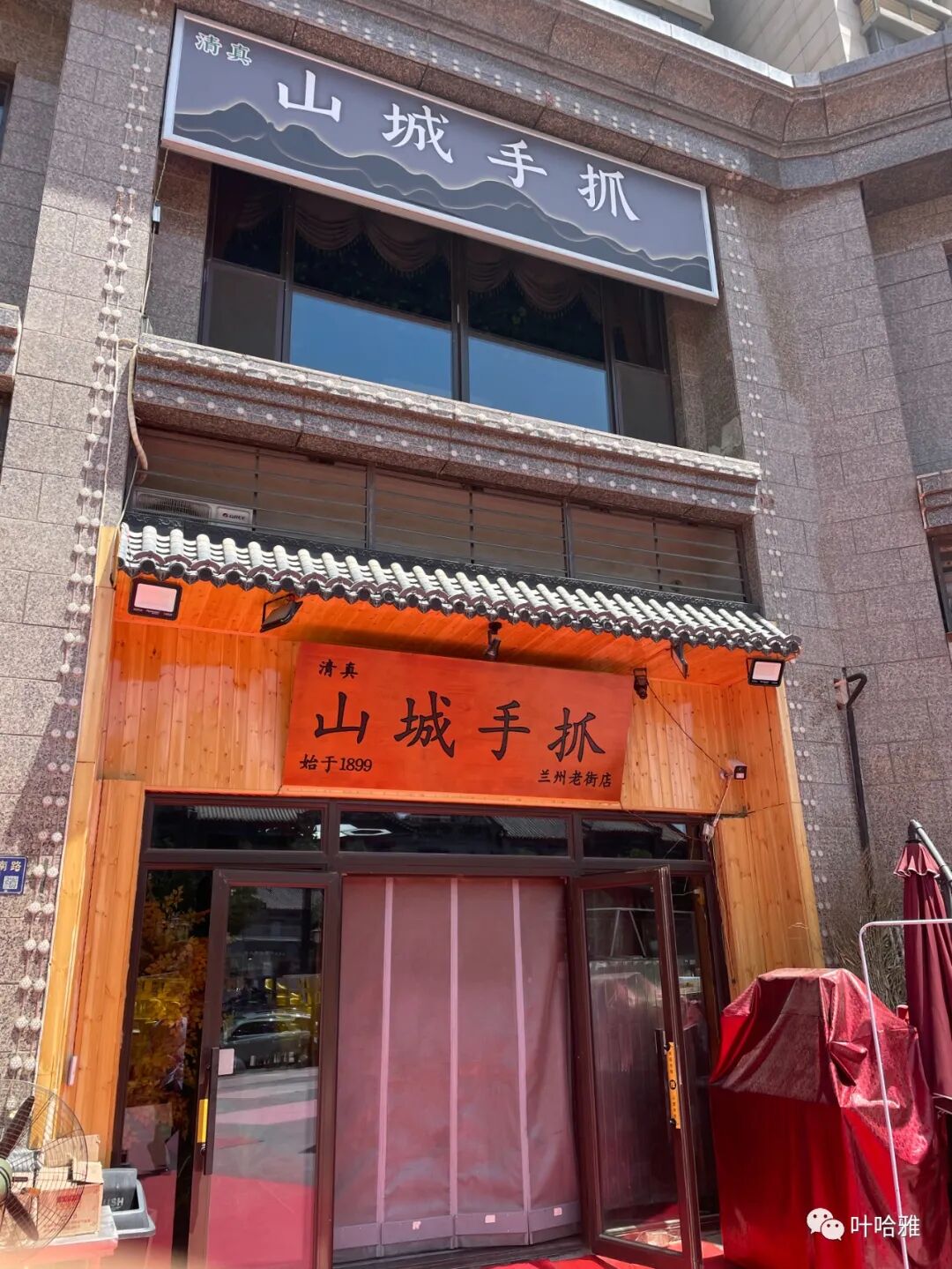
I met an elder (xianglao) from the Lingming Hall (Lingmingtang) in Lanzhou at Shancheng Hand-Grabbed Lamb. Shancheng is a village in Linxia, and many friends in Lanzhou recommend this place. Most people working in the halal restaurant business in Lanzhou are from Linxia.
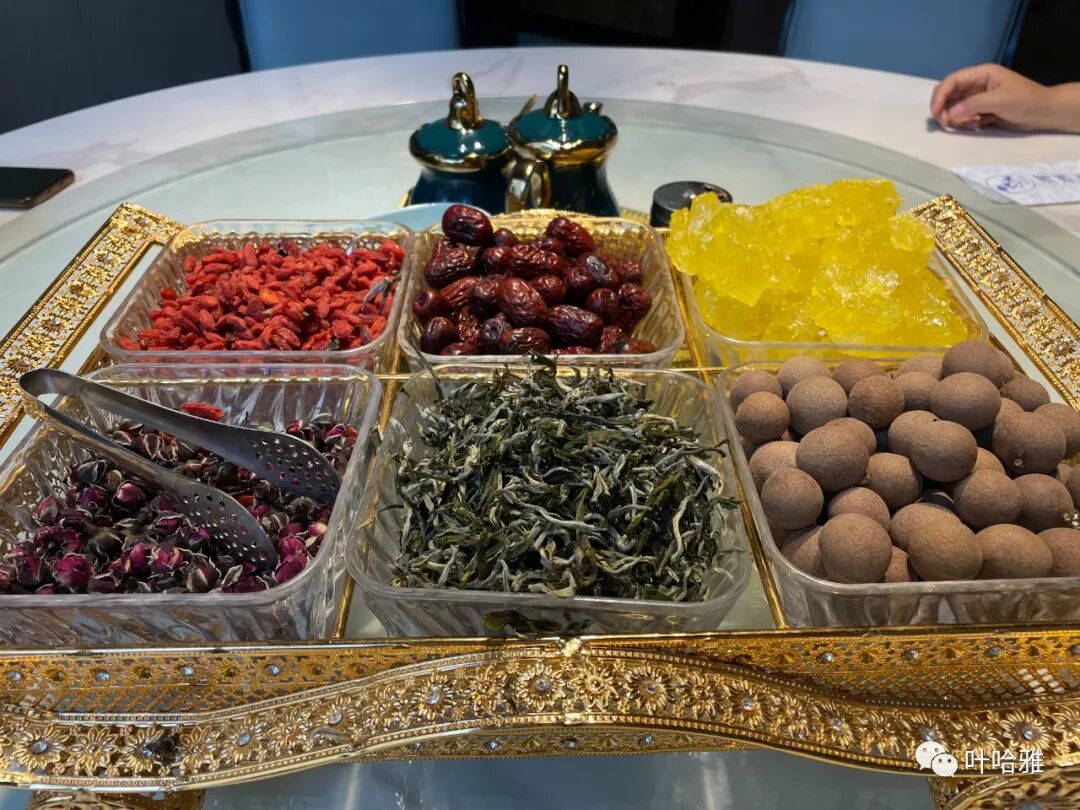
Before eating, they serve tea. You can grab whatever you like from the Three-Fortress Tea (sanpaotai) platter. The rose inside is a local Lanzhou specialty, and you must add it.
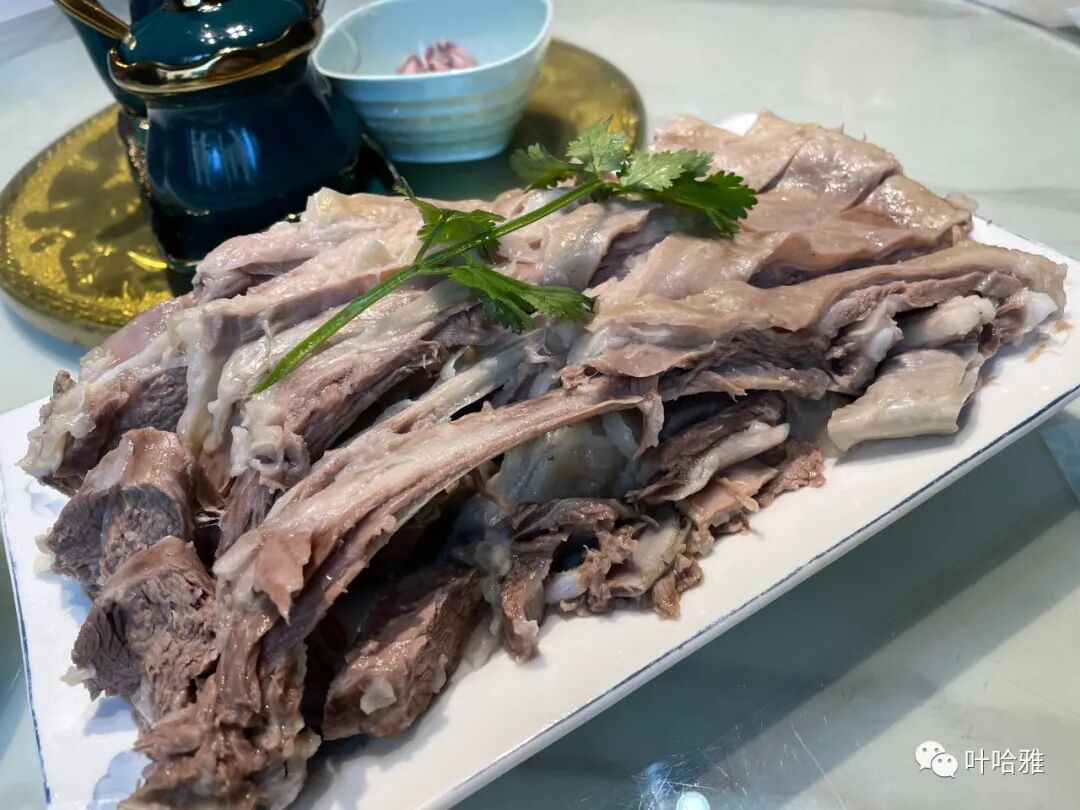
The hand-grabbed lamb is tender with a good mix of fat and lean meat, mostly lean, which is how I like it.
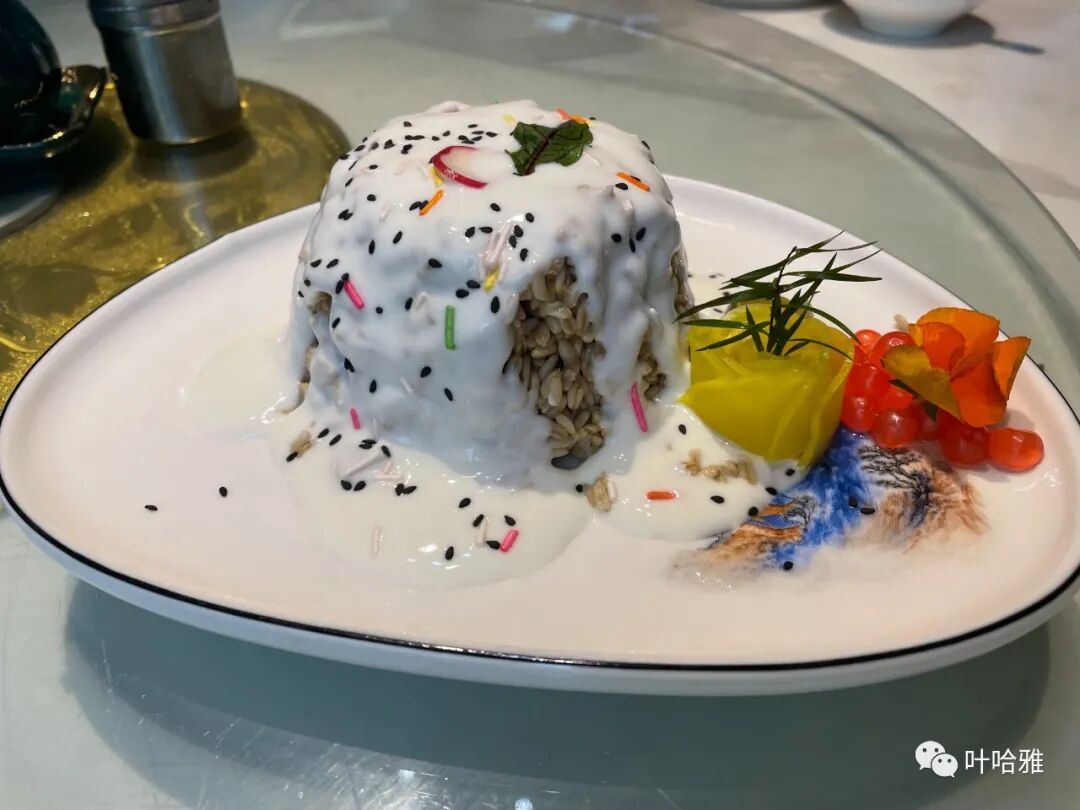
Yogurt with fermented oat grains (tianpei) is a creative new combination. Fermented oat grains are a popular Lanzhou snack.
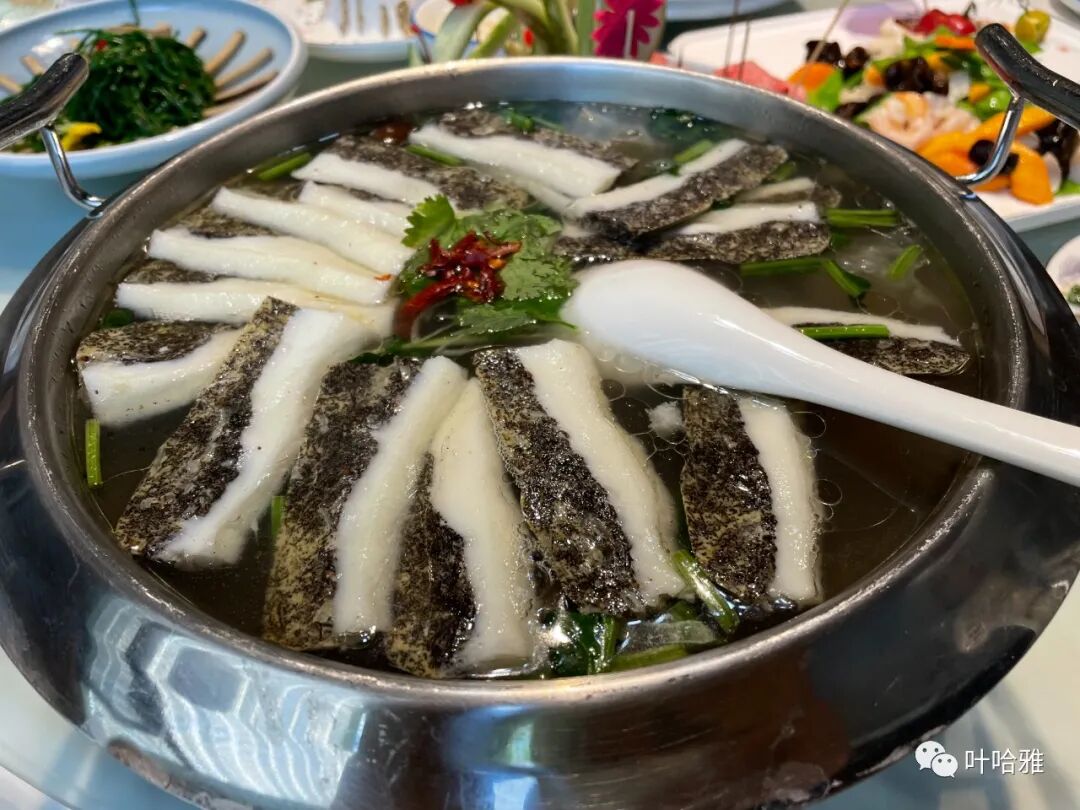
Soup made with hair moss (facai). Hair moss is a specialty of the Northwest and can be used as medicine.
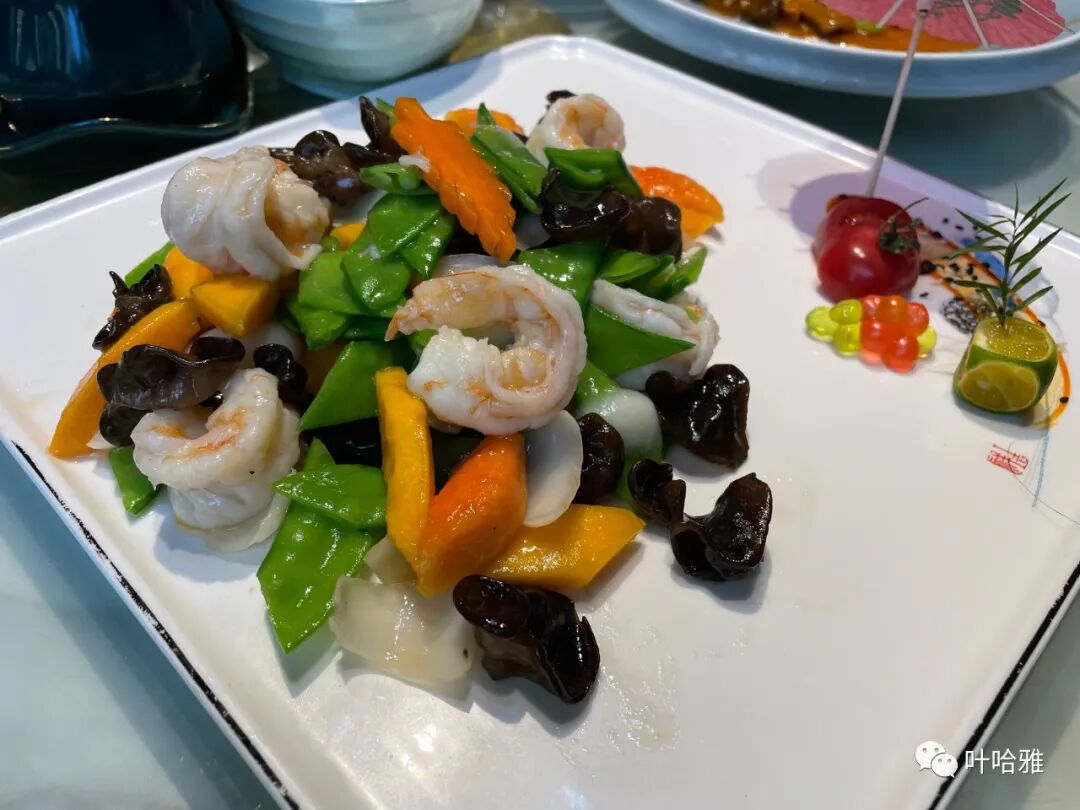
The lily bulbs in the assorted shrimp dish are another Lanzhou specialty. You must try lily bulbs when you come to Lanzhou.
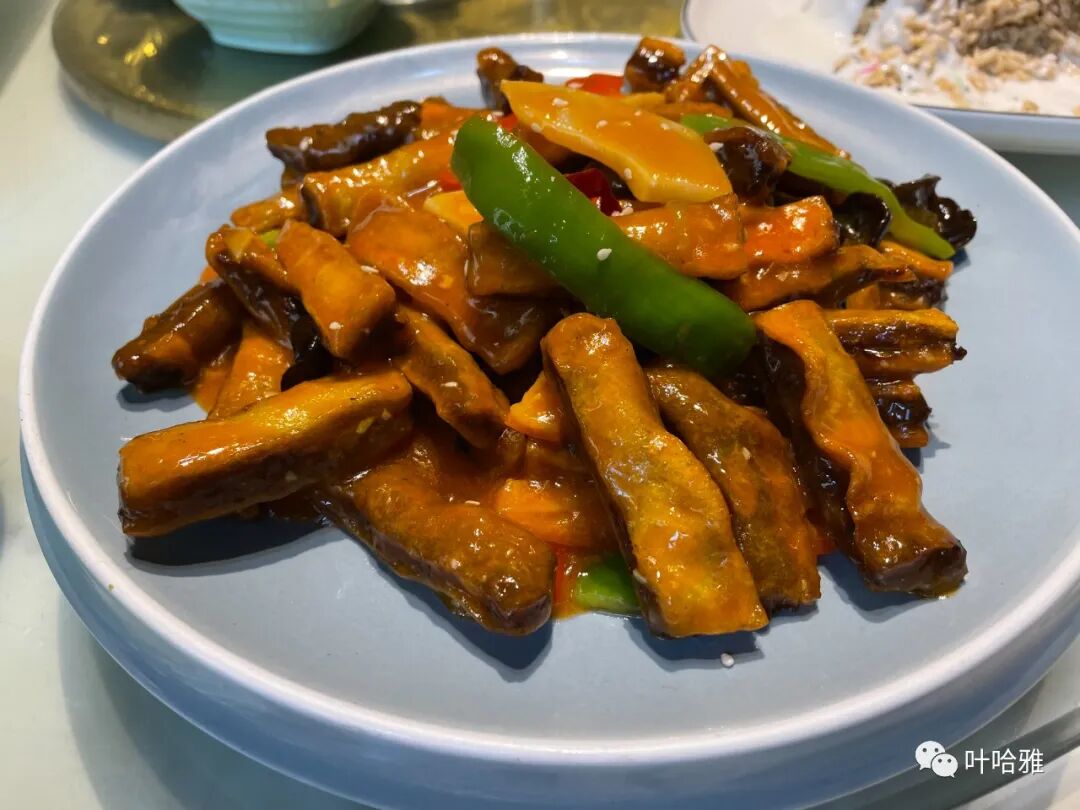
Hot and sour stuffed meat (suanla jiasha). The outer layer of the stuffed meat is made of egg, similar to Beijing's fried meat strips (songrou), but those use bean curd skin.
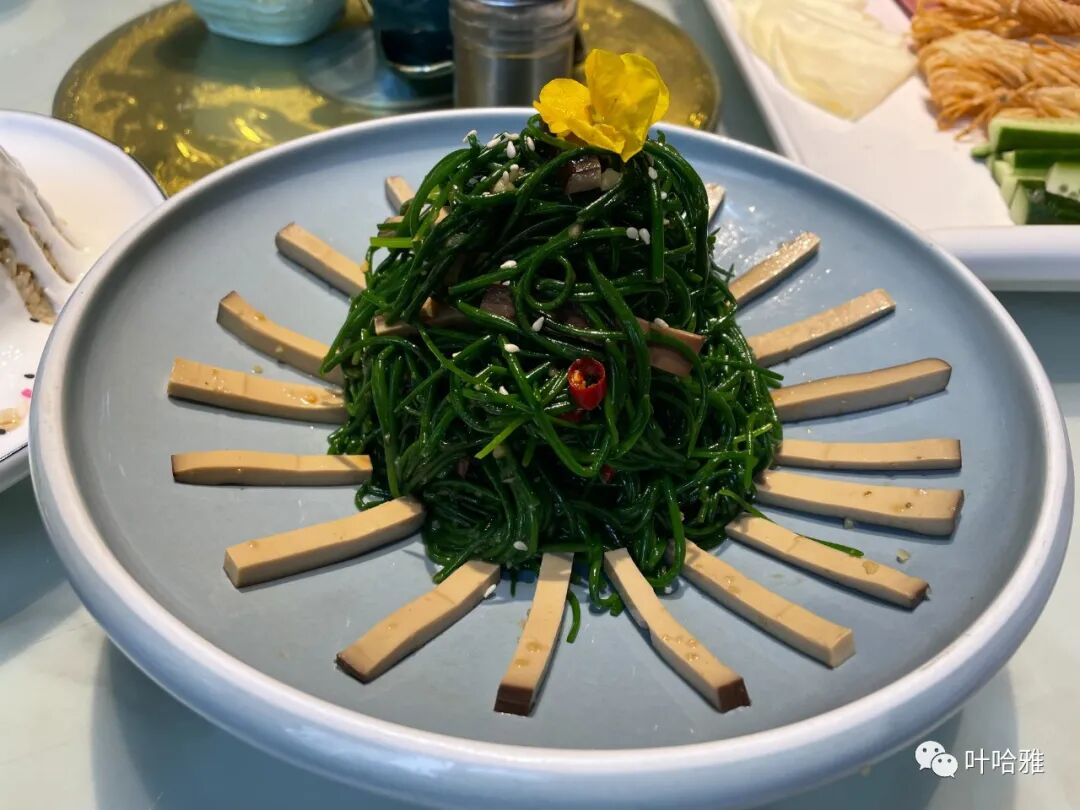
Cold tossed wild onion (shacong). This is a wild vegetable from the Northwest, and it has become more common in Beijing over the last two years.
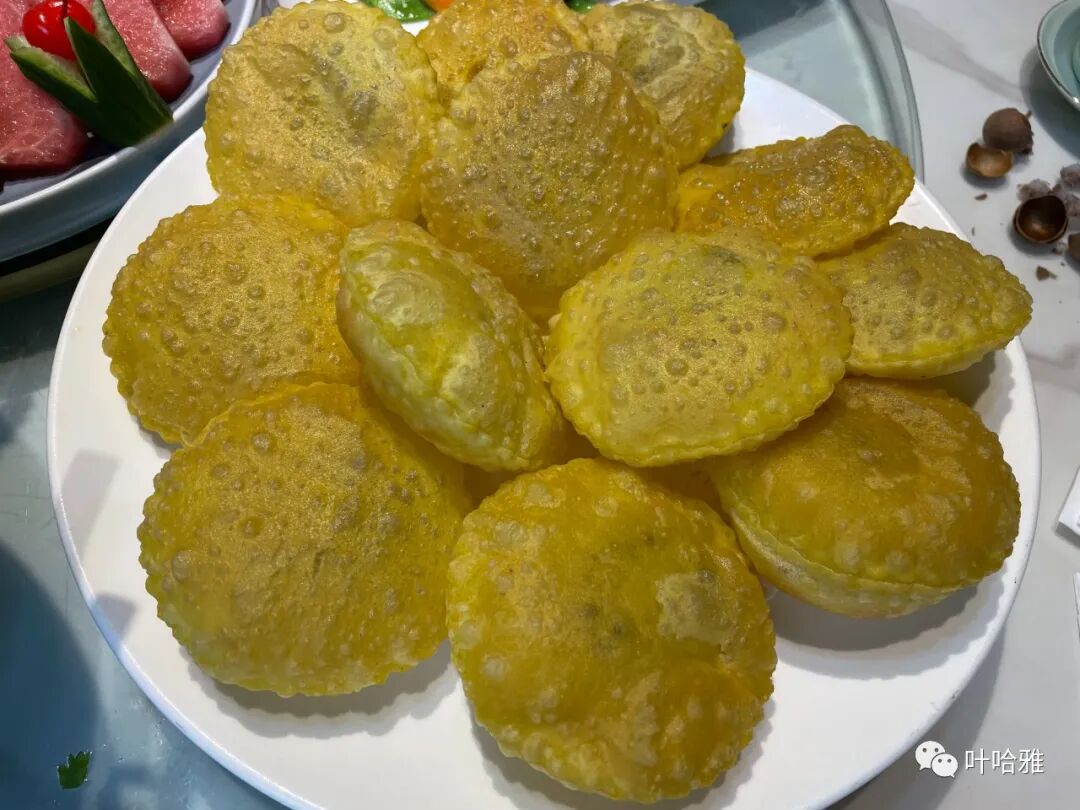
Sugar oil cake (tangyougao) is a bit like the Qinghai dog-pissing pancake (goujiaoniao). It is hollow inside. My friends chose these local specialties for me, and Shancheng Hand-Grabbed Lamb lives up to its reputation. It is worth recommending.
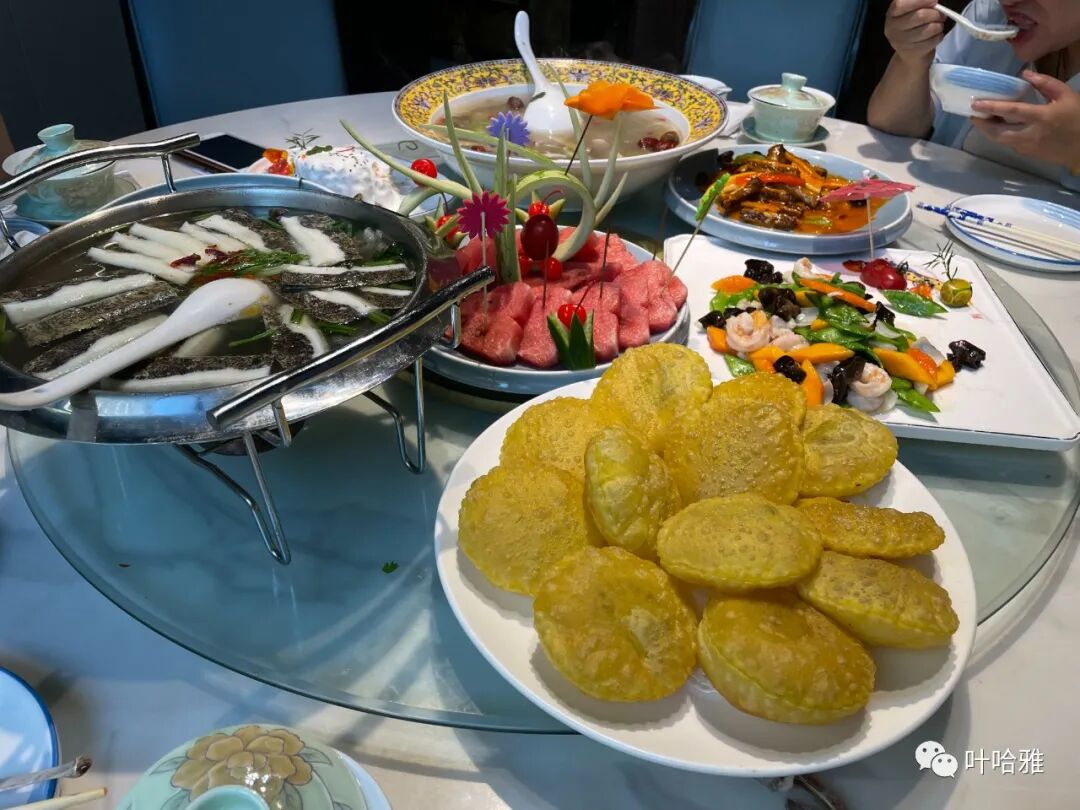
After the meal, we visited the home of the elder from Lingming Hall and saw this biography, The Brief Biography of Master Lingming (Lingming Shangren Zhuanlue).
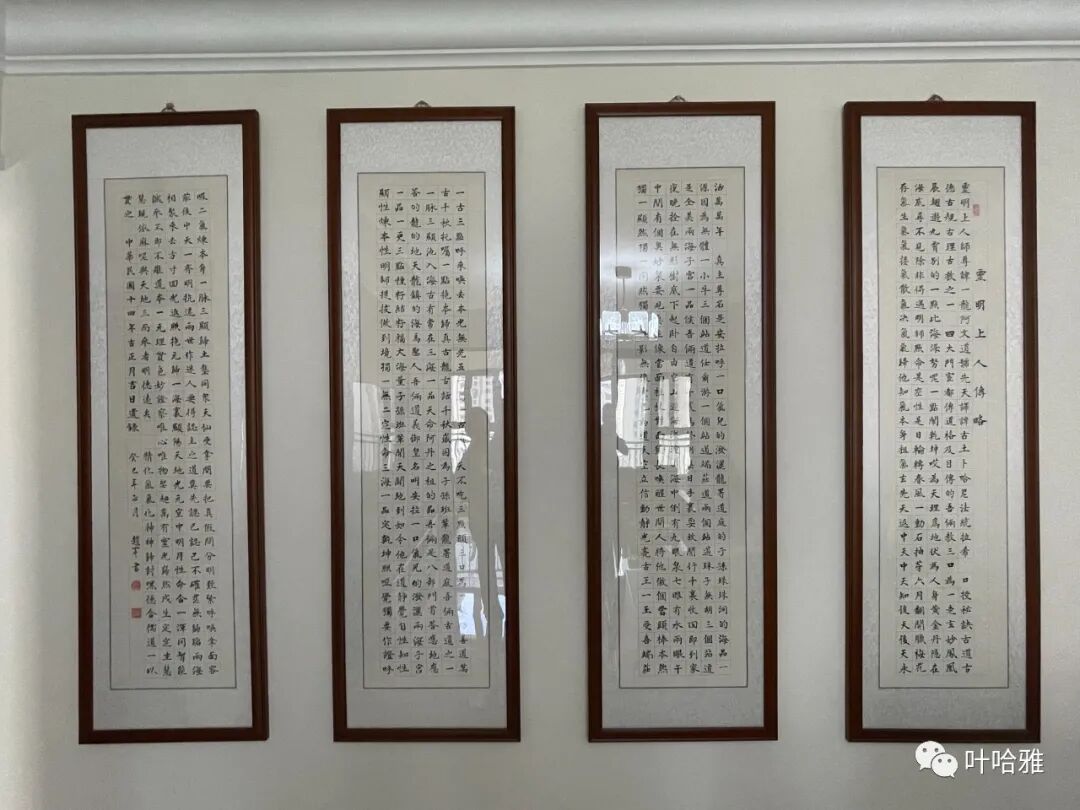
On the way to Lingmingtang Gongbei, I passed through Gongbei Gully and saw several gongbei built halfway up the mountain.
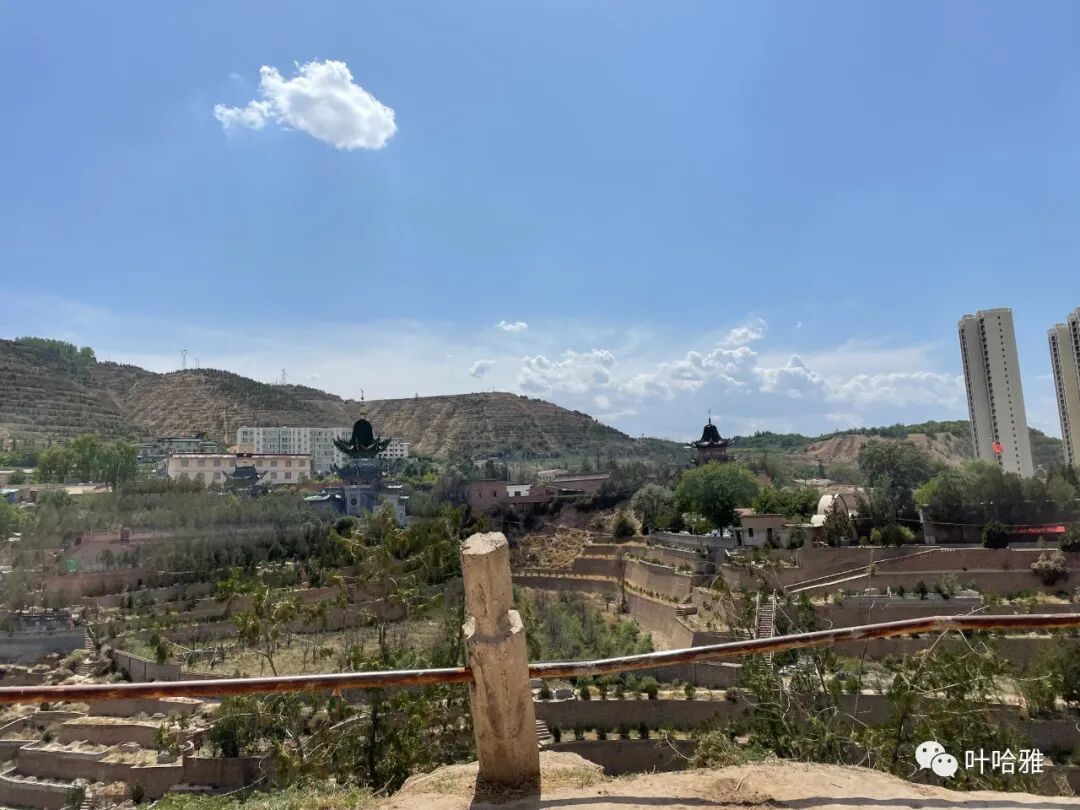
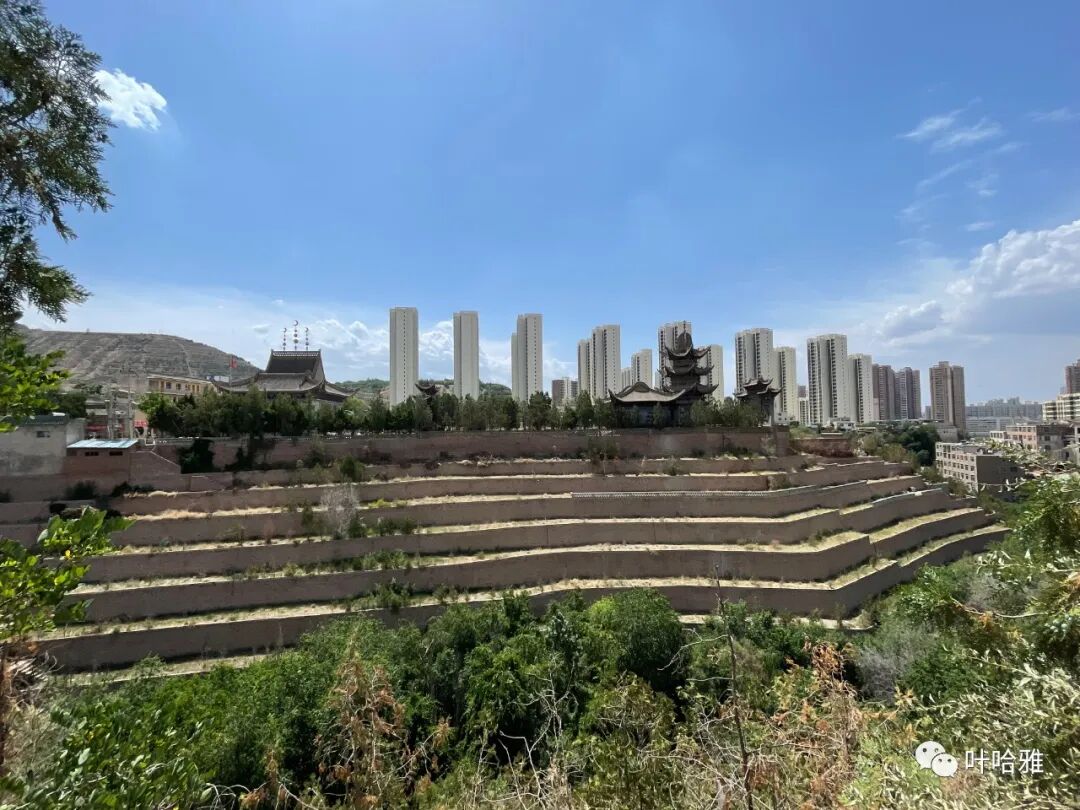
The Lingmingtang Gongbei sits on the top of Wuxingping Mountain in Lanzhou, covering an area of over 30,000 square meters, and it is the largest gongbei I have ever seen.
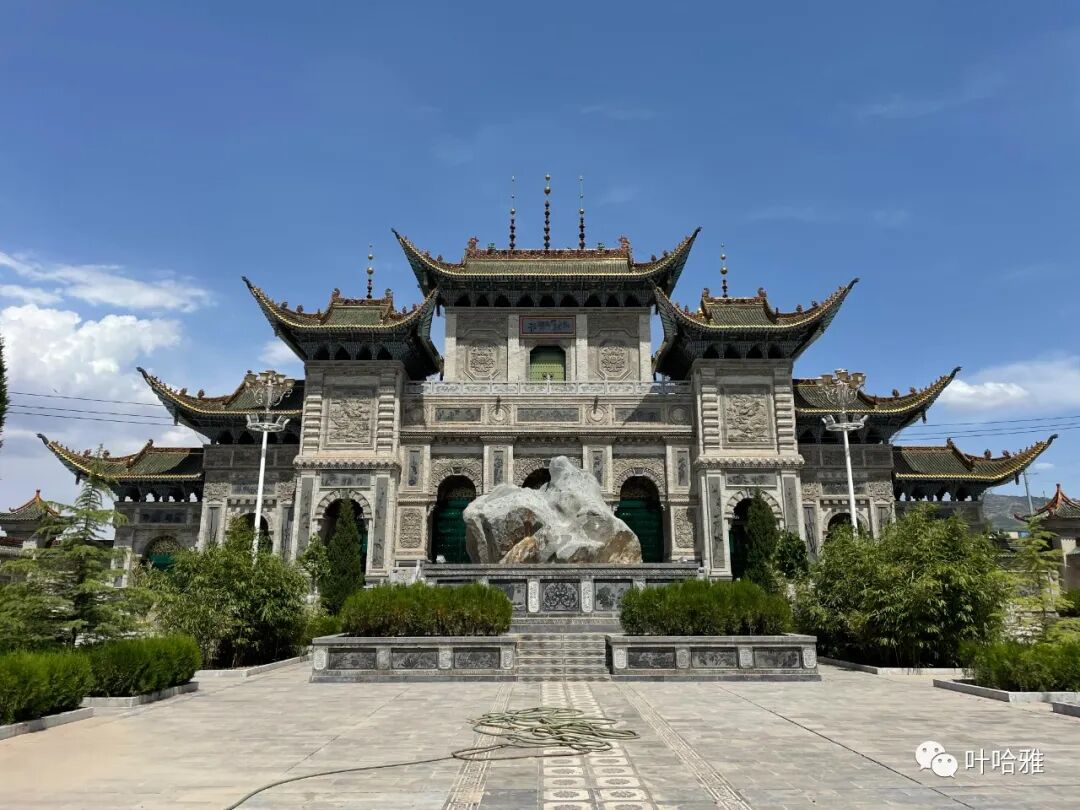
The founding master of Lingmingtang Gongbei was Ma Yilong (1853-1925), whose courtesy name was Lingming. He once studied under the Great Incense Master of the Kashgar Daotang and accepted the teachings of the Qadiriyya. In his final words, he mentioned being the 'answerer promised by the Bab gate,' which led some to believe he was influenced by the Babi faith. However, some descendants of Lingmingtang deny this, as detailed in the article 'A Discussion on the Possibility of Historical Contact Between Lingmingtang and the Babi Sect'.
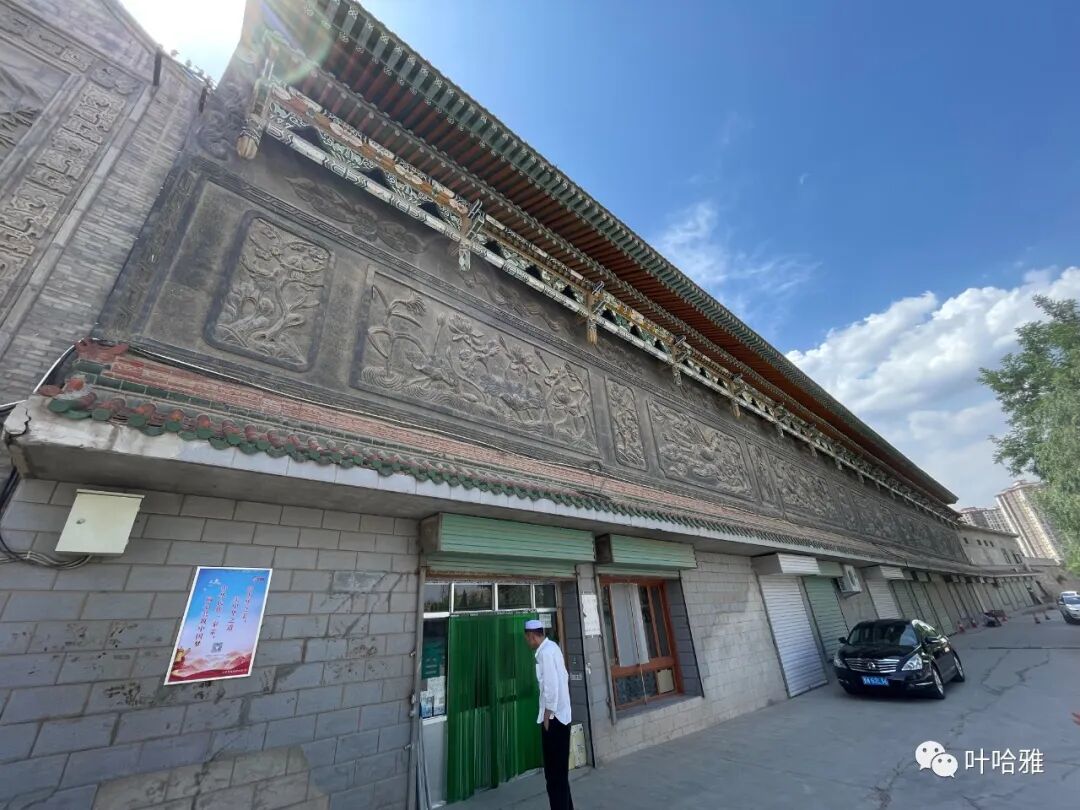
During his lifetime, Ma Lingming lived a life of poverty and appeared eccentric, remaining unmoved even when children played around him or passersby mocked him. People often asked him questions, and he would sometimes give hints without taking a penny. Over time, some felt his guidance came true, and they began to respect him.
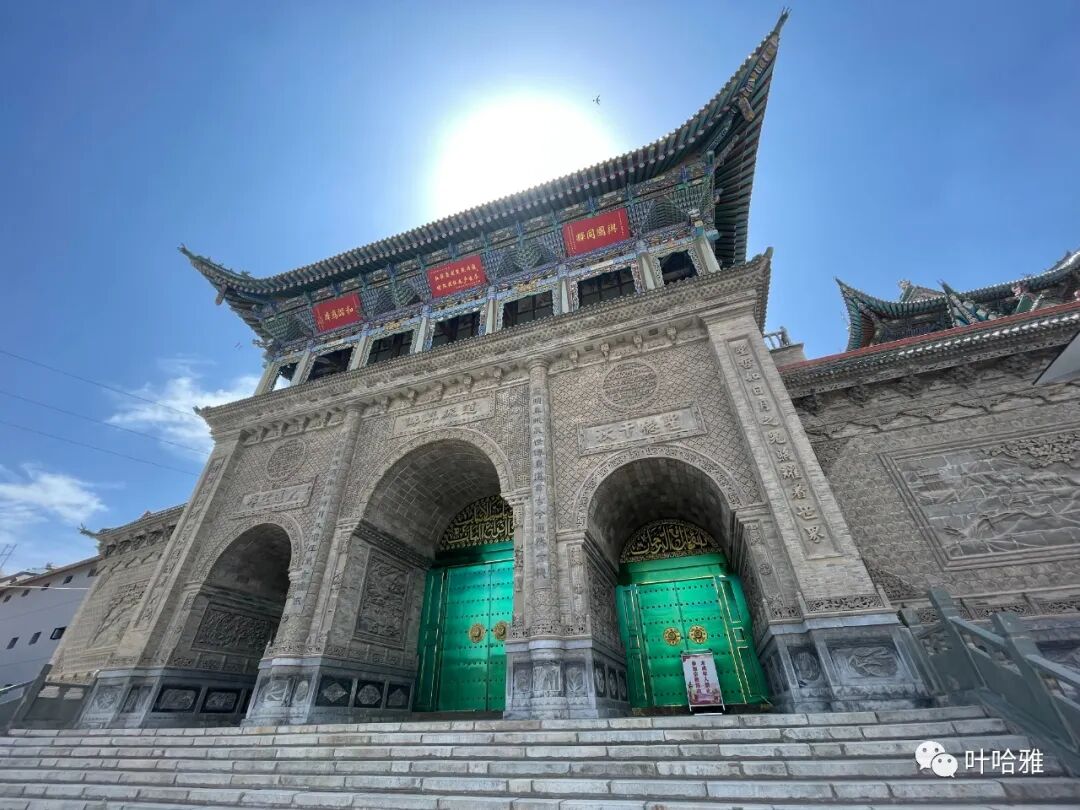
Whenever a Sufi elder gains the support of the public, they must have some extraordinary qualities. This is especially true for local illiterate believers, as it is hard to win hearts through reasoning and education alone.
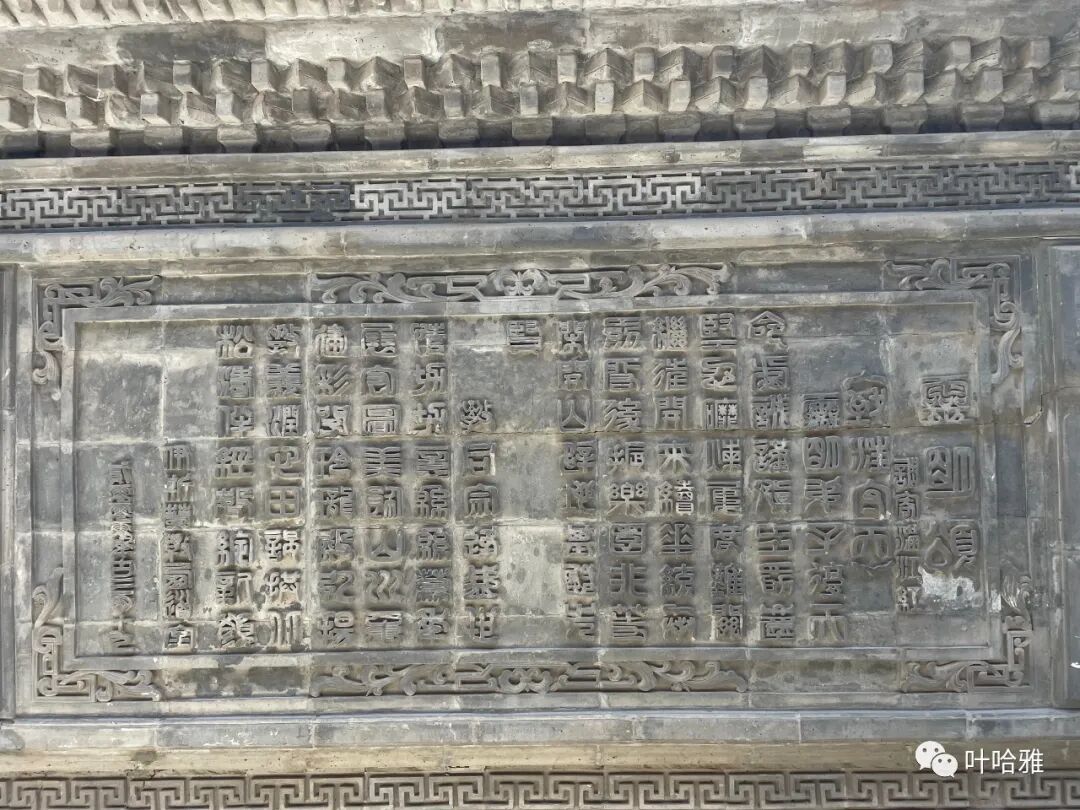
As Ma Lingming's followers grew, he caught the attention of local officials, who supported him to keep other menhuan in check.
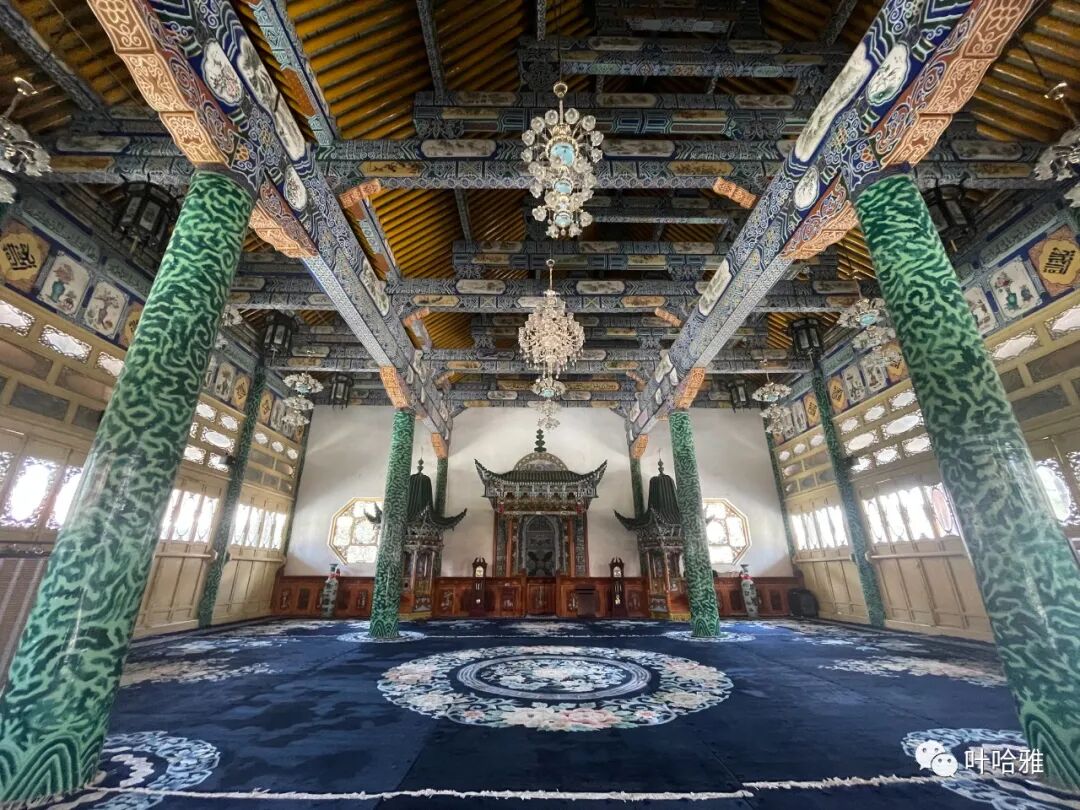
Ma Lingming himself remained indifferent to fame and wealth. He had no sons, only two daughters, and his noble character earned him the support of many believers.
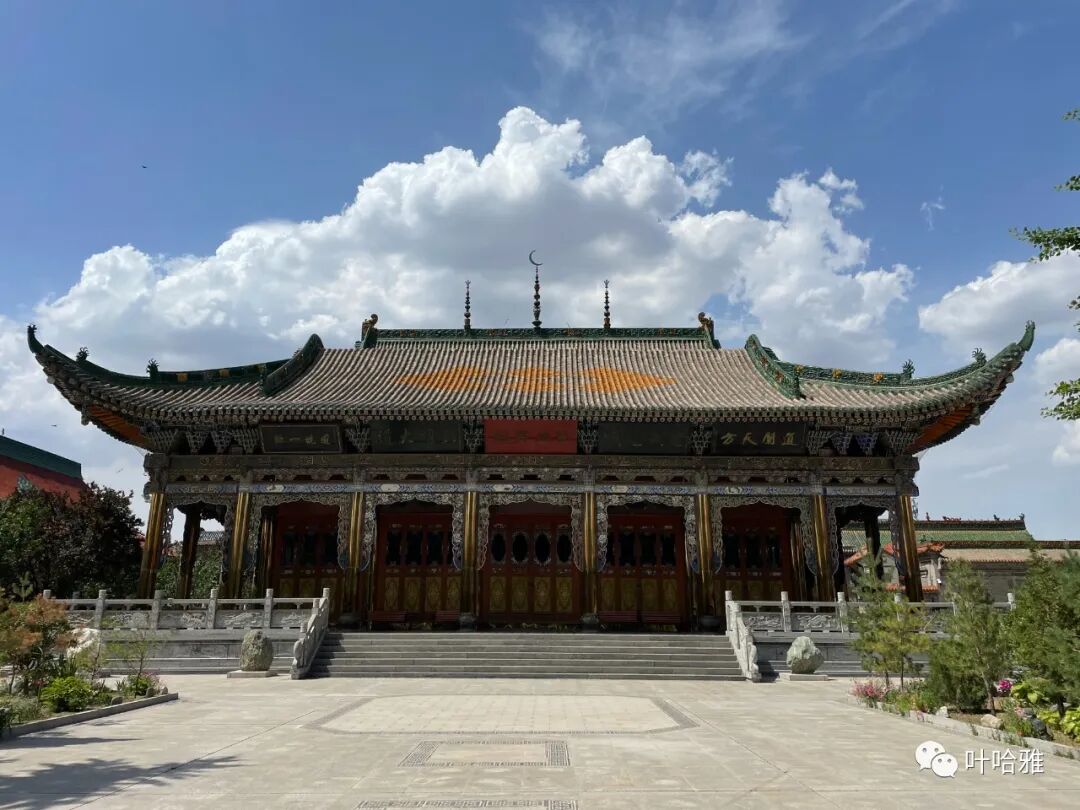
The religious authority of Lingmingtang is passed to the worthy rather than to one's own children. Before Ma Lingming passed away, he publicly gathered his followers to elect a second-generation successor. They finally chose Shan Zijiu (1888-1953) from Lanzhou. The election process was very complex and required many rituals to complete the succession.
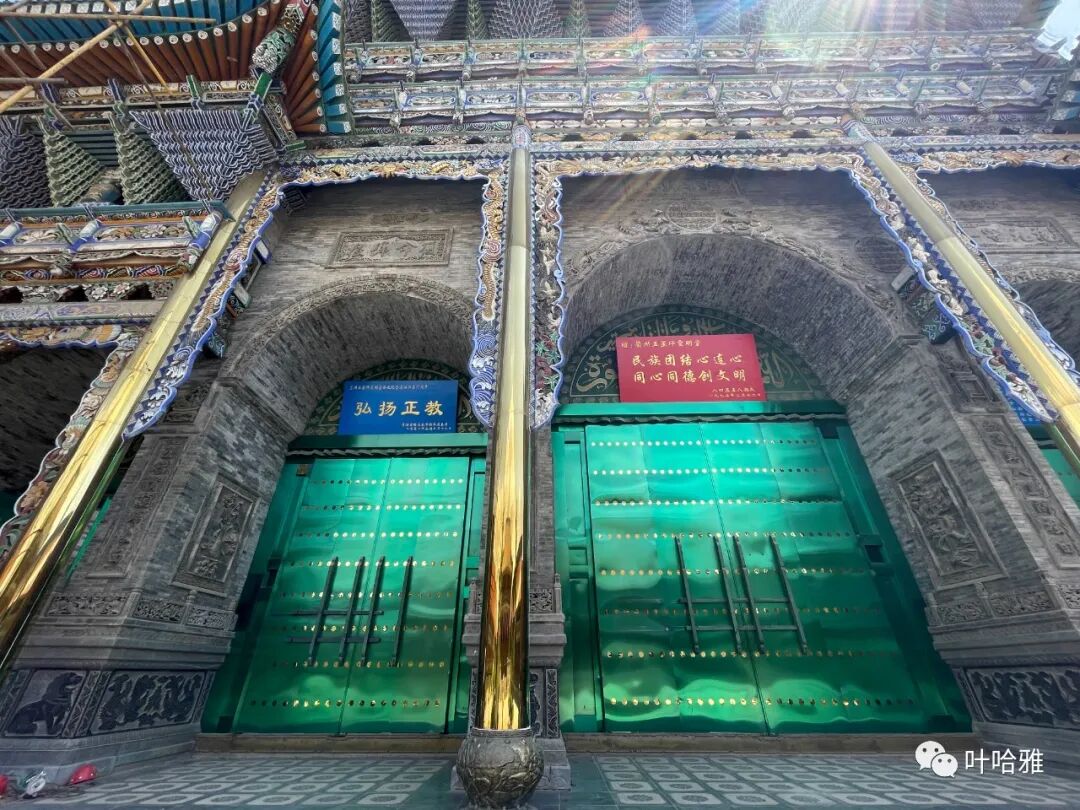
After Shan Zijiu, the religious authority was passed to Wang Shoutian (1924-2021), an elder from Tangwangchuan in Dongxiang County.
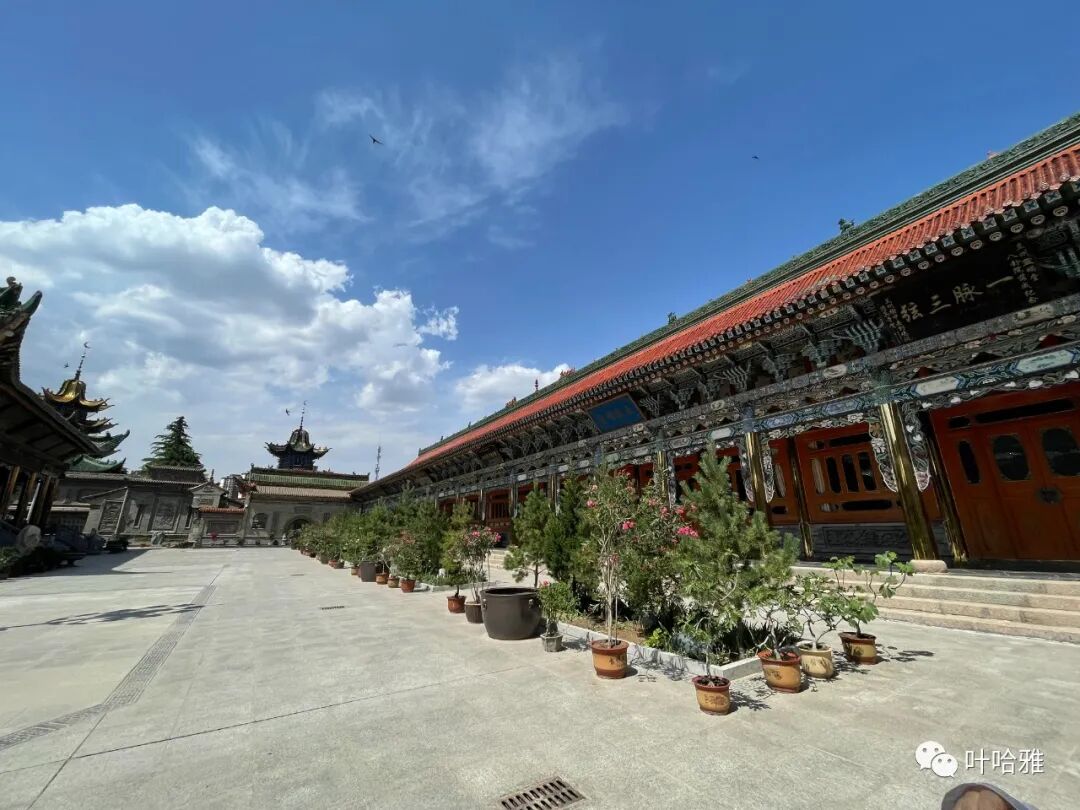
Between 1958 and 1979, Wang Shoutian was imprisoned during the anti-religious and anti-feudal movements. After his release, he began leading the construction of the Lingmingtang Gongbei, and the current Wuxingping site was allocated to Lingmingtang by the government in 1982.
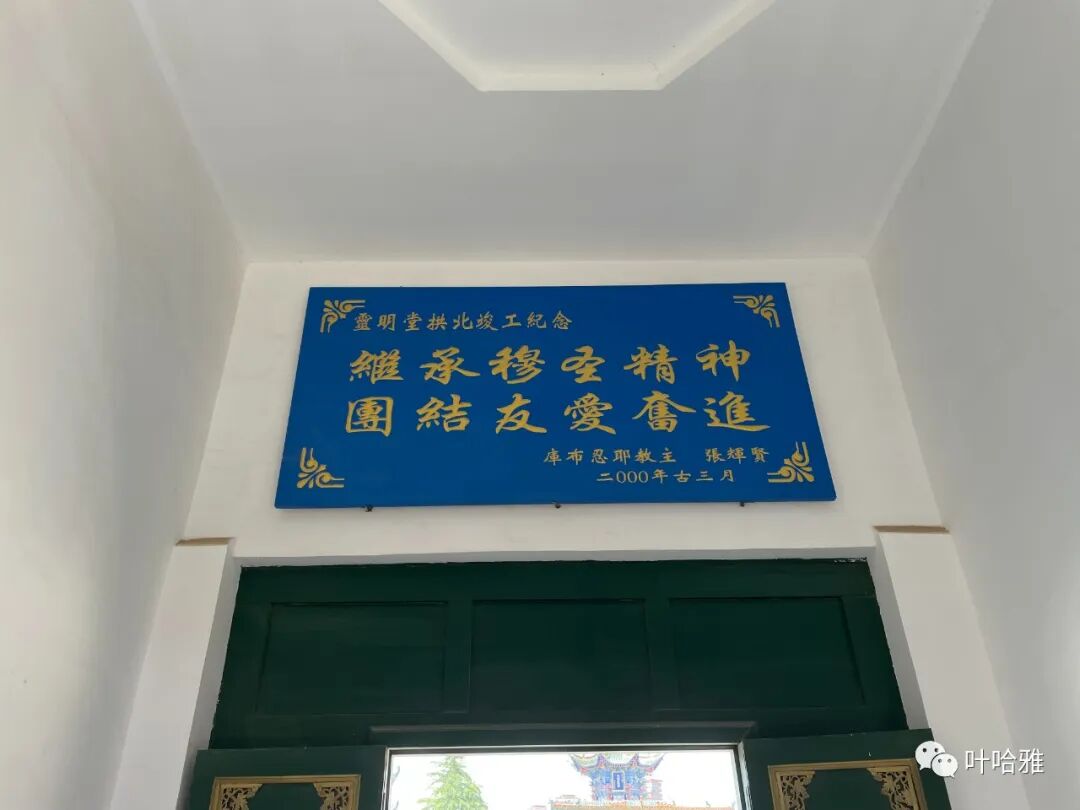
Wang Shoutian valued education, and in 1993, he took the lead in donating money to convert Tangwang Primary School into a middle school.
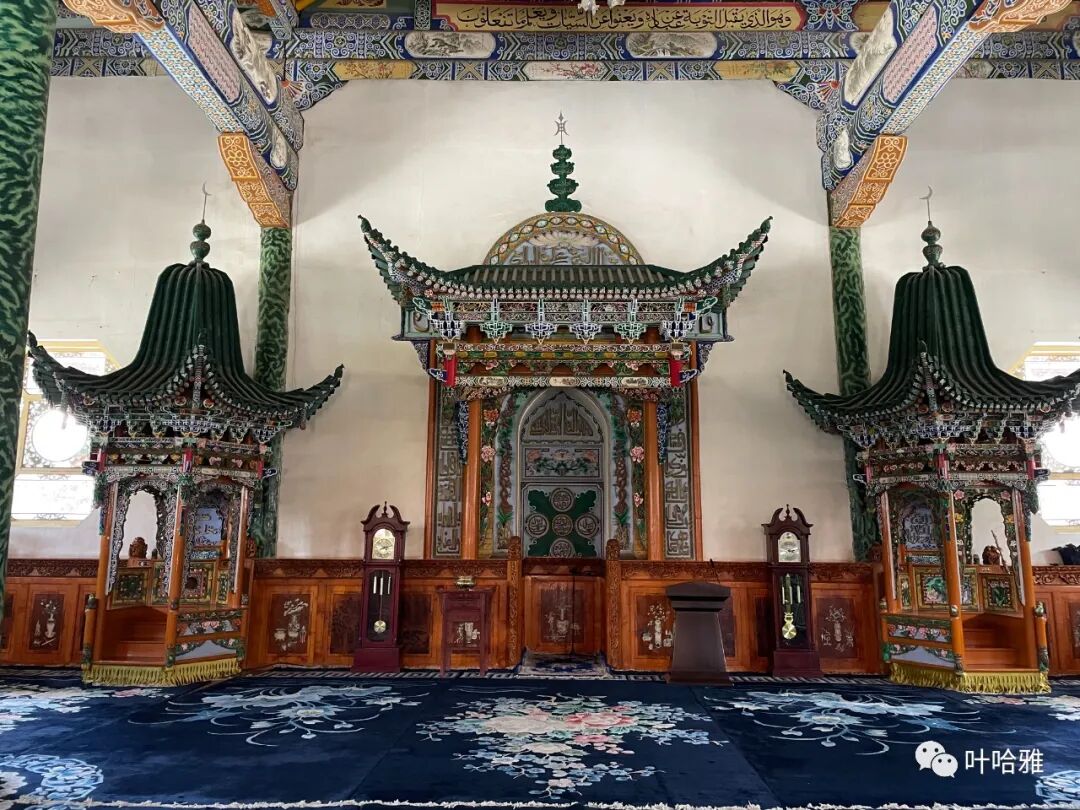
At the same time, Wang Shoutian also valued business and encouraged followers to develop production. He even believed that young people should focus on their careers, which is why Lingmingtang has better economic strength than other menhuan and the financial resources to build such a grand gongbei.
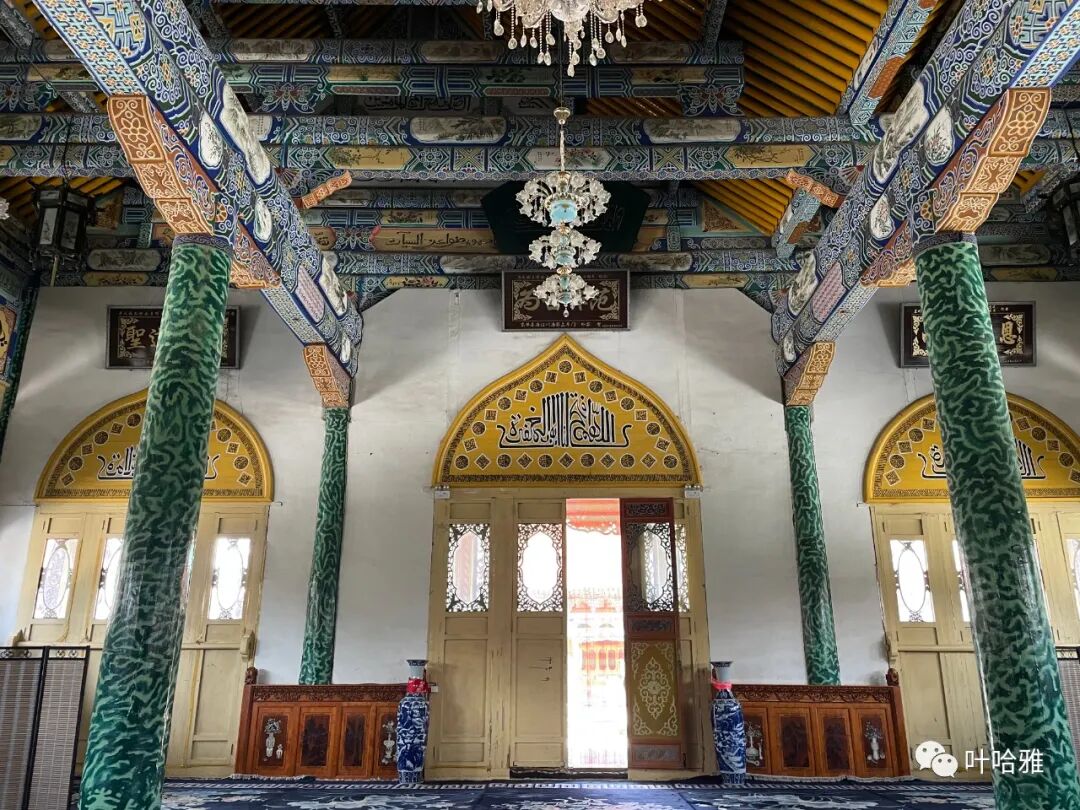
Ma Lingming left behind no personal property. The construction of the Lingmingtang gongbei cost over 100 million yuan, all of which came from donations by believers.
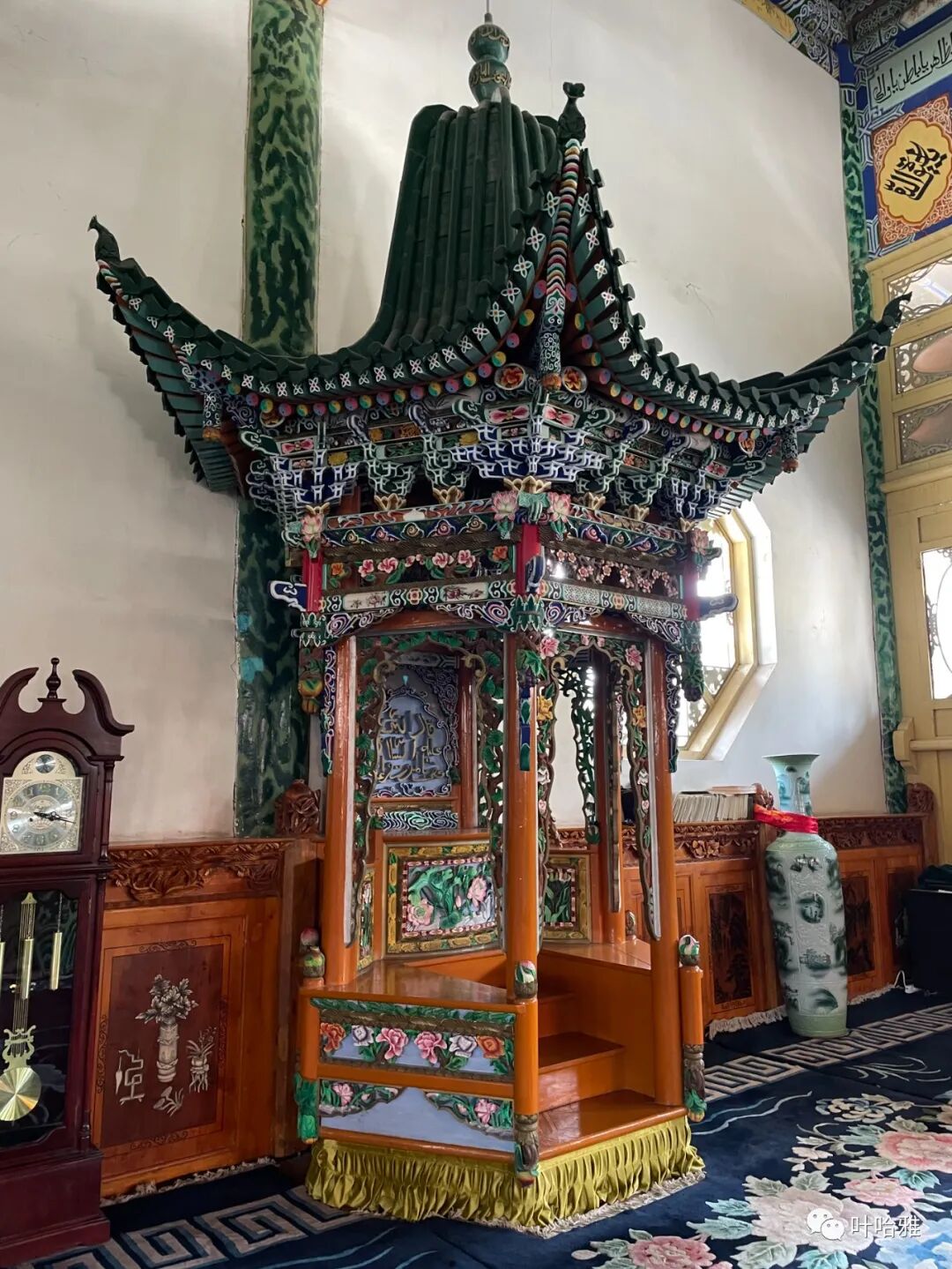
Currently, there are Lingmingtang branch gongbei in Guyuan, Linxia, Hami, and Luoyang. The current fourth-generation leader is named Su Zhilin. He is in his thirties and was elected by the community elders.
The election of the leader is only considered complete after it is approved by the relevant authorities.
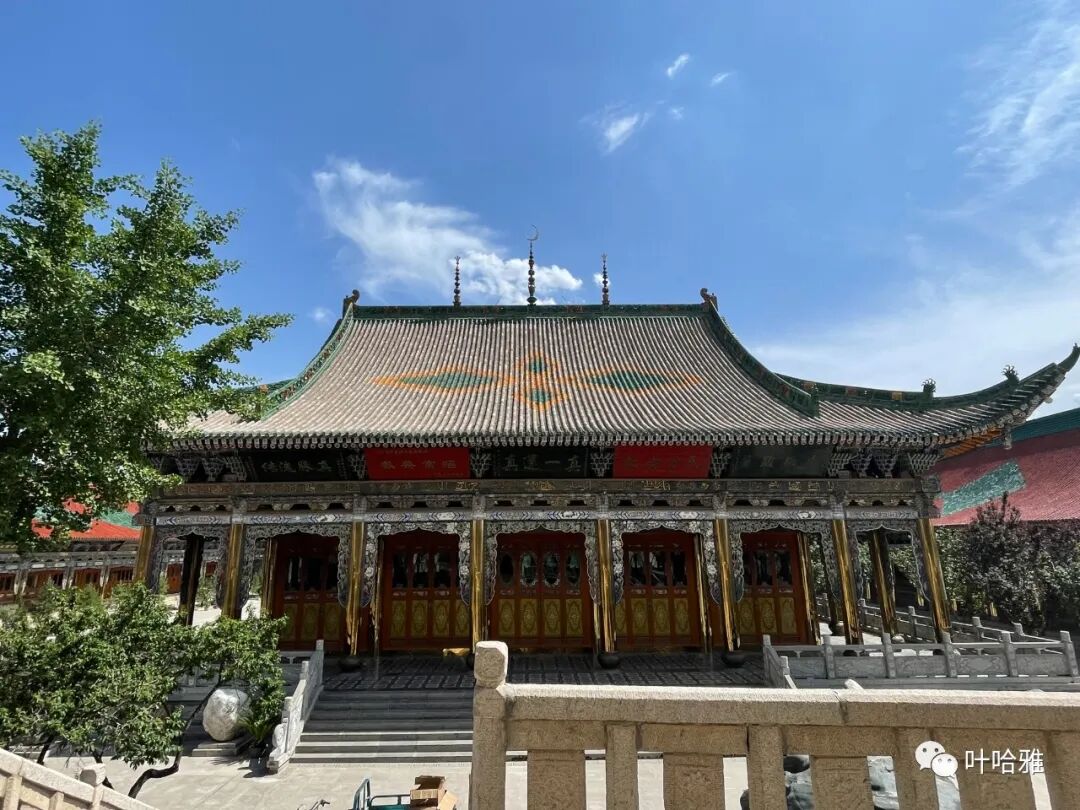
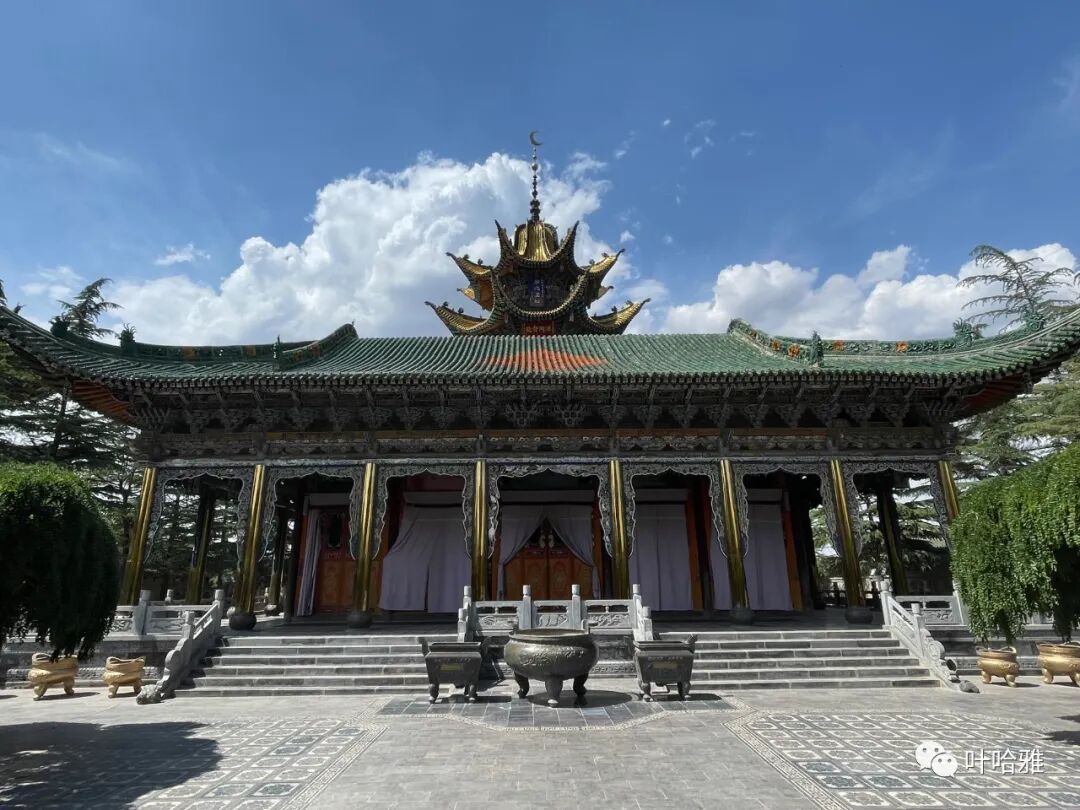
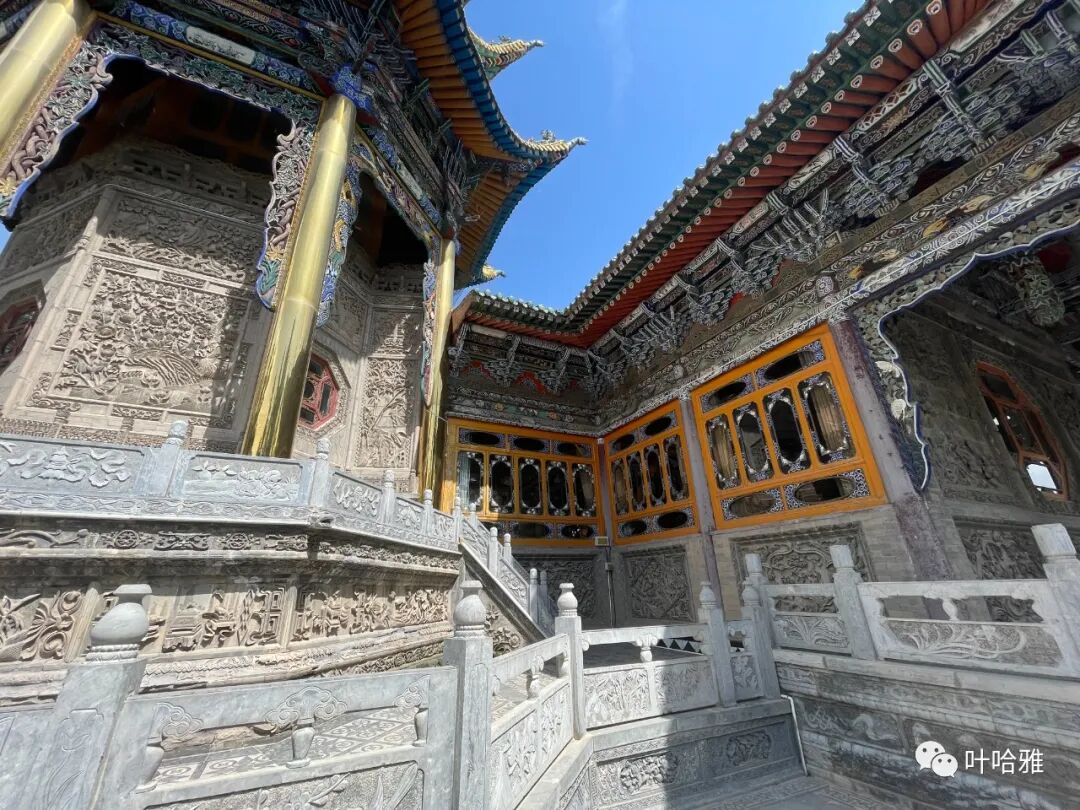
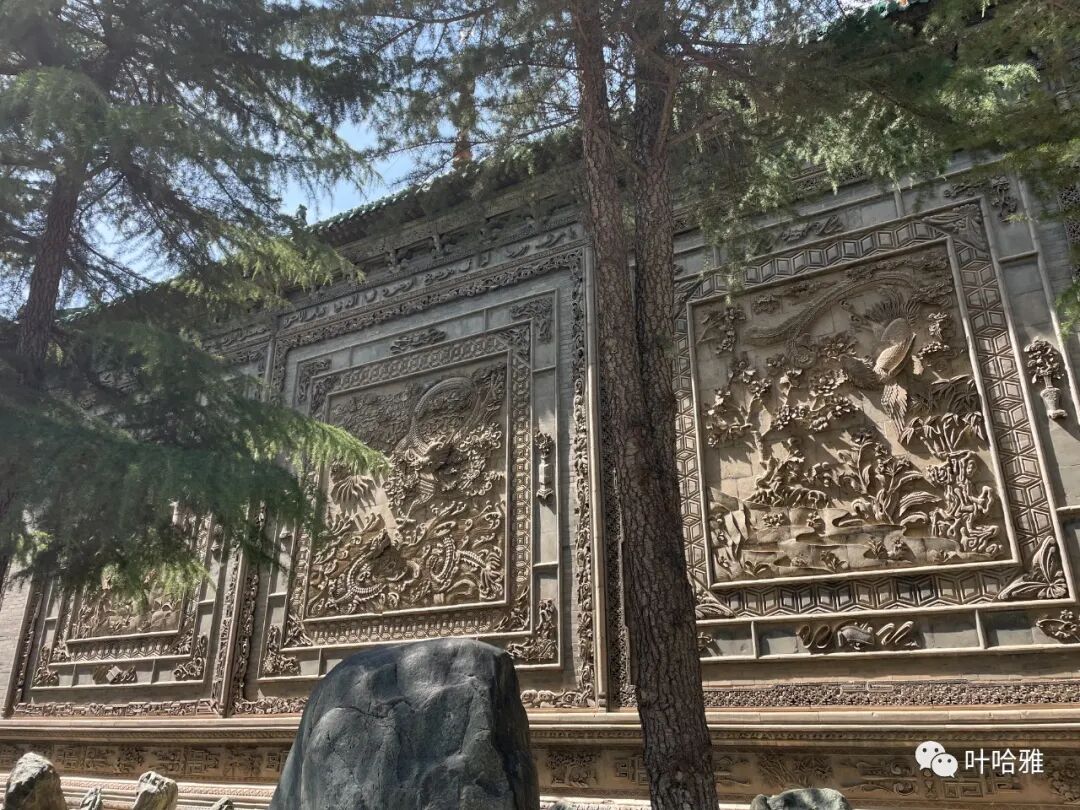
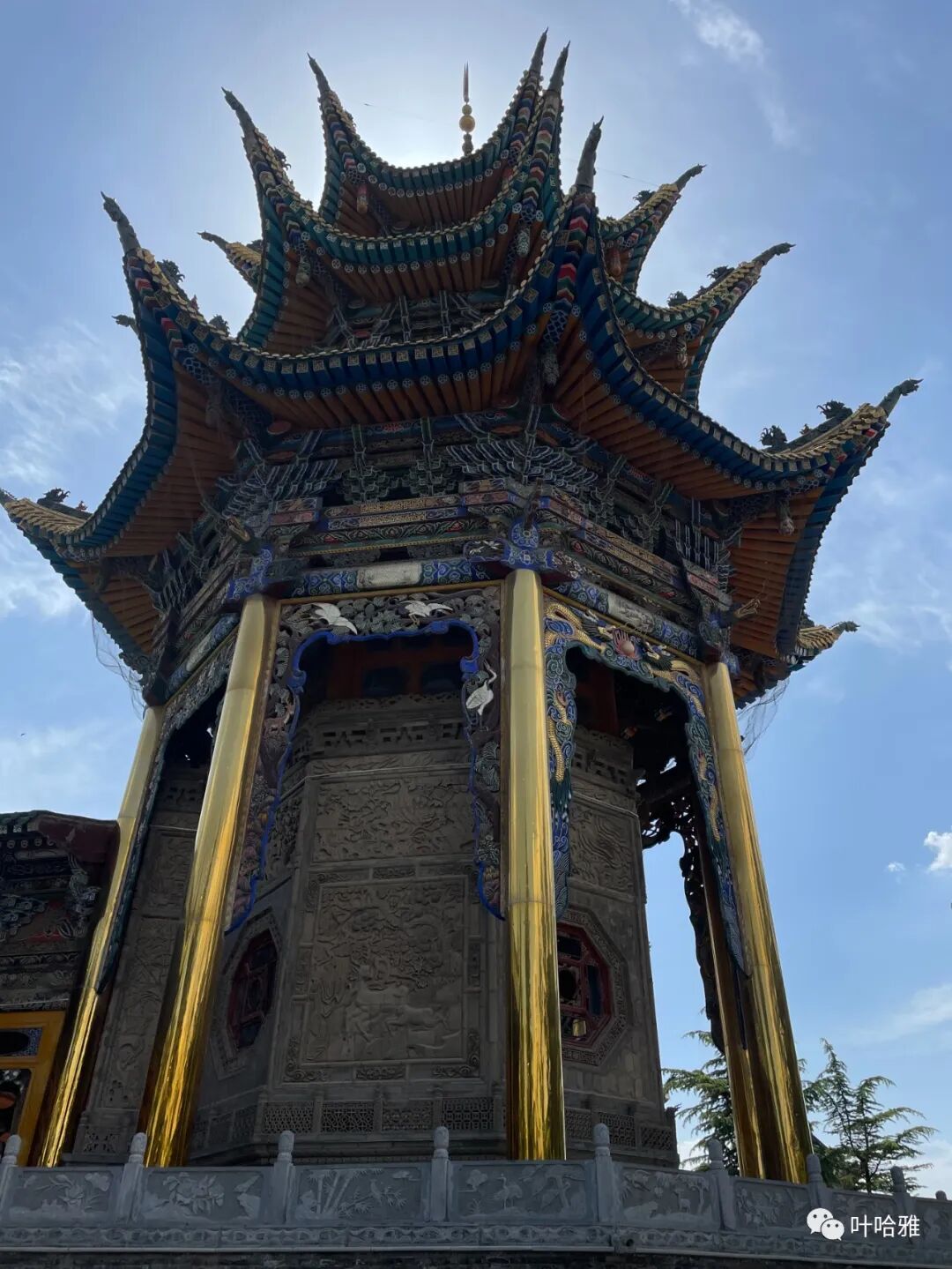
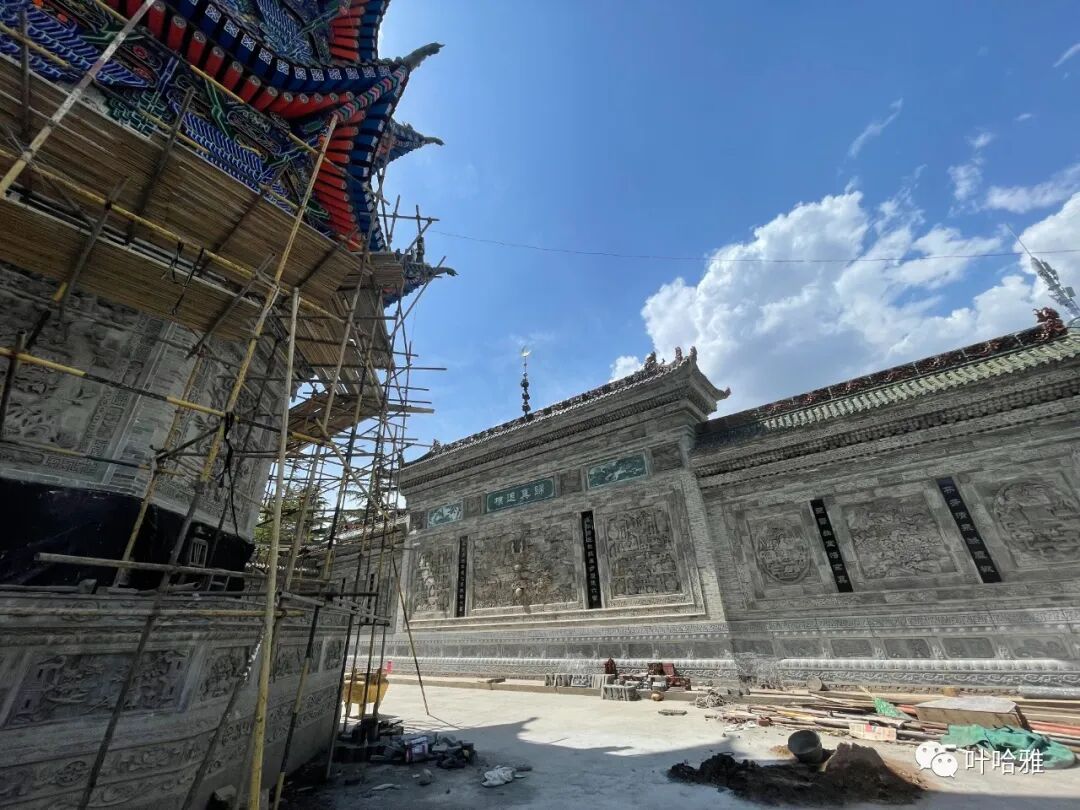
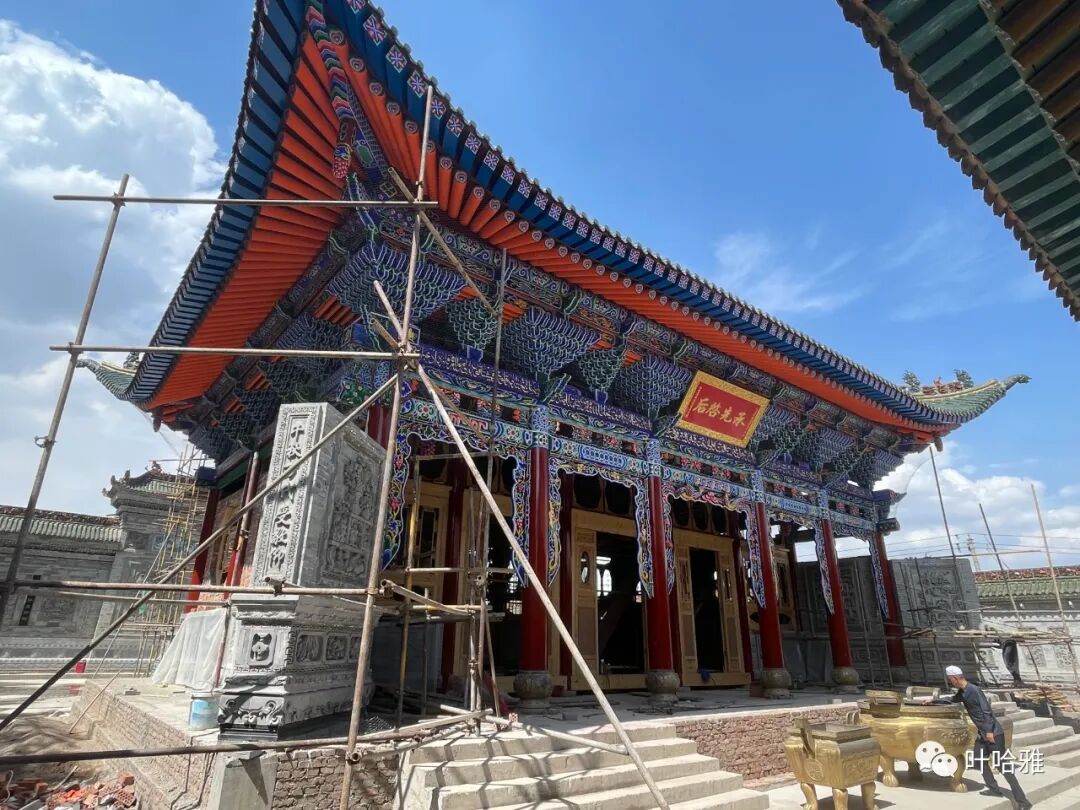
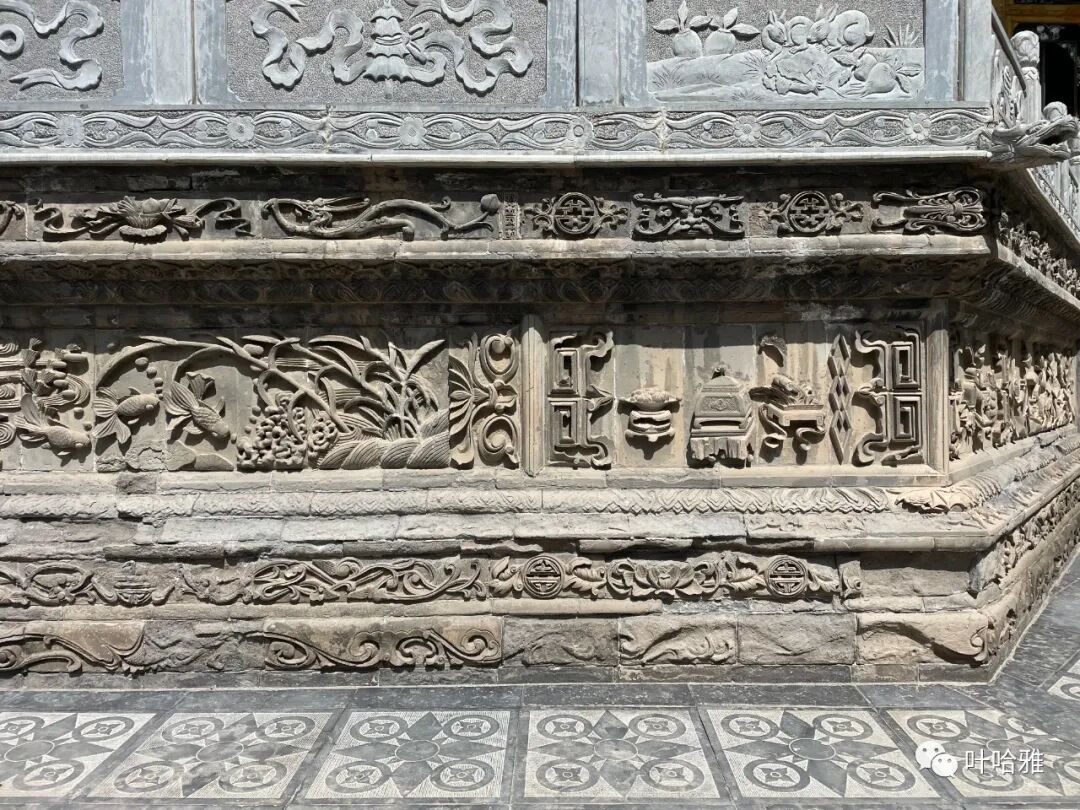
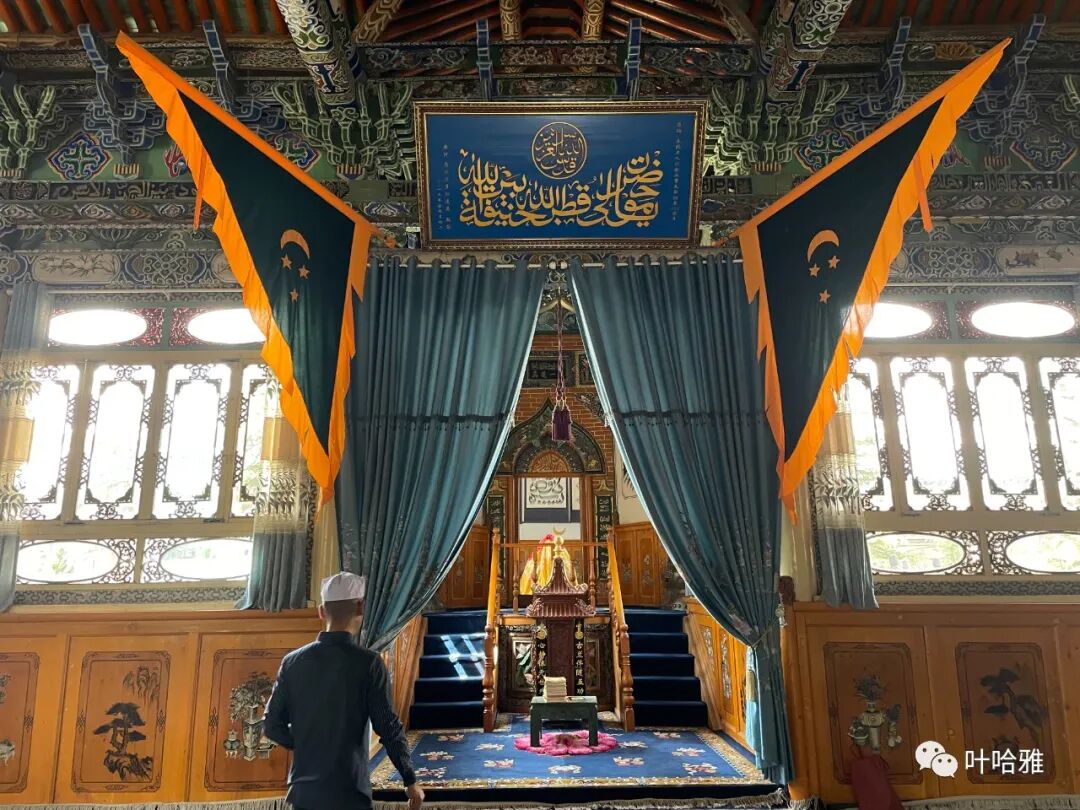
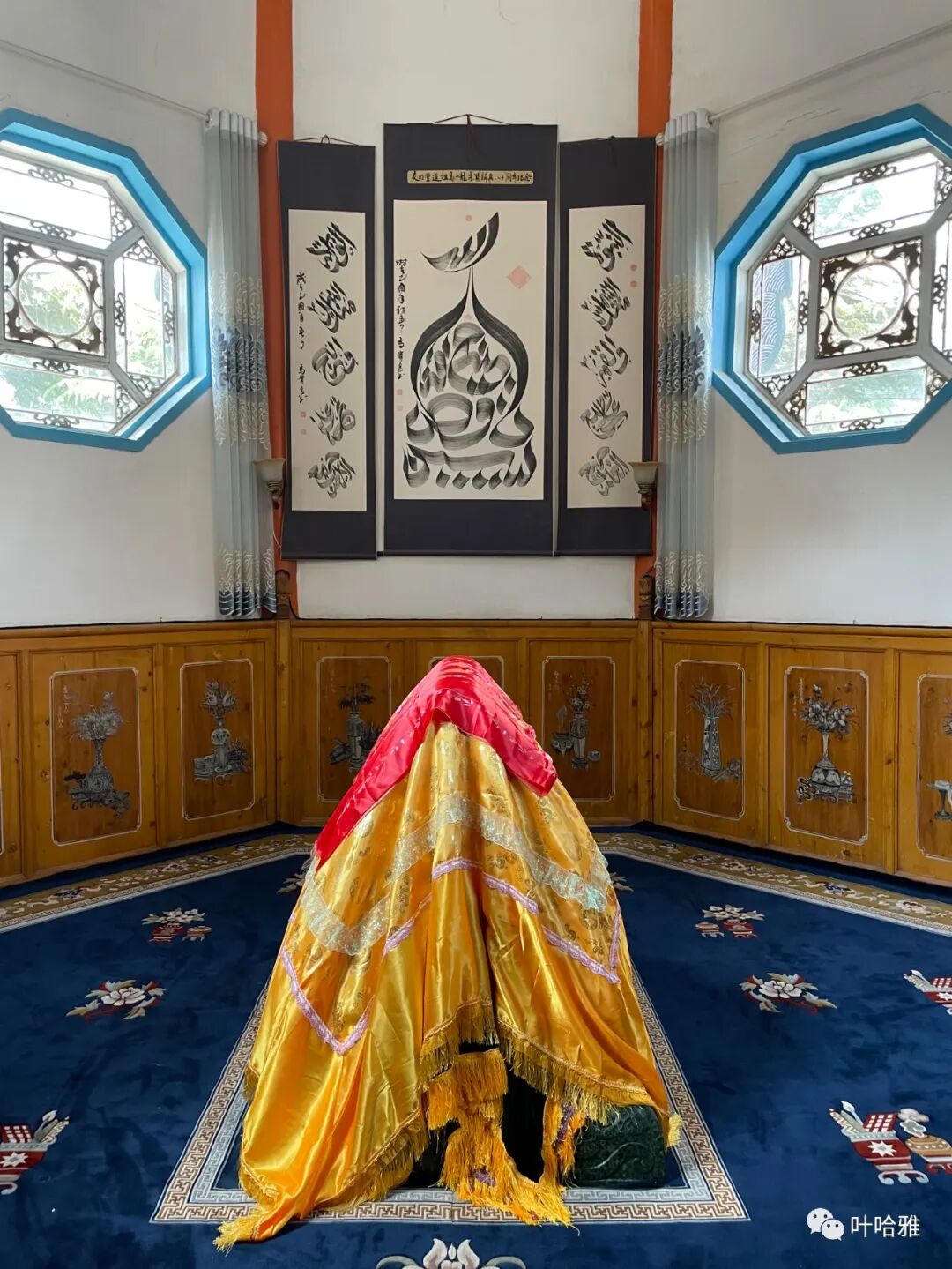
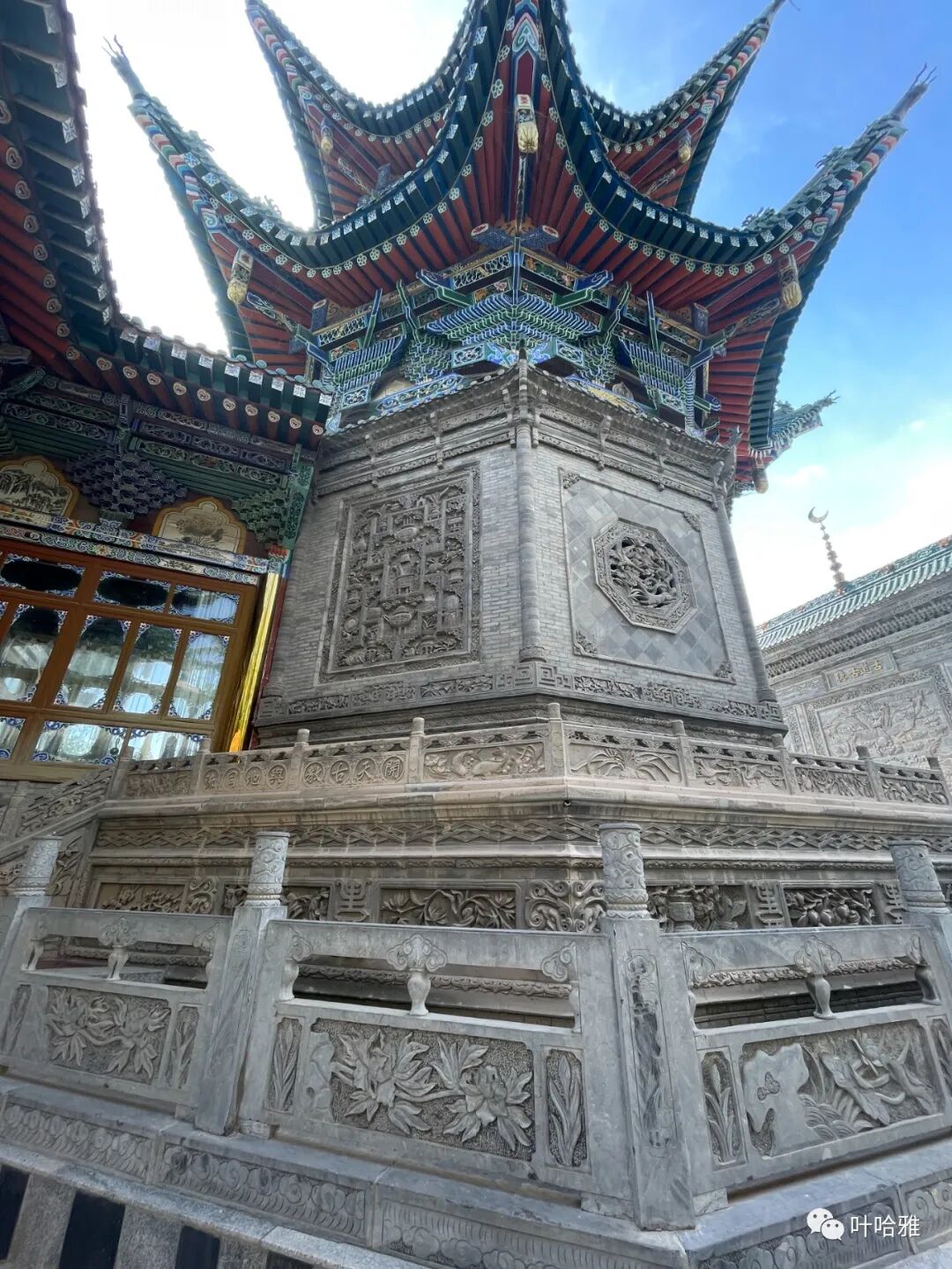
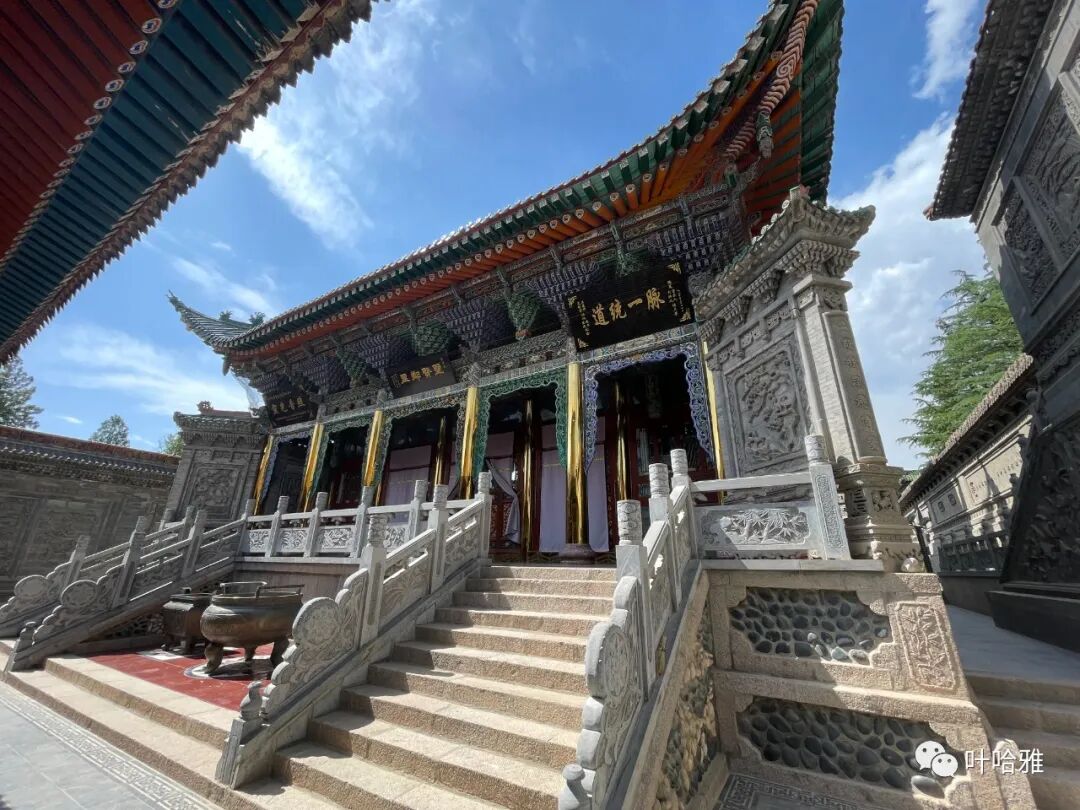
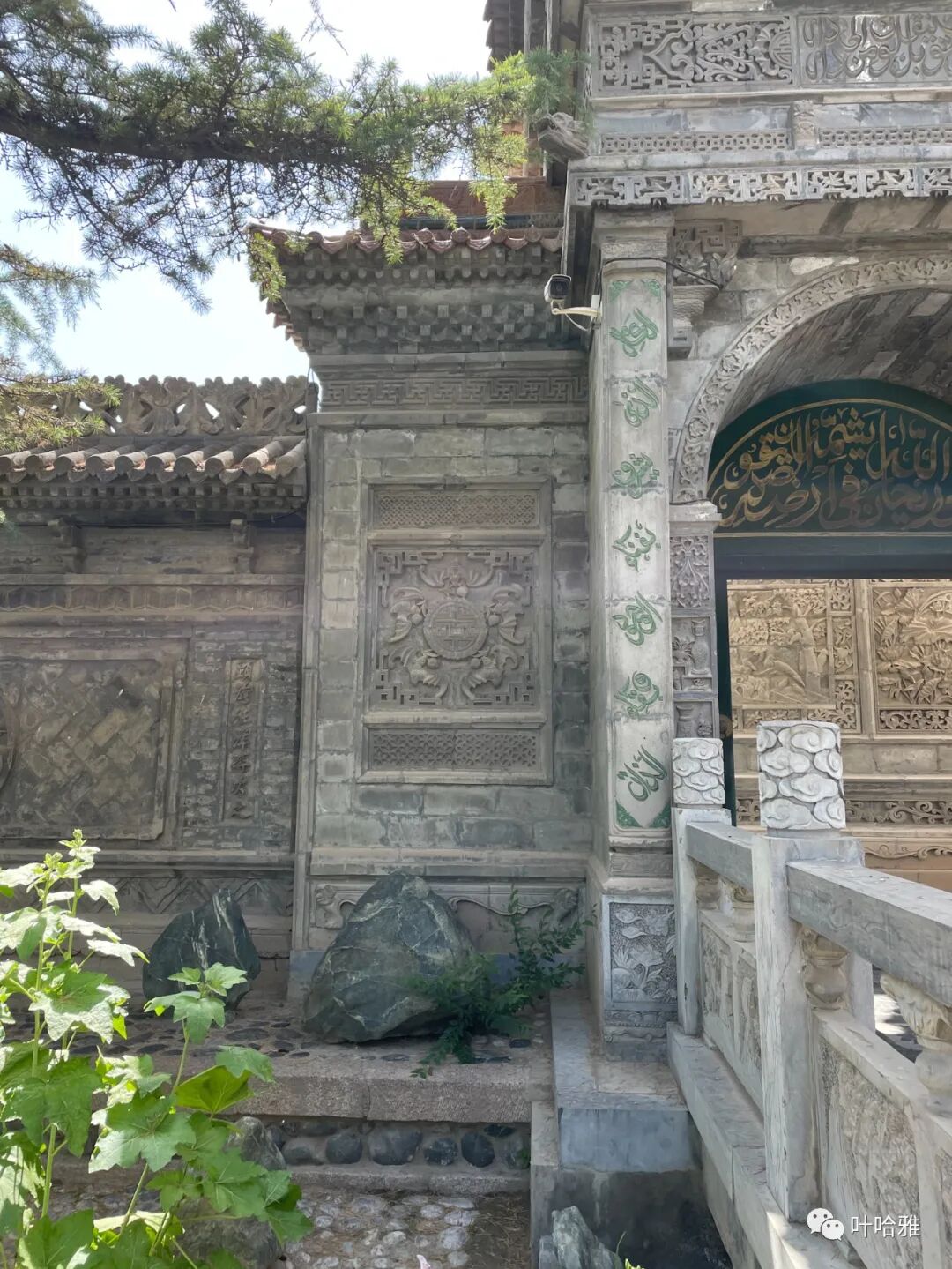
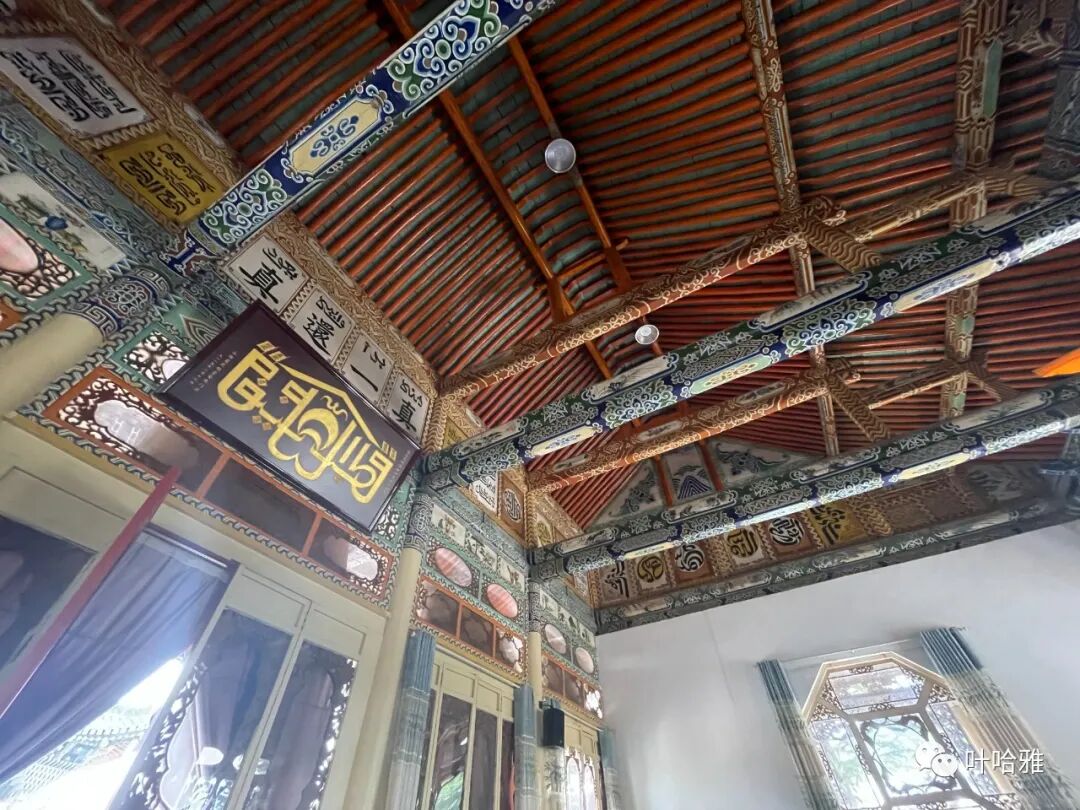
The former residence of the elder Wang Shoutian is inside the Lingmingtang gongbei. During his lifetime, he often sat in the courtyard with people gathered around him to listen to his teachings. Because he had a strong Tangwang accent—or perhaps he was speaking the Dongxiang language—someone would sit by his side to translate for him.
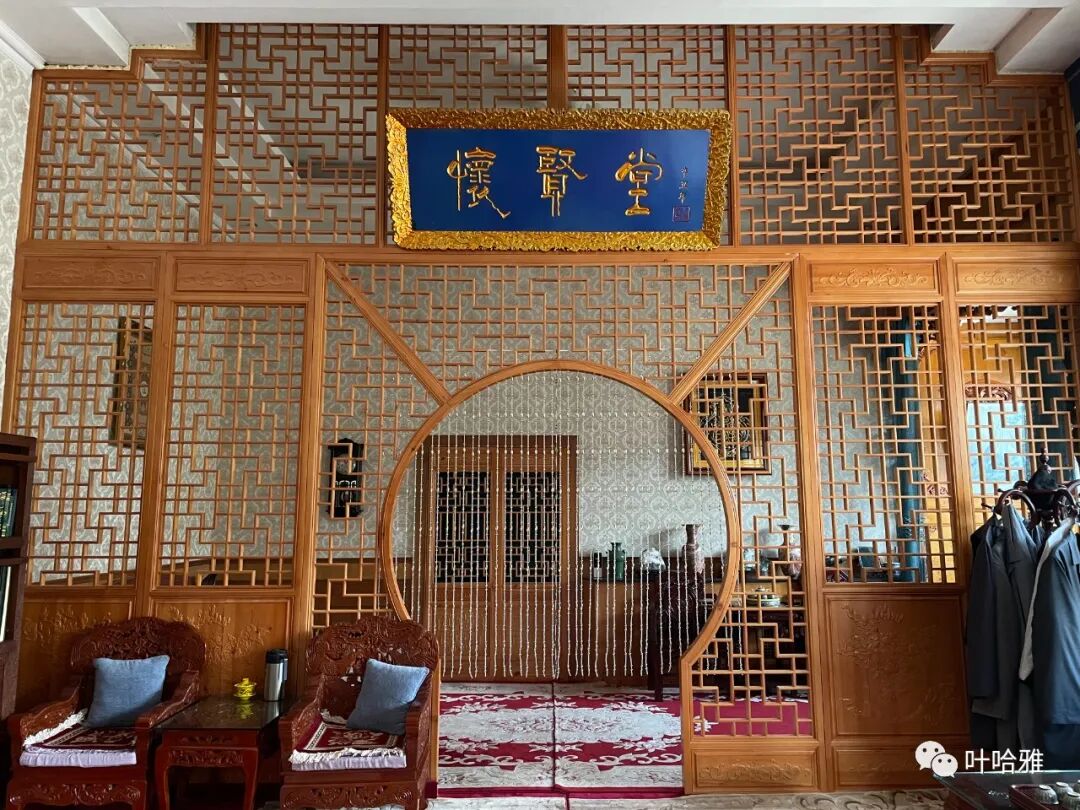
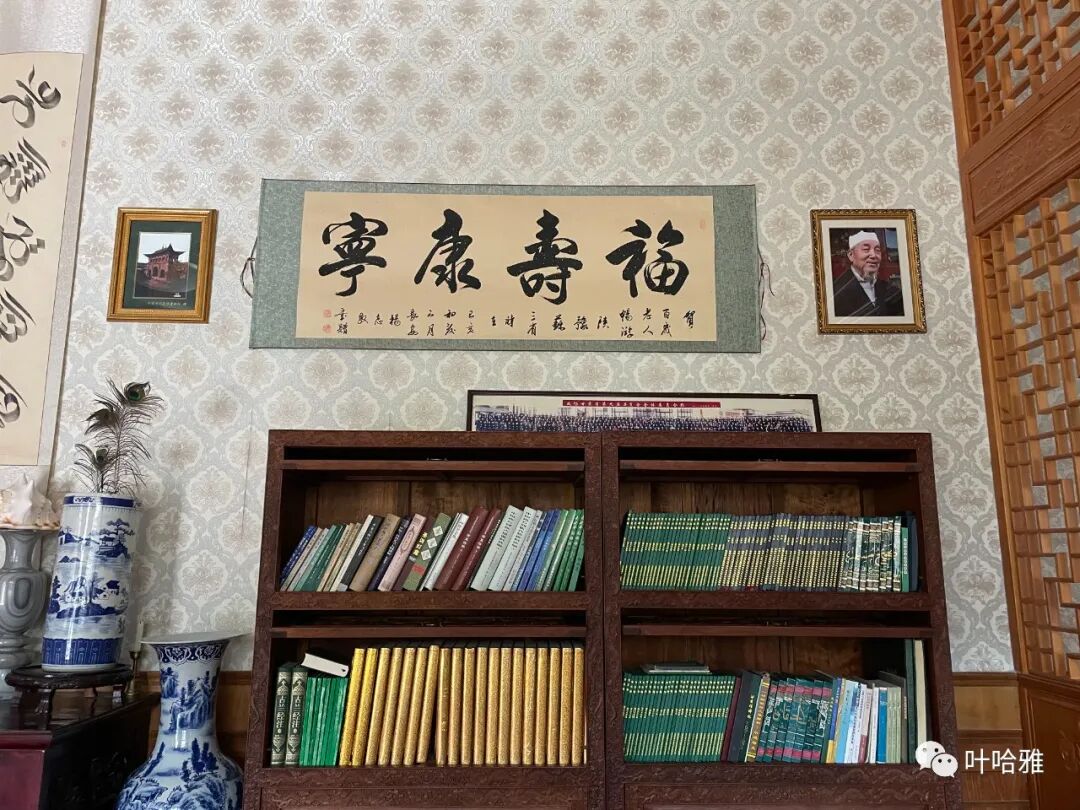
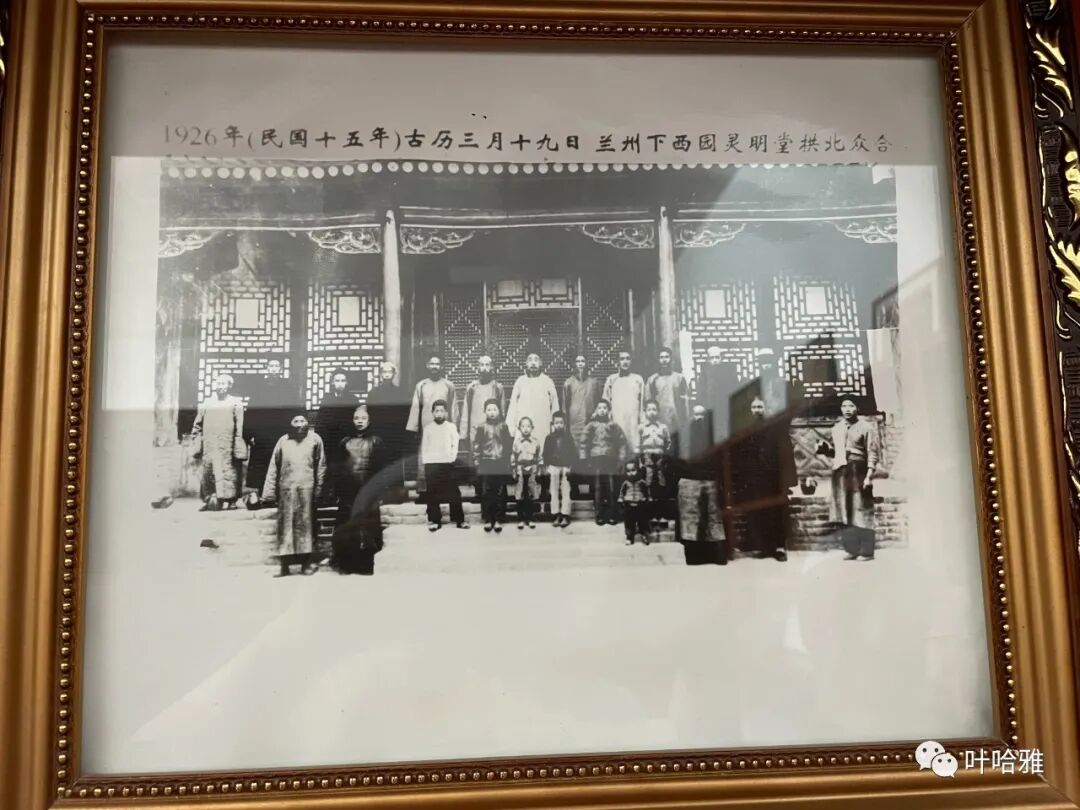
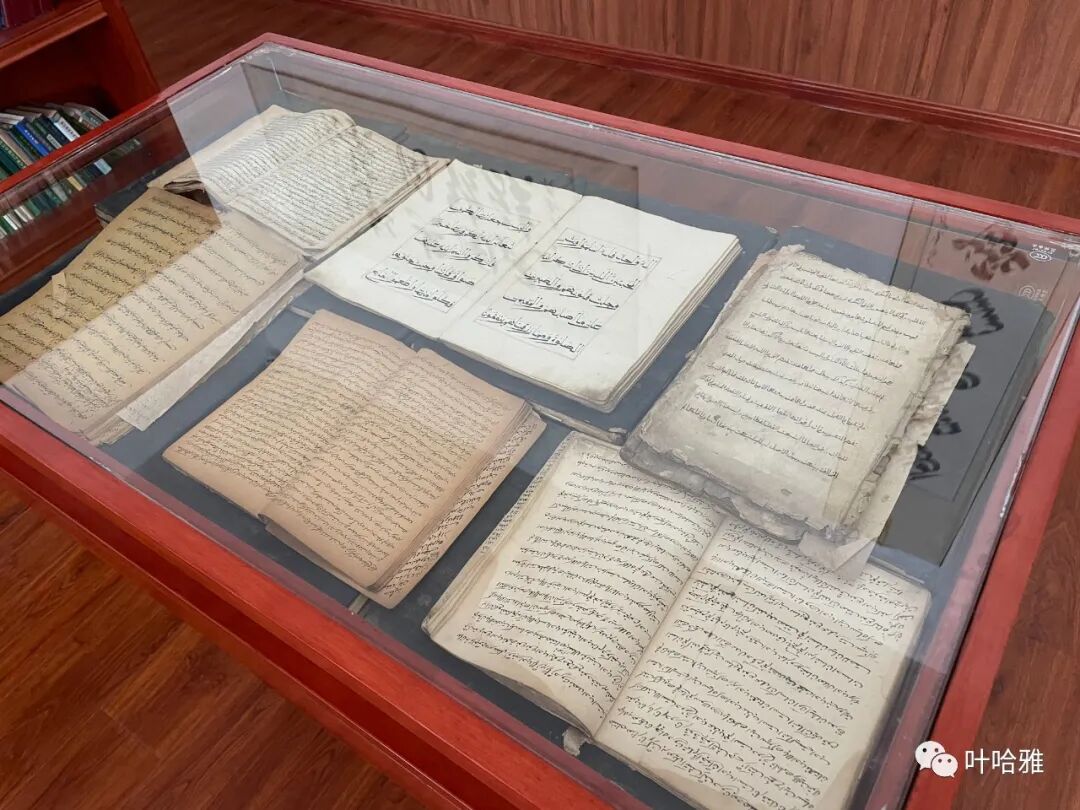
The elder did not know Chinese characters, but he was fluent in the mosque language (jingtangyu), so he usually read scriptures in Arabic.
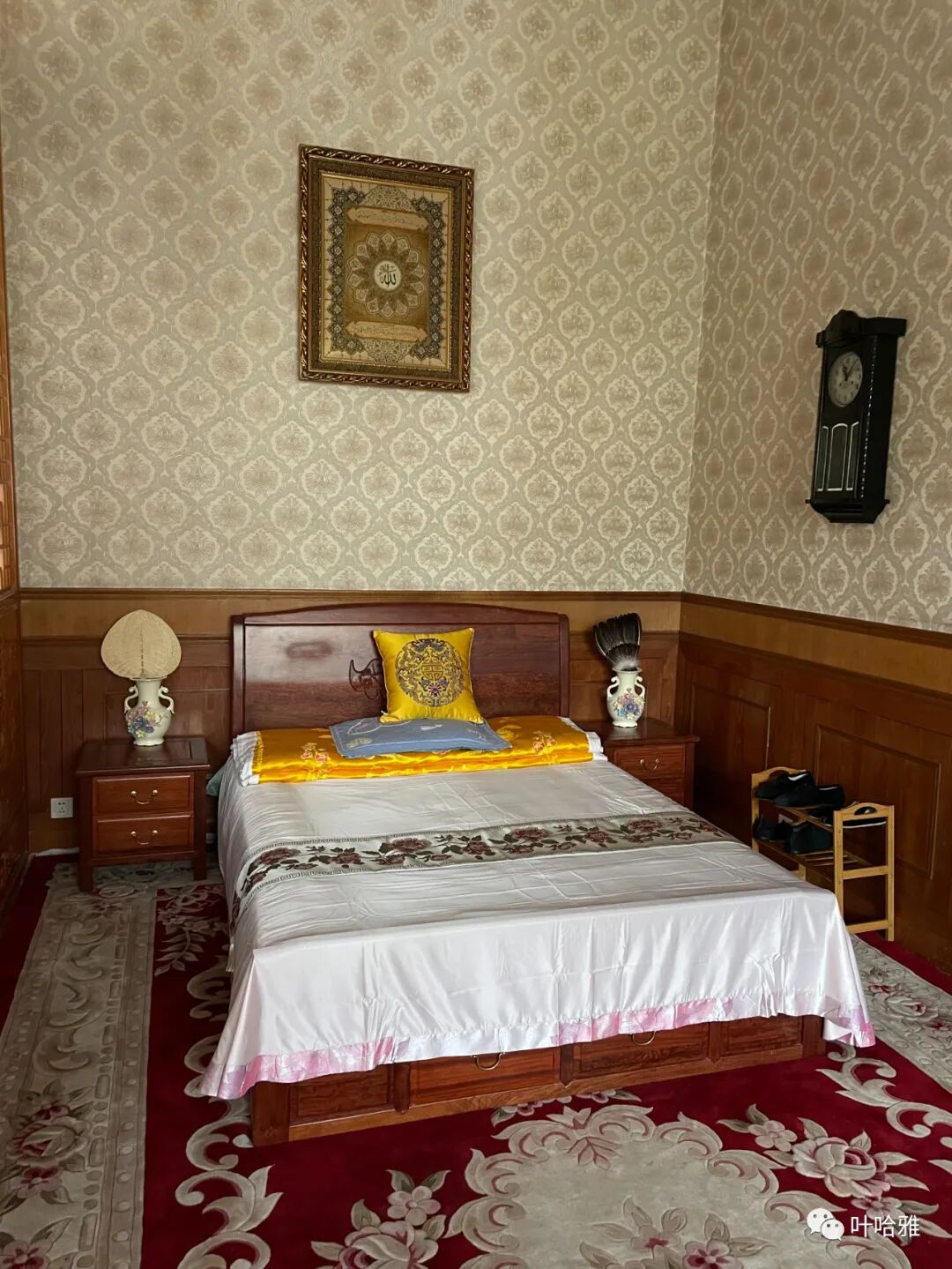
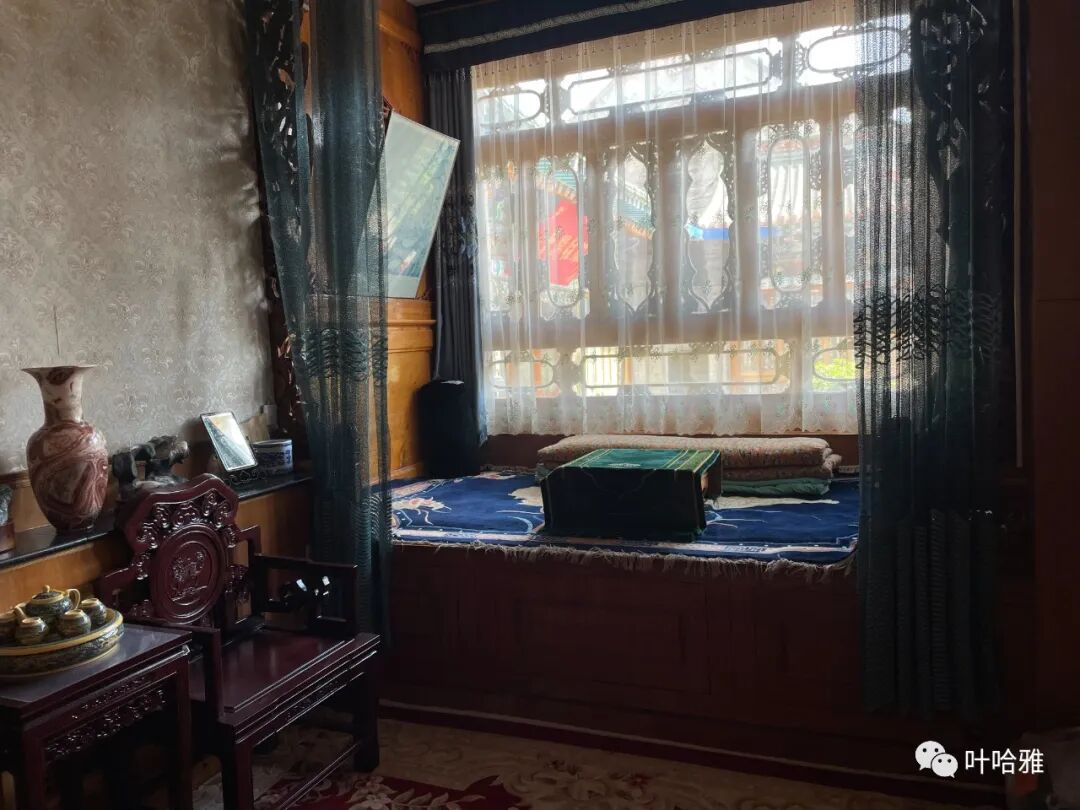
Our Lingmingtang elder did not want to enter the former residence because it reminded him of the elder when he was alive. His eyes turned red instantly, so he waited outside the hall.
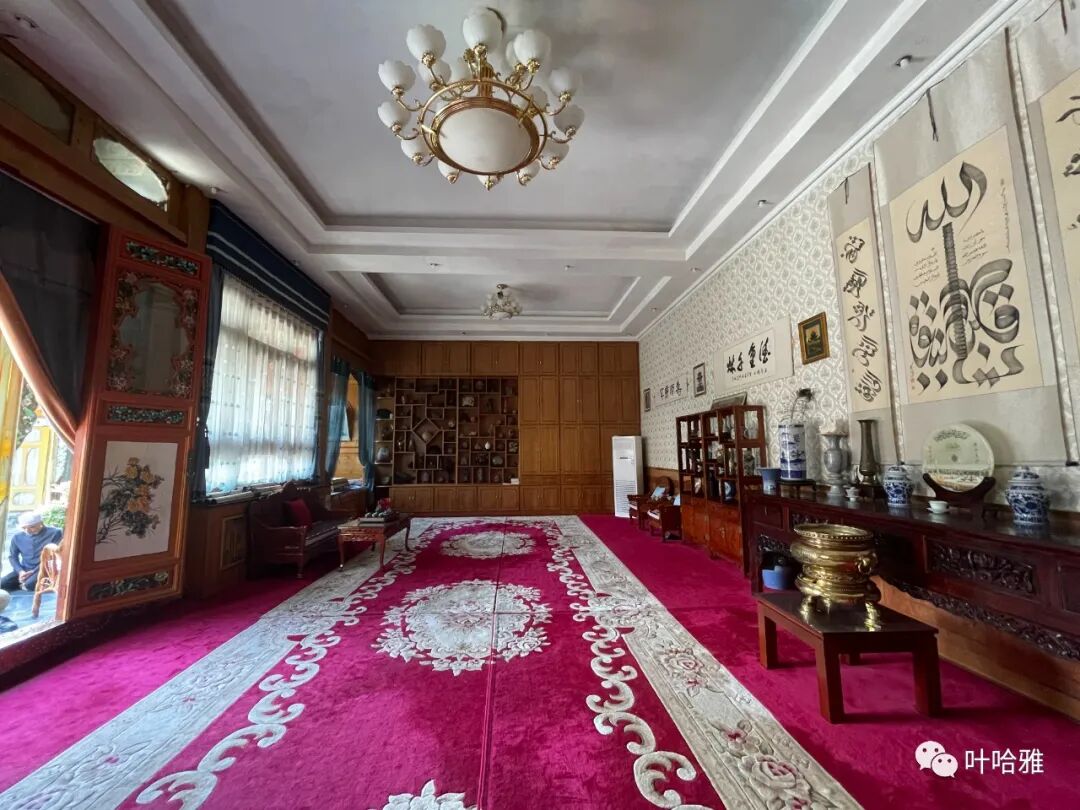
There is an exhibition room inside the gongbei that houses some antiques, paintings, and personal items used by the elder during his lifetime.
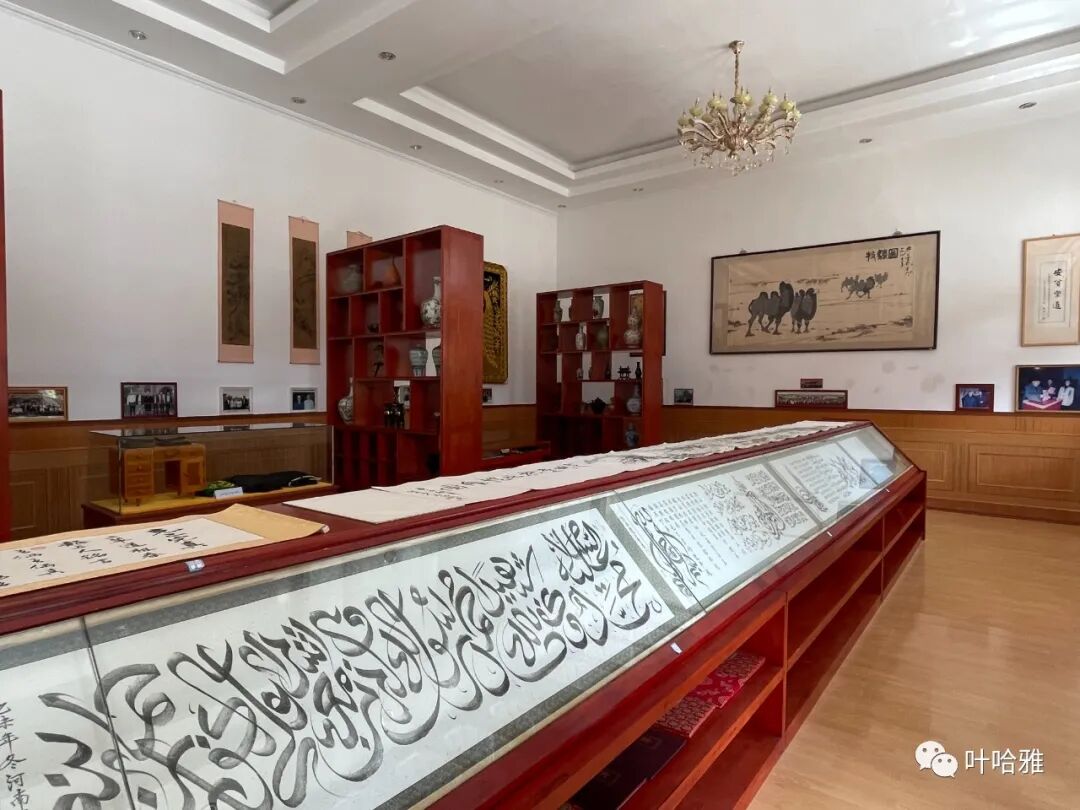
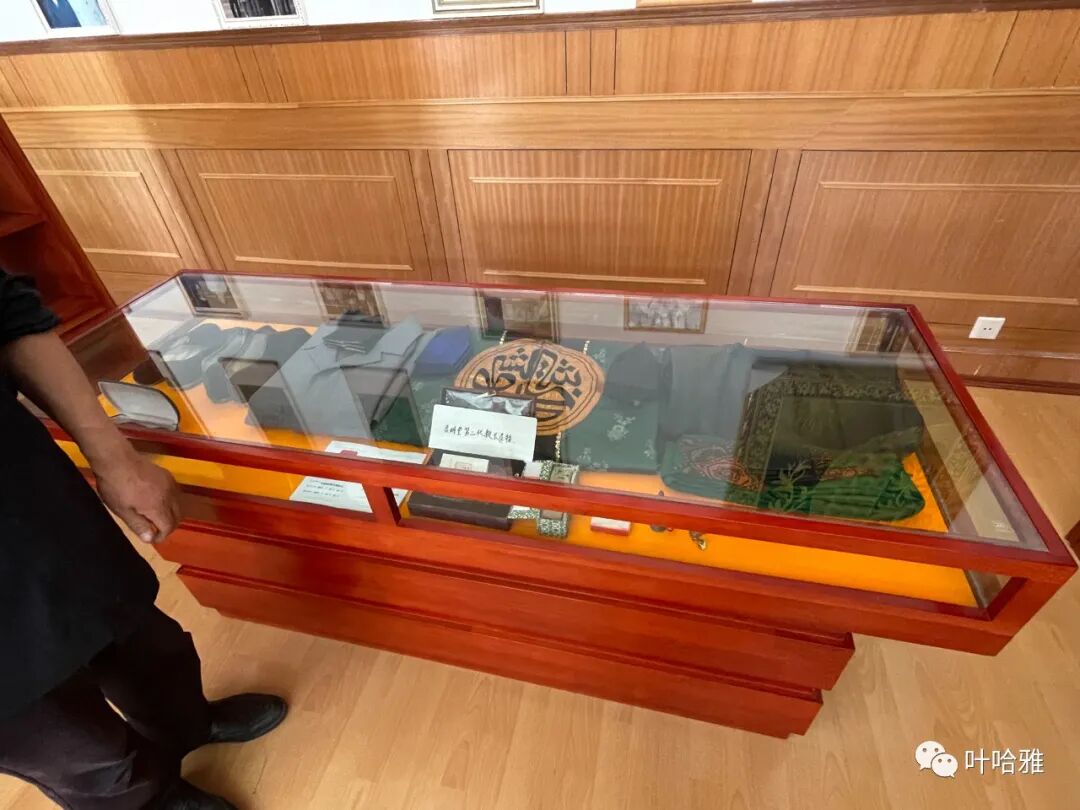
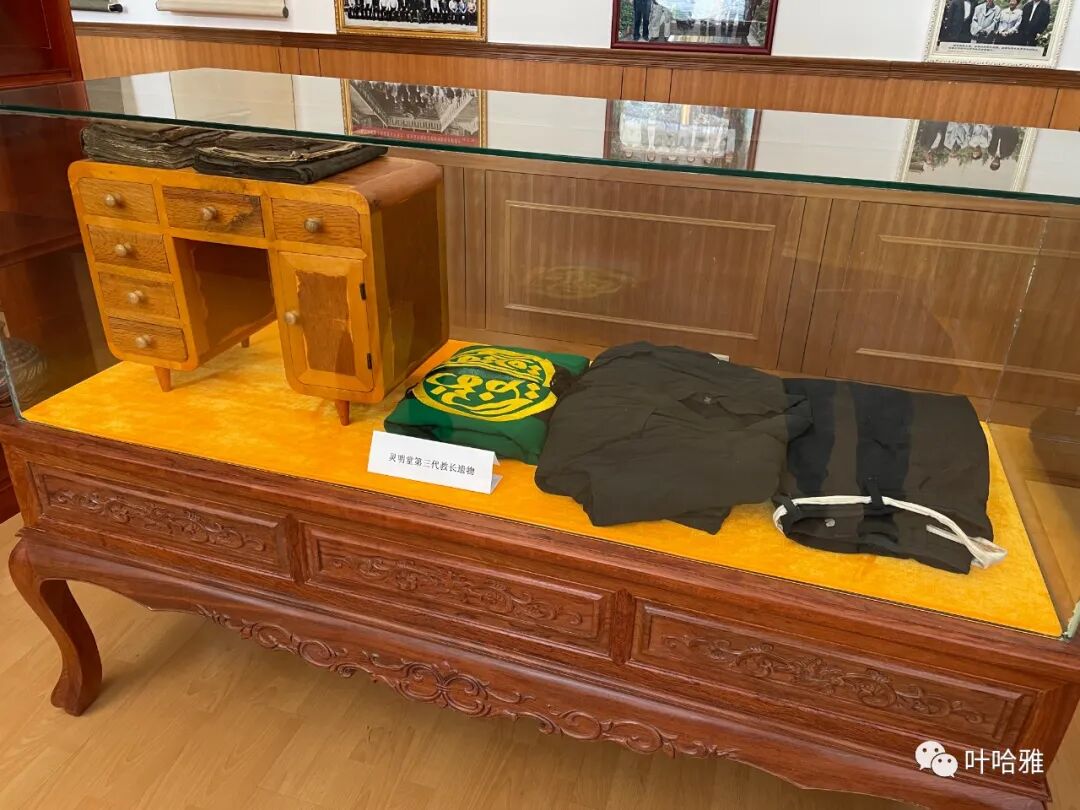
It is clear that the elder was very high-profile during his life. He was passionate about public welfare, open-minded, and progressive. This felt completely different from my visits to other menhuan gongbei. Some menhuan do not want outside attention; they allow visits but do not want publicity. Others focus on spiritual practice and stay away from the world. Lingmingtang is the opposite. It is more like a family business that encourages people to focus on their careers before the age of 60. These ideas have gained support from a significant number of wealthy believers.
Summary: This China mosque travel guide to Lanzhou covers Wuxingping Lingmingtang, one of China’s largest gongbei sites, Xinguan Mosque, halal Hyatt breakfast, Lanzhou beef noodles, hand-grabbed lamb, and local Muslim heritage.
A Halal Tour of Lanzhou: The Five-Star Terrace Spiritual Light Hall (Wuxingping Lingmingtang), the Largest Gongbei in China is presented here as a firsthand travel account in clear English, beginning with this scene: I wrote a map of halal food in Lanzhou in 2016. This is my fifth time in Lanzhou. The account keeps its focus on Qinghai Mosques, Chinese Muslims, Muslim Heritage while preserving the names, places, food, and historical details from the Chinese source.
I wrote a map of halal food in Lanzhou in 2016. This is my fifth time in Lanzhou. I flew the first four times, but this time I drove. It is about 1,400 kilometers from Beijing to Lanzhou, and the first city I stopped in after entering Gansu was Baiyin.
On the way, I took a highway called Wuma. It is named after the Wuhai to Maqin expressway, but it happens to sound like the Arabic word for nation.
After praying Maghrib (shamu) at the Great Mosque of Baiyin, I walked around the city looking for food, but I found there were not many choices.
I found this Chuntai Hand-Grabbed Meat Restaurant (Chuntai Shouzhua Meishicheng). Chuntai is a township in Dongxiang, Linxia, and it is famous for its delicious hand-grabbed lamb.
The food was really good. Both the hand-grabbed lamb and the firecracker noodles (paozhuang mian) were delicious.
I stayed in Baiyin for one night and walked around, but I did not find any places worth remembering.
When I saw the Yellow River Bridge, I knew I had arrived in Lanzhou. This time I stayed at the Hyatt Regency. I chose it because it is a halal Hyatt, which is rare in China. The owner is a Dongxiang person.
The promotional video for the Hyatt playing in the elevator features girls wearing headscarves.
The gym at the Lanzhou Hyatt is very large. It is rare for a five-star hotel in China to have such a big gym.
The gym faces the Yellow River, so the view is excellent.
What attracts me most about the Hyatt is the rich breakfast. Everything is halal, and you can choose whatever you want. Besides regular Western desserts, they also have local Northwest specialties.
The Lanzhou beef noodles at the Hyatt were the only beef noodles I ate on this trip to Lanzhou. They were truly delicious and just as good as any of the old, famous shops I have visited in Lanzhou.
Xinguan Mosque
Local elders in Lanzhou highly recommended I visit Xinguan Mosque. People say it is very popular with young people because the imam, Ma Jun, gives lively and vivid sermons (wa'az) in Mandarin.
The mosque gate is completely open to the public, and many children play at the entrance.
Yixiang Stir-fry
Next to Xinguan Mosque is a Lanzhou stir-fry shop that a long-time Lanzhou local specifically recommended to me as a place for authentic local dishes.
This shop has been open in Lanzhou for over ten years, and the customers are mostly local residents from the neighborhood.
I really enjoy eating at these popular local spots. You can taste the quality in the cooking here, and I probably would not have noticed this place if a friend had not shown me the way.
Lanzhou thick-sauce lamb (hu yang)
This was my first time eating thick-sauce lamb. I noticed that traditional Lanzhou stir-fry is mostly salty, fresh, and sweet, and the way they use starch to thicken sauces is similar to Beijing cuisine.
Sweet and sour meat-stuffed crepes (suanla jiasha)
Sweet and sour pork tenderloin (tangcu liji)
If you get tired of eating Northwest-style noodles, remember to stop by Yixiang Stir-fry when you are in Lanzhou.
Miaotanzi Gadan
Local elders picked this Miaotanzi Gadan as another special Lanzhou barbecue stall for me. The environment is basically non-existent. It has been open for over a decade and is full of locals. People sit on stools by the roadside to eat, or just stand and dip their skewers.
Lanzhou barbecue is known for using iron skewers over an open flame with plenty of seasoning. They come in bundles of 20, and it is easy for one person to eat 30 or 50. I like these small skewers. Large ones fill me up after one or two, which feels less satisfying.
Aliya Art Restaurant
After spending a long time in Northwest cities, I cannot handle heavy dishes anymore. I specifically chose this refreshing art restaurant to meet a friend. You can have afternoon tea here, or choose from light meals.
Aliya Lanzhou Center branch. Their desserts are excellent. They also serve sushi and salads, which are rare, light food options in the Northwest.
Things like sushi and spring rolls are much easier to eat.
Hongyunxuan Macau Charcoal Hot Pot
I have had this halal hot pot (dabanlu) place saved in my Beijing list for a long time as a Lanzhou specialty. Hongyunxuan previously ran a Hong Kong-style tea restaurant in Macau, but it closed during the pandemic. I did not expect them to open a hot pot place in Lanzhou.
The restaurant decor is very Cantonese. It has not been open long, so I wonder how long it will last.
We chose two types of seafood porridge bases. You can drink the porridge first, then cook the meat.
Fish maw (huajiao) porridge base
This Cantonese-style hot pot (dabanlu) tastes good and is light. I hope it stays open because it really helps add variety to the food scene in the Northwest.
Shancheng Hand-Grabbed Lamb (Shancheng shouzhuo)
I met an elder (xianglao) from the Lingming Hall (Lingmingtang) in Lanzhou at Shancheng Hand-Grabbed Lamb. Shancheng is a village in Linxia, and many friends in Lanzhou recommend this place. Most people working in the halal restaurant business in Lanzhou are from Linxia.
Before eating, they serve tea. You can grab whatever you like from the Three-Fortress Tea (sanpaotai) platter. The rose inside is a local Lanzhou specialty, and you must add it.
The hand-grabbed lamb is tender with a good mix of fat and lean meat, mostly lean, which is how I like it.
Yogurt with fermented oat grains (tianpei) is a creative new combination. Fermented oat grains are a popular Lanzhou snack.
Soup made with hair moss (facai). Hair moss is a specialty of the Northwest and can be used as medicine.
The lily bulbs in the assorted shrimp dish are another Lanzhou specialty. You must try lily bulbs when you come to Lanzhou.
Hot and sour stuffed meat (suanla jiasha). The outer layer of the stuffed meat is made of egg, similar to Beijing's fried meat strips (songrou), but those use bean curd skin.
Cold tossed wild onion (shacong). This is a wild vegetable from the Northwest, and it has become more common in Beijing over the last two years.
Sugar oil cake (tangyougao) is a bit like the Qinghai dog-pissing pancake (goujiaoniao). It is hollow inside. My friends chose these local specialties for me, and Shancheng Hand-Grabbed Lamb lives up to its reputation. It is worth recommending.
After the meal, we visited the home of the elder from Lingming Hall and saw this biography, The Brief Biography of Master Lingming (Lingming Shangren Zhuanlue).
On the way to Lingmingtang Gongbei, I passed through Gongbei Gully and saw several gongbei built halfway up the mountain.
The Lingmingtang Gongbei sits on the top of Wuxingping Mountain in Lanzhou, covering an area of over 30,000 square meters, and it is the largest gongbei I have ever seen.
The founding master of Lingmingtang Gongbei was Ma Yilong (1853-1925), whose courtesy name was Lingming. He once studied under the Great Incense Master of the Kashgar Daotang and accepted the teachings of the Qadiriyya. In his final words, he mentioned being the 'answerer promised by the Bab gate,' which led some to believe he was influenced by the Babi faith. However, some descendants of Lingmingtang deny this, as detailed in the article 'A Discussion on the Possibility of Historical Contact Between Lingmingtang and the Babi Sect'.
During his lifetime, Ma Lingming lived a life of poverty and appeared eccentric, remaining unmoved even when children played around him or passersby mocked him. People often asked him questions, and he would sometimes give hints without taking a penny. Over time, some felt his guidance came true, and they began to respect him.
Whenever a Sufi elder gains the support of the public, they must have some extraordinary qualities. This is especially true for local illiterate believers, as it is hard to win hearts through reasoning and education alone.
As Ma Lingming's followers grew, he caught the attention of local officials, who supported him to keep other menhuan in check.
Ma Lingming himself remained indifferent to fame and wealth. He had no sons, only two daughters, and his noble character earned him the support of many believers.
The religious authority of Lingmingtang is passed to the worthy rather than to one's own children. Before Ma Lingming passed away, he publicly gathered his followers to elect a second-generation successor. They finally chose Shan Zijiu (1888-1953) from Lanzhou. The election process was very complex and required many rituals to complete the succession.
After Shan Zijiu, the religious authority was passed to Wang Shoutian (1924-2021), an elder from Tangwangchuan in Dongxiang County.
Between 1958 and 1979, Wang Shoutian was imprisoned during the anti-religious and anti-feudal movements. After his release, he began leading the construction of the Lingmingtang Gongbei, and the current Wuxingping site was allocated to Lingmingtang by the government in 1982.
Wang Shoutian valued education, and in 1993, he took the lead in donating money to convert Tangwang Primary School into a middle school.
At the same time, Wang Shoutian also valued business and encouraged followers to develop production. He even believed that young people should focus on their careers, which is why Lingmingtang has better economic strength than other menhuan and the financial resources to build such a grand gongbei.
Ma Lingming left behind no personal property. The construction of the Lingmingtang gongbei cost over 100 million yuan, all of which came from donations by believers.
Currently, there are Lingmingtang branch gongbei in Guyuan, Linxia, Hami, and Luoyang. The current fourth-generation leader is named Su Zhilin. He is in his thirties and was elected by the community elders.
The election of the leader is only considered complete after it is approved by the relevant authorities.
The former residence of the elder Wang Shoutian is inside the Lingmingtang gongbei. During his lifetime, he often sat in the courtyard with people gathered around him to listen to his teachings. Because he had a strong Tangwang accent—or perhaps he was speaking the Dongxiang language—someone would sit by his side to translate for him.
The elder did not know Chinese characters, but he was fluent in the mosque language (jingtangyu), so he usually read scriptures in Arabic.
Our Lingmingtang elder did not want to enter the former residence because it reminded him of the elder when he was alive. His eyes turned red instantly, so he waited outside the hall.
There is an exhibition room inside the gongbei that houses some antiques, paintings, and personal items used by the elder during his lifetime.
It is clear that the elder was very high-profile during his life. He was passionate about public welfare, open-minded, and progressive. This felt completely different from my visits to other menhuan gongbei. Some menhuan do not want outside attention; they allow visits but do not want publicity. Others focus on spiritual practice and stay away from the world. Lingmingtang is the opposite. It is more like a family business that encourages people to focus on their careers before the age of 60. These ideas have gained support from a significant number of wealthy believers.
China Mosque Travel Guide: Lanzhou Wuxingping Lingmingtang Gongbei, Halal Hyatt and Beef Noodles
Articles • yusuf908 posted the article • 0 comments • 160 views • 2026-05-22 21:12
Reposted from the web
Summary: This China mosque travel guide to Lanzhou covers Wuxingping Lingmingtang, one of China’s largest gongbei sites, Xinguan Mosque, halal Hyatt breakfast, Lanzhou beef noodles, hand-grabbed lamb, and local Muslim heritage.
A Halal Tour of Lanzhou: The Five-Star Terrace Spiritual Light Hall (Wuxingping Lingmingtang), the Largest Gongbei in China is presented here as a firsthand travel account in clear English, beginning with this scene: I wrote a map of halal food in Lanzhou in 2016. This is my fifth time in Lanzhou. The account keeps its focus on Qinghai Mosques, Chinese Muslims, Muslim Heritage while preserving the names, places, food, and historical details from the Chinese source.
I wrote a map of halal food in Lanzhou in 2016. This is my fifth time in Lanzhou. I flew the first four times, but this time I drove. It is about 1,400 kilometers from Beijing to Lanzhou, and the first city I stopped in after entering Gansu was Baiyin.
On the way, I took a highway called Wuma. It is named after the Wuhai to Maqin expressway, but it happens to sound like the Arabic word for nation.
After praying Maghrib (shamu) at the Great Mosque of Baiyin, I walked around the city looking for food, but I found there were not many choices.
I found this Chuntai Hand-Grabbed Meat Restaurant (Chuntai Shouzhua Meishicheng). Chuntai is a township in Dongxiang, Linxia, and it is famous for its delicious hand-grabbed lamb.
The food was really good. Both the hand-grabbed lamb and the firecracker noodles (paozhuang mian) were delicious.
I stayed in Baiyin for one night and walked around, but I did not find any places worth remembering.
When I saw the Yellow River Bridge, I knew I had arrived in Lanzhou. This time I stayed at the Hyatt Regency. I chose it because it is a halal Hyatt, which is rare in China. The owner is a Dongxiang person.
The promotional video for the Hyatt playing in the elevator features girls wearing headscarves.
The gym at the Lanzhou Hyatt is very large. It is rare for a five-star hotel in China to have such a big gym.
The gym faces the Yellow River, so the view is excellent.
What attracts me most about the Hyatt is the rich breakfast. Everything is halal, and you can choose whatever you want. Besides regular Western desserts, they also have local Northwest specialties.
The Lanzhou beef noodles at the Hyatt were the only beef noodles I ate on this trip to Lanzhou. They were truly delicious and just as good as any of the old, famous shops I have visited in Lanzhou.
Xinguan Mosque
Local elders in Lanzhou highly recommended I visit Xinguan Mosque. People say it is very popular with young people because the imam, Ma Jun, gives lively and vivid sermons (wa'az) in Mandarin.
The mosque gate is completely open to the public, and many children play at the entrance.
Yixiang Stir-fry
Next to Xinguan Mosque is a Lanzhou stir-fry shop that a long-time Lanzhou local specifically recommended to me as a place for authentic local dishes.
This shop has been open in Lanzhou for over ten years, and the customers are mostly local residents from the neighborhood.
I really enjoy eating at these popular local spots. You can taste the quality in the cooking here, and I probably would not have noticed this place if a friend had not shown me the way.
Lanzhou thick-sauce lamb (hu yang)
This was my first time eating thick-sauce lamb. I noticed that traditional Lanzhou stir-fry is mostly salty, fresh, and sweet, and the way they use starch to thicken sauces is similar to Beijing cuisine.
Sweet and sour meat-stuffed crepes (suanla jiasha)
Sweet and sour pork tenderloin (tangcu liji)
If you get tired of eating Northwest-style noodles, remember to stop by Yixiang Stir-fry when you are in Lanzhou.
Miaotanzi Gadan
Local elders picked this Miaotanzi Gadan as another special Lanzhou barbecue stall for me. The environment is basically non-existent. It has been open for over a decade and is full of locals. People sit on stools by the roadside to eat, or just stand and dip their skewers.
Lanzhou barbecue is known for using iron skewers over an open flame with plenty of seasoning. They come in bundles of 20, and it is easy for one person to eat 30 or 50. I like these small skewers. Large ones fill me up after one or two, which feels less satisfying.
Aliya Art Restaurant
After spending a long time in Northwest cities, I cannot handle heavy dishes anymore. I specifically chose this refreshing art restaurant to meet a friend. You can have afternoon tea here, or choose from light meals.
Aliya Lanzhou Center branch. Their desserts are excellent. They also serve sushi and salads, which are rare, light food options in the Northwest.
Things like sushi and spring rolls are much easier to eat.
Hongyunxuan Macau Charcoal Hot Pot
I have had this halal hot pot (dabanlu) place saved in my Beijing list for a long time as a Lanzhou specialty. Hongyunxuan previously ran a Hong Kong-style tea restaurant in Macau, but it closed during the pandemic. I did not expect them to open a hot pot place in Lanzhou.
The restaurant decor is very Cantonese. It has not been open long, so I wonder how long it will last.
We chose two types of seafood porridge bases. You can drink the porridge first, then cook the meat.
Fish maw (huajiao) porridge base
This Cantonese-style hot pot (dabanlu) tastes good and is light. I hope it stays open because it really helps add variety to the food scene in the Northwest.
Shancheng Hand-Grabbed Lamb (Shancheng shouzhuo)
I met an elder (xianglao) from the Lingming Hall (Lingmingtang) in Lanzhou at Shancheng Hand-Grabbed Lamb. Shancheng is a village in Linxia, and many friends in Lanzhou recommend this place. Most people working in the halal restaurant business in Lanzhou are from Linxia.
Before eating, they serve tea. You can grab whatever you like from the Three-Fortress Tea (sanpaotai) platter. The rose inside is a local Lanzhou specialty, and you must add it.
The hand-grabbed lamb is tender with a good mix of fat and lean meat, mostly lean, which is how I like it.
Yogurt with fermented oat grains (tianpei) is a creative new combination. Fermented oat grains are a popular Lanzhou snack.
Soup made with hair moss (facai). Hair moss is a specialty of the Northwest and can be used as medicine.
The lily bulbs in the assorted shrimp dish are another Lanzhou specialty. You must try lily bulbs when you come to Lanzhou.
Hot and sour stuffed meat (suanla jiasha). The outer layer of the stuffed meat is made of egg, similar to Beijing's fried meat strips (songrou), but those use bean curd skin.
Cold tossed wild onion (shacong). This is a wild vegetable from the Northwest, and it has become more common in Beijing over the last two years.
Sugar oil cake (tangyougao) is a bit like the Qinghai dog-pissing pancake (goujiaoniao). It is hollow inside. My friends chose these local specialties for me, and Shancheng Hand-Grabbed Lamb lives up to its reputation. It is worth recommending.
After the meal, we visited the home of the elder from Lingming Hall and saw this biography, The Brief Biography of Master Lingming (Lingming Shangren Zhuanlue).
On the way to Lingmingtang Gongbei, I passed through Gongbei Gully and saw several gongbei built halfway up the mountain.
The Lingmingtang Gongbei sits on the top of Wuxingping Mountain in Lanzhou, covering an area of over 30,000 square meters, and it is the largest gongbei I have ever seen.
The founding master of Lingmingtang Gongbei was Ma Yilong (1853-1925), whose courtesy name was Lingming. He once studied under the Great Incense Master of the Kashgar Daotang and accepted the teachings of the Qadiriyya. In his final words, he mentioned being the 'answerer promised by the Bab gate,' which led some to believe he was influenced by the Babi faith. However, some descendants of Lingmingtang deny this, as detailed in the article 'A Discussion on the Possibility of Historical Contact Between Lingmingtang and the Babi Sect'.
During his lifetime, Ma Lingming lived a life of poverty and appeared eccentric, remaining unmoved even when children played around him or passersby mocked him. People often asked him questions, and he would sometimes give hints without taking a penny. Over time, some felt his guidance came true, and they began to respect him.
Whenever a Sufi elder gains the support of the public, they must have some extraordinary qualities. This is especially true for local illiterate believers, as it is hard to win hearts through reasoning and education alone.
As Ma Lingming's followers grew, he caught the attention of local officials, who supported him to keep other menhuan in check.
Ma Lingming himself remained indifferent to fame and wealth. He had no sons, only two daughters, and his noble character earned him the support of many believers.
The religious authority of Lingmingtang is passed to the worthy rather than to one's own children. Before Ma Lingming passed away, he publicly gathered his followers to elect a second-generation successor. They finally chose Shan Zijiu (1888-1953) from Lanzhou. The election process was very complex and required many rituals to complete the succession.
After Shan Zijiu, the religious authority was passed to Wang Shoutian (1924-2021), an elder from Tangwangchuan in Dongxiang County.
Between 1958 and 1979, Wang Shoutian was imprisoned during the anti-religious and anti-feudal movements. After his release, he began leading the construction of the Lingmingtang Gongbei, and the current Wuxingping site was allocated to Lingmingtang by the government in 1982.
Wang Shoutian valued education, and in 1993, he took the lead in donating money to convert Tangwang Primary School into a middle school.
At the same time, Wang Shoutian also valued business and encouraged followers to develop production. He even believed that young people should focus on their careers, which is why Lingmingtang has better economic strength than other menhuan and the financial resources to build such a grand gongbei.
Ma Lingming left behind no personal property. The construction of the Lingmingtang gongbei cost over 100 million yuan, all of which came from donations by believers.
Currently, there are Lingmingtang branch gongbei in Guyuan, Linxia, Hami, and Luoyang. The current fourth-generation leader is named Su Zhilin. He is in his thirties and was elected by the community elders.
The election of the leader is only considered complete after it is approved by the relevant authorities.
The former residence of the elder Wang Shoutian is inside the Lingmingtang gongbei. During his lifetime, he often sat in the courtyard with people gathered around him to listen to his teachings. Because he had a strong Tangwang accent—or perhaps he was speaking the Dongxiang language—someone would sit by his side to translate for him.
The elder did not know Chinese characters, but he was fluent in the mosque language (jingtangyu), so he usually read scriptures in Arabic.
Our Lingmingtang elder did not want to enter the former residence because it reminded him of the elder when he was alive. His eyes turned red instantly, so he waited outside the hall.
There is an exhibition room inside the gongbei that houses some antiques, paintings, and personal items used by the elder during his lifetime.
It is clear that the elder was very high-profile during his life. He was passionate about public welfare, open-minded, and progressive. This felt completely different from my visits to other menhuan gongbei. Some menhuan do not want outside attention; they allow visits but do not want publicity. Others focus on spiritual practice and stay away from the world. Lingmingtang is the opposite. It is more like a family business that encourages people to focus on their careers before the age of 60. These ideas have gained support from a significant number of wealthy believers. view all
Summary: This China mosque travel guide to Lanzhou covers Wuxingping Lingmingtang, one of China’s largest gongbei sites, Xinguan Mosque, halal Hyatt breakfast, Lanzhou beef noodles, hand-grabbed lamb, and local Muslim heritage.
A Halal Tour of Lanzhou: The Five-Star Terrace Spiritual Light Hall (Wuxingping Lingmingtang), the Largest Gongbei in China is presented here as a firsthand travel account in clear English, beginning with this scene: I wrote a map of halal food in Lanzhou in 2016. This is my fifth time in Lanzhou. The account keeps its focus on Qinghai Mosques, Chinese Muslims, Muslim Heritage while preserving the names, places, food, and historical details from the Chinese source.
I wrote a map of halal food in Lanzhou in 2016. This is my fifth time in Lanzhou. I flew the first four times, but this time I drove. It is about 1,400 kilometers from Beijing to Lanzhou, and the first city I stopped in after entering Gansu was Baiyin.
On the way, I took a highway called Wuma. It is named after the Wuhai to Maqin expressway, but it happens to sound like the Arabic word for nation.
After praying Maghrib (shamu) at the Great Mosque of Baiyin, I walked around the city looking for food, but I found there were not many choices.
I found this Chuntai Hand-Grabbed Meat Restaurant (Chuntai Shouzhua Meishicheng). Chuntai is a township in Dongxiang, Linxia, and it is famous for its delicious hand-grabbed lamb.
The food was really good. Both the hand-grabbed lamb and the firecracker noodles (paozhuang mian) were delicious.
I stayed in Baiyin for one night and walked around, but I did not find any places worth remembering.
When I saw the Yellow River Bridge, I knew I had arrived in Lanzhou. This time I stayed at the Hyatt Regency. I chose it because it is a halal Hyatt, which is rare in China. The owner is a Dongxiang person.
The promotional video for the Hyatt playing in the elevator features girls wearing headscarves.
The gym at the Lanzhou Hyatt is very large. It is rare for a five-star hotel in China to have such a big gym.
The gym faces the Yellow River, so the view is excellent.
What attracts me most about the Hyatt is the rich breakfast. Everything is halal, and you can choose whatever you want. Besides regular Western desserts, they also have local Northwest specialties.
The Lanzhou beef noodles at the Hyatt were the only beef noodles I ate on this trip to Lanzhou. They were truly delicious and just as good as any of the old, famous shops I have visited in Lanzhou.
Xinguan Mosque
Local elders in Lanzhou highly recommended I visit Xinguan Mosque. People say it is very popular with young people because the imam, Ma Jun, gives lively and vivid sermons (wa'az) in Mandarin.
The mosque gate is completely open to the public, and many children play at the entrance.
Yixiang Stir-fry
Next to Xinguan Mosque is a Lanzhou stir-fry shop that a long-time Lanzhou local specifically recommended to me as a place for authentic local dishes.
This shop has been open in Lanzhou for over ten years, and the customers are mostly local residents from the neighborhood.
I really enjoy eating at these popular local spots. You can taste the quality in the cooking here, and I probably would not have noticed this place if a friend had not shown me the way.
Lanzhou thick-sauce lamb (hu yang)
This was my first time eating thick-sauce lamb. I noticed that traditional Lanzhou stir-fry is mostly salty, fresh, and sweet, and the way they use starch to thicken sauces is similar to Beijing cuisine.
Sweet and sour meat-stuffed crepes (suanla jiasha)
Sweet and sour pork tenderloin (tangcu liji)
If you get tired of eating Northwest-style noodles, remember to stop by Yixiang Stir-fry when you are in Lanzhou.
Miaotanzi Gadan
Local elders picked this Miaotanzi Gadan as another special Lanzhou barbecue stall for me. The environment is basically non-existent. It has been open for over a decade and is full of locals. People sit on stools by the roadside to eat, or just stand and dip their skewers.
Lanzhou barbecue is known for using iron skewers over an open flame with plenty of seasoning. They come in bundles of 20, and it is easy for one person to eat 30 or 50. I like these small skewers. Large ones fill me up after one or two, which feels less satisfying.
Aliya Art Restaurant
After spending a long time in Northwest cities, I cannot handle heavy dishes anymore. I specifically chose this refreshing art restaurant to meet a friend. You can have afternoon tea here, or choose from light meals.
Aliya Lanzhou Center branch. Their desserts are excellent. They also serve sushi and salads, which are rare, light food options in the Northwest.
Things like sushi and spring rolls are much easier to eat.
Hongyunxuan Macau Charcoal Hot Pot
I have had this halal hot pot (dabanlu) place saved in my Beijing list for a long time as a Lanzhou specialty. Hongyunxuan previously ran a Hong Kong-style tea restaurant in Macau, but it closed during the pandemic. I did not expect them to open a hot pot place in Lanzhou.
The restaurant decor is very Cantonese. It has not been open long, so I wonder how long it will last.
We chose two types of seafood porridge bases. You can drink the porridge first, then cook the meat.
Fish maw (huajiao) porridge base
This Cantonese-style hot pot (dabanlu) tastes good and is light. I hope it stays open because it really helps add variety to the food scene in the Northwest.
Shancheng Hand-Grabbed Lamb (Shancheng shouzhuo)
I met an elder (xianglao) from the Lingming Hall (Lingmingtang) in Lanzhou at Shancheng Hand-Grabbed Lamb. Shancheng is a village in Linxia, and many friends in Lanzhou recommend this place. Most people working in the halal restaurant business in Lanzhou are from Linxia.
Before eating, they serve tea. You can grab whatever you like from the Three-Fortress Tea (sanpaotai) platter. The rose inside is a local Lanzhou specialty, and you must add it.
The hand-grabbed lamb is tender with a good mix of fat and lean meat, mostly lean, which is how I like it.
Yogurt with fermented oat grains (tianpei) is a creative new combination. Fermented oat grains are a popular Lanzhou snack.
Soup made with hair moss (facai). Hair moss is a specialty of the Northwest and can be used as medicine.
The lily bulbs in the assorted shrimp dish are another Lanzhou specialty. You must try lily bulbs when you come to Lanzhou.
Hot and sour stuffed meat (suanla jiasha). The outer layer of the stuffed meat is made of egg, similar to Beijing's fried meat strips (songrou), but those use bean curd skin.
Cold tossed wild onion (shacong). This is a wild vegetable from the Northwest, and it has become more common in Beijing over the last two years.
Sugar oil cake (tangyougao) is a bit like the Qinghai dog-pissing pancake (goujiaoniao). It is hollow inside. My friends chose these local specialties for me, and Shancheng Hand-Grabbed Lamb lives up to its reputation. It is worth recommending.
After the meal, we visited the home of the elder from Lingming Hall and saw this biography, The Brief Biography of Master Lingming (Lingming Shangren Zhuanlue).
On the way to Lingmingtang Gongbei, I passed through Gongbei Gully and saw several gongbei built halfway up the mountain.
The Lingmingtang Gongbei sits on the top of Wuxingping Mountain in Lanzhou, covering an area of over 30,000 square meters, and it is the largest gongbei I have ever seen.
The founding master of Lingmingtang Gongbei was Ma Yilong (1853-1925), whose courtesy name was Lingming. He once studied under the Great Incense Master of the Kashgar Daotang and accepted the teachings of the Qadiriyya. In his final words, he mentioned being the 'answerer promised by the Bab gate,' which led some to believe he was influenced by the Babi faith. However, some descendants of Lingmingtang deny this, as detailed in the article 'A Discussion on the Possibility of Historical Contact Between Lingmingtang and the Babi Sect'.
During his lifetime, Ma Lingming lived a life of poverty and appeared eccentric, remaining unmoved even when children played around him or passersby mocked him. People often asked him questions, and he would sometimes give hints without taking a penny. Over time, some felt his guidance came true, and they began to respect him.
Whenever a Sufi elder gains the support of the public, they must have some extraordinary qualities. This is especially true for local illiterate believers, as it is hard to win hearts through reasoning and education alone.
As Ma Lingming's followers grew, he caught the attention of local officials, who supported him to keep other menhuan in check.
Ma Lingming himself remained indifferent to fame and wealth. He had no sons, only two daughters, and his noble character earned him the support of many believers.
The religious authority of Lingmingtang is passed to the worthy rather than to one's own children. Before Ma Lingming passed away, he publicly gathered his followers to elect a second-generation successor. They finally chose Shan Zijiu (1888-1953) from Lanzhou. The election process was very complex and required many rituals to complete the succession.
After Shan Zijiu, the religious authority was passed to Wang Shoutian (1924-2021), an elder from Tangwangchuan in Dongxiang County.
Between 1958 and 1979, Wang Shoutian was imprisoned during the anti-religious and anti-feudal movements. After his release, he began leading the construction of the Lingmingtang Gongbei, and the current Wuxingping site was allocated to Lingmingtang by the government in 1982.
Wang Shoutian valued education, and in 1993, he took the lead in donating money to convert Tangwang Primary School into a middle school.
At the same time, Wang Shoutian also valued business and encouraged followers to develop production. He even believed that young people should focus on their careers, which is why Lingmingtang has better economic strength than other menhuan and the financial resources to build such a grand gongbei.
Ma Lingming left behind no personal property. The construction of the Lingmingtang gongbei cost over 100 million yuan, all of which came from donations by believers.
Currently, there are Lingmingtang branch gongbei in Guyuan, Linxia, Hami, and Luoyang. The current fourth-generation leader is named Su Zhilin. He is in his thirties and was elected by the community elders.
The election of the leader is only considered complete after it is approved by the relevant authorities.
The former residence of the elder Wang Shoutian is inside the Lingmingtang gongbei. During his lifetime, he often sat in the courtyard with people gathered around him to listen to his teachings. Because he had a strong Tangwang accent—or perhaps he was speaking the Dongxiang language—someone would sit by his side to translate for him.
The elder did not know Chinese characters, but he was fluent in the mosque language (jingtangyu), so he usually read scriptures in Arabic.
Our Lingmingtang elder did not want to enter the former residence because it reminded him of the elder when he was alive. His eyes turned red instantly, so he waited outside the hall.
There is an exhibition room inside the gongbei that houses some antiques, paintings, and personal items used by the elder during his lifetime.
It is clear that the elder was very high-profile during his life. He was passionate about public welfare, open-minded, and progressive. This felt completely different from my visits to other menhuan gongbei. Some menhuan do not want outside attention; they allow visits but do not want publicity. Others focus on spiritual practice and stay away from the world. Lingmingtang is the opposite. It is more like a family business that encourages people to focus on their careers before the age of 60. These ideas have gained support from a significant number of wealthy believers. view all
Reposted from the web
Summary: This China mosque travel guide to Lanzhou covers Wuxingping Lingmingtang, one of China’s largest gongbei sites, Xinguan Mosque, halal Hyatt breakfast, Lanzhou beef noodles, hand-grabbed lamb, and local Muslim heritage.
A Halal Tour of Lanzhou: The Five-Star Terrace Spiritual Light Hall (Wuxingping Lingmingtang), the Largest Gongbei in China is presented here as a firsthand travel account in clear English, beginning with this scene: I wrote a map of halal food in Lanzhou in 2016. This is my fifth time in Lanzhou. The account keeps its focus on Qinghai Mosques, Chinese Muslims, Muslim Heritage while preserving the names, places, food, and historical details from the Chinese source.
I wrote a map of halal food in Lanzhou in 2016. This is my fifth time in Lanzhou. I flew the first four times, but this time I drove. It is about 1,400 kilometers from Beijing to Lanzhou, and the first city I stopped in after entering Gansu was Baiyin.
On the way, I took a highway called Wuma. It is named after the Wuhai to Maqin expressway, but it happens to sound like the Arabic word for nation.
After praying Maghrib (shamu) at the Great Mosque of Baiyin, I walked around the city looking for food, but I found there were not many choices.
I found this Chuntai Hand-Grabbed Meat Restaurant (Chuntai Shouzhua Meishicheng). Chuntai is a township in Dongxiang, Linxia, and it is famous for its delicious hand-grabbed lamb.
The food was really good. Both the hand-grabbed lamb and the firecracker noodles (paozhuang mian) were delicious.
I stayed in Baiyin for one night and walked around, but I did not find any places worth remembering.
When I saw the Yellow River Bridge, I knew I had arrived in Lanzhou. This time I stayed at the Hyatt Regency. I chose it because it is a halal Hyatt, which is rare in China. The owner is a Dongxiang person.
The promotional video for the Hyatt playing in the elevator features girls wearing headscarves.
The gym at the Lanzhou Hyatt is very large. It is rare for a five-star hotel in China to have such a big gym.
The gym faces the Yellow River, so the view is excellent.
What attracts me most about the Hyatt is the rich breakfast. Everything is halal, and you can choose whatever you want. Besides regular Western desserts, they also have local Northwest specialties.
The Lanzhou beef noodles at the Hyatt were the only beef noodles I ate on this trip to Lanzhou. They were truly delicious and just as good as any of the old, famous shops I have visited in Lanzhou.
Xinguan Mosque
Local elders in Lanzhou highly recommended I visit Xinguan Mosque. People say it is very popular with young people because the imam, Ma Jun, gives lively and vivid sermons (wa'az) in Mandarin.
The mosque gate is completely open to the public, and many children play at the entrance.
Yixiang Stir-fry
Next to Xinguan Mosque is a Lanzhou stir-fry shop that a long-time Lanzhou local specifically recommended to me as a place for authentic local dishes.
This shop has been open in Lanzhou for over ten years, and the customers are mostly local residents from the neighborhood.
I really enjoy eating at these popular local spots. You can taste the quality in the cooking here, and I probably would not have noticed this place if a friend had not shown me the way.
Lanzhou thick-sauce lamb (hu yang)
This was my first time eating thick-sauce lamb. I noticed that traditional Lanzhou stir-fry is mostly salty, fresh, and sweet, and the way they use starch to thicken sauces is similar to Beijing cuisine.
Sweet and sour meat-stuffed crepes (suanla jiasha)
Sweet and sour pork tenderloin (tangcu liji)
If you get tired of eating Northwest-style noodles, remember to stop by Yixiang Stir-fry when you are in Lanzhou.
Miaotanzi Gadan
Local elders picked this Miaotanzi Gadan as another special Lanzhou barbecue stall for me. The environment is basically non-existent. It has been open for over a decade and is full of locals. People sit on stools by the roadside to eat, or just stand and dip their skewers.
Lanzhou barbecue is known for using iron skewers over an open flame with plenty of seasoning. They come in bundles of 20, and it is easy for one person to eat 30 or 50. I like these small skewers. Large ones fill me up after one or two, which feels less satisfying.
Aliya Art Restaurant
After spending a long time in Northwest cities, I cannot handle heavy dishes anymore. I specifically chose this refreshing art restaurant to meet a friend. You can have afternoon tea here, or choose from light meals.
Aliya Lanzhou Center branch. Their desserts are excellent. They also serve sushi and salads, which are rare, light food options in the Northwest.
Things like sushi and spring rolls are much easier to eat.
Hongyunxuan Macau Charcoal Hot Pot
I have had this halal hot pot (dabanlu) place saved in my Beijing list for a long time as a Lanzhou specialty. Hongyunxuan previously ran a Hong Kong-style tea restaurant in Macau, but it closed during the pandemic. I did not expect them to open a hot pot place in Lanzhou.
The restaurant decor is very Cantonese. It has not been open long, so I wonder how long it will last.
We chose two types of seafood porridge bases. You can drink the porridge first, then cook the meat.
Fish maw (huajiao) porridge base
This Cantonese-style hot pot (dabanlu) tastes good and is light. I hope it stays open because it really helps add variety to the food scene in the Northwest.
Shancheng Hand-Grabbed Lamb (Shancheng shouzhuo)
I met an elder (xianglao) from the Lingming Hall (Lingmingtang) in Lanzhou at Shancheng Hand-Grabbed Lamb. Shancheng is a village in Linxia, and many friends in Lanzhou recommend this place. Most people working in the halal restaurant business in Lanzhou are from Linxia.
Before eating, they serve tea. You can grab whatever you like from the Three-Fortress Tea (sanpaotai) platter. The rose inside is a local Lanzhou specialty, and you must add it.
The hand-grabbed lamb is tender with a good mix of fat and lean meat, mostly lean, which is how I like it.
Yogurt with fermented oat grains (tianpei) is a creative new combination. Fermented oat grains are a popular Lanzhou snack.
Soup made with hair moss (facai). Hair moss is a specialty of the Northwest and can be used as medicine.
The lily bulbs in the assorted shrimp dish are another Lanzhou specialty. You must try lily bulbs when you come to Lanzhou.
Hot and sour stuffed meat (suanla jiasha). The outer layer of the stuffed meat is made of egg, similar to Beijing's fried meat strips (songrou), but those use bean curd skin.
Cold tossed wild onion (shacong). This is a wild vegetable from the Northwest, and it has become more common in Beijing over the last two years.
Sugar oil cake (tangyougao) is a bit like the Qinghai dog-pissing pancake (goujiaoniao). It is hollow inside. My friends chose these local specialties for me, and Shancheng Hand-Grabbed Lamb lives up to its reputation. It is worth recommending.
After the meal, we visited the home of the elder from Lingming Hall and saw this biography, The Brief Biography of Master Lingming (Lingming Shangren Zhuanlue).
On the way to Lingmingtang Gongbei, I passed through Gongbei Gully and saw several gongbei built halfway up the mountain.
The Lingmingtang Gongbei sits on the top of Wuxingping Mountain in Lanzhou, covering an area of over 30,000 square meters, and it is the largest gongbei I have ever seen.
The founding master of Lingmingtang Gongbei was Ma Yilong (1853-1925), whose courtesy name was Lingming. He once studied under the Great Incense Master of the Kashgar Daotang and accepted the teachings of the Qadiriyya. In his final words, he mentioned being the 'answerer promised by the Bab gate,' which led some to believe he was influenced by the Babi faith. However, some descendants of Lingmingtang deny this, as detailed in the article 'A Discussion on the Possibility of Historical Contact Between Lingmingtang and the Babi Sect'.
During his lifetime, Ma Lingming lived a life of poverty and appeared eccentric, remaining unmoved even when children played around him or passersby mocked him. People often asked him questions, and he would sometimes give hints without taking a penny. Over time, some felt his guidance came true, and they began to respect him.
Whenever a Sufi elder gains the support of the public, they must have some extraordinary qualities. This is especially true for local illiterate believers, as it is hard to win hearts through reasoning and education alone.
As Ma Lingming's followers grew, he caught the attention of local officials, who supported him to keep other menhuan in check.
Ma Lingming himself remained indifferent to fame and wealth. He had no sons, only two daughters, and his noble character earned him the support of many believers.
The religious authority of Lingmingtang is passed to the worthy rather than to one's own children. Before Ma Lingming passed away, he publicly gathered his followers to elect a second-generation successor. They finally chose Shan Zijiu (1888-1953) from Lanzhou. The election process was very complex and required many rituals to complete the succession.
After Shan Zijiu, the religious authority was passed to Wang Shoutian (1924-2021), an elder from Tangwangchuan in Dongxiang County.
Between 1958 and 1979, Wang Shoutian was imprisoned during the anti-religious and anti-feudal movements. After his release, he began leading the construction of the Lingmingtang Gongbei, and the current Wuxingping site was allocated to Lingmingtang by the government in 1982.
Wang Shoutian valued education, and in 1993, he took the lead in donating money to convert Tangwang Primary School into a middle school.
At the same time, Wang Shoutian also valued business and encouraged followers to develop production. He even believed that young people should focus on their careers, which is why Lingmingtang has better economic strength than other menhuan and the financial resources to build such a grand gongbei.
Ma Lingming left behind no personal property. The construction of the Lingmingtang gongbei cost over 100 million yuan, all of which came from donations by believers.
Currently, there are Lingmingtang branch gongbei in Guyuan, Linxia, Hami, and Luoyang. The current fourth-generation leader is named Su Zhilin. He is in his thirties and was elected by the community elders.
The election of the leader is only considered complete after it is approved by the relevant authorities.
The former residence of the elder Wang Shoutian is inside the Lingmingtang gongbei. During his lifetime, he often sat in the courtyard with people gathered around him to listen to his teachings. Because he had a strong Tangwang accent—or perhaps he was speaking the Dongxiang language—someone would sit by his side to translate for him.
The elder did not know Chinese characters, but he was fluent in the mosque language (jingtangyu), so he usually read scriptures in Arabic.
Our Lingmingtang elder did not want to enter the former residence because it reminded him of the elder when he was alive. His eyes turned red instantly, so he waited outside the hall.
There is an exhibition room inside the gongbei that houses some antiques, paintings, and personal items used by the elder during his lifetime.
It is clear that the elder was very high-profile during his life. He was passionate about public welfare, open-minded, and progressive. This felt completely different from my visits to other menhuan gongbei. Some menhuan do not want outside attention; they allow visits but do not want publicity. Others focus on spiritual practice and stay away from the world. Lingmingtang is the opposite. It is more like a family business that encourages people to focus on their careers before the age of 60. These ideas have gained support from a significant number of wealthy believers.
Summary: This China mosque travel guide to Lanzhou covers Wuxingping Lingmingtang, one of China’s largest gongbei sites, Xinguan Mosque, halal Hyatt breakfast, Lanzhou beef noodles, hand-grabbed lamb, and local Muslim heritage.
A Halal Tour of Lanzhou: The Five-Star Terrace Spiritual Light Hall (Wuxingping Lingmingtang), the Largest Gongbei in China is presented here as a firsthand travel account in clear English, beginning with this scene: I wrote a map of halal food in Lanzhou in 2016. This is my fifth time in Lanzhou. The account keeps its focus on Qinghai Mosques, Chinese Muslims, Muslim Heritage while preserving the names, places, food, and historical details from the Chinese source.
I wrote a map of halal food in Lanzhou in 2016. This is my fifth time in Lanzhou. I flew the first four times, but this time I drove. It is about 1,400 kilometers from Beijing to Lanzhou, and the first city I stopped in after entering Gansu was Baiyin.
On the way, I took a highway called Wuma. It is named after the Wuhai to Maqin expressway, but it happens to sound like the Arabic word for nation.
After praying Maghrib (shamu) at the Great Mosque of Baiyin, I walked around the city looking for food, but I found there were not many choices.
I found this Chuntai Hand-Grabbed Meat Restaurant (Chuntai Shouzhua Meishicheng). Chuntai is a township in Dongxiang, Linxia, and it is famous for its delicious hand-grabbed lamb.
The food was really good. Both the hand-grabbed lamb and the firecracker noodles (paozhuang mian) were delicious.
I stayed in Baiyin for one night and walked around, but I did not find any places worth remembering.
When I saw the Yellow River Bridge, I knew I had arrived in Lanzhou. This time I stayed at the Hyatt Regency. I chose it because it is a halal Hyatt, which is rare in China. The owner is a Dongxiang person.
The promotional video for the Hyatt playing in the elevator features girls wearing headscarves.
The gym at the Lanzhou Hyatt is very large. It is rare for a five-star hotel in China to have such a big gym.
The gym faces the Yellow River, so the view is excellent.
What attracts me most about the Hyatt is the rich breakfast. Everything is halal, and you can choose whatever you want. Besides regular Western desserts, they also have local Northwest specialties.
The Lanzhou beef noodles at the Hyatt were the only beef noodles I ate on this trip to Lanzhou. They were truly delicious and just as good as any of the old, famous shops I have visited in Lanzhou.
Xinguan Mosque
Local elders in Lanzhou highly recommended I visit Xinguan Mosque. People say it is very popular with young people because the imam, Ma Jun, gives lively and vivid sermons (wa'az) in Mandarin.
The mosque gate is completely open to the public, and many children play at the entrance.
Yixiang Stir-fry
Next to Xinguan Mosque is a Lanzhou stir-fry shop that a long-time Lanzhou local specifically recommended to me as a place for authentic local dishes.
This shop has been open in Lanzhou for over ten years, and the customers are mostly local residents from the neighborhood.
I really enjoy eating at these popular local spots. You can taste the quality in the cooking here, and I probably would not have noticed this place if a friend had not shown me the way.
Lanzhou thick-sauce lamb (hu yang)
This was my first time eating thick-sauce lamb. I noticed that traditional Lanzhou stir-fry is mostly salty, fresh, and sweet, and the way they use starch to thicken sauces is similar to Beijing cuisine.
Sweet and sour meat-stuffed crepes (suanla jiasha)
Sweet and sour pork tenderloin (tangcu liji)
If you get tired of eating Northwest-style noodles, remember to stop by Yixiang Stir-fry when you are in Lanzhou.
Miaotanzi Gadan
Local elders picked this Miaotanzi Gadan as another special Lanzhou barbecue stall for me. The environment is basically non-existent. It has been open for over a decade and is full of locals. People sit on stools by the roadside to eat, or just stand and dip their skewers.
Lanzhou barbecue is known for using iron skewers over an open flame with plenty of seasoning. They come in bundles of 20, and it is easy for one person to eat 30 or 50. I like these small skewers. Large ones fill me up after one or two, which feels less satisfying.
Aliya Art Restaurant
After spending a long time in Northwest cities, I cannot handle heavy dishes anymore. I specifically chose this refreshing art restaurant to meet a friend. You can have afternoon tea here, or choose from light meals.
Aliya Lanzhou Center branch. Their desserts are excellent. They also serve sushi and salads, which are rare, light food options in the Northwest.
Things like sushi and spring rolls are much easier to eat.
Hongyunxuan Macau Charcoal Hot Pot
I have had this halal hot pot (dabanlu) place saved in my Beijing list for a long time as a Lanzhou specialty. Hongyunxuan previously ran a Hong Kong-style tea restaurant in Macau, but it closed during the pandemic. I did not expect them to open a hot pot place in Lanzhou.
The restaurant decor is very Cantonese. It has not been open long, so I wonder how long it will last.
We chose two types of seafood porridge bases. You can drink the porridge first, then cook the meat.
Fish maw (huajiao) porridge base
This Cantonese-style hot pot (dabanlu) tastes good and is light. I hope it stays open because it really helps add variety to the food scene in the Northwest.
Shancheng Hand-Grabbed Lamb (Shancheng shouzhuo)
I met an elder (xianglao) from the Lingming Hall (Lingmingtang) in Lanzhou at Shancheng Hand-Grabbed Lamb. Shancheng is a village in Linxia, and many friends in Lanzhou recommend this place. Most people working in the halal restaurant business in Lanzhou are from Linxia.
Before eating, they serve tea. You can grab whatever you like from the Three-Fortress Tea (sanpaotai) platter. The rose inside is a local Lanzhou specialty, and you must add it.
The hand-grabbed lamb is tender with a good mix of fat and lean meat, mostly lean, which is how I like it.
Yogurt with fermented oat grains (tianpei) is a creative new combination. Fermented oat grains are a popular Lanzhou snack.
Soup made with hair moss (facai). Hair moss is a specialty of the Northwest and can be used as medicine.
The lily bulbs in the assorted shrimp dish are another Lanzhou specialty. You must try lily bulbs when you come to Lanzhou.
Hot and sour stuffed meat (suanla jiasha). The outer layer of the stuffed meat is made of egg, similar to Beijing's fried meat strips (songrou), but those use bean curd skin.
Cold tossed wild onion (shacong). This is a wild vegetable from the Northwest, and it has become more common in Beijing over the last two years.
Sugar oil cake (tangyougao) is a bit like the Qinghai dog-pissing pancake (goujiaoniao). It is hollow inside. My friends chose these local specialties for me, and Shancheng Hand-Grabbed Lamb lives up to its reputation. It is worth recommending.
After the meal, we visited the home of the elder from Lingming Hall and saw this biography, The Brief Biography of Master Lingming (Lingming Shangren Zhuanlue).
On the way to Lingmingtang Gongbei, I passed through Gongbei Gully and saw several gongbei built halfway up the mountain.
The Lingmingtang Gongbei sits on the top of Wuxingping Mountain in Lanzhou, covering an area of over 30,000 square meters, and it is the largest gongbei I have ever seen.
The founding master of Lingmingtang Gongbei was Ma Yilong (1853-1925), whose courtesy name was Lingming. He once studied under the Great Incense Master of the Kashgar Daotang and accepted the teachings of the Qadiriyya. In his final words, he mentioned being the 'answerer promised by the Bab gate,' which led some to believe he was influenced by the Babi faith. However, some descendants of Lingmingtang deny this, as detailed in the article 'A Discussion on the Possibility of Historical Contact Between Lingmingtang and the Babi Sect'.
During his lifetime, Ma Lingming lived a life of poverty and appeared eccentric, remaining unmoved even when children played around him or passersby mocked him. People often asked him questions, and he would sometimes give hints without taking a penny. Over time, some felt his guidance came true, and they began to respect him.
Whenever a Sufi elder gains the support of the public, they must have some extraordinary qualities. This is especially true for local illiterate believers, as it is hard to win hearts through reasoning and education alone.
As Ma Lingming's followers grew, he caught the attention of local officials, who supported him to keep other menhuan in check.
Ma Lingming himself remained indifferent to fame and wealth. He had no sons, only two daughters, and his noble character earned him the support of many believers.
The religious authority of Lingmingtang is passed to the worthy rather than to one's own children. Before Ma Lingming passed away, he publicly gathered his followers to elect a second-generation successor. They finally chose Shan Zijiu (1888-1953) from Lanzhou. The election process was very complex and required many rituals to complete the succession.
After Shan Zijiu, the religious authority was passed to Wang Shoutian (1924-2021), an elder from Tangwangchuan in Dongxiang County.
Between 1958 and 1979, Wang Shoutian was imprisoned during the anti-religious and anti-feudal movements. After his release, he began leading the construction of the Lingmingtang Gongbei, and the current Wuxingping site was allocated to Lingmingtang by the government in 1982.
Wang Shoutian valued education, and in 1993, he took the lead in donating money to convert Tangwang Primary School into a middle school.
At the same time, Wang Shoutian also valued business and encouraged followers to develop production. He even believed that young people should focus on their careers, which is why Lingmingtang has better economic strength than other menhuan and the financial resources to build such a grand gongbei.
Ma Lingming left behind no personal property. The construction of the Lingmingtang gongbei cost over 100 million yuan, all of which came from donations by believers.
Currently, there are Lingmingtang branch gongbei in Guyuan, Linxia, Hami, and Luoyang. The current fourth-generation leader is named Su Zhilin. He is in his thirties and was elected by the community elders.
The election of the leader is only considered complete after it is approved by the relevant authorities.
The former residence of the elder Wang Shoutian is inside the Lingmingtang gongbei. During his lifetime, he often sat in the courtyard with people gathered around him to listen to his teachings. Because he had a strong Tangwang accent—or perhaps he was speaking the Dongxiang language—someone would sit by his side to translate for him.
The elder did not know Chinese characters, but he was fluent in the mosque language (jingtangyu), so he usually read scriptures in Arabic.
Our Lingmingtang elder did not want to enter the former residence because it reminded him of the elder when he was alive. His eyes turned red instantly, so he waited outside the hall.
There is an exhibition room inside the gongbei that houses some antiques, paintings, and personal items used by the elder during his lifetime.
It is clear that the elder was very high-profile during his life. He was passionate about public welfare, open-minded, and progressive. This felt completely different from my visits to other menhuan gongbei. Some menhuan do not want outside attention; they allow visits but do not want publicity. Others focus on spiritual practice and stay away from the world. Lingmingtang is the opposite. It is more like a family business that encourages people to focus on their careers before the age of 60. These ideas have gained support from a significant number of wealthy believers.