

Lingshan Holy Tomb
Islamic History Guide: Quanzhou Lingshan Holy Tomb and Muslim Heritage
Articles • ali2007fr posted the article • 0 comments • 181 views • 2026-05-19 22:20
Reposted from the web
Summary: This article visits the Lingshan Holy Tomb in Quanzhou, one of the city's key Islamic heritage sites linked to early Muslim history on China's coast. It keeps the original tomb details, inscriptions, photographs, names, and historical context for readers studying Quanzhou Muslim heritage.
Lingshan Holy Tomb is in the east of Quanzhou city, also known as the Tomb of the Three and Four Sages. The story of the Three and Four Sages mainly comes from the Min Shu: Fang Yu Zhi written by He Qiaoyuan in 1629 (the second year of the Chongzhen reign of the Ming Dynasty). The Min Shu quotes a legend that four disciples of the Prophet Muhammad came to the Tang Dynasty to spread the faith during the Wude period (618-626). One sage went to Guangzhou, two went to Yangzhou, and the third and fourth went to Quanzhou. After the third and fourth sages passed away, they were buried in Quanzhou, where their graves glowed at night, making them holy sites.
In reality, Lingshan was a burial ground for monks from Chengtian Mosque from the Five Dynasties period to the Southern Song Dynasty. It was only abandoned after Chengtian Mosque failed in its resistance against the Yuan Dynasty at the end of the Southern Song. According to the Record of Burying Foreign Merchants at Dongban in Quanzhou by Lin Zhiqi, a Southern Song official, a merchant from the ancient Iranian port of Siraf followed the suggestion of Pu Xiasin to donate money and buy land to build the first tomb for foreign merchants at Dongban in Quanzhou. The cemetery was started in 1162 (the 32nd year of the Shaoxing reign of the Southern Song) and finished in 1163 (the first year of the Longxing reign).
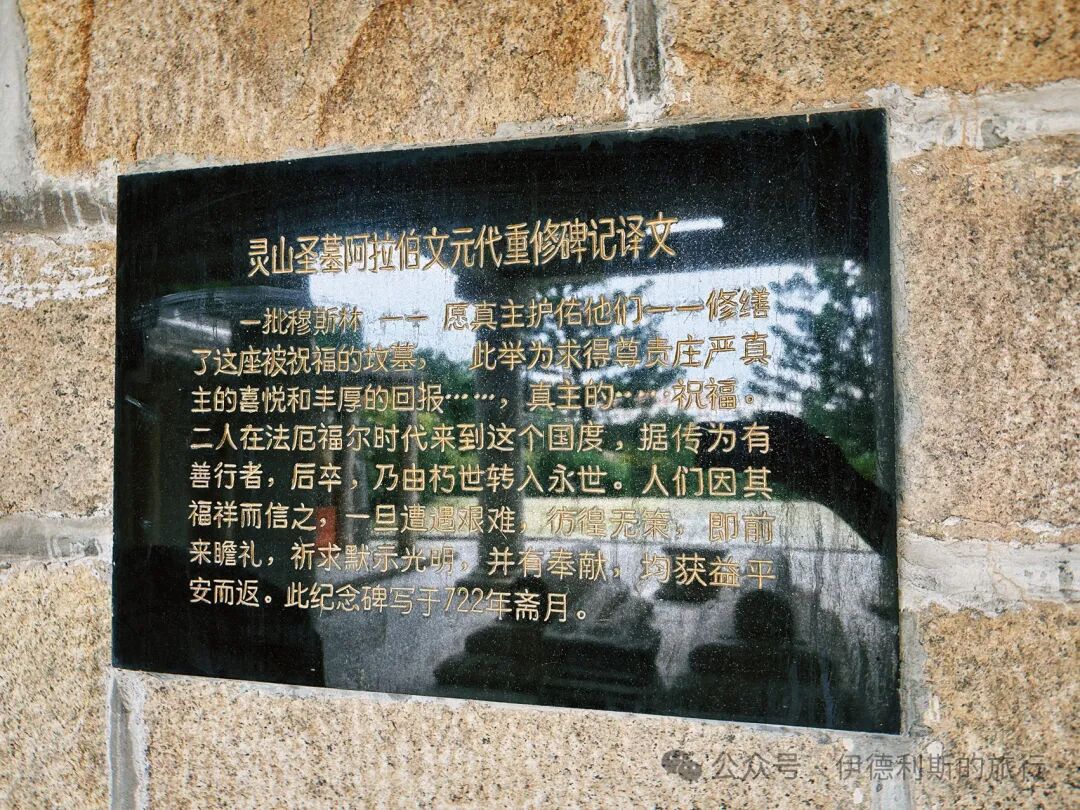
The holy tomb has a stone tablet from the Yuan Dynasty dated 1322, written in Arabic, which says: These two deceased came to this land during the time of the Faghur. It is said they were men of great virtue, so after death, they moved from the earthly world to the eternal one. According to research by Chen Dasheng in A Preliminary Study of the Date of Lingshan Holy Tomb in Quanzhou, Faghur is an Arabic transliteration of the Persian word Bagh pur, which specifically referred to the Emperor of China in Persian literature from the Five Dynasties to the Song and Yuan periods.
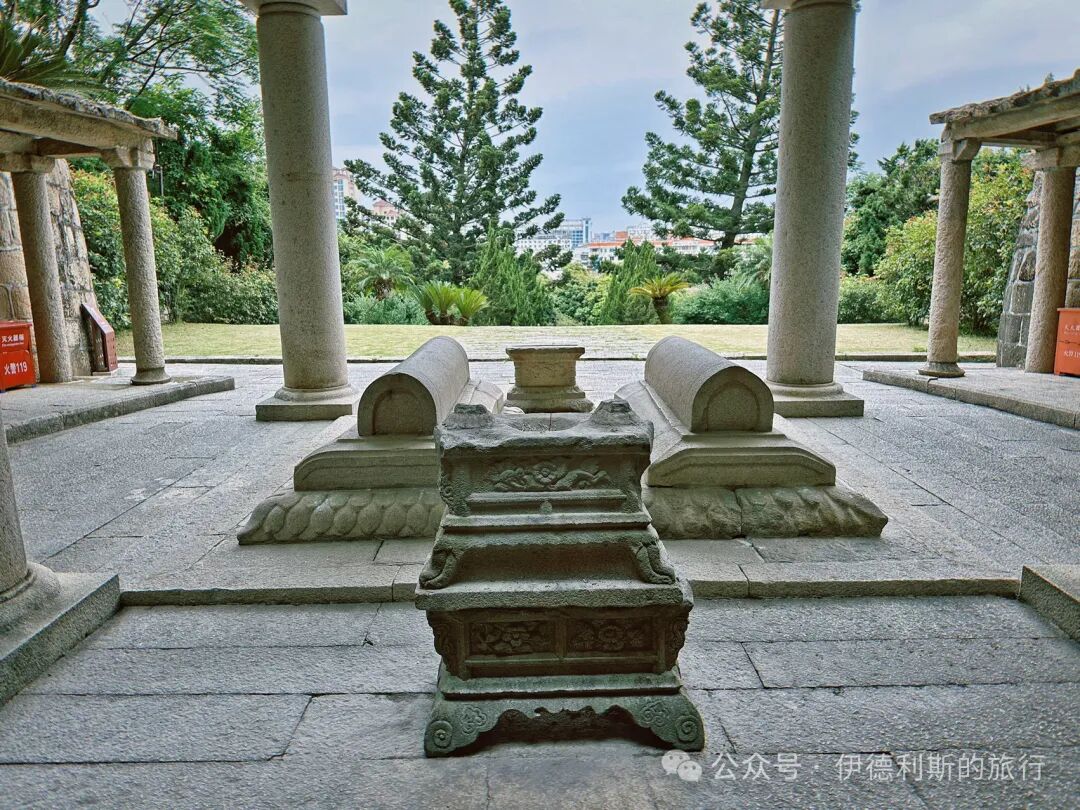
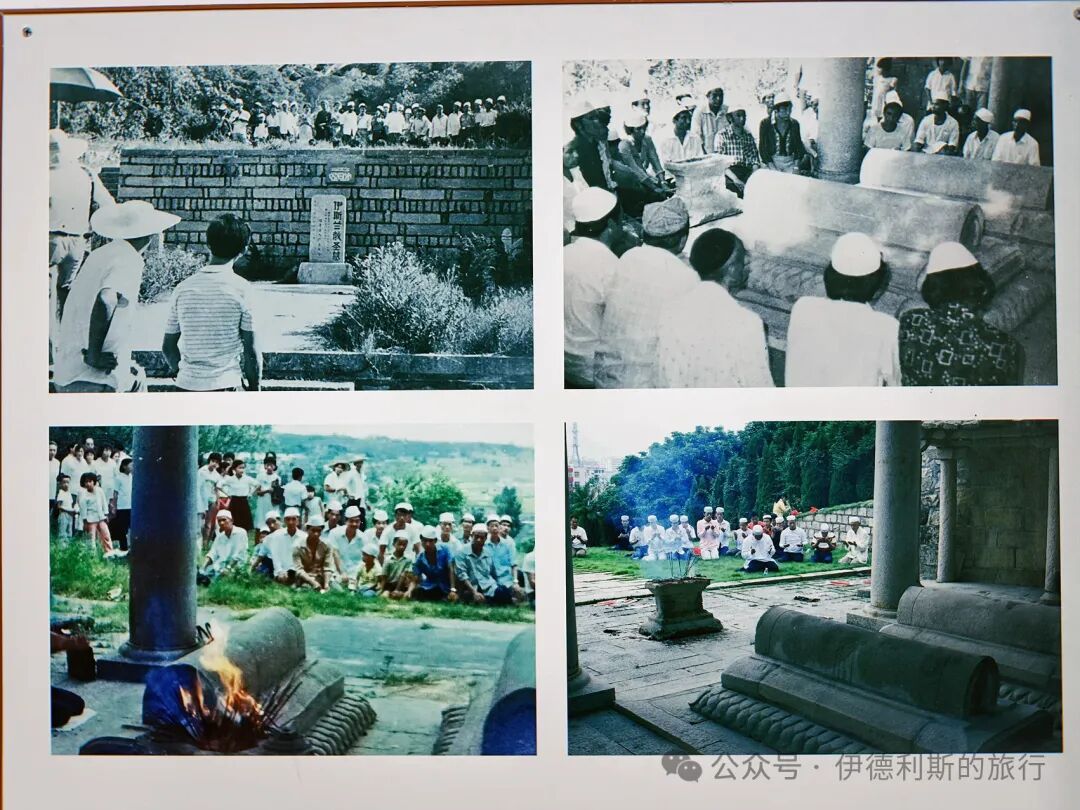
According to the Quanzhou Prefecture Gazetteer, when Zhou Daoguang, the prefect of Quanzhou, visited Lingshan Holy Tomb in 1562 (the 41st year of the Jiajing reign of the Ming Dynasty), he mentioned there were three mounds, which were the holy tombs. The Min Shu Chao, written during the Chongzhen reign, records that the owner of the third tomb was Gao Di Shi Xu Ba Ba. In the 1930s, the wooden frame of the pavilion at Lingshan Holy Tomb had collapsed, leaving only four stone shuttle-shaped pillars. At that time, the three Sumeru-style stone tombs arranged in a triangle were still well-preserved, with stone covers on top.
In 1958, the Quanzhou Cultural Bureau and the municipal committee moved the tombstone of Gao Di Shi Xu Ba Ba to the northern hillside to fit the legend in the Min Shu. At the same time, they moved the tombstone of the imam Ma Ahun Yongchun (Ma Yongchun) from the south of the holy tomb to the northern hillside. In March 1959, a new stone pavilion was built with three levels of terraces and stairs on both sides. All other tombstones in front of the graves were removed to create a lawn, forming the layout seen today.
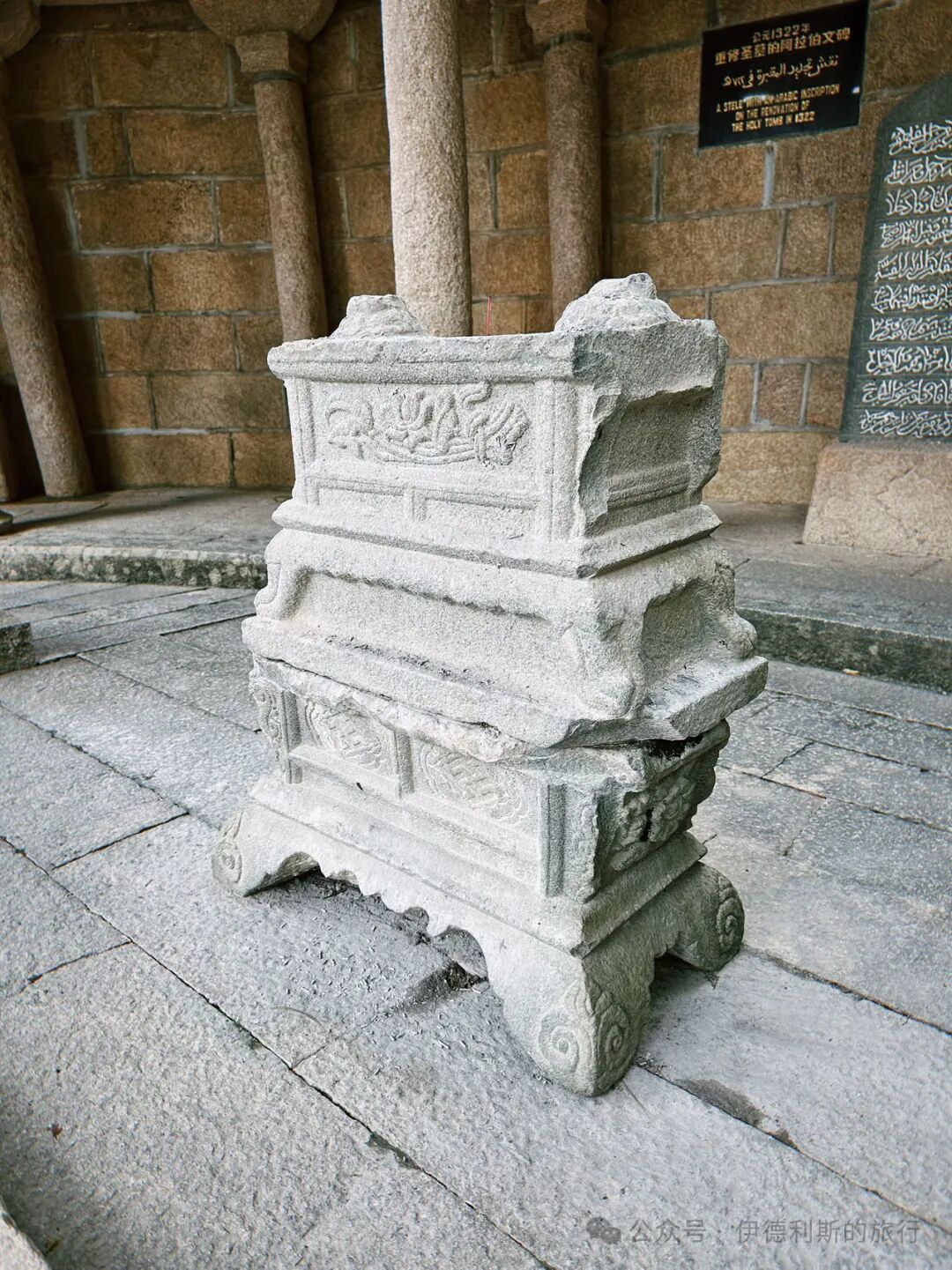
The holy tomb currently has two granite graves divided into three layers, with lotus petal carvings on the bottom layer. In the past, during Eid al-Fitr and Eid al-Adha, Hui Muslims in Quanzhou would attend prayers at Qingjing Mosque. First, an imam would lead the heads of households to visit the homes of other Hui Muslims near the mosque for a greeting, and then all the Hui Muslims would go together to visit the graves at Lingshan. When visiting the graves, they would first recite the Quran together at the holy tomb before going to their own family graves.
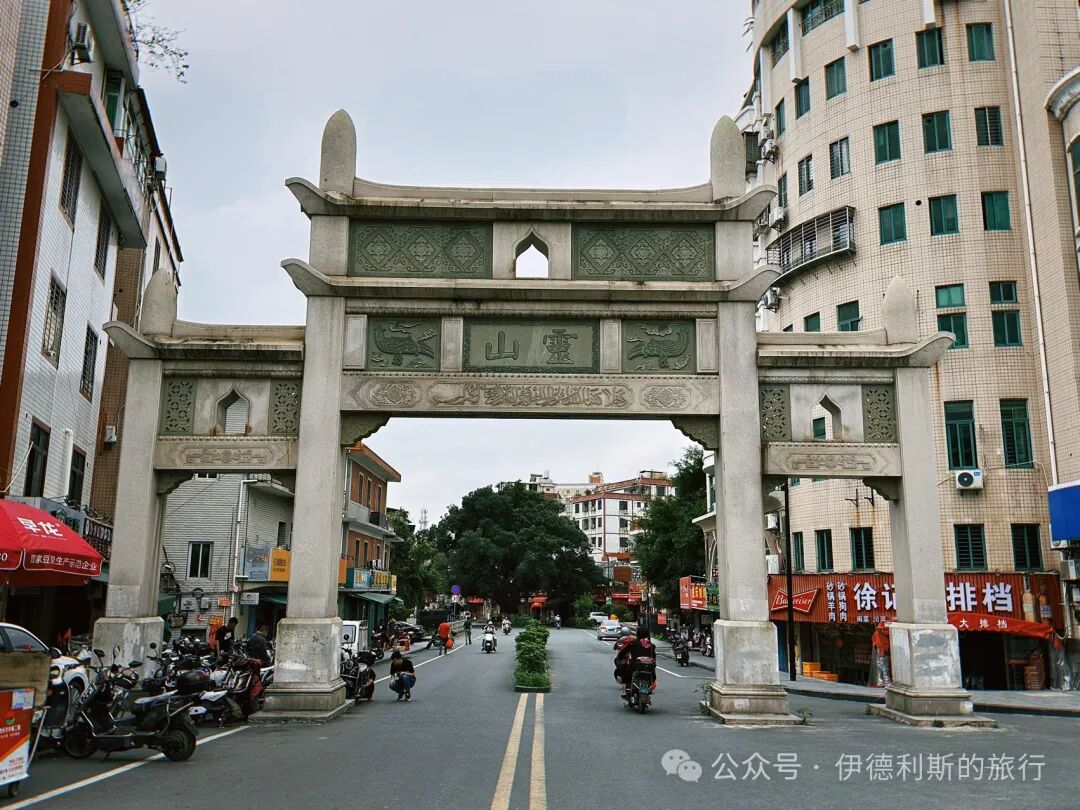
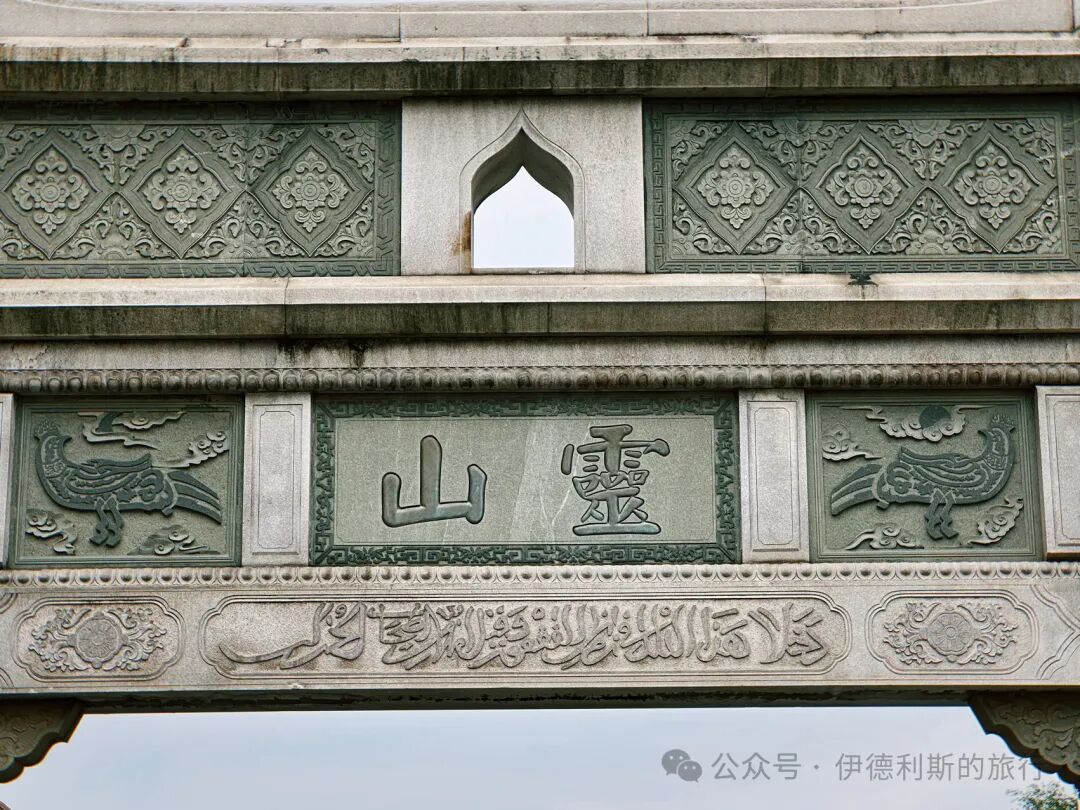
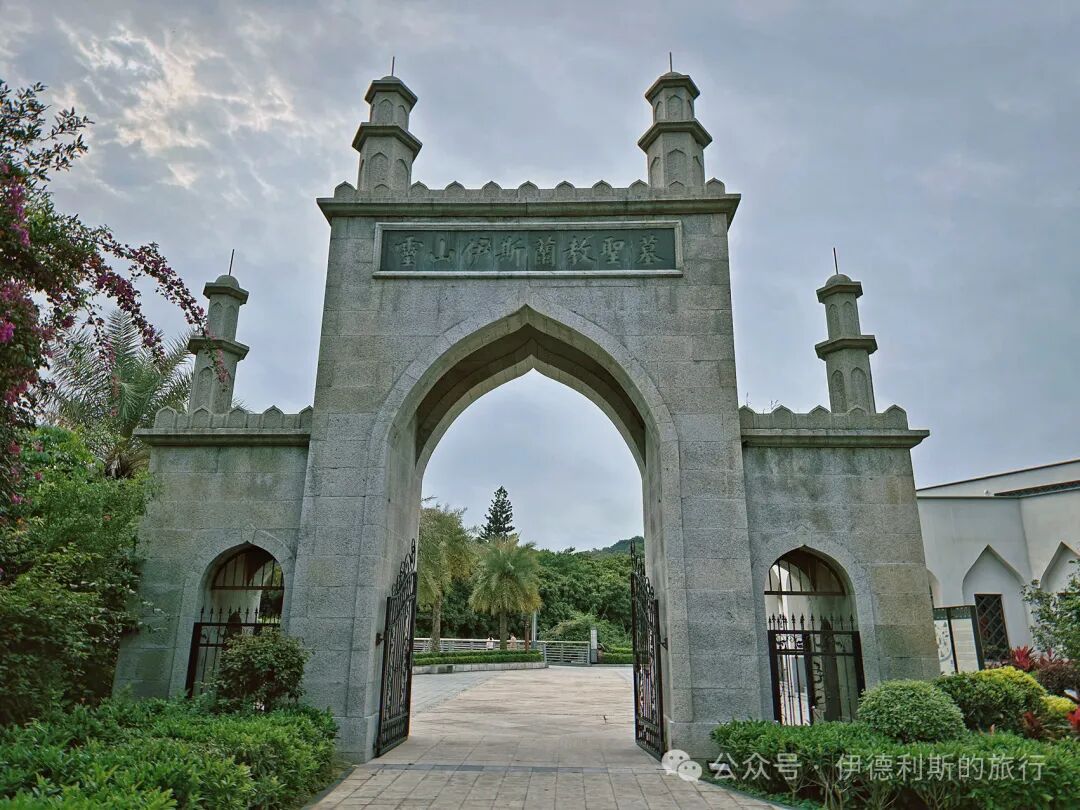
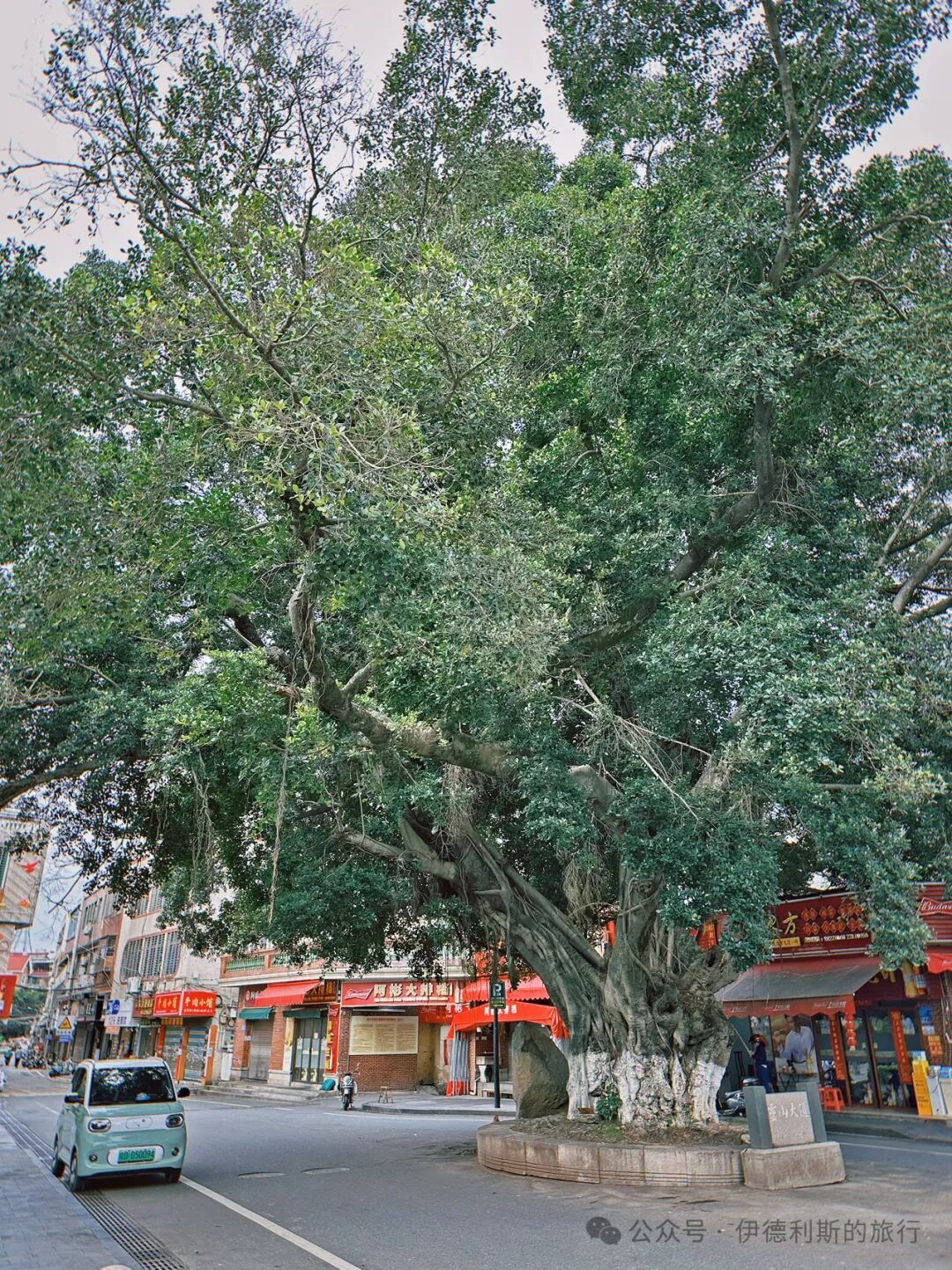
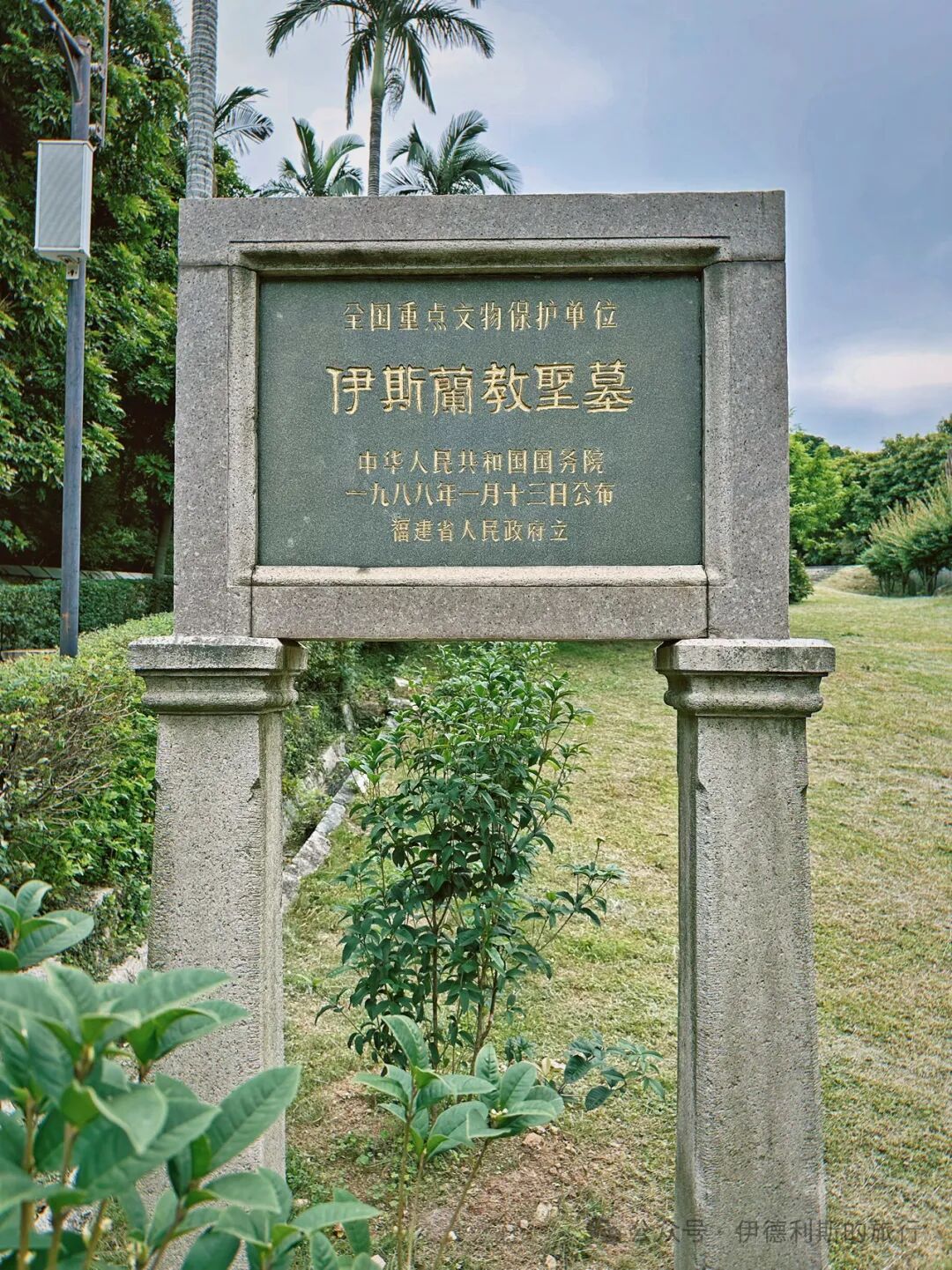
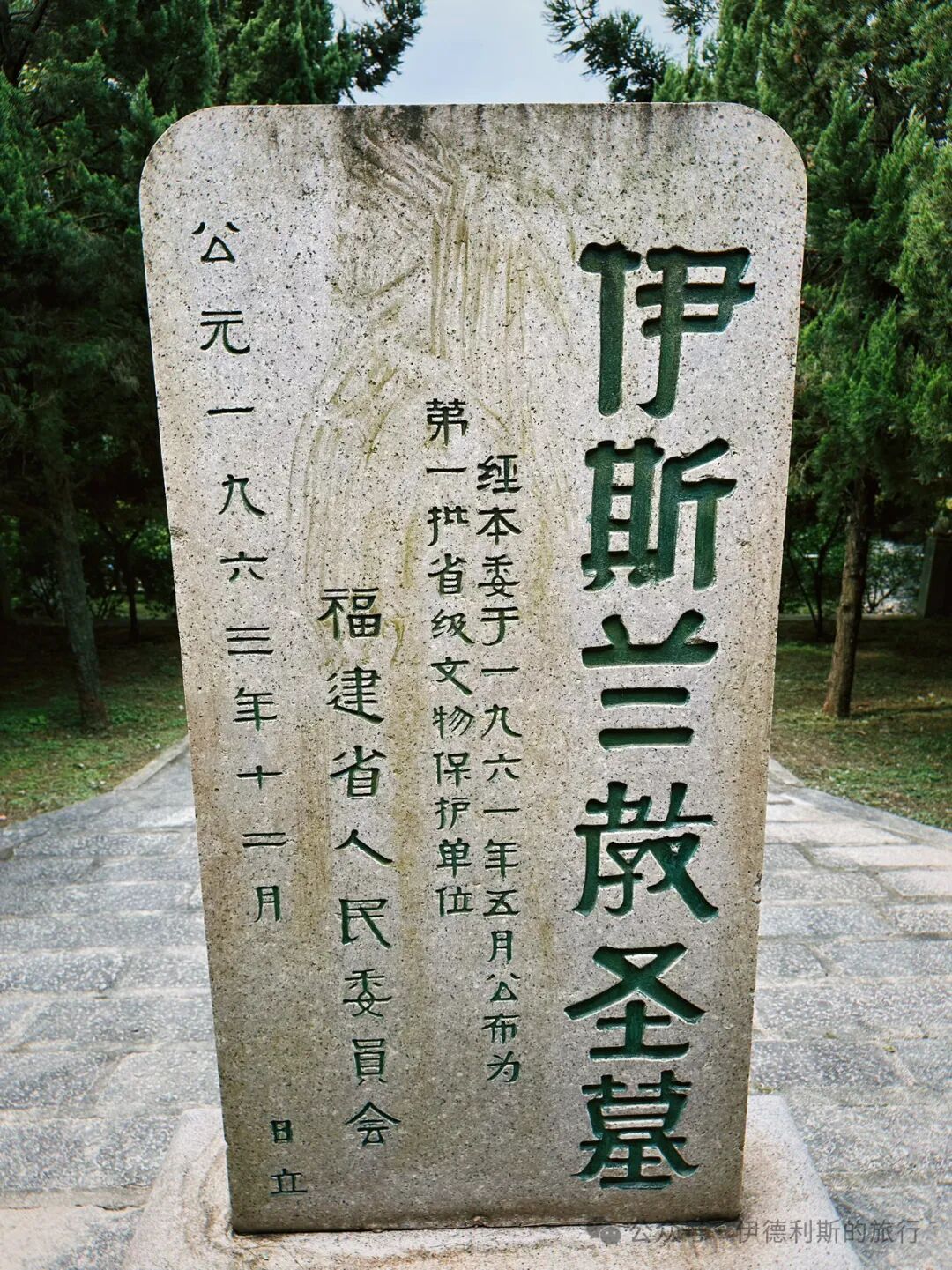
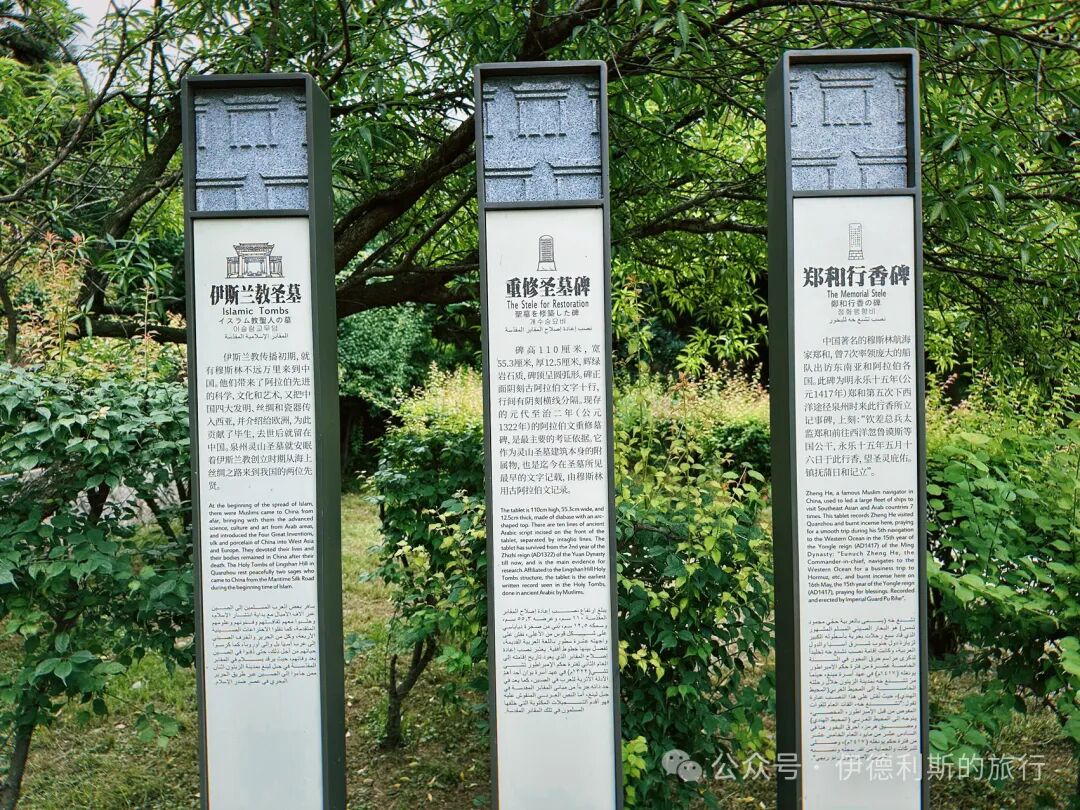
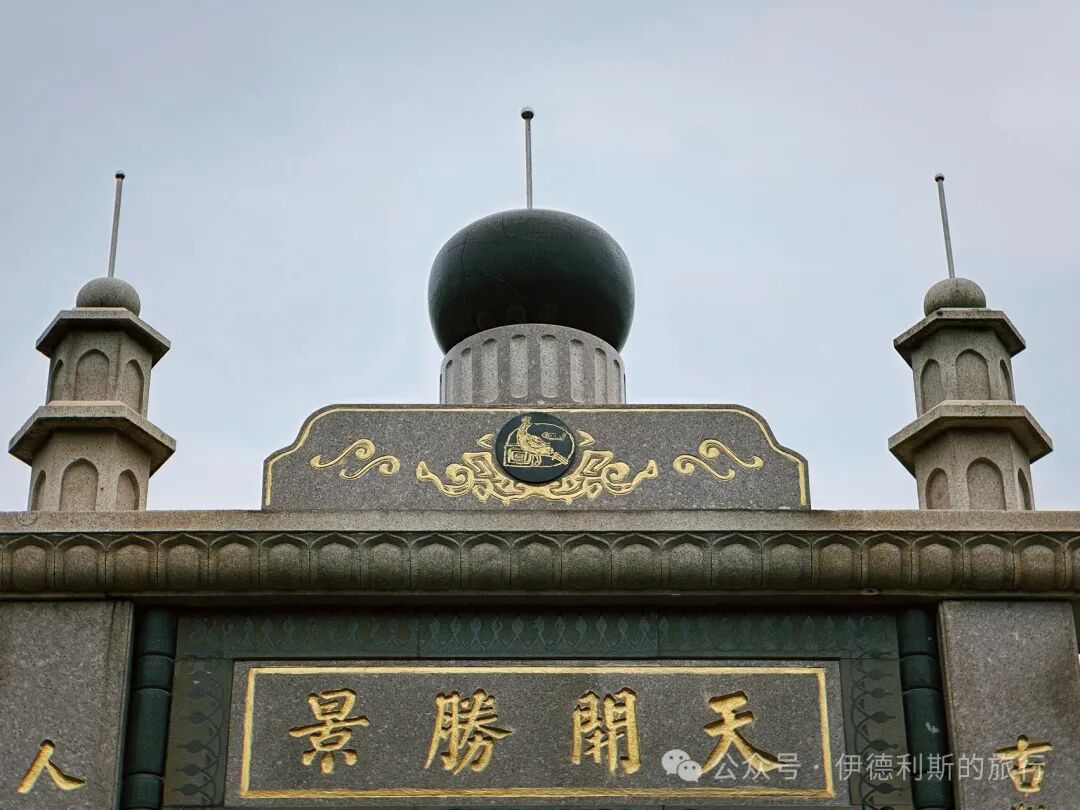
The archway and gate in front of Lingshan Holy Tomb, the banyan trees on Lingshan Avenue, and the national and provincial heritage site markers, introduction boards, and notices at the holy tomb.
The historical stone tablets at Lingshan Holy Tomb.
The Incense Offering Tablet: This records the visit of Zheng He to the graves before his fifth voyage to the Western Oceans in 1417 (the 15th year of the Yongle reign), erected by the commander Pu Heri. The name Hulumesi carved on the tablet refers to the ancient Persian port of Hormuz.
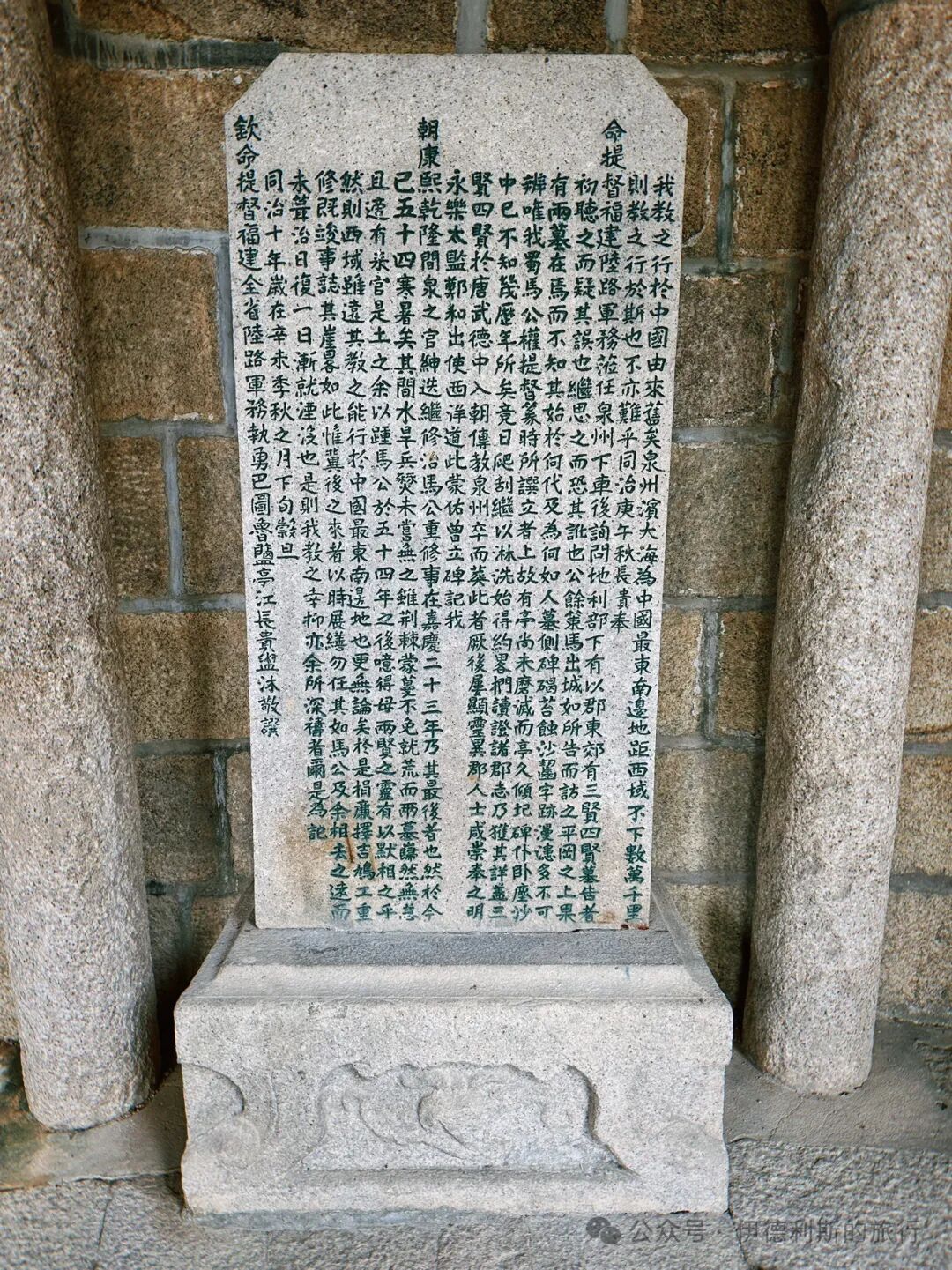
The Chen Yougong Repair Tablet: Erected in 1714 (the 53rd year of the Kangxi reign), it records the repair of Lingshan Holy Tomb by Chen Yougong, a regional commander in Fujian, and Chen Mei, a regional military official. The inscription below lists seven surnames: Chen, Ma, Guo, Huang, Li, Yang, Pu, and Ding.
The Xia Bidi Repair Tablet: Records the repair of the holy tomb by the director Xia Bidi in 1751 (the 16th year of the Qianlong reign).
The Guo Bacui Repair Tablet: Records the repair of the holy tomb by the scholar Guo Bacui in 1783 (the 48th year of the Qianlong reign). Guo Bacui was a Hui Muslim from the Guo family in Baiqi. He passed the military examination in 1779 (the 40th year of the Qianlong reign), was awarded the rank of military officer, and served in the Anping Left Battalion in Taiwan. When he erected the tablet in 1783, he was stationed in Xiamen and ordered to patrol the coastal areas of Taiwan and Penghu. In 1787 (the 52nd year of the Qianlong reign), the Lin Shuangwen uprising in Taiwan besieged Zhuluo County. Guo Bacui was ordered to rush to the rescue and died on the battlefield.
The Ma Jianji renovation stele records that in 1818 (the 23rd year of the Jiaqing reign), Ma Jianji, the acting commander-in-chief of the Fujian provincial land forces and general of Zhangzhou from Western Sichuan, rebuilt the tomb pavilion. The stele calls the Holy Tomb the 'Baba Tomb,' with 'Baba' being the Persian term of respect for an elder. Ma Jianji was from Nanchong, Sichuan. Besides renovating the Lingshan Holy Tomb, he also renovated the Qingjing Mosque in Quanzhou.
The Jiang Changgui renovation stele records that in 1871 (the 10th year of the Tongzhi reign), Fujian commander Jiang Changgui renovated the Holy Tomb. Jiang Changgui was a Hui Muslim from Yanting, Sichuan. His family practiced martial arts for generations. He was brave in battle, led troops against the Taiping Heavenly Kingdom for many years, earned many military merits, and was titled Zhiyong Baturu and General Jianwei. Besides renovating the Lingshan Holy Tomb, he also renovated the Qingjing Mosque and invited the army imam Ma Yongchun to lead religious affairs.
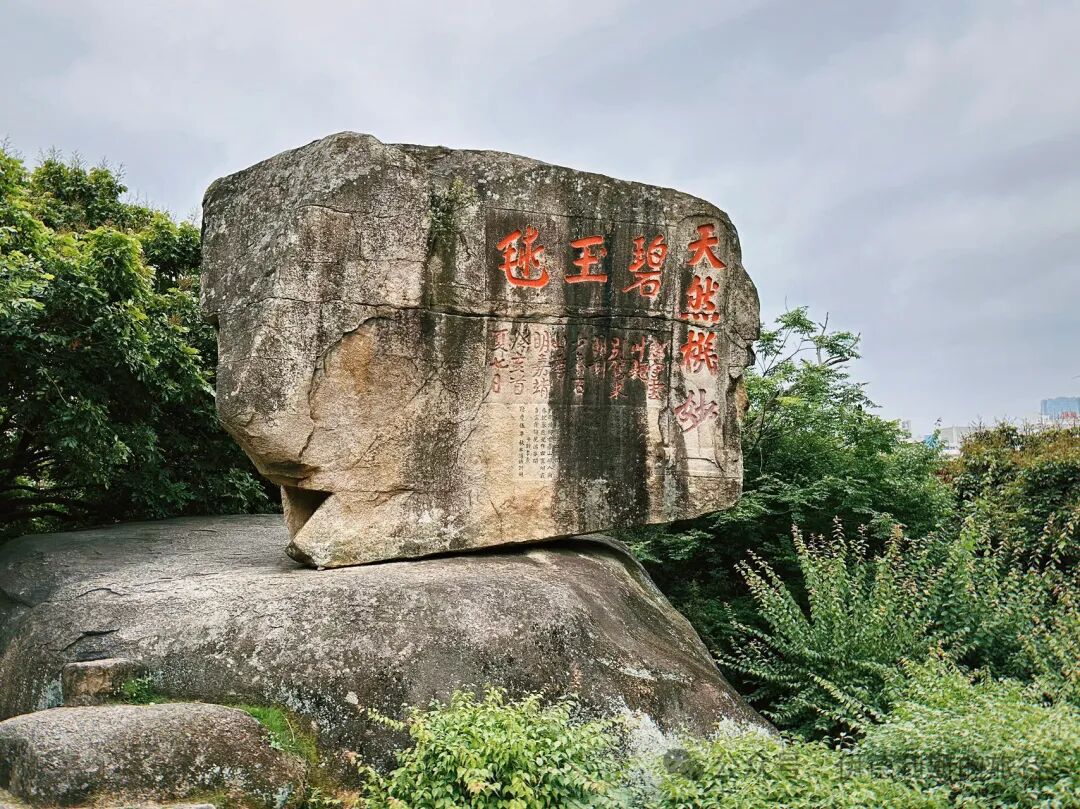
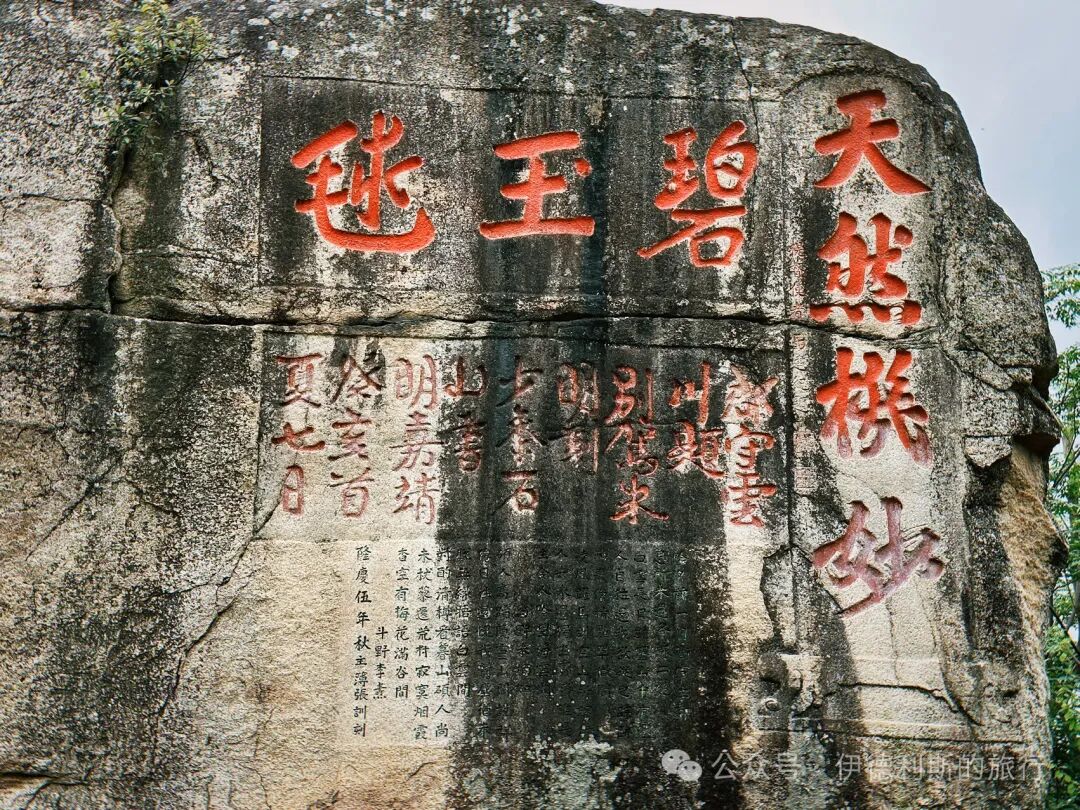
Beside the Holy Tomb is a 'Wind-Moving Stone' (fengdongshi). It features the inscription 'Jade Ball' (biyu qiu) by Quanzhou prefect Zhou Daoguang in 1563 (the 42nd year of the Jiajing reign) and 'Natural Ingenuity' (tianran jimiyao) by Ma Jianji in 1818 (the 23rd year of the Jiaqing reign).
Zhou Daoguang was the first person to record the term 'Lingshan Holy Tomb'. The Quanzhou Prefecture Gazetteer, Mountains and Rivers, Lingshan section records: 'Asking the locals, they say: This is the Lingshan Holy Tomb... Since the religion from foreign lands entered the Middle Kingdom, there have been Hui Muslims.' Its founder's surname and generation are unknown, but he loved this hill and was buried here...' He also described the tomb's layout at the time: 'Entering the gate, the path is very narrow.' Climbing to the hall, the atmosphere feels different. Reaching the top, there are three mounds, which are the Holy Tombs. In front of the tomb, there is a small pavilion on the right for namaz. On the left, there is a shed where one can rest.
In 1958, when the Fuzhou-Xiamen highway outside the East Gate of Quanzhou was widened, several Song and Yuan dynasty Muslim pedestal-style tomb stones by the road were moved next to the Lingshan Holy Tomb. That same year, farmers in Jintoupu village outside Tonghuai Gate in Quanzhou were collecting fertilizer and dredging pond sludge. They unearthed over ten pedestal-style tomb stones, which were temporarily moved to the Qingjing Mosque and later moved to the Lingshan Holy Tomb for preservation. That same year, residents on Tonghuai Street in Quanzhou unearthed three side-by-side pedestal-style tomb stones while building a house, which were also moved to the Lingshan Holy Tomb for preservation.
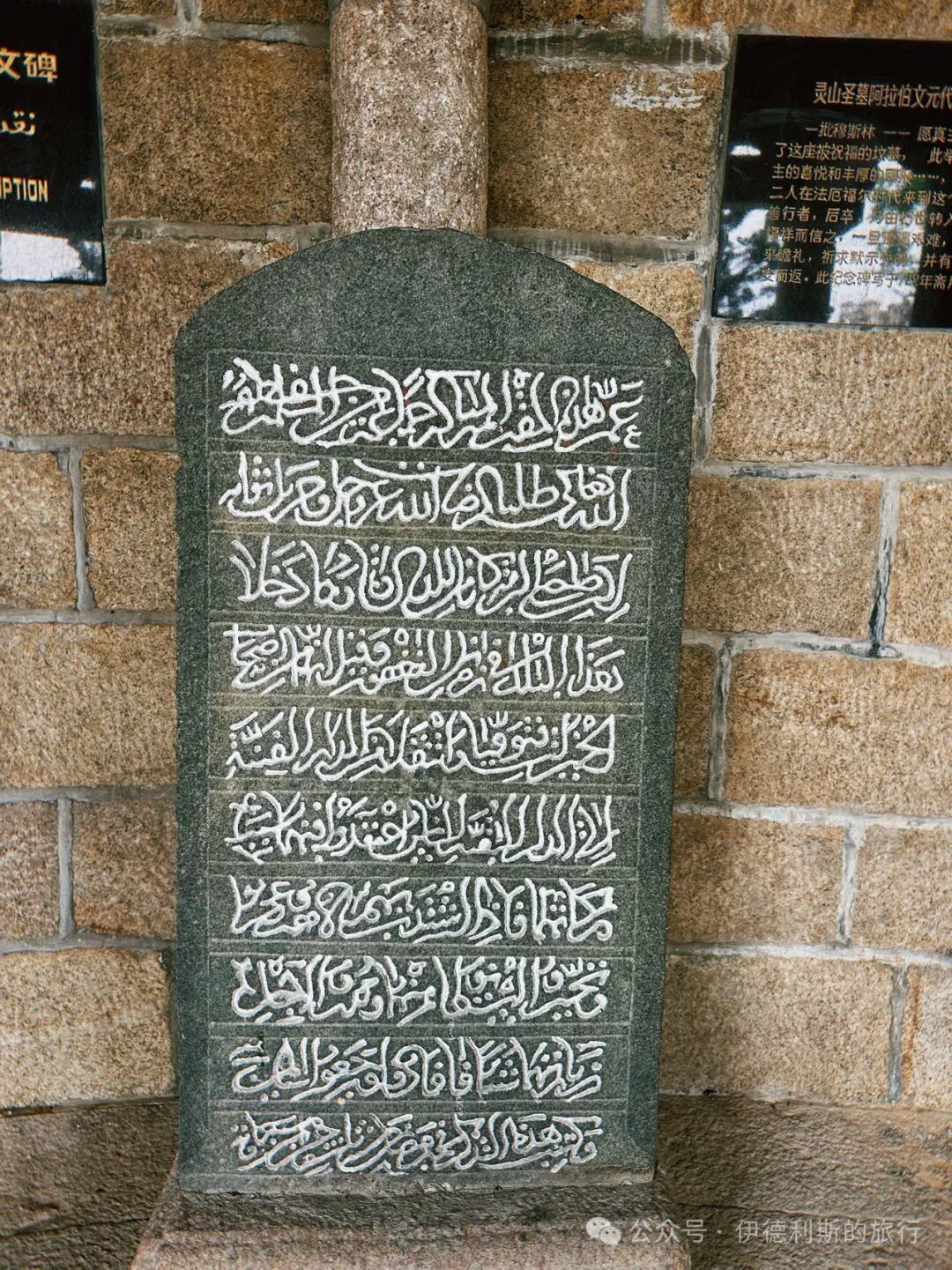
The image below is likely the tomb stone of Gaodi Shixu Baba, which was originally with the 'Three Sages and Four Sages' tomb stones and moved here during the 1958 renovation.
Details of the Arabic stone carving. The content of the carving is entirely scripture, with no identity information about the tomb owner. According to Quanzhou's Song and Yuan dynasty traditions, the tomb stone recording the owner's identity would have been a separate slab.
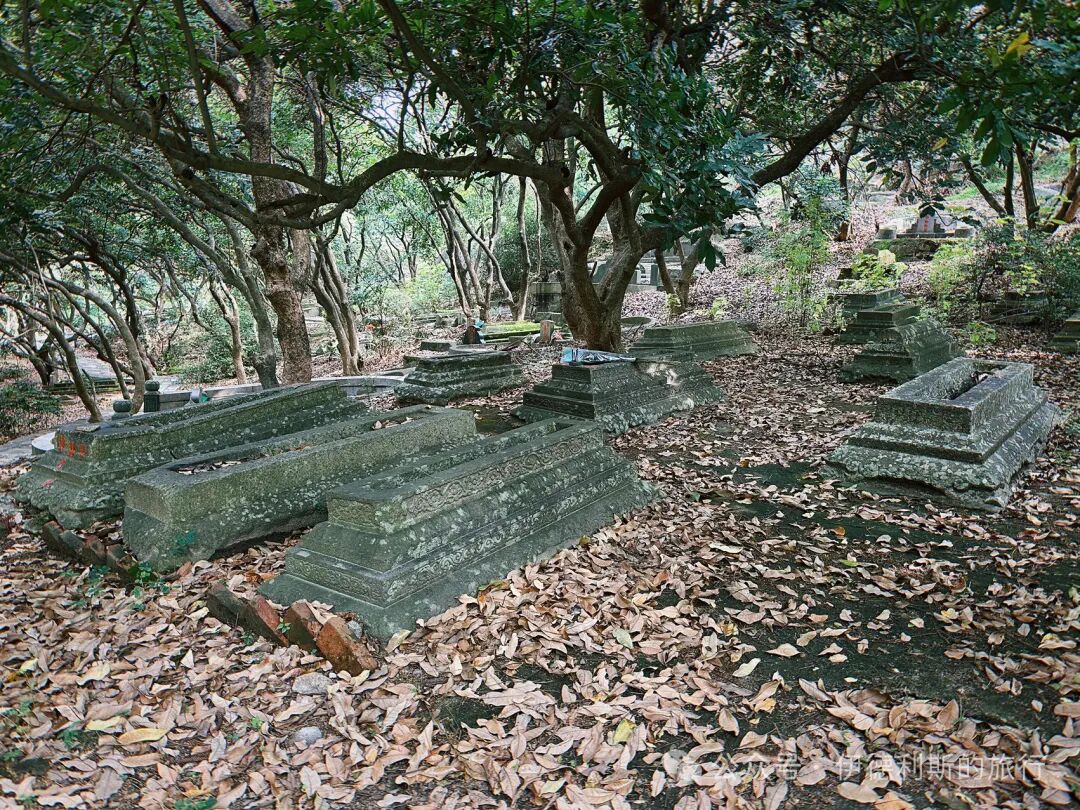
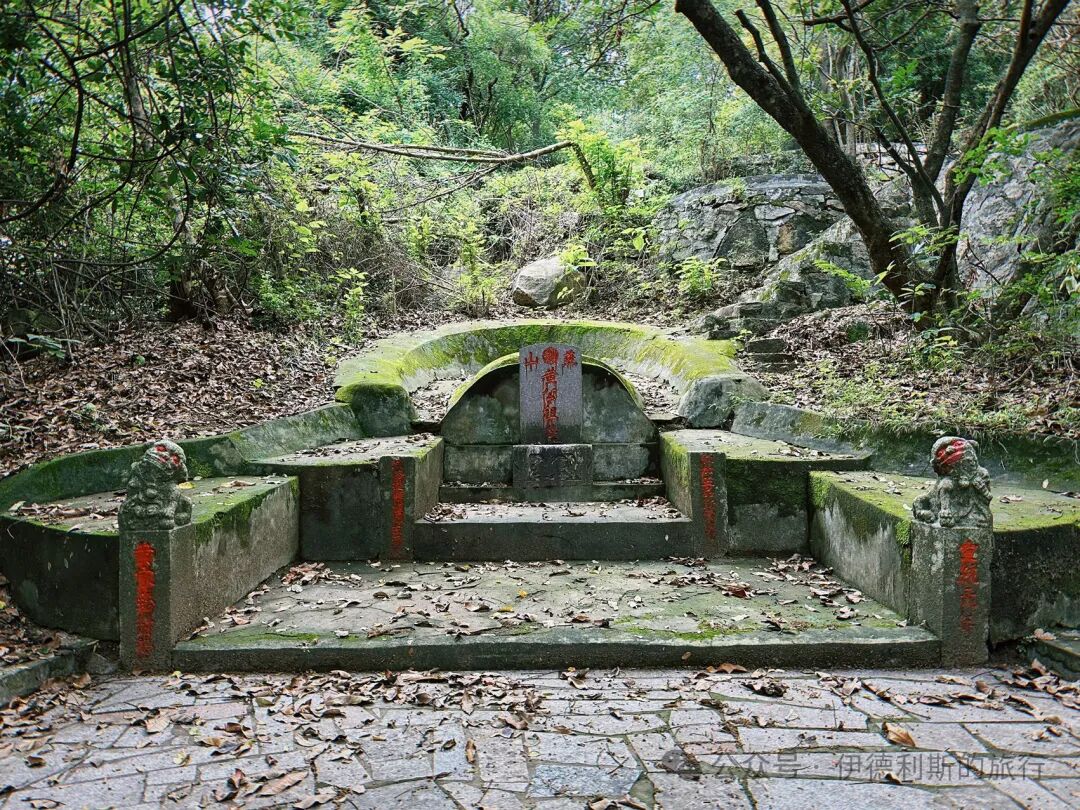
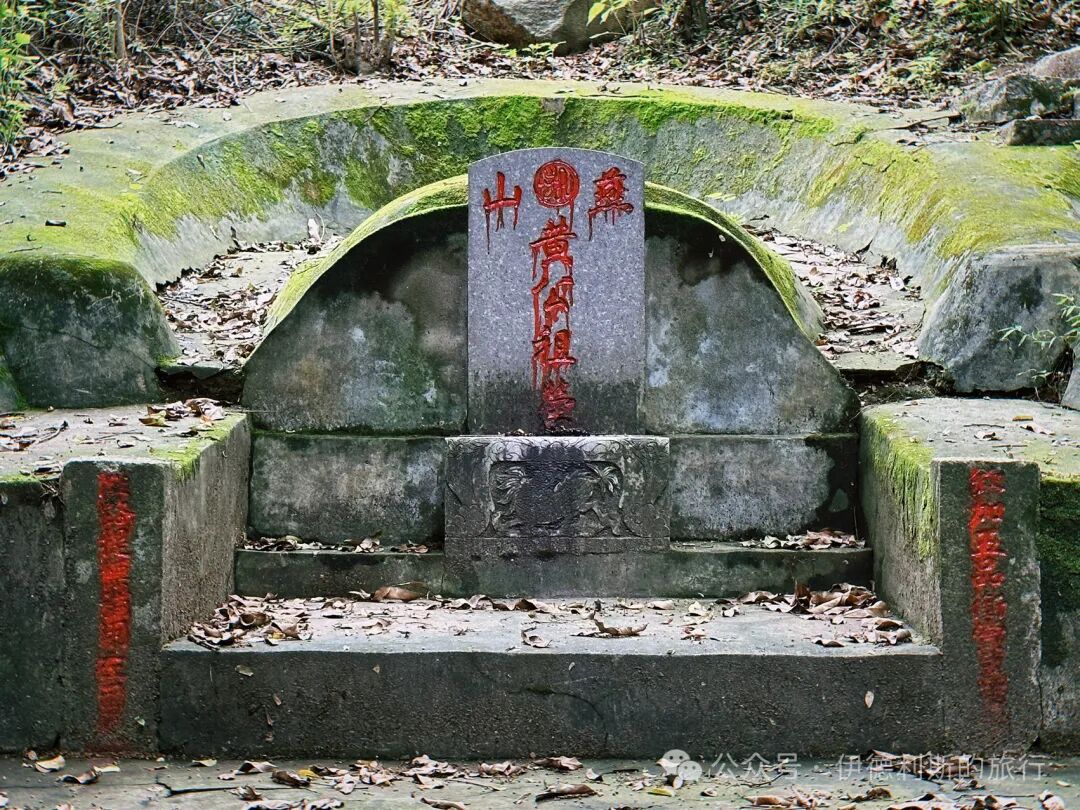
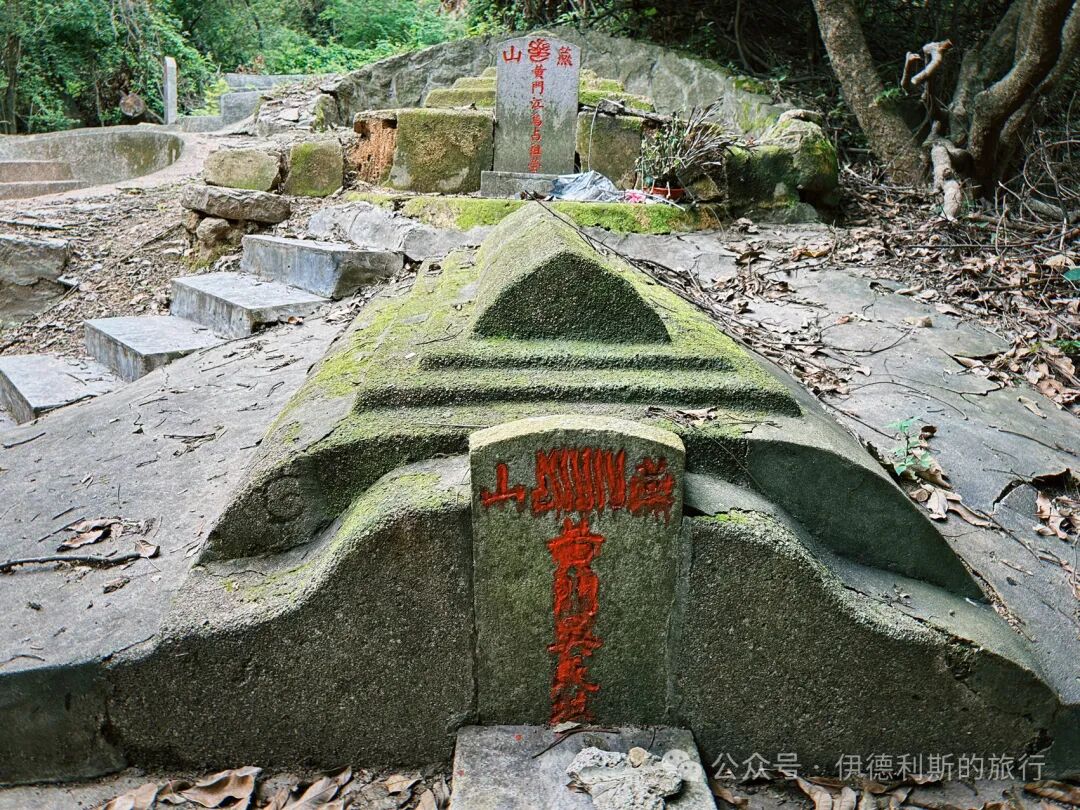
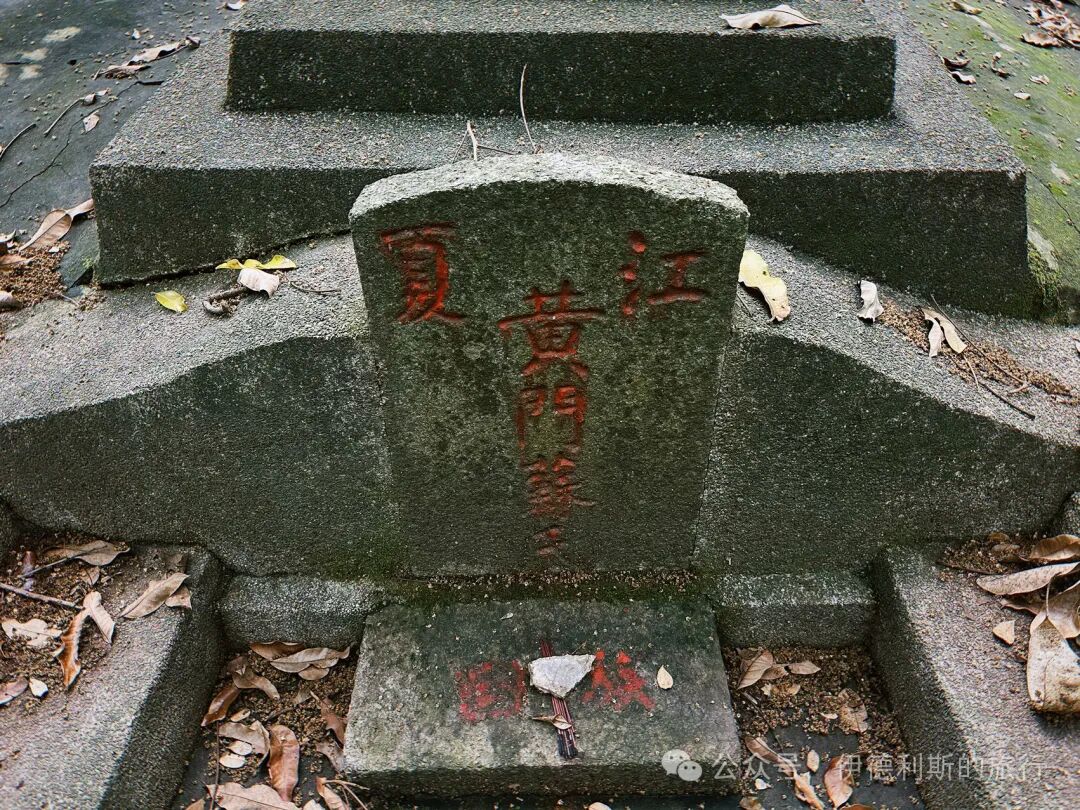
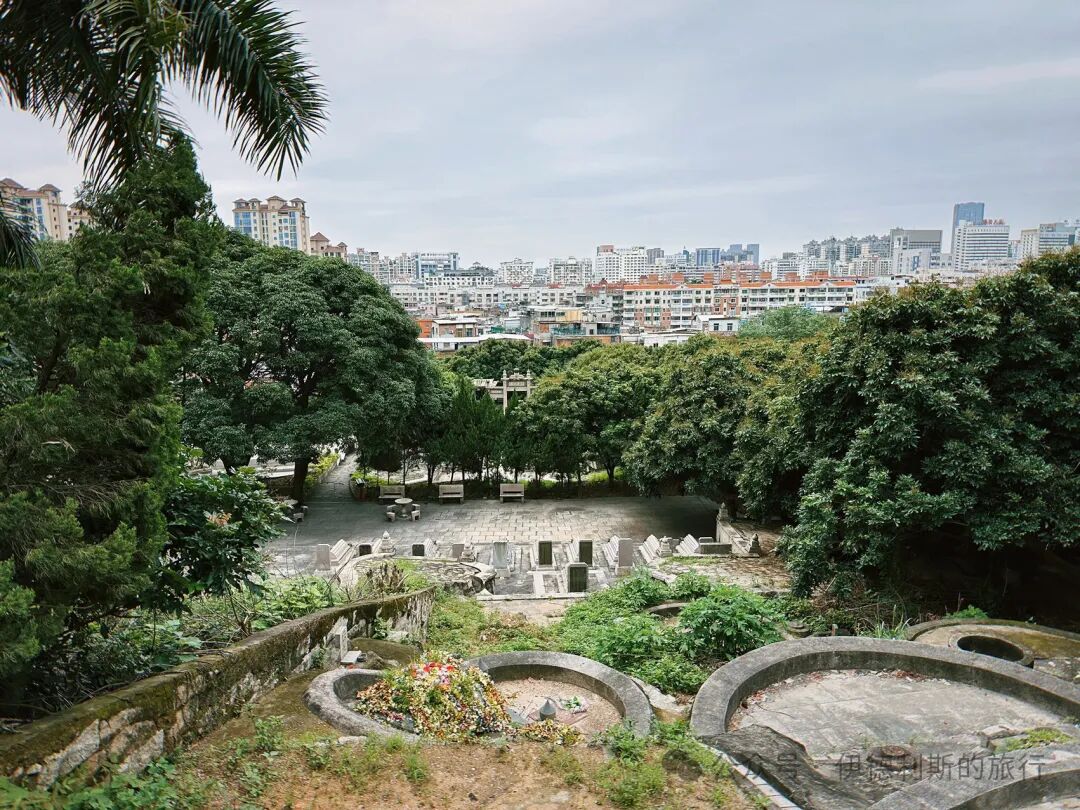
Next to the Lingshan Holy Tomb is the cemetery for local Quanzhou Hui Muslims. The Ge, Ma, and Huang families are descendants of the generations of imams from the Qingjing Mosque. They mostly worked in the leather industry in the past and lived inside the Qingjing Mosque until 1983. In the past, Quanzhou Hui Muslims would come here to visit the graves every Eid al-Fitr and Eid al-Adha. When visiting the graves, first light some incense (anxixiang), then trace the carvings on the tombstone with red paint, and finally invite an imam to recite scriptures.
In the tomb complex, you can see the ancestral graves of the Huang family from Jiangxia and the Huang family from Yanshan. The Jiangxia Huang family ancestral grave is inscribed with 'Mosque Huang Residence,' while the Yanshan Huang family grave bears inscriptions like 'First Year of the Xuantong Reign' and 'Imperially Appointed Fifth-Rank Official... Land Route Commander...' which are hard to read completely due to the red paint.
According to their family records, the Guo family of Hui Muslims originally lived in Guo Family Village in Fuyang, Hangzhou, before arriving in Quanzhou during the Yuan Dynasty. During the Hongwu reign of the Ming Dynasty, Guo Zhongyuan moved from Quanzhou to Baiqipu on the opposite side of Houzhu Port, which eventually became the present-day Baiqi Hui Ethnic Township. The Baiqi Guo family left the faith in 1607 (the 35th year of the Wanli reign of the Ming Dynasty). In 1709 (the 48th year of the Kangxi reign), Chen Yougong, a regional commander and left-wing general for the Fujian Ting, Yan, and Shao areas, came to Quanzhou to revive the faith and established scripture hall education at the Qingjing Mosque. At that time, Guo Honglong, a member of the eighth generation of the Guo family's fourth branch, moved from He Cuo in Baiqipu to live at the Qingjing Mosque and returned to the faith, citing the need to strengthen the main family line. After Guo Honglong returned to the faith, his descendants lived at the Qingjing Mosque. His descendant, Guo Shifu, helped renovate the mosque in 1794 (the 59th year of the Qianlong reign) alongside Bai Yunhan, a deputy general of the Zhangzhou Left Battalion.
A large section of the Lingshan Sacred Tomb scenic area is dedicated to the Ding family cemetery from Chendai.
According to family records, the first-generation ancestor of the Chendai Ding family, Ding Jin (1251-1298), was originally from Suzhou and settled in Quanzhou for business. The Chendai Ding family maintained their faith for ten generations, spanning over two hundred years from the 13th to the 16th century. Ding Yanxia, the tenth-generation descendant born around 1517, wrote detailed accounts of the religious customs he experienced as a child in his work, 'On Ancestral Faith' (Zujiao Shuo). However, calculations suggest that by the eighth to ninth generation, the Chendai Ding family no longer prioritized scripture hall education. The remaining relics of the faith belonging to the Chendai Ding family are the several Ming Dynasty tomb stones located within the Lingshan Sacred Tomb.
Before the Ding family established their base in Chendai, the first, second, and third generations were all buried at Lingshan, east of Quanzhou city. After the fourth-generation ancestor, Ding Shan, established the family base in Chendai, he entrusted the management of the ancestral graves to others. Later, Xu Fu, the son of the second manager Xu Fen, repeatedly encroached on the ancestral graveyard, and the Ding family endured this in silence. Eighteen years later, in 1505, the eighth-generation descendant Ding Yi passed the imperial examinations to become a jinshi. Upon returning home, he filed a lawsuit and finally reclaimed the ancestral tomb land.
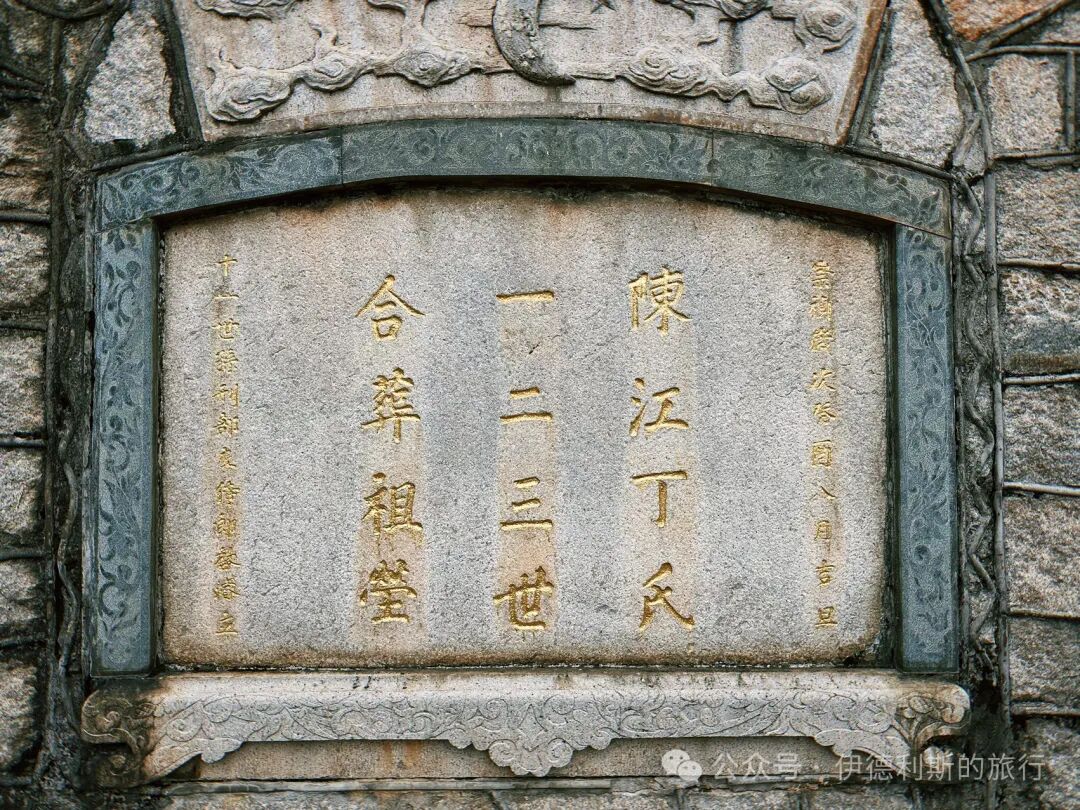
During the Chongzhen reign of the Ming Dynasty, the descendants of the Ding family combined the graves of the first, second, and third generations. In 1993, due to road construction, many of the Chendai Ding family's tomb stones were moved from outside the East Gate of Quanzhou and Luyuan to the Lingshan Sacred Tomb. The current combined tomb of the first, second, and third generations was also renovated during this period. The tomb stones and tombstones seen today are not the original ones.
After the Ming Dynasty, the Chendai Ding family claimed their ancestor was the Yuan Dynasty politician Sayyid Ajjal Shams al-Din, so the cemetery features inscriptions identifying them as descendants of a saint.
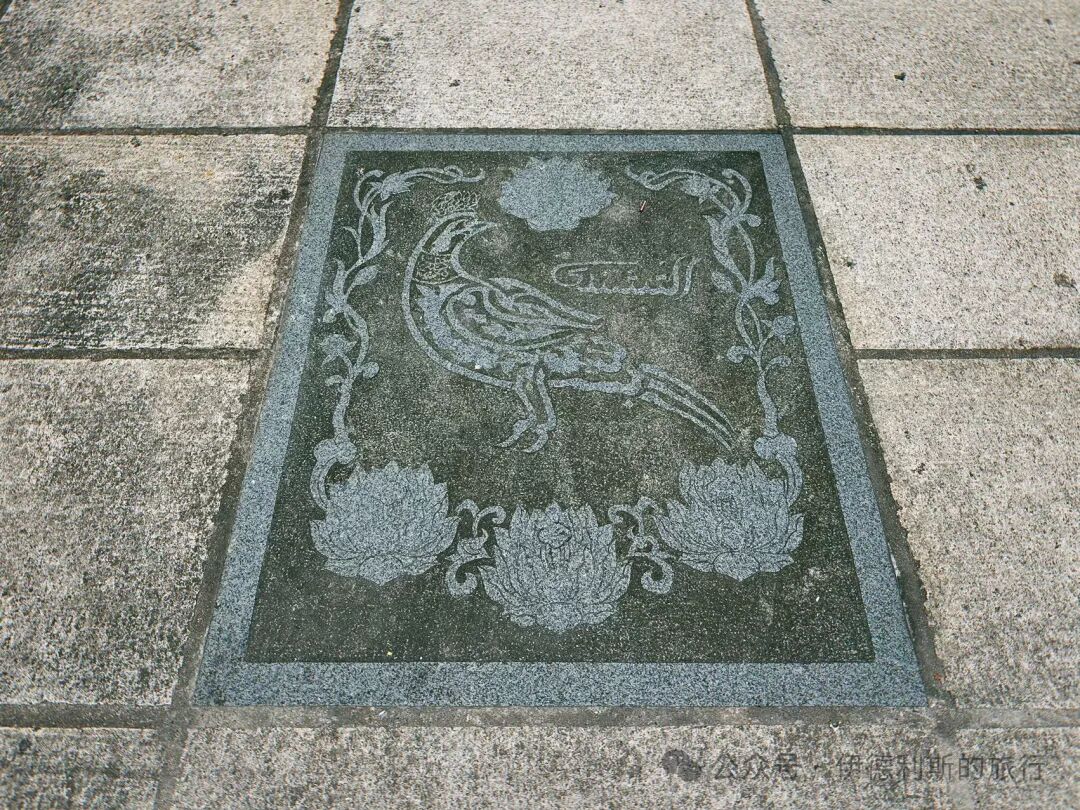
In the cemetery, you can also see the Basmala (tasimi) auspicious bird of the Chendai Ding family.
The tomb of the fourth-generation Chendai Ding family ancestor, Ding Shan, and his wife, Zhuang Xiniang.
Ding Shan (1343-1420), also known as Yanren and Ren'an, moved from Quanzhou to Chendai with his father at the end of the Yuan Dynasty. In the early Ming Dynasty, he settled in Chendai and established the Ding family clan. His wife, Zhuang Xiniang, also known as Runxiu, was the sixth-generation granddaughter of Zhuang Xia, who was named a founding baron and junior preceptor during the Southern Song Dynasty. The Zhuang family was very powerful at the end of the Southern Song Dynasty, but they gradually declined after the Yuan Dynasty. Many relatives left Quanzhou, and only Zhuang Xiniang's father remained in the Zhuang family mansion in the south of the city. The Ding and Zhuang families were neighbors at the time, so they married. Shortly after the wedding, Ding Shan and his father moved to Chendai. The Ding family's move to Chendai was likely related to Zhuang Xiniang, because the Zhuang clan lived nearby in Qingyang, a powerful group known as the Qingyang Zhuang family.
Ding Shan and his wife Zhuang Xiniang were originally buried in Luyuan, east of Quanzhou city. Luyuan means 'Paradise,' which is what the Quran refers to as the 'Garden of Heaven'. The tombstone is a traditional Islamic greenstone (huilvyan) tomb. Two five-story, pedestal-style tombstones sit on a Sumeru-style altar platform. The fourth layer of the tombstone is carved with scripture (2:255).
Tombs of the fifth-generation Ding Guanbao, sixth-generation Ding Kuan, and sixth-generation Ding Min.
Ding Guanbao (1369-1436), also known as Shifu and Chengzhai, was Ding Shan's second son and the founder of the second branch of the Chendai Ding family. He was originally buried at the foot of Shuiniulin, east of Quanzhou city.
Ding Kuan (1395-1446), also known as Tingyu and Longyin, was Ding Guanbao's second son. He was originally buried to the left of Ding Shan's tomb in Luyuan Mountain.
Ding Min (1407-1456), also known as Tingxue and Yizhai, was Ding Guanbao's fourth son. He was originally buried at the foot of Shuiniulin, east of Quanzhou city. Ding Min was the first local scholar among the Chendai Ding family to promote literary education.
Tomb of the fifth-generation Ding Mabao of the Chendai Ding family, with his wife Pu and his successor wife Wang.
Ding Mabao (1366-1431), also known as Shilong and Yi'an, was the eldest son of the fourth-generation founder Ding Shan. He was the founder of the first branch of the Chendai Ding family and was originally buried with his two wives at the Chenggui Baoxue site on Daping Mountain, east of Quanzhou city.
Tomb of the fifth-generation Ding Fubao and his wife Shi Dingniang.
Ding Fubao (1375-1432), also known as Shizhang and Yingjie, was Ding Shan's third son and the founder of the third branch of the Chendai Ding family. He is buried at Lingshan, east of Quanzhou city. The tomb features two pedestal-style stone graves on a traditional Islamic Sumeru-style altar platform, with swastikas and two lions playing with a ball carved into the waist of the platform.
Tombs of the sixth-generation Ding Xin and his wife Cai, and the seventh-generation Ding Lun and his wife Zhuang.
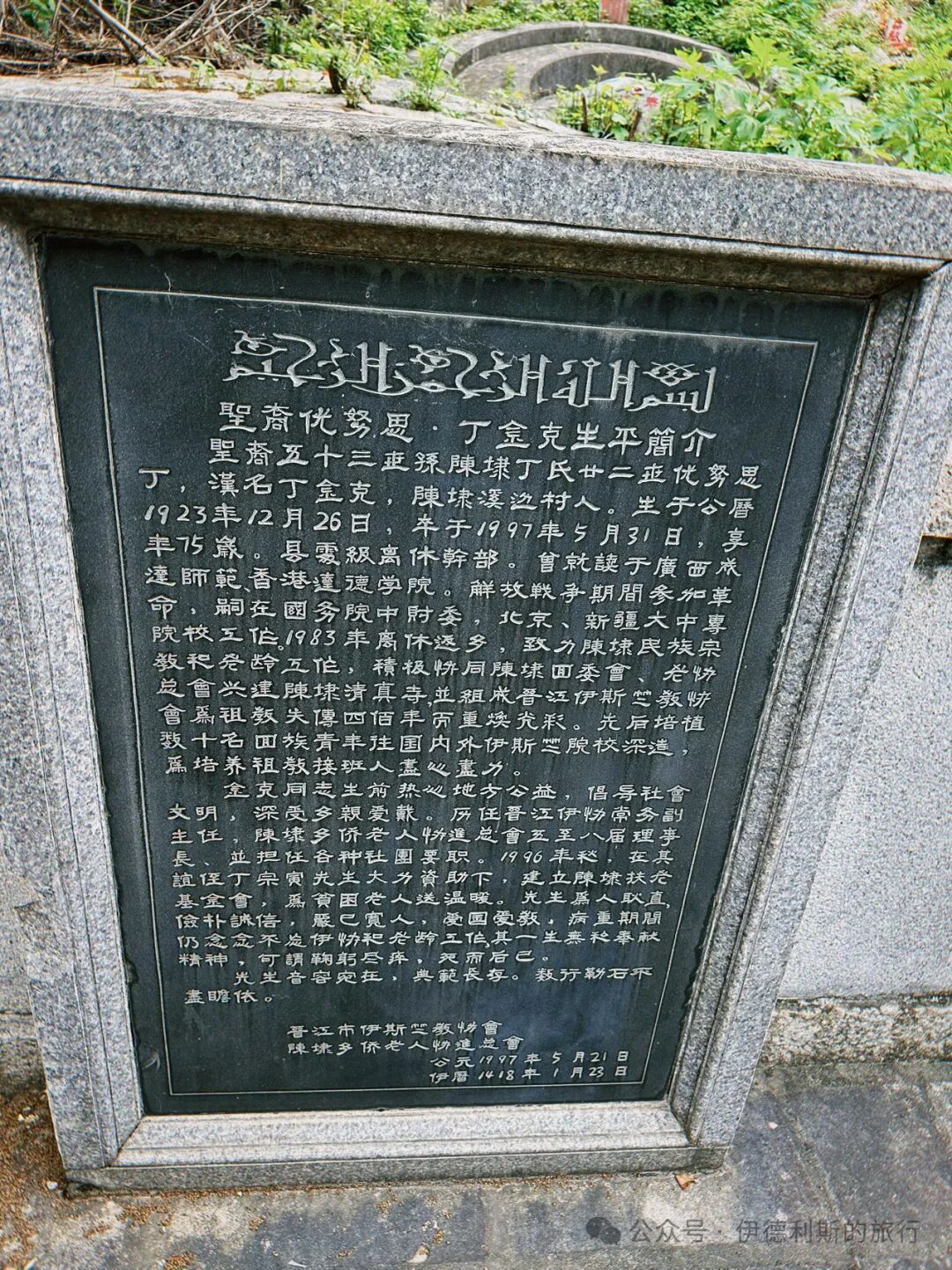
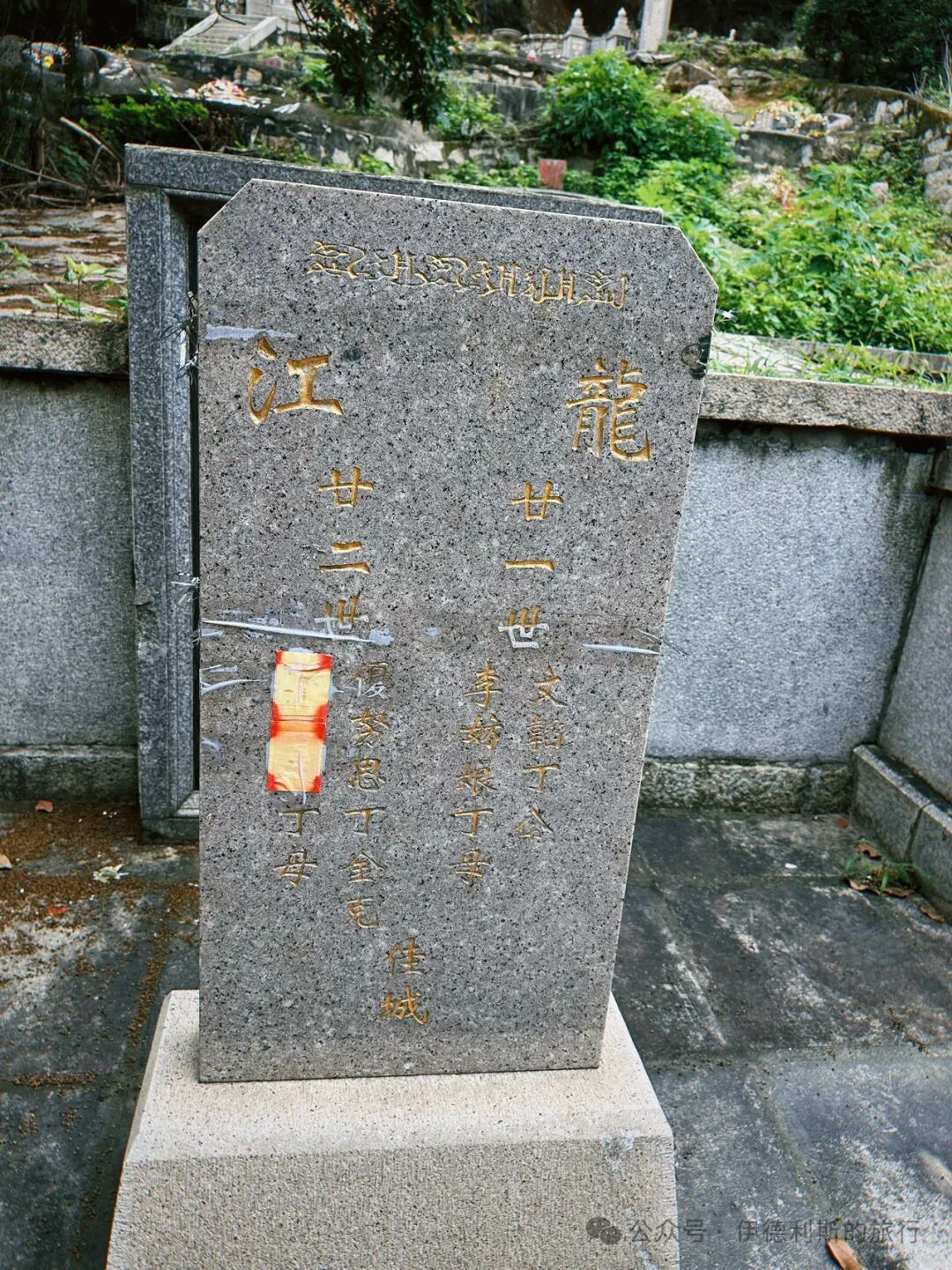
Tomb of the twenty-second generation Ding Jinke.
Ding Jinke (1923-1997), whose Islamic name was Yunus, studied at the Guangxi Chengda Normal School and the Hong Kong Dade College. In the early 1920s, the famous Hui Muslim Tang Kesan served as the director of the Xiamen Customs. He recommended his fellow townsman Zhang Guangyu to lead Islamic affairs in the Quanzhou area. After Imam Zhang Guangyu arrived in Quanzhou, he worked diligently on religious affairs, and the Islamic faith began to revive in Chendai. In 1939, the Chenjiang Branch of the China Islamic National Salvation Association was established in Chendai. Some members of the Ding family in Chendai went to the Qingjing Mosque in Quanzhou for their weekly Friday prayer (jumu'ah). Later, they converted the Wenchang Shrine in Sijing Village into a mosque and invited Imam Tie from Quanzhou to lead the religious affairs. Between 1937 and 1944, the Chengda Normal School moved south to Guilin. Its founders, Tang Kesan and Imam Ma Songting, accepted 17 young men from the Ding family in Chendai to study there, including Ding Jinke.
Ding Jinke joined the revolution during the War of Liberation. Later, he worked for the Financial and Economic Committee of the State Council and at various colleges and universities in Beijing and Xinjiang. He retired and returned to his hometown in 1983. In 1983, when the Fujian Islamic Association was founded, Ding Jinke, along with fellow Chengda Normal School graduates Ding Jinshun, Ding Jinhe, Ding Jinhong, and over twenty other dedicated community members, formed the Chendai Islamic Association Group to begin reviving religious activities. They borrowed the second-floor meeting room of the Chendai Hui Ethnic Affairs Committee and the back hall of the Ding Family Ancestral Hall to hold their Friday prayer (jumu'ah).
After years of hard work, Ding Jinke and other friends (dosti) raised funds to build the Chendai Mosque. The mosque was completed in 1991 and officially opened in 1993, with Ding Jinke serving as the first director of the mosque management committee. Soon after, the Jinjiang Islamic Association was established, and Ding Jinke served as its executive deputy director. After the 1990s, Ding Jinke helped dozens of young people from the Ding family in Chendai go to study religious knowledge both at home and abroad, with some attending Arabic language schools in Inner Mongolia. view all
Summary: This article visits the Lingshan Holy Tomb in Quanzhou, one of the city's key Islamic heritage sites linked to early Muslim history on China's coast. It keeps the original tomb details, inscriptions, photographs, names, and historical context for readers studying Quanzhou Muslim heritage.
Lingshan Holy Tomb is in the east of Quanzhou city, also known as the Tomb of the Three and Four Sages. The story of the Three and Four Sages mainly comes from the Min Shu: Fang Yu Zhi written by He Qiaoyuan in 1629 (the second year of the Chongzhen reign of the Ming Dynasty). The Min Shu quotes a legend that four disciples of the Prophet Muhammad came to the Tang Dynasty to spread the faith during the Wude period (618-626). One sage went to Guangzhou, two went to Yangzhou, and the third and fourth went to Quanzhou. After the third and fourth sages passed away, they were buried in Quanzhou, where their graves glowed at night, making them holy sites.
In reality, Lingshan was a burial ground for monks from Chengtian Mosque from the Five Dynasties period to the Southern Song Dynasty. It was only abandoned after Chengtian Mosque failed in its resistance against the Yuan Dynasty at the end of the Southern Song. According to the Record of Burying Foreign Merchants at Dongban in Quanzhou by Lin Zhiqi, a Southern Song official, a merchant from the ancient Iranian port of Siraf followed the suggestion of Pu Xiasin to donate money and buy land to build the first tomb for foreign merchants at Dongban in Quanzhou. The cemetery was started in 1162 (the 32nd year of the Shaoxing reign of the Southern Song) and finished in 1163 (the first year of the Longxing reign).
The holy tomb has a stone tablet from the Yuan Dynasty dated 1322, written in Arabic, which says: These two deceased came to this land during the time of the Faghur. It is said they were men of great virtue, so after death, they moved from the earthly world to the eternal one. According to research by Chen Dasheng in A Preliminary Study of the Date of Lingshan Holy Tomb in Quanzhou, Faghur is an Arabic transliteration of the Persian word Bagh pur, which specifically referred to the Emperor of China in Persian literature from the Five Dynasties to the Song and Yuan periods.
According to the Quanzhou Prefecture Gazetteer, when Zhou Daoguang, the prefect of Quanzhou, visited Lingshan Holy Tomb in 1562 (the 41st year of the Jiajing reign of the Ming Dynasty), he mentioned there were three mounds, which were the holy tombs. The Min Shu Chao, written during the Chongzhen reign, records that the owner of the third tomb was Gao Di Shi Xu Ba Ba. In the 1930s, the wooden frame of the pavilion at Lingshan Holy Tomb had collapsed, leaving only four stone shuttle-shaped pillars. At that time, the three Sumeru-style stone tombs arranged in a triangle were still well-preserved, with stone covers on top.
In 1958, the Quanzhou Cultural Bureau and the municipal committee moved the tombstone of Gao Di Shi Xu Ba Ba to the northern hillside to fit the legend in the Min Shu. At the same time, they moved the tombstone of the imam Ma Ahun Yongchun (Ma Yongchun) from the south of the holy tomb to the northern hillside. In March 1959, a new stone pavilion was built with three levels of terraces and stairs on both sides. All other tombstones in front of the graves were removed to create a lawn, forming the layout seen today.
The holy tomb currently has two granite graves divided into three layers, with lotus petal carvings on the bottom layer. In the past, during Eid al-Fitr and Eid al-Adha, Hui Muslims in Quanzhou would attend prayers at Qingjing Mosque. First, an imam would lead the heads of households to visit the homes of other Hui Muslims near the mosque for a greeting, and then all the Hui Muslims would go together to visit the graves at Lingshan. When visiting the graves, they would first recite the Quran together at the holy tomb before going to their own family graves.
The archway and gate in front of Lingshan Holy Tomb, the banyan trees on Lingshan Avenue, and the national and provincial heritage site markers, introduction boards, and notices at the holy tomb.
The historical stone tablets at Lingshan Holy Tomb.
The Incense Offering Tablet: This records the visit of Zheng He to the graves before his fifth voyage to the Western Oceans in 1417 (the 15th year of the Yongle reign), erected by the commander Pu Heri. The name Hulumesi carved on the tablet refers to the ancient Persian port of Hormuz.
The Chen Yougong Repair Tablet: Erected in 1714 (the 53rd year of the Kangxi reign), it records the repair of Lingshan Holy Tomb by Chen Yougong, a regional commander in Fujian, and Chen Mei, a regional military official. The inscription below lists seven surnames: Chen, Ma, Guo, Huang, Li, Yang, Pu, and Ding.
The Xia Bidi Repair Tablet: Records the repair of the holy tomb by the director Xia Bidi in 1751 (the 16th year of the Qianlong reign).
The Guo Bacui Repair Tablet: Records the repair of the holy tomb by the scholar Guo Bacui in 1783 (the 48th year of the Qianlong reign). Guo Bacui was a Hui Muslim from the Guo family in Baiqi. He passed the military examination in 1779 (the 40th year of the Qianlong reign), was awarded the rank of military officer, and served in the Anping Left Battalion in Taiwan. When he erected the tablet in 1783, he was stationed in Xiamen and ordered to patrol the coastal areas of Taiwan and Penghu. In 1787 (the 52nd year of the Qianlong reign), the Lin Shuangwen uprising in Taiwan besieged Zhuluo County. Guo Bacui was ordered to rush to the rescue and died on the battlefield.
The Ma Jianji renovation stele records that in 1818 (the 23rd year of the Jiaqing reign), Ma Jianji, the acting commander-in-chief of the Fujian provincial land forces and general of Zhangzhou from Western Sichuan, rebuilt the tomb pavilion. The stele calls the Holy Tomb the 'Baba Tomb,' with 'Baba' being the Persian term of respect for an elder. Ma Jianji was from Nanchong, Sichuan. Besides renovating the Lingshan Holy Tomb, he also renovated the Qingjing Mosque in Quanzhou.
The Jiang Changgui renovation stele records that in 1871 (the 10th year of the Tongzhi reign), Fujian commander Jiang Changgui renovated the Holy Tomb. Jiang Changgui was a Hui Muslim from Yanting, Sichuan. His family practiced martial arts for generations. He was brave in battle, led troops against the Taiping Heavenly Kingdom for many years, earned many military merits, and was titled Zhiyong Baturu and General Jianwei. Besides renovating the Lingshan Holy Tomb, he also renovated the Qingjing Mosque and invited the army imam Ma Yongchun to lead religious affairs.
Beside the Holy Tomb is a 'Wind-Moving Stone' (fengdongshi). It features the inscription 'Jade Ball' (biyu qiu) by Quanzhou prefect Zhou Daoguang in 1563 (the 42nd year of the Jiajing reign) and 'Natural Ingenuity' (tianran jimiyao) by Ma Jianji in 1818 (the 23rd year of the Jiaqing reign).
Zhou Daoguang was the first person to record the term 'Lingshan Holy Tomb'. The Quanzhou Prefecture Gazetteer, Mountains and Rivers, Lingshan section records: 'Asking the locals, they say: This is the Lingshan Holy Tomb... Since the religion from foreign lands entered the Middle Kingdom, there have been Hui Muslims.' Its founder's surname and generation are unknown, but he loved this hill and was buried here...' He also described the tomb's layout at the time: 'Entering the gate, the path is very narrow.' Climbing to the hall, the atmosphere feels different. Reaching the top, there are three mounds, which are the Holy Tombs. In front of the tomb, there is a small pavilion on the right for namaz. On the left, there is a shed where one can rest.
In 1958, when the Fuzhou-Xiamen highway outside the East Gate of Quanzhou was widened, several Song and Yuan dynasty Muslim pedestal-style tomb stones by the road were moved next to the Lingshan Holy Tomb. That same year, farmers in Jintoupu village outside Tonghuai Gate in Quanzhou were collecting fertilizer and dredging pond sludge. They unearthed over ten pedestal-style tomb stones, which were temporarily moved to the Qingjing Mosque and later moved to the Lingshan Holy Tomb for preservation. That same year, residents on Tonghuai Street in Quanzhou unearthed three side-by-side pedestal-style tomb stones while building a house, which were also moved to the Lingshan Holy Tomb for preservation.
The image below is likely the tomb stone of Gaodi Shixu Baba, which was originally with the 'Three Sages and Four Sages' tomb stones and moved here during the 1958 renovation.
Details of the Arabic stone carving. The content of the carving is entirely scripture, with no identity information about the tomb owner. According to Quanzhou's Song and Yuan dynasty traditions, the tomb stone recording the owner's identity would have been a separate slab.
Next to the Lingshan Holy Tomb is the cemetery for local Quanzhou Hui Muslims. The Ge, Ma, and Huang families are descendants of the generations of imams from the Qingjing Mosque. They mostly worked in the leather industry in the past and lived inside the Qingjing Mosque until 1983. In the past, Quanzhou Hui Muslims would come here to visit the graves every Eid al-Fitr and Eid al-Adha. When visiting the graves, first light some incense (anxixiang), then trace the carvings on the tombstone with red paint, and finally invite an imam to recite scriptures.
In the tomb complex, you can see the ancestral graves of the Huang family from Jiangxia and the Huang family from Yanshan. The Jiangxia Huang family ancestral grave is inscribed with 'Mosque Huang Residence,' while the Yanshan Huang family grave bears inscriptions like 'First Year of the Xuantong Reign' and 'Imperially Appointed Fifth-Rank Official... Land Route Commander...' which are hard to read completely due to the red paint.
According to their family records, the Guo family of Hui Muslims originally lived in Guo Family Village in Fuyang, Hangzhou, before arriving in Quanzhou during the Yuan Dynasty. During the Hongwu reign of the Ming Dynasty, Guo Zhongyuan moved from Quanzhou to Baiqipu on the opposite side of Houzhu Port, which eventually became the present-day Baiqi Hui Ethnic Township. The Baiqi Guo family left the faith in 1607 (the 35th year of the Wanli reign of the Ming Dynasty). In 1709 (the 48th year of the Kangxi reign), Chen Yougong, a regional commander and left-wing general for the Fujian Ting, Yan, and Shao areas, came to Quanzhou to revive the faith and established scripture hall education at the Qingjing Mosque. At that time, Guo Honglong, a member of the eighth generation of the Guo family's fourth branch, moved from He Cuo in Baiqipu to live at the Qingjing Mosque and returned to the faith, citing the need to strengthen the main family line. After Guo Honglong returned to the faith, his descendants lived at the Qingjing Mosque. His descendant, Guo Shifu, helped renovate the mosque in 1794 (the 59th year of the Qianlong reign) alongside Bai Yunhan, a deputy general of the Zhangzhou Left Battalion.
A large section of the Lingshan Sacred Tomb scenic area is dedicated to the Ding family cemetery from Chendai.
According to family records, the first-generation ancestor of the Chendai Ding family, Ding Jin (1251-1298), was originally from Suzhou and settled in Quanzhou for business. The Chendai Ding family maintained their faith for ten generations, spanning over two hundred years from the 13th to the 16th century. Ding Yanxia, the tenth-generation descendant born around 1517, wrote detailed accounts of the religious customs he experienced as a child in his work, 'On Ancestral Faith' (Zujiao Shuo). However, calculations suggest that by the eighth to ninth generation, the Chendai Ding family no longer prioritized scripture hall education. The remaining relics of the faith belonging to the Chendai Ding family are the several Ming Dynasty tomb stones located within the Lingshan Sacred Tomb.
Before the Ding family established their base in Chendai, the first, second, and third generations were all buried at Lingshan, east of Quanzhou city. After the fourth-generation ancestor, Ding Shan, established the family base in Chendai, he entrusted the management of the ancestral graves to others. Later, Xu Fu, the son of the second manager Xu Fen, repeatedly encroached on the ancestral graveyard, and the Ding family endured this in silence. Eighteen years later, in 1505, the eighth-generation descendant Ding Yi passed the imperial examinations to become a jinshi. Upon returning home, he filed a lawsuit and finally reclaimed the ancestral tomb land.
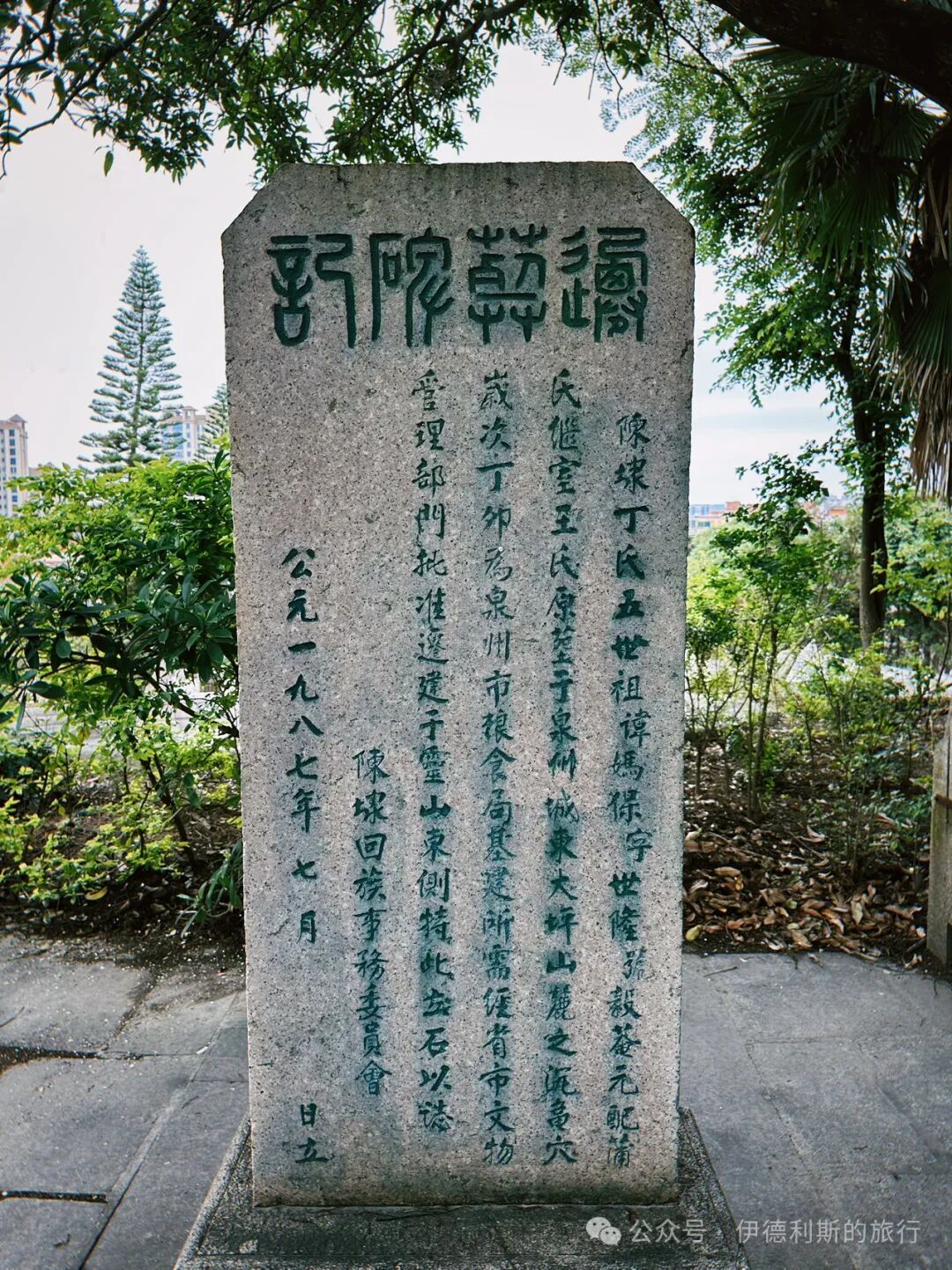
During the Chongzhen reign of the Ming Dynasty, the descendants of the Ding family combined the graves of the first, second, and third generations. In 1993, due to road construction, many of the Chendai Ding family's tomb stones were moved from outside the East Gate of Quanzhou and Luyuan to the Lingshan Sacred Tomb. The current combined tomb of the first, second, and third generations was also renovated during this period. The tomb stones and tombstones seen today are not the original ones.
After the Ming Dynasty, the Chendai Ding family claimed their ancestor was the Yuan Dynasty politician Sayyid Ajjal Shams al-Din, so the cemetery features inscriptions identifying them as descendants of a saint.
In the cemetery, you can also see the Basmala (tasimi) auspicious bird of the Chendai Ding family.
The tomb of the fourth-generation Chendai Ding family ancestor, Ding Shan, and his wife, Zhuang Xiniang.
Ding Shan (1343-1420), also known as Yanren and Ren'an, moved from Quanzhou to Chendai with his father at the end of the Yuan Dynasty. In the early Ming Dynasty, he settled in Chendai and established the Ding family clan. His wife, Zhuang Xiniang, also known as Runxiu, was the sixth-generation granddaughter of Zhuang Xia, who was named a founding baron and junior preceptor during the Southern Song Dynasty. The Zhuang family was very powerful at the end of the Southern Song Dynasty, but they gradually declined after the Yuan Dynasty. Many relatives left Quanzhou, and only Zhuang Xiniang's father remained in the Zhuang family mansion in the south of the city. The Ding and Zhuang families were neighbors at the time, so they married. Shortly after the wedding, Ding Shan and his father moved to Chendai. The Ding family's move to Chendai was likely related to Zhuang Xiniang, because the Zhuang clan lived nearby in Qingyang, a powerful group known as the Qingyang Zhuang family.
Ding Shan and his wife Zhuang Xiniang were originally buried in Luyuan, east of Quanzhou city. Luyuan means 'Paradise,' which is what the Quran refers to as the 'Garden of Heaven'. The tombstone is a traditional Islamic greenstone (huilvyan) tomb. Two five-story, pedestal-style tombstones sit on a Sumeru-style altar platform. The fourth layer of the tombstone is carved with scripture (2:255).
Tombs of the fifth-generation Ding Guanbao, sixth-generation Ding Kuan, and sixth-generation Ding Min.
Ding Guanbao (1369-1436), also known as Shifu and Chengzhai, was Ding Shan's second son and the founder of the second branch of the Chendai Ding family. He was originally buried at the foot of Shuiniulin, east of Quanzhou city.
Ding Kuan (1395-1446), also known as Tingyu and Longyin, was Ding Guanbao's second son. He was originally buried to the left of Ding Shan's tomb in Luyuan Mountain.
Ding Min (1407-1456), also known as Tingxue and Yizhai, was Ding Guanbao's fourth son. He was originally buried at the foot of Shuiniulin, east of Quanzhou city. Ding Min was the first local scholar among the Chendai Ding family to promote literary education.
Tomb of the fifth-generation Ding Mabao of the Chendai Ding family, with his wife Pu and his successor wife Wang.
Ding Mabao (1366-1431), also known as Shilong and Yi'an, was the eldest son of the fourth-generation founder Ding Shan. He was the founder of the first branch of the Chendai Ding family and was originally buried with his two wives at the Chenggui Baoxue site on Daping Mountain, east of Quanzhou city.
Tomb of the fifth-generation Ding Fubao and his wife Shi Dingniang.
Ding Fubao (1375-1432), also known as Shizhang and Yingjie, was Ding Shan's third son and the founder of the third branch of the Chendai Ding family. He is buried at Lingshan, east of Quanzhou city. The tomb features two pedestal-style stone graves on a traditional Islamic Sumeru-style altar platform, with swastikas and two lions playing with a ball carved into the waist of the platform.
Tombs of the sixth-generation Ding Xin and his wife Cai, and the seventh-generation Ding Lun and his wife Zhuang.
Tomb of the twenty-second generation Ding Jinke.
Ding Jinke (1923-1997), whose Islamic name was Yunus, studied at the Guangxi Chengda Normal School and the Hong Kong Dade College. In the early 1920s, the famous Hui Muslim Tang Kesan served as the director of the Xiamen Customs. He recommended his fellow townsman Zhang Guangyu to lead Islamic affairs in the Quanzhou area. After Imam Zhang Guangyu arrived in Quanzhou, he worked diligently on religious affairs, and the Islamic faith began to revive in Chendai. In 1939, the Chenjiang Branch of the China Islamic National Salvation Association was established in Chendai. Some members of the Ding family in Chendai went to the Qingjing Mosque in Quanzhou for their weekly Friday prayer (jumu'ah). Later, they converted the Wenchang Shrine in Sijing Village into a mosque and invited Imam Tie from Quanzhou to lead the religious affairs. Between 1937 and 1944, the Chengda Normal School moved south to Guilin. Its founders, Tang Kesan and Imam Ma Songting, accepted 17 young men from the Ding family in Chendai to study there, including Ding Jinke.
Ding Jinke joined the revolution during the War of Liberation. Later, he worked for the Financial and Economic Committee of the State Council and at various colleges and universities in Beijing and Xinjiang. He retired and returned to his hometown in 1983. In 1983, when the Fujian Islamic Association was founded, Ding Jinke, along with fellow Chengda Normal School graduates Ding Jinshun, Ding Jinhe, Ding Jinhong, and over twenty other dedicated community members, formed the Chendai Islamic Association Group to begin reviving religious activities. They borrowed the second-floor meeting room of the Chendai Hui Ethnic Affairs Committee and the back hall of the Ding Family Ancestral Hall to hold their Friday prayer (jumu'ah).
After years of hard work, Ding Jinke and other friends (dosti) raised funds to build the Chendai Mosque. The mosque was completed in 1991 and officially opened in 1993, with Ding Jinke serving as the first director of the mosque management committee. Soon after, the Jinjiang Islamic Association was established, and Ding Jinke served as its executive deputy director. After the 1990s, Ding Jinke helped dozens of young people from the Ding family in Chendai go to study religious knowledge both at home and abroad, with some attending Arabic language schools in Inner Mongolia. view all
Reposted from the web
Summary: This article visits the Lingshan Holy Tomb in Quanzhou, one of the city's key Islamic heritage sites linked to early Muslim history on China's coast. It keeps the original tomb details, inscriptions, photographs, names, and historical context for readers studying Quanzhou Muslim heritage.
Lingshan Holy Tomb is in the east of Quanzhou city, also known as the Tomb of the Three and Four Sages. The story of the Three and Four Sages mainly comes from the Min Shu: Fang Yu Zhi written by He Qiaoyuan in 1629 (the second year of the Chongzhen reign of the Ming Dynasty). The Min Shu quotes a legend that four disciples of the Prophet Muhammad came to the Tang Dynasty to spread the faith during the Wude period (618-626). One sage went to Guangzhou, two went to Yangzhou, and the third and fourth went to Quanzhou. After the third and fourth sages passed away, they were buried in Quanzhou, where their graves glowed at night, making them holy sites.
In reality, Lingshan was a burial ground for monks from Chengtian Mosque from the Five Dynasties period to the Southern Song Dynasty. It was only abandoned after Chengtian Mosque failed in its resistance against the Yuan Dynasty at the end of the Southern Song. According to the Record of Burying Foreign Merchants at Dongban in Quanzhou by Lin Zhiqi, a Southern Song official, a merchant from the ancient Iranian port of Siraf followed the suggestion of Pu Xiasin to donate money and buy land to build the first tomb for foreign merchants at Dongban in Quanzhou. The cemetery was started in 1162 (the 32nd year of the Shaoxing reign of the Southern Song) and finished in 1163 (the first year of the Longxing reign).
The holy tomb has a stone tablet from the Yuan Dynasty dated 1322, written in Arabic, which says: These two deceased came to this land during the time of the Faghur. It is said they were men of great virtue, so after death, they moved from the earthly world to the eternal one. According to research by Chen Dasheng in A Preliminary Study of the Date of Lingshan Holy Tomb in Quanzhou, Faghur is an Arabic transliteration of the Persian word Bagh pur, which specifically referred to the Emperor of China in Persian literature from the Five Dynasties to the Song and Yuan periods.
According to the Quanzhou Prefecture Gazetteer, when Zhou Daoguang, the prefect of Quanzhou, visited Lingshan Holy Tomb in 1562 (the 41st year of the Jiajing reign of the Ming Dynasty), he mentioned there were three mounds, which were the holy tombs. The Min Shu Chao, written during the Chongzhen reign, records that the owner of the third tomb was Gao Di Shi Xu Ba Ba. In the 1930s, the wooden frame of the pavilion at Lingshan Holy Tomb had collapsed, leaving only four stone shuttle-shaped pillars. At that time, the three Sumeru-style stone tombs arranged in a triangle were still well-preserved, with stone covers on top.
In 1958, the Quanzhou Cultural Bureau and the municipal committee moved the tombstone of Gao Di Shi Xu Ba Ba to the northern hillside to fit the legend in the Min Shu. At the same time, they moved the tombstone of the imam Ma Ahun Yongchun (Ma Yongchun) from the south of the holy tomb to the northern hillside. In March 1959, a new stone pavilion was built with three levels of terraces and stairs on both sides. All other tombstones in front of the graves were removed to create a lawn, forming the layout seen today.
The holy tomb currently has two granite graves divided into three layers, with lotus petal carvings on the bottom layer. In the past, during Eid al-Fitr and Eid al-Adha, Hui Muslims in Quanzhou would attend prayers at Qingjing Mosque. First, an imam would lead the heads of households to visit the homes of other Hui Muslims near the mosque for a greeting, and then all the Hui Muslims would go together to visit the graves at Lingshan. When visiting the graves, they would first recite the Quran together at the holy tomb before going to their own family graves.
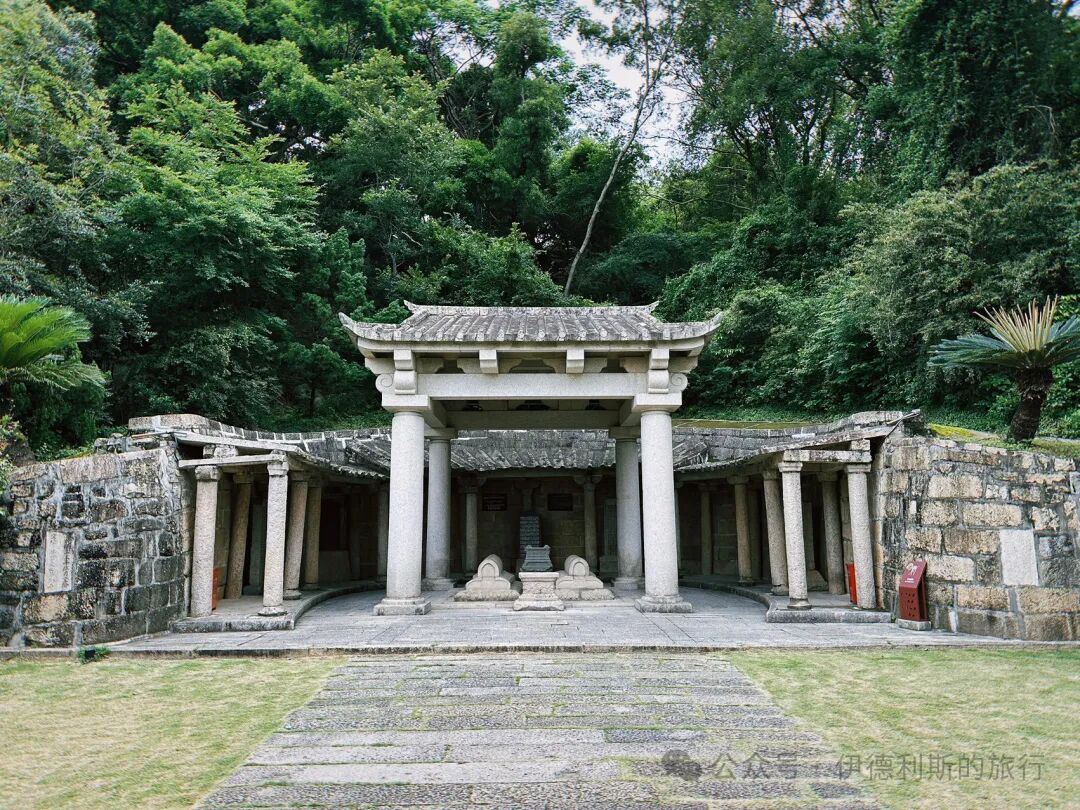
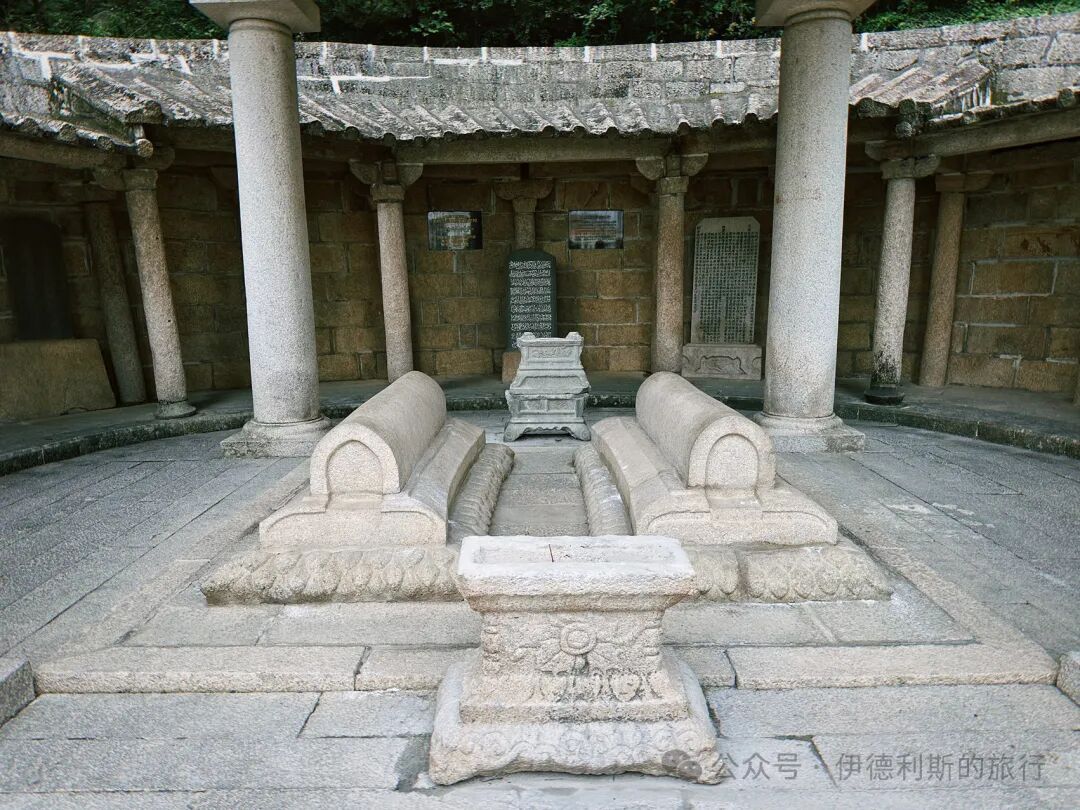
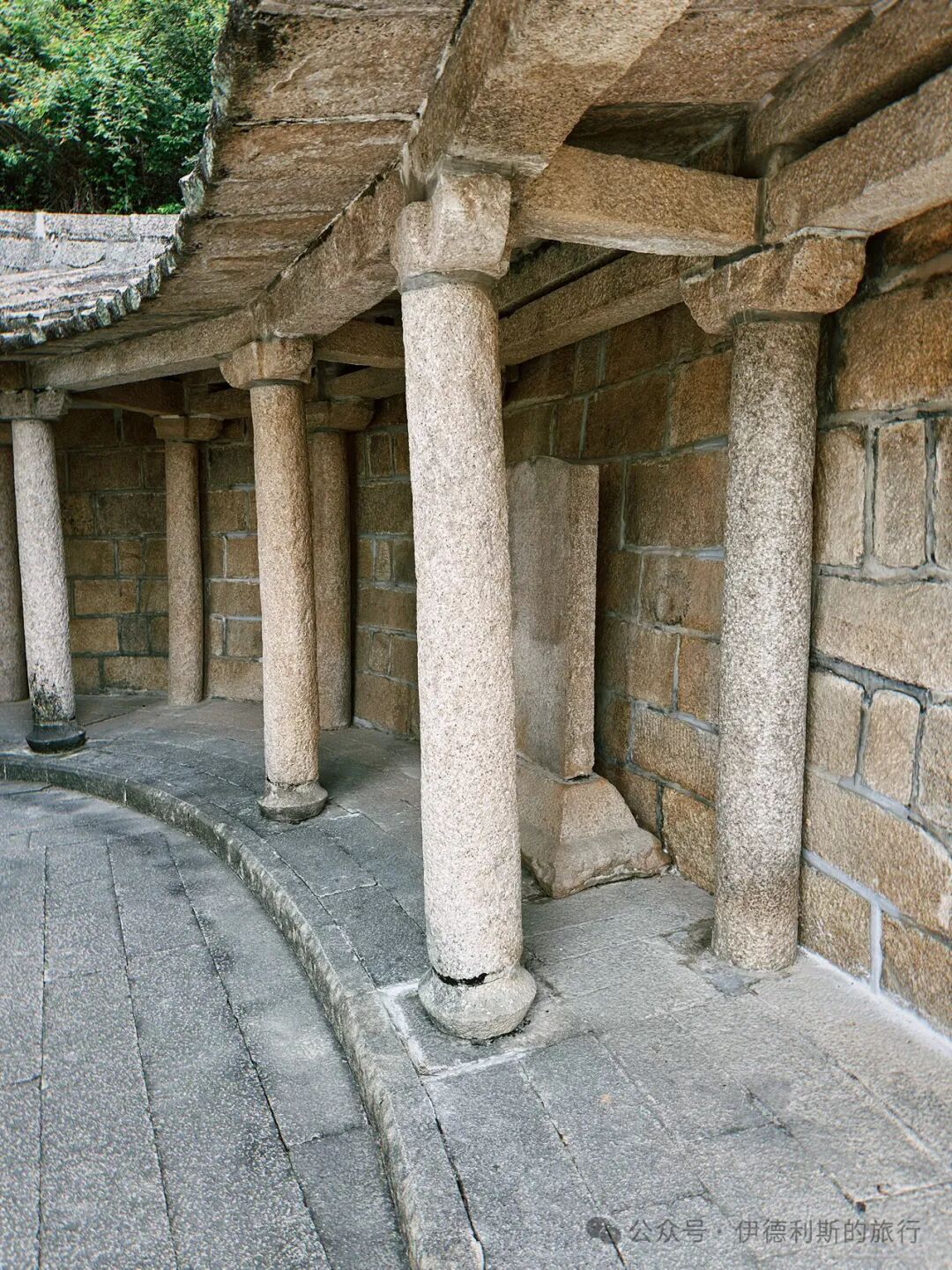
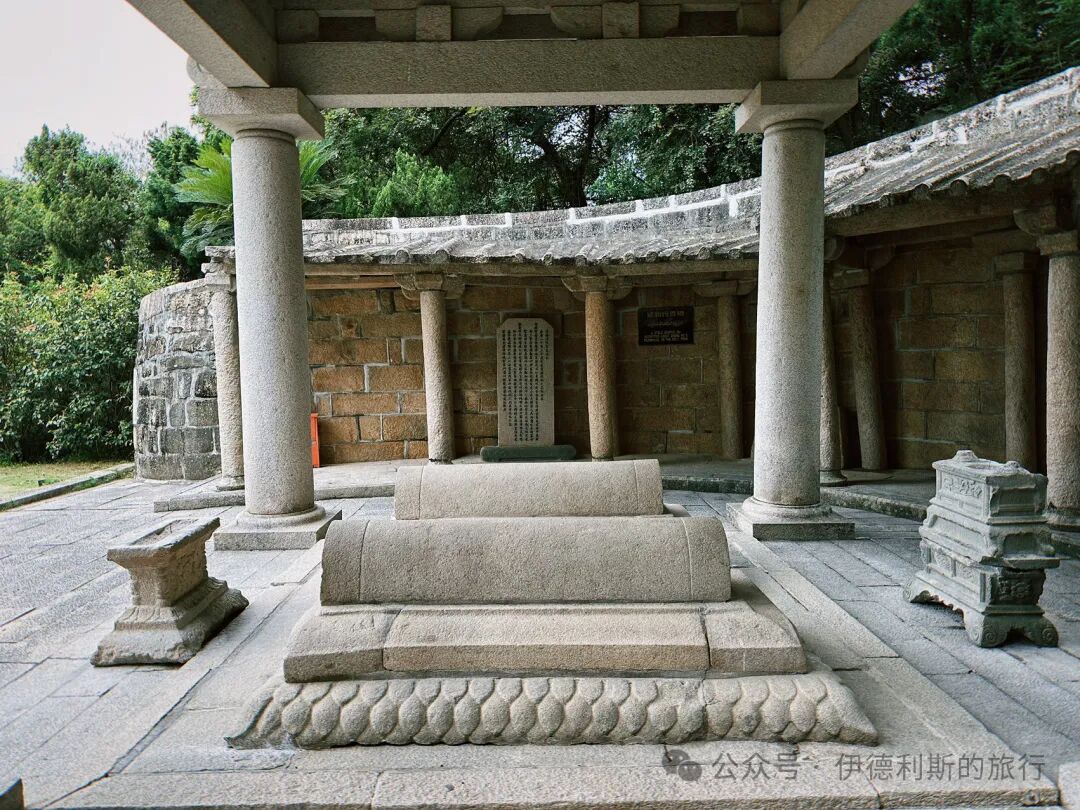
The archway and gate in front of Lingshan Holy Tomb, the banyan trees on Lingshan Avenue, and the national and provincial heritage site markers, introduction boards, and notices at the holy tomb.
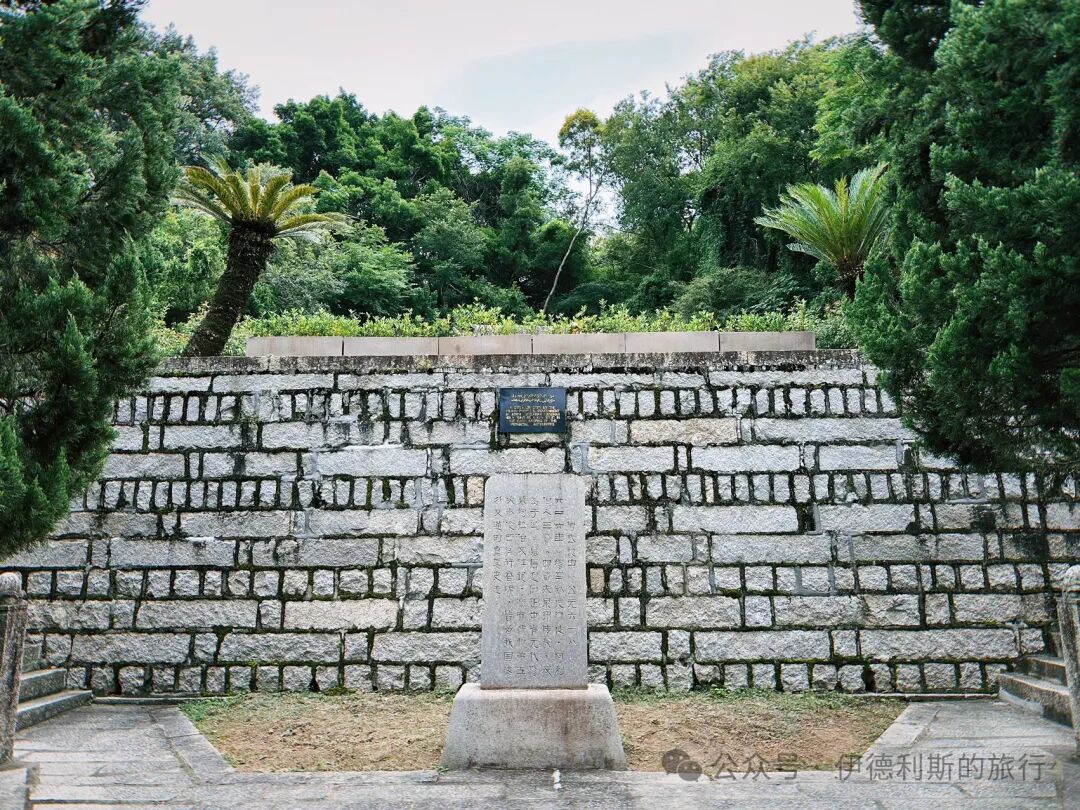
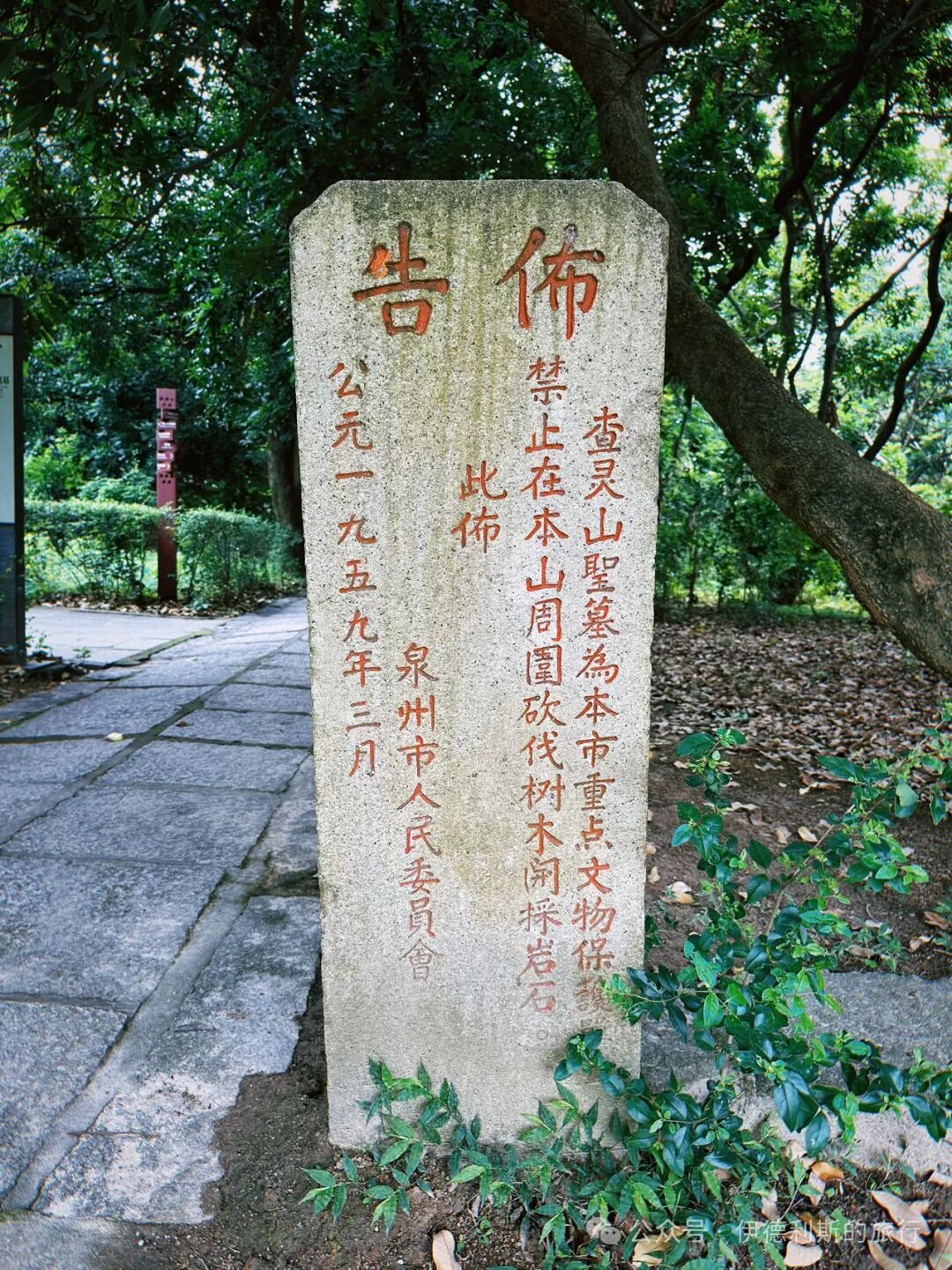
The historical stone tablets at Lingshan Holy Tomb.
The Incense Offering Tablet: This records the visit of Zheng He to the graves before his fifth voyage to the Western Oceans in 1417 (the 15th year of the Yongle reign), erected by the commander Pu Heri. The name Hulumesi carved on the tablet refers to the ancient Persian port of Hormuz.
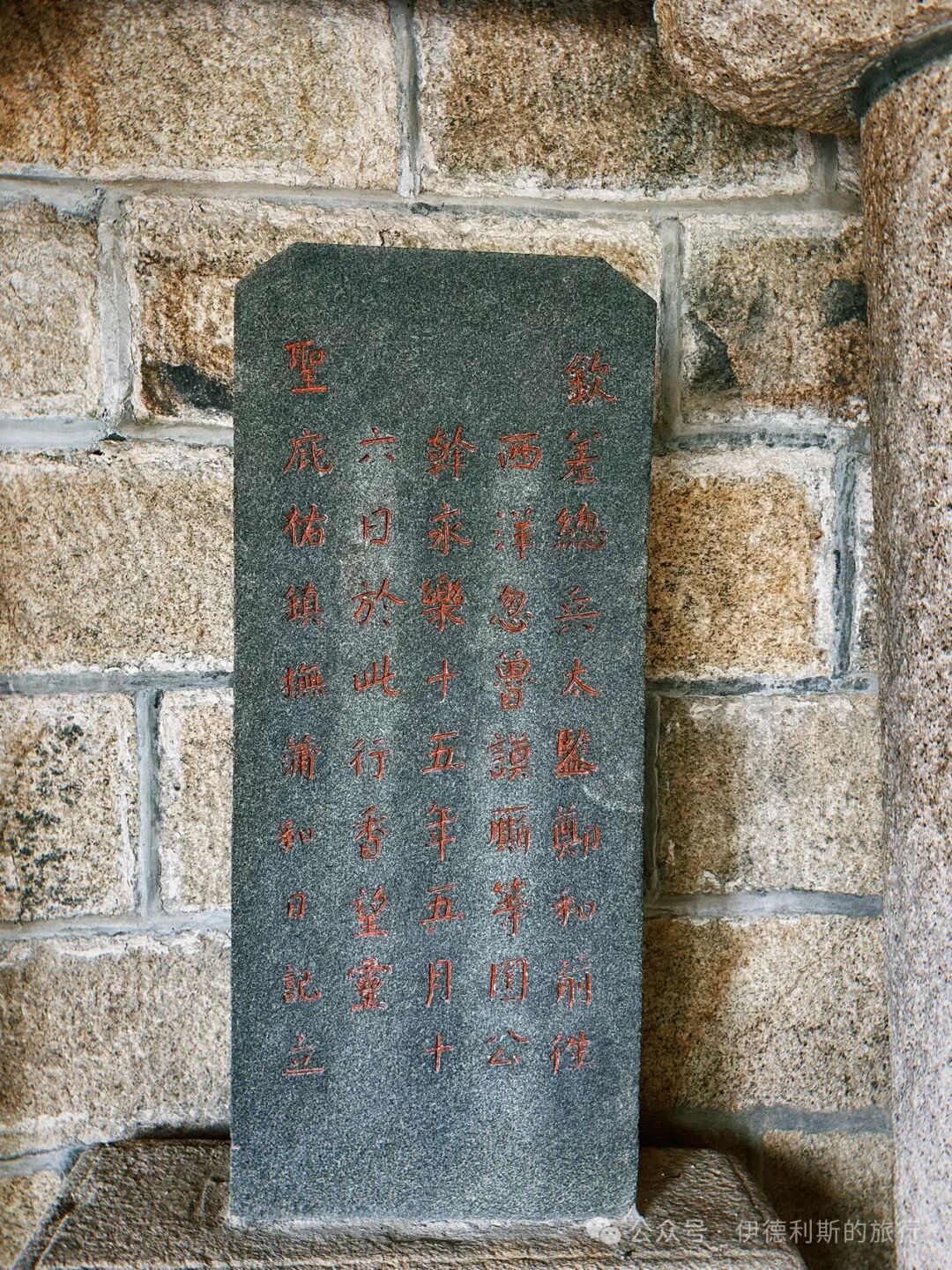
The Chen Yougong Repair Tablet: Erected in 1714 (the 53rd year of the Kangxi reign), it records the repair of Lingshan Holy Tomb by Chen Yougong, a regional commander in Fujian, and Chen Mei, a regional military official. The inscription below lists seven surnames: Chen, Ma, Guo, Huang, Li, Yang, Pu, and Ding.
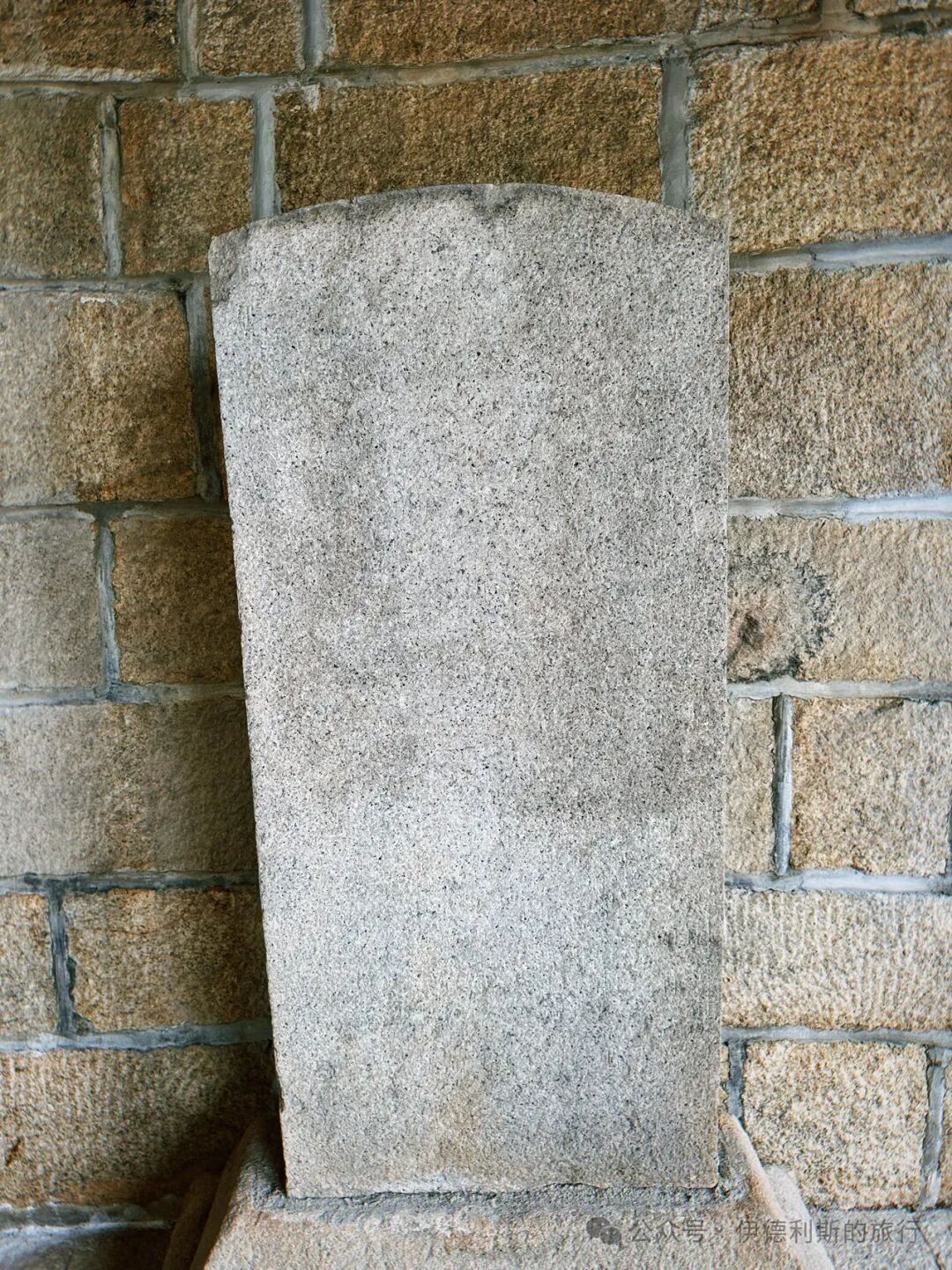
The Xia Bidi Repair Tablet: Records the repair of the holy tomb by the director Xia Bidi in 1751 (the 16th year of the Qianlong reign).
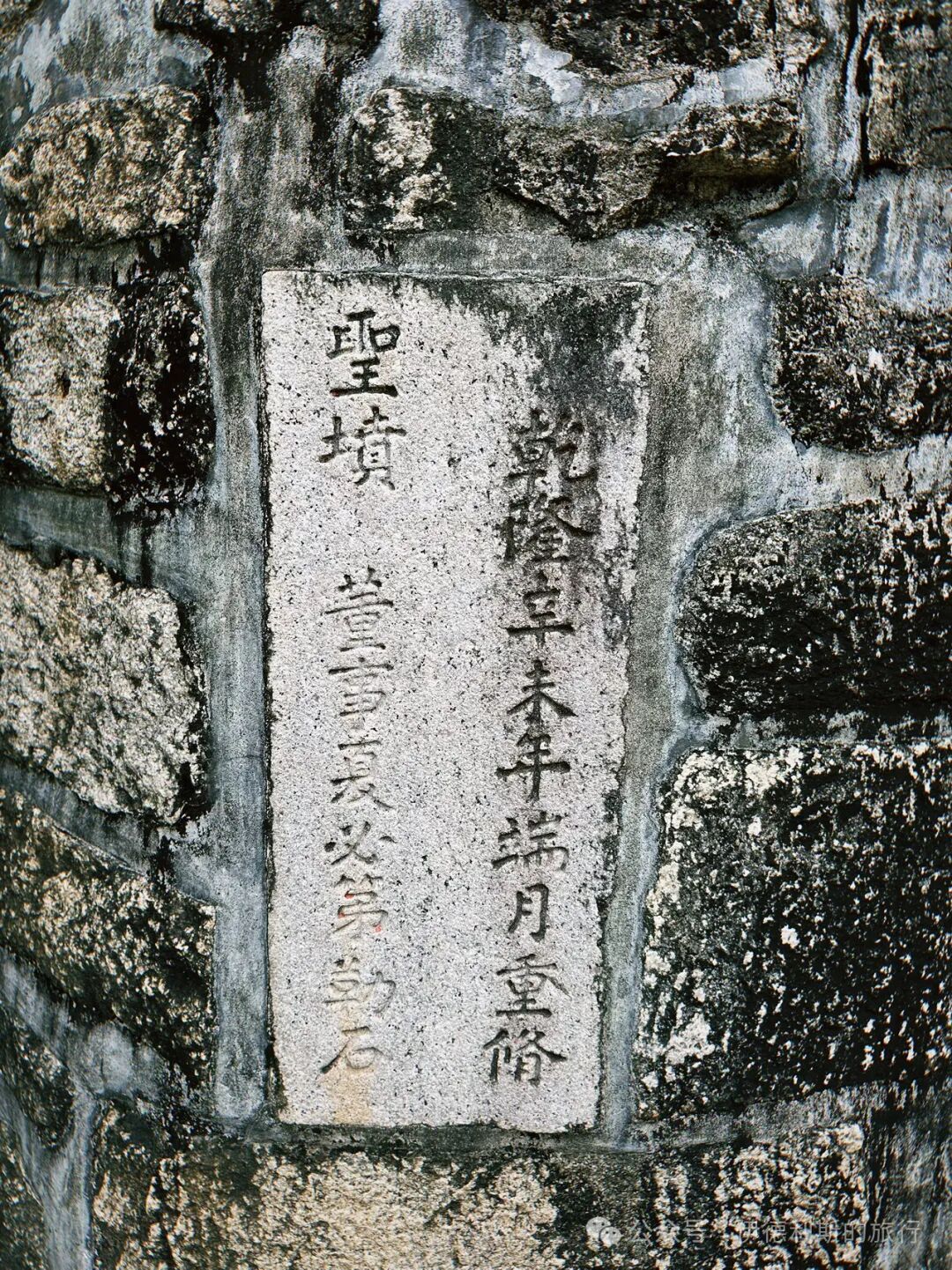
The Guo Bacui Repair Tablet: Records the repair of the holy tomb by the scholar Guo Bacui in 1783 (the 48th year of the Qianlong reign). Guo Bacui was a Hui Muslim from the Guo family in Baiqi. He passed the military examination in 1779 (the 40th year of the Qianlong reign), was awarded the rank of military officer, and served in the Anping Left Battalion in Taiwan. When he erected the tablet in 1783, he was stationed in Xiamen and ordered to patrol the coastal areas of Taiwan and Penghu. In 1787 (the 52nd year of the Qianlong reign), the Lin Shuangwen uprising in Taiwan besieged Zhuluo County. Guo Bacui was ordered to rush to the rescue and died on the battlefield.
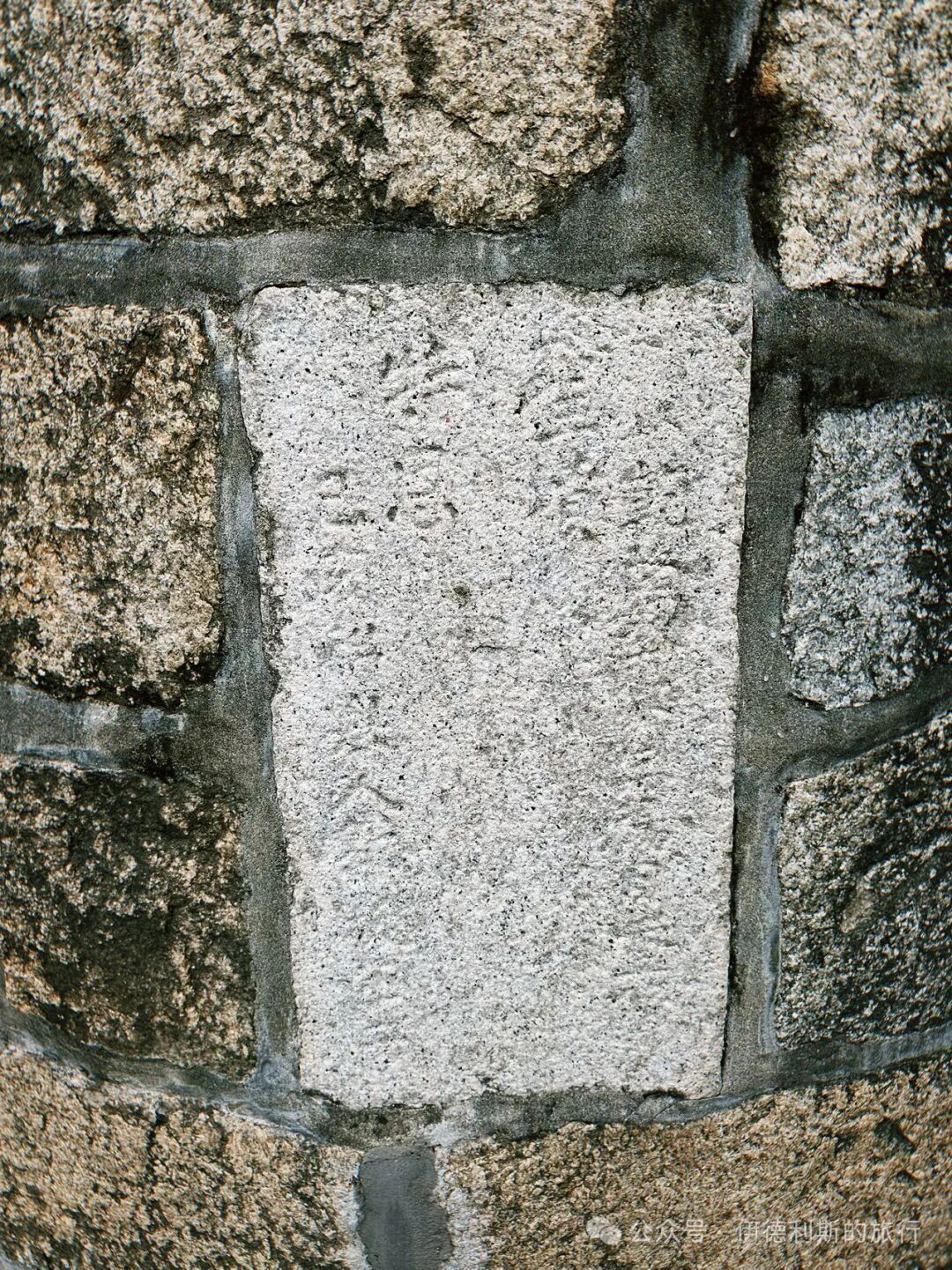
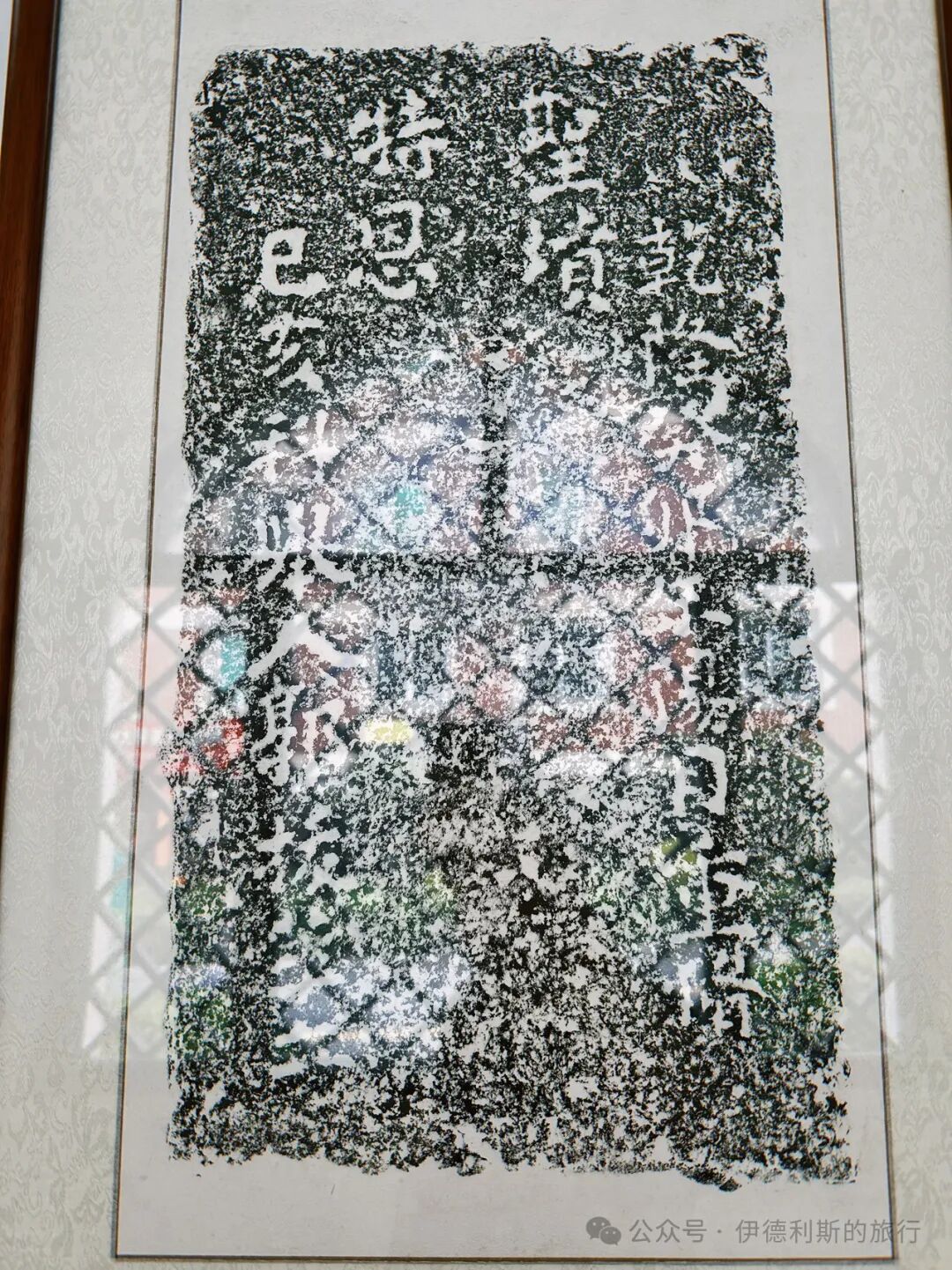
The Ma Jianji renovation stele records that in 1818 (the 23rd year of the Jiaqing reign), Ma Jianji, the acting commander-in-chief of the Fujian provincial land forces and general of Zhangzhou from Western Sichuan, rebuilt the tomb pavilion. The stele calls the Holy Tomb the 'Baba Tomb,' with 'Baba' being the Persian term of respect for an elder. Ma Jianji was from Nanchong, Sichuan. Besides renovating the Lingshan Holy Tomb, he also renovated the Qingjing Mosque in Quanzhou.
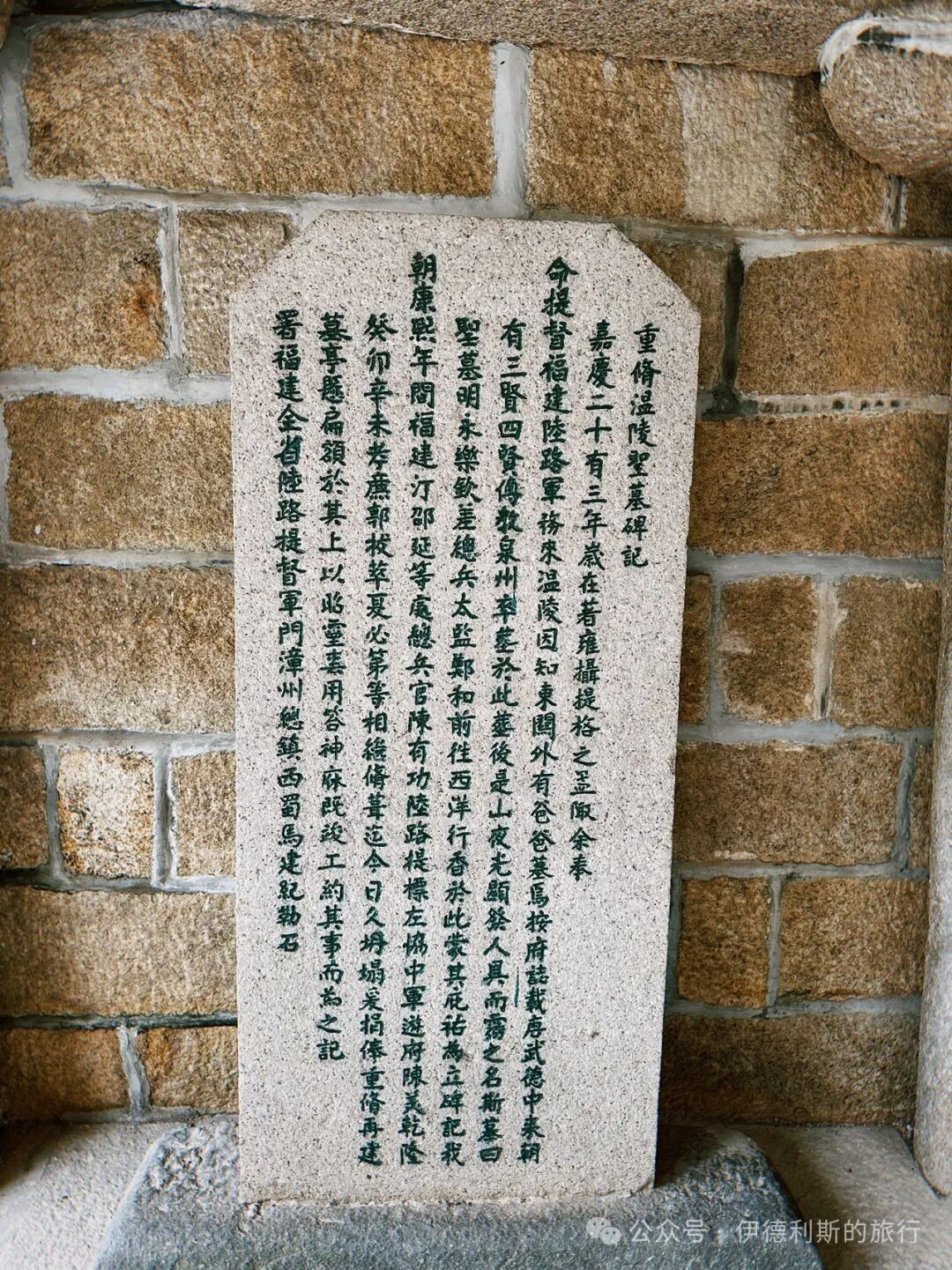
The Jiang Changgui renovation stele records that in 1871 (the 10th year of the Tongzhi reign), Fujian commander Jiang Changgui renovated the Holy Tomb. Jiang Changgui was a Hui Muslim from Yanting, Sichuan. His family practiced martial arts for generations. He was brave in battle, led troops against the Taiping Heavenly Kingdom for many years, earned many military merits, and was titled Zhiyong Baturu and General Jianwei. Besides renovating the Lingshan Holy Tomb, he also renovated the Qingjing Mosque and invited the army imam Ma Yongchun to lead religious affairs.
Beside the Holy Tomb is a 'Wind-Moving Stone' (fengdongshi). It features the inscription 'Jade Ball' (biyu qiu) by Quanzhou prefect Zhou Daoguang in 1563 (the 42nd year of the Jiajing reign) and 'Natural Ingenuity' (tianran jimiyao) by Ma Jianji in 1818 (the 23rd year of the Jiaqing reign).
Zhou Daoguang was the first person to record the term 'Lingshan Holy Tomb'. The Quanzhou Prefecture Gazetteer, Mountains and Rivers, Lingshan section records: 'Asking the locals, they say: This is the Lingshan Holy Tomb... Since the religion from foreign lands entered the Middle Kingdom, there have been Hui Muslims.' Its founder's surname and generation are unknown, but he loved this hill and was buried here...' He also described the tomb's layout at the time: 'Entering the gate, the path is very narrow.' Climbing to the hall, the atmosphere feels different. Reaching the top, there are three mounds, which are the Holy Tombs. In front of the tomb, there is a small pavilion on the right for namaz. On the left, there is a shed where one can rest.
In 1958, when the Fuzhou-Xiamen highway outside the East Gate of Quanzhou was widened, several Song and Yuan dynasty Muslim pedestal-style tomb stones by the road were moved next to the Lingshan Holy Tomb. That same year, farmers in Jintoupu village outside Tonghuai Gate in Quanzhou were collecting fertilizer and dredging pond sludge. They unearthed over ten pedestal-style tomb stones, which were temporarily moved to the Qingjing Mosque and later moved to the Lingshan Holy Tomb for preservation. That same year, residents on Tonghuai Street in Quanzhou unearthed three side-by-side pedestal-style tomb stones while building a house, which were also moved to the Lingshan Holy Tomb for preservation.
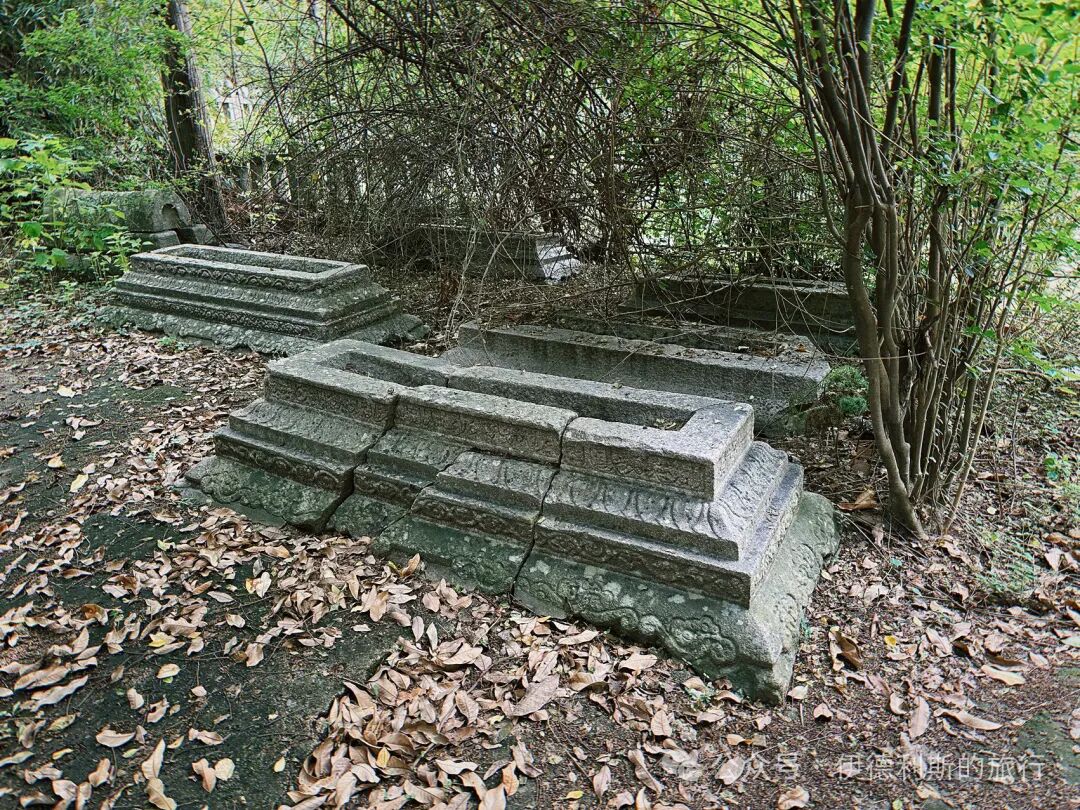
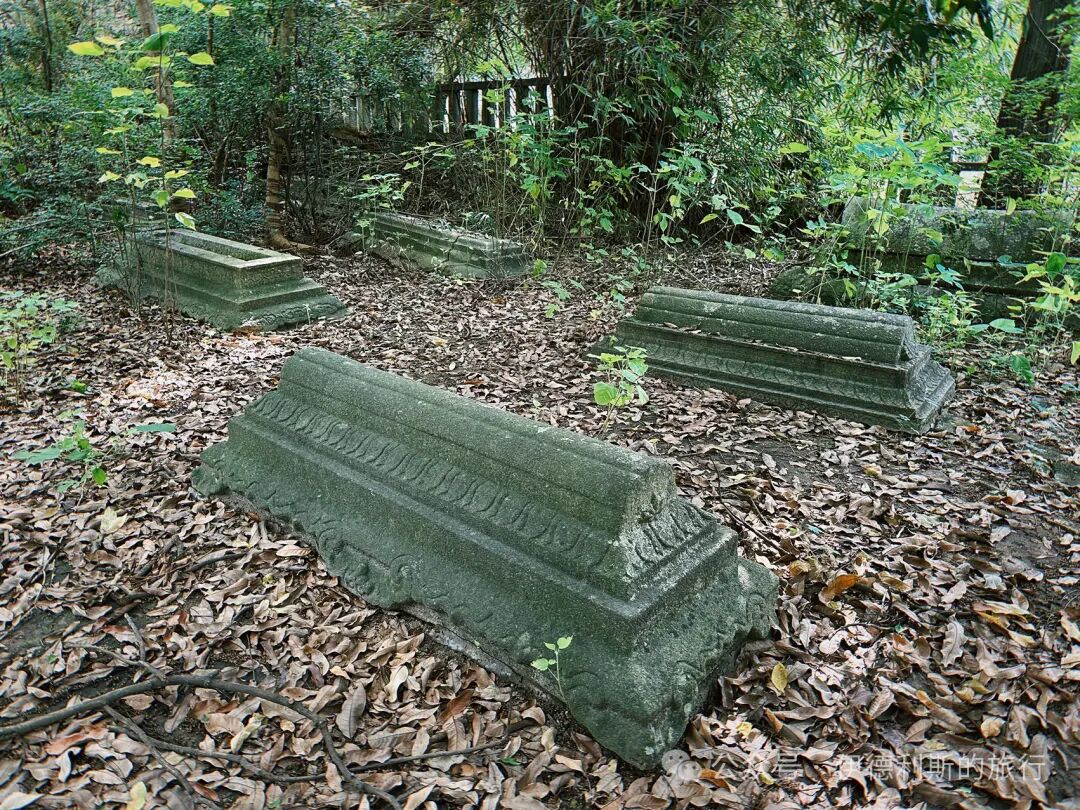
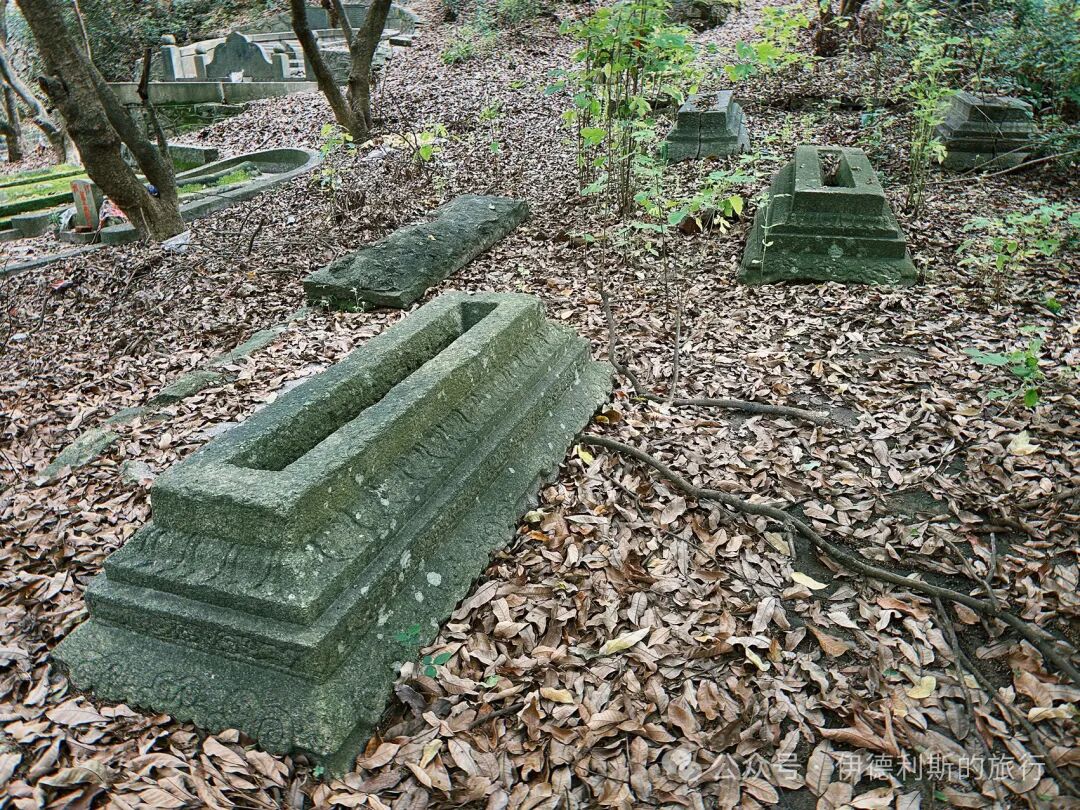
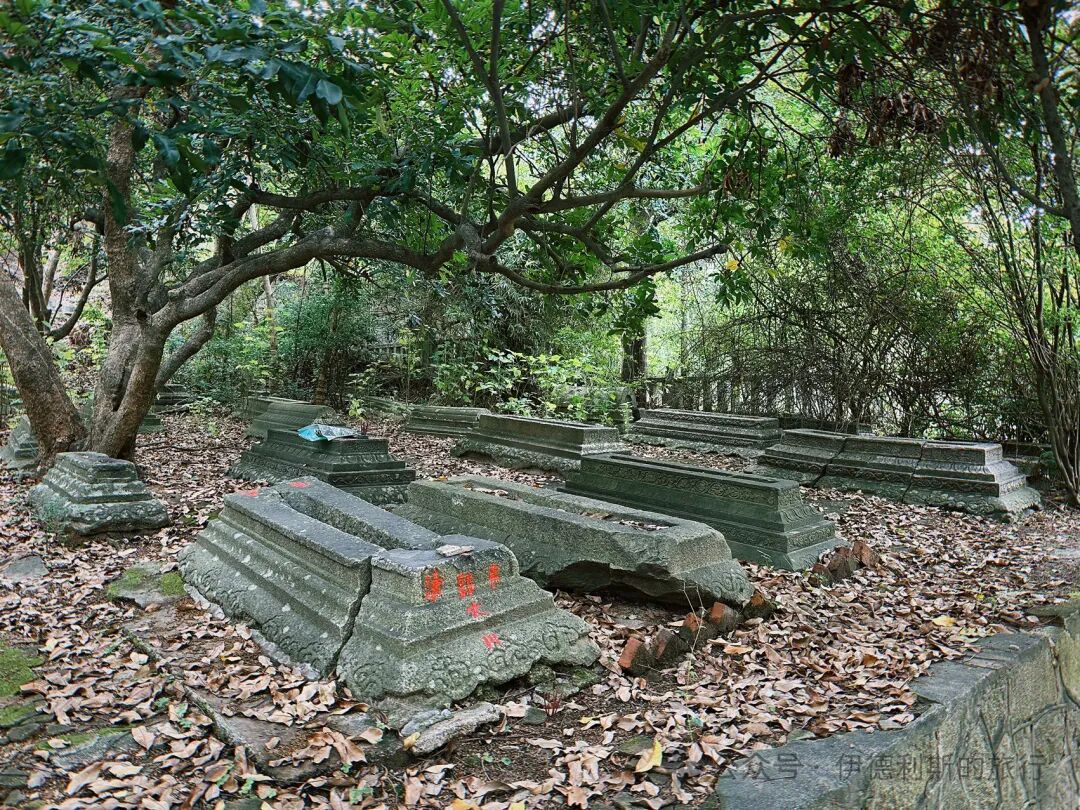
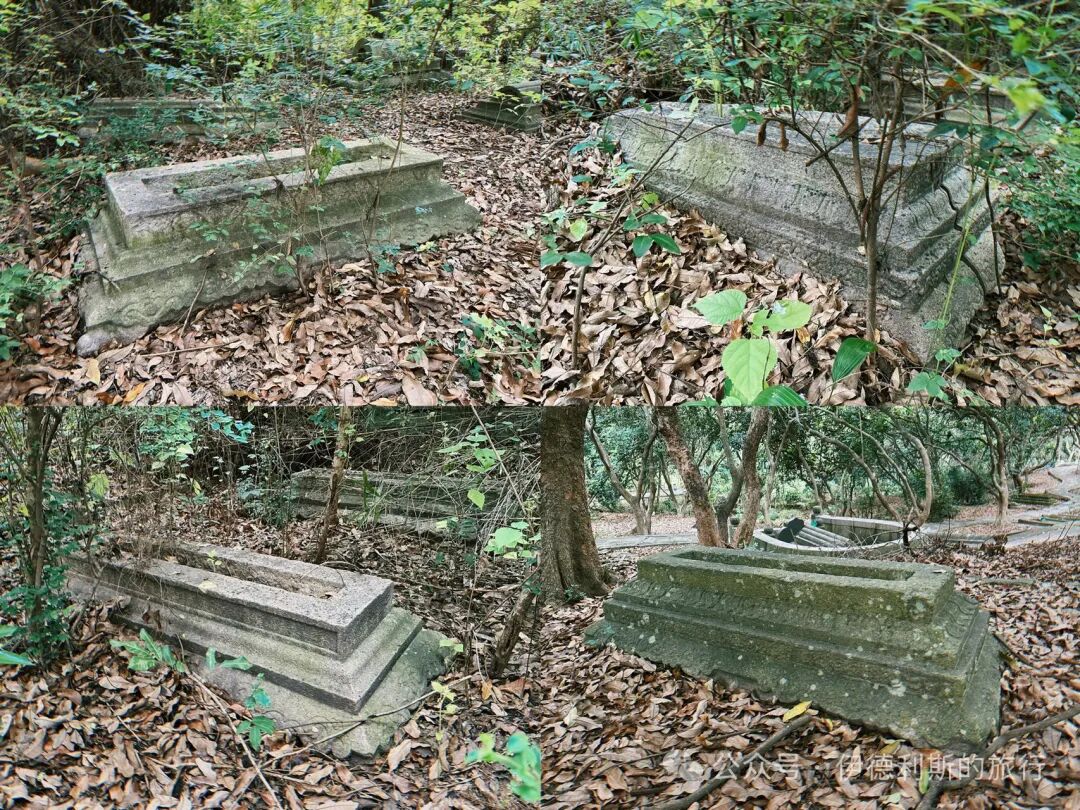
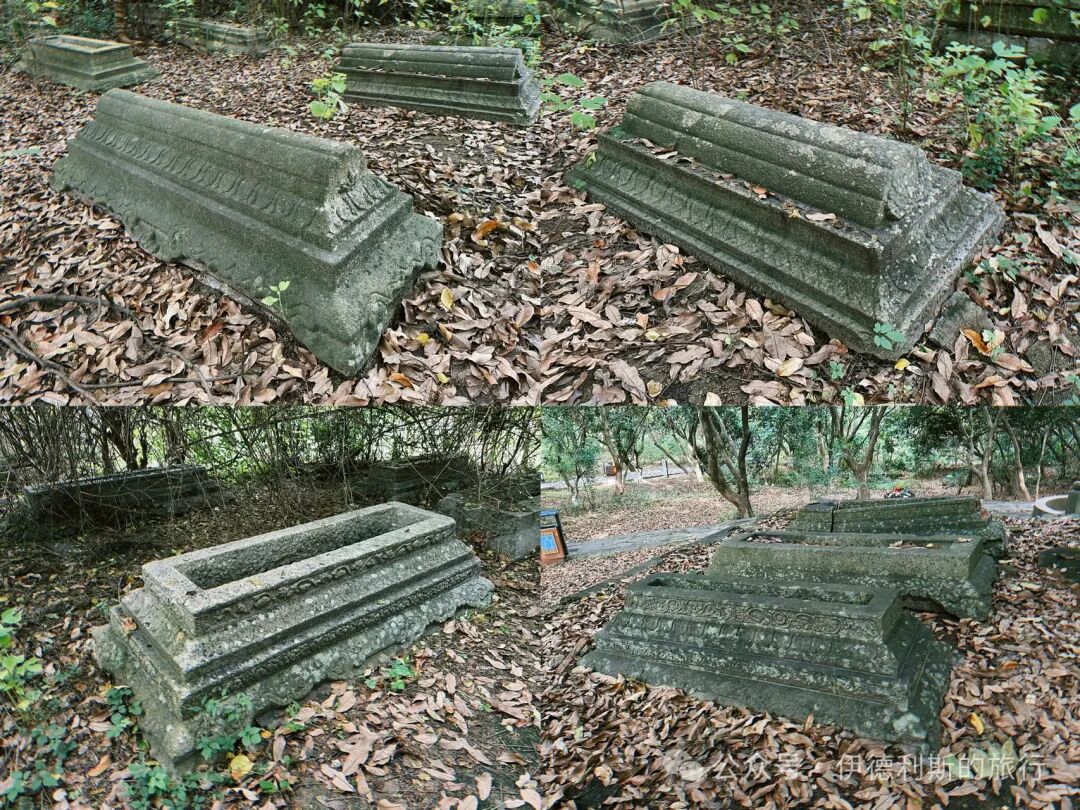
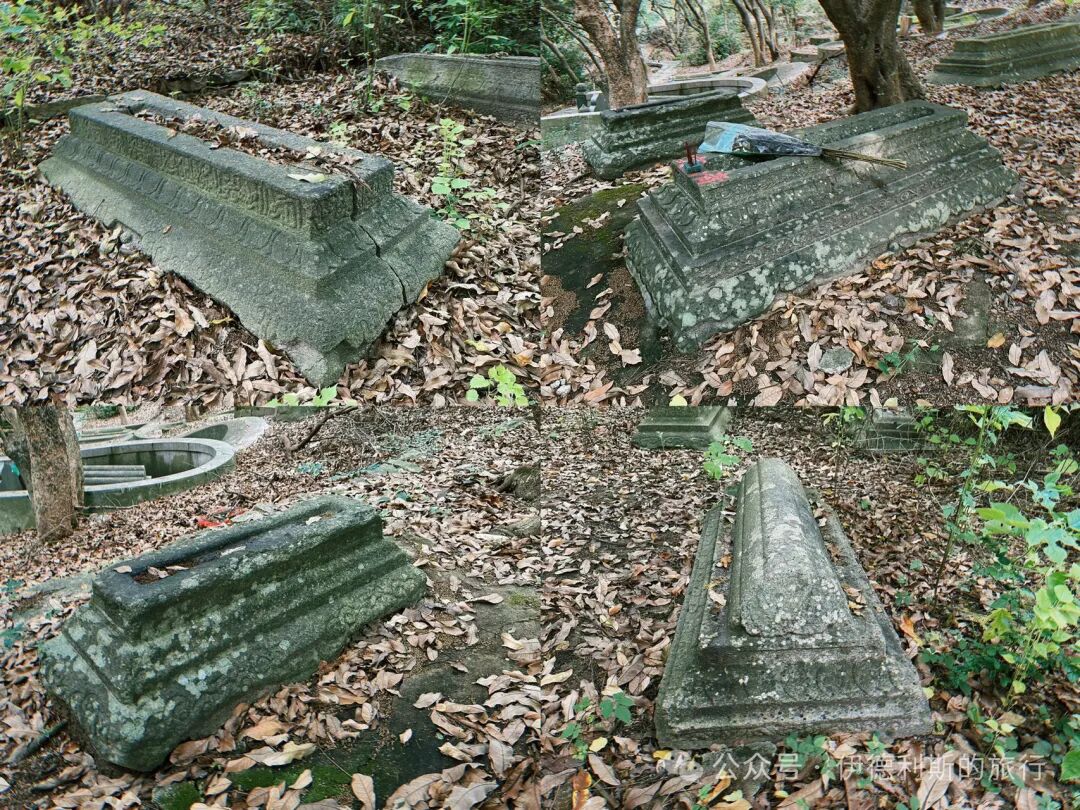
The image below is likely the tomb stone of Gaodi Shixu Baba, which was originally with the 'Three Sages and Four Sages' tomb stones and moved here during the 1958 renovation.
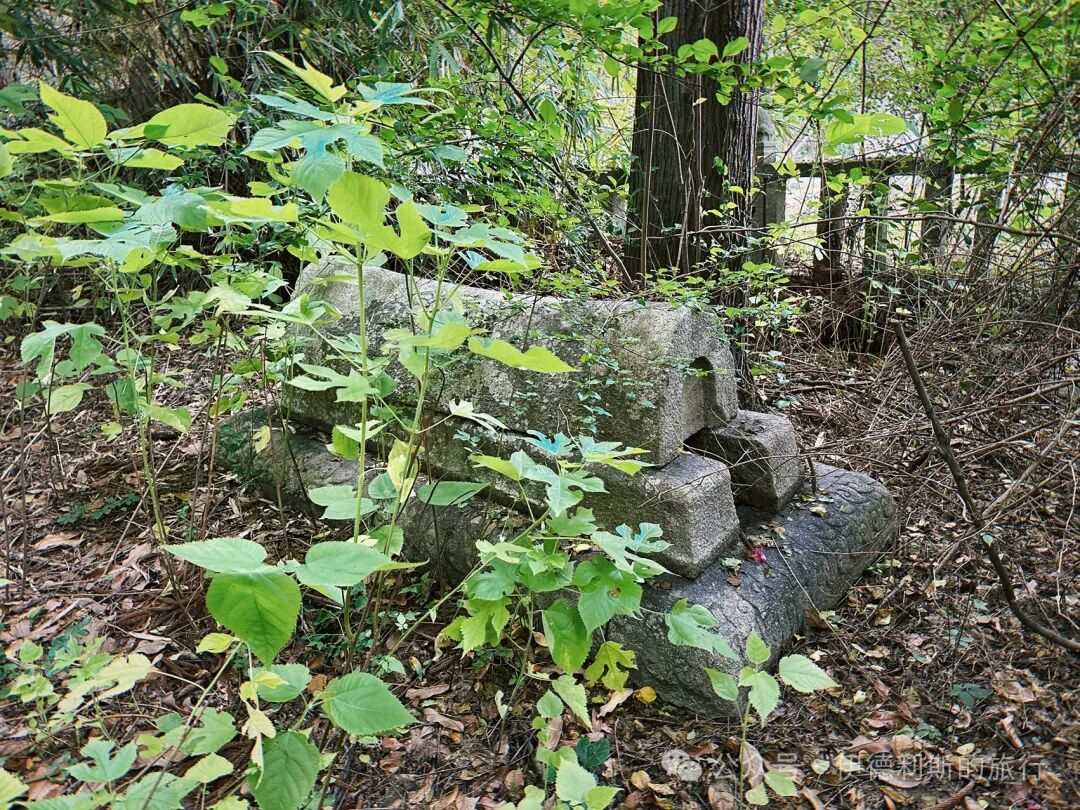
Details of the Arabic stone carving. The content of the carving is entirely scripture, with no identity information about the tomb owner. According to Quanzhou's Song and Yuan dynasty traditions, the tomb stone recording the owner's identity would have been a separate slab.
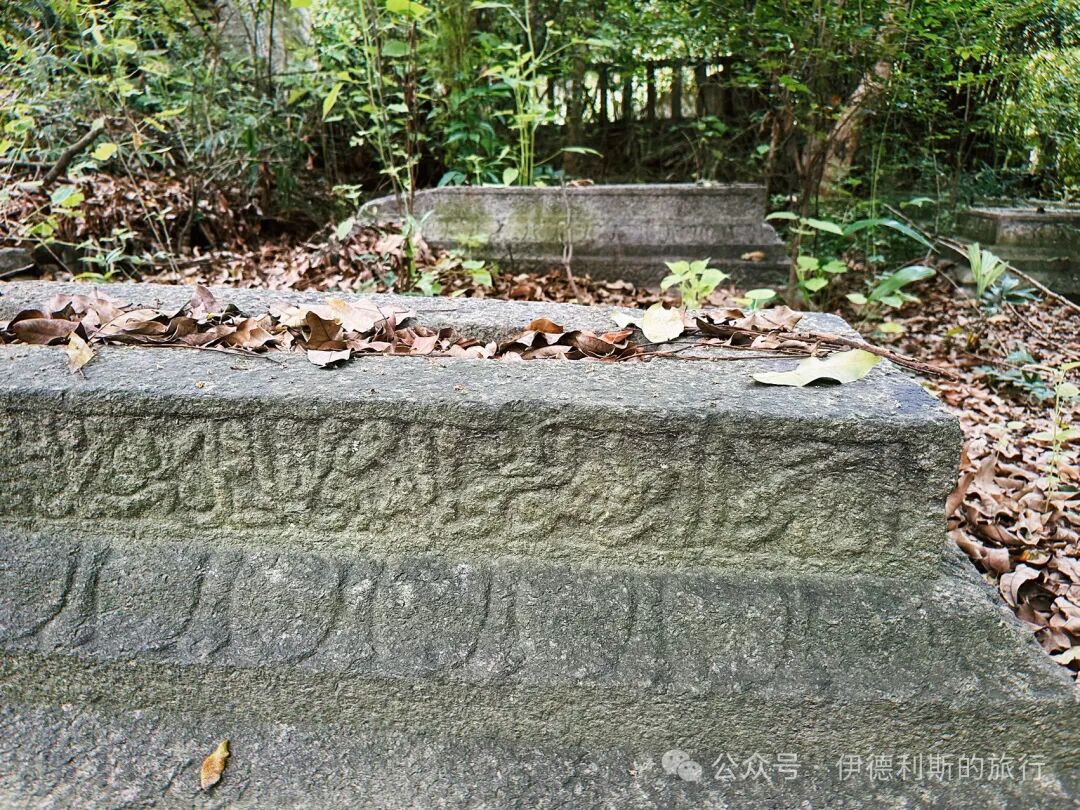
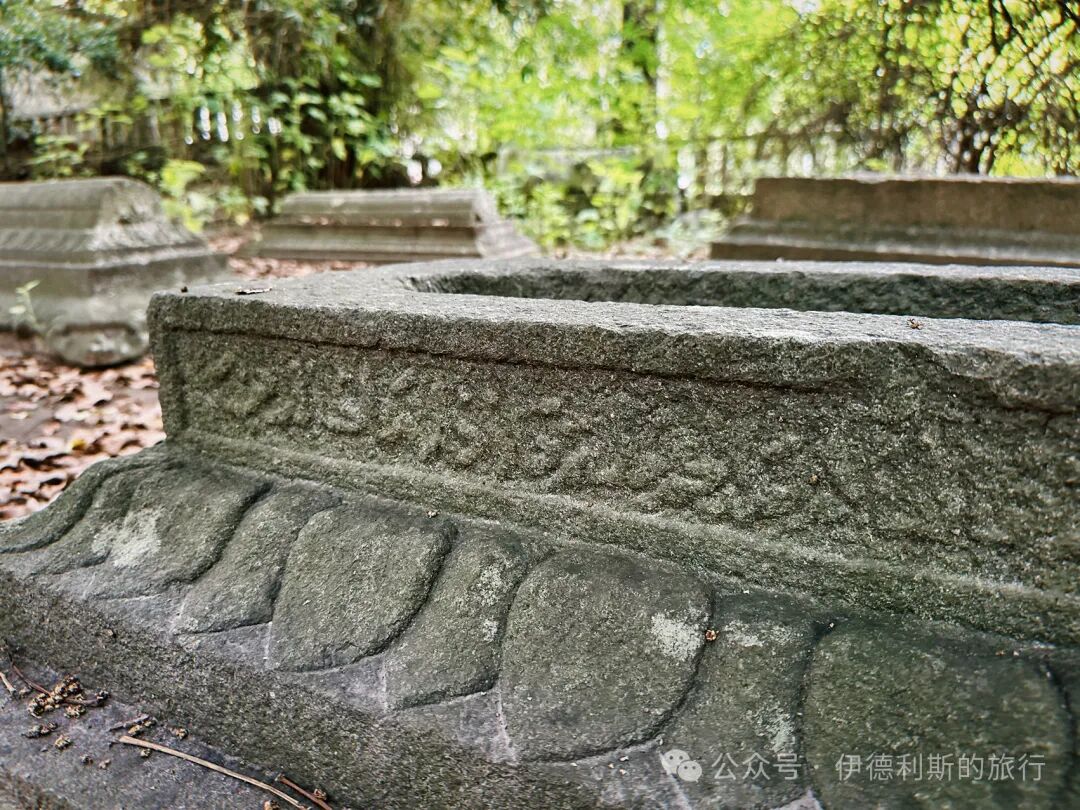
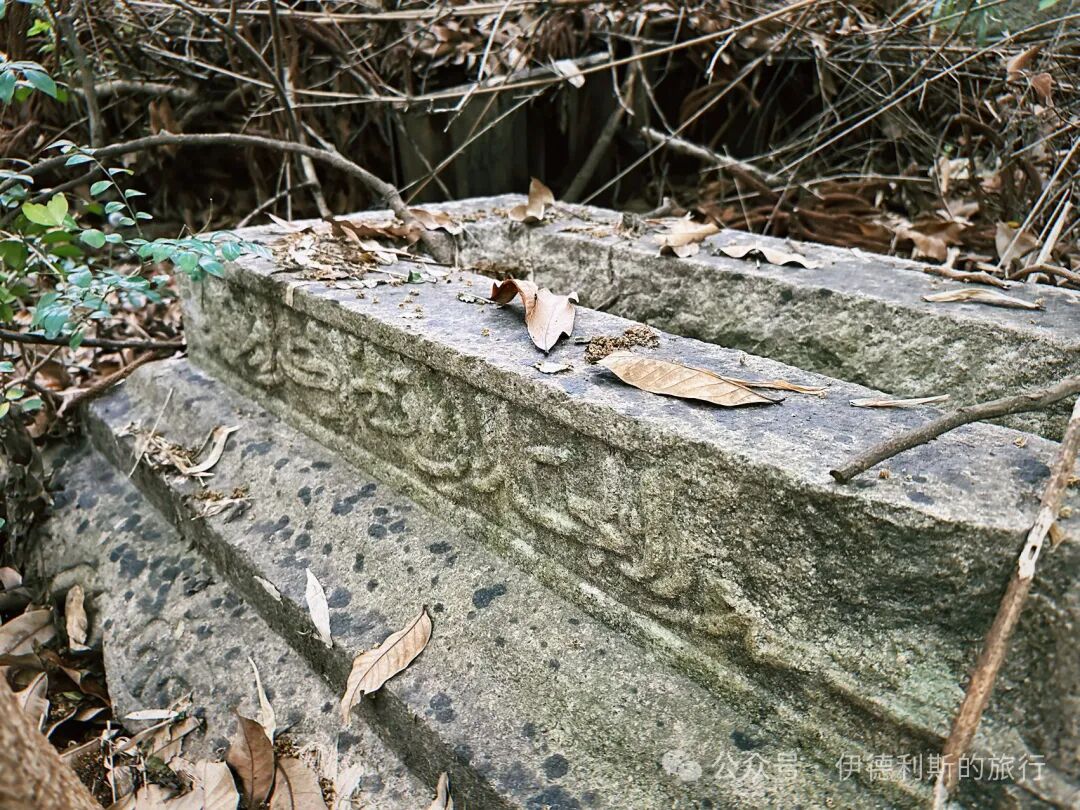
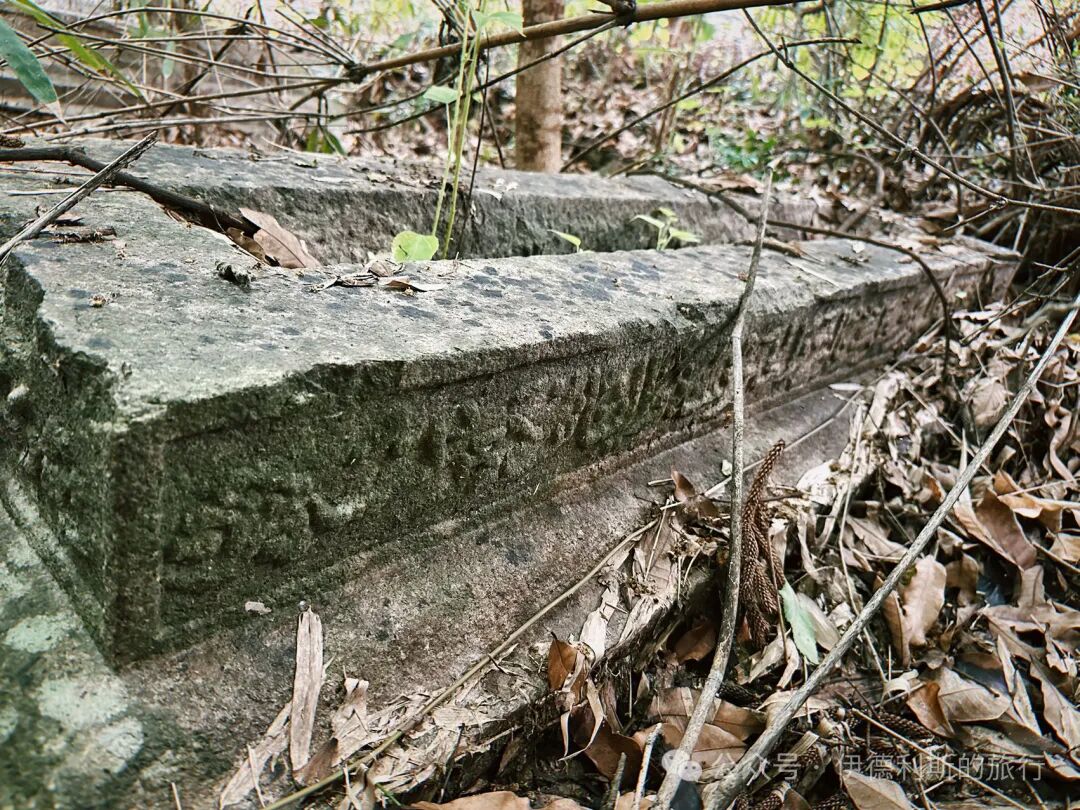
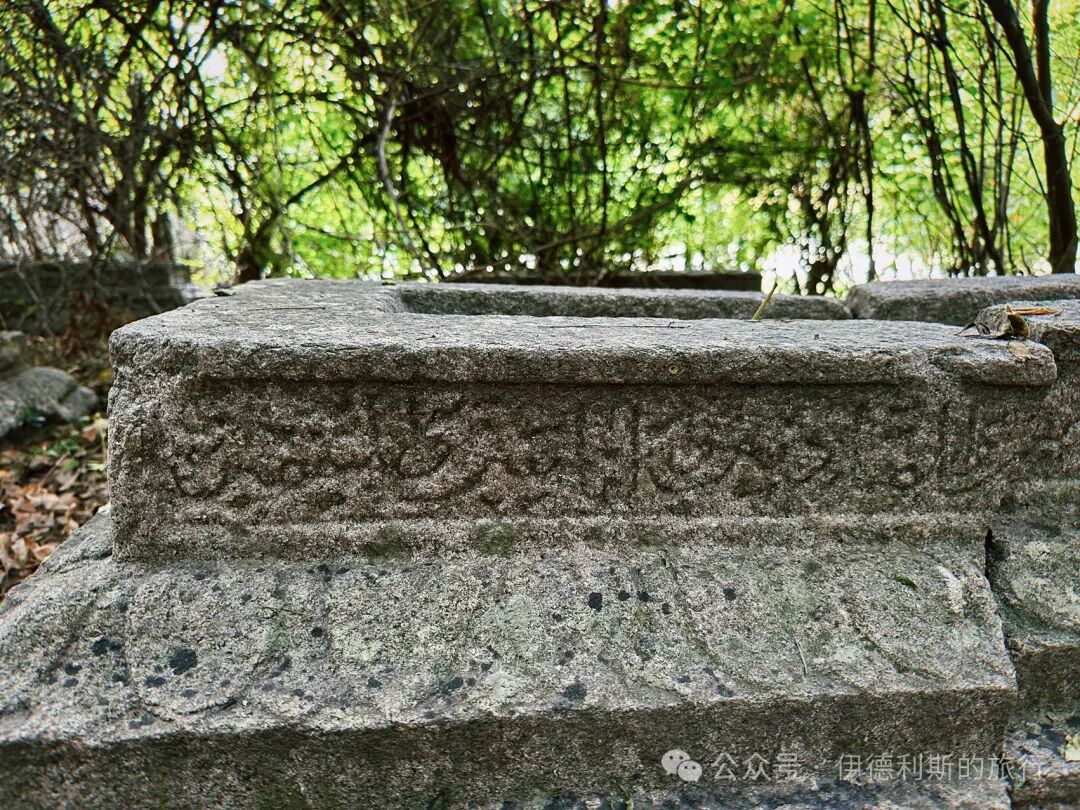
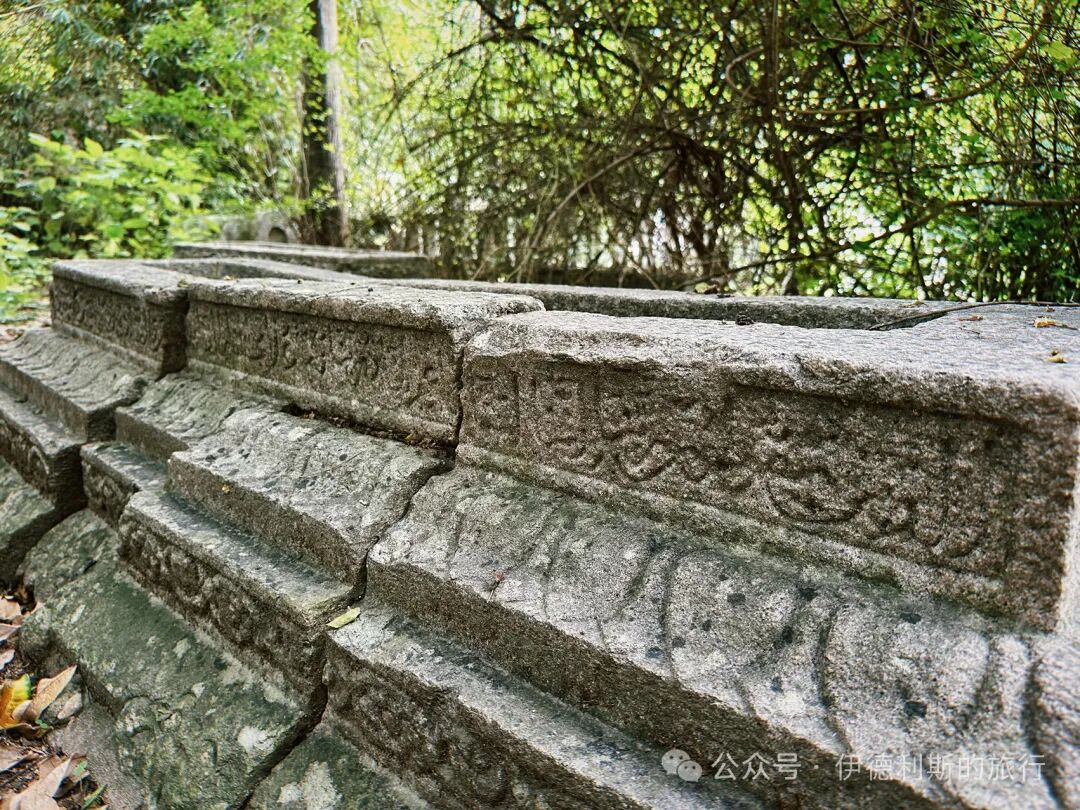
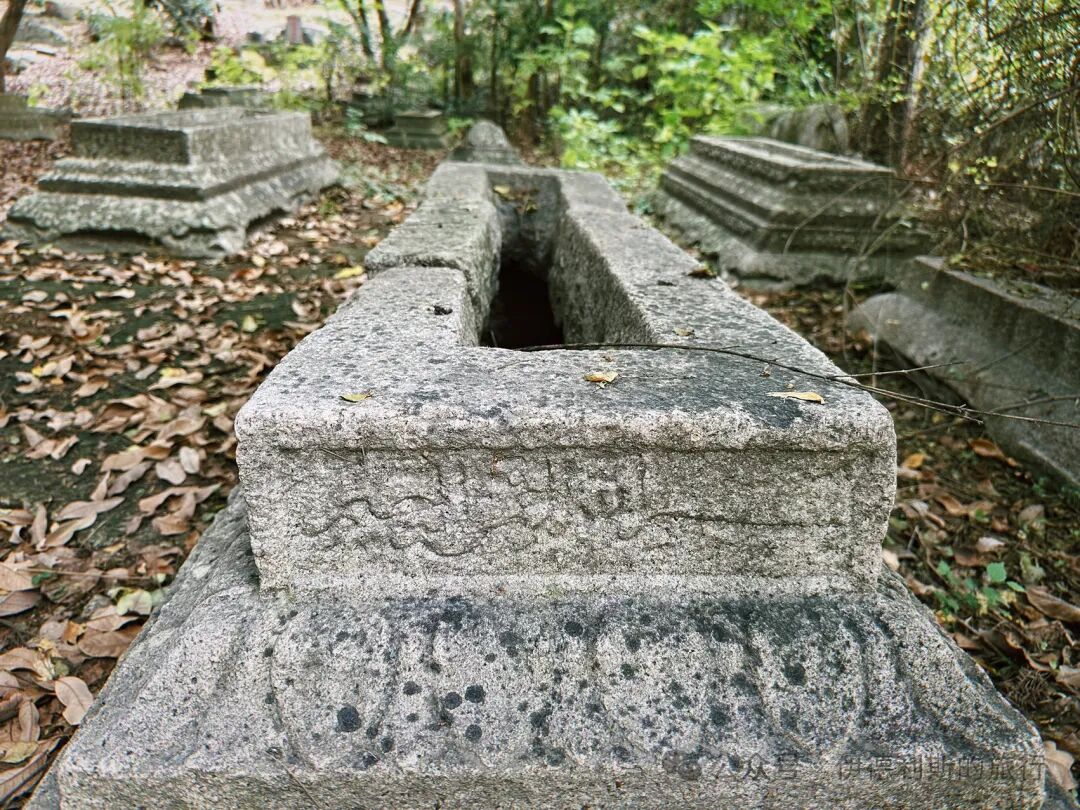
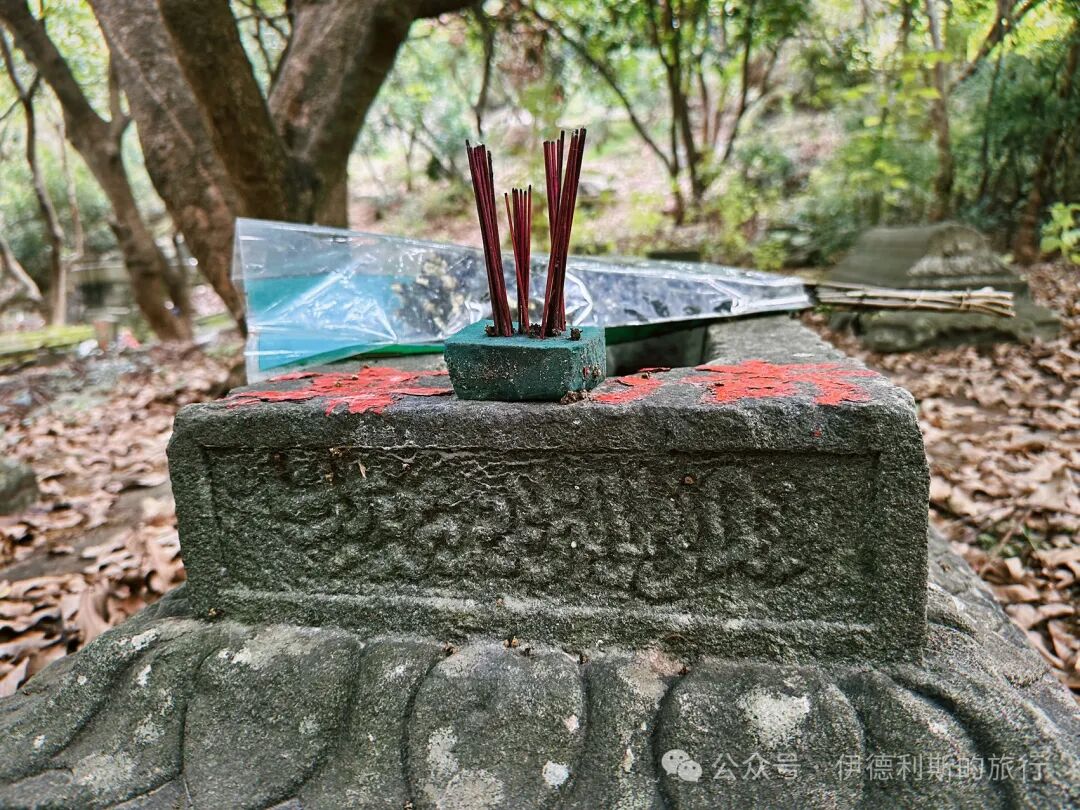
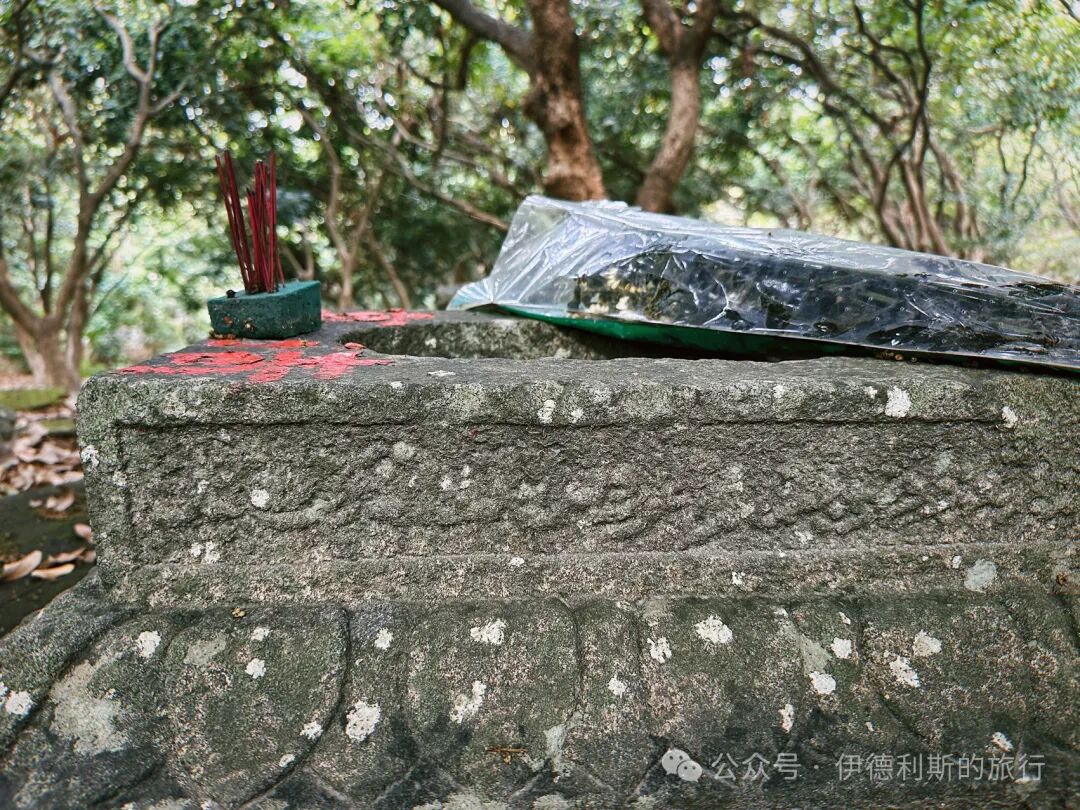
Next to the Lingshan Holy Tomb is the cemetery for local Quanzhou Hui Muslims. The Ge, Ma, and Huang families are descendants of the generations of imams from the Qingjing Mosque. They mostly worked in the leather industry in the past and lived inside the Qingjing Mosque until 1983. In the past, Quanzhou Hui Muslims would come here to visit the graves every Eid al-Fitr and Eid al-Adha. When visiting the graves, first light some incense (anxixiang), then trace the carvings on the tombstone with red paint, and finally invite an imam to recite scriptures.
In the tomb complex, you can see the ancestral graves of the Huang family from Jiangxia and the Huang family from Yanshan. The Jiangxia Huang family ancestral grave is inscribed with 'Mosque Huang Residence,' while the Yanshan Huang family grave bears inscriptions like 'First Year of the Xuantong Reign' and 'Imperially Appointed Fifth-Rank Official... Land Route Commander...' which are hard to read completely due to the red paint.
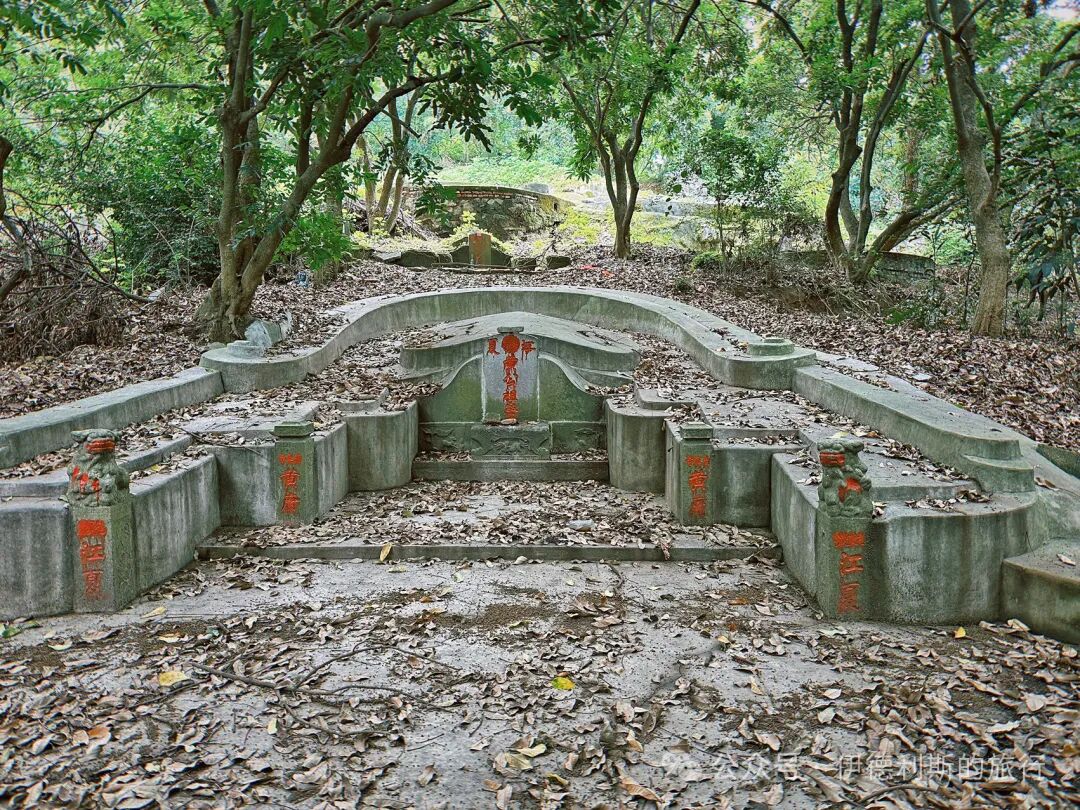
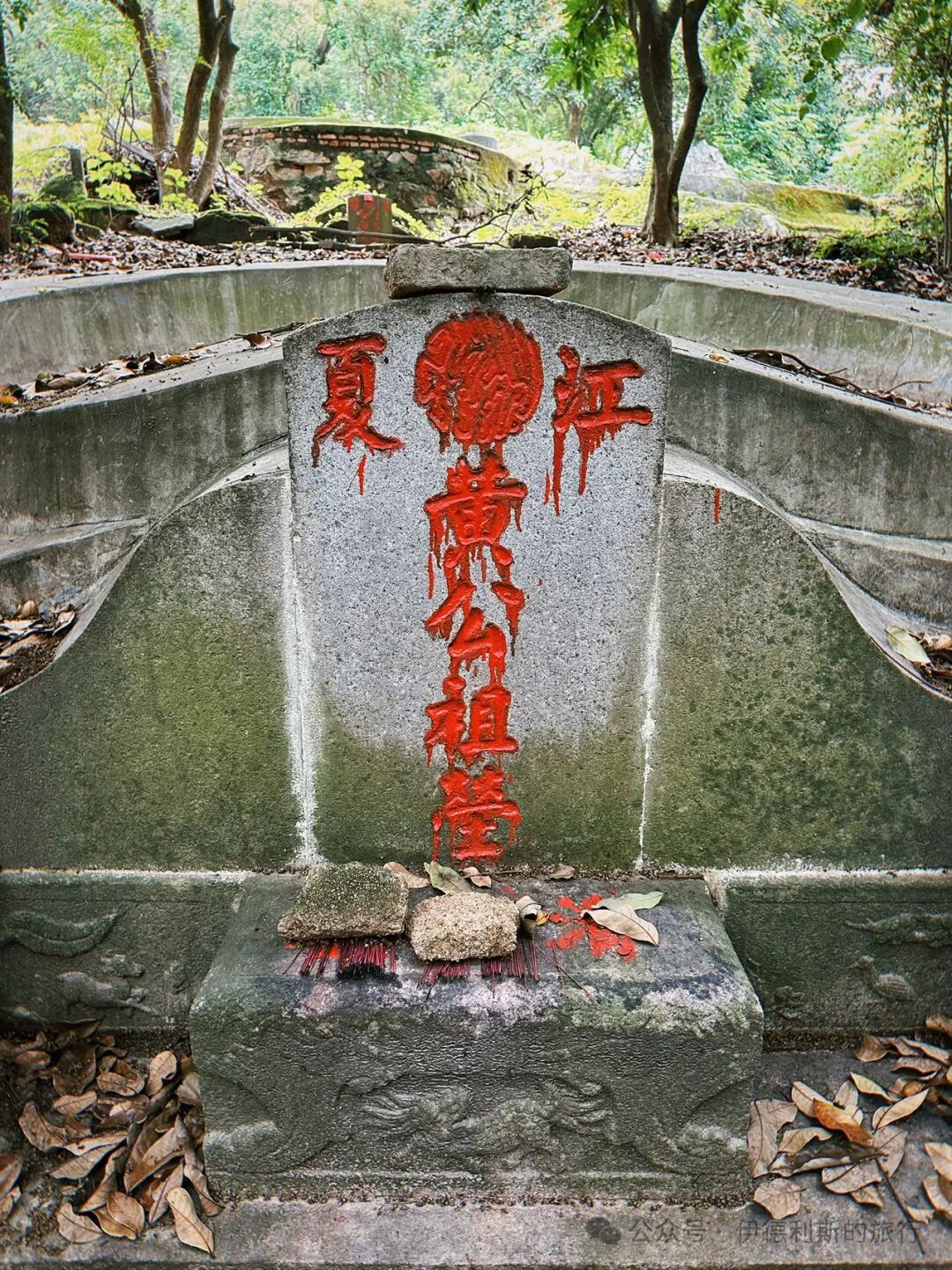
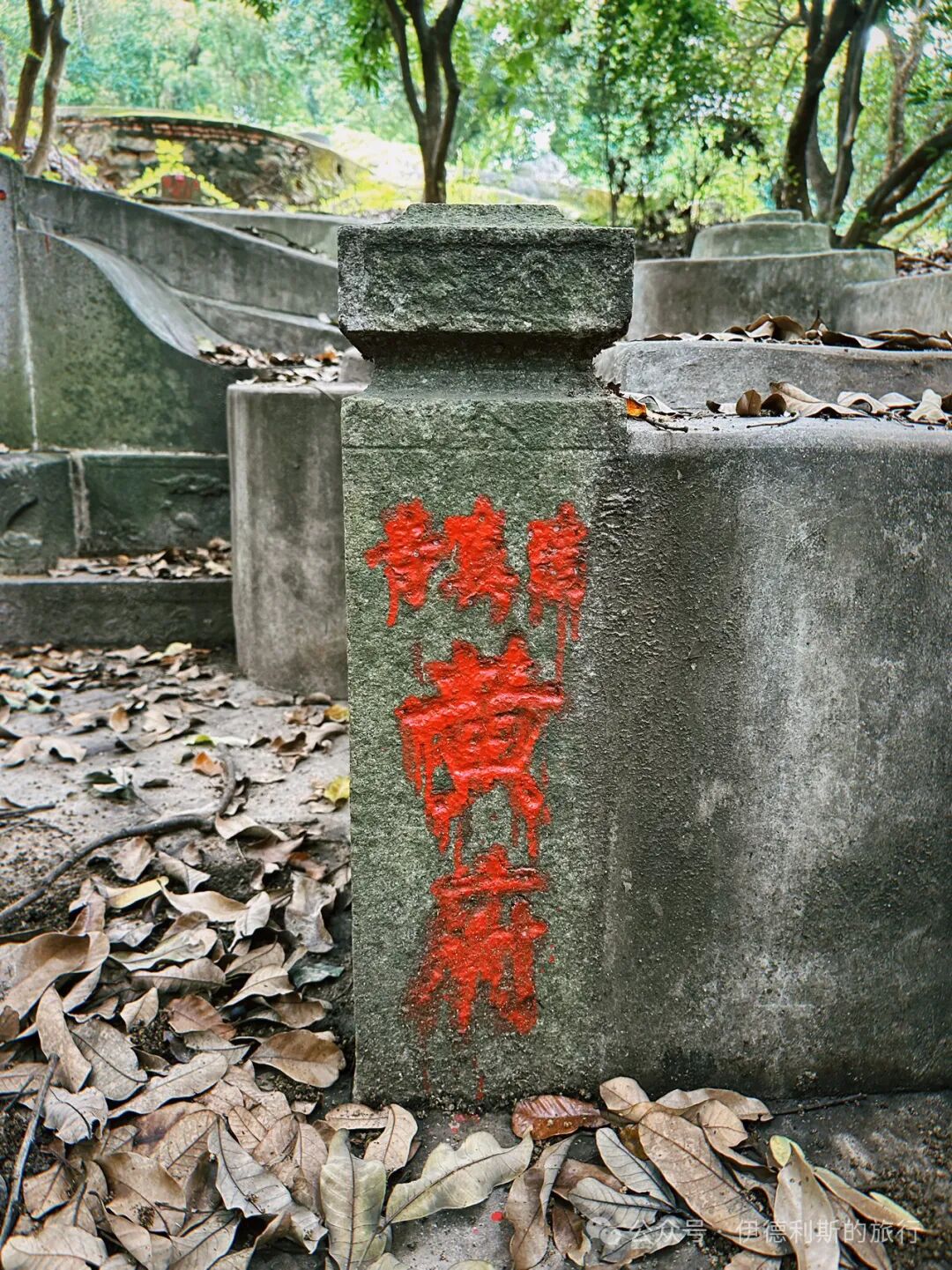
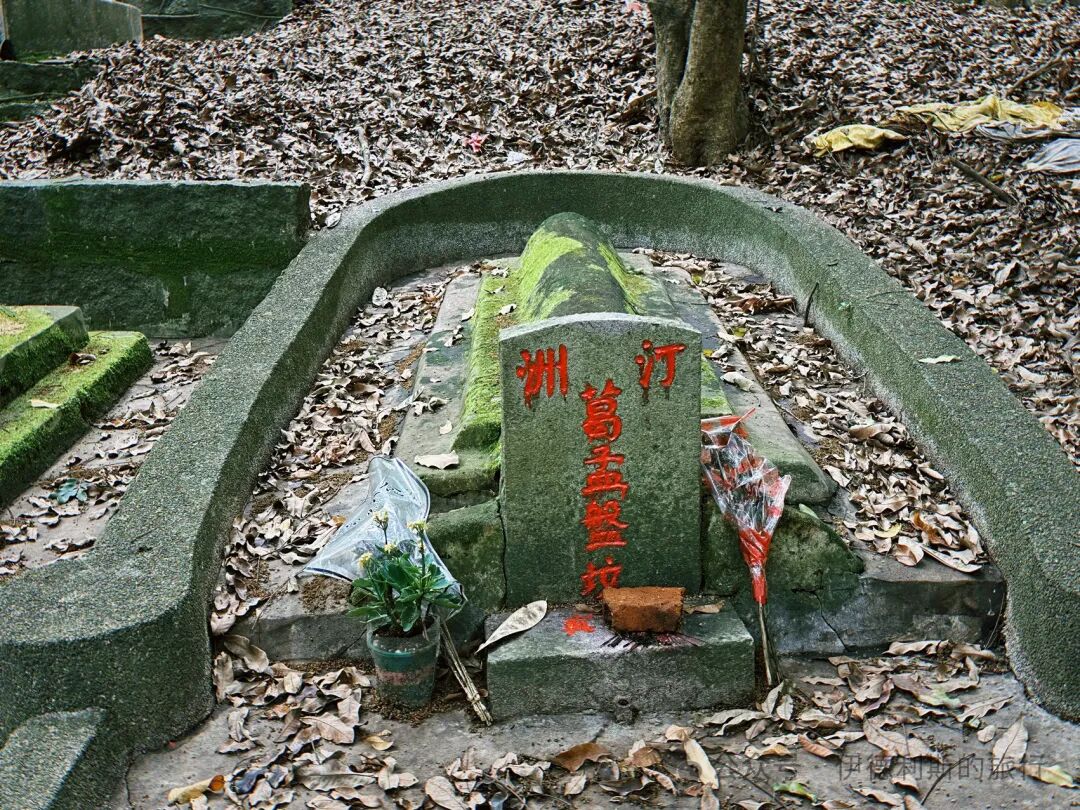
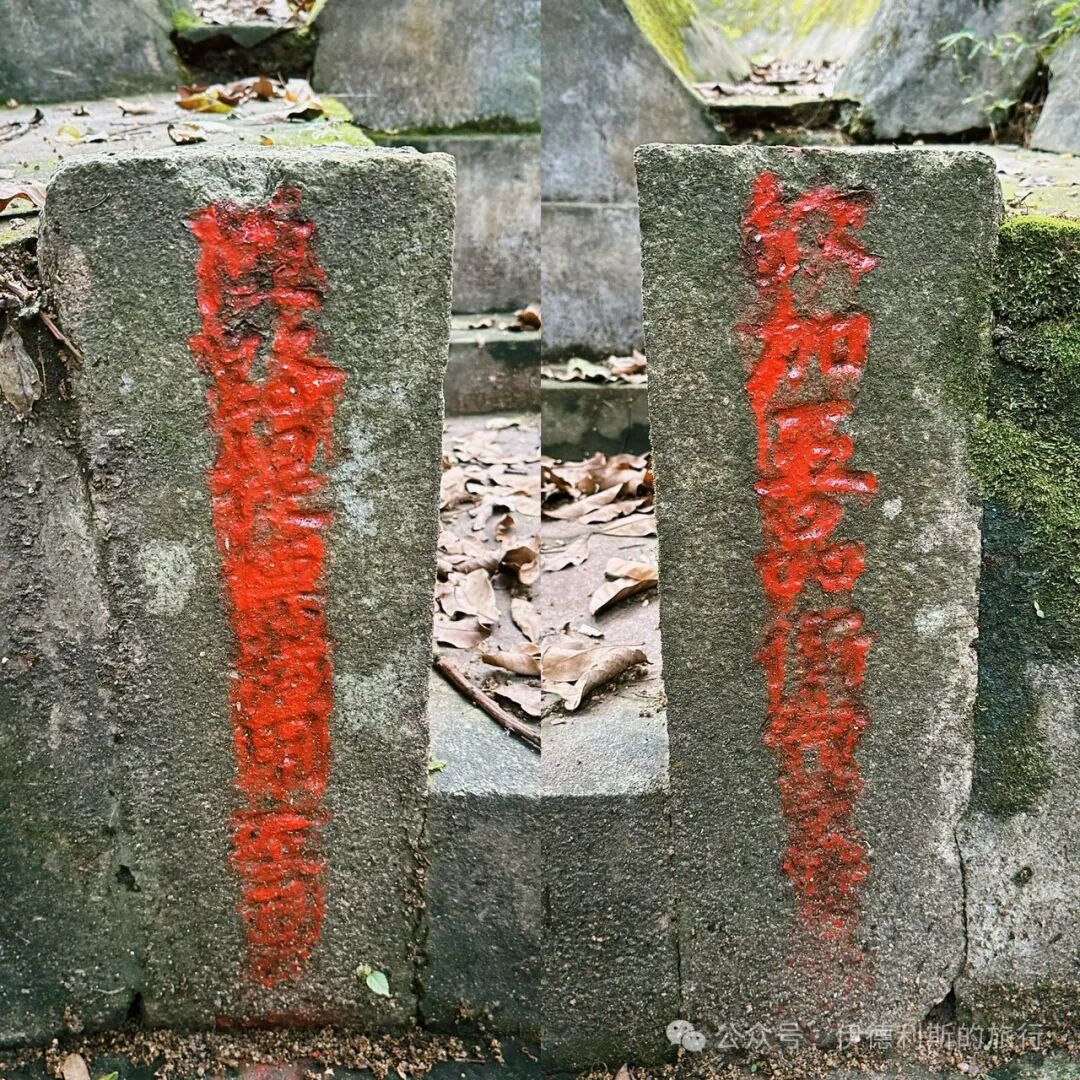
According to their family records, the Guo family of Hui Muslims originally lived in Guo Family Village in Fuyang, Hangzhou, before arriving in Quanzhou during the Yuan Dynasty. During the Hongwu reign of the Ming Dynasty, Guo Zhongyuan moved from Quanzhou to Baiqipu on the opposite side of Houzhu Port, which eventually became the present-day Baiqi Hui Ethnic Township. The Baiqi Guo family left the faith in 1607 (the 35th year of the Wanli reign of the Ming Dynasty). In 1709 (the 48th year of the Kangxi reign), Chen Yougong, a regional commander and left-wing general for the Fujian Ting, Yan, and Shao areas, came to Quanzhou to revive the faith and established scripture hall education at the Qingjing Mosque. At that time, Guo Honglong, a member of the eighth generation of the Guo family's fourth branch, moved from He Cuo in Baiqipu to live at the Qingjing Mosque and returned to the faith, citing the need to strengthen the main family line. After Guo Honglong returned to the faith, his descendants lived at the Qingjing Mosque. His descendant, Guo Shifu, helped renovate the mosque in 1794 (the 59th year of the Qianlong reign) alongside Bai Yunhan, a deputy general of the Zhangzhou Left Battalion.
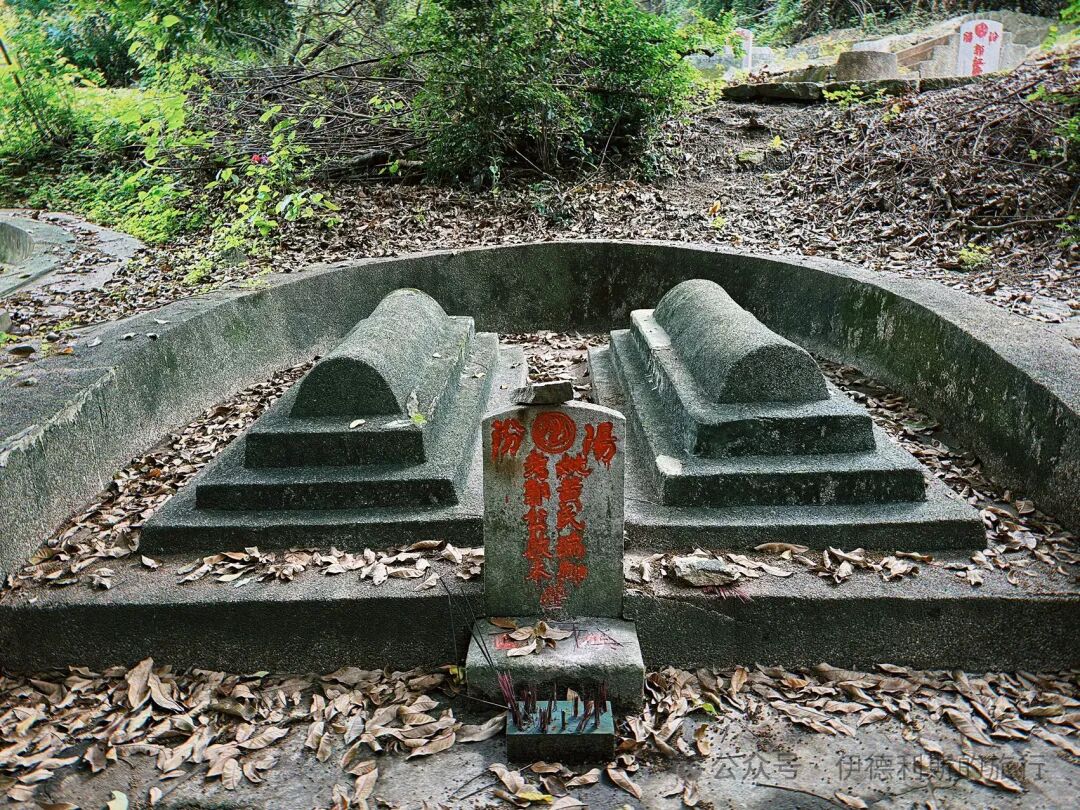
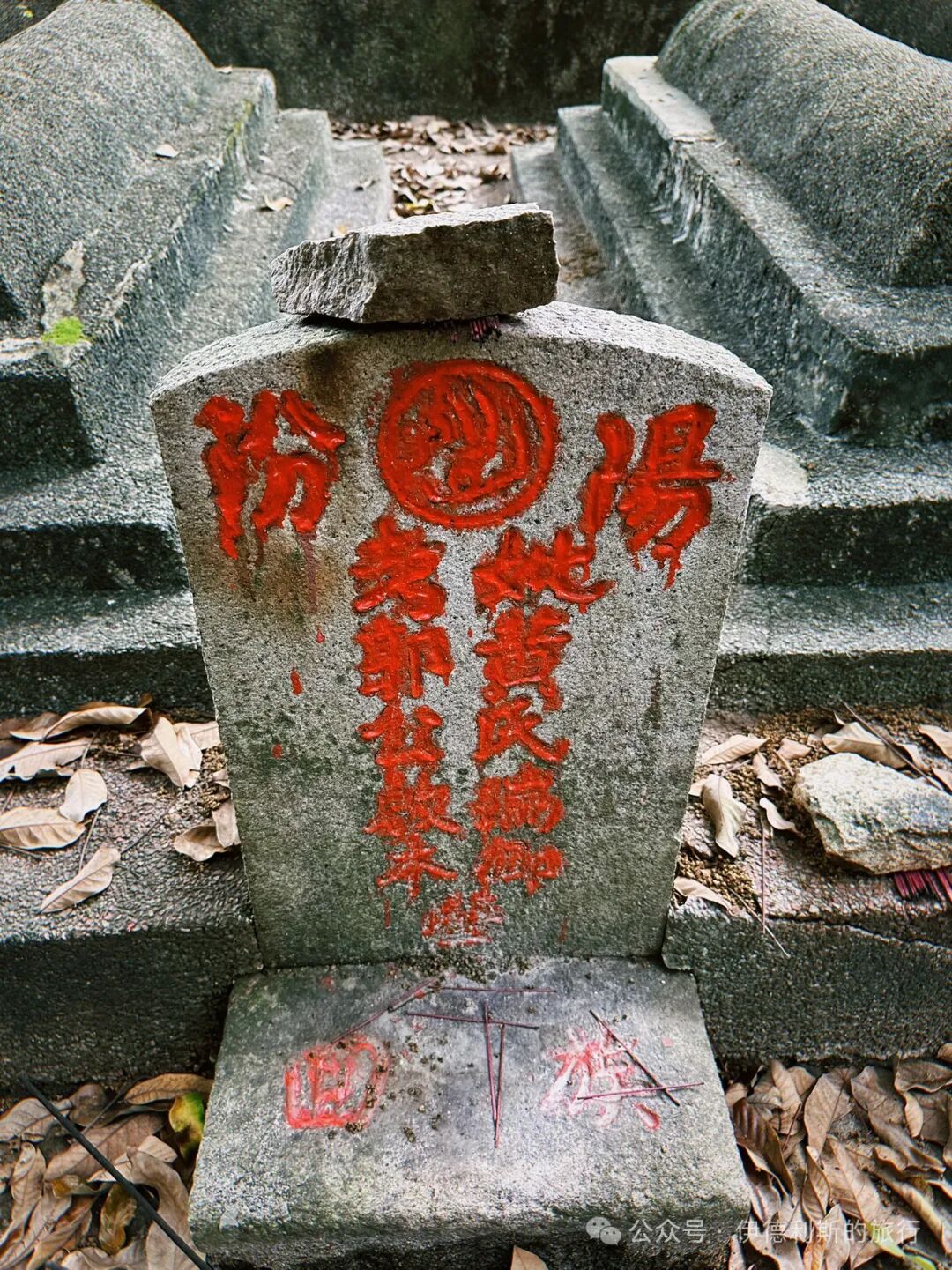
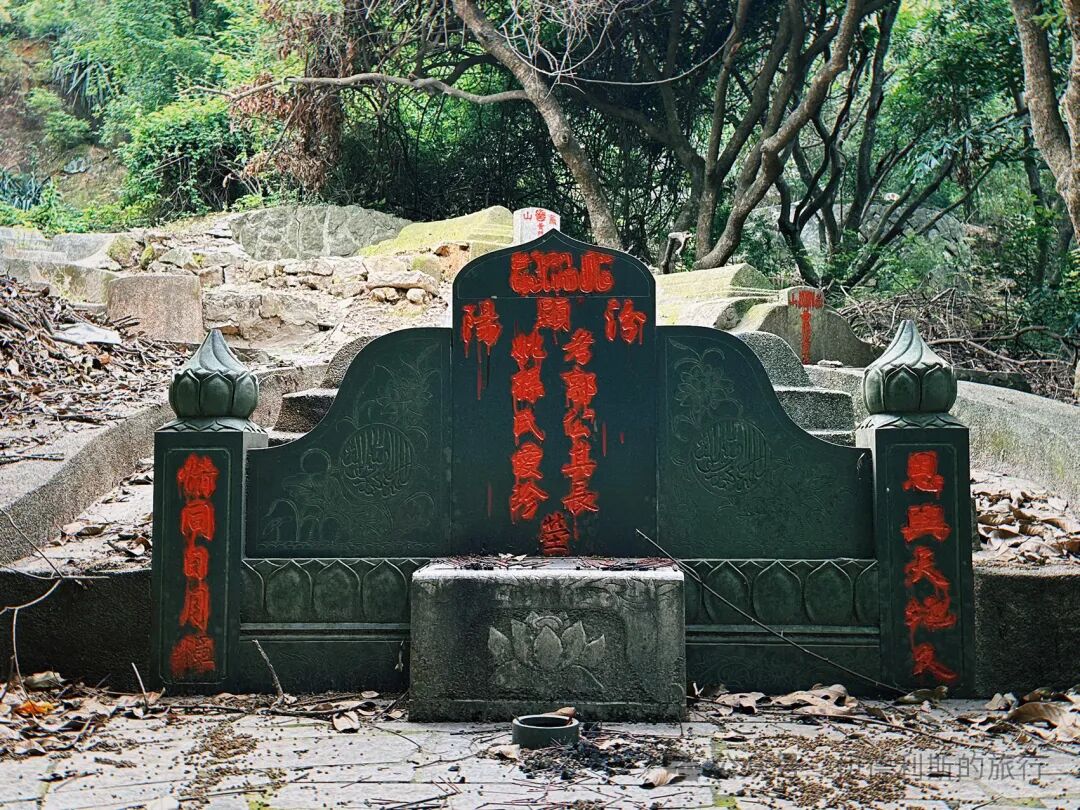
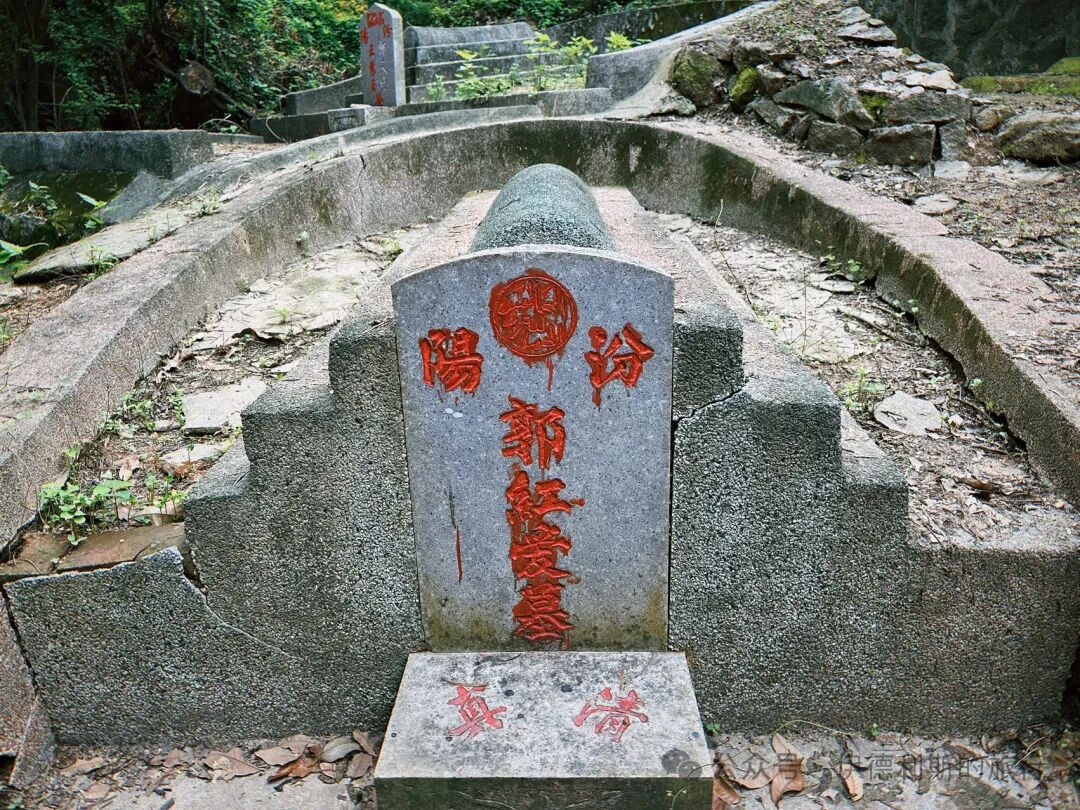
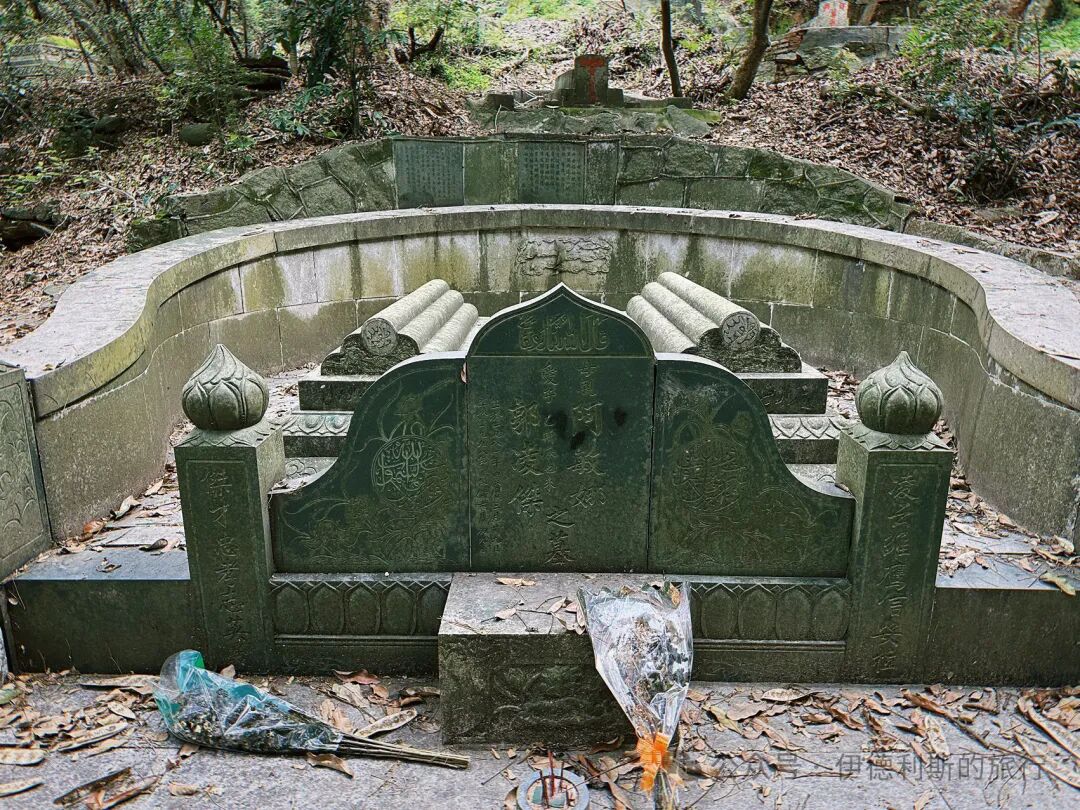
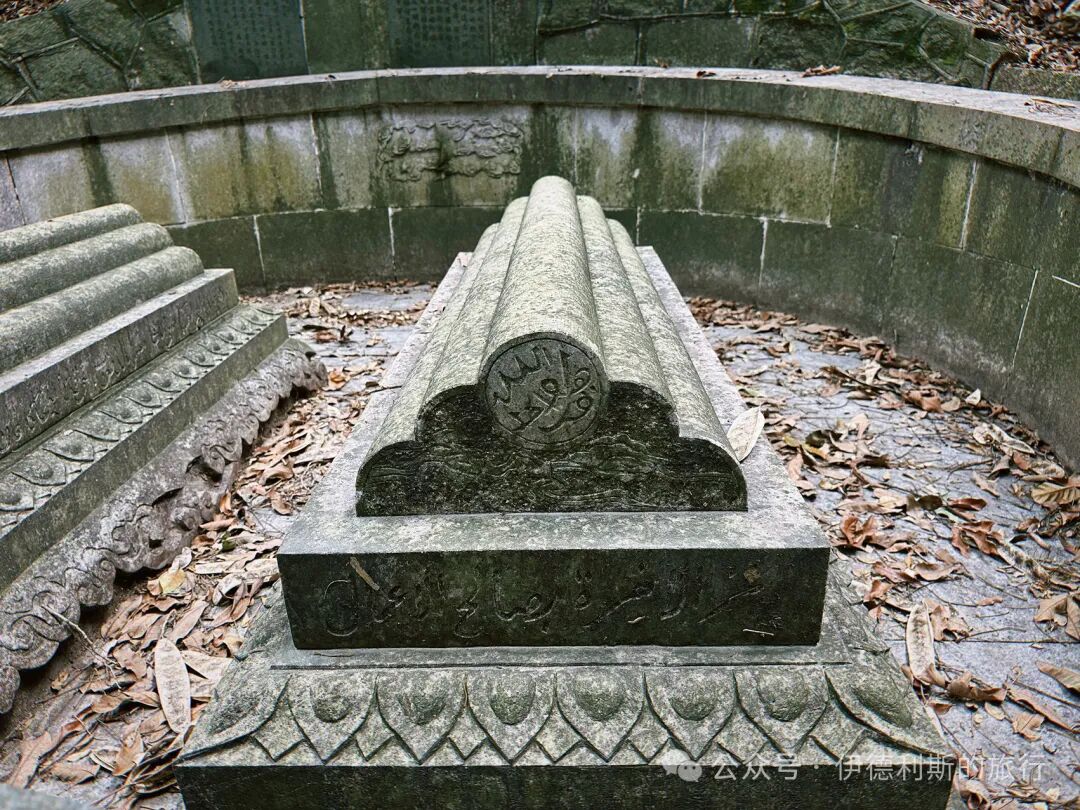
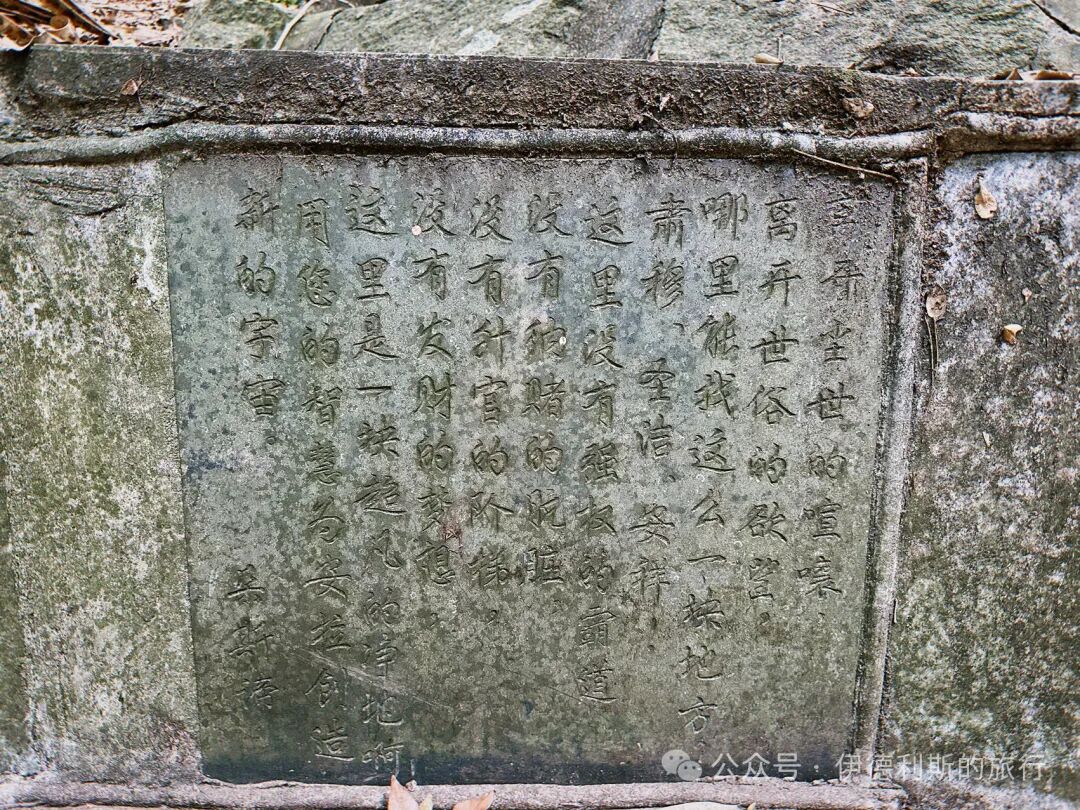
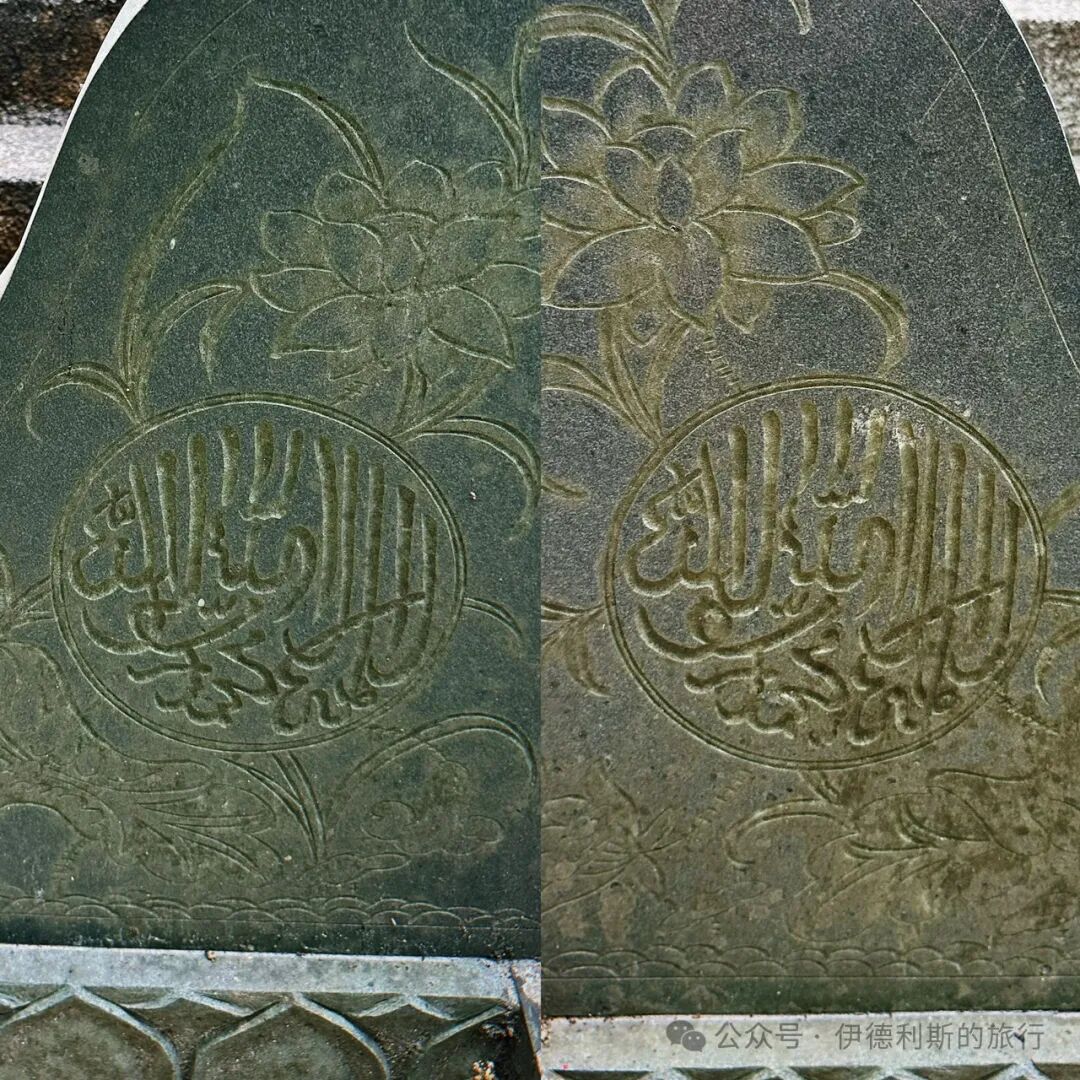
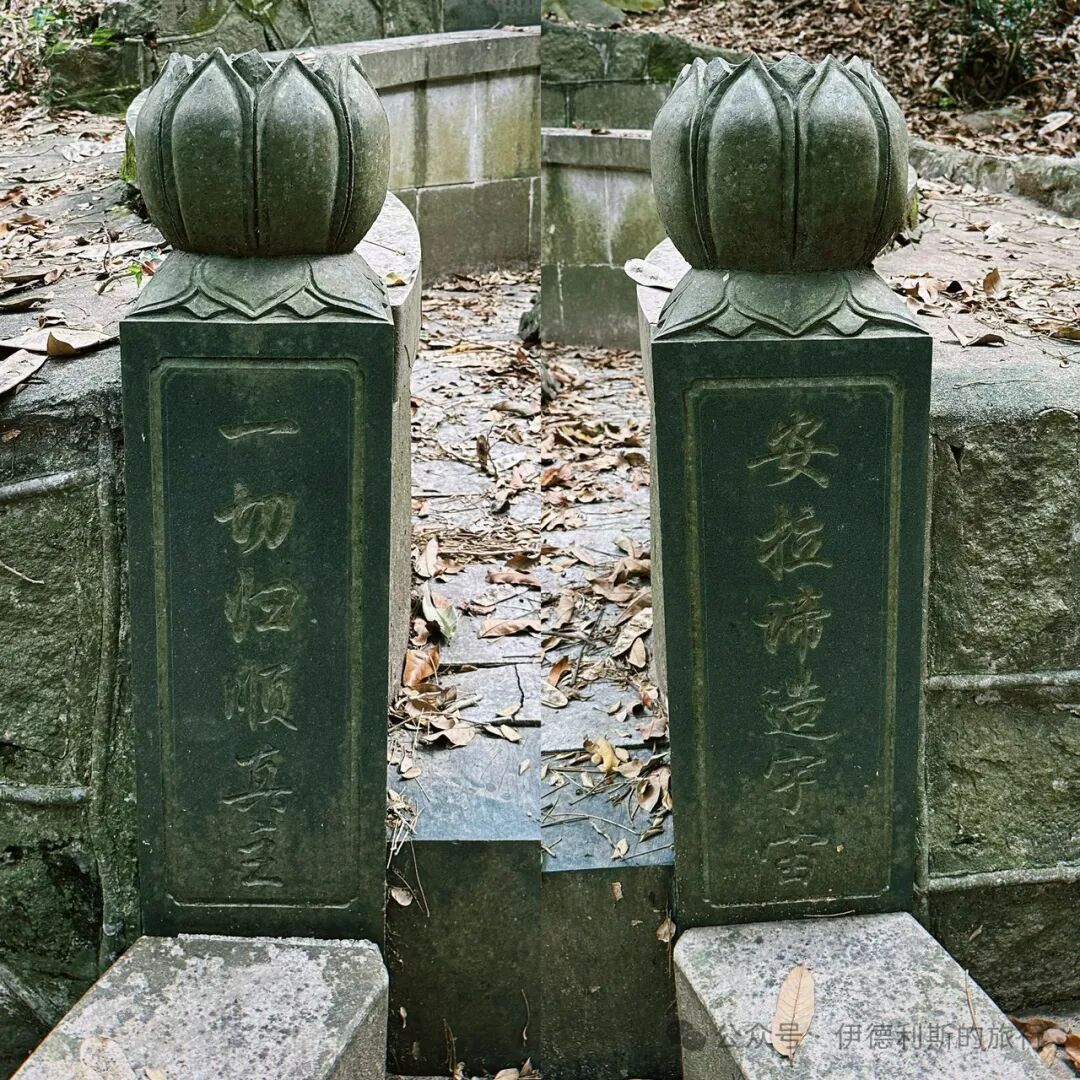
A large section of the Lingshan Sacred Tomb scenic area is dedicated to the Ding family cemetery from Chendai.
According to family records, the first-generation ancestor of the Chendai Ding family, Ding Jin (1251-1298), was originally from Suzhou and settled in Quanzhou for business. The Chendai Ding family maintained their faith for ten generations, spanning over two hundred years from the 13th to the 16th century. Ding Yanxia, the tenth-generation descendant born around 1517, wrote detailed accounts of the religious customs he experienced as a child in his work, 'On Ancestral Faith' (Zujiao Shuo). However, calculations suggest that by the eighth to ninth generation, the Chendai Ding family no longer prioritized scripture hall education. The remaining relics of the faith belonging to the Chendai Ding family are the several Ming Dynasty tomb stones located within the Lingshan Sacred Tomb.
Before the Ding family established their base in Chendai, the first, second, and third generations were all buried at Lingshan, east of Quanzhou city. After the fourth-generation ancestor, Ding Shan, established the family base in Chendai, he entrusted the management of the ancestral graves to others. Later, Xu Fu, the son of the second manager Xu Fen, repeatedly encroached on the ancestral graveyard, and the Ding family endured this in silence. Eighteen years later, in 1505, the eighth-generation descendant Ding Yi passed the imperial examinations to become a jinshi. Upon returning home, he filed a lawsuit and finally reclaimed the ancestral tomb land.
During the Chongzhen reign of the Ming Dynasty, the descendants of the Ding family combined the graves of the first, second, and third generations. In 1993, due to road construction, many of the Chendai Ding family's tomb stones were moved from outside the East Gate of Quanzhou and Luyuan to the Lingshan Sacred Tomb. The current combined tomb of the first, second, and third generations was also renovated during this period. The tomb stones and tombstones seen today are not the original ones.
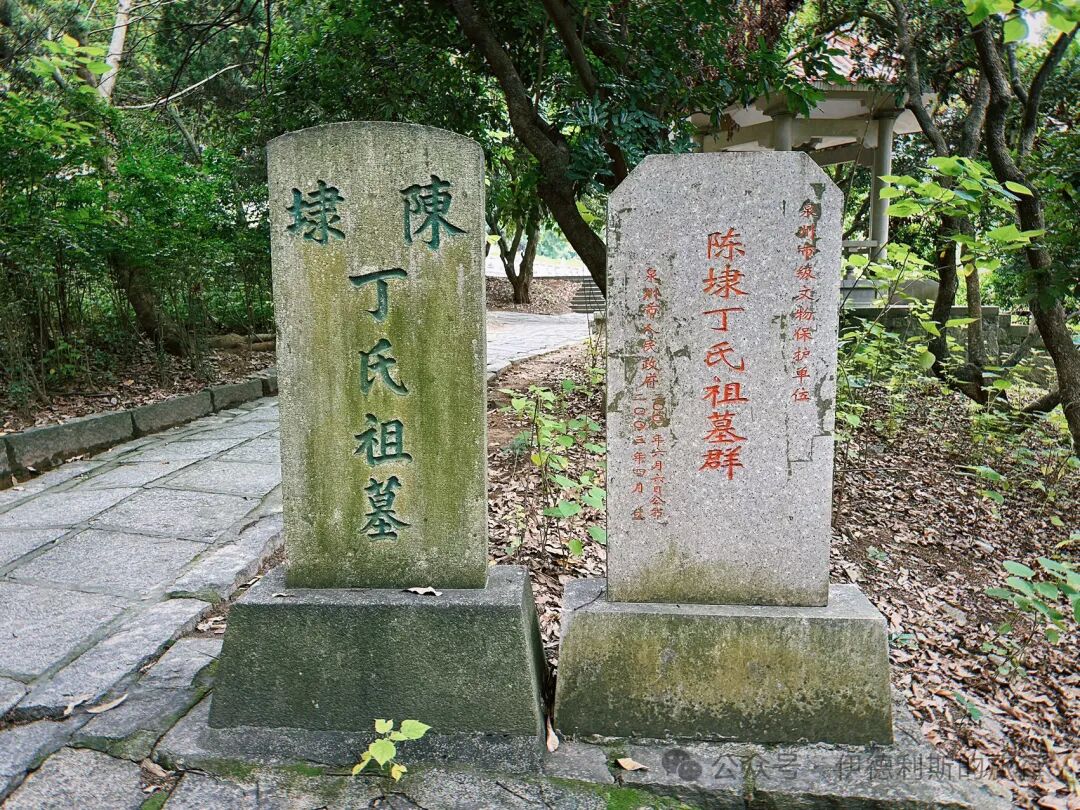
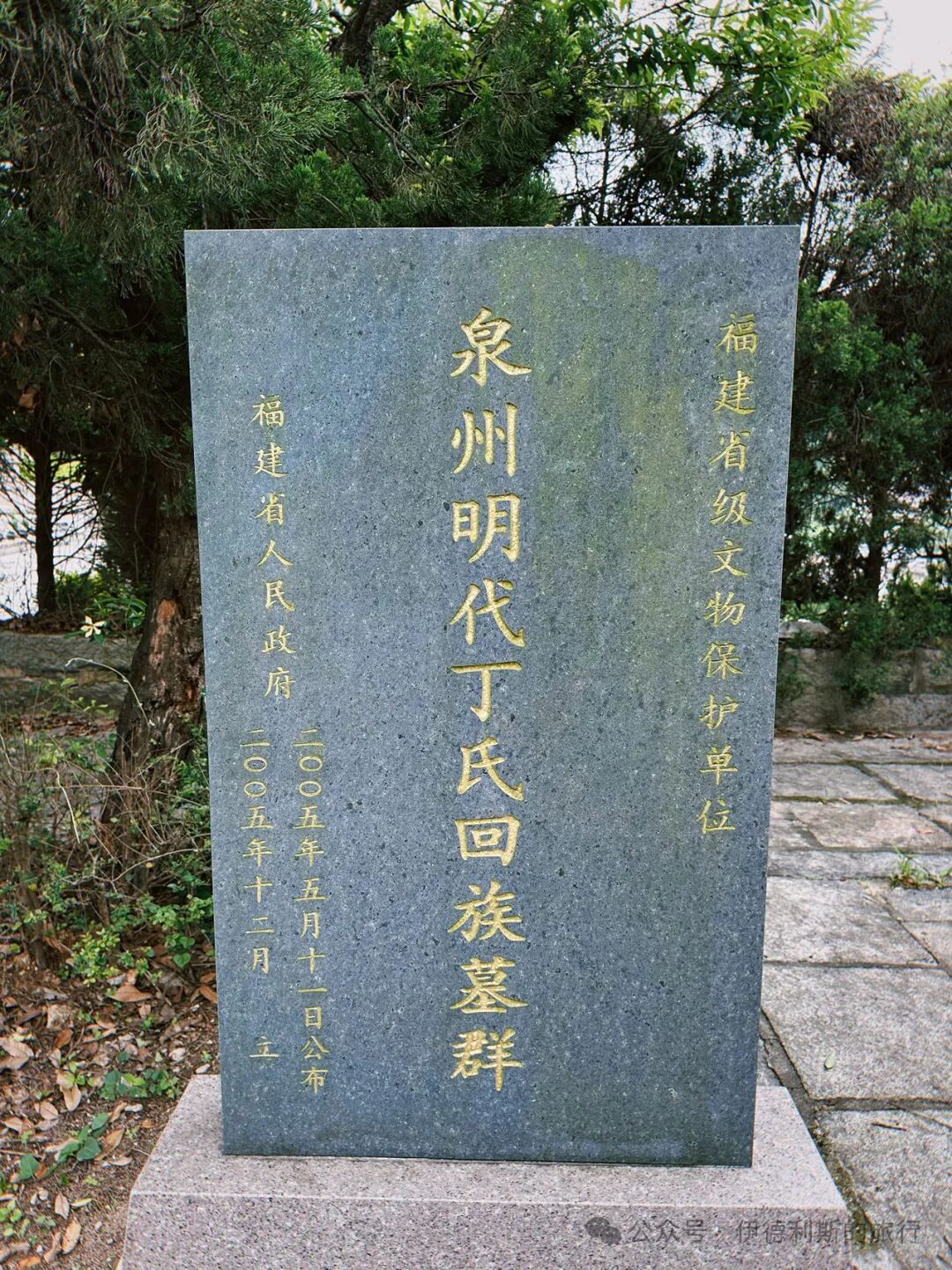
After the Ming Dynasty, the Chendai Ding family claimed their ancestor was the Yuan Dynasty politician Sayyid Ajjal Shams al-Din, so the cemetery features inscriptions identifying them as descendants of a saint.
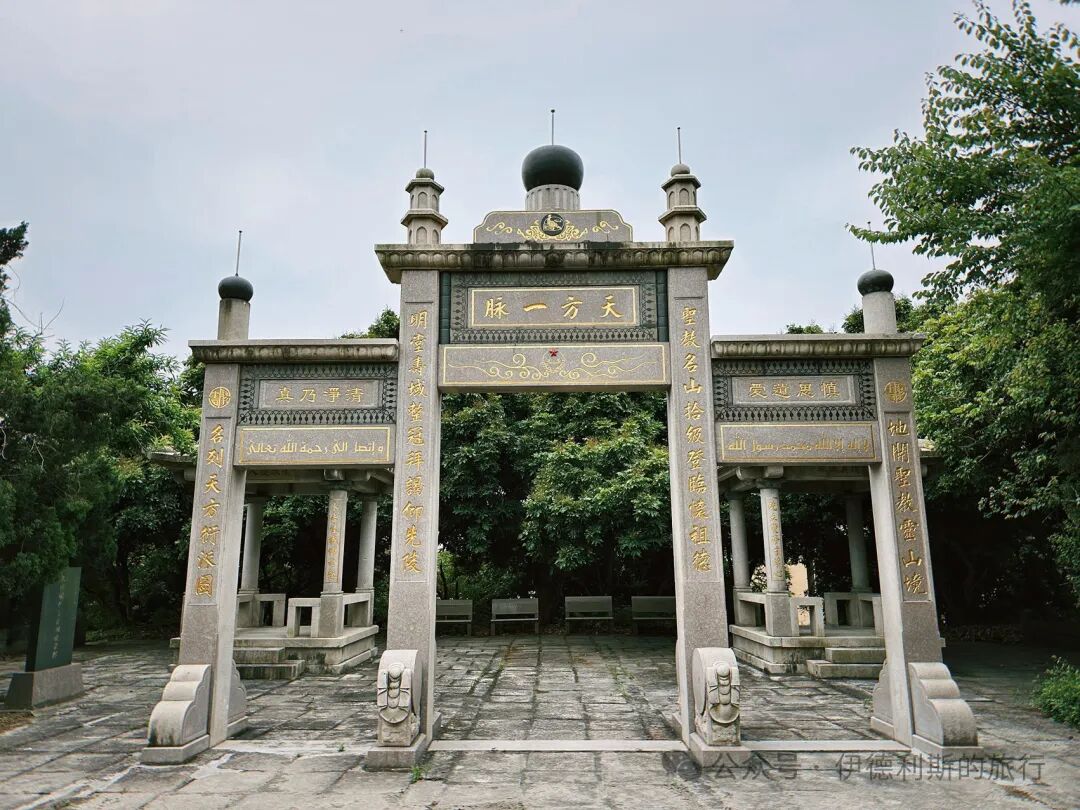
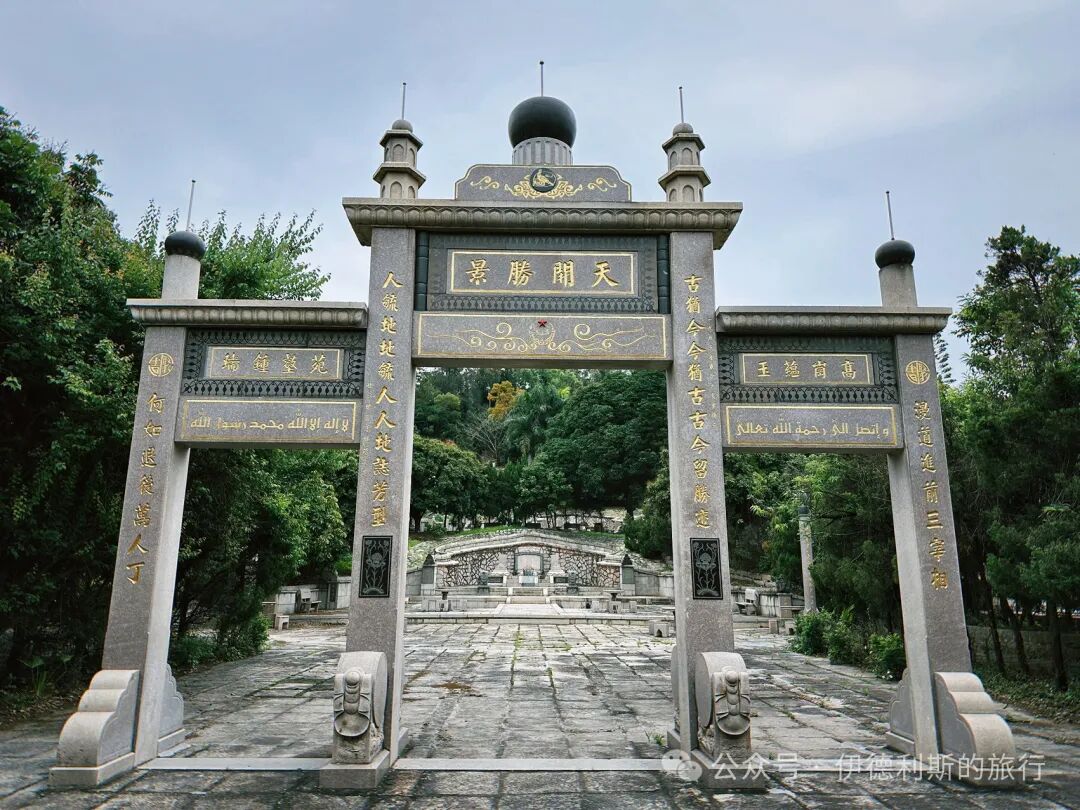
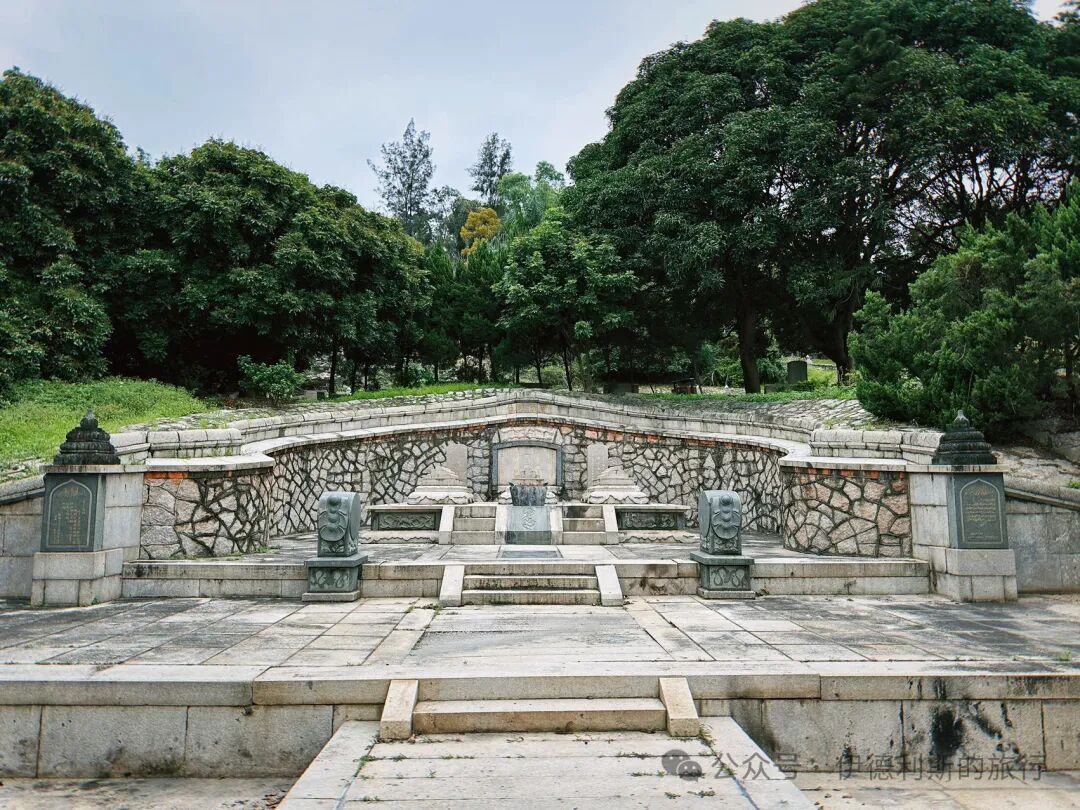
In the cemetery, you can also see the Basmala (tasimi) auspicious bird of the Chendai Ding family.
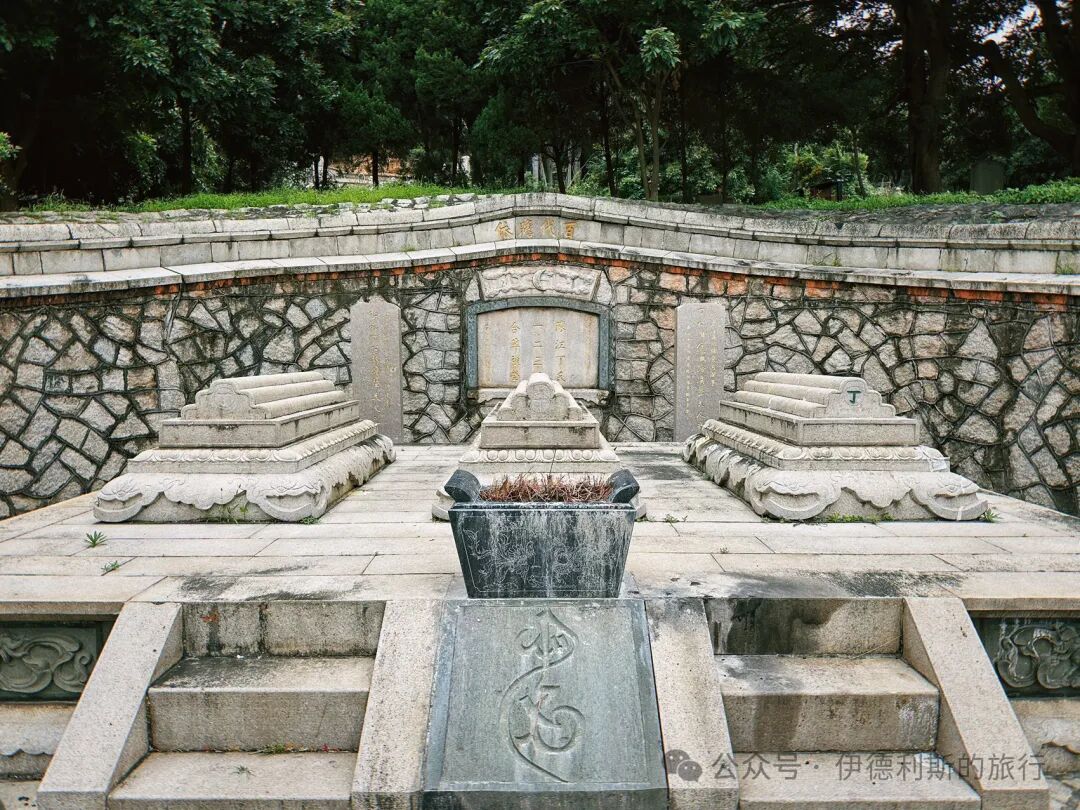
The tomb of the fourth-generation Chendai Ding family ancestor, Ding Shan, and his wife, Zhuang Xiniang.
Ding Shan (1343-1420), also known as Yanren and Ren'an, moved from Quanzhou to Chendai with his father at the end of the Yuan Dynasty. In the early Ming Dynasty, he settled in Chendai and established the Ding family clan. His wife, Zhuang Xiniang, also known as Runxiu, was the sixth-generation granddaughter of Zhuang Xia, who was named a founding baron and junior preceptor during the Southern Song Dynasty. The Zhuang family was very powerful at the end of the Southern Song Dynasty, but they gradually declined after the Yuan Dynasty. Many relatives left Quanzhou, and only Zhuang Xiniang's father remained in the Zhuang family mansion in the south of the city. The Ding and Zhuang families were neighbors at the time, so they married. Shortly after the wedding, Ding Shan and his father moved to Chendai. The Ding family's move to Chendai was likely related to Zhuang Xiniang, because the Zhuang clan lived nearby in Qingyang, a powerful group known as the Qingyang Zhuang family.
Ding Shan and his wife Zhuang Xiniang were originally buried in Luyuan, east of Quanzhou city. Luyuan means 'Paradise,' which is what the Quran refers to as the 'Garden of Heaven'. The tombstone is a traditional Islamic greenstone (huilvyan) tomb. Two five-story, pedestal-style tombstones sit on a Sumeru-style altar platform. The fourth layer of the tombstone is carved with scripture (2:255).
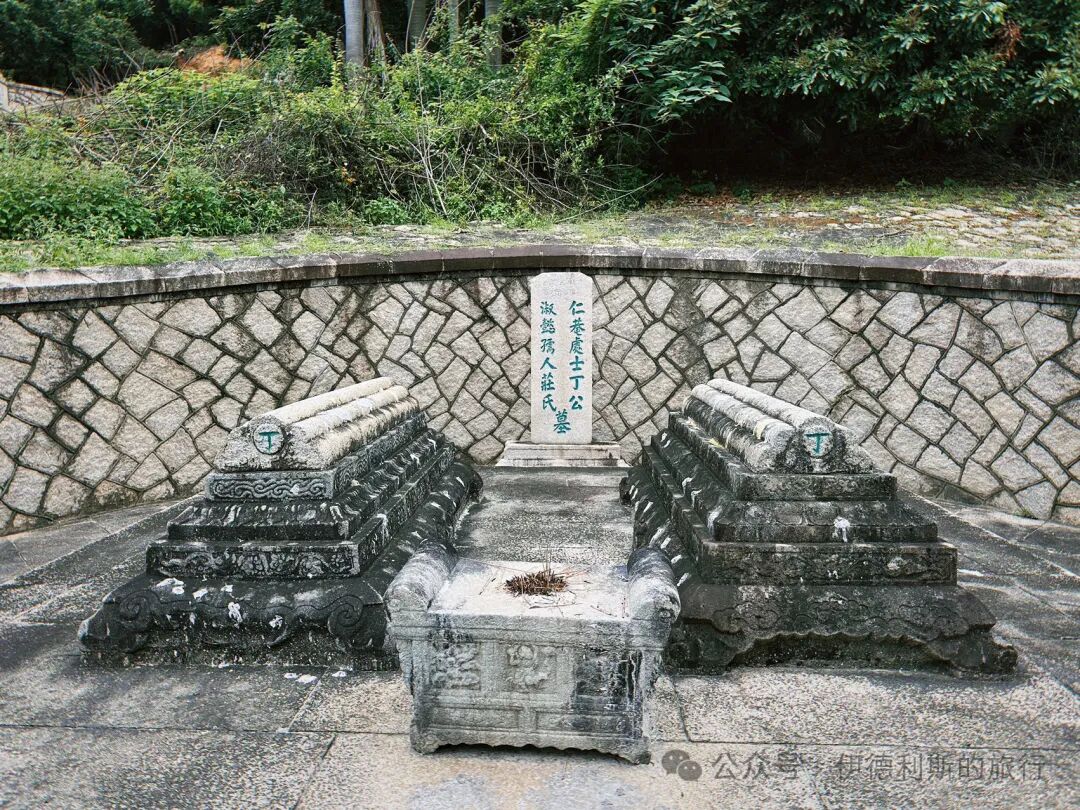
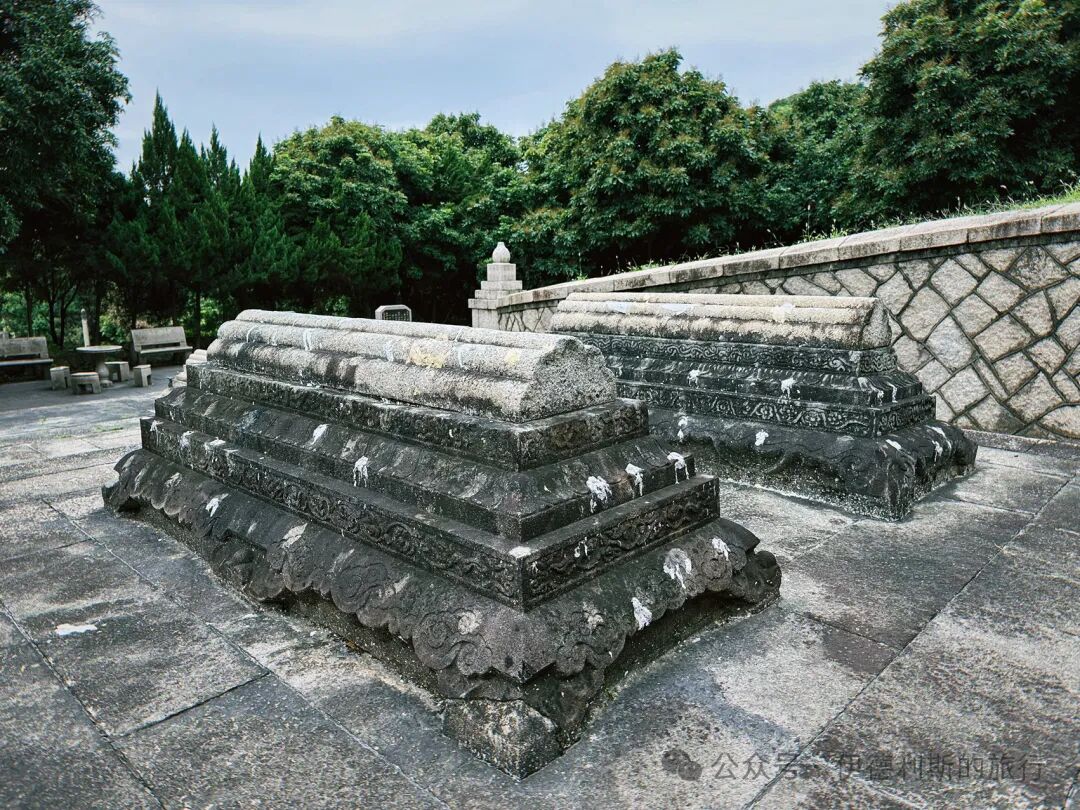
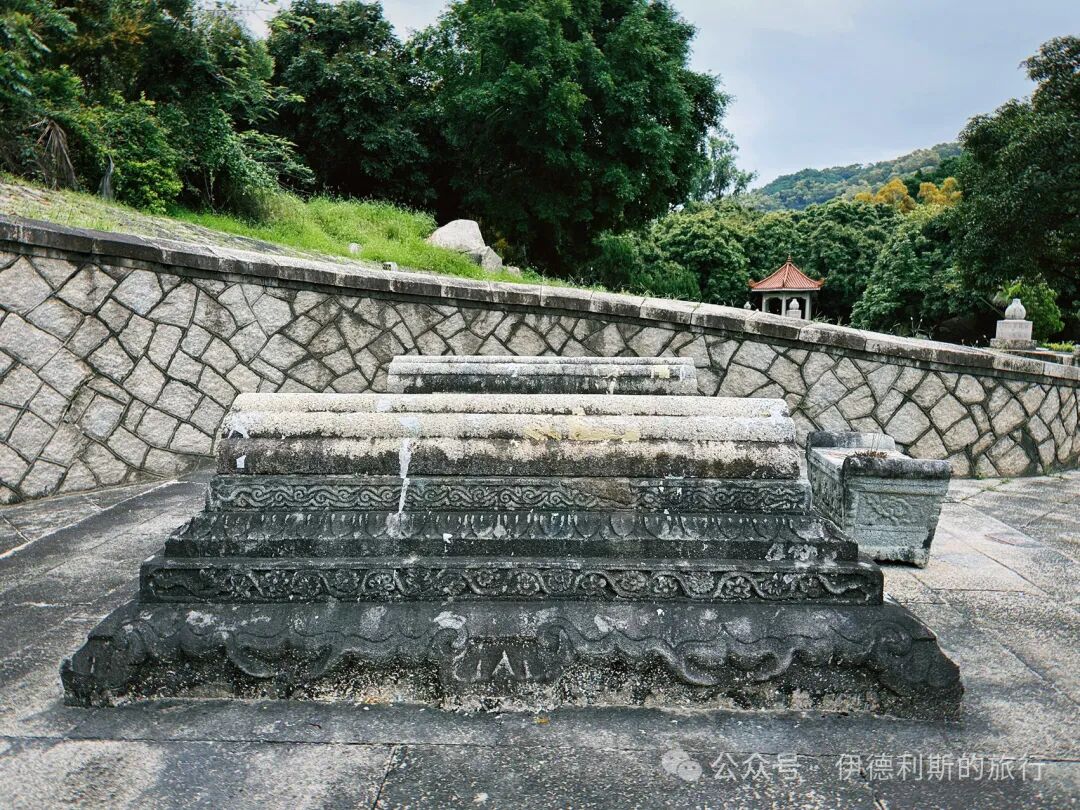
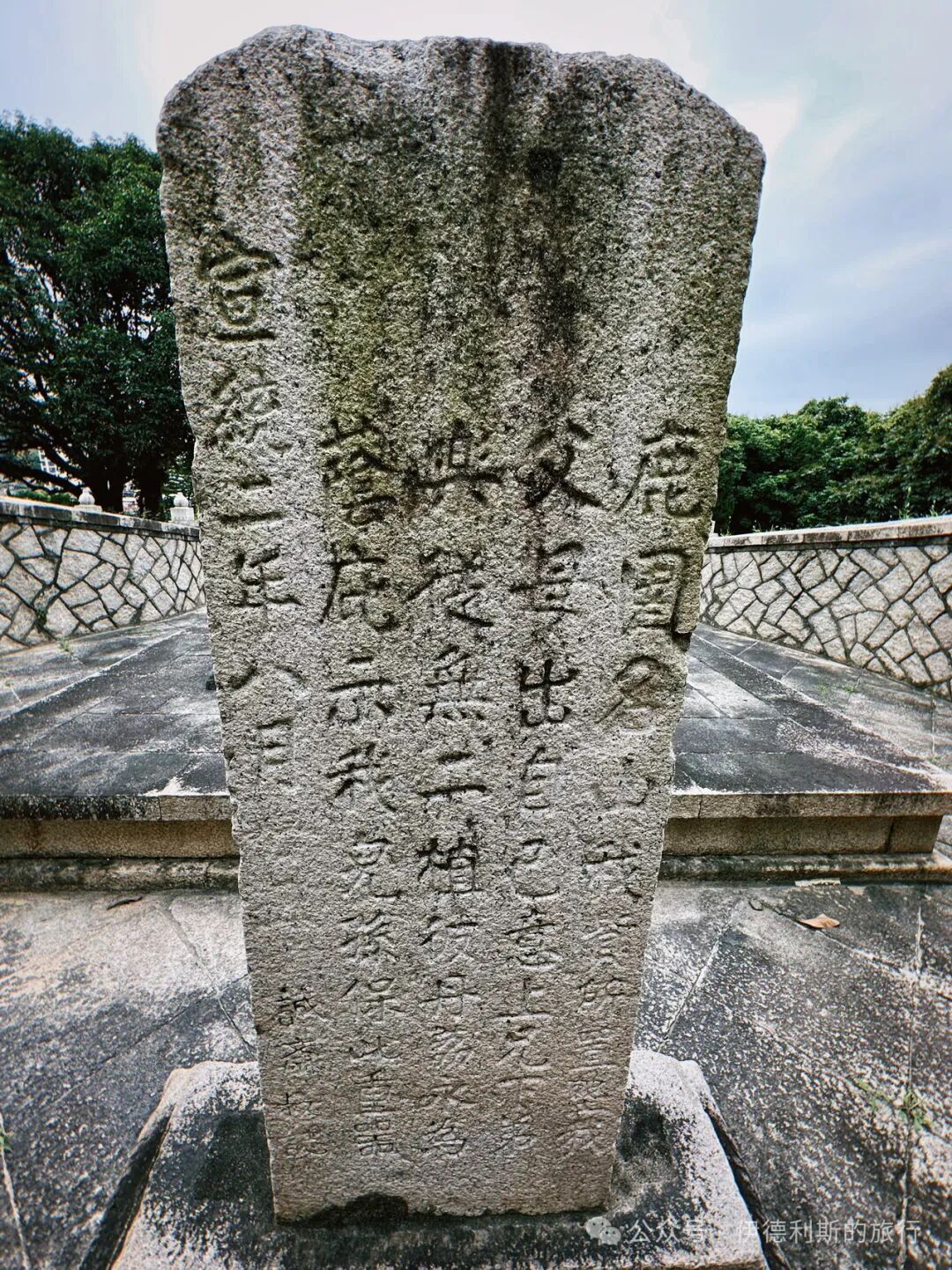
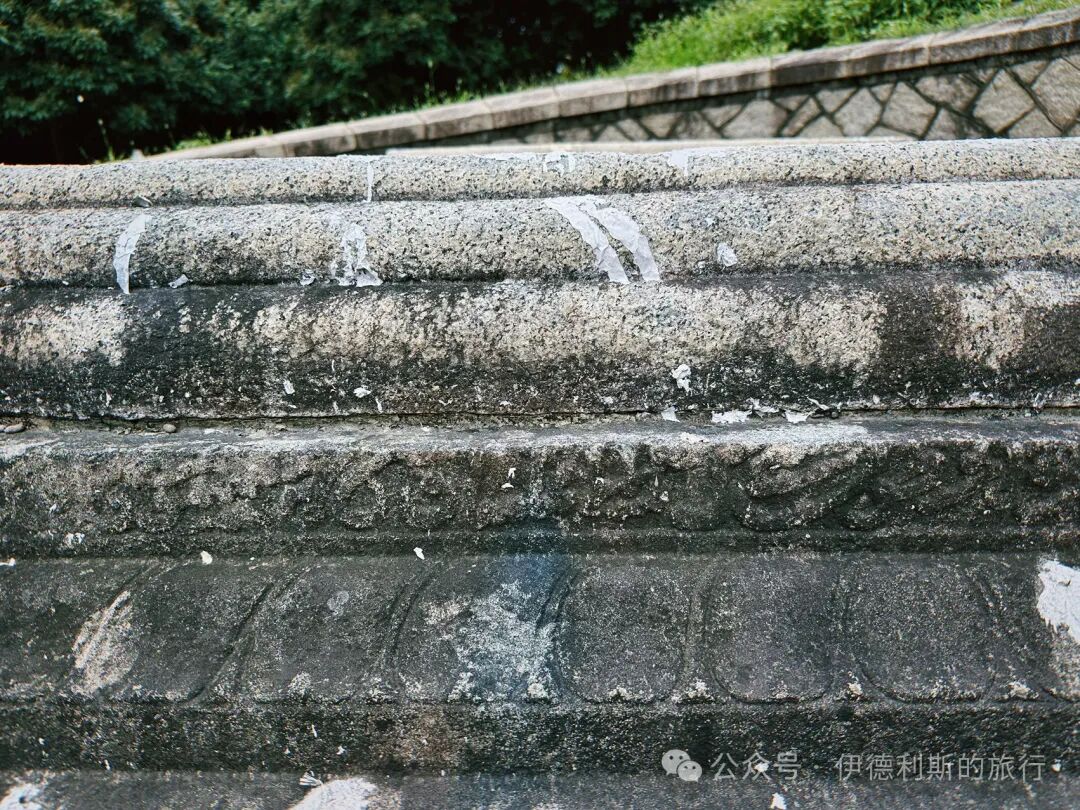
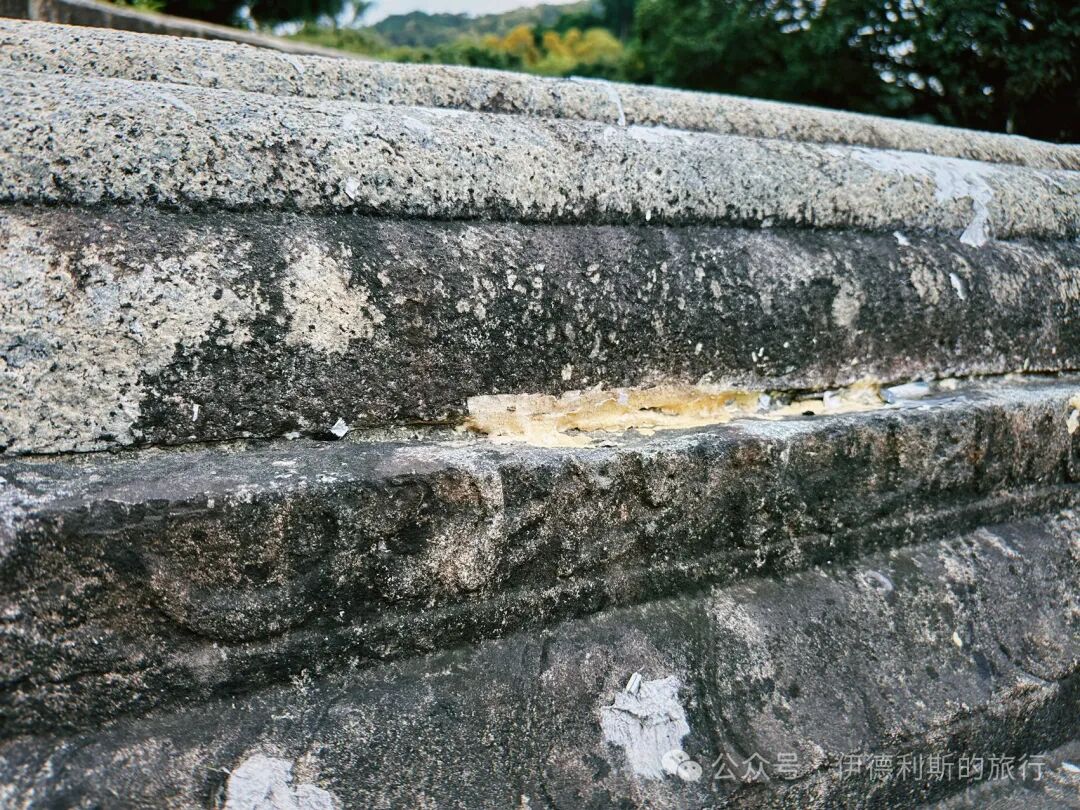
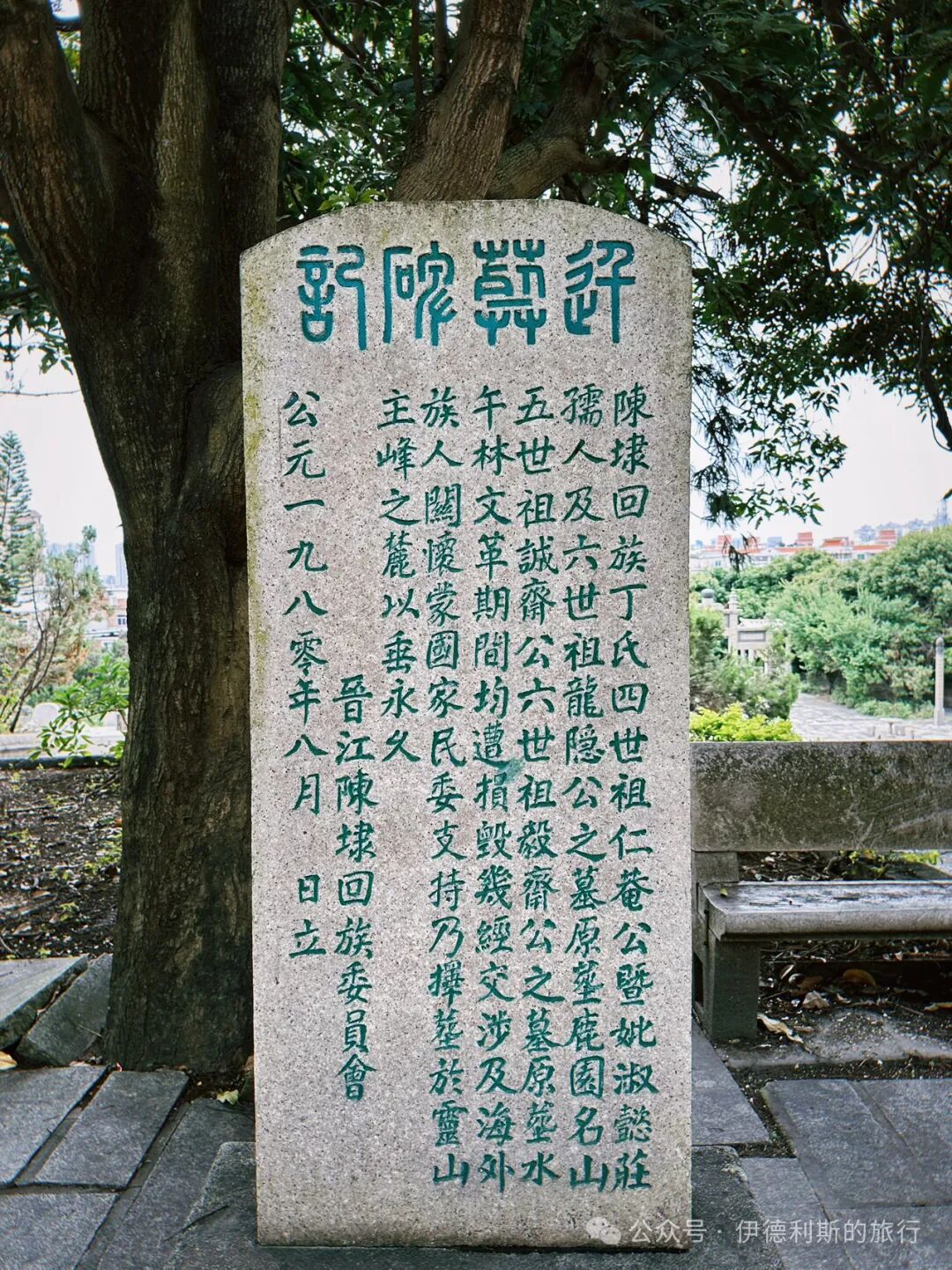
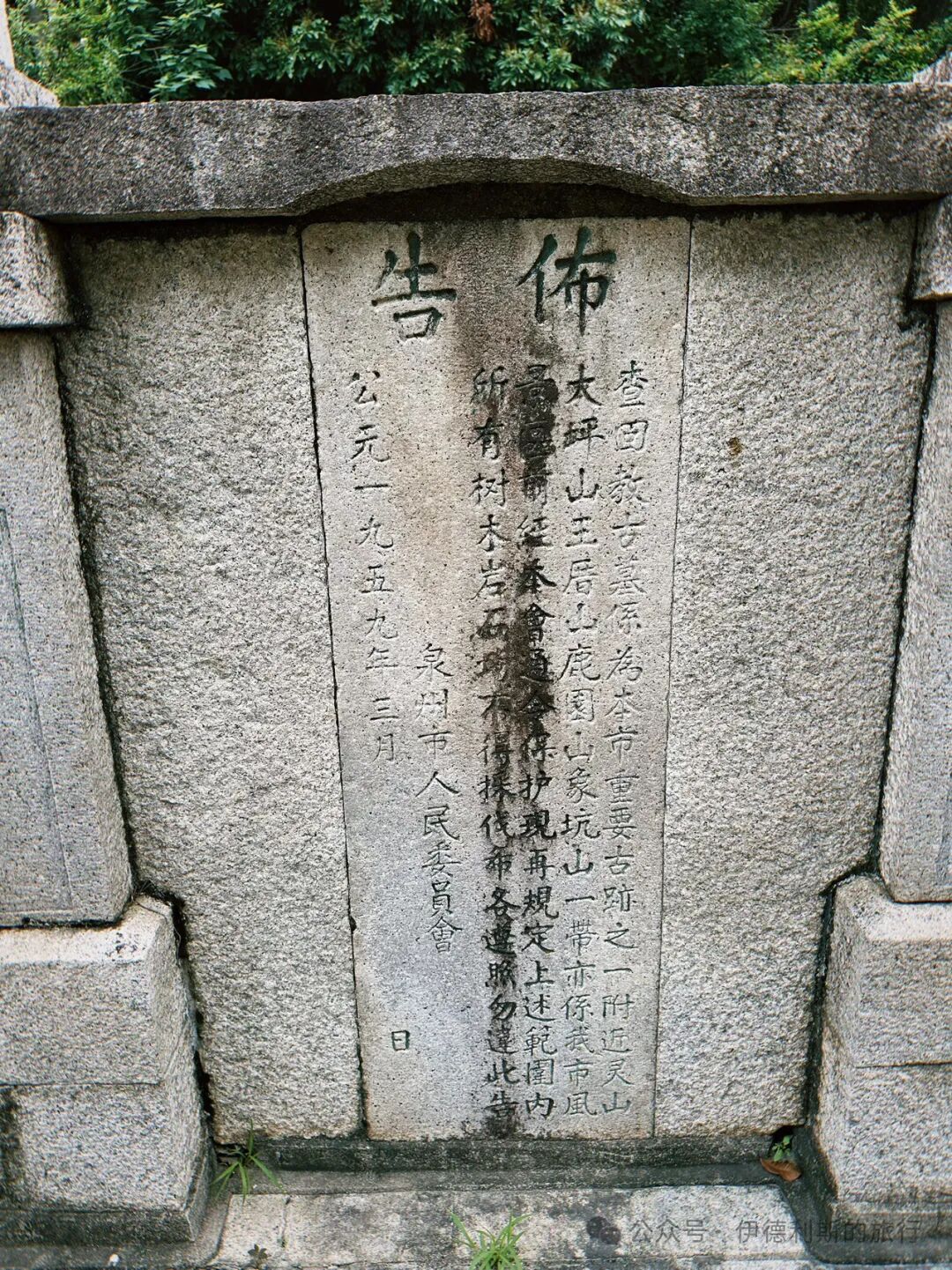
Tombs of the fifth-generation Ding Guanbao, sixth-generation Ding Kuan, and sixth-generation Ding Min.
Ding Guanbao (1369-1436), also known as Shifu and Chengzhai, was Ding Shan's second son and the founder of the second branch of the Chendai Ding family. He was originally buried at the foot of Shuiniulin, east of Quanzhou city.
Ding Kuan (1395-1446), also known as Tingyu and Longyin, was Ding Guanbao's second son. He was originally buried to the left of Ding Shan's tomb in Luyuan Mountain.
Ding Min (1407-1456), also known as Tingxue and Yizhai, was Ding Guanbao's fourth son. He was originally buried at the foot of Shuiniulin, east of Quanzhou city. Ding Min was the first local scholar among the Chendai Ding family to promote literary education.
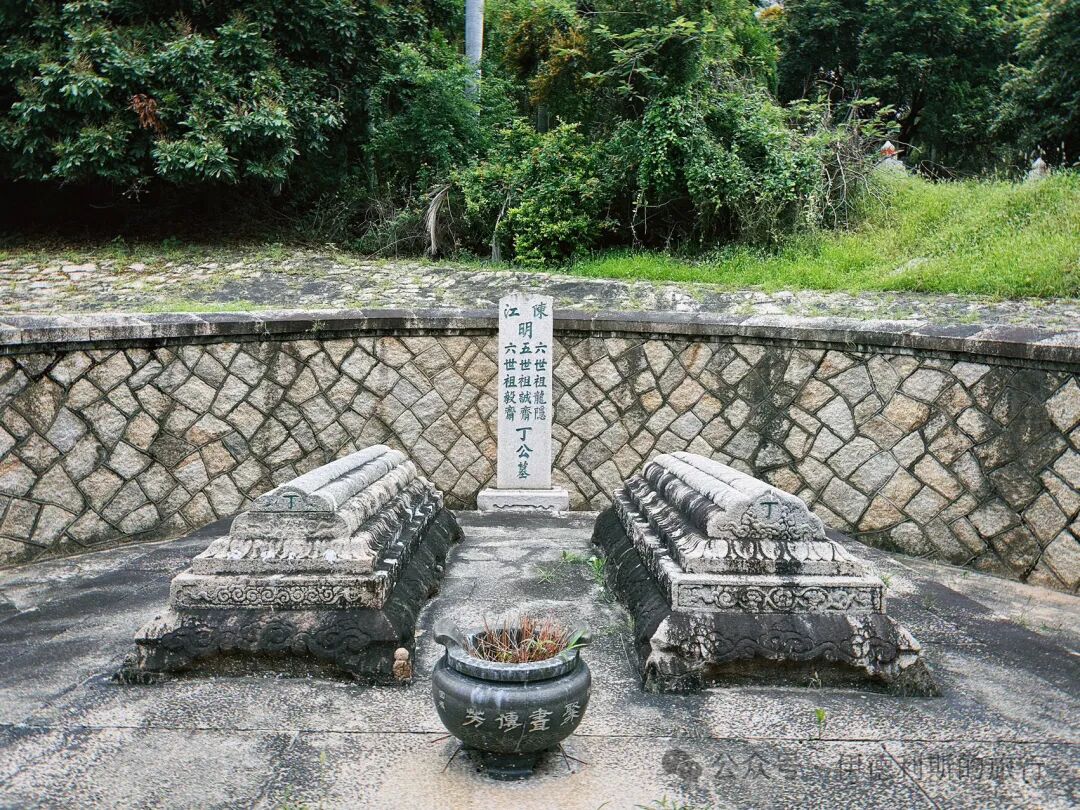
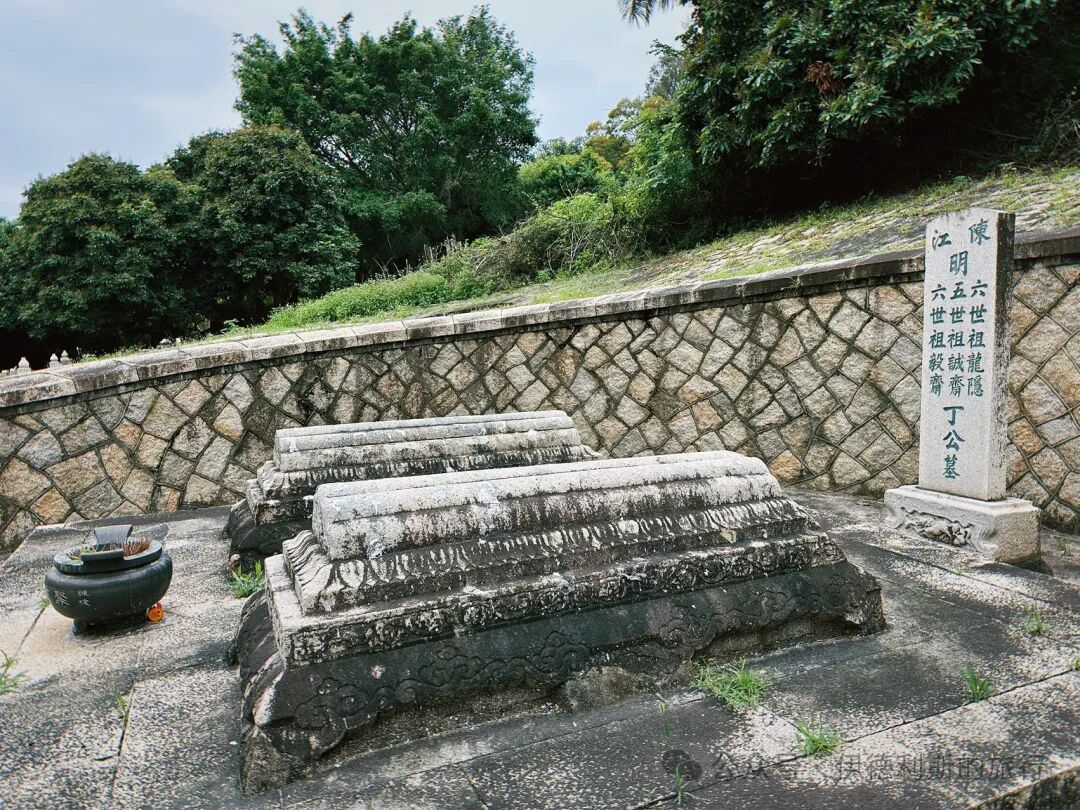
Tomb of the fifth-generation Ding Mabao of the Chendai Ding family, with his wife Pu and his successor wife Wang.
Ding Mabao (1366-1431), also known as Shilong and Yi'an, was the eldest son of the fourth-generation founder Ding Shan. He was the founder of the first branch of the Chendai Ding family and was originally buried with his two wives at the Chenggui Baoxue site on Daping Mountain, east of Quanzhou city.
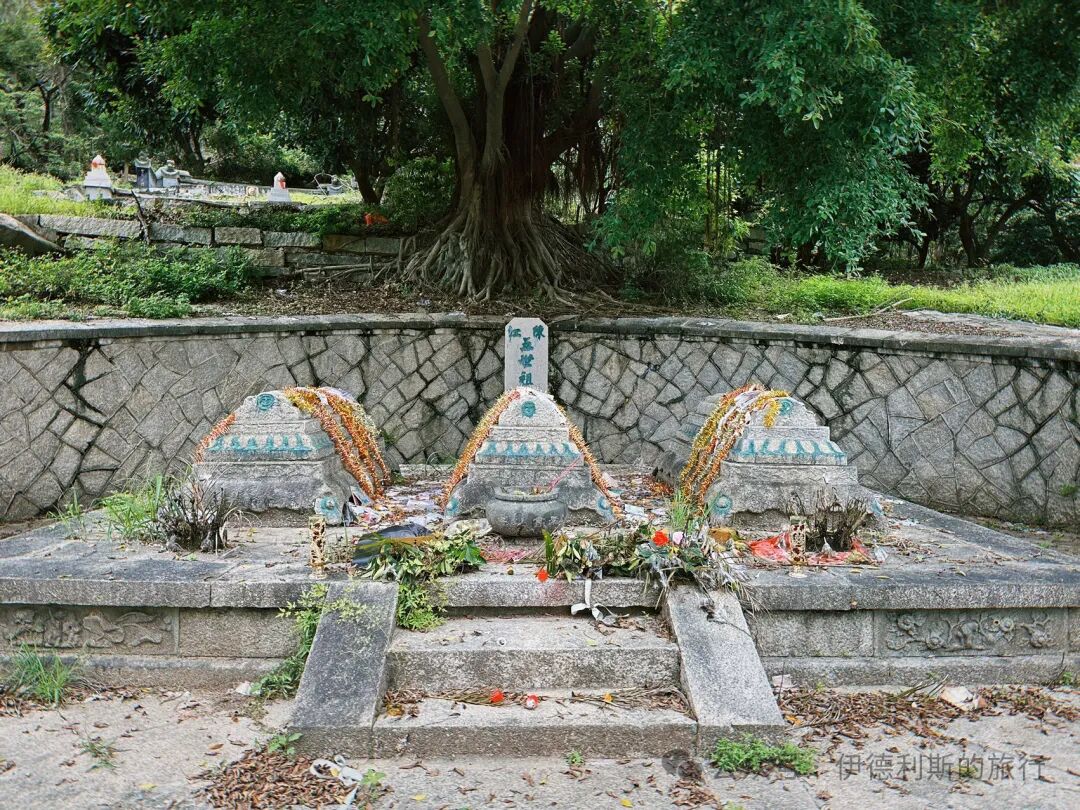
Tomb of the fifth-generation Ding Fubao and his wife Shi Dingniang.
Ding Fubao (1375-1432), also known as Shizhang and Yingjie, was Ding Shan's third son and the founder of the third branch of the Chendai Ding family. He is buried at Lingshan, east of Quanzhou city. The tomb features two pedestal-style stone graves on a traditional Islamic Sumeru-style altar platform, with swastikas and two lions playing with a ball carved into the waist of the platform.
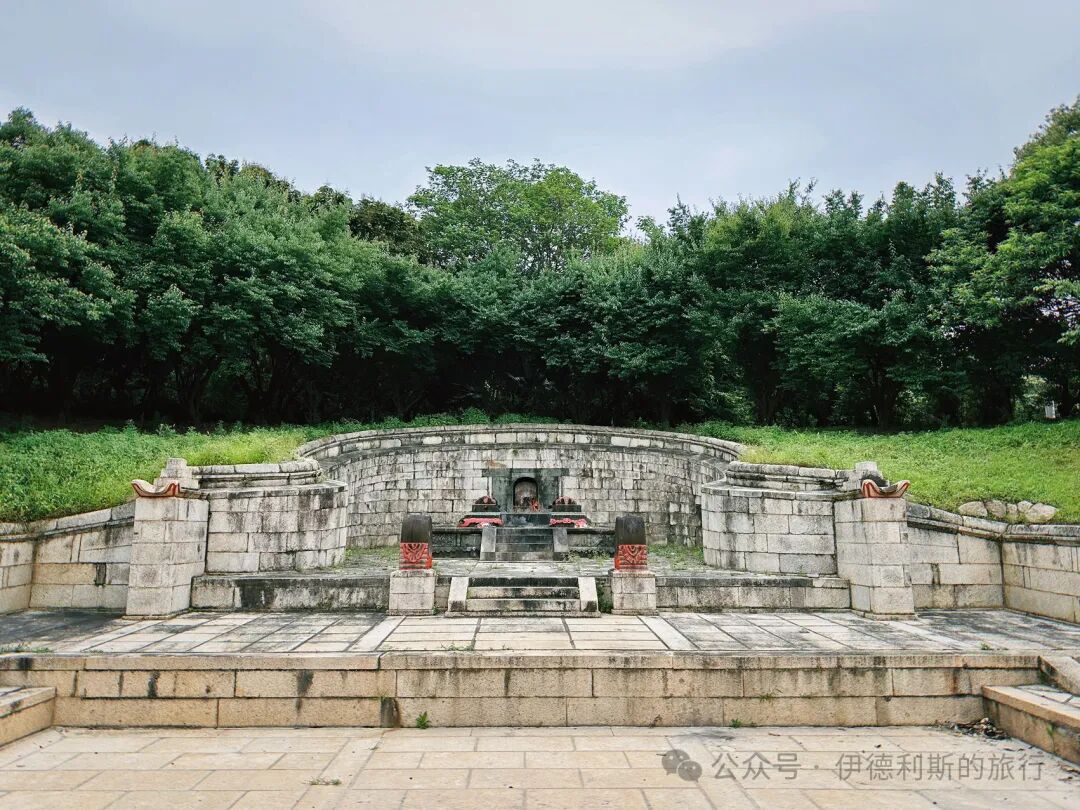
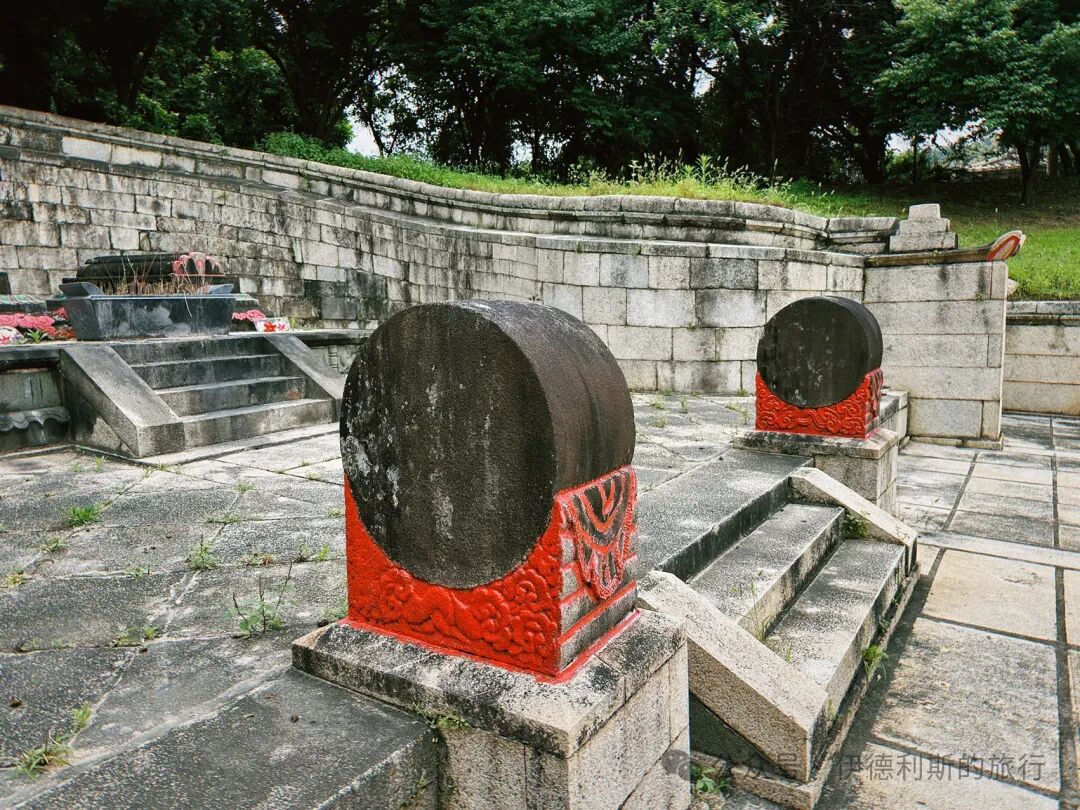
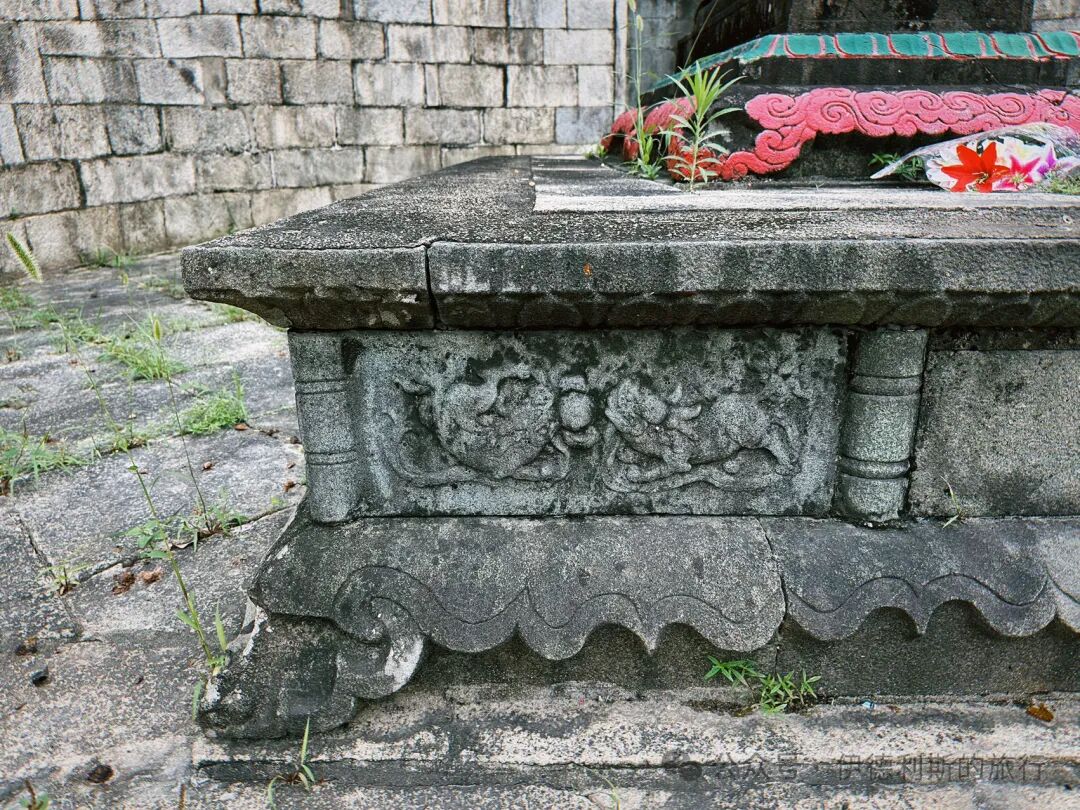
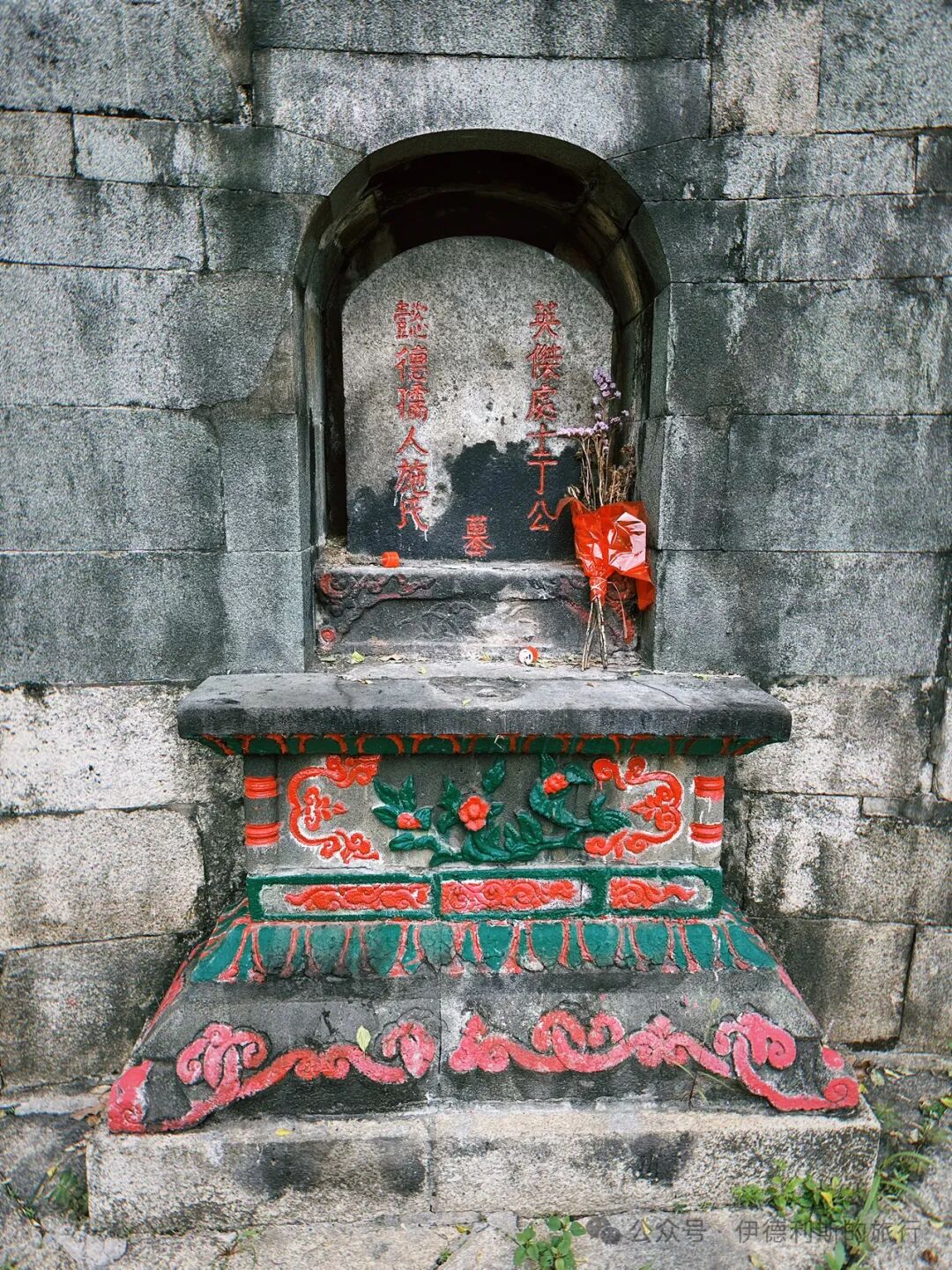
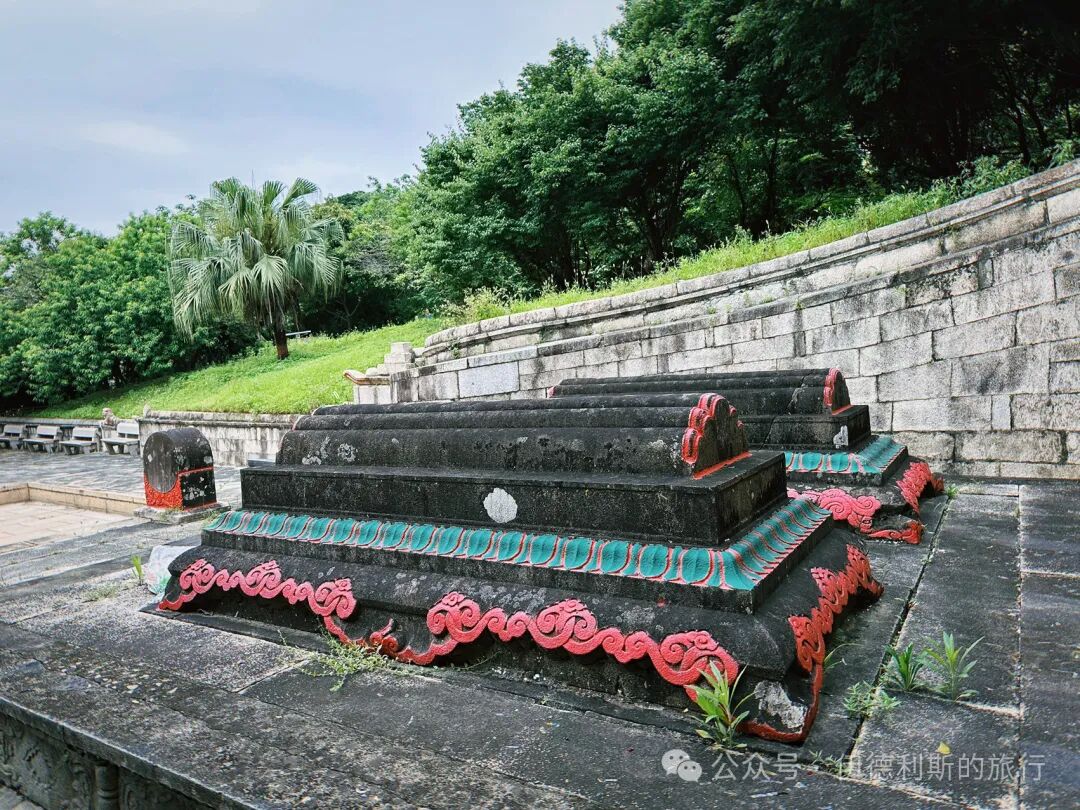
Tombs of the sixth-generation Ding Xin and his wife Cai, and the seventh-generation Ding Lun and his wife Zhuang.
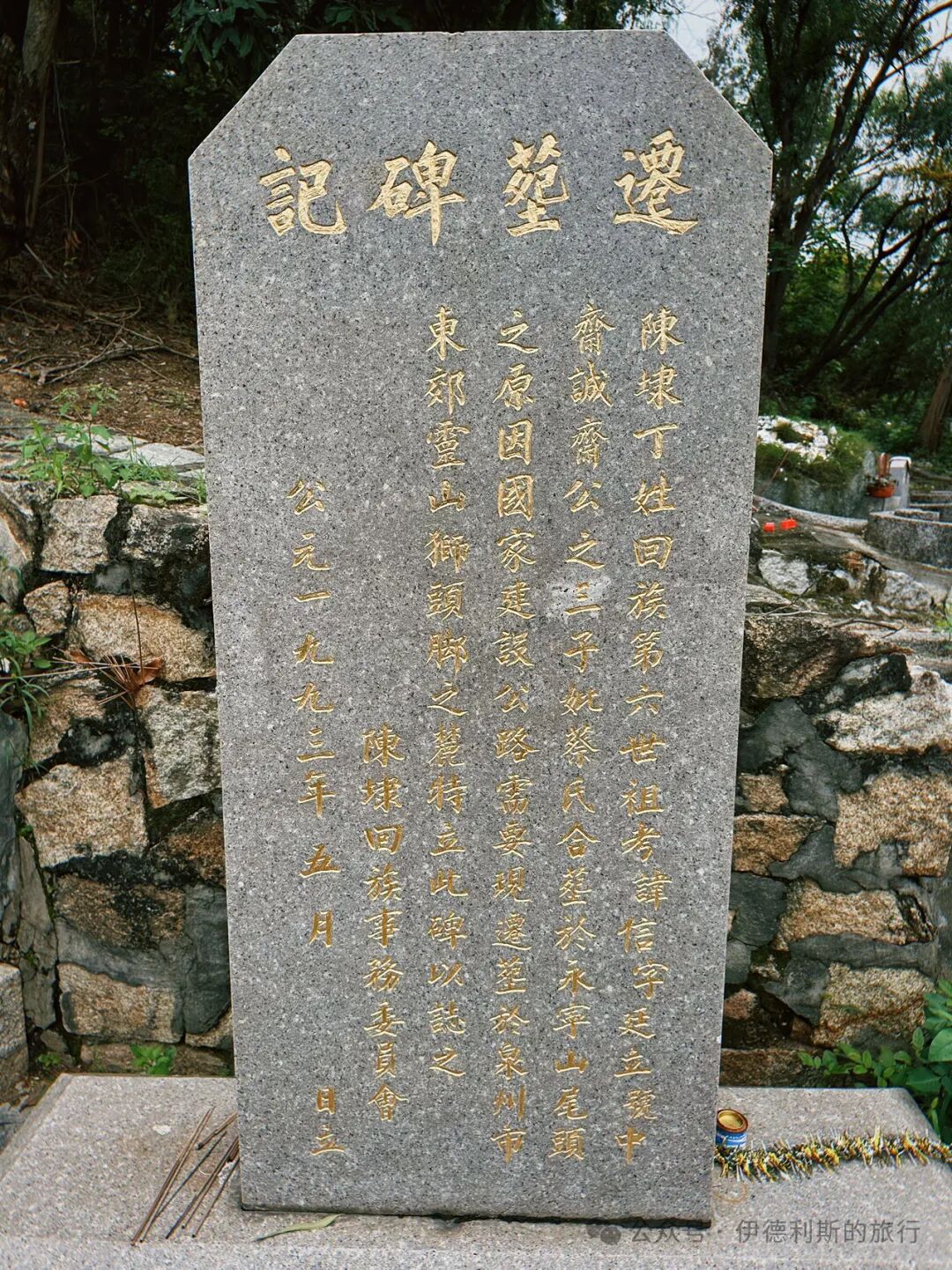
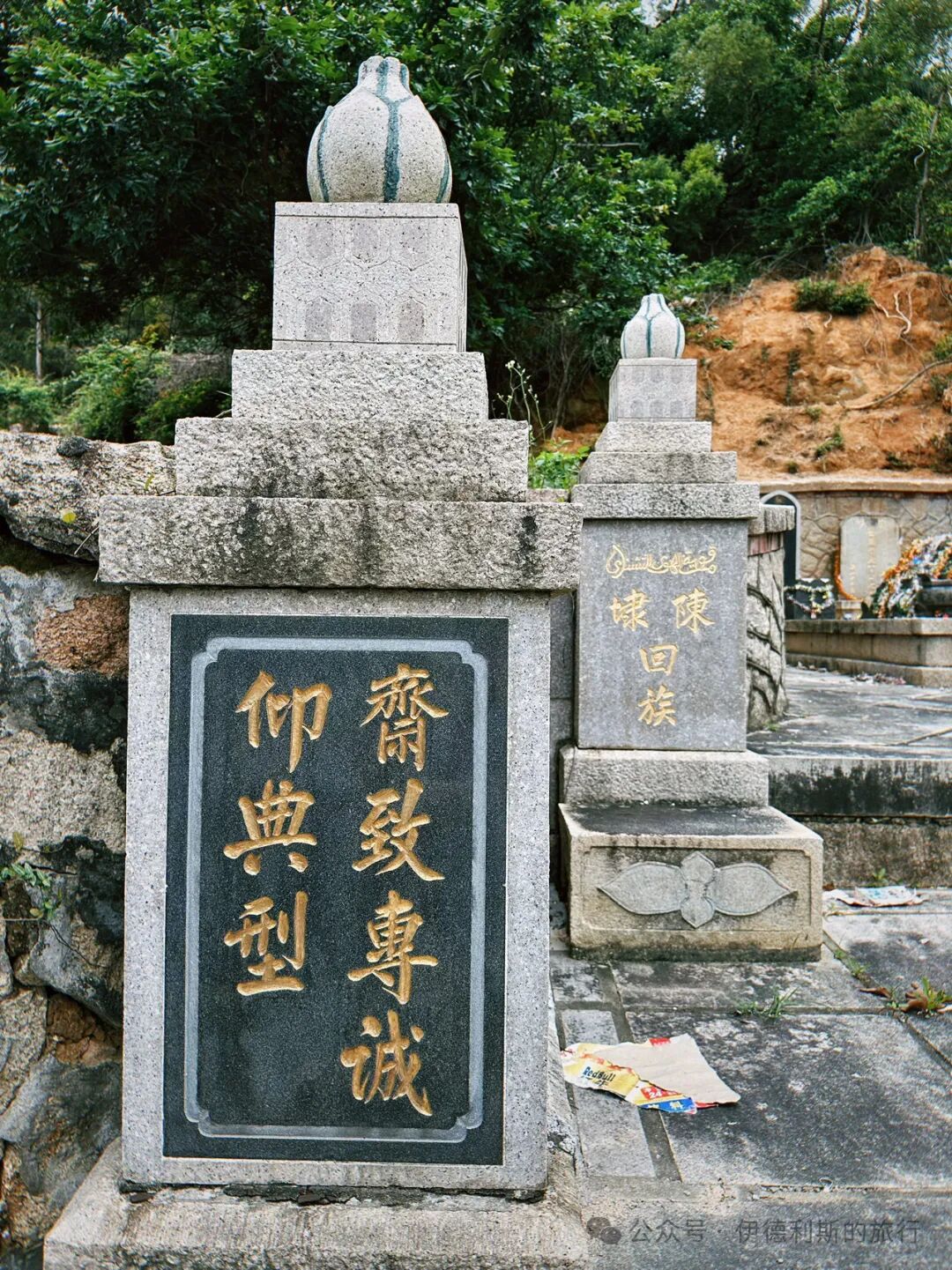
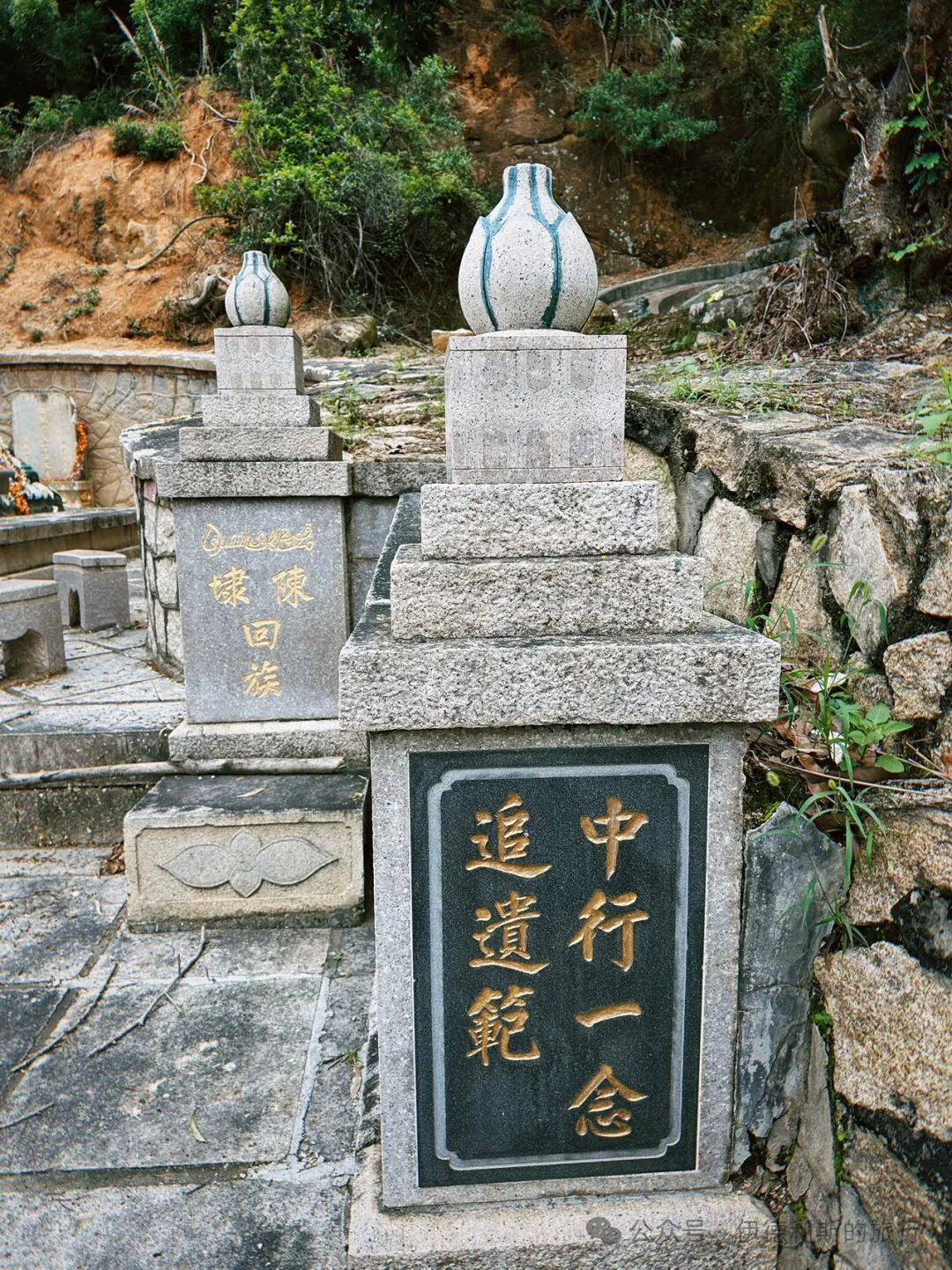
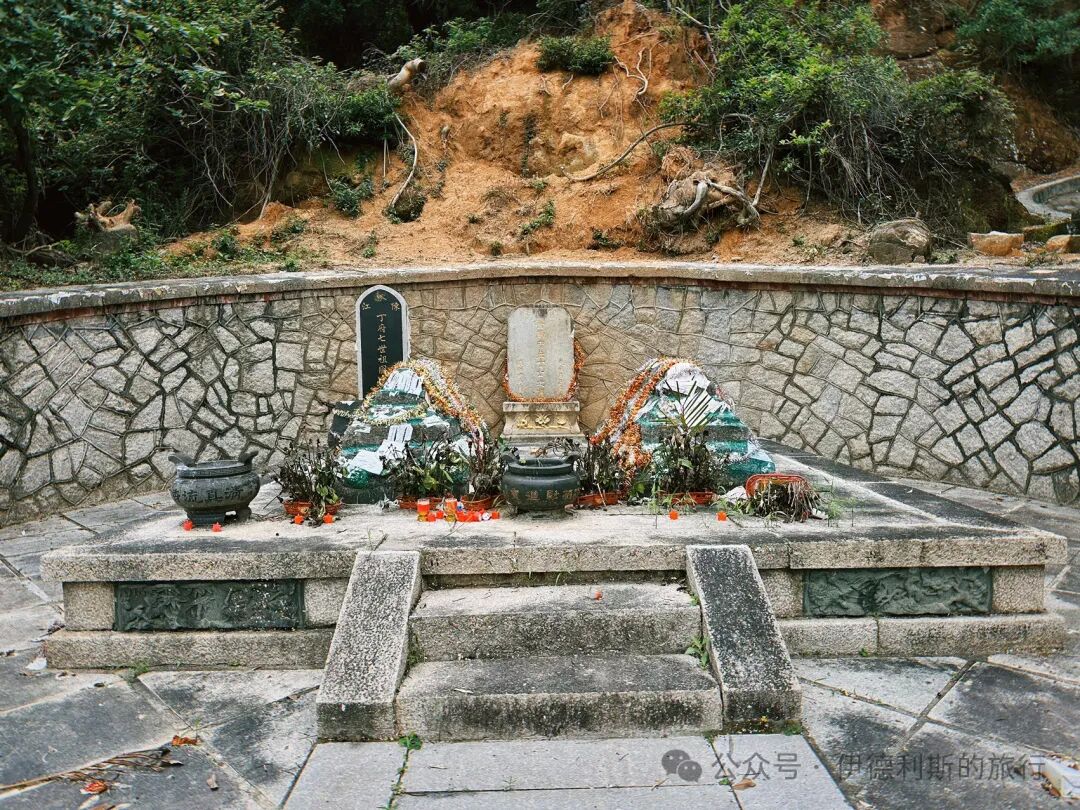
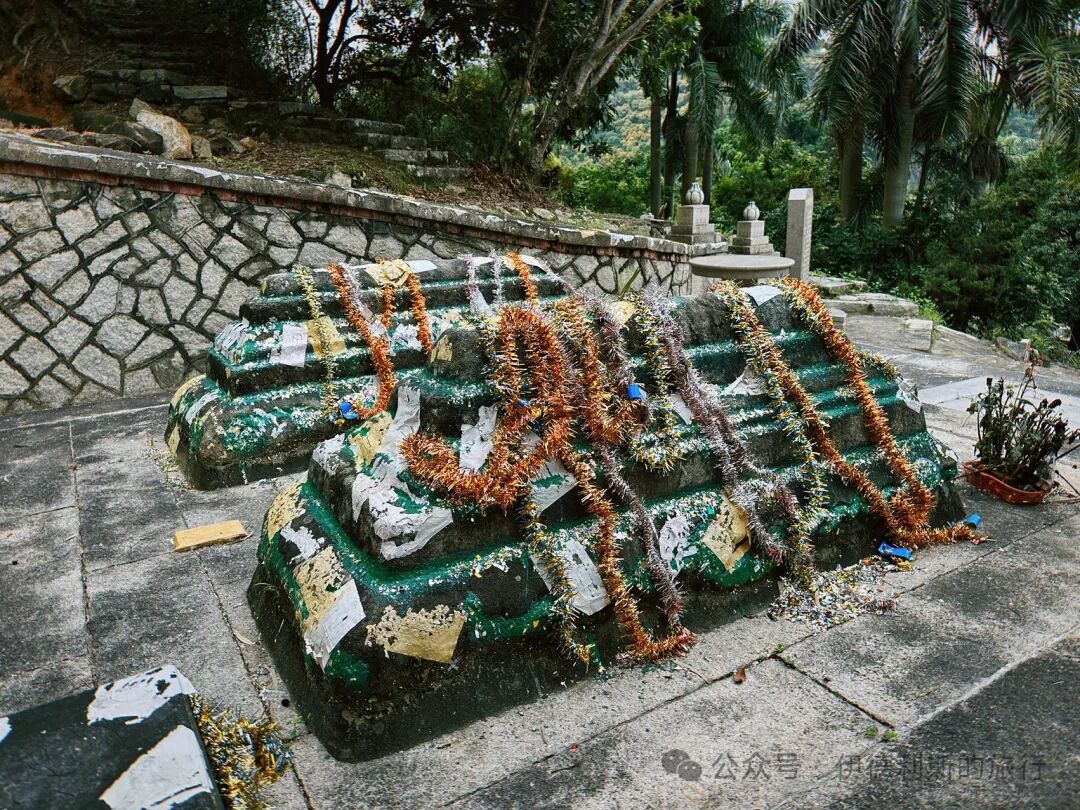
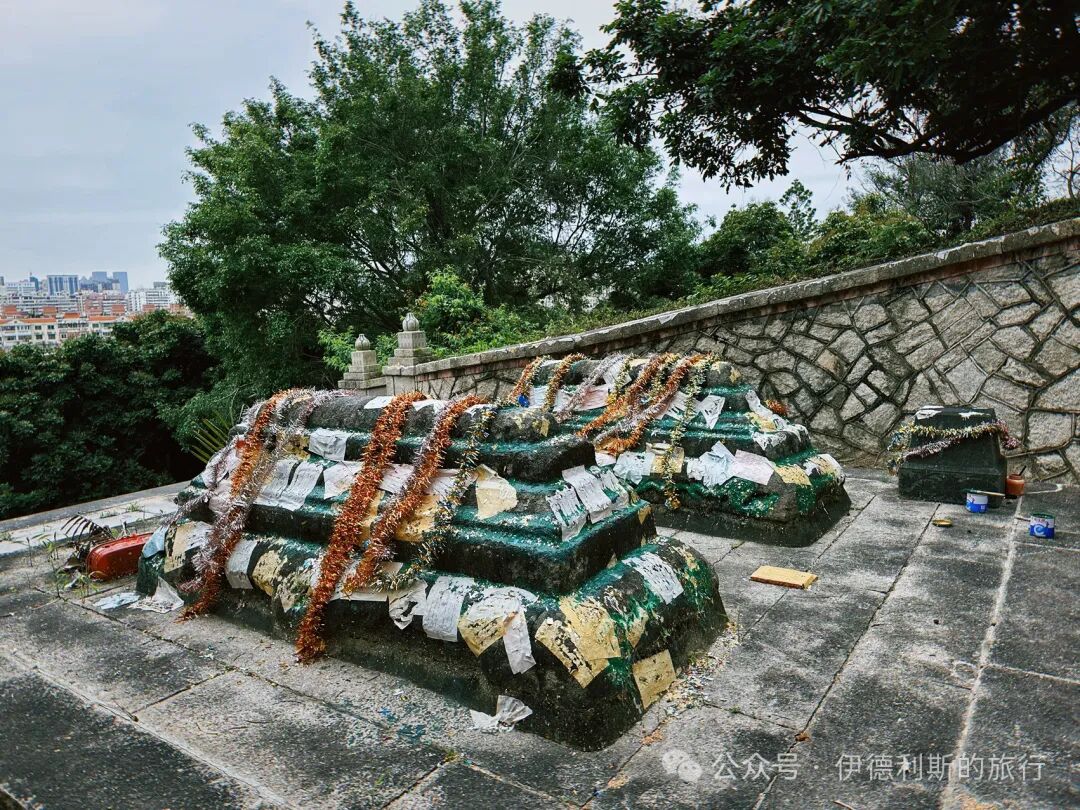
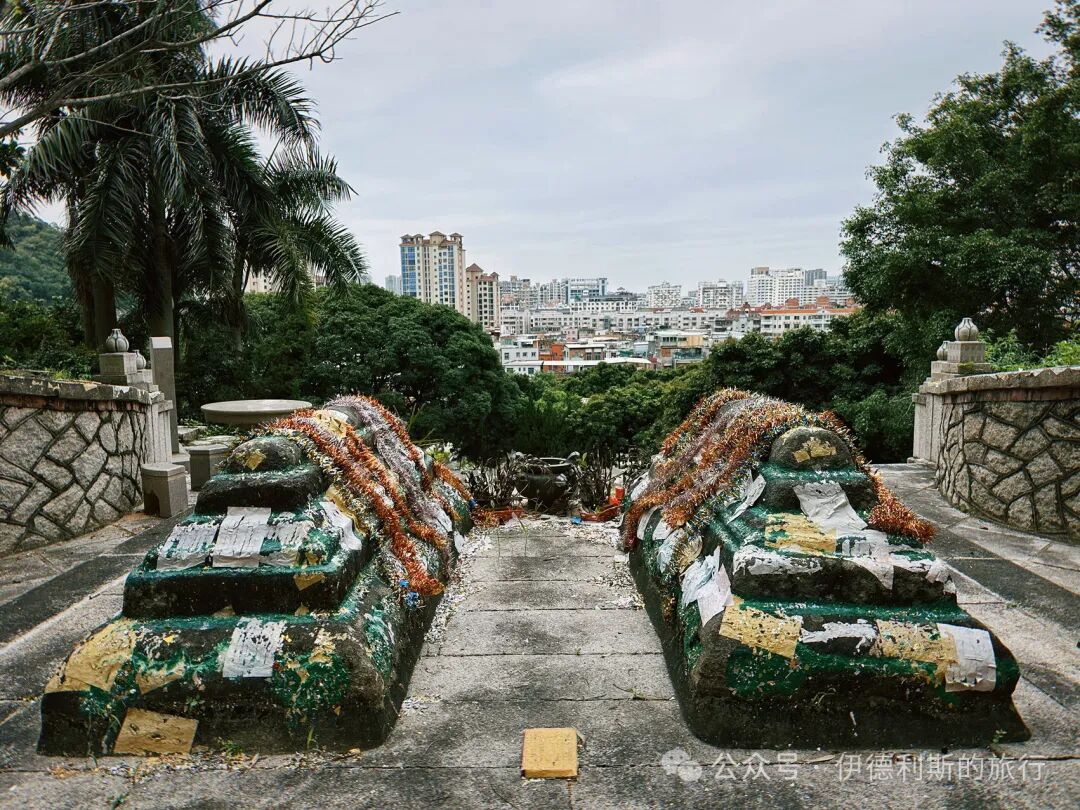
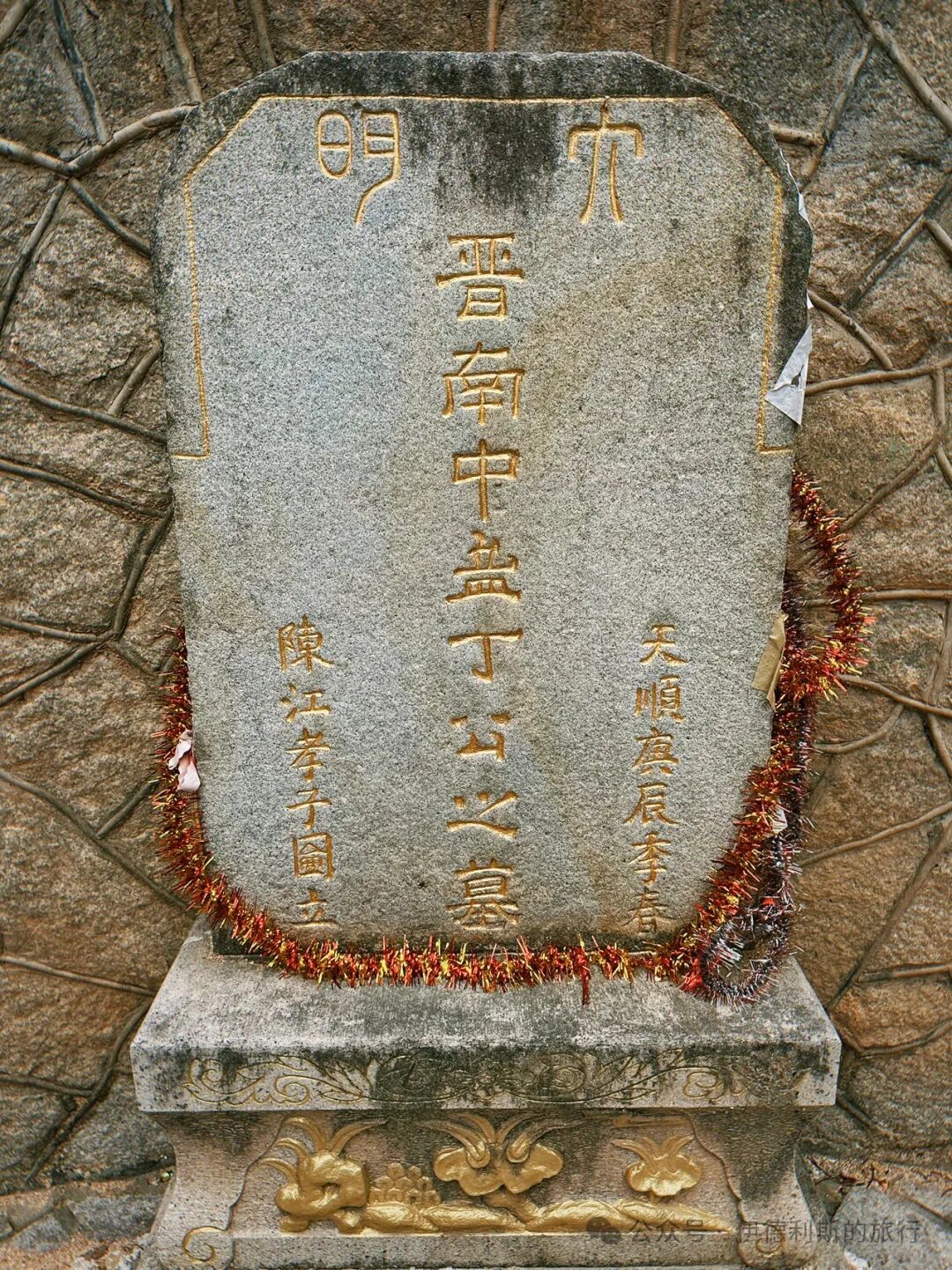
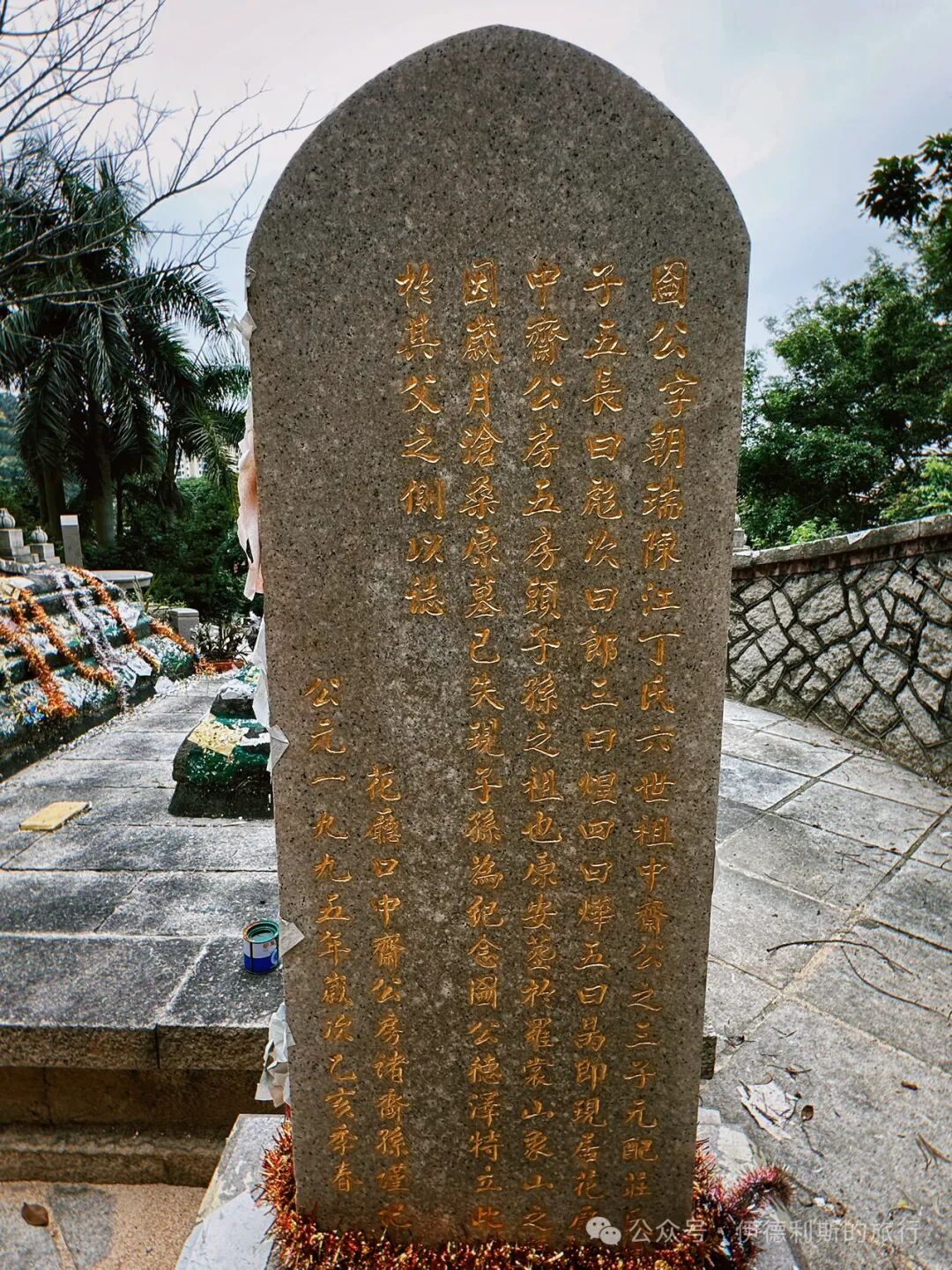
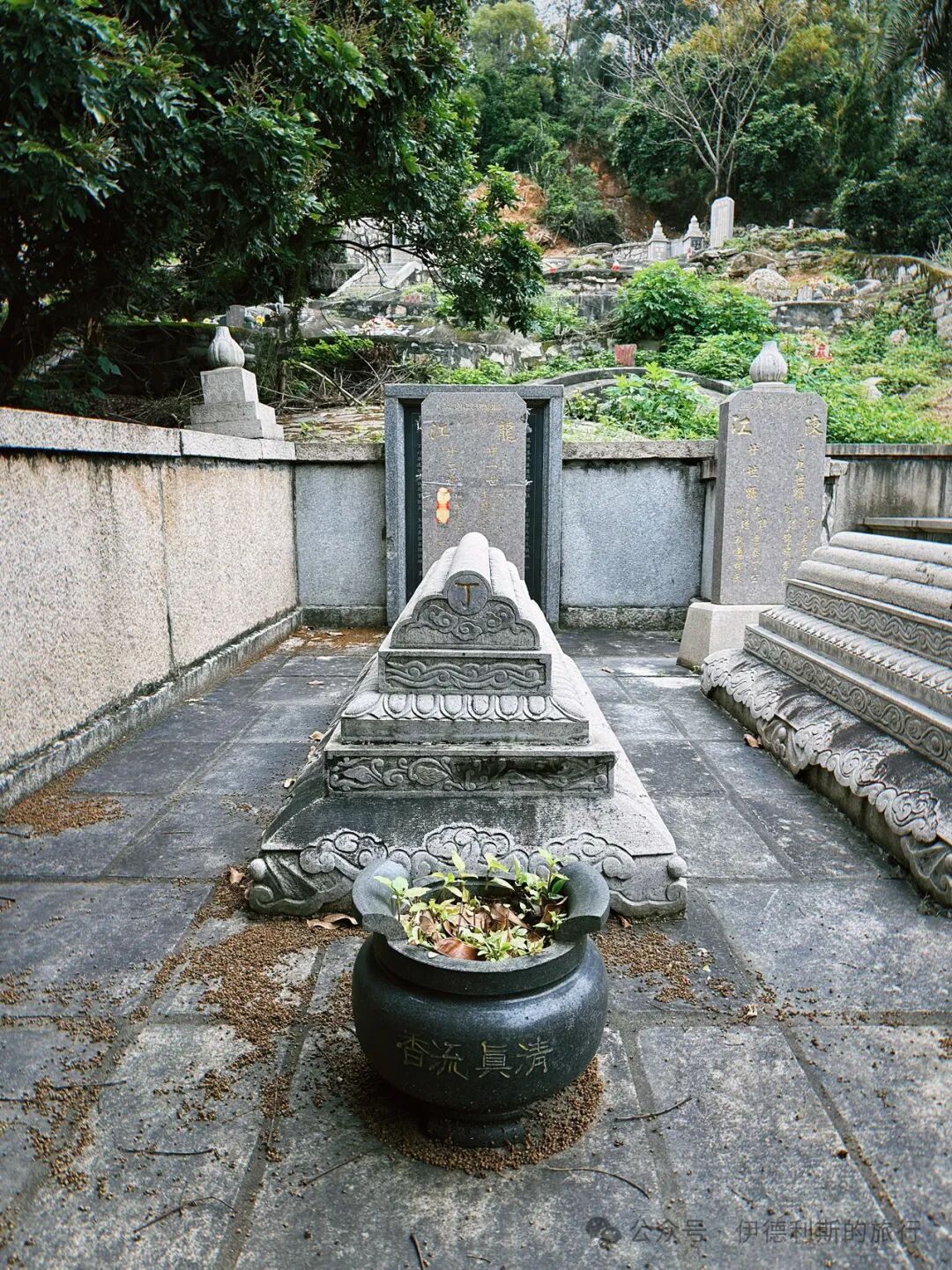
Tomb of the twenty-second generation Ding Jinke.
Ding Jinke (1923-1997), whose Islamic name was Yunus, studied at the Guangxi Chengda Normal School and the Hong Kong Dade College. In the early 1920s, the famous Hui Muslim Tang Kesan served as the director of the Xiamen Customs. He recommended his fellow townsman Zhang Guangyu to lead Islamic affairs in the Quanzhou area. After Imam Zhang Guangyu arrived in Quanzhou, he worked diligently on religious affairs, and the Islamic faith began to revive in Chendai. In 1939, the Chenjiang Branch of the China Islamic National Salvation Association was established in Chendai. Some members of the Ding family in Chendai went to the Qingjing Mosque in Quanzhou for their weekly Friday prayer (jumu'ah). Later, they converted the Wenchang Shrine in Sijing Village into a mosque and invited Imam Tie from Quanzhou to lead the religious affairs. Between 1937 and 1944, the Chengda Normal School moved south to Guilin. Its founders, Tang Kesan and Imam Ma Songting, accepted 17 young men from the Ding family in Chendai to study there, including Ding Jinke.
Ding Jinke joined the revolution during the War of Liberation. Later, he worked for the Financial and Economic Committee of the State Council and at various colleges and universities in Beijing and Xinjiang. He retired and returned to his hometown in 1983. In 1983, when the Fujian Islamic Association was founded, Ding Jinke, along with fellow Chengda Normal School graduates Ding Jinshun, Ding Jinhe, Ding Jinhong, and over twenty other dedicated community members, formed the Chendai Islamic Association Group to begin reviving religious activities. They borrowed the second-floor meeting room of the Chendai Hui Ethnic Affairs Committee and the back hall of the Ding Family Ancestral Hall to hold their Friday prayer (jumu'ah).
After years of hard work, Ding Jinke and other friends (dosti) raised funds to build the Chendai Mosque. The mosque was completed in 1991 and officially opened in 1993, with Ding Jinke serving as the first director of the mosque management committee. Soon after, the Jinjiang Islamic Association was established, and Ding Jinke served as its executive deputy director. After the 1990s, Ding Jinke helped dozens of young people from the Ding family in Chendai go to study religious knowledge both at home and abroad, with some attending Arabic language schools in Inner Mongolia.
Summary: This article visits the Lingshan Holy Tomb in Quanzhou, one of the city's key Islamic heritage sites linked to early Muslim history on China's coast. It keeps the original tomb details, inscriptions, photographs, names, and historical context for readers studying Quanzhou Muslim heritage.
Lingshan Holy Tomb is in the east of Quanzhou city, also known as the Tomb of the Three and Four Sages. The story of the Three and Four Sages mainly comes from the Min Shu: Fang Yu Zhi written by He Qiaoyuan in 1629 (the second year of the Chongzhen reign of the Ming Dynasty). The Min Shu quotes a legend that four disciples of the Prophet Muhammad came to the Tang Dynasty to spread the faith during the Wude period (618-626). One sage went to Guangzhou, two went to Yangzhou, and the third and fourth went to Quanzhou. After the third and fourth sages passed away, they were buried in Quanzhou, where their graves glowed at night, making them holy sites.
In reality, Lingshan was a burial ground for monks from Chengtian Mosque from the Five Dynasties period to the Southern Song Dynasty. It was only abandoned after Chengtian Mosque failed in its resistance against the Yuan Dynasty at the end of the Southern Song. According to the Record of Burying Foreign Merchants at Dongban in Quanzhou by Lin Zhiqi, a Southern Song official, a merchant from the ancient Iranian port of Siraf followed the suggestion of Pu Xiasin to donate money and buy land to build the first tomb for foreign merchants at Dongban in Quanzhou. The cemetery was started in 1162 (the 32nd year of the Shaoxing reign of the Southern Song) and finished in 1163 (the first year of the Longxing reign).
The holy tomb has a stone tablet from the Yuan Dynasty dated 1322, written in Arabic, which says: These two deceased came to this land during the time of the Faghur. It is said they were men of great virtue, so after death, they moved from the earthly world to the eternal one. According to research by Chen Dasheng in A Preliminary Study of the Date of Lingshan Holy Tomb in Quanzhou, Faghur is an Arabic transliteration of the Persian word Bagh pur, which specifically referred to the Emperor of China in Persian literature from the Five Dynasties to the Song and Yuan periods.
According to the Quanzhou Prefecture Gazetteer, when Zhou Daoguang, the prefect of Quanzhou, visited Lingshan Holy Tomb in 1562 (the 41st year of the Jiajing reign of the Ming Dynasty), he mentioned there were three mounds, which were the holy tombs. The Min Shu Chao, written during the Chongzhen reign, records that the owner of the third tomb was Gao Di Shi Xu Ba Ba. In the 1930s, the wooden frame of the pavilion at Lingshan Holy Tomb had collapsed, leaving only four stone shuttle-shaped pillars. At that time, the three Sumeru-style stone tombs arranged in a triangle were still well-preserved, with stone covers on top.
In 1958, the Quanzhou Cultural Bureau and the municipal committee moved the tombstone of Gao Di Shi Xu Ba Ba to the northern hillside to fit the legend in the Min Shu. At the same time, they moved the tombstone of the imam Ma Ahun Yongchun (Ma Yongchun) from the south of the holy tomb to the northern hillside. In March 1959, a new stone pavilion was built with three levels of terraces and stairs on both sides. All other tombstones in front of the graves were removed to create a lawn, forming the layout seen today.
The holy tomb currently has two granite graves divided into three layers, with lotus petal carvings on the bottom layer. In the past, during Eid al-Fitr and Eid al-Adha, Hui Muslims in Quanzhou would attend prayers at Qingjing Mosque. First, an imam would lead the heads of households to visit the homes of other Hui Muslims near the mosque for a greeting, and then all the Hui Muslims would go together to visit the graves at Lingshan. When visiting the graves, they would first recite the Quran together at the holy tomb before going to their own family graves.
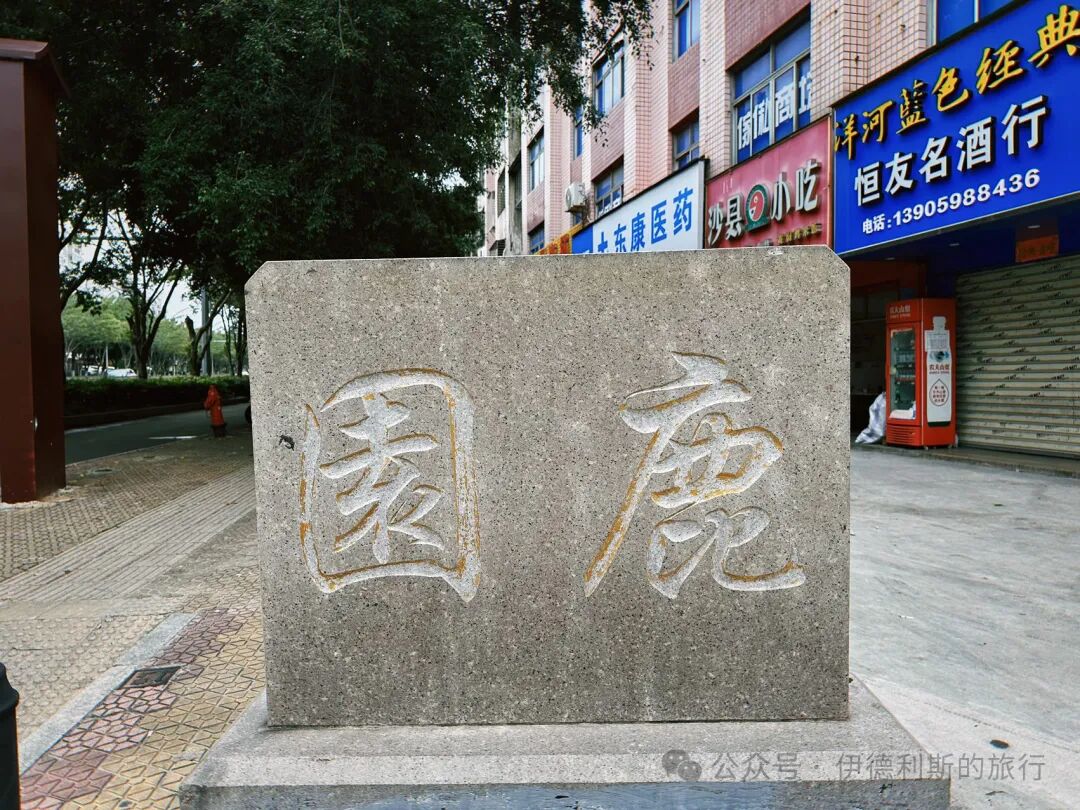
The archway and gate in front of Lingshan Holy Tomb, the banyan trees on Lingshan Avenue, and the national and provincial heritage site markers, introduction boards, and notices at the holy tomb.
The historical stone tablets at Lingshan Holy Tomb.
The Incense Offering Tablet: This records the visit of Zheng He to the graves before his fifth voyage to the Western Oceans in 1417 (the 15th year of the Yongle reign), erected by the commander Pu Heri. The name Hulumesi carved on the tablet refers to the ancient Persian port of Hormuz.
The Chen Yougong Repair Tablet: Erected in 1714 (the 53rd year of the Kangxi reign), it records the repair of Lingshan Holy Tomb by Chen Yougong, a regional commander in Fujian, and Chen Mei, a regional military official. The inscription below lists seven surnames: Chen, Ma, Guo, Huang, Li, Yang, Pu, and Ding.
The Xia Bidi Repair Tablet: Records the repair of the holy tomb by the director Xia Bidi in 1751 (the 16th year of the Qianlong reign).
The Guo Bacui Repair Tablet: Records the repair of the holy tomb by the scholar Guo Bacui in 1783 (the 48th year of the Qianlong reign). Guo Bacui was a Hui Muslim from the Guo family in Baiqi. He passed the military examination in 1779 (the 40th year of the Qianlong reign), was awarded the rank of military officer, and served in the Anping Left Battalion in Taiwan. When he erected the tablet in 1783, he was stationed in Xiamen and ordered to patrol the coastal areas of Taiwan and Penghu. In 1787 (the 52nd year of the Qianlong reign), the Lin Shuangwen uprising in Taiwan besieged Zhuluo County. Guo Bacui was ordered to rush to the rescue and died on the battlefield.
The Ma Jianji renovation stele records that in 1818 (the 23rd year of the Jiaqing reign), Ma Jianji, the acting commander-in-chief of the Fujian provincial land forces and general of Zhangzhou from Western Sichuan, rebuilt the tomb pavilion. The stele calls the Holy Tomb the 'Baba Tomb,' with 'Baba' being the Persian term of respect for an elder. Ma Jianji was from Nanchong, Sichuan. Besides renovating the Lingshan Holy Tomb, he also renovated the Qingjing Mosque in Quanzhou.
The Jiang Changgui renovation stele records that in 1871 (the 10th year of the Tongzhi reign), Fujian commander Jiang Changgui renovated the Holy Tomb. Jiang Changgui was a Hui Muslim from Yanting, Sichuan. His family practiced martial arts for generations. He was brave in battle, led troops against the Taiping Heavenly Kingdom for many years, earned many military merits, and was titled Zhiyong Baturu and General Jianwei. Besides renovating the Lingshan Holy Tomb, he also renovated the Qingjing Mosque and invited the army imam Ma Yongchun to lead religious affairs.
Beside the Holy Tomb is a 'Wind-Moving Stone' (fengdongshi). It features the inscription 'Jade Ball' (biyu qiu) by Quanzhou prefect Zhou Daoguang in 1563 (the 42nd year of the Jiajing reign) and 'Natural Ingenuity' (tianran jimiyao) by Ma Jianji in 1818 (the 23rd year of the Jiaqing reign).
Zhou Daoguang was the first person to record the term 'Lingshan Holy Tomb'. The Quanzhou Prefecture Gazetteer, Mountains and Rivers, Lingshan section records: 'Asking the locals, they say: This is the Lingshan Holy Tomb... Since the religion from foreign lands entered the Middle Kingdom, there have been Hui Muslims.' Its founder's surname and generation are unknown, but he loved this hill and was buried here...' He also described the tomb's layout at the time: 'Entering the gate, the path is very narrow.' Climbing to the hall, the atmosphere feels different. Reaching the top, there are three mounds, which are the Holy Tombs. In front of the tomb, there is a small pavilion on the right for namaz. On the left, there is a shed where one can rest.
In 1958, when the Fuzhou-Xiamen highway outside the East Gate of Quanzhou was widened, several Song and Yuan dynasty Muslim pedestal-style tomb stones by the road were moved next to the Lingshan Holy Tomb. That same year, farmers in Jintoupu village outside Tonghuai Gate in Quanzhou were collecting fertilizer and dredging pond sludge. They unearthed over ten pedestal-style tomb stones, which were temporarily moved to the Qingjing Mosque and later moved to the Lingshan Holy Tomb for preservation. That same year, residents on Tonghuai Street in Quanzhou unearthed three side-by-side pedestal-style tomb stones while building a house, which were also moved to the Lingshan Holy Tomb for preservation.
The image below is likely the tomb stone of Gaodi Shixu Baba, which was originally with the 'Three Sages and Four Sages' tomb stones and moved here during the 1958 renovation.
Details of the Arabic stone carving. The content of the carving is entirely scripture, with no identity information about the tomb owner. According to Quanzhou's Song and Yuan dynasty traditions, the tomb stone recording the owner's identity would have been a separate slab.
Next to the Lingshan Holy Tomb is the cemetery for local Quanzhou Hui Muslims. The Ge, Ma, and Huang families are descendants of the generations of imams from the Qingjing Mosque. They mostly worked in the leather industry in the past and lived inside the Qingjing Mosque until 1983. In the past, Quanzhou Hui Muslims would come here to visit the graves every Eid al-Fitr and Eid al-Adha. When visiting the graves, first light some incense (anxixiang), then trace the carvings on the tombstone with red paint, and finally invite an imam to recite scriptures.
In the tomb complex, you can see the ancestral graves of the Huang family from Jiangxia and the Huang family from Yanshan. The Jiangxia Huang family ancestral grave is inscribed with 'Mosque Huang Residence,' while the Yanshan Huang family grave bears inscriptions like 'First Year of the Xuantong Reign' and 'Imperially Appointed Fifth-Rank Official... Land Route Commander...' which are hard to read completely due to the red paint.
According to their family records, the Guo family of Hui Muslims originally lived in Guo Family Village in Fuyang, Hangzhou, before arriving in Quanzhou during the Yuan Dynasty. During the Hongwu reign of the Ming Dynasty, Guo Zhongyuan moved from Quanzhou to Baiqipu on the opposite side of Houzhu Port, which eventually became the present-day Baiqi Hui Ethnic Township. The Baiqi Guo family left the faith in 1607 (the 35th year of the Wanli reign of the Ming Dynasty). In 1709 (the 48th year of the Kangxi reign), Chen Yougong, a regional commander and left-wing general for the Fujian Ting, Yan, and Shao areas, came to Quanzhou to revive the faith and established scripture hall education at the Qingjing Mosque. At that time, Guo Honglong, a member of the eighth generation of the Guo family's fourth branch, moved from He Cuo in Baiqipu to live at the Qingjing Mosque and returned to the faith, citing the need to strengthen the main family line. After Guo Honglong returned to the faith, his descendants lived at the Qingjing Mosque. His descendant, Guo Shifu, helped renovate the mosque in 1794 (the 59th year of the Qianlong reign) alongside Bai Yunhan, a deputy general of the Zhangzhou Left Battalion.
A large section of the Lingshan Sacred Tomb scenic area is dedicated to the Ding family cemetery from Chendai.
According to family records, the first-generation ancestor of the Chendai Ding family, Ding Jin (1251-1298), was originally from Suzhou and settled in Quanzhou for business. The Chendai Ding family maintained their faith for ten generations, spanning over two hundred years from the 13th to the 16th century. Ding Yanxia, the tenth-generation descendant born around 1517, wrote detailed accounts of the religious customs he experienced as a child in his work, 'On Ancestral Faith' (Zujiao Shuo). However, calculations suggest that by the eighth to ninth generation, the Chendai Ding family no longer prioritized scripture hall education. The remaining relics of the faith belonging to the Chendai Ding family are the several Ming Dynasty tomb stones located within the Lingshan Sacred Tomb.
Before the Ding family established their base in Chendai, the first, second, and third generations were all buried at Lingshan, east of Quanzhou city. After the fourth-generation ancestor, Ding Shan, established the family base in Chendai, he entrusted the management of the ancestral graves to others. Later, Xu Fu, the son of the second manager Xu Fen, repeatedly encroached on the ancestral graveyard, and the Ding family endured this in silence. Eighteen years later, in 1505, the eighth-generation descendant Ding Yi passed the imperial examinations to become a jinshi. Upon returning home, he filed a lawsuit and finally reclaimed the ancestral tomb land.
During the Chongzhen reign of the Ming Dynasty, the descendants of the Ding family combined the graves of the first, second, and third generations. In 1993, due to road construction, many of the Chendai Ding family's tomb stones were moved from outside the East Gate of Quanzhou and Luyuan to the Lingshan Sacred Tomb. The current combined tomb of the first, second, and third generations was also renovated during this period. The tomb stones and tombstones seen today are not the original ones.
After the Ming Dynasty, the Chendai Ding family claimed their ancestor was the Yuan Dynasty politician Sayyid Ajjal Shams al-Din, so the cemetery features inscriptions identifying them as descendants of a saint.
In the cemetery, you can also see the Basmala (tasimi) auspicious bird of the Chendai Ding family.
The tomb of the fourth-generation Chendai Ding family ancestor, Ding Shan, and his wife, Zhuang Xiniang.
Ding Shan (1343-1420), also known as Yanren and Ren'an, moved from Quanzhou to Chendai with his father at the end of the Yuan Dynasty. In the early Ming Dynasty, he settled in Chendai and established the Ding family clan. His wife, Zhuang Xiniang, also known as Runxiu, was the sixth-generation granddaughter of Zhuang Xia, who was named a founding baron and junior preceptor during the Southern Song Dynasty. The Zhuang family was very powerful at the end of the Southern Song Dynasty, but they gradually declined after the Yuan Dynasty. Many relatives left Quanzhou, and only Zhuang Xiniang's father remained in the Zhuang family mansion in the south of the city. The Ding and Zhuang families were neighbors at the time, so they married. Shortly after the wedding, Ding Shan and his father moved to Chendai. The Ding family's move to Chendai was likely related to Zhuang Xiniang, because the Zhuang clan lived nearby in Qingyang, a powerful group known as the Qingyang Zhuang family.
Ding Shan and his wife Zhuang Xiniang were originally buried in Luyuan, east of Quanzhou city. Luyuan means 'Paradise,' which is what the Quran refers to as the 'Garden of Heaven'. The tombstone is a traditional Islamic greenstone (huilvyan) tomb. Two five-story, pedestal-style tombstones sit on a Sumeru-style altar platform. The fourth layer of the tombstone is carved with scripture (2:255).
Tombs of the fifth-generation Ding Guanbao, sixth-generation Ding Kuan, and sixth-generation Ding Min.
Ding Guanbao (1369-1436), also known as Shifu and Chengzhai, was Ding Shan's second son and the founder of the second branch of the Chendai Ding family. He was originally buried at the foot of Shuiniulin, east of Quanzhou city.
Ding Kuan (1395-1446), also known as Tingyu and Longyin, was Ding Guanbao's second son. He was originally buried to the left of Ding Shan's tomb in Luyuan Mountain.
Ding Min (1407-1456), also known as Tingxue and Yizhai, was Ding Guanbao's fourth son. He was originally buried at the foot of Shuiniulin, east of Quanzhou city. Ding Min was the first local scholar among the Chendai Ding family to promote literary education.
Tomb of the fifth-generation Ding Mabao of the Chendai Ding family, with his wife Pu and his successor wife Wang.
Ding Mabao (1366-1431), also known as Shilong and Yi'an, was the eldest son of the fourth-generation founder Ding Shan. He was the founder of the first branch of the Chendai Ding family and was originally buried with his two wives at the Chenggui Baoxue site on Daping Mountain, east of Quanzhou city.
Tomb of the fifth-generation Ding Fubao and his wife Shi Dingniang.
Ding Fubao (1375-1432), also known as Shizhang and Yingjie, was Ding Shan's third son and the founder of the third branch of the Chendai Ding family. He is buried at Lingshan, east of Quanzhou city. The tomb features two pedestal-style stone graves on a traditional Islamic Sumeru-style altar platform, with swastikas and two lions playing with a ball carved into the waist of the platform.
Tombs of the sixth-generation Ding Xin and his wife Cai, and the seventh-generation Ding Lun and his wife Zhuang.
Tomb of the twenty-second generation Ding Jinke.
Ding Jinke (1923-1997), whose Islamic name was Yunus, studied at the Guangxi Chengda Normal School and the Hong Kong Dade College. In the early 1920s, the famous Hui Muslim Tang Kesan served as the director of the Xiamen Customs. He recommended his fellow townsman Zhang Guangyu to lead Islamic affairs in the Quanzhou area. After Imam Zhang Guangyu arrived in Quanzhou, he worked diligently on religious affairs, and the Islamic faith began to revive in Chendai. In 1939, the Chenjiang Branch of the China Islamic National Salvation Association was established in Chendai. Some members of the Ding family in Chendai went to the Qingjing Mosque in Quanzhou for their weekly Friday prayer (jumu'ah). Later, they converted the Wenchang Shrine in Sijing Village into a mosque and invited Imam Tie from Quanzhou to lead the religious affairs. Between 1937 and 1944, the Chengda Normal School moved south to Guilin. Its founders, Tang Kesan and Imam Ma Songting, accepted 17 young men from the Ding family in Chendai to study there, including Ding Jinke.
Ding Jinke joined the revolution during the War of Liberation. Later, he worked for the Financial and Economic Committee of the State Council and at various colleges and universities in Beijing and Xinjiang. He retired and returned to his hometown in 1983. In 1983, when the Fujian Islamic Association was founded, Ding Jinke, along with fellow Chengda Normal School graduates Ding Jinshun, Ding Jinhe, Ding Jinhong, and over twenty other dedicated community members, formed the Chendai Islamic Association Group to begin reviving religious activities. They borrowed the second-floor meeting room of the Chendai Hui Ethnic Affairs Committee and the back hall of the Ding Family Ancestral Hall to hold their Friday prayer (jumu'ah).
After years of hard work, Ding Jinke and other friends (dosti) raised funds to build the Chendai Mosque. The mosque was completed in 1991 and officially opened in 1993, with Ding Jinke serving as the first director of the mosque management committee. Soon after, the Jinjiang Islamic Association was established, and Ding Jinke served as its executive deputy director. After the 1990s, Ding Jinke helped dozens of young people from the Ding family in Chendai go to study religious knowledge both at home and abroad, with some attending Arabic language schools in Inner Mongolia.
Islamic History Guide: Quanzhou Lingshan Holy Tomb and Muslim Heritage
Articles • ali2007fr posted the article • 0 comments • 181 views • 2026-05-19 22:20
Reposted from the web
Summary: This article visits the Lingshan Holy Tomb in Quanzhou, one of the city's key Islamic heritage sites linked to early Muslim history on China's coast. It keeps the original tomb details, inscriptions, photographs, names, and historical context for readers studying Quanzhou Muslim heritage.
Lingshan Holy Tomb is in the east of Quanzhou city, also known as the Tomb of the Three and Four Sages. The story of the Three and Four Sages mainly comes from the Min Shu: Fang Yu Zhi written by He Qiaoyuan in 1629 (the second year of the Chongzhen reign of the Ming Dynasty). The Min Shu quotes a legend that four disciples of the Prophet Muhammad came to the Tang Dynasty to spread the faith during the Wude period (618-626). One sage went to Guangzhou, two went to Yangzhou, and the third and fourth went to Quanzhou. After the third and fourth sages passed away, they were buried in Quanzhou, where their graves glowed at night, making them holy sites.
In reality, Lingshan was a burial ground for monks from Chengtian Mosque from the Five Dynasties period to the Southern Song Dynasty. It was only abandoned after Chengtian Mosque failed in its resistance against the Yuan Dynasty at the end of the Southern Song. According to the Record of Burying Foreign Merchants at Dongban in Quanzhou by Lin Zhiqi, a Southern Song official, a merchant from the ancient Iranian port of Siraf followed the suggestion of Pu Xiasin to donate money and buy land to build the first tomb for foreign merchants at Dongban in Quanzhou. The cemetery was started in 1162 (the 32nd year of the Shaoxing reign of the Southern Song) and finished in 1163 (the first year of the Longxing reign).
The holy tomb has a stone tablet from the Yuan Dynasty dated 1322, written in Arabic, which says: These two deceased came to this land during the time of the Faghur. It is said they were men of great virtue, so after death, they moved from the earthly world to the eternal one. According to research by Chen Dasheng in A Preliminary Study of the Date of Lingshan Holy Tomb in Quanzhou, Faghur is an Arabic transliteration of the Persian word Bagh pur, which specifically referred to the Emperor of China in Persian literature from the Five Dynasties to the Song and Yuan periods.
According to the Quanzhou Prefecture Gazetteer, when Zhou Daoguang, the prefect of Quanzhou, visited Lingshan Holy Tomb in 1562 (the 41st year of the Jiajing reign of the Ming Dynasty), he mentioned there were three mounds, which were the holy tombs. The Min Shu Chao, written during the Chongzhen reign, records that the owner of the third tomb was Gao Di Shi Xu Ba Ba. In the 1930s, the wooden frame of the pavilion at Lingshan Holy Tomb had collapsed, leaving only four stone shuttle-shaped pillars. At that time, the three Sumeru-style stone tombs arranged in a triangle were still well-preserved, with stone covers on top.
In 1958, the Quanzhou Cultural Bureau and the municipal committee moved the tombstone of Gao Di Shi Xu Ba Ba to the northern hillside to fit the legend in the Min Shu. At the same time, they moved the tombstone of the imam Ma Ahun Yongchun (Ma Yongchun) from the south of the holy tomb to the northern hillside. In March 1959, a new stone pavilion was built with three levels of terraces and stairs on both sides. All other tombstones in front of the graves were removed to create a lawn, forming the layout seen today.
The holy tomb currently has two granite graves divided into three layers, with lotus petal carvings on the bottom layer. In the past, during Eid al-Fitr and Eid al-Adha, Hui Muslims in Quanzhou would attend prayers at Qingjing Mosque. First, an imam would lead the heads of households to visit the homes of other Hui Muslims near the mosque for a greeting, and then all the Hui Muslims would go together to visit the graves at Lingshan. When visiting the graves, they would first recite the Quran together at the holy tomb before going to their own family graves.
The archway and gate in front of Lingshan Holy Tomb, the banyan trees on Lingshan Avenue, and the national and provincial heritage site markers, introduction boards, and notices at the holy tomb.
The historical stone tablets at Lingshan Holy Tomb.
The Incense Offering Tablet: This records the visit of Zheng He to the graves before his fifth voyage to the Western Oceans in 1417 (the 15th year of the Yongle reign), erected by the commander Pu Heri. The name Hulumesi carved on the tablet refers to the ancient Persian port of Hormuz.
The Chen Yougong Repair Tablet: Erected in 1714 (the 53rd year of the Kangxi reign), it records the repair of Lingshan Holy Tomb by Chen Yougong, a regional commander in Fujian, and Chen Mei, a regional military official. The inscription below lists seven surnames: Chen, Ma, Guo, Huang, Li, Yang, Pu, and Ding.
The Xia Bidi Repair Tablet: Records the repair of the holy tomb by the director Xia Bidi in 1751 (the 16th year of the Qianlong reign).
The Guo Bacui Repair Tablet: Records the repair of the holy tomb by the scholar Guo Bacui in 1783 (the 48th year of the Qianlong reign). Guo Bacui was a Hui Muslim from the Guo family in Baiqi. He passed the military examination in 1779 (the 40th year of the Qianlong reign), was awarded the rank of military officer, and served in the Anping Left Battalion in Taiwan. When he erected the tablet in 1783, he was stationed in Xiamen and ordered to patrol the coastal areas of Taiwan and Penghu. In 1787 (the 52nd year of the Qianlong reign), the Lin Shuangwen uprising in Taiwan besieged Zhuluo County. Guo Bacui was ordered to rush to the rescue and died on the battlefield.
The Ma Jianji renovation stele records that in 1818 (the 23rd year of the Jiaqing reign), Ma Jianji, the acting commander-in-chief of the Fujian provincial land forces and general of Zhangzhou from Western Sichuan, rebuilt the tomb pavilion. The stele calls the Holy Tomb the 'Baba Tomb,' with 'Baba' being the Persian term of respect for an elder. Ma Jianji was from Nanchong, Sichuan. Besides renovating the Lingshan Holy Tomb, he also renovated the Qingjing Mosque in Quanzhou.
The Jiang Changgui renovation stele records that in 1871 (the 10th year of the Tongzhi reign), Fujian commander Jiang Changgui renovated the Holy Tomb. Jiang Changgui was a Hui Muslim from Yanting, Sichuan. His family practiced martial arts for generations. He was brave in battle, led troops against the Taiping Heavenly Kingdom for many years, earned many military merits, and was titled Zhiyong Baturu and General Jianwei. Besides renovating the Lingshan Holy Tomb, he also renovated the Qingjing Mosque and invited the army imam Ma Yongchun to lead religious affairs.
Beside the Holy Tomb is a 'Wind-Moving Stone' (fengdongshi). It features the inscription 'Jade Ball' (biyu qiu) by Quanzhou prefect Zhou Daoguang in 1563 (the 42nd year of the Jiajing reign) and 'Natural Ingenuity' (tianran jimiyao) by Ma Jianji in 1818 (the 23rd year of the Jiaqing reign).
Zhou Daoguang was the first person to record the term 'Lingshan Holy Tomb'. The Quanzhou Prefecture Gazetteer, Mountains and Rivers, Lingshan section records: 'Asking the locals, they say: This is the Lingshan Holy Tomb... Since the religion from foreign lands entered the Middle Kingdom, there have been Hui Muslims.' Its founder's surname and generation are unknown, but he loved this hill and was buried here...' He also described the tomb's layout at the time: 'Entering the gate, the path is very narrow.' Climbing to the hall, the atmosphere feels different. Reaching the top, there are three mounds, which are the Holy Tombs. In front of the tomb, there is a small pavilion on the right for namaz. On the left, there is a shed where one can rest.
In 1958, when the Fuzhou-Xiamen highway outside the East Gate of Quanzhou was widened, several Song and Yuan dynasty Muslim pedestal-style tomb stones by the road were moved next to the Lingshan Holy Tomb. That same year, farmers in Jintoupu village outside Tonghuai Gate in Quanzhou were collecting fertilizer and dredging pond sludge. They unearthed over ten pedestal-style tomb stones, which were temporarily moved to the Qingjing Mosque and later moved to the Lingshan Holy Tomb for preservation. That same year, residents on Tonghuai Street in Quanzhou unearthed three side-by-side pedestal-style tomb stones while building a house, which were also moved to the Lingshan Holy Tomb for preservation.
The image below is likely the tomb stone of Gaodi Shixu Baba, which was originally with the 'Three Sages and Four Sages' tomb stones and moved here during the 1958 renovation.
Details of the Arabic stone carving. The content of the carving is entirely scripture, with no identity information about the tomb owner. According to Quanzhou's Song and Yuan dynasty traditions, the tomb stone recording the owner's identity would have been a separate slab.
Next to the Lingshan Holy Tomb is the cemetery for local Quanzhou Hui Muslims. The Ge, Ma, and Huang families are descendants of the generations of imams from the Qingjing Mosque. They mostly worked in the leather industry in the past and lived inside the Qingjing Mosque until 1983. In the past, Quanzhou Hui Muslims would come here to visit the graves every Eid al-Fitr and Eid al-Adha. When visiting the graves, first light some incense (anxixiang), then trace the carvings on the tombstone with red paint, and finally invite an imam to recite scriptures.
In the tomb complex, you can see the ancestral graves of the Huang family from Jiangxia and the Huang family from Yanshan. The Jiangxia Huang family ancestral grave is inscribed with 'Mosque Huang Residence,' while the Yanshan Huang family grave bears inscriptions like 'First Year of the Xuantong Reign' and 'Imperially Appointed Fifth-Rank Official... Land Route Commander...' which are hard to read completely due to the red paint.
According to their family records, the Guo family of Hui Muslims originally lived in Guo Family Village in Fuyang, Hangzhou, before arriving in Quanzhou during the Yuan Dynasty. During the Hongwu reign of the Ming Dynasty, Guo Zhongyuan moved from Quanzhou to Baiqipu on the opposite side of Houzhu Port, which eventually became the present-day Baiqi Hui Ethnic Township. The Baiqi Guo family left the faith in 1607 (the 35th year of the Wanli reign of the Ming Dynasty). In 1709 (the 48th year of the Kangxi reign), Chen Yougong, a regional commander and left-wing general for the Fujian Ting, Yan, and Shao areas, came to Quanzhou to revive the faith and established scripture hall education at the Qingjing Mosque. At that time, Guo Honglong, a member of the eighth generation of the Guo family's fourth branch, moved from He Cuo in Baiqipu to live at the Qingjing Mosque and returned to the faith, citing the need to strengthen the main family line. After Guo Honglong returned to the faith, his descendants lived at the Qingjing Mosque. His descendant, Guo Shifu, helped renovate the mosque in 1794 (the 59th year of the Qianlong reign) alongside Bai Yunhan, a deputy general of the Zhangzhou Left Battalion.
A large section of the Lingshan Sacred Tomb scenic area is dedicated to the Ding family cemetery from Chendai.
According to family records, the first-generation ancestor of the Chendai Ding family, Ding Jin (1251-1298), was originally from Suzhou and settled in Quanzhou for business. The Chendai Ding family maintained their faith for ten generations, spanning over two hundred years from the 13th to the 16th century. Ding Yanxia, the tenth-generation descendant born around 1517, wrote detailed accounts of the religious customs he experienced as a child in his work, 'On Ancestral Faith' (Zujiao Shuo). However, calculations suggest that by the eighth to ninth generation, the Chendai Ding family no longer prioritized scripture hall education. The remaining relics of the faith belonging to the Chendai Ding family are the several Ming Dynasty tomb stones located within the Lingshan Sacred Tomb.
Before the Ding family established their base in Chendai, the first, second, and third generations were all buried at Lingshan, east of Quanzhou city. After the fourth-generation ancestor, Ding Shan, established the family base in Chendai, he entrusted the management of the ancestral graves to others. Later, Xu Fu, the son of the second manager Xu Fen, repeatedly encroached on the ancestral graveyard, and the Ding family endured this in silence. Eighteen years later, in 1505, the eighth-generation descendant Ding Yi passed the imperial examinations to become a jinshi. Upon returning home, he filed a lawsuit and finally reclaimed the ancestral tomb land.
During the Chongzhen reign of the Ming Dynasty, the descendants of the Ding family combined the graves of the first, second, and third generations. In 1993, due to road construction, many of the Chendai Ding family's tomb stones were moved from outside the East Gate of Quanzhou and Luyuan to the Lingshan Sacred Tomb. The current combined tomb of the first, second, and third generations was also renovated during this period. The tomb stones and tombstones seen today are not the original ones.
After the Ming Dynasty, the Chendai Ding family claimed their ancestor was the Yuan Dynasty politician Sayyid Ajjal Shams al-Din, so the cemetery features inscriptions identifying them as descendants of a saint.
In the cemetery, you can also see the Basmala (tasimi) auspicious bird of the Chendai Ding family.
The tomb of the fourth-generation Chendai Ding family ancestor, Ding Shan, and his wife, Zhuang Xiniang.
Ding Shan (1343-1420), also known as Yanren and Ren'an, moved from Quanzhou to Chendai with his father at the end of the Yuan Dynasty. In the early Ming Dynasty, he settled in Chendai and established the Ding family clan. His wife, Zhuang Xiniang, also known as Runxiu, was the sixth-generation granddaughter of Zhuang Xia, who was named a founding baron and junior preceptor during the Southern Song Dynasty. The Zhuang family was very powerful at the end of the Southern Song Dynasty, but they gradually declined after the Yuan Dynasty. Many relatives left Quanzhou, and only Zhuang Xiniang's father remained in the Zhuang family mansion in the south of the city. The Ding and Zhuang families were neighbors at the time, so they married. Shortly after the wedding, Ding Shan and his father moved to Chendai. The Ding family's move to Chendai was likely related to Zhuang Xiniang, because the Zhuang clan lived nearby in Qingyang, a powerful group known as the Qingyang Zhuang family.
Ding Shan and his wife Zhuang Xiniang were originally buried in Luyuan, east of Quanzhou city. Luyuan means 'Paradise,' which is what the Quran refers to as the 'Garden of Heaven'. The tombstone is a traditional Islamic greenstone (huilvyan) tomb. Two five-story, pedestal-style tombstones sit on a Sumeru-style altar platform. The fourth layer of the tombstone is carved with scripture (2:255).
Tombs of the fifth-generation Ding Guanbao, sixth-generation Ding Kuan, and sixth-generation Ding Min.
Ding Guanbao (1369-1436), also known as Shifu and Chengzhai, was Ding Shan's second son and the founder of the second branch of the Chendai Ding family. He was originally buried at the foot of Shuiniulin, east of Quanzhou city.
Ding Kuan (1395-1446), also known as Tingyu and Longyin, was Ding Guanbao's second son. He was originally buried to the left of Ding Shan's tomb in Luyuan Mountain.
Ding Min (1407-1456), also known as Tingxue and Yizhai, was Ding Guanbao's fourth son. He was originally buried at the foot of Shuiniulin, east of Quanzhou city. Ding Min was the first local scholar among the Chendai Ding family to promote literary education.
Tomb of the fifth-generation Ding Mabao of the Chendai Ding family, with his wife Pu and his successor wife Wang.
Ding Mabao (1366-1431), also known as Shilong and Yi'an, was the eldest son of the fourth-generation founder Ding Shan. He was the founder of the first branch of the Chendai Ding family and was originally buried with his two wives at the Chenggui Baoxue site on Daping Mountain, east of Quanzhou city.
Tomb of the fifth-generation Ding Fubao and his wife Shi Dingniang.
Ding Fubao (1375-1432), also known as Shizhang and Yingjie, was Ding Shan's third son and the founder of the third branch of the Chendai Ding family. He is buried at Lingshan, east of Quanzhou city. The tomb features two pedestal-style stone graves on a traditional Islamic Sumeru-style altar platform, with swastikas and two lions playing with a ball carved into the waist of the platform.
Tombs of the sixth-generation Ding Xin and his wife Cai, and the seventh-generation Ding Lun and his wife Zhuang.
Tomb of the twenty-second generation Ding Jinke.
Ding Jinke (1923-1997), whose Islamic name was Yunus, studied at the Guangxi Chengda Normal School and the Hong Kong Dade College. In the early 1920s, the famous Hui Muslim Tang Kesan served as the director of the Xiamen Customs. He recommended his fellow townsman Zhang Guangyu to lead Islamic affairs in the Quanzhou area. After Imam Zhang Guangyu arrived in Quanzhou, he worked diligently on religious affairs, and the Islamic faith began to revive in Chendai. In 1939, the Chenjiang Branch of the China Islamic National Salvation Association was established in Chendai. Some members of the Ding family in Chendai went to the Qingjing Mosque in Quanzhou for their weekly Friday prayer (jumu'ah). Later, they converted the Wenchang Shrine in Sijing Village into a mosque and invited Imam Tie from Quanzhou to lead the religious affairs. Between 1937 and 1944, the Chengda Normal School moved south to Guilin. Its founders, Tang Kesan and Imam Ma Songting, accepted 17 young men from the Ding family in Chendai to study there, including Ding Jinke.
Ding Jinke joined the revolution during the War of Liberation. Later, he worked for the Financial and Economic Committee of the State Council and at various colleges and universities in Beijing and Xinjiang. He retired and returned to his hometown in 1983. In 1983, when the Fujian Islamic Association was founded, Ding Jinke, along with fellow Chengda Normal School graduates Ding Jinshun, Ding Jinhe, Ding Jinhong, and over twenty other dedicated community members, formed the Chendai Islamic Association Group to begin reviving religious activities. They borrowed the second-floor meeting room of the Chendai Hui Ethnic Affairs Committee and the back hall of the Ding Family Ancestral Hall to hold their Friday prayer (jumu'ah).
After years of hard work, Ding Jinke and other friends (dosti) raised funds to build the Chendai Mosque. The mosque was completed in 1991 and officially opened in 1993, with Ding Jinke serving as the first director of the mosque management committee. Soon after, the Jinjiang Islamic Association was established, and Ding Jinke served as its executive deputy director. After the 1990s, Ding Jinke helped dozens of young people from the Ding family in Chendai go to study religious knowledge both at home and abroad, with some attending Arabic language schools in Inner Mongolia. view all
Summary: This article visits the Lingshan Holy Tomb in Quanzhou, one of the city's key Islamic heritage sites linked to early Muslim history on China's coast. It keeps the original tomb details, inscriptions, photographs, names, and historical context for readers studying Quanzhou Muslim heritage.
Lingshan Holy Tomb is in the east of Quanzhou city, also known as the Tomb of the Three and Four Sages. The story of the Three and Four Sages mainly comes from the Min Shu: Fang Yu Zhi written by He Qiaoyuan in 1629 (the second year of the Chongzhen reign of the Ming Dynasty). The Min Shu quotes a legend that four disciples of the Prophet Muhammad came to the Tang Dynasty to spread the faith during the Wude period (618-626). One sage went to Guangzhou, two went to Yangzhou, and the third and fourth went to Quanzhou. After the third and fourth sages passed away, they were buried in Quanzhou, where their graves glowed at night, making them holy sites.
In reality, Lingshan was a burial ground for monks from Chengtian Mosque from the Five Dynasties period to the Southern Song Dynasty. It was only abandoned after Chengtian Mosque failed in its resistance against the Yuan Dynasty at the end of the Southern Song. According to the Record of Burying Foreign Merchants at Dongban in Quanzhou by Lin Zhiqi, a Southern Song official, a merchant from the ancient Iranian port of Siraf followed the suggestion of Pu Xiasin to donate money and buy land to build the first tomb for foreign merchants at Dongban in Quanzhou. The cemetery was started in 1162 (the 32nd year of the Shaoxing reign of the Southern Song) and finished in 1163 (the first year of the Longxing reign).
The holy tomb has a stone tablet from the Yuan Dynasty dated 1322, written in Arabic, which says: These two deceased came to this land during the time of the Faghur. It is said they were men of great virtue, so after death, they moved from the earthly world to the eternal one. According to research by Chen Dasheng in A Preliminary Study of the Date of Lingshan Holy Tomb in Quanzhou, Faghur is an Arabic transliteration of the Persian word Bagh pur, which specifically referred to the Emperor of China in Persian literature from the Five Dynasties to the Song and Yuan periods.
According to the Quanzhou Prefecture Gazetteer, when Zhou Daoguang, the prefect of Quanzhou, visited Lingshan Holy Tomb in 1562 (the 41st year of the Jiajing reign of the Ming Dynasty), he mentioned there were three mounds, which were the holy tombs. The Min Shu Chao, written during the Chongzhen reign, records that the owner of the third tomb was Gao Di Shi Xu Ba Ba. In the 1930s, the wooden frame of the pavilion at Lingshan Holy Tomb had collapsed, leaving only four stone shuttle-shaped pillars. At that time, the three Sumeru-style stone tombs arranged in a triangle were still well-preserved, with stone covers on top.
In 1958, the Quanzhou Cultural Bureau and the municipal committee moved the tombstone of Gao Di Shi Xu Ba Ba to the northern hillside to fit the legend in the Min Shu. At the same time, they moved the tombstone of the imam Ma Ahun Yongchun (Ma Yongchun) from the south of the holy tomb to the northern hillside. In March 1959, a new stone pavilion was built with three levels of terraces and stairs on both sides. All other tombstones in front of the graves were removed to create a lawn, forming the layout seen today.
The holy tomb currently has two granite graves divided into three layers, with lotus petal carvings on the bottom layer. In the past, during Eid al-Fitr and Eid al-Adha, Hui Muslims in Quanzhou would attend prayers at Qingjing Mosque. First, an imam would lead the heads of households to visit the homes of other Hui Muslims near the mosque for a greeting, and then all the Hui Muslims would go together to visit the graves at Lingshan. When visiting the graves, they would first recite the Quran together at the holy tomb before going to their own family graves.
The archway and gate in front of Lingshan Holy Tomb, the banyan trees on Lingshan Avenue, and the national and provincial heritage site markers, introduction boards, and notices at the holy tomb.
The historical stone tablets at Lingshan Holy Tomb.
The Incense Offering Tablet: This records the visit of Zheng He to the graves before his fifth voyage to the Western Oceans in 1417 (the 15th year of the Yongle reign), erected by the commander Pu Heri. The name Hulumesi carved on the tablet refers to the ancient Persian port of Hormuz.
The Chen Yougong Repair Tablet: Erected in 1714 (the 53rd year of the Kangxi reign), it records the repair of Lingshan Holy Tomb by Chen Yougong, a regional commander in Fujian, and Chen Mei, a regional military official. The inscription below lists seven surnames: Chen, Ma, Guo, Huang, Li, Yang, Pu, and Ding.
The Xia Bidi Repair Tablet: Records the repair of the holy tomb by the director Xia Bidi in 1751 (the 16th year of the Qianlong reign).
The Guo Bacui Repair Tablet: Records the repair of the holy tomb by the scholar Guo Bacui in 1783 (the 48th year of the Qianlong reign). Guo Bacui was a Hui Muslim from the Guo family in Baiqi. He passed the military examination in 1779 (the 40th year of the Qianlong reign), was awarded the rank of military officer, and served in the Anping Left Battalion in Taiwan. When he erected the tablet in 1783, he was stationed in Xiamen and ordered to patrol the coastal areas of Taiwan and Penghu. In 1787 (the 52nd year of the Qianlong reign), the Lin Shuangwen uprising in Taiwan besieged Zhuluo County. Guo Bacui was ordered to rush to the rescue and died on the battlefield.
The Ma Jianji renovation stele records that in 1818 (the 23rd year of the Jiaqing reign), Ma Jianji, the acting commander-in-chief of the Fujian provincial land forces and general of Zhangzhou from Western Sichuan, rebuilt the tomb pavilion. The stele calls the Holy Tomb the 'Baba Tomb,' with 'Baba' being the Persian term of respect for an elder. Ma Jianji was from Nanchong, Sichuan. Besides renovating the Lingshan Holy Tomb, he also renovated the Qingjing Mosque in Quanzhou.
The Jiang Changgui renovation stele records that in 1871 (the 10th year of the Tongzhi reign), Fujian commander Jiang Changgui renovated the Holy Tomb. Jiang Changgui was a Hui Muslim from Yanting, Sichuan. His family practiced martial arts for generations. He was brave in battle, led troops against the Taiping Heavenly Kingdom for many years, earned many military merits, and was titled Zhiyong Baturu and General Jianwei. Besides renovating the Lingshan Holy Tomb, he also renovated the Qingjing Mosque and invited the army imam Ma Yongchun to lead religious affairs.
Beside the Holy Tomb is a 'Wind-Moving Stone' (fengdongshi). It features the inscription 'Jade Ball' (biyu qiu) by Quanzhou prefect Zhou Daoguang in 1563 (the 42nd year of the Jiajing reign) and 'Natural Ingenuity' (tianran jimiyao) by Ma Jianji in 1818 (the 23rd year of the Jiaqing reign).
Zhou Daoguang was the first person to record the term 'Lingshan Holy Tomb'. The Quanzhou Prefecture Gazetteer, Mountains and Rivers, Lingshan section records: 'Asking the locals, they say: This is the Lingshan Holy Tomb... Since the religion from foreign lands entered the Middle Kingdom, there have been Hui Muslims.' Its founder's surname and generation are unknown, but he loved this hill and was buried here...' He also described the tomb's layout at the time: 'Entering the gate, the path is very narrow.' Climbing to the hall, the atmosphere feels different. Reaching the top, there are three mounds, which are the Holy Tombs. In front of the tomb, there is a small pavilion on the right for namaz. On the left, there is a shed where one can rest.
In 1958, when the Fuzhou-Xiamen highway outside the East Gate of Quanzhou was widened, several Song and Yuan dynasty Muslim pedestal-style tomb stones by the road were moved next to the Lingshan Holy Tomb. That same year, farmers in Jintoupu village outside Tonghuai Gate in Quanzhou were collecting fertilizer and dredging pond sludge. They unearthed over ten pedestal-style tomb stones, which were temporarily moved to the Qingjing Mosque and later moved to the Lingshan Holy Tomb for preservation. That same year, residents on Tonghuai Street in Quanzhou unearthed three side-by-side pedestal-style tomb stones while building a house, which were also moved to the Lingshan Holy Tomb for preservation.
The image below is likely the tomb stone of Gaodi Shixu Baba, which was originally with the 'Three Sages and Four Sages' tomb stones and moved here during the 1958 renovation.
Details of the Arabic stone carving. The content of the carving is entirely scripture, with no identity information about the tomb owner. According to Quanzhou's Song and Yuan dynasty traditions, the tomb stone recording the owner's identity would have been a separate slab.
Next to the Lingshan Holy Tomb is the cemetery for local Quanzhou Hui Muslims. The Ge, Ma, and Huang families are descendants of the generations of imams from the Qingjing Mosque. They mostly worked in the leather industry in the past and lived inside the Qingjing Mosque until 1983. In the past, Quanzhou Hui Muslims would come here to visit the graves every Eid al-Fitr and Eid al-Adha. When visiting the graves, first light some incense (anxixiang), then trace the carvings on the tombstone with red paint, and finally invite an imam to recite scriptures.
In the tomb complex, you can see the ancestral graves of the Huang family from Jiangxia and the Huang family from Yanshan. The Jiangxia Huang family ancestral grave is inscribed with 'Mosque Huang Residence,' while the Yanshan Huang family grave bears inscriptions like 'First Year of the Xuantong Reign' and 'Imperially Appointed Fifth-Rank Official... Land Route Commander...' which are hard to read completely due to the red paint.
According to their family records, the Guo family of Hui Muslims originally lived in Guo Family Village in Fuyang, Hangzhou, before arriving in Quanzhou during the Yuan Dynasty. During the Hongwu reign of the Ming Dynasty, Guo Zhongyuan moved from Quanzhou to Baiqipu on the opposite side of Houzhu Port, which eventually became the present-day Baiqi Hui Ethnic Township. The Baiqi Guo family left the faith in 1607 (the 35th year of the Wanli reign of the Ming Dynasty). In 1709 (the 48th year of the Kangxi reign), Chen Yougong, a regional commander and left-wing general for the Fujian Ting, Yan, and Shao areas, came to Quanzhou to revive the faith and established scripture hall education at the Qingjing Mosque. At that time, Guo Honglong, a member of the eighth generation of the Guo family's fourth branch, moved from He Cuo in Baiqipu to live at the Qingjing Mosque and returned to the faith, citing the need to strengthen the main family line. After Guo Honglong returned to the faith, his descendants lived at the Qingjing Mosque. His descendant, Guo Shifu, helped renovate the mosque in 1794 (the 59th year of the Qianlong reign) alongside Bai Yunhan, a deputy general of the Zhangzhou Left Battalion.
A large section of the Lingshan Sacred Tomb scenic area is dedicated to the Ding family cemetery from Chendai.
According to family records, the first-generation ancestor of the Chendai Ding family, Ding Jin (1251-1298), was originally from Suzhou and settled in Quanzhou for business. The Chendai Ding family maintained their faith for ten generations, spanning over two hundred years from the 13th to the 16th century. Ding Yanxia, the tenth-generation descendant born around 1517, wrote detailed accounts of the religious customs he experienced as a child in his work, 'On Ancestral Faith' (Zujiao Shuo). However, calculations suggest that by the eighth to ninth generation, the Chendai Ding family no longer prioritized scripture hall education. The remaining relics of the faith belonging to the Chendai Ding family are the several Ming Dynasty tomb stones located within the Lingshan Sacred Tomb.
Before the Ding family established their base in Chendai, the first, second, and third generations were all buried at Lingshan, east of Quanzhou city. After the fourth-generation ancestor, Ding Shan, established the family base in Chendai, he entrusted the management of the ancestral graves to others. Later, Xu Fu, the son of the second manager Xu Fen, repeatedly encroached on the ancestral graveyard, and the Ding family endured this in silence. Eighteen years later, in 1505, the eighth-generation descendant Ding Yi passed the imperial examinations to become a jinshi. Upon returning home, he filed a lawsuit and finally reclaimed the ancestral tomb land.
During the Chongzhen reign of the Ming Dynasty, the descendants of the Ding family combined the graves of the first, second, and third generations. In 1993, due to road construction, many of the Chendai Ding family's tomb stones were moved from outside the East Gate of Quanzhou and Luyuan to the Lingshan Sacred Tomb. The current combined tomb of the first, second, and third generations was also renovated during this period. The tomb stones and tombstones seen today are not the original ones.
After the Ming Dynasty, the Chendai Ding family claimed their ancestor was the Yuan Dynasty politician Sayyid Ajjal Shams al-Din, so the cemetery features inscriptions identifying them as descendants of a saint.
In the cemetery, you can also see the Basmala (tasimi) auspicious bird of the Chendai Ding family.
The tomb of the fourth-generation Chendai Ding family ancestor, Ding Shan, and his wife, Zhuang Xiniang.
Ding Shan (1343-1420), also known as Yanren and Ren'an, moved from Quanzhou to Chendai with his father at the end of the Yuan Dynasty. In the early Ming Dynasty, he settled in Chendai and established the Ding family clan. His wife, Zhuang Xiniang, also known as Runxiu, was the sixth-generation granddaughter of Zhuang Xia, who was named a founding baron and junior preceptor during the Southern Song Dynasty. The Zhuang family was very powerful at the end of the Southern Song Dynasty, but they gradually declined after the Yuan Dynasty. Many relatives left Quanzhou, and only Zhuang Xiniang's father remained in the Zhuang family mansion in the south of the city. The Ding and Zhuang families were neighbors at the time, so they married. Shortly after the wedding, Ding Shan and his father moved to Chendai. The Ding family's move to Chendai was likely related to Zhuang Xiniang, because the Zhuang clan lived nearby in Qingyang, a powerful group known as the Qingyang Zhuang family.
Ding Shan and his wife Zhuang Xiniang were originally buried in Luyuan, east of Quanzhou city. Luyuan means 'Paradise,' which is what the Quran refers to as the 'Garden of Heaven'. The tombstone is a traditional Islamic greenstone (huilvyan) tomb. Two five-story, pedestal-style tombstones sit on a Sumeru-style altar platform. The fourth layer of the tombstone is carved with scripture (2:255).
Tombs of the fifth-generation Ding Guanbao, sixth-generation Ding Kuan, and sixth-generation Ding Min.
Ding Guanbao (1369-1436), also known as Shifu and Chengzhai, was Ding Shan's second son and the founder of the second branch of the Chendai Ding family. He was originally buried at the foot of Shuiniulin, east of Quanzhou city.
Ding Kuan (1395-1446), also known as Tingyu and Longyin, was Ding Guanbao's second son. He was originally buried to the left of Ding Shan's tomb in Luyuan Mountain.
Ding Min (1407-1456), also known as Tingxue and Yizhai, was Ding Guanbao's fourth son. He was originally buried at the foot of Shuiniulin, east of Quanzhou city. Ding Min was the first local scholar among the Chendai Ding family to promote literary education.
Tomb of the fifth-generation Ding Mabao of the Chendai Ding family, with his wife Pu and his successor wife Wang.
Ding Mabao (1366-1431), also known as Shilong and Yi'an, was the eldest son of the fourth-generation founder Ding Shan. He was the founder of the first branch of the Chendai Ding family and was originally buried with his two wives at the Chenggui Baoxue site on Daping Mountain, east of Quanzhou city.
Tomb of the fifth-generation Ding Fubao and his wife Shi Dingniang.
Ding Fubao (1375-1432), also known as Shizhang and Yingjie, was Ding Shan's third son and the founder of the third branch of the Chendai Ding family. He is buried at Lingshan, east of Quanzhou city. The tomb features two pedestal-style stone graves on a traditional Islamic Sumeru-style altar platform, with swastikas and two lions playing with a ball carved into the waist of the platform.
Tombs of the sixth-generation Ding Xin and his wife Cai, and the seventh-generation Ding Lun and his wife Zhuang.
Tomb of the twenty-second generation Ding Jinke.
Ding Jinke (1923-1997), whose Islamic name was Yunus, studied at the Guangxi Chengda Normal School and the Hong Kong Dade College. In the early 1920s, the famous Hui Muslim Tang Kesan served as the director of the Xiamen Customs. He recommended his fellow townsman Zhang Guangyu to lead Islamic affairs in the Quanzhou area. After Imam Zhang Guangyu arrived in Quanzhou, he worked diligently on religious affairs, and the Islamic faith began to revive in Chendai. In 1939, the Chenjiang Branch of the China Islamic National Salvation Association was established in Chendai. Some members of the Ding family in Chendai went to the Qingjing Mosque in Quanzhou for their weekly Friday prayer (jumu'ah). Later, they converted the Wenchang Shrine in Sijing Village into a mosque and invited Imam Tie from Quanzhou to lead the religious affairs. Between 1937 and 1944, the Chengda Normal School moved south to Guilin. Its founders, Tang Kesan and Imam Ma Songting, accepted 17 young men from the Ding family in Chendai to study there, including Ding Jinke.
Ding Jinke joined the revolution during the War of Liberation. Later, he worked for the Financial and Economic Committee of the State Council and at various colleges and universities in Beijing and Xinjiang. He retired and returned to his hometown in 1983. In 1983, when the Fujian Islamic Association was founded, Ding Jinke, along with fellow Chengda Normal School graduates Ding Jinshun, Ding Jinhe, Ding Jinhong, and over twenty other dedicated community members, formed the Chendai Islamic Association Group to begin reviving religious activities. They borrowed the second-floor meeting room of the Chendai Hui Ethnic Affairs Committee and the back hall of the Ding Family Ancestral Hall to hold their Friday prayer (jumu'ah).
After years of hard work, Ding Jinke and other friends (dosti) raised funds to build the Chendai Mosque. The mosque was completed in 1991 and officially opened in 1993, with Ding Jinke serving as the first director of the mosque management committee. Soon after, the Jinjiang Islamic Association was established, and Ding Jinke served as its executive deputy director. After the 1990s, Ding Jinke helped dozens of young people from the Ding family in Chendai go to study religious knowledge both at home and abroad, with some attending Arabic language schools in Inner Mongolia. view all
Reposted from the web
Summary: This article visits the Lingshan Holy Tomb in Quanzhou, one of the city's key Islamic heritage sites linked to early Muslim history on China's coast. It keeps the original tomb details, inscriptions, photographs, names, and historical context for readers studying Quanzhou Muslim heritage.
Lingshan Holy Tomb is in the east of Quanzhou city, also known as the Tomb of the Three and Four Sages. The story of the Three and Four Sages mainly comes from the Min Shu: Fang Yu Zhi written by He Qiaoyuan in 1629 (the second year of the Chongzhen reign of the Ming Dynasty). The Min Shu quotes a legend that four disciples of the Prophet Muhammad came to the Tang Dynasty to spread the faith during the Wude period (618-626). One sage went to Guangzhou, two went to Yangzhou, and the third and fourth went to Quanzhou. After the third and fourth sages passed away, they were buried in Quanzhou, where their graves glowed at night, making them holy sites.
In reality, Lingshan was a burial ground for monks from Chengtian Mosque from the Five Dynasties period to the Southern Song Dynasty. It was only abandoned after Chengtian Mosque failed in its resistance against the Yuan Dynasty at the end of the Southern Song. According to the Record of Burying Foreign Merchants at Dongban in Quanzhou by Lin Zhiqi, a Southern Song official, a merchant from the ancient Iranian port of Siraf followed the suggestion of Pu Xiasin to donate money and buy land to build the first tomb for foreign merchants at Dongban in Quanzhou. The cemetery was started in 1162 (the 32nd year of the Shaoxing reign of the Southern Song) and finished in 1163 (the first year of the Longxing reign).
The holy tomb has a stone tablet from the Yuan Dynasty dated 1322, written in Arabic, which says: These two deceased came to this land during the time of the Faghur. It is said they were men of great virtue, so after death, they moved from the earthly world to the eternal one. According to research by Chen Dasheng in A Preliminary Study of the Date of Lingshan Holy Tomb in Quanzhou, Faghur is an Arabic transliteration of the Persian word Bagh pur, which specifically referred to the Emperor of China in Persian literature from the Five Dynasties to the Song and Yuan periods.
According to the Quanzhou Prefecture Gazetteer, when Zhou Daoguang, the prefect of Quanzhou, visited Lingshan Holy Tomb in 1562 (the 41st year of the Jiajing reign of the Ming Dynasty), he mentioned there were three mounds, which were the holy tombs. The Min Shu Chao, written during the Chongzhen reign, records that the owner of the third tomb was Gao Di Shi Xu Ba Ba. In the 1930s, the wooden frame of the pavilion at Lingshan Holy Tomb had collapsed, leaving only four stone shuttle-shaped pillars. At that time, the three Sumeru-style stone tombs arranged in a triangle were still well-preserved, with stone covers on top.
In 1958, the Quanzhou Cultural Bureau and the municipal committee moved the tombstone of Gao Di Shi Xu Ba Ba to the northern hillside to fit the legend in the Min Shu. At the same time, they moved the tombstone of the imam Ma Ahun Yongchun (Ma Yongchun) from the south of the holy tomb to the northern hillside. In March 1959, a new stone pavilion was built with three levels of terraces and stairs on both sides. All other tombstones in front of the graves were removed to create a lawn, forming the layout seen today.
The holy tomb currently has two granite graves divided into three layers, with lotus petal carvings on the bottom layer. In the past, during Eid al-Fitr and Eid al-Adha, Hui Muslims in Quanzhou would attend prayers at Qingjing Mosque. First, an imam would lead the heads of households to visit the homes of other Hui Muslims near the mosque for a greeting, and then all the Hui Muslims would go together to visit the graves at Lingshan. When visiting the graves, they would first recite the Quran together at the holy tomb before going to their own family graves.
The archway and gate in front of Lingshan Holy Tomb, the banyan trees on Lingshan Avenue, and the national and provincial heritage site markers, introduction boards, and notices at the holy tomb.
The historical stone tablets at Lingshan Holy Tomb.
The Incense Offering Tablet: This records the visit of Zheng He to the graves before his fifth voyage to the Western Oceans in 1417 (the 15th year of the Yongle reign), erected by the commander Pu Heri. The name Hulumesi carved on the tablet refers to the ancient Persian port of Hormuz.
The Chen Yougong Repair Tablet: Erected in 1714 (the 53rd year of the Kangxi reign), it records the repair of Lingshan Holy Tomb by Chen Yougong, a regional commander in Fujian, and Chen Mei, a regional military official. The inscription below lists seven surnames: Chen, Ma, Guo, Huang, Li, Yang, Pu, and Ding.
The Xia Bidi Repair Tablet: Records the repair of the holy tomb by the director Xia Bidi in 1751 (the 16th year of the Qianlong reign).
The Guo Bacui Repair Tablet: Records the repair of the holy tomb by the scholar Guo Bacui in 1783 (the 48th year of the Qianlong reign). Guo Bacui was a Hui Muslim from the Guo family in Baiqi. He passed the military examination in 1779 (the 40th year of the Qianlong reign), was awarded the rank of military officer, and served in the Anping Left Battalion in Taiwan. When he erected the tablet in 1783, he was stationed in Xiamen and ordered to patrol the coastal areas of Taiwan and Penghu. In 1787 (the 52nd year of the Qianlong reign), the Lin Shuangwen uprising in Taiwan besieged Zhuluo County. Guo Bacui was ordered to rush to the rescue and died on the battlefield.
The Ma Jianji renovation stele records that in 1818 (the 23rd year of the Jiaqing reign), Ma Jianji, the acting commander-in-chief of the Fujian provincial land forces and general of Zhangzhou from Western Sichuan, rebuilt the tomb pavilion. The stele calls the Holy Tomb the 'Baba Tomb,' with 'Baba' being the Persian term of respect for an elder. Ma Jianji was from Nanchong, Sichuan. Besides renovating the Lingshan Holy Tomb, he also renovated the Qingjing Mosque in Quanzhou.
The Jiang Changgui renovation stele records that in 1871 (the 10th year of the Tongzhi reign), Fujian commander Jiang Changgui renovated the Holy Tomb. Jiang Changgui was a Hui Muslim from Yanting, Sichuan. His family practiced martial arts for generations. He was brave in battle, led troops against the Taiping Heavenly Kingdom for many years, earned many military merits, and was titled Zhiyong Baturu and General Jianwei. Besides renovating the Lingshan Holy Tomb, he also renovated the Qingjing Mosque and invited the army imam Ma Yongchun to lead religious affairs.
Beside the Holy Tomb is a 'Wind-Moving Stone' (fengdongshi). It features the inscription 'Jade Ball' (biyu qiu) by Quanzhou prefect Zhou Daoguang in 1563 (the 42nd year of the Jiajing reign) and 'Natural Ingenuity' (tianran jimiyao) by Ma Jianji in 1818 (the 23rd year of the Jiaqing reign).
Zhou Daoguang was the first person to record the term 'Lingshan Holy Tomb'. The Quanzhou Prefecture Gazetteer, Mountains and Rivers, Lingshan section records: 'Asking the locals, they say: This is the Lingshan Holy Tomb... Since the religion from foreign lands entered the Middle Kingdom, there have been Hui Muslims.' Its founder's surname and generation are unknown, but he loved this hill and was buried here...' He also described the tomb's layout at the time: 'Entering the gate, the path is very narrow.' Climbing to the hall, the atmosphere feels different. Reaching the top, there are three mounds, which are the Holy Tombs. In front of the tomb, there is a small pavilion on the right for namaz. On the left, there is a shed where one can rest.
In 1958, when the Fuzhou-Xiamen highway outside the East Gate of Quanzhou was widened, several Song and Yuan dynasty Muslim pedestal-style tomb stones by the road were moved next to the Lingshan Holy Tomb. That same year, farmers in Jintoupu village outside Tonghuai Gate in Quanzhou were collecting fertilizer and dredging pond sludge. They unearthed over ten pedestal-style tomb stones, which were temporarily moved to the Qingjing Mosque and later moved to the Lingshan Holy Tomb for preservation. That same year, residents on Tonghuai Street in Quanzhou unearthed three side-by-side pedestal-style tomb stones while building a house, which were also moved to the Lingshan Holy Tomb for preservation.
The image below is likely the tomb stone of Gaodi Shixu Baba, which was originally with the 'Three Sages and Four Sages' tomb stones and moved here during the 1958 renovation.
Details of the Arabic stone carving. The content of the carving is entirely scripture, with no identity information about the tomb owner. According to Quanzhou's Song and Yuan dynasty traditions, the tomb stone recording the owner's identity would have been a separate slab.
Next to the Lingshan Holy Tomb is the cemetery for local Quanzhou Hui Muslims. The Ge, Ma, and Huang families are descendants of the generations of imams from the Qingjing Mosque. They mostly worked in the leather industry in the past and lived inside the Qingjing Mosque until 1983. In the past, Quanzhou Hui Muslims would come here to visit the graves every Eid al-Fitr and Eid al-Adha. When visiting the graves, first light some incense (anxixiang), then trace the carvings on the tombstone with red paint, and finally invite an imam to recite scriptures.
In the tomb complex, you can see the ancestral graves of the Huang family from Jiangxia and the Huang family from Yanshan. The Jiangxia Huang family ancestral grave is inscribed with 'Mosque Huang Residence,' while the Yanshan Huang family grave bears inscriptions like 'First Year of the Xuantong Reign' and 'Imperially Appointed Fifth-Rank Official... Land Route Commander...' which are hard to read completely due to the red paint.
According to their family records, the Guo family of Hui Muslims originally lived in Guo Family Village in Fuyang, Hangzhou, before arriving in Quanzhou during the Yuan Dynasty. During the Hongwu reign of the Ming Dynasty, Guo Zhongyuan moved from Quanzhou to Baiqipu on the opposite side of Houzhu Port, which eventually became the present-day Baiqi Hui Ethnic Township. The Baiqi Guo family left the faith in 1607 (the 35th year of the Wanli reign of the Ming Dynasty). In 1709 (the 48th year of the Kangxi reign), Chen Yougong, a regional commander and left-wing general for the Fujian Ting, Yan, and Shao areas, came to Quanzhou to revive the faith and established scripture hall education at the Qingjing Mosque. At that time, Guo Honglong, a member of the eighth generation of the Guo family's fourth branch, moved from He Cuo in Baiqipu to live at the Qingjing Mosque and returned to the faith, citing the need to strengthen the main family line. After Guo Honglong returned to the faith, his descendants lived at the Qingjing Mosque. His descendant, Guo Shifu, helped renovate the mosque in 1794 (the 59th year of the Qianlong reign) alongside Bai Yunhan, a deputy general of the Zhangzhou Left Battalion.
A large section of the Lingshan Sacred Tomb scenic area is dedicated to the Ding family cemetery from Chendai.
According to family records, the first-generation ancestor of the Chendai Ding family, Ding Jin (1251-1298), was originally from Suzhou and settled in Quanzhou for business. The Chendai Ding family maintained their faith for ten generations, spanning over two hundred years from the 13th to the 16th century. Ding Yanxia, the tenth-generation descendant born around 1517, wrote detailed accounts of the religious customs he experienced as a child in his work, 'On Ancestral Faith' (Zujiao Shuo). However, calculations suggest that by the eighth to ninth generation, the Chendai Ding family no longer prioritized scripture hall education. The remaining relics of the faith belonging to the Chendai Ding family are the several Ming Dynasty tomb stones located within the Lingshan Sacred Tomb.
Before the Ding family established their base in Chendai, the first, second, and third generations were all buried at Lingshan, east of Quanzhou city. After the fourth-generation ancestor, Ding Shan, established the family base in Chendai, he entrusted the management of the ancestral graves to others. Later, Xu Fu, the son of the second manager Xu Fen, repeatedly encroached on the ancestral graveyard, and the Ding family endured this in silence. Eighteen years later, in 1505, the eighth-generation descendant Ding Yi passed the imperial examinations to become a jinshi. Upon returning home, he filed a lawsuit and finally reclaimed the ancestral tomb land.
During the Chongzhen reign of the Ming Dynasty, the descendants of the Ding family combined the graves of the first, second, and third generations. In 1993, due to road construction, many of the Chendai Ding family's tomb stones were moved from outside the East Gate of Quanzhou and Luyuan to the Lingshan Sacred Tomb. The current combined tomb of the first, second, and third generations was also renovated during this period. The tomb stones and tombstones seen today are not the original ones.
After the Ming Dynasty, the Chendai Ding family claimed their ancestor was the Yuan Dynasty politician Sayyid Ajjal Shams al-Din, so the cemetery features inscriptions identifying them as descendants of a saint.
In the cemetery, you can also see the Basmala (tasimi) auspicious bird of the Chendai Ding family.
The tomb of the fourth-generation Chendai Ding family ancestor, Ding Shan, and his wife, Zhuang Xiniang.
Ding Shan (1343-1420), also known as Yanren and Ren'an, moved from Quanzhou to Chendai with his father at the end of the Yuan Dynasty. In the early Ming Dynasty, he settled in Chendai and established the Ding family clan. His wife, Zhuang Xiniang, also known as Runxiu, was the sixth-generation granddaughter of Zhuang Xia, who was named a founding baron and junior preceptor during the Southern Song Dynasty. The Zhuang family was very powerful at the end of the Southern Song Dynasty, but they gradually declined after the Yuan Dynasty. Many relatives left Quanzhou, and only Zhuang Xiniang's father remained in the Zhuang family mansion in the south of the city. The Ding and Zhuang families were neighbors at the time, so they married. Shortly after the wedding, Ding Shan and his father moved to Chendai. The Ding family's move to Chendai was likely related to Zhuang Xiniang, because the Zhuang clan lived nearby in Qingyang, a powerful group known as the Qingyang Zhuang family.
Ding Shan and his wife Zhuang Xiniang were originally buried in Luyuan, east of Quanzhou city. Luyuan means 'Paradise,' which is what the Quran refers to as the 'Garden of Heaven'. The tombstone is a traditional Islamic greenstone (huilvyan) tomb. Two five-story, pedestal-style tombstones sit on a Sumeru-style altar platform. The fourth layer of the tombstone is carved with scripture (2:255).
Tombs of the fifth-generation Ding Guanbao, sixth-generation Ding Kuan, and sixth-generation Ding Min.
Ding Guanbao (1369-1436), also known as Shifu and Chengzhai, was Ding Shan's second son and the founder of the second branch of the Chendai Ding family. He was originally buried at the foot of Shuiniulin, east of Quanzhou city.
Ding Kuan (1395-1446), also known as Tingyu and Longyin, was Ding Guanbao's second son. He was originally buried to the left of Ding Shan's tomb in Luyuan Mountain.
Ding Min (1407-1456), also known as Tingxue and Yizhai, was Ding Guanbao's fourth son. He was originally buried at the foot of Shuiniulin, east of Quanzhou city. Ding Min was the first local scholar among the Chendai Ding family to promote literary education.
Tomb of the fifth-generation Ding Mabao of the Chendai Ding family, with his wife Pu and his successor wife Wang.
Ding Mabao (1366-1431), also known as Shilong and Yi'an, was the eldest son of the fourth-generation founder Ding Shan. He was the founder of the first branch of the Chendai Ding family and was originally buried with his two wives at the Chenggui Baoxue site on Daping Mountain, east of Quanzhou city.
Tomb of the fifth-generation Ding Fubao and his wife Shi Dingniang.
Ding Fubao (1375-1432), also known as Shizhang and Yingjie, was Ding Shan's third son and the founder of the third branch of the Chendai Ding family. He is buried at Lingshan, east of Quanzhou city. The tomb features two pedestal-style stone graves on a traditional Islamic Sumeru-style altar platform, with swastikas and two lions playing with a ball carved into the waist of the platform.
Tombs of the sixth-generation Ding Xin and his wife Cai, and the seventh-generation Ding Lun and his wife Zhuang.
Tomb of the twenty-second generation Ding Jinke.
Ding Jinke (1923-1997), whose Islamic name was Yunus, studied at the Guangxi Chengda Normal School and the Hong Kong Dade College. In the early 1920s, the famous Hui Muslim Tang Kesan served as the director of the Xiamen Customs. He recommended his fellow townsman Zhang Guangyu to lead Islamic affairs in the Quanzhou area. After Imam Zhang Guangyu arrived in Quanzhou, he worked diligently on religious affairs, and the Islamic faith began to revive in Chendai. In 1939, the Chenjiang Branch of the China Islamic National Salvation Association was established in Chendai. Some members of the Ding family in Chendai went to the Qingjing Mosque in Quanzhou for their weekly Friday prayer (jumu'ah). Later, they converted the Wenchang Shrine in Sijing Village into a mosque and invited Imam Tie from Quanzhou to lead the religious affairs. Between 1937 and 1944, the Chengda Normal School moved south to Guilin. Its founders, Tang Kesan and Imam Ma Songting, accepted 17 young men from the Ding family in Chendai to study there, including Ding Jinke.
Ding Jinke joined the revolution during the War of Liberation. Later, he worked for the Financial and Economic Committee of the State Council and at various colleges and universities in Beijing and Xinjiang. He retired and returned to his hometown in 1983. In 1983, when the Fujian Islamic Association was founded, Ding Jinke, along with fellow Chengda Normal School graduates Ding Jinshun, Ding Jinhe, Ding Jinhong, and over twenty other dedicated community members, formed the Chendai Islamic Association Group to begin reviving religious activities. They borrowed the second-floor meeting room of the Chendai Hui Ethnic Affairs Committee and the back hall of the Ding Family Ancestral Hall to hold their Friday prayer (jumu'ah).
After years of hard work, Ding Jinke and other friends (dosti) raised funds to build the Chendai Mosque. The mosque was completed in 1991 and officially opened in 1993, with Ding Jinke serving as the first director of the mosque management committee. Soon after, the Jinjiang Islamic Association was established, and Ding Jinke served as its executive deputy director. After the 1990s, Ding Jinke helped dozens of young people from the Ding family in Chendai go to study religious knowledge both at home and abroad, with some attending Arabic language schools in Inner Mongolia.
Summary: This article visits the Lingshan Holy Tomb in Quanzhou, one of the city's key Islamic heritage sites linked to early Muslim history on China's coast. It keeps the original tomb details, inscriptions, photographs, names, and historical context for readers studying Quanzhou Muslim heritage.
Lingshan Holy Tomb is in the east of Quanzhou city, also known as the Tomb of the Three and Four Sages. The story of the Three and Four Sages mainly comes from the Min Shu: Fang Yu Zhi written by He Qiaoyuan in 1629 (the second year of the Chongzhen reign of the Ming Dynasty). The Min Shu quotes a legend that four disciples of the Prophet Muhammad came to the Tang Dynasty to spread the faith during the Wude period (618-626). One sage went to Guangzhou, two went to Yangzhou, and the third and fourth went to Quanzhou. After the third and fourth sages passed away, they were buried in Quanzhou, where their graves glowed at night, making them holy sites.
In reality, Lingshan was a burial ground for monks from Chengtian Mosque from the Five Dynasties period to the Southern Song Dynasty. It was only abandoned after Chengtian Mosque failed in its resistance against the Yuan Dynasty at the end of the Southern Song. According to the Record of Burying Foreign Merchants at Dongban in Quanzhou by Lin Zhiqi, a Southern Song official, a merchant from the ancient Iranian port of Siraf followed the suggestion of Pu Xiasin to donate money and buy land to build the first tomb for foreign merchants at Dongban in Quanzhou. The cemetery was started in 1162 (the 32nd year of the Shaoxing reign of the Southern Song) and finished in 1163 (the first year of the Longxing reign).
The holy tomb has a stone tablet from the Yuan Dynasty dated 1322, written in Arabic, which says: These two deceased came to this land during the time of the Faghur. It is said they were men of great virtue, so after death, they moved from the earthly world to the eternal one. According to research by Chen Dasheng in A Preliminary Study of the Date of Lingshan Holy Tomb in Quanzhou, Faghur is an Arabic transliteration of the Persian word Bagh pur, which specifically referred to the Emperor of China in Persian literature from the Five Dynasties to the Song and Yuan periods.
According to the Quanzhou Prefecture Gazetteer, when Zhou Daoguang, the prefect of Quanzhou, visited Lingshan Holy Tomb in 1562 (the 41st year of the Jiajing reign of the Ming Dynasty), he mentioned there were three mounds, which were the holy tombs. The Min Shu Chao, written during the Chongzhen reign, records that the owner of the third tomb was Gao Di Shi Xu Ba Ba. In the 1930s, the wooden frame of the pavilion at Lingshan Holy Tomb had collapsed, leaving only four stone shuttle-shaped pillars. At that time, the three Sumeru-style stone tombs arranged in a triangle were still well-preserved, with stone covers on top.
In 1958, the Quanzhou Cultural Bureau and the municipal committee moved the tombstone of Gao Di Shi Xu Ba Ba to the northern hillside to fit the legend in the Min Shu. At the same time, they moved the tombstone of the imam Ma Ahun Yongchun (Ma Yongchun) from the south of the holy tomb to the northern hillside. In March 1959, a new stone pavilion was built with three levels of terraces and stairs on both sides. All other tombstones in front of the graves were removed to create a lawn, forming the layout seen today.
The holy tomb currently has two granite graves divided into three layers, with lotus petal carvings on the bottom layer. In the past, during Eid al-Fitr and Eid al-Adha, Hui Muslims in Quanzhou would attend prayers at Qingjing Mosque. First, an imam would lead the heads of households to visit the homes of other Hui Muslims near the mosque for a greeting, and then all the Hui Muslims would go together to visit the graves at Lingshan. When visiting the graves, they would first recite the Quran together at the holy tomb before going to their own family graves.
The archway and gate in front of Lingshan Holy Tomb, the banyan trees on Lingshan Avenue, and the national and provincial heritage site markers, introduction boards, and notices at the holy tomb.
The historical stone tablets at Lingshan Holy Tomb.
The Incense Offering Tablet: This records the visit of Zheng He to the graves before his fifth voyage to the Western Oceans in 1417 (the 15th year of the Yongle reign), erected by the commander Pu Heri. The name Hulumesi carved on the tablet refers to the ancient Persian port of Hormuz.
The Chen Yougong Repair Tablet: Erected in 1714 (the 53rd year of the Kangxi reign), it records the repair of Lingshan Holy Tomb by Chen Yougong, a regional commander in Fujian, and Chen Mei, a regional military official. The inscription below lists seven surnames: Chen, Ma, Guo, Huang, Li, Yang, Pu, and Ding.
The Xia Bidi Repair Tablet: Records the repair of the holy tomb by the director Xia Bidi in 1751 (the 16th year of the Qianlong reign).
The Guo Bacui Repair Tablet: Records the repair of the holy tomb by the scholar Guo Bacui in 1783 (the 48th year of the Qianlong reign). Guo Bacui was a Hui Muslim from the Guo family in Baiqi. He passed the military examination in 1779 (the 40th year of the Qianlong reign), was awarded the rank of military officer, and served in the Anping Left Battalion in Taiwan. When he erected the tablet in 1783, he was stationed in Xiamen and ordered to patrol the coastal areas of Taiwan and Penghu. In 1787 (the 52nd year of the Qianlong reign), the Lin Shuangwen uprising in Taiwan besieged Zhuluo County. Guo Bacui was ordered to rush to the rescue and died on the battlefield.
The Ma Jianji renovation stele records that in 1818 (the 23rd year of the Jiaqing reign), Ma Jianji, the acting commander-in-chief of the Fujian provincial land forces and general of Zhangzhou from Western Sichuan, rebuilt the tomb pavilion. The stele calls the Holy Tomb the 'Baba Tomb,' with 'Baba' being the Persian term of respect for an elder. Ma Jianji was from Nanchong, Sichuan. Besides renovating the Lingshan Holy Tomb, he also renovated the Qingjing Mosque in Quanzhou.
The Jiang Changgui renovation stele records that in 1871 (the 10th year of the Tongzhi reign), Fujian commander Jiang Changgui renovated the Holy Tomb. Jiang Changgui was a Hui Muslim from Yanting, Sichuan. His family practiced martial arts for generations. He was brave in battle, led troops against the Taiping Heavenly Kingdom for many years, earned many military merits, and was titled Zhiyong Baturu and General Jianwei. Besides renovating the Lingshan Holy Tomb, he also renovated the Qingjing Mosque and invited the army imam Ma Yongchun to lead religious affairs.
Beside the Holy Tomb is a 'Wind-Moving Stone' (fengdongshi). It features the inscription 'Jade Ball' (biyu qiu) by Quanzhou prefect Zhou Daoguang in 1563 (the 42nd year of the Jiajing reign) and 'Natural Ingenuity' (tianran jimiyao) by Ma Jianji in 1818 (the 23rd year of the Jiaqing reign).
Zhou Daoguang was the first person to record the term 'Lingshan Holy Tomb'. The Quanzhou Prefecture Gazetteer, Mountains and Rivers, Lingshan section records: 'Asking the locals, they say: This is the Lingshan Holy Tomb... Since the religion from foreign lands entered the Middle Kingdom, there have been Hui Muslims.' Its founder's surname and generation are unknown, but he loved this hill and was buried here...' He also described the tomb's layout at the time: 'Entering the gate, the path is very narrow.' Climbing to the hall, the atmosphere feels different. Reaching the top, there are three mounds, which are the Holy Tombs. In front of the tomb, there is a small pavilion on the right for namaz. On the left, there is a shed where one can rest.
In 1958, when the Fuzhou-Xiamen highway outside the East Gate of Quanzhou was widened, several Song and Yuan dynasty Muslim pedestal-style tomb stones by the road were moved next to the Lingshan Holy Tomb. That same year, farmers in Jintoupu village outside Tonghuai Gate in Quanzhou were collecting fertilizer and dredging pond sludge. They unearthed over ten pedestal-style tomb stones, which were temporarily moved to the Qingjing Mosque and later moved to the Lingshan Holy Tomb for preservation. That same year, residents on Tonghuai Street in Quanzhou unearthed three side-by-side pedestal-style tomb stones while building a house, which were also moved to the Lingshan Holy Tomb for preservation.
The image below is likely the tomb stone of Gaodi Shixu Baba, which was originally with the 'Three Sages and Four Sages' tomb stones and moved here during the 1958 renovation.
Details of the Arabic stone carving. The content of the carving is entirely scripture, with no identity information about the tomb owner. According to Quanzhou's Song and Yuan dynasty traditions, the tomb stone recording the owner's identity would have been a separate slab.
Next to the Lingshan Holy Tomb is the cemetery for local Quanzhou Hui Muslims. The Ge, Ma, and Huang families are descendants of the generations of imams from the Qingjing Mosque. They mostly worked in the leather industry in the past and lived inside the Qingjing Mosque until 1983. In the past, Quanzhou Hui Muslims would come here to visit the graves every Eid al-Fitr and Eid al-Adha. When visiting the graves, first light some incense (anxixiang), then trace the carvings on the tombstone with red paint, and finally invite an imam to recite scriptures.
In the tomb complex, you can see the ancestral graves of the Huang family from Jiangxia and the Huang family from Yanshan. The Jiangxia Huang family ancestral grave is inscribed with 'Mosque Huang Residence,' while the Yanshan Huang family grave bears inscriptions like 'First Year of the Xuantong Reign' and 'Imperially Appointed Fifth-Rank Official... Land Route Commander...' which are hard to read completely due to the red paint.
According to their family records, the Guo family of Hui Muslims originally lived in Guo Family Village in Fuyang, Hangzhou, before arriving in Quanzhou during the Yuan Dynasty. During the Hongwu reign of the Ming Dynasty, Guo Zhongyuan moved from Quanzhou to Baiqipu on the opposite side of Houzhu Port, which eventually became the present-day Baiqi Hui Ethnic Township. The Baiqi Guo family left the faith in 1607 (the 35th year of the Wanli reign of the Ming Dynasty). In 1709 (the 48th year of the Kangxi reign), Chen Yougong, a regional commander and left-wing general for the Fujian Ting, Yan, and Shao areas, came to Quanzhou to revive the faith and established scripture hall education at the Qingjing Mosque. At that time, Guo Honglong, a member of the eighth generation of the Guo family's fourth branch, moved from He Cuo in Baiqipu to live at the Qingjing Mosque and returned to the faith, citing the need to strengthen the main family line. After Guo Honglong returned to the faith, his descendants lived at the Qingjing Mosque. His descendant, Guo Shifu, helped renovate the mosque in 1794 (the 59th year of the Qianlong reign) alongside Bai Yunhan, a deputy general of the Zhangzhou Left Battalion.
A large section of the Lingshan Sacred Tomb scenic area is dedicated to the Ding family cemetery from Chendai.
According to family records, the first-generation ancestor of the Chendai Ding family, Ding Jin (1251-1298), was originally from Suzhou and settled in Quanzhou for business. The Chendai Ding family maintained their faith for ten generations, spanning over two hundred years from the 13th to the 16th century. Ding Yanxia, the tenth-generation descendant born around 1517, wrote detailed accounts of the religious customs he experienced as a child in his work, 'On Ancestral Faith' (Zujiao Shuo). However, calculations suggest that by the eighth to ninth generation, the Chendai Ding family no longer prioritized scripture hall education. The remaining relics of the faith belonging to the Chendai Ding family are the several Ming Dynasty tomb stones located within the Lingshan Sacred Tomb.
Before the Ding family established their base in Chendai, the first, second, and third generations were all buried at Lingshan, east of Quanzhou city. After the fourth-generation ancestor, Ding Shan, established the family base in Chendai, he entrusted the management of the ancestral graves to others. Later, Xu Fu, the son of the second manager Xu Fen, repeatedly encroached on the ancestral graveyard, and the Ding family endured this in silence. Eighteen years later, in 1505, the eighth-generation descendant Ding Yi passed the imperial examinations to become a jinshi. Upon returning home, he filed a lawsuit and finally reclaimed the ancestral tomb land.
During the Chongzhen reign of the Ming Dynasty, the descendants of the Ding family combined the graves of the first, second, and third generations. In 1993, due to road construction, many of the Chendai Ding family's tomb stones were moved from outside the East Gate of Quanzhou and Luyuan to the Lingshan Sacred Tomb. The current combined tomb of the first, second, and third generations was also renovated during this period. The tomb stones and tombstones seen today are not the original ones.
After the Ming Dynasty, the Chendai Ding family claimed their ancestor was the Yuan Dynasty politician Sayyid Ajjal Shams al-Din, so the cemetery features inscriptions identifying them as descendants of a saint.
In the cemetery, you can also see the Basmala (tasimi) auspicious bird of the Chendai Ding family.
The tomb of the fourth-generation Chendai Ding family ancestor, Ding Shan, and his wife, Zhuang Xiniang.
Ding Shan (1343-1420), also known as Yanren and Ren'an, moved from Quanzhou to Chendai with his father at the end of the Yuan Dynasty. In the early Ming Dynasty, he settled in Chendai and established the Ding family clan. His wife, Zhuang Xiniang, also known as Runxiu, was the sixth-generation granddaughter of Zhuang Xia, who was named a founding baron and junior preceptor during the Southern Song Dynasty. The Zhuang family was very powerful at the end of the Southern Song Dynasty, but they gradually declined after the Yuan Dynasty. Many relatives left Quanzhou, and only Zhuang Xiniang's father remained in the Zhuang family mansion in the south of the city. The Ding and Zhuang families were neighbors at the time, so they married. Shortly after the wedding, Ding Shan and his father moved to Chendai. The Ding family's move to Chendai was likely related to Zhuang Xiniang, because the Zhuang clan lived nearby in Qingyang, a powerful group known as the Qingyang Zhuang family.
Ding Shan and his wife Zhuang Xiniang were originally buried in Luyuan, east of Quanzhou city. Luyuan means 'Paradise,' which is what the Quran refers to as the 'Garden of Heaven'. The tombstone is a traditional Islamic greenstone (huilvyan) tomb. Two five-story, pedestal-style tombstones sit on a Sumeru-style altar platform. The fourth layer of the tombstone is carved with scripture (2:255).
Tombs of the fifth-generation Ding Guanbao, sixth-generation Ding Kuan, and sixth-generation Ding Min.
Ding Guanbao (1369-1436), also known as Shifu and Chengzhai, was Ding Shan's second son and the founder of the second branch of the Chendai Ding family. He was originally buried at the foot of Shuiniulin, east of Quanzhou city.
Ding Kuan (1395-1446), also known as Tingyu and Longyin, was Ding Guanbao's second son. He was originally buried to the left of Ding Shan's tomb in Luyuan Mountain.
Ding Min (1407-1456), also known as Tingxue and Yizhai, was Ding Guanbao's fourth son. He was originally buried at the foot of Shuiniulin, east of Quanzhou city. Ding Min was the first local scholar among the Chendai Ding family to promote literary education.
Tomb of the fifth-generation Ding Mabao of the Chendai Ding family, with his wife Pu and his successor wife Wang.
Ding Mabao (1366-1431), also known as Shilong and Yi'an, was the eldest son of the fourth-generation founder Ding Shan. He was the founder of the first branch of the Chendai Ding family and was originally buried with his two wives at the Chenggui Baoxue site on Daping Mountain, east of Quanzhou city.
Tomb of the fifth-generation Ding Fubao and his wife Shi Dingniang.
Ding Fubao (1375-1432), also known as Shizhang and Yingjie, was Ding Shan's third son and the founder of the third branch of the Chendai Ding family. He is buried at Lingshan, east of Quanzhou city. The tomb features two pedestal-style stone graves on a traditional Islamic Sumeru-style altar platform, with swastikas and two lions playing with a ball carved into the waist of the platform.
Tombs of the sixth-generation Ding Xin and his wife Cai, and the seventh-generation Ding Lun and his wife Zhuang.
Tomb of the twenty-second generation Ding Jinke.
Ding Jinke (1923-1997), whose Islamic name was Yunus, studied at the Guangxi Chengda Normal School and the Hong Kong Dade College. In the early 1920s, the famous Hui Muslim Tang Kesan served as the director of the Xiamen Customs. He recommended his fellow townsman Zhang Guangyu to lead Islamic affairs in the Quanzhou area. After Imam Zhang Guangyu arrived in Quanzhou, he worked diligently on religious affairs, and the Islamic faith began to revive in Chendai. In 1939, the Chenjiang Branch of the China Islamic National Salvation Association was established in Chendai. Some members of the Ding family in Chendai went to the Qingjing Mosque in Quanzhou for their weekly Friday prayer (jumu'ah). Later, they converted the Wenchang Shrine in Sijing Village into a mosque and invited Imam Tie from Quanzhou to lead the religious affairs. Between 1937 and 1944, the Chengda Normal School moved south to Guilin. Its founders, Tang Kesan and Imam Ma Songting, accepted 17 young men from the Ding family in Chendai to study there, including Ding Jinke.
Ding Jinke joined the revolution during the War of Liberation. Later, he worked for the Financial and Economic Committee of the State Council and at various colleges and universities in Beijing and Xinjiang. He retired and returned to his hometown in 1983. In 1983, when the Fujian Islamic Association was founded, Ding Jinke, along with fellow Chengda Normal School graduates Ding Jinshun, Ding Jinhe, Ding Jinhong, and over twenty other dedicated community members, formed the Chendai Islamic Association Group to begin reviving religious activities. They borrowed the second-floor meeting room of the Chendai Hui Ethnic Affairs Committee and the back hall of the Ding Family Ancestral Hall to hold their Friday prayer (jumu'ah).
After years of hard work, Ding Jinke and other friends (dosti) raised funds to build the Chendai Mosque. The mosque was completed in 1991 and officially opened in 1993, with Ding Jinke serving as the first director of the mosque management committee. Soon after, the Jinjiang Islamic Association was established, and Ding Jinke served as its executive deputy director. After the 1990s, Ding Jinke helped dozens of young people from the Ding family in Chendai go to study religious knowledge both at home and abroad, with some attending Arabic language schools in Inner Mongolia.