

Linxia Travel
Muslim History Guide China: Linxia Gannan Xidaotang, Gongbei Mosques and Silk Road Faith
Articles • yusuf908 posted the article • 0 comments • 155 views • 2026-05-24 00:17
Reposted from the web
Summary: Muslim History Guide China: Linxia Gannan Xidaotang, Gongbei Mosques and Silk Road Faith is presented here as a clear English account for Muslim readers, starting with this scene: Before Eid al-Adha (Qurban Jie), I took my wife and father-in-law on a road trip starting from Xunhua. We passed through Linxia, Xiahe, and Hezuo, ending in Lintan County in Gannan. The scenery along the way was beautiful, even. It keeps the original names, food details, mosque details, photographs, and cultural context while focusing on Linxia Travel, Xidaotang, Muslim History.
Before Eid al-Adha (Qurban Jie), I took my wife and father-in-law on a road trip starting from Xunhua. We passed through Linxia, Xiahe, and Hezuo, ending in Lintan County in Gannan. The scenery along the way was beautiful, even better than the paid tourist spots we visited.
Gannan is part of the greater Tibetan region with an average altitude of 3,000 meters, and some places go over 3,500 meters. Some people get altitude sickness, so prepare before you leave. I suggest keeping a simple oxygen canister in the car; they cost a few dozen yuan and are good to have just in case.
Also, watch out for the sun. The UV rays and sunlight at high altitudes are very strong and can make it hard to keep your eyes open. There is a big temperature difference between morning and night, so wear long sleeves and don't forget your sunglasses and sunscreen.
Itinerary: Xunhua - Linxia - Xiahe - Sangke Grassland - Hezuo - Meiren Grassland - Yeliguan - Lintan - Xunhua
(Three days total)
The three of us drove one car from Xunhua and reached Linxia in about two hours. We stayed in Linxia for one day. On the second day at noon, we arrived in Xiahe County for lunch and Jumuah prayer. We passed through Sangke Grassland, went through Hezuo City in the afternoon, passed Meiren Grassland, and arrived at Yeliguan in the evening. We stayed another night in Yeliguan. On the third morning, we visited Yeliguan National Forest Park and reached Lintan County by noon. We visited Xidaotang and in the afternoon went to the Galutian Big House, ten kilometers from Lintan County, as the end of our trip. That night, we drove over four hours back to Xunhua. The whole trip took one tank of gas.
Most tourists start from Lanzhou, which is only a two-hour drive from Linxia, so their route is similar to ours. You could skip Lintan County and head south to the Zhagana scenic area. I heard the scenery there is nice, but friends in Linxia said there are few Hui Muslims there, so it is just for taking photos, and we decided not to go.
Day 1: Linxia
I visited Linxia in 2016 and toured the famous Eight Neighborhoods and Thirteen Alleys. The Eight Neighborhoods are: 1. Dasi Fang, 2. Qisi Fang, 3. Xisi Fang, 4. Beisi Fang, 5. Tiejia Si Fang, 6. Qianheyan Si Fang, 7. Laowang Si Fang, 8. Xinwang Si Fang.
The Thirteen Alleys are: 1. Daga Alley, 2. Xiaonan Alley, 3. Bakou Alley, 4. Bei Alley, 5. Shagale Alley, 6. Zhuanyuan Alley, 7. Danan Alley, 8. Renyi Alley, 9. Xi Alley, 10. Yongzheng Alley, 11. Tiejia Si Alley, 12. Wangsi Alley, 13. Shiqiao Alley.
I mainly came to see the mosques and gongbei (shrines). Nearby are Tiejia Mosque, Laohua Mosque, Xinhua Mosque, Laowang Mosque, Beisi Mosque, Xisi Mosque, Daqi Mosque, Chengjiao Mosque, Nanguan Grand Mosque, Qianheyan Mosque, Guo Gongbei, and Da Gongbei.
Guo Gongbei
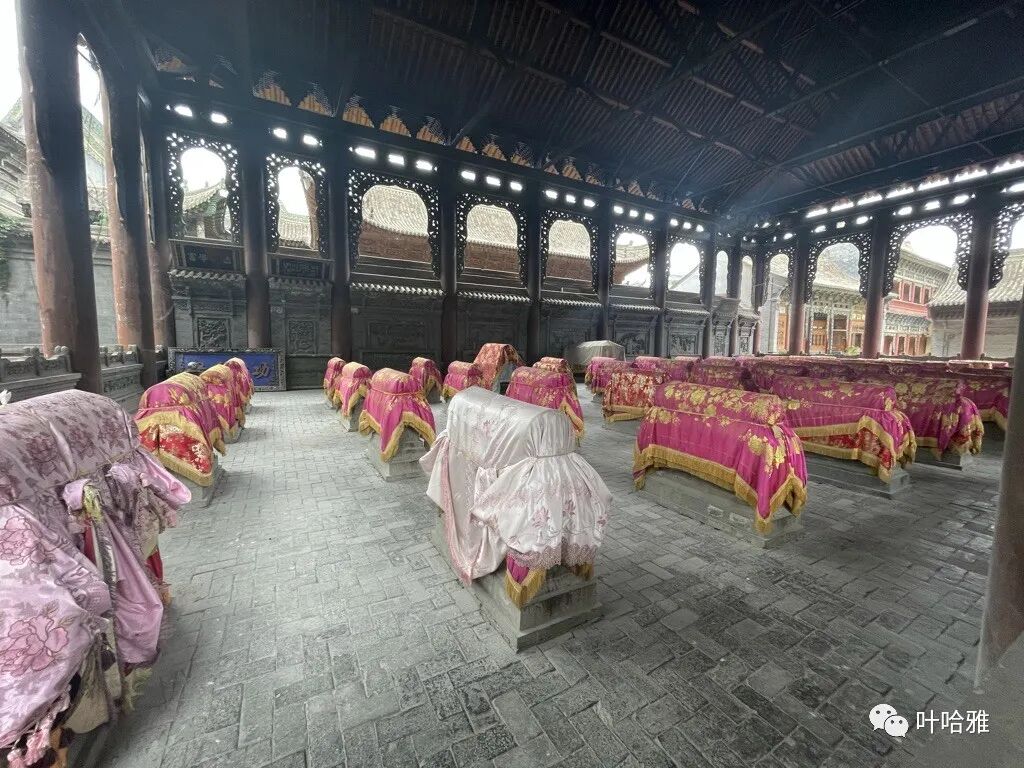
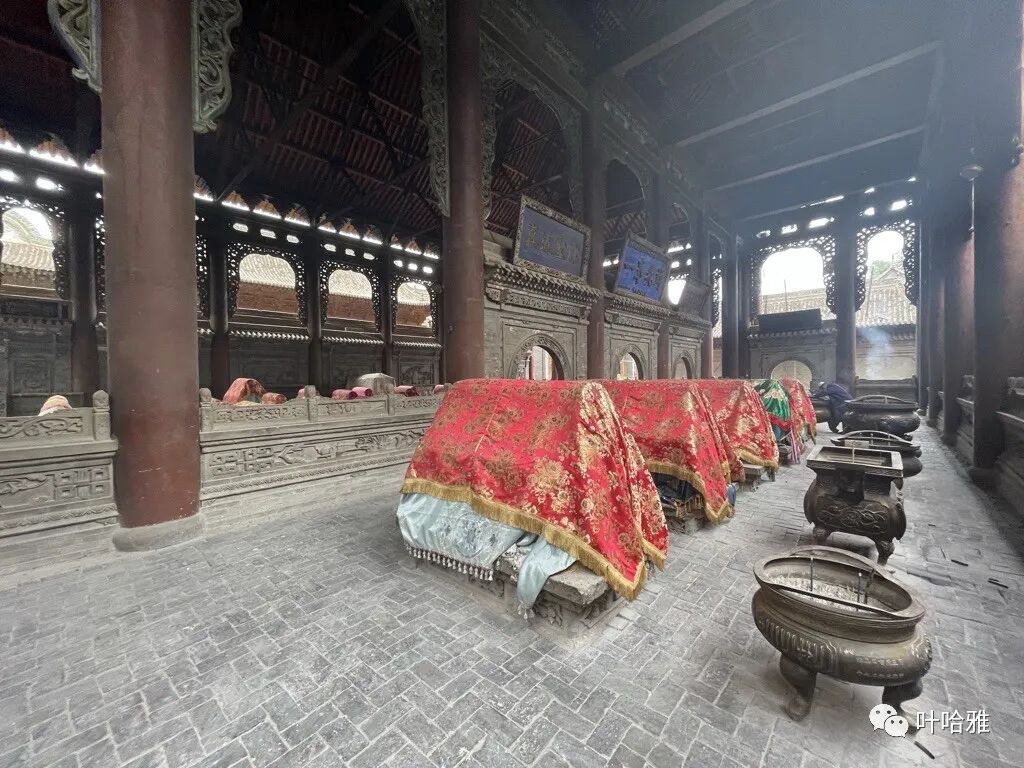
There are two gongbei in Hongyuan Square in Linxia, both belonging to the Qadiriyya menhuan (Sufi order). One is Guo Gongbei and the other is Da Gongbei. They are right next to each other. The master of Guo Gongbei was named Chen Yiming (1646—1718). People called him Chen Baoguo because he once protected the Qing Emperor Kangxi and was granted the surname Chen. Legend says his original surname was Hu. Although he was Qadiriyya, he was not under the control of Da Gongbei. After he passed away, the Qing court ordered the construction of the gongbei. The master of the gongbei did not preach. The followers at Guo Gongbei used to wear slanted-collar robes for a long time, but later the Da Gongbei council decided they should change their style of dress.
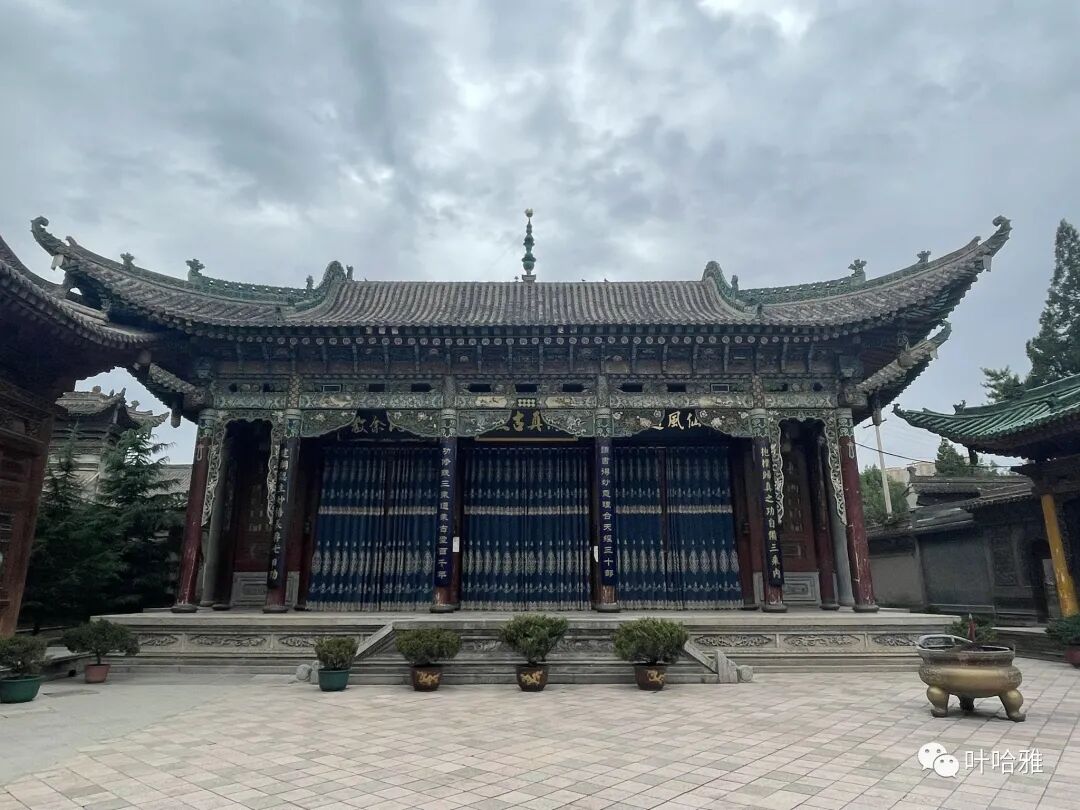
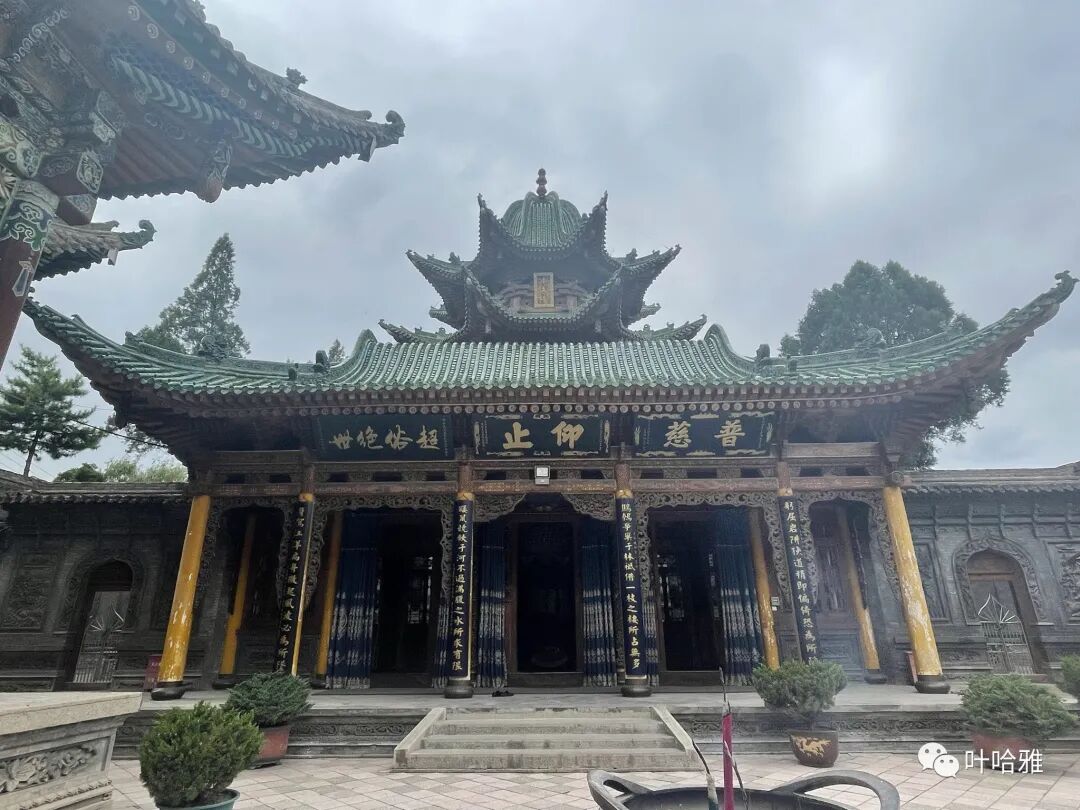
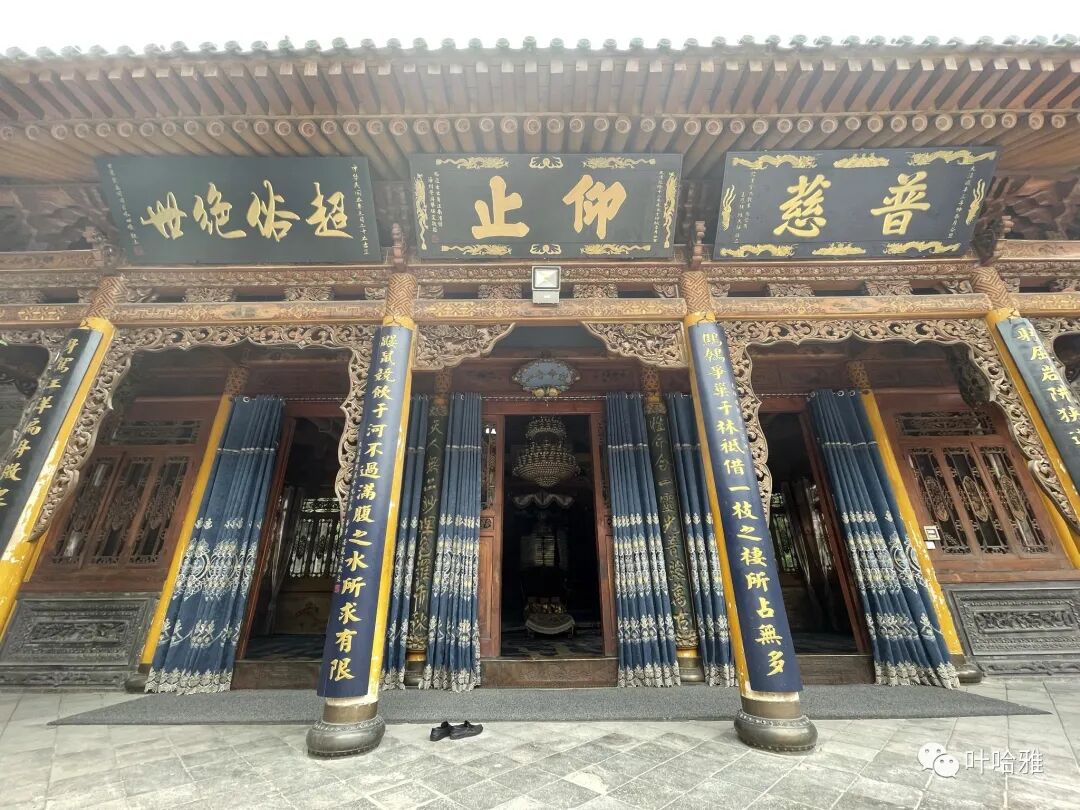
Da Gongbei is the shrine of Qi Jingyi, the founder of the Qadiriyya order. It is called Da Gongbei because it was built larger than the shrines of other menhuan. I have visited several important Qadiriyya gongbei. Compared to the styles of other menhuan, the architecture of Qadiriyya gongbei has more classical Chinese features and looks very similar to Taoist temples.
Linxia: Accommodation
Baishun Zhongtian Banquet Hotel
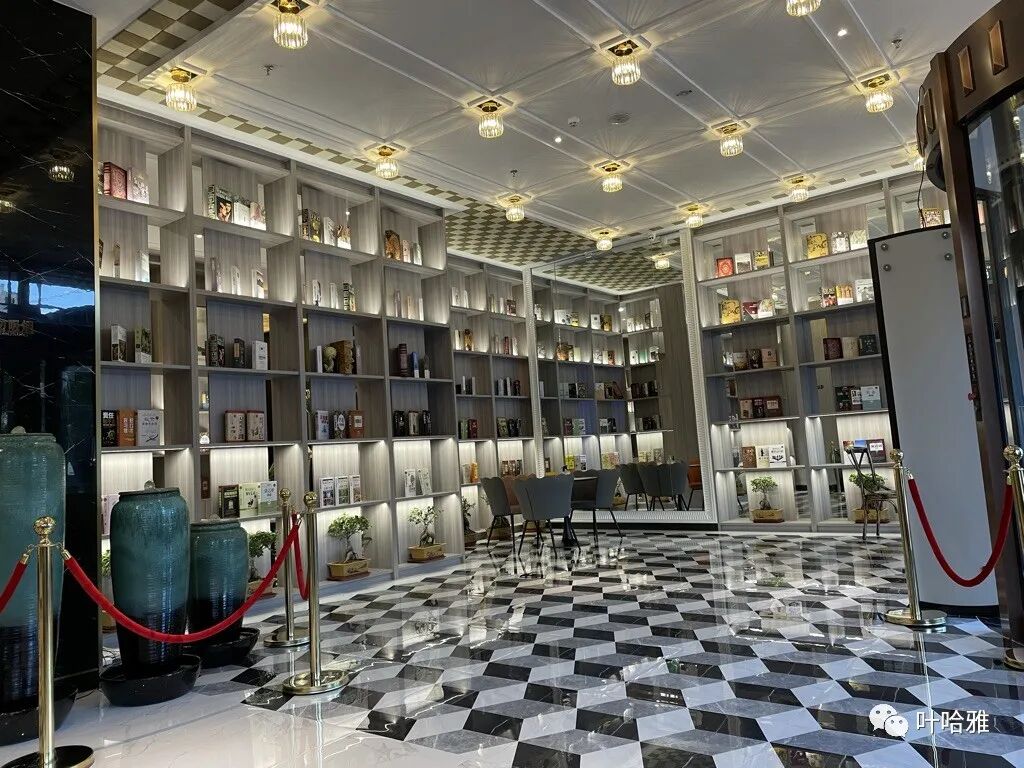
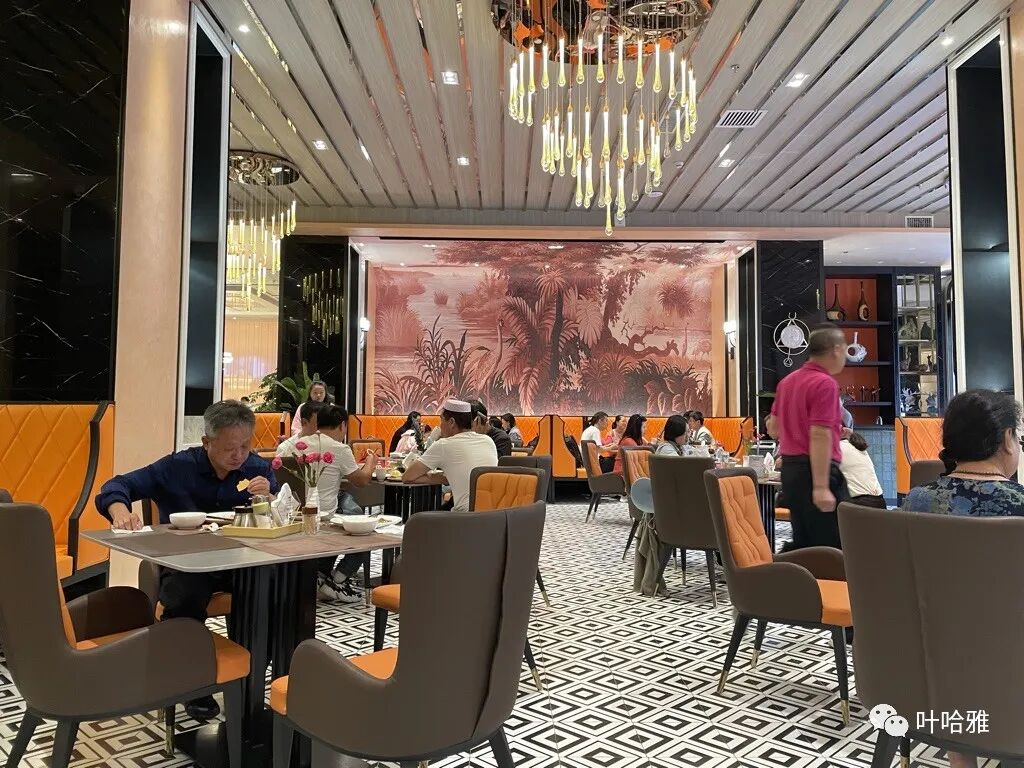
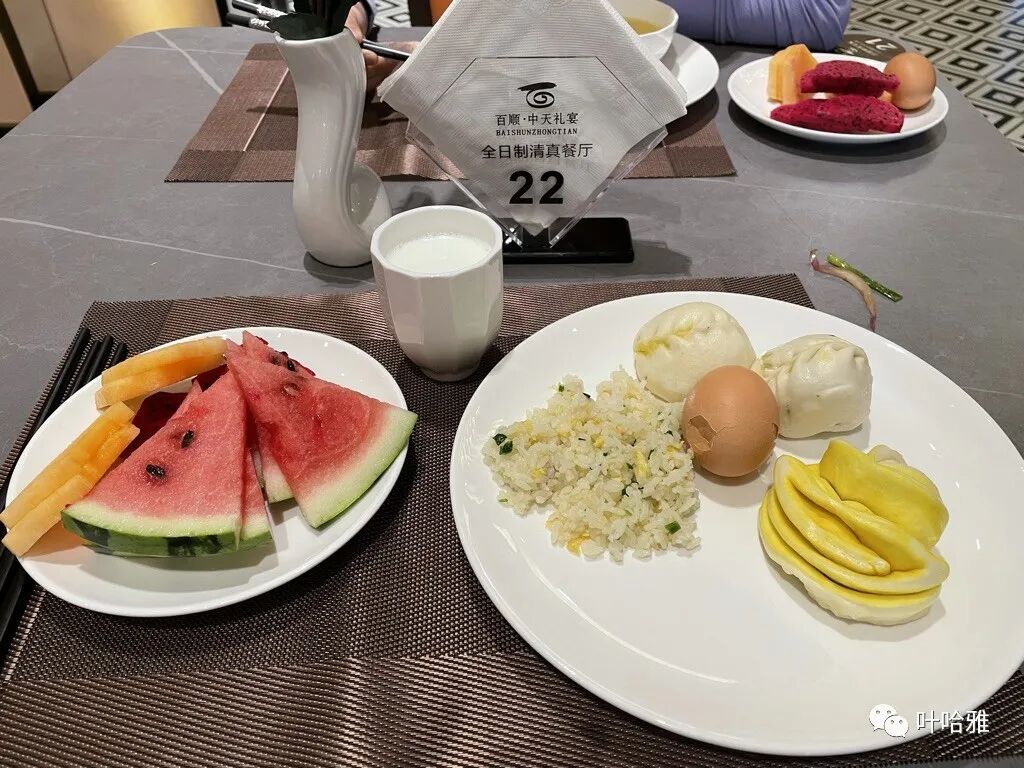
We chose to stay at the Baishun Zhongtian Banquet Hotel. Accommodation in Linxia is quite cheap; you can find a great hotel for two or three hundred yuan. This hotel is halal, has a comfortable environment, is near the river, and the breakfast is delicious.
Before arriving in Linxia, I posted on WeChat asking where to eat. I got dozens of replies, and no one recommended the same place twice. People suggested Dongxiang hand-grabbed lamb (shouzhuar), steamed buns (baozi), river-side noodle slices (heyan mianpian), Muqing Manor, sausage-stuffed intestines (fazi mianchang), Yinxing Restaurant, Maogou boiled chicken, and more. I didn't know what to do, so Brother Ma from Linxia decided for me and took me to the very famous farmhouse restaurants in Zheqiaowan.
Zheqiaowan is a place name. The local farmhouse-style restaurants are very popular, and they say you can't go wrong with any of them. It turns out the people in Linxia really know how to cook. Many of the noodle masters in the restaurants in neighboring Lanzhou are from Linxia, so noodle dishes are one of the specialties here.
The farmhouse restaurants are quite large and serve big portions. I suggest that if you are eating with a group, you can order one dish less than the number of people. For three people, two dishes are enough. Ordering too much is wasteful. We were four people and ordered five dishes, but we couldn't finish them and ended up packing the leftovers to go.
Three-treasure tea (sanpaotai)
Pan-fried potatoes with lamb chops (kang yangyu yangpai)
Hand-torn flatbread (shousi bing)
Chive buns (jiucai baozi)
Stir-stir-fried meat with vermicelli (fentiao chaorou)
Day 2: Xiahe County
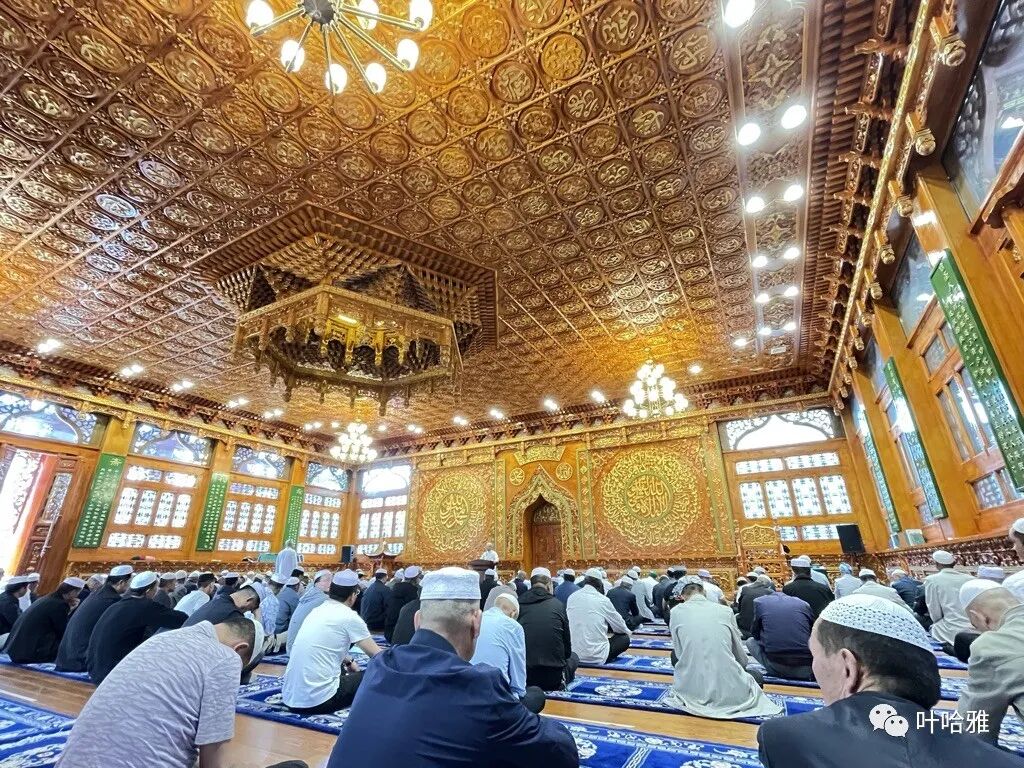
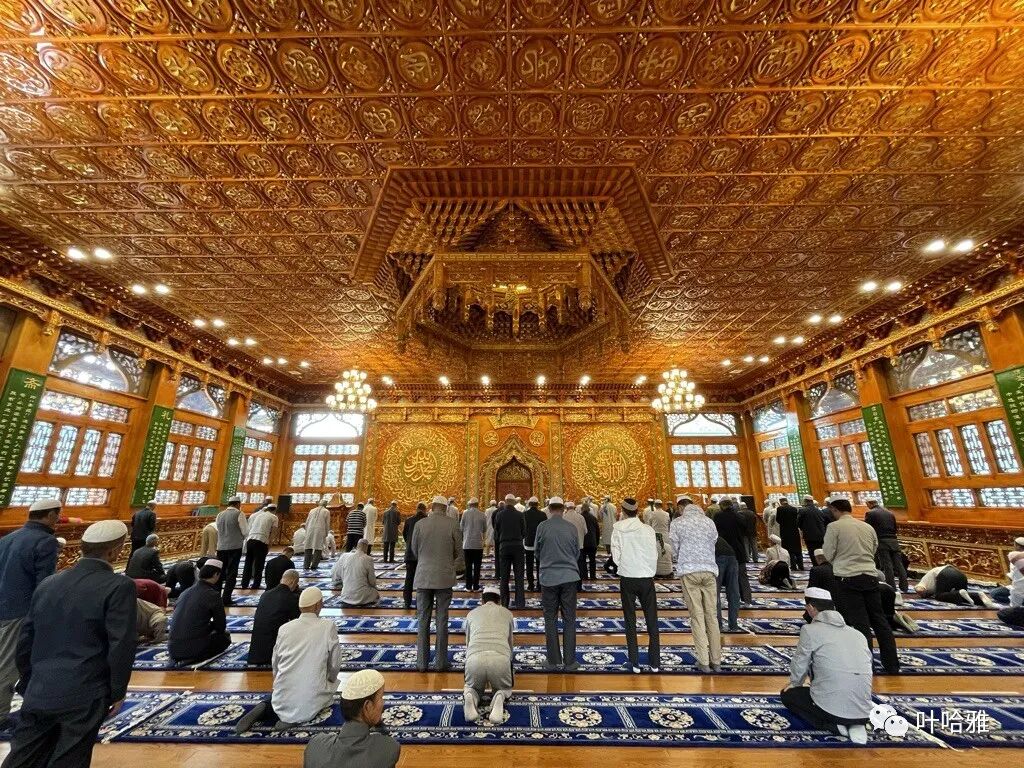
The drive from Linxia to Xiahe takes over two hours. Xiahe is famous for the Tibetan Buddhist Labrang Monastery, but we only visited the Labrang Mosque. The two are not far apart, and since it was Jumu'ah, we were able to attend the congregational prayer there.
The Labrang Mosque is also called the Xiahe Mosque. It is the only mosque in the area, but it is quite large and its architectural style incorporates elements of Tibetan design.
The Labrang Mosque was founded in 1854. Before building it, they had to get permission from the Labrang Monastery. At first, the mosque was just a temporary place for namaz, but as the number of local Hui Muslims grew, the mosque needed to expand. However, the Tibetans would not allow a large-scale construction, so they could only expand it slightly.
By 1936 (the 25th year of the Republic of China), a large number of refugees from Hezhou had flooded into Labrang following the Ma Zhongying incident of 1928. The mosque was clearly too small, so school board member Ma Letian and others held several talks with Huang Zhengqing, the commander of the Labrang Tibetan security forces (and brother of the 5th Jamyang), and finally secured a promise that they could fully expand the mosque without interference.
The newly built mosque covered a total area of 639 square meters. It featured a main prayer hall with a brick-and-wood structure consisting of five main rooms and three side rooms, a three-story pavilion-style minaret, 24 rooms for the east, north, and south wings, and 12 rooms for storage and bathing facilities. That was before the Reform and Opening-up period, though; the current building dates back to 1981.
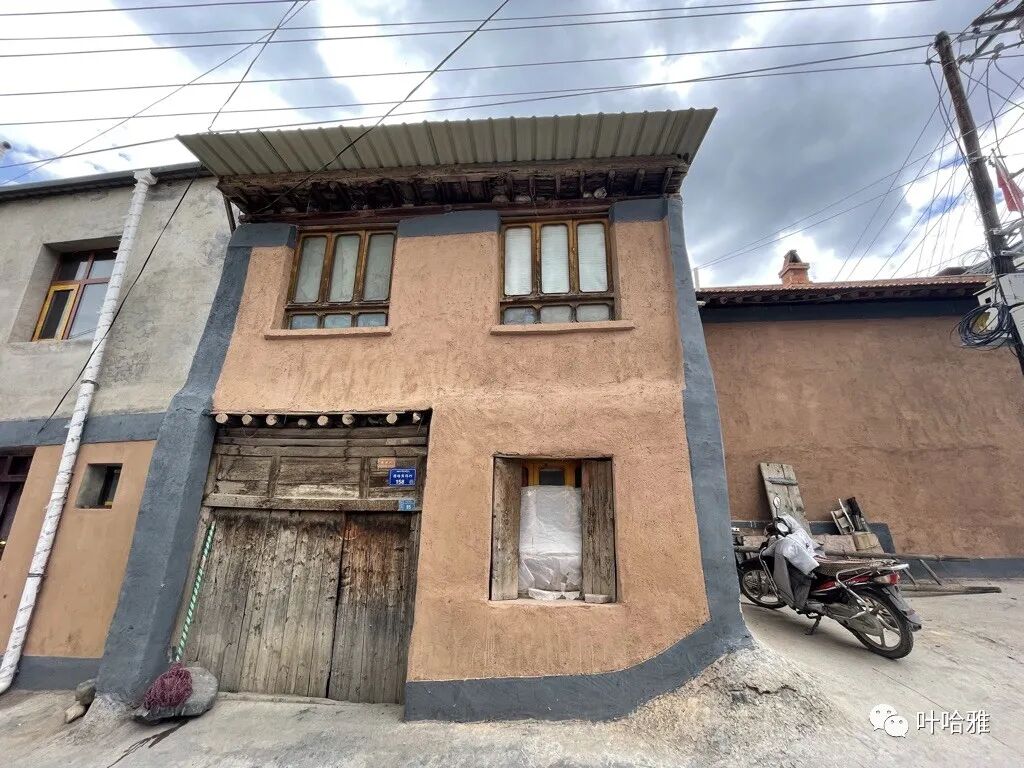
Once you reach Xiahe, you have entered the greater Tibetan region, so you can see the Tibetan style in the local residential architecture.
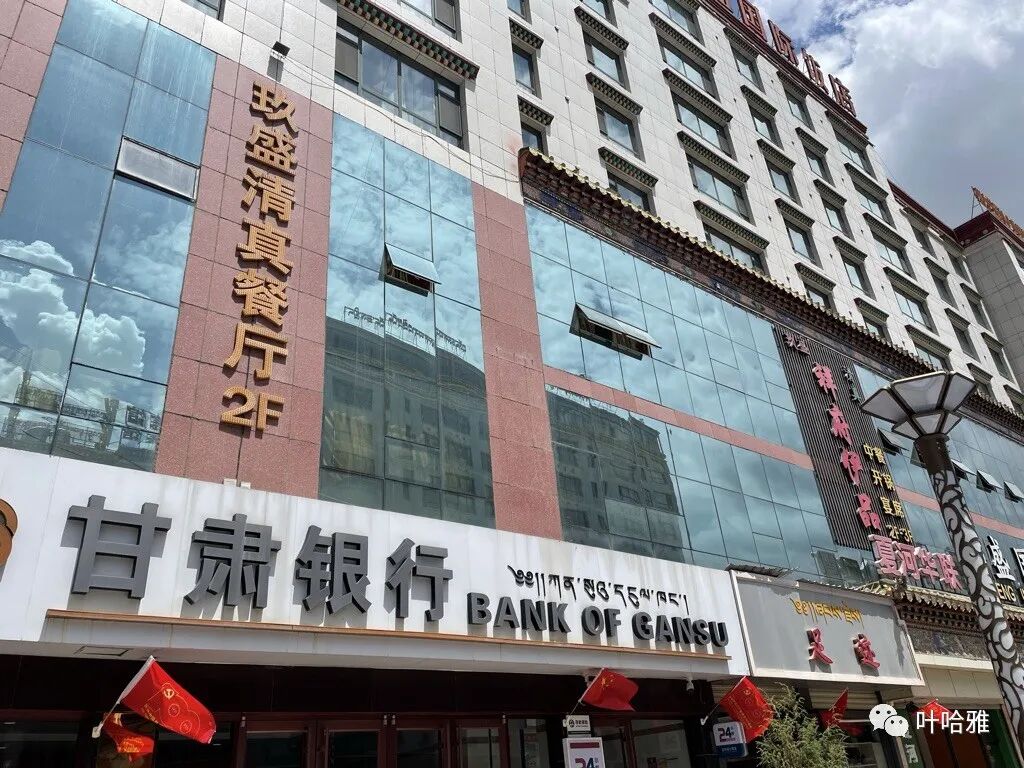
Although Xiahe County is a Tibetan area, there are halal restaurants everywhere. We chose a large restaurant called Jiusheng. This place does not sell alcohol and also offers lodging, so friends who need a place to stay can consider booking a room here. The dining area at Jiusheng is very spacious, and the dishes have a strong local character. I ordered a dish called Kekexili, which is made with wheat kernels. It was delicious, but the portion was huge. I didn't finish it, so I packed it up and ate the rest as a snack on the road.
Stir-fried beef with tiger skin peppers (hupi lazi shao niurou)
Rustic farmhouse-style dishes (fengwei nongjia cai)
Kekexili (a dish made with wheat kernels)
Leaving Xiahe County and heading south, our grassland road trip began. Along both sides of the road lies the endless Sangke Grassland. The Gannan region has many grasslands, and Sangke is the first large one we passed through.
Prayer flag tunnel (jingfan suidao)
Along the way, we saw some nice scenery by the road and stopped to take photos. Just as we were about to leave, a child and an elderly person, both dressed in Tibetan clothing, blocked us to demand money. Of course, I didn't pay because I had heard about this behavior before. I stepped on the gas, left them behind, and drove off. I suggest everyone take photos at public viewing platforms to avoid any unpleasant situations.
Hezuo City
Hezuo Grand Mosque
Hezuo Grand Mosque was first built in 1834. It now serves over 10,000 congregants, most of whom are followers of the Huasi menhuan, though others belong to different menhuan. The current building was constructed in 1995.
We stopped briefly in Hezuo to pray and rest before heading south. Along the way, we passed a sea of rapeseed flowers right next to the Hezuo highway. Against the backdrop of blue skies and white clouds, the golden flowers were truly beautiful.
Meiren Grassland
Meiren Grassland
The Meiren Grassland sits at an altitude of over 3,600 meters. It features the alpine meadow landscape unique to the Qinghai-Tibet Plateau. I first thought the rounded mounds of grass were man-made, but after walking closer, I realized they formed naturally. This landscape forms in low-lying, poorly drained areas of the grassland where marshes develop, shaped by plants, soil, weathering, and freezing.
Prayer flag tunnel (jingfan suidao)
Be careful: while the prayer flag tunnels on the highway are beautiful, do not stop to take photos, as it is dangerous.
The figure in the distance is my father-in-law praying by the side of the road.
Yeliguan Town
Yelinguan Hotel
We arrived in Yeliguan Town that evening and checked into the Yelinguan Hotel. It is one of the better hotels in town, costing over 200 yuan. It is a halal hotel and serves halal breakfast. There are very few halal restaurants in Yeliguan, and there is not much to do in town, so I suggest considering other places to stay overnight.
Day 3: Yeliguan National Forest Park
A filming location for Journey to the West
You can drive into Yeliguan National Forest Park. Tickets are 78 yuan. If you do not have a car, you need to take the park's cable car. There is not much special scenery inside, though there are some farmed deer. To reach the top of the mountain, you need to take another cable car, which costs 20 yuan one way or 40 yuan round trip. If you do not want to pay, you have to hike up for over an hour.
When I was walking in the woods, I did not know it was a filming location for Journey to the West. It just felt familiar, like I had seen it on TV. When I visited Jiuzhaigou in March this year, I checked out one of the filming locations there. I did not expect the 1983 version of Journey to the West to have put so much effort into choosing its outdoor locations.
I do not think Yeliguan Forest Park offers good value for money. If you are struggling to choose between many Gannan attractions, I suggest skipping this one.
After driving for nearly two hours from Yeliguan, we arrived in Lintan County. The small county town in the distance in the photo is Lintan.
The first shop at the entrance of Lintan County is Mayongcheng Laochao. Laochao refers to stir-fried noodle slices (laochao mianpian). Lintan County is full of halal restaurants, and none of them sell alcohol.
Restaurants in the Northwest provide free tea. The server will bring a tea platter, and you can add whatever you like to your cup.
Stir-fried noodle slices (laochao mianpian)
The noodle slices come in a huge bowl; unless you are very hungry, you really cannot finish it. They also sell whole free-range chickens (tu ji) at a cheap price, and they taste great.
A plate of stir-fried free-range chicken pieces
There are a few large, prominent mosques in Lintan County, including the Upper Mosque (Qingzhen Shangsi) and the Grand Huasi Mosque (Qingzhen Huadasi).
Upper Mosque (Shangsi).
The Upper Mosque and the Hua Great Mosque (Hua Da Si) sit next to each other. Both were built in 1380. Records show that the Hui Muslims in Lintan originally came from Zhusi Lane in Nanjing. They were part of the Hui Muslim group that followed Mu Ying on his western military campaign during the Ming Dynasty's Hongwu era. The Ming History records that the construction of the mosque was suggested by the Marquis of Xiping, Mu Ying, and approved by the Ming court. It was modeled after the Huajue Mosque in Chang'an and covers an area of 15 mu. To encourage the soldiers stationed in the area, the Ming court often awarded them plaques to honor their service.
The Lintan County Hua Great Mosque was first built in 1380 (the 13th year of the Hongwu era of the Ming Dynasty). By the early 21st century, it had a history of over 600 years. The Taozhou Prefecture Gazetteer records: 'Mu Ying, the Ming General who conquered the West, arrived in 1380 (the 13th year of Hongwu). The eighteen tribes of Taozhou and three deputy envoys rebelled and occupied the Nalin Seven Stations area. Following the Emperor's orders, Mu Ying led his army to the old city. The rebels fled, but he pursued and captured the three deputy envoys. He built a city at Donglong Mountain and stationed troops there. He returned his army in the sixth month and was named Marquis of Xiping for his achievements.' Historical records state: 'The old Taozhou mosque was in the old city and was renovated in the Dingwei year of the Ming Hongwu era.' At that time, Taozhou only had the Gedimu tradition, but now it follows the Huasi menhuan. The current building was designed by the Architectural Design and Research Institute of Tongji University and was completed in 2019.
Western Hall (Xidaotang) Mosque.
The Western Hall was the main focus of my trip. It originated in Lintan County, Gansu Province. Its founder, Ma Qixi, was skilled at teaching in Chinese. He used Chinese-language classics like Liu Jielian's 'The Nature of Islam' (Tianfang Xingli), 'The Rites of Islam' (Tianfang Dianli), and 'The True Record of the Prophet of Islam' (Tianfang Zhisheng Shilu) for his teachings, which is why it is called the 'Chinese School'.
The founder of the Huasi menhuan, Ma Laichi, spread the teachings of the Khufiyya order. Lintan initially accepted the Khufiyya. When the Huasi menhuan reached the third generation leader Ma Guangzong (known as Beichuan Taiye), his student Ma Baozhen left the Huasi menhuan. He adopted the teachings of the Ishan school from Shache, Xinjiang, and started his own group in Beizhuang, Dongxiang, which became known as the Beizhuang menhuan. Ma Baozhen's student, Min Shangli, served as the 'muleti' (religious leader) for the Beizhuang group stationed in the old city. After Min Shangli passed away, he was buried at the Dazigou gongbei (shrine). His son, Min Yonglu, succeeded him as the 'muleti' in Lintan. After Min Yonglu passed away, he was also buried at the Dazigou gongbei. His son, Min Shida, succeeded him. Min Shida only had two daughters. One daughter married Ma Yuan, who had two sons. One of them was Ma Qixi, which is why Ma Qixi originally belonged to the Beizhuang menhuan.
Ma Qixi was smart and loved to learn. He did well in school from a young age and passed the imperial exam to become a scholar (xiucai). He opened a private school in his hometown of Xifeng Mountain. In 1898, Ma Qixi began teaching in a scripture hall at the Beizhuang gongbei. One faction of the Beizhuang menhuan insisted that people should take off their shoes when performing namaz, while the other faction believed it was not necessary. The Beizhuang 'muleti' Min Yonglu said: 'It is best to take them off, but not taking them off does not violate religious rules.' Ma Qixi thought Min Yonglu was being indecisive and should clearly state whether shoes should be removed or not. This led to a disagreement, and Ma Qixi left the Beizhuang group to start his own.
Ma Qixi had a rational mindset. He strongly advocated for changing old customs, such as cutting off men's long braids, opposing foot-binding for women, and encouraging girls to go to school. In terms of religion, he only considered the 'Five Pillars of Islam' as the complete practice, whereas the Beizhuang menhuan also required the morning and evening recitation of 'dhikr' and quiet meditation.
Ma Qixi realized that to develop education, they needed an economic foundation. Therefore, the Western Hall placed great importance on business and farming. The followers of the Western Hall treated the hall as their home and lived a collective life, creating the prototype of the Western Hall 'Ummah' family.
The Western Hall founded the Lintan Puci Primary School. All children in the hall over the age of 7 were enrolled for free, and they also accepted over 100 children from other local ethnic groups. To solve the problem of girls' education, the Western Hall founded the Lintan Old City Private Qixi Girls' School in 1943, which was free for all girls regardless of their ethnicity.
The Gansu Hui Muslim general Ma Anliang was a follower of the Huasi menhuan. He wanted to use Ma Qixi to attack the Beizhuang menhuan, but Ma Qixi refused, and the two parted on bad terms.
In 1914, Ma Anliang sent his subordinate Zhang Shunyuan to execute Ma Qixi, claiming he had 'colluded with Bai Lang to kill innocent Hui and Han people in the old city.' After Ma Qixi was killed, Ding Quangong succeeded him. The Western Hall did not use a hereditary system; the leader was chosen by public vote and served for life.
In 1917, Ding Quangong and his group were passing through Lintao to visit the grave of the martyred student Ma Wanzhang. They were surrounded by Ma Ying, a local commander appointed by Ma Anliang. Ding Quangong was killed, and Ma Mingren succeeded him as the third leader.
In 1919, Ma Anliang was promoted to Governor of Gansu. While traveling to take up his post, he fell ill at Suonanba in Dongxiang, returned home, and passed away.
The prayer hall of Xidaotang, which looks like the Temple of Heaven.
Ma Mingren mentored Ding Zhengxi. Ding graduated from the Chinese Department of Peking University in 1929, becoming the first university student in Xidaotang history. After graduation, he returned to Xidaotang to handle diplomatic affairs and later served as the magistrate of Hezheng County.
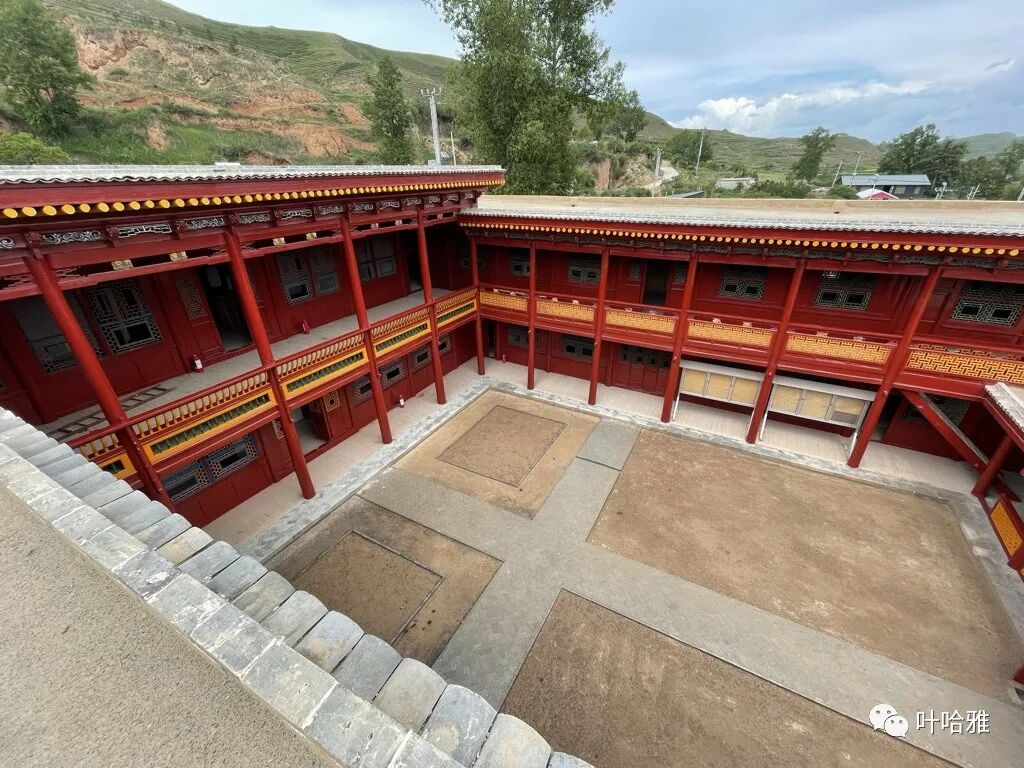
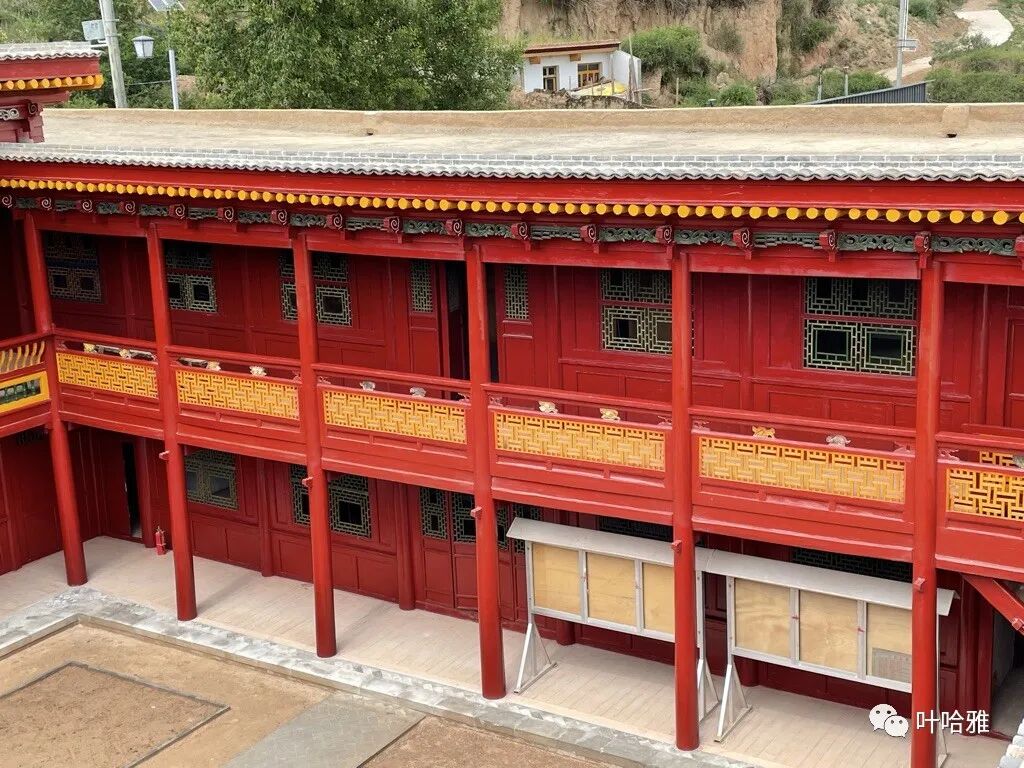
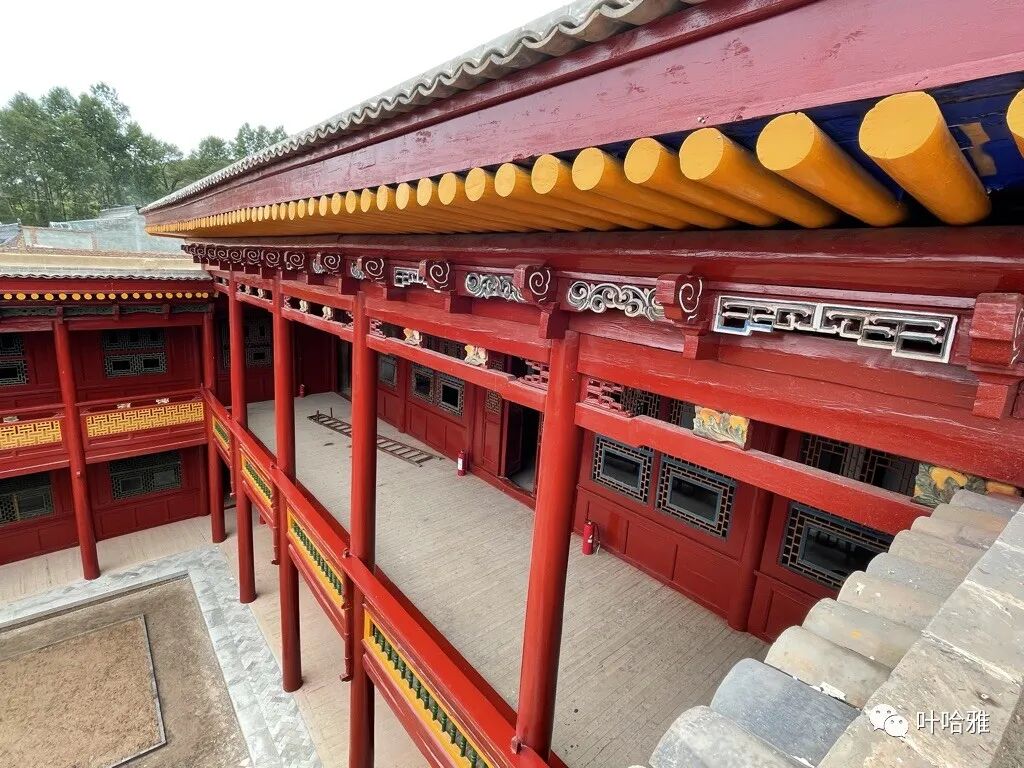
In Guzhan Town, about 10 kilometers from Lintan County, stands the Galutian Big House. It is the only one remaining of the 13 large houses built by Xidaotang and is now a national-level cultural heritage site.
The Galutian Big House is a Tibetan-style building. A key feature of Tibetan architecture is that you cannot see the wood from the outside or the earth from the inside. The house was built to meet the needs of the collective life of the Uma.
There are long benches in front of the main hall for elders to study scriptures and discuss matters, serving as a place for democratic consultation.
Every Xidaotang member living here has their food, clothing, housing, transportation, family education, weddings, funerals, and support provided by the collective.
The Xidaotang constitution states regarding economic management: all income and expenses from collective farming, commerce, forestry, animal husbandry, and sideline businesses are managed, operated, and distributed centrally. The organization has one manager and one deputy manager.
Trade with Tibetan areas was the foundation of Xidaotang's economic development, so the group placed great importance on its relationship with Tibetan people. Most Xidaotang members could speak Tibetan, and the Tibetan people called them 'Qusuoma,' meaning 'new religious friends'. After the Xidaotang elders Ma Mingren and Min Zhidao passed away, hundreds of Tibetan people came to attend their funerals.
The Sixth Jamyang Living Buddha of Labrang Monastery once visited Xidaotang and placed a white silk scarf (hada) on the grave of Elder Ma Qixi, who is buried at the foot of Xifeng Mountain.
Xidaotang is a model for the Sinicization of Islam. To adapt to the social environment of the time, it took many pioneering steps, especially in prioritizing education, particularly for women. This provided continuous momentum for the overall growth of Xidaotang and is worth learning from by other groups.
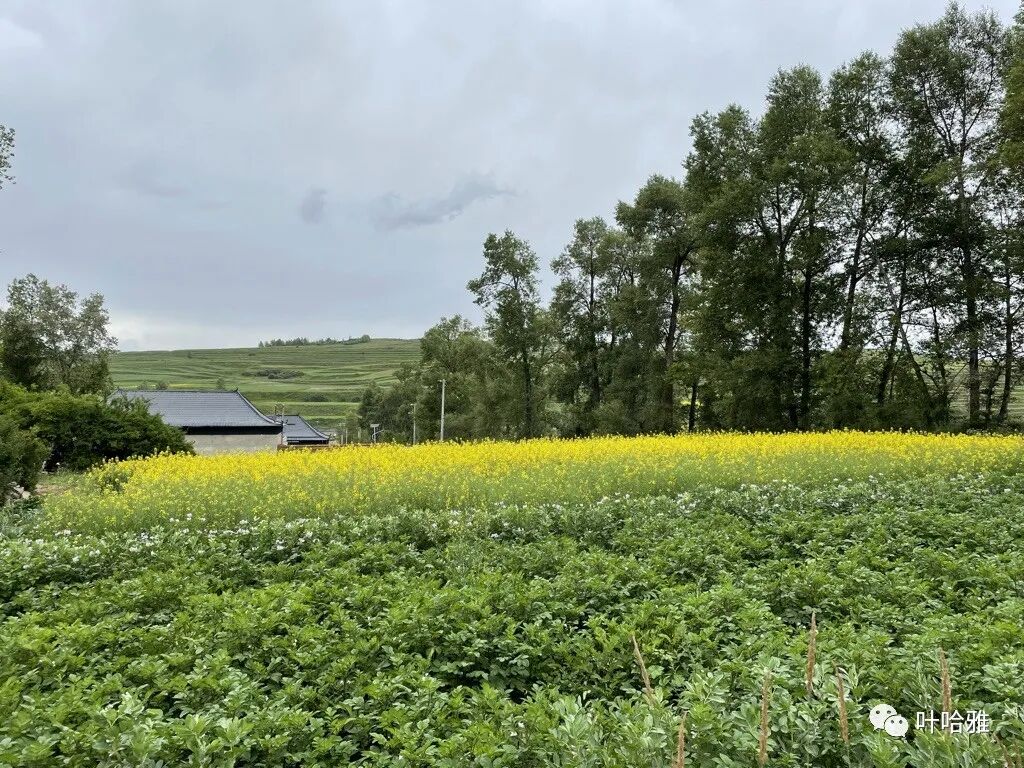
Ending our trip to Lintan, we drove for four hours that afternoon to return to Xunhua to prepare for Eid al-Adha (Guerbang Jie). view all
Summary: Muslim History Guide China: Linxia Gannan Xidaotang, Gongbei Mosques and Silk Road Faith is presented here as a clear English account for Muslim readers, starting with this scene: Before Eid al-Adha (Qurban Jie), I took my wife and father-in-law on a road trip starting from Xunhua. We passed through Linxia, Xiahe, and Hezuo, ending in Lintan County in Gannan. The scenery along the way was beautiful, even. It keeps the original names, food details, mosque details, photographs, and cultural context while focusing on Linxia Travel, Xidaotang, Muslim History.
Before Eid al-Adha (Qurban Jie), I took my wife and father-in-law on a road trip starting from Xunhua. We passed through Linxia, Xiahe, and Hezuo, ending in Lintan County in Gannan. The scenery along the way was beautiful, even better than the paid tourist spots we visited.
Gannan is part of the greater Tibetan region with an average altitude of 3,000 meters, and some places go over 3,500 meters. Some people get altitude sickness, so prepare before you leave. I suggest keeping a simple oxygen canister in the car; they cost a few dozen yuan and are good to have just in case.
Also, watch out for the sun. The UV rays and sunlight at high altitudes are very strong and can make it hard to keep your eyes open. There is a big temperature difference between morning and night, so wear long sleeves and don't forget your sunglasses and sunscreen.
Itinerary: Xunhua - Linxia - Xiahe - Sangke Grassland - Hezuo - Meiren Grassland - Yeliguan - Lintan - Xunhua
(Three days total)
The three of us drove one car from Xunhua and reached Linxia in about two hours. We stayed in Linxia for one day. On the second day at noon, we arrived in Xiahe County for lunch and Jumuah prayer. We passed through Sangke Grassland, went through Hezuo City in the afternoon, passed Meiren Grassland, and arrived at Yeliguan in the evening. We stayed another night in Yeliguan. On the third morning, we visited Yeliguan National Forest Park and reached Lintan County by noon. We visited Xidaotang and in the afternoon went to the Galutian Big House, ten kilometers from Lintan County, as the end of our trip. That night, we drove over four hours back to Xunhua. The whole trip took one tank of gas.
Most tourists start from Lanzhou, which is only a two-hour drive from Linxia, so their route is similar to ours. You could skip Lintan County and head south to the Zhagana scenic area. I heard the scenery there is nice, but friends in Linxia said there are few Hui Muslims there, so it is just for taking photos, and we decided not to go.
Day 1: Linxia
I visited Linxia in 2016 and toured the famous Eight Neighborhoods and Thirteen Alleys. The Eight Neighborhoods are: 1. Dasi Fang, 2. Qisi Fang, 3. Xisi Fang, 4. Beisi Fang, 5. Tiejia Si Fang, 6. Qianheyan Si Fang, 7. Laowang Si Fang, 8. Xinwang Si Fang.
The Thirteen Alleys are: 1. Daga Alley, 2. Xiaonan Alley, 3. Bakou Alley, 4. Bei Alley, 5. Shagale Alley, 6. Zhuanyuan Alley, 7. Danan Alley, 8. Renyi Alley, 9. Xi Alley, 10. Yongzheng Alley, 11. Tiejia Si Alley, 12. Wangsi Alley, 13. Shiqiao Alley.
I mainly came to see the mosques and gongbei (shrines). Nearby are Tiejia Mosque, Laohua Mosque, Xinhua Mosque, Laowang Mosque, Beisi Mosque, Xisi Mosque, Daqi Mosque, Chengjiao Mosque, Nanguan Grand Mosque, Qianheyan Mosque, Guo Gongbei, and Da Gongbei.
Guo Gongbei
There are two gongbei in Hongyuan Square in Linxia, both belonging to the Qadiriyya menhuan (Sufi order). One is Guo Gongbei and the other is Da Gongbei. They are right next to each other. The master of Guo Gongbei was named Chen Yiming (1646—1718). People called him Chen Baoguo because he once protected the Qing Emperor Kangxi and was granted the surname Chen. Legend says his original surname was Hu. Although he was Qadiriyya, he was not under the control of Da Gongbei. After he passed away, the Qing court ordered the construction of the gongbei. The master of the gongbei did not preach. The followers at Guo Gongbei used to wear slanted-collar robes for a long time, but later the Da Gongbei council decided they should change their style of dress.
Da Gongbei is the shrine of Qi Jingyi, the founder of the Qadiriyya order. It is called Da Gongbei because it was built larger than the shrines of other menhuan. I have visited several important Qadiriyya gongbei. Compared to the styles of other menhuan, the architecture of Qadiriyya gongbei has more classical Chinese features and looks very similar to Taoist temples.
Linxia: Accommodation
Baishun Zhongtian Banquet Hotel
We chose to stay at the Baishun Zhongtian Banquet Hotel. Accommodation in Linxia is quite cheap; you can find a great hotel for two or three hundred yuan. This hotel is halal, has a comfortable environment, is near the river, and the breakfast is delicious.
Before arriving in Linxia, I posted on WeChat asking where to eat. I got dozens of replies, and no one recommended the same place twice. People suggested Dongxiang hand-grabbed lamb (shouzhuar), steamed buns (baozi), river-side noodle slices (heyan mianpian), Muqing Manor, sausage-stuffed intestines (fazi mianchang), Yinxing Restaurant, Maogou boiled chicken, and more. I didn't know what to do, so Brother Ma from Linxia decided for me and took me to the very famous farmhouse restaurants in Zheqiaowan.
Zheqiaowan is a place name. The local farmhouse-style restaurants are very popular, and they say you can't go wrong with any of them. It turns out the people in Linxia really know how to cook. Many of the noodle masters in the restaurants in neighboring Lanzhou are from Linxia, so noodle dishes are one of the specialties here.
The farmhouse restaurants are quite large and serve big portions. I suggest that if you are eating with a group, you can order one dish less than the number of people. For three people, two dishes are enough. Ordering too much is wasteful. We were four people and ordered five dishes, but we couldn't finish them and ended up packing the leftovers to go.
Three-treasure tea (sanpaotai)
Pan-fried potatoes with lamb chops (kang yangyu yangpai)
Hand-torn flatbread (shousi bing)
Chive buns (jiucai baozi)
Stir-stir-fried meat with vermicelli (fentiao chaorou)
Day 2: Xiahe County
The drive from Linxia to Xiahe takes over two hours. Xiahe is famous for the Tibetan Buddhist Labrang Monastery, but we only visited the Labrang Mosque. The two are not far apart, and since it was Jumu'ah, we were able to attend the congregational prayer there.
The Labrang Mosque is also called the Xiahe Mosque. It is the only mosque in the area, but it is quite large and its architectural style incorporates elements of Tibetan design.
The Labrang Mosque was founded in 1854. Before building it, they had to get permission from the Labrang Monastery. At first, the mosque was just a temporary place for namaz, but as the number of local Hui Muslims grew, the mosque needed to expand. However, the Tibetans would not allow a large-scale construction, so they could only expand it slightly.
By 1936 (the 25th year of the Republic of China), a large number of refugees from Hezhou had flooded into Labrang following the Ma Zhongying incident of 1928. The mosque was clearly too small, so school board member Ma Letian and others held several talks with Huang Zhengqing, the commander of the Labrang Tibetan security forces (and brother of the 5th Jamyang), and finally secured a promise that they could fully expand the mosque without interference.
The newly built mosque covered a total area of 639 square meters. It featured a main prayer hall with a brick-and-wood structure consisting of five main rooms and three side rooms, a three-story pavilion-style minaret, 24 rooms for the east, north, and south wings, and 12 rooms for storage and bathing facilities. That was before the Reform and Opening-up period, though; the current building dates back to 1981.
Once you reach Xiahe, you have entered the greater Tibetan region, so you can see the Tibetan style in the local residential architecture.
Although Xiahe County is a Tibetan area, there are halal restaurants everywhere. We chose a large restaurant called Jiusheng. This place does not sell alcohol and also offers lodging, so friends who need a place to stay can consider booking a room here. The dining area at Jiusheng is very spacious, and the dishes have a strong local character. I ordered a dish called Kekexili, which is made with wheat kernels. It was delicious, but the portion was huge. I didn't finish it, so I packed it up and ate the rest as a snack on the road.
Stir-fried beef with tiger skin peppers (hupi lazi shao niurou)
Rustic farmhouse-style dishes (fengwei nongjia cai)
Kekexili (a dish made with wheat kernels)
Leaving Xiahe County and heading south, our grassland road trip began. Along both sides of the road lies the endless Sangke Grassland. The Gannan region has many grasslands, and Sangke is the first large one we passed through.
Prayer flag tunnel (jingfan suidao)
Along the way, we saw some nice scenery by the road and stopped to take photos. Just as we were about to leave, a child and an elderly person, both dressed in Tibetan clothing, blocked us to demand money. Of course, I didn't pay because I had heard about this behavior before. I stepped on the gas, left them behind, and drove off. I suggest everyone take photos at public viewing platforms to avoid any unpleasant situations.
Hezuo City
Hezuo Grand Mosque
Hezuo Grand Mosque was first built in 1834. It now serves over 10,000 congregants, most of whom are followers of the Huasi menhuan, though others belong to different menhuan. The current building was constructed in 1995.
We stopped briefly in Hezuo to pray and rest before heading south. Along the way, we passed a sea of rapeseed flowers right next to the Hezuo highway. Against the backdrop of blue skies and white clouds, the golden flowers were truly beautiful.
Meiren Grassland
Meiren Grassland
The Meiren Grassland sits at an altitude of over 3,600 meters. It features the alpine meadow landscape unique to the Qinghai-Tibet Plateau. I first thought the rounded mounds of grass were man-made, but after walking closer, I realized they formed naturally. This landscape forms in low-lying, poorly drained areas of the grassland where marshes develop, shaped by plants, soil, weathering, and freezing.
Prayer flag tunnel (jingfan suidao)
Be careful: while the prayer flag tunnels on the highway are beautiful, do not stop to take photos, as it is dangerous.
The figure in the distance is my father-in-law praying by the side of the road.
Yeliguan Town
Yelinguan Hotel
We arrived in Yeliguan Town that evening and checked into the Yelinguan Hotel. It is one of the better hotels in town, costing over 200 yuan. It is a halal hotel and serves halal breakfast. There are very few halal restaurants in Yeliguan, and there is not much to do in town, so I suggest considering other places to stay overnight.
Day 3: Yeliguan National Forest Park
A filming location for Journey to the West
You can drive into Yeliguan National Forest Park. Tickets are 78 yuan. If you do not have a car, you need to take the park's cable car. There is not much special scenery inside, though there are some farmed deer. To reach the top of the mountain, you need to take another cable car, which costs 20 yuan one way or 40 yuan round trip. If you do not want to pay, you have to hike up for over an hour.
When I was walking in the woods, I did not know it was a filming location for Journey to the West. It just felt familiar, like I had seen it on TV. When I visited Jiuzhaigou in March this year, I checked out one of the filming locations there. I did not expect the 1983 version of Journey to the West to have put so much effort into choosing its outdoor locations.
I do not think Yeliguan Forest Park offers good value for money. If you are struggling to choose between many Gannan attractions, I suggest skipping this one.
After driving for nearly two hours from Yeliguan, we arrived in Lintan County. The small county town in the distance in the photo is Lintan.
The first shop at the entrance of Lintan County is Mayongcheng Laochao. Laochao refers to stir-fried noodle slices (laochao mianpian). Lintan County is full of halal restaurants, and none of them sell alcohol.
Restaurants in the Northwest provide free tea. The server will bring a tea platter, and you can add whatever you like to your cup.
Stir-fried noodle slices (laochao mianpian)
The noodle slices come in a huge bowl; unless you are very hungry, you really cannot finish it. They also sell whole free-range chickens (tu ji) at a cheap price, and they taste great.
A plate of stir-fried free-range chicken pieces
There are a few large, prominent mosques in Lintan County, including the Upper Mosque (Qingzhen Shangsi) and the Grand Huasi Mosque (Qingzhen Huadasi).
Upper Mosque (Shangsi).
The Upper Mosque and the Hua Great Mosque (Hua Da Si) sit next to each other. Both were built in 1380. Records show that the Hui Muslims in Lintan originally came from Zhusi Lane in Nanjing. They were part of the Hui Muslim group that followed Mu Ying on his western military campaign during the Ming Dynasty's Hongwu era. The Ming History records that the construction of the mosque was suggested by the Marquis of Xiping, Mu Ying, and approved by the Ming court. It was modeled after the Huajue Mosque in Chang'an and covers an area of 15 mu. To encourage the soldiers stationed in the area, the Ming court often awarded them plaques to honor their service.
The Lintan County Hua Great Mosque was first built in 1380 (the 13th year of the Hongwu era of the Ming Dynasty). By the early 21st century, it had a history of over 600 years. The Taozhou Prefecture Gazetteer records: 'Mu Ying, the Ming General who conquered the West, arrived in 1380 (the 13th year of Hongwu). The eighteen tribes of Taozhou and three deputy envoys rebelled and occupied the Nalin Seven Stations area. Following the Emperor's orders, Mu Ying led his army to the old city. The rebels fled, but he pursued and captured the three deputy envoys. He built a city at Donglong Mountain and stationed troops there. He returned his army in the sixth month and was named Marquis of Xiping for his achievements.' Historical records state: 'The old Taozhou mosque was in the old city and was renovated in the Dingwei year of the Ming Hongwu era.' At that time, Taozhou only had the Gedimu tradition, but now it follows the Huasi menhuan. The current building was designed by the Architectural Design and Research Institute of Tongji University and was completed in 2019.
Western Hall (Xidaotang) Mosque.
The Western Hall was the main focus of my trip. It originated in Lintan County, Gansu Province. Its founder, Ma Qixi, was skilled at teaching in Chinese. He used Chinese-language classics like Liu Jielian's 'The Nature of Islam' (Tianfang Xingli), 'The Rites of Islam' (Tianfang Dianli), and 'The True Record of the Prophet of Islam' (Tianfang Zhisheng Shilu) for his teachings, which is why it is called the 'Chinese School'.
The founder of the Huasi menhuan, Ma Laichi, spread the teachings of the Khufiyya order. Lintan initially accepted the Khufiyya. When the Huasi menhuan reached the third generation leader Ma Guangzong (known as Beichuan Taiye), his student Ma Baozhen left the Huasi menhuan. He adopted the teachings of the Ishan school from Shache, Xinjiang, and started his own group in Beizhuang, Dongxiang, which became known as the Beizhuang menhuan. Ma Baozhen's student, Min Shangli, served as the 'muleti' (religious leader) for the Beizhuang group stationed in the old city. After Min Shangli passed away, he was buried at the Dazigou gongbei (shrine). His son, Min Yonglu, succeeded him as the 'muleti' in Lintan. After Min Yonglu passed away, he was also buried at the Dazigou gongbei. His son, Min Shida, succeeded him. Min Shida only had two daughters. One daughter married Ma Yuan, who had two sons. One of them was Ma Qixi, which is why Ma Qixi originally belonged to the Beizhuang menhuan.
Ma Qixi was smart and loved to learn. He did well in school from a young age and passed the imperial exam to become a scholar (xiucai). He opened a private school in his hometown of Xifeng Mountain. In 1898, Ma Qixi began teaching in a scripture hall at the Beizhuang gongbei. One faction of the Beizhuang menhuan insisted that people should take off their shoes when performing namaz, while the other faction believed it was not necessary. The Beizhuang 'muleti' Min Yonglu said: 'It is best to take them off, but not taking them off does not violate religious rules.' Ma Qixi thought Min Yonglu was being indecisive and should clearly state whether shoes should be removed or not. This led to a disagreement, and Ma Qixi left the Beizhuang group to start his own.
Ma Qixi had a rational mindset. He strongly advocated for changing old customs, such as cutting off men's long braids, opposing foot-binding for women, and encouraging girls to go to school. In terms of religion, he only considered the 'Five Pillars of Islam' as the complete practice, whereas the Beizhuang menhuan also required the morning and evening recitation of 'dhikr' and quiet meditation.
Ma Qixi realized that to develop education, they needed an economic foundation. Therefore, the Western Hall placed great importance on business and farming. The followers of the Western Hall treated the hall as their home and lived a collective life, creating the prototype of the Western Hall 'Ummah' family.
The Western Hall founded the Lintan Puci Primary School. All children in the hall over the age of 7 were enrolled for free, and they also accepted over 100 children from other local ethnic groups. To solve the problem of girls' education, the Western Hall founded the Lintan Old City Private Qixi Girls' School in 1943, which was free for all girls regardless of their ethnicity.
The Gansu Hui Muslim general Ma Anliang was a follower of the Huasi menhuan. He wanted to use Ma Qixi to attack the Beizhuang menhuan, but Ma Qixi refused, and the two parted on bad terms.
In 1914, Ma Anliang sent his subordinate Zhang Shunyuan to execute Ma Qixi, claiming he had 'colluded with Bai Lang to kill innocent Hui and Han people in the old city.' After Ma Qixi was killed, Ding Quangong succeeded him. The Western Hall did not use a hereditary system; the leader was chosen by public vote and served for life.
In 1917, Ding Quangong and his group were passing through Lintao to visit the grave of the martyred student Ma Wanzhang. They were surrounded by Ma Ying, a local commander appointed by Ma Anliang. Ding Quangong was killed, and Ma Mingren succeeded him as the third leader.
In 1919, Ma Anliang was promoted to Governor of Gansu. While traveling to take up his post, he fell ill at Suonanba in Dongxiang, returned home, and passed away.
The prayer hall of Xidaotang, which looks like the Temple of Heaven.
Ma Mingren mentored Ding Zhengxi. Ding graduated from the Chinese Department of Peking University in 1929, becoming the first university student in Xidaotang history. After graduation, he returned to Xidaotang to handle diplomatic affairs and later served as the magistrate of Hezheng County.
In Guzhan Town, about 10 kilometers from Lintan County, stands the Galutian Big House. It is the only one remaining of the 13 large houses built by Xidaotang and is now a national-level cultural heritage site.
The Galutian Big House is a Tibetan-style building. A key feature of Tibetan architecture is that you cannot see the wood from the outside or the earth from the inside. The house was built to meet the needs of the collective life of the Uma.
There are long benches in front of the main hall for elders to study scriptures and discuss matters, serving as a place for democratic consultation.
Every Xidaotang member living here has their food, clothing, housing, transportation, family education, weddings, funerals, and support provided by the collective.
The Xidaotang constitution states regarding economic management: all income and expenses from collective farming, commerce, forestry, animal husbandry, and sideline businesses are managed, operated, and distributed centrally. The organization has one manager and one deputy manager.
Trade with Tibetan areas was the foundation of Xidaotang's economic development, so the group placed great importance on its relationship with Tibetan people. Most Xidaotang members could speak Tibetan, and the Tibetan people called them 'Qusuoma,' meaning 'new religious friends'. After the Xidaotang elders Ma Mingren and Min Zhidao passed away, hundreds of Tibetan people came to attend their funerals.
The Sixth Jamyang Living Buddha of Labrang Monastery once visited Xidaotang and placed a white silk scarf (hada) on the grave of Elder Ma Qixi, who is buried at the foot of Xifeng Mountain.
Xidaotang is a model for the Sinicization of Islam. To adapt to the social environment of the time, it took many pioneering steps, especially in prioritizing education, particularly for women. This provided continuous momentum for the overall growth of Xidaotang and is worth learning from by other groups.
Ending our trip to Lintan, we drove for four hours that afternoon to return to Xunhua to prepare for Eid al-Adha (Guerbang Jie). view all
Reposted from the web
Summary: Muslim History Guide China: Linxia Gannan Xidaotang, Gongbei Mosques and Silk Road Faith is presented here as a clear English account for Muslim readers, starting with this scene: Before Eid al-Adha (Qurban Jie), I took my wife and father-in-law on a road trip starting from Xunhua. We passed through Linxia, Xiahe, and Hezuo, ending in Lintan County in Gannan. The scenery along the way was beautiful, even. It keeps the original names, food details, mosque details, photographs, and cultural context while focusing on Linxia Travel, Xidaotang, Muslim History.
Before Eid al-Adha (Qurban Jie), I took my wife and father-in-law on a road trip starting from Xunhua. We passed through Linxia, Xiahe, and Hezuo, ending in Lintan County in Gannan. The scenery along the way was beautiful, even better than the paid tourist spots we visited.
Gannan is part of the greater Tibetan region with an average altitude of 3,000 meters, and some places go over 3,500 meters. Some people get altitude sickness, so prepare before you leave. I suggest keeping a simple oxygen canister in the car; they cost a few dozen yuan and are good to have just in case.
Also, watch out for the sun. The UV rays and sunlight at high altitudes are very strong and can make it hard to keep your eyes open. There is a big temperature difference between morning and night, so wear long sleeves and don't forget your sunglasses and sunscreen.
Itinerary: Xunhua - Linxia - Xiahe - Sangke Grassland - Hezuo - Meiren Grassland - Yeliguan - Lintan - Xunhua
(Three days total)
The three of us drove one car from Xunhua and reached Linxia in about two hours. We stayed in Linxia for one day. On the second day at noon, we arrived in Xiahe County for lunch and Jumuah prayer. We passed through Sangke Grassland, went through Hezuo City in the afternoon, passed Meiren Grassland, and arrived at Yeliguan in the evening. We stayed another night in Yeliguan. On the third morning, we visited Yeliguan National Forest Park and reached Lintan County by noon. We visited Xidaotang and in the afternoon went to the Galutian Big House, ten kilometers from Lintan County, as the end of our trip. That night, we drove over four hours back to Xunhua. The whole trip took one tank of gas.
Most tourists start from Lanzhou, which is only a two-hour drive from Linxia, so their route is similar to ours. You could skip Lintan County and head south to the Zhagana scenic area. I heard the scenery there is nice, but friends in Linxia said there are few Hui Muslims there, so it is just for taking photos, and we decided not to go.
Day 1: Linxia
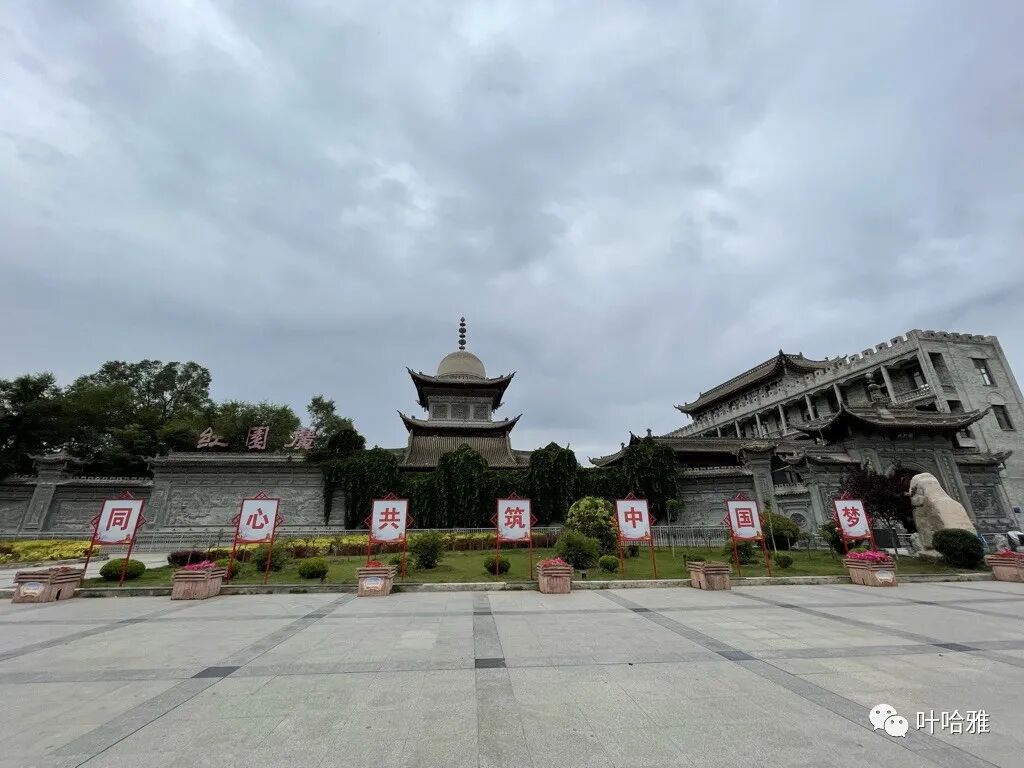
I visited Linxia in 2016 and toured the famous Eight Neighborhoods and Thirteen Alleys. The Eight Neighborhoods are: 1. Dasi Fang, 2. Qisi Fang, 3. Xisi Fang, 4. Beisi Fang, 5. Tiejia Si Fang, 6. Qianheyan Si Fang, 7. Laowang Si Fang, 8. Xinwang Si Fang.
The Thirteen Alleys are: 1. Daga Alley, 2. Xiaonan Alley, 3. Bakou Alley, 4. Bei Alley, 5. Shagale Alley, 6. Zhuanyuan Alley, 7. Danan Alley, 8. Renyi Alley, 9. Xi Alley, 10. Yongzheng Alley, 11. Tiejia Si Alley, 12. Wangsi Alley, 13. Shiqiao Alley.
I mainly came to see the mosques and gongbei (shrines). Nearby are Tiejia Mosque, Laohua Mosque, Xinhua Mosque, Laowang Mosque, Beisi Mosque, Xisi Mosque, Daqi Mosque, Chengjiao Mosque, Nanguan Grand Mosque, Qianheyan Mosque, Guo Gongbei, and Da Gongbei.
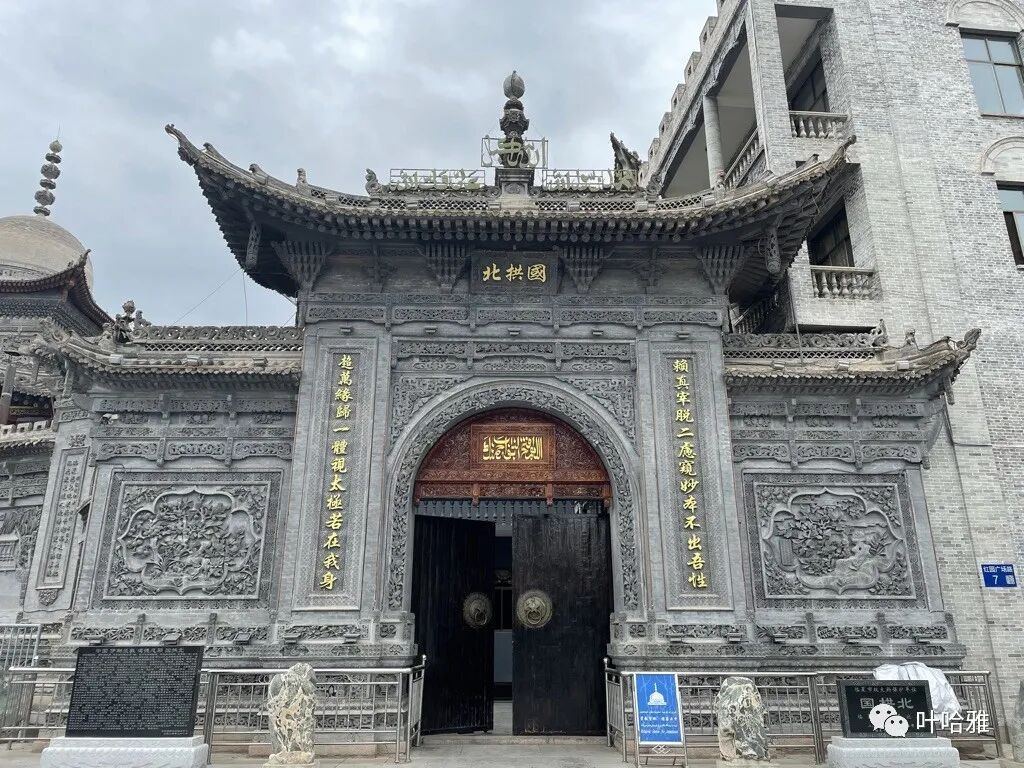
Guo Gongbei
There are two gongbei in Hongyuan Square in Linxia, both belonging to the Qadiriyya menhuan (Sufi order). One is Guo Gongbei and the other is Da Gongbei. They are right next to each other. The master of Guo Gongbei was named Chen Yiming (1646—1718). People called him Chen Baoguo because he once protected the Qing Emperor Kangxi and was granted the surname Chen. Legend says his original surname was Hu. Although he was Qadiriyya, he was not under the control of Da Gongbei. After he passed away, the Qing court ordered the construction of the gongbei. The master of the gongbei did not preach. The followers at Guo Gongbei used to wear slanted-collar robes for a long time, but later the Da Gongbei council decided they should change their style of dress.
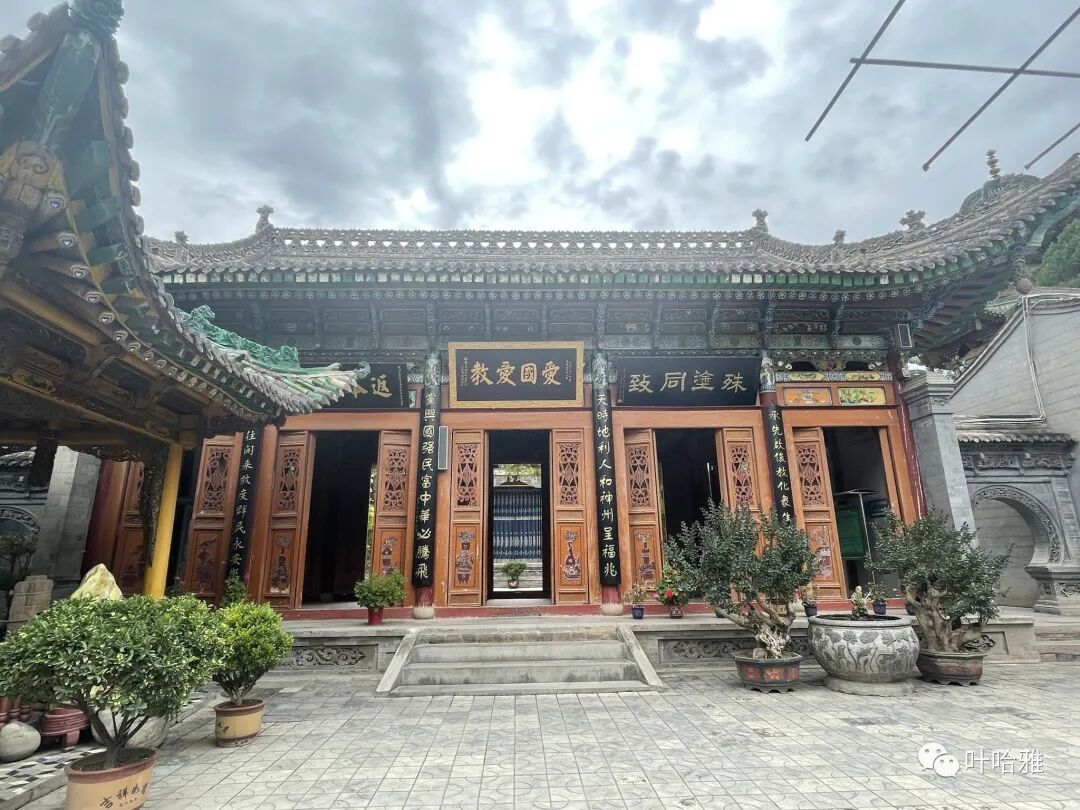
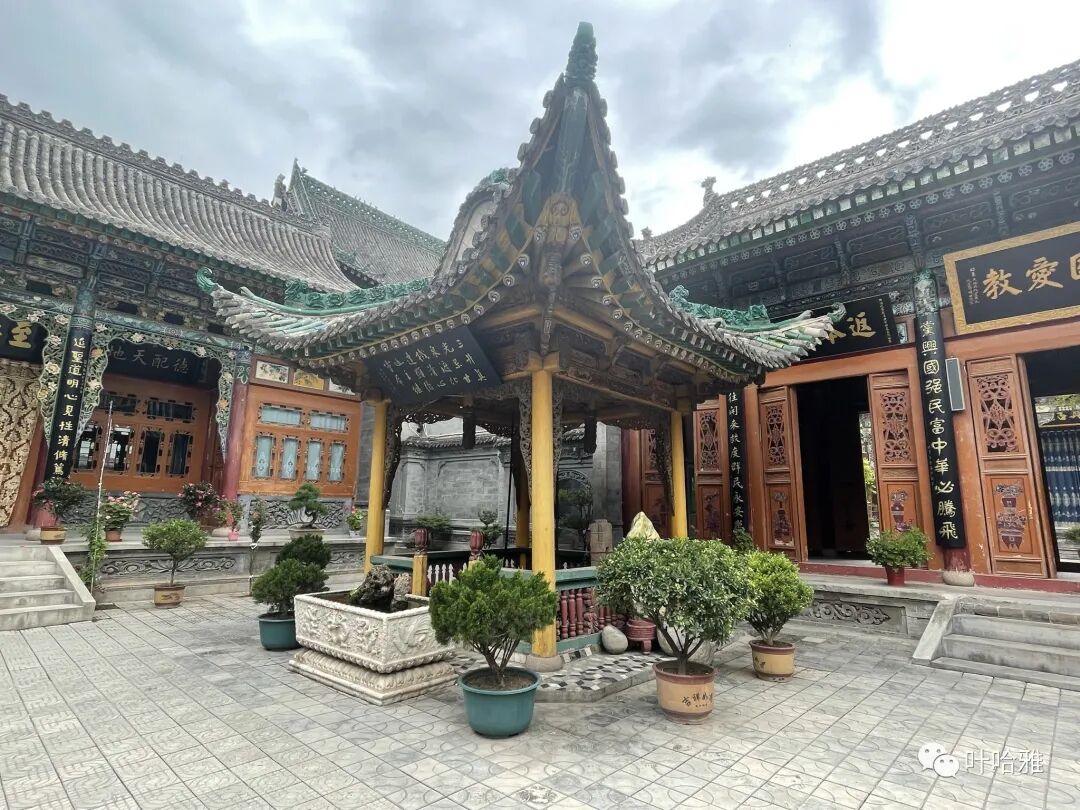
Da Gongbei is the shrine of Qi Jingyi, the founder of the Qadiriyya order. It is called Da Gongbei because it was built larger than the shrines of other menhuan. I have visited several important Qadiriyya gongbei. Compared to the styles of other menhuan, the architecture of Qadiriyya gongbei has more classical Chinese features and looks very similar to Taoist temples.
Linxia: Accommodation
Baishun Zhongtian Banquet Hotel
We chose to stay at the Baishun Zhongtian Banquet Hotel. Accommodation in Linxia is quite cheap; you can find a great hotel for two or three hundred yuan. This hotel is halal, has a comfortable environment, is near the river, and the breakfast is delicious.
Before arriving in Linxia, I posted on WeChat asking where to eat. I got dozens of replies, and no one recommended the same place twice. People suggested Dongxiang hand-grabbed lamb (shouzhuar), steamed buns (baozi), river-side noodle slices (heyan mianpian), Muqing Manor, sausage-stuffed intestines (fazi mianchang), Yinxing Restaurant, Maogou boiled chicken, and more. I didn't know what to do, so Brother Ma from Linxia decided for me and took me to the very famous farmhouse restaurants in Zheqiaowan.
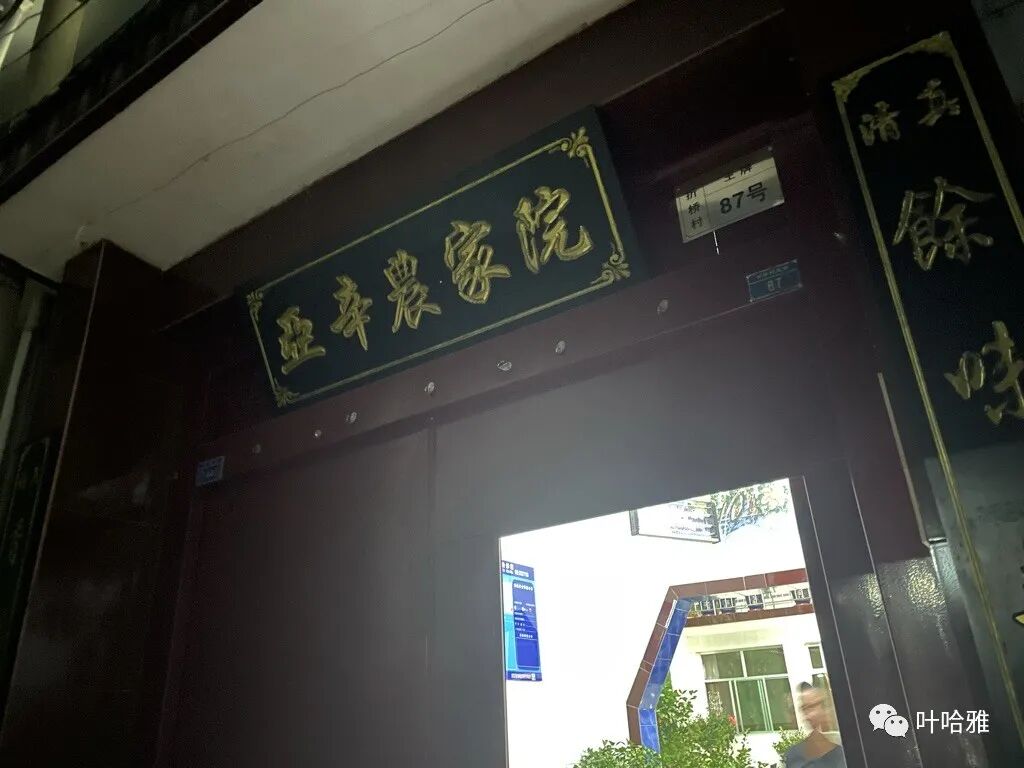
Zheqiaowan is a place name. The local farmhouse-style restaurants are very popular, and they say you can't go wrong with any of them. It turns out the people in Linxia really know how to cook. Many of the noodle masters in the restaurants in neighboring Lanzhou are from Linxia, so noodle dishes are one of the specialties here.
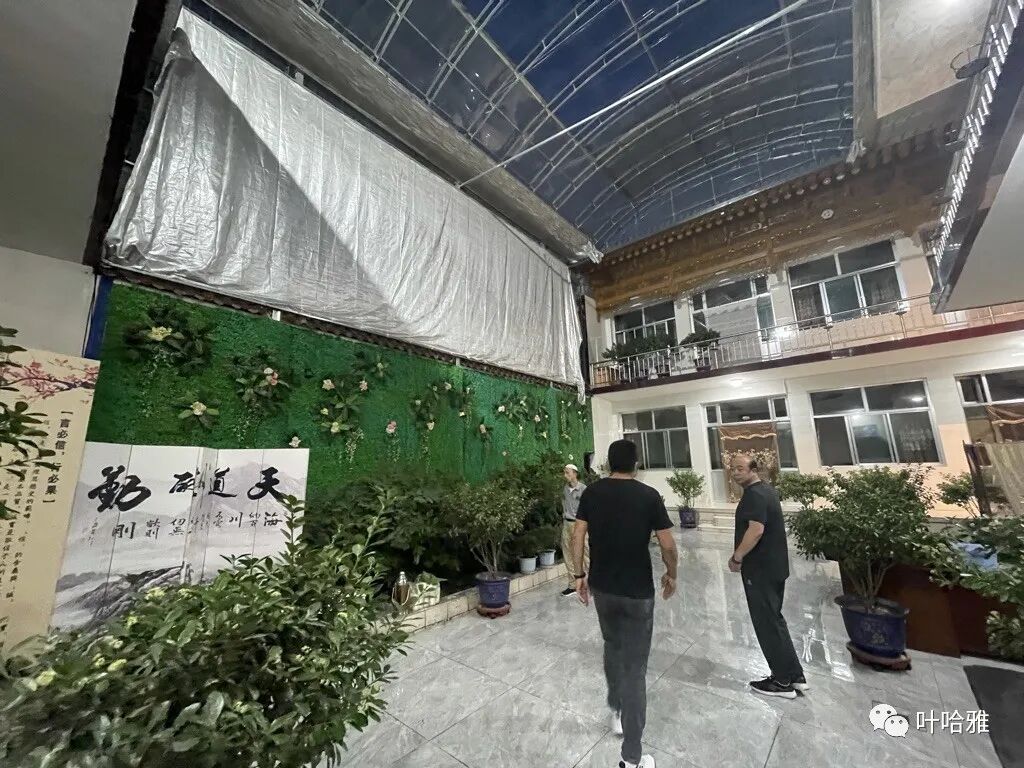
The farmhouse restaurants are quite large and serve big portions. I suggest that if you are eating with a group, you can order one dish less than the number of people. For three people, two dishes are enough. Ordering too much is wasteful. We were four people and ordered five dishes, but we couldn't finish them and ended up packing the leftovers to go.
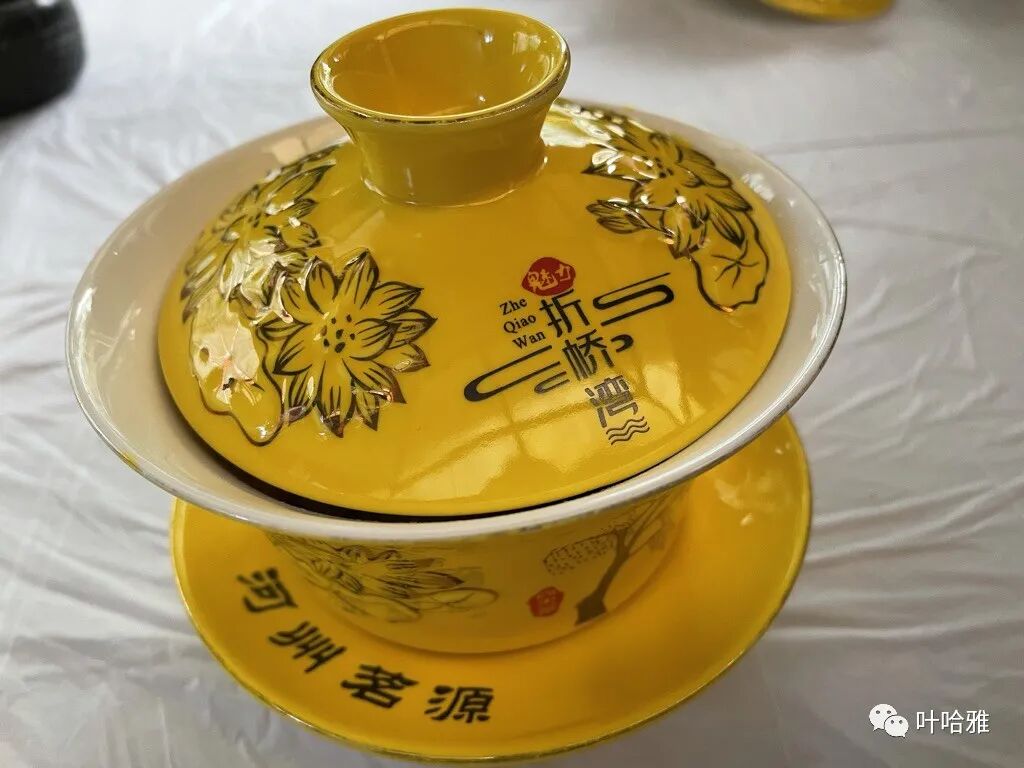
Three-treasure tea (sanpaotai)
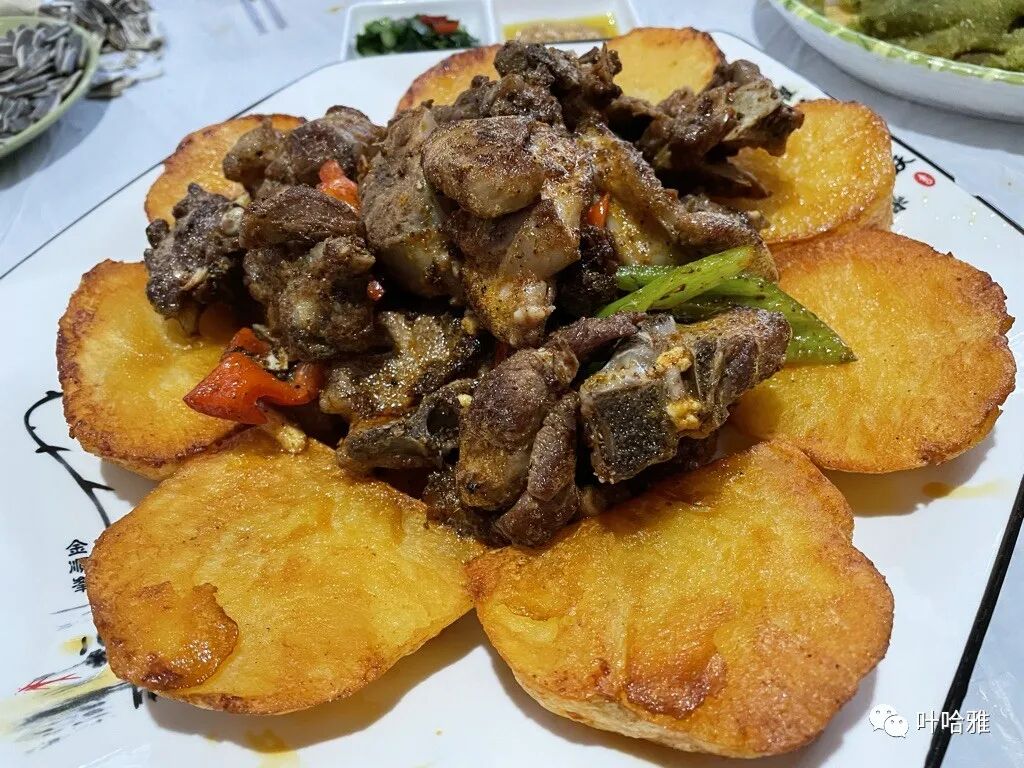
Pan-fried potatoes with lamb chops (kang yangyu yangpai)
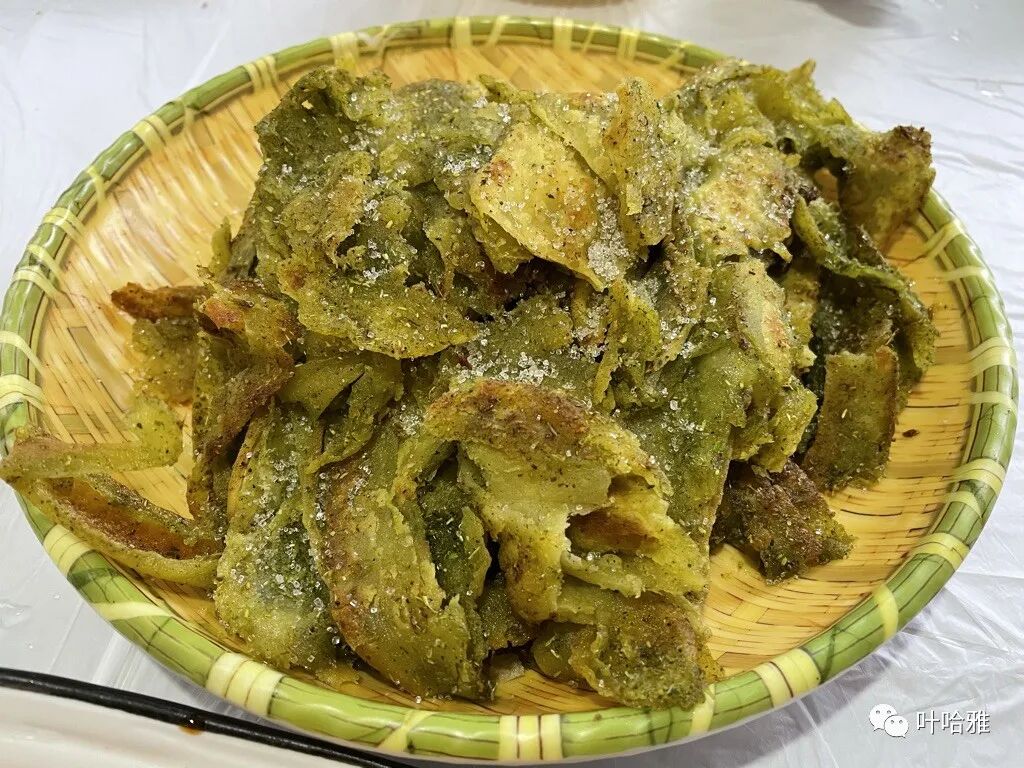
Hand-torn flatbread (shousi bing)
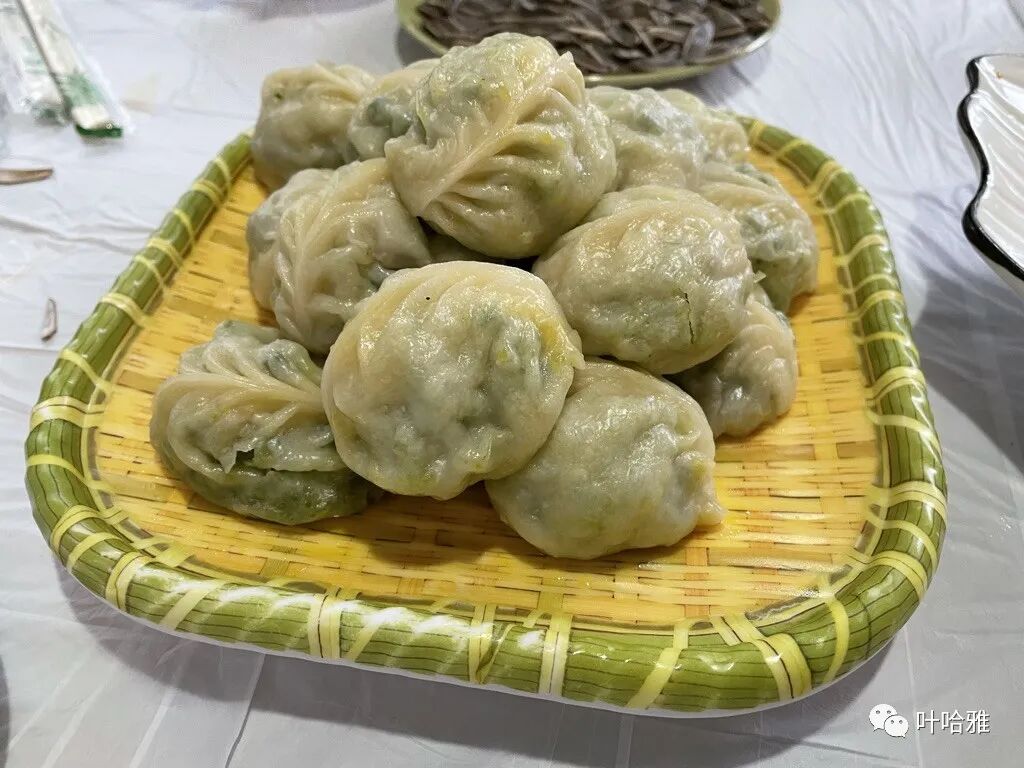
Chive buns (jiucai baozi)
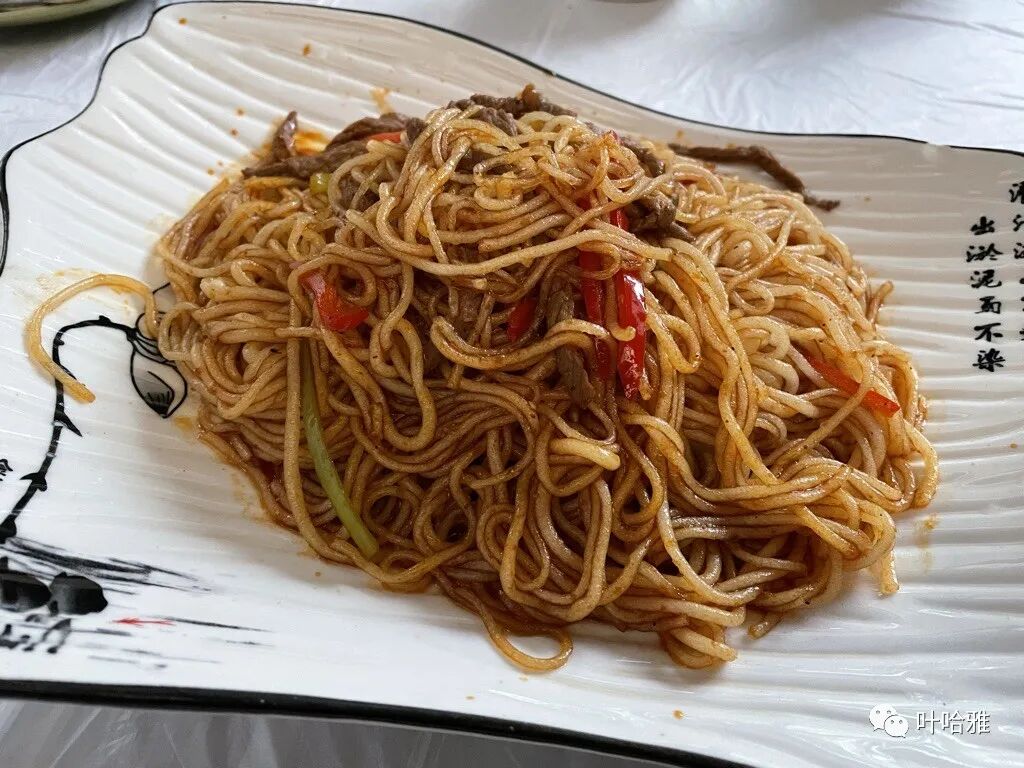
Stir-stir-fried meat with vermicelli (fentiao chaorou)
Day 2: Xiahe County
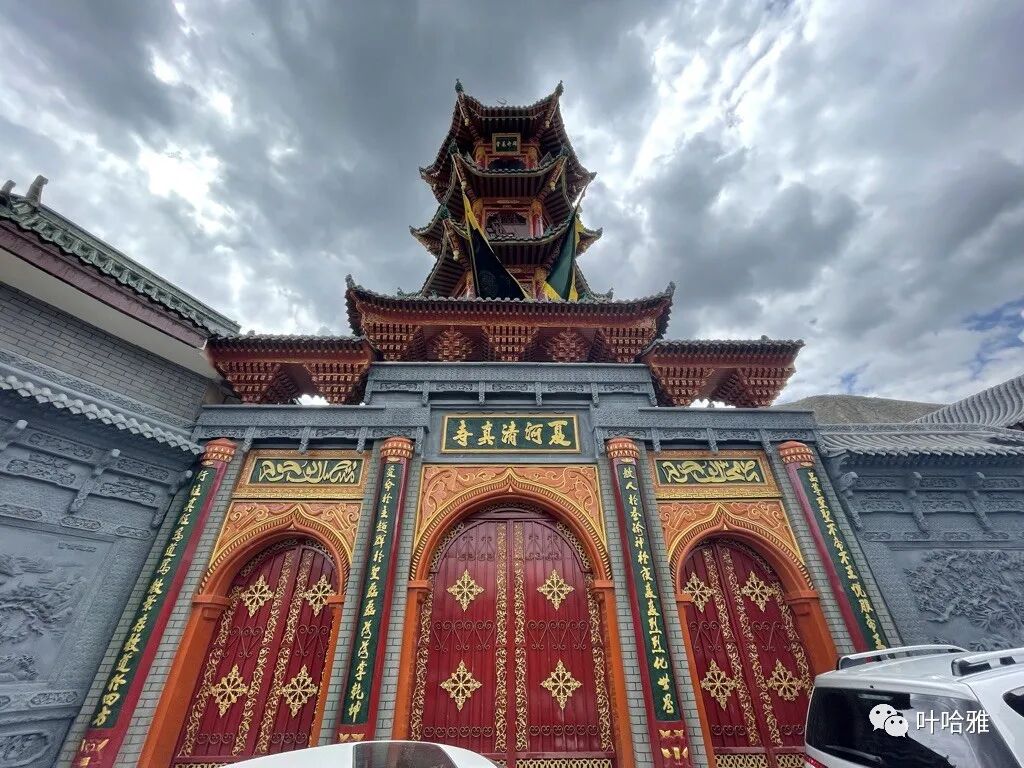
The drive from Linxia to Xiahe takes over two hours. Xiahe is famous for the Tibetan Buddhist Labrang Monastery, but we only visited the Labrang Mosque. The two are not far apart, and since it was Jumu'ah, we were able to attend the congregational prayer there.
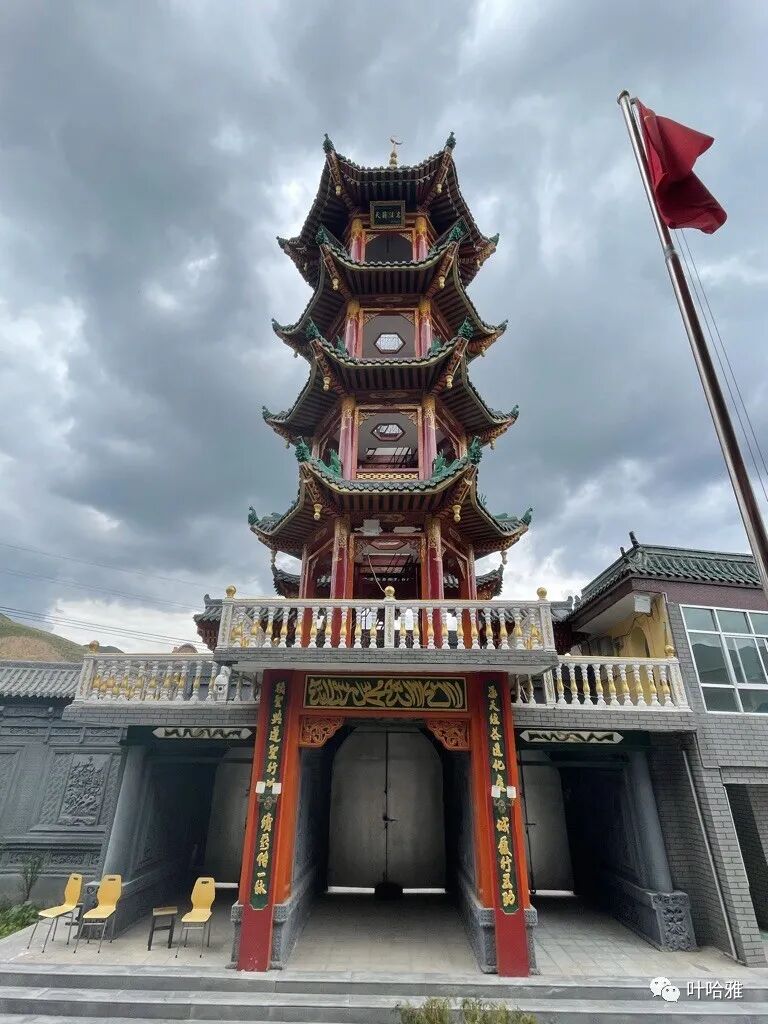
The Labrang Mosque is also called the Xiahe Mosque. It is the only mosque in the area, but it is quite large and its architectural style incorporates elements of Tibetan design.
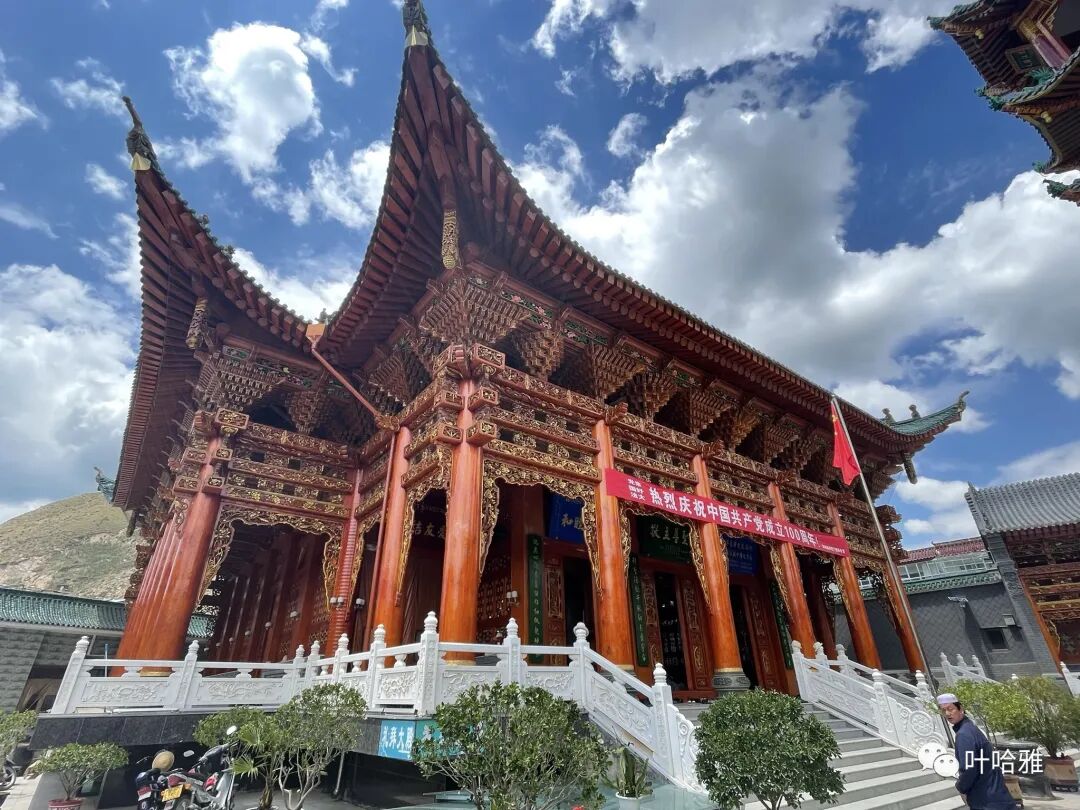
The Labrang Mosque was founded in 1854. Before building it, they had to get permission from the Labrang Monastery. At first, the mosque was just a temporary place for namaz, but as the number of local Hui Muslims grew, the mosque needed to expand. However, the Tibetans would not allow a large-scale construction, so they could only expand it slightly.
By 1936 (the 25th year of the Republic of China), a large number of refugees from Hezhou had flooded into Labrang following the Ma Zhongying incident of 1928. The mosque was clearly too small, so school board member Ma Letian and others held several talks with Huang Zhengqing, the commander of the Labrang Tibetan security forces (and brother of the 5th Jamyang), and finally secured a promise that they could fully expand the mosque without interference.
The newly built mosque covered a total area of 639 square meters. It featured a main prayer hall with a brick-and-wood structure consisting of five main rooms and three side rooms, a three-story pavilion-style minaret, 24 rooms for the east, north, and south wings, and 12 rooms for storage and bathing facilities. That was before the Reform and Opening-up period, though; the current building dates back to 1981.
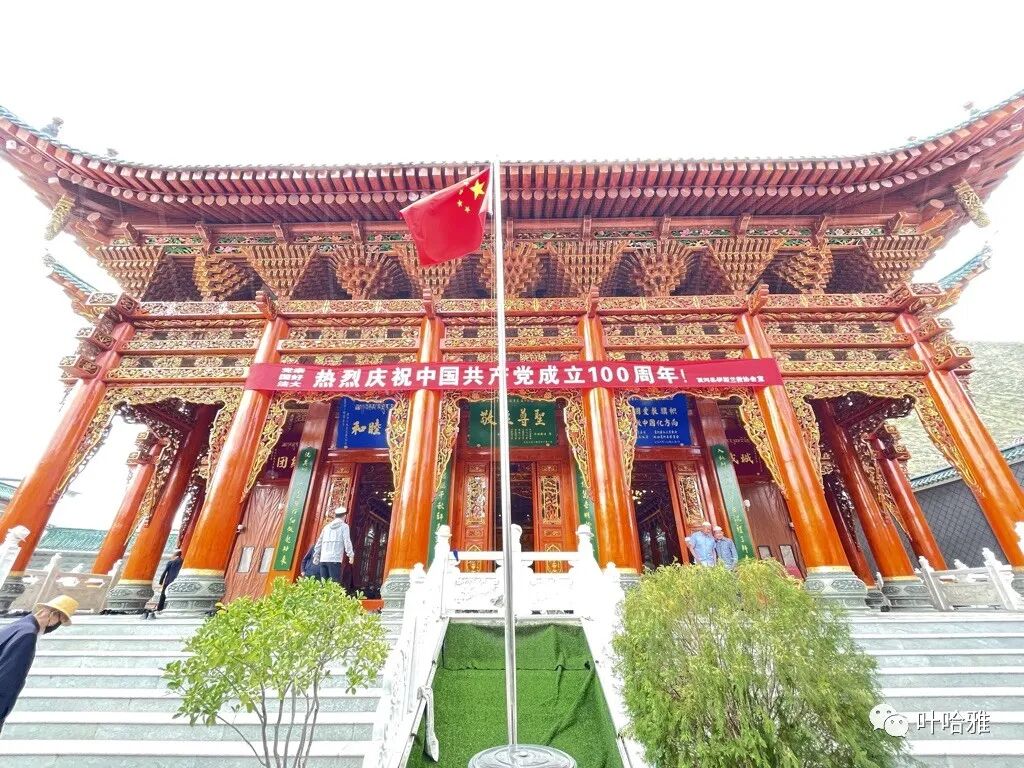
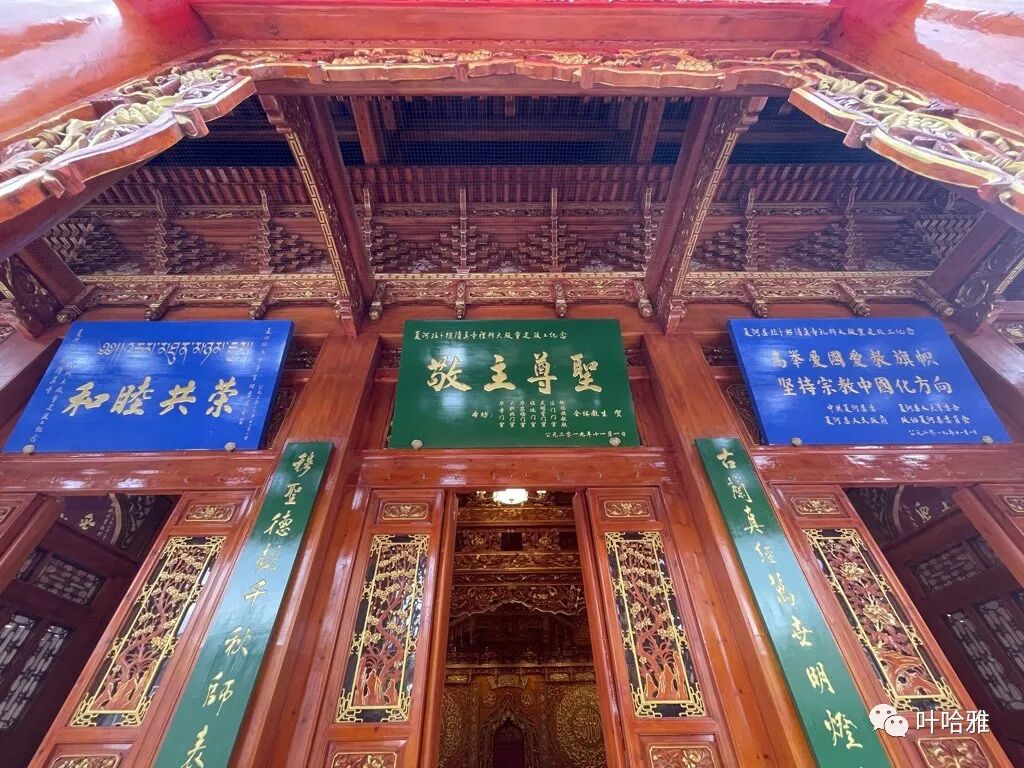
Once you reach Xiahe, you have entered the greater Tibetan region, so you can see the Tibetan style in the local residential architecture.
Although Xiahe County is a Tibetan area, there are halal restaurants everywhere. We chose a large restaurant called Jiusheng. This place does not sell alcohol and also offers lodging, so friends who need a place to stay can consider booking a room here. The dining area at Jiusheng is very spacious, and the dishes have a strong local character. I ordered a dish called Kekexili, which is made with wheat kernels. It was delicious, but the portion was huge. I didn't finish it, so I packed it up and ate the rest as a snack on the road.
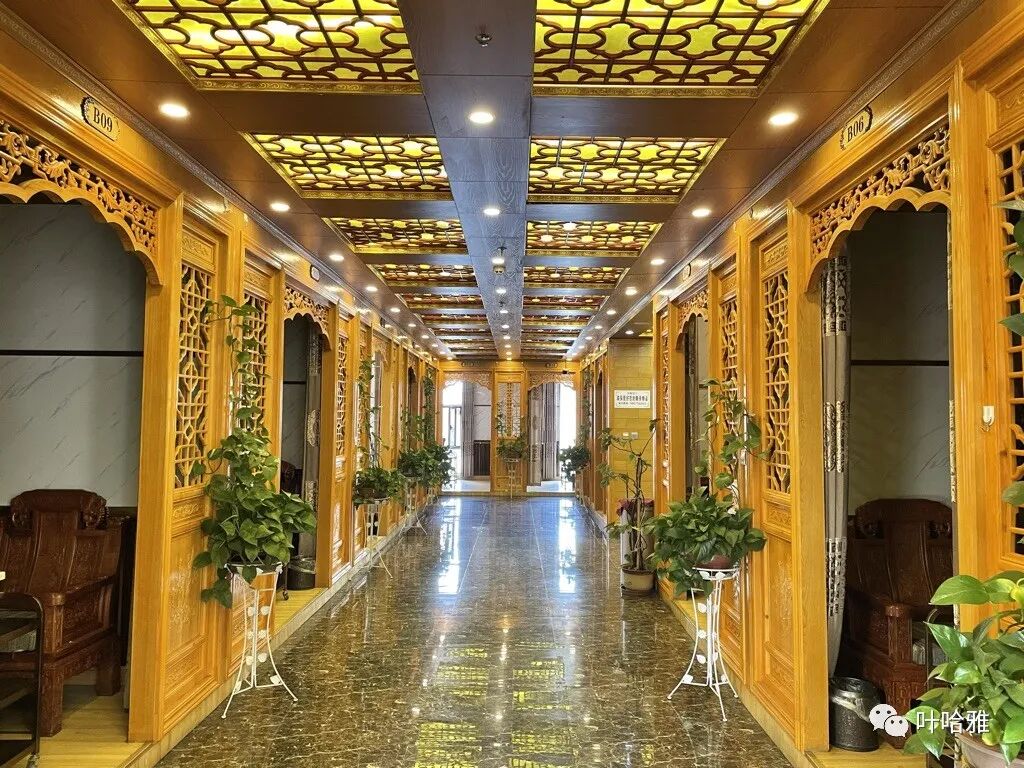
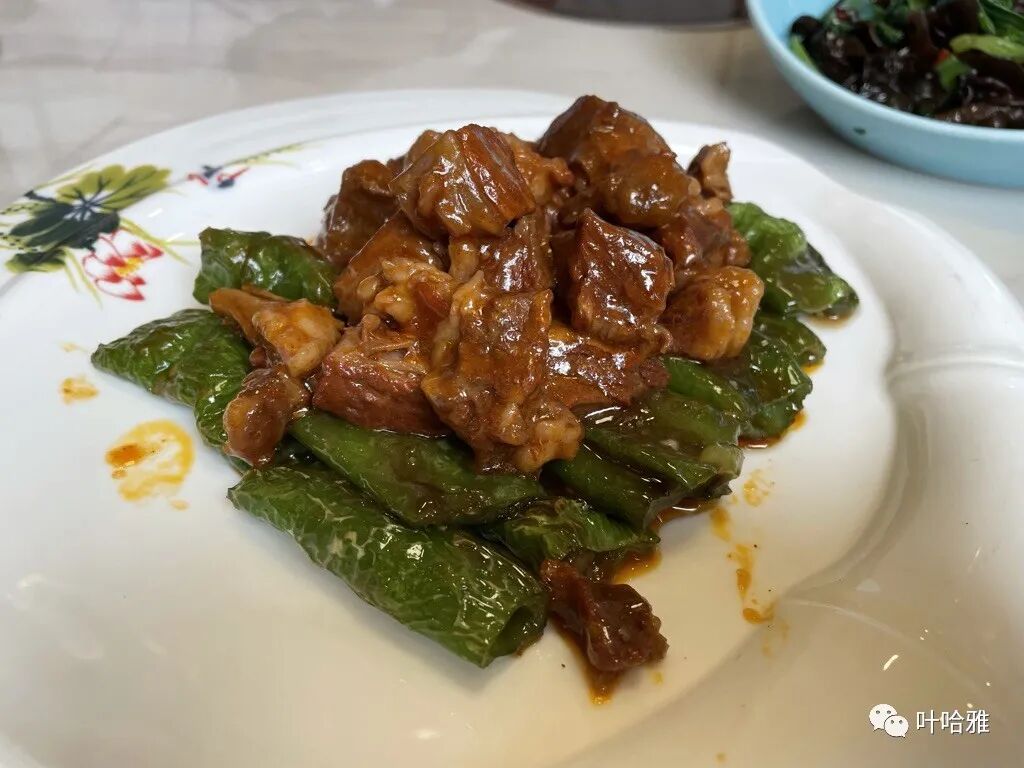
Stir-fried beef with tiger skin peppers (hupi lazi shao niurou)
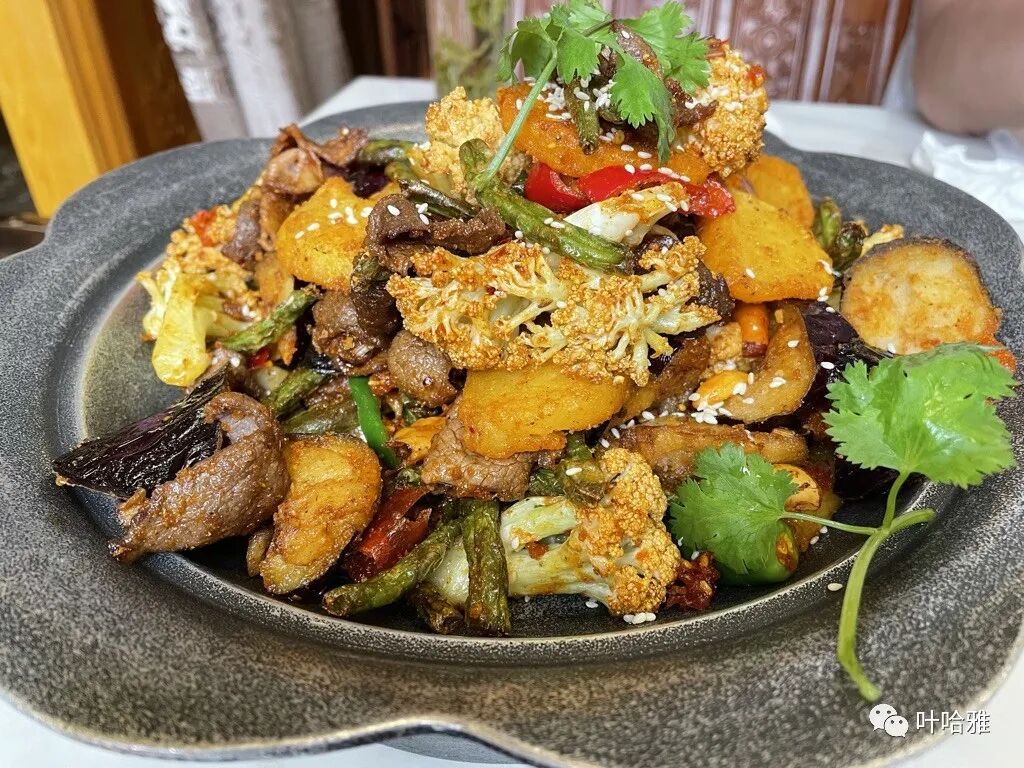
Rustic farmhouse-style dishes (fengwei nongjia cai)
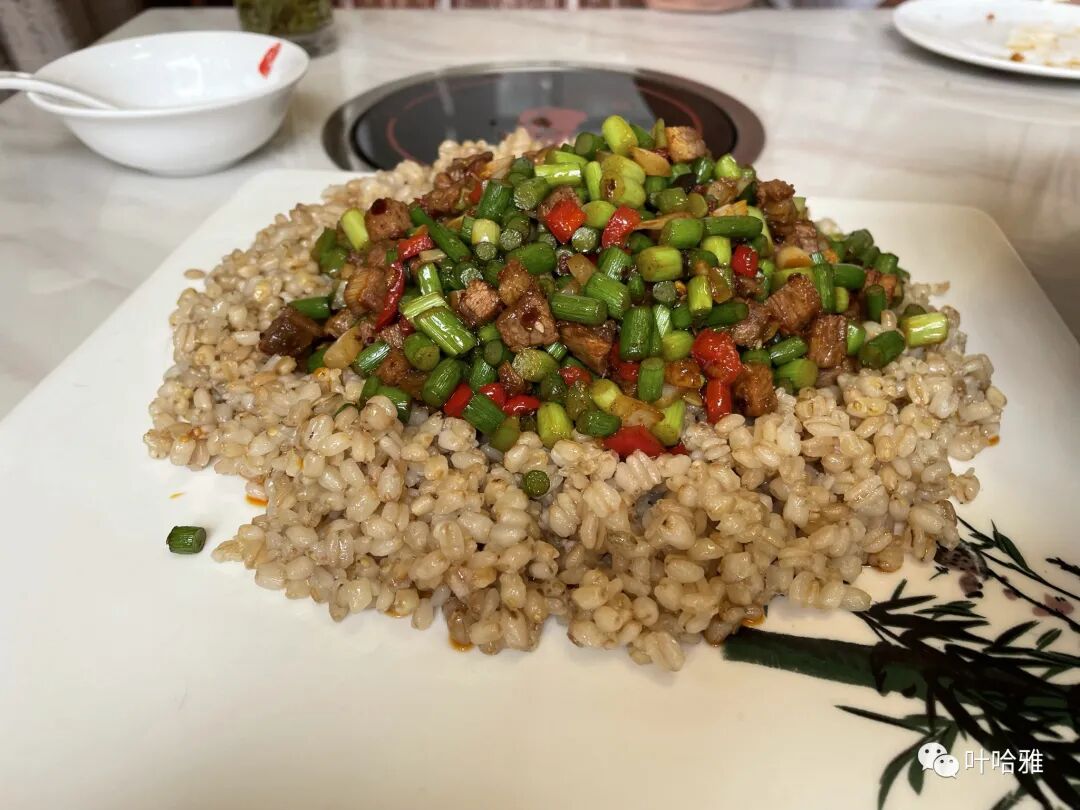
Kekexili (a dish made with wheat kernels)
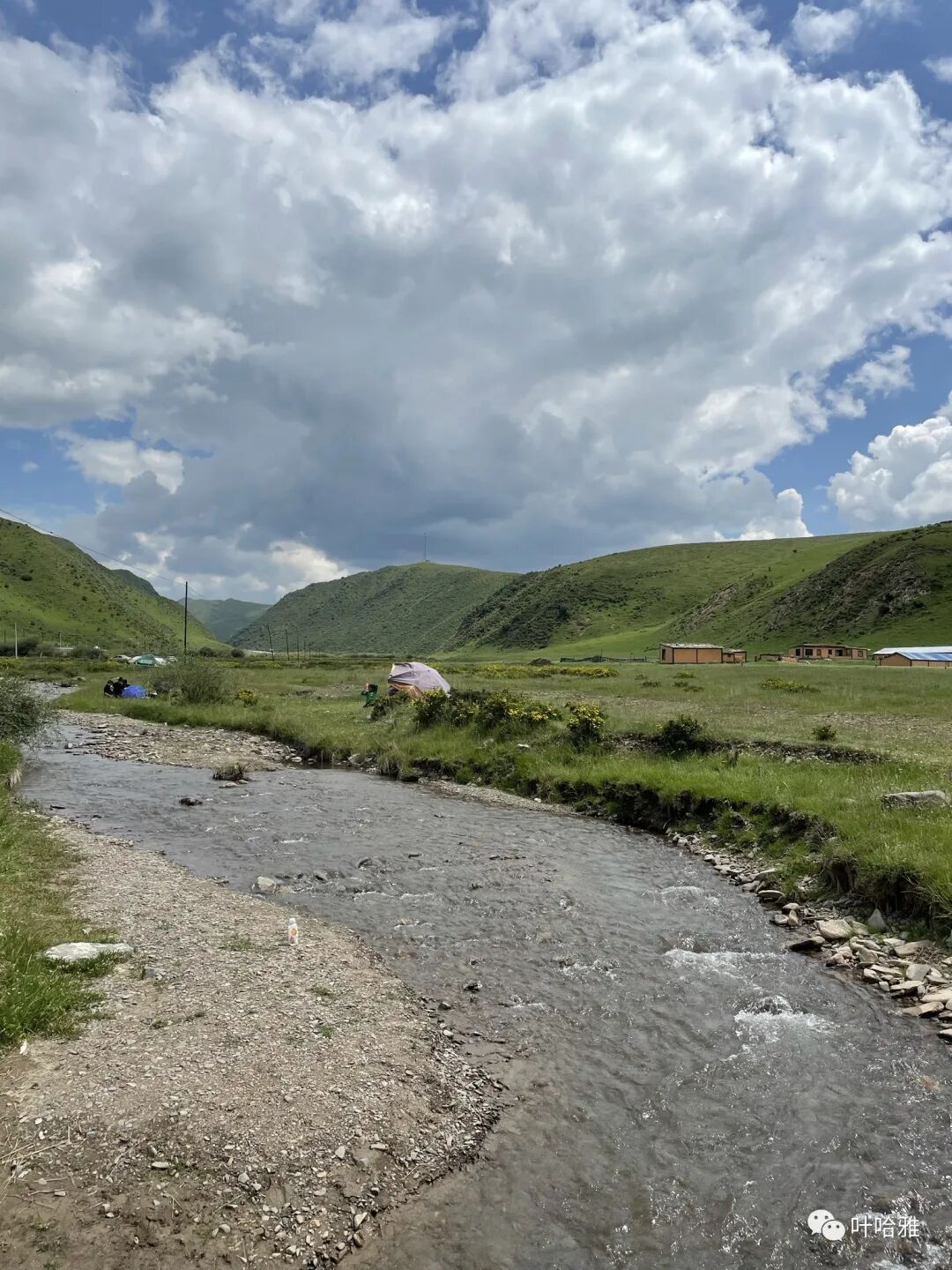
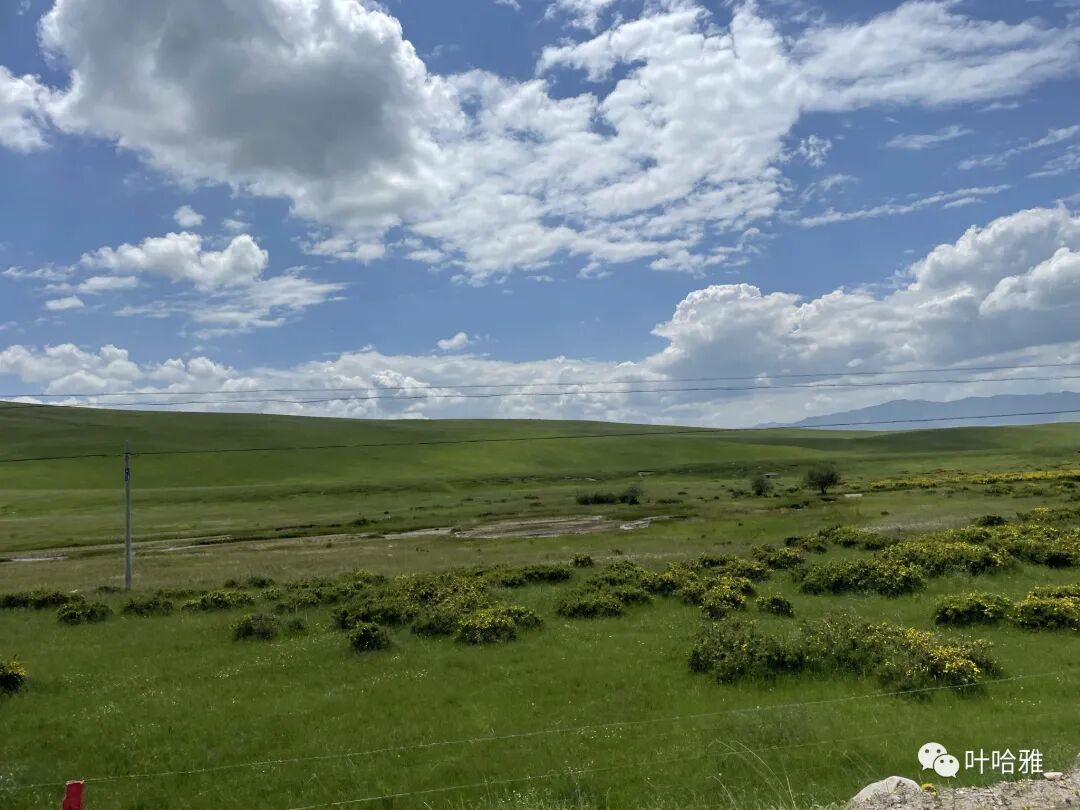
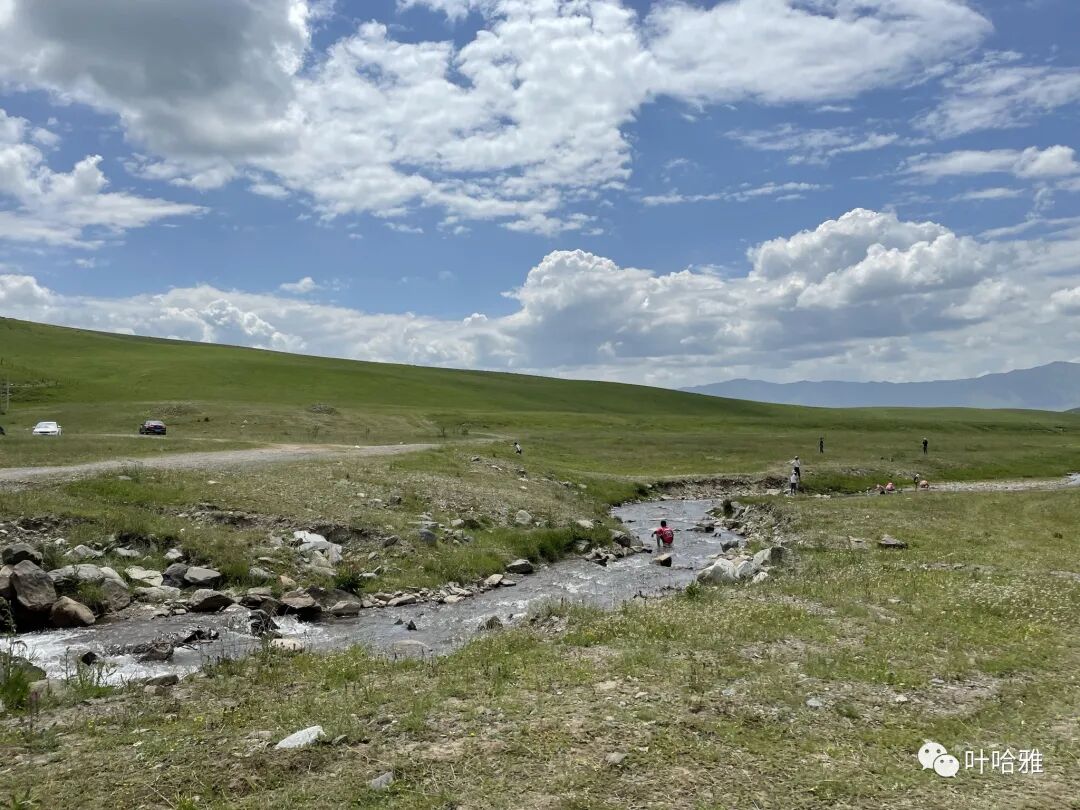
Leaving Xiahe County and heading south, our grassland road trip began. Along both sides of the road lies the endless Sangke Grassland. The Gannan region has many grasslands, and Sangke is the first large one we passed through.
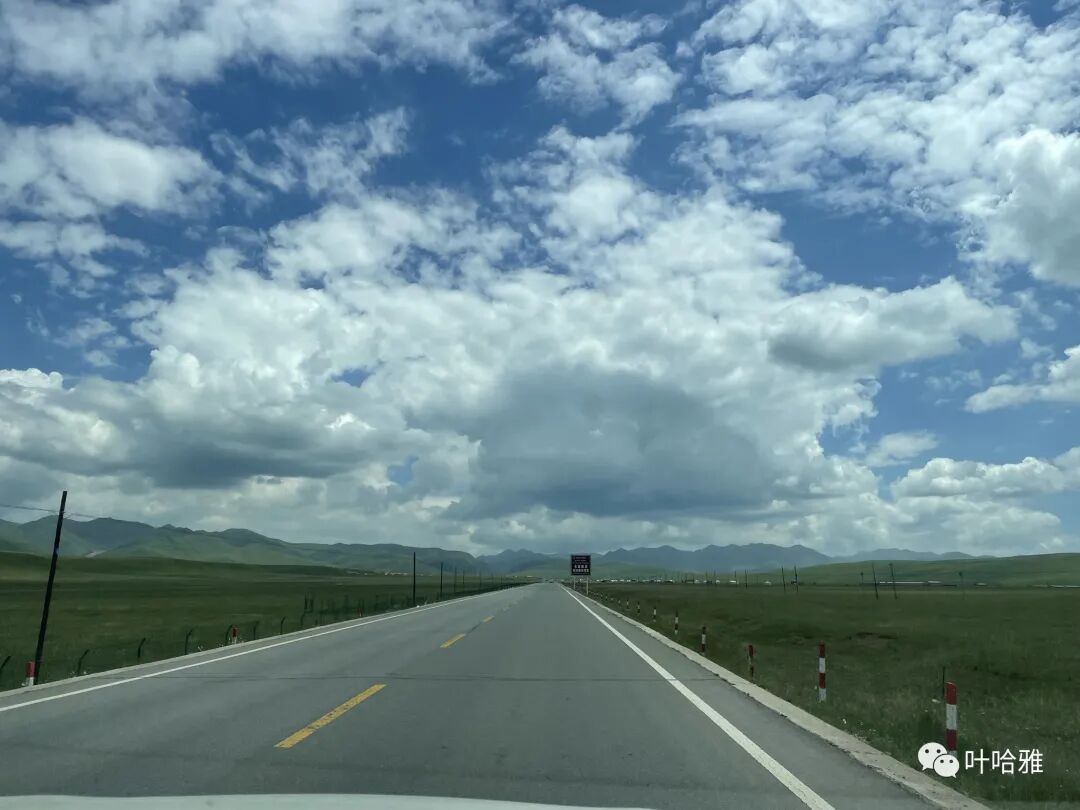
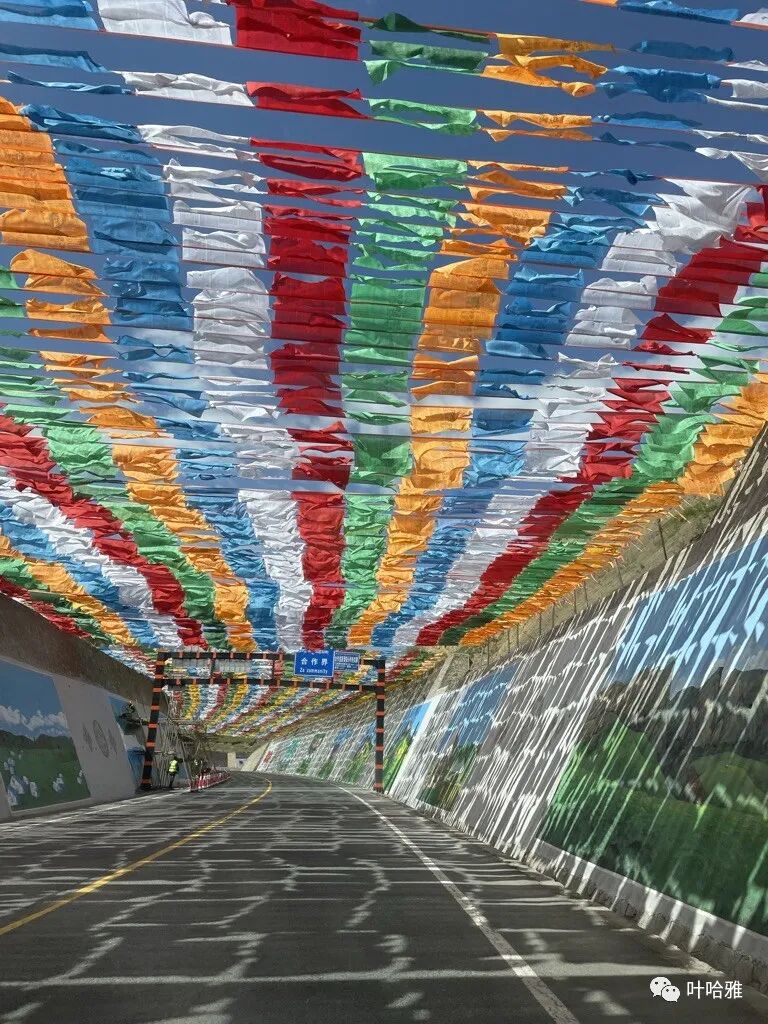
Prayer flag tunnel (jingfan suidao)
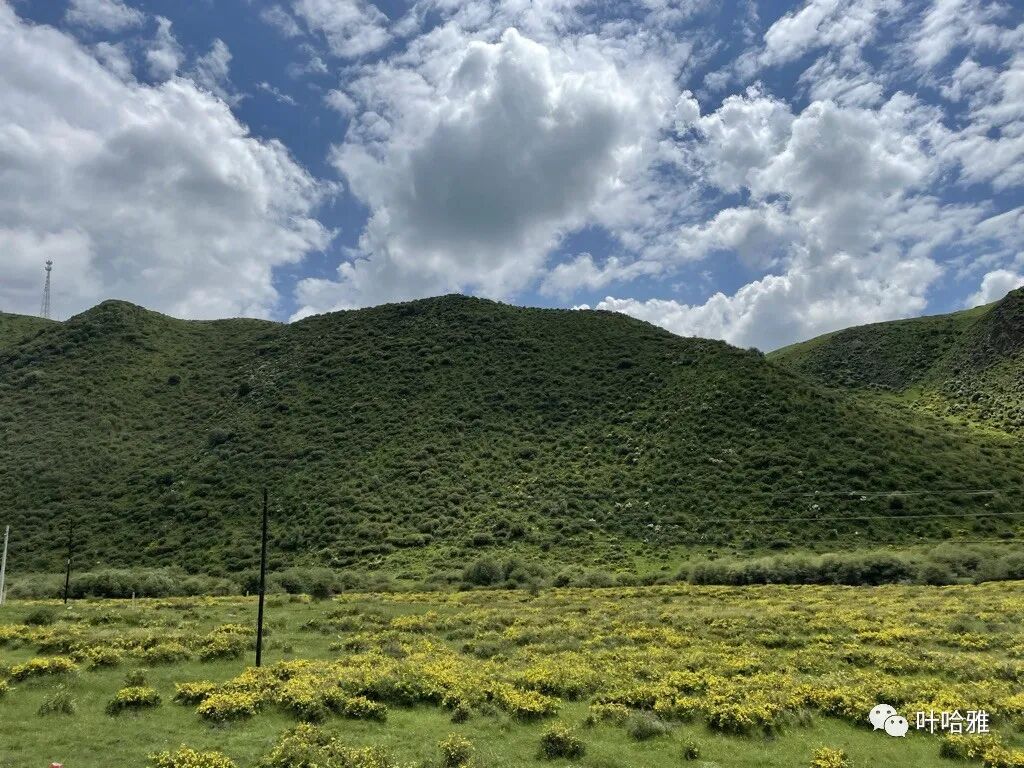
Along the way, we saw some nice scenery by the road and stopped to take photos. Just as we were about to leave, a child and an elderly person, both dressed in Tibetan clothing, blocked us to demand money. Of course, I didn't pay because I had heard about this behavior before. I stepped on the gas, left them behind, and drove off. I suggest everyone take photos at public viewing platforms to avoid any unpleasant situations.
Hezuo City
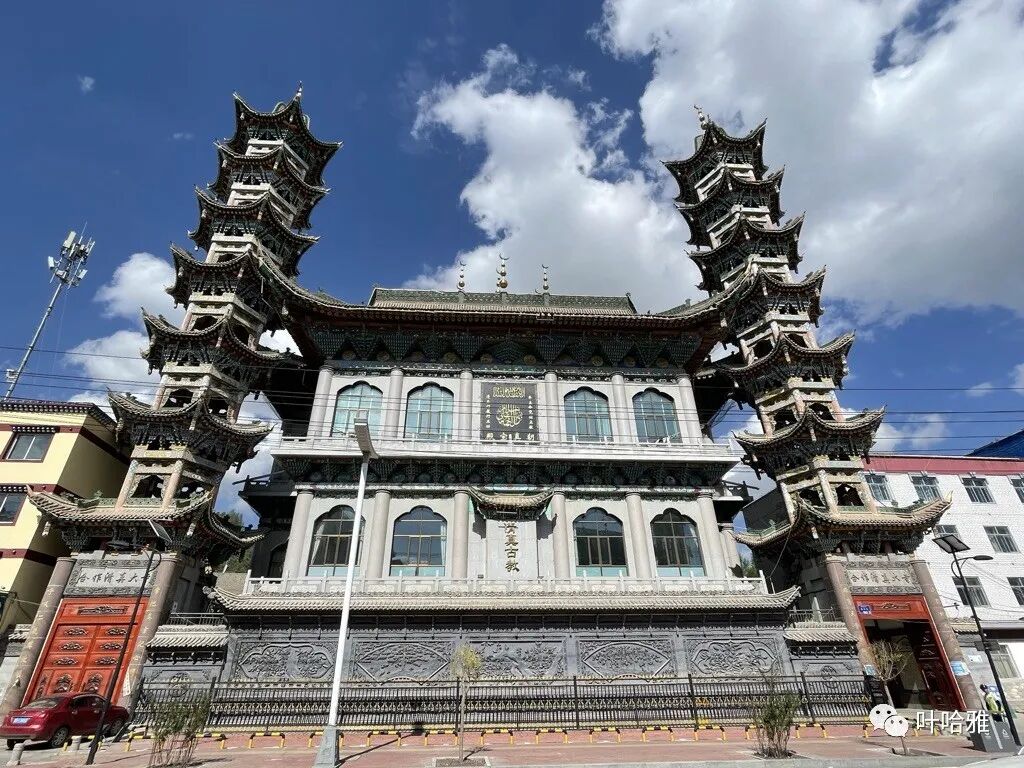
Hezuo Grand Mosque
Hezuo Grand Mosque was first built in 1834. It now serves over 10,000 congregants, most of whom are followers of the Huasi menhuan, though others belong to different menhuan. The current building was constructed in 1995.
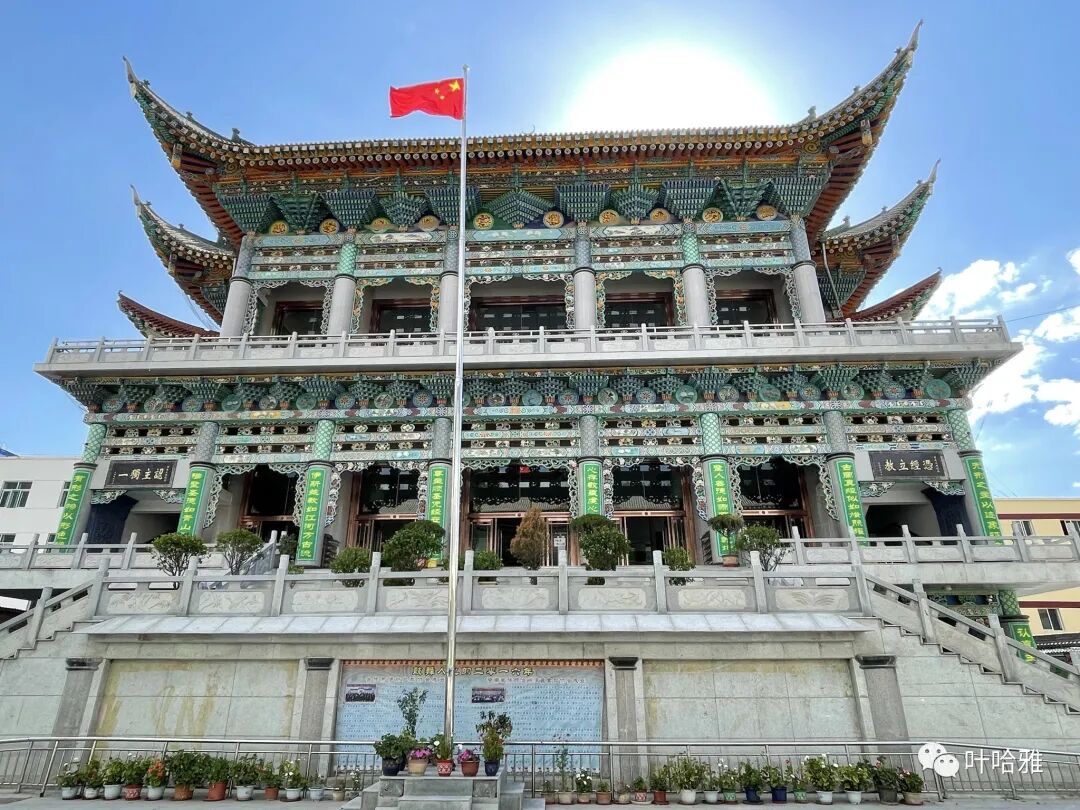
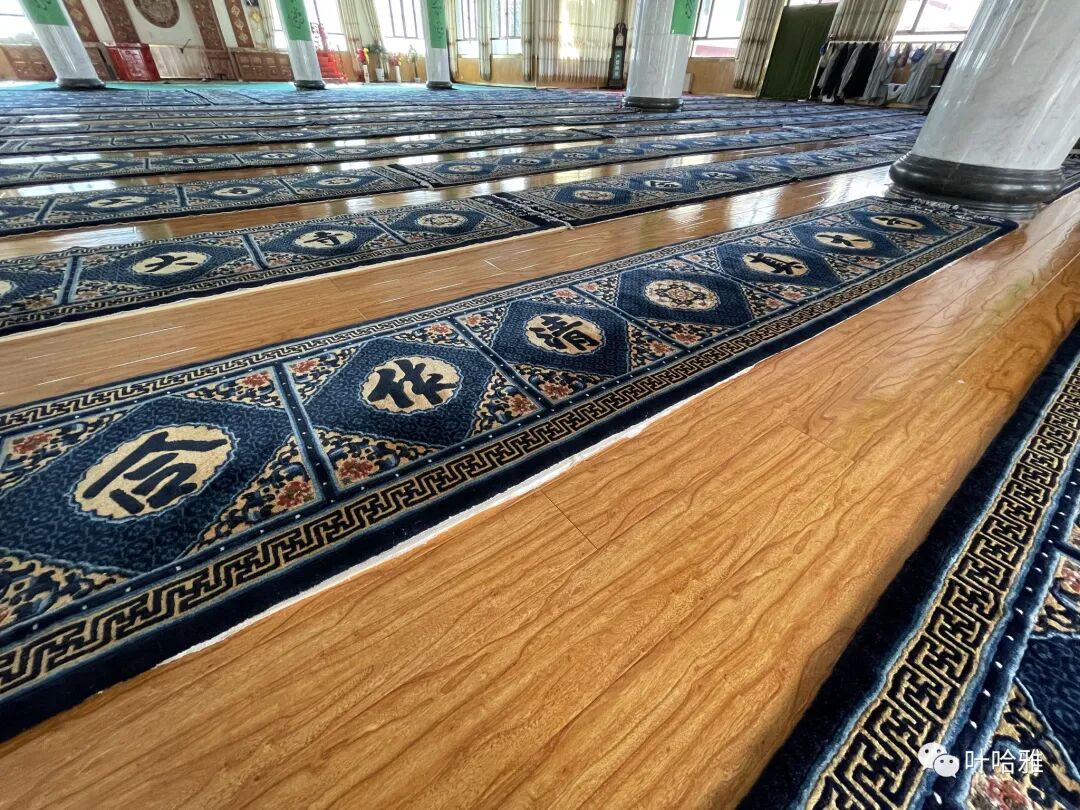
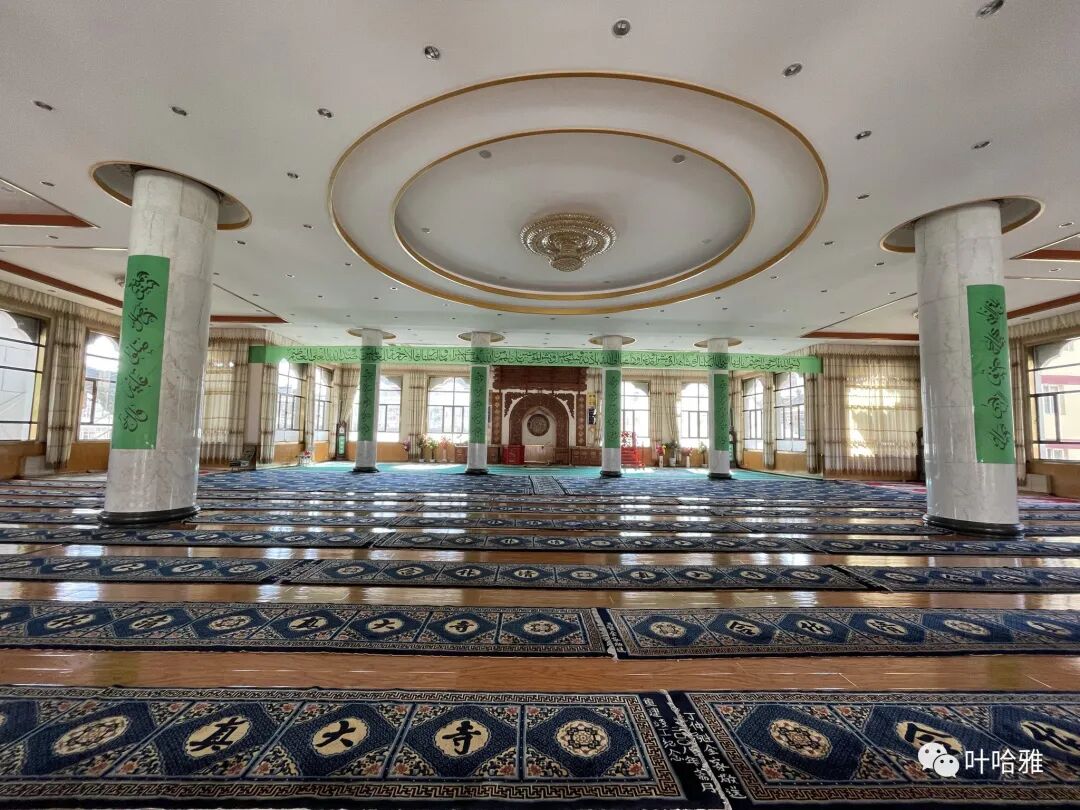
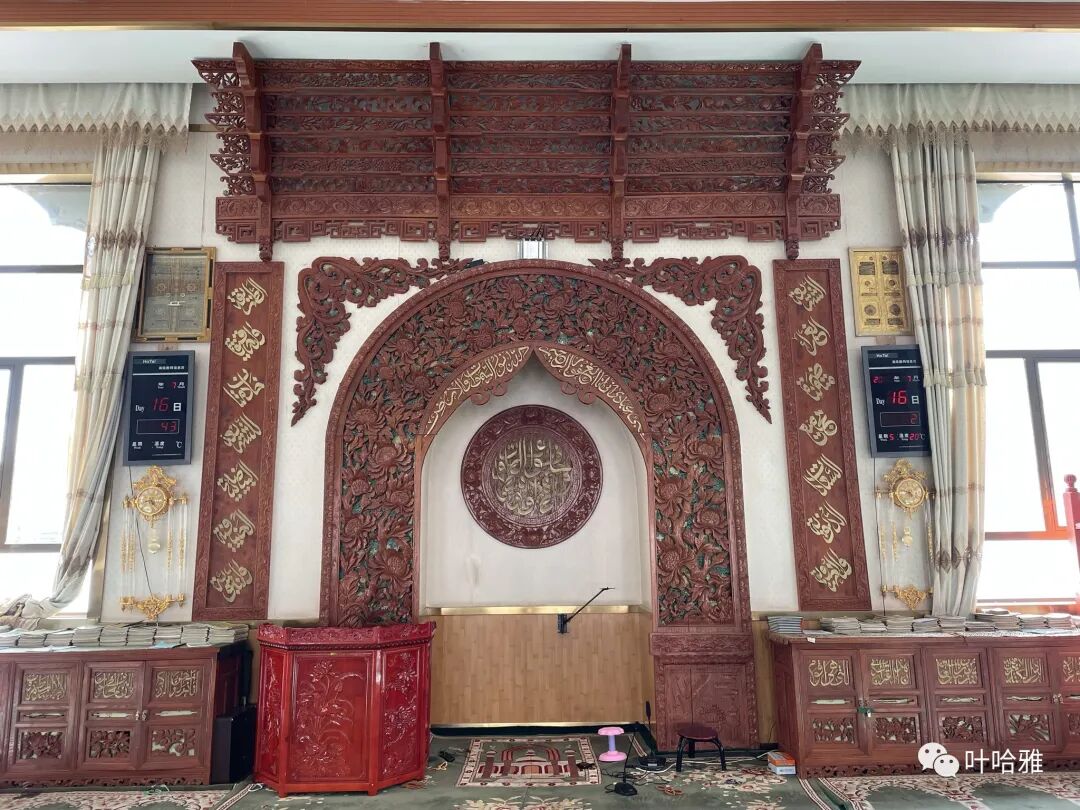
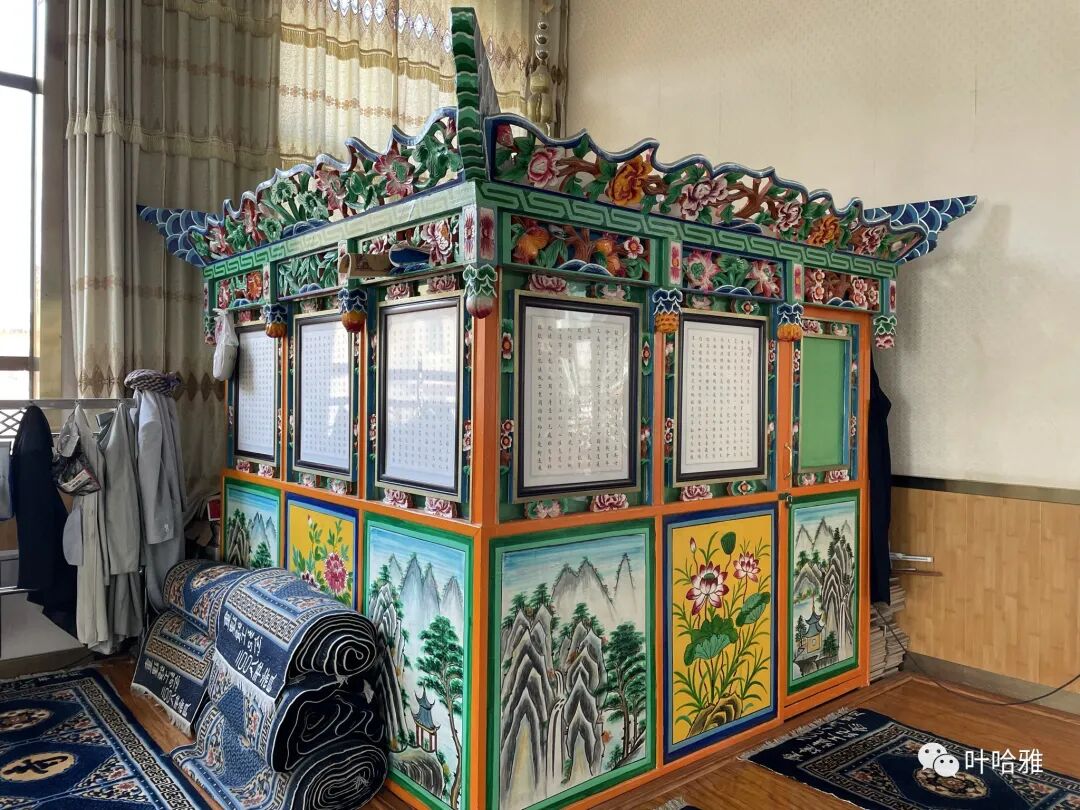
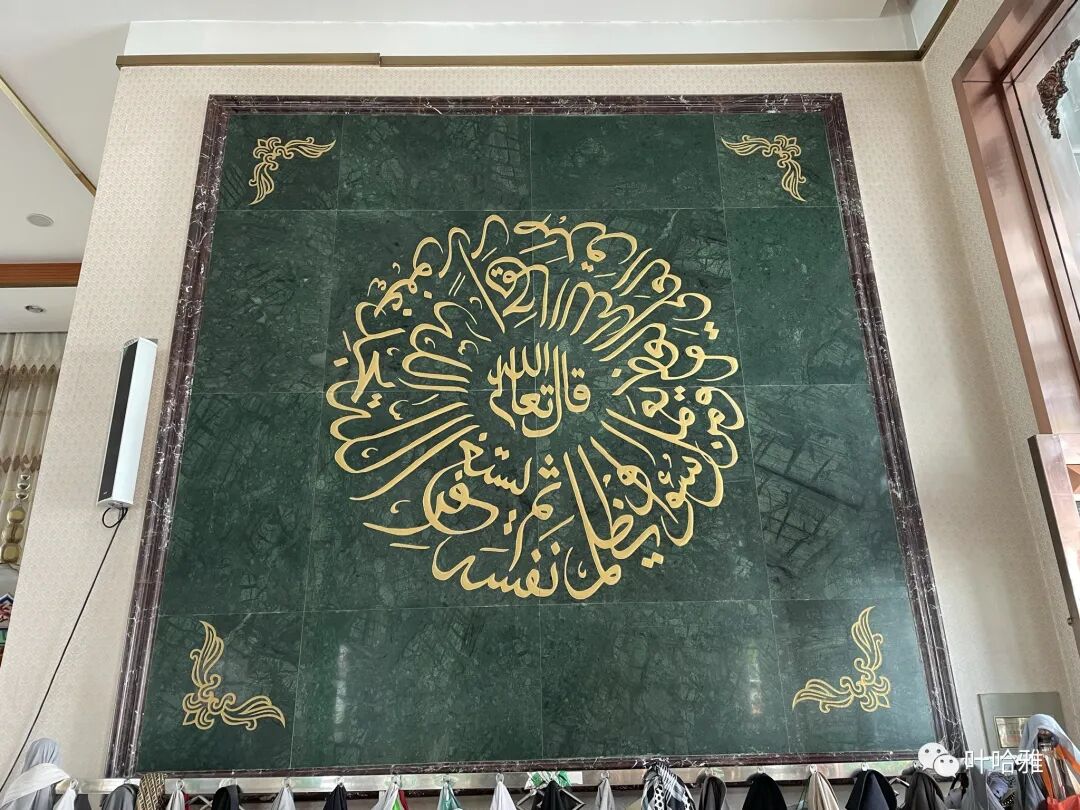
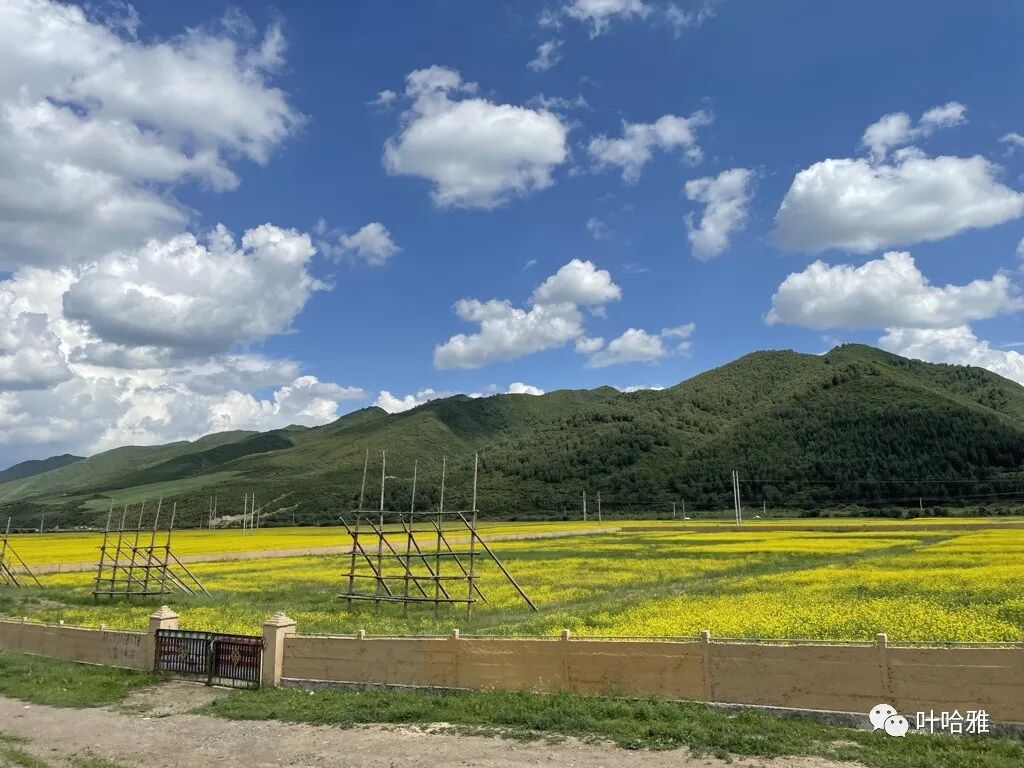
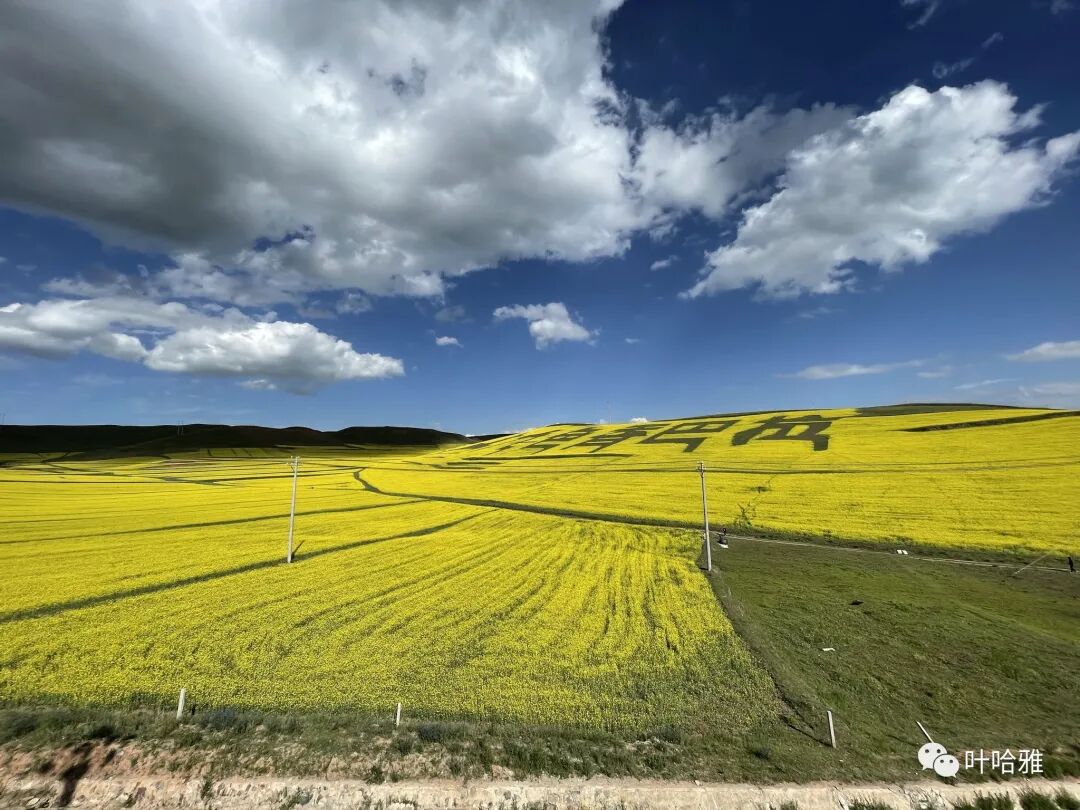
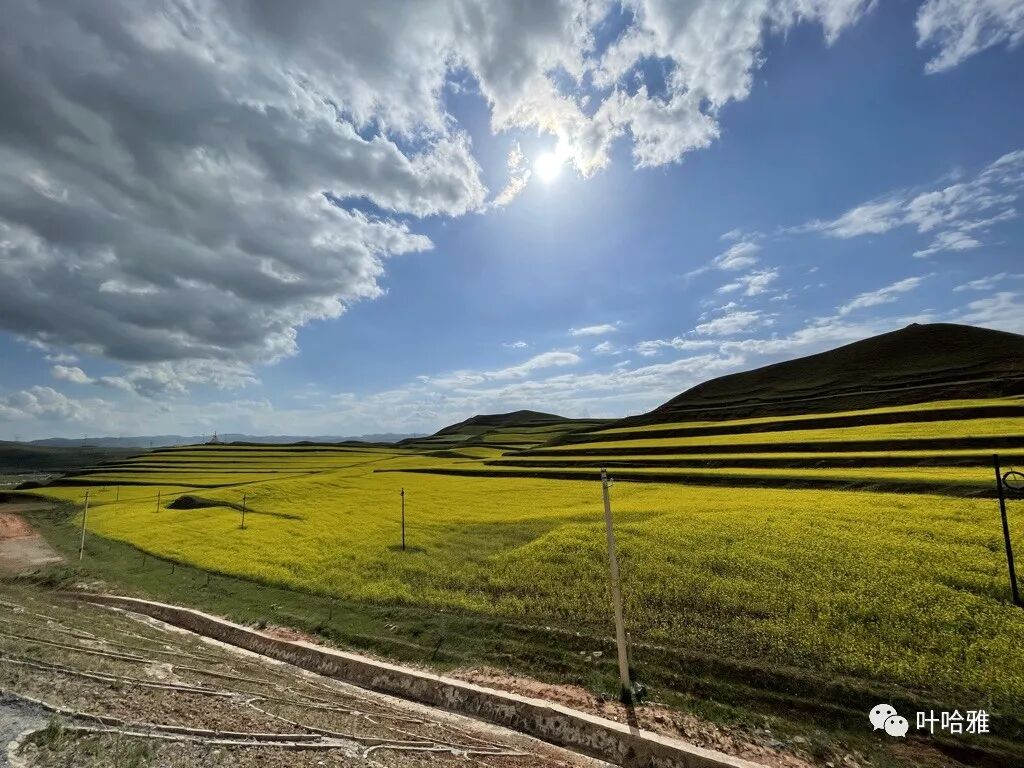
We stopped briefly in Hezuo to pray and rest before heading south. Along the way, we passed a sea of rapeseed flowers right next to the Hezuo highway. Against the backdrop of blue skies and white clouds, the golden flowers were truly beautiful.
Meiren Grassland
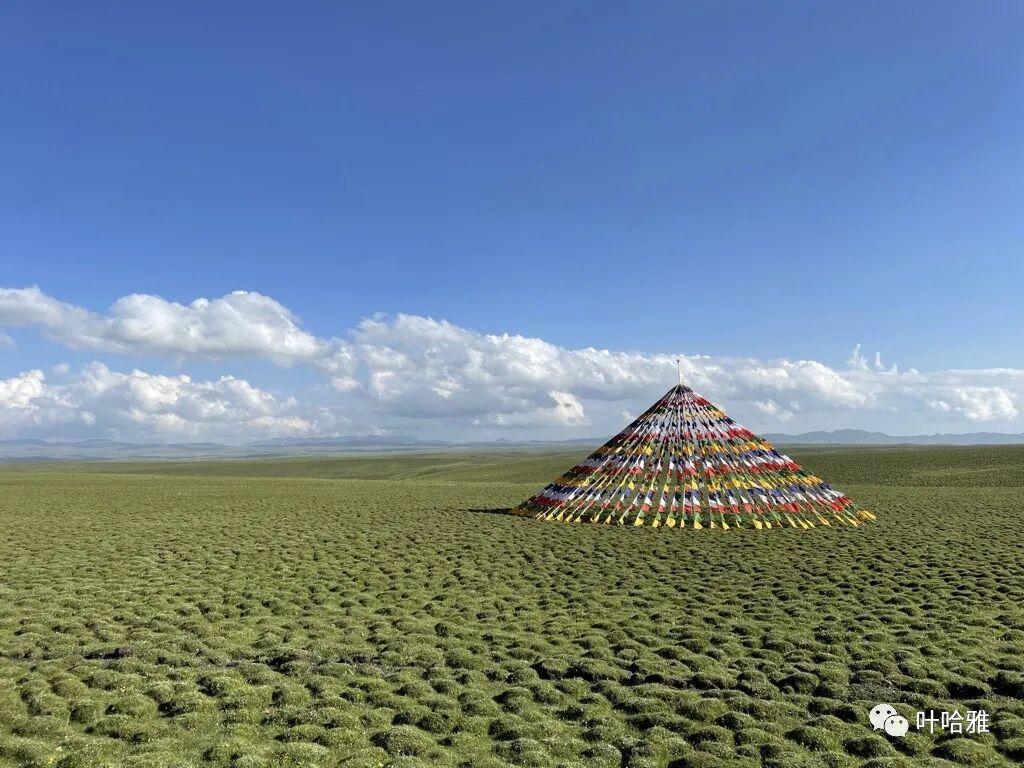
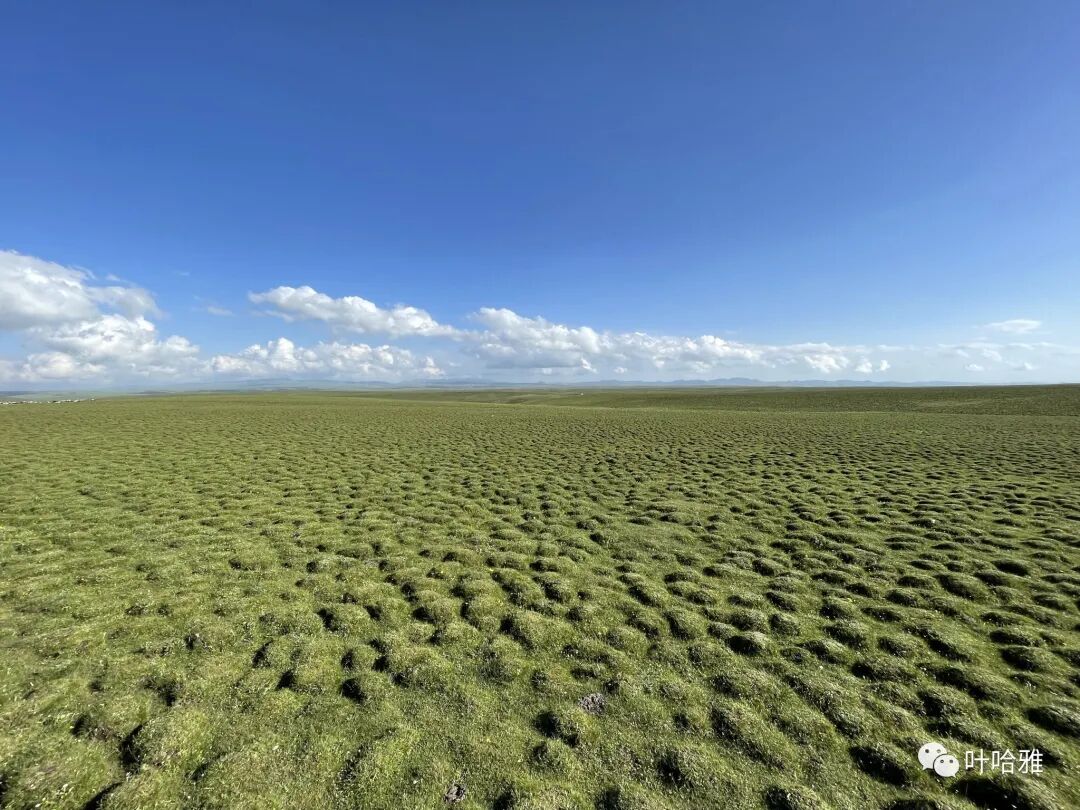
Meiren Grassland
The Meiren Grassland sits at an altitude of over 3,600 meters. It features the alpine meadow landscape unique to the Qinghai-Tibet Plateau. I first thought the rounded mounds of grass were man-made, but after walking closer, I realized they formed naturally. This landscape forms in low-lying, poorly drained areas of the grassland where marshes develop, shaped by plants, soil, weathering, and freezing.
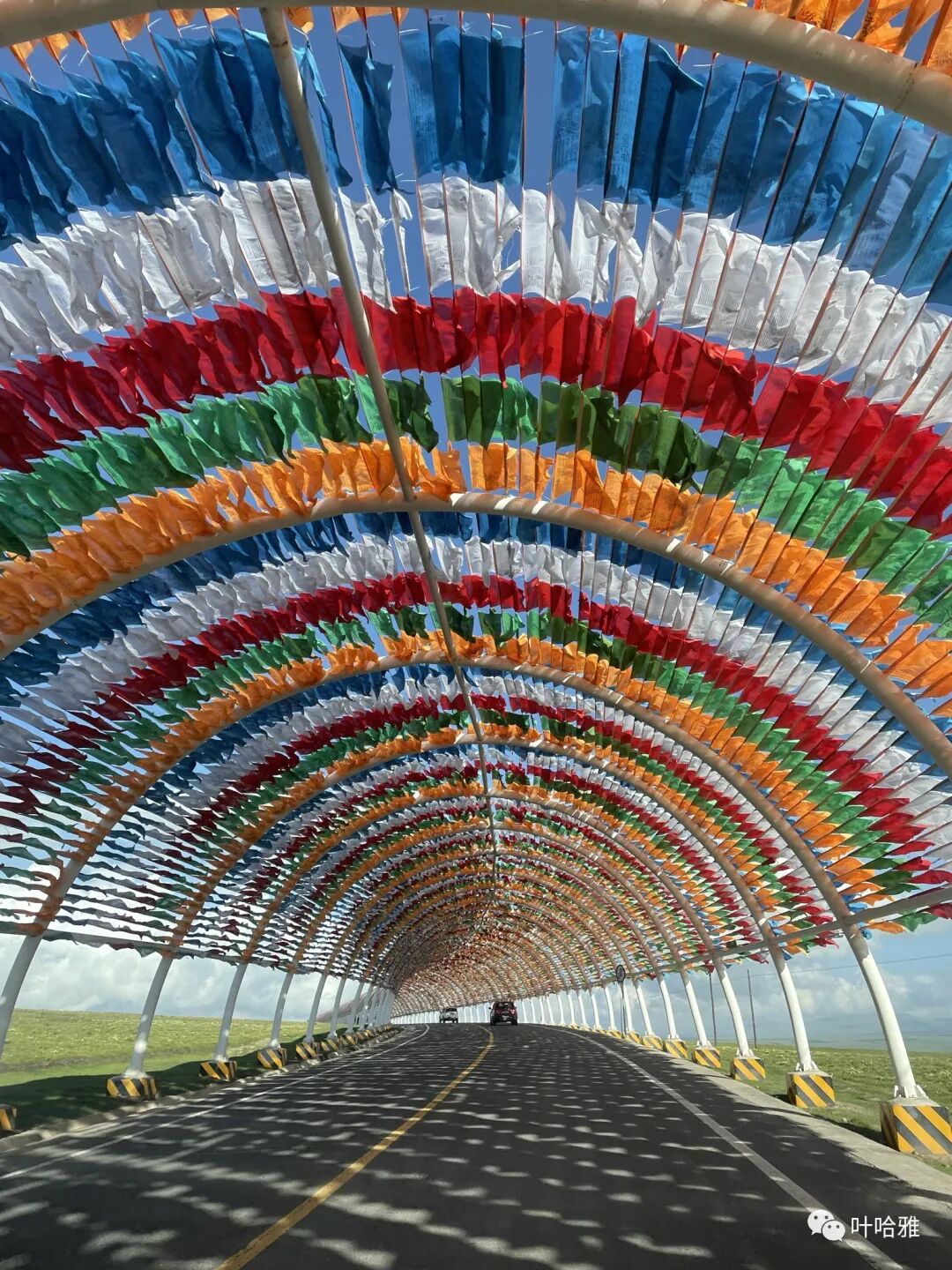
Prayer flag tunnel (jingfan suidao)
Be careful: while the prayer flag tunnels on the highway are beautiful, do not stop to take photos, as it is dangerous.
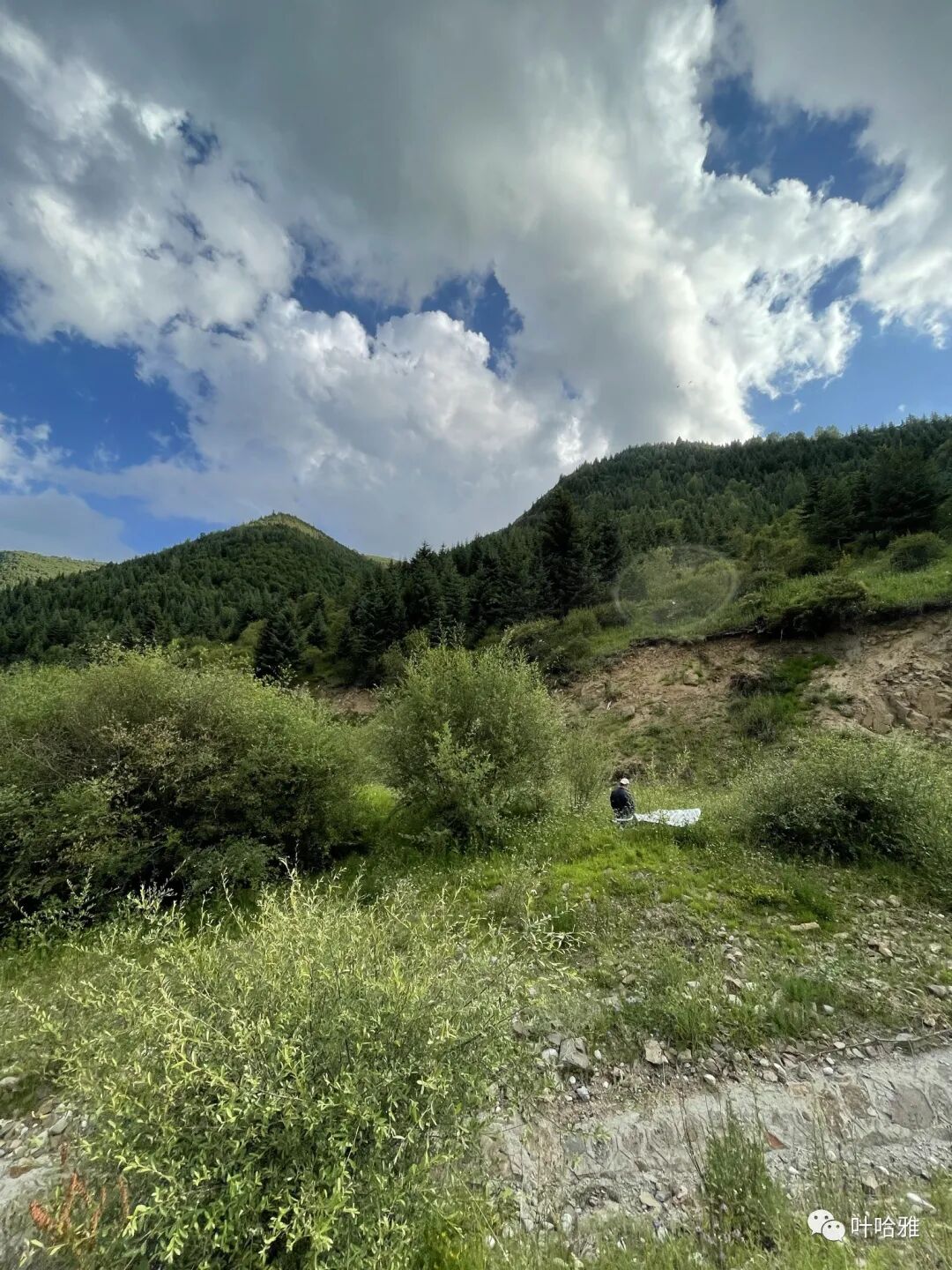
The figure in the distance is my father-in-law praying by the side of the road.
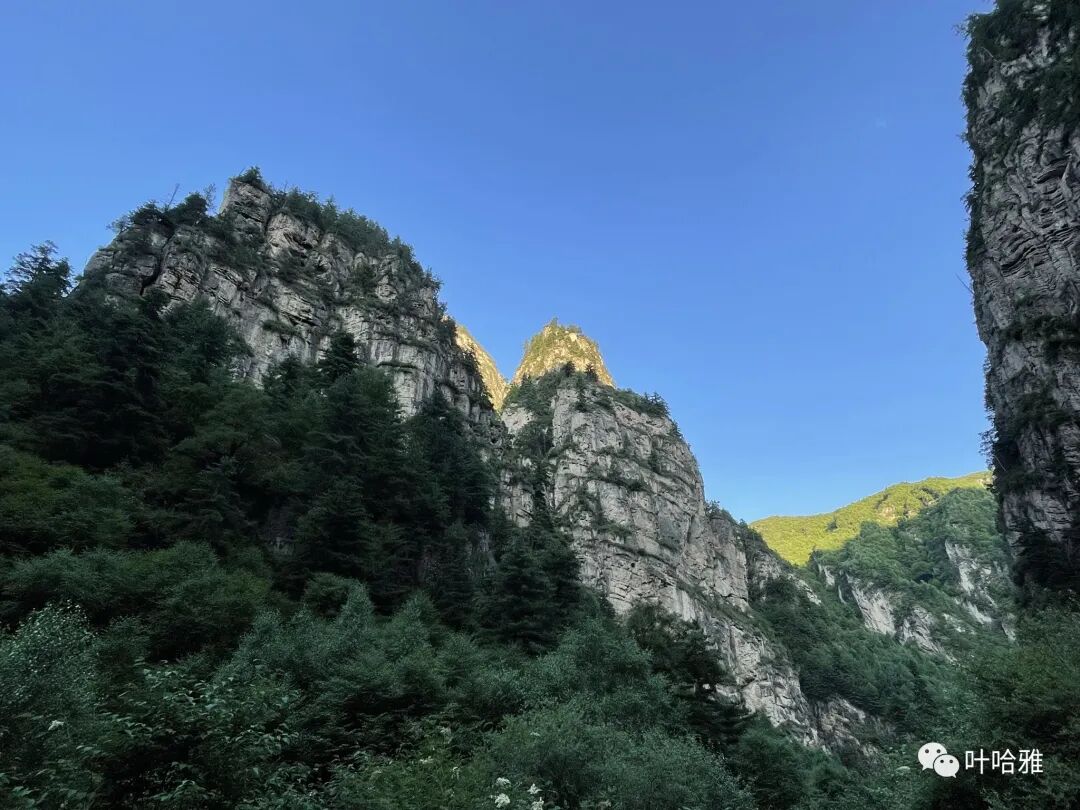
Yeliguan Town
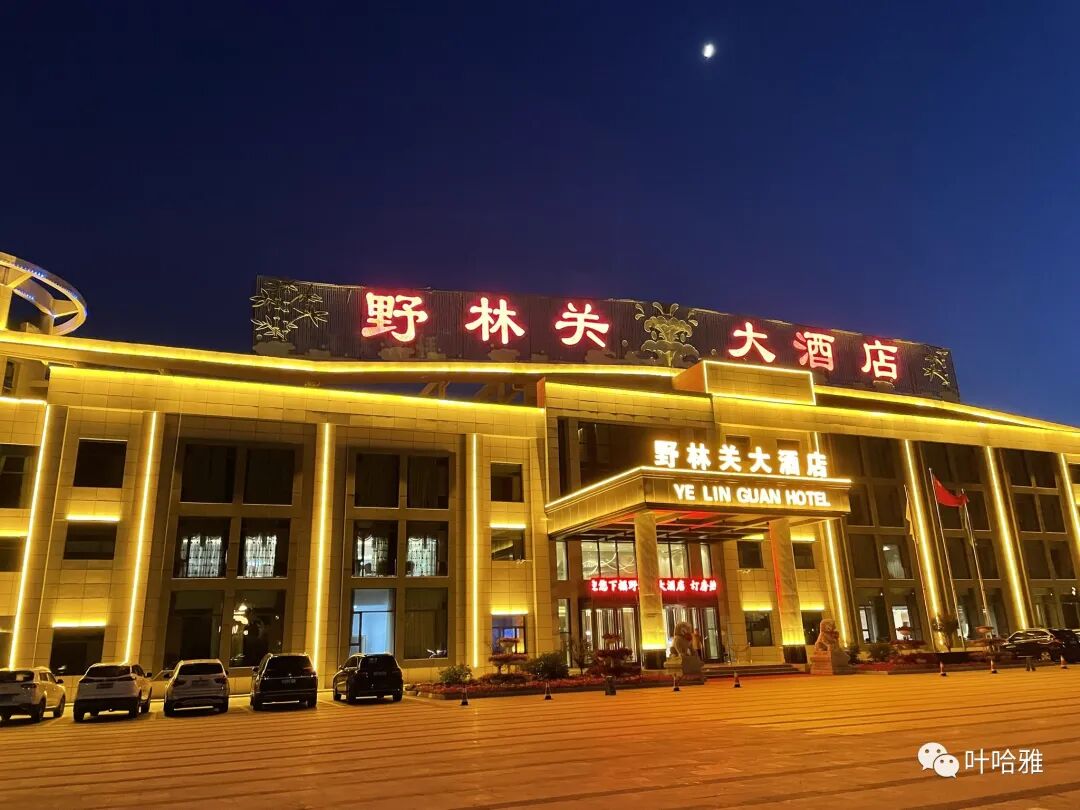
Yelinguan Hotel
We arrived in Yeliguan Town that evening and checked into the Yelinguan Hotel. It is one of the better hotels in town, costing over 200 yuan. It is a halal hotel and serves halal breakfast. There are very few halal restaurants in Yeliguan, and there is not much to do in town, so I suggest considering other places to stay overnight.
Day 3: Yeliguan National Forest Park
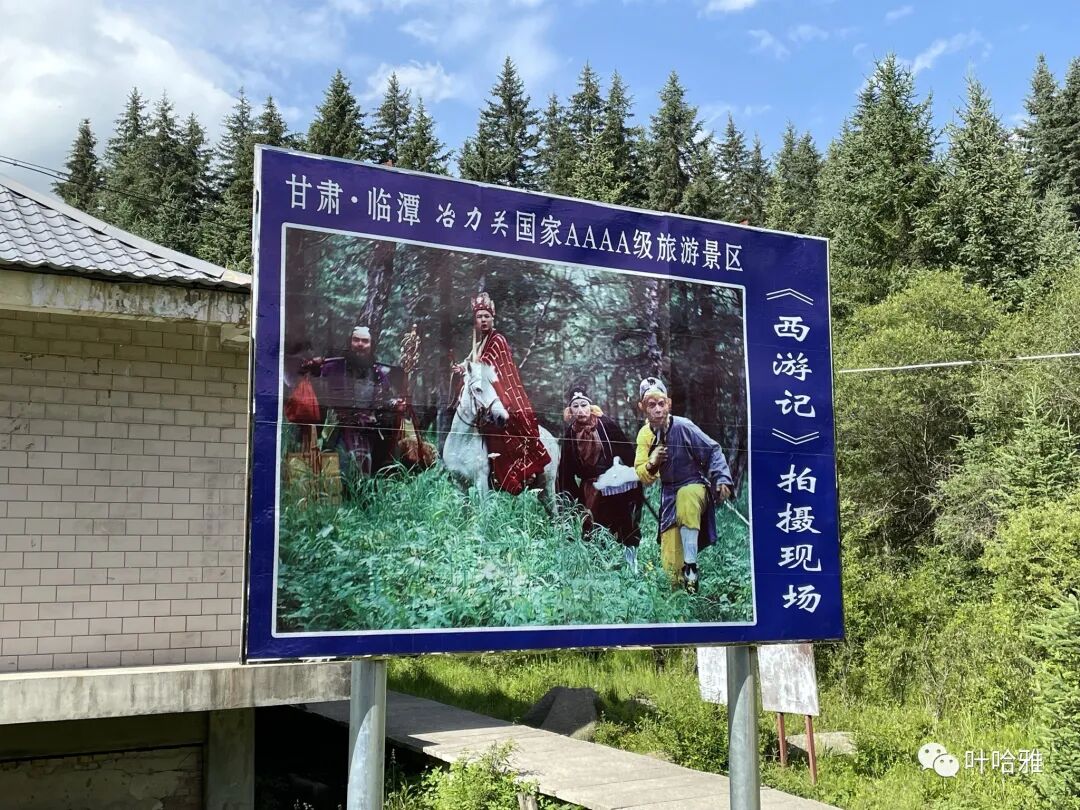
A filming location for Journey to the West
You can drive into Yeliguan National Forest Park. Tickets are 78 yuan. If you do not have a car, you need to take the park's cable car. There is not much special scenery inside, though there are some farmed deer. To reach the top of the mountain, you need to take another cable car, which costs 20 yuan one way or 40 yuan round trip. If you do not want to pay, you have to hike up for over an hour.
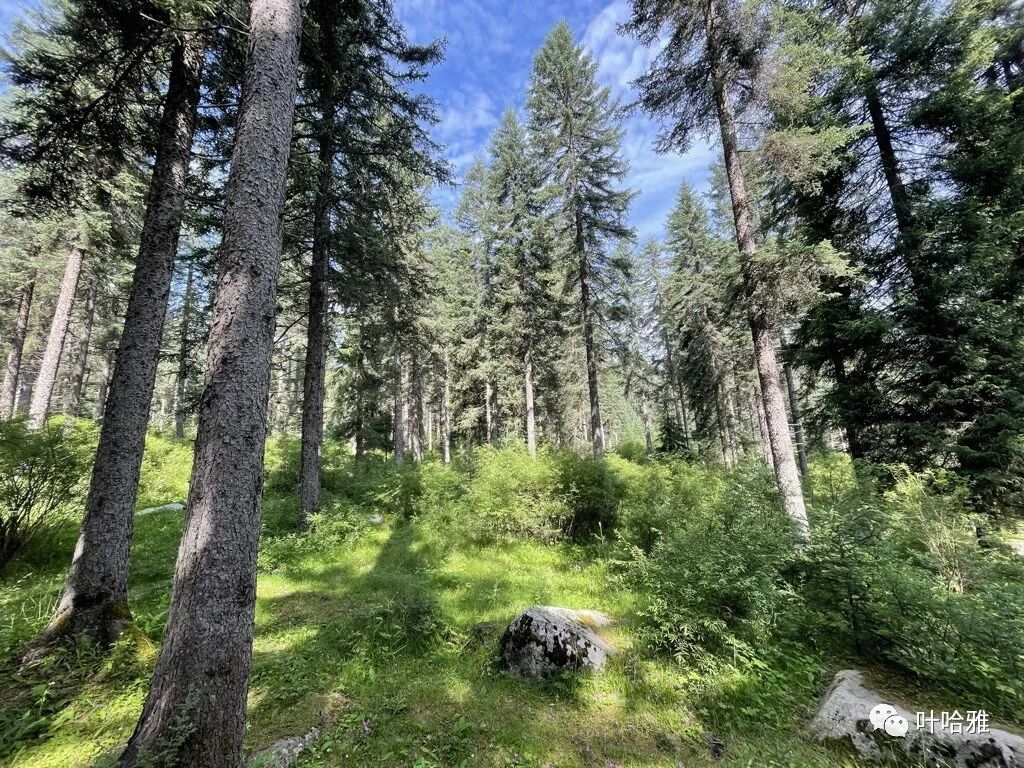
When I was walking in the woods, I did not know it was a filming location for Journey to the West. It just felt familiar, like I had seen it on TV. When I visited Jiuzhaigou in March this year, I checked out one of the filming locations there. I did not expect the 1983 version of Journey to the West to have put so much effort into choosing its outdoor locations.
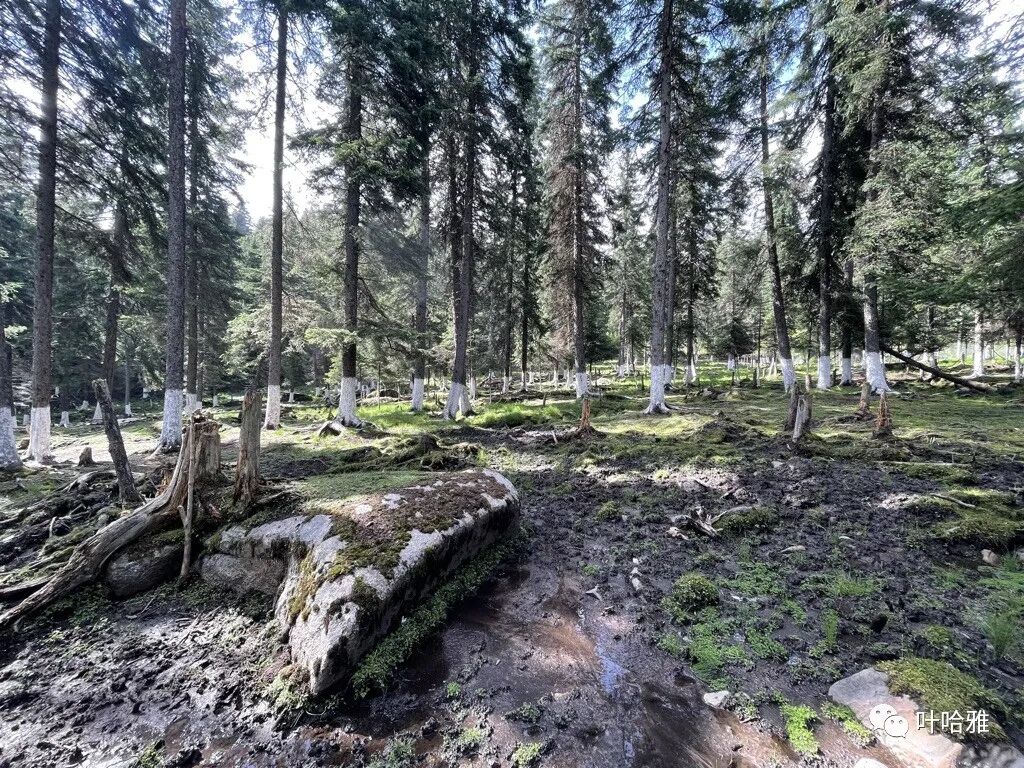
I do not think Yeliguan Forest Park offers good value for money. If you are struggling to choose between many Gannan attractions, I suggest skipping this one.
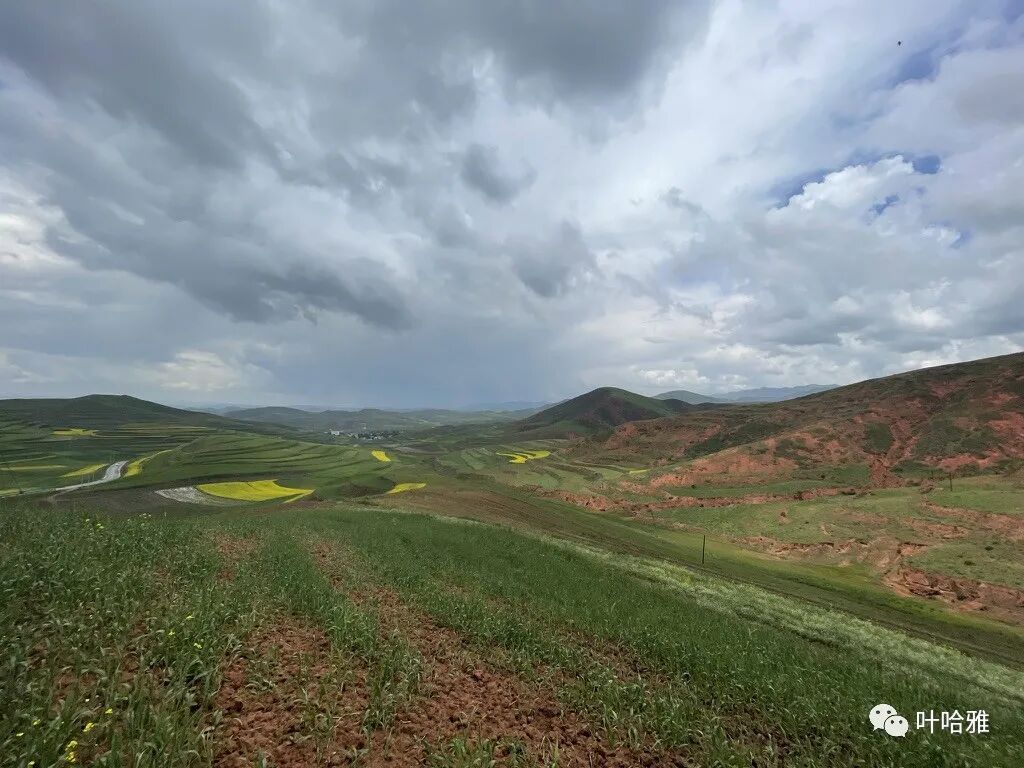
After driving for nearly two hours from Yeliguan, we arrived in Lintan County. The small county town in the distance in the photo is Lintan.
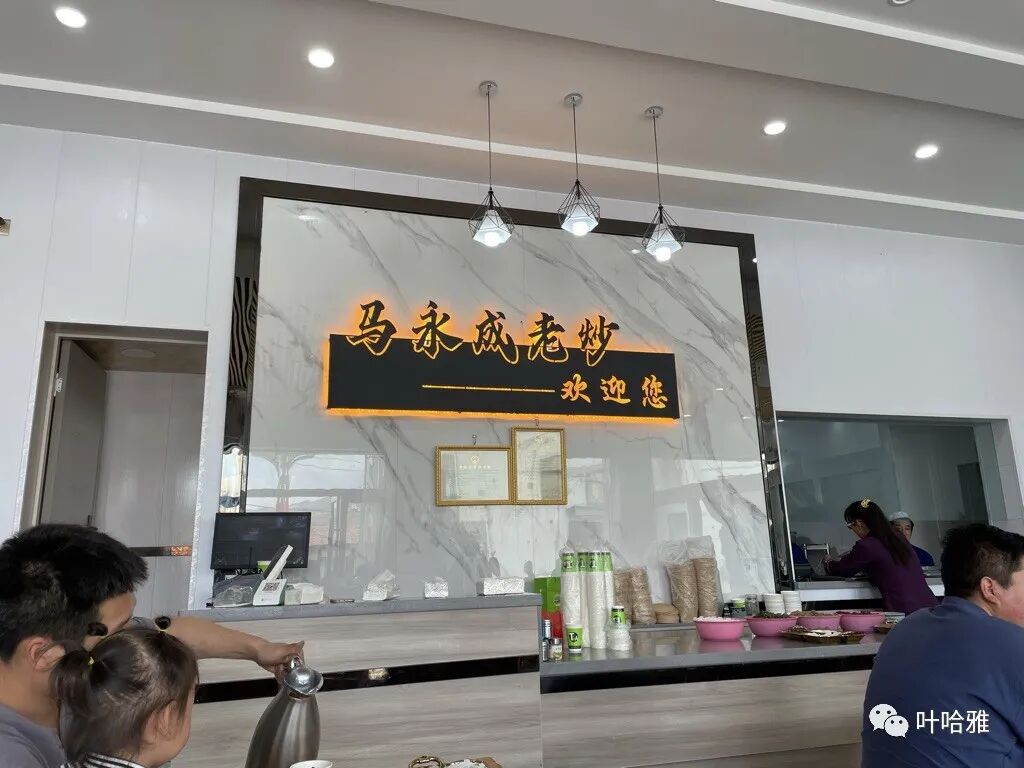
The first shop at the entrance of Lintan County is Mayongcheng Laochao. Laochao refers to stir-fried noodle slices (laochao mianpian). Lintan County is full of halal restaurants, and none of them sell alcohol.
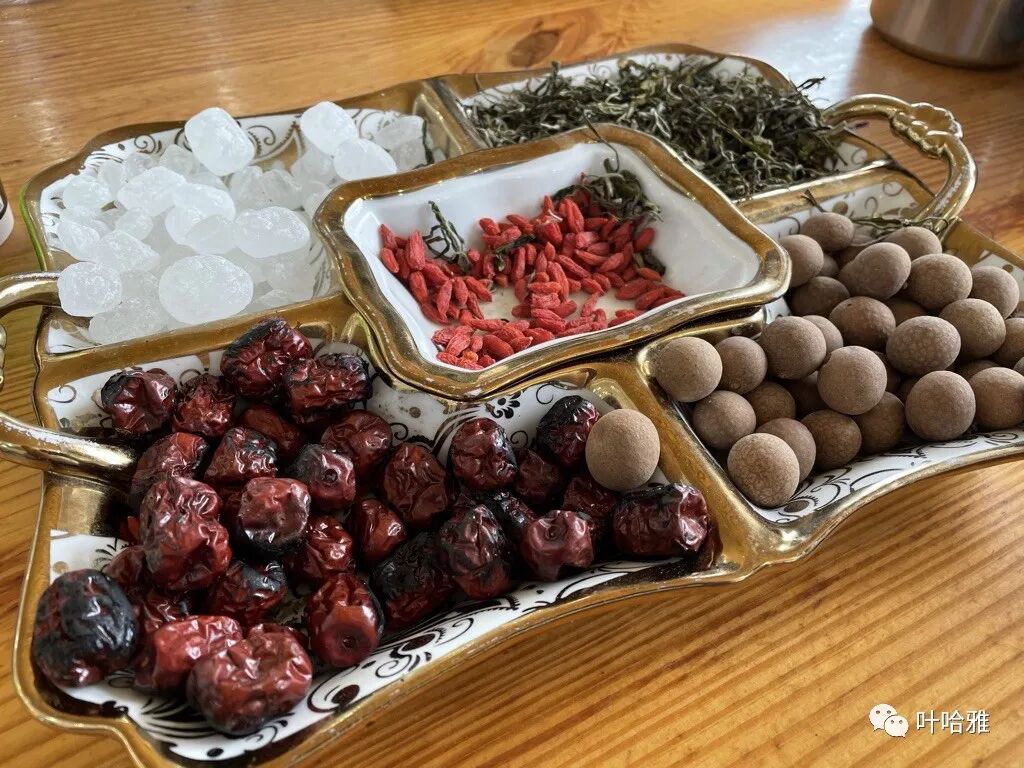
Restaurants in the Northwest provide free tea. The server will bring a tea platter, and you can add whatever you like to your cup.
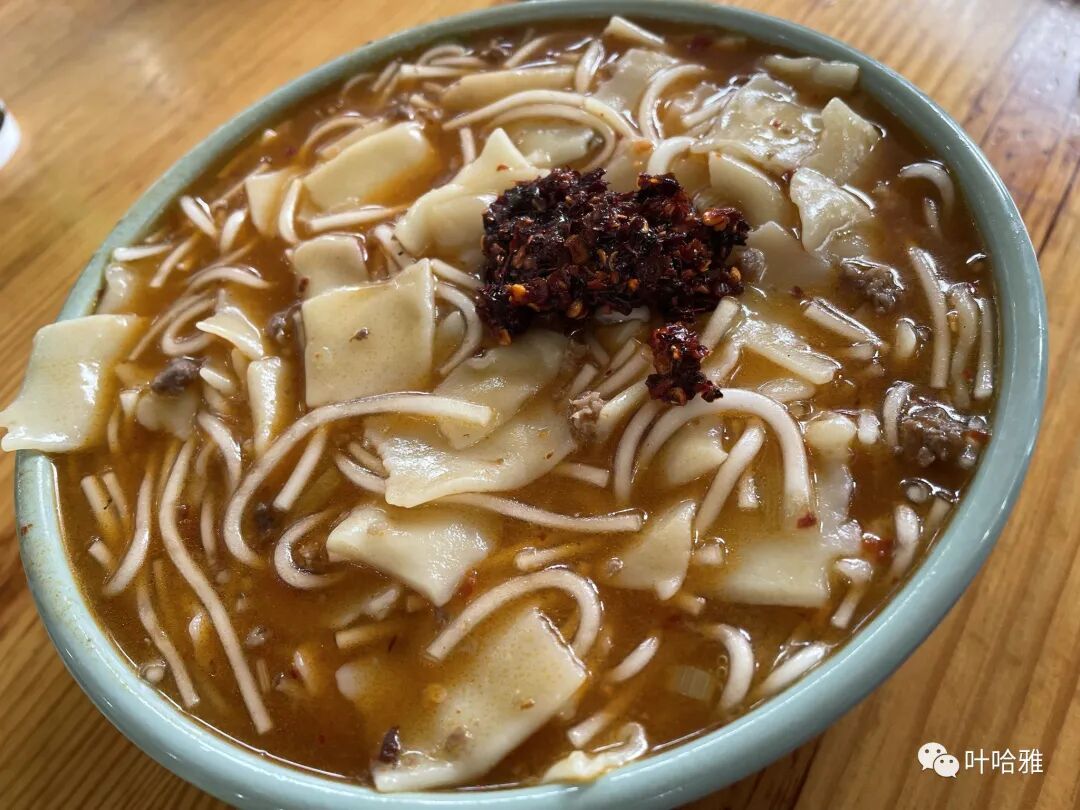
Stir-fried noodle slices (laochao mianpian)
The noodle slices come in a huge bowl; unless you are very hungry, you really cannot finish it. They also sell whole free-range chickens (tu ji) at a cheap price, and they taste great.
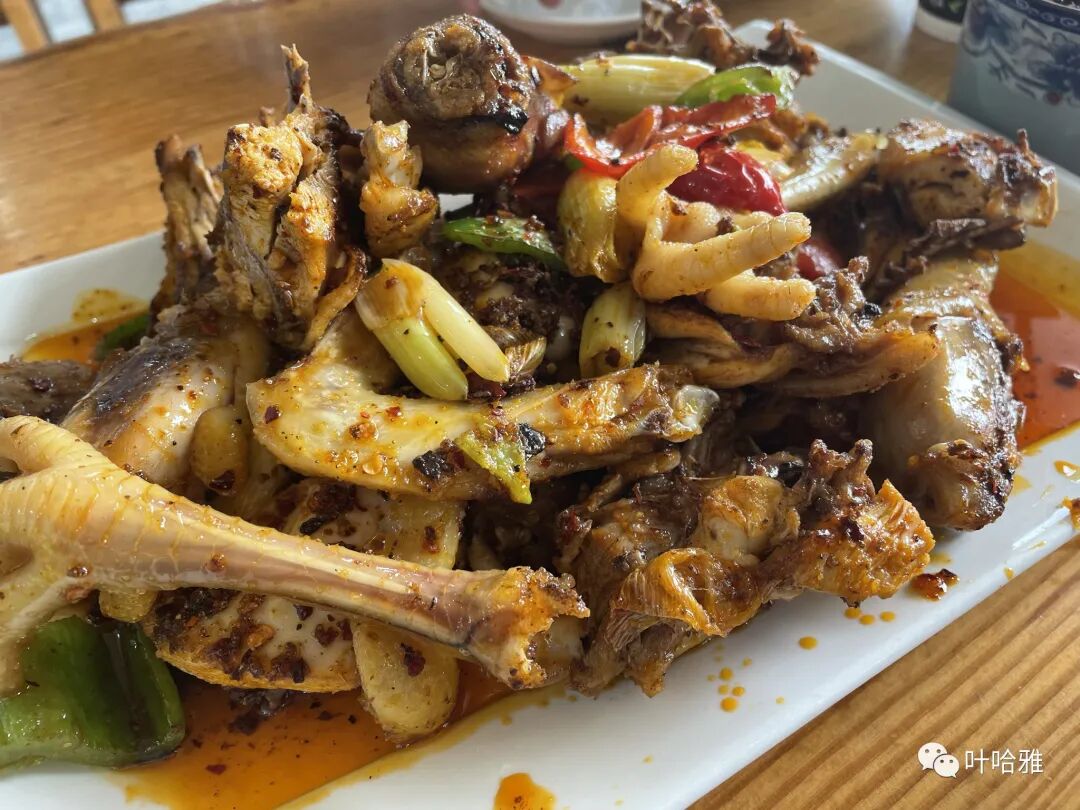
A plate of stir-fried free-range chicken pieces
There are a few large, prominent mosques in Lintan County, including the Upper Mosque (Qingzhen Shangsi) and the Grand Huasi Mosque (Qingzhen Huadasi).
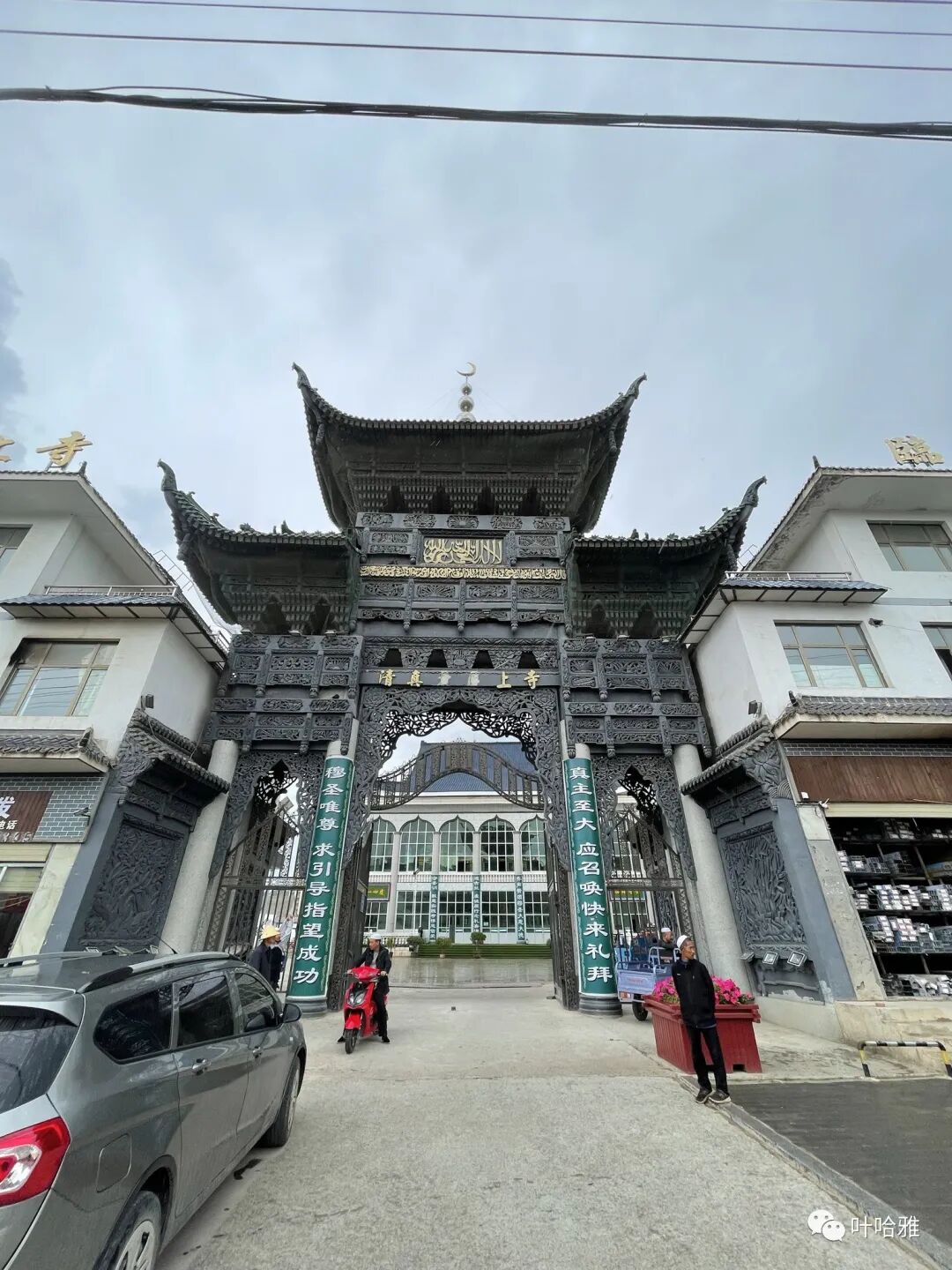
Upper Mosque (Shangsi).
The Upper Mosque and the Hua Great Mosque (Hua Da Si) sit next to each other. Both were built in 1380. Records show that the Hui Muslims in Lintan originally came from Zhusi Lane in Nanjing. They were part of the Hui Muslim group that followed Mu Ying on his western military campaign during the Ming Dynasty's Hongwu era. The Ming History records that the construction of the mosque was suggested by the Marquis of Xiping, Mu Ying, and approved by the Ming court. It was modeled after the Huajue Mosque in Chang'an and covers an area of 15 mu. To encourage the soldiers stationed in the area, the Ming court often awarded them plaques to honor their service.
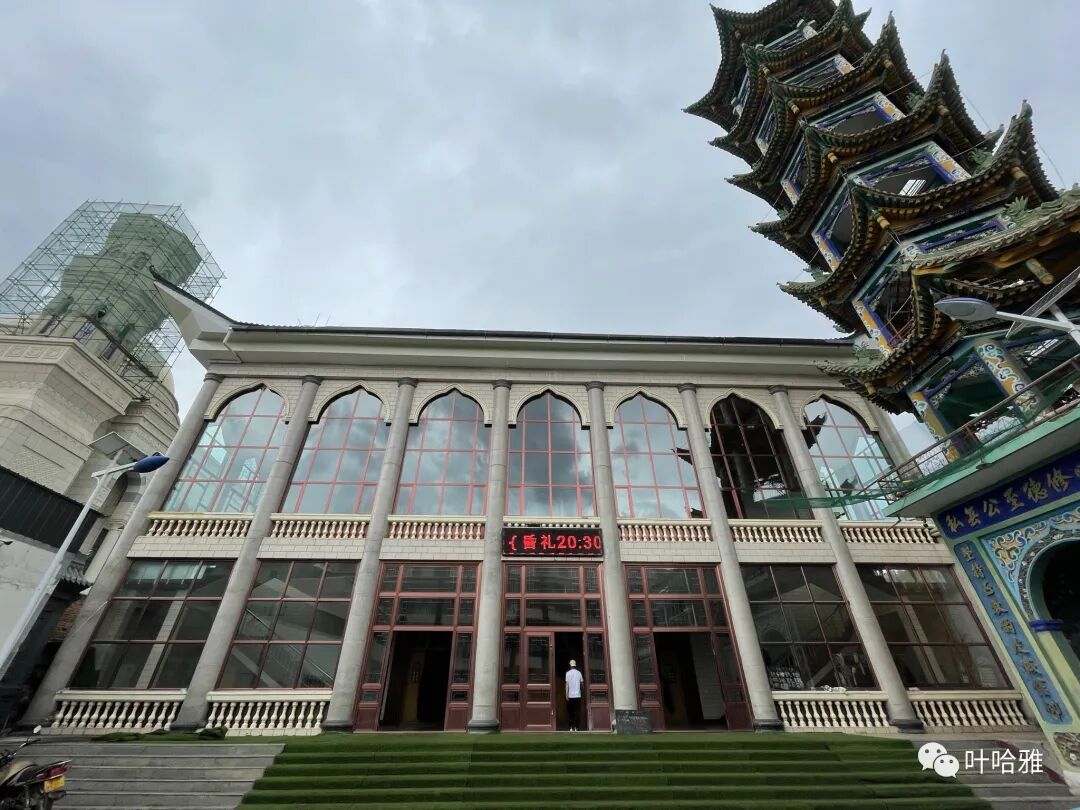
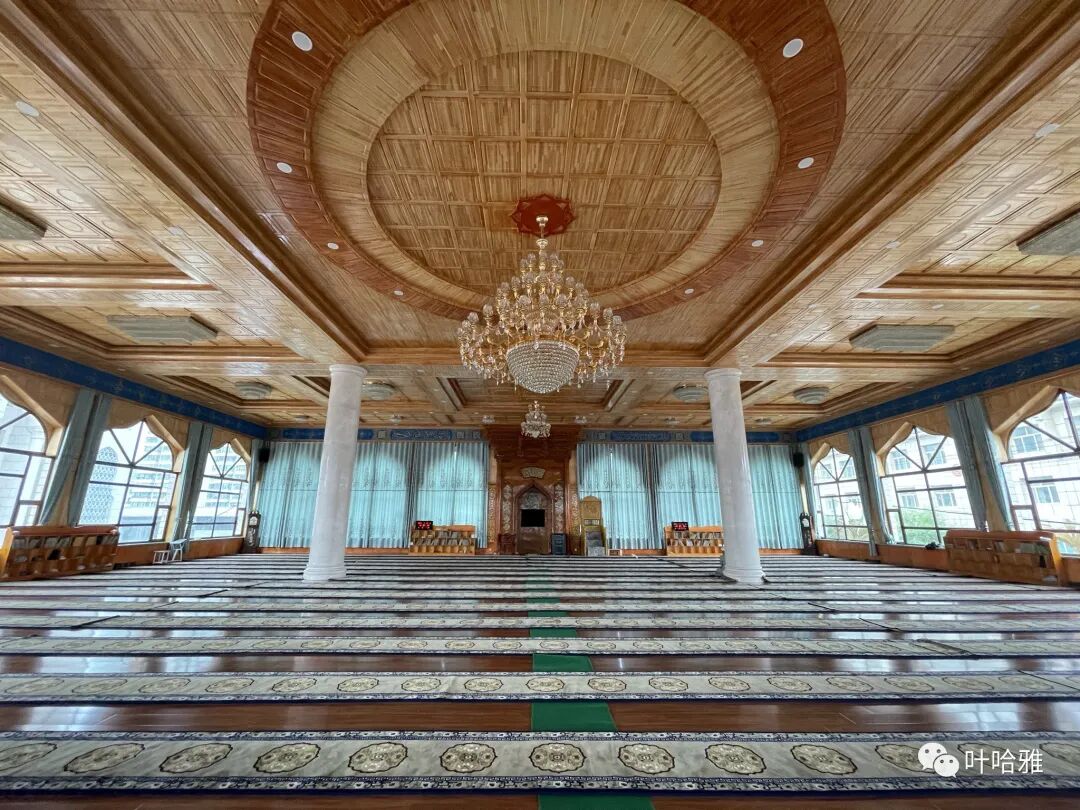
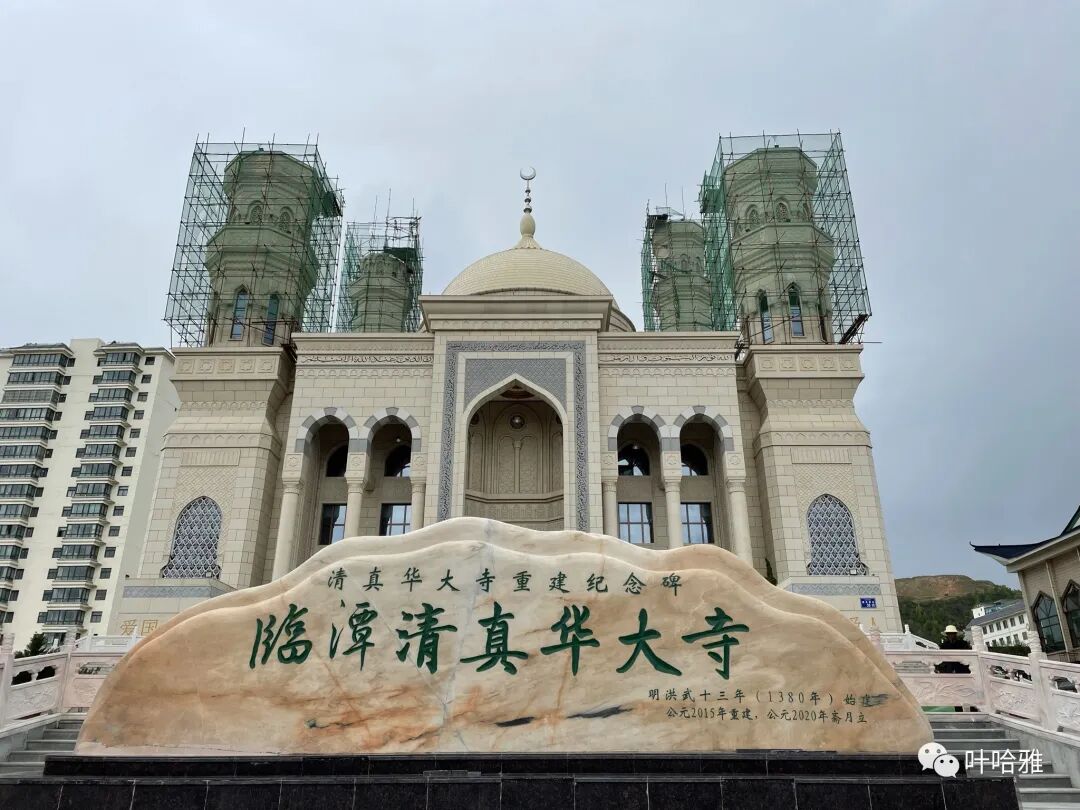
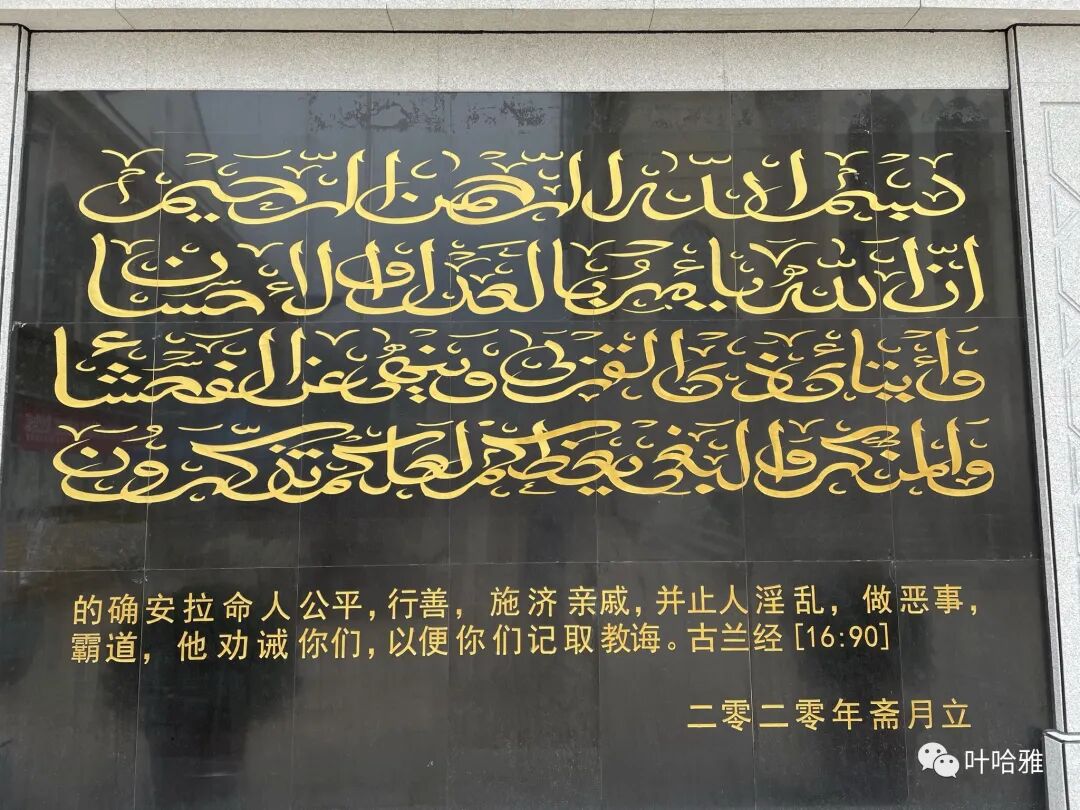
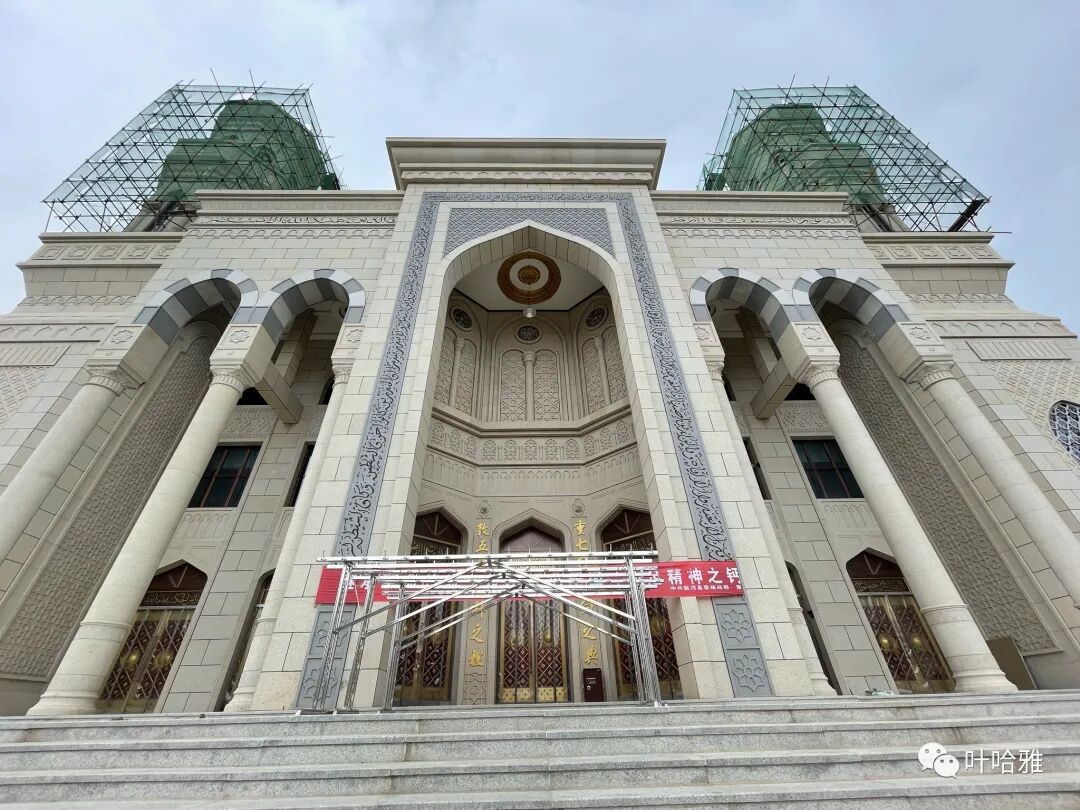
The Lintan County Hua Great Mosque was first built in 1380 (the 13th year of the Hongwu era of the Ming Dynasty). By the early 21st century, it had a history of over 600 years. The Taozhou Prefecture Gazetteer records: 'Mu Ying, the Ming General who conquered the West, arrived in 1380 (the 13th year of Hongwu). The eighteen tribes of Taozhou and three deputy envoys rebelled and occupied the Nalin Seven Stations area. Following the Emperor's orders, Mu Ying led his army to the old city. The rebels fled, but he pursued and captured the three deputy envoys. He built a city at Donglong Mountain and stationed troops there. He returned his army in the sixth month and was named Marquis of Xiping for his achievements.' Historical records state: 'The old Taozhou mosque was in the old city and was renovated in the Dingwei year of the Ming Hongwu era.' At that time, Taozhou only had the Gedimu tradition, but now it follows the Huasi menhuan. The current building was designed by the Architectural Design and Research Institute of Tongji University and was completed in 2019.
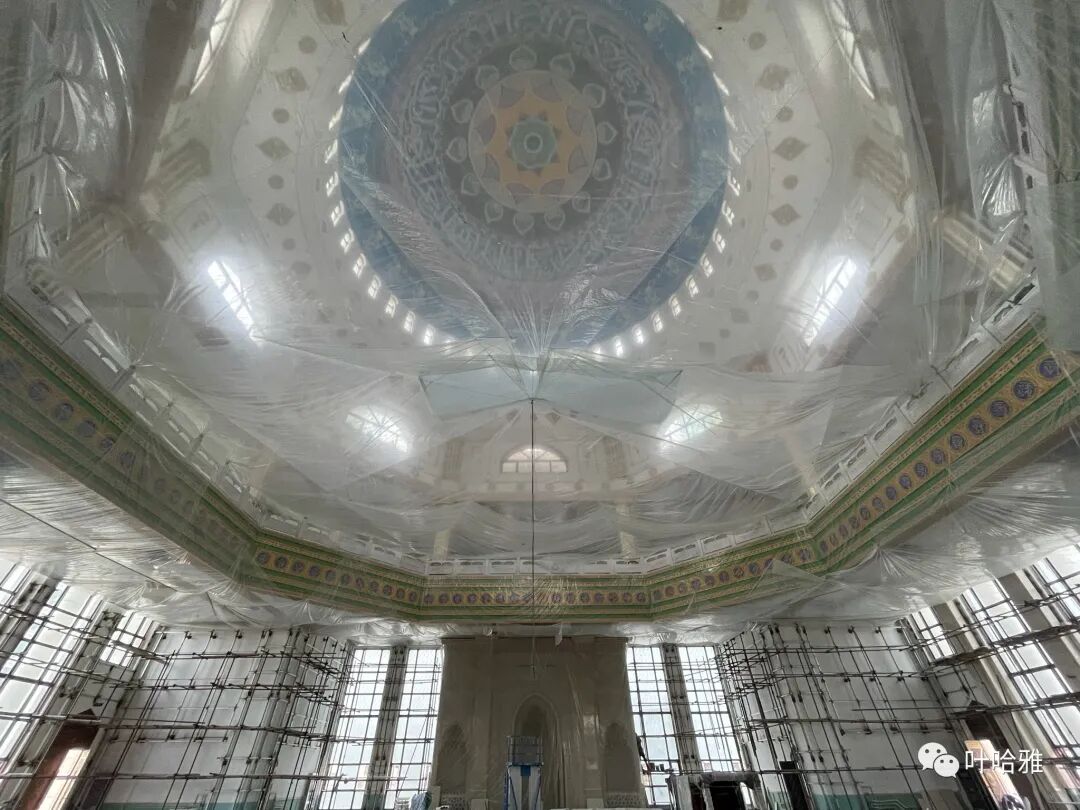
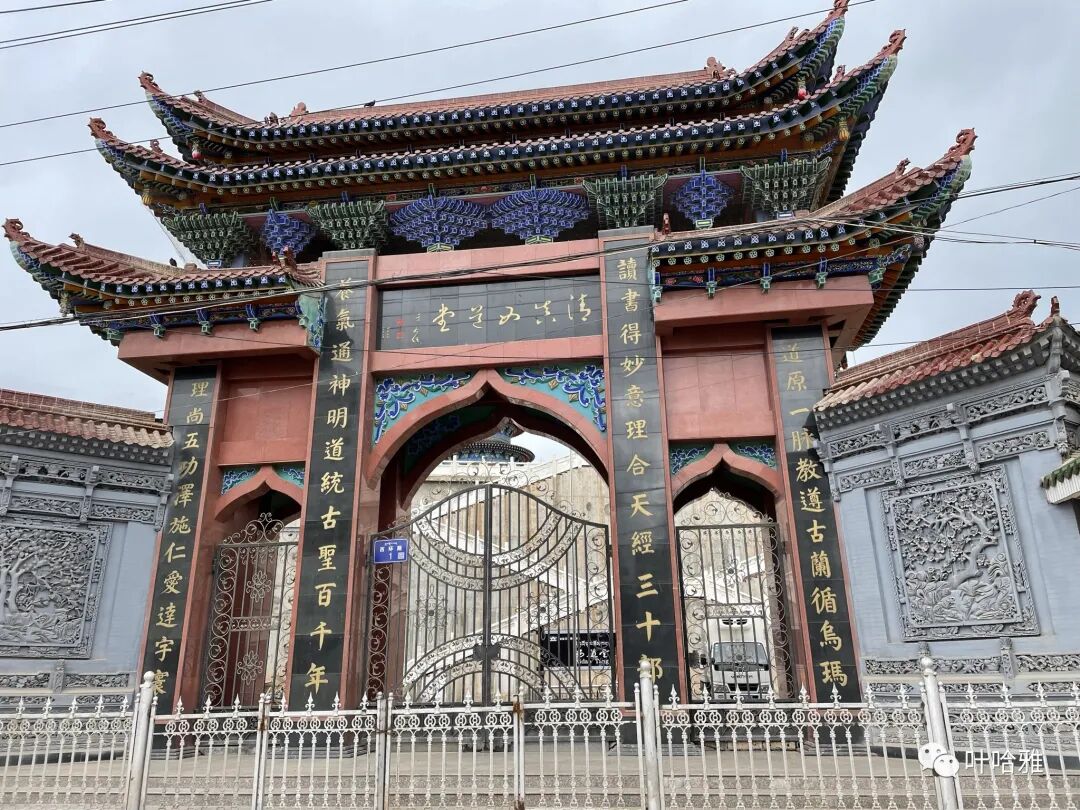
Western Hall (Xidaotang) Mosque.
The Western Hall was the main focus of my trip. It originated in Lintan County, Gansu Province. Its founder, Ma Qixi, was skilled at teaching in Chinese. He used Chinese-language classics like Liu Jielian's 'The Nature of Islam' (Tianfang Xingli), 'The Rites of Islam' (Tianfang Dianli), and 'The True Record of the Prophet of Islam' (Tianfang Zhisheng Shilu) for his teachings, which is why it is called the 'Chinese School'.
The founder of the Huasi menhuan, Ma Laichi, spread the teachings of the Khufiyya order. Lintan initially accepted the Khufiyya. When the Huasi menhuan reached the third generation leader Ma Guangzong (known as Beichuan Taiye), his student Ma Baozhen left the Huasi menhuan. He adopted the teachings of the Ishan school from Shache, Xinjiang, and started his own group in Beizhuang, Dongxiang, which became known as the Beizhuang menhuan. Ma Baozhen's student, Min Shangli, served as the 'muleti' (religious leader) for the Beizhuang group stationed in the old city. After Min Shangli passed away, he was buried at the Dazigou gongbei (shrine). His son, Min Yonglu, succeeded him as the 'muleti' in Lintan. After Min Yonglu passed away, he was also buried at the Dazigou gongbei. His son, Min Shida, succeeded him. Min Shida only had two daughters. One daughter married Ma Yuan, who had two sons. One of them was Ma Qixi, which is why Ma Qixi originally belonged to the Beizhuang menhuan.
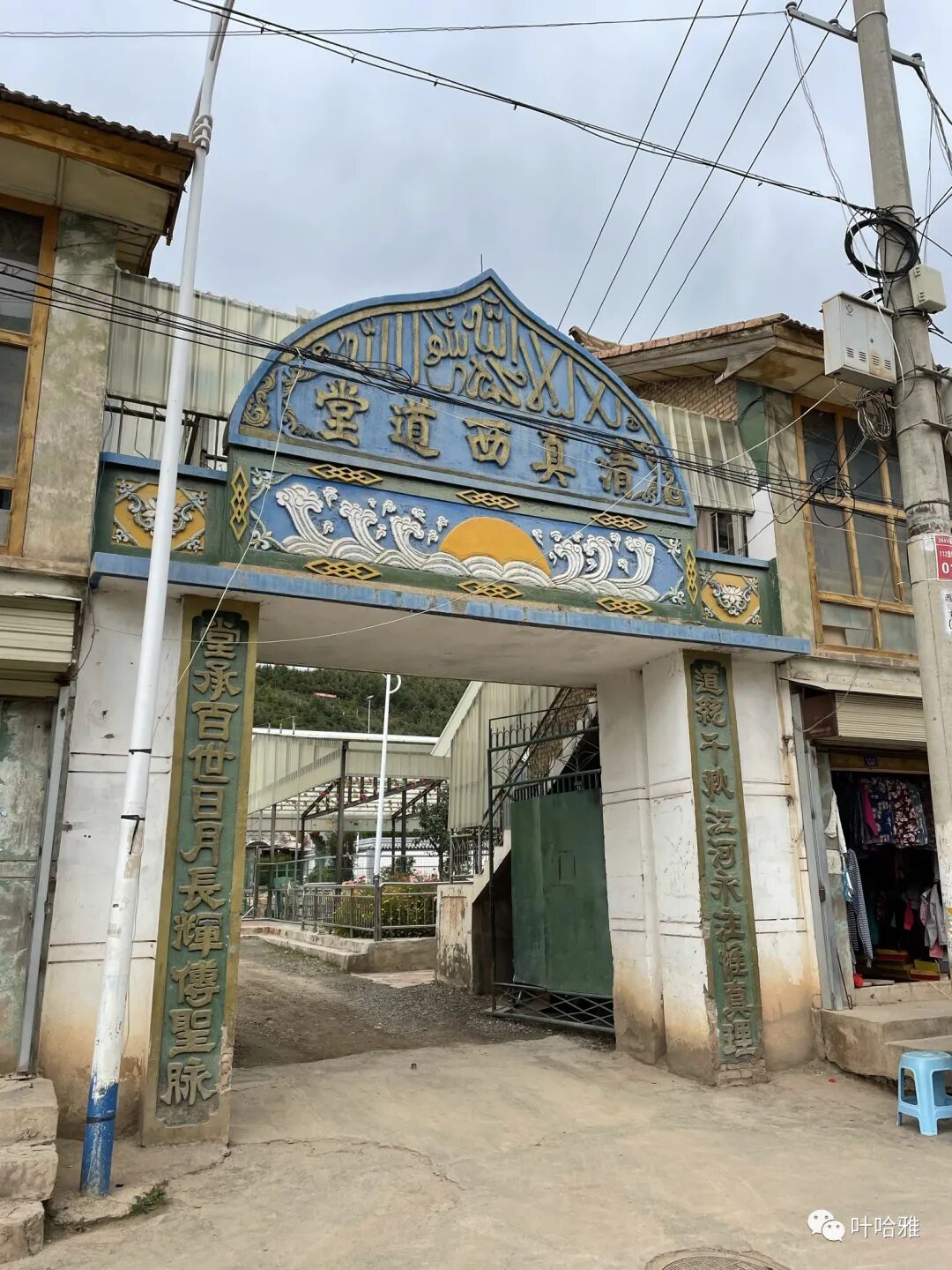
Ma Qixi was smart and loved to learn. He did well in school from a young age and passed the imperial exam to become a scholar (xiucai). He opened a private school in his hometown of Xifeng Mountain. In 1898, Ma Qixi began teaching in a scripture hall at the Beizhuang gongbei. One faction of the Beizhuang menhuan insisted that people should take off their shoes when performing namaz, while the other faction believed it was not necessary. The Beizhuang 'muleti' Min Yonglu said: 'It is best to take them off, but not taking them off does not violate religious rules.' Ma Qixi thought Min Yonglu was being indecisive and should clearly state whether shoes should be removed or not. This led to a disagreement, and Ma Qixi left the Beizhuang group to start his own.
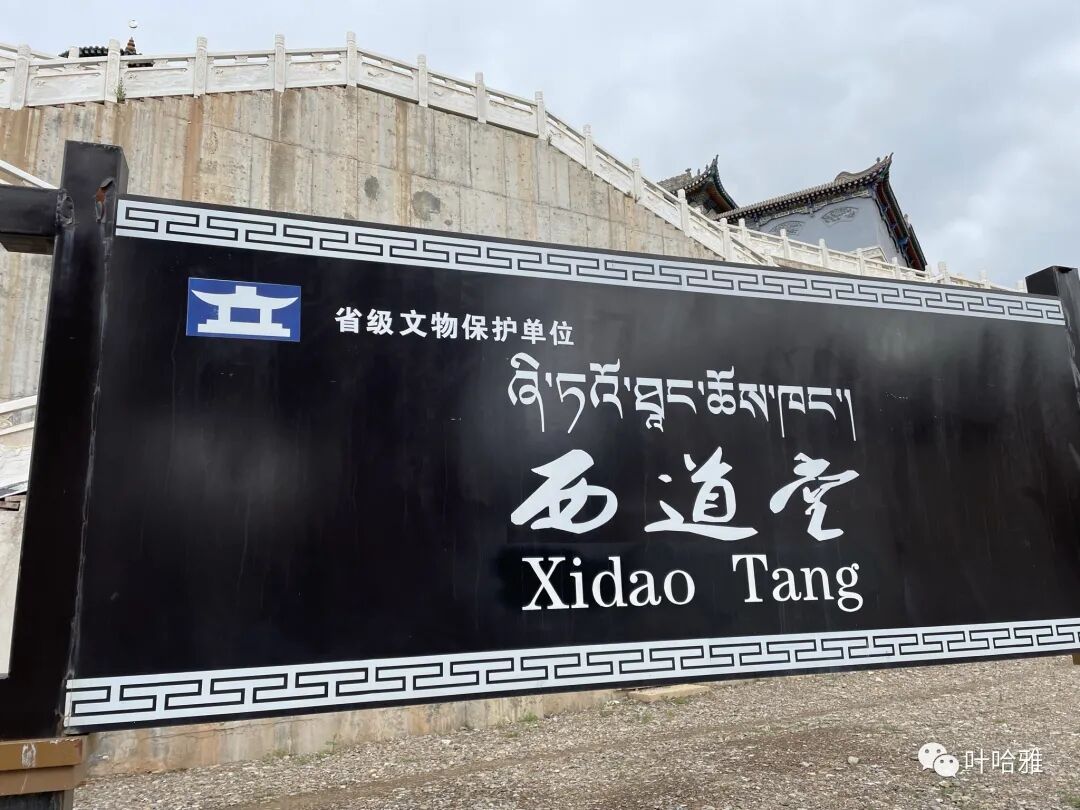
Ma Qixi had a rational mindset. He strongly advocated for changing old customs, such as cutting off men's long braids, opposing foot-binding for women, and encouraging girls to go to school. In terms of religion, he only considered the 'Five Pillars of Islam' as the complete practice, whereas the Beizhuang menhuan also required the morning and evening recitation of 'dhikr' and quiet meditation.
Ma Qixi realized that to develop education, they needed an economic foundation. Therefore, the Western Hall placed great importance on business and farming. The followers of the Western Hall treated the hall as their home and lived a collective life, creating the prototype of the Western Hall 'Ummah' family.
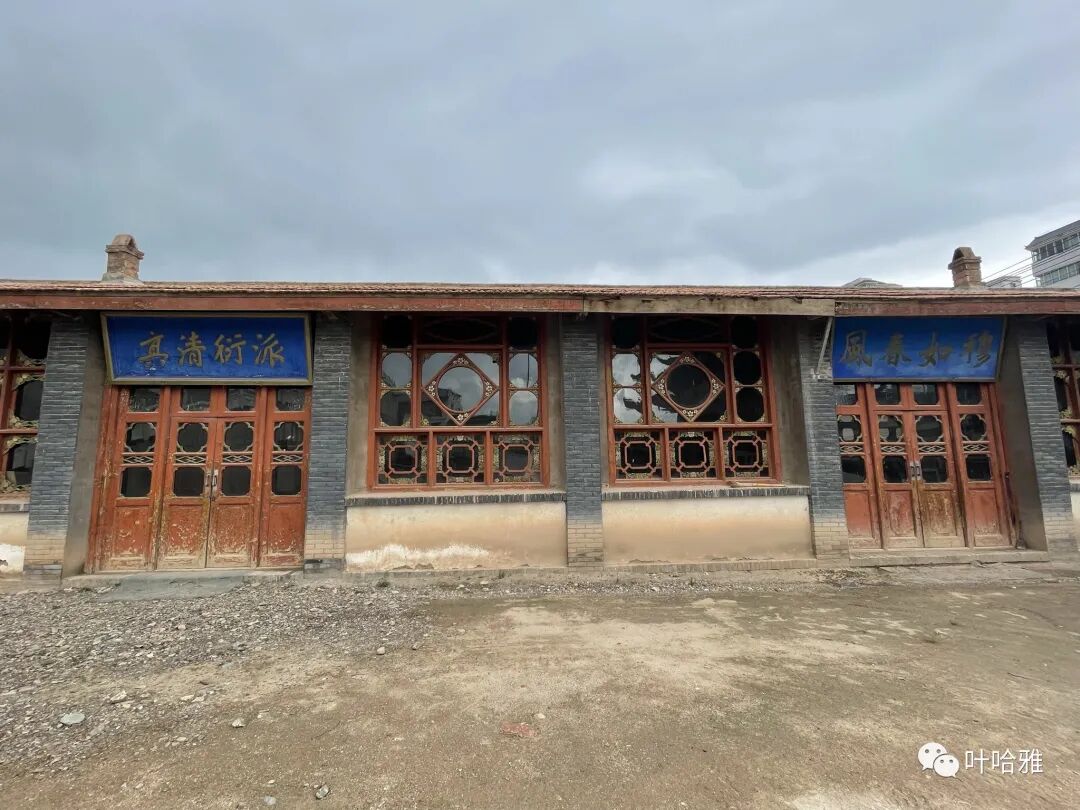
The Western Hall founded the Lintan Puci Primary School. All children in the hall over the age of 7 were enrolled for free, and they also accepted over 100 children from other local ethnic groups. To solve the problem of girls' education, the Western Hall founded the Lintan Old City Private Qixi Girls' School in 1943, which was free for all girls regardless of their ethnicity.
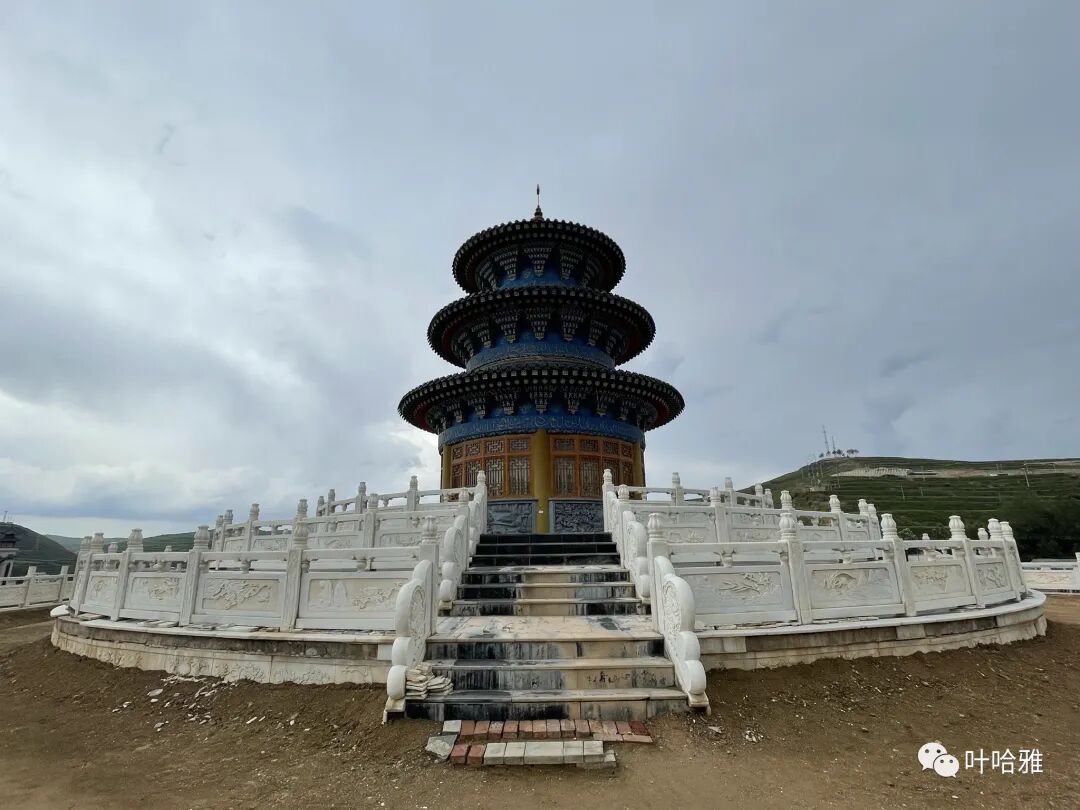
The Gansu Hui Muslim general Ma Anliang was a follower of the Huasi menhuan. He wanted to use Ma Qixi to attack the Beizhuang menhuan, but Ma Qixi refused, and the two parted on bad terms.
In 1914, Ma Anliang sent his subordinate Zhang Shunyuan to execute Ma Qixi, claiming he had 'colluded with Bai Lang to kill innocent Hui and Han people in the old city.' After Ma Qixi was killed, Ding Quangong succeeded him. The Western Hall did not use a hereditary system; the leader was chosen by public vote and served for life.
In 1917, Ding Quangong and his group were passing through Lintao to visit the grave of the martyred student Ma Wanzhang. They were surrounded by Ma Ying, a local commander appointed by Ma Anliang. Ding Quangong was killed, and Ma Mingren succeeded him as the third leader.
In 1919, Ma Anliang was promoted to Governor of Gansu. While traveling to take up his post, he fell ill at Suonanba in Dongxiang, returned home, and passed away.
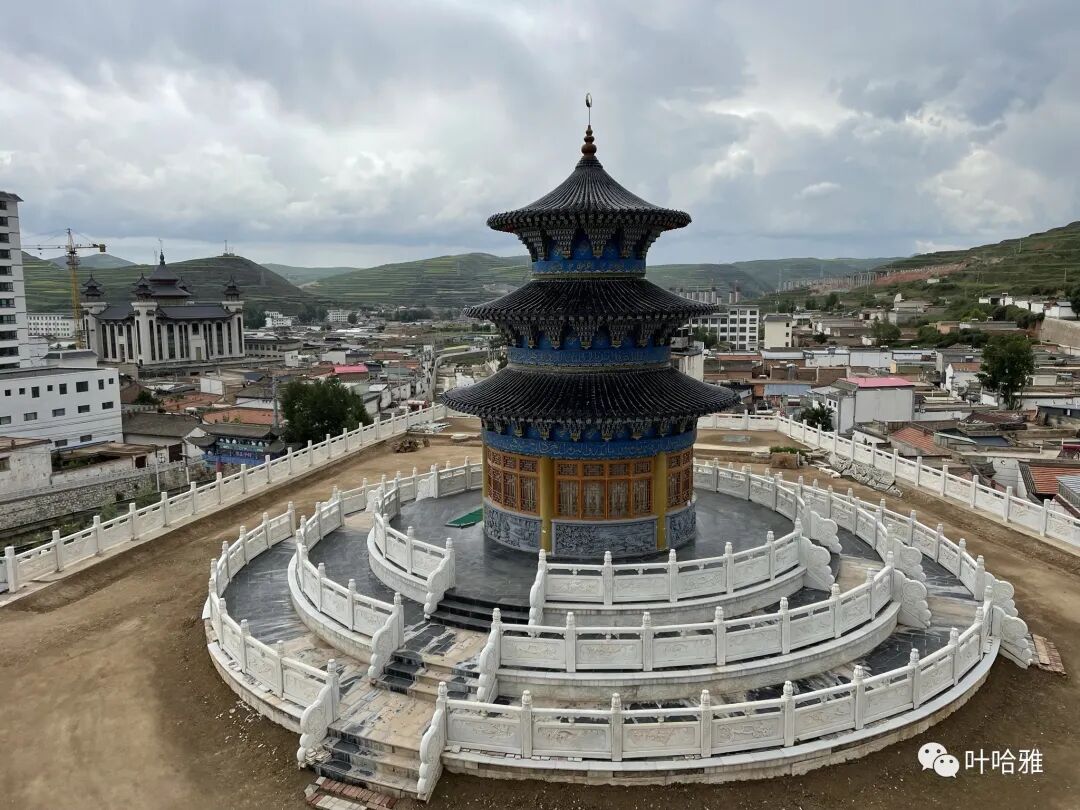
The prayer hall of Xidaotang, which looks like the Temple of Heaven.
Ma Mingren mentored Ding Zhengxi. Ding graduated from the Chinese Department of Peking University in 1929, becoming the first university student in Xidaotang history. After graduation, he returned to Xidaotang to handle diplomatic affairs and later served as the magistrate of Hezheng County.
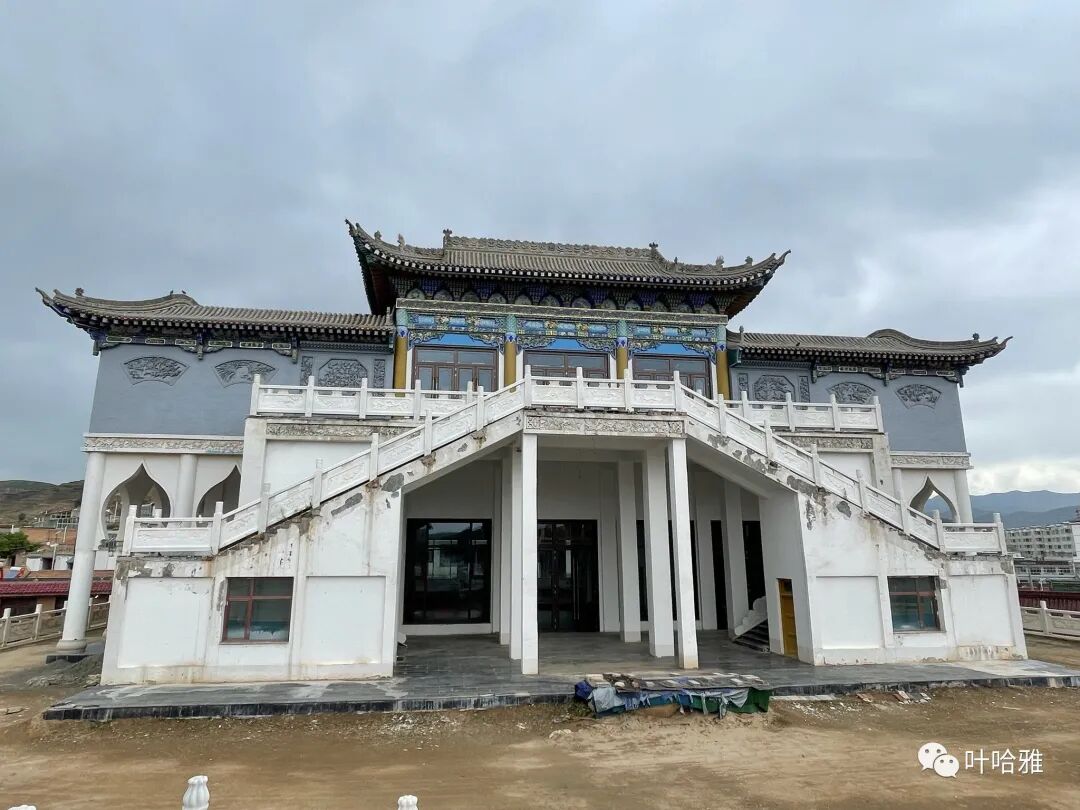
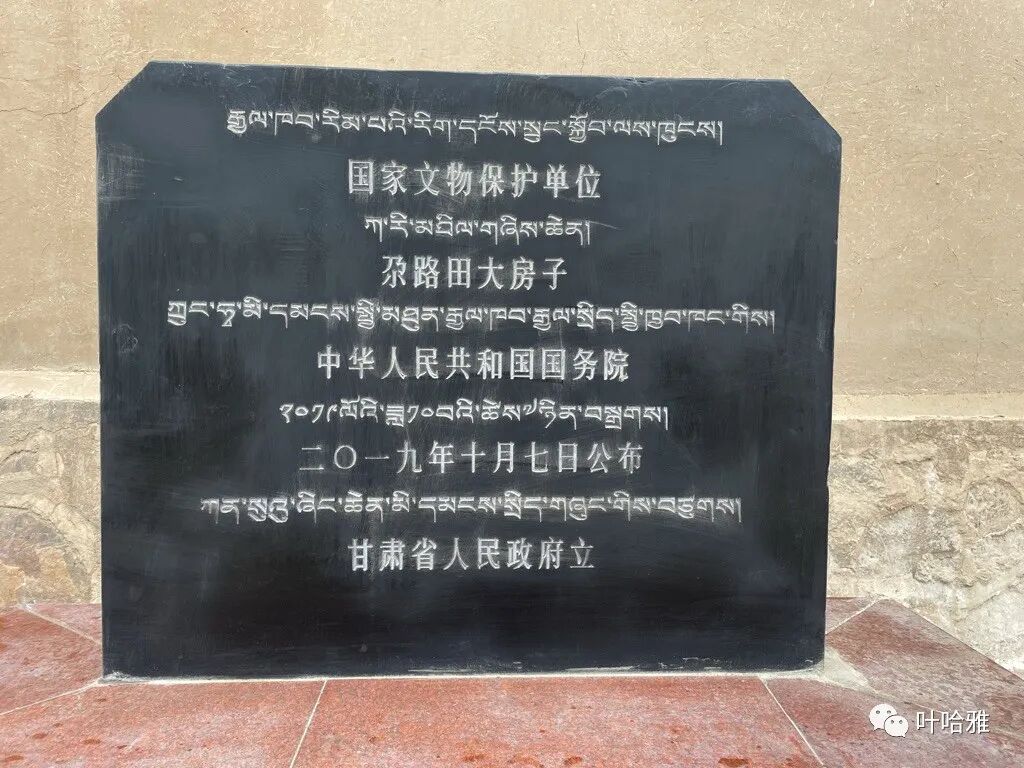
In Guzhan Town, about 10 kilometers from Lintan County, stands the Galutian Big House. It is the only one remaining of the 13 large houses built by Xidaotang and is now a national-level cultural heritage site.
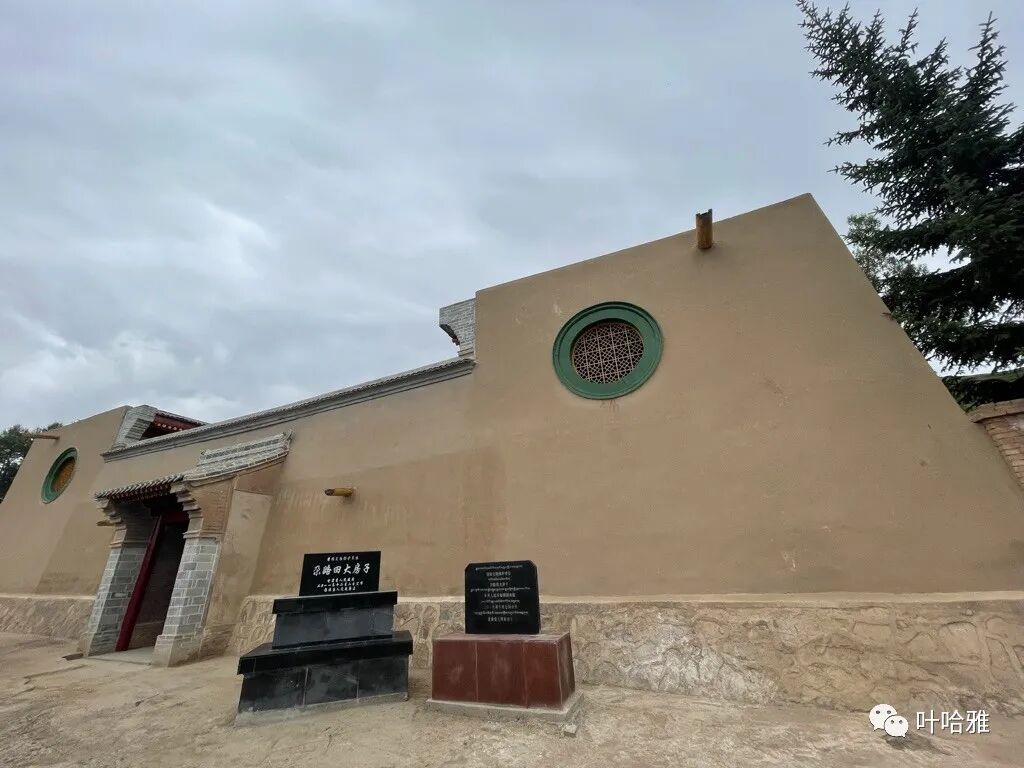
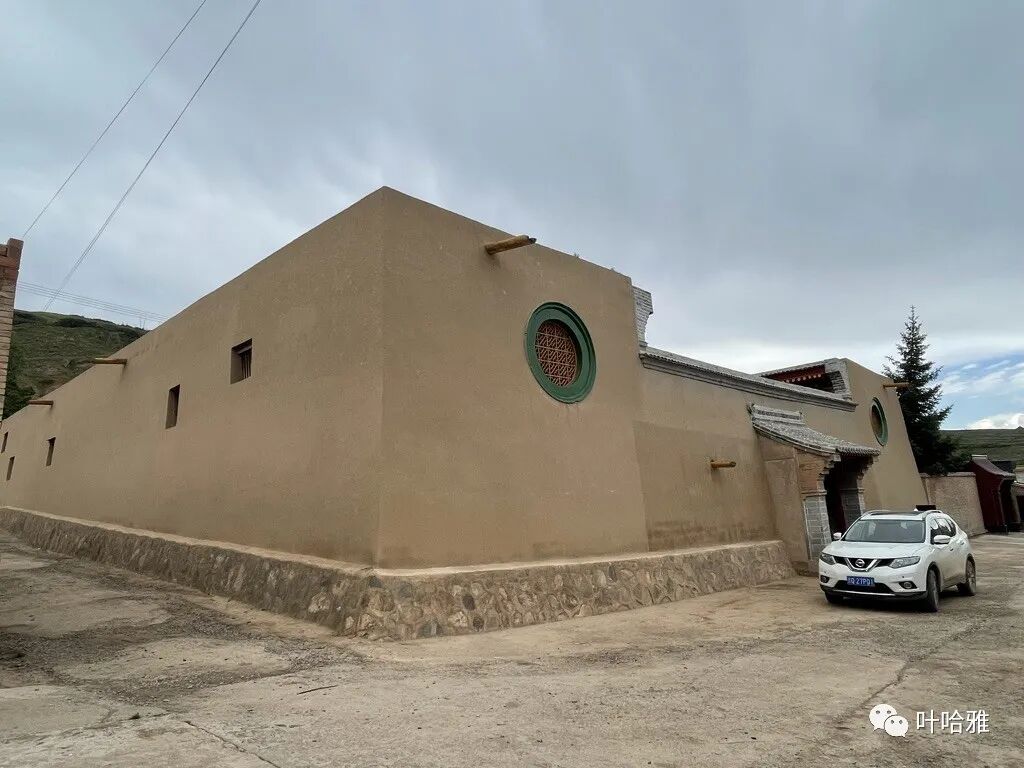
The Galutian Big House is a Tibetan-style building. A key feature of Tibetan architecture is that you cannot see the wood from the outside or the earth from the inside. The house was built to meet the needs of the collective life of the Uma.
There are long benches in front of the main hall for elders to study scriptures and discuss matters, serving as a place for democratic consultation.
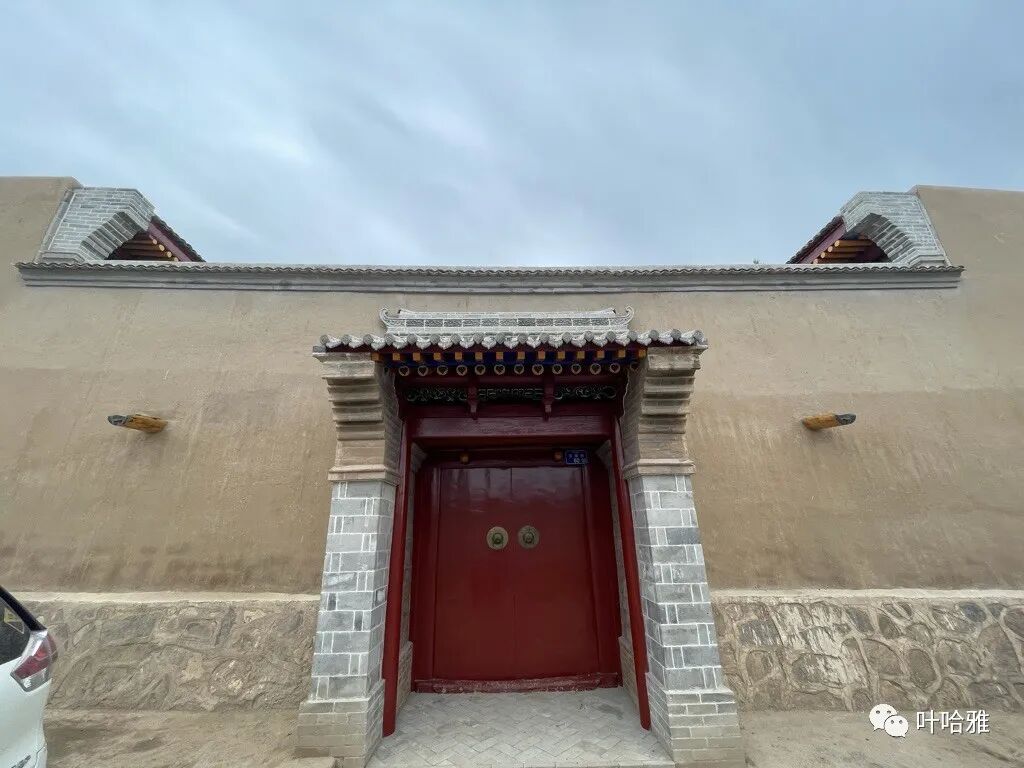
Every Xidaotang member living here has their food, clothing, housing, transportation, family education, weddings, funerals, and support provided by the collective.
The Xidaotang constitution states regarding economic management: all income and expenses from collective farming, commerce, forestry, animal husbandry, and sideline businesses are managed, operated, and distributed centrally. The organization has one manager and one deputy manager.
Trade with Tibetan areas was the foundation of Xidaotang's economic development, so the group placed great importance on its relationship with Tibetan people. Most Xidaotang members could speak Tibetan, and the Tibetan people called them 'Qusuoma,' meaning 'new religious friends'. After the Xidaotang elders Ma Mingren and Min Zhidao passed away, hundreds of Tibetan people came to attend their funerals.
The Sixth Jamyang Living Buddha of Labrang Monastery once visited Xidaotang and placed a white silk scarf (hada) on the grave of Elder Ma Qixi, who is buried at the foot of Xifeng Mountain.
Xidaotang is a model for the Sinicization of Islam. To adapt to the social environment of the time, it took many pioneering steps, especially in prioritizing education, particularly for women. This provided continuous momentum for the overall growth of Xidaotang and is worth learning from by other groups.
Ending our trip to Lintan, we drove for four hours that afternoon to return to Xunhua to prepare for Eid al-Adha (Guerbang Jie).
Summary: Muslim History Guide China: Linxia Gannan Xidaotang, Gongbei Mosques and Silk Road Faith is presented here as a clear English account for Muslim readers, starting with this scene: Before Eid al-Adha (Qurban Jie), I took my wife and father-in-law on a road trip starting from Xunhua. We passed through Linxia, Xiahe, and Hezuo, ending in Lintan County in Gannan. The scenery along the way was beautiful, even. It keeps the original names, food details, mosque details, photographs, and cultural context while focusing on Linxia Travel, Xidaotang, Muslim History.
Before Eid al-Adha (Qurban Jie), I took my wife and father-in-law on a road trip starting from Xunhua. We passed through Linxia, Xiahe, and Hezuo, ending in Lintan County in Gannan. The scenery along the way was beautiful, even better than the paid tourist spots we visited.
Gannan is part of the greater Tibetan region with an average altitude of 3,000 meters, and some places go over 3,500 meters. Some people get altitude sickness, so prepare before you leave. I suggest keeping a simple oxygen canister in the car; they cost a few dozen yuan and are good to have just in case.
Also, watch out for the sun. The UV rays and sunlight at high altitudes are very strong and can make it hard to keep your eyes open. There is a big temperature difference between morning and night, so wear long sleeves and don't forget your sunglasses and sunscreen.
Itinerary: Xunhua - Linxia - Xiahe - Sangke Grassland - Hezuo - Meiren Grassland - Yeliguan - Lintan - Xunhua
(Three days total)
The three of us drove one car from Xunhua and reached Linxia in about two hours. We stayed in Linxia for one day. On the second day at noon, we arrived in Xiahe County for lunch and Jumuah prayer. We passed through Sangke Grassland, went through Hezuo City in the afternoon, passed Meiren Grassland, and arrived at Yeliguan in the evening. We stayed another night in Yeliguan. On the third morning, we visited Yeliguan National Forest Park and reached Lintan County by noon. We visited Xidaotang and in the afternoon went to the Galutian Big House, ten kilometers from Lintan County, as the end of our trip. That night, we drove over four hours back to Xunhua. The whole trip took one tank of gas.
Most tourists start from Lanzhou, which is only a two-hour drive from Linxia, so their route is similar to ours. You could skip Lintan County and head south to the Zhagana scenic area. I heard the scenery there is nice, but friends in Linxia said there are few Hui Muslims there, so it is just for taking photos, and we decided not to go.
Day 1: Linxia
I visited Linxia in 2016 and toured the famous Eight Neighborhoods and Thirteen Alleys. The Eight Neighborhoods are: 1. Dasi Fang, 2. Qisi Fang, 3. Xisi Fang, 4. Beisi Fang, 5. Tiejia Si Fang, 6. Qianheyan Si Fang, 7. Laowang Si Fang, 8. Xinwang Si Fang.
The Thirteen Alleys are: 1. Daga Alley, 2. Xiaonan Alley, 3. Bakou Alley, 4. Bei Alley, 5. Shagale Alley, 6. Zhuanyuan Alley, 7. Danan Alley, 8. Renyi Alley, 9. Xi Alley, 10. Yongzheng Alley, 11. Tiejia Si Alley, 12. Wangsi Alley, 13. Shiqiao Alley.
I mainly came to see the mosques and gongbei (shrines). Nearby are Tiejia Mosque, Laohua Mosque, Xinhua Mosque, Laowang Mosque, Beisi Mosque, Xisi Mosque, Daqi Mosque, Chengjiao Mosque, Nanguan Grand Mosque, Qianheyan Mosque, Guo Gongbei, and Da Gongbei.
Guo Gongbei
There are two gongbei in Hongyuan Square in Linxia, both belonging to the Qadiriyya menhuan (Sufi order). One is Guo Gongbei and the other is Da Gongbei. They are right next to each other. The master of Guo Gongbei was named Chen Yiming (1646—1718). People called him Chen Baoguo because he once protected the Qing Emperor Kangxi and was granted the surname Chen. Legend says his original surname was Hu. Although he was Qadiriyya, he was not under the control of Da Gongbei. After he passed away, the Qing court ordered the construction of the gongbei. The master of the gongbei did not preach. The followers at Guo Gongbei used to wear slanted-collar robes for a long time, but later the Da Gongbei council decided they should change their style of dress.
Da Gongbei is the shrine of Qi Jingyi, the founder of the Qadiriyya order. It is called Da Gongbei because it was built larger than the shrines of other menhuan. I have visited several important Qadiriyya gongbei. Compared to the styles of other menhuan, the architecture of Qadiriyya gongbei has more classical Chinese features and looks very similar to Taoist temples.
Linxia: Accommodation
Baishun Zhongtian Banquet Hotel
We chose to stay at the Baishun Zhongtian Banquet Hotel. Accommodation in Linxia is quite cheap; you can find a great hotel for two or three hundred yuan. This hotel is halal, has a comfortable environment, is near the river, and the breakfast is delicious.
Before arriving in Linxia, I posted on WeChat asking where to eat. I got dozens of replies, and no one recommended the same place twice. People suggested Dongxiang hand-grabbed lamb (shouzhuar), steamed buns (baozi), river-side noodle slices (heyan mianpian), Muqing Manor, sausage-stuffed intestines (fazi mianchang), Yinxing Restaurant, Maogou boiled chicken, and more. I didn't know what to do, so Brother Ma from Linxia decided for me and took me to the very famous farmhouse restaurants in Zheqiaowan.
Zheqiaowan is a place name. The local farmhouse-style restaurants are very popular, and they say you can't go wrong with any of them. It turns out the people in Linxia really know how to cook. Many of the noodle masters in the restaurants in neighboring Lanzhou are from Linxia, so noodle dishes are one of the specialties here.
The farmhouse restaurants are quite large and serve big portions. I suggest that if you are eating with a group, you can order one dish less than the number of people. For three people, two dishes are enough. Ordering too much is wasteful. We were four people and ordered five dishes, but we couldn't finish them and ended up packing the leftovers to go.
Three-treasure tea (sanpaotai)
Pan-fried potatoes with lamb chops (kang yangyu yangpai)
Hand-torn flatbread (shousi bing)
Chive buns (jiucai baozi)
Stir-stir-fried meat with vermicelli (fentiao chaorou)
Day 2: Xiahe County
The drive from Linxia to Xiahe takes over two hours. Xiahe is famous for the Tibetan Buddhist Labrang Monastery, but we only visited the Labrang Mosque. The two are not far apart, and since it was Jumu'ah, we were able to attend the congregational prayer there.
The Labrang Mosque is also called the Xiahe Mosque. It is the only mosque in the area, but it is quite large and its architectural style incorporates elements of Tibetan design.
The Labrang Mosque was founded in 1854. Before building it, they had to get permission from the Labrang Monastery. At first, the mosque was just a temporary place for namaz, but as the number of local Hui Muslims grew, the mosque needed to expand. However, the Tibetans would not allow a large-scale construction, so they could only expand it slightly.
By 1936 (the 25th year of the Republic of China), a large number of refugees from Hezhou had flooded into Labrang following the Ma Zhongying incident of 1928. The mosque was clearly too small, so school board member Ma Letian and others held several talks with Huang Zhengqing, the commander of the Labrang Tibetan security forces (and brother of the 5th Jamyang), and finally secured a promise that they could fully expand the mosque without interference.
The newly built mosque covered a total area of 639 square meters. It featured a main prayer hall with a brick-and-wood structure consisting of five main rooms and three side rooms, a three-story pavilion-style minaret, 24 rooms for the east, north, and south wings, and 12 rooms for storage and bathing facilities. That was before the Reform and Opening-up period, though; the current building dates back to 1981.
Once you reach Xiahe, you have entered the greater Tibetan region, so you can see the Tibetan style in the local residential architecture.
Although Xiahe County is a Tibetan area, there are halal restaurants everywhere. We chose a large restaurant called Jiusheng. This place does not sell alcohol and also offers lodging, so friends who need a place to stay can consider booking a room here. The dining area at Jiusheng is very spacious, and the dishes have a strong local character. I ordered a dish called Kekexili, which is made with wheat kernels. It was delicious, but the portion was huge. I didn't finish it, so I packed it up and ate the rest as a snack on the road.
Stir-fried beef with tiger skin peppers (hupi lazi shao niurou)
Rustic farmhouse-style dishes (fengwei nongjia cai)
Kekexili (a dish made with wheat kernels)
Leaving Xiahe County and heading south, our grassland road trip began. Along both sides of the road lies the endless Sangke Grassland. The Gannan region has many grasslands, and Sangke is the first large one we passed through.
Prayer flag tunnel (jingfan suidao)
Along the way, we saw some nice scenery by the road and stopped to take photos. Just as we were about to leave, a child and an elderly person, both dressed in Tibetan clothing, blocked us to demand money. Of course, I didn't pay because I had heard about this behavior before. I stepped on the gas, left them behind, and drove off. I suggest everyone take photos at public viewing platforms to avoid any unpleasant situations.
Hezuo City
Hezuo Grand Mosque
Hezuo Grand Mosque was first built in 1834. It now serves over 10,000 congregants, most of whom are followers of the Huasi menhuan, though others belong to different menhuan. The current building was constructed in 1995.
We stopped briefly in Hezuo to pray and rest before heading south. Along the way, we passed a sea of rapeseed flowers right next to the Hezuo highway. Against the backdrop of blue skies and white clouds, the golden flowers were truly beautiful.
Meiren Grassland
Meiren Grassland
The Meiren Grassland sits at an altitude of over 3,600 meters. It features the alpine meadow landscape unique to the Qinghai-Tibet Plateau. I first thought the rounded mounds of grass were man-made, but after walking closer, I realized they formed naturally. This landscape forms in low-lying, poorly drained areas of the grassland where marshes develop, shaped by plants, soil, weathering, and freezing.
Prayer flag tunnel (jingfan suidao)
Be careful: while the prayer flag tunnels on the highway are beautiful, do not stop to take photos, as it is dangerous.
The figure in the distance is my father-in-law praying by the side of the road.
Yeliguan Town
Yelinguan Hotel
We arrived in Yeliguan Town that evening and checked into the Yelinguan Hotel. It is one of the better hotels in town, costing over 200 yuan. It is a halal hotel and serves halal breakfast. There are very few halal restaurants in Yeliguan, and there is not much to do in town, so I suggest considering other places to stay overnight.
Day 3: Yeliguan National Forest Park
A filming location for Journey to the West
You can drive into Yeliguan National Forest Park. Tickets are 78 yuan. If you do not have a car, you need to take the park's cable car. There is not much special scenery inside, though there are some farmed deer. To reach the top of the mountain, you need to take another cable car, which costs 20 yuan one way or 40 yuan round trip. If you do not want to pay, you have to hike up for over an hour.
When I was walking in the woods, I did not know it was a filming location for Journey to the West. It just felt familiar, like I had seen it on TV. When I visited Jiuzhaigou in March this year, I checked out one of the filming locations there. I did not expect the 1983 version of Journey to the West to have put so much effort into choosing its outdoor locations.
I do not think Yeliguan Forest Park offers good value for money. If you are struggling to choose between many Gannan attractions, I suggest skipping this one.
After driving for nearly two hours from Yeliguan, we arrived in Lintan County. The small county town in the distance in the photo is Lintan.
The first shop at the entrance of Lintan County is Mayongcheng Laochao. Laochao refers to stir-fried noodle slices (laochao mianpian). Lintan County is full of halal restaurants, and none of them sell alcohol.
Restaurants in the Northwest provide free tea. The server will bring a tea platter, and you can add whatever you like to your cup.
Stir-fried noodle slices (laochao mianpian)
The noodle slices come in a huge bowl; unless you are very hungry, you really cannot finish it. They also sell whole free-range chickens (tu ji) at a cheap price, and they taste great.
A plate of stir-fried free-range chicken pieces
There are a few large, prominent mosques in Lintan County, including the Upper Mosque (Qingzhen Shangsi) and the Grand Huasi Mosque (Qingzhen Huadasi).
Upper Mosque (Shangsi).
The Upper Mosque and the Hua Great Mosque (Hua Da Si) sit next to each other. Both were built in 1380. Records show that the Hui Muslims in Lintan originally came from Zhusi Lane in Nanjing. They were part of the Hui Muslim group that followed Mu Ying on his western military campaign during the Ming Dynasty's Hongwu era. The Ming History records that the construction of the mosque was suggested by the Marquis of Xiping, Mu Ying, and approved by the Ming court. It was modeled after the Huajue Mosque in Chang'an and covers an area of 15 mu. To encourage the soldiers stationed in the area, the Ming court often awarded them plaques to honor their service.
The Lintan County Hua Great Mosque was first built in 1380 (the 13th year of the Hongwu era of the Ming Dynasty). By the early 21st century, it had a history of over 600 years. The Taozhou Prefecture Gazetteer records: 'Mu Ying, the Ming General who conquered the West, arrived in 1380 (the 13th year of Hongwu). The eighteen tribes of Taozhou and three deputy envoys rebelled and occupied the Nalin Seven Stations area. Following the Emperor's orders, Mu Ying led his army to the old city. The rebels fled, but he pursued and captured the three deputy envoys. He built a city at Donglong Mountain and stationed troops there. He returned his army in the sixth month and was named Marquis of Xiping for his achievements.' Historical records state: 'The old Taozhou mosque was in the old city and was renovated in the Dingwei year of the Ming Hongwu era.' At that time, Taozhou only had the Gedimu tradition, but now it follows the Huasi menhuan. The current building was designed by the Architectural Design and Research Institute of Tongji University and was completed in 2019.
Western Hall (Xidaotang) Mosque.
The Western Hall was the main focus of my trip. It originated in Lintan County, Gansu Province. Its founder, Ma Qixi, was skilled at teaching in Chinese. He used Chinese-language classics like Liu Jielian's 'The Nature of Islam' (Tianfang Xingli), 'The Rites of Islam' (Tianfang Dianli), and 'The True Record of the Prophet of Islam' (Tianfang Zhisheng Shilu) for his teachings, which is why it is called the 'Chinese School'.
The founder of the Huasi menhuan, Ma Laichi, spread the teachings of the Khufiyya order. Lintan initially accepted the Khufiyya. When the Huasi menhuan reached the third generation leader Ma Guangzong (known as Beichuan Taiye), his student Ma Baozhen left the Huasi menhuan. He adopted the teachings of the Ishan school from Shache, Xinjiang, and started his own group in Beizhuang, Dongxiang, which became known as the Beizhuang menhuan. Ma Baozhen's student, Min Shangli, served as the 'muleti' (religious leader) for the Beizhuang group stationed in the old city. After Min Shangli passed away, he was buried at the Dazigou gongbei (shrine). His son, Min Yonglu, succeeded him as the 'muleti' in Lintan. After Min Yonglu passed away, he was also buried at the Dazigou gongbei. His son, Min Shida, succeeded him. Min Shida only had two daughters. One daughter married Ma Yuan, who had two sons. One of them was Ma Qixi, which is why Ma Qixi originally belonged to the Beizhuang menhuan.
Ma Qixi was smart and loved to learn. He did well in school from a young age and passed the imperial exam to become a scholar (xiucai). He opened a private school in his hometown of Xifeng Mountain. In 1898, Ma Qixi began teaching in a scripture hall at the Beizhuang gongbei. One faction of the Beizhuang menhuan insisted that people should take off their shoes when performing namaz, while the other faction believed it was not necessary. The Beizhuang 'muleti' Min Yonglu said: 'It is best to take them off, but not taking them off does not violate religious rules.' Ma Qixi thought Min Yonglu was being indecisive and should clearly state whether shoes should be removed or not. This led to a disagreement, and Ma Qixi left the Beizhuang group to start his own.
Ma Qixi had a rational mindset. He strongly advocated for changing old customs, such as cutting off men's long braids, opposing foot-binding for women, and encouraging girls to go to school. In terms of religion, he only considered the 'Five Pillars of Islam' as the complete practice, whereas the Beizhuang menhuan also required the morning and evening recitation of 'dhikr' and quiet meditation.
Ma Qixi realized that to develop education, they needed an economic foundation. Therefore, the Western Hall placed great importance on business and farming. The followers of the Western Hall treated the hall as their home and lived a collective life, creating the prototype of the Western Hall 'Ummah' family.
The Western Hall founded the Lintan Puci Primary School. All children in the hall over the age of 7 were enrolled for free, and they also accepted over 100 children from other local ethnic groups. To solve the problem of girls' education, the Western Hall founded the Lintan Old City Private Qixi Girls' School in 1943, which was free for all girls regardless of their ethnicity.
The Gansu Hui Muslim general Ma Anliang was a follower of the Huasi menhuan. He wanted to use Ma Qixi to attack the Beizhuang menhuan, but Ma Qixi refused, and the two parted on bad terms.
In 1914, Ma Anliang sent his subordinate Zhang Shunyuan to execute Ma Qixi, claiming he had 'colluded with Bai Lang to kill innocent Hui and Han people in the old city.' After Ma Qixi was killed, Ding Quangong succeeded him. The Western Hall did not use a hereditary system; the leader was chosen by public vote and served for life.
In 1917, Ding Quangong and his group were passing through Lintao to visit the grave of the martyred student Ma Wanzhang. They were surrounded by Ma Ying, a local commander appointed by Ma Anliang. Ding Quangong was killed, and Ma Mingren succeeded him as the third leader.
In 1919, Ma Anliang was promoted to Governor of Gansu. While traveling to take up his post, he fell ill at Suonanba in Dongxiang, returned home, and passed away.
The prayer hall of Xidaotang, which looks like the Temple of Heaven.
Ma Mingren mentored Ding Zhengxi. Ding graduated from the Chinese Department of Peking University in 1929, becoming the first university student in Xidaotang history. After graduation, he returned to Xidaotang to handle diplomatic affairs and later served as the magistrate of Hezheng County.
In Guzhan Town, about 10 kilometers from Lintan County, stands the Galutian Big House. It is the only one remaining of the 13 large houses built by Xidaotang and is now a national-level cultural heritage site.
The Galutian Big House is a Tibetan-style building. A key feature of Tibetan architecture is that you cannot see the wood from the outside or the earth from the inside. The house was built to meet the needs of the collective life of the Uma.
There are long benches in front of the main hall for elders to study scriptures and discuss matters, serving as a place for democratic consultation.
Every Xidaotang member living here has their food, clothing, housing, transportation, family education, weddings, funerals, and support provided by the collective.
The Xidaotang constitution states regarding economic management: all income and expenses from collective farming, commerce, forestry, animal husbandry, and sideline businesses are managed, operated, and distributed centrally. The organization has one manager and one deputy manager.
Trade with Tibetan areas was the foundation of Xidaotang's economic development, so the group placed great importance on its relationship with Tibetan people. Most Xidaotang members could speak Tibetan, and the Tibetan people called them 'Qusuoma,' meaning 'new religious friends'. After the Xidaotang elders Ma Mingren and Min Zhidao passed away, hundreds of Tibetan people came to attend their funerals.
The Sixth Jamyang Living Buddha of Labrang Monastery once visited Xidaotang and placed a white silk scarf (hada) on the grave of Elder Ma Qixi, who is buried at the foot of Xifeng Mountain.
Xidaotang is a model for the Sinicization of Islam. To adapt to the social environment of the time, it took many pioneering steps, especially in prioritizing education, particularly for women. This provided continuous momentum for the overall growth of Xidaotang and is worth learning from by other groups.
Ending our trip to Lintan, we drove for four hours that afternoon to return to Xunhua to prepare for Eid al-Adha (Guerbang Jie).
Muslim History Guide China: Linxia Gannan Xidaotang, Gongbei Mosques and Silk Road Faith
Articles • yusuf908 posted the article • 0 comments • 160 views • 2026-05-22 09:39
Reposted from the web
Summary: Muslim History Guide China: Linxia Gannan Xidaotang, Gongbei Mosques and Silk Road Faith is presented here as a clear English account for Muslim readers, starting with this scene: Before Eid al-Adha (Qurban Jie), I took my wife and father-in-law on a road trip starting from Xunhua. We passed through Linxia, Xiahe, and Hezuo, ending in Lintan County in Gannan. The scenery along the way was beautiful, even. It keeps the original names, food details, mosque details, photographs, and cultural context while focusing on Linxia Travel, Xidaotang, Muslim History.
Before Eid al-Adha (Qurban Jie), I took my wife and father-in-law on a road trip starting from Xunhua. We passed through Linxia, Xiahe, and Hezuo, ending in Lintan County in Gannan. The scenery along the way was beautiful, even better than the paid tourist spots we visited.
Gannan is part of the greater Tibetan region with an average altitude of 3,000 meters, and some places go over 3,500 meters. Some people get altitude sickness, so prepare before you leave. I suggest keeping a simple oxygen canister in the car; they cost a few dozen yuan and are good to have just in case.
Also, watch out for the sun. The UV rays and sunlight at high altitudes are very strong and can make it hard to keep your eyes open. There is a big temperature difference between morning and night, so wear long sleeves and don't forget your sunglasses and sunscreen.
Itinerary: Xunhua - Linxia - Xiahe - Sangke Grassland - Hezuo - Meiren Grassland - Yeliguan - Lintan - Xunhua
(Three days total)
The three of us drove one car from Xunhua and reached Linxia in about two hours. We stayed in Linxia for one day. On the second day at noon, we arrived in Xiahe County for lunch and Jumuah prayer. We passed through Sangke Grassland, went through Hezuo City in the afternoon, passed Meiren Grassland, and arrived at Yeliguan in the evening. We stayed another night in Yeliguan. On the third morning, we visited Yeliguan National Forest Park and reached Lintan County by noon. We visited Xidaotang and in the afternoon went to the Galutian Big House, ten kilometers from Lintan County, as the end of our trip. That night, we drove over four hours back to Xunhua. The whole trip took one tank of gas.
Most tourists start from Lanzhou, which is only a two-hour drive from Linxia, so their route is similar to ours. You could skip Lintan County and head south to the Zhagana scenic area. I heard the scenery there is nice, but friends in Linxia said there are few Hui Muslims there, so it is just for taking photos, and we decided not to go.
Day 1: Linxia
I visited Linxia in 2016 and toured the famous Eight Neighborhoods and Thirteen Alleys. The Eight Neighborhoods are: 1. Dasi Fang, 2. Qisi Fang, 3. Xisi Fang, 4. Beisi Fang, 5. Tiejia Si Fang, 6. Qianheyan Si Fang, 7. Laowang Si Fang, 8. Xinwang Si Fang.
The Thirteen Alleys are: 1. Daga Alley, 2. Xiaonan Alley, 3. Bakou Alley, 4. Bei Alley, 5. Shagale Alley, 6. Zhuanyuan Alley, 7. Danan Alley, 8. Renyi Alley, 9. Xi Alley, 10. Yongzheng Alley, 11. Tiejia Si Alley, 12. Wangsi Alley, 13. Shiqiao Alley.
I mainly came to see the mosques and gongbei (shrines). Nearby are Tiejia Mosque, Laohua Mosque, Xinhua Mosque, Laowang Mosque, Beisi Mosque, Xisi Mosque, Daqi Mosque, Chengjiao Mosque, Nanguan Grand Mosque, Qianheyan Mosque, Guo Gongbei, and Da Gongbei.
Guo Gongbei
There are two gongbei in Hongyuan Square in Linxia, both belonging to the Qadiriyya menhuan (Sufi order). One is Guo Gongbei and the other is Da Gongbei. They are right next to each other. The master of Guo Gongbei was named Chen Yiming (1646—1718). People called him Chen Baoguo because he once protected the Qing Emperor Kangxi and was granted the surname Chen. Legend says his original surname was Hu. Although he was Qadiriyya, he was not under the control of Da Gongbei. After he passed away, the Qing court ordered the construction of the gongbei. The master of the gongbei did not preach. The followers at Guo Gongbei used to wear slanted-collar robes for a long time, but later the Da Gongbei council decided they should change their style of dress.
Da Gongbei is the shrine of Qi Jingyi, the founder of the Qadiriyya order. It is called Da Gongbei because it was built larger than the shrines of other menhuan. I have visited several important Qadiriyya gongbei. Compared to the styles of other menhuan, the architecture of Qadiriyya gongbei has more classical Chinese features and looks very similar to Taoist temples.
Linxia: Accommodation
Baishun Zhongtian Banquet Hotel
We chose to stay at the Baishun Zhongtian Banquet Hotel. Accommodation in Linxia is quite cheap; you can find a great hotel for two or three hundred yuan. This hotel is halal, has a comfortable environment, is near the river, and the breakfast is delicious.
Before arriving in Linxia, I posted on WeChat asking where to eat. I got dozens of replies, and no one recommended the same place twice. People suggested Dongxiang hand-grabbed lamb (shouzhuar), steamed buns (baozi), river-side noodle slices (heyan mianpian), Muqing Manor, sausage-stuffed intestines (fazi mianchang), Yinxing Restaurant, Maogou boiled chicken, and more. I didn't know what to do, so Brother Ma from Linxia decided for me and took me to the very famous farmhouse restaurants in Zheqiaowan.
Zheqiaowan is a place name. The local farmhouse-style restaurants are very popular, and they say you can't go wrong with any of them. It turns out the people in Linxia really know how to cook. Many of the noodle masters in the restaurants in neighboring Lanzhou are from Linxia, so noodle dishes are one of the specialties here.
The farmhouse restaurants are quite large and serve big portions. I suggest that if you are eating with a group, you can order one dish less than the number of people. For three people, two dishes are enough. Ordering too much is wasteful. We were four people and ordered five dishes, but we couldn't finish them and ended up packing the leftovers to go.
Three-treasure tea (sanpaotai)
Pan-fried potatoes with lamb chops (kang yangyu yangpai)
Hand-torn flatbread (shousi bing)
Chive buns (jiucai baozi)
Stir-stir-fried meat with vermicelli (fentiao chaorou)
Day 2: Xiahe County
The drive from Linxia to Xiahe takes over two hours. Xiahe is famous for the Tibetan Buddhist Labrang Monastery, but we only visited the Labrang Mosque. The two are not far apart, and since it was Jumu'ah, we were able to attend the congregational prayer there.
The Labrang Mosque is also called the Xiahe Mosque. It is the only mosque in the area, but it is quite large and its architectural style incorporates elements of Tibetan design.
The Labrang Mosque was founded in 1854. Before building it, they had to get permission from the Labrang Monastery. At first, the mosque was just a temporary place for namaz, but as the number of local Hui Muslims grew, the mosque needed to expand. However, the Tibetans would not allow a large-scale construction, so they could only expand it slightly.
By 1936 (the 25th year of the Republic of China), a large number of refugees from Hezhou had flooded into Labrang following the Ma Zhongying incident of 1928. The mosque was clearly too small, so school board member Ma Letian and others held several talks with Huang Zhengqing, the commander of the Labrang Tibetan security forces (and brother of the 5th Jamyang), and finally secured a promise that they could fully expand the mosque without interference.
The newly built mosque covered a total area of 639 square meters. It featured a main prayer hall with a brick-and-wood structure consisting of five main rooms and three side rooms, a three-story pavilion-style minaret, 24 rooms for the east, north, and south wings, and 12 rooms for storage and bathing facilities. That was before the Reform and Opening-up period, though; the current building dates back to 1981.
Once you reach Xiahe, you have entered the greater Tibetan region, so you can see the Tibetan style in the local residential architecture.
Although Xiahe County is a Tibetan area, there are halal restaurants everywhere. We chose a large restaurant called Jiusheng. This place does not sell alcohol and also offers lodging, so friends who need a place to stay can consider booking a room here. The dining area at Jiusheng is very spacious, and the dishes have a strong local character. I ordered a dish called Kekexili, which is made with wheat kernels. It was delicious, but the portion was huge. I didn't finish it, so I packed it up and ate the rest as a snack on the road.
Stir-fried beef with tiger skin peppers (hupi lazi shao niurou)
Rustic farmhouse-style dishes (fengwei nongjia cai)
Kekexili (a dish made with wheat kernels)
Leaving Xiahe County and heading south, our grassland road trip began. Along both sides of the road lies the endless Sangke Grassland. The Gannan region has many grasslands, and Sangke is the first large one we passed through.
Prayer flag tunnel (jingfan suidao)
Along the way, we saw some nice scenery by the road and stopped to take photos. Just as we were about to leave, a child and an elderly person, both dressed in Tibetan clothing, blocked us to demand money. Of course, I didn't pay because I had heard about this behavior before. I stepped on the gas, left them behind, and drove off. I suggest everyone take photos at public viewing platforms to avoid any unpleasant situations.
Hezuo City
Hezuo Grand Mosque
Hezuo Grand Mosque was first built in 1834. It now serves over 10,000 congregants, most of whom are followers of the Huasi menhuan, though others belong to different menhuan. The current building was constructed in 1995.
We stopped briefly in Hezuo to pray and rest before heading south. Along the way, we passed a sea of rapeseed flowers right next to the Hezuo highway. Against the backdrop of blue skies and white clouds, the golden flowers were truly beautiful.
Meiren Grassland
Meiren Grassland
The Meiren Grassland sits at an altitude of over 3,600 meters. It features the alpine meadow landscape unique to the Qinghai-Tibet Plateau. I first thought the rounded mounds of grass were man-made, but after walking closer, I realized they formed naturally. This landscape forms in low-lying, poorly drained areas of the grassland where marshes develop, shaped by plants, soil, weathering, and freezing.
Prayer flag tunnel (jingfan suidao)
Be careful: while the prayer flag tunnels on the highway are beautiful, do not stop to take photos, as it is dangerous.
The figure in the distance is my father-in-law praying by the side of the road.
Yeliguan Town
Yelinguan Hotel
We arrived in Yeliguan Town that evening and checked into the Yelinguan Hotel. It is one of the better hotels in town, costing over 200 yuan. It is a halal hotel and serves halal breakfast. There are very few halal restaurants in Yeliguan, and there is not much to do in town, so I suggest considering other places to stay overnight.
Day 3: Yeliguan National Forest Park
A filming location for Journey to the West
You can drive into Yeliguan National Forest Park. Tickets are 78 yuan. If you do not have a car, you need to take the park's cable car. There is not much special scenery inside, though there are some farmed deer. To reach the top of the mountain, you need to take another cable car, which costs 20 yuan one way or 40 yuan round trip. If you do not want to pay, you have to hike up for over an hour.
When I was walking in the woods, I did not know it was a filming location for Journey to the West. It just felt familiar, like I had seen it on TV. When I visited Jiuzhaigou in March this year, I checked out one of the filming locations there. I did not expect the 1983 version of Journey to the West to have put so much effort into choosing its outdoor locations.
I do not think Yeliguan Forest Park offers good value for money. If you are struggling to choose between many Gannan attractions, I suggest skipping this one.
After driving for nearly two hours from Yeliguan, we arrived in Lintan County. The small county town in the distance in the photo is Lintan.
The first shop at the entrance of Lintan County is Mayongcheng Laochao. Laochao refers to stir-fried noodle slices (laochao mianpian). Lintan County is full of halal restaurants, and none of them sell alcohol.
Restaurants in the Northwest provide free tea. The server will bring a tea platter, and you can add whatever you like to your cup.
Stir-fried noodle slices (laochao mianpian)
The noodle slices come in a huge bowl; unless you are very hungry, you really cannot finish it. They also sell whole free-range chickens (tu ji) at a cheap price, and they taste great.
A plate of stir-fried free-range chicken pieces
There are a few large, prominent mosques in Lintan County, including the Upper Mosque (Qingzhen Shangsi) and the Grand Huasi Mosque (Qingzhen Huadasi).
Upper Mosque (Shangsi).
The Upper Mosque and the Hua Great Mosque (Hua Da Si) sit next to each other. Both were built in 1380. Records show that the Hui Muslims in Lintan originally came from Zhusi Lane in Nanjing. They were part of the Hui Muslim group that followed Mu Ying on his western military campaign during the Ming Dynasty's Hongwu era. The Ming History records that the construction of the mosque was suggested by the Marquis of Xiping, Mu Ying, and approved by the Ming court. It was modeled after the Huajue Mosque in Chang'an and covers an area of 15 mu. To encourage the soldiers stationed in the area, the Ming court often awarded them plaques to honor their service.
The Lintan County Hua Great Mosque was first built in 1380 (the 13th year of the Hongwu era of the Ming Dynasty). By the early 21st century, it had a history of over 600 years. The Taozhou Prefecture Gazetteer records: 'Mu Ying, the Ming General who conquered the West, arrived in 1380 (the 13th year of Hongwu). The eighteen tribes of Taozhou and three deputy envoys rebelled and occupied the Nalin Seven Stations area. Following the Emperor's orders, Mu Ying led his army to the old city. The rebels fled, but he pursued and captured the three deputy envoys. He built a city at Donglong Mountain and stationed troops there. He returned his army in the sixth month and was named Marquis of Xiping for his achievements.' Historical records state: 'The old Taozhou mosque was in the old city and was renovated in the Dingwei year of the Ming Hongwu era.' At that time, Taozhou only had the Gedimu tradition, but now it follows the Huasi menhuan. The current building was designed by the Architectural Design and Research Institute of Tongji University and was completed in 2019.
Western Hall (Xidaotang) Mosque.
The Western Hall was the main focus of my trip. It originated in Lintan County, Gansu Province. Its founder, Ma Qixi, was skilled at teaching in Chinese. He used Chinese-language classics like Liu Jielian's 'The Nature of Islam' (Tianfang Xingli), 'The Rites of Islam' (Tianfang Dianli), and 'The True Record of the Prophet of Islam' (Tianfang Zhisheng Shilu) for his teachings, which is why it is called the 'Chinese School'.
The founder of the Huasi menhuan, Ma Laichi, spread the teachings of the Khufiyya order. Lintan initially accepted the Khufiyya. When the Huasi menhuan reached the third generation leader Ma Guangzong (known as Beichuan Taiye), his student Ma Baozhen left the Huasi menhuan. He adopted the teachings of the Ishan school from Shache, Xinjiang, and started his own group in Beizhuang, Dongxiang, which became known as the Beizhuang menhuan. Ma Baozhen's student, Min Shangli, served as the 'muleti' (religious leader) for the Beizhuang group stationed in the old city. After Min Shangli passed away, he was buried at the Dazigou gongbei (shrine). His son, Min Yonglu, succeeded him as the 'muleti' in Lintan. After Min Yonglu passed away, he was also buried at the Dazigou gongbei. His son, Min Shida, succeeded him. Min Shida only had two daughters. One daughter married Ma Yuan, who had two sons. One of them was Ma Qixi, which is why Ma Qixi originally belonged to the Beizhuang menhuan.
Ma Qixi was smart and loved to learn. He did well in school from a young age and passed the imperial exam to become a scholar (xiucai). He opened a private school in his hometown of Xifeng Mountain. In 1898, Ma Qixi began teaching in a scripture hall at the Beizhuang gongbei. One faction of the Beizhuang menhuan insisted that people should take off their shoes when performing namaz, while the other faction believed it was not necessary. The Beizhuang 'muleti' Min Yonglu said: 'It is best to take them off, but not taking them off does not violate religious rules.' Ma Qixi thought Min Yonglu was being indecisive and should clearly state whether shoes should be removed or not. This led to a disagreement, and Ma Qixi left the Beizhuang group to start his own.
Ma Qixi had a rational mindset. He strongly advocated for changing old customs, such as cutting off men's long braids, opposing foot-binding for women, and encouraging girls to go to school. In terms of religion, he only considered the 'Five Pillars of Islam' as the complete practice, whereas the Beizhuang menhuan also required the morning and evening recitation of 'dhikr' and quiet meditation.
Ma Qixi realized that to develop education, they needed an economic foundation. Therefore, the Western Hall placed great importance on business and farming. The followers of the Western Hall treated the hall as their home and lived a collective life, creating the prototype of the Western Hall 'Ummah' family.
The Western Hall founded the Lintan Puci Primary School. All children in the hall over the age of 7 were enrolled for free, and they also accepted over 100 children from other local ethnic groups. To solve the problem of girls' education, the Western Hall founded the Lintan Old City Private Qixi Girls' School in 1943, which was free for all girls regardless of their ethnicity.
The Gansu Hui Muslim general Ma Anliang was a follower of the Huasi menhuan. He wanted to use Ma Qixi to attack the Beizhuang menhuan, but Ma Qixi refused, and the two parted on bad terms.
In 1914, Ma Anliang sent his subordinate Zhang Shunyuan to execute Ma Qixi, claiming he had 'colluded with Bai Lang to kill innocent Hui and Han people in the old city.' After Ma Qixi was killed, Ding Quangong succeeded him. The Western Hall did not use a hereditary system; the leader was chosen by public vote and served for life.
In 1917, Ding Quangong and his group were passing through Lintao to visit the grave of the martyred student Ma Wanzhang. They were surrounded by Ma Ying, a local commander appointed by Ma Anliang. Ding Quangong was killed, and Ma Mingren succeeded him as the third leader.
In 1919, Ma Anliang was promoted to Governor of Gansu. While traveling to take up his post, he fell ill at Suonanba in Dongxiang, returned home, and passed away.
The prayer hall of Xidaotang, which looks like the Temple of Heaven.
Ma Mingren mentored Ding Zhengxi. Ding graduated from the Chinese Department of Peking University in 1929, becoming the first university student in Xidaotang history. After graduation, he returned to Xidaotang to handle diplomatic affairs and later served as the magistrate of Hezheng County.
In Guzhan Town, about 10 kilometers from Lintan County, stands the Galutian Big House. It is the only one remaining of the 13 large houses built by Xidaotang and is now a national-level cultural heritage site.
The Galutian Big House is a Tibetan-style building. A key feature of Tibetan architecture is that you cannot see the wood from the outside or the earth from the inside. The house was built to meet the needs of the collective life of the Uma.
There are long benches in front of the main hall for elders to study scriptures and discuss matters, serving as a place for democratic consultation.
Every Xidaotang member living here has their food, clothing, housing, transportation, family education, weddings, funerals, and support provided by the collective.
The Xidaotang constitution states regarding economic management: all income and expenses from collective farming, commerce, forestry, animal husbandry, and sideline businesses are managed, operated, and distributed centrally. The organization has one manager and one deputy manager.
Trade with Tibetan areas was the foundation of Xidaotang's economic development, so the group placed great importance on its relationship with Tibetan people. Most Xidaotang members could speak Tibetan, and the Tibetan people called them 'Qusuoma,' meaning 'new religious friends'. After the Xidaotang elders Ma Mingren and Min Zhidao passed away, hundreds of Tibetan people came to attend their funerals.
The Sixth Jamyang Living Buddha of Labrang Monastery once visited Xidaotang and placed a white silk scarf (hada) on the grave of Elder Ma Qixi, who is buried at the foot of Xifeng Mountain.
Xidaotang is a model for the Sinicization of Islam. To adapt to the social environment of the time, it took many pioneering steps, especially in prioritizing education, particularly for women. This provided continuous momentum for the overall growth of Xidaotang and is worth learning from by other groups.
Ending our trip to Lintan, we drove for four hours that afternoon to return to Xunhua to prepare for Eid al-Adha (Guerbang Jie). view all
Summary: Muslim History Guide China: Linxia Gannan Xidaotang, Gongbei Mosques and Silk Road Faith is presented here as a clear English account for Muslim readers, starting with this scene: Before Eid al-Adha (Qurban Jie), I took my wife and father-in-law on a road trip starting from Xunhua. We passed through Linxia, Xiahe, and Hezuo, ending in Lintan County in Gannan. The scenery along the way was beautiful, even. It keeps the original names, food details, mosque details, photographs, and cultural context while focusing on Linxia Travel, Xidaotang, Muslim History.
Before Eid al-Adha (Qurban Jie), I took my wife and father-in-law on a road trip starting from Xunhua. We passed through Linxia, Xiahe, and Hezuo, ending in Lintan County in Gannan. The scenery along the way was beautiful, even better than the paid tourist spots we visited.
Gannan is part of the greater Tibetan region with an average altitude of 3,000 meters, and some places go over 3,500 meters. Some people get altitude sickness, so prepare before you leave. I suggest keeping a simple oxygen canister in the car; they cost a few dozen yuan and are good to have just in case.
Also, watch out for the sun. The UV rays and sunlight at high altitudes are very strong and can make it hard to keep your eyes open. There is a big temperature difference between morning and night, so wear long sleeves and don't forget your sunglasses and sunscreen.
Itinerary: Xunhua - Linxia - Xiahe - Sangke Grassland - Hezuo - Meiren Grassland - Yeliguan - Lintan - Xunhua
(Three days total)
The three of us drove one car from Xunhua and reached Linxia in about two hours. We stayed in Linxia for one day. On the second day at noon, we arrived in Xiahe County for lunch and Jumuah prayer. We passed through Sangke Grassland, went through Hezuo City in the afternoon, passed Meiren Grassland, and arrived at Yeliguan in the evening. We stayed another night in Yeliguan. On the third morning, we visited Yeliguan National Forest Park and reached Lintan County by noon. We visited Xidaotang and in the afternoon went to the Galutian Big House, ten kilometers from Lintan County, as the end of our trip. That night, we drove over four hours back to Xunhua. The whole trip took one tank of gas.
Most tourists start from Lanzhou, which is only a two-hour drive from Linxia, so their route is similar to ours. You could skip Lintan County and head south to the Zhagana scenic area. I heard the scenery there is nice, but friends in Linxia said there are few Hui Muslims there, so it is just for taking photos, and we decided not to go.
Day 1: Linxia
I visited Linxia in 2016 and toured the famous Eight Neighborhoods and Thirteen Alleys. The Eight Neighborhoods are: 1. Dasi Fang, 2. Qisi Fang, 3. Xisi Fang, 4. Beisi Fang, 5. Tiejia Si Fang, 6. Qianheyan Si Fang, 7. Laowang Si Fang, 8. Xinwang Si Fang.
The Thirteen Alleys are: 1. Daga Alley, 2. Xiaonan Alley, 3. Bakou Alley, 4. Bei Alley, 5. Shagale Alley, 6. Zhuanyuan Alley, 7. Danan Alley, 8. Renyi Alley, 9. Xi Alley, 10. Yongzheng Alley, 11. Tiejia Si Alley, 12. Wangsi Alley, 13. Shiqiao Alley.
I mainly came to see the mosques and gongbei (shrines). Nearby are Tiejia Mosque, Laohua Mosque, Xinhua Mosque, Laowang Mosque, Beisi Mosque, Xisi Mosque, Daqi Mosque, Chengjiao Mosque, Nanguan Grand Mosque, Qianheyan Mosque, Guo Gongbei, and Da Gongbei.
Guo Gongbei
There are two gongbei in Hongyuan Square in Linxia, both belonging to the Qadiriyya menhuan (Sufi order). One is Guo Gongbei and the other is Da Gongbei. They are right next to each other. The master of Guo Gongbei was named Chen Yiming (1646—1718). People called him Chen Baoguo because he once protected the Qing Emperor Kangxi and was granted the surname Chen. Legend says his original surname was Hu. Although he was Qadiriyya, he was not under the control of Da Gongbei. After he passed away, the Qing court ordered the construction of the gongbei. The master of the gongbei did not preach. The followers at Guo Gongbei used to wear slanted-collar robes for a long time, but later the Da Gongbei council decided they should change their style of dress.
Da Gongbei is the shrine of Qi Jingyi, the founder of the Qadiriyya order. It is called Da Gongbei because it was built larger than the shrines of other menhuan. I have visited several important Qadiriyya gongbei. Compared to the styles of other menhuan, the architecture of Qadiriyya gongbei has more classical Chinese features and looks very similar to Taoist temples.
Linxia: Accommodation
Baishun Zhongtian Banquet Hotel
We chose to stay at the Baishun Zhongtian Banquet Hotel. Accommodation in Linxia is quite cheap; you can find a great hotel for two or three hundred yuan. This hotel is halal, has a comfortable environment, is near the river, and the breakfast is delicious.
Before arriving in Linxia, I posted on WeChat asking where to eat. I got dozens of replies, and no one recommended the same place twice. People suggested Dongxiang hand-grabbed lamb (shouzhuar), steamed buns (baozi), river-side noodle slices (heyan mianpian), Muqing Manor, sausage-stuffed intestines (fazi mianchang), Yinxing Restaurant, Maogou boiled chicken, and more. I didn't know what to do, so Brother Ma from Linxia decided for me and took me to the very famous farmhouse restaurants in Zheqiaowan.
Zheqiaowan is a place name. The local farmhouse-style restaurants are very popular, and they say you can't go wrong with any of them. It turns out the people in Linxia really know how to cook. Many of the noodle masters in the restaurants in neighboring Lanzhou are from Linxia, so noodle dishes are one of the specialties here.
The farmhouse restaurants are quite large and serve big portions. I suggest that if you are eating with a group, you can order one dish less than the number of people. For three people, two dishes are enough. Ordering too much is wasteful. We were four people and ordered five dishes, but we couldn't finish them and ended up packing the leftovers to go.
Three-treasure tea (sanpaotai)
Pan-fried potatoes with lamb chops (kang yangyu yangpai)
Hand-torn flatbread (shousi bing)
Chive buns (jiucai baozi)
Stir-stir-fried meat with vermicelli (fentiao chaorou)
Day 2: Xiahe County
The drive from Linxia to Xiahe takes over two hours. Xiahe is famous for the Tibetan Buddhist Labrang Monastery, but we only visited the Labrang Mosque. The two are not far apart, and since it was Jumu'ah, we were able to attend the congregational prayer there.
The Labrang Mosque is also called the Xiahe Mosque. It is the only mosque in the area, but it is quite large and its architectural style incorporates elements of Tibetan design.
The Labrang Mosque was founded in 1854. Before building it, they had to get permission from the Labrang Monastery. At first, the mosque was just a temporary place for namaz, but as the number of local Hui Muslims grew, the mosque needed to expand. However, the Tibetans would not allow a large-scale construction, so they could only expand it slightly.
By 1936 (the 25th year of the Republic of China), a large number of refugees from Hezhou had flooded into Labrang following the Ma Zhongying incident of 1928. The mosque was clearly too small, so school board member Ma Letian and others held several talks with Huang Zhengqing, the commander of the Labrang Tibetan security forces (and brother of the 5th Jamyang), and finally secured a promise that they could fully expand the mosque without interference.
The newly built mosque covered a total area of 639 square meters. It featured a main prayer hall with a brick-and-wood structure consisting of five main rooms and three side rooms, a three-story pavilion-style minaret, 24 rooms for the east, north, and south wings, and 12 rooms for storage and bathing facilities. That was before the Reform and Opening-up period, though; the current building dates back to 1981.
Once you reach Xiahe, you have entered the greater Tibetan region, so you can see the Tibetan style in the local residential architecture.
Although Xiahe County is a Tibetan area, there are halal restaurants everywhere. We chose a large restaurant called Jiusheng. This place does not sell alcohol and also offers lodging, so friends who need a place to stay can consider booking a room here. The dining area at Jiusheng is very spacious, and the dishes have a strong local character. I ordered a dish called Kekexili, which is made with wheat kernels. It was delicious, but the portion was huge. I didn't finish it, so I packed it up and ate the rest as a snack on the road.
Stir-fried beef with tiger skin peppers (hupi lazi shao niurou)
Rustic farmhouse-style dishes (fengwei nongjia cai)
Kekexili (a dish made with wheat kernels)
Leaving Xiahe County and heading south, our grassland road trip began. Along both sides of the road lies the endless Sangke Grassland. The Gannan region has many grasslands, and Sangke is the first large one we passed through.
Prayer flag tunnel (jingfan suidao)
Along the way, we saw some nice scenery by the road and stopped to take photos. Just as we were about to leave, a child and an elderly person, both dressed in Tibetan clothing, blocked us to demand money. Of course, I didn't pay because I had heard about this behavior before. I stepped on the gas, left them behind, and drove off. I suggest everyone take photos at public viewing platforms to avoid any unpleasant situations.
Hezuo City
Hezuo Grand Mosque
Hezuo Grand Mosque was first built in 1834. It now serves over 10,000 congregants, most of whom are followers of the Huasi menhuan, though others belong to different menhuan. The current building was constructed in 1995.
We stopped briefly in Hezuo to pray and rest before heading south. Along the way, we passed a sea of rapeseed flowers right next to the Hezuo highway. Against the backdrop of blue skies and white clouds, the golden flowers were truly beautiful.
Meiren Grassland
Meiren Grassland
The Meiren Grassland sits at an altitude of over 3,600 meters. It features the alpine meadow landscape unique to the Qinghai-Tibet Plateau. I first thought the rounded mounds of grass were man-made, but after walking closer, I realized they formed naturally. This landscape forms in low-lying, poorly drained areas of the grassland where marshes develop, shaped by plants, soil, weathering, and freezing.
Prayer flag tunnel (jingfan suidao)
Be careful: while the prayer flag tunnels on the highway are beautiful, do not stop to take photos, as it is dangerous.
The figure in the distance is my father-in-law praying by the side of the road.
Yeliguan Town
Yelinguan Hotel
We arrived in Yeliguan Town that evening and checked into the Yelinguan Hotel. It is one of the better hotels in town, costing over 200 yuan. It is a halal hotel and serves halal breakfast. There are very few halal restaurants in Yeliguan, and there is not much to do in town, so I suggest considering other places to stay overnight.
Day 3: Yeliguan National Forest Park
A filming location for Journey to the West
You can drive into Yeliguan National Forest Park. Tickets are 78 yuan. If you do not have a car, you need to take the park's cable car. There is not much special scenery inside, though there are some farmed deer. To reach the top of the mountain, you need to take another cable car, which costs 20 yuan one way or 40 yuan round trip. If you do not want to pay, you have to hike up for over an hour.
When I was walking in the woods, I did not know it was a filming location for Journey to the West. It just felt familiar, like I had seen it on TV. When I visited Jiuzhaigou in March this year, I checked out one of the filming locations there. I did not expect the 1983 version of Journey to the West to have put so much effort into choosing its outdoor locations.
I do not think Yeliguan Forest Park offers good value for money. If you are struggling to choose between many Gannan attractions, I suggest skipping this one.
After driving for nearly two hours from Yeliguan, we arrived in Lintan County. The small county town in the distance in the photo is Lintan.
The first shop at the entrance of Lintan County is Mayongcheng Laochao. Laochao refers to stir-fried noodle slices (laochao mianpian). Lintan County is full of halal restaurants, and none of them sell alcohol.
Restaurants in the Northwest provide free tea. The server will bring a tea platter, and you can add whatever you like to your cup.
Stir-fried noodle slices (laochao mianpian)
The noodle slices come in a huge bowl; unless you are very hungry, you really cannot finish it. They also sell whole free-range chickens (tu ji) at a cheap price, and they taste great.
A plate of stir-fried free-range chicken pieces
There are a few large, prominent mosques in Lintan County, including the Upper Mosque (Qingzhen Shangsi) and the Grand Huasi Mosque (Qingzhen Huadasi).
Upper Mosque (Shangsi).
The Upper Mosque and the Hua Great Mosque (Hua Da Si) sit next to each other. Both were built in 1380. Records show that the Hui Muslims in Lintan originally came from Zhusi Lane in Nanjing. They were part of the Hui Muslim group that followed Mu Ying on his western military campaign during the Ming Dynasty's Hongwu era. The Ming History records that the construction of the mosque was suggested by the Marquis of Xiping, Mu Ying, and approved by the Ming court. It was modeled after the Huajue Mosque in Chang'an and covers an area of 15 mu. To encourage the soldiers stationed in the area, the Ming court often awarded them plaques to honor their service.
The Lintan County Hua Great Mosque was first built in 1380 (the 13th year of the Hongwu era of the Ming Dynasty). By the early 21st century, it had a history of over 600 years. The Taozhou Prefecture Gazetteer records: 'Mu Ying, the Ming General who conquered the West, arrived in 1380 (the 13th year of Hongwu). The eighteen tribes of Taozhou and three deputy envoys rebelled and occupied the Nalin Seven Stations area. Following the Emperor's orders, Mu Ying led his army to the old city. The rebels fled, but he pursued and captured the three deputy envoys. He built a city at Donglong Mountain and stationed troops there. He returned his army in the sixth month and was named Marquis of Xiping for his achievements.' Historical records state: 'The old Taozhou mosque was in the old city and was renovated in the Dingwei year of the Ming Hongwu era.' At that time, Taozhou only had the Gedimu tradition, but now it follows the Huasi menhuan. The current building was designed by the Architectural Design and Research Institute of Tongji University and was completed in 2019.
Western Hall (Xidaotang) Mosque.
The Western Hall was the main focus of my trip. It originated in Lintan County, Gansu Province. Its founder, Ma Qixi, was skilled at teaching in Chinese. He used Chinese-language classics like Liu Jielian's 'The Nature of Islam' (Tianfang Xingli), 'The Rites of Islam' (Tianfang Dianli), and 'The True Record of the Prophet of Islam' (Tianfang Zhisheng Shilu) for his teachings, which is why it is called the 'Chinese School'.
The founder of the Huasi menhuan, Ma Laichi, spread the teachings of the Khufiyya order. Lintan initially accepted the Khufiyya. When the Huasi menhuan reached the third generation leader Ma Guangzong (known as Beichuan Taiye), his student Ma Baozhen left the Huasi menhuan. He adopted the teachings of the Ishan school from Shache, Xinjiang, and started his own group in Beizhuang, Dongxiang, which became known as the Beizhuang menhuan. Ma Baozhen's student, Min Shangli, served as the 'muleti' (religious leader) for the Beizhuang group stationed in the old city. After Min Shangli passed away, he was buried at the Dazigou gongbei (shrine). His son, Min Yonglu, succeeded him as the 'muleti' in Lintan. After Min Yonglu passed away, he was also buried at the Dazigou gongbei. His son, Min Shida, succeeded him. Min Shida only had two daughters. One daughter married Ma Yuan, who had two sons. One of them was Ma Qixi, which is why Ma Qixi originally belonged to the Beizhuang menhuan.
Ma Qixi was smart and loved to learn. He did well in school from a young age and passed the imperial exam to become a scholar (xiucai). He opened a private school in his hometown of Xifeng Mountain. In 1898, Ma Qixi began teaching in a scripture hall at the Beizhuang gongbei. One faction of the Beizhuang menhuan insisted that people should take off their shoes when performing namaz, while the other faction believed it was not necessary. The Beizhuang 'muleti' Min Yonglu said: 'It is best to take them off, but not taking them off does not violate religious rules.' Ma Qixi thought Min Yonglu was being indecisive and should clearly state whether shoes should be removed or not. This led to a disagreement, and Ma Qixi left the Beizhuang group to start his own.
Ma Qixi had a rational mindset. He strongly advocated for changing old customs, such as cutting off men's long braids, opposing foot-binding for women, and encouraging girls to go to school. In terms of religion, he only considered the 'Five Pillars of Islam' as the complete practice, whereas the Beizhuang menhuan also required the morning and evening recitation of 'dhikr' and quiet meditation.
Ma Qixi realized that to develop education, they needed an economic foundation. Therefore, the Western Hall placed great importance on business and farming. The followers of the Western Hall treated the hall as their home and lived a collective life, creating the prototype of the Western Hall 'Ummah' family.
The Western Hall founded the Lintan Puci Primary School. All children in the hall over the age of 7 were enrolled for free, and they also accepted over 100 children from other local ethnic groups. To solve the problem of girls' education, the Western Hall founded the Lintan Old City Private Qixi Girls' School in 1943, which was free for all girls regardless of their ethnicity.
The Gansu Hui Muslim general Ma Anliang was a follower of the Huasi menhuan. He wanted to use Ma Qixi to attack the Beizhuang menhuan, but Ma Qixi refused, and the two parted on bad terms.
In 1914, Ma Anliang sent his subordinate Zhang Shunyuan to execute Ma Qixi, claiming he had 'colluded with Bai Lang to kill innocent Hui and Han people in the old city.' After Ma Qixi was killed, Ding Quangong succeeded him. The Western Hall did not use a hereditary system; the leader was chosen by public vote and served for life.
In 1917, Ding Quangong and his group were passing through Lintao to visit the grave of the martyred student Ma Wanzhang. They were surrounded by Ma Ying, a local commander appointed by Ma Anliang. Ding Quangong was killed, and Ma Mingren succeeded him as the third leader.
In 1919, Ma Anliang was promoted to Governor of Gansu. While traveling to take up his post, he fell ill at Suonanba in Dongxiang, returned home, and passed away.
The prayer hall of Xidaotang, which looks like the Temple of Heaven.
Ma Mingren mentored Ding Zhengxi. Ding graduated from the Chinese Department of Peking University in 1929, becoming the first university student in Xidaotang history. After graduation, he returned to Xidaotang to handle diplomatic affairs and later served as the magistrate of Hezheng County.
In Guzhan Town, about 10 kilometers from Lintan County, stands the Galutian Big House. It is the only one remaining of the 13 large houses built by Xidaotang and is now a national-level cultural heritage site.
The Galutian Big House is a Tibetan-style building. A key feature of Tibetan architecture is that you cannot see the wood from the outside or the earth from the inside. The house was built to meet the needs of the collective life of the Uma.
There are long benches in front of the main hall for elders to study scriptures and discuss matters, serving as a place for democratic consultation.
Every Xidaotang member living here has their food, clothing, housing, transportation, family education, weddings, funerals, and support provided by the collective.
The Xidaotang constitution states regarding economic management: all income and expenses from collective farming, commerce, forestry, animal husbandry, and sideline businesses are managed, operated, and distributed centrally. The organization has one manager and one deputy manager.
Trade with Tibetan areas was the foundation of Xidaotang's economic development, so the group placed great importance on its relationship with Tibetan people. Most Xidaotang members could speak Tibetan, and the Tibetan people called them 'Qusuoma,' meaning 'new religious friends'. After the Xidaotang elders Ma Mingren and Min Zhidao passed away, hundreds of Tibetan people came to attend their funerals.
The Sixth Jamyang Living Buddha of Labrang Monastery once visited Xidaotang and placed a white silk scarf (hada) on the grave of Elder Ma Qixi, who is buried at the foot of Xifeng Mountain.
Xidaotang is a model for the Sinicization of Islam. To adapt to the social environment of the time, it took many pioneering steps, especially in prioritizing education, particularly for women. This provided continuous momentum for the overall growth of Xidaotang and is worth learning from by other groups.
Ending our trip to Lintan, we drove for four hours that afternoon to return to Xunhua to prepare for Eid al-Adha (Guerbang Jie). view all
Reposted from the web
Summary: Muslim History Guide China: Linxia Gannan Xidaotang, Gongbei Mosques and Silk Road Faith is presented here as a clear English account for Muslim readers, starting with this scene: Before Eid al-Adha (Qurban Jie), I took my wife and father-in-law on a road trip starting from Xunhua. We passed through Linxia, Xiahe, and Hezuo, ending in Lintan County in Gannan. The scenery along the way was beautiful, even. It keeps the original names, food details, mosque details, photographs, and cultural context while focusing on Linxia Travel, Xidaotang, Muslim History.
Before Eid al-Adha (Qurban Jie), I took my wife and father-in-law on a road trip starting from Xunhua. We passed through Linxia, Xiahe, and Hezuo, ending in Lintan County in Gannan. The scenery along the way was beautiful, even better than the paid tourist spots we visited.
Gannan is part of the greater Tibetan region with an average altitude of 3,000 meters, and some places go over 3,500 meters. Some people get altitude sickness, so prepare before you leave. I suggest keeping a simple oxygen canister in the car; they cost a few dozen yuan and are good to have just in case.
Also, watch out for the sun. The UV rays and sunlight at high altitudes are very strong and can make it hard to keep your eyes open. There is a big temperature difference between morning and night, so wear long sleeves and don't forget your sunglasses and sunscreen.
Itinerary: Xunhua - Linxia - Xiahe - Sangke Grassland - Hezuo - Meiren Grassland - Yeliguan - Lintan - Xunhua
(Three days total)
The three of us drove one car from Xunhua and reached Linxia in about two hours. We stayed in Linxia for one day. On the second day at noon, we arrived in Xiahe County for lunch and Jumuah prayer. We passed through Sangke Grassland, went through Hezuo City in the afternoon, passed Meiren Grassland, and arrived at Yeliguan in the evening. We stayed another night in Yeliguan. On the third morning, we visited Yeliguan National Forest Park and reached Lintan County by noon. We visited Xidaotang and in the afternoon went to the Galutian Big House, ten kilometers from Lintan County, as the end of our trip. That night, we drove over four hours back to Xunhua. The whole trip took one tank of gas.
Most tourists start from Lanzhou, which is only a two-hour drive from Linxia, so their route is similar to ours. You could skip Lintan County and head south to the Zhagana scenic area. I heard the scenery there is nice, but friends in Linxia said there are few Hui Muslims there, so it is just for taking photos, and we decided not to go.
Day 1: Linxia
I visited Linxia in 2016 and toured the famous Eight Neighborhoods and Thirteen Alleys. The Eight Neighborhoods are: 1. Dasi Fang, 2. Qisi Fang, 3. Xisi Fang, 4. Beisi Fang, 5. Tiejia Si Fang, 6. Qianheyan Si Fang, 7. Laowang Si Fang, 8. Xinwang Si Fang.
The Thirteen Alleys are: 1. Daga Alley, 2. Xiaonan Alley, 3. Bakou Alley, 4. Bei Alley, 5. Shagale Alley, 6. Zhuanyuan Alley, 7. Danan Alley, 8. Renyi Alley, 9. Xi Alley, 10. Yongzheng Alley, 11. Tiejia Si Alley, 12. Wangsi Alley, 13. Shiqiao Alley.
I mainly came to see the mosques and gongbei (shrines). Nearby are Tiejia Mosque, Laohua Mosque, Xinhua Mosque, Laowang Mosque, Beisi Mosque, Xisi Mosque, Daqi Mosque, Chengjiao Mosque, Nanguan Grand Mosque, Qianheyan Mosque, Guo Gongbei, and Da Gongbei.
Guo Gongbei
There are two gongbei in Hongyuan Square in Linxia, both belonging to the Qadiriyya menhuan (Sufi order). One is Guo Gongbei and the other is Da Gongbei. They are right next to each other. The master of Guo Gongbei was named Chen Yiming (1646—1718). People called him Chen Baoguo because he once protected the Qing Emperor Kangxi and was granted the surname Chen. Legend says his original surname was Hu. Although he was Qadiriyya, he was not under the control of Da Gongbei. After he passed away, the Qing court ordered the construction of the gongbei. The master of the gongbei did not preach. The followers at Guo Gongbei used to wear slanted-collar robes for a long time, but later the Da Gongbei council decided they should change their style of dress.
Da Gongbei is the shrine of Qi Jingyi, the founder of the Qadiriyya order. It is called Da Gongbei because it was built larger than the shrines of other menhuan. I have visited several important Qadiriyya gongbei. Compared to the styles of other menhuan, the architecture of Qadiriyya gongbei has more classical Chinese features and looks very similar to Taoist temples.
Linxia: Accommodation
Baishun Zhongtian Banquet Hotel
We chose to stay at the Baishun Zhongtian Banquet Hotel. Accommodation in Linxia is quite cheap; you can find a great hotel for two or three hundred yuan. This hotel is halal, has a comfortable environment, is near the river, and the breakfast is delicious.
Before arriving in Linxia, I posted on WeChat asking where to eat. I got dozens of replies, and no one recommended the same place twice. People suggested Dongxiang hand-grabbed lamb (shouzhuar), steamed buns (baozi), river-side noodle slices (heyan mianpian), Muqing Manor, sausage-stuffed intestines (fazi mianchang), Yinxing Restaurant, Maogou boiled chicken, and more. I didn't know what to do, so Brother Ma from Linxia decided for me and took me to the very famous farmhouse restaurants in Zheqiaowan.
Zheqiaowan is a place name. The local farmhouse-style restaurants are very popular, and they say you can't go wrong with any of them. It turns out the people in Linxia really know how to cook. Many of the noodle masters in the restaurants in neighboring Lanzhou are from Linxia, so noodle dishes are one of the specialties here.
The farmhouse restaurants are quite large and serve big portions. I suggest that if you are eating with a group, you can order one dish less than the number of people. For three people, two dishes are enough. Ordering too much is wasteful. We were four people and ordered five dishes, but we couldn't finish them and ended up packing the leftovers to go.
Three-treasure tea (sanpaotai)
Pan-fried potatoes with lamb chops (kang yangyu yangpai)
Hand-torn flatbread (shousi bing)
Chive buns (jiucai baozi)
Stir-stir-fried meat with vermicelli (fentiao chaorou)
Day 2: Xiahe County
The drive from Linxia to Xiahe takes over two hours. Xiahe is famous for the Tibetan Buddhist Labrang Monastery, but we only visited the Labrang Mosque. The two are not far apart, and since it was Jumu'ah, we were able to attend the congregational prayer there.
The Labrang Mosque is also called the Xiahe Mosque. It is the only mosque in the area, but it is quite large and its architectural style incorporates elements of Tibetan design.
The Labrang Mosque was founded in 1854. Before building it, they had to get permission from the Labrang Monastery. At first, the mosque was just a temporary place for namaz, but as the number of local Hui Muslims grew, the mosque needed to expand. However, the Tibetans would not allow a large-scale construction, so they could only expand it slightly.
By 1936 (the 25th year of the Republic of China), a large number of refugees from Hezhou had flooded into Labrang following the Ma Zhongying incident of 1928. The mosque was clearly too small, so school board member Ma Letian and others held several talks with Huang Zhengqing, the commander of the Labrang Tibetan security forces (and brother of the 5th Jamyang), and finally secured a promise that they could fully expand the mosque without interference.
The newly built mosque covered a total area of 639 square meters. It featured a main prayer hall with a brick-and-wood structure consisting of five main rooms and three side rooms, a three-story pavilion-style minaret, 24 rooms for the east, north, and south wings, and 12 rooms for storage and bathing facilities. That was before the Reform and Opening-up period, though; the current building dates back to 1981.
Once you reach Xiahe, you have entered the greater Tibetan region, so you can see the Tibetan style in the local residential architecture.
Although Xiahe County is a Tibetan area, there are halal restaurants everywhere. We chose a large restaurant called Jiusheng. This place does not sell alcohol and also offers lodging, so friends who need a place to stay can consider booking a room here. The dining area at Jiusheng is very spacious, and the dishes have a strong local character. I ordered a dish called Kekexili, which is made with wheat kernels. It was delicious, but the portion was huge. I didn't finish it, so I packed it up and ate the rest as a snack on the road.
Stir-fried beef with tiger skin peppers (hupi lazi shao niurou)
Rustic farmhouse-style dishes (fengwei nongjia cai)
Kekexili (a dish made with wheat kernels)
Leaving Xiahe County and heading south, our grassland road trip began. Along both sides of the road lies the endless Sangke Grassland. The Gannan region has many grasslands, and Sangke is the first large one we passed through.
Prayer flag tunnel (jingfan suidao)
Along the way, we saw some nice scenery by the road and stopped to take photos. Just as we were about to leave, a child and an elderly person, both dressed in Tibetan clothing, blocked us to demand money. Of course, I didn't pay because I had heard about this behavior before. I stepped on the gas, left them behind, and drove off. I suggest everyone take photos at public viewing platforms to avoid any unpleasant situations.
Hezuo City
Hezuo Grand Mosque
Hezuo Grand Mosque was first built in 1834. It now serves over 10,000 congregants, most of whom are followers of the Huasi menhuan, though others belong to different menhuan. The current building was constructed in 1995.
We stopped briefly in Hezuo to pray and rest before heading south. Along the way, we passed a sea of rapeseed flowers right next to the Hezuo highway. Against the backdrop of blue skies and white clouds, the golden flowers were truly beautiful.
Meiren Grassland
Meiren Grassland
The Meiren Grassland sits at an altitude of over 3,600 meters. It features the alpine meadow landscape unique to the Qinghai-Tibet Plateau. I first thought the rounded mounds of grass were man-made, but after walking closer, I realized they formed naturally. This landscape forms in low-lying, poorly drained areas of the grassland where marshes develop, shaped by plants, soil, weathering, and freezing.
Prayer flag tunnel (jingfan suidao)
Be careful: while the prayer flag tunnels on the highway are beautiful, do not stop to take photos, as it is dangerous.
The figure in the distance is my father-in-law praying by the side of the road.
Yeliguan Town
Yelinguan Hotel
We arrived in Yeliguan Town that evening and checked into the Yelinguan Hotel. It is one of the better hotels in town, costing over 200 yuan. It is a halal hotel and serves halal breakfast. There are very few halal restaurants in Yeliguan, and there is not much to do in town, so I suggest considering other places to stay overnight.
Day 3: Yeliguan National Forest Park
A filming location for Journey to the West
You can drive into Yeliguan National Forest Park. Tickets are 78 yuan. If you do not have a car, you need to take the park's cable car. There is not much special scenery inside, though there are some farmed deer. To reach the top of the mountain, you need to take another cable car, which costs 20 yuan one way or 40 yuan round trip. If you do not want to pay, you have to hike up for over an hour.
When I was walking in the woods, I did not know it was a filming location for Journey to the West. It just felt familiar, like I had seen it on TV. When I visited Jiuzhaigou in March this year, I checked out one of the filming locations there. I did not expect the 1983 version of Journey to the West to have put so much effort into choosing its outdoor locations.
I do not think Yeliguan Forest Park offers good value for money. If you are struggling to choose between many Gannan attractions, I suggest skipping this one.
After driving for nearly two hours from Yeliguan, we arrived in Lintan County. The small county town in the distance in the photo is Lintan.
The first shop at the entrance of Lintan County is Mayongcheng Laochao. Laochao refers to stir-fried noodle slices (laochao mianpian). Lintan County is full of halal restaurants, and none of them sell alcohol.
Restaurants in the Northwest provide free tea. The server will bring a tea platter, and you can add whatever you like to your cup.
Stir-fried noodle slices (laochao mianpian)
The noodle slices come in a huge bowl; unless you are very hungry, you really cannot finish it. They also sell whole free-range chickens (tu ji) at a cheap price, and they taste great.
A plate of stir-fried free-range chicken pieces
There are a few large, prominent mosques in Lintan County, including the Upper Mosque (Qingzhen Shangsi) and the Grand Huasi Mosque (Qingzhen Huadasi).
Upper Mosque (Shangsi).
The Upper Mosque and the Hua Great Mosque (Hua Da Si) sit next to each other. Both were built in 1380. Records show that the Hui Muslims in Lintan originally came from Zhusi Lane in Nanjing. They were part of the Hui Muslim group that followed Mu Ying on his western military campaign during the Ming Dynasty's Hongwu era. The Ming History records that the construction of the mosque was suggested by the Marquis of Xiping, Mu Ying, and approved by the Ming court. It was modeled after the Huajue Mosque in Chang'an and covers an area of 15 mu. To encourage the soldiers stationed in the area, the Ming court often awarded them plaques to honor their service.
The Lintan County Hua Great Mosque was first built in 1380 (the 13th year of the Hongwu era of the Ming Dynasty). By the early 21st century, it had a history of over 600 years. The Taozhou Prefecture Gazetteer records: 'Mu Ying, the Ming General who conquered the West, arrived in 1380 (the 13th year of Hongwu). The eighteen tribes of Taozhou and three deputy envoys rebelled and occupied the Nalin Seven Stations area. Following the Emperor's orders, Mu Ying led his army to the old city. The rebels fled, but he pursued and captured the three deputy envoys. He built a city at Donglong Mountain and stationed troops there. He returned his army in the sixth month and was named Marquis of Xiping for his achievements.' Historical records state: 'The old Taozhou mosque was in the old city and was renovated in the Dingwei year of the Ming Hongwu era.' At that time, Taozhou only had the Gedimu tradition, but now it follows the Huasi menhuan. The current building was designed by the Architectural Design and Research Institute of Tongji University and was completed in 2019.
Western Hall (Xidaotang) Mosque.
The Western Hall was the main focus of my trip. It originated in Lintan County, Gansu Province. Its founder, Ma Qixi, was skilled at teaching in Chinese. He used Chinese-language classics like Liu Jielian's 'The Nature of Islam' (Tianfang Xingli), 'The Rites of Islam' (Tianfang Dianli), and 'The True Record of the Prophet of Islam' (Tianfang Zhisheng Shilu) for his teachings, which is why it is called the 'Chinese School'.
The founder of the Huasi menhuan, Ma Laichi, spread the teachings of the Khufiyya order. Lintan initially accepted the Khufiyya. When the Huasi menhuan reached the third generation leader Ma Guangzong (known as Beichuan Taiye), his student Ma Baozhen left the Huasi menhuan. He adopted the teachings of the Ishan school from Shache, Xinjiang, and started his own group in Beizhuang, Dongxiang, which became known as the Beizhuang menhuan. Ma Baozhen's student, Min Shangli, served as the 'muleti' (religious leader) for the Beizhuang group stationed in the old city. After Min Shangli passed away, he was buried at the Dazigou gongbei (shrine). His son, Min Yonglu, succeeded him as the 'muleti' in Lintan. After Min Yonglu passed away, he was also buried at the Dazigou gongbei. His son, Min Shida, succeeded him. Min Shida only had two daughters. One daughter married Ma Yuan, who had two sons. One of them was Ma Qixi, which is why Ma Qixi originally belonged to the Beizhuang menhuan.
Ma Qixi was smart and loved to learn. He did well in school from a young age and passed the imperial exam to become a scholar (xiucai). He opened a private school in his hometown of Xifeng Mountain. In 1898, Ma Qixi began teaching in a scripture hall at the Beizhuang gongbei. One faction of the Beizhuang menhuan insisted that people should take off their shoes when performing namaz, while the other faction believed it was not necessary. The Beizhuang 'muleti' Min Yonglu said: 'It is best to take them off, but not taking them off does not violate religious rules.' Ma Qixi thought Min Yonglu was being indecisive and should clearly state whether shoes should be removed or not. This led to a disagreement, and Ma Qixi left the Beizhuang group to start his own.
Ma Qixi had a rational mindset. He strongly advocated for changing old customs, such as cutting off men's long braids, opposing foot-binding for women, and encouraging girls to go to school. In terms of religion, he only considered the 'Five Pillars of Islam' as the complete practice, whereas the Beizhuang menhuan also required the morning and evening recitation of 'dhikr' and quiet meditation.
Ma Qixi realized that to develop education, they needed an economic foundation. Therefore, the Western Hall placed great importance on business and farming. The followers of the Western Hall treated the hall as their home and lived a collective life, creating the prototype of the Western Hall 'Ummah' family.
The Western Hall founded the Lintan Puci Primary School. All children in the hall over the age of 7 were enrolled for free, and they also accepted over 100 children from other local ethnic groups. To solve the problem of girls' education, the Western Hall founded the Lintan Old City Private Qixi Girls' School in 1943, which was free for all girls regardless of their ethnicity.
The Gansu Hui Muslim general Ma Anliang was a follower of the Huasi menhuan. He wanted to use Ma Qixi to attack the Beizhuang menhuan, but Ma Qixi refused, and the two parted on bad terms.
In 1914, Ma Anliang sent his subordinate Zhang Shunyuan to execute Ma Qixi, claiming he had 'colluded with Bai Lang to kill innocent Hui and Han people in the old city.' After Ma Qixi was killed, Ding Quangong succeeded him. The Western Hall did not use a hereditary system; the leader was chosen by public vote and served for life.
In 1917, Ding Quangong and his group were passing through Lintao to visit the grave of the martyred student Ma Wanzhang. They were surrounded by Ma Ying, a local commander appointed by Ma Anliang. Ding Quangong was killed, and Ma Mingren succeeded him as the third leader.
In 1919, Ma Anliang was promoted to Governor of Gansu. While traveling to take up his post, he fell ill at Suonanba in Dongxiang, returned home, and passed away.
The prayer hall of Xidaotang, which looks like the Temple of Heaven.
Ma Mingren mentored Ding Zhengxi. Ding graduated from the Chinese Department of Peking University in 1929, becoming the first university student in Xidaotang history. After graduation, he returned to Xidaotang to handle diplomatic affairs and later served as the magistrate of Hezheng County.
In Guzhan Town, about 10 kilometers from Lintan County, stands the Galutian Big House. It is the only one remaining of the 13 large houses built by Xidaotang and is now a national-level cultural heritage site.
The Galutian Big House is a Tibetan-style building. A key feature of Tibetan architecture is that you cannot see the wood from the outside or the earth from the inside. The house was built to meet the needs of the collective life of the Uma.
There are long benches in front of the main hall for elders to study scriptures and discuss matters, serving as a place for democratic consultation.
Every Xidaotang member living here has their food, clothing, housing, transportation, family education, weddings, funerals, and support provided by the collective.
The Xidaotang constitution states regarding economic management: all income and expenses from collective farming, commerce, forestry, animal husbandry, and sideline businesses are managed, operated, and distributed centrally. The organization has one manager and one deputy manager.
Trade with Tibetan areas was the foundation of Xidaotang's economic development, so the group placed great importance on its relationship with Tibetan people. Most Xidaotang members could speak Tibetan, and the Tibetan people called them 'Qusuoma,' meaning 'new religious friends'. After the Xidaotang elders Ma Mingren and Min Zhidao passed away, hundreds of Tibetan people came to attend their funerals.
The Sixth Jamyang Living Buddha of Labrang Monastery once visited Xidaotang and placed a white silk scarf (hada) on the grave of Elder Ma Qixi, who is buried at the foot of Xifeng Mountain.
Xidaotang is a model for the Sinicization of Islam. To adapt to the social environment of the time, it took many pioneering steps, especially in prioritizing education, particularly for women. This provided continuous momentum for the overall growth of Xidaotang and is worth learning from by other groups.
Ending our trip to Lintan, we drove for four hours that afternoon to return to Xunhua to prepare for Eid al-Adha (Guerbang Jie).
Summary: Muslim History Guide China: Linxia Gannan Xidaotang, Gongbei Mosques and Silk Road Faith is presented here as a clear English account for Muslim readers, starting with this scene: Before Eid al-Adha (Qurban Jie), I took my wife and father-in-law on a road trip starting from Xunhua. We passed through Linxia, Xiahe, and Hezuo, ending in Lintan County in Gannan. The scenery along the way was beautiful, even. It keeps the original names, food details, mosque details, photographs, and cultural context while focusing on Linxia Travel, Xidaotang, Muslim History.
Before Eid al-Adha (Qurban Jie), I took my wife and father-in-law on a road trip starting from Xunhua. We passed through Linxia, Xiahe, and Hezuo, ending in Lintan County in Gannan. The scenery along the way was beautiful, even better than the paid tourist spots we visited.
Gannan is part of the greater Tibetan region with an average altitude of 3,000 meters, and some places go over 3,500 meters. Some people get altitude sickness, so prepare before you leave. I suggest keeping a simple oxygen canister in the car; they cost a few dozen yuan and are good to have just in case.
Also, watch out for the sun. The UV rays and sunlight at high altitudes are very strong and can make it hard to keep your eyes open. There is a big temperature difference between morning and night, so wear long sleeves and don't forget your sunglasses and sunscreen.
Itinerary: Xunhua - Linxia - Xiahe - Sangke Grassland - Hezuo - Meiren Grassland - Yeliguan - Lintan - Xunhua
(Three days total)
The three of us drove one car from Xunhua and reached Linxia in about two hours. We stayed in Linxia for one day. On the second day at noon, we arrived in Xiahe County for lunch and Jumuah prayer. We passed through Sangke Grassland, went through Hezuo City in the afternoon, passed Meiren Grassland, and arrived at Yeliguan in the evening. We stayed another night in Yeliguan. On the third morning, we visited Yeliguan National Forest Park and reached Lintan County by noon. We visited Xidaotang and in the afternoon went to the Galutian Big House, ten kilometers from Lintan County, as the end of our trip. That night, we drove over four hours back to Xunhua. The whole trip took one tank of gas.
Most tourists start from Lanzhou, which is only a two-hour drive from Linxia, so their route is similar to ours. You could skip Lintan County and head south to the Zhagana scenic area. I heard the scenery there is nice, but friends in Linxia said there are few Hui Muslims there, so it is just for taking photos, and we decided not to go.
Day 1: Linxia
I visited Linxia in 2016 and toured the famous Eight Neighborhoods and Thirteen Alleys. The Eight Neighborhoods are: 1. Dasi Fang, 2. Qisi Fang, 3. Xisi Fang, 4. Beisi Fang, 5. Tiejia Si Fang, 6. Qianheyan Si Fang, 7. Laowang Si Fang, 8. Xinwang Si Fang.
The Thirteen Alleys are: 1. Daga Alley, 2. Xiaonan Alley, 3. Bakou Alley, 4. Bei Alley, 5. Shagale Alley, 6. Zhuanyuan Alley, 7. Danan Alley, 8. Renyi Alley, 9. Xi Alley, 10. Yongzheng Alley, 11. Tiejia Si Alley, 12. Wangsi Alley, 13. Shiqiao Alley.
I mainly came to see the mosques and gongbei (shrines). Nearby are Tiejia Mosque, Laohua Mosque, Xinhua Mosque, Laowang Mosque, Beisi Mosque, Xisi Mosque, Daqi Mosque, Chengjiao Mosque, Nanguan Grand Mosque, Qianheyan Mosque, Guo Gongbei, and Da Gongbei.
Guo Gongbei
There are two gongbei in Hongyuan Square in Linxia, both belonging to the Qadiriyya menhuan (Sufi order). One is Guo Gongbei and the other is Da Gongbei. They are right next to each other. The master of Guo Gongbei was named Chen Yiming (1646—1718). People called him Chen Baoguo because he once protected the Qing Emperor Kangxi and was granted the surname Chen. Legend says his original surname was Hu. Although he was Qadiriyya, he was not under the control of Da Gongbei. After he passed away, the Qing court ordered the construction of the gongbei. The master of the gongbei did not preach. The followers at Guo Gongbei used to wear slanted-collar robes for a long time, but later the Da Gongbei council decided they should change their style of dress.
Da Gongbei is the shrine of Qi Jingyi, the founder of the Qadiriyya order. It is called Da Gongbei because it was built larger than the shrines of other menhuan. I have visited several important Qadiriyya gongbei. Compared to the styles of other menhuan, the architecture of Qadiriyya gongbei has more classical Chinese features and looks very similar to Taoist temples.
Linxia: Accommodation
Baishun Zhongtian Banquet Hotel
We chose to stay at the Baishun Zhongtian Banquet Hotel. Accommodation in Linxia is quite cheap; you can find a great hotel for two or three hundred yuan. This hotel is halal, has a comfortable environment, is near the river, and the breakfast is delicious.
Before arriving in Linxia, I posted on WeChat asking where to eat. I got dozens of replies, and no one recommended the same place twice. People suggested Dongxiang hand-grabbed lamb (shouzhuar), steamed buns (baozi), river-side noodle slices (heyan mianpian), Muqing Manor, sausage-stuffed intestines (fazi mianchang), Yinxing Restaurant, Maogou boiled chicken, and more. I didn't know what to do, so Brother Ma from Linxia decided for me and took me to the very famous farmhouse restaurants in Zheqiaowan.
Zheqiaowan is a place name. The local farmhouse-style restaurants are very popular, and they say you can't go wrong with any of them. It turns out the people in Linxia really know how to cook. Many of the noodle masters in the restaurants in neighboring Lanzhou are from Linxia, so noodle dishes are one of the specialties here.
The farmhouse restaurants are quite large and serve big portions. I suggest that if you are eating with a group, you can order one dish less than the number of people. For three people, two dishes are enough. Ordering too much is wasteful. We were four people and ordered five dishes, but we couldn't finish them and ended up packing the leftovers to go.
Three-treasure tea (sanpaotai)
Pan-fried potatoes with lamb chops (kang yangyu yangpai)
Hand-torn flatbread (shousi bing)
Chive buns (jiucai baozi)
Stir-stir-fried meat with vermicelli (fentiao chaorou)
Day 2: Xiahe County
The drive from Linxia to Xiahe takes over two hours. Xiahe is famous for the Tibetan Buddhist Labrang Monastery, but we only visited the Labrang Mosque. The two are not far apart, and since it was Jumu'ah, we were able to attend the congregational prayer there.
The Labrang Mosque is also called the Xiahe Mosque. It is the only mosque in the area, but it is quite large and its architectural style incorporates elements of Tibetan design.
The Labrang Mosque was founded in 1854. Before building it, they had to get permission from the Labrang Monastery. At first, the mosque was just a temporary place for namaz, but as the number of local Hui Muslims grew, the mosque needed to expand. However, the Tibetans would not allow a large-scale construction, so they could only expand it slightly.
By 1936 (the 25th year of the Republic of China), a large number of refugees from Hezhou had flooded into Labrang following the Ma Zhongying incident of 1928. The mosque was clearly too small, so school board member Ma Letian and others held several talks with Huang Zhengqing, the commander of the Labrang Tibetan security forces (and brother of the 5th Jamyang), and finally secured a promise that they could fully expand the mosque without interference.
The newly built mosque covered a total area of 639 square meters. It featured a main prayer hall with a brick-and-wood structure consisting of five main rooms and three side rooms, a three-story pavilion-style minaret, 24 rooms for the east, north, and south wings, and 12 rooms for storage and bathing facilities. That was before the Reform and Opening-up period, though; the current building dates back to 1981.
Once you reach Xiahe, you have entered the greater Tibetan region, so you can see the Tibetan style in the local residential architecture.
Although Xiahe County is a Tibetan area, there are halal restaurants everywhere. We chose a large restaurant called Jiusheng. This place does not sell alcohol and also offers lodging, so friends who need a place to stay can consider booking a room here. The dining area at Jiusheng is very spacious, and the dishes have a strong local character. I ordered a dish called Kekexili, which is made with wheat kernels. It was delicious, but the portion was huge. I didn't finish it, so I packed it up and ate the rest as a snack on the road.
Stir-fried beef with tiger skin peppers (hupi lazi shao niurou)
Rustic farmhouse-style dishes (fengwei nongjia cai)
Kekexili (a dish made with wheat kernels)
Leaving Xiahe County and heading south, our grassland road trip began. Along both sides of the road lies the endless Sangke Grassland. The Gannan region has many grasslands, and Sangke is the first large one we passed through.
Prayer flag tunnel (jingfan suidao)
Along the way, we saw some nice scenery by the road and stopped to take photos. Just as we were about to leave, a child and an elderly person, both dressed in Tibetan clothing, blocked us to demand money. Of course, I didn't pay because I had heard about this behavior before. I stepped on the gas, left them behind, and drove off. I suggest everyone take photos at public viewing platforms to avoid any unpleasant situations.
Hezuo City
Hezuo Grand Mosque
Hezuo Grand Mosque was first built in 1834. It now serves over 10,000 congregants, most of whom are followers of the Huasi menhuan, though others belong to different menhuan. The current building was constructed in 1995.
We stopped briefly in Hezuo to pray and rest before heading south. Along the way, we passed a sea of rapeseed flowers right next to the Hezuo highway. Against the backdrop of blue skies and white clouds, the golden flowers were truly beautiful.
Meiren Grassland
Meiren Grassland
The Meiren Grassland sits at an altitude of over 3,600 meters. It features the alpine meadow landscape unique to the Qinghai-Tibet Plateau. I first thought the rounded mounds of grass were man-made, but after walking closer, I realized they formed naturally. This landscape forms in low-lying, poorly drained areas of the grassland where marshes develop, shaped by plants, soil, weathering, and freezing.
Prayer flag tunnel (jingfan suidao)
Be careful: while the prayer flag tunnels on the highway are beautiful, do not stop to take photos, as it is dangerous.
The figure in the distance is my father-in-law praying by the side of the road.
Yeliguan Town
Yelinguan Hotel
We arrived in Yeliguan Town that evening and checked into the Yelinguan Hotel. It is one of the better hotels in town, costing over 200 yuan. It is a halal hotel and serves halal breakfast. There are very few halal restaurants in Yeliguan, and there is not much to do in town, so I suggest considering other places to stay overnight.
Day 3: Yeliguan National Forest Park
A filming location for Journey to the West
You can drive into Yeliguan National Forest Park. Tickets are 78 yuan. If you do not have a car, you need to take the park's cable car. There is not much special scenery inside, though there are some farmed deer. To reach the top of the mountain, you need to take another cable car, which costs 20 yuan one way or 40 yuan round trip. If you do not want to pay, you have to hike up for over an hour.
When I was walking in the woods, I did not know it was a filming location for Journey to the West. It just felt familiar, like I had seen it on TV. When I visited Jiuzhaigou in March this year, I checked out one of the filming locations there. I did not expect the 1983 version of Journey to the West to have put so much effort into choosing its outdoor locations.
I do not think Yeliguan Forest Park offers good value for money. If you are struggling to choose between many Gannan attractions, I suggest skipping this one.
After driving for nearly two hours from Yeliguan, we arrived in Lintan County. The small county town in the distance in the photo is Lintan.
The first shop at the entrance of Lintan County is Mayongcheng Laochao. Laochao refers to stir-fried noodle slices (laochao mianpian). Lintan County is full of halal restaurants, and none of them sell alcohol.
Restaurants in the Northwest provide free tea. The server will bring a tea platter, and you can add whatever you like to your cup.
Stir-fried noodle slices (laochao mianpian)
The noodle slices come in a huge bowl; unless you are very hungry, you really cannot finish it. They also sell whole free-range chickens (tu ji) at a cheap price, and they taste great.
A plate of stir-fried free-range chicken pieces
There are a few large, prominent mosques in Lintan County, including the Upper Mosque (Qingzhen Shangsi) and the Grand Huasi Mosque (Qingzhen Huadasi).
Upper Mosque (Shangsi).
The Upper Mosque and the Hua Great Mosque (Hua Da Si) sit next to each other. Both were built in 1380. Records show that the Hui Muslims in Lintan originally came from Zhusi Lane in Nanjing. They were part of the Hui Muslim group that followed Mu Ying on his western military campaign during the Ming Dynasty's Hongwu era. The Ming History records that the construction of the mosque was suggested by the Marquis of Xiping, Mu Ying, and approved by the Ming court. It was modeled after the Huajue Mosque in Chang'an and covers an area of 15 mu. To encourage the soldiers stationed in the area, the Ming court often awarded them plaques to honor their service.
The Lintan County Hua Great Mosque was first built in 1380 (the 13th year of the Hongwu era of the Ming Dynasty). By the early 21st century, it had a history of over 600 years. The Taozhou Prefecture Gazetteer records: 'Mu Ying, the Ming General who conquered the West, arrived in 1380 (the 13th year of Hongwu). The eighteen tribes of Taozhou and three deputy envoys rebelled and occupied the Nalin Seven Stations area. Following the Emperor's orders, Mu Ying led his army to the old city. The rebels fled, but he pursued and captured the three deputy envoys. He built a city at Donglong Mountain and stationed troops there. He returned his army in the sixth month and was named Marquis of Xiping for his achievements.' Historical records state: 'The old Taozhou mosque was in the old city and was renovated in the Dingwei year of the Ming Hongwu era.' At that time, Taozhou only had the Gedimu tradition, but now it follows the Huasi menhuan. The current building was designed by the Architectural Design and Research Institute of Tongji University and was completed in 2019.
Western Hall (Xidaotang) Mosque.
The Western Hall was the main focus of my trip. It originated in Lintan County, Gansu Province. Its founder, Ma Qixi, was skilled at teaching in Chinese. He used Chinese-language classics like Liu Jielian's 'The Nature of Islam' (Tianfang Xingli), 'The Rites of Islam' (Tianfang Dianli), and 'The True Record of the Prophet of Islam' (Tianfang Zhisheng Shilu) for his teachings, which is why it is called the 'Chinese School'.
The founder of the Huasi menhuan, Ma Laichi, spread the teachings of the Khufiyya order. Lintan initially accepted the Khufiyya. When the Huasi menhuan reached the third generation leader Ma Guangzong (known as Beichuan Taiye), his student Ma Baozhen left the Huasi menhuan. He adopted the teachings of the Ishan school from Shache, Xinjiang, and started his own group in Beizhuang, Dongxiang, which became known as the Beizhuang menhuan. Ma Baozhen's student, Min Shangli, served as the 'muleti' (religious leader) for the Beizhuang group stationed in the old city. After Min Shangli passed away, he was buried at the Dazigou gongbei (shrine). His son, Min Yonglu, succeeded him as the 'muleti' in Lintan. After Min Yonglu passed away, he was also buried at the Dazigou gongbei. His son, Min Shida, succeeded him. Min Shida only had two daughters. One daughter married Ma Yuan, who had two sons. One of them was Ma Qixi, which is why Ma Qixi originally belonged to the Beizhuang menhuan.
Ma Qixi was smart and loved to learn. He did well in school from a young age and passed the imperial exam to become a scholar (xiucai). He opened a private school in his hometown of Xifeng Mountain. In 1898, Ma Qixi began teaching in a scripture hall at the Beizhuang gongbei. One faction of the Beizhuang menhuan insisted that people should take off their shoes when performing namaz, while the other faction believed it was not necessary. The Beizhuang 'muleti' Min Yonglu said: 'It is best to take them off, but not taking them off does not violate religious rules.' Ma Qixi thought Min Yonglu was being indecisive and should clearly state whether shoes should be removed or not. This led to a disagreement, and Ma Qixi left the Beizhuang group to start his own.
Ma Qixi had a rational mindset. He strongly advocated for changing old customs, such as cutting off men's long braids, opposing foot-binding for women, and encouraging girls to go to school. In terms of religion, he only considered the 'Five Pillars of Islam' as the complete practice, whereas the Beizhuang menhuan also required the morning and evening recitation of 'dhikr' and quiet meditation.
Ma Qixi realized that to develop education, they needed an economic foundation. Therefore, the Western Hall placed great importance on business and farming. The followers of the Western Hall treated the hall as their home and lived a collective life, creating the prototype of the Western Hall 'Ummah' family.
The Western Hall founded the Lintan Puci Primary School. All children in the hall over the age of 7 were enrolled for free, and they also accepted over 100 children from other local ethnic groups. To solve the problem of girls' education, the Western Hall founded the Lintan Old City Private Qixi Girls' School in 1943, which was free for all girls regardless of their ethnicity.
The Gansu Hui Muslim general Ma Anliang was a follower of the Huasi menhuan. He wanted to use Ma Qixi to attack the Beizhuang menhuan, but Ma Qixi refused, and the two parted on bad terms.
In 1914, Ma Anliang sent his subordinate Zhang Shunyuan to execute Ma Qixi, claiming he had 'colluded with Bai Lang to kill innocent Hui and Han people in the old city.' After Ma Qixi was killed, Ding Quangong succeeded him. The Western Hall did not use a hereditary system; the leader was chosen by public vote and served for life.
In 1917, Ding Quangong and his group were passing through Lintao to visit the grave of the martyred student Ma Wanzhang. They were surrounded by Ma Ying, a local commander appointed by Ma Anliang. Ding Quangong was killed, and Ma Mingren succeeded him as the third leader.
In 1919, Ma Anliang was promoted to Governor of Gansu. While traveling to take up his post, he fell ill at Suonanba in Dongxiang, returned home, and passed away.
The prayer hall of Xidaotang, which looks like the Temple of Heaven.
Ma Mingren mentored Ding Zhengxi. Ding graduated from the Chinese Department of Peking University in 1929, becoming the first university student in Xidaotang history. After graduation, he returned to Xidaotang to handle diplomatic affairs and later served as the magistrate of Hezheng County.
In Guzhan Town, about 10 kilometers from Lintan County, stands the Galutian Big House. It is the only one remaining of the 13 large houses built by Xidaotang and is now a national-level cultural heritage site.
The Galutian Big House is a Tibetan-style building. A key feature of Tibetan architecture is that you cannot see the wood from the outside or the earth from the inside. The house was built to meet the needs of the collective life of the Uma.
There are long benches in front of the main hall for elders to study scriptures and discuss matters, serving as a place for democratic consultation.
Every Xidaotang member living here has their food, clothing, housing, transportation, family education, weddings, funerals, and support provided by the collective.
The Xidaotang constitution states regarding economic management: all income and expenses from collective farming, commerce, forestry, animal husbandry, and sideline businesses are managed, operated, and distributed centrally. The organization has one manager and one deputy manager.
Trade with Tibetan areas was the foundation of Xidaotang's economic development, so the group placed great importance on its relationship with Tibetan people. Most Xidaotang members could speak Tibetan, and the Tibetan people called them 'Qusuoma,' meaning 'new religious friends'. After the Xidaotang elders Ma Mingren and Min Zhidao passed away, hundreds of Tibetan people came to attend their funerals.
The Sixth Jamyang Living Buddha of Labrang Monastery once visited Xidaotang and placed a white silk scarf (hada) on the grave of Elder Ma Qixi, who is buried at the foot of Xifeng Mountain.
Xidaotang is a model for the Sinicization of Islam. To adapt to the social environment of the time, it took many pioneering steps, especially in prioritizing education, particularly for women. This provided continuous momentum for the overall growth of Xidaotang and is worth learning from by other groups.
Ending our trip to Lintan, we drove for four hours that afternoon to return to Xunhua to prepare for Eid al-Adha (Guerbang Jie).
Linxia Weekend Travel Guide: Songmingyan Hua'er Festival and Muslim Culture
Articles • ali2007fr posted the article • 0 comments • 170 views • 2026-05-17 06:46
Reposted from the web
Summary: This travel note introduces Linxia Weekend Travel Guide: Songmingyan Hua'er Festival and Muslim Culture. Around the 28th day of the fourth lunar month every year, a grand Hua'er Festival (a traditional folk song festival) is held at Songmingyan in Hezheng, Gansu. It is useful for readers interested in Linxia Travel, Hua'er Festival, Muslim Culture.
Around the 28th day of the fourth lunar month every year, a grand Hua'er Festival (a traditional folk song festival) is held at Songmingyan in Hezheng, Gansu. I attended the Songmingyan Hua'er Festival for the first time in 2019, missed it in 2020 due to travel restrictions from Beijing, and 2021 was my second time attending.
I arrived in Lanzhou on Friday night and first had sheep head with milk and egg jiangzao (fermented glutinous rice) at the Jianlan Road night market; the hot-mixed version tastes different from the stir-fried one, and it is also quite delicious!
On Saturday morning, I had Hezhou baozi (steamed stuffed buns) at Xiaoxihu in Lanzhou, then set off for Dahejia Town in Linxia.
At noon in Dahejia, I had shouzhuarou (hand-grabbed mutton), laotangji (old-broth chicken), and laochao mianpian (stir-fried dough slices); my standard order whenever I go to the Hehuang region is shouzhuarou and mianpian. This long-established restaurant was very crowded at noon; most people were eating cold noodles, while some ordered heyan (river-bank style dishes) and laochao (stir-fried dishes). Their kettles were filled with beef broth, and empty bowls were set out with chopped green onions and salt, so you could pour the broth directly to drink.
Dahejia is located at the border of Gansu and Qinghai; once you cross the Yellow River Bridge, you are in Minhe, Qinghai. People from many ethnic groups live here, including the Bonan, Dongxiang, Salar, Han, Hui Muslims, and Tibetan people, and the town is full of Dongxiang shouzhuarou restaurants and Bonan knife shops.
I bought tianmaizi (sweet wheat) in Dahejia at noon and yogurt at Bafang Thirteen Alleys in Linxia in the evening; combining them made a delicious tianmaizi yogurt.
The fresh jiangshui (fermented vegetable juice) in the shop is especially refreshing in the summer.
In the evening, I had beef casserole and stir-fried fazi mianchang (sausage made with sheep intestines and meat) at Lao Dongxiang Mainai in the Linxia North Street night market. Fazi, also called fazi, is sheep fat intestine stuffed with offal and minced meat. I think the specialty of the Linxia North Street night market is the variety of stir-fried dishes; flames over a meter high can rise from the stoves, but unfortunately, I didn't capture it on camera.
Drinking Gannan yak yogurt at the night market.
A night tour of the Bafang Thirteen Alleys in Linxia. This was my fourth time here, but the first time for Zainab, so I took her around for a good stroll.
Zainab had a very high opinion of the Bafang Thirteen Alleys and the entire Hezhou city; she liked it very much. At night, the Bafang Thirteen Alleys were full of locals out for a walk to enjoy the cool air; it was very lively. The scenic area is neat and clean, without excessive commercial development, selling only local snacks like handmade yogurt and youguozi (fried dough snacks); Zainab regretted not buying youguozi to eat while hiking the next day.
In the scenic area, you can also admire various exquisite Hezhou brick carvings. I took her to see the famous Beisi Longyingbi (Dragon Screen Wall at the North Mosque), which can be considered a representative work of Hezhou brick carving.
On Sunday morning, I visited the Hongyuan Square in Linxia. Hongyuan Square is a truly magical place; it is located right next to the Dagongbei, the core area of the Jahriyya Menhuan (a Sufi order), and at night it is a brightly lit children's playground, while in the morning it becomes a bustling morning market with everything. Besides vegetables and fruits, there were also fazi mianchang, highland barley, potato chips, ganba chicken (dried chicken), and tianmaizi; we bought corn and xiangdou (fragrant bean) guokui (flatbread) here to eat.
I met an auntie knitting hats on the spot, so I bought one; in these two years of not being able to go abroad, I feel like I have rarely bought new hats.
I had beef noodles and fentang (vermicelli soup) at the Xin Kuan Hezhou Noodle Restaurant in front of the Xinhua Mosque. Their place is clean, bright, and tastes good; the fentang here in the Hehuang region uses vermicelli, not the starch blocks like in Xinjiang, and it tastes quite fragrant.
After breakfast, we set off for Songmingyan. Every year during the Hua'er Festival, the entrance to the Songmingyan scenic area becomes a large market, selling everything and very lively. Before going into the mountains to listen to Hua'er, we first had cold noodles and half a jin (250 grams) of shouzhuarou at the entrance, then bought a corn cob to take inside.
At Songmingyan, you can buy the local specialty fruit, piteguo (a type of wild pear). Piteguo grows on mountains near Songmingyan at an altitude of over 2,000 meters; when first picked, they are sour and astringent, and they need to be placed on a fruit rack for half a month to soften, and their color will turn into a dark shade like frozen pears. The ripened piteguo is very juicy; you have to bite a small hole to suck out the juice before you can eat the flesh, and the taste is sweet and sour, very refreshing.
Entering the Songmingyan Hua'er Festival venue. After two years, I saw that Songmingyan had installed wooden walkways on the mountain this year, and some roads had been newly paved, but the environment had not changed much; it is still a very free mountain field for Hua'er.
Translation from my friend Caigen: "This flower is yellow, oh, yellow to death.
My dear sister, this flower has been picked by a bee.
I haven't seen you for these few years.
I have missed you to death.
I just want to ask you,
Who have you been attracted to?" "
Saying goodbye to Songmingyan, heading to Lanzhou to catch a flight back to Beijing. Before leaving, I bought Halal Dicos (a Chinese fast-food chain) at Lanzhou West Station; it is a childhood memory for Zainab. view all
Summary: This travel note introduces Linxia Weekend Travel Guide: Songmingyan Hua'er Festival and Muslim Culture. Around the 28th day of the fourth lunar month every year, a grand Hua'er Festival (a traditional folk song festival) is held at Songmingyan in Hezheng, Gansu. It is useful for readers interested in Linxia Travel, Hua'er Festival, Muslim Culture.
Around the 28th day of the fourth lunar month every year, a grand Hua'er Festival (a traditional folk song festival) is held at Songmingyan in Hezheng, Gansu. I attended the Songmingyan Hua'er Festival for the first time in 2019, missed it in 2020 due to travel restrictions from Beijing, and 2021 was my second time attending.
I arrived in Lanzhou on Friday night and first had sheep head with milk and egg jiangzao (fermented glutinous rice) at the Jianlan Road night market; the hot-mixed version tastes different from the stir-fried one, and it is also quite delicious!
On Saturday morning, I had Hezhou baozi (steamed stuffed buns) at Xiaoxihu in Lanzhou, then set off for Dahejia Town in Linxia.
At noon in Dahejia, I had shouzhuarou (hand-grabbed mutton), laotangji (old-broth chicken), and laochao mianpian (stir-fried dough slices); my standard order whenever I go to the Hehuang region is shouzhuarou and mianpian. This long-established restaurant was very crowded at noon; most people were eating cold noodles, while some ordered heyan (river-bank style dishes) and laochao (stir-fried dishes). Their kettles were filled with beef broth, and empty bowls were set out with chopped green onions and salt, so you could pour the broth directly to drink.
Dahejia is located at the border of Gansu and Qinghai; once you cross the Yellow River Bridge, you are in Minhe, Qinghai. People from many ethnic groups live here, including the Bonan, Dongxiang, Salar, Han, Hui Muslims, and Tibetan people, and the town is full of Dongxiang shouzhuarou restaurants and Bonan knife shops.
I bought tianmaizi (sweet wheat) in Dahejia at noon and yogurt at Bafang Thirteen Alleys in Linxia in the evening; combining them made a delicious tianmaizi yogurt.
The fresh jiangshui (fermented vegetable juice) in the shop is especially refreshing in the summer.
In the evening, I had beef casserole and stir-fried fazi mianchang (sausage made with sheep intestines and meat) at Lao Dongxiang Mainai in the Linxia North Street night market. Fazi, also called fazi, is sheep fat intestine stuffed with offal and minced meat. I think the specialty of the Linxia North Street night market is the variety of stir-fried dishes; flames over a meter high can rise from the stoves, but unfortunately, I didn't capture it on camera.
Drinking Gannan yak yogurt at the night market.
A night tour of the Bafang Thirteen Alleys in Linxia. This was my fourth time here, but the first time for Zainab, so I took her around for a good stroll.
Zainab had a very high opinion of the Bafang Thirteen Alleys and the entire Hezhou city; she liked it very much. At night, the Bafang Thirteen Alleys were full of locals out for a walk to enjoy the cool air; it was very lively. The scenic area is neat and clean, without excessive commercial development, selling only local snacks like handmade yogurt and youguozi (fried dough snacks); Zainab regretted not buying youguozi to eat while hiking the next day.
In the scenic area, you can also admire various exquisite Hezhou brick carvings. I took her to see the famous Beisi Longyingbi (Dragon Screen Wall at the North Mosque), which can be considered a representative work of Hezhou brick carving.
On Sunday morning, I visited the Hongyuan Square in Linxia. Hongyuan Square is a truly magical place; it is located right next to the Dagongbei, the core area of the Jahriyya Menhuan (a Sufi order), and at night it is a brightly lit children's playground, while in the morning it becomes a bustling morning market with everything. Besides vegetables and fruits, there were also fazi mianchang, highland barley, potato chips, ganba chicken (dried chicken), and tianmaizi; we bought corn and xiangdou (fragrant bean) guokui (flatbread) here to eat.
I met an auntie knitting hats on the spot, so I bought one; in these two years of not being able to go abroad, I feel like I have rarely bought new hats.
I had beef noodles and fentang (vermicelli soup) at the Xin Kuan Hezhou Noodle Restaurant in front of the Xinhua Mosque. Their place is clean, bright, and tastes good; the fentang here in the Hehuang region uses vermicelli, not the starch blocks like in Xinjiang, and it tastes quite fragrant.
After breakfast, we set off for Songmingyan. Every year during the Hua'er Festival, the entrance to the Songmingyan scenic area becomes a large market, selling everything and very lively. Before going into the mountains to listen to Hua'er, we first had cold noodles and half a jin (250 grams) of shouzhuarou at the entrance, then bought a corn cob to take inside.
At Songmingyan, you can buy the local specialty fruit, piteguo (a type of wild pear). Piteguo grows on mountains near Songmingyan at an altitude of over 2,000 meters; when first picked, they are sour and astringent, and they need to be placed on a fruit rack for half a month to soften, and their color will turn into a dark shade like frozen pears. The ripened piteguo is very juicy; you have to bite a small hole to suck out the juice before you can eat the flesh, and the taste is sweet and sour, very refreshing.
Entering the Songmingyan Hua'er Festival venue. After two years, I saw that Songmingyan had installed wooden walkways on the mountain this year, and some roads had been newly paved, but the environment had not changed much; it is still a very free mountain field for Hua'er.
Translation from my friend Caigen: "This flower is yellow, oh, yellow to death.
My dear sister, this flower has been picked by a bee.
I haven't seen you for these few years.
I have missed you to death.
I just want to ask you,
Who have you been attracted to?" "
Saying goodbye to Songmingyan, heading to Lanzhou to catch a flight back to Beijing. Before leaving, I bought Halal Dicos (a Chinese fast-food chain) at Lanzhou West Station; it is a childhood memory for Zainab. view all
Reposted from the web
Summary: This travel note introduces Linxia Weekend Travel Guide: Songmingyan Hua'er Festival and Muslim Culture. Around the 28th day of the fourth lunar month every year, a grand Hua'er Festival (a traditional folk song festival) is held at Songmingyan in Hezheng, Gansu. It is useful for readers interested in Linxia Travel, Hua'er Festival, Muslim Culture.
Around the 28th day of the fourth lunar month every year, a grand Hua'er Festival (a traditional folk song festival) is held at Songmingyan in Hezheng, Gansu. I attended the Songmingyan Hua'er Festival for the first time in 2019, missed it in 2020 due to travel restrictions from Beijing, and 2021 was my second time attending.
I arrived in Lanzhou on Friday night and first had sheep head with milk and egg jiangzao (fermented glutinous rice) at the Jianlan Road night market; the hot-mixed version tastes different from the stir-fried one, and it is also quite delicious!
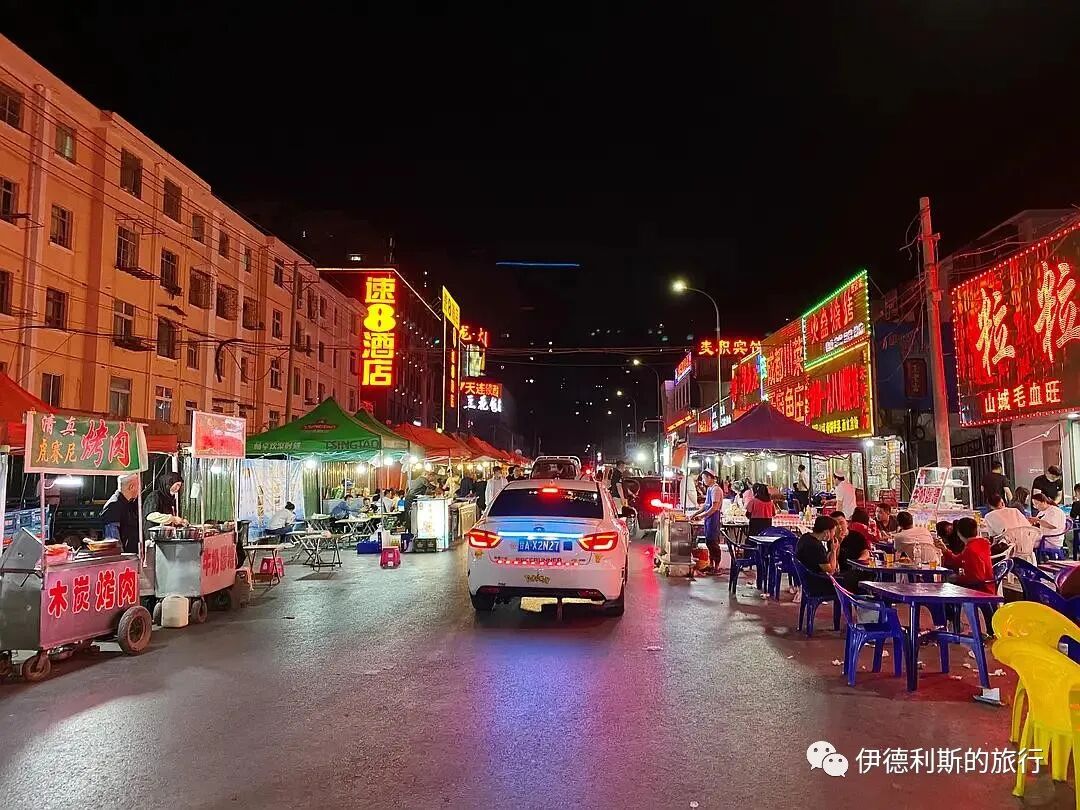
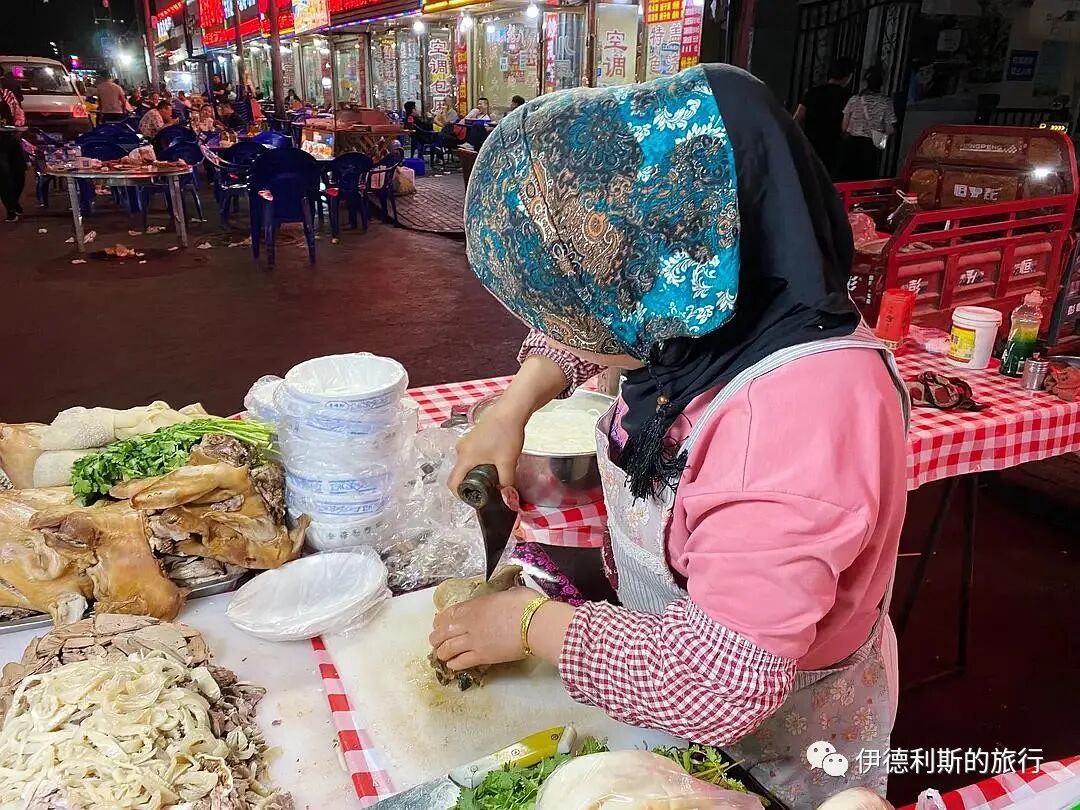
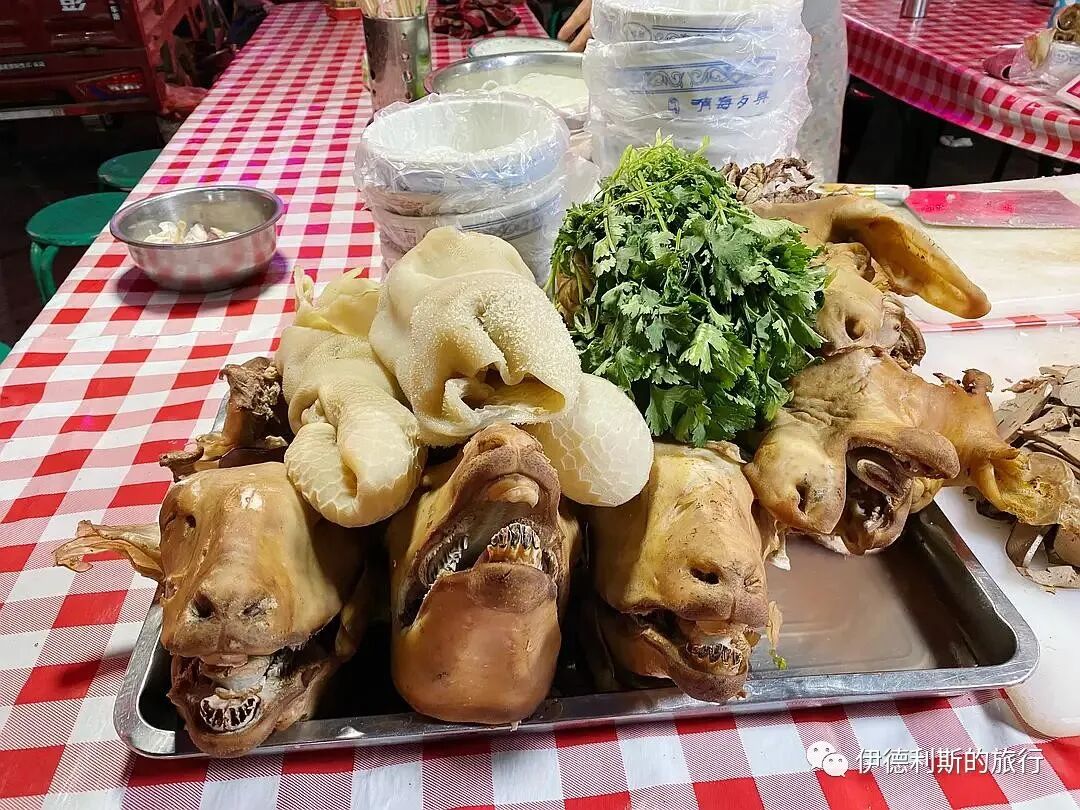
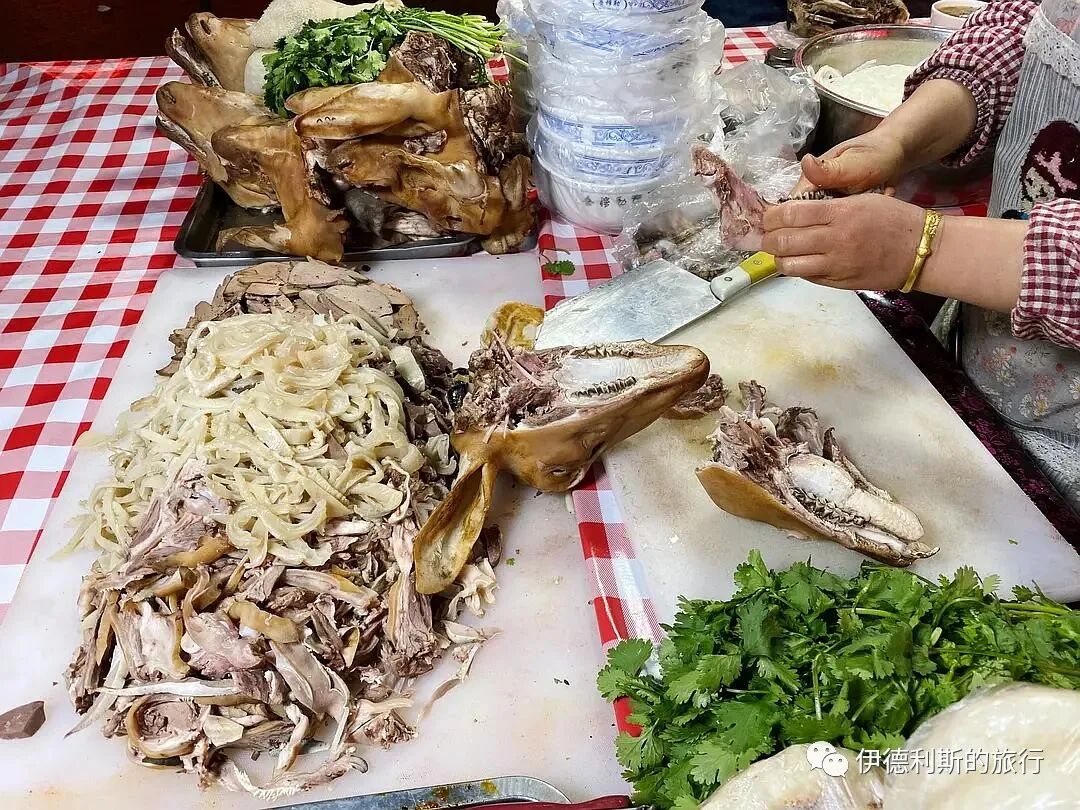
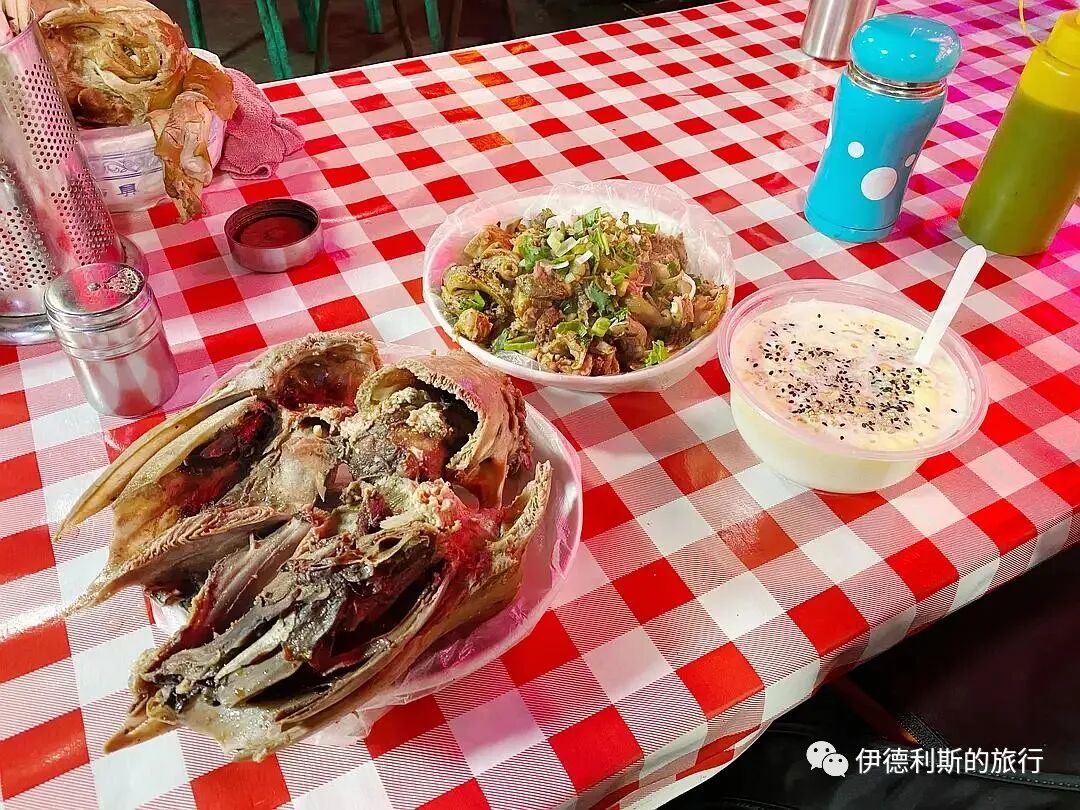
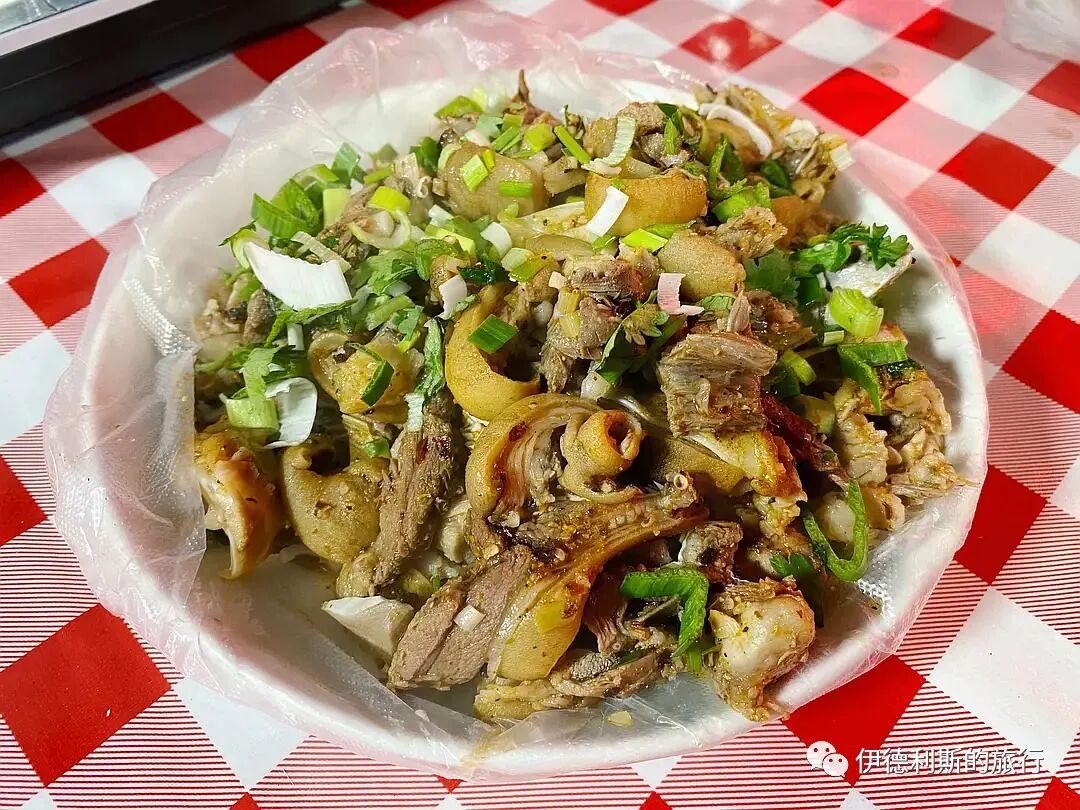
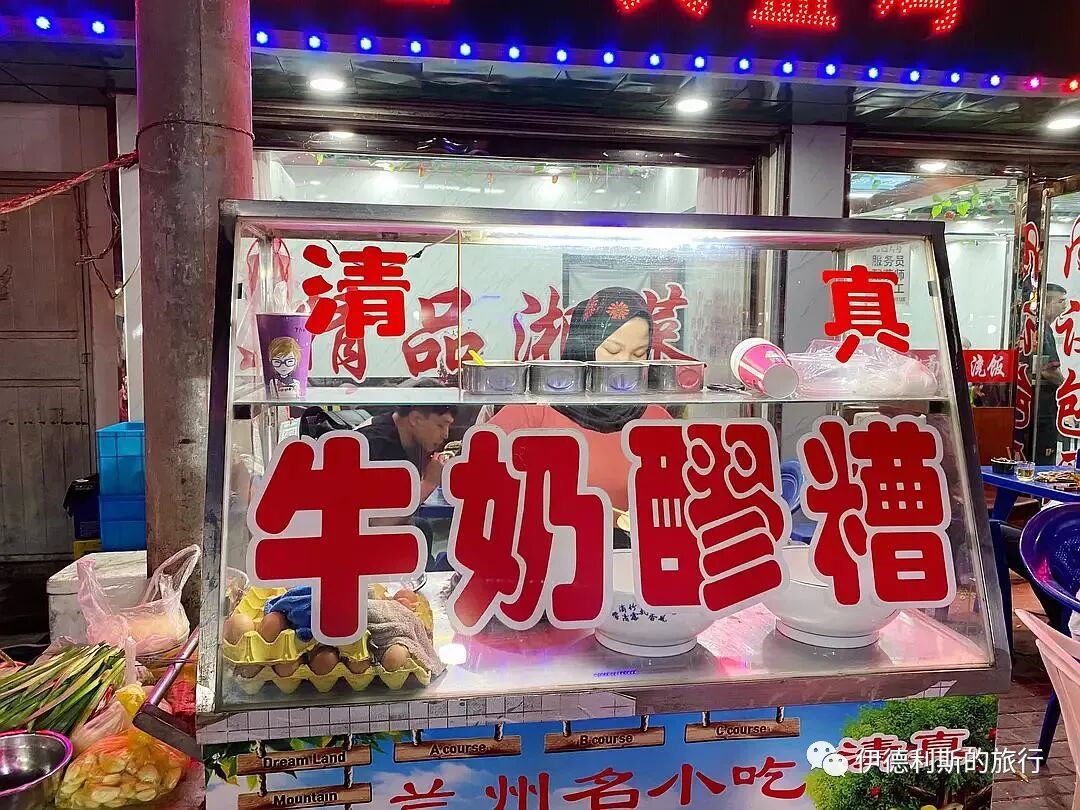
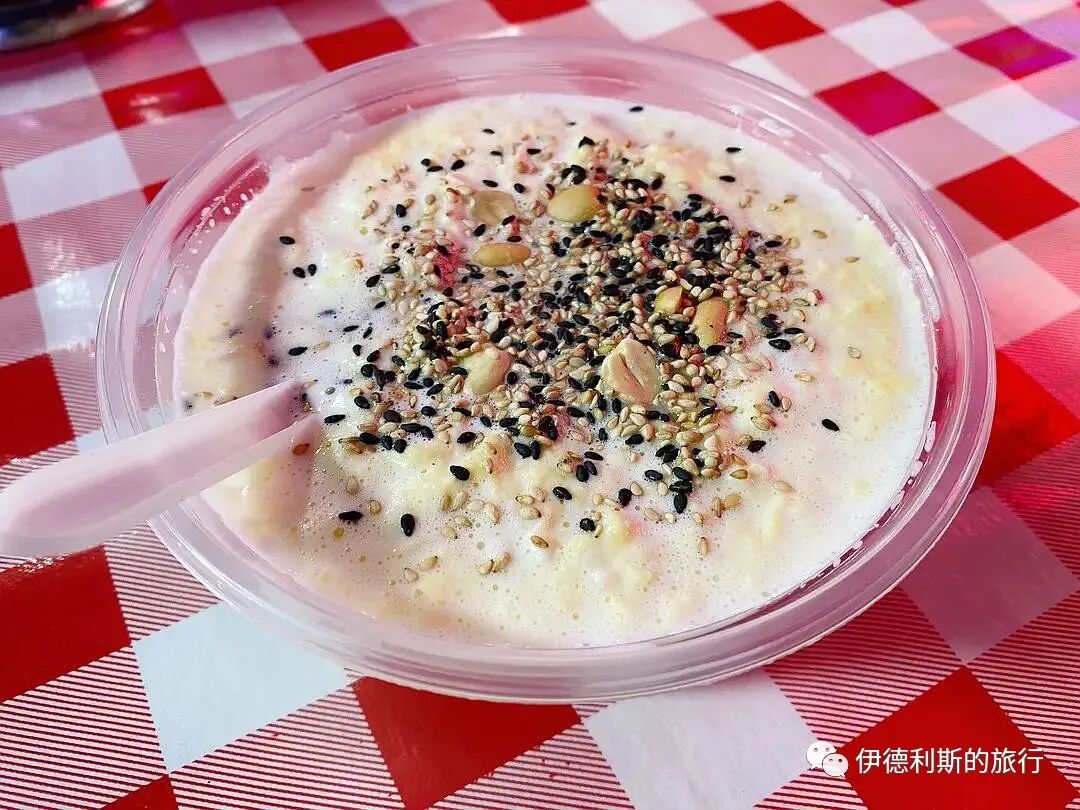
On Saturday morning, I had Hezhou baozi (steamed stuffed buns) at Xiaoxihu in Lanzhou, then set off for Dahejia Town in Linxia.
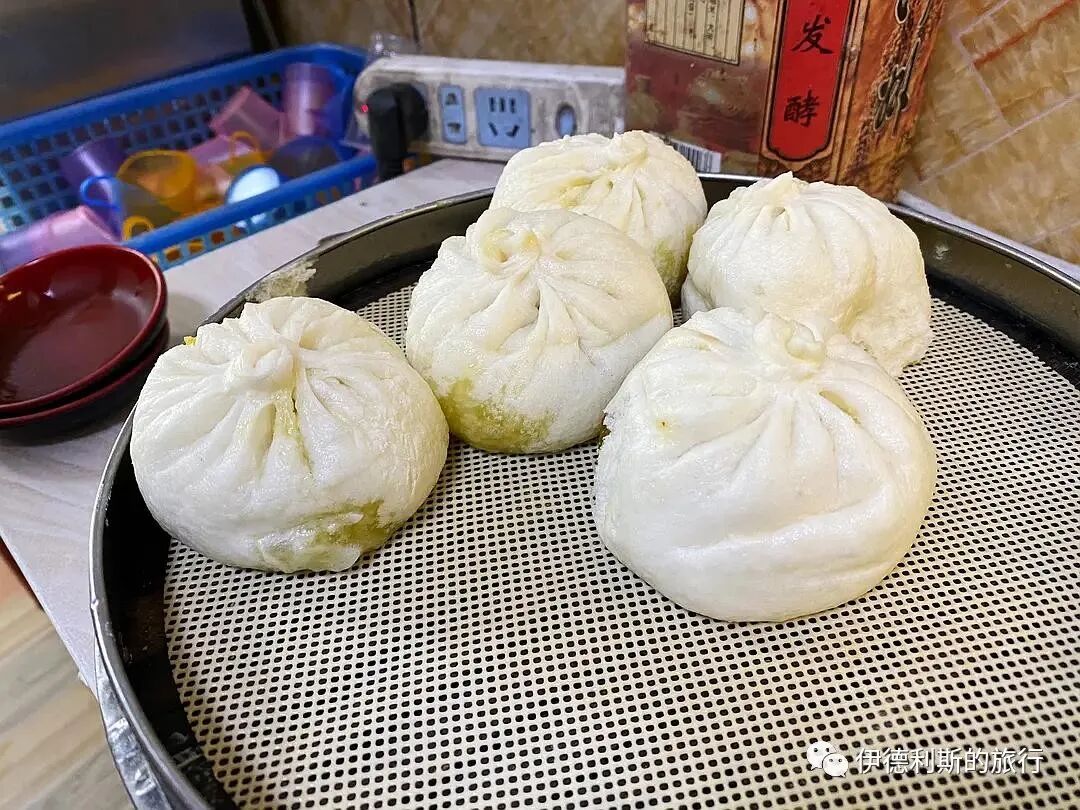
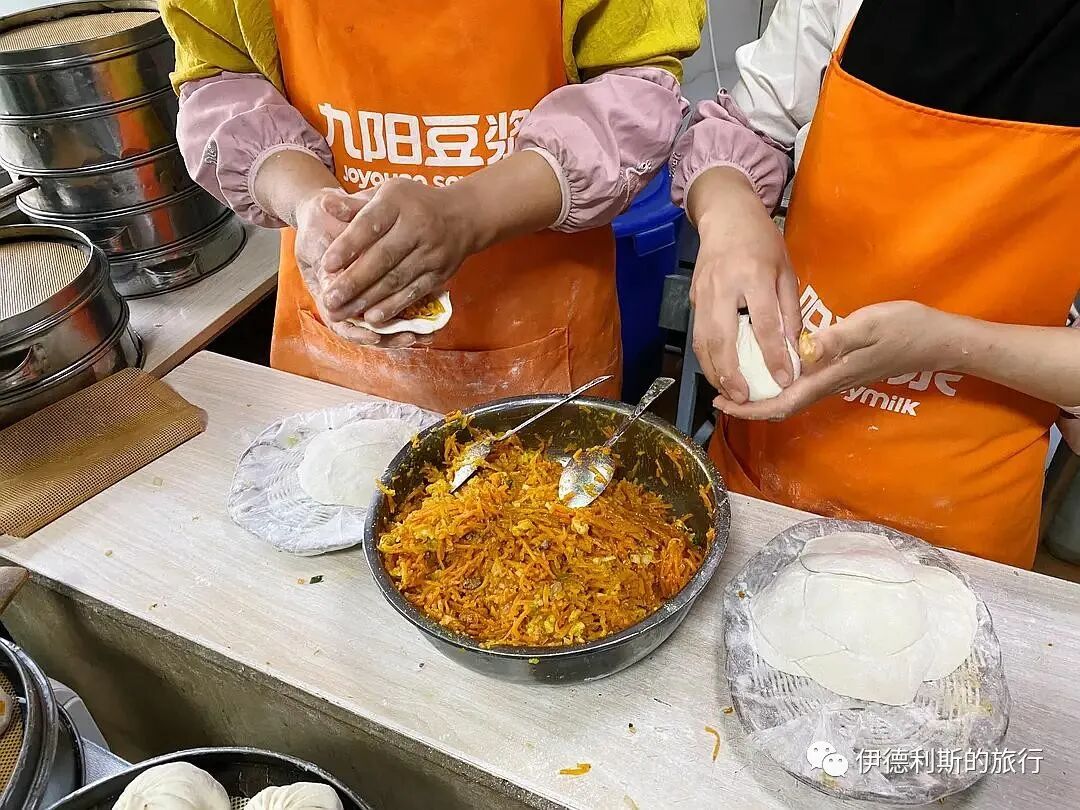
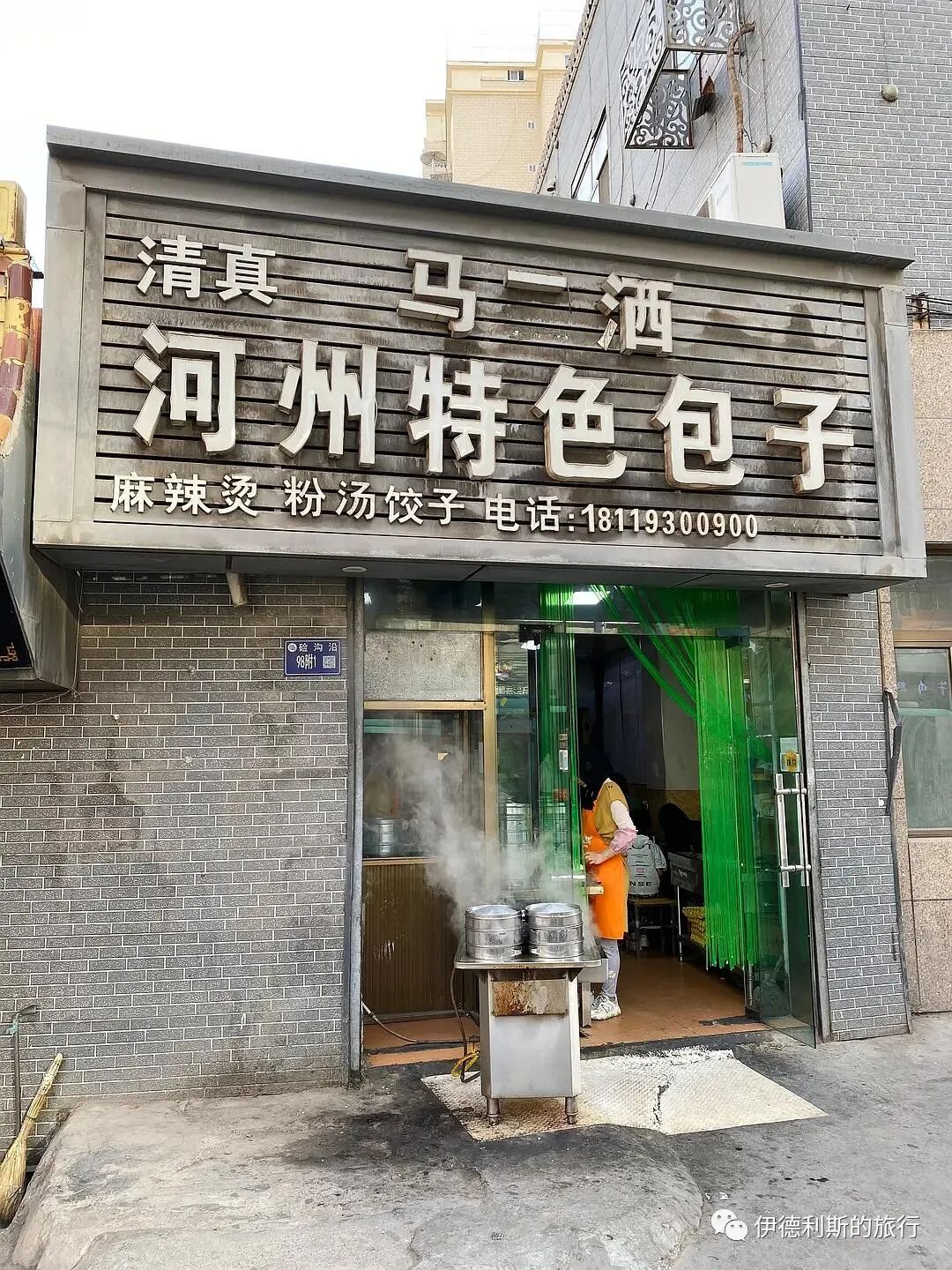
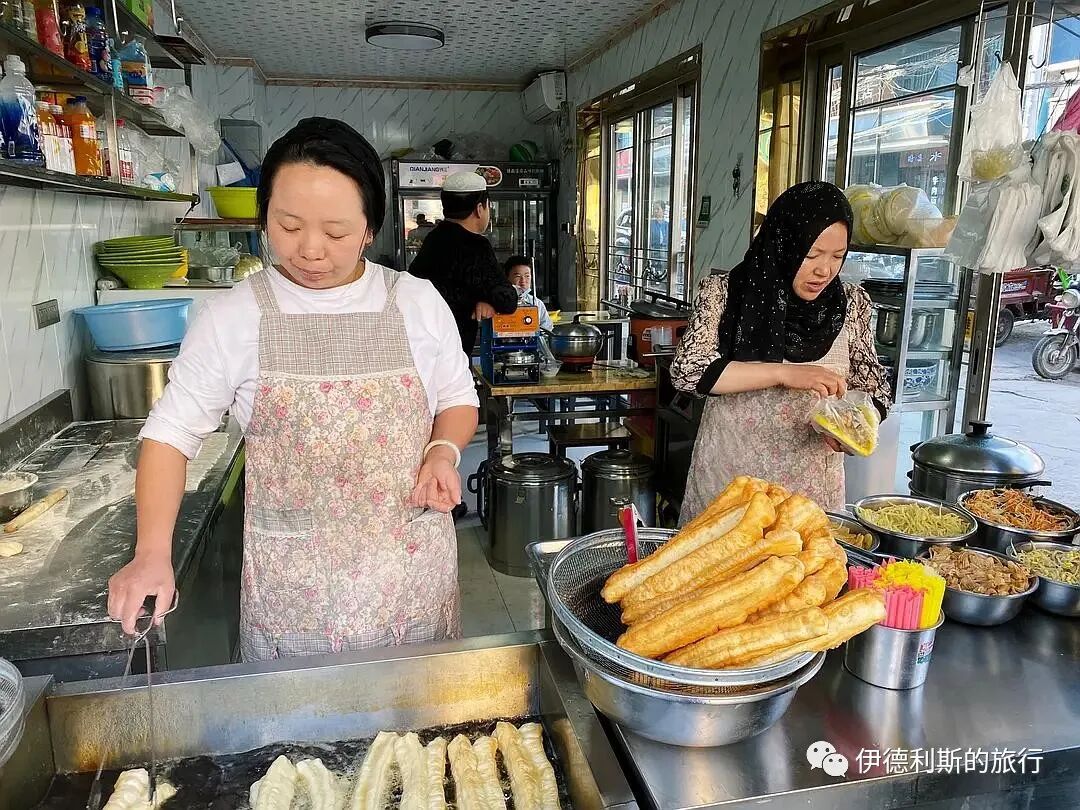
At noon in Dahejia, I had shouzhuarou (hand-grabbed mutton), laotangji (old-broth chicken), and laochao mianpian (stir-fried dough slices); my standard order whenever I go to the Hehuang region is shouzhuarou and mianpian. This long-established restaurant was very crowded at noon; most people were eating cold noodles, while some ordered heyan (river-bank style dishes) and laochao (stir-fried dishes). Their kettles were filled with beef broth, and empty bowls were set out with chopped green onions and salt, so you could pour the broth directly to drink.
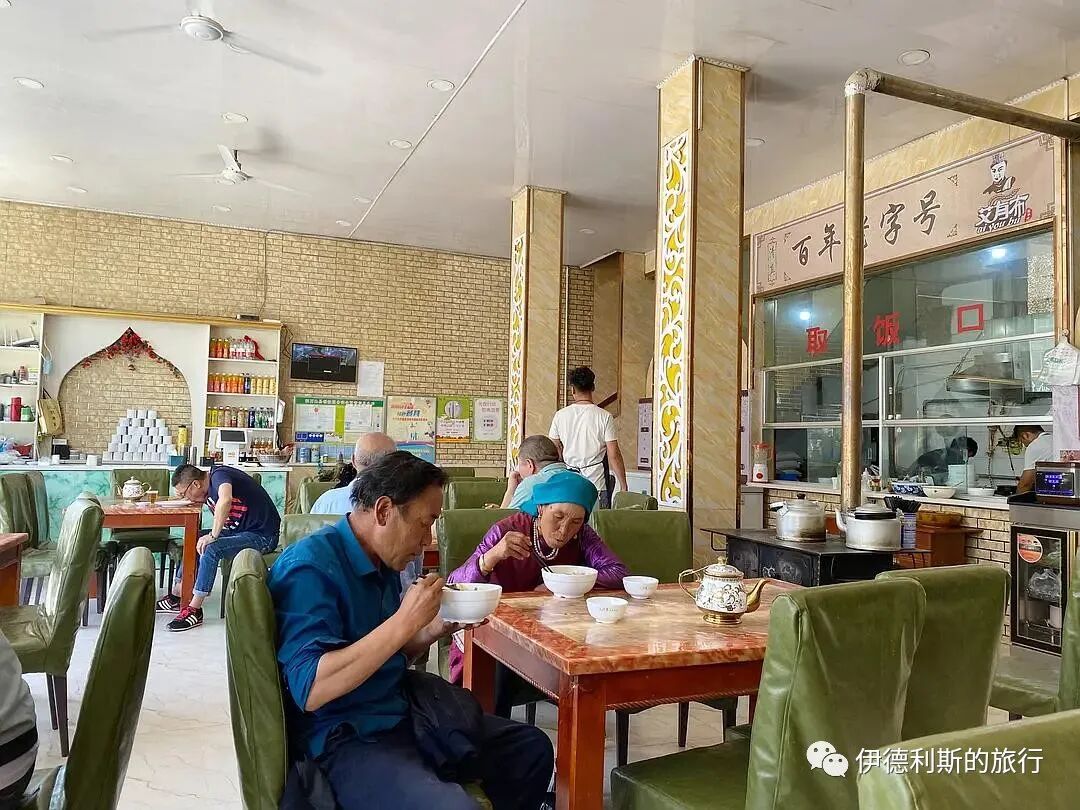
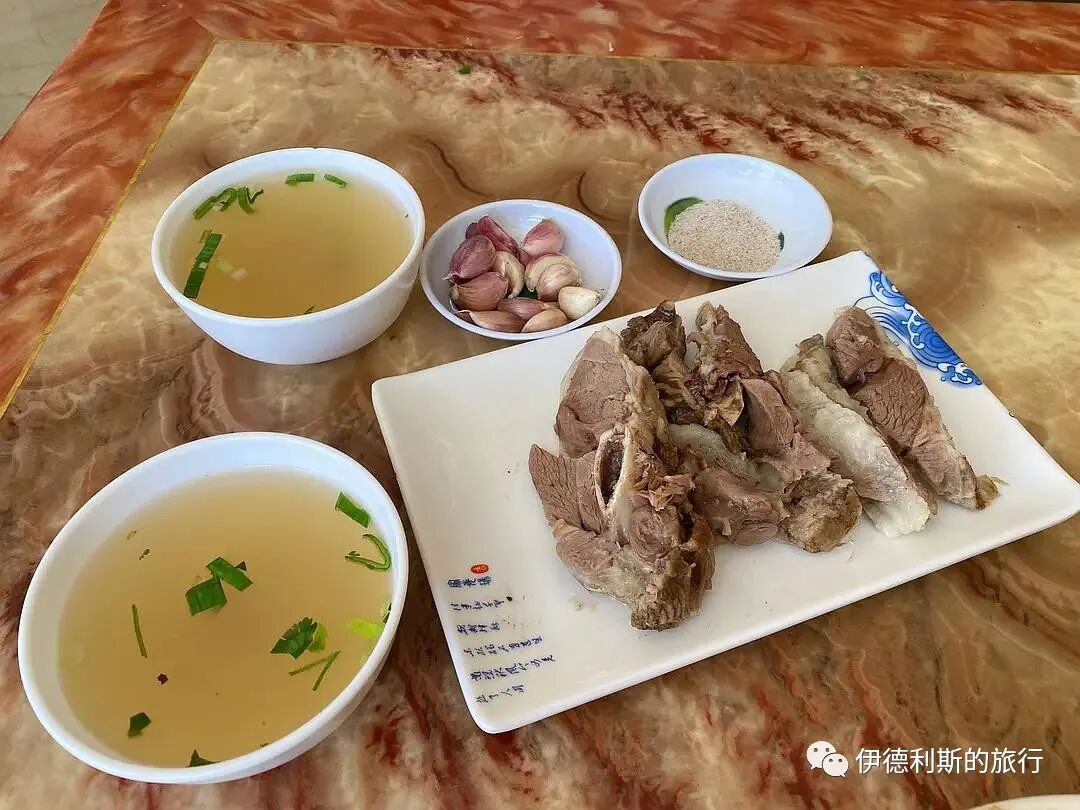
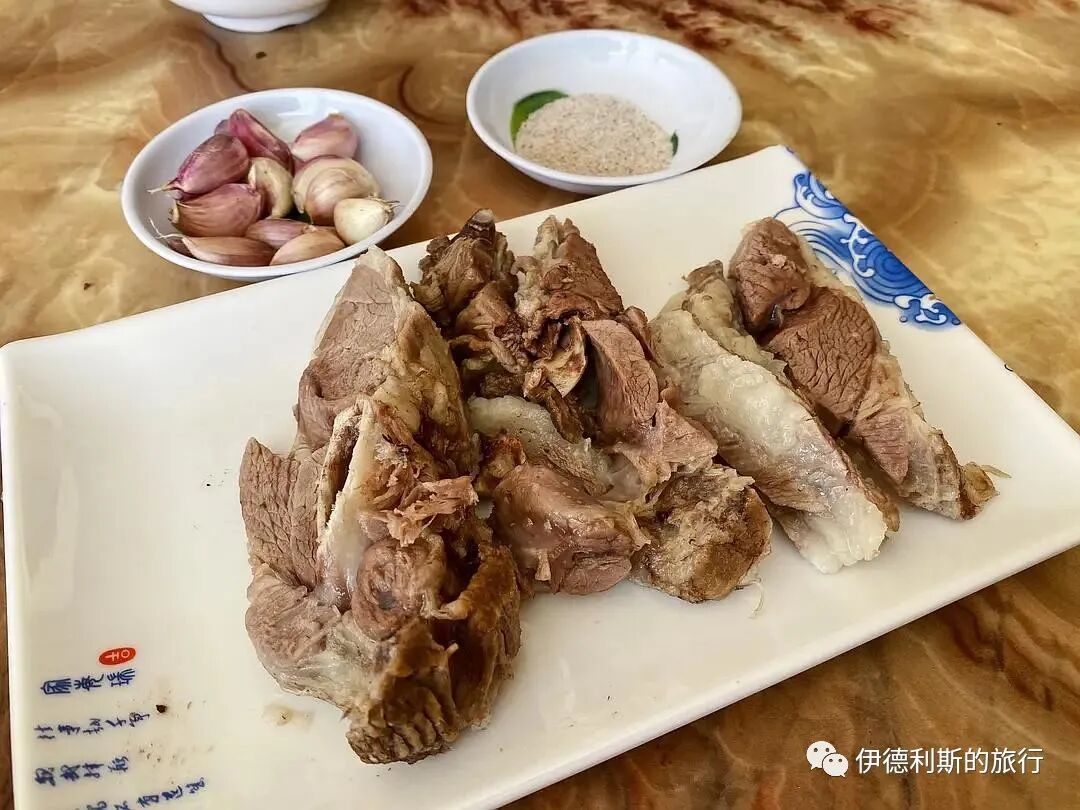
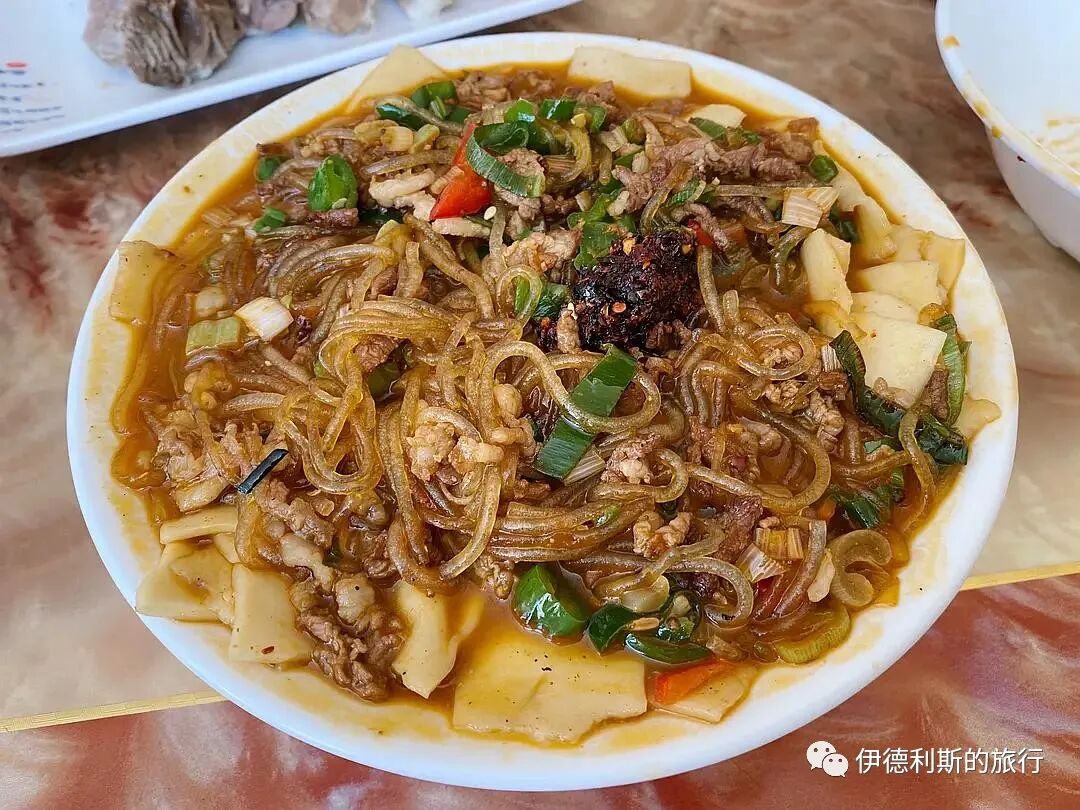
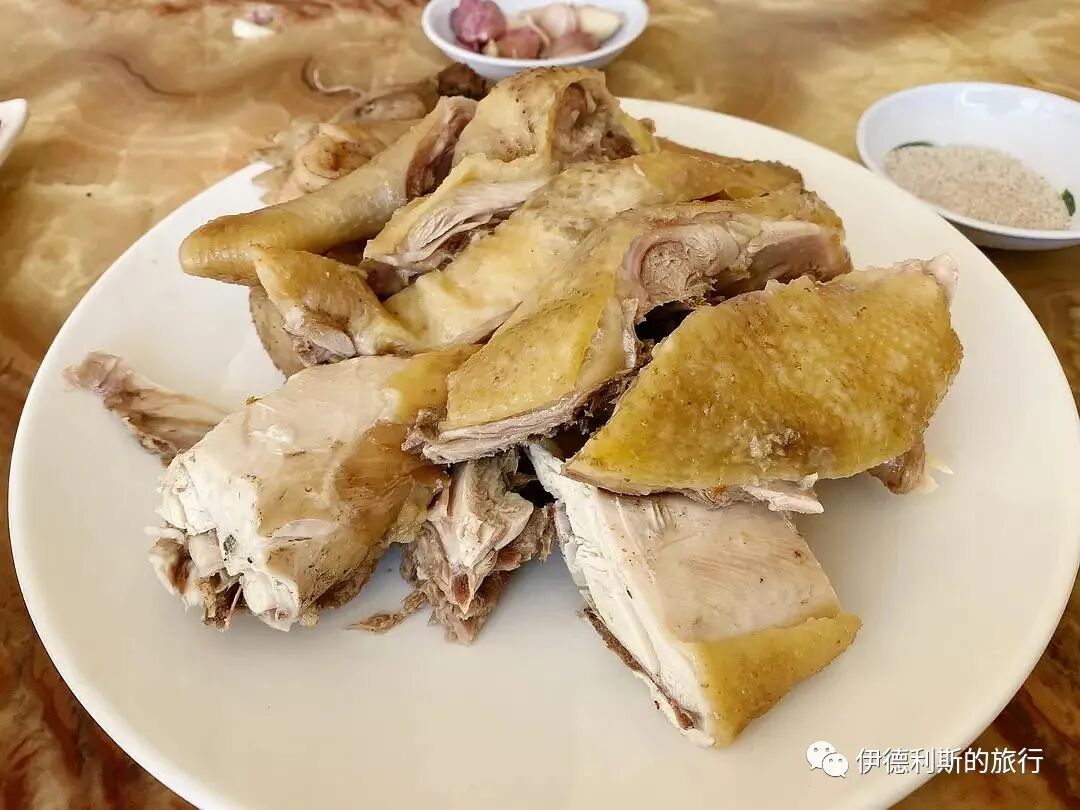
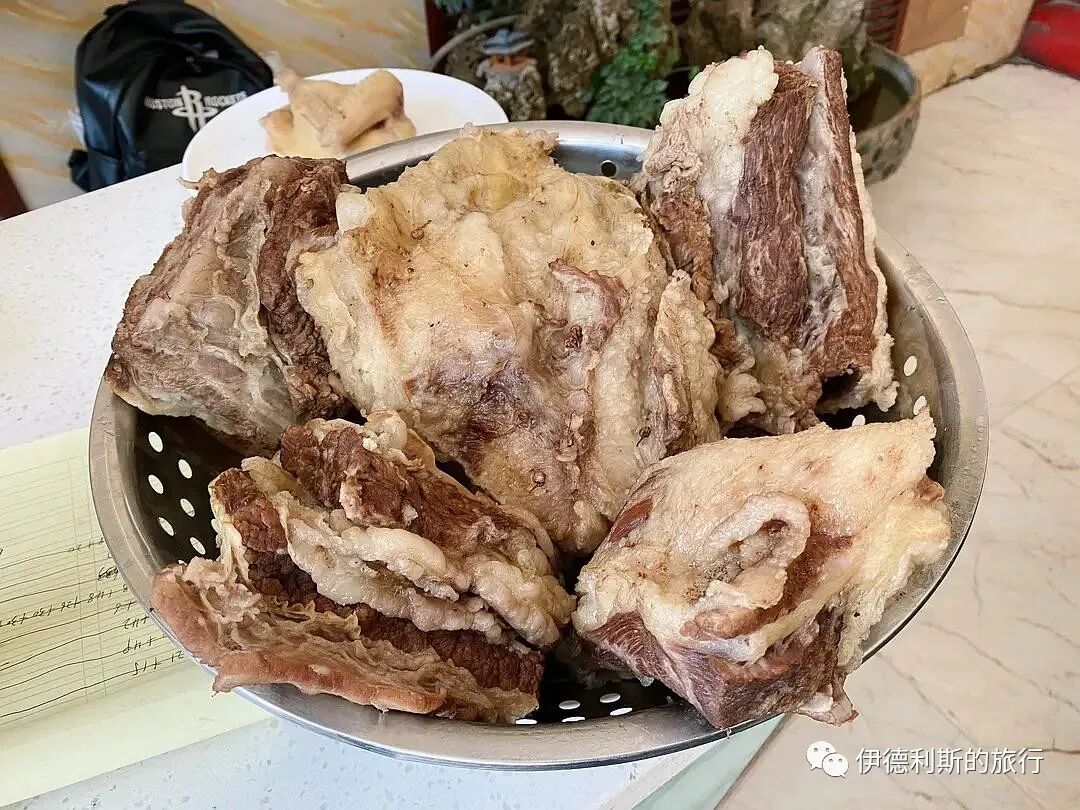
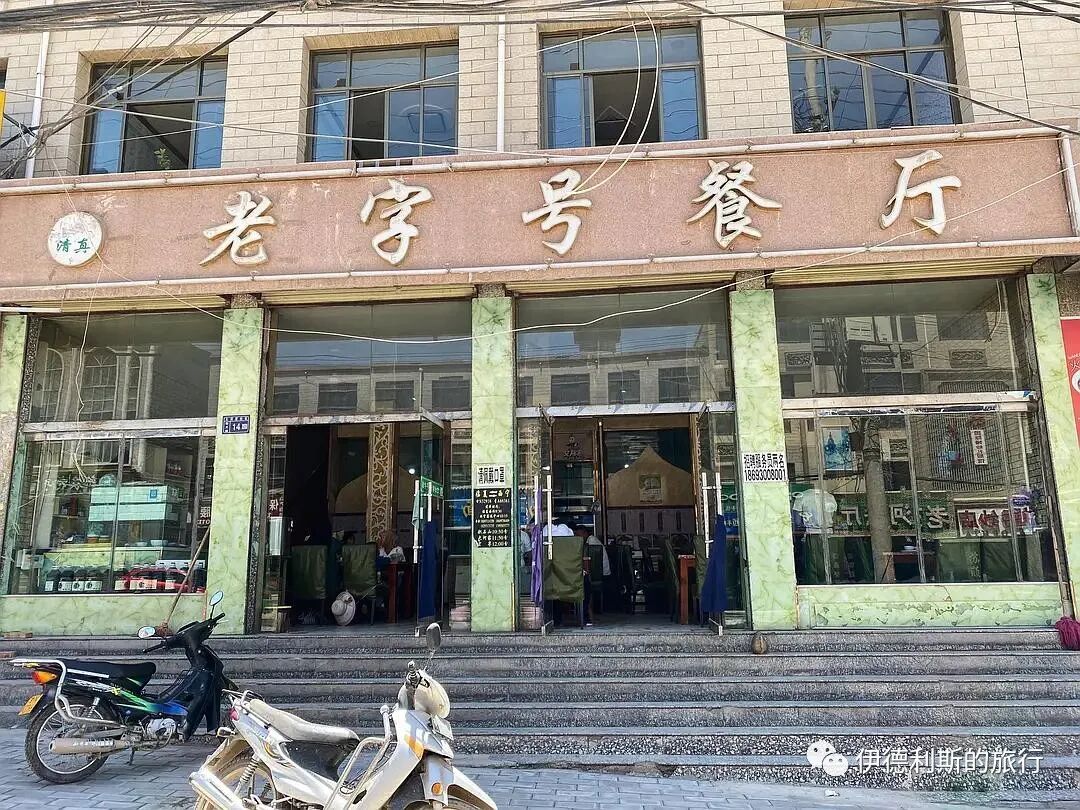
Dahejia is located at the border of Gansu and Qinghai; once you cross the Yellow River Bridge, you are in Minhe, Qinghai. People from many ethnic groups live here, including the Bonan, Dongxiang, Salar, Han, Hui Muslims, and Tibetan people, and the town is full of Dongxiang shouzhuarou restaurants and Bonan knife shops.
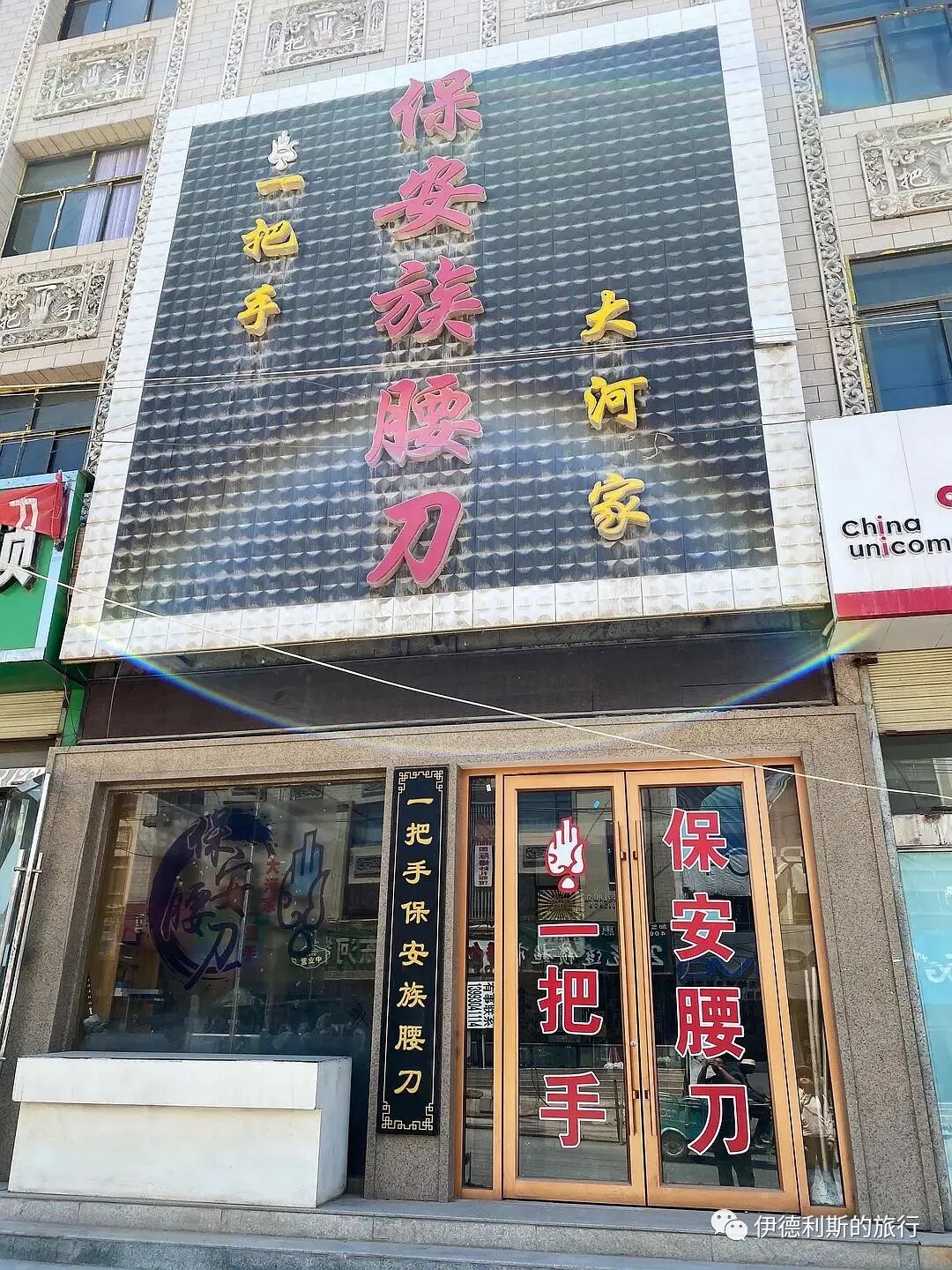
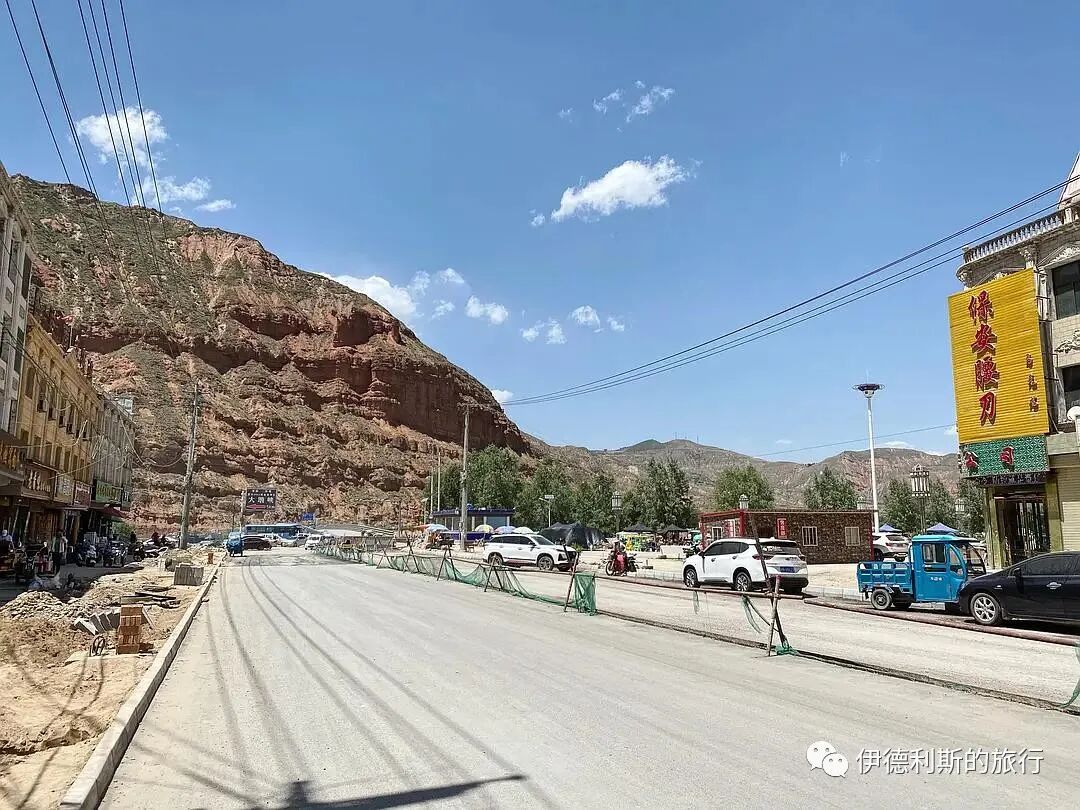
I bought tianmaizi (sweet wheat) in Dahejia at noon and yogurt at Bafang Thirteen Alleys in Linxia in the evening; combining them made a delicious tianmaizi yogurt.
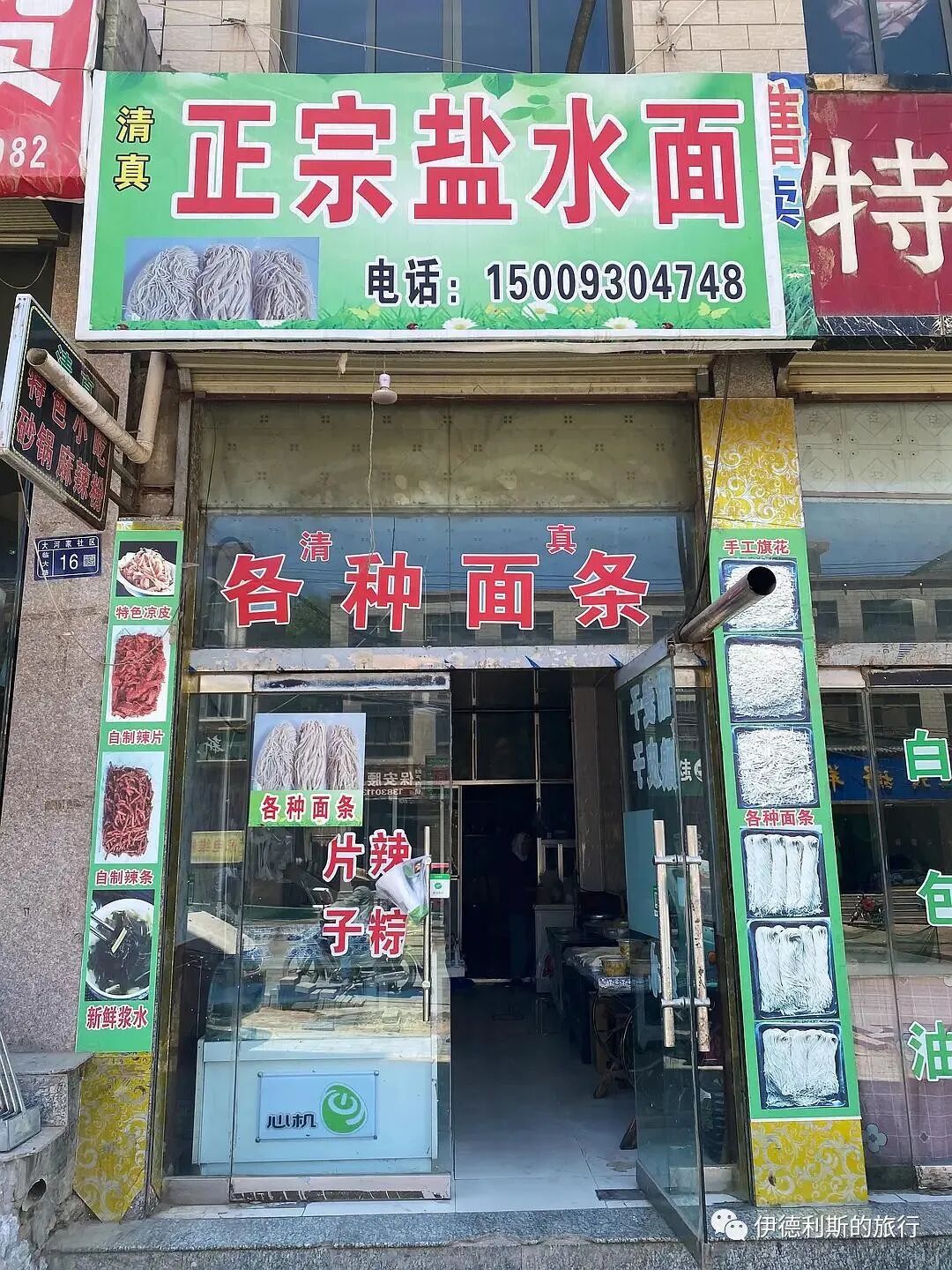
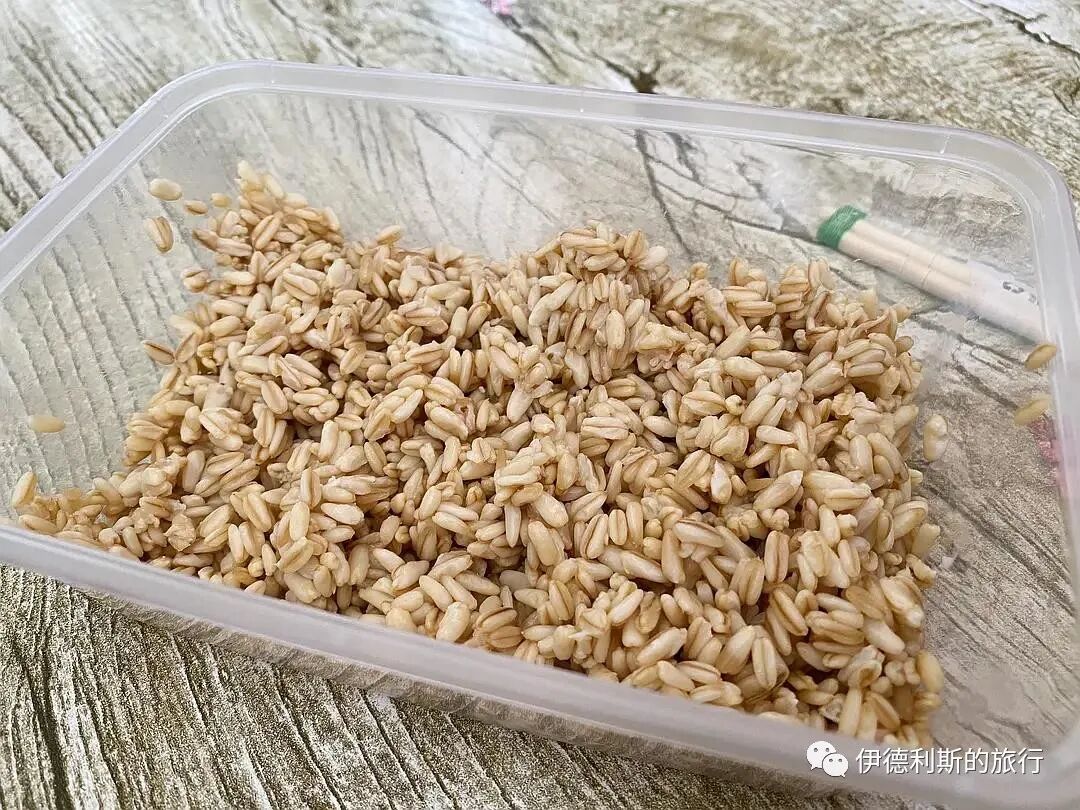
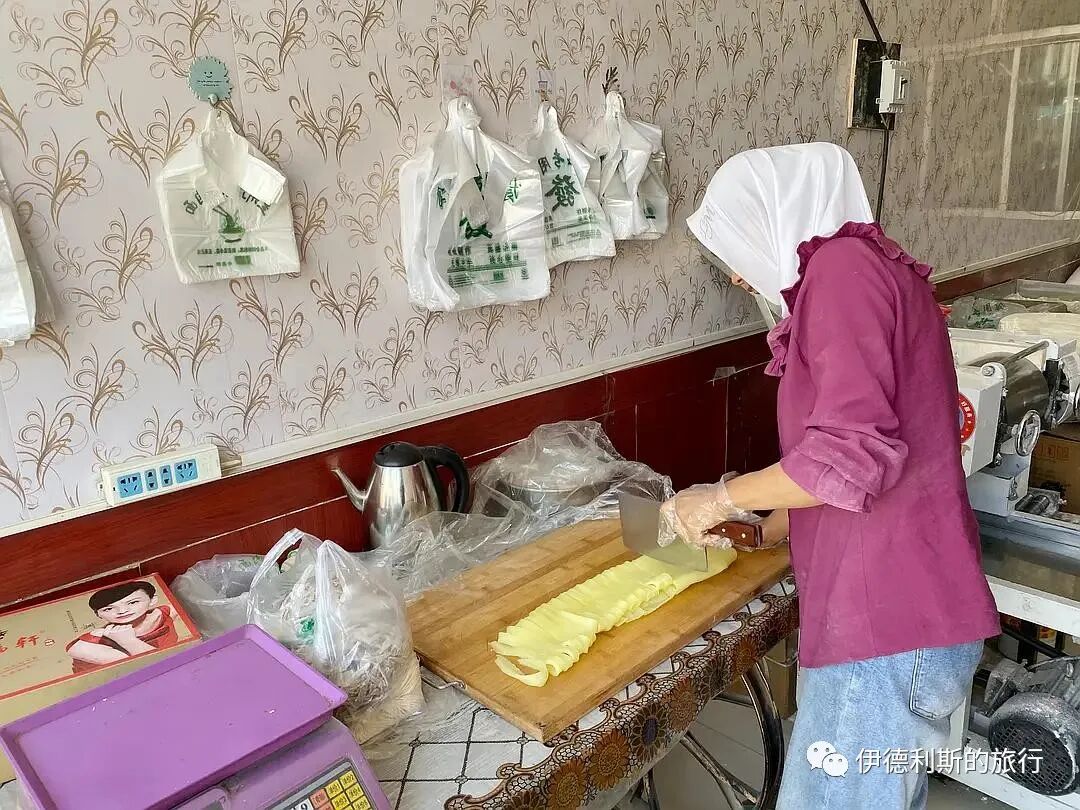
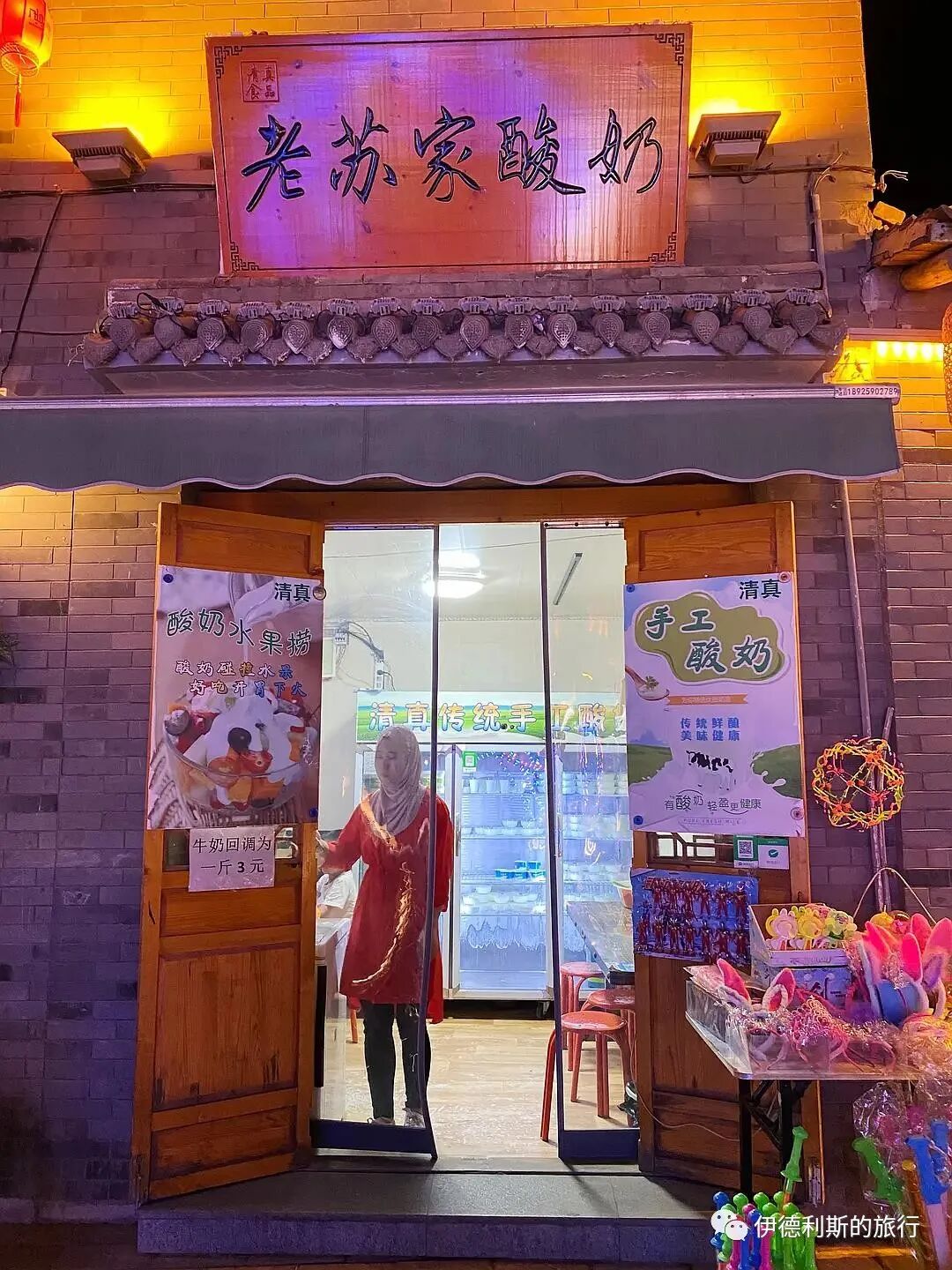
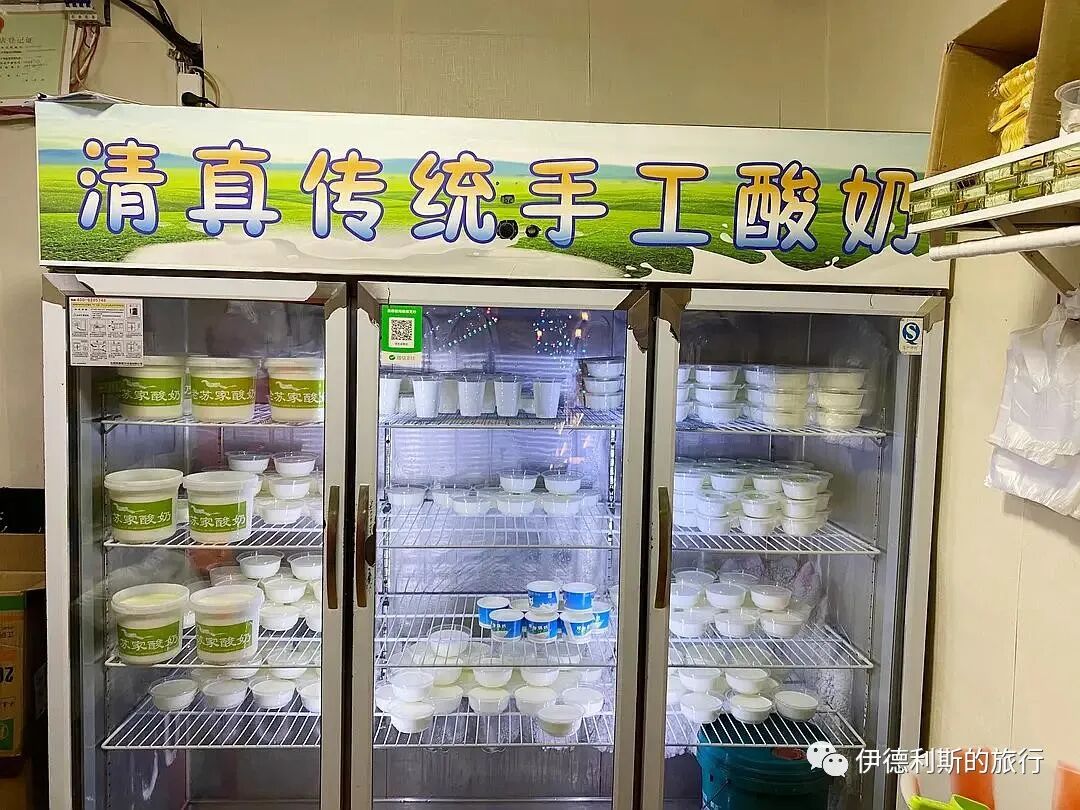
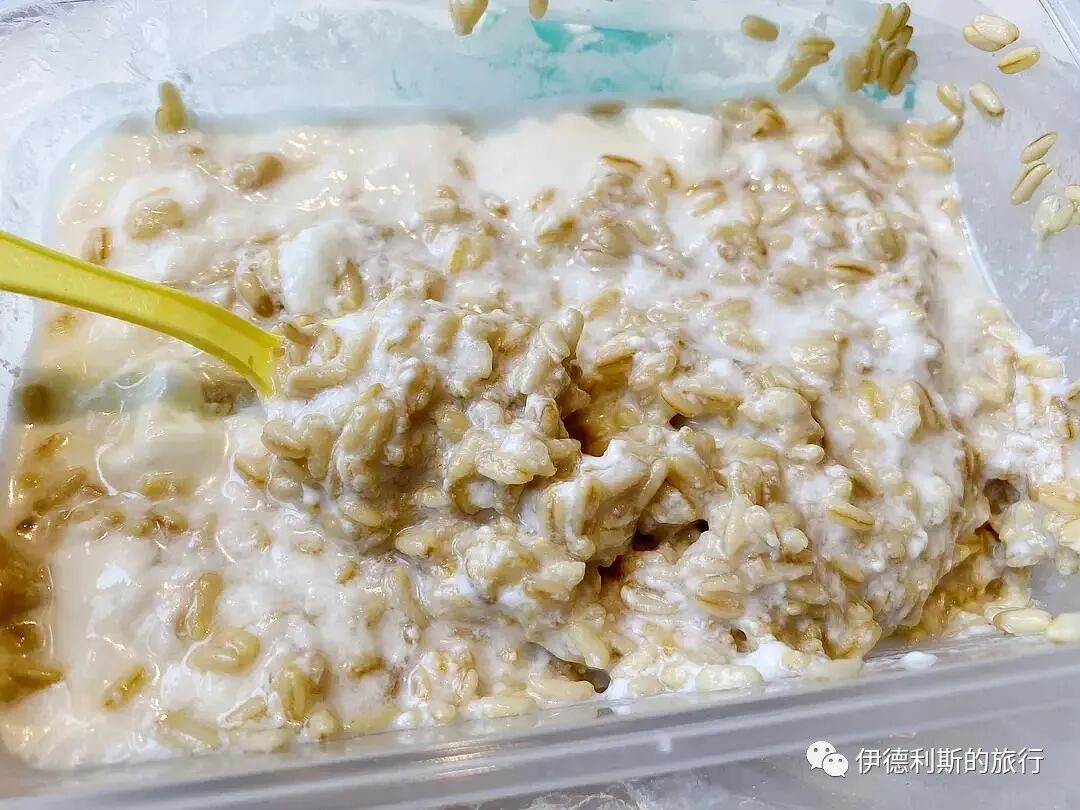
The fresh jiangshui (fermented vegetable juice) in the shop is especially refreshing in the summer.
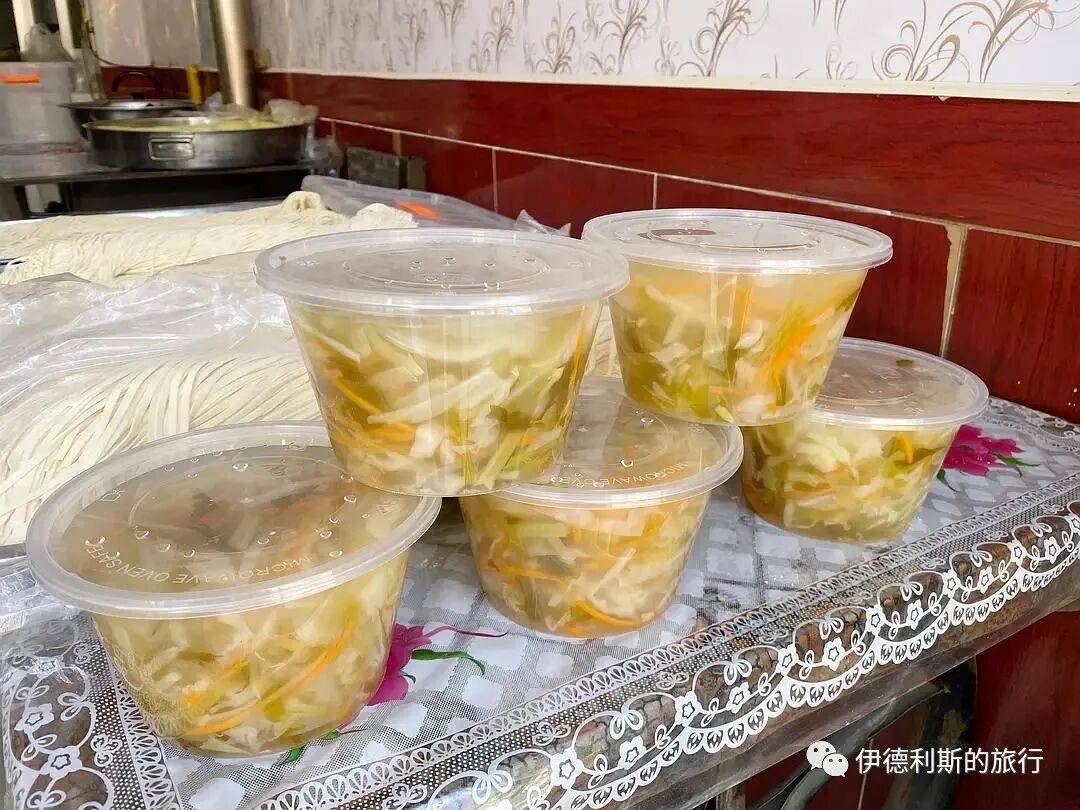
In the evening, I had beef casserole and stir-fried fazi mianchang (sausage made with sheep intestines and meat) at Lao Dongxiang Mainai in the Linxia North Street night market. Fazi, also called fazi, is sheep fat intestine stuffed with offal and minced meat. I think the specialty of the Linxia North Street night market is the variety of stir-fried dishes; flames over a meter high can rise from the stoves, but unfortunately, I didn't capture it on camera.
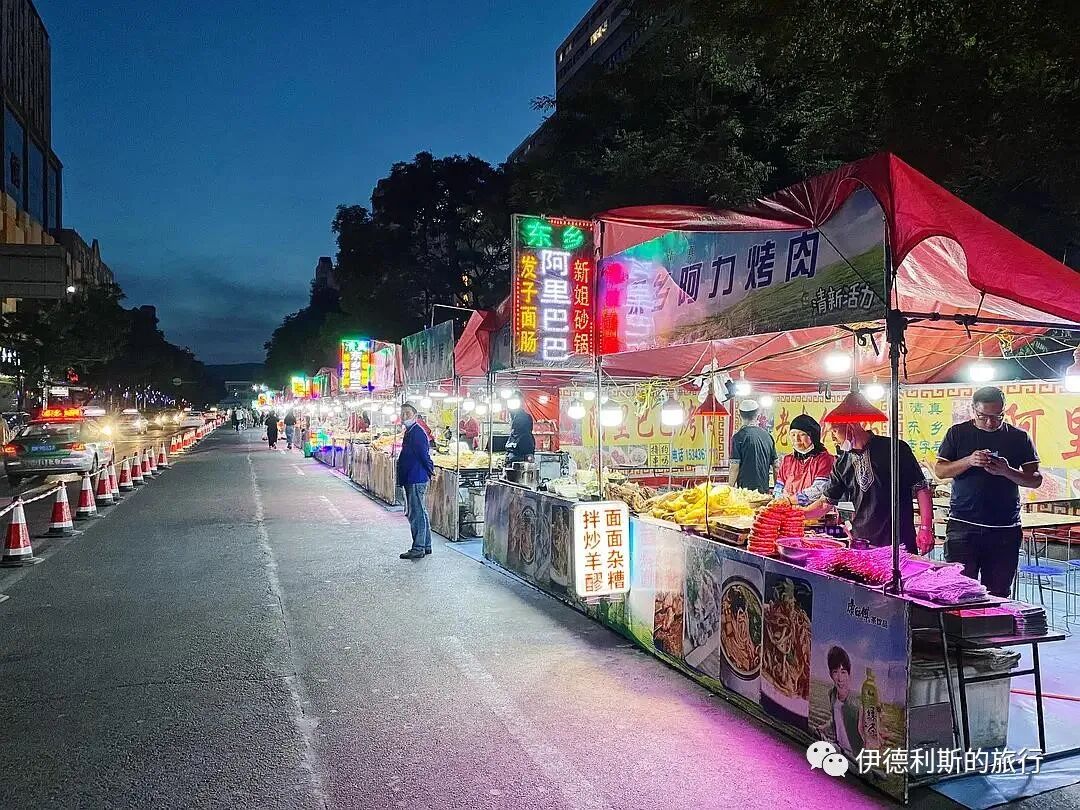
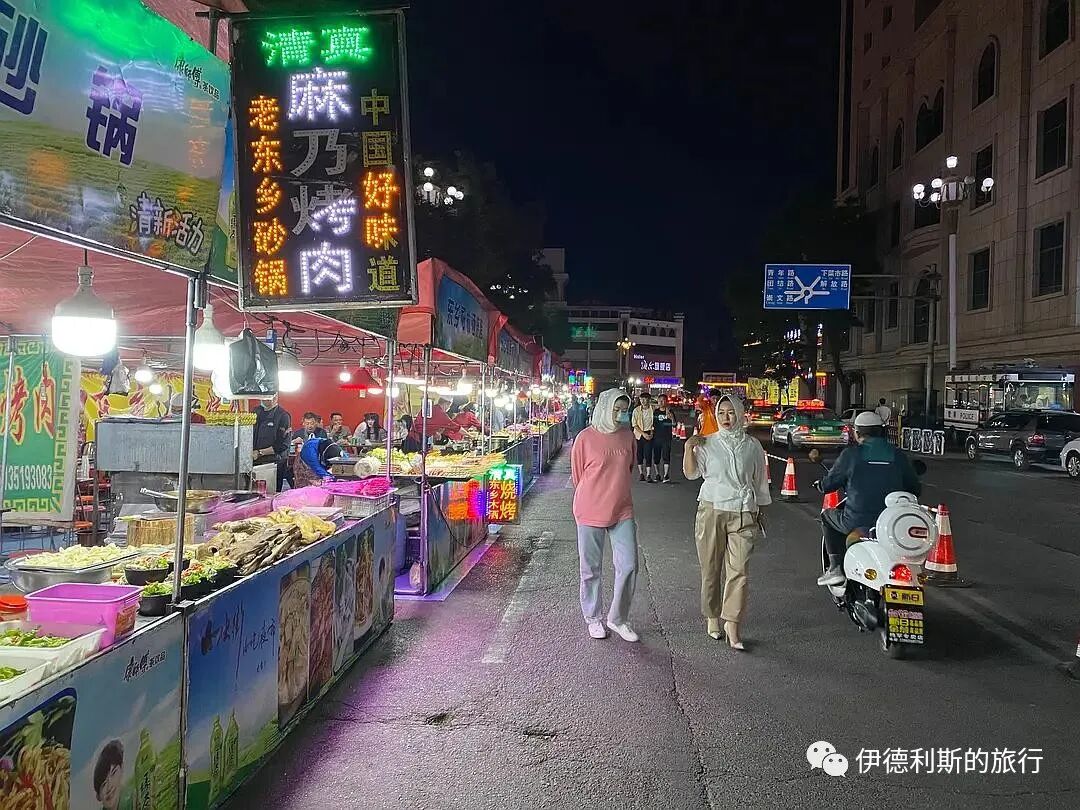
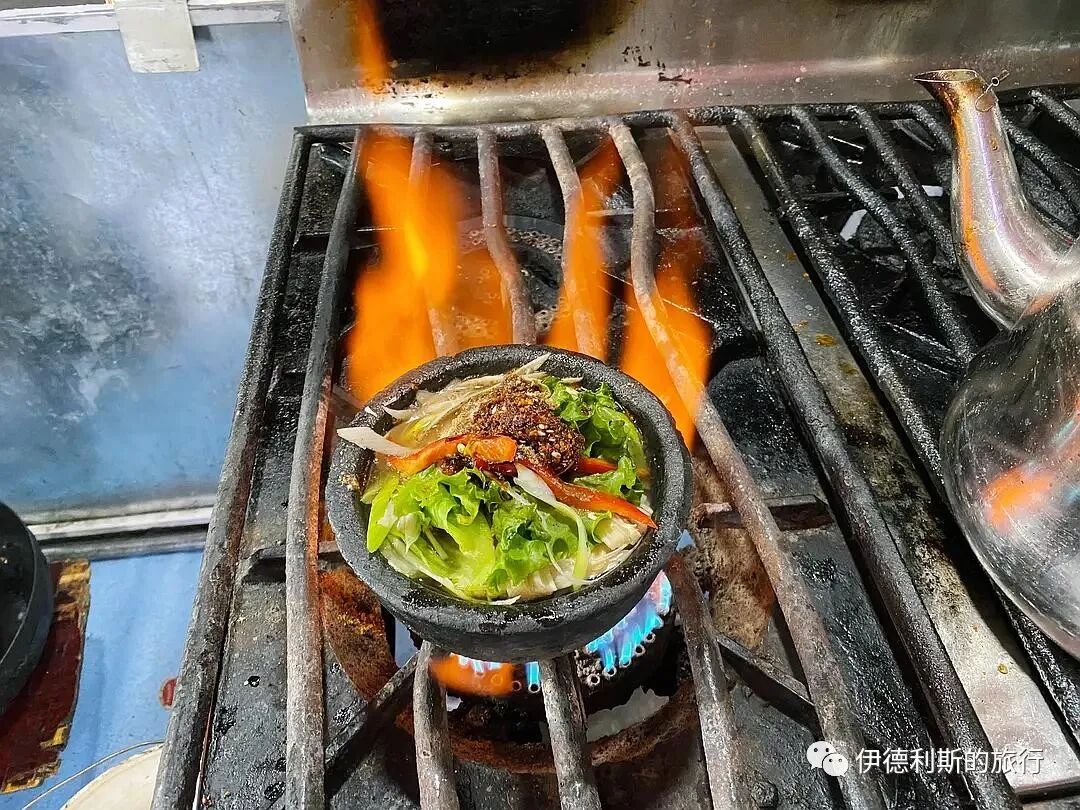
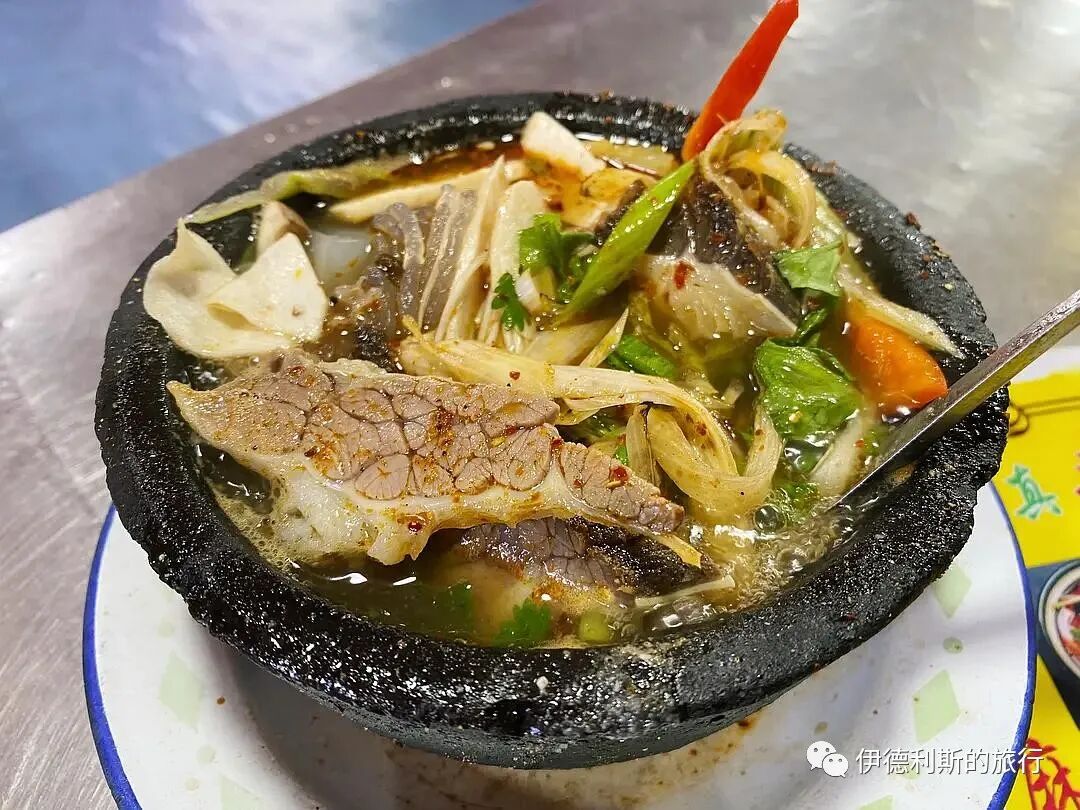
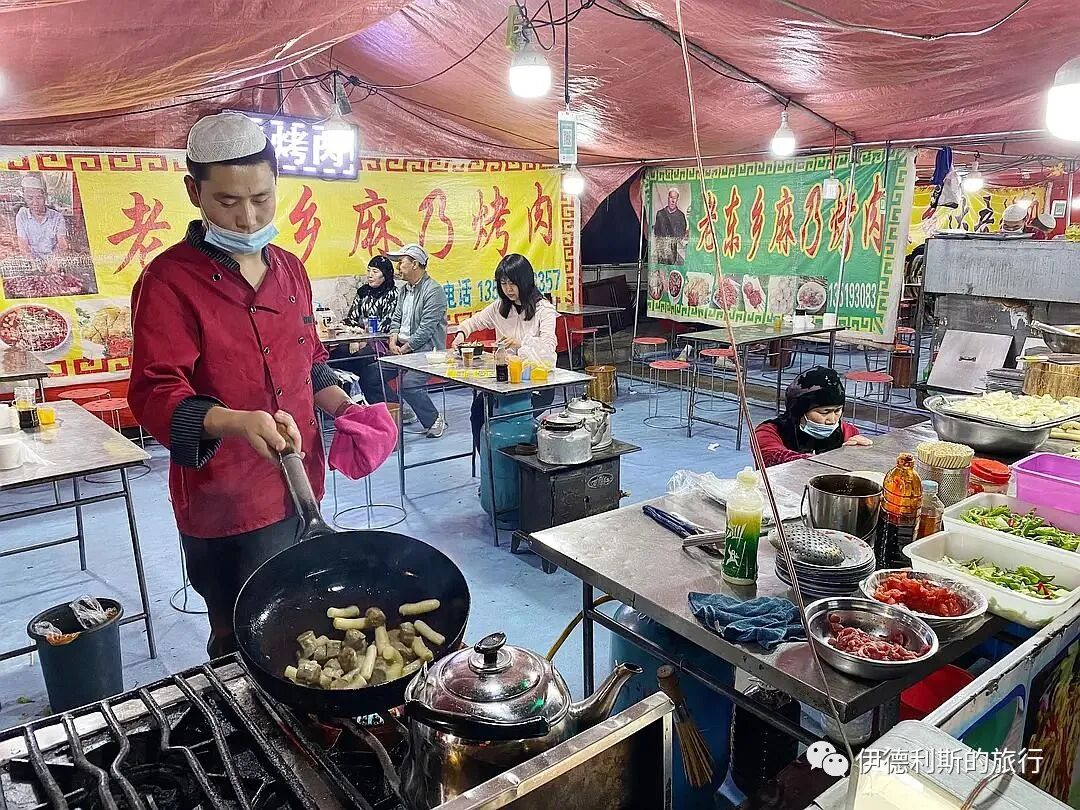
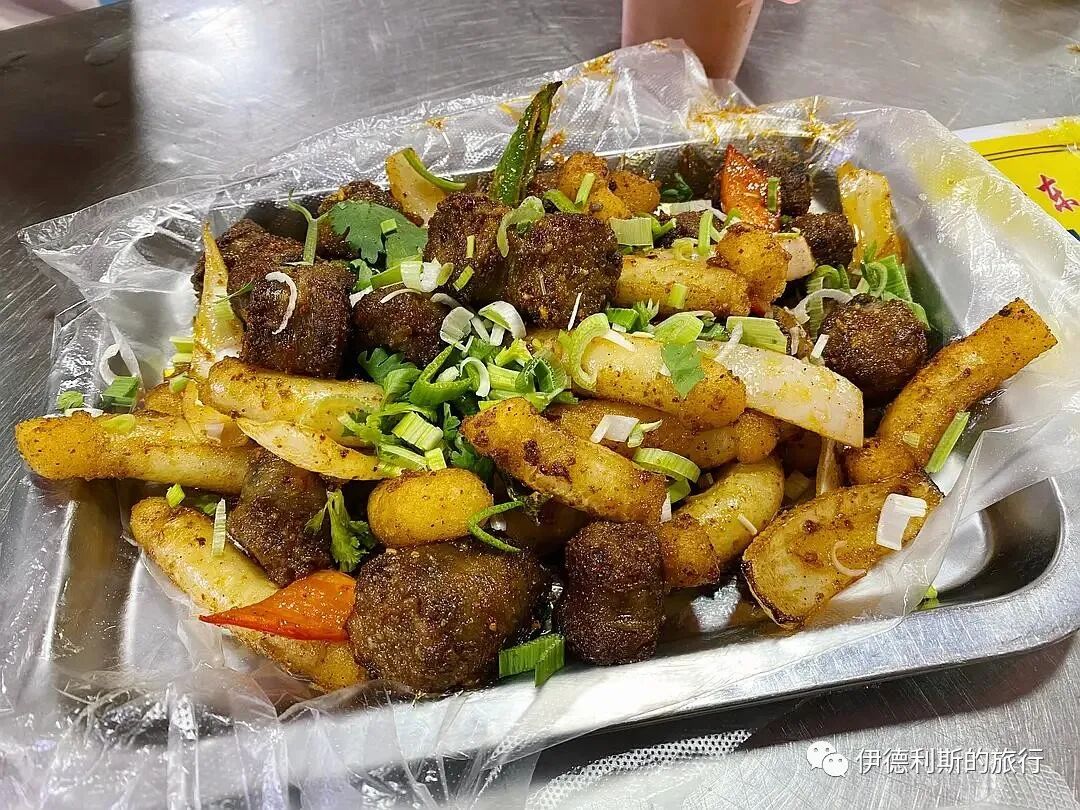
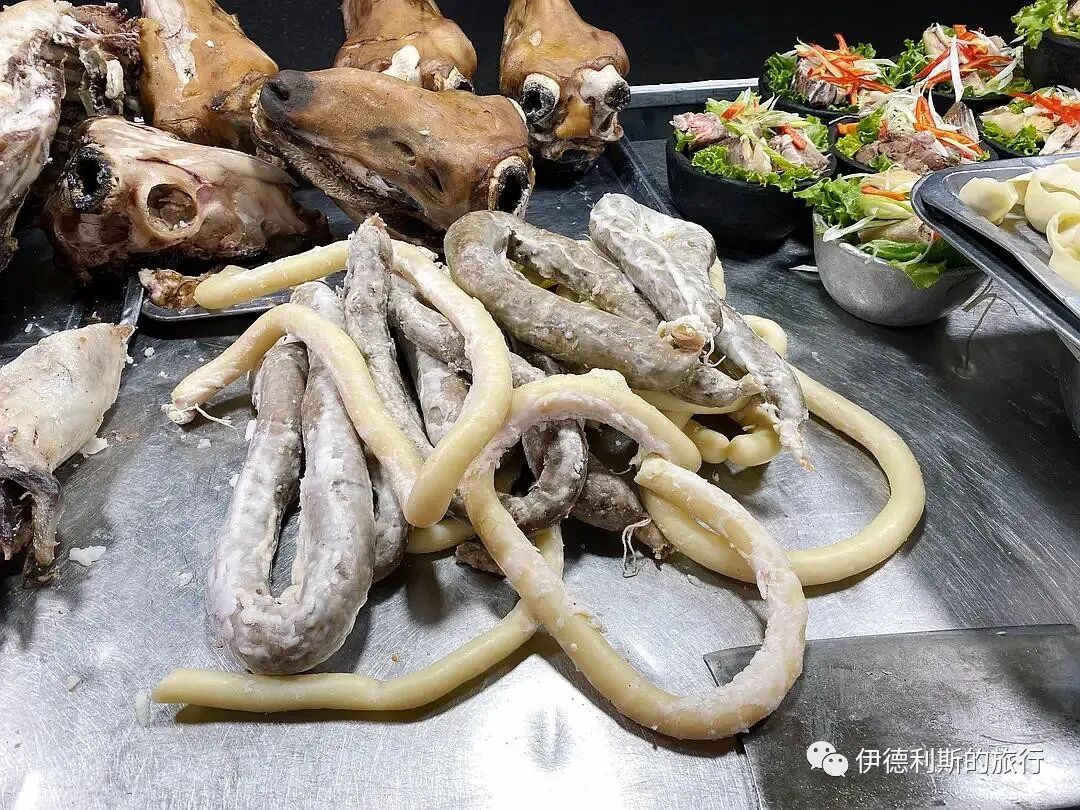
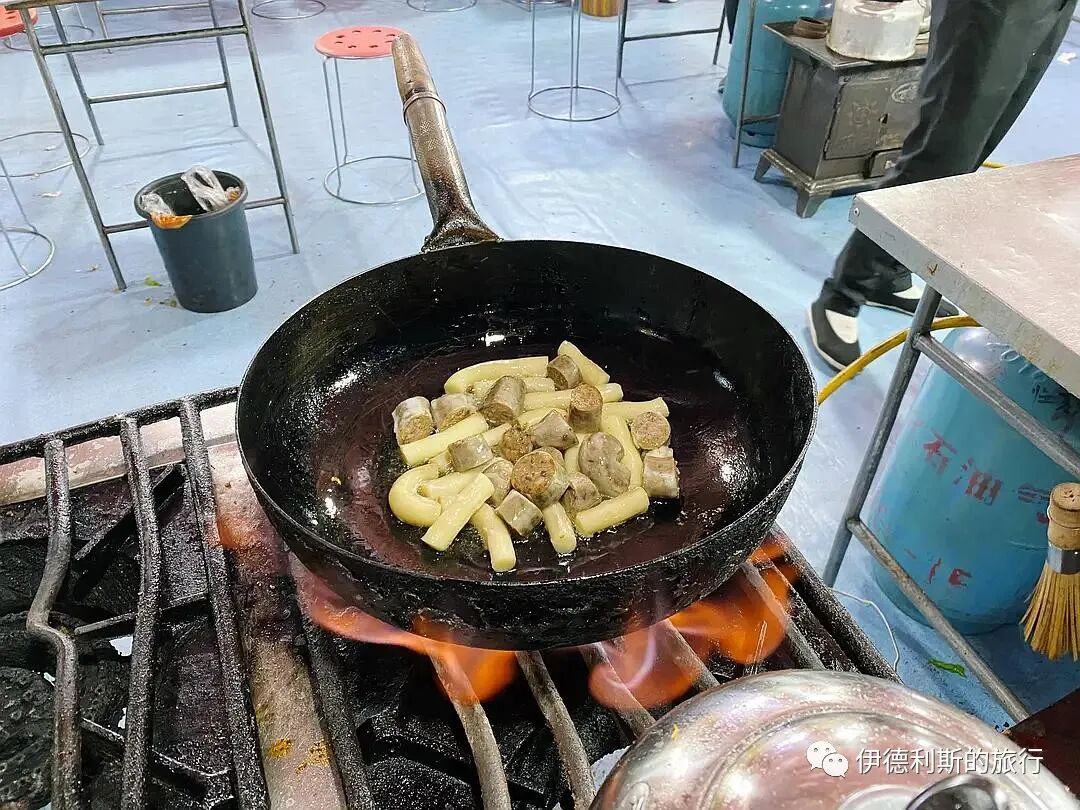
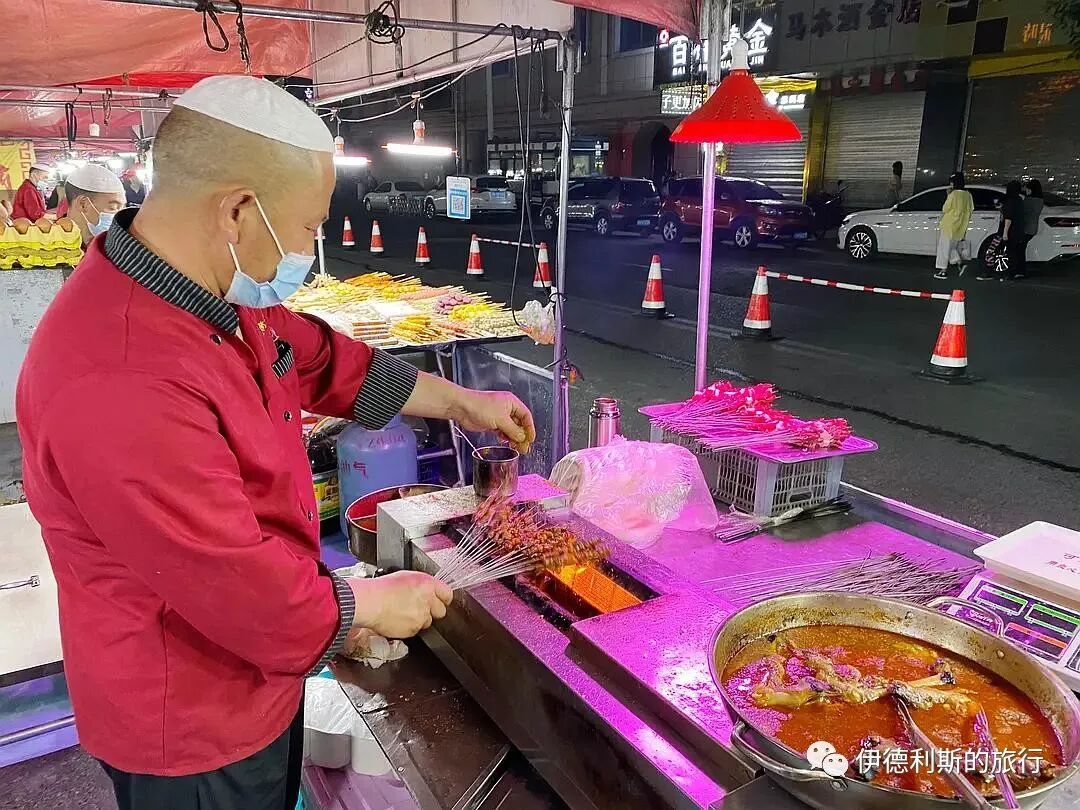
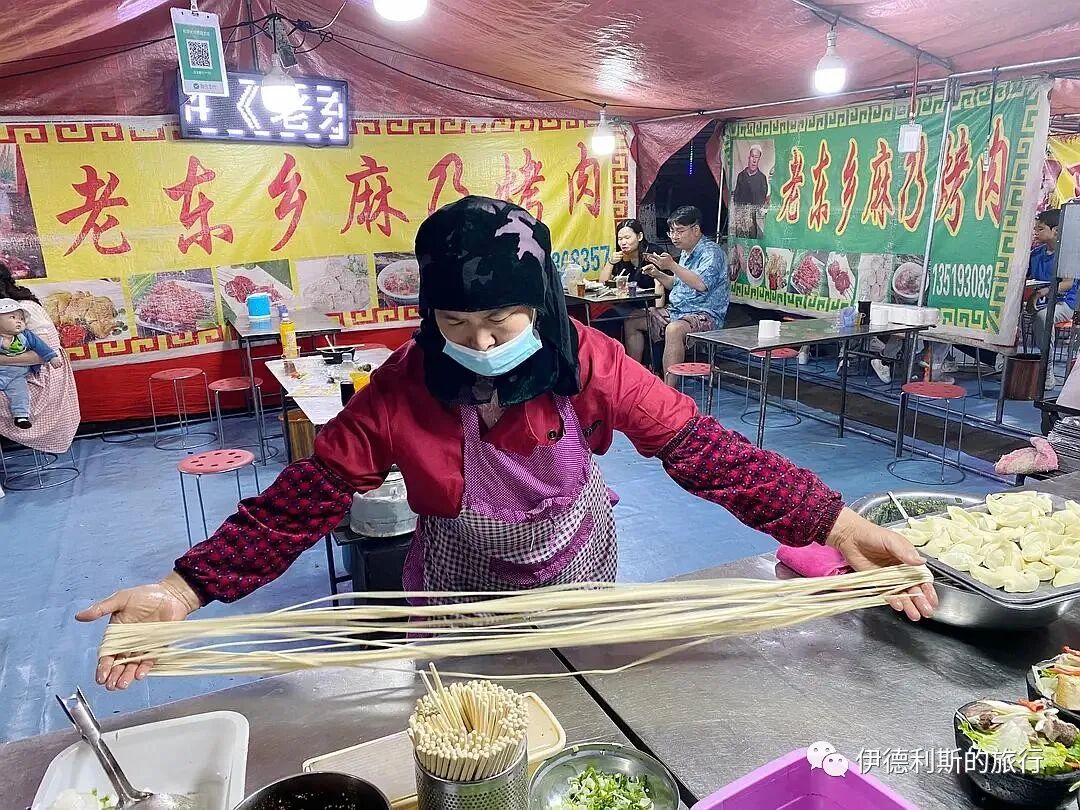
Drinking Gannan yak yogurt at the night market.
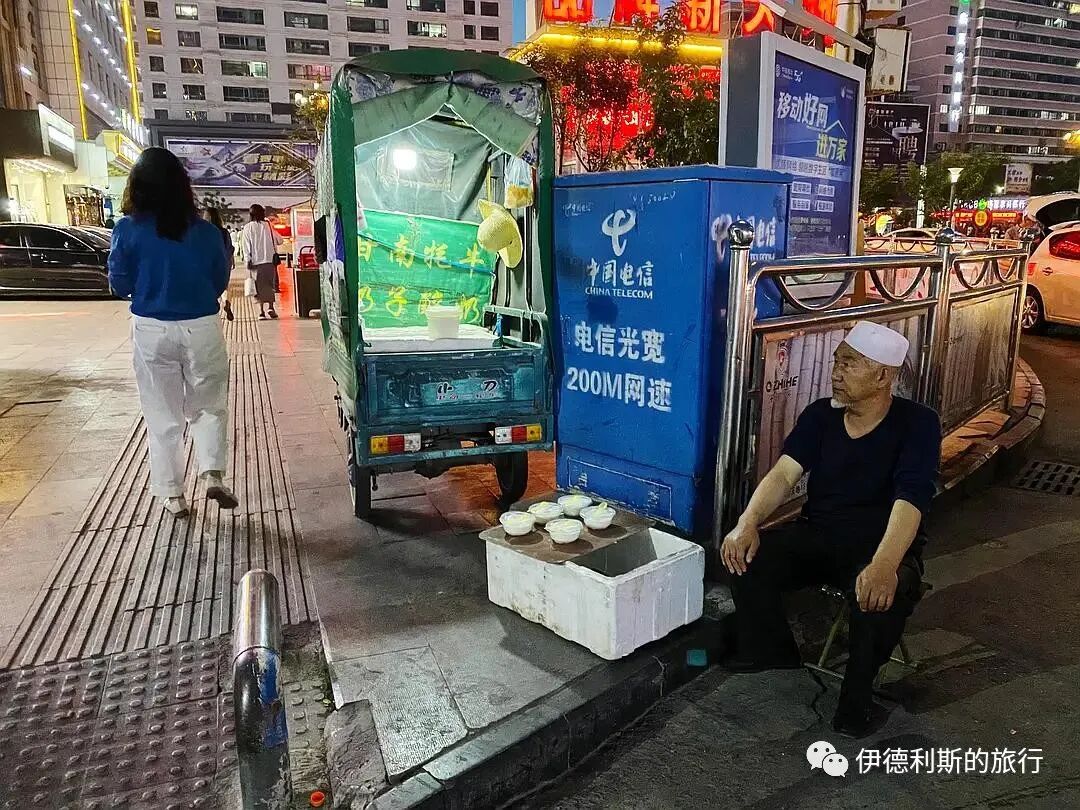
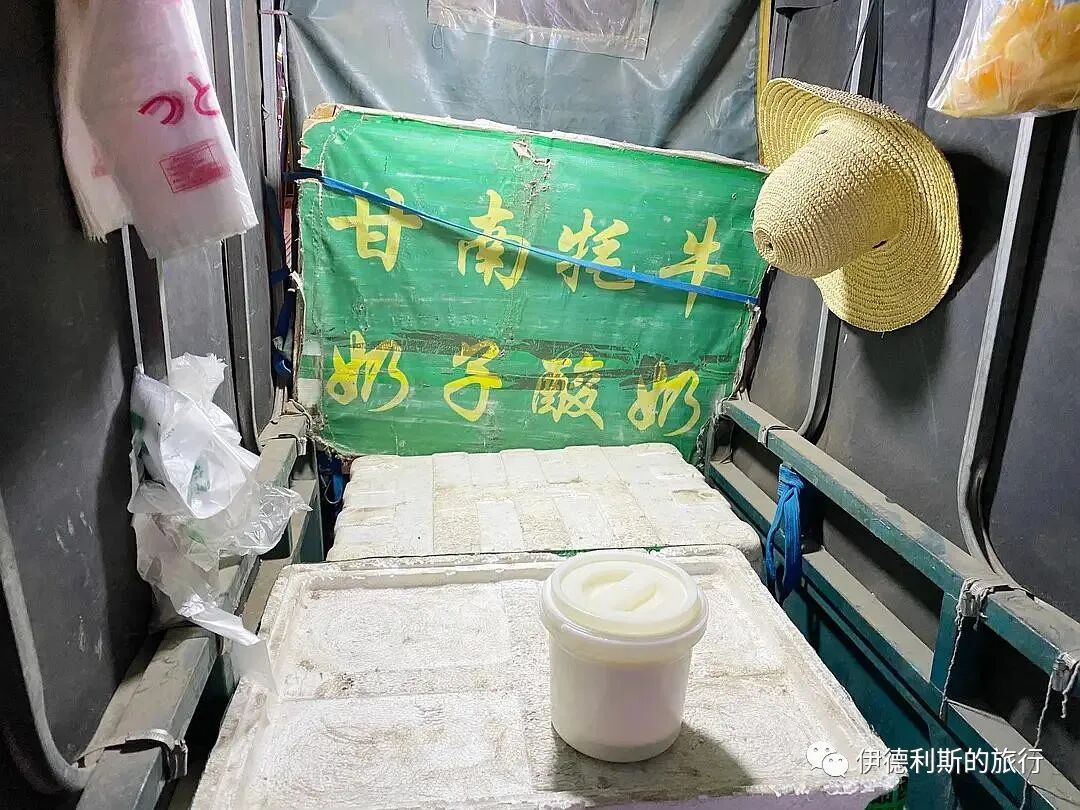
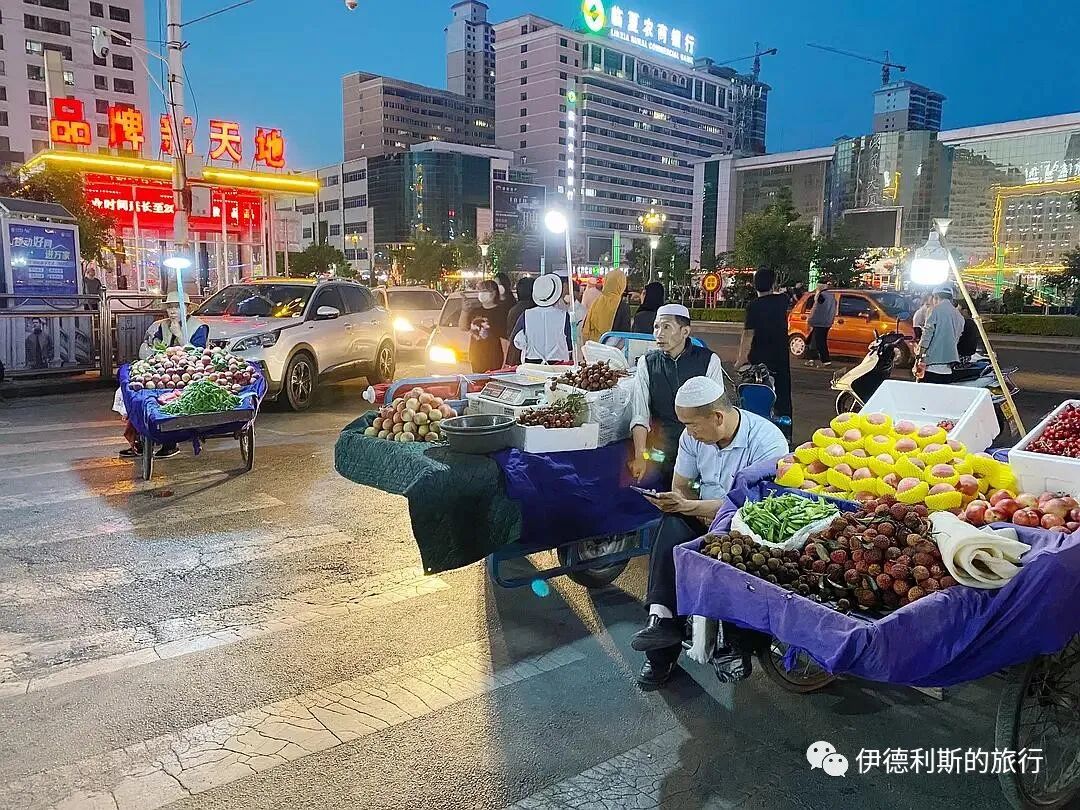
A night tour of the Bafang Thirteen Alleys in Linxia. This was my fourth time here, but the first time for Zainab, so I took her around for a good stroll.
Zainab had a very high opinion of the Bafang Thirteen Alleys and the entire Hezhou city; she liked it very much. At night, the Bafang Thirteen Alleys were full of locals out for a walk to enjoy the cool air; it was very lively. The scenic area is neat and clean, without excessive commercial development, selling only local snacks like handmade yogurt and youguozi (fried dough snacks); Zainab regretted not buying youguozi to eat while hiking the next day.
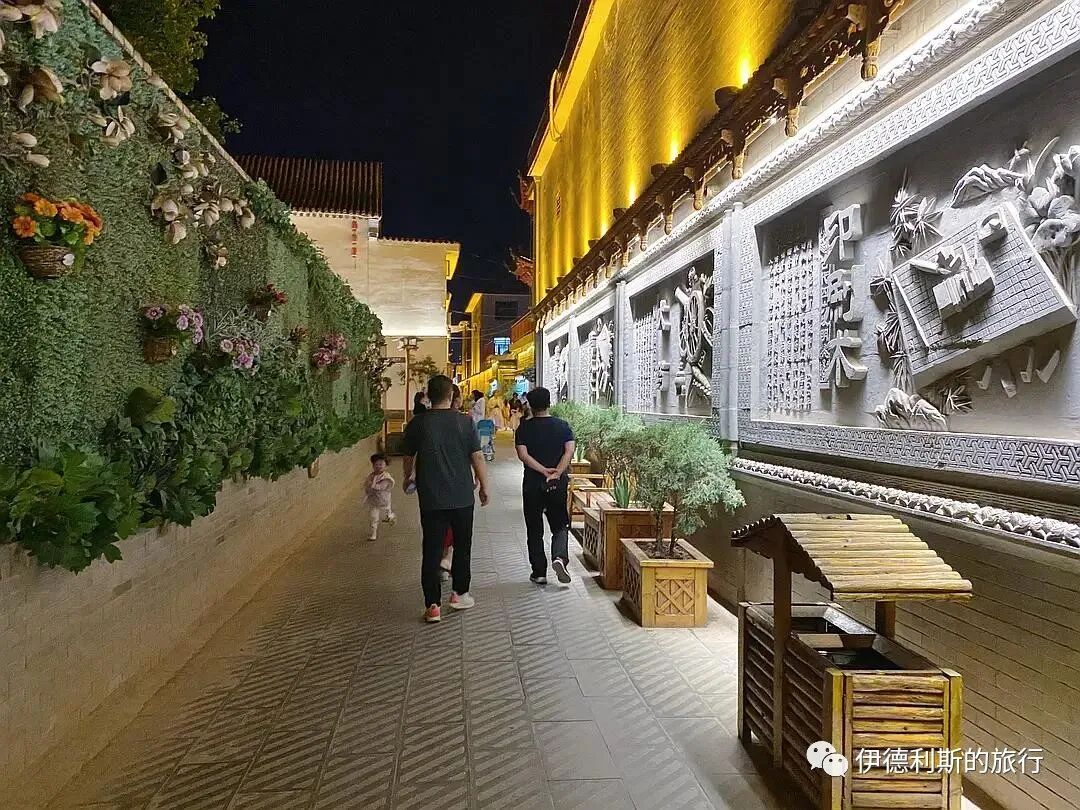
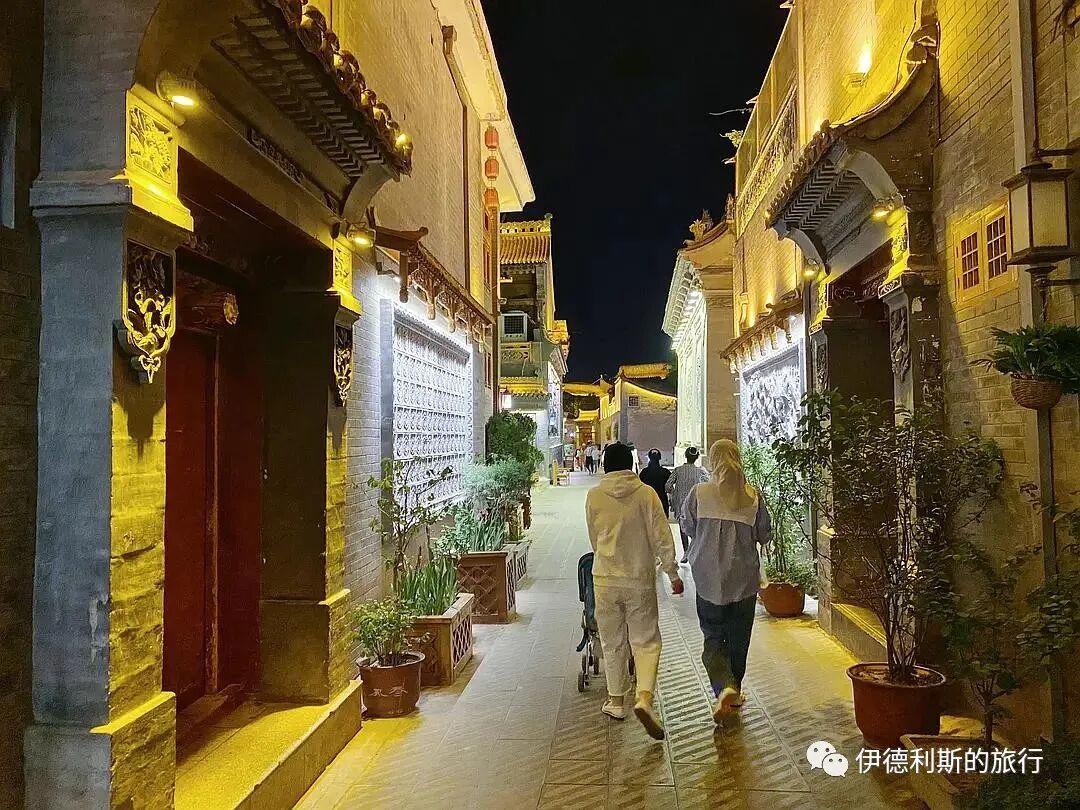
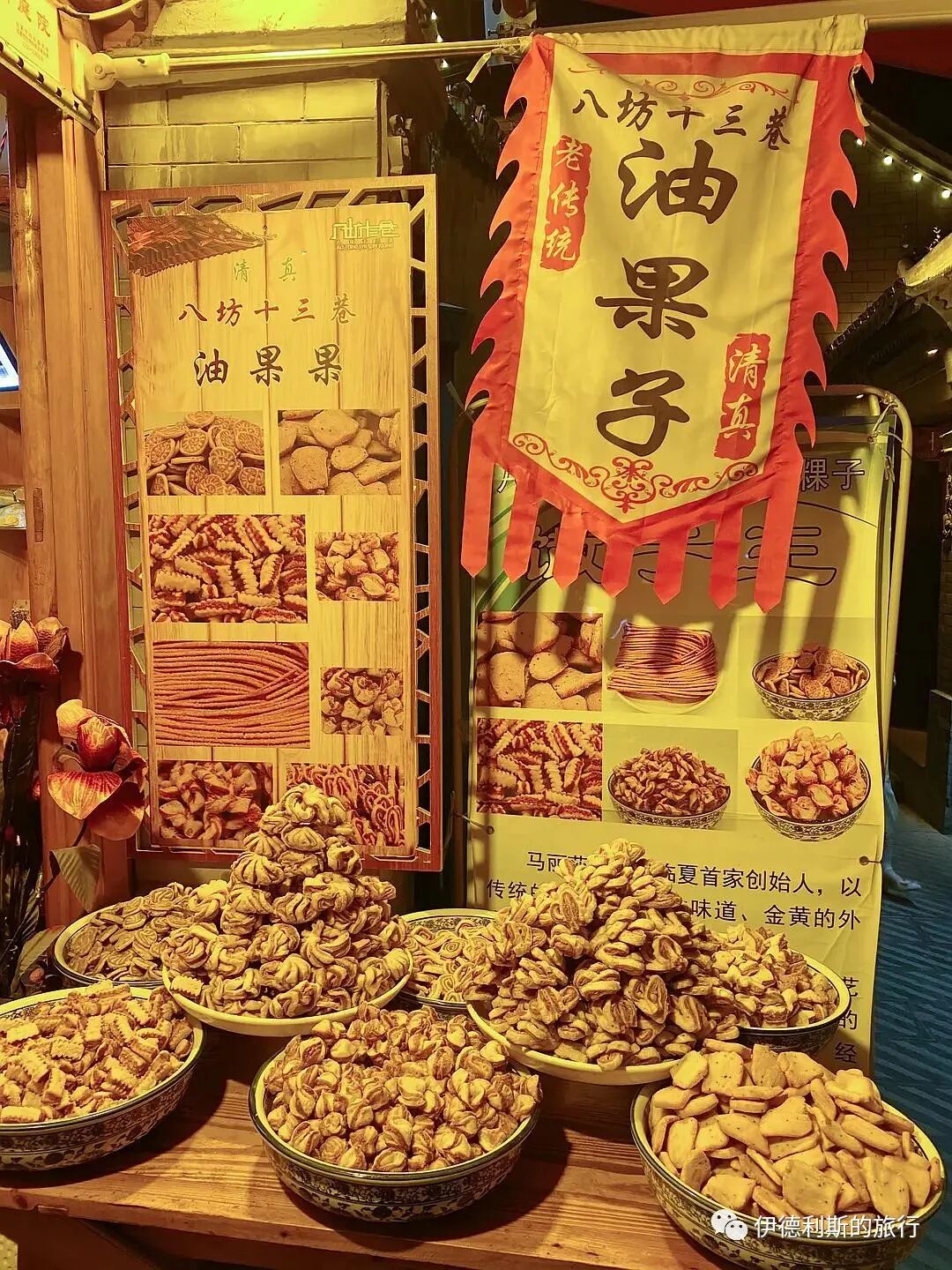
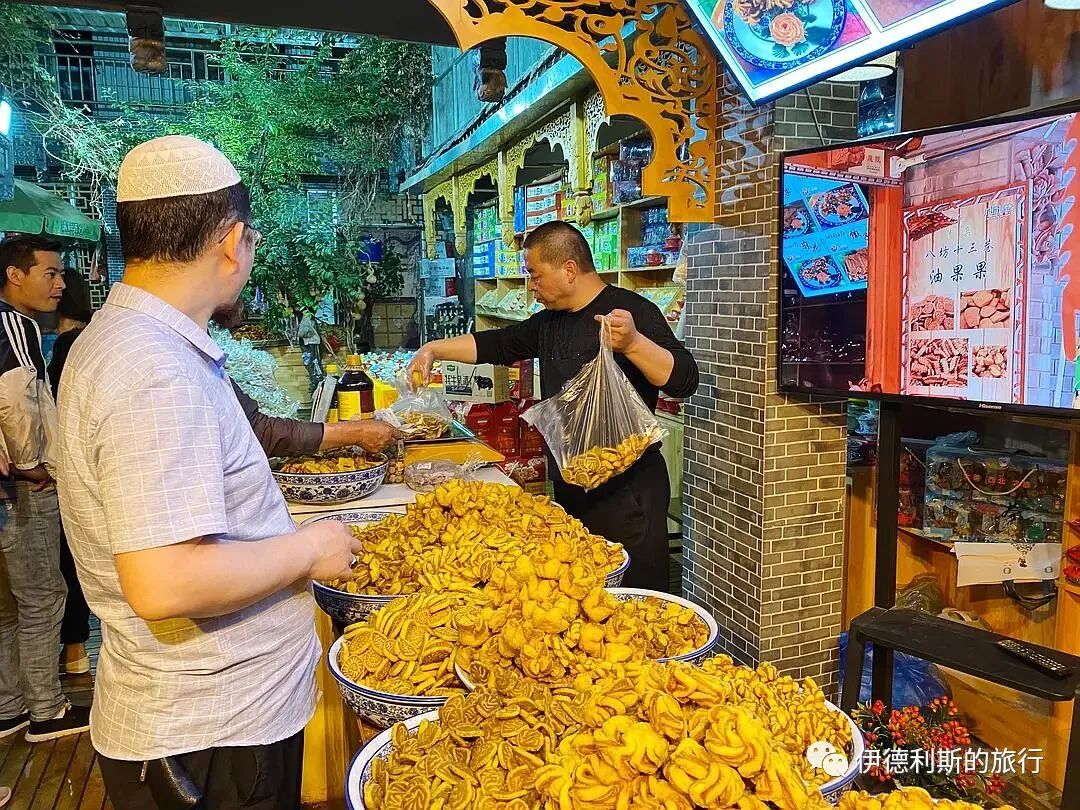
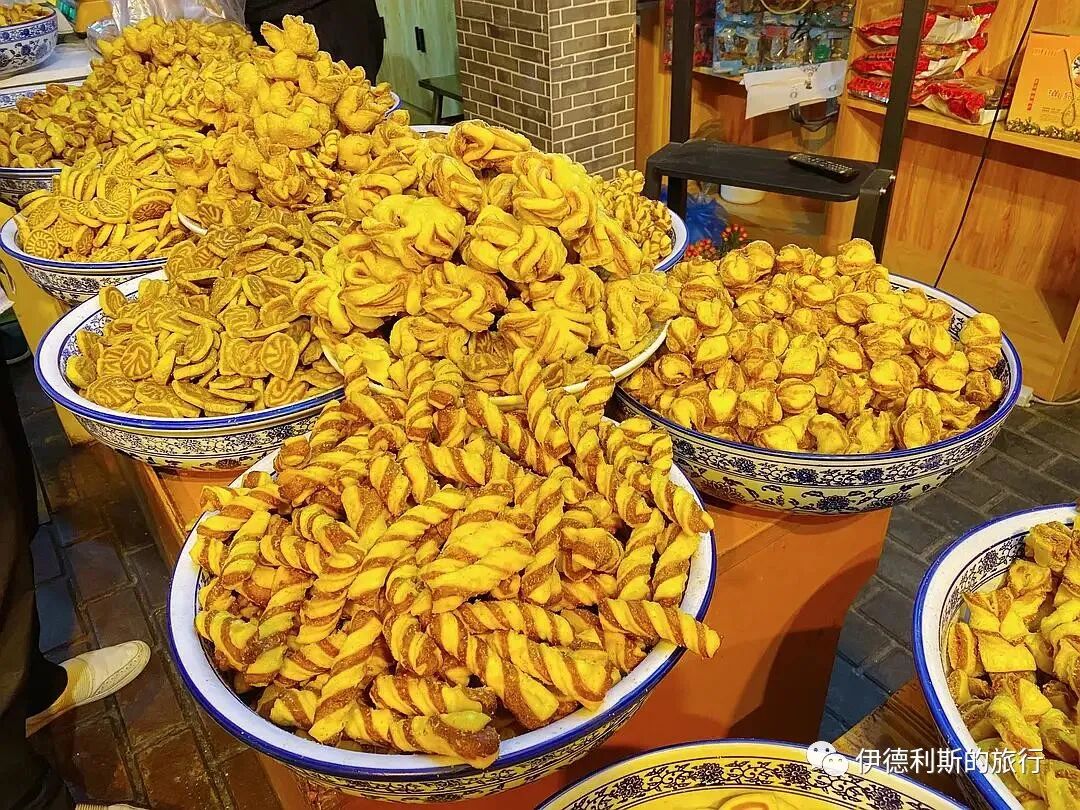
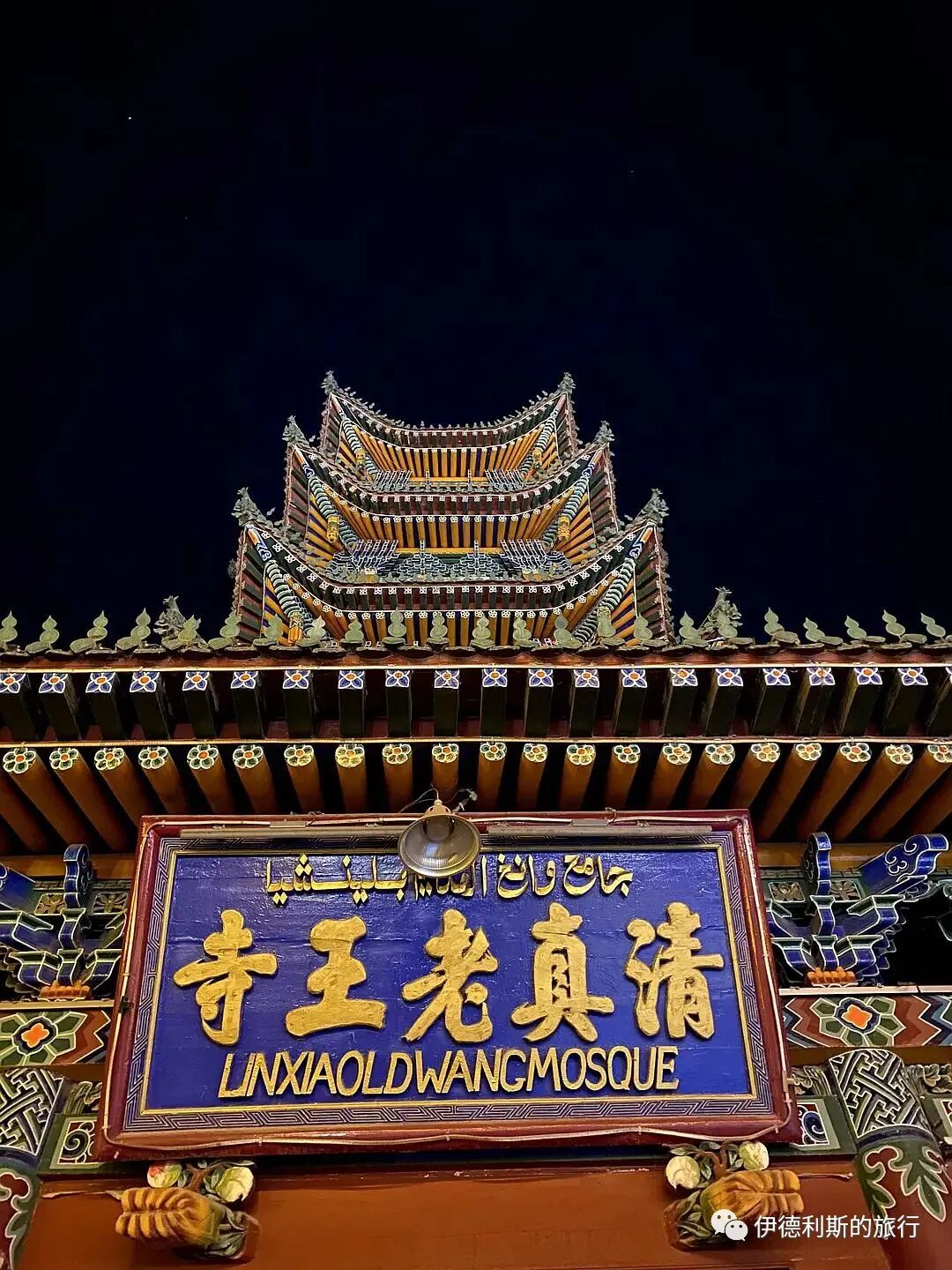
In the scenic area, you can also admire various exquisite Hezhou brick carvings. I took her to see the famous Beisi Longyingbi (Dragon Screen Wall at the North Mosque), which can be considered a representative work of Hezhou brick carving.
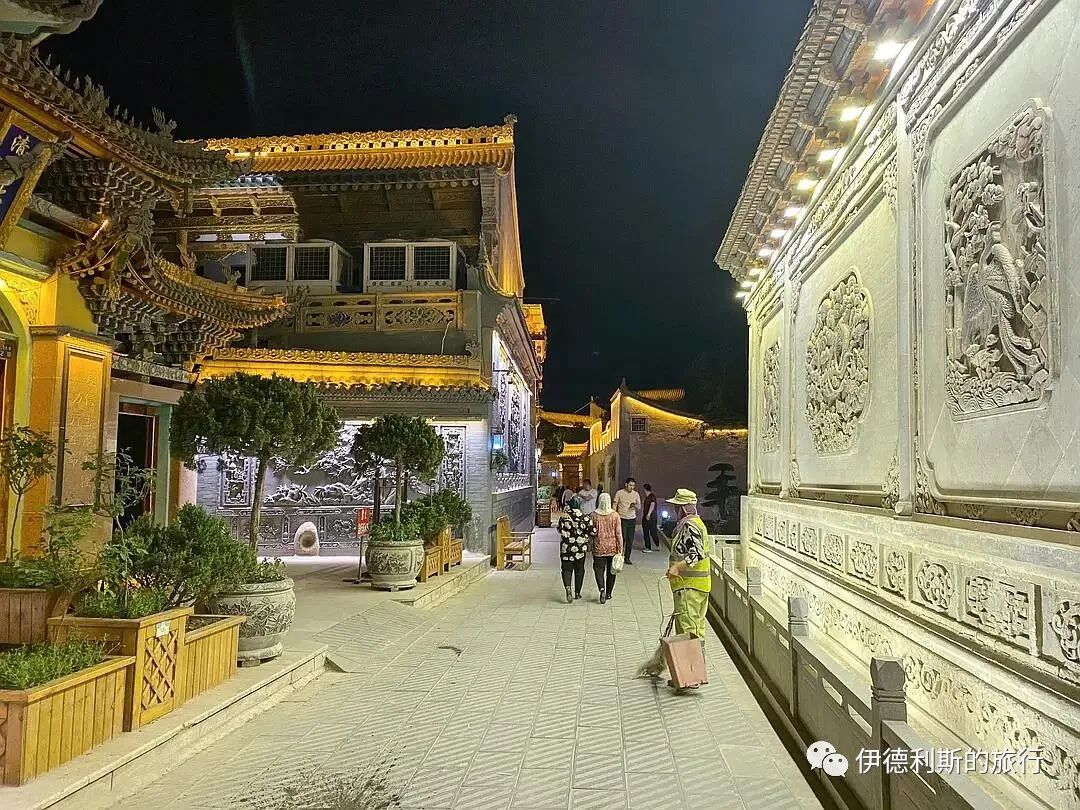
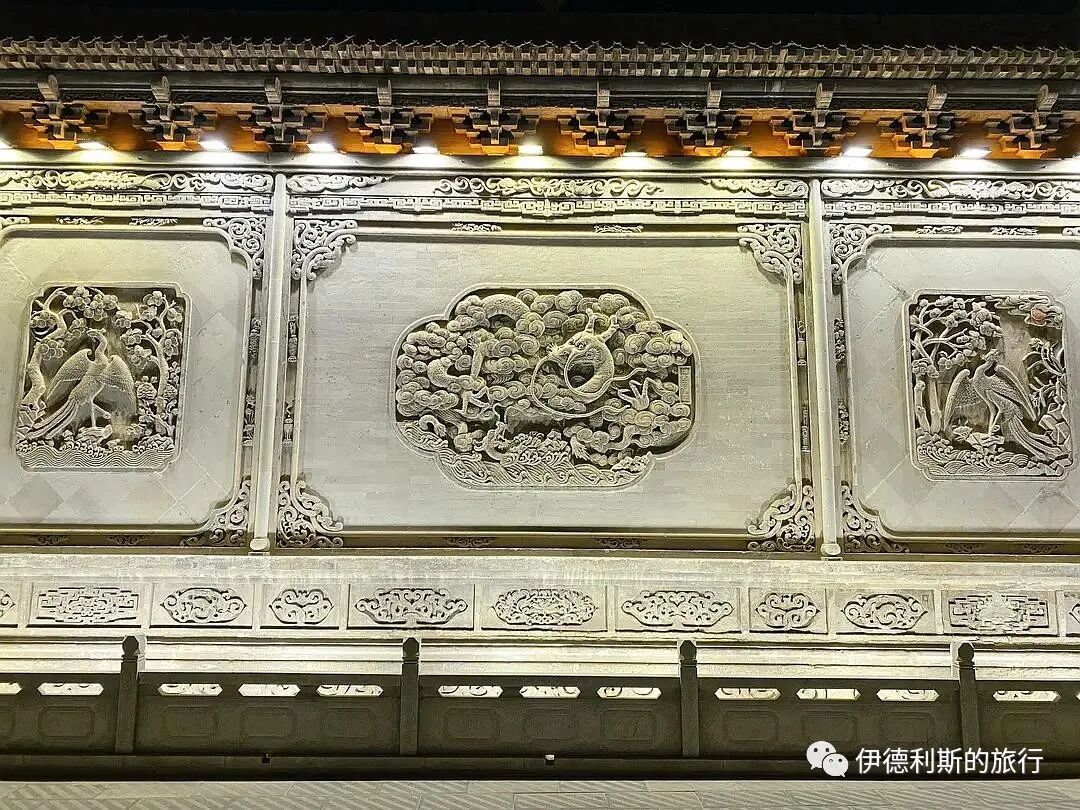
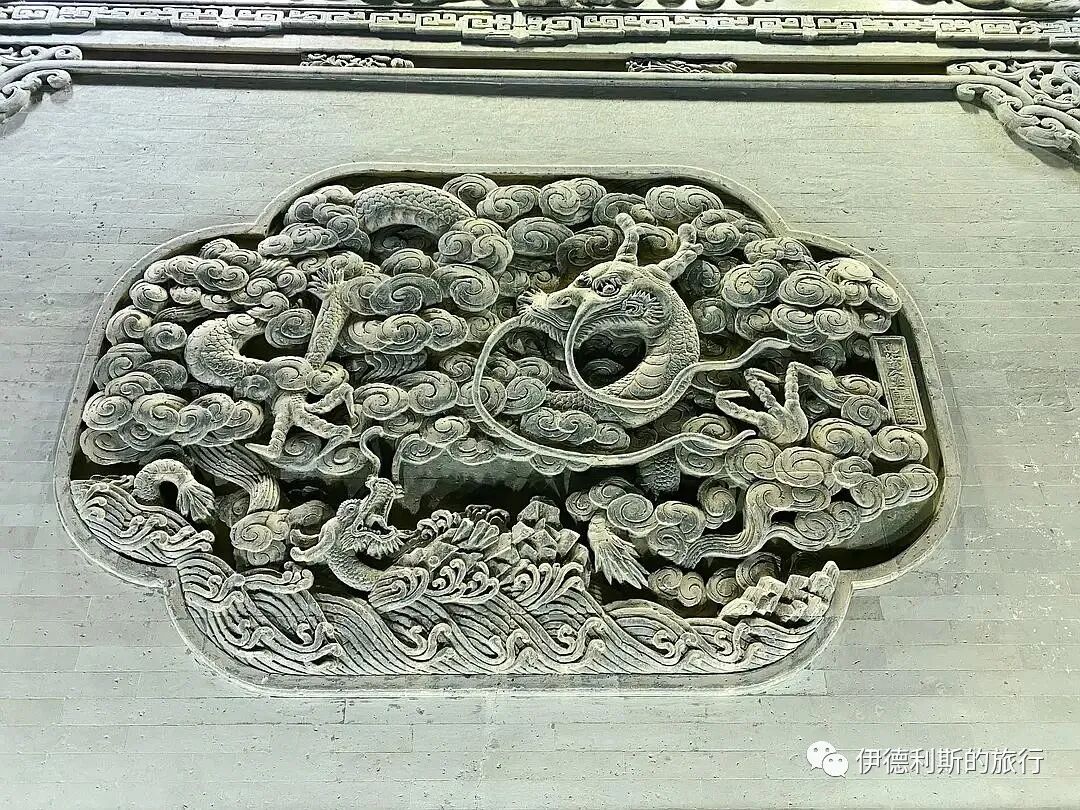
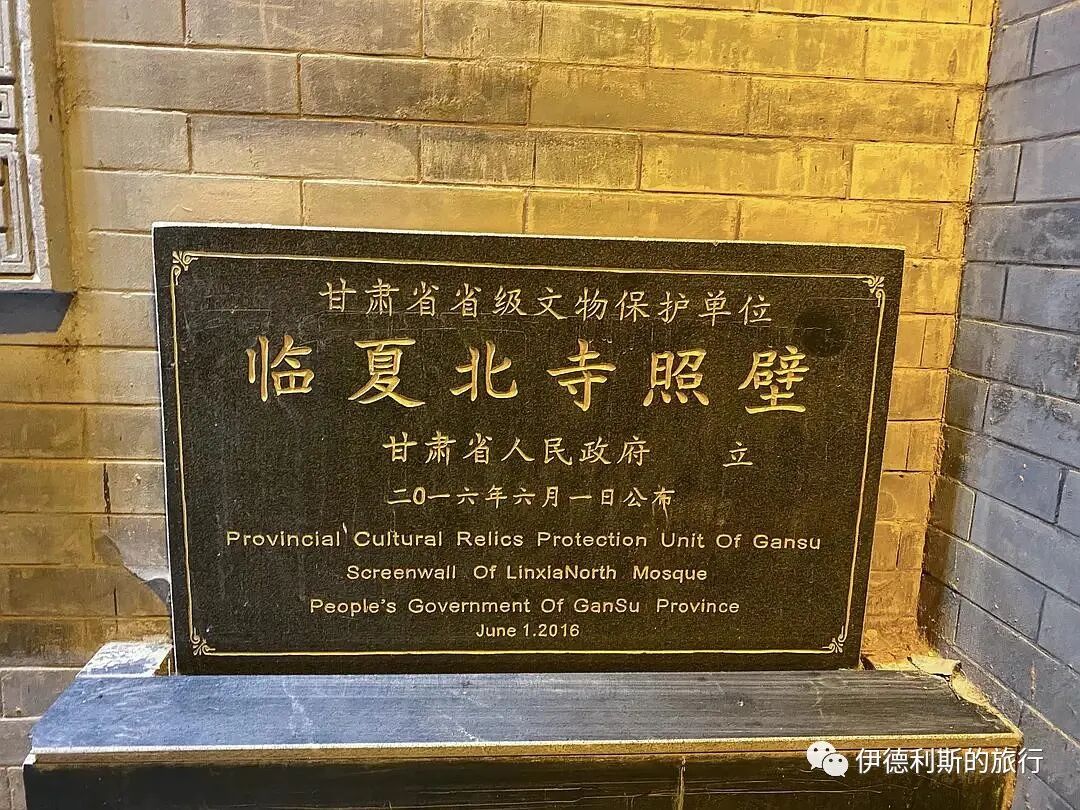
On Sunday morning, I visited the Hongyuan Square in Linxia. Hongyuan Square is a truly magical place; it is located right next to the Dagongbei, the core area of the Jahriyya Menhuan (a Sufi order), and at night it is a brightly lit children's playground, while in the morning it becomes a bustling morning market with everything. Besides vegetables and fruits, there were also fazi mianchang, highland barley, potato chips, ganba chicken (dried chicken), and tianmaizi; we bought corn and xiangdou (fragrant bean) guokui (flatbread) here to eat.
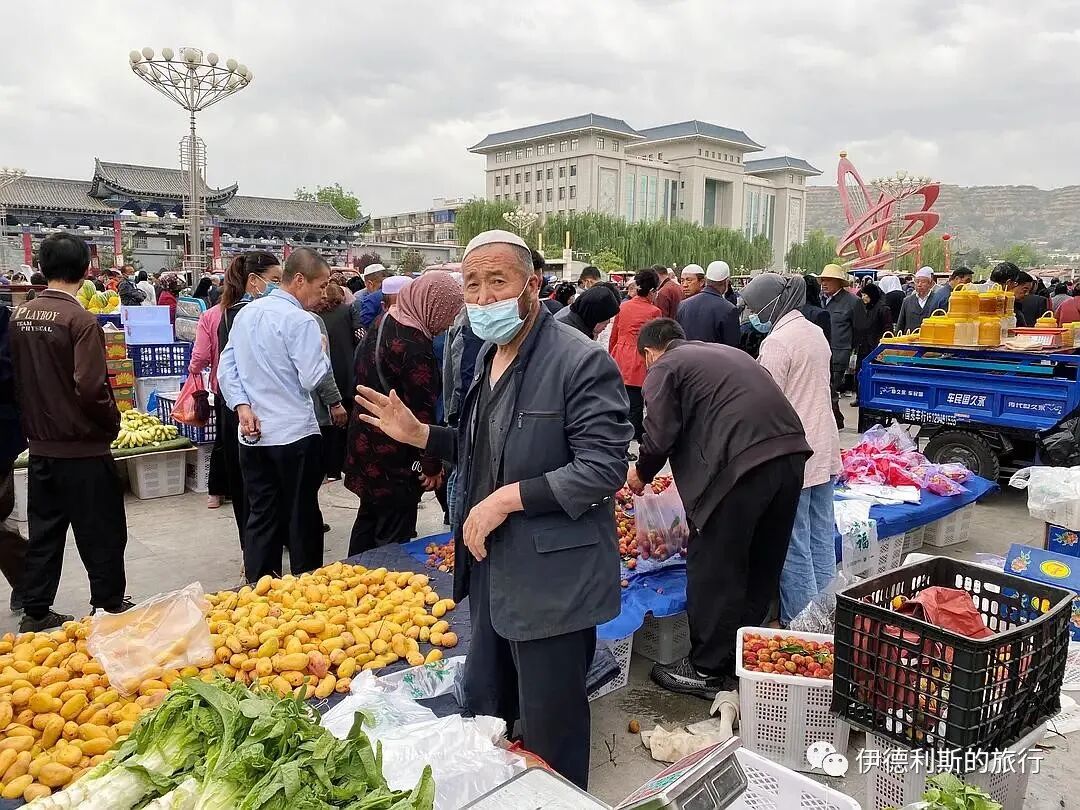
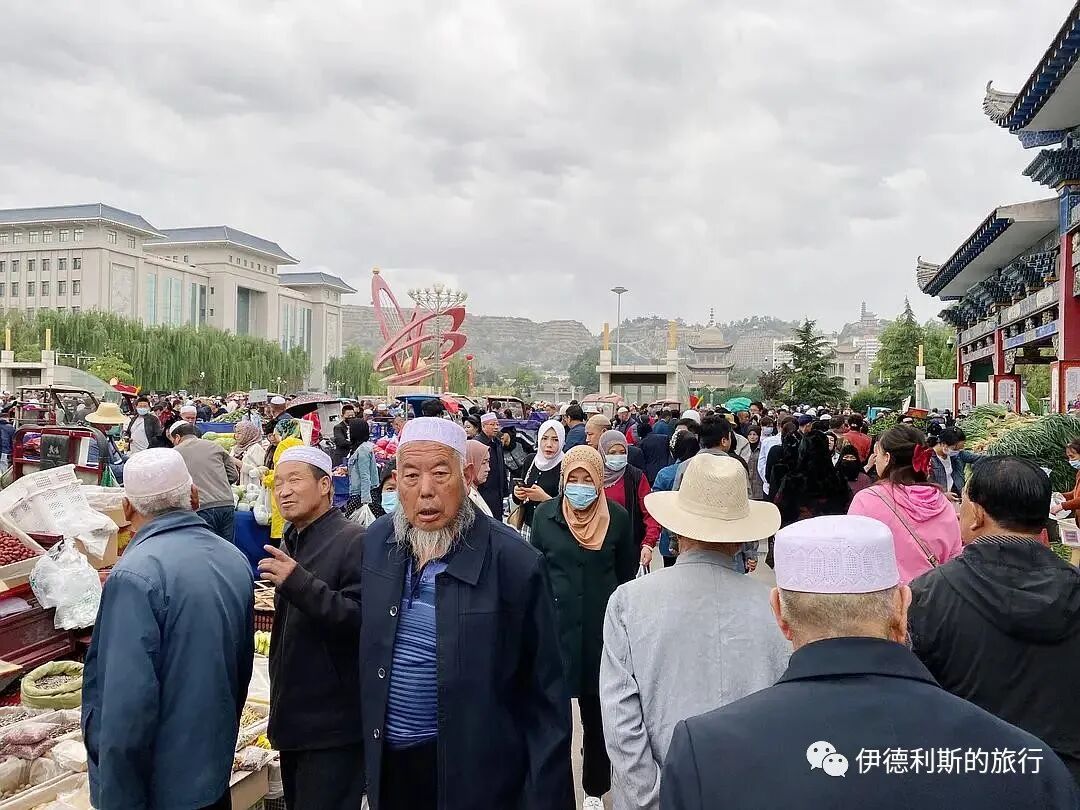
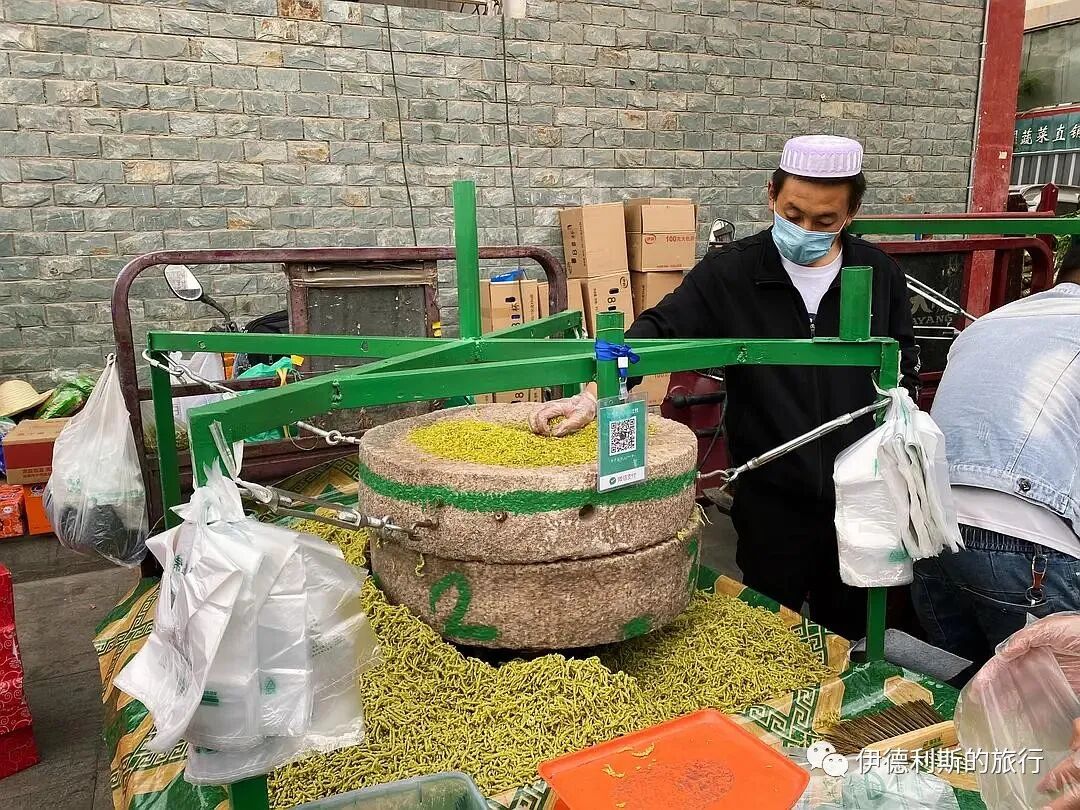
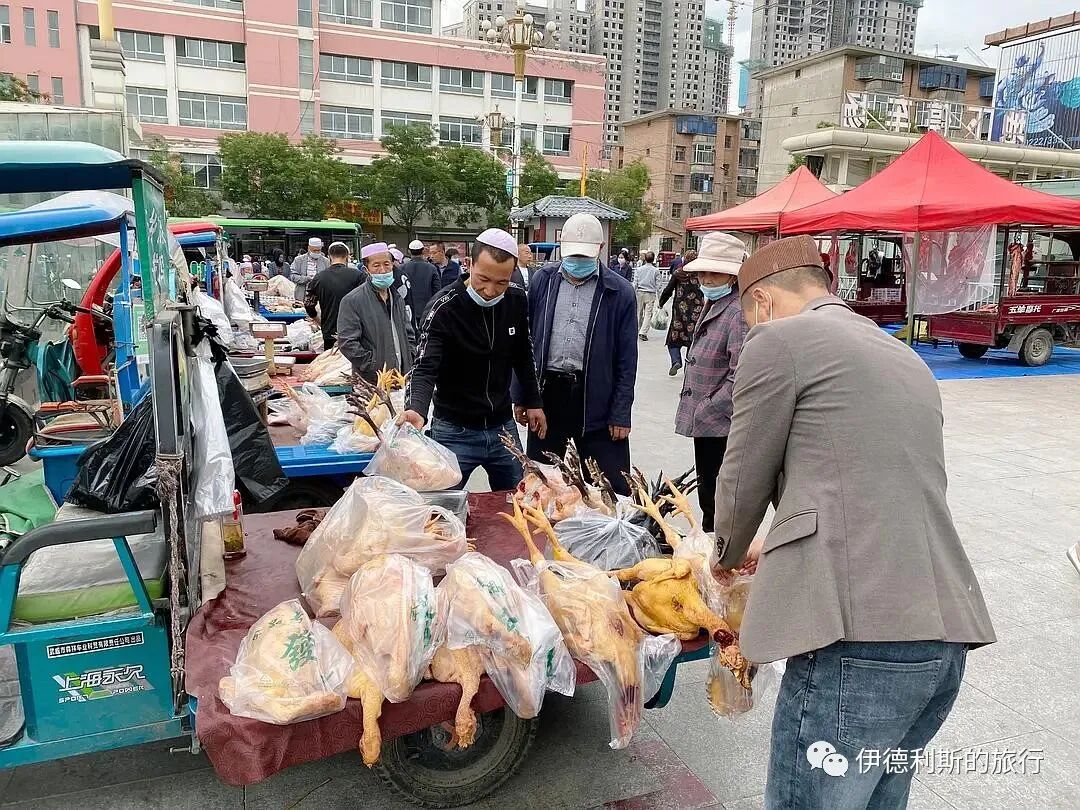
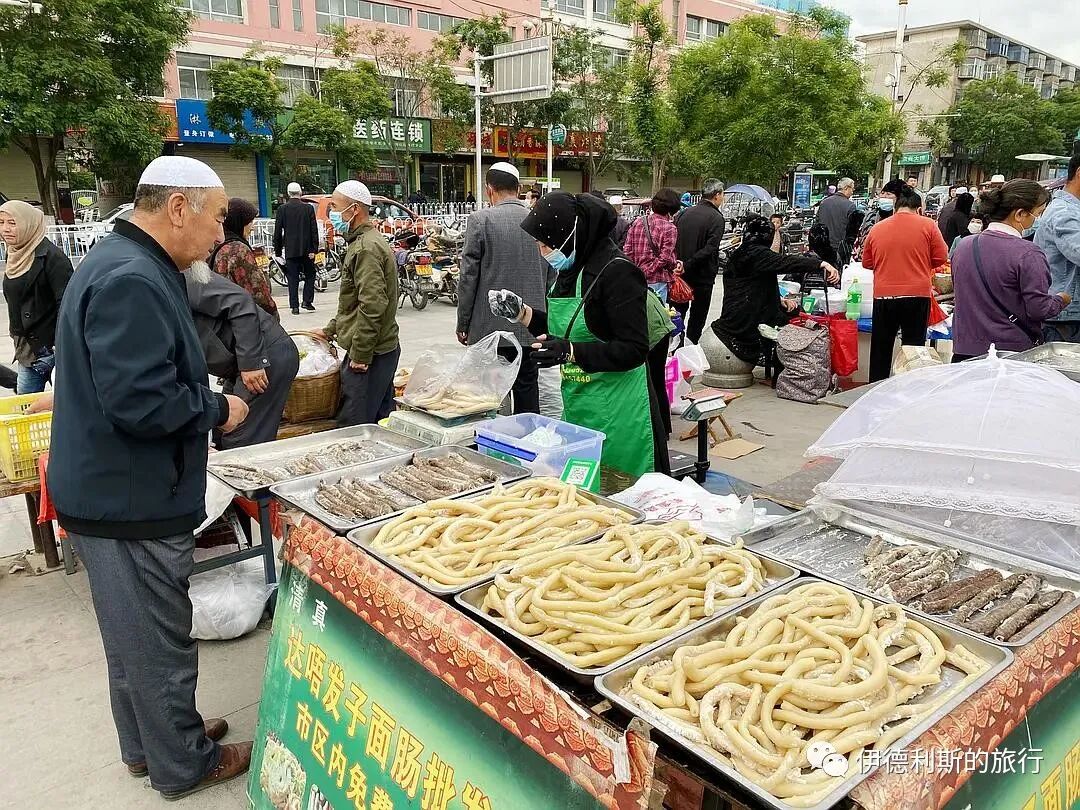
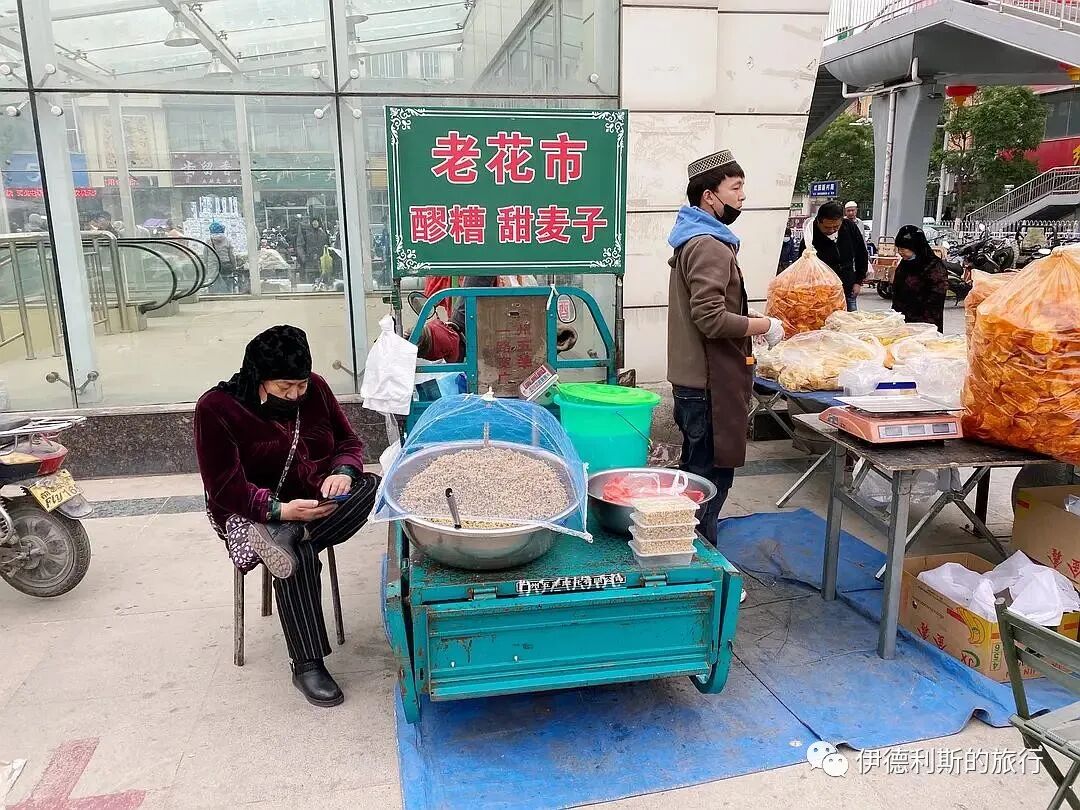
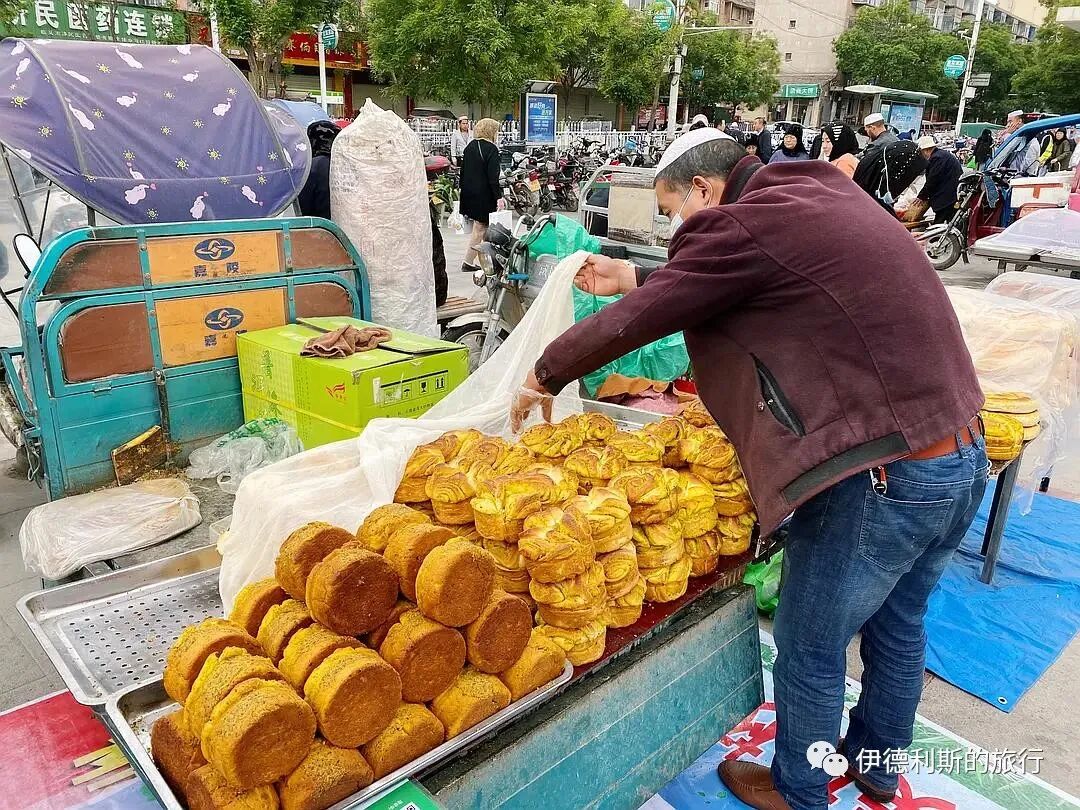
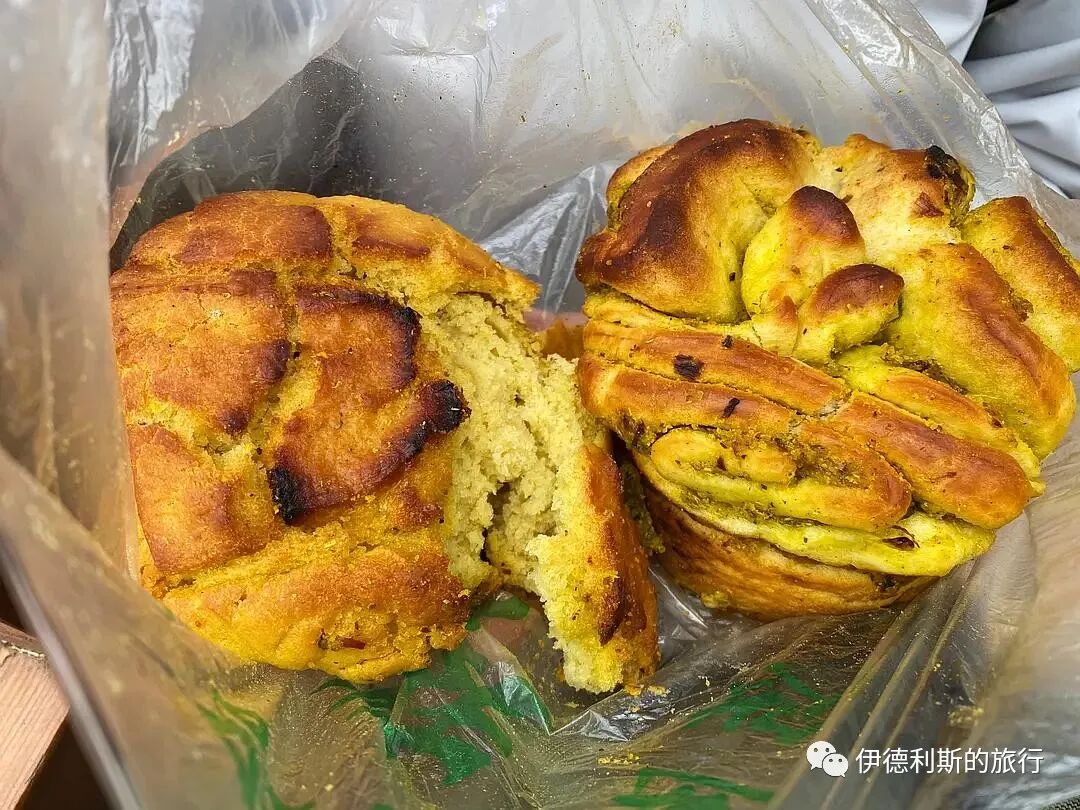
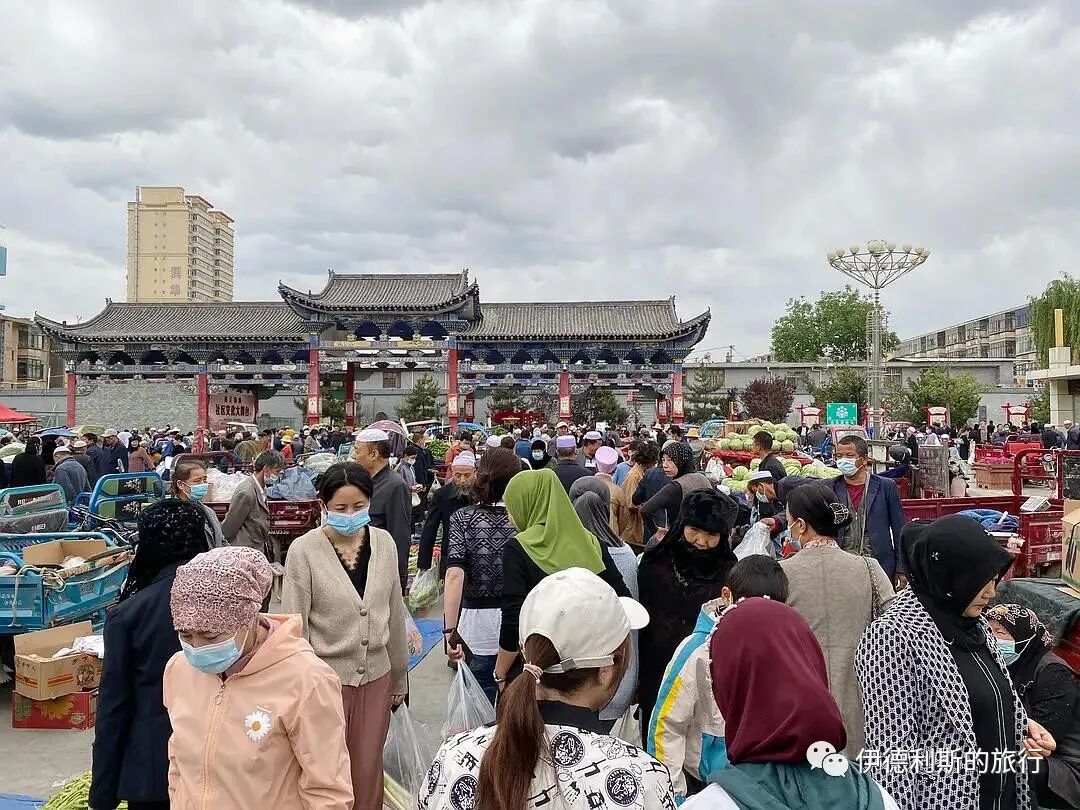
I met an auntie knitting hats on the spot, so I bought one; in these two years of not being able to go abroad, I feel like I have rarely bought new hats.
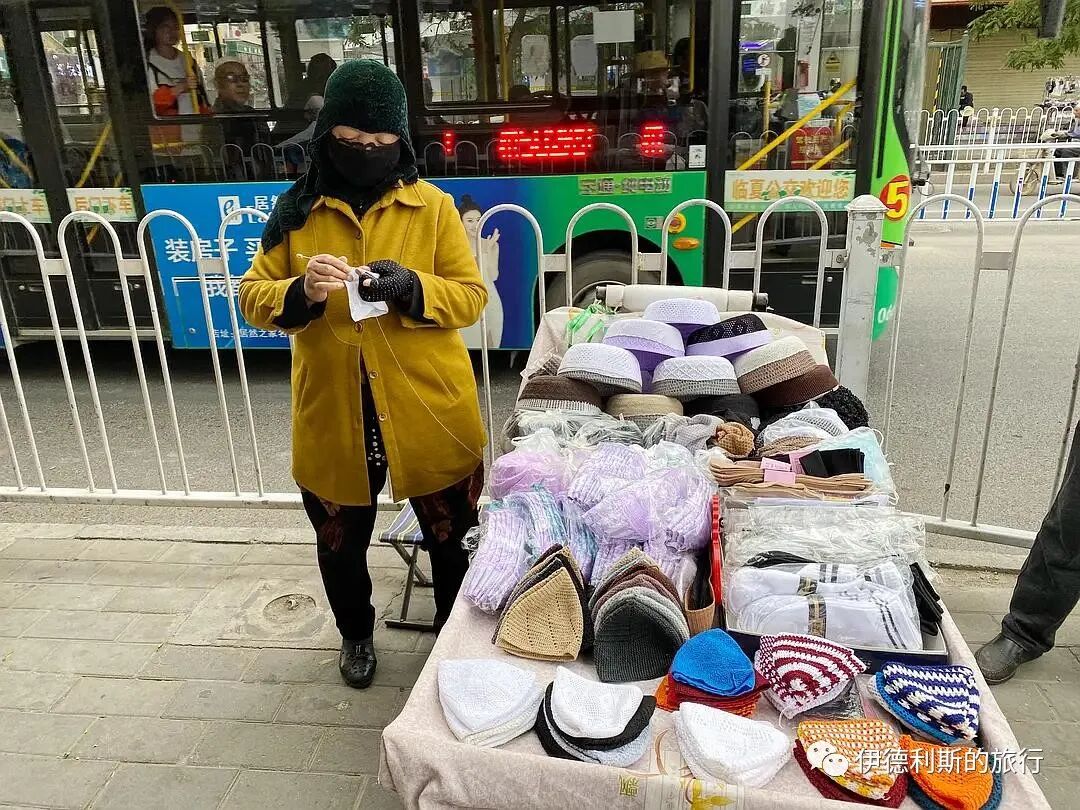
I had beef noodles and fentang (vermicelli soup) at the Xin Kuan Hezhou Noodle Restaurant in front of the Xinhua Mosque. Their place is clean, bright, and tastes good; the fentang here in the Hehuang region uses vermicelli, not the starch blocks like in Xinjiang, and it tastes quite fragrant.
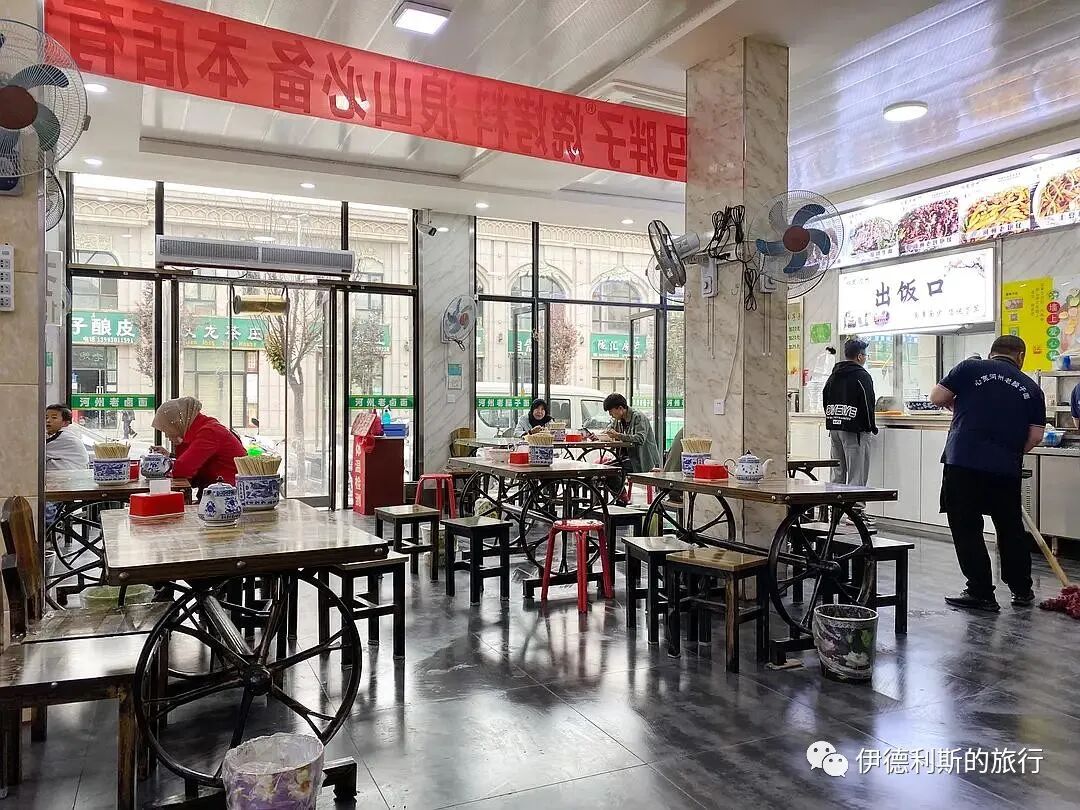
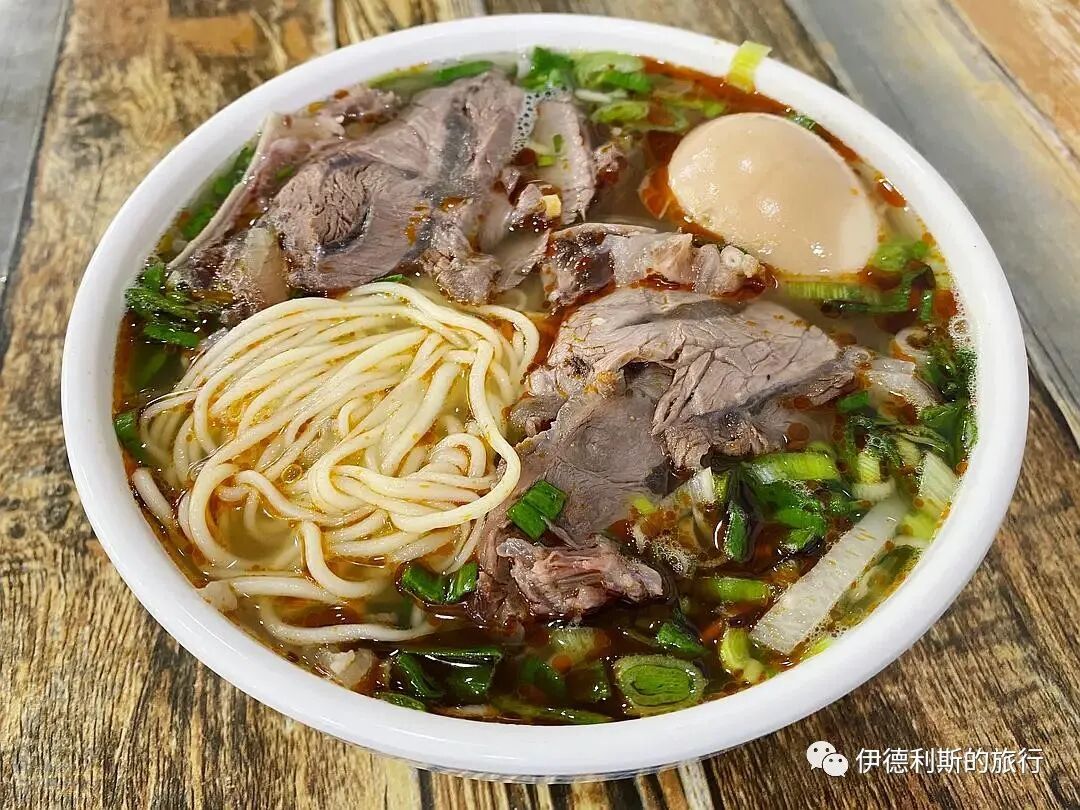
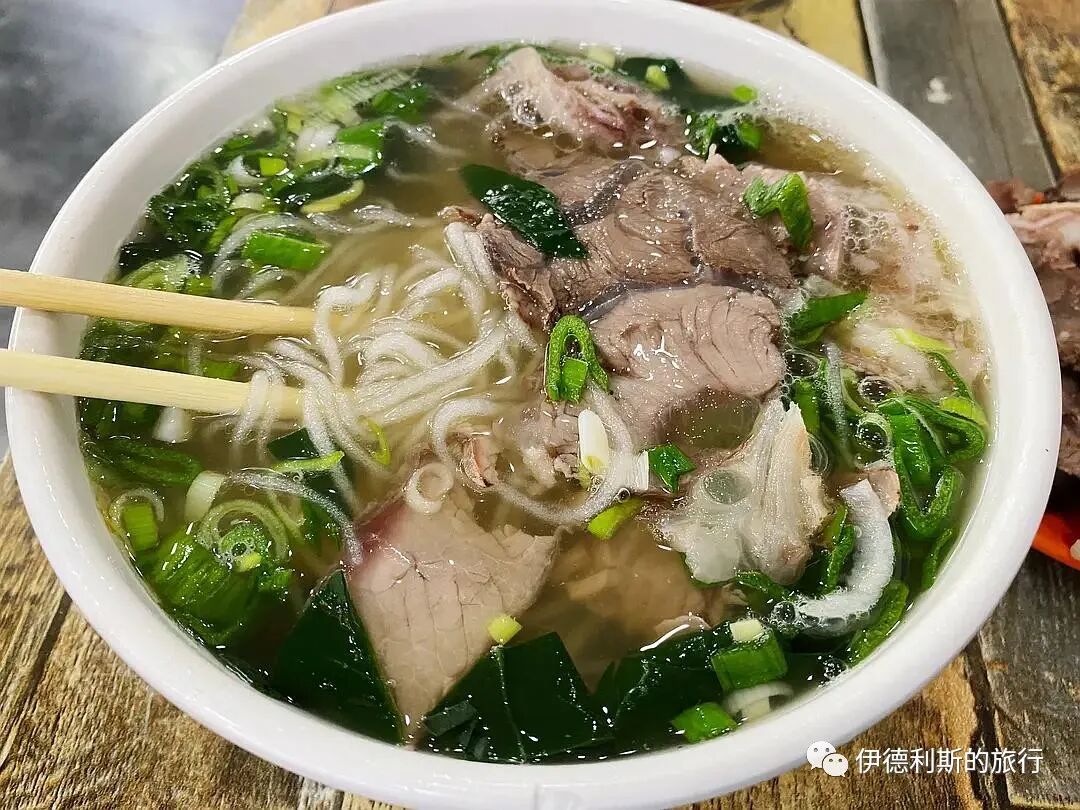
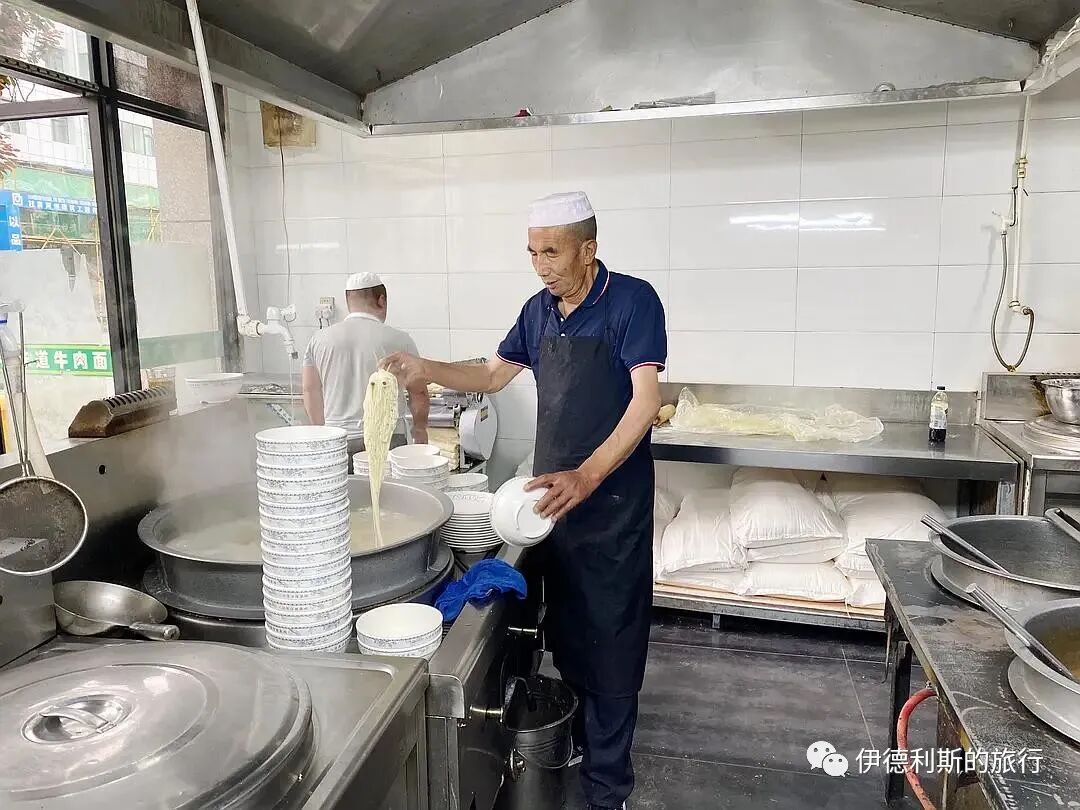
After breakfast, we set off for Songmingyan. Every year during the Hua'er Festival, the entrance to the Songmingyan scenic area becomes a large market, selling everything and very lively. Before going into the mountains to listen to Hua'er, we first had cold noodles and half a jin (250 grams) of shouzhuarou at the entrance, then bought a corn cob to take inside.
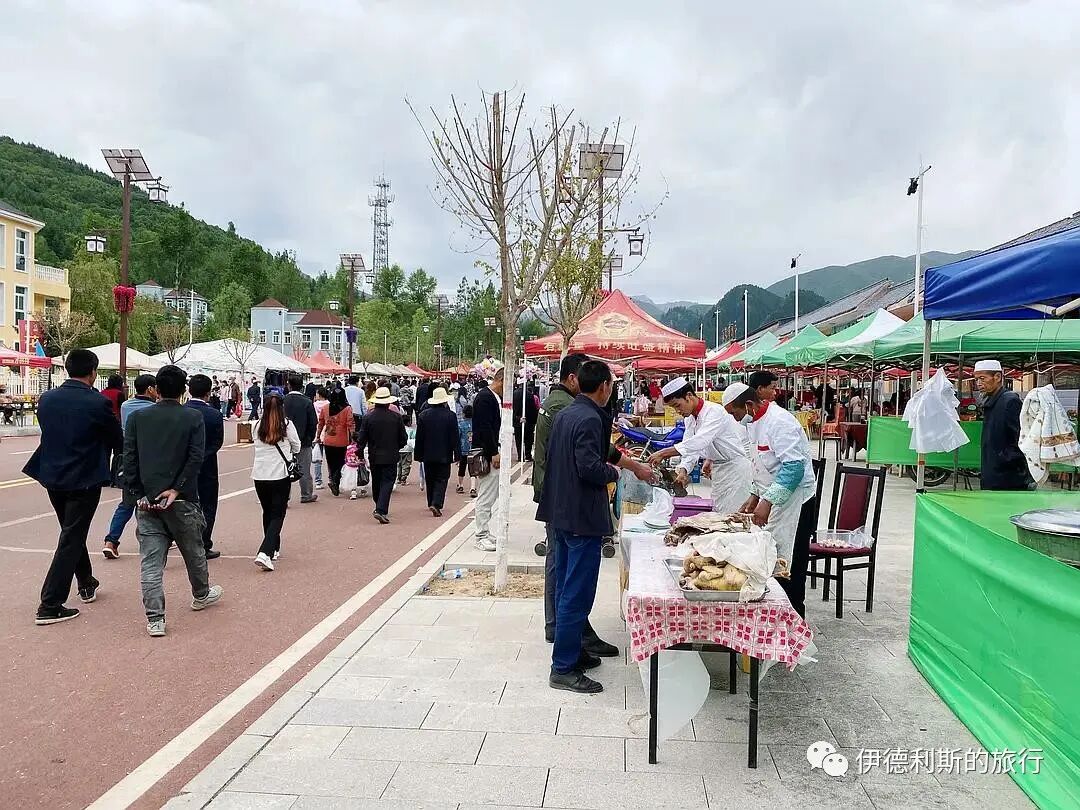
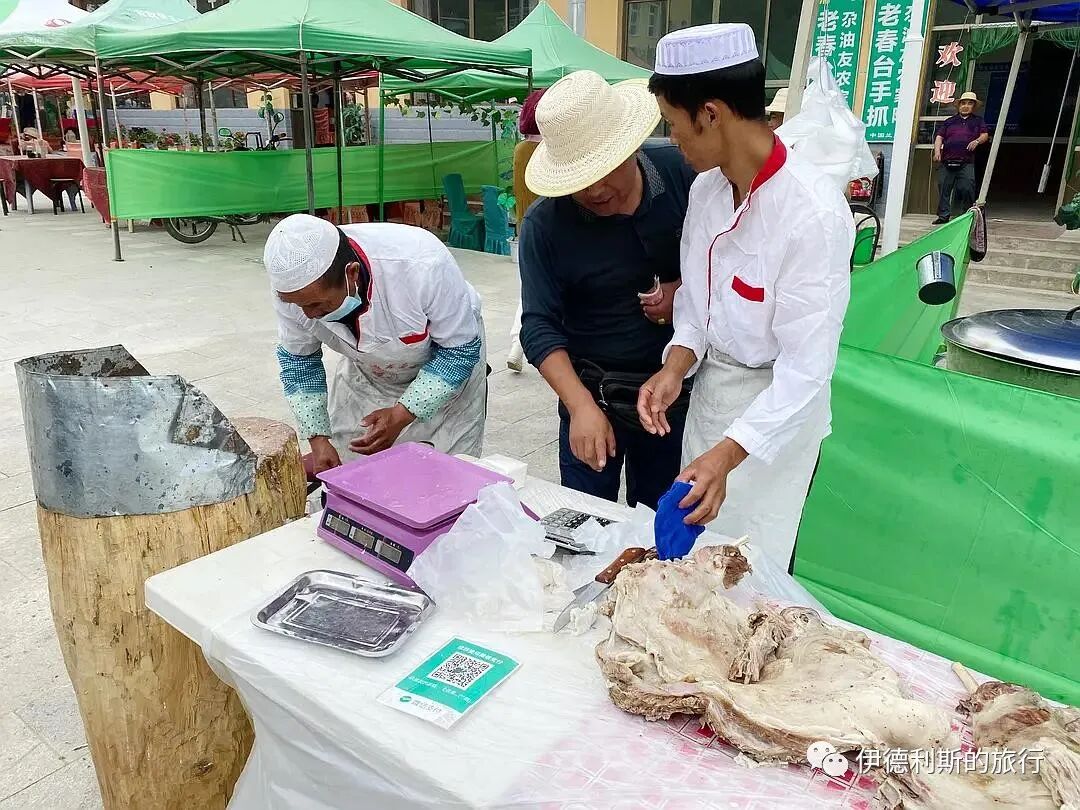
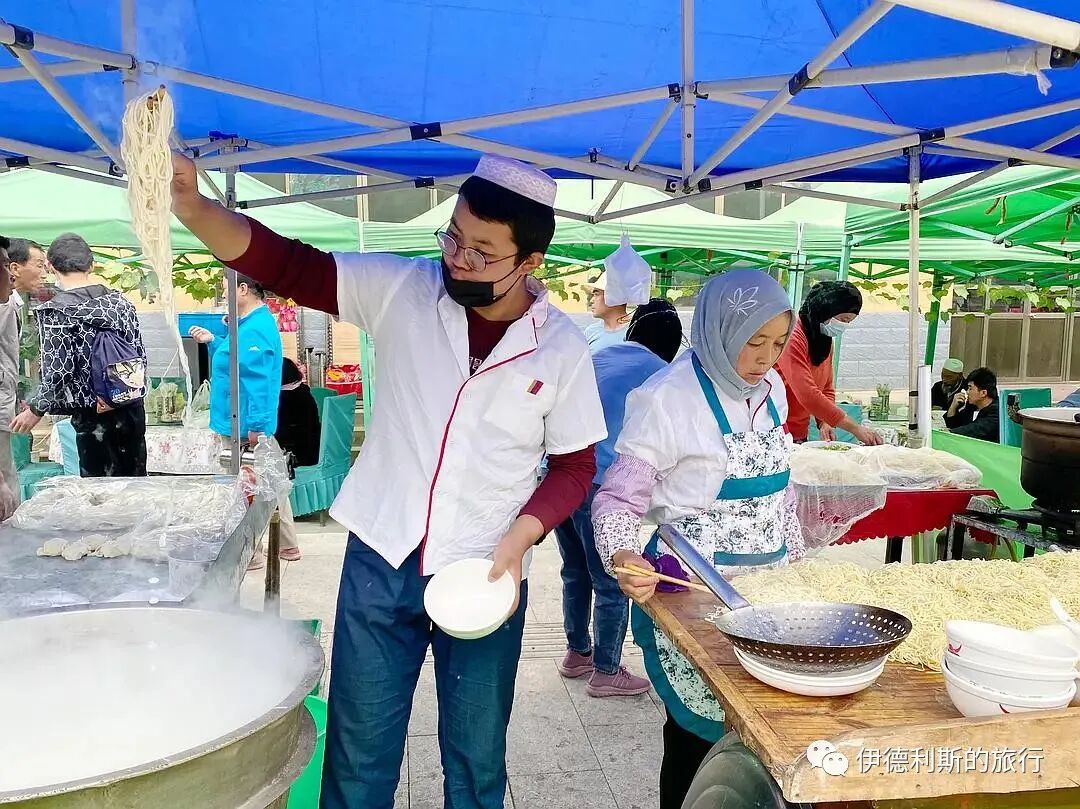
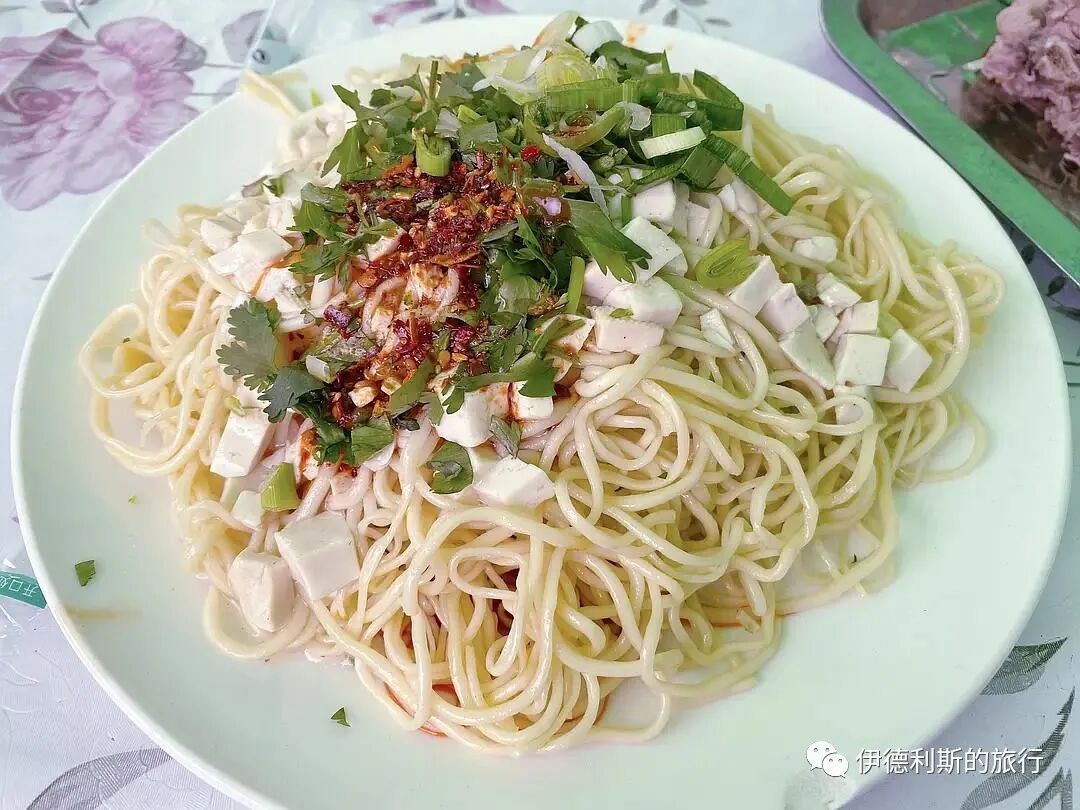
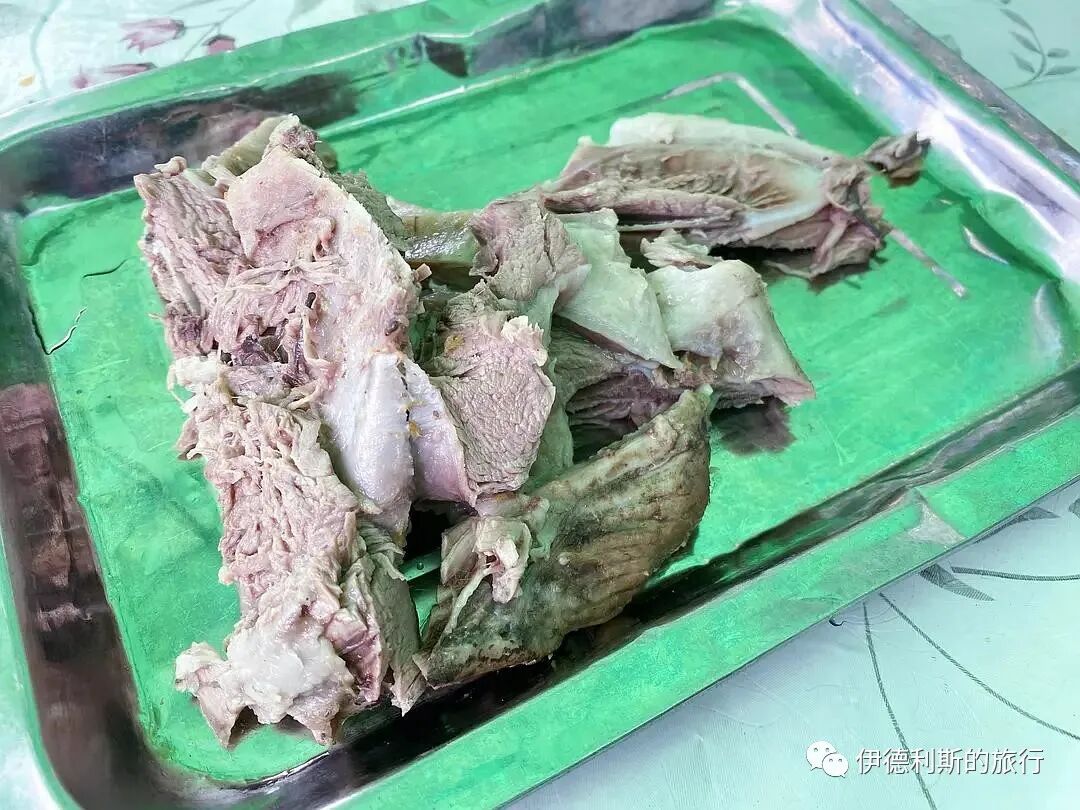
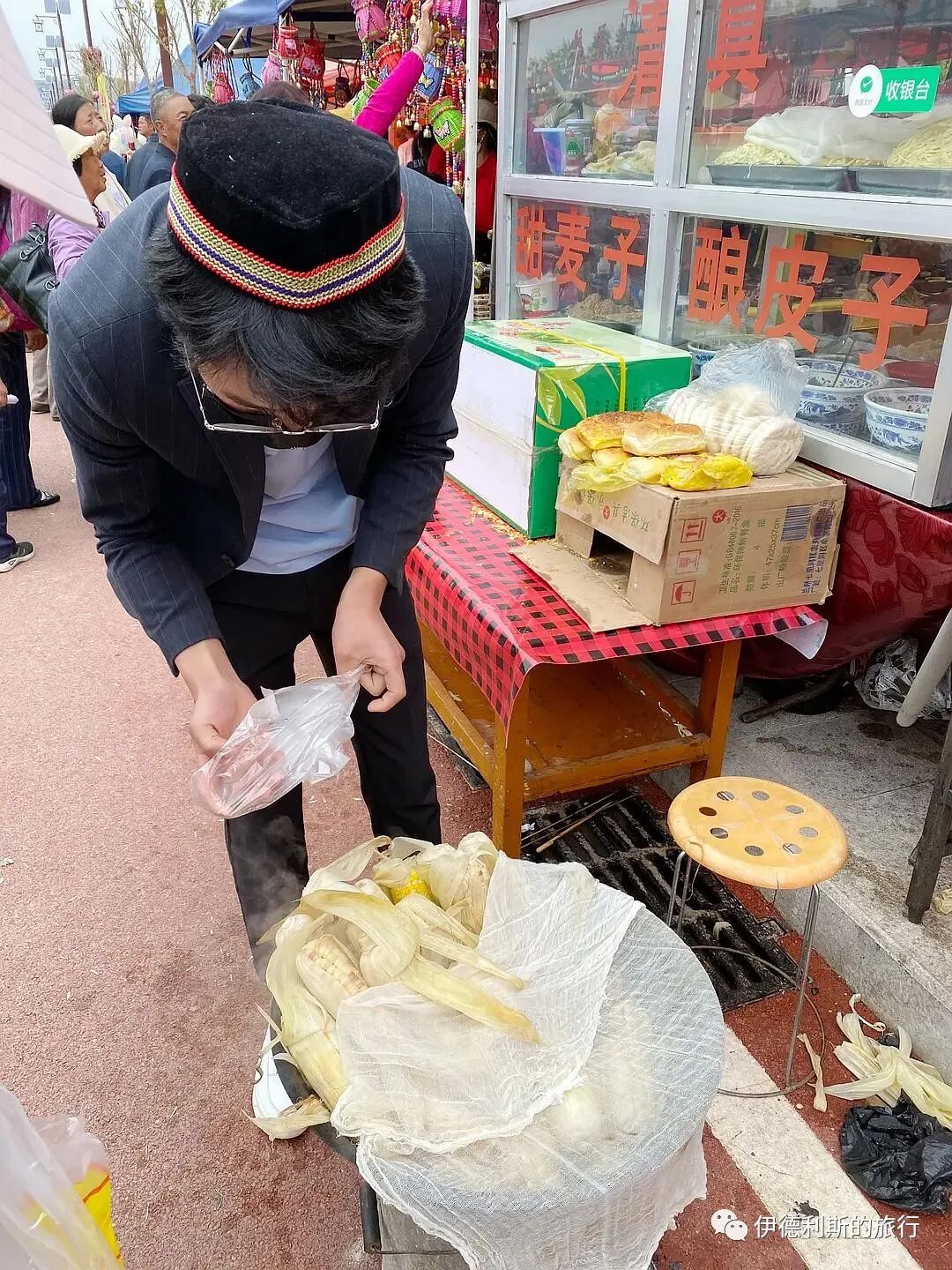
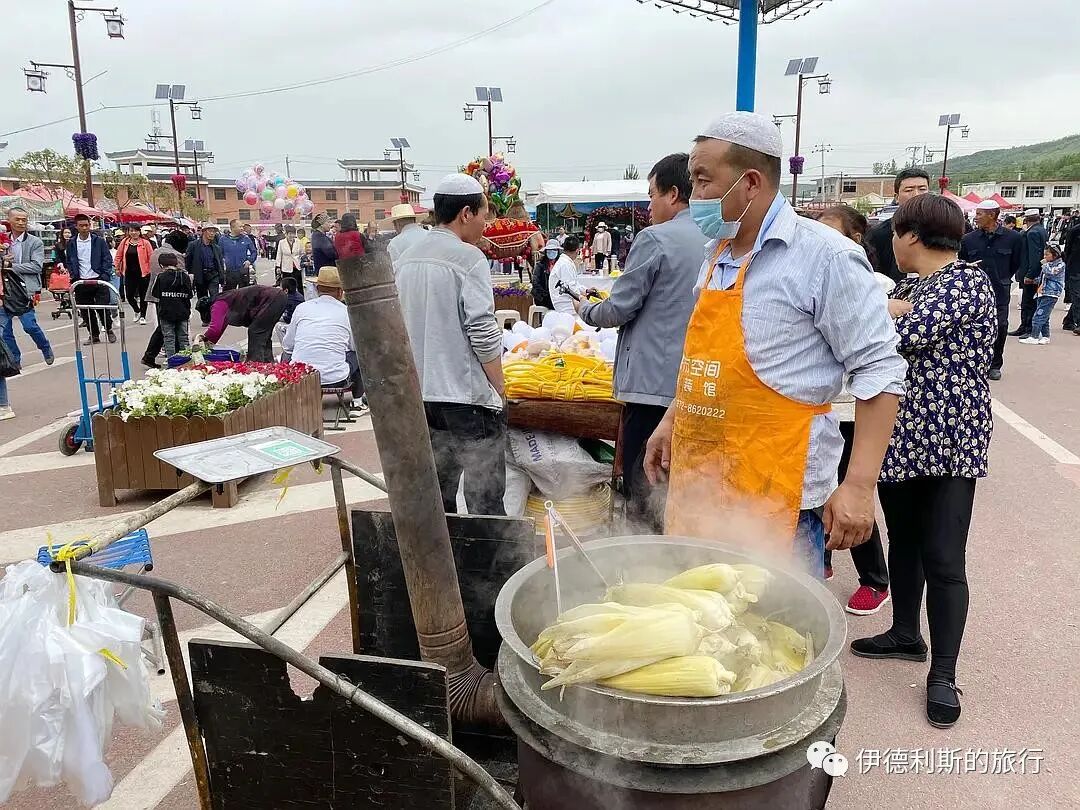
At Songmingyan, you can buy the local specialty fruit, piteguo (a type of wild pear). Piteguo grows on mountains near Songmingyan at an altitude of over 2,000 meters; when first picked, they are sour and astringent, and they need to be placed on a fruit rack for half a month to soften, and their color will turn into a dark shade like frozen pears. The ripened piteguo is very juicy; you have to bite a small hole to suck out the juice before you can eat the flesh, and the taste is sweet and sour, very refreshing.
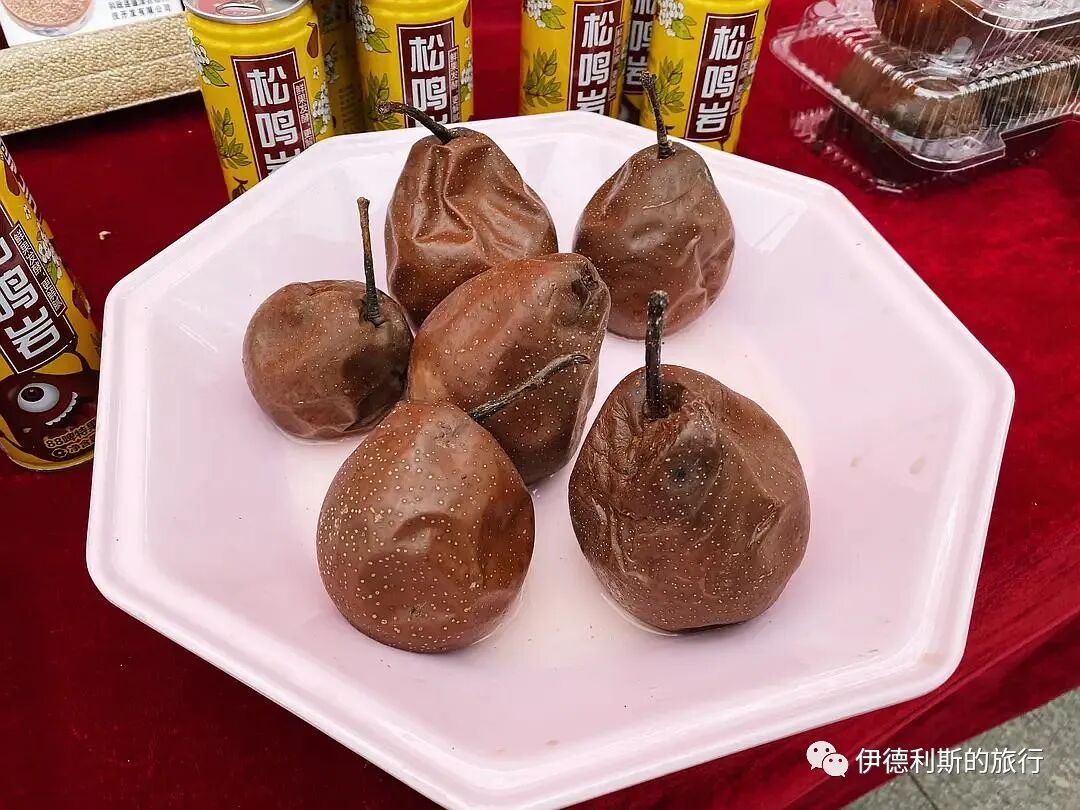
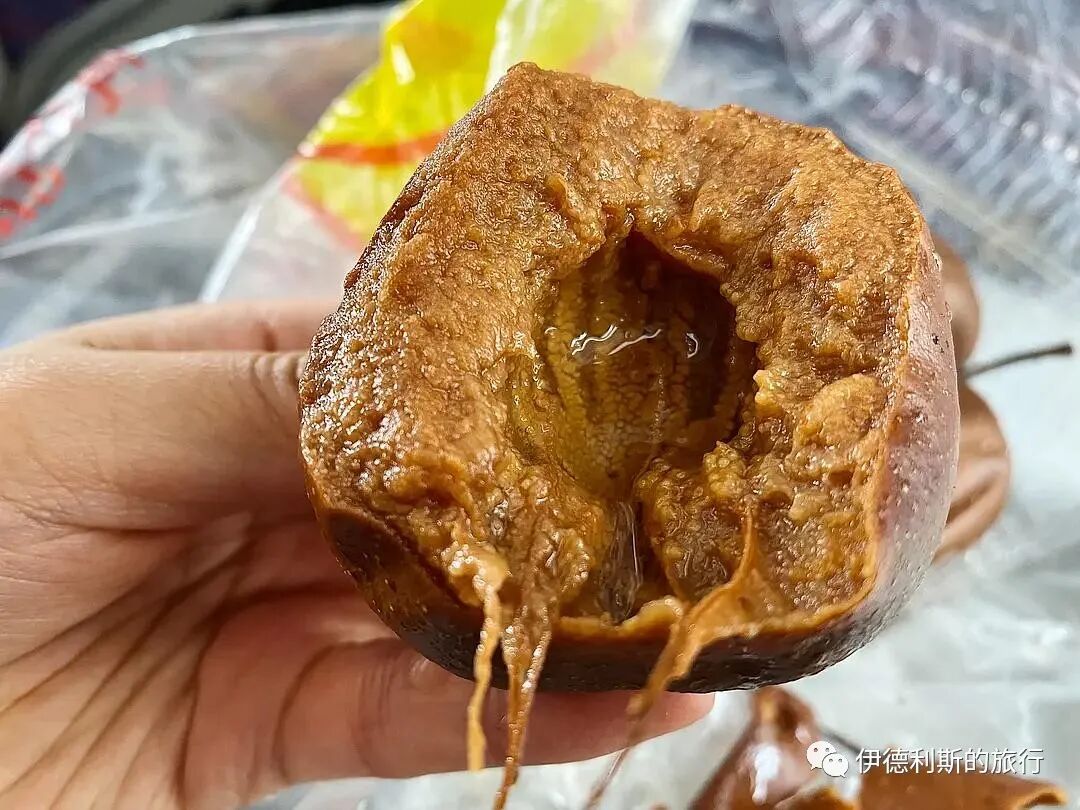
Entering the Songmingyan Hua'er Festival venue. After two years, I saw that Songmingyan had installed wooden walkways on the mountain this year, and some roads had been newly paved, but the environment had not changed much; it is still a very free mountain field for Hua'er.
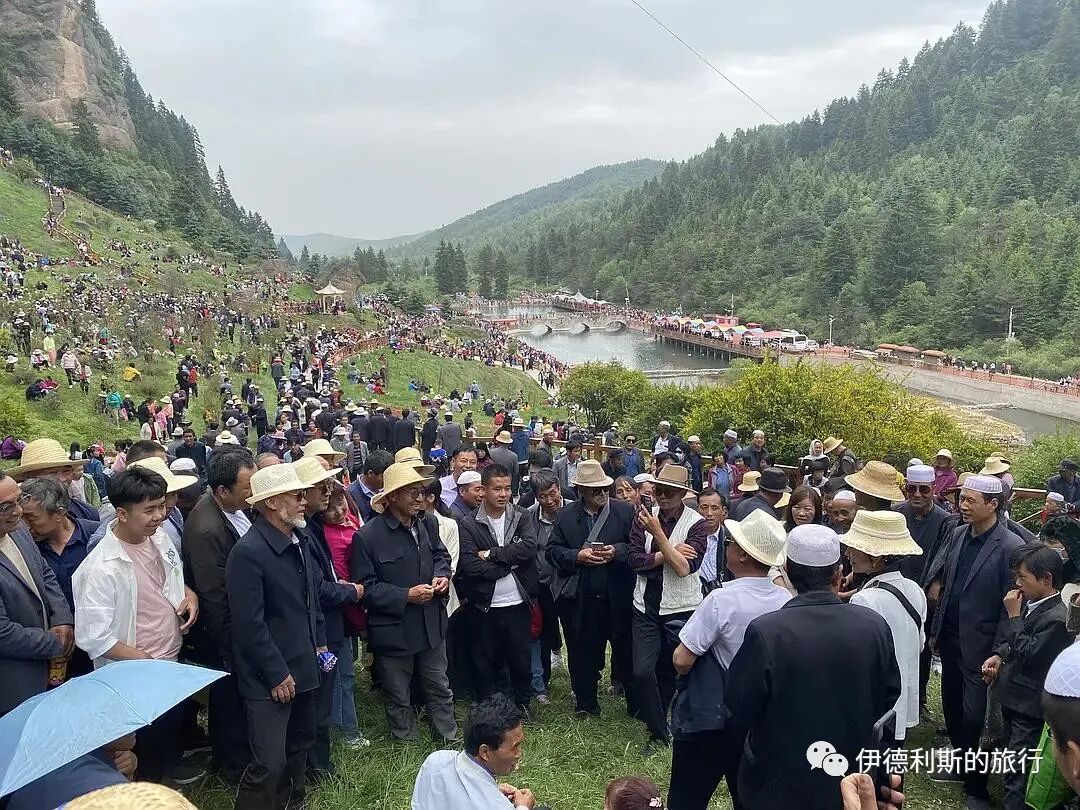
Translation from my friend Caigen: "This flower is yellow, oh, yellow to death.
My dear sister, this flower has been picked by a bee.
I haven't seen you for these few years.
I have missed you to death.
I just want to ask you,
Who have you been attracted to?" "
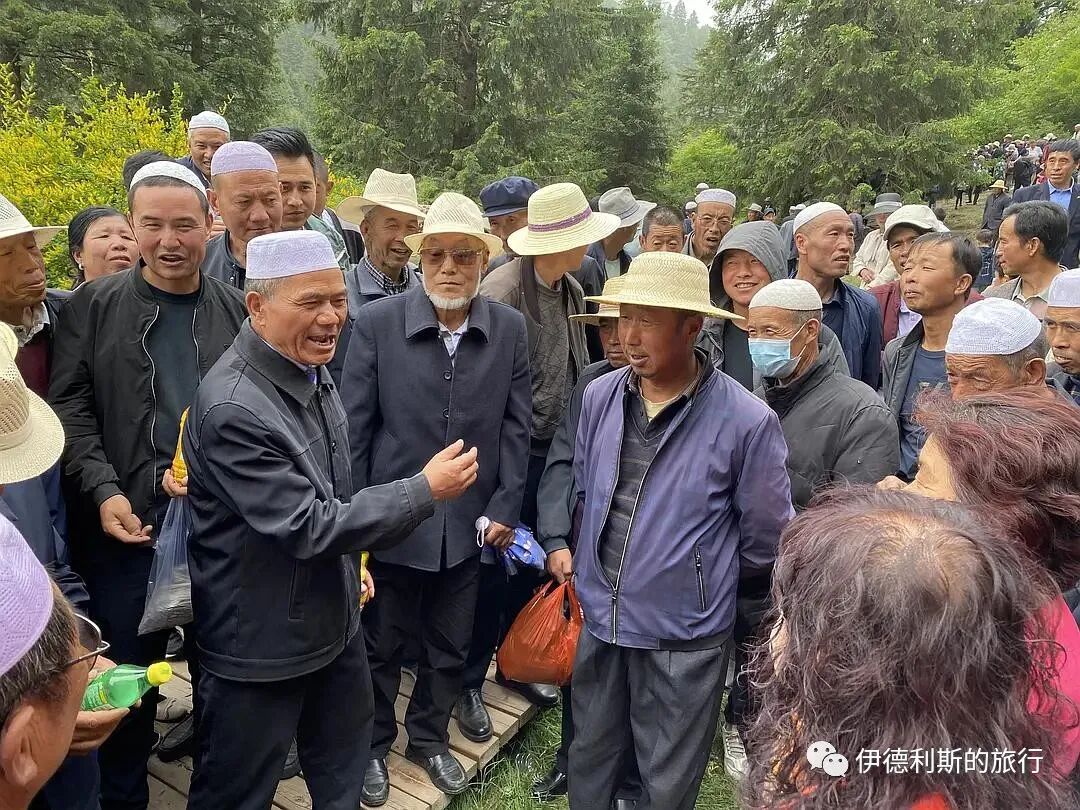
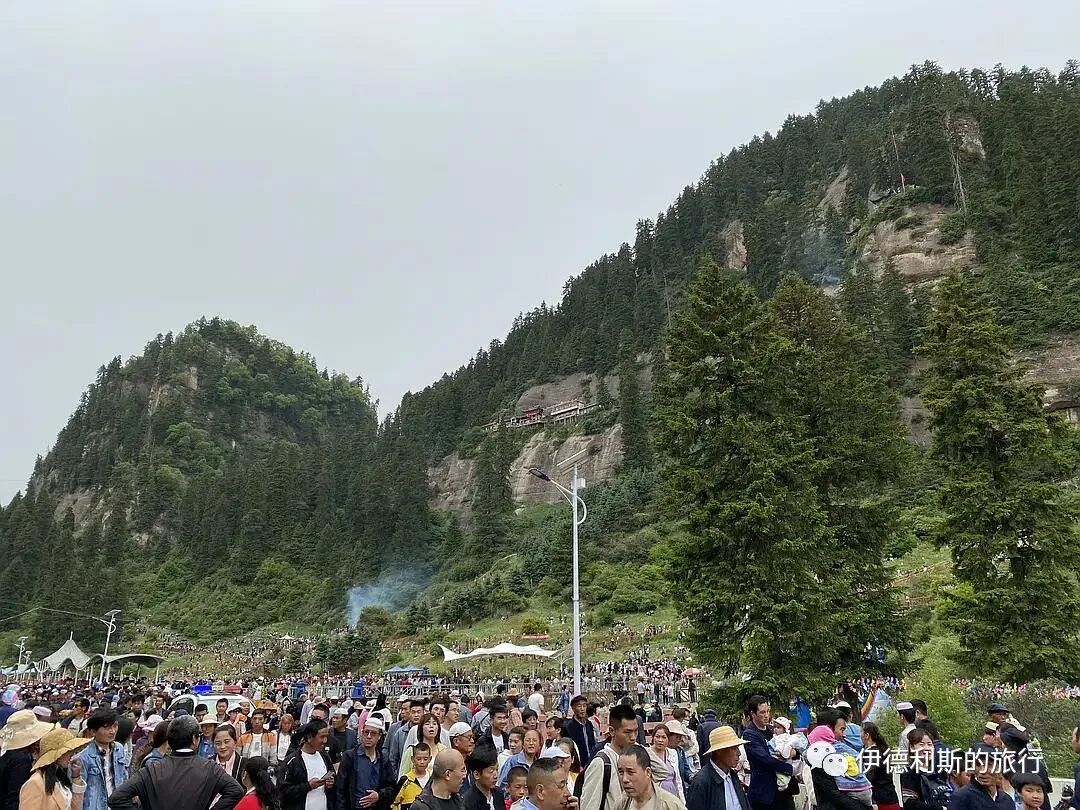
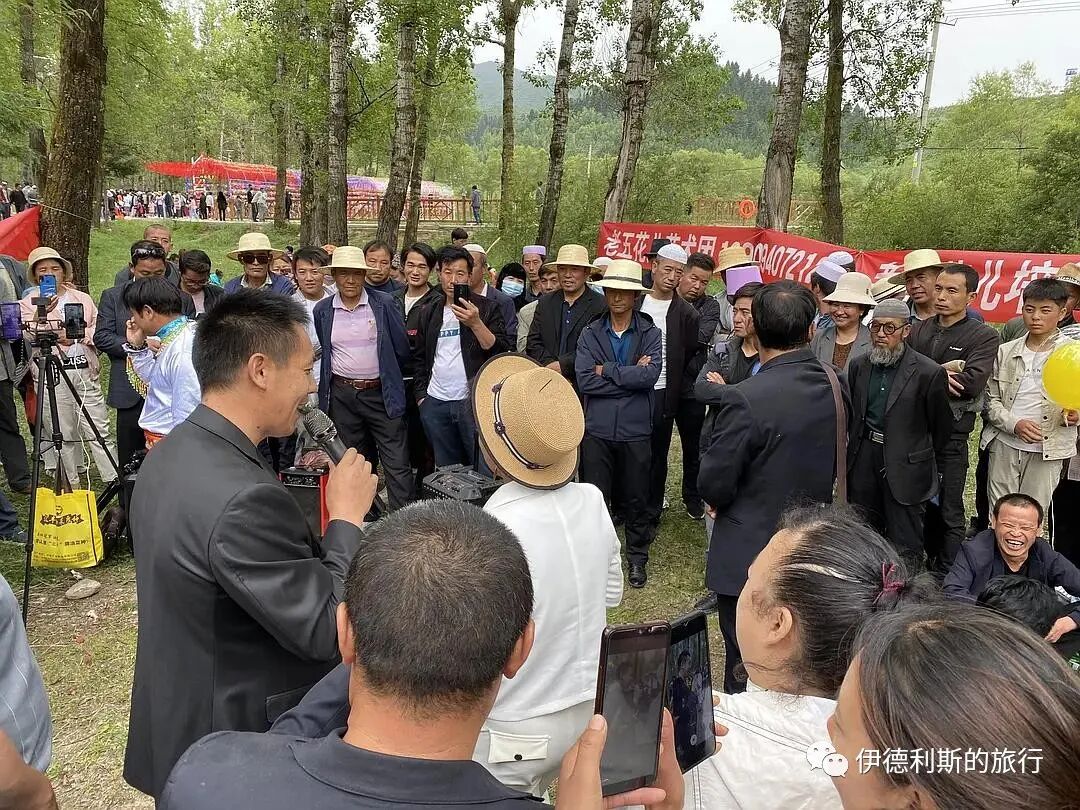
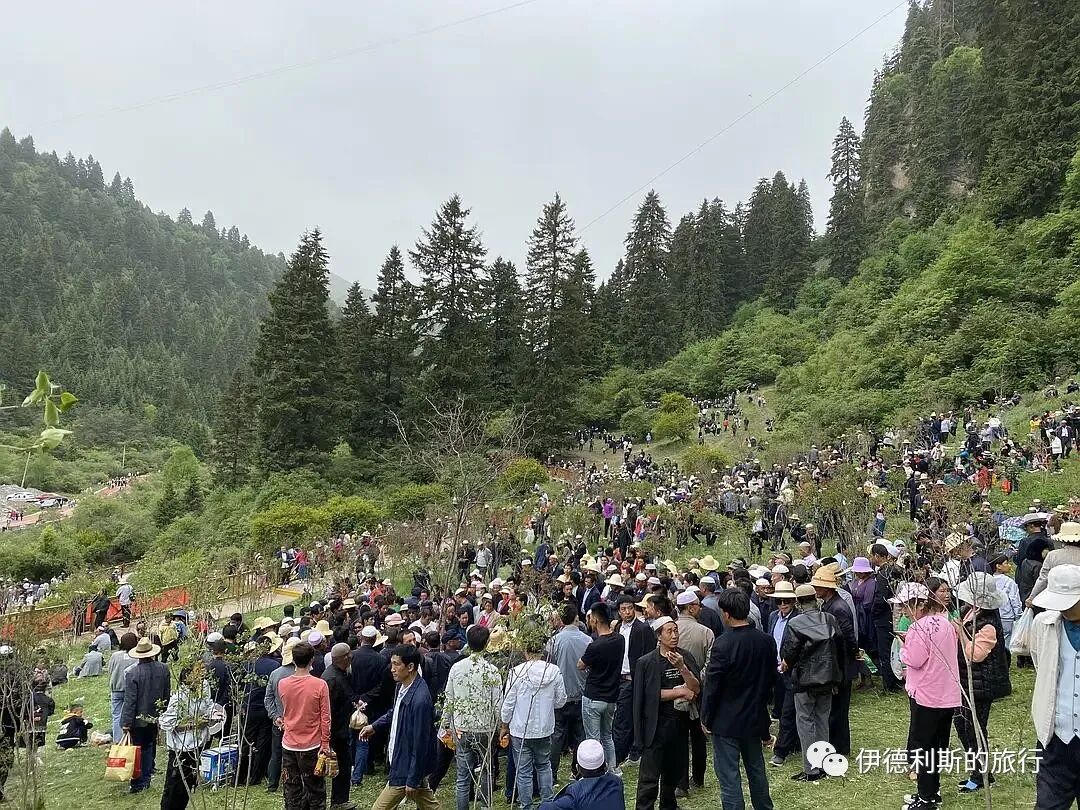
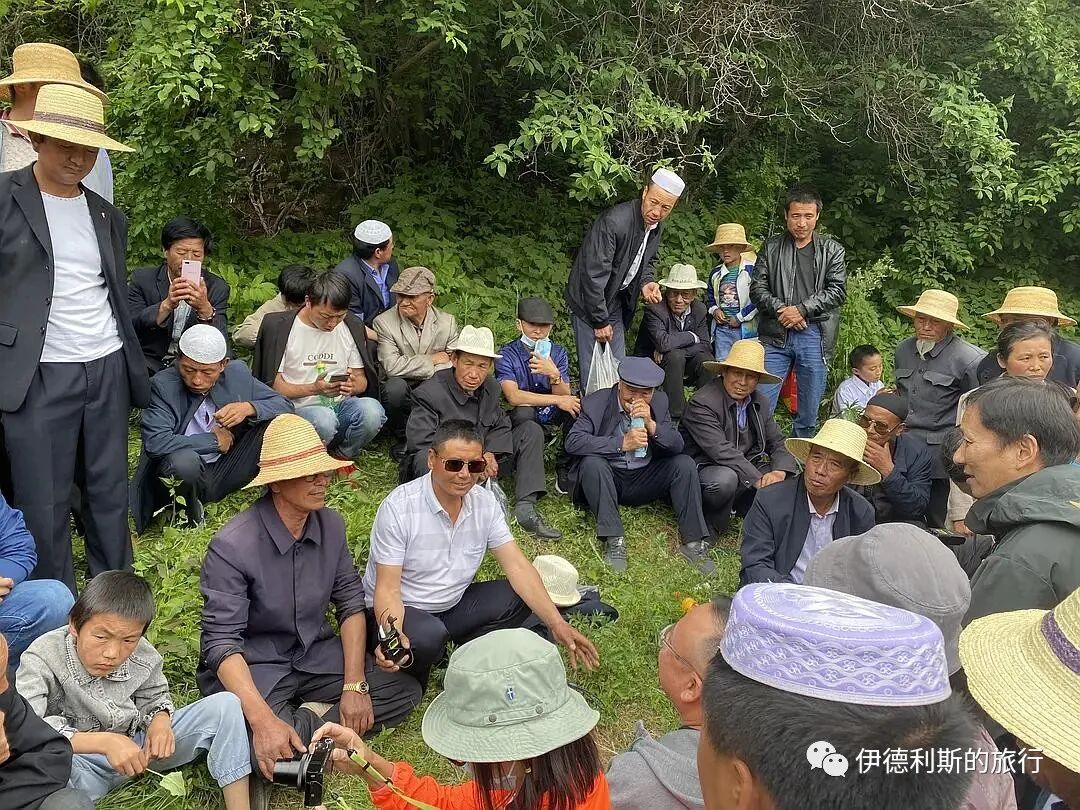
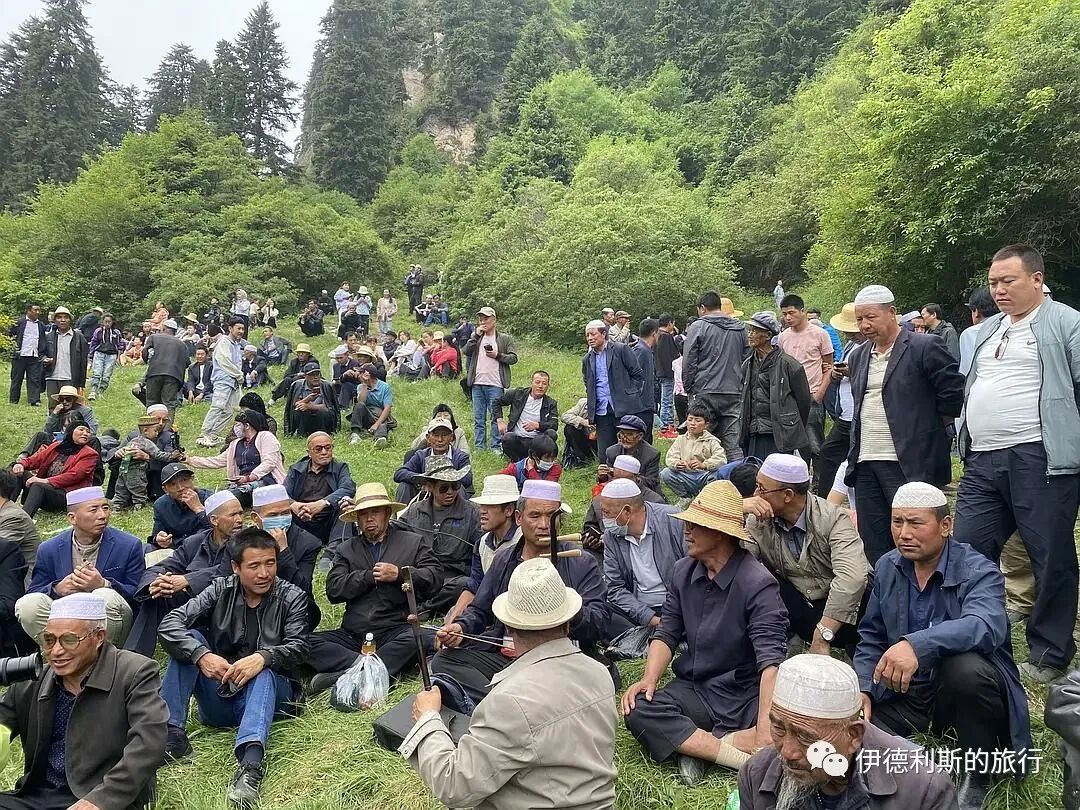
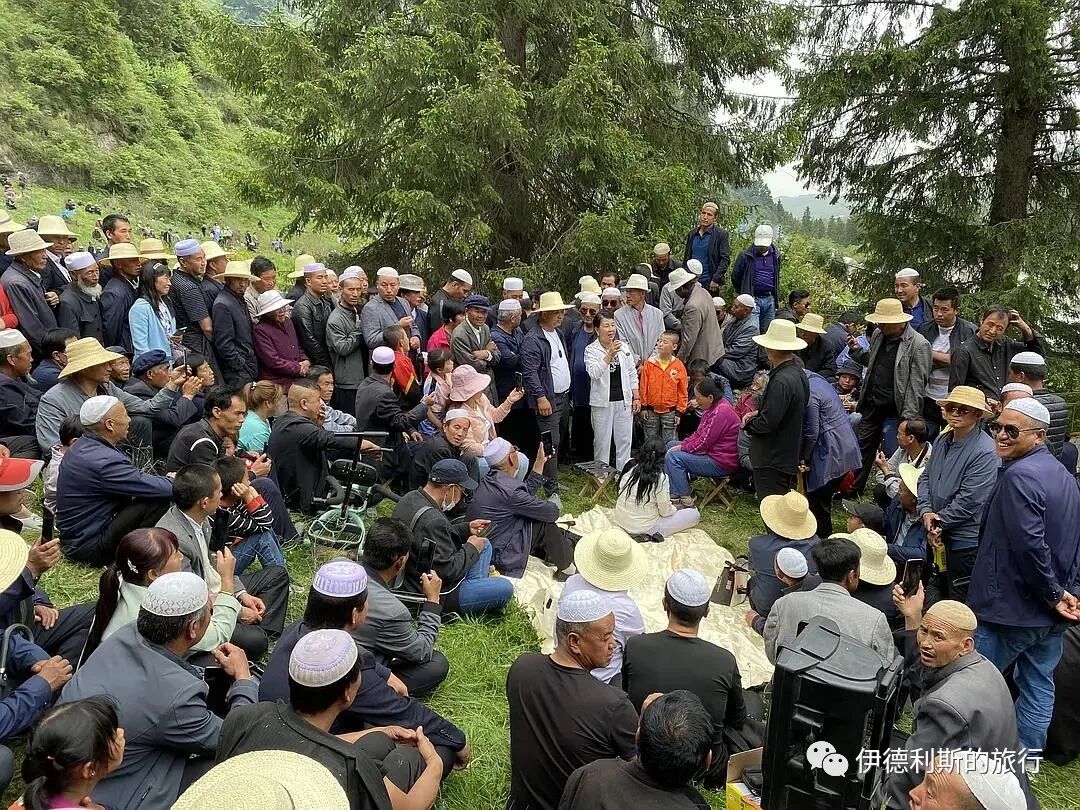
Saying goodbye to Songmingyan, heading to Lanzhou to catch a flight back to Beijing. Before leaving, I bought Halal Dicos (a Chinese fast-food chain) at Lanzhou West Station; it is a childhood memory for Zainab.
Summary: This travel note introduces Linxia Weekend Travel Guide: Songmingyan Hua'er Festival and Muslim Culture. Around the 28th day of the fourth lunar month every year, a grand Hua'er Festival (a traditional folk song festival) is held at Songmingyan in Hezheng, Gansu. It is useful for readers interested in Linxia Travel, Hua'er Festival, Muslim Culture.
Around the 28th day of the fourth lunar month every year, a grand Hua'er Festival (a traditional folk song festival) is held at Songmingyan in Hezheng, Gansu. I attended the Songmingyan Hua'er Festival for the first time in 2019, missed it in 2020 due to travel restrictions from Beijing, and 2021 was my second time attending.
I arrived in Lanzhou on Friday night and first had sheep head with milk and egg jiangzao (fermented glutinous rice) at the Jianlan Road night market; the hot-mixed version tastes different from the stir-fried one, and it is also quite delicious!
On Saturday morning, I had Hezhou baozi (steamed stuffed buns) at Xiaoxihu in Lanzhou, then set off for Dahejia Town in Linxia.
At noon in Dahejia, I had shouzhuarou (hand-grabbed mutton), laotangji (old-broth chicken), and laochao mianpian (stir-fried dough slices); my standard order whenever I go to the Hehuang region is shouzhuarou and mianpian. This long-established restaurant was very crowded at noon; most people were eating cold noodles, while some ordered heyan (river-bank style dishes) and laochao (stir-fried dishes). Their kettles were filled with beef broth, and empty bowls were set out with chopped green onions and salt, so you could pour the broth directly to drink.
Dahejia is located at the border of Gansu and Qinghai; once you cross the Yellow River Bridge, you are in Minhe, Qinghai. People from many ethnic groups live here, including the Bonan, Dongxiang, Salar, Han, Hui Muslims, and Tibetan people, and the town is full of Dongxiang shouzhuarou restaurants and Bonan knife shops.
I bought tianmaizi (sweet wheat) in Dahejia at noon and yogurt at Bafang Thirteen Alleys in Linxia in the evening; combining them made a delicious tianmaizi yogurt.
The fresh jiangshui (fermented vegetable juice) in the shop is especially refreshing in the summer.
In the evening, I had beef casserole and stir-fried fazi mianchang (sausage made with sheep intestines and meat) at Lao Dongxiang Mainai in the Linxia North Street night market. Fazi, also called fazi, is sheep fat intestine stuffed with offal and minced meat. I think the specialty of the Linxia North Street night market is the variety of stir-fried dishes; flames over a meter high can rise from the stoves, but unfortunately, I didn't capture it on camera.
Drinking Gannan yak yogurt at the night market.
A night tour of the Bafang Thirteen Alleys in Linxia. This was my fourth time here, but the first time for Zainab, so I took her around for a good stroll.
Zainab had a very high opinion of the Bafang Thirteen Alleys and the entire Hezhou city; she liked it very much. At night, the Bafang Thirteen Alleys were full of locals out for a walk to enjoy the cool air; it was very lively. The scenic area is neat and clean, without excessive commercial development, selling only local snacks like handmade yogurt and youguozi (fried dough snacks); Zainab regretted not buying youguozi to eat while hiking the next day.
In the scenic area, you can also admire various exquisite Hezhou brick carvings. I took her to see the famous Beisi Longyingbi (Dragon Screen Wall at the North Mosque), which can be considered a representative work of Hezhou brick carving.
On Sunday morning, I visited the Hongyuan Square in Linxia. Hongyuan Square is a truly magical place; it is located right next to the Dagongbei, the core area of the Jahriyya Menhuan (a Sufi order), and at night it is a brightly lit children's playground, while in the morning it becomes a bustling morning market with everything. Besides vegetables and fruits, there were also fazi mianchang, highland barley, potato chips, ganba chicken (dried chicken), and tianmaizi; we bought corn and xiangdou (fragrant bean) guokui (flatbread) here to eat.
I met an auntie knitting hats on the spot, so I bought one; in these two years of not being able to go abroad, I feel like I have rarely bought new hats.
I had beef noodles and fentang (vermicelli soup) at the Xin Kuan Hezhou Noodle Restaurant in front of the Xinhua Mosque. Their place is clean, bright, and tastes good; the fentang here in the Hehuang region uses vermicelli, not the starch blocks like in Xinjiang, and it tastes quite fragrant.
After breakfast, we set off for Songmingyan. Every year during the Hua'er Festival, the entrance to the Songmingyan scenic area becomes a large market, selling everything and very lively. Before going into the mountains to listen to Hua'er, we first had cold noodles and half a jin (250 grams) of shouzhuarou at the entrance, then bought a corn cob to take inside.
At Songmingyan, you can buy the local specialty fruit, piteguo (a type of wild pear). Piteguo grows on mountains near Songmingyan at an altitude of over 2,000 meters; when first picked, they are sour and astringent, and they need to be placed on a fruit rack for half a month to soften, and their color will turn into a dark shade like frozen pears. The ripened piteguo is very juicy; you have to bite a small hole to suck out the juice before you can eat the flesh, and the taste is sweet and sour, very refreshing.
Entering the Songmingyan Hua'er Festival venue. After two years, I saw that Songmingyan had installed wooden walkways on the mountain this year, and some roads had been newly paved, but the environment had not changed much; it is still a very free mountain field for Hua'er.
Translation from my friend Caigen: "This flower is yellow, oh, yellow to death.
My dear sister, this flower has been picked by a bee.
I haven't seen you for these few years.
I have missed you to death.
I just want to ask you,
Who have you been attracted to?" "
Saying goodbye to Songmingyan, heading to Lanzhou to catch a flight back to Beijing. Before leaving, I bought Halal Dicos (a Chinese fast-food chain) at Lanzhou West Station; it is a childhood memory for Zainab.
Muslim History Guide China: Linxia Gannan Xidaotang, Gongbei Mosques and Silk Road Faith
Articles • yusuf908 posted the article • 0 comments • 155 views • 2026-05-24 00:17
Reposted from the web
Summary: Muslim History Guide China: Linxia Gannan Xidaotang, Gongbei Mosques and Silk Road Faith is presented here as a clear English account for Muslim readers, starting with this scene: Before Eid al-Adha (Qurban Jie), I took my wife and father-in-law on a road trip starting from Xunhua. We passed through Linxia, Xiahe, and Hezuo, ending in Lintan County in Gannan. The scenery along the way was beautiful, even. It keeps the original names, food details, mosque details, photographs, and cultural context while focusing on Linxia Travel, Xidaotang, Muslim History.
Before Eid al-Adha (Qurban Jie), I took my wife and father-in-law on a road trip starting from Xunhua. We passed through Linxia, Xiahe, and Hezuo, ending in Lintan County in Gannan. The scenery along the way was beautiful, even better than the paid tourist spots we visited.
Gannan is part of the greater Tibetan region with an average altitude of 3,000 meters, and some places go over 3,500 meters. Some people get altitude sickness, so prepare before you leave. I suggest keeping a simple oxygen canister in the car; they cost a few dozen yuan and are good to have just in case.
Also, watch out for the sun. The UV rays and sunlight at high altitudes are very strong and can make it hard to keep your eyes open. There is a big temperature difference between morning and night, so wear long sleeves and don't forget your sunglasses and sunscreen.
Itinerary: Xunhua - Linxia - Xiahe - Sangke Grassland - Hezuo - Meiren Grassland - Yeliguan - Lintan - Xunhua
(Three days total)
The three of us drove one car from Xunhua and reached Linxia in about two hours. We stayed in Linxia for one day. On the second day at noon, we arrived in Xiahe County for lunch and Jumuah prayer. We passed through Sangke Grassland, went through Hezuo City in the afternoon, passed Meiren Grassland, and arrived at Yeliguan in the evening. We stayed another night in Yeliguan. On the third morning, we visited Yeliguan National Forest Park and reached Lintan County by noon. We visited Xidaotang and in the afternoon went to the Galutian Big House, ten kilometers from Lintan County, as the end of our trip. That night, we drove over four hours back to Xunhua. The whole trip took one tank of gas.
Most tourists start from Lanzhou, which is only a two-hour drive from Linxia, so their route is similar to ours. You could skip Lintan County and head south to the Zhagana scenic area. I heard the scenery there is nice, but friends in Linxia said there are few Hui Muslims there, so it is just for taking photos, and we decided not to go.
Day 1: Linxia
I visited Linxia in 2016 and toured the famous Eight Neighborhoods and Thirteen Alleys. The Eight Neighborhoods are: 1. Dasi Fang, 2. Qisi Fang, 3. Xisi Fang, 4. Beisi Fang, 5. Tiejia Si Fang, 6. Qianheyan Si Fang, 7. Laowang Si Fang, 8. Xinwang Si Fang.
The Thirteen Alleys are: 1. Daga Alley, 2. Xiaonan Alley, 3. Bakou Alley, 4. Bei Alley, 5. Shagale Alley, 6. Zhuanyuan Alley, 7. Danan Alley, 8. Renyi Alley, 9. Xi Alley, 10. Yongzheng Alley, 11. Tiejia Si Alley, 12. Wangsi Alley, 13. Shiqiao Alley.
I mainly came to see the mosques and gongbei (shrines). Nearby are Tiejia Mosque, Laohua Mosque, Xinhua Mosque, Laowang Mosque, Beisi Mosque, Xisi Mosque, Daqi Mosque, Chengjiao Mosque, Nanguan Grand Mosque, Qianheyan Mosque, Guo Gongbei, and Da Gongbei.
Guo Gongbei
There are two gongbei in Hongyuan Square in Linxia, both belonging to the Qadiriyya menhuan (Sufi order). One is Guo Gongbei and the other is Da Gongbei. They are right next to each other. The master of Guo Gongbei was named Chen Yiming (1646—1718). People called him Chen Baoguo because he once protected the Qing Emperor Kangxi and was granted the surname Chen. Legend says his original surname was Hu. Although he was Qadiriyya, he was not under the control of Da Gongbei. After he passed away, the Qing court ordered the construction of the gongbei. The master of the gongbei did not preach. The followers at Guo Gongbei used to wear slanted-collar robes for a long time, but later the Da Gongbei council decided they should change their style of dress.
Da Gongbei is the shrine of Qi Jingyi, the founder of the Qadiriyya order. It is called Da Gongbei because it was built larger than the shrines of other menhuan. I have visited several important Qadiriyya gongbei. Compared to the styles of other menhuan, the architecture of Qadiriyya gongbei has more classical Chinese features and looks very similar to Taoist temples.
Linxia: Accommodation
Baishun Zhongtian Banquet Hotel
We chose to stay at the Baishun Zhongtian Banquet Hotel. Accommodation in Linxia is quite cheap; you can find a great hotel for two or three hundred yuan. This hotel is halal, has a comfortable environment, is near the river, and the breakfast is delicious.
Before arriving in Linxia, I posted on WeChat asking where to eat. I got dozens of replies, and no one recommended the same place twice. People suggested Dongxiang hand-grabbed lamb (shouzhuar), steamed buns (baozi), river-side noodle slices (heyan mianpian), Muqing Manor, sausage-stuffed intestines (fazi mianchang), Yinxing Restaurant, Maogou boiled chicken, and more. I didn't know what to do, so Brother Ma from Linxia decided for me and took me to the very famous farmhouse restaurants in Zheqiaowan.
Zheqiaowan is a place name. The local farmhouse-style restaurants are very popular, and they say you can't go wrong with any of them. It turns out the people in Linxia really know how to cook. Many of the noodle masters in the restaurants in neighboring Lanzhou are from Linxia, so noodle dishes are one of the specialties here.
The farmhouse restaurants are quite large and serve big portions. I suggest that if you are eating with a group, you can order one dish less than the number of people. For three people, two dishes are enough. Ordering too much is wasteful. We were four people and ordered five dishes, but we couldn't finish them and ended up packing the leftovers to go.
Three-treasure tea (sanpaotai)
Pan-fried potatoes with lamb chops (kang yangyu yangpai)
Hand-torn flatbread (shousi bing)
Chive buns (jiucai baozi)
Stir-stir-fried meat with vermicelli (fentiao chaorou)
Day 2: Xiahe County
The drive from Linxia to Xiahe takes over two hours. Xiahe is famous for the Tibetan Buddhist Labrang Monastery, but we only visited the Labrang Mosque. The two are not far apart, and since it was Jumu'ah, we were able to attend the congregational prayer there.
The Labrang Mosque is also called the Xiahe Mosque. It is the only mosque in the area, but it is quite large and its architectural style incorporates elements of Tibetan design.
The Labrang Mosque was founded in 1854. Before building it, they had to get permission from the Labrang Monastery. At first, the mosque was just a temporary place for namaz, but as the number of local Hui Muslims grew, the mosque needed to expand. However, the Tibetans would not allow a large-scale construction, so they could only expand it slightly.
By 1936 (the 25th year of the Republic of China), a large number of refugees from Hezhou had flooded into Labrang following the Ma Zhongying incident of 1928. The mosque was clearly too small, so school board member Ma Letian and others held several talks with Huang Zhengqing, the commander of the Labrang Tibetan security forces (and brother of the 5th Jamyang), and finally secured a promise that they could fully expand the mosque without interference.
The newly built mosque covered a total area of 639 square meters. It featured a main prayer hall with a brick-and-wood structure consisting of five main rooms and three side rooms, a three-story pavilion-style minaret, 24 rooms for the east, north, and south wings, and 12 rooms for storage and bathing facilities. That was before the Reform and Opening-up period, though; the current building dates back to 1981.
Once you reach Xiahe, you have entered the greater Tibetan region, so you can see the Tibetan style in the local residential architecture.
Although Xiahe County is a Tibetan area, there are halal restaurants everywhere. We chose a large restaurant called Jiusheng. This place does not sell alcohol and also offers lodging, so friends who need a place to stay can consider booking a room here. The dining area at Jiusheng is very spacious, and the dishes have a strong local character. I ordered a dish called Kekexili, which is made with wheat kernels. It was delicious, but the portion was huge. I didn't finish it, so I packed it up and ate the rest as a snack on the road.
Stir-fried beef with tiger skin peppers (hupi lazi shao niurou)
Rustic farmhouse-style dishes (fengwei nongjia cai)
Kekexili (a dish made with wheat kernels)
Leaving Xiahe County and heading south, our grassland road trip began. Along both sides of the road lies the endless Sangke Grassland. The Gannan region has many grasslands, and Sangke is the first large one we passed through.
Prayer flag tunnel (jingfan suidao)
Along the way, we saw some nice scenery by the road and stopped to take photos. Just as we were about to leave, a child and an elderly person, both dressed in Tibetan clothing, blocked us to demand money. Of course, I didn't pay because I had heard about this behavior before. I stepped on the gas, left them behind, and drove off. I suggest everyone take photos at public viewing platforms to avoid any unpleasant situations.
Hezuo City
Hezuo Grand Mosque
Hezuo Grand Mosque was first built in 1834. It now serves over 10,000 congregants, most of whom are followers of the Huasi menhuan, though others belong to different menhuan. The current building was constructed in 1995.
We stopped briefly in Hezuo to pray and rest before heading south. Along the way, we passed a sea of rapeseed flowers right next to the Hezuo highway. Against the backdrop of blue skies and white clouds, the golden flowers were truly beautiful.
Meiren Grassland
Meiren Grassland
The Meiren Grassland sits at an altitude of over 3,600 meters. It features the alpine meadow landscape unique to the Qinghai-Tibet Plateau. I first thought the rounded mounds of grass were man-made, but after walking closer, I realized they formed naturally. This landscape forms in low-lying, poorly drained areas of the grassland where marshes develop, shaped by plants, soil, weathering, and freezing.
Prayer flag tunnel (jingfan suidao)
Be careful: while the prayer flag tunnels on the highway are beautiful, do not stop to take photos, as it is dangerous.
The figure in the distance is my father-in-law praying by the side of the road.
Yeliguan Town
Yelinguan Hotel
We arrived in Yeliguan Town that evening and checked into the Yelinguan Hotel. It is one of the better hotels in town, costing over 200 yuan. It is a halal hotel and serves halal breakfast. There are very few halal restaurants in Yeliguan, and there is not much to do in town, so I suggest considering other places to stay overnight.
Day 3: Yeliguan National Forest Park
A filming location for Journey to the West
You can drive into Yeliguan National Forest Park. Tickets are 78 yuan. If you do not have a car, you need to take the park's cable car. There is not much special scenery inside, though there are some farmed deer. To reach the top of the mountain, you need to take another cable car, which costs 20 yuan one way or 40 yuan round trip. If you do not want to pay, you have to hike up for over an hour.
When I was walking in the woods, I did not know it was a filming location for Journey to the West. It just felt familiar, like I had seen it on TV. When I visited Jiuzhaigou in March this year, I checked out one of the filming locations there. I did not expect the 1983 version of Journey to the West to have put so much effort into choosing its outdoor locations.
I do not think Yeliguan Forest Park offers good value for money. If you are struggling to choose between many Gannan attractions, I suggest skipping this one.
After driving for nearly two hours from Yeliguan, we arrived in Lintan County. The small county town in the distance in the photo is Lintan.
The first shop at the entrance of Lintan County is Mayongcheng Laochao. Laochao refers to stir-fried noodle slices (laochao mianpian). Lintan County is full of halal restaurants, and none of them sell alcohol.
Restaurants in the Northwest provide free tea. The server will bring a tea platter, and you can add whatever you like to your cup.
Stir-fried noodle slices (laochao mianpian)
The noodle slices come in a huge bowl; unless you are very hungry, you really cannot finish it. They also sell whole free-range chickens (tu ji) at a cheap price, and they taste great.
A plate of stir-fried free-range chicken pieces
There are a few large, prominent mosques in Lintan County, including the Upper Mosque (Qingzhen Shangsi) and the Grand Huasi Mosque (Qingzhen Huadasi).
Upper Mosque (Shangsi).
The Upper Mosque and the Hua Great Mosque (Hua Da Si) sit next to each other. Both were built in 1380. Records show that the Hui Muslims in Lintan originally came from Zhusi Lane in Nanjing. They were part of the Hui Muslim group that followed Mu Ying on his western military campaign during the Ming Dynasty's Hongwu era. The Ming History records that the construction of the mosque was suggested by the Marquis of Xiping, Mu Ying, and approved by the Ming court. It was modeled after the Huajue Mosque in Chang'an and covers an area of 15 mu. To encourage the soldiers stationed in the area, the Ming court often awarded them plaques to honor their service.
The Lintan County Hua Great Mosque was first built in 1380 (the 13th year of the Hongwu era of the Ming Dynasty). By the early 21st century, it had a history of over 600 years. The Taozhou Prefecture Gazetteer records: 'Mu Ying, the Ming General who conquered the West, arrived in 1380 (the 13th year of Hongwu). The eighteen tribes of Taozhou and three deputy envoys rebelled and occupied the Nalin Seven Stations area. Following the Emperor's orders, Mu Ying led his army to the old city. The rebels fled, but he pursued and captured the three deputy envoys. He built a city at Donglong Mountain and stationed troops there. He returned his army in the sixth month and was named Marquis of Xiping for his achievements.' Historical records state: 'The old Taozhou mosque was in the old city and was renovated in the Dingwei year of the Ming Hongwu era.' At that time, Taozhou only had the Gedimu tradition, but now it follows the Huasi menhuan. The current building was designed by the Architectural Design and Research Institute of Tongji University and was completed in 2019.
Western Hall (Xidaotang) Mosque.
The Western Hall was the main focus of my trip. It originated in Lintan County, Gansu Province. Its founder, Ma Qixi, was skilled at teaching in Chinese. He used Chinese-language classics like Liu Jielian's 'The Nature of Islam' (Tianfang Xingli), 'The Rites of Islam' (Tianfang Dianli), and 'The True Record of the Prophet of Islam' (Tianfang Zhisheng Shilu) for his teachings, which is why it is called the 'Chinese School'.
The founder of the Huasi menhuan, Ma Laichi, spread the teachings of the Khufiyya order. Lintan initially accepted the Khufiyya. When the Huasi menhuan reached the third generation leader Ma Guangzong (known as Beichuan Taiye), his student Ma Baozhen left the Huasi menhuan. He adopted the teachings of the Ishan school from Shache, Xinjiang, and started his own group in Beizhuang, Dongxiang, which became known as the Beizhuang menhuan. Ma Baozhen's student, Min Shangli, served as the 'muleti' (religious leader) for the Beizhuang group stationed in the old city. After Min Shangli passed away, he was buried at the Dazigou gongbei (shrine). His son, Min Yonglu, succeeded him as the 'muleti' in Lintan. After Min Yonglu passed away, he was also buried at the Dazigou gongbei. His son, Min Shida, succeeded him. Min Shida only had two daughters. One daughter married Ma Yuan, who had two sons. One of them was Ma Qixi, which is why Ma Qixi originally belonged to the Beizhuang menhuan.
Ma Qixi was smart and loved to learn. He did well in school from a young age and passed the imperial exam to become a scholar (xiucai). He opened a private school in his hometown of Xifeng Mountain. In 1898, Ma Qixi began teaching in a scripture hall at the Beizhuang gongbei. One faction of the Beizhuang menhuan insisted that people should take off their shoes when performing namaz, while the other faction believed it was not necessary. The Beizhuang 'muleti' Min Yonglu said: 'It is best to take them off, but not taking them off does not violate religious rules.' Ma Qixi thought Min Yonglu was being indecisive and should clearly state whether shoes should be removed or not. This led to a disagreement, and Ma Qixi left the Beizhuang group to start his own.
Ma Qixi had a rational mindset. He strongly advocated for changing old customs, such as cutting off men's long braids, opposing foot-binding for women, and encouraging girls to go to school. In terms of religion, he only considered the 'Five Pillars of Islam' as the complete practice, whereas the Beizhuang menhuan also required the morning and evening recitation of 'dhikr' and quiet meditation.
Ma Qixi realized that to develop education, they needed an economic foundation. Therefore, the Western Hall placed great importance on business and farming. The followers of the Western Hall treated the hall as their home and lived a collective life, creating the prototype of the Western Hall 'Ummah' family.
The Western Hall founded the Lintan Puci Primary School. All children in the hall over the age of 7 were enrolled for free, and they also accepted over 100 children from other local ethnic groups. To solve the problem of girls' education, the Western Hall founded the Lintan Old City Private Qixi Girls' School in 1943, which was free for all girls regardless of their ethnicity.
The Gansu Hui Muslim general Ma Anliang was a follower of the Huasi menhuan. He wanted to use Ma Qixi to attack the Beizhuang menhuan, but Ma Qixi refused, and the two parted on bad terms.
In 1914, Ma Anliang sent his subordinate Zhang Shunyuan to execute Ma Qixi, claiming he had 'colluded with Bai Lang to kill innocent Hui and Han people in the old city.' After Ma Qixi was killed, Ding Quangong succeeded him. The Western Hall did not use a hereditary system; the leader was chosen by public vote and served for life.
In 1917, Ding Quangong and his group were passing through Lintao to visit the grave of the martyred student Ma Wanzhang. They were surrounded by Ma Ying, a local commander appointed by Ma Anliang. Ding Quangong was killed, and Ma Mingren succeeded him as the third leader.
In 1919, Ma Anliang was promoted to Governor of Gansu. While traveling to take up his post, he fell ill at Suonanba in Dongxiang, returned home, and passed away.
The prayer hall of Xidaotang, which looks like the Temple of Heaven.
Ma Mingren mentored Ding Zhengxi. Ding graduated from the Chinese Department of Peking University in 1929, becoming the first university student in Xidaotang history. After graduation, he returned to Xidaotang to handle diplomatic affairs and later served as the magistrate of Hezheng County.
In Guzhan Town, about 10 kilometers from Lintan County, stands the Galutian Big House. It is the only one remaining of the 13 large houses built by Xidaotang and is now a national-level cultural heritage site.
The Galutian Big House is a Tibetan-style building. A key feature of Tibetan architecture is that you cannot see the wood from the outside or the earth from the inside. The house was built to meet the needs of the collective life of the Uma.
There are long benches in front of the main hall for elders to study scriptures and discuss matters, serving as a place for democratic consultation.
Every Xidaotang member living here has their food, clothing, housing, transportation, family education, weddings, funerals, and support provided by the collective.
The Xidaotang constitution states regarding economic management: all income and expenses from collective farming, commerce, forestry, animal husbandry, and sideline businesses are managed, operated, and distributed centrally. The organization has one manager and one deputy manager.
Trade with Tibetan areas was the foundation of Xidaotang's economic development, so the group placed great importance on its relationship with Tibetan people. Most Xidaotang members could speak Tibetan, and the Tibetan people called them 'Qusuoma,' meaning 'new religious friends'. After the Xidaotang elders Ma Mingren and Min Zhidao passed away, hundreds of Tibetan people came to attend their funerals.
The Sixth Jamyang Living Buddha of Labrang Monastery once visited Xidaotang and placed a white silk scarf (hada) on the grave of Elder Ma Qixi, who is buried at the foot of Xifeng Mountain.
Xidaotang is a model for the Sinicization of Islam. To adapt to the social environment of the time, it took many pioneering steps, especially in prioritizing education, particularly for women. This provided continuous momentum for the overall growth of Xidaotang and is worth learning from by other groups.
Ending our trip to Lintan, we drove for four hours that afternoon to return to Xunhua to prepare for Eid al-Adha (Guerbang Jie). view all
Summary: Muslim History Guide China: Linxia Gannan Xidaotang, Gongbei Mosques and Silk Road Faith is presented here as a clear English account for Muslim readers, starting with this scene: Before Eid al-Adha (Qurban Jie), I took my wife and father-in-law on a road trip starting from Xunhua. We passed through Linxia, Xiahe, and Hezuo, ending in Lintan County in Gannan. The scenery along the way was beautiful, even. It keeps the original names, food details, mosque details, photographs, and cultural context while focusing on Linxia Travel, Xidaotang, Muslim History.
Before Eid al-Adha (Qurban Jie), I took my wife and father-in-law on a road trip starting from Xunhua. We passed through Linxia, Xiahe, and Hezuo, ending in Lintan County in Gannan. The scenery along the way was beautiful, even better than the paid tourist spots we visited.
Gannan is part of the greater Tibetan region with an average altitude of 3,000 meters, and some places go over 3,500 meters. Some people get altitude sickness, so prepare before you leave. I suggest keeping a simple oxygen canister in the car; they cost a few dozen yuan and are good to have just in case.
Also, watch out for the sun. The UV rays and sunlight at high altitudes are very strong and can make it hard to keep your eyes open. There is a big temperature difference between morning and night, so wear long sleeves and don't forget your sunglasses and sunscreen.
Itinerary: Xunhua - Linxia - Xiahe - Sangke Grassland - Hezuo - Meiren Grassland - Yeliguan - Lintan - Xunhua
(Three days total)
The three of us drove one car from Xunhua and reached Linxia in about two hours. We stayed in Linxia for one day. On the second day at noon, we arrived in Xiahe County for lunch and Jumuah prayer. We passed through Sangke Grassland, went through Hezuo City in the afternoon, passed Meiren Grassland, and arrived at Yeliguan in the evening. We stayed another night in Yeliguan. On the third morning, we visited Yeliguan National Forest Park and reached Lintan County by noon. We visited Xidaotang and in the afternoon went to the Galutian Big House, ten kilometers from Lintan County, as the end of our trip. That night, we drove over four hours back to Xunhua. The whole trip took one tank of gas.
Most tourists start from Lanzhou, which is only a two-hour drive from Linxia, so their route is similar to ours. You could skip Lintan County and head south to the Zhagana scenic area. I heard the scenery there is nice, but friends in Linxia said there are few Hui Muslims there, so it is just for taking photos, and we decided not to go.
Day 1: Linxia
I visited Linxia in 2016 and toured the famous Eight Neighborhoods and Thirteen Alleys. The Eight Neighborhoods are: 1. Dasi Fang, 2. Qisi Fang, 3. Xisi Fang, 4. Beisi Fang, 5. Tiejia Si Fang, 6. Qianheyan Si Fang, 7. Laowang Si Fang, 8. Xinwang Si Fang.
The Thirteen Alleys are: 1. Daga Alley, 2. Xiaonan Alley, 3. Bakou Alley, 4. Bei Alley, 5. Shagale Alley, 6. Zhuanyuan Alley, 7. Danan Alley, 8. Renyi Alley, 9. Xi Alley, 10. Yongzheng Alley, 11. Tiejia Si Alley, 12. Wangsi Alley, 13. Shiqiao Alley.
I mainly came to see the mosques and gongbei (shrines). Nearby are Tiejia Mosque, Laohua Mosque, Xinhua Mosque, Laowang Mosque, Beisi Mosque, Xisi Mosque, Daqi Mosque, Chengjiao Mosque, Nanguan Grand Mosque, Qianheyan Mosque, Guo Gongbei, and Da Gongbei.
Guo Gongbei
There are two gongbei in Hongyuan Square in Linxia, both belonging to the Qadiriyya menhuan (Sufi order). One is Guo Gongbei and the other is Da Gongbei. They are right next to each other. The master of Guo Gongbei was named Chen Yiming (1646—1718). People called him Chen Baoguo because he once protected the Qing Emperor Kangxi and was granted the surname Chen. Legend says his original surname was Hu. Although he was Qadiriyya, he was not under the control of Da Gongbei. After he passed away, the Qing court ordered the construction of the gongbei. The master of the gongbei did not preach. The followers at Guo Gongbei used to wear slanted-collar robes for a long time, but later the Da Gongbei council decided they should change their style of dress.
Da Gongbei is the shrine of Qi Jingyi, the founder of the Qadiriyya order. It is called Da Gongbei because it was built larger than the shrines of other menhuan. I have visited several important Qadiriyya gongbei. Compared to the styles of other menhuan, the architecture of Qadiriyya gongbei has more classical Chinese features and looks very similar to Taoist temples.
Linxia: Accommodation
Baishun Zhongtian Banquet Hotel
We chose to stay at the Baishun Zhongtian Banquet Hotel. Accommodation in Linxia is quite cheap; you can find a great hotel for two or three hundred yuan. This hotel is halal, has a comfortable environment, is near the river, and the breakfast is delicious.
Before arriving in Linxia, I posted on WeChat asking where to eat. I got dozens of replies, and no one recommended the same place twice. People suggested Dongxiang hand-grabbed lamb (shouzhuar), steamed buns (baozi), river-side noodle slices (heyan mianpian), Muqing Manor, sausage-stuffed intestines (fazi mianchang), Yinxing Restaurant, Maogou boiled chicken, and more. I didn't know what to do, so Brother Ma from Linxia decided for me and took me to the very famous farmhouse restaurants in Zheqiaowan.
Zheqiaowan is a place name. The local farmhouse-style restaurants are very popular, and they say you can't go wrong with any of them. It turns out the people in Linxia really know how to cook. Many of the noodle masters in the restaurants in neighboring Lanzhou are from Linxia, so noodle dishes are one of the specialties here.
The farmhouse restaurants are quite large and serve big portions. I suggest that if you are eating with a group, you can order one dish less than the number of people. For three people, two dishes are enough. Ordering too much is wasteful. We were four people and ordered five dishes, but we couldn't finish them and ended up packing the leftovers to go.
Three-treasure tea (sanpaotai)
Pan-fried potatoes with lamb chops (kang yangyu yangpai)
Hand-torn flatbread (shousi bing)
Chive buns (jiucai baozi)
Stir-stir-fried meat with vermicelli (fentiao chaorou)
Day 2: Xiahe County
The drive from Linxia to Xiahe takes over two hours. Xiahe is famous for the Tibetan Buddhist Labrang Monastery, but we only visited the Labrang Mosque. The two are not far apart, and since it was Jumu'ah, we were able to attend the congregational prayer there.
The Labrang Mosque is also called the Xiahe Mosque. It is the only mosque in the area, but it is quite large and its architectural style incorporates elements of Tibetan design.
The Labrang Mosque was founded in 1854. Before building it, they had to get permission from the Labrang Monastery. At first, the mosque was just a temporary place for namaz, but as the number of local Hui Muslims grew, the mosque needed to expand. However, the Tibetans would not allow a large-scale construction, so they could only expand it slightly.
By 1936 (the 25th year of the Republic of China), a large number of refugees from Hezhou had flooded into Labrang following the Ma Zhongying incident of 1928. The mosque was clearly too small, so school board member Ma Letian and others held several talks with Huang Zhengqing, the commander of the Labrang Tibetan security forces (and brother of the 5th Jamyang), and finally secured a promise that they could fully expand the mosque without interference.
The newly built mosque covered a total area of 639 square meters. It featured a main prayer hall with a brick-and-wood structure consisting of five main rooms and three side rooms, a three-story pavilion-style minaret, 24 rooms for the east, north, and south wings, and 12 rooms for storage and bathing facilities. That was before the Reform and Opening-up period, though; the current building dates back to 1981.
Once you reach Xiahe, you have entered the greater Tibetan region, so you can see the Tibetan style in the local residential architecture.
Although Xiahe County is a Tibetan area, there are halal restaurants everywhere. We chose a large restaurant called Jiusheng. This place does not sell alcohol and also offers lodging, so friends who need a place to stay can consider booking a room here. The dining area at Jiusheng is very spacious, and the dishes have a strong local character. I ordered a dish called Kekexili, which is made with wheat kernels. It was delicious, but the portion was huge. I didn't finish it, so I packed it up and ate the rest as a snack on the road.
Stir-fried beef with tiger skin peppers (hupi lazi shao niurou)
Rustic farmhouse-style dishes (fengwei nongjia cai)
Kekexili (a dish made with wheat kernels)
Leaving Xiahe County and heading south, our grassland road trip began. Along both sides of the road lies the endless Sangke Grassland. The Gannan region has many grasslands, and Sangke is the first large one we passed through.
Prayer flag tunnel (jingfan suidao)
Along the way, we saw some nice scenery by the road and stopped to take photos. Just as we were about to leave, a child and an elderly person, both dressed in Tibetan clothing, blocked us to demand money. Of course, I didn't pay because I had heard about this behavior before. I stepped on the gas, left them behind, and drove off. I suggest everyone take photos at public viewing platforms to avoid any unpleasant situations.
Hezuo City
Hezuo Grand Mosque
Hezuo Grand Mosque was first built in 1834. It now serves over 10,000 congregants, most of whom are followers of the Huasi menhuan, though others belong to different menhuan. The current building was constructed in 1995.
We stopped briefly in Hezuo to pray and rest before heading south. Along the way, we passed a sea of rapeseed flowers right next to the Hezuo highway. Against the backdrop of blue skies and white clouds, the golden flowers were truly beautiful.
Meiren Grassland
Meiren Grassland
The Meiren Grassland sits at an altitude of over 3,600 meters. It features the alpine meadow landscape unique to the Qinghai-Tibet Plateau. I first thought the rounded mounds of grass were man-made, but after walking closer, I realized they formed naturally. This landscape forms in low-lying, poorly drained areas of the grassland where marshes develop, shaped by plants, soil, weathering, and freezing.
Prayer flag tunnel (jingfan suidao)
Be careful: while the prayer flag tunnels on the highway are beautiful, do not stop to take photos, as it is dangerous.
The figure in the distance is my father-in-law praying by the side of the road.
Yeliguan Town
Yelinguan Hotel
We arrived in Yeliguan Town that evening and checked into the Yelinguan Hotel. It is one of the better hotels in town, costing over 200 yuan. It is a halal hotel and serves halal breakfast. There are very few halal restaurants in Yeliguan, and there is not much to do in town, so I suggest considering other places to stay overnight.
Day 3: Yeliguan National Forest Park
A filming location for Journey to the West
You can drive into Yeliguan National Forest Park. Tickets are 78 yuan. If you do not have a car, you need to take the park's cable car. There is not much special scenery inside, though there are some farmed deer. To reach the top of the mountain, you need to take another cable car, which costs 20 yuan one way or 40 yuan round trip. If you do not want to pay, you have to hike up for over an hour.
When I was walking in the woods, I did not know it was a filming location for Journey to the West. It just felt familiar, like I had seen it on TV. When I visited Jiuzhaigou in March this year, I checked out one of the filming locations there. I did not expect the 1983 version of Journey to the West to have put so much effort into choosing its outdoor locations.
I do not think Yeliguan Forest Park offers good value for money. If you are struggling to choose between many Gannan attractions, I suggest skipping this one.
After driving for nearly two hours from Yeliguan, we arrived in Lintan County. The small county town in the distance in the photo is Lintan.
The first shop at the entrance of Lintan County is Mayongcheng Laochao. Laochao refers to stir-fried noodle slices (laochao mianpian). Lintan County is full of halal restaurants, and none of them sell alcohol.
Restaurants in the Northwest provide free tea. The server will bring a tea platter, and you can add whatever you like to your cup.
Stir-fried noodle slices (laochao mianpian)
The noodle slices come in a huge bowl; unless you are very hungry, you really cannot finish it. They also sell whole free-range chickens (tu ji) at a cheap price, and they taste great.
A plate of stir-fried free-range chicken pieces
There are a few large, prominent mosques in Lintan County, including the Upper Mosque (Qingzhen Shangsi) and the Grand Huasi Mosque (Qingzhen Huadasi).
Upper Mosque (Shangsi).
The Upper Mosque and the Hua Great Mosque (Hua Da Si) sit next to each other. Both were built in 1380. Records show that the Hui Muslims in Lintan originally came from Zhusi Lane in Nanjing. They were part of the Hui Muslim group that followed Mu Ying on his western military campaign during the Ming Dynasty's Hongwu era. The Ming History records that the construction of the mosque was suggested by the Marquis of Xiping, Mu Ying, and approved by the Ming court. It was modeled after the Huajue Mosque in Chang'an and covers an area of 15 mu. To encourage the soldiers stationed in the area, the Ming court often awarded them plaques to honor their service.
The Lintan County Hua Great Mosque was first built in 1380 (the 13th year of the Hongwu era of the Ming Dynasty). By the early 21st century, it had a history of over 600 years. The Taozhou Prefecture Gazetteer records: 'Mu Ying, the Ming General who conquered the West, arrived in 1380 (the 13th year of Hongwu). The eighteen tribes of Taozhou and three deputy envoys rebelled and occupied the Nalin Seven Stations area. Following the Emperor's orders, Mu Ying led his army to the old city. The rebels fled, but he pursued and captured the three deputy envoys. He built a city at Donglong Mountain and stationed troops there. He returned his army in the sixth month and was named Marquis of Xiping for his achievements.' Historical records state: 'The old Taozhou mosque was in the old city and was renovated in the Dingwei year of the Ming Hongwu era.' At that time, Taozhou only had the Gedimu tradition, but now it follows the Huasi menhuan. The current building was designed by the Architectural Design and Research Institute of Tongji University and was completed in 2019.
Western Hall (Xidaotang) Mosque.
The Western Hall was the main focus of my trip. It originated in Lintan County, Gansu Province. Its founder, Ma Qixi, was skilled at teaching in Chinese. He used Chinese-language classics like Liu Jielian's 'The Nature of Islam' (Tianfang Xingli), 'The Rites of Islam' (Tianfang Dianli), and 'The True Record of the Prophet of Islam' (Tianfang Zhisheng Shilu) for his teachings, which is why it is called the 'Chinese School'.
The founder of the Huasi menhuan, Ma Laichi, spread the teachings of the Khufiyya order. Lintan initially accepted the Khufiyya. When the Huasi menhuan reached the third generation leader Ma Guangzong (known as Beichuan Taiye), his student Ma Baozhen left the Huasi menhuan. He adopted the teachings of the Ishan school from Shache, Xinjiang, and started his own group in Beizhuang, Dongxiang, which became known as the Beizhuang menhuan. Ma Baozhen's student, Min Shangli, served as the 'muleti' (religious leader) for the Beizhuang group stationed in the old city. After Min Shangli passed away, he was buried at the Dazigou gongbei (shrine). His son, Min Yonglu, succeeded him as the 'muleti' in Lintan. After Min Yonglu passed away, he was also buried at the Dazigou gongbei. His son, Min Shida, succeeded him. Min Shida only had two daughters. One daughter married Ma Yuan, who had two sons. One of them was Ma Qixi, which is why Ma Qixi originally belonged to the Beizhuang menhuan.
Ma Qixi was smart and loved to learn. He did well in school from a young age and passed the imperial exam to become a scholar (xiucai). He opened a private school in his hometown of Xifeng Mountain. In 1898, Ma Qixi began teaching in a scripture hall at the Beizhuang gongbei. One faction of the Beizhuang menhuan insisted that people should take off their shoes when performing namaz, while the other faction believed it was not necessary. The Beizhuang 'muleti' Min Yonglu said: 'It is best to take them off, but not taking them off does not violate religious rules.' Ma Qixi thought Min Yonglu was being indecisive and should clearly state whether shoes should be removed or not. This led to a disagreement, and Ma Qixi left the Beizhuang group to start his own.
Ma Qixi had a rational mindset. He strongly advocated for changing old customs, such as cutting off men's long braids, opposing foot-binding for women, and encouraging girls to go to school. In terms of religion, he only considered the 'Five Pillars of Islam' as the complete practice, whereas the Beizhuang menhuan also required the morning and evening recitation of 'dhikr' and quiet meditation.
Ma Qixi realized that to develop education, they needed an economic foundation. Therefore, the Western Hall placed great importance on business and farming. The followers of the Western Hall treated the hall as their home and lived a collective life, creating the prototype of the Western Hall 'Ummah' family.
The Western Hall founded the Lintan Puci Primary School. All children in the hall over the age of 7 were enrolled for free, and they also accepted over 100 children from other local ethnic groups. To solve the problem of girls' education, the Western Hall founded the Lintan Old City Private Qixi Girls' School in 1943, which was free for all girls regardless of their ethnicity.
The Gansu Hui Muslim general Ma Anliang was a follower of the Huasi menhuan. He wanted to use Ma Qixi to attack the Beizhuang menhuan, but Ma Qixi refused, and the two parted on bad terms.
In 1914, Ma Anliang sent his subordinate Zhang Shunyuan to execute Ma Qixi, claiming he had 'colluded with Bai Lang to kill innocent Hui and Han people in the old city.' After Ma Qixi was killed, Ding Quangong succeeded him. The Western Hall did not use a hereditary system; the leader was chosen by public vote and served for life.
In 1917, Ding Quangong and his group were passing through Lintao to visit the grave of the martyred student Ma Wanzhang. They were surrounded by Ma Ying, a local commander appointed by Ma Anliang. Ding Quangong was killed, and Ma Mingren succeeded him as the third leader.
In 1919, Ma Anliang was promoted to Governor of Gansu. While traveling to take up his post, he fell ill at Suonanba in Dongxiang, returned home, and passed away.
The prayer hall of Xidaotang, which looks like the Temple of Heaven.
Ma Mingren mentored Ding Zhengxi. Ding graduated from the Chinese Department of Peking University in 1929, becoming the first university student in Xidaotang history. After graduation, he returned to Xidaotang to handle diplomatic affairs and later served as the magistrate of Hezheng County.
In Guzhan Town, about 10 kilometers from Lintan County, stands the Galutian Big House. It is the only one remaining of the 13 large houses built by Xidaotang and is now a national-level cultural heritage site.
The Galutian Big House is a Tibetan-style building. A key feature of Tibetan architecture is that you cannot see the wood from the outside or the earth from the inside. The house was built to meet the needs of the collective life of the Uma.
There are long benches in front of the main hall for elders to study scriptures and discuss matters, serving as a place for democratic consultation.
Every Xidaotang member living here has their food, clothing, housing, transportation, family education, weddings, funerals, and support provided by the collective.
The Xidaotang constitution states regarding economic management: all income and expenses from collective farming, commerce, forestry, animal husbandry, and sideline businesses are managed, operated, and distributed centrally. The organization has one manager and one deputy manager.
Trade with Tibetan areas was the foundation of Xidaotang's economic development, so the group placed great importance on its relationship with Tibetan people. Most Xidaotang members could speak Tibetan, and the Tibetan people called them 'Qusuoma,' meaning 'new religious friends'. After the Xidaotang elders Ma Mingren and Min Zhidao passed away, hundreds of Tibetan people came to attend their funerals.
The Sixth Jamyang Living Buddha of Labrang Monastery once visited Xidaotang and placed a white silk scarf (hada) on the grave of Elder Ma Qixi, who is buried at the foot of Xifeng Mountain.
Xidaotang is a model for the Sinicization of Islam. To adapt to the social environment of the time, it took many pioneering steps, especially in prioritizing education, particularly for women. This provided continuous momentum for the overall growth of Xidaotang and is worth learning from by other groups.
Ending our trip to Lintan, we drove for four hours that afternoon to return to Xunhua to prepare for Eid al-Adha (Guerbang Jie). view all
Reposted from the web
Summary: Muslim History Guide China: Linxia Gannan Xidaotang, Gongbei Mosques and Silk Road Faith is presented here as a clear English account for Muslim readers, starting with this scene: Before Eid al-Adha (Qurban Jie), I took my wife and father-in-law on a road trip starting from Xunhua. We passed through Linxia, Xiahe, and Hezuo, ending in Lintan County in Gannan. The scenery along the way was beautiful, even. It keeps the original names, food details, mosque details, photographs, and cultural context while focusing on Linxia Travel, Xidaotang, Muslim History.
Before Eid al-Adha (Qurban Jie), I took my wife and father-in-law on a road trip starting from Xunhua. We passed through Linxia, Xiahe, and Hezuo, ending in Lintan County in Gannan. The scenery along the way was beautiful, even better than the paid tourist spots we visited.
Gannan is part of the greater Tibetan region with an average altitude of 3,000 meters, and some places go over 3,500 meters. Some people get altitude sickness, so prepare before you leave. I suggest keeping a simple oxygen canister in the car; they cost a few dozen yuan and are good to have just in case.
Also, watch out for the sun. The UV rays and sunlight at high altitudes are very strong and can make it hard to keep your eyes open. There is a big temperature difference between morning and night, so wear long sleeves and don't forget your sunglasses and sunscreen.
Itinerary: Xunhua - Linxia - Xiahe - Sangke Grassland - Hezuo - Meiren Grassland - Yeliguan - Lintan - Xunhua
(Three days total)
The three of us drove one car from Xunhua and reached Linxia in about two hours. We stayed in Linxia for one day. On the second day at noon, we arrived in Xiahe County for lunch and Jumuah prayer. We passed through Sangke Grassland, went through Hezuo City in the afternoon, passed Meiren Grassland, and arrived at Yeliguan in the evening. We stayed another night in Yeliguan. On the third morning, we visited Yeliguan National Forest Park and reached Lintan County by noon. We visited Xidaotang and in the afternoon went to the Galutian Big House, ten kilometers from Lintan County, as the end of our trip. That night, we drove over four hours back to Xunhua. The whole trip took one tank of gas.
Most tourists start from Lanzhou, which is only a two-hour drive from Linxia, so their route is similar to ours. You could skip Lintan County and head south to the Zhagana scenic area. I heard the scenery there is nice, but friends in Linxia said there are few Hui Muslims there, so it is just for taking photos, and we decided not to go.
Day 1: Linxia
I visited Linxia in 2016 and toured the famous Eight Neighborhoods and Thirteen Alleys. The Eight Neighborhoods are: 1. Dasi Fang, 2. Qisi Fang, 3. Xisi Fang, 4. Beisi Fang, 5. Tiejia Si Fang, 6. Qianheyan Si Fang, 7. Laowang Si Fang, 8. Xinwang Si Fang.
The Thirteen Alleys are: 1. Daga Alley, 2. Xiaonan Alley, 3. Bakou Alley, 4. Bei Alley, 5. Shagale Alley, 6. Zhuanyuan Alley, 7. Danan Alley, 8. Renyi Alley, 9. Xi Alley, 10. Yongzheng Alley, 11. Tiejia Si Alley, 12. Wangsi Alley, 13. Shiqiao Alley.
I mainly came to see the mosques and gongbei (shrines). Nearby are Tiejia Mosque, Laohua Mosque, Xinhua Mosque, Laowang Mosque, Beisi Mosque, Xisi Mosque, Daqi Mosque, Chengjiao Mosque, Nanguan Grand Mosque, Qianheyan Mosque, Guo Gongbei, and Da Gongbei.
Guo Gongbei
There are two gongbei in Hongyuan Square in Linxia, both belonging to the Qadiriyya menhuan (Sufi order). One is Guo Gongbei and the other is Da Gongbei. They are right next to each other. The master of Guo Gongbei was named Chen Yiming (1646—1718). People called him Chen Baoguo because he once protected the Qing Emperor Kangxi and was granted the surname Chen. Legend says his original surname was Hu. Although he was Qadiriyya, he was not under the control of Da Gongbei. After he passed away, the Qing court ordered the construction of the gongbei. The master of the gongbei did not preach. The followers at Guo Gongbei used to wear slanted-collar robes for a long time, but later the Da Gongbei council decided they should change their style of dress.
Da Gongbei is the shrine of Qi Jingyi, the founder of the Qadiriyya order. It is called Da Gongbei because it was built larger than the shrines of other menhuan. I have visited several important Qadiriyya gongbei. Compared to the styles of other menhuan, the architecture of Qadiriyya gongbei has more classical Chinese features and looks very similar to Taoist temples.
Linxia: Accommodation
Baishun Zhongtian Banquet Hotel
We chose to stay at the Baishun Zhongtian Banquet Hotel. Accommodation in Linxia is quite cheap; you can find a great hotel for two or three hundred yuan. This hotel is halal, has a comfortable environment, is near the river, and the breakfast is delicious.
Before arriving in Linxia, I posted on WeChat asking where to eat. I got dozens of replies, and no one recommended the same place twice. People suggested Dongxiang hand-grabbed lamb (shouzhuar), steamed buns (baozi), river-side noodle slices (heyan mianpian), Muqing Manor, sausage-stuffed intestines (fazi mianchang), Yinxing Restaurant, Maogou boiled chicken, and more. I didn't know what to do, so Brother Ma from Linxia decided for me and took me to the very famous farmhouse restaurants in Zheqiaowan.
Zheqiaowan is a place name. The local farmhouse-style restaurants are very popular, and they say you can't go wrong with any of them. It turns out the people in Linxia really know how to cook. Many of the noodle masters in the restaurants in neighboring Lanzhou are from Linxia, so noodle dishes are one of the specialties here.
The farmhouse restaurants are quite large and serve big portions. I suggest that if you are eating with a group, you can order one dish less than the number of people. For three people, two dishes are enough. Ordering too much is wasteful. We were four people and ordered five dishes, but we couldn't finish them and ended up packing the leftovers to go.
Three-treasure tea (sanpaotai)
Pan-fried potatoes with lamb chops (kang yangyu yangpai)
Hand-torn flatbread (shousi bing)
Chive buns (jiucai baozi)
Stir-stir-fried meat with vermicelli (fentiao chaorou)
Day 2: Xiahe County
The drive from Linxia to Xiahe takes over two hours. Xiahe is famous for the Tibetan Buddhist Labrang Monastery, but we only visited the Labrang Mosque. The two are not far apart, and since it was Jumu'ah, we were able to attend the congregational prayer there.
The Labrang Mosque is also called the Xiahe Mosque. It is the only mosque in the area, but it is quite large and its architectural style incorporates elements of Tibetan design.
The Labrang Mosque was founded in 1854. Before building it, they had to get permission from the Labrang Monastery. At first, the mosque was just a temporary place for namaz, but as the number of local Hui Muslims grew, the mosque needed to expand. However, the Tibetans would not allow a large-scale construction, so they could only expand it slightly.
By 1936 (the 25th year of the Republic of China), a large number of refugees from Hezhou had flooded into Labrang following the Ma Zhongying incident of 1928. The mosque was clearly too small, so school board member Ma Letian and others held several talks with Huang Zhengqing, the commander of the Labrang Tibetan security forces (and brother of the 5th Jamyang), and finally secured a promise that they could fully expand the mosque without interference.
The newly built mosque covered a total area of 639 square meters. It featured a main prayer hall with a brick-and-wood structure consisting of five main rooms and three side rooms, a three-story pavilion-style minaret, 24 rooms for the east, north, and south wings, and 12 rooms for storage and bathing facilities. That was before the Reform and Opening-up period, though; the current building dates back to 1981.
Once you reach Xiahe, you have entered the greater Tibetan region, so you can see the Tibetan style in the local residential architecture.
Although Xiahe County is a Tibetan area, there are halal restaurants everywhere. We chose a large restaurant called Jiusheng. This place does not sell alcohol and also offers lodging, so friends who need a place to stay can consider booking a room here. The dining area at Jiusheng is very spacious, and the dishes have a strong local character. I ordered a dish called Kekexili, which is made with wheat kernels. It was delicious, but the portion was huge. I didn't finish it, so I packed it up and ate the rest as a snack on the road.
Stir-fried beef with tiger skin peppers (hupi lazi shao niurou)
Rustic farmhouse-style dishes (fengwei nongjia cai)
Kekexili (a dish made with wheat kernels)
Leaving Xiahe County and heading south, our grassland road trip began. Along both sides of the road lies the endless Sangke Grassland. The Gannan region has many grasslands, and Sangke is the first large one we passed through.
Prayer flag tunnel (jingfan suidao)
Along the way, we saw some nice scenery by the road and stopped to take photos. Just as we were about to leave, a child and an elderly person, both dressed in Tibetan clothing, blocked us to demand money. Of course, I didn't pay because I had heard about this behavior before. I stepped on the gas, left them behind, and drove off. I suggest everyone take photos at public viewing platforms to avoid any unpleasant situations.
Hezuo City
Hezuo Grand Mosque
Hezuo Grand Mosque was first built in 1834. It now serves over 10,000 congregants, most of whom are followers of the Huasi menhuan, though others belong to different menhuan. The current building was constructed in 1995.
We stopped briefly in Hezuo to pray and rest before heading south. Along the way, we passed a sea of rapeseed flowers right next to the Hezuo highway. Against the backdrop of blue skies and white clouds, the golden flowers were truly beautiful.
Meiren Grassland
Meiren Grassland
The Meiren Grassland sits at an altitude of over 3,600 meters. It features the alpine meadow landscape unique to the Qinghai-Tibet Plateau. I first thought the rounded mounds of grass were man-made, but after walking closer, I realized they formed naturally. This landscape forms in low-lying, poorly drained areas of the grassland where marshes develop, shaped by plants, soil, weathering, and freezing.
Prayer flag tunnel (jingfan suidao)
Be careful: while the prayer flag tunnels on the highway are beautiful, do not stop to take photos, as it is dangerous.
The figure in the distance is my father-in-law praying by the side of the road.
Yeliguan Town
Yelinguan Hotel
We arrived in Yeliguan Town that evening and checked into the Yelinguan Hotel. It is one of the better hotels in town, costing over 200 yuan. It is a halal hotel and serves halal breakfast. There are very few halal restaurants in Yeliguan, and there is not much to do in town, so I suggest considering other places to stay overnight.
Day 3: Yeliguan National Forest Park
A filming location for Journey to the West
You can drive into Yeliguan National Forest Park. Tickets are 78 yuan. If you do not have a car, you need to take the park's cable car. There is not much special scenery inside, though there are some farmed deer. To reach the top of the mountain, you need to take another cable car, which costs 20 yuan one way or 40 yuan round trip. If you do not want to pay, you have to hike up for over an hour.
When I was walking in the woods, I did not know it was a filming location for Journey to the West. It just felt familiar, like I had seen it on TV. When I visited Jiuzhaigou in March this year, I checked out one of the filming locations there. I did not expect the 1983 version of Journey to the West to have put so much effort into choosing its outdoor locations.
I do not think Yeliguan Forest Park offers good value for money. If you are struggling to choose between many Gannan attractions, I suggest skipping this one.
After driving for nearly two hours from Yeliguan, we arrived in Lintan County. The small county town in the distance in the photo is Lintan.
The first shop at the entrance of Lintan County is Mayongcheng Laochao. Laochao refers to stir-fried noodle slices (laochao mianpian). Lintan County is full of halal restaurants, and none of them sell alcohol.
Restaurants in the Northwest provide free tea. The server will bring a tea platter, and you can add whatever you like to your cup.
Stir-fried noodle slices (laochao mianpian)
The noodle slices come in a huge bowl; unless you are very hungry, you really cannot finish it. They also sell whole free-range chickens (tu ji) at a cheap price, and they taste great.
A plate of stir-fried free-range chicken pieces
There are a few large, prominent mosques in Lintan County, including the Upper Mosque (Qingzhen Shangsi) and the Grand Huasi Mosque (Qingzhen Huadasi).
Upper Mosque (Shangsi).
The Upper Mosque and the Hua Great Mosque (Hua Da Si) sit next to each other. Both were built in 1380. Records show that the Hui Muslims in Lintan originally came from Zhusi Lane in Nanjing. They were part of the Hui Muslim group that followed Mu Ying on his western military campaign during the Ming Dynasty's Hongwu era. The Ming History records that the construction of the mosque was suggested by the Marquis of Xiping, Mu Ying, and approved by the Ming court. It was modeled after the Huajue Mosque in Chang'an and covers an area of 15 mu. To encourage the soldiers stationed in the area, the Ming court often awarded them plaques to honor their service.
The Lintan County Hua Great Mosque was first built in 1380 (the 13th year of the Hongwu era of the Ming Dynasty). By the early 21st century, it had a history of over 600 years. The Taozhou Prefecture Gazetteer records: 'Mu Ying, the Ming General who conquered the West, arrived in 1380 (the 13th year of Hongwu). The eighteen tribes of Taozhou and three deputy envoys rebelled and occupied the Nalin Seven Stations area. Following the Emperor's orders, Mu Ying led his army to the old city. The rebels fled, but he pursued and captured the three deputy envoys. He built a city at Donglong Mountain and stationed troops there. He returned his army in the sixth month and was named Marquis of Xiping for his achievements.' Historical records state: 'The old Taozhou mosque was in the old city and was renovated in the Dingwei year of the Ming Hongwu era.' At that time, Taozhou only had the Gedimu tradition, but now it follows the Huasi menhuan. The current building was designed by the Architectural Design and Research Institute of Tongji University and was completed in 2019.
Western Hall (Xidaotang) Mosque.
The Western Hall was the main focus of my trip. It originated in Lintan County, Gansu Province. Its founder, Ma Qixi, was skilled at teaching in Chinese. He used Chinese-language classics like Liu Jielian's 'The Nature of Islam' (Tianfang Xingli), 'The Rites of Islam' (Tianfang Dianli), and 'The True Record of the Prophet of Islam' (Tianfang Zhisheng Shilu) for his teachings, which is why it is called the 'Chinese School'.
The founder of the Huasi menhuan, Ma Laichi, spread the teachings of the Khufiyya order. Lintan initially accepted the Khufiyya. When the Huasi menhuan reached the third generation leader Ma Guangzong (known as Beichuan Taiye), his student Ma Baozhen left the Huasi menhuan. He adopted the teachings of the Ishan school from Shache, Xinjiang, and started his own group in Beizhuang, Dongxiang, which became known as the Beizhuang menhuan. Ma Baozhen's student, Min Shangli, served as the 'muleti' (religious leader) for the Beizhuang group stationed in the old city. After Min Shangli passed away, he was buried at the Dazigou gongbei (shrine). His son, Min Yonglu, succeeded him as the 'muleti' in Lintan. After Min Yonglu passed away, he was also buried at the Dazigou gongbei. His son, Min Shida, succeeded him. Min Shida only had two daughters. One daughter married Ma Yuan, who had two sons. One of them was Ma Qixi, which is why Ma Qixi originally belonged to the Beizhuang menhuan.
Ma Qixi was smart and loved to learn. He did well in school from a young age and passed the imperial exam to become a scholar (xiucai). He opened a private school in his hometown of Xifeng Mountain. In 1898, Ma Qixi began teaching in a scripture hall at the Beizhuang gongbei. One faction of the Beizhuang menhuan insisted that people should take off their shoes when performing namaz, while the other faction believed it was not necessary. The Beizhuang 'muleti' Min Yonglu said: 'It is best to take them off, but not taking them off does not violate religious rules.' Ma Qixi thought Min Yonglu was being indecisive and should clearly state whether shoes should be removed or not. This led to a disagreement, and Ma Qixi left the Beizhuang group to start his own.
Ma Qixi had a rational mindset. He strongly advocated for changing old customs, such as cutting off men's long braids, opposing foot-binding for women, and encouraging girls to go to school. In terms of religion, he only considered the 'Five Pillars of Islam' as the complete practice, whereas the Beizhuang menhuan also required the morning and evening recitation of 'dhikr' and quiet meditation.
Ma Qixi realized that to develop education, they needed an economic foundation. Therefore, the Western Hall placed great importance on business and farming. The followers of the Western Hall treated the hall as their home and lived a collective life, creating the prototype of the Western Hall 'Ummah' family.
The Western Hall founded the Lintan Puci Primary School. All children in the hall over the age of 7 were enrolled for free, and they also accepted over 100 children from other local ethnic groups. To solve the problem of girls' education, the Western Hall founded the Lintan Old City Private Qixi Girls' School in 1943, which was free for all girls regardless of their ethnicity.
The Gansu Hui Muslim general Ma Anliang was a follower of the Huasi menhuan. He wanted to use Ma Qixi to attack the Beizhuang menhuan, but Ma Qixi refused, and the two parted on bad terms.
In 1914, Ma Anliang sent his subordinate Zhang Shunyuan to execute Ma Qixi, claiming he had 'colluded with Bai Lang to kill innocent Hui and Han people in the old city.' After Ma Qixi was killed, Ding Quangong succeeded him. The Western Hall did not use a hereditary system; the leader was chosen by public vote and served for life.
In 1917, Ding Quangong and his group were passing through Lintao to visit the grave of the martyred student Ma Wanzhang. They were surrounded by Ma Ying, a local commander appointed by Ma Anliang. Ding Quangong was killed, and Ma Mingren succeeded him as the third leader.
In 1919, Ma Anliang was promoted to Governor of Gansu. While traveling to take up his post, he fell ill at Suonanba in Dongxiang, returned home, and passed away.
The prayer hall of Xidaotang, which looks like the Temple of Heaven.
Ma Mingren mentored Ding Zhengxi. Ding graduated from the Chinese Department of Peking University in 1929, becoming the first university student in Xidaotang history. After graduation, he returned to Xidaotang to handle diplomatic affairs and later served as the magistrate of Hezheng County.
In Guzhan Town, about 10 kilometers from Lintan County, stands the Galutian Big House. It is the only one remaining of the 13 large houses built by Xidaotang and is now a national-level cultural heritage site.
The Galutian Big House is a Tibetan-style building. A key feature of Tibetan architecture is that you cannot see the wood from the outside or the earth from the inside. The house was built to meet the needs of the collective life of the Uma.
There are long benches in front of the main hall for elders to study scriptures and discuss matters, serving as a place for democratic consultation.
Every Xidaotang member living here has their food, clothing, housing, transportation, family education, weddings, funerals, and support provided by the collective.
The Xidaotang constitution states regarding economic management: all income and expenses from collective farming, commerce, forestry, animal husbandry, and sideline businesses are managed, operated, and distributed centrally. The organization has one manager and one deputy manager.
Trade with Tibetan areas was the foundation of Xidaotang's economic development, so the group placed great importance on its relationship with Tibetan people. Most Xidaotang members could speak Tibetan, and the Tibetan people called them 'Qusuoma,' meaning 'new religious friends'. After the Xidaotang elders Ma Mingren and Min Zhidao passed away, hundreds of Tibetan people came to attend their funerals.
The Sixth Jamyang Living Buddha of Labrang Monastery once visited Xidaotang and placed a white silk scarf (hada) on the grave of Elder Ma Qixi, who is buried at the foot of Xifeng Mountain.
Xidaotang is a model for the Sinicization of Islam. To adapt to the social environment of the time, it took many pioneering steps, especially in prioritizing education, particularly for women. This provided continuous momentum for the overall growth of Xidaotang and is worth learning from by other groups.
Ending our trip to Lintan, we drove for four hours that afternoon to return to Xunhua to prepare for Eid al-Adha (Guerbang Jie).
Summary: Muslim History Guide China: Linxia Gannan Xidaotang, Gongbei Mosques and Silk Road Faith is presented here as a clear English account for Muslim readers, starting with this scene: Before Eid al-Adha (Qurban Jie), I took my wife and father-in-law on a road trip starting from Xunhua. We passed through Linxia, Xiahe, and Hezuo, ending in Lintan County in Gannan. The scenery along the way was beautiful, even. It keeps the original names, food details, mosque details, photographs, and cultural context while focusing on Linxia Travel, Xidaotang, Muslim History.
Before Eid al-Adha (Qurban Jie), I took my wife and father-in-law on a road trip starting from Xunhua. We passed through Linxia, Xiahe, and Hezuo, ending in Lintan County in Gannan. The scenery along the way was beautiful, even better than the paid tourist spots we visited.
Gannan is part of the greater Tibetan region with an average altitude of 3,000 meters, and some places go over 3,500 meters. Some people get altitude sickness, so prepare before you leave. I suggest keeping a simple oxygen canister in the car; they cost a few dozen yuan and are good to have just in case.
Also, watch out for the sun. The UV rays and sunlight at high altitudes are very strong and can make it hard to keep your eyes open. There is a big temperature difference between morning and night, so wear long sleeves and don't forget your sunglasses and sunscreen.
Itinerary: Xunhua - Linxia - Xiahe - Sangke Grassland - Hezuo - Meiren Grassland - Yeliguan - Lintan - Xunhua
(Three days total)
The three of us drove one car from Xunhua and reached Linxia in about two hours. We stayed in Linxia for one day. On the second day at noon, we arrived in Xiahe County for lunch and Jumuah prayer. We passed through Sangke Grassland, went through Hezuo City in the afternoon, passed Meiren Grassland, and arrived at Yeliguan in the evening. We stayed another night in Yeliguan. On the third morning, we visited Yeliguan National Forest Park and reached Lintan County by noon. We visited Xidaotang and in the afternoon went to the Galutian Big House, ten kilometers from Lintan County, as the end of our trip. That night, we drove over four hours back to Xunhua. The whole trip took one tank of gas.
Most tourists start from Lanzhou, which is only a two-hour drive from Linxia, so their route is similar to ours. You could skip Lintan County and head south to the Zhagana scenic area. I heard the scenery there is nice, but friends in Linxia said there are few Hui Muslims there, so it is just for taking photos, and we decided not to go.
Day 1: Linxia
I visited Linxia in 2016 and toured the famous Eight Neighborhoods and Thirteen Alleys. The Eight Neighborhoods are: 1. Dasi Fang, 2. Qisi Fang, 3. Xisi Fang, 4. Beisi Fang, 5. Tiejia Si Fang, 6. Qianheyan Si Fang, 7. Laowang Si Fang, 8. Xinwang Si Fang.
The Thirteen Alleys are: 1. Daga Alley, 2. Xiaonan Alley, 3. Bakou Alley, 4. Bei Alley, 5. Shagale Alley, 6. Zhuanyuan Alley, 7. Danan Alley, 8. Renyi Alley, 9. Xi Alley, 10. Yongzheng Alley, 11. Tiejia Si Alley, 12. Wangsi Alley, 13. Shiqiao Alley.
I mainly came to see the mosques and gongbei (shrines). Nearby are Tiejia Mosque, Laohua Mosque, Xinhua Mosque, Laowang Mosque, Beisi Mosque, Xisi Mosque, Daqi Mosque, Chengjiao Mosque, Nanguan Grand Mosque, Qianheyan Mosque, Guo Gongbei, and Da Gongbei.
Guo Gongbei
There are two gongbei in Hongyuan Square in Linxia, both belonging to the Qadiriyya menhuan (Sufi order). One is Guo Gongbei and the other is Da Gongbei. They are right next to each other. The master of Guo Gongbei was named Chen Yiming (1646—1718). People called him Chen Baoguo because he once protected the Qing Emperor Kangxi and was granted the surname Chen. Legend says his original surname was Hu. Although he was Qadiriyya, he was not under the control of Da Gongbei. After he passed away, the Qing court ordered the construction of the gongbei. The master of the gongbei did not preach. The followers at Guo Gongbei used to wear slanted-collar robes for a long time, but later the Da Gongbei council decided they should change their style of dress.
Da Gongbei is the shrine of Qi Jingyi, the founder of the Qadiriyya order. It is called Da Gongbei because it was built larger than the shrines of other menhuan. I have visited several important Qadiriyya gongbei. Compared to the styles of other menhuan, the architecture of Qadiriyya gongbei has more classical Chinese features and looks very similar to Taoist temples.
Linxia: Accommodation
Baishun Zhongtian Banquet Hotel
We chose to stay at the Baishun Zhongtian Banquet Hotel. Accommodation in Linxia is quite cheap; you can find a great hotel for two or three hundred yuan. This hotel is halal, has a comfortable environment, is near the river, and the breakfast is delicious.
Before arriving in Linxia, I posted on WeChat asking where to eat. I got dozens of replies, and no one recommended the same place twice. People suggested Dongxiang hand-grabbed lamb (shouzhuar), steamed buns (baozi), river-side noodle slices (heyan mianpian), Muqing Manor, sausage-stuffed intestines (fazi mianchang), Yinxing Restaurant, Maogou boiled chicken, and more. I didn't know what to do, so Brother Ma from Linxia decided for me and took me to the very famous farmhouse restaurants in Zheqiaowan.
Zheqiaowan is a place name. The local farmhouse-style restaurants are very popular, and they say you can't go wrong with any of them. It turns out the people in Linxia really know how to cook. Many of the noodle masters in the restaurants in neighboring Lanzhou are from Linxia, so noodle dishes are one of the specialties here.
The farmhouse restaurants are quite large and serve big portions. I suggest that if you are eating with a group, you can order one dish less than the number of people. For three people, two dishes are enough. Ordering too much is wasteful. We were four people and ordered five dishes, but we couldn't finish them and ended up packing the leftovers to go.
Three-treasure tea (sanpaotai)
Pan-fried potatoes with lamb chops (kang yangyu yangpai)
Hand-torn flatbread (shousi bing)
Chive buns (jiucai baozi)
Stir-stir-fried meat with vermicelli (fentiao chaorou)
Day 2: Xiahe County
The drive from Linxia to Xiahe takes over two hours. Xiahe is famous for the Tibetan Buddhist Labrang Monastery, but we only visited the Labrang Mosque. The two are not far apart, and since it was Jumu'ah, we were able to attend the congregational prayer there.
The Labrang Mosque is also called the Xiahe Mosque. It is the only mosque in the area, but it is quite large and its architectural style incorporates elements of Tibetan design.
The Labrang Mosque was founded in 1854. Before building it, they had to get permission from the Labrang Monastery. At first, the mosque was just a temporary place for namaz, but as the number of local Hui Muslims grew, the mosque needed to expand. However, the Tibetans would not allow a large-scale construction, so they could only expand it slightly.
By 1936 (the 25th year of the Republic of China), a large number of refugees from Hezhou had flooded into Labrang following the Ma Zhongying incident of 1928. The mosque was clearly too small, so school board member Ma Letian and others held several talks with Huang Zhengqing, the commander of the Labrang Tibetan security forces (and brother of the 5th Jamyang), and finally secured a promise that they could fully expand the mosque without interference.
The newly built mosque covered a total area of 639 square meters. It featured a main prayer hall with a brick-and-wood structure consisting of five main rooms and three side rooms, a three-story pavilion-style minaret, 24 rooms for the east, north, and south wings, and 12 rooms for storage and bathing facilities. That was before the Reform and Opening-up period, though; the current building dates back to 1981.
Once you reach Xiahe, you have entered the greater Tibetan region, so you can see the Tibetan style in the local residential architecture.
Although Xiahe County is a Tibetan area, there are halal restaurants everywhere. We chose a large restaurant called Jiusheng. This place does not sell alcohol and also offers lodging, so friends who need a place to stay can consider booking a room here. The dining area at Jiusheng is very spacious, and the dishes have a strong local character. I ordered a dish called Kekexili, which is made with wheat kernels. It was delicious, but the portion was huge. I didn't finish it, so I packed it up and ate the rest as a snack on the road.
Stir-fried beef with tiger skin peppers (hupi lazi shao niurou)
Rustic farmhouse-style dishes (fengwei nongjia cai)
Kekexili (a dish made with wheat kernels)
Leaving Xiahe County and heading south, our grassland road trip began. Along both sides of the road lies the endless Sangke Grassland. The Gannan region has many grasslands, and Sangke is the first large one we passed through.
Prayer flag tunnel (jingfan suidao)
Along the way, we saw some nice scenery by the road and stopped to take photos. Just as we were about to leave, a child and an elderly person, both dressed in Tibetan clothing, blocked us to demand money. Of course, I didn't pay because I had heard about this behavior before. I stepped on the gas, left them behind, and drove off. I suggest everyone take photos at public viewing platforms to avoid any unpleasant situations.
Hezuo City
Hezuo Grand Mosque
Hezuo Grand Mosque was first built in 1834. It now serves over 10,000 congregants, most of whom are followers of the Huasi menhuan, though others belong to different menhuan. The current building was constructed in 1995.
We stopped briefly in Hezuo to pray and rest before heading south. Along the way, we passed a sea of rapeseed flowers right next to the Hezuo highway. Against the backdrop of blue skies and white clouds, the golden flowers were truly beautiful.
Meiren Grassland
Meiren Grassland
The Meiren Grassland sits at an altitude of over 3,600 meters. It features the alpine meadow landscape unique to the Qinghai-Tibet Plateau. I first thought the rounded mounds of grass were man-made, but after walking closer, I realized they formed naturally. This landscape forms in low-lying, poorly drained areas of the grassland where marshes develop, shaped by plants, soil, weathering, and freezing.
Prayer flag tunnel (jingfan suidao)
Be careful: while the prayer flag tunnels on the highway are beautiful, do not stop to take photos, as it is dangerous.
The figure in the distance is my father-in-law praying by the side of the road.
Yeliguan Town
Yelinguan Hotel
We arrived in Yeliguan Town that evening and checked into the Yelinguan Hotel. It is one of the better hotels in town, costing over 200 yuan. It is a halal hotel and serves halal breakfast. There are very few halal restaurants in Yeliguan, and there is not much to do in town, so I suggest considering other places to stay overnight.
Day 3: Yeliguan National Forest Park
A filming location for Journey to the West
You can drive into Yeliguan National Forest Park. Tickets are 78 yuan. If you do not have a car, you need to take the park's cable car. There is not much special scenery inside, though there are some farmed deer. To reach the top of the mountain, you need to take another cable car, which costs 20 yuan one way or 40 yuan round trip. If you do not want to pay, you have to hike up for over an hour.
When I was walking in the woods, I did not know it was a filming location for Journey to the West. It just felt familiar, like I had seen it on TV. When I visited Jiuzhaigou in March this year, I checked out one of the filming locations there. I did not expect the 1983 version of Journey to the West to have put so much effort into choosing its outdoor locations.
I do not think Yeliguan Forest Park offers good value for money. If you are struggling to choose between many Gannan attractions, I suggest skipping this one.
After driving for nearly two hours from Yeliguan, we arrived in Lintan County. The small county town in the distance in the photo is Lintan.
The first shop at the entrance of Lintan County is Mayongcheng Laochao. Laochao refers to stir-fried noodle slices (laochao mianpian). Lintan County is full of halal restaurants, and none of them sell alcohol.
Restaurants in the Northwest provide free tea. The server will bring a tea platter, and you can add whatever you like to your cup.
Stir-fried noodle slices (laochao mianpian)
The noodle slices come in a huge bowl; unless you are very hungry, you really cannot finish it. They also sell whole free-range chickens (tu ji) at a cheap price, and they taste great.
A plate of stir-fried free-range chicken pieces
There are a few large, prominent mosques in Lintan County, including the Upper Mosque (Qingzhen Shangsi) and the Grand Huasi Mosque (Qingzhen Huadasi).
Upper Mosque (Shangsi).
The Upper Mosque and the Hua Great Mosque (Hua Da Si) sit next to each other. Both were built in 1380. Records show that the Hui Muslims in Lintan originally came from Zhusi Lane in Nanjing. They were part of the Hui Muslim group that followed Mu Ying on his western military campaign during the Ming Dynasty's Hongwu era. The Ming History records that the construction of the mosque was suggested by the Marquis of Xiping, Mu Ying, and approved by the Ming court. It was modeled after the Huajue Mosque in Chang'an and covers an area of 15 mu. To encourage the soldiers stationed in the area, the Ming court often awarded them plaques to honor their service.
The Lintan County Hua Great Mosque was first built in 1380 (the 13th year of the Hongwu era of the Ming Dynasty). By the early 21st century, it had a history of over 600 years. The Taozhou Prefecture Gazetteer records: 'Mu Ying, the Ming General who conquered the West, arrived in 1380 (the 13th year of Hongwu). The eighteen tribes of Taozhou and three deputy envoys rebelled and occupied the Nalin Seven Stations area. Following the Emperor's orders, Mu Ying led his army to the old city. The rebels fled, but he pursued and captured the three deputy envoys. He built a city at Donglong Mountain and stationed troops there. He returned his army in the sixth month and was named Marquis of Xiping for his achievements.' Historical records state: 'The old Taozhou mosque was in the old city and was renovated in the Dingwei year of the Ming Hongwu era.' At that time, Taozhou only had the Gedimu tradition, but now it follows the Huasi menhuan. The current building was designed by the Architectural Design and Research Institute of Tongji University and was completed in 2019.
Western Hall (Xidaotang) Mosque.
The Western Hall was the main focus of my trip. It originated in Lintan County, Gansu Province. Its founder, Ma Qixi, was skilled at teaching in Chinese. He used Chinese-language classics like Liu Jielian's 'The Nature of Islam' (Tianfang Xingli), 'The Rites of Islam' (Tianfang Dianli), and 'The True Record of the Prophet of Islam' (Tianfang Zhisheng Shilu) for his teachings, which is why it is called the 'Chinese School'.
The founder of the Huasi menhuan, Ma Laichi, spread the teachings of the Khufiyya order. Lintan initially accepted the Khufiyya. When the Huasi menhuan reached the third generation leader Ma Guangzong (known as Beichuan Taiye), his student Ma Baozhen left the Huasi menhuan. He adopted the teachings of the Ishan school from Shache, Xinjiang, and started his own group in Beizhuang, Dongxiang, which became known as the Beizhuang menhuan. Ma Baozhen's student, Min Shangli, served as the 'muleti' (religious leader) for the Beizhuang group stationed in the old city. After Min Shangli passed away, he was buried at the Dazigou gongbei (shrine). His son, Min Yonglu, succeeded him as the 'muleti' in Lintan. After Min Yonglu passed away, he was also buried at the Dazigou gongbei. His son, Min Shida, succeeded him. Min Shida only had two daughters. One daughter married Ma Yuan, who had two sons. One of them was Ma Qixi, which is why Ma Qixi originally belonged to the Beizhuang menhuan.
Ma Qixi was smart and loved to learn. He did well in school from a young age and passed the imperial exam to become a scholar (xiucai). He opened a private school in his hometown of Xifeng Mountain. In 1898, Ma Qixi began teaching in a scripture hall at the Beizhuang gongbei. One faction of the Beizhuang menhuan insisted that people should take off their shoes when performing namaz, while the other faction believed it was not necessary. The Beizhuang 'muleti' Min Yonglu said: 'It is best to take them off, but not taking them off does not violate religious rules.' Ma Qixi thought Min Yonglu was being indecisive and should clearly state whether shoes should be removed or not. This led to a disagreement, and Ma Qixi left the Beizhuang group to start his own.
Ma Qixi had a rational mindset. He strongly advocated for changing old customs, such as cutting off men's long braids, opposing foot-binding for women, and encouraging girls to go to school. In terms of religion, he only considered the 'Five Pillars of Islam' as the complete practice, whereas the Beizhuang menhuan also required the morning and evening recitation of 'dhikr' and quiet meditation.
Ma Qixi realized that to develop education, they needed an economic foundation. Therefore, the Western Hall placed great importance on business and farming. The followers of the Western Hall treated the hall as their home and lived a collective life, creating the prototype of the Western Hall 'Ummah' family.
The Western Hall founded the Lintan Puci Primary School. All children in the hall over the age of 7 were enrolled for free, and they also accepted over 100 children from other local ethnic groups. To solve the problem of girls' education, the Western Hall founded the Lintan Old City Private Qixi Girls' School in 1943, which was free for all girls regardless of their ethnicity.
The Gansu Hui Muslim general Ma Anliang was a follower of the Huasi menhuan. He wanted to use Ma Qixi to attack the Beizhuang menhuan, but Ma Qixi refused, and the two parted on bad terms.
In 1914, Ma Anliang sent his subordinate Zhang Shunyuan to execute Ma Qixi, claiming he had 'colluded with Bai Lang to kill innocent Hui and Han people in the old city.' After Ma Qixi was killed, Ding Quangong succeeded him. The Western Hall did not use a hereditary system; the leader was chosen by public vote and served for life.
In 1917, Ding Quangong and his group were passing through Lintao to visit the grave of the martyred student Ma Wanzhang. They were surrounded by Ma Ying, a local commander appointed by Ma Anliang. Ding Quangong was killed, and Ma Mingren succeeded him as the third leader.
In 1919, Ma Anliang was promoted to Governor of Gansu. While traveling to take up his post, he fell ill at Suonanba in Dongxiang, returned home, and passed away.
The prayer hall of Xidaotang, which looks like the Temple of Heaven.
Ma Mingren mentored Ding Zhengxi. Ding graduated from the Chinese Department of Peking University in 1929, becoming the first university student in Xidaotang history. After graduation, he returned to Xidaotang to handle diplomatic affairs and later served as the magistrate of Hezheng County.
In Guzhan Town, about 10 kilometers from Lintan County, stands the Galutian Big House. It is the only one remaining of the 13 large houses built by Xidaotang and is now a national-level cultural heritage site.
The Galutian Big House is a Tibetan-style building. A key feature of Tibetan architecture is that you cannot see the wood from the outside or the earth from the inside. The house was built to meet the needs of the collective life of the Uma.
There are long benches in front of the main hall for elders to study scriptures and discuss matters, serving as a place for democratic consultation.
Every Xidaotang member living here has their food, clothing, housing, transportation, family education, weddings, funerals, and support provided by the collective.
The Xidaotang constitution states regarding economic management: all income and expenses from collective farming, commerce, forestry, animal husbandry, and sideline businesses are managed, operated, and distributed centrally. The organization has one manager and one deputy manager.
Trade with Tibetan areas was the foundation of Xidaotang's economic development, so the group placed great importance on its relationship with Tibetan people. Most Xidaotang members could speak Tibetan, and the Tibetan people called them 'Qusuoma,' meaning 'new religious friends'. After the Xidaotang elders Ma Mingren and Min Zhidao passed away, hundreds of Tibetan people came to attend their funerals.
The Sixth Jamyang Living Buddha of Labrang Monastery once visited Xidaotang and placed a white silk scarf (hada) on the grave of Elder Ma Qixi, who is buried at the foot of Xifeng Mountain.
Xidaotang is a model for the Sinicization of Islam. To adapt to the social environment of the time, it took many pioneering steps, especially in prioritizing education, particularly for women. This provided continuous momentum for the overall growth of Xidaotang and is worth learning from by other groups.
Ending our trip to Lintan, we drove for four hours that afternoon to return to Xunhua to prepare for Eid al-Adha (Guerbang Jie).
Muslim History Guide China: Linxia Gannan Xidaotang, Gongbei Mosques and Silk Road Faith
Articles • yusuf908 posted the article • 0 comments • 160 views • 2026-05-22 09:39
Reposted from the web
Summary: Muslim History Guide China: Linxia Gannan Xidaotang, Gongbei Mosques and Silk Road Faith is presented here as a clear English account for Muslim readers, starting with this scene: Before Eid al-Adha (Qurban Jie), I took my wife and father-in-law on a road trip starting from Xunhua. We passed through Linxia, Xiahe, and Hezuo, ending in Lintan County in Gannan. The scenery along the way was beautiful, even. It keeps the original names, food details, mosque details, photographs, and cultural context while focusing on Linxia Travel, Xidaotang, Muslim History.
Before Eid al-Adha (Qurban Jie), I took my wife and father-in-law on a road trip starting from Xunhua. We passed through Linxia, Xiahe, and Hezuo, ending in Lintan County in Gannan. The scenery along the way was beautiful, even better than the paid tourist spots we visited.
Gannan is part of the greater Tibetan region with an average altitude of 3,000 meters, and some places go over 3,500 meters. Some people get altitude sickness, so prepare before you leave. I suggest keeping a simple oxygen canister in the car; they cost a few dozen yuan and are good to have just in case.
Also, watch out for the sun. The UV rays and sunlight at high altitudes are very strong and can make it hard to keep your eyes open. There is a big temperature difference between morning and night, so wear long sleeves and don't forget your sunglasses and sunscreen.
Itinerary: Xunhua - Linxia - Xiahe - Sangke Grassland - Hezuo - Meiren Grassland - Yeliguan - Lintan - Xunhua
(Three days total)
The three of us drove one car from Xunhua and reached Linxia in about two hours. We stayed in Linxia for one day. On the second day at noon, we arrived in Xiahe County for lunch and Jumuah prayer. We passed through Sangke Grassland, went through Hezuo City in the afternoon, passed Meiren Grassland, and arrived at Yeliguan in the evening. We stayed another night in Yeliguan. On the third morning, we visited Yeliguan National Forest Park and reached Lintan County by noon. We visited Xidaotang and in the afternoon went to the Galutian Big House, ten kilometers from Lintan County, as the end of our trip. That night, we drove over four hours back to Xunhua. The whole trip took one tank of gas.
Most tourists start from Lanzhou, which is only a two-hour drive from Linxia, so their route is similar to ours. You could skip Lintan County and head south to the Zhagana scenic area. I heard the scenery there is nice, but friends in Linxia said there are few Hui Muslims there, so it is just for taking photos, and we decided not to go.
Day 1: Linxia
I visited Linxia in 2016 and toured the famous Eight Neighborhoods and Thirteen Alleys. The Eight Neighborhoods are: 1. Dasi Fang, 2. Qisi Fang, 3. Xisi Fang, 4. Beisi Fang, 5. Tiejia Si Fang, 6. Qianheyan Si Fang, 7. Laowang Si Fang, 8. Xinwang Si Fang.
The Thirteen Alleys are: 1. Daga Alley, 2. Xiaonan Alley, 3. Bakou Alley, 4. Bei Alley, 5. Shagale Alley, 6. Zhuanyuan Alley, 7. Danan Alley, 8. Renyi Alley, 9. Xi Alley, 10. Yongzheng Alley, 11. Tiejia Si Alley, 12. Wangsi Alley, 13. Shiqiao Alley.
I mainly came to see the mosques and gongbei (shrines). Nearby are Tiejia Mosque, Laohua Mosque, Xinhua Mosque, Laowang Mosque, Beisi Mosque, Xisi Mosque, Daqi Mosque, Chengjiao Mosque, Nanguan Grand Mosque, Qianheyan Mosque, Guo Gongbei, and Da Gongbei.
Guo Gongbei
There are two gongbei in Hongyuan Square in Linxia, both belonging to the Qadiriyya menhuan (Sufi order). One is Guo Gongbei and the other is Da Gongbei. They are right next to each other. The master of Guo Gongbei was named Chen Yiming (1646—1718). People called him Chen Baoguo because he once protected the Qing Emperor Kangxi and was granted the surname Chen. Legend says his original surname was Hu. Although he was Qadiriyya, he was not under the control of Da Gongbei. After he passed away, the Qing court ordered the construction of the gongbei. The master of the gongbei did not preach. The followers at Guo Gongbei used to wear slanted-collar robes for a long time, but later the Da Gongbei council decided they should change their style of dress.
Da Gongbei is the shrine of Qi Jingyi, the founder of the Qadiriyya order. It is called Da Gongbei because it was built larger than the shrines of other menhuan. I have visited several important Qadiriyya gongbei. Compared to the styles of other menhuan, the architecture of Qadiriyya gongbei has more classical Chinese features and looks very similar to Taoist temples.
Linxia: Accommodation
Baishun Zhongtian Banquet Hotel
We chose to stay at the Baishun Zhongtian Banquet Hotel. Accommodation in Linxia is quite cheap; you can find a great hotel for two or three hundred yuan. This hotel is halal, has a comfortable environment, is near the river, and the breakfast is delicious.
Before arriving in Linxia, I posted on WeChat asking where to eat. I got dozens of replies, and no one recommended the same place twice. People suggested Dongxiang hand-grabbed lamb (shouzhuar), steamed buns (baozi), river-side noodle slices (heyan mianpian), Muqing Manor, sausage-stuffed intestines (fazi mianchang), Yinxing Restaurant, Maogou boiled chicken, and more. I didn't know what to do, so Brother Ma from Linxia decided for me and took me to the very famous farmhouse restaurants in Zheqiaowan.
Zheqiaowan is a place name. The local farmhouse-style restaurants are very popular, and they say you can't go wrong with any of them. It turns out the people in Linxia really know how to cook. Many of the noodle masters in the restaurants in neighboring Lanzhou are from Linxia, so noodle dishes are one of the specialties here.
The farmhouse restaurants are quite large and serve big portions. I suggest that if you are eating with a group, you can order one dish less than the number of people. For three people, two dishes are enough. Ordering too much is wasteful. We were four people and ordered five dishes, but we couldn't finish them and ended up packing the leftovers to go.
Three-treasure tea (sanpaotai)
Pan-fried potatoes with lamb chops (kang yangyu yangpai)
Hand-torn flatbread (shousi bing)
Chive buns (jiucai baozi)
Stir-stir-fried meat with vermicelli (fentiao chaorou)
Day 2: Xiahe County
The drive from Linxia to Xiahe takes over two hours. Xiahe is famous for the Tibetan Buddhist Labrang Monastery, but we only visited the Labrang Mosque. The two are not far apart, and since it was Jumu'ah, we were able to attend the congregational prayer there.
The Labrang Mosque is also called the Xiahe Mosque. It is the only mosque in the area, but it is quite large and its architectural style incorporates elements of Tibetan design.
The Labrang Mosque was founded in 1854. Before building it, they had to get permission from the Labrang Monastery. At first, the mosque was just a temporary place for namaz, but as the number of local Hui Muslims grew, the mosque needed to expand. However, the Tibetans would not allow a large-scale construction, so they could only expand it slightly.
By 1936 (the 25th year of the Republic of China), a large number of refugees from Hezhou had flooded into Labrang following the Ma Zhongying incident of 1928. The mosque was clearly too small, so school board member Ma Letian and others held several talks with Huang Zhengqing, the commander of the Labrang Tibetan security forces (and brother of the 5th Jamyang), and finally secured a promise that they could fully expand the mosque without interference.
The newly built mosque covered a total area of 639 square meters. It featured a main prayer hall with a brick-and-wood structure consisting of five main rooms and three side rooms, a three-story pavilion-style minaret, 24 rooms for the east, north, and south wings, and 12 rooms for storage and bathing facilities. That was before the Reform and Opening-up period, though; the current building dates back to 1981.
Once you reach Xiahe, you have entered the greater Tibetan region, so you can see the Tibetan style in the local residential architecture.
Although Xiahe County is a Tibetan area, there are halal restaurants everywhere. We chose a large restaurant called Jiusheng. This place does not sell alcohol and also offers lodging, so friends who need a place to stay can consider booking a room here. The dining area at Jiusheng is very spacious, and the dishes have a strong local character. I ordered a dish called Kekexili, which is made with wheat kernels. It was delicious, but the portion was huge. I didn't finish it, so I packed it up and ate the rest as a snack on the road.
Stir-fried beef with tiger skin peppers (hupi lazi shao niurou)
Rustic farmhouse-style dishes (fengwei nongjia cai)
Kekexili (a dish made with wheat kernels)
Leaving Xiahe County and heading south, our grassland road trip began. Along both sides of the road lies the endless Sangke Grassland. The Gannan region has many grasslands, and Sangke is the first large one we passed through.
Prayer flag tunnel (jingfan suidao)
Along the way, we saw some nice scenery by the road and stopped to take photos. Just as we were about to leave, a child and an elderly person, both dressed in Tibetan clothing, blocked us to demand money. Of course, I didn't pay because I had heard about this behavior before. I stepped on the gas, left them behind, and drove off. I suggest everyone take photos at public viewing platforms to avoid any unpleasant situations.
Hezuo City
Hezuo Grand Mosque
Hezuo Grand Mosque was first built in 1834. It now serves over 10,000 congregants, most of whom are followers of the Huasi menhuan, though others belong to different menhuan. The current building was constructed in 1995.
We stopped briefly in Hezuo to pray and rest before heading south. Along the way, we passed a sea of rapeseed flowers right next to the Hezuo highway. Against the backdrop of blue skies and white clouds, the golden flowers were truly beautiful.
Meiren Grassland
Meiren Grassland
The Meiren Grassland sits at an altitude of over 3,600 meters. It features the alpine meadow landscape unique to the Qinghai-Tibet Plateau. I first thought the rounded mounds of grass were man-made, but after walking closer, I realized they formed naturally. This landscape forms in low-lying, poorly drained areas of the grassland where marshes develop, shaped by plants, soil, weathering, and freezing.
Prayer flag tunnel (jingfan suidao)
Be careful: while the prayer flag tunnels on the highway are beautiful, do not stop to take photos, as it is dangerous.
The figure in the distance is my father-in-law praying by the side of the road.
Yeliguan Town
Yelinguan Hotel
We arrived in Yeliguan Town that evening and checked into the Yelinguan Hotel. It is one of the better hotels in town, costing over 200 yuan. It is a halal hotel and serves halal breakfast. There are very few halal restaurants in Yeliguan, and there is not much to do in town, so I suggest considering other places to stay overnight.
Day 3: Yeliguan National Forest Park
A filming location for Journey to the West
You can drive into Yeliguan National Forest Park. Tickets are 78 yuan. If you do not have a car, you need to take the park's cable car. There is not much special scenery inside, though there are some farmed deer. To reach the top of the mountain, you need to take another cable car, which costs 20 yuan one way or 40 yuan round trip. If you do not want to pay, you have to hike up for over an hour.
When I was walking in the woods, I did not know it was a filming location for Journey to the West. It just felt familiar, like I had seen it on TV. When I visited Jiuzhaigou in March this year, I checked out one of the filming locations there. I did not expect the 1983 version of Journey to the West to have put so much effort into choosing its outdoor locations.
I do not think Yeliguan Forest Park offers good value for money. If you are struggling to choose between many Gannan attractions, I suggest skipping this one.
After driving for nearly two hours from Yeliguan, we arrived in Lintan County. The small county town in the distance in the photo is Lintan.
The first shop at the entrance of Lintan County is Mayongcheng Laochao. Laochao refers to stir-fried noodle slices (laochao mianpian). Lintan County is full of halal restaurants, and none of them sell alcohol.
Restaurants in the Northwest provide free tea. The server will bring a tea platter, and you can add whatever you like to your cup.
Stir-fried noodle slices (laochao mianpian)
The noodle slices come in a huge bowl; unless you are very hungry, you really cannot finish it. They also sell whole free-range chickens (tu ji) at a cheap price, and they taste great.
A plate of stir-fried free-range chicken pieces
There are a few large, prominent mosques in Lintan County, including the Upper Mosque (Qingzhen Shangsi) and the Grand Huasi Mosque (Qingzhen Huadasi).
Upper Mosque (Shangsi).
The Upper Mosque and the Hua Great Mosque (Hua Da Si) sit next to each other. Both were built in 1380. Records show that the Hui Muslims in Lintan originally came from Zhusi Lane in Nanjing. They were part of the Hui Muslim group that followed Mu Ying on his western military campaign during the Ming Dynasty's Hongwu era. The Ming History records that the construction of the mosque was suggested by the Marquis of Xiping, Mu Ying, and approved by the Ming court. It was modeled after the Huajue Mosque in Chang'an and covers an area of 15 mu. To encourage the soldiers stationed in the area, the Ming court often awarded them plaques to honor their service.
The Lintan County Hua Great Mosque was first built in 1380 (the 13th year of the Hongwu era of the Ming Dynasty). By the early 21st century, it had a history of over 600 years. The Taozhou Prefecture Gazetteer records: 'Mu Ying, the Ming General who conquered the West, arrived in 1380 (the 13th year of Hongwu). The eighteen tribes of Taozhou and three deputy envoys rebelled and occupied the Nalin Seven Stations area. Following the Emperor's orders, Mu Ying led his army to the old city. The rebels fled, but he pursued and captured the three deputy envoys. He built a city at Donglong Mountain and stationed troops there. He returned his army in the sixth month and was named Marquis of Xiping for his achievements.' Historical records state: 'The old Taozhou mosque was in the old city and was renovated in the Dingwei year of the Ming Hongwu era.' At that time, Taozhou only had the Gedimu tradition, but now it follows the Huasi menhuan. The current building was designed by the Architectural Design and Research Institute of Tongji University and was completed in 2019.
Western Hall (Xidaotang) Mosque.
The Western Hall was the main focus of my trip. It originated in Lintan County, Gansu Province. Its founder, Ma Qixi, was skilled at teaching in Chinese. He used Chinese-language classics like Liu Jielian's 'The Nature of Islam' (Tianfang Xingli), 'The Rites of Islam' (Tianfang Dianli), and 'The True Record of the Prophet of Islam' (Tianfang Zhisheng Shilu) for his teachings, which is why it is called the 'Chinese School'.
The founder of the Huasi menhuan, Ma Laichi, spread the teachings of the Khufiyya order. Lintan initially accepted the Khufiyya. When the Huasi menhuan reached the third generation leader Ma Guangzong (known as Beichuan Taiye), his student Ma Baozhen left the Huasi menhuan. He adopted the teachings of the Ishan school from Shache, Xinjiang, and started his own group in Beizhuang, Dongxiang, which became known as the Beizhuang menhuan. Ma Baozhen's student, Min Shangli, served as the 'muleti' (religious leader) for the Beizhuang group stationed in the old city. After Min Shangli passed away, he was buried at the Dazigou gongbei (shrine). His son, Min Yonglu, succeeded him as the 'muleti' in Lintan. After Min Yonglu passed away, he was also buried at the Dazigou gongbei. His son, Min Shida, succeeded him. Min Shida only had two daughters. One daughter married Ma Yuan, who had two sons. One of them was Ma Qixi, which is why Ma Qixi originally belonged to the Beizhuang menhuan.
Ma Qixi was smart and loved to learn. He did well in school from a young age and passed the imperial exam to become a scholar (xiucai). He opened a private school in his hometown of Xifeng Mountain. In 1898, Ma Qixi began teaching in a scripture hall at the Beizhuang gongbei. One faction of the Beizhuang menhuan insisted that people should take off their shoes when performing namaz, while the other faction believed it was not necessary. The Beizhuang 'muleti' Min Yonglu said: 'It is best to take them off, but not taking them off does not violate religious rules.' Ma Qixi thought Min Yonglu was being indecisive and should clearly state whether shoes should be removed or not. This led to a disagreement, and Ma Qixi left the Beizhuang group to start his own.
Ma Qixi had a rational mindset. He strongly advocated for changing old customs, such as cutting off men's long braids, opposing foot-binding for women, and encouraging girls to go to school. In terms of religion, he only considered the 'Five Pillars of Islam' as the complete practice, whereas the Beizhuang menhuan also required the morning and evening recitation of 'dhikr' and quiet meditation.
Ma Qixi realized that to develop education, they needed an economic foundation. Therefore, the Western Hall placed great importance on business and farming. The followers of the Western Hall treated the hall as their home and lived a collective life, creating the prototype of the Western Hall 'Ummah' family.
The Western Hall founded the Lintan Puci Primary School. All children in the hall over the age of 7 were enrolled for free, and they also accepted over 100 children from other local ethnic groups. To solve the problem of girls' education, the Western Hall founded the Lintan Old City Private Qixi Girls' School in 1943, which was free for all girls regardless of their ethnicity.
The Gansu Hui Muslim general Ma Anliang was a follower of the Huasi menhuan. He wanted to use Ma Qixi to attack the Beizhuang menhuan, but Ma Qixi refused, and the two parted on bad terms.
In 1914, Ma Anliang sent his subordinate Zhang Shunyuan to execute Ma Qixi, claiming he had 'colluded with Bai Lang to kill innocent Hui and Han people in the old city.' After Ma Qixi was killed, Ding Quangong succeeded him. The Western Hall did not use a hereditary system; the leader was chosen by public vote and served for life.
In 1917, Ding Quangong and his group were passing through Lintao to visit the grave of the martyred student Ma Wanzhang. They were surrounded by Ma Ying, a local commander appointed by Ma Anliang. Ding Quangong was killed, and Ma Mingren succeeded him as the third leader.
In 1919, Ma Anliang was promoted to Governor of Gansu. While traveling to take up his post, he fell ill at Suonanba in Dongxiang, returned home, and passed away.
The prayer hall of Xidaotang, which looks like the Temple of Heaven.
Ma Mingren mentored Ding Zhengxi. Ding graduated from the Chinese Department of Peking University in 1929, becoming the first university student in Xidaotang history. After graduation, he returned to Xidaotang to handle diplomatic affairs and later served as the magistrate of Hezheng County.
In Guzhan Town, about 10 kilometers from Lintan County, stands the Galutian Big House. It is the only one remaining of the 13 large houses built by Xidaotang and is now a national-level cultural heritage site.
The Galutian Big House is a Tibetan-style building. A key feature of Tibetan architecture is that you cannot see the wood from the outside or the earth from the inside. The house was built to meet the needs of the collective life of the Uma.
There are long benches in front of the main hall for elders to study scriptures and discuss matters, serving as a place for democratic consultation.
Every Xidaotang member living here has their food, clothing, housing, transportation, family education, weddings, funerals, and support provided by the collective.
The Xidaotang constitution states regarding economic management: all income and expenses from collective farming, commerce, forestry, animal husbandry, and sideline businesses are managed, operated, and distributed centrally. The organization has one manager and one deputy manager.
Trade with Tibetan areas was the foundation of Xidaotang's economic development, so the group placed great importance on its relationship with Tibetan people. Most Xidaotang members could speak Tibetan, and the Tibetan people called them 'Qusuoma,' meaning 'new religious friends'. After the Xidaotang elders Ma Mingren and Min Zhidao passed away, hundreds of Tibetan people came to attend their funerals.
The Sixth Jamyang Living Buddha of Labrang Monastery once visited Xidaotang and placed a white silk scarf (hada) on the grave of Elder Ma Qixi, who is buried at the foot of Xifeng Mountain.
Xidaotang is a model for the Sinicization of Islam. To adapt to the social environment of the time, it took many pioneering steps, especially in prioritizing education, particularly for women. This provided continuous momentum for the overall growth of Xidaotang and is worth learning from by other groups.
Ending our trip to Lintan, we drove for four hours that afternoon to return to Xunhua to prepare for Eid al-Adha (Guerbang Jie). view all
Summary: Muslim History Guide China: Linxia Gannan Xidaotang, Gongbei Mosques and Silk Road Faith is presented here as a clear English account for Muslim readers, starting with this scene: Before Eid al-Adha (Qurban Jie), I took my wife and father-in-law on a road trip starting from Xunhua. We passed through Linxia, Xiahe, and Hezuo, ending in Lintan County in Gannan. The scenery along the way was beautiful, even. It keeps the original names, food details, mosque details, photographs, and cultural context while focusing on Linxia Travel, Xidaotang, Muslim History.
Before Eid al-Adha (Qurban Jie), I took my wife and father-in-law on a road trip starting from Xunhua. We passed through Linxia, Xiahe, and Hezuo, ending in Lintan County in Gannan. The scenery along the way was beautiful, even better than the paid tourist spots we visited.
Gannan is part of the greater Tibetan region with an average altitude of 3,000 meters, and some places go over 3,500 meters. Some people get altitude sickness, so prepare before you leave. I suggest keeping a simple oxygen canister in the car; they cost a few dozen yuan and are good to have just in case.
Also, watch out for the sun. The UV rays and sunlight at high altitudes are very strong and can make it hard to keep your eyes open. There is a big temperature difference between morning and night, so wear long sleeves and don't forget your sunglasses and sunscreen.
Itinerary: Xunhua - Linxia - Xiahe - Sangke Grassland - Hezuo - Meiren Grassland - Yeliguan - Lintan - Xunhua
(Three days total)
The three of us drove one car from Xunhua and reached Linxia in about two hours. We stayed in Linxia for one day. On the second day at noon, we arrived in Xiahe County for lunch and Jumuah prayer. We passed through Sangke Grassland, went through Hezuo City in the afternoon, passed Meiren Grassland, and arrived at Yeliguan in the evening. We stayed another night in Yeliguan. On the third morning, we visited Yeliguan National Forest Park and reached Lintan County by noon. We visited Xidaotang and in the afternoon went to the Galutian Big House, ten kilometers from Lintan County, as the end of our trip. That night, we drove over four hours back to Xunhua. The whole trip took one tank of gas.
Most tourists start from Lanzhou, which is only a two-hour drive from Linxia, so their route is similar to ours. You could skip Lintan County and head south to the Zhagana scenic area. I heard the scenery there is nice, but friends in Linxia said there are few Hui Muslims there, so it is just for taking photos, and we decided not to go.
Day 1: Linxia
I visited Linxia in 2016 and toured the famous Eight Neighborhoods and Thirteen Alleys. The Eight Neighborhoods are: 1. Dasi Fang, 2. Qisi Fang, 3. Xisi Fang, 4. Beisi Fang, 5. Tiejia Si Fang, 6. Qianheyan Si Fang, 7. Laowang Si Fang, 8. Xinwang Si Fang.
The Thirteen Alleys are: 1. Daga Alley, 2. Xiaonan Alley, 3. Bakou Alley, 4. Bei Alley, 5. Shagale Alley, 6. Zhuanyuan Alley, 7. Danan Alley, 8. Renyi Alley, 9. Xi Alley, 10. Yongzheng Alley, 11. Tiejia Si Alley, 12. Wangsi Alley, 13. Shiqiao Alley.
I mainly came to see the mosques and gongbei (shrines). Nearby are Tiejia Mosque, Laohua Mosque, Xinhua Mosque, Laowang Mosque, Beisi Mosque, Xisi Mosque, Daqi Mosque, Chengjiao Mosque, Nanguan Grand Mosque, Qianheyan Mosque, Guo Gongbei, and Da Gongbei.
Guo Gongbei
There are two gongbei in Hongyuan Square in Linxia, both belonging to the Qadiriyya menhuan (Sufi order). One is Guo Gongbei and the other is Da Gongbei. They are right next to each other. The master of Guo Gongbei was named Chen Yiming (1646—1718). People called him Chen Baoguo because he once protected the Qing Emperor Kangxi and was granted the surname Chen. Legend says his original surname was Hu. Although he was Qadiriyya, he was not under the control of Da Gongbei. After he passed away, the Qing court ordered the construction of the gongbei. The master of the gongbei did not preach. The followers at Guo Gongbei used to wear slanted-collar robes for a long time, but later the Da Gongbei council decided they should change their style of dress.
Da Gongbei is the shrine of Qi Jingyi, the founder of the Qadiriyya order. It is called Da Gongbei because it was built larger than the shrines of other menhuan. I have visited several important Qadiriyya gongbei. Compared to the styles of other menhuan, the architecture of Qadiriyya gongbei has more classical Chinese features and looks very similar to Taoist temples.
Linxia: Accommodation
Baishun Zhongtian Banquet Hotel
We chose to stay at the Baishun Zhongtian Banquet Hotel. Accommodation in Linxia is quite cheap; you can find a great hotel for two or three hundred yuan. This hotel is halal, has a comfortable environment, is near the river, and the breakfast is delicious.
Before arriving in Linxia, I posted on WeChat asking where to eat. I got dozens of replies, and no one recommended the same place twice. People suggested Dongxiang hand-grabbed lamb (shouzhuar), steamed buns (baozi), river-side noodle slices (heyan mianpian), Muqing Manor, sausage-stuffed intestines (fazi mianchang), Yinxing Restaurant, Maogou boiled chicken, and more. I didn't know what to do, so Brother Ma from Linxia decided for me and took me to the very famous farmhouse restaurants in Zheqiaowan.
Zheqiaowan is a place name. The local farmhouse-style restaurants are very popular, and they say you can't go wrong with any of them. It turns out the people in Linxia really know how to cook. Many of the noodle masters in the restaurants in neighboring Lanzhou are from Linxia, so noodle dishes are one of the specialties here.
The farmhouse restaurants are quite large and serve big portions. I suggest that if you are eating with a group, you can order one dish less than the number of people. For three people, two dishes are enough. Ordering too much is wasteful. We were four people and ordered five dishes, but we couldn't finish them and ended up packing the leftovers to go.
Three-treasure tea (sanpaotai)
Pan-fried potatoes with lamb chops (kang yangyu yangpai)
Hand-torn flatbread (shousi bing)
Chive buns (jiucai baozi)
Stir-stir-fried meat with vermicelli (fentiao chaorou)
Day 2: Xiahe County
The drive from Linxia to Xiahe takes over two hours. Xiahe is famous for the Tibetan Buddhist Labrang Monastery, but we only visited the Labrang Mosque. The two are not far apart, and since it was Jumu'ah, we were able to attend the congregational prayer there.
The Labrang Mosque is also called the Xiahe Mosque. It is the only mosque in the area, but it is quite large and its architectural style incorporates elements of Tibetan design.
The Labrang Mosque was founded in 1854. Before building it, they had to get permission from the Labrang Monastery. At first, the mosque was just a temporary place for namaz, but as the number of local Hui Muslims grew, the mosque needed to expand. However, the Tibetans would not allow a large-scale construction, so they could only expand it slightly.
By 1936 (the 25th year of the Republic of China), a large number of refugees from Hezhou had flooded into Labrang following the Ma Zhongying incident of 1928. The mosque was clearly too small, so school board member Ma Letian and others held several talks with Huang Zhengqing, the commander of the Labrang Tibetan security forces (and brother of the 5th Jamyang), and finally secured a promise that they could fully expand the mosque without interference.
The newly built mosque covered a total area of 639 square meters. It featured a main prayer hall with a brick-and-wood structure consisting of five main rooms and three side rooms, a three-story pavilion-style minaret, 24 rooms for the east, north, and south wings, and 12 rooms for storage and bathing facilities. That was before the Reform and Opening-up period, though; the current building dates back to 1981.
Once you reach Xiahe, you have entered the greater Tibetan region, so you can see the Tibetan style in the local residential architecture.
Although Xiahe County is a Tibetan area, there are halal restaurants everywhere. We chose a large restaurant called Jiusheng. This place does not sell alcohol and also offers lodging, so friends who need a place to stay can consider booking a room here. The dining area at Jiusheng is very spacious, and the dishes have a strong local character. I ordered a dish called Kekexili, which is made with wheat kernels. It was delicious, but the portion was huge. I didn't finish it, so I packed it up and ate the rest as a snack on the road.
Stir-fried beef with tiger skin peppers (hupi lazi shao niurou)
Rustic farmhouse-style dishes (fengwei nongjia cai)
Kekexili (a dish made with wheat kernels)
Leaving Xiahe County and heading south, our grassland road trip began. Along both sides of the road lies the endless Sangke Grassland. The Gannan region has many grasslands, and Sangke is the first large one we passed through.
Prayer flag tunnel (jingfan suidao)
Along the way, we saw some nice scenery by the road and stopped to take photos. Just as we were about to leave, a child and an elderly person, both dressed in Tibetan clothing, blocked us to demand money. Of course, I didn't pay because I had heard about this behavior before. I stepped on the gas, left them behind, and drove off. I suggest everyone take photos at public viewing platforms to avoid any unpleasant situations.
Hezuo City
Hezuo Grand Mosque
Hezuo Grand Mosque was first built in 1834. It now serves over 10,000 congregants, most of whom are followers of the Huasi menhuan, though others belong to different menhuan. The current building was constructed in 1995.
We stopped briefly in Hezuo to pray and rest before heading south. Along the way, we passed a sea of rapeseed flowers right next to the Hezuo highway. Against the backdrop of blue skies and white clouds, the golden flowers were truly beautiful.
Meiren Grassland
Meiren Grassland
The Meiren Grassland sits at an altitude of over 3,600 meters. It features the alpine meadow landscape unique to the Qinghai-Tibet Plateau. I first thought the rounded mounds of grass were man-made, but after walking closer, I realized they formed naturally. This landscape forms in low-lying, poorly drained areas of the grassland where marshes develop, shaped by plants, soil, weathering, and freezing.
Prayer flag tunnel (jingfan suidao)
Be careful: while the prayer flag tunnels on the highway are beautiful, do not stop to take photos, as it is dangerous.
The figure in the distance is my father-in-law praying by the side of the road.
Yeliguan Town
Yelinguan Hotel
We arrived in Yeliguan Town that evening and checked into the Yelinguan Hotel. It is one of the better hotels in town, costing over 200 yuan. It is a halal hotel and serves halal breakfast. There are very few halal restaurants in Yeliguan, and there is not much to do in town, so I suggest considering other places to stay overnight.
Day 3: Yeliguan National Forest Park
A filming location for Journey to the West
You can drive into Yeliguan National Forest Park. Tickets are 78 yuan. If you do not have a car, you need to take the park's cable car. There is not much special scenery inside, though there are some farmed deer. To reach the top of the mountain, you need to take another cable car, which costs 20 yuan one way or 40 yuan round trip. If you do not want to pay, you have to hike up for over an hour.
When I was walking in the woods, I did not know it was a filming location for Journey to the West. It just felt familiar, like I had seen it on TV. When I visited Jiuzhaigou in March this year, I checked out one of the filming locations there. I did not expect the 1983 version of Journey to the West to have put so much effort into choosing its outdoor locations.
I do not think Yeliguan Forest Park offers good value for money. If you are struggling to choose between many Gannan attractions, I suggest skipping this one.
After driving for nearly two hours from Yeliguan, we arrived in Lintan County. The small county town in the distance in the photo is Lintan.
The first shop at the entrance of Lintan County is Mayongcheng Laochao. Laochao refers to stir-fried noodle slices (laochao mianpian). Lintan County is full of halal restaurants, and none of them sell alcohol.
Restaurants in the Northwest provide free tea. The server will bring a tea platter, and you can add whatever you like to your cup.
Stir-fried noodle slices (laochao mianpian)
The noodle slices come in a huge bowl; unless you are very hungry, you really cannot finish it. They also sell whole free-range chickens (tu ji) at a cheap price, and they taste great.
A plate of stir-fried free-range chicken pieces
There are a few large, prominent mosques in Lintan County, including the Upper Mosque (Qingzhen Shangsi) and the Grand Huasi Mosque (Qingzhen Huadasi).
Upper Mosque (Shangsi).
The Upper Mosque and the Hua Great Mosque (Hua Da Si) sit next to each other. Both were built in 1380. Records show that the Hui Muslims in Lintan originally came from Zhusi Lane in Nanjing. They were part of the Hui Muslim group that followed Mu Ying on his western military campaign during the Ming Dynasty's Hongwu era. The Ming History records that the construction of the mosque was suggested by the Marquis of Xiping, Mu Ying, and approved by the Ming court. It was modeled after the Huajue Mosque in Chang'an and covers an area of 15 mu. To encourage the soldiers stationed in the area, the Ming court often awarded them plaques to honor their service.
The Lintan County Hua Great Mosque was first built in 1380 (the 13th year of the Hongwu era of the Ming Dynasty). By the early 21st century, it had a history of over 600 years. The Taozhou Prefecture Gazetteer records: 'Mu Ying, the Ming General who conquered the West, arrived in 1380 (the 13th year of Hongwu). The eighteen tribes of Taozhou and three deputy envoys rebelled and occupied the Nalin Seven Stations area. Following the Emperor's orders, Mu Ying led his army to the old city. The rebels fled, but he pursued and captured the three deputy envoys. He built a city at Donglong Mountain and stationed troops there. He returned his army in the sixth month and was named Marquis of Xiping for his achievements.' Historical records state: 'The old Taozhou mosque was in the old city and was renovated in the Dingwei year of the Ming Hongwu era.' At that time, Taozhou only had the Gedimu tradition, but now it follows the Huasi menhuan. The current building was designed by the Architectural Design and Research Institute of Tongji University and was completed in 2019.
Western Hall (Xidaotang) Mosque.
The Western Hall was the main focus of my trip. It originated in Lintan County, Gansu Province. Its founder, Ma Qixi, was skilled at teaching in Chinese. He used Chinese-language classics like Liu Jielian's 'The Nature of Islam' (Tianfang Xingli), 'The Rites of Islam' (Tianfang Dianli), and 'The True Record of the Prophet of Islam' (Tianfang Zhisheng Shilu) for his teachings, which is why it is called the 'Chinese School'.
The founder of the Huasi menhuan, Ma Laichi, spread the teachings of the Khufiyya order. Lintan initially accepted the Khufiyya. When the Huasi menhuan reached the third generation leader Ma Guangzong (known as Beichuan Taiye), his student Ma Baozhen left the Huasi menhuan. He adopted the teachings of the Ishan school from Shache, Xinjiang, and started his own group in Beizhuang, Dongxiang, which became known as the Beizhuang menhuan. Ma Baozhen's student, Min Shangli, served as the 'muleti' (religious leader) for the Beizhuang group stationed in the old city. After Min Shangli passed away, he was buried at the Dazigou gongbei (shrine). His son, Min Yonglu, succeeded him as the 'muleti' in Lintan. After Min Yonglu passed away, he was also buried at the Dazigou gongbei. His son, Min Shida, succeeded him. Min Shida only had two daughters. One daughter married Ma Yuan, who had two sons. One of them was Ma Qixi, which is why Ma Qixi originally belonged to the Beizhuang menhuan.
Ma Qixi was smart and loved to learn. He did well in school from a young age and passed the imperial exam to become a scholar (xiucai). He opened a private school in his hometown of Xifeng Mountain. In 1898, Ma Qixi began teaching in a scripture hall at the Beizhuang gongbei. One faction of the Beizhuang menhuan insisted that people should take off their shoes when performing namaz, while the other faction believed it was not necessary. The Beizhuang 'muleti' Min Yonglu said: 'It is best to take them off, but not taking them off does not violate religious rules.' Ma Qixi thought Min Yonglu was being indecisive and should clearly state whether shoes should be removed or not. This led to a disagreement, and Ma Qixi left the Beizhuang group to start his own.
Ma Qixi had a rational mindset. He strongly advocated for changing old customs, such as cutting off men's long braids, opposing foot-binding for women, and encouraging girls to go to school. In terms of religion, he only considered the 'Five Pillars of Islam' as the complete practice, whereas the Beizhuang menhuan also required the morning and evening recitation of 'dhikr' and quiet meditation.
Ma Qixi realized that to develop education, they needed an economic foundation. Therefore, the Western Hall placed great importance on business and farming. The followers of the Western Hall treated the hall as their home and lived a collective life, creating the prototype of the Western Hall 'Ummah' family.
The Western Hall founded the Lintan Puci Primary School. All children in the hall over the age of 7 were enrolled for free, and they also accepted over 100 children from other local ethnic groups. To solve the problem of girls' education, the Western Hall founded the Lintan Old City Private Qixi Girls' School in 1943, which was free for all girls regardless of their ethnicity.
The Gansu Hui Muslim general Ma Anliang was a follower of the Huasi menhuan. He wanted to use Ma Qixi to attack the Beizhuang menhuan, but Ma Qixi refused, and the two parted on bad terms.
In 1914, Ma Anliang sent his subordinate Zhang Shunyuan to execute Ma Qixi, claiming he had 'colluded with Bai Lang to kill innocent Hui and Han people in the old city.' After Ma Qixi was killed, Ding Quangong succeeded him. The Western Hall did not use a hereditary system; the leader was chosen by public vote and served for life.
In 1917, Ding Quangong and his group were passing through Lintao to visit the grave of the martyred student Ma Wanzhang. They were surrounded by Ma Ying, a local commander appointed by Ma Anliang. Ding Quangong was killed, and Ma Mingren succeeded him as the third leader.
In 1919, Ma Anliang was promoted to Governor of Gansu. While traveling to take up his post, he fell ill at Suonanba in Dongxiang, returned home, and passed away.
The prayer hall of Xidaotang, which looks like the Temple of Heaven.
Ma Mingren mentored Ding Zhengxi. Ding graduated from the Chinese Department of Peking University in 1929, becoming the first university student in Xidaotang history. After graduation, he returned to Xidaotang to handle diplomatic affairs and later served as the magistrate of Hezheng County.
In Guzhan Town, about 10 kilometers from Lintan County, stands the Galutian Big House. It is the only one remaining of the 13 large houses built by Xidaotang and is now a national-level cultural heritage site.
The Galutian Big House is a Tibetan-style building. A key feature of Tibetan architecture is that you cannot see the wood from the outside or the earth from the inside. The house was built to meet the needs of the collective life of the Uma.
There are long benches in front of the main hall for elders to study scriptures and discuss matters, serving as a place for democratic consultation.
Every Xidaotang member living here has their food, clothing, housing, transportation, family education, weddings, funerals, and support provided by the collective.
The Xidaotang constitution states regarding economic management: all income and expenses from collective farming, commerce, forestry, animal husbandry, and sideline businesses are managed, operated, and distributed centrally. The organization has one manager and one deputy manager.
Trade with Tibetan areas was the foundation of Xidaotang's economic development, so the group placed great importance on its relationship with Tibetan people. Most Xidaotang members could speak Tibetan, and the Tibetan people called them 'Qusuoma,' meaning 'new religious friends'. After the Xidaotang elders Ma Mingren and Min Zhidao passed away, hundreds of Tibetan people came to attend their funerals.
The Sixth Jamyang Living Buddha of Labrang Monastery once visited Xidaotang and placed a white silk scarf (hada) on the grave of Elder Ma Qixi, who is buried at the foot of Xifeng Mountain.
Xidaotang is a model for the Sinicization of Islam. To adapt to the social environment of the time, it took many pioneering steps, especially in prioritizing education, particularly for women. This provided continuous momentum for the overall growth of Xidaotang and is worth learning from by other groups.
Ending our trip to Lintan, we drove for four hours that afternoon to return to Xunhua to prepare for Eid al-Adha (Guerbang Jie). view all
Reposted from the web
Summary: Muslim History Guide China: Linxia Gannan Xidaotang, Gongbei Mosques and Silk Road Faith is presented here as a clear English account for Muslim readers, starting with this scene: Before Eid al-Adha (Qurban Jie), I took my wife and father-in-law on a road trip starting from Xunhua. We passed through Linxia, Xiahe, and Hezuo, ending in Lintan County in Gannan. The scenery along the way was beautiful, even. It keeps the original names, food details, mosque details, photographs, and cultural context while focusing on Linxia Travel, Xidaotang, Muslim History.
Before Eid al-Adha (Qurban Jie), I took my wife and father-in-law on a road trip starting from Xunhua. We passed through Linxia, Xiahe, and Hezuo, ending in Lintan County in Gannan. The scenery along the way was beautiful, even better than the paid tourist spots we visited.
Gannan is part of the greater Tibetan region with an average altitude of 3,000 meters, and some places go over 3,500 meters. Some people get altitude sickness, so prepare before you leave. I suggest keeping a simple oxygen canister in the car; they cost a few dozen yuan and are good to have just in case.
Also, watch out for the sun. The UV rays and sunlight at high altitudes are very strong and can make it hard to keep your eyes open. There is a big temperature difference between morning and night, so wear long sleeves and don't forget your sunglasses and sunscreen.
Itinerary: Xunhua - Linxia - Xiahe - Sangke Grassland - Hezuo - Meiren Grassland - Yeliguan - Lintan - Xunhua
(Three days total)
The three of us drove one car from Xunhua and reached Linxia in about two hours. We stayed in Linxia for one day. On the second day at noon, we arrived in Xiahe County for lunch and Jumuah prayer. We passed through Sangke Grassland, went through Hezuo City in the afternoon, passed Meiren Grassland, and arrived at Yeliguan in the evening. We stayed another night in Yeliguan. On the third morning, we visited Yeliguan National Forest Park and reached Lintan County by noon. We visited Xidaotang and in the afternoon went to the Galutian Big House, ten kilometers from Lintan County, as the end of our trip. That night, we drove over four hours back to Xunhua. The whole trip took one tank of gas.
Most tourists start from Lanzhou, which is only a two-hour drive from Linxia, so their route is similar to ours. You could skip Lintan County and head south to the Zhagana scenic area. I heard the scenery there is nice, but friends in Linxia said there are few Hui Muslims there, so it is just for taking photos, and we decided not to go.
Day 1: Linxia
I visited Linxia in 2016 and toured the famous Eight Neighborhoods and Thirteen Alleys. The Eight Neighborhoods are: 1. Dasi Fang, 2. Qisi Fang, 3. Xisi Fang, 4. Beisi Fang, 5. Tiejia Si Fang, 6. Qianheyan Si Fang, 7. Laowang Si Fang, 8. Xinwang Si Fang.
The Thirteen Alleys are: 1. Daga Alley, 2. Xiaonan Alley, 3. Bakou Alley, 4. Bei Alley, 5. Shagale Alley, 6. Zhuanyuan Alley, 7. Danan Alley, 8. Renyi Alley, 9. Xi Alley, 10. Yongzheng Alley, 11. Tiejia Si Alley, 12. Wangsi Alley, 13. Shiqiao Alley.
I mainly came to see the mosques and gongbei (shrines). Nearby are Tiejia Mosque, Laohua Mosque, Xinhua Mosque, Laowang Mosque, Beisi Mosque, Xisi Mosque, Daqi Mosque, Chengjiao Mosque, Nanguan Grand Mosque, Qianheyan Mosque, Guo Gongbei, and Da Gongbei.
Guo Gongbei
There are two gongbei in Hongyuan Square in Linxia, both belonging to the Qadiriyya menhuan (Sufi order). One is Guo Gongbei and the other is Da Gongbei. They are right next to each other. The master of Guo Gongbei was named Chen Yiming (1646—1718). People called him Chen Baoguo because he once protected the Qing Emperor Kangxi and was granted the surname Chen. Legend says his original surname was Hu. Although he was Qadiriyya, he was not under the control of Da Gongbei. After he passed away, the Qing court ordered the construction of the gongbei. The master of the gongbei did not preach. The followers at Guo Gongbei used to wear slanted-collar robes for a long time, but later the Da Gongbei council decided they should change their style of dress.
Da Gongbei is the shrine of Qi Jingyi, the founder of the Qadiriyya order. It is called Da Gongbei because it was built larger than the shrines of other menhuan. I have visited several important Qadiriyya gongbei. Compared to the styles of other menhuan, the architecture of Qadiriyya gongbei has more classical Chinese features and looks very similar to Taoist temples.
Linxia: Accommodation
Baishun Zhongtian Banquet Hotel
We chose to stay at the Baishun Zhongtian Banquet Hotel. Accommodation in Linxia is quite cheap; you can find a great hotel for two or three hundred yuan. This hotel is halal, has a comfortable environment, is near the river, and the breakfast is delicious.
Before arriving in Linxia, I posted on WeChat asking where to eat. I got dozens of replies, and no one recommended the same place twice. People suggested Dongxiang hand-grabbed lamb (shouzhuar), steamed buns (baozi), river-side noodle slices (heyan mianpian), Muqing Manor, sausage-stuffed intestines (fazi mianchang), Yinxing Restaurant, Maogou boiled chicken, and more. I didn't know what to do, so Brother Ma from Linxia decided for me and took me to the very famous farmhouse restaurants in Zheqiaowan.
Zheqiaowan is a place name. The local farmhouse-style restaurants are very popular, and they say you can't go wrong with any of them. It turns out the people in Linxia really know how to cook. Many of the noodle masters in the restaurants in neighboring Lanzhou are from Linxia, so noodle dishes are one of the specialties here.
The farmhouse restaurants are quite large and serve big portions. I suggest that if you are eating with a group, you can order one dish less than the number of people. For three people, two dishes are enough. Ordering too much is wasteful. We were four people and ordered five dishes, but we couldn't finish them and ended up packing the leftovers to go.
Three-treasure tea (sanpaotai)
Pan-fried potatoes with lamb chops (kang yangyu yangpai)
Hand-torn flatbread (shousi bing)
Chive buns (jiucai baozi)
Stir-stir-fried meat with vermicelli (fentiao chaorou)
Day 2: Xiahe County
The drive from Linxia to Xiahe takes over two hours. Xiahe is famous for the Tibetan Buddhist Labrang Monastery, but we only visited the Labrang Mosque. The two are not far apart, and since it was Jumu'ah, we were able to attend the congregational prayer there.
The Labrang Mosque is also called the Xiahe Mosque. It is the only mosque in the area, but it is quite large and its architectural style incorporates elements of Tibetan design.
The Labrang Mosque was founded in 1854. Before building it, they had to get permission from the Labrang Monastery. At first, the mosque was just a temporary place for namaz, but as the number of local Hui Muslims grew, the mosque needed to expand. However, the Tibetans would not allow a large-scale construction, so they could only expand it slightly.
By 1936 (the 25th year of the Republic of China), a large number of refugees from Hezhou had flooded into Labrang following the Ma Zhongying incident of 1928. The mosque was clearly too small, so school board member Ma Letian and others held several talks with Huang Zhengqing, the commander of the Labrang Tibetan security forces (and brother of the 5th Jamyang), and finally secured a promise that they could fully expand the mosque without interference.
The newly built mosque covered a total area of 639 square meters. It featured a main prayer hall with a brick-and-wood structure consisting of five main rooms and three side rooms, a three-story pavilion-style minaret, 24 rooms for the east, north, and south wings, and 12 rooms for storage and bathing facilities. That was before the Reform and Opening-up period, though; the current building dates back to 1981.
Once you reach Xiahe, you have entered the greater Tibetan region, so you can see the Tibetan style in the local residential architecture.
Although Xiahe County is a Tibetan area, there are halal restaurants everywhere. We chose a large restaurant called Jiusheng. This place does not sell alcohol and also offers lodging, so friends who need a place to stay can consider booking a room here. The dining area at Jiusheng is very spacious, and the dishes have a strong local character. I ordered a dish called Kekexili, which is made with wheat kernels. It was delicious, but the portion was huge. I didn't finish it, so I packed it up and ate the rest as a snack on the road.
Stir-fried beef with tiger skin peppers (hupi lazi shao niurou)
Rustic farmhouse-style dishes (fengwei nongjia cai)
Kekexili (a dish made with wheat kernels)
Leaving Xiahe County and heading south, our grassland road trip began. Along both sides of the road lies the endless Sangke Grassland. The Gannan region has many grasslands, and Sangke is the first large one we passed through.
Prayer flag tunnel (jingfan suidao)
Along the way, we saw some nice scenery by the road and stopped to take photos. Just as we were about to leave, a child and an elderly person, both dressed in Tibetan clothing, blocked us to demand money. Of course, I didn't pay because I had heard about this behavior before. I stepped on the gas, left them behind, and drove off. I suggest everyone take photos at public viewing platforms to avoid any unpleasant situations.
Hezuo City
Hezuo Grand Mosque
Hezuo Grand Mosque was first built in 1834. It now serves over 10,000 congregants, most of whom are followers of the Huasi menhuan, though others belong to different menhuan. The current building was constructed in 1995.
We stopped briefly in Hezuo to pray and rest before heading south. Along the way, we passed a sea of rapeseed flowers right next to the Hezuo highway. Against the backdrop of blue skies and white clouds, the golden flowers were truly beautiful.
Meiren Grassland
Meiren Grassland
The Meiren Grassland sits at an altitude of over 3,600 meters. It features the alpine meadow landscape unique to the Qinghai-Tibet Plateau. I first thought the rounded mounds of grass were man-made, but after walking closer, I realized they formed naturally. This landscape forms in low-lying, poorly drained areas of the grassland where marshes develop, shaped by plants, soil, weathering, and freezing.
Prayer flag tunnel (jingfan suidao)
Be careful: while the prayer flag tunnels on the highway are beautiful, do not stop to take photos, as it is dangerous.
The figure in the distance is my father-in-law praying by the side of the road.
Yeliguan Town
Yelinguan Hotel
We arrived in Yeliguan Town that evening and checked into the Yelinguan Hotel. It is one of the better hotels in town, costing over 200 yuan. It is a halal hotel and serves halal breakfast. There are very few halal restaurants in Yeliguan, and there is not much to do in town, so I suggest considering other places to stay overnight.
Day 3: Yeliguan National Forest Park
A filming location for Journey to the West
You can drive into Yeliguan National Forest Park. Tickets are 78 yuan. If you do not have a car, you need to take the park's cable car. There is not much special scenery inside, though there are some farmed deer. To reach the top of the mountain, you need to take another cable car, which costs 20 yuan one way or 40 yuan round trip. If you do not want to pay, you have to hike up for over an hour.
When I was walking in the woods, I did not know it was a filming location for Journey to the West. It just felt familiar, like I had seen it on TV. When I visited Jiuzhaigou in March this year, I checked out one of the filming locations there. I did not expect the 1983 version of Journey to the West to have put so much effort into choosing its outdoor locations.
I do not think Yeliguan Forest Park offers good value for money. If you are struggling to choose between many Gannan attractions, I suggest skipping this one.
After driving for nearly two hours from Yeliguan, we arrived in Lintan County. The small county town in the distance in the photo is Lintan.
The first shop at the entrance of Lintan County is Mayongcheng Laochao. Laochao refers to stir-fried noodle slices (laochao mianpian). Lintan County is full of halal restaurants, and none of them sell alcohol.
Restaurants in the Northwest provide free tea. The server will bring a tea platter, and you can add whatever you like to your cup.
Stir-fried noodle slices (laochao mianpian)
The noodle slices come in a huge bowl; unless you are very hungry, you really cannot finish it. They also sell whole free-range chickens (tu ji) at a cheap price, and they taste great.
A plate of stir-fried free-range chicken pieces
There are a few large, prominent mosques in Lintan County, including the Upper Mosque (Qingzhen Shangsi) and the Grand Huasi Mosque (Qingzhen Huadasi).
Upper Mosque (Shangsi).
The Upper Mosque and the Hua Great Mosque (Hua Da Si) sit next to each other. Both were built in 1380. Records show that the Hui Muslims in Lintan originally came from Zhusi Lane in Nanjing. They were part of the Hui Muslim group that followed Mu Ying on his western military campaign during the Ming Dynasty's Hongwu era. The Ming History records that the construction of the mosque was suggested by the Marquis of Xiping, Mu Ying, and approved by the Ming court. It was modeled after the Huajue Mosque in Chang'an and covers an area of 15 mu. To encourage the soldiers stationed in the area, the Ming court often awarded them plaques to honor their service.
The Lintan County Hua Great Mosque was first built in 1380 (the 13th year of the Hongwu era of the Ming Dynasty). By the early 21st century, it had a history of over 600 years. The Taozhou Prefecture Gazetteer records: 'Mu Ying, the Ming General who conquered the West, arrived in 1380 (the 13th year of Hongwu). The eighteen tribes of Taozhou and three deputy envoys rebelled and occupied the Nalin Seven Stations area. Following the Emperor's orders, Mu Ying led his army to the old city. The rebels fled, but he pursued and captured the three deputy envoys. He built a city at Donglong Mountain and stationed troops there. He returned his army in the sixth month and was named Marquis of Xiping for his achievements.' Historical records state: 'The old Taozhou mosque was in the old city and was renovated in the Dingwei year of the Ming Hongwu era.' At that time, Taozhou only had the Gedimu tradition, but now it follows the Huasi menhuan. The current building was designed by the Architectural Design and Research Institute of Tongji University and was completed in 2019.
Western Hall (Xidaotang) Mosque.
The Western Hall was the main focus of my trip. It originated in Lintan County, Gansu Province. Its founder, Ma Qixi, was skilled at teaching in Chinese. He used Chinese-language classics like Liu Jielian's 'The Nature of Islam' (Tianfang Xingli), 'The Rites of Islam' (Tianfang Dianli), and 'The True Record of the Prophet of Islam' (Tianfang Zhisheng Shilu) for his teachings, which is why it is called the 'Chinese School'.
The founder of the Huasi menhuan, Ma Laichi, spread the teachings of the Khufiyya order. Lintan initially accepted the Khufiyya. When the Huasi menhuan reached the third generation leader Ma Guangzong (known as Beichuan Taiye), his student Ma Baozhen left the Huasi menhuan. He adopted the teachings of the Ishan school from Shache, Xinjiang, and started his own group in Beizhuang, Dongxiang, which became known as the Beizhuang menhuan. Ma Baozhen's student, Min Shangli, served as the 'muleti' (religious leader) for the Beizhuang group stationed in the old city. After Min Shangli passed away, he was buried at the Dazigou gongbei (shrine). His son, Min Yonglu, succeeded him as the 'muleti' in Lintan. After Min Yonglu passed away, he was also buried at the Dazigou gongbei. His son, Min Shida, succeeded him. Min Shida only had two daughters. One daughter married Ma Yuan, who had two sons. One of them was Ma Qixi, which is why Ma Qixi originally belonged to the Beizhuang menhuan.
Ma Qixi was smart and loved to learn. He did well in school from a young age and passed the imperial exam to become a scholar (xiucai). He opened a private school in his hometown of Xifeng Mountain. In 1898, Ma Qixi began teaching in a scripture hall at the Beizhuang gongbei. One faction of the Beizhuang menhuan insisted that people should take off their shoes when performing namaz, while the other faction believed it was not necessary. The Beizhuang 'muleti' Min Yonglu said: 'It is best to take them off, but not taking them off does not violate religious rules.' Ma Qixi thought Min Yonglu was being indecisive and should clearly state whether shoes should be removed or not. This led to a disagreement, and Ma Qixi left the Beizhuang group to start his own.
Ma Qixi had a rational mindset. He strongly advocated for changing old customs, such as cutting off men's long braids, opposing foot-binding for women, and encouraging girls to go to school. In terms of religion, he only considered the 'Five Pillars of Islam' as the complete practice, whereas the Beizhuang menhuan also required the morning and evening recitation of 'dhikr' and quiet meditation.
Ma Qixi realized that to develop education, they needed an economic foundation. Therefore, the Western Hall placed great importance on business and farming. The followers of the Western Hall treated the hall as their home and lived a collective life, creating the prototype of the Western Hall 'Ummah' family.
The Western Hall founded the Lintan Puci Primary School. All children in the hall over the age of 7 were enrolled for free, and they also accepted over 100 children from other local ethnic groups. To solve the problem of girls' education, the Western Hall founded the Lintan Old City Private Qixi Girls' School in 1943, which was free for all girls regardless of their ethnicity.
The Gansu Hui Muslim general Ma Anliang was a follower of the Huasi menhuan. He wanted to use Ma Qixi to attack the Beizhuang menhuan, but Ma Qixi refused, and the two parted on bad terms.
In 1914, Ma Anliang sent his subordinate Zhang Shunyuan to execute Ma Qixi, claiming he had 'colluded with Bai Lang to kill innocent Hui and Han people in the old city.' After Ma Qixi was killed, Ding Quangong succeeded him. The Western Hall did not use a hereditary system; the leader was chosen by public vote and served for life.
In 1917, Ding Quangong and his group were passing through Lintao to visit the grave of the martyred student Ma Wanzhang. They were surrounded by Ma Ying, a local commander appointed by Ma Anliang. Ding Quangong was killed, and Ma Mingren succeeded him as the third leader.
In 1919, Ma Anliang was promoted to Governor of Gansu. While traveling to take up his post, he fell ill at Suonanba in Dongxiang, returned home, and passed away.
The prayer hall of Xidaotang, which looks like the Temple of Heaven.
Ma Mingren mentored Ding Zhengxi. Ding graduated from the Chinese Department of Peking University in 1929, becoming the first university student in Xidaotang history. After graduation, he returned to Xidaotang to handle diplomatic affairs and later served as the magistrate of Hezheng County.
In Guzhan Town, about 10 kilometers from Lintan County, stands the Galutian Big House. It is the only one remaining of the 13 large houses built by Xidaotang and is now a national-level cultural heritage site.
The Galutian Big House is a Tibetan-style building. A key feature of Tibetan architecture is that you cannot see the wood from the outside or the earth from the inside. The house was built to meet the needs of the collective life of the Uma.
There are long benches in front of the main hall for elders to study scriptures and discuss matters, serving as a place for democratic consultation.
Every Xidaotang member living here has their food, clothing, housing, transportation, family education, weddings, funerals, and support provided by the collective.
The Xidaotang constitution states regarding economic management: all income and expenses from collective farming, commerce, forestry, animal husbandry, and sideline businesses are managed, operated, and distributed centrally. The organization has one manager and one deputy manager.
Trade with Tibetan areas was the foundation of Xidaotang's economic development, so the group placed great importance on its relationship with Tibetan people. Most Xidaotang members could speak Tibetan, and the Tibetan people called them 'Qusuoma,' meaning 'new religious friends'. After the Xidaotang elders Ma Mingren and Min Zhidao passed away, hundreds of Tibetan people came to attend their funerals.
The Sixth Jamyang Living Buddha of Labrang Monastery once visited Xidaotang and placed a white silk scarf (hada) on the grave of Elder Ma Qixi, who is buried at the foot of Xifeng Mountain.
Xidaotang is a model for the Sinicization of Islam. To adapt to the social environment of the time, it took many pioneering steps, especially in prioritizing education, particularly for women. This provided continuous momentum for the overall growth of Xidaotang and is worth learning from by other groups.
Ending our trip to Lintan, we drove for four hours that afternoon to return to Xunhua to prepare for Eid al-Adha (Guerbang Jie).
Summary: Muslim History Guide China: Linxia Gannan Xidaotang, Gongbei Mosques and Silk Road Faith is presented here as a clear English account for Muslim readers, starting with this scene: Before Eid al-Adha (Qurban Jie), I took my wife and father-in-law on a road trip starting from Xunhua. We passed through Linxia, Xiahe, and Hezuo, ending in Lintan County in Gannan. The scenery along the way was beautiful, even. It keeps the original names, food details, mosque details, photographs, and cultural context while focusing on Linxia Travel, Xidaotang, Muslim History.
Before Eid al-Adha (Qurban Jie), I took my wife and father-in-law on a road trip starting from Xunhua. We passed through Linxia, Xiahe, and Hezuo, ending in Lintan County in Gannan. The scenery along the way was beautiful, even better than the paid tourist spots we visited.
Gannan is part of the greater Tibetan region with an average altitude of 3,000 meters, and some places go over 3,500 meters. Some people get altitude sickness, so prepare before you leave. I suggest keeping a simple oxygen canister in the car; they cost a few dozen yuan and are good to have just in case.
Also, watch out for the sun. The UV rays and sunlight at high altitudes are very strong and can make it hard to keep your eyes open. There is a big temperature difference between morning and night, so wear long sleeves and don't forget your sunglasses and sunscreen.
Itinerary: Xunhua - Linxia - Xiahe - Sangke Grassland - Hezuo - Meiren Grassland - Yeliguan - Lintan - Xunhua
(Three days total)
The three of us drove one car from Xunhua and reached Linxia in about two hours. We stayed in Linxia for one day. On the second day at noon, we arrived in Xiahe County for lunch and Jumuah prayer. We passed through Sangke Grassland, went through Hezuo City in the afternoon, passed Meiren Grassland, and arrived at Yeliguan in the evening. We stayed another night in Yeliguan. On the third morning, we visited Yeliguan National Forest Park and reached Lintan County by noon. We visited Xidaotang and in the afternoon went to the Galutian Big House, ten kilometers from Lintan County, as the end of our trip. That night, we drove over four hours back to Xunhua. The whole trip took one tank of gas.
Most tourists start from Lanzhou, which is only a two-hour drive from Linxia, so their route is similar to ours. You could skip Lintan County and head south to the Zhagana scenic area. I heard the scenery there is nice, but friends in Linxia said there are few Hui Muslims there, so it is just for taking photos, and we decided not to go.
Day 1: Linxia
I visited Linxia in 2016 and toured the famous Eight Neighborhoods and Thirteen Alleys. The Eight Neighborhoods are: 1. Dasi Fang, 2. Qisi Fang, 3. Xisi Fang, 4. Beisi Fang, 5. Tiejia Si Fang, 6. Qianheyan Si Fang, 7. Laowang Si Fang, 8. Xinwang Si Fang.
The Thirteen Alleys are: 1. Daga Alley, 2. Xiaonan Alley, 3. Bakou Alley, 4. Bei Alley, 5. Shagale Alley, 6. Zhuanyuan Alley, 7. Danan Alley, 8. Renyi Alley, 9. Xi Alley, 10. Yongzheng Alley, 11. Tiejia Si Alley, 12. Wangsi Alley, 13. Shiqiao Alley.
I mainly came to see the mosques and gongbei (shrines). Nearby are Tiejia Mosque, Laohua Mosque, Xinhua Mosque, Laowang Mosque, Beisi Mosque, Xisi Mosque, Daqi Mosque, Chengjiao Mosque, Nanguan Grand Mosque, Qianheyan Mosque, Guo Gongbei, and Da Gongbei.
Guo Gongbei
There are two gongbei in Hongyuan Square in Linxia, both belonging to the Qadiriyya menhuan (Sufi order). One is Guo Gongbei and the other is Da Gongbei. They are right next to each other. The master of Guo Gongbei was named Chen Yiming (1646—1718). People called him Chen Baoguo because he once protected the Qing Emperor Kangxi and was granted the surname Chen. Legend says his original surname was Hu. Although he was Qadiriyya, he was not under the control of Da Gongbei. After he passed away, the Qing court ordered the construction of the gongbei. The master of the gongbei did not preach. The followers at Guo Gongbei used to wear slanted-collar robes for a long time, but later the Da Gongbei council decided they should change their style of dress.
Da Gongbei is the shrine of Qi Jingyi, the founder of the Qadiriyya order. It is called Da Gongbei because it was built larger than the shrines of other menhuan. I have visited several important Qadiriyya gongbei. Compared to the styles of other menhuan, the architecture of Qadiriyya gongbei has more classical Chinese features and looks very similar to Taoist temples.
Linxia: Accommodation
Baishun Zhongtian Banquet Hotel
We chose to stay at the Baishun Zhongtian Banquet Hotel. Accommodation in Linxia is quite cheap; you can find a great hotel for two or three hundred yuan. This hotel is halal, has a comfortable environment, is near the river, and the breakfast is delicious.
Before arriving in Linxia, I posted on WeChat asking where to eat. I got dozens of replies, and no one recommended the same place twice. People suggested Dongxiang hand-grabbed lamb (shouzhuar), steamed buns (baozi), river-side noodle slices (heyan mianpian), Muqing Manor, sausage-stuffed intestines (fazi mianchang), Yinxing Restaurant, Maogou boiled chicken, and more. I didn't know what to do, so Brother Ma from Linxia decided for me and took me to the very famous farmhouse restaurants in Zheqiaowan.
Zheqiaowan is a place name. The local farmhouse-style restaurants are very popular, and they say you can't go wrong with any of them. It turns out the people in Linxia really know how to cook. Many of the noodle masters in the restaurants in neighboring Lanzhou are from Linxia, so noodle dishes are one of the specialties here.
The farmhouse restaurants are quite large and serve big portions. I suggest that if you are eating with a group, you can order one dish less than the number of people. For three people, two dishes are enough. Ordering too much is wasteful. We were four people and ordered five dishes, but we couldn't finish them and ended up packing the leftovers to go.
Three-treasure tea (sanpaotai)
Pan-fried potatoes with lamb chops (kang yangyu yangpai)
Hand-torn flatbread (shousi bing)
Chive buns (jiucai baozi)
Stir-stir-fried meat with vermicelli (fentiao chaorou)
Day 2: Xiahe County
The drive from Linxia to Xiahe takes over two hours. Xiahe is famous for the Tibetan Buddhist Labrang Monastery, but we only visited the Labrang Mosque. The two are not far apart, and since it was Jumu'ah, we were able to attend the congregational prayer there.
The Labrang Mosque is also called the Xiahe Mosque. It is the only mosque in the area, but it is quite large and its architectural style incorporates elements of Tibetan design.
The Labrang Mosque was founded in 1854. Before building it, they had to get permission from the Labrang Monastery. At first, the mosque was just a temporary place for namaz, but as the number of local Hui Muslims grew, the mosque needed to expand. However, the Tibetans would not allow a large-scale construction, so they could only expand it slightly.
By 1936 (the 25th year of the Republic of China), a large number of refugees from Hezhou had flooded into Labrang following the Ma Zhongying incident of 1928. The mosque was clearly too small, so school board member Ma Letian and others held several talks with Huang Zhengqing, the commander of the Labrang Tibetan security forces (and brother of the 5th Jamyang), and finally secured a promise that they could fully expand the mosque without interference.
The newly built mosque covered a total area of 639 square meters. It featured a main prayer hall with a brick-and-wood structure consisting of five main rooms and three side rooms, a three-story pavilion-style minaret, 24 rooms for the east, north, and south wings, and 12 rooms for storage and bathing facilities. That was before the Reform and Opening-up period, though; the current building dates back to 1981.
Once you reach Xiahe, you have entered the greater Tibetan region, so you can see the Tibetan style in the local residential architecture.
Although Xiahe County is a Tibetan area, there are halal restaurants everywhere. We chose a large restaurant called Jiusheng. This place does not sell alcohol and also offers lodging, so friends who need a place to stay can consider booking a room here. The dining area at Jiusheng is very spacious, and the dishes have a strong local character. I ordered a dish called Kekexili, which is made with wheat kernels. It was delicious, but the portion was huge. I didn't finish it, so I packed it up and ate the rest as a snack on the road.
Stir-fried beef with tiger skin peppers (hupi lazi shao niurou)
Rustic farmhouse-style dishes (fengwei nongjia cai)
Kekexili (a dish made with wheat kernels)
Leaving Xiahe County and heading south, our grassland road trip began. Along both sides of the road lies the endless Sangke Grassland. The Gannan region has many grasslands, and Sangke is the first large one we passed through.
Prayer flag tunnel (jingfan suidao)
Along the way, we saw some nice scenery by the road and stopped to take photos. Just as we were about to leave, a child and an elderly person, both dressed in Tibetan clothing, blocked us to demand money. Of course, I didn't pay because I had heard about this behavior before. I stepped on the gas, left them behind, and drove off. I suggest everyone take photos at public viewing platforms to avoid any unpleasant situations.
Hezuo City
Hezuo Grand Mosque
Hezuo Grand Mosque was first built in 1834. It now serves over 10,000 congregants, most of whom are followers of the Huasi menhuan, though others belong to different menhuan. The current building was constructed in 1995.
We stopped briefly in Hezuo to pray and rest before heading south. Along the way, we passed a sea of rapeseed flowers right next to the Hezuo highway. Against the backdrop of blue skies and white clouds, the golden flowers were truly beautiful.
Meiren Grassland
Meiren Grassland
The Meiren Grassland sits at an altitude of over 3,600 meters. It features the alpine meadow landscape unique to the Qinghai-Tibet Plateau. I first thought the rounded mounds of grass were man-made, but after walking closer, I realized they formed naturally. This landscape forms in low-lying, poorly drained areas of the grassland where marshes develop, shaped by plants, soil, weathering, and freezing.
Prayer flag tunnel (jingfan suidao)
Be careful: while the prayer flag tunnels on the highway are beautiful, do not stop to take photos, as it is dangerous.
The figure in the distance is my father-in-law praying by the side of the road.
Yeliguan Town
Yelinguan Hotel
We arrived in Yeliguan Town that evening and checked into the Yelinguan Hotel. It is one of the better hotels in town, costing over 200 yuan. It is a halal hotel and serves halal breakfast. There are very few halal restaurants in Yeliguan, and there is not much to do in town, so I suggest considering other places to stay overnight.
Day 3: Yeliguan National Forest Park
A filming location for Journey to the West
You can drive into Yeliguan National Forest Park. Tickets are 78 yuan. If you do not have a car, you need to take the park's cable car. There is not much special scenery inside, though there are some farmed deer. To reach the top of the mountain, you need to take another cable car, which costs 20 yuan one way or 40 yuan round trip. If you do not want to pay, you have to hike up for over an hour.
When I was walking in the woods, I did not know it was a filming location for Journey to the West. It just felt familiar, like I had seen it on TV. When I visited Jiuzhaigou in March this year, I checked out one of the filming locations there. I did not expect the 1983 version of Journey to the West to have put so much effort into choosing its outdoor locations.
I do not think Yeliguan Forest Park offers good value for money. If you are struggling to choose between many Gannan attractions, I suggest skipping this one.
After driving for nearly two hours from Yeliguan, we arrived in Lintan County. The small county town in the distance in the photo is Lintan.
The first shop at the entrance of Lintan County is Mayongcheng Laochao. Laochao refers to stir-fried noodle slices (laochao mianpian). Lintan County is full of halal restaurants, and none of them sell alcohol.
Restaurants in the Northwest provide free tea. The server will bring a tea platter, and you can add whatever you like to your cup.
Stir-fried noodle slices (laochao mianpian)
The noodle slices come in a huge bowl; unless you are very hungry, you really cannot finish it. They also sell whole free-range chickens (tu ji) at a cheap price, and they taste great.
A plate of stir-fried free-range chicken pieces
There are a few large, prominent mosques in Lintan County, including the Upper Mosque (Qingzhen Shangsi) and the Grand Huasi Mosque (Qingzhen Huadasi).
Upper Mosque (Shangsi).
The Upper Mosque and the Hua Great Mosque (Hua Da Si) sit next to each other. Both were built in 1380. Records show that the Hui Muslims in Lintan originally came from Zhusi Lane in Nanjing. They were part of the Hui Muslim group that followed Mu Ying on his western military campaign during the Ming Dynasty's Hongwu era. The Ming History records that the construction of the mosque was suggested by the Marquis of Xiping, Mu Ying, and approved by the Ming court. It was modeled after the Huajue Mosque in Chang'an and covers an area of 15 mu. To encourage the soldiers stationed in the area, the Ming court often awarded them plaques to honor their service.
The Lintan County Hua Great Mosque was first built in 1380 (the 13th year of the Hongwu era of the Ming Dynasty). By the early 21st century, it had a history of over 600 years. The Taozhou Prefecture Gazetteer records: 'Mu Ying, the Ming General who conquered the West, arrived in 1380 (the 13th year of Hongwu). The eighteen tribes of Taozhou and three deputy envoys rebelled and occupied the Nalin Seven Stations area. Following the Emperor's orders, Mu Ying led his army to the old city. The rebels fled, but he pursued and captured the three deputy envoys. He built a city at Donglong Mountain and stationed troops there. He returned his army in the sixth month and was named Marquis of Xiping for his achievements.' Historical records state: 'The old Taozhou mosque was in the old city and was renovated in the Dingwei year of the Ming Hongwu era.' At that time, Taozhou only had the Gedimu tradition, but now it follows the Huasi menhuan. The current building was designed by the Architectural Design and Research Institute of Tongji University and was completed in 2019.
Western Hall (Xidaotang) Mosque.
The Western Hall was the main focus of my trip. It originated in Lintan County, Gansu Province. Its founder, Ma Qixi, was skilled at teaching in Chinese. He used Chinese-language classics like Liu Jielian's 'The Nature of Islam' (Tianfang Xingli), 'The Rites of Islam' (Tianfang Dianli), and 'The True Record of the Prophet of Islam' (Tianfang Zhisheng Shilu) for his teachings, which is why it is called the 'Chinese School'.
The founder of the Huasi menhuan, Ma Laichi, spread the teachings of the Khufiyya order. Lintan initially accepted the Khufiyya. When the Huasi menhuan reached the third generation leader Ma Guangzong (known as Beichuan Taiye), his student Ma Baozhen left the Huasi menhuan. He adopted the teachings of the Ishan school from Shache, Xinjiang, and started his own group in Beizhuang, Dongxiang, which became known as the Beizhuang menhuan. Ma Baozhen's student, Min Shangli, served as the 'muleti' (religious leader) for the Beizhuang group stationed in the old city. After Min Shangli passed away, he was buried at the Dazigou gongbei (shrine). His son, Min Yonglu, succeeded him as the 'muleti' in Lintan. After Min Yonglu passed away, he was also buried at the Dazigou gongbei. His son, Min Shida, succeeded him. Min Shida only had two daughters. One daughter married Ma Yuan, who had two sons. One of them was Ma Qixi, which is why Ma Qixi originally belonged to the Beizhuang menhuan.
Ma Qixi was smart and loved to learn. He did well in school from a young age and passed the imperial exam to become a scholar (xiucai). He opened a private school in his hometown of Xifeng Mountain. In 1898, Ma Qixi began teaching in a scripture hall at the Beizhuang gongbei. One faction of the Beizhuang menhuan insisted that people should take off their shoes when performing namaz, while the other faction believed it was not necessary. The Beizhuang 'muleti' Min Yonglu said: 'It is best to take them off, but not taking them off does not violate religious rules.' Ma Qixi thought Min Yonglu was being indecisive and should clearly state whether shoes should be removed or not. This led to a disagreement, and Ma Qixi left the Beizhuang group to start his own.
Ma Qixi had a rational mindset. He strongly advocated for changing old customs, such as cutting off men's long braids, opposing foot-binding for women, and encouraging girls to go to school. In terms of religion, he only considered the 'Five Pillars of Islam' as the complete practice, whereas the Beizhuang menhuan also required the morning and evening recitation of 'dhikr' and quiet meditation.
Ma Qixi realized that to develop education, they needed an economic foundation. Therefore, the Western Hall placed great importance on business and farming. The followers of the Western Hall treated the hall as their home and lived a collective life, creating the prototype of the Western Hall 'Ummah' family.
The Western Hall founded the Lintan Puci Primary School. All children in the hall over the age of 7 were enrolled for free, and they also accepted over 100 children from other local ethnic groups. To solve the problem of girls' education, the Western Hall founded the Lintan Old City Private Qixi Girls' School in 1943, which was free for all girls regardless of their ethnicity.
The Gansu Hui Muslim general Ma Anliang was a follower of the Huasi menhuan. He wanted to use Ma Qixi to attack the Beizhuang menhuan, but Ma Qixi refused, and the two parted on bad terms.
In 1914, Ma Anliang sent his subordinate Zhang Shunyuan to execute Ma Qixi, claiming he had 'colluded with Bai Lang to kill innocent Hui and Han people in the old city.' After Ma Qixi was killed, Ding Quangong succeeded him. The Western Hall did not use a hereditary system; the leader was chosen by public vote and served for life.
In 1917, Ding Quangong and his group were passing through Lintao to visit the grave of the martyred student Ma Wanzhang. They were surrounded by Ma Ying, a local commander appointed by Ma Anliang. Ding Quangong was killed, and Ma Mingren succeeded him as the third leader.
In 1919, Ma Anliang was promoted to Governor of Gansu. While traveling to take up his post, he fell ill at Suonanba in Dongxiang, returned home, and passed away.
The prayer hall of Xidaotang, which looks like the Temple of Heaven.
Ma Mingren mentored Ding Zhengxi. Ding graduated from the Chinese Department of Peking University in 1929, becoming the first university student in Xidaotang history. After graduation, he returned to Xidaotang to handle diplomatic affairs and later served as the magistrate of Hezheng County.
In Guzhan Town, about 10 kilometers from Lintan County, stands the Galutian Big House. It is the only one remaining of the 13 large houses built by Xidaotang and is now a national-level cultural heritage site.
The Galutian Big House is a Tibetan-style building. A key feature of Tibetan architecture is that you cannot see the wood from the outside or the earth from the inside. The house was built to meet the needs of the collective life of the Uma.
There are long benches in front of the main hall for elders to study scriptures and discuss matters, serving as a place for democratic consultation.
Every Xidaotang member living here has their food, clothing, housing, transportation, family education, weddings, funerals, and support provided by the collective.
The Xidaotang constitution states regarding economic management: all income and expenses from collective farming, commerce, forestry, animal husbandry, and sideline businesses are managed, operated, and distributed centrally. The organization has one manager and one deputy manager.
Trade with Tibetan areas was the foundation of Xidaotang's economic development, so the group placed great importance on its relationship with Tibetan people. Most Xidaotang members could speak Tibetan, and the Tibetan people called them 'Qusuoma,' meaning 'new religious friends'. After the Xidaotang elders Ma Mingren and Min Zhidao passed away, hundreds of Tibetan people came to attend their funerals.
The Sixth Jamyang Living Buddha of Labrang Monastery once visited Xidaotang and placed a white silk scarf (hada) on the grave of Elder Ma Qixi, who is buried at the foot of Xifeng Mountain.
Xidaotang is a model for the Sinicization of Islam. To adapt to the social environment of the time, it took many pioneering steps, especially in prioritizing education, particularly for women. This provided continuous momentum for the overall growth of Xidaotang and is worth learning from by other groups.
Ending our trip to Lintan, we drove for four hours that afternoon to return to Xunhua to prepare for Eid al-Adha (Guerbang Jie).
Linxia Weekend Travel Guide: Songmingyan Hua'er Festival and Muslim Culture
Articles • ali2007fr posted the article • 0 comments • 170 views • 2026-05-17 06:46
Reposted from the web
Summary: This travel note introduces Linxia Weekend Travel Guide: Songmingyan Hua'er Festival and Muslim Culture. Around the 28th day of the fourth lunar month every year, a grand Hua'er Festival (a traditional folk song festival) is held at Songmingyan in Hezheng, Gansu. It is useful for readers interested in Linxia Travel, Hua'er Festival, Muslim Culture.
Around the 28th day of the fourth lunar month every year, a grand Hua'er Festival (a traditional folk song festival) is held at Songmingyan in Hezheng, Gansu. I attended the Songmingyan Hua'er Festival for the first time in 2019, missed it in 2020 due to travel restrictions from Beijing, and 2021 was my second time attending.
I arrived in Lanzhou on Friday night and first had sheep head with milk and egg jiangzao (fermented glutinous rice) at the Jianlan Road night market; the hot-mixed version tastes different from the stir-fried one, and it is also quite delicious!
On Saturday morning, I had Hezhou baozi (steamed stuffed buns) at Xiaoxihu in Lanzhou, then set off for Dahejia Town in Linxia.
At noon in Dahejia, I had shouzhuarou (hand-grabbed mutton), laotangji (old-broth chicken), and laochao mianpian (stir-fried dough slices); my standard order whenever I go to the Hehuang region is shouzhuarou and mianpian. This long-established restaurant was very crowded at noon; most people were eating cold noodles, while some ordered heyan (river-bank style dishes) and laochao (stir-fried dishes). Their kettles were filled with beef broth, and empty bowls were set out with chopped green onions and salt, so you could pour the broth directly to drink.
Dahejia is located at the border of Gansu and Qinghai; once you cross the Yellow River Bridge, you are in Minhe, Qinghai. People from many ethnic groups live here, including the Bonan, Dongxiang, Salar, Han, Hui Muslims, and Tibetan people, and the town is full of Dongxiang shouzhuarou restaurants and Bonan knife shops.
I bought tianmaizi (sweet wheat) in Dahejia at noon and yogurt at Bafang Thirteen Alleys in Linxia in the evening; combining them made a delicious tianmaizi yogurt.
The fresh jiangshui (fermented vegetable juice) in the shop is especially refreshing in the summer.
In the evening, I had beef casserole and stir-fried fazi mianchang (sausage made with sheep intestines and meat) at Lao Dongxiang Mainai in the Linxia North Street night market. Fazi, also called fazi, is sheep fat intestine stuffed with offal and minced meat. I think the specialty of the Linxia North Street night market is the variety of stir-fried dishes; flames over a meter high can rise from the stoves, but unfortunately, I didn't capture it on camera.
Drinking Gannan yak yogurt at the night market.
A night tour of the Bafang Thirteen Alleys in Linxia. This was my fourth time here, but the first time for Zainab, so I took her around for a good stroll.
Zainab had a very high opinion of the Bafang Thirteen Alleys and the entire Hezhou city; she liked it very much. At night, the Bafang Thirteen Alleys were full of locals out for a walk to enjoy the cool air; it was very lively. The scenic area is neat and clean, without excessive commercial development, selling only local snacks like handmade yogurt and youguozi (fried dough snacks); Zainab regretted not buying youguozi to eat while hiking the next day.
In the scenic area, you can also admire various exquisite Hezhou brick carvings. I took her to see the famous Beisi Longyingbi (Dragon Screen Wall at the North Mosque), which can be considered a representative work of Hezhou brick carving.
On Sunday morning, I visited the Hongyuan Square in Linxia. Hongyuan Square is a truly magical place; it is located right next to the Dagongbei, the core area of the Jahriyya Menhuan (a Sufi order), and at night it is a brightly lit children's playground, while in the morning it becomes a bustling morning market with everything. Besides vegetables and fruits, there were also fazi mianchang, highland barley, potato chips, ganba chicken (dried chicken), and tianmaizi; we bought corn and xiangdou (fragrant bean) guokui (flatbread) here to eat.
I met an auntie knitting hats on the spot, so I bought one; in these two years of not being able to go abroad, I feel like I have rarely bought new hats.
I had beef noodles and fentang (vermicelli soup) at the Xin Kuan Hezhou Noodle Restaurant in front of the Xinhua Mosque. Their place is clean, bright, and tastes good; the fentang here in the Hehuang region uses vermicelli, not the starch blocks like in Xinjiang, and it tastes quite fragrant.
After breakfast, we set off for Songmingyan. Every year during the Hua'er Festival, the entrance to the Songmingyan scenic area becomes a large market, selling everything and very lively. Before going into the mountains to listen to Hua'er, we first had cold noodles and half a jin (250 grams) of shouzhuarou at the entrance, then bought a corn cob to take inside.
At Songmingyan, you can buy the local specialty fruit, piteguo (a type of wild pear). Piteguo grows on mountains near Songmingyan at an altitude of over 2,000 meters; when first picked, they are sour and astringent, and they need to be placed on a fruit rack for half a month to soften, and their color will turn into a dark shade like frozen pears. The ripened piteguo is very juicy; you have to bite a small hole to suck out the juice before you can eat the flesh, and the taste is sweet and sour, very refreshing.
Entering the Songmingyan Hua'er Festival venue. After two years, I saw that Songmingyan had installed wooden walkways on the mountain this year, and some roads had been newly paved, but the environment had not changed much; it is still a very free mountain field for Hua'er.
Translation from my friend Caigen: "This flower is yellow, oh, yellow to death.
My dear sister, this flower has been picked by a bee.
I haven't seen you for these few years.
I have missed you to death.
I just want to ask you,
Who have you been attracted to?" "
Saying goodbye to Songmingyan, heading to Lanzhou to catch a flight back to Beijing. Before leaving, I bought Halal Dicos (a Chinese fast-food chain) at Lanzhou West Station; it is a childhood memory for Zainab. view all
Summary: This travel note introduces Linxia Weekend Travel Guide: Songmingyan Hua'er Festival and Muslim Culture. Around the 28th day of the fourth lunar month every year, a grand Hua'er Festival (a traditional folk song festival) is held at Songmingyan in Hezheng, Gansu. It is useful for readers interested in Linxia Travel, Hua'er Festival, Muslim Culture.
Around the 28th day of the fourth lunar month every year, a grand Hua'er Festival (a traditional folk song festival) is held at Songmingyan in Hezheng, Gansu. I attended the Songmingyan Hua'er Festival for the first time in 2019, missed it in 2020 due to travel restrictions from Beijing, and 2021 was my second time attending.
I arrived in Lanzhou on Friday night and first had sheep head with milk and egg jiangzao (fermented glutinous rice) at the Jianlan Road night market; the hot-mixed version tastes different from the stir-fried one, and it is also quite delicious!
On Saturday morning, I had Hezhou baozi (steamed stuffed buns) at Xiaoxihu in Lanzhou, then set off for Dahejia Town in Linxia.
At noon in Dahejia, I had shouzhuarou (hand-grabbed mutton), laotangji (old-broth chicken), and laochao mianpian (stir-fried dough slices); my standard order whenever I go to the Hehuang region is shouzhuarou and mianpian. This long-established restaurant was very crowded at noon; most people were eating cold noodles, while some ordered heyan (river-bank style dishes) and laochao (stir-fried dishes). Their kettles were filled with beef broth, and empty bowls were set out with chopped green onions and salt, so you could pour the broth directly to drink.
Dahejia is located at the border of Gansu and Qinghai; once you cross the Yellow River Bridge, you are in Minhe, Qinghai. People from many ethnic groups live here, including the Bonan, Dongxiang, Salar, Han, Hui Muslims, and Tibetan people, and the town is full of Dongxiang shouzhuarou restaurants and Bonan knife shops.
I bought tianmaizi (sweet wheat) in Dahejia at noon and yogurt at Bafang Thirteen Alleys in Linxia in the evening; combining them made a delicious tianmaizi yogurt.
The fresh jiangshui (fermented vegetable juice) in the shop is especially refreshing in the summer.
In the evening, I had beef casserole and stir-fried fazi mianchang (sausage made with sheep intestines and meat) at Lao Dongxiang Mainai in the Linxia North Street night market. Fazi, also called fazi, is sheep fat intestine stuffed with offal and minced meat. I think the specialty of the Linxia North Street night market is the variety of stir-fried dishes; flames over a meter high can rise from the stoves, but unfortunately, I didn't capture it on camera.
Drinking Gannan yak yogurt at the night market.
A night tour of the Bafang Thirteen Alleys in Linxia. This was my fourth time here, but the first time for Zainab, so I took her around for a good stroll.
Zainab had a very high opinion of the Bafang Thirteen Alleys and the entire Hezhou city; she liked it very much. At night, the Bafang Thirteen Alleys were full of locals out for a walk to enjoy the cool air; it was very lively. The scenic area is neat and clean, without excessive commercial development, selling only local snacks like handmade yogurt and youguozi (fried dough snacks); Zainab regretted not buying youguozi to eat while hiking the next day.
In the scenic area, you can also admire various exquisite Hezhou brick carvings. I took her to see the famous Beisi Longyingbi (Dragon Screen Wall at the North Mosque), which can be considered a representative work of Hezhou brick carving.
On Sunday morning, I visited the Hongyuan Square in Linxia. Hongyuan Square is a truly magical place; it is located right next to the Dagongbei, the core area of the Jahriyya Menhuan (a Sufi order), and at night it is a brightly lit children's playground, while in the morning it becomes a bustling morning market with everything. Besides vegetables and fruits, there were also fazi mianchang, highland barley, potato chips, ganba chicken (dried chicken), and tianmaizi; we bought corn and xiangdou (fragrant bean) guokui (flatbread) here to eat.
I met an auntie knitting hats on the spot, so I bought one; in these two years of not being able to go abroad, I feel like I have rarely bought new hats.
I had beef noodles and fentang (vermicelli soup) at the Xin Kuan Hezhou Noodle Restaurant in front of the Xinhua Mosque. Their place is clean, bright, and tastes good; the fentang here in the Hehuang region uses vermicelli, not the starch blocks like in Xinjiang, and it tastes quite fragrant.
After breakfast, we set off for Songmingyan. Every year during the Hua'er Festival, the entrance to the Songmingyan scenic area becomes a large market, selling everything and very lively. Before going into the mountains to listen to Hua'er, we first had cold noodles and half a jin (250 grams) of shouzhuarou at the entrance, then bought a corn cob to take inside.
At Songmingyan, you can buy the local specialty fruit, piteguo (a type of wild pear). Piteguo grows on mountains near Songmingyan at an altitude of over 2,000 meters; when first picked, they are sour and astringent, and they need to be placed on a fruit rack for half a month to soften, and their color will turn into a dark shade like frozen pears. The ripened piteguo is very juicy; you have to bite a small hole to suck out the juice before you can eat the flesh, and the taste is sweet and sour, very refreshing.
Entering the Songmingyan Hua'er Festival venue. After two years, I saw that Songmingyan had installed wooden walkways on the mountain this year, and some roads had been newly paved, but the environment had not changed much; it is still a very free mountain field for Hua'er.
Translation from my friend Caigen: "This flower is yellow, oh, yellow to death.
My dear sister, this flower has been picked by a bee.
I haven't seen you for these few years.
I have missed you to death.
I just want to ask you,
Who have you been attracted to?" "
Saying goodbye to Songmingyan, heading to Lanzhou to catch a flight back to Beijing. Before leaving, I bought Halal Dicos (a Chinese fast-food chain) at Lanzhou West Station; it is a childhood memory for Zainab. view all
Reposted from the web
Summary: This travel note introduces Linxia Weekend Travel Guide: Songmingyan Hua'er Festival and Muslim Culture. Around the 28th day of the fourth lunar month every year, a grand Hua'er Festival (a traditional folk song festival) is held at Songmingyan in Hezheng, Gansu. It is useful for readers interested in Linxia Travel, Hua'er Festival, Muslim Culture.
Around the 28th day of the fourth lunar month every year, a grand Hua'er Festival (a traditional folk song festival) is held at Songmingyan in Hezheng, Gansu. I attended the Songmingyan Hua'er Festival for the first time in 2019, missed it in 2020 due to travel restrictions from Beijing, and 2021 was my second time attending.
I arrived in Lanzhou on Friday night and first had sheep head with milk and egg jiangzao (fermented glutinous rice) at the Jianlan Road night market; the hot-mixed version tastes different from the stir-fried one, and it is also quite delicious!
On Saturday morning, I had Hezhou baozi (steamed stuffed buns) at Xiaoxihu in Lanzhou, then set off for Dahejia Town in Linxia.
At noon in Dahejia, I had shouzhuarou (hand-grabbed mutton), laotangji (old-broth chicken), and laochao mianpian (stir-fried dough slices); my standard order whenever I go to the Hehuang region is shouzhuarou and mianpian. This long-established restaurant was very crowded at noon; most people were eating cold noodles, while some ordered heyan (river-bank style dishes) and laochao (stir-fried dishes). Their kettles were filled with beef broth, and empty bowls were set out with chopped green onions and salt, so you could pour the broth directly to drink.
Dahejia is located at the border of Gansu and Qinghai; once you cross the Yellow River Bridge, you are in Minhe, Qinghai. People from many ethnic groups live here, including the Bonan, Dongxiang, Salar, Han, Hui Muslims, and Tibetan people, and the town is full of Dongxiang shouzhuarou restaurants and Bonan knife shops.
I bought tianmaizi (sweet wheat) in Dahejia at noon and yogurt at Bafang Thirteen Alleys in Linxia in the evening; combining them made a delicious tianmaizi yogurt.
The fresh jiangshui (fermented vegetable juice) in the shop is especially refreshing in the summer.
In the evening, I had beef casserole and stir-fried fazi mianchang (sausage made with sheep intestines and meat) at Lao Dongxiang Mainai in the Linxia North Street night market. Fazi, also called fazi, is sheep fat intestine stuffed with offal and minced meat. I think the specialty of the Linxia North Street night market is the variety of stir-fried dishes; flames over a meter high can rise from the stoves, but unfortunately, I didn't capture it on camera.
Drinking Gannan yak yogurt at the night market.
A night tour of the Bafang Thirteen Alleys in Linxia. This was my fourth time here, but the first time for Zainab, so I took her around for a good stroll.
Zainab had a very high opinion of the Bafang Thirteen Alleys and the entire Hezhou city; she liked it very much. At night, the Bafang Thirteen Alleys were full of locals out for a walk to enjoy the cool air; it was very lively. The scenic area is neat and clean, without excessive commercial development, selling only local snacks like handmade yogurt and youguozi (fried dough snacks); Zainab regretted not buying youguozi to eat while hiking the next day.
In the scenic area, you can also admire various exquisite Hezhou brick carvings. I took her to see the famous Beisi Longyingbi (Dragon Screen Wall at the North Mosque), which can be considered a representative work of Hezhou brick carving.
On Sunday morning, I visited the Hongyuan Square in Linxia. Hongyuan Square is a truly magical place; it is located right next to the Dagongbei, the core area of the Jahriyya Menhuan (a Sufi order), and at night it is a brightly lit children's playground, while in the morning it becomes a bustling morning market with everything. Besides vegetables and fruits, there were also fazi mianchang, highland barley, potato chips, ganba chicken (dried chicken), and tianmaizi; we bought corn and xiangdou (fragrant bean) guokui (flatbread) here to eat.
I met an auntie knitting hats on the spot, so I bought one; in these two years of not being able to go abroad, I feel like I have rarely bought new hats.
I had beef noodles and fentang (vermicelli soup) at the Xin Kuan Hezhou Noodle Restaurant in front of the Xinhua Mosque. Their place is clean, bright, and tastes good; the fentang here in the Hehuang region uses vermicelli, not the starch blocks like in Xinjiang, and it tastes quite fragrant.
After breakfast, we set off for Songmingyan. Every year during the Hua'er Festival, the entrance to the Songmingyan scenic area becomes a large market, selling everything and very lively. Before going into the mountains to listen to Hua'er, we first had cold noodles and half a jin (250 grams) of shouzhuarou at the entrance, then bought a corn cob to take inside.
At Songmingyan, you can buy the local specialty fruit, piteguo (a type of wild pear). Piteguo grows on mountains near Songmingyan at an altitude of over 2,000 meters; when first picked, they are sour and astringent, and they need to be placed on a fruit rack for half a month to soften, and their color will turn into a dark shade like frozen pears. The ripened piteguo is very juicy; you have to bite a small hole to suck out the juice before you can eat the flesh, and the taste is sweet and sour, very refreshing.
Entering the Songmingyan Hua'er Festival venue. After two years, I saw that Songmingyan had installed wooden walkways on the mountain this year, and some roads had been newly paved, but the environment had not changed much; it is still a very free mountain field for Hua'er.
Translation from my friend Caigen: "This flower is yellow, oh, yellow to death.
My dear sister, this flower has been picked by a bee.
I haven't seen you for these few years.
I have missed you to death.
I just want to ask you,
Who have you been attracted to?" "
Saying goodbye to Songmingyan, heading to Lanzhou to catch a flight back to Beijing. Before leaving, I bought Halal Dicos (a Chinese fast-food chain) at Lanzhou West Station; it is a childhood memory for Zainab.
Summary: This travel note introduces Linxia Weekend Travel Guide: Songmingyan Hua'er Festival and Muslim Culture. Around the 28th day of the fourth lunar month every year, a grand Hua'er Festival (a traditional folk song festival) is held at Songmingyan in Hezheng, Gansu. It is useful for readers interested in Linxia Travel, Hua'er Festival, Muslim Culture.
Around the 28th day of the fourth lunar month every year, a grand Hua'er Festival (a traditional folk song festival) is held at Songmingyan in Hezheng, Gansu. I attended the Songmingyan Hua'er Festival for the first time in 2019, missed it in 2020 due to travel restrictions from Beijing, and 2021 was my second time attending.
I arrived in Lanzhou on Friday night and first had sheep head with milk and egg jiangzao (fermented glutinous rice) at the Jianlan Road night market; the hot-mixed version tastes different from the stir-fried one, and it is also quite delicious!
On Saturday morning, I had Hezhou baozi (steamed stuffed buns) at Xiaoxihu in Lanzhou, then set off for Dahejia Town in Linxia.
At noon in Dahejia, I had shouzhuarou (hand-grabbed mutton), laotangji (old-broth chicken), and laochao mianpian (stir-fried dough slices); my standard order whenever I go to the Hehuang region is shouzhuarou and mianpian. This long-established restaurant was very crowded at noon; most people were eating cold noodles, while some ordered heyan (river-bank style dishes) and laochao (stir-fried dishes). Their kettles were filled with beef broth, and empty bowls were set out with chopped green onions and salt, so you could pour the broth directly to drink.
Dahejia is located at the border of Gansu and Qinghai; once you cross the Yellow River Bridge, you are in Minhe, Qinghai. People from many ethnic groups live here, including the Bonan, Dongxiang, Salar, Han, Hui Muslims, and Tibetan people, and the town is full of Dongxiang shouzhuarou restaurants and Bonan knife shops.
I bought tianmaizi (sweet wheat) in Dahejia at noon and yogurt at Bafang Thirteen Alleys in Linxia in the evening; combining them made a delicious tianmaizi yogurt.
The fresh jiangshui (fermented vegetable juice) in the shop is especially refreshing in the summer.
In the evening, I had beef casserole and stir-fried fazi mianchang (sausage made with sheep intestines and meat) at Lao Dongxiang Mainai in the Linxia North Street night market. Fazi, also called fazi, is sheep fat intestine stuffed with offal and minced meat. I think the specialty of the Linxia North Street night market is the variety of stir-fried dishes; flames over a meter high can rise from the stoves, but unfortunately, I didn't capture it on camera.
Drinking Gannan yak yogurt at the night market.
A night tour of the Bafang Thirteen Alleys in Linxia. This was my fourth time here, but the first time for Zainab, so I took her around for a good stroll.
Zainab had a very high opinion of the Bafang Thirteen Alleys and the entire Hezhou city; she liked it very much. At night, the Bafang Thirteen Alleys were full of locals out for a walk to enjoy the cool air; it was very lively. The scenic area is neat and clean, without excessive commercial development, selling only local snacks like handmade yogurt and youguozi (fried dough snacks); Zainab regretted not buying youguozi to eat while hiking the next day.
In the scenic area, you can also admire various exquisite Hezhou brick carvings. I took her to see the famous Beisi Longyingbi (Dragon Screen Wall at the North Mosque), which can be considered a representative work of Hezhou brick carving.
On Sunday morning, I visited the Hongyuan Square in Linxia. Hongyuan Square is a truly magical place; it is located right next to the Dagongbei, the core area of the Jahriyya Menhuan (a Sufi order), and at night it is a brightly lit children's playground, while in the morning it becomes a bustling morning market with everything. Besides vegetables and fruits, there were also fazi mianchang, highland barley, potato chips, ganba chicken (dried chicken), and tianmaizi; we bought corn and xiangdou (fragrant bean) guokui (flatbread) here to eat.
I met an auntie knitting hats on the spot, so I bought one; in these two years of not being able to go abroad, I feel like I have rarely bought new hats.
I had beef noodles and fentang (vermicelli soup) at the Xin Kuan Hezhou Noodle Restaurant in front of the Xinhua Mosque. Their place is clean, bright, and tastes good; the fentang here in the Hehuang region uses vermicelli, not the starch blocks like in Xinjiang, and it tastes quite fragrant.
After breakfast, we set off for Songmingyan. Every year during the Hua'er Festival, the entrance to the Songmingyan scenic area becomes a large market, selling everything and very lively. Before going into the mountains to listen to Hua'er, we first had cold noodles and half a jin (250 grams) of shouzhuarou at the entrance, then bought a corn cob to take inside.
At Songmingyan, you can buy the local specialty fruit, piteguo (a type of wild pear). Piteguo grows on mountains near Songmingyan at an altitude of over 2,000 meters; when first picked, they are sour and astringent, and they need to be placed on a fruit rack for half a month to soften, and their color will turn into a dark shade like frozen pears. The ripened piteguo is very juicy; you have to bite a small hole to suck out the juice before you can eat the flesh, and the taste is sweet and sour, very refreshing.
Entering the Songmingyan Hua'er Festival venue. After two years, I saw that Songmingyan had installed wooden walkways on the mountain this year, and some roads had been newly paved, but the environment had not changed much; it is still a very free mountain field for Hua'er.
Translation from my friend Caigen: "This flower is yellow, oh, yellow to death.
My dear sister, this flower has been picked by a bee.
I haven't seen you for these few years.
I have missed you to death.
I just want to ask you,
Who have you been attracted to?" "
Saying goodbye to Songmingyan, heading to Lanzhou to catch a flight back to Beijing. Before leaving, I bought Halal Dicos (a Chinese fast-food chain) at Lanzhou West Station; it is a childhood memory for Zainab.