

Little India Mosque
Muslim Travel Guide Singapore Little India: Abdul Gafoor Mosque, Tamil Muslim Heritage and Prayer Hall
Articles • yusuf908 posted the article • 0 comments • 166 views • 2026-05-23 22:47
Reposted from the web
Summary: This Singapore Muslim travel guide visits Abdul Gafoor Mosque in Little India, a Tamil Muslim mosque first built in 1859, with its prayer hall, skylight design, Tamil writing, small museum, 99 names of Allah display, Qur'an manuscripts, and the Indian street life around the mosque.
Little India is the main area for the Indian community in Singapore. Besides Hindu temples, you can also find mosques built by Indians here. Many people think everyone in India is Buddhist, but the Buddhist population there is actually very small today.
Most people follow Hinduism, but India is also home to over 100 million Muslims. So, it is not strange to find mosques wherever there are people of Indian descent.
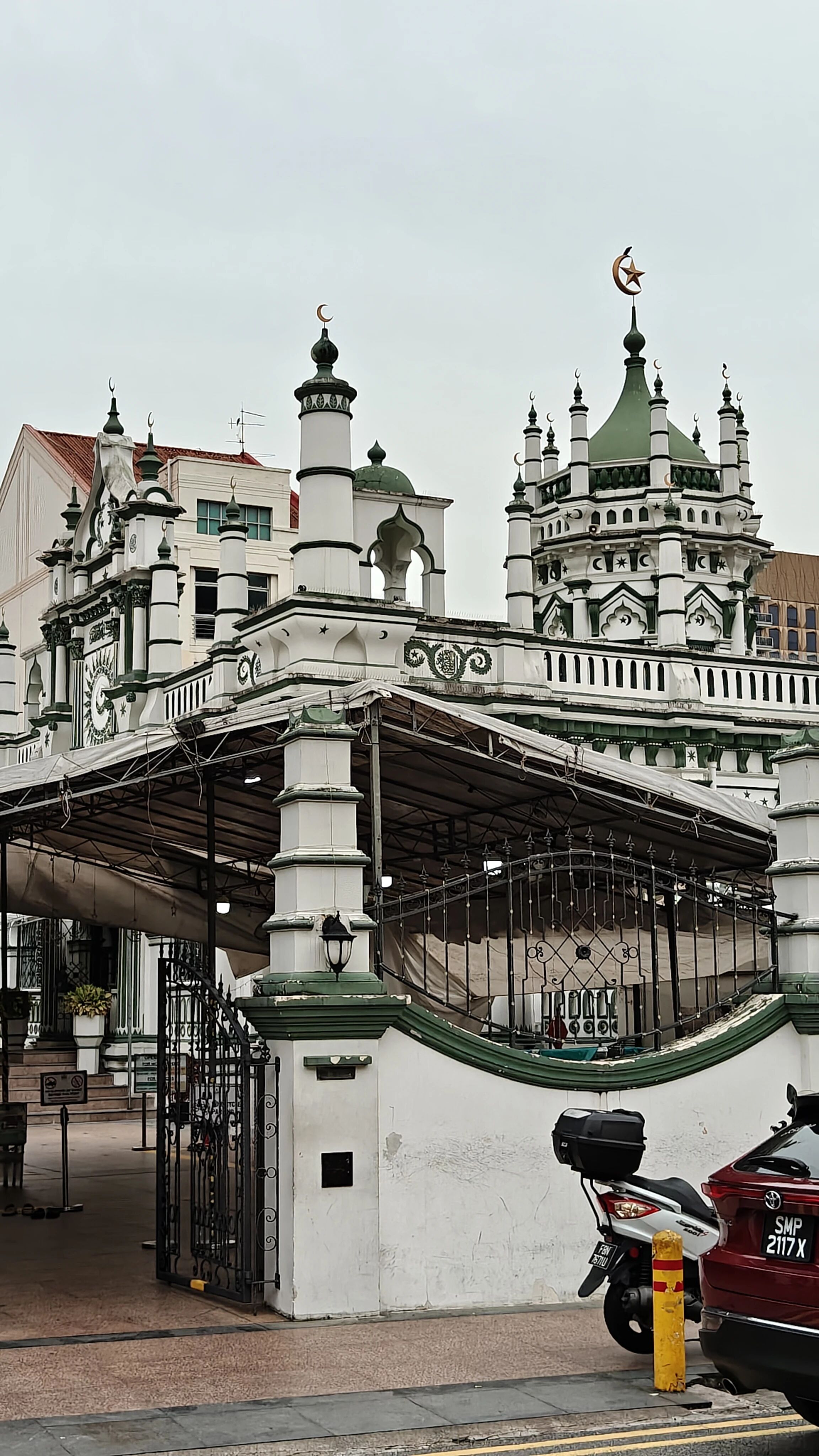
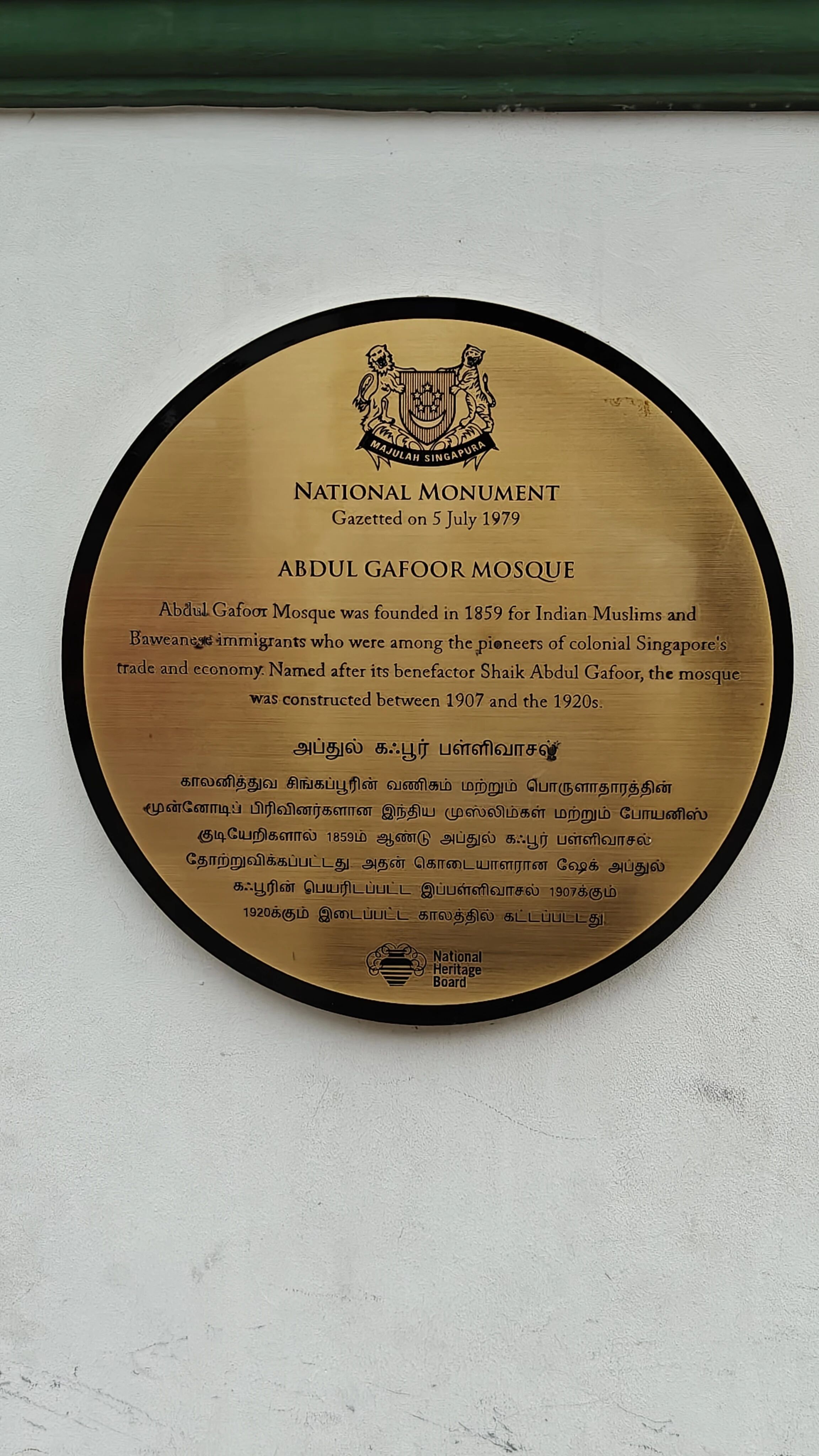
There is a mosque in the Little India neighborhood called Abdul Gafoor Mosque. The plaque at the entrance has a short introduction in both English and Tamil. This mosque was first built in 1859, and the current building was constructed between 1907 and 1920.
When I walked to the entrance, a staff member noticed me and invited me inside to show me the mosque's museum.
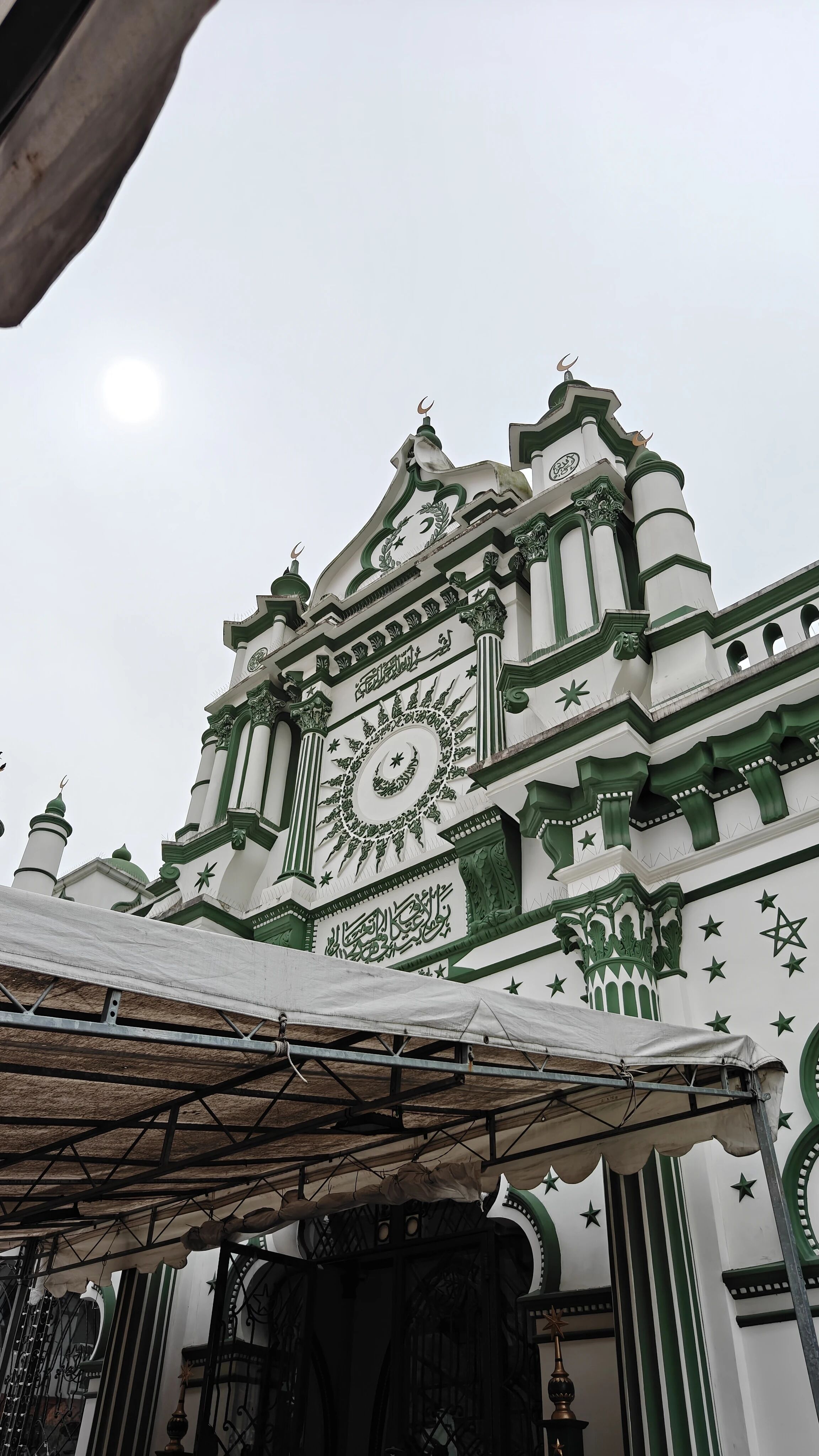
I told him I would look later, then I went to the prayer hall. Above the entrance to the prayer hall are the names of the 25 prophets mentioned in the Qur'an, including Adam (Adam), Ibrahim (Abraham), Musa (Moses), and Isa (Jesus).
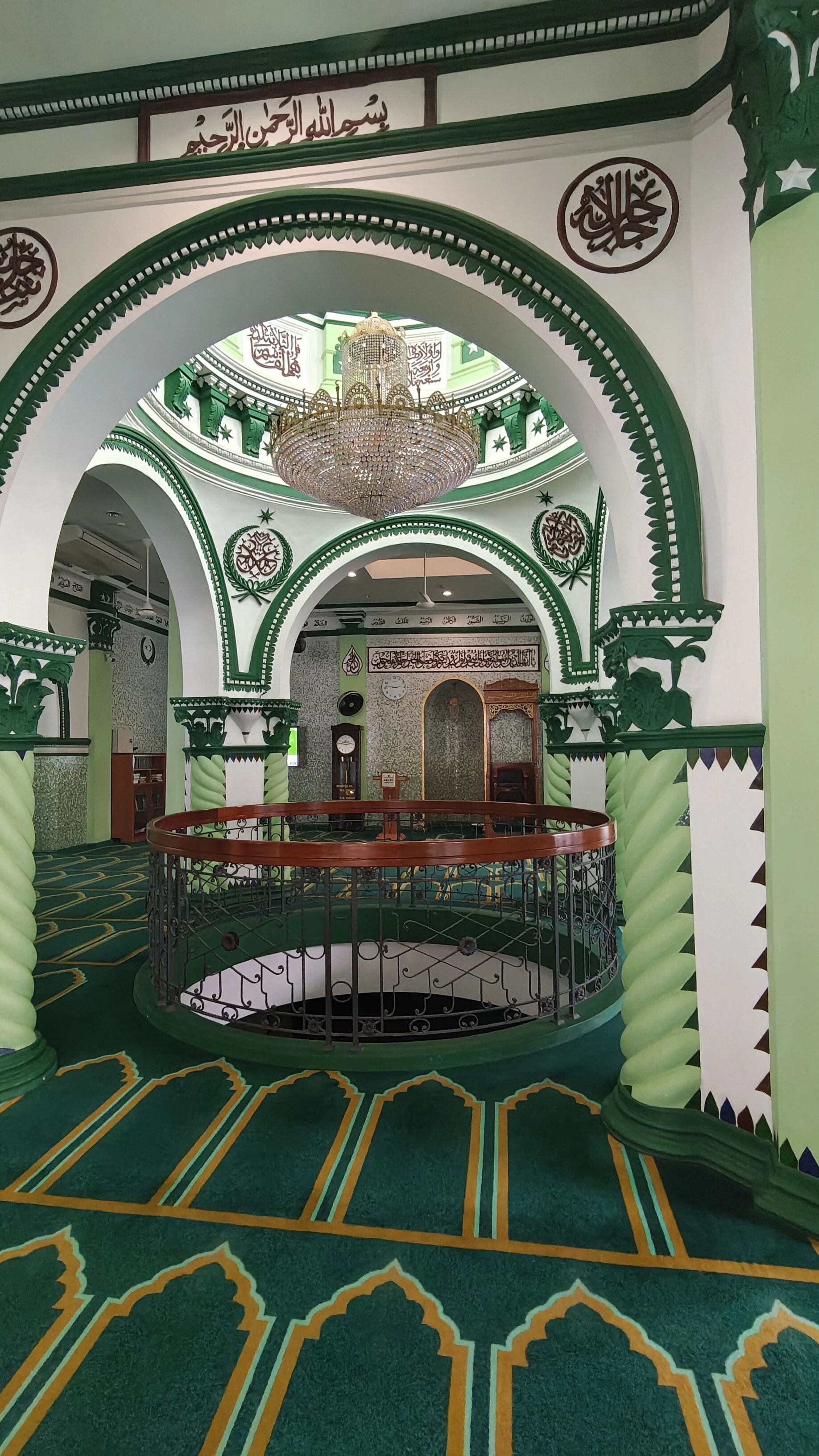
Entering the prayer hall, I noticed a skylight in the middle of the floor directly under the dome, which brings light down into the prayer area below. This is a unique feature of this mosque. (Photos 4 to 6)
Another feature is the Tamil writing found throughout the mosque, as it was built by the Tamil people. (Photo 9)
The twisted columns, which look like braided dough (mahua), are another unique feature here. (Photo 10)
I followed other visitors into the small museum inside the mosque. It details the history of the site, which started as a wooden building for immigrants before being rebuilt into its current form. (Photo 11)
There is also a miniature model of the prayer hall here (Photo 12).
One wall displays the 99 names of Allah. The front shows the Arabic original, and you can flip the tiles to see the English meaning on the back. (Photo 13)
A display case holds handwritten copies of the Qur'an and various translations, including the Chinese version by Mr. Ma Jian. (Photo 14)
Next is a newly built stone tablet carved with the Hundred-Word Eulogy written by ancient Chinese people, which you can read for yourselves. (Photo 15)
I asked the guide if he was an imam. He said he was not, as he works specifically in publicity. The guide spoke fluent English, but as a Tamil, he spoke very fast without any pauses, so I still found it a bit difficult to follow. Still, I appreciate his effort in explaining things.
Finally, let me show you the Indian style of the neighborhood. Diwali has just passed, so there are many Indian-style decorative lights here (Photo 17). You can buy Tamil newspapers at convenience stores (Photo 18), and the streets are full of Indian restaurants, posters of Indian stars, and a South Indian-style Hindu temple.
(Photo 19)
The last photo is the dessert I ordered at an Indian restaurant, jalebi (jialebei), which is a deep-fried sweet made from flour and sugar batter. Please enjoy it with me. view all
Summary: This Singapore Muslim travel guide visits Abdul Gafoor Mosque in Little India, a Tamil Muslim mosque first built in 1859, with its prayer hall, skylight design, Tamil writing, small museum, 99 names of Allah display, Qur'an manuscripts, and the Indian street life around the mosque.
Little India is the main area for the Indian community in Singapore. Besides Hindu temples, you can also find mosques built by Indians here. Many people think everyone in India is Buddhist, but the Buddhist population there is actually very small today.
Most people follow Hinduism, but India is also home to over 100 million Muslims. So, it is not strange to find mosques wherever there are people of Indian descent.
There is a mosque in the Little India neighborhood called Abdul Gafoor Mosque. The plaque at the entrance has a short introduction in both English and Tamil. This mosque was first built in 1859, and the current building was constructed between 1907 and 1920.
When I walked to the entrance, a staff member noticed me and invited me inside to show me the mosque's museum.
I told him I would look later, then I went to the prayer hall. Above the entrance to the prayer hall are the names of the 25 prophets mentioned in the Qur'an, including Adam (Adam), Ibrahim (Abraham), Musa (Moses), and Isa (Jesus).
Entering the prayer hall, I noticed a skylight in the middle of the floor directly under the dome, which brings light down into the prayer area below. This is a unique feature of this mosque. (Photos 4 to 6)
Another feature is the Tamil writing found throughout the mosque, as it was built by the Tamil people. (Photo 9)
The twisted columns, which look like braided dough (mahua), are another unique feature here. (Photo 10)
I followed other visitors into the small museum inside the mosque. It details the history of the site, which started as a wooden building for immigrants before being rebuilt into its current form. (Photo 11)
There is also a miniature model of the prayer hall here (Photo 12).
One wall displays the 99 names of Allah. The front shows the Arabic original, and you can flip the tiles to see the English meaning on the back. (Photo 13)
A display case holds handwritten copies of the Qur'an and various translations, including the Chinese version by Mr. Ma Jian. (Photo 14)
Next is a newly built stone tablet carved with the Hundred-Word Eulogy written by ancient Chinese people, which you can read for yourselves. (Photo 15)
I asked the guide if he was an imam. He said he was not, as he works specifically in publicity. The guide spoke fluent English, but as a Tamil, he spoke very fast without any pauses, so I still found it a bit difficult to follow. Still, I appreciate his effort in explaining things.
Finally, let me show you the Indian style of the neighborhood. Diwali has just passed, so there are many Indian-style decorative lights here (Photo 17). You can buy Tamil newspapers at convenience stores (Photo 18), and the streets are full of Indian restaurants, posters of Indian stars, and a South Indian-style Hindu temple.
(Photo 19)
The last photo is the dessert I ordered at an Indian restaurant, jalebi (jialebei), which is a deep-fried sweet made from flour and sugar batter. Please enjoy it with me. view all
Reposted from the web
Summary: This Singapore Muslim travel guide visits Abdul Gafoor Mosque in Little India, a Tamil Muslim mosque first built in 1859, with its prayer hall, skylight design, Tamil writing, small museum, 99 names of Allah display, Qur'an manuscripts, and the Indian street life around the mosque.
Little India is the main area for the Indian community in Singapore. Besides Hindu temples, you can also find mosques built by Indians here. Many people think everyone in India is Buddhist, but the Buddhist population there is actually very small today.
Most people follow Hinduism, but India is also home to over 100 million Muslims. So, it is not strange to find mosques wherever there are people of Indian descent.
There is a mosque in the Little India neighborhood called Abdul Gafoor Mosque. The plaque at the entrance has a short introduction in both English and Tamil. This mosque was first built in 1859, and the current building was constructed between 1907 and 1920.
When I walked to the entrance, a staff member noticed me and invited me inside to show me the mosque's museum.
I told him I would look later, then I went to the prayer hall. Above the entrance to the prayer hall are the names of the 25 prophets mentioned in the Qur'an, including Adam (Adam), Ibrahim (Abraham), Musa (Moses), and Isa (Jesus).
Entering the prayer hall, I noticed a skylight in the middle of the floor directly under the dome, which brings light down into the prayer area below. This is a unique feature of this mosque. (Photos 4 to 6)
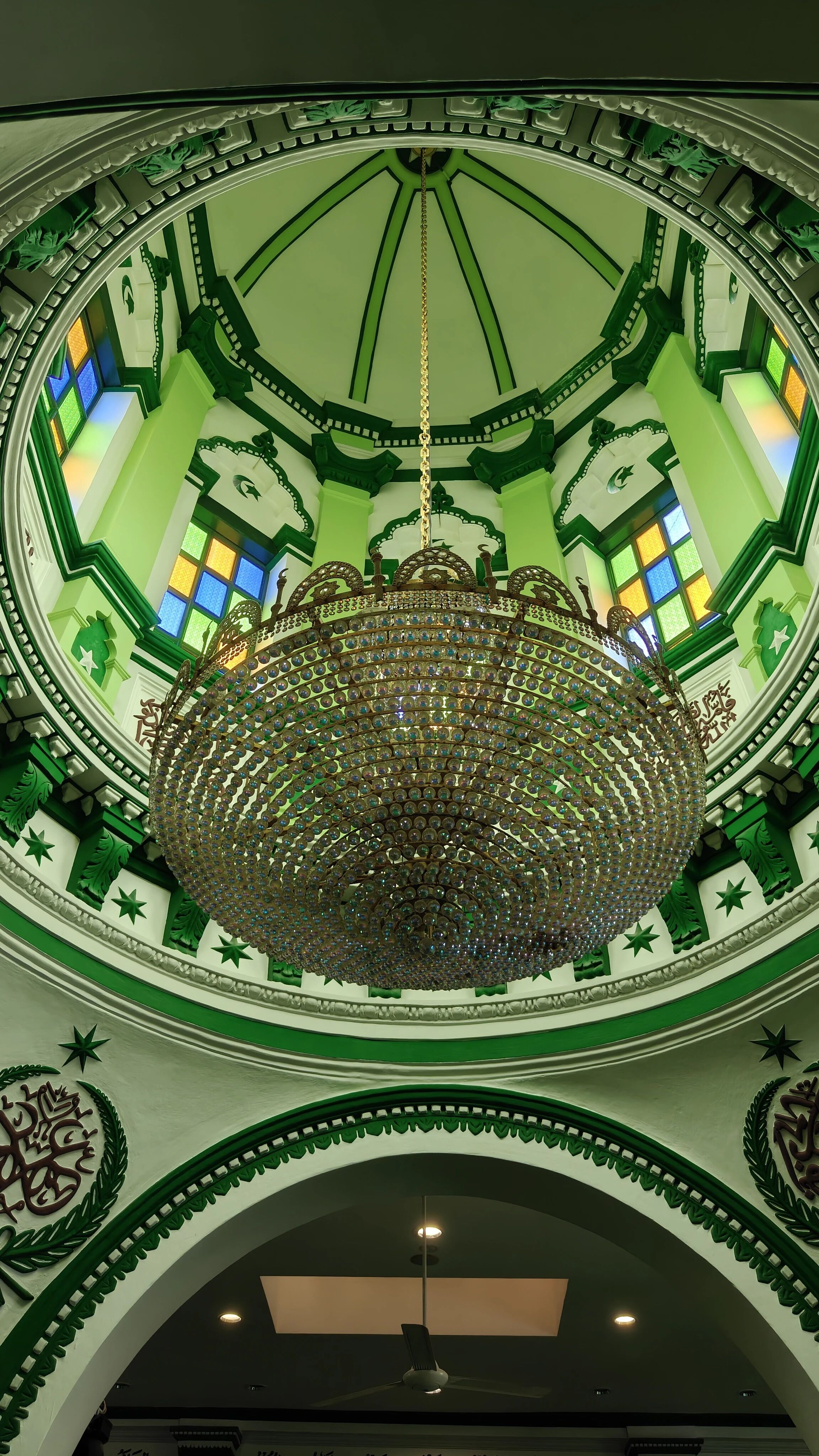
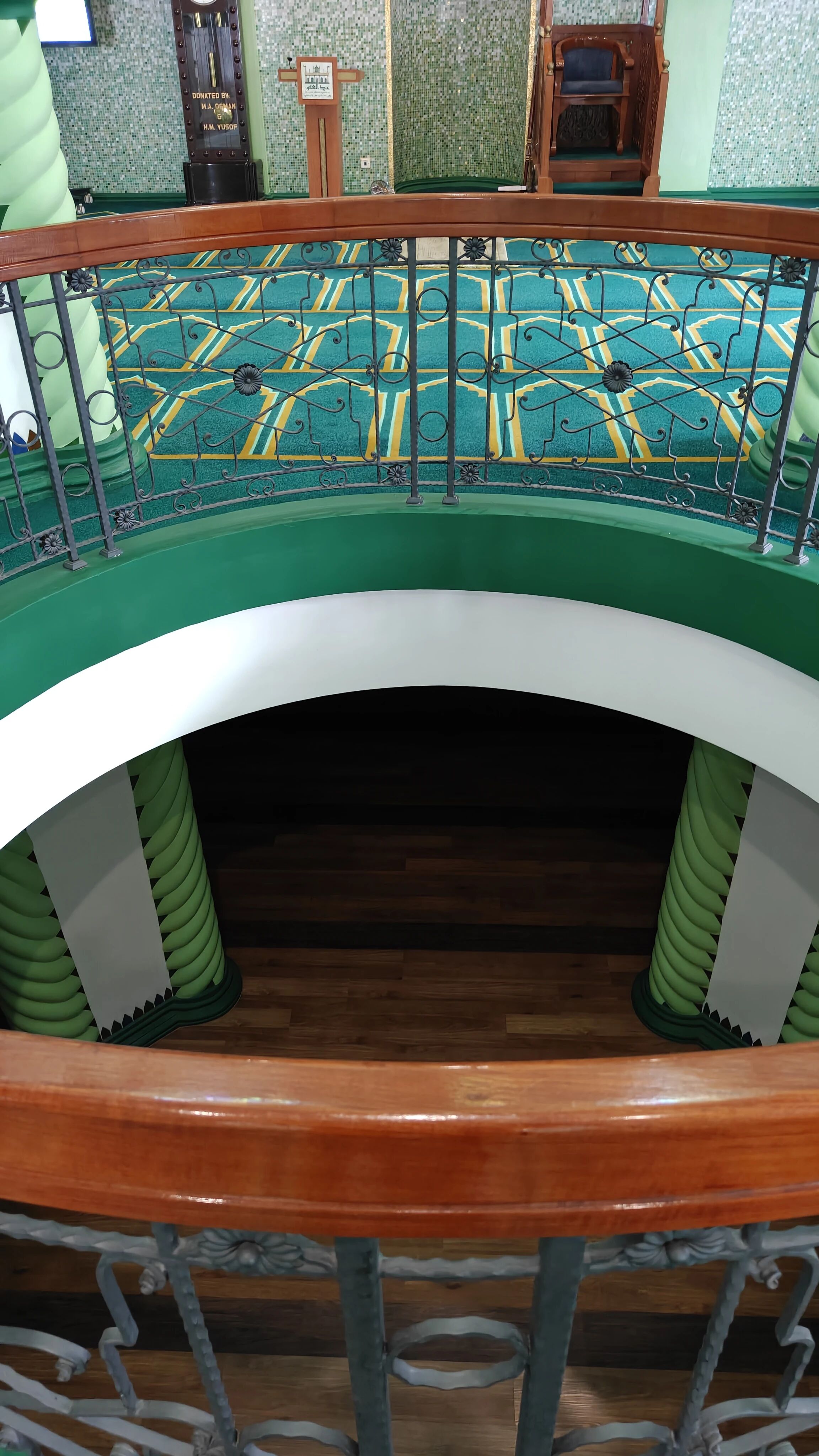
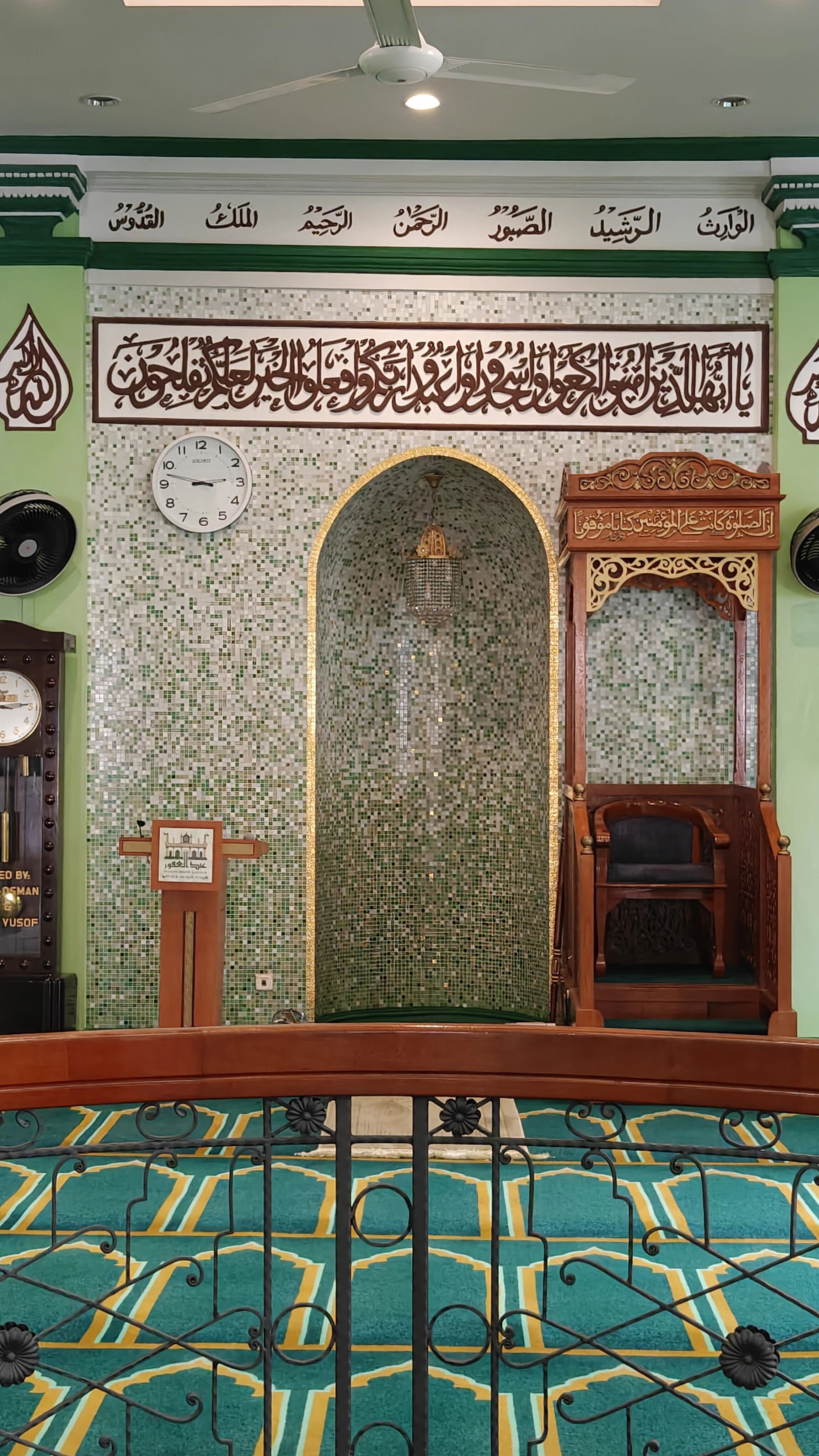
Another feature is the Tamil writing found throughout the mosque, as it was built by the Tamil people. (Photo 9)
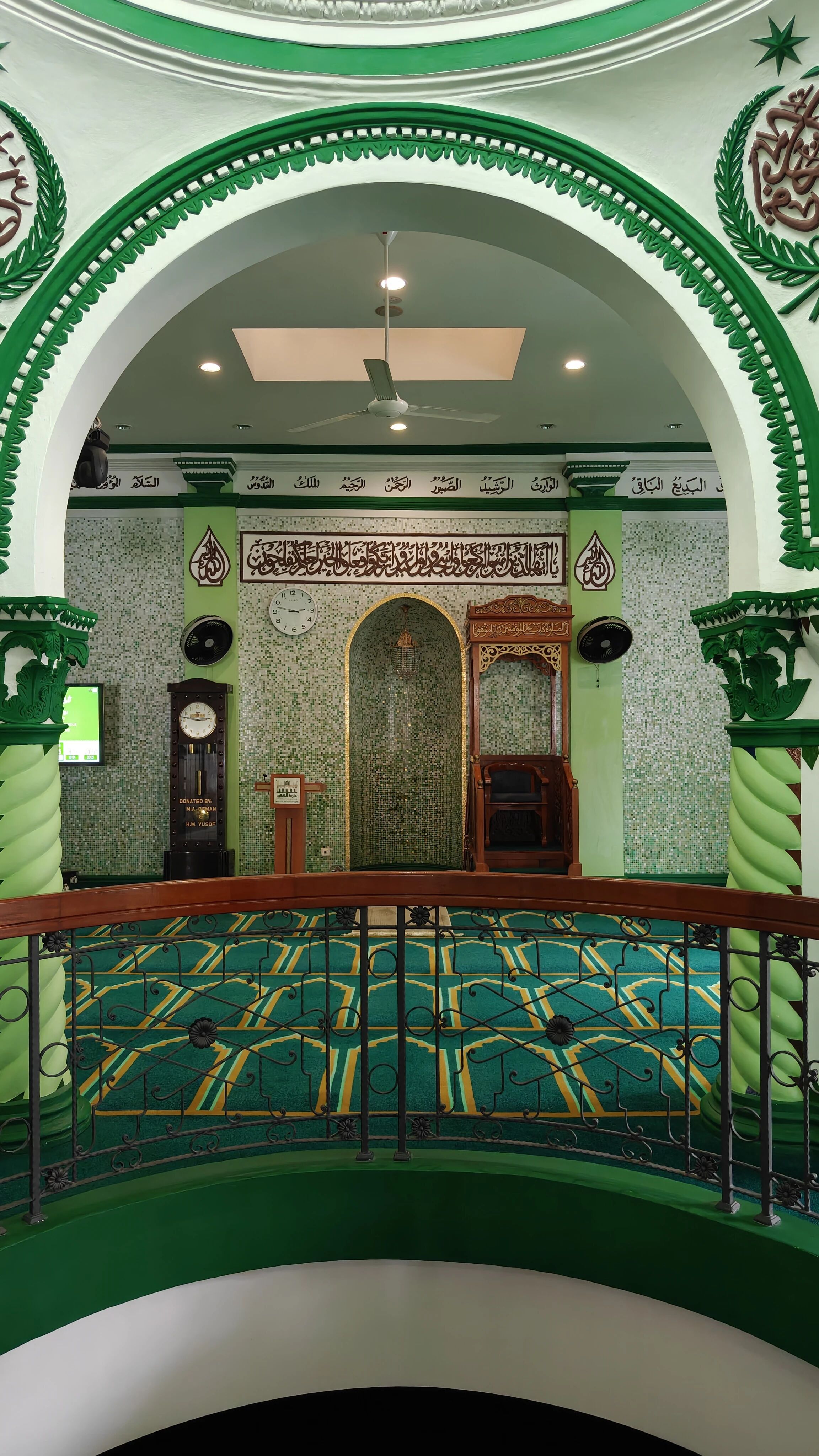
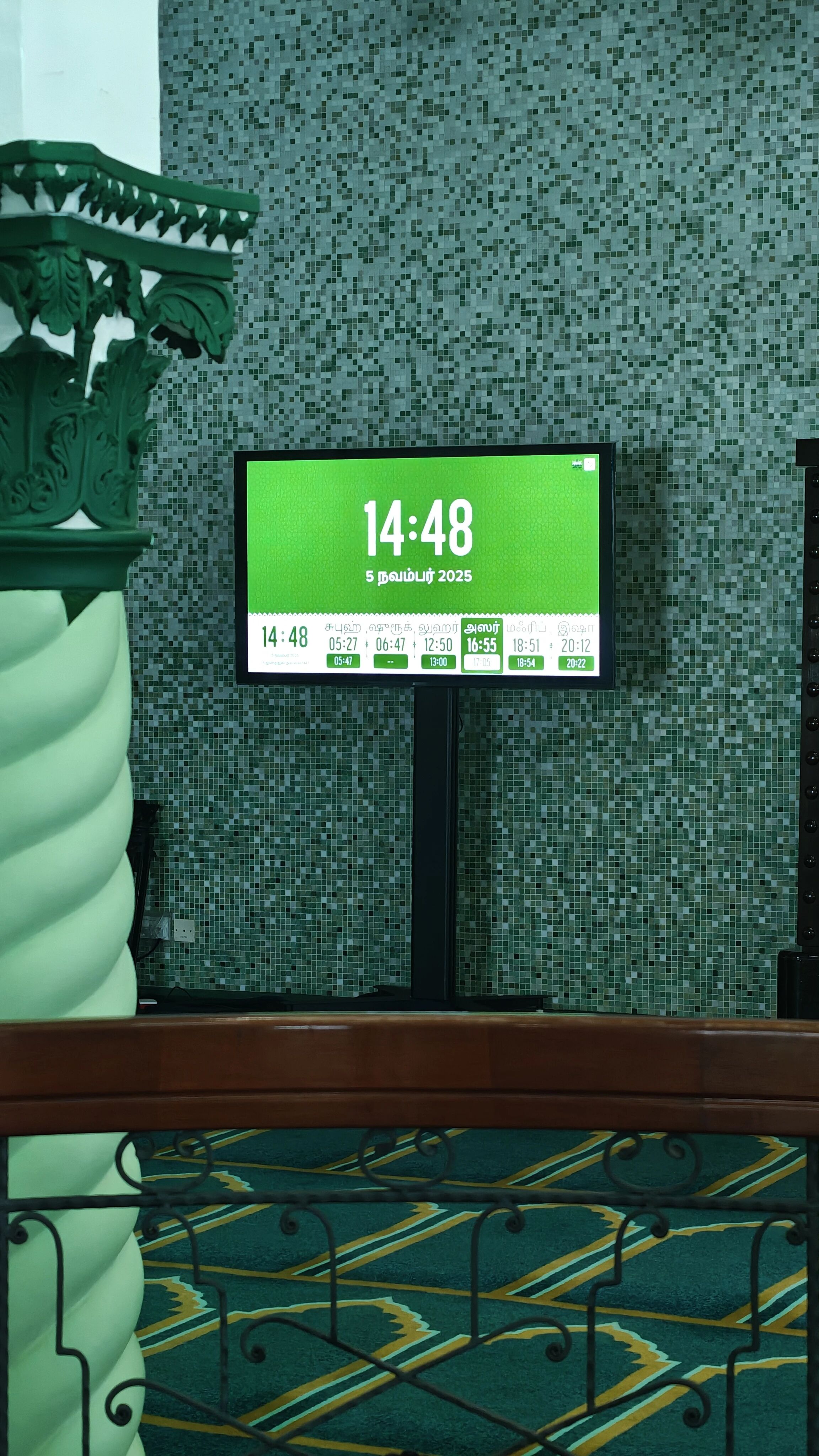
The twisted columns, which look like braided dough (mahua), are another unique feature here. (Photo 10)
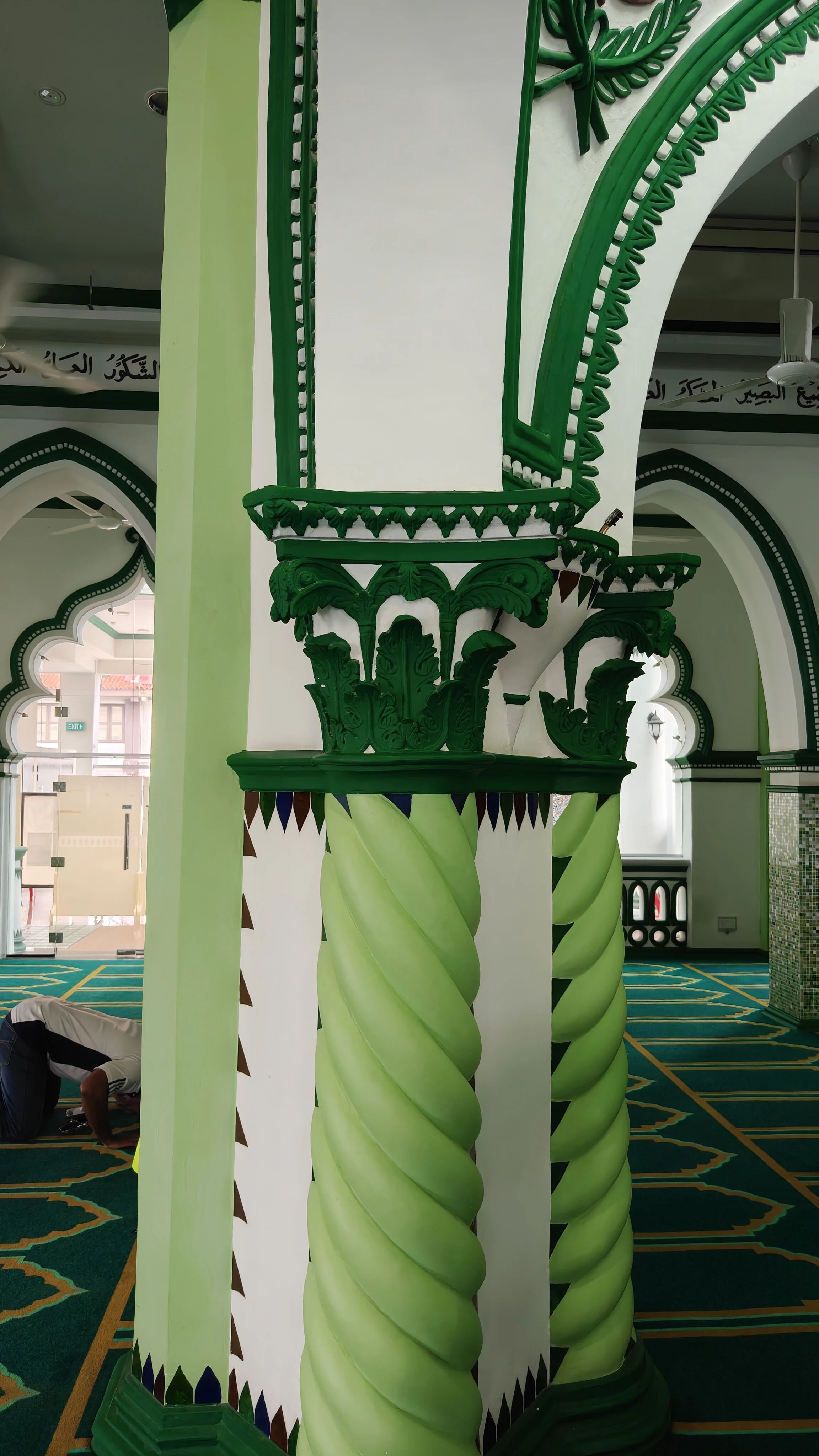
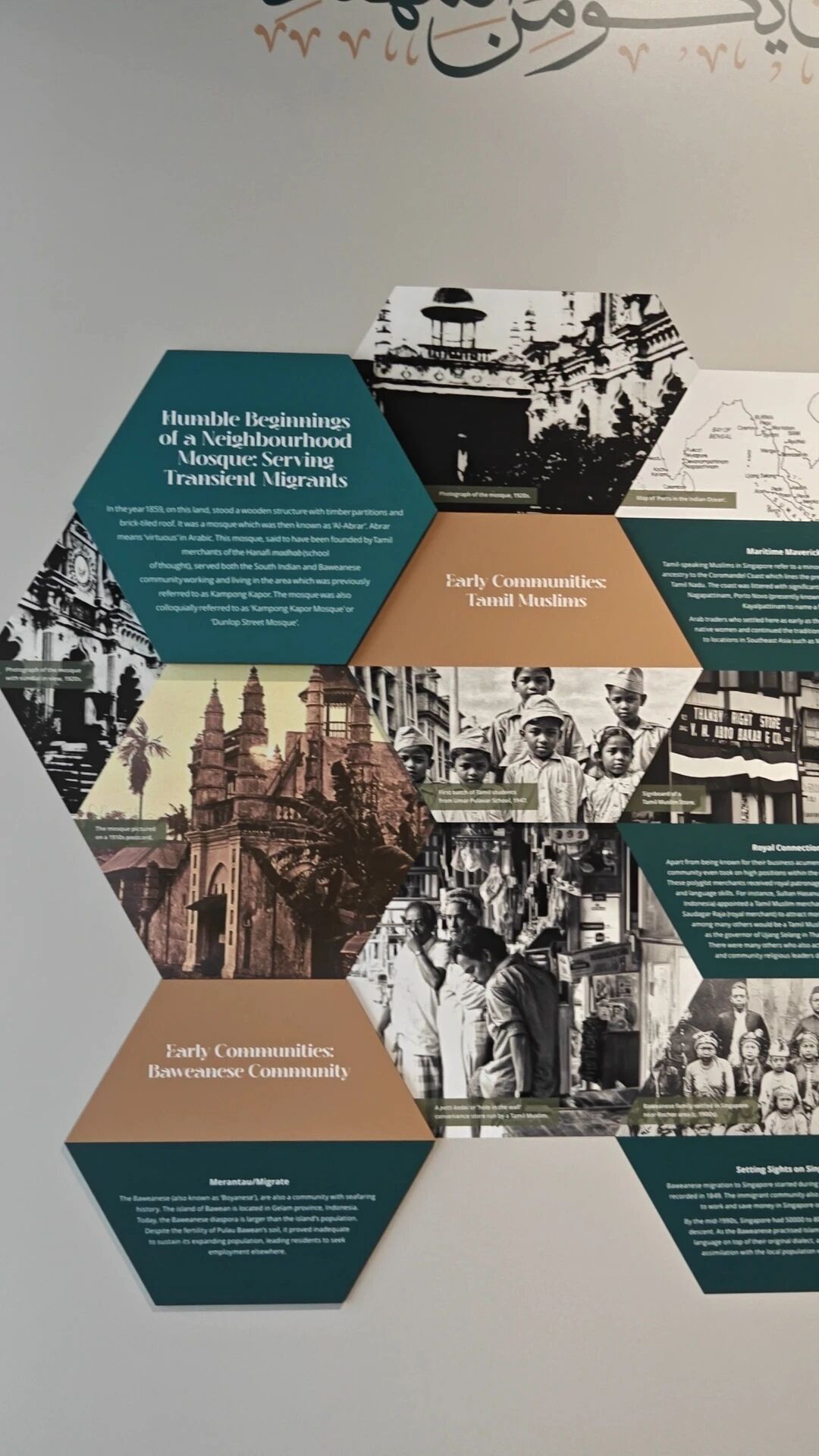
I followed other visitors into the small museum inside the mosque. It details the history of the site, which started as a wooden building for immigrants before being rebuilt into its current form. (Photo 11)
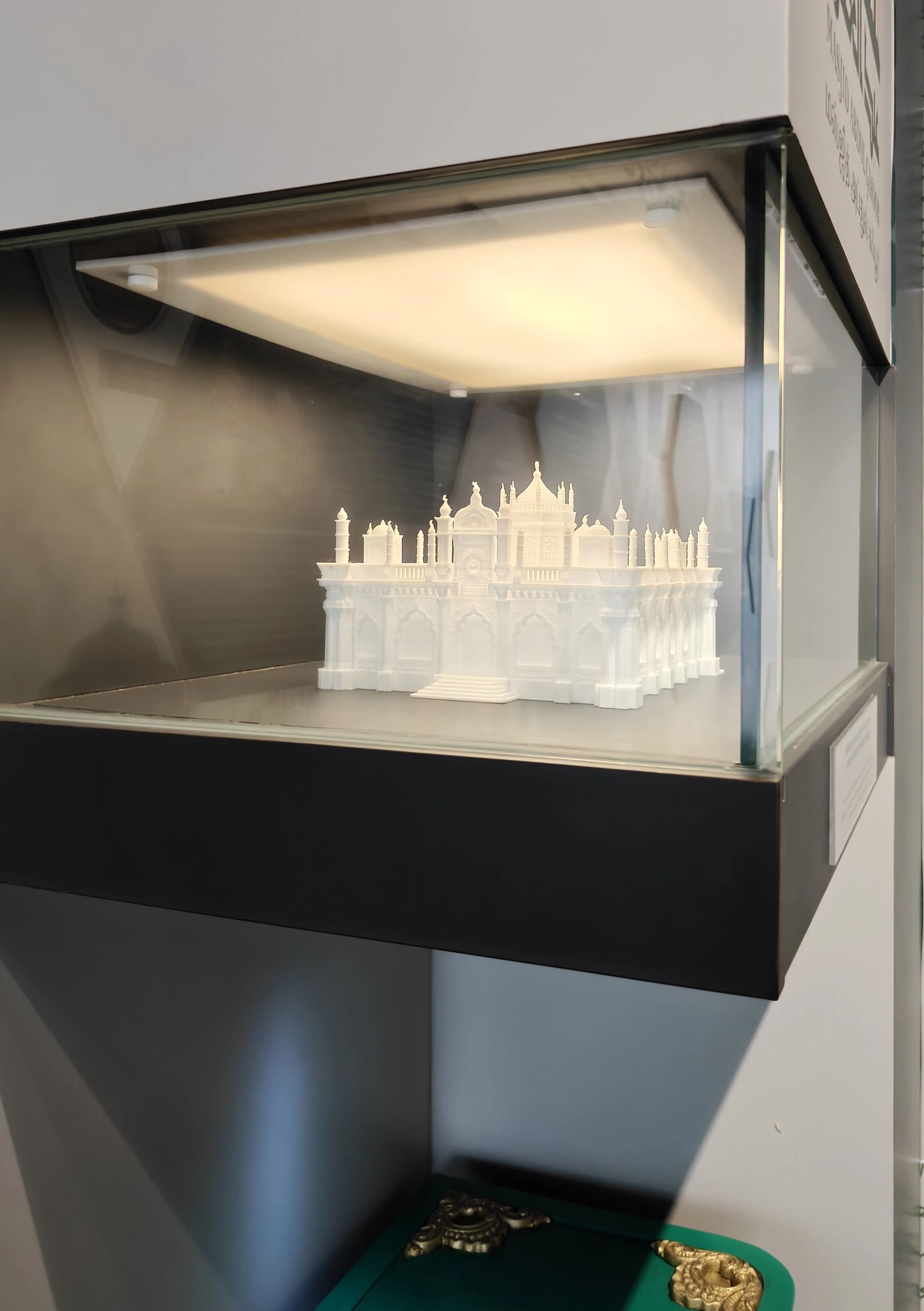
There is also a miniature model of the prayer hall here (Photo 12).
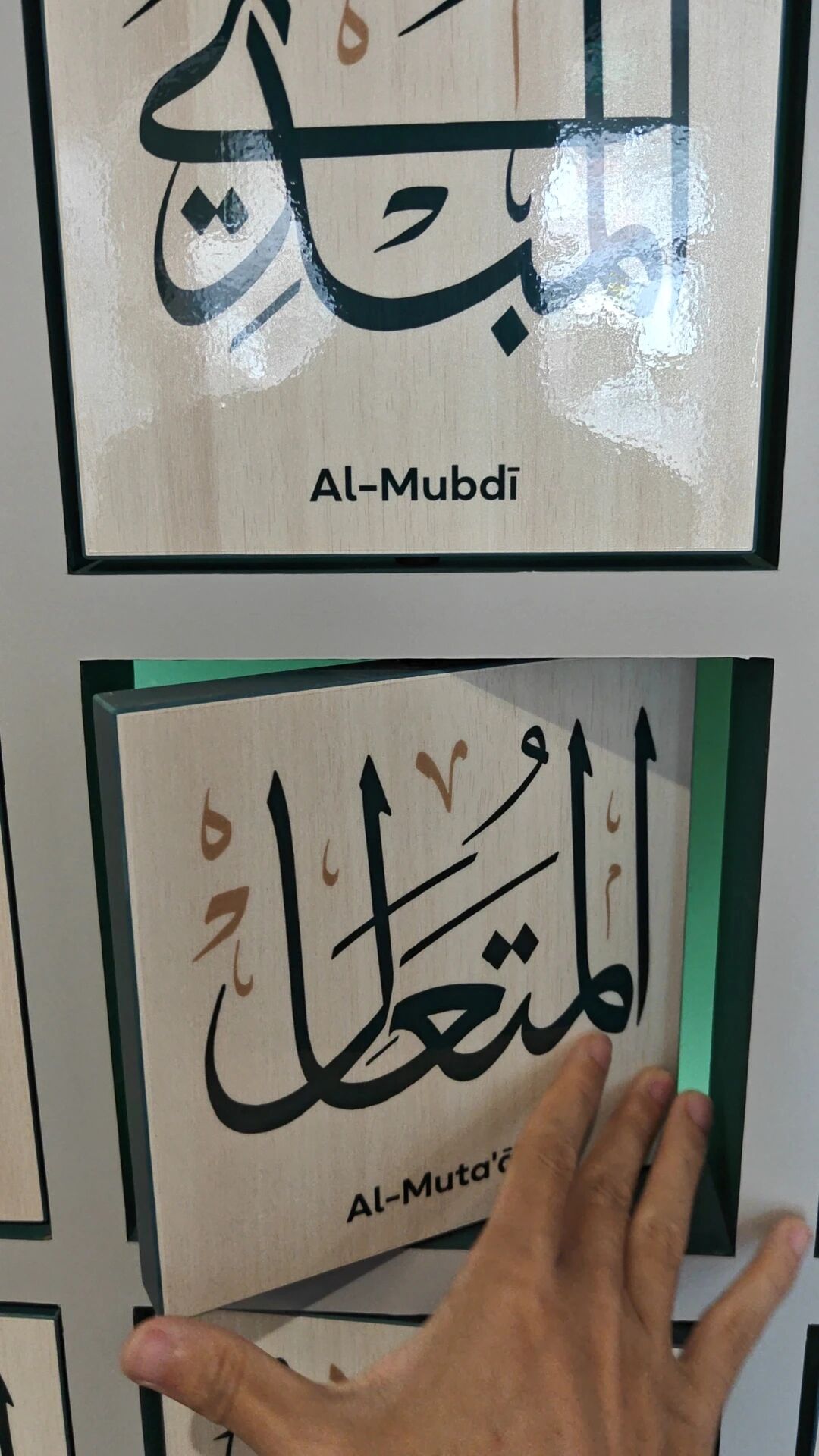
One wall displays the 99 names of Allah. The front shows the Arabic original, and you can flip the tiles to see the English meaning on the back. (Photo 13)
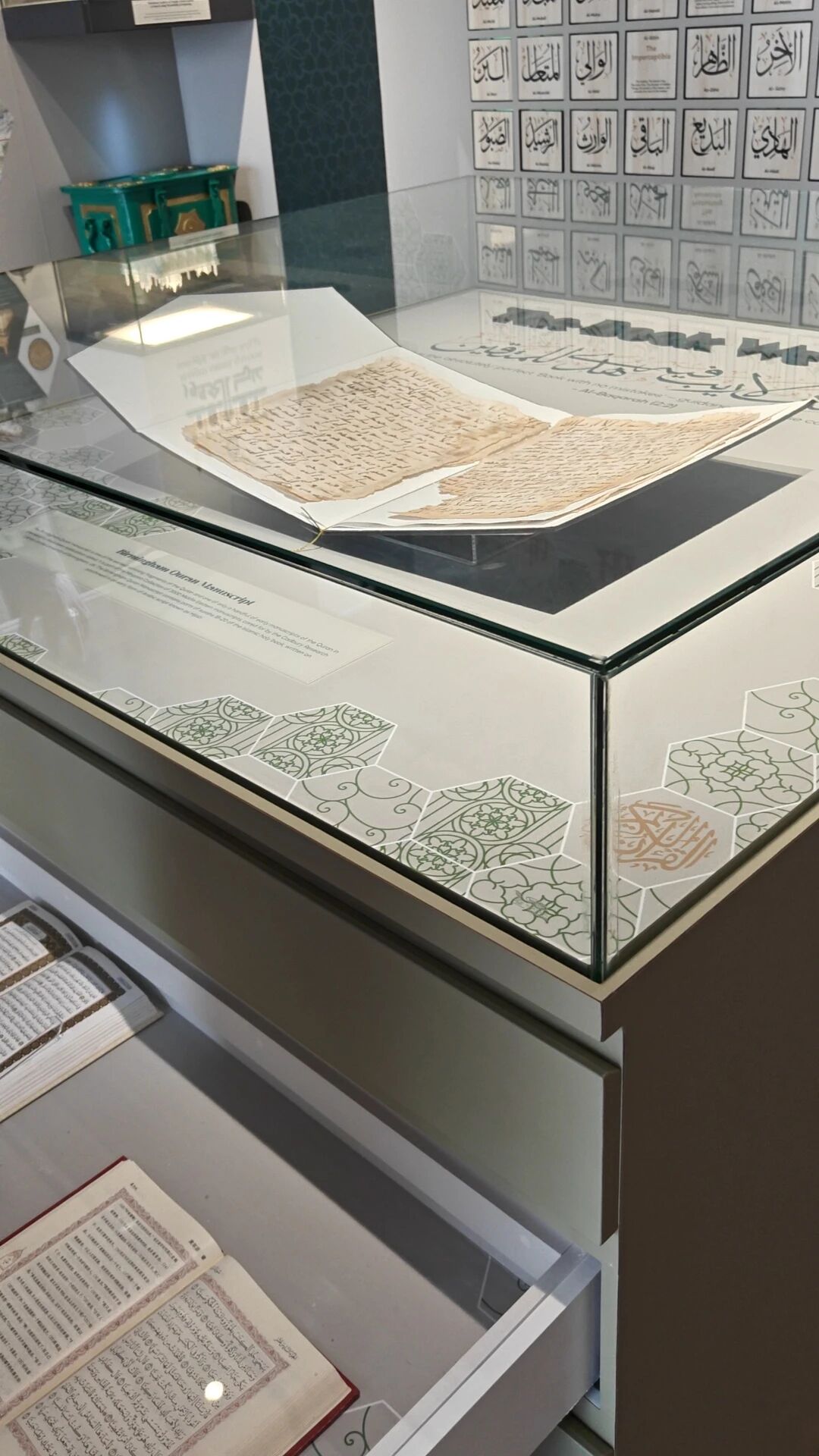
A display case holds handwritten copies of the Qur'an and various translations, including the Chinese version by Mr. Ma Jian. (Photo 14)
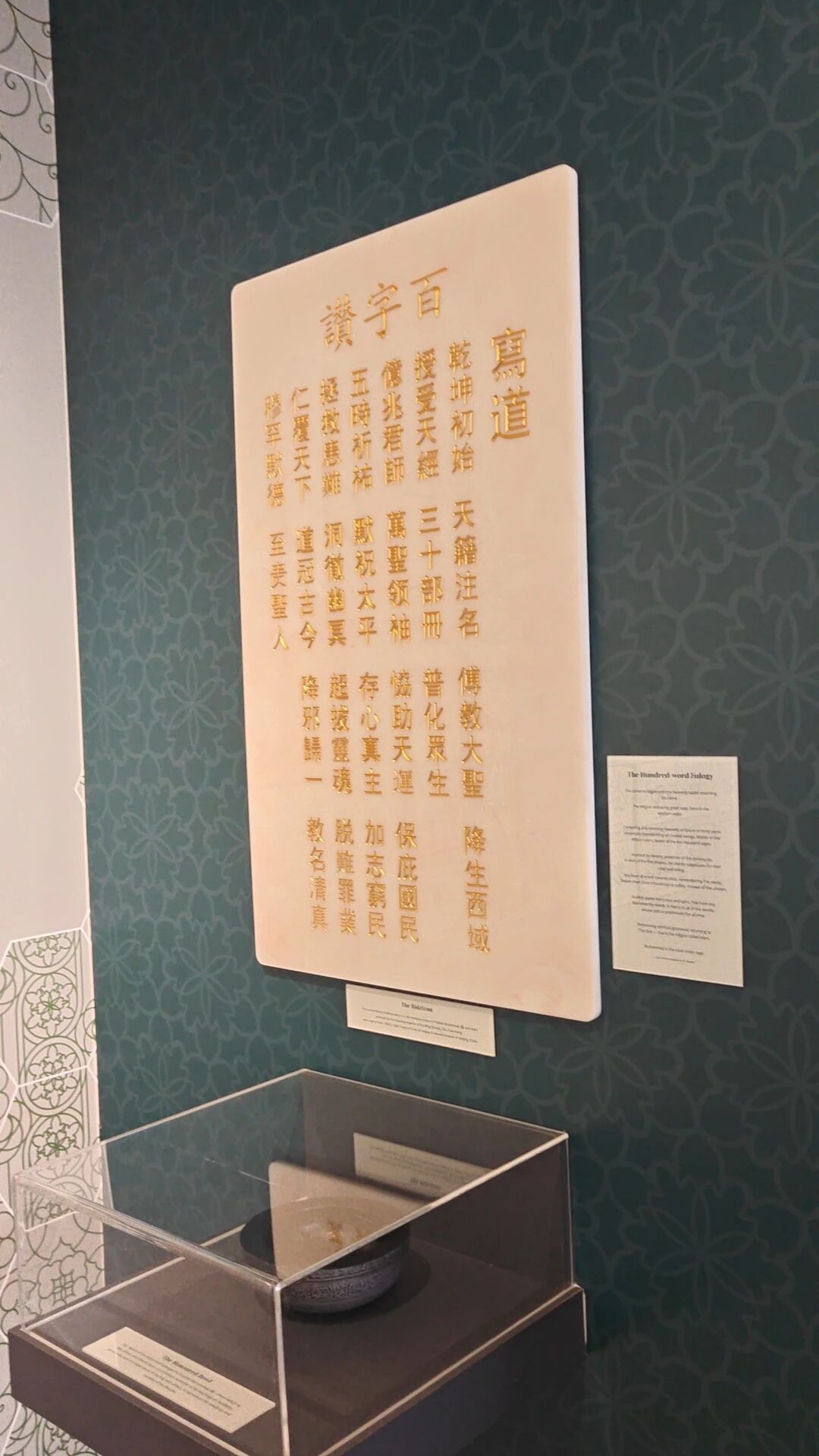
Next is a newly built stone tablet carved with the Hundred-Word Eulogy written by ancient Chinese people, which you can read for yourselves. (Photo 15)
I asked the guide if he was an imam. He said he was not, as he works specifically in publicity. The guide spoke fluent English, but as a Tamil, he spoke very fast without any pauses, so I still found it a bit difficult to follow. Still, I appreciate his effort in explaining things.
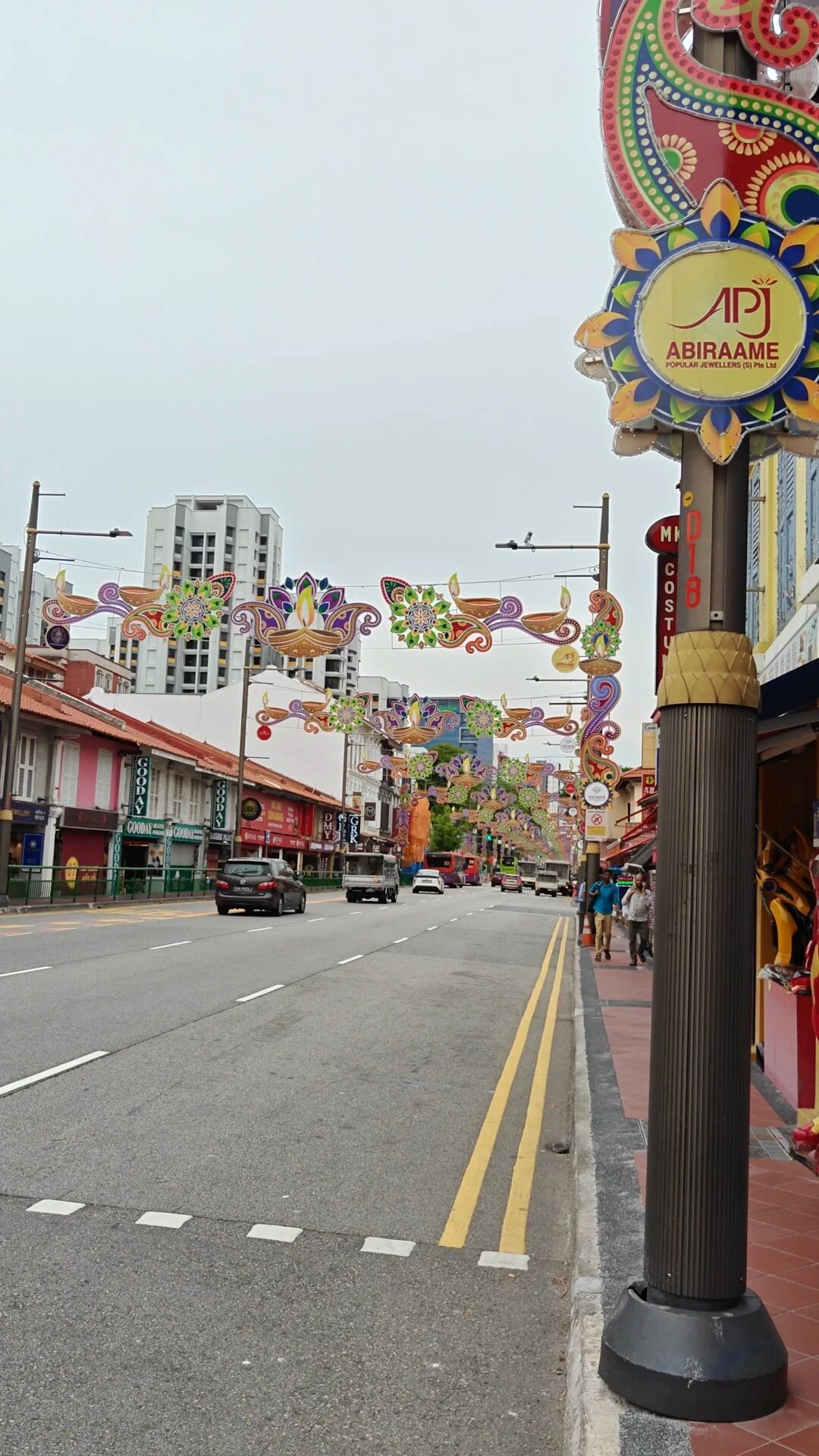
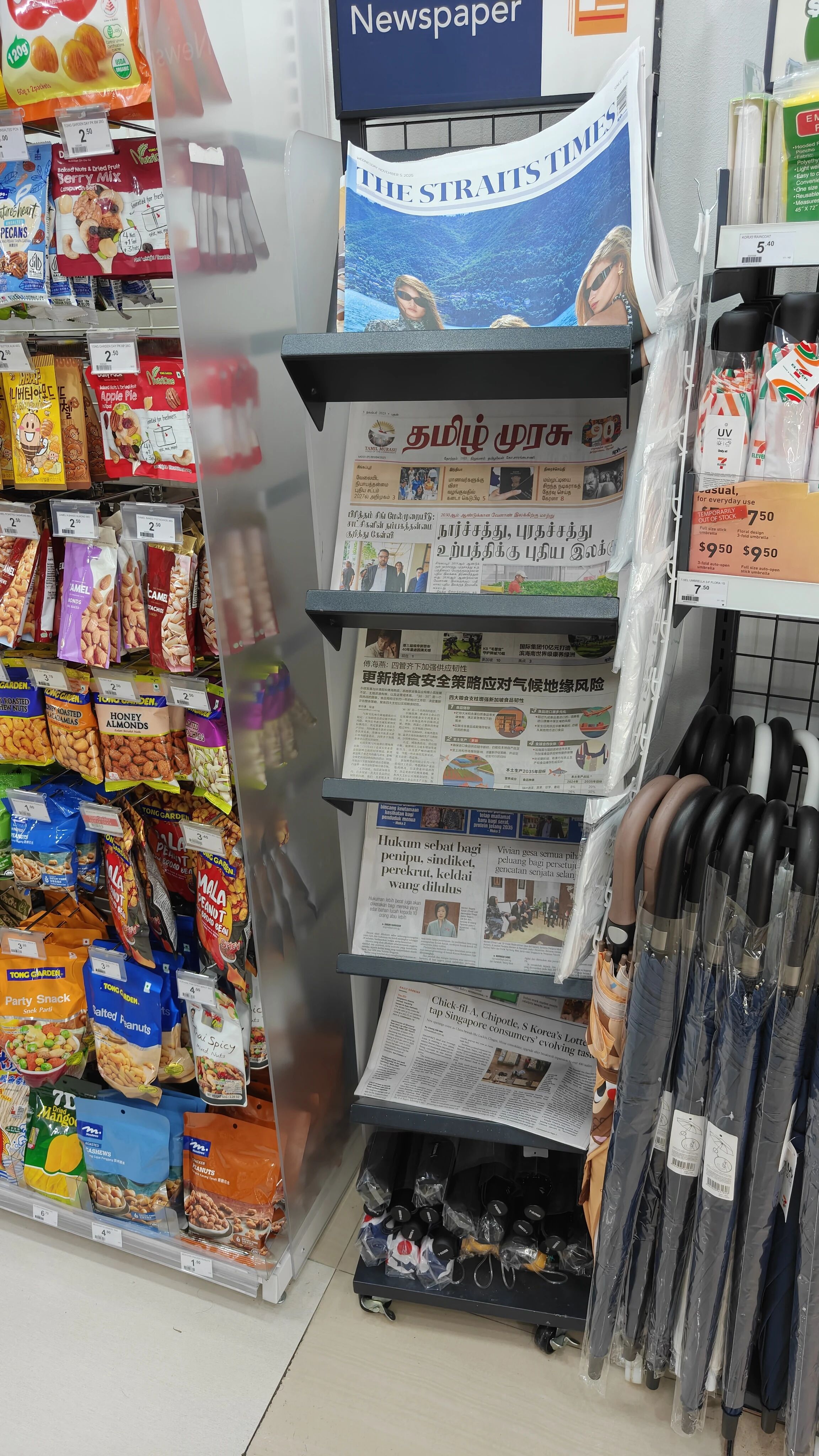
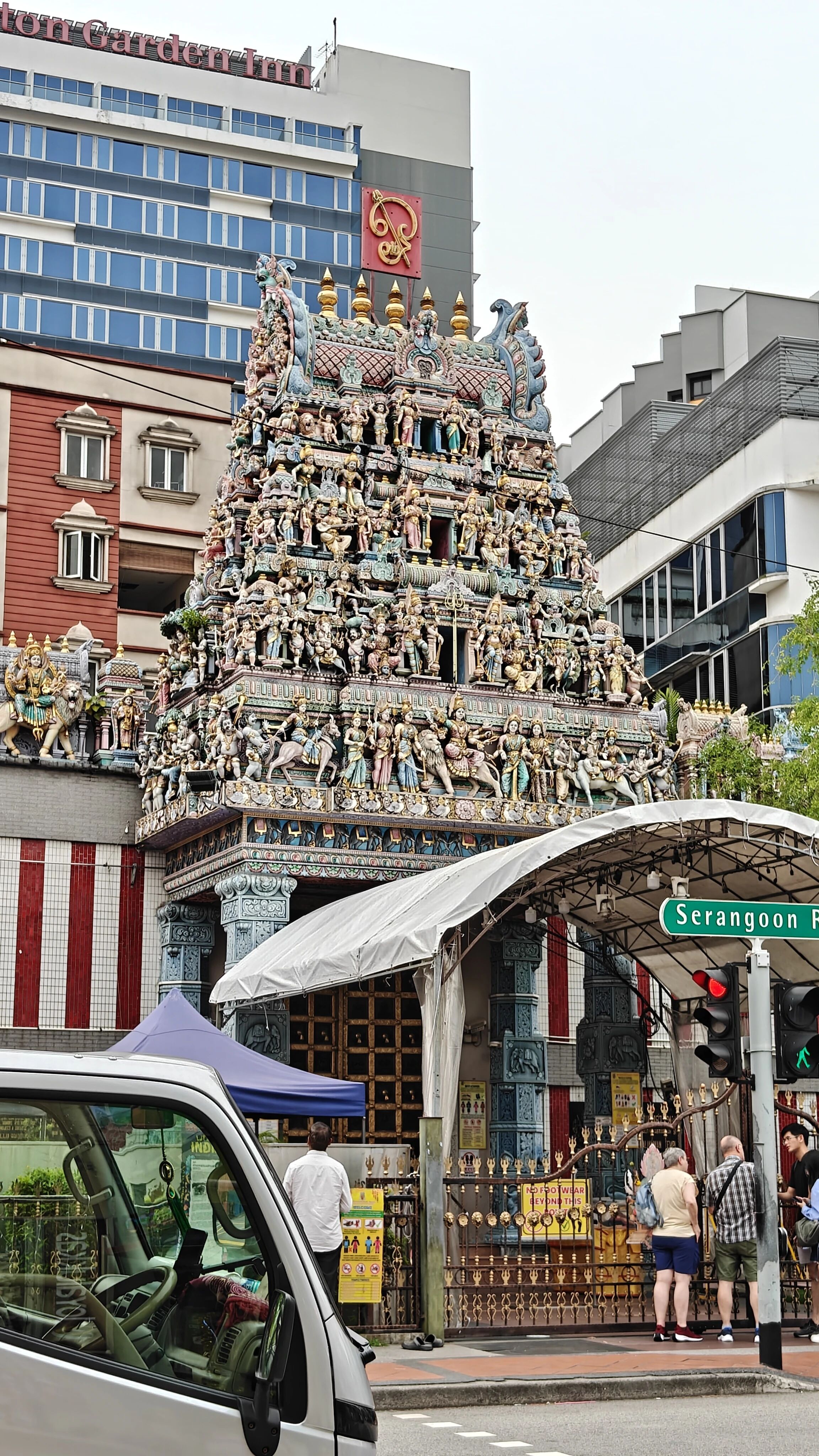
Finally, let me show you the Indian style of the neighborhood. Diwali has just passed, so there are many Indian-style decorative lights here (Photo 17). You can buy Tamil newspapers at convenience stores (Photo 18), and the streets are full of Indian restaurants, posters of Indian stars, and a South Indian-style Hindu temple.
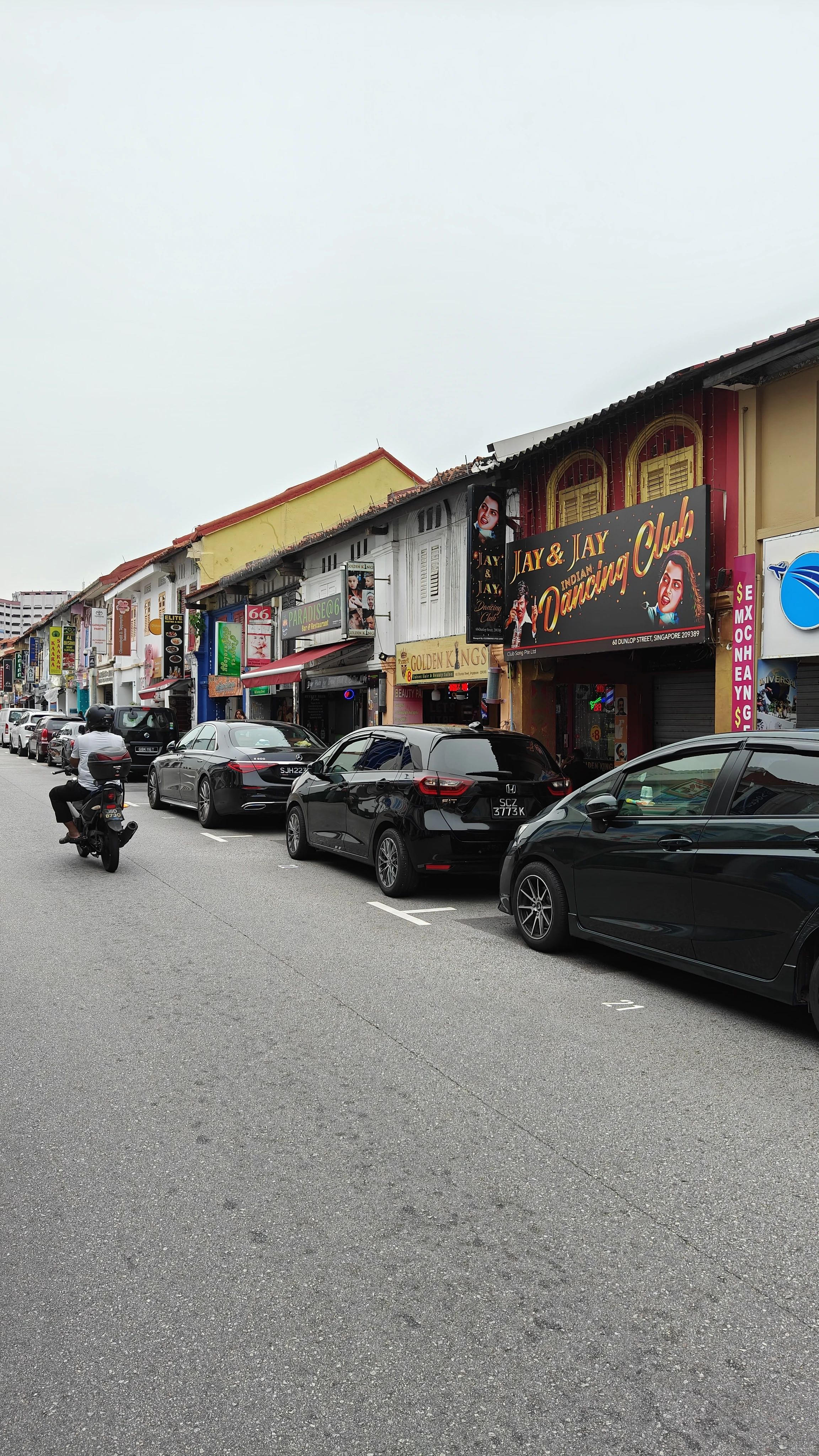
(Photo 19)
The last photo is the dessert I ordered at an Indian restaurant, jalebi (jialebei), which is a deep-fried sweet made from flour and sugar batter. Please enjoy it with me.

Summary: This Singapore Muslim travel guide visits Abdul Gafoor Mosque in Little India, a Tamil Muslim mosque first built in 1859, with its prayer hall, skylight design, Tamil writing, small museum, 99 names of Allah display, Qur'an manuscripts, and the Indian street life around the mosque.
Little India is the main area for the Indian community in Singapore. Besides Hindu temples, you can also find mosques built by Indians here. Many people think everyone in India is Buddhist, but the Buddhist population there is actually very small today.
Most people follow Hinduism, but India is also home to over 100 million Muslims. So, it is not strange to find mosques wherever there are people of Indian descent.
There is a mosque in the Little India neighborhood called Abdul Gafoor Mosque. The plaque at the entrance has a short introduction in both English and Tamil. This mosque was first built in 1859, and the current building was constructed between 1907 and 1920.
When I walked to the entrance, a staff member noticed me and invited me inside to show me the mosque's museum.
I told him I would look later, then I went to the prayer hall. Above the entrance to the prayer hall are the names of the 25 prophets mentioned in the Qur'an, including Adam (Adam), Ibrahim (Abraham), Musa (Moses), and Isa (Jesus).
Entering the prayer hall, I noticed a skylight in the middle of the floor directly under the dome, which brings light down into the prayer area below. This is a unique feature of this mosque. (Photos 4 to 6)
Another feature is the Tamil writing found throughout the mosque, as it was built by the Tamil people. (Photo 9)
The twisted columns, which look like braided dough (mahua), are another unique feature here. (Photo 10)
I followed other visitors into the small museum inside the mosque. It details the history of the site, which started as a wooden building for immigrants before being rebuilt into its current form. (Photo 11)
There is also a miniature model of the prayer hall here (Photo 12).
One wall displays the 99 names of Allah. The front shows the Arabic original, and you can flip the tiles to see the English meaning on the back. (Photo 13)
A display case holds handwritten copies of the Qur'an and various translations, including the Chinese version by Mr. Ma Jian. (Photo 14)
Next is a newly built stone tablet carved with the Hundred-Word Eulogy written by ancient Chinese people, which you can read for yourselves. (Photo 15)
I asked the guide if he was an imam. He said he was not, as he works specifically in publicity. The guide spoke fluent English, but as a Tamil, he spoke very fast without any pauses, so I still found it a bit difficult to follow. Still, I appreciate his effort in explaining things.
Finally, let me show you the Indian style of the neighborhood. Diwali has just passed, so there are many Indian-style decorative lights here (Photo 17). You can buy Tamil newspapers at convenience stores (Photo 18), and the streets are full of Indian restaurants, posters of Indian stars, and a South Indian-style Hindu temple.
(Photo 19)
The last photo is the dessert I ordered at an Indian restaurant, jalebi (jialebei), which is a deep-fried sweet made from flour and sugar batter. Please enjoy it with me.
Muslim Travel Guide Singapore Little India: Abdul Gafoor Mosque, Tamil Muslim Heritage and Prayer Hall
Articles • yusuf908 posted the article • 0 comments • 166 views • 2026-05-23 22:47
Reposted from the web
Summary: This Singapore Muslim travel guide visits Abdul Gafoor Mosque in Little India, a Tamil Muslim mosque first built in 1859, with its prayer hall, skylight design, Tamil writing, small museum, 99 names of Allah display, Qur'an manuscripts, and the Indian street life around the mosque.
Little India is the main area for the Indian community in Singapore. Besides Hindu temples, you can also find mosques built by Indians here. Many people think everyone in India is Buddhist, but the Buddhist population there is actually very small today.
Most people follow Hinduism, but India is also home to over 100 million Muslims. So, it is not strange to find mosques wherever there are people of Indian descent.
There is a mosque in the Little India neighborhood called Abdul Gafoor Mosque. The plaque at the entrance has a short introduction in both English and Tamil. This mosque was first built in 1859, and the current building was constructed between 1907 and 1920.
When I walked to the entrance, a staff member noticed me and invited me inside to show me the mosque's museum.
I told him I would look later, then I went to the prayer hall. Above the entrance to the prayer hall are the names of the 25 prophets mentioned in the Qur'an, including Adam (Adam), Ibrahim (Abraham), Musa (Moses), and Isa (Jesus).
Entering the prayer hall, I noticed a skylight in the middle of the floor directly under the dome, which brings light down into the prayer area below. This is a unique feature of this mosque. (Photos 4 to 6)
Another feature is the Tamil writing found throughout the mosque, as it was built by the Tamil people. (Photo 9)
The twisted columns, which look like braided dough (mahua), are another unique feature here. (Photo 10)
I followed other visitors into the small museum inside the mosque. It details the history of the site, which started as a wooden building for immigrants before being rebuilt into its current form. (Photo 11)
There is also a miniature model of the prayer hall here (Photo 12).
One wall displays the 99 names of Allah. The front shows the Arabic original, and you can flip the tiles to see the English meaning on the back. (Photo 13)
A display case holds handwritten copies of the Qur'an and various translations, including the Chinese version by Mr. Ma Jian. (Photo 14)
Next is a newly built stone tablet carved with the Hundred-Word Eulogy written by ancient Chinese people, which you can read for yourselves. (Photo 15)
I asked the guide if he was an imam. He said he was not, as he works specifically in publicity. The guide spoke fluent English, but as a Tamil, he spoke very fast without any pauses, so I still found it a bit difficult to follow. Still, I appreciate his effort in explaining things.
Finally, let me show you the Indian style of the neighborhood. Diwali has just passed, so there are many Indian-style decorative lights here (Photo 17). You can buy Tamil newspapers at convenience stores (Photo 18), and the streets are full of Indian restaurants, posters of Indian stars, and a South Indian-style Hindu temple.
(Photo 19)
The last photo is the dessert I ordered at an Indian restaurant, jalebi (jialebei), which is a deep-fried sweet made from flour and sugar batter. Please enjoy it with me. view all
Summary: This Singapore Muslim travel guide visits Abdul Gafoor Mosque in Little India, a Tamil Muslim mosque first built in 1859, with its prayer hall, skylight design, Tamil writing, small museum, 99 names of Allah display, Qur'an manuscripts, and the Indian street life around the mosque.
Little India is the main area for the Indian community in Singapore. Besides Hindu temples, you can also find mosques built by Indians here. Many people think everyone in India is Buddhist, but the Buddhist population there is actually very small today.
Most people follow Hinduism, but India is also home to over 100 million Muslims. So, it is not strange to find mosques wherever there are people of Indian descent.
There is a mosque in the Little India neighborhood called Abdul Gafoor Mosque. The plaque at the entrance has a short introduction in both English and Tamil. This mosque was first built in 1859, and the current building was constructed between 1907 and 1920.
When I walked to the entrance, a staff member noticed me and invited me inside to show me the mosque's museum.
I told him I would look later, then I went to the prayer hall. Above the entrance to the prayer hall are the names of the 25 prophets mentioned in the Qur'an, including Adam (Adam), Ibrahim (Abraham), Musa (Moses), and Isa (Jesus).
Entering the prayer hall, I noticed a skylight in the middle of the floor directly under the dome, which brings light down into the prayer area below. This is a unique feature of this mosque. (Photos 4 to 6)
Another feature is the Tamil writing found throughout the mosque, as it was built by the Tamil people. (Photo 9)
The twisted columns, which look like braided dough (mahua), are another unique feature here. (Photo 10)
I followed other visitors into the small museum inside the mosque. It details the history of the site, which started as a wooden building for immigrants before being rebuilt into its current form. (Photo 11)
There is also a miniature model of the prayer hall here (Photo 12).
One wall displays the 99 names of Allah. The front shows the Arabic original, and you can flip the tiles to see the English meaning on the back. (Photo 13)
A display case holds handwritten copies of the Qur'an and various translations, including the Chinese version by Mr. Ma Jian. (Photo 14)
Next is a newly built stone tablet carved with the Hundred-Word Eulogy written by ancient Chinese people, which you can read for yourselves. (Photo 15)
I asked the guide if he was an imam. He said he was not, as he works specifically in publicity. The guide spoke fluent English, but as a Tamil, he spoke very fast without any pauses, so I still found it a bit difficult to follow. Still, I appreciate his effort in explaining things.
Finally, let me show you the Indian style of the neighborhood. Diwali has just passed, so there are many Indian-style decorative lights here (Photo 17). You can buy Tamil newspapers at convenience stores (Photo 18), and the streets are full of Indian restaurants, posters of Indian stars, and a South Indian-style Hindu temple.
(Photo 19)
The last photo is the dessert I ordered at an Indian restaurant, jalebi (jialebei), which is a deep-fried sweet made from flour and sugar batter. Please enjoy it with me. view all
Reposted from the web
Summary: This Singapore Muslim travel guide visits Abdul Gafoor Mosque in Little India, a Tamil Muslim mosque first built in 1859, with its prayer hall, skylight design, Tamil writing, small museum, 99 names of Allah display, Qur'an manuscripts, and the Indian street life around the mosque.
Little India is the main area for the Indian community in Singapore. Besides Hindu temples, you can also find mosques built by Indians here. Many people think everyone in India is Buddhist, but the Buddhist population there is actually very small today.
Most people follow Hinduism, but India is also home to over 100 million Muslims. So, it is not strange to find mosques wherever there are people of Indian descent.
There is a mosque in the Little India neighborhood called Abdul Gafoor Mosque. The plaque at the entrance has a short introduction in both English and Tamil. This mosque was first built in 1859, and the current building was constructed between 1907 and 1920.
When I walked to the entrance, a staff member noticed me and invited me inside to show me the mosque's museum.
I told him I would look later, then I went to the prayer hall. Above the entrance to the prayer hall are the names of the 25 prophets mentioned in the Qur'an, including Adam (Adam), Ibrahim (Abraham), Musa (Moses), and Isa (Jesus).
Entering the prayer hall, I noticed a skylight in the middle of the floor directly under the dome, which brings light down into the prayer area below. This is a unique feature of this mosque. (Photos 4 to 6)
Another feature is the Tamil writing found throughout the mosque, as it was built by the Tamil people. (Photo 9)
The twisted columns, which look like braided dough (mahua), are another unique feature here. (Photo 10)
I followed other visitors into the small museum inside the mosque. It details the history of the site, which started as a wooden building for immigrants before being rebuilt into its current form. (Photo 11)
There is also a miniature model of the prayer hall here (Photo 12).
One wall displays the 99 names of Allah. The front shows the Arabic original, and you can flip the tiles to see the English meaning on the back. (Photo 13)
A display case holds handwritten copies of the Qur'an and various translations, including the Chinese version by Mr. Ma Jian. (Photo 14)
Next is a newly built stone tablet carved with the Hundred-Word Eulogy written by ancient Chinese people, which you can read for yourselves. (Photo 15)
I asked the guide if he was an imam. He said he was not, as he works specifically in publicity. The guide spoke fluent English, but as a Tamil, he spoke very fast without any pauses, so I still found it a bit difficult to follow. Still, I appreciate his effort in explaining things.
Finally, let me show you the Indian style of the neighborhood. Diwali has just passed, so there are many Indian-style decorative lights here (Photo 17). You can buy Tamil newspapers at convenience stores (Photo 18), and the streets are full of Indian restaurants, posters of Indian stars, and a South Indian-style Hindu temple.
(Photo 19)
The last photo is the dessert I ordered at an Indian restaurant, jalebi (jialebei), which is a deep-fried sweet made from flour and sugar batter. Please enjoy it with me.
Summary: This Singapore Muslim travel guide visits Abdul Gafoor Mosque in Little India, a Tamil Muslim mosque first built in 1859, with its prayer hall, skylight design, Tamil writing, small museum, 99 names of Allah display, Qur'an manuscripts, and the Indian street life around the mosque.
Little India is the main area for the Indian community in Singapore. Besides Hindu temples, you can also find mosques built by Indians here. Many people think everyone in India is Buddhist, but the Buddhist population there is actually very small today.
Most people follow Hinduism, but India is also home to over 100 million Muslims. So, it is not strange to find mosques wherever there are people of Indian descent.
There is a mosque in the Little India neighborhood called Abdul Gafoor Mosque. The plaque at the entrance has a short introduction in both English and Tamil. This mosque was first built in 1859, and the current building was constructed between 1907 and 1920.
When I walked to the entrance, a staff member noticed me and invited me inside to show me the mosque's museum.
I told him I would look later, then I went to the prayer hall. Above the entrance to the prayer hall are the names of the 25 prophets mentioned in the Qur'an, including Adam (Adam), Ibrahim (Abraham), Musa (Moses), and Isa (Jesus).
Entering the prayer hall, I noticed a skylight in the middle of the floor directly under the dome, which brings light down into the prayer area below. This is a unique feature of this mosque. (Photos 4 to 6)
Another feature is the Tamil writing found throughout the mosque, as it was built by the Tamil people. (Photo 9)
The twisted columns, which look like braided dough (mahua), are another unique feature here. (Photo 10)
I followed other visitors into the small museum inside the mosque. It details the history of the site, which started as a wooden building for immigrants before being rebuilt into its current form. (Photo 11)
There is also a miniature model of the prayer hall here (Photo 12).
One wall displays the 99 names of Allah. The front shows the Arabic original, and you can flip the tiles to see the English meaning on the back. (Photo 13)
A display case holds handwritten copies of the Qur'an and various translations, including the Chinese version by Mr. Ma Jian. (Photo 14)
Next is a newly built stone tablet carved with the Hundred-Word Eulogy written by ancient Chinese people, which you can read for yourselves. (Photo 15)
I asked the guide if he was an imam. He said he was not, as he works specifically in publicity. The guide spoke fluent English, but as a Tamil, he spoke very fast without any pauses, so I still found it a bit difficult to follow. Still, I appreciate his effort in explaining things.
Finally, let me show you the Indian style of the neighborhood. Diwali has just passed, so there are many Indian-style decorative lights here (Photo 17). You can buy Tamil newspapers at convenience stores (Photo 18), and the streets are full of Indian restaurants, posters of Indian stars, and a South Indian-style Hindu temple.
(Photo 19)
The last photo is the dessert I ordered at an Indian restaurant, jalebi (jialebei), which is a deep-fried sweet made from flour and sugar batter. Please enjoy it with me.