

Local Drinks
Travel Food Guide: Southeast Asia Drinks - Malaysia, Singapore and Indonesia
Articles • ali2007fr posted the article • 0 comments • 216 views • 2026-05-19 22:56
Reposted from the web
Summary: This article follows a tasting route through drinks from Malaysia, Singapore, and Indonesia, from street-side juices to regional bottled drinks and cafe favorites. It keeps the original drink names, places, prices, photos, and travel notes for readers looking for everyday food culture in Southeast Asia.
Malaysia
Malacca: avocado juice, longan lemon tea, and lime plum juice (lime plum shuizhi).
Penang: sour plum guava juice, Penang nutmeg water, and Arabian rose water.
Seremban: lychee water.
Kuala Lumpur: blue pea flower tea and barley lime water.
Singapore
Clear soup (chee kong), three-layer milk tea, pulled tea (teh tarik), Milo dinosaur, and ginger tea.
Indonesia
Yogyakarta: cendol drink (es dawet ayu), dragon fruit juice, and ginger herbal drink (sekoteng).
Solo: basil seed cendol (es dawet telasih), durian cendol (es dawet durian), and herbal medicine (jamu).
Kudus: fruit ice (es buah).
Banten: mixed ice dessert (es campur).
Jakarta: layered rice flour jelly drink (selendang mayang).
Malaysia
Malacca
Avocado juice
Across from Dataran Pahlawan in Malacca, there is a large Malay night market that seems to open only on weekends, offering endless varieties of snacks. We had just finished a meal and were too full to eat, so we bought a huge avocado juice. Tropical fruits are cheap all over Malaysia. As long as you don't buy durian in tourist areas, you can basically eat as much fruit as you want.
Longan lemon tea
In Kampung Hulu, there is a lovely cake shop called Malaiqa By Gula Cakery that is very popular with young people. The shop is located in a shophouse built in 1941. The decor is fresh and simple, showing a great example of revitalizing the old city. We ordered the longan lemon tea, and it tasted great. These fresh, small shops in Malaysia are really wonderful, though we usually go for traditional food and don't visit places like this very often.
Lime plum drink (juzi suanmei shui)
As the birthplace of Nyonya culture, you must try Nyonya food when visiting Malacca. There are many halal Nyonya restaurants on the east side of Malacca's old town along Merdeka Street (Jln Merdeka), with Atlantic and Cottage Spices being the most famous. Both places had lines when we arrived, so we took numbers for both. Cottage Spices had an opening first, so we ate there. We ordered the lime plum drink (juzi suanmei shui), which was tart and very appetizing.
Penang
Sour plum guava juice
Lagenda Cafe in Penang is a themed restaurant honoring the godfather of Malay film and music, P. Ramlee (1929-1973), and it plays his classic songs on a loop. We drank Asam Boi & Guava Tea, made with lime, mint, black tea, sour plum, and fresh-pressed guava juice; it was very refreshing and smooth.
Penang nutmeg drink and Arabian rose water (sherbet)
A unique group called Jawi Peranakan lives in Penang and Singapore. They are a Malay-speaking community formed by the intermarriage of Indian (as well as Arab and Persian) men and Malay women. "Jawi" means "Southeast Asia" in Arabic, and "Peranakan" means "locally born" in Malay.
After the 20th century, as the British Empire declined, the Jawi Peranakan community began to integrate into the Malay population. Today, the government counts most Jawi Peranakan as "Malay." Even so, the Jawi Peranakan community still works hard to pass on its unique culture, which shows in their architecture, clothing, jewelry, and food.
Today, the best place in Penang to experience Jawi Peranakan culture is the Jawi House Cafe Gallery. The building was originally a Straits Eclectic-style Chinese shophouse built in the 1860s with Malay-style decorations, and it later served as an Indian coppersmith shop. The street where the shop is located, Armenian Street (Lebuh Armenian, formerly Malay lane), was the earliest settlement area for the Jawi Peranakan community. In 2012, the Karim family, who have lived in Penang for six generations and have Punjabi roots, opened Jawi House here to make authentic Jawi Peranakan food.
We drank the Penang Nutmeg and Arabian Sherbet here. Nutmeg is a local Penang specialty, and this drink is mixed with honey and lemon for a sweet and sour taste.
Sherbet comes from the Persian word "Sharbat," which means a non-alcoholic sugary drink. In medieval Arabia, people loved to add syrup and honey to Sharbat for sweetness, along with almonds, lemon, apple, pomegranate, tamarind, dates, sumac, musk, and mint. Spread by Arabs and Persians, Sharbat is now popular across West Asia, South Asia, and the Malay Archipelago, especially during Ramadan. The Arabian Sherbet at Jawi House is made with rose syrup, mallow nuts, gum arabic, and basil seeds, giving it a very rich flavor.
Hibiscus
Lychee water
Mohd Chan is likely the most famous and largest halal Cantonese restaurant chain in Malaysia, now with 19 locations including restaurants, dim sum shops, and takeout spots. The founder of Mohd Chan, Dato HJ Mohd Chan, was born in Gombak, Selangor. Influenced by his Malay friends, he converted to Islam in 2007 and started his halal Cantonese restaurant that same year, focusing on blending Cantonese cuisine with local flavors. We drank their lychee water, which was packed with plenty of ingredients.
Kuala Lumpur
Blue pea flower tea and barley lime water
Whether it is halal Chinese food or halal Nyonya cuisine, the Klang Valley area where Kuala Lumpur is located has the highest number of options in Malaysia. Just inside the NU Sentral mall opposite Kuala Lumpur Sentral station, there are three halal Nyonya restaurants, making it a great place for traveling friends (dosti) to grab a bite. We ate at the largest of the three, Peranakan Place, which has several branches in Kuala Lumpur and Malacca. We ordered the blue pea flower tea and barley lime water, both of which were very unique.
Singapore
Chee Kong clear soup (qing tang)
Geylang Serai is located near the Geylang River in eastern Singapore. The Geylang Serai Malay bazaar (market) dates back to the 1920s. During World War II, the Japanese turned it into an amusement park, but after the war, it returned to being a bustling Malay bazaar where local Malay residents come to shop. The only Chinese stall in the bazaar is Chee Kong clear soup (qing tang), an old shop that opened in the 1950s. You can add longan, sweet potato, and ginkgo nuts to the clear soup, and it can be served hot or cold. Drinking a bowl of clear soup is very refreshing after eating spicy Malay food.
Three-layer milk tea
Haig Road Market & Food Centre has a lot of Malay delicacies. We drank the classic three-layer milk tea, which uses palm sugar, milk, and black tea to create three distinct layers with a rich taste.
Pulled tea (teh tarik) and Milo Dinosaur
We had a cup of the classic Nanyang pulled tea (teh tarik) at Tarik, a shop next to the Sultan Mosque in Kampong Glam. Local Malay youth really love this place. Tarik means 'pull' in Malay. By mixing black tea and condensed milk and pouring it back and forth between two containers with outstretched arms, the tea cools down and becomes frothy. We also ordered a cup of Milo, which is a chocolate malt powder from Nestlé. People in Malaysia and Singapore like to sprinkle Milo powder on iced Milo, which they call Milo Dinosaur.
Ginger tea
Bhai Sarbat on Baghdad Street was started by an Indian Muslim in the 1950s and has been around for 70 years. Bhai means brother in Urdu. Bhai Sarbat started as a street pushcart stall and moved into this shophouse on Baghdad Street in the 1970s. Today it sells hundreds of drinks, but the ginger tea is still the most famous.
Indonesia
Yogyakarta
Es Dawet Ayu
Es Dawet Ayu is a specialty iced drink from Central Java that comes from the small town of Banjarnegara. Its main ingredients are rice flour, glutinous rice flour, coconut milk, palm sugar syrup, and grass jelly.
Dragon fruit juice
Freshly squeezed dragon fruit juice on the streets of Yogyakarta. The juices in Java are really rich.
Sekoteng
Sekoteng is a Javanese specialty hot ginger drink made with peanuts, bread slices, and pearl flowers. Hot drinks are still quite rare in Java. It feels like the ginger helps remove dampness.
Solo
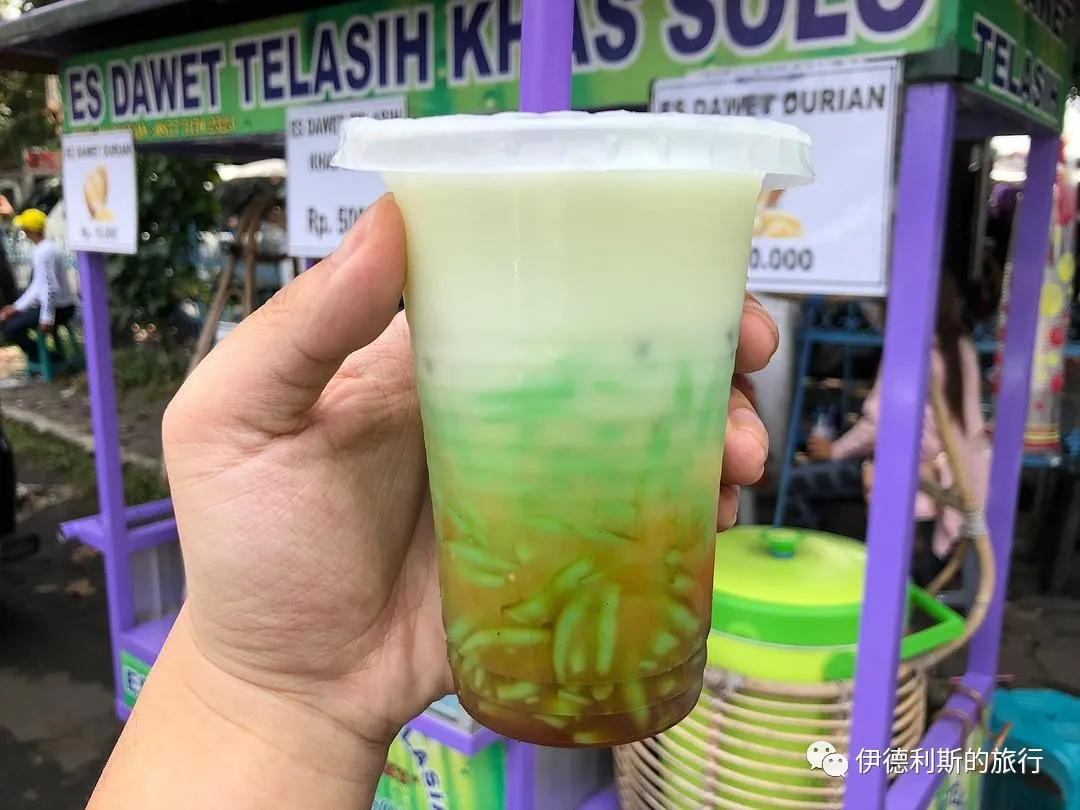
Es Dawet Telasih
Es Dawet Telasih is a Solo specialty iced drink made of coconut milk, palm sugar, cendol (rice flour jelly), bubur sumsum (coconut rice pudding), basil seeds, and black glutinous rice.
Es Dawet Durian is Es Dawet Telasih with durian added.
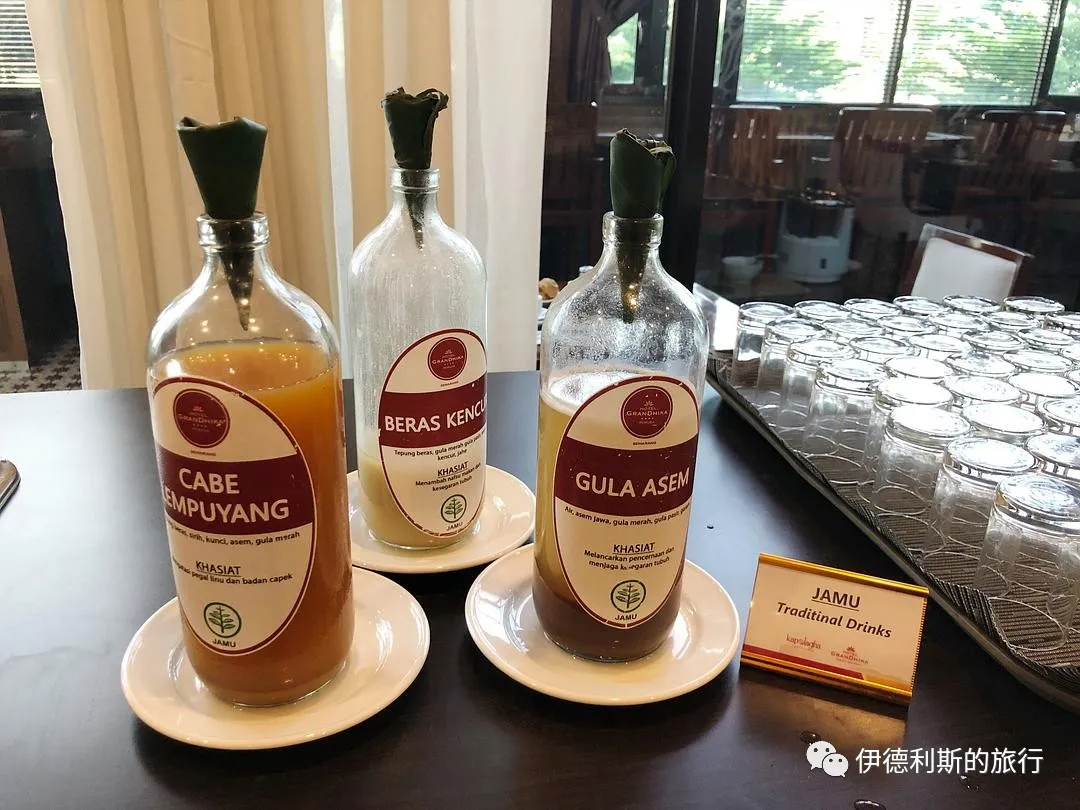
Jamu
Jamu is a specialty Javanese drink, which is a traditional Javanese herbal medicine mixed with honey and palm sugar.
Kudus
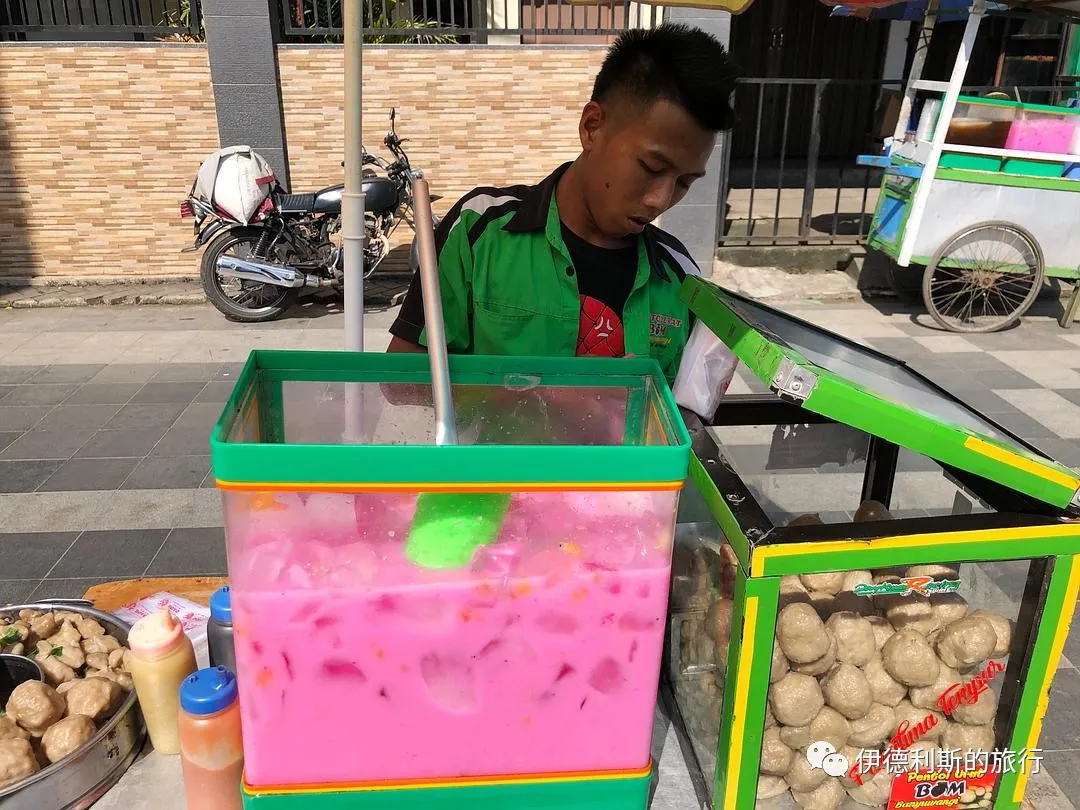
Es Buah
I drank Es Buah, a Javanese iced drink with various fruits added, in Kudus.
Banten
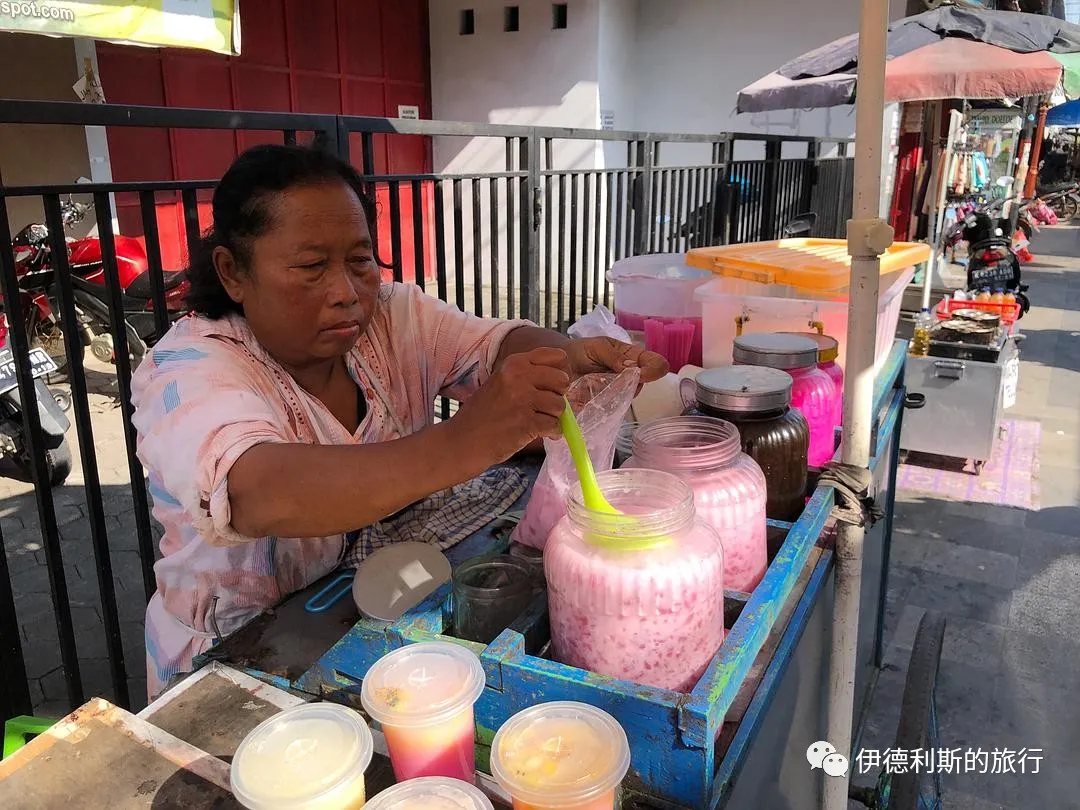
Mixed ice drink (Es Campur)
As a holy site, the Great Mosque of Banten attracts a constant stream of visitors every day, and a very lively bazaar has formed around it. At the bazaar, I drank a mixed ice drink (Es Campur) made with coconut milk, red sugar syrup, coconut meat, and fruit jelly.
Jakarta
Layered rice flour drink (Selendang Mayang)
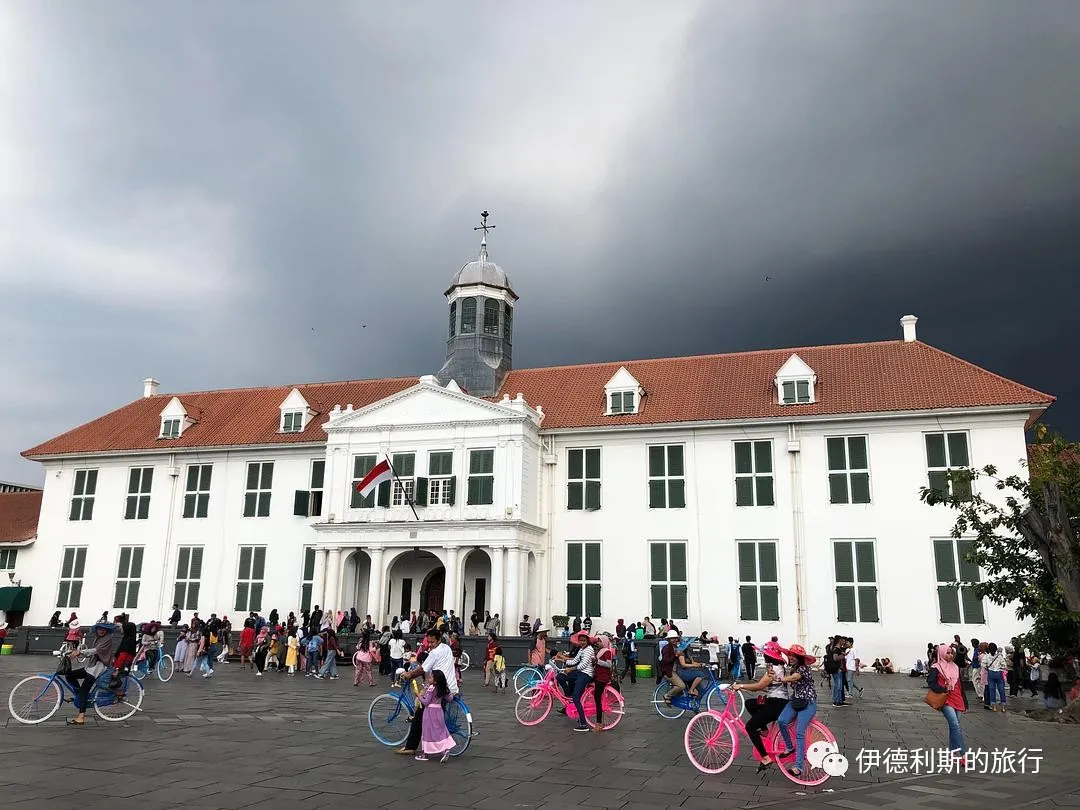
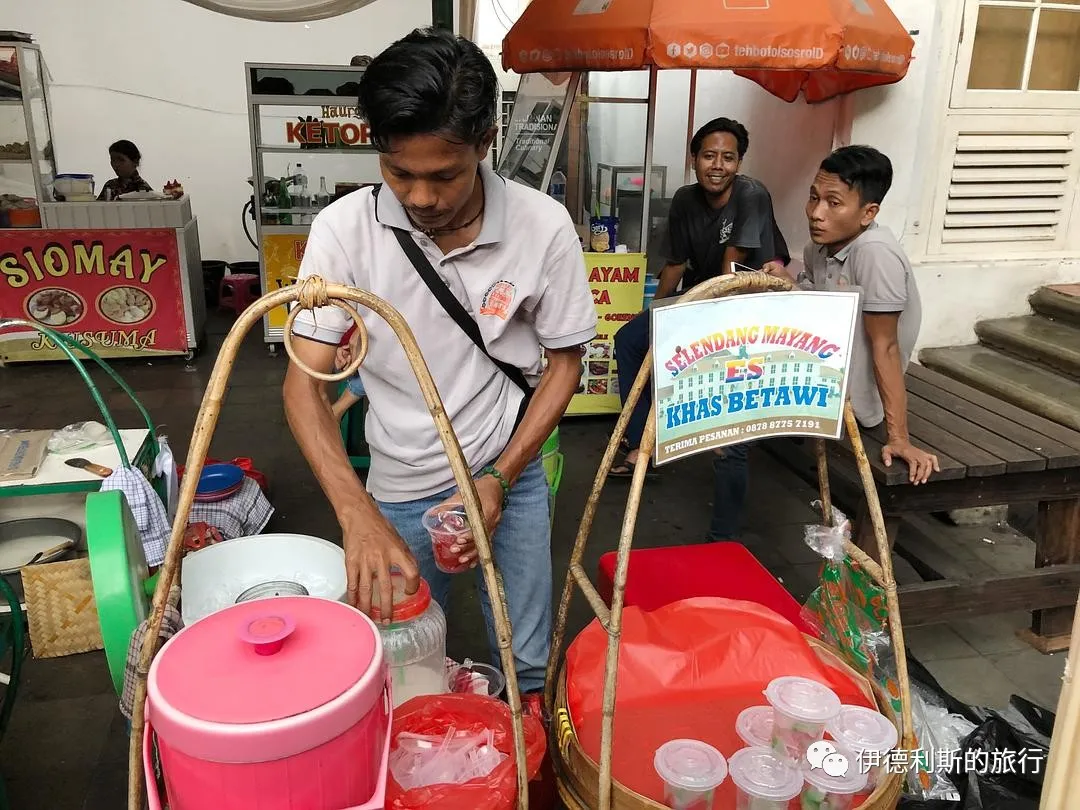
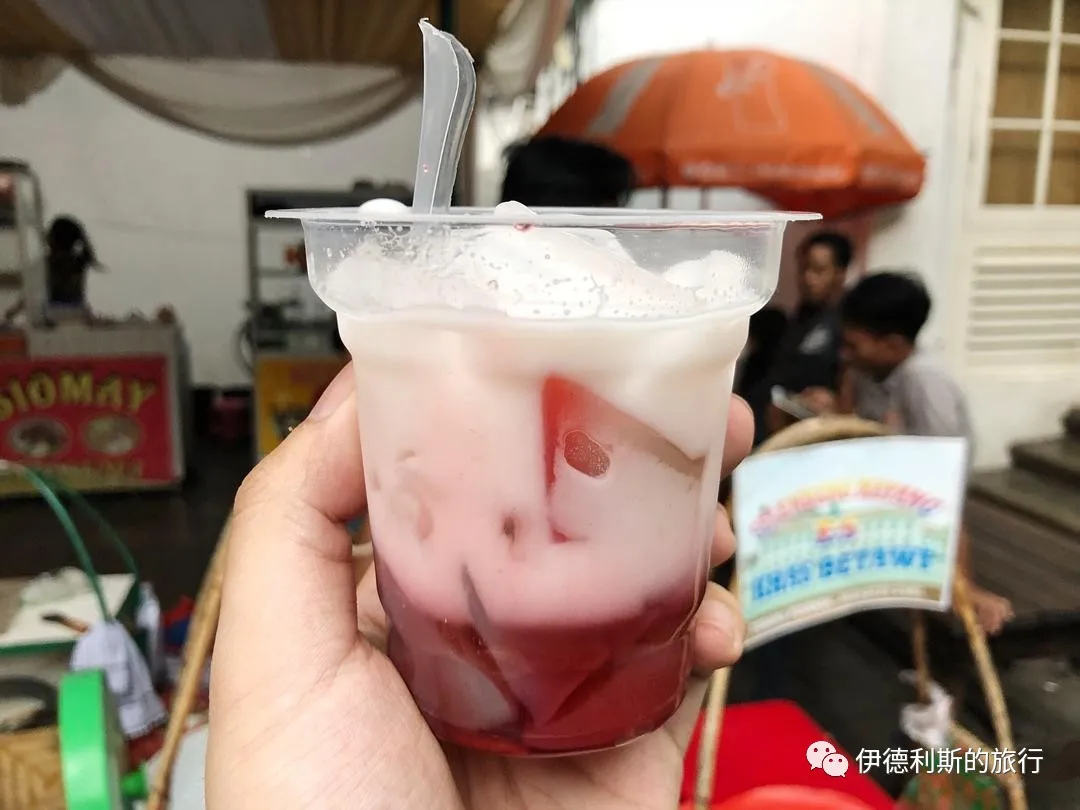
Jakarta Old Town (Kota Tua Jakarta), also called Old Batavia (Oud Batavia), was the most important Dutch colonial outpost in Southeast Asia and served as the headquarters for the Dutch East India Company from the 17th to the 19th century. The center of Old Batavia is Fatahillah Square, where the main building is the Jakarta History Museum. The Jakarta History Museum was built in 1710 and was formerly the Batavia City Hall. The museum courtyard has a small area dedicated to traditional Betawi snacks, where I drank a rare, historic Batavian ice drink called layered rice flour drink (Selendang Mayang). Layered rice flour drink (Selendang Mayang) is made from rice flour, vanilla powder, pandan leaves, red sugar syrup, and coconut milk.
The Betawi people are a unique ethnic group that formed in Jakarta. In 1619, the Dutch established Batavia as the trade and administrative center for the Dutch East India Company. After the Dutch East India Company signed a formal peace treaty with the Sultanate of Banten in 1684, the swampy areas around Batavia could finally be cultivated. More and more people lived outside the city walls, including Malays, Sundanese, Javanese, Minangkabau, and Bugis people. Between the 18th and 19th centuries, the various ethnic groups living in Batavia began to merge. Over the course of a hundred years, they finally formed the modern Betawi people by the early 20th century. The Betawi people speak a version of Malay mixed with many words from Fujian Chinese, Arabic, and Dutch, known as Betawi Malay. It is the only Malay-speaking region on the northern coast of Java. Betawi cuisine is also strongly influenced by Indonesian Chinese, Arab, European, and local Sundanese and Javanese food. view all
Summary: This article follows a tasting route through drinks from Malaysia, Singapore, and Indonesia, from street-side juices to regional bottled drinks and cafe favorites. It keeps the original drink names, places, prices, photos, and travel notes for readers looking for everyday food culture in Southeast Asia.
Malaysia
Malacca: avocado juice, longan lemon tea, and lime plum juice (lime plum shuizhi).
Penang: sour plum guava juice, Penang nutmeg water, and Arabian rose water.
Seremban: lychee water.
Kuala Lumpur: blue pea flower tea and barley lime water.
Singapore
Clear soup (chee kong), three-layer milk tea, pulled tea (teh tarik), Milo dinosaur, and ginger tea.
Indonesia
Yogyakarta: cendol drink (es dawet ayu), dragon fruit juice, and ginger herbal drink (sekoteng).
Solo: basil seed cendol (es dawet telasih), durian cendol (es dawet durian), and herbal medicine (jamu).
Kudus: fruit ice (es buah).
Banten: mixed ice dessert (es campur).
Jakarta: layered rice flour jelly drink (selendang mayang).
Malaysia
Malacca
Avocado juice
Across from Dataran Pahlawan in Malacca, there is a large Malay night market that seems to open only on weekends, offering endless varieties of snacks. We had just finished a meal and were too full to eat, so we bought a huge avocado juice. Tropical fruits are cheap all over Malaysia. As long as you don't buy durian in tourist areas, you can basically eat as much fruit as you want.
Longan lemon tea
In Kampung Hulu, there is a lovely cake shop called Malaiqa By Gula Cakery that is very popular with young people. The shop is located in a shophouse built in 1941. The decor is fresh and simple, showing a great example of revitalizing the old city. We ordered the longan lemon tea, and it tasted great. These fresh, small shops in Malaysia are really wonderful, though we usually go for traditional food and don't visit places like this very often.
Lime plum drink (juzi suanmei shui)
As the birthplace of Nyonya culture, you must try Nyonya food when visiting Malacca. There are many halal Nyonya restaurants on the east side of Malacca's old town along Merdeka Street (Jln Merdeka), with Atlantic and Cottage Spices being the most famous. Both places had lines when we arrived, so we took numbers for both. Cottage Spices had an opening first, so we ate there. We ordered the lime plum drink (juzi suanmei shui), which was tart and very appetizing.
Penang
Sour plum guava juice
Lagenda Cafe in Penang is a themed restaurant honoring the godfather of Malay film and music, P. Ramlee (1929-1973), and it plays his classic songs on a loop. We drank Asam Boi & Guava Tea, made with lime, mint, black tea, sour plum, and fresh-pressed guava juice; it was very refreshing and smooth.
Penang nutmeg drink and Arabian rose water (sherbet)
A unique group called Jawi Peranakan lives in Penang and Singapore. They are a Malay-speaking community formed by the intermarriage of Indian (as well as Arab and Persian) men and Malay women. "Jawi" means "Southeast Asia" in Arabic, and "Peranakan" means "locally born" in Malay.
After the 20th century, as the British Empire declined, the Jawi Peranakan community began to integrate into the Malay population. Today, the government counts most Jawi Peranakan as "Malay." Even so, the Jawi Peranakan community still works hard to pass on its unique culture, which shows in their architecture, clothing, jewelry, and food.
Today, the best place in Penang to experience Jawi Peranakan culture is the Jawi House Cafe Gallery. The building was originally a Straits Eclectic-style Chinese shophouse built in the 1860s with Malay-style decorations, and it later served as an Indian coppersmith shop. The street where the shop is located, Armenian Street (Lebuh Armenian, formerly Malay lane), was the earliest settlement area for the Jawi Peranakan community. In 2012, the Karim family, who have lived in Penang for six generations and have Punjabi roots, opened Jawi House here to make authentic Jawi Peranakan food.
We drank the Penang Nutmeg and Arabian Sherbet here. Nutmeg is a local Penang specialty, and this drink is mixed with honey and lemon for a sweet and sour taste.
Sherbet comes from the Persian word "Sharbat," which means a non-alcoholic sugary drink. In medieval Arabia, people loved to add syrup and honey to Sharbat for sweetness, along with almonds, lemon, apple, pomegranate, tamarind, dates, sumac, musk, and mint. Spread by Arabs and Persians, Sharbat is now popular across West Asia, South Asia, and the Malay Archipelago, especially during Ramadan. The Arabian Sherbet at Jawi House is made with rose syrup, mallow nuts, gum arabic, and basil seeds, giving it a very rich flavor.
Hibiscus
Lychee water
Mohd Chan is likely the most famous and largest halal Cantonese restaurant chain in Malaysia, now with 19 locations including restaurants, dim sum shops, and takeout spots. The founder of Mohd Chan, Dato HJ Mohd Chan, was born in Gombak, Selangor. Influenced by his Malay friends, he converted to Islam in 2007 and started his halal Cantonese restaurant that same year, focusing on blending Cantonese cuisine with local flavors. We drank their lychee water, which was packed with plenty of ingredients.
Kuala Lumpur
Blue pea flower tea and barley lime water
Whether it is halal Chinese food or halal Nyonya cuisine, the Klang Valley area where Kuala Lumpur is located has the highest number of options in Malaysia. Just inside the NU Sentral mall opposite Kuala Lumpur Sentral station, there are three halal Nyonya restaurants, making it a great place for traveling friends (dosti) to grab a bite. We ate at the largest of the three, Peranakan Place, which has several branches in Kuala Lumpur and Malacca. We ordered the blue pea flower tea and barley lime water, both of which were very unique.
Singapore
Chee Kong clear soup (qing tang)
Geylang Serai is located near the Geylang River in eastern Singapore. The Geylang Serai Malay bazaar (market) dates back to the 1920s. During World War II, the Japanese turned it into an amusement park, but after the war, it returned to being a bustling Malay bazaar where local Malay residents come to shop. The only Chinese stall in the bazaar is Chee Kong clear soup (qing tang), an old shop that opened in the 1950s. You can add longan, sweet potato, and ginkgo nuts to the clear soup, and it can be served hot or cold. Drinking a bowl of clear soup is very refreshing after eating spicy Malay food.
Three-layer milk tea
Haig Road Market & Food Centre has a lot of Malay delicacies. We drank the classic three-layer milk tea, which uses palm sugar, milk, and black tea to create three distinct layers with a rich taste.
Pulled tea (teh tarik) and Milo Dinosaur
We had a cup of the classic Nanyang pulled tea (teh tarik) at Tarik, a shop next to the Sultan Mosque in Kampong Glam. Local Malay youth really love this place. Tarik means 'pull' in Malay. By mixing black tea and condensed milk and pouring it back and forth between two containers with outstretched arms, the tea cools down and becomes frothy. We also ordered a cup of Milo, which is a chocolate malt powder from Nestlé. People in Malaysia and Singapore like to sprinkle Milo powder on iced Milo, which they call Milo Dinosaur.
Ginger tea
Bhai Sarbat on Baghdad Street was started by an Indian Muslim in the 1950s and has been around for 70 years. Bhai means brother in Urdu. Bhai Sarbat started as a street pushcart stall and moved into this shophouse on Baghdad Street in the 1970s. Today it sells hundreds of drinks, but the ginger tea is still the most famous.
Indonesia
Yogyakarta
Es Dawet Ayu
Es Dawet Ayu is a specialty iced drink from Central Java that comes from the small town of Banjarnegara. Its main ingredients are rice flour, glutinous rice flour, coconut milk, palm sugar syrup, and grass jelly.
Dragon fruit juice
Freshly squeezed dragon fruit juice on the streets of Yogyakarta. The juices in Java are really rich.
Sekoteng
Sekoteng is a Javanese specialty hot ginger drink made with peanuts, bread slices, and pearl flowers. Hot drinks are still quite rare in Java. It feels like the ginger helps remove dampness.
Solo
Es Dawet Telasih
Es Dawet Telasih is a Solo specialty iced drink made of coconut milk, palm sugar, cendol (rice flour jelly), bubur sumsum (coconut rice pudding), basil seeds, and black glutinous rice.
Es Dawet Durian is Es Dawet Telasih with durian added.
Jamu
Jamu is a specialty Javanese drink, which is a traditional Javanese herbal medicine mixed with honey and palm sugar.
Kudus
Es Buah
I drank Es Buah, a Javanese iced drink with various fruits added, in Kudus.
Banten
Mixed ice drink (Es Campur)
As a holy site, the Great Mosque of Banten attracts a constant stream of visitors every day, and a very lively bazaar has formed around it. At the bazaar, I drank a mixed ice drink (Es Campur) made with coconut milk, red sugar syrup, coconut meat, and fruit jelly.
Jakarta
Layered rice flour drink (Selendang Mayang)
Jakarta Old Town (Kota Tua Jakarta), also called Old Batavia (Oud Batavia), was the most important Dutch colonial outpost in Southeast Asia and served as the headquarters for the Dutch East India Company from the 17th to the 19th century. The center of Old Batavia is Fatahillah Square, where the main building is the Jakarta History Museum. The Jakarta History Museum was built in 1710 and was formerly the Batavia City Hall. The museum courtyard has a small area dedicated to traditional Betawi snacks, where I drank a rare, historic Batavian ice drink called layered rice flour drink (Selendang Mayang). Layered rice flour drink (Selendang Mayang) is made from rice flour, vanilla powder, pandan leaves, red sugar syrup, and coconut milk.
The Betawi people are a unique ethnic group that formed in Jakarta. In 1619, the Dutch established Batavia as the trade and administrative center for the Dutch East India Company. After the Dutch East India Company signed a formal peace treaty with the Sultanate of Banten in 1684, the swampy areas around Batavia could finally be cultivated. More and more people lived outside the city walls, including Malays, Sundanese, Javanese, Minangkabau, and Bugis people. Between the 18th and 19th centuries, the various ethnic groups living in Batavia began to merge. Over the course of a hundred years, they finally formed the modern Betawi people by the early 20th century. The Betawi people speak a version of Malay mixed with many words from Fujian Chinese, Arabic, and Dutch, known as Betawi Malay. It is the only Malay-speaking region on the northern coast of Java. Betawi cuisine is also strongly influenced by Indonesian Chinese, Arab, European, and local Sundanese and Javanese food. view all
Reposted from the web
Summary: This article follows a tasting route through drinks from Malaysia, Singapore, and Indonesia, from street-side juices to regional bottled drinks and cafe favorites. It keeps the original drink names, places, prices, photos, and travel notes for readers looking for everyday food culture in Southeast Asia.
Malaysia
Malacca: avocado juice, longan lemon tea, and lime plum juice (lime plum shuizhi).
Penang: sour plum guava juice, Penang nutmeg water, and Arabian rose water.
Seremban: lychee water.
Kuala Lumpur: blue pea flower tea and barley lime water.
Singapore
Clear soup (chee kong), three-layer milk tea, pulled tea (teh tarik), Milo dinosaur, and ginger tea.
Indonesia
Yogyakarta: cendol drink (es dawet ayu), dragon fruit juice, and ginger herbal drink (sekoteng).
Solo: basil seed cendol (es dawet telasih), durian cendol (es dawet durian), and herbal medicine (jamu).
Kudus: fruit ice (es buah).
Banten: mixed ice dessert (es campur).
Jakarta: layered rice flour jelly drink (selendang mayang).
Malaysia
Malacca
Avocado juice
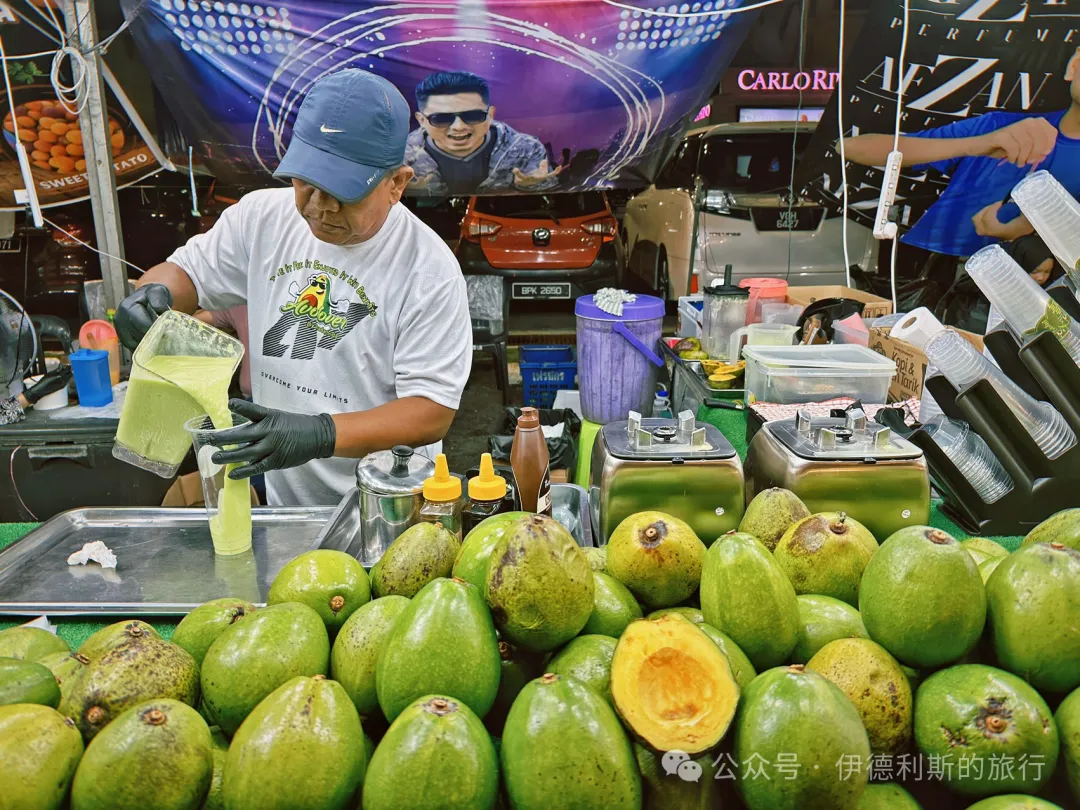
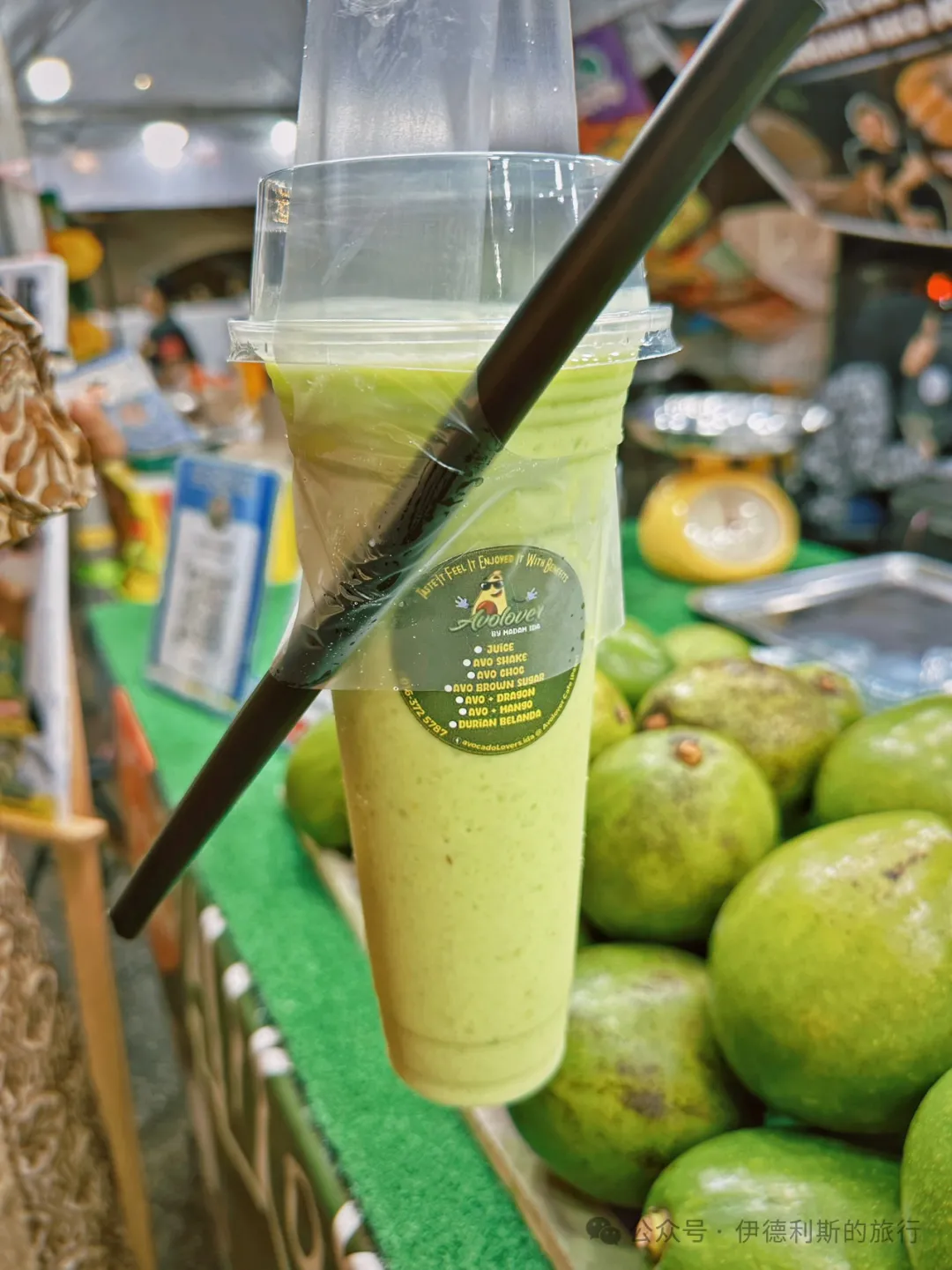
Across from Dataran Pahlawan in Malacca, there is a large Malay night market that seems to open only on weekends, offering endless varieties of snacks. We had just finished a meal and were too full to eat, so we bought a huge avocado juice. Tropical fruits are cheap all over Malaysia. As long as you don't buy durian in tourist areas, you can basically eat as much fruit as you want.
Longan lemon tea
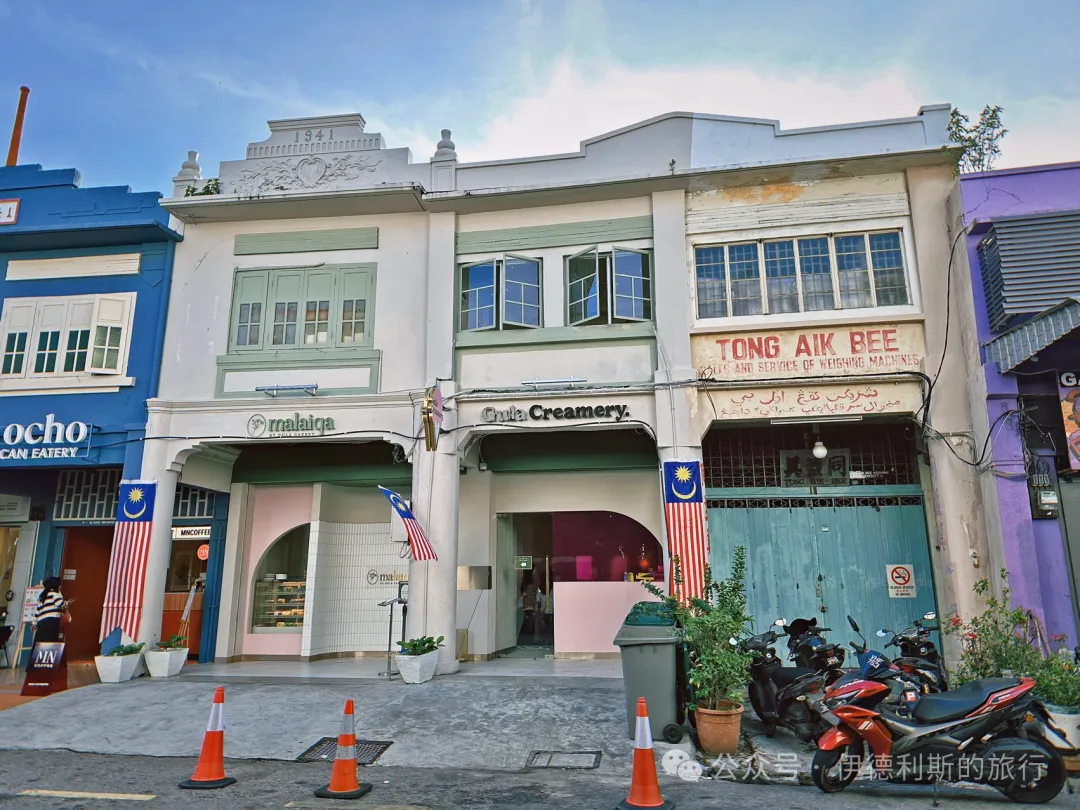
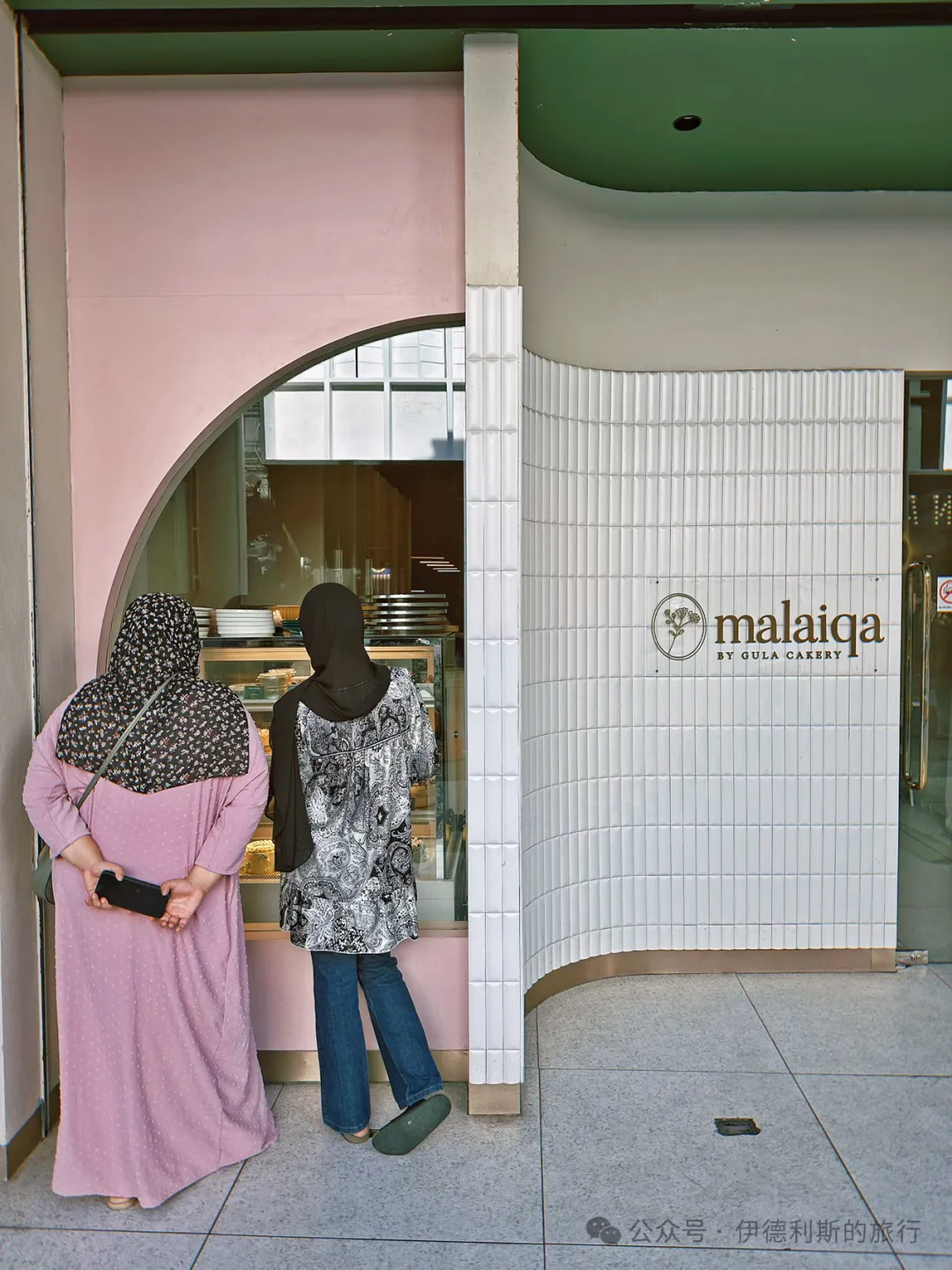
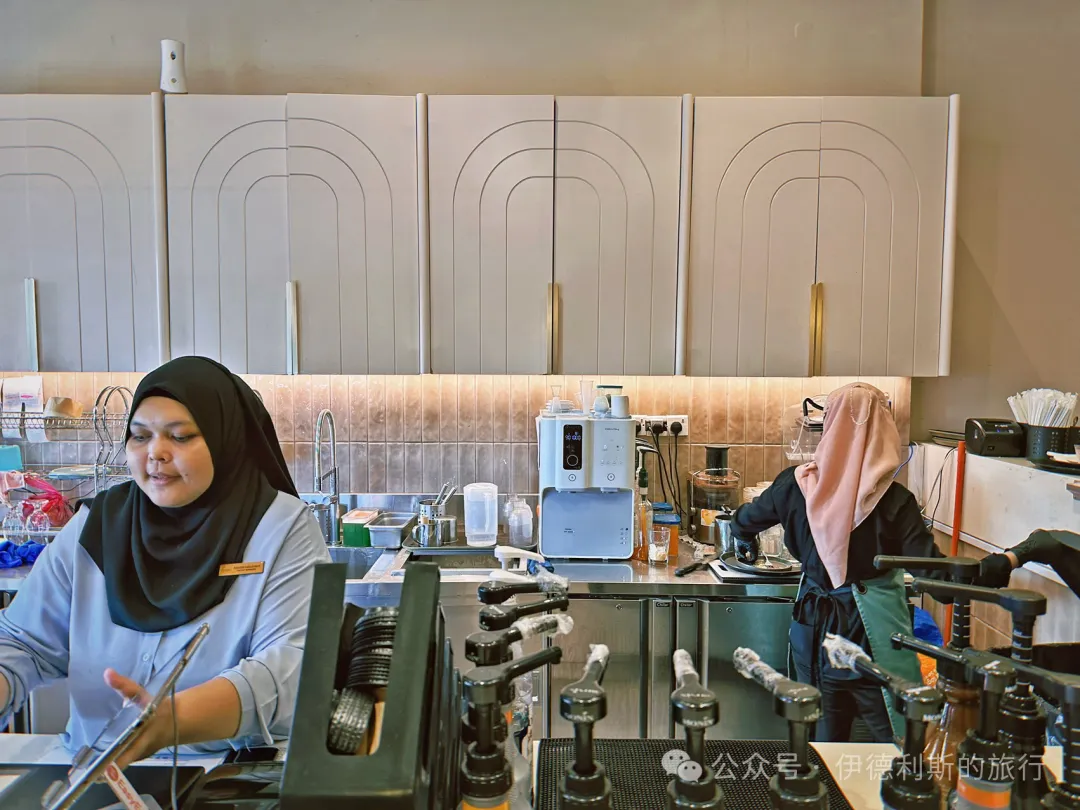
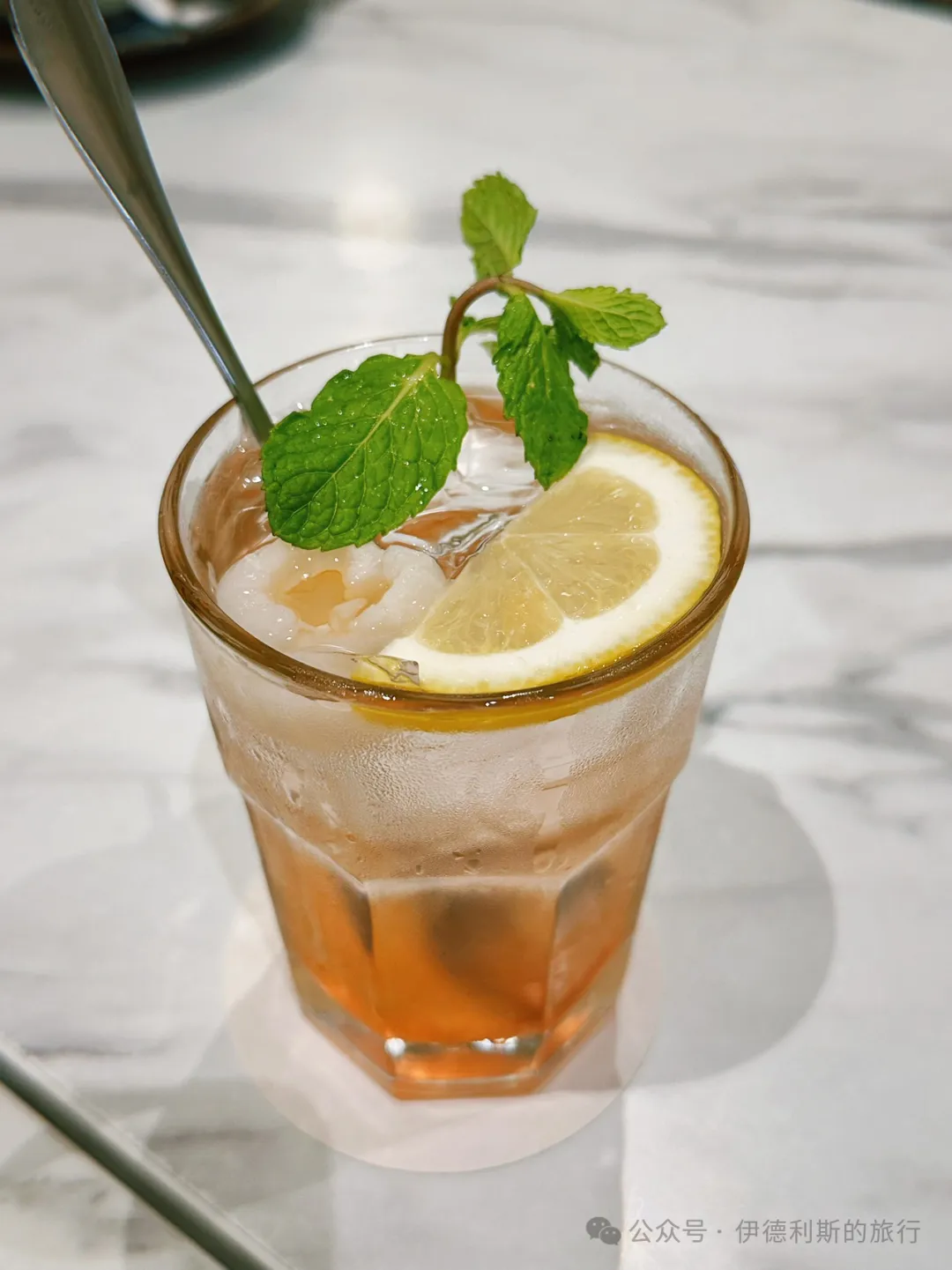
In Kampung Hulu, there is a lovely cake shop called Malaiqa By Gula Cakery that is very popular with young people. The shop is located in a shophouse built in 1941. The decor is fresh and simple, showing a great example of revitalizing the old city. We ordered the longan lemon tea, and it tasted great. These fresh, small shops in Malaysia are really wonderful, though we usually go for traditional food and don't visit places like this very often.
Lime plum drink (juzi suanmei shui)
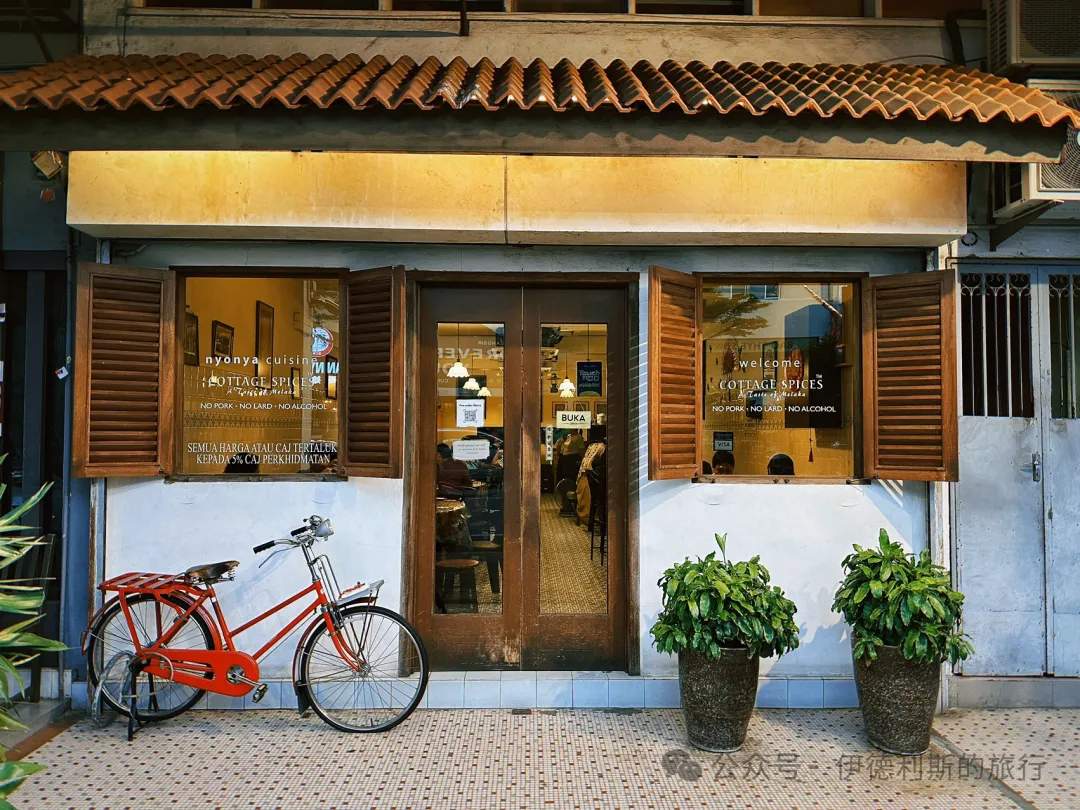
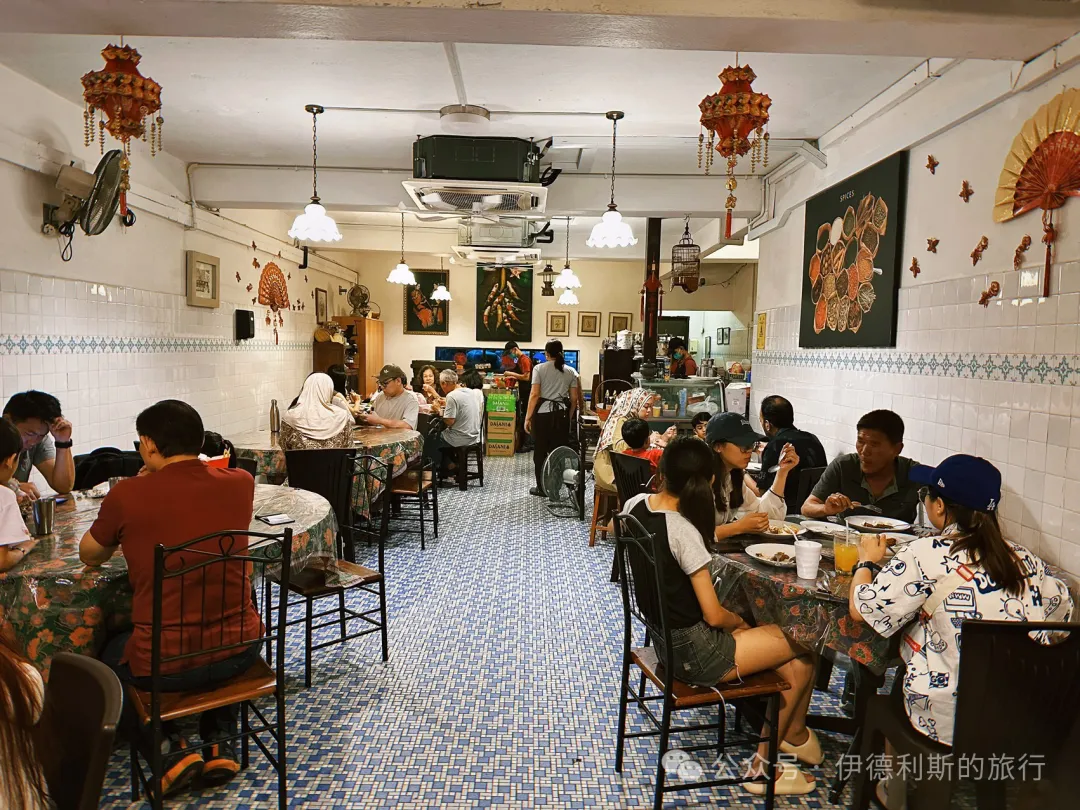
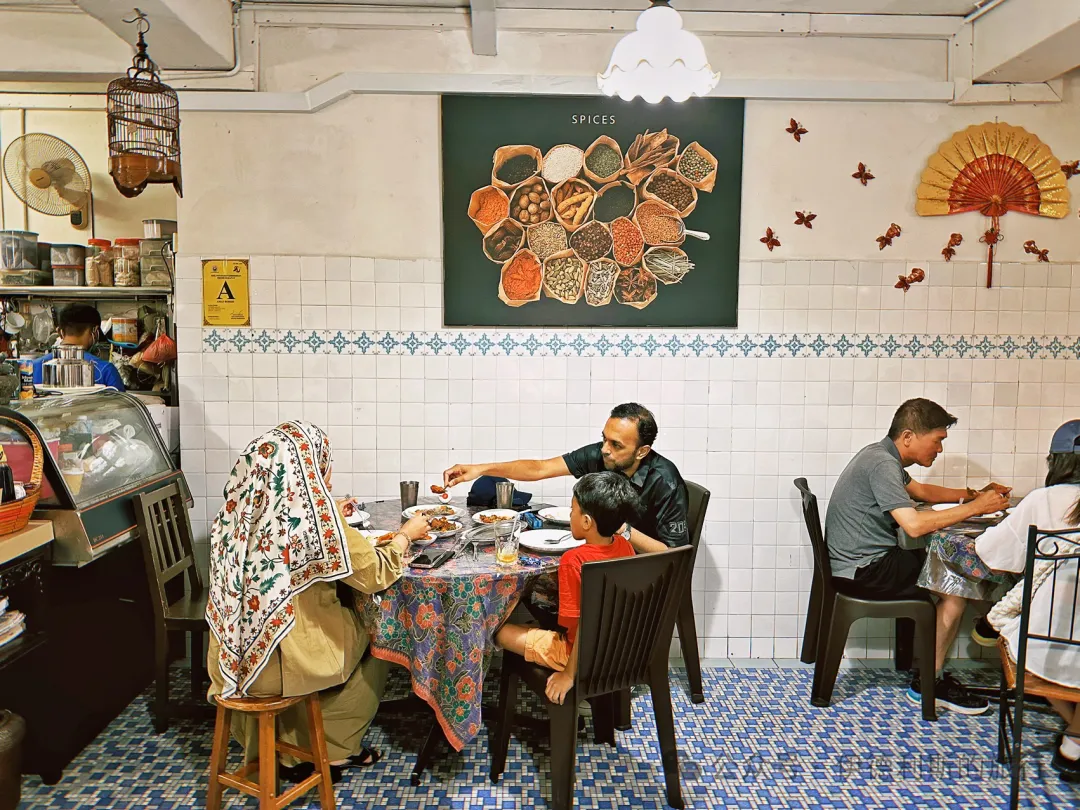
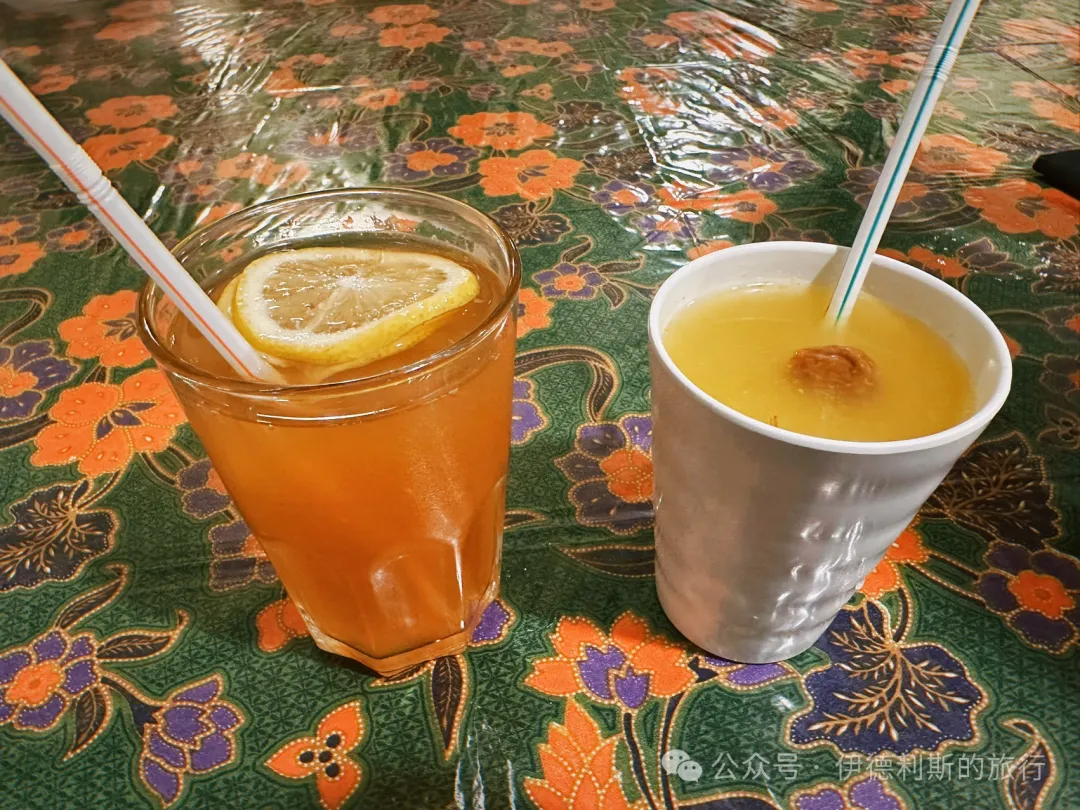
As the birthplace of Nyonya culture, you must try Nyonya food when visiting Malacca. There are many halal Nyonya restaurants on the east side of Malacca's old town along Merdeka Street (Jln Merdeka), with Atlantic and Cottage Spices being the most famous. Both places had lines when we arrived, so we took numbers for both. Cottage Spices had an opening first, so we ate there. We ordered the lime plum drink (juzi suanmei shui), which was tart and very appetizing.
Penang
Sour plum guava juice
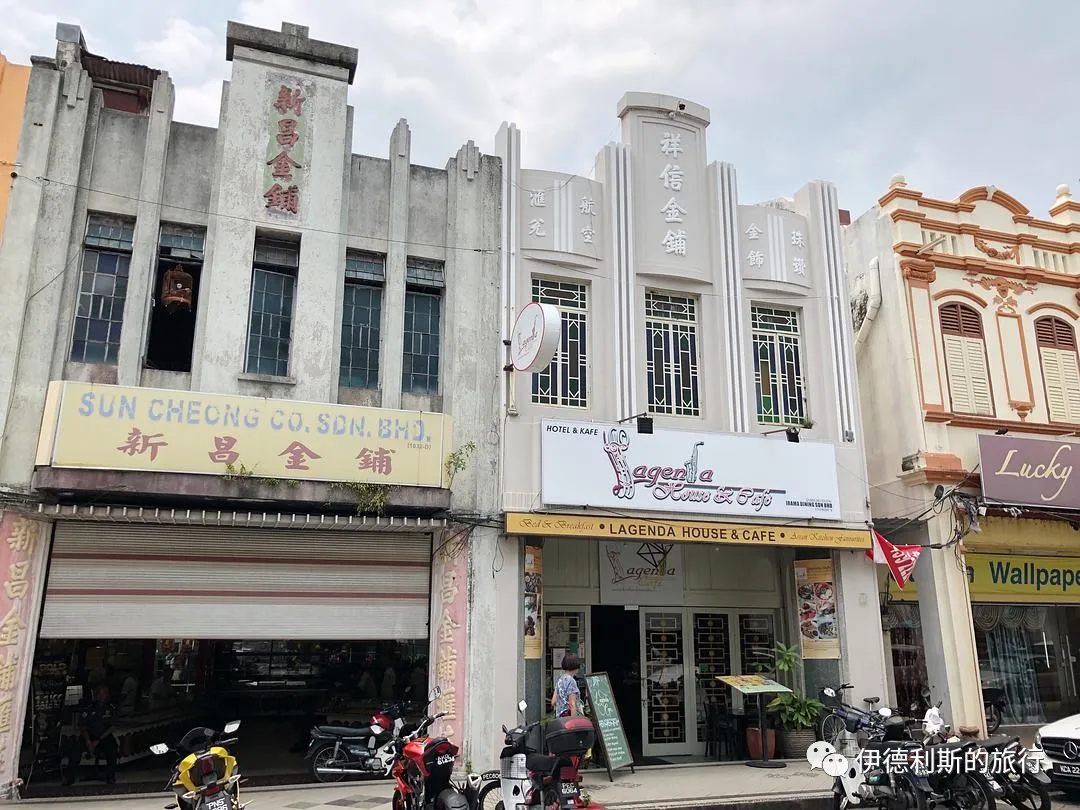
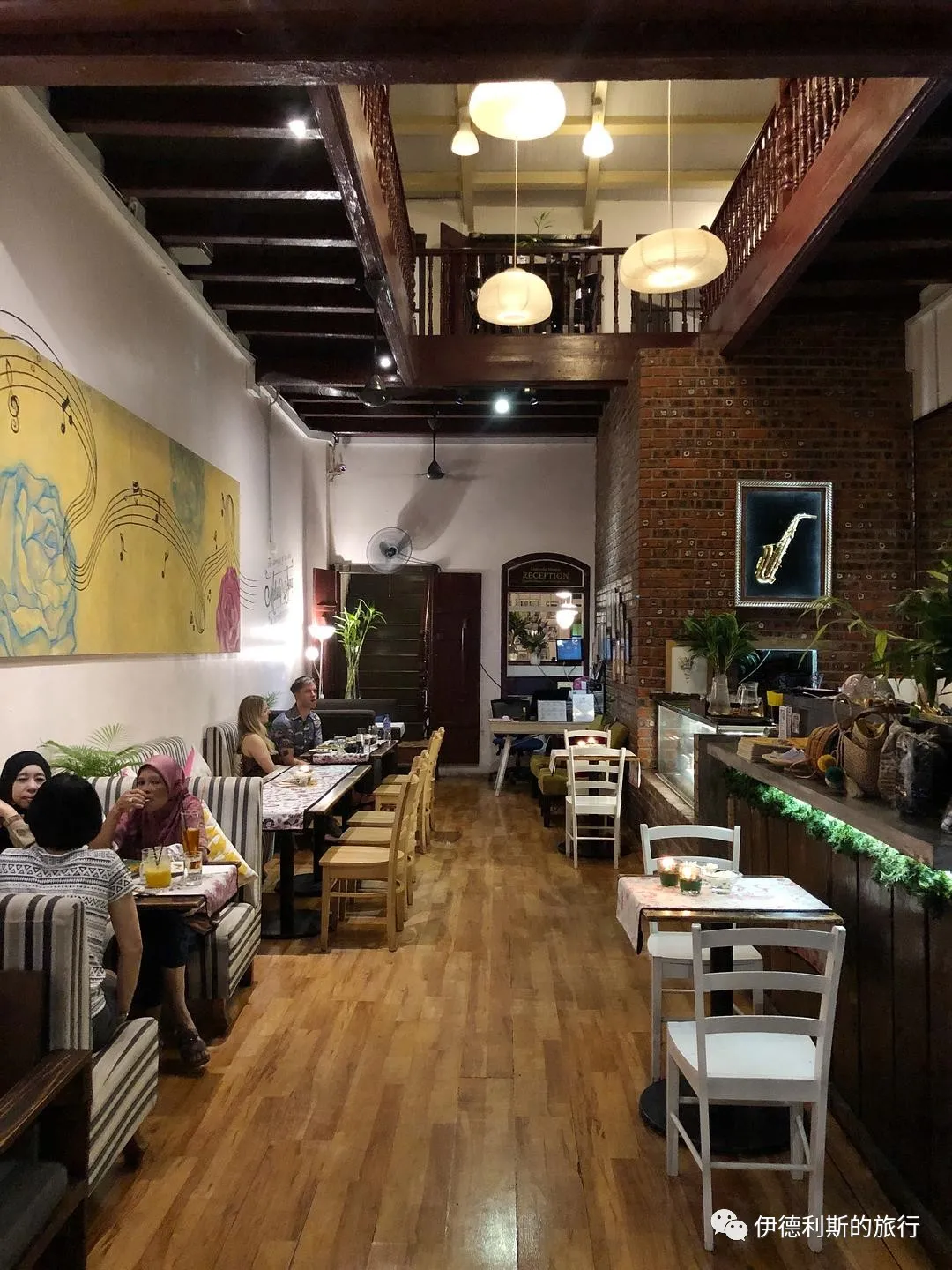
Lagenda Cafe in Penang is a themed restaurant honoring the godfather of Malay film and music, P. Ramlee (1929-1973), and it plays his classic songs on a loop. We drank Asam Boi & Guava Tea, made with lime, mint, black tea, sour plum, and fresh-pressed guava juice; it was very refreshing and smooth.
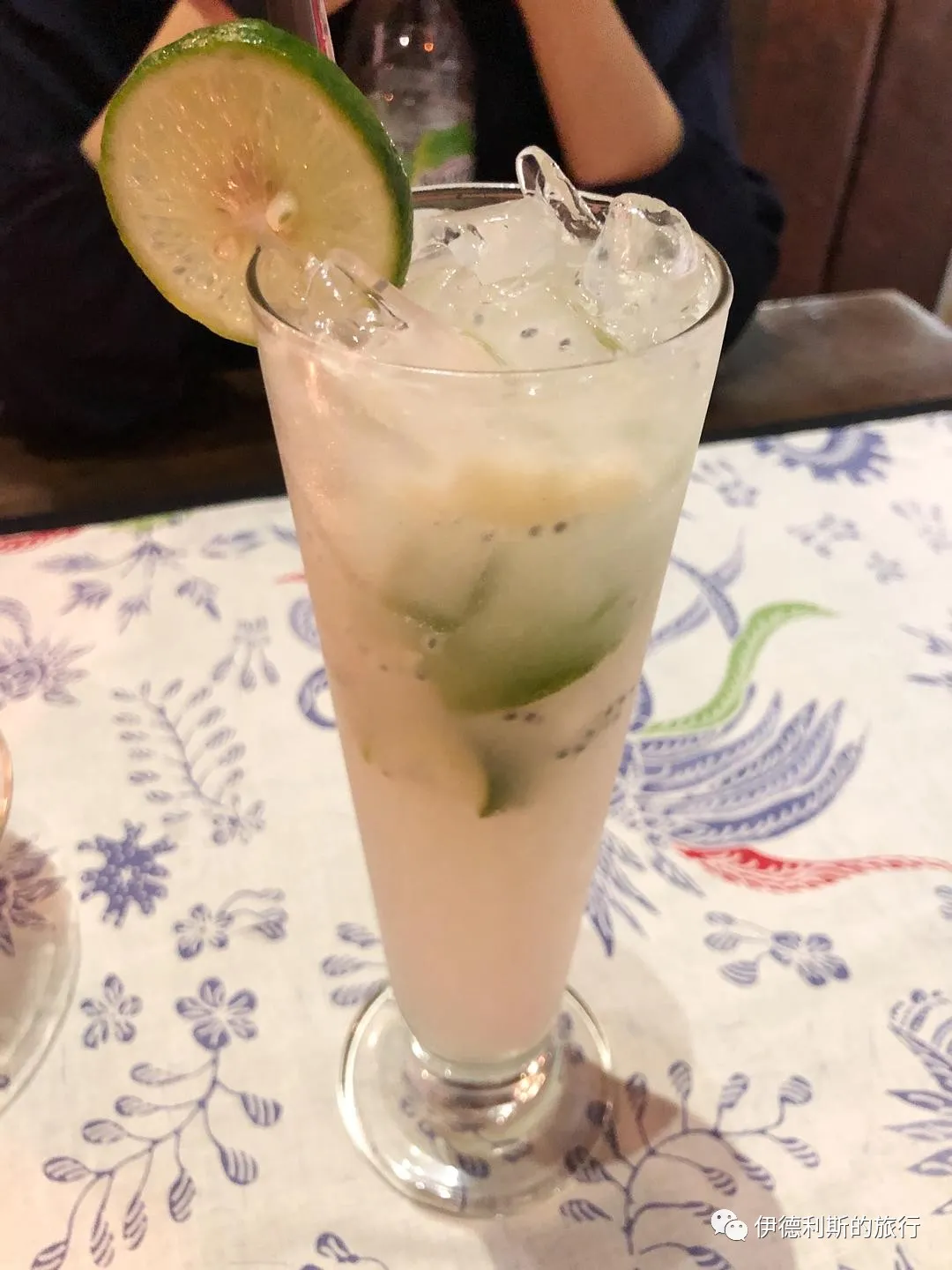
Penang nutmeg drink and Arabian rose water (sherbet)
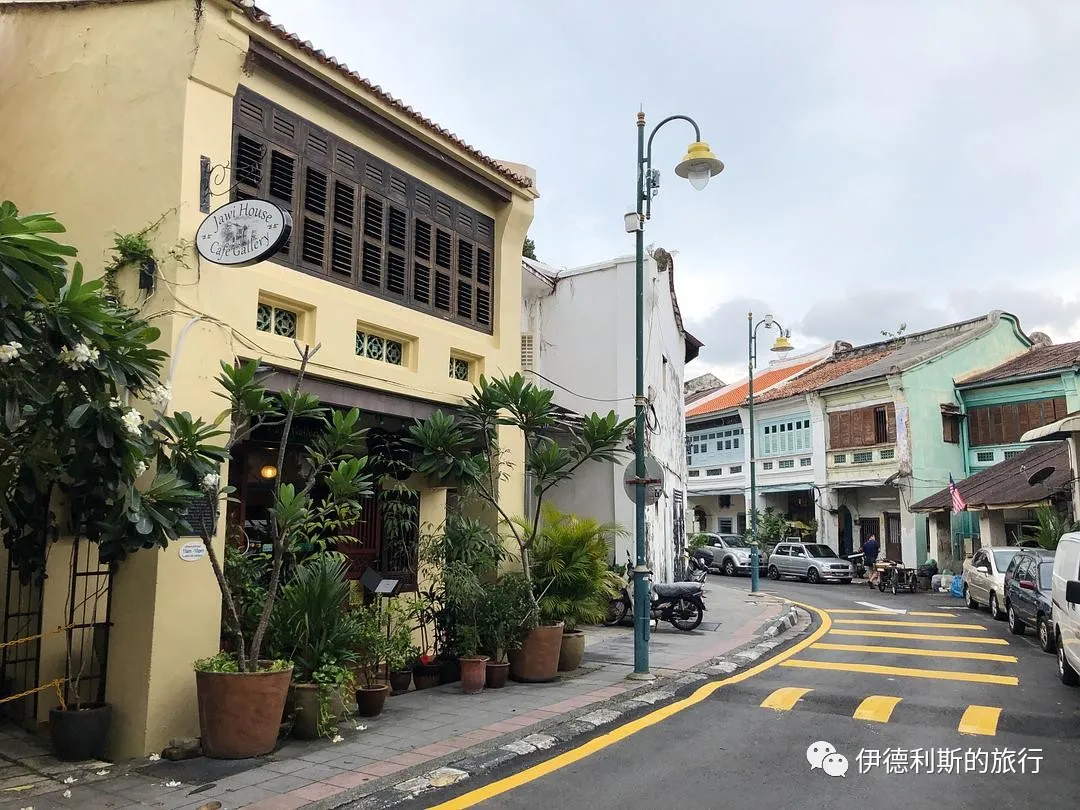
A unique group called Jawi Peranakan lives in Penang and Singapore. They are a Malay-speaking community formed by the intermarriage of Indian (as well as Arab and Persian) men and Malay women. "Jawi" means "Southeast Asia" in Arabic, and "Peranakan" means "locally born" in Malay.
After the 20th century, as the British Empire declined, the Jawi Peranakan community began to integrate into the Malay population. Today, the government counts most Jawi Peranakan as "Malay." Even so, the Jawi Peranakan community still works hard to pass on its unique culture, which shows in their architecture, clothing, jewelry, and food.
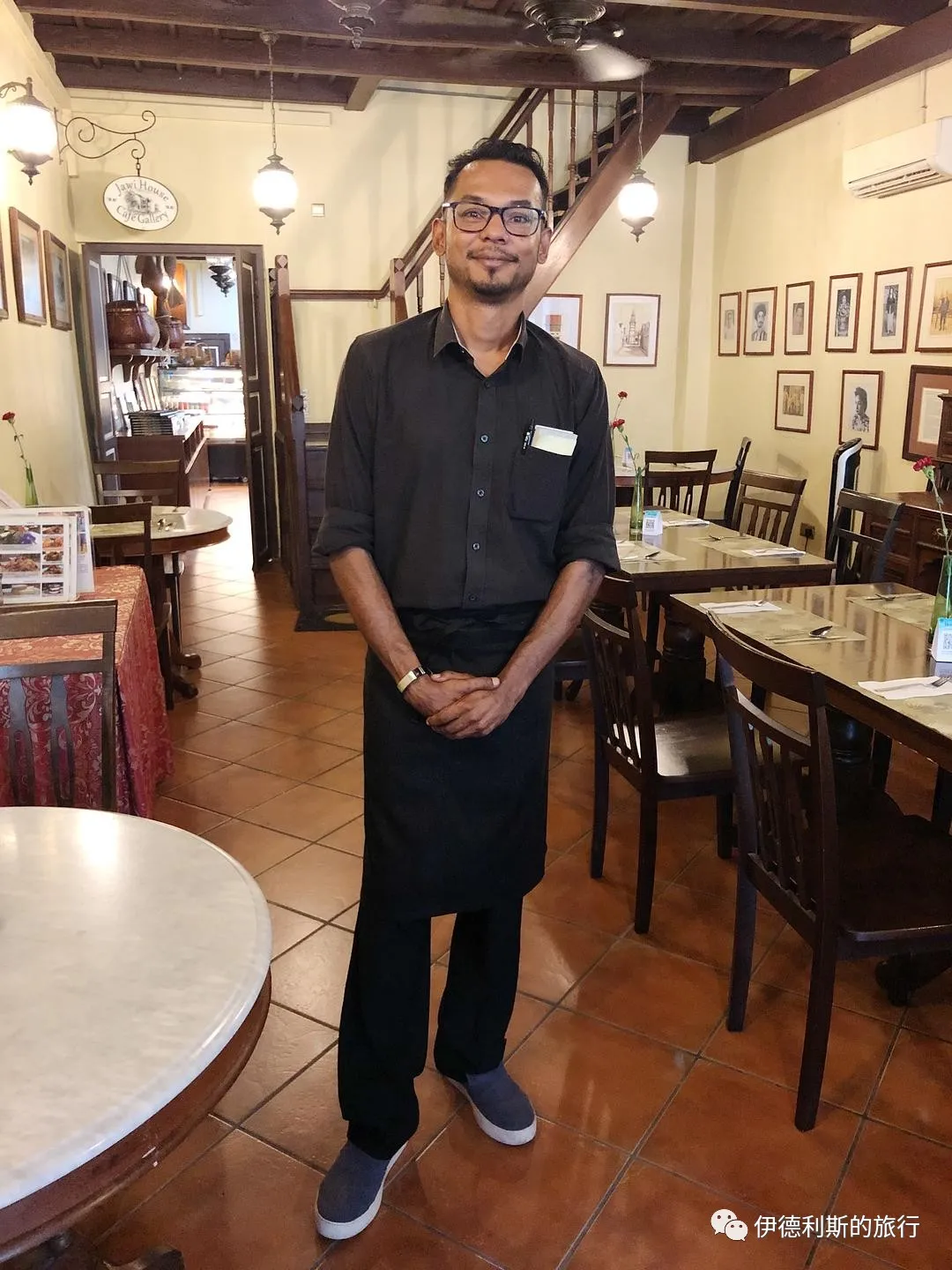
Today, the best place in Penang to experience Jawi Peranakan culture is the Jawi House Cafe Gallery. The building was originally a Straits Eclectic-style Chinese shophouse built in the 1860s with Malay-style decorations, and it later served as an Indian coppersmith shop. The street where the shop is located, Armenian Street (Lebuh Armenian, formerly Malay lane), was the earliest settlement area for the Jawi Peranakan community. In 2012, the Karim family, who have lived in Penang for six generations and have Punjabi roots, opened Jawi House here to make authentic Jawi Peranakan food.
We drank the Penang Nutmeg and Arabian Sherbet here. Nutmeg is a local Penang specialty, and this drink is mixed with honey and lemon for a sweet and sour taste.
Sherbet comes from the Persian word "Sharbat," which means a non-alcoholic sugary drink. In medieval Arabia, people loved to add syrup and honey to Sharbat for sweetness, along with almonds, lemon, apple, pomegranate, tamarind, dates, sumac, musk, and mint. Spread by Arabs and Persians, Sharbat is now popular across West Asia, South Asia, and the Malay Archipelago, especially during Ramadan. The Arabian Sherbet at Jawi House is made with rose syrup, mallow nuts, gum arabic, and basil seeds, giving it a very rich flavor.
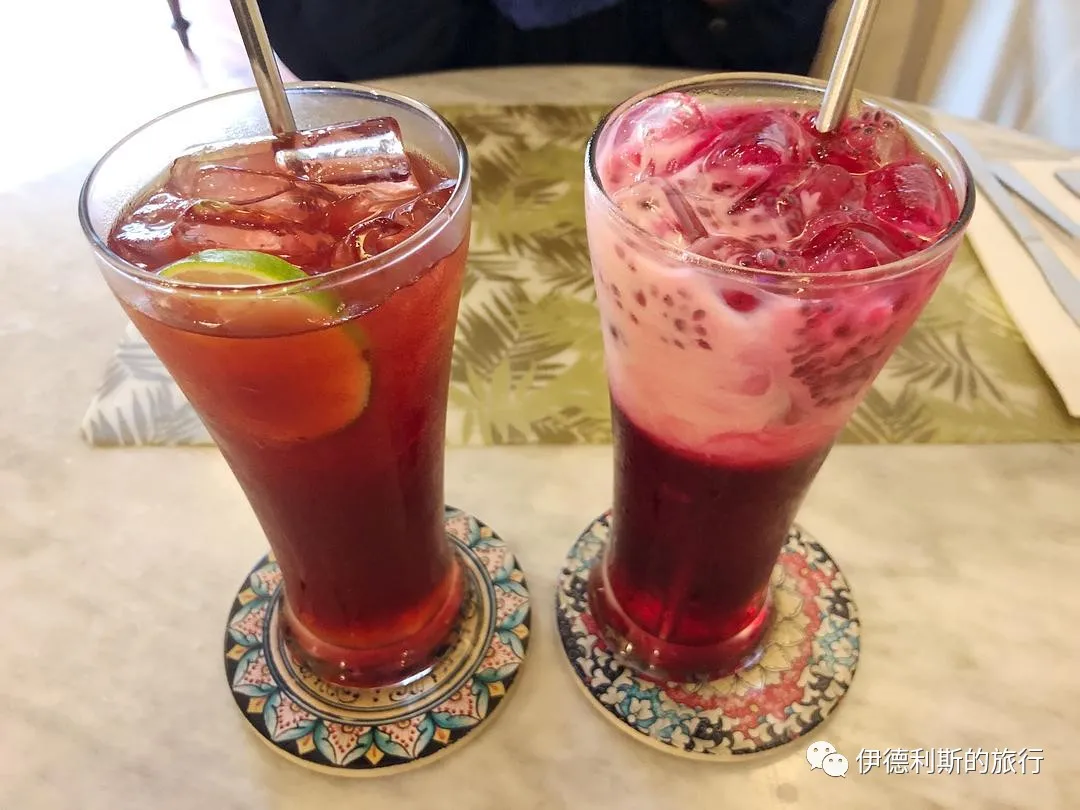
Hibiscus
Lychee water
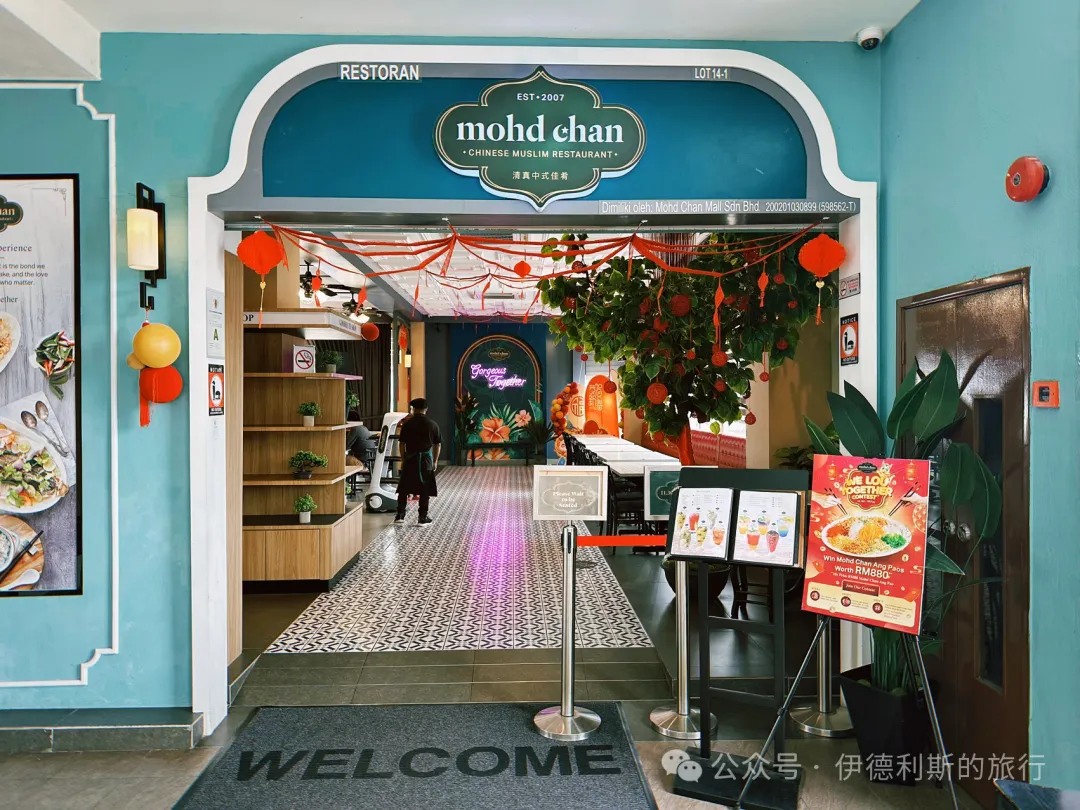
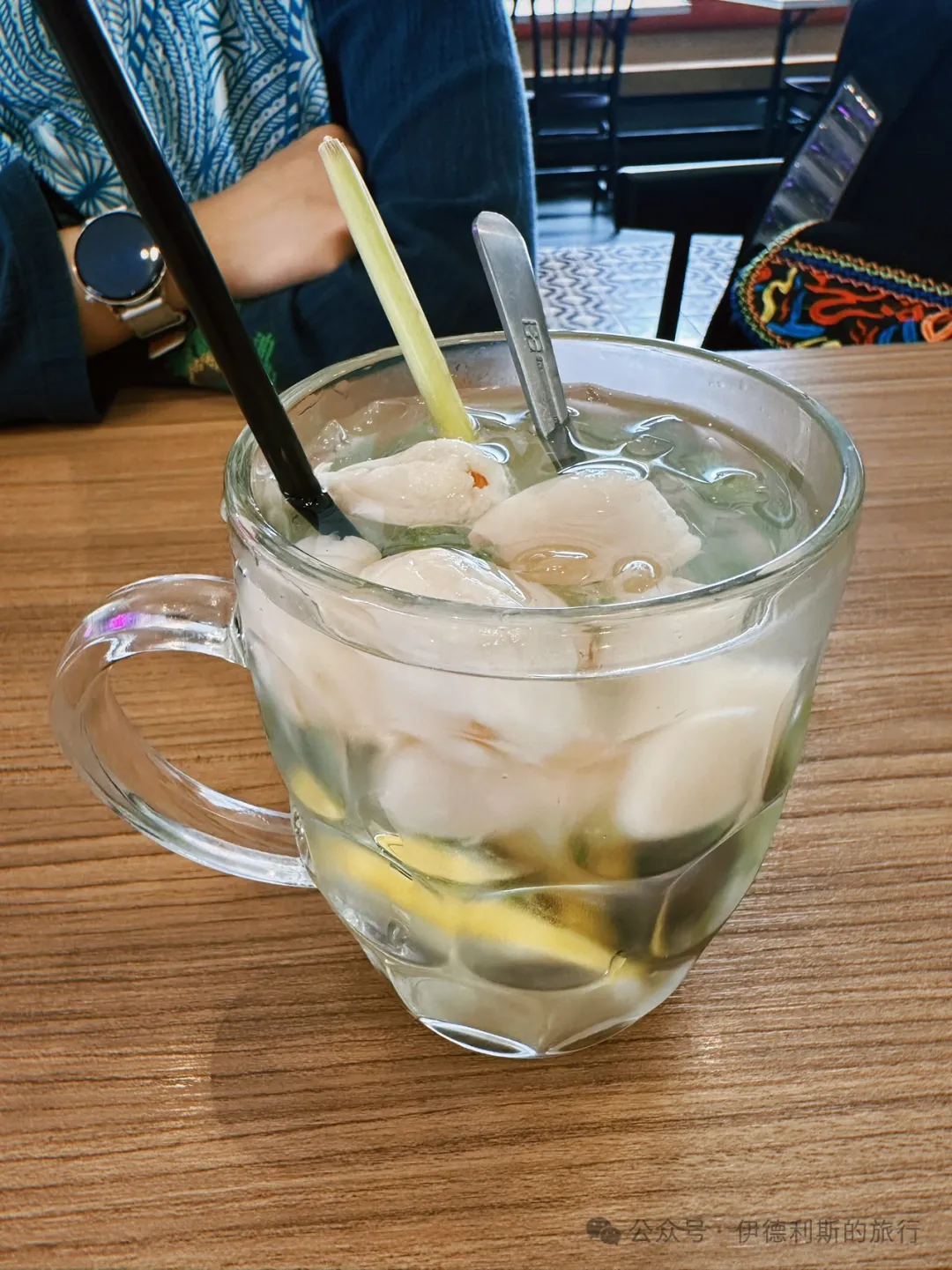
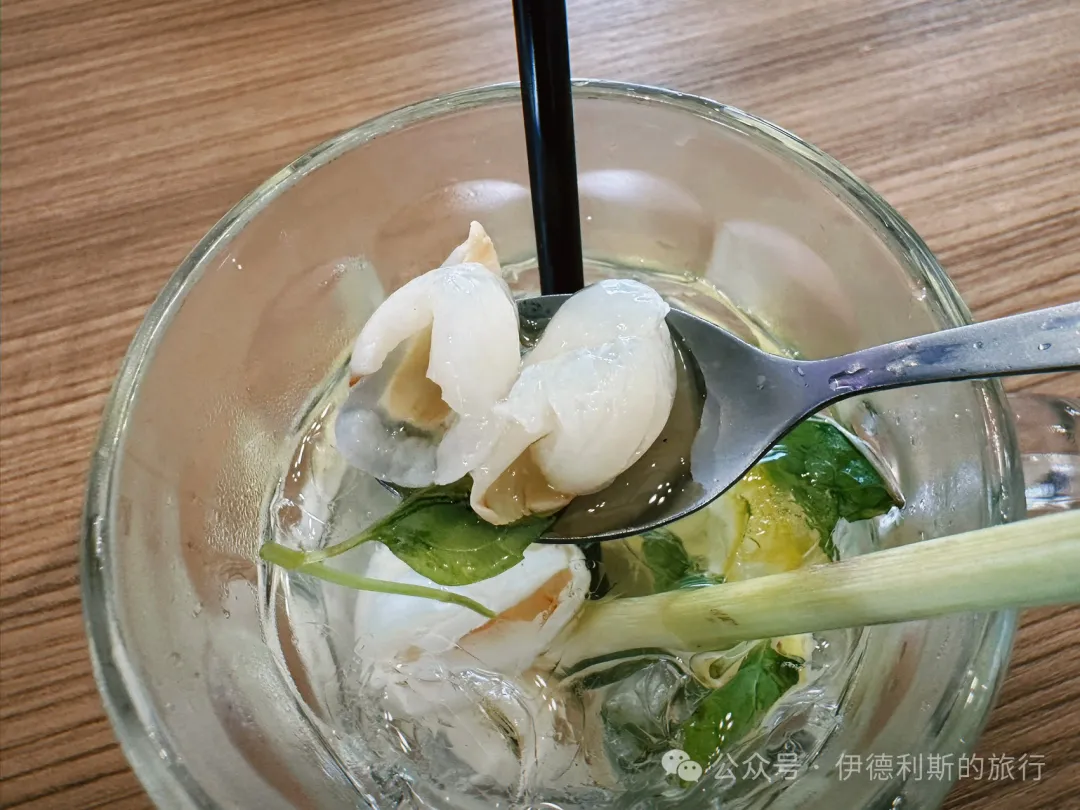
Mohd Chan is likely the most famous and largest halal Cantonese restaurant chain in Malaysia, now with 19 locations including restaurants, dim sum shops, and takeout spots. The founder of Mohd Chan, Dato HJ Mohd Chan, was born in Gombak, Selangor. Influenced by his Malay friends, he converted to Islam in 2007 and started his halal Cantonese restaurant that same year, focusing on blending Cantonese cuisine with local flavors. We drank their lychee water, which was packed with plenty of ingredients.
Kuala Lumpur
Blue pea flower tea and barley lime water
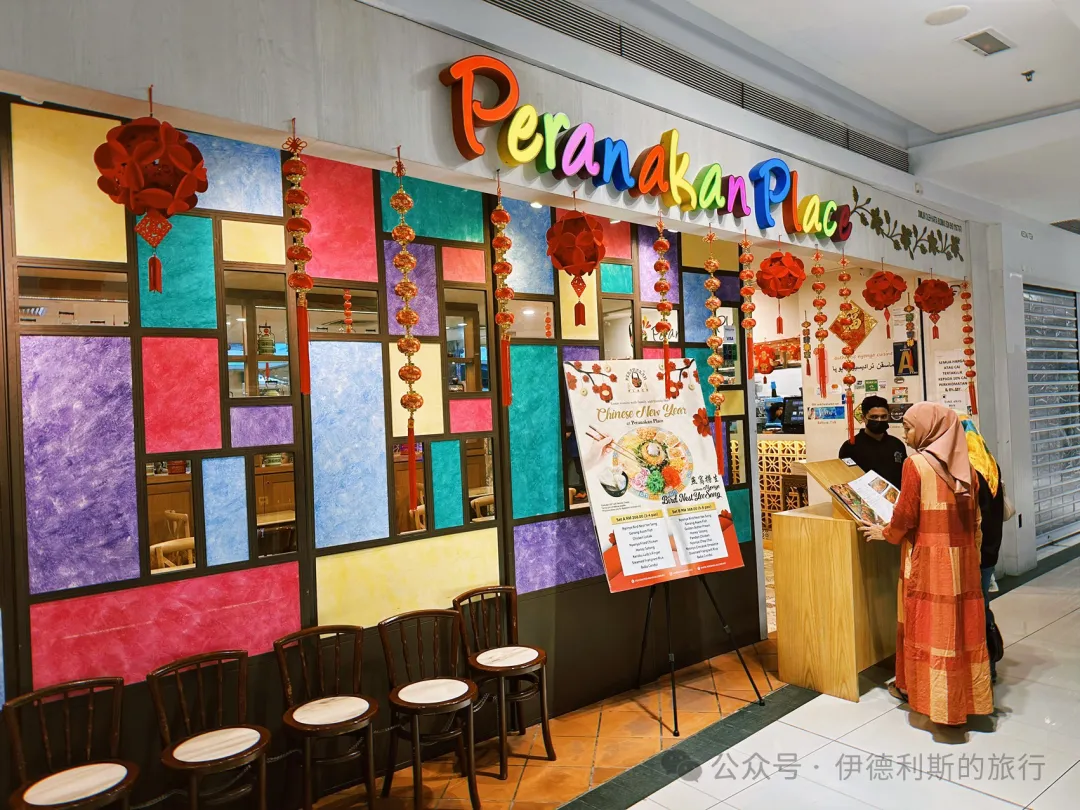
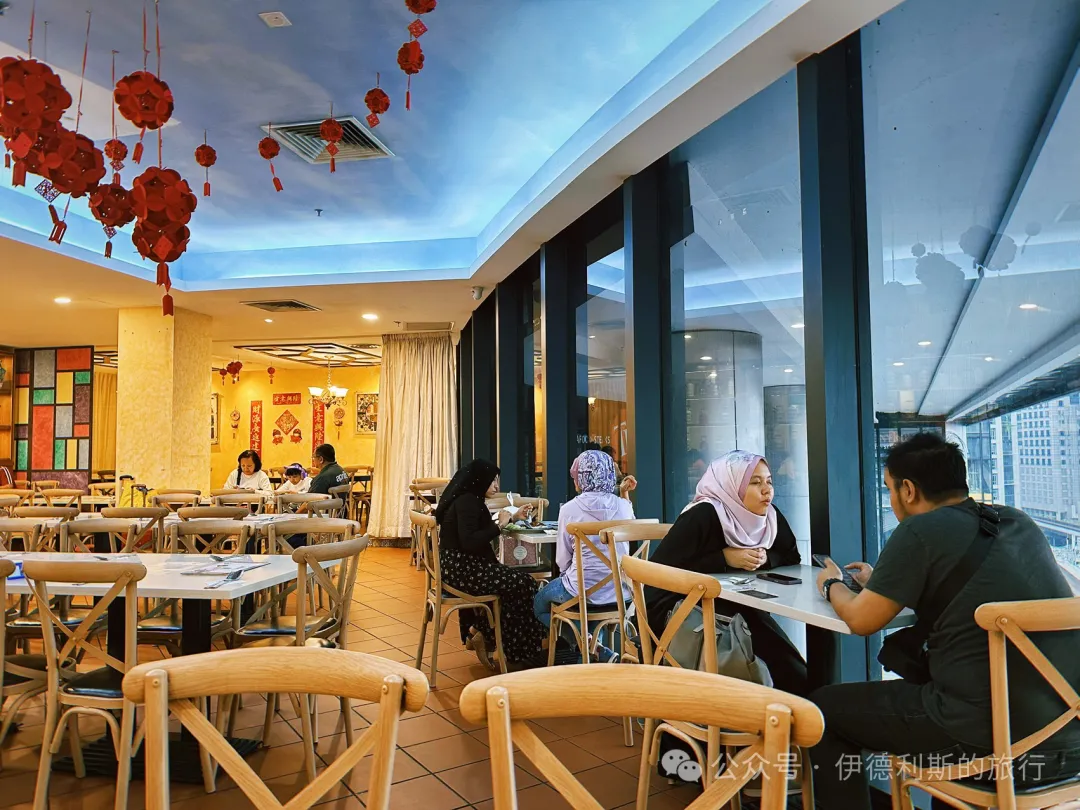
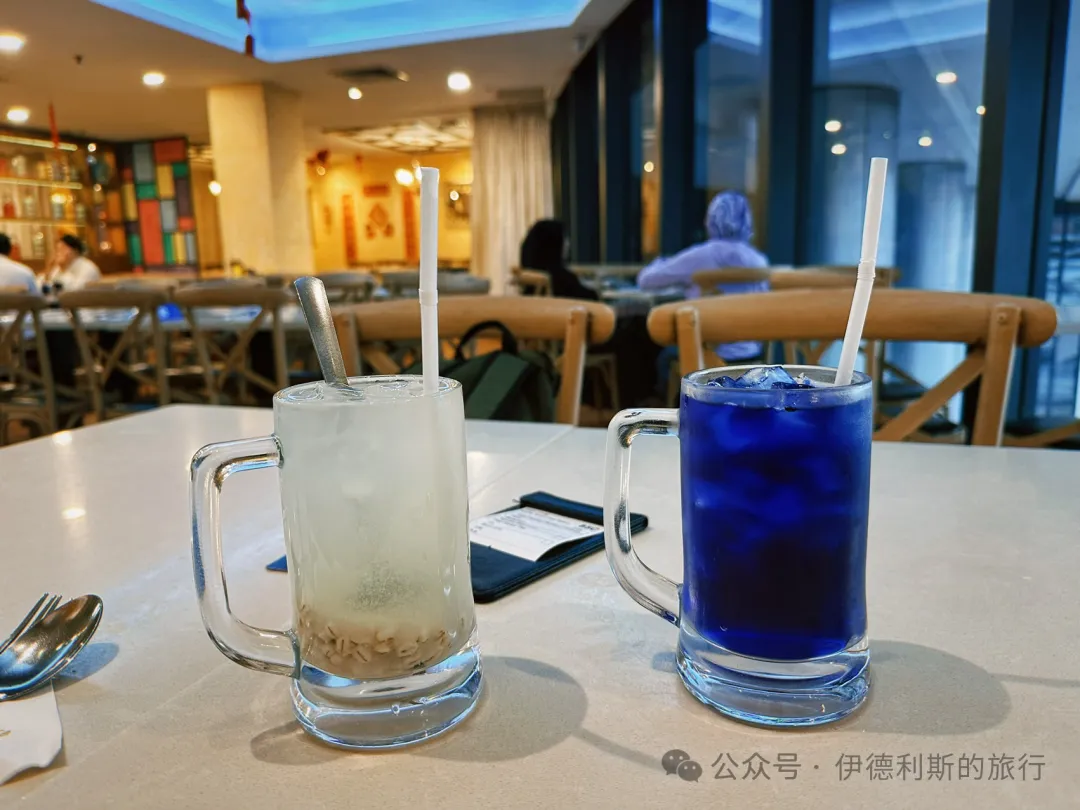
Whether it is halal Chinese food or halal Nyonya cuisine, the Klang Valley area where Kuala Lumpur is located has the highest number of options in Malaysia. Just inside the NU Sentral mall opposite Kuala Lumpur Sentral station, there are three halal Nyonya restaurants, making it a great place for traveling friends (dosti) to grab a bite. We ate at the largest of the three, Peranakan Place, which has several branches in Kuala Lumpur and Malacca. We ordered the blue pea flower tea and barley lime water, both of which were very unique.
Singapore
Chee Kong clear soup (qing tang)
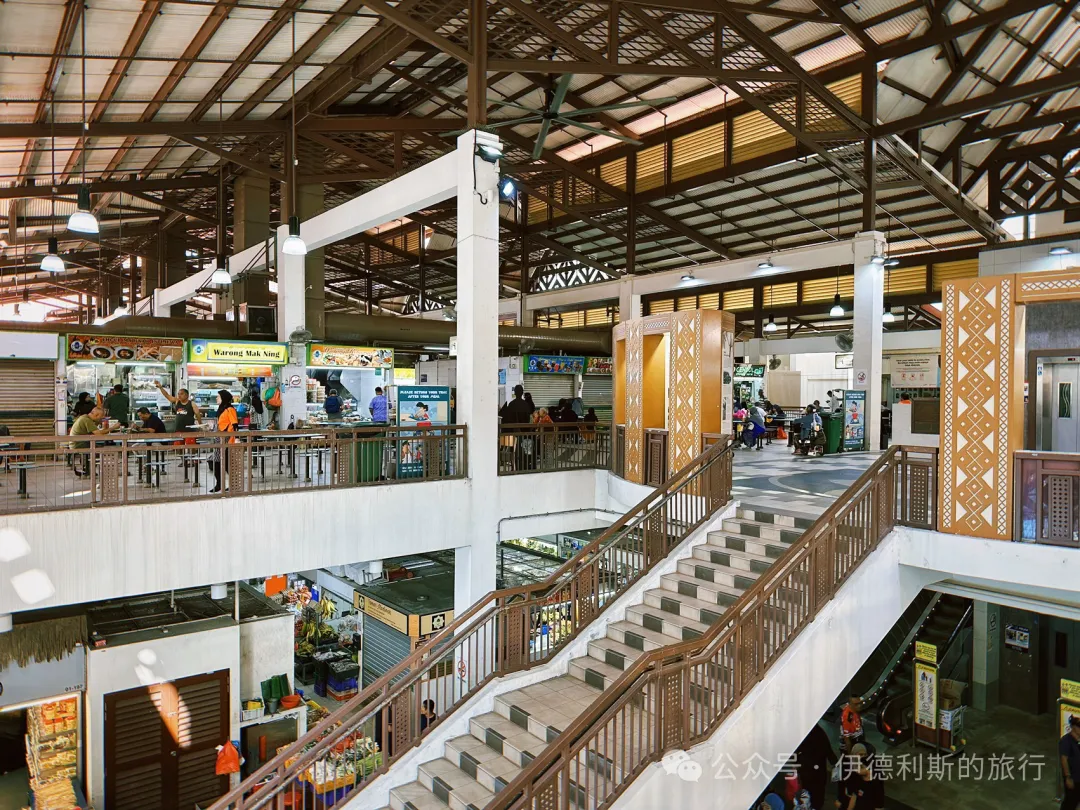
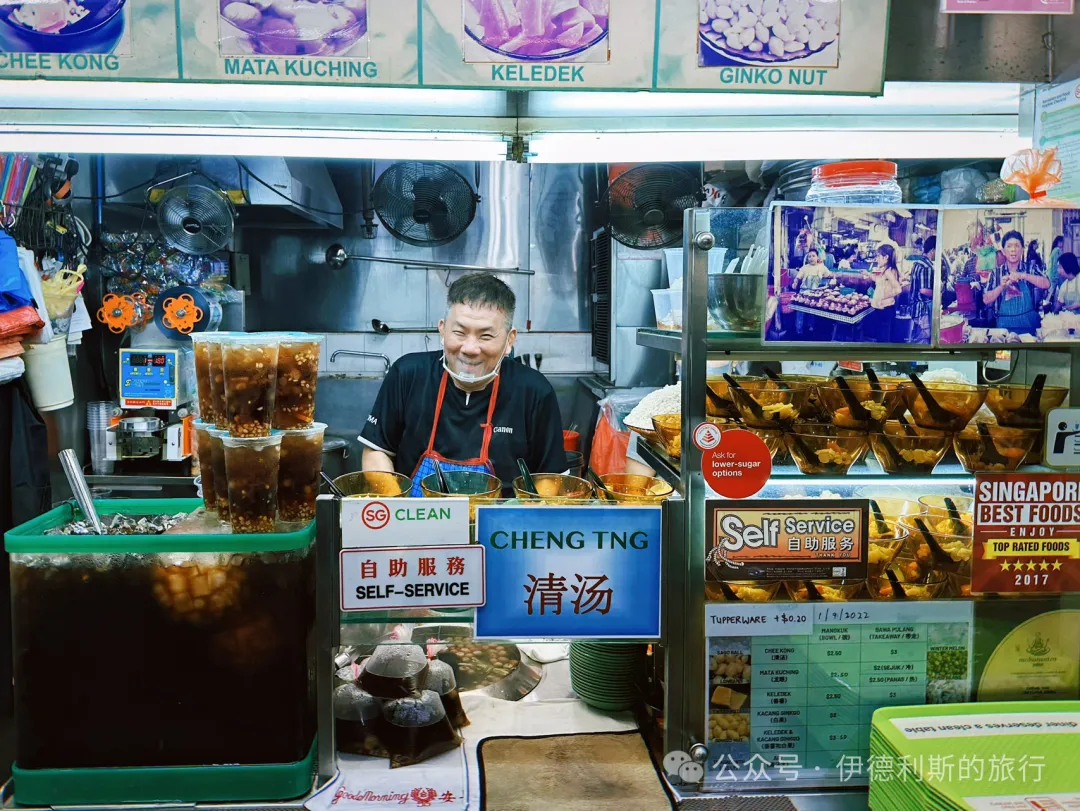
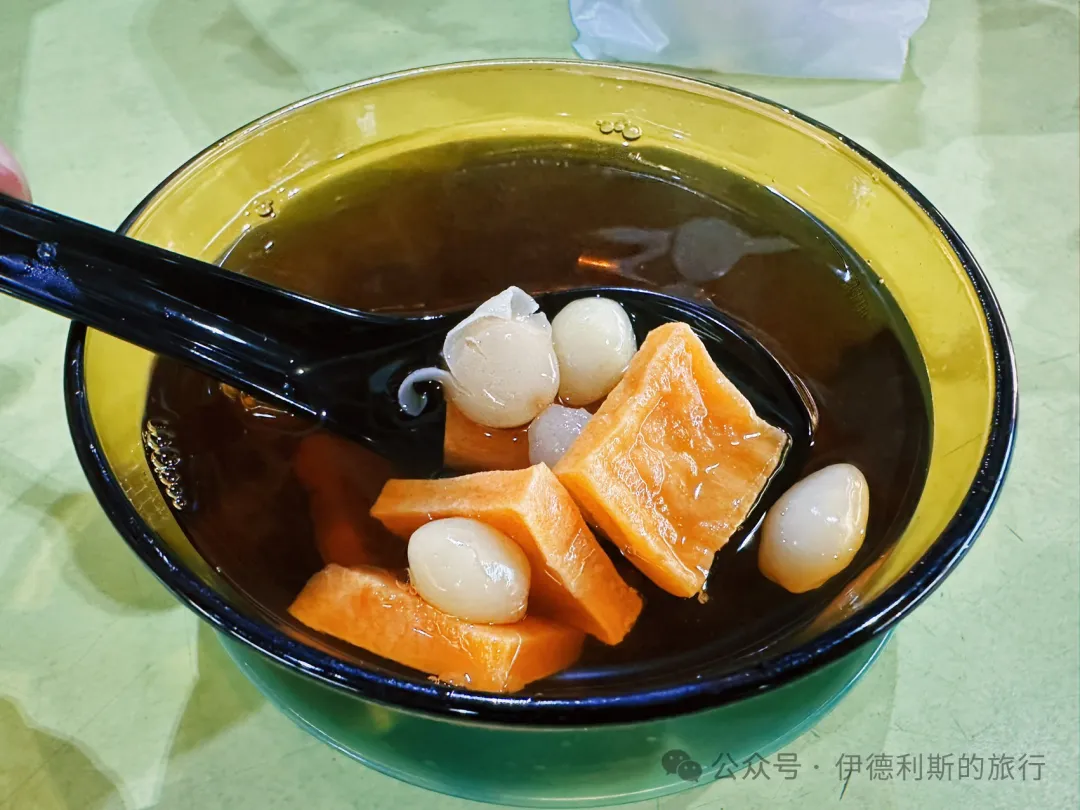
Geylang Serai is located near the Geylang River in eastern Singapore. The Geylang Serai Malay bazaar (market) dates back to the 1920s. During World War II, the Japanese turned it into an amusement park, but after the war, it returned to being a bustling Malay bazaar where local Malay residents come to shop. The only Chinese stall in the bazaar is Chee Kong clear soup (qing tang), an old shop that opened in the 1950s. You can add longan, sweet potato, and ginkgo nuts to the clear soup, and it can be served hot or cold. Drinking a bowl of clear soup is very refreshing after eating spicy Malay food.
Three-layer milk tea
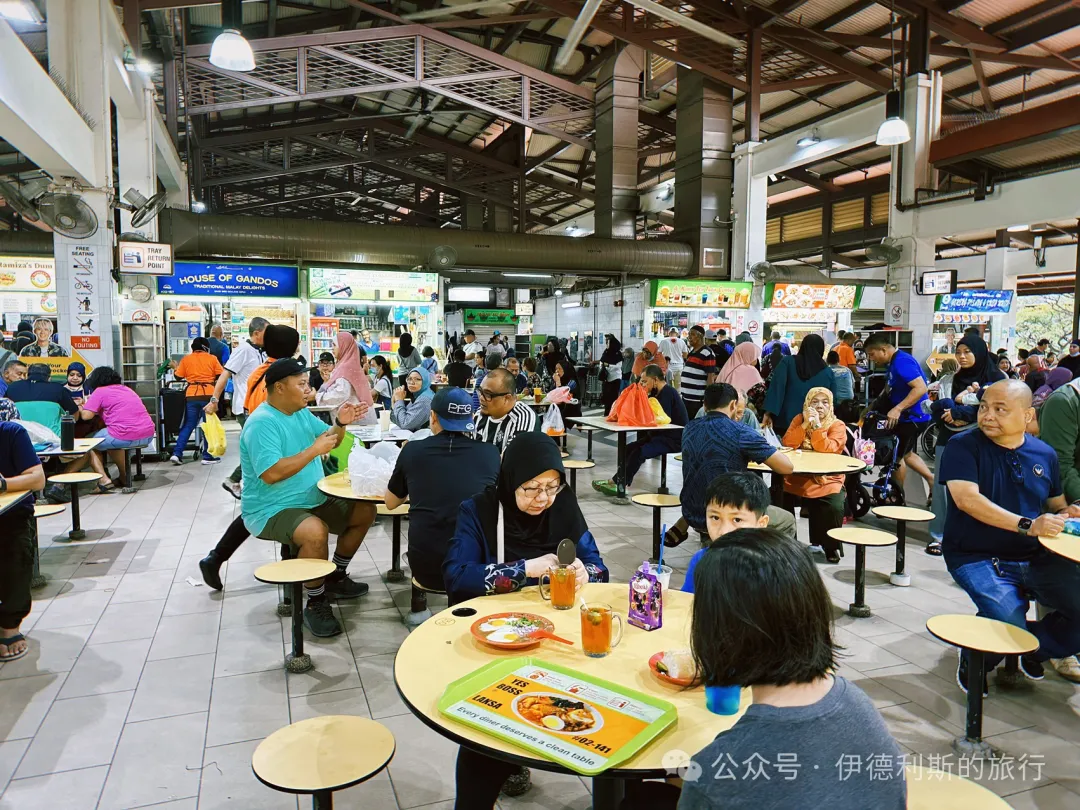
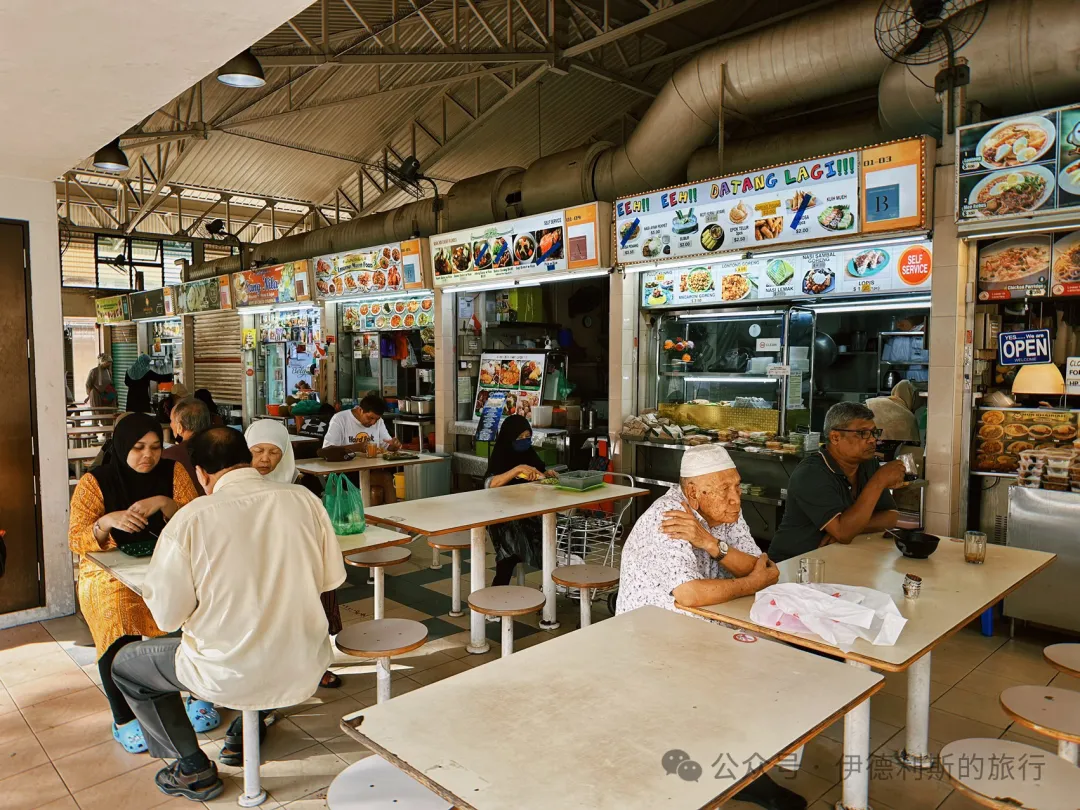
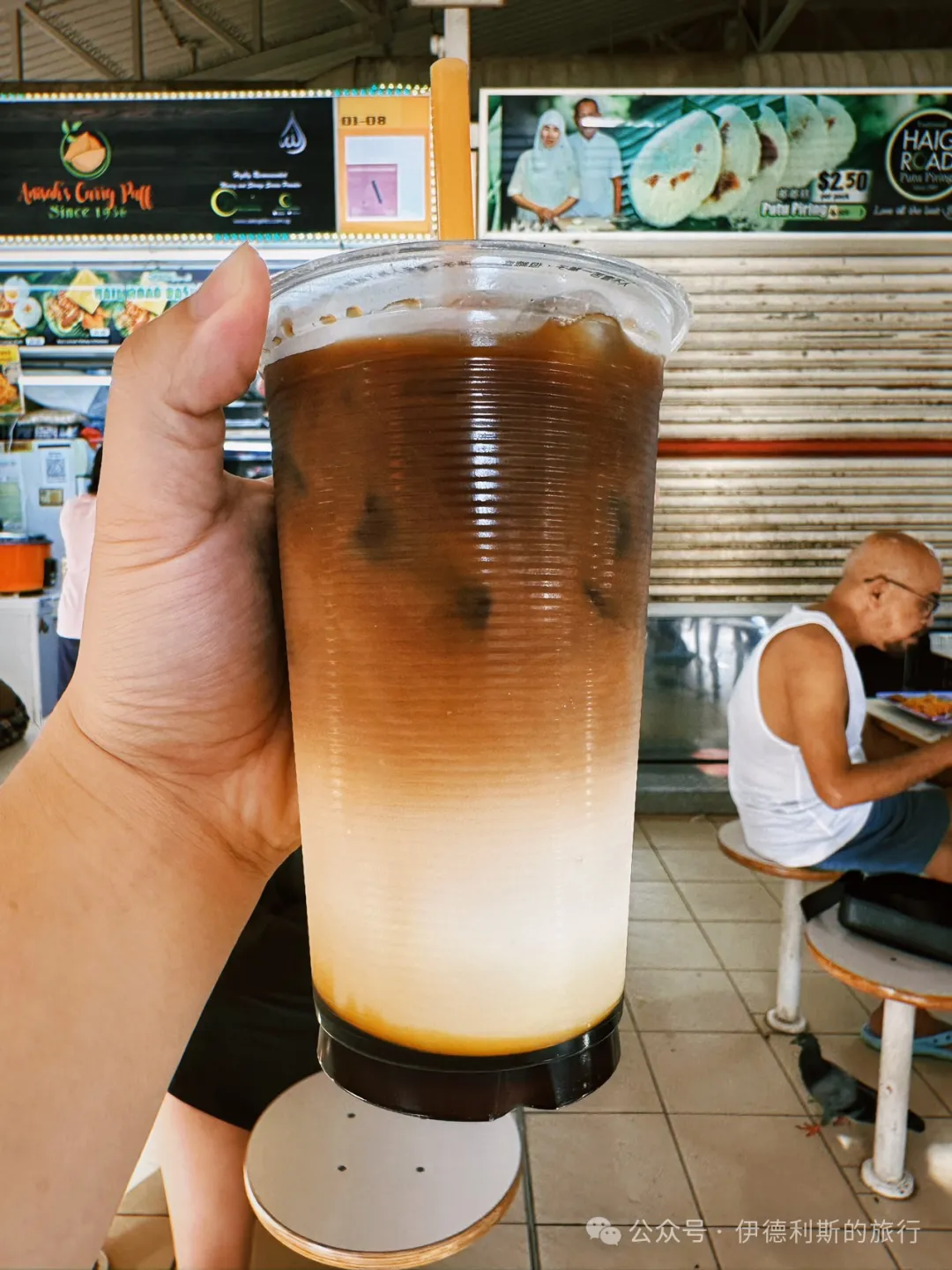
Haig Road Market & Food Centre has a lot of Malay delicacies. We drank the classic three-layer milk tea, which uses palm sugar, milk, and black tea to create three distinct layers with a rich taste.
Pulled tea (teh tarik) and Milo Dinosaur
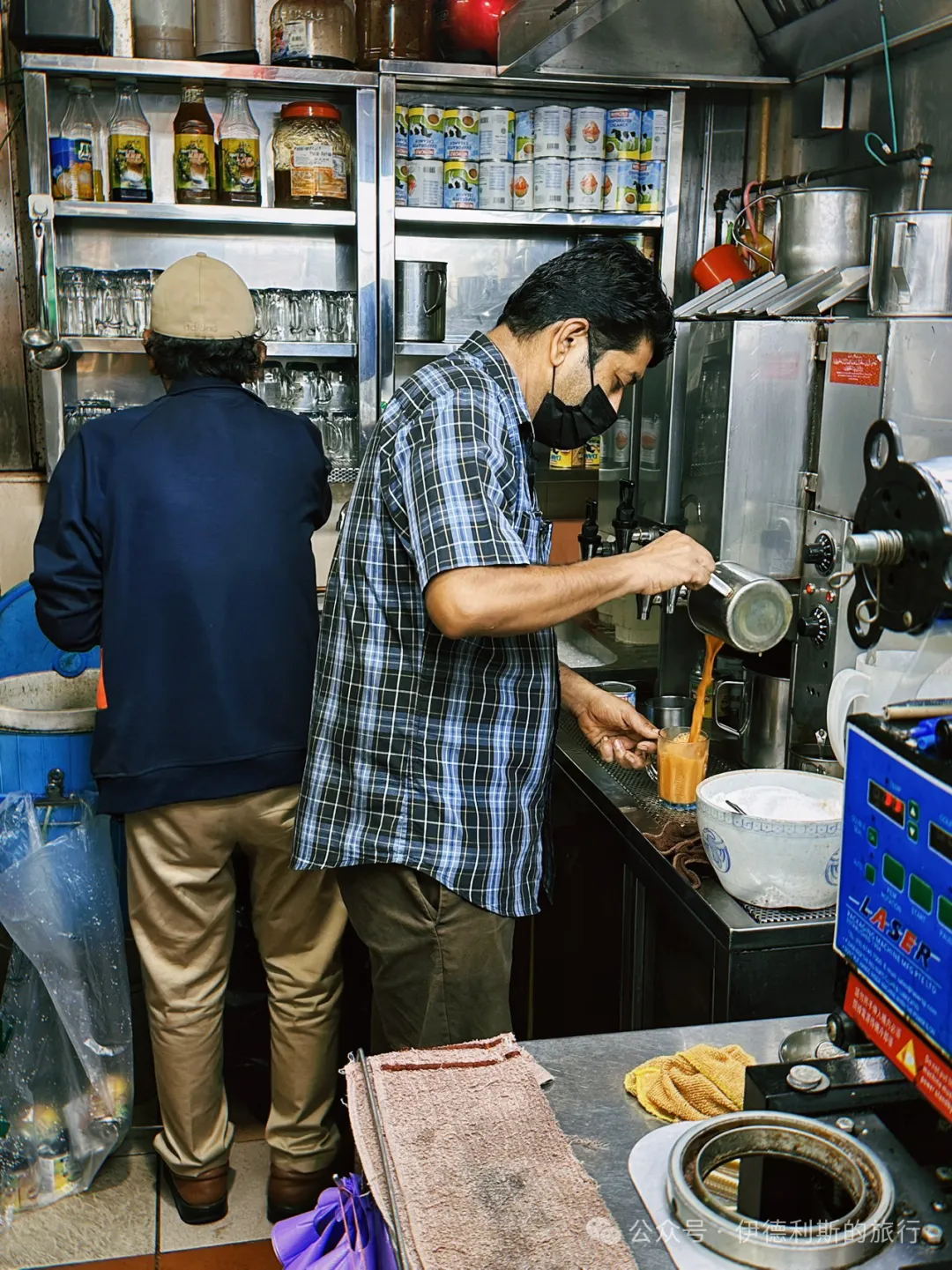
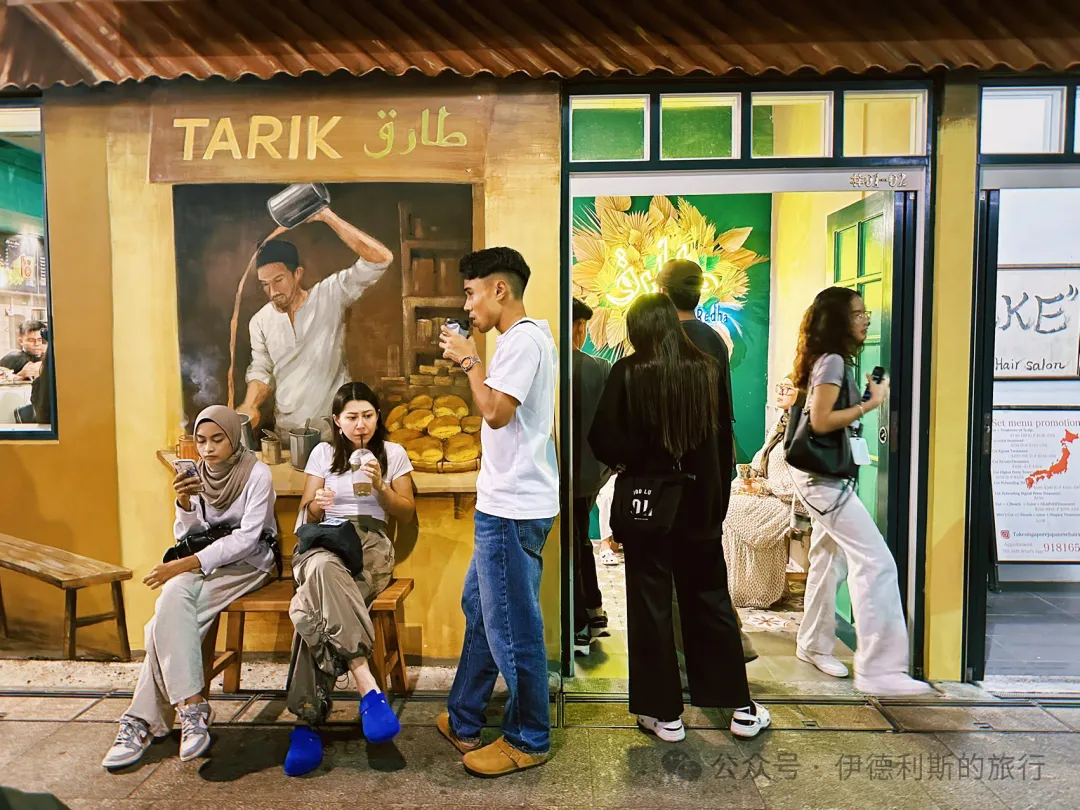
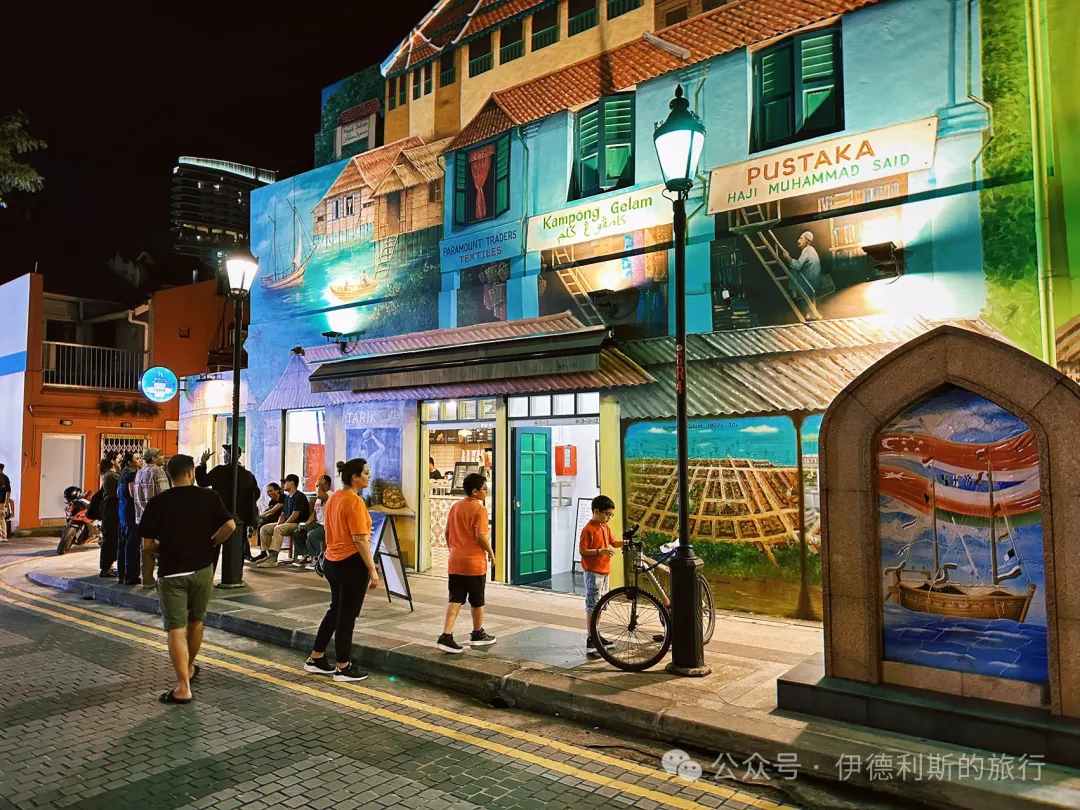
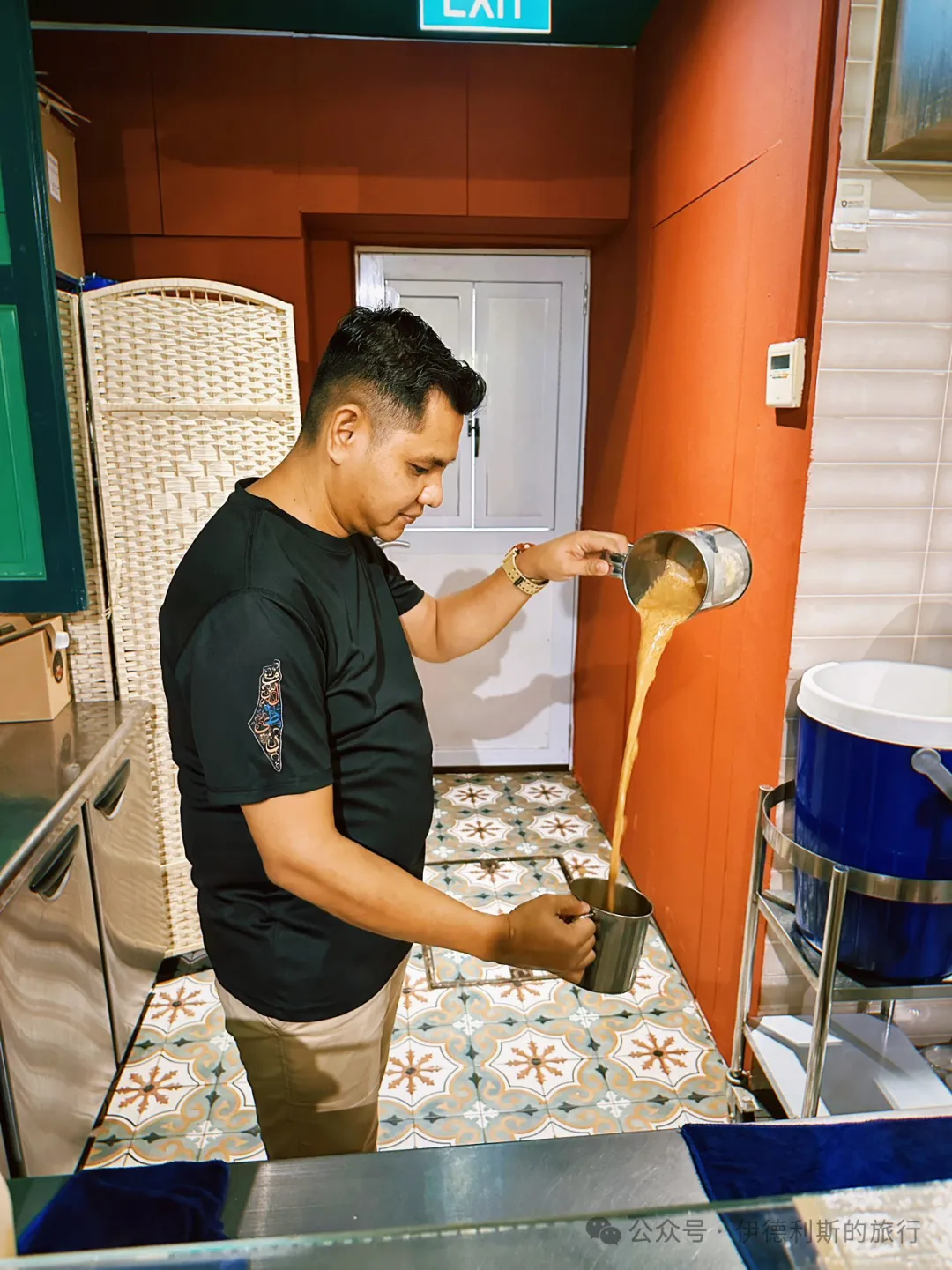
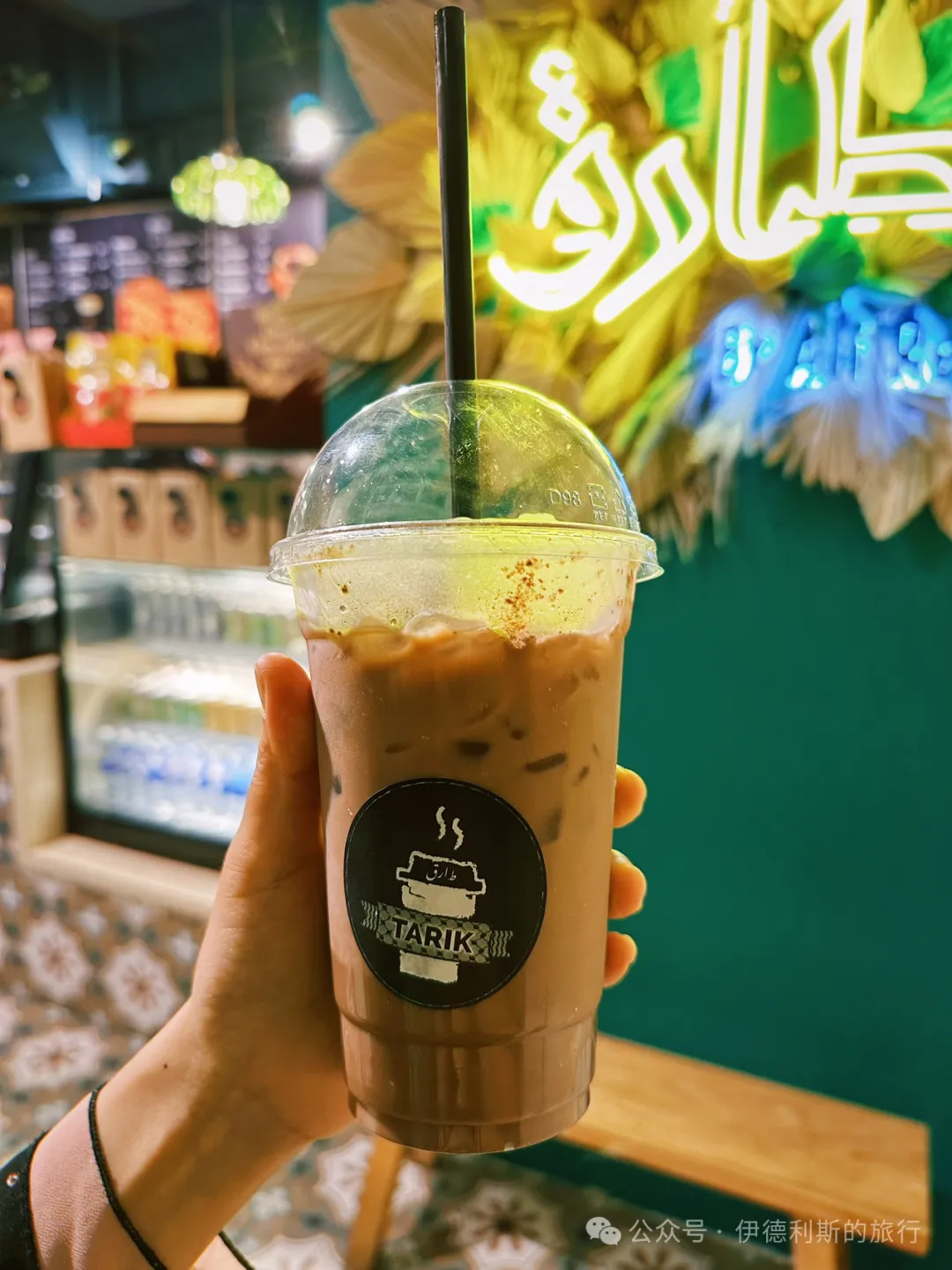
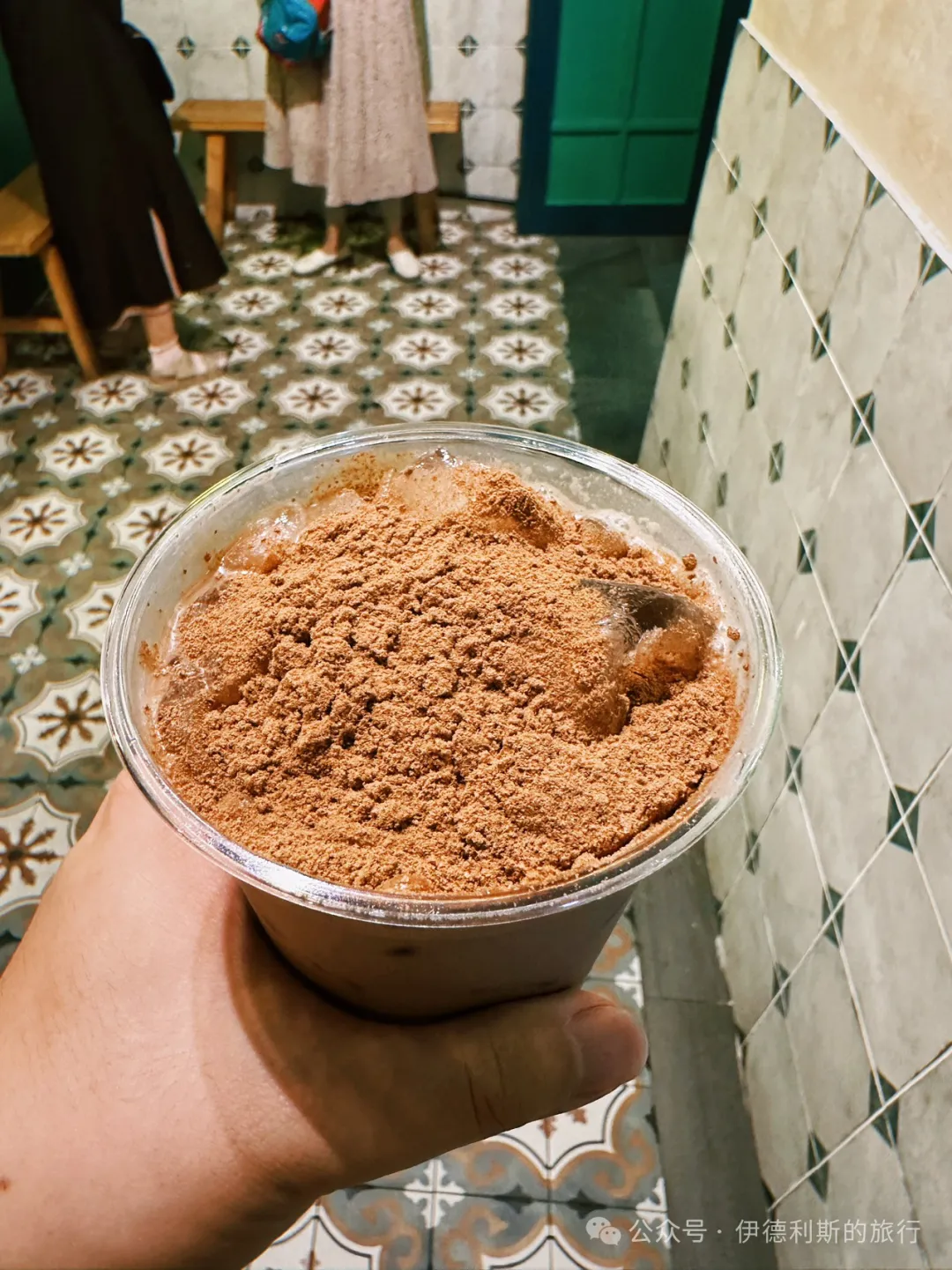
We had a cup of the classic Nanyang pulled tea (teh tarik) at Tarik, a shop next to the Sultan Mosque in Kampong Glam. Local Malay youth really love this place. Tarik means 'pull' in Malay. By mixing black tea and condensed milk and pouring it back and forth between two containers with outstretched arms, the tea cools down and becomes frothy. We also ordered a cup of Milo, which is a chocolate malt powder from Nestlé. People in Malaysia and Singapore like to sprinkle Milo powder on iced Milo, which they call Milo Dinosaur.
Ginger tea
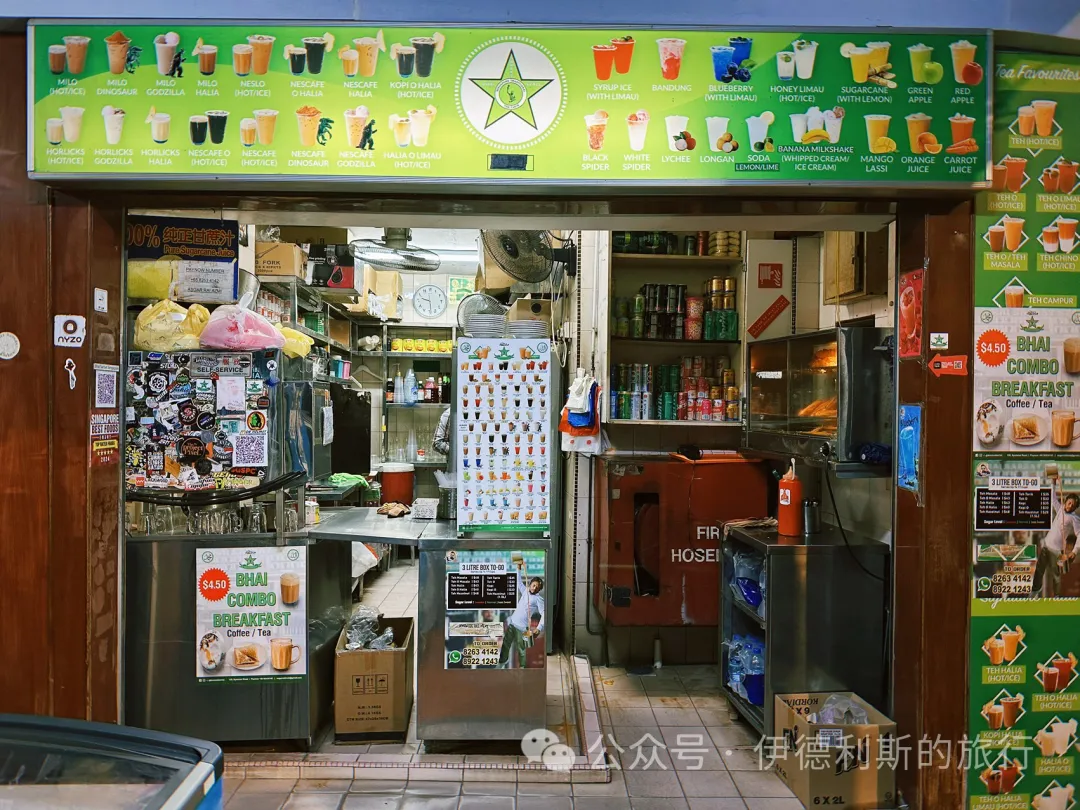
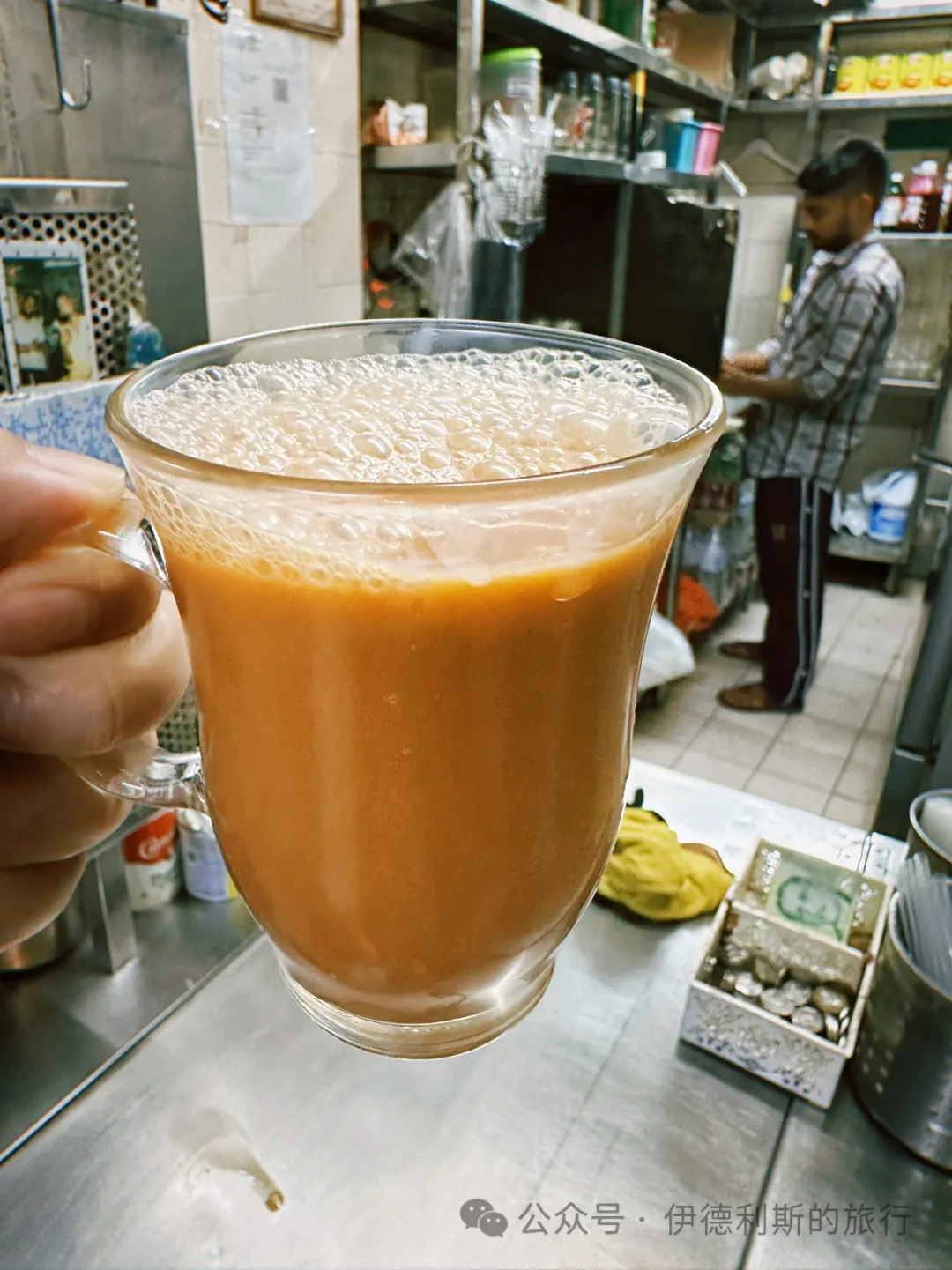
Bhai Sarbat on Baghdad Street was started by an Indian Muslim in the 1950s and has been around for 70 years. Bhai means brother in Urdu. Bhai Sarbat started as a street pushcart stall and moved into this shophouse on Baghdad Street in the 1970s. Today it sells hundreds of drinks, but the ginger tea is still the most famous.
Indonesia
Yogyakarta
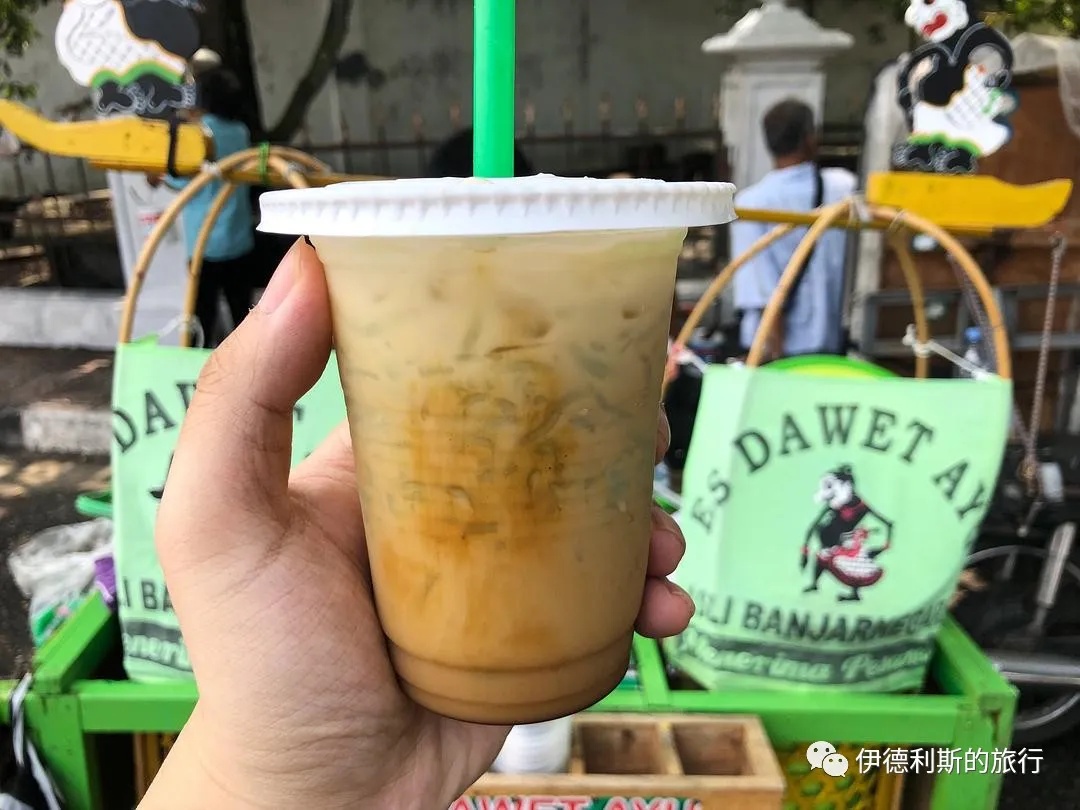
Es Dawet Ayu
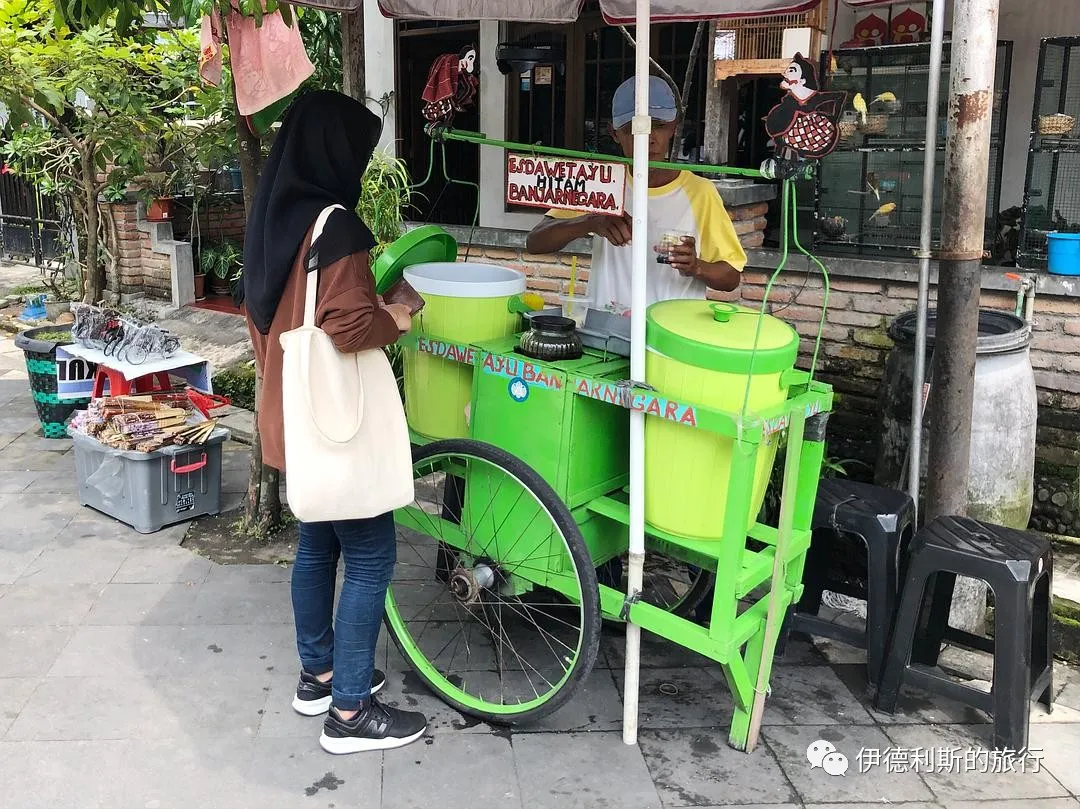
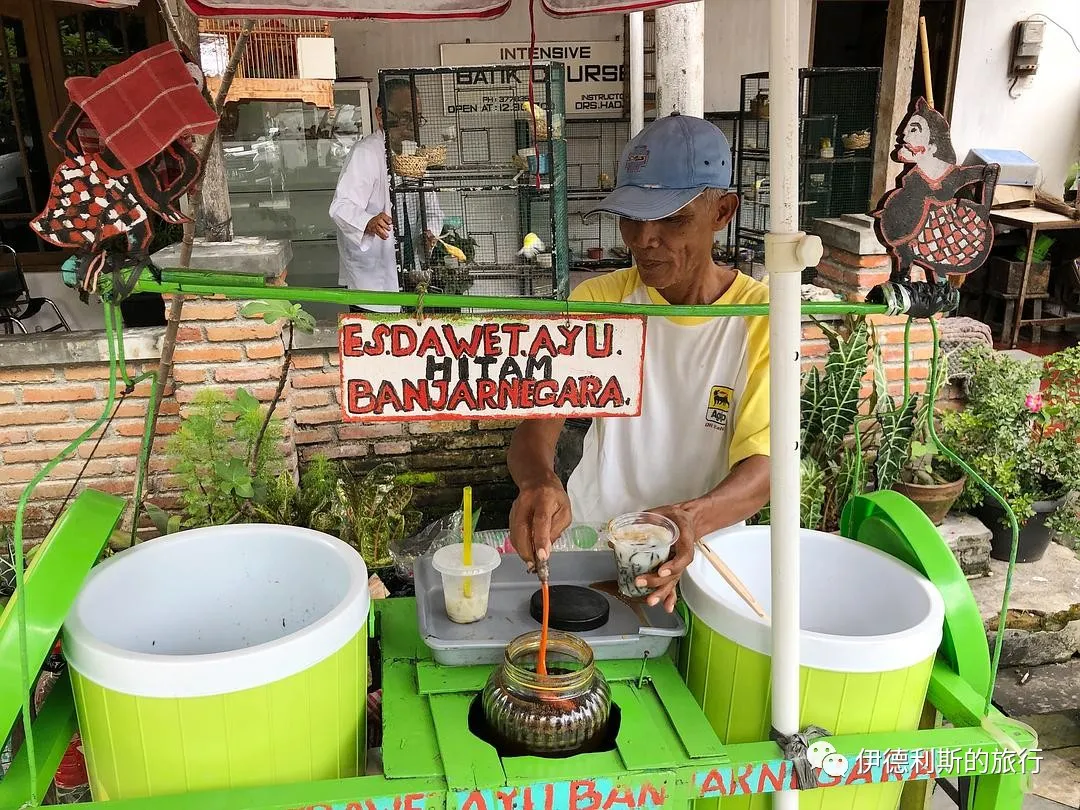
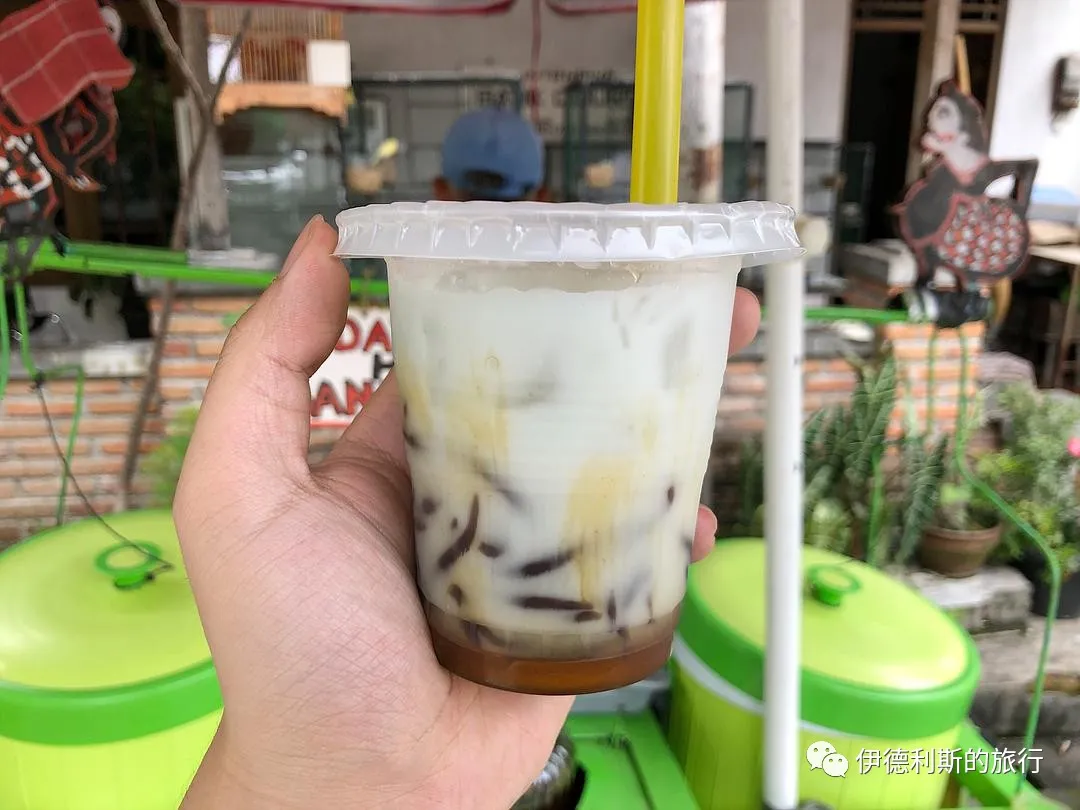
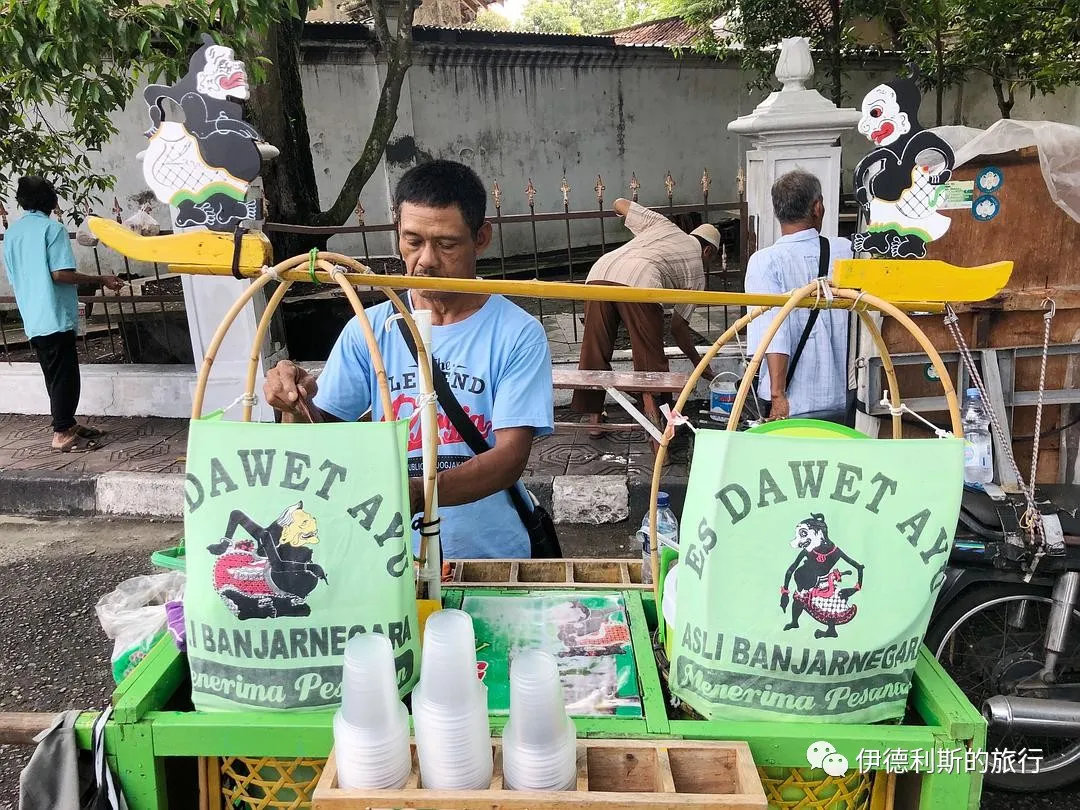
Es Dawet Ayu is a specialty iced drink from Central Java that comes from the small town of Banjarnegara. Its main ingredients are rice flour, glutinous rice flour, coconut milk, palm sugar syrup, and grass jelly.
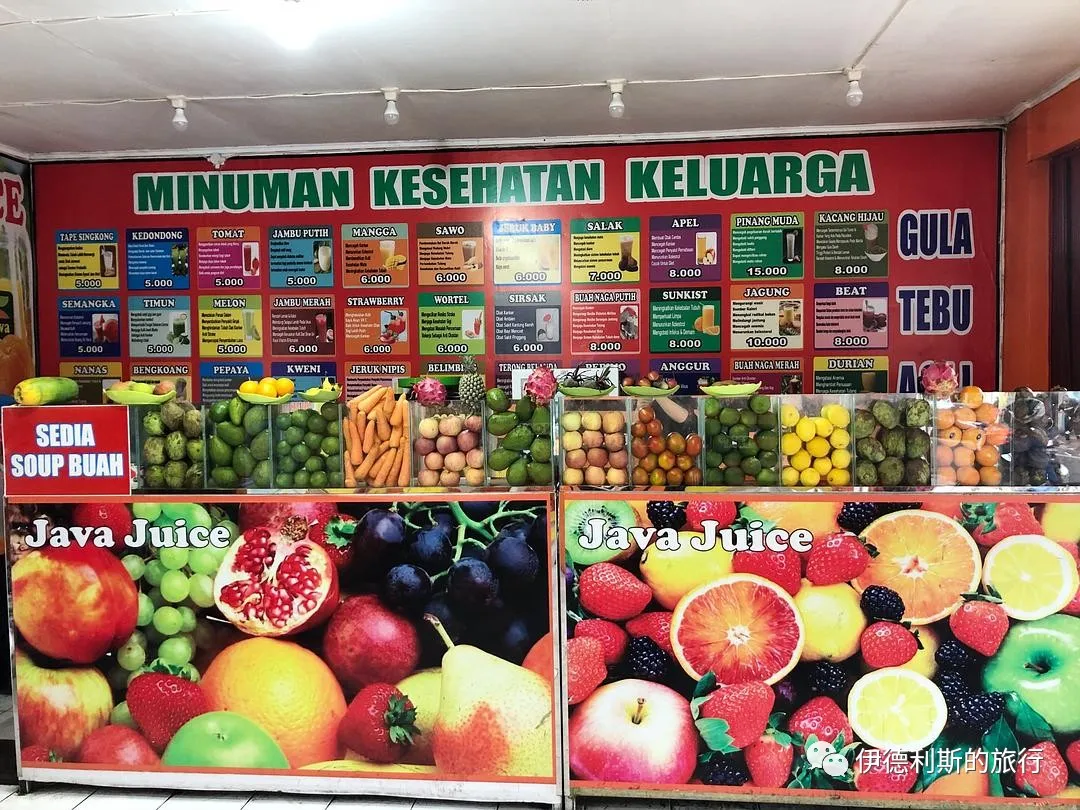
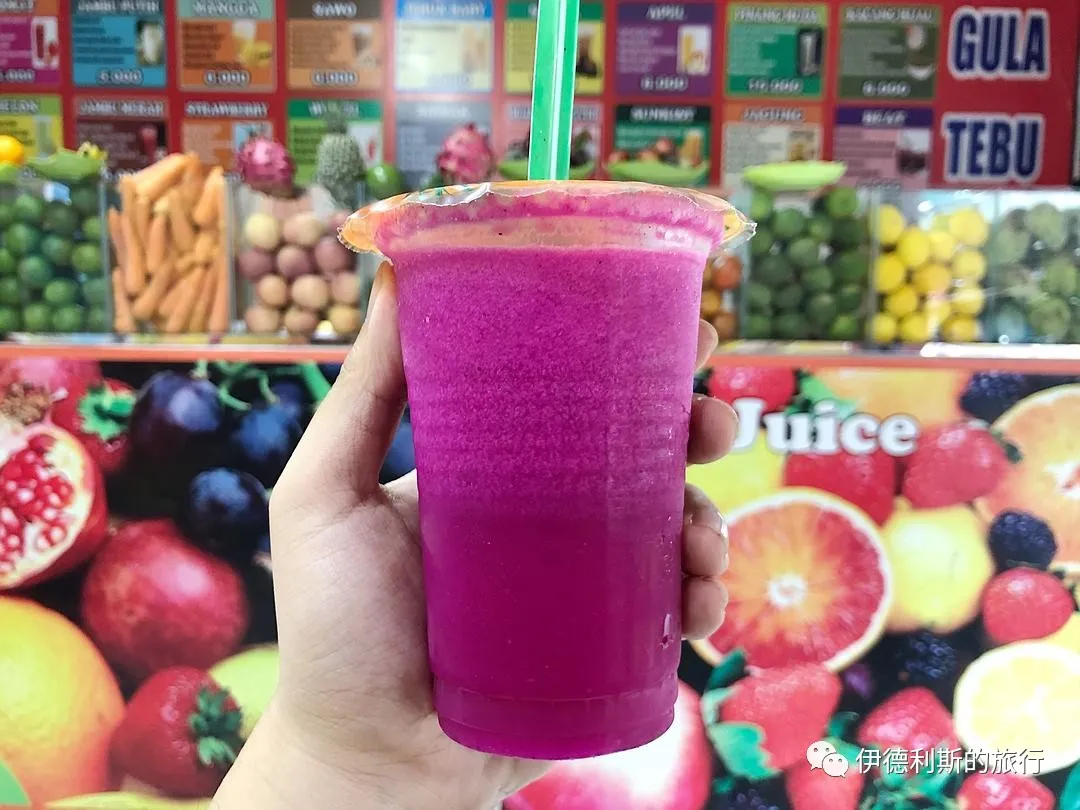
Dragon fruit juice
Freshly squeezed dragon fruit juice on the streets of Yogyakarta. The juices in Java are really rich.
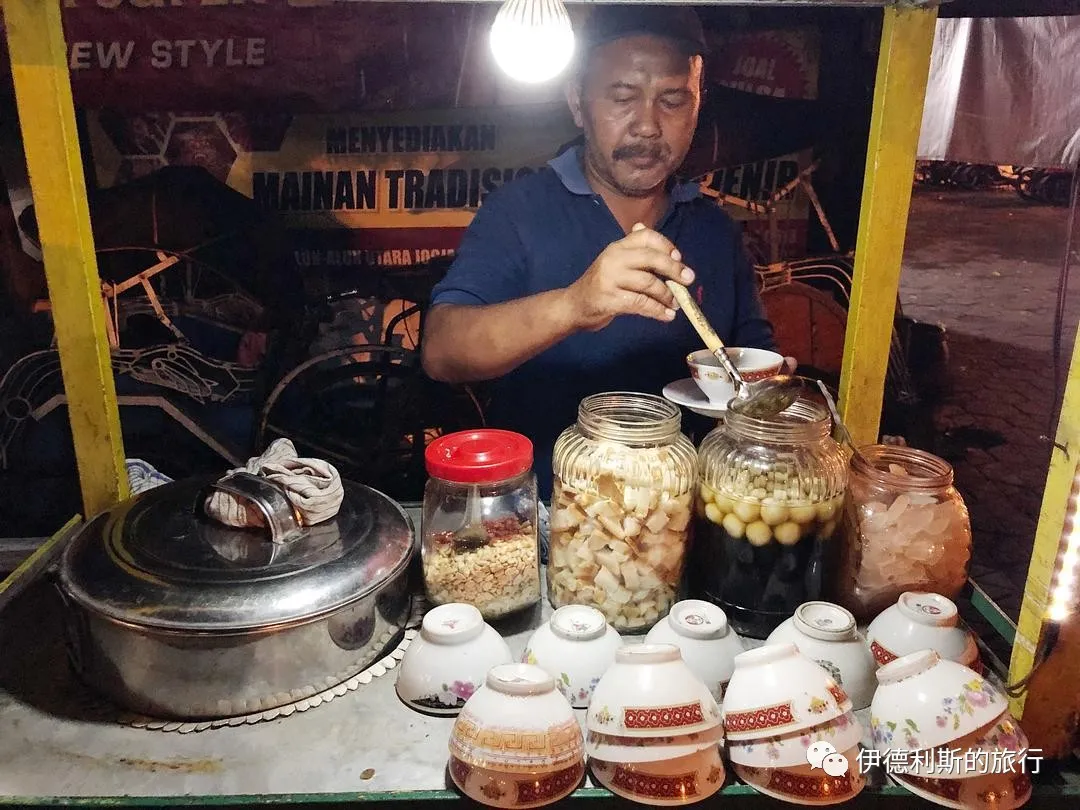
Sekoteng
Sekoteng is a Javanese specialty hot ginger drink made with peanuts, bread slices, and pearl flowers. Hot drinks are still quite rare in Java. It feels like the ginger helps remove dampness.
Solo
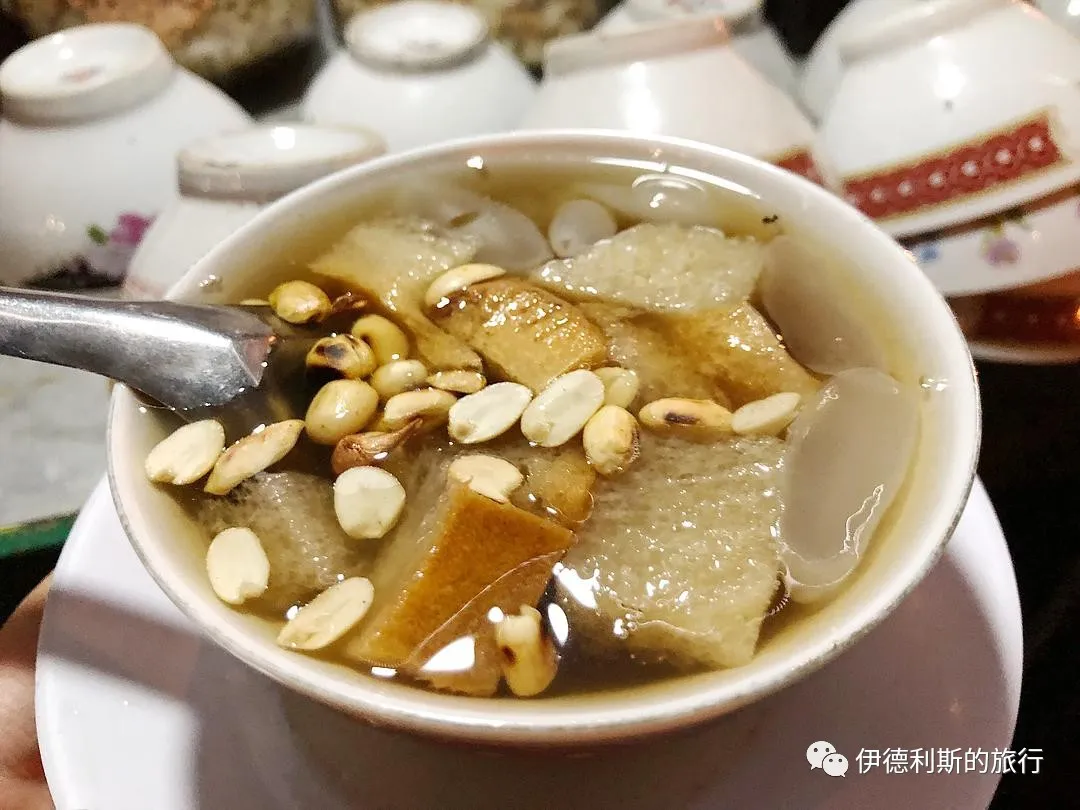
Es Dawet Telasih
Es Dawet Telasih is a Solo specialty iced drink made of coconut milk, palm sugar, cendol (rice flour jelly), bubur sumsum (coconut rice pudding), basil seeds, and black glutinous rice.
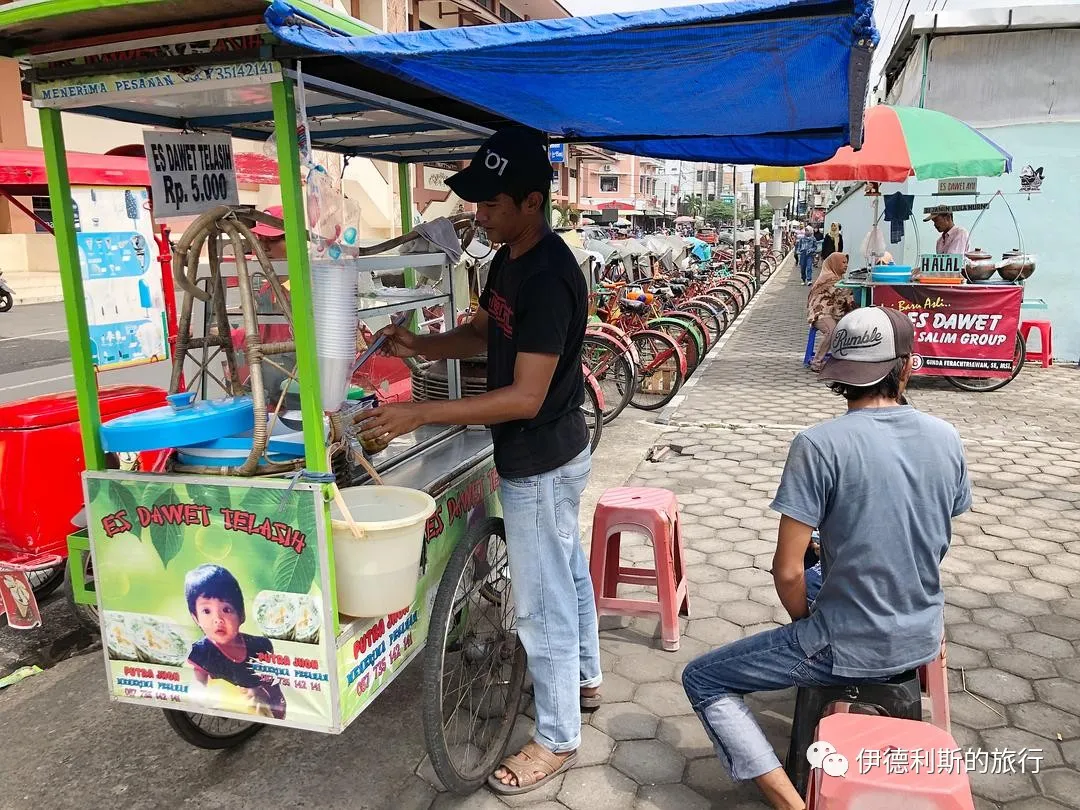
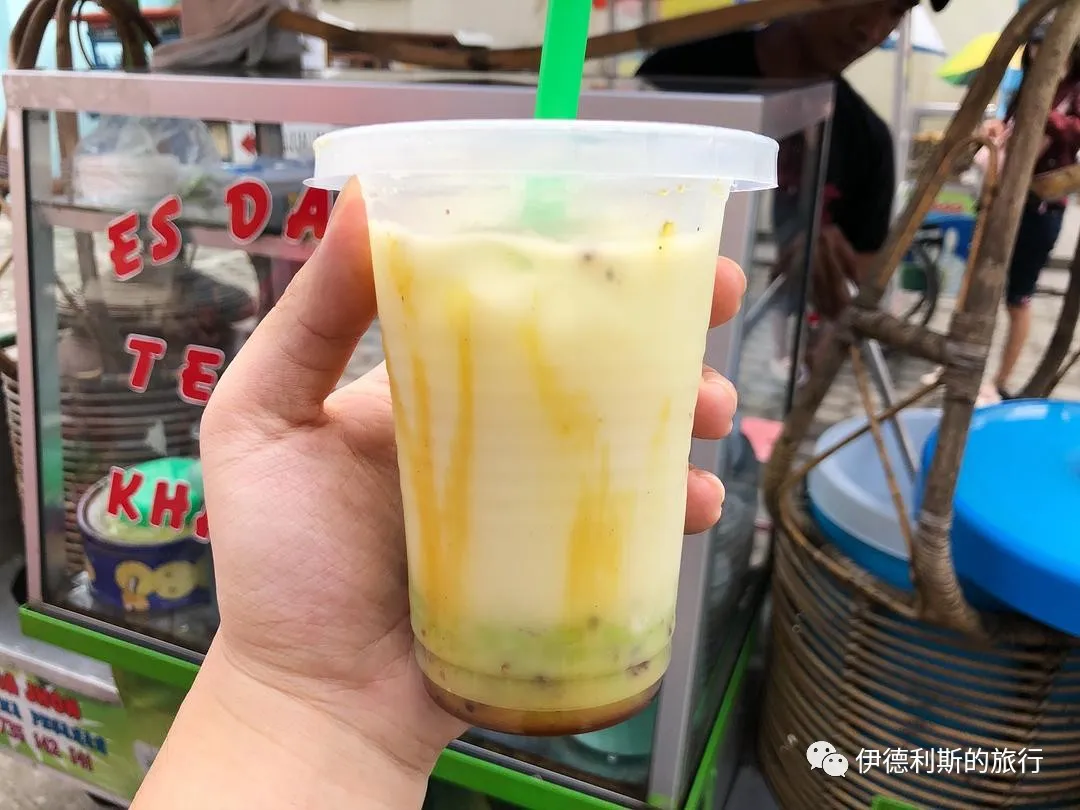
Es Dawet Durian is Es Dawet Telasih with durian added.
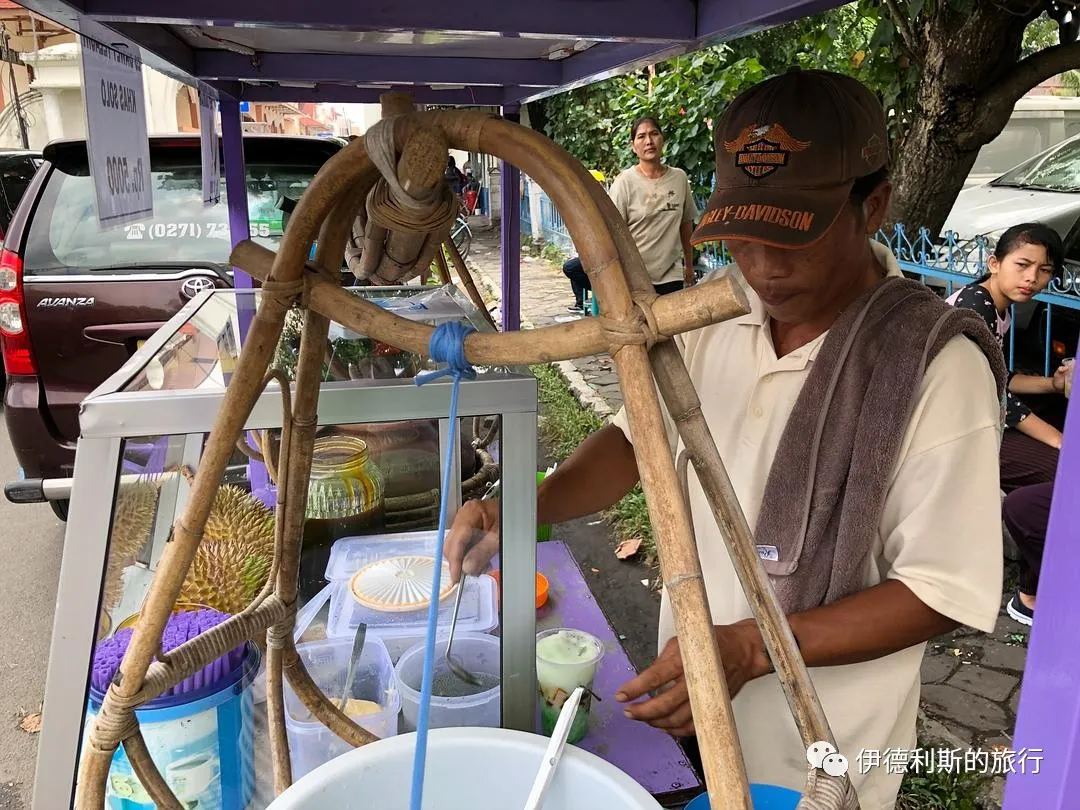
Jamu
Jamu is a specialty Javanese drink, which is a traditional Javanese herbal medicine mixed with honey and palm sugar.
Kudus
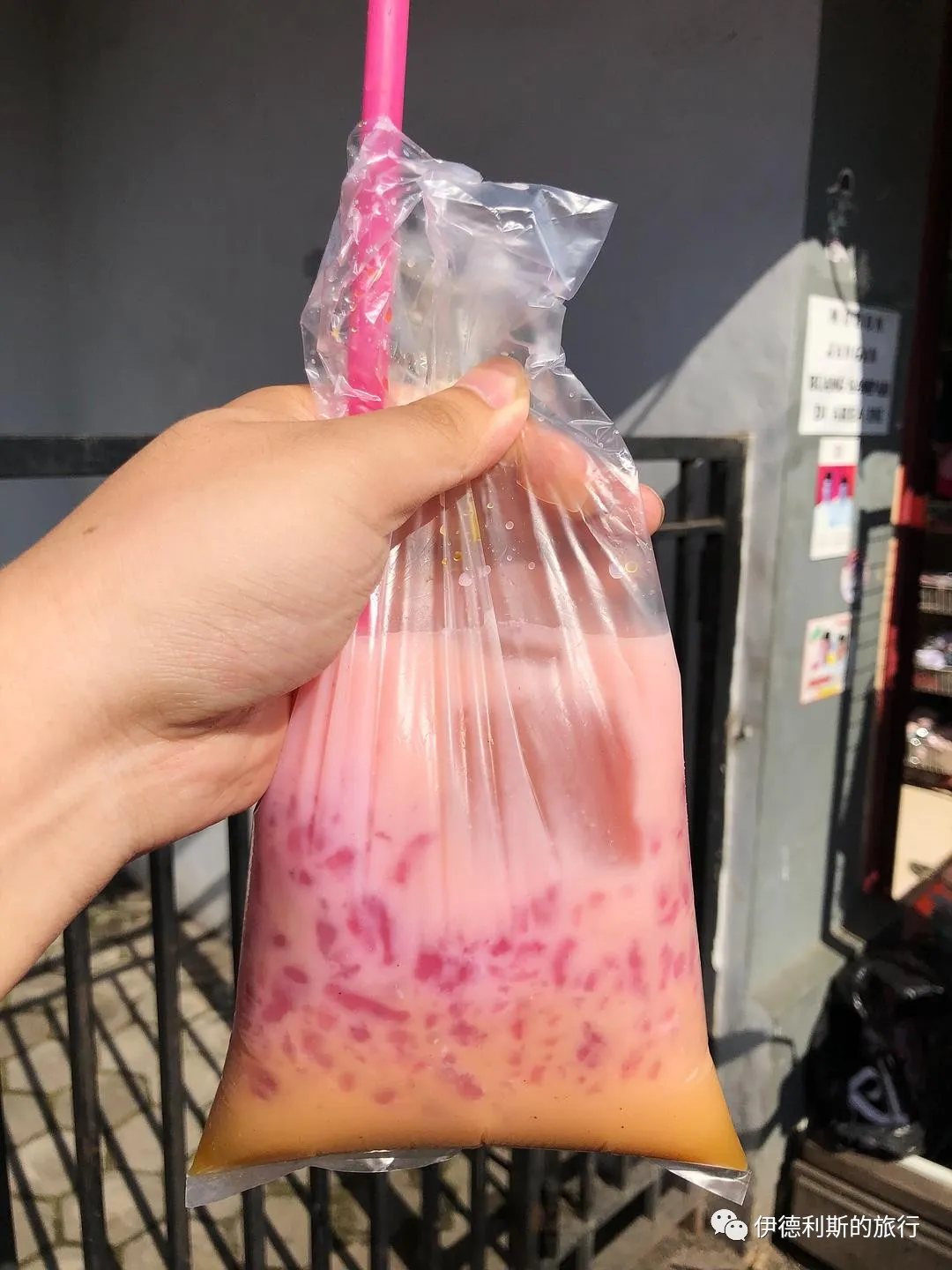
Es Buah
I drank Es Buah, a Javanese iced drink with various fruits added, in Kudus.
Banten
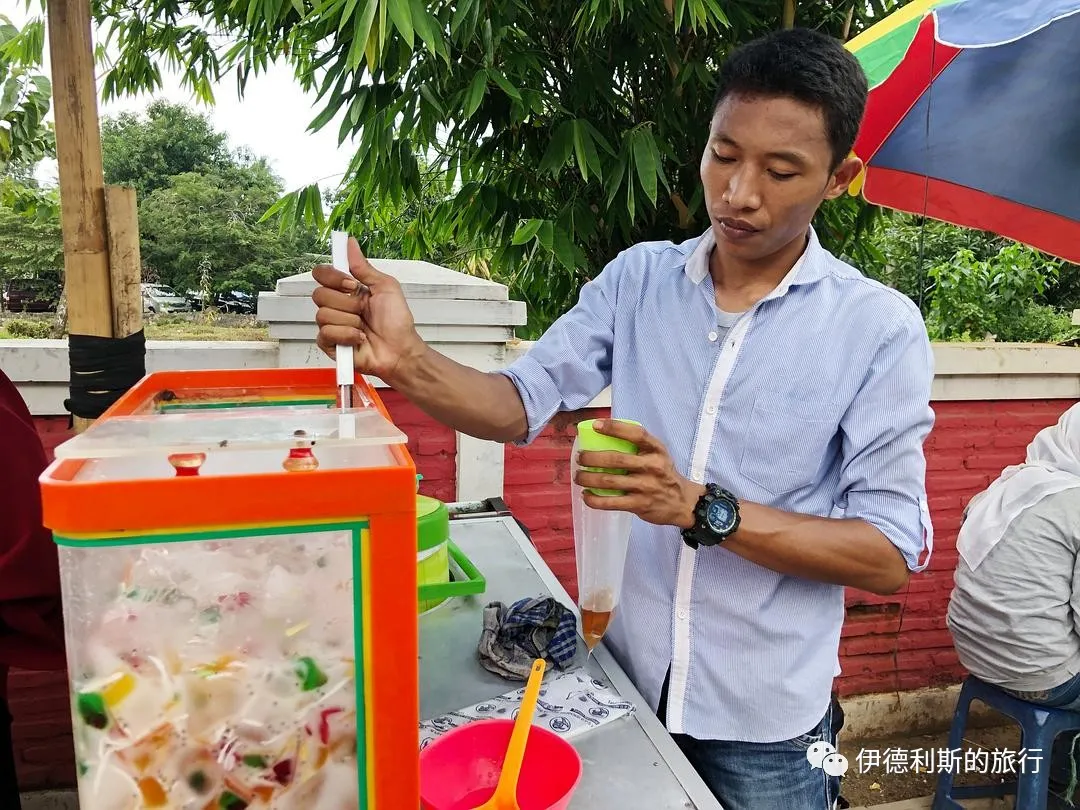
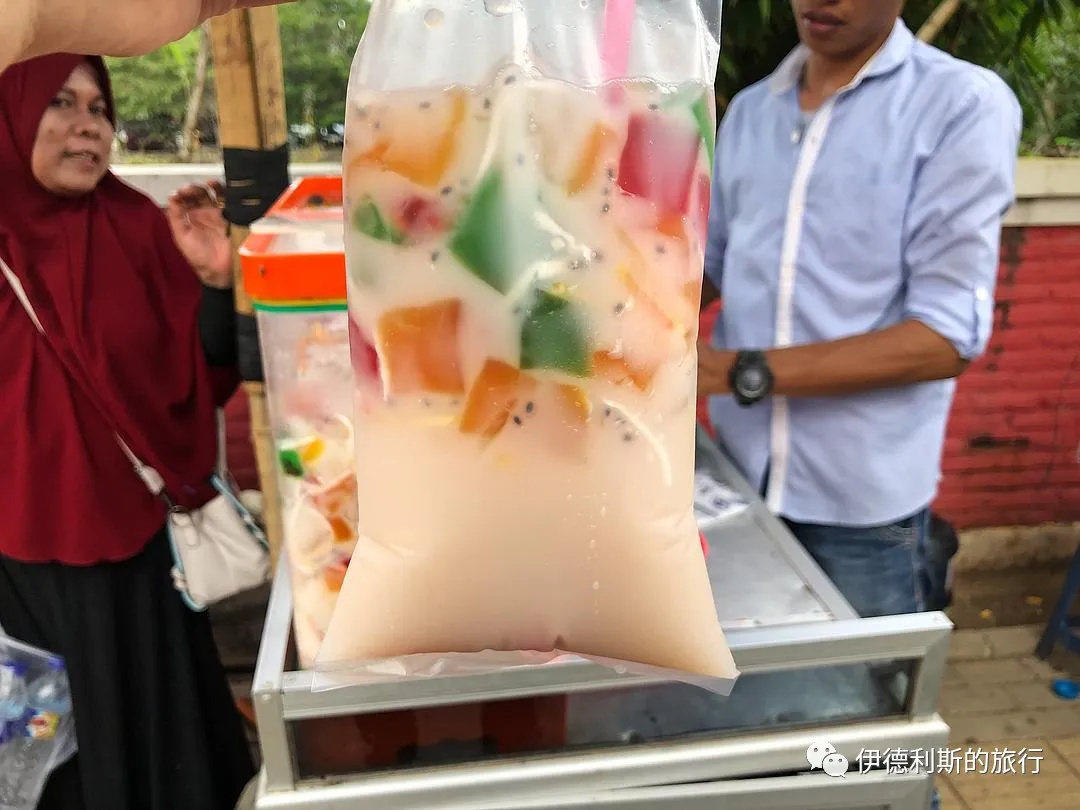
Mixed ice drink (Es Campur)
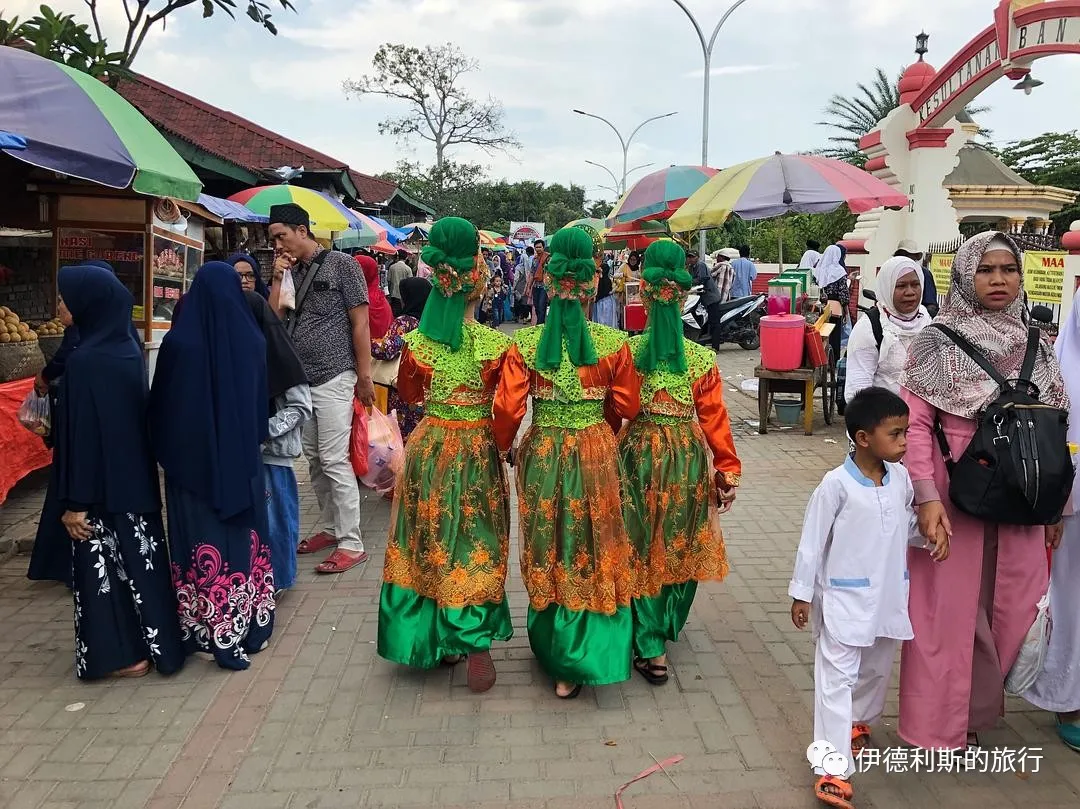
As a holy site, the Great Mosque of Banten attracts a constant stream of visitors every day, and a very lively bazaar has formed around it. At the bazaar, I drank a mixed ice drink (Es Campur) made with coconut milk, red sugar syrup, coconut meat, and fruit jelly.
Jakarta
Layered rice flour drink (Selendang Mayang)
Jakarta Old Town (Kota Tua Jakarta), also called Old Batavia (Oud Batavia), was the most important Dutch colonial outpost in Southeast Asia and served as the headquarters for the Dutch East India Company from the 17th to the 19th century. The center of Old Batavia is Fatahillah Square, where the main building is the Jakarta History Museum. The Jakarta History Museum was built in 1710 and was formerly the Batavia City Hall. The museum courtyard has a small area dedicated to traditional Betawi snacks, where I drank a rare, historic Batavian ice drink called layered rice flour drink (Selendang Mayang). Layered rice flour drink (Selendang Mayang) is made from rice flour, vanilla powder, pandan leaves, red sugar syrup, and coconut milk.
The Betawi people are a unique ethnic group that formed in Jakarta. In 1619, the Dutch established Batavia as the trade and administrative center for the Dutch East India Company. After the Dutch East India Company signed a formal peace treaty with the Sultanate of Banten in 1684, the swampy areas around Batavia could finally be cultivated. More and more people lived outside the city walls, including Malays, Sundanese, Javanese, Minangkabau, and Bugis people. Between the 18th and 19th centuries, the various ethnic groups living in Batavia began to merge. Over the course of a hundred years, they finally formed the modern Betawi people by the early 20th century. The Betawi people speak a version of Malay mixed with many words from Fujian Chinese, Arabic, and Dutch, known as Betawi Malay. It is the only Malay-speaking region on the northern coast of Java. Betawi cuisine is also strongly influenced by Indonesian Chinese, Arab, European, and local Sundanese and Javanese food.
Summary: This article follows a tasting route through drinks from Malaysia, Singapore, and Indonesia, from street-side juices to regional bottled drinks and cafe favorites. It keeps the original drink names, places, prices, photos, and travel notes for readers looking for everyday food culture in Southeast Asia.
Malaysia
Malacca: avocado juice, longan lemon tea, and lime plum juice (lime plum shuizhi).
Penang: sour plum guava juice, Penang nutmeg water, and Arabian rose water.
Seremban: lychee water.
Kuala Lumpur: blue pea flower tea and barley lime water.
Singapore
Clear soup (chee kong), three-layer milk tea, pulled tea (teh tarik), Milo dinosaur, and ginger tea.
Indonesia
Yogyakarta: cendol drink (es dawet ayu), dragon fruit juice, and ginger herbal drink (sekoteng).
Solo: basil seed cendol (es dawet telasih), durian cendol (es dawet durian), and herbal medicine (jamu).
Kudus: fruit ice (es buah).
Banten: mixed ice dessert (es campur).
Jakarta: layered rice flour jelly drink (selendang mayang).
Malaysia
Malacca
Avocado juice
Across from Dataran Pahlawan in Malacca, there is a large Malay night market that seems to open only on weekends, offering endless varieties of snacks. We had just finished a meal and were too full to eat, so we bought a huge avocado juice. Tropical fruits are cheap all over Malaysia. As long as you don't buy durian in tourist areas, you can basically eat as much fruit as you want.
Longan lemon tea
In Kampung Hulu, there is a lovely cake shop called Malaiqa By Gula Cakery that is very popular with young people. The shop is located in a shophouse built in 1941. The decor is fresh and simple, showing a great example of revitalizing the old city. We ordered the longan lemon tea, and it tasted great. These fresh, small shops in Malaysia are really wonderful, though we usually go for traditional food and don't visit places like this very often.
Lime plum drink (juzi suanmei shui)
As the birthplace of Nyonya culture, you must try Nyonya food when visiting Malacca. There are many halal Nyonya restaurants on the east side of Malacca's old town along Merdeka Street (Jln Merdeka), with Atlantic and Cottage Spices being the most famous. Both places had lines when we arrived, so we took numbers for both. Cottage Spices had an opening first, so we ate there. We ordered the lime plum drink (juzi suanmei shui), which was tart and very appetizing.
Penang
Sour plum guava juice
Lagenda Cafe in Penang is a themed restaurant honoring the godfather of Malay film and music, P. Ramlee (1929-1973), and it plays his classic songs on a loop. We drank Asam Boi & Guava Tea, made with lime, mint, black tea, sour plum, and fresh-pressed guava juice; it was very refreshing and smooth.
Penang nutmeg drink and Arabian rose water (sherbet)
A unique group called Jawi Peranakan lives in Penang and Singapore. They are a Malay-speaking community formed by the intermarriage of Indian (as well as Arab and Persian) men and Malay women. "Jawi" means "Southeast Asia" in Arabic, and "Peranakan" means "locally born" in Malay.
After the 20th century, as the British Empire declined, the Jawi Peranakan community began to integrate into the Malay population. Today, the government counts most Jawi Peranakan as "Malay." Even so, the Jawi Peranakan community still works hard to pass on its unique culture, which shows in their architecture, clothing, jewelry, and food.
Today, the best place in Penang to experience Jawi Peranakan culture is the Jawi House Cafe Gallery. The building was originally a Straits Eclectic-style Chinese shophouse built in the 1860s with Malay-style decorations, and it later served as an Indian coppersmith shop. The street where the shop is located, Armenian Street (Lebuh Armenian, formerly Malay lane), was the earliest settlement area for the Jawi Peranakan community. In 2012, the Karim family, who have lived in Penang for six generations and have Punjabi roots, opened Jawi House here to make authentic Jawi Peranakan food.
We drank the Penang Nutmeg and Arabian Sherbet here. Nutmeg is a local Penang specialty, and this drink is mixed with honey and lemon for a sweet and sour taste.
Sherbet comes from the Persian word "Sharbat," which means a non-alcoholic sugary drink. In medieval Arabia, people loved to add syrup and honey to Sharbat for sweetness, along with almonds, lemon, apple, pomegranate, tamarind, dates, sumac, musk, and mint. Spread by Arabs and Persians, Sharbat is now popular across West Asia, South Asia, and the Malay Archipelago, especially during Ramadan. The Arabian Sherbet at Jawi House is made with rose syrup, mallow nuts, gum arabic, and basil seeds, giving it a very rich flavor.
Hibiscus
Lychee water
Mohd Chan is likely the most famous and largest halal Cantonese restaurant chain in Malaysia, now with 19 locations including restaurants, dim sum shops, and takeout spots. The founder of Mohd Chan, Dato HJ Mohd Chan, was born in Gombak, Selangor. Influenced by his Malay friends, he converted to Islam in 2007 and started his halal Cantonese restaurant that same year, focusing on blending Cantonese cuisine with local flavors. We drank their lychee water, which was packed with plenty of ingredients.
Kuala Lumpur
Blue pea flower tea and barley lime water
Whether it is halal Chinese food or halal Nyonya cuisine, the Klang Valley area where Kuala Lumpur is located has the highest number of options in Malaysia. Just inside the NU Sentral mall opposite Kuala Lumpur Sentral station, there are three halal Nyonya restaurants, making it a great place for traveling friends (dosti) to grab a bite. We ate at the largest of the three, Peranakan Place, which has several branches in Kuala Lumpur and Malacca. We ordered the blue pea flower tea and barley lime water, both of which were very unique.
Singapore
Chee Kong clear soup (qing tang)
Geylang Serai is located near the Geylang River in eastern Singapore. The Geylang Serai Malay bazaar (market) dates back to the 1920s. During World War II, the Japanese turned it into an amusement park, but after the war, it returned to being a bustling Malay bazaar where local Malay residents come to shop. The only Chinese stall in the bazaar is Chee Kong clear soup (qing tang), an old shop that opened in the 1950s. You can add longan, sweet potato, and ginkgo nuts to the clear soup, and it can be served hot or cold. Drinking a bowl of clear soup is very refreshing after eating spicy Malay food.
Three-layer milk tea
Haig Road Market & Food Centre has a lot of Malay delicacies. We drank the classic three-layer milk tea, which uses palm sugar, milk, and black tea to create three distinct layers with a rich taste.
Pulled tea (teh tarik) and Milo Dinosaur
We had a cup of the classic Nanyang pulled tea (teh tarik) at Tarik, a shop next to the Sultan Mosque in Kampong Glam. Local Malay youth really love this place. Tarik means 'pull' in Malay. By mixing black tea and condensed milk and pouring it back and forth between two containers with outstretched arms, the tea cools down and becomes frothy. We also ordered a cup of Milo, which is a chocolate malt powder from Nestlé. People in Malaysia and Singapore like to sprinkle Milo powder on iced Milo, which they call Milo Dinosaur.
Ginger tea
Bhai Sarbat on Baghdad Street was started by an Indian Muslim in the 1950s and has been around for 70 years. Bhai means brother in Urdu. Bhai Sarbat started as a street pushcart stall and moved into this shophouse on Baghdad Street in the 1970s. Today it sells hundreds of drinks, but the ginger tea is still the most famous.
Indonesia
Yogyakarta
Es Dawet Ayu
Es Dawet Ayu is a specialty iced drink from Central Java that comes from the small town of Banjarnegara. Its main ingredients are rice flour, glutinous rice flour, coconut milk, palm sugar syrup, and grass jelly.
Dragon fruit juice
Freshly squeezed dragon fruit juice on the streets of Yogyakarta. The juices in Java are really rich.
Sekoteng
Sekoteng is a Javanese specialty hot ginger drink made with peanuts, bread slices, and pearl flowers. Hot drinks are still quite rare in Java. It feels like the ginger helps remove dampness.
Solo
Es Dawet Telasih
Es Dawet Telasih is a Solo specialty iced drink made of coconut milk, palm sugar, cendol (rice flour jelly), bubur sumsum (coconut rice pudding), basil seeds, and black glutinous rice.
Es Dawet Durian is Es Dawet Telasih with durian added.
Jamu
Jamu is a specialty Javanese drink, which is a traditional Javanese herbal medicine mixed with honey and palm sugar.
Kudus
Es Buah
I drank Es Buah, a Javanese iced drink with various fruits added, in Kudus.
Banten
Mixed ice drink (Es Campur)
As a holy site, the Great Mosque of Banten attracts a constant stream of visitors every day, and a very lively bazaar has formed around it. At the bazaar, I drank a mixed ice drink (Es Campur) made with coconut milk, red sugar syrup, coconut meat, and fruit jelly.
Jakarta
Layered rice flour drink (Selendang Mayang)
Jakarta Old Town (Kota Tua Jakarta), also called Old Batavia (Oud Batavia), was the most important Dutch colonial outpost in Southeast Asia and served as the headquarters for the Dutch East India Company from the 17th to the 19th century. The center of Old Batavia is Fatahillah Square, where the main building is the Jakarta History Museum. The Jakarta History Museum was built in 1710 and was formerly the Batavia City Hall. The museum courtyard has a small area dedicated to traditional Betawi snacks, where I drank a rare, historic Batavian ice drink called layered rice flour drink (Selendang Mayang). Layered rice flour drink (Selendang Mayang) is made from rice flour, vanilla powder, pandan leaves, red sugar syrup, and coconut milk.
The Betawi people are a unique ethnic group that formed in Jakarta. In 1619, the Dutch established Batavia as the trade and administrative center for the Dutch East India Company. After the Dutch East India Company signed a formal peace treaty with the Sultanate of Banten in 1684, the swampy areas around Batavia could finally be cultivated. More and more people lived outside the city walls, including Malays, Sundanese, Javanese, Minangkabau, and Bugis people. Between the 18th and 19th centuries, the various ethnic groups living in Batavia began to merge. Over the course of a hundred years, they finally formed the modern Betawi people by the early 20th century. The Betawi people speak a version of Malay mixed with many words from Fujian Chinese, Arabic, and Dutch, known as Betawi Malay. It is the only Malay-speaking region on the northern coast of Java. Betawi cuisine is also strongly influenced by Indonesian Chinese, Arab, European, and local Sundanese and Javanese food.
Travel Food Guide: Southeast Asia Drinks - Malaysia, Singapore and Indonesia
Articles • ali2007fr posted the article • 0 comments • 216 views • 2026-05-19 22:56
Reposted from the web
Summary: This article follows a tasting route through drinks from Malaysia, Singapore, and Indonesia, from street-side juices to regional bottled drinks and cafe favorites. It keeps the original drink names, places, prices, photos, and travel notes for readers looking for everyday food culture in Southeast Asia.
Malaysia
Malacca: avocado juice, longan lemon tea, and lime plum juice (lime plum shuizhi).
Penang: sour plum guava juice, Penang nutmeg water, and Arabian rose water.
Seremban: lychee water.
Kuala Lumpur: blue pea flower tea and barley lime water.
Singapore
Clear soup (chee kong), three-layer milk tea, pulled tea (teh tarik), Milo dinosaur, and ginger tea.
Indonesia
Yogyakarta: cendol drink (es dawet ayu), dragon fruit juice, and ginger herbal drink (sekoteng).
Solo: basil seed cendol (es dawet telasih), durian cendol (es dawet durian), and herbal medicine (jamu).
Kudus: fruit ice (es buah).
Banten: mixed ice dessert (es campur).
Jakarta: layered rice flour jelly drink (selendang mayang).
Malaysia
Malacca
Avocado juice
Across from Dataran Pahlawan in Malacca, there is a large Malay night market that seems to open only on weekends, offering endless varieties of snacks. We had just finished a meal and were too full to eat, so we bought a huge avocado juice. Tropical fruits are cheap all over Malaysia. As long as you don't buy durian in tourist areas, you can basically eat as much fruit as you want.
Longan lemon tea
In Kampung Hulu, there is a lovely cake shop called Malaiqa By Gula Cakery that is very popular with young people. The shop is located in a shophouse built in 1941. The decor is fresh and simple, showing a great example of revitalizing the old city. We ordered the longan lemon tea, and it tasted great. These fresh, small shops in Malaysia are really wonderful, though we usually go for traditional food and don't visit places like this very often.
Lime plum drink (juzi suanmei shui)
As the birthplace of Nyonya culture, you must try Nyonya food when visiting Malacca. There are many halal Nyonya restaurants on the east side of Malacca's old town along Merdeka Street (Jln Merdeka), with Atlantic and Cottage Spices being the most famous. Both places had lines when we arrived, so we took numbers for both. Cottage Spices had an opening first, so we ate there. We ordered the lime plum drink (juzi suanmei shui), which was tart and very appetizing.
Penang
Sour plum guava juice
Lagenda Cafe in Penang is a themed restaurant honoring the godfather of Malay film and music, P. Ramlee (1929-1973), and it plays his classic songs on a loop. We drank Asam Boi & Guava Tea, made with lime, mint, black tea, sour plum, and fresh-pressed guava juice; it was very refreshing and smooth.
Penang nutmeg drink and Arabian rose water (sherbet)
A unique group called Jawi Peranakan lives in Penang and Singapore. They are a Malay-speaking community formed by the intermarriage of Indian (as well as Arab and Persian) men and Malay women. "Jawi" means "Southeast Asia" in Arabic, and "Peranakan" means "locally born" in Malay.
After the 20th century, as the British Empire declined, the Jawi Peranakan community began to integrate into the Malay population. Today, the government counts most Jawi Peranakan as "Malay." Even so, the Jawi Peranakan community still works hard to pass on its unique culture, which shows in their architecture, clothing, jewelry, and food.
Today, the best place in Penang to experience Jawi Peranakan culture is the Jawi House Cafe Gallery. The building was originally a Straits Eclectic-style Chinese shophouse built in the 1860s with Malay-style decorations, and it later served as an Indian coppersmith shop. The street where the shop is located, Armenian Street (Lebuh Armenian, formerly Malay lane), was the earliest settlement area for the Jawi Peranakan community. In 2012, the Karim family, who have lived in Penang for six generations and have Punjabi roots, opened Jawi House here to make authentic Jawi Peranakan food.
We drank the Penang Nutmeg and Arabian Sherbet here. Nutmeg is a local Penang specialty, and this drink is mixed with honey and lemon for a sweet and sour taste.
Sherbet comes from the Persian word "Sharbat," which means a non-alcoholic sugary drink. In medieval Arabia, people loved to add syrup and honey to Sharbat for sweetness, along with almonds, lemon, apple, pomegranate, tamarind, dates, sumac, musk, and mint. Spread by Arabs and Persians, Sharbat is now popular across West Asia, South Asia, and the Malay Archipelago, especially during Ramadan. The Arabian Sherbet at Jawi House is made with rose syrup, mallow nuts, gum arabic, and basil seeds, giving it a very rich flavor.
Hibiscus
Lychee water
Mohd Chan is likely the most famous and largest halal Cantonese restaurant chain in Malaysia, now with 19 locations including restaurants, dim sum shops, and takeout spots. The founder of Mohd Chan, Dato HJ Mohd Chan, was born in Gombak, Selangor. Influenced by his Malay friends, he converted to Islam in 2007 and started his halal Cantonese restaurant that same year, focusing on blending Cantonese cuisine with local flavors. We drank their lychee water, which was packed with plenty of ingredients.
Kuala Lumpur
Blue pea flower tea and barley lime water
Whether it is halal Chinese food or halal Nyonya cuisine, the Klang Valley area where Kuala Lumpur is located has the highest number of options in Malaysia. Just inside the NU Sentral mall opposite Kuala Lumpur Sentral station, there are three halal Nyonya restaurants, making it a great place for traveling friends (dosti) to grab a bite. We ate at the largest of the three, Peranakan Place, which has several branches in Kuala Lumpur and Malacca. We ordered the blue pea flower tea and barley lime water, both of which were very unique.
Singapore
Chee Kong clear soup (qing tang)
Geylang Serai is located near the Geylang River in eastern Singapore. The Geylang Serai Malay bazaar (market) dates back to the 1920s. During World War II, the Japanese turned it into an amusement park, but after the war, it returned to being a bustling Malay bazaar where local Malay residents come to shop. The only Chinese stall in the bazaar is Chee Kong clear soup (qing tang), an old shop that opened in the 1950s. You can add longan, sweet potato, and ginkgo nuts to the clear soup, and it can be served hot or cold. Drinking a bowl of clear soup is very refreshing after eating spicy Malay food.
Three-layer milk tea
Haig Road Market & Food Centre has a lot of Malay delicacies. We drank the classic three-layer milk tea, which uses palm sugar, milk, and black tea to create three distinct layers with a rich taste.
Pulled tea (teh tarik) and Milo Dinosaur
We had a cup of the classic Nanyang pulled tea (teh tarik) at Tarik, a shop next to the Sultan Mosque in Kampong Glam. Local Malay youth really love this place. Tarik means 'pull' in Malay. By mixing black tea and condensed milk and pouring it back and forth between two containers with outstretched arms, the tea cools down and becomes frothy. We also ordered a cup of Milo, which is a chocolate malt powder from Nestlé. People in Malaysia and Singapore like to sprinkle Milo powder on iced Milo, which they call Milo Dinosaur.
Ginger tea
Bhai Sarbat on Baghdad Street was started by an Indian Muslim in the 1950s and has been around for 70 years. Bhai means brother in Urdu. Bhai Sarbat started as a street pushcart stall and moved into this shophouse on Baghdad Street in the 1970s. Today it sells hundreds of drinks, but the ginger tea is still the most famous.
Indonesia
Yogyakarta
Es Dawet Ayu
Es Dawet Ayu is a specialty iced drink from Central Java that comes from the small town of Banjarnegara. Its main ingredients are rice flour, glutinous rice flour, coconut milk, palm sugar syrup, and grass jelly.
Dragon fruit juice
Freshly squeezed dragon fruit juice on the streets of Yogyakarta. The juices in Java are really rich.
Sekoteng
Sekoteng is a Javanese specialty hot ginger drink made with peanuts, bread slices, and pearl flowers. Hot drinks are still quite rare in Java. It feels like the ginger helps remove dampness.
Solo
Es Dawet Telasih
Es Dawet Telasih is a Solo specialty iced drink made of coconut milk, palm sugar, cendol (rice flour jelly), bubur sumsum (coconut rice pudding), basil seeds, and black glutinous rice.
Es Dawet Durian is Es Dawet Telasih with durian added.
Jamu
Jamu is a specialty Javanese drink, which is a traditional Javanese herbal medicine mixed with honey and palm sugar.
Kudus
Es Buah
I drank Es Buah, a Javanese iced drink with various fruits added, in Kudus.
Banten
Mixed ice drink (Es Campur)
As a holy site, the Great Mosque of Banten attracts a constant stream of visitors every day, and a very lively bazaar has formed around it. At the bazaar, I drank a mixed ice drink (Es Campur) made with coconut milk, red sugar syrup, coconut meat, and fruit jelly.
Jakarta
Layered rice flour drink (Selendang Mayang)
Jakarta Old Town (Kota Tua Jakarta), also called Old Batavia (Oud Batavia), was the most important Dutch colonial outpost in Southeast Asia and served as the headquarters for the Dutch East India Company from the 17th to the 19th century. The center of Old Batavia is Fatahillah Square, where the main building is the Jakarta History Museum. The Jakarta History Museum was built in 1710 and was formerly the Batavia City Hall. The museum courtyard has a small area dedicated to traditional Betawi snacks, where I drank a rare, historic Batavian ice drink called layered rice flour drink (Selendang Mayang). Layered rice flour drink (Selendang Mayang) is made from rice flour, vanilla powder, pandan leaves, red sugar syrup, and coconut milk.
The Betawi people are a unique ethnic group that formed in Jakarta. In 1619, the Dutch established Batavia as the trade and administrative center for the Dutch East India Company. After the Dutch East India Company signed a formal peace treaty with the Sultanate of Banten in 1684, the swampy areas around Batavia could finally be cultivated. More and more people lived outside the city walls, including Malays, Sundanese, Javanese, Minangkabau, and Bugis people. Between the 18th and 19th centuries, the various ethnic groups living in Batavia began to merge. Over the course of a hundred years, they finally formed the modern Betawi people by the early 20th century. The Betawi people speak a version of Malay mixed with many words from Fujian Chinese, Arabic, and Dutch, known as Betawi Malay. It is the only Malay-speaking region on the northern coast of Java. Betawi cuisine is also strongly influenced by Indonesian Chinese, Arab, European, and local Sundanese and Javanese food. view all
Summary: This article follows a tasting route through drinks from Malaysia, Singapore, and Indonesia, from street-side juices to regional bottled drinks and cafe favorites. It keeps the original drink names, places, prices, photos, and travel notes for readers looking for everyday food culture in Southeast Asia.
Malaysia
Malacca: avocado juice, longan lemon tea, and lime plum juice (lime plum shuizhi).
Penang: sour plum guava juice, Penang nutmeg water, and Arabian rose water.
Seremban: lychee water.
Kuala Lumpur: blue pea flower tea and barley lime water.
Singapore
Clear soup (chee kong), three-layer milk tea, pulled tea (teh tarik), Milo dinosaur, and ginger tea.
Indonesia
Yogyakarta: cendol drink (es dawet ayu), dragon fruit juice, and ginger herbal drink (sekoteng).
Solo: basil seed cendol (es dawet telasih), durian cendol (es dawet durian), and herbal medicine (jamu).
Kudus: fruit ice (es buah).
Banten: mixed ice dessert (es campur).
Jakarta: layered rice flour jelly drink (selendang mayang).
Malaysia
Malacca
Avocado juice
Across from Dataran Pahlawan in Malacca, there is a large Malay night market that seems to open only on weekends, offering endless varieties of snacks. We had just finished a meal and were too full to eat, so we bought a huge avocado juice. Tropical fruits are cheap all over Malaysia. As long as you don't buy durian in tourist areas, you can basically eat as much fruit as you want.
Longan lemon tea
In Kampung Hulu, there is a lovely cake shop called Malaiqa By Gula Cakery that is very popular with young people. The shop is located in a shophouse built in 1941. The decor is fresh and simple, showing a great example of revitalizing the old city. We ordered the longan lemon tea, and it tasted great. These fresh, small shops in Malaysia are really wonderful, though we usually go for traditional food and don't visit places like this very often.
Lime plum drink (juzi suanmei shui)
As the birthplace of Nyonya culture, you must try Nyonya food when visiting Malacca. There are many halal Nyonya restaurants on the east side of Malacca's old town along Merdeka Street (Jln Merdeka), with Atlantic and Cottage Spices being the most famous. Both places had lines when we arrived, so we took numbers for both. Cottage Spices had an opening first, so we ate there. We ordered the lime plum drink (juzi suanmei shui), which was tart and very appetizing.
Penang
Sour plum guava juice
Lagenda Cafe in Penang is a themed restaurant honoring the godfather of Malay film and music, P. Ramlee (1929-1973), and it plays his classic songs on a loop. We drank Asam Boi & Guava Tea, made with lime, mint, black tea, sour plum, and fresh-pressed guava juice; it was very refreshing and smooth.
Penang nutmeg drink and Arabian rose water (sherbet)
A unique group called Jawi Peranakan lives in Penang and Singapore. They are a Malay-speaking community formed by the intermarriage of Indian (as well as Arab and Persian) men and Malay women. "Jawi" means "Southeast Asia" in Arabic, and "Peranakan" means "locally born" in Malay.
After the 20th century, as the British Empire declined, the Jawi Peranakan community began to integrate into the Malay population. Today, the government counts most Jawi Peranakan as "Malay." Even so, the Jawi Peranakan community still works hard to pass on its unique culture, which shows in their architecture, clothing, jewelry, and food.
Today, the best place in Penang to experience Jawi Peranakan culture is the Jawi House Cafe Gallery. The building was originally a Straits Eclectic-style Chinese shophouse built in the 1860s with Malay-style decorations, and it later served as an Indian coppersmith shop. The street where the shop is located, Armenian Street (Lebuh Armenian, formerly Malay lane), was the earliest settlement area for the Jawi Peranakan community. In 2012, the Karim family, who have lived in Penang for six generations and have Punjabi roots, opened Jawi House here to make authentic Jawi Peranakan food.
We drank the Penang Nutmeg and Arabian Sherbet here. Nutmeg is a local Penang specialty, and this drink is mixed with honey and lemon for a sweet and sour taste.
Sherbet comes from the Persian word "Sharbat," which means a non-alcoholic sugary drink. In medieval Arabia, people loved to add syrup and honey to Sharbat for sweetness, along with almonds, lemon, apple, pomegranate, tamarind, dates, sumac, musk, and mint. Spread by Arabs and Persians, Sharbat is now popular across West Asia, South Asia, and the Malay Archipelago, especially during Ramadan. The Arabian Sherbet at Jawi House is made with rose syrup, mallow nuts, gum arabic, and basil seeds, giving it a very rich flavor.
Hibiscus
Lychee water
Mohd Chan is likely the most famous and largest halal Cantonese restaurant chain in Malaysia, now with 19 locations including restaurants, dim sum shops, and takeout spots. The founder of Mohd Chan, Dato HJ Mohd Chan, was born in Gombak, Selangor. Influenced by his Malay friends, he converted to Islam in 2007 and started his halal Cantonese restaurant that same year, focusing on blending Cantonese cuisine with local flavors. We drank their lychee water, which was packed with plenty of ingredients.
Kuala Lumpur
Blue pea flower tea and barley lime water
Whether it is halal Chinese food or halal Nyonya cuisine, the Klang Valley area where Kuala Lumpur is located has the highest number of options in Malaysia. Just inside the NU Sentral mall opposite Kuala Lumpur Sentral station, there are three halal Nyonya restaurants, making it a great place for traveling friends (dosti) to grab a bite. We ate at the largest of the three, Peranakan Place, which has several branches in Kuala Lumpur and Malacca. We ordered the blue pea flower tea and barley lime water, both of which were very unique.
Singapore
Chee Kong clear soup (qing tang)
Geylang Serai is located near the Geylang River in eastern Singapore. The Geylang Serai Malay bazaar (market) dates back to the 1920s. During World War II, the Japanese turned it into an amusement park, but after the war, it returned to being a bustling Malay bazaar where local Malay residents come to shop. The only Chinese stall in the bazaar is Chee Kong clear soup (qing tang), an old shop that opened in the 1950s. You can add longan, sweet potato, and ginkgo nuts to the clear soup, and it can be served hot or cold. Drinking a bowl of clear soup is very refreshing after eating spicy Malay food.
Three-layer milk tea
Haig Road Market & Food Centre has a lot of Malay delicacies. We drank the classic three-layer milk tea, which uses palm sugar, milk, and black tea to create three distinct layers with a rich taste.
Pulled tea (teh tarik) and Milo Dinosaur
We had a cup of the classic Nanyang pulled tea (teh tarik) at Tarik, a shop next to the Sultan Mosque in Kampong Glam. Local Malay youth really love this place. Tarik means 'pull' in Malay. By mixing black tea and condensed milk and pouring it back and forth between two containers with outstretched arms, the tea cools down and becomes frothy. We also ordered a cup of Milo, which is a chocolate malt powder from Nestlé. People in Malaysia and Singapore like to sprinkle Milo powder on iced Milo, which they call Milo Dinosaur.
Ginger tea
Bhai Sarbat on Baghdad Street was started by an Indian Muslim in the 1950s and has been around for 70 years. Bhai means brother in Urdu. Bhai Sarbat started as a street pushcart stall and moved into this shophouse on Baghdad Street in the 1970s. Today it sells hundreds of drinks, but the ginger tea is still the most famous.
Indonesia
Yogyakarta
Es Dawet Ayu
Es Dawet Ayu is a specialty iced drink from Central Java that comes from the small town of Banjarnegara. Its main ingredients are rice flour, glutinous rice flour, coconut milk, palm sugar syrup, and grass jelly.
Dragon fruit juice
Freshly squeezed dragon fruit juice on the streets of Yogyakarta. The juices in Java are really rich.
Sekoteng
Sekoteng is a Javanese specialty hot ginger drink made with peanuts, bread slices, and pearl flowers. Hot drinks are still quite rare in Java. It feels like the ginger helps remove dampness.
Solo
Es Dawet Telasih
Es Dawet Telasih is a Solo specialty iced drink made of coconut milk, palm sugar, cendol (rice flour jelly), bubur sumsum (coconut rice pudding), basil seeds, and black glutinous rice.
Es Dawet Durian is Es Dawet Telasih with durian added.
Jamu
Jamu is a specialty Javanese drink, which is a traditional Javanese herbal medicine mixed with honey and palm sugar.
Kudus
Es Buah
I drank Es Buah, a Javanese iced drink with various fruits added, in Kudus.
Banten
Mixed ice drink (Es Campur)
As a holy site, the Great Mosque of Banten attracts a constant stream of visitors every day, and a very lively bazaar has formed around it. At the bazaar, I drank a mixed ice drink (Es Campur) made with coconut milk, red sugar syrup, coconut meat, and fruit jelly.
Jakarta
Layered rice flour drink (Selendang Mayang)
Jakarta Old Town (Kota Tua Jakarta), also called Old Batavia (Oud Batavia), was the most important Dutch colonial outpost in Southeast Asia and served as the headquarters for the Dutch East India Company from the 17th to the 19th century. The center of Old Batavia is Fatahillah Square, where the main building is the Jakarta History Museum. The Jakarta History Museum was built in 1710 and was formerly the Batavia City Hall. The museum courtyard has a small area dedicated to traditional Betawi snacks, where I drank a rare, historic Batavian ice drink called layered rice flour drink (Selendang Mayang). Layered rice flour drink (Selendang Mayang) is made from rice flour, vanilla powder, pandan leaves, red sugar syrup, and coconut milk.
The Betawi people are a unique ethnic group that formed in Jakarta. In 1619, the Dutch established Batavia as the trade and administrative center for the Dutch East India Company. After the Dutch East India Company signed a formal peace treaty with the Sultanate of Banten in 1684, the swampy areas around Batavia could finally be cultivated. More and more people lived outside the city walls, including Malays, Sundanese, Javanese, Minangkabau, and Bugis people. Between the 18th and 19th centuries, the various ethnic groups living in Batavia began to merge. Over the course of a hundred years, they finally formed the modern Betawi people by the early 20th century. The Betawi people speak a version of Malay mixed with many words from Fujian Chinese, Arabic, and Dutch, known as Betawi Malay. It is the only Malay-speaking region on the northern coast of Java. Betawi cuisine is also strongly influenced by Indonesian Chinese, Arab, European, and local Sundanese and Javanese food. view all
Reposted from the web
Summary: This article follows a tasting route through drinks from Malaysia, Singapore, and Indonesia, from street-side juices to regional bottled drinks and cafe favorites. It keeps the original drink names, places, prices, photos, and travel notes for readers looking for everyday food culture in Southeast Asia.
Malaysia
Malacca: avocado juice, longan lemon tea, and lime plum juice (lime plum shuizhi).
Penang: sour plum guava juice, Penang nutmeg water, and Arabian rose water.
Seremban: lychee water.
Kuala Lumpur: blue pea flower tea and barley lime water.
Singapore
Clear soup (chee kong), three-layer milk tea, pulled tea (teh tarik), Milo dinosaur, and ginger tea.
Indonesia
Yogyakarta: cendol drink (es dawet ayu), dragon fruit juice, and ginger herbal drink (sekoteng).
Solo: basil seed cendol (es dawet telasih), durian cendol (es dawet durian), and herbal medicine (jamu).
Kudus: fruit ice (es buah).
Banten: mixed ice dessert (es campur).
Jakarta: layered rice flour jelly drink (selendang mayang).
Malaysia
Malacca
Avocado juice
Across from Dataran Pahlawan in Malacca, there is a large Malay night market that seems to open only on weekends, offering endless varieties of snacks. We had just finished a meal and were too full to eat, so we bought a huge avocado juice. Tropical fruits are cheap all over Malaysia. As long as you don't buy durian in tourist areas, you can basically eat as much fruit as you want.
Longan lemon tea
In Kampung Hulu, there is a lovely cake shop called Malaiqa By Gula Cakery that is very popular with young people. The shop is located in a shophouse built in 1941. The decor is fresh and simple, showing a great example of revitalizing the old city. We ordered the longan lemon tea, and it tasted great. These fresh, small shops in Malaysia are really wonderful, though we usually go for traditional food and don't visit places like this very often.
Lime plum drink (juzi suanmei shui)
As the birthplace of Nyonya culture, you must try Nyonya food when visiting Malacca. There are many halal Nyonya restaurants on the east side of Malacca's old town along Merdeka Street (Jln Merdeka), with Atlantic and Cottage Spices being the most famous. Both places had lines when we arrived, so we took numbers for both. Cottage Spices had an opening first, so we ate there. We ordered the lime plum drink (juzi suanmei shui), which was tart and very appetizing.
Penang
Sour plum guava juice
Lagenda Cafe in Penang is a themed restaurant honoring the godfather of Malay film and music, P. Ramlee (1929-1973), and it plays his classic songs on a loop. We drank Asam Boi & Guava Tea, made with lime, mint, black tea, sour plum, and fresh-pressed guava juice; it was very refreshing and smooth.
Penang nutmeg drink and Arabian rose water (sherbet)
A unique group called Jawi Peranakan lives in Penang and Singapore. They are a Malay-speaking community formed by the intermarriage of Indian (as well as Arab and Persian) men and Malay women. "Jawi" means "Southeast Asia" in Arabic, and "Peranakan" means "locally born" in Malay.
After the 20th century, as the British Empire declined, the Jawi Peranakan community began to integrate into the Malay population. Today, the government counts most Jawi Peranakan as "Malay." Even so, the Jawi Peranakan community still works hard to pass on its unique culture, which shows in their architecture, clothing, jewelry, and food.
Today, the best place in Penang to experience Jawi Peranakan culture is the Jawi House Cafe Gallery. The building was originally a Straits Eclectic-style Chinese shophouse built in the 1860s with Malay-style decorations, and it later served as an Indian coppersmith shop. The street where the shop is located, Armenian Street (Lebuh Armenian, formerly Malay lane), was the earliest settlement area for the Jawi Peranakan community. In 2012, the Karim family, who have lived in Penang for six generations and have Punjabi roots, opened Jawi House here to make authentic Jawi Peranakan food.
We drank the Penang Nutmeg and Arabian Sherbet here. Nutmeg is a local Penang specialty, and this drink is mixed with honey and lemon for a sweet and sour taste.
Sherbet comes from the Persian word "Sharbat," which means a non-alcoholic sugary drink. In medieval Arabia, people loved to add syrup and honey to Sharbat for sweetness, along with almonds, lemon, apple, pomegranate, tamarind, dates, sumac, musk, and mint. Spread by Arabs and Persians, Sharbat is now popular across West Asia, South Asia, and the Malay Archipelago, especially during Ramadan. The Arabian Sherbet at Jawi House is made with rose syrup, mallow nuts, gum arabic, and basil seeds, giving it a very rich flavor.
Hibiscus
Lychee water
Mohd Chan is likely the most famous and largest halal Cantonese restaurant chain in Malaysia, now with 19 locations including restaurants, dim sum shops, and takeout spots. The founder of Mohd Chan, Dato HJ Mohd Chan, was born in Gombak, Selangor. Influenced by his Malay friends, he converted to Islam in 2007 and started his halal Cantonese restaurant that same year, focusing on blending Cantonese cuisine with local flavors. We drank their lychee water, which was packed with plenty of ingredients.
Kuala Lumpur
Blue pea flower tea and barley lime water
Whether it is halal Chinese food or halal Nyonya cuisine, the Klang Valley area where Kuala Lumpur is located has the highest number of options in Malaysia. Just inside the NU Sentral mall opposite Kuala Lumpur Sentral station, there are three halal Nyonya restaurants, making it a great place for traveling friends (dosti) to grab a bite. We ate at the largest of the three, Peranakan Place, which has several branches in Kuala Lumpur and Malacca. We ordered the blue pea flower tea and barley lime water, both of which were very unique.
Singapore
Chee Kong clear soup (qing tang)
Geylang Serai is located near the Geylang River in eastern Singapore. The Geylang Serai Malay bazaar (market) dates back to the 1920s. During World War II, the Japanese turned it into an amusement park, but after the war, it returned to being a bustling Malay bazaar where local Malay residents come to shop. The only Chinese stall in the bazaar is Chee Kong clear soup (qing tang), an old shop that opened in the 1950s. You can add longan, sweet potato, and ginkgo nuts to the clear soup, and it can be served hot or cold. Drinking a bowl of clear soup is very refreshing after eating spicy Malay food.
Three-layer milk tea
Haig Road Market & Food Centre has a lot of Malay delicacies. We drank the classic three-layer milk tea, which uses palm sugar, milk, and black tea to create three distinct layers with a rich taste.
Pulled tea (teh tarik) and Milo Dinosaur
We had a cup of the classic Nanyang pulled tea (teh tarik) at Tarik, a shop next to the Sultan Mosque in Kampong Glam. Local Malay youth really love this place. Tarik means 'pull' in Malay. By mixing black tea and condensed milk and pouring it back and forth between two containers with outstretched arms, the tea cools down and becomes frothy. We also ordered a cup of Milo, which is a chocolate malt powder from Nestlé. People in Malaysia and Singapore like to sprinkle Milo powder on iced Milo, which they call Milo Dinosaur.
Ginger tea
Bhai Sarbat on Baghdad Street was started by an Indian Muslim in the 1950s and has been around for 70 years. Bhai means brother in Urdu. Bhai Sarbat started as a street pushcart stall and moved into this shophouse on Baghdad Street in the 1970s. Today it sells hundreds of drinks, but the ginger tea is still the most famous.
Indonesia
Yogyakarta
Es Dawet Ayu
Es Dawet Ayu is a specialty iced drink from Central Java that comes from the small town of Banjarnegara. Its main ingredients are rice flour, glutinous rice flour, coconut milk, palm sugar syrup, and grass jelly.
Dragon fruit juice
Freshly squeezed dragon fruit juice on the streets of Yogyakarta. The juices in Java are really rich.
Sekoteng
Sekoteng is a Javanese specialty hot ginger drink made with peanuts, bread slices, and pearl flowers. Hot drinks are still quite rare in Java. It feels like the ginger helps remove dampness.
Solo
Es Dawet Telasih
Es Dawet Telasih is a Solo specialty iced drink made of coconut milk, palm sugar, cendol (rice flour jelly), bubur sumsum (coconut rice pudding), basil seeds, and black glutinous rice.
Es Dawet Durian is Es Dawet Telasih with durian added.
Jamu
Jamu is a specialty Javanese drink, which is a traditional Javanese herbal medicine mixed with honey and palm sugar.
Kudus
Es Buah
I drank Es Buah, a Javanese iced drink with various fruits added, in Kudus.
Banten
Mixed ice drink (Es Campur)
As a holy site, the Great Mosque of Banten attracts a constant stream of visitors every day, and a very lively bazaar has formed around it. At the bazaar, I drank a mixed ice drink (Es Campur) made with coconut milk, red sugar syrup, coconut meat, and fruit jelly.
Jakarta
Layered rice flour drink (Selendang Mayang)
Jakarta Old Town (Kota Tua Jakarta), also called Old Batavia (Oud Batavia), was the most important Dutch colonial outpost in Southeast Asia and served as the headquarters for the Dutch East India Company from the 17th to the 19th century. The center of Old Batavia is Fatahillah Square, where the main building is the Jakarta History Museum. The Jakarta History Museum was built in 1710 and was formerly the Batavia City Hall. The museum courtyard has a small area dedicated to traditional Betawi snacks, where I drank a rare, historic Batavian ice drink called layered rice flour drink (Selendang Mayang). Layered rice flour drink (Selendang Mayang) is made from rice flour, vanilla powder, pandan leaves, red sugar syrup, and coconut milk.
The Betawi people are a unique ethnic group that formed in Jakarta. In 1619, the Dutch established Batavia as the trade and administrative center for the Dutch East India Company. After the Dutch East India Company signed a formal peace treaty with the Sultanate of Banten in 1684, the swampy areas around Batavia could finally be cultivated. More and more people lived outside the city walls, including Malays, Sundanese, Javanese, Minangkabau, and Bugis people. Between the 18th and 19th centuries, the various ethnic groups living in Batavia began to merge. Over the course of a hundred years, they finally formed the modern Betawi people by the early 20th century. The Betawi people speak a version of Malay mixed with many words from Fujian Chinese, Arabic, and Dutch, known as Betawi Malay. It is the only Malay-speaking region on the northern coast of Java. Betawi cuisine is also strongly influenced by Indonesian Chinese, Arab, European, and local Sundanese and Javanese food.
Summary: This article follows a tasting route through drinks from Malaysia, Singapore, and Indonesia, from street-side juices to regional bottled drinks and cafe favorites. It keeps the original drink names, places, prices, photos, and travel notes for readers looking for everyday food culture in Southeast Asia.
Malaysia
Malacca: avocado juice, longan lemon tea, and lime plum juice (lime plum shuizhi).
Penang: sour plum guava juice, Penang nutmeg water, and Arabian rose water.
Seremban: lychee water.
Kuala Lumpur: blue pea flower tea and barley lime water.
Singapore
Clear soup (chee kong), three-layer milk tea, pulled tea (teh tarik), Milo dinosaur, and ginger tea.
Indonesia
Yogyakarta: cendol drink (es dawet ayu), dragon fruit juice, and ginger herbal drink (sekoteng).
Solo: basil seed cendol (es dawet telasih), durian cendol (es dawet durian), and herbal medicine (jamu).
Kudus: fruit ice (es buah).
Banten: mixed ice dessert (es campur).
Jakarta: layered rice flour jelly drink (selendang mayang).
Malaysia
Malacca
Avocado juice
Across from Dataran Pahlawan in Malacca, there is a large Malay night market that seems to open only on weekends, offering endless varieties of snacks. We had just finished a meal and were too full to eat, so we bought a huge avocado juice. Tropical fruits are cheap all over Malaysia. As long as you don't buy durian in tourist areas, you can basically eat as much fruit as you want.
Longan lemon tea
In Kampung Hulu, there is a lovely cake shop called Malaiqa By Gula Cakery that is very popular with young people. The shop is located in a shophouse built in 1941. The decor is fresh and simple, showing a great example of revitalizing the old city. We ordered the longan lemon tea, and it tasted great. These fresh, small shops in Malaysia are really wonderful, though we usually go for traditional food and don't visit places like this very often.
Lime plum drink (juzi suanmei shui)
As the birthplace of Nyonya culture, you must try Nyonya food when visiting Malacca. There are many halal Nyonya restaurants on the east side of Malacca's old town along Merdeka Street (Jln Merdeka), with Atlantic and Cottage Spices being the most famous. Both places had lines when we arrived, so we took numbers for both. Cottage Spices had an opening first, so we ate there. We ordered the lime plum drink (juzi suanmei shui), which was tart and very appetizing.
Penang
Sour plum guava juice
Lagenda Cafe in Penang is a themed restaurant honoring the godfather of Malay film and music, P. Ramlee (1929-1973), and it plays his classic songs on a loop. We drank Asam Boi & Guava Tea, made with lime, mint, black tea, sour plum, and fresh-pressed guava juice; it was very refreshing and smooth.
Penang nutmeg drink and Arabian rose water (sherbet)
A unique group called Jawi Peranakan lives in Penang and Singapore. They are a Malay-speaking community formed by the intermarriage of Indian (as well as Arab and Persian) men and Malay women. "Jawi" means "Southeast Asia" in Arabic, and "Peranakan" means "locally born" in Malay.
After the 20th century, as the British Empire declined, the Jawi Peranakan community began to integrate into the Malay population. Today, the government counts most Jawi Peranakan as "Malay." Even so, the Jawi Peranakan community still works hard to pass on its unique culture, which shows in their architecture, clothing, jewelry, and food.
Today, the best place in Penang to experience Jawi Peranakan culture is the Jawi House Cafe Gallery. The building was originally a Straits Eclectic-style Chinese shophouse built in the 1860s with Malay-style decorations, and it later served as an Indian coppersmith shop. The street where the shop is located, Armenian Street (Lebuh Armenian, formerly Malay lane), was the earliest settlement area for the Jawi Peranakan community. In 2012, the Karim family, who have lived in Penang for six generations and have Punjabi roots, opened Jawi House here to make authentic Jawi Peranakan food.
We drank the Penang Nutmeg and Arabian Sherbet here. Nutmeg is a local Penang specialty, and this drink is mixed with honey and lemon for a sweet and sour taste.
Sherbet comes from the Persian word "Sharbat," which means a non-alcoholic sugary drink. In medieval Arabia, people loved to add syrup and honey to Sharbat for sweetness, along with almonds, lemon, apple, pomegranate, tamarind, dates, sumac, musk, and mint. Spread by Arabs and Persians, Sharbat is now popular across West Asia, South Asia, and the Malay Archipelago, especially during Ramadan. The Arabian Sherbet at Jawi House is made with rose syrup, mallow nuts, gum arabic, and basil seeds, giving it a very rich flavor.
Hibiscus
Lychee water
Mohd Chan is likely the most famous and largest halal Cantonese restaurant chain in Malaysia, now with 19 locations including restaurants, dim sum shops, and takeout spots. The founder of Mohd Chan, Dato HJ Mohd Chan, was born in Gombak, Selangor. Influenced by his Malay friends, he converted to Islam in 2007 and started his halal Cantonese restaurant that same year, focusing on blending Cantonese cuisine with local flavors. We drank their lychee water, which was packed with plenty of ingredients.
Kuala Lumpur
Blue pea flower tea and barley lime water
Whether it is halal Chinese food or halal Nyonya cuisine, the Klang Valley area where Kuala Lumpur is located has the highest number of options in Malaysia. Just inside the NU Sentral mall opposite Kuala Lumpur Sentral station, there are three halal Nyonya restaurants, making it a great place for traveling friends (dosti) to grab a bite. We ate at the largest of the three, Peranakan Place, which has several branches in Kuala Lumpur and Malacca. We ordered the blue pea flower tea and barley lime water, both of which were very unique.
Singapore
Chee Kong clear soup (qing tang)
Geylang Serai is located near the Geylang River in eastern Singapore. The Geylang Serai Malay bazaar (market) dates back to the 1920s. During World War II, the Japanese turned it into an amusement park, but after the war, it returned to being a bustling Malay bazaar where local Malay residents come to shop. The only Chinese stall in the bazaar is Chee Kong clear soup (qing tang), an old shop that opened in the 1950s. You can add longan, sweet potato, and ginkgo nuts to the clear soup, and it can be served hot or cold. Drinking a bowl of clear soup is very refreshing after eating spicy Malay food.
Three-layer milk tea
Haig Road Market & Food Centre has a lot of Malay delicacies. We drank the classic three-layer milk tea, which uses palm sugar, milk, and black tea to create three distinct layers with a rich taste.
Pulled tea (teh tarik) and Milo Dinosaur
We had a cup of the classic Nanyang pulled tea (teh tarik) at Tarik, a shop next to the Sultan Mosque in Kampong Glam. Local Malay youth really love this place. Tarik means 'pull' in Malay. By mixing black tea and condensed milk and pouring it back and forth between two containers with outstretched arms, the tea cools down and becomes frothy. We also ordered a cup of Milo, which is a chocolate malt powder from Nestlé. People in Malaysia and Singapore like to sprinkle Milo powder on iced Milo, which they call Milo Dinosaur.
Ginger tea
Bhai Sarbat on Baghdad Street was started by an Indian Muslim in the 1950s and has been around for 70 years. Bhai means brother in Urdu. Bhai Sarbat started as a street pushcart stall and moved into this shophouse on Baghdad Street in the 1970s. Today it sells hundreds of drinks, but the ginger tea is still the most famous.
Indonesia
Yogyakarta
Es Dawet Ayu
Es Dawet Ayu is a specialty iced drink from Central Java that comes from the small town of Banjarnegara. Its main ingredients are rice flour, glutinous rice flour, coconut milk, palm sugar syrup, and grass jelly.
Dragon fruit juice
Freshly squeezed dragon fruit juice on the streets of Yogyakarta. The juices in Java are really rich.
Sekoteng
Sekoteng is a Javanese specialty hot ginger drink made with peanuts, bread slices, and pearl flowers. Hot drinks are still quite rare in Java. It feels like the ginger helps remove dampness.
Solo
Es Dawet Telasih
Es Dawet Telasih is a Solo specialty iced drink made of coconut milk, palm sugar, cendol (rice flour jelly), bubur sumsum (coconut rice pudding), basil seeds, and black glutinous rice.
Es Dawet Durian is Es Dawet Telasih with durian added.
Jamu
Jamu is a specialty Javanese drink, which is a traditional Javanese herbal medicine mixed with honey and palm sugar.
Kudus
Es Buah
I drank Es Buah, a Javanese iced drink with various fruits added, in Kudus.
Banten
Mixed ice drink (Es Campur)
As a holy site, the Great Mosque of Banten attracts a constant stream of visitors every day, and a very lively bazaar has formed around it. At the bazaar, I drank a mixed ice drink (Es Campur) made with coconut milk, red sugar syrup, coconut meat, and fruit jelly.
Jakarta
Layered rice flour drink (Selendang Mayang)
Jakarta Old Town (Kota Tua Jakarta), also called Old Batavia (Oud Batavia), was the most important Dutch colonial outpost in Southeast Asia and served as the headquarters for the Dutch East India Company from the 17th to the 19th century. The center of Old Batavia is Fatahillah Square, where the main building is the Jakarta History Museum. The Jakarta History Museum was built in 1710 and was formerly the Batavia City Hall. The museum courtyard has a small area dedicated to traditional Betawi snacks, where I drank a rare, historic Batavian ice drink called layered rice flour drink (Selendang Mayang). Layered rice flour drink (Selendang Mayang) is made from rice flour, vanilla powder, pandan leaves, red sugar syrup, and coconut milk.
The Betawi people are a unique ethnic group that formed in Jakarta. In 1619, the Dutch established Batavia as the trade and administrative center for the Dutch East India Company. After the Dutch East India Company signed a formal peace treaty with the Sultanate of Banten in 1684, the swampy areas around Batavia could finally be cultivated. More and more people lived outside the city walls, including Malays, Sundanese, Javanese, Minangkabau, and Bugis people. Between the 18th and 19th centuries, the various ethnic groups living in Batavia began to merge. Over the course of a hundred years, they finally formed the modern Betawi people by the early 20th century. The Betawi people speak a version of Malay mixed with many words from Fujian Chinese, Arabic, and Dutch, known as Betawi Malay. It is the only Malay-speaking region on the northern coast of Java. Betawi cuisine is also strongly influenced by Indonesian Chinese, Arab, European, and local Sundanese and Javanese food.