

Luxor Halal Food
Egypt Muslim Travel Guide: Cairo Museum, Luxor Restaurants and Real Travel Trap Warnings
Articles • yusuf908 posted the article • 0 comments • 157 views • 2026-05-24 00:17
Reposted from the web
Summary: This Egypt Muslim travel guide continues with ancient Egyptian history, the Egyptian Museum, Luxor, Nile-side dining, halal-friendly restaurant notes, local scams, travel traps, and reflections on Muslim life in Egypt.
A Guide to Avoiding Travel Traps in Egypt is presented here as a firsthand travel account in clear English, beginning with this scene: If you are not interested in Egyptian history, you will just be a casual tourist here. However, seeing the high level of ancient Egyptian civilization is an experience unmatched anywhere else in the world. The account keeps its focus on Quanzhou Muslims, Hui Muslims, Islamic History while preserving the names, places, food, and historical details from the Chinese source.
If you are not interested in Egyptian history, you will just be a casual tourist here. However, seeing the high level of ancient Egyptian civilization is an experience unmatched anywhere else in the world.
Some say ancient Egyptians and modern Egyptians are not the same race, but that is not a fact. Ancient Egyptians did not disappear. Through thousands of years of cultural exchange, they were assimilated, and modern Egyptians carry the genes of the ancient Egyptians.
Although Egyptians are nominally divided into Arabs, Copts, or Nubians, their bloodlines are actually very similar. They all speak Arabic and have intermarried and assimilated so much that there is no such thing as a pure-blooded, independent ethnic group.
For example, the number of Copts in Egypt is decreasing every year because they are blending into the Arab population. When a Coptic Christian converts to Islam, by the third generation, they identify themselves as Arab.
In the 7th century, Copts helped the Arabs conquer the Eastern Roman Empire. Because Copts were Miaphysites, the Eastern Roman Empire viewed them as heretics. Under Arab rule, the Copts actually lived better. Some say many Copts converted to Islam to pay fewer taxes, but there were not many tax benefits for converting, so there was no large-scale conversion of Copts in the early days.
During the Fatimid Caliphate, because the rulers were Shia, they were even harsher toward Sunni Muslims than toward Coptic Christians. Copts and Jews were protected and thrived during this period. Even during the Ayyubid and Mamluk dynasties, Copts remained under protection. The Mamluks were former slaves who became rulers, so they empathized with the Copts.
By the mid-14th century, whenever there were large-scale riots, many Copts converted to protect themselves. According to Egyptian law at the time, a Muslim's property could not be inherited by a non-Muslim. This led the descendants of converts to choose Islam to keep their property. It was from this period that Copts became a minority in Egypt.
Later, Muslim citizens accused the converted Copts of not being true converts because they did not go to the mosque for namaz on time. So, even though Muslims are the majority in Egypt today, the country is not completely Islamized.
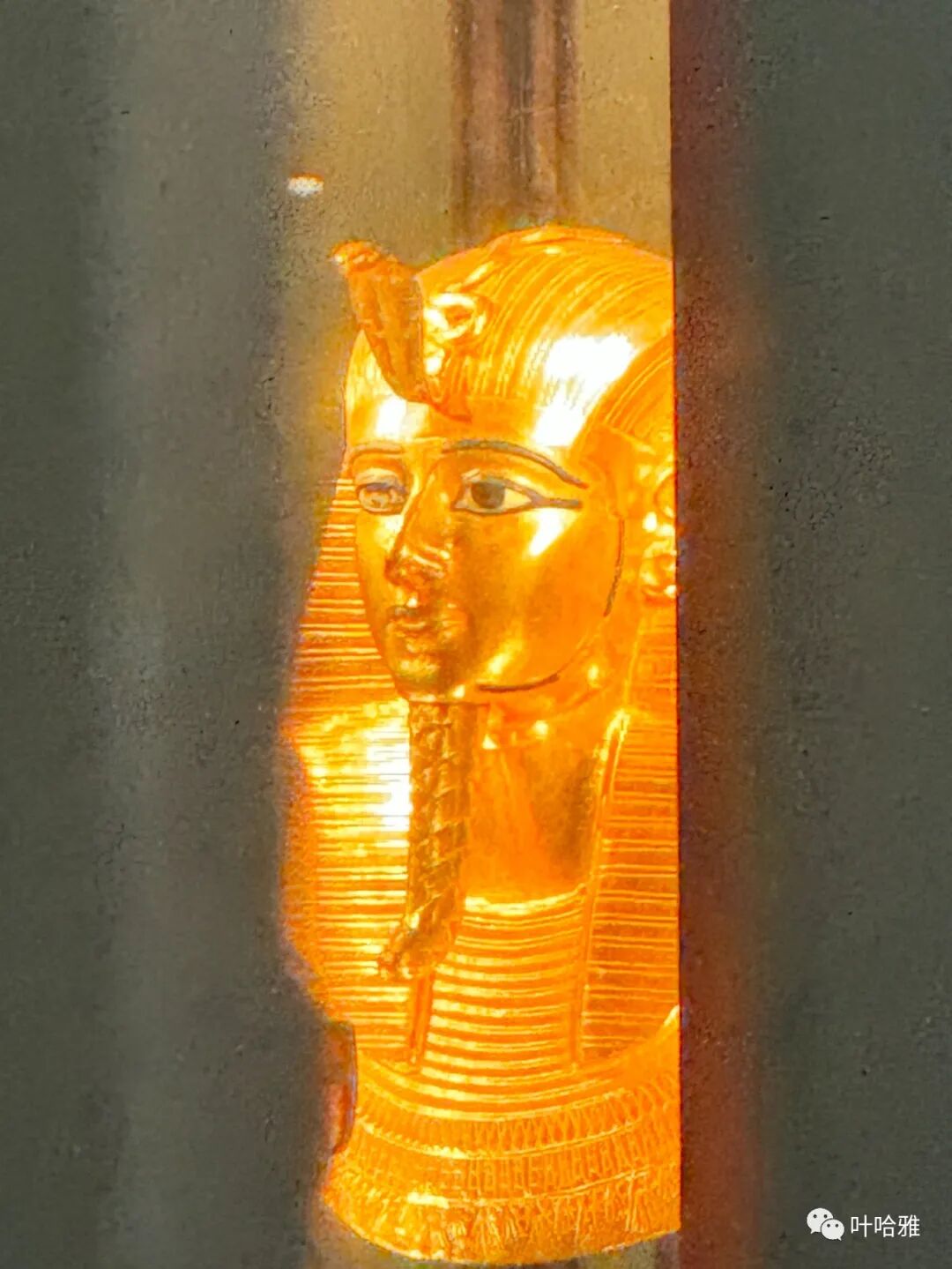
The second floor of the Egyptian Museum has a Tutankhamun gallery. There is a funny story here: a travel blogger on Douyin posted a video saying they received the highest honor in Egypt and were allowed to film inside the gallery, which is usually off-limits for photography. I was stopped by a staff member when I tried to take photos with my phone and had to delete them under his supervision. The photo below was taken from outside the museum using my phone's telephoto lens.
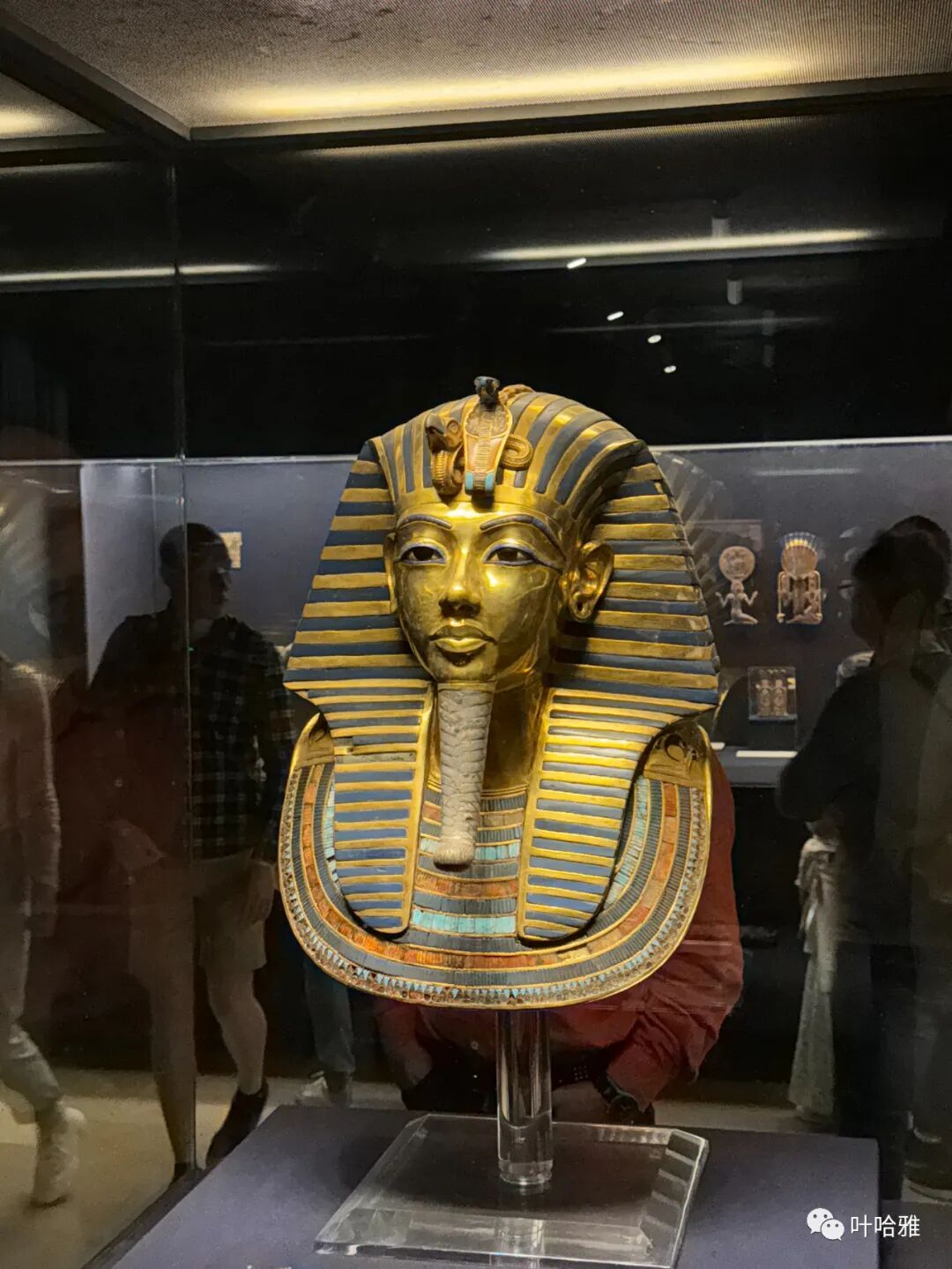
However, after I handed 200 Egyptian pounds (about 40 RMB) to the staff member, I was allowed to take photos. That is how I got this picture of Tutankhamun's golden mask.
Tutankhamun's golden mask is said to be the most valuable artifact in the world and is priceless. But in Egypt, as long as you have a tip, everything is negotiable. That includes the blogger who claimed they filmed the pyramids while the site was cleared. I checked the time of their video, and it was after sunset, which is after the pyramids close. Paying money to get in and film is definitely not the highest honor.
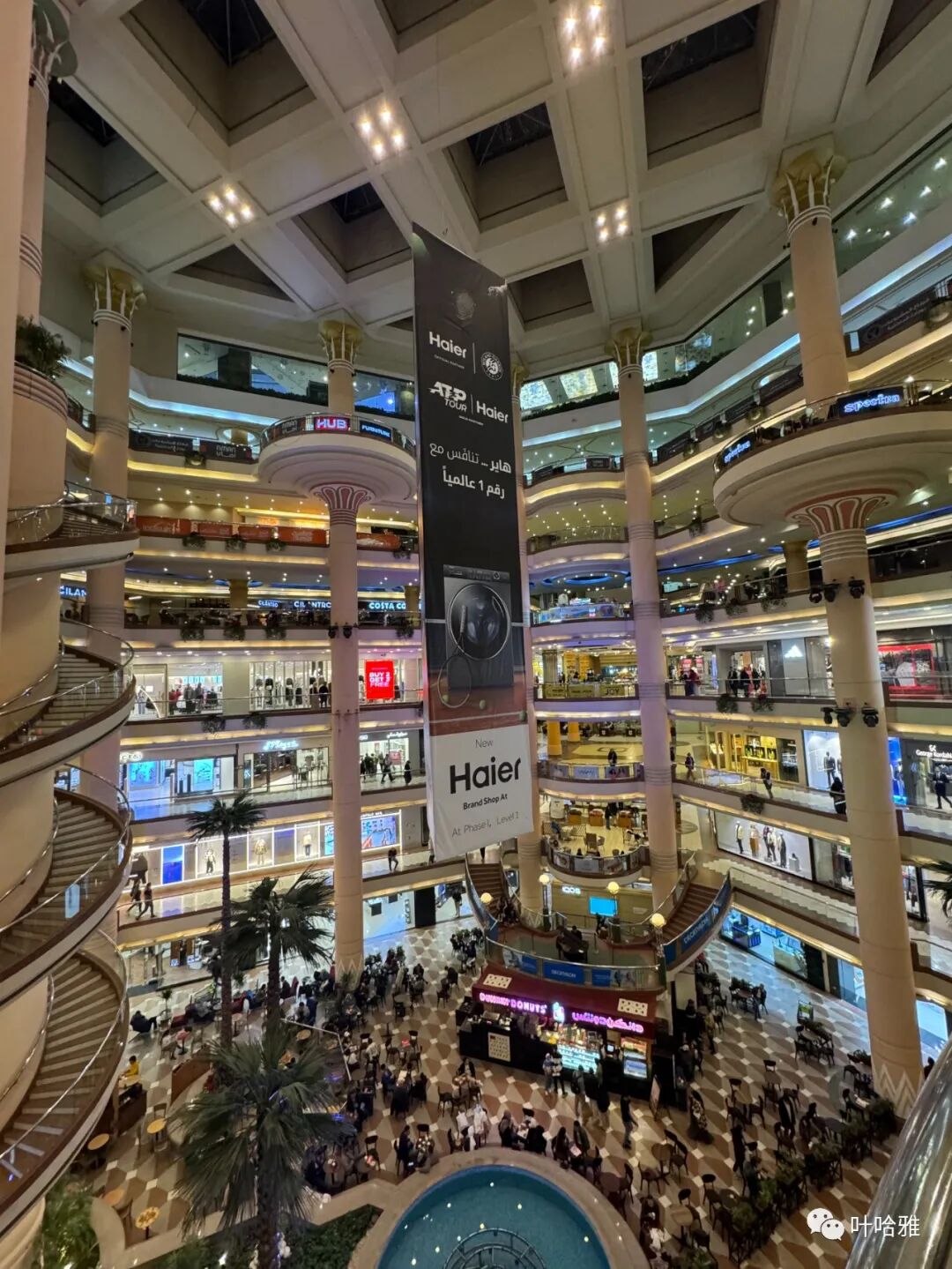
After getting this photo to prove the Douyin blogger was bluffing, I lost interest in seeing the rest of the exhibits. In the evening, we went to the local Star City Mall to eat Thai food.
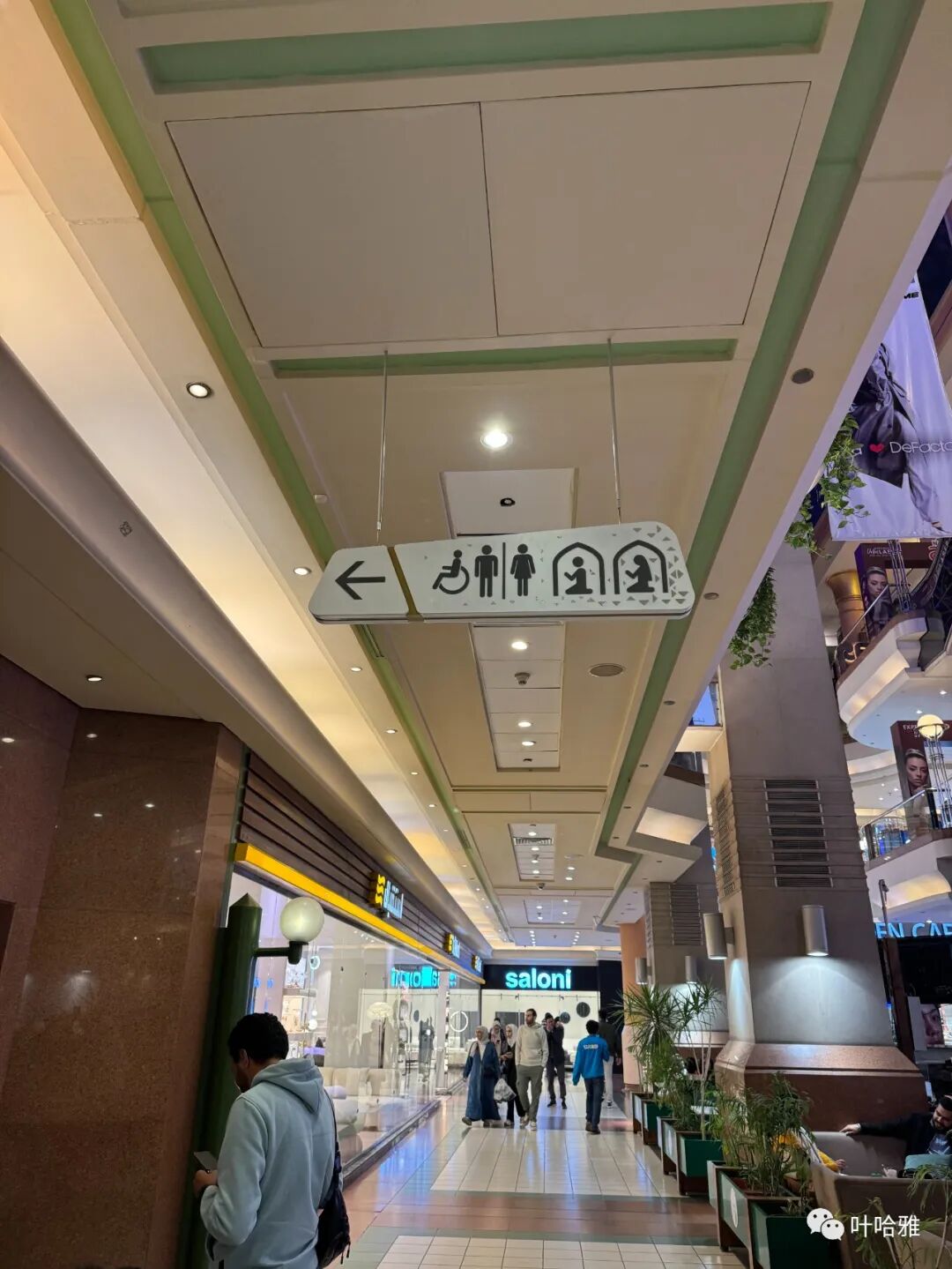
It is rare to find a prayer room in public places in Egypt, unlike in the UAE or Saudi Arabia where you see them everywhere. This mall actually has a prayer room, which is worth noting.
SABAI Thai Food
This Thai restaurant is quite popular locally and attracts many Chinese diners. The owner seems to have a misunderstanding of East and Southeast Asia, mixing in Chinese and Japanese elements. Perhaps to Arabs, we all look the same, just as we might struggle to tell the difference between Egyptians, Moroccans, Tunisians, Saudis, Qataris, Emiratis, Lebanese, Yemenis, Syrians, Jordanians, Bahrainis, Libyans, and Algerians.
You do not see halal signs in restaurants in Egypt, so you can just walk in anywhere. However, you should be careful with Chinese food and ask clearly. This shop marks its menu as halal because many Arabs assume Chinese food is not halal, and some restaurants also sell alcohol.
The chef at this Thai place is Black, but the food is quite authentic. Sour and spicy Thai dishes are very appetizing in the hot Middle East. The portions are small, but the price is cheap, costing about 100 RMB per person.
Tom Yum Goong soup
MORISUSHI Japanese food
I had a Japanese meal at a shopping center in New Cairo. After traveling in the Middle East for over ten days and eating Arabic food almost every day, it was nice to change things up.
There is a halal sign on the soy sauce bottle, which is a new thing to see in an Arab country.
Patchi chocolate shop
This is a Lebanese chocolate brand, said to be the royal family's choice for desserts. It is sold very cheaply in Egypt, at about 300 RMB per kilogram.
Arabs love sweets, and there are many overweight people on the streets, which is really unhealthy. Eating too many sweets is also bad for children's brain development, so we should take this as a warning.
Le Passage Cairo Hotel
We ate at the hotel restaurant most of the time. If you are just using Cairo as a transit stop and want to stay near the airport, I recommend this place. It is an 800-meter walk to the terminal, and the hotel also provides a free shuttle service.
At this hotel's buffet, you have to ask the staff to get the food for you, which feels a bit less free.
We had steak and pasta at the hotel's Italian restaurant, and both were delicious. Friends, you can really choose a nice hotel for a vacation. If you do not want to go out, you can just stay by the hotel pool and soak up the sun, away from the noise outside.
Four Seasons Hotel
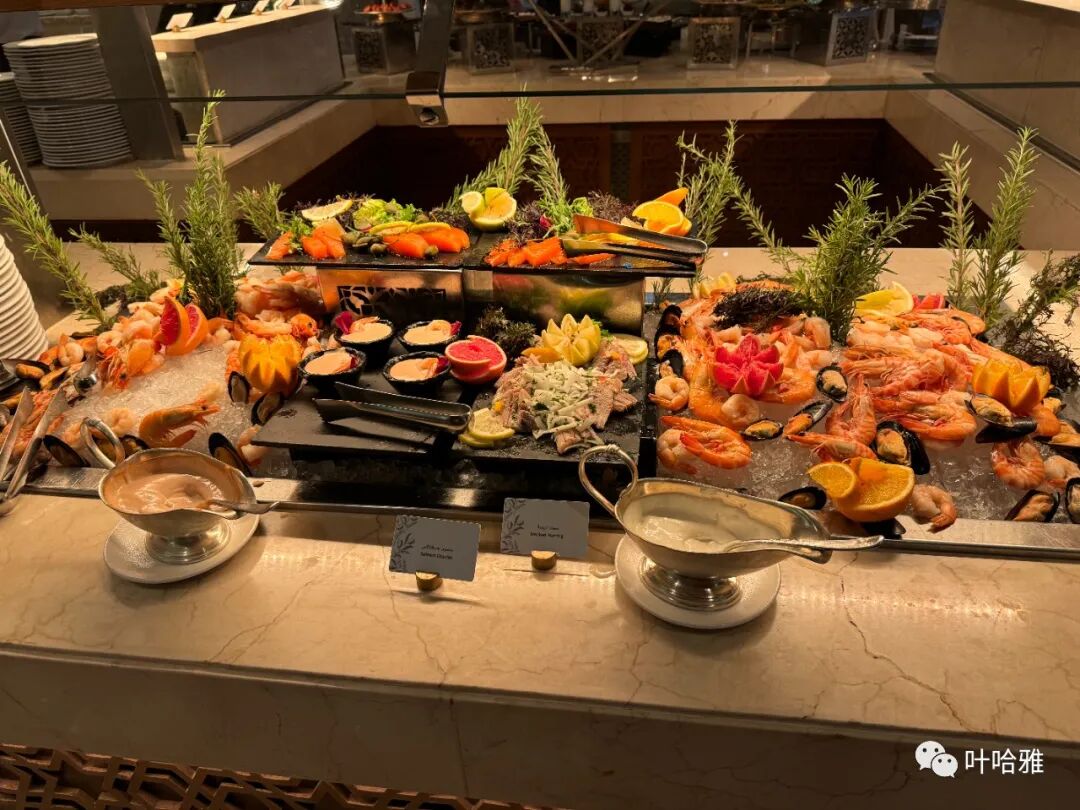
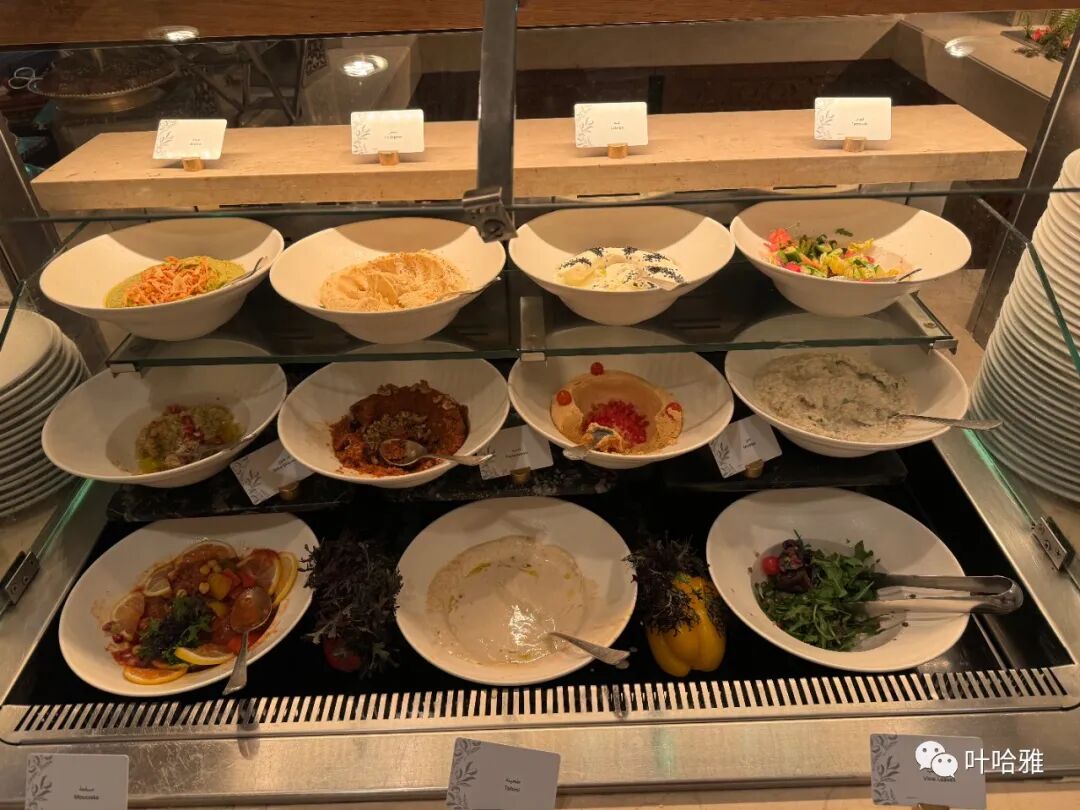
The Four Seasons in Cairo has newer facilities than the Ramses Hilton, but the buffet has fewer options.
The hotel buffet costs less than 200 yuan, and drinks are charged separately.
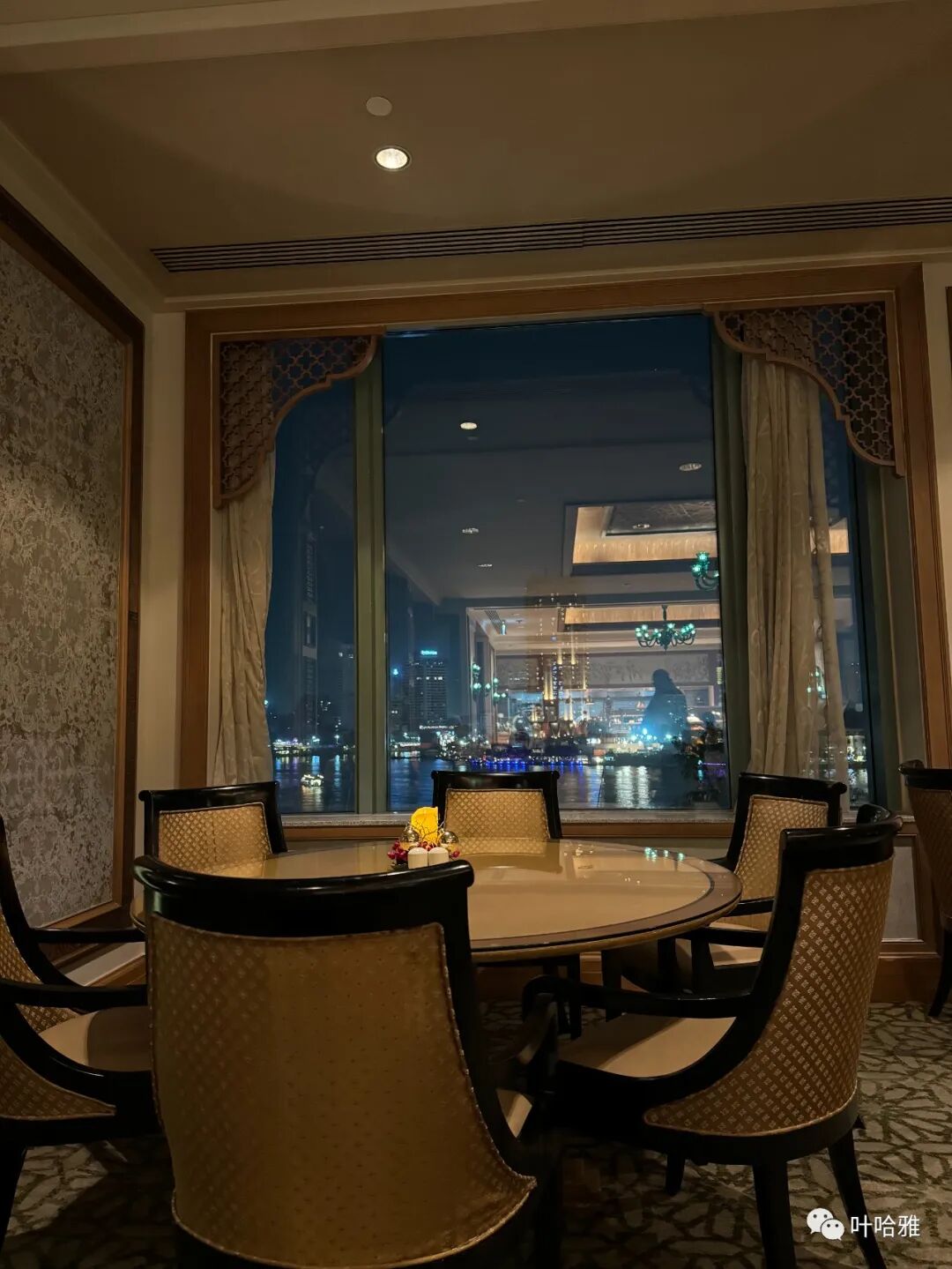
Outside the window is a view of the Nile. In Cairo, the most expensive rooms are the ones with a river view.
Luxor
Luxor is an ancient city in southern Egypt that was once the center of power in Egypt, similar to Xi'an in China. It only takes 50 minutes to fly from Cairo to Luxor. At the airport, the check-in staff ripped me off. He said I did not buy a child ticket for Fahim. I showed him my Trip.com order, but he still said he could not find the child ticket information. Since it was close to departure time, we paid him 1,000 Egyptian pounds (about 200 yuan) on the spot for the child ticket. Later, I contacted Trip.com and learned that my child ticket was used normally. This means the airport staff scammed me out of the price of a ticket, which is a very bad thing to do. I have asked Trip.com to investigate this with Cairo Airport, but I have not received an effective reply yet. Because it was a cash payment, unless they pull the surveillance footage from that time to prove the airport took my money, I have to swallow this loss.
Sonesta St. George Hotel Luxor
The climate in Luxor is much more comfortable than in Cairo. Cairo has serious pollution and is not suitable for long stays, but Luxor has fewer people and the pace of the whole city is much slower. You cannot use Uber in Luxor. You have to hail a taxi on the street. Always agree on the price before you get in and have plenty of small change ready. If you don't, the driver will keep whatever you give him and call it a tip.
Look at who has stayed at this hotel before. They play Chinese songs in the restaurant and have Chinese signs in the elevators, which feels very welcoming.
For our first meal, we chose the hotel's Italian restaurant again. It has a clean, tidy European style, and the view of the Nile outside the window is stunning.
For breakfast, they serve honey straight from the honeycomb. It is natural and healthy.
Famous sites in Luxor include the Valley of the Kings, Luxor Temple, Karnak Temple, the Colossi of Memnon, the Mortuary Temple of Hatshepsut, and various pharaoh tombs. These are very attractive to archaeology fans, but for most tourists, it is just about taking photos. We booked a private one-day tour for two on Trip.com for 1,000 yuan per person. It included tickets, lunch, and a tour guide. The whole experience was pretty good.
Colossi of Memnon
The statues represent the 18th Dynasty Pharaoh Amenhotep III. Both statues are of him. They are 18 meters tall and were built in 1350 BC, making them over 3,000 years old.
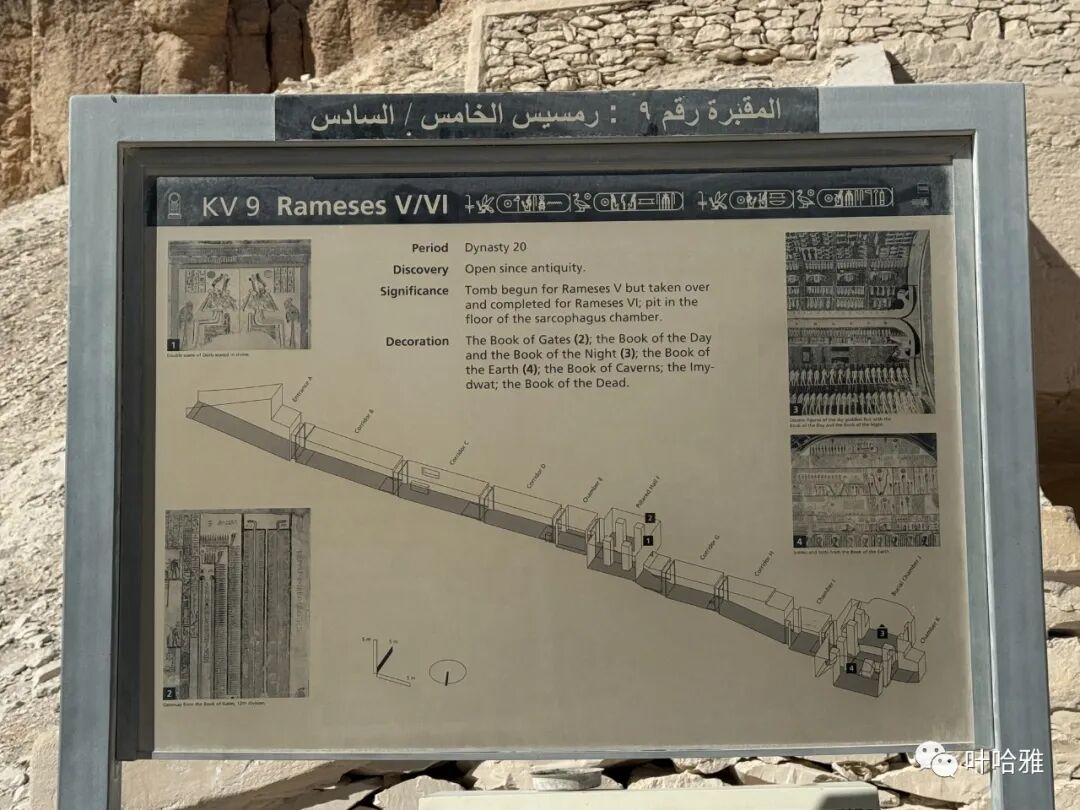
After a short stop at the statues, we went to the Valley of the Kings to see the tombs of Pharaoh Ramesses VI and Tutankhamun.
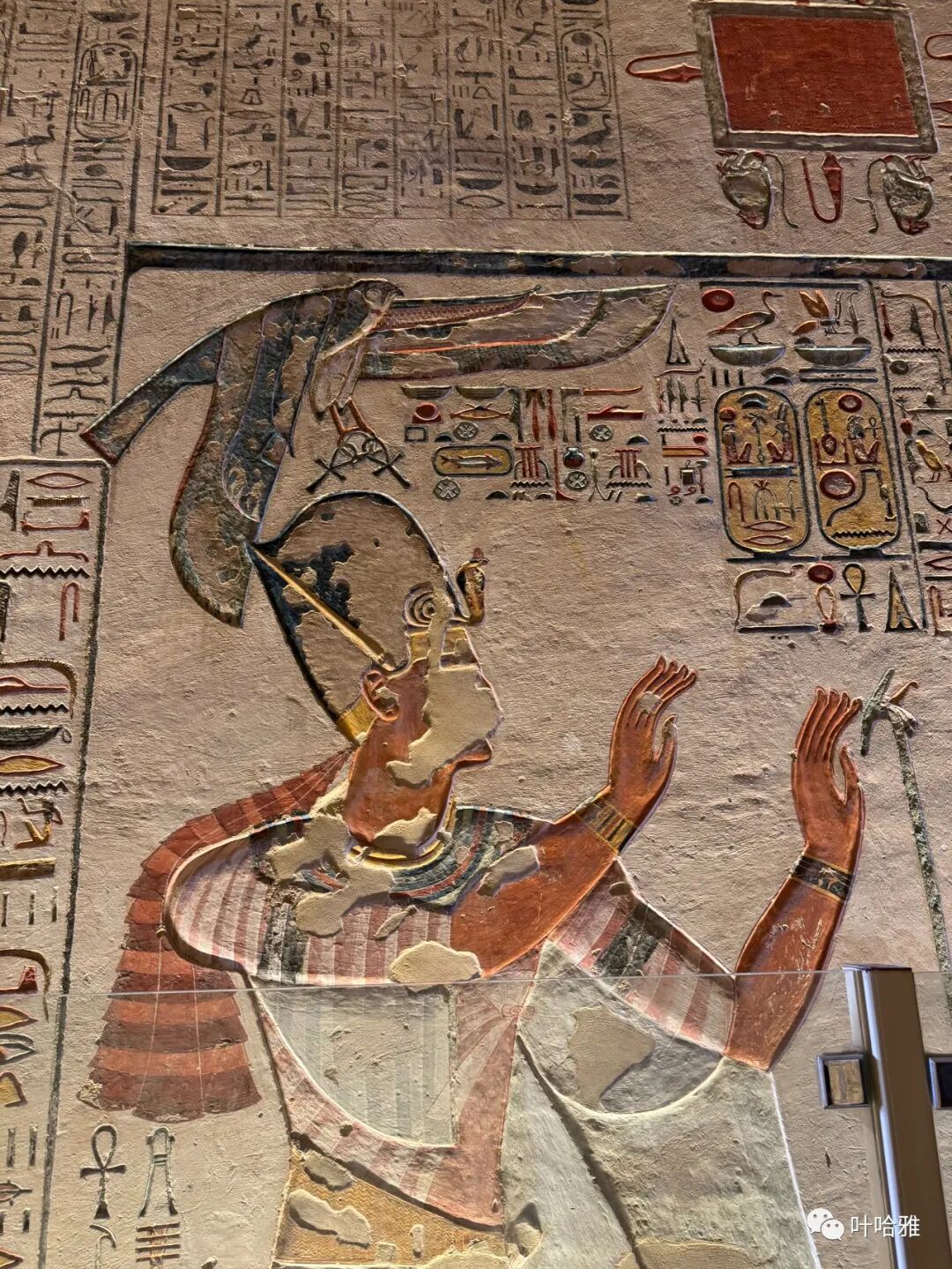
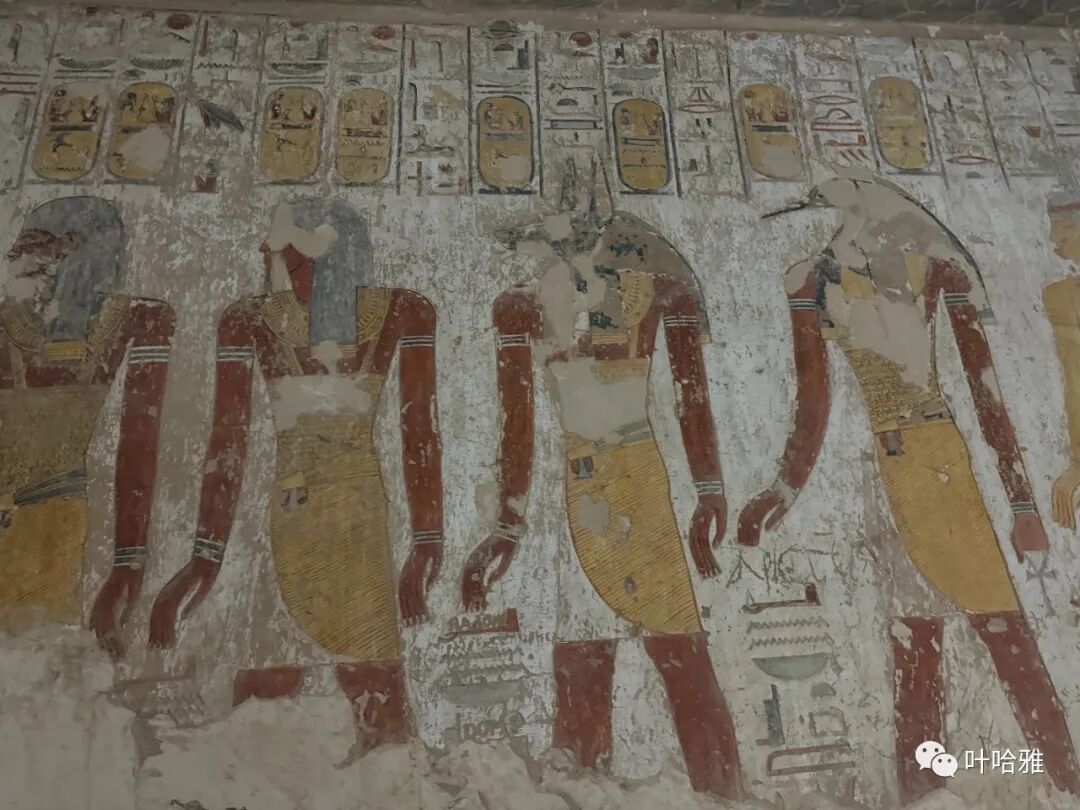
The murals in the tomb of Ramesses VI still have the same colors they had 3,000 years ago.
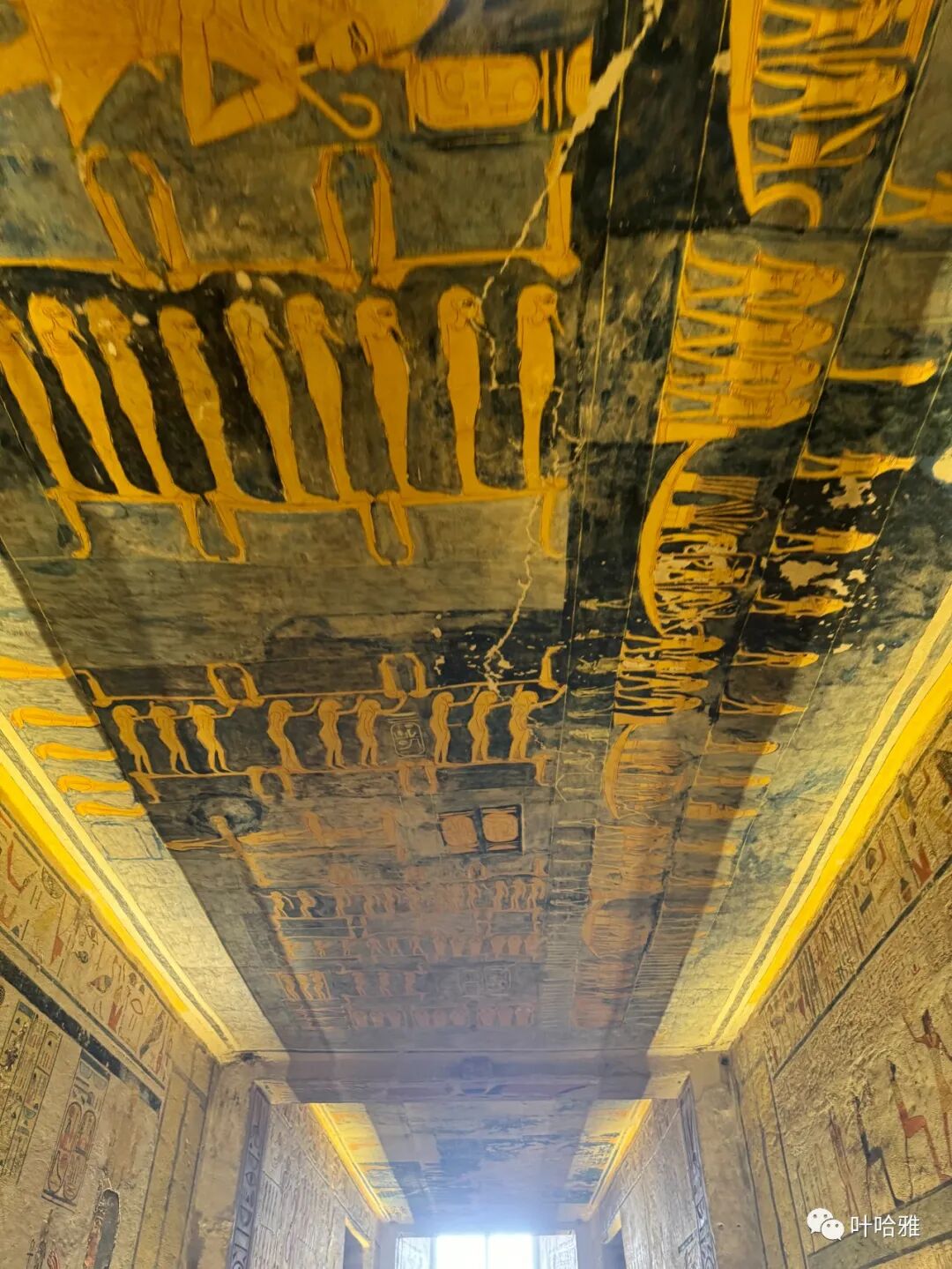
Tomb of Pharaoh Tutankhamun
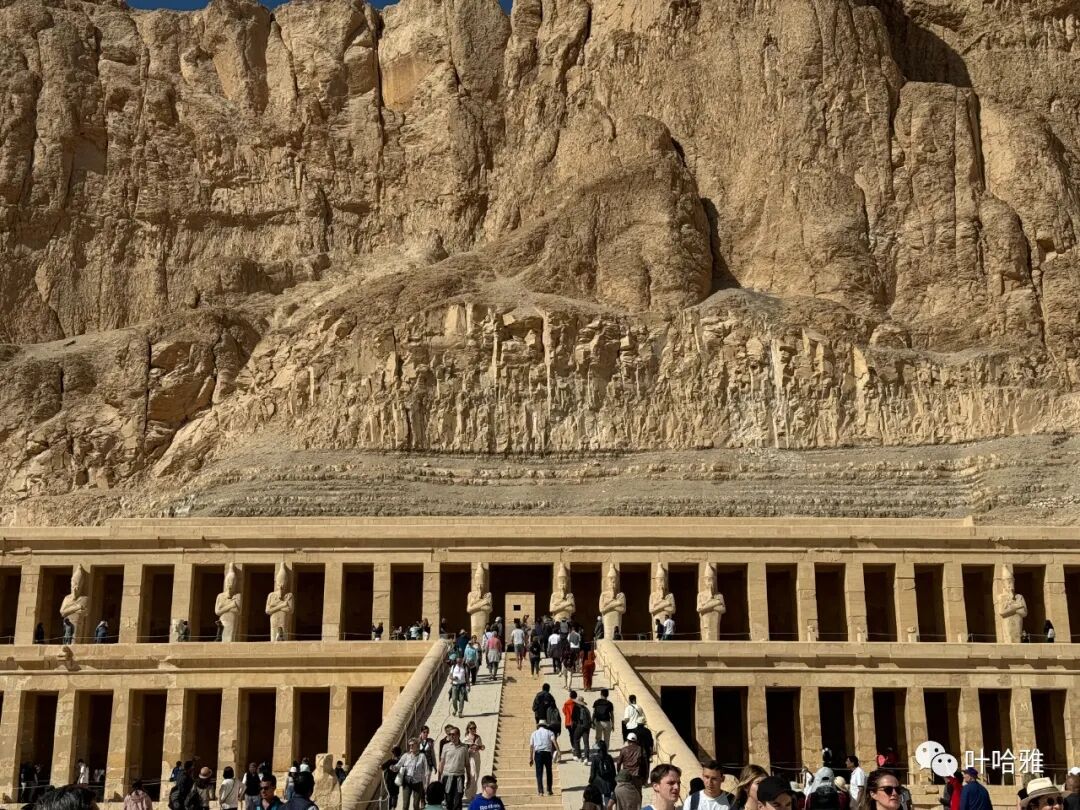
Mortuary Temple of Hatshepsut
The temple complex housing the pharaohs of past dynasties, along with the entire city of Luxor, was listed as a World Cultural Heritage site in 1979. This place was once used as a Christian monastery, and the reliefs unrelated to Christianity were removed.
Karnak Temple
The temple was built in 2000 BC, making it over four thousand years old, and it covers an area larger than half of Manhattan.
Visiting the temple during the day is a test of physical strength because the sun is so strong. When Fahim walked up to this ram-headed sphinx, he took a liking to the pebbles on the ground and refused to move. I stayed with him to play with the stones. During this time, Fahim was surrounded by Egyptian girls who took photos with him and kissed him.
The Egyptian tour guide said he could watch the child for me so I could go inside to look around, but I said forget it. I would rather stay and play with stones with Fahim. I am actually not interested in these temples. After seeing them, I just think they were built impressively and are very spectacular, and that is all.
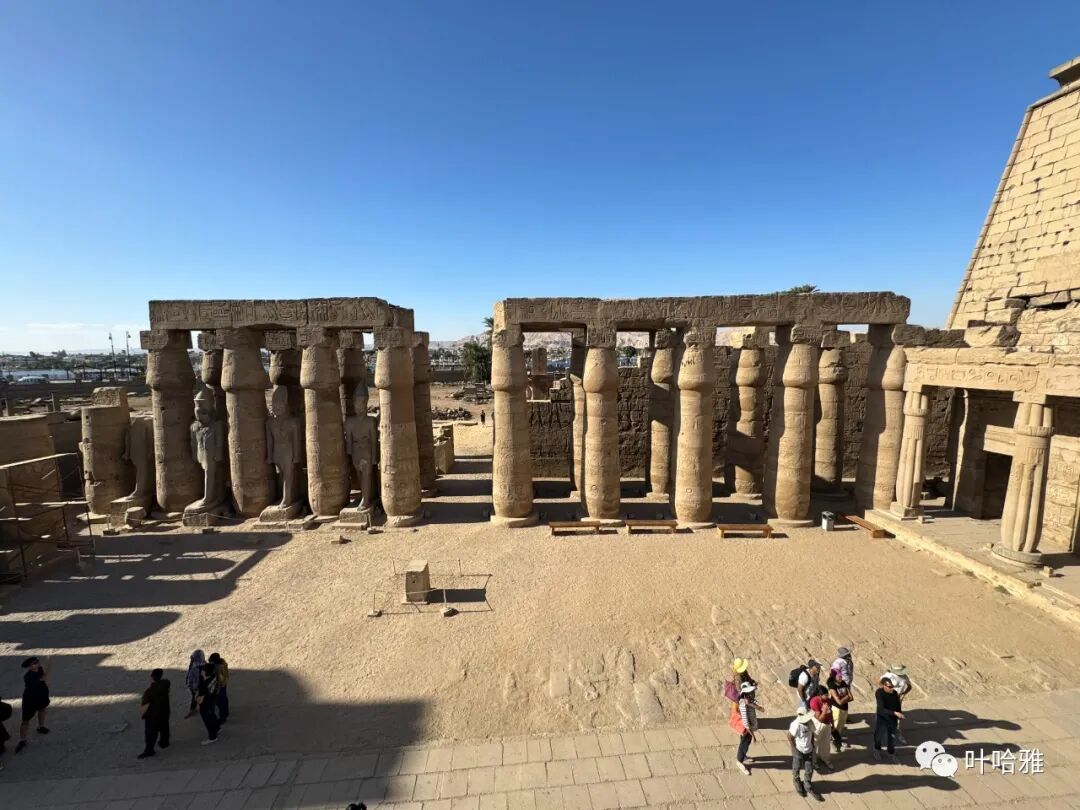
Luxor Temple
The last stop was Luxor Mosque, which is also a landmark of Luxor with over three thousand years of history. However, what attracted me here was the gongbei built on top of the mosque. At the entrance, the guide asked if I wanted to visit the mosque or the mosque. I said the mosque. He looked surprised and confirmed it with me again. I was a bit tired by then, so I told him I would skip the mosque and just see the mosque before heading back.
Abu Haggag Mosque and Gongbei
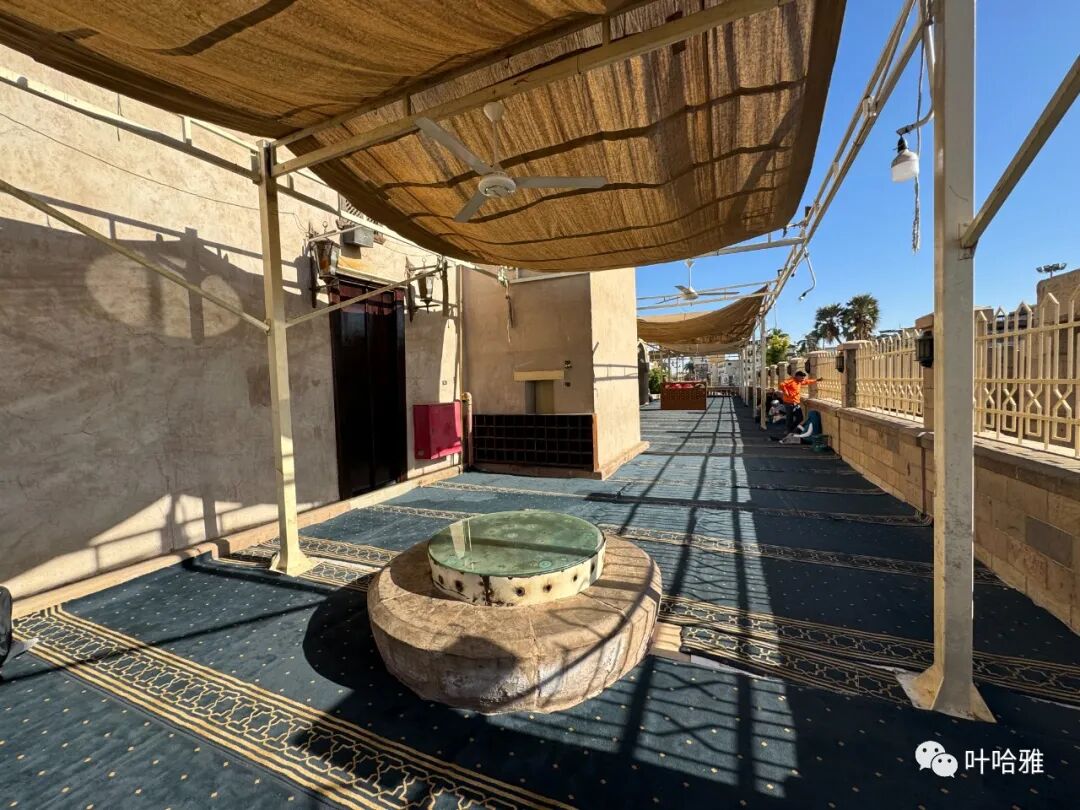
This gongbei can be considered the only one in the world built on top of the world's oldest mosque, and it is the only mosque in the world built on mosque ruins.
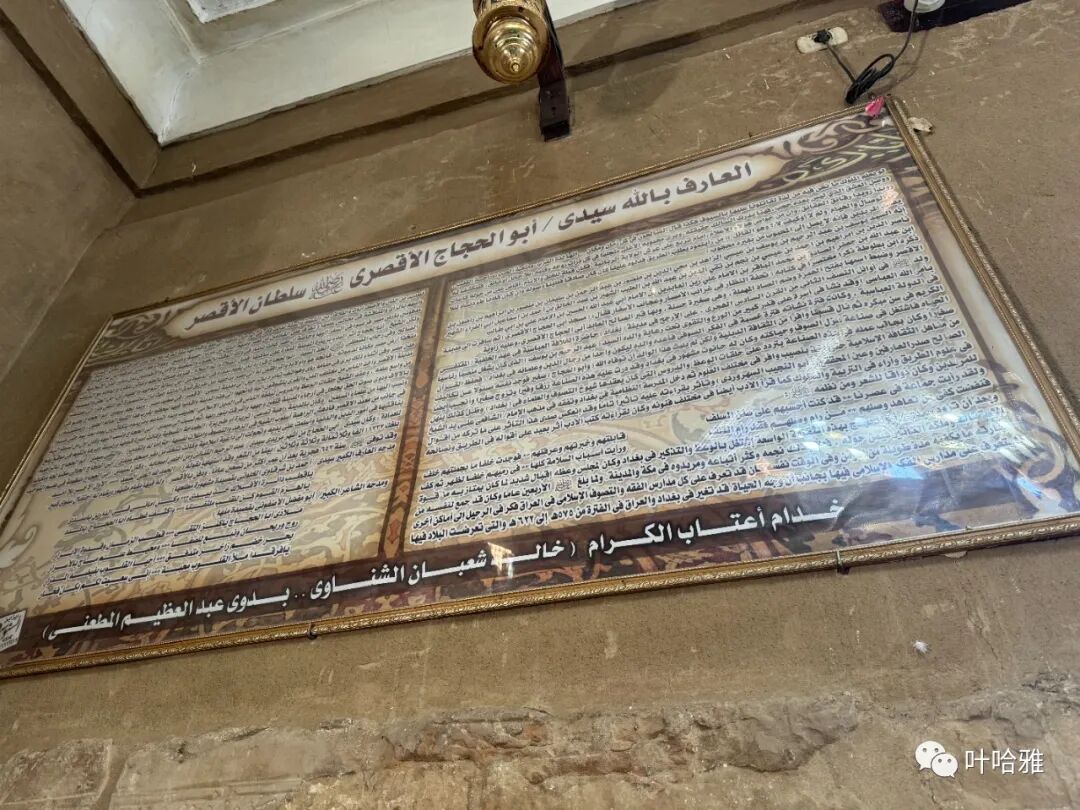
This mosque dates back to the Fatimid dynasty and was built on the ruins of a church inside the mosque. It was completed around 1286 and contains the tomb of the Sufi mystic Yusuf Abu Haggag. Haggag was a scholar born in Baghdad in the 13th century. According to local legend, he captured Luxor from the Roman Queen Tarza.
Luxor Mosque was converted into a church by the Copts in 395 AD and then into a mosque in 640 AD. Therefore, it can be said that this is the oldest religious building in the world still in use, with a history spanning over three thousand four hundred years.
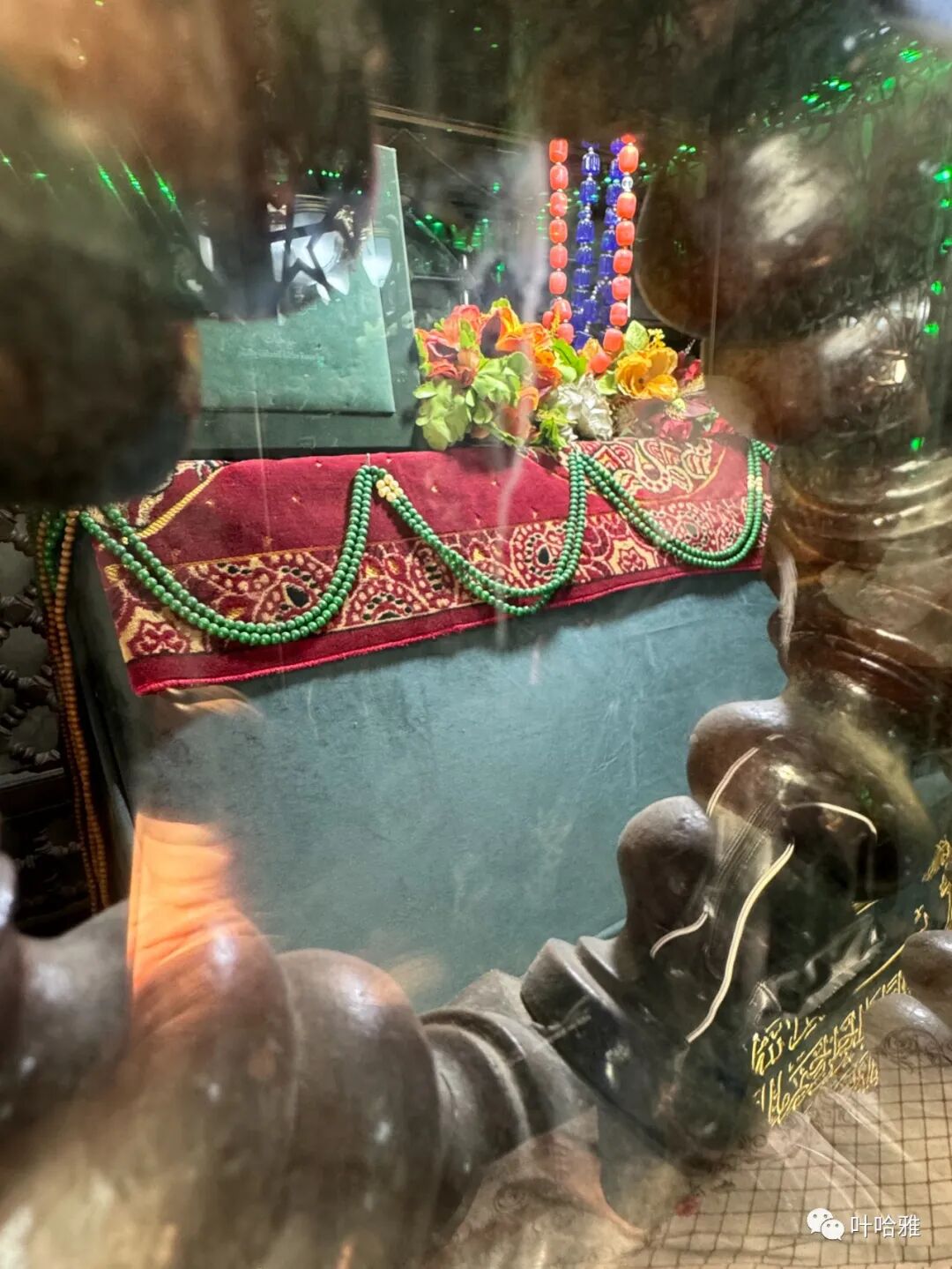
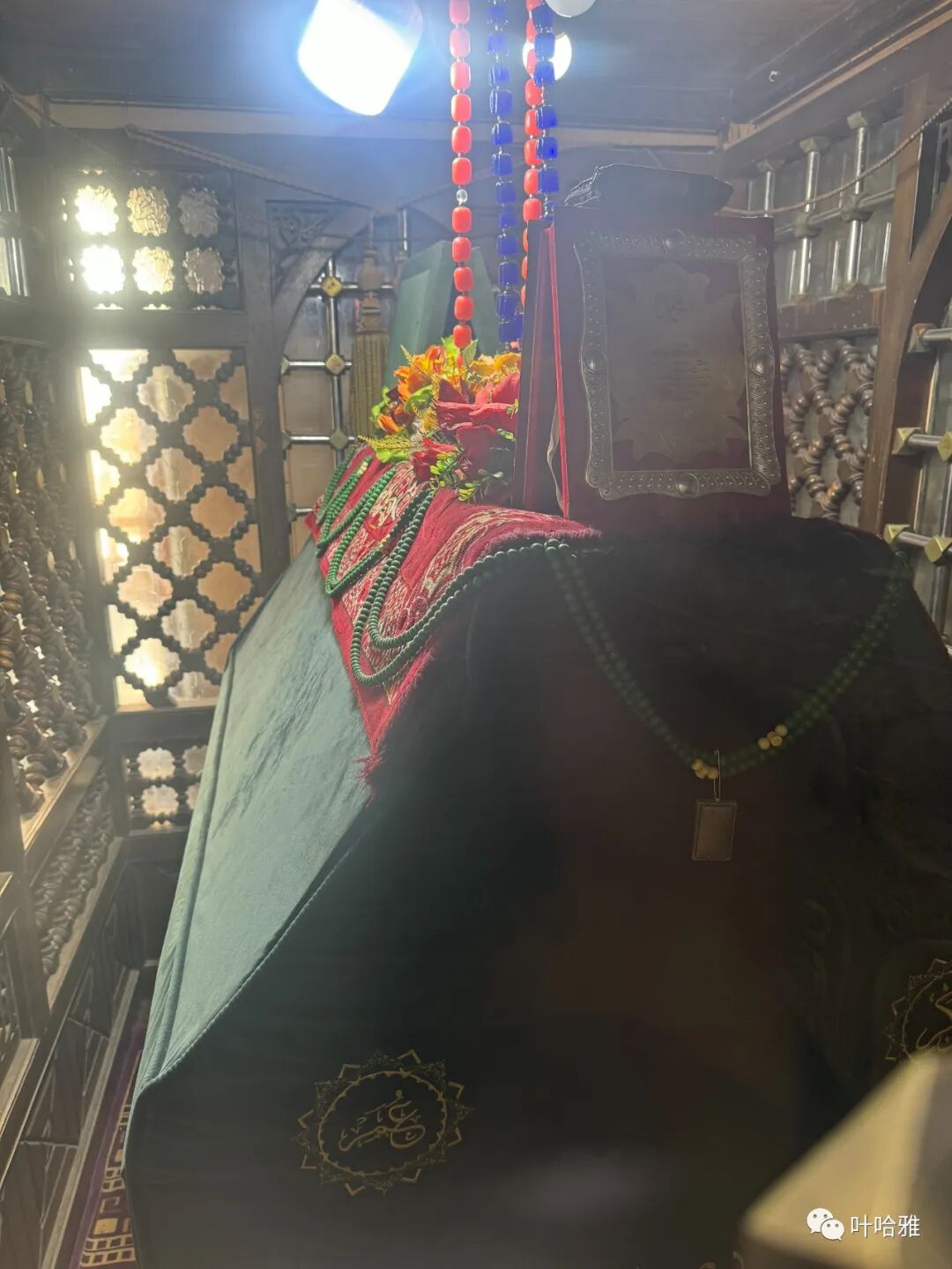
Inside the gongbei, there are some believers visiting the graves, with more women than men.
The mosque suffered a fire in 2007. When it was rebuilt, stones from the mosque were used, and you can see pharaonic hieroglyphs on the carvings of this pillar.
Looking out from the mosque railing, you can see the Luxor Mosque. The once arrogant pharaohs compared themselves to gods, but they never imagined that three thousand years later, their mosque would become a tourist attraction for people to glance at in passing.
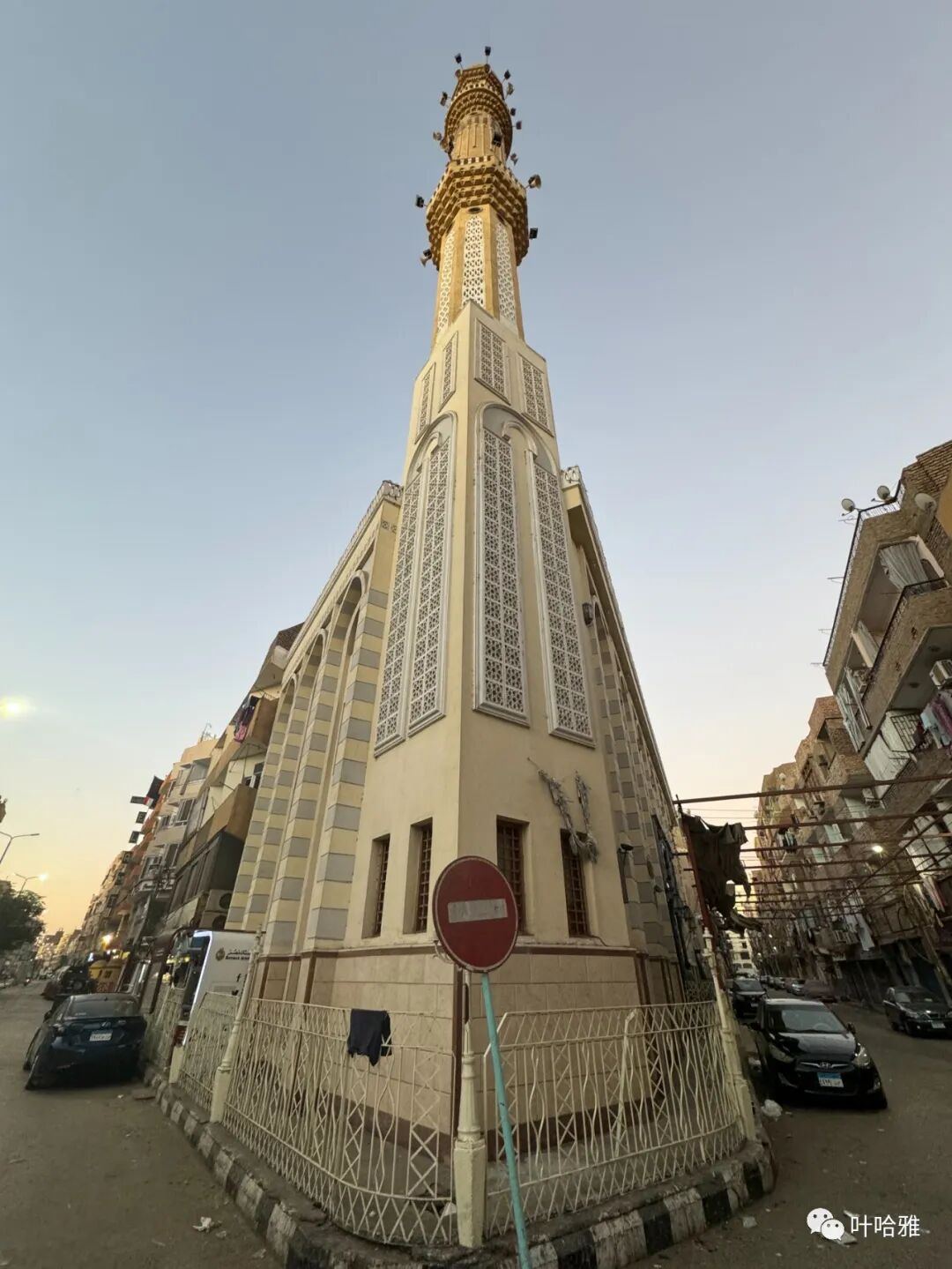
Al Iman Mosque
This is the closest mosque to my hotel. Fewer than 10 people attend the adhan (banda). In Arab countries, people go back to sleep after the adhan, and almost no shops are open on the street. Only a few small shops selling flatbread (da bing) are open, so it is best to eat breakfast at the hotel, or you will have nothing to eat outside.
As a convenient fast food in the Arab region, shawarma (sharama) is as popular as our meat burger (roujiamo); it is economical, affordable, and delicious.
El-KABABGY RESTAURANT
This shop is the number one ranked restaurant in Luxor on the TripAdvisor app, and after eating there, I feel it truly deserves this ranking. This shop is only 1 kilometer away from our hotel on foot.
The outdoor part of the restaurant is right on the Nile pier. In December, the temperature in Luxor is only 20 degrees, which is very cool.
The grilled meat at this shop is extremely fragrant and clearly better than other restaurants we have eaten at. The per capita consumption is only about one hundred yuan. In China, at an Arab restaurant of the same level, two people would spend at least four or five hundred.
Tagine pot (tajiguo)
The drink I had most often in the Arab region was lemon mint juice. Its sour taste is great for opening up your appetite and quenching your thirst.
What is annoying about Luxor is that the streets are full of carriage drivers looking for customers. They really chase you and shout non-stop. One day, I wanted to take Fahim out for a walk, but I got so annoyed by the carriage drivers trying to get business that I just went back to the hotel and stayed inside.
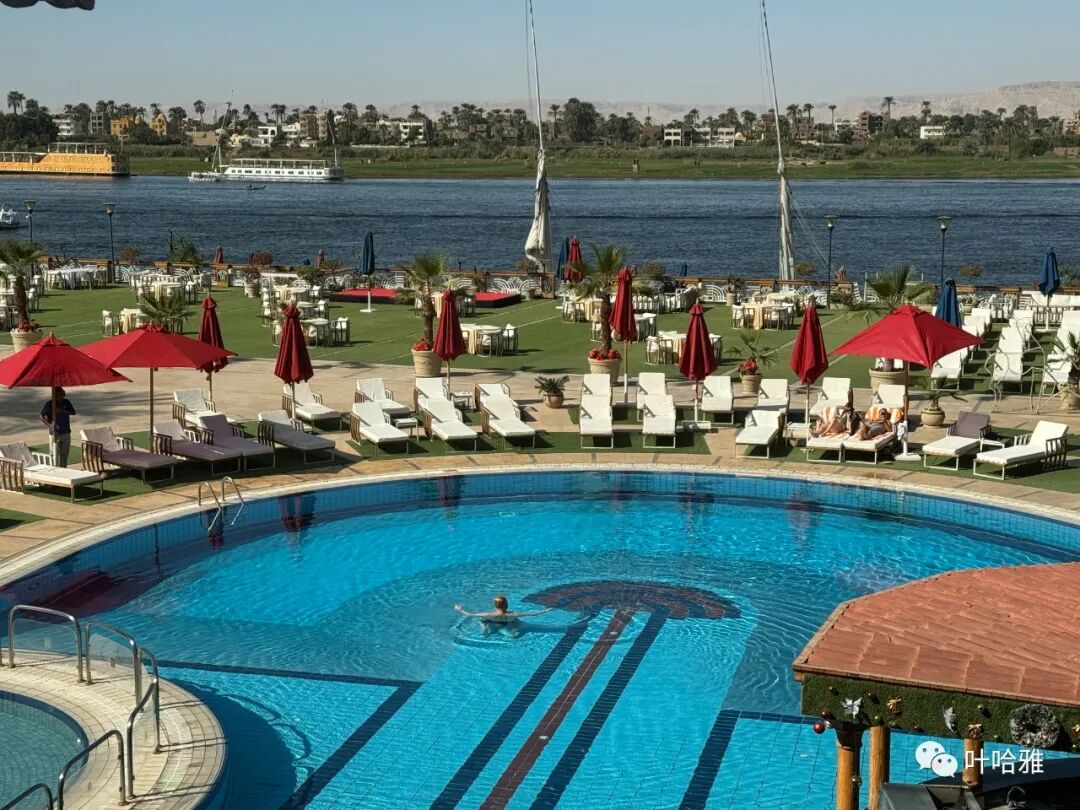
The hotel has a garden, a view of the Nile, and a swimming pool. Staying inside and enjoying the sunshine is the most relaxing thing to do.
Some people say that Egypt without Egyptians would be a better Egypt. While this is an exaggeration, it reflects an abnormal social phenomenon in Egypt today. Everyone is driven by profit, corruption is rampant, and there are scammers and thieves everywhere. In the old Islamic streets of Cairo, I could not even feel the light of faith. For the first time, I stopped my plan to visit a mosque because I did not have money in my pocket for a tip. All of this is happening in Egypt, which has a thousand-year history of Islamic civilization. This seems to confirm a master's thesis from the School of Oriental and African Studies at the University of London titled 'The Process of Islamization in Egypt, Possible Reasons and the Scope of Influence until the 14th Century.' The author, M. Wassermann, believes that Egypt is still not fully Islamized today. A considerable number of people, for various reasons, are only Muslims in name, because Islam considers that as long as one formally becomes a believer by verbal confession, they are treated as a Muslim.
This phenomenon of two-faced people everywhere makes Egypt like a powder keg that could explode at any time. You have to go through security checks and show identification to enter malls, hotels, and airports. Soldiers with guns are patrolling the streets everywhere. The old city of Cairo is just like a refugee camp, with groups of homeless people sleeping on the ground. Behind them are the ruins of demolished houses. Coptic people mainly make a living by picking up trash. The gap between rich and poor is huge. The poor see no hope and have no illusions about the future. An explosion is only a matter of time. So, if you want to come to Egypt, do it sooner rather than later. If you don't go now, you might not be able to go in the future. view all
Summary: This Egypt Muslim travel guide continues with ancient Egyptian history, the Egyptian Museum, Luxor, Nile-side dining, halal-friendly restaurant notes, local scams, travel traps, and reflections on Muslim life in Egypt.
A Guide to Avoiding Travel Traps in Egypt is presented here as a firsthand travel account in clear English, beginning with this scene: If you are not interested in Egyptian history, you will just be a casual tourist here. However, seeing the high level of ancient Egyptian civilization is an experience unmatched anywhere else in the world. The account keeps its focus on Quanzhou Muslims, Hui Muslims, Islamic History while preserving the names, places, food, and historical details from the Chinese source.
If you are not interested in Egyptian history, you will just be a casual tourist here. However, seeing the high level of ancient Egyptian civilization is an experience unmatched anywhere else in the world.
Some say ancient Egyptians and modern Egyptians are not the same race, but that is not a fact. Ancient Egyptians did not disappear. Through thousands of years of cultural exchange, they were assimilated, and modern Egyptians carry the genes of the ancient Egyptians.
Although Egyptians are nominally divided into Arabs, Copts, or Nubians, their bloodlines are actually very similar. They all speak Arabic and have intermarried and assimilated so much that there is no such thing as a pure-blooded, independent ethnic group.
For example, the number of Copts in Egypt is decreasing every year because they are blending into the Arab population. When a Coptic Christian converts to Islam, by the third generation, they identify themselves as Arab.
In the 7th century, Copts helped the Arabs conquer the Eastern Roman Empire. Because Copts were Miaphysites, the Eastern Roman Empire viewed them as heretics. Under Arab rule, the Copts actually lived better. Some say many Copts converted to Islam to pay fewer taxes, but there were not many tax benefits for converting, so there was no large-scale conversion of Copts in the early days.
During the Fatimid Caliphate, because the rulers were Shia, they were even harsher toward Sunni Muslims than toward Coptic Christians. Copts and Jews were protected and thrived during this period. Even during the Ayyubid and Mamluk dynasties, Copts remained under protection. The Mamluks were former slaves who became rulers, so they empathized with the Copts.
By the mid-14th century, whenever there were large-scale riots, many Copts converted to protect themselves. According to Egyptian law at the time, a Muslim's property could not be inherited by a non-Muslim. This led the descendants of converts to choose Islam to keep their property. It was from this period that Copts became a minority in Egypt.
Later, Muslim citizens accused the converted Copts of not being true converts because they did not go to the mosque for namaz on time. So, even though Muslims are the majority in Egypt today, the country is not completely Islamized.
The second floor of the Egyptian Museum has a Tutankhamun gallery. There is a funny story here: a travel blogger on Douyin posted a video saying they received the highest honor in Egypt and were allowed to film inside the gallery, which is usually off-limits for photography. I was stopped by a staff member when I tried to take photos with my phone and had to delete them under his supervision. The photo below was taken from outside the museum using my phone's telephoto lens.
However, after I handed 200 Egyptian pounds (about 40 RMB) to the staff member, I was allowed to take photos. That is how I got this picture of Tutankhamun's golden mask.
Tutankhamun's golden mask is said to be the most valuable artifact in the world and is priceless. But in Egypt, as long as you have a tip, everything is negotiable. That includes the blogger who claimed they filmed the pyramids while the site was cleared. I checked the time of their video, and it was after sunset, which is after the pyramids close. Paying money to get in and film is definitely not the highest honor.
After getting this photo to prove the Douyin blogger was bluffing, I lost interest in seeing the rest of the exhibits. In the evening, we went to the local Star City Mall to eat Thai food.
It is rare to find a prayer room in public places in Egypt, unlike in the UAE or Saudi Arabia where you see them everywhere. This mall actually has a prayer room, which is worth noting.
SABAI Thai Food
This Thai restaurant is quite popular locally and attracts many Chinese diners. The owner seems to have a misunderstanding of East and Southeast Asia, mixing in Chinese and Japanese elements. Perhaps to Arabs, we all look the same, just as we might struggle to tell the difference between Egyptians, Moroccans, Tunisians, Saudis, Qataris, Emiratis, Lebanese, Yemenis, Syrians, Jordanians, Bahrainis, Libyans, and Algerians.
You do not see halal signs in restaurants in Egypt, so you can just walk in anywhere. However, you should be careful with Chinese food and ask clearly. This shop marks its menu as halal because many Arabs assume Chinese food is not halal, and some restaurants also sell alcohol.
The chef at this Thai place is Black, but the food is quite authentic. Sour and spicy Thai dishes are very appetizing in the hot Middle East. The portions are small, but the price is cheap, costing about 100 RMB per person.
Tom Yum Goong soup
MORISUSHI Japanese food
I had a Japanese meal at a shopping center in New Cairo. After traveling in the Middle East for over ten days and eating Arabic food almost every day, it was nice to change things up.
There is a halal sign on the soy sauce bottle, which is a new thing to see in an Arab country.
Patchi chocolate shop
This is a Lebanese chocolate brand, said to be the royal family's choice for desserts. It is sold very cheaply in Egypt, at about 300 RMB per kilogram.
Arabs love sweets, and there are many overweight people on the streets, which is really unhealthy. Eating too many sweets is also bad for children's brain development, so we should take this as a warning.
Le Passage Cairo Hotel
We ate at the hotel restaurant most of the time. If you are just using Cairo as a transit stop and want to stay near the airport, I recommend this place. It is an 800-meter walk to the terminal, and the hotel also provides a free shuttle service.
At this hotel's buffet, you have to ask the staff to get the food for you, which feels a bit less free.
We had steak and pasta at the hotel's Italian restaurant, and both were delicious. Friends, you can really choose a nice hotel for a vacation. If you do not want to go out, you can just stay by the hotel pool and soak up the sun, away from the noise outside.
Four Seasons Hotel
The Four Seasons in Cairo has newer facilities than the Ramses Hilton, but the buffet has fewer options.
The hotel buffet costs less than 200 yuan, and drinks are charged separately.
Outside the window is a view of the Nile. In Cairo, the most expensive rooms are the ones with a river view.
Luxor
Luxor is an ancient city in southern Egypt that was once the center of power in Egypt, similar to Xi'an in China. It only takes 50 minutes to fly from Cairo to Luxor. At the airport, the check-in staff ripped me off. He said I did not buy a child ticket for Fahim. I showed him my Trip.com order, but he still said he could not find the child ticket information. Since it was close to departure time, we paid him 1,000 Egyptian pounds (about 200 yuan) on the spot for the child ticket. Later, I contacted Trip.com and learned that my child ticket was used normally. This means the airport staff scammed me out of the price of a ticket, which is a very bad thing to do. I have asked Trip.com to investigate this with Cairo Airport, but I have not received an effective reply yet. Because it was a cash payment, unless they pull the surveillance footage from that time to prove the airport took my money, I have to swallow this loss.
Sonesta St. George Hotel Luxor
The climate in Luxor is much more comfortable than in Cairo. Cairo has serious pollution and is not suitable for long stays, but Luxor has fewer people and the pace of the whole city is much slower. You cannot use Uber in Luxor. You have to hail a taxi on the street. Always agree on the price before you get in and have plenty of small change ready. If you don't, the driver will keep whatever you give him and call it a tip.
Look at who has stayed at this hotel before. They play Chinese songs in the restaurant and have Chinese signs in the elevators, which feels very welcoming.
For our first meal, we chose the hotel's Italian restaurant again. It has a clean, tidy European style, and the view of the Nile outside the window is stunning.
For breakfast, they serve honey straight from the honeycomb. It is natural and healthy.
Famous sites in Luxor include the Valley of the Kings, Luxor Temple, Karnak Temple, the Colossi of Memnon, the Mortuary Temple of Hatshepsut, and various pharaoh tombs. These are very attractive to archaeology fans, but for most tourists, it is just about taking photos. We booked a private one-day tour for two on Trip.com for 1,000 yuan per person. It included tickets, lunch, and a tour guide. The whole experience was pretty good.
Colossi of Memnon
The statues represent the 18th Dynasty Pharaoh Amenhotep III. Both statues are of him. They are 18 meters tall and were built in 1350 BC, making them over 3,000 years old.
After a short stop at the statues, we went to the Valley of the Kings to see the tombs of Pharaoh Ramesses VI and Tutankhamun.
The murals in the tomb of Ramesses VI still have the same colors they had 3,000 years ago.
Tomb of Pharaoh Tutankhamun
Mortuary Temple of Hatshepsut
The temple complex housing the pharaohs of past dynasties, along with the entire city of Luxor, was listed as a World Cultural Heritage site in 1979. This place was once used as a Christian monastery, and the reliefs unrelated to Christianity were removed.
Karnak Temple
The temple was built in 2000 BC, making it over four thousand years old, and it covers an area larger than half of Manhattan.
Visiting the temple during the day is a test of physical strength because the sun is so strong. When Fahim walked up to this ram-headed sphinx, he took a liking to the pebbles on the ground and refused to move. I stayed with him to play with the stones. During this time, Fahim was surrounded by Egyptian girls who took photos with him and kissed him.
The Egyptian tour guide said he could watch the child for me so I could go inside to look around, but I said forget it. I would rather stay and play with stones with Fahim. I am actually not interested in these temples. After seeing them, I just think they were built impressively and are very spectacular, and that is all.
Luxor Temple
The last stop was Luxor Mosque, which is also a landmark of Luxor with over three thousand years of history. However, what attracted me here was the gongbei built on top of the mosque. At the entrance, the guide asked if I wanted to visit the mosque or the mosque. I said the mosque. He looked surprised and confirmed it with me again. I was a bit tired by then, so I told him I would skip the mosque and just see the mosque before heading back.
Abu Haggag Mosque and Gongbei
This gongbei can be considered the only one in the world built on top of the world's oldest mosque, and it is the only mosque in the world built on mosque ruins.
This mosque dates back to the Fatimid dynasty and was built on the ruins of a church inside the mosque. It was completed around 1286 and contains the tomb of the Sufi mystic Yusuf Abu Haggag. Haggag was a scholar born in Baghdad in the 13th century. According to local legend, he captured Luxor from the Roman Queen Tarza.
Luxor Mosque was converted into a church by the Copts in 395 AD and then into a mosque in 640 AD. Therefore, it can be said that this is the oldest religious building in the world still in use, with a history spanning over three thousand four hundred years.
Inside the gongbei, there are some believers visiting the graves, with more women than men.
The mosque suffered a fire in 2007. When it was rebuilt, stones from the mosque were used, and you can see pharaonic hieroglyphs on the carvings of this pillar.
Looking out from the mosque railing, you can see the Luxor Mosque. The once arrogant pharaohs compared themselves to gods, but they never imagined that three thousand years later, their mosque would become a tourist attraction for people to glance at in passing.
Al Iman Mosque
This is the closest mosque to my hotel. Fewer than 10 people attend the adhan (banda). In Arab countries, people go back to sleep after the adhan, and almost no shops are open on the street. Only a few small shops selling flatbread (da bing) are open, so it is best to eat breakfast at the hotel, or you will have nothing to eat outside.
As a convenient fast food in the Arab region, shawarma (sharama) is as popular as our meat burger (roujiamo); it is economical, affordable, and delicious.
El-KABABGY RESTAURANT
This shop is the number one ranked restaurant in Luxor on the TripAdvisor app, and after eating there, I feel it truly deserves this ranking. This shop is only 1 kilometer away from our hotel on foot.
The outdoor part of the restaurant is right on the Nile pier. In December, the temperature in Luxor is only 20 degrees, which is very cool.
The grilled meat at this shop is extremely fragrant and clearly better than other restaurants we have eaten at. The per capita consumption is only about one hundred yuan. In China, at an Arab restaurant of the same level, two people would spend at least four or five hundred.
Tagine pot (tajiguo)
The drink I had most often in the Arab region was lemon mint juice. Its sour taste is great for opening up your appetite and quenching your thirst.
What is annoying about Luxor is that the streets are full of carriage drivers looking for customers. They really chase you and shout non-stop. One day, I wanted to take Fahim out for a walk, but I got so annoyed by the carriage drivers trying to get business that I just went back to the hotel and stayed inside.
The hotel has a garden, a view of the Nile, and a swimming pool. Staying inside and enjoying the sunshine is the most relaxing thing to do.
Some people say that Egypt without Egyptians would be a better Egypt. While this is an exaggeration, it reflects an abnormal social phenomenon in Egypt today. Everyone is driven by profit, corruption is rampant, and there are scammers and thieves everywhere. In the old Islamic streets of Cairo, I could not even feel the light of faith. For the first time, I stopped my plan to visit a mosque because I did not have money in my pocket for a tip. All of this is happening in Egypt, which has a thousand-year history of Islamic civilization. This seems to confirm a master's thesis from the School of Oriental and African Studies at the University of London titled 'The Process of Islamization in Egypt, Possible Reasons and the Scope of Influence until the 14th Century.' The author, M. Wassermann, believes that Egypt is still not fully Islamized today. A considerable number of people, for various reasons, are only Muslims in name, because Islam considers that as long as one formally becomes a believer by verbal confession, they are treated as a Muslim.
This phenomenon of two-faced people everywhere makes Egypt like a powder keg that could explode at any time. You have to go through security checks and show identification to enter malls, hotels, and airports. Soldiers with guns are patrolling the streets everywhere. The old city of Cairo is just like a refugee camp, with groups of homeless people sleeping on the ground. Behind them are the ruins of demolished houses. Coptic people mainly make a living by picking up trash. The gap between rich and poor is huge. The poor see no hope and have no illusions about the future. An explosion is only a matter of time. So, if you want to come to Egypt, do it sooner rather than later. If you don't go now, you might not be able to go in the future. view all
Reposted from the web
Summary: This Egypt Muslim travel guide continues with ancient Egyptian history, the Egyptian Museum, Luxor, Nile-side dining, halal-friendly restaurant notes, local scams, travel traps, and reflections on Muslim life in Egypt.
A Guide to Avoiding Travel Traps in Egypt is presented here as a firsthand travel account in clear English, beginning with this scene: If you are not interested in Egyptian history, you will just be a casual tourist here. However, seeing the high level of ancient Egyptian civilization is an experience unmatched anywhere else in the world. The account keeps its focus on Quanzhou Muslims, Hui Muslims, Islamic History while preserving the names, places, food, and historical details from the Chinese source.
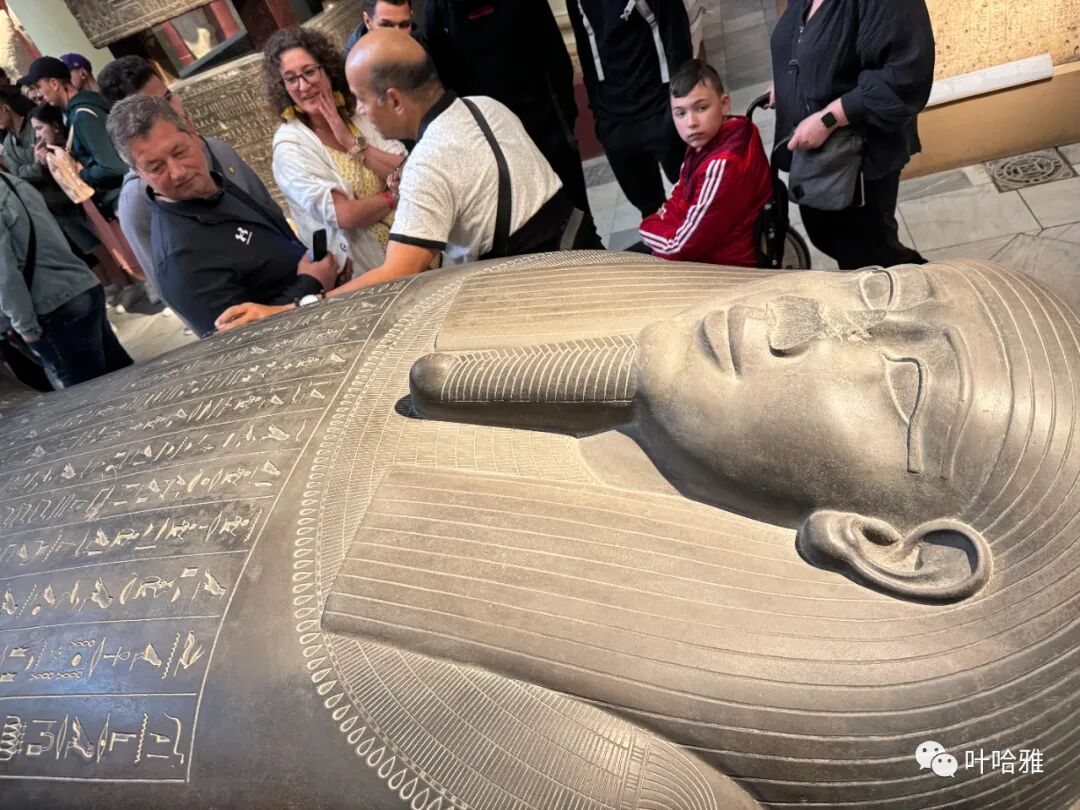
If you are not interested in Egyptian history, you will just be a casual tourist here. However, seeing the high level of ancient Egyptian civilization is an experience unmatched anywhere else in the world.
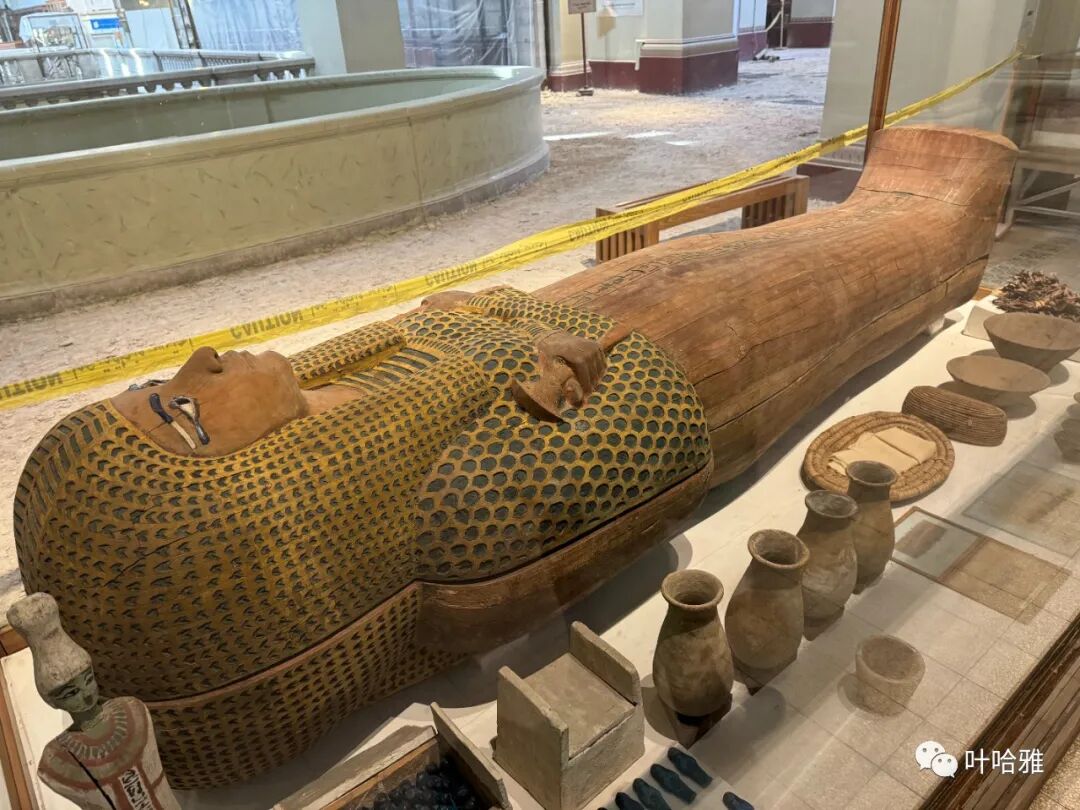
Some say ancient Egyptians and modern Egyptians are not the same race, but that is not a fact. Ancient Egyptians did not disappear. Through thousands of years of cultural exchange, they were assimilated, and modern Egyptians carry the genes of the ancient Egyptians.
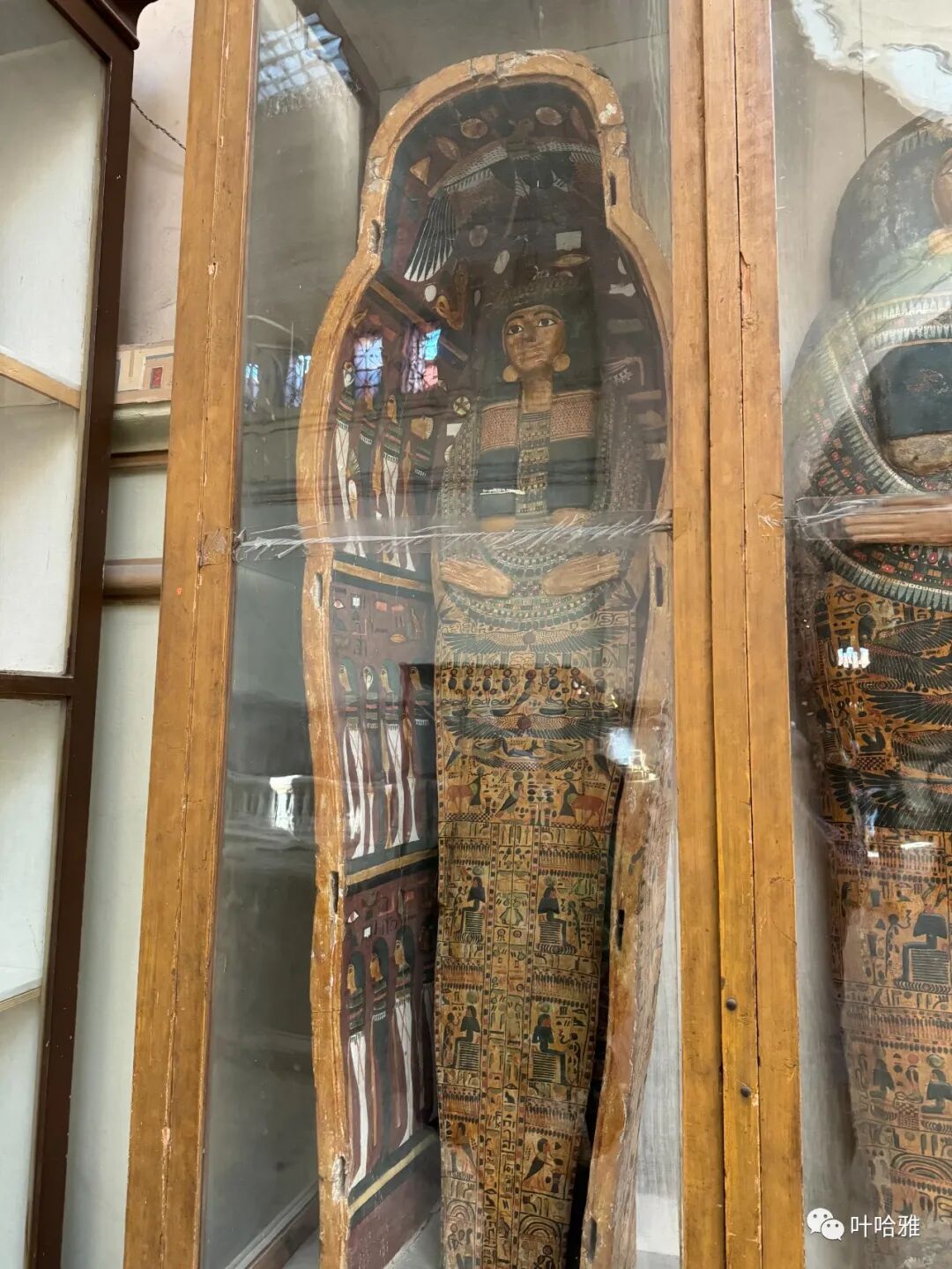
Although Egyptians are nominally divided into Arabs, Copts, or Nubians, their bloodlines are actually very similar. They all speak Arabic and have intermarried and assimilated so much that there is no such thing as a pure-blooded, independent ethnic group.
For example, the number of Copts in Egypt is decreasing every year because they are blending into the Arab population. When a Coptic Christian converts to Islam, by the third generation, they identify themselves as Arab.
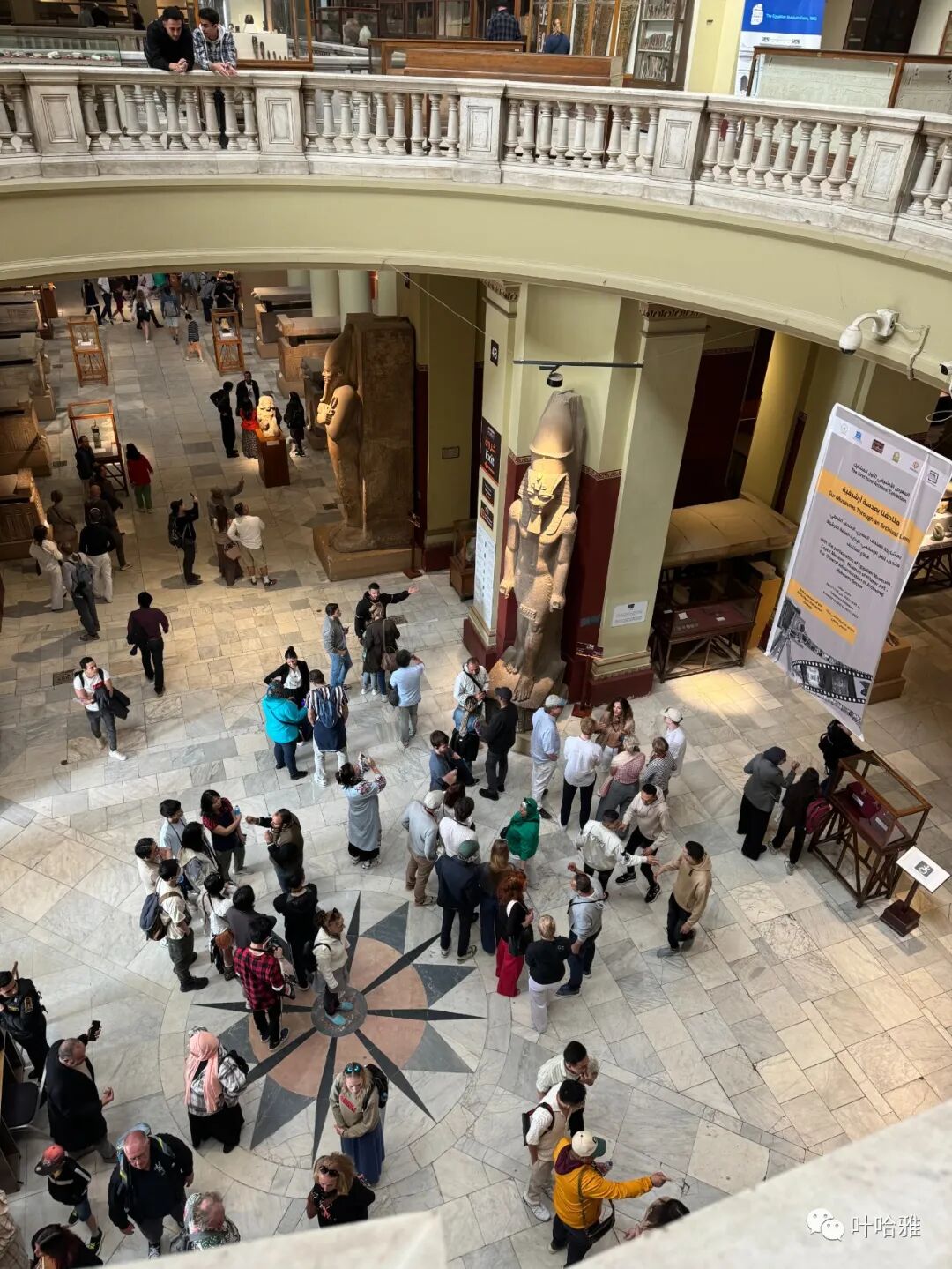
In the 7th century, Copts helped the Arabs conquer the Eastern Roman Empire. Because Copts were Miaphysites, the Eastern Roman Empire viewed them as heretics. Under Arab rule, the Copts actually lived better. Some say many Copts converted to Islam to pay fewer taxes, but there were not many tax benefits for converting, so there was no large-scale conversion of Copts in the early days.
During the Fatimid Caliphate, because the rulers were Shia, they were even harsher toward Sunni Muslims than toward Coptic Christians. Copts and Jews were protected and thrived during this period. Even during the Ayyubid and Mamluk dynasties, Copts remained under protection. The Mamluks were former slaves who became rulers, so they empathized with the Copts.
By the mid-14th century, whenever there were large-scale riots, many Copts converted to protect themselves. According to Egyptian law at the time, a Muslim's property could not be inherited by a non-Muslim. This led the descendants of converts to choose Islam to keep their property. It was from this period that Copts became a minority in Egypt.
Later, Muslim citizens accused the converted Copts of not being true converts because they did not go to the mosque for namaz on time. So, even though Muslims are the majority in Egypt today, the country is not completely Islamized.
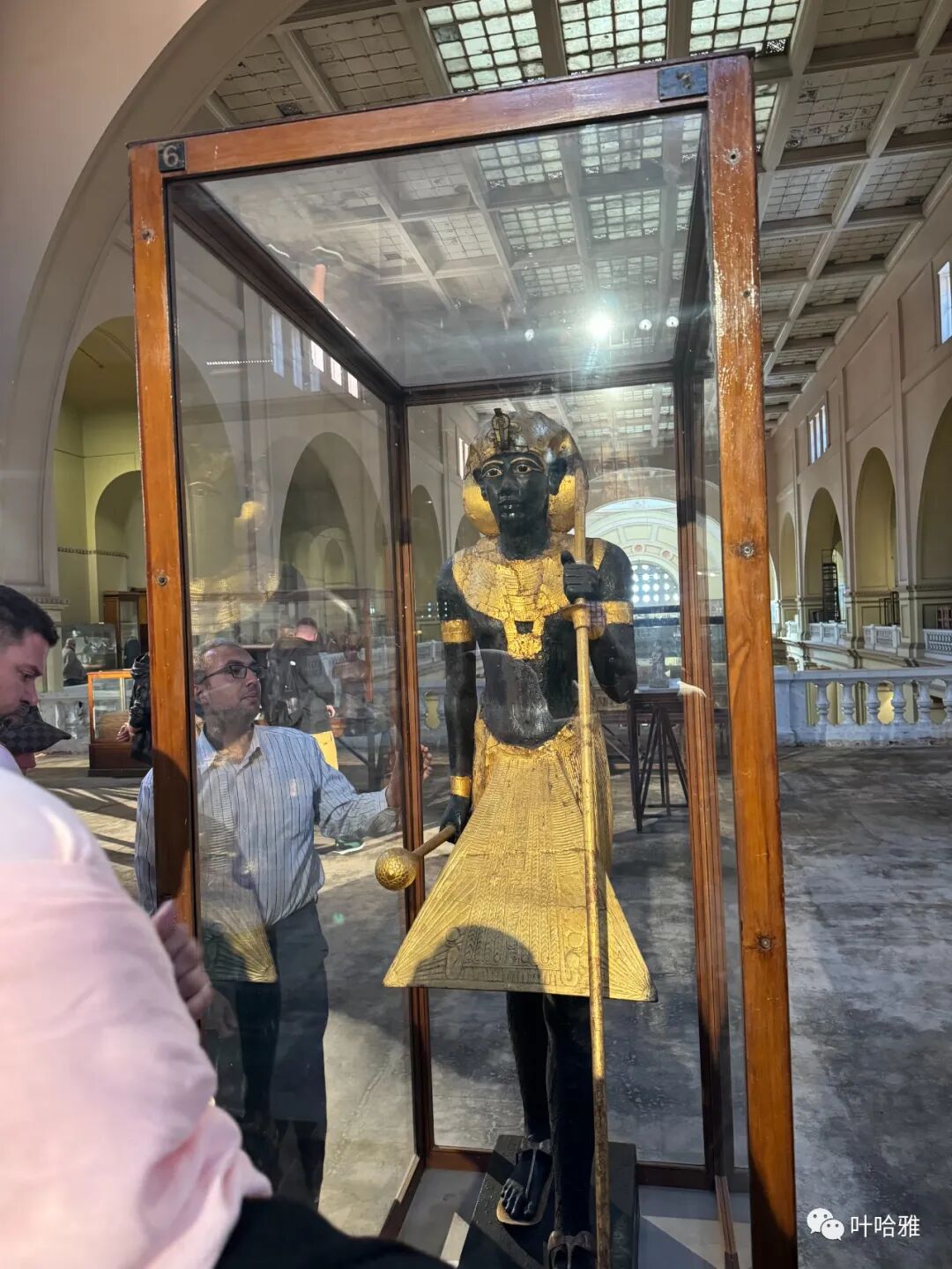
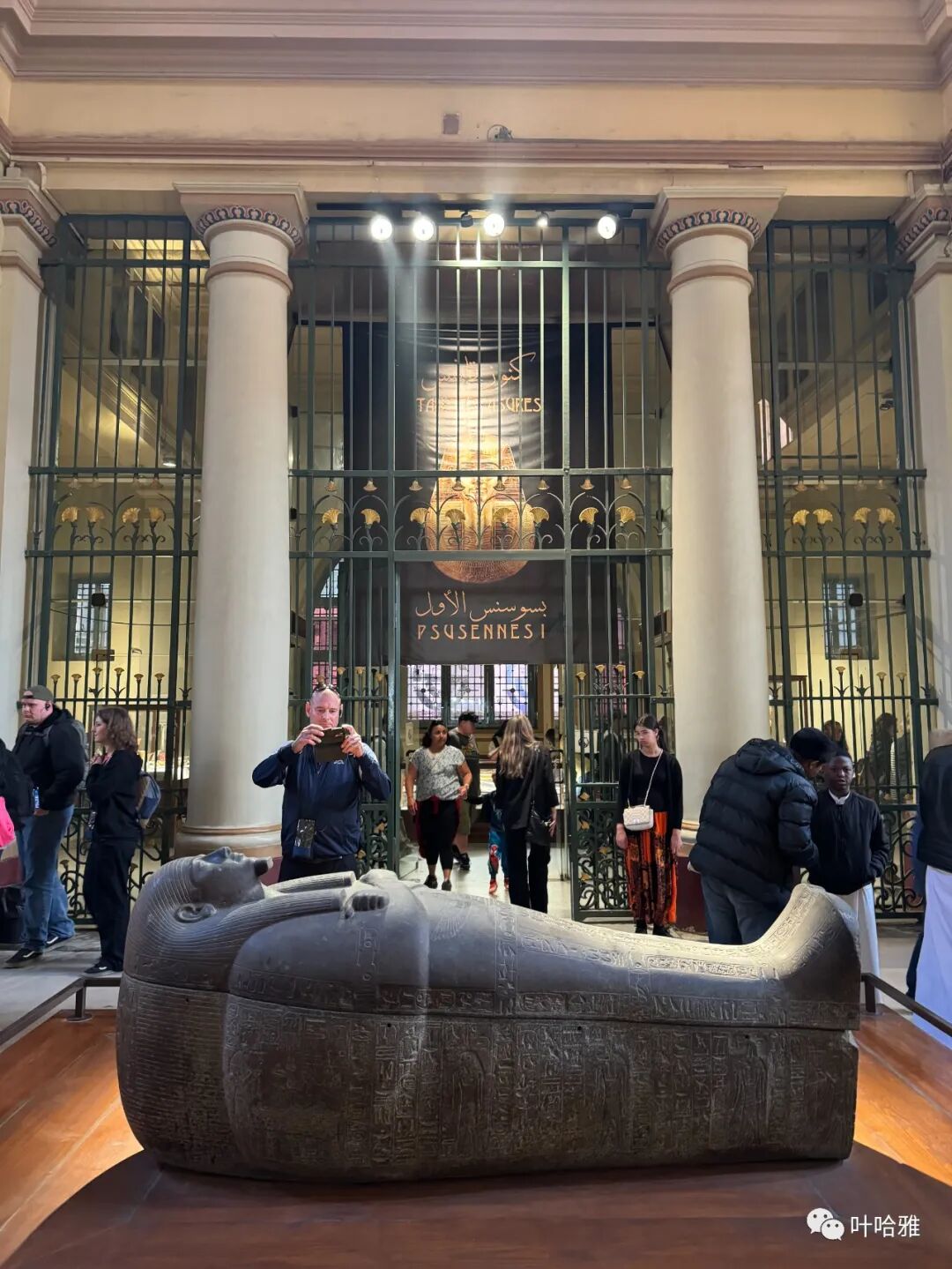
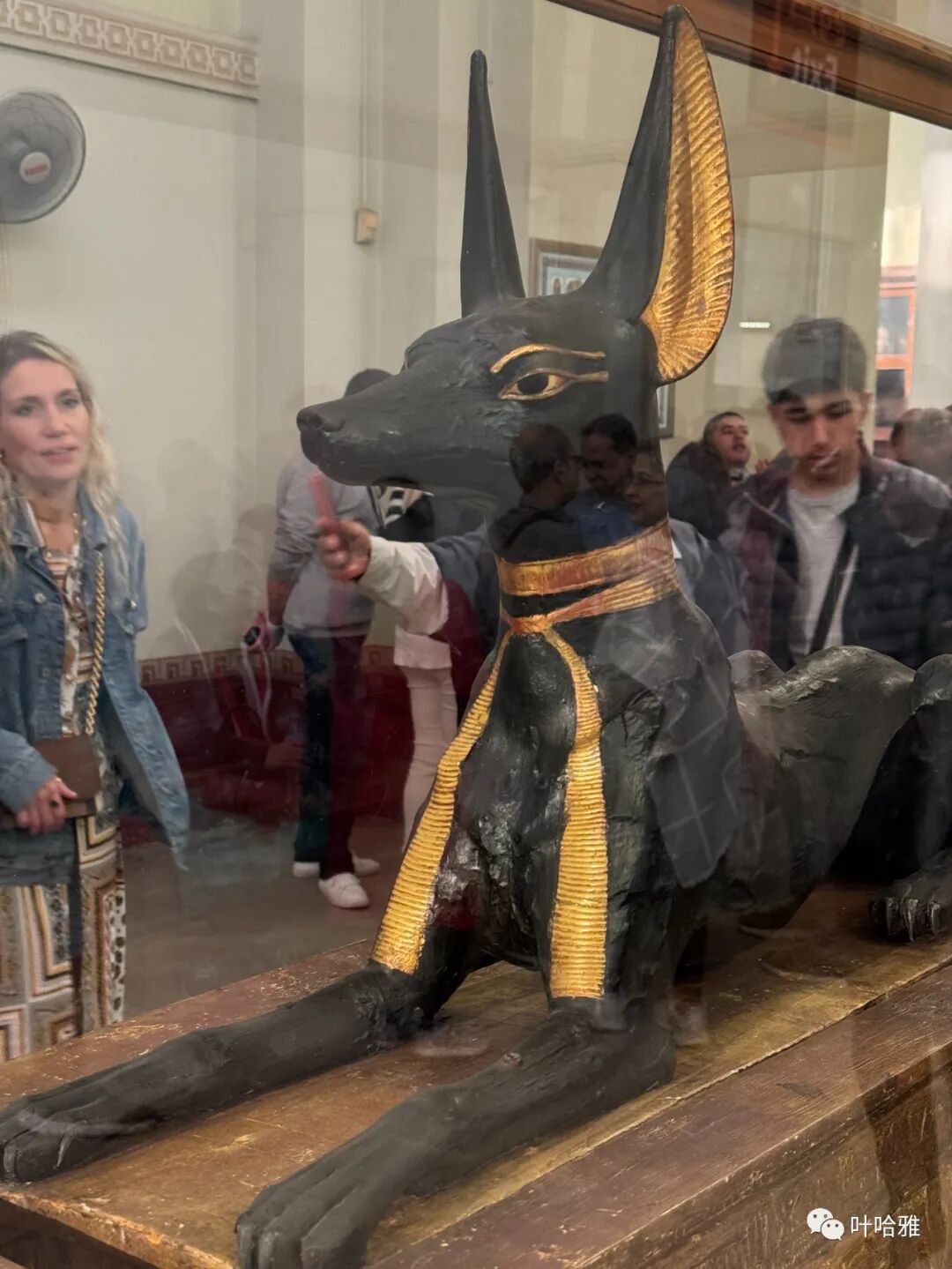
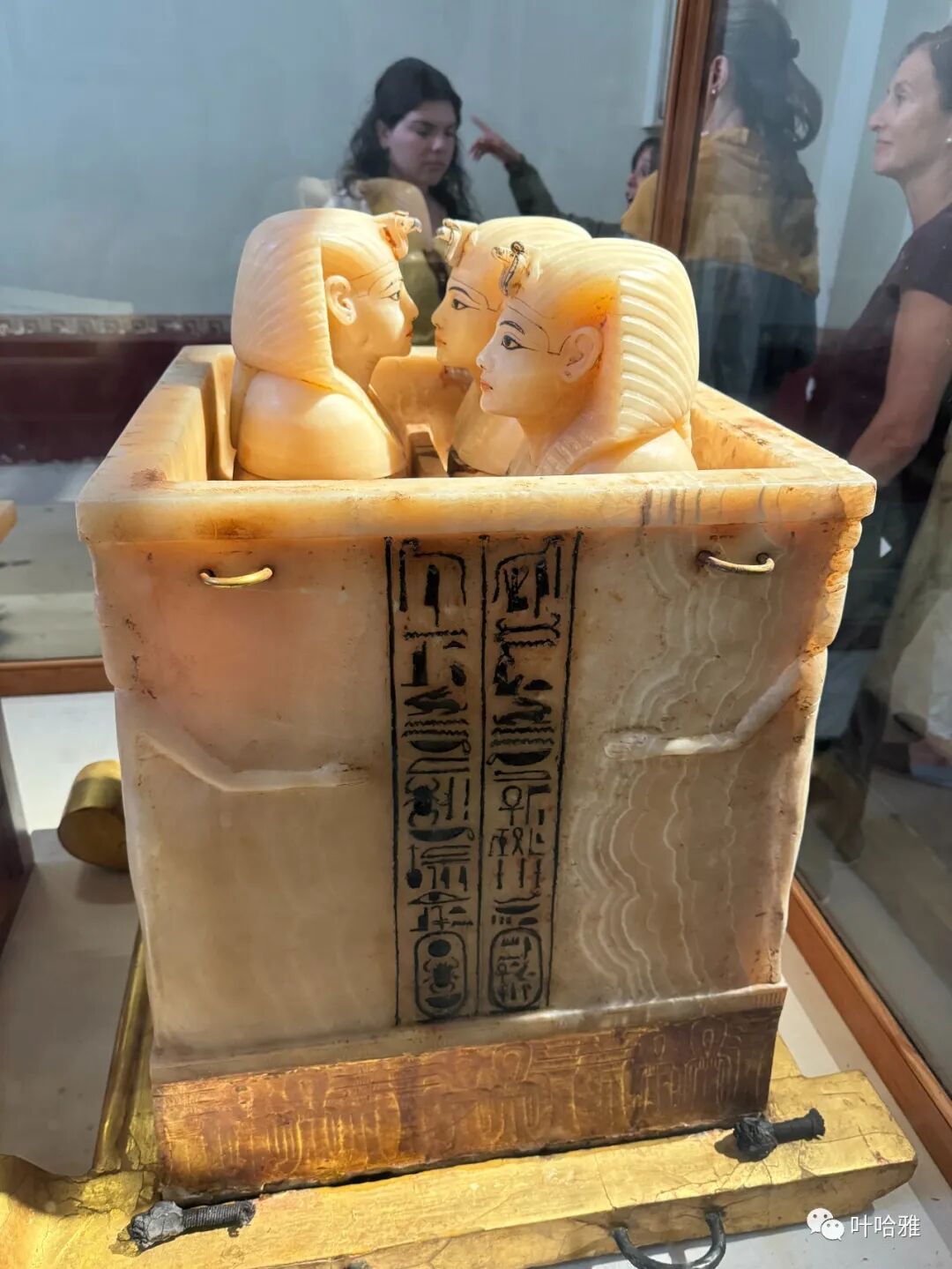
The second floor of the Egyptian Museum has a Tutankhamun gallery. There is a funny story here: a travel blogger on Douyin posted a video saying they received the highest honor in Egypt and were allowed to film inside the gallery, which is usually off-limits for photography. I was stopped by a staff member when I tried to take photos with my phone and had to delete them under his supervision. The photo below was taken from outside the museum using my phone's telephoto lens.
However, after I handed 200 Egyptian pounds (about 40 RMB) to the staff member, I was allowed to take photos. That is how I got this picture of Tutankhamun's golden mask.
Tutankhamun's golden mask is said to be the most valuable artifact in the world and is priceless. But in Egypt, as long as you have a tip, everything is negotiable. That includes the blogger who claimed they filmed the pyramids while the site was cleared. I checked the time of their video, and it was after sunset, which is after the pyramids close. Paying money to get in and film is definitely not the highest honor.
After getting this photo to prove the Douyin blogger was bluffing, I lost interest in seeing the rest of the exhibits. In the evening, we went to the local Star City Mall to eat Thai food.
It is rare to find a prayer room in public places in Egypt, unlike in the UAE or Saudi Arabia where you see them everywhere. This mall actually has a prayer room, which is worth noting.
SABAI Thai Food
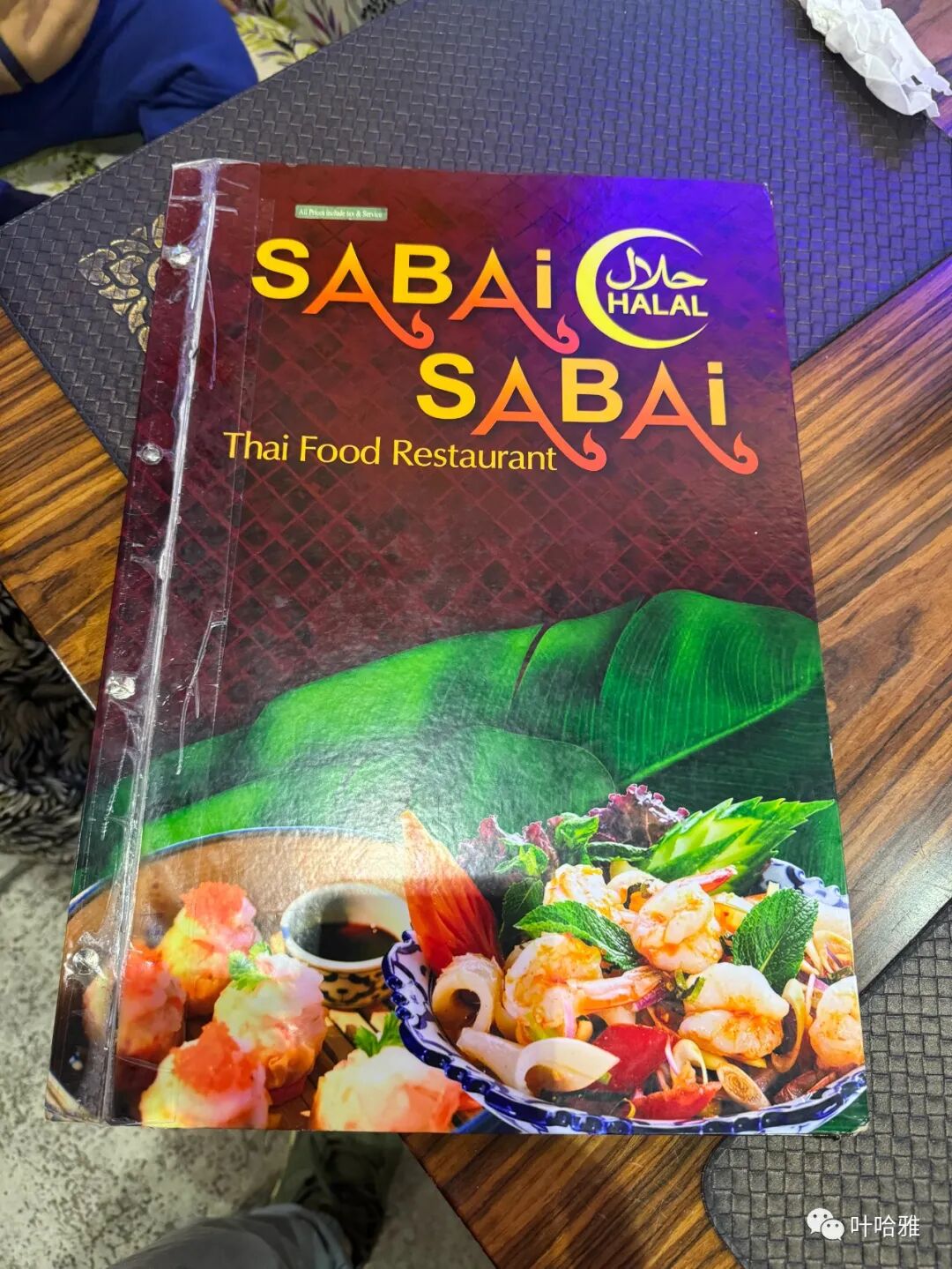
This Thai restaurant is quite popular locally and attracts many Chinese diners. The owner seems to have a misunderstanding of East and Southeast Asia, mixing in Chinese and Japanese elements. Perhaps to Arabs, we all look the same, just as we might struggle to tell the difference between Egyptians, Moroccans, Tunisians, Saudis, Qataris, Emiratis, Lebanese, Yemenis, Syrians, Jordanians, Bahrainis, Libyans, and Algerians.
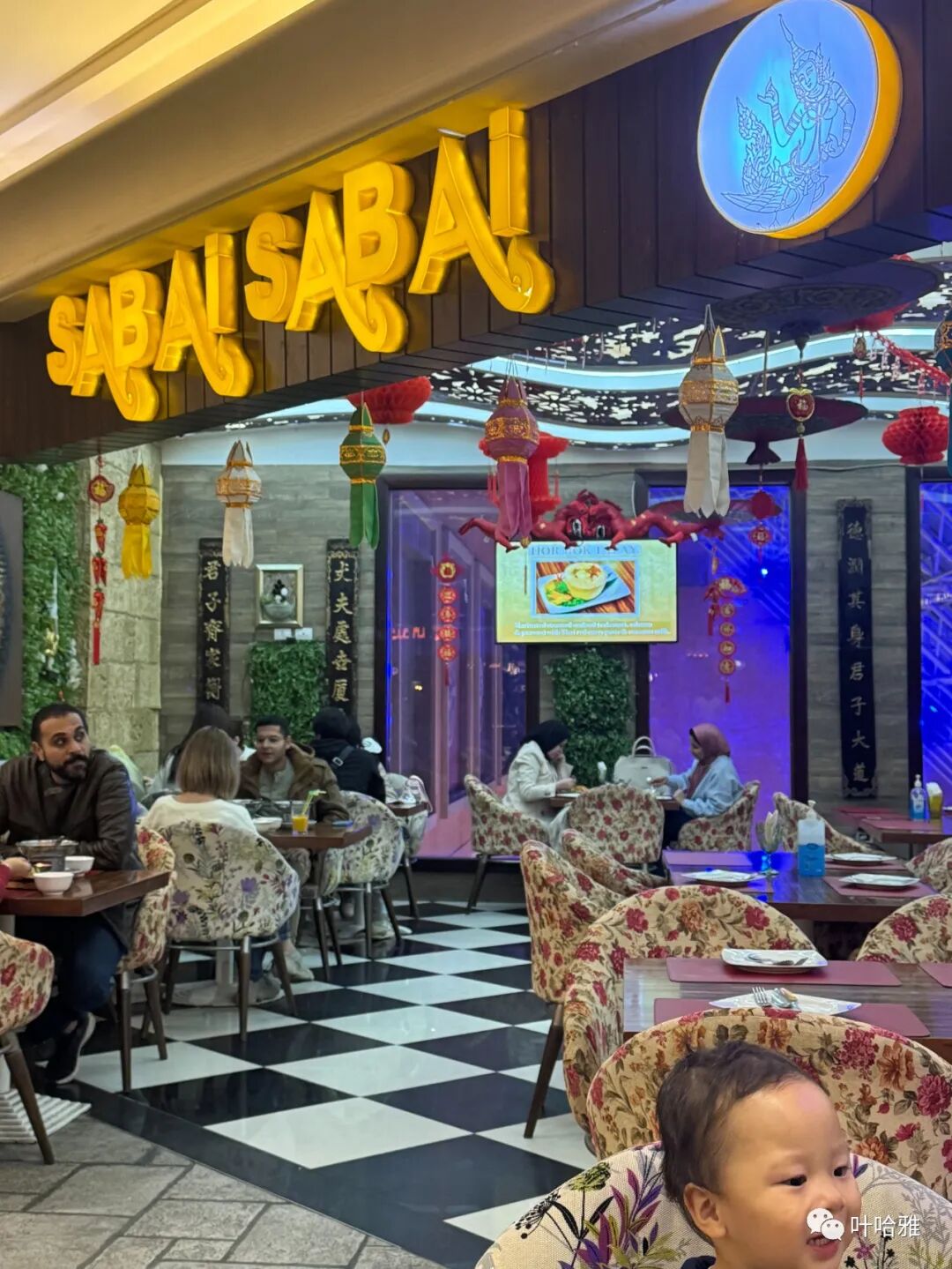
You do not see halal signs in restaurants in Egypt, so you can just walk in anywhere. However, you should be careful with Chinese food and ask clearly. This shop marks its menu as halal because many Arabs assume Chinese food is not halal, and some restaurants also sell alcohol.
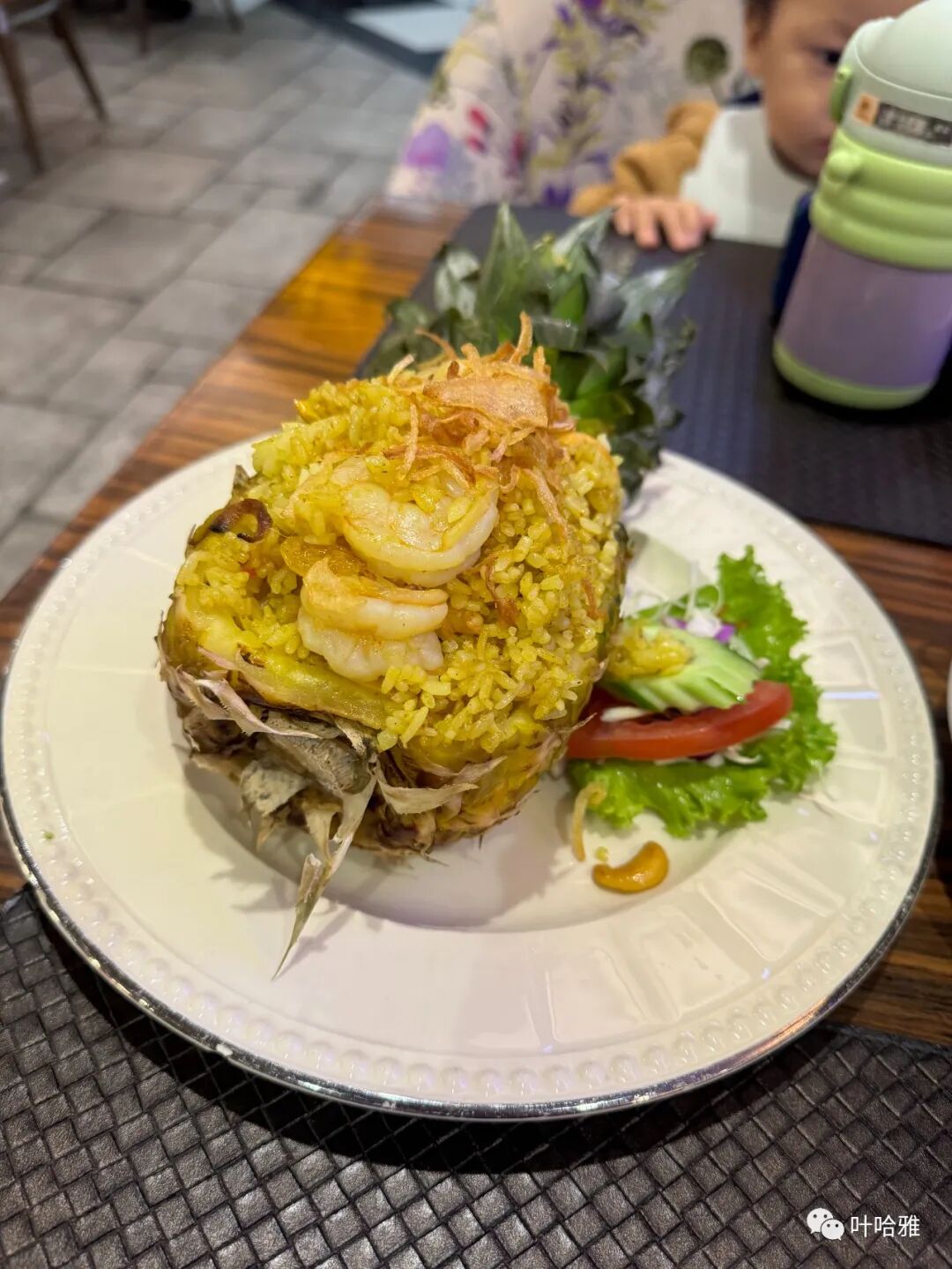
The chef at this Thai place is Black, but the food is quite authentic. Sour and spicy Thai dishes are very appetizing in the hot Middle East. The portions are small, but the price is cheap, costing about 100 RMB per person.
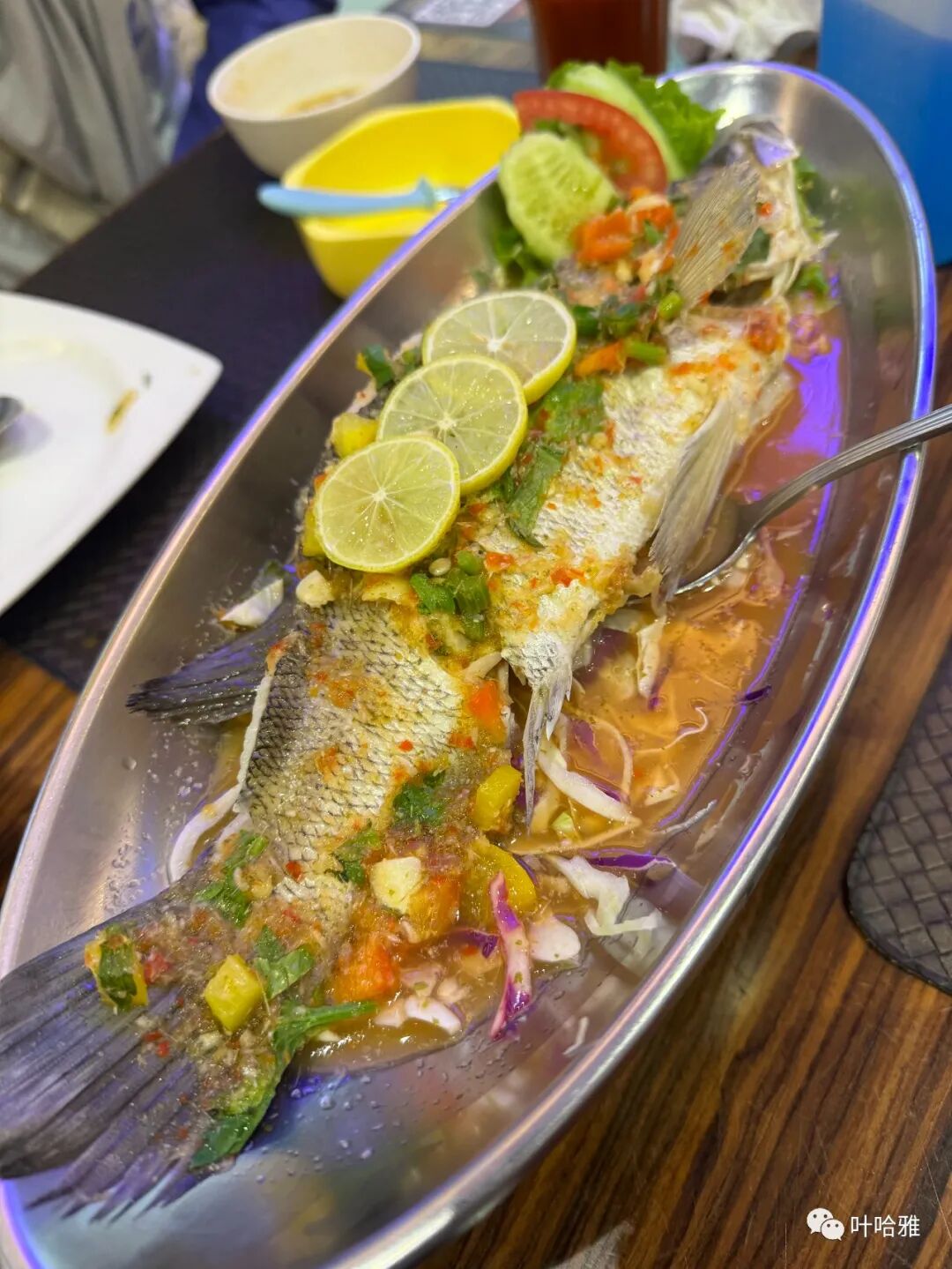
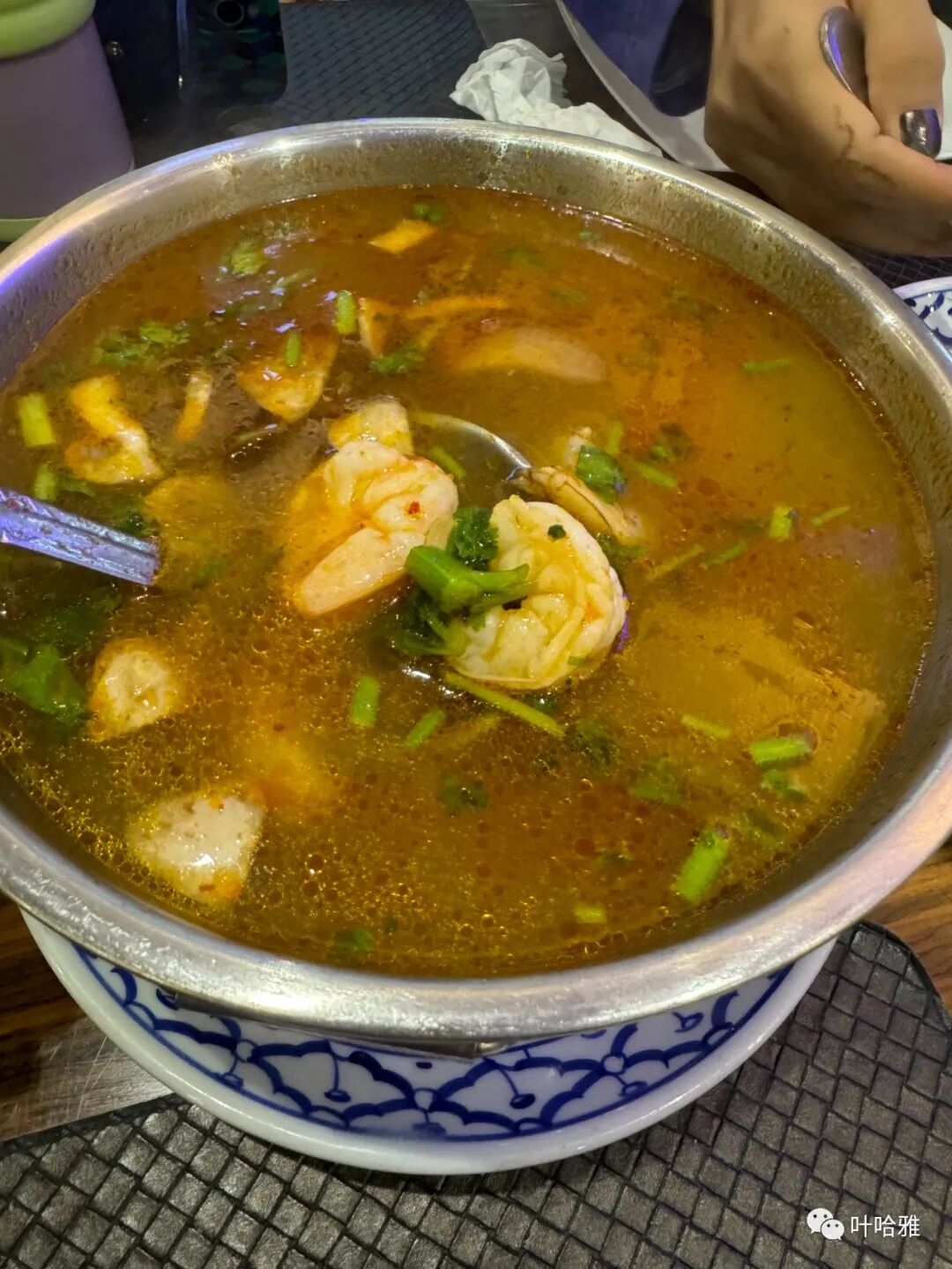
Tom Yum Goong soup
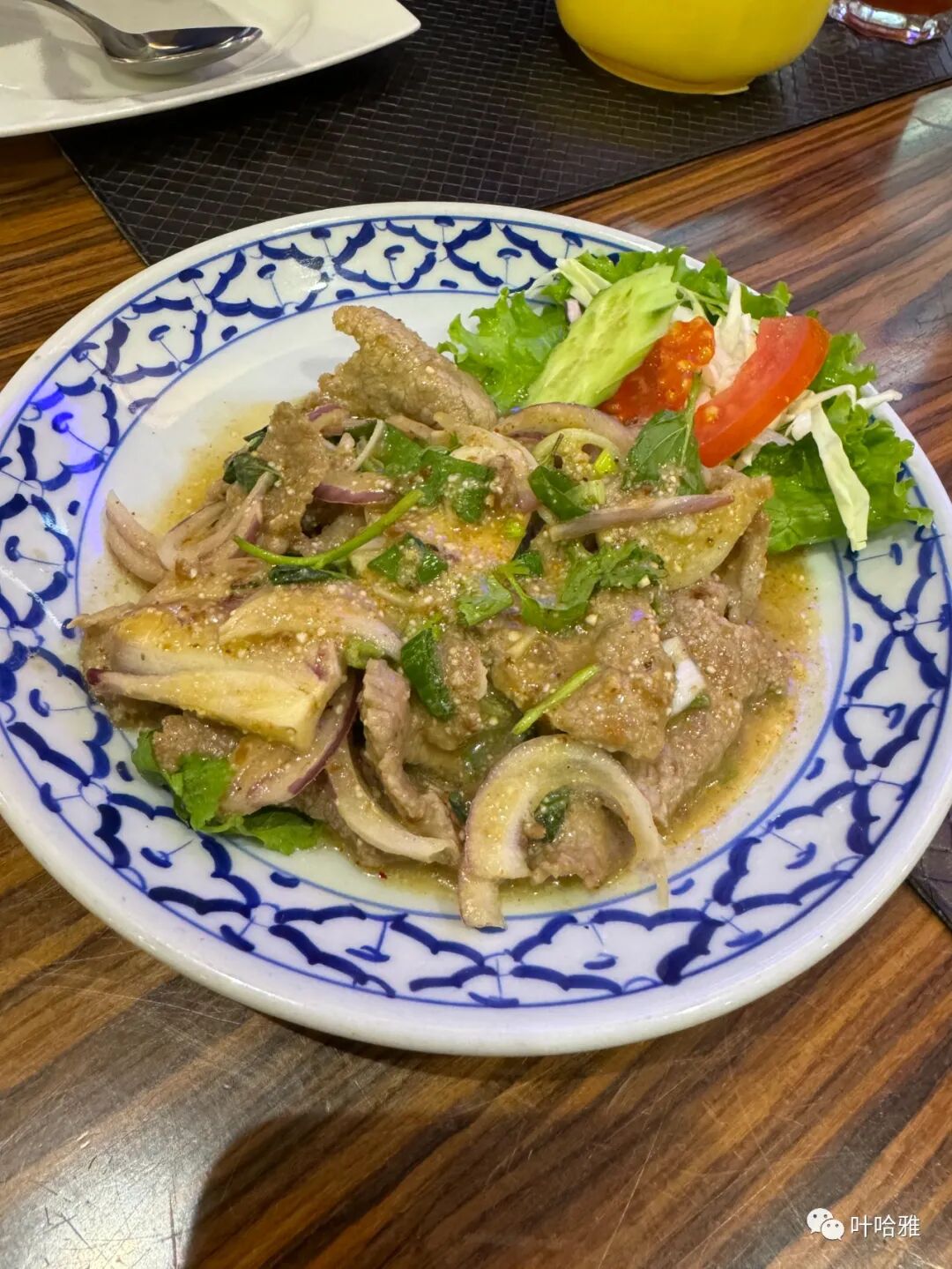
MORISUSHI Japanese food
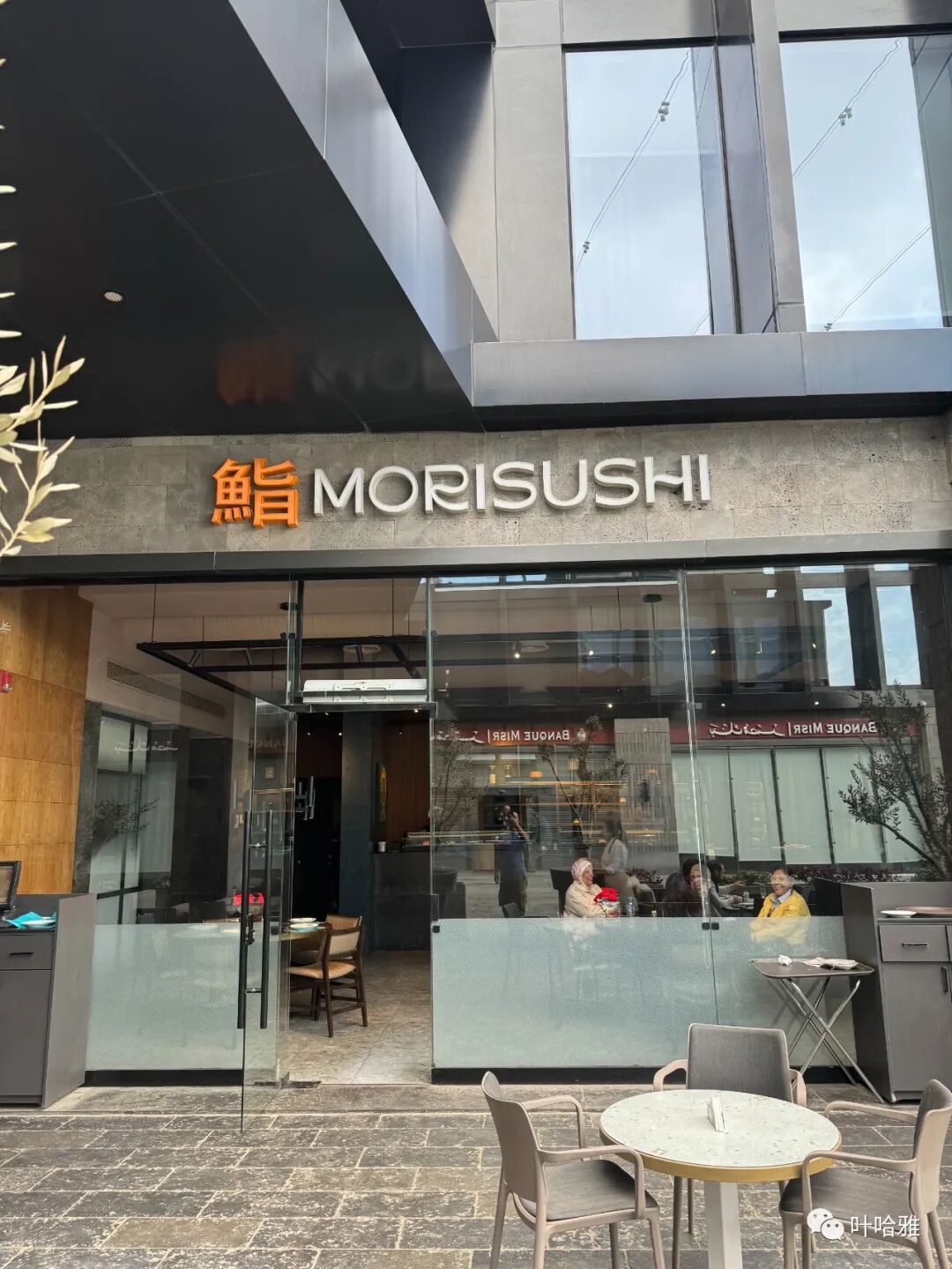
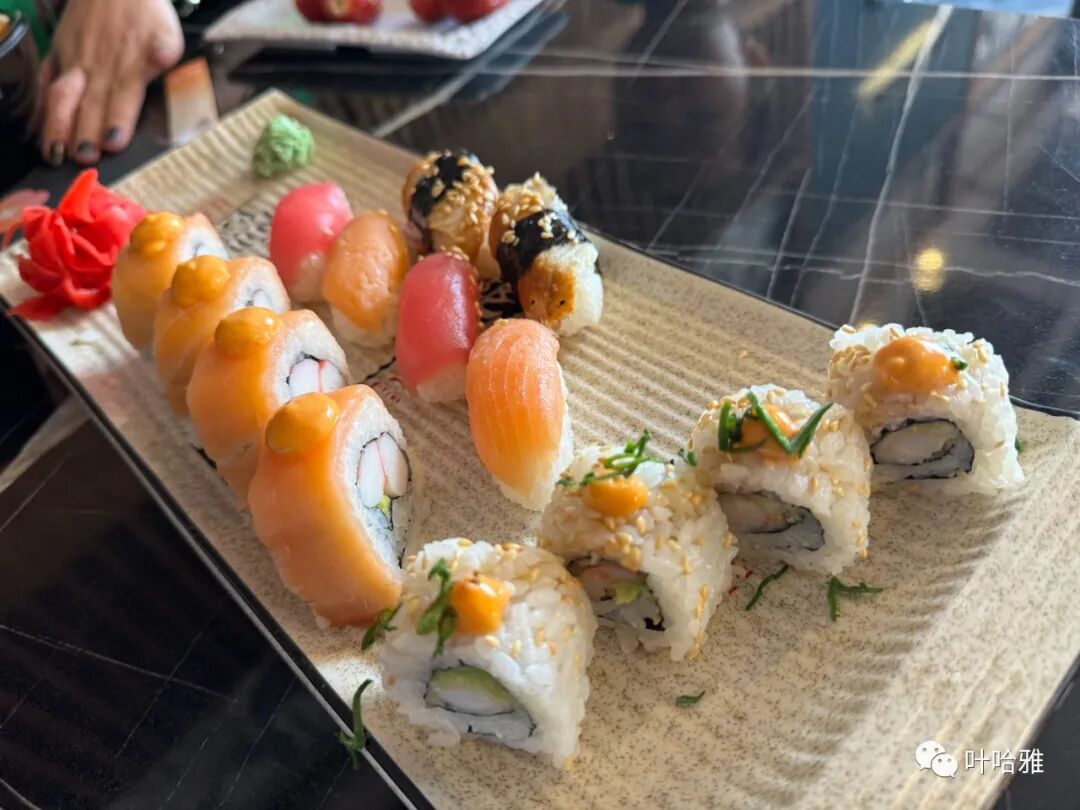
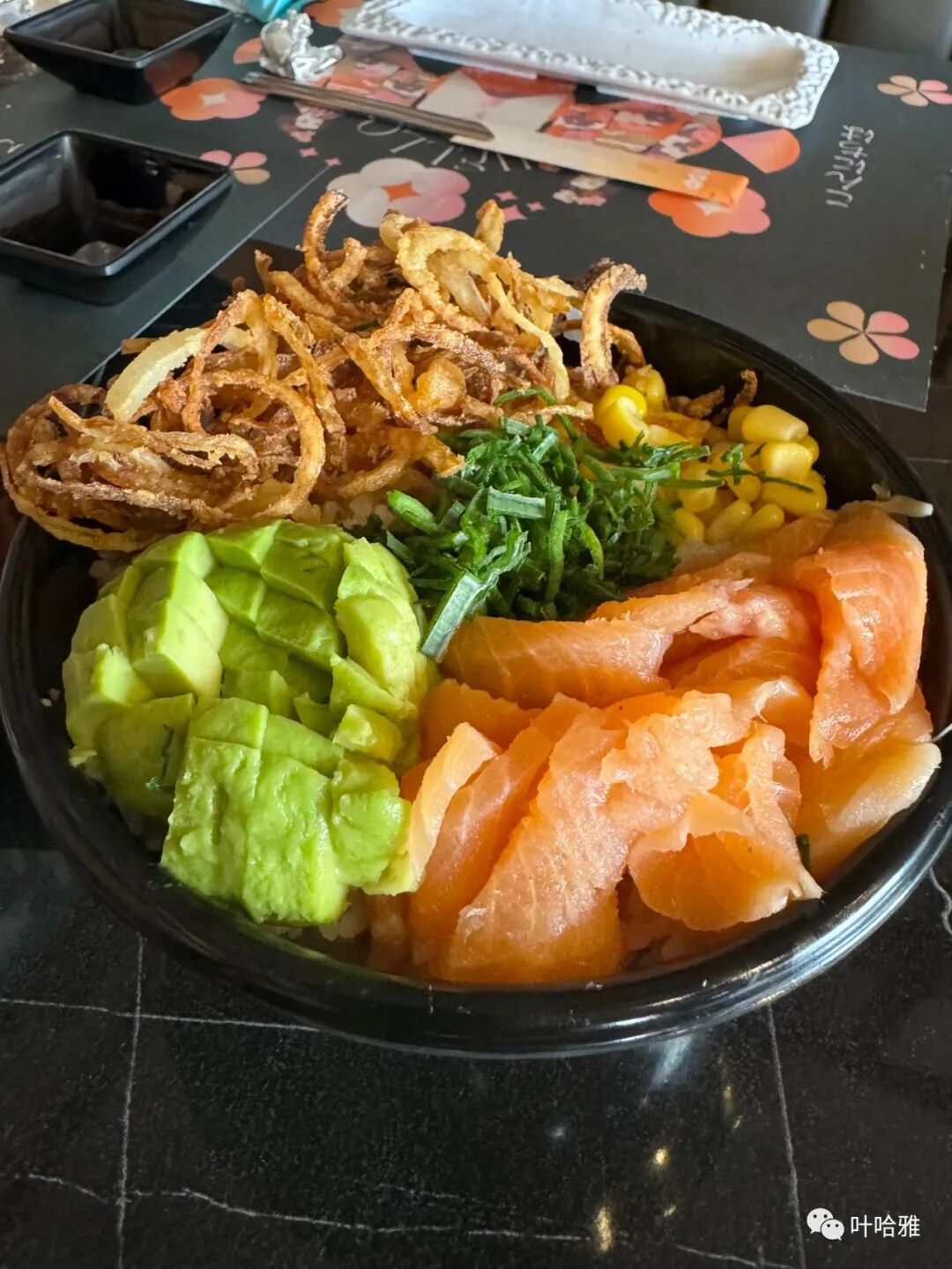
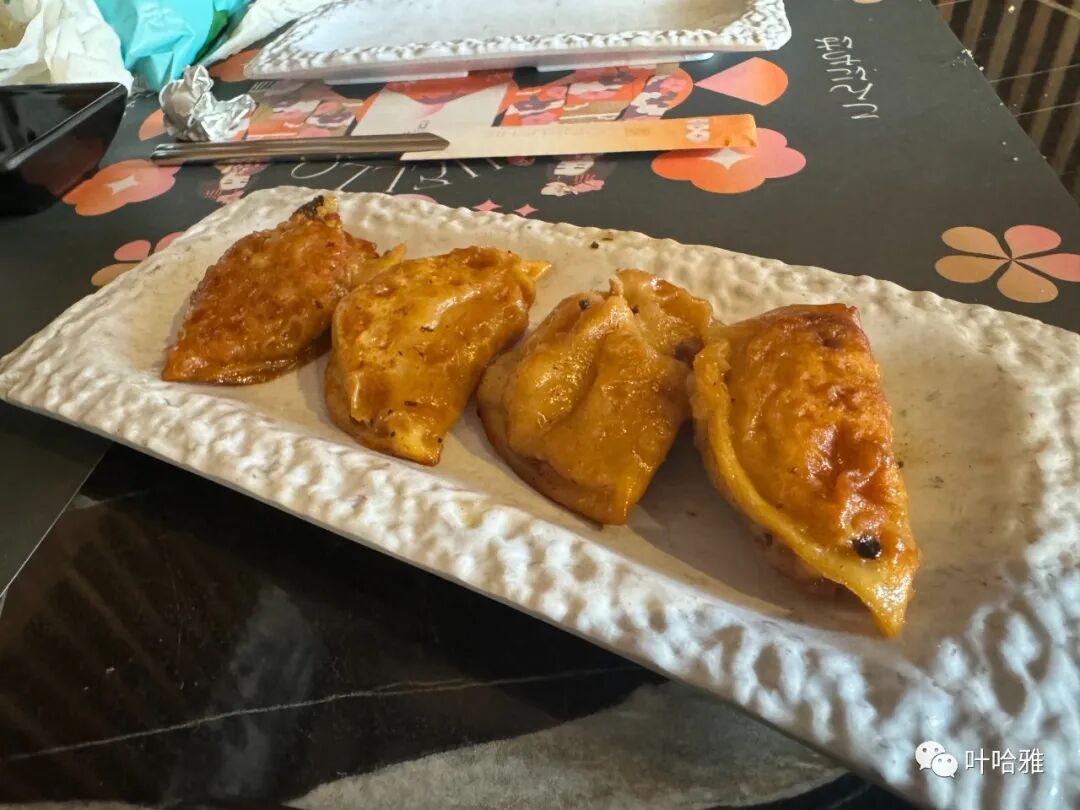
I had a Japanese meal at a shopping center in New Cairo. After traveling in the Middle East for over ten days and eating Arabic food almost every day, it was nice to change things up.
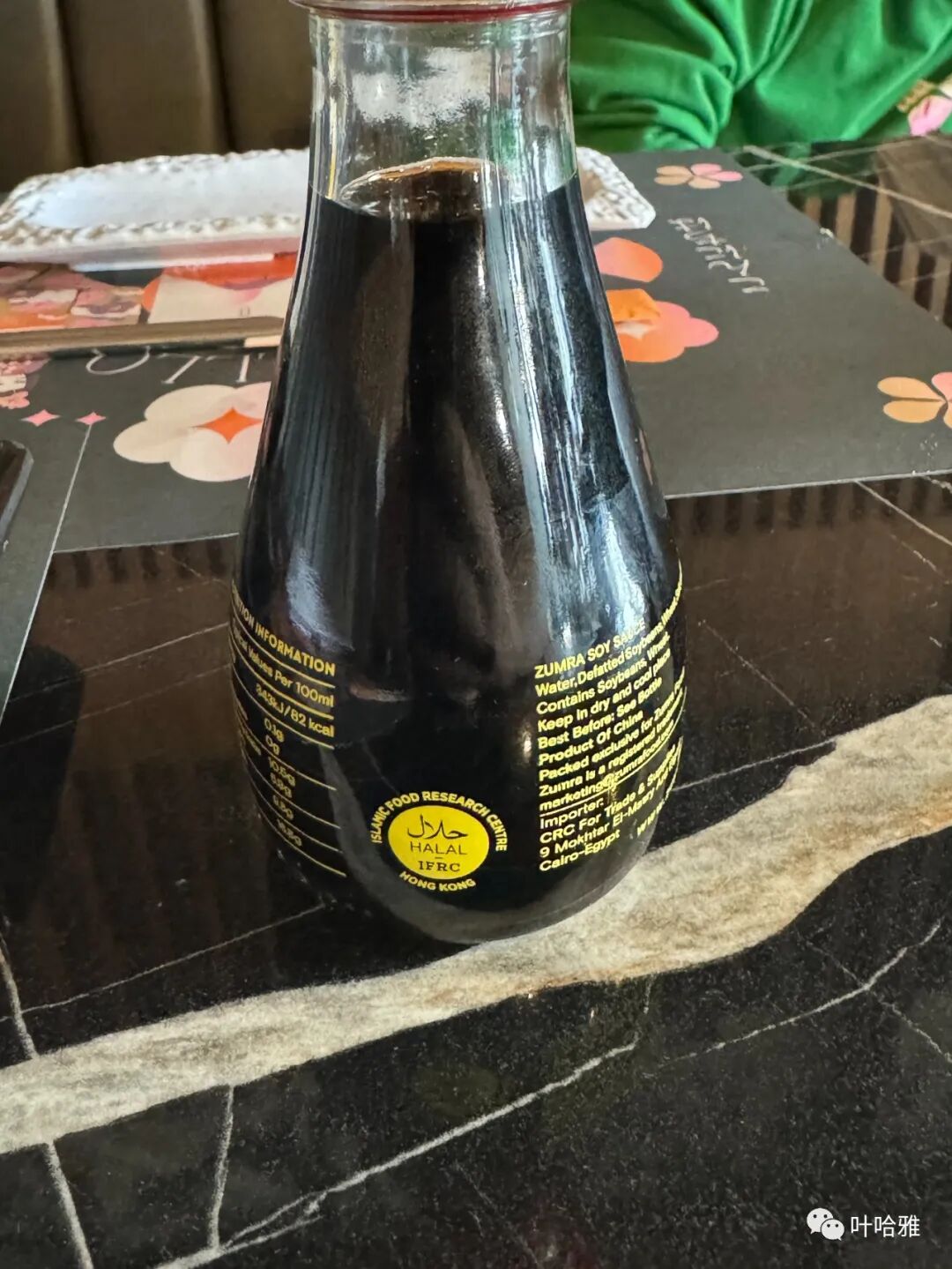
There is a halal sign on the soy sauce bottle, which is a new thing to see in an Arab country.
Patchi chocolate shop
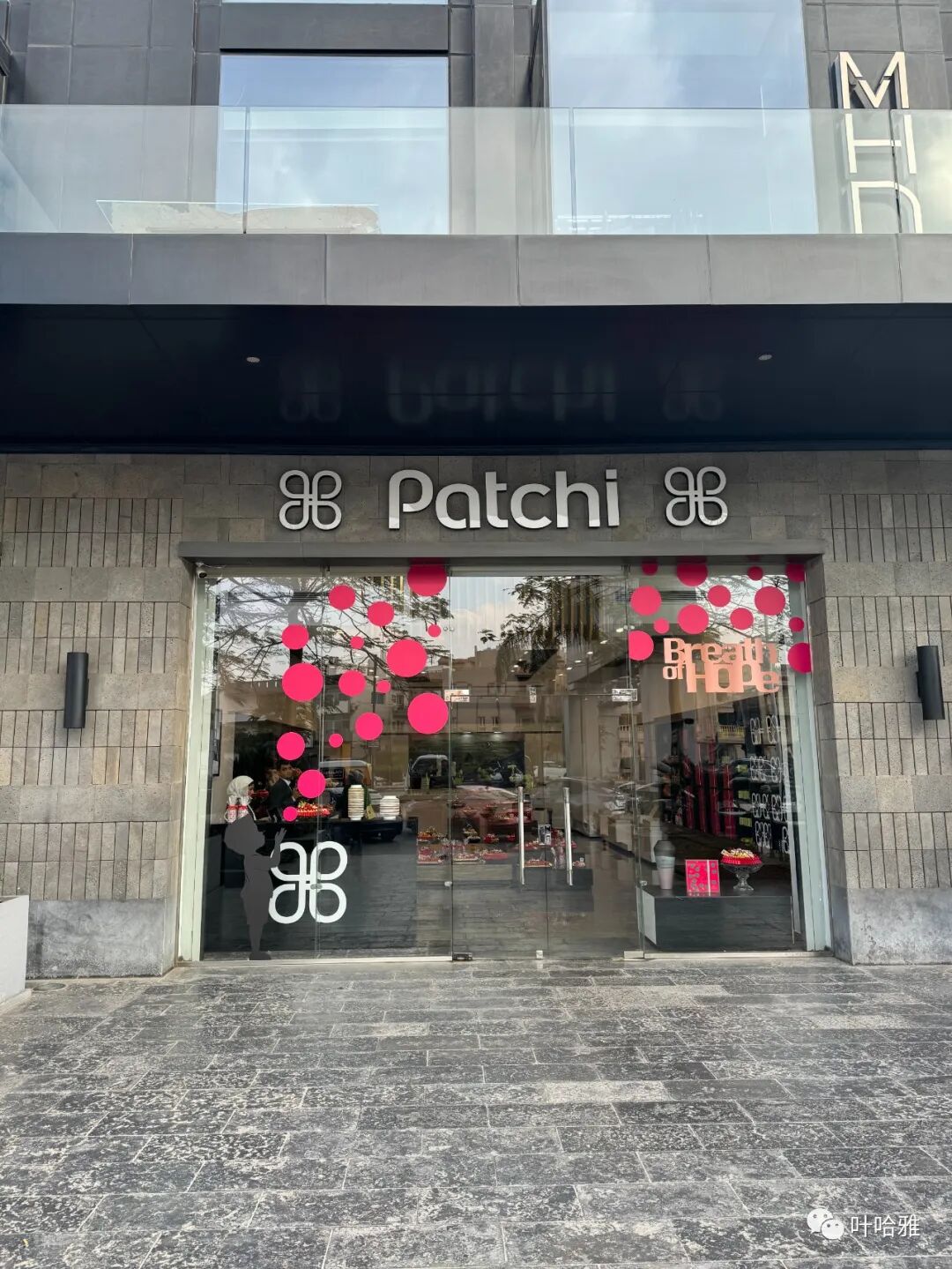
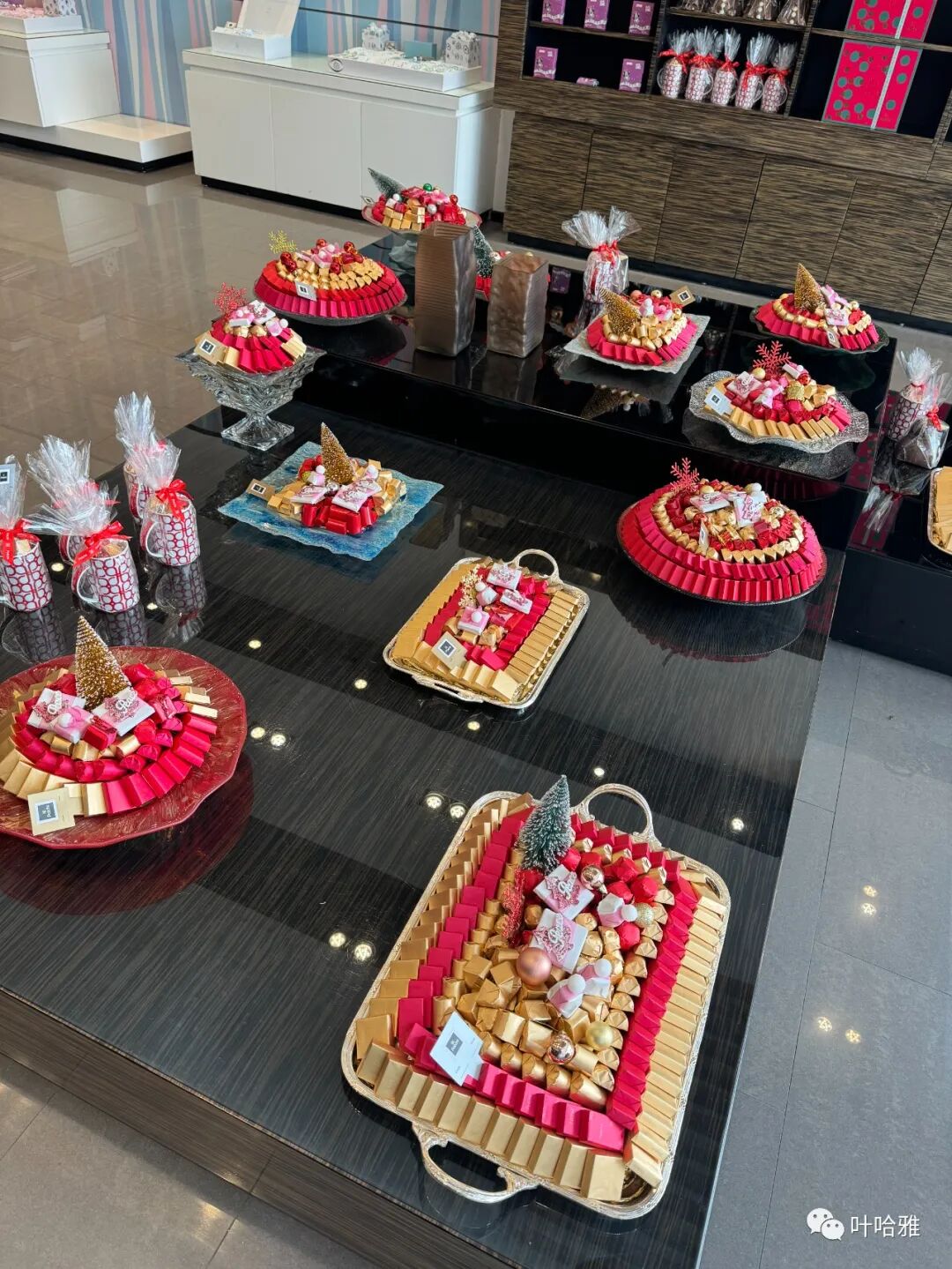
This is a Lebanese chocolate brand, said to be the royal family's choice for desserts. It is sold very cheaply in Egypt, at about 300 RMB per kilogram.
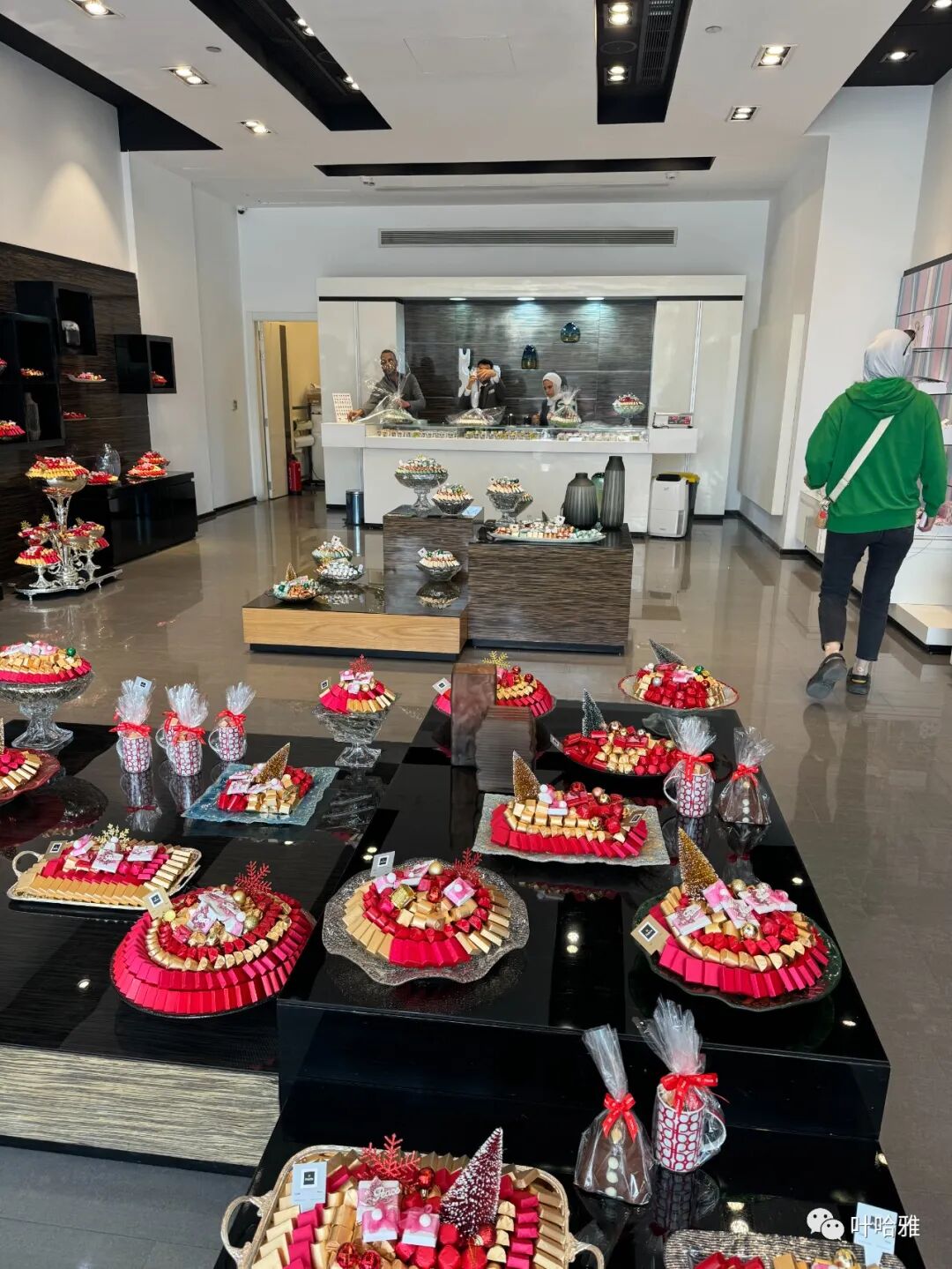
Arabs love sweets, and there are many overweight people on the streets, which is really unhealthy. Eating too many sweets is also bad for children's brain development, so we should take this as a warning.
Le Passage Cairo Hotel
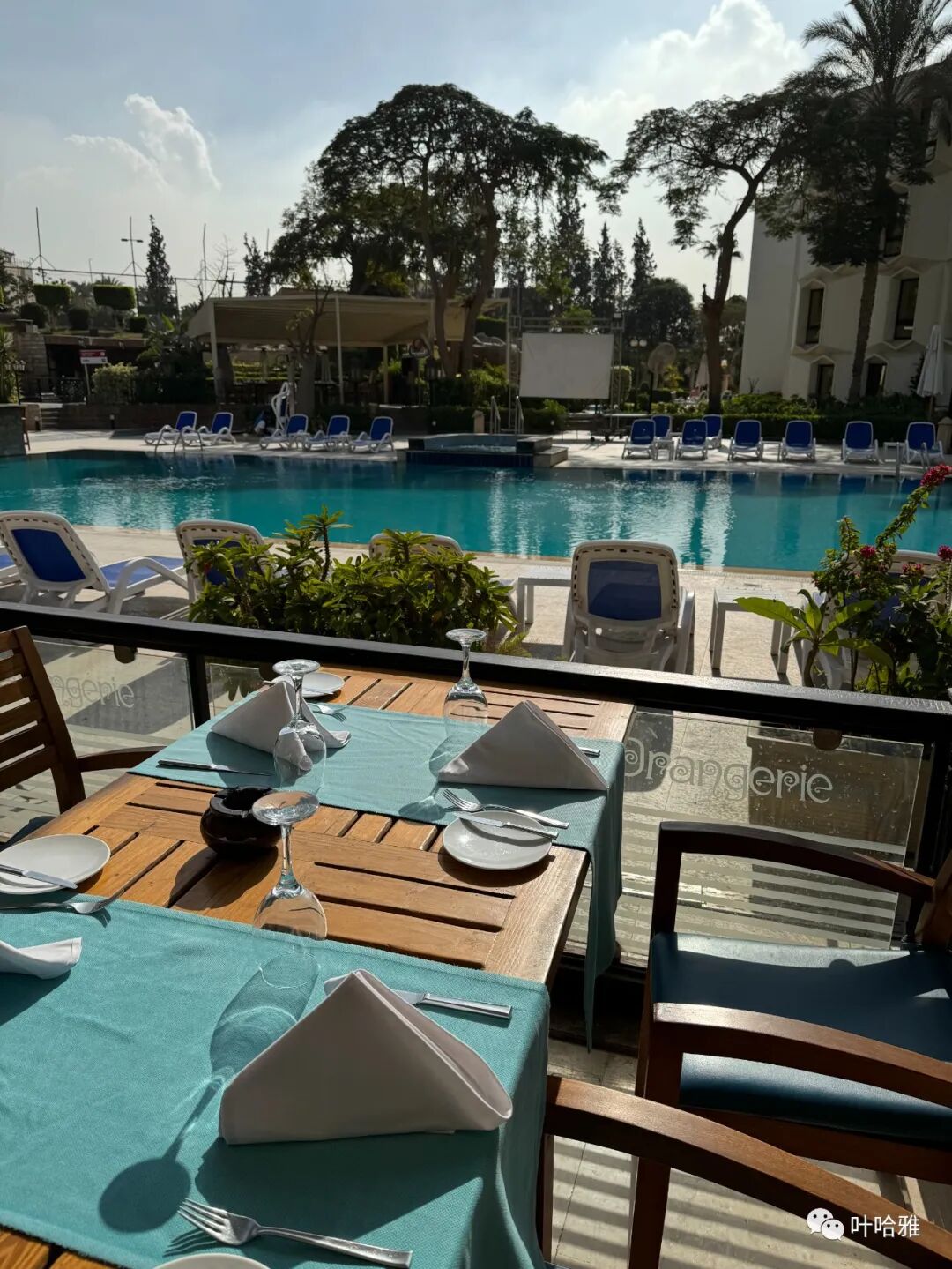
We ate at the hotel restaurant most of the time. If you are just using Cairo as a transit stop and want to stay near the airport, I recommend this place. It is an 800-meter walk to the terminal, and the hotel also provides a free shuttle service.
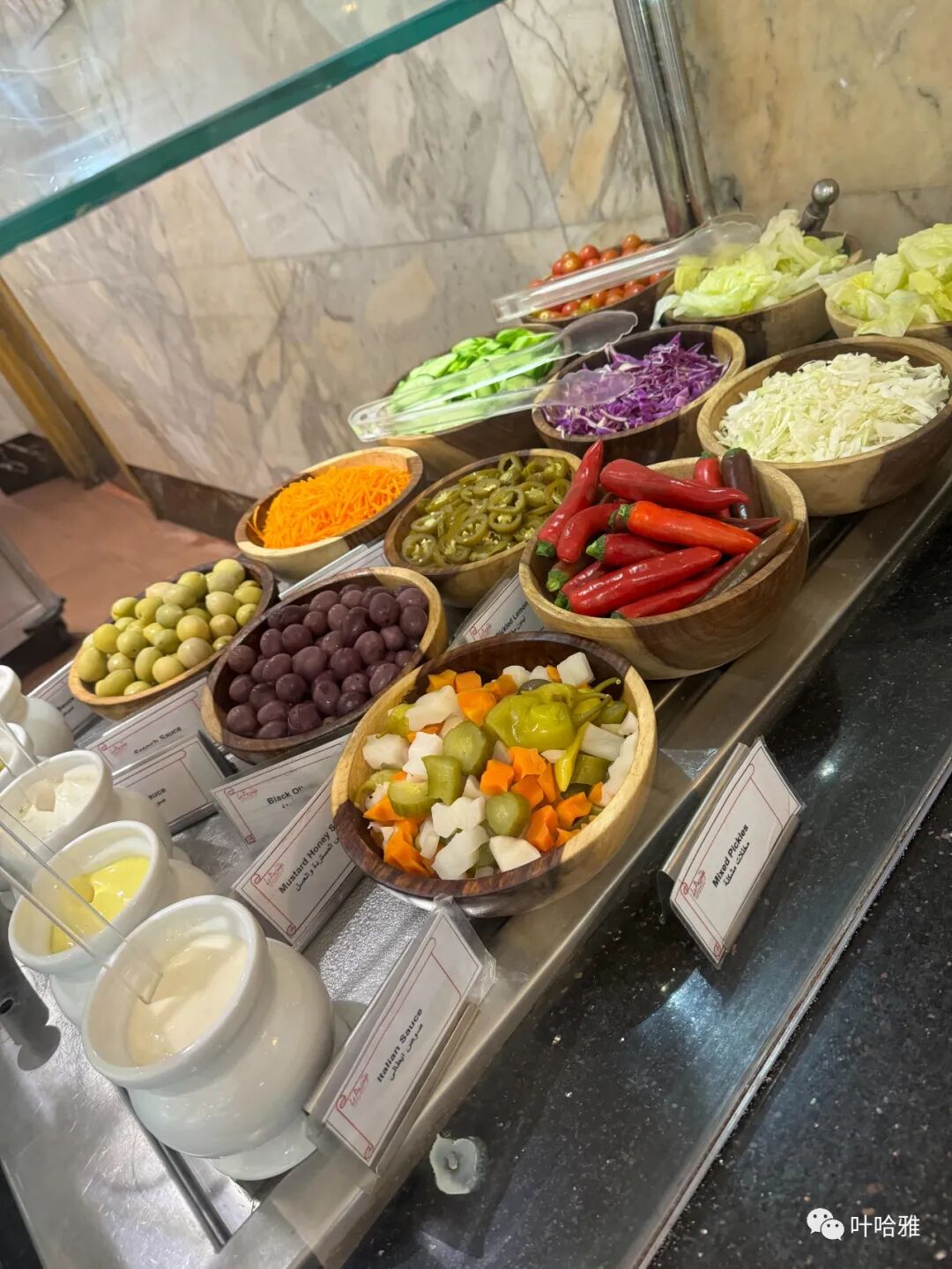
At this hotel's buffet, you have to ask the staff to get the food for you, which feels a bit less free.
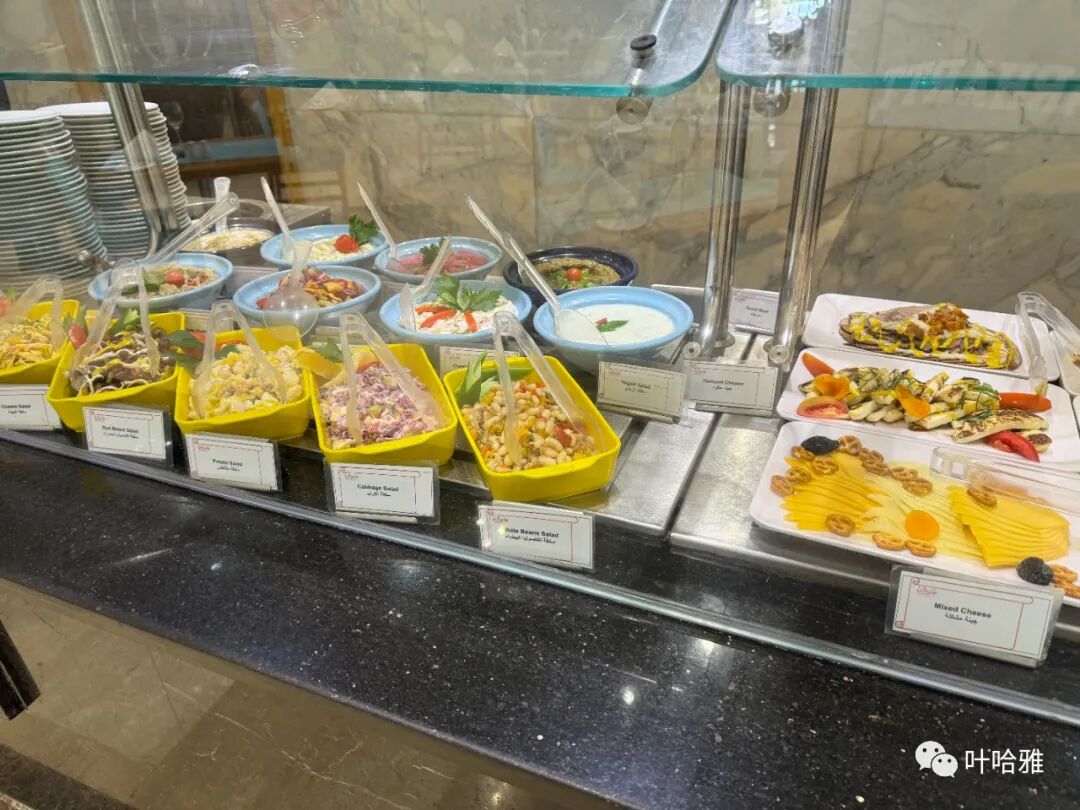
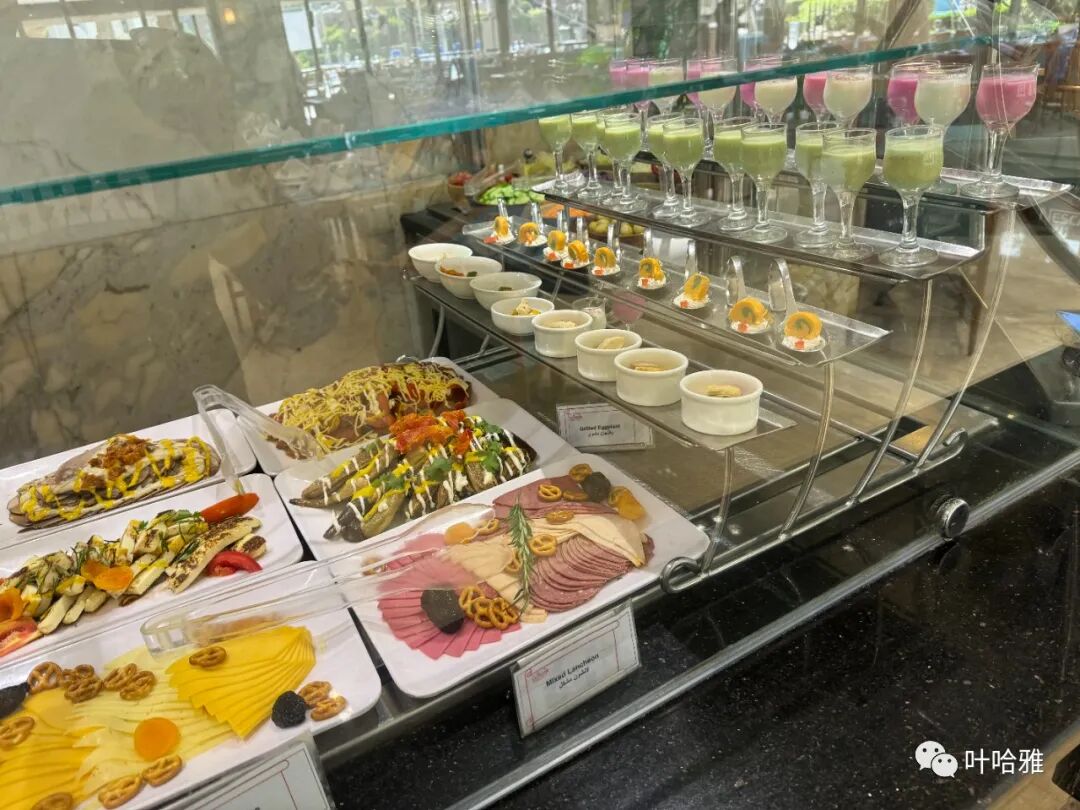
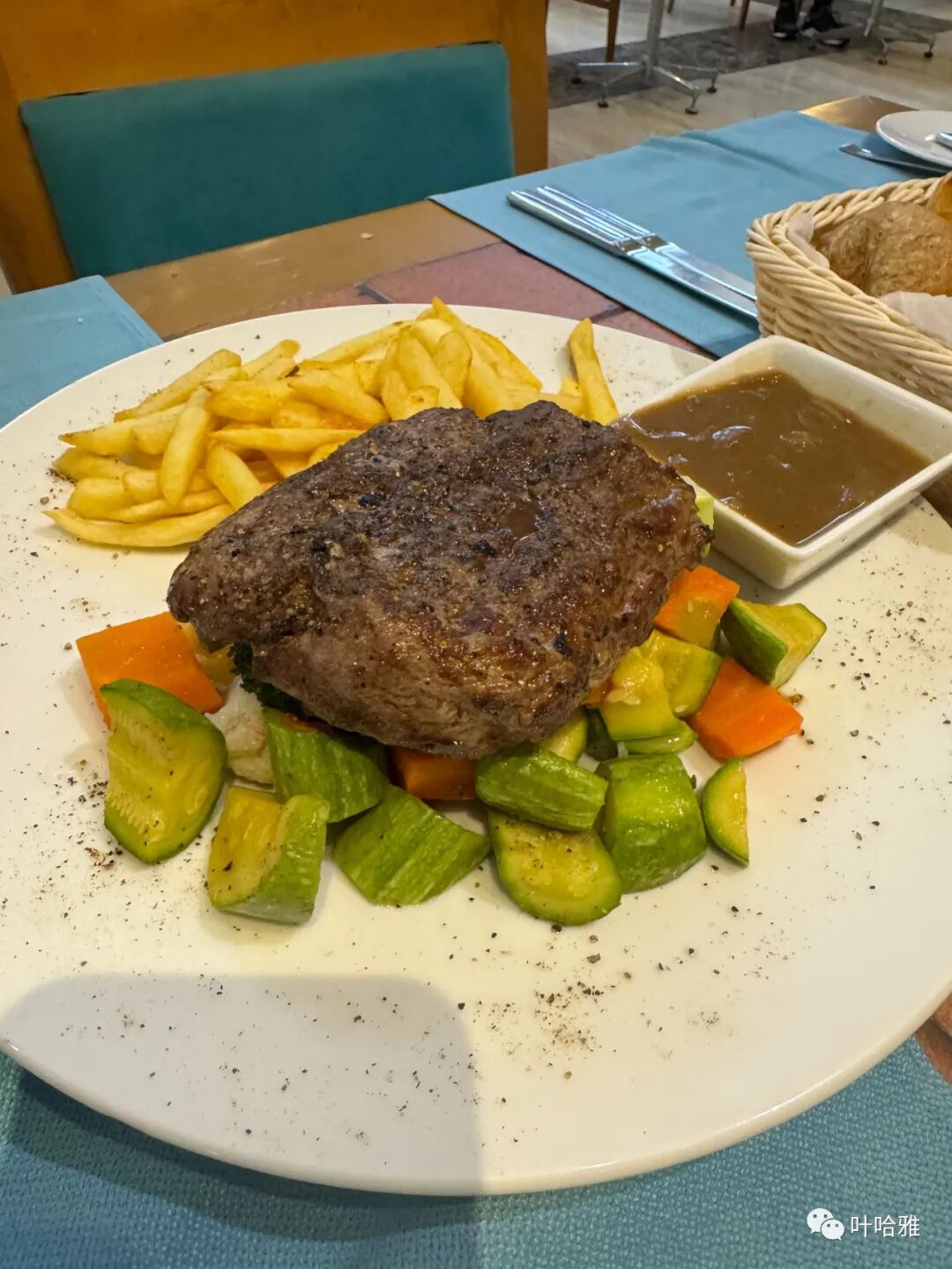
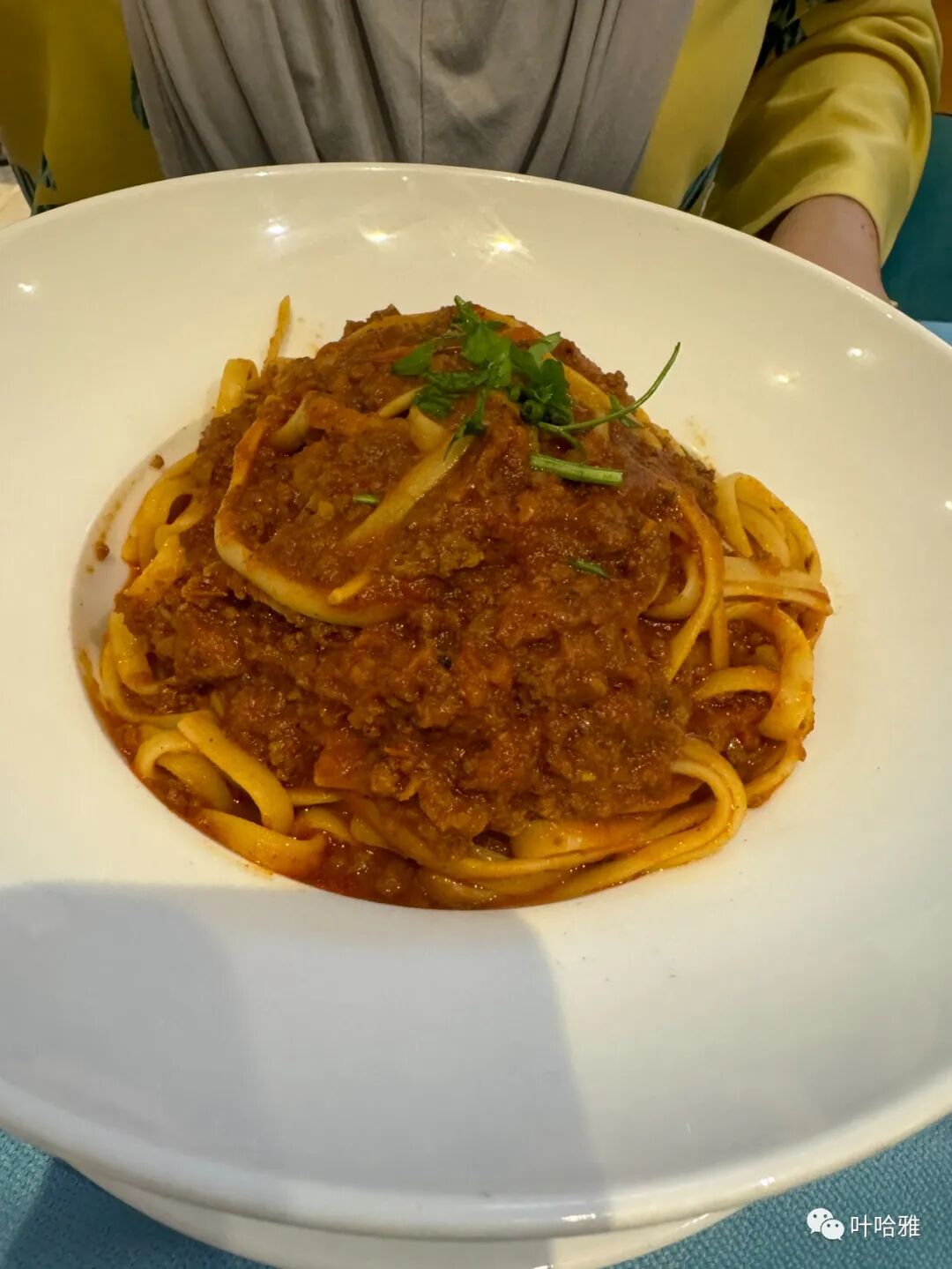
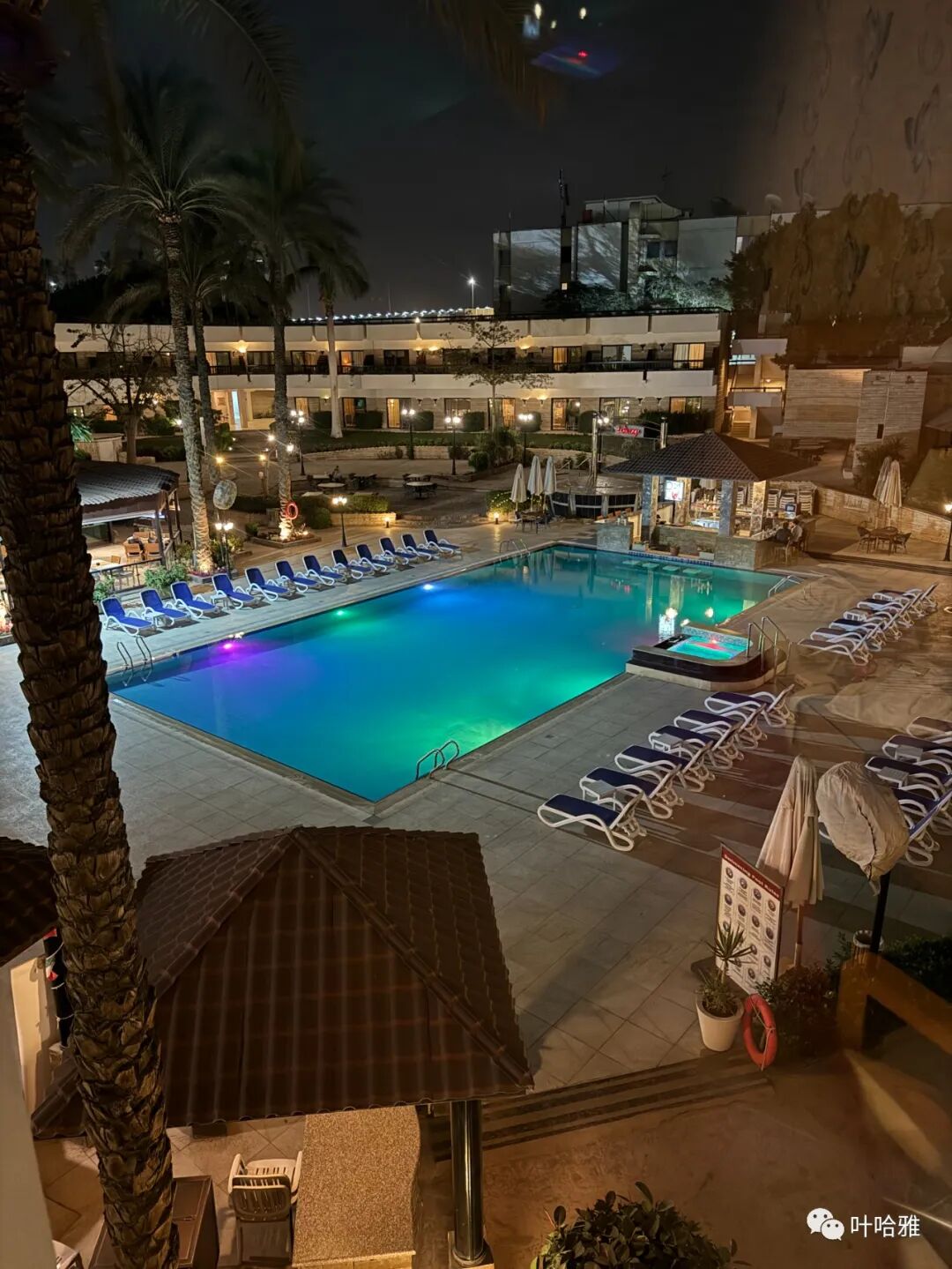
We had steak and pasta at the hotel's Italian restaurant, and both were delicious. Friends, you can really choose a nice hotel for a vacation. If you do not want to go out, you can just stay by the hotel pool and soak up the sun, away from the noise outside.
Four Seasons Hotel
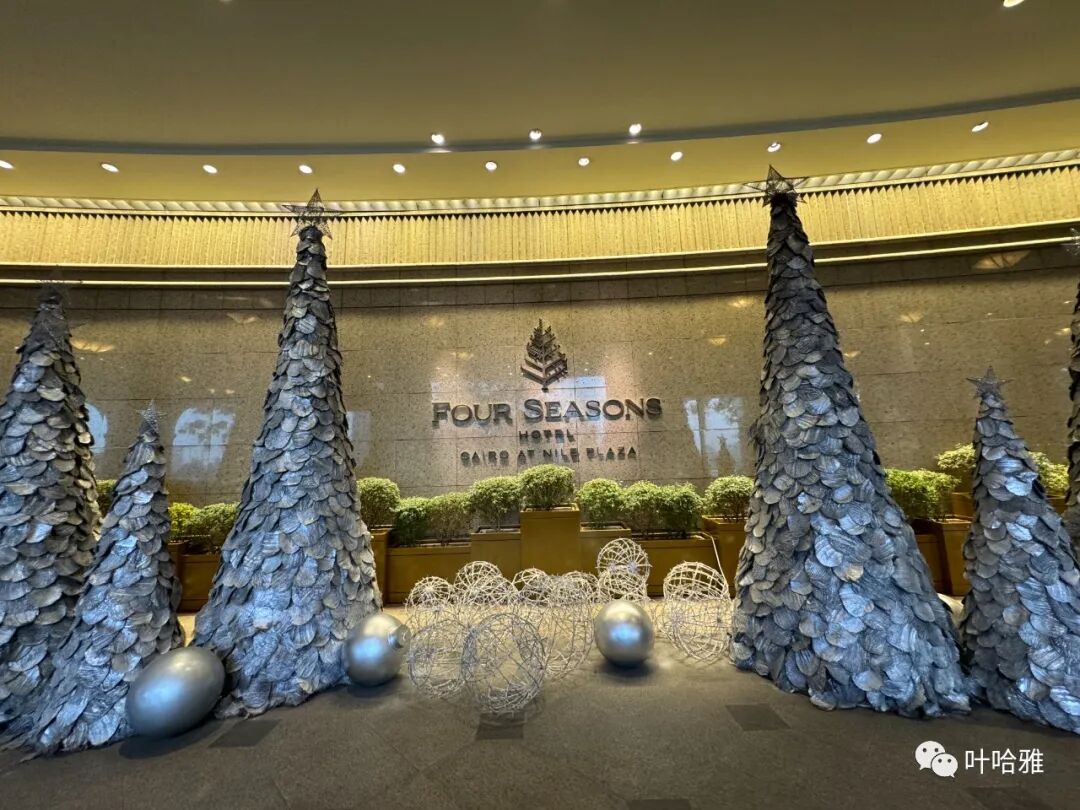
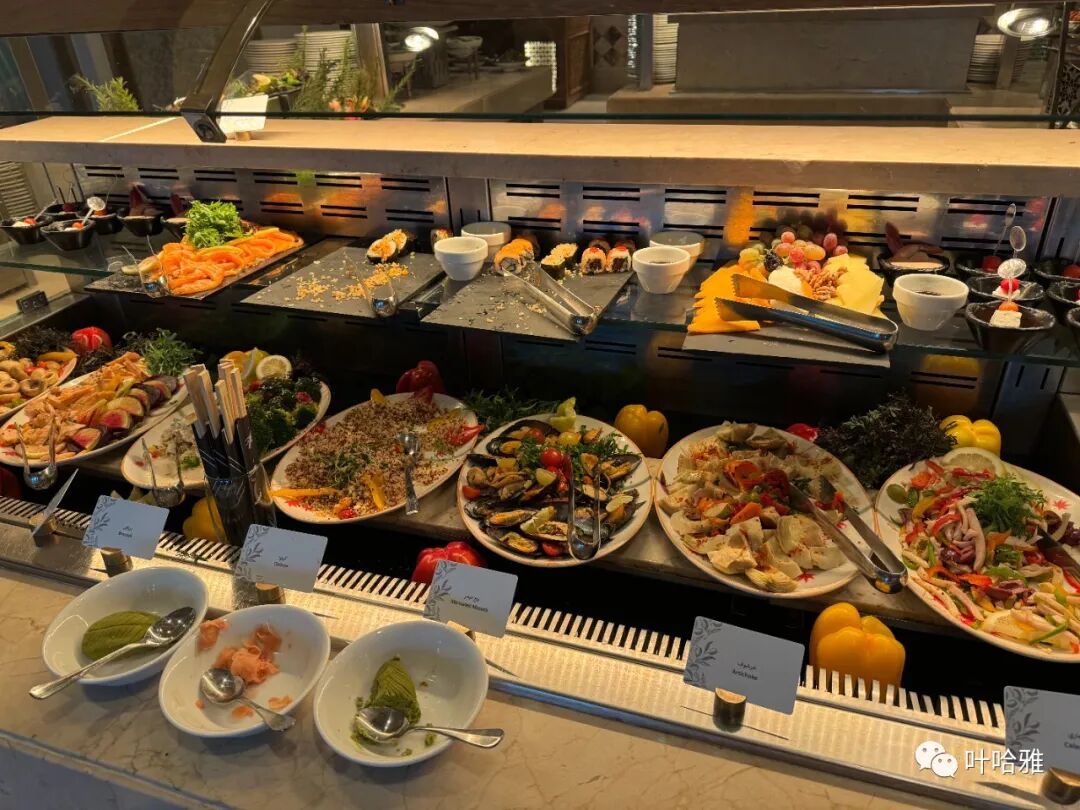
The Four Seasons in Cairo has newer facilities than the Ramses Hilton, but the buffet has fewer options.
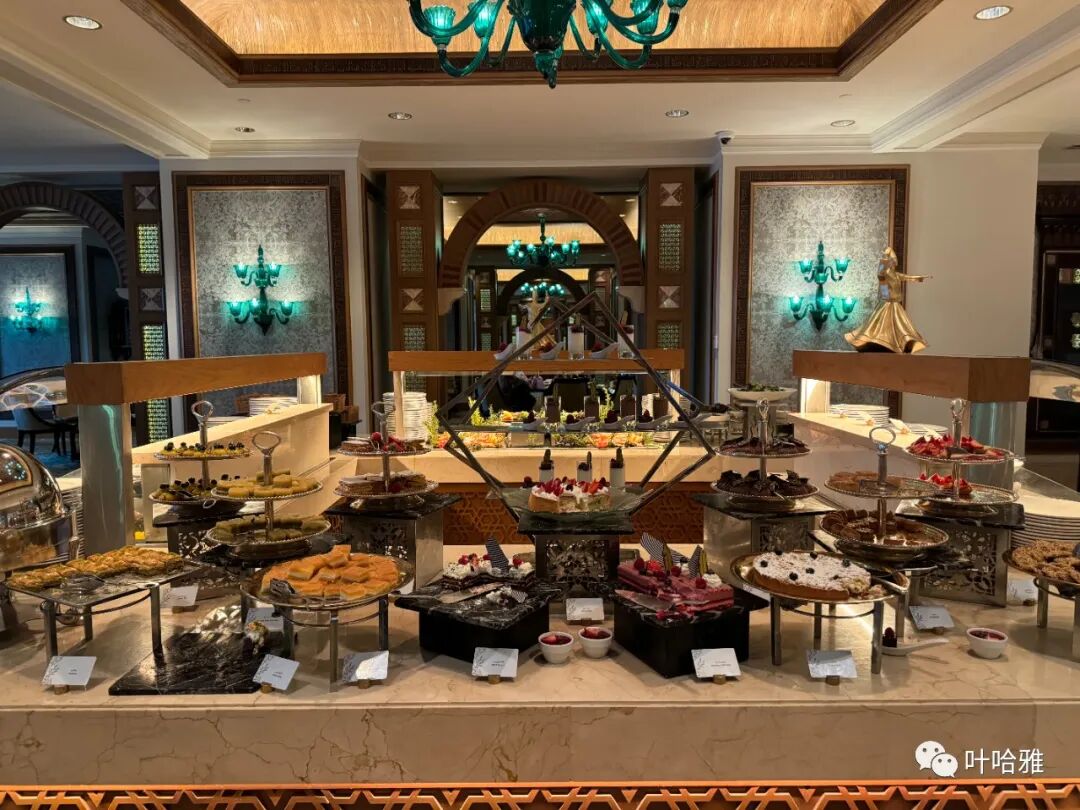
The hotel buffet costs less than 200 yuan, and drinks are charged separately.
Outside the window is a view of the Nile. In Cairo, the most expensive rooms are the ones with a river view.
Luxor
Luxor is an ancient city in southern Egypt that was once the center of power in Egypt, similar to Xi'an in China. It only takes 50 minutes to fly from Cairo to Luxor. At the airport, the check-in staff ripped me off. He said I did not buy a child ticket for Fahim. I showed him my Trip.com order, but he still said he could not find the child ticket information. Since it was close to departure time, we paid him 1,000 Egyptian pounds (about 200 yuan) on the spot for the child ticket. Later, I contacted Trip.com and learned that my child ticket was used normally. This means the airport staff scammed me out of the price of a ticket, which is a very bad thing to do. I have asked Trip.com to investigate this with Cairo Airport, but I have not received an effective reply yet. Because it was a cash payment, unless they pull the surveillance footage from that time to prove the airport took my money, I have to swallow this loss.
Sonesta St. George Hotel Luxor
The climate in Luxor is much more comfortable than in Cairo. Cairo has serious pollution and is not suitable for long stays, but Luxor has fewer people and the pace of the whole city is much slower. You cannot use Uber in Luxor. You have to hail a taxi on the street. Always agree on the price before you get in and have plenty of small change ready. If you don't, the driver will keep whatever you give him and call it a tip.
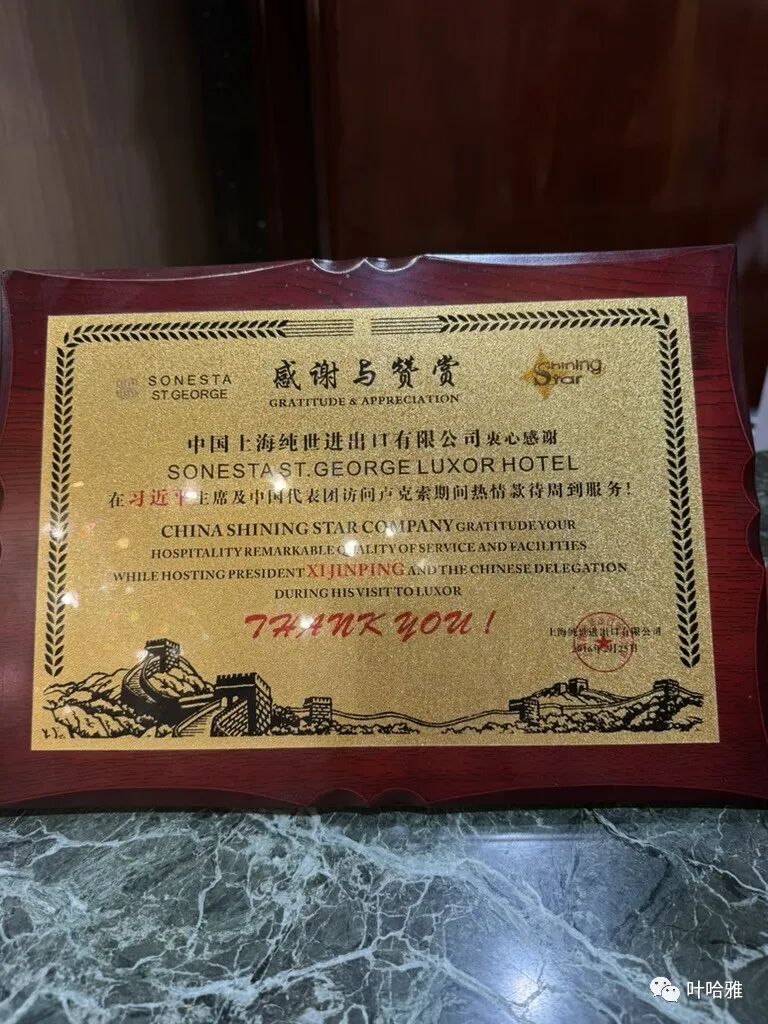
Look at who has stayed at this hotel before. They play Chinese songs in the restaurant and have Chinese signs in the elevators, which feels very welcoming.
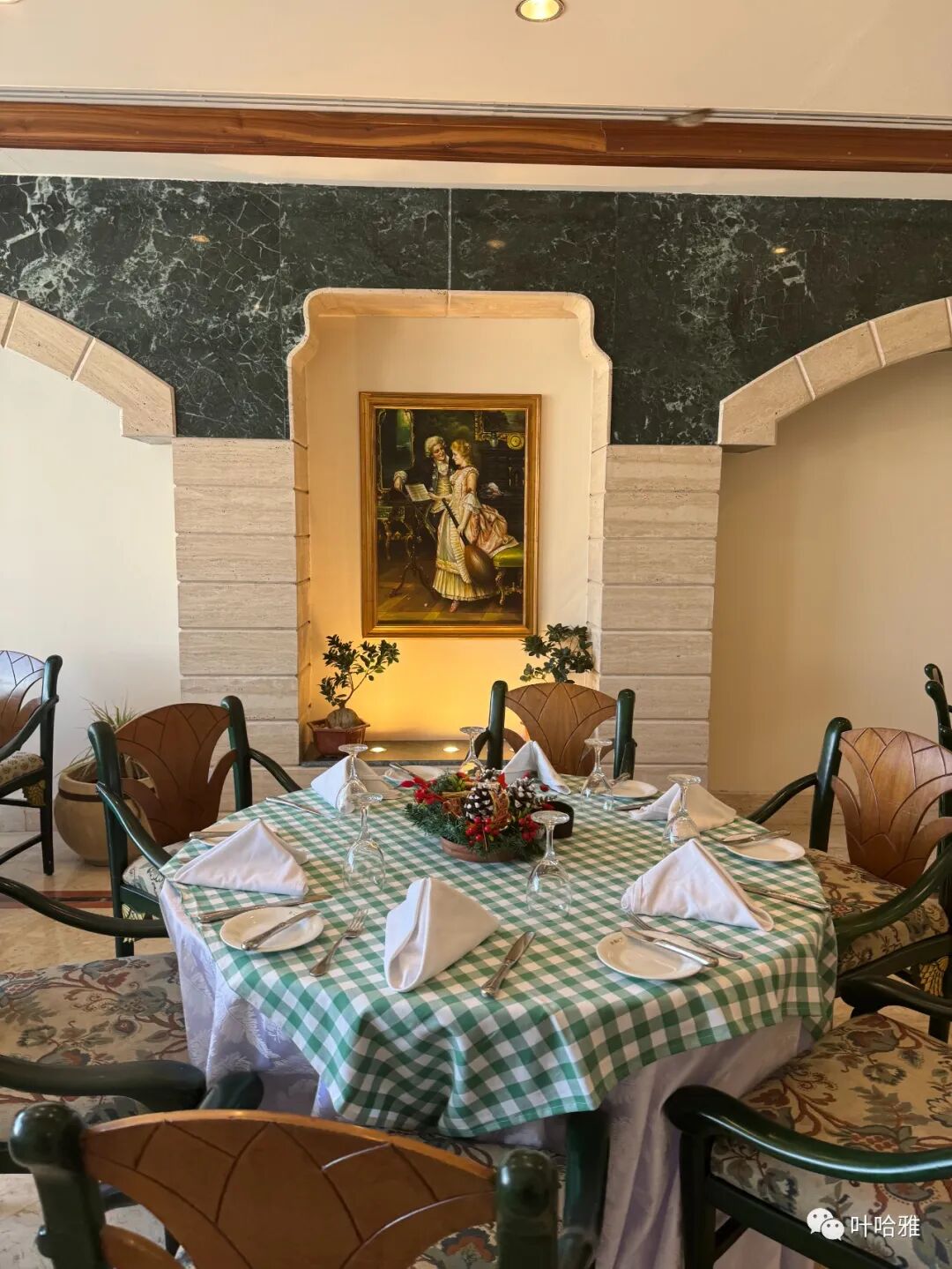
For our first meal, we chose the hotel's Italian restaurant again. It has a clean, tidy European style, and the view of the Nile outside the window is stunning.
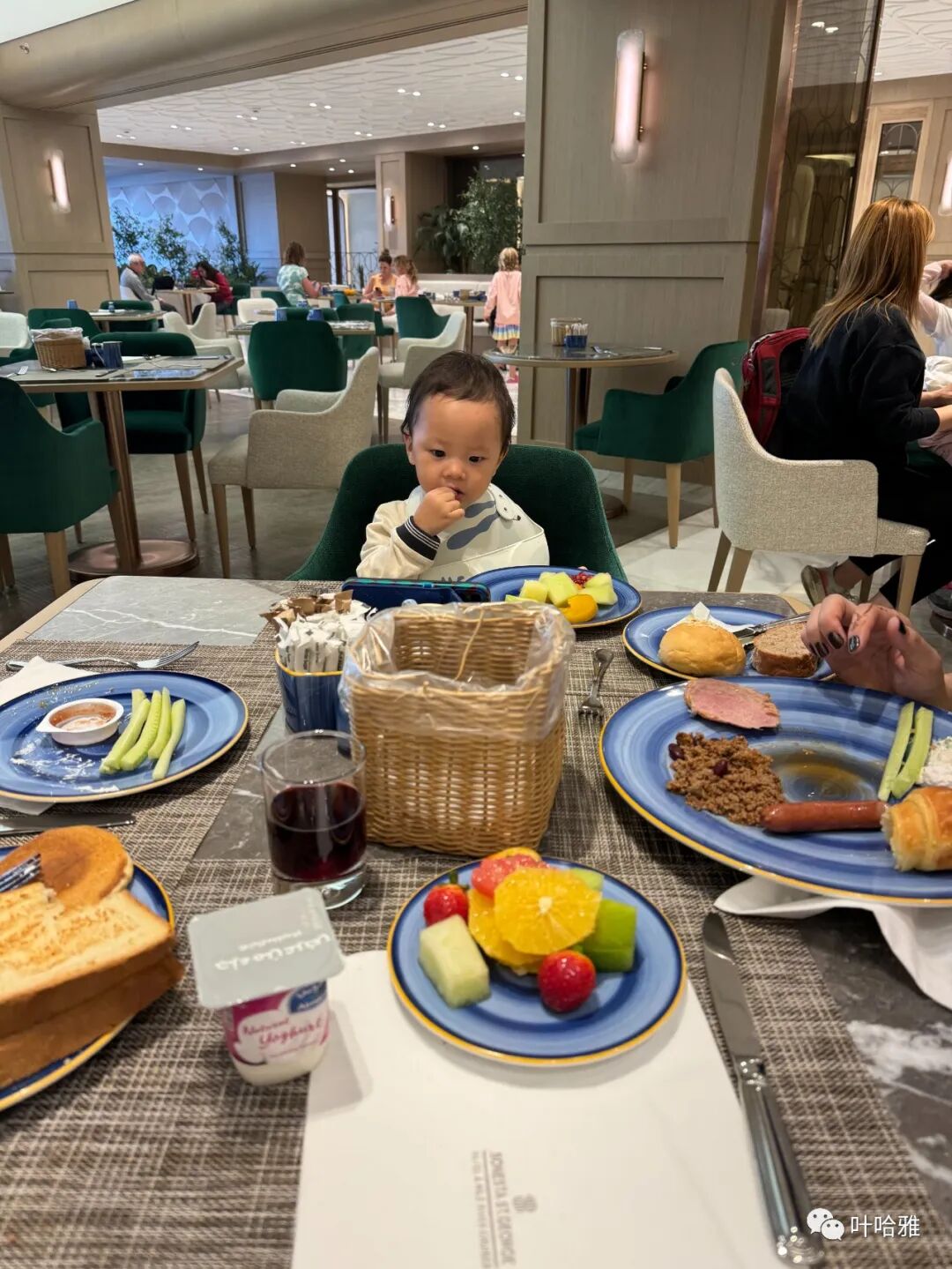
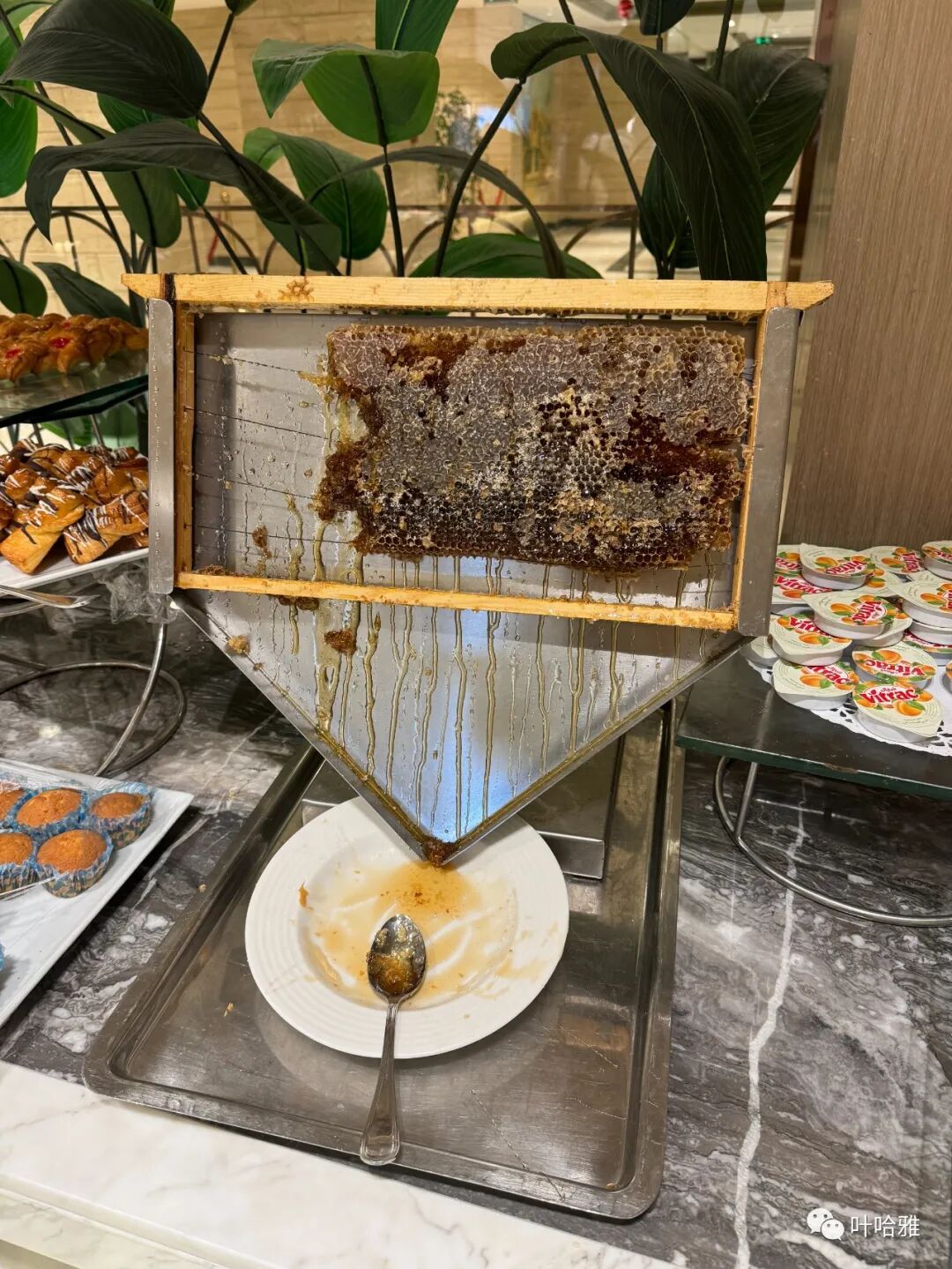
For breakfast, they serve honey straight from the honeycomb. It is natural and healthy.
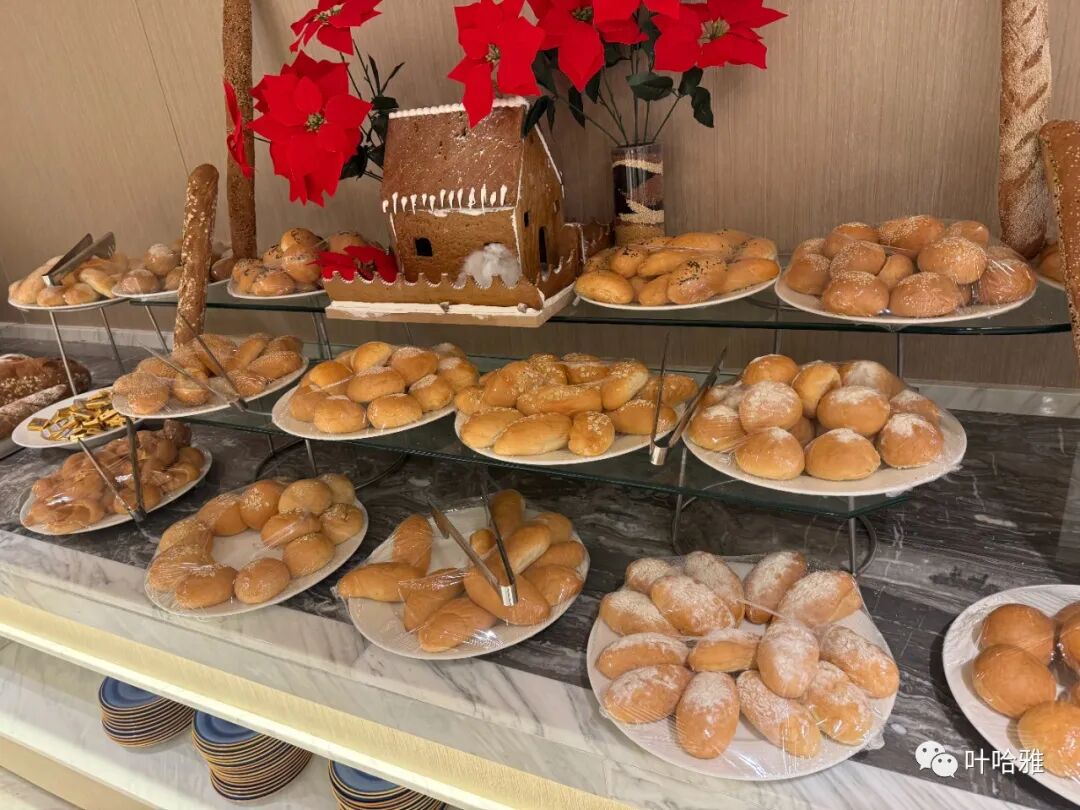
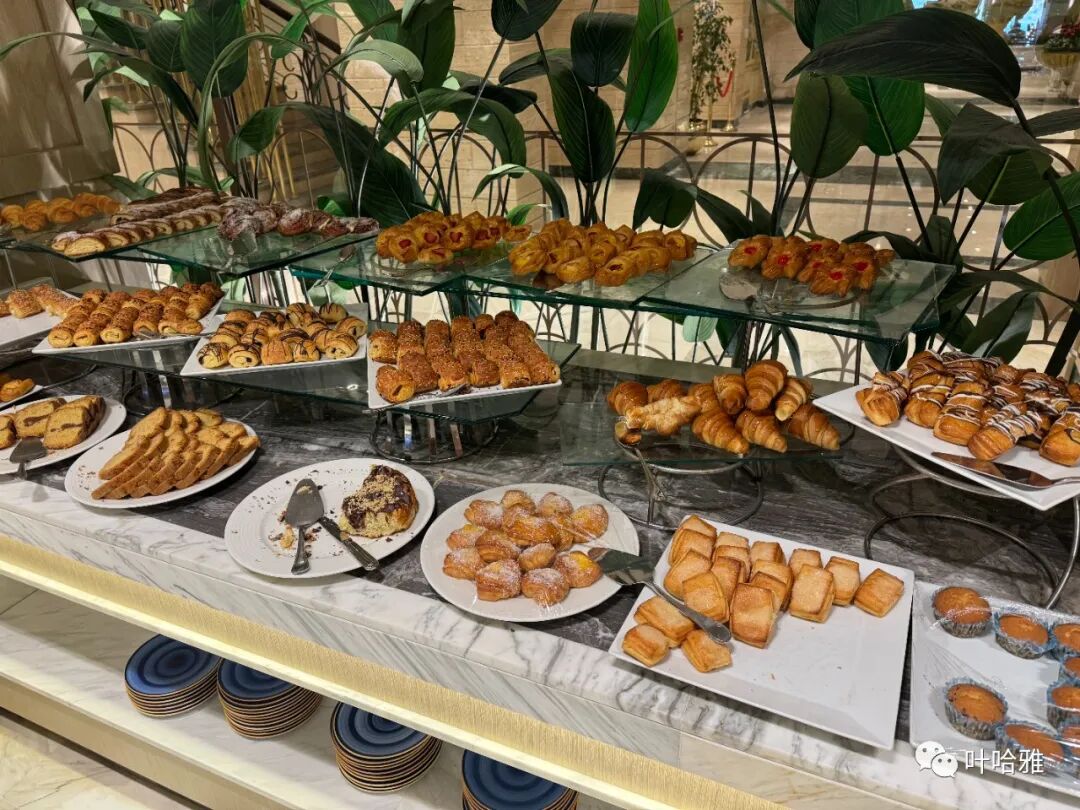
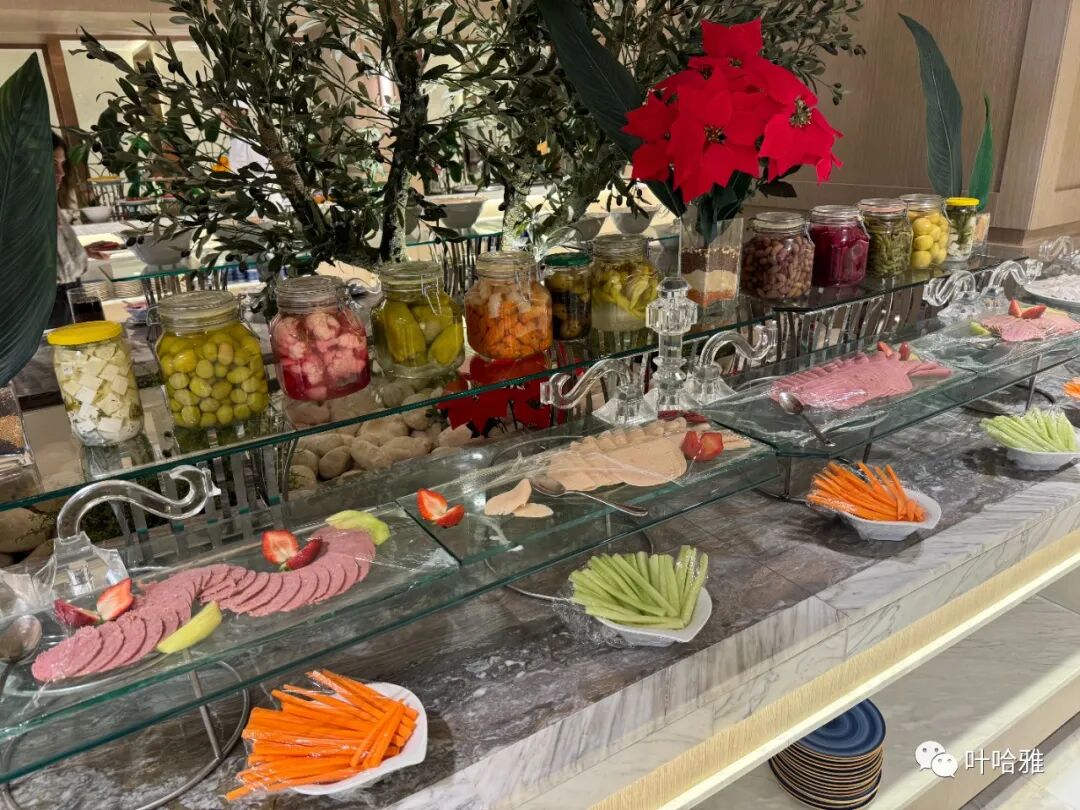
Famous sites in Luxor include the Valley of the Kings, Luxor Temple, Karnak Temple, the Colossi of Memnon, the Mortuary Temple of Hatshepsut, and various pharaoh tombs. These are very attractive to archaeology fans, but for most tourists, it is just about taking photos. We booked a private one-day tour for two on Trip.com for 1,000 yuan per person. It included tickets, lunch, and a tour guide. The whole experience was pretty good.
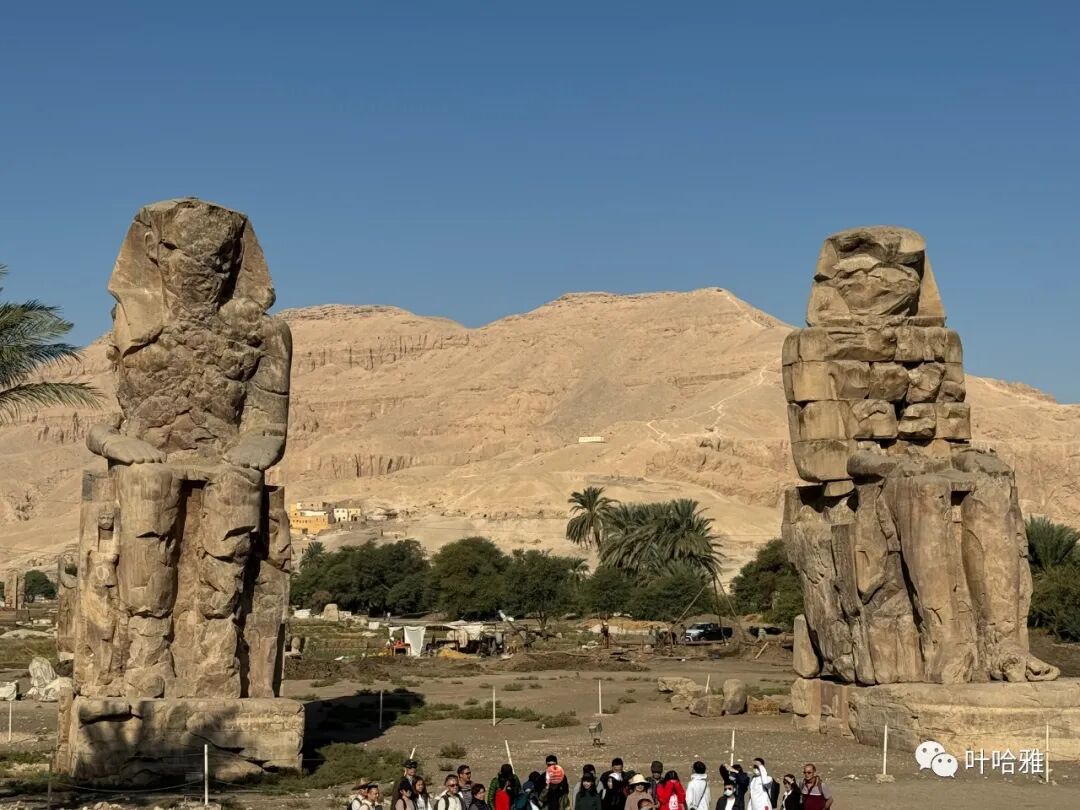
Colossi of Memnon
The statues represent the 18th Dynasty Pharaoh Amenhotep III. Both statues are of him. They are 18 meters tall and were built in 1350 BC, making them over 3,000 years old.
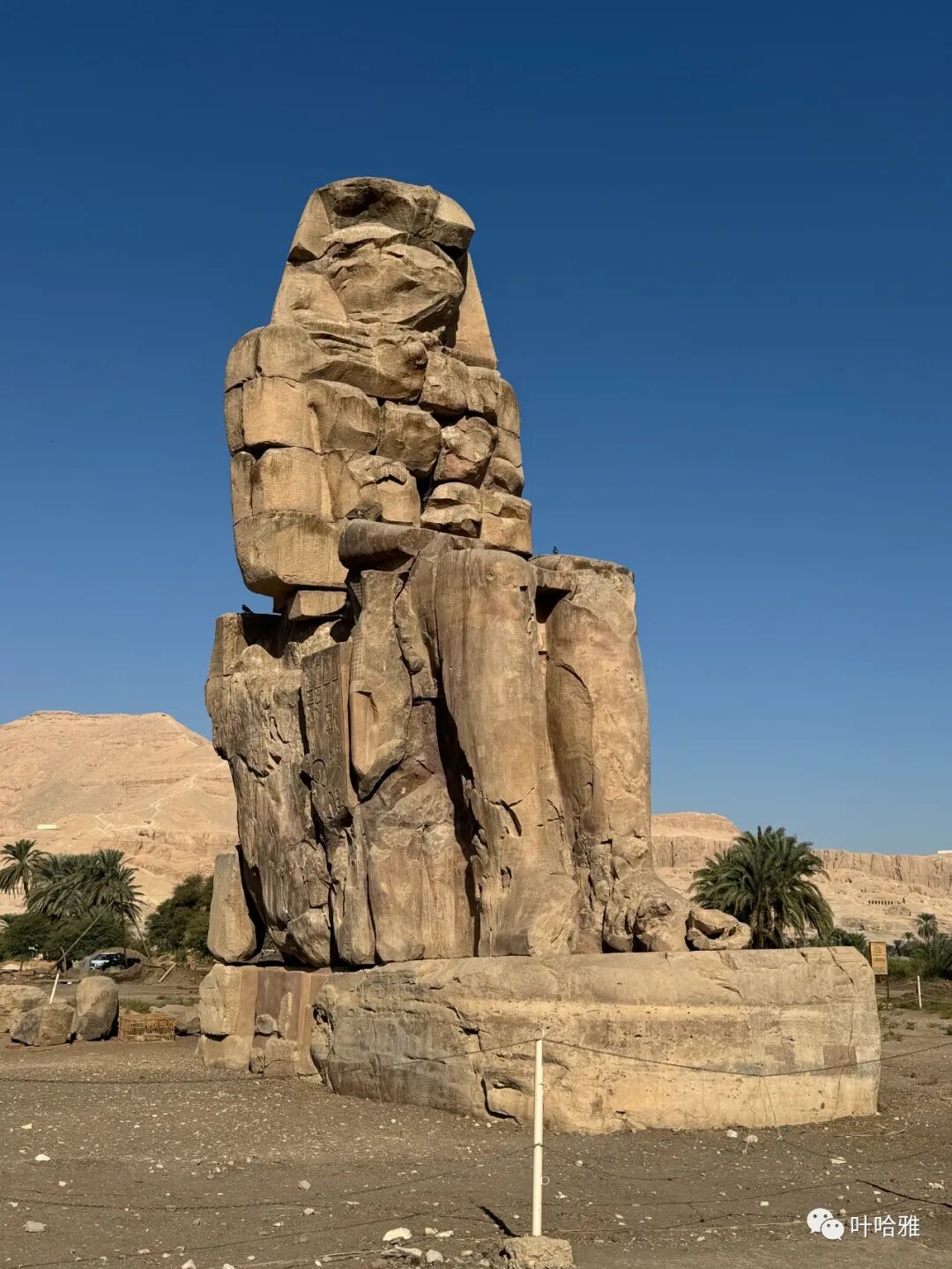
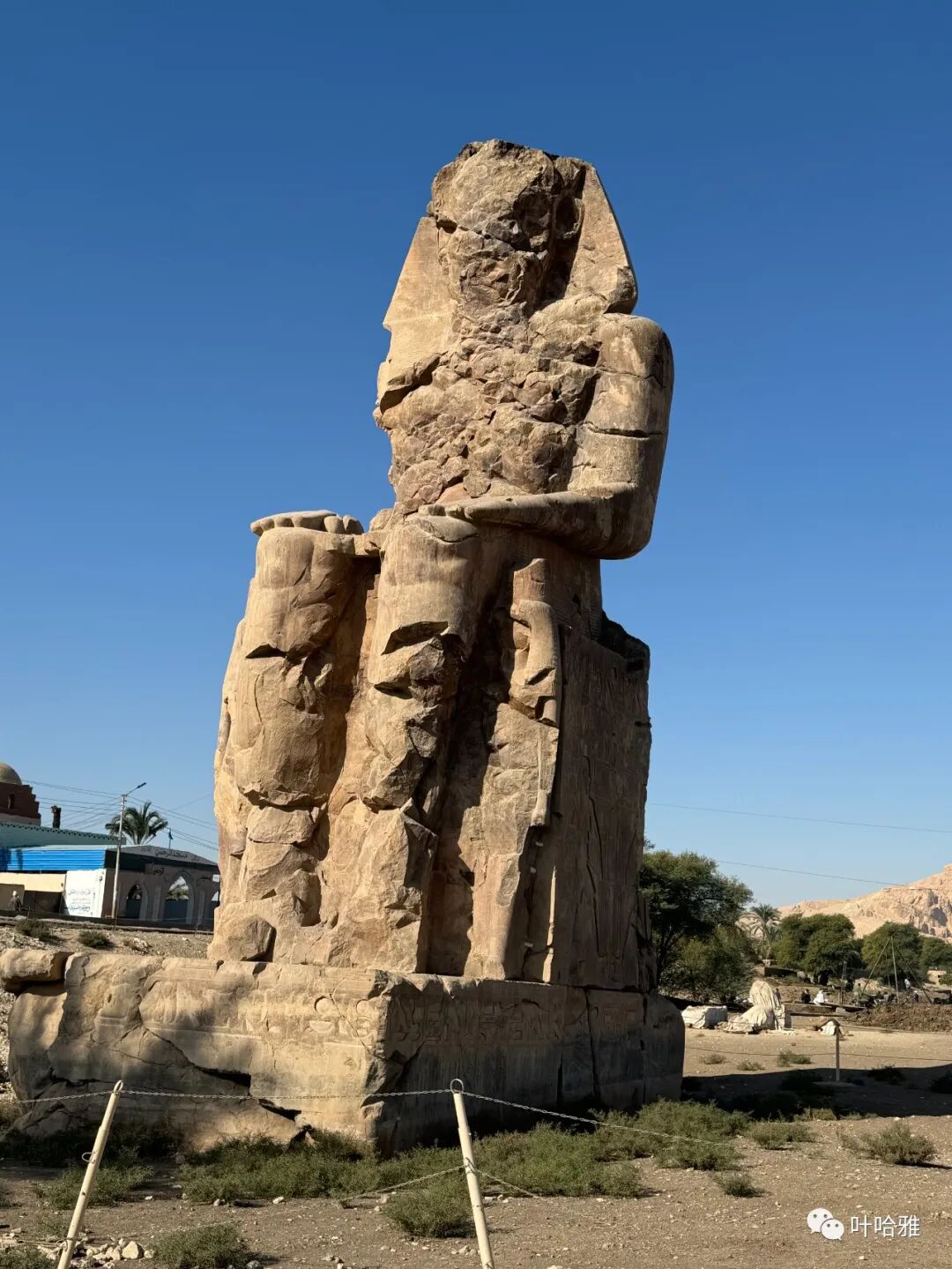
After a short stop at the statues, we went to the Valley of the Kings to see the tombs of Pharaoh Ramesses VI and Tutankhamun.
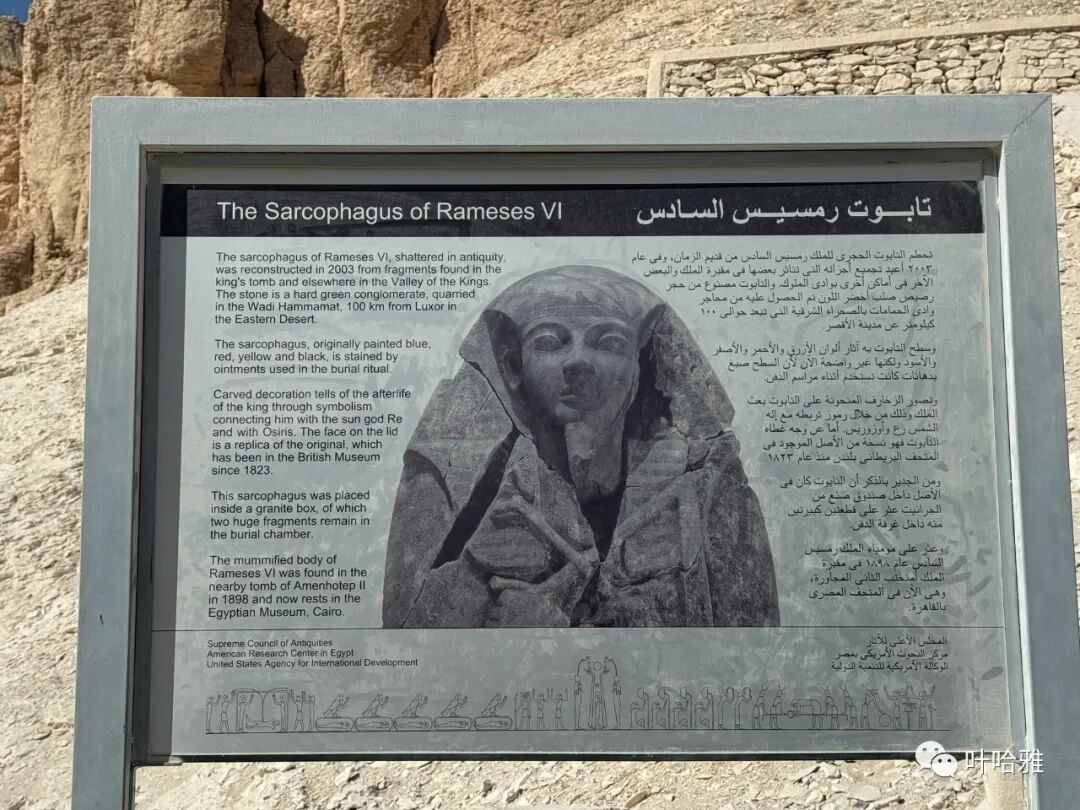
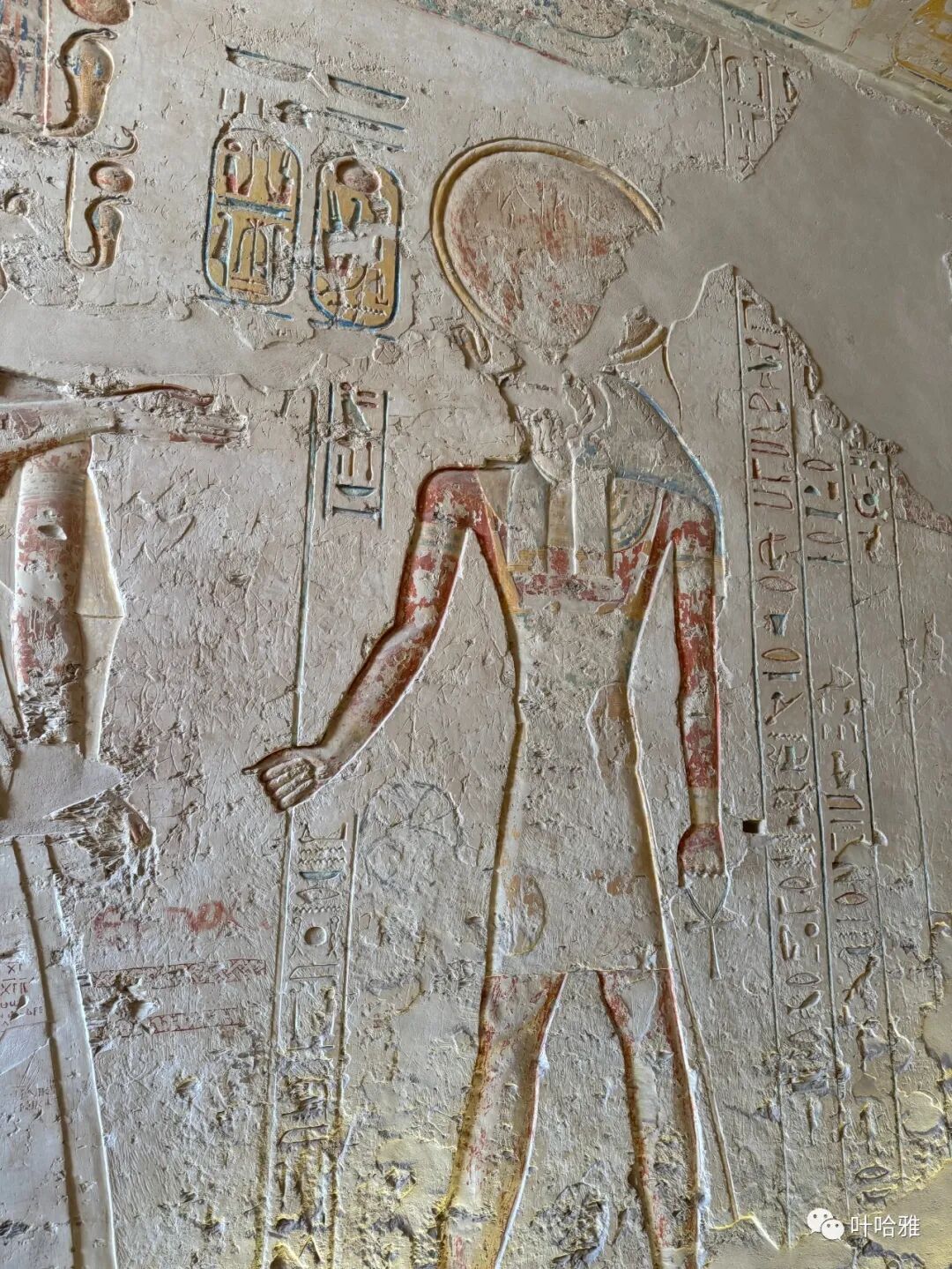
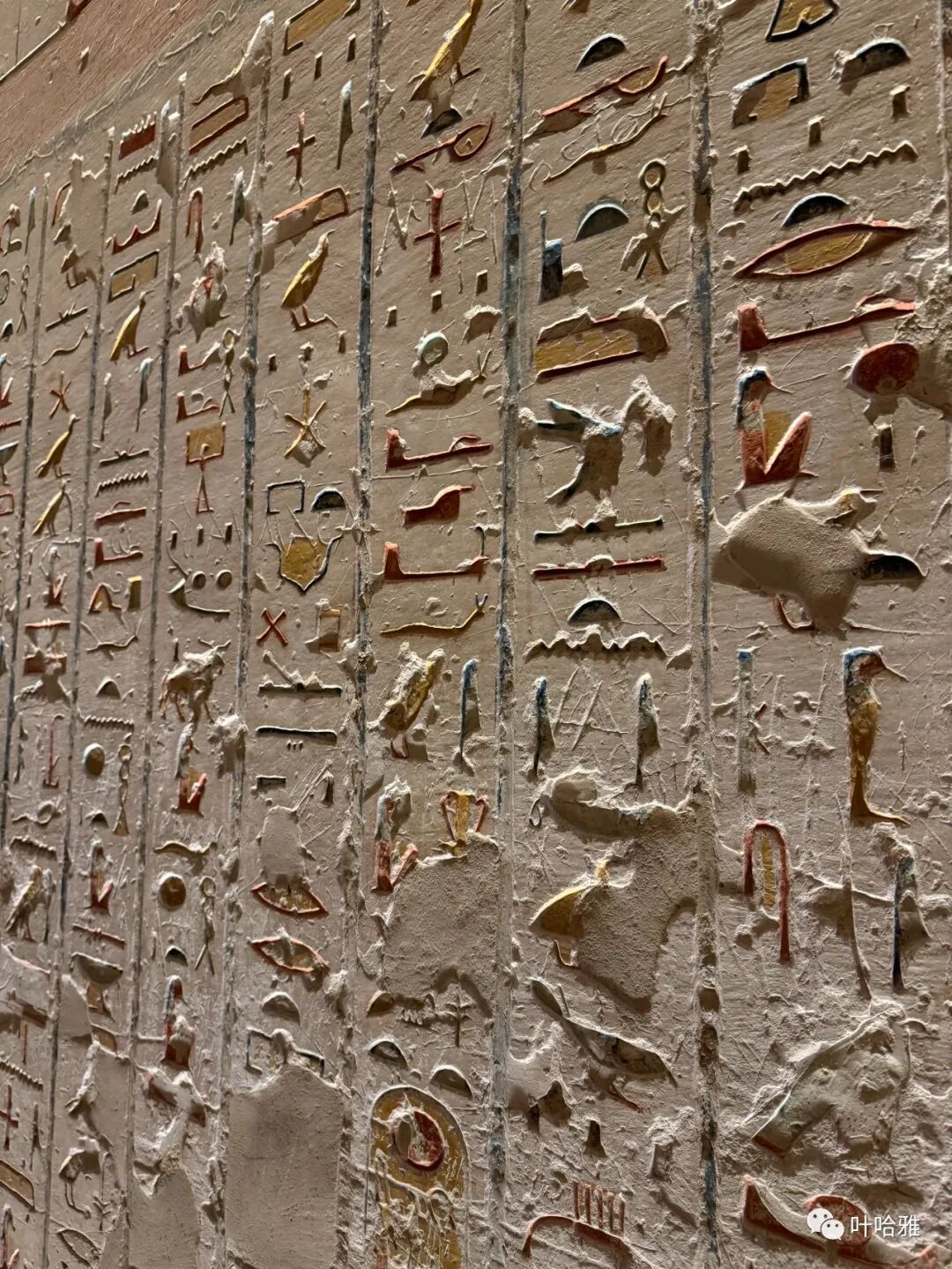
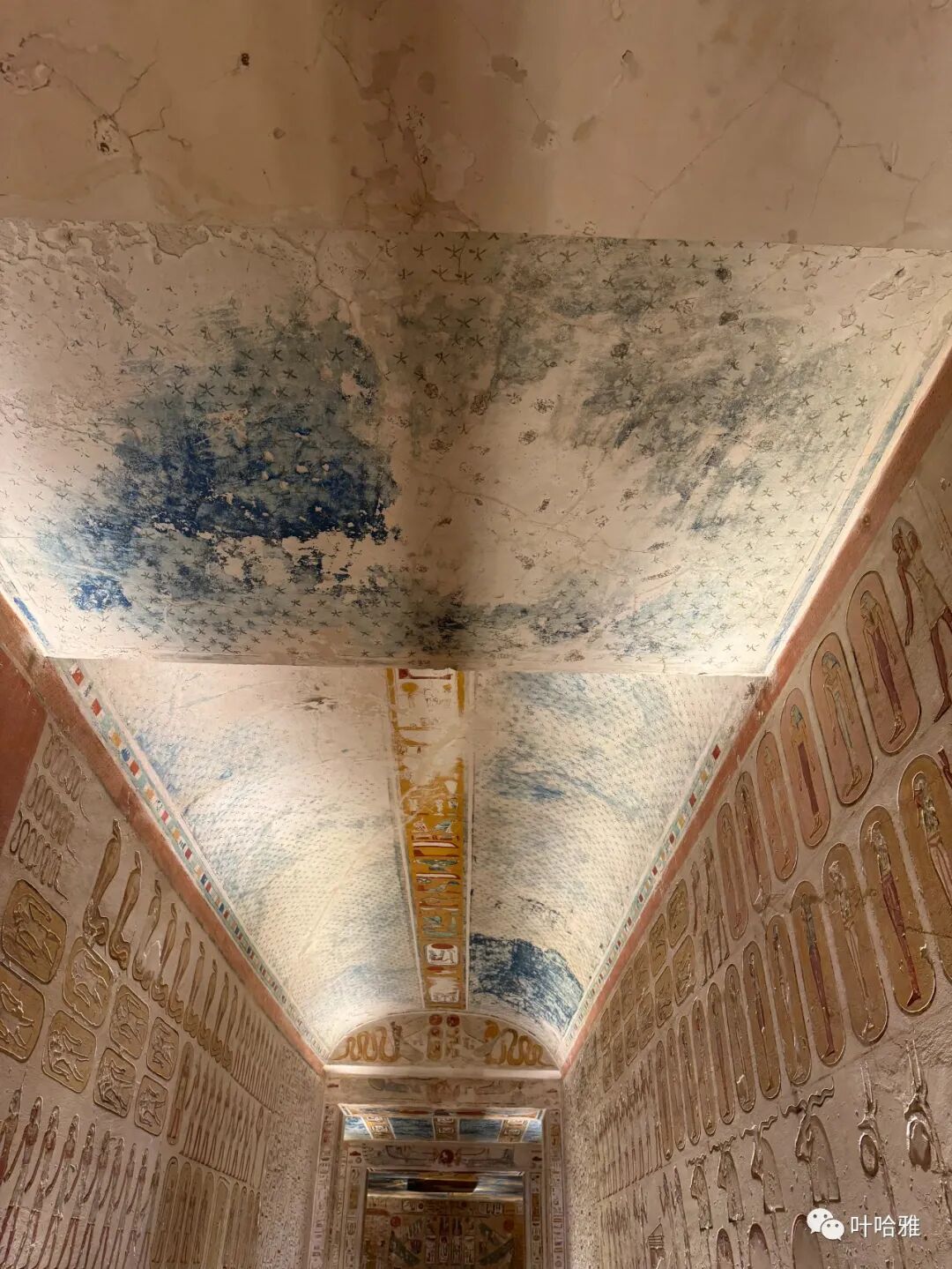
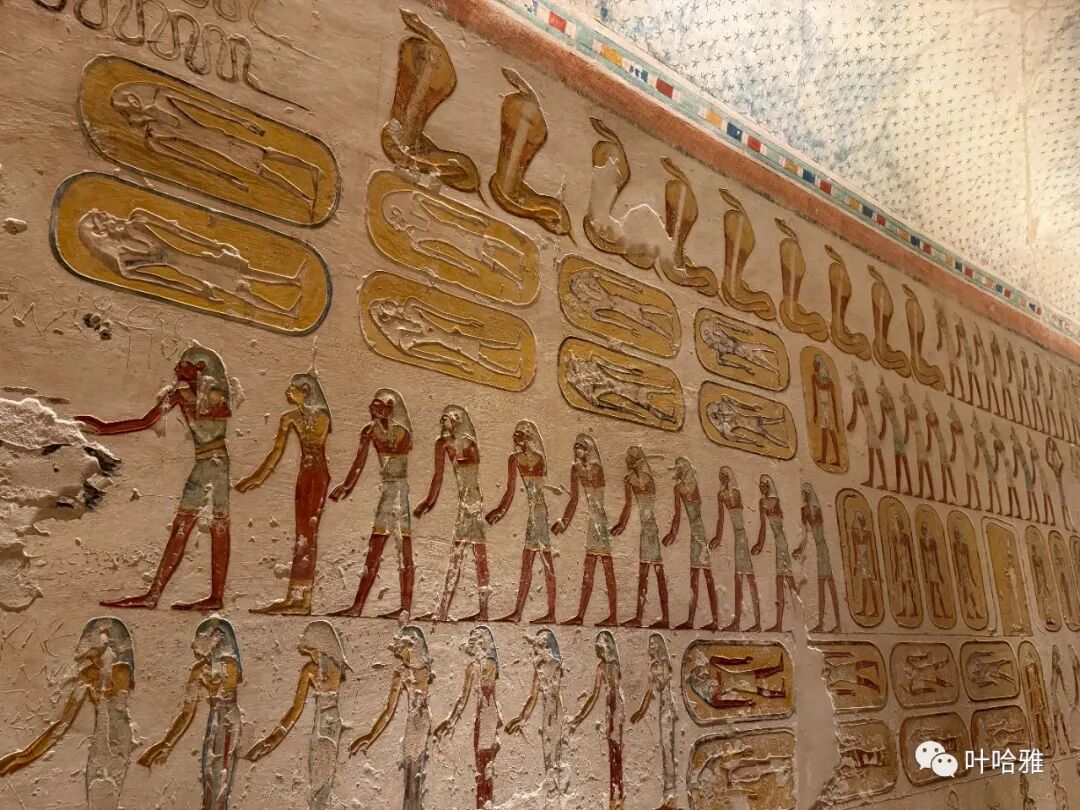
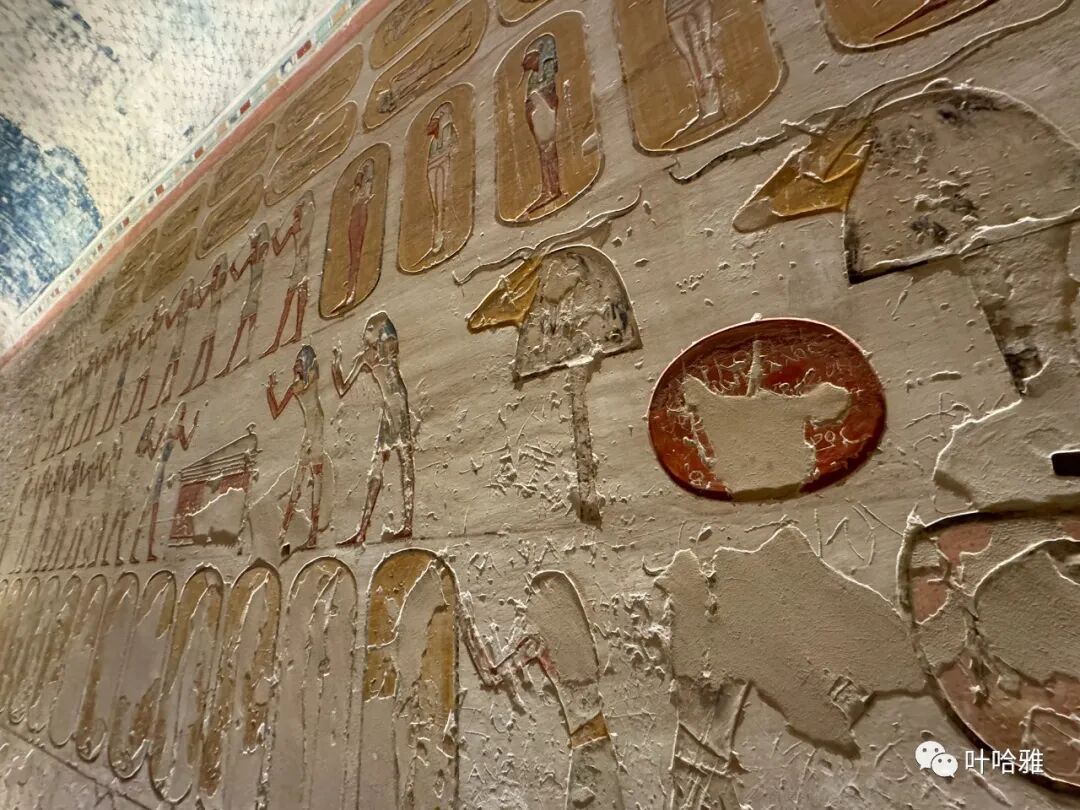
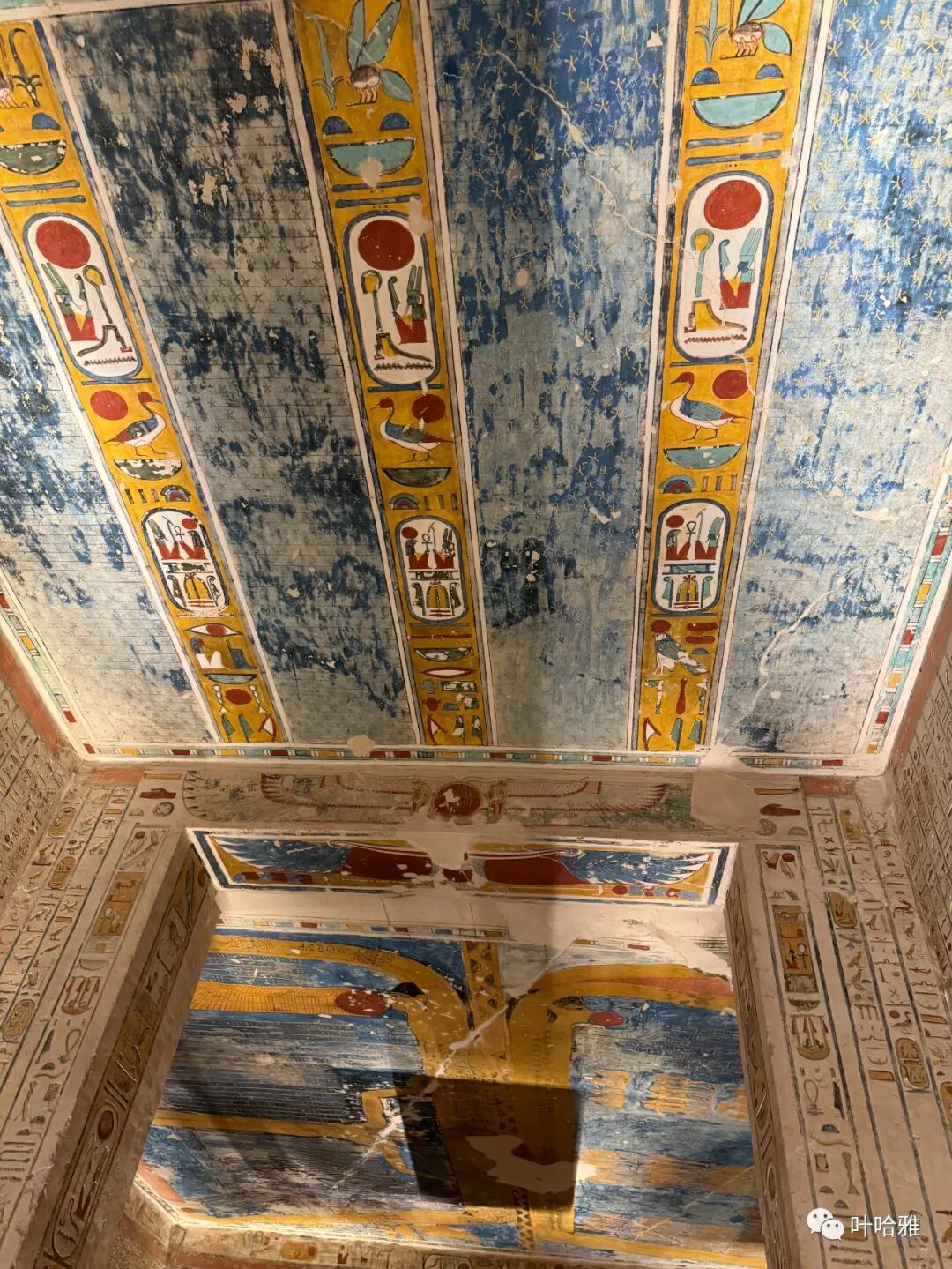
The murals in the tomb of Ramesses VI still have the same colors they had 3,000 years ago.
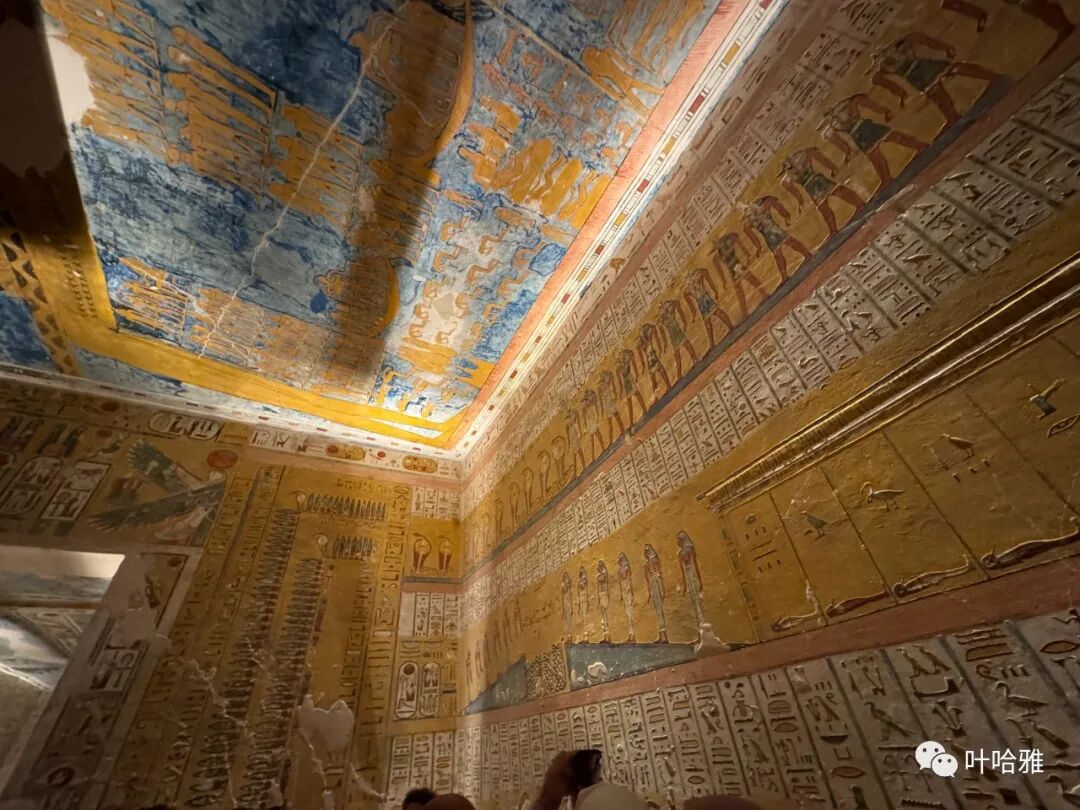
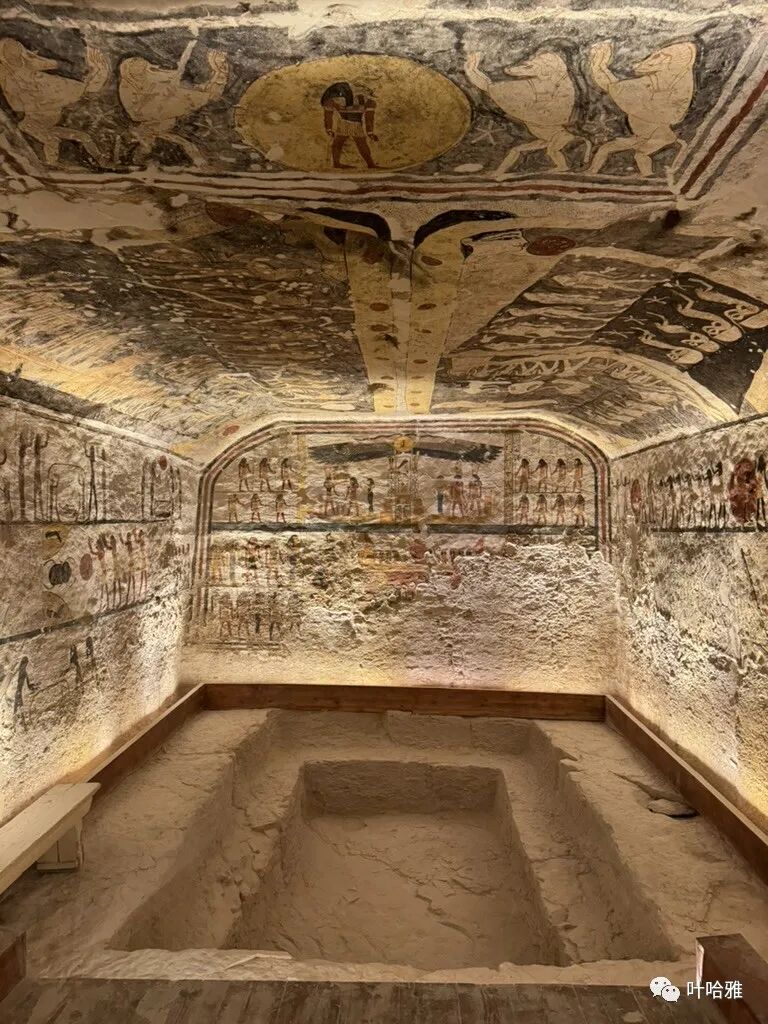
Tomb of Pharaoh Tutankhamun
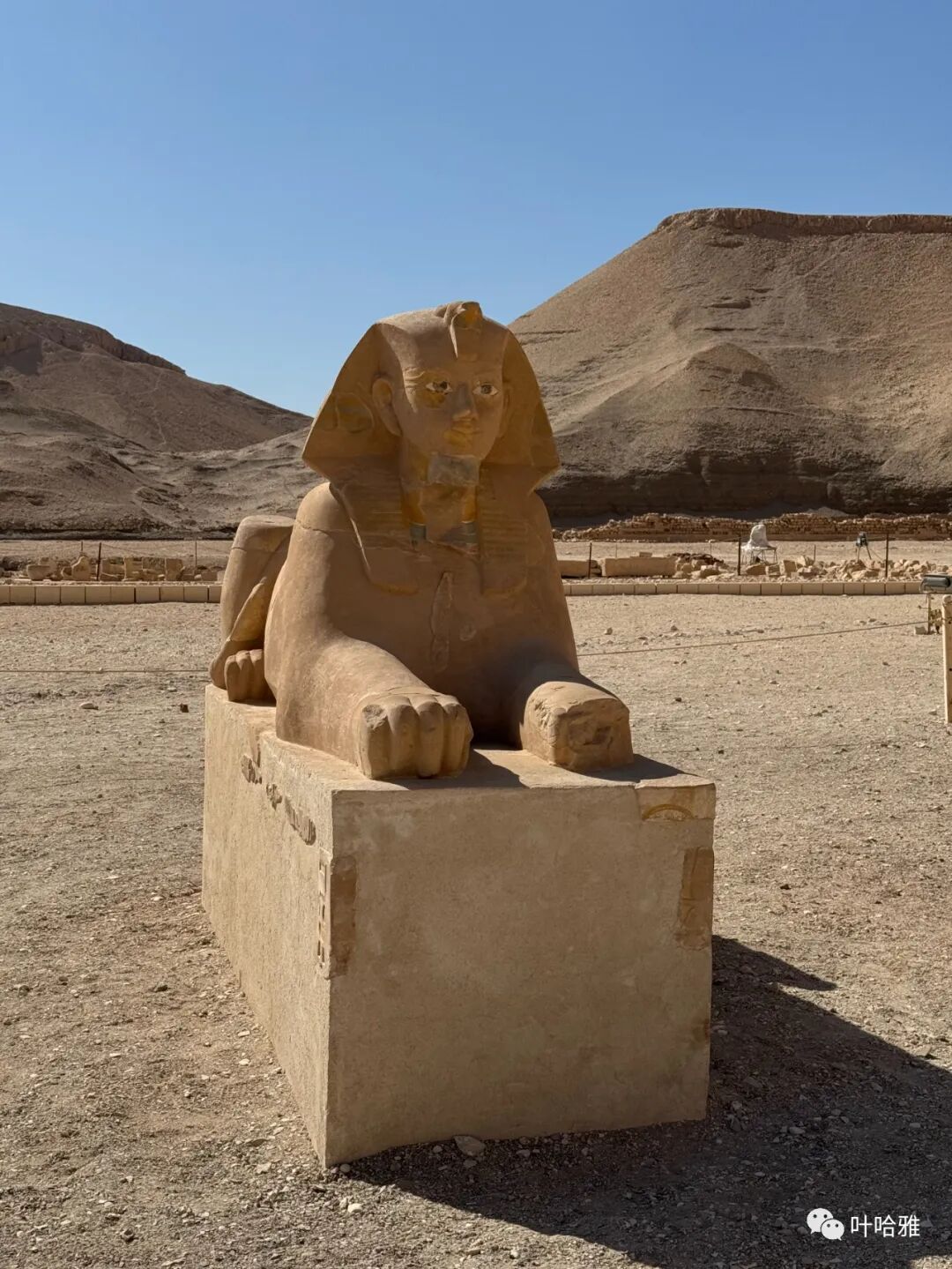
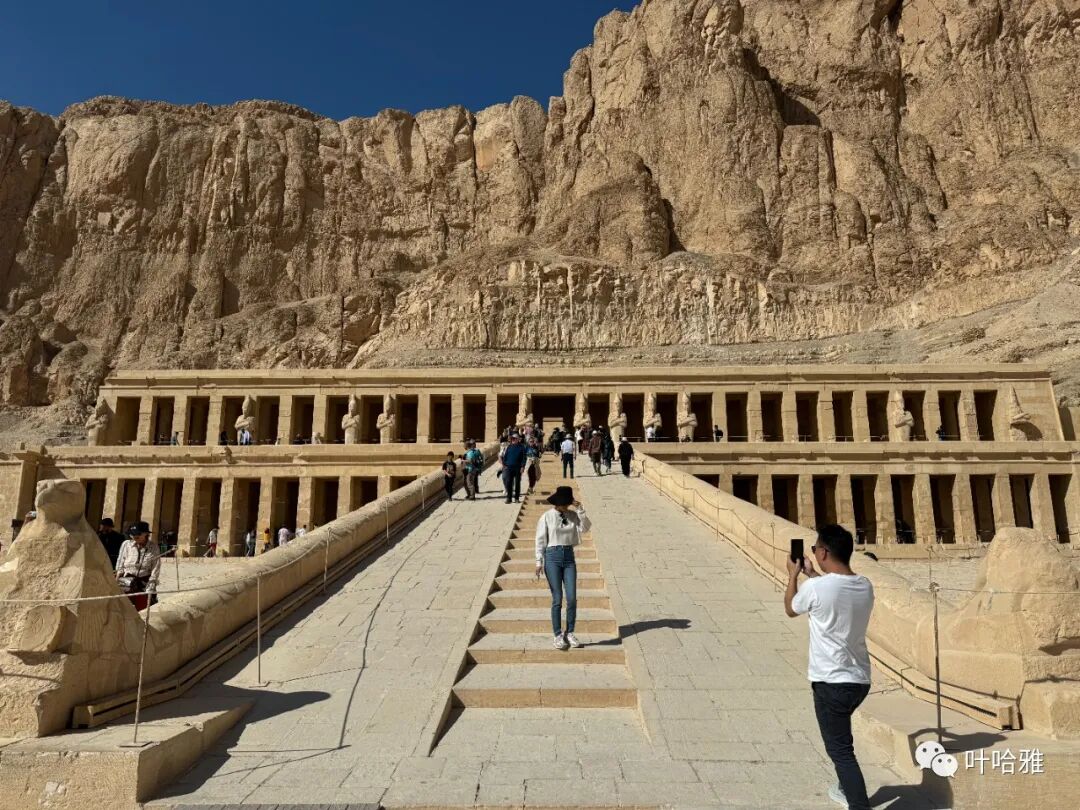
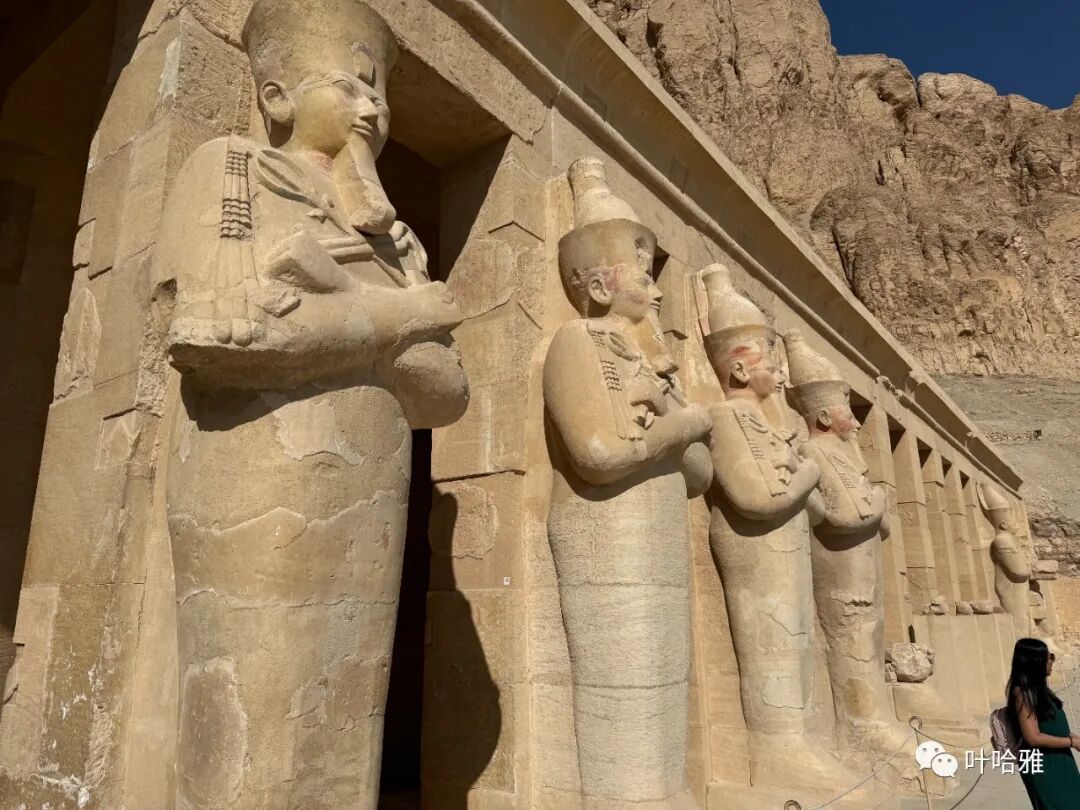
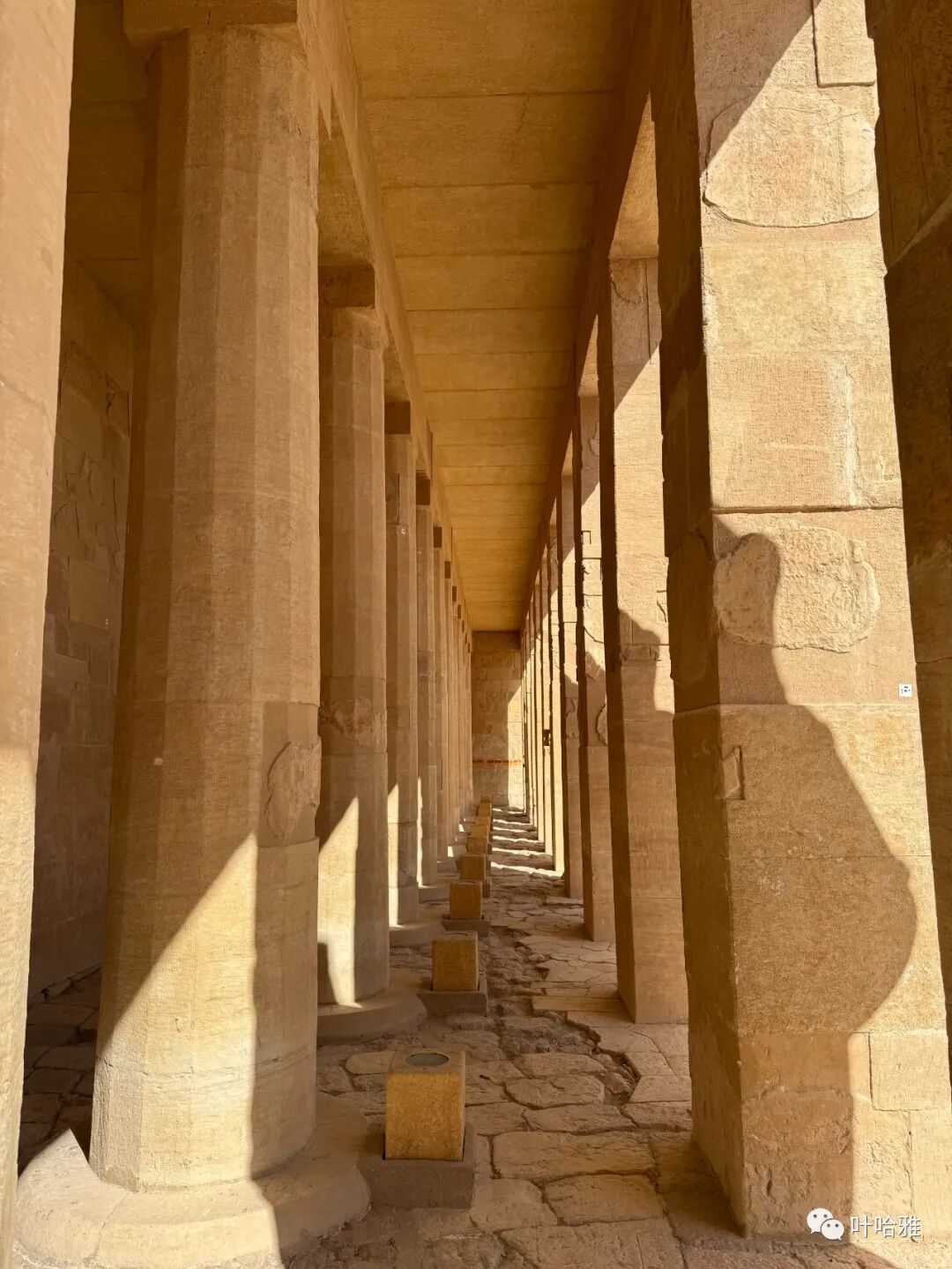
Mortuary Temple of Hatshepsut
The temple complex housing the pharaohs of past dynasties, along with the entire city of Luxor, was listed as a World Cultural Heritage site in 1979. This place was once used as a Christian monastery, and the reliefs unrelated to Christianity were removed.
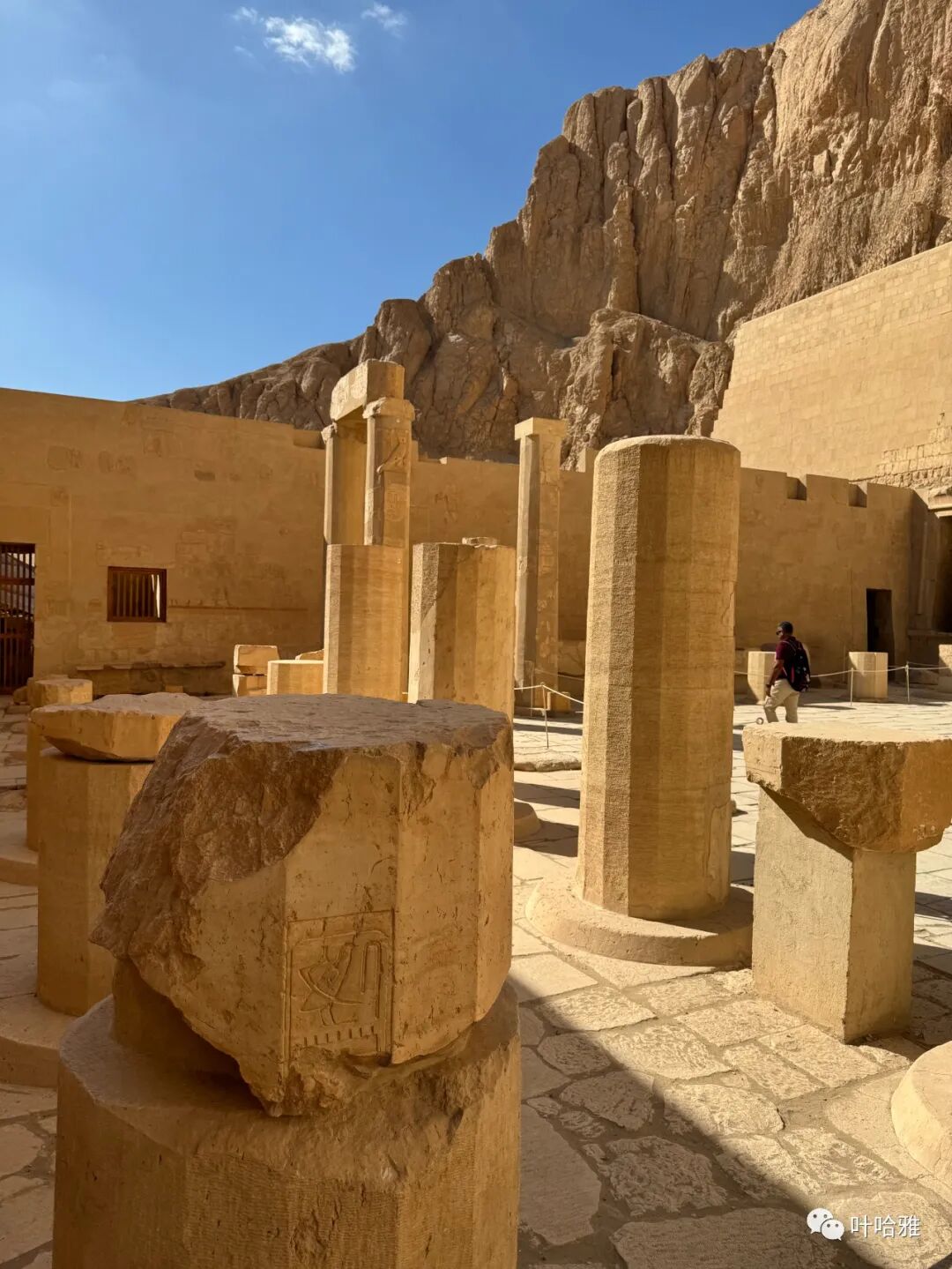
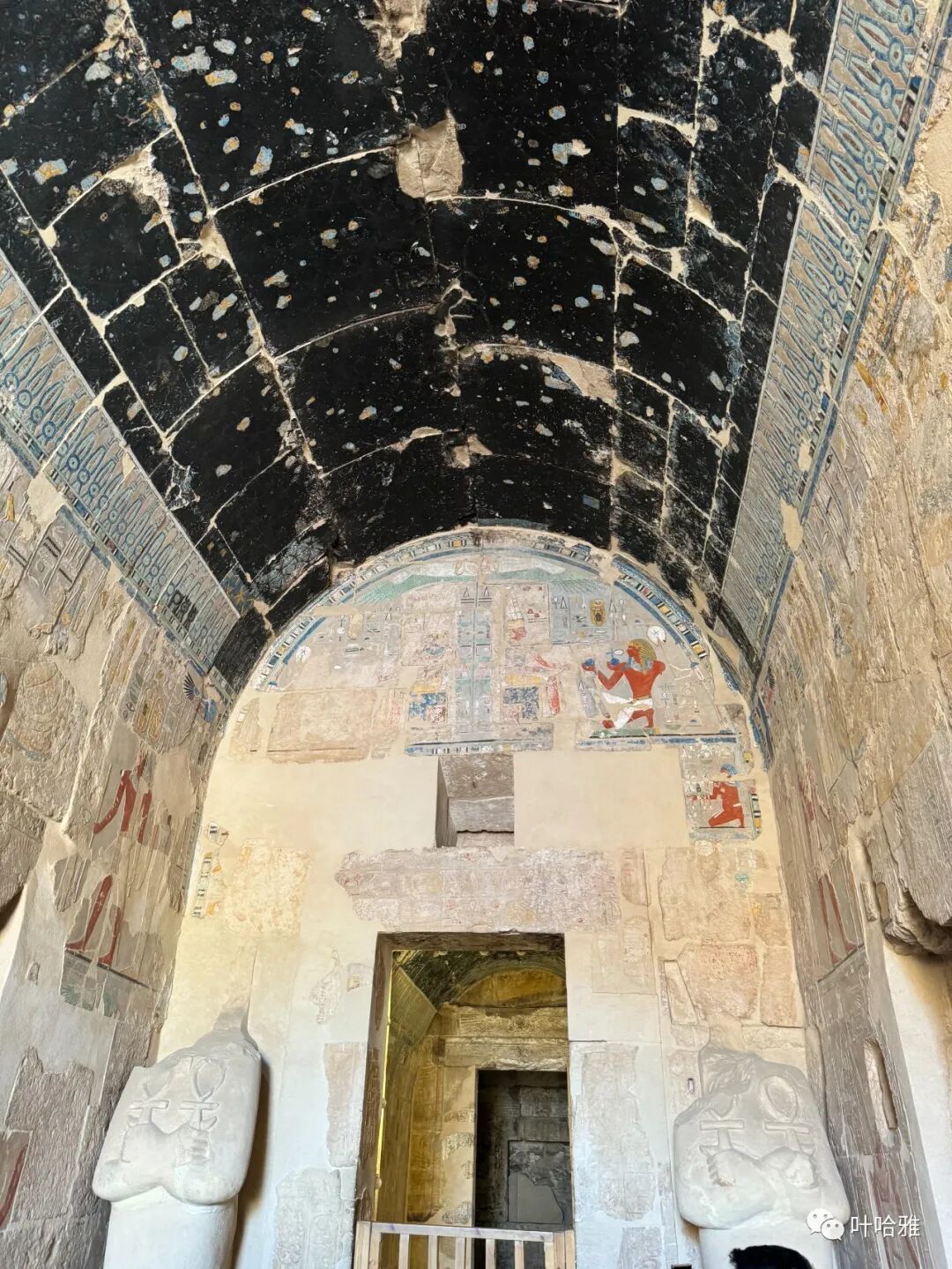
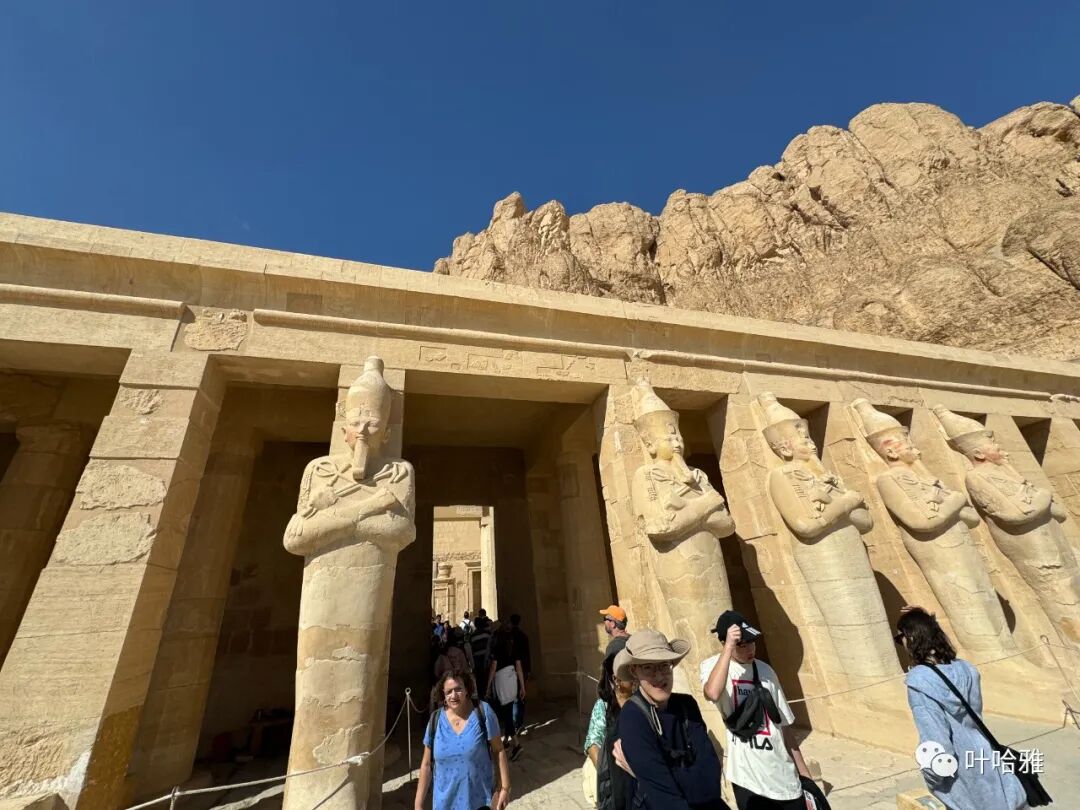
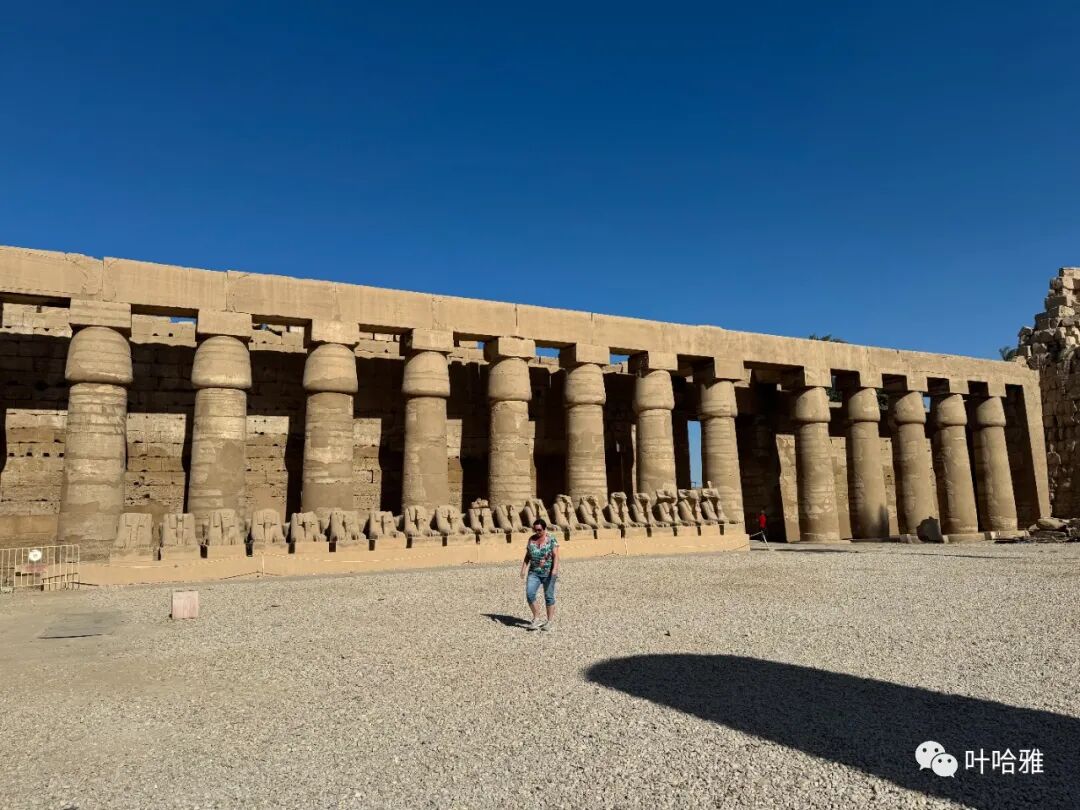
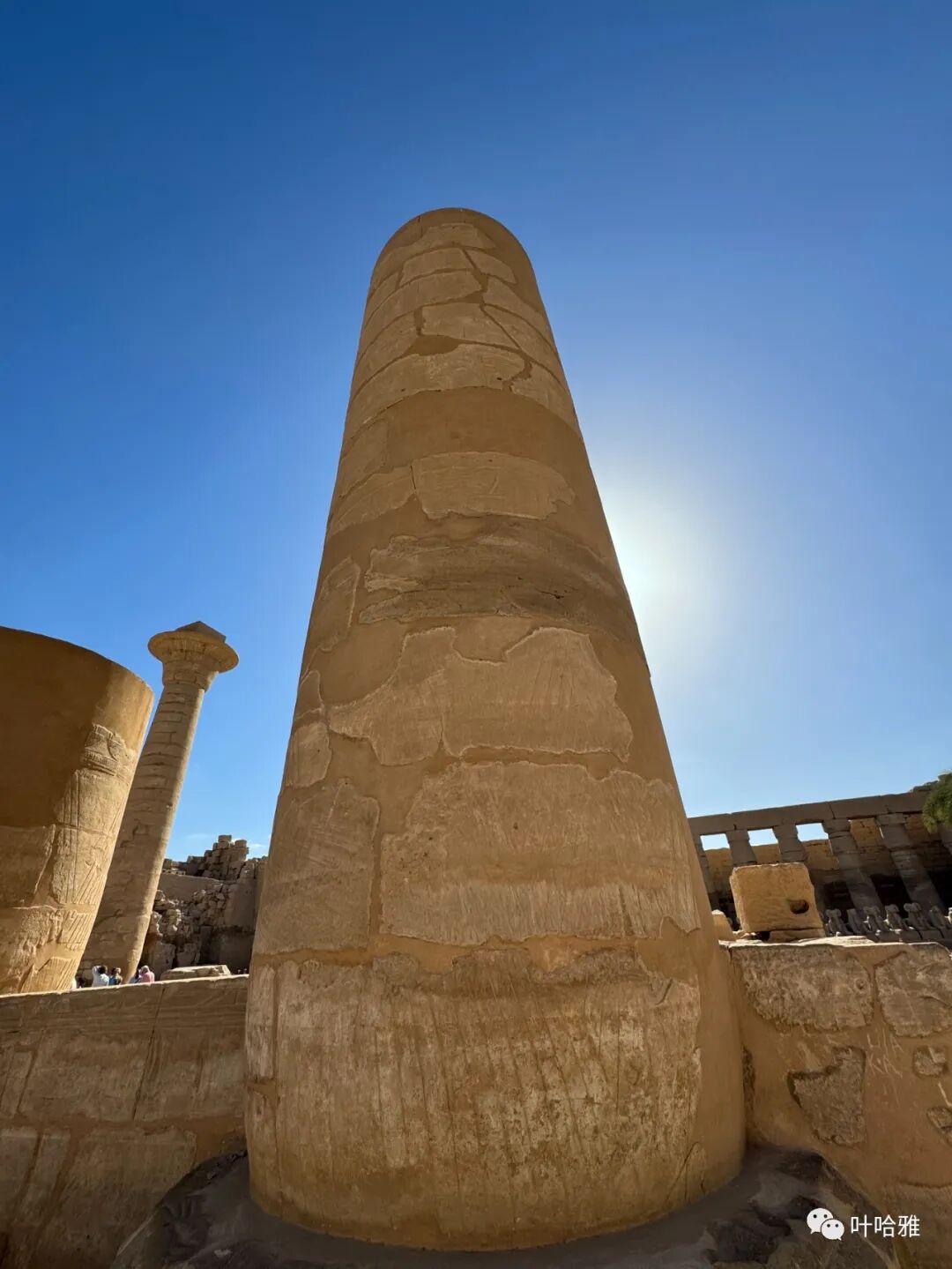
Karnak Temple
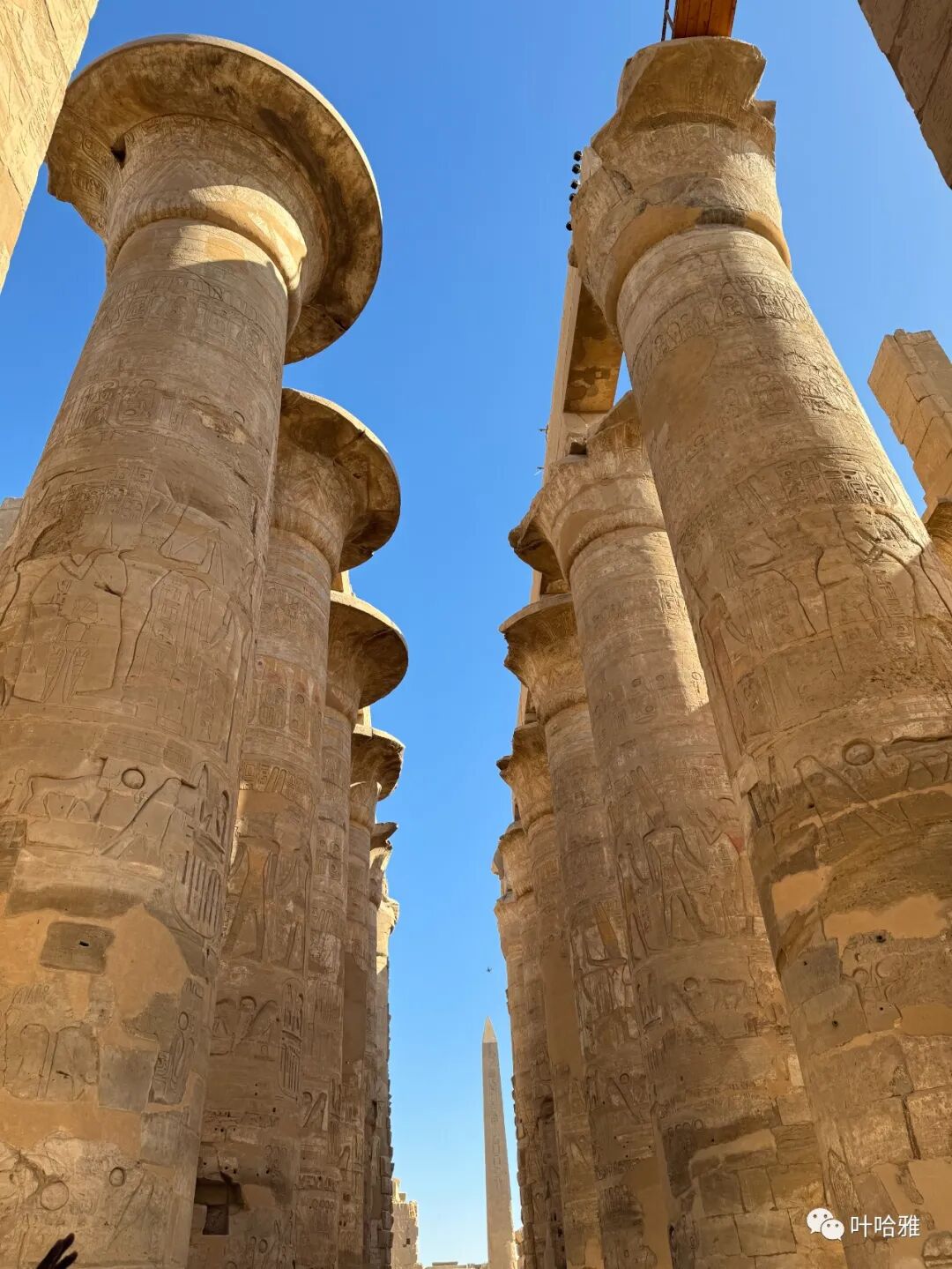
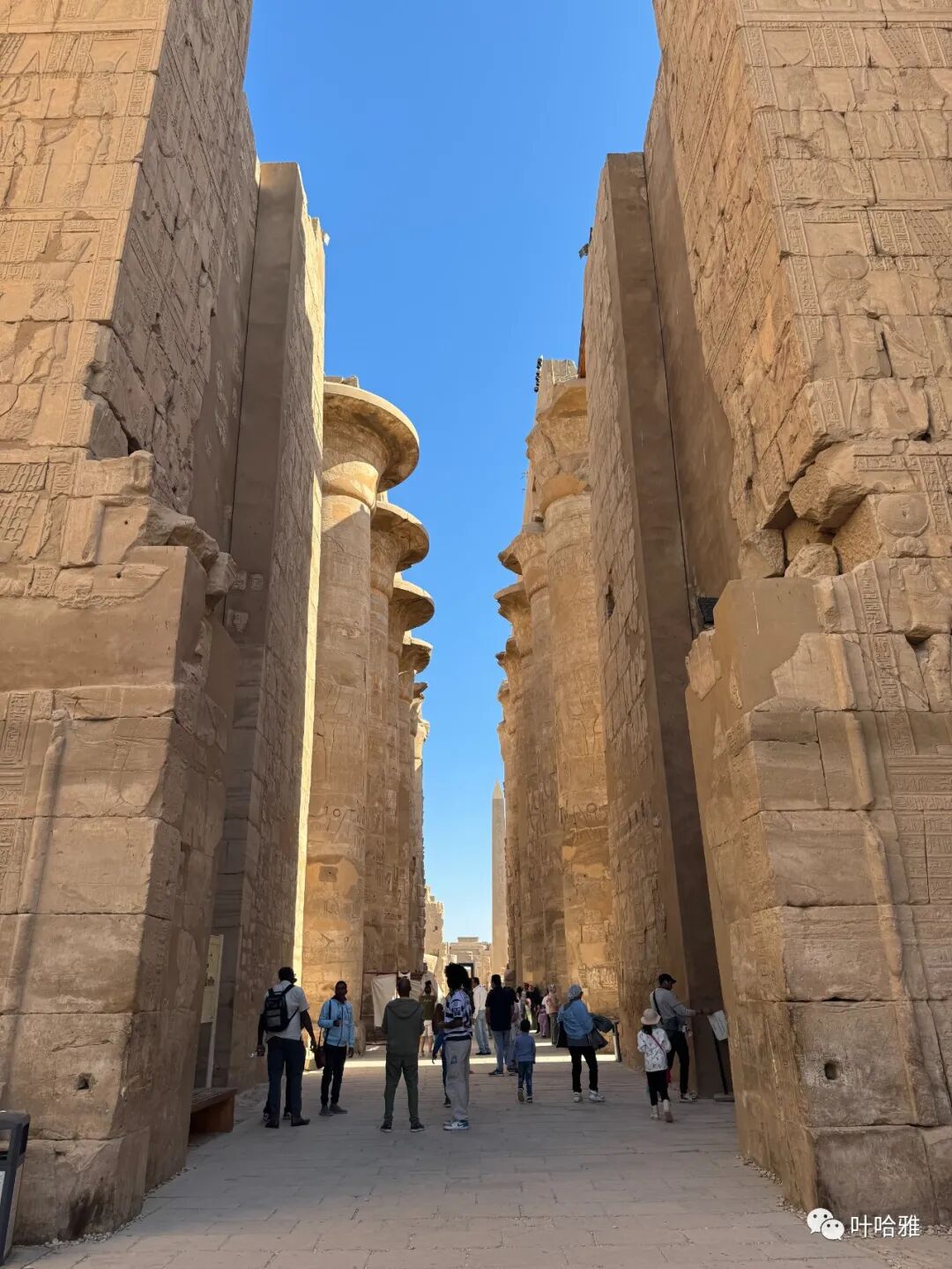
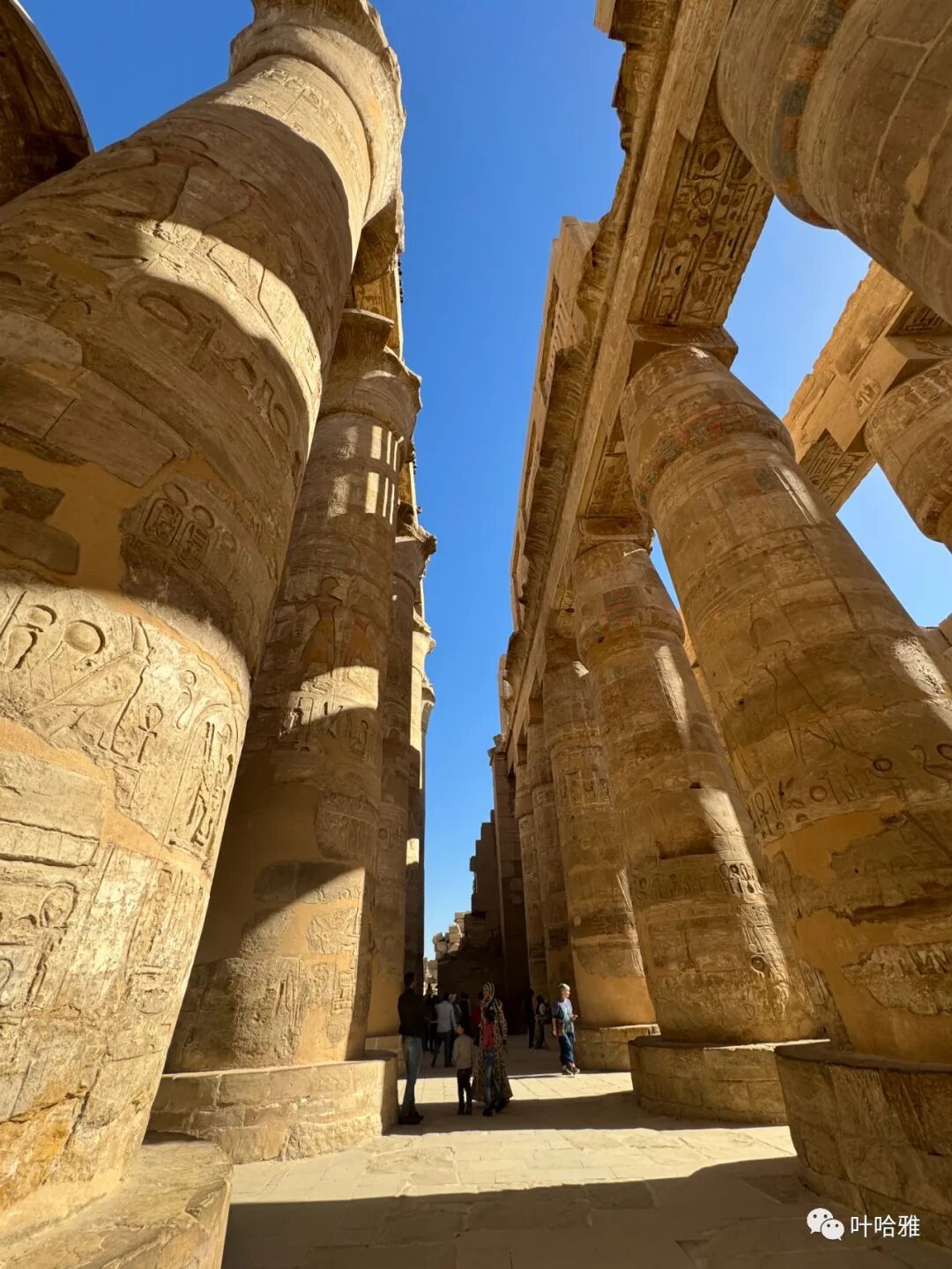
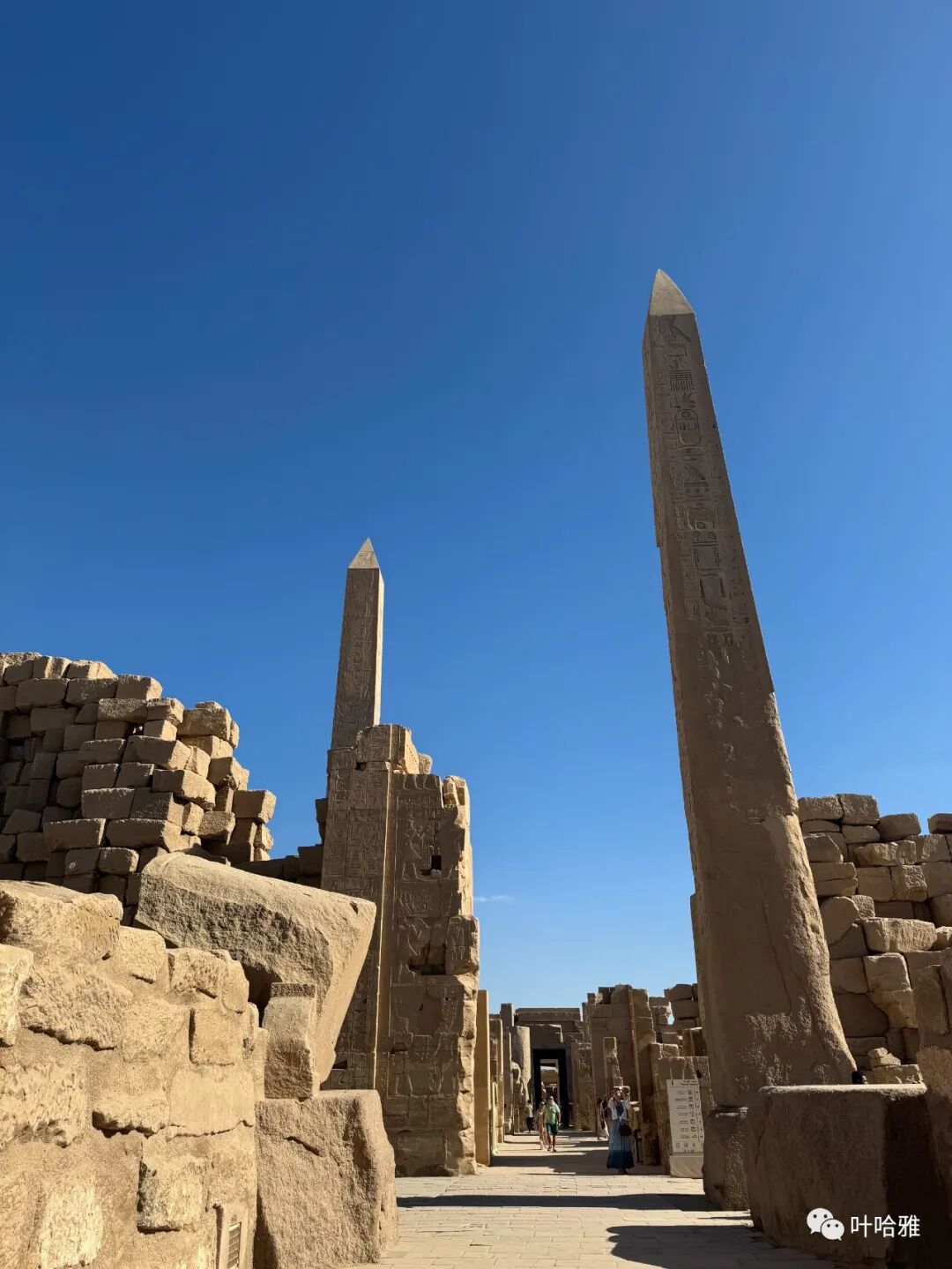
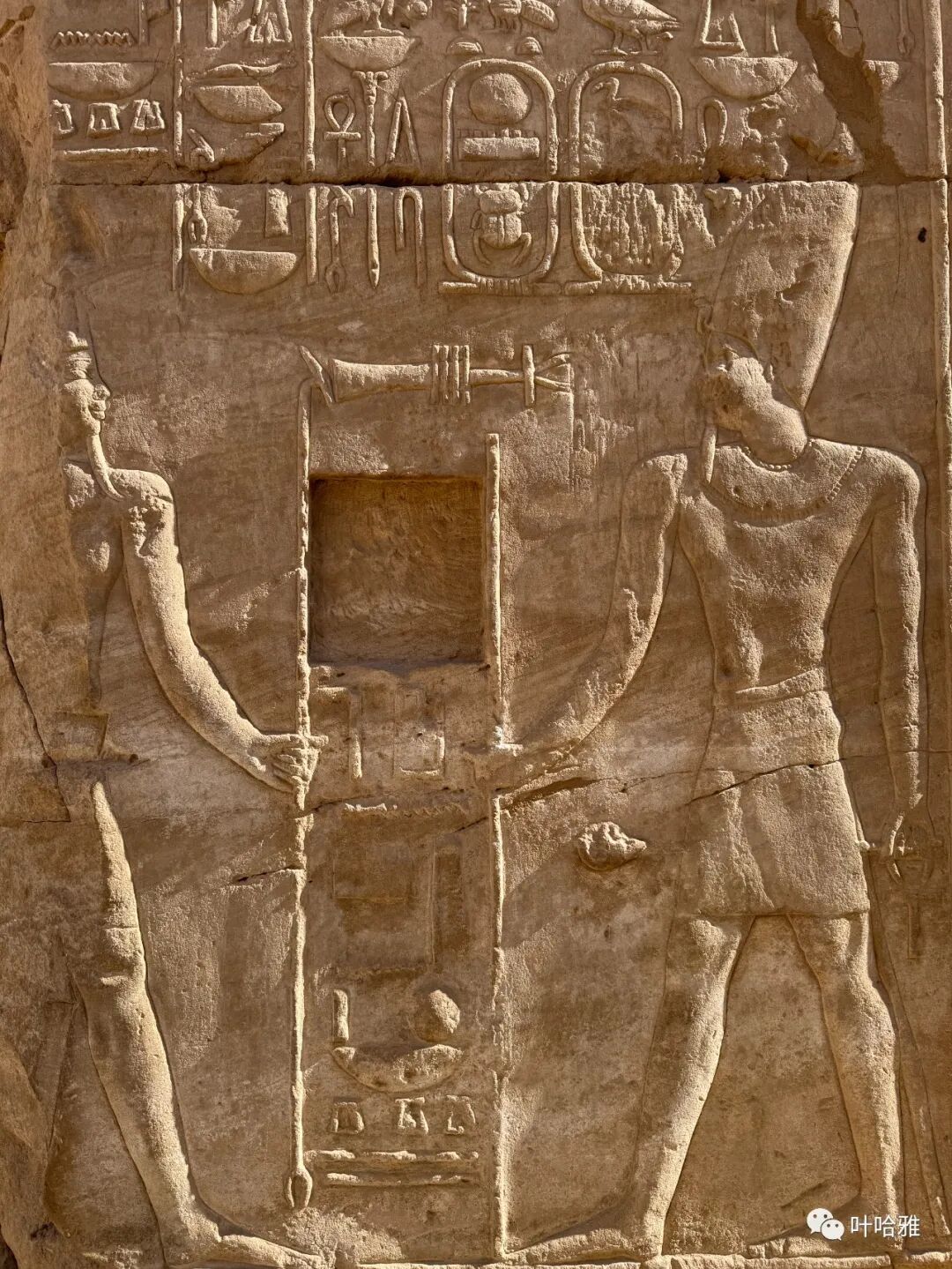
The temple was built in 2000 BC, making it over four thousand years old, and it covers an area larger than half of Manhattan.
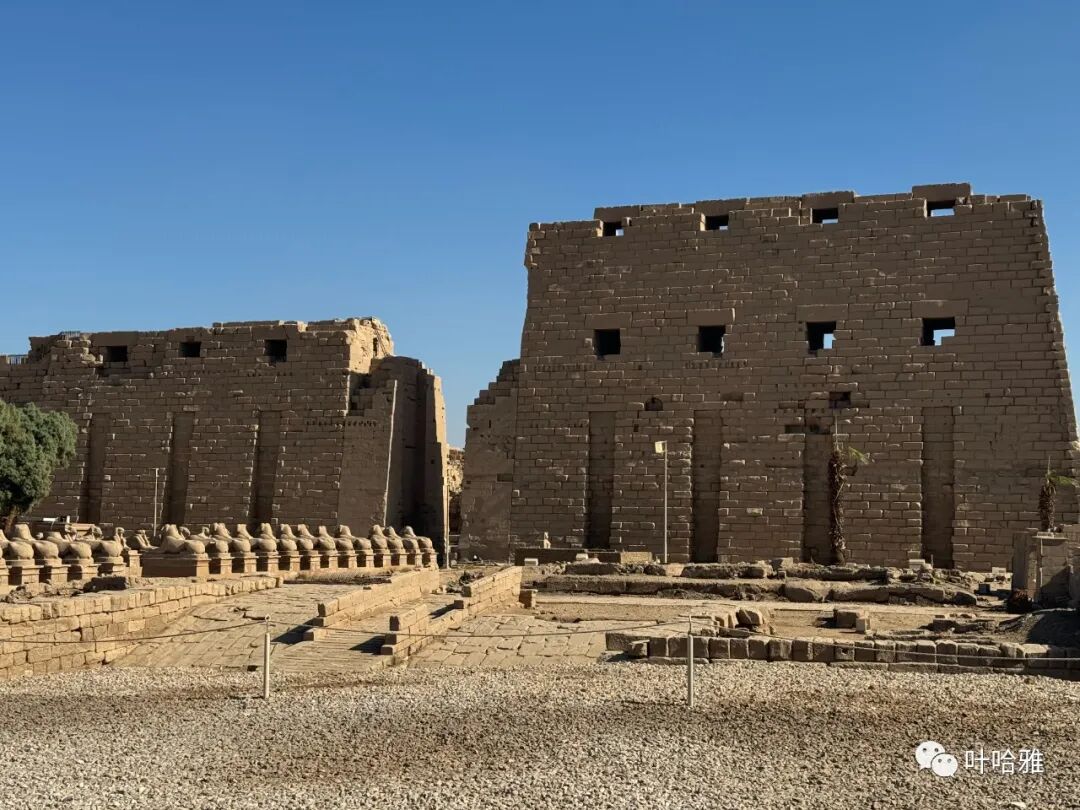
Visiting the temple during the day is a test of physical strength because the sun is so strong. When Fahim walked up to this ram-headed sphinx, he took a liking to the pebbles on the ground and refused to move. I stayed with him to play with the stones. During this time, Fahim was surrounded by Egyptian girls who took photos with him and kissed him.
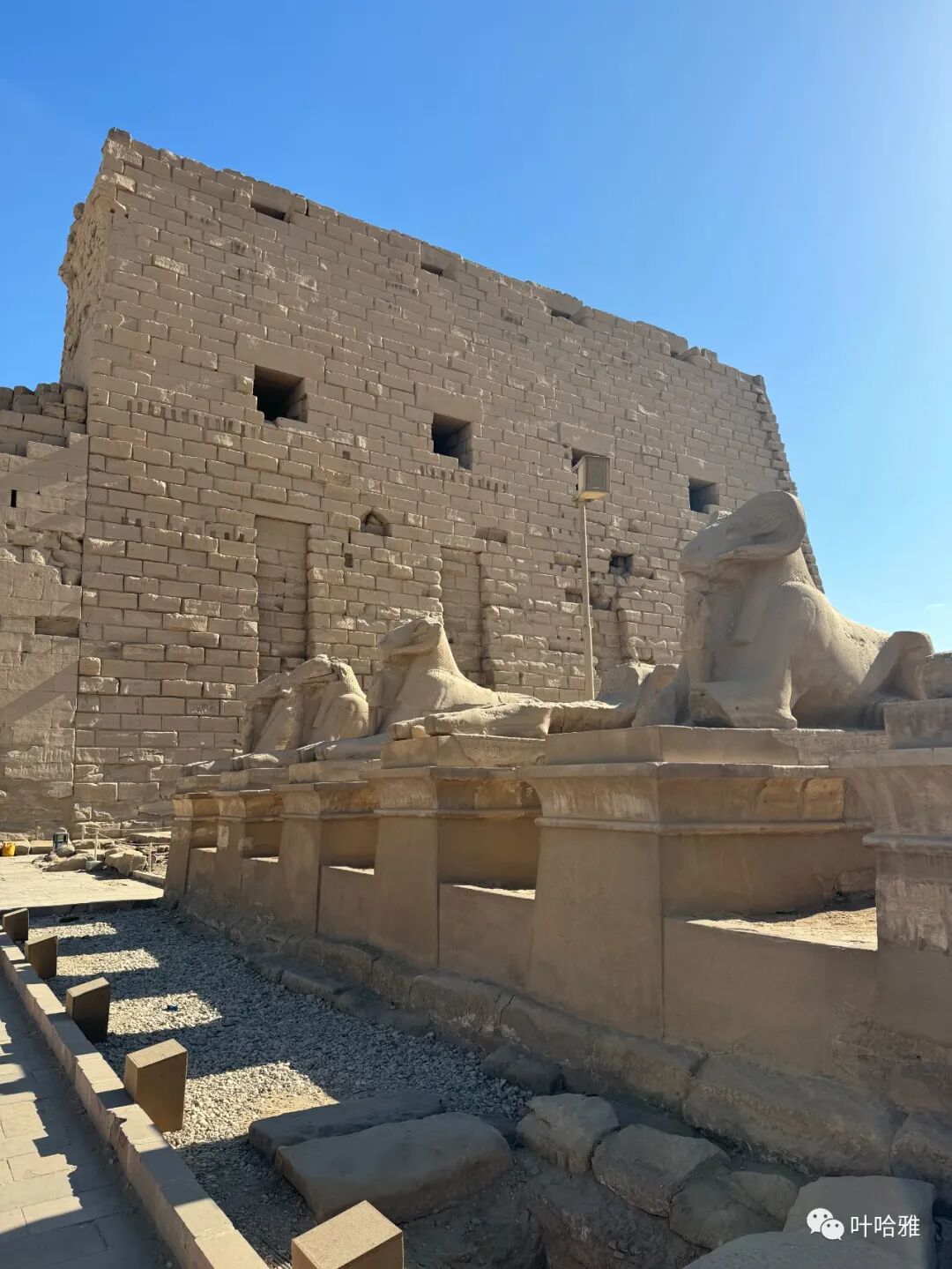
The Egyptian tour guide said he could watch the child for me so I could go inside to look around, but I said forget it. I would rather stay and play with stones with Fahim. I am actually not interested in these temples. After seeing them, I just think they were built impressively and are very spectacular, and that is all.
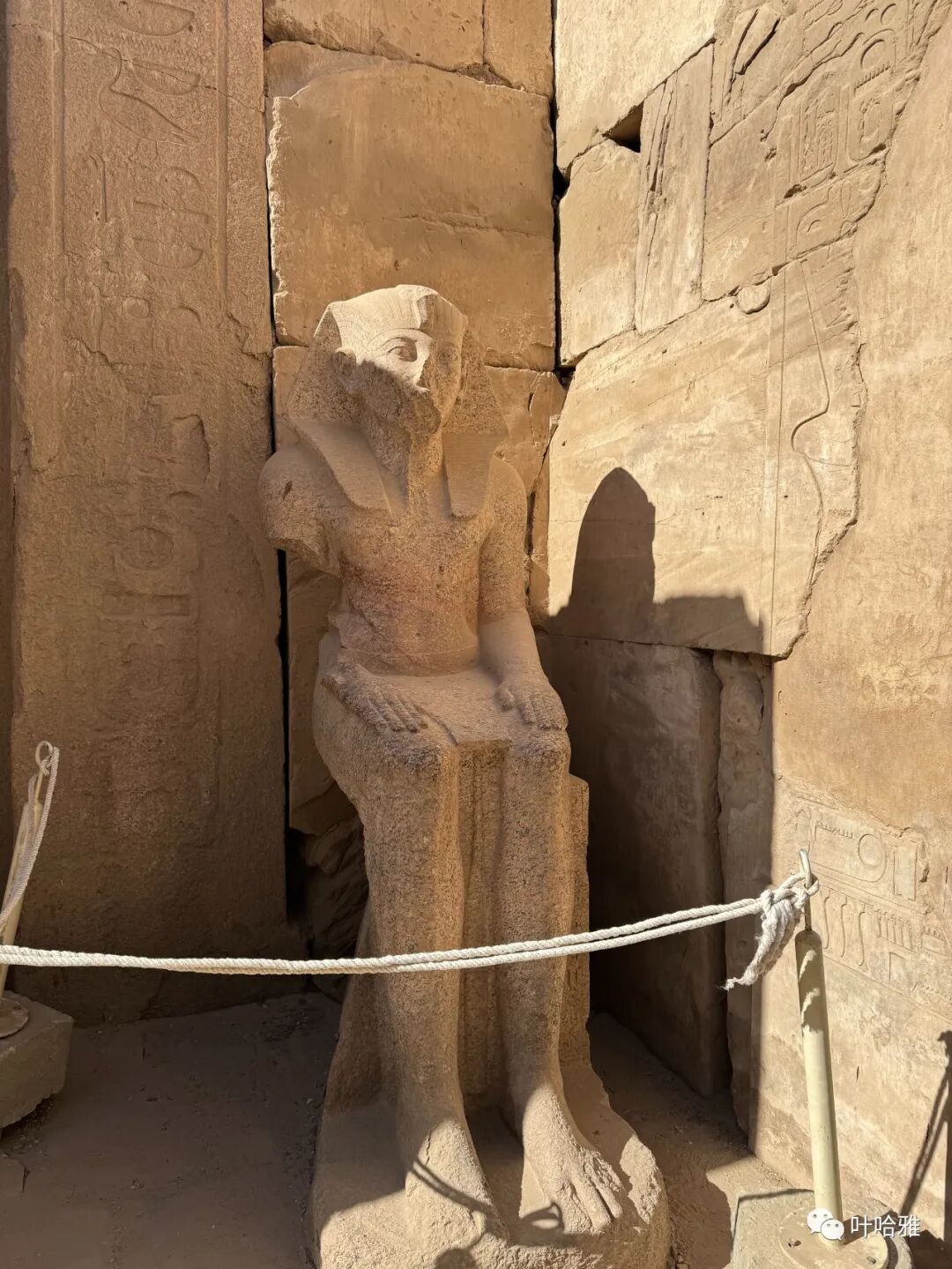
Luxor Temple
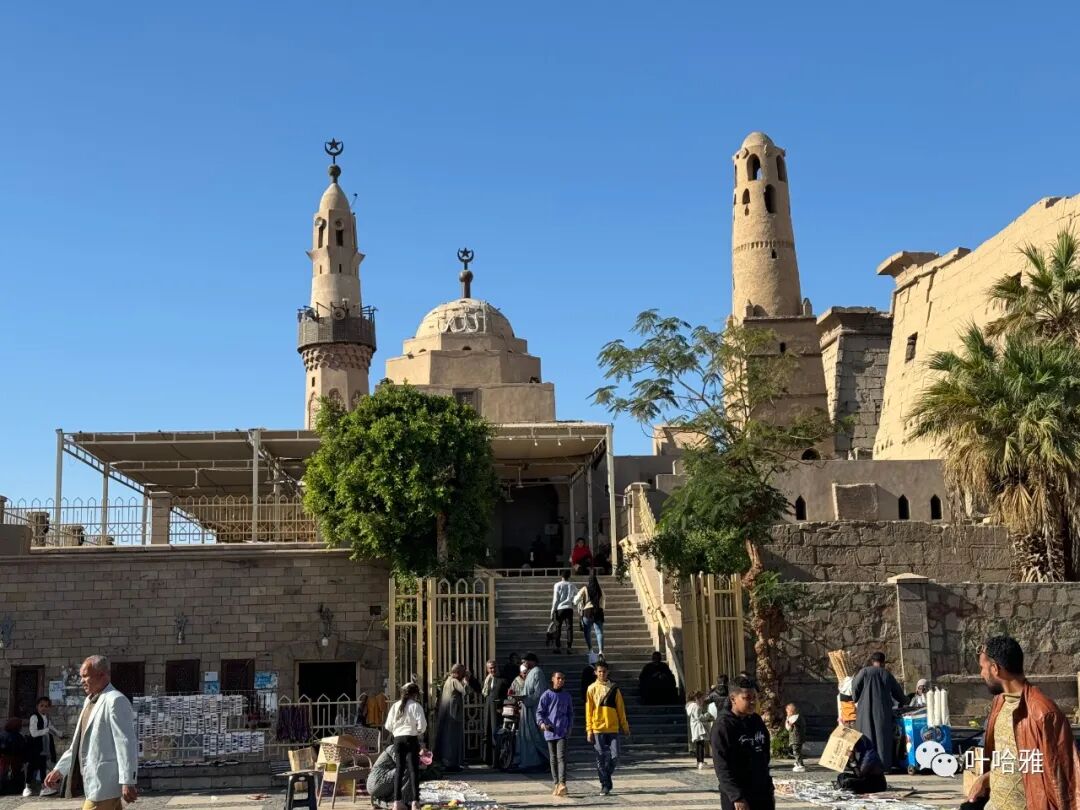
The last stop was Luxor Mosque, which is also a landmark of Luxor with over three thousand years of history. However, what attracted me here was the gongbei built on top of the mosque. At the entrance, the guide asked if I wanted to visit the mosque or the mosque. I said the mosque. He looked surprised and confirmed it with me again. I was a bit tired by then, so I told him I would skip the mosque and just see the mosque before heading back.
Abu Haggag Mosque and Gongbei
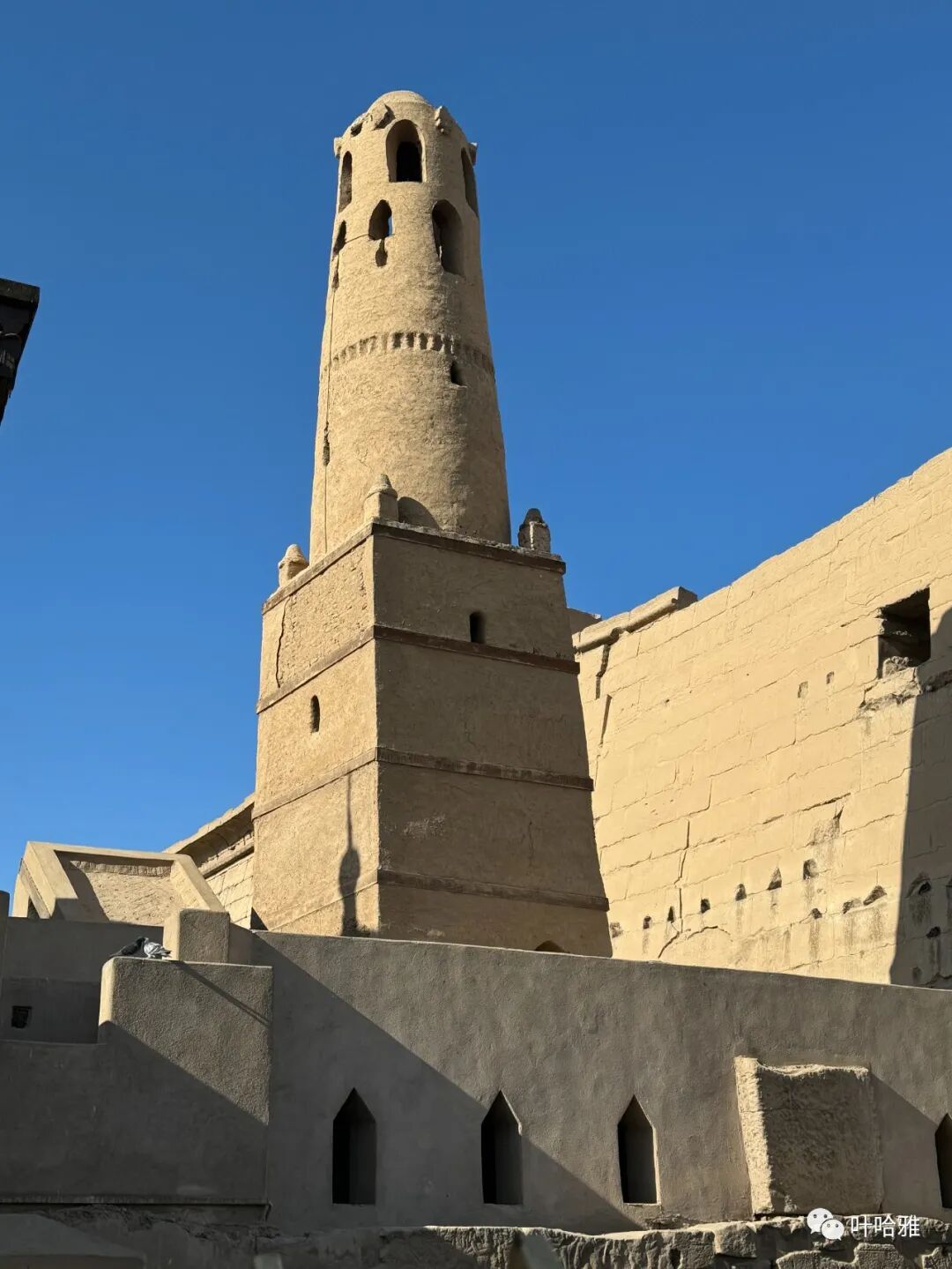
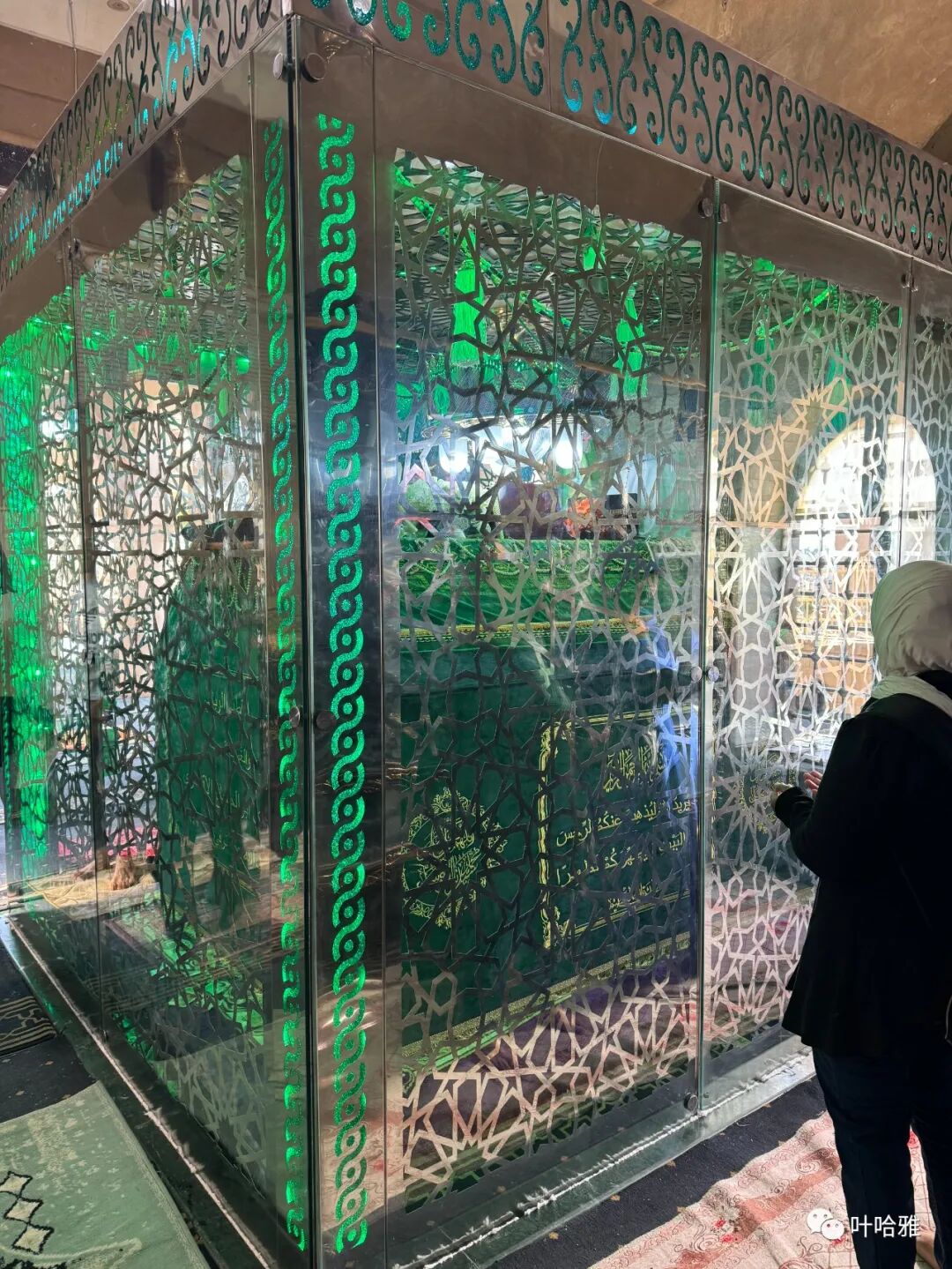
This gongbei can be considered the only one in the world built on top of the world's oldest mosque, and it is the only mosque in the world built on mosque ruins.
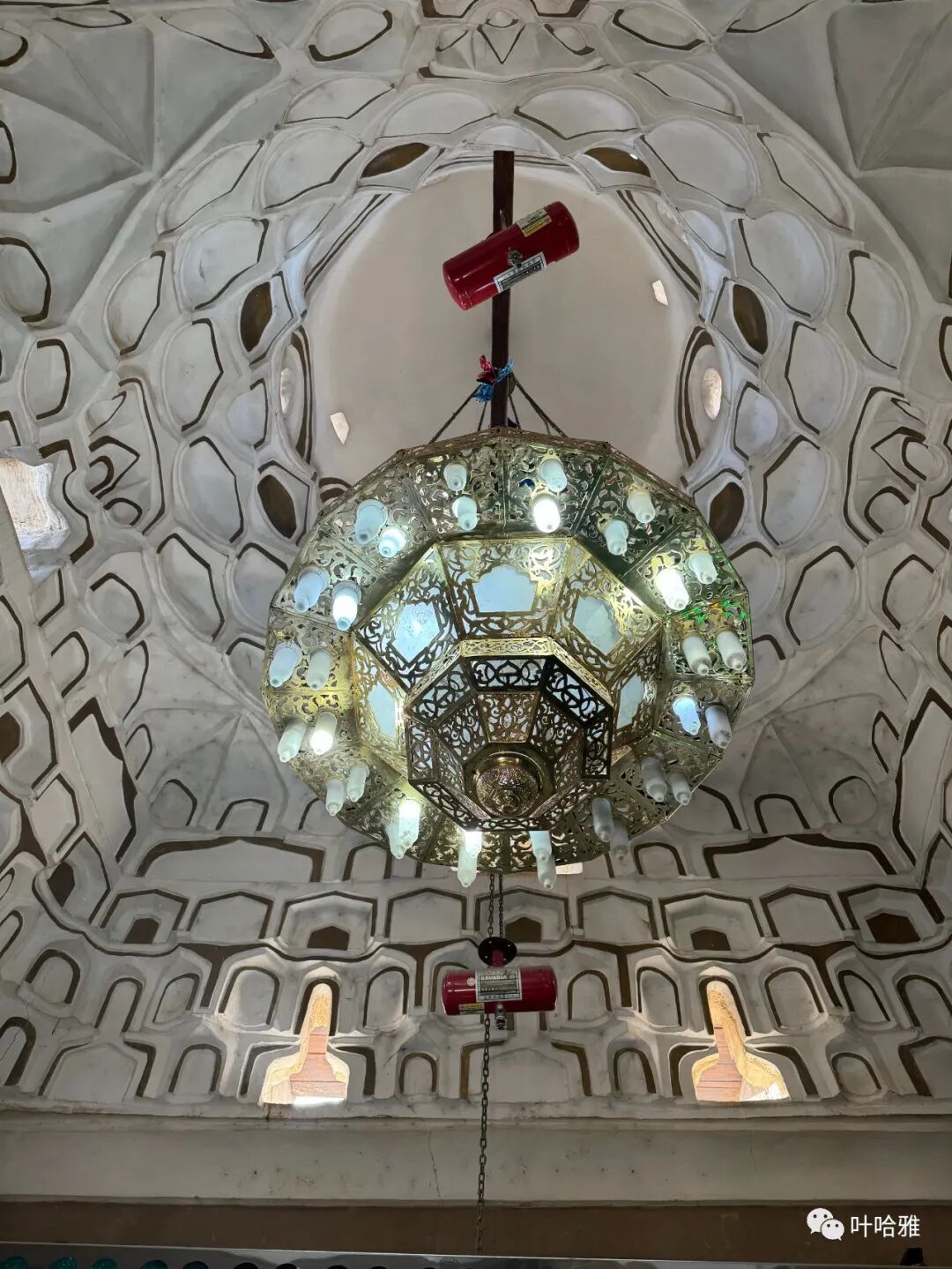
This mosque dates back to the Fatimid dynasty and was built on the ruins of a church inside the mosque. It was completed around 1286 and contains the tomb of the Sufi mystic Yusuf Abu Haggag. Haggag was a scholar born in Baghdad in the 13th century. According to local legend, he captured Luxor from the Roman Queen Tarza.
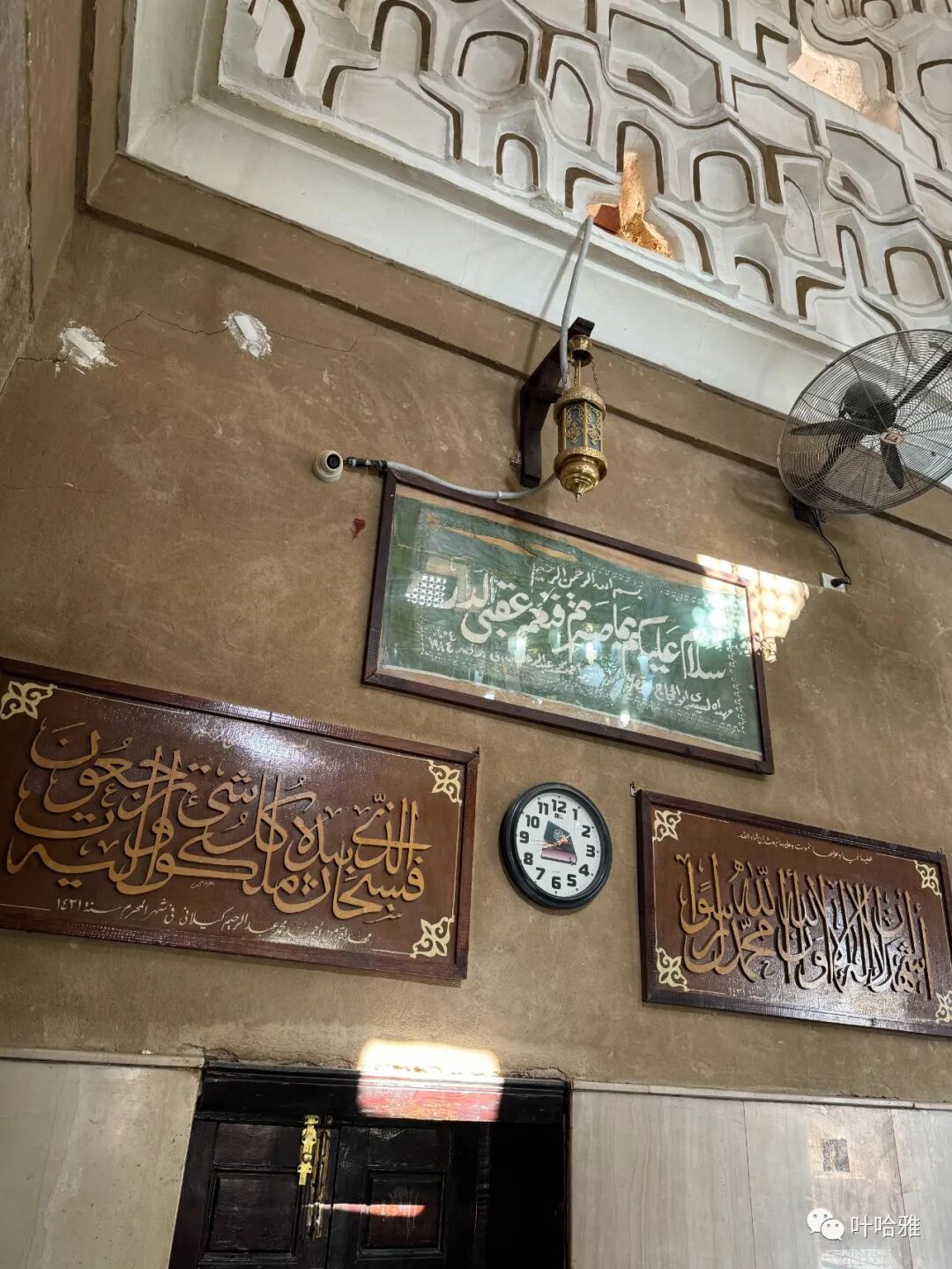
Luxor Mosque was converted into a church by the Copts in 395 AD and then into a mosque in 640 AD. Therefore, it can be said that this is the oldest religious building in the world still in use, with a history spanning over three thousand four hundred years.
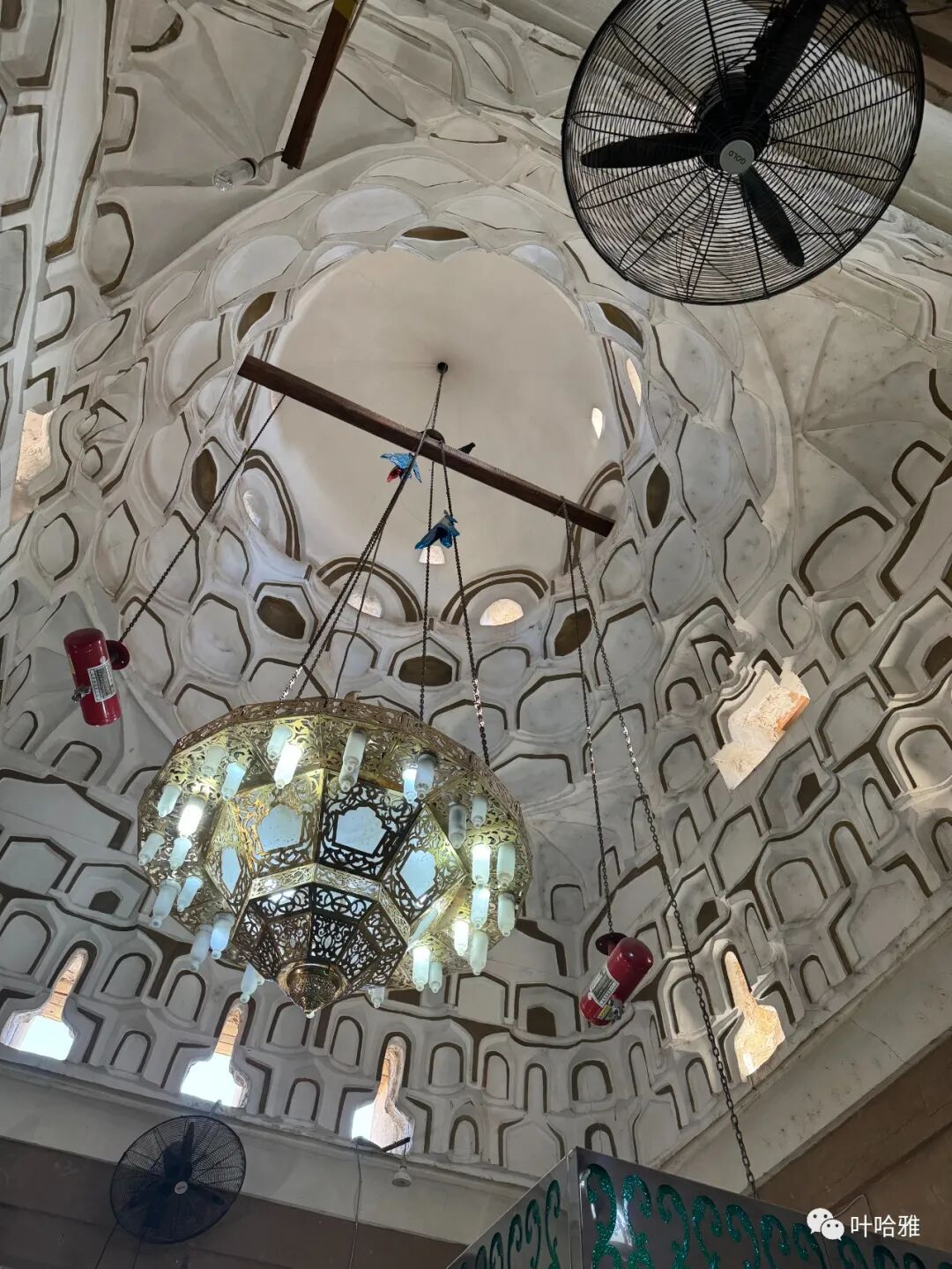
Inside the gongbei, there are some believers visiting the graves, with more women than men.
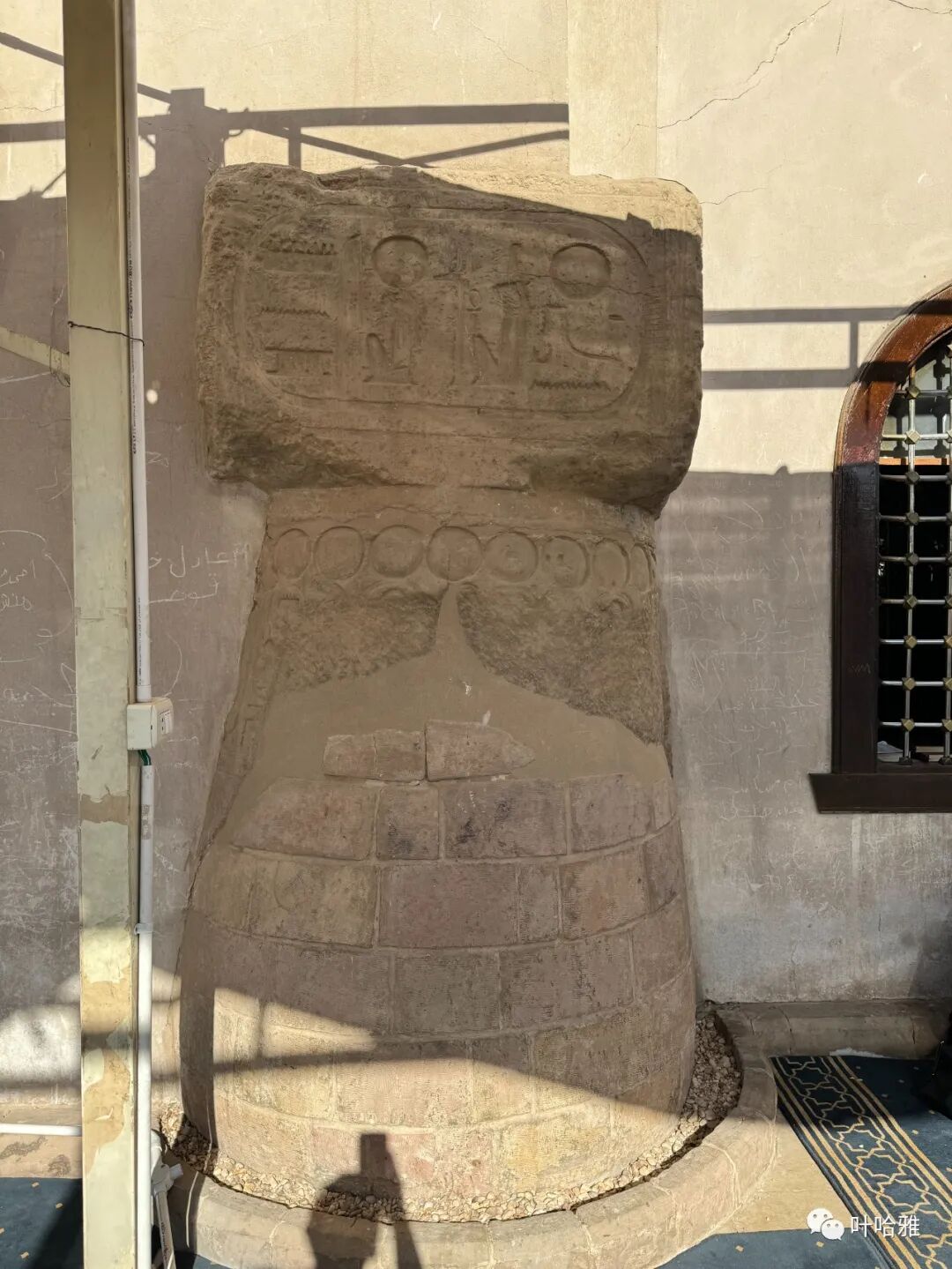
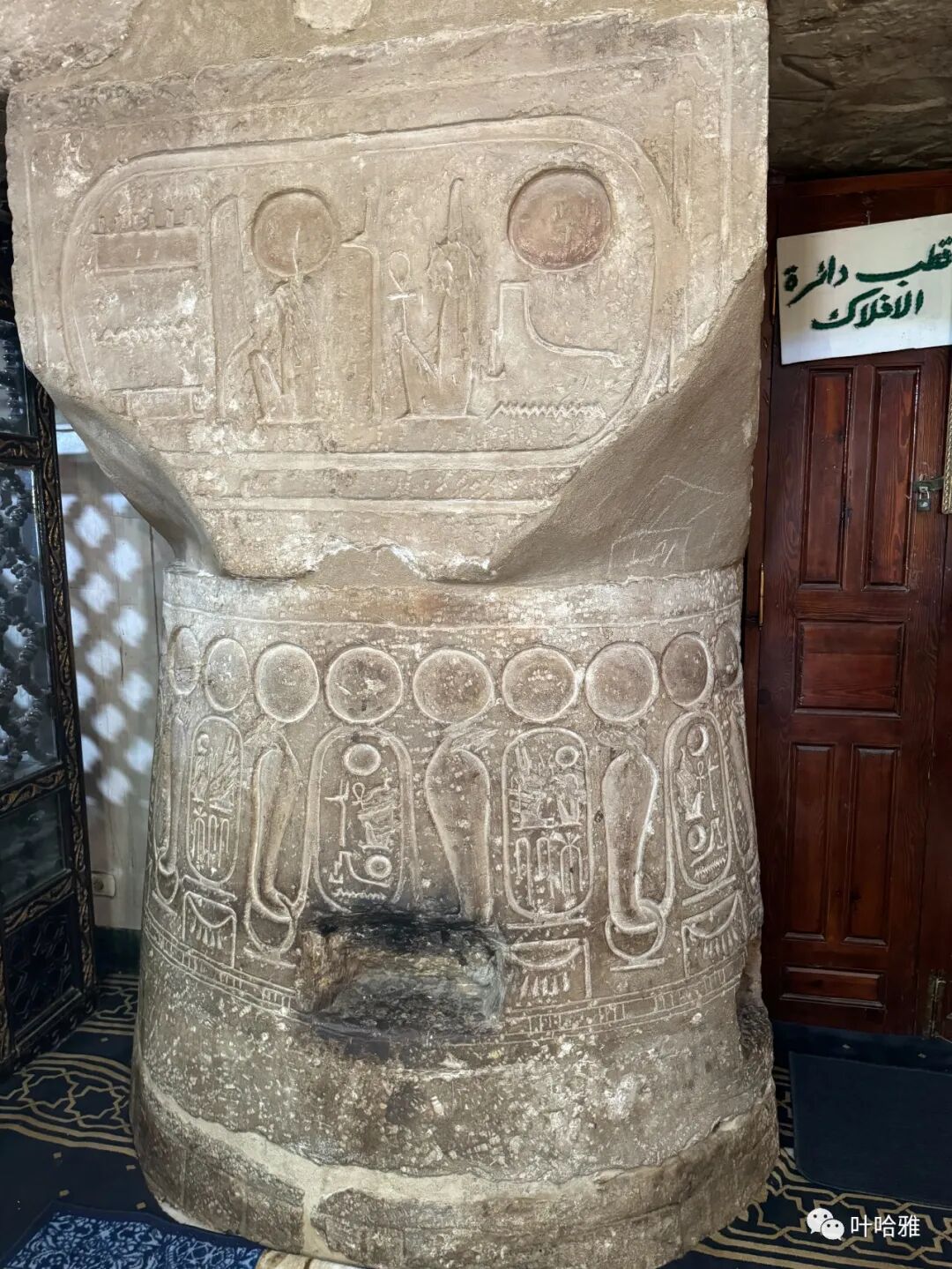
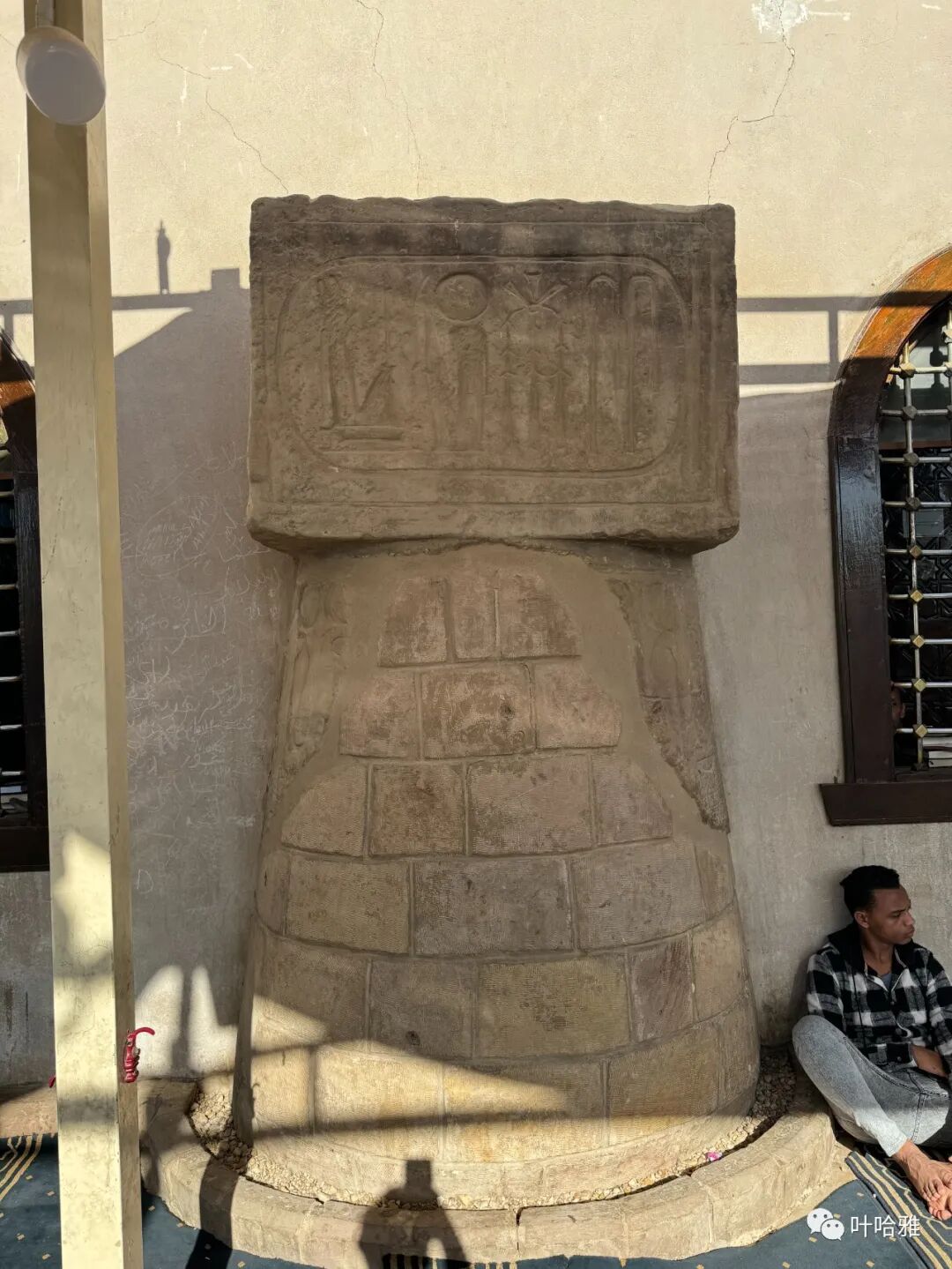
The mosque suffered a fire in 2007. When it was rebuilt, stones from the mosque were used, and you can see pharaonic hieroglyphs on the carvings of this pillar.
Looking out from the mosque railing, you can see the Luxor Mosque. The once arrogant pharaohs compared themselves to gods, but they never imagined that three thousand years later, their mosque would become a tourist attraction for people to glance at in passing.
Al Iman Mosque
This is the closest mosque to my hotel. Fewer than 10 people attend the adhan (banda). In Arab countries, people go back to sleep after the adhan, and almost no shops are open on the street. Only a few small shops selling flatbread (da bing) are open, so it is best to eat breakfast at the hotel, or you will have nothing to eat outside.
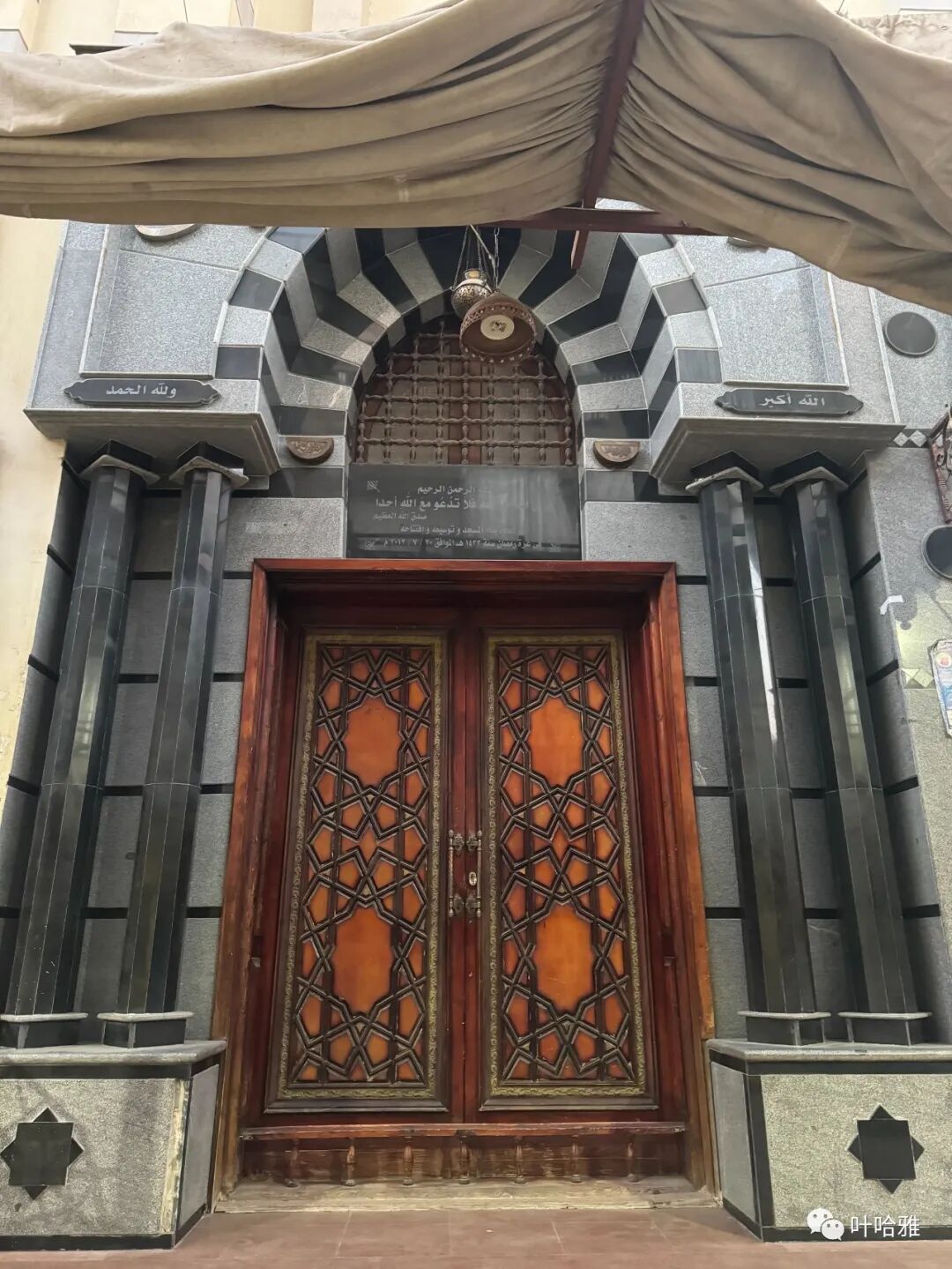
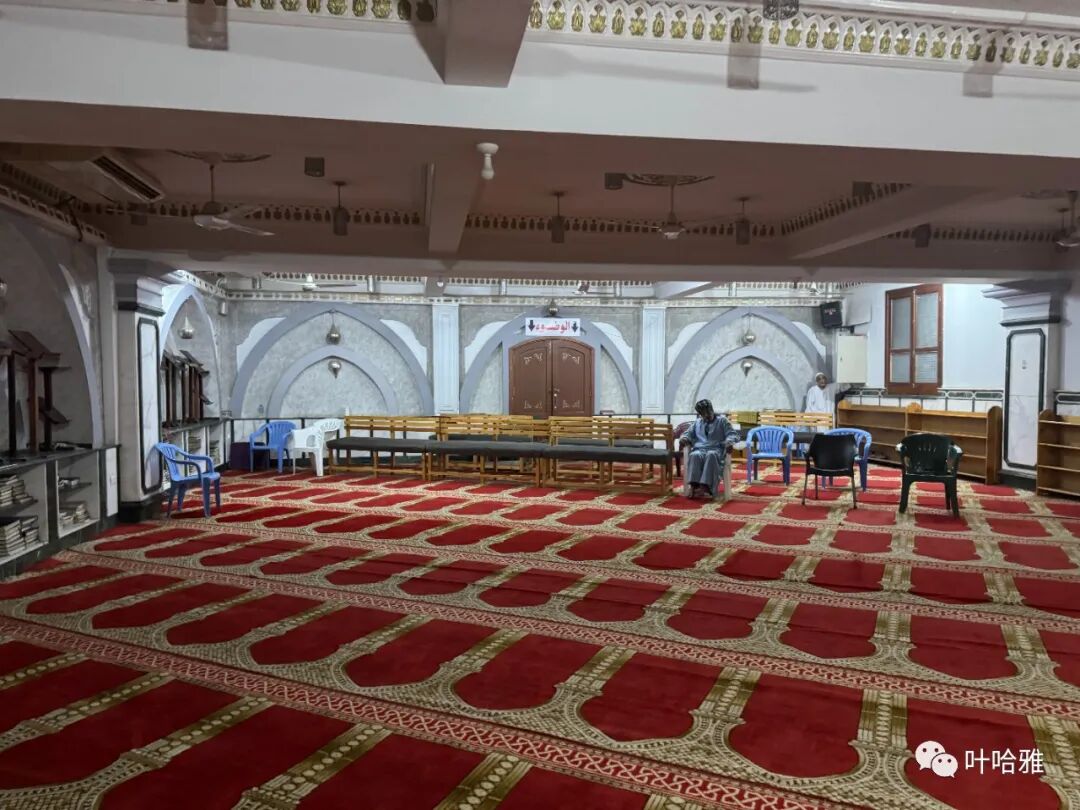
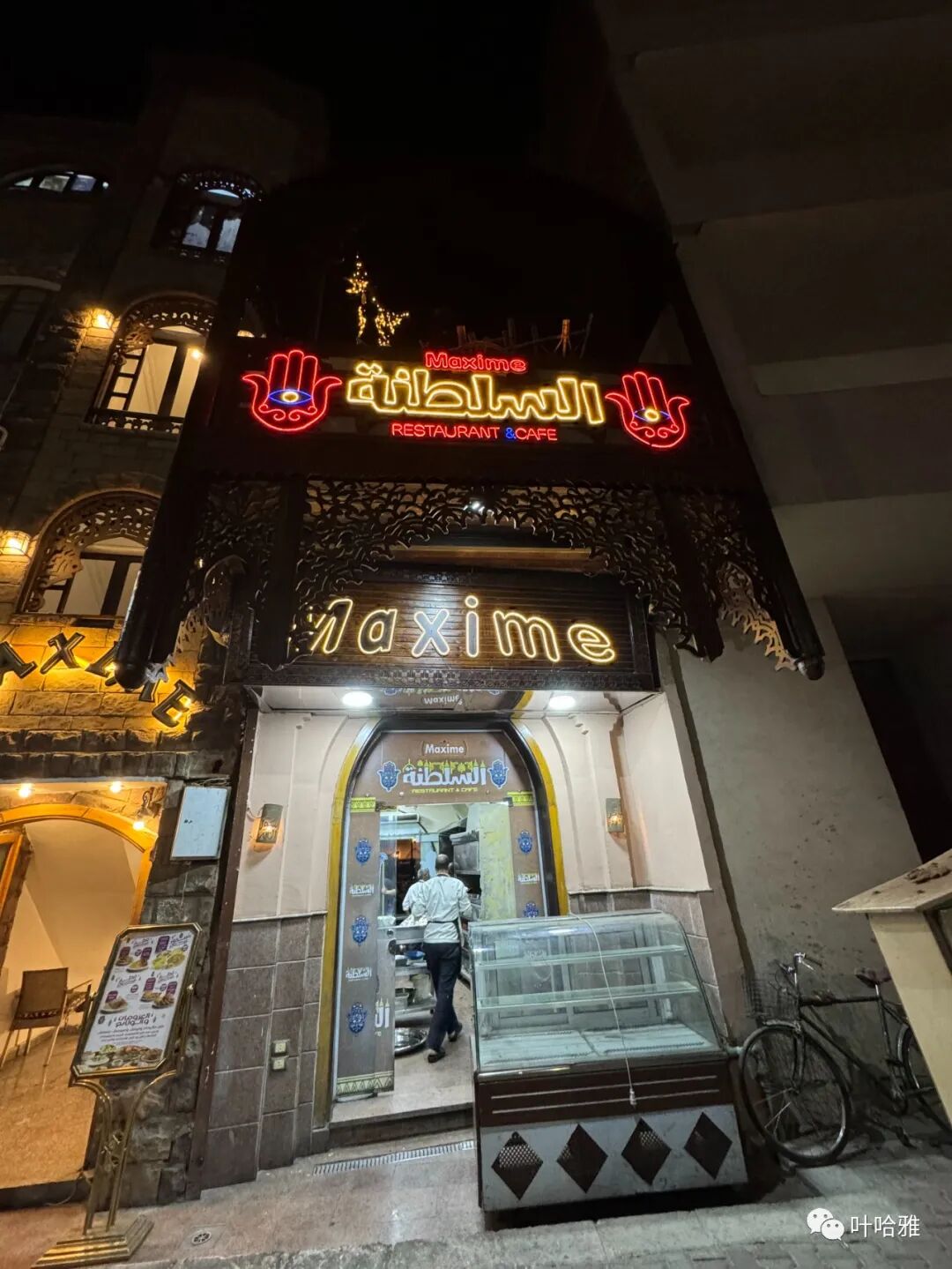
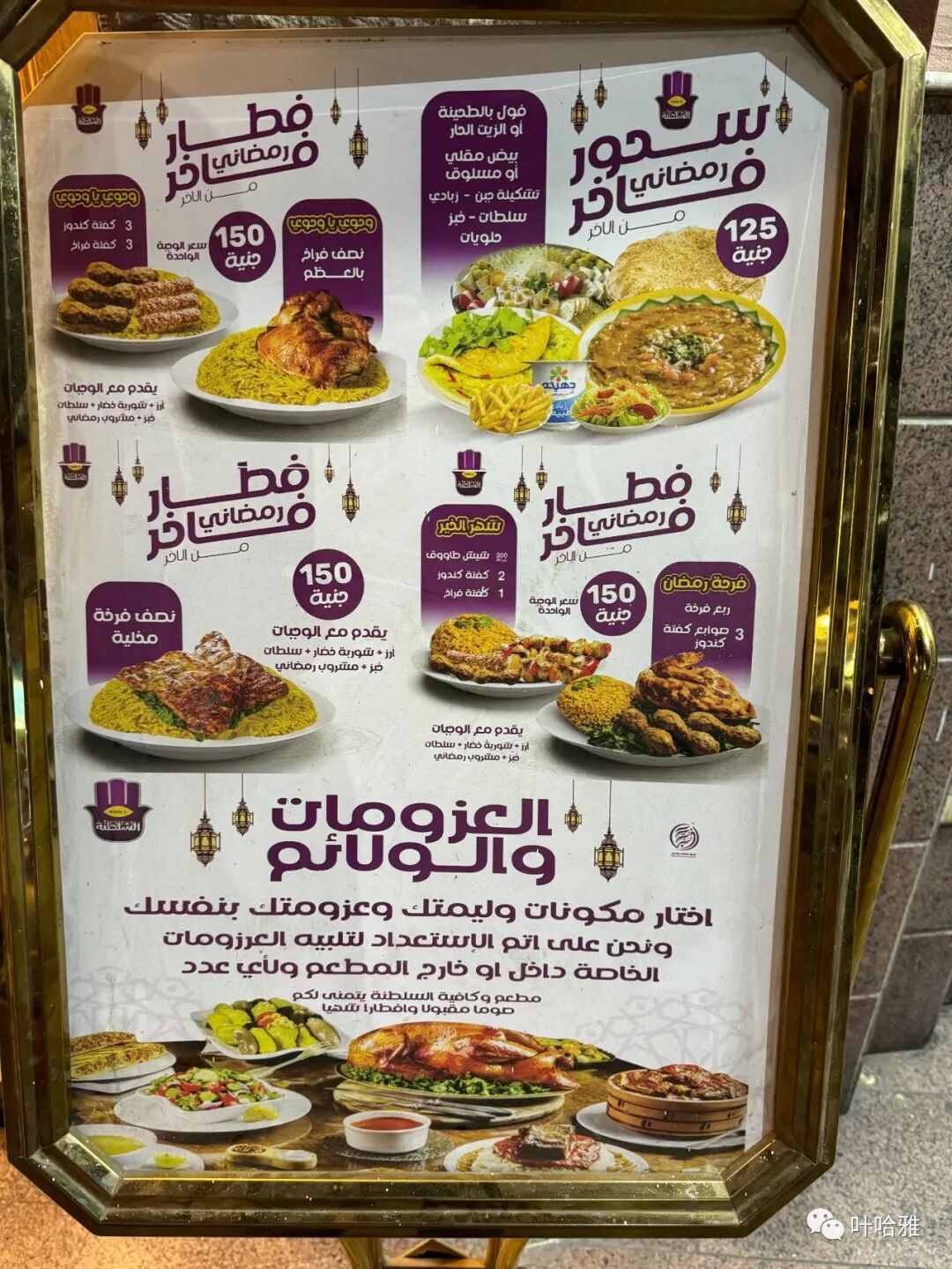
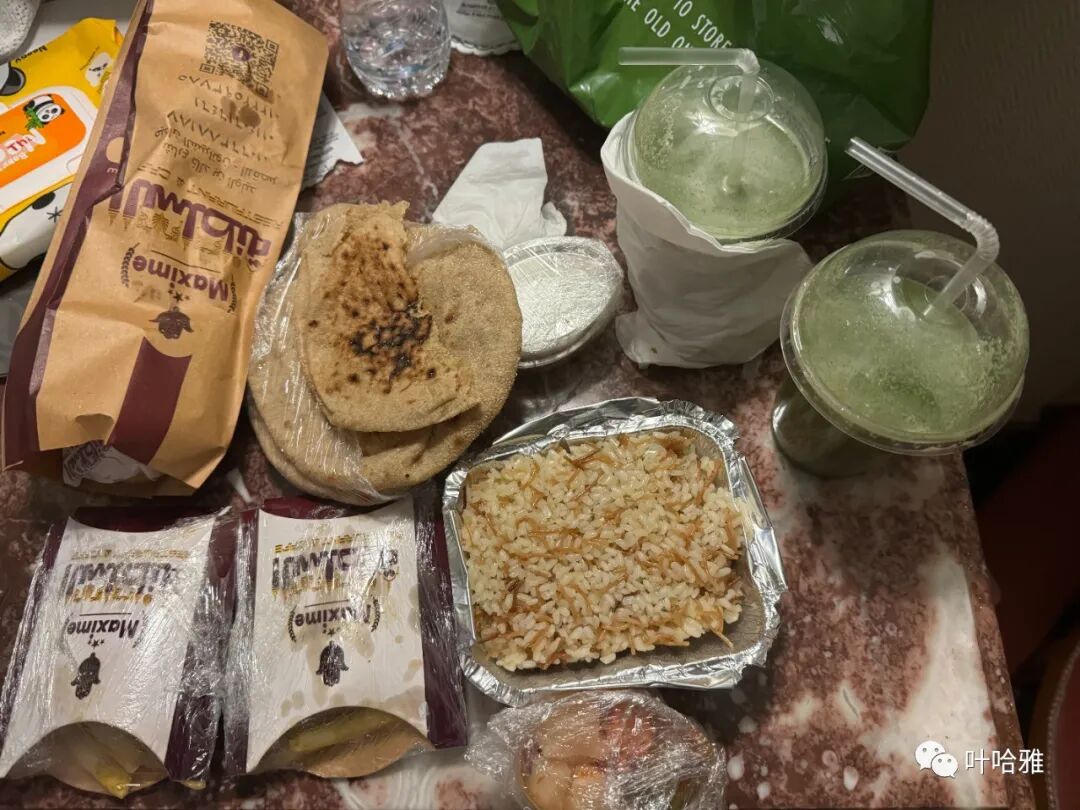
As a convenient fast food in the Arab region, shawarma (sharama) is as popular as our meat burger (roujiamo); it is economical, affordable, and delicious.
El-KABABGY RESTAURANT
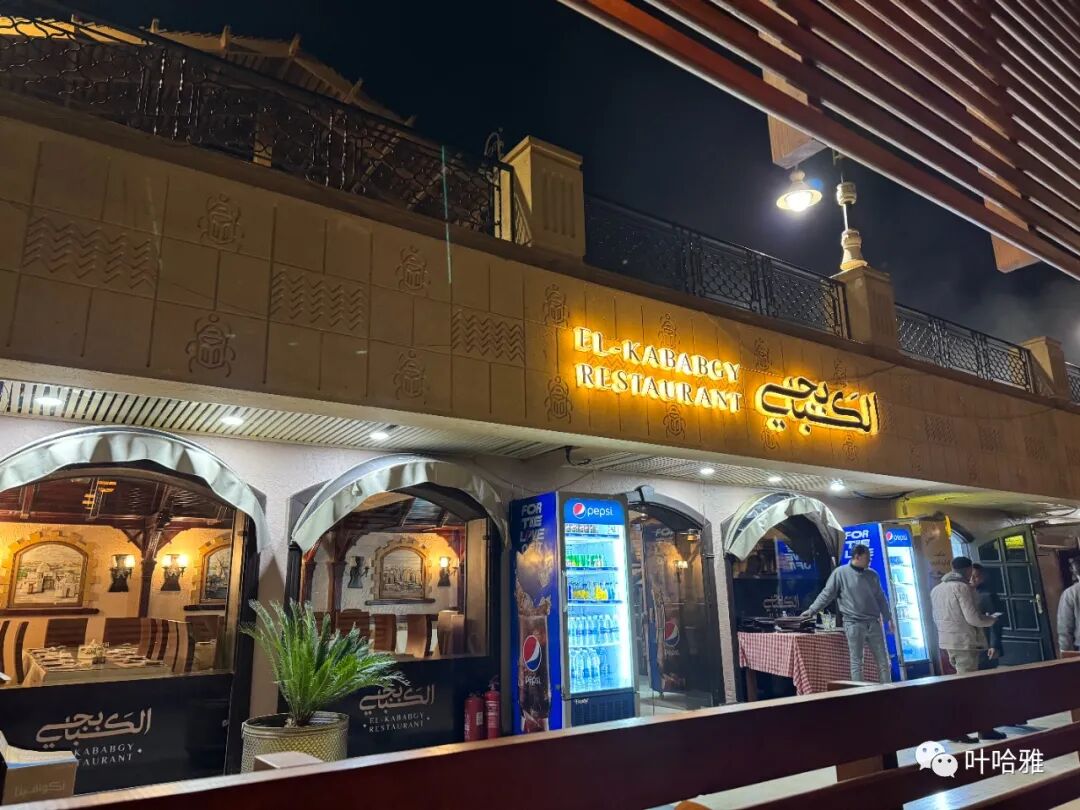
This shop is the number one ranked restaurant in Luxor on the TripAdvisor app, and after eating there, I feel it truly deserves this ranking. This shop is only 1 kilometer away from our hotel on foot.
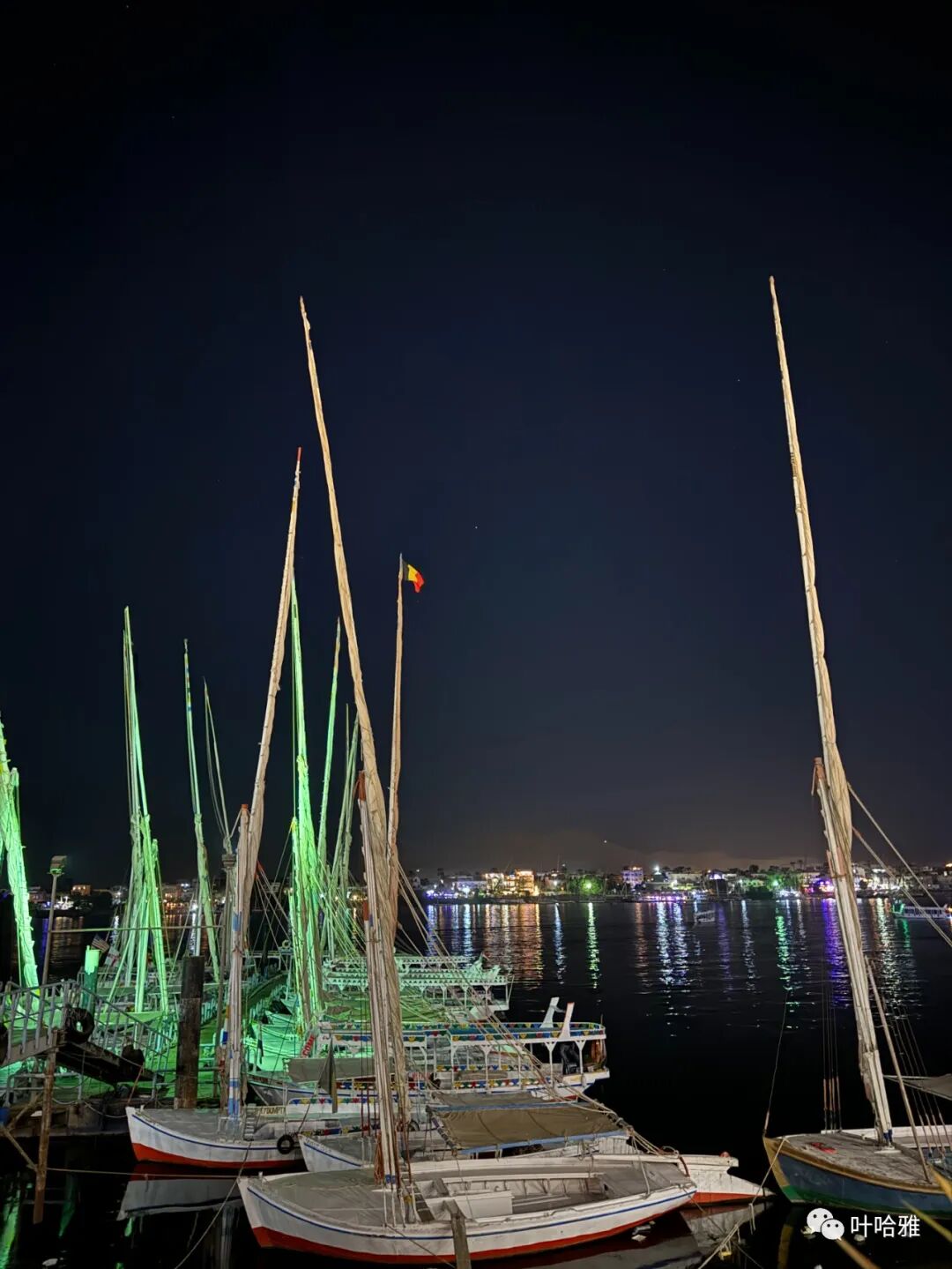
The outdoor part of the restaurant is right on the Nile pier. In December, the temperature in Luxor is only 20 degrees, which is very cool.
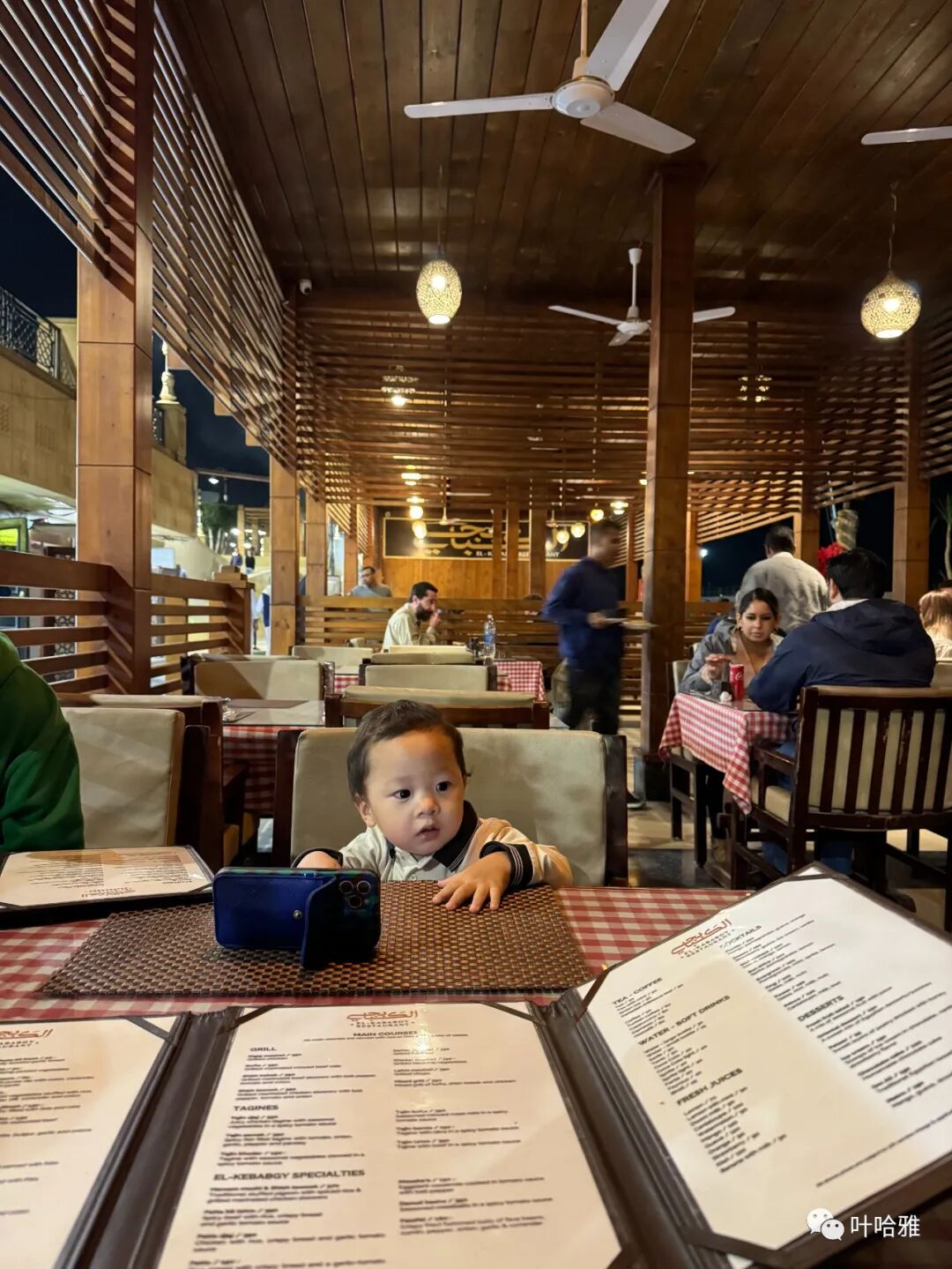
The grilled meat at this shop is extremely fragrant and clearly better than other restaurants we have eaten at. The per capita consumption is only about one hundred yuan. In China, at an Arab restaurant of the same level, two people would spend at least four or five hundred.
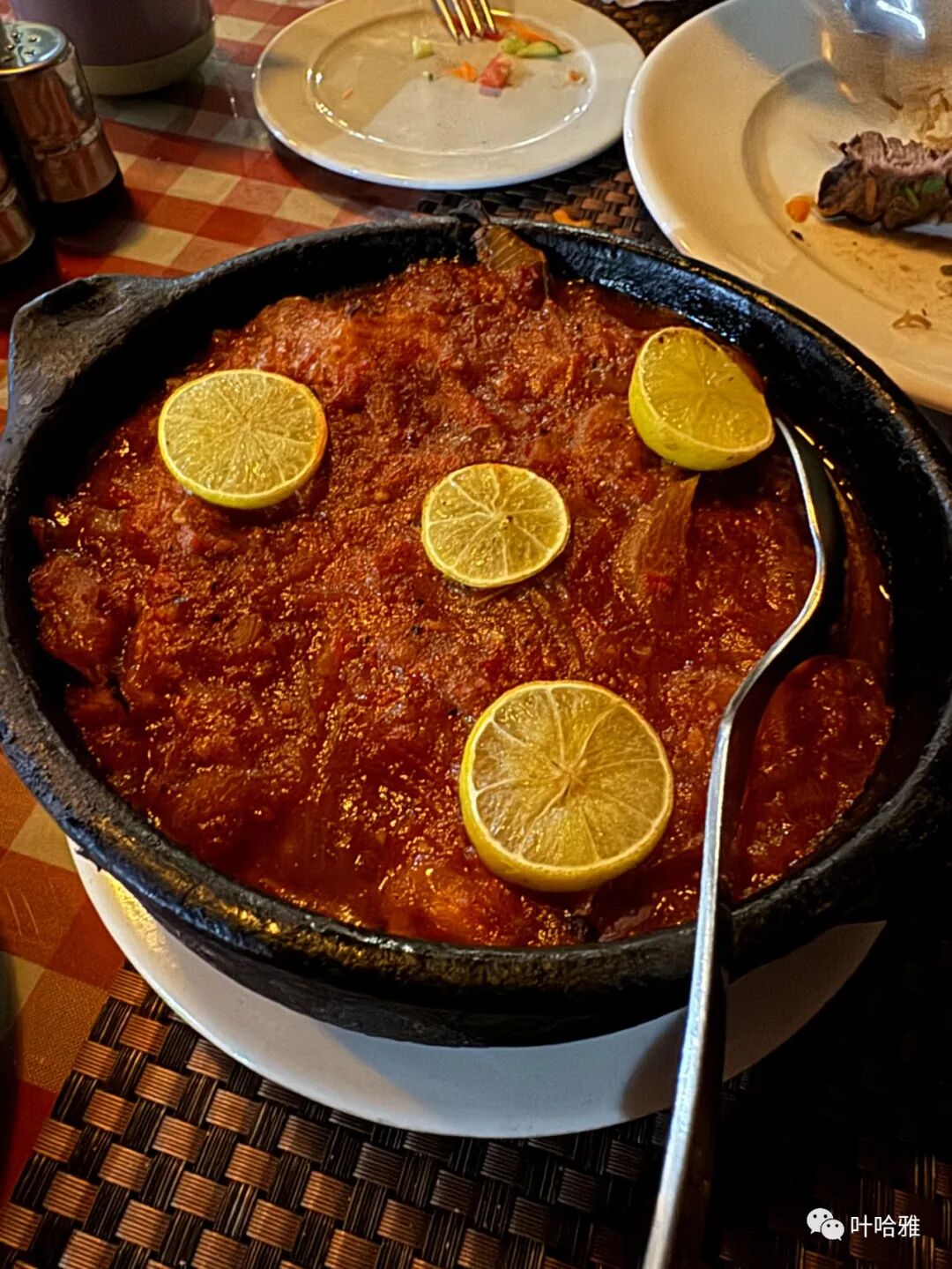
Tagine pot (tajiguo)
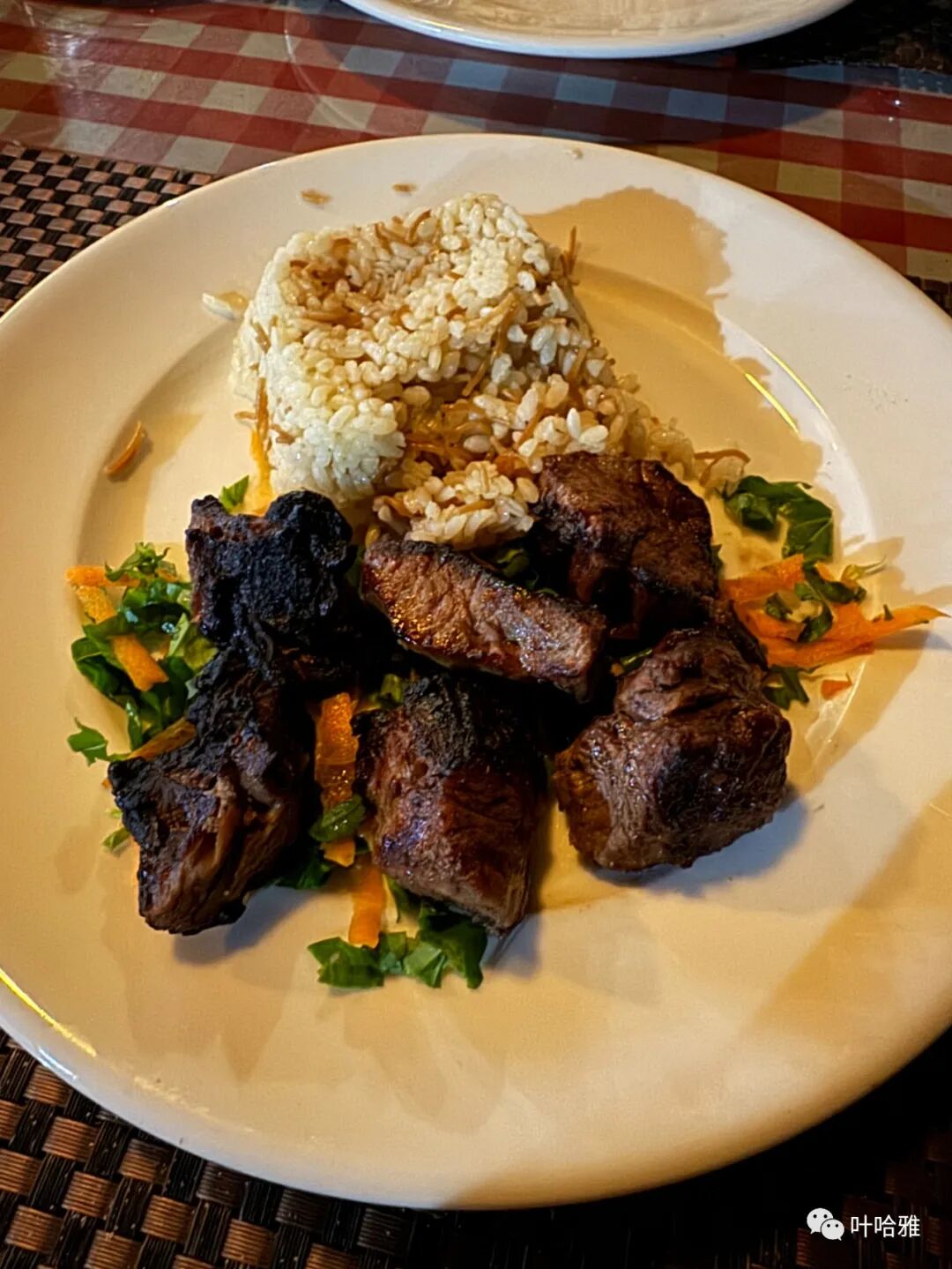
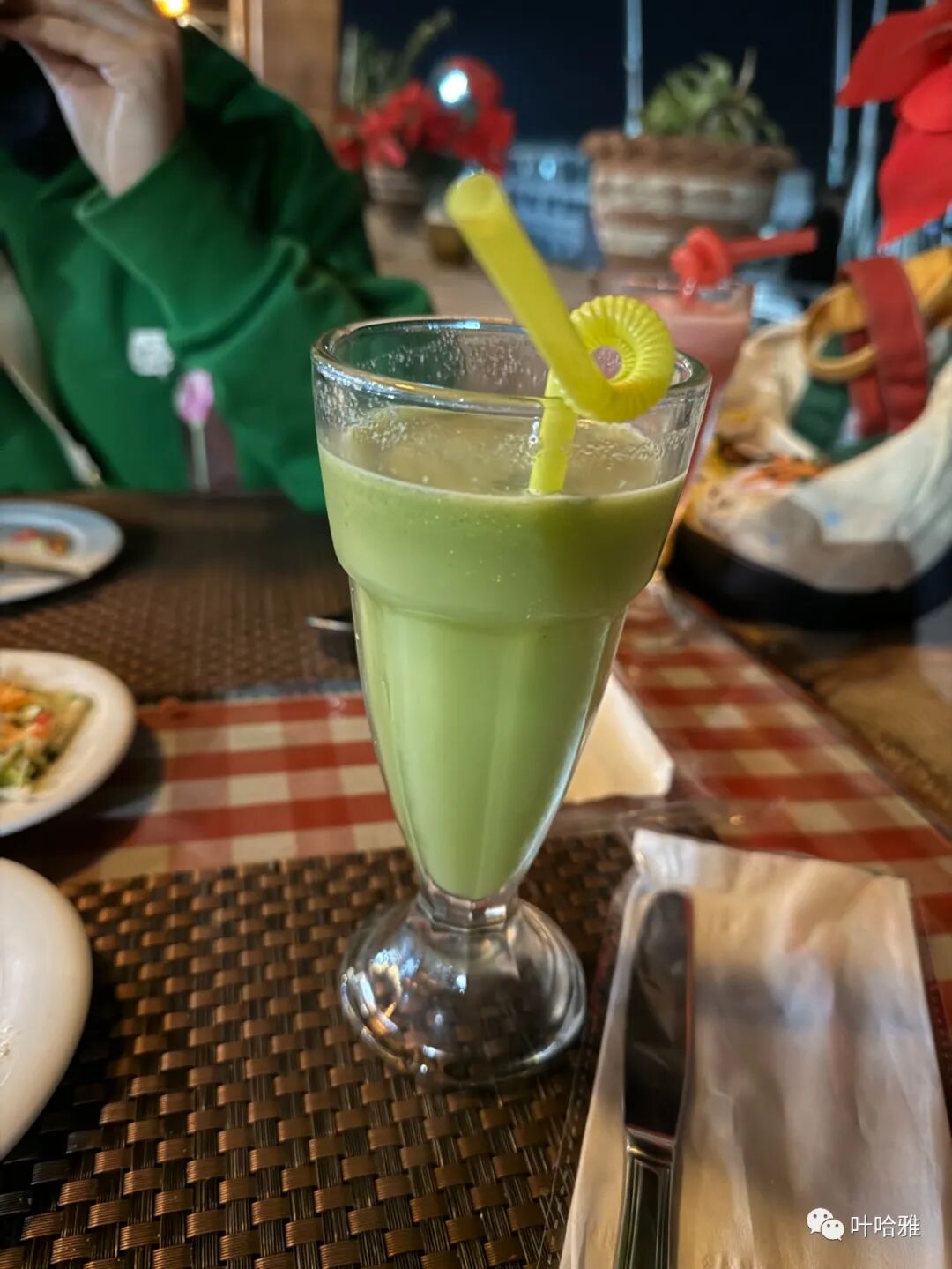
The drink I had most often in the Arab region was lemon mint juice. Its sour taste is great for opening up your appetite and quenching your thirst.
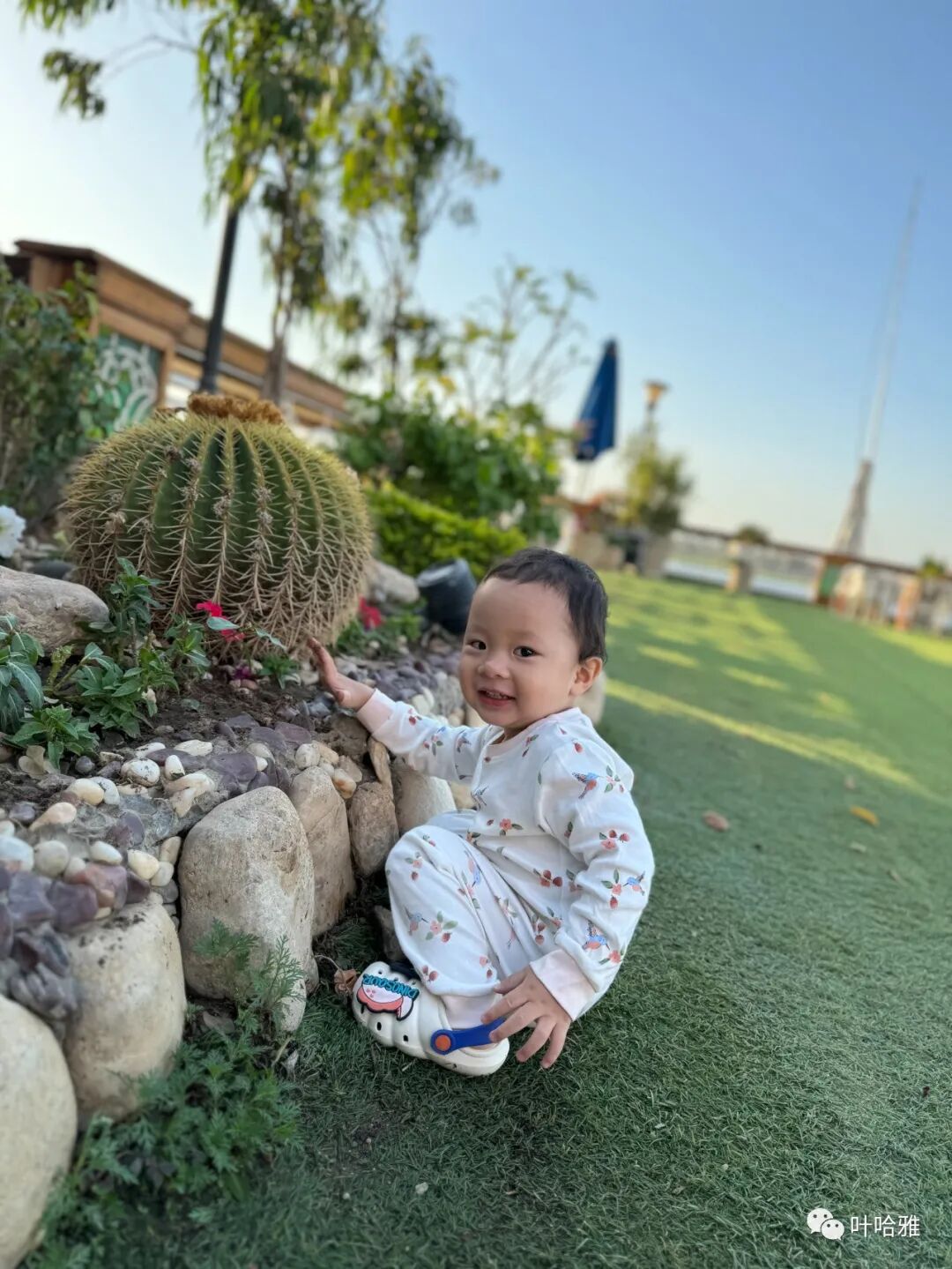
What is annoying about Luxor is that the streets are full of carriage drivers looking for customers. They really chase you and shout non-stop. One day, I wanted to take Fahim out for a walk, but I got so annoyed by the carriage drivers trying to get business that I just went back to the hotel and stayed inside.
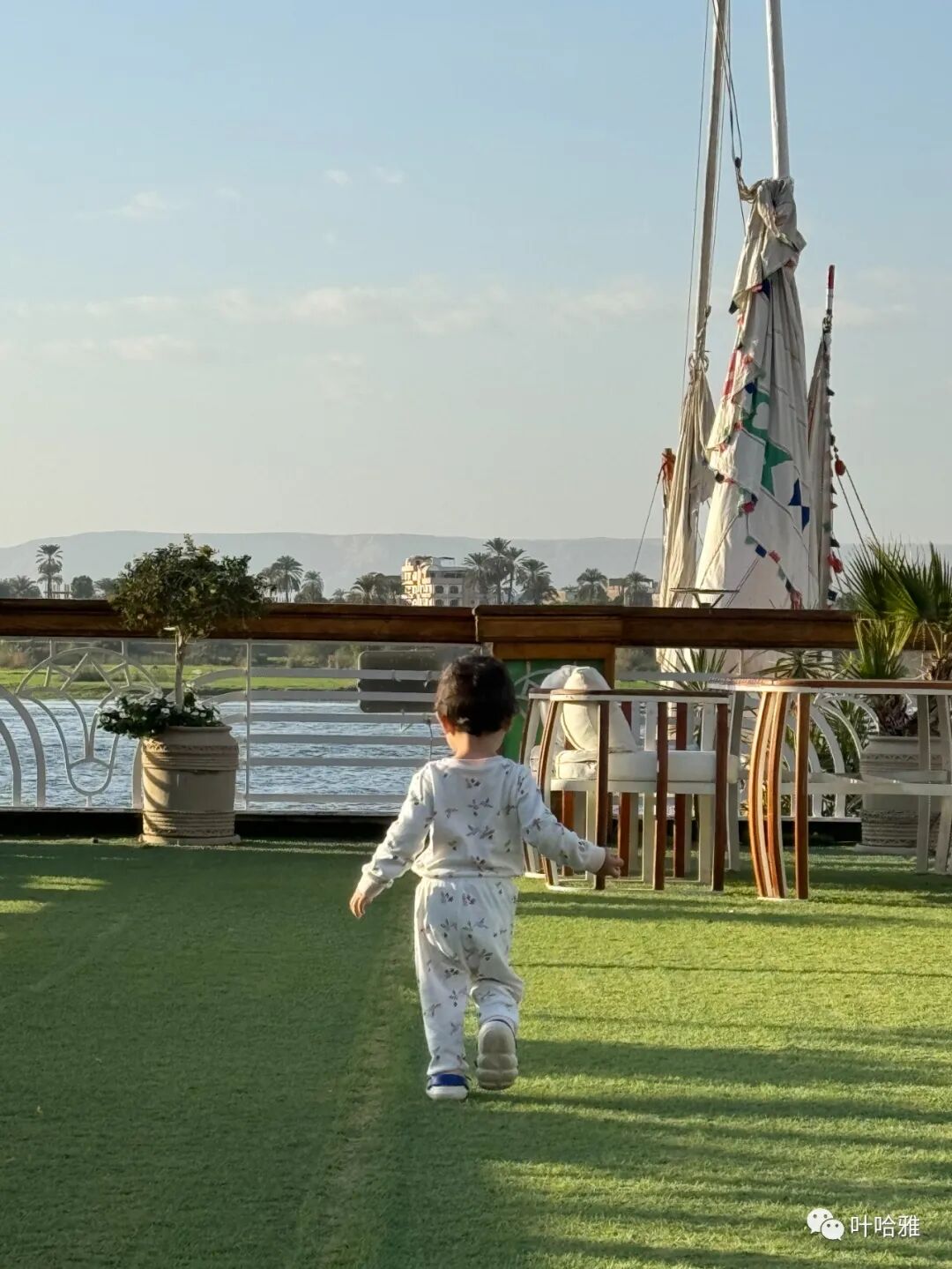
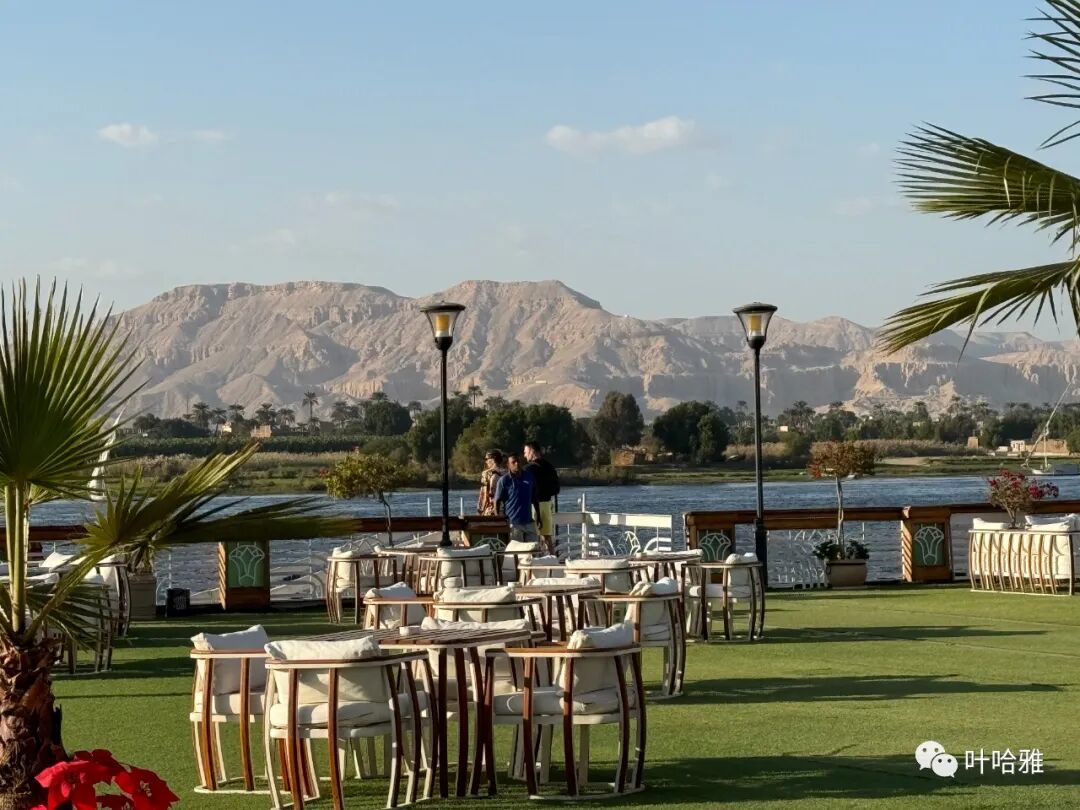
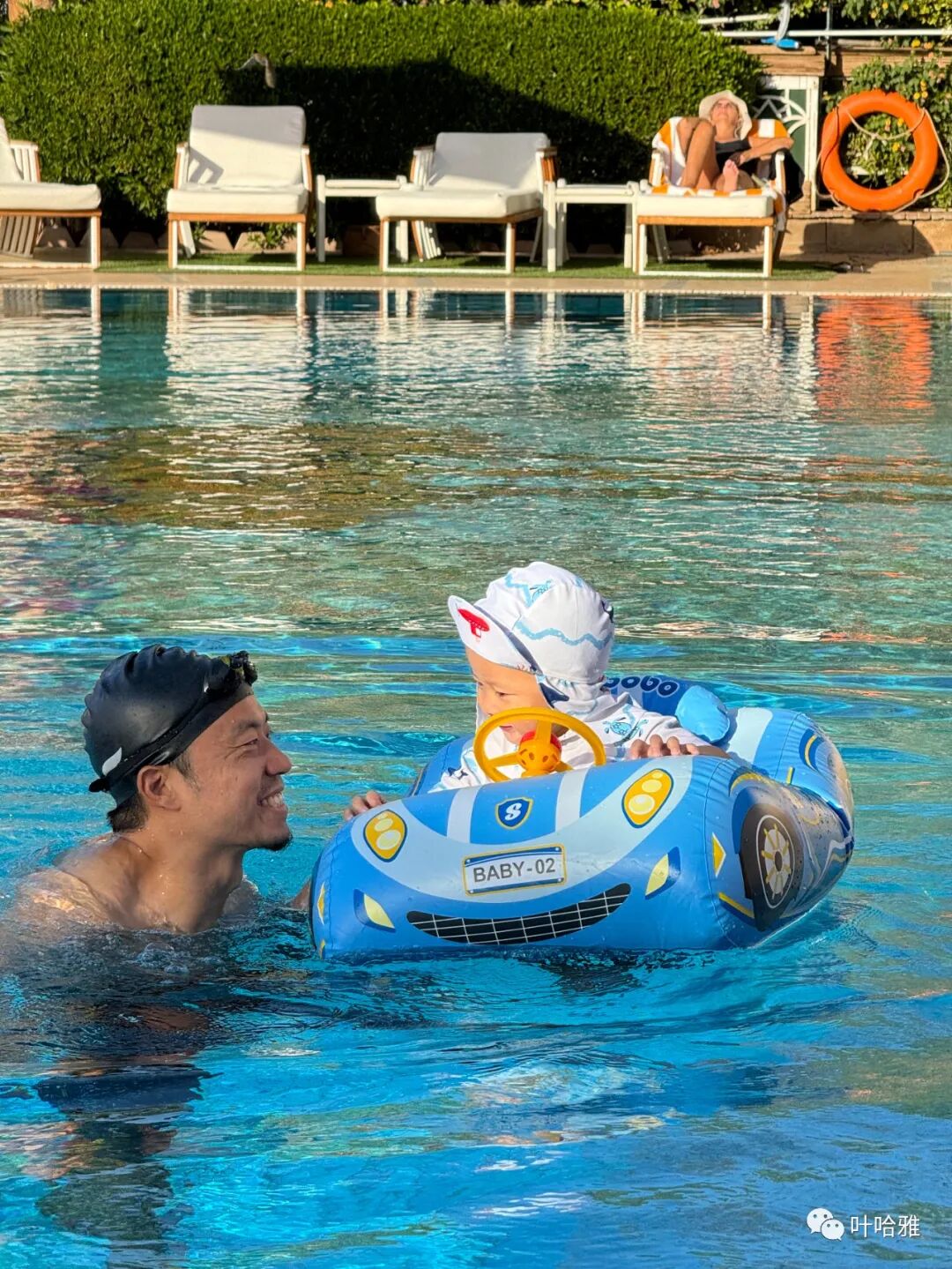
The hotel has a garden, a view of the Nile, and a swimming pool. Staying inside and enjoying the sunshine is the most relaxing thing to do.
Some people say that Egypt without Egyptians would be a better Egypt. While this is an exaggeration, it reflects an abnormal social phenomenon in Egypt today. Everyone is driven by profit, corruption is rampant, and there are scammers and thieves everywhere. In the old Islamic streets of Cairo, I could not even feel the light of faith. For the first time, I stopped my plan to visit a mosque because I did not have money in my pocket for a tip. All of this is happening in Egypt, which has a thousand-year history of Islamic civilization. This seems to confirm a master's thesis from the School of Oriental and African Studies at the University of London titled 'The Process of Islamization in Egypt, Possible Reasons and the Scope of Influence until the 14th Century.' The author, M. Wassermann, believes that Egypt is still not fully Islamized today. A considerable number of people, for various reasons, are only Muslims in name, because Islam considers that as long as one formally becomes a believer by verbal confession, they are treated as a Muslim.
This phenomenon of two-faced people everywhere makes Egypt like a powder keg that could explode at any time. You have to go through security checks and show identification to enter malls, hotels, and airports. Soldiers with guns are patrolling the streets everywhere. The old city of Cairo is just like a refugee camp, with groups of homeless people sleeping on the ground. Behind them are the ruins of demolished houses. Coptic people mainly make a living by picking up trash. The gap between rich and poor is huge. The poor see no hope and have no illusions about the future. An explosion is only a matter of time. So, if you want to come to Egypt, do it sooner rather than later. If you don't go now, you might not be able to go in the future.
Summary: This Egypt Muslim travel guide continues with ancient Egyptian history, the Egyptian Museum, Luxor, Nile-side dining, halal-friendly restaurant notes, local scams, travel traps, and reflections on Muslim life in Egypt.
A Guide to Avoiding Travel Traps in Egypt is presented here as a firsthand travel account in clear English, beginning with this scene: If you are not interested in Egyptian history, you will just be a casual tourist here. However, seeing the high level of ancient Egyptian civilization is an experience unmatched anywhere else in the world. The account keeps its focus on Quanzhou Muslims, Hui Muslims, Islamic History while preserving the names, places, food, and historical details from the Chinese source.
If you are not interested in Egyptian history, you will just be a casual tourist here. However, seeing the high level of ancient Egyptian civilization is an experience unmatched anywhere else in the world.
Some say ancient Egyptians and modern Egyptians are not the same race, but that is not a fact. Ancient Egyptians did not disappear. Through thousands of years of cultural exchange, they were assimilated, and modern Egyptians carry the genes of the ancient Egyptians.
Although Egyptians are nominally divided into Arabs, Copts, or Nubians, their bloodlines are actually very similar. They all speak Arabic and have intermarried and assimilated so much that there is no such thing as a pure-blooded, independent ethnic group.
For example, the number of Copts in Egypt is decreasing every year because they are blending into the Arab population. When a Coptic Christian converts to Islam, by the third generation, they identify themselves as Arab.
In the 7th century, Copts helped the Arabs conquer the Eastern Roman Empire. Because Copts were Miaphysites, the Eastern Roman Empire viewed them as heretics. Under Arab rule, the Copts actually lived better. Some say many Copts converted to Islam to pay fewer taxes, but there were not many tax benefits for converting, so there was no large-scale conversion of Copts in the early days.
During the Fatimid Caliphate, because the rulers were Shia, they were even harsher toward Sunni Muslims than toward Coptic Christians. Copts and Jews were protected and thrived during this period. Even during the Ayyubid and Mamluk dynasties, Copts remained under protection. The Mamluks were former slaves who became rulers, so they empathized with the Copts.
By the mid-14th century, whenever there were large-scale riots, many Copts converted to protect themselves. According to Egyptian law at the time, a Muslim's property could not be inherited by a non-Muslim. This led the descendants of converts to choose Islam to keep their property. It was from this period that Copts became a minority in Egypt.
Later, Muslim citizens accused the converted Copts of not being true converts because they did not go to the mosque for namaz on time. So, even though Muslims are the majority in Egypt today, the country is not completely Islamized.
The second floor of the Egyptian Museum has a Tutankhamun gallery. There is a funny story here: a travel blogger on Douyin posted a video saying they received the highest honor in Egypt and were allowed to film inside the gallery, which is usually off-limits for photography. I was stopped by a staff member when I tried to take photos with my phone and had to delete them under his supervision. The photo below was taken from outside the museum using my phone's telephoto lens.
However, after I handed 200 Egyptian pounds (about 40 RMB) to the staff member, I was allowed to take photos. That is how I got this picture of Tutankhamun's golden mask.
Tutankhamun's golden mask is said to be the most valuable artifact in the world and is priceless. But in Egypt, as long as you have a tip, everything is negotiable. That includes the blogger who claimed they filmed the pyramids while the site was cleared. I checked the time of their video, and it was after sunset, which is after the pyramids close. Paying money to get in and film is definitely not the highest honor.
After getting this photo to prove the Douyin blogger was bluffing, I lost interest in seeing the rest of the exhibits. In the evening, we went to the local Star City Mall to eat Thai food.
It is rare to find a prayer room in public places in Egypt, unlike in the UAE or Saudi Arabia where you see them everywhere. This mall actually has a prayer room, which is worth noting.
SABAI Thai Food
This Thai restaurant is quite popular locally and attracts many Chinese diners. The owner seems to have a misunderstanding of East and Southeast Asia, mixing in Chinese and Japanese elements. Perhaps to Arabs, we all look the same, just as we might struggle to tell the difference between Egyptians, Moroccans, Tunisians, Saudis, Qataris, Emiratis, Lebanese, Yemenis, Syrians, Jordanians, Bahrainis, Libyans, and Algerians.
You do not see halal signs in restaurants in Egypt, so you can just walk in anywhere. However, you should be careful with Chinese food and ask clearly. This shop marks its menu as halal because many Arabs assume Chinese food is not halal, and some restaurants also sell alcohol.
The chef at this Thai place is Black, but the food is quite authentic. Sour and spicy Thai dishes are very appetizing in the hot Middle East. The portions are small, but the price is cheap, costing about 100 RMB per person.
Tom Yum Goong soup
MORISUSHI Japanese food
I had a Japanese meal at a shopping center in New Cairo. After traveling in the Middle East for over ten days and eating Arabic food almost every day, it was nice to change things up.
There is a halal sign on the soy sauce bottle, which is a new thing to see in an Arab country.
Patchi chocolate shop
This is a Lebanese chocolate brand, said to be the royal family's choice for desserts. It is sold very cheaply in Egypt, at about 300 RMB per kilogram.
Arabs love sweets, and there are many overweight people on the streets, which is really unhealthy. Eating too many sweets is also bad for children's brain development, so we should take this as a warning.
Le Passage Cairo Hotel
We ate at the hotel restaurant most of the time. If you are just using Cairo as a transit stop and want to stay near the airport, I recommend this place. It is an 800-meter walk to the terminal, and the hotel also provides a free shuttle service.
At this hotel's buffet, you have to ask the staff to get the food for you, which feels a bit less free.
We had steak and pasta at the hotel's Italian restaurant, and both were delicious. Friends, you can really choose a nice hotel for a vacation. If you do not want to go out, you can just stay by the hotel pool and soak up the sun, away from the noise outside.
Four Seasons Hotel
The Four Seasons in Cairo has newer facilities than the Ramses Hilton, but the buffet has fewer options.
The hotel buffet costs less than 200 yuan, and drinks are charged separately.
Outside the window is a view of the Nile. In Cairo, the most expensive rooms are the ones with a river view.
Luxor
Luxor is an ancient city in southern Egypt that was once the center of power in Egypt, similar to Xi'an in China. It only takes 50 minutes to fly from Cairo to Luxor. At the airport, the check-in staff ripped me off. He said I did not buy a child ticket for Fahim. I showed him my Trip.com order, but he still said he could not find the child ticket information. Since it was close to departure time, we paid him 1,000 Egyptian pounds (about 200 yuan) on the spot for the child ticket. Later, I contacted Trip.com and learned that my child ticket was used normally. This means the airport staff scammed me out of the price of a ticket, which is a very bad thing to do. I have asked Trip.com to investigate this with Cairo Airport, but I have not received an effective reply yet. Because it was a cash payment, unless they pull the surveillance footage from that time to prove the airport took my money, I have to swallow this loss.
Sonesta St. George Hotel Luxor
The climate in Luxor is much more comfortable than in Cairo. Cairo has serious pollution and is not suitable for long stays, but Luxor has fewer people and the pace of the whole city is much slower. You cannot use Uber in Luxor. You have to hail a taxi on the street. Always agree on the price before you get in and have plenty of small change ready. If you don't, the driver will keep whatever you give him and call it a tip.
Look at who has stayed at this hotel before. They play Chinese songs in the restaurant and have Chinese signs in the elevators, which feels very welcoming.
For our first meal, we chose the hotel's Italian restaurant again. It has a clean, tidy European style, and the view of the Nile outside the window is stunning.
For breakfast, they serve honey straight from the honeycomb. It is natural and healthy.
Famous sites in Luxor include the Valley of the Kings, Luxor Temple, Karnak Temple, the Colossi of Memnon, the Mortuary Temple of Hatshepsut, and various pharaoh tombs. These are very attractive to archaeology fans, but for most tourists, it is just about taking photos. We booked a private one-day tour for two on Trip.com for 1,000 yuan per person. It included tickets, lunch, and a tour guide. The whole experience was pretty good.
Colossi of Memnon
The statues represent the 18th Dynasty Pharaoh Amenhotep III. Both statues are of him. They are 18 meters tall and were built in 1350 BC, making them over 3,000 years old.
After a short stop at the statues, we went to the Valley of the Kings to see the tombs of Pharaoh Ramesses VI and Tutankhamun.
The murals in the tomb of Ramesses VI still have the same colors they had 3,000 years ago.
Tomb of Pharaoh Tutankhamun
Mortuary Temple of Hatshepsut
The temple complex housing the pharaohs of past dynasties, along with the entire city of Luxor, was listed as a World Cultural Heritage site in 1979. This place was once used as a Christian monastery, and the reliefs unrelated to Christianity were removed.
Karnak Temple
The temple was built in 2000 BC, making it over four thousand years old, and it covers an area larger than half of Manhattan.
Visiting the temple during the day is a test of physical strength because the sun is so strong. When Fahim walked up to this ram-headed sphinx, he took a liking to the pebbles on the ground and refused to move. I stayed with him to play with the stones. During this time, Fahim was surrounded by Egyptian girls who took photos with him and kissed him.
The Egyptian tour guide said he could watch the child for me so I could go inside to look around, but I said forget it. I would rather stay and play with stones with Fahim. I am actually not interested in these temples. After seeing them, I just think they were built impressively and are very spectacular, and that is all.
Luxor Temple
The last stop was Luxor Mosque, which is also a landmark of Luxor with over three thousand years of history. However, what attracted me here was the gongbei built on top of the mosque. At the entrance, the guide asked if I wanted to visit the mosque or the mosque. I said the mosque. He looked surprised and confirmed it with me again. I was a bit tired by then, so I told him I would skip the mosque and just see the mosque before heading back.
Abu Haggag Mosque and Gongbei
This gongbei can be considered the only one in the world built on top of the world's oldest mosque, and it is the only mosque in the world built on mosque ruins.
This mosque dates back to the Fatimid dynasty and was built on the ruins of a church inside the mosque. It was completed around 1286 and contains the tomb of the Sufi mystic Yusuf Abu Haggag. Haggag was a scholar born in Baghdad in the 13th century. According to local legend, he captured Luxor from the Roman Queen Tarza.
Luxor Mosque was converted into a church by the Copts in 395 AD and then into a mosque in 640 AD. Therefore, it can be said that this is the oldest religious building in the world still in use, with a history spanning over three thousand four hundred years.
Inside the gongbei, there are some believers visiting the graves, with more women than men.
The mosque suffered a fire in 2007. When it was rebuilt, stones from the mosque were used, and you can see pharaonic hieroglyphs on the carvings of this pillar.
Looking out from the mosque railing, you can see the Luxor Mosque. The once arrogant pharaohs compared themselves to gods, but they never imagined that three thousand years later, their mosque would become a tourist attraction for people to glance at in passing.
Al Iman Mosque
This is the closest mosque to my hotel. Fewer than 10 people attend the adhan (banda). In Arab countries, people go back to sleep after the adhan, and almost no shops are open on the street. Only a few small shops selling flatbread (da bing) are open, so it is best to eat breakfast at the hotel, or you will have nothing to eat outside.
As a convenient fast food in the Arab region, shawarma (sharama) is as popular as our meat burger (roujiamo); it is economical, affordable, and delicious.
El-KABABGY RESTAURANT
This shop is the number one ranked restaurant in Luxor on the TripAdvisor app, and after eating there, I feel it truly deserves this ranking. This shop is only 1 kilometer away from our hotel on foot.
The outdoor part of the restaurant is right on the Nile pier. In December, the temperature in Luxor is only 20 degrees, which is very cool.
The grilled meat at this shop is extremely fragrant and clearly better than other restaurants we have eaten at. The per capita consumption is only about one hundred yuan. In China, at an Arab restaurant of the same level, two people would spend at least four or five hundred.
Tagine pot (tajiguo)
The drink I had most often in the Arab region was lemon mint juice. Its sour taste is great for opening up your appetite and quenching your thirst.
What is annoying about Luxor is that the streets are full of carriage drivers looking for customers. They really chase you and shout non-stop. One day, I wanted to take Fahim out for a walk, but I got so annoyed by the carriage drivers trying to get business that I just went back to the hotel and stayed inside.
The hotel has a garden, a view of the Nile, and a swimming pool. Staying inside and enjoying the sunshine is the most relaxing thing to do.
Some people say that Egypt without Egyptians would be a better Egypt. While this is an exaggeration, it reflects an abnormal social phenomenon in Egypt today. Everyone is driven by profit, corruption is rampant, and there are scammers and thieves everywhere. In the old Islamic streets of Cairo, I could not even feel the light of faith. For the first time, I stopped my plan to visit a mosque because I did not have money in my pocket for a tip. All of this is happening in Egypt, which has a thousand-year history of Islamic civilization. This seems to confirm a master's thesis from the School of Oriental and African Studies at the University of London titled 'The Process of Islamization in Egypt, Possible Reasons and the Scope of Influence until the 14th Century.' The author, M. Wassermann, believes that Egypt is still not fully Islamized today. A considerable number of people, for various reasons, are only Muslims in name, because Islam considers that as long as one formally becomes a believer by verbal confession, they are treated as a Muslim.
This phenomenon of two-faced people everywhere makes Egypt like a powder keg that could explode at any time. You have to go through security checks and show identification to enter malls, hotels, and airports. Soldiers with guns are patrolling the streets everywhere. The old city of Cairo is just like a refugee camp, with groups of homeless people sleeping on the ground. Behind them are the ruins of demolished houses. Coptic people mainly make a living by picking up trash. The gap between rich and poor is huge. The poor see no hope and have no illusions about the future. An explosion is only a matter of time. So, if you want to come to Egypt, do it sooner rather than later. If you don't go now, you might not be able to go in the future.
Egypt Muslim Travel Guide: Cairo Museum, Luxor Restaurants and Real Travel Trap Warnings
Articles • yusuf908 posted the article • 0 comments • 134 views • 2026-05-22 21:45
Reposted from the web
Summary: This Egypt Muslim travel guide continues with ancient Egyptian history, the Egyptian Museum, Luxor, Nile-side dining, halal-friendly restaurant notes, local scams, travel traps, and reflections on Muslim life in Egypt.
A Guide to Avoiding Travel Traps in Egypt is presented here as a firsthand travel account in clear English, beginning with this scene: If you are not interested in Egyptian history, you will just be a casual tourist here. However, seeing the high level of ancient Egyptian civilization is an experience unmatched anywhere else in the world. The account keeps its focus on Quanzhou Muslims, Hui Muslims, Islamic History while preserving the names, places, food, and historical details from the Chinese source.
If you are not interested in Egyptian history, you will just be a casual tourist here. However, seeing the high level of ancient Egyptian civilization is an experience unmatched anywhere else in the world.
Some say ancient Egyptians and modern Egyptians are not the same race, but that is not a fact. Ancient Egyptians did not disappear. Through thousands of years of cultural exchange, they were assimilated, and modern Egyptians carry the genes of the ancient Egyptians.
Although Egyptians are nominally divided into Arabs, Copts, or Nubians, their bloodlines are actually very similar. They all speak Arabic and have intermarried and assimilated so much that there is no such thing as a pure-blooded, independent ethnic group.
For example, the number of Copts in Egypt is decreasing every year because they are blending into the Arab population. When a Coptic Christian converts to Islam, by the third generation, they identify themselves as Arab.
In the 7th century, Copts helped the Arabs conquer the Eastern Roman Empire. Because Copts were Miaphysites, the Eastern Roman Empire viewed them as heretics. Under Arab rule, the Copts actually lived better. Some say many Copts converted to Islam to pay fewer taxes, but there were not many tax benefits for converting, so there was no large-scale conversion of Copts in the early days.
During the Fatimid Caliphate, because the rulers were Shia, they were even harsher toward Sunni Muslims than toward Coptic Christians. Copts and Jews were protected and thrived during this period. Even during the Ayyubid and Mamluk dynasties, Copts remained under protection. The Mamluks were former slaves who became rulers, so they empathized with the Copts.
By the mid-14th century, whenever there were large-scale riots, many Copts converted to protect themselves. According to Egyptian law at the time, a Muslim's property could not be inherited by a non-Muslim. This led the descendants of converts to choose Islam to keep their property. It was from this period that Copts became a minority in Egypt.
Later, Muslim citizens accused the converted Copts of not being true converts because they did not go to the mosque for namaz on time. So, even though Muslims are the majority in Egypt today, the country is not completely Islamized.
The second floor of the Egyptian Museum has a Tutankhamun gallery. There is a funny story here: a travel blogger on Douyin posted a video saying they received the highest honor in Egypt and were allowed to film inside the gallery, which is usually off-limits for photography. I was stopped by a staff member when I tried to take photos with my phone and had to delete them under his supervision. The photo below was taken from outside the museum using my phone's telephoto lens.
However, after I handed 200 Egyptian pounds (about 40 RMB) to the staff member, I was allowed to take photos. That is how I got this picture of Tutankhamun's golden mask.
Tutankhamun's golden mask is said to be the most valuable artifact in the world and is priceless. But in Egypt, as long as you have a tip, everything is negotiable. That includes the blogger who claimed they filmed the pyramids while the site was cleared. I checked the time of their video, and it was after sunset, which is after the pyramids close. Paying money to get in and film is definitely not the highest honor.
After getting this photo to prove the Douyin blogger was bluffing, I lost interest in seeing the rest of the exhibits. In the evening, we went to the local Star City Mall to eat Thai food.
It is rare to find a prayer room in public places in Egypt, unlike in the UAE or Saudi Arabia where you see them everywhere. This mall actually has a prayer room, which is worth noting.
SABAI Thai Food
This Thai restaurant is quite popular locally and attracts many Chinese diners. The owner seems to have a misunderstanding of East and Southeast Asia, mixing in Chinese and Japanese elements. Perhaps to Arabs, we all look the same, just as we might struggle to tell the difference between Egyptians, Moroccans, Tunisians, Saudis, Qataris, Emiratis, Lebanese, Yemenis, Syrians, Jordanians, Bahrainis, Libyans, and Algerians.
You do not see halal signs in restaurants in Egypt, so you can just walk in anywhere. However, you should be careful with Chinese food and ask clearly. This shop marks its menu as halal because many Arabs assume Chinese food is not halal, and some restaurants also sell alcohol.
The chef at this Thai place is Black, but the food is quite authentic. Sour and spicy Thai dishes are very appetizing in the hot Middle East. The portions are small, but the price is cheap, costing about 100 RMB per person.
Tom Yum Goong soup
MORISUSHI Japanese food
I had a Japanese meal at a shopping center in New Cairo. After traveling in the Middle East for over ten days and eating Arabic food almost every day, it was nice to change things up.
There is a halal sign on the soy sauce bottle, which is a new thing to see in an Arab country.
Patchi chocolate shop
This is a Lebanese chocolate brand, said to be the royal family's choice for desserts. It is sold very cheaply in Egypt, at about 300 RMB per kilogram.
Arabs love sweets, and there are many overweight people on the streets, which is really unhealthy. Eating too many sweets is also bad for children's brain development, so we should take this as a warning.
Le Passage Cairo Hotel
We ate at the hotel restaurant most of the time. If you are just using Cairo as a transit stop and want to stay near the airport, I recommend this place. It is an 800-meter walk to the terminal, and the hotel also provides a free shuttle service.
At this hotel's buffet, you have to ask the staff to get the food for you, which feels a bit less free.
We had steak and pasta at the hotel's Italian restaurant, and both were delicious. Friends, you can really choose a nice hotel for a vacation. If you do not want to go out, you can just stay by the hotel pool and soak up the sun, away from the noise outside.
Four Seasons Hotel
The Four Seasons in Cairo has newer facilities than the Ramses Hilton, but the buffet has fewer options.
The hotel buffet costs less than 200 yuan, and drinks are charged separately.
Outside the window is a view of the Nile. In Cairo, the most expensive rooms are the ones with a river view.
Luxor
Luxor is an ancient city in southern Egypt that was once the center of power in Egypt, similar to Xi'an in China. It only takes 50 minutes to fly from Cairo to Luxor. At the airport, the check-in staff ripped me off. He said I did not buy a child ticket for Fahim. I showed him my Trip.com order, but he still said he could not find the child ticket information. Since it was close to departure time, we paid him 1,000 Egyptian pounds (about 200 yuan) on the spot for the child ticket. Later, I contacted Trip.com and learned that my child ticket was used normally. This means the airport staff scammed me out of the price of a ticket, which is a very bad thing to do. I have asked Trip.com to investigate this with Cairo Airport, but I have not received an effective reply yet. Because it was a cash payment, unless they pull the surveillance footage from that time to prove the airport took my money, I have to swallow this loss.
Sonesta St. George Hotel Luxor
The climate in Luxor is much more comfortable than in Cairo. Cairo has serious pollution and is not suitable for long stays, but Luxor has fewer people and the pace of the whole city is much slower. You cannot use Uber in Luxor. You have to hail a taxi on the street. Always agree on the price before you get in and have plenty of small change ready. If you don't, the driver will keep whatever you give him and call it a tip.
Look at who has stayed at this hotel before. They play Chinese songs in the restaurant and have Chinese signs in the elevators, which feels very welcoming.
For our first meal, we chose the hotel's Italian restaurant again. It has a clean, tidy European style, and the view of the Nile outside the window is stunning.
For breakfast, they serve honey straight from the honeycomb. It is natural and healthy.
Famous sites in Luxor include the Valley of the Kings, Luxor Temple, Karnak Temple, the Colossi of Memnon, the Mortuary Temple of Hatshepsut, and various pharaoh tombs. These are very attractive to archaeology fans, but for most tourists, it is just about taking photos. We booked a private one-day tour for two on Trip.com for 1,000 yuan per person. It included tickets, lunch, and a tour guide. The whole experience was pretty good.
Colossi of Memnon
The statues represent the 18th Dynasty Pharaoh Amenhotep III. Both statues are of him. They are 18 meters tall and were built in 1350 BC, making them over 3,000 years old.
After a short stop at the statues, we went to the Valley of the Kings to see the tombs of Pharaoh Ramesses VI and Tutankhamun.
The murals in the tomb of Ramesses VI still have the same colors they had 3,000 years ago.
Tomb of Pharaoh Tutankhamun
Mortuary Temple of Hatshepsut
The temple complex housing the pharaohs of past dynasties, along with the entire city of Luxor, was listed as a World Cultural Heritage site in 1979. This place was once used as a Christian monastery, and the reliefs unrelated to Christianity were removed.
Karnak Temple
The temple was built in 2000 BC, making it over four thousand years old, and it covers an area larger than half of Manhattan.
Visiting the temple during the day is a test of physical strength because the sun is so strong. When Fahim walked up to this ram-headed sphinx, he took a liking to the pebbles on the ground and refused to move. I stayed with him to play with the stones. During this time, Fahim was surrounded by Egyptian girls who took photos with him and kissed him.
The Egyptian tour guide said he could watch the child for me so I could go inside to look around, but I said forget it. I would rather stay and play with stones with Fahim. I am actually not interested in these temples. After seeing them, I just think they were built impressively and are very spectacular, and that is all.
Luxor Temple
The last stop was Luxor Mosque, which is also a landmark of Luxor with over three thousand years of history. However, what attracted me here was the gongbei built on top of the mosque. At the entrance, the guide asked if I wanted to visit the mosque or the mosque. I said the mosque. He looked surprised and confirmed it with me again. I was a bit tired by then, so I told him I would skip the mosque and just see the mosque before heading back.
Abu Haggag Mosque and Gongbei
This gongbei can be considered the only one in the world built on top of the world's oldest mosque, and it is the only mosque in the world built on mosque ruins.
This mosque dates back to the Fatimid dynasty and was built on the ruins of a church inside the mosque. It was completed around 1286 and contains the tomb of the Sufi mystic Yusuf Abu Haggag. Haggag was a scholar born in Baghdad in the 13th century. According to local legend, he captured Luxor from the Roman Queen Tarza.
Luxor Mosque was converted into a church by the Copts in 395 AD and then into a mosque in 640 AD. Therefore, it can be said that this is the oldest religious building in the world still in use, with a history spanning over three thousand four hundred years.
Inside the gongbei, there are some believers visiting the graves, with more women than men.
The mosque suffered a fire in 2007. When it was rebuilt, stones from the mosque were used, and you can see pharaonic hieroglyphs on the carvings of this pillar.
Looking out from the mosque railing, you can see the Luxor Mosque. The once arrogant pharaohs compared themselves to gods, but they never imagined that three thousand years later, their mosque would become a tourist attraction for people to glance at in passing.
Al Iman Mosque
This is the closest mosque to my hotel. Fewer than 10 people attend the adhan (banda). In Arab countries, people go back to sleep after the adhan, and almost no shops are open on the street. Only a few small shops selling flatbread (da bing) are open, so it is best to eat breakfast at the hotel, or you will have nothing to eat outside.
As a convenient fast food in the Arab region, shawarma (sharama) is as popular as our meat burger (roujiamo); it is economical, affordable, and delicious.
El-KABABGY RESTAURANT
This shop is the number one ranked restaurant in Luxor on the TripAdvisor app, and after eating there, I feel it truly deserves this ranking. This shop is only 1 kilometer away from our hotel on foot.
The outdoor part of the restaurant is right on the Nile pier. In December, the temperature in Luxor is only 20 degrees, which is very cool.
The grilled meat at this shop is extremely fragrant and clearly better than other restaurants we have eaten at. The per capita consumption is only about one hundred yuan. In China, at an Arab restaurant of the same level, two people would spend at least four or five hundred.
Tagine pot (tajiguo)
The drink I had most often in the Arab region was lemon mint juice. Its sour taste is great for opening up your appetite and quenching your thirst.
What is annoying about Luxor is that the streets are full of carriage drivers looking for customers. They really chase you and shout non-stop. One day, I wanted to take Fahim out for a walk, but I got so annoyed by the carriage drivers trying to get business that I just went back to the hotel and stayed inside.
The hotel has a garden, a view of the Nile, and a swimming pool. Staying inside and enjoying the sunshine is the most relaxing thing to do.
Some people say that Egypt without Egyptians would be a better Egypt. While this is an exaggeration, it reflects an abnormal social phenomenon in Egypt today. Everyone is driven by profit, corruption is rampant, and there are scammers and thieves everywhere. In the old Islamic streets of Cairo, I could not even feel the light of faith. For the first time, I stopped my plan to visit a mosque because I did not have money in my pocket for a tip. All of this is happening in Egypt, which has a thousand-year history of Islamic civilization. This seems to confirm a master's thesis from the School of Oriental and African Studies at the University of London titled 'The Process of Islamization in Egypt, Possible Reasons and the Scope of Influence until the 14th Century.' The author, M. Wassermann, believes that Egypt is still not fully Islamized today. A considerable number of people, for various reasons, are only Muslims in name, because Islam considers that as long as one formally becomes a believer by verbal confession, they are treated as a Muslim.
This phenomenon of two-faced people everywhere makes Egypt like a powder keg that could explode at any time. You have to go through security checks and show identification to enter malls, hotels, and airports. Soldiers with guns are patrolling the streets everywhere. The old city of Cairo is just like a refugee camp, with groups of homeless people sleeping on the ground. Behind them are the ruins of demolished houses. Coptic people mainly make a living by picking up trash. The gap between rich and poor is huge. The poor see no hope and have no illusions about the future. An explosion is only a matter of time. So, if you want to come to Egypt, do it sooner rather than later. If you don't go now, you might not be able to go in the future. view all
Summary: This Egypt Muslim travel guide continues with ancient Egyptian history, the Egyptian Museum, Luxor, Nile-side dining, halal-friendly restaurant notes, local scams, travel traps, and reflections on Muslim life in Egypt.
A Guide to Avoiding Travel Traps in Egypt is presented here as a firsthand travel account in clear English, beginning with this scene: If you are not interested in Egyptian history, you will just be a casual tourist here. However, seeing the high level of ancient Egyptian civilization is an experience unmatched anywhere else in the world. The account keeps its focus on Quanzhou Muslims, Hui Muslims, Islamic History while preserving the names, places, food, and historical details from the Chinese source.
If you are not interested in Egyptian history, you will just be a casual tourist here. However, seeing the high level of ancient Egyptian civilization is an experience unmatched anywhere else in the world.
Some say ancient Egyptians and modern Egyptians are not the same race, but that is not a fact. Ancient Egyptians did not disappear. Through thousands of years of cultural exchange, they were assimilated, and modern Egyptians carry the genes of the ancient Egyptians.
Although Egyptians are nominally divided into Arabs, Copts, or Nubians, their bloodlines are actually very similar. They all speak Arabic and have intermarried and assimilated so much that there is no such thing as a pure-blooded, independent ethnic group.
For example, the number of Copts in Egypt is decreasing every year because they are blending into the Arab population. When a Coptic Christian converts to Islam, by the third generation, they identify themselves as Arab.
In the 7th century, Copts helped the Arabs conquer the Eastern Roman Empire. Because Copts were Miaphysites, the Eastern Roman Empire viewed them as heretics. Under Arab rule, the Copts actually lived better. Some say many Copts converted to Islam to pay fewer taxes, but there were not many tax benefits for converting, so there was no large-scale conversion of Copts in the early days.
During the Fatimid Caliphate, because the rulers were Shia, they were even harsher toward Sunni Muslims than toward Coptic Christians. Copts and Jews were protected and thrived during this period. Even during the Ayyubid and Mamluk dynasties, Copts remained under protection. The Mamluks were former slaves who became rulers, so they empathized with the Copts.
By the mid-14th century, whenever there were large-scale riots, many Copts converted to protect themselves. According to Egyptian law at the time, a Muslim's property could not be inherited by a non-Muslim. This led the descendants of converts to choose Islam to keep their property. It was from this period that Copts became a minority in Egypt.
Later, Muslim citizens accused the converted Copts of not being true converts because they did not go to the mosque for namaz on time. So, even though Muslims are the majority in Egypt today, the country is not completely Islamized.
The second floor of the Egyptian Museum has a Tutankhamun gallery. There is a funny story here: a travel blogger on Douyin posted a video saying they received the highest honor in Egypt and were allowed to film inside the gallery, which is usually off-limits for photography. I was stopped by a staff member when I tried to take photos with my phone and had to delete them under his supervision. The photo below was taken from outside the museum using my phone's telephoto lens.
However, after I handed 200 Egyptian pounds (about 40 RMB) to the staff member, I was allowed to take photos. That is how I got this picture of Tutankhamun's golden mask.
Tutankhamun's golden mask is said to be the most valuable artifact in the world and is priceless. But in Egypt, as long as you have a tip, everything is negotiable. That includes the blogger who claimed they filmed the pyramids while the site was cleared. I checked the time of their video, and it was after sunset, which is after the pyramids close. Paying money to get in and film is definitely not the highest honor.
After getting this photo to prove the Douyin blogger was bluffing, I lost interest in seeing the rest of the exhibits. In the evening, we went to the local Star City Mall to eat Thai food.
It is rare to find a prayer room in public places in Egypt, unlike in the UAE or Saudi Arabia where you see them everywhere. This mall actually has a prayer room, which is worth noting.
SABAI Thai Food
This Thai restaurant is quite popular locally and attracts many Chinese diners. The owner seems to have a misunderstanding of East and Southeast Asia, mixing in Chinese and Japanese elements. Perhaps to Arabs, we all look the same, just as we might struggle to tell the difference between Egyptians, Moroccans, Tunisians, Saudis, Qataris, Emiratis, Lebanese, Yemenis, Syrians, Jordanians, Bahrainis, Libyans, and Algerians.
You do not see halal signs in restaurants in Egypt, so you can just walk in anywhere. However, you should be careful with Chinese food and ask clearly. This shop marks its menu as halal because many Arabs assume Chinese food is not halal, and some restaurants also sell alcohol.
The chef at this Thai place is Black, but the food is quite authentic. Sour and spicy Thai dishes are very appetizing in the hot Middle East. The portions are small, but the price is cheap, costing about 100 RMB per person.
Tom Yum Goong soup
MORISUSHI Japanese food
I had a Japanese meal at a shopping center in New Cairo. After traveling in the Middle East for over ten days and eating Arabic food almost every day, it was nice to change things up.
There is a halal sign on the soy sauce bottle, which is a new thing to see in an Arab country.
Patchi chocolate shop
This is a Lebanese chocolate brand, said to be the royal family's choice for desserts. It is sold very cheaply in Egypt, at about 300 RMB per kilogram.
Arabs love sweets, and there are many overweight people on the streets, which is really unhealthy. Eating too many sweets is also bad for children's brain development, so we should take this as a warning.
Le Passage Cairo Hotel
We ate at the hotel restaurant most of the time. If you are just using Cairo as a transit stop and want to stay near the airport, I recommend this place. It is an 800-meter walk to the terminal, and the hotel also provides a free shuttle service.
At this hotel's buffet, you have to ask the staff to get the food for you, which feels a bit less free.
We had steak and pasta at the hotel's Italian restaurant, and both were delicious. Friends, you can really choose a nice hotel for a vacation. If you do not want to go out, you can just stay by the hotel pool and soak up the sun, away from the noise outside.
Four Seasons Hotel
The Four Seasons in Cairo has newer facilities than the Ramses Hilton, but the buffet has fewer options.
The hotel buffet costs less than 200 yuan, and drinks are charged separately.
Outside the window is a view of the Nile. In Cairo, the most expensive rooms are the ones with a river view.
Luxor
Luxor is an ancient city in southern Egypt that was once the center of power in Egypt, similar to Xi'an in China. It only takes 50 minutes to fly from Cairo to Luxor. At the airport, the check-in staff ripped me off. He said I did not buy a child ticket for Fahim. I showed him my Trip.com order, but he still said he could not find the child ticket information. Since it was close to departure time, we paid him 1,000 Egyptian pounds (about 200 yuan) on the spot for the child ticket. Later, I contacted Trip.com and learned that my child ticket was used normally. This means the airport staff scammed me out of the price of a ticket, which is a very bad thing to do. I have asked Trip.com to investigate this with Cairo Airport, but I have not received an effective reply yet. Because it was a cash payment, unless they pull the surveillance footage from that time to prove the airport took my money, I have to swallow this loss.
Sonesta St. George Hotel Luxor
The climate in Luxor is much more comfortable than in Cairo. Cairo has serious pollution and is not suitable for long stays, but Luxor has fewer people and the pace of the whole city is much slower. You cannot use Uber in Luxor. You have to hail a taxi on the street. Always agree on the price before you get in and have plenty of small change ready. If you don't, the driver will keep whatever you give him and call it a tip.
Look at who has stayed at this hotel before. They play Chinese songs in the restaurant and have Chinese signs in the elevators, which feels very welcoming.
For our first meal, we chose the hotel's Italian restaurant again. It has a clean, tidy European style, and the view of the Nile outside the window is stunning.
For breakfast, they serve honey straight from the honeycomb. It is natural and healthy.
Famous sites in Luxor include the Valley of the Kings, Luxor Temple, Karnak Temple, the Colossi of Memnon, the Mortuary Temple of Hatshepsut, and various pharaoh tombs. These are very attractive to archaeology fans, but for most tourists, it is just about taking photos. We booked a private one-day tour for two on Trip.com for 1,000 yuan per person. It included tickets, lunch, and a tour guide. The whole experience was pretty good.
Colossi of Memnon
The statues represent the 18th Dynasty Pharaoh Amenhotep III. Both statues are of him. They are 18 meters tall and were built in 1350 BC, making them over 3,000 years old.
After a short stop at the statues, we went to the Valley of the Kings to see the tombs of Pharaoh Ramesses VI and Tutankhamun.
The murals in the tomb of Ramesses VI still have the same colors they had 3,000 years ago.
Tomb of Pharaoh Tutankhamun
Mortuary Temple of Hatshepsut
The temple complex housing the pharaohs of past dynasties, along with the entire city of Luxor, was listed as a World Cultural Heritage site in 1979. This place was once used as a Christian monastery, and the reliefs unrelated to Christianity were removed.
Karnak Temple
The temple was built in 2000 BC, making it over four thousand years old, and it covers an area larger than half of Manhattan.
Visiting the temple during the day is a test of physical strength because the sun is so strong. When Fahim walked up to this ram-headed sphinx, he took a liking to the pebbles on the ground and refused to move. I stayed with him to play with the stones. During this time, Fahim was surrounded by Egyptian girls who took photos with him and kissed him.
The Egyptian tour guide said he could watch the child for me so I could go inside to look around, but I said forget it. I would rather stay and play with stones with Fahim. I am actually not interested in these temples. After seeing them, I just think they were built impressively and are very spectacular, and that is all.
Luxor Temple
The last stop was Luxor Mosque, which is also a landmark of Luxor with over three thousand years of history. However, what attracted me here was the gongbei built on top of the mosque. At the entrance, the guide asked if I wanted to visit the mosque or the mosque. I said the mosque. He looked surprised and confirmed it with me again. I was a bit tired by then, so I told him I would skip the mosque and just see the mosque before heading back.
Abu Haggag Mosque and Gongbei
This gongbei can be considered the only one in the world built on top of the world's oldest mosque, and it is the only mosque in the world built on mosque ruins.
This mosque dates back to the Fatimid dynasty and was built on the ruins of a church inside the mosque. It was completed around 1286 and contains the tomb of the Sufi mystic Yusuf Abu Haggag. Haggag was a scholar born in Baghdad in the 13th century. According to local legend, he captured Luxor from the Roman Queen Tarza.
Luxor Mosque was converted into a church by the Copts in 395 AD and then into a mosque in 640 AD. Therefore, it can be said that this is the oldest religious building in the world still in use, with a history spanning over three thousand four hundred years.
Inside the gongbei, there are some believers visiting the graves, with more women than men.
The mosque suffered a fire in 2007. When it was rebuilt, stones from the mosque were used, and you can see pharaonic hieroglyphs on the carvings of this pillar.
Looking out from the mosque railing, you can see the Luxor Mosque. The once arrogant pharaohs compared themselves to gods, but they never imagined that three thousand years later, their mosque would become a tourist attraction for people to glance at in passing.
Al Iman Mosque
This is the closest mosque to my hotel. Fewer than 10 people attend the adhan (banda). In Arab countries, people go back to sleep after the adhan, and almost no shops are open on the street. Only a few small shops selling flatbread (da bing) are open, so it is best to eat breakfast at the hotel, or you will have nothing to eat outside.
As a convenient fast food in the Arab region, shawarma (sharama) is as popular as our meat burger (roujiamo); it is economical, affordable, and delicious.
El-KABABGY RESTAURANT
This shop is the number one ranked restaurant in Luxor on the TripAdvisor app, and after eating there, I feel it truly deserves this ranking. This shop is only 1 kilometer away from our hotel on foot.
The outdoor part of the restaurant is right on the Nile pier. In December, the temperature in Luxor is only 20 degrees, which is very cool.
The grilled meat at this shop is extremely fragrant and clearly better than other restaurants we have eaten at. The per capita consumption is only about one hundred yuan. In China, at an Arab restaurant of the same level, two people would spend at least four or five hundred.
Tagine pot (tajiguo)
The drink I had most often in the Arab region was lemon mint juice. Its sour taste is great for opening up your appetite and quenching your thirst.
What is annoying about Luxor is that the streets are full of carriage drivers looking for customers. They really chase you and shout non-stop. One day, I wanted to take Fahim out for a walk, but I got so annoyed by the carriage drivers trying to get business that I just went back to the hotel and stayed inside.
The hotel has a garden, a view of the Nile, and a swimming pool. Staying inside and enjoying the sunshine is the most relaxing thing to do.
Some people say that Egypt without Egyptians would be a better Egypt. While this is an exaggeration, it reflects an abnormal social phenomenon in Egypt today. Everyone is driven by profit, corruption is rampant, and there are scammers and thieves everywhere. In the old Islamic streets of Cairo, I could not even feel the light of faith. For the first time, I stopped my plan to visit a mosque because I did not have money in my pocket for a tip. All of this is happening in Egypt, which has a thousand-year history of Islamic civilization. This seems to confirm a master's thesis from the School of Oriental and African Studies at the University of London titled 'The Process of Islamization in Egypt, Possible Reasons and the Scope of Influence until the 14th Century.' The author, M. Wassermann, believes that Egypt is still not fully Islamized today. A considerable number of people, for various reasons, are only Muslims in name, because Islam considers that as long as one formally becomes a believer by verbal confession, they are treated as a Muslim.
This phenomenon of two-faced people everywhere makes Egypt like a powder keg that could explode at any time. You have to go through security checks and show identification to enter malls, hotels, and airports. Soldiers with guns are patrolling the streets everywhere. The old city of Cairo is just like a refugee camp, with groups of homeless people sleeping on the ground. Behind them are the ruins of demolished houses. Coptic people mainly make a living by picking up trash. The gap between rich and poor is huge. The poor see no hope and have no illusions about the future. An explosion is only a matter of time. So, if you want to come to Egypt, do it sooner rather than later. If you don't go now, you might not be able to go in the future. view all
Reposted from the web
Summary: This Egypt Muslim travel guide continues with ancient Egyptian history, the Egyptian Museum, Luxor, Nile-side dining, halal-friendly restaurant notes, local scams, travel traps, and reflections on Muslim life in Egypt.
A Guide to Avoiding Travel Traps in Egypt is presented here as a firsthand travel account in clear English, beginning with this scene: If you are not interested in Egyptian history, you will just be a casual tourist here. However, seeing the high level of ancient Egyptian civilization is an experience unmatched anywhere else in the world. The account keeps its focus on Quanzhou Muslims, Hui Muslims, Islamic History while preserving the names, places, food, and historical details from the Chinese source.
If you are not interested in Egyptian history, you will just be a casual tourist here. However, seeing the high level of ancient Egyptian civilization is an experience unmatched anywhere else in the world.
Some say ancient Egyptians and modern Egyptians are not the same race, but that is not a fact. Ancient Egyptians did not disappear. Through thousands of years of cultural exchange, they were assimilated, and modern Egyptians carry the genes of the ancient Egyptians.
Although Egyptians are nominally divided into Arabs, Copts, or Nubians, their bloodlines are actually very similar. They all speak Arabic and have intermarried and assimilated so much that there is no such thing as a pure-blooded, independent ethnic group.
For example, the number of Copts in Egypt is decreasing every year because they are blending into the Arab population. When a Coptic Christian converts to Islam, by the third generation, they identify themselves as Arab.
In the 7th century, Copts helped the Arabs conquer the Eastern Roman Empire. Because Copts were Miaphysites, the Eastern Roman Empire viewed them as heretics. Under Arab rule, the Copts actually lived better. Some say many Copts converted to Islam to pay fewer taxes, but there were not many tax benefits for converting, so there was no large-scale conversion of Copts in the early days.
During the Fatimid Caliphate, because the rulers were Shia, they were even harsher toward Sunni Muslims than toward Coptic Christians. Copts and Jews were protected and thrived during this period. Even during the Ayyubid and Mamluk dynasties, Copts remained under protection. The Mamluks were former slaves who became rulers, so they empathized with the Copts.
By the mid-14th century, whenever there were large-scale riots, many Copts converted to protect themselves. According to Egyptian law at the time, a Muslim's property could not be inherited by a non-Muslim. This led the descendants of converts to choose Islam to keep their property. It was from this period that Copts became a minority in Egypt.
Later, Muslim citizens accused the converted Copts of not being true converts because they did not go to the mosque for namaz on time. So, even though Muslims are the majority in Egypt today, the country is not completely Islamized.
The second floor of the Egyptian Museum has a Tutankhamun gallery. There is a funny story here: a travel blogger on Douyin posted a video saying they received the highest honor in Egypt and were allowed to film inside the gallery, which is usually off-limits for photography. I was stopped by a staff member when I tried to take photos with my phone and had to delete them under his supervision. The photo below was taken from outside the museum using my phone's telephoto lens.
However, after I handed 200 Egyptian pounds (about 40 RMB) to the staff member, I was allowed to take photos. That is how I got this picture of Tutankhamun's golden mask.
Tutankhamun's golden mask is said to be the most valuable artifact in the world and is priceless. But in Egypt, as long as you have a tip, everything is negotiable. That includes the blogger who claimed they filmed the pyramids while the site was cleared. I checked the time of their video, and it was after sunset, which is after the pyramids close. Paying money to get in and film is definitely not the highest honor.
After getting this photo to prove the Douyin blogger was bluffing, I lost interest in seeing the rest of the exhibits. In the evening, we went to the local Star City Mall to eat Thai food.
It is rare to find a prayer room in public places in Egypt, unlike in the UAE or Saudi Arabia where you see them everywhere. This mall actually has a prayer room, which is worth noting.
SABAI Thai Food
This Thai restaurant is quite popular locally and attracts many Chinese diners. The owner seems to have a misunderstanding of East and Southeast Asia, mixing in Chinese and Japanese elements. Perhaps to Arabs, we all look the same, just as we might struggle to tell the difference between Egyptians, Moroccans, Tunisians, Saudis, Qataris, Emiratis, Lebanese, Yemenis, Syrians, Jordanians, Bahrainis, Libyans, and Algerians.
You do not see halal signs in restaurants in Egypt, so you can just walk in anywhere. However, you should be careful with Chinese food and ask clearly. This shop marks its menu as halal because many Arabs assume Chinese food is not halal, and some restaurants also sell alcohol.
The chef at this Thai place is Black, but the food is quite authentic. Sour and spicy Thai dishes are very appetizing in the hot Middle East. The portions are small, but the price is cheap, costing about 100 RMB per person.
Tom Yum Goong soup
MORISUSHI Japanese food
I had a Japanese meal at a shopping center in New Cairo. After traveling in the Middle East for over ten days and eating Arabic food almost every day, it was nice to change things up.
There is a halal sign on the soy sauce bottle, which is a new thing to see in an Arab country.
Patchi chocolate shop
This is a Lebanese chocolate brand, said to be the royal family's choice for desserts. It is sold very cheaply in Egypt, at about 300 RMB per kilogram.
Arabs love sweets, and there are many overweight people on the streets, which is really unhealthy. Eating too many sweets is also bad for children's brain development, so we should take this as a warning.
Le Passage Cairo Hotel
We ate at the hotel restaurant most of the time. If you are just using Cairo as a transit stop and want to stay near the airport, I recommend this place. It is an 800-meter walk to the terminal, and the hotel also provides a free shuttle service.
At this hotel's buffet, you have to ask the staff to get the food for you, which feels a bit less free.
We had steak and pasta at the hotel's Italian restaurant, and both were delicious. Friends, you can really choose a nice hotel for a vacation. If you do not want to go out, you can just stay by the hotel pool and soak up the sun, away from the noise outside.
Four Seasons Hotel
The Four Seasons in Cairo has newer facilities than the Ramses Hilton, but the buffet has fewer options.
The hotel buffet costs less than 200 yuan, and drinks are charged separately.
Outside the window is a view of the Nile. In Cairo, the most expensive rooms are the ones with a river view.
Luxor
Luxor is an ancient city in southern Egypt that was once the center of power in Egypt, similar to Xi'an in China. It only takes 50 minutes to fly from Cairo to Luxor. At the airport, the check-in staff ripped me off. He said I did not buy a child ticket for Fahim. I showed him my Trip.com order, but he still said he could not find the child ticket information. Since it was close to departure time, we paid him 1,000 Egyptian pounds (about 200 yuan) on the spot for the child ticket. Later, I contacted Trip.com and learned that my child ticket was used normally. This means the airport staff scammed me out of the price of a ticket, which is a very bad thing to do. I have asked Trip.com to investigate this with Cairo Airport, but I have not received an effective reply yet. Because it was a cash payment, unless they pull the surveillance footage from that time to prove the airport took my money, I have to swallow this loss.
Sonesta St. George Hotel Luxor
The climate in Luxor is much more comfortable than in Cairo. Cairo has serious pollution and is not suitable for long stays, but Luxor has fewer people and the pace of the whole city is much slower. You cannot use Uber in Luxor. You have to hail a taxi on the street. Always agree on the price before you get in and have plenty of small change ready. If you don't, the driver will keep whatever you give him and call it a tip.
Look at who has stayed at this hotel before. They play Chinese songs in the restaurant and have Chinese signs in the elevators, which feels very welcoming.
For our first meal, we chose the hotel's Italian restaurant again. It has a clean, tidy European style, and the view of the Nile outside the window is stunning.
For breakfast, they serve honey straight from the honeycomb. It is natural and healthy.
Famous sites in Luxor include the Valley of the Kings, Luxor Temple, Karnak Temple, the Colossi of Memnon, the Mortuary Temple of Hatshepsut, and various pharaoh tombs. These are very attractive to archaeology fans, but for most tourists, it is just about taking photos. We booked a private one-day tour for two on Trip.com for 1,000 yuan per person. It included tickets, lunch, and a tour guide. The whole experience was pretty good.
Colossi of Memnon
The statues represent the 18th Dynasty Pharaoh Amenhotep III. Both statues are of him. They are 18 meters tall and were built in 1350 BC, making them over 3,000 years old.
After a short stop at the statues, we went to the Valley of the Kings to see the tombs of Pharaoh Ramesses VI and Tutankhamun.
The murals in the tomb of Ramesses VI still have the same colors they had 3,000 years ago.
Tomb of Pharaoh Tutankhamun
Mortuary Temple of Hatshepsut
The temple complex housing the pharaohs of past dynasties, along with the entire city of Luxor, was listed as a World Cultural Heritage site in 1979. This place was once used as a Christian monastery, and the reliefs unrelated to Christianity were removed.
Karnak Temple
The temple was built in 2000 BC, making it over four thousand years old, and it covers an area larger than half of Manhattan.
Visiting the temple during the day is a test of physical strength because the sun is so strong. When Fahim walked up to this ram-headed sphinx, he took a liking to the pebbles on the ground and refused to move. I stayed with him to play with the stones. During this time, Fahim was surrounded by Egyptian girls who took photos with him and kissed him.
The Egyptian tour guide said he could watch the child for me so I could go inside to look around, but I said forget it. I would rather stay and play with stones with Fahim. I am actually not interested in these temples. After seeing them, I just think they were built impressively and are very spectacular, and that is all.
Luxor Temple
The last stop was Luxor Mosque, which is also a landmark of Luxor with over three thousand years of history. However, what attracted me here was the gongbei built on top of the mosque. At the entrance, the guide asked if I wanted to visit the mosque or the mosque. I said the mosque. He looked surprised and confirmed it with me again. I was a bit tired by then, so I told him I would skip the mosque and just see the mosque before heading back.
Abu Haggag Mosque and Gongbei
This gongbei can be considered the only one in the world built on top of the world's oldest mosque, and it is the only mosque in the world built on mosque ruins.
This mosque dates back to the Fatimid dynasty and was built on the ruins of a church inside the mosque. It was completed around 1286 and contains the tomb of the Sufi mystic Yusuf Abu Haggag. Haggag was a scholar born in Baghdad in the 13th century. According to local legend, he captured Luxor from the Roman Queen Tarza.
Luxor Mosque was converted into a church by the Copts in 395 AD and then into a mosque in 640 AD. Therefore, it can be said that this is the oldest religious building in the world still in use, with a history spanning over three thousand four hundred years.
Inside the gongbei, there are some believers visiting the graves, with more women than men.
The mosque suffered a fire in 2007. When it was rebuilt, stones from the mosque were used, and you can see pharaonic hieroglyphs on the carvings of this pillar.
Looking out from the mosque railing, you can see the Luxor Mosque. The once arrogant pharaohs compared themselves to gods, but they never imagined that three thousand years later, their mosque would become a tourist attraction for people to glance at in passing.
Al Iman Mosque
This is the closest mosque to my hotel. Fewer than 10 people attend the adhan (banda). In Arab countries, people go back to sleep after the adhan, and almost no shops are open on the street. Only a few small shops selling flatbread (da bing) are open, so it is best to eat breakfast at the hotel, or you will have nothing to eat outside.
As a convenient fast food in the Arab region, shawarma (sharama) is as popular as our meat burger (roujiamo); it is economical, affordable, and delicious.
El-KABABGY RESTAURANT
This shop is the number one ranked restaurant in Luxor on the TripAdvisor app, and after eating there, I feel it truly deserves this ranking. This shop is only 1 kilometer away from our hotel on foot.
The outdoor part of the restaurant is right on the Nile pier. In December, the temperature in Luxor is only 20 degrees, which is very cool.
The grilled meat at this shop is extremely fragrant and clearly better than other restaurants we have eaten at. The per capita consumption is only about one hundred yuan. In China, at an Arab restaurant of the same level, two people would spend at least four or five hundred.
Tagine pot (tajiguo)
The drink I had most often in the Arab region was lemon mint juice. Its sour taste is great for opening up your appetite and quenching your thirst.
What is annoying about Luxor is that the streets are full of carriage drivers looking for customers. They really chase you and shout non-stop. One day, I wanted to take Fahim out for a walk, but I got so annoyed by the carriage drivers trying to get business that I just went back to the hotel and stayed inside.
The hotel has a garden, a view of the Nile, and a swimming pool. Staying inside and enjoying the sunshine is the most relaxing thing to do.
Some people say that Egypt without Egyptians would be a better Egypt. While this is an exaggeration, it reflects an abnormal social phenomenon in Egypt today. Everyone is driven by profit, corruption is rampant, and there are scammers and thieves everywhere. In the old Islamic streets of Cairo, I could not even feel the light of faith. For the first time, I stopped my plan to visit a mosque because I did not have money in my pocket for a tip. All of this is happening in Egypt, which has a thousand-year history of Islamic civilization. This seems to confirm a master's thesis from the School of Oriental and African Studies at the University of London titled 'The Process of Islamization in Egypt, Possible Reasons and the Scope of Influence until the 14th Century.' The author, M. Wassermann, believes that Egypt is still not fully Islamized today. A considerable number of people, for various reasons, are only Muslims in name, because Islam considers that as long as one formally becomes a believer by verbal confession, they are treated as a Muslim.
This phenomenon of two-faced people everywhere makes Egypt like a powder keg that could explode at any time. You have to go through security checks and show identification to enter malls, hotels, and airports. Soldiers with guns are patrolling the streets everywhere. The old city of Cairo is just like a refugee camp, with groups of homeless people sleeping on the ground. Behind them are the ruins of demolished houses. Coptic people mainly make a living by picking up trash. The gap between rich and poor is huge. The poor see no hope and have no illusions about the future. An explosion is only a matter of time. So, if you want to come to Egypt, do it sooner rather than later. If you don't go now, you might not be able to go in the future.
Summary: This Egypt Muslim travel guide continues with ancient Egyptian history, the Egyptian Museum, Luxor, Nile-side dining, halal-friendly restaurant notes, local scams, travel traps, and reflections on Muslim life in Egypt.
A Guide to Avoiding Travel Traps in Egypt is presented here as a firsthand travel account in clear English, beginning with this scene: If you are not interested in Egyptian history, you will just be a casual tourist here. However, seeing the high level of ancient Egyptian civilization is an experience unmatched anywhere else in the world. The account keeps its focus on Quanzhou Muslims, Hui Muslims, Islamic History while preserving the names, places, food, and historical details from the Chinese source.
If you are not interested in Egyptian history, you will just be a casual tourist here. However, seeing the high level of ancient Egyptian civilization is an experience unmatched anywhere else in the world.
Some say ancient Egyptians and modern Egyptians are not the same race, but that is not a fact. Ancient Egyptians did not disappear. Through thousands of years of cultural exchange, they were assimilated, and modern Egyptians carry the genes of the ancient Egyptians.
Although Egyptians are nominally divided into Arabs, Copts, or Nubians, their bloodlines are actually very similar. They all speak Arabic and have intermarried and assimilated so much that there is no such thing as a pure-blooded, independent ethnic group.
For example, the number of Copts in Egypt is decreasing every year because they are blending into the Arab population. When a Coptic Christian converts to Islam, by the third generation, they identify themselves as Arab.
In the 7th century, Copts helped the Arabs conquer the Eastern Roman Empire. Because Copts were Miaphysites, the Eastern Roman Empire viewed them as heretics. Under Arab rule, the Copts actually lived better. Some say many Copts converted to Islam to pay fewer taxes, but there were not many tax benefits for converting, so there was no large-scale conversion of Copts in the early days.
During the Fatimid Caliphate, because the rulers were Shia, they were even harsher toward Sunni Muslims than toward Coptic Christians. Copts and Jews were protected and thrived during this period. Even during the Ayyubid and Mamluk dynasties, Copts remained under protection. The Mamluks were former slaves who became rulers, so they empathized with the Copts.
By the mid-14th century, whenever there were large-scale riots, many Copts converted to protect themselves. According to Egyptian law at the time, a Muslim's property could not be inherited by a non-Muslim. This led the descendants of converts to choose Islam to keep their property. It was from this period that Copts became a minority in Egypt.
Later, Muslim citizens accused the converted Copts of not being true converts because they did not go to the mosque for namaz on time. So, even though Muslims are the majority in Egypt today, the country is not completely Islamized.
The second floor of the Egyptian Museum has a Tutankhamun gallery. There is a funny story here: a travel blogger on Douyin posted a video saying they received the highest honor in Egypt and were allowed to film inside the gallery, which is usually off-limits for photography. I was stopped by a staff member when I tried to take photos with my phone and had to delete them under his supervision. The photo below was taken from outside the museum using my phone's telephoto lens.
However, after I handed 200 Egyptian pounds (about 40 RMB) to the staff member, I was allowed to take photos. That is how I got this picture of Tutankhamun's golden mask.
Tutankhamun's golden mask is said to be the most valuable artifact in the world and is priceless. But in Egypt, as long as you have a tip, everything is negotiable. That includes the blogger who claimed they filmed the pyramids while the site was cleared. I checked the time of their video, and it was after sunset, which is after the pyramids close. Paying money to get in and film is definitely not the highest honor.
After getting this photo to prove the Douyin blogger was bluffing, I lost interest in seeing the rest of the exhibits. In the evening, we went to the local Star City Mall to eat Thai food.
It is rare to find a prayer room in public places in Egypt, unlike in the UAE or Saudi Arabia where you see them everywhere. This mall actually has a prayer room, which is worth noting.
SABAI Thai Food
This Thai restaurant is quite popular locally and attracts many Chinese diners. The owner seems to have a misunderstanding of East and Southeast Asia, mixing in Chinese and Japanese elements. Perhaps to Arabs, we all look the same, just as we might struggle to tell the difference between Egyptians, Moroccans, Tunisians, Saudis, Qataris, Emiratis, Lebanese, Yemenis, Syrians, Jordanians, Bahrainis, Libyans, and Algerians.
You do not see halal signs in restaurants in Egypt, so you can just walk in anywhere. However, you should be careful with Chinese food and ask clearly. This shop marks its menu as halal because many Arabs assume Chinese food is not halal, and some restaurants also sell alcohol.
The chef at this Thai place is Black, but the food is quite authentic. Sour and spicy Thai dishes are very appetizing in the hot Middle East. The portions are small, but the price is cheap, costing about 100 RMB per person.
Tom Yum Goong soup
MORISUSHI Japanese food
I had a Japanese meal at a shopping center in New Cairo. After traveling in the Middle East for over ten days and eating Arabic food almost every day, it was nice to change things up.
There is a halal sign on the soy sauce bottle, which is a new thing to see in an Arab country.
Patchi chocolate shop
This is a Lebanese chocolate brand, said to be the royal family's choice for desserts. It is sold very cheaply in Egypt, at about 300 RMB per kilogram.
Arabs love sweets, and there are many overweight people on the streets, which is really unhealthy. Eating too many sweets is also bad for children's brain development, so we should take this as a warning.
Le Passage Cairo Hotel
We ate at the hotel restaurant most of the time. If you are just using Cairo as a transit stop and want to stay near the airport, I recommend this place. It is an 800-meter walk to the terminal, and the hotel also provides a free shuttle service.
At this hotel's buffet, you have to ask the staff to get the food for you, which feels a bit less free.
We had steak and pasta at the hotel's Italian restaurant, and both were delicious. Friends, you can really choose a nice hotel for a vacation. If you do not want to go out, you can just stay by the hotel pool and soak up the sun, away from the noise outside.
Four Seasons Hotel
The Four Seasons in Cairo has newer facilities than the Ramses Hilton, but the buffet has fewer options.
The hotel buffet costs less than 200 yuan, and drinks are charged separately.
Outside the window is a view of the Nile. In Cairo, the most expensive rooms are the ones with a river view.
Luxor
Luxor is an ancient city in southern Egypt that was once the center of power in Egypt, similar to Xi'an in China. It only takes 50 minutes to fly from Cairo to Luxor. At the airport, the check-in staff ripped me off. He said I did not buy a child ticket for Fahim. I showed him my Trip.com order, but he still said he could not find the child ticket information. Since it was close to departure time, we paid him 1,000 Egyptian pounds (about 200 yuan) on the spot for the child ticket. Later, I contacted Trip.com and learned that my child ticket was used normally. This means the airport staff scammed me out of the price of a ticket, which is a very bad thing to do. I have asked Trip.com to investigate this with Cairo Airport, but I have not received an effective reply yet. Because it was a cash payment, unless they pull the surveillance footage from that time to prove the airport took my money, I have to swallow this loss.
Sonesta St. George Hotel Luxor
The climate in Luxor is much more comfortable than in Cairo. Cairo has serious pollution and is not suitable for long stays, but Luxor has fewer people and the pace of the whole city is much slower. You cannot use Uber in Luxor. You have to hail a taxi on the street. Always agree on the price before you get in and have plenty of small change ready. If you don't, the driver will keep whatever you give him and call it a tip.
Look at who has stayed at this hotel before. They play Chinese songs in the restaurant and have Chinese signs in the elevators, which feels very welcoming.
For our first meal, we chose the hotel's Italian restaurant again. It has a clean, tidy European style, and the view of the Nile outside the window is stunning.
For breakfast, they serve honey straight from the honeycomb. It is natural and healthy.
Famous sites in Luxor include the Valley of the Kings, Luxor Temple, Karnak Temple, the Colossi of Memnon, the Mortuary Temple of Hatshepsut, and various pharaoh tombs. These are very attractive to archaeology fans, but for most tourists, it is just about taking photos. We booked a private one-day tour for two on Trip.com for 1,000 yuan per person. It included tickets, lunch, and a tour guide. The whole experience was pretty good.
Colossi of Memnon
The statues represent the 18th Dynasty Pharaoh Amenhotep III. Both statues are of him. They are 18 meters tall and were built in 1350 BC, making them over 3,000 years old.
After a short stop at the statues, we went to the Valley of the Kings to see the tombs of Pharaoh Ramesses VI and Tutankhamun.
The murals in the tomb of Ramesses VI still have the same colors they had 3,000 years ago.
Tomb of Pharaoh Tutankhamun
Mortuary Temple of Hatshepsut
The temple complex housing the pharaohs of past dynasties, along with the entire city of Luxor, was listed as a World Cultural Heritage site in 1979. This place was once used as a Christian monastery, and the reliefs unrelated to Christianity were removed.
Karnak Temple
The temple was built in 2000 BC, making it over four thousand years old, and it covers an area larger than half of Manhattan.
Visiting the temple during the day is a test of physical strength because the sun is so strong. When Fahim walked up to this ram-headed sphinx, he took a liking to the pebbles on the ground and refused to move. I stayed with him to play with the stones. During this time, Fahim was surrounded by Egyptian girls who took photos with him and kissed him.
The Egyptian tour guide said he could watch the child for me so I could go inside to look around, but I said forget it. I would rather stay and play with stones with Fahim. I am actually not interested in these temples. After seeing them, I just think they were built impressively and are very spectacular, and that is all.
Luxor Temple
The last stop was Luxor Mosque, which is also a landmark of Luxor with over three thousand years of history. However, what attracted me here was the gongbei built on top of the mosque. At the entrance, the guide asked if I wanted to visit the mosque or the mosque. I said the mosque. He looked surprised and confirmed it with me again. I was a bit tired by then, so I told him I would skip the mosque and just see the mosque before heading back.
Abu Haggag Mosque and Gongbei
This gongbei can be considered the only one in the world built on top of the world's oldest mosque, and it is the only mosque in the world built on mosque ruins.
This mosque dates back to the Fatimid dynasty and was built on the ruins of a church inside the mosque. It was completed around 1286 and contains the tomb of the Sufi mystic Yusuf Abu Haggag. Haggag was a scholar born in Baghdad in the 13th century. According to local legend, he captured Luxor from the Roman Queen Tarza.
Luxor Mosque was converted into a church by the Copts in 395 AD and then into a mosque in 640 AD. Therefore, it can be said that this is the oldest religious building in the world still in use, with a history spanning over three thousand four hundred years.
Inside the gongbei, there are some believers visiting the graves, with more women than men.
The mosque suffered a fire in 2007. When it was rebuilt, stones from the mosque were used, and you can see pharaonic hieroglyphs on the carvings of this pillar.
Looking out from the mosque railing, you can see the Luxor Mosque. The once arrogant pharaohs compared themselves to gods, but they never imagined that three thousand years later, their mosque would become a tourist attraction for people to glance at in passing.
Al Iman Mosque
This is the closest mosque to my hotel. Fewer than 10 people attend the adhan (banda). In Arab countries, people go back to sleep after the adhan, and almost no shops are open on the street. Only a few small shops selling flatbread (da bing) are open, so it is best to eat breakfast at the hotel, or you will have nothing to eat outside.
As a convenient fast food in the Arab region, shawarma (sharama) is as popular as our meat burger (roujiamo); it is economical, affordable, and delicious.
El-KABABGY RESTAURANT
This shop is the number one ranked restaurant in Luxor on the TripAdvisor app, and after eating there, I feel it truly deserves this ranking. This shop is only 1 kilometer away from our hotel on foot.
The outdoor part of the restaurant is right on the Nile pier. In December, the temperature in Luxor is only 20 degrees, which is very cool.
The grilled meat at this shop is extremely fragrant and clearly better than other restaurants we have eaten at. The per capita consumption is only about one hundred yuan. In China, at an Arab restaurant of the same level, two people would spend at least four or five hundred.
Tagine pot (tajiguo)
The drink I had most often in the Arab region was lemon mint juice. Its sour taste is great for opening up your appetite and quenching your thirst.
What is annoying about Luxor is that the streets are full of carriage drivers looking for customers. They really chase you and shout non-stop. One day, I wanted to take Fahim out for a walk, but I got so annoyed by the carriage drivers trying to get business that I just went back to the hotel and stayed inside.
The hotel has a garden, a view of the Nile, and a swimming pool. Staying inside and enjoying the sunshine is the most relaxing thing to do.
Some people say that Egypt without Egyptians would be a better Egypt. While this is an exaggeration, it reflects an abnormal social phenomenon in Egypt today. Everyone is driven by profit, corruption is rampant, and there are scammers and thieves everywhere. In the old Islamic streets of Cairo, I could not even feel the light of faith. For the first time, I stopped my plan to visit a mosque because I did not have money in my pocket for a tip. All of this is happening in Egypt, which has a thousand-year history of Islamic civilization. This seems to confirm a master's thesis from the School of Oriental and African Studies at the University of London titled 'The Process of Islamization in Egypt, Possible Reasons and the Scope of Influence until the 14th Century.' The author, M. Wassermann, believes that Egypt is still not fully Islamized today. A considerable number of people, for various reasons, are only Muslims in name, because Islam considers that as long as one formally becomes a believer by verbal confession, they are treated as a Muslim.
This phenomenon of two-faced people everywhere makes Egypt like a powder keg that could explode at any time. You have to go through security checks and show identification to enter malls, hotels, and airports. Soldiers with guns are patrolling the streets everywhere. The old city of Cairo is just like a refugee camp, with groups of homeless people sleeping on the ground. Behind them are the ruins of demolished houses. Coptic people mainly make a living by picking up trash. The gap between rich and poor is huge. The poor see no hope and have no illusions about the future. An explosion is only a matter of time. So, if you want to come to Egypt, do it sooner rather than later. If you don't go now, you might not be able to go in the future.
Egypt Muslim Travel Guide: Cairo Museum, Luxor Restaurants and Real Travel Trap Warnings
Articles • yusuf908 posted the article • 0 comments • 157 views • 2026-05-24 00:17
Reposted from the web
Summary: This Egypt Muslim travel guide continues with ancient Egyptian history, the Egyptian Museum, Luxor, Nile-side dining, halal-friendly restaurant notes, local scams, travel traps, and reflections on Muslim life in Egypt.
A Guide to Avoiding Travel Traps in Egypt is presented here as a firsthand travel account in clear English, beginning with this scene: If you are not interested in Egyptian history, you will just be a casual tourist here. However, seeing the high level of ancient Egyptian civilization is an experience unmatched anywhere else in the world. The account keeps its focus on Quanzhou Muslims, Hui Muslims, Islamic History while preserving the names, places, food, and historical details from the Chinese source.
If you are not interested in Egyptian history, you will just be a casual tourist here. However, seeing the high level of ancient Egyptian civilization is an experience unmatched anywhere else in the world.
Some say ancient Egyptians and modern Egyptians are not the same race, but that is not a fact. Ancient Egyptians did not disappear. Through thousands of years of cultural exchange, they were assimilated, and modern Egyptians carry the genes of the ancient Egyptians.
Although Egyptians are nominally divided into Arabs, Copts, or Nubians, their bloodlines are actually very similar. They all speak Arabic and have intermarried and assimilated so much that there is no such thing as a pure-blooded, independent ethnic group.
For example, the number of Copts in Egypt is decreasing every year because they are blending into the Arab population. When a Coptic Christian converts to Islam, by the third generation, they identify themselves as Arab.
In the 7th century, Copts helped the Arabs conquer the Eastern Roman Empire. Because Copts were Miaphysites, the Eastern Roman Empire viewed them as heretics. Under Arab rule, the Copts actually lived better. Some say many Copts converted to Islam to pay fewer taxes, but there were not many tax benefits for converting, so there was no large-scale conversion of Copts in the early days.
During the Fatimid Caliphate, because the rulers were Shia, they were even harsher toward Sunni Muslims than toward Coptic Christians. Copts and Jews were protected and thrived during this period. Even during the Ayyubid and Mamluk dynasties, Copts remained under protection. The Mamluks were former slaves who became rulers, so they empathized with the Copts.
By the mid-14th century, whenever there were large-scale riots, many Copts converted to protect themselves. According to Egyptian law at the time, a Muslim's property could not be inherited by a non-Muslim. This led the descendants of converts to choose Islam to keep their property. It was from this period that Copts became a minority in Egypt.
Later, Muslim citizens accused the converted Copts of not being true converts because they did not go to the mosque for namaz on time. So, even though Muslims are the majority in Egypt today, the country is not completely Islamized.
The second floor of the Egyptian Museum has a Tutankhamun gallery. There is a funny story here: a travel blogger on Douyin posted a video saying they received the highest honor in Egypt and were allowed to film inside the gallery, which is usually off-limits for photography. I was stopped by a staff member when I tried to take photos with my phone and had to delete them under his supervision. The photo below was taken from outside the museum using my phone's telephoto lens.
However, after I handed 200 Egyptian pounds (about 40 RMB) to the staff member, I was allowed to take photos. That is how I got this picture of Tutankhamun's golden mask.
Tutankhamun's golden mask is said to be the most valuable artifact in the world and is priceless. But in Egypt, as long as you have a tip, everything is negotiable. That includes the blogger who claimed they filmed the pyramids while the site was cleared. I checked the time of their video, and it was after sunset, which is after the pyramids close. Paying money to get in and film is definitely not the highest honor.
After getting this photo to prove the Douyin blogger was bluffing, I lost interest in seeing the rest of the exhibits. In the evening, we went to the local Star City Mall to eat Thai food.
It is rare to find a prayer room in public places in Egypt, unlike in the UAE or Saudi Arabia where you see them everywhere. This mall actually has a prayer room, which is worth noting.
SABAI Thai Food
This Thai restaurant is quite popular locally and attracts many Chinese diners. The owner seems to have a misunderstanding of East and Southeast Asia, mixing in Chinese and Japanese elements. Perhaps to Arabs, we all look the same, just as we might struggle to tell the difference between Egyptians, Moroccans, Tunisians, Saudis, Qataris, Emiratis, Lebanese, Yemenis, Syrians, Jordanians, Bahrainis, Libyans, and Algerians.
You do not see halal signs in restaurants in Egypt, so you can just walk in anywhere. However, you should be careful with Chinese food and ask clearly. This shop marks its menu as halal because many Arabs assume Chinese food is not halal, and some restaurants also sell alcohol.
The chef at this Thai place is Black, but the food is quite authentic. Sour and spicy Thai dishes are very appetizing in the hot Middle East. The portions are small, but the price is cheap, costing about 100 RMB per person.
Tom Yum Goong soup
MORISUSHI Japanese food
I had a Japanese meal at a shopping center in New Cairo. After traveling in the Middle East for over ten days and eating Arabic food almost every day, it was nice to change things up.
There is a halal sign on the soy sauce bottle, which is a new thing to see in an Arab country.
Patchi chocolate shop
This is a Lebanese chocolate brand, said to be the royal family's choice for desserts. It is sold very cheaply in Egypt, at about 300 RMB per kilogram.
Arabs love sweets, and there are many overweight people on the streets, which is really unhealthy. Eating too many sweets is also bad for children's brain development, so we should take this as a warning.
Le Passage Cairo Hotel
We ate at the hotel restaurant most of the time. If you are just using Cairo as a transit stop and want to stay near the airport, I recommend this place. It is an 800-meter walk to the terminal, and the hotel also provides a free shuttle service.
At this hotel's buffet, you have to ask the staff to get the food for you, which feels a bit less free.
We had steak and pasta at the hotel's Italian restaurant, and both were delicious. Friends, you can really choose a nice hotel for a vacation. If you do not want to go out, you can just stay by the hotel pool and soak up the sun, away from the noise outside.
Four Seasons Hotel
The Four Seasons in Cairo has newer facilities than the Ramses Hilton, but the buffet has fewer options.
The hotel buffet costs less than 200 yuan, and drinks are charged separately.
Outside the window is a view of the Nile. In Cairo, the most expensive rooms are the ones with a river view.
Luxor
Luxor is an ancient city in southern Egypt that was once the center of power in Egypt, similar to Xi'an in China. It only takes 50 minutes to fly from Cairo to Luxor. At the airport, the check-in staff ripped me off. He said I did not buy a child ticket for Fahim. I showed him my Trip.com order, but he still said he could not find the child ticket information. Since it was close to departure time, we paid him 1,000 Egyptian pounds (about 200 yuan) on the spot for the child ticket. Later, I contacted Trip.com and learned that my child ticket was used normally. This means the airport staff scammed me out of the price of a ticket, which is a very bad thing to do. I have asked Trip.com to investigate this with Cairo Airport, but I have not received an effective reply yet. Because it was a cash payment, unless they pull the surveillance footage from that time to prove the airport took my money, I have to swallow this loss.
Sonesta St. George Hotel Luxor
The climate in Luxor is much more comfortable than in Cairo. Cairo has serious pollution and is not suitable for long stays, but Luxor has fewer people and the pace of the whole city is much slower. You cannot use Uber in Luxor. You have to hail a taxi on the street. Always agree on the price before you get in and have plenty of small change ready. If you don't, the driver will keep whatever you give him and call it a tip.
Look at who has stayed at this hotel before. They play Chinese songs in the restaurant and have Chinese signs in the elevators, which feels very welcoming.
For our first meal, we chose the hotel's Italian restaurant again. It has a clean, tidy European style, and the view of the Nile outside the window is stunning.
For breakfast, they serve honey straight from the honeycomb. It is natural and healthy.
Famous sites in Luxor include the Valley of the Kings, Luxor Temple, Karnak Temple, the Colossi of Memnon, the Mortuary Temple of Hatshepsut, and various pharaoh tombs. These are very attractive to archaeology fans, but for most tourists, it is just about taking photos. We booked a private one-day tour for two on Trip.com for 1,000 yuan per person. It included tickets, lunch, and a tour guide. The whole experience was pretty good.
Colossi of Memnon
The statues represent the 18th Dynasty Pharaoh Amenhotep III. Both statues are of him. They are 18 meters tall and were built in 1350 BC, making them over 3,000 years old.
After a short stop at the statues, we went to the Valley of the Kings to see the tombs of Pharaoh Ramesses VI and Tutankhamun.
The murals in the tomb of Ramesses VI still have the same colors they had 3,000 years ago.
Tomb of Pharaoh Tutankhamun
Mortuary Temple of Hatshepsut
The temple complex housing the pharaohs of past dynasties, along with the entire city of Luxor, was listed as a World Cultural Heritage site in 1979. This place was once used as a Christian monastery, and the reliefs unrelated to Christianity were removed.
Karnak Temple
The temple was built in 2000 BC, making it over four thousand years old, and it covers an area larger than half of Manhattan.
Visiting the temple during the day is a test of physical strength because the sun is so strong. When Fahim walked up to this ram-headed sphinx, he took a liking to the pebbles on the ground and refused to move. I stayed with him to play with the stones. During this time, Fahim was surrounded by Egyptian girls who took photos with him and kissed him.
The Egyptian tour guide said he could watch the child for me so I could go inside to look around, but I said forget it. I would rather stay and play with stones with Fahim. I am actually not interested in these temples. After seeing them, I just think they were built impressively and are very spectacular, and that is all.
Luxor Temple
The last stop was Luxor Mosque, which is also a landmark of Luxor with over three thousand years of history. However, what attracted me here was the gongbei built on top of the mosque. At the entrance, the guide asked if I wanted to visit the mosque or the mosque. I said the mosque. He looked surprised and confirmed it with me again. I was a bit tired by then, so I told him I would skip the mosque and just see the mosque before heading back.
Abu Haggag Mosque and Gongbei
This gongbei can be considered the only one in the world built on top of the world's oldest mosque, and it is the only mosque in the world built on mosque ruins.
This mosque dates back to the Fatimid dynasty and was built on the ruins of a church inside the mosque. It was completed around 1286 and contains the tomb of the Sufi mystic Yusuf Abu Haggag. Haggag was a scholar born in Baghdad in the 13th century. According to local legend, he captured Luxor from the Roman Queen Tarza.
Luxor Mosque was converted into a church by the Copts in 395 AD and then into a mosque in 640 AD. Therefore, it can be said that this is the oldest religious building in the world still in use, with a history spanning over three thousand four hundred years.
Inside the gongbei, there are some believers visiting the graves, with more women than men.
The mosque suffered a fire in 2007. When it was rebuilt, stones from the mosque were used, and you can see pharaonic hieroglyphs on the carvings of this pillar.
Looking out from the mosque railing, you can see the Luxor Mosque. The once arrogant pharaohs compared themselves to gods, but they never imagined that three thousand years later, their mosque would become a tourist attraction for people to glance at in passing.
Al Iman Mosque
This is the closest mosque to my hotel. Fewer than 10 people attend the adhan (banda). In Arab countries, people go back to sleep after the adhan, and almost no shops are open on the street. Only a few small shops selling flatbread (da bing) are open, so it is best to eat breakfast at the hotel, or you will have nothing to eat outside.
As a convenient fast food in the Arab region, shawarma (sharama) is as popular as our meat burger (roujiamo); it is economical, affordable, and delicious.
El-KABABGY RESTAURANT
This shop is the number one ranked restaurant in Luxor on the TripAdvisor app, and after eating there, I feel it truly deserves this ranking. This shop is only 1 kilometer away from our hotel on foot.
The outdoor part of the restaurant is right on the Nile pier. In December, the temperature in Luxor is only 20 degrees, which is very cool.
The grilled meat at this shop is extremely fragrant and clearly better than other restaurants we have eaten at. The per capita consumption is only about one hundred yuan. In China, at an Arab restaurant of the same level, two people would spend at least four or five hundred.
Tagine pot (tajiguo)
The drink I had most often in the Arab region was lemon mint juice. Its sour taste is great for opening up your appetite and quenching your thirst.
What is annoying about Luxor is that the streets are full of carriage drivers looking for customers. They really chase you and shout non-stop. One day, I wanted to take Fahim out for a walk, but I got so annoyed by the carriage drivers trying to get business that I just went back to the hotel and stayed inside.
The hotel has a garden, a view of the Nile, and a swimming pool. Staying inside and enjoying the sunshine is the most relaxing thing to do.
Some people say that Egypt without Egyptians would be a better Egypt. While this is an exaggeration, it reflects an abnormal social phenomenon in Egypt today. Everyone is driven by profit, corruption is rampant, and there are scammers and thieves everywhere. In the old Islamic streets of Cairo, I could not even feel the light of faith. For the first time, I stopped my plan to visit a mosque because I did not have money in my pocket for a tip. All of this is happening in Egypt, which has a thousand-year history of Islamic civilization. This seems to confirm a master's thesis from the School of Oriental and African Studies at the University of London titled 'The Process of Islamization in Egypt, Possible Reasons and the Scope of Influence until the 14th Century.' The author, M. Wassermann, believes that Egypt is still not fully Islamized today. A considerable number of people, for various reasons, are only Muslims in name, because Islam considers that as long as one formally becomes a believer by verbal confession, they are treated as a Muslim.
This phenomenon of two-faced people everywhere makes Egypt like a powder keg that could explode at any time. You have to go through security checks and show identification to enter malls, hotels, and airports. Soldiers with guns are patrolling the streets everywhere. The old city of Cairo is just like a refugee camp, with groups of homeless people sleeping on the ground. Behind them are the ruins of demolished houses. Coptic people mainly make a living by picking up trash. The gap between rich and poor is huge. The poor see no hope and have no illusions about the future. An explosion is only a matter of time. So, if you want to come to Egypt, do it sooner rather than later. If you don't go now, you might not be able to go in the future. view all
Summary: This Egypt Muslim travel guide continues with ancient Egyptian history, the Egyptian Museum, Luxor, Nile-side dining, halal-friendly restaurant notes, local scams, travel traps, and reflections on Muslim life in Egypt.
A Guide to Avoiding Travel Traps in Egypt is presented here as a firsthand travel account in clear English, beginning with this scene: If you are not interested in Egyptian history, you will just be a casual tourist here. However, seeing the high level of ancient Egyptian civilization is an experience unmatched anywhere else in the world. The account keeps its focus on Quanzhou Muslims, Hui Muslims, Islamic History while preserving the names, places, food, and historical details from the Chinese source.
If you are not interested in Egyptian history, you will just be a casual tourist here. However, seeing the high level of ancient Egyptian civilization is an experience unmatched anywhere else in the world.
Some say ancient Egyptians and modern Egyptians are not the same race, but that is not a fact. Ancient Egyptians did not disappear. Through thousands of years of cultural exchange, they were assimilated, and modern Egyptians carry the genes of the ancient Egyptians.
Although Egyptians are nominally divided into Arabs, Copts, or Nubians, their bloodlines are actually very similar. They all speak Arabic and have intermarried and assimilated so much that there is no such thing as a pure-blooded, independent ethnic group.
For example, the number of Copts in Egypt is decreasing every year because they are blending into the Arab population. When a Coptic Christian converts to Islam, by the third generation, they identify themselves as Arab.
In the 7th century, Copts helped the Arabs conquer the Eastern Roman Empire. Because Copts were Miaphysites, the Eastern Roman Empire viewed them as heretics. Under Arab rule, the Copts actually lived better. Some say many Copts converted to Islam to pay fewer taxes, but there were not many tax benefits for converting, so there was no large-scale conversion of Copts in the early days.
During the Fatimid Caliphate, because the rulers were Shia, they were even harsher toward Sunni Muslims than toward Coptic Christians. Copts and Jews were protected and thrived during this period. Even during the Ayyubid and Mamluk dynasties, Copts remained under protection. The Mamluks were former slaves who became rulers, so they empathized with the Copts.
By the mid-14th century, whenever there were large-scale riots, many Copts converted to protect themselves. According to Egyptian law at the time, a Muslim's property could not be inherited by a non-Muslim. This led the descendants of converts to choose Islam to keep their property. It was from this period that Copts became a minority in Egypt.
Later, Muslim citizens accused the converted Copts of not being true converts because they did not go to the mosque for namaz on time. So, even though Muslims are the majority in Egypt today, the country is not completely Islamized.
The second floor of the Egyptian Museum has a Tutankhamun gallery. There is a funny story here: a travel blogger on Douyin posted a video saying they received the highest honor in Egypt and were allowed to film inside the gallery, which is usually off-limits for photography. I was stopped by a staff member when I tried to take photos with my phone and had to delete them under his supervision. The photo below was taken from outside the museum using my phone's telephoto lens.
However, after I handed 200 Egyptian pounds (about 40 RMB) to the staff member, I was allowed to take photos. That is how I got this picture of Tutankhamun's golden mask.
Tutankhamun's golden mask is said to be the most valuable artifact in the world and is priceless. But in Egypt, as long as you have a tip, everything is negotiable. That includes the blogger who claimed they filmed the pyramids while the site was cleared. I checked the time of their video, and it was after sunset, which is after the pyramids close. Paying money to get in and film is definitely not the highest honor.
After getting this photo to prove the Douyin blogger was bluffing, I lost interest in seeing the rest of the exhibits. In the evening, we went to the local Star City Mall to eat Thai food.
It is rare to find a prayer room in public places in Egypt, unlike in the UAE or Saudi Arabia where you see them everywhere. This mall actually has a prayer room, which is worth noting.
SABAI Thai Food
This Thai restaurant is quite popular locally and attracts many Chinese diners. The owner seems to have a misunderstanding of East and Southeast Asia, mixing in Chinese and Japanese elements. Perhaps to Arabs, we all look the same, just as we might struggle to tell the difference between Egyptians, Moroccans, Tunisians, Saudis, Qataris, Emiratis, Lebanese, Yemenis, Syrians, Jordanians, Bahrainis, Libyans, and Algerians.
You do not see halal signs in restaurants in Egypt, so you can just walk in anywhere. However, you should be careful with Chinese food and ask clearly. This shop marks its menu as halal because many Arabs assume Chinese food is not halal, and some restaurants also sell alcohol.
The chef at this Thai place is Black, but the food is quite authentic. Sour and spicy Thai dishes are very appetizing in the hot Middle East. The portions are small, but the price is cheap, costing about 100 RMB per person.
Tom Yum Goong soup
MORISUSHI Japanese food
I had a Japanese meal at a shopping center in New Cairo. After traveling in the Middle East for over ten days and eating Arabic food almost every day, it was nice to change things up.
There is a halal sign on the soy sauce bottle, which is a new thing to see in an Arab country.
Patchi chocolate shop
This is a Lebanese chocolate brand, said to be the royal family's choice for desserts. It is sold very cheaply in Egypt, at about 300 RMB per kilogram.
Arabs love sweets, and there are many overweight people on the streets, which is really unhealthy. Eating too many sweets is also bad for children's brain development, so we should take this as a warning.
Le Passage Cairo Hotel
We ate at the hotel restaurant most of the time. If you are just using Cairo as a transit stop and want to stay near the airport, I recommend this place. It is an 800-meter walk to the terminal, and the hotel also provides a free shuttle service.
At this hotel's buffet, you have to ask the staff to get the food for you, which feels a bit less free.
We had steak and pasta at the hotel's Italian restaurant, and both were delicious. Friends, you can really choose a nice hotel for a vacation. If you do not want to go out, you can just stay by the hotel pool and soak up the sun, away from the noise outside.
Four Seasons Hotel
The Four Seasons in Cairo has newer facilities than the Ramses Hilton, but the buffet has fewer options.
The hotel buffet costs less than 200 yuan, and drinks are charged separately.
Outside the window is a view of the Nile. In Cairo, the most expensive rooms are the ones with a river view.
Luxor
Luxor is an ancient city in southern Egypt that was once the center of power in Egypt, similar to Xi'an in China. It only takes 50 minutes to fly from Cairo to Luxor. At the airport, the check-in staff ripped me off. He said I did not buy a child ticket for Fahim. I showed him my Trip.com order, but he still said he could not find the child ticket information. Since it was close to departure time, we paid him 1,000 Egyptian pounds (about 200 yuan) on the spot for the child ticket. Later, I contacted Trip.com and learned that my child ticket was used normally. This means the airport staff scammed me out of the price of a ticket, which is a very bad thing to do. I have asked Trip.com to investigate this with Cairo Airport, but I have not received an effective reply yet. Because it was a cash payment, unless they pull the surveillance footage from that time to prove the airport took my money, I have to swallow this loss.
Sonesta St. George Hotel Luxor
The climate in Luxor is much more comfortable than in Cairo. Cairo has serious pollution and is not suitable for long stays, but Luxor has fewer people and the pace of the whole city is much slower. You cannot use Uber in Luxor. You have to hail a taxi on the street. Always agree on the price before you get in and have plenty of small change ready. If you don't, the driver will keep whatever you give him and call it a tip.
Look at who has stayed at this hotel before. They play Chinese songs in the restaurant and have Chinese signs in the elevators, which feels very welcoming.
For our first meal, we chose the hotel's Italian restaurant again. It has a clean, tidy European style, and the view of the Nile outside the window is stunning.
For breakfast, they serve honey straight from the honeycomb. It is natural and healthy.
Famous sites in Luxor include the Valley of the Kings, Luxor Temple, Karnak Temple, the Colossi of Memnon, the Mortuary Temple of Hatshepsut, and various pharaoh tombs. These are very attractive to archaeology fans, but for most tourists, it is just about taking photos. We booked a private one-day tour for two on Trip.com for 1,000 yuan per person. It included tickets, lunch, and a tour guide. The whole experience was pretty good.
Colossi of Memnon
The statues represent the 18th Dynasty Pharaoh Amenhotep III. Both statues are of him. They are 18 meters tall and were built in 1350 BC, making them over 3,000 years old.
After a short stop at the statues, we went to the Valley of the Kings to see the tombs of Pharaoh Ramesses VI and Tutankhamun.
The murals in the tomb of Ramesses VI still have the same colors they had 3,000 years ago.
Tomb of Pharaoh Tutankhamun
Mortuary Temple of Hatshepsut
The temple complex housing the pharaohs of past dynasties, along with the entire city of Luxor, was listed as a World Cultural Heritage site in 1979. This place was once used as a Christian monastery, and the reliefs unrelated to Christianity were removed.
Karnak Temple
The temple was built in 2000 BC, making it over four thousand years old, and it covers an area larger than half of Manhattan.
Visiting the temple during the day is a test of physical strength because the sun is so strong. When Fahim walked up to this ram-headed sphinx, he took a liking to the pebbles on the ground and refused to move. I stayed with him to play with the stones. During this time, Fahim was surrounded by Egyptian girls who took photos with him and kissed him.
The Egyptian tour guide said he could watch the child for me so I could go inside to look around, but I said forget it. I would rather stay and play with stones with Fahim. I am actually not interested in these temples. After seeing them, I just think they were built impressively and are very spectacular, and that is all.
Luxor Temple
The last stop was Luxor Mosque, which is also a landmark of Luxor with over three thousand years of history. However, what attracted me here was the gongbei built on top of the mosque. At the entrance, the guide asked if I wanted to visit the mosque or the mosque. I said the mosque. He looked surprised and confirmed it with me again. I was a bit tired by then, so I told him I would skip the mosque and just see the mosque before heading back.
Abu Haggag Mosque and Gongbei
This gongbei can be considered the only one in the world built on top of the world's oldest mosque, and it is the only mosque in the world built on mosque ruins.
This mosque dates back to the Fatimid dynasty and was built on the ruins of a church inside the mosque. It was completed around 1286 and contains the tomb of the Sufi mystic Yusuf Abu Haggag. Haggag was a scholar born in Baghdad in the 13th century. According to local legend, he captured Luxor from the Roman Queen Tarza.
Luxor Mosque was converted into a church by the Copts in 395 AD and then into a mosque in 640 AD. Therefore, it can be said that this is the oldest religious building in the world still in use, with a history spanning over three thousand four hundred years.
Inside the gongbei, there are some believers visiting the graves, with more women than men.
The mosque suffered a fire in 2007. When it was rebuilt, stones from the mosque were used, and you can see pharaonic hieroglyphs on the carvings of this pillar.
Looking out from the mosque railing, you can see the Luxor Mosque. The once arrogant pharaohs compared themselves to gods, but they never imagined that three thousand years later, their mosque would become a tourist attraction for people to glance at in passing.
Al Iman Mosque
This is the closest mosque to my hotel. Fewer than 10 people attend the adhan (banda). In Arab countries, people go back to sleep after the adhan, and almost no shops are open on the street. Only a few small shops selling flatbread (da bing) are open, so it is best to eat breakfast at the hotel, or you will have nothing to eat outside.
As a convenient fast food in the Arab region, shawarma (sharama) is as popular as our meat burger (roujiamo); it is economical, affordable, and delicious.
El-KABABGY RESTAURANT
This shop is the number one ranked restaurant in Luxor on the TripAdvisor app, and after eating there, I feel it truly deserves this ranking. This shop is only 1 kilometer away from our hotel on foot.
The outdoor part of the restaurant is right on the Nile pier. In December, the temperature in Luxor is only 20 degrees, which is very cool.
The grilled meat at this shop is extremely fragrant and clearly better than other restaurants we have eaten at. The per capita consumption is only about one hundred yuan. In China, at an Arab restaurant of the same level, two people would spend at least four or five hundred.
Tagine pot (tajiguo)
The drink I had most often in the Arab region was lemon mint juice. Its sour taste is great for opening up your appetite and quenching your thirst.
What is annoying about Luxor is that the streets are full of carriage drivers looking for customers. They really chase you and shout non-stop. One day, I wanted to take Fahim out for a walk, but I got so annoyed by the carriage drivers trying to get business that I just went back to the hotel and stayed inside.
The hotel has a garden, a view of the Nile, and a swimming pool. Staying inside and enjoying the sunshine is the most relaxing thing to do.
Some people say that Egypt without Egyptians would be a better Egypt. While this is an exaggeration, it reflects an abnormal social phenomenon in Egypt today. Everyone is driven by profit, corruption is rampant, and there are scammers and thieves everywhere. In the old Islamic streets of Cairo, I could not even feel the light of faith. For the first time, I stopped my plan to visit a mosque because I did not have money in my pocket for a tip. All of this is happening in Egypt, which has a thousand-year history of Islamic civilization. This seems to confirm a master's thesis from the School of Oriental and African Studies at the University of London titled 'The Process of Islamization in Egypt, Possible Reasons and the Scope of Influence until the 14th Century.' The author, M. Wassermann, believes that Egypt is still not fully Islamized today. A considerable number of people, for various reasons, are only Muslims in name, because Islam considers that as long as one formally becomes a believer by verbal confession, they are treated as a Muslim.
This phenomenon of two-faced people everywhere makes Egypt like a powder keg that could explode at any time. You have to go through security checks and show identification to enter malls, hotels, and airports. Soldiers with guns are patrolling the streets everywhere. The old city of Cairo is just like a refugee camp, with groups of homeless people sleeping on the ground. Behind them are the ruins of demolished houses. Coptic people mainly make a living by picking up trash. The gap between rich and poor is huge. The poor see no hope and have no illusions about the future. An explosion is only a matter of time. So, if you want to come to Egypt, do it sooner rather than later. If you don't go now, you might not be able to go in the future. view all
Reposted from the web
Summary: This Egypt Muslim travel guide continues with ancient Egyptian history, the Egyptian Museum, Luxor, Nile-side dining, halal-friendly restaurant notes, local scams, travel traps, and reflections on Muslim life in Egypt.
A Guide to Avoiding Travel Traps in Egypt is presented here as a firsthand travel account in clear English, beginning with this scene: If you are not interested in Egyptian history, you will just be a casual tourist here. However, seeing the high level of ancient Egyptian civilization is an experience unmatched anywhere else in the world. The account keeps its focus on Quanzhou Muslims, Hui Muslims, Islamic History while preserving the names, places, food, and historical details from the Chinese source.
If you are not interested in Egyptian history, you will just be a casual tourist here. However, seeing the high level of ancient Egyptian civilization is an experience unmatched anywhere else in the world.
Some say ancient Egyptians and modern Egyptians are not the same race, but that is not a fact. Ancient Egyptians did not disappear. Through thousands of years of cultural exchange, they were assimilated, and modern Egyptians carry the genes of the ancient Egyptians.
Although Egyptians are nominally divided into Arabs, Copts, or Nubians, their bloodlines are actually very similar. They all speak Arabic and have intermarried and assimilated so much that there is no such thing as a pure-blooded, independent ethnic group.
For example, the number of Copts in Egypt is decreasing every year because they are blending into the Arab population. When a Coptic Christian converts to Islam, by the third generation, they identify themselves as Arab.
In the 7th century, Copts helped the Arabs conquer the Eastern Roman Empire. Because Copts were Miaphysites, the Eastern Roman Empire viewed them as heretics. Under Arab rule, the Copts actually lived better. Some say many Copts converted to Islam to pay fewer taxes, but there were not many tax benefits for converting, so there was no large-scale conversion of Copts in the early days.
During the Fatimid Caliphate, because the rulers were Shia, they were even harsher toward Sunni Muslims than toward Coptic Christians. Copts and Jews were protected and thrived during this period. Even during the Ayyubid and Mamluk dynasties, Copts remained under protection. The Mamluks were former slaves who became rulers, so they empathized with the Copts.
By the mid-14th century, whenever there were large-scale riots, many Copts converted to protect themselves. According to Egyptian law at the time, a Muslim's property could not be inherited by a non-Muslim. This led the descendants of converts to choose Islam to keep their property. It was from this period that Copts became a minority in Egypt.
Later, Muslim citizens accused the converted Copts of not being true converts because they did not go to the mosque for namaz on time. So, even though Muslims are the majority in Egypt today, the country is not completely Islamized.
The second floor of the Egyptian Museum has a Tutankhamun gallery. There is a funny story here: a travel blogger on Douyin posted a video saying they received the highest honor in Egypt and were allowed to film inside the gallery, which is usually off-limits for photography. I was stopped by a staff member when I tried to take photos with my phone and had to delete them under his supervision. The photo below was taken from outside the museum using my phone's telephoto lens.
However, after I handed 200 Egyptian pounds (about 40 RMB) to the staff member, I was allowed to take photos. That is how I got this picture of Tutankhamun's golden mask.
Tutankhamun's golden mask is said to be the most valuable artifact in the world and is priceless. But in Egypt, as long as you have a tip, everything is negotiable. That includes the blogger who claimed they filmed the pyramids while the site was cleared. I checked the time of their video, and it was after sunset, which is after the pyramids close. Paying money to get in and film is definitely not the highest honor.
After getting this photo to prove the Douyin blogger was bluffing, I lost interest in seeing the rest of the exhibits. In the evening, we went to the local Star City Mall to eat Thai food.
It is rare to find a prayer room in public places in Egypt, unlike in the UAE or Saudi Arabia where you see them everywhere. This mall actually has a prayer room, which is worth noting.
SABAI Thai Food
This Thai restaurant is quite popular locally and attracts many Chinese diners. The owner seems to have a misunderstanding of East and Southeast Asia, mixing in Chinese and Japanese elements. Perhaps to Arabs, we all look the same, just as we might struggle to tell the difference between Egyptians, Moroccans, Tunisians, Saudis, Qataris, Emiratis, Lebanese, Yemenis, Syrians, Jordanians, Bahrainis, Libyans, and Algerians.
You do not see halal signs in restaurants in Egypt, so you can just walk in anywhere. However, you should be careful with Chinese food and ask clearly. This shop marks its menu as halal because many Arabs assume Chinese food is not halal, and some restaurants also sell alcohol.
The chef at this Thai place is Black, but the food is quite authentic. Sour and spicy Thai dishes are very appetizing in the hot Middle East. The portions are small, but the price is cheap, costing about 100 RMB per person.
Tom Yum Goong soup
MORISUSHI Japanese food
I had a Japanese meal at a shopping center in New Cairo. After traveling in the Middle East for over ten days and eating Arabic food almost every day, it was nice to change things up.
There is a halal sign on the soy sauce bottle, which is a new thing to see in an Arab country.
Patchi chocolate shop
This is a Lebanese chocolate brand, said to be the royal family's choice for desserts. It is sold very cheaply in Egypt, at about 300 RMB per kilogram.
Arabs love sweets, and there are many overweight people on the streets, which is really unhealthy. Eating too many sweets is also bad for children's brain development, so we should take this as a warning.
Le Passage Cairo Hotel
We ate at the hotel restaurant most of the time. If you are just using Cairo as a transit stop and want to stay near the airport, I recommend this place. It is an 800-meter walk to the terminal, and the hotel also provides a free shuttle service.
At this hotel's buffet, you have to ask the staff to get the food for you, which feels a bit less free.
We had steak and pasta at the hotel's Italian restaurant, and both were delicious. Friends, you can really choose a nice hotel for a vacation. If you do not want to go out, you can just stay by the hotel pool and soak up the sun, away from the noise outside.
Four Seasons Hotel
The Four Seasons in Cairo has newer facilities than the Ramses Hilton, but the buffet has fewer options.
The hotel buffet costs less than 200 yuan, and drinks are charged separately.
Outside the window is a view of the Nile. In Cairo, the most expensive rooms are the ones with a river view.
Luxor
Luxor is an ancient city in southern Egypt that was once the center of power in Egypt, similar to Xi'an in China. It only takes 50 minutes to fly from Cairo to Luxor. At the airport, the check-in staff ripped me off. He said I did not buy a child ticket for Fahim. I showed him my Trip.com order, but he still said he could not find the child ticket information. Since it was close to departure time, we paid him 1,000 Egyptian pounds (about 200 yuan) on the spot for the child ticket. Later, I contacted Trip.com and learned that my child ticket was used normally. This means the airport staff scammed me out of the price of a ticket, which is a very bad thing to do. I have asked Trip.com to investigate this with Cairo Airport, but I have not received an effective reply yet. Because it was a cash payment, unless they pull the surveillance footage from that time to prove the airport took my money, I have to swallow this loss.
Sonesta St. George Hotel Luxor
The climate in Luxor is much more comfortable than in Cairo. Cairo has serious pollution and is not suitable for long stays, but Luxor has fewer people and the pace of the whole city is much slower. You cannot use Uber in Luxor. You have to hail a taxi on the street. Always agree on the price before you get in and have plenty of small change ready. If you don't, the driver will keep whatever you give him and call it a tip.
Look at who has stayed at this hotel before. They play Chinese songs in the restaurant and have Chinese signs in the elevators, which feels very welcoming.
For our first meal, we chose the hotel's Italian restaurant again. It has a clean, tidy European style, and the view of the Nile outside the window is stunning.
For breakfast, they serve honey straight from the honeycomb. It is natural and healthy.
Famous sites in Luxor include the Valley of the Kings, Luxor Temple, Karnak Temple, the Colossi of Memnon, the Mortuary Temple of Hatshepsut, and various pharaoh tombs. These are very attractive to archaeology fans, but for most tourists, it is just about taking photos. We booked a private one-day tour for two on Trip.com for 1,000 yuan per person. It included tickets, lunch, and a tour guide. The whole experience was pretty good.
Colossi of Memnon
The statues represent the 18th Dynasty Pharaoh Amenhotep III. Both statues are of him. They are 18 meters tall and were built in 1350 BC, making them over 3,000 years old.
After a short stop at the statues, we went to the Valley of the Kings to see the tombs of Pharaoh Ramesses VI and Tutankhamun.
The murals in the tomb of Ramesses VI still have the same colors they had 3,000 years ago.
Tomb of Pharaoh Tutankhamun
Mortuary Temple of Hatshepsut
The temple complex housing the pharaohs of past dynasties, along with the entire city of Luxor, was listed as a World Cultural Heritage site in 1979. This place was once used as a Christian monastery, and the reliefs unrelated to Christianity were removed.
Karnak Temple
The temple was built in 2000 BC, making it over four thousand years old, and it covers an area larger than half of Manhattan.
Visiting the temple during the day is a test of physical strength because the sun is so strong. When Fahim walked up to this ram-headed sphinx, he took a liking to the pebbles on the ground and refused to move. I stayed with him to play with the stones. During this time, Fahim was surrounded by Egyptian girls who took photos with him and kissed him.
The Egyptian tour guide said he could watch the child for me so I could go inside to look around, but I said forget it. I would rather stay and play with stones with Fahim. I am actually not interested in these temples. After seeing them, I just think they were built impressively and are very spectacular, and that is all.
Luxor Temple
The last stop was Luxor Mosque, which is also a landmark of Luxor with over three thousand years of history. However, what attracted me here was the gongbei built on top of the mosque. At the entrance, the guide asked if I wanted to visit the mosque or the mosque. I said the mosque. He looked surprised and confirmed it with me again. I was a bit tired by then, so I told him I would skip the mosque and just see the mosque before heading back.
Abu Haggag Mosque and Gongbei
This gongbei can be considered the only one in the world built on top of the world's oldest mosque, and it is the only mosque in the world built on mosque ruins.
This mosque dates back to the Fatimid dynasty and was built on the ruins of a church inside the mosque. It was completed around 1286 and contains the tomb of the Sufi mystic Yusuf Abu Haggag. Haggag was a scholar born in Baghdad in the 13th century. According to local legend, he captured Luxor from the Roman Queen Tarza.
Luxor Mosque was converted into a church by the Copts in 395 AD and then into a mosque in 640 AD. Therefore, it can be said that this is the oldest religious building in the world still in use, with a history spanning over three thousand four hundred years.
Inside the gongbei, there are some believers visiting the graves, with more women than men.
The mosque suffered a fire in 2007. When it was rebuilt, stones from the mosque were used, and you can see pharaonic hieroglyphs on the carvings of this pillar.
Looking out from the mosque railing, you can see the Luxor Mosque. The once arrogant pharaohs compared themselves to gods, but they never imagined that three thousand years later, their mosque would become a tourist attraction for people to glance at in passing.
Al Iman Mosque
This is the closest mosque to my hotel. Fewer than 10 people attend the adhan (banda). In Arab countries, people go back to sleep after the adhan, and almost no shops are open on the street. Only a few small shops selling flatbread (da bing) are open, so it is best to eat breakfast at the hotel, or you will have nothing to eat outside.
As a convenient fast food in the Arab region, shawarma (sharama) is as popular as our meat burger (roujiamo); it is economical, affordable, and delicious.
El-KABABGY RESTAURANT
This shop is the number one ranked restaurant in Luxor on the TripAdvisor app, and after eating there, I feel it truly deserves this ranking. This shop is only 1 kilometer away from our hotel on foot.
The outdoor part of the restaurant is right on the Nile pier. In December, the temperature in Luxor is only 20 degrees, which is very cool.
The grilled meat at this shop is extremely fragrant and clearly better than other restaurants we have eaten at. The per capita consumption is only about one hundred yuan. In China, at an Arab restaurant of the same level, two people would spend at least four or five hundred.
Tagine pot (tajiguo)
The drink I had most often in the Arab region was lemon mint juice. Its sour taste is great for opening up your appetite and quenching your thirst.
What is annoying about Luxor is that the streets are full of carriage drivers looking for customers. They really chase you and shout non-stop. One day, I wanted to take Fahim out for a walk, but I got so annoyed by the carriage drivers trying to get business that I just went back to the hotel and stayed inside.
The hotel has a garden, a view of the Nile, and a swimming pool. Staying inside and enjoying the sunshine is the most relaxing thing to do.
Some people say that Egypt without Egyptians would be a better Egypt. While this is an exaggeration, it reflects an abnormal social phenomenon in Egypt today. Everyone is driven by profit, corruption is rampant, and there are scammers and thieves everywhere. In the old Islamic streets of Cairo, I could not even feel the light of faith. For the first time, I stopped my plan to visit a mosque because I did not have money in my pocket for a tip. All of this is happening in Egypt, which has a thousand-year history of Islamic civilization. This seems to confirm a master's thesis from the School of Oriental and African Studies at the University of London titled 'The Process of Islamization in Egypt, Possible Reasons and the Scope of Influence until the 14th Century.' The author, M. Wassermann, believes that Egypt is still not fully Islamized today. A considerable number of people, for various reasons, are only Muslims in name, because Islam considers that as long as one formally becomes a believer by verbal confession, they are treated as a Muslim.
This phenomenon of two-faced people everywhere makes Egypt like a powder keg that could explode at any time. You have to go through security checks and show identification to enter malls, hotels, and airports. Soldiers with guns are patrolling the streets everywhere. The old city of Cairo is just like a refugee camp, with groups of homeless people sleeping on the ground. Behind them are the ruins of demolished houses. Coptic people mainly make a living by picking up trash. The gap between rich and poor is huge. The poor see no hope and have no illusions about the future. An explosion is only a matter of time. So, if you want to come to Egypt, do it sooner rather than later. If you don't go now, you might not be able to go in the future.
Summary: This Egypt Muslim travel guide continues with ancient Egyptian history, the Egyptian Museum, Luxor, Nile-side dining, halal-friendly restaurant notes, local scams, travel traps, and reflections on Muslim life in Egypt.
A Guide to Avoiding Travel Traps in Egypt is presented here as a firsthand travel account in clear English, beginning with this scene: If you are not interested in Egyptian history, you will just be a casual tourist here. However, seeing the high level of ancient Egyptian civilization is an experience unmatched anywhere else in the world. The account keeps its focus on Quanzhou Muslims, Hui Muslims, Islamic History while preserving the names, places, food, and historical details from the Chinese source.
If you are not interested in Egyptian history, you will just be a casual tourist here. However, seeing the high level of ancient Egyptian civilization is an experience unmatched anywhere else in the world.
Some say ancient Egyptians and modern Egyptians are not the same race, but that is not a fact. Ancient Egyptians did not disappear. Through thousands of years of cultural exchange, they were assimilated, and modern Egyptians carry the genes of the ancient Egyptians.
Although Egyptians are nominally divided into Arabs, Copts, or Nubians, their bloodlines are actually very similar. They all speak Arabic and have intermarried and assimilated so much that there is no such thing as a pure-blooded, independent ethnic group.
For example, the number of Copts in Egypt is decreasing every year because they are blending into the Arab population. When a Coptic Christian converts to Islam, by the third generation, they identify themselves as Arab.
In the 7th century, Copts helped the Arabs conquer the Eastern Roman Empire. Because Copts were Miaphysites, the Eastern Roman Empire viewed them as heretics. Under Arab rule, the Copts actually lived better. Some say many Copts converted to Islam to pay fewer taxes, but there were not many tax benefits for converting, so there was no large-scale conversion of Copts in the early days.
During the Fatimid Caliphate, because the rulers were Shia, they were even harsher toward Sunni Muslims than toward Coptic Christians. Copts and Jews were protected and thrived during this period. Even during the Ayyubid and Mamluk dynasties, Copts remained under protection. The Mamluks were former slaves who became rulers, so they empathized with the Copts.
By the mid-14th century, whenever there were large-scale riots, many Copts converted to protect themselves. According to Egyptian law at the time, a Muslim's property could not be inherited by a non-Muslim. This led the descendants of converts to choose Islam to keep their property. It was from this period that Copts became a minority in Egypt.
Later, Muslim citizens accused the converted Copts of not being true converts because they did not go to the mosque for namaz on time. So, even though Muslims are the majority in Egypt today, the country is not completely Islamized.
The second floor of the Egyptian Museum has a Tutankhamun gallery. There is a funny story here: a travel blogger on Douyin posted a video saying they received the highest honor in Egypt and were allowed to film inside the gallery, which is usually off-limits for photography. I was stopped by a staff member when I tried to take photos with my phone and had to delete them under his supervision. The photo below was taken from outside the museum using my phone's telephoto lens.
However, after I handed 200 Egyptian pounds (about 40 RMB) to the staff member, I was allowed to take photos. That is how I got this picture of Tutankhamun's golden mask.
Tutankhamun's golden mask is said to be the most valuable artifact in the world and is priceless. But in Egypt, as long as you have a tip, everything is negotiable. That includes the blogger who claimed they filmed the pyramids while the site was cleared. I checked the time of their video, and it was after sunset, which is after the pyramids close. Paying money to get in and film is definitely not the highest honor.
After getting this photo to prove the Douyin blogger was bluffing, I lost interest in seeing the rest of the exhibits. In the evening, we went to the local Star City Mall to eat Thai food.
It is rare to find a prayer room in public places in Egypt, unlike in the UAE or Saudi Arabia where you see them everywhere. This mall actually has a prayer room, which is worth noting.
SABAI Thai Food
This Thai restaurant is quite popular locally and attracts many Chinese diners. The owner seems to have a misunderstanding of East and Southeast Asia, mixing in Chinese and Japanese elements. Perhaps to Arabs, we all look the same, just as we might struggle to tell the difference between Egyptians, Moroccans, Tunisians, Saudis, Qataris, Emiratis, Lebanese, Yemenis, Syrians, Jordanians, Bahrainis, Libyans, and Algerians.
You do not see halal signs in restaurants in Egypt, so you can just walk in anywhere. However, you should be careful with Chinese food and ask clearly. This shop marks its menu as halal because many Arabs assume Chinese food is not halal, and some restaurants also sell alcohol.
The chef at this Thai place is Black, but the food is quite authentic. Sour and spicy Thai dishes are very appetizing in the hot Middle East. The portions are small, but the price is cheap, costing about 100 RMB per person.
Tom Yum Goong soup
MORISUSHI Japanese food
I had a Japanese meal at a shopping center in New Cairo. After traveling in the Middle East for over ten days and eating Arabic food almost every day, it was nice to change things up.
There is a halal sign on the soy sauce bottle, which is a new thing to see in an Arab country.
Patchi chocolate shop
This is a Lebanese chocolate brand, said to be the royal family's choice for desserts. It is sold very cheaply in Egypt, at about 300 RMB per kilogram.
Arabs love sweets, and there are many overweight people on the streets, which is really unhealthy. Eating too many sweets is also bad for children's brain development, so we should take this as a warning.
Le Passage Cairo Hotel
We ate at the hotel restaurant most of the time. If you are just using Cairo as a transit stop and want to stay near the airport, I recommend this place. It is an 800-meter walk to the terminal, and the hotel also provides a free shuttle service.
At this hotel's buffet, you have to ask the staff to get the food for you, which feels a bit less free.
We had steak and pasta at the hotel's Italian restaurant, and both were delicious. Friends, you can really choose a nice hotel for a vacation. If you do not want to go out, you can just stay by the hotel pool and soak up the sun, away from the noise outside.
Four Seasons Hotel
The Four Seasons in Cairo has newer facilities than the Ramses Hilton, but the buffet has fewer options.
The hotel buffet costs less than 200 yuan, and drinks are charged separately.
Outside the window is a view of the Nile. In Cairo, the most expensive rooms are the ones with a river view.
Luxor
Luxor is an ancient city in southern Egypt that was once the center of power in Egypt, similar to Xi'an in China. It only takes 50 minutes to fly from Cairo to Luxor. At the airport, the check-in staff ripped me off. He said I did not buy a child ticket for Fahim. I showed him my Trip.com order, but he still said he could not find the child ticket information. Since it was close to departure time, we paid him 1,000 Egyptian pounds (about 200 yuan) on the spot for the child ticket. Later, I contacted Trip.com and learned that my child ticket was used normally. This means the airport staff scammed me out of the price of a ticket, which is a very bad thing to do. I have asked Trip.com to investigate this with Cairo Airport, but I have not received an effective reply yet. Because it was a cash payment, unless they pull the surveillance footage from that time to prove the airport took my money, I have to swallow this loss.
Sonesta St. George Hotel Luxor
The climate in Luxor is much more comfortable than in Cairo. Cairo has serious pollution and is not suitable for long stays, but Luxor has fewer people and the pace of the whole city is much slower. You cannot use Uber in Luxor. You have to hail a taxi on the street. Always agree on the price before you get in and have plenty of small change ready. If you don't, the driver will keep whatever you give him and call it a tip.
Look at who has stayed at this hotel before. They play Chinese songs in the restaurant and have Chinese signs in the elevators, which feels very welcoming.
For our first meal, we chose the hotel's Italian restaurant again. It has a clean, tidy European style, and the view of the Nile outside the window is stunning.
For breakfast, they serve honey straight from the honeycomb. It is natural and healthy.
Famous sites in Luxor include the Valley of the Kings, Luxor Temple, Karnak Temple, the Colossi of Memnon, the Mortuary Temple of Hatshepsut, and various pharaoh tombs. These are very attractive to archaeology fans, but for most tourists, it is just about taking photos. We booked a private one-day tour for two on Trip.com for 1,000 yuan per person. It included tickets, lunch, and a tour guide. The whole experience was pretty good.
Colossi of Memnon
The statues represent the 18th Dynasty Pharaoh Amenhotep III. Both statues are of him. They are 18 meters tall and were built in 1350 BC, making them over 3,000 years old.
After a short stop at the statues, we went to the Valley of the Kings to see the tombs of Pharaoh Ramesses VI and Tutankhamun.
The murals in the tomb of Ramesses VI still have the same colors they had 3,000 years ago.
Tomb of Pharaoh Tutankhamun
Mortuary Temple of Hatshepsut
The temple complex housing the pharaohs of past dynasties, along with the entire city of Luxor, was listed as a World Cultural Heritage site in 1979. This place was once used as a Christian monastery, and the reliefs unrelated to Christianity were removed.
Karnak Temple
The temple was built in 2000 BC, making it over four thousand years old, and it covers an area larger than half of Manhattan.
Visiting the temple during the day is a test of physical strength because the sun is so strong. When Fahim walked up to this ram-headed sphinx, he took a liking to the pebbles on the ground and refused to move. I stayed with him to play with the stones. During this time, Fahim was surrounded by Egyptian girls who took photos with him and kissed him.
The Egyptian tour guide said he could watch the child for me so I could go inside to look around, but I said forget it. I would rather stay and play with stones with Fahim. I am actually not interested in these temples. After seeing them, I just think they were built impressively and are very spectacular, and that is all.
Luxor Temple
The last stop was Luxor Mosque, which is also a landmark of Luxor with over three thousand years of history. However, what attracted me here was the gongbei built on top of the mosque. At the entrance, the guide asked if I wanted to visit the mosque or the mosque. I said the mosque. He looked surprised and confirmed it with me again. I was a bit tired by then, so I told him I would skip the mosque and just see the mosque before heading back.
Abu Haggag Mosque and Gongbei
This gongbei can be considered the only one in the world built on top of the world's oldest mosque, and it is the only mosque in the world built on mosque ruins.
This mosque dates back to the Fatimid dynasty and was built on the ruins of a church inside the mosque. It was completed around 1286 and contains the tomb of the Sufi mystic Yusuf Abu Haggag. Haggag was a scholar born in Baghdad in the 13th century. According to local legend, he captured Luxor from the Roman Queen Tarza.
Luxor Mosque was converted into a church by the Copts in 395 AD and then into a mosque in 640 AD. Therefore, it can be said that this is the oldest religious building in the world still in use, with a history spanning over three thousand four hundred years.
Inside the gongbei, there are some believers visiting the graves, with more women than men.
The mosque suffered a fire in 2007. When it was rebuilt, stones from the mosque were used, and you can see pharaonic hieroglyphs on the carvings of this pillar.
Looking out from the mosque railing, you can see the Luxor Mosque. The once arrogant pharaohs compared themselves to gods, but they never imagined that three thousand years later, their mosque would become a tourist attraction for people to glance at in passing.
Al Iman Mosque
This is the closest mosque to my hotel. Fewer than 10 people attend the adhan (banda). In Arab countries, people go back to sleep after the adhan, and almost no shops are open on the street. Only a few small shops selling flatbread (da bing) are open, so it is best to eat breakfast at the hotel, or you will have nothing to eat outside.
As a convenient fast food in the Arab region, shawarma (sharama) is as popular as our meat burger (roujiamo); it is economical, affordable, and delicious.
El-KABABGY RESTAURANT
This shop is the number one ranked restaurant in Luxor on the TripAdvisor app, and after eating there, I feel it truly deserves this ranking. This shop is only 1 kilometer away from our hotel on foot.
The outdoor part of the restaurant is right on the Nile pier. In December, the temperature in Luxor is only 20 degrees, which is very cool.
The grilled meat at this shop is extremely fragrant and clearly better than other restaurants we have eaten at. The per capita consumption is only about one hundred yuan. In China, at an Arab restaurant of the same level, two people would spend at least four or five hundred.
Tagine pot (tajiguo)
The drink I had most often in the Arab region was lemon mint juice. Its sour taste is great for opening up your appetite and quenching your thirst.
What is annoying about Luxor is that the streets are full of carriage drivers looking for customers. They really chase you and shout non-stop. One day, I wanted to take Fahim out for a walk, but I got so annoyed by the carriage drivers trying to get business that I just went back to the hotel and stayed inside.
The hotel has a garden, a view of the Nile, and a swimming pool. Staying inside and enjoying the sunshine is the most relaxing thing to do.
Some people say that Egypt without Egyptians would be a better Egypt. While this is an exaggeration, it reflects an abnormal social phenomenon in Egypt today. Everyone is driven by profit, corruption is rampant, and there are scammers and thieves everywhere. In the old Islamic streets of Cairo, I could not even feel the light of faith. For the first time, I stopped my plan to visit a mosque because I did not have money in my pocket for a tip. All of this is happening in Egypt, which has a thousand-year history of Islamic civilization. This seems to confirm a master's thesis from the School of Oriental and African Studies at the University of London titled 'The Process of Islamization in Egypt, Possible Reasons and the Scope of Influence until the 14th Century.' The author, M. Wassermann, believes that Egypt is still not fully Islamized today. A considerable number of people, for various reasons, are only Muslims in name, because Islam considers that as long as one formally becomes a believer by verbal confession, they are treated as a Muslim.
This phenomenon of two-faced people everywhere makes Egypt like a powder keg that could explode at any time. You have to go through security checks and show identification to enter malls, hotels, and airports. Soldiers with guns are patrolling the streets everywhere. The old city of Cairo is just like a refugee camp, with groups of homeless people sleeping on the ground. Behind them are the ruins of demolished houses. Coptic people mainly make a living by picking up trash. The gap between rich and poor is huge. The poor see no hope and have no illusions about the future. An explosion is only a matter of time. So, if you want to come to Egypt, do it sooner rather than later. If you don't go now, you might not be able to go in the future.
Egypt Muslim Travel Guide: Cairo Museum, Luxor Restaurants and Real Travel Trap Warnings
Articles • yusuf908 posted the article • 0 comments • 134 views • 2026-05-22 21:45
Reposted from the web
Summary: This Egypt Muslim travel guide continues with ancient Egyptian history, the Egyptian Museum, Luxor, Nile-side dining, halal-friendly restaurant notes, local scams, travel traps, and reflections on Muslim life in Egypt.
A Guide to Avoiding Travel Traps in Egypt is presented here as a firsthand travel account in clear English, beginning with this scene: If you are not interested in Egyptian history, you will just be a casual tourist here. However, seeing the high level of ancient Egyptian civilization is an experience unmatched anywhere else in the world. The account keeps its focus on Quanzhou Muslims, Hui Muslims, Islamic History while preserving the names, places, food, and historical details from the Chinese source.
If you are not interested in Egyptian history, you will just be a casual tourist here. However, seeing the high level of ancient Egyptian civilization is an experience unmatched anywhere else in the world.
Some say ancient Egyptians and modern Egyptians are not the same race, but that is not a fact. Ancient Egyptians did not disappear. Through thousands of years of cultural exchange, they were assimilated, and modern Egyptians carry the genes of the ancient Egyptians.
Although Egyptians are nominally divided into Arabs, Copts, or Nubians, their bloodlines are actually very similar. They all speak Arabic and have intermarried and assimilated so much that there is no such thing as a pure-blooded, independent ethnic group.
For example, the number of Copts in Egypt is decreasing every year because they are blending into the Arab population. When a Coptic Christian converts to Islam, by the third generation, they identify themselves as Arab.
In the 7th century, Copts helped the Arabs conquer the Eastern Roman Empire. Because Copts were Miaphysites, the Eastern Roman Empire viewed them as heretics. Under Arab rule, the Copts actually lived better. Some say many Copts converted to Islam to pay fewer taxes, but there were not many tax benefits for converting, so there was no large-scale conversion of Copts in the early days.
During the Fatimid Caliphate, because the rulers were Shia, they were even harsher toward Sunni Muslims than toward Coptic Christians. Copts and Jews were protected and thrived during this period. Even during the Ayyubid and Mamluk dynasties, Copts remained under protection. The Mamluks were former slaves who became rulers, so they empathized with the Copts.
By the mid-14th century, whenever there were large-scale riots, many Copts converted to protect themselves. According to Egyptian law at the time, a Muslim's property could not be inherited by a non-Muslim. This led the descendants of converts to choose Islam to keep their property. It was from this period that Copts became a minority in Egypt.
Later, Muslim citizens accused the converted Copts of not being true converts because they did not go to the mosque for namaz on time. So, even though Muslims are the majority in Egypt today, the country is not completely Islamized.
The second floor of the Egyptian Museum has a Tutankhamun gallery. There is a funny story here: a travel blogger on Douyin posted a video saying they received the highest honor in Egypt and were allowed to film inside the gallery, which is usually off-limits for photography. I was stopped by a staff member when I tried to take photos with my phone and had to delete them under his supervision. The photo below was taken from outside the museum using my phone's telephoto lens.
However, after I handed 200 Egyptian pounds (about 40 RMB) to the staff member, I was allowed to take photos. That is how I got this picture of Tutankhamun's golden mask.
Tutankhamun's golden mask is said to be the most valuable artifact in the world and is priceless. But in Egypt, as long as you have a tip, everything is negotiable. That includes the blogger who claimed they filmed the pyramids while the site was cleared. I checked the time of their video, and it was after sunset, which is after the pyramids close. Paying money to get in and film is definitely not the highest honor.
After getting this photo to prove the Douyin blogger was bluffing, I lost interest in seeing the rest of the exhibits. In the evening, we went to the local Star City Mall to eat Thai food.
It is rare to find a prayer room in public places in Egypt, unlike in the UAE or Saudi Arabia where you see them everywhere. This mall actually has a prayer room, which is worth noting.
SABAI Thai Food
This Thai restaurant is quite popular locally and attracts many Chinese diners. The owner seems to have a misunderstanding of East and Southeast Asia, mixing in Chinese and Japanese elements. Perhaps to Arabs, we all look the same, just as we might struggle to tell the difference between Egyptians, Moroccans, Tunisians, Saudis, Qataris, Emiratis, Lebanese, Yemenis, Syrians, Jordanians, Bahrainis, Libyans, and Algerians.
You do not see halal signs in restaurants in Egypt, so you can just walk in anywhere. However, you should be careful with Chinese food and ask clearly. This shop marks its menu as halal because many Arabs assume Chinese food is not halal, and some restaurants also sell alcohol.
The chef at this Thai place is Black, but the food is quite authentic. Sour and spicy Thai dishes are very appetizing in the hot Middle East. The portions are small, but the price is cheap, costing about 100 RMB per person.
Tom Yum Goong soup
MORISUSHI Japanese food
I had a Japanese meal at a shopping center in New Cairo. After traveling in the Middle East for over ten days and eating Arabic food almost every day, it was nice to change things up.
There is a halal sign on the soy sauce bottle, which is a new thing to see in an Arab country.
Patchi chocolate shop
This is a Lebanese chocolate brand, said to be the royal family's choice for desserts. It is sold very cheaply in Egypt, at about 300 RMB per kilogram.
Arabs love sweets, and there are many overweight people on the streets, which is really unhealthy. Eating too many sweets is also bad for children's brain development, so we should take this as a warning.
Le Passage Cairo Hotel
We ate at the hotel restaurant most of the time. If you are just using Cairo as a transit stop and want to stay near the airport, I recommend this place. It is an 800-meter walk to the terminal, and the hotel also provides a free shuttle service.
At this hotel's buffet, you have to ask the staff to get the food for you, which feels a bit less free.
We had steak and pasta at the hotel's Italian restaurant, and both were delicious. Friends, you can really choose a nice hotel for a vacation. If you do not want to go out, you can just stay by the hotel pool and soak up the sun, away from the noise outside.
Four Seasons Hotel
The Four Seasons in Cairo has newer facilities than the Ramses Hilton, but the buffet has fewer options.
The hotel buffet costs less than 200 yuan, and drinks are charged separately.
Outside the window is a view of the Nile. In Cairo, the most expensive rooms are the ones with a river view.
Luxor
Luxor is an ancient city in southern Egypt that was once the center of power in Egypt, similar to Xi'an in China. It only takes 50 minutes to fly from Cairo to Luxor. At the airport, the check-in staff ripped me off. He said I did not buy a child ticket for Fahim. I showed him my Trip.com order, but he still said he could not find the child ticket information. Since it was close to departure time, we paid him 1,000 Egyptian pounds (about 200 yuan) on the spot for the child ticket. Later, I contacted Trip.com and learned that my child ticket was used normally. This means the airport staff scammed me out of the price of a ticket, which is a very bad thing to do. I have asked Trip.com to investigate this with Cairo Airport, but I have not received an effective reply yet. Because it was a cash payment, unless they pull the surveillance footage from that time to prove the airport took my money, I have to swallow this loss.
Sonesta St. George Hotel Luxor
The climate in Luxor is much more comfortable than in Cairo. Cairo has serious pollution and is not suitable for long stays, but Luxor has fewer people and the pace of the whole city is much slower. You cannot use Uber in Luxor. You have to hail a taxi on the street. Always agree on the price before you get in and have plenty of small change ready. If you don't, the driver will keep whatever you give him and call it a tip.
Look at who has stayed at this hotel before. They play Chinese songs in the restaurant and have Chinese signs in the elevators, which feels very welcoming.
For our first meal, we chose the hotel's Italian restaurant again. It has a clean, tidy European style, and the view of the Nile outside the window is stunning.
For breakfast, they serve honey straight from the honeycomb. It is natural and healthy.
Famous sites in Luxor include the Valley of the Kings, Luxor Temple, Karnak Temple, the Colossi of Memnon, the Mortuary Temple of Hatshepsut, and various pharaoh tombs. These are very attractive to archaeology fans, but for most tourists, it is just about taking photos. We booked a private one-day tour for two on Trip.com for 1,000 yuan per person. It included tickets, lunch, and a tour guide. The whole experience was pretty good.
Colossi of Memnon
The statues represent the 18th Dynasty Pharaoh Amenhotep III. Both statues are of him. They are 18 meters tall and were built in 1350 BC, making them over 3,000 years old.
After a short stop at the statues, we went to the Valley of the Kings to see the tombs of Pharaoh Ramesses VI and Tutankhamun.
The murals in the tomb of Ramesses VI still have the same colors they had 3,000 years ago.
Tomb of Pharaoh Tutankhamun
Mortuary Temple of Hatshepsut
The temple complex housing the pharaohs of past dynasties, along with the entire city of Luxor, was listed as a World Cultural Heritage site in 1979. This place was once used as a Christian monastery, and the reliefs unrelated to Christianity were removed.
Karnak Temple
The temple was built in 2000 BC, making it over four thousand years old, and it covers an area larger than half of Manhattan.
Visiting the temple during the day is a test of physical strength because the sun is so strong. When Fahim walked up to this ram-headed sphinx, he took a liking to the pebbles on the ground and refused to move. I stayed with him to play with the stones. During this time, Fahim was surrounded by Egyptian girls who took photos with him and kissed him.
The Egyptian tour guide said he could watch the child for me so I could go inside to look around, but I said forget it. I would rather stay and play with stones with Fahim. I am actually not interested in these temples. After seeing them, I just think they were built impressively and are very spectacular, and that is all.
Luxor Temple
The last stop was Luxor Mosque, which is also a landmark of Luxor with over three thousand years of history. However, what attracted me here was the gongbei built on top of the mosque. At the entrance, the guide asked if I wanted to visit the mosque or the mosque. I said the mosque. He looked surprised and confirmed it with me again. I was a bit tired by then, so I told him I would skip the mosque and just see the mosque before heading back.
Abu Haggag Mosque and Gongbei
This gongbei can be considered the only one in the world built on top of the world's oldest mosque, and it is the only mosque in the world built on mosque ruins.
This mosque dates back to the Fatimid dynasty and was built on the ruins of a church inside the mosque. It was completed around 1286 and contains the tomb of the Sufi mystic Yusuf Abu Haggag. Haggag was a scholar born in Baghdad in the 13th century. According to local legend, he captured Luxor from the Roman Queen Tarza.
Luxor Mosque was converted into a church by the Copts in 395 AD and then into a mosque in 640 AD. Therefore, it can be said that this is the oldest religious building in the world still in use, with a history spanning over three thousand four hundred years.
Inside the gongbei, there are some believers visiting the graves, with more women than men.
The mosque suffered a fire in 2007. When it was rebuilt, stones from the mosque were used, and you can see pharaonic hieroglyphs on the carvings of this pillar.
Looking out from the mosque railing, you can see the Luxor Mosque. The once arrogant pharaohs compared themselves to gods, but they never imagined that three thousand years later, their mosque would become a tourist attraction for people to glance at in passing.
Al Iman Mosque
This is the closest mosque to my hotel. Fewer than 10 people attend the adhan (banda). In Arab countries, people go back to sleep after the adhan, and almost no shops are open on the street. Only a few small shops selling flatbread (da bing) are open, so it is best to eat breakfast at the hotel, or you will have nothing to eat outside.
As a convenient fast food in the Arab region, shawarma (sharama) is as popular as our meat burger (roujiamo); it is economical, affordable, and delicious.
El-KABABGY RESTAURANT
This shop is the number one ranked restaurant in Luxor on the TripAdvisor app, and after eating there, I feel it truly deserves this ranking. This shop is only 1 kilometer away from our hotel on foot.
The outdoor part of the restaurant is right on the Nile pier. In December, the temperature in Luxor is only 20 degrees, which is very cool.
The grilled meat at this shop is extremely fragrant and clearly better than other restaurants we have eaten at. The per capita consumption is only about one hundred yuan. In China, at an Arab restaurant of the same level, two people would spend at least four or five hundred.
Tagine pot (tajiguo)
The drink I had most often in the Arab region was lemon mint juice. Its sour taste is great for opening up your appetite and quenching your thirst.
What is annoying about Luxor is that the streets are full of carriage drivers looking for customers. They really chase you and shout non-stop. One day, I wanted to take Fahim out for a walk, but I got so annoyed by the carriage drivers trying to get business that I just went back to the hotel and stayed inside.
The hotel has a garden, a view of the Nile, and a swimming pool. Staying inside and enjoying the sunshine is the most relaxing thing to do.
Some people say that Egypt without Egyptians would be a better Egypt. While this is an exaggeration, it reflects an abnormal social phenomenon in Egypt today. Everyone is driven by profit, corruption is rampant, and there are scammers and thieves everywhere. In the old Islamic streets of Cairo, I could not even feel the light of faith. For the first time, I stopped my plan to visit a mosque because I did not have money in my pocket for a tip. All of this is happening in Egypt, which has a thousand-year history of Islamic civilization. This seems to confirm a master's thesis from the School of Oriental and African Studies at the University of London titled 'The Process of Islamization in Egypt, Possible Reasons and the Scope of Influence until the 14th Century.' The author, M. Wassermann, believes that Egypt is still not fully Islamized today. A considerable number of people, for various reasons, are only Muslims in name, because Islam considers that as long as one formally becomes a believer by verbal confession, they are treated as a Muslim.
This phenomenon of two-faced people everywhere makes Egypt like a powder keg that could explode at any time. You have to go through security checks and show identification to enter malls, hotels, and airports. Soldiers with guns are patrolling the streets everywhere. The old city of Cairo is just like a refugee camp, with groups of homeless people sleeping on the ground. Behind them are the ruins of demolished houses. Coptic people mainly make a living by picking up trash. The gap between rich and poor is huge. The poor see no hope and have no illusions about the future. An explosion is only a matter of time. So, if you want to come to Egypt, do it sooner rather than later. If you don't go now, you might not be able to go in the future. view all
Summary: This Egypt Muslim travel guide continues with ancient Egyptian history, the Egyptian Museum, Luxor, Nile-side dining, halal-friendly restaurant notes, local scams, travel traps, and reflections on Muslim life in Egypt.
A Guide to Avoiding Travel Traps in Egypt is presented here as a firsthand travel account in clear English, beginning with this scene: If you are not interested in Egyptian history, you will just be a casual tourist here. However, seeing the high level of ancient Egyptian civilization is an experience unmatched anywhere else in the world. The account keeps its focus on Quanzhou Muslims, Hui Muslims, Islamic History while preserving the names, places, food, and historical details from the Chinese source.
If you are not interested in Egyptian history, you will just be a casual tourist here. However, seeing the high level of ancient Egyptian civilization is an experience unmatched anywhere else in the world.
Some say ancient Egyptians and modern Egyptians are not the same race, but that is not a fact. Ancient Egyptians did not disappear. Through thousands of years of cultural exchange, they were assimilated, and modern Egyptians carry the genes of the ancient Egyptians.
Although Egyptians are nominally divided into Arabs, Copts, or Nubians, their bloodlines are actually very similar. They all speak Arabic and have intermarried and assimilated so much that there is no such thing as a pure-blooded, independent ethnic group.
For example, the number of Copts in Egypt is decreasing every year because they are blending into the Arab population. When a Coptic Christian converts to Islam, by the third generation, they identify themselves as Arab.
In the 7th century, Copts helped the Arabs conquer the Eastern Roman Empire. Because Copts were Miaphysites, the Eastern Roman Empire viewed them as heretics. Under Arab rule, the Copts actually lived better. Some say many Copts converted to Islam to pay fewer taxes, but there were not many tax benefits for converting, so there was no large-scale conversion of Copts in the early days.
During the Fatimid Caliphate, because the rulers were Shia, they were even harsher toward Sunni Muslims than toward Coptic Christians. Copts and Jews were protected and thrived during this period. Even during the Ayyubid and Mamluk dynasties, Copts remained under protection. The Mamluks were former slaves who became rulers, so they empathized with the Copts.
By the mid-14th century, whenever there were large-scale riots, many Copts converted to protect themselves. According to Egyptian law at the time, a Muslim's property could not be inherited by a non-Muslim. This led the descendants of converts to choose Islam to keep their property. It was from this period that Copts became a minority in Egypt.
Later, Muslim citizens accused the converted Copts of not being true converts because they did not go to the mosque for namaz on time. So, even though Muslims are the majority in Egypt today, the country is not completely Islamized.
The second floor of the Egyptian Museum has a Tutankhamun gallery. There is a funny story here: a travel blogger on Douyin posted a video saying they received the highest honor in Egypt and were allowed to film inside the gallery, which is usually off-limits for photography. I was stopped by a staff member when I tried to take photos with my phone and had to delete them under his supervision. The photo below was taken from outside the museum using my phone's telephoto lens.
However, after I handed 200 Egyptian pounds (about 40 RMB) to the staff member, I was allowed to take photos. That is how I got this picture of Tutankhamun's golden mask.
Tutankhamun's golden mask is said to be the most valuable artifact in the world and is priceless. But in Egypt, as long as you have a tip, everything is negotiable. That includes the blogger who claimed they filmed the pyramids while the site was cleared. I checked the time of their video, and it was after sunset, which is after the pyramids close. Paying money to get in and film is definitely not the highest honor.
After getting this photo to prove the Douyin blogger was bluffing, I lost interest in seeing the rest of the exhibits. In the evening, we went to the local Star City Mall to eat Thai food.
It is rare to find a prayer room in public places in Egypt, unlike in the UAE or Saudi Arabia where you see them everywhere. This mall actually has a prayer room, which is worth noting.
SABAI Thai Food
This Thai restaurant is quite popular locally and attracts many Chinese diners. The owner seems to have a misunderstanding of East and Southeast Asia, mixing in Chinese and Japanese elements. Perhaps to Arabs, we all look the same, just as we might struggle to tell the difference between Egyptians, Moroccans, Tunisians, Saudis, Qataris, Emiratis, Lebanese, Yemenis, Syrians, Jordanians, Bahrainis, Libyans, and Algerians.
You do not see halal signs in restaurants in Egypt, so you can just walk in anywhere. However, you should be careful with Chinese food and ask clearly. This shop marks its menu as halal because many Arabs assume Chinese food is not halal, and some restaurants also sell alcohol.
The chef at this Thai place is Black, but the food is quite authentic. Sour and spicy Thai dishes are very appetizing in the hot Middle East. The portions are small, but the price is cheap, costing about 100 RMB per person.
Tom Yum Goong soup
MORISUSHI Japanese food
I had a Japanese meal at a shopping center in New Cairo. After traveling in the Middle East for over ten days and eating Arabic food almost every day, it was nice to change things up.
There is a halal sign on the soy sauce bottle, which is a new thing to see in an Arab country.
Patchi chocolate shop
This is a Lebanese chocolate brand, said to be the royal family's choice for desserts. It is sold very cheaply in Egypt, at about 300 RMB per kilogram.
Arabs love sweets, and there are many overweight people on the streets, which is really unhealthy. Eating too many sweets is also bad for children's brain development, so we should take this as a warning.
Le Passage Cairo Hotel
We ate at the hotel restaurant most of the time. If you are just using Cairo as a transit stop and want to stay near the airport, I recommend this place. It is an 800-meter walk to the terminal, and the hotel also provides a free shuttle service.
At this hotel's buffet, you have to ask the staff to get the food for you, which feels a bit less free.
We had steak and pasta at the hotel's Italian restaurant, and both were delicious. Friends, you can really choose a nice hotel for a vacation. If you do not want to go out, you can just stay by the hotel pool and soak up the sun, away from the noise outside.
Four Seasons Hotel
The Four Seasons in Cairo has newer facilities than the Ramses Hilton, but the buffet has fewer options.
The hotel buffet costs less than 200 yuan, and drinks are charged separately.
Outside the window is a view of the Nile. In Cairo, the most expensive rooms are the ones with a river view.
Luxor
Luxor is an ancient city in southern Egypt that was once the center of power in Egypt, similar to Xi'an in China. It only takes 50 minutes to fly from Cairo to Luxor. At the airport, the check-in staff ripped me off. He said I did not buy a child ticket for Fahim. I showed him my Trip.com order, but he still said he could not find the child ticket information. Since it was close to departure time, we paid him 1,000 Egyptian pounds (about 200 yuan) on the spot for the child ticket. Later, I contacted Trip.com and learned that my child ticket was used normally. This means the airport staff scammed me out of the price of a ticket, which is a very bad thing to do. I have asked Trip.com to investigate this with Cairo Airport, but I have not received an effective reply yet. Because it was a cash payment, unless they pull the surveillance footage from that time to prove the airport took my money, I have to swallow this loss.
Sonesta St. George Hotel Luxor
The climate in Luxor is much more comfortable than in Cairo. Cairo has serious pollution and is not suitable for long stays, but Luxor has fewer people and the pace of the whole city is much slower. You cannot use Uber in Luxor. You have to hail a taxi on the street. Always agree on the price before you get in and have plenty of small change ready. If you don't, the driver will keep whatever you give him and call it a tip.
Look at who has stayed at this hotel before. They play Chinese songs in the restaurant and have Chinese signs in the elevators, which feels very welcoming.
For our first meal, we chose the hotel's Italian restaurant again. It has a clean, tidy European style, and the view of the Nile outside the window is stunning.
For breakfast, they serve honey straight from the honeycomb. It is natural and healthy.
Famous sites in Luxor include the Valley of the Kings, Luxor Temple, Karnak Temple, the Colossi of Memnon, the Mortuary Temple of Hatshepsut, and various pharaoh tombs. These are very attractive to archaeology fans, but for most tourists, it is just about taking photos. We booked a private one-day tour for two on Trip.com for 1,000 yuan per person. It included tickets, lunch, and a tour guide. The whole experience was pretty good.
Colossi of Memnon
The statues represent the 18th Dynasty Pharaoh Amenhotep III. Both statues are of him. They are 18 meters tall and were built in 1350 BC, making them over 3,000 years old.
After a short stop at the statues, we went to the Valley of the Kings to see the tombs of Pharaoh Ramesses VI and Tutankhamun.
The murals in the tomb of Ramesses VI still have the same colors they had 3,000 years ago.
Tomb of Pharaoh Tutankhamun
Mortuary Temple of Hatshepsut
The temple complex housing the pharaohs of past dynasties, along with the entire city of Luxor, was listed as a World Cultural Heritage site in 1979. This place was once used as a Christian monastery, and the reliefs unrelated to Christianity were removed.
Karnak Temple
The temple was built in 2000 BC, making it over four thousand years old, and it covers an area larger than half of Manhattan.
Visiting the temple during the day is a test of physical strength because the sun is so strong. When Fahim walked up to this ram-headed sphinx, he took a liking to the pebbles on the ground and refused to move. I stayed with him to play with the stones. During this time, Fahim was surrounded by Egyptian girls who took photos with him and kissed him.
The Egyptian tour guide said he could watch the child for me so I could go inside to look around, but I said forget it. I would rather stay and play with stones with Fahim. I am actually not interested in these temples. After seeing them, I just think they were built impressively and are very spectacular, and that is all.
Luxor Temple
The last stop was Luxor Mosque, which is also a landmark of Luxor with over three thousand years of history. However, what attracted me here was the gongbei built on top of the mosque. At the entrance, the guide asked if I wanted to visit the mosque or the mosque. I said the mosque. He looked surprised and confirmed it with me again. I was a bit tired by then, so I told him I would skip the mosque and just see the mosque before heading back.
Abu Haggag Mosque and Gongbei
This gongbei can be considered the only one in the world built on top of the world's oldest mosque, and it is the only mosque in the world built on mosque ruins.
This mosque dates back to the Fatimid dynasty and was built on the ruins of a church inside the mosque. It was completed around 1286 and contains the tomb of the Sufi mystic Yusuf Abu Haggag. Haggag was a scholar born in Baghdad in the 13th century. According to local legend, he captured Luxor from the Roman Queen Tarza.
Luxor Mosque was converted into a church by the Copts in 395 AD and then into a mosque in 640 AD. Therefore, it can be said that this is the oldest religious building in the world still in use, with a history spanning over three thousand four hundred years.
Inside the gongbei, there are some believers visiting the graves, with more women than men.
The mosque suffered a fire in 2007. When it was rebuilt, stones from the mosque were used, and you can see pharaonic hieroglyphs on the carvings of this pillar.
Looking out from the mosque railing, you can see the Luxor Mosque. The once arrogant pharaohs compared themselves to gods, but they never imagined that three thousand years later, their mosque would become a tourist attraction for people to glance at in passing.
Al Iman Mosque
This is the closest mosque to my hotel. Fewer than 10 people attend the adhan (banda). In Arab countries, people go back to sleep after the adhan, and almost no shops are open on the street. Only a few small shops selling flatbread (da bing) are open, so it is best to eat breakfast at the hotel, or you will have nothing to eat outside.
As a convenient fast food in the Arab region, shawarma (sharama) is as popular as our meat burger (roujiamo); it is economical, affordable, and delicious.
El-KABABGY RESTAURANT
This shop is the number one ranked restaurant in Luxor on the TripAdvisor app, and after eating there, I feel it truly deserves this ranking. This shop is only 1 kilometer away from our hotel on foot.
The outdoor part of the restaurant is right on the Nile pier. In December, the temperature in Luxor is only 20 degrees, which is very cool.
The grilled meat at this shop is extremely fragrant and clearly better than other restaurants we have eaten at. The per capita consumption is only about one hundred yuan. In China, at an Arab restaurant of the same level, two people would spend at least four or five hundred.
Tagine pot (tajiguo)
The drink I had most often in the Arab region was lemon mint juice. Its sour taste is great for opening up your appetite and quenching your thirst.
What is annoying about Luxor is that the streets are full of carriage drivers looking for customers. They really chase you and shout non-stop. One day, I wanted to take Fahim out for a walk, but I got so annoyed by the carriage drivers trying to get business that I just went back to the hotel and stayed inside.
The hotel has a garden, a view of the Nile, and a swimming pool. Staying inside and enjoying the sunshine is the most relaxing thing to do.
Some people say that Egypt without Egyptians would be a better Egypt. While this is an exaggeration, it reflects an abnormal social phenomenon in Egypt today. Everyone is driven by profit, corruption is rampant, and there are scammers and thieves everywhere. In the old Islamic streets of Cairo, I could not even feel the light of faith. For the first time, I stopped my plan to visit a mosque because I did not have money in my pocket for a tip. All of this is happening in Egypt, which has a thousand-year history of Islamic civilization. This seems to confirm a master's thesis from the School of Oriental and African Studies at the University of London titled 'The Process of Islamization in Egypt, Possible Reasons and the Scope of Influence until the 14th Century.' The author, M. Wassermann, believes that Egypt is still not fully Islamized today. A considerable number of people, for various reasons, are only Muslims in name, because Islam considers that as long as one formally becomes a believer by verbal confession, they are treated as a Muslim.
This phenomenon of two-faced people everywhere makes Egypt like a powder keg that could explode at any time. You have to go through security checks and show identification to enter malls, hotels, and airports. Soldiers with guns are patrolling the streets everywhere. The old city of Cairo is just like a refugee camp, with groups of homeless people sleeping on the ground. Behind them are the ruins of demolished houses. Coptic people mainly make a living by picking up trash. The gap between rich and poor is huge. The poor see no hope and have no illusions about the future. An explosion is only a matter of time. So, if you want to come to Egypt, do it sooner rather than later. If you don't go now, you might not be able to go in the future. view all
Reposted from the web
Summary: This Egypt Muslim travel guide continues with ancient Egyptian history, the Egyptian Museum, Luxor, Nile-side dining, halal-friendly restaurant notes, local scams, travel traps, and reflections on Muslim life in Egypt.
A Guide to Avoiding Travel Traps in Egypt is presented here as a firsthand travel account in clear English, beginning with this scene: If you are not interested in Egyptian history, you will just be a casual tourist here. However, seeing the high level of ancient Egyptian civilization is an experience unmatched anywhere else in the world. The account keeps its focus on Quanzhou Muslims, Hui Muslims, Islamic History while preserving the names, places, food, and historical details from the Chinese source.
If you are not interested in Egyptian history, you will just be a casual tourist here. However, seeing the high level of ancient Egyptian civilization is an experience unmatched anywhere else in the world.
Some say ancient Egyptians and modern Egyptians are not the same race, but that is not a fact. Ancient Egyptians did not disappear. Through thousands of years of cultural exchange, they were assimilated, and modern Egyptians carry the genes of the ancient Egyptians.
Although Egyptians are nominally divided into Arabs, Copts, or Nubians, their bloodlines are actually very similar. They all speak Arabic and have intermarried and assimilated so much that there is no such thing as a pure-blooded, independent ethnic group.
For example, the number of Copts in Egypt is decreasing every year because they are blending into the Arab population. When a Coptic Christian converts to Islam, by the third generation, they identify themselves as Arab.
In the 7th century, Copts helped the Arabs conquer the Eastern Roman Empire. Because Copts were Miaphysites, the Eastern Roman Empire viewed them as heretics. Under Arab rule, the Copts actually lived better. Some say many Copts converted to Islam to pay fewer taxes, but there were not many tax benefits for converting, so there was no large-scale conversion of Copts in the early days.
During the Fatimid Caliphate, because the rulers were Shia, they were even harsher toward Sunni Muslims than toward Coptic Christians. Copts and Jews were protected and thrived during this period. Even during the Ayyubid and Mamluk dynasties, Copts remained under protection. The Mamluks were former slaves who became rulers, so they empathized with the Copts.
By the mid-14th century, whenever there were large-scale riots, many Copts converted to protect themselves. According to Egyptian law at the time, a Muslim's property could not be inherited by a non-Muslim. This led the descendants of converts to choose Islam to keep their property. It was from this period that Copts became a minority in Egypt.
Later, Muslim citizens accused the converted Copts of not being true converts because they did not go to the mosque for namaz on time. So, even though Muslims are the majority in Egypt today, the country is not completely Islamized.
The second floor of the Egyptian Museum has a Tutankhamun gallery. There is a funny story here: a travel blogger on Douyin posted a video saying they received the highest honor in Egypt and were allowed to film inside the gallery, which is usually off-limits for photography. I was stopped by a staff member when I tried to take photos with my phone and had to delete them under his supervision. The photo below was taken from outside the museum using my phone's telephoto lens.
However, after I handed 200 Egyptian pounds (about 40 RMB) to the staff member, I was allowed to take photos. That is how I got this picture of Tutankhamun's golden mask.
Tutankhamun's golden mask is said to be the most valuable artifact in the world and is priceless. But in Egypt, as long as you have a tip, everything is negotiable. That includes the blogger who claimed they filmed the pyramids while the site was cleared. I checked the time of their video, and it was after sunset, which is after the pyramids close. Paying money to get in and film is definitely not the highest honor.
After getting this photo to prove the Douyin blogger was bluffing, I lost interest in seeing the rest of the exhibits. In the evening, we went to the local Star City Mall to eat Thai food.
It is rare to find a prayer room in public places in Egypt, unlike in the UAE or Saudi Arabia where you see them everywhere. This mall actually has a prayer room, which is worth noting.
SABAI Thai Food
This Thai restaurant is quite popular locally and attracts many Chinese diners. The owner seems to have a misunderstanding of East and Southeast Asia, mixing in Chinese and Japanese elements. Perhaps to Arabs, we all look the same, just as we might struggle to tell the difference between Egyptians, Moroccans, Tunisians, Saudis, Qataris, Emiratis, Lebanese, Yemenis, Syrians, Jordanians, Bahrainis, Libyans, and Algerians.
You do not see halal signs in restaurants in Egypt, so you can just walk in anywhere. However, you should be careful with Chinese food and ask clearly. This shop marks its menu as halal because many Arabs assume Chinese food is not halal, and some restaurants also sell alcohol.
The chef at this Thai place is Black, but the food is quite authentic. Sour and spicy Thai dishes are very appetizing in the hot Middle East. The portions are small, but the price is cheap, costing about 100 RMB per person.
Tom Yum Goong soup
MORISUSHI Japanese food
I had a Japanese meal at a shopping center in New Cairo. After traveling in the Middle East for over ten days and eating Arabic food almost every day, it was nice to change things up.
There is a halal sign on the soy sauce bottle, which is a new thing to see in an Arab country.
Patchi chocolate shop
This is a Lebanese chocolate brand, said to be the royal family's choice for desserts. It is sold very cheaply in Egypt, at about 300 RMB per kilogram.
Arabs love sweets, and there are many overweight people on the streets, which is really unhealthy. Eating too many sweets is also bad for children's brain development, so we should take this as a warning.
Le Passage Cairo Hotel
We ate at the hotel restaurant most of the time. If you are just using Cairo as a transit stop and want to stay near the airport, I recommend this place. It is an 800-meter walk to the terminal, and the hotel also provides a free shuttle service.
At this hotel's buffet, you have to ask the staff to get the food for you, which feels a bit less free.
We had steak and pasta at the hotel's Italian restaurant, and both were delicious. Friends, you can really choose a nice hotel for a vacation. If you do not want to go out, you can just stay by the hotel pool and soak up the sun, away from the noise outside.
Four Seasons Hotel
The Four Seasons in Cairo has newer facilities than the Ramses Hilton, but the buffet has fewer options.
The hotel buffet costs less than 200 yuan, and drinks are charged separately.
Outside the window is a view of the Nile. In Cairo, the most expensive rooms are the ones with a river view.
Luxor
Luxor is an ancient city in southern Egypt that was once the center of power in Egypt, similar to Xi'an in China. It only takes 50 minutes to fly from Cairo to Luxor. At the airport, the check-in staff ripped me off. He said I did not buy a child ticket for Fahim. I showed him my Trip.com order, but he still said he could not find the child ticket information. Since it was close to departure time, we paid him 1,000 Egyptian pounds (about 200 yuan) on the spot for the child ticket. Later, I contacted Trip.com and learned that my child ticket was used normally. This means the airport staff scammed me out of the price of a ticket, which is a very bad thing to do. I have asked Trip.com to investigate this with Cairo Airport, but I have not received an effective reply yet. Because it was a cash payment, unless they pull the surveillance footage from that time to prove the airport took my money, I have to swallow this loss.
Sonesta St. George Hotel Luxor
The climate in Luxor is much more comfortable than in Cairo. Cairo has serious pollution and is not suitable for long stays, but Luxor has fewer people and the pace of the whole city is much slower. You cannot use Uber in Luxor. You have to hail a taxi on the street. Always agree on the price before you get in and have plenty of small change ready. If you don't, the driver will keep whatever you give him and call it a tip.
Look at who has stayed at this hotel before. They play Chinese songs in the restaurant and have Chinese signs in the elevators, which feels very welcoming.
For our first meal, we chose the hotel's Italian restaurant again. It has a clean, tidy European style, and the view of the Nile outside the window is stunning.
For breakfast, they serve honey straight from the honeycomb. It is natural and healthy.
Famous sites in Luxor include the Valley of the Kings, Luxor Temple, Karnak Temple, the Colossi of Memnon, the Mortuary Temple of Hatshepsut, and various pharaoh tombs. These are very attractive to archaeology fans, but for most tourists, it is just about taking photos. We booked a private one-day tour for two on Trip.com for 1,000 yuan per person. It included tickets, lunch, and a tour guide. The whole experience was pretty good.
Colossi of Memnon
The statues represent the 18th Dynasty Pharaoh Amenhotep III. Both statues are of him. They are 18 meters tall and were built in 1350 BC, making them over 3,000 years old.
After a short stop at the statues, we went to the Valley of the Kings to see the tombs of Pharaoh Ramesses VI and Tutankhamun.
The murals in the tomb of Ramesses VI still have the same colors they had 3,000 years ago.
Tomb of Pharaoh Tutankhamun
Mortuary Temple of Hatshepsut
The temple complex housing the pharaohs of past dynasties, along with the entire city of Luxor, was listed as a World Cultural Heritage site in 1979. This place was once used as a Christian monastery, and the reliefs unrelated to Christianity were removed.
Karnak Temple
The temple was built in 2000 BC, making it over four thousand years old, and it covers an area larger than half of Manhattan.
Visiting the temple during the day is a test of physical strength because the sun is so strong. When Fahim walked up to this ram-headed sphinx, he took a liking to the pebbles on the ground and refused to move. I stayed with him to play with the stones. During this time, Fahim was surrounded by Egyptian girls who took photos with him and kissed him.
The Egyptian tour guide said he could watch the child for me so I could go inside to look around, but I said forget it. I would rather stay and play with stones with Fahim. I am actually not interested in these temples. After seeing them, I just think they were built impressively and are very spectacular, and that is all.
Luxor Temple
The last stop was Luxor Mosque, which is also a landmark of Luxor with over three thousand years of history. However, what attracted me here was the gongbei built on top of the mosque. At the entrance, the guide asked if I wanted to visit the mosque or the mosque. I said the mosque. He looked surprised and confirmed it with me again. I was a bit tired by then, so I told him I would skip the mosque and just see the mosque before heading back.
Abu Haggag Mosque and Gongbei
This gongbei can be considered the only one in the world built on top of the world's oldest mosque, and it is the only mosque in the world built on mosque ruins.
This mosque dates back to the Fatimid dynasty and was built on the ruins of a church inside the mosque. It was completed around 1286 and contains the tomb of the Sufi mystic Yusuf Abu Haggag. Haggag was a scholar born in Baghdad in the 13th century. According to local legend, he captured Luxor from the Roman Queen Tarza.
Luxor Mosque was converted into a church by the Copts in 395 AD and then into a mosque in 640 AD. Therefore, it can be said that this is the oldest religious building in the world still in use, with a history spanning over three thousand four hundred years.
Inside the gongbei, there are some believers visiting the graves, with more women than men.
The mosque suffered a fire in 2007. When it was rebuilt, stones from the mosque were used, and you can see pharaonic hieroglyphs on the carvings of this pillar.
Looking out from the mosque railing, you can see the Luxor Mosque. The once arrogant pharaohs compared themselves to gods, but they never imagined that three thousand years later, their mosque would become a tourist attraction for people to glance at in passing.
Al Iman Mosque
This is the closest mosque to my hotel. Fewer than 10 people attend the adhan (banda). In Arab countries, people go back to sleep after the adhan, and almost no shops are open on the street. Only a few small shops selling flatbread (da bing) are open, so it is best to eat breakfast at the hotel, or you will have nothing to eat outside.
As a convenient fast food in the Arab region, shawarma (sharama) is as popular as our meat burger (roujiamo); it is economical, affordable, and delicious.
El-KABABGY RESTAURANT
This shop is the number one ranked restaurant in Luxor on the TripAdvisor app, and after eating there, I feel it truly deserves this ranking. This shop is only 1 kilometer away from our hotel on foot.
The outdoor part of the restaurant is right on the Nile pier. In December, the temperature in Luxor is only 20 degrees, which is very cool.
The grilled meat at this shop is extremely fragrant and clearly better than other restaurants we have eaten at. The per capita consumption is only about one hundred yuan. In China, at an Arab restaurant of the same level, two people would spend at least four or five hundred.
Tagine pot (tajiguo)
The drink I had most often in the Arab region was lemon mint juice. Its sour taste is great for opening up your appetite and quenching your thirst.
What is annoying about Luxor is that the streets are full of carriage drivers looking for customers. They really chase you and shout non-stop. One day, I wanted to take Fahim out for a walk, but I got so annoyed by the carriage drivers trying to get business that I just went back to the hotel and stayed inside.
The hotel has a garden, a view of the Nile, and a swimming pool. Staying inside and enjoying the sunshine is the most relaxing thing to do.
Some people say that Egypt without Egyptians would be a better Egypt. While this is an exaggeration, it reflects an abnormal social phenomenon in Egypt today. Everyone is driven by profit, corruption is rampant, and there are scammers and thieves everywhere. In the old Islamic streets of Cairo, I could not even feel the light of faith. For the first time, I stopped my plan to visit a mosque because I did not have money in my pocket for a tip. All of this is happening in Egypt, which has a thousand-year history of Islamic civilization. This seems to confirm a master's thesis from the School of Oriental and African Studies at the University of London titled 'The Process of Islamization in Egypt, Possible Reasons and the Scope of Influence until the 14th Century.' The author, M. Wassermann, believes that Egypt is still not fully Islamized today. A considerable number of people, for various reasons, are only Muslims in name, because Islam considers that as long as one formally becomes a believer by verbal confession, they are treated as a Muslim.
This phenomenon of two-faced people everywhere makes Egypt like a powder keg that could explode at any time. You have to go through security checks and show identification to enter malls, hotels, and airports. Soldiers with guns are patrolling the streets everywhere. The old city of Cairo is just like a refugee camp, with groups of homeless people sleeping on the ground. Behind them are the ruins of demolished houses. Coptic people mainly make a living by picking up trash. The gap between rich and poor is huge. The poor see no hope and have no illusions about the future. An explosion is only a matter of time. So, if you want to come to Egypt, do it sooner rather than later. If you don't go now, you might not be able to go in the future.
Summary: This Egypt Muslim travel guide continues with ancient Egyptian history, the Egyptian Museum, Luxor, Nile-side dining, halal-friendly restaurant notes, local scams, travel traps, and reflections on Muslim life in Egypt.
A Guide to Avoiding Travel Traps in Egypt is presented here as a firsthand travel account in clear English, beginning with this scene: If you are not interested in Egyptian history, you will just be a casual tourist here. However, seeing the high level of ancient Egyptian civilization is an experience unmatched anywhere else in the world. The account keeps its focus on Quanzhou Muslims, Hui Muslims, Islamic History while preserving the names, places, food, and historical details from the Chinese source.
If you are not interested in Egyptian history, you will just be a casual tourist here. However, seeing the high level of ancient Egyptian civilization is an experience unmatched anywhere else in the world.
Some say ancient Egyptians and modern Egyptians are not the same race, but that is not a fact. Ancient Egyptians did not disappear. Through thousands of years of cultural exchange, they were assimilated, and modern Egyptians carry the genes of the ancient Egyptians.
Although Egyptians are nominally divided into Arabs, Copts, or Nubians, their bloodlines are actually very similar. They all speak Arabic and have intermarried and assimilated so much that there is no such thing as a pure-blooded, independent ethnic group.
For example, the number of Copts in Egypt is decreasing every year because they are blending into the Arab population. When a Coptic Christian converts to Islam, by the third generation, they identify themselves as Arab.
In the 7th century, Copts helped the Arabs conquer the Eastern Roman Empire. Because Copts were Miaphysites, the Eastern Roman Empire viewed them as heretics. Under Arab rule, the Copts actually lived better. Some say many Copts converted to Islam to pay fewer taxes, but there were not many tax benefits for converting, so there was no large-scale conversion of Copts in the early days.
During the Fatimid Caliphate, because the rulers were Shia, they were even harsher toward Sunni Muslims than toward Coptic Christians. Copts and Jews were protected and thrived during this period. Even during the Ayyubid and Mamluk dynasties, Copts remained under protection. The Mamluks were former slaves who became rulers, so they empathized with the Copts.
By the mid-14th century, whenever there were large-scale riots, many Copts converted to protect themselves. According to Egyptian law at the time, a Muslim's property could not be inherited by a non-Muslim. This led the descendants of converts to choose Islam to keep their property. It was from this period that Copts became a minority in Egypt.
Later, Muslim citizens accused the converted Copts of not being true converts because they did not go to the mosque for namaz on time. So, even though Muslims are the majority in Egypt today, the country is not completely Islamized.
The second floor of the Egyptian Museum has a Tutankhamun gallery. There is a funny story here: a travel blogger on Douyin posted a video saying they received the highest honor in Egypt and were allowed to film inside the gallery, which is usually off-limits for photography. I was stopped by a staff member when I tried to take photos with my phone and had to delete them under his supervision. The photo below was taken from outside the museum using my phone's telephoto lens.
However, after I handed 200 Egyptian pounds (about 40 RMB) to the staff member, I was allowed to take photos. That is how I got this picture of Tutankhamun's golden mask.
Tutankhamun's golden mask is said to be the most valuable artifact in the world and is priceless. But in Egypt, as long as you have a tip, everything is negotiable. That includes the blogger who claimed they filmed the pyramids while the site was cleared. I checked the time of their video, and it was after sunset, which is after the pyramids close. Paying money to get in and film is definitely not the highest honor.
After getting this photo to prove the Douyin blogger was bluffing, I lost interest in seeing the rest of the exhibits. In the evening, we went to the local Star City Mall to eat Thai food.
It is rare to find a prayer room in public places in Egypt, unlike in the UAE or Saudi Arabia where you see them everywhere. This mall actually has a prayer room, which is worth noting.
SABAI Thai Food
This Thai restaurant is quite popular locally and attracts many Chinese diners. The owner seems to have a misunderstanding of East and Southeast Asia, mixing in Chinese and Japanese elements. Perhaps to Arabs, we all look the same, just as we might struggle to tell the difference between Egyptians, Moroccans, Tunisians, Saudis, Qataris, Emiratis, Lebanese, Yemenis, Syrians, Jordanians, Bahrainis, Libyans, and Algerians.
You do not see halal signs in restaurants in Egypt, so you can just walk in anywhere. However, you should be careful with Chinese food and ask clearly. This shop marks its menu as halal because many Arabs assume Chinese food is not halal, and some restaurants also sell alcohol.
The chef at this Thai place is Black, but the food is quite authentic. Sour and spicy Thai dishes are very appetizing in the hot Middle East. The portions are small, but the price is cheap, costing about 100 RMB per person.
Tom Yum Goong soup
MORISUSHI Japanese food
I had a Japanese meal at a shopping center in New Cairo. After traveling in the Middle East for over ten days and eating Arabic food almost every day, it was nice to change things up.
There is a halal sign on the soy sauce bottle, which is a new thing to see in an Arab country.
Patchi chocolate shop
This is a Lebanese chocolate brand, said to be the royal family's choice for desserts. It is sold very cheaply in Egypt, at about 300 RMB per kilogram.
Arabs love sweets, and there are many overweight people on the streets, which is really unhealthy. Eating too many sweets is also bad for children's brain development, so we should take this as a warning.
Le Passage Cairo Hotel
We ate at the hotel restaurant most of the time. If you are just using Cairo as a transit stop and want to stay near the airport, I recommend this place. It is an 800-meter walk to the terminal, and the hotel also provides a free shuttle service.
At this hotel's buffet, you have to ask the staff to get the food for you, which feels a bit less free.
We had steak and pasta at the hotel's Italian restaurant, and both were delicious. Friends, you can really choose a nice hotel for a vacation. If you do not want to go out, you can just stay by the hotel pool and soak up the sun, away from the noise outside.
Four Seasons Hotel
The Four Seasons in Cairo has newer facilities than the Ramses Hilton, but the buffet has fewer options.
The hotel buffet costs less than 200 yuan, and drinks are charged separately.
Outside the window is a view of the Nile. In Cairo, the most expensive rooms are the ones with a river view.
Luxor
Luxor is an ancient city in southern Egypt that was once the center of power in Egypt, similar to Xi'an in China. It only takes 50 minutes to fly from Cairo to Luxor. At the airport, the check-in staff ripped me off. He said I did not buy a child ticket for Fahim. I showed him my Trip.com order, but he still said he could not find the child ticket information. Since it was close to departure time, we paid him 1,000 Egyptian pounds (about 200 yuan) on the spot for the child ticket. Later, I contacted Trip.com and learned that my child ticket was used normally. This means the airport staff scammed me out of the price of a ticket, which is a very bad thing to do. I have asked Trip.com to investigate this with Cairo Airport, but I have not received an effective reply yet. Because it was a cash payment, unless they pull the surveillance footage from that time to prove the airport took my money, I have to swallow this loss.
Sonesta St. George Hotel Luxor
The climate in Luxor is much more comfortable than in Cairo. Cairo has serious pollution and is not suitable for long stays, but Luxor has fewer people and the pace of the whole city is much slower. You cannot use Uber in Luxor. You have to hail a taxi on the street. Always agree on the price before you get in and have plenty of small change ready. If you don't, the driver will keep whatever you give him and call it a tip.
Look at who has stayed at this hotel before. They play Chinese songs in the restaurant and have Chinese signs in the elevators, which feels very welcoming.
For our first meal, we chose the hotel's Italian restaurant again. It has a clean, tidy European style, and the view of the Nile outside the window is stunning.
For breakfast, they serve honey straight from the honeycomb. It is natural and healthy.
Famous sites in Luxor include the Valley of the Kings, Luxor Temple, Karnak Temple, the Colossi of Memnon, the Mortuary Temple of Hatshepsut, and various pharaoh tombs. These are very attractive to archaeology fans, but for most tourists, it is just about taking photos. We booked a private one-day tour for two on Trip.com for 1,000 yuan per person. It included tickets, lunch, and a tour guide. The whole experience was pretty good.
Colossi of Memnon
The statues represent the 18th Dynasty Pharaoh Amenhotep III. Both statues are of him. They are 18 meters tall and were built in 1350 BC, making them over 3,000 years old.
After a short stop at the statues, we went to the Valley of the Kings to see the tombs of Pharaoh Ramesses VI and Tutankhamun.
The murals in the tomb of Ramesses VI still have the same colors they had 3,000 years ago.
Tomb of Pharaoh Tutankhamun
Mortuary Temple of Hatshepsut
The temple complex housing the pharaohs of past dynasties, along with the entire city of Luxor, was listed as a World Cultural Heritage site in 1979. This place was once used as a Christian monastery, and the reliefs unrelated to Christianity were removed.
Karnak Temple
The temple was built in 2000 BC, making it over four thousand years old, and it covers an area larger than half of Manhattan.
Visiting the temple during the day is a test of physical strength because the sun is so strong. When Fahim walked up to this ram-headed sphinx, he took a liking to the pebbles on the ground and refused to move. I stayed with him to play with the stones. During this time, Fahim was surrounded by Egyptian girls who took photos with him and kissed him.
The Egyptian tour guide said he could watch the child for me so I could go inside to look around, but I said forget it. I would rather stay and play with stones with Fahim. I am actually not interested in these temples. After seeing them, I just think they were built impressively and are very spectacular, and that is all.
Luxor Temple
The last stop was Luxor Mosque, which is also a landmark of Luxor with over three thousand years of history. However, what attracted me here was the gongbei built on top of the mosque. At the entrance, the guide asked if I wanted to visit the mosque or the mosque. I said the mosque. He looked surprised and confirmed it with me again. I was a bit tired by then, so I told him I would skip the mosque and just see the mosque before heading back.
Abu Haggag Mosque and Gongbei
This gongbei can be considered the only one in the world built on top of the world's oldest mosque, and it is the only mosque in the world built on mosque ruins.
This mosque dates back to the Fatimid dynasty and was built on the ruins of a church inside the mosque. It was completed around 1286 and contains the tomb of the Sufi mystic Yusuf Abu Haggag. Haggag was a scholar born in Baghdad in the 13th century. According to local legend, he captured Luxor from the Roman Queen Tarza.
Luxor Mosque was converted into a church by the Copts in 395 AD and then into a mosque in 640 AD. Therefore, it can be said that this is the oldest religious building in the world still in use, with a history spanning over three thousand four hundred years.
Inside the gongbei, there are some believers visiting the graves, with more women than men.
The mosque suffered a fire in 2007. When it was rebuilt, stones from the mosque were used, and you can see pharaonic hieroglyphs on the carvings of this pillar.
Looking out from the mosque railing, you can see the Luxor Mosque. The once arrogant pharaohs compared themselves to gods, but they never imagined that three thousand years later, their mosque would become a tourist attraction for people to glance at in passing.
Al Iman Mosque
This is the closest mosque to my hotel. Fewer than 10 people attend the adhan (banda). In Arab countries, people go back to sleep after the adhan, and almost no shops are open on the street. Only a few small shops selling flatbread (da bing) are open, so it is best to eat breakfast at the hotel, or you will have nothing to eat outside.
As a convenient fast food in the Arab region, shawarma (sharama) is as popular as our meat burger (roujiamo); it is economical, affordable, and delicious.
El-KABABGY RESTAURANT
This shop is the number one ranked restaurant in Luxor on the TripAdvisor app, and after eating there, I feel it truly deserves this ranking. This shop is only 1 kilometer away from our hotel on foot.
The outdoor part of the restaurant is right on the Nile pier. In December, the temperature in Luxor is only 20 degrees, which is very cool.
The grilled meat at this shop is extremely fragrant and clearly better than other restaurants we have eaten at. The per capita consumption is only about one hundred yuan. In China, at an Arab restaurant of the same level, two people would spend at least four or five hundred.
Tagine pot (tajiguo)
The drink I had most often in the Arab region was lemon mint juice. Its sour taste is great for opening up your appetite and quenching your thirst.
What is annoying about Luxor is that the streets are full of carriage drivers looking for customers. They really chase you and shout non-stop. One day, I wanted to take Fahim out for a walk, but I got so annoyed by the carriage drivers trying to get business that I just went back to the hotel and stayed inside.
The hotel has a garden, a view of the Nile, and a swimming pool. Staying inside and enjoying the sunshine is the most relaxing thing to do.
Some people say that Egypt without Egyptians would be a better Egypt. While this is an exaggeration, it reflects an abnormal social phenomenon in Egypt today. Everyone is driven by profit, corruption is rampant, and there are scammers and thieves everywhere. In the old Islamic streets of Cairo, I could not even feel the light of faith. For the first time, I stopped my plan to visit a mosque because I did not have money in my pocket for a tip. All of this is happening in Egypt, which has a thousand-year history of Islamic civilization. This seems to confirm a master's thesis from the School of Oriental and African Studies at the University of London titled 'The Process of Islamization in Egypt, Possible Reasons and the Scope of Influence until the 14th Century.' The author, M. Wassermann, believes that Egypt is still not fully Islamized today. A considerable number of people, for various reasons, are only Muslims in name, because Islam considers that as long as one formally becomes a believer by verbal confession, they are treated as a Muslim.
This phenomenon of two-faced people everywhere makes Egypt like a powder keg that could explode at any time. You have to go through security checks and show identification to enter malls, hotels, and airports. Soldiers with guns are patrolling the streets everywhere. The old city of Cairo is just like a refugee camp, with groups of homeless people sleeping on the ground. Behind them are the ruins of demolished houses. Coptic people mainly make a living by picking up trash. The gap between rich and poor is huge. The poor see no hope and have no illusions about the future. An explosion is only a matter of time. So, if you want to come to Egypt, do it sooner rather than later. If you don't go now, you might not be able to go in the future.