

Ma Family Courtyard
Halal Travel Guide: Tonghai, Yunnan — Ma Family Courtyard and Hui Muslim History
Articles • ali2007fr posted the article • 0 comments • 308 views • 2026-05-17 12:22
Reposted from the web
Summary: Tonghai, Yunnan — Ma Family Courtyard and Hui Muslim History is presented here as a firsthand travel account in clear English, beginning with this scene: Author: Zainab. The account keeps its focus on Yunnan Travel, Hui Muslims, Ma Family Courtyard while preserving the names, places, food, and historical details from the Chinese source.
Author: Zainab
On October 4, we drove 33 kilometers east from Dabaiyi Village in Eshan, Yuxi, Yunnan, to reach Dahui Village in Tonghai County.
Dahui Village was originally called Hexi Dadonggou. It is home to over a thousand Hui Muslims, the most famous of whom are the Ma family of Tonghai. The Ma family’s ancestral home was Nanjing. They came to Tonghai to do business with the army in the early Ming Dynasty and settled there. In the early 20th century, the Ma family built up great wealth through horse caravans and international trade. They built three large courtyards in the village between the 1930s and 1940s, which were named Yunnan Provincial Cultural Relics Protection Units in 2018.
The Ma family courtyards were confiscated after the 1950s. In 1986, they were returned to the Ma family as private property belonging to overseas Chinese, and the family has lived there ever since. As the elders of the Ma family passed away and the younger generations moved to cities, the family handed over Courtyard No. 1 and Courtyard No. 2 to the village for safekeeping. They only return during holidays, while Courtyard No. 3 is still occupied by Ma family descendants. By asking helpful village elders, we were able to visit Courtyard No. 1 and Courtyard No. 2. We were very sorry we could not enter Courtyard No. 3 because the owners were not home.
Courtyard No. 1
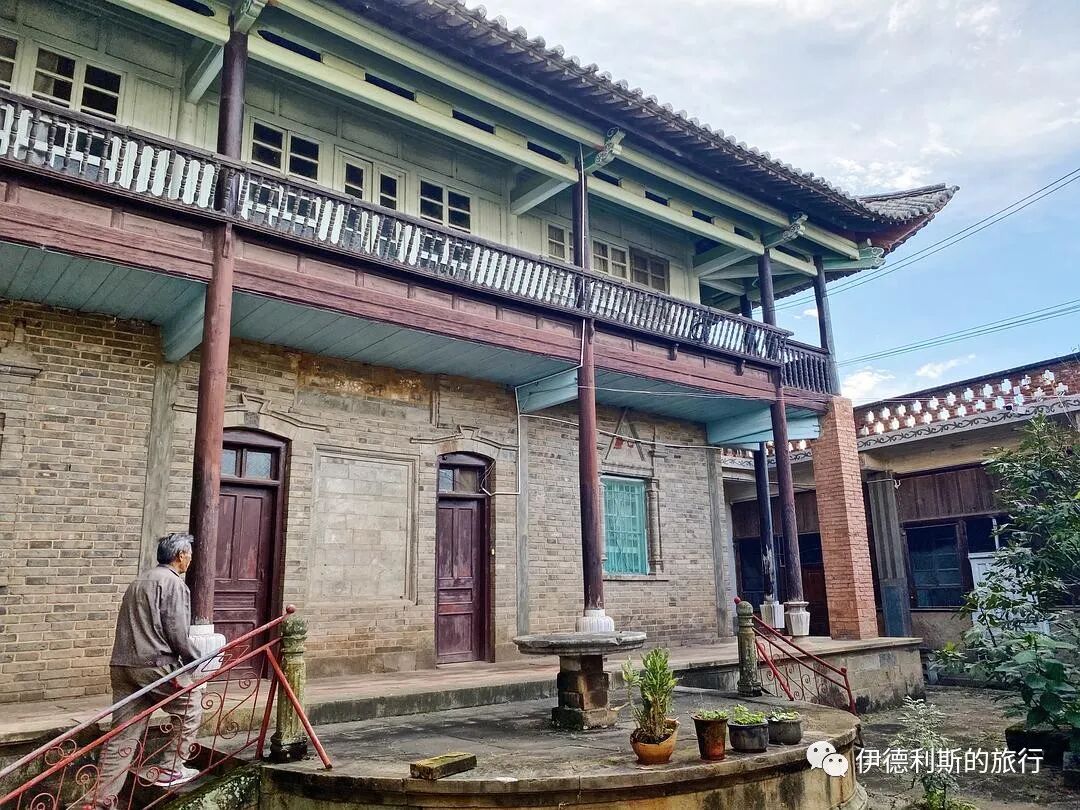
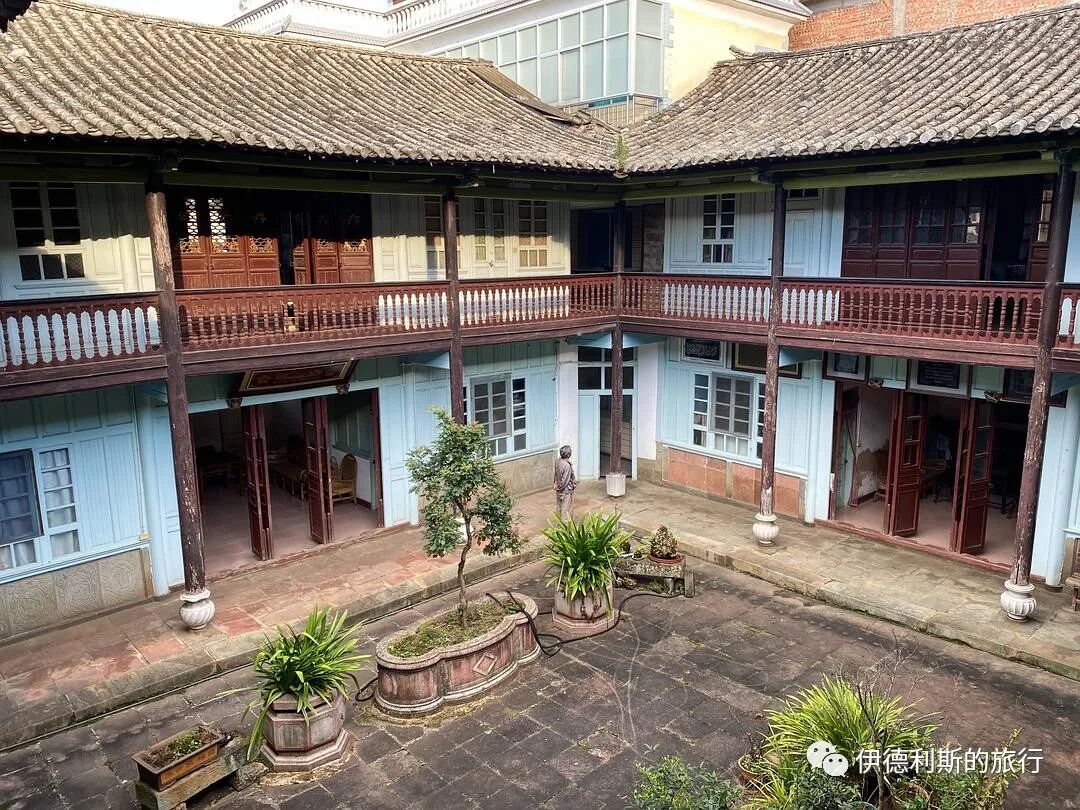
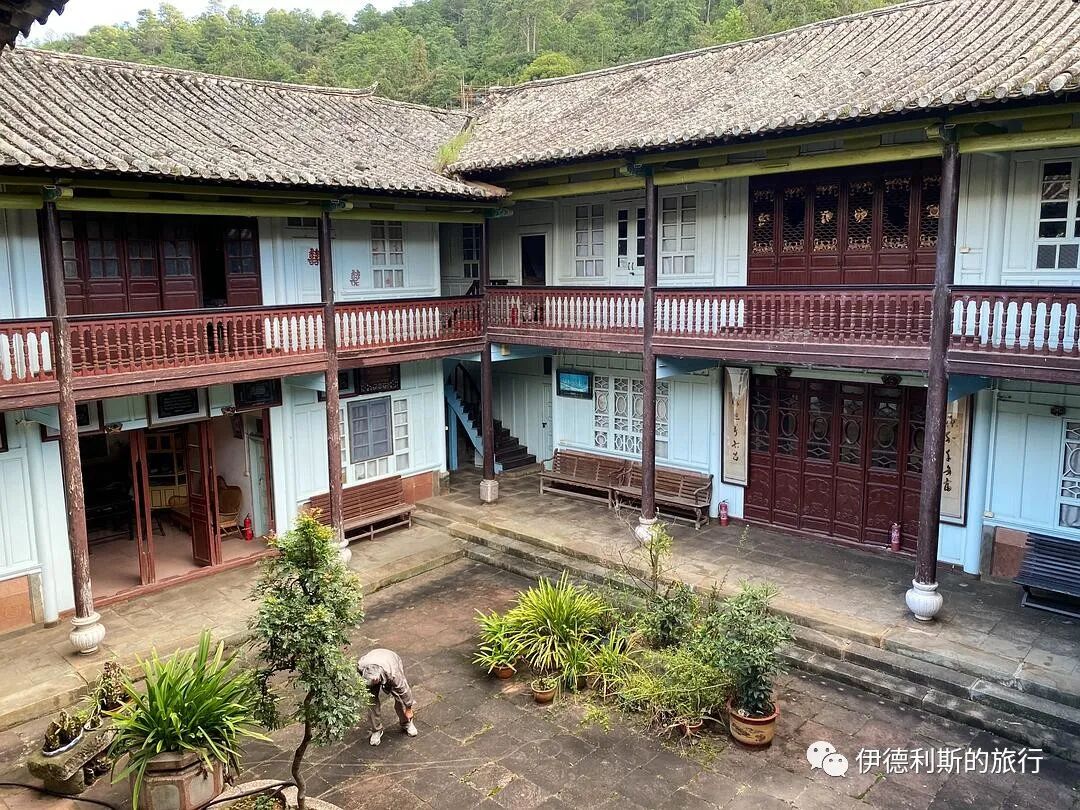
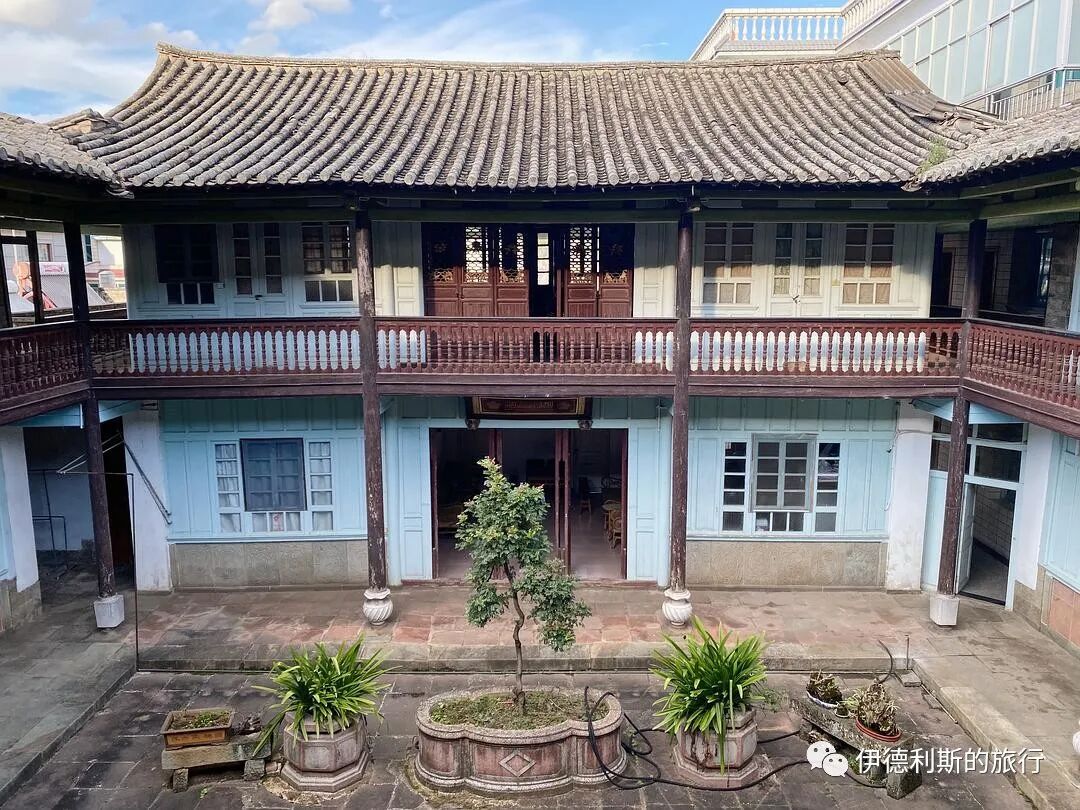
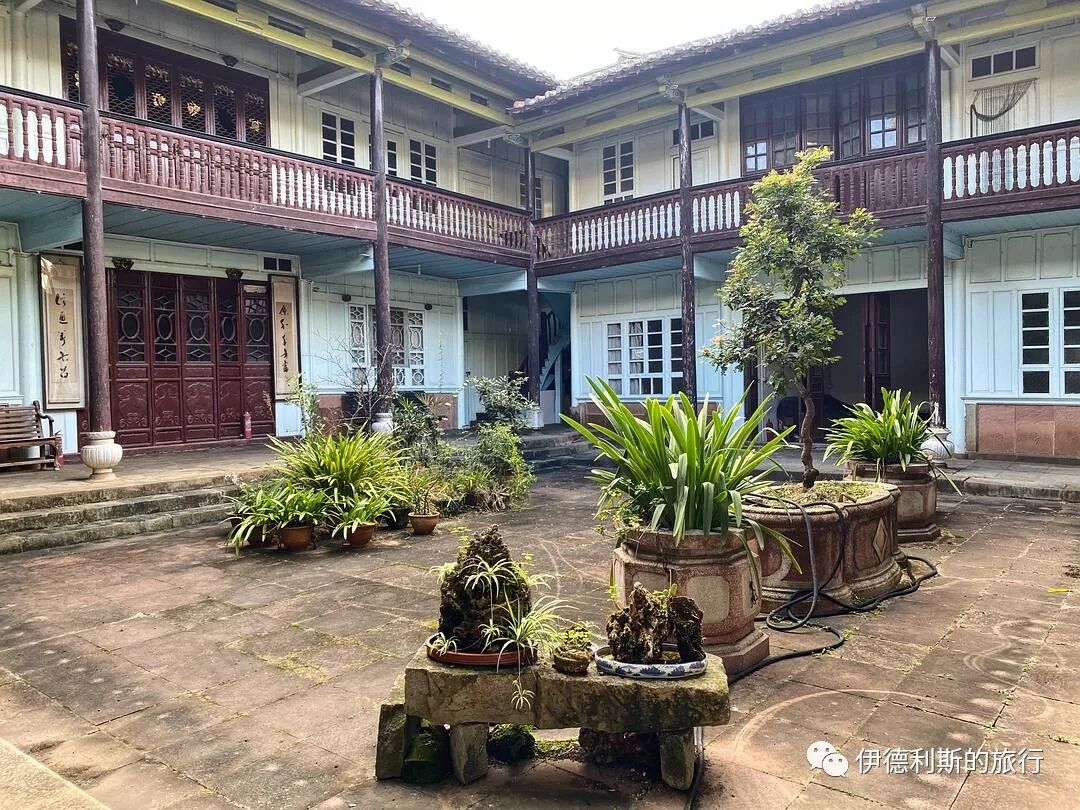
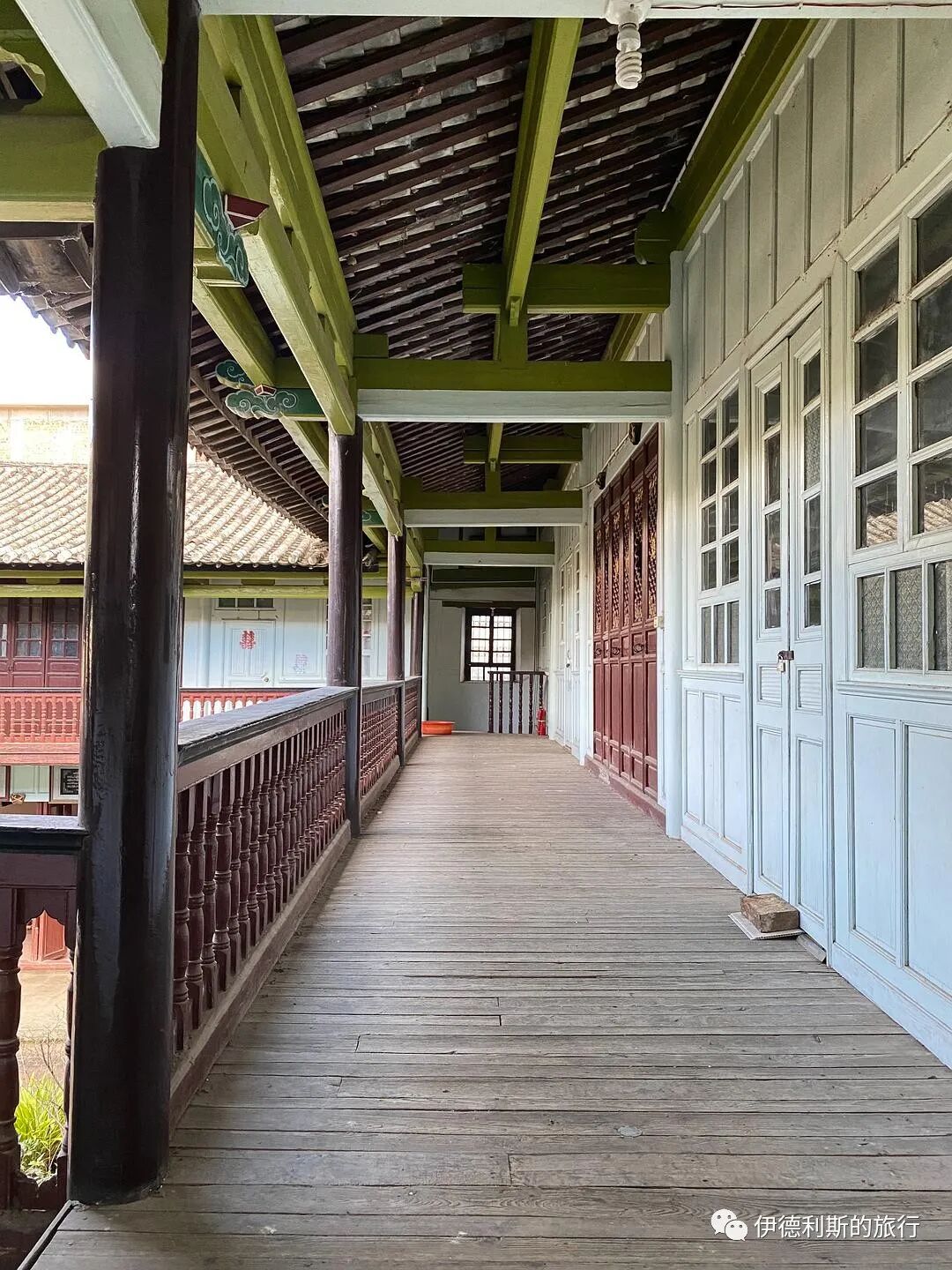
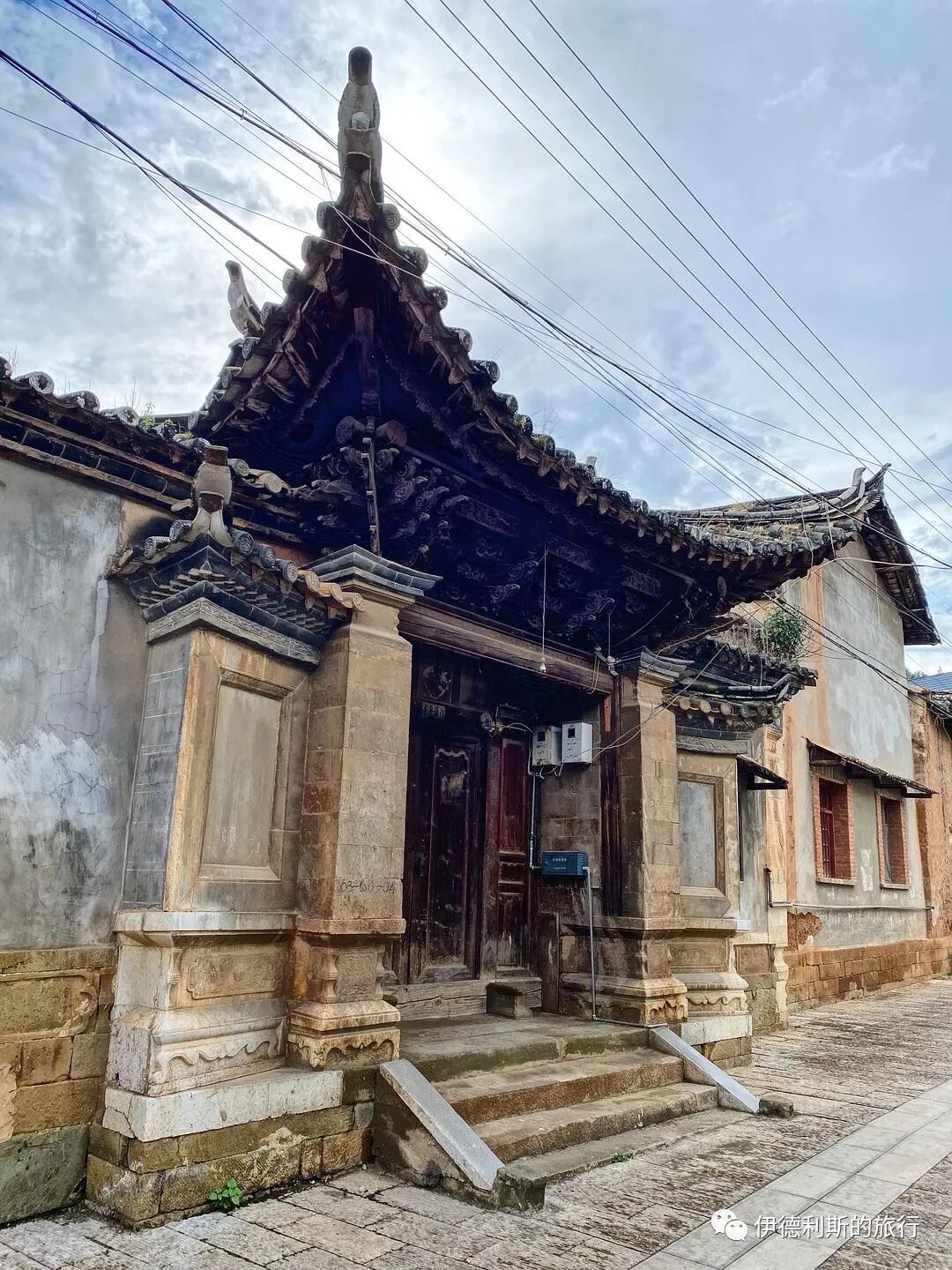
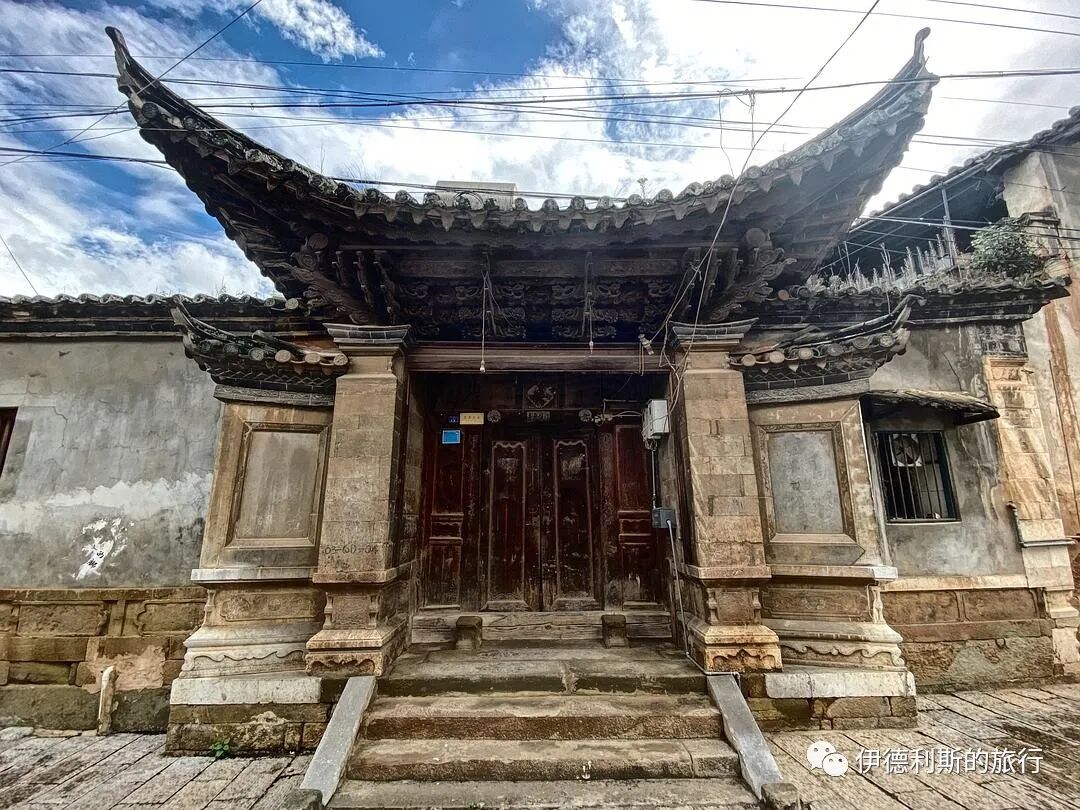
The first large courtyard is No. 102 in Dahui Village. Built between 1932 and 1933, it is a traditional Yunnan-style courtyard with a layout known as 'three bright and five dark' (ming san an wu) and a corner-turning corridor (zouma zhuanjiaolou). This means you have to walk a distance from the main gate before reaching the courtyard itself.
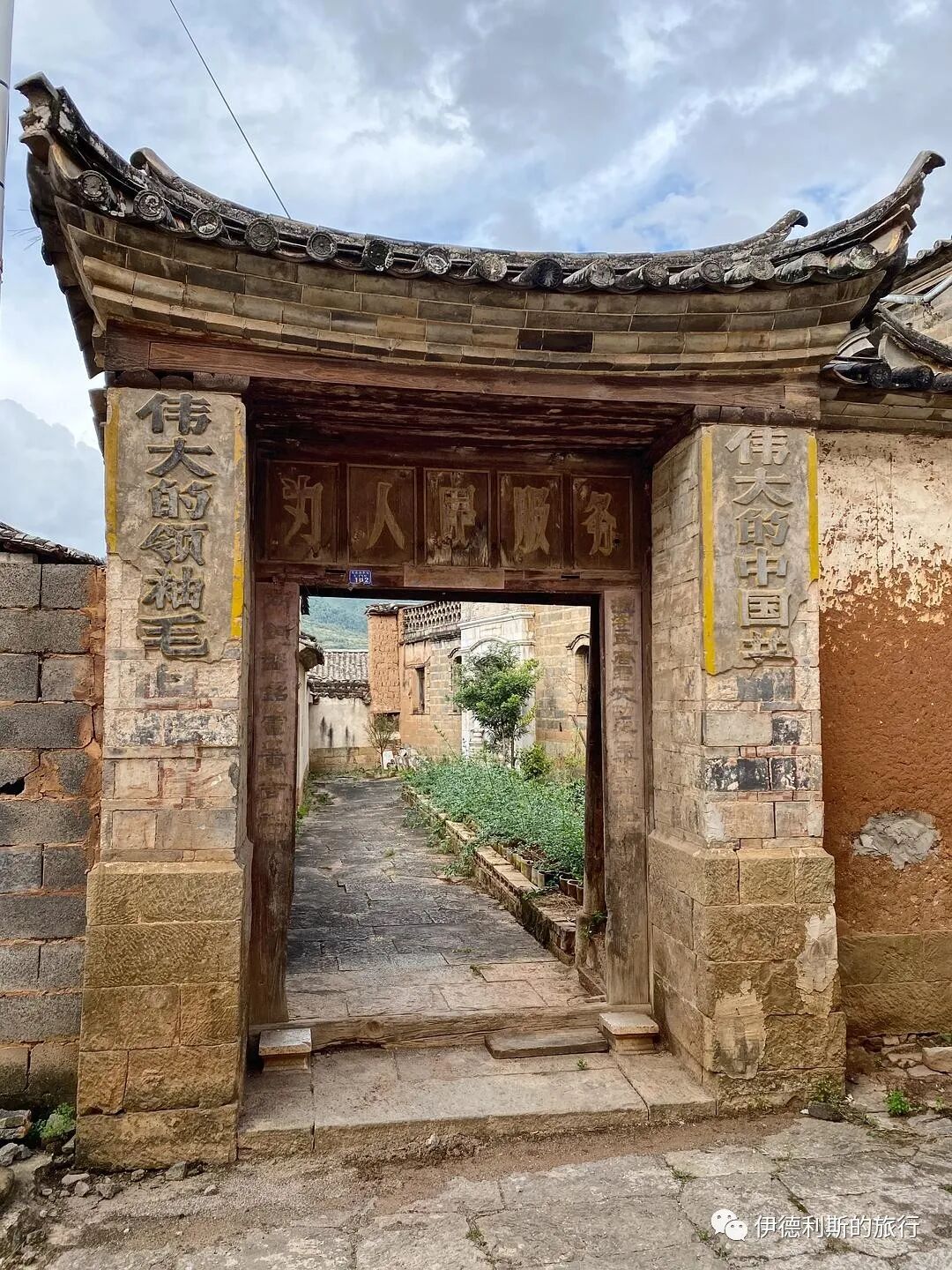
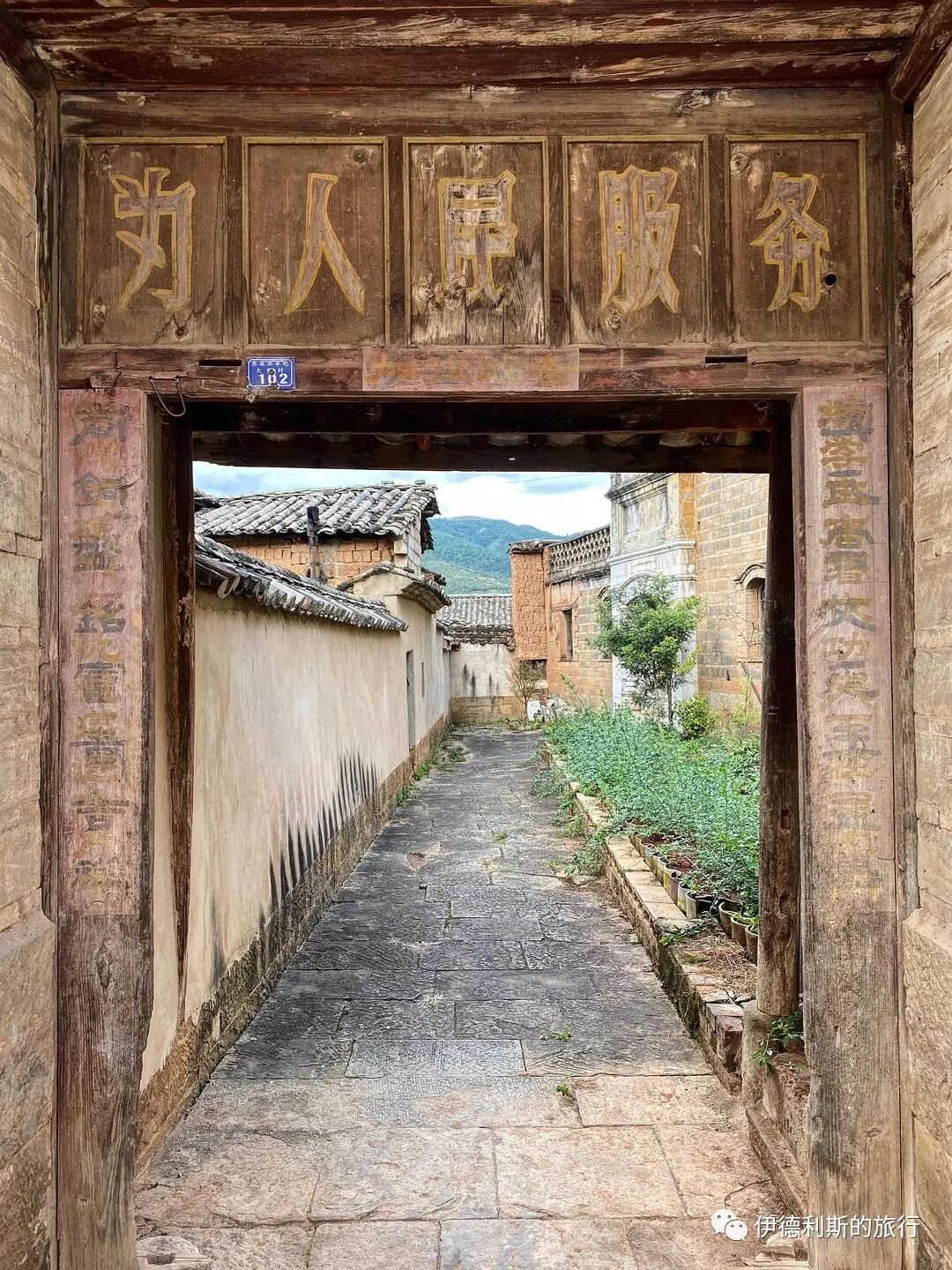
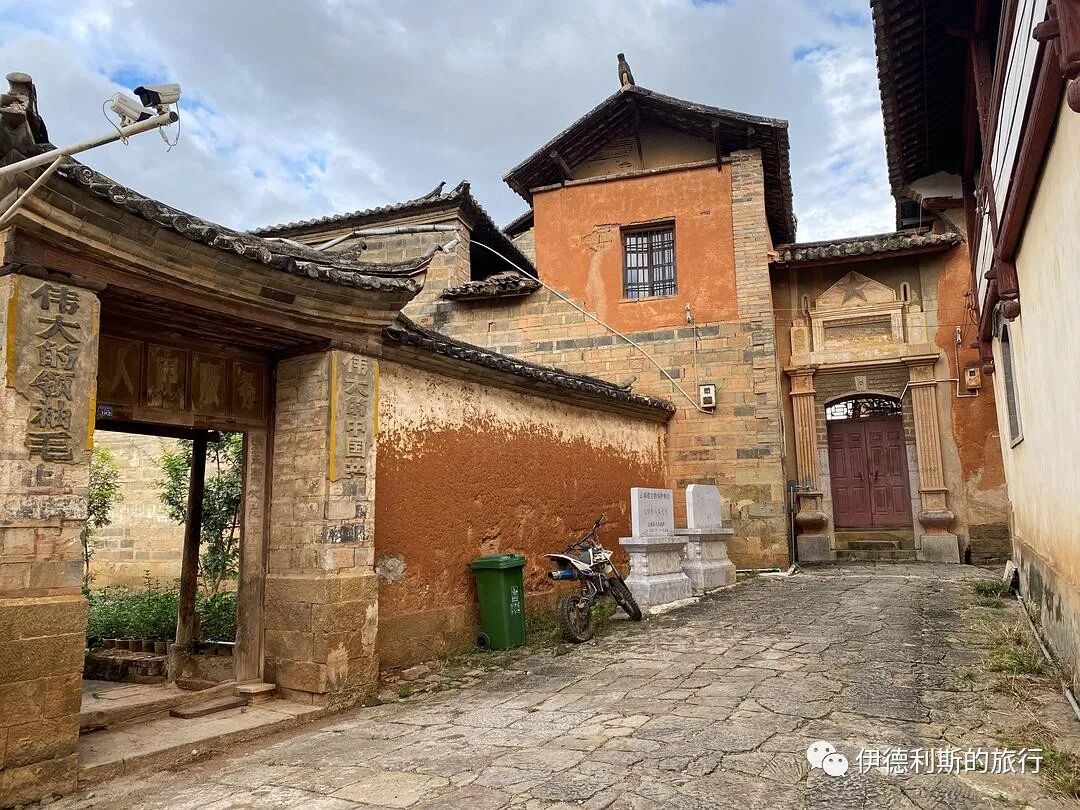
The outermost part is a traditional Yunnan-style gate with a ridged roof and upturned eaves. It is very interesting to see two sets of couplets from different eras layered on top of each other. The bottom layer is a traditional couplet: 'Han dynasty tile inscriptions bring long life, Zhou dynasty bronze plate inscriptions bring wealth and luck.' The yellow upper layer has a first line that reads, 'Study hard, Allah is the master, put effort into your writing.' I cannot fully identify the second line, only the words 'hardened' and 'hatred'.
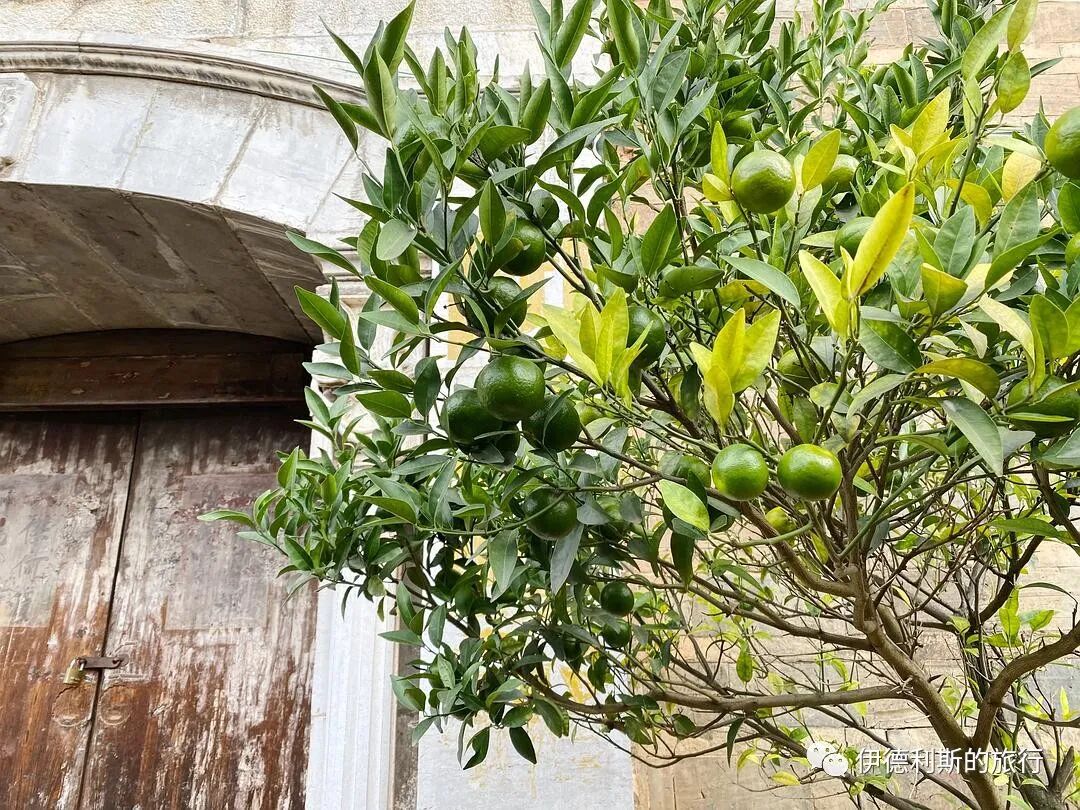
After entering the gate, there is a small courtyard filled with orange trees heavy with fruit.
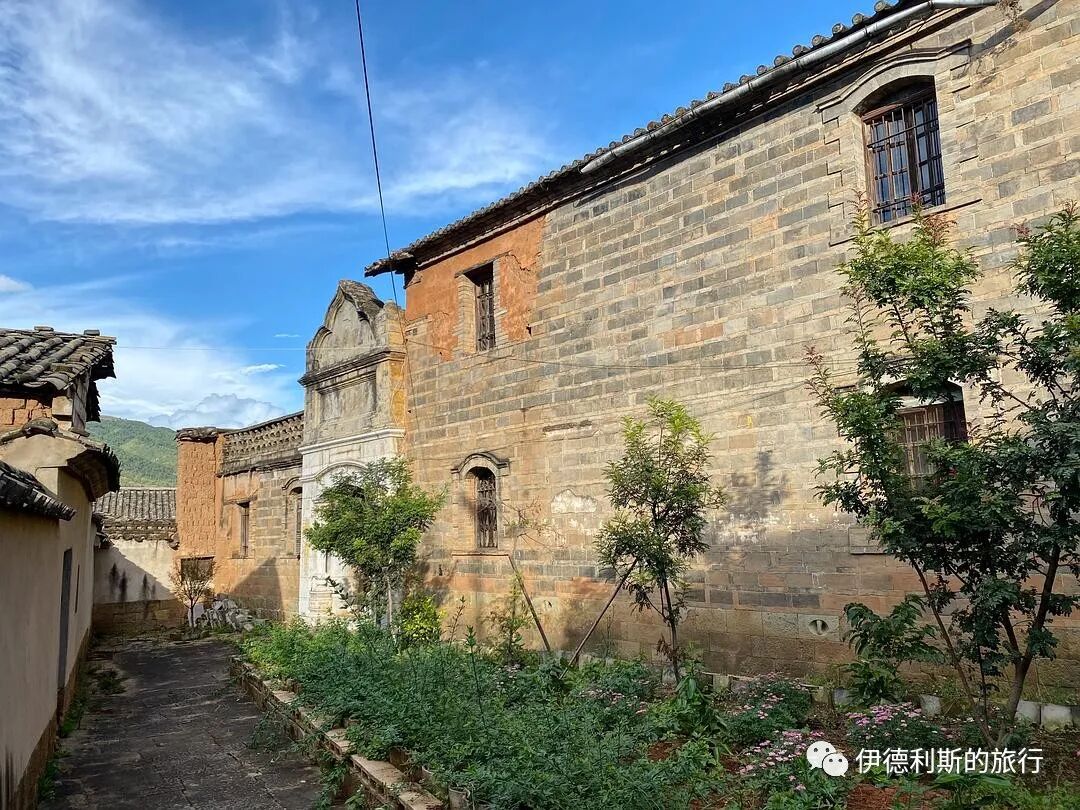
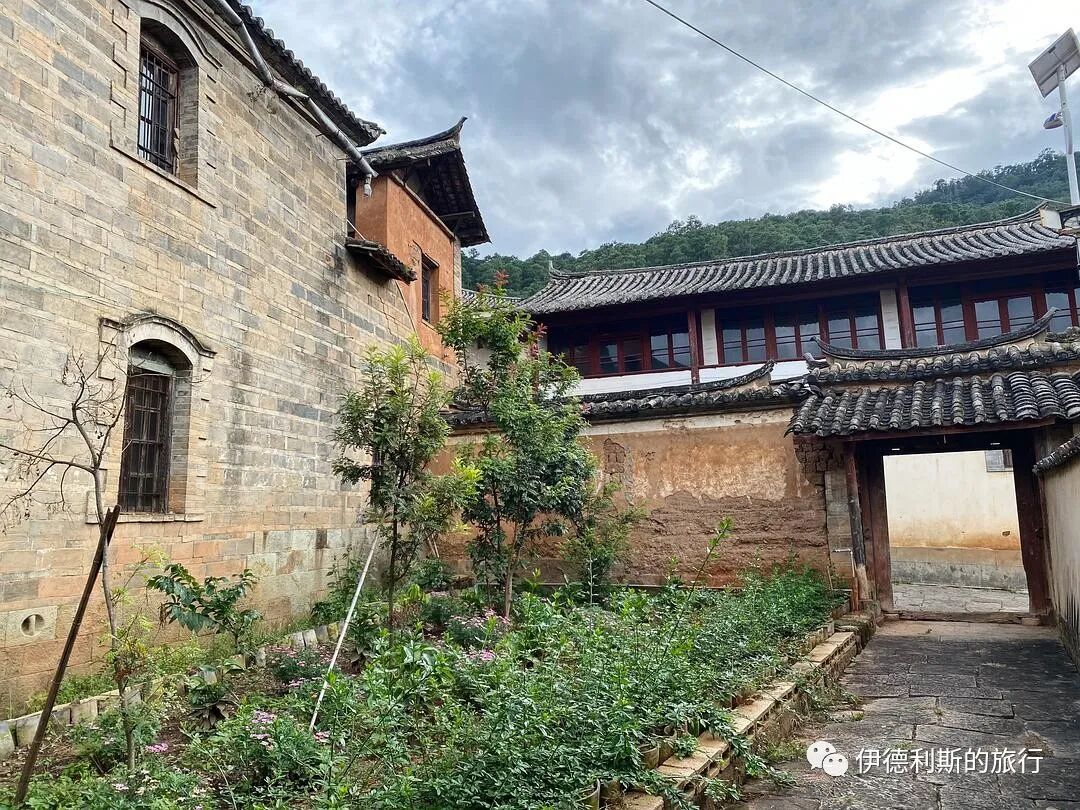
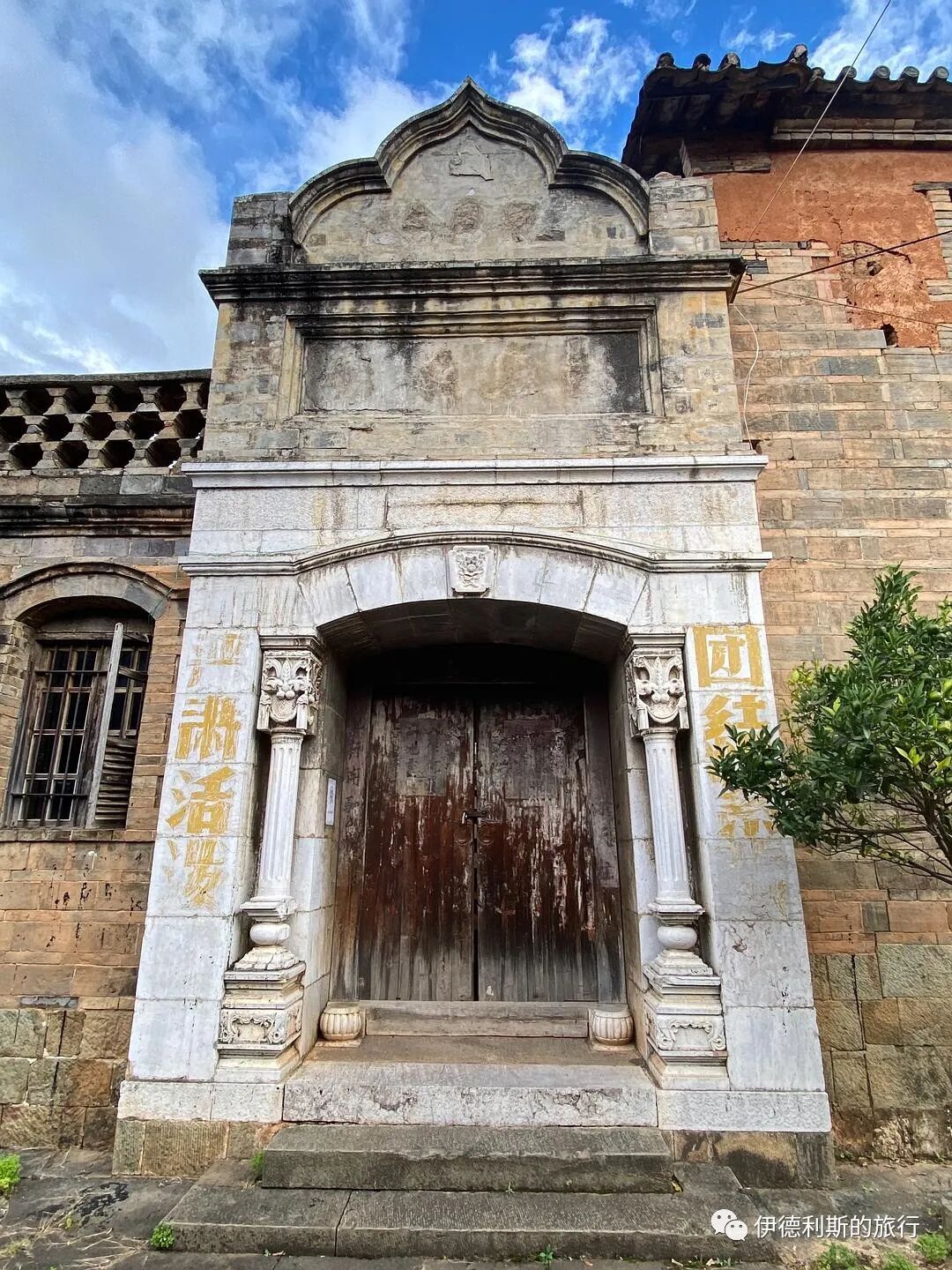
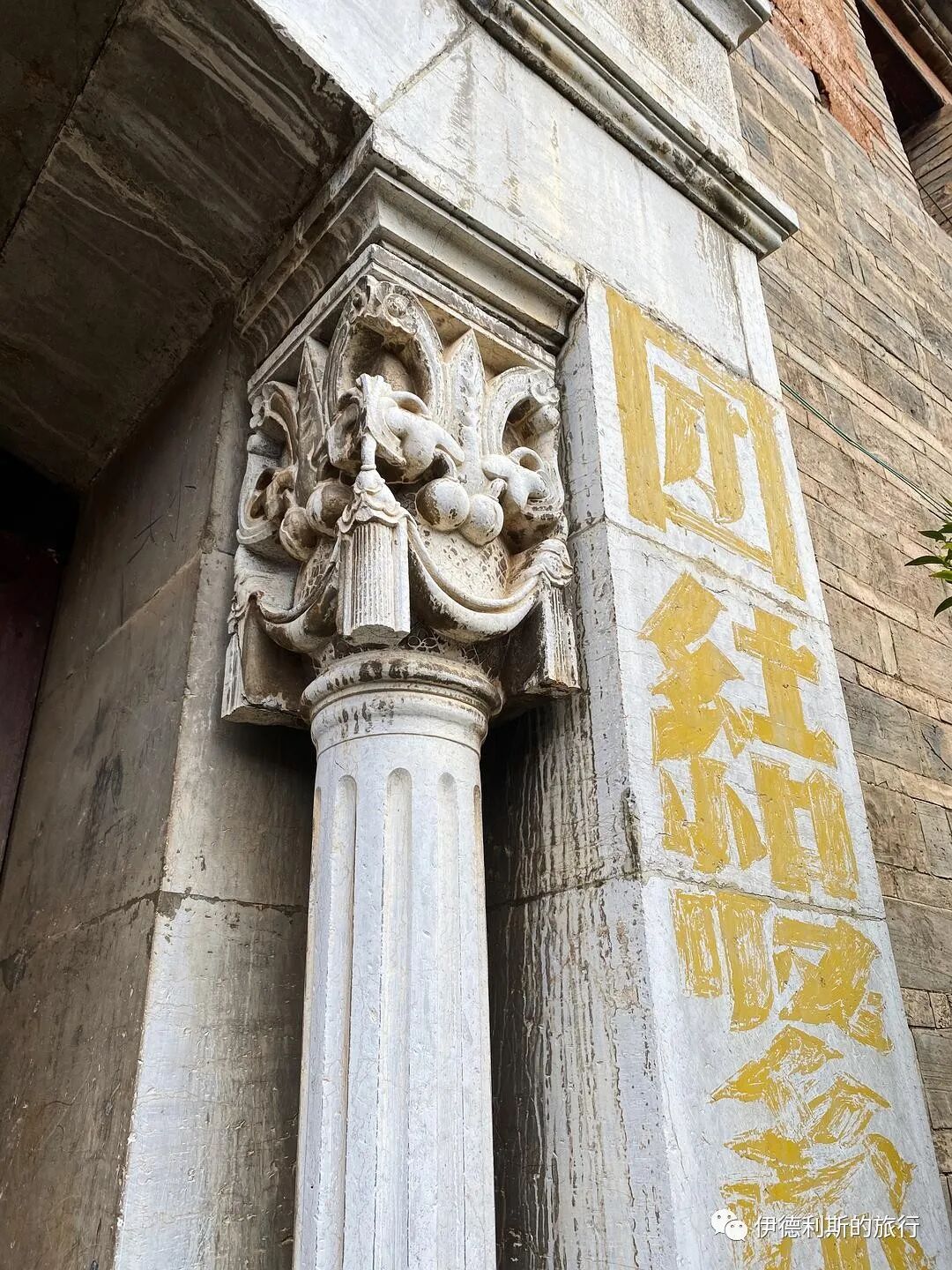
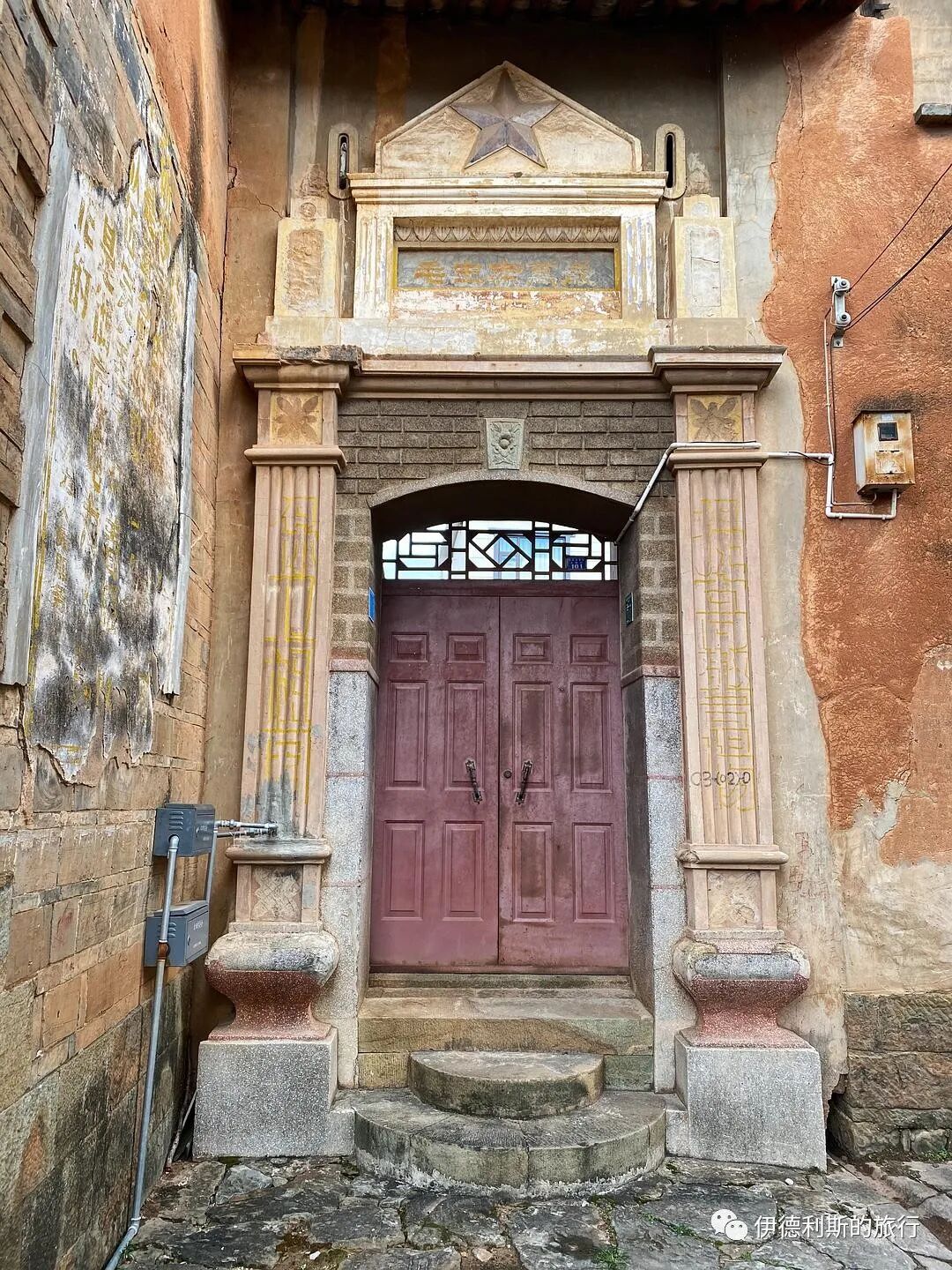
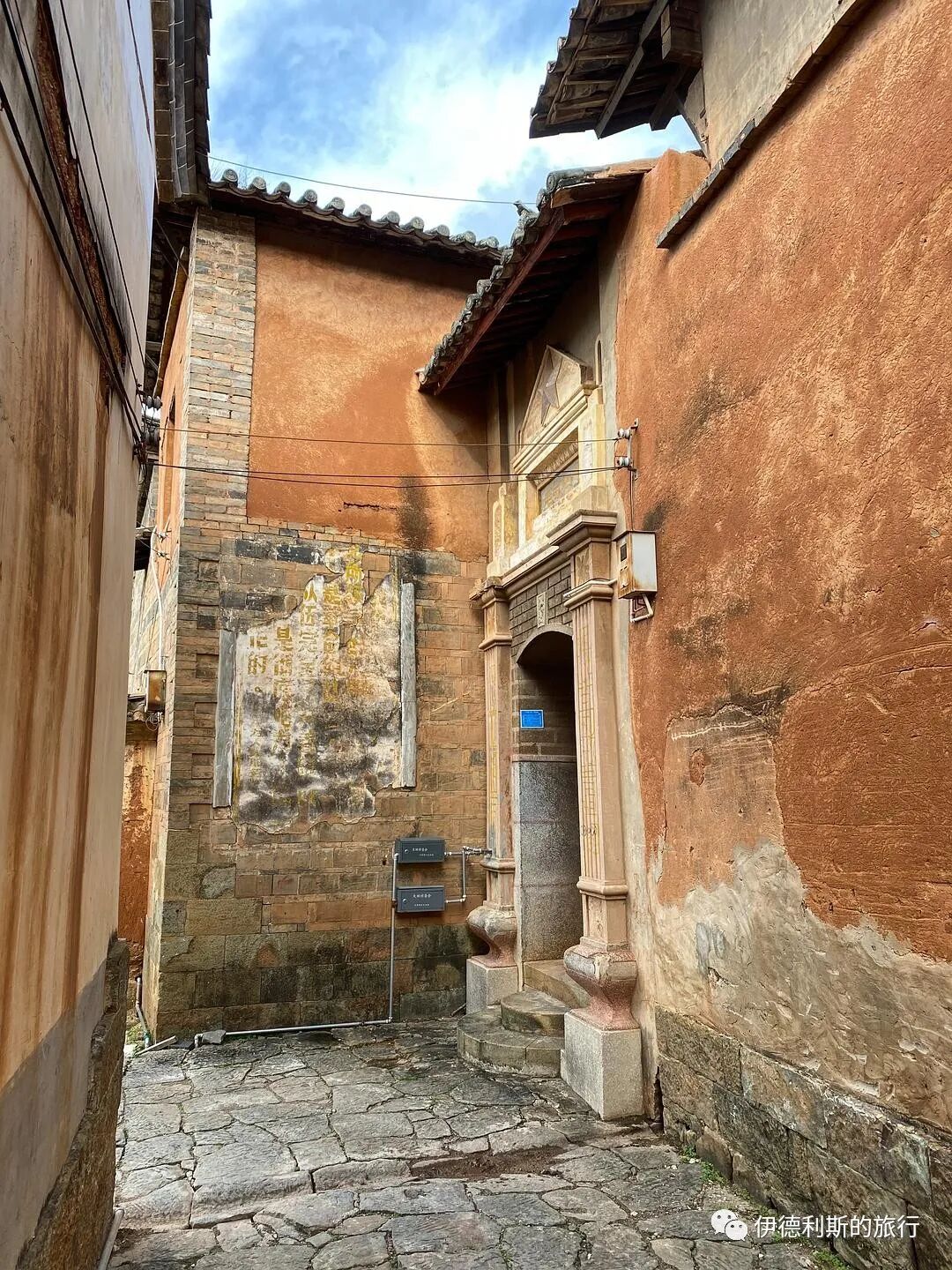
Entering the courtyard, there is a Western-style gate from the Republic of China era. Its Roman columns look very similar to the minaret (jiaobailou) of the Dabaiyi Mosque in Eshan, built in 1935. You can also see the slogan 'Be united, tense, serious, and lively' on the gate, as this place once served as the Dahui Village committee office.
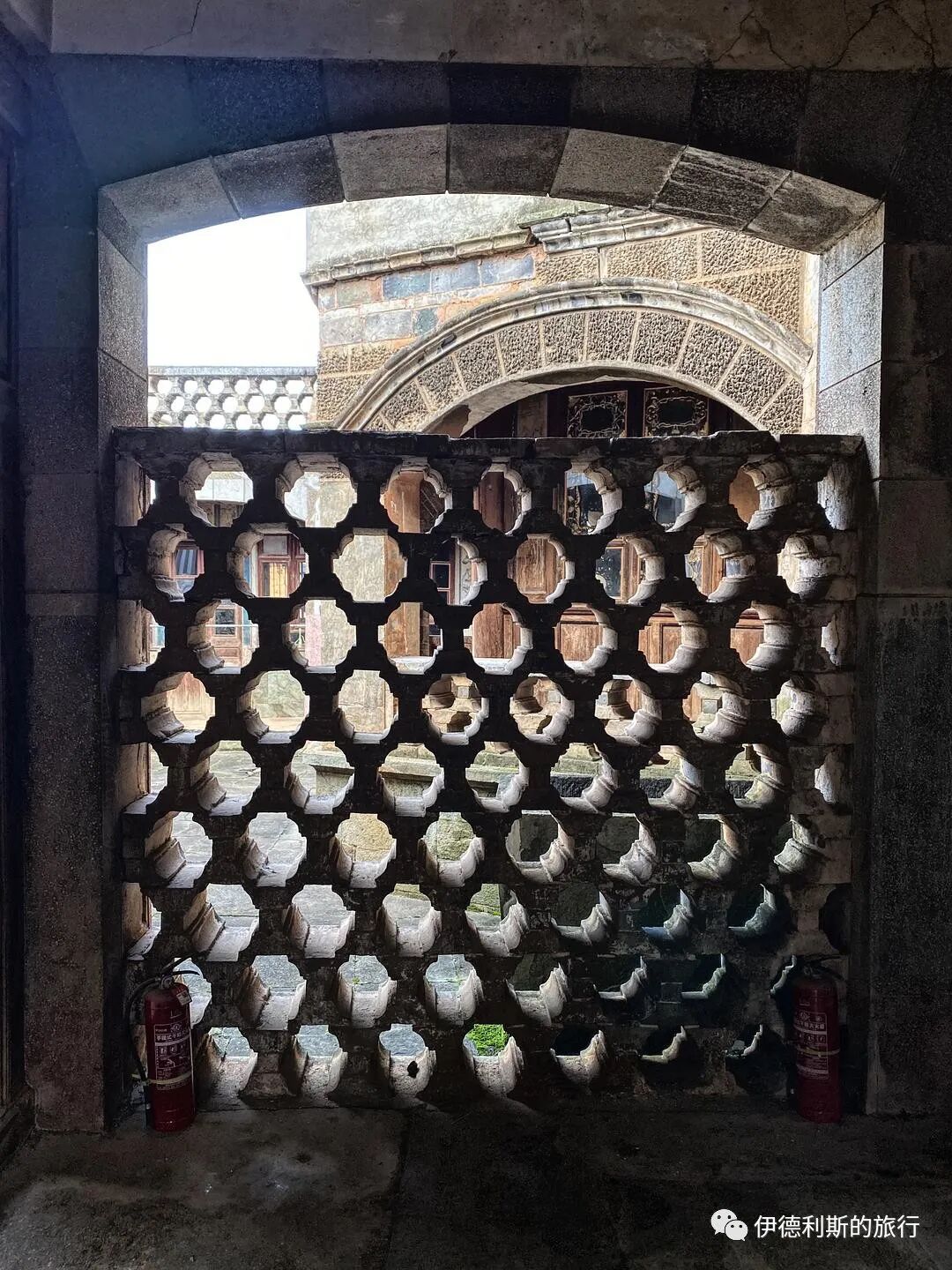
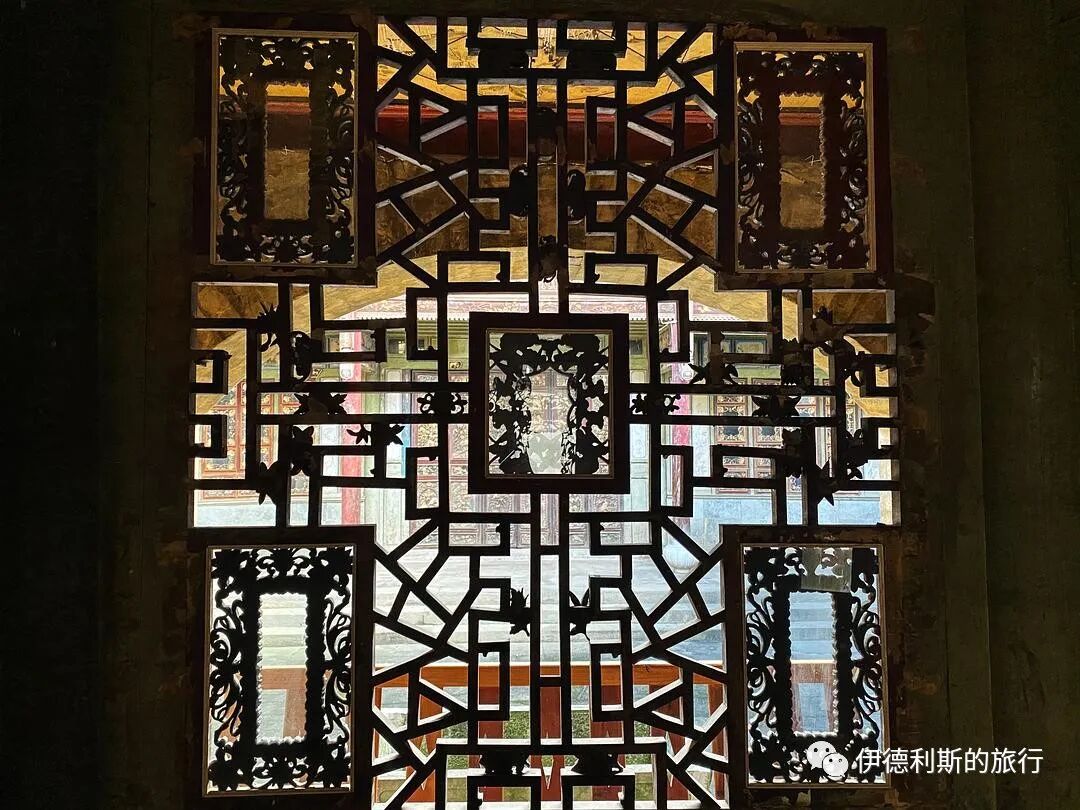
The hollowed-out partition wall inside the gate is very different from the traditional screen wall (zhaobi) or folding screen found in other courtyards.
The first small section of the courtyard contains a small house built of cement. This cement was imported from Japan at the time and transported via Kunming.
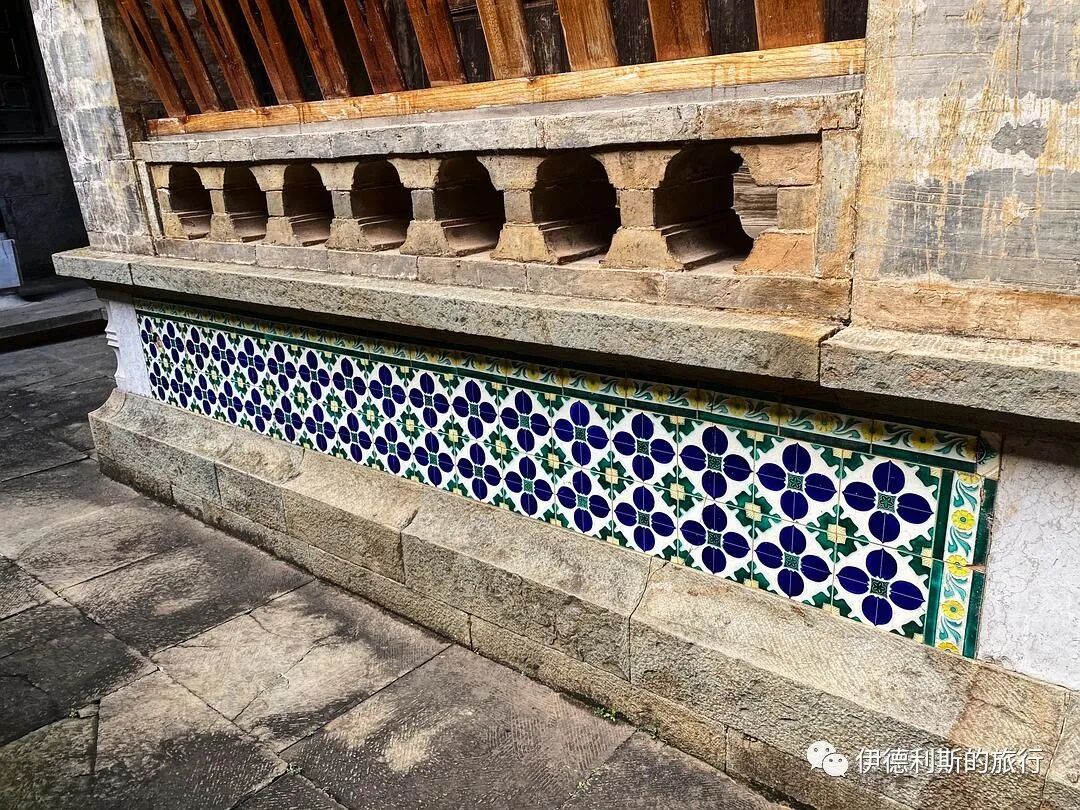
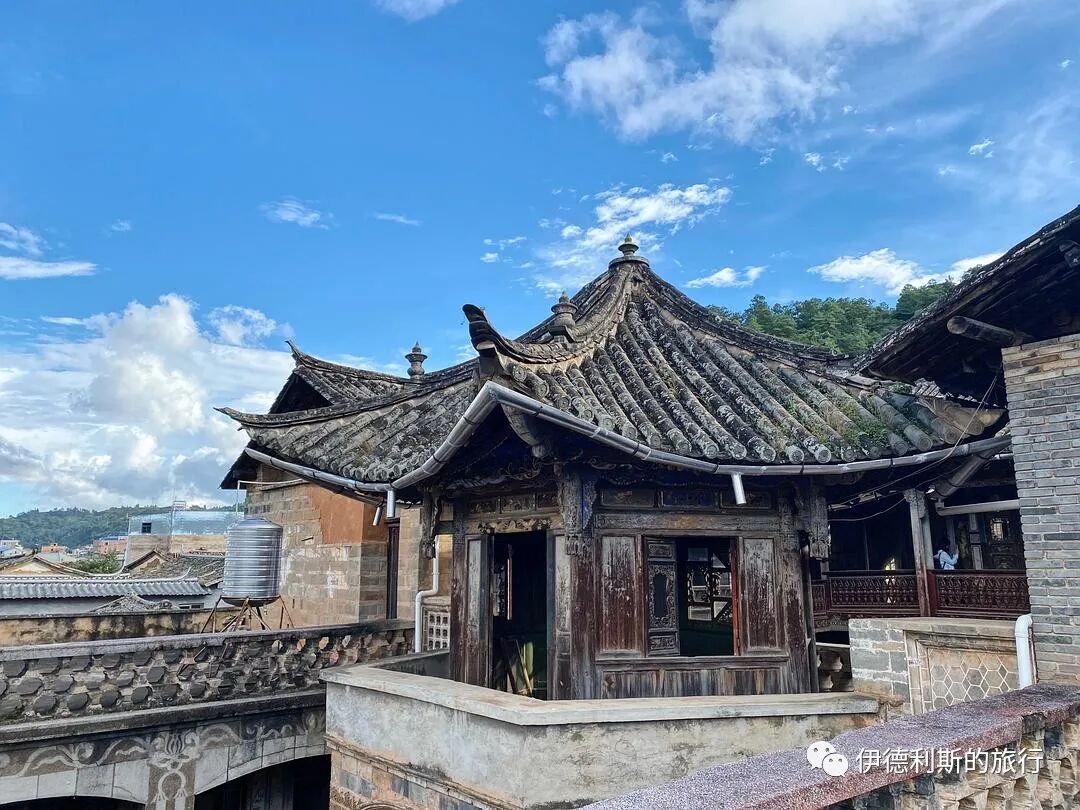
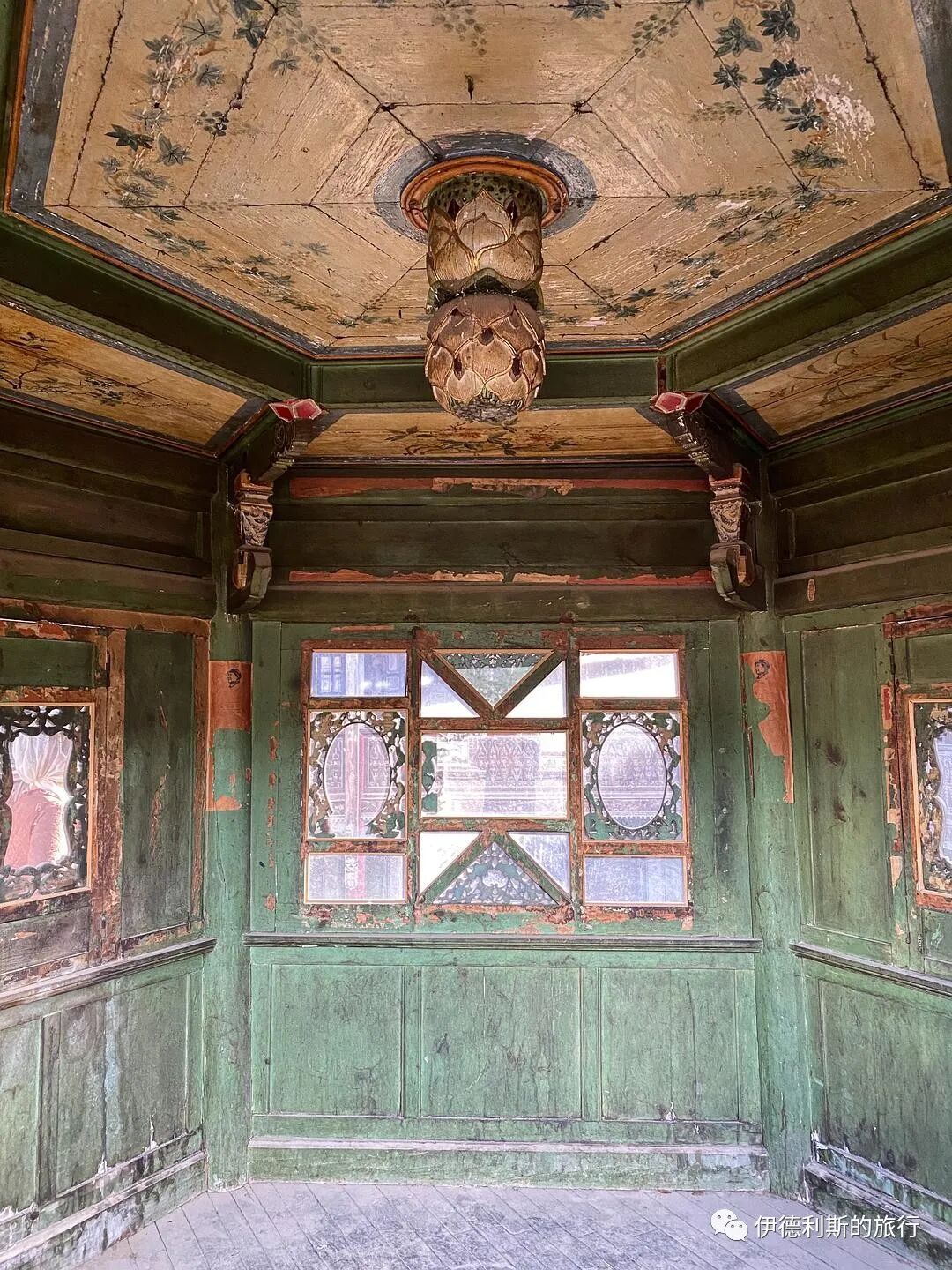
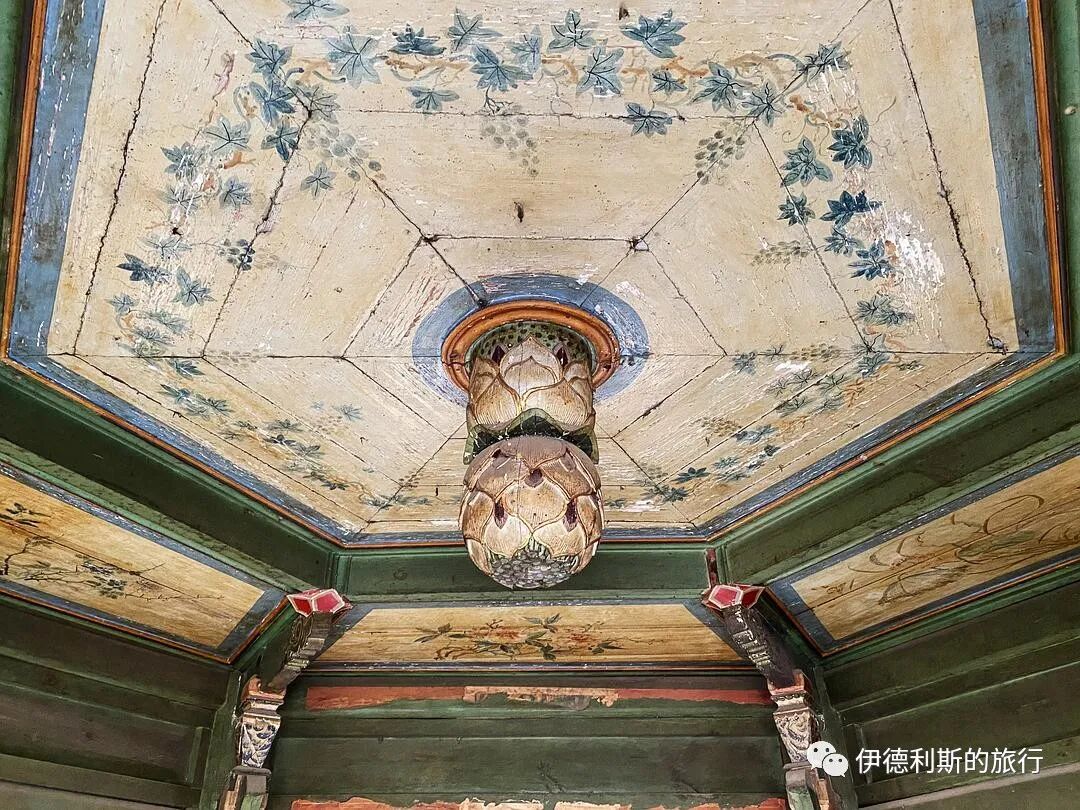
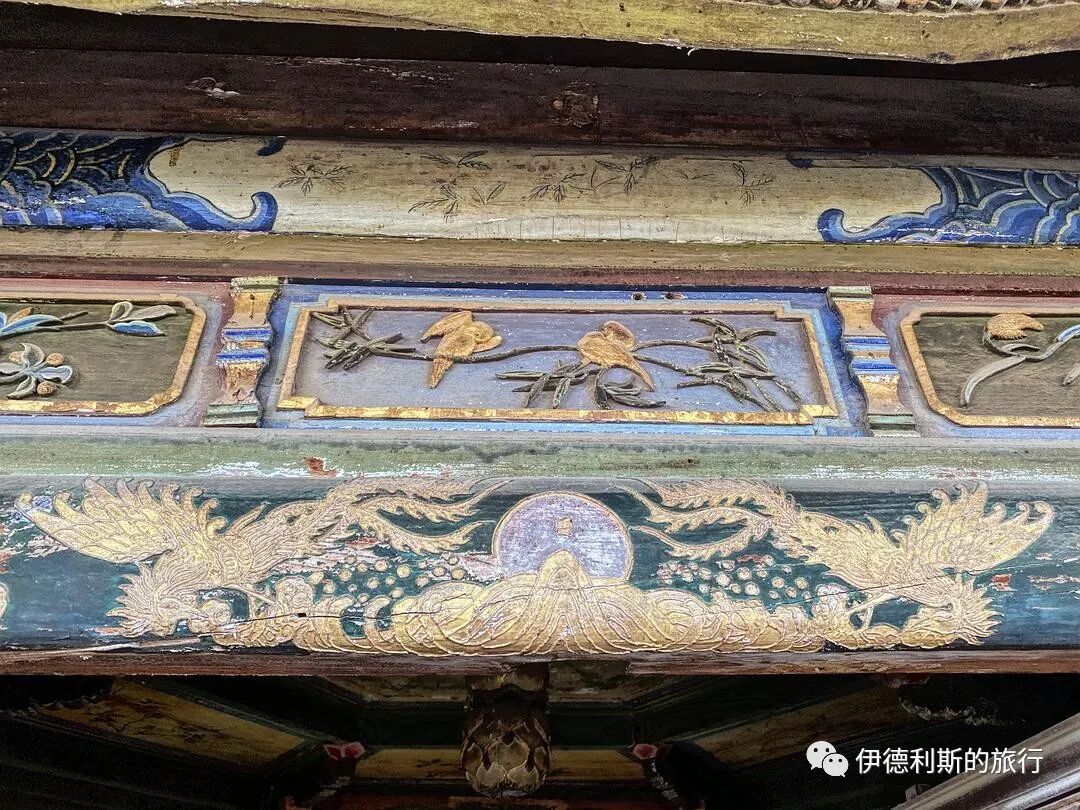
The front hall of the Ma family courtyard is unique, featuring a six-sided, multi-eaved, pointed-roof pavilion. It was used exclusively by the clan leader, Ma Yuanwu, for namaz, so it is also called the prayer pavilion (libaiting). It later became the village broadcast station. The pavilion has exquisite colorful paintings, wood carvings, and tiles imported from Japan.
Ma Yuanwu (1862-1955) originally made his living as a farmer. In the early 20th century, he sent his eldest son, Ma Tongzhu (1880-1958), to lead a horse caravan. At first, they carried salt to Xinping County to sell to people from Sichuan. After three or four trips, they saved some money, and then he sent his eldest grandson, Ma Bingzhong (1899-1972), to open a soy sauce workshop in Panxi Town, nearby Huaining County. At the same time, the Ma family used their horse caravans to transport brown sugar boiled in Panxi to Kunming for sale, then brought salt back to Panxi, gradually growing their business.
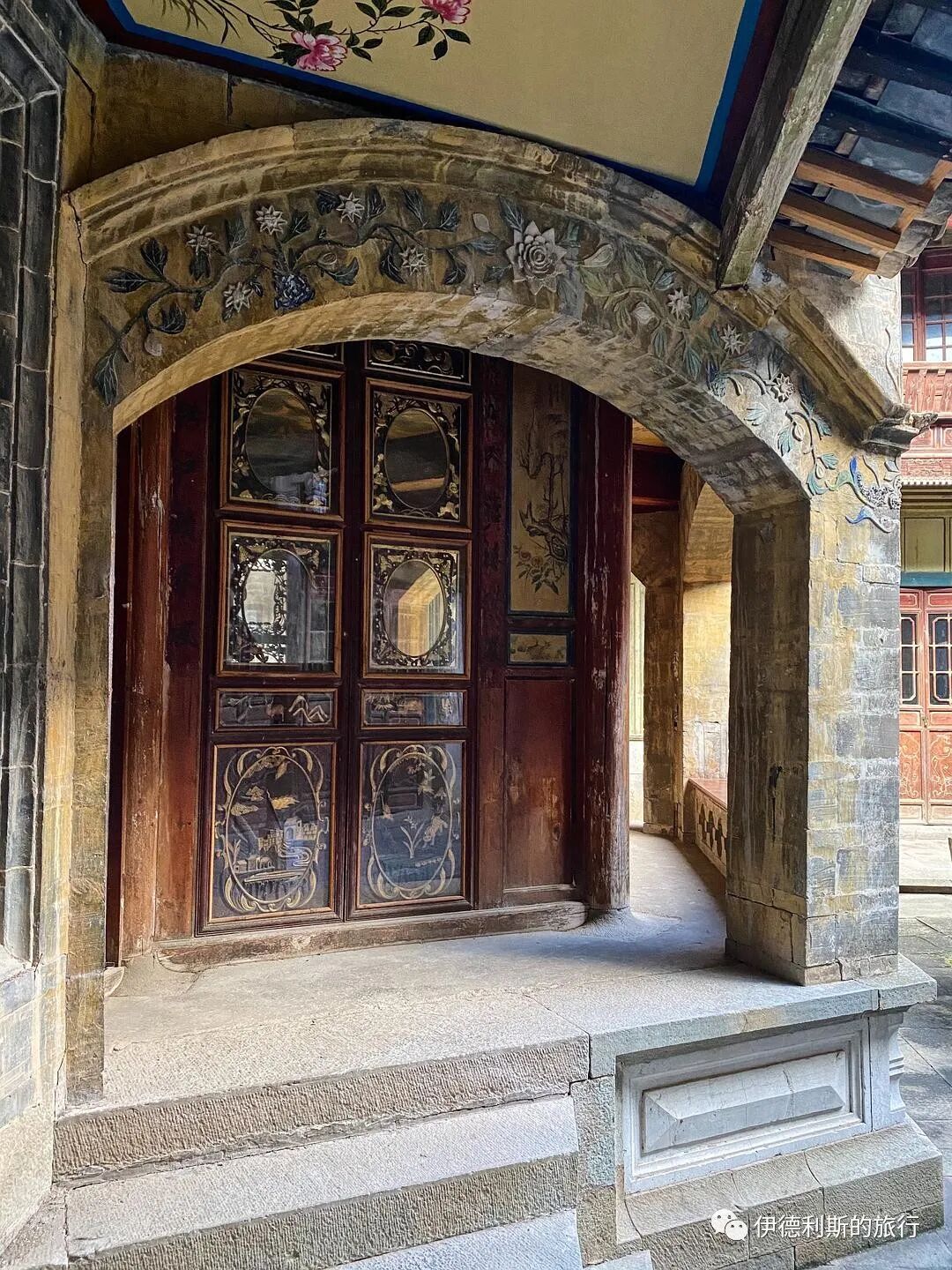
At the entrance to the first floor of the prayer pavilion, there is a couplet: 'Orchids and cassia in the pavilion spread fragrance far, the shade of the ailanthus and birch trees in the hall lasts long.' The ceiling inside features clouds, cranes, and the characters for 'blessing' (fu) and 'longevity' (shou). The second-floor ceiling has two lotus flowers, and the surrounding windows feature very fine wood carvings.
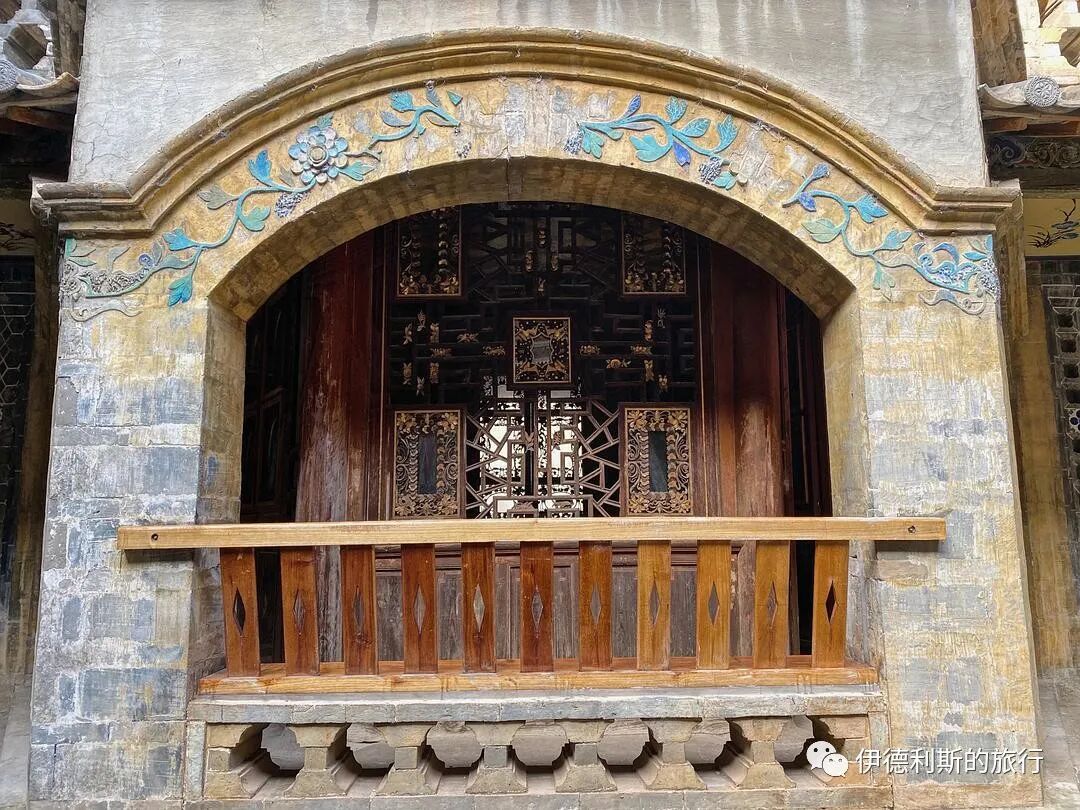
You can see the pastoral scenery from the balconies on both sides of the prayer pavilion.
The Ma family courtyard was built under the direction of Ma Tongkuan, the second son of clan leader Ma Yuanwu. During the early Republic of China, Ma Tongkuan lived in Mojiang County, east of Pu'er, managing various business dealings. Because he kept his word and managed things well, he became a very wealthy man in southern Yunnan. In the middle and late Republic of China, Ma Tongkuan returned to his hometown of Dahui Village and oversaw the construction of the three Ma family courtyards. In 1956, Ma Tongkuan served as deputy county magistrate of Qilu County. In 1957, he was labeled a rightist, and in 1968, he returned to Allah (gui zhen).
When building the Ma family courtyards, Ma Tongkuan hired craftsmen from Shanghai and Annam. It took about twenty years. They fired their own bricks and tiles, quarried stone, and selected and cut their own timber. The garden kept peacocks and even had an advanced boiler room.
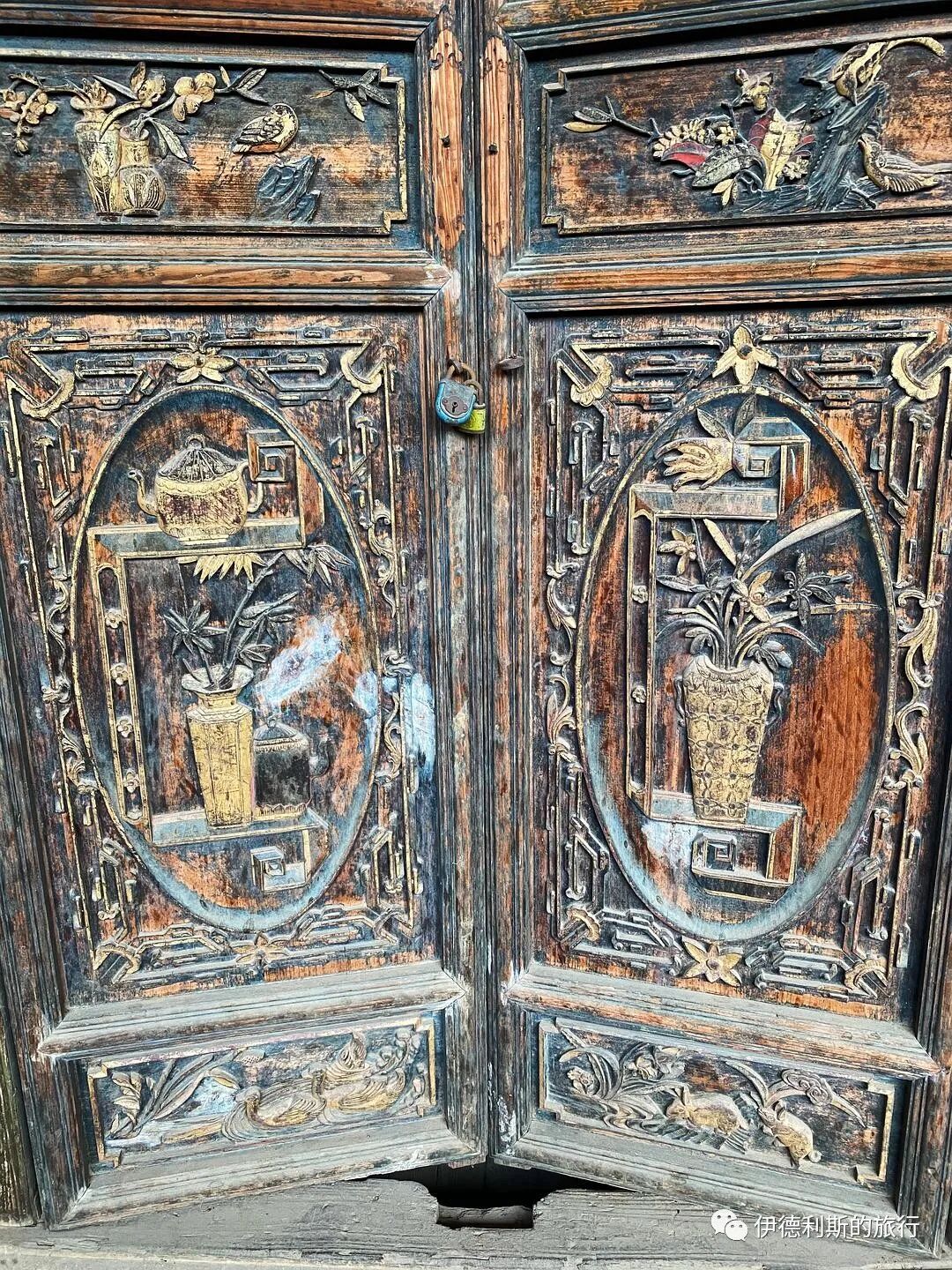
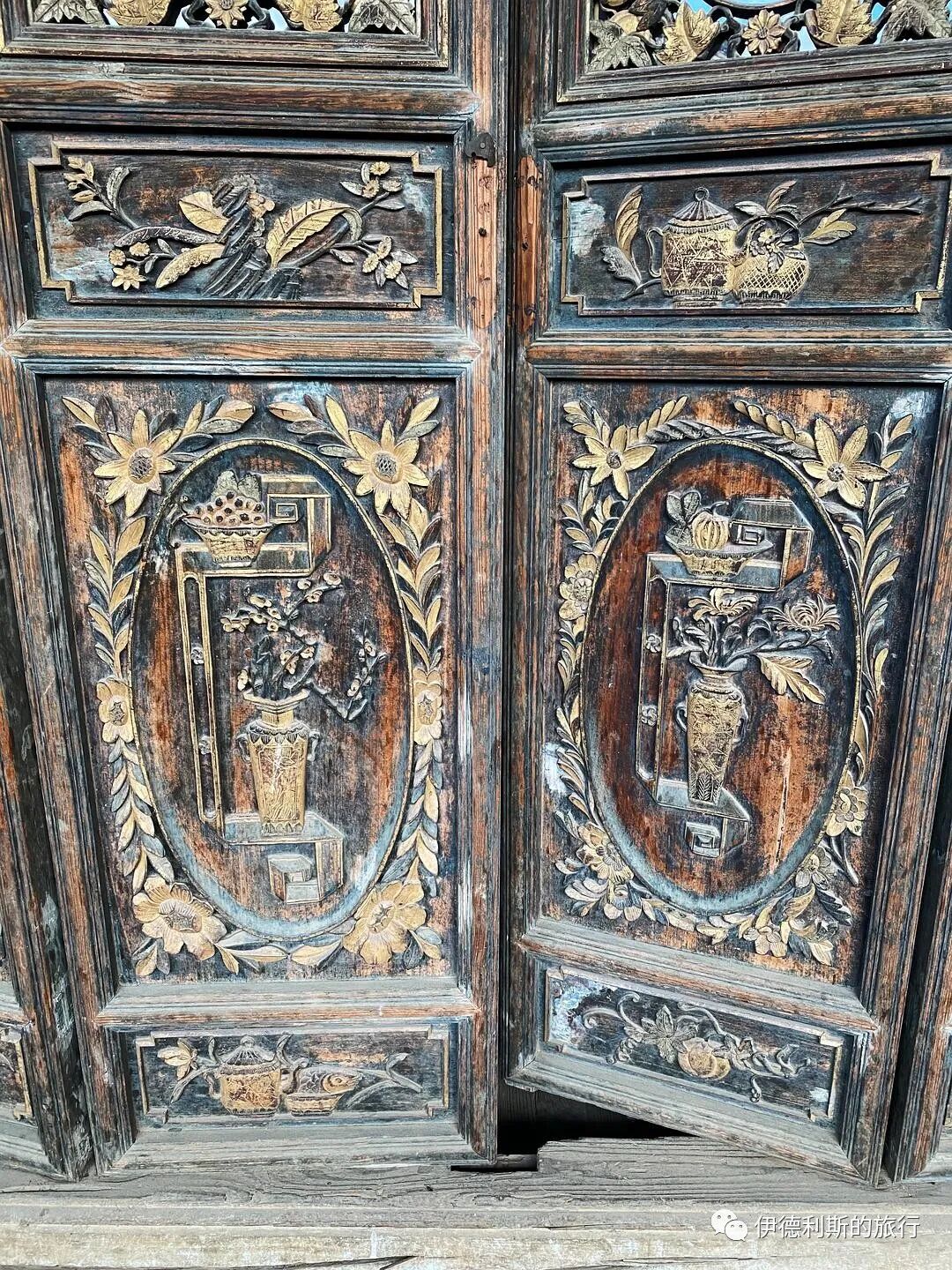
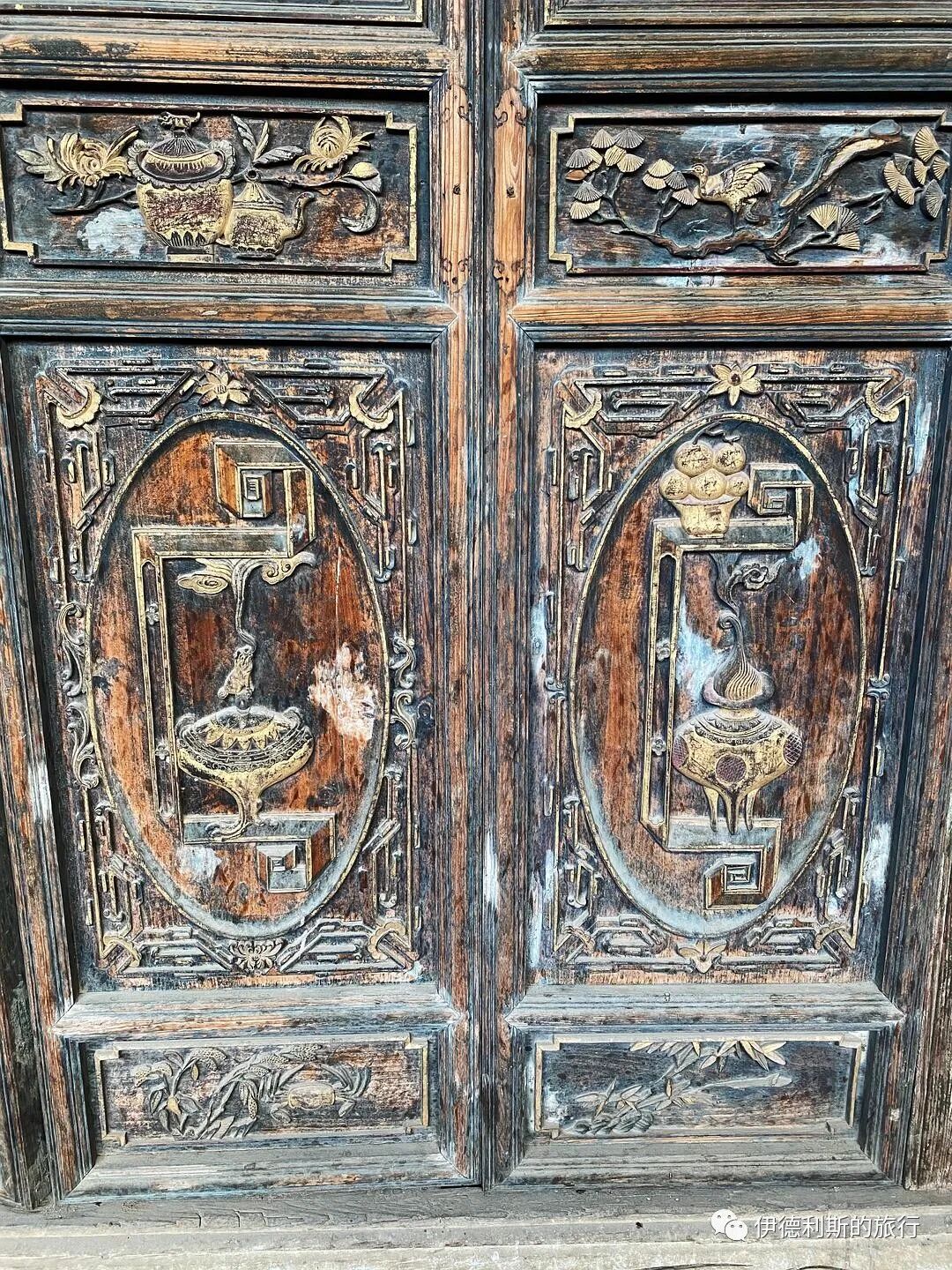
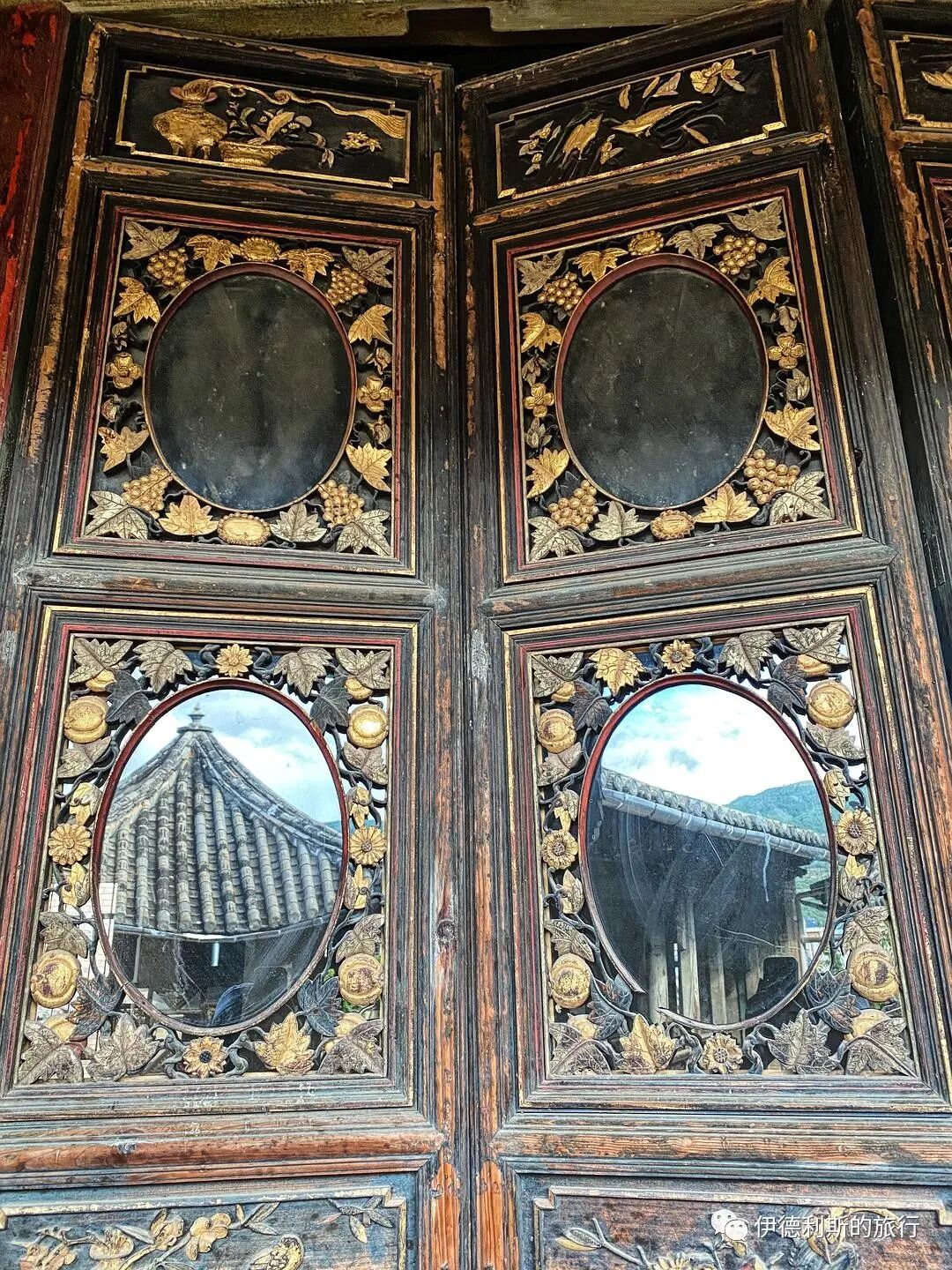
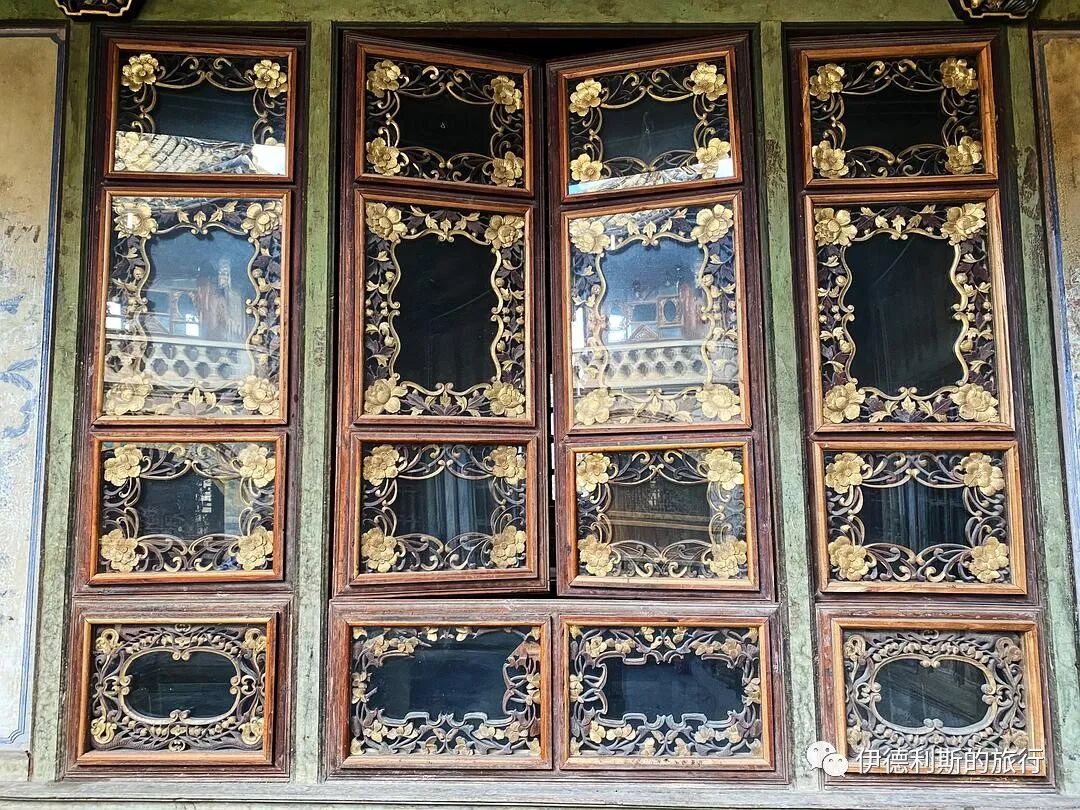
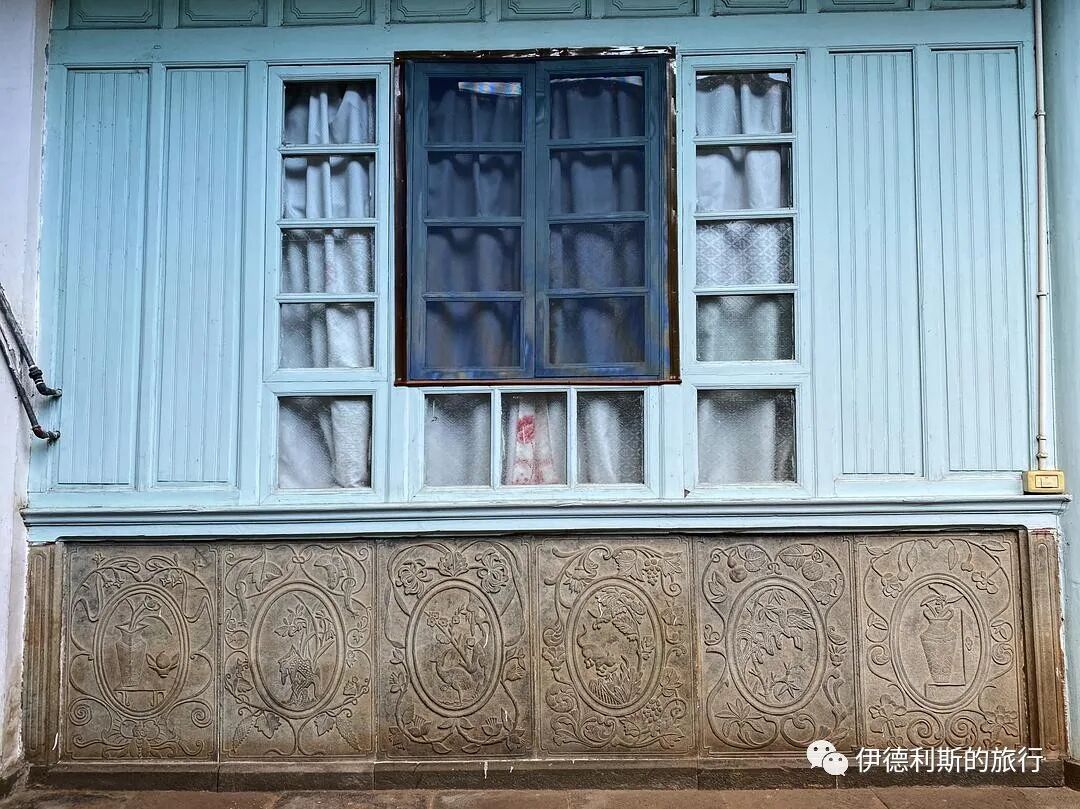
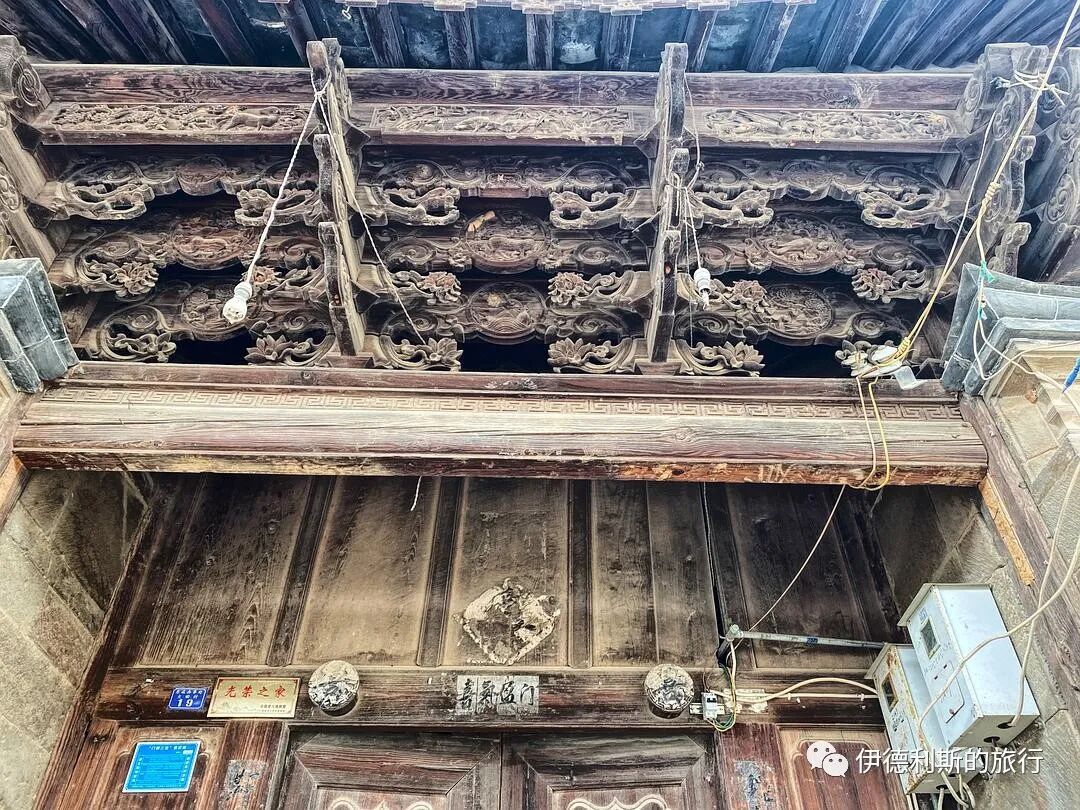
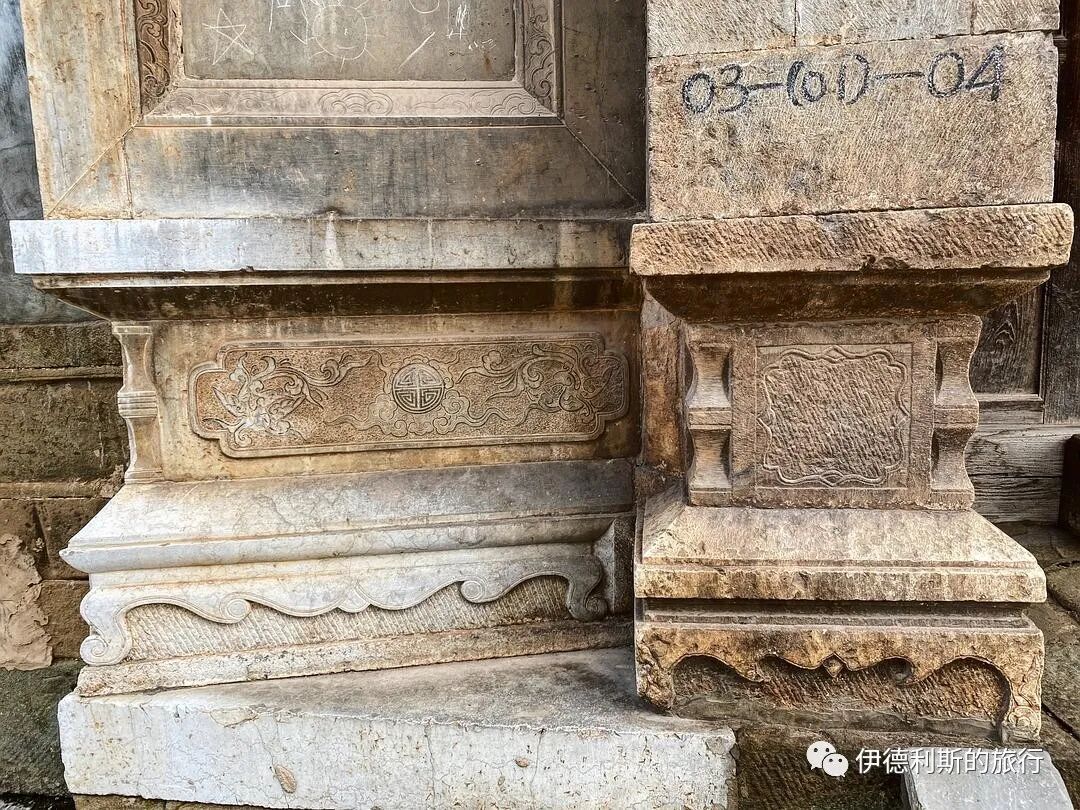
Tonghai has always been famous for its wood carving craftsmanship, and the exquisite wood-carved doors and windows of Courtyard No. 1 are proof of this. The doors and windows feature not only various flowers, plants, birds, and animals, but also pavilions, waterside structures, and Western-style architecture, showing the unique style of the era.
The Ma family courtyard once had twenty or thirty plaques, including 'Cultivating Virtue to Protect Descendants' inscribed by Chiang Kai-shek and 'Five Generations of Prosperity' inscribed by Long Yun, as well as plaques from Yu Youren, Bai Chongxi, Feng Yuxiang, and many others. However, they were all destroyed in the 1960s. All the beautiful couplets were replaced by slogans. Figure 1 shows the marks where the plaques used to hang above the door.
In 1918, the Ma family sold their soy sauce workshop and opened the Yuanxinzhai firm in Mojiang. They switched to trading cotton yarn, cloth, silk, and satin. At the same time, they bought mountain goods and medicinal materials like tea, purple stick (shellac), cowhide, deerskin, velvet antler, and ivory. Later, they also boiled deer glue, expanding their reach from domestic markets to Thailand and Myanmar.
In 1921, the Ma family changed the name of 'Yuanxinzhai' to 'Yuanxinchang' in Kunming. They mainly traded ivory, velvet antler, tiger bone, otter skin, tea, cloth, silk, and dyes. They also transported Chinese medicinal herbs like saffron, sweet flag (changpu), musk, and fritillaria to Thailand for sale. Later, the Ma family established the Jingchang Tea House in Jiangcheng and founded a tea factory to press seven-piece tea cakes (qizi bingcha), which were carried by horse to Laos and then to Vietnam and Hong Kong for sale.
An empty room.
A small house in the backyard, which also has its own little courtyard.
The water vat in the courtyard was likely used for fighting fires.
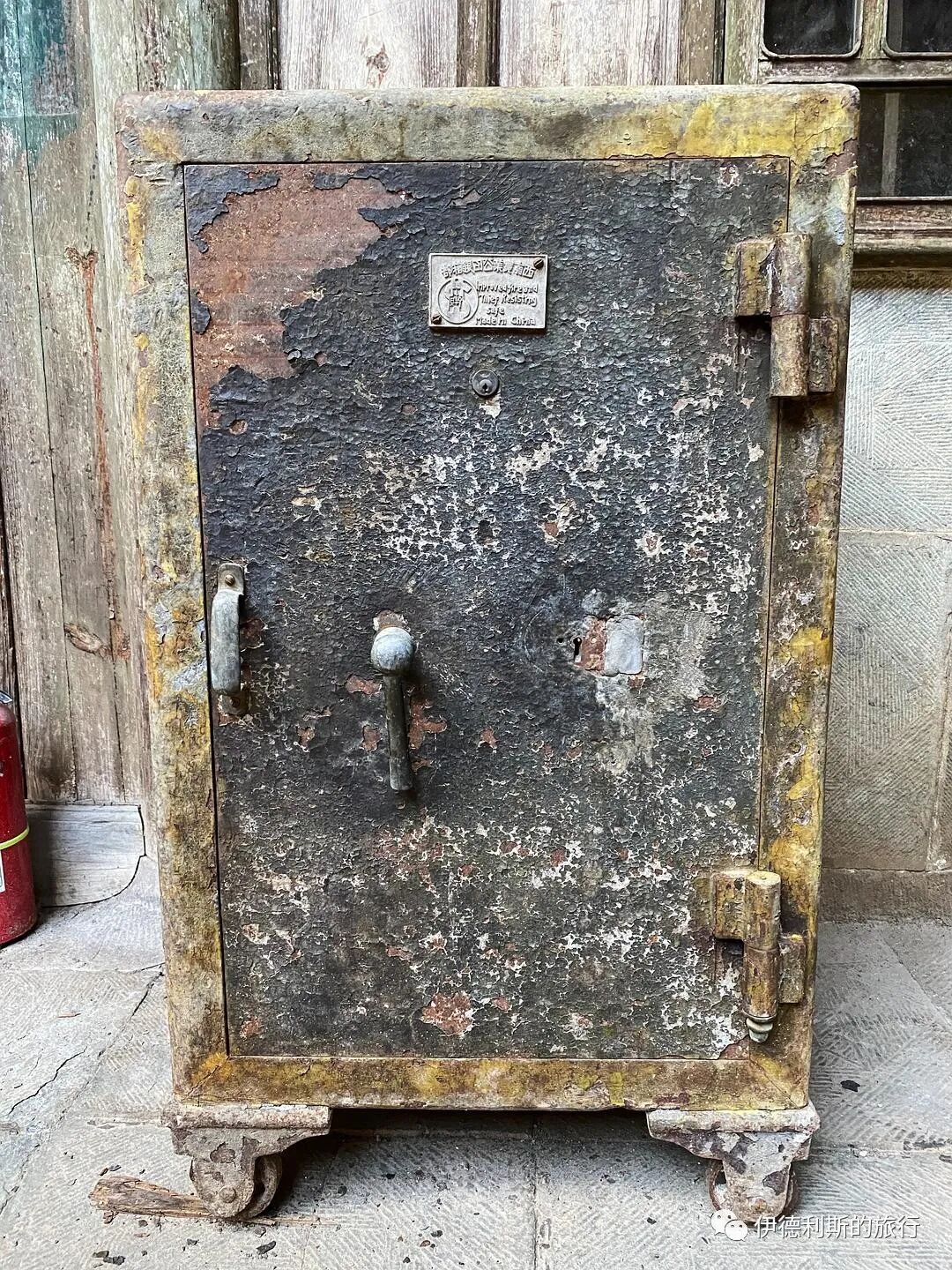
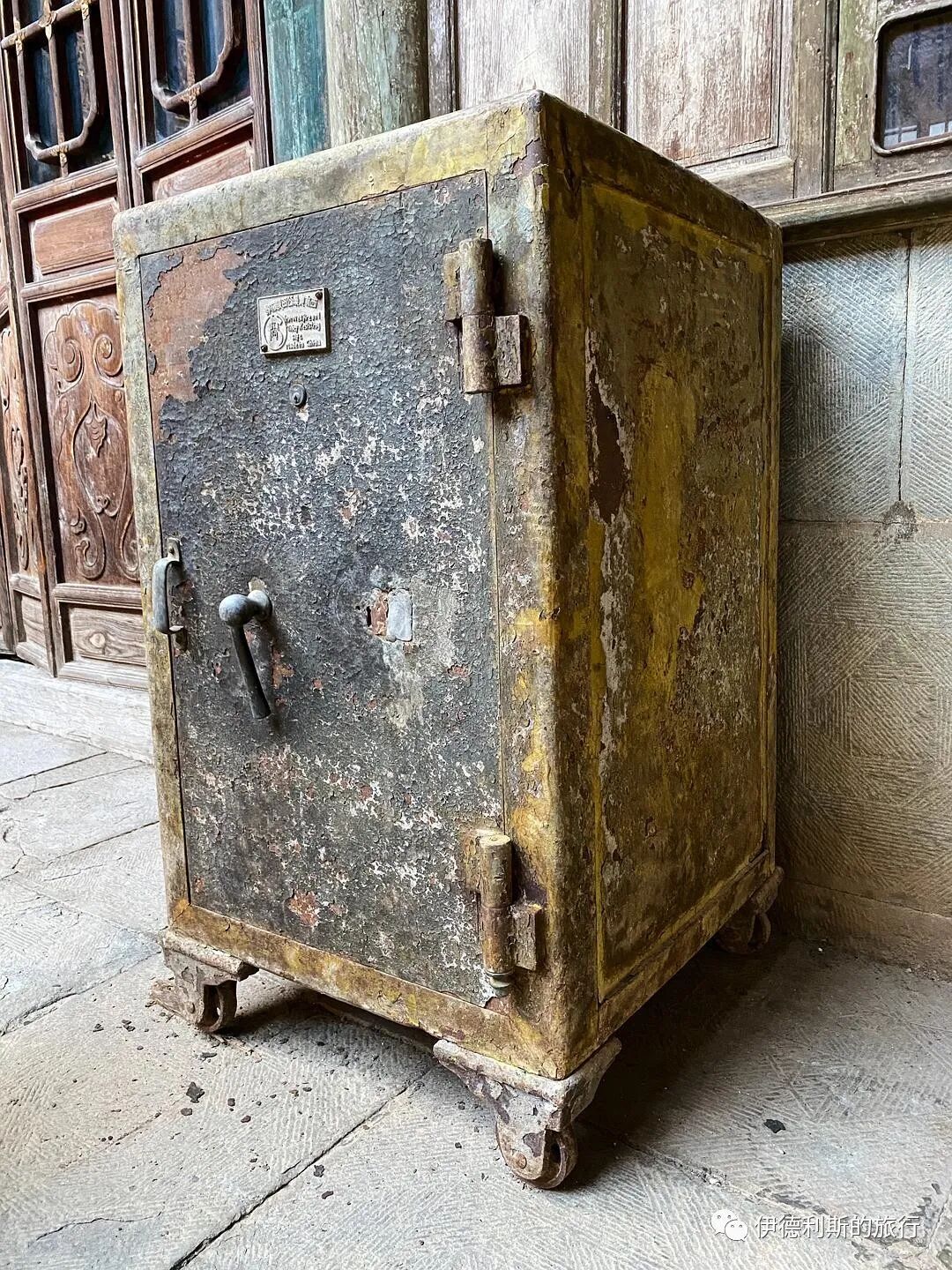
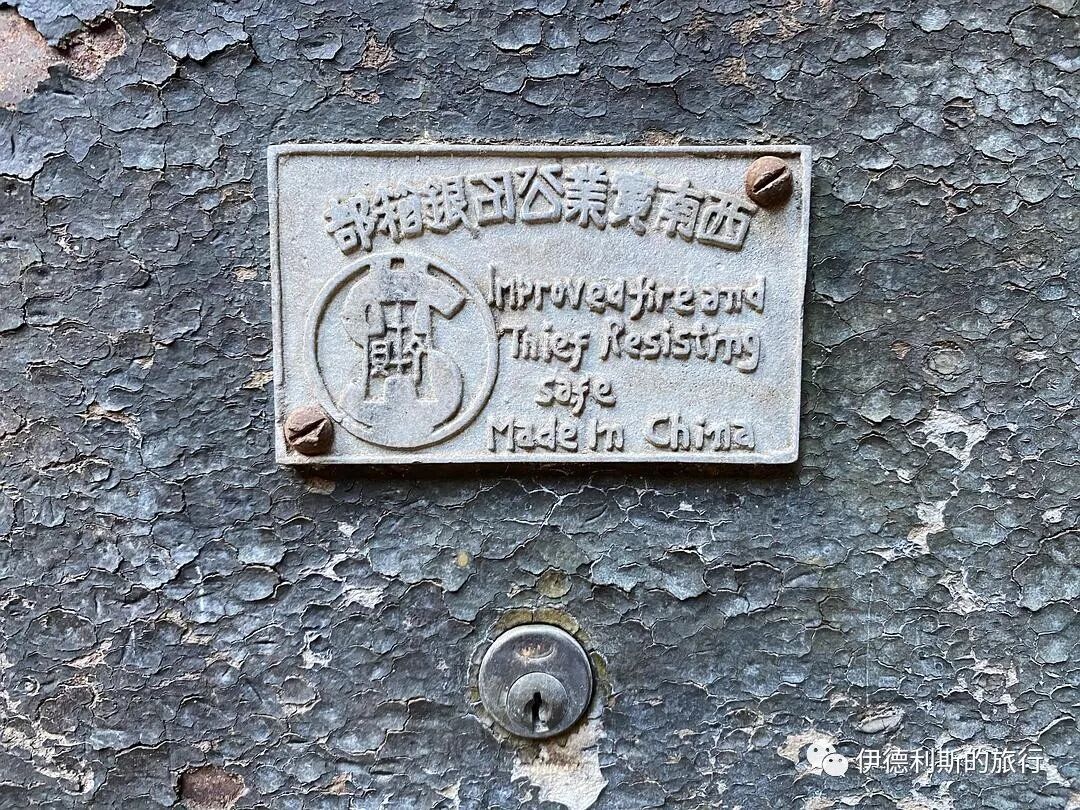
A safe from the Republic of China era sits in the courtyard. It is labeled 'Southwest Industrial Company Safe Department' and 'Improved fire and Thief Resisting safe Made in China'. "
In 1951, the Ma family deposited all the gold, silver, and silver dollars (yuan datou) buried under their compound into the Hexi County People's Bank. This included about 2,000 taels of gold bricks and bars. The largest gold brick weighed over 400 taels, making it too heavy for one person to carry easily, along with 2,000 to 3,000 silver dollars. This event was reported in the Yunnan Daily, and the Ma family was called 'enlightened landlords'. After the land reform movement (tu gai), this gold and silver was taken back to Dahui Village to be displayed as 'fruits of struggle' during public meetings, and then the three compounds and all the furniture were confiscated.
Courtyard No. 2.
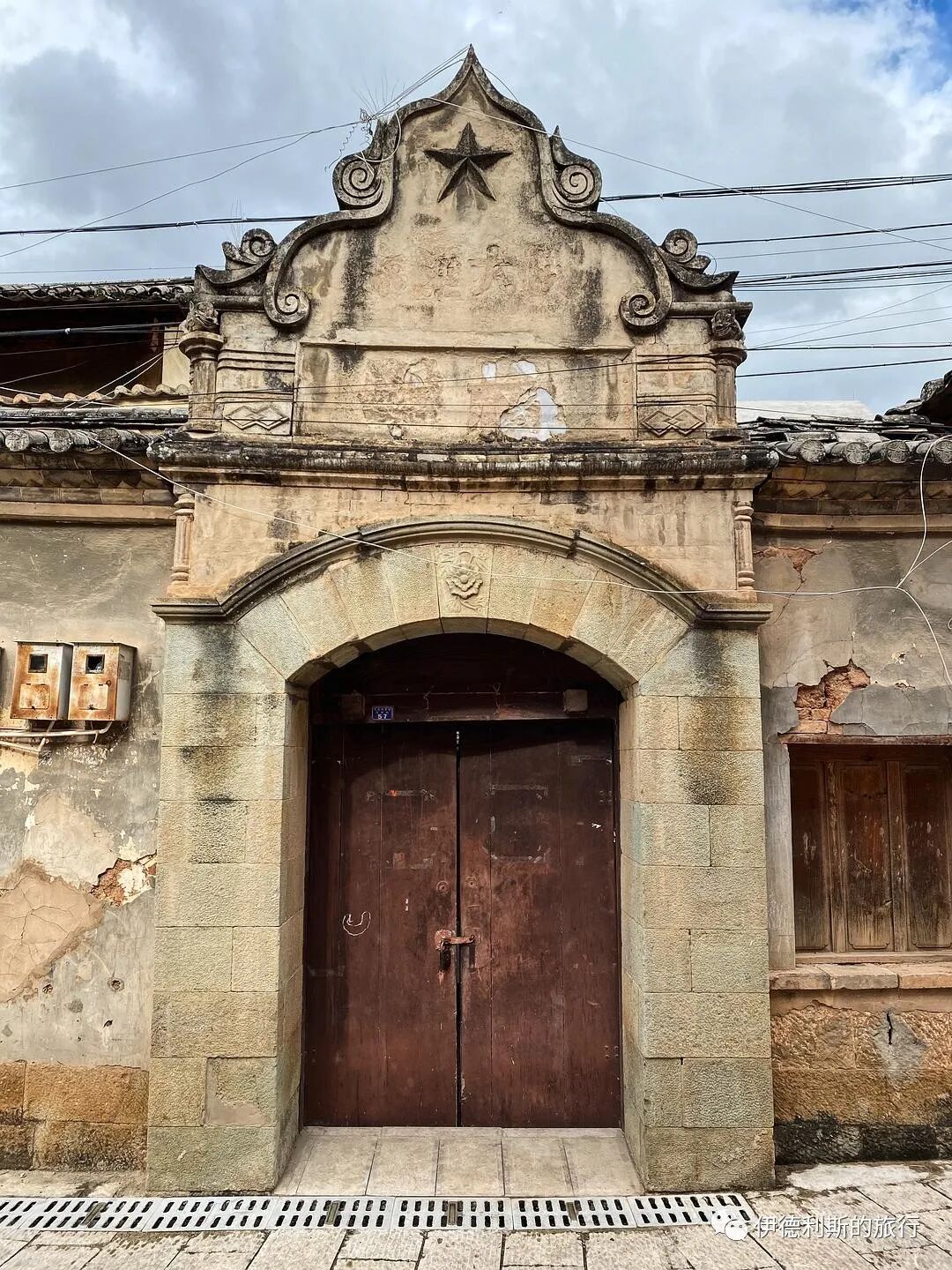
Courtyard No. 2 of the Tonghai Ma Family Compound is located at No. 57 Dahui Village. Built in 1937, it is also a 'key-shaped' (ke yi yin) courtyard with corner towers, but it has a larger skylight, a spacious yard, and simpler decorations.
A plaque reading 'Five Generations Under One Roof' once hung over the gate of Courtyard No. 2. Today, you can still faintly see the words 'Dongqu Brigade' and 'School'. After it was returned to the Ma family in 1986, it was lived in by the family of Ma Zishang (1914-2007), the grandson of Ma Yuanwu. In recent years, the Ma descendants only return during holidays.
In the 1930s, besides running horse caravans for trade, the Ma family set up branches across central and southern Yunnan, as well as in Kengtung and Monghsat in Myanmar, and Lampang, Chiang Mai, and Bangkok in Thailand. During the War of Resistance, trade routes were cut off, and Pu'er tea began to pile up. Once the war ended and the routes reopened, the Ma family immediately hired ten large ten-wheeled trucks to transport over 40 tons of Pu'er tea to Guangdong for resale in Hong Kong. Because the Pu'er tea had been stored for years, it was fully fermented and aged, making it very fragrant and popular with buyers. On the return trip, they brought back flashlights and batteries, which were scarce in Yunnan and sold out quickly.
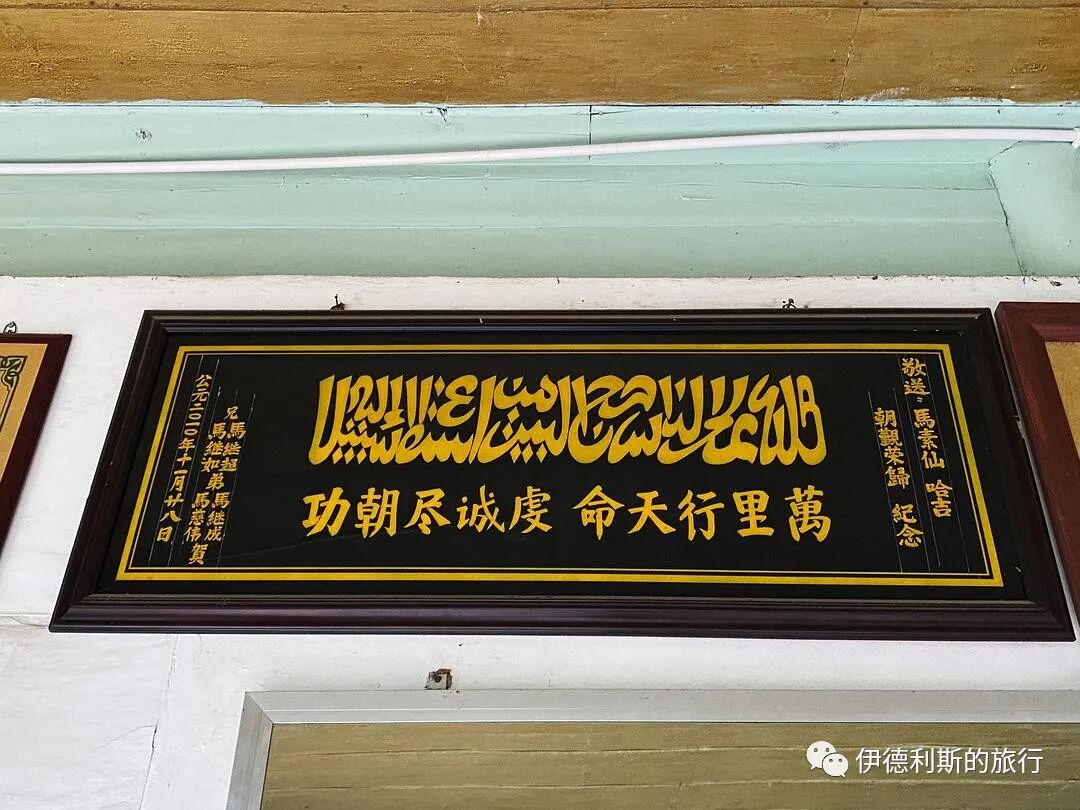
The Ma family was not only good at business but also very devout. I saw several plaques in the courtyard celebrating their successful Hajj pilgrimages.
Courtyard No. 3.
Courtyard No. 3 of the Tonghai Ma Family Compound is at No. 101 Dahui Village. Built between 1947 and 1948, it is the most modern of the three. The Ma family had not yet moved in when the liberation occurred, and after land reform, it became a warehouse for the production team. It is still occupied by Ma family descendants. We were disappointed that we could not visit because the owners were away when we arrived.
After 1945, cross-border trade from Simao to Thailand and Myanmar was gradually replaced by inland trade from Shanghai and Guangzhou to Yunnan. After careful consideration, the Ma family closed their trading businesses in Simao, Mojiang, and Jiangcheng after 1948. The Ma family planned to start trade between Yunnan and Chengdu, Chongqing, Shanghai, and Guangzhou, but new conflicts made this impossible. They finally decided to work together to open the Mingde Cotton Yarn Shop in Kunming. In 1950, the Ma family invested in the Mingde Textile Mill, starting with an investment of 2,000 bales of cotton yarn. After the public-private partnership reform in 1956, Ma Ziming continued to serve as the manager of the Mingde Textile Mill.
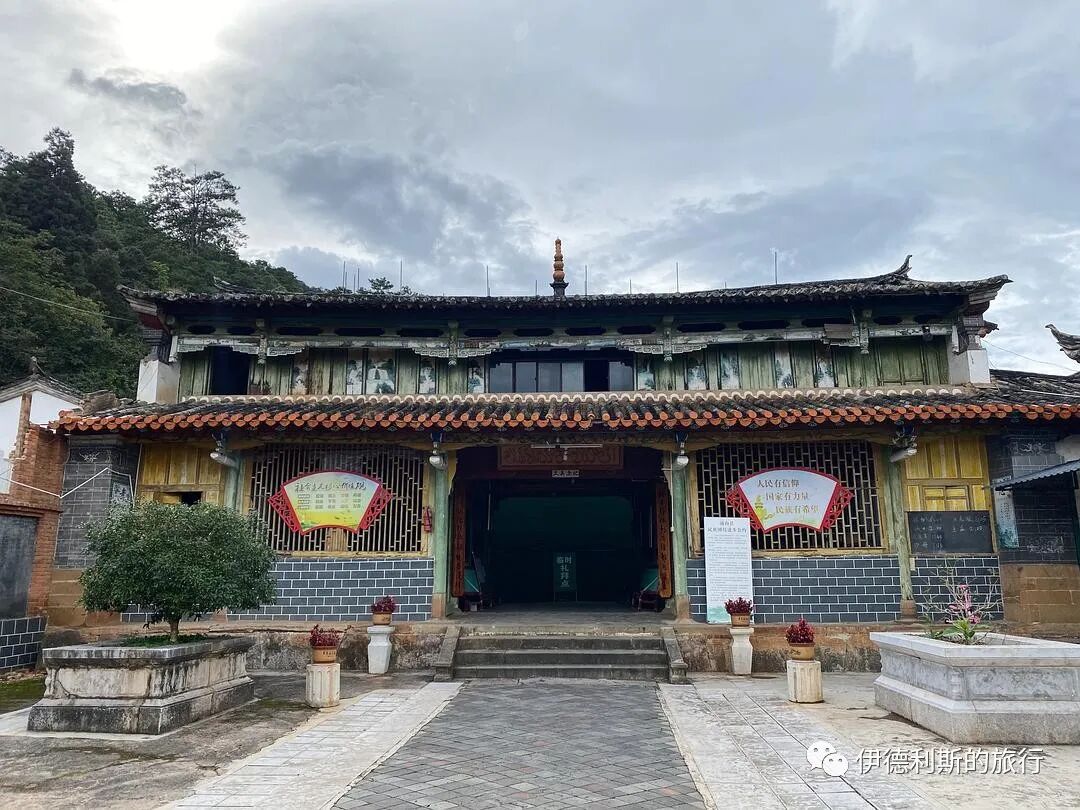
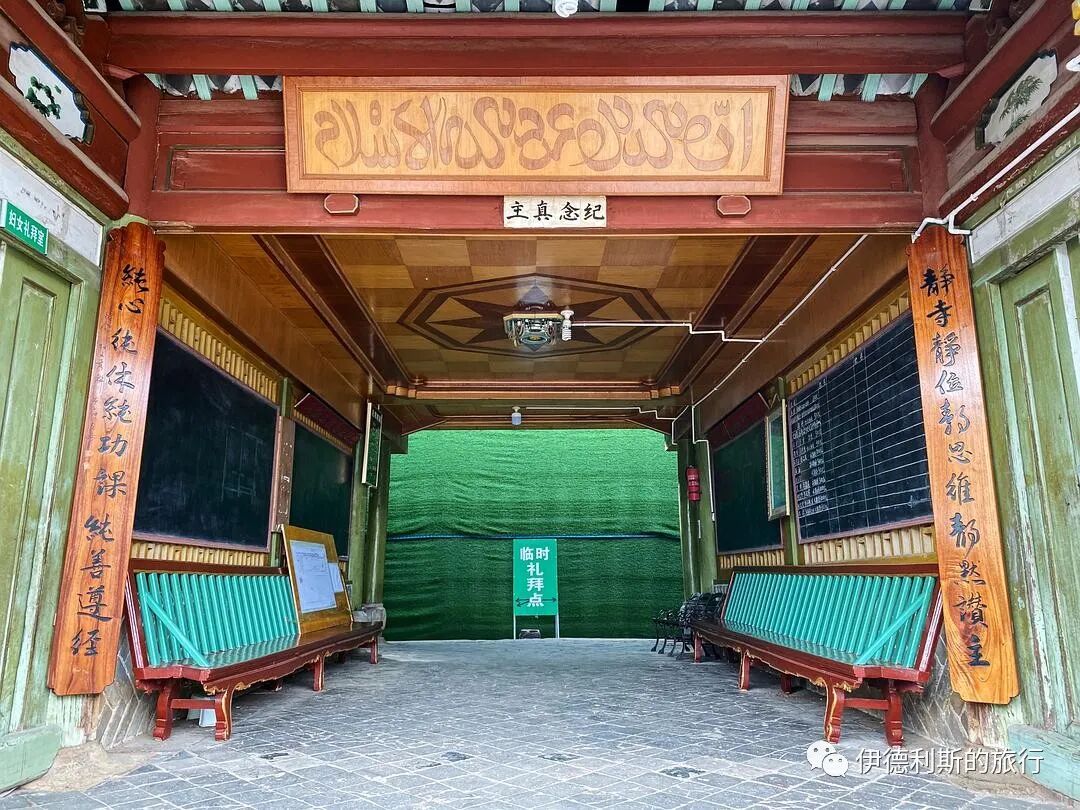
Dahui Village Mosque.
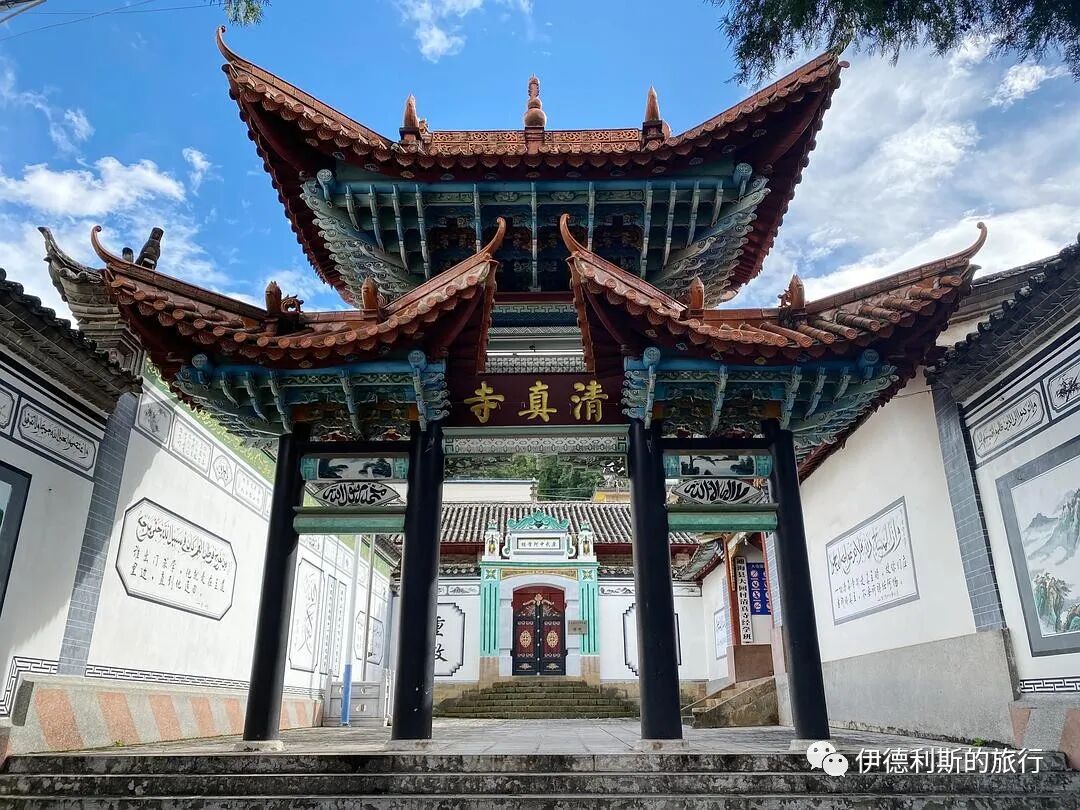
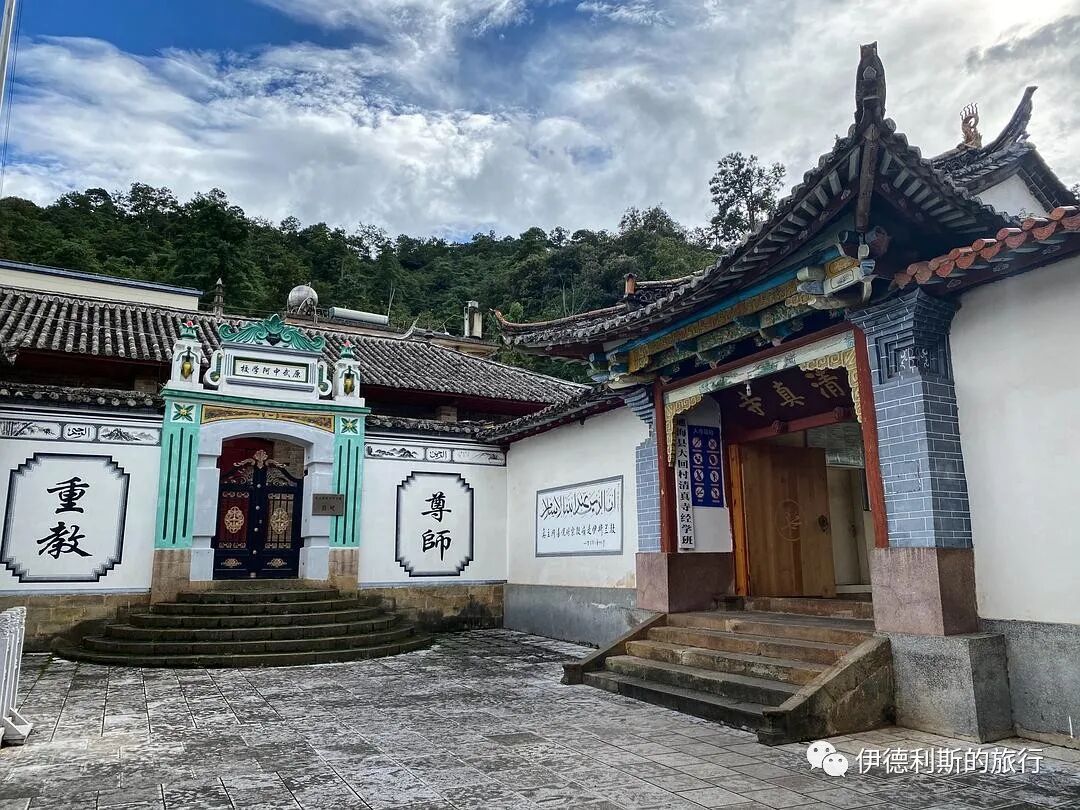
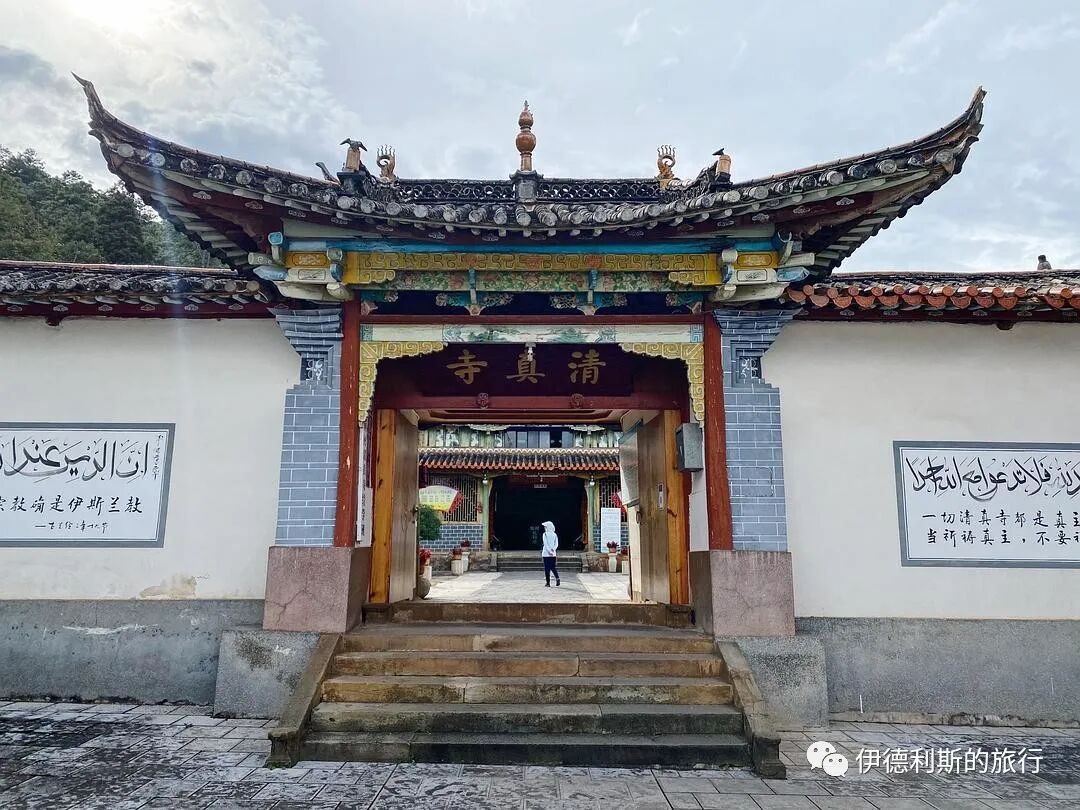
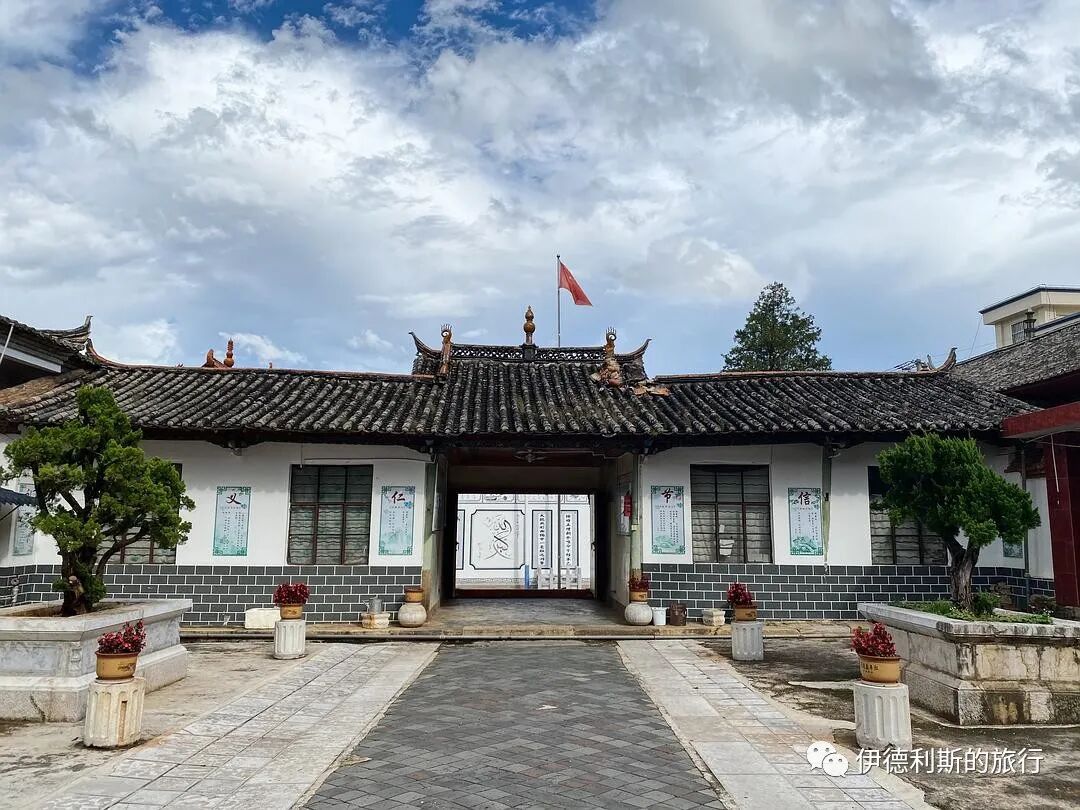
The Dahui Village Mosque in Tonghai was first built in the Ming Dynasty and rebuilt in 1829. The Tonghai Ma family led an expansion in 1946, and the main prayer hall was recently rebuilt as a modern structure.
Tonghai Dahui Village is a Jahriyya (a Sufi order) village. In 1781, Ma Shunqing (1770-1851), the eldest son of the Jahriyya founder Ma Mingxin, was exiled by the Qing government to Simao, Yunnan. He was later rescued by the imam Ma Yunguang from Gucheng and settled in Talang Village, Mojiang, where he became known as the 'Old Ancestor of Talang'. The third son of the Old Ancestor of Talang, Ma Shilin (1813-1871), moved from Talang to Dahui Village in Tonghai and became known as the 'Third Elder of Yunnan'. Ma Shilin ran a horse caravan business in Kunming and became a famous wealthy man, making Dahui Village in Tonghai a well-known Jahriyya village in Yunnan.
The 'Private Yuanwu Chinese-Arabic Primary School' next to the mosque was founded in 1947 by Ma Tongkuan, the second son of the Tonghai Ma family patriarch, Ma Yuanwu. At the time, the school had six classes and an attached kindergarten, with over 300 students from various villages in the northern plains of Hexi County. to the standard curriculum of public schools, they also added English and Arabic. The first class graduated in 1950. Among them, Ma Qichao became the deputy county magistrate of Tonghai, and Xiao Hanjie became the principal of the Tonghai County Teacher Training School.
Some old houses in Dahui Village.
The most detailed book about the Tonghai Ma family is the oral history 'Legendary Family on the Tea Horse Road', and some of the information in this article was compiled from that book. view all
Summary: Tonghai, Yunnan — Ma Family Courtyard and Hui Muslim History is presented here as a firsthand travel account in clear English, beginning with this scene: Author: Zainab. The account keeps its focus on Yunnan Travel, Hui Muslims, Ma Family Courtyard while preserving the names, places, food, and historical details from the Chinese source.
Author: Zainab
On October 4, we drove 33 kilometers east from Dabaiyi Village in Eshan, Yuxi, Yunnan, to reach Dahui Village in Tonghai County.
Dahui Village was originally called Hexi Dadonggou. It is home to over a thousand Hui Muslims, the most famous of whom are the Ma family of Tonghai. The Ma family’s ancestral home was Nanjing. They came to Tonghai to do business with the army in the early Ming Dynasty and settled there. In the early 20th century, the Ma family built up great wealth through horse caravans and international trade. They built three large courtyards in the village between the 1930s and 1940s, which were named Yunnan Provincial Cultural Relics Protection Units in 2018.
The Ma family courtyards were confiscated after the 1950s. In 1986, they were returned to the Ma family as private property belonging to overseas Chinese, and the family has lived there ever since. As the elders of the Ma family passed away and the younger generations moved to cities, the family handed over Courtyard No. 1 and Courtyard No. 2 to the village for safekeeping. They only return during holidays, while Courtyard No. 3 is still occupied by Ma family descendants. By asking helpful village elders, we were able to visit Courtyard No. 1 and Courtyard No. 2. We were very sorry we could not enter Courtyard No. 3 because the owners were not home.
Courtyard No. 1
The first large courtyard is No. 102 in Dahui Village. Built between 1932 and 1933, it is a traditional Yunnan-style courtyard with a layout known as 'three bright and five dark' (ming san an wu) and a corner-turning corridor (zouma zhuanjiaolou). This means you have to walk a distance from the main gate before reaching the courtyard itself.
The outermost part is a traditional Yunnan-style gate with a ridged roof and upturned eaves. It is very interesting to see two sets of couplets from different eras layered on top of each other. The bottom layer is a traditional couplet: 'Han dynasty tile inscriptions bring long life, Zhou dynasty bronze plate inscriptions bring wealth and luck.' The yellow upper layer has a first line that reads, 'Study hard, Allah is the master, put effort into your writing.' I cannot fully identify the second line, only the words 'hardened' and 'hatred'.
After entering the gate, there is a small courtyard filled with orange trees heavy with fruit.
Entering the courtyard, there is a Western-style gate from the Republic of China era. Its Roman columns look very similar to the minaret (jiaobailou) of the Dabaiyi Mosque in Eshan, built in 1935. You can also see the slogan 'Be united, tense, serious, and lively' on the gate, as this place once served as the Dahui Village committee office.
The hollowed-out partition wall inside the gate is very different from the traditional screen wall (zhaobi) or folding screen found in other courtyards.
The first small section of the courtyard contains a small house built of cement. This cement was imported from Japan at the time and transported via Kunming.
The front hall of the Ma family courtyard is unique, featuring a six-sided, multi-eaved, pointed-roof pavilion. It was used exclusively by the clan leader, Ma Yuanwu, for namaz, so it is also called the prayer pavilion (libaiting). It later became the village broadcast station. The pavilion has exquisite colorful paintings, wood carvings, and tiles imported from Japan.
Ma Yuanwu (1862-1955) originally made his living as a farmer. In the early 20th century, he sent his eldest son, Ma Tongzhu (1880-1958), to lead a horse caravan. At first, they carried salt to Xinping County to sell to people from Sichuan. After three or four trips, they saved some money, and then he sent his eldest grandson, Ma Bingzhong (1899-1972), to open a soy sauce workshop in Panxi Town, nearby Huaining County. At the same time, the Ma family used their horse caravans to transport brown sugar boiled in Panxi to Kunming for sale, then brought salt back to Panxi, gradually growing their business.
At the entrance to the first floor of the prayer pavilion, there is a couplet: 'Orchids and cassia in the pavilion spread fragrance far, the shade of the ailanthus and birch trees in the hall lasts long.' The ceiling inside features clouds, cranes, and the characters for 'blessing' (fu) and 'longevity' (shou). The second-floor ceiling has two lotus flowers, and the surrounding windows feature very fine wood carvings.
You can see the pastoral scenery from the balconies on both sides of the prayer pavilion.
The Ma family courtyard was built under the direction of Ma Tongkuan, the second son of clan leader Ma Yuanwu. During the early Republic of China, Ma Tongkuan lived in Mojiang County, east of Pu'er, managing various business dealings. Because he kept his word and managed things well, he became a very wealthy man in southern Yunnan. In the middle and late Republic of China, Ma Tongkuan returned to his hometown of Dahui Village and oversaw the construction of the three Ma family courtyards. In 1956, Ma Tongkuan served as deputy county magistrate of Qilu County. In 1957, he was labeled a rightist, and in 1968, he returned to Allah (gui zhen).
When building the Ma family courtyards, Ma Tongkuan hired craftsmen from Shanghai and Annam. It took about twenty years. They fired their own bricks and tiles, quarried stone, and selected and cut their own timber. The garden kept peacocks and even had an advanced boiler room.
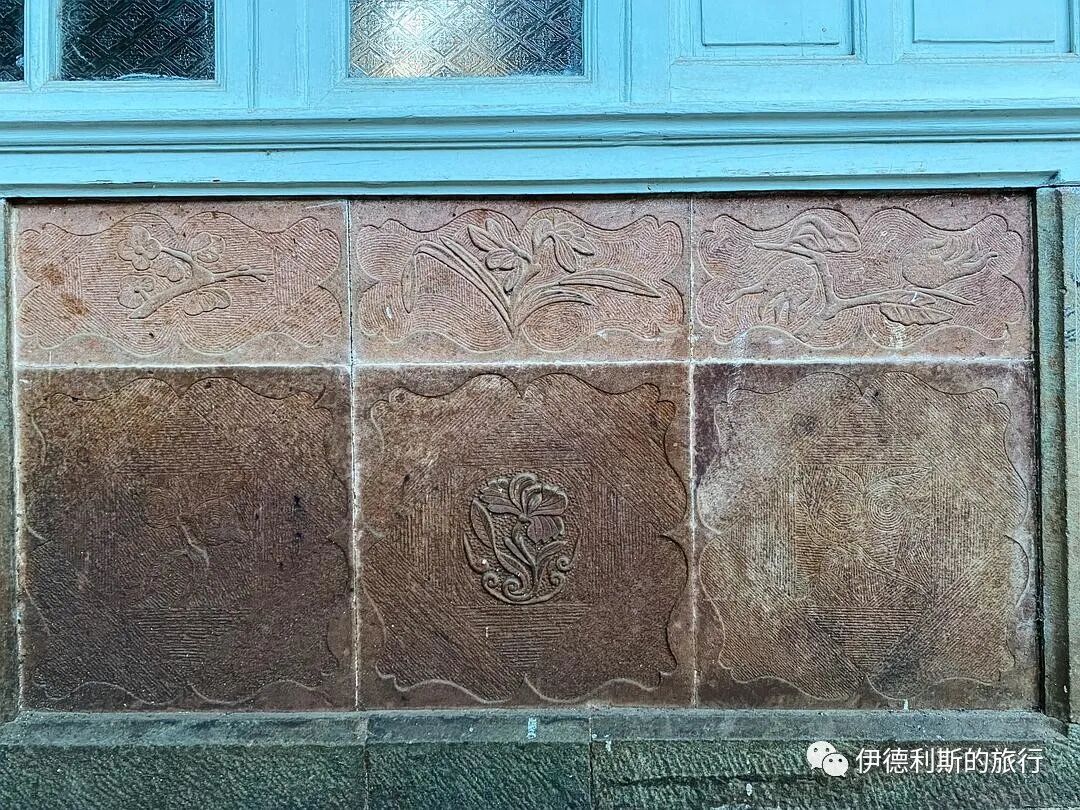
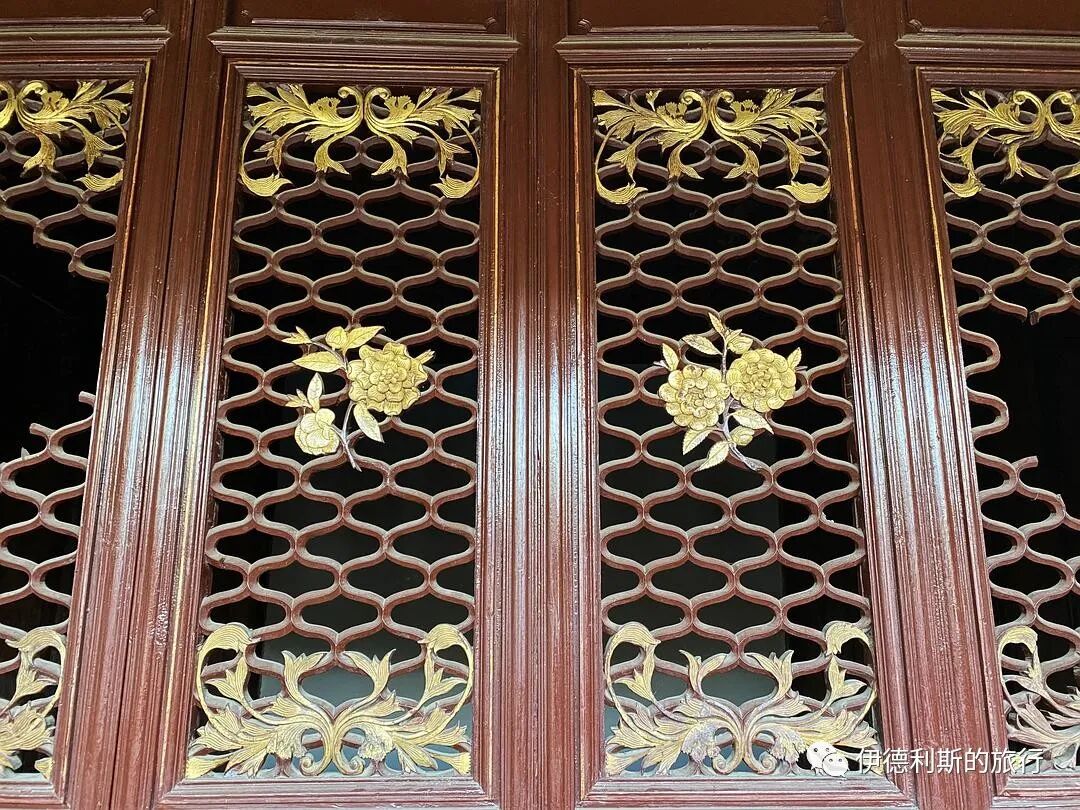
Tonghai has always been famous for its wood carving craftsmanship, and the exquisite wood-carved doors and windows of Courtyard No. 1 are proof of this. The doors and windows feature not only various flowers, plants, birds, and animals, but also pavilions, waterside structures, and Western-style architecture, showing the unique style of the era.
The Ma family courtyard once had twenty or thirty plaques, including 'Cultivating Virtue to Protect Descendants' inscribed by Chiang Kai-shek and 'Five Generations of Prosperity' inscribed by Long Yun, as well as plaques from Yu Youren, Bai Chongxi, Feng Yuxiang, and many others. However, they were all destroyed in the 1960s. All the beautiful couplets were replaced by slogans. Figure 1 shows the marks where the plaques used to hang above the door.
In 1918, the Ma family sold their soy sauce workshop and opened the Yuanxinzhai firm in Mojiang. They switched to trading cotton yarn, cloth, silk, and satin. At the same time, they bought mountain goods and medicinal materials like tea, purple stick (shellac), cowhide, deerskin, velvet antler, and ivory. Later, they also boiled deer glue, expanding their reach from domestic markets to Thailand and Myanmar.
In 1921, the Ma family changed the name of 'Yuanxinzhai' to 'Yuanxinchang' in Kunming. They mainly traded ivory, velvet antler, tiger bone, otter skin, tea, cloth, silk, and dyes. They also transported Chinese medicinal herbs like saffron, sweet flag (changpu), musk, and fritillaria to Thailand for sale. Later, the Ma family established the Jingchang Tea House in Jiangcheng and founded a tea factory to press seven-piece tea cakes (qizi bingcha), which were carried by horse to Laos and then to Vietnam and Hong Kong for sale.
An empty room.
A small house in the backyard, which also has its own little courtyard.
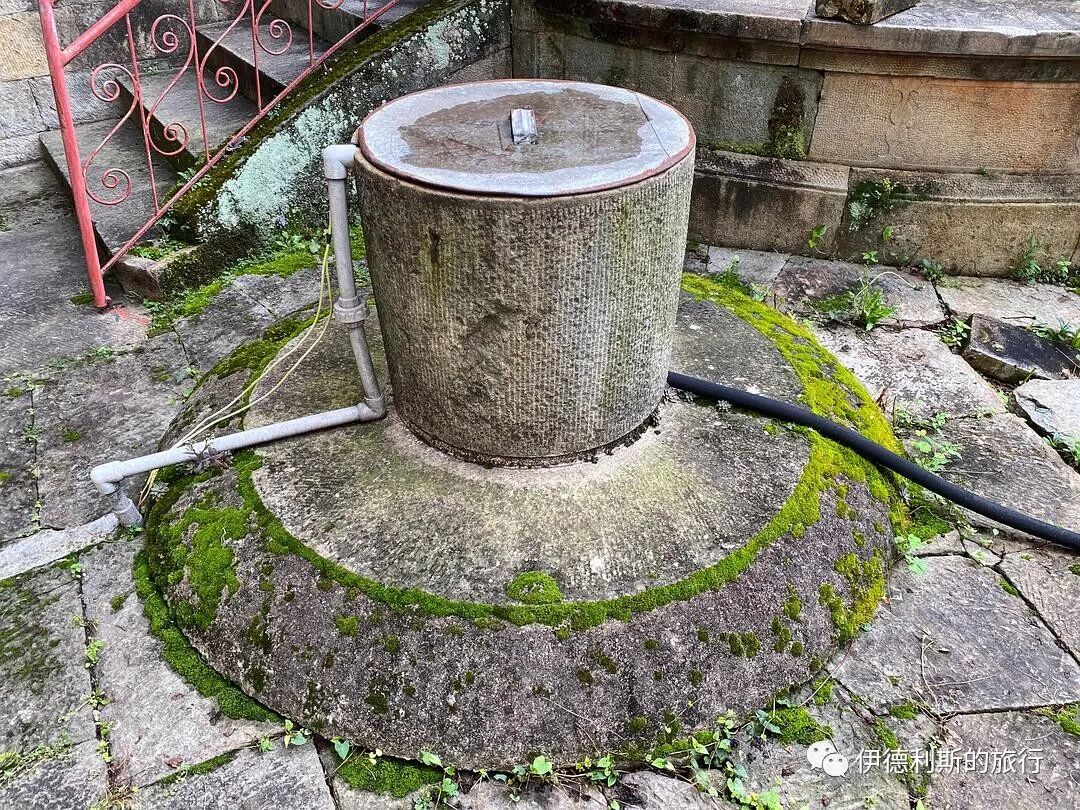
The water vat in the courtyard was likely used for fighting fires.
A safe from the Republic of China era sits in the courtyard. It is labeled 'Southwest Industrial Company Safe Department' and 'Improved fire and Thief Resisting safe Made in China'. "
In 1951, the Ma family deposited all the gold, silver, and silver dollars (yuan datou) buried under their compound into the Hexi County People's Bank. This included about 2,000 taels of gold bricks and bars. The largest gold brick weighed over 400 taels, making it too heavy for one person to carry easily, along with 2,000 to 3,000 silver dollars. This event was reported in the Yunnan Daily, and the Ma family was called 'enlightened landlords'. After the land reform movement (tu gai), this gold and silver was taken back to Dahui Village to be displayed as 'fruits of struggle' during public meetings, and then the three compounds and all the furniture were confiscated.
Courtyard No. 2.
Courtyard No. 2 of the Tonghai Ma Family Compound is located at No. 57 Dahui Village. Built in 1937, it is also a 'key-shaped' (ke yi yin) courtyard with corner towers, but it has a larger skylight, a spacious yard, and simpler decorations.
A plaque reading 'Five Generations Under One Roof' once hung over the gate of Courtyard No. 2. Today, you can still faintly see the words 'Dongqu Brigade' and 'School'. After it was returned to the Ma family in 1986, it was lived in by the family of Ma Zishang (1914-2007), the grandson of Ma Yuanwu. In recent years, the Ma descendants only return during holidays.
In the 1930s, besides running horse caravans for trade, the Ma family set up branches across central and southern Yunnan, as well as in Kengtung and Monghsat in Myanmar, and Lampang, Chiang Mai, and Bangkok in Thailand. During the War of Resistance, trade routes were cut off, and Pu'er tea began to pile up. Once the war ended and the routes reopened, the Ma family immediately hired ten large ten-wheeled trucks to transport over 40 tons of Pu'er tea to Guangdong for resale in Hong Kong. Because the Pu'er tea had been stored for years, it was fully fermented and aged, making it very fragrant and popular with buyers. On the return trip, they brought back flashlights and batteries, which were scarce in Yunnan and sold out quickly.
The Ma family was not only good at business but also very devout. I saw several plaques in the courtyard celebrating their successful Hajj pilgrimages.
Courtyard No. 3.
Courtyard No. 3 of the Tonghai Ma Family Compound is at No. 101 Dahui Village. Built between 1947 and 1948, it is the most modern of the three. The Ma family had not yet moved in when the liberation occurred, and after land reform, it became a warehouse for the production team. It is still occupied by Ma family descendants. We were disappointed that we could not visit because the owners were away when we arrived.
After 1945, cross-border trade from Simao to Thailand and Myanmar was gradually replaced by inland trade from Shanghai and Guangzhou to Yunnan. After careful consideration, the Ma family closed their trading businesses in Simao, Mojiang, and Jiangcheng after 1948. The Ma family planned to start trade between Yunnan and Chengdu, Chongqing, Shanghai, and Guangzhou, but new conflicts made this impossible. They finally decided to work together to open the Mingde Cotton Yarn Shop in Kunming. In 1950, the Ma family invested in the Mingde Textile Mill, starting with an investment of 2,000 bales of cotton yarn. After the public-private partnership reform in 1956, Ma Ziming continued to serve as the manager of the Mingde Textile Mill.
Dahui Village Mosque.
The Dahui Village Mosque in Tonghai was first built in the Ming Dynasty and rebuilt in 1829. The Tonghai Ma family led an expansion in 1946, and the main prayer hall was recently rebuilt as a modern structure.
Tonghai Dahui Village is a Jahriyya (a Sufi order) village. In 1781, Ma Shunqing (1770-1851), the eldest son of the Jahriyya founder Ma Mingxin, was exiled by the Qing government to Simao, Yunnan. He was later rescued by the imam Ma Yunguang from Gucheng and settled in Talang Village, Mojiang, where he became known as the 'Old Ancestor of Talang'. The third son of the Old Ancestor of Talang, Ma Shilin (1813-1871), moved from Talang to Dahui Village in Tonghai and became known as the 'Third Elder of Yunnan'. Ma Shilin ran a horse caravan business in Kunming and became a famous wealthy man, making Dahui Village in Tonghai a well-known Jahriyya village in Yunnan.
The 'Private Yuanwu Chinese-Arabic Primary School' next to the mosque was founded in 1947 by Ma Tongkuan, the second son of the Tonghai Ma family patriarch, Ma Yuanwu. At the time, the school had six classes and an attached kindergarten, with over 300 students from various villages in the northern plains of Hexi County. to the standard curriculum of public schools, they also added English and Arabic. The first class graduated in 1950. Among them, Ma Qichao became the deputy county magistrate of Tonghai, and Xiao Hanjie became the principal of the Tonghai County Teacher Training School.
Some old houses in Dahui Village.
The most detailed book about the Tonghai Ma family is the oral history 'Legendary Family on the Tea Horse Road', and some of the information in this article was compiled from that book. view all
Reposted from the web
Summary: Tonghai, Yunnan — Ma Family Courtyard and Hui Muslim History is presented here as a firsthand travel account in clear English, beginning with this scene: Author: Zainab. The account keeps its focus on Yunnan Travel, Hui Muslims, Ma Family Courtyard while preserving the names, places, food, and historical details from the Chinese source.
Author: Zainab
On October 4, we drove 33 kilometers east from Dabaiyi Village in Eshan, Yuxi, Yunnan, to reach Dahui Village in Tonghai County.
Dahui Village was originally called Hexi Dadonggou. It is home to over a thousand Hui Muslims, the most famous of whom are the Ma family of Tonghai. The Ma family’s ancestral home was Nanjing. They came to Tonghai to do business with the army in the early Ming Dynasty and settled there. In the early 20th century, the Ma family built up great wealth through horse caravans and international trade. They built three large courtyards in the village between the 1930s and 1940s, which were named Yunnan Provincial Cultural Relics Protection Units in 2018.
The Ma family courtyards were confiscated after the 1950s. In 1986, they were returned to the Ma family as private property belonging to overseas Chinese, and the family has lived there ever since. As the elders of the Ma family passed away and the younger generations moved to cities, the family handed over Courtyard No. 1 and Courtyard No. 2 to the village for safekeeping. They only return during holidays, while Courtyard No. 3 is still occupied by Ma family descendants. By asking helpful village elders, we were able to visit Courtyard No. 1 and Courtyard No. 2. We were very sorry we could not enter Courtyard No. 3 because the owners were not home.
Courtyard No. 1
The first large courtyard is No. 102 in Dahui Village. Built between 1932 and 1933, it is a traditional Yunnan-style courtyard with a layout known as 'three bright and five dark' (ming san an wu) and a corner-turning corridor (zouma zhuanjiaolou). This means you have to walk a distance from the main gate before reaching the courtyard itself.
The outermost part is a traditional Yunnan-style gate with a ridged roof and upturned eaves. It is very interesting to see two sets of couplets from different eras layered on top of each other. The bottom layer is a traditional couplet: 'Han dynasty tile inscriptions bring long life, Zhou dynasty bronze plate inscriptions bring wealth and luck.' The yellow upper layer has a first line that reads, 'Study hard, Allah is the master, put effort into your writing.' I cannot fully identify the second line, only the words 'hardened' and 'hatred'.
After entering the gate, there is a small courtyard filled with orange trees heavy with fruit.
Entering the courtyard, there is a Western-style gate from the Republic of China era. Its Roman columns look very similar to the minaret (jiaobailou) of the Dabaiyi Mosque in Eshan, built in 1935. You can also see the slogan 'Be united, tense, serious, and lively' on the gate, as this place once served as the Dahui Village committee office.
The hollowed-out partition wall inside the gate is very different from the traditional screen wall (zhaobi) or folding screen found in other courtyards.
The first small section of the courtyard contains a small house built of cement. This cement was imported from Japan at the time and transported via Kunming.
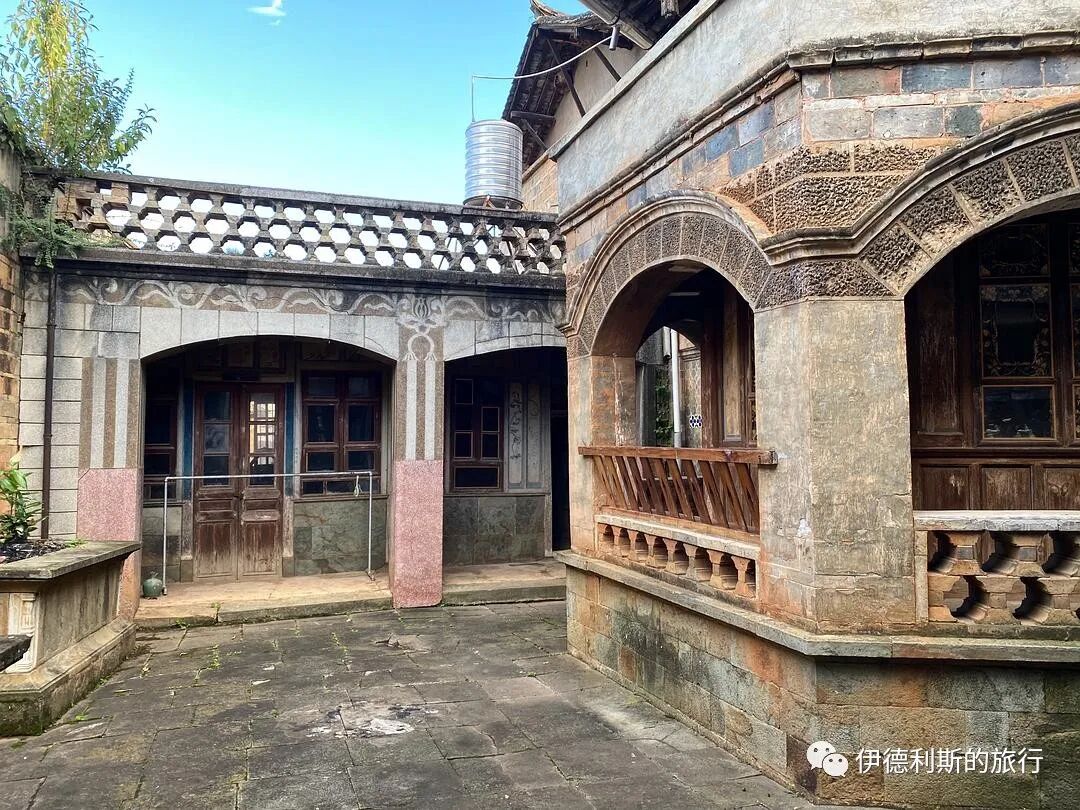
The front hall of the Ma family courtyard is unique, featuring a six-sided, multi-eaved, pointed-roof pavilion. It was used exclusively by the clan leader, Ma Yuanwu, for namaz, so it is also called the prayer pavilion (libaiting). It later became the village broadcast station. The pavilion has exquisite colorful paintings, wood carvings, and tiles imported from Japan.
Ma Yuanwu (1862-1955) originally made his living as a farmer. In the early 20th century, he sent his eldest son, Ma Tongzhu (1880-1958), to lead a horse caravan. At first, they carried salt to Xinping County to sell to people from Sichuan. After three or four trips, they saved some money, and then he sent his eldest grandson, Ma Bingzhong (1899-1972), to open a soy sauce workshop in Panxi Town, nearby Huaining County. At the same time, the Ma family used their horse caravans to transport brown sugar boiled in Panxi to Kunming for sale, then brought salt back to Panxi, gradually growing their business.
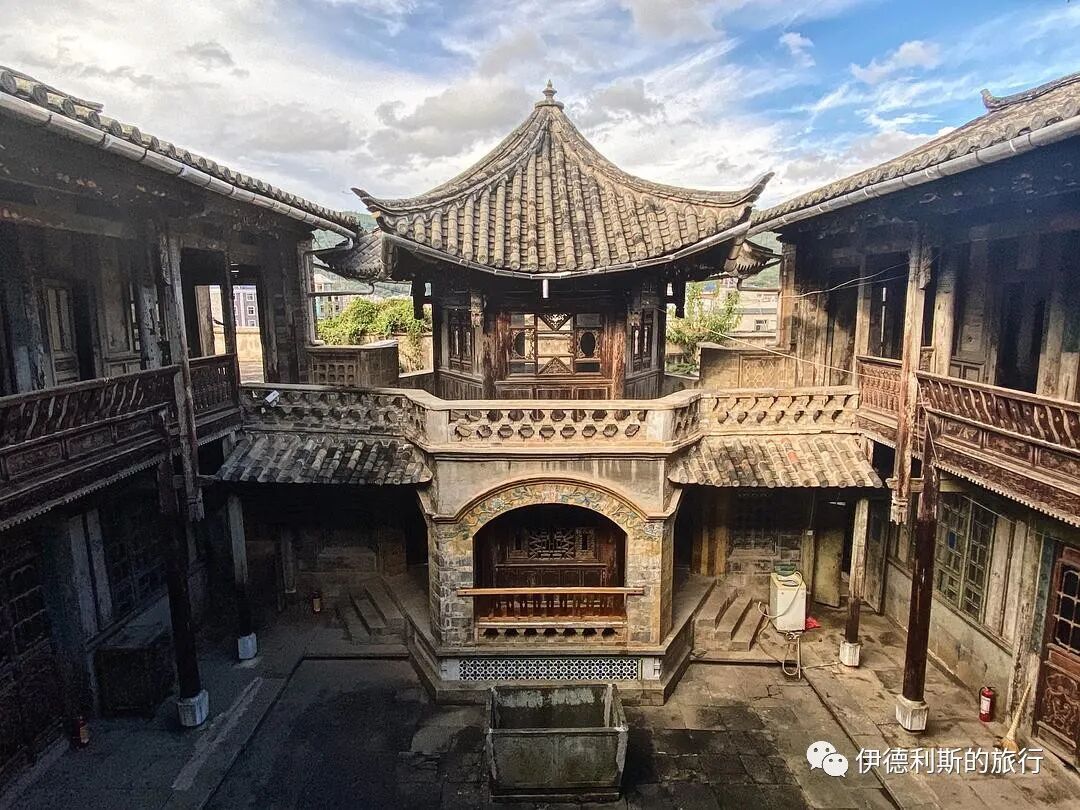
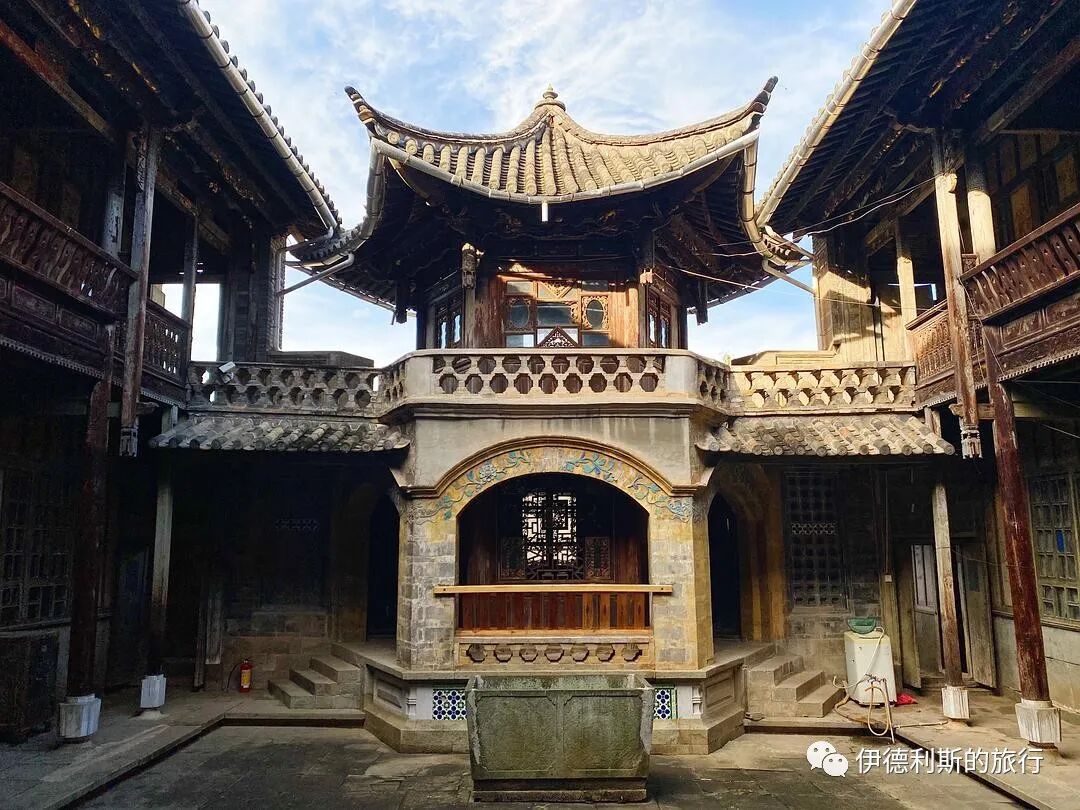
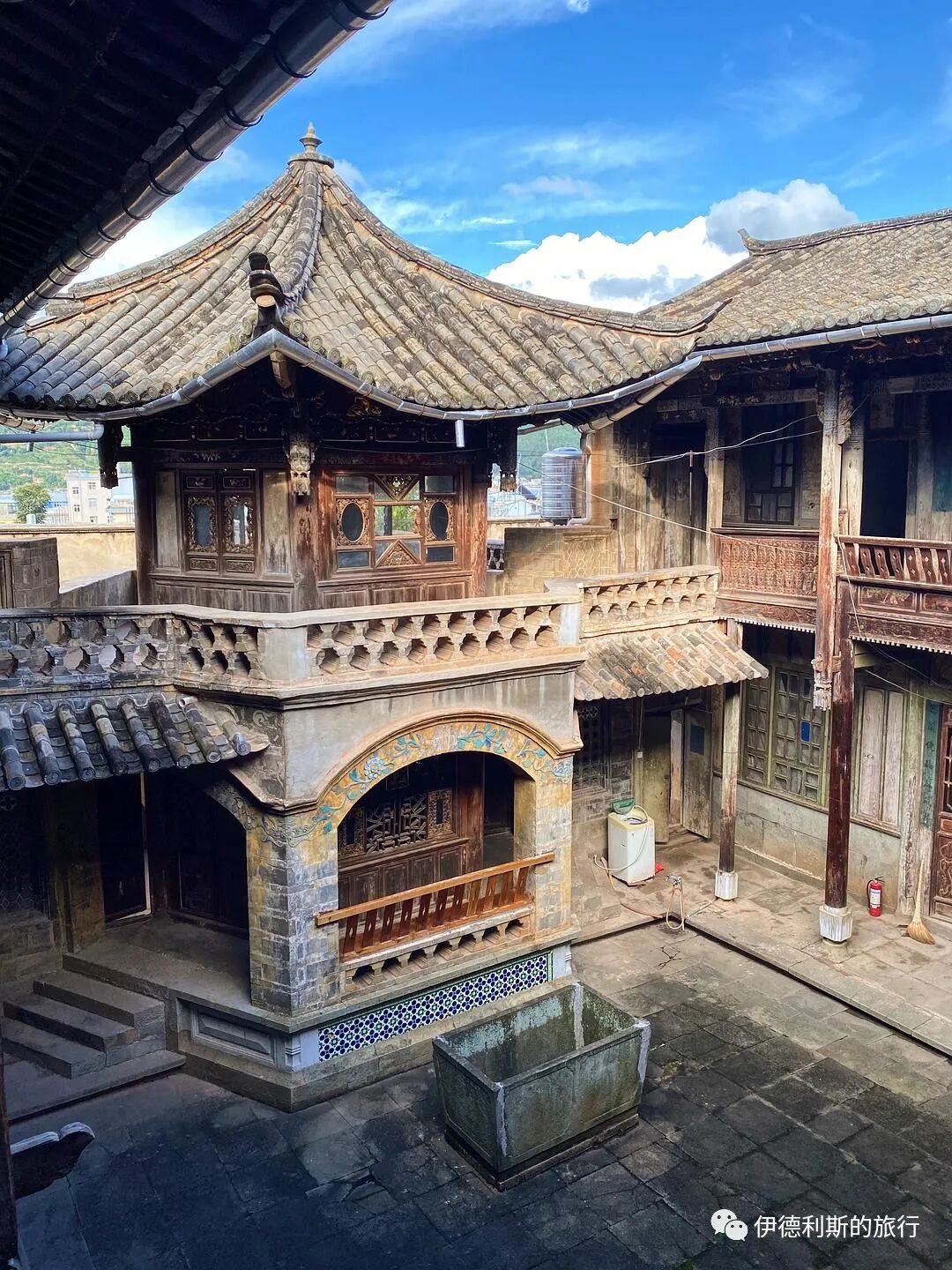
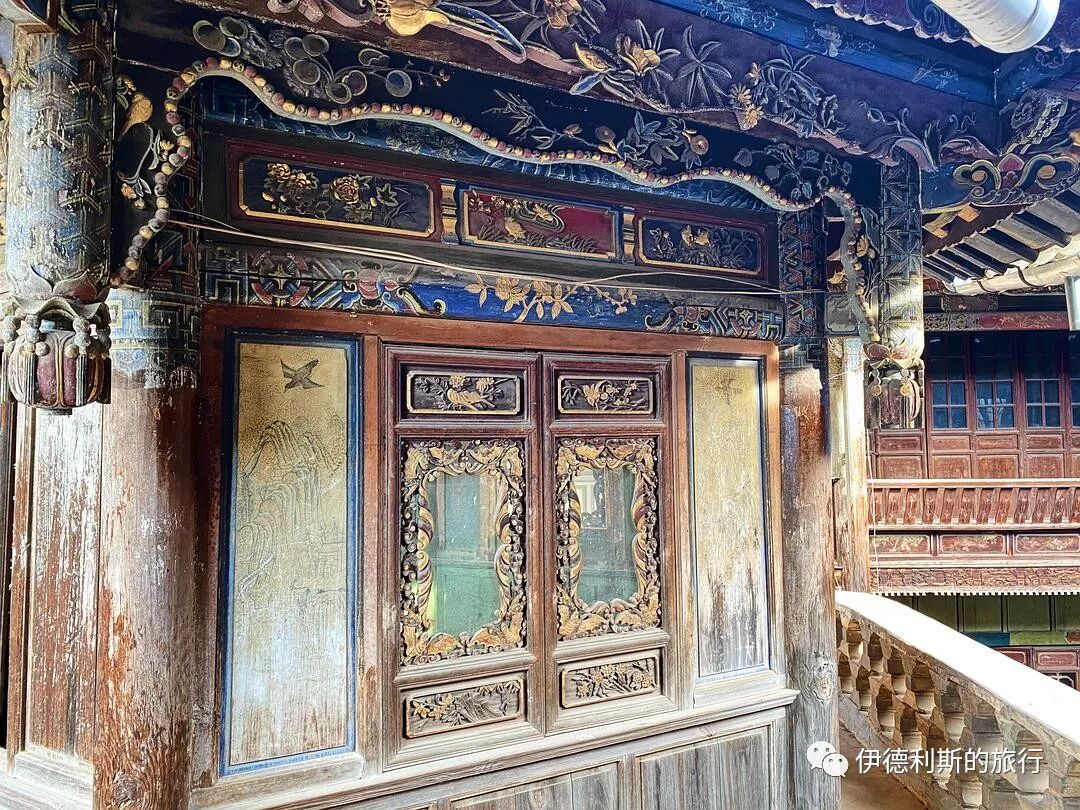
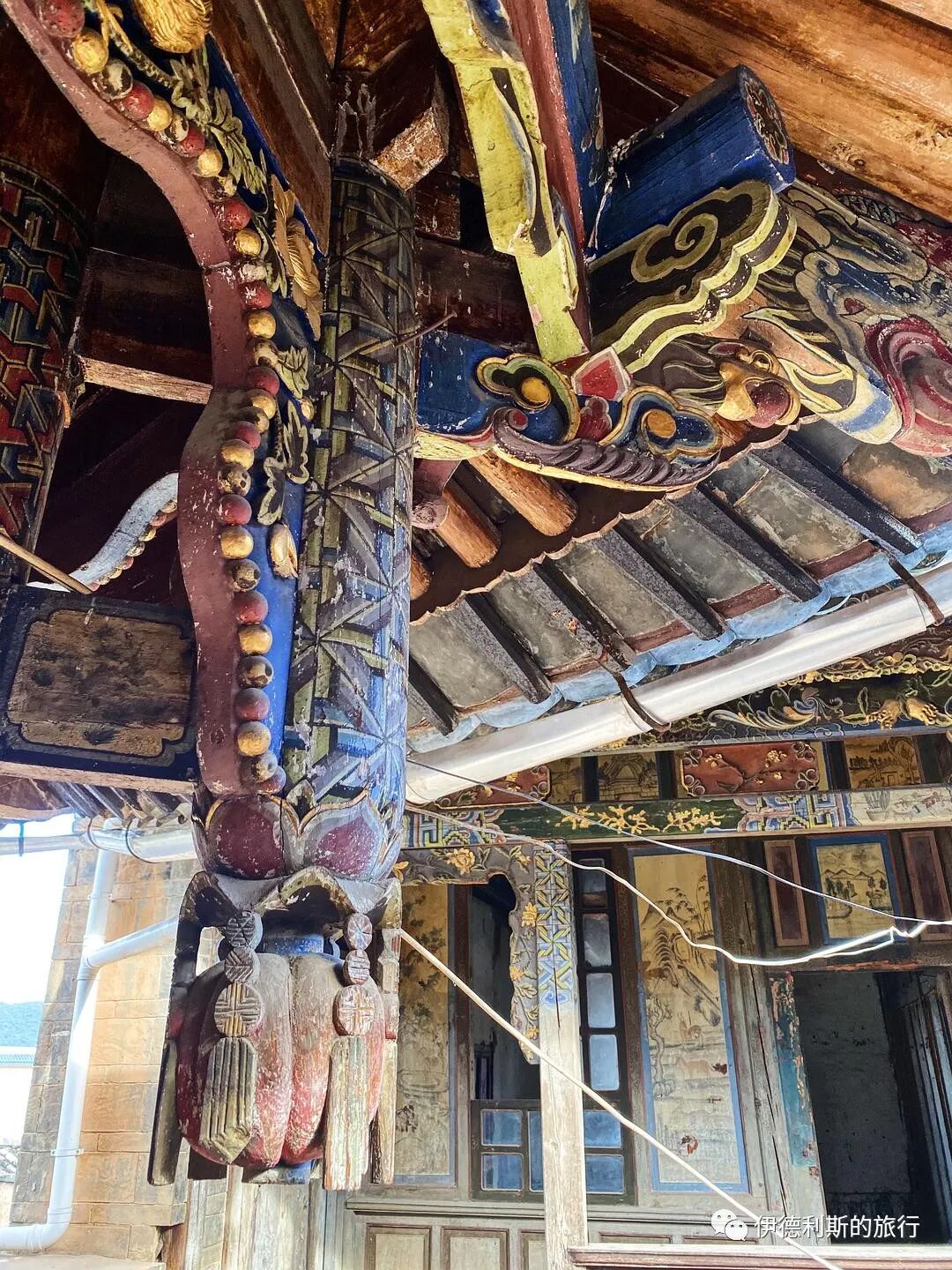
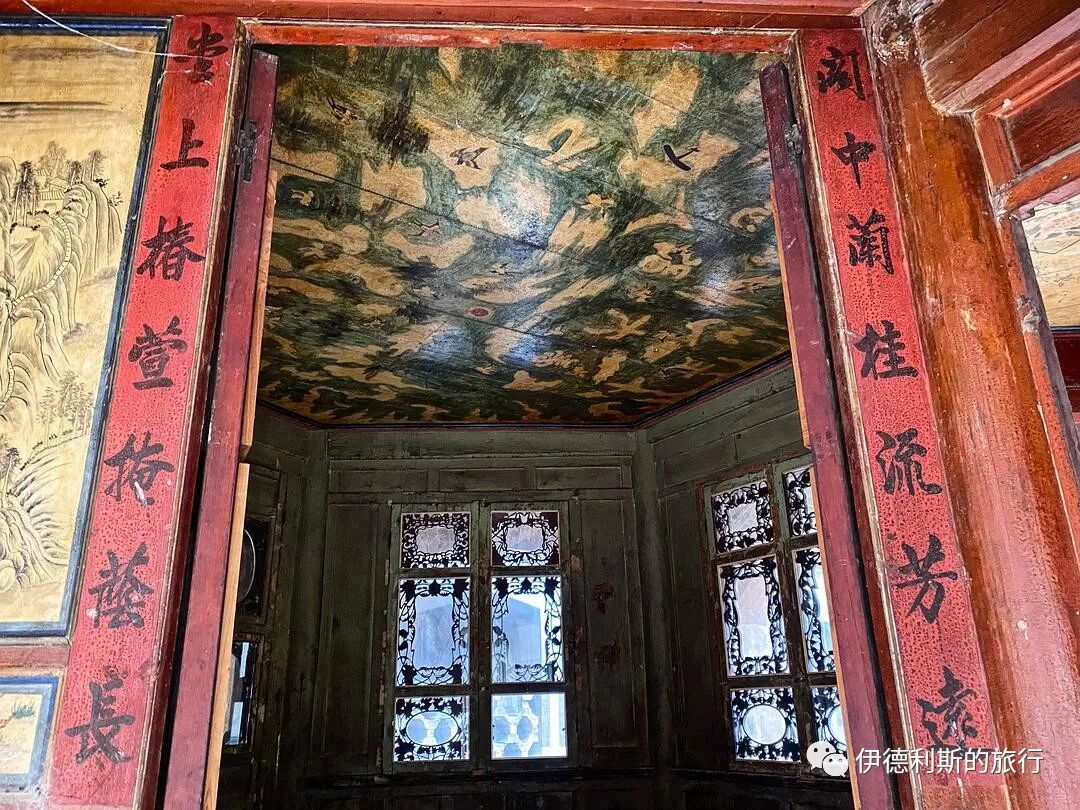
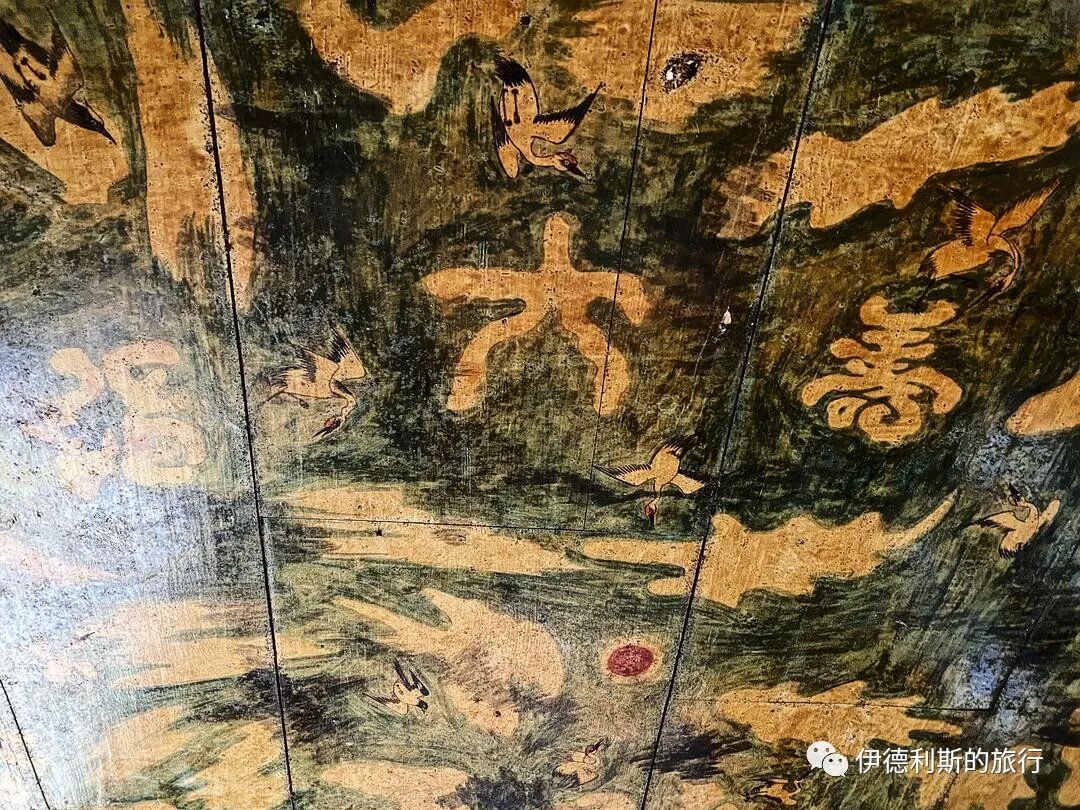
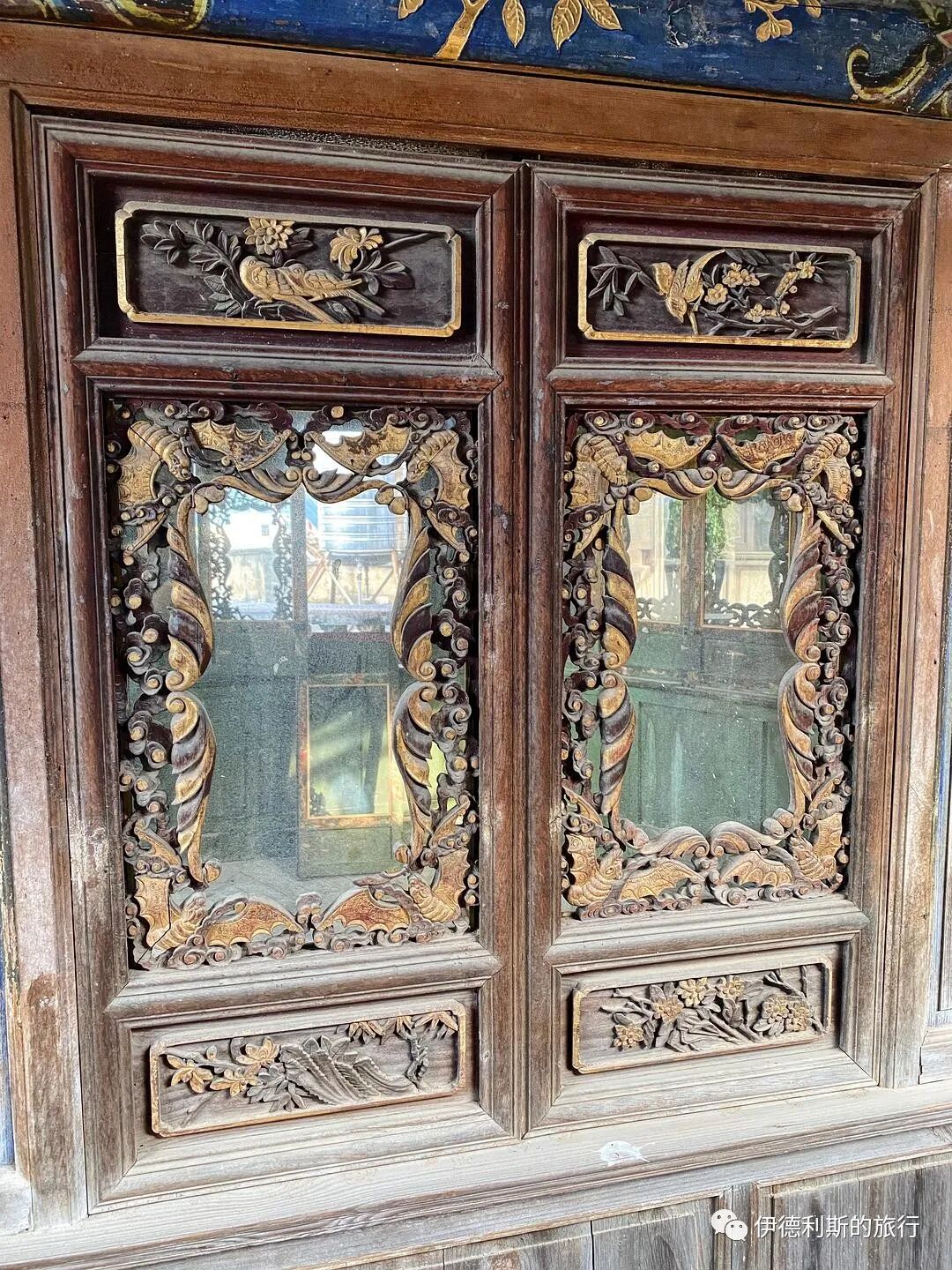
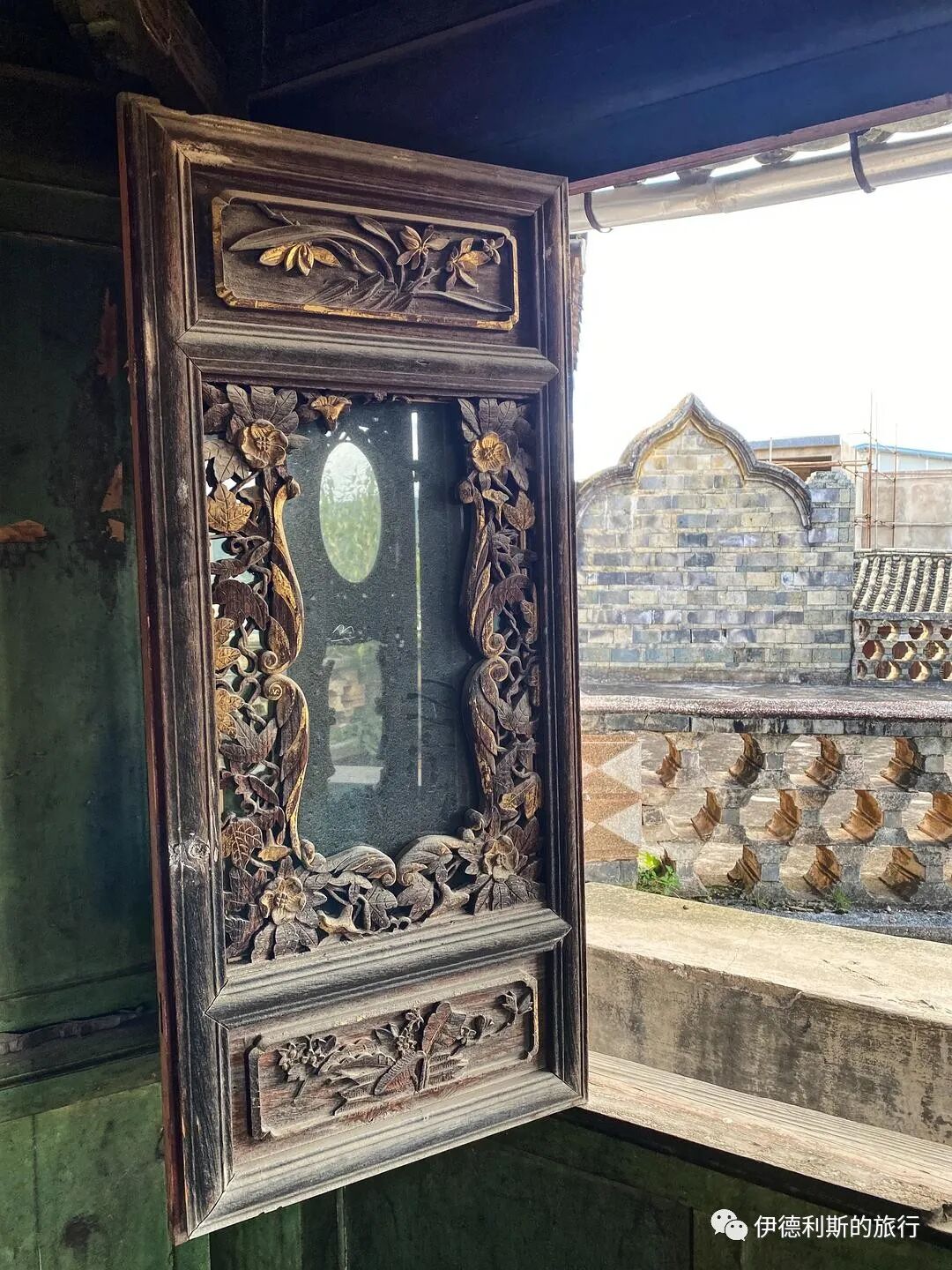
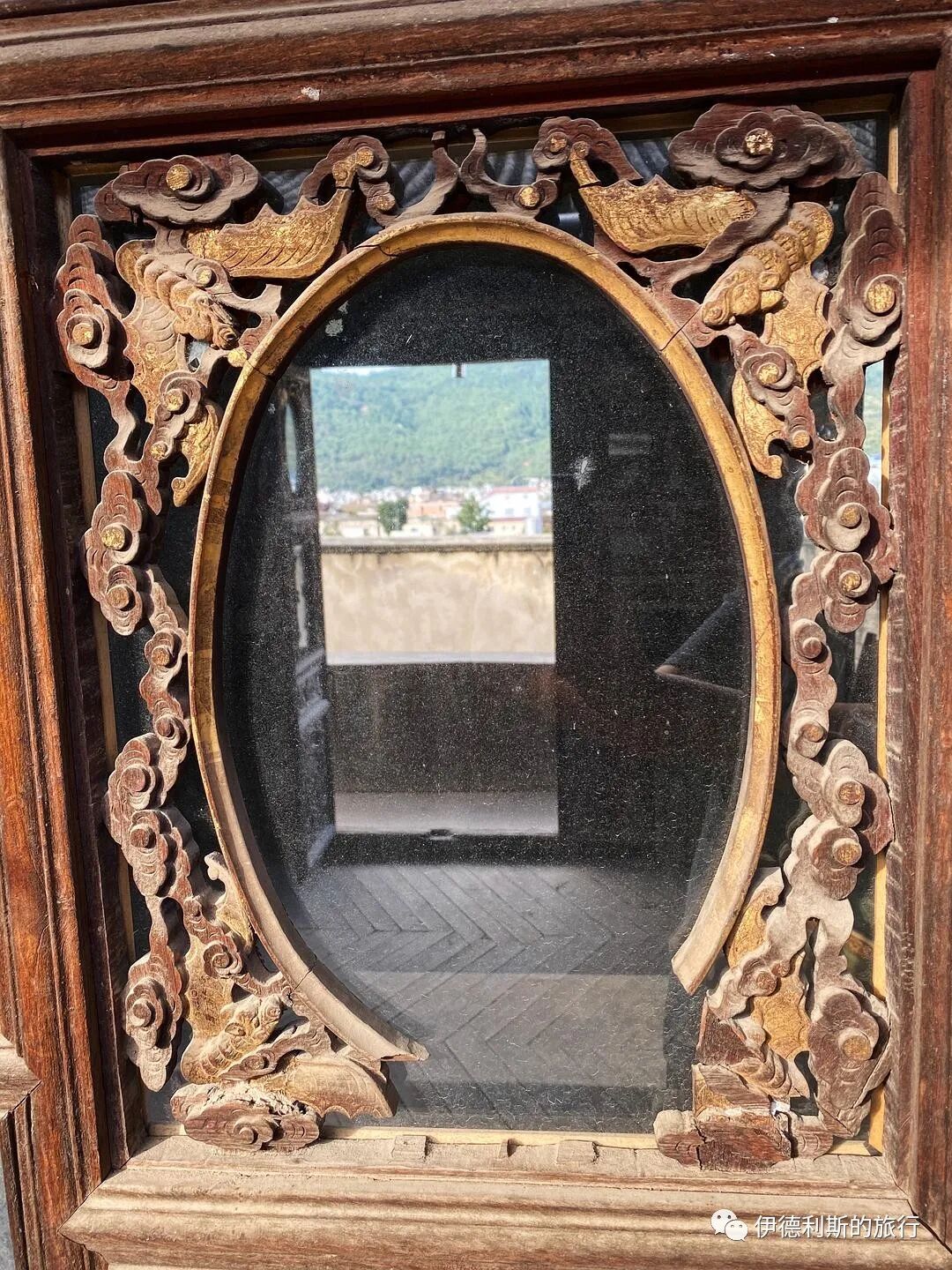
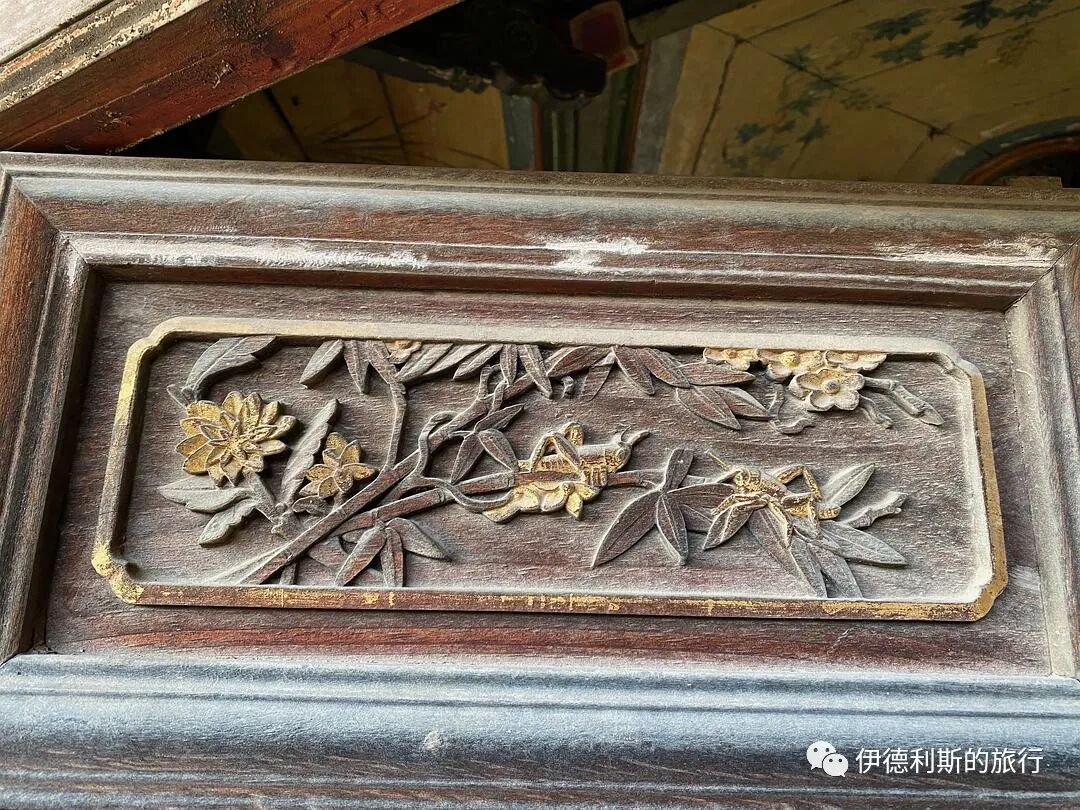
At the entrance to the first floor of the prayer pavilion, there is a couplet: 'Orchids and cassia in the pavilion spread fragrance far, the shade of the ailanthus and birch trees in the hall lasts long.' The ceiling inside features clouds, cranes, and the characters for 'blessing' (fu) and 'longevity' (shou). The second-floor ceiling has two lotus flowers, and the surrounding windows feature very fine wood carvings.
You can see the pastoral scenery from the balconies on both sides of the prayer pavilion.
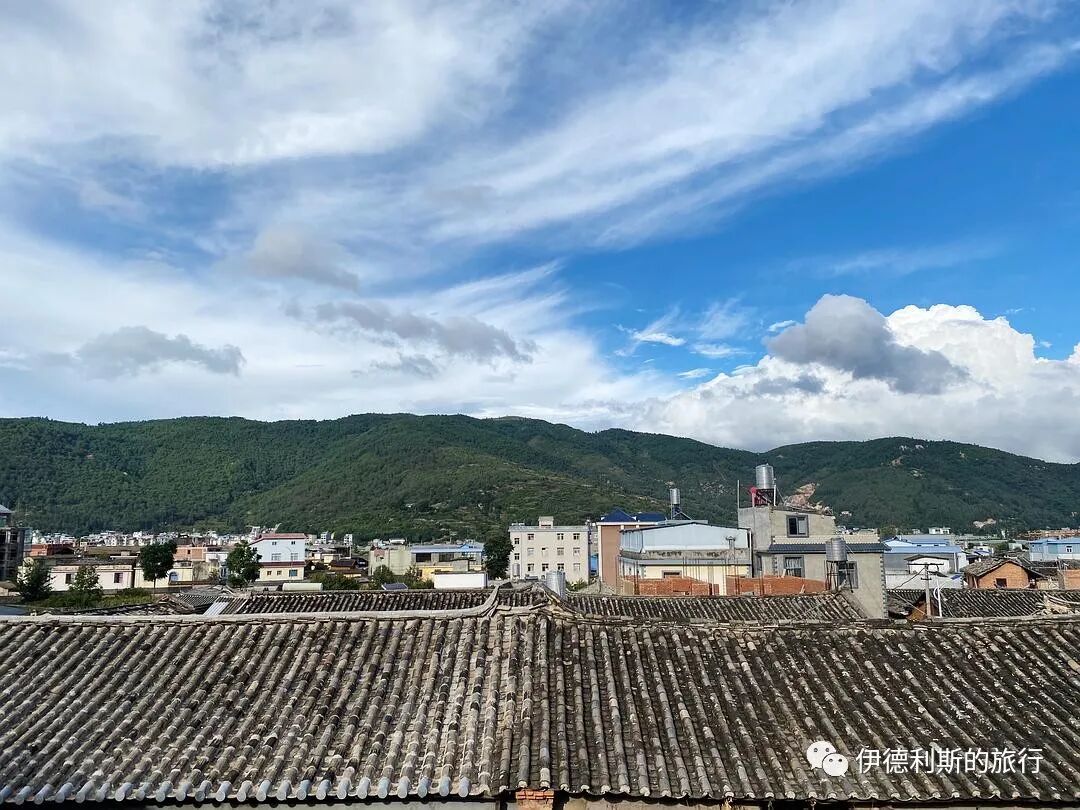
The Ma family courtyard was built under the direction of Ma Tongkuan, the second son of clan leader Ma Yuanwu. During the early Republic of China, Ma Tongkuan lived in Mojiang County, east of Pu'er, managing various business dealings. Because he kept his word and managed things well, he became a very wealthy man in southern Yunnan. In the middle and late Republic of China, Ma Tongkuan returned to his hometown of Dahui Village and oversaw the construction of the three Ma family courtyards. In 1956, Ma Tongkuan served as deputy county magistrate of Qilu County. In 1957, he was labeled a rightist, and in 1968, he returned to Allah (gui zhen).
When building the Ma family courtyards, Ma Tongkuan hired craftsmen from Shanghai and Annam. It took about twenty years. They fired their own bricks and tiles, quarried stone, and selected and cut their own timber. The garden kept peacocks and even had an advanced boiler room.
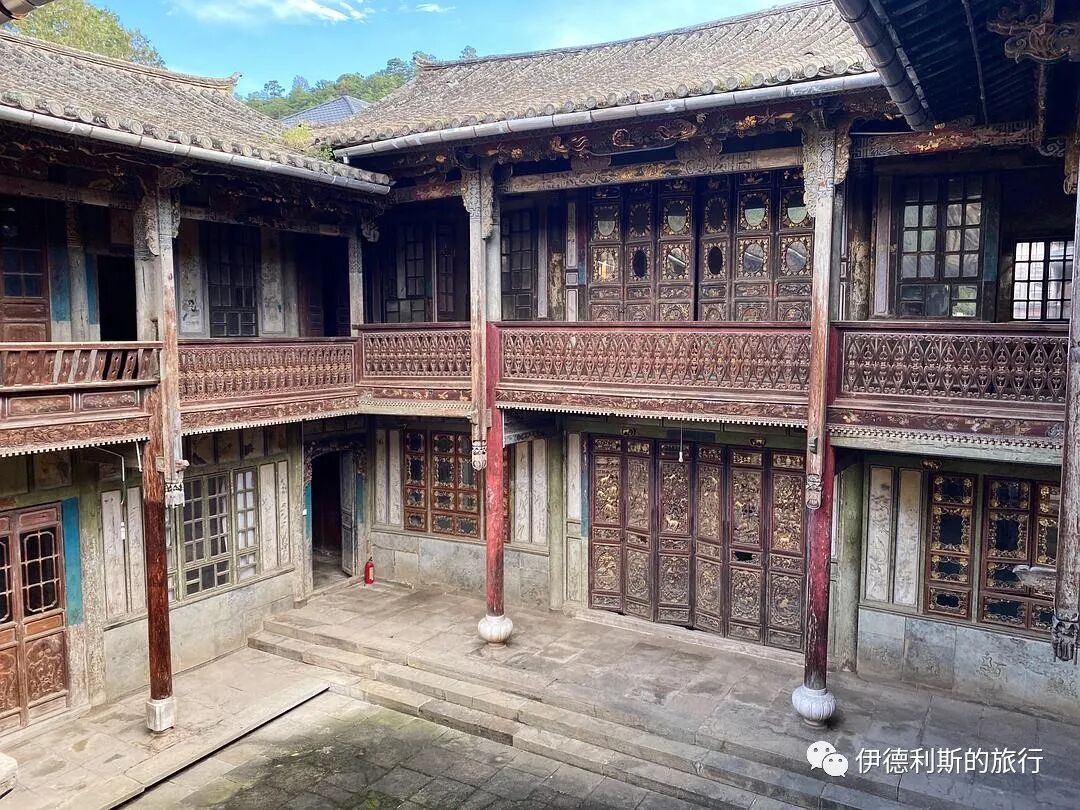
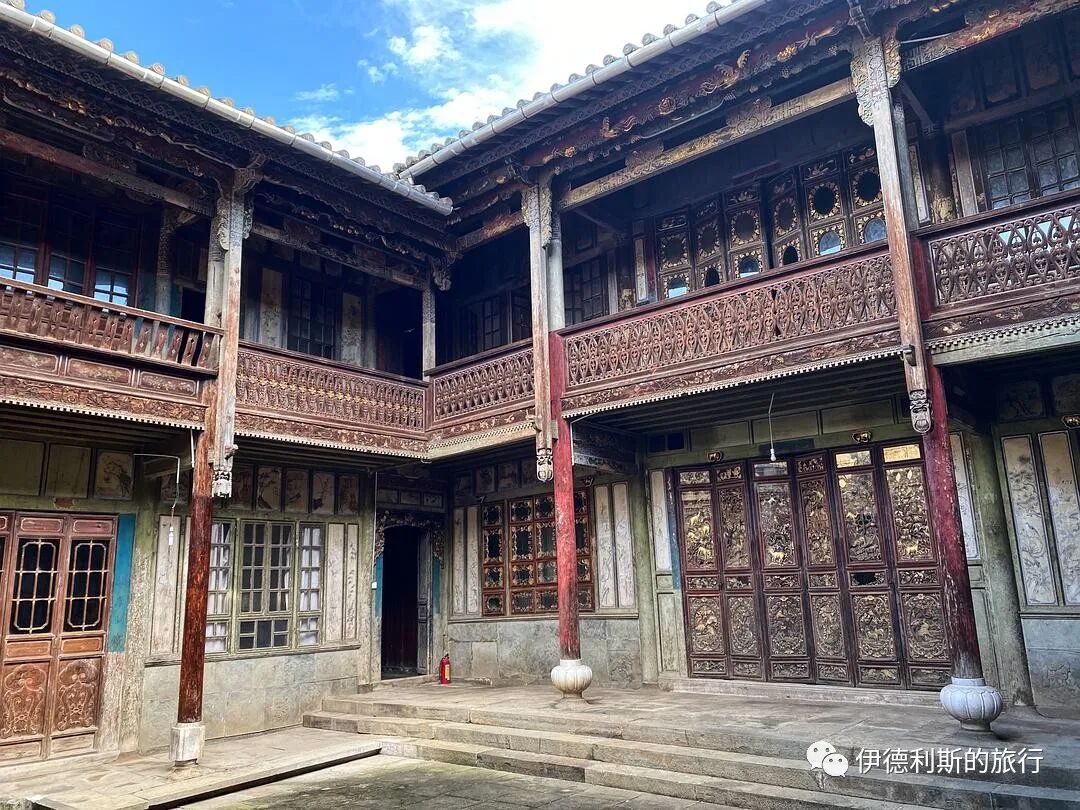
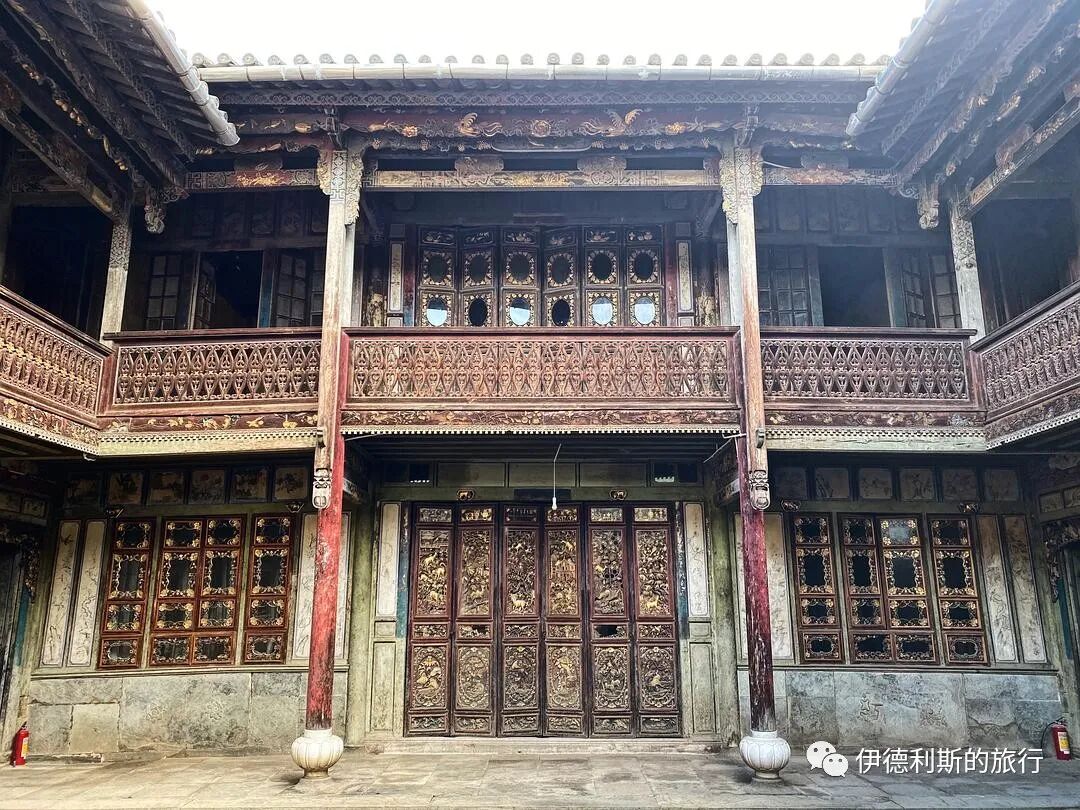
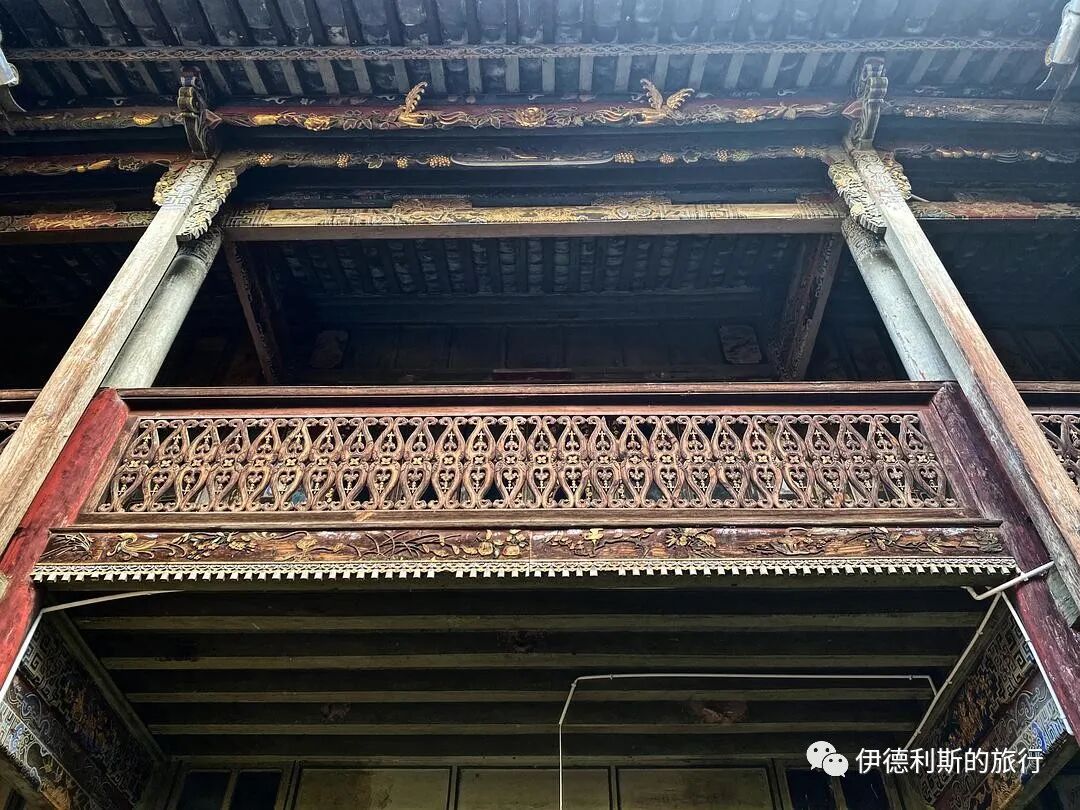
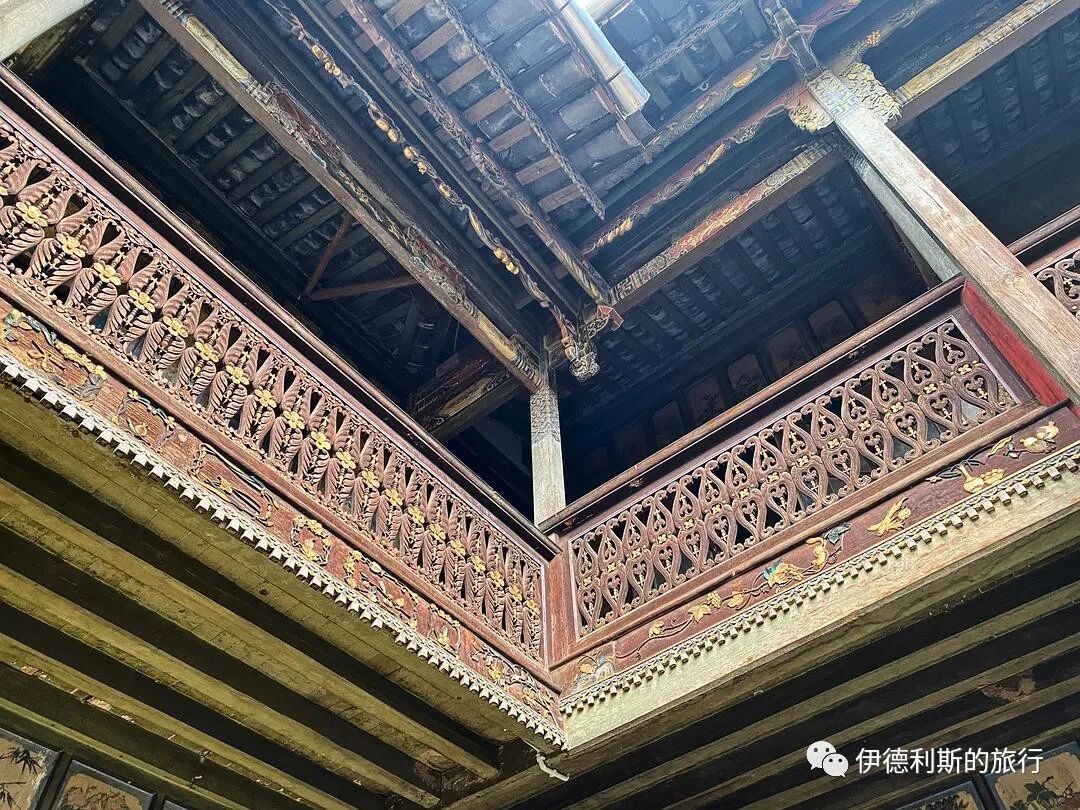
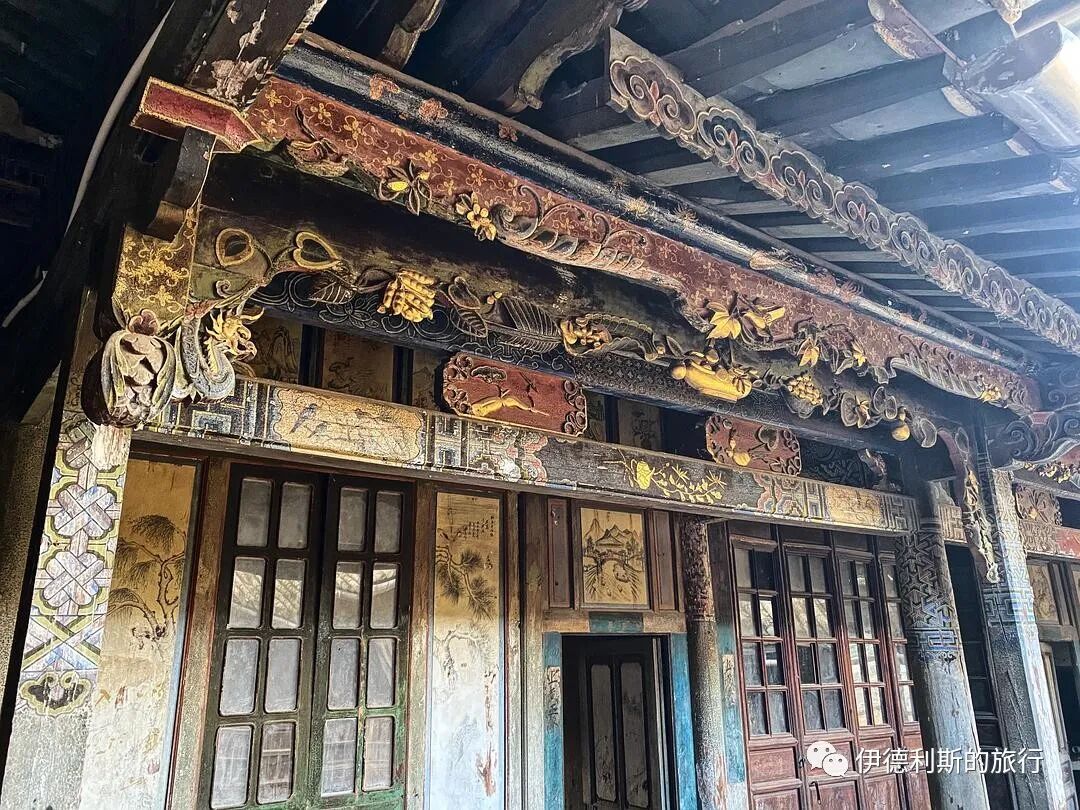
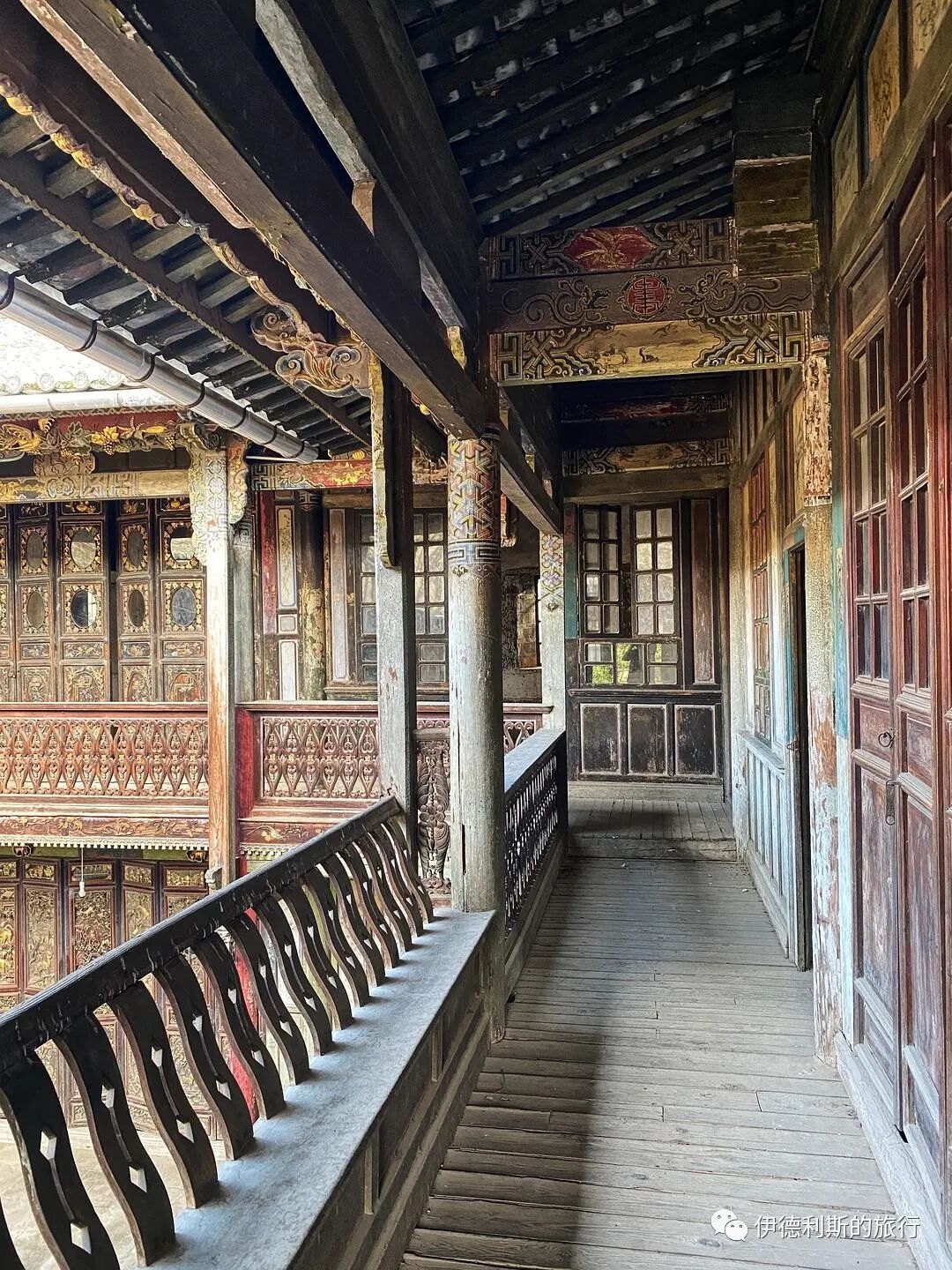
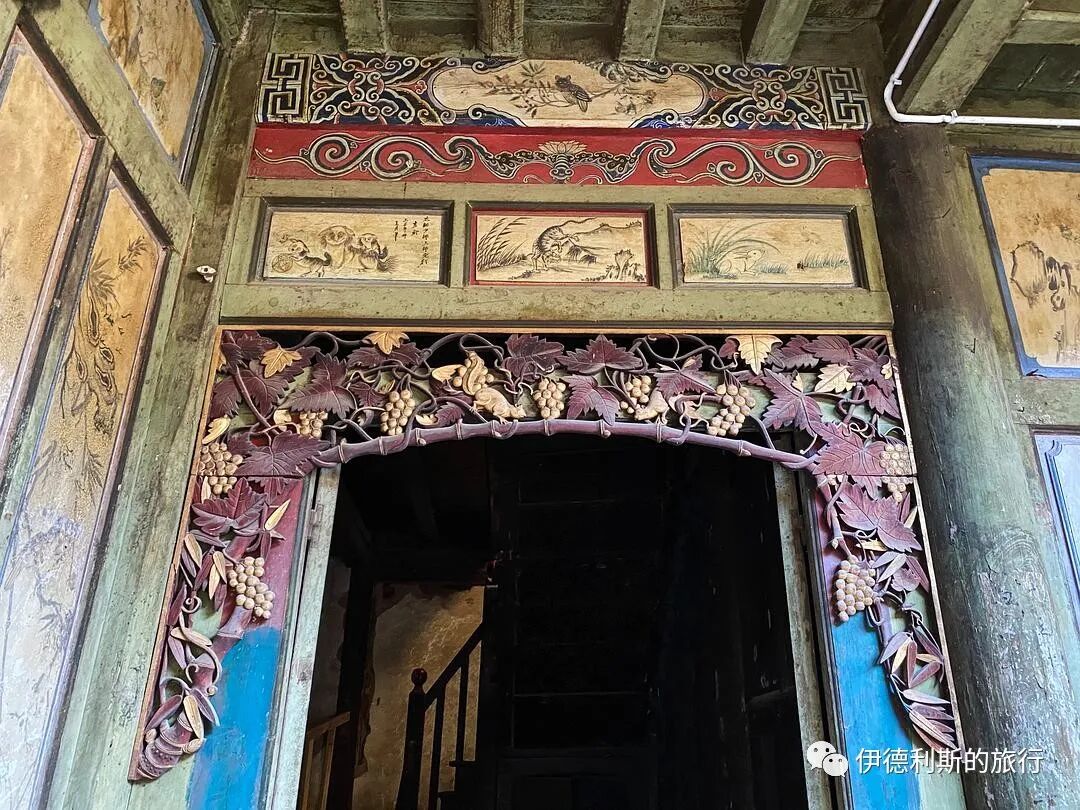
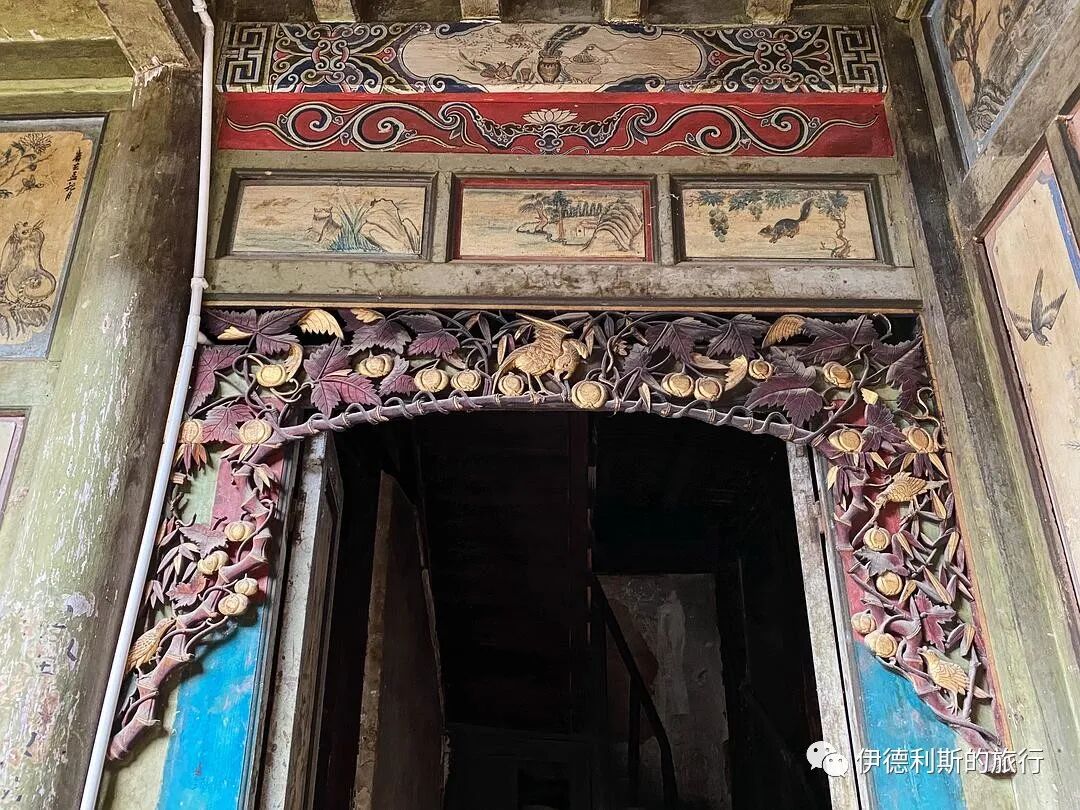
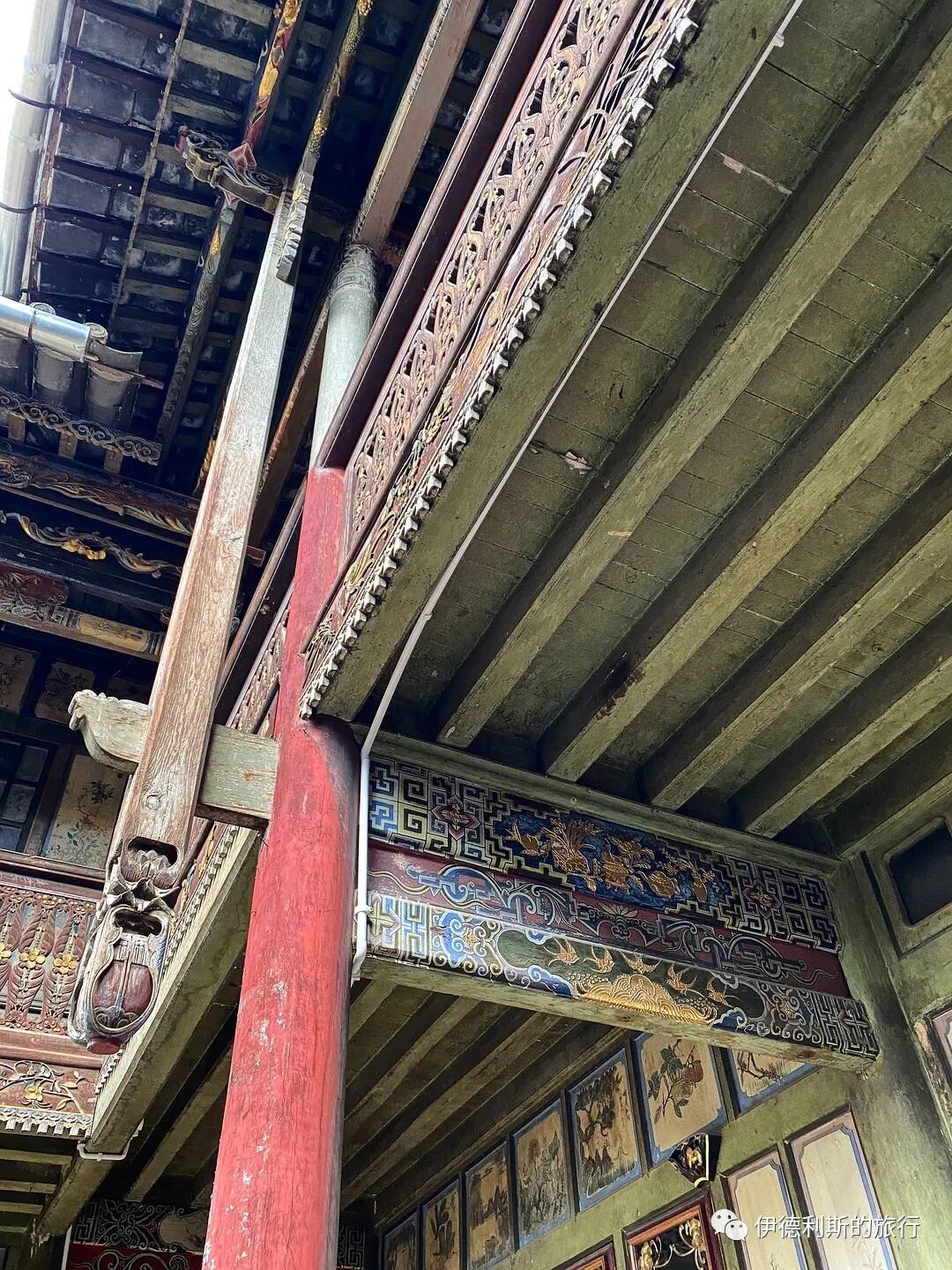
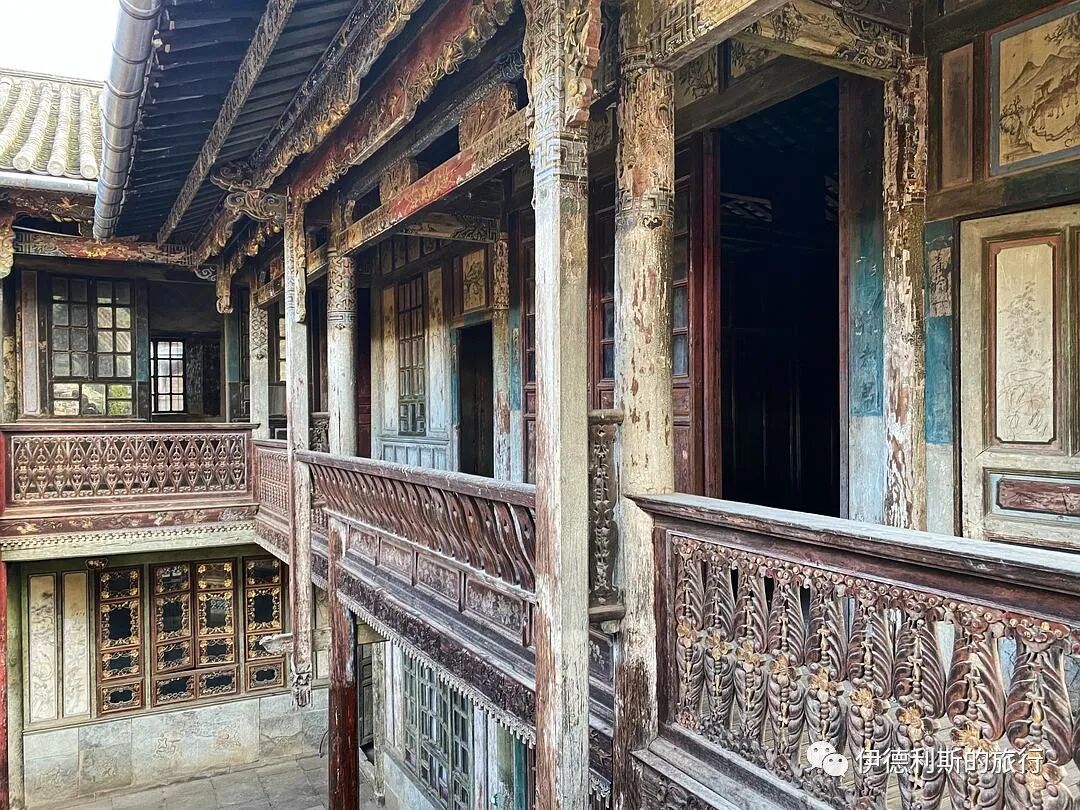
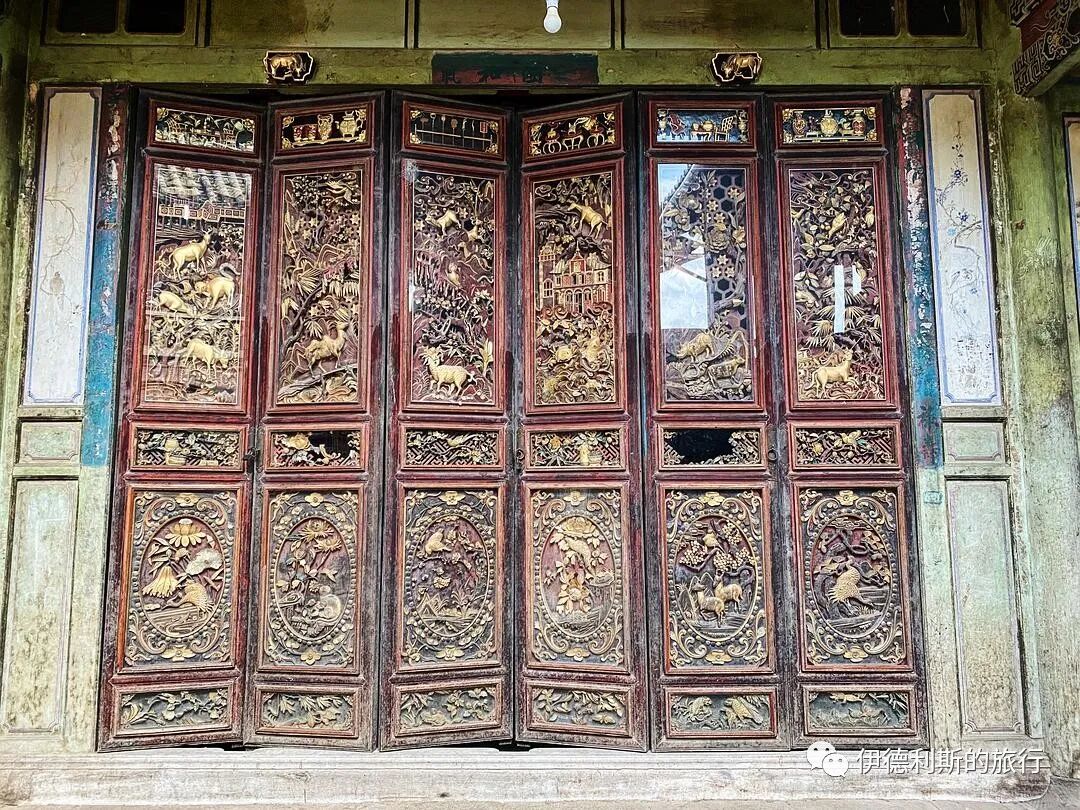
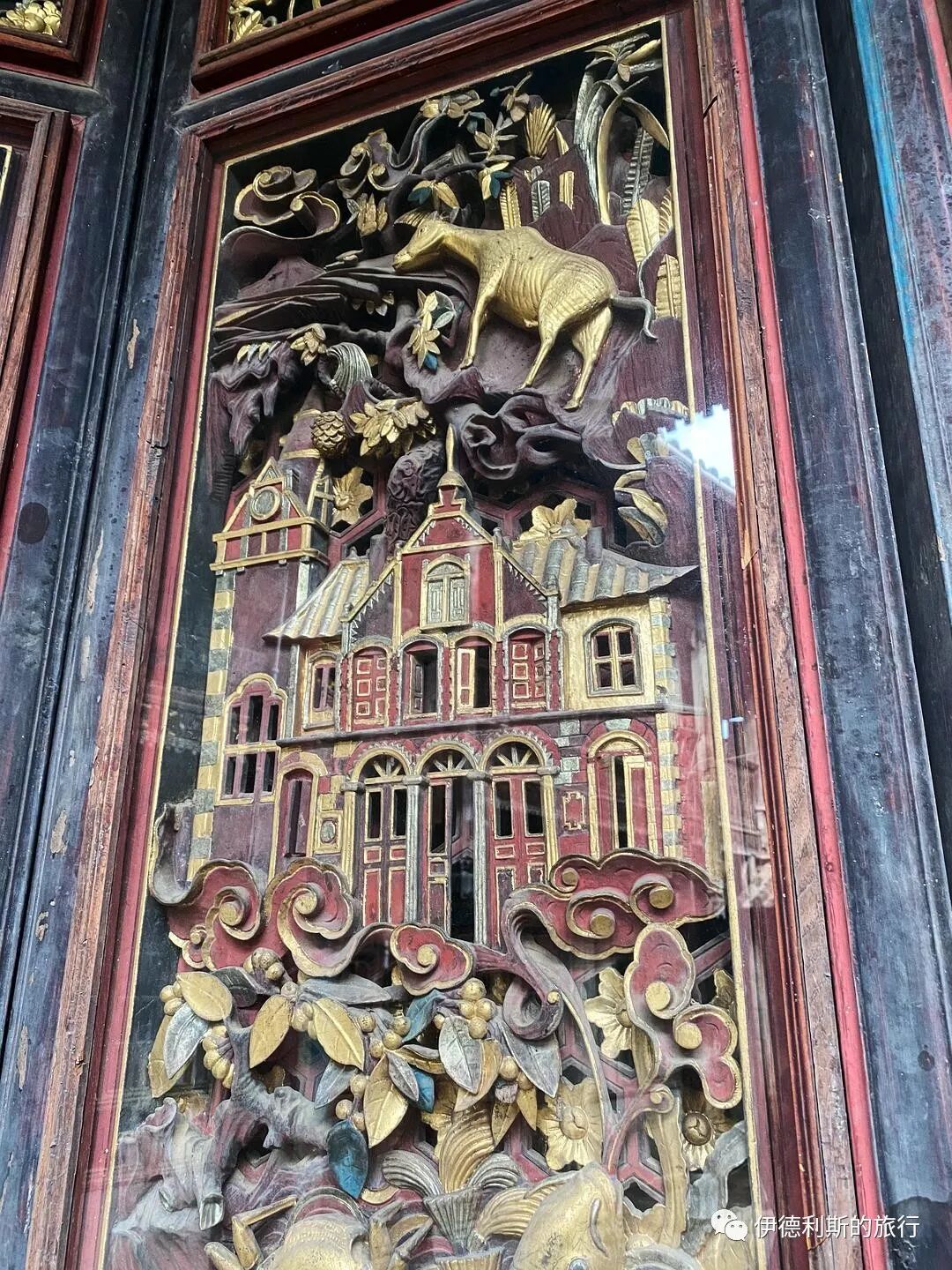
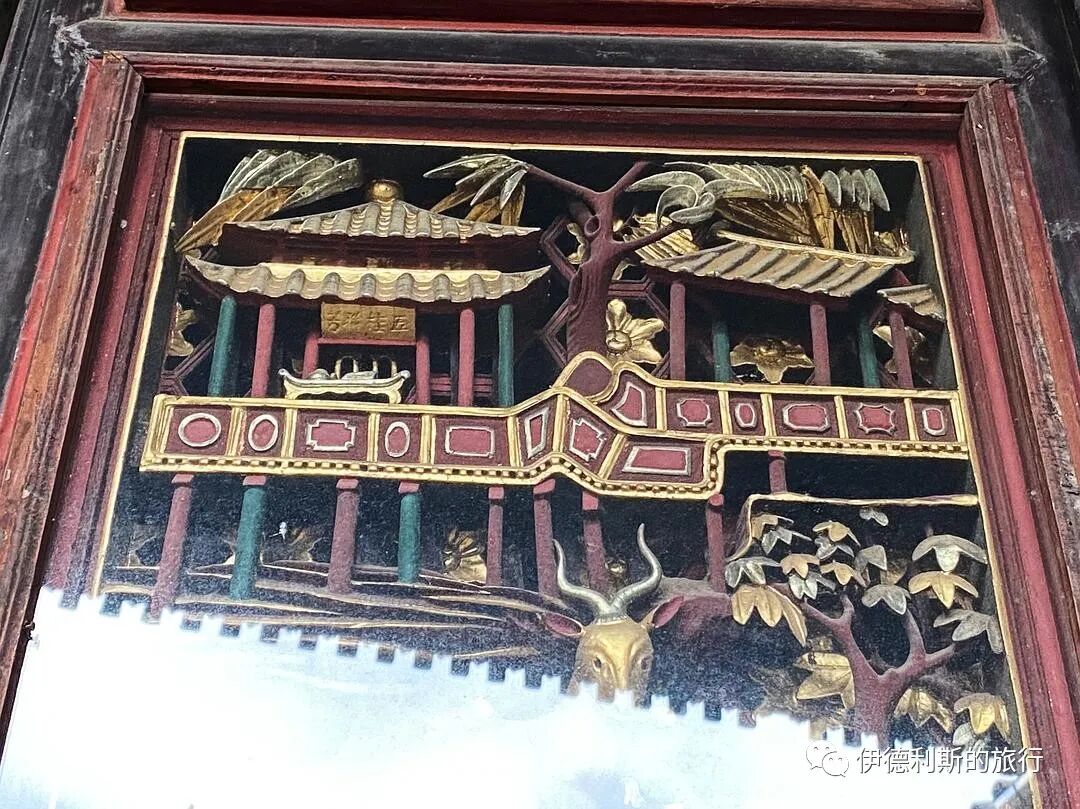
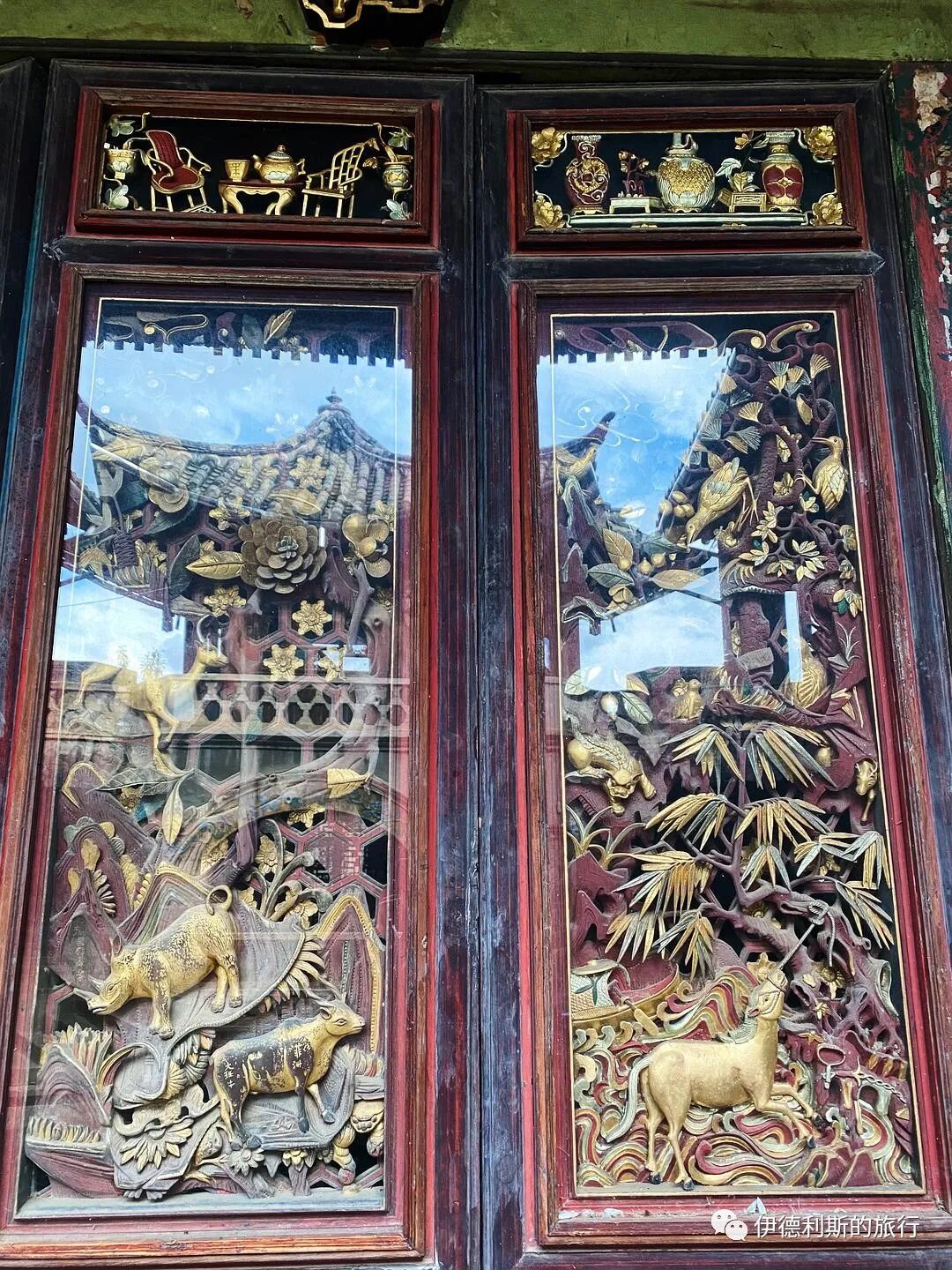
Tonghai has always been famous for its wood carving craftsmanship, and the exquisite wood-carved doors and windows of Courtyard No. 1 are proof of this. The doors and windows feature not only various flowers, plants, birds, and animals, but also pavilions, waterside structures, and Western-style architecture, showing the unique style of the era.
The Ma family courtyard once had twenty or thirty plaques, including 'Cultivating Virtue to Protect Descendants' inscribed by Chiang Kai-shek and 'Five Generations of Prosperity' inscribed by Long Yun, as well as plaques from Yu Youren, Bai Chongxi, Feng Yuxiang, and many others. However, they were all destroyed in the 1960s. All the beautiful couplets were replaced by slogans. Figure 1 shows the marks where the plaques used to hang above the door.
In 1918, the Ma family sold their soy sauce workshop and opened the Yuanxinzhai firm in Mojiang. They switched to trading cotton yarn, cloth, silk, and satin. At the same time, they bought mountain goods and medicinal materials like tea, purple stick (shellac), cowhide, deerskin, velvet antler, and ivory. Later, they also boiled deer glue, expanding their reach from domestic markets to Thailand and Myanmar.
In 1921, the Ma family changed the name of 'Yuanxinzhai' to 'Yuanxinchang' in Kunming. They mainly traded ivory, velvet antler, tiger bone, otter skin, tea, cloth, silk, and dyes. They also transported Chinese medicinal herbs like saffron, sweet flag (changpu), musk, and fritillaria to Thailand for sale. Later, the Ma family established the Jingchang Tea House in Jiangcheng and founded a tea factory to press seven-piece tea cakes (qizi bingcha), which were carried by horse to Laos and then to Vietnam and Hong Kong for sale.
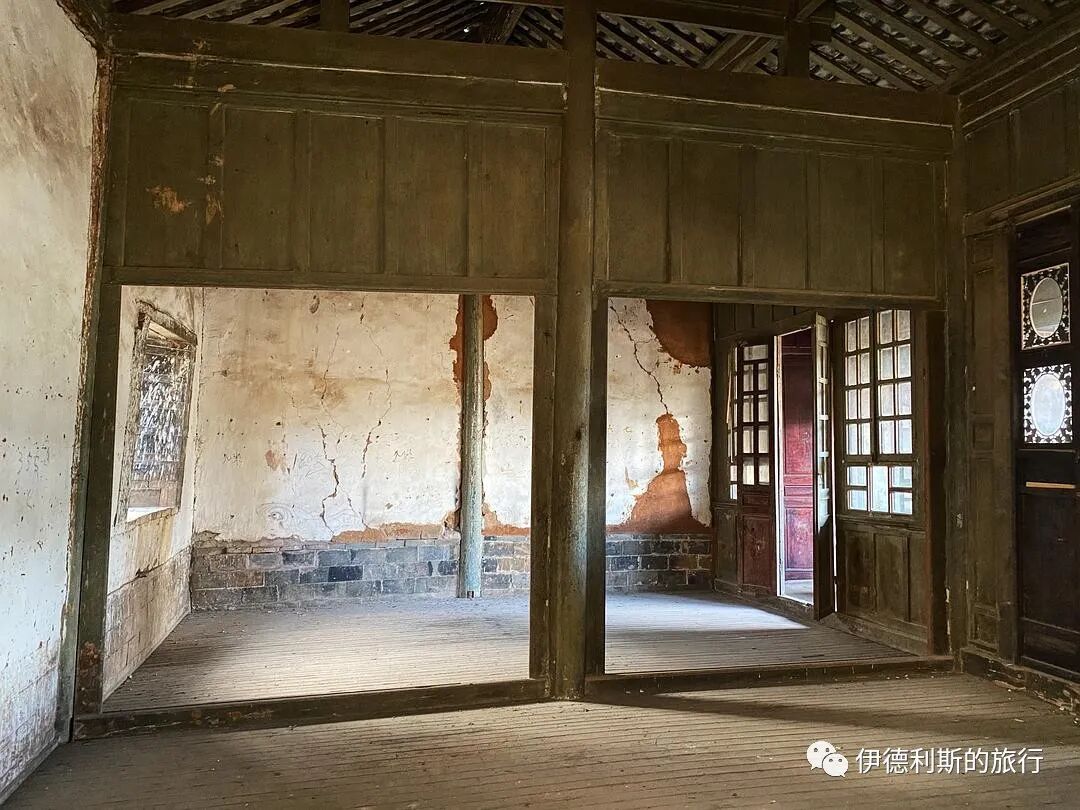
An empty room.
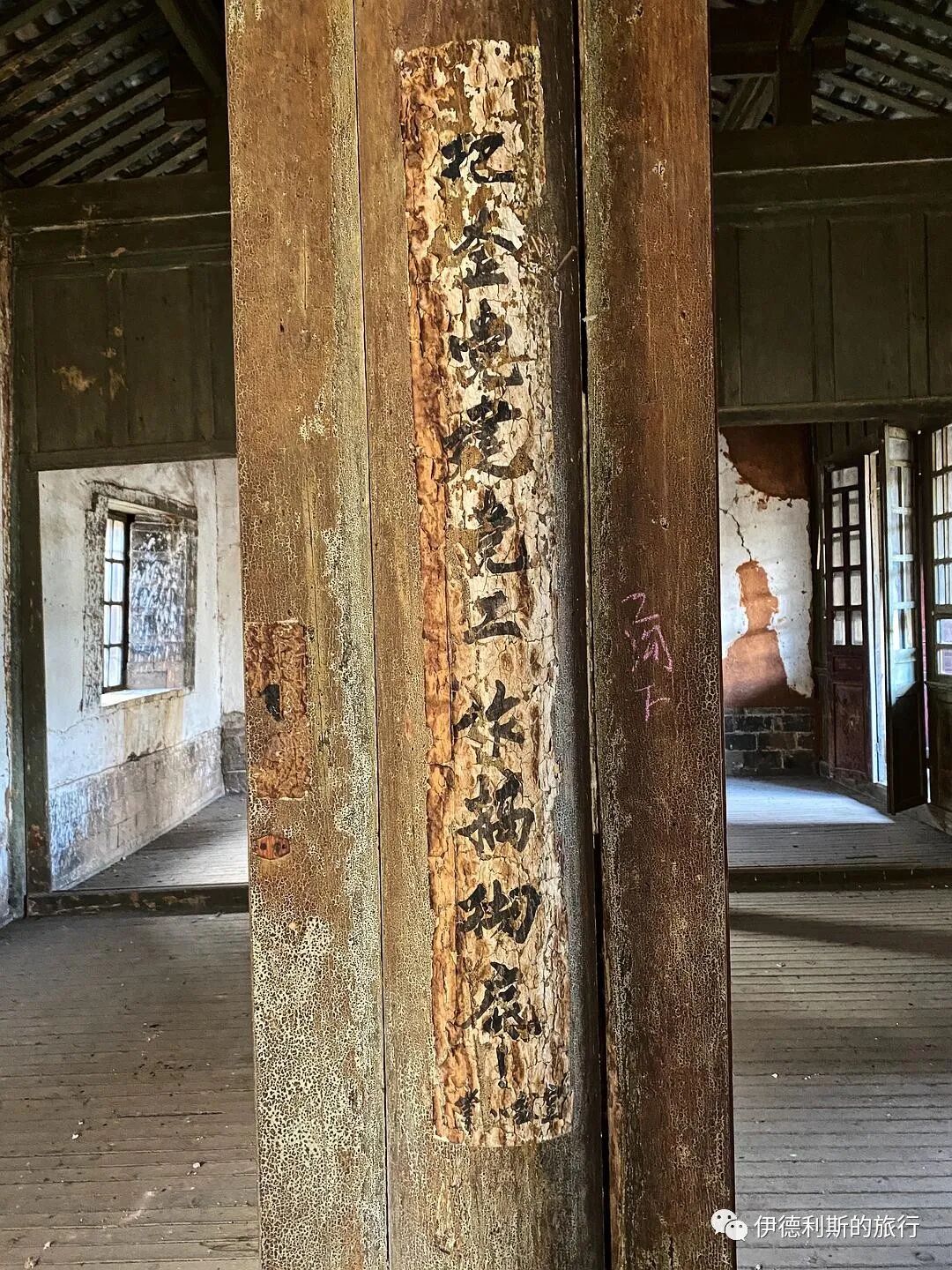
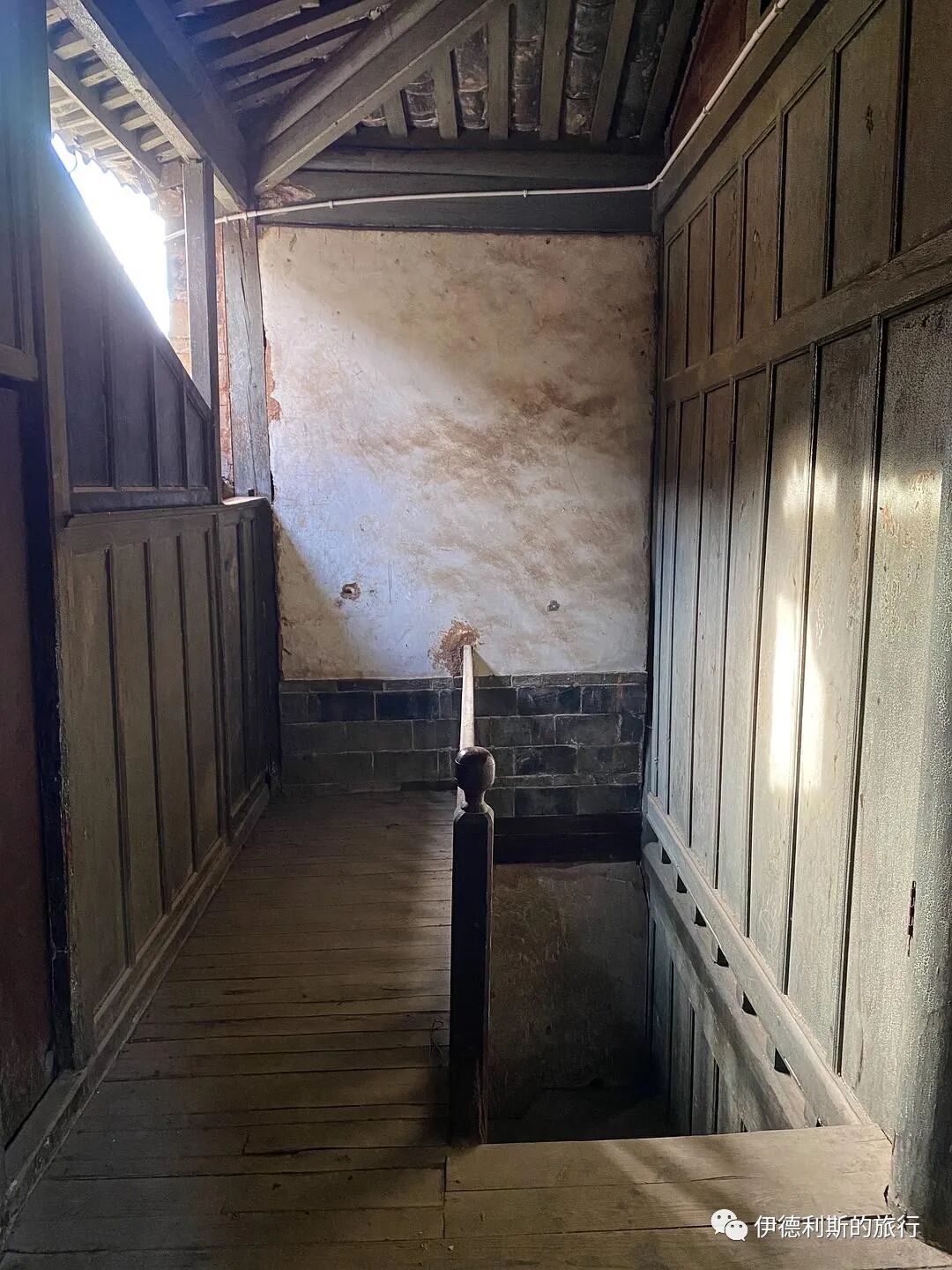
A small house in the backyard, which also has its own little courtyard.
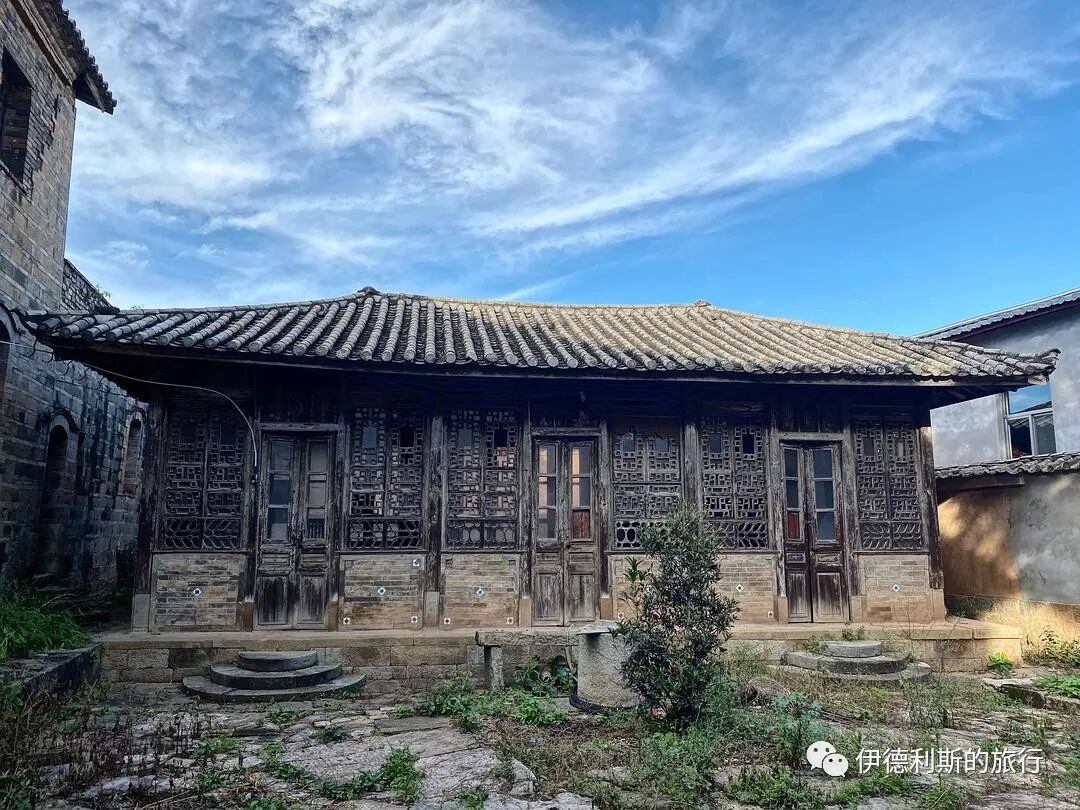
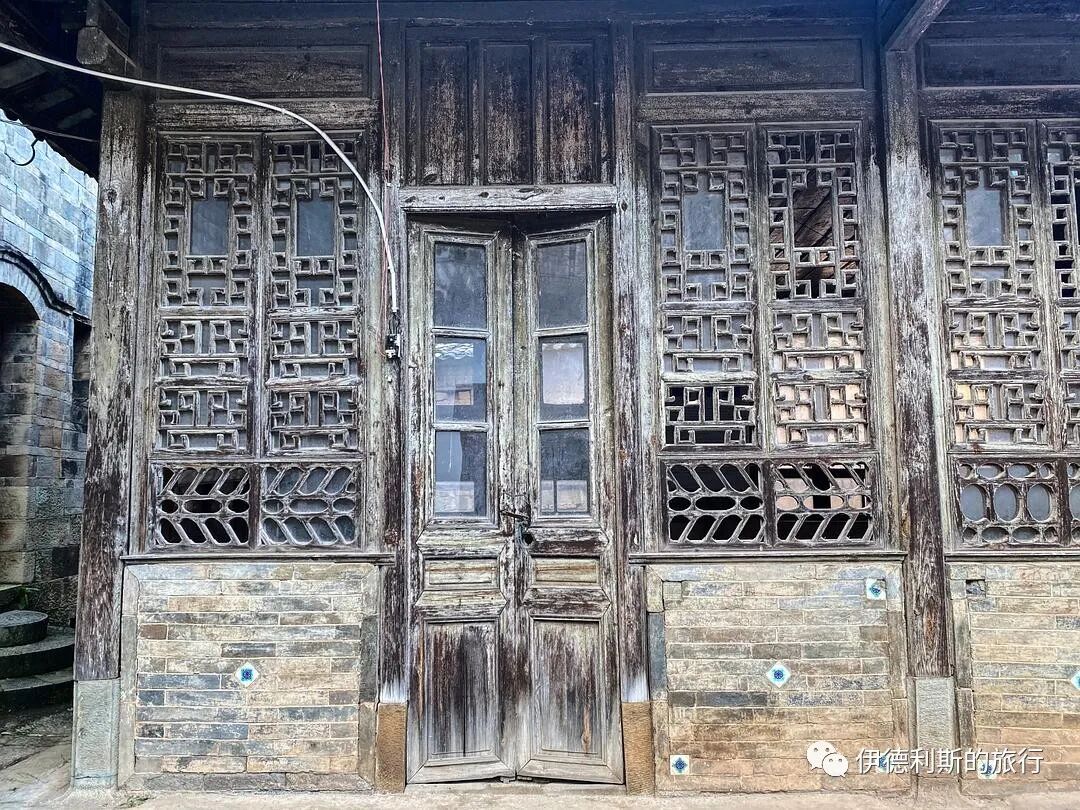
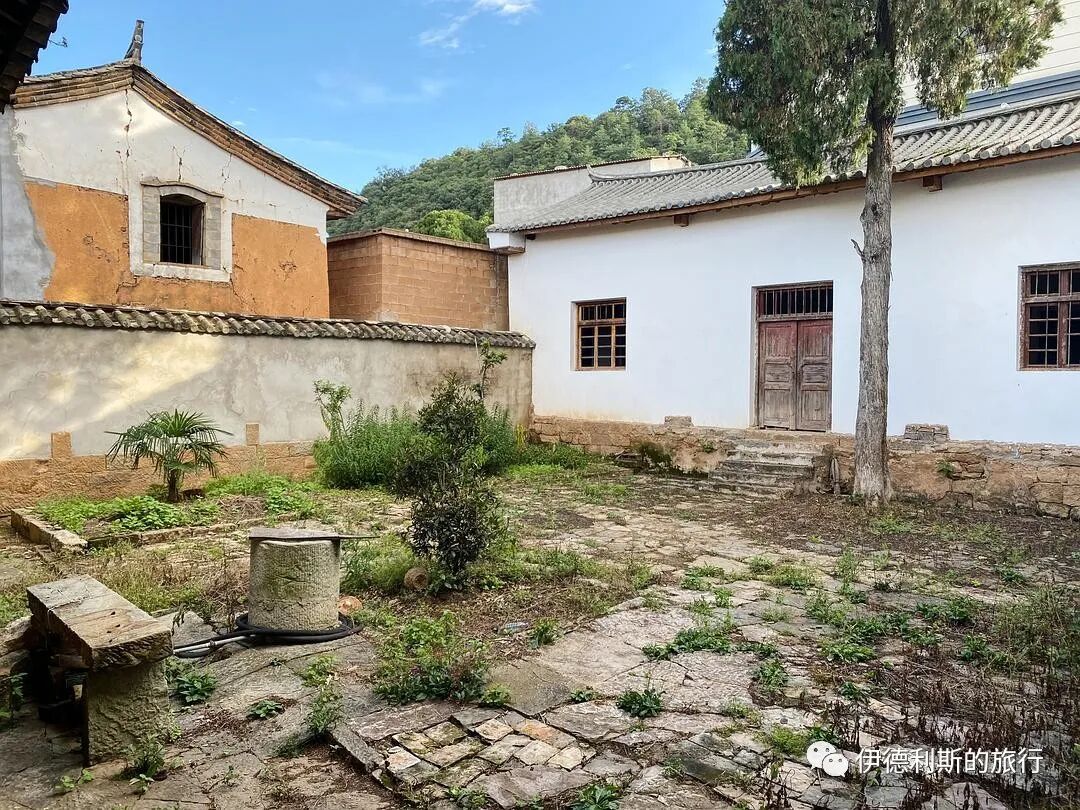
The water vat in the courtyard was likely used for fighting fires.
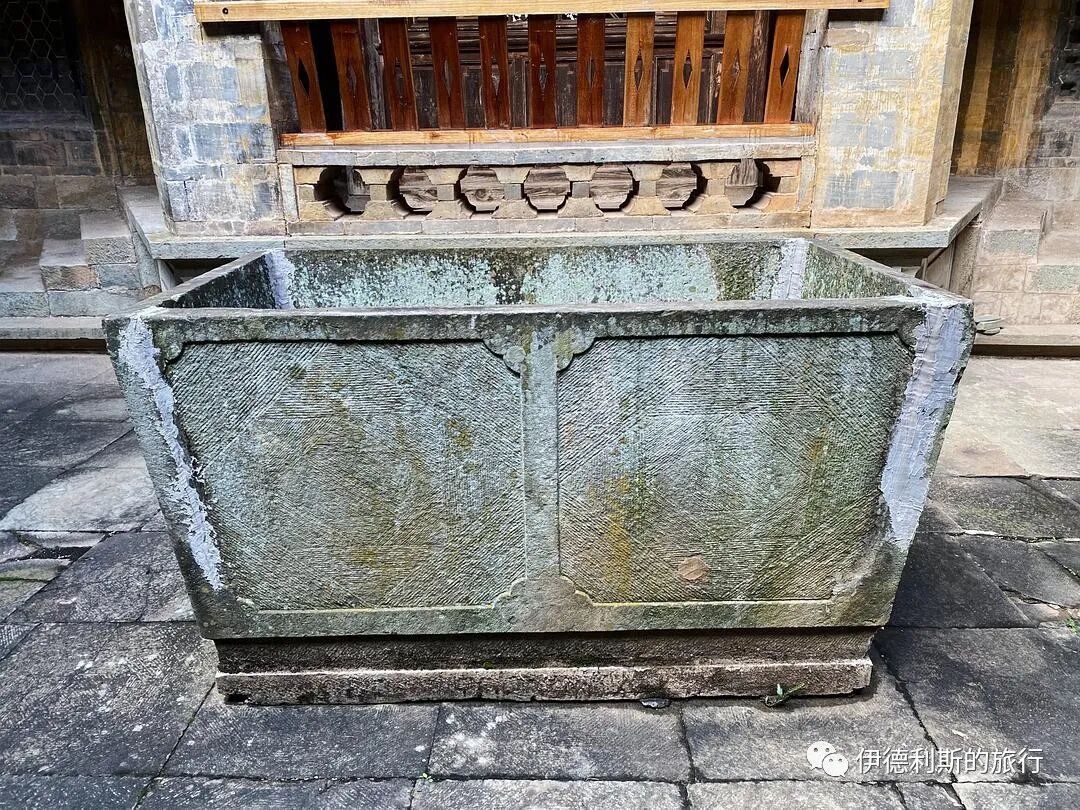
A safe from the Republic of China era sits in the courtyard. It is labeled 'Southwest Industrial Company Safe Department' and 'Improved fire and Thief Resisting safe Made in China'. "
In 1951, the Ma family deposited all the gold, silver, and silver dollars (yuan datou) buried under their compound into the Hexi County People's Bank. This included about 2,000 taels of gold bricks and bars. The largest gold brick weighed over 400 taels, making it too heavy for one person to carry easily, along with 2,000 to 3,000 silver dollars. This event was reported in the Yunnan Daily, and the Ma family was called 'enlightened landlords'. After the land reform movement (tu gai), this gold and silver was taken back to Dahui Village to be displayed as 'fruits of struggle' during public meetings, and then the three compounds and all the furniture were confiscated.
Courtyard No. 2.
Courtyard No. 2 of the Tonghai Ma Family Compound is located at No. 57 Dahui Village. Built in 1937, it is also a 'key-shaped' (ke yi yin) courtyard with corner towers, but it has a larger skylight, a spacious yard, and simpler decorations.
A plaque reading 'Five Generations Under One Roof' once hung over the gate of Courtyard No. 2. Today, you can still faintly see the words 'Dongqu Brigade' and 'School'. After it was returned to the Ma family in 1986, it was lived in by the family of Ma Zishang (1914-2007), the grandson of Ma Yuanwu. In recent years, the Ma descendants only return during holidays.
In the 1930s, besides running horse caravans for trade, the Ma family set up branches across central and southern Yunnan, as well as in Kengtung and Monghsat in Myanmar, and Lampang, Chiang Mai, and Bangkok in Thailand. During the War of Resistance, trade routes were cut off, and Pu'er tea began to pile up. Once the war ended and the routes reopened, the Ma family immediately hired ten large ten-wheeled trucks to transport over 40 tons of Pu'er tea to Guangdong for resale in Hong Kong. Because the Pu'er tea had been stored for years, it was fully fermented and aged, making it very fragrant and popular with buyers. On the return trip, they brought back flashlights and batteries, which were scarce in Yunnan and sold out quickly.
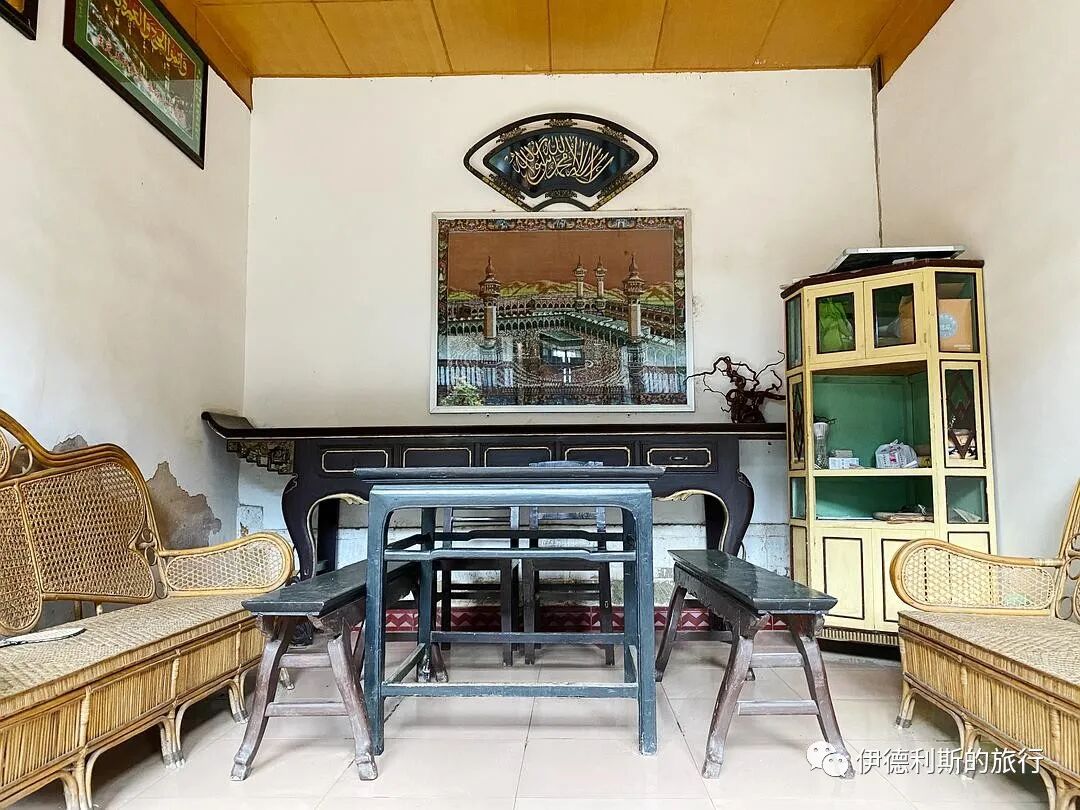
The Ma family was not only good at business but also very devout. I saw several plaques in the courtyard celebrating their successful Hajj pilgrimages.
Courtyard No. 3.
Courtyard No. 3 of the Tonghai Ma Family Compound is at No. 101 Dahui Village. Built between 1947 and 1948, it is the most modern of the three. The Ma family had not yet moved in when the liberation occurred, and after land reform, it became a warehouse for the production team. It is still occupied by Ma family descendants. We were disappointed that we could not visit because the owners were away when we arrived.
After 1945, cross-border trade from Simao to Thailand and Myanmar was gradually replaced by inland trade from Shanghai and Guangzhou to Yunnan. After careful consideration, the Ma family closed their trading businesses in Simao, Mojiang, and Jiangcheng after 1948. The Ma family planned to start trade between Yunnan and Chengdu, Chongqing, Shanghai, and Guangzhou, but new conflicts made this impossible. They finally decided to work together to open the Mingde Cotton Yarn Shop in Kunming. In 1950, the Ma family invested in the Mingde Textile Mill, starting with an investment of 2,000 bales of cotton yarn. After the public-private partnership reform in 1956, Ma Ziming continued to serve as the manager of the Mingde Textile Mill.
Dahui Village Mosque.
The Dahui Village Mosque in Tonghai was first built in the Ming Dynasty and rebuilt in 1829. The Tonghai Ma family led an expansion in 1946, and the main prayer hall was recently rebuilt as a modern structure.
Tonghai Dahui Village is a Jahriyya (a Sufi order) village. In 1781, Ma Shunqing (1770-1851), the eldest son of the Jahriyya founder Ma Mingxin, was exiled by the Qing government to Simao, Yunnan. He was later rescued by the imam Ma Yunguang from Gucheng and settled in Talang Village, Mojiang, where he became known as the 'Old Ancestor of Talang'. The third son of the Old Ancestor of Talang, Ma Shilin (1813-1871), moved from Talang to Dahui Village in Tonghai and became known as the 'Third Elder of Yunnan'. Ma Shilin ran a horse caravan business in Kunming and became a famous wealthy man, making Dahui Village in Tonghai a well-known Jahriyya village in Yunnan.
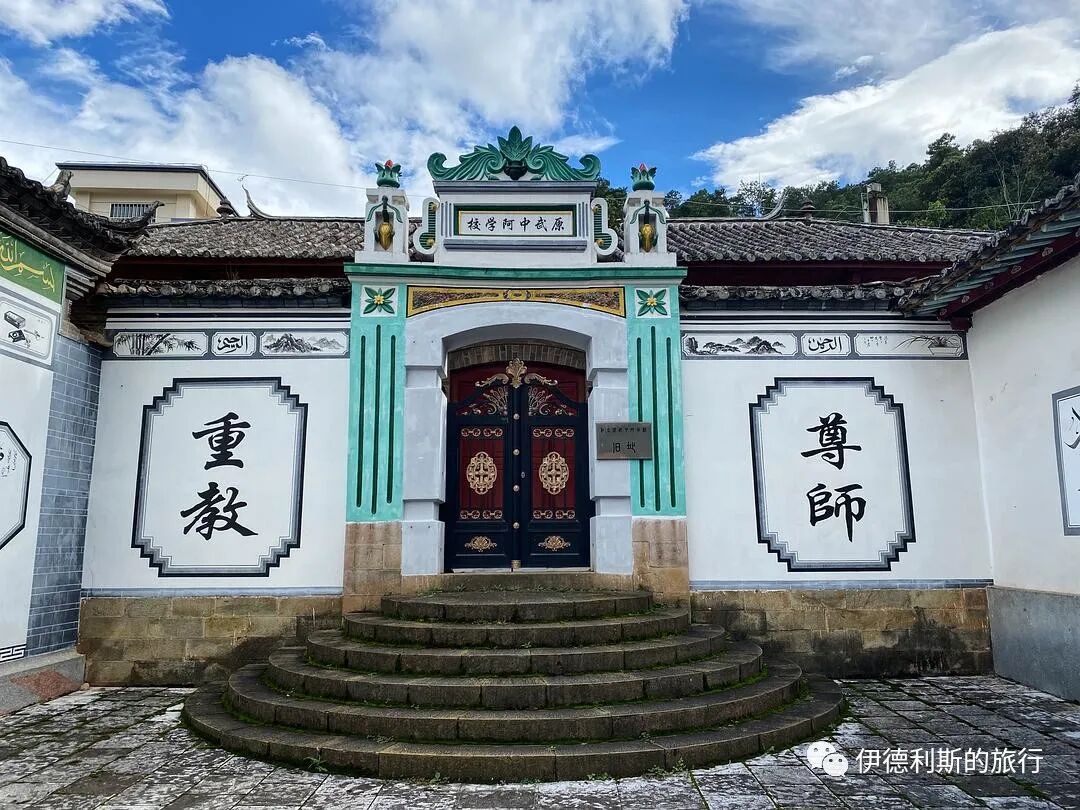
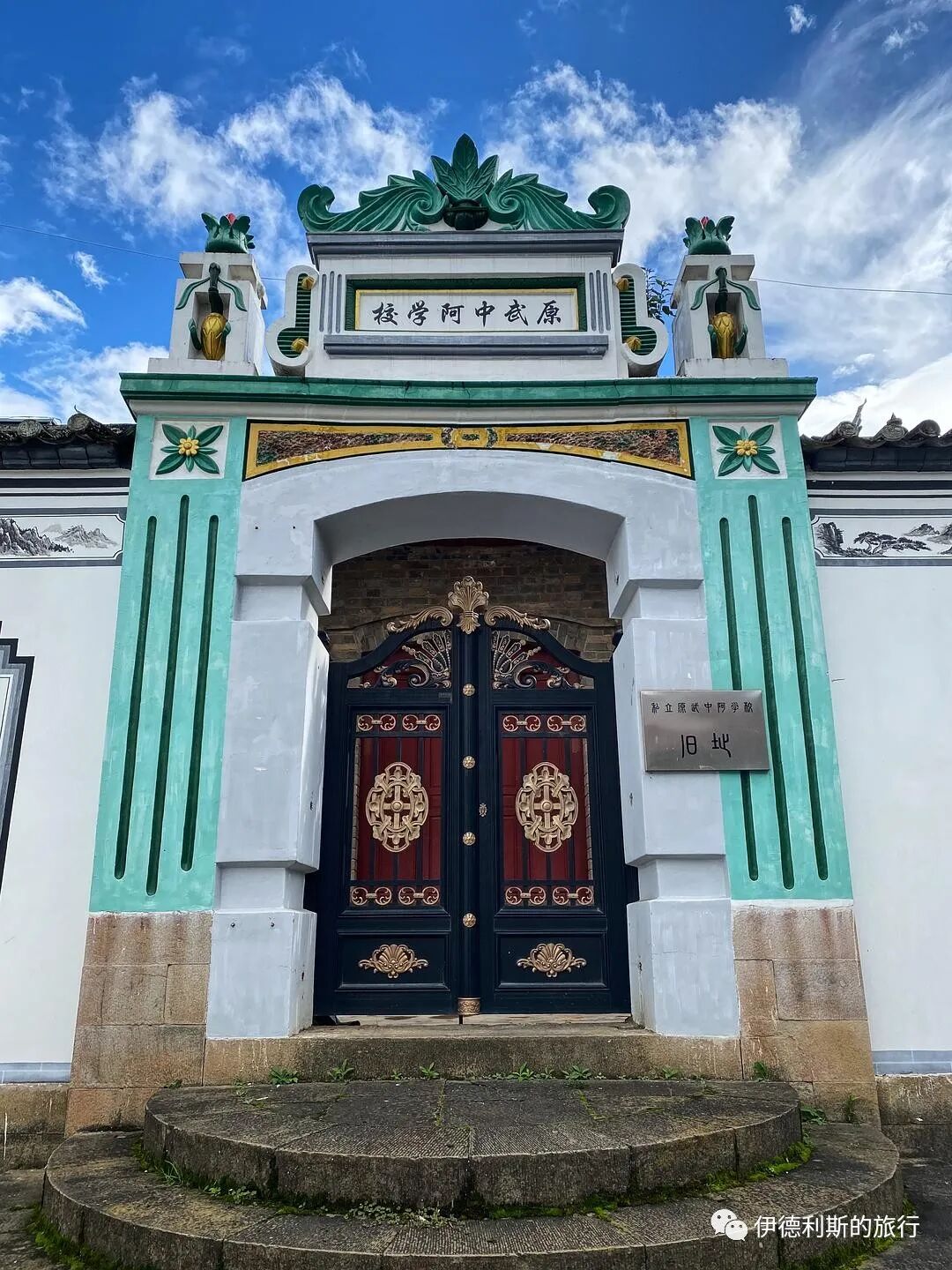
The 'Private Yuanwu Chinese-Arabic Primary School' next to the mosque was founded in 1947 by Ma Tongkuan, the second son of the Tonghai Ma family patriarch, Ma Yuanwu. At the time, the school had six classes and an attached kindergarten, with over 300 students from various villages in the northern plains of Hexi County. to the standard curriculum of public schools, they also added English and Arabic. The first class graduated in 1950. Among them, Ma Qichao became the deputy county magistrate of Tonghai, and Xiao Hanjie became the principal of the Tonghai County Teacher Training School.
Some old houses in Dahui Village.
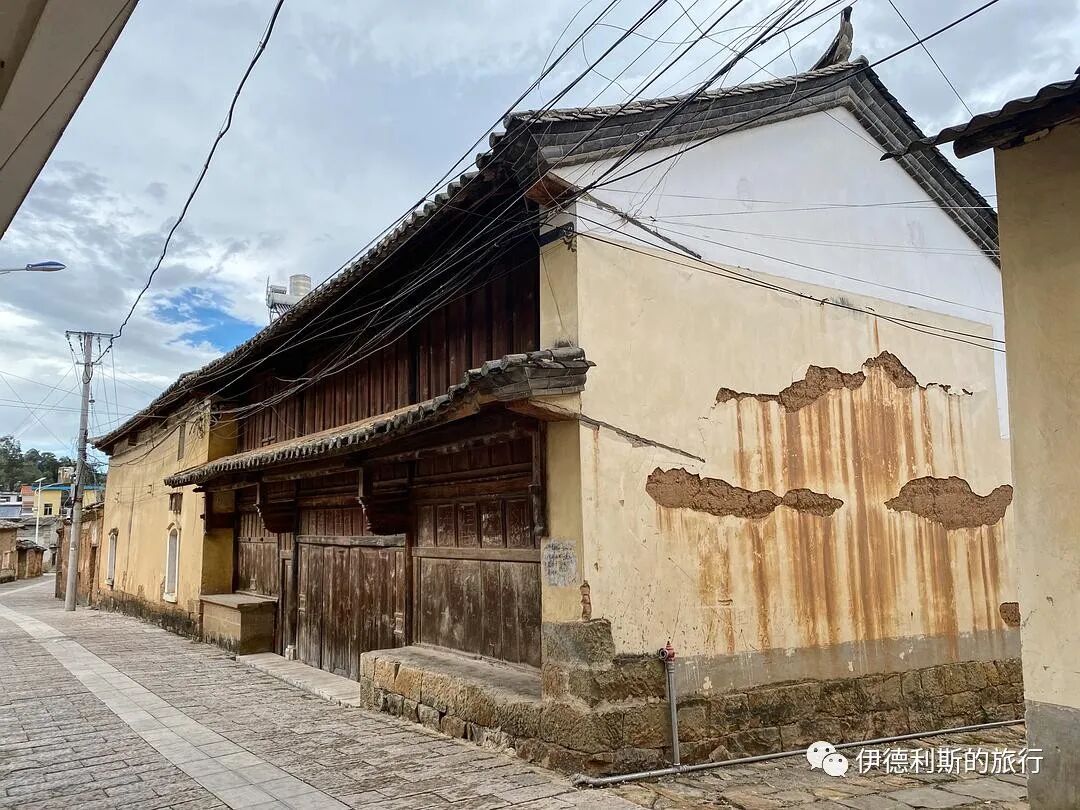
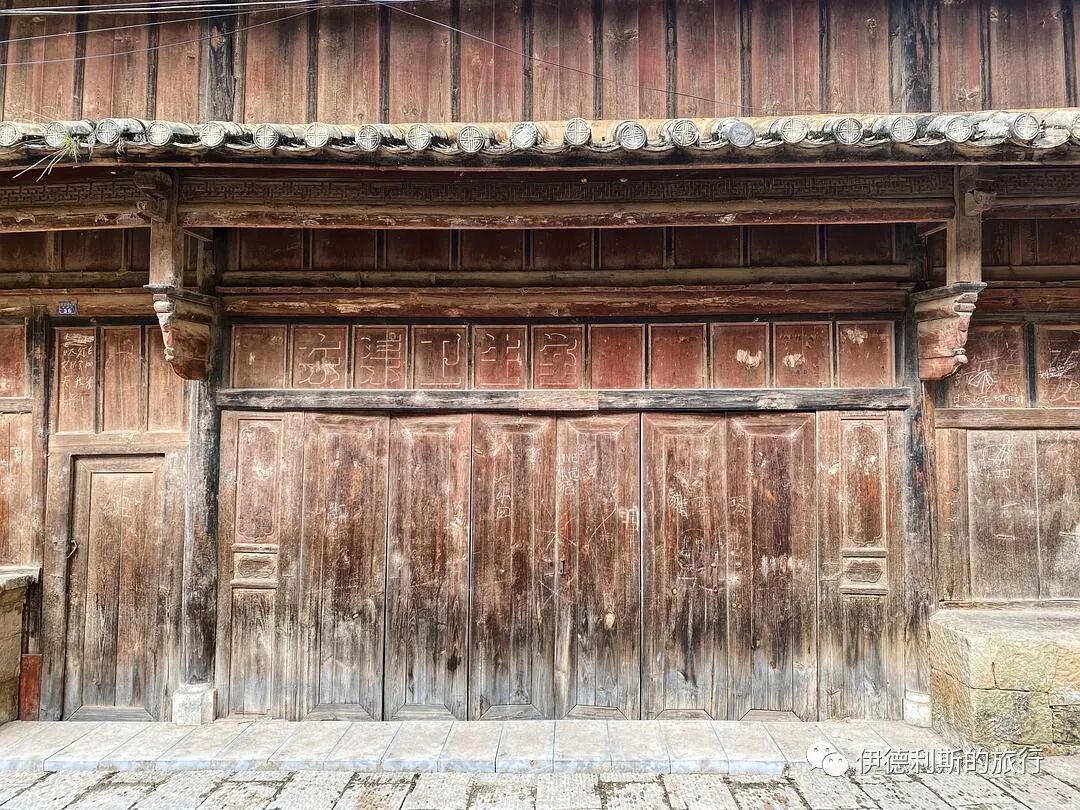
The most detailed book about the Tonghai Ma family is the oral history 'Legendary Family on the Tea Horse Road', and some of the information in this article was compiled from that book.
Summary: Tonghai, Yunnan — Ma Family Courtyard and Hui Muslim History is presented here as a firsthand travel account in clear English, beginning with this scene: Author: Zainab. The account keeps its focus on Yunnan Travel, Hui Muslims, Ma Family Courtyard while preserving the names, places, food, and historical details from the Chinese source.
Author: Zainab
On October 4, we drove 33 kilometers east from Dabaiyi Village in Eshan, Yuxi, Yunnan, to reach Dahui Village in Tonghai County.
Dahui Village was originally called Hexi Dadonggou. It is home to over a thousand Hui Muslims, the most famous of whom are the Ma family of Tonghai. The Ma family’s ancestral home was Nanjing. They came to Tonghai to do business with the army in the early Ming Dynasty and settled there. In the early 20th century, the Ma family built up great wealth through horse caravans and international trade. They built three large courtyards in the village between the 1930s and 1940s, which were named Yunnan Provincial Cultural Relics Protection Units in 2018.
The Ma family courtyards were confiscated after the 1950s. In 1986, they were returned to the Ma family as private property belonging to overseas Chinese, and the family has lived there ever since. As the elders of the Ma family passed away and the younger generations moved to cities, the family handed over Courtyard No. 1 and Courtyard No. 2 to the village for safekeeping. They only return during holidays, while Courtyard No. 3 is still occupied by Ma family descendants. By asking helpful village elders, we were able to visit Courtyard No. 1 and Courtyard No. 2. We were very sorry we could not enter Courtyard No. 3 because the owners were not home.
Courtyard No. 1
The first large courtyard is No. 102 in Dahui Village. Built between 1932 and 1933, it is a traditional Yunnan-style courtyard with a layout known as 'three bright and five dark' (ming san an wu) and a corner-turning corridor (zouma zhuanjiaolou). This means you have to walk a distance from the main gate before reaching the courtyard itself.
The outermost part is a traditional Yunnan-style gate with a ridged roof and upturned eaves. It is very interesting to see two sets of couplets from different eras layered on top of each other. The bottom layer is a traditional couplet: 'Han dynasty tile inscriptions bring long life, Zhou dynasty bronze plate inscriptions bring wealth and luck.' The yellow upper layer has a first line that reads, 'Study hard, Allah is the master, put effort into your writing.' I cannot fully identify the second line, only the words 'hardened' and 'hatred'.
After entering the gate, there is a small courtyard filled with orange trees heavy with fruit.
Entering the courtyard, there is a Western-style gate from the Republic of China era. Its Roman columns look very similar to the minaret (jiaobailou) of the Dabaiyi Mosque in Eshan, built in 1935. You can also see the slogan 'Be united, tense, serious, and lively' on the gate, as this place once served as the Dahui Village committee office.
The hollowed-out partition wall inside the gate is very different from the traditional screen wall (zhaobi) or folding screen found in other courtyards.
The first small section of the courtyard contains a small house built of cement. This cement was imported from Japan at the time and transported via Kunming.
The front hall of the Ma family courtyard is unique, featuring a six-sided, multi-eaved, pointed-roof pavilion. It was used exclusively by the clan leader, Ma Yuanwu, for namaz, so it is also called the prayer pavilion (libaiting). It later became the village broadcast station. The pavilion has exquisite colorful paintings, wood carvings, and tiles imported from Japan.
Ma Yuanwu (1862-1955) originally made his living as a farmer. In the early 20th century, he sent his eldest son, Ma Tongzhu (1880-1958), to lead a horse caravan. At first, they carried salt to Xinping County to sell to people from Sichuan. After three or four trips, they saved some money, and then he sent his eldest grandson, Ma Bingzhong (1899-1972), to open a soy sauce workshop in Panxi Town, nearby Huaining County. At the same time, the Ma family used their horse caravans to transport brown sugar boiled in Panxi to Kunming for sale, then brought salt back to Panxi, gradually growing their business.
At the entrance to the first floor of the prayer pavilion, there is a couplet: 'Orchids and cassia in the pavilion spread fragrance far, the shade of the ailanthus and birch trees in the hall lasts long.' The ceiling inside features clouds, cranes, and the characters for 'blessing' (fu) and 'longevity' (shou). The second-floor ceiling has two lotus flowers, and the surrounding windows feature very fine wood carvings.
You can see the pastoral scenery from the balconies on both sides of the prayer pavilion.
The Ma family courtyard was built under the direction of Ma Tongkuan, the second son of clan leader Ma Yuanwu. During the early Republic of China, Ma Tongkuan lived in Mojiang County, east of Pu'er, managing various business dealings. Because he kept his word and managed things well, he became a very wealthy man in southern Yunnan. In the middle and late Republic of China, Ma Tongkuan returned to his hometown of Dahui Village and oversaw the construction of the three Ma family courtyards. In 1956, Ma Tongkuan served as deputy county magistrate of Qilu County. In 1957, he was labeled a rightist, and in 1968, he returned to Allah (gui zhen).
When building the Ma family courtyards, Ma Tongkuan hired craftsmen from Shanghai and Annam. It took about twenty years. They fired their own bricks and tiles, quarried stone, and selected and cut their own timber. The garden kept peacocks and even had an advanced boiler room.
Tonghai has always been famous for its wood carving craftsmanship, and the exquisite wood-carved doors and windows of Courtyard No. 1 are proof of this. The doors and windows feature not only various flowers, plants, birds, and animals, but also pavilions, waterside structures, and Western-style architecture, showing the unique style of the era.
The Ma family courtyard once had twenty or thirty plaques, including 'Cultivating Virtue to Protect Descendants' inscribed by Chiang Kai-shek and 'Five Generations of Prosperity' inscribed by Long Yun, as well as plaques from Yu Youren, Bai Chongxi, Feng Yuxiang, and many others. However, they were all destroyed in the 1960s. All the beautiful couplets were replaced by slogans. Figure 1 shows the marks where the plaques used to hang above the door.
In 1918, the Ma family sold their soy sauce workshop and opened the Yuanxinzhai firm in Mojiang. They switched to trading cotton yarn, cloth, silk, and satin. At the same time, they bought mountain goods and medicinal materials like tea, purple stick (shellac), cowhide, deerskin, velvet antler, and ivory. Later, they also boiled deer glue, expanding their reach from domestic markets to Thailand and Myanmar.
In 1921, the Ma family changed the name of 'Yuanxinzhai' to 'Yuanxinchang' in Kunming. They mainly traded ivory, velvet antler, tiger bone, otter skin, tea, cloth, silk, and dyes. They also transported Chinese medicinal herbs like saffron, sweet flag (changpu), musk, and fritillaria to Thailand for sale. Later, the Ma family established the Jingchang Tea House in Jiangcheng and founded a tea factory to press seven-piece tea cakes (qizi bingcha), which were carried by horse to Laos and then to Vietnam and Hong Kong for sale.
An empty room.
A small house in the backyard, which also has its own little courtyard.
The water vat in the courtyard was likely used for fighting fires.
A safe from the Republic of China era sits in the courtyard. It is labeled 'Southwest Industrial Company Safe Department' and 'Improved fire and Thief Resisting safe Made in China'. "
In 1951, the Ma family deposited all the gold, silver, and silver dollars (yuan datou) buried under their compound into the Hexi County People's Bank. This included about 2,000 taels of gold bricks and bars. The largest gold brick weighed over 400 taels, making it too heavy for one person to carry easily, along with 2,000 to 3,000 silver dollars. This event was reported in the Yunnan Daily, and the Ma family was called 'enlightened landlords'. After the land reform movement (tu gai), this gold and silver was taken back to Dahui Village to be displayed as 'fruits of struggle' during public meetings, and then the three compounds and all the furniture were confiscated.
Courtyard No. 2.
Courtyard No. 2 of the Tonghai Ma Family Compound is located at No. 57 Dahui Village. Built in 1937, it is also a 'key-shaped' (ke yi yin) courtyard with corner towers, but it has a larger skylight, a spacious yard, and simpler decorations.
A plaque reading 'Five Generations Under One Roof' once hung over the gate of Courtyard No. 2. Today, you can still faintly see the words 'Dongqu Brigade' and 'School'. After it was returned to the Ma family in 1986, it was lived in by the family of Ma Zishang (1914-2007), the grandson of Ma Yuanwu. In recent years, the Ma descendants only return during holidays.
In the 1930s, besides running horse caravans for trade, the Ma family set up branches across central and southern Yunnan, as well as in Kengtung and Monghsat in Myanmar, and Lampang, Chiang Mai, and Bangkok in Thailand. During the War of Resistance, trade routes were cut off, and Pu'er tea began to pile up. Once the war ended and the routes reopened, the Ma family immediately hired ten large ten-wheeled trucks to transport over 40 tons of Pu'er tea to Guangdong for resale in Hong Kong. Because the Pu'er tea had been stored for years, it was fully fermented and aged, making it very fragrant and popular with buyers. On the return trip, they brought back flashlights and batteries, which were scarce in Yunnan and sold out quickly.
The Ma family was not only good at business but also very devout. I saw several plaques in the courtyard celebrating their successful Hajj pilgrimages.
Courtyard No. 3.
Courtyard No. 3 of the Tonghai Ma Family Compound is at No. 101 Dahui Village. Built between 1947 and 1948, it is the most modern of the three. The Ma family had not yet moved in when the liberation occurred, and after land reform, it became a warehouse for the production team. It is still occupied by Ma family descendants. We were disappointed that we could not visit because the owners were away when we arrived.
After 1945, cross-border trade from Simao to Thailand and Myanmar was gradually replaced by inland trade from Shanghai and Guangzhou to Yunnan. After careful consideration, the Ma family closed their trading businesses in Simao, Mojiang, and Jiangcheng after 1948. The Ma family planned to start trade between Yunnan and Chengdu, Chongqing, Shanghai, and Guangzhou, but new conflicts made this impossible. They finally decided to work together to open the Mingde Cotton Yarn Shop in Kunming. In 1950, the Ma family invested in the Mingde Textile Mill, starting with an investment of 2,000 bales of cotton yarn. After the public-private partnership reform in 1956, Ma Ziming continued to serve as the manager of the Mingde Textile Mill.
Dahui Village Mosque.
The Dahui Village Mosque in Tonghai was first built in the Ming Dynasty and rebuilt in 1829. The Tonghai Ma family led an expansion in 1946, and the main prayer hall was recently rebuilt as a modern structure.
Tonghai Dahui Village is a Jahriyya (a Sufi order) village. In 1781, Ma Shunqing (1770-1851), the eldest son of the Jahriyya founder Ma Mingxin, was exiled by the Qing government to Simao, Yunnan. He was later rescued by the imam Ma Yunguang from Gucheng and settled in Talang Village, Mojiang, where he became known as the 'Old Ancestor of Talang'. The third son of the Old Ancestor of Talang, Ma Shilin (1813-1871), moved from Talang to Dahui Village in Tonghai and became known as the 'Third Elder of Yunnan'. Ma Shilin ran a horse caravan business in Kunming and became a famous wealthy man, making Dahui Village in Tonghai a well-known Jahriyya village in Yunnan.
The 'Private Yuanwu Chinese-Arabic Primary School' next to the mosque was founded in 1947 by Ma Tongkuan, the second son of the Tonghai Ma family patriarch, Ma Yuanwu. At the time, the school had six classes and an attached kindergarten, with over 300 students from various villages in the northern plains of Hexi County. to the standard curriculum of public schools, they also added English and Arabic. The first class graduated in 1950. Among them, Ma Qichao became the deputy county magistrate of Tonghai, and Xiao Hanjie became the principal of the Tonghai County Teacher Training School.
Some old houses in Dahui Village.
The most detailed book about the Tonghai Ma family is the oral history 'Legendary Family on the Tea Horse Road', and some of the information in this article was compiled from that book.
Halal Travel Guide: Tonghai, Yunnan — Ma Family Courtyard and Hui Muslim History
Articles • ali2007fr posted the article • 0 comments • 308 views • 2026-05-17 12:22
Reposted from the web
Summary: Tonghai, Yunnan — Ma Family Courtyard and Hui Muslim History is presented here as a firsthand travel account in clear English, beginning with this scene: Author: Zainab. The account keeps its focus on Yunnan Travel, Hui Muslims, Ma Family Courtyard while preserving the names, places, food, and historical details from the Chinese source.
Author: Zainab
On October 4, we drove 33 kilometers east from Dabaiyi Village in Eshan, Yuxi, Yunnan, to reach Dahui Village in Tonghai County.
Dahui Village was originally called Hexi Dadonggou. It is home to over a thousand Hui Muslims, the most famous of whom are the Ma family of Tonghai. The Ma family’s ancestral home was Nanjing. They came to Tonghai to do business with the army in the early Ming Dynasty and settled there. In the early 20th century, the Ma family built up great wealth through horse caravans and international trade. They built three large courtyards in the village between the 1930s and 1940s, which were named Yunnan Provincial Cultural Relics Protection Units in 2018.
The Ma family courtyards were confiscated after the 1950s. In 1986, they were returned to the Ma family as private property belonging to overseas Chinese, and the family has lived there ever since. As the elders of the Ma family passed away and the younger generations moved to cities, the family handed over Courtyard No. 1 and Courtyard No. 2 to the village for safekeeping. They only return during holidays, while Courtyard No. 3 is still occupied by Ma family descendants. By asking helpful village elders, we were able to visit Courtyard No. 1 and Courtyard No. 2. We were very sorry we could not enter Courtyard No. 3 because the owners were not home.
Courtyard No. 1
The first large courtyard is No. 102 in Dahui Village. Built between 1932 and 1933, it is a traditional Yunnan-style courtyard with a layout known as 'three bright and five dark' (ming san an wu) and a corner-turning corridor (zouma zhuanjiaolou). This means you have to walk a distance from the main gate before reaching the courtyard itself.
The outermost part is a traditional Yunnan-style gate with a ridged roof and upturned eaves. It is very interesting to see two sets of couplets from different eras layered on top of each other. The bottom layer is a traditional couplet: 'Han dynasty tile inscriptions bring long life, Zhou dynasty bronze plate inscriptions bring wealth and luck.' The yellow upper layer has a first line that reads, 'Study hard, Allah is the master, put effort into your writing.' I cannot fully identify the second line, only the words 'hardened' and 'hatred'.
After entering the gate, there is a small courtyard filled with orange trees heavy with fruit.
Entering the courtyard, there is a Western-style gate from the Republic of China era. Its Roman columns look very similar to the minaret (jiaobailou) of the Dabaiyi Mosque in Eshan, built in 1935. You can also see the slogan 'Be united, tense, serious, and lively' on the gate, as this place once served as the Dahui Village committee office.
The hollowed-out partition wall inside the gate is very different from the traditional screen wall (zhaobi) or folding screen found in other courtyards.
The first small section of the courtyard contains a small house built of cement. This cement was imported from Japan at the time and transported via Kunming.
The front hall of the Ma family courtyard is unique, featuring a six-sided, multi-eaved, pointed-roof pavilion. It was used exclusively by the clan leader, Ma Yuanwu, for namaz, so it is also called the prayer pavilion (libaiting). It later became the village broadcast station. The pavilion has exquisite colorful paintings, wood carvings, and tiles imported from Japan.
Ma Yuanwu (1862-1955) originally made his living as a farmer. In the early 20th century, he sent his eldest son, Ma Tongzhu (1880-1958), to lead a horse caravan. At first, they carried salt to Xinping County to sell to people from Sichuan. After three or four trips, they saved some money, and then he sent his eldest grandson, Ma Bingzhong (1899-1972), to open a soy sauce workshop in Panxi Town, nearby Huaining County. At the same time, the Ma family used their horse caravans to transport brown sugar boiled in Panxi to Kunming for sale, then brought salt back to Panxi, gradually growing their business.
At the entrance to the first floor of the prayer pavilion, there is a couplet: 'Orchids and cassia in the pavilion spread fragrance far, the shade of the ailanthus and birch trees in the hall lasts long.' The ceiling inside features clouds, cranes, and the characters for 'blessing' (fu) and 'longevity' (shou). The second-floor ceiling has two lotus flowers, and the surrounding windows feature very fine wood carvings.
You can see the pastoral scenery from the balconies on both sides of the prayer pavilion.
The Ma family courtyard was built under the direction of Ma Tongkuan, the second son of clan leader Ma Yuanwu. During the early Republic of China, Ma Tongkuan lived in Mojiang County, east of Pu'er, managing various business dealings. Because he kept his word and managed things well, he became a very wealthy man in southern Yunnan. In the middle and late Republic of China, Ma Tongkuan returned to his hometown of Dahui Village and oversaw the construction of the three Ma family courtyards. In 1956, Ma Tongkuan served as deputy county magistrate of Qilu County. In 1957, he was labeled a rightist, and in 1968, he returned to Allah (gui zhen).
When building the Ma family courtyards, Ma Tongkuan hired craftsmen from Shanghai and Annam. It took about twenty years. They fired their own bricks and tiles, quarried stone, and selected and cut their own timber. The garden kept peacocks and even had an advanced boiler room.
Tonghai has always been famous for its wood carving craftsmanship, and the exquisite wood-carved doors and windows of Courtyard No. 1 are proof of this. The doors and windows feature not only various flowers, plants, birds, and animals, but also pavilions, waterside structures, and Western-style architecture, showing the unique style of the era.
The Ma family courtyard once had twenty or thirty plaques, including 'Cultivating Virtue to Protect Descendants' inscribed by Chiang Kai-shek and 'Five Generations of Prosperity' inscribed by Long Yun, as well as plaques from Yu Youren, Bai Chongxi, Feng Yuxiang, and many others. However, they were all destroyed in the 1960s. All the beautiful couplets were replaced by slogans. Figure 1 shows the marks where the plaques used to hang above the door.
In 1918, the Ma family sold their soy sauce workshop and opened the Yuanxinzhai firm in Mojiang. They switched to trading cotton yarn, cloth, silk, and satin. At the same time, they bought mountain goods and medicinal materials like tea, purple stick (shellac), cowhide, deerskin, velvet antler, and ivory. Later, they also boiled deer glue, expanding their reach from domestic markets to Thailand and Myanmar.
In 1921, the Ma family changed the name of 'Yuanxinzhai' to 'Yuanxinchang' in Kunming. They mainly traded ivory, velvet antler, tiger bone, otter skin, tea, cloth, silk, and dyes. They also transported Chinese medicinal herbs like saffron, sweet flag (changpu), musk, and fritillaria to Thailand for sale. Later, the Ma family established the Jingchang Tea House in Jiangcheng and founded a tea factory to press seven-piece tea cakes (qizi bingcha), which were carried by horse to Laos and then to Vietnam and Hong Kong for sale.
An empty room.
A small house in the backyard, which also has its own little courtyard.
The water vat in the courtyard was likely used for fighting fires.
A safe from the Republic of China era sits in the courtyard. It is labeled 'Southwest Industrial Company Safe Department' and 'Improved fire and Thief Resisting safe Made in China'. "
In 1951, the Ma family deposited all the gold, silver, and silver dollars (yuan datou) buried under their compound into the Hexi County People's Bank. This included about 2,000 taels of gold bricks and bars. The largest gold brick weighed over 400 taels, making it too heavy for one person to carry easily, along with 2,000 to 3,000 silver dollars. This event was reported in the Yunnan Daily, and the Ma family was called 'enlightened landlords'. After the land reform movement (tu gai), this gold and silver was taken back to Dahui Village to be displayed as 'fruits of struggle' during public meetings, and then the three compounds and all the furniture were confiscated.
Courtyard No. 2.
Courtyard No. 2 of the Tonghai Ma Family Compound is located at No. 57 Dahui Village. Built in 1937, it is also a 'key-shaped' (ke yi yin) courtyard with corner towers, but it has a larger skylight, a spacious yard, and simpler decorations.
A plaque reading 'Five Generations Under One Roof' once hung over the gate of Courtyard No. 2. Today, you can still faintly see the words 'Dongqu Brigade' and 'School'. After it was returned to the Ma family in 1986, it was lived in by the family of Ma Zishang (1914-2007), the grandson of Ma Yuanwu. In recent years, the Ma descendants only return during holidays.
In the 1930s, besides running horse caravans for trade, the Ma family set up branches across central and southern Yunnan, as well as in Kengtung and Monghsat in Myanmar, and Lampang, Chiang Mai, and Bangkok in Thailand. During the War of Resistance, trade routes were cut off, and Pu'er tea began to pile up. Once the war ended and the routes reopened, the Ma family immediately hired ten large ten-wheeled trucks to transport over 40 tons of Pu'er tea to Guangdong for resale in Hong Kong. Because the Pu'er tea had been stored for years, it was fully fermented and aged, making it very fragrant and popular with buyers. On the return trip, they brought back flashlights and batteries, which were scarce in Yunnan and sold out quickly.
The Ma family was not only good at business but also very devout. I saw several plaques in the courtyard celebrating their successful Hajj pilgrimages.
Courtyard No. 3.
Courtyard No. 3 of the Tonghai Ma Family Compound is at No. 101 Dahui Village. Built between 1947 and 1948, it is the most modern of the three. The Ma family had not yet moved in when the liberation occurred, and after land reform, it became a warehouse for the production team. It is still occupied by Ma family descendants. We were disappointed that we could not visit because the owners were away when we arrived.
After 1945, cross-border trade from Simao to Thailand and Myanmar was gradually replaced by inland trade from Shanghai and Guangzhou to Yunnan. After careful consideration, the Ma family closed their trading businesses in Simao, Mojiang, and Jiangcheng after 1948. The Ma family planned to start trade between Yunnan and Chengdu, Chongqing, Shanghai, and Guangzhou, but new conflicts made this impossible. They finally decided to work together to open the Mingde Cotton Yarn Shop in Kunming. In 1950, the Ma family invested in the Mingde Textile Mill, starting with an investment of 2,000 bales of cotton yarn. After the public-private partnership reform in 1956, Ma Ziming continued to serve as the manager of the Mingde Textile Mill.
Dahui Village Mosque.
The Dahui Village Mosque in Tonghai was first built in the Ming Dynasty and rebuilt in 1829. The Tonghai Ma family led an expansion in 1946, and the main prayer hall was recently rebuilt as a modern structure.
Tonghai Dahui Village is a Jahriyya (a Sufi order) village. In 1781, Ma Shunqing (1770-1851), the eldest son of the Jahriyya founder Ma Mingxin, was exiled by the Qing government to Simao, Yunnan. He was later rescued by the imam Ma Yunguang from Gucheng and settled in Talang Village, Mojiang, where he became known as the 'Old Ancestor of Talang'. The third son of the Old Ancestor of Talang, Ma Shilin (1813-1871), moved from Talang to Dahui Village in Tonghai and became known as the 'Third Elder of Yunnan'. Ma Shilin ran a horse caravan business in Kunming and became a famous wealthy man, making Dahui Village in Tonghai a well-known Jahriyya village in Yunnan.
The 'Private Yuanwu Chinese-Arabic Primary School' next to the mosque was founded in 1947 by Ma Tongkuan, the second son of the Tonghai Ma family patriarch, Ma Yuanwu. At the time, the school had six classes and an attached kindergarten, with over 300 students from various villages in the northern plains of Hexi County. to the standard curriculum of public schools, they also added English and Arabic. The first class graduated in 1950. Among them, Ma Qichao became the deputy county magistrate of Tonghai, and Xiao Hanjie became the principal of the Tonghai County Teacher Training School.
Some old houses in Dahui Village.
The most detailed book about the Tonghai Ma family is the oral history 'Legendary Family on the Tea Horse Road', and some of the information in this article was compiled from that book. view all
Summary: Tonghai, Yunnan — Ma Family Courtyard and Hui Muslim History is presented here as a firsthand travel account in clear English, beginning with this scene: Author: Zainab. The account keeps its focus on Yunnan Travel, Hui Muslims, Ma Family Courtyard while preserving the names, places, food, and historical details from the Chinese source.
Author: Zainab
On October 4, we drove 33 kilometers east from Dabaiyi Village in Eshan, Yuxi, Yunnan, to reach Dahui Village in Tonghai County.
Dahui Village was originally called Hexi Dadonggou. It is home to over a thousand Hui Muslims, the most famous of whom are the Ma family of Tonghai. The Ma family’s ancestral home was Nanjing. They came to Tonghai to do business with the army in the early Ming Dynasty and settled there. In the early 20th century, the Ma family built up great wealth through horse caravans and international trade. They built three large courtyards in the village between the 1930s and 1940s, which were named Yunnan Provincial Cultural Relics Protection Units in 2018.
The Ma family courtyards were confiscated after the 1950s. In 1986, they were returned to the Ma family as private property belonging to overseas Chinese, and the family has lived there ever since. As the elders of the Ma family passed away and the younger generations moved to cities, the family handed over Courtyard No. 1 and Courtyard No. 2 to the village for safekeeping. They only return during holidays, while Courtyard No. 3 is still occupied by Ma family descendants. By asking helpful village elders, we were able to visit Courtyard No. 1 and Courtyard No. 2. We were very sorry we could not enter Courtyard No. 3 because the owners were not home.
Courtyard No. 1
The first large courtyard is No. 102 in Dahui Village. Built between 1932 and 1933, it is a traditional Yunnan-style courtyard with a layout known as 'three bright and five dark' (ming san an wu) and a corner-turning corridor (zouma zhuanjiaolou). This means you have to walk a distance from the main gate before reaching the courtyard itself.
The outermost part is a traditional Yunnan-style gate with a ridged roof and upturned eaves. It is very interesting to see two sets of couplets from different eras layered on top of each other. The bottom layer is a traditional couplet: 'Han dynasty tile inscriptions bring long life, Zhou dynasty bronze plate inscriptions bring wealth and luck.' The yellow upper layer has a first line that reads, 'Study hard, Allah is the master, put effort into your writing.' I cannot fully identify the second line, only the words 'hardened' and 'hatred'.
After entering the gate, there is a small courtyard filled with orange trees heavy with fruit.
Entering the courtyard, there is a Western-style gate from the Republic of China era. Its Roman columns look very similar to the minaret (jiaobailou) of the Dabaiyi Mosque in Eshan, built in 1935. You can also see the slogan 'Be united, tense, serious, and lively' on the gate, as this place once served as the Dahui Village committee office.
The hollowed-out partition wall inside the gate is very different from the traditional screen wall (zhaobi) or folding screen found in other courtyards.
The first small section of the courtyard contains a small house built of cement. This cement was imported from Japan at the time and transported via Kunming.
The front hall of the Ma family courtyard is unique, featuring a six-sided, multi-eaved, pointed-roof pavilion. It was used exclusively by the clan leader, Ma Yuanwu, for namaz, so it is also called the prayer pavilion (libaiting). It later became the village broadcast station. The pavilion has exquisite colorful paintings, wood carvings, and tiles imported from Japan.
Ma Yuanwu (1862-1955) originally made his living as a farmer. In the early 20th century, he sent his eldest son, Ma Tongzhu (1880-1958), to lead a horse caravan. At first, they carried salt to Xinping County to sell to people from Sichuan. After three or four trips, they saved some money, and then he sent his eldest grandson, Ma Bingzhong (1899-1972), to open a soy sauce workshop in Panxi Town, nearby Huaining County. At the same time, the Ma family used their horse caravans to transport brown sugar boiled in Panxi to Kunming for sale, then brought salt back to Panxi, gradually growing their business.
At the entrance to the first floor of the prayer pavilion, there is a couplet: 'Orchids and cassia in the pavilion spread fragrance far, the shade of the ailanthus and birch trees in the hall lasts long.' The ceiling inside features clouds, cranes, and the characters for 'blessing' (fu) and 'longevity' (shou). The second-floor ceiling has two lotus flowers, and the surrounding windows feature very fine wood carvings.
You can see the pastoral scenery from the balconies on both sides of the prayer pavilion.
The Ma family courtyard was built under the direction of Ma Tongkuan, the second son of clan leader Ma Yuanwu. During the early Republic of China, Ma Tongkuan lived in Mojiang County, east of Pu'er, managing various business dealings. Because he kept his word and managed things well, he became a very wealthy man in southern Yunnan. In the middle and late Republic of China, Ma Tongkuan returned to his hometown of Dahui Village and oversaw the construction of the three Ma family courtyards. In 1956, Ma Tongkuan served as deputy county magistrate of Qilu County. In 1957, he was labeled a rightist, and in 1968, he returned to Allah (gui zhen).
When building the Ma family courtyards, Ma Tongkuan hired craftsmen from Shanghai and Annam. It took about twenty years. They fired their own bricks and tiles, quarried stone, and selected and cut their own timber. The garden kept peacocks and even had an advanced boiler room.
Tonghai has always been famous for its wood carving craftsmanship, and the exquisite wood-carved doors and windows of Courtyard No. 1 are proof of this. The doors and windows feature not only various flowers, plants, birds, and animals, but also pavilions, waterside structures, and Western-style architecture, showing the unique style of the era.
The Ma family courtyard once had twenty or thirty plaques, including 'Cultivating Virtue to Protect Descendants' inscribed by Chiang Kai-shek and 'Five Generations of Prosperity' inscribed by Long Yun, as well as plaques from Yu Youren, Bai Chongxi, Feng Yuxiang, and many others. However, they were all destroyed in the 1960s. All the beautiful couplets were replaced by slogans. Figure 1 shows the marks where the plaques used to hang above the door.
In 1918, the Ma family sold their soy sauce workshop and opened the Yuanxinzhai firm in Mojiang. They switched to trading cotton yarn, cloth, silk, and satin. At the same time, they bought mountain goods and medicinal materials like tea, purple stick (shellac), cowhide, deerskin, velvet antler, and ivory. Later, they also boiled deer glue, expanding their reach from domestic markets to Thailand and Myanmar.
In 1921, the Ma family changed the name of 'Yuanxinzhai' to 'Yuanxinchang' in Kunming. They mainly traded ivory, velvet antler, tiger bone, otter skin, tea, cloth, silk, and dyes. They also transported Chinese medicinal herbs like saffron, sweet flag (changpu), musk, and fritillaria to Thailand for sale. Later, the Ma family established the Jingchang Tea House in Jiangcheng and founded a tea factory to press seven-piece tea cakes (qizi bingcha), which were carried by horse to Laos and then to Vietnam and Hong Kong for sale.
An empty room.
A small house in the backyard, which also has its own little courtyard.
The water vat in the courtyard was likely used for fighting fires.
A safe from the Republic of China era sits in the courtyard. It is labeled 'Southwest Industrial Company Safe Department' and 'Improved fire and Thief Resisting safe Made in China'. "
In 1951, the Ma family deposited all the gold, silver, and silver dollars (yuan datou) buried under their compound into the Hexi County People's Bank. This included about 2,000 taels of gold bricks and bars. The largest gold brick weighed over 400 taels, making it too heavy for one person to carry easily, along with 2,000 to 3,000 silver dollars. This event was reported in the Yunnan Daily, and the Ma family was called 'enlightened landlords'. After the land reform movement (tu gai), this gold and silver was taken back to Dahui Village to be displayed as 'fruits of struggle' during public meetings, and then the three compounds and all the furniture were confiscated.
Courtyard No. 2.
Courtyard No. 2 of the Tonghai Ma Family Compound is located at No. 57 Dahui Village. Built in 1937, it is also a 'key-shaped' (ke yi yin) courtyard with corner towers, but it has a larger skylight, a spacious yard, and simpler decorations.
A plaque reading 'Five Generations Under One Roof' once hung over the gate of Courtyard No. 2. Today, you can still faintly see the words 'Dongqu Brigade' and 'School'. After it was returned to the Ma family in 1986, it was lived in by the family of Ma Zishang (1914-2007), the grandson of Ma Yuanwu. In recent years, the Ma descendants only return during holidays.
In the 1930s, besides running horse caravans for trade, the Ma family set up branches across central and southern Yunnan, as well as in Kengtung and Monghsat in Myanmar, and Lampang, Chiang Mai, and Bangkok in Thailand. During the War of Resistance, trade routes were cut off, and Pu'er tea began to pile up. Once the war ended and the routes reopened, the Ma family immediately hired ten large ten-wheeled trucks to transport over 40 tons of Pu'er tea to Guangdong for resale in Hong Kong. Because the Pu'er tea had been stored for years, it was fully fermented and aged, making it very fragrant and popular with buyers. On the return trip, they brought back flashlights and batteries, which were scarce in Yunnan and sold out quickly.
The Ma family was not only good at business but also very devout. I saw several plaques in the courtyard celebrating their successful Hajj pilgrimages.
Courtyard No. 3.
Courtyard No. 3 of the Tonghai Ma Family Compound is at No. 101 Dahui Village. Built between 1947 and 1948, it is the most modern of the three. The Ma family had not yet moved in when the liberation occurred, and after land reform, it became a warehouse for the production team. It is still occupied by Ma family descendants. We were disappointed that we could not visit because the owners were away when we arrived.
After 1945, cross-border trade from Simao to Thailand and Myanmar was gradually replaced by inland trade from Shanghai and Guangzhou to Yunnan. After careful consideration, the Ma family closed their trading businesses in Simao, Mojiang, and Jiangcheng after 1948. The Ma family planned to start trade between Yunnan and Chengdu, Chongqing, Shanghai, and Guangzhou, but new conflicts made this impossible. They finally decided to work together to open the Mingde Cotton Yarn Shop in Kunming. In 1950, the Ma family invested in the Mingde Textile Mill, starting with an investment of 2,000 bales of cotton yarn. After the public-private partnership reform in 1956, Ma Ziming continued to serve as the manager of the Mingde Textile Mill.
Dahui Village Mosque.
The Dahui Village Mosque in Tonghai was first built in the Ming Dynasty and rebuilt in 1829. The Tonghai Ma family led an expansion in 1946, and the main prayer hall was recently rebuilt as a modern structure.
Tonghai Dahui Village is a Jahriyya (a Sufi order) village. In 1781, Ma Shunqing (1770-1851), the eldest son of the Jahriyya founder Ma Mingxin, was exiled by the Qing government to Simao, Yunnan. He was later rescued by the imam Ma Yunguang from Gucheng and settled in Talang Village, Mojiang, where he became known as the 'Old Ancestor of Talang'. The third son of the Old Ancestor of Talang, Ma Shilin (1813-1871), moved from Talang to Dahui Village in Tonghai and became known as the 'Third Elder of Yunnan'. Ma Shilin ran a horse caravan business in Kunming and became a famous wealthy man, making Dahui Village in Tonghai a well-known Jahriyya village in Yunnan.
The 'Private Yuanwu Chinese-Arabic Primary School' next to the mosque was founded in 1947 by Ma Tongkuan, the second son of the Tonghai Ma family patriarch, Ma Yuanwu. At the time, the school had six classes and an attached kindergarten, with over 300 students from various villages in the northern plains of Hexi County. to the standard curriculum of public schools, they also added English and Arabic. The first class graduated in 1950. Among them, Ma Qichao became the deputy county magistrate of Tonghai, and Xiao Hanjie became the principal of the Tonghai County Teacher Training School.
Some old houses in Dahui Village.
The most detailed book about the Tonghai Ma family is the oral history 'Legendary Family on the Tea Horse Road', and some of the information in this article was compiled from that book. view all
Reposted from the web
Summary: Tonghai, Yunnan — Ma Family Courtyard and Hui Muslim History is presented here as a firsthand travel account in clear English, beginning with this scene: Author: Zainab. The account keeps its focus on Yunnan Travel, Hui Muslims, Ma Family Courtyard while preserving the names, places, food, and historical details from the Chinese source.
Author: Zainab
On October 4, we drove 33 kilometers east from Dabaiyi Village in Eshan, Yuxi, Yunnan, to reach Dahui Village in Tonghai County.
Dahui Village was originally called Hexi Dadonggou. It is home to over a thousand Hui Muslims, the most famous of whom are the Ma family of Tonghai. The Ma family’s ancestral home was Nanjing. They came to Tonghai to do business with the army in the early Ming Dynasty and settled there. In the early 20th century, the Ma family built up great wealth through horse caravans and international trade. They built three large courtyards in the village between the 1930s and 1940s, which were named Yunnan Provincial Cultural Relics Protection Units in 2018.
The Ma family courtyards were confiscated after the 1950s. In 1986, they were returned to the Ma family as private property belonging to overseas Chinese, and the family has lived there ever since. As the elders of the Ma family passed away and the younger generations moved to cities, the family handed over Courtyard No. 1 and Courtyard No. 2 to the village for safekeeping. They only return during holidays, while Courtyard No. 3 is still occupied by Ma family descendants. By asking helpful village elders, we were able to visit Courtyard No. 1 and Courtyard No. 2. We were very sorry we could not enter Courtyard No. 3 because the owners were not home.
Courtyard No. 1
The first large courtyard is No. 102 in Dahui Village. Built between 1932 and 1933, it is a traditional Yunnan-style courtyard with a layout known as 'three bright and five dark' (ming san an wu) and a corner-turning corridor (zouma zhuanjiaolou). This means you have to walk a distance from the main gate before reaching the courtyard itself.
The outermost part is a traditional Yunnan-style gate with a ridged roof and upturned eaves. It is very interesting to see two sets of couplets from different eras layered on top of each other. The bottom layer is a traditional couplet: 'Han dynasty tile inscriptions bring long life, Zhou dynasty bronze plate inscriptions bring wealth and luck.' The yellow upper layer has a first line that reads, 'Study hard, Allah is the master, put effort into your writing.' I cannot fully identify the second line, only the words 'hardened' and 'hatred'.
After entering the gate, there is a small courtyard filled with orange trees heavy with fruit.
Entering the courtyard, there is a Western-style gate from the Republic of China era. Its Roman columns look very similar to the minaret (jiaobailou) of the Dabaiyi Mosque in Eshan, built in 1935. You can also see the slogan 'Be united, tense, serious, and lively' on the gate, as this place once served as the Dahui Village committee office.
The hollowed-out partition wall inside the gate is very different from the traditional screen wall (zhaobi) or folding screen found in other courtyards.
The first small section of the courtyard contains a small house built of cement. This cement was imported from Japan at the time and transported via Kunming.
The front hall of the Ma family courtyard is unique, featuring a six-sided, multi-eaved, pointed-roof pavilion. It was used exclusively by the clan leader, Ma Yuanwu, for namaz, so it is also called the prayer pavilion (libaiting). It later became the village broadcast station. The pavilion has exquisite colorful paintings, wood carvings, and tiles imported from Japan.
Ma Yuanwu (1862-1955) originally made his living as a farmer. In the early 20th century, he sent his eldest son, Ma Tongzhu (1880-1958), to lead a horse caravan. At first, they carried salt to Xinping County to sell to people from Sichuan. After three or four trips, they saved some money, and then he sent his eldest grandson, Ma Bingzhong (1899-1972), to open a soy sauce workshop in Panxi Town, nearby Huaining County. At the same time, the Ma family used their horse caravans to transport brown sugar boiled in Panxi to Kunming for sale, then brought salt back to Panxi, gradually growing their business.
At the entrance to the first floor of the prayer pavilion, there is a couplet: 'Orchids and cassia in the pavilion spread fragrance far, the shade of the ailanthus and birch trees in the hall lasts long.' The ceiling inside features clouds, cranes, and the characters for 'blessing' (fu) and 'longevity' (shou). The second-floor ceiling has two lotus flowers, and the surrounding windows feature very fine wood carvings.
You can see the pastoral scenery from the balconies on both sides of the prayer pavilion.
The Ma family courtyard was built under the direction of Ma Tongkuan, the second son of clan leader Ma Yuanwu. During the early Republic of China, Ma Tongkuan lived in Mojiang County, east of Pu'er, managing various business dealings. Because he kept his word and managed things well, he became a very wealthy man in southern Yunnan. In the middle and late Republic of China, Ma Tongkuan returned to his hometown of Dahui Village and oversaw the construction of the three Ma family courtyards. In 1956, Ma Tongkuan served as deputy county magistrate of Qilu County. In 1957, he was labeled a rightist, and in 1968, he returned to Allah (gui zhen).
When building the Ma family courtyards, Ma Tongkuan hired craftsmen from Shanghai and Annam. It took about twenty years. They fired their own bricks and tiles, quarried stone, and selected and cut their own timber. The garden kept peacocks and even had an advanced boiler room.
Tonghai has always been famous for its wood carving craftsmanship, and the exquisite wood-carved doors and windows of Courtyard No. 1 are proof of this. The doors and windows feature not only various flowers, plants, birds, and animals, but also pavilions, waterside structures, and Western-style architecture, showing the unique style of the era.
The Ma family courtyard once had twenty or thirty plaques, including 'Cultivating Virtue to Protect Descendants' inscribed by Chiang Kai-shek and 'Five Generations of Prosperity' inscribed by Long Yun, as well as plaques from Yu Youren, Bai Chongxi, Feng Yuxiang, and many others. However, they were all destroyed in the 1960s. All the beautiful couplets were replaced by slogans. Figure 1 shows the marks where the plaques used to hang above the door.
In 1918, the Ma family sold their soy sauce workshop and opened the Yuanxinzhai firm in Mojiang. They switched to trading cotton yarn, cloth, silk, and satin. At the same time, they bought mountain goods and medicinal materials like tea, purple stick (shellac), cowhide, deerskin, velvet antler, and ivory. Later, they also boiled deer glue, expanding their reach from domestic markets to Thailand and Myanmar.
In 1921, the Ma family changed the name of 'Yuanxinzhai' to 'Yuanxinchang' in Kunming. They mainly traded ivory, velvet antler, tiger bone, otter skin, tea, cloth, silk, and dyes. They also transported Chinese medicinal herbs like saffron, sweet flag (changpu), musk, and fritillaria to Thailand for sale. Later, the Ma family established the Jingchang Tea House in Jiangcheng and founded a tea factory to press seven-piece tea cakes (qizi bingcha), which were carried by horse to Laos and then to Vietnam and Hong Kong for sale.
An empty room.
A small house in the backyard, which also has its own little courtyard.
The water vat in the courtyard was likely used for fighting fires.
A safe from the Republic of China era sits in the courtyard. It is labeled 'Southwest Industrial Company Safe Department' and 'Improved fire and Thief Resisting safe Made in China'. "
In 1951, the Ma family deposited all the gold, silver, and silver dollars (yuan datou) buried under their compound into the Hexi County People's Bank. This included about 2,000 taels of gold bricks and bars. The largest gold brick weighed over 400 taels, making it too heavy for one person to carry easily, along with 2,000 to 3,000 silver dollars. This event was reported in the Yunnan Daily, and the Ma family was called 'enlightened landlords'. After the land reform movement (tu gai), this gold and silver was taken back to Dahui Village to be displayed as 'fruits of struggle' during public meetings, and then the three compounds and all the furniture were confiscated.
Courtyard No. 2.
Courtyard No. 2 of the Tonghai Ma Family Compound is located at No. 57 Dahui Village. Built in 1937, it is also a 'key-shaped' (ke yi yin) courtyard with corner towers, but it has a larger skylight, a spacious yard, and simpler decorations.
A plaque reading 'Five Generations Under One Roof' once hung over the gate of Courtyard No. 2. Today, you can still faintly see the words 'Dongqu Brigade' and 'School'. After it was returned to the Ma family in 1986, it was lived in by the family of Ma Zishang (1914-2007), the grandson of Ma Yuanwu. In recent years, the Ma descendants only return during holidays.
In the 1930s, besides running horse caravans for trade, the Ma family set up branches across central and southern Yunnan, as well as in Kengtung and Monghsat in Myanmar, and Lampang, Chiang Mai, and Bangkok in Thailand. During the War of Resistance, trade routes were cut off, and Pu'er tea began to pile up. Once the war ended and the routes reopened, the Ma family immediately hired ten large ten-wheeled trucks to transport over 40 tons of Pu'er tea to Guangdong for resale in Hong Kong. Because the Pu'er tea had been stored for years, it was fully fermented and aged, making it very fragrant and popular with buyers. On the return trip, they brought back flashlights and batteries, which were scarce in Yunnan and sold out quickly.
The Ma family was not only good at business but also very devout. I saw several plaques in the courtyard celebrating their successful Hajj pilgrimages.
Courtyard No. 3.
Courtyard No. 3 of the Tonghai Ma Family Compound is at No. 101 Dahui Village. Built between 1947 and 1948, it is the most modern of the three. The Ma family had not yet moved in when the liberation occurred, and after land reform, it became a warehouse for the production team. It is still occupied by Ma family descendants. We were disappointed that we could not visit because the owners were away when we arrived.
After 1945, cross-border trade from Simao to Thailand and Myanmar was gradually replaced by inland trade from Shanghai and Guangzhou to Yunnan. After careful consideration, the Ma family closed their trading businesses in Simao, Mojiang, and Jiangcheng after 1948. The Ma family planned to start trade between Yunnan and Chengdu, Chongqing, Shanghai, and Guangzhou, but new conflicts made this impossible. They finally decided to work together to open the Mingde Cotton Yarn Shop in Kunming. In 1950, the Ma family invested in the Mingde Textile Mill, starting with an investment of 2,000 bales of cotton yarn. After the public-private partnership reform in 1956, Ma Ziming continued to serve as the manager of the Mingde Textile Mill.
Dahui Village Mosque.
The Dahui Village Mosque in Tonghai was first built in the Ming Dynasty and rebuilt in 1829. The Tonghai Ma family led an expansion in 1946, and the main prayer hall was recently rebuilt as a modern structure.
Tonghai Dahui Village is a Jahriyya (a Sufi order) village. In 1781, Ma Shunqing (1770-1851), the eldest son of the Jahriyya founder Ma Mingxin, was exiled by the Qing government to Simao, Yunnan. He was later rescued by the imam Ma Yunguang from Gucheng and settled in Talang Village, Mojiang, where he became known as the 'Old Ancestor of Talang'. The third son of the Old Ancestor of Talang, Ma Shilin (1813-1871), moved from Talang to Dahui Village in Tonghai and became known as the 'Third Elder of Yunnan'. Ma Shilin ran a horse caravan business in Kunming and became a famous wealthy man, making Dahui Village in Tonghai a well-known Jahriyya village in Yunnan.
The 'Private Yuanwu Chinese-Arabic Primary School' next to the mosque was founded in 1947 by Ma Tongkuan, the second son of the Tonghai Ma family patriarch, Ma Yuanwu. At the time, the school had six classes and an attached kindergarten, with over 300 students from various villages in the northern plains of Hexi County. to the standard curriculum of public schools, they also added English and Arabic. The first class graduated in 1950. Among them, Ma Qichao became the deputy county magistrate of Tonghai, and Xiao Hanjie became the principal of the Tonghai County Teacher Training School.
Some old houses in Dahui Village.
The most detailed book about the Tonghai Ma family is the oral history 'Legendary Family on the Tea Horse Road', and some of the information in this article was compiled from that book.
Summary: Tonghai, Yunnan — Ma Family Courtyard and Hui Muslim History is presented here as a firsthand travel account in clear English, beginning with this scene: Author: Zainab. The account keeps its focus on Yunnan Travel, Hui Muslims, Ma Family Courtyard while preserving the names, places, food, and historical details from the Chinese source.
Author: Zainab
On October 4, we drove 33 kilometers east from Dabaiyi Village in Eshan, Yuxi, Yunnan, to reach Dahui Village in Tonghai County.
Dahui Village was originally called Hexi Dadonggou. It is home to over a thousand Hui Muslims, the most famous of whom are the Ma family of Tonghai. The Ma family’s ancestral home was Nanjing. They came to Tonghai to do business with the army in the early Ming Dynasty and settled there. In the early 20th century, the Ma family built up great wealth through horse caravans and international trade. They built three large courtyards in the village between the 1930s and 1940s, which were named Yunnan Provincial Cultural Relics Protection Units in 2018.
The Ma family courtyards were confiscated after the 1950s. In 1986, they were returned to the Ma family as private property belonging to overseas Chinese, and the family has lived there ever since. As the elders of the Ma family passed away and the younger generations moved to cities, the family handed over Courtyard No. 1 and Courtyard No. 2 to the village for safekeeping. They only return during holidays, while Courtyard No. 3 is still occupied by Ma family descendants. By asking helpful village elders, we were able to visit Courtyard No. 1 and Courtyard No. 2. We were very sorry we could not enter Courtyard No. 3 because the owners were not home.
Courtyard No. 1
The first large courtyard is No. 102 in Dahui Village. Built between 1932 and 1933, it is a traditional Yunnan-style courtyard with a layout known as 'three bright and five dark' (ming san an wu) and a corner-turning corridor (zouma zhuanjiaolou). This means you have to walk a distance from the main gate before reaching the courtyard itself.
The outermost part is a traditional Yunnan-style gate with a ridged roof and upturned eaves. It is very interesting to see two sets of couplets from different eras layered on top of each other. The bottom layer is a traditional couplet: 'Han dynasty tile inscriptions bring long life, Zhou dynasty bronze plate inscriptions bring wealth and luck.' The yellow upper layer has a first line that reads, 'Study hard, Allah is the master, put effort into your writing.' I cannot fully identify the second line, only the words 'hardened' and 'hatred'.
After entering the gate, there is a small courtyard filled with orange trees heavy with fruit.
Entering the courtyard, there is a Western-style gate from the Republic of China era. Its Roman columns look very similar to the minaret (jiaobailou) of the Dabaiyi Mosque in Eshan, built in 1935. You can also see the slogan 'Be united, tense, serious, and lively' on the gate, as this place once served as the Dahui Village committee office.
The hollowed-out partition wall inside the gate is very different from the traditional screen wall (zhaobi) or folding screen found in other courtyards.
The first small section of the courtyard contains a small house built of cement. This cement was imported from Japan at the time and transported via Kunming.
The front hall of the Ma family courtyard is unique, featuring a six-sided, multi-eaved, pointed-roof pavilion. It was used exclusively by the clan leader, Ma Yuanwu, for namaz, so it is also called the prayer pavilion (libaiting). It later became the village broadcast station. The pavilion has exquisite colorful paintings, wood carvings, and tiles imported from Japan.
Ma Yuanwu (1862-1955) originally made his living as a farmer. In the early 20th century, he sent his eldest son, Ma Tongzhu (1880-1958), to lead a horse caravan. At first, they carried salt to Xinping County to sell to people from Sichuan. After three or four trips, they saved some money, and then he sent his eldest grandson, Ma Bingzhong (1899-1972), to open a soy sauce workshop in Panxi Town, nearby Huaining County. At the same time, the Ma family used their horse caravans to transport brown sugar boiled in Panxi to Kunming for sale, then brought salt back to Panxi, gradually growing their business.
At the entrance to the first floor of the prayer pavilion, there is a couplet: 'Orchids and cassia in the pavilion spread fragrance far, the shade of the ailanthus and birch trees in the hall lasts long.' The ceiling inside features clouds, cranes, and the characters for 'blessing' (fu) and 'longevity' (shou). The second-floor ceiling has two lotus flowers, and the surrounding windows feature very fine wood carvings.
You can see the pastoral scenery from the balconies on both sides of the prayer pavilion.
The Ma family courtyard was built under the direction of Ma Tongkuan, the second son of clan leader Ma Yuanwu. During the early Republic of China, Ma Tongkuan lived in Mojiang County, east of Pu'er, managing various business dealings. Because he kept his word and managed things well, he became a very wealthy man in southern Yunnan. In the middle and late Republic of China, Ma Tongkuan returned to his hometown of Dahui Village and oversaw the construction of the three Ma family courtyards. In 1956, Ma Tongkuan served as deputy county magistrate of Qilu County. In 1957, he was labeled a rightist, and in 1968, he returned to Allah (gui zhen).
When building the Ma family courtyards, Ma Tongkuan hired craftsmen from Shanghai and Annam. It took about twenty years. They fired their own bricks and tiles, quarried stone, and selected and cut their own timber. The garden kept peacocks and even had an advanced boiler room.
Tonghai has always been famous for its wood carving craftsmanship, and the exquisite wood-carved doors and windows of Courtyard No. 1 are proof of this. The doors and windows feature not only various flowers, plants, birds, and animals, but also pavilions, waterside structures, and Western-style architecture, showing the unique style of the era.
The Ma family courtyard once had twenty or thirty plaques, including 'Cultivating Virtue to Protect Descendants' inscribed by Chiang Kai-shek and 'Five Generations of Prosperity' inscribed by Long Yun, as well as plaques from Yu Youren, Bai Chongxi, Feng Yuxiang, and many others. However, they were all destroyed in the 1960s. All the beautiful couplets were replaced by slogans. Figure 1 shows the marks where the plaques used to hang above the door.
In 1918, the Ma family sold their soy sauce workshop and opened the Yuanxinzhai firm in Mojiang. They switched to trading cotton yarn, cloth, silk, and satin. At the same time, they bought mountain goods and medicinal materials like tea, purple stick (shellac), cowhide, deerskin, velvet antler, and ivory. Later, they also boiled deer glue, expanding their reach from domestic markets to Thailand and Myanmar.
In 1921, the Ma family changed the name of 'Yuanxinzhai' to 'Yuanxinchang' in Kunming. They mainly traded ivory, velvet antler, tiger bone, otter skin, tea, cloth, silk, and dyes. They also transported Chinese medicinal herbs like saffron, sweet flag (changpu), musk, and fritillaria to Thailand for sale. Later, the Ma family established the Jingchang Tea House in Jiangcheng and founded a tea factory to press seven-piece tea cakes (qizi bingcha), which were carried by horse to Laos and then to Vietnam and Hong Kong for sale.
An empty room.
A small house in the backyard, which also has its own little courtyard.
The water vat in the courtyard was likely used for fighting fires.
A safe from the Republic of China era sits in the courtyard. It is labeled 'Southwest Industrial Company Safe Department' and 'Improved fire and Thief Resisting safe Made in China'. "
In 1951, the Ma family deposited all the gold, silver, and silver dollars (yuan datou) buried under their compound into the Hexi County People's Bank. This included about 2,000 taels of gold bricks and bars. The largest gold brick weighed over 400 taels, making it too heavy for one person to carry easily, along with 2,000 to 3,000 silver dollars. This event was reported in the Yunnan Daily, and the Ma family was called 'enlightened landlords'. After the land reform movement (tu gai), this gold and silver was taken back to Dahui Village to be displayed as 'fruits of struggle' during public meetings, and then the three compounds and all the furniture were confiscated.
Courtyard No. 2.
Courtyard No. 2 of the Tonghai Ma Family Compound is located at No. 57 Dahui Village. Built in 1937, it is also a 'key-shaped' (ke yi yin) courtyard with corner towers, but it has a larger skylight, a spacious yard, and simpler decorations.
A plaque reading 'Five Generations Under One Roof' once hung over the gate of Courtyard No. 2. Today, you can still faintly see the words 'Dongqu Brigade' and 'School'. After it was returned to the Ma family in 1986, it was lived in by the family of Ma Zishang (1914-2007), the grandson of Ma Yuanwu. In recent years, the Ma descendants only return during holidays.
In the 1930s, besides running horse caravans for trade, the Ma family set up branches across central and southern Yunnan, as well as in Kengtung and Monghsat in Myanmar, and Lampang, Chiang Mai, and Bangkok in Thailand. During the War of Resistance, trade routes were cut off, and Pu'er tea began to pile up. Once the war ended and the routes reopened, the Ma family immediately hired ten large ten-wheeled trucks to transport over 40 tons of Pu'er tea to Guangdong for resale in Hong Kong. Because the Pu'er tea had been stored for years, it was fully fermented and aged, making it very fragrant and popular with buyers. On the return trip, they brought back flashlights and batteries, which were scarce in Yunnan and sold out quickly.
The Ma family was not only good at business but also very devout. I saw several plaques in the courtyard celebrating their successful Hajj pilgrimages.
Courtyard No. 3.
Courtyard No. 3 of the Tonghai Ma Family Compound is at No. 101 Dahui Village. Built between 1947 and 1948, it is the most modern of the three. The Ma family had not yet moved in when the liberation occurred, and after land reform, it became a warehouse for the production team. It is still occupied by Ma family descendants. We were disappointed that we could not visit because the owners were away when we arrived.
After 1945, cross-border trade from Simao to Thailand and Myanmar was gradually replaced by inland trade from Shanghai and Guangzhou to Yunnan. After careful consideration, the Ma family closed their trading businesses in Simao, Mojiang, and Jiangcheng after 1948. The Ma family planned to start trade between Yunnan and Chengdu, Chongqing, Shanghai, and Guangzhou, but new conflicts made this impossible. They finally decided to work together to open the Mingde Cotton Yarn Shop in Kunming. In 1950, the Ma family invested in the Mingde Textile Mill, starting with an investment of 2,000 bales of cotton yarn. After the public-private partnership reform in 1956, Ma Ziming continued to serve as the manager of the Mingde Textile Mill.
Dahui Village Mosque.
The Dahui Village Mosque in Tonghai was first built in the Ming Dynasty and rebuilt in 1829. The Tonghai Ma family led an expansion in 1946, and the main prayer hall was recently rebuilt as a modern structure.
Tonghai Dahui Village is a Jahriyya (a Sufi order) village. In 1781, Ma Shunqing (1770-1851), the eldest son of the Jahriyya founder Ma Mingxin, was exiled by the Qing government to Simao, Yunnan. He was later rescued by the imam Ma Yunguang from Gucheng and settled in Talang Village, Mojiang, where he became known as the 'Old Ancestor of Talang'. The third son of the Old Ancestor of Talang, Ma Shilin (1813-1871), moved from Talang to Dahui Village in Tonghai and became known as the 'Third Elder of Yunnan'. Ma Shilin ran a horse caravan business in Kunming and became a famous wealthy man, making Dahui Village in Tonghai a well-known Jahriyya village in Yunnan.
The 'Private Yuanwu Chinese-Arabic Primary School' next to the mosque was founded in 1947 by Ma Tongkuan, the second son of the Tonghai Ma family patriarch, Ma Yuanwu. At the time, the school had six classes and an attached kindergarten, with over 300 students from various villages in the northern plains of Hexi County. to the standard curriculum of public schools, they also added English and Arabic. The first class graduated in 1950. Among them, Ma Qichao became the deputy county magistrate of Tonghai, and Xiao Hanjie became the principal of the Tonghai County Teacher Training School.
Some old houses in Dahui Village.
The most detailed book about the Tonghai Ma family is the oral history 'Legendary Family on the Tea Horse Road', and some of the information in this article was compiled from that book.