

Malacca
Halal Travel Guide: Malacca Old City - Food, Hotels and Muslim Heritage
Articles • ali2007fr posted the article • 0 comments • 131 views • 2026-05-19 21:35
Reposted from the web
Summary: Malacca Old City - Food, Hotels and Muslim Heritage is presented as a clear English travel account for readers interested in Muslim life, halal food, architecture, and local history. The article keeps the original names, food details, photographs, and cultural context while focusing on Malacca, Halal Food, Malaysia Travel.
I took a red-eye AirAsia flight to Kuala Lumpur in the early hours of September 15. The flight was delayed by an hour, so I arrived at Kuala Lumpur airport after 9 a.m. Even though I used the self-service immigration gate and jogged to the bus station, I still missed the 10 a.m. bus. I ended up taking the 10:45 a.m. bus and spent three hours in traffic before reaching Melaka Sentral station. Luckily, the bus seats reclined enough to lie back, so I just took a nap and arrived.
In Malaysia, you have to exchange online bus tickets for physical ones at the station, unlike train tickets where you can just scan a code. The ticket counters at the Kuala Lumpur airport bus station get very crowded on weekends and holidays, so make sure to go early to exchange your tickets. By comparison, I think traveling by train in Malaysia is much more convenient. You can scan a code to enter the station, and the schedules are reliable and stress-free.
Staying in a Nanyang-style arcade building
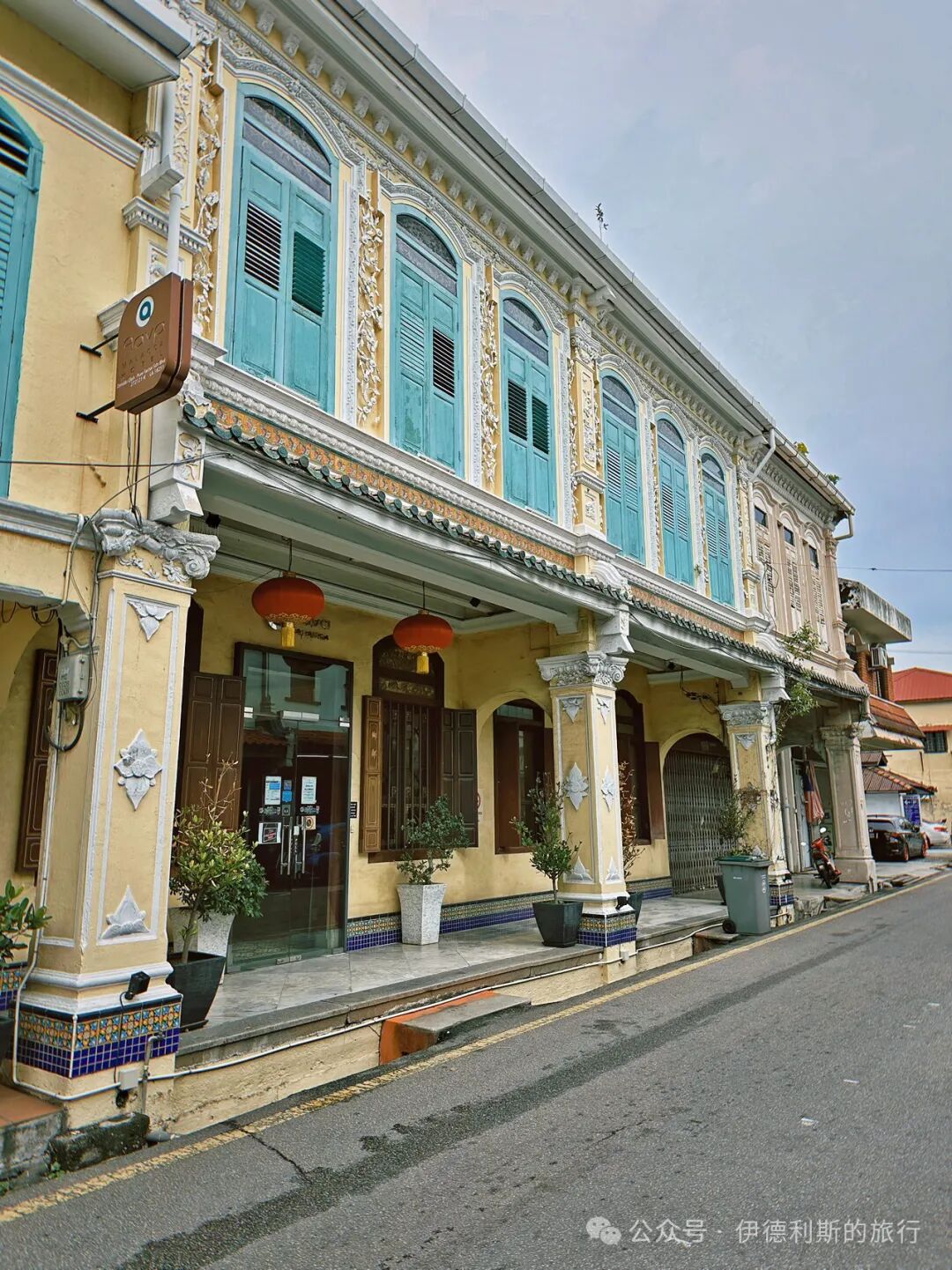
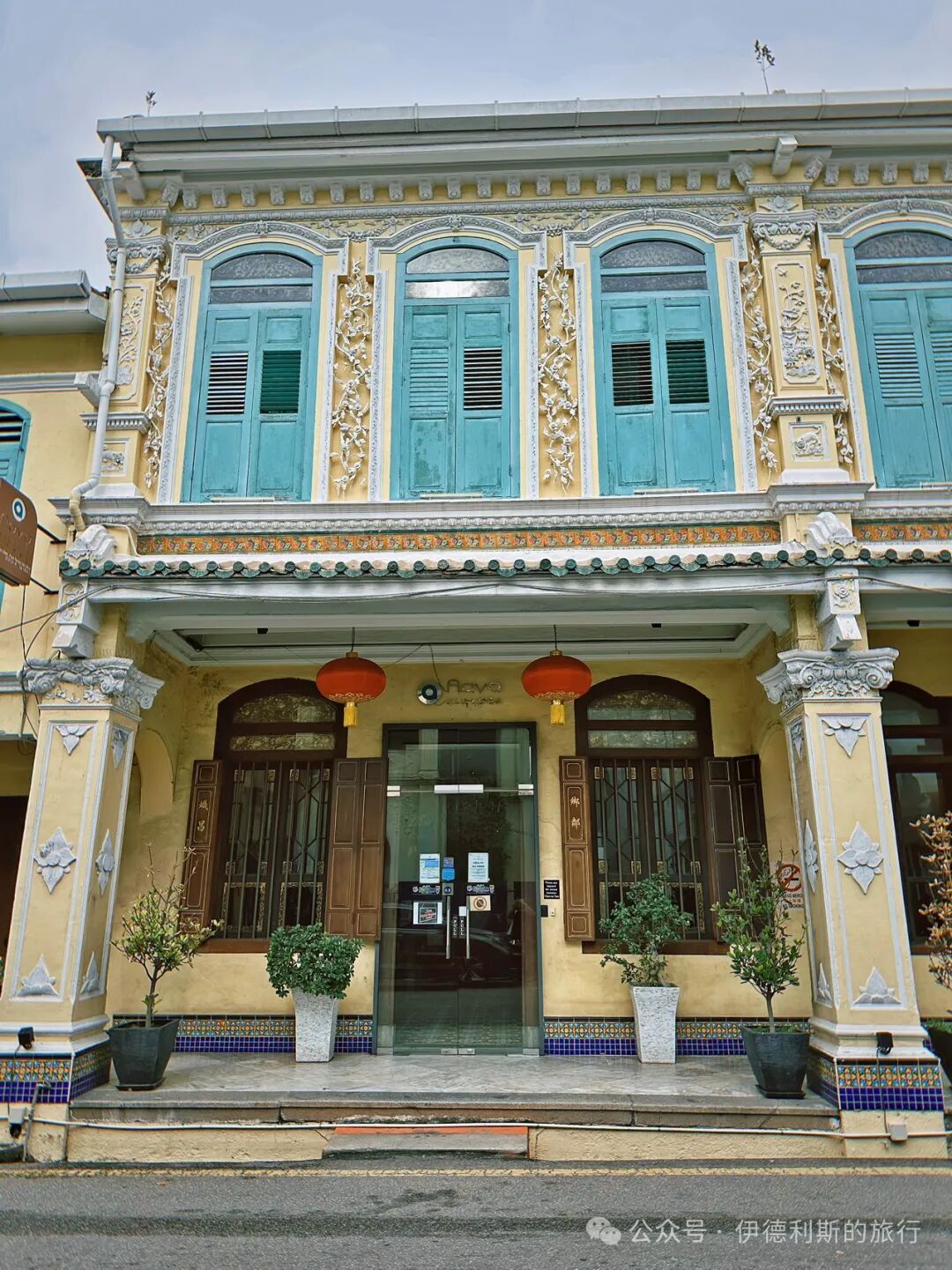
We spent our first night at the Aava Malacca Hotel on Kampung Hulu Road. This area is inside the buffer zone of the Melaka UNESCO World Heritage site. It is right next to two historic mosques, Kampung Hulu Mosque and Kampung Kling Mosque, so the location is excellent. Kampung Hulu Street often has traffic jams. If you want to take a taxi, walk 300 meters north to the main road outside the World Heritage buffer zone.
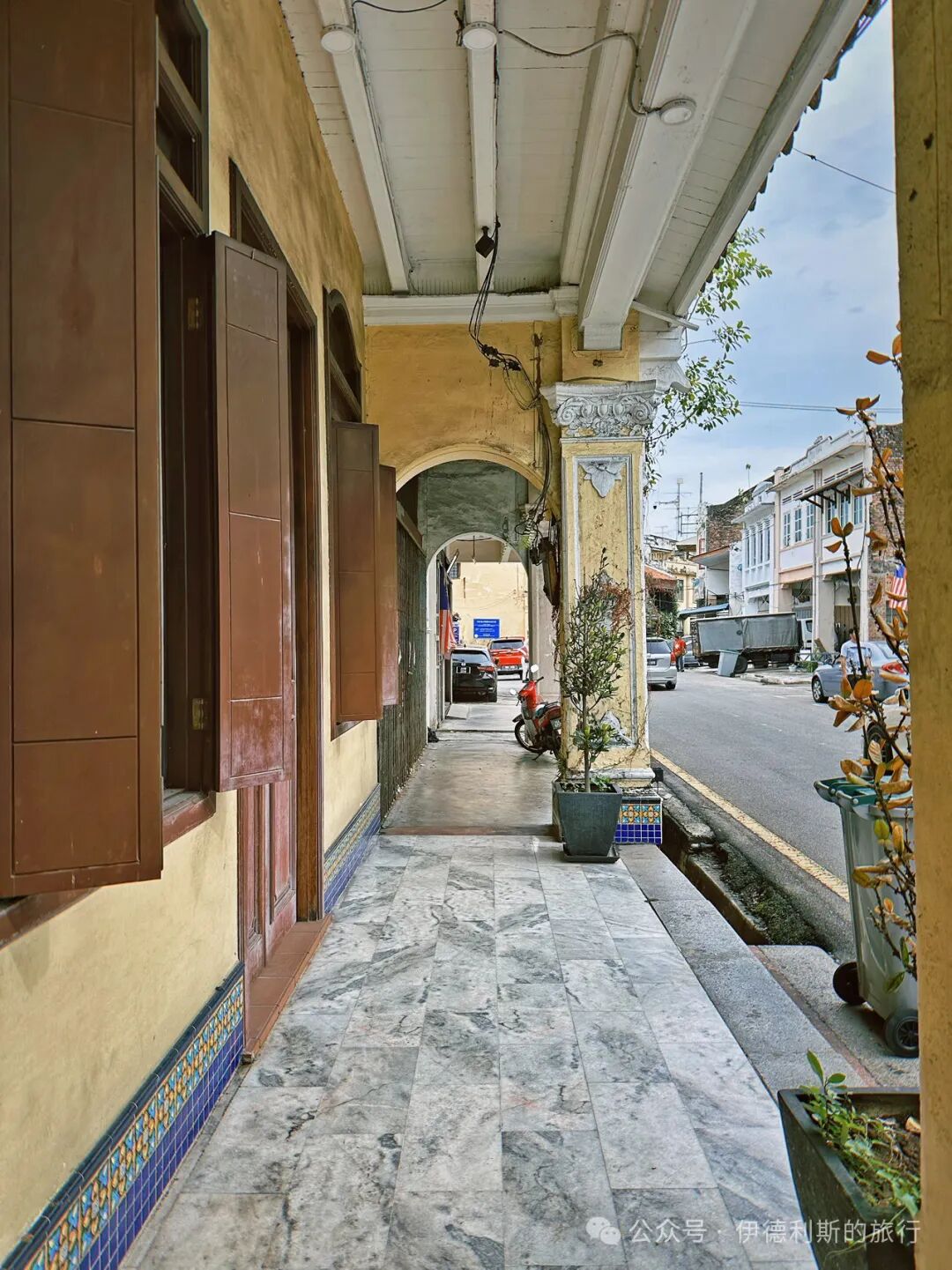
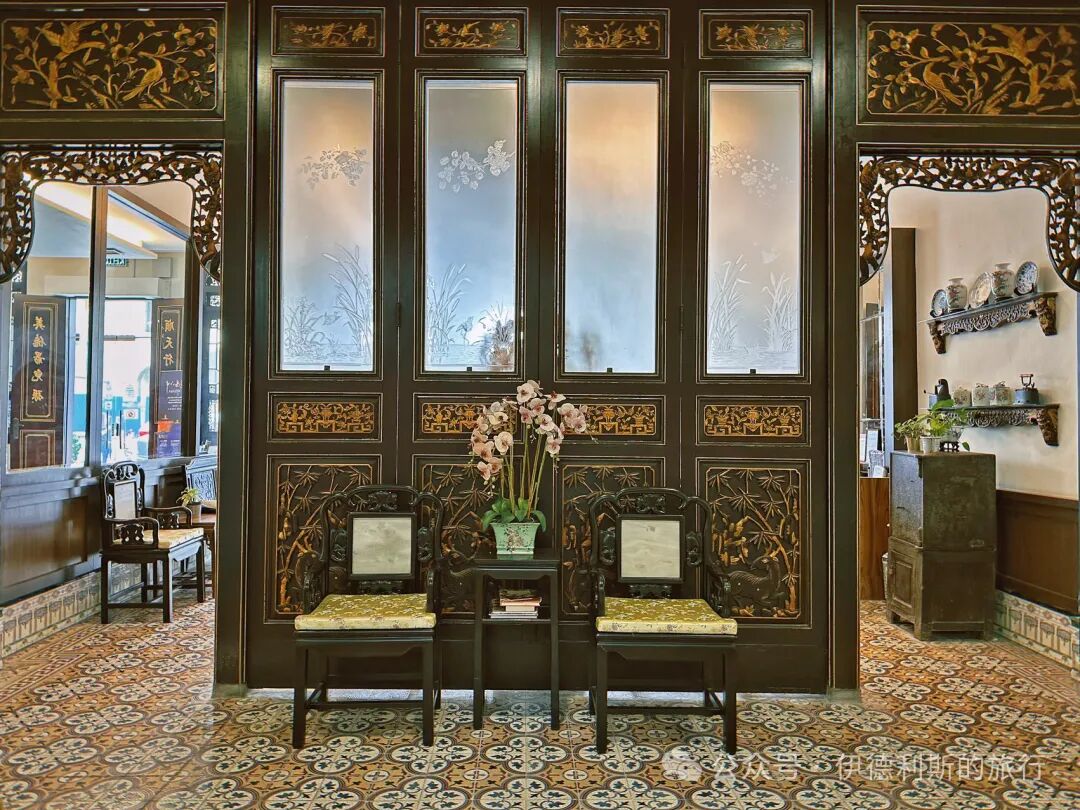
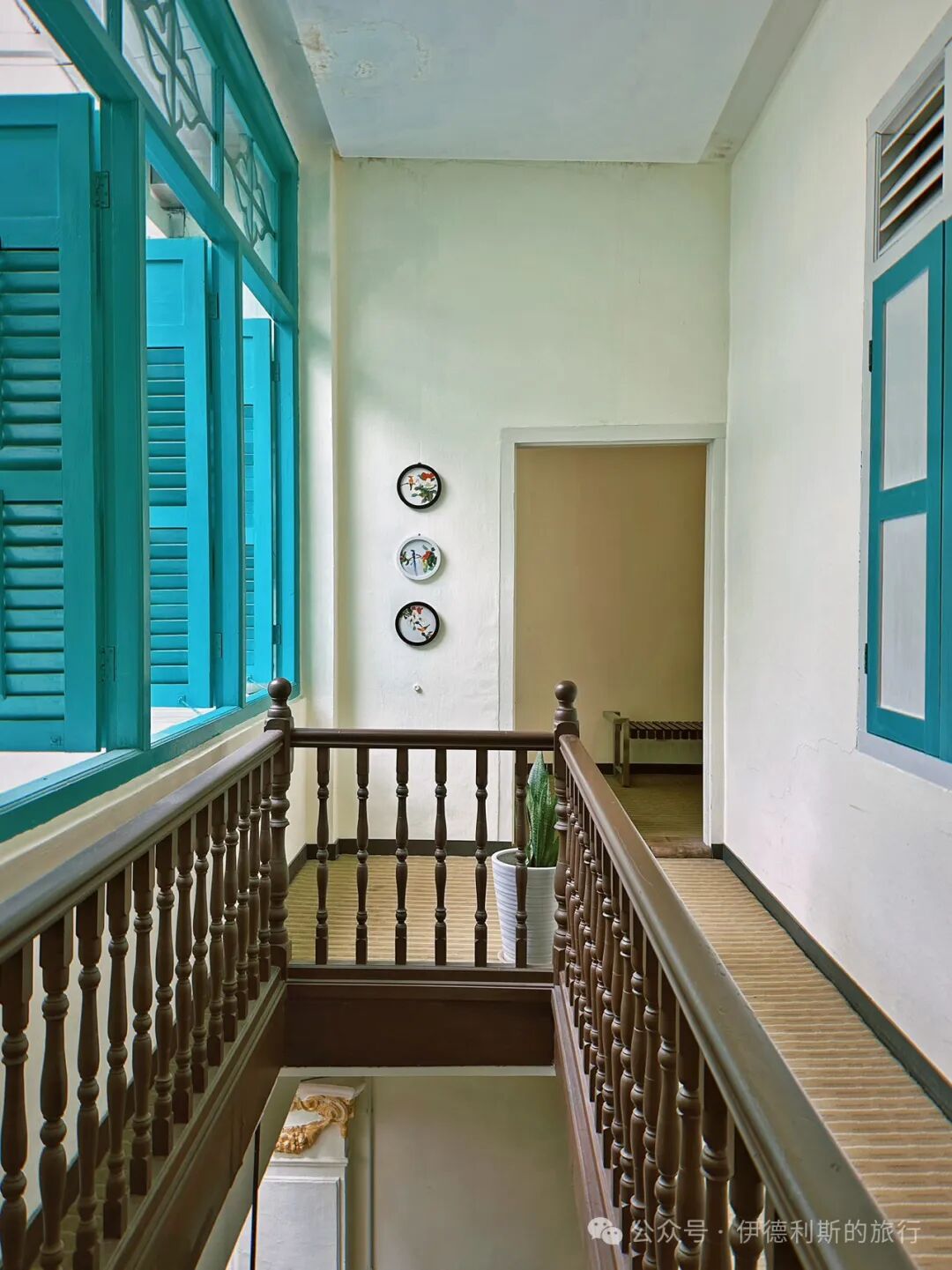
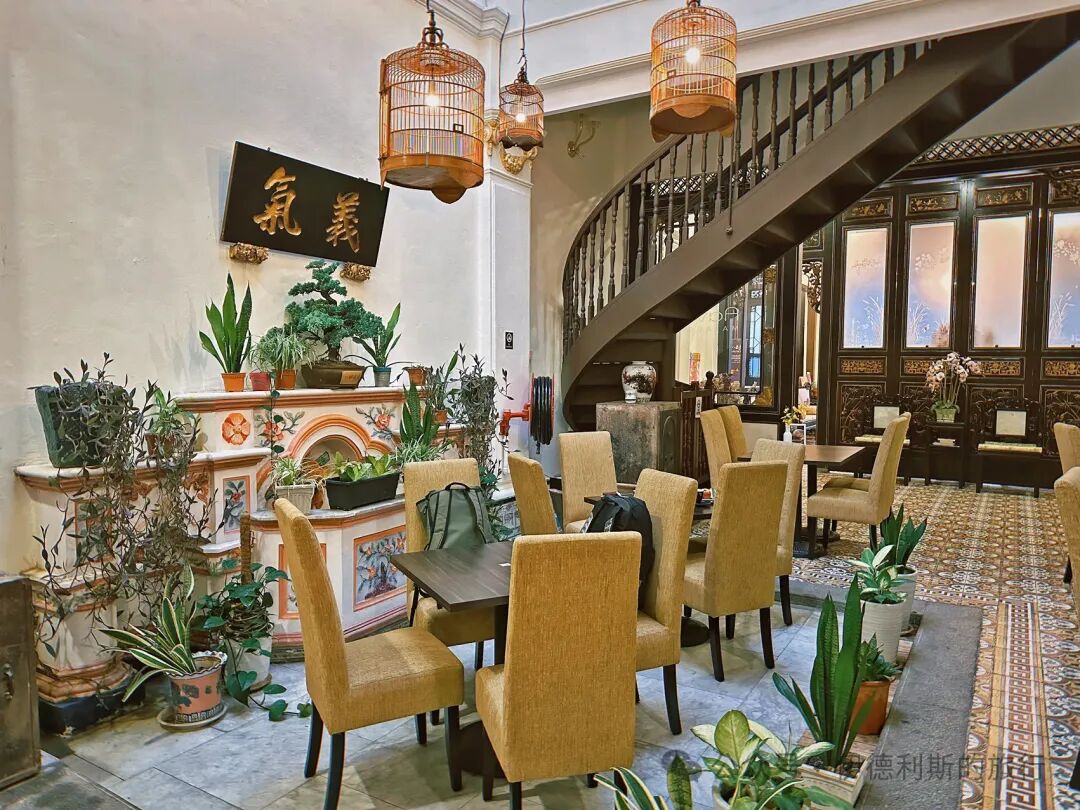
The Aava Hotel is made from three traditional shophouses (qilou) built before World War II. The exterior is very well preserved, and the interior is simple and elegant. The Nyonya elements are used sparingly but look great. I personally think it offers good value for money. The hotel offers free bicycle rentals for two hours, but one bike has stiff handlebars, so be careful when riding it.
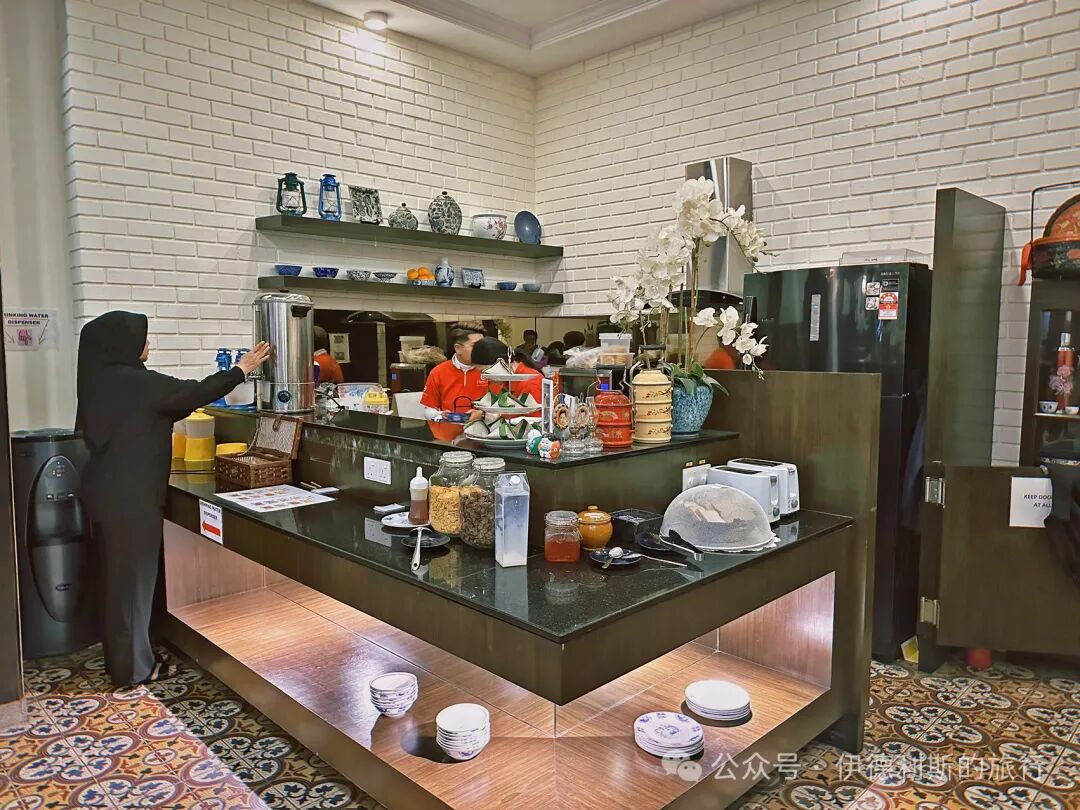
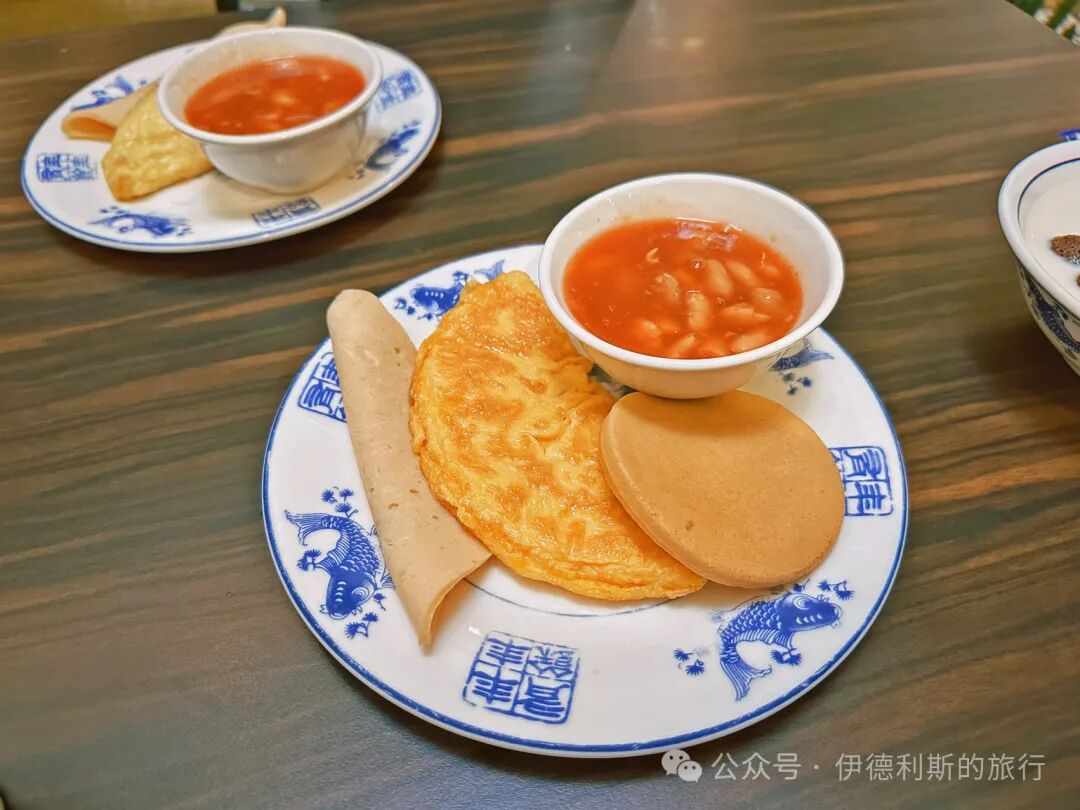
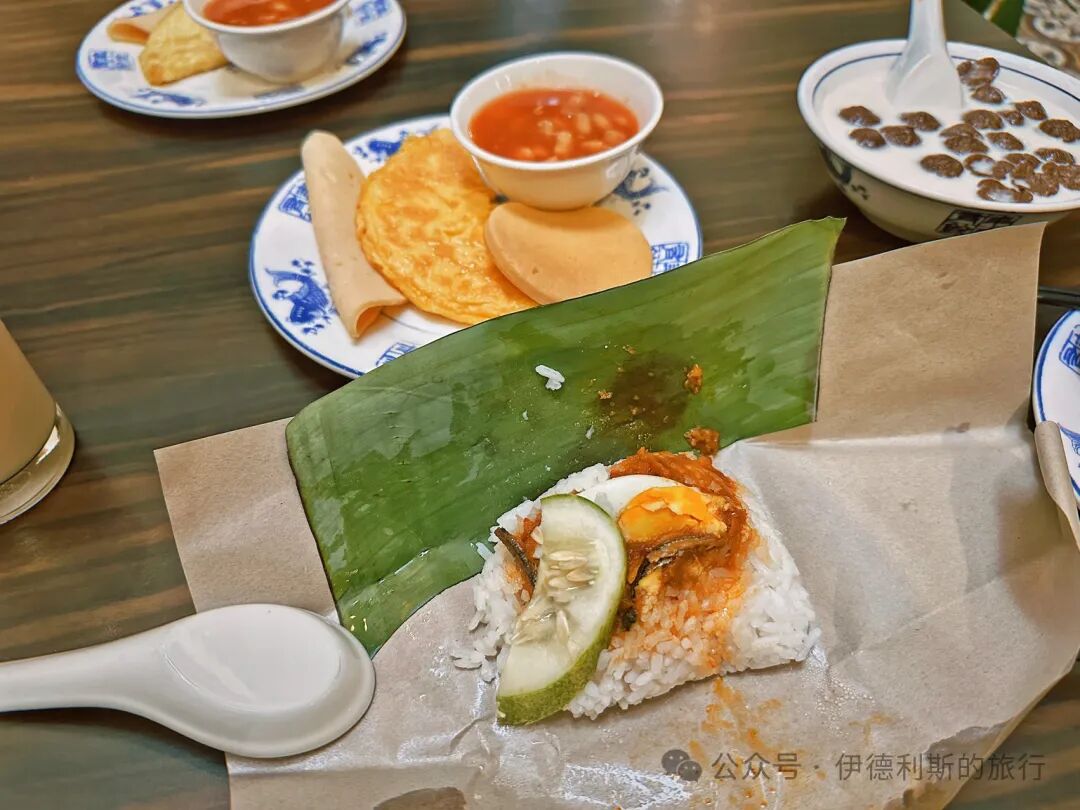
The halal breakfast at Aava Hotel includes Western-style omelets, baked beans, and coconut milk rice (nasi lemak) wrapped in banana leaves. Both Malay and Chinese guests ate breakfast with us. It is very comfortable to drink coffee leisurely inside the shophouse.
Staying at a Straits mansion
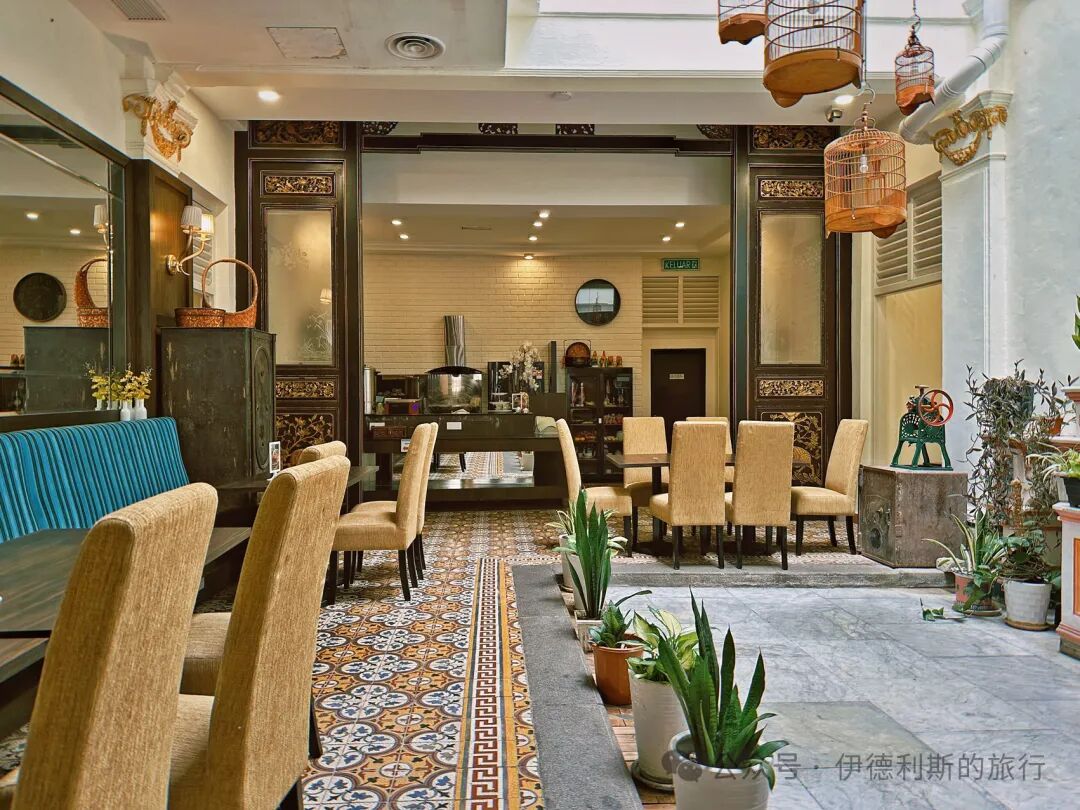
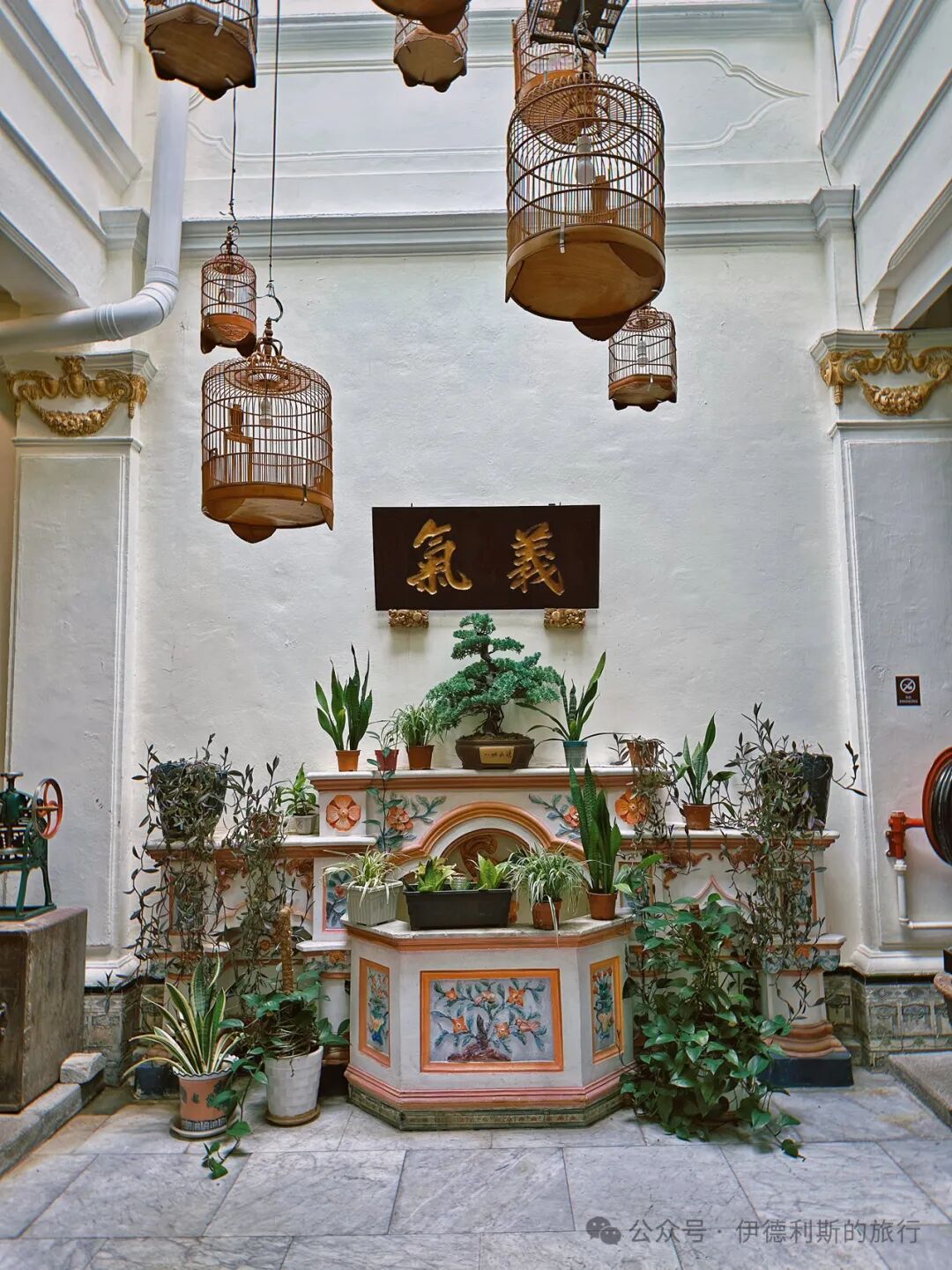
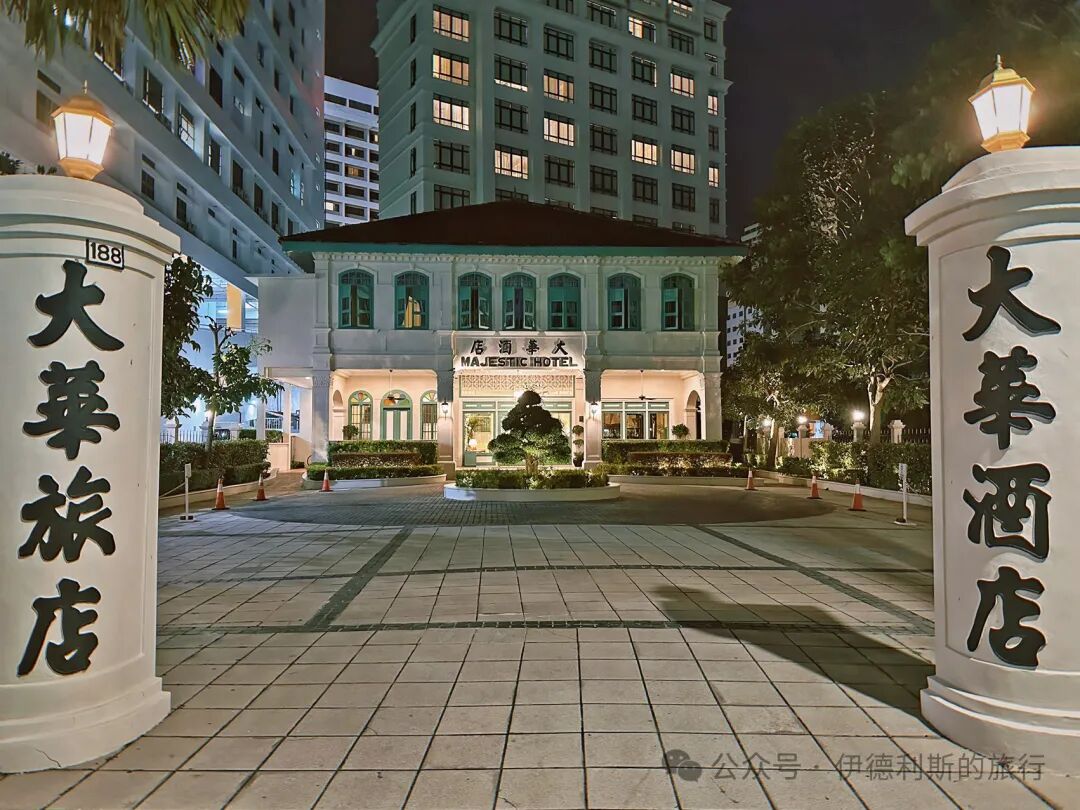
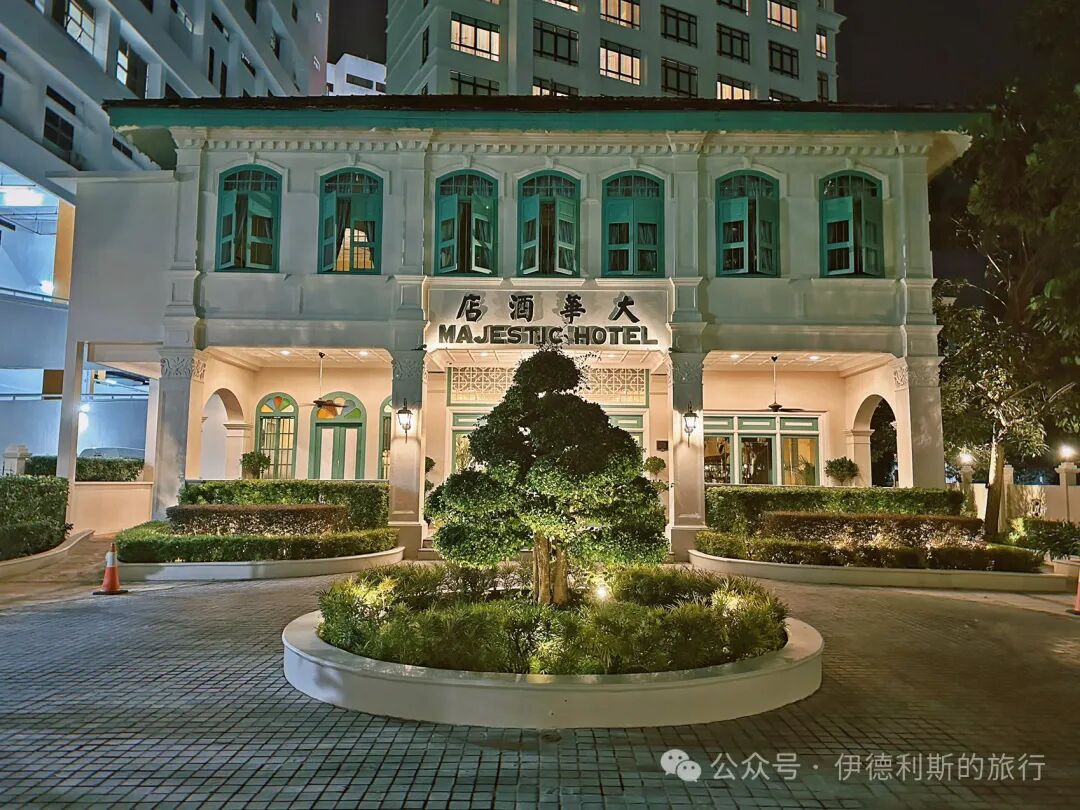
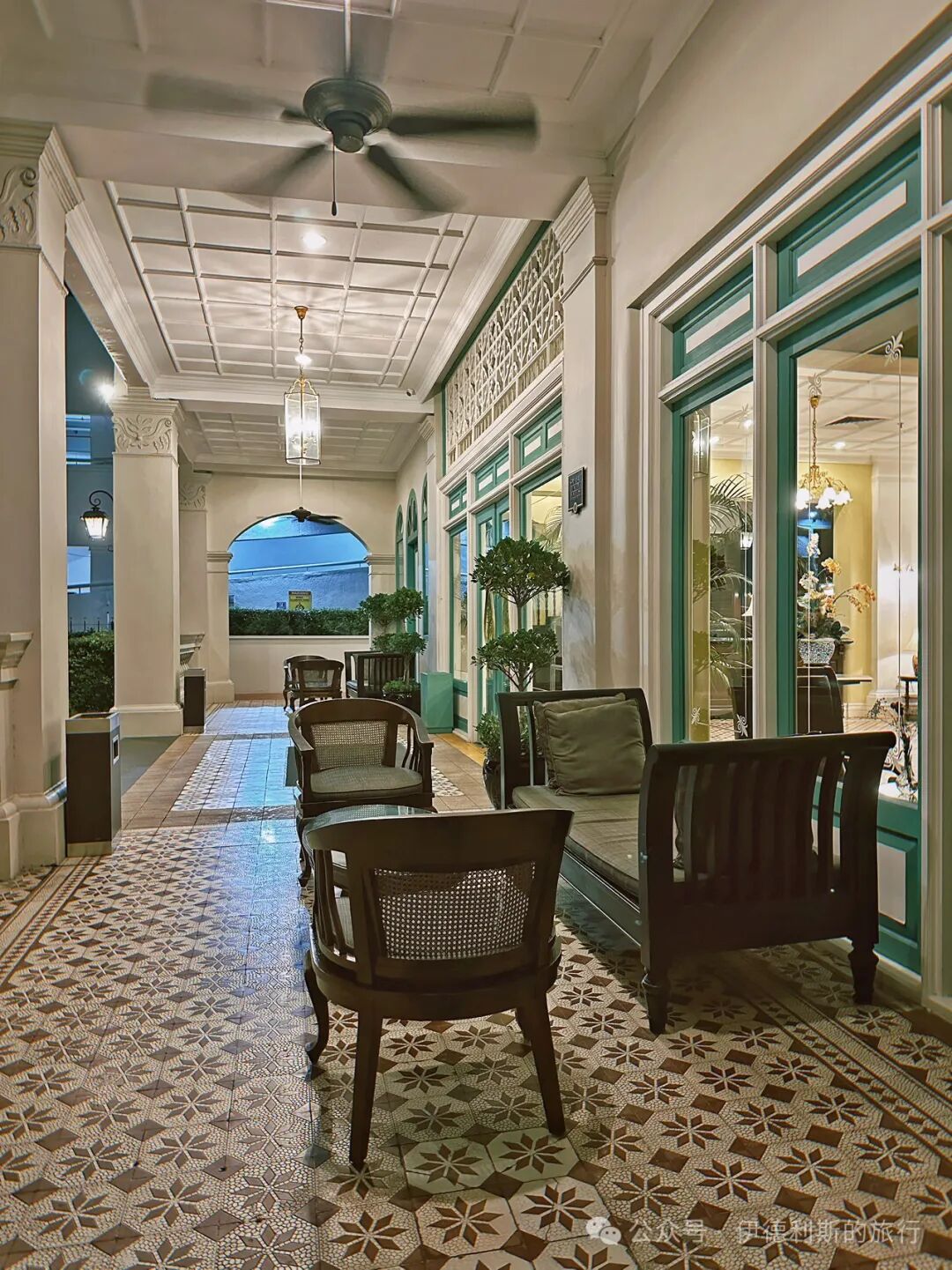
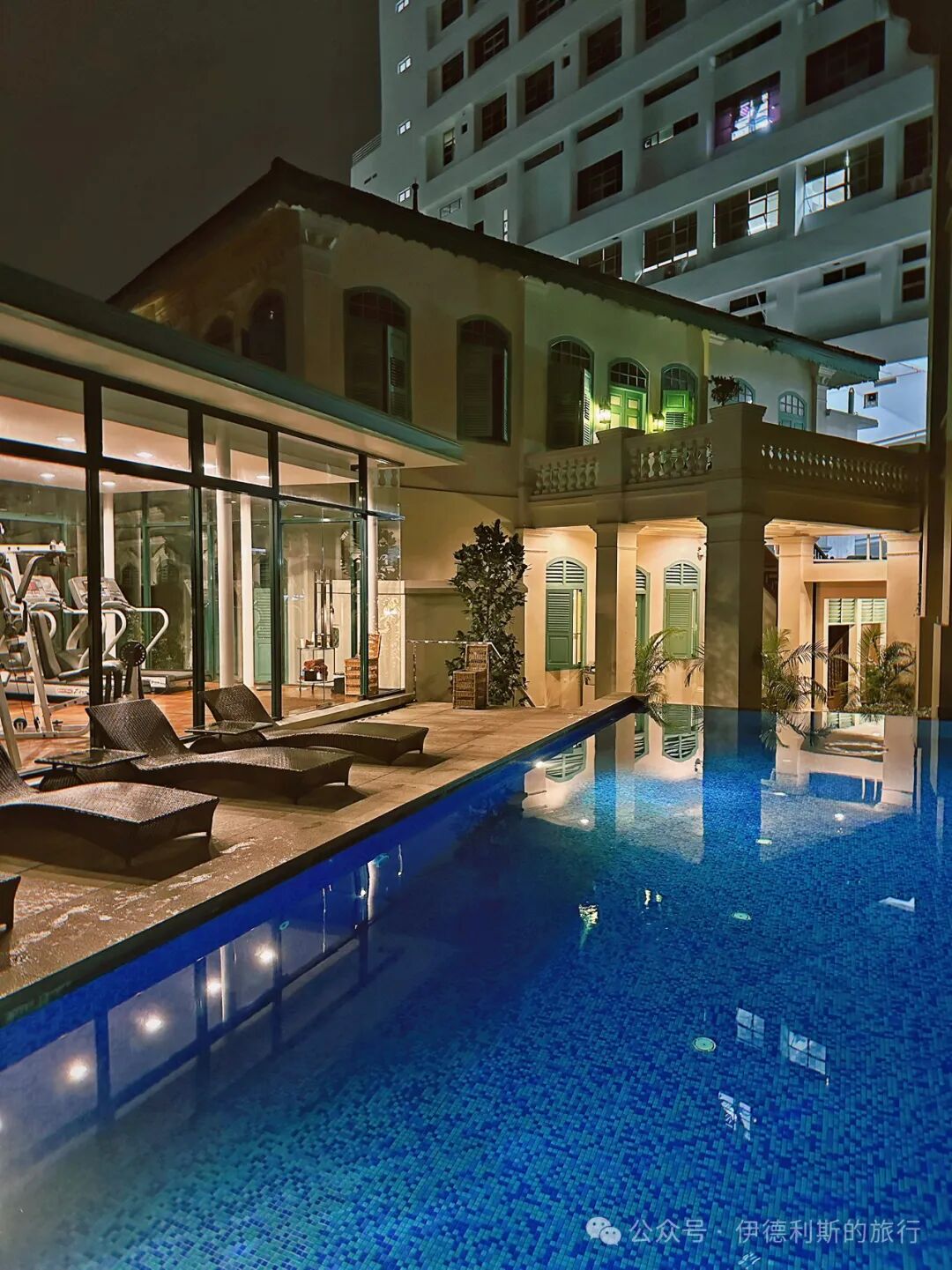
On the second day, we stayed at the famous The Majestic Malacca hotel. Staying here really showed me that you get what you pay for. The environment is amazing, the service is very thoughtful, and it feels just like home.
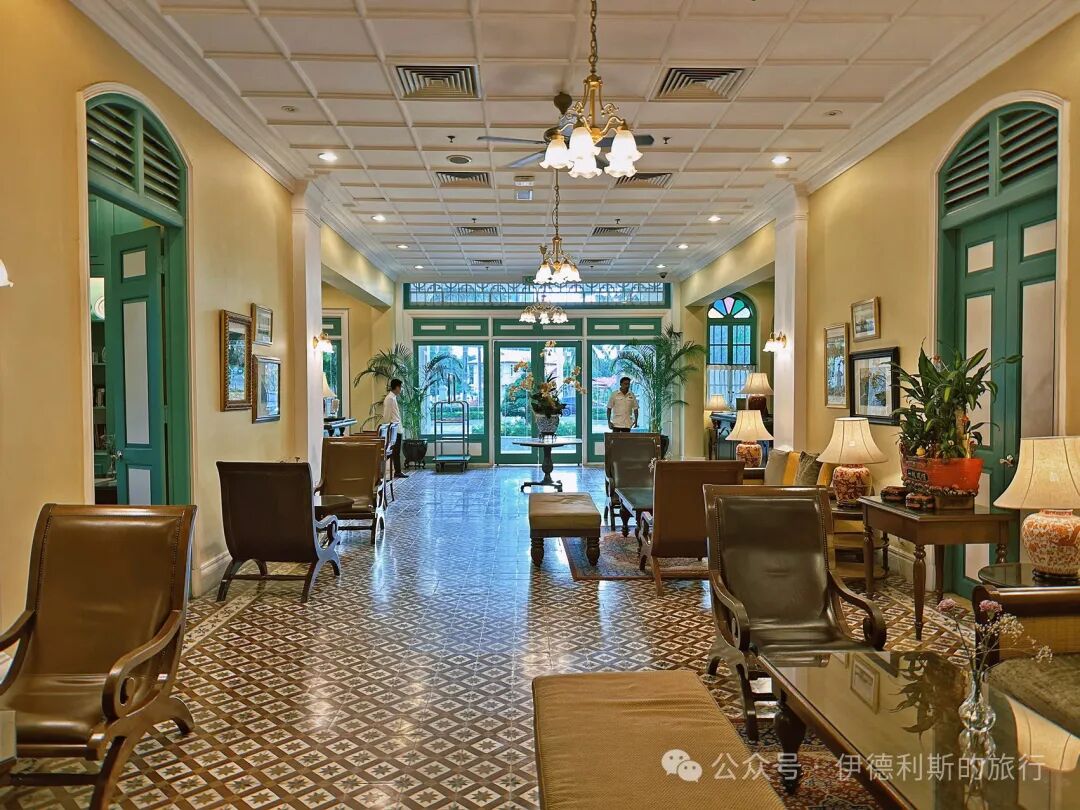
The lobby of the Majestic Hotel is inside a nearly 100-year-old mansion from the Straits Settlements era, with the original tile floors and teak wood features still preserved today. The Majestic Hotel was built in 1929 under the direction of wealthy Chinese businessman Leong Long Man, but he sadly passed away two years later, and his son inherited the mansion. His son kept spending the family fortune until he sold the property to another Chinese businessman, Lim Heng Fang, in 1955. Lim Heng Fang turned the mansion into a hotel. It hosted many British plantation owners in the 1950s and 1960s, and it even welcomed the first Prime Minister, Tunku Abdul Rahman, when Malaysia declared independence in 1957.
The Majestic Hotel closed in 2000 due to poor management. In 2006, the famous Malaysian YTL Hotels group bought and restored it, and it reopened for business in 2008.
After we finished checking in, a Nyonya lady from the front desk guided us to our room and offered us some welcome tea.
The second floor of the Straits Mansion at the Majestic Hotel serves a halal breakfast. You can choose from Western, Malay, or Indian styles. There is an unlimited supply of croissants, which are served to you by Indian staff so you do not have to get them yourself.
We ordered a serving of Indian flatbread (roti canai) with curry and a bowl of spicy noodle soup (laksa).
Roti canai is a classic Nanyang Indian Muslim breakfast. As early as the 17th century, Indian Muslims brought the practice of eating flatbread with curry to the Aceh Sultanate in northern Sumatra. After the 19th century, it spread to Nanyang countries like Indonesia, Malaysia, and Brunei. Various ethnic groups, including the Malays, Acehnese, and Minangkabau people, all love making this dish.
Curry laksa (laksa lemak) is a type of curry laksa that uses rice noodles in a thick coconut curry soup, topped with chicken and seafood. Curry laksa is best represented by Nyonya laksa, which has plenty of coconut milk and is less sour and spicy compared to the other type, Asam laksa.
Hui Muslim snacks
Chan Mari Chan is a sub-brand of the large Malaysian Hui Muslim Chinese restaurant chain Mohd Chan, focusing on affordable home-style snacks. The founder of Mohd Chan, Dato HJ Mohd Chan, was born in Gombak District, Selangor. In 2007, influenced by his Malay friends, he converted to Islam and started his restaurant that same year. Since then, he has been combining Nanyang Chinese cuisine with Malay flavors, and it has now become the most famous and largest Hui Muslim restaurant chain in Malaysia.
This January, we ate at Mohd Chan restaurant in Seremban, Malaysia. You order from a menu there, and they serve a variety of high-end Nanyang Chinese banquet dishes. Chan Mari Chan focuses on fast food and snacks. You go straight to the counter to pick up your food, and the chicken rice, small side dishes, and steamed dumplings (shaomai) are the most popular items. We grabbed roasted chicken rice, three small side dishes, two types of steamed dumplings (shaomai), and drank grass jelly coffee and cocoa coffee. Their food is quite delicious. I especially loved the fragrance and texture of the chicken rice. Eating there wiped away the fatigue of our journey. We instantly felt embraced by Nanyang culture and left feeling very satisfied.
The restaurant environment is also very nice, and many Malaysian Muslim friends (dosti) come here to eat with their families. They have a prayer room in the shop, which sets a great example for us Hui Muslims.
Malaysian Food City
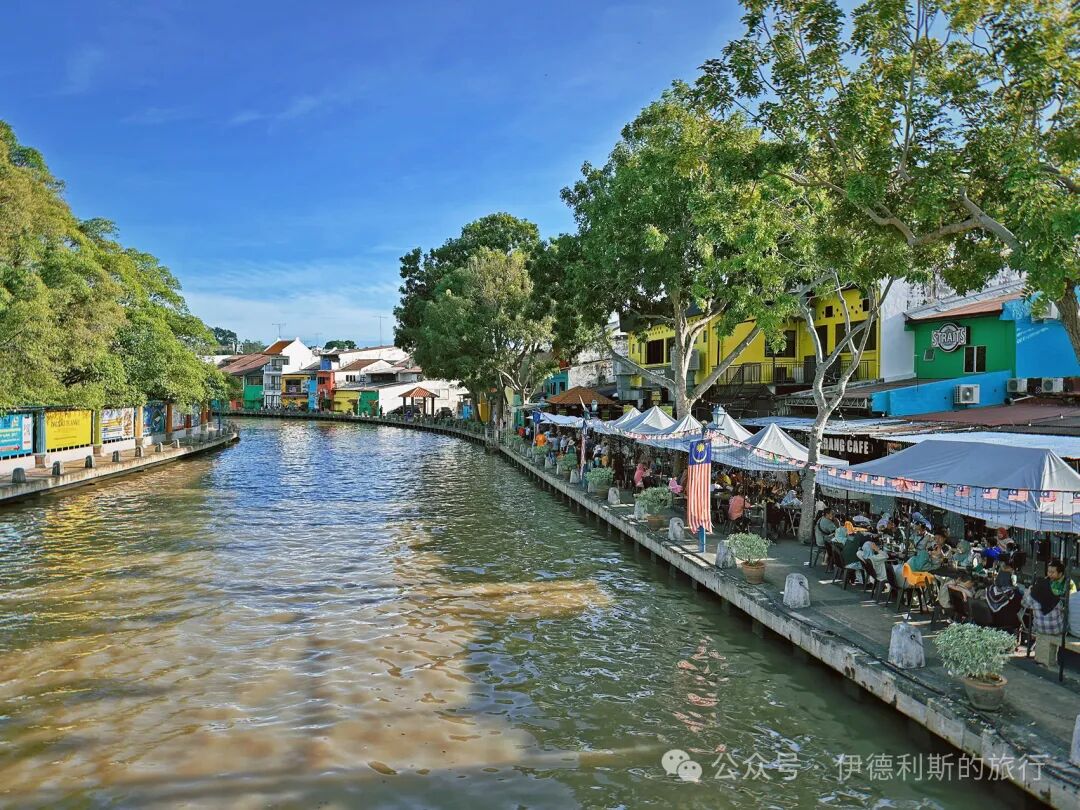
Right next to the E-Red Hotel on Kampung Hulu Street, there is a large Malay food court called Makan Avenue. It has a huge variety of Malay snacks. Many Malay people come here to eat at night, and the tables along the Malacca River are always full. Be careful about ordering drinks here on weekends or holidays. Because they have to serve hundreds of seats, I actually waited an hour just to get my drink. The other food stalls serve their dishes relatively quickly.
The most famous spot in the food court is Cendol Kampung Hulu. Cendol originated on the island of Java and was a classic drink at Javanese weddings before it spread across Southeast Asia. It is made with shaved ice, green rice flour jelly noodles, coconut milk, and palm sugar. You can also add things like red beans or grass jelly. We ordered the durian cendol, which is perfect for the hot and humid weather in Southeast Asia.
We also ordered beef meatball soup (bakso biasa). The name bakso comes from the Southern Min dialect for 'meat crisp.' It is a classic Malaysian street food made from beef, fish paste, and a little tapioca flour, giving it a very firm texture. The finished meatballs are usually served in beef broth with tofu, glass noodles, and various side dishes.
We also ordered fried tilapia (talapia) and catfish (keli). Although they looked charred on the outside, the meat inside was very tender, had no fishy smell, and tasted delicious.
Malaysian night market
Across from Dataran Pahlawan, we found a huge Malaysian night market that seems to only open on weekends, with an endless variety of snacks. We were too full to eat a meal, so we just bought some guava dipped in sour plum powder and a giant avocado juice. Tropical fruits are cheap all over Malaysia. As long as you don't buy durian in tourist areas, you can basically eat as much fruit as you want.
The vibe of the Malacca night market, featuring hand-pounded chili paste (sambal) and lamb soup (yangtang).
Malay cake shop
In Kampung Hulu, there is a lovely cake shop called Malaiqa By Gula Cakery that is especially popular with young people. The shop is inside a shophouse built in 1941. The decor is fresh and simple, a great example of revitalizing the old city.
We ordered the strawberry milk pudding and longan lemon tea, and both tasted great. These fresh little shops in Malaysia are really wonderful, though we usually stick to traditional food and don't visit places like this very often.
Malay village farmhouse cooking
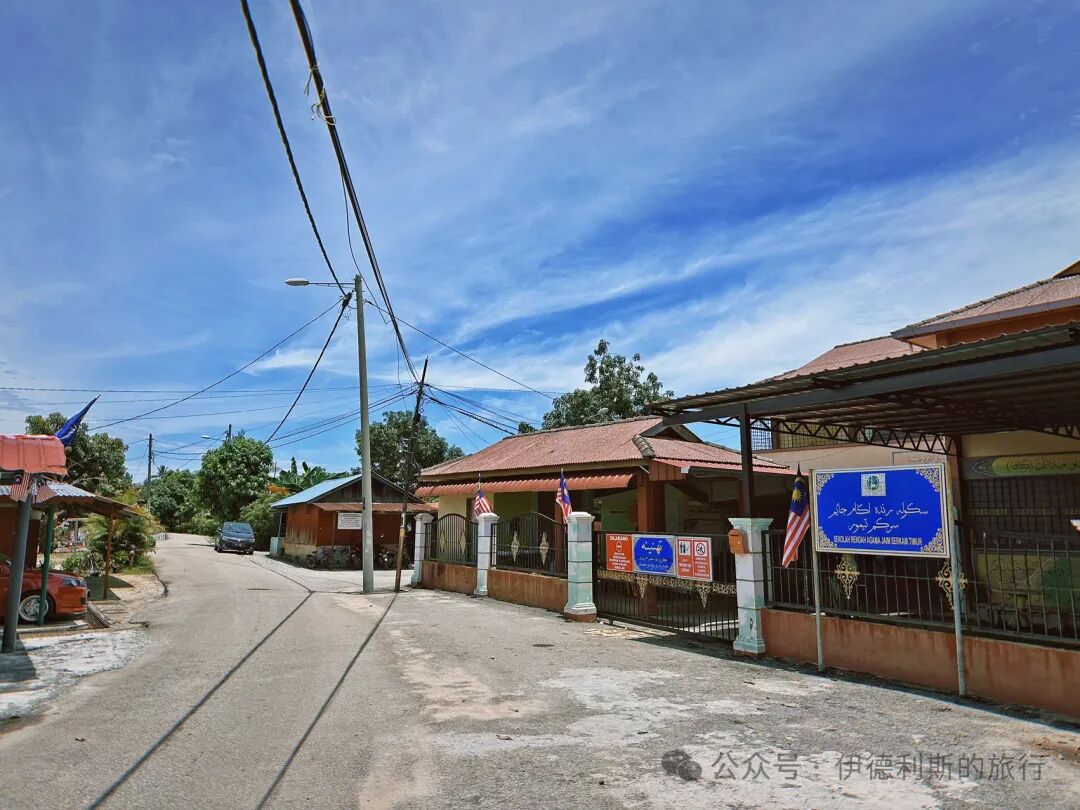
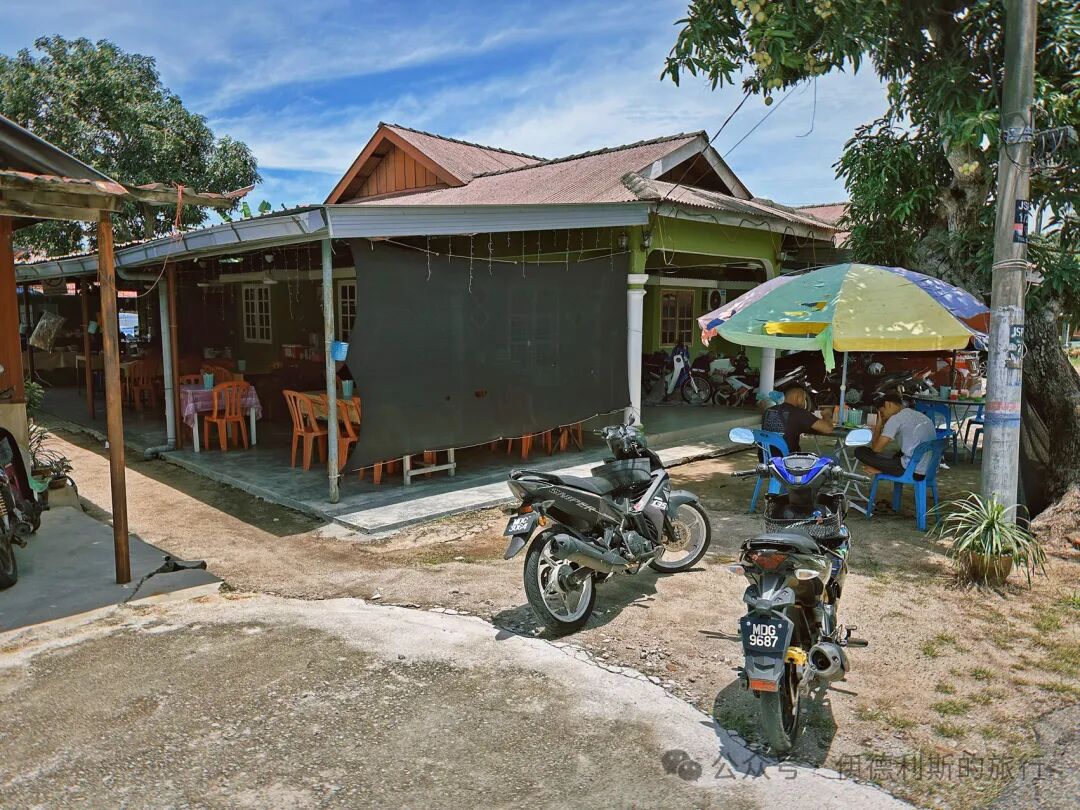
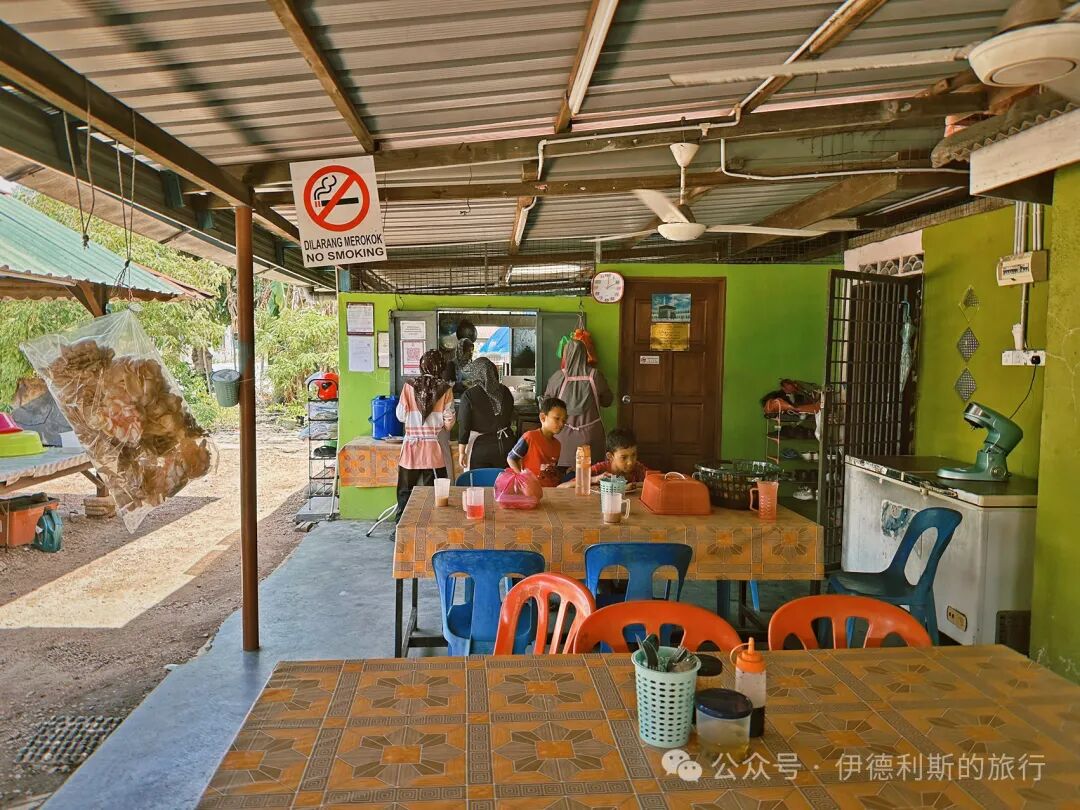
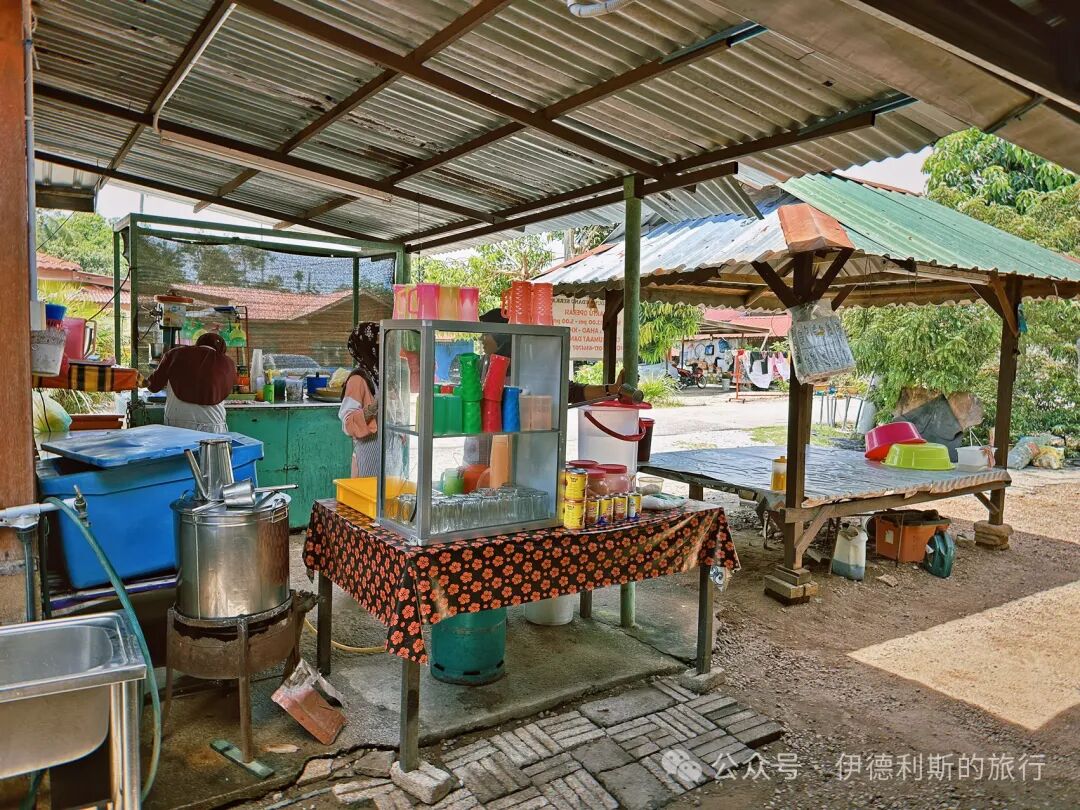
On the road heading east from Malacca to Muar, the whole way is filled with Malay village (kampung) countryside scenery. At noon, we passed through the seaside village of Serkam Pantai, prayed namaz at a 19th-century mosque, and then had an authentic Malay village-style meal in the village.
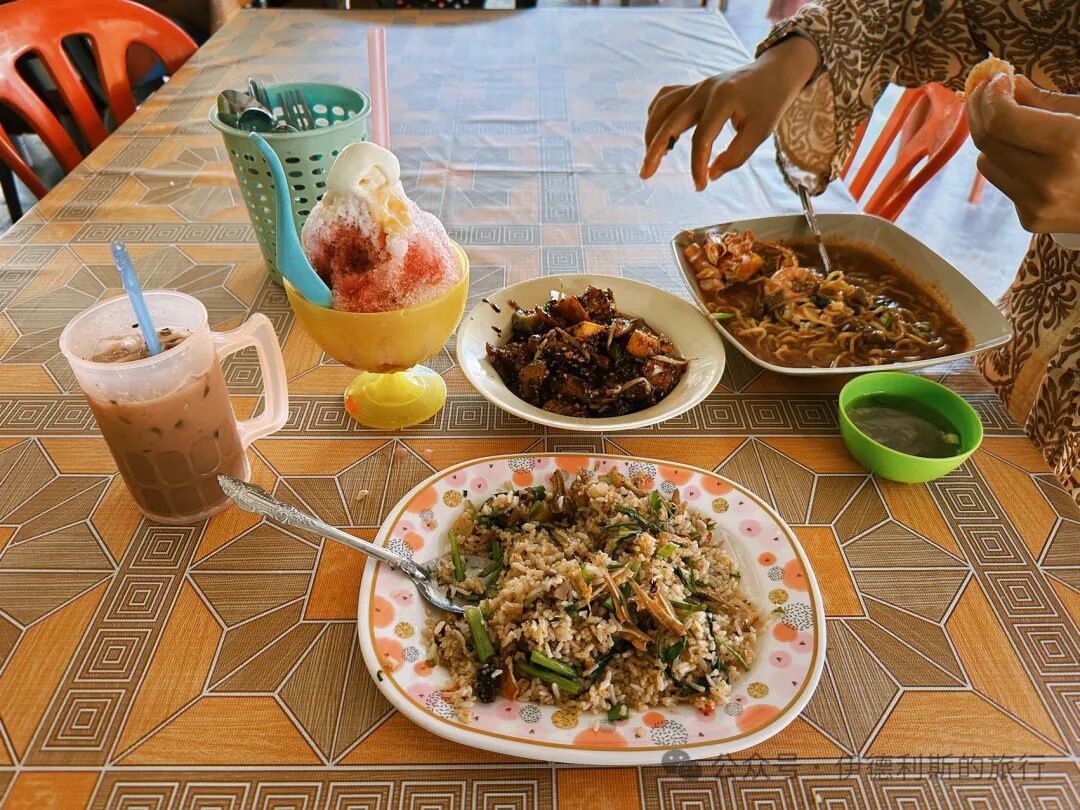
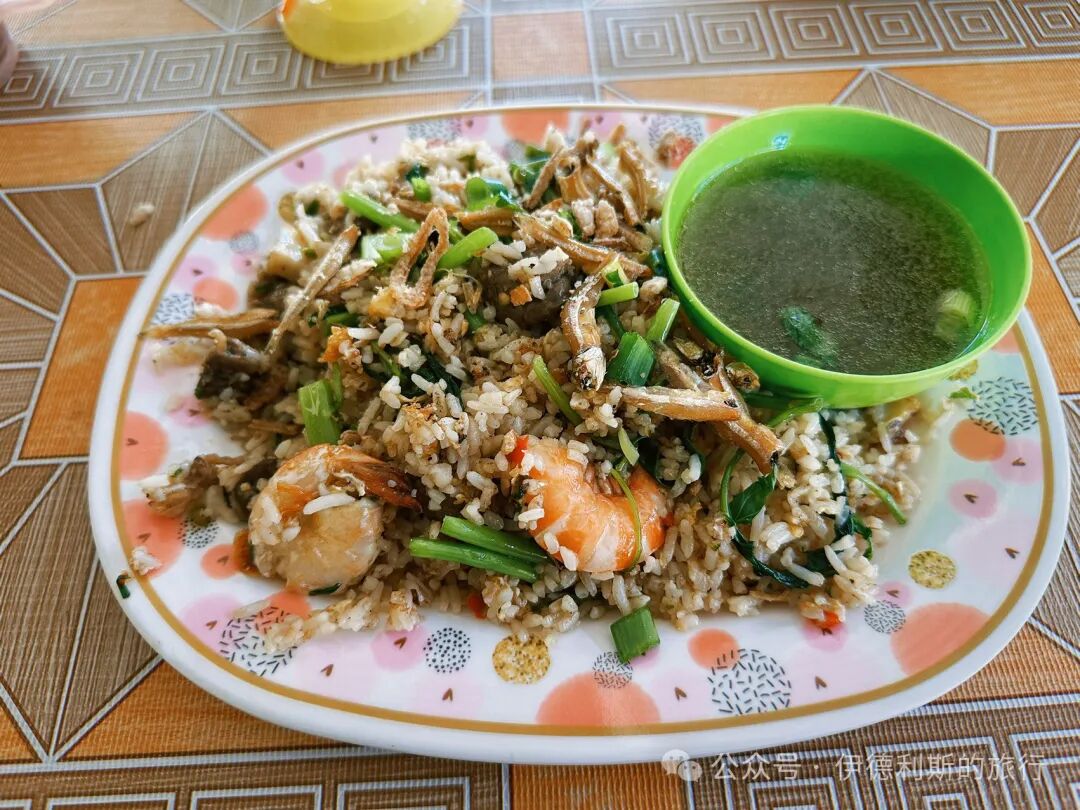
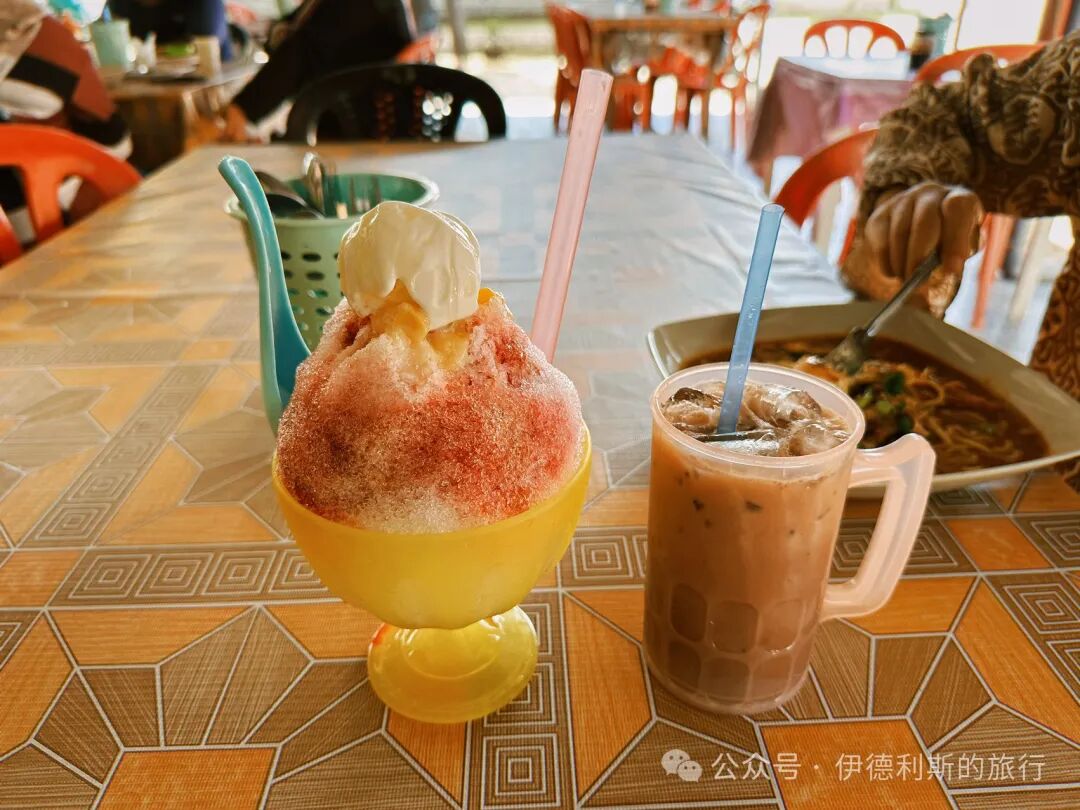
We ordered shrimp noodle soup (Mee Bandung Udang), black shrimp paste fruit salad (Rojak Petis), and Malay village-style fried rice (Nasi Goreng Kampung), drank iced Milo (Milo Ais Kepal), and had red bean shaved ice (Air Batu Campur).
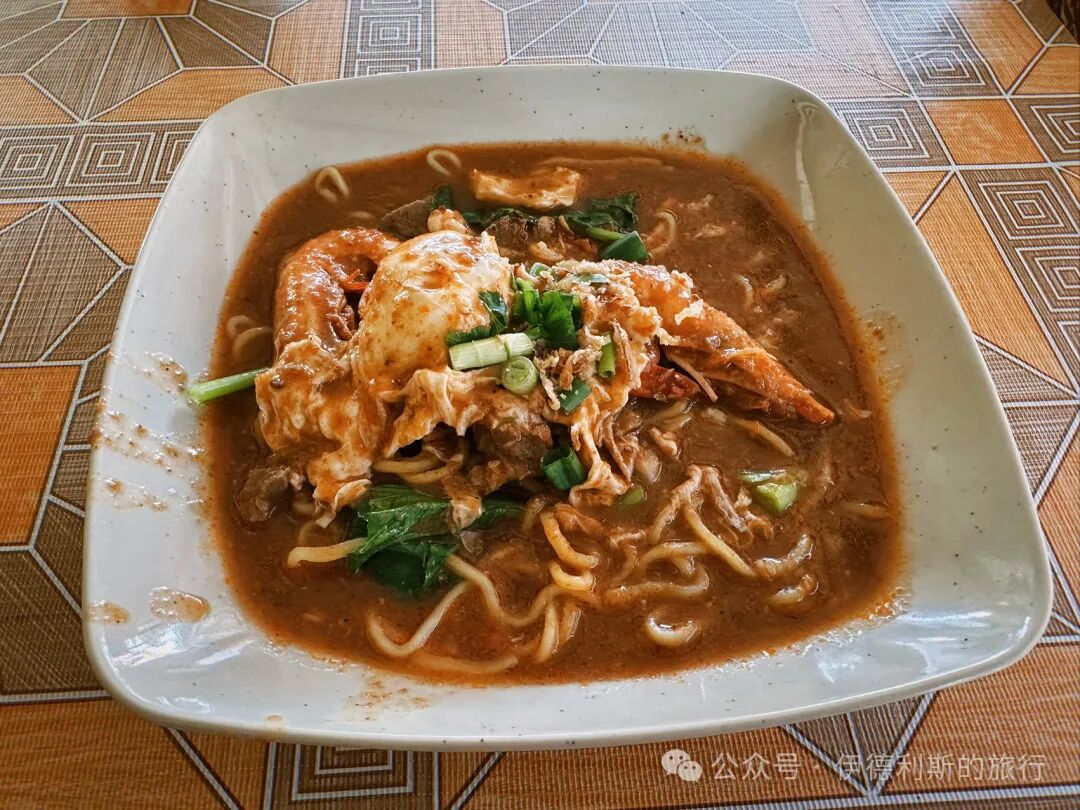
Shrimp noodle soup (Mee Bandung Udang) is a Malay dish that started in Muar, Malaysia. Bandung means mixed, and Udang means shrimp. It is made by boiling yellow noodles with eggs, shrimp, leafy greens, and beef bits. The thick soup is simmered with shrimp paste, onions, spices, and chili, giving it a very fresh taste.
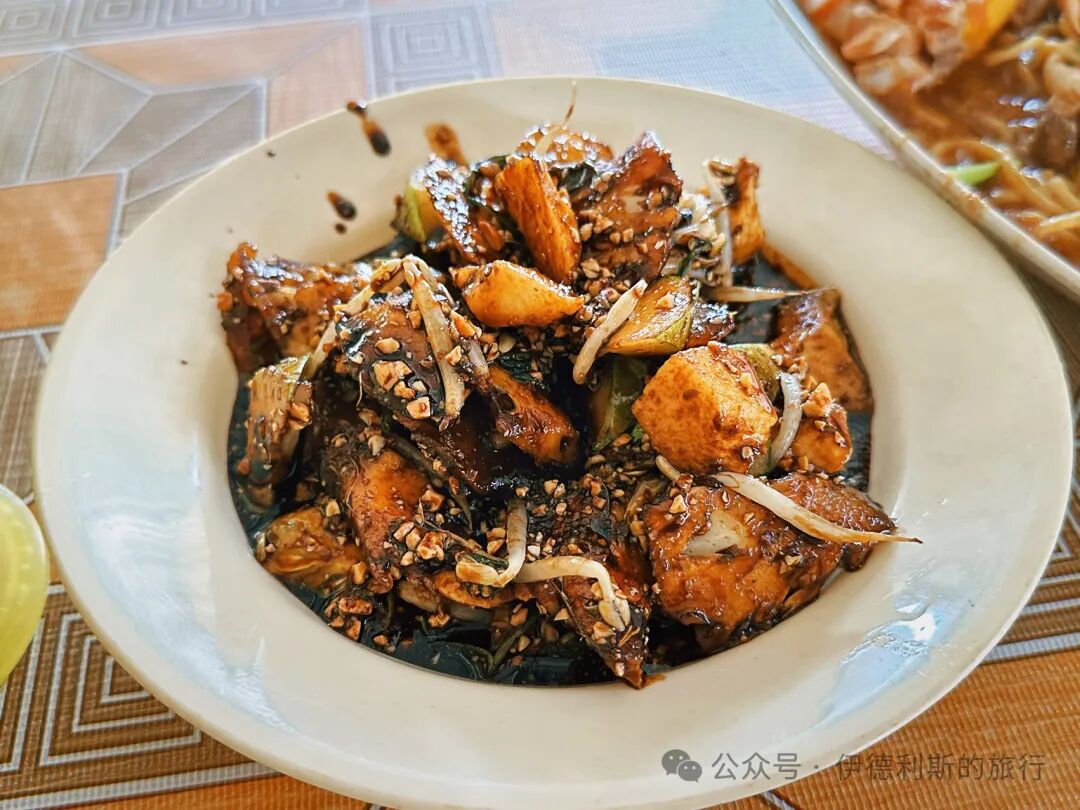
Fruit salad (Rojak) is said to have started on the island of Java. It was originally a mix of fruits and vegetables with spicy palm sugar syrup, but it later spread across Indonesia, Malaysia, and Singapore, developing many different styles. Black shrimp paste fruit salad (Rojak Petis) started in Surabaya, East Java. It contains raw mango, cucumber, water spinach, and bean sprouts. The sauce is made from black shrimp paste (Petis), fried shallots, palm sugar, and salt, and it is topped with crushed peanuts. The fruit salad tastes quite sweet, so people who prefer milder flavors might find it hard to get used to.
Malay village-style fried rice (Nasi Goreng Kampung) is a classic Malay village dish. It includes diced beef, water spinach, shrimp, dried anchovies, and scrambled eggs. It is stir-fried with sweet soy sauce and shrimp paste, making the flavor very rich. It is one of my favorite Malay dishes.
Air Batu Campur red bean ice, also called ABC ice, is a classic dessert in Southeast Asia after a meal. It is mostly shaved ice with red beans and condensed milk on top, and the one we bought had a scoop of ice cream on it.
Nyonya cuisine
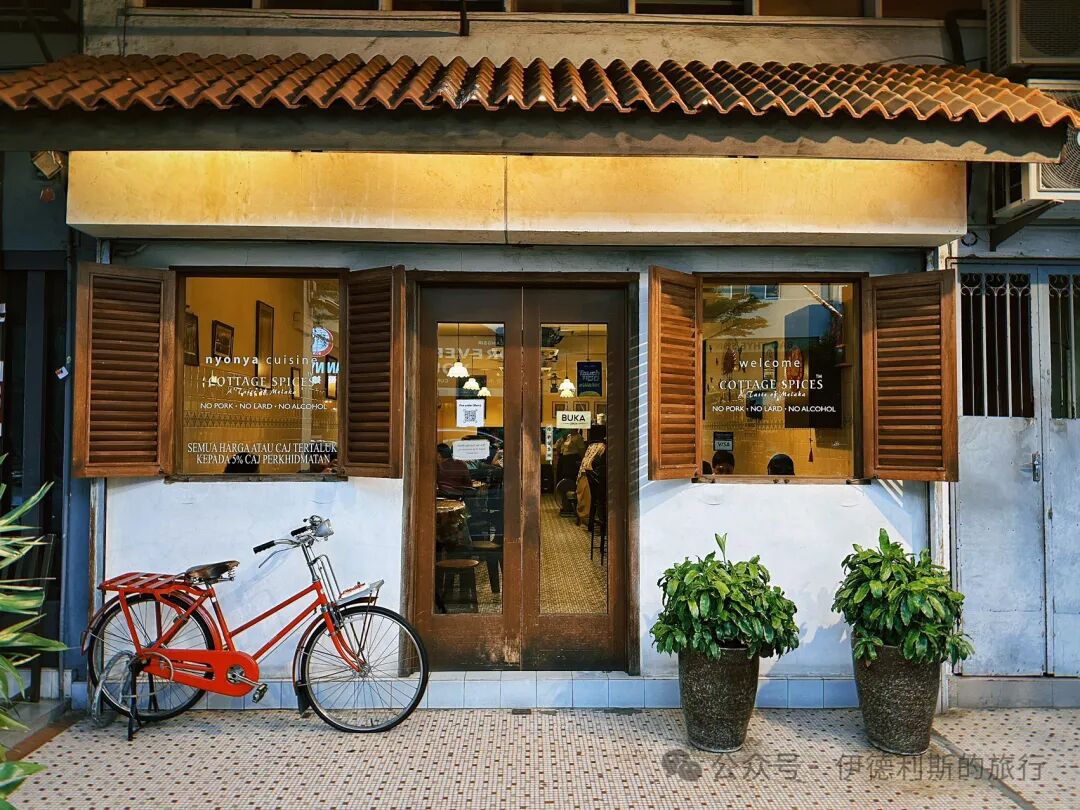
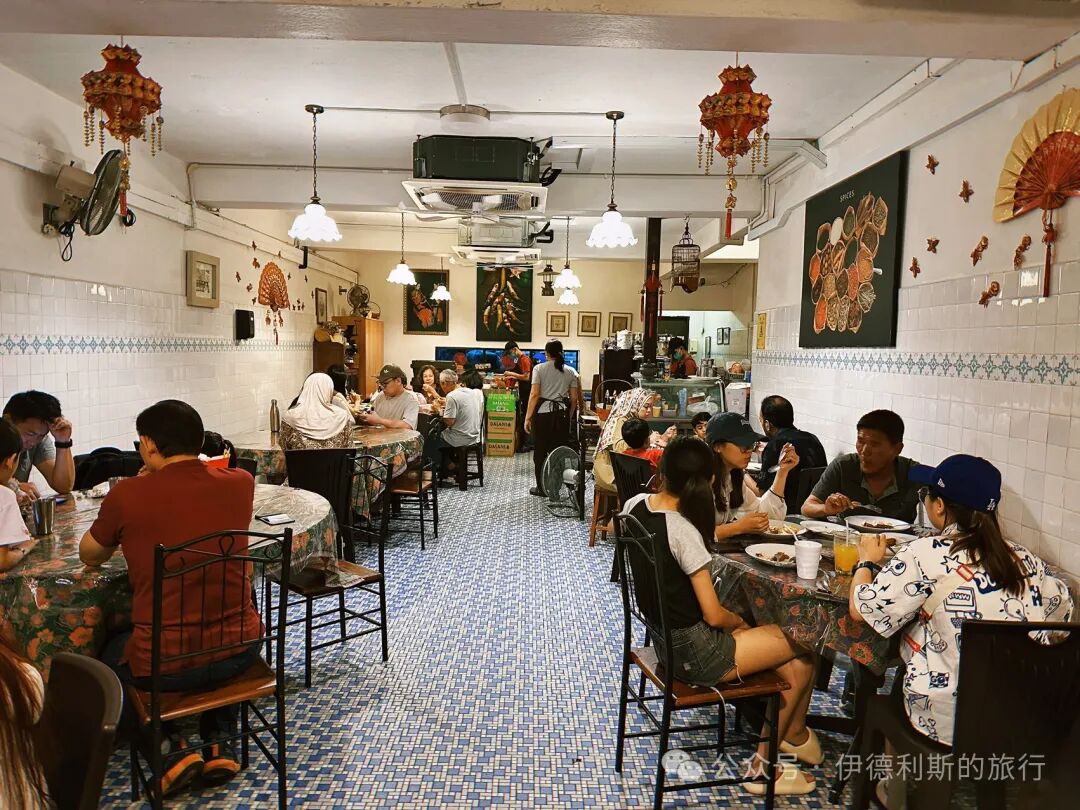
As the birthplace of Nyonya culture, you must eat Nyonya cuisine once when you come to Malacca. There are many halal Nyonya restaurants on the east side of the old town of Malacca on Independence Street (Jln Merdeka), with Atlantic and Cottage Spices being the most famous. Both places had lines when we went, so we both took numbers. Later, a table opened up at Cottage Spices first, so we ate there.
We ordered stir-fried water spinach with shrimp paste (Kangkung Belacan), Teochew steamed fish, steamed Nyonya fish cake (Otak-otak), and drank lime plum juice (Lime Plum), which was a perfect balance of meat and vegetables. Teochew steamed fish is red snapper served with pickled vegetables, pickled plums, and tomatoes. The sour taste is very appetizing. Otak-otak is a fish cake steamed with coconut milk, chili paste, lemongrass, and galangal. It smells and tastes delicious.
Indian Nasi Kandar
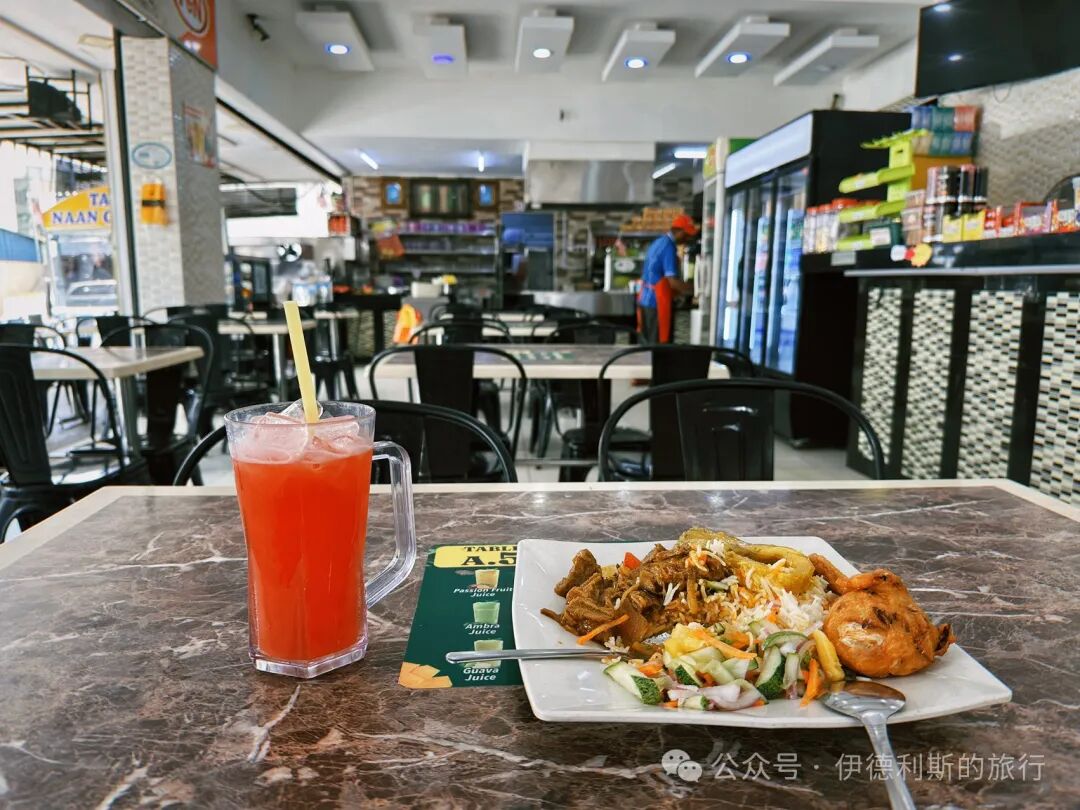
To truly experience the food of Malaysia's three main ethnic groups, you must try Indian Muslim Nasi Kandar after eating Nyonya, Chinese-Muslim, and Malay kampung dishes.
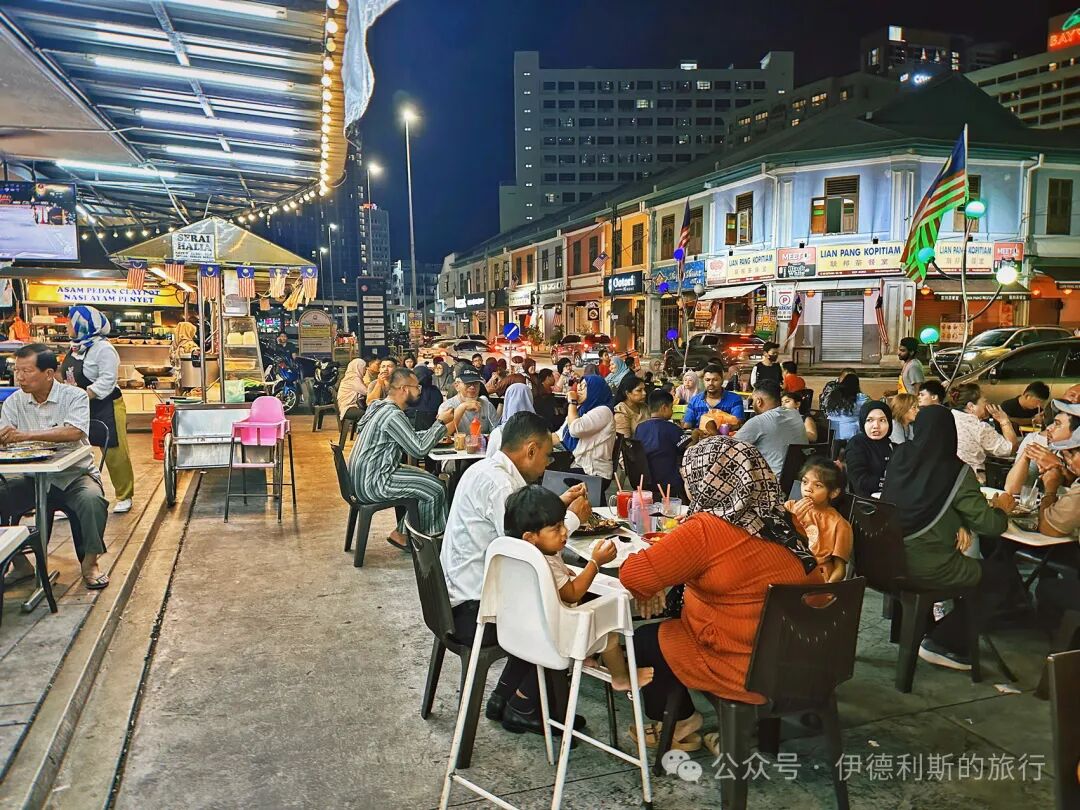
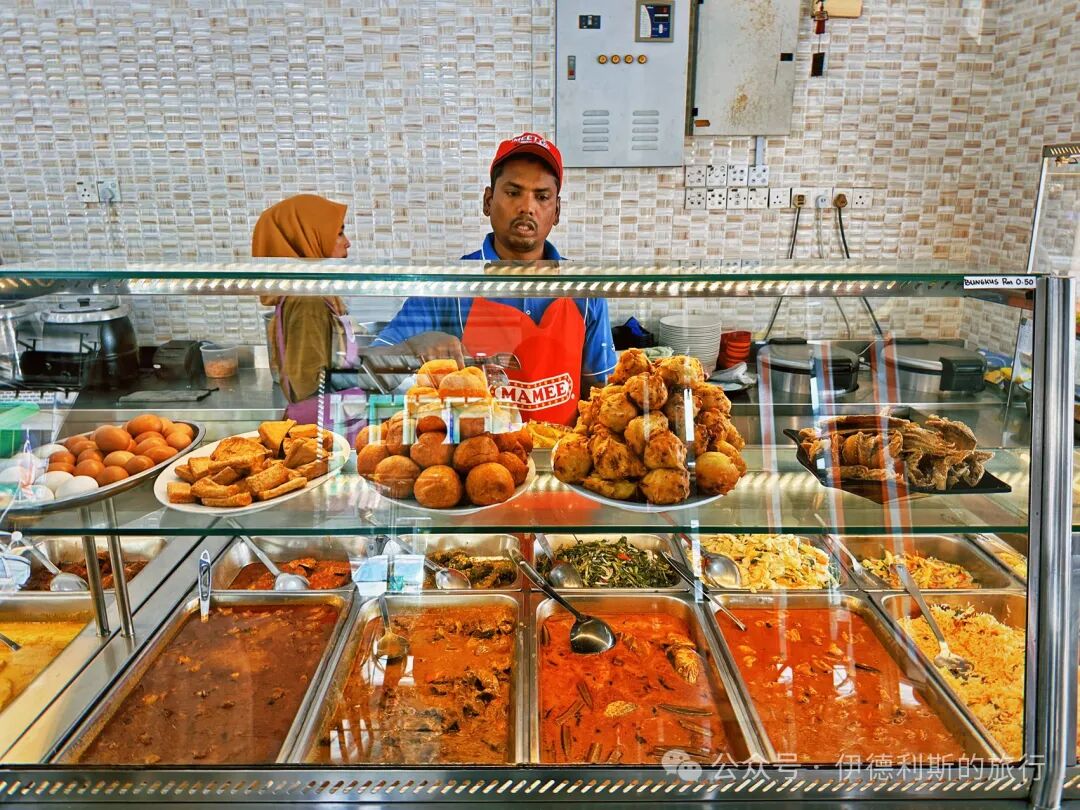
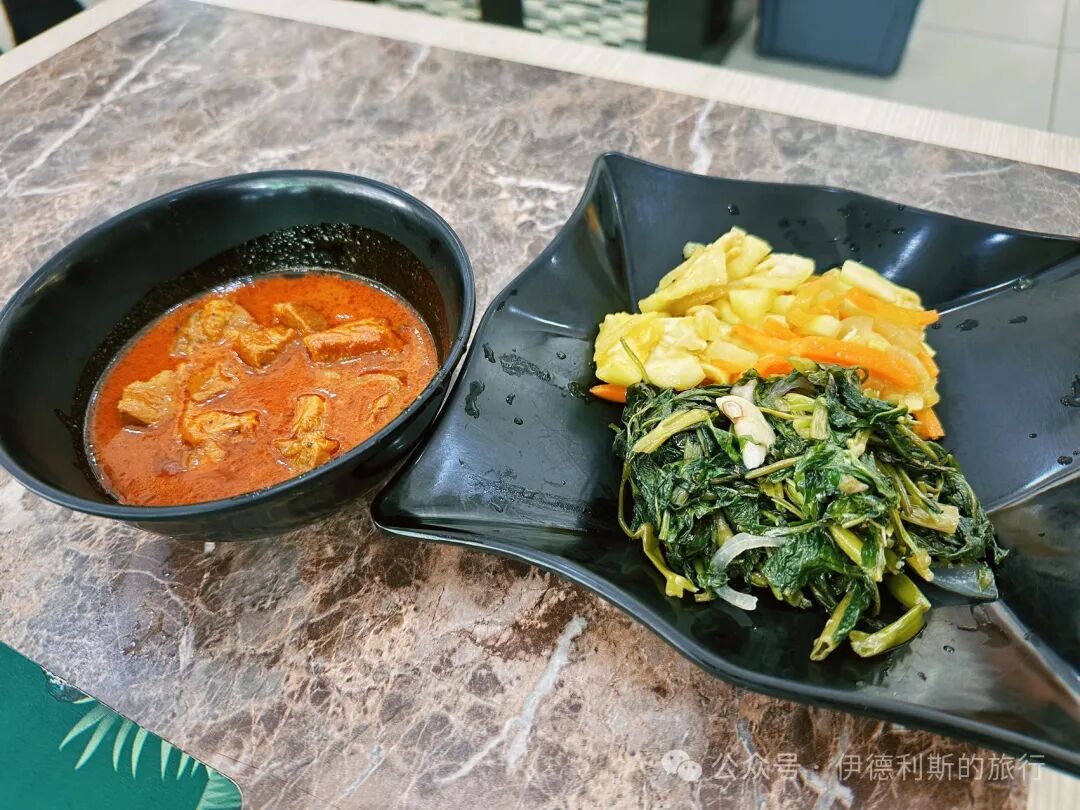
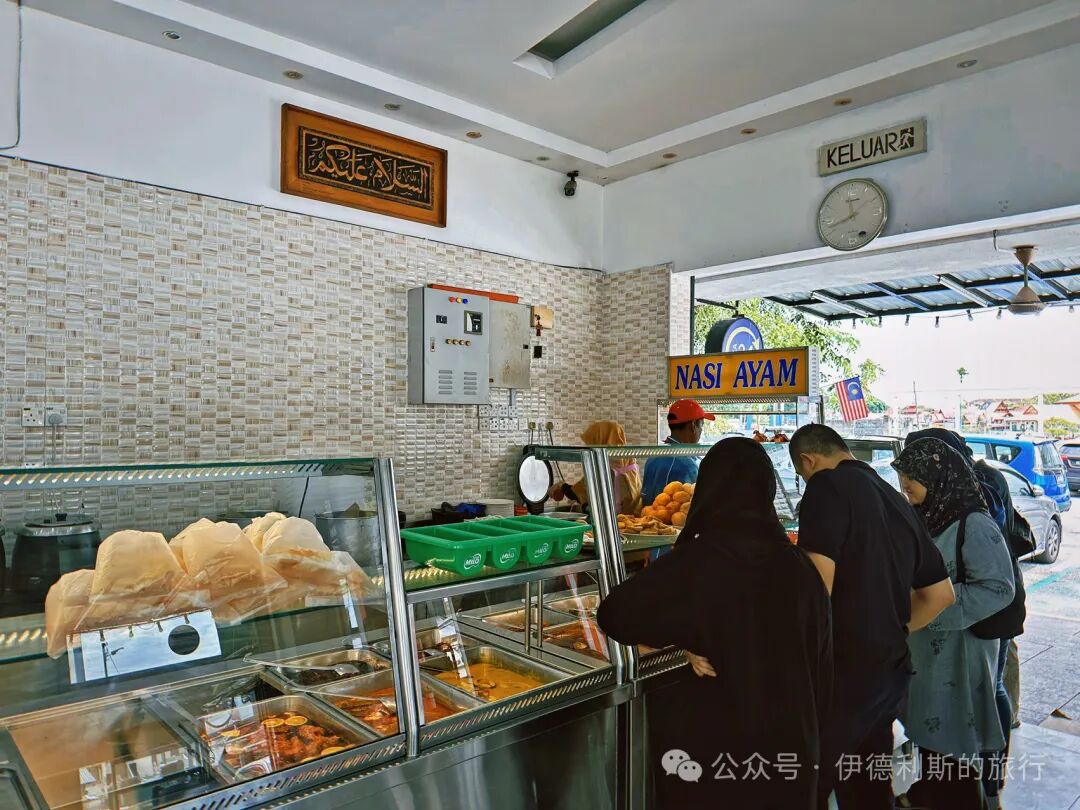
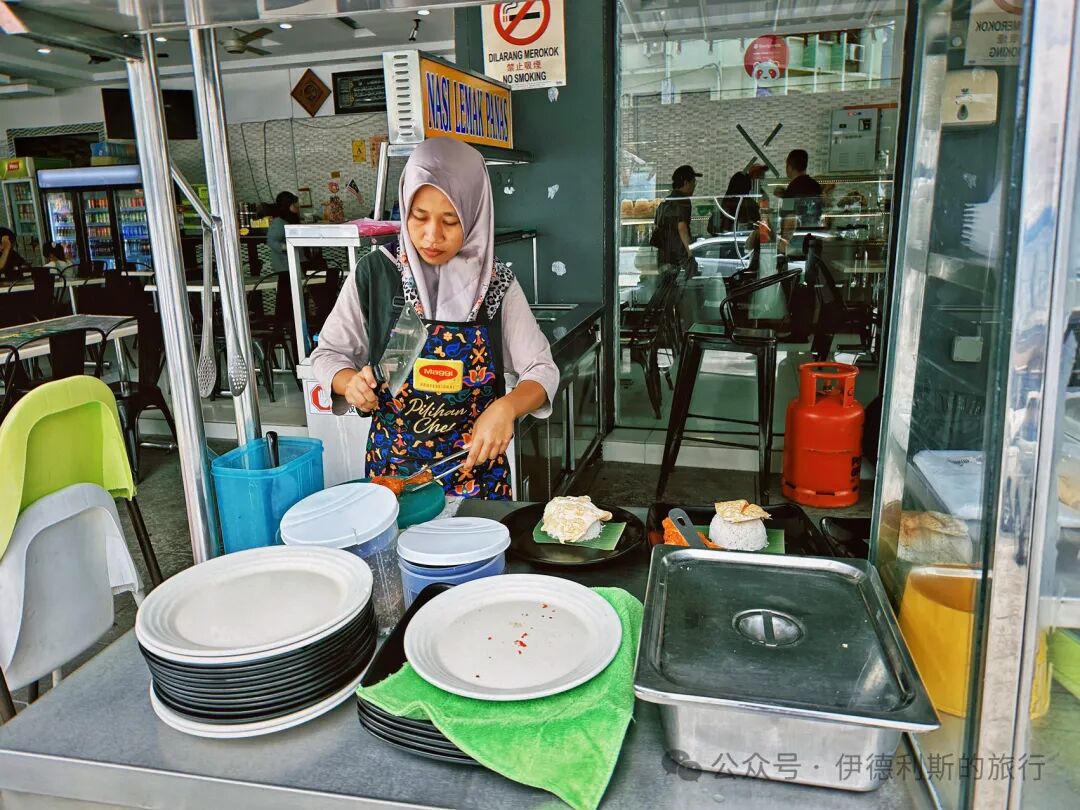
We went to Seri Sahabat next to the Majestic Hotel in Malacca. They are open 24 hours a day, and at night, it gets very crowded with all the food stalls open. It is quieter during the day, when they mainly sell Nasi Kandar. They have meat, fish, and vegetables, making for a very balanced meal.
South Indian Tamil Muslims are called Mamak in Malaysia. This name comes from the Tamil word for uncle (maa-ma), and they are famous for their Mamak stall (Gerai Mamak) and Mamak restaurant (Restoran Mamak) food culture.
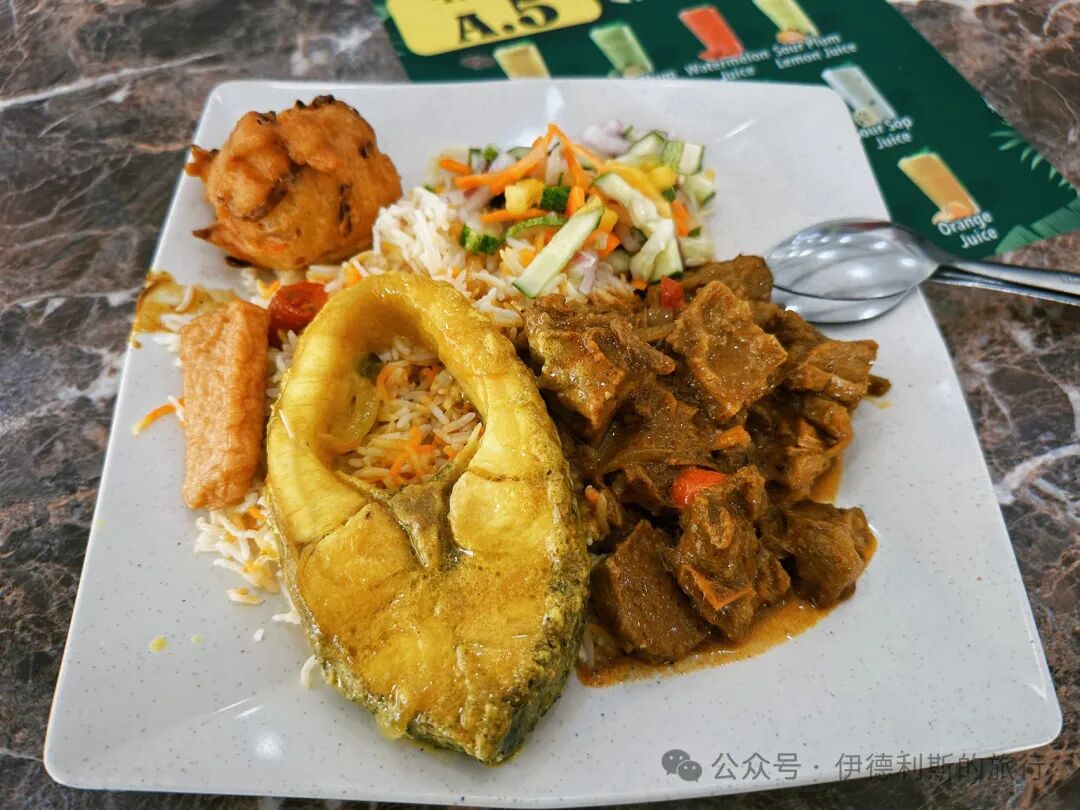
Nasi Kandar is the signature dish at Tamil Mamak restaurants. It is rice served with various curries of beef, lamb, chicken, fish, and shrimp, along with side dishes. When Tamil Muslims first arrived in Malaysia in the 19th century, most carried food on shoulder poles to sell along the streets, which is why it became known as shoulder-pole rice (nasi kandar). By the 20th century, Tamil Muslims started opening restaurants and stalls, but the name shoulder-pole rice (nasi kandar) is still used today.
Hainan coffee
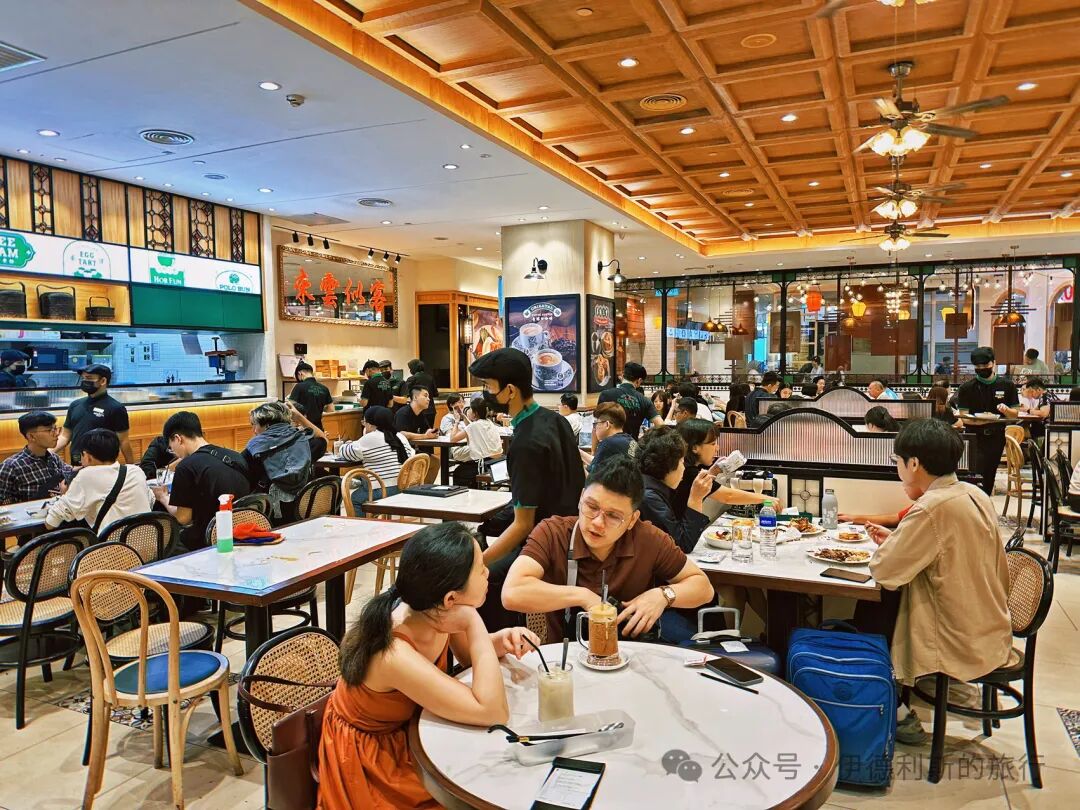
On the drive from Malacca back to Kuala Lumpur Airport, the most popular restaurant in Terminal 2 is the Hainan coffee chain Oriental Kopi, where people are almost always waiting in line.
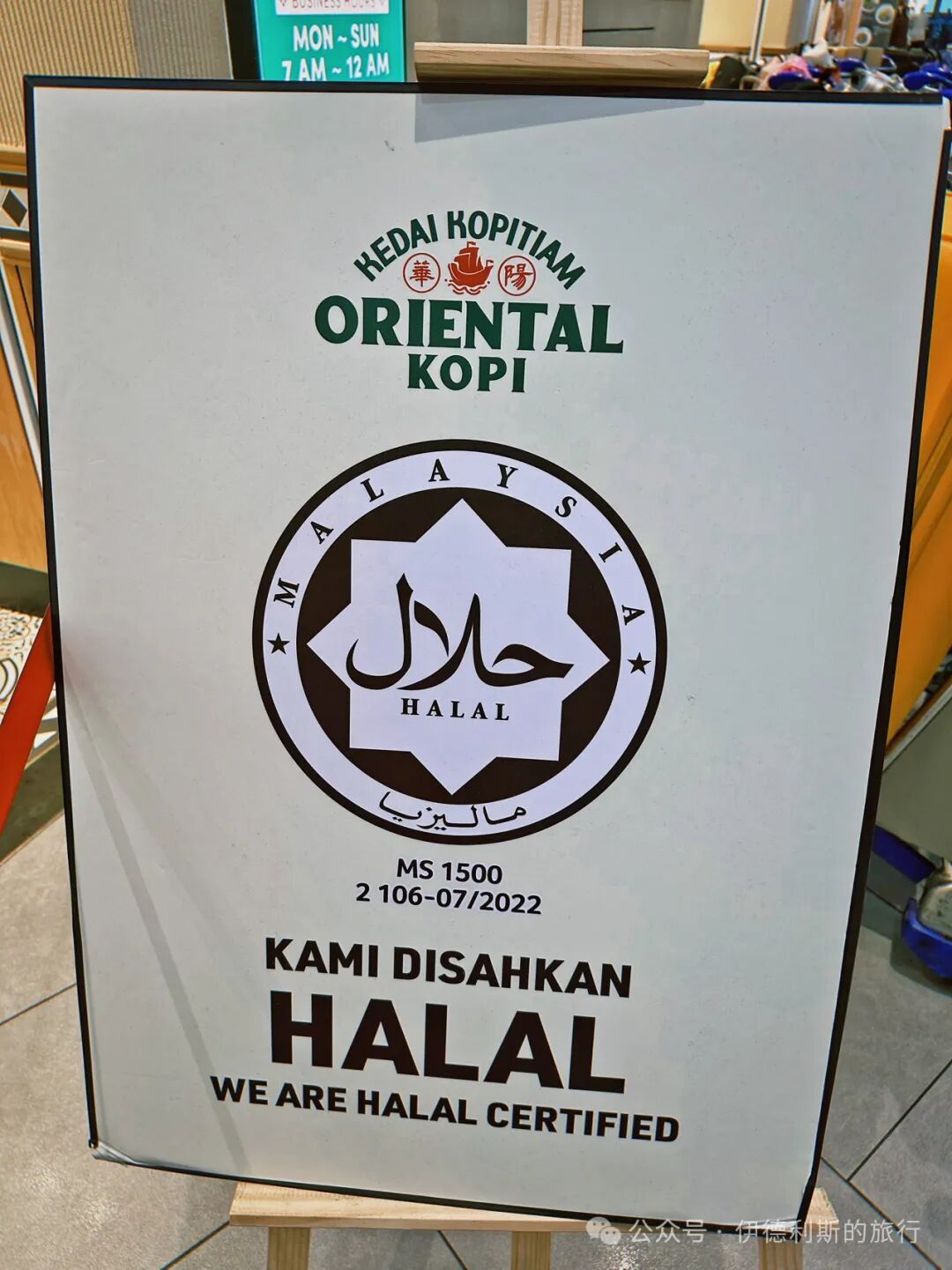
They have a huge variety of dishes and are currently one of the most famous halal Hainan-style cafes. Hainanese people began immigrating to Malaysia in the 19th century. Many early immigrants worked as cooks and waiters in British hotels and restaurants, while some worked as servants for British officers. Influenced by their British employers, the Hainanese learned to cook Western food and blended it with Hainanese culinary elements to create the unique Hainanese coffee shop (Hailam Kopitiam) culture.
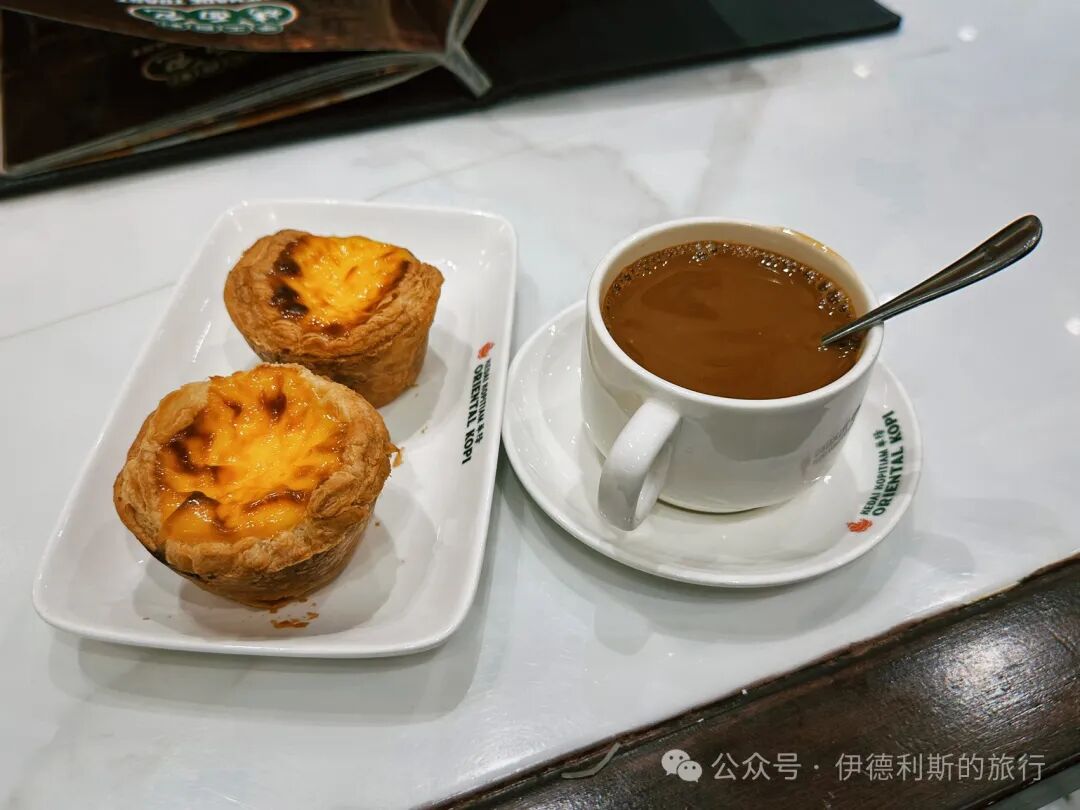
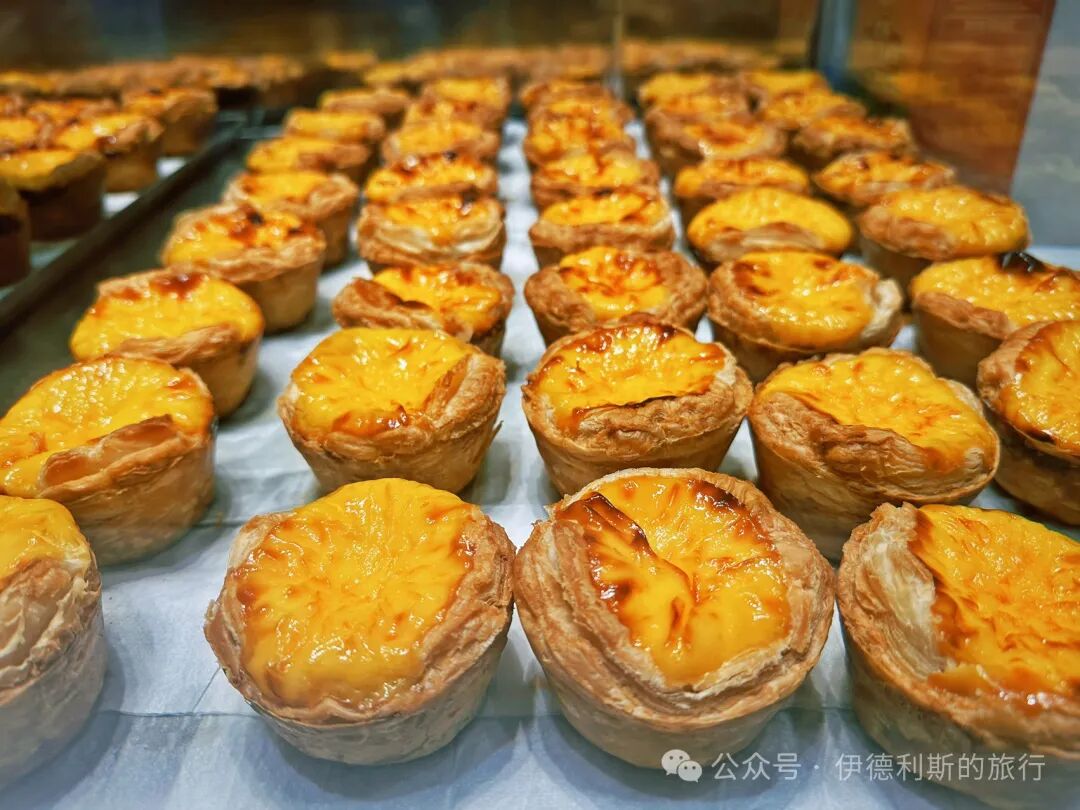
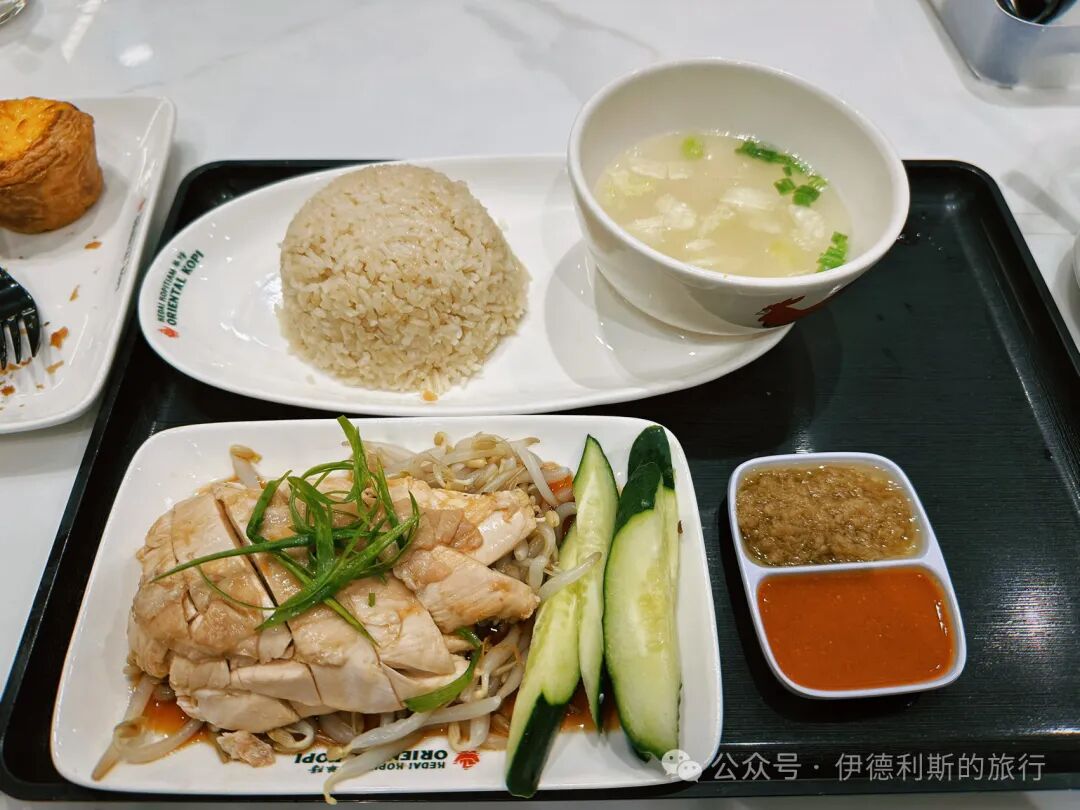
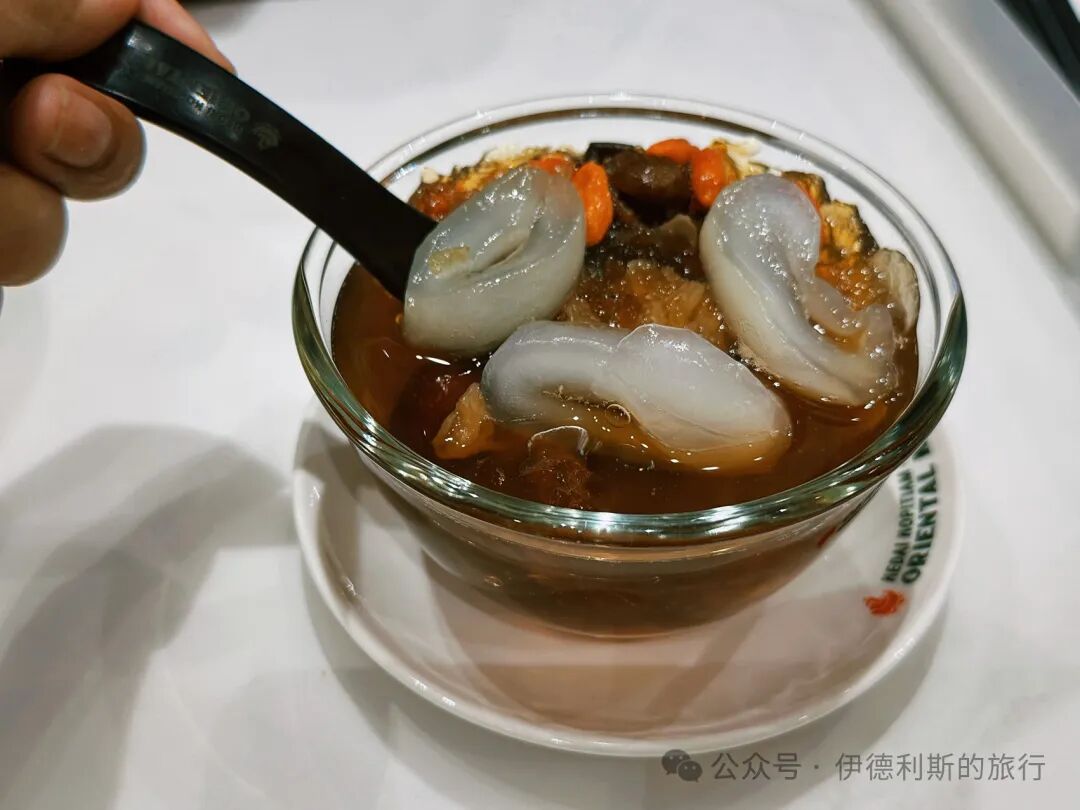
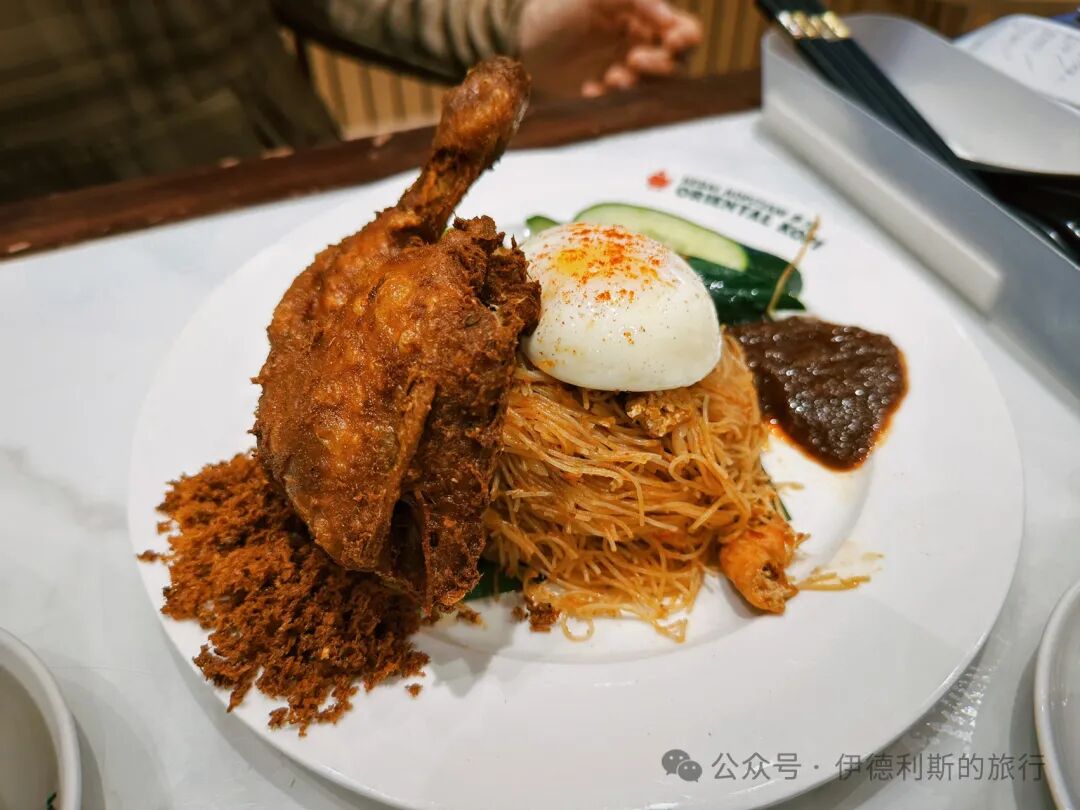
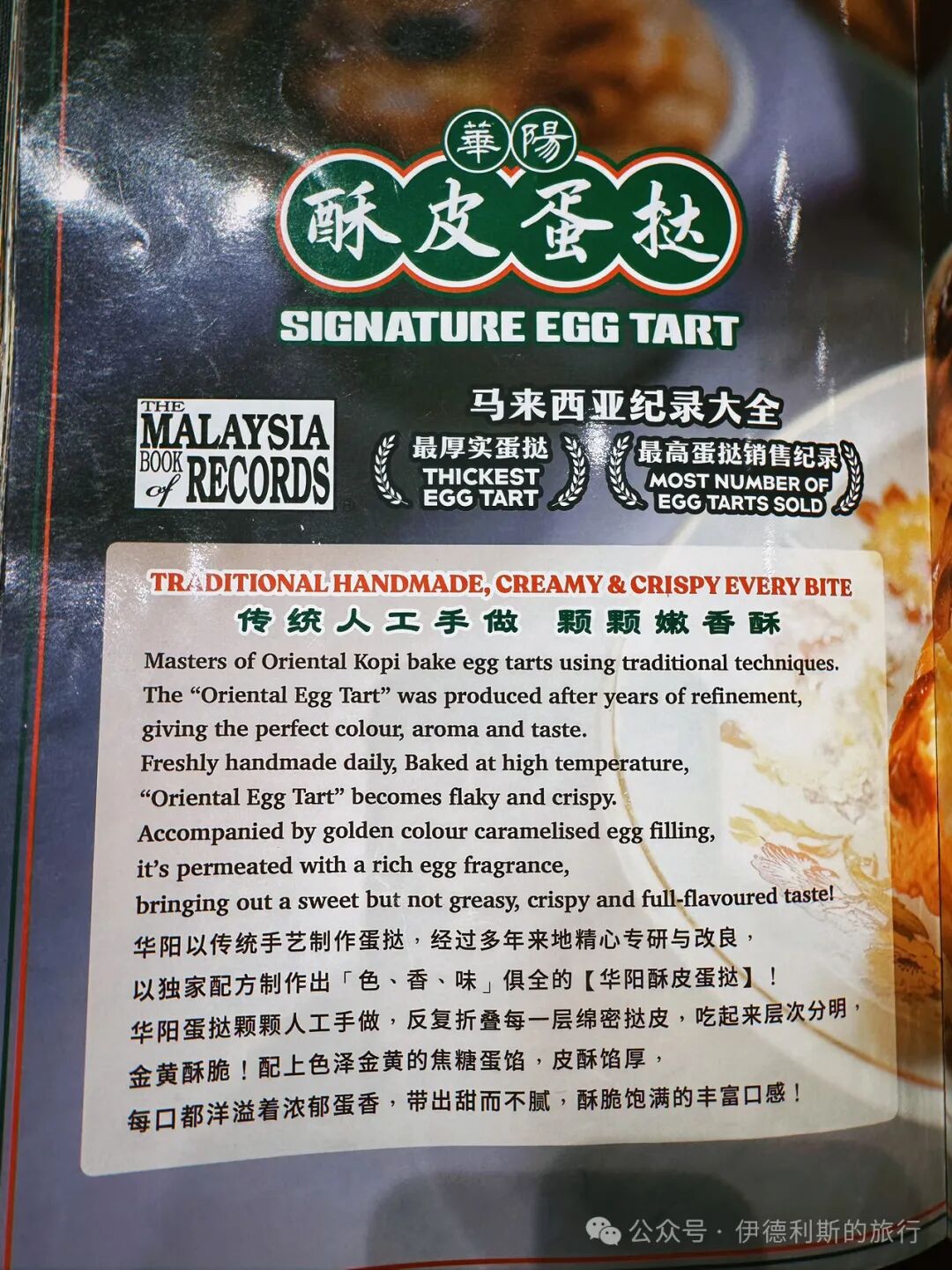
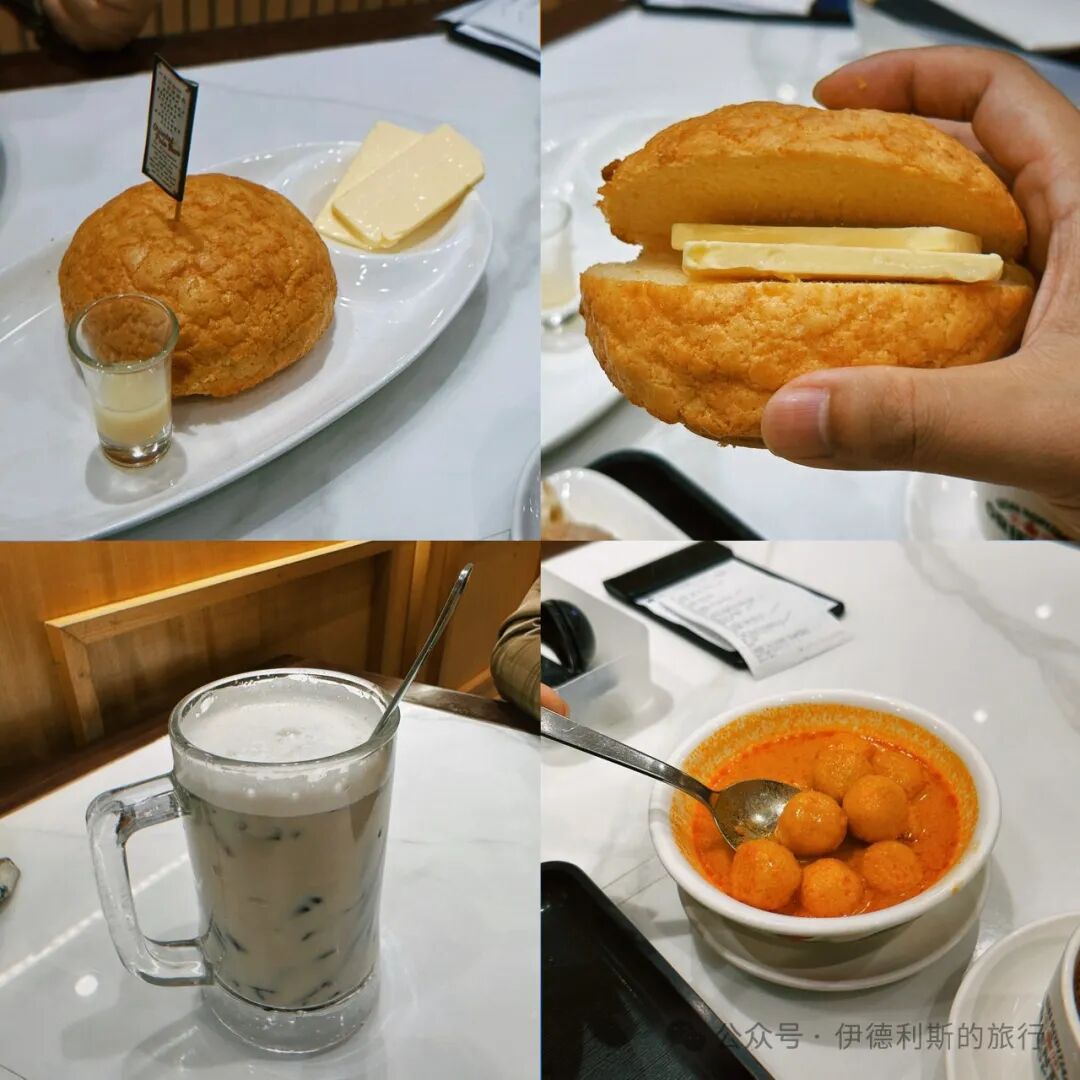
We ordered flaky egg tarts, pineapple buns with butter (bo luo bao), Hainanese chicken rice, classic rice vermicelli (mee siam), curry fish balls, coffee, soy milk with grass jelly, and longan sea coconut dessert. Coffee, flaky egg tarts (danta), and pineapple buns with cold butter (binghuo boluobao) are known as the "Huayang Three Treasures" and make a classic Nanyang-style breakfast. Their flaky egg tarts are truly well-made, with a very tender egg custard and a rich aroma. Their sweet dessert soups (tangshui) are also delicious. We rarely drink these in the north, so it felt like a special Nanyang experience.
However, their Hainanese chicken rice was not great. The rice quality seemed poor, with a gritty texture that did not taste as good as the rice at other places. view all
Summary: Malacca Old City - Food, Hotels and Muslim Heritage is presented as a clear English travel account for readers interested in Muslim life, halal food, architecture, and local history. The article keeps the original names, food details, photographs, and cultural context while focusing on Malacca, Halal Food, Malaysia Travel.
I took a red-eye AirAsia flight to Kuala Lumpur in the early hours of September 15. The flight was delayed by an hour, so I arrived at Kuala Lumpur airport after 9 a.m. Even though I used the self-service immigration gate and jogged to the bus station, I still missed the 10 a.m. bus. I ended up taking the 10:45 a.m. bus and spent three hours in traffic before reaching Melaka Sentral station. Luckily, the bus seats reclined enough to lie back, so I just took a nap and arrived.
In Malaysia, you have to exchange online bus tickets for physical ones at the station, unlike train tickets where you can just scan a code. The ticket counters at the Kuala Lumpur airport bus station get very crowded on weekends and holidays, so make sure to go early to exchange your tickets. By comparison, I think traveling by train in Malaysia is much more convenient. You can scan a code to enter the station, and the schedules are reliable and stress-free.
Staying in a Nanyang-style arcade building
We spent our first night at the Aava Malacca Hotel on Kampung Hulu Road. This area is inside the buffer zone of the Melaka UNESCO World Heritage site. It is right next to two historic mosques, Kampung Hulu Mosque and Kampung Kling Mosque, so the location is excellent. Kampung Hulu Street often has traffic jams. If you want to take a taxi, walk 300 meters north to the main road outside the World Heritage buffer zone.
The Aava Hotel is made from three traditional shophouses (qilou) built before World War II. The exterior is very well preserved, and the interior is simple and elegant. The Nyonya elements are used sparingly but look great. I personally think it offers good value for money. The hotel offers free bicycle rentals for two hours, but one bike has stiff handlebars, so be careful when riding it.
The halal breakfast at Aava Hotel includes Western-style omelets, baked beans, and coconut milk rice (nasi lemak) wrapped in banana leaves. Both Malay and Chinese guests ate breakfast with us. It is very comfortable to drink coffee leisurely inside the shophouse.
Staying at a Straits mansion
On the second day, we stayed at the famous The Majestic Malacca hotel. Staying here really showed me that you get what you pay for. The environment is amazing, the service is very thoughtful, and it feels just like home.
The lobby of the Majestic Hotel is inside a nearly 100-year-old mansion from the Straits Settlements era, with the original tile floors and teak wood features still preserved today. The Majestic Hotel was built in 1929 under the direction of wealthy Chinese businessman Leong Long Man, but he sadly passed away two years later, and his son inherited the mansion. His son kept spending the family fortune until he sold the property to another Chinese businessman, Lim Heng Fang, in 1955. Lim Heng Fang turned the mansion into a hotel. It hosted many British plantation owners in the 1950s and 1960s, and it even welcomed the first Prime Minister, Tunku Abdul Rahman, when Malaysia declared independence in 1957.
The Majestic Hotel closed in 2000 due to poor management. In 2006, the famous Malaysian YTL Hotels group bought and restored it, and it reopened for business in 2008.
After we finished checking in, a Nyonya lady from the front desk guided us to our room and offered us some welcome tea.
The second floor of the Straits Mansion at the Majestic Hotel serves a halal breakfast. You can choose from Western, Malay, or Indian styles. There is an unlimited supply of croissants, which are served to you by Indian staff so you do not have to get them yourself.
We ordered a serving of Indian flatbread (roti canai) with curry and a bowl of spicy noodle soup (laksa).
Roti canai is a classic Nanyang Indian Muslim breakfast. As early as the 17th century, Indian Muslims brought the practice of eating flatbread with curry to the Aceh Sultanate in northern Sumatra. After the 19th century, it spread to Nanyang countries like Indonesia, Malaysia, and Brunei. Various ethnic groups, including the Malays, Acehnese, and Minangkabau people, all love making this dish.
Curry laksa (laksa lemak) is a type of curry laksa that uses rice noodles in a thick coconut curry soup, topped with chicken and seafood. Curry laksa is best represented by Nyonya laksa, which has plenty of coconut milk and is less sour and spicy compared to the other type, Asam laksa.
Hui Muslim snacks
Chan Mari Chan is a sub-brand of the large Malaysian Hui Muslim Chinese restaurant chain Mohd Chan, focusing on affordable home-style snacks. The founder of Mohd Chan, Dato HJ Mohd Chan, was born in Gombak District, Selangor. In 2007, influenced by his Malay friends, he converted to Islam and started his restaurant that same year. Since then, he has been combining Nanyang Chinese cuisine with Malay flavors, and it has now become the most famous and largest Hui Muslim restaurant chain in Malaysia.
This January, we ate at Mohd Chan restaurant in Seremban, Malaysia. You order from a menu there, and they serve a variety of high-end Nanyang Chinese banquet dishes. Chan Mari Chan focuses on fast food and snacks. You go straight to the counter to pick up your food, and the chicken rice, small side dishes, and steamed dumplings (shaomai) are the most popular items. We grabbed roasted chicken rice, three small side dishes, two types of steamed dumplings (shaomai), and drank grass jelly coffee and cocoa coffee. Their food is quite delicious. I especially loved the fragrance and texture of the chicken rice. Eating there wiped away the fatigue of our journey. We instantly felt embraced by Nanyang culture and left feeling very satisfied.
The restaurant environment is also very nice, and many Malaysian Muslim friends (dosti) come here to eat with their families. They have a prayer room in the shop, which sets a great example for us Hui Muslims.
Malaysian Food City
Right next to the E-Red Hotel on Kampung Hulu Street, there is a large Malay food court called Makan Avenue. It has a huge variety of Malay snacks. Many Malay people come here to eat at night, and the tables along the Malacca River are always full. Be careful about ordering drinks here on weekends or holidays. Because they have to serve hundreds of seats, I actually waited an hour just to get my drink. The other food stalls serve their dishes relatively quickly.
The most famous spot in the food court is Cendol Kampung Hulu. Cendol originated on the island of Java and was a classic drink at Javanese weddings before it spread across Southeast Asia. It is made with shaved ice, green rice flour jelly noodles, coconut milk, and palm sugar. You can also add things like red beans or grass jelly. We ordered the durian cendol, which is perfect for the hot and humid weather in Southeast Asia.
We also ordered beef meatball soup (bakso biasa). The name bakso comes from the Southern Min dialect for 'meat crisp.' It is a classic Malaysian street food made from beef, fish paste, and a little tapioca flour, giving it a very firm texture. The finished meatballs are usually served in beef broth with tofu, glass noodles, and various side dishes.
We also ordered fried tilapia (talapia) and catfish (keli). Although they looked charred on the outside, the meat inside was very tender, had no fishy smell, and tasted delicious.
Malaysian night market
Across from Dataran Pahlawan, we found a huge Malaysian night market that seems to only open on weekends, with an endless variety of snacks. We were too full to eat a meal, so we just bought some guava dipped in sour plum powder and a giant avocado juice. Tropical fruits are cheap all over Malaysia. As long as you don't buy durian in tourist areas, you can basically eat as much fruit as you want.
The vibe of the Malacca night market, featuring hand-pounded chili paste (sambal) and lamb soup (yangtang).
Malay cake shop
In Kampung Hulu, there is a lovely cake shop called Malaiqa By Gula Cakery that is especially popular with young people. The shop is inside a shophouse built in 1941. The decor is fresh and simple, a great example of revitalizing the old city.
We ordered the strawberry milk pudding and longan lemon tea, and both tasted great. These fresh little shops in Malaysia are really wonderful, though we usually stick to traditional food and don't visit places like this very often.
Malay village farmhouse cooking
On the road heading east from Malacca to Muar, the whole way is filled with Malay village (kampung) countryside scenery. At noon, we passed through the seaside village of Serkam Pantai, prayed namaz at a 19th-century mosque, and then had an authentic Malay village-style meal in the village.
We ordered shrimp noodle soup (Mee Bandung Udang), black shrimp paste fruit salad (Rojak Petis), and Malay village-style fried rice (Nasi Goreng Kampung), drank iced Milo (Milo Ais Kepal), and had red bean shaved ice (Air Batu Campur).
Shrimp noodle soup (Mee Bandung Udang) is a Malay dish that started in Muar, Malaysia. Bandung means mixed, and Udang means shrimp. It is made by boiling yellow noodles with eggs, shrimp, leafy greens, and beef bits. The thick soup is simmered with shrimp paste, onions, spices, and chili, giving it a very fresh taste.
Fruit salad (Rojak) is said to have started on the island of Java. It was originally a mix of fruits and vegetables with spicy palm sugar syrup, but it later spread across Indonesia, Malaysia, and Singapore, developing many different styles. Black shrimp paste fruit salad (Rojak Petis) started in Surabaya, East Java. It contains raw mango, cucumber, water spinach, and bean sprouts. The sauce is made from black shrimp paste (Petis), fried shallots, palm sugar, and salt, and it is topped with crushed peanuts. The fruit salad tastes quite sweet, so people who prefer milder flavors might find it hard to get used to.
Malay village-style fried rice (Nasi Goreng Kampung) is a classic Malay village dish. It includes diced beef, water spinach, shrimp, dried anchovies, and scrambled eggs. It is stir-fried with sweet soy sauce and shrimp paste, making the flavor very rich. It is one of my favorite Malay dishes.
Air Batu Campur red bean ice, also called ABC ice, is a classic dessert in Southeast Asia after a meal. It is mostly shaved ice with red beans and condensed milk on top, and the one we bought had a scoop of ice cream on it.
Nyonya cuisine
As the birthplace of Nyonya culture, you must eat Nyonya cuisine once when you come to Malacca. There are many halal Nyonya restaurants on the east side of the old town of Malacca on Independence Street (Jln Merdeka), with Atlantic and Cottage Spices being the most famous. Both places had lines when we went, so we both took numbers. Later, a table opened up at Cottage Spices first, so we ate there.
We ordered stir-fried water spinach with shrimp paste (Kangkung Belacan), Teochew steamed fish, steamed Nyonya fish cake (Otak-otak), and drank lime plum juice (Lime Plum), which was a perfect balance of meat and vegetables. Teochew steamed fish is red snapper served with pickled vegetables, pickled plums, and tomatoes. The sour taste is very appetizing. Otak-otak is a fish cake steamed with coconut milk, chili paste, lemongrass, and galangal. It smells and tastes delicious.
Indian Nasi Kandar
To truly experience the food of Malaysia's three main ethnic groups, you must try Indian Muslim Nasi Kandar after eating Nyonya, Chinese-Muslim, and Malay kampung dishes.
We went to Seri Sahabat next to the Majestic Hotel in Malacca. They are open 24 hours a day, and at night, it gets very crowded with all the food stalls open. It is quieter during the day, when they mainly sell Nasi Kandar. They have meat, fish, and vegetables, making for a very balanced meal.
South Indian Tamil Muslims are called Mamak in Malaysia. This name comes from the Tamil word for uncle (maa-ma), and they are famous for their Mamak stall (Gerai Mamak) and Mamak restaurant (Restoran Mamak) food culture.
Nasi Kandar is the signature dish at Tamil Mamak restaurants. It is rice served with various curries of beef, lamb, chicken, fish, and shrimp, along with side dishes. When Tamil Muslims first arrived in Malaysia in the 19th century, most carried food on shoulder poles to sell along the streets, which is why it became known as shoulder-pole rice (nasi kandar). By the 20th century, Tamil Muslims started opening restaurants and stalls, but the name shoulder-pole rice (nasi kandar) is still used today.
Hainan coffee
On the drive from Malacca back to Kuala Lumpur Airport, the most popular restaurant in Terminal 2 is the Hainan coffee chain Oriental Kopi, where people are almost always waiting in line.
They have a huge variety of dishes and are currently one of the most famous halal Hainan-style cafes. Hainanese people began immigrating to Malaysia in the 19th century. Many early immigrants worked as cooks and waiters in British hotels and restaurants, while some worked as servants for British officers. Influenced by their British employers, the Hainanese learned to cook Western food and blended it with Hainanese culinary elements to create the unique Hainanese coffee shop (Hailam Kopitiam) culture.
We ordered flaky egg tarts, pineapple buns with butter (bo luo bao), Hainanese chicken rice, classic rice vermicelli (mee siam), curry fish balls, coffee, soy milk with grass jelly, and longan sea coconut dessert. Coffee, flaky egg tarts (danta), and pineapple buns with cold butter (binghuo boluobao) are known as the "Huayang Three Treasures" and make a classic Nanyang-style breakfast. Their flaky egg tarts are truly well-made, with a very tender egg custard and a rich aroma. Their sweet dessert soups (tangshui) are also delicious. We rarely drink these in the north, so it felt like a special Nanyang experience.
However, their Hainanese chicken rice was not great. The rice quality seemed poor, with a gritty texture that did not taste as good as the rice at other places. view all
Reposted from the web
Summary: Malacca Old City - Food, Hotels and Muslim Heritage is presented as a clear English travel account for readers interested in Muslim life, halal food, architecture, and local history. The article keeps the original names, food details, photographs, and cultural context while focusing on Malacca, Halal Food, Malaysia Travel.
I took a red-eye AirAsia flight to Kuala Lumpur in the early hours of September 15. The flight was delayed by an hour, so I arrived at Kuala Lumpur airport after 9 a.m. Even though I used the self-service immigration gate and jogged to the bus station, I still missed the 10 a.m. bus. I ended up taking the 10:45 a.m. bus and spent three hours in traffic before reaching Melaka Sentral station. Luckily, the bus seats reclined enough to lie back, so I just took a nap and arrived.
In Malaysia, you have to exchange online bus tickets for physical ones at the station, unlike train tickets where you can just scan a code. The ticket counters at the Kuala Lumpur airport bus station get very crowded on weekends and holidays, so make sure to go early to exchange your tickets. By comparison, I think traveling by train in Malaysia is much more convenient. You can scan a code to enter the station, and the schedules are reliable and stress-free.
Staying in a Nanyang-style arcade building
We spent our first night at the Aava Malacca Hotel on Kampung Hulu Road. This area is inside the buffer zone of the Melaka UNESCO World Heritage site. It is right next to two historic mosques, Kampung Hulu Mosque and Kampung Kling Mosque, so the location is excellent. Kampung Hulu Street often has traffic jams. If you want to take a taxi, walk 300 meters north to the main road outside the World Heritage buffer zone.
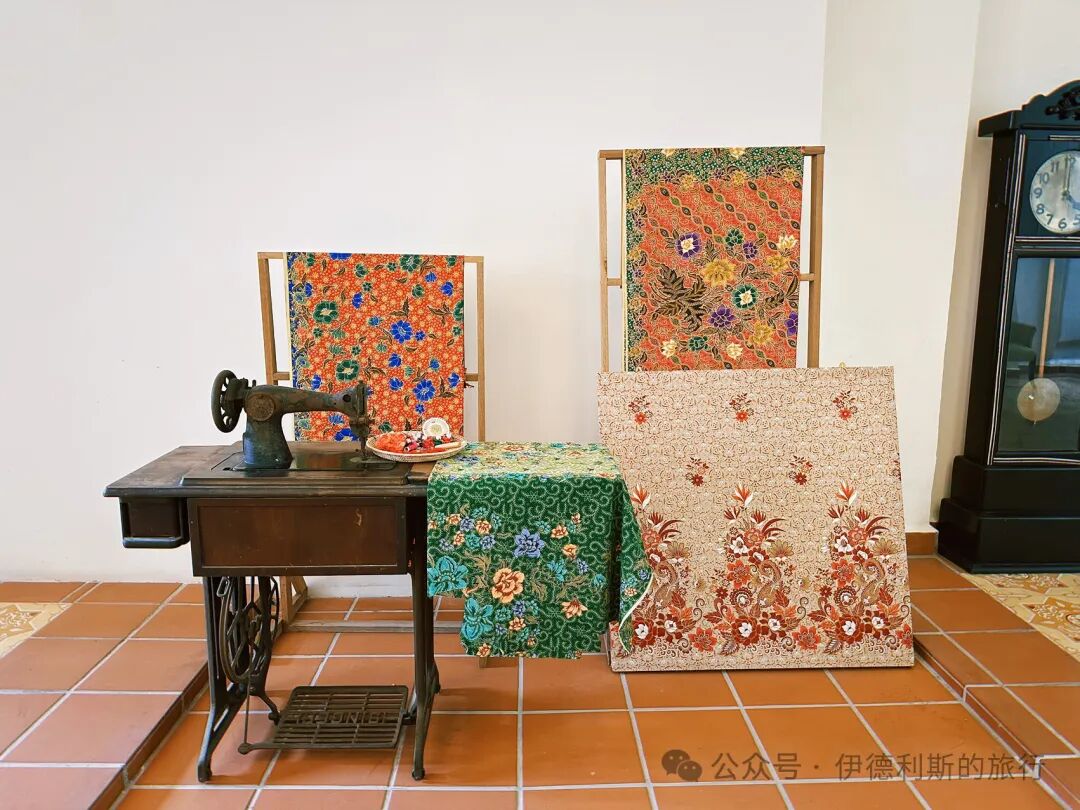
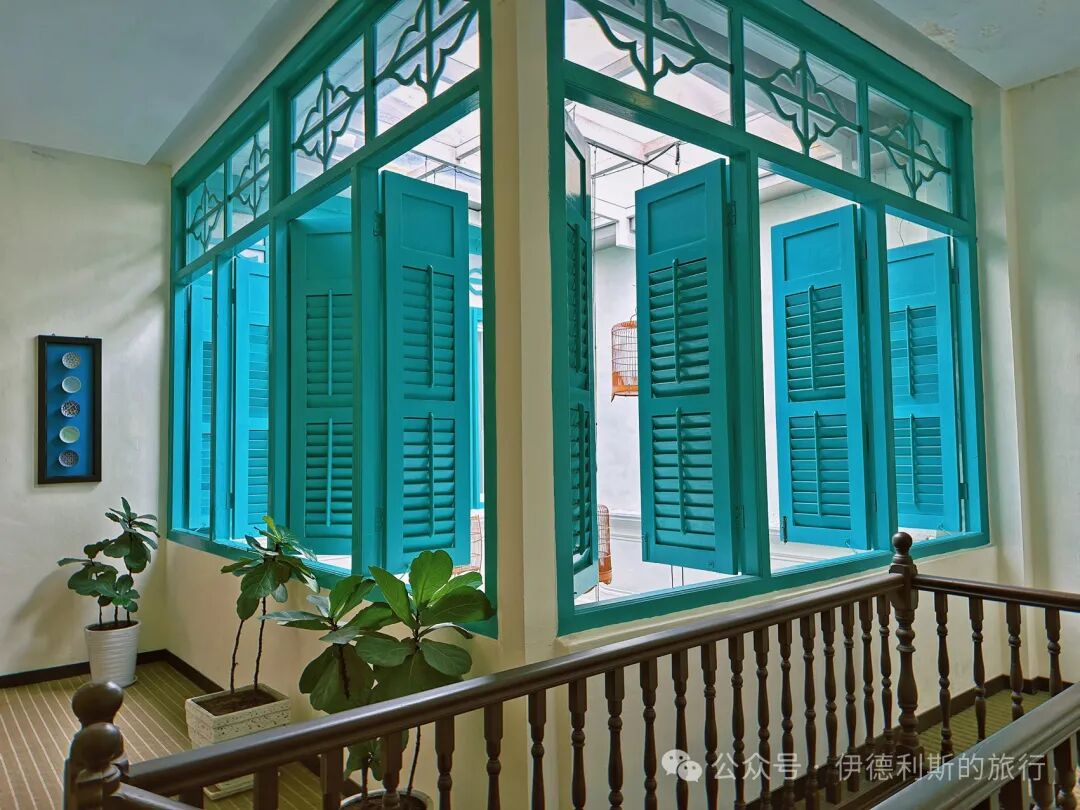
The Aava Hotel is made from three traditional shophouses (qilou) built before World War II. The exterior is very well preserved, and the interior is simple and elegant. The Nyonya elements are used sparingly but look great. I personally think it offers good value for money. The hotel offers free bicycle rentals for two hours, but one bike has stiff handlebars, so be careful when riding it.
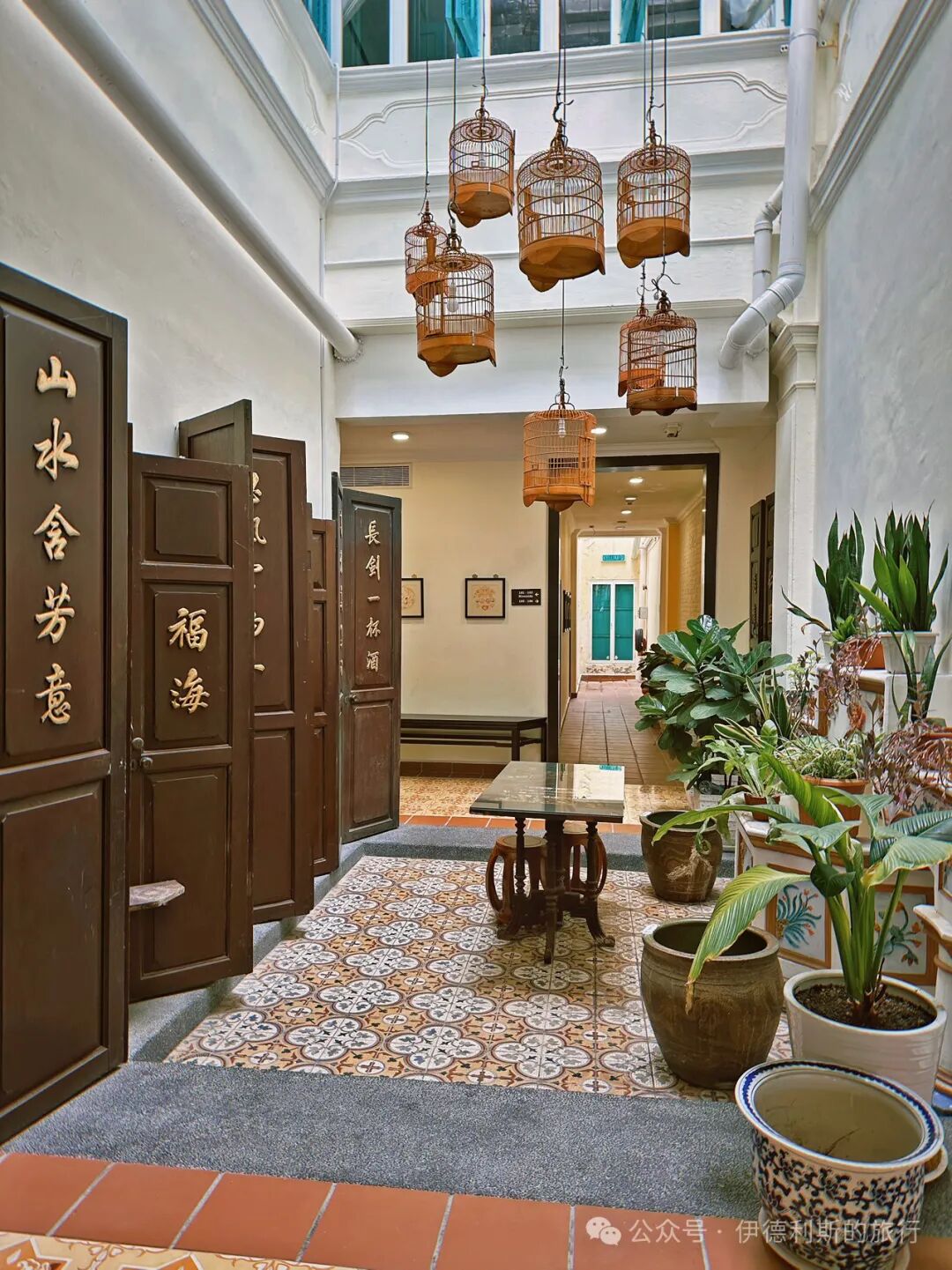
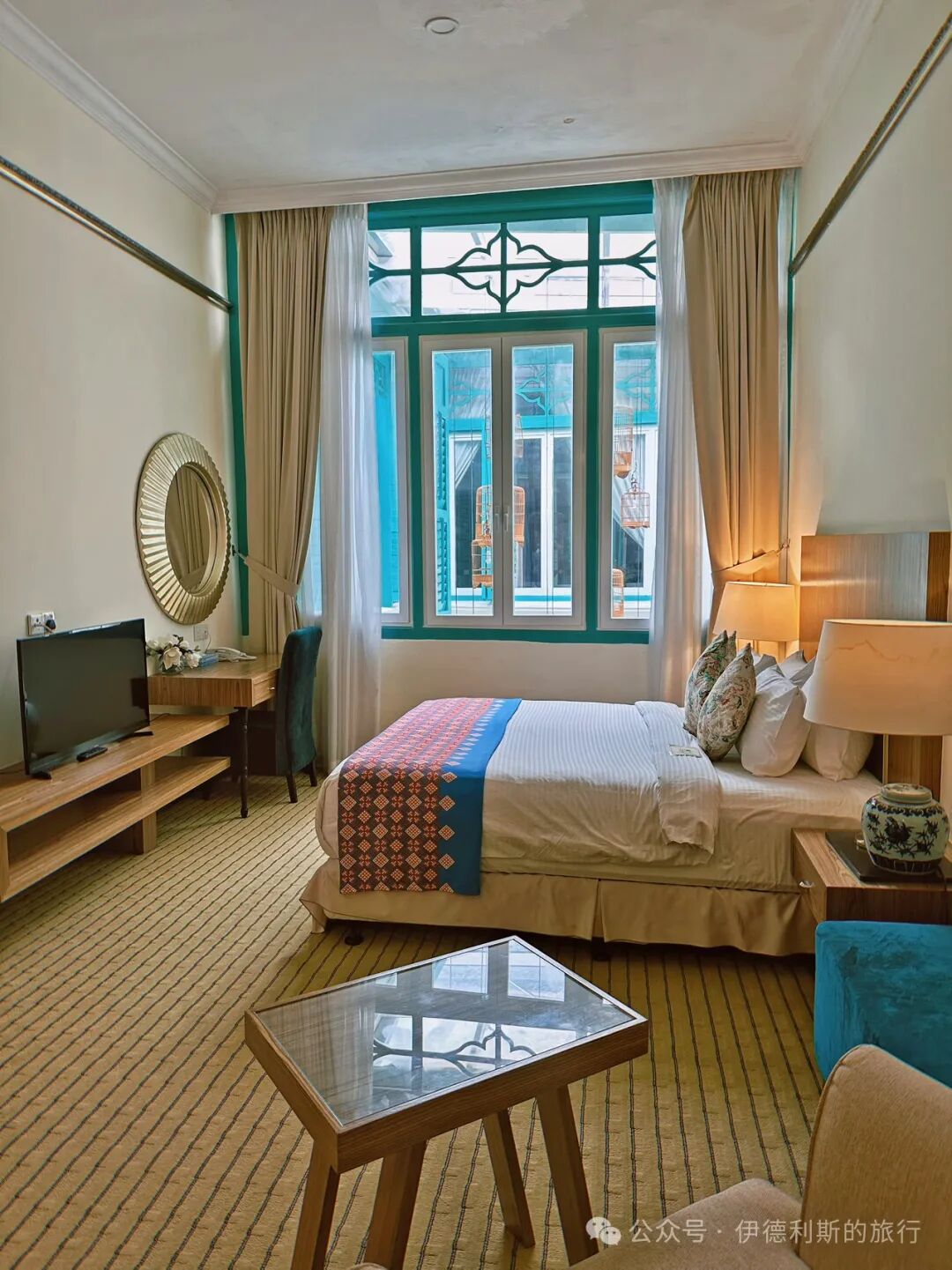
The halal breakfast at Aava Hotel includes Western-style omelets, baked beans, and coconut milk rice (nasi lemak) wrapped in banana leaves. Both Malay and Chinese guests ate breakfast with us. It is very comfortable to drink coffee leisurely inside the shophouse.
Staying at a Straits mansion
On the second day, we stayed at the famous The Majestic Malacca hotel. Staying here really showed me that you get what you pay for. The environment is amazing, the service is very thoughtful, and it feels just like home.
The lobby of the Majestic Hotel is inside a nearly 100-year-old mansion from the Straits Settlements era, with the original tile floors and teak wood features still preserved today. The Majestic Hotel was built in 1929 under the direction of wealthy Chinese businessman Leong Long Man, but he sadly passed away two years later, and his son inherited the mansion. His son kept spending the family fortune until he sold the property to another Chinese businessman, Lim Heng Fang, in 1955. Lim Heng Fang turned the mansion into a hotel. It hosted many British plantation owners in the 1950s and 1960s, and it even welcomed the first Prime Minister, Tunku Abdul Rahman, when Malaysia declared independence in 1957.
The Majestic Hotel closed in 2000 due to poor management. In 2006, the famous Malaysian YTL Hotels group bought and restored it, and it reopened for business in 2008.
After we finished checking in, a Nyonya lady from the front desk guided us to our room and offered us some welcome tea.
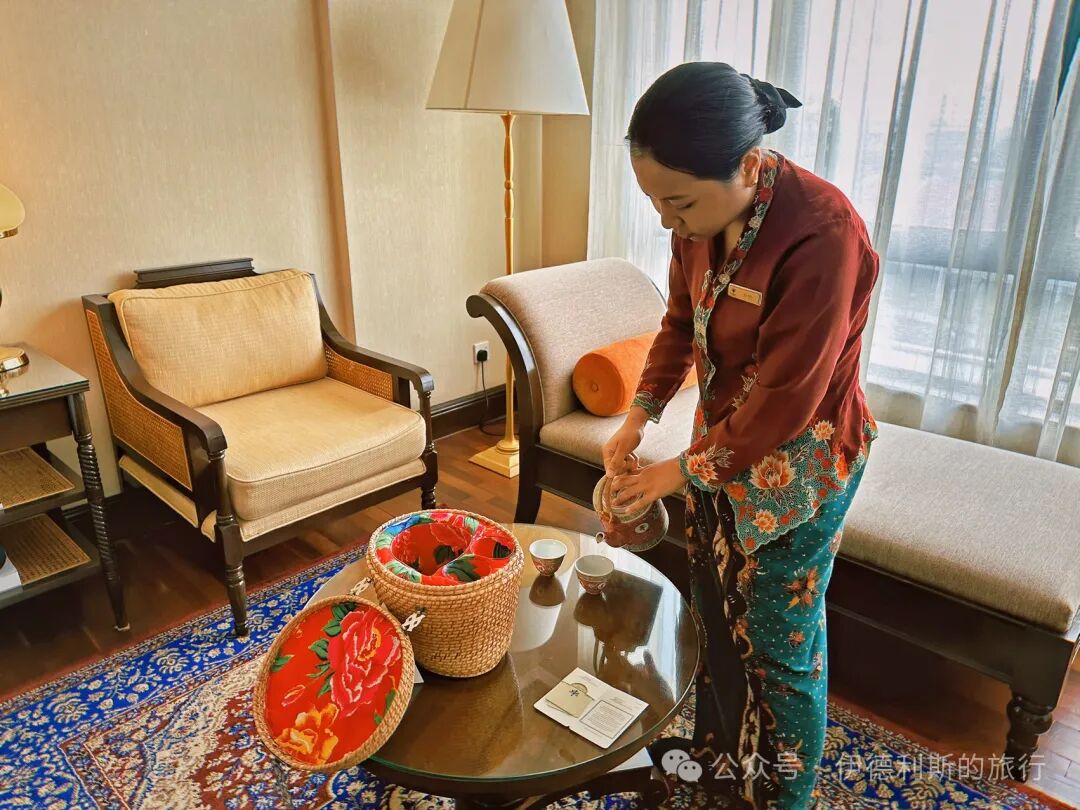
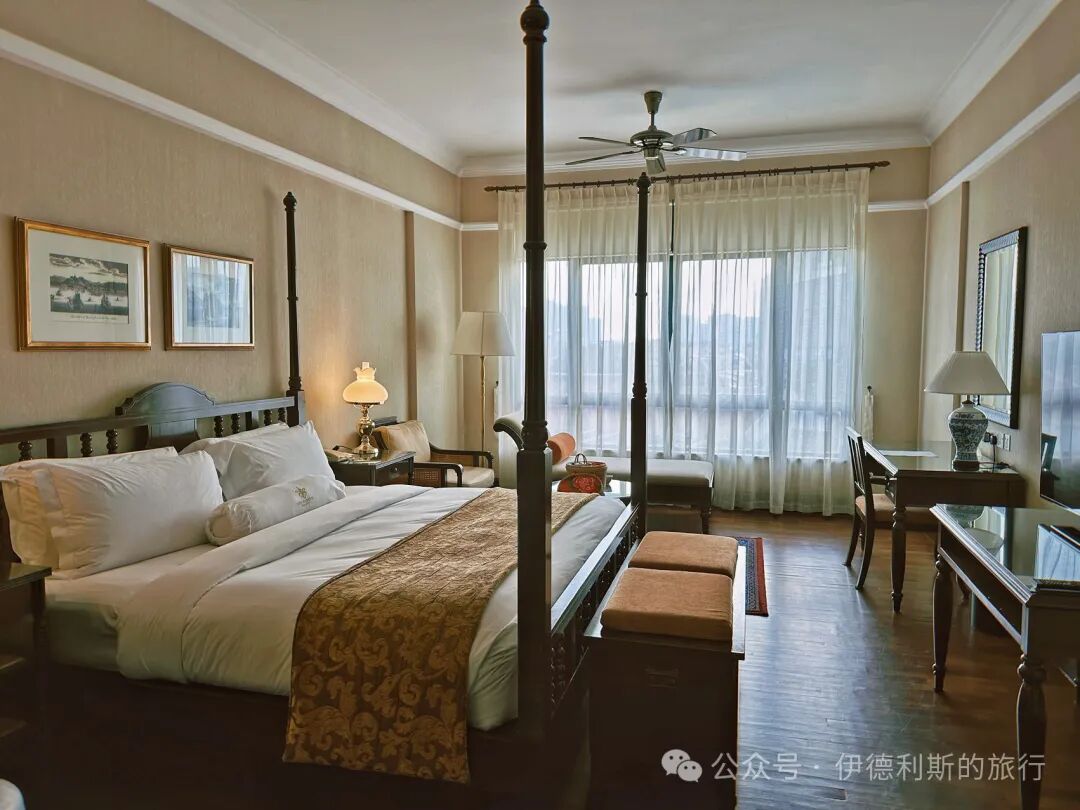
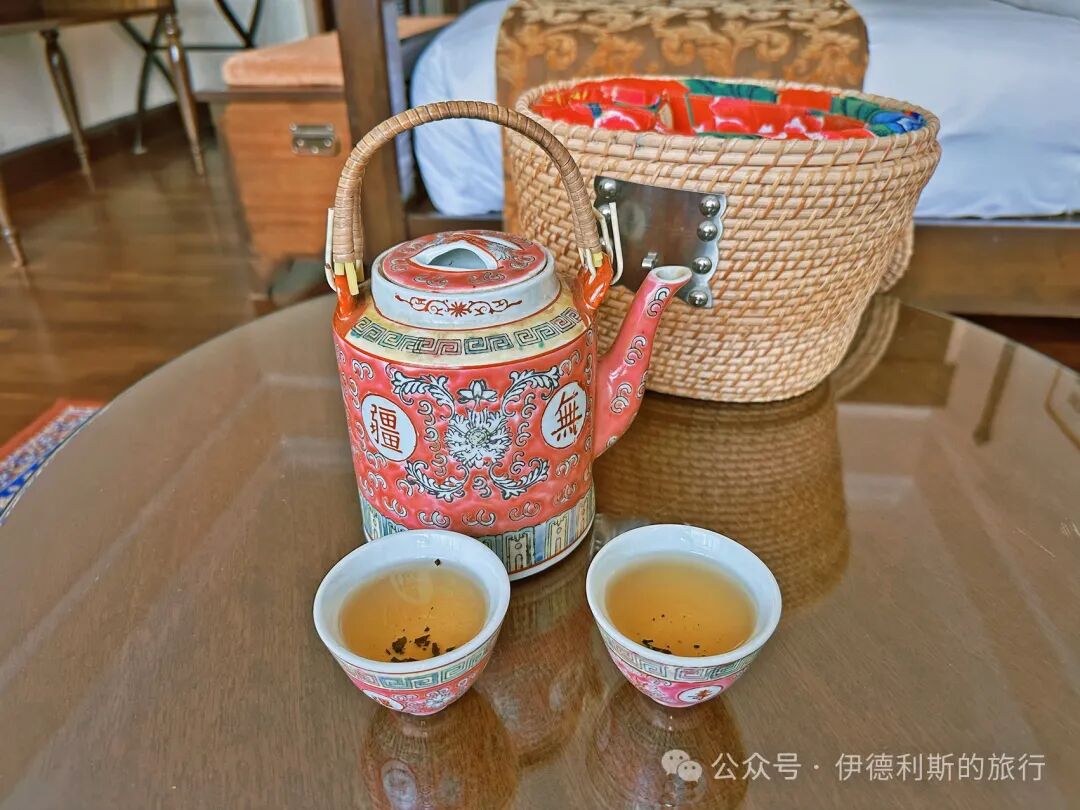
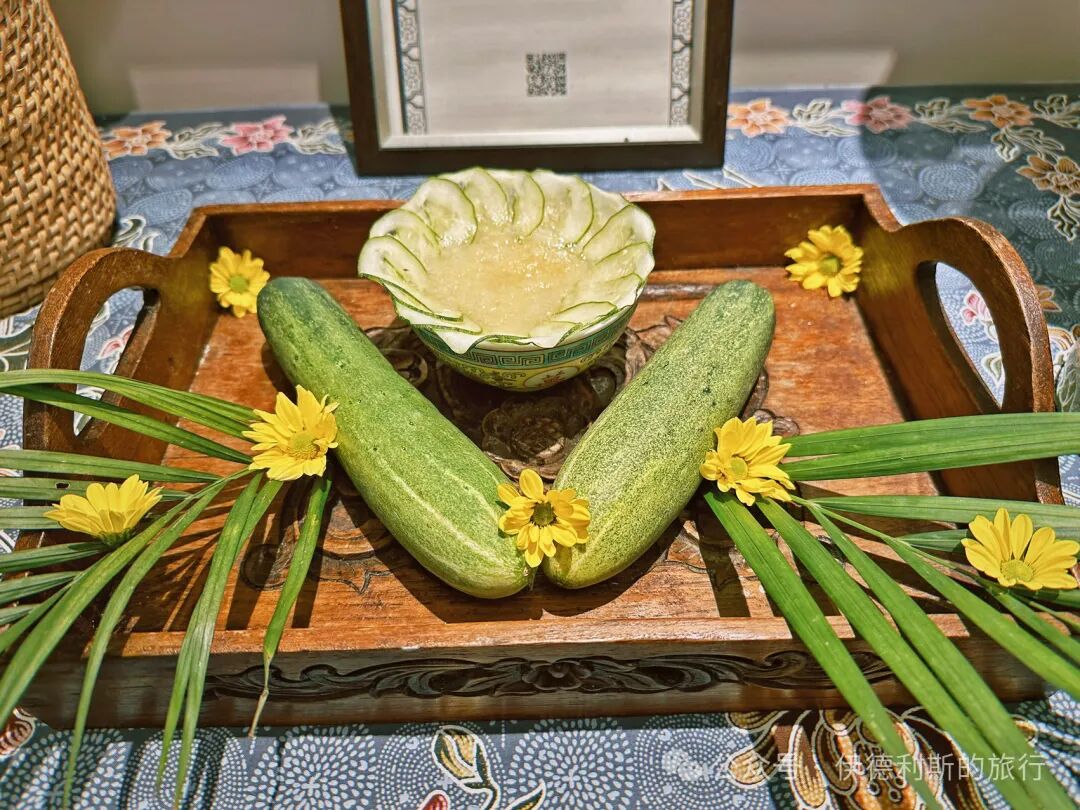
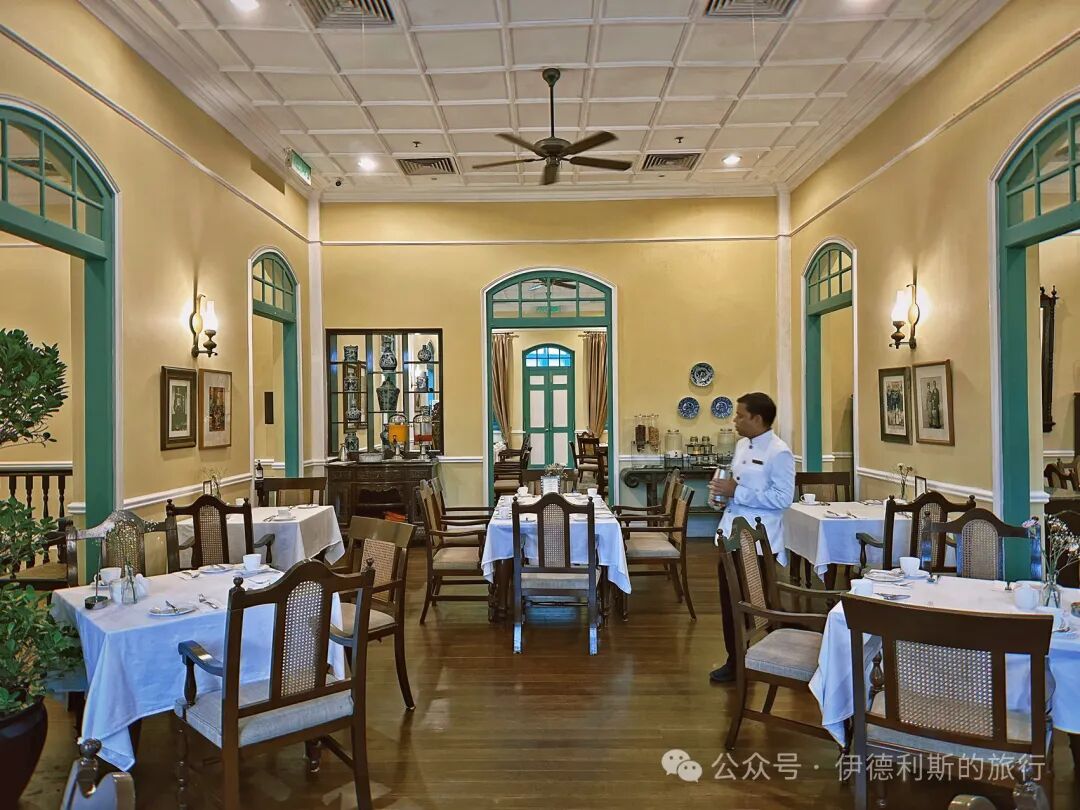
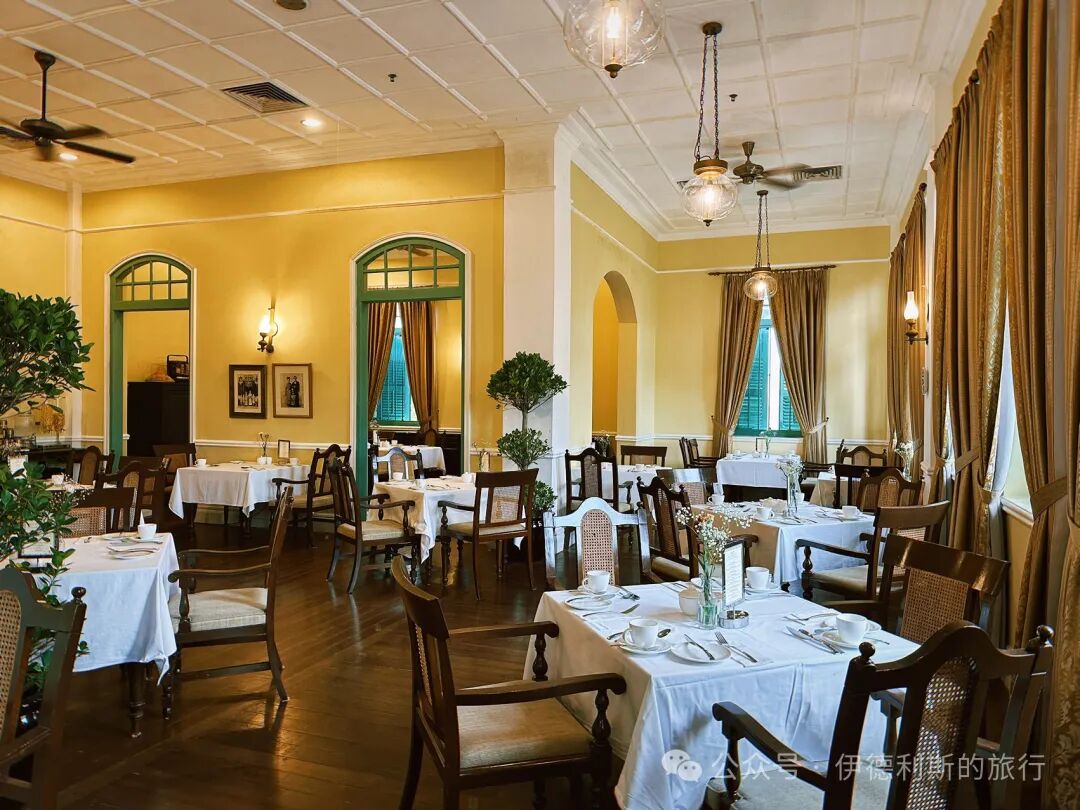
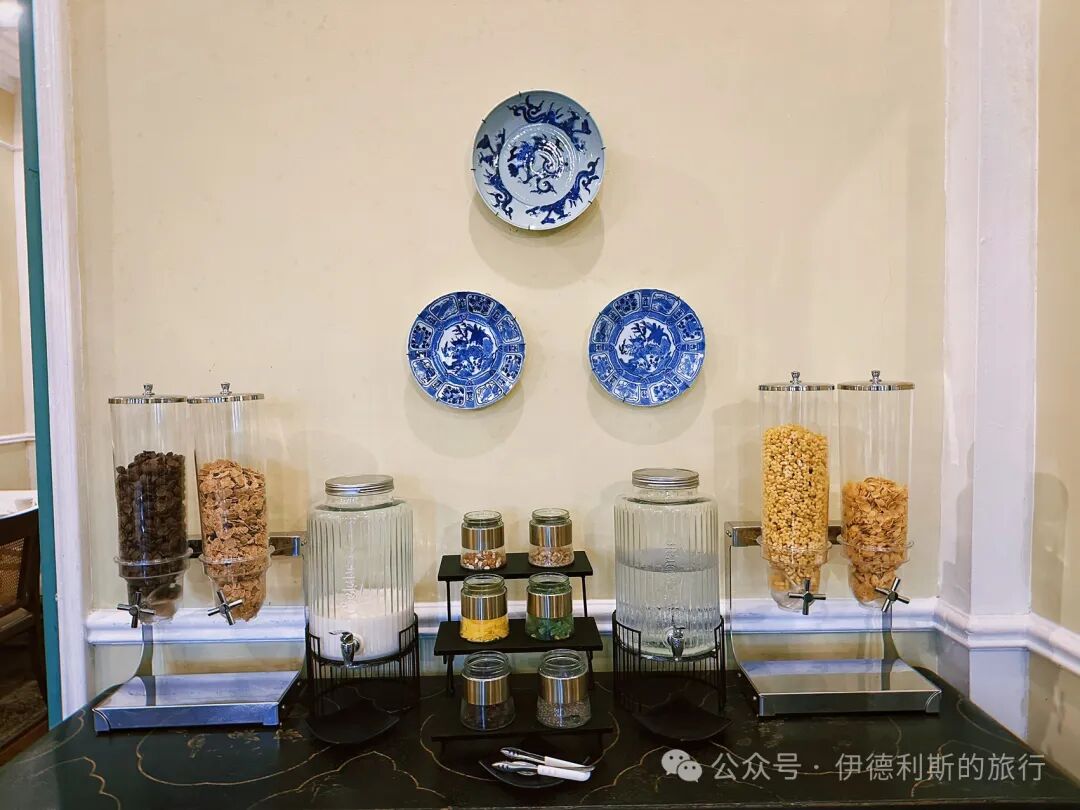
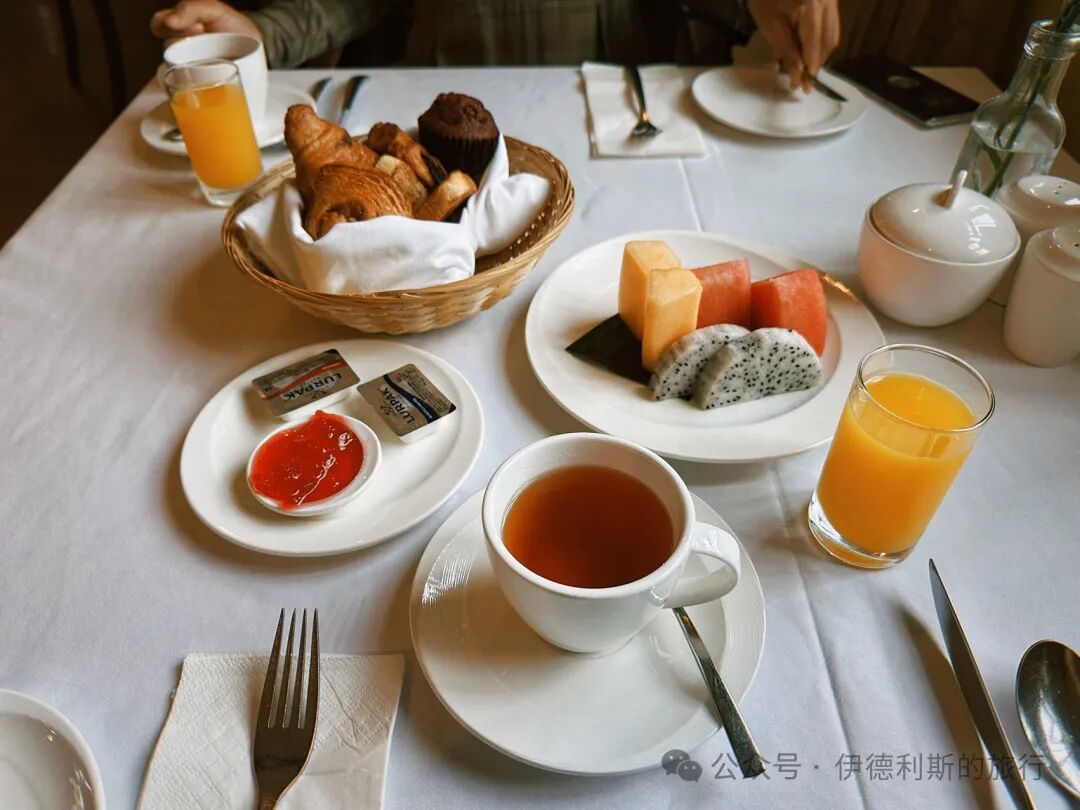
The second floor of the Straits Mansion at the Majestic Hotel serves a halal breakfast. You can choose from Western, Malay, or Indian styles. There is an unlimited supply of croissants, which are served to you by Indian staff so you do not have to get them yourself.
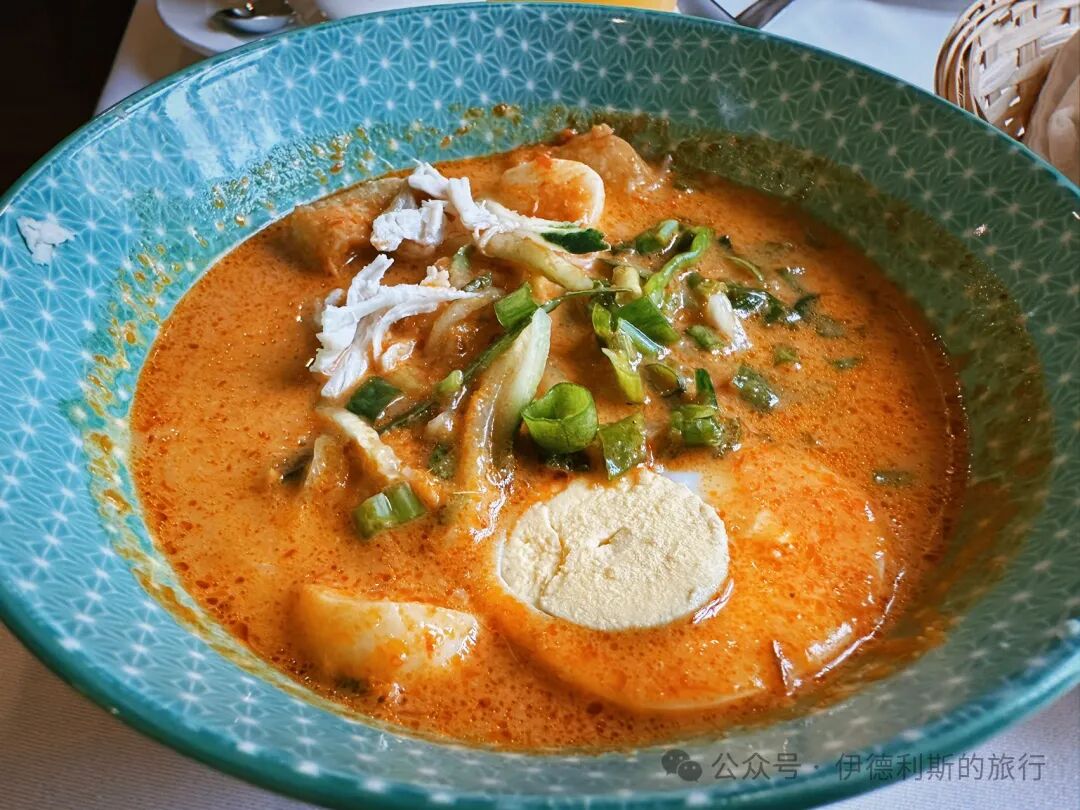
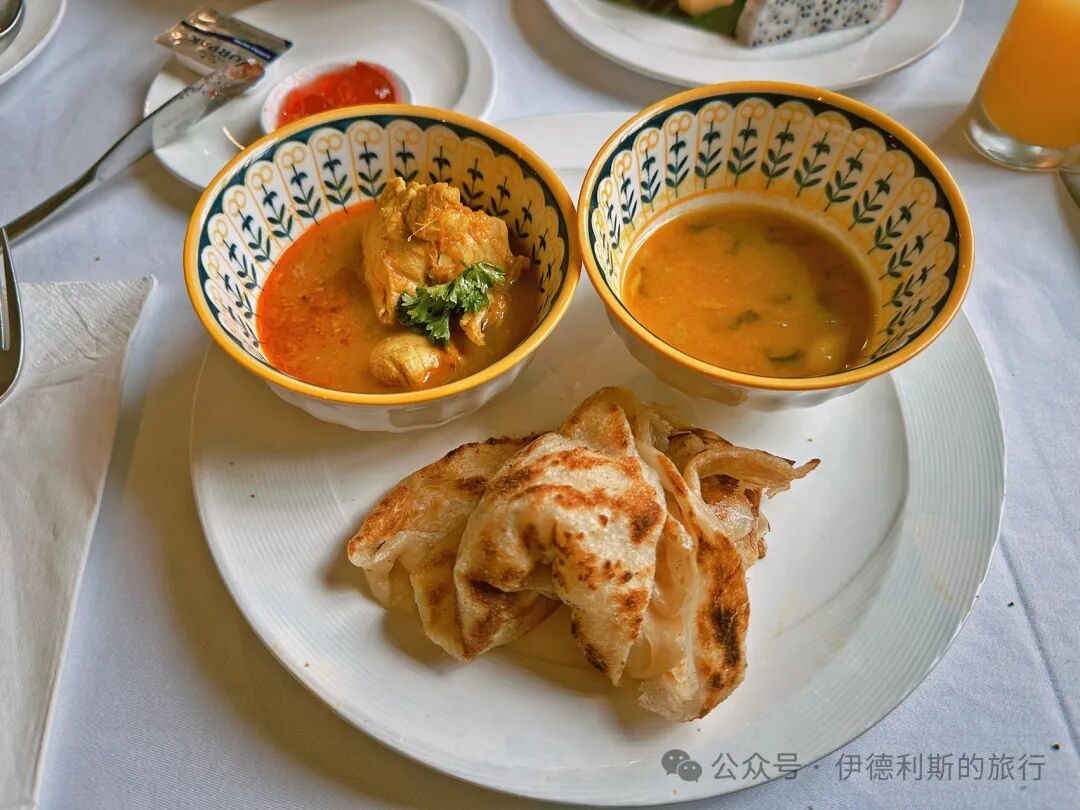
We ordered a serving of Indian flatbread (roti canai) with curry and a bowl of spicy noodle soup (laksa).
Roti canai is a classic Nanyang Indian Muslim breakfast. As early as the 17th century, Indian Muslims brought the practice of eating flatbread with curry to the Aceh Sultanate in northern Sumatra. After the 19th century, it spread to Nanyang countries like Indonesia, Malaysia, and Brunei. Various ethnic groups, including the Malays, Acehnese, and Minangkabau people, all love making this dish.
Curry laksa (laksa lemak) is a type of curry laksa that uses rice noodles in a thick coconut curry soup, topped with chicken and seafood. Curry laksa is best represented by Nyonya laksa, which has plenty of coconut milk and is less sour and spicy compared to the other type, Asam laksa.
Hui Muslim snacks
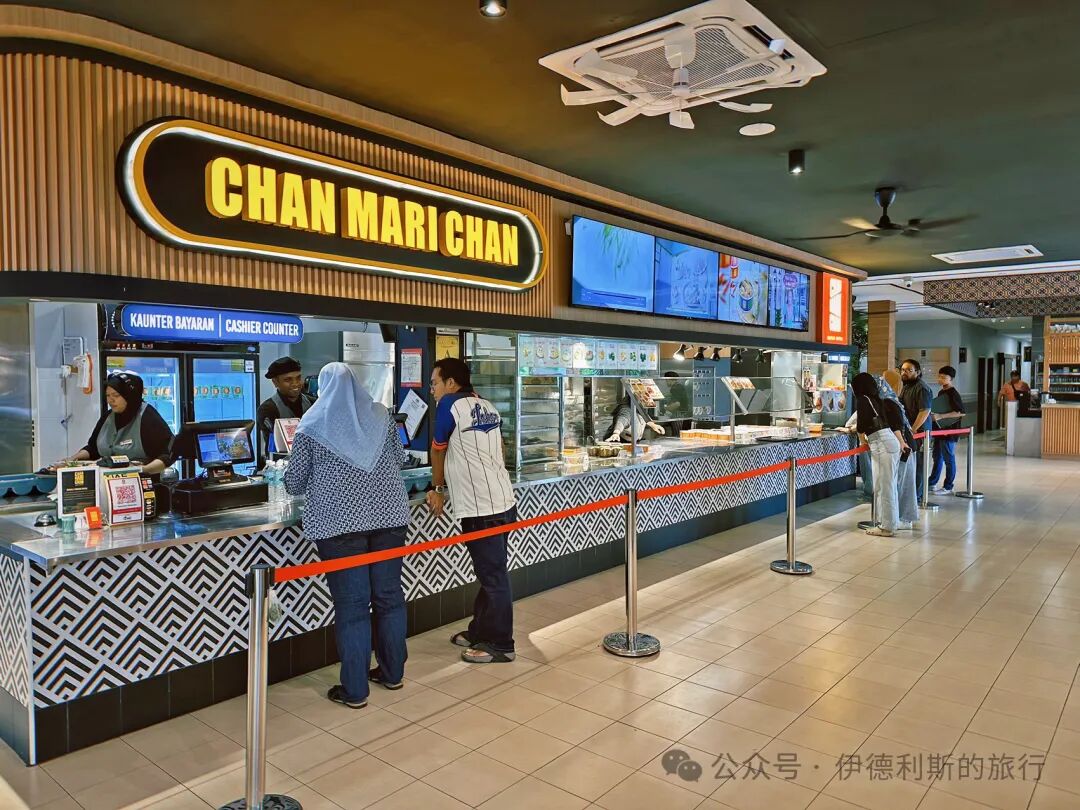
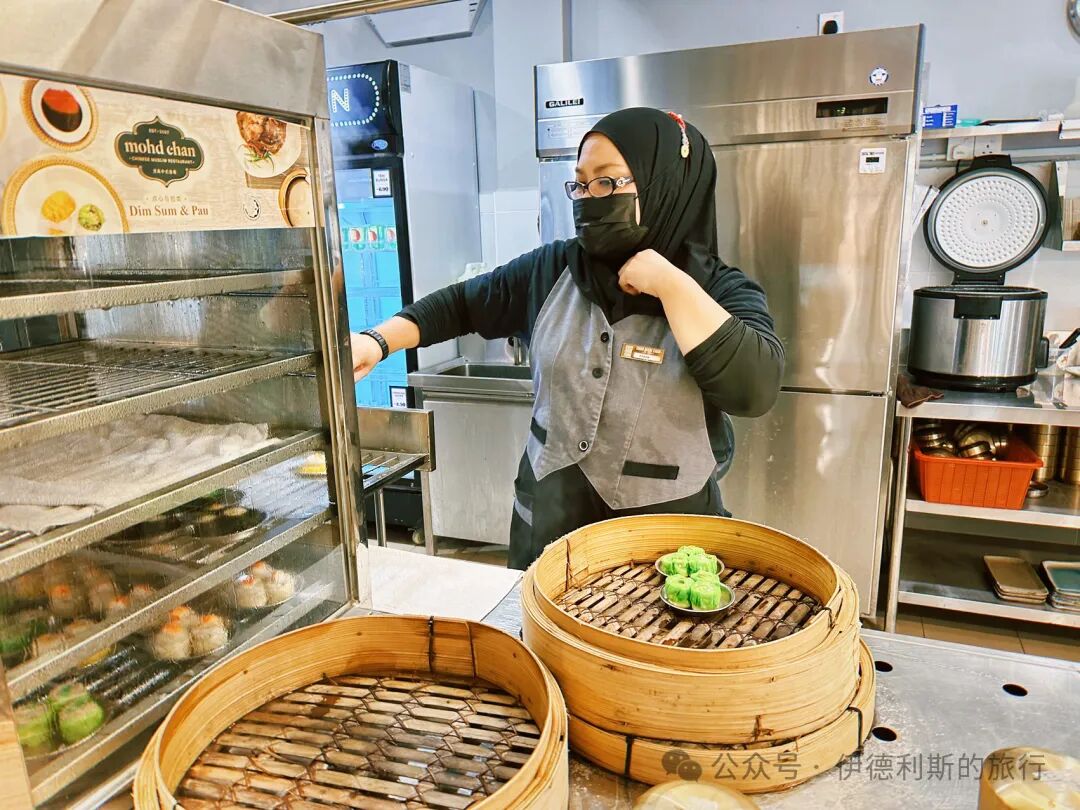
Chan Mari Chan is a sub-brand of the large Malaysian Hui Muslim Chinese restaurant chain Mohd Chan, focusing on affordable home-style snacks. The founder of Mohd Chan, Dato HJ Mohd Chan, was born in Gombak District, Selangor. In 2007, influenced by his Malay friends, he converted to Islam and started his restaurant that same year. Since then, he has been combining Nanyang Chinese cuisine with Malay flavors, and it has now become the most famous and largest Hui Muslim restaurant chain in Malaysia.
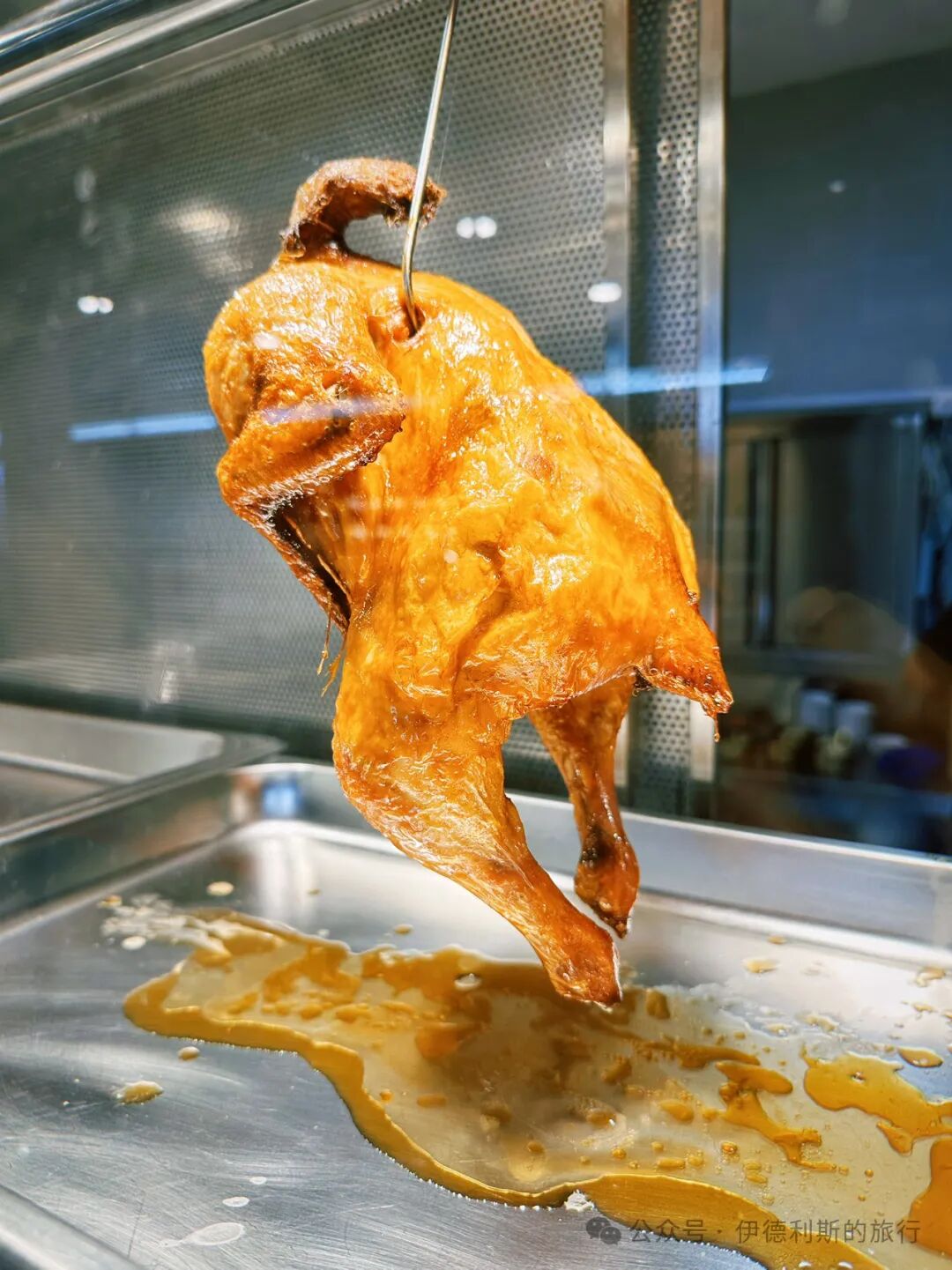
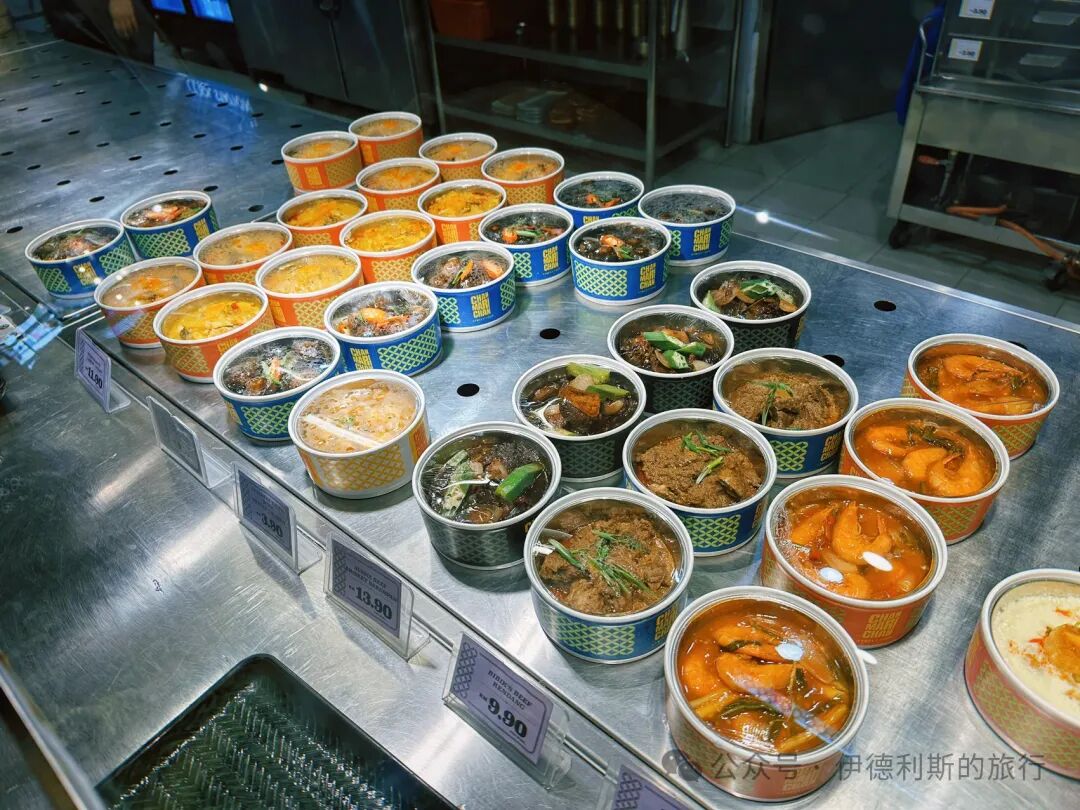
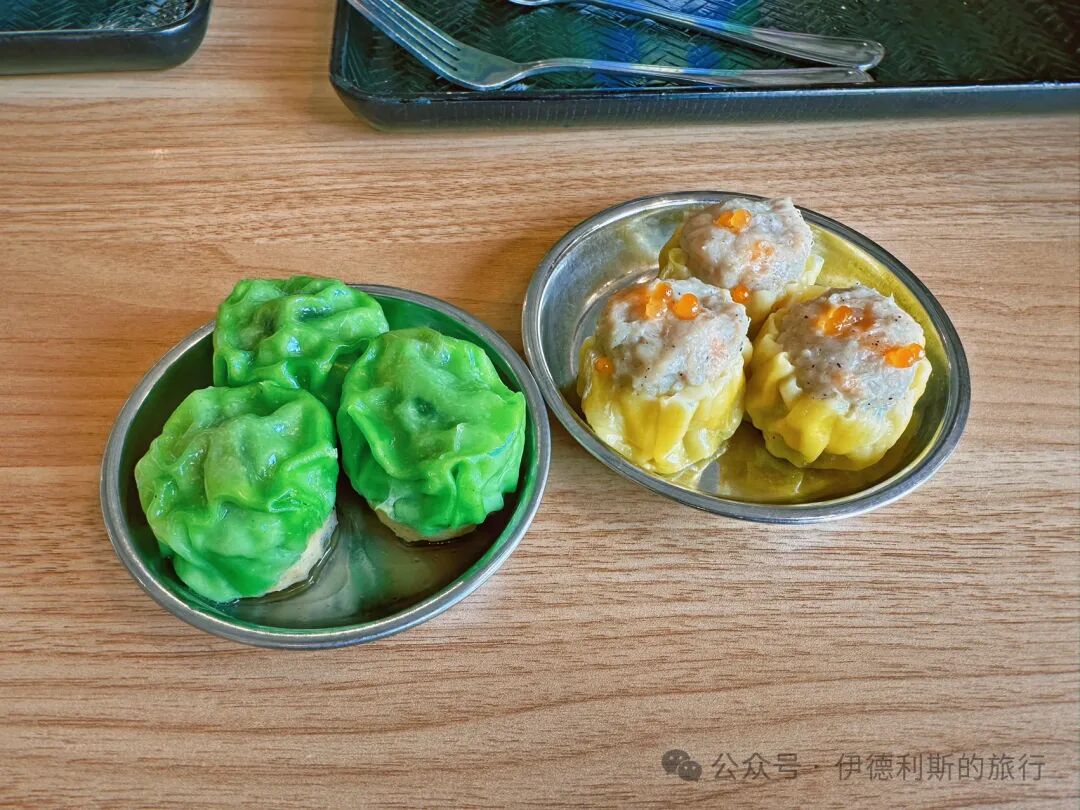
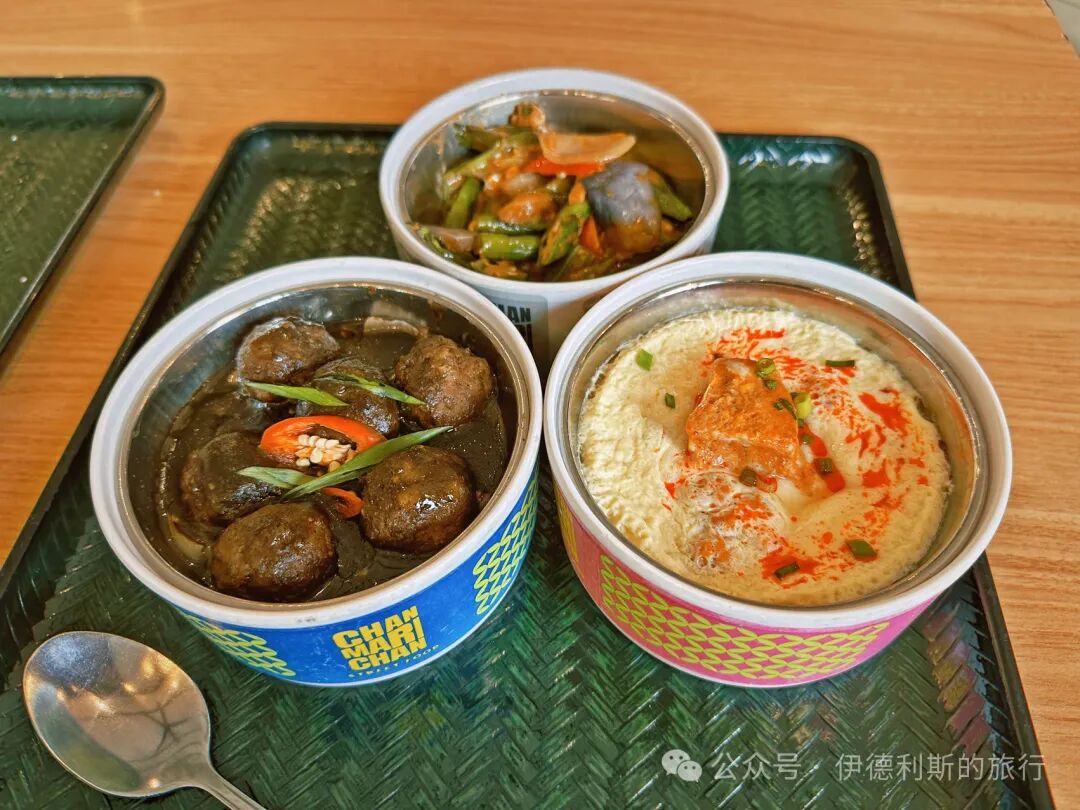
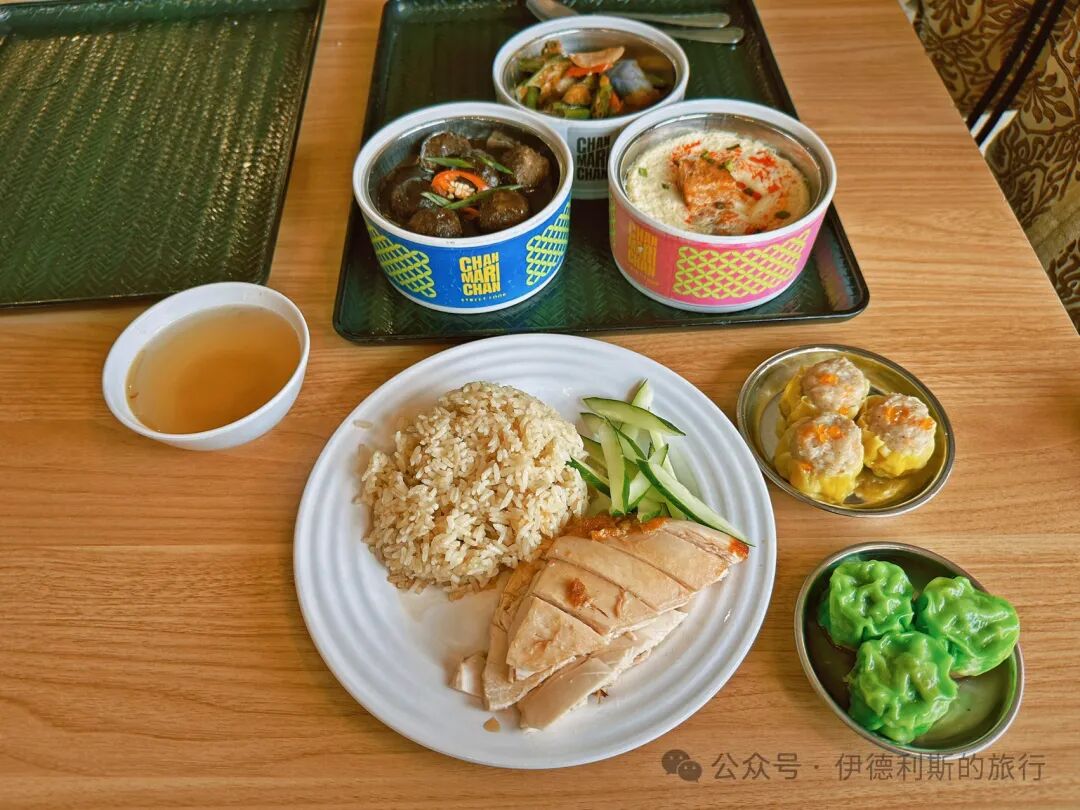
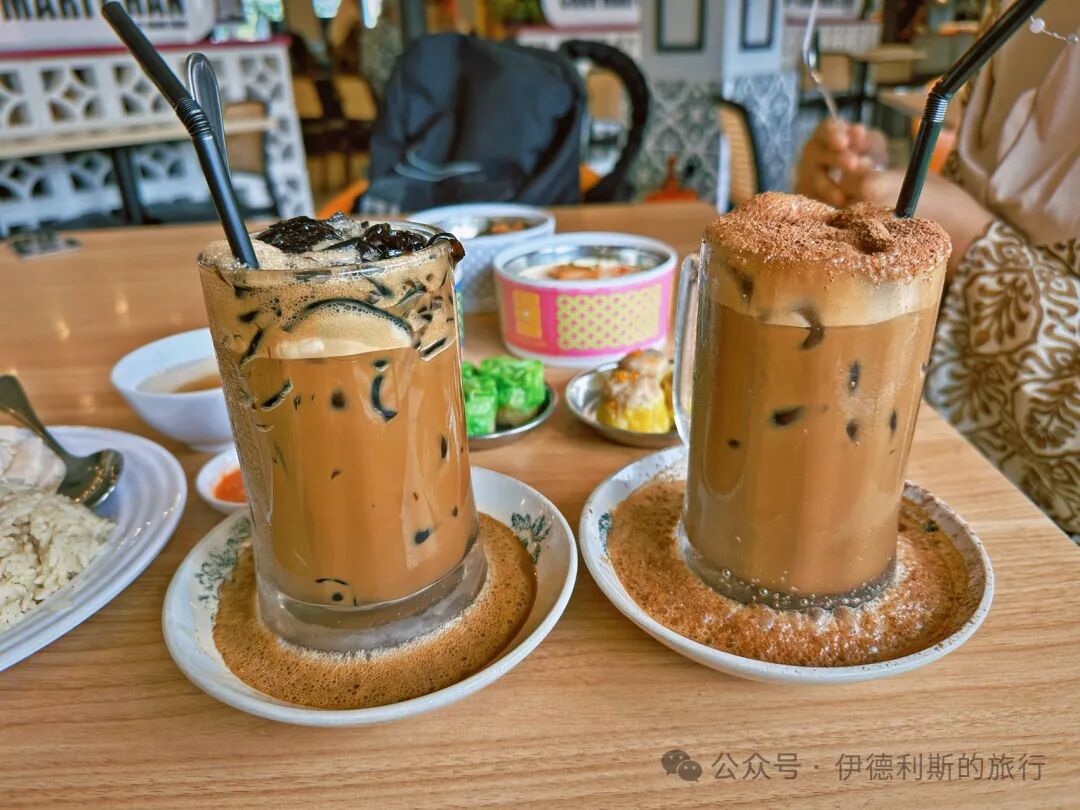
This January, we ate at Mohd Chan restaurant in Seremban, Malaysia. You order from a menu there, and they serve a variety of high-end Nanyang Chinese banquet dishes. Chan Mari Chan focuses on fast food and snacks. You go straight to the counter to pick up your food, and the chicken rice, small side dishes, and steamed dumplings (shaomai) are the most popular items. We grabbed roasted chicken rice, three small side dishes, two types of steamed dumplings (shaomai), and drank grass jelly coffee and cocoa coffee. Their food is quite delicious. I especially loved the fragrance and texture of the chicken rice. Eating there wiped away the fatigue of our journey. We instantly felt embraced by Nanyang culture and left feeling very satisfied.
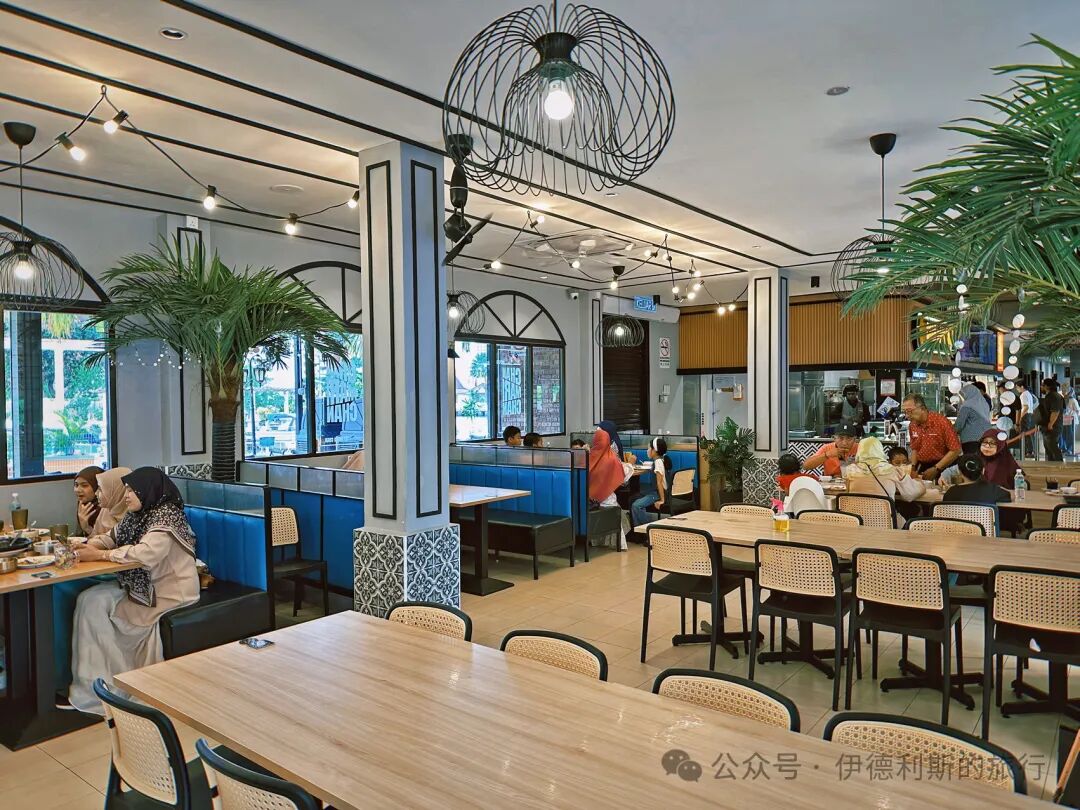
The restaurant environment is also very nice, and many Malaysian Muslim friends (dosti) come here to eat with their families. They have a prayer room in the shop, which sets a great example for us Hui Muslims.
Malaysian Food City
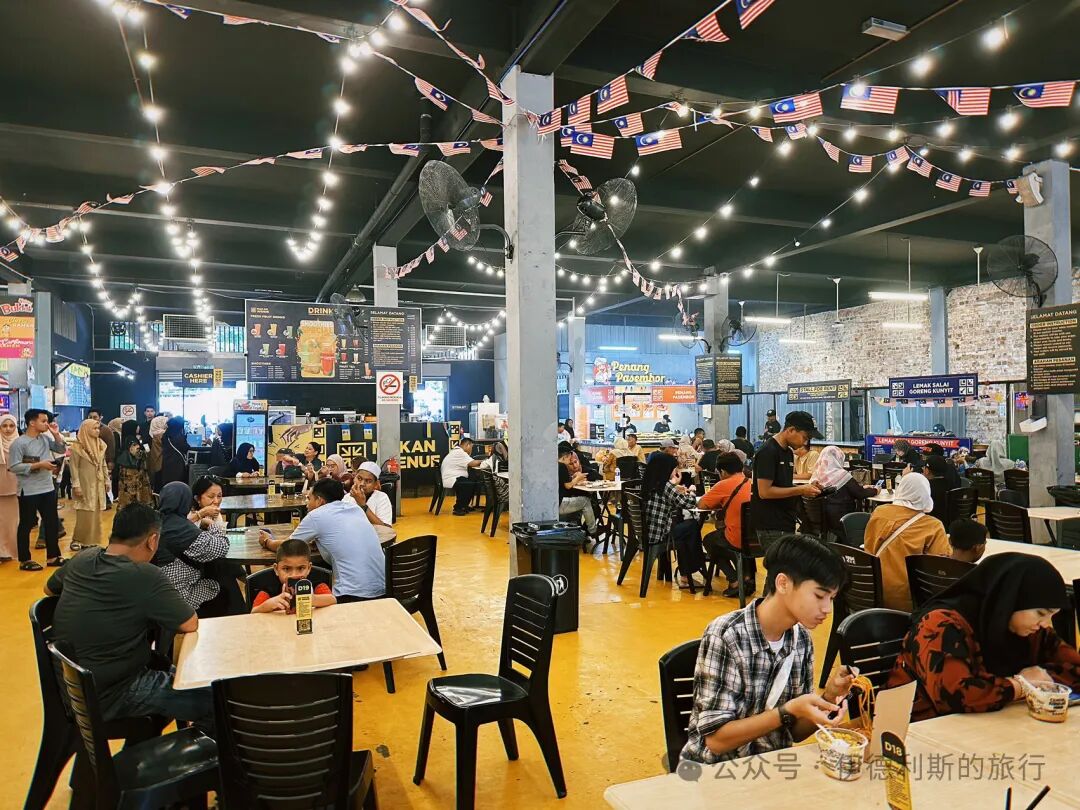
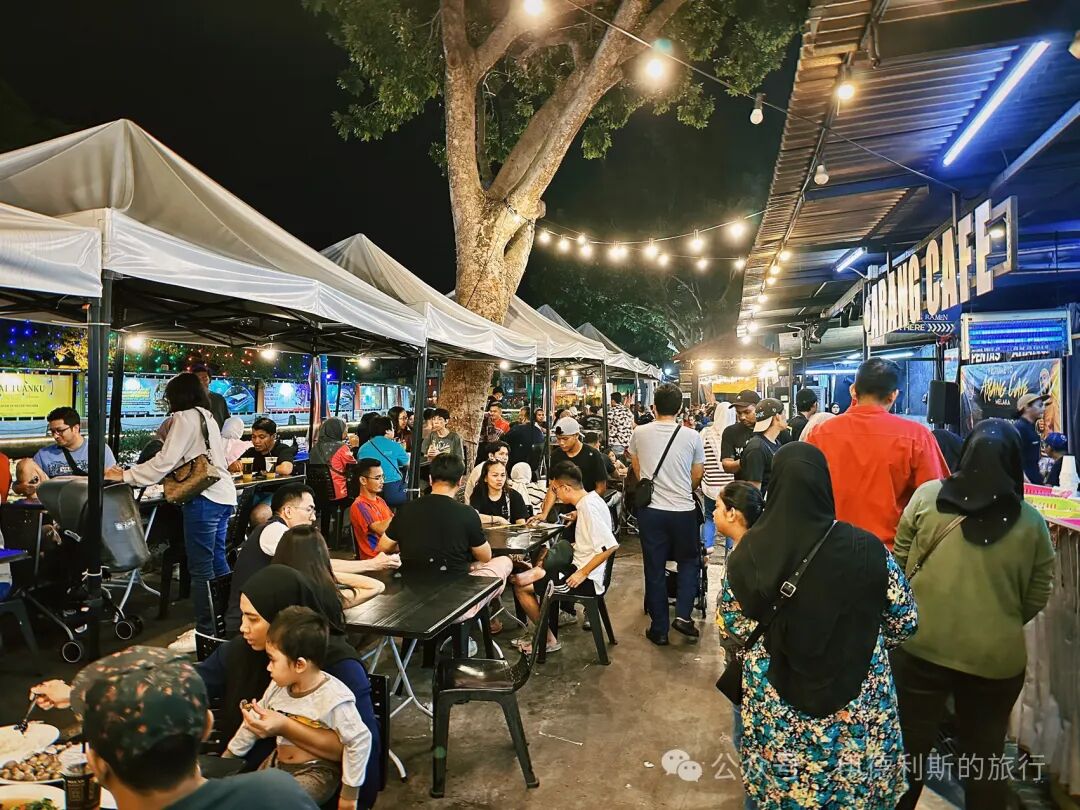
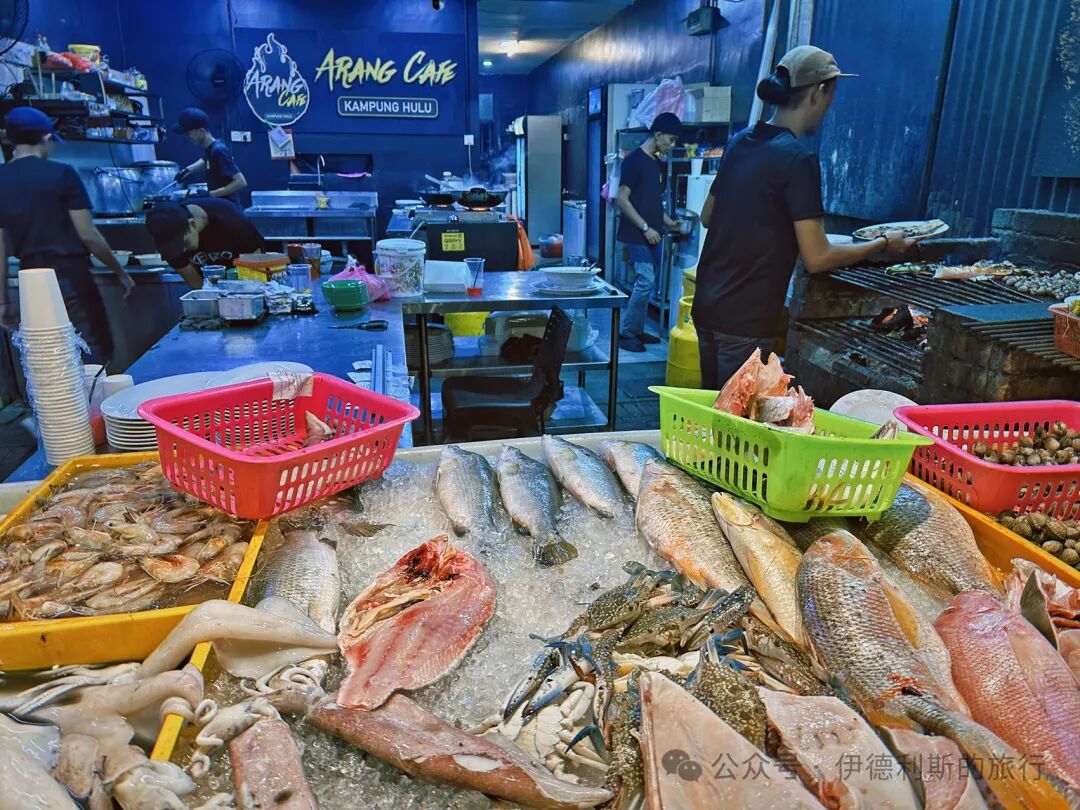
Right next to the E-Red Hotel on Kampung Hulu Street, there is a large Malay food court called Makan Avenue. It has a huge variety of Malay snacks. Many Malay people come here to eat at night, and the tables along the Malacca River are always full. Be careful about ordering drinks here on weekends or holidays. Because they have to serve hundreds of seats, I actually waited an hour just to get my drink. The other food stalls serve their dishes relatively quickly.
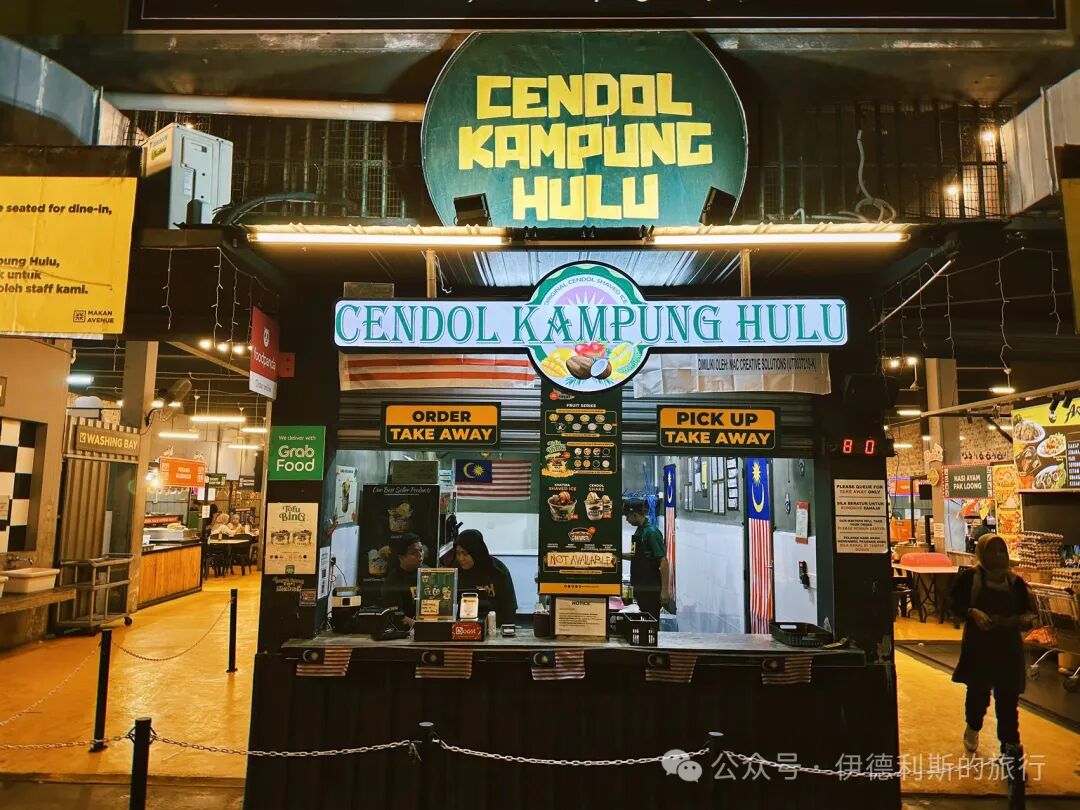
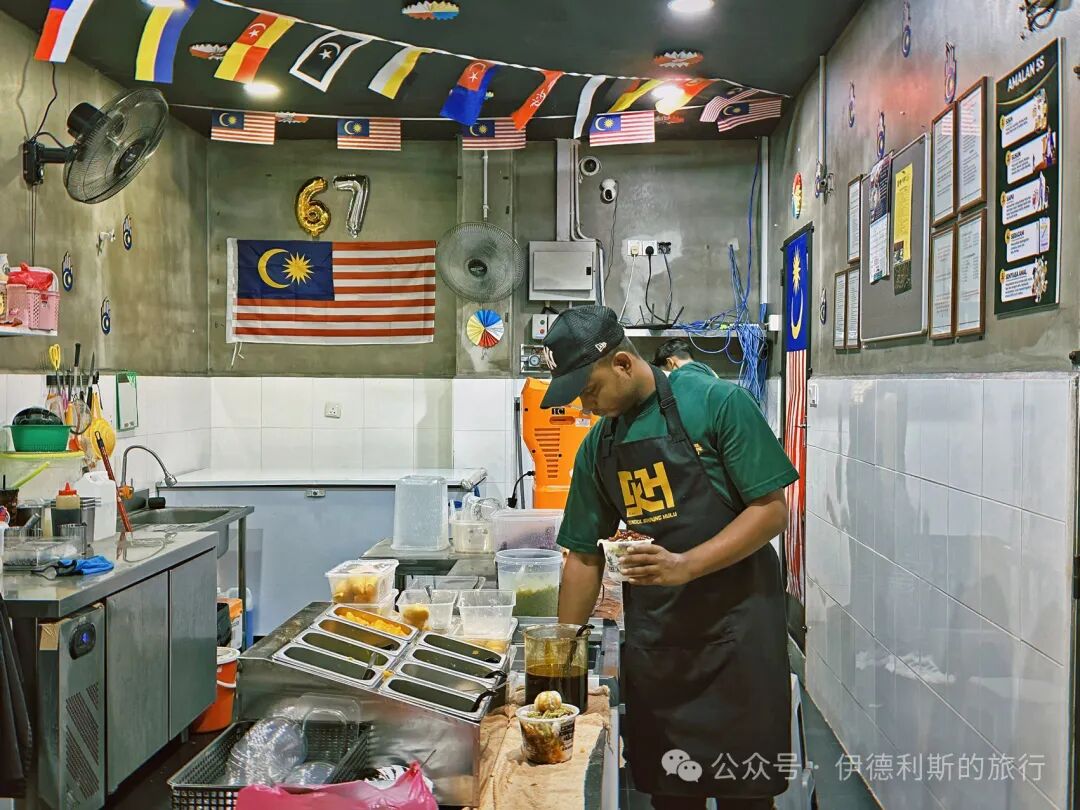
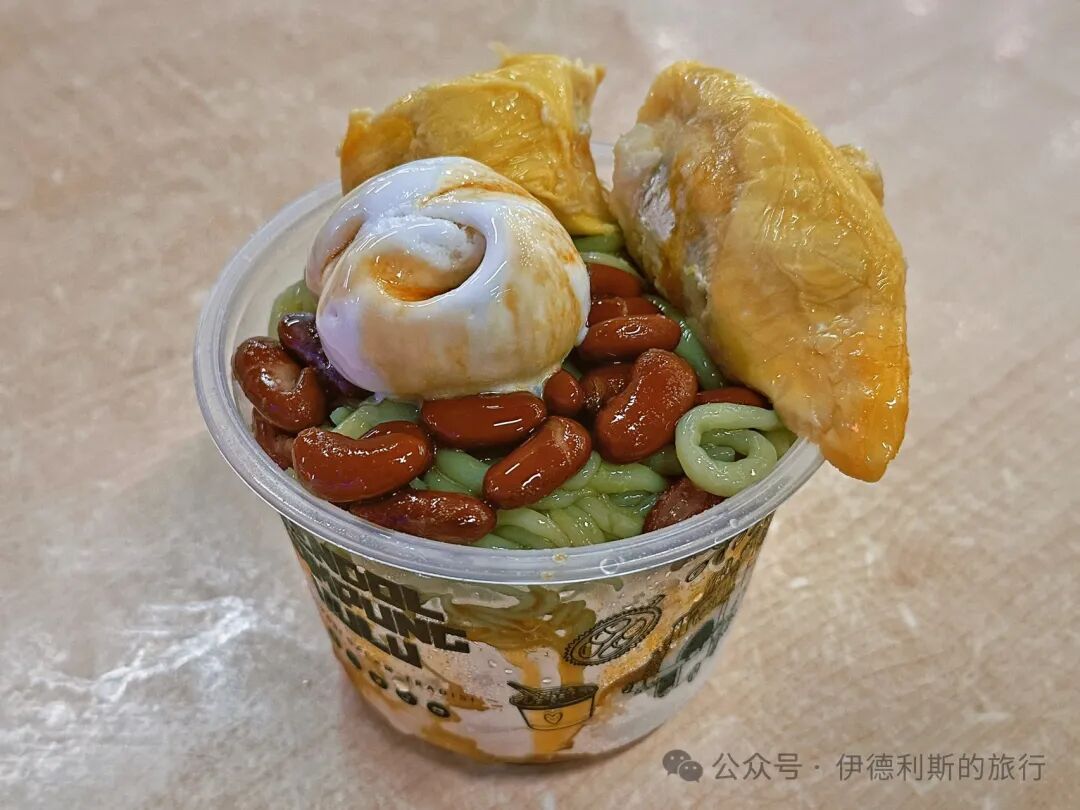
The most famous spot in the food court is Cendol Kampung Hulu. Cendol originated on the island of Java and was a classic drink at Javanese weddings before it spread across Southeast Asia. It is made with shaved ice, green rice flour jelly noodles, coconut milk, and palm sugar. You can also add things like red beans or grass jelly. We ordered the durian cendol, which is perfect for the hot and humid weather in Southeast Asia.
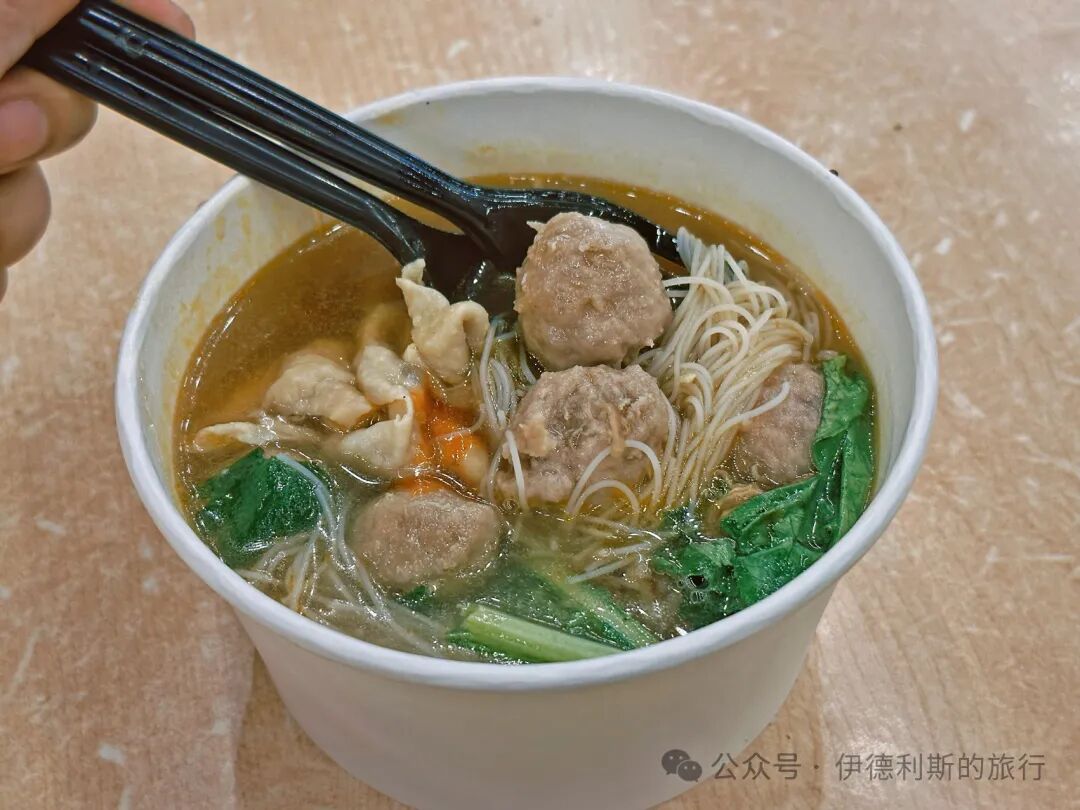
We also ordered beef meatball soup (bakso biasa). The name bakso comes from the Southern Min dialect for 'meat crisp.' It is a classic Malaysian street food made from beef, fish paste, and a little tapioca flour, giving it a very firm texture. The finished meatballs are usually served in beef broth with tofu, glass noodles, and various side dishes.
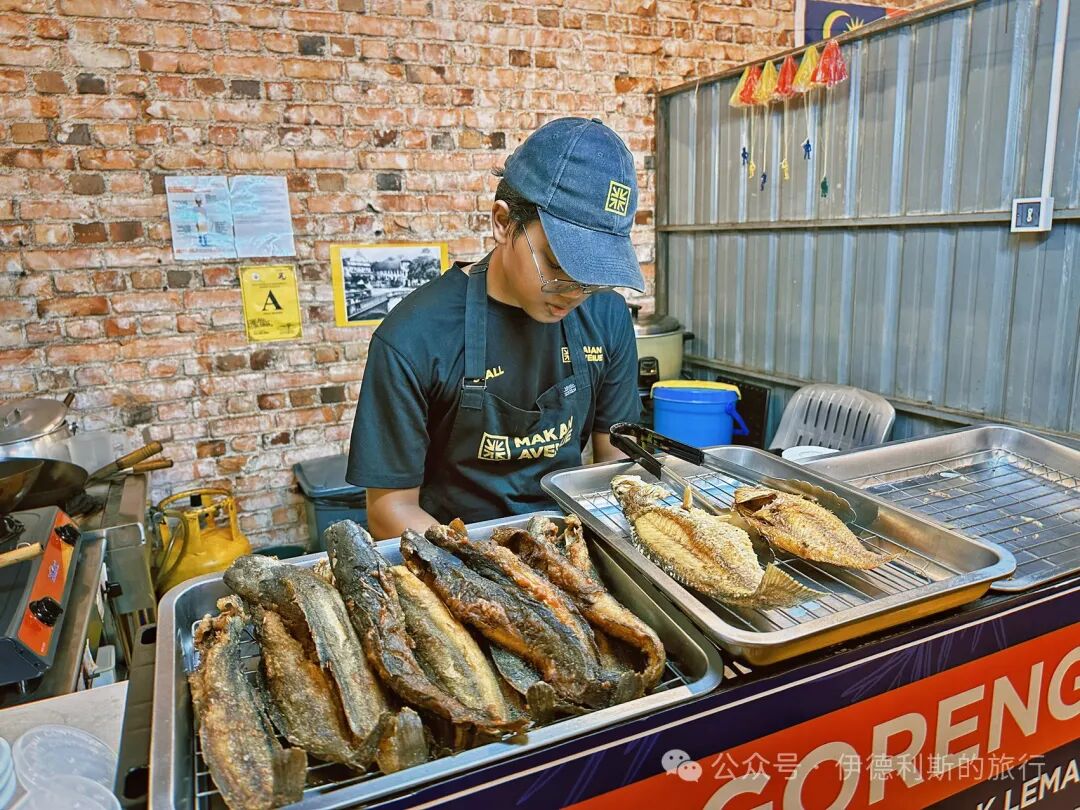
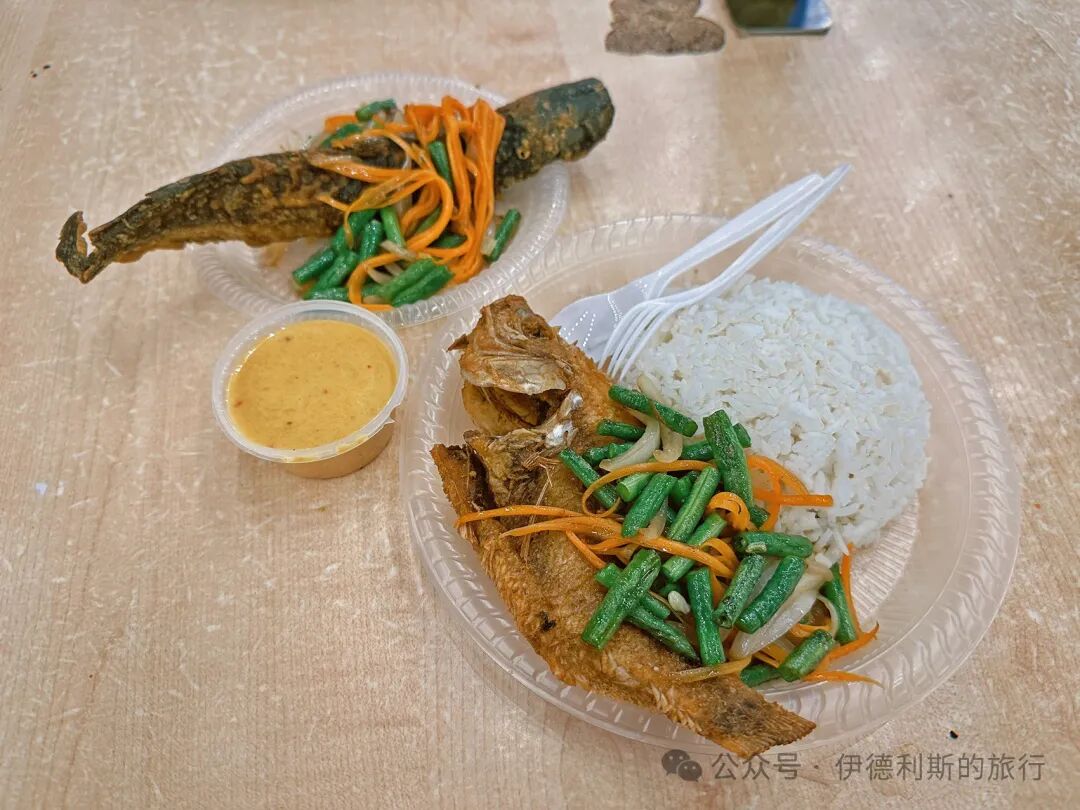
We also ordered fried tilapia (talapia) and catfish (keli). Although they looked charred on the outside, the meat inside was very tender, had no fishy smell, and tasted delicious.
Malaysian night market
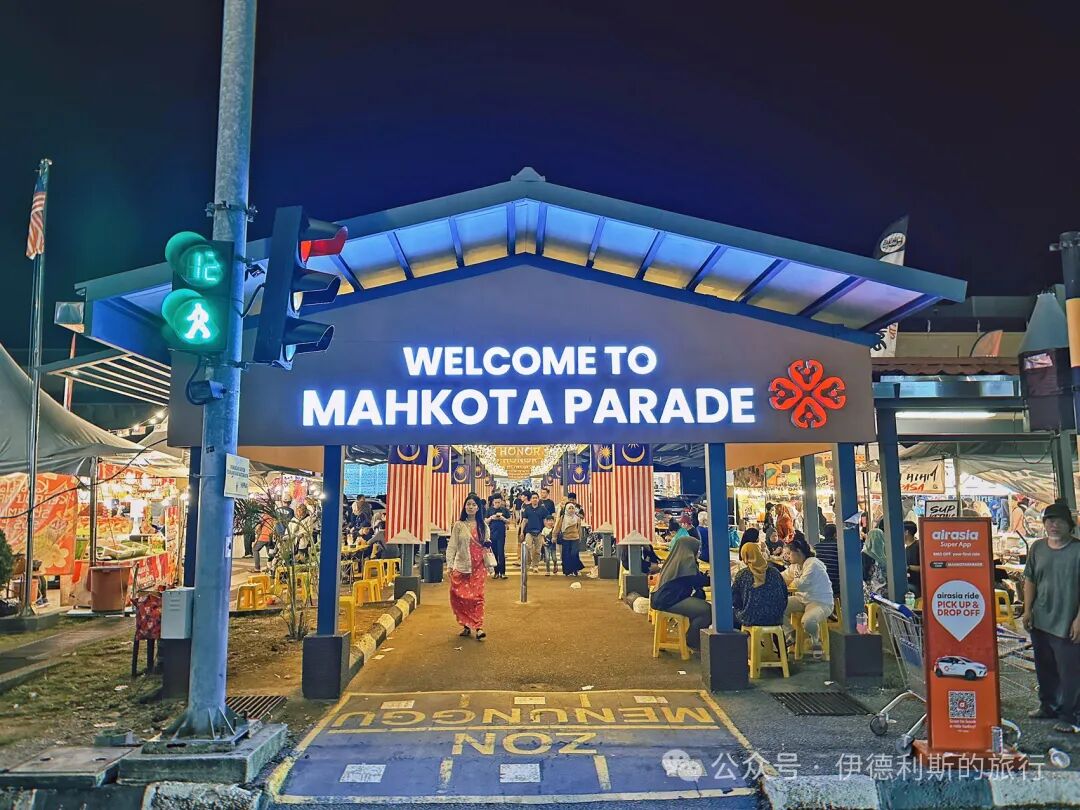
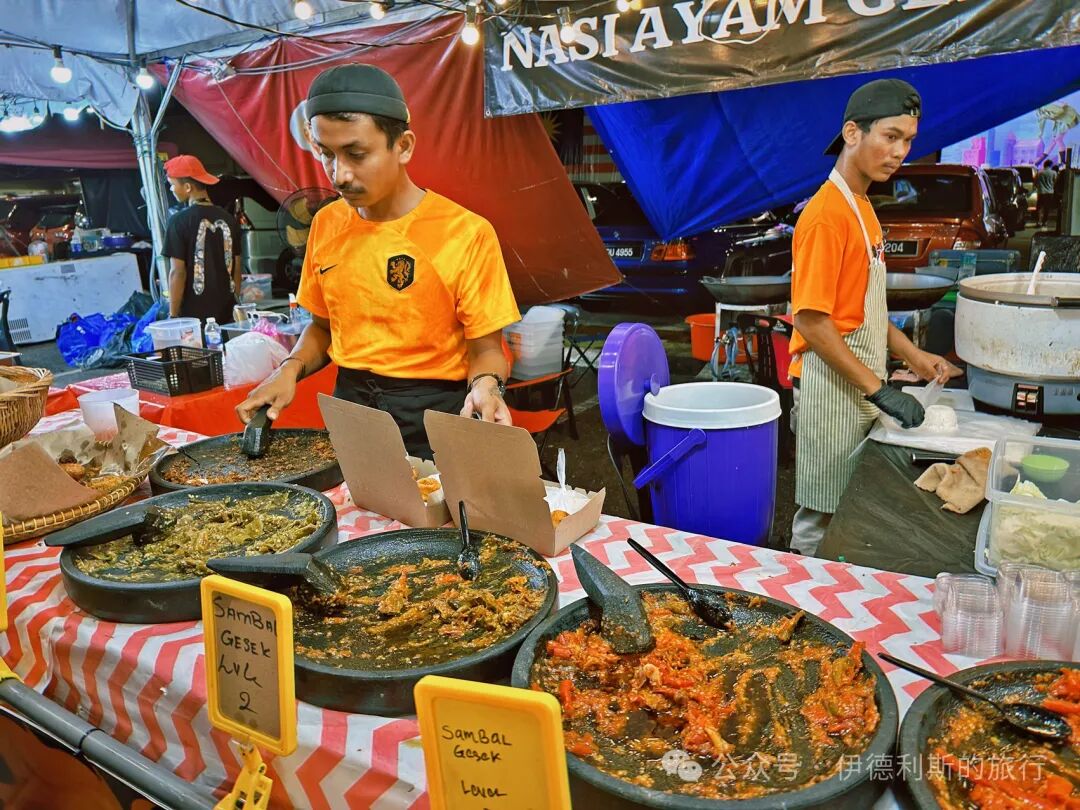
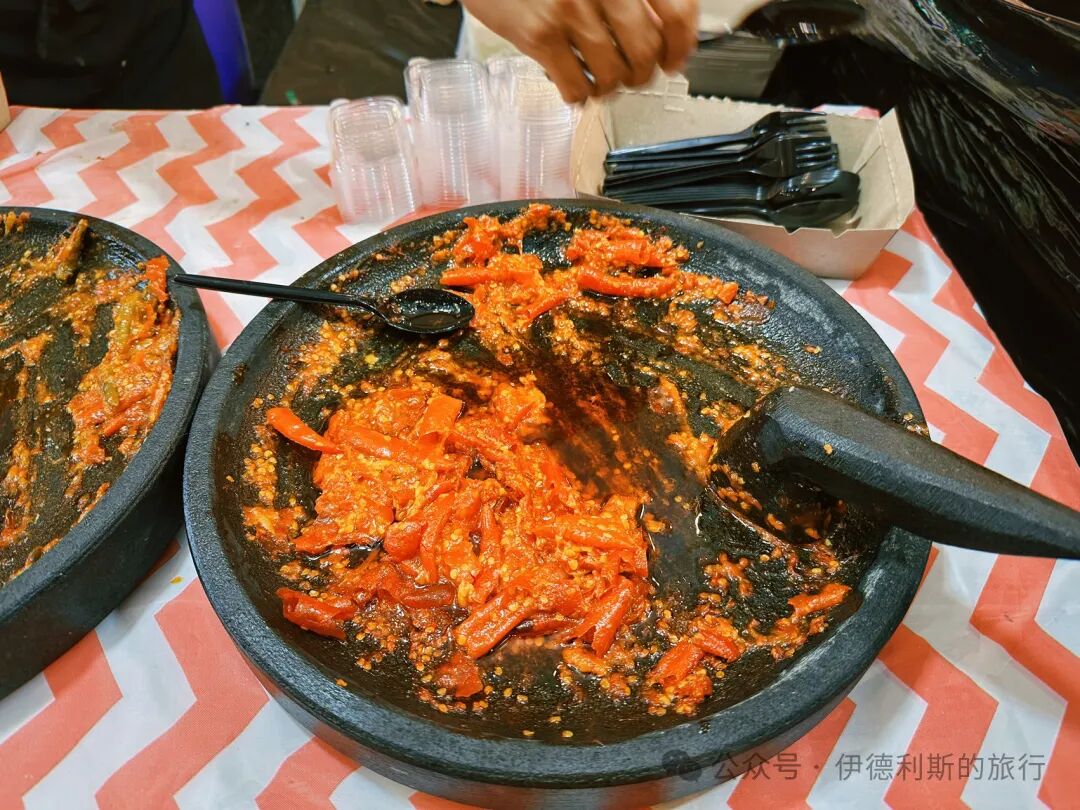
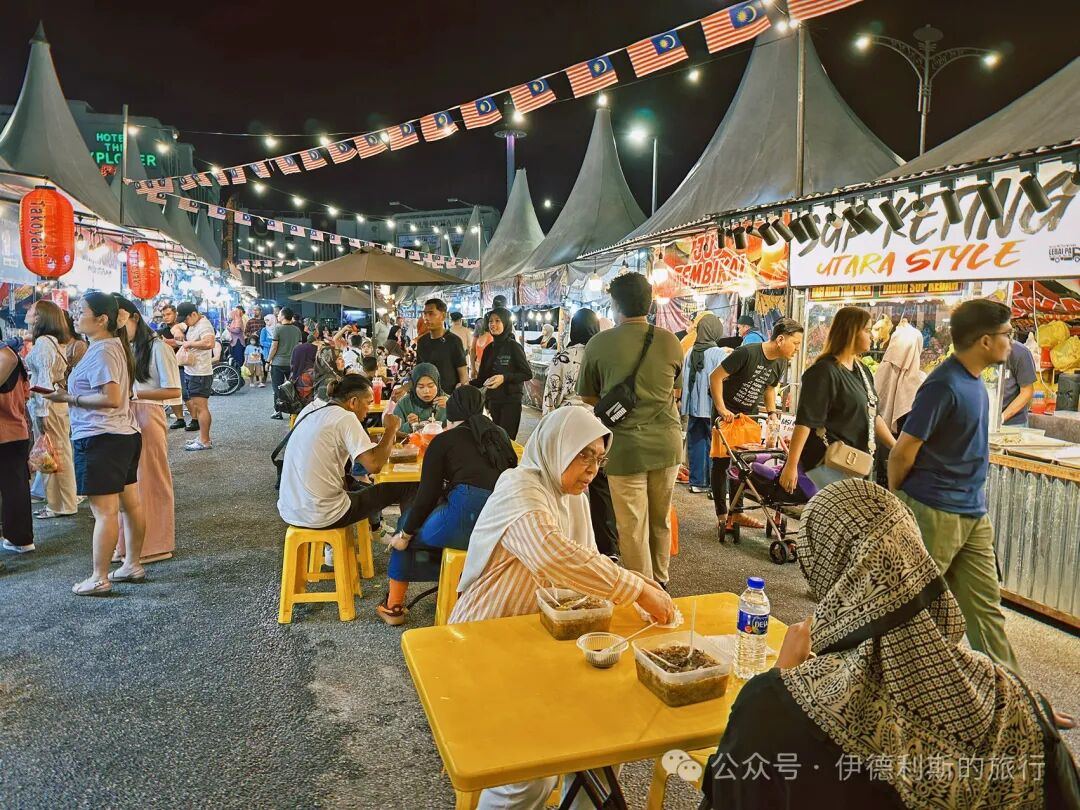
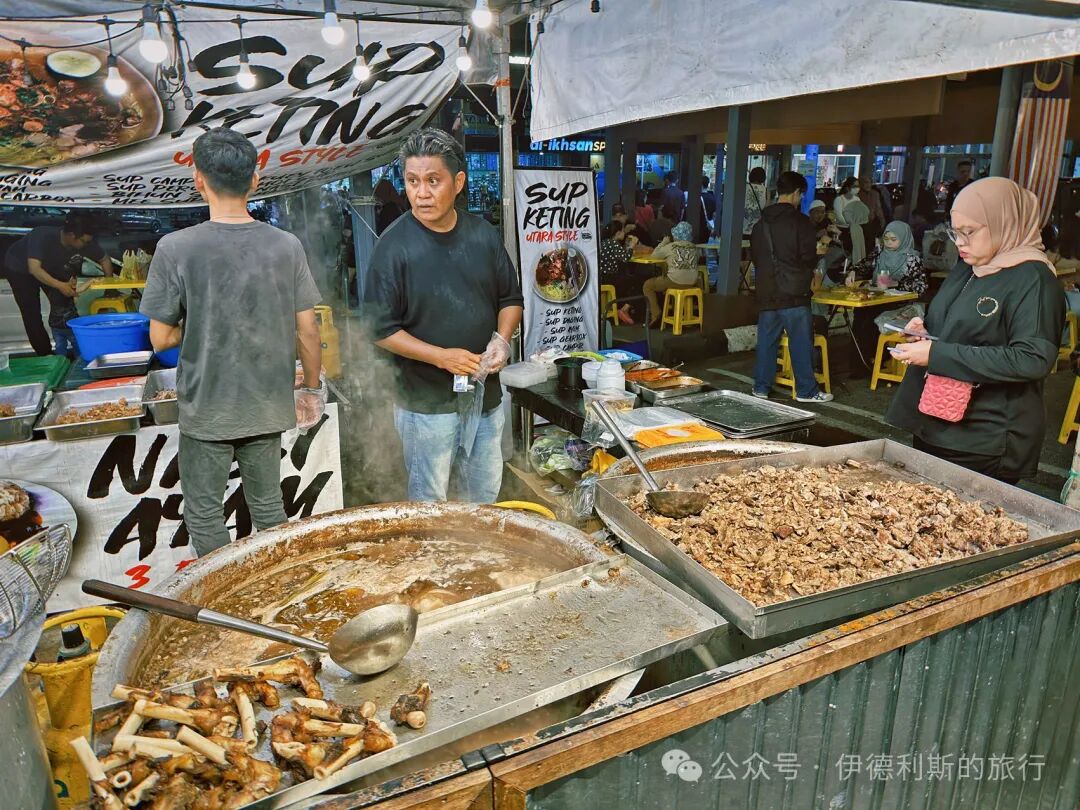
Across from Dataran Pahlawan, we found a huge Malaysian night market that seems to only open on weekends, with an endless variety of snacks. We were too full to eat a meal, so we just bought some guava dipped in sour plum powder and a giant avocado juice. Tropical fruits are cheap all over Malaysia. As long as you don't buy durian in tourist areas, you can basically eat as much fruit as you want.
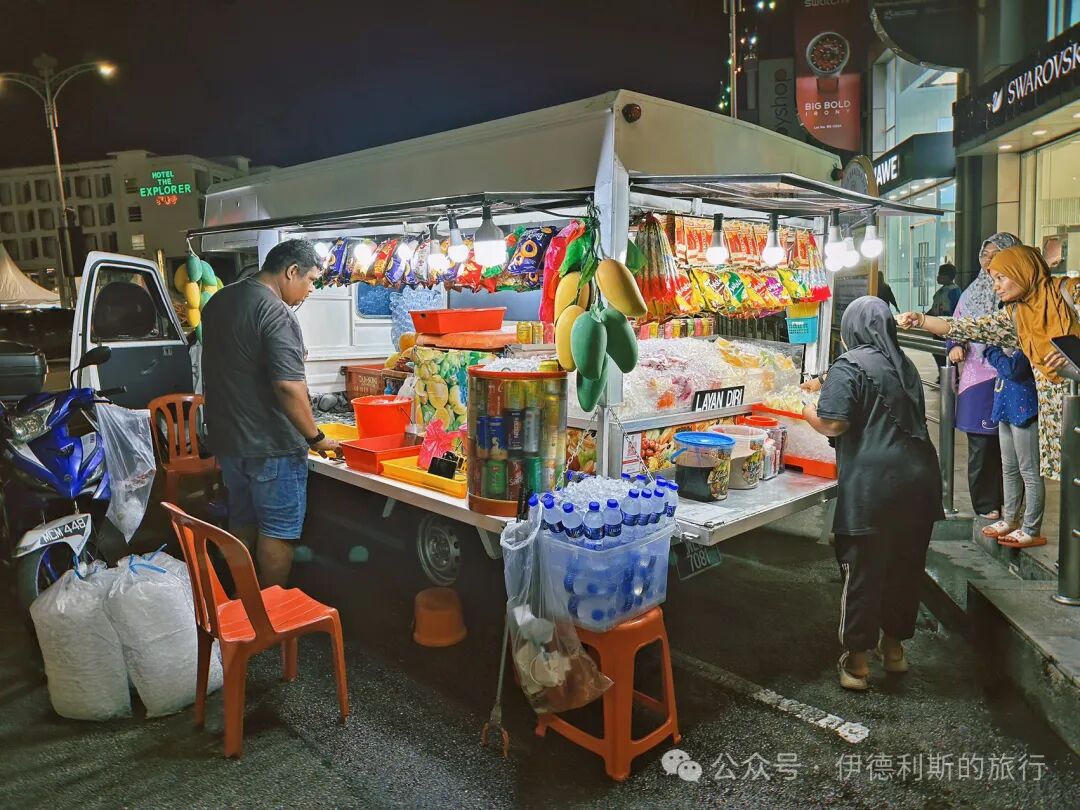
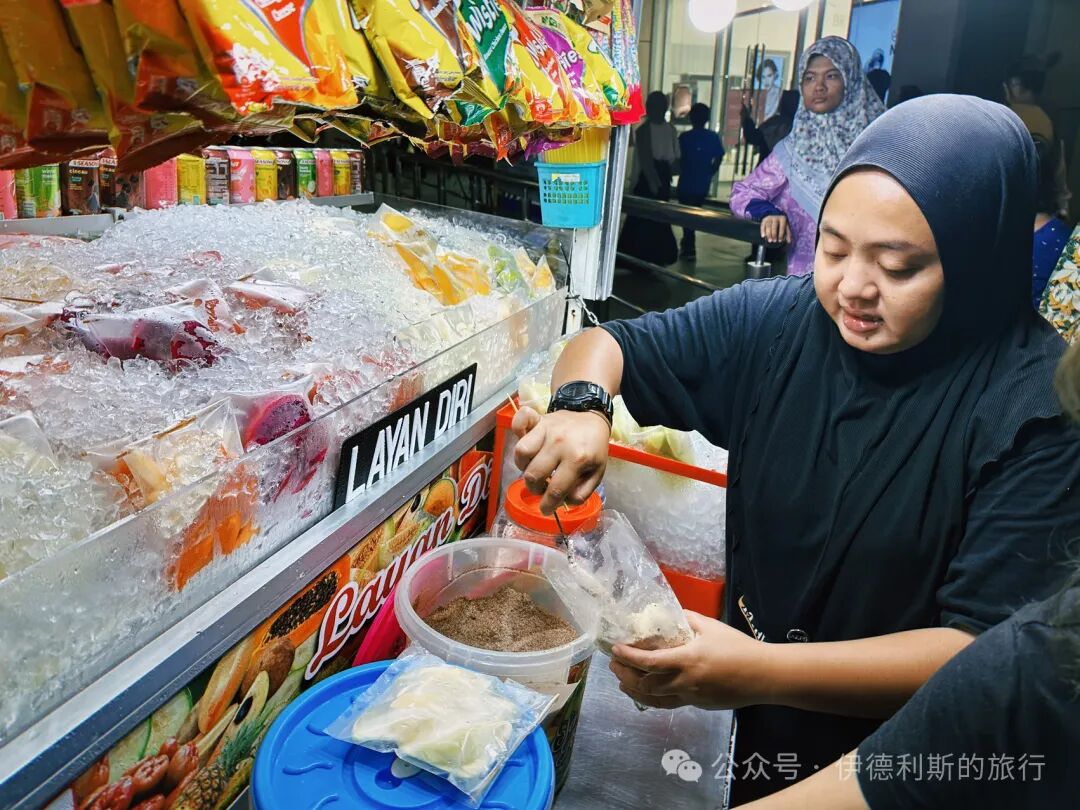
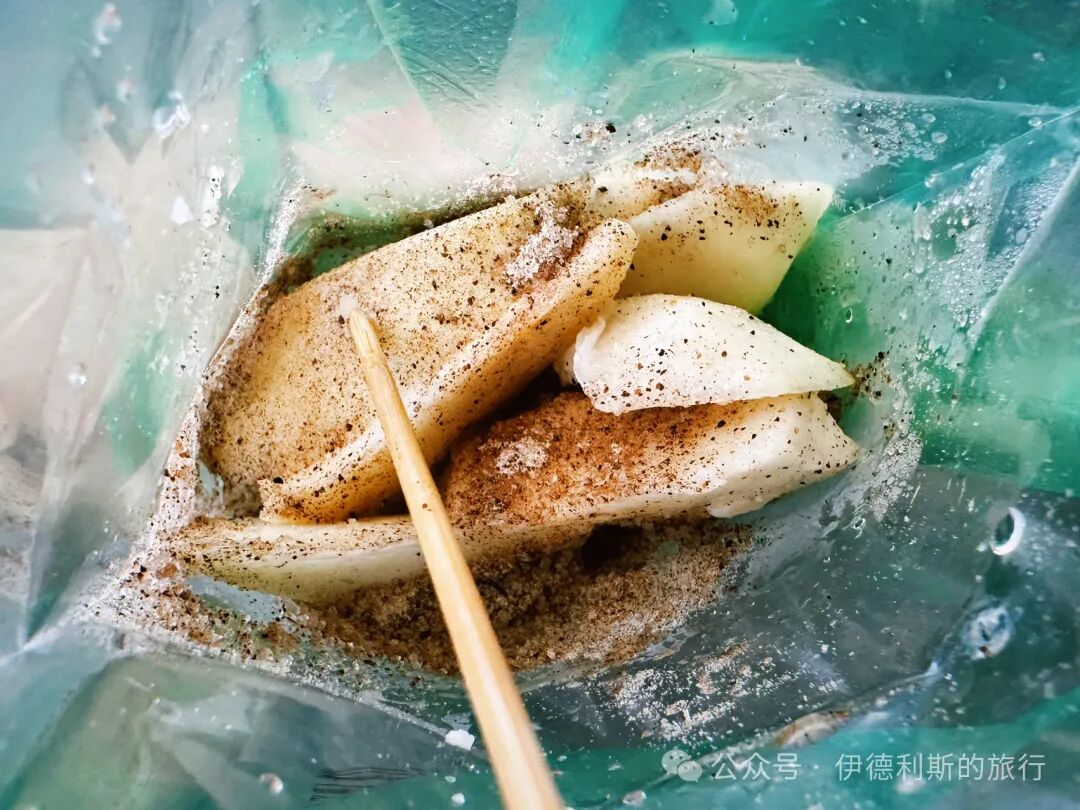
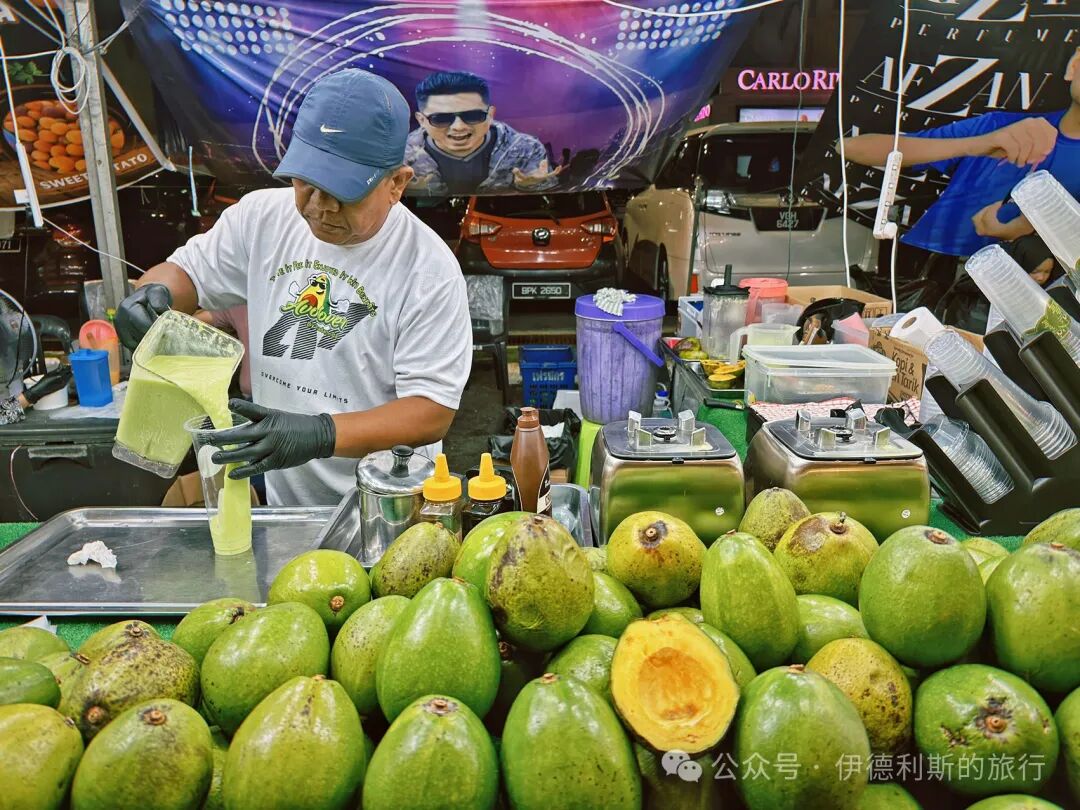
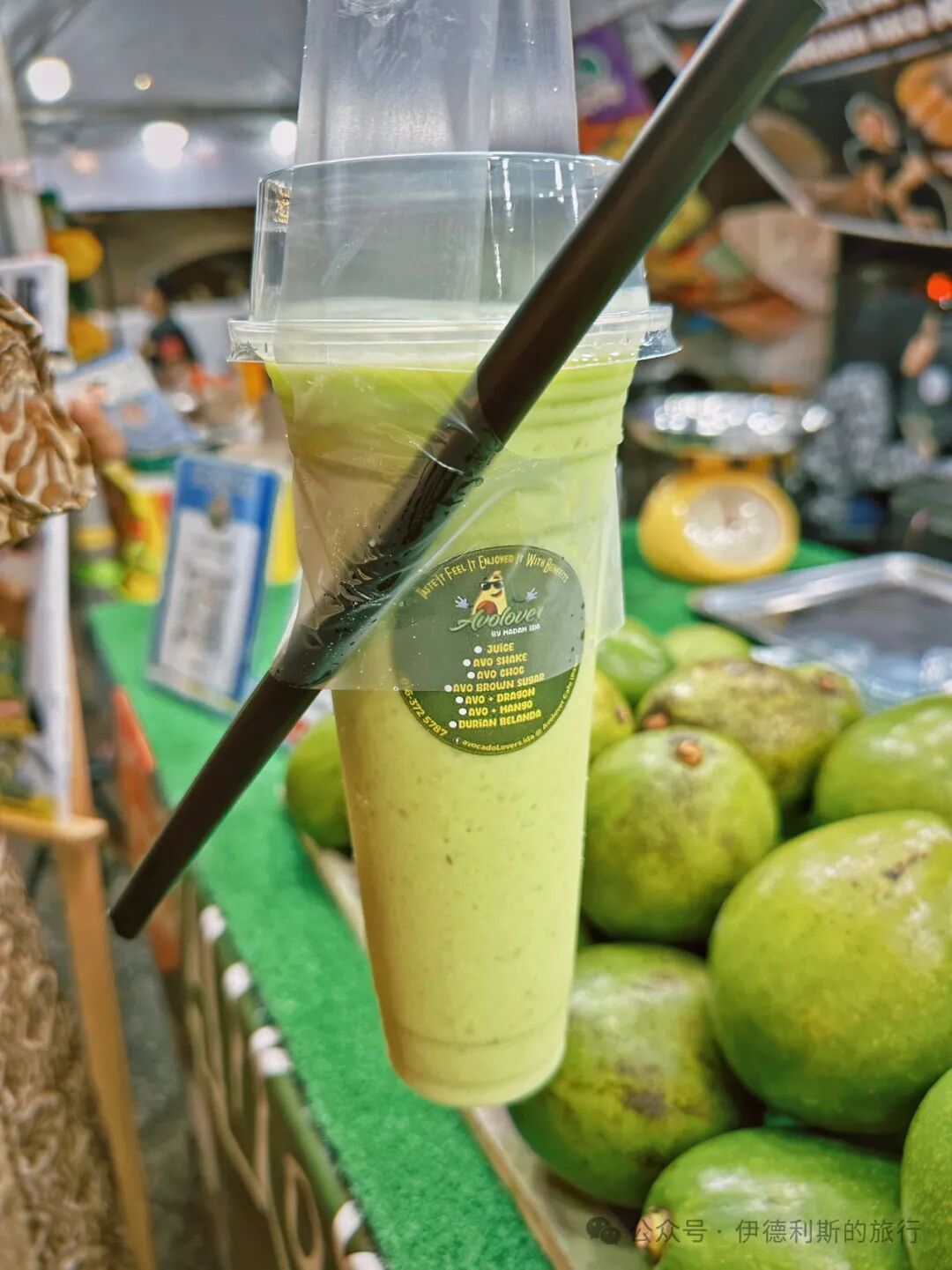
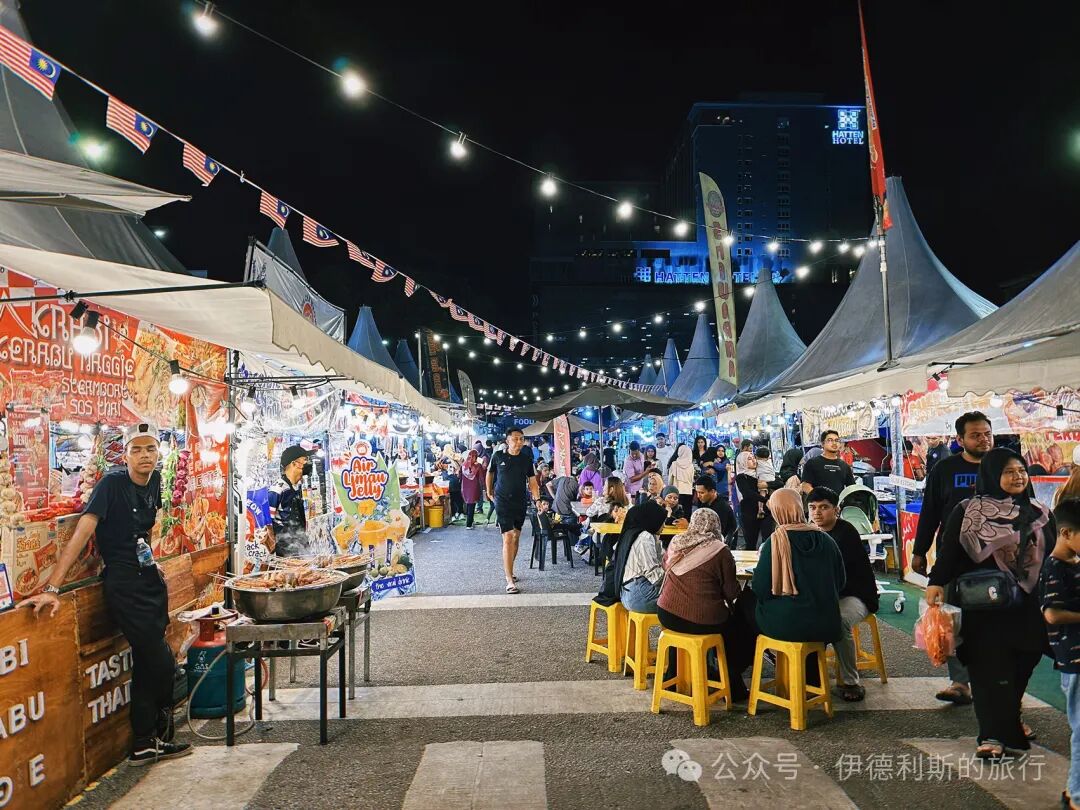
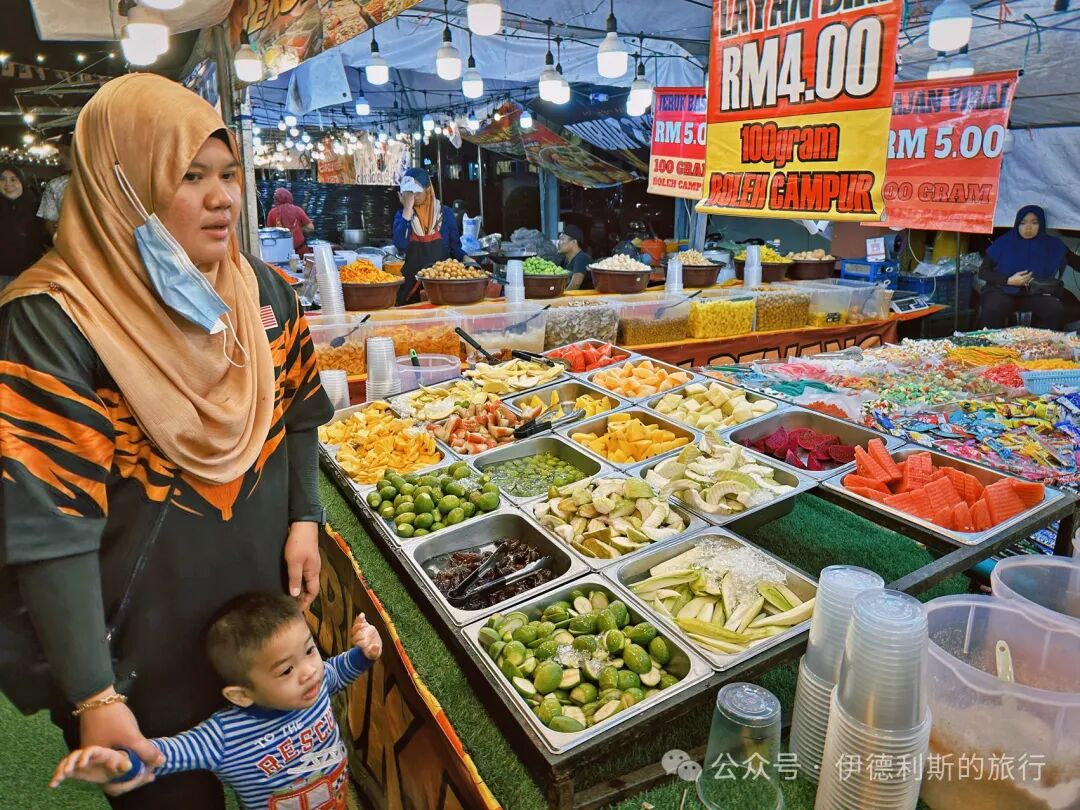
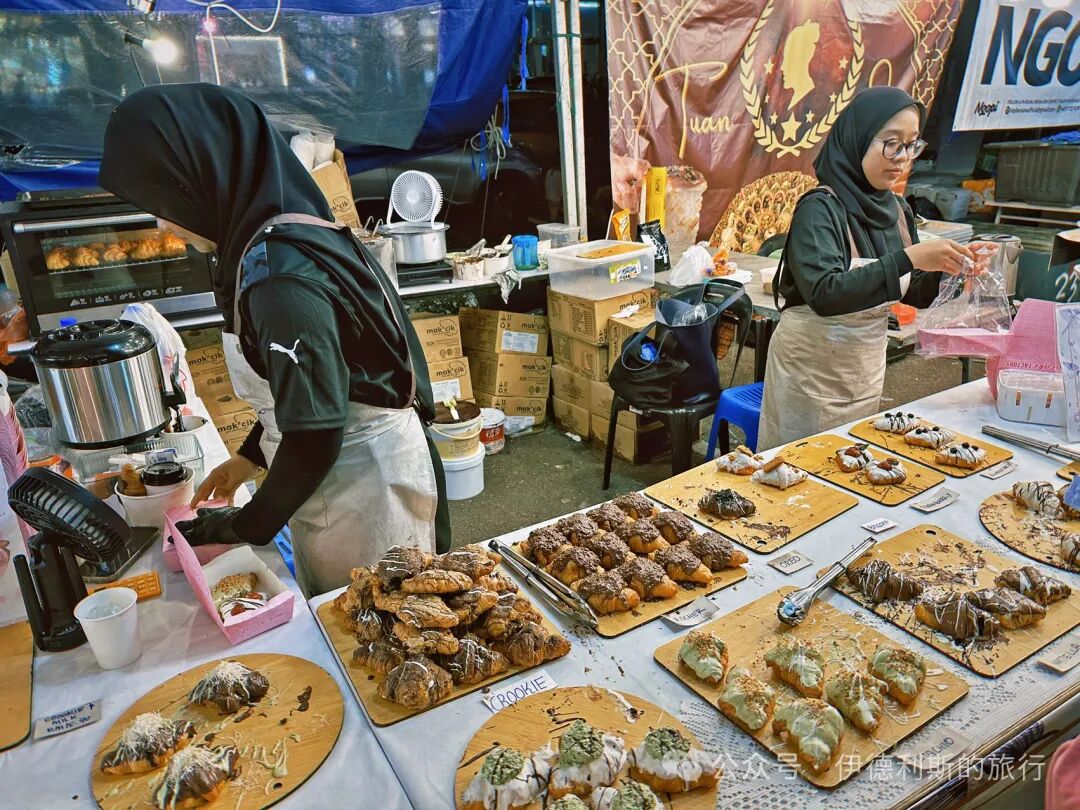
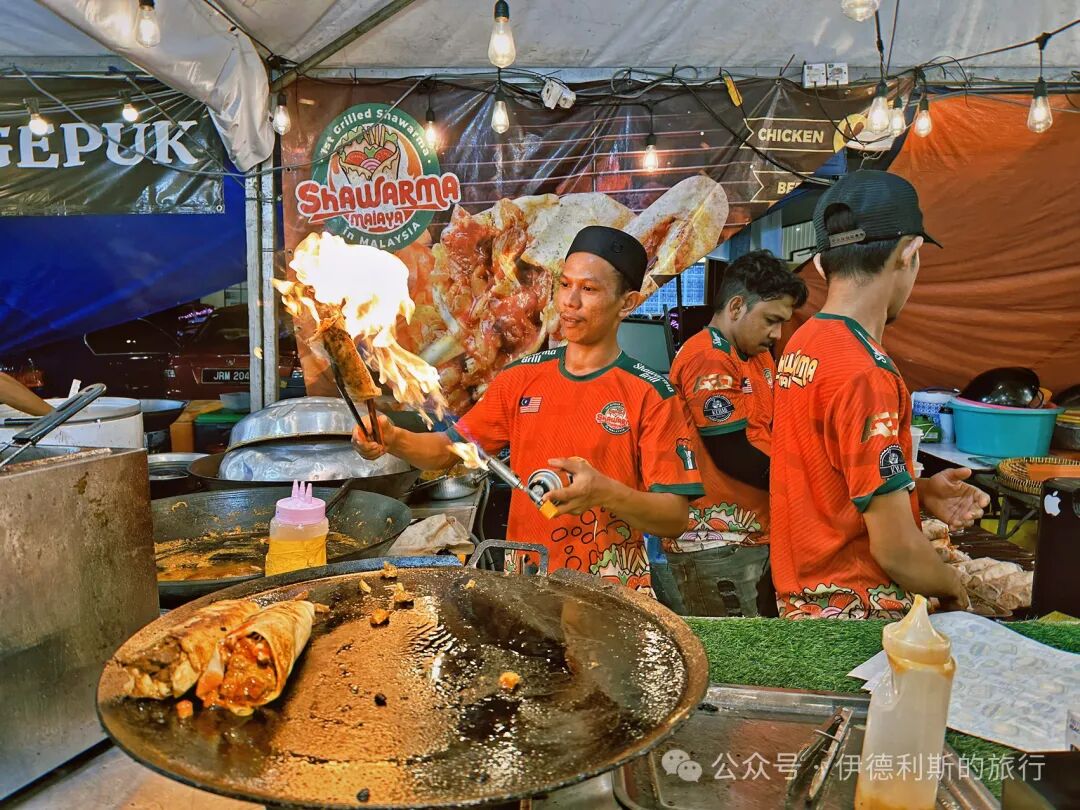
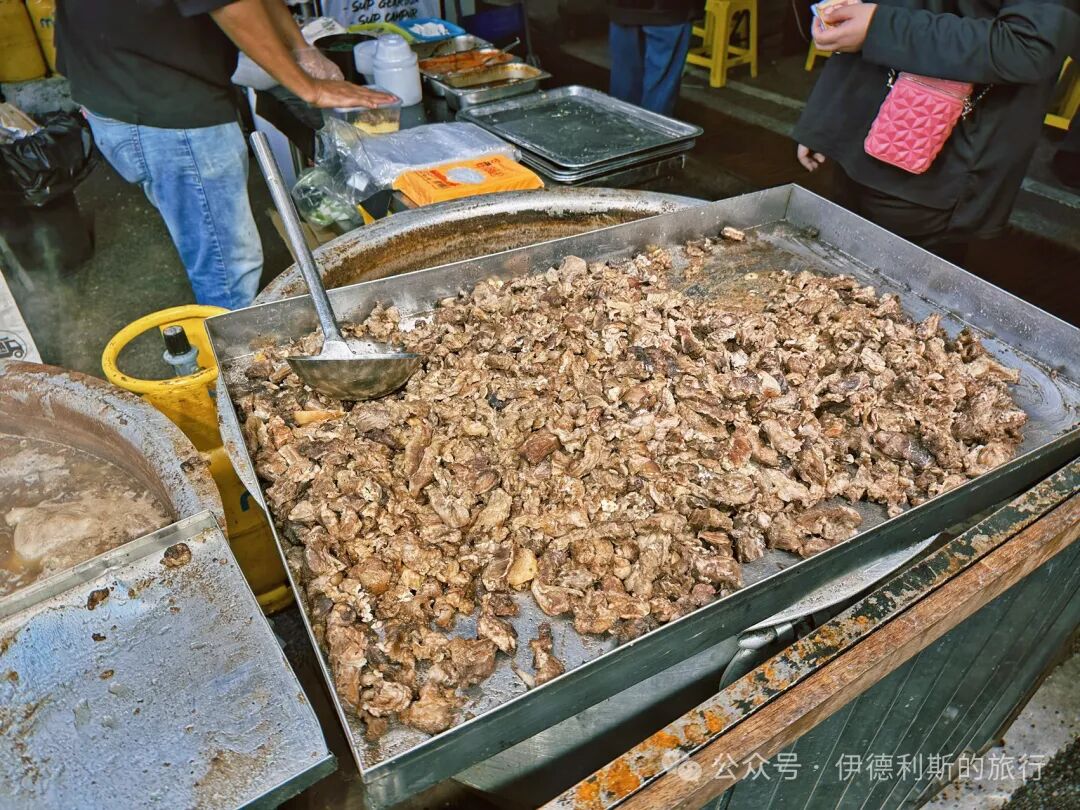
The vibe of the Malacca night market, featuring hand-pounded chili paste (sambal) and lamb soup (yangtang).
Malay cake shop
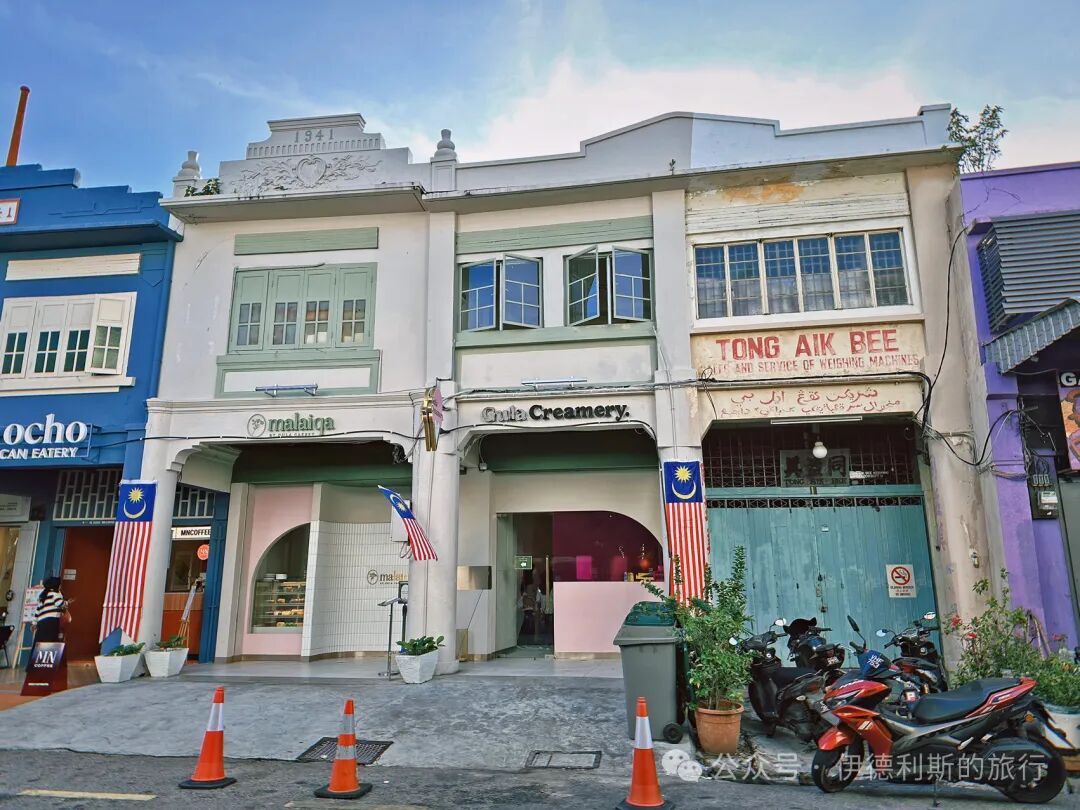
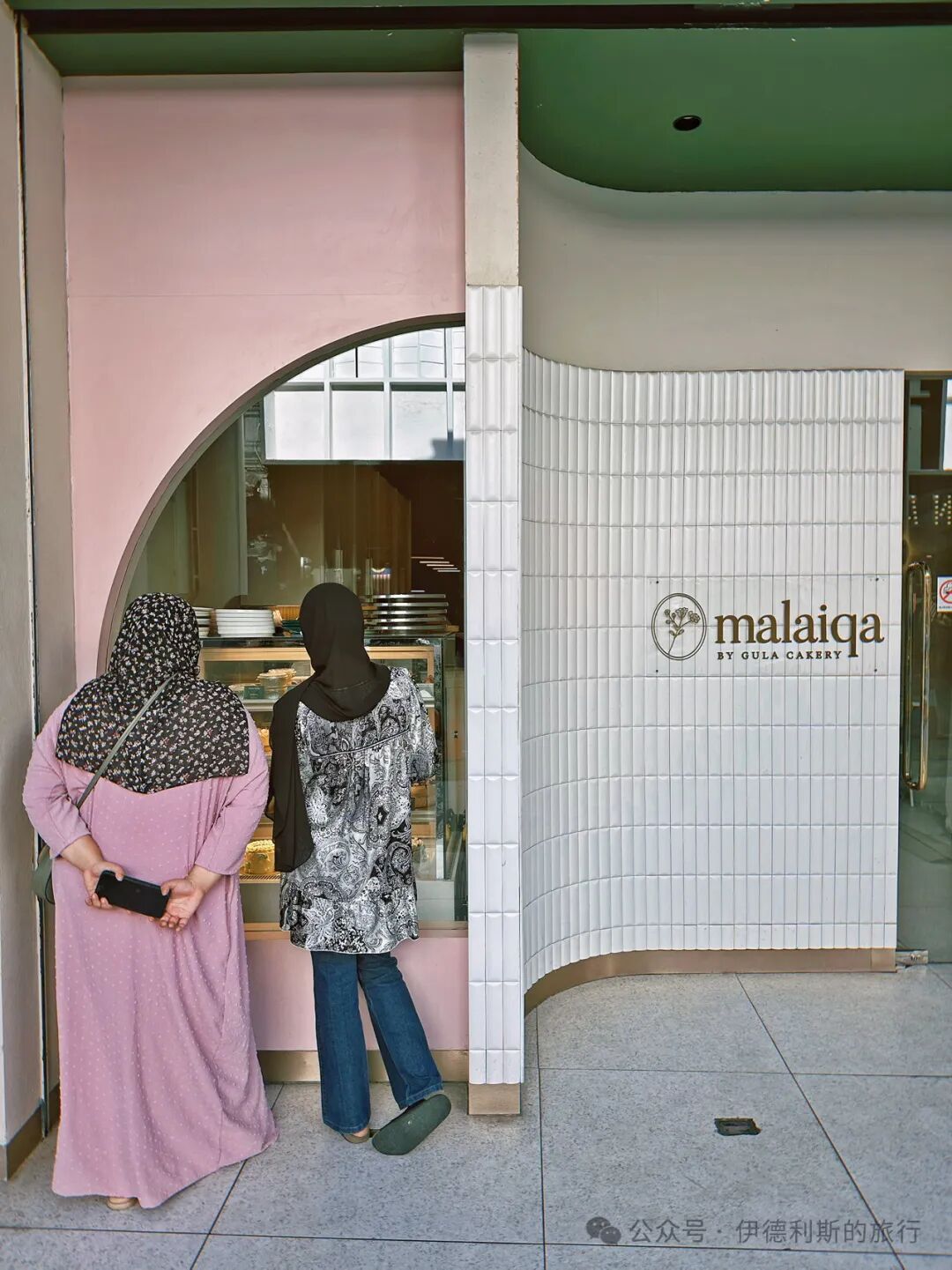
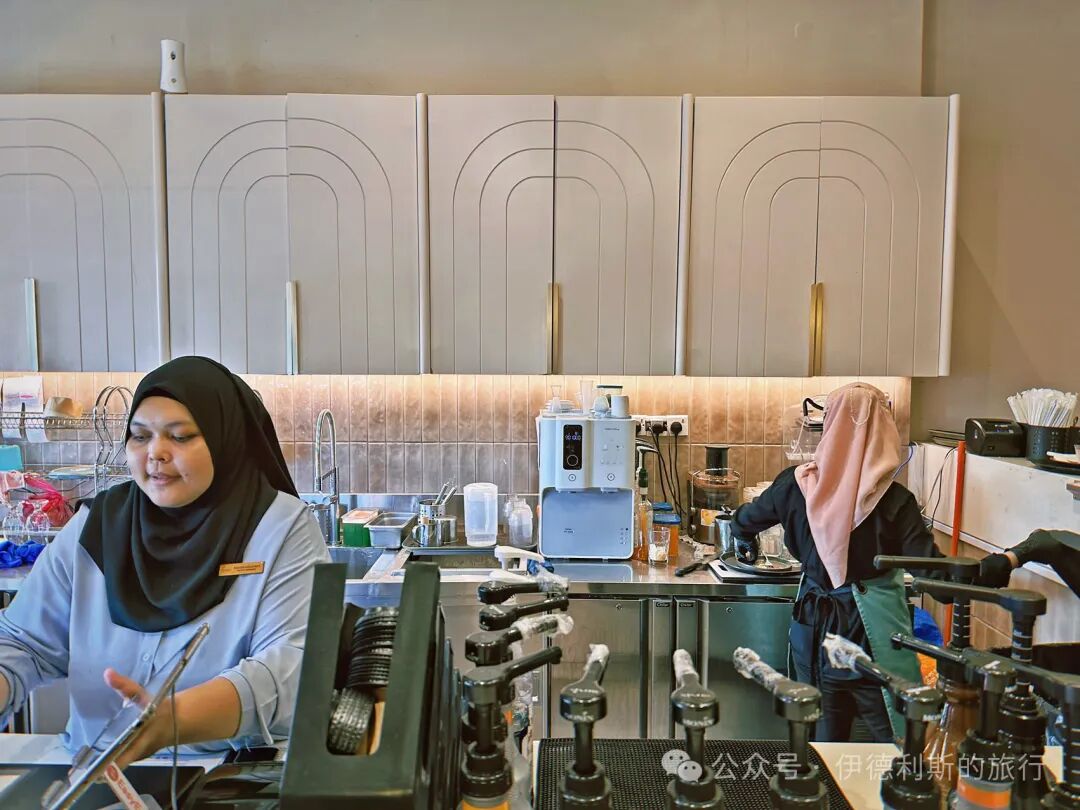
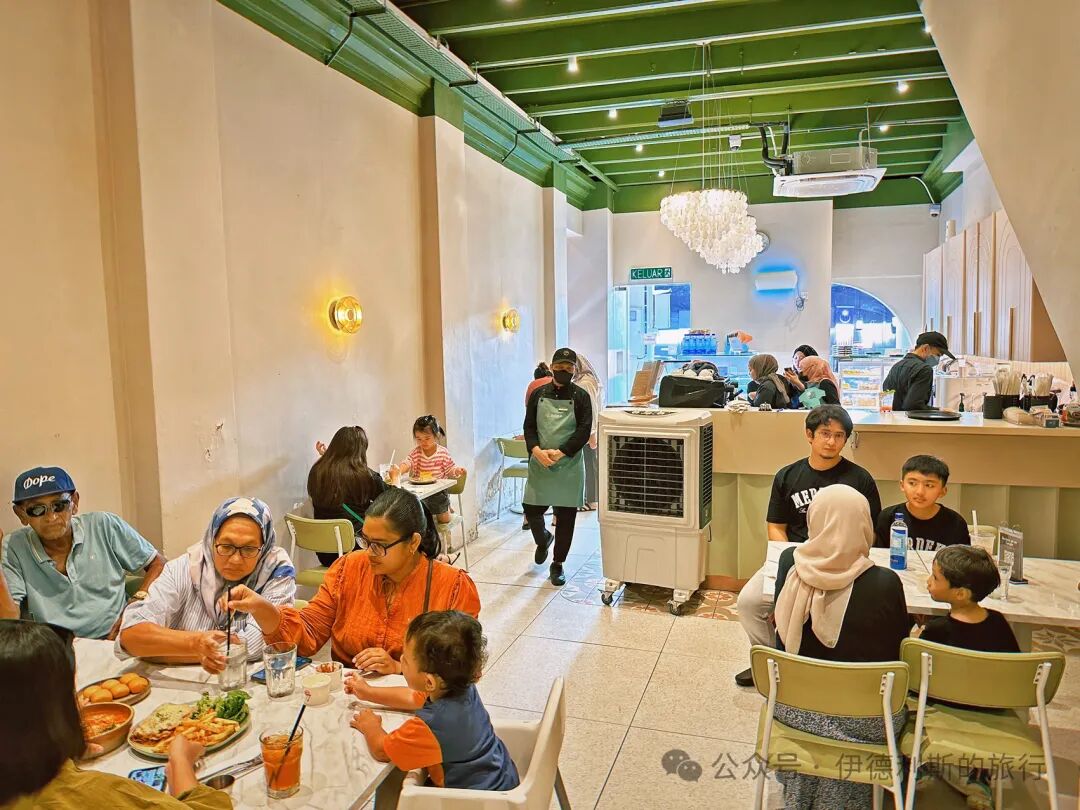
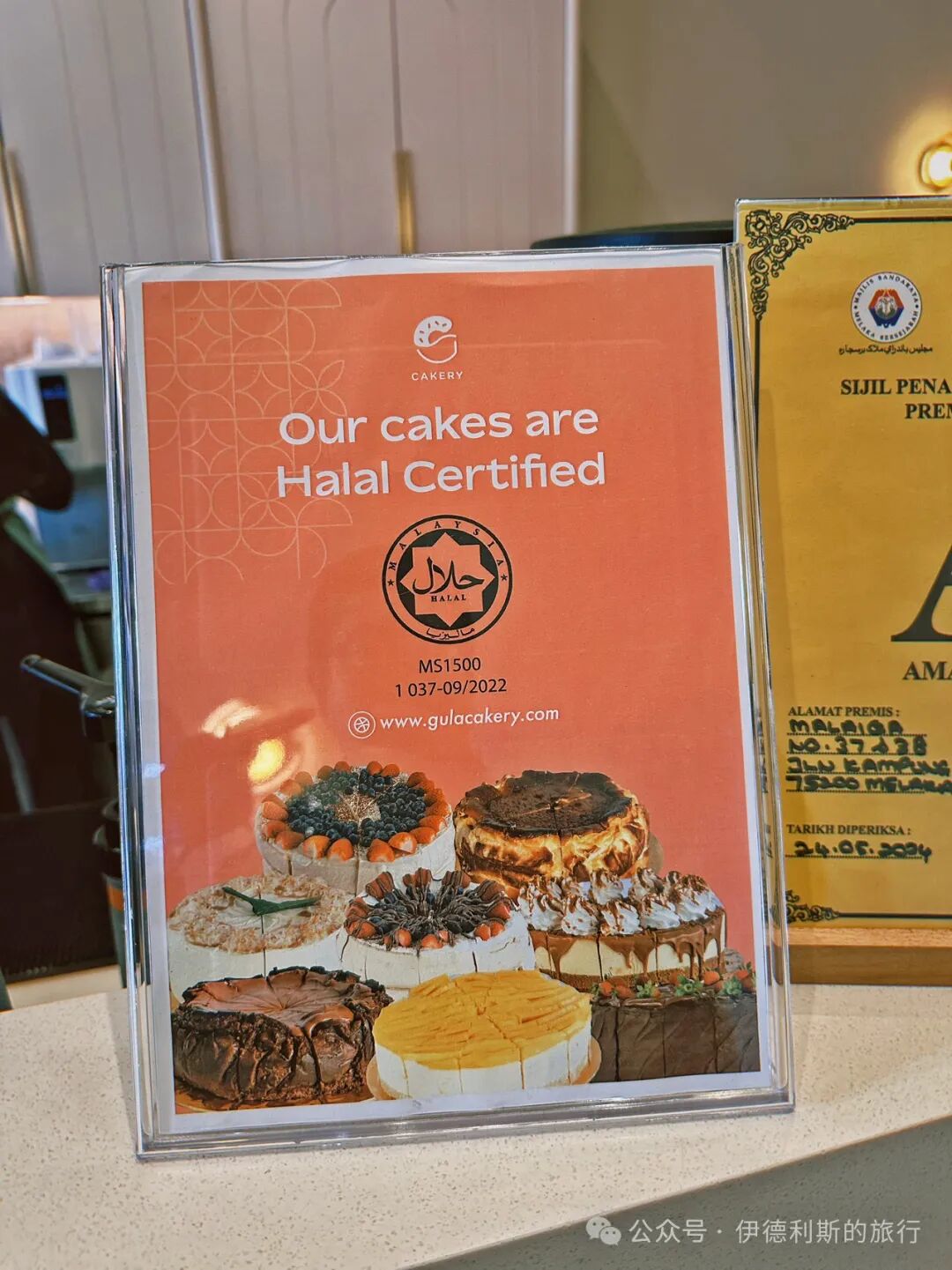
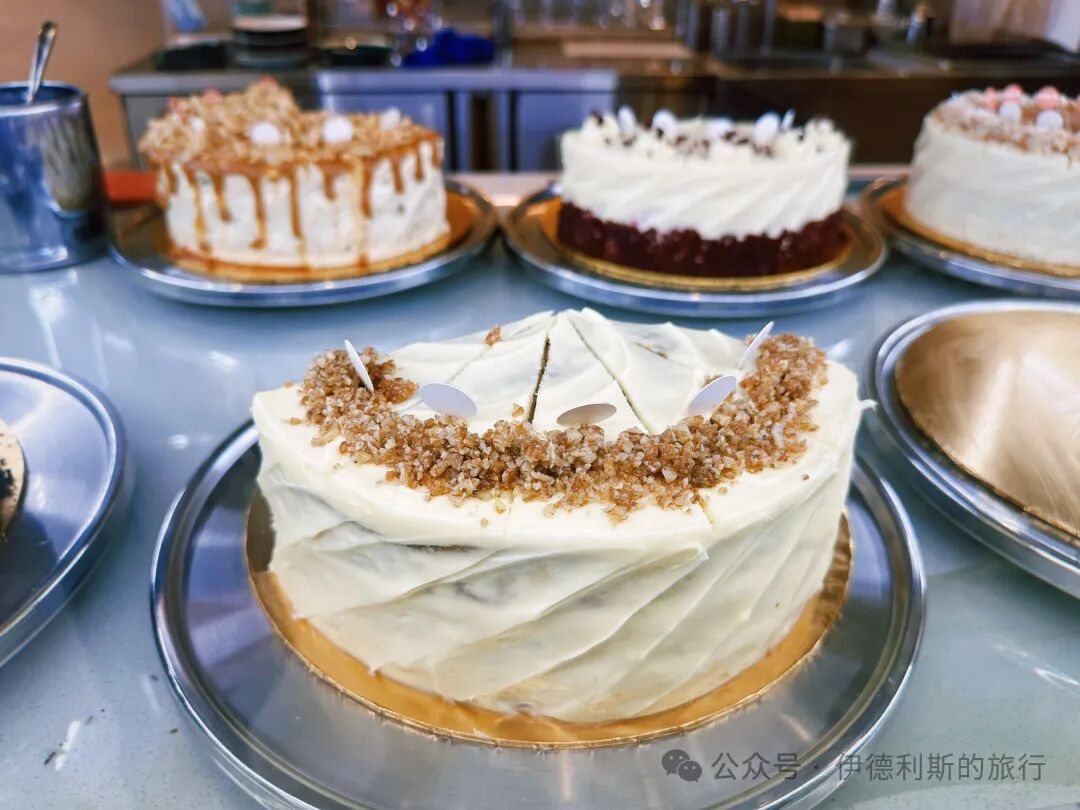
In Kampung Hulu, there is a lovely cake shop called Malaiqa By Gula Cakery that is especially popular with young people. The shop is inside a shophouse built in 1941. The decor is fresh and simple, a great example of revitalizing the old city.
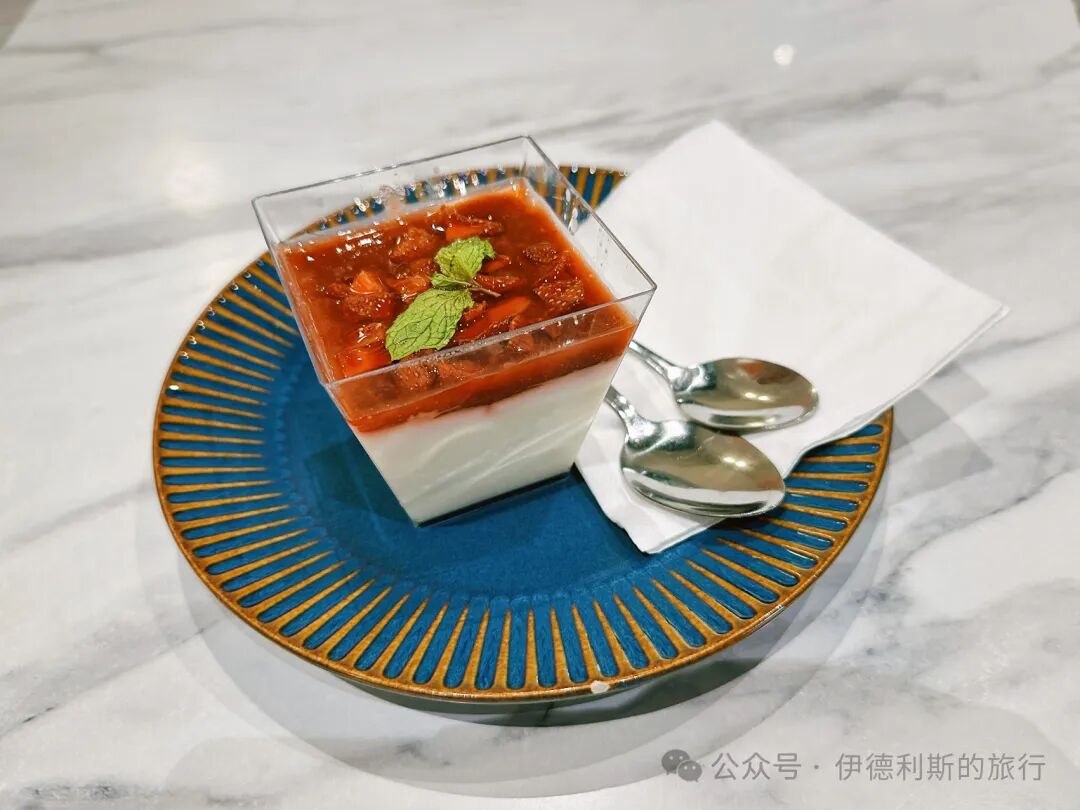
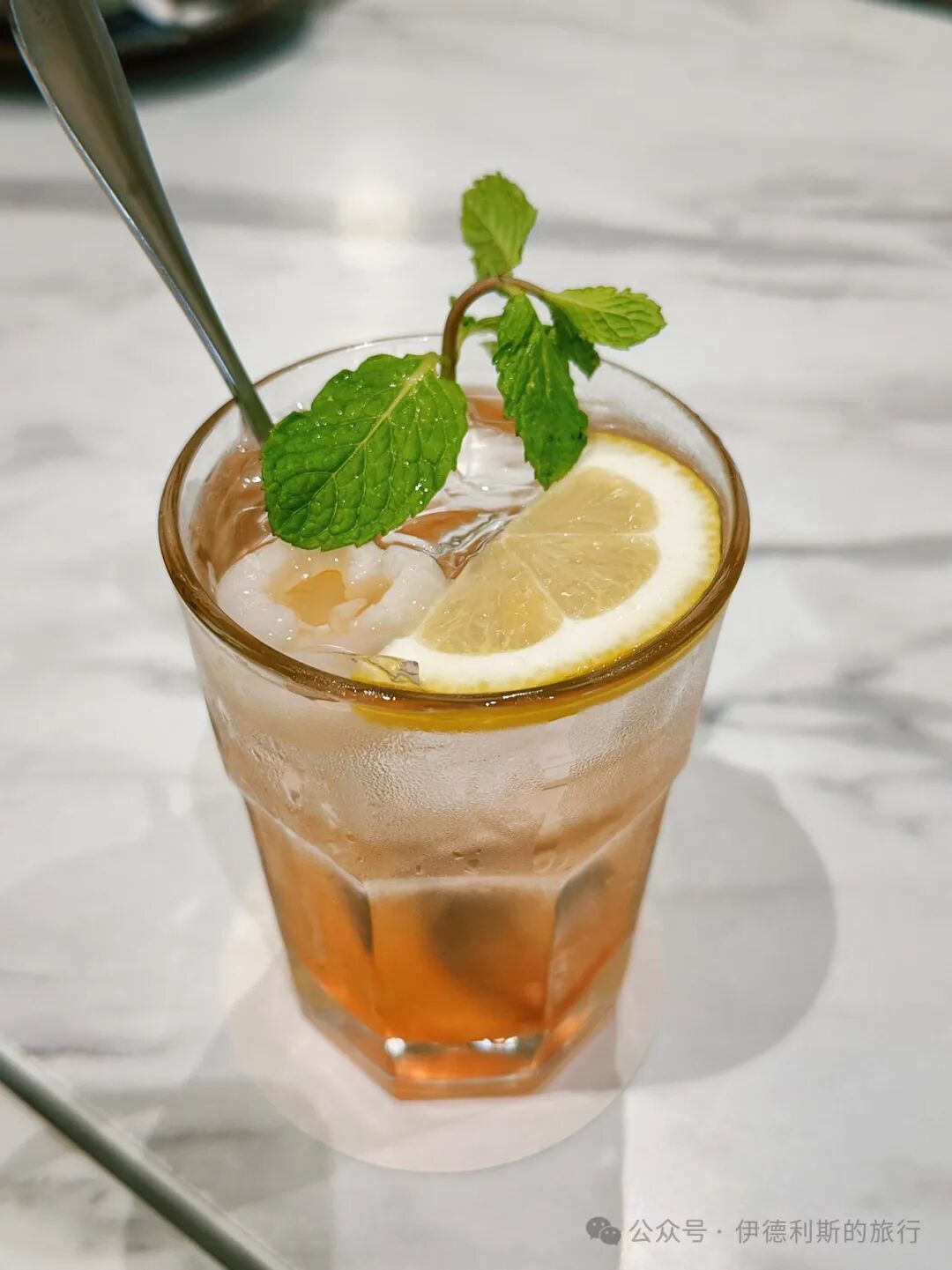
We ordered the strawberry milk pudding and longan lemon tea, and both tasted great. These fresh little shops in Malaysia are really wonderful, though we usually stick to traditional food and don't visit places like this very often.
Malay village farmhouse cooking
On the road heading east from Malacca to Muar, the whole way is filled with Malay village (kampung) countryside scenery. At noon, we passed through the seaside village of Serkam Pantai, prayed namaz at a 19th-century mosque, and then had an authentic Malay village-style meal in the village.
We ordered shrimp noodle soup (Mee Bandung Udang), black shrimp paste fruit salad (Rojak Petis), and Malay village-style fried rice (Nasi Goreng Kampung), drank iced Milo (Milo Ais Kepal), and had red bean shaved ice (Air Batu Campur).
Shrimp noodle soup (Mee Bandung Udang) is a Malay dish that started in Muar, Malaysia. Bandung means mixed, and Udang means shrimp. It is made by boiling yellow noodles with eggs, shrimp, leafy greens, and beef bits. The thick soup is simmered with shrimp paste, onions, spices, and chili, giving it a very fresh taste.
Fruit salad (Rojak) is said to have started on the island of Java. It was originally a mix of fruits and vegetables with spicy palm sugar syrup, but it later spread across Indonesia, Malaysia, and Singapore, developing many different styles. Black shrimp paste fruit salad (Rojak Petis) started in Surabaya, East Java. It contains raw mango, cucumber, water spinach, and bean sprouts. The sauce is made from black shrimp paste (Petis), fried shallots, palm sugar, and salt, and it is topped with crushed peanuts. The fruit salad tastes quite sweet, so people who prefer milder flavors might find it hard to get used to.
Malay village-style fried rice (Nasi Goreng Kampung) is a classic Malay village dish. It includes diced beef, water spinach, shrimp, dried anchovies, and scrambled eggs. It is stir-fried with sweet soy sauce and shrimp paste, making the flavor very rich. It is one of my favorite Malay dishes.
Air Batu Campur red bean ice, also called ABC ice, is a classic dessert in Southeast Asia after a meal. It is mostly shaved ice with red beans and condensed milk on top, and the one we bought had a scoop of ice cream on it.
Nyonya cuisine
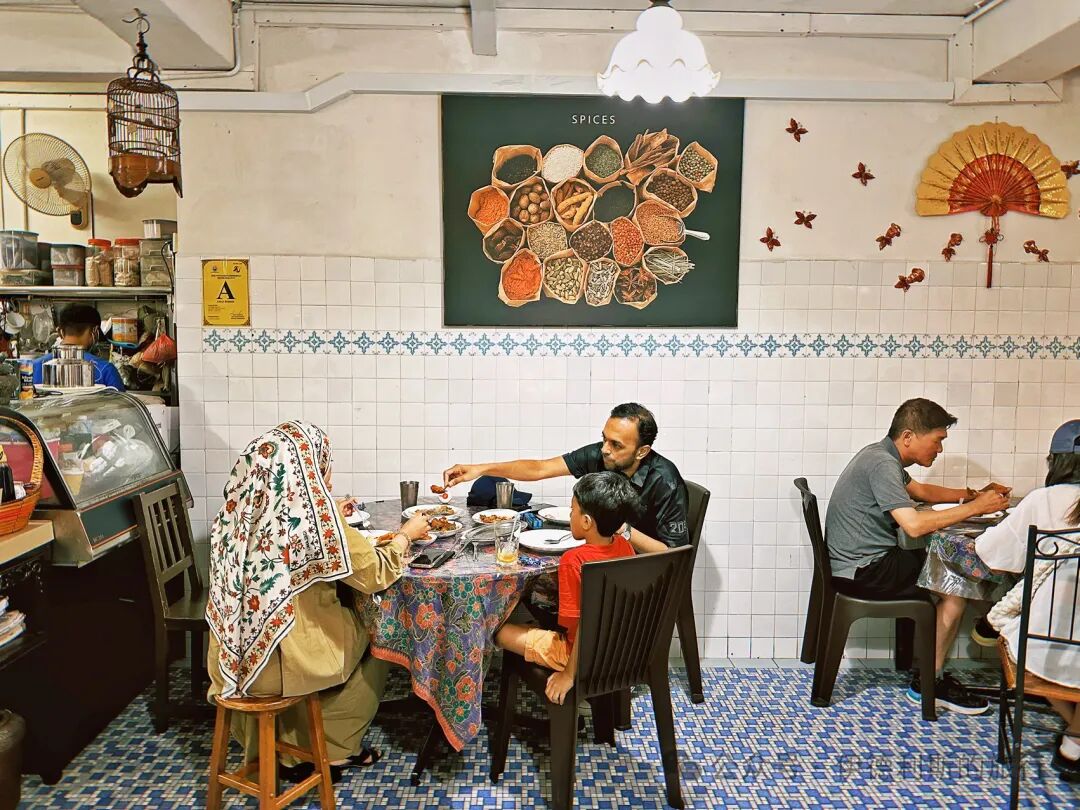
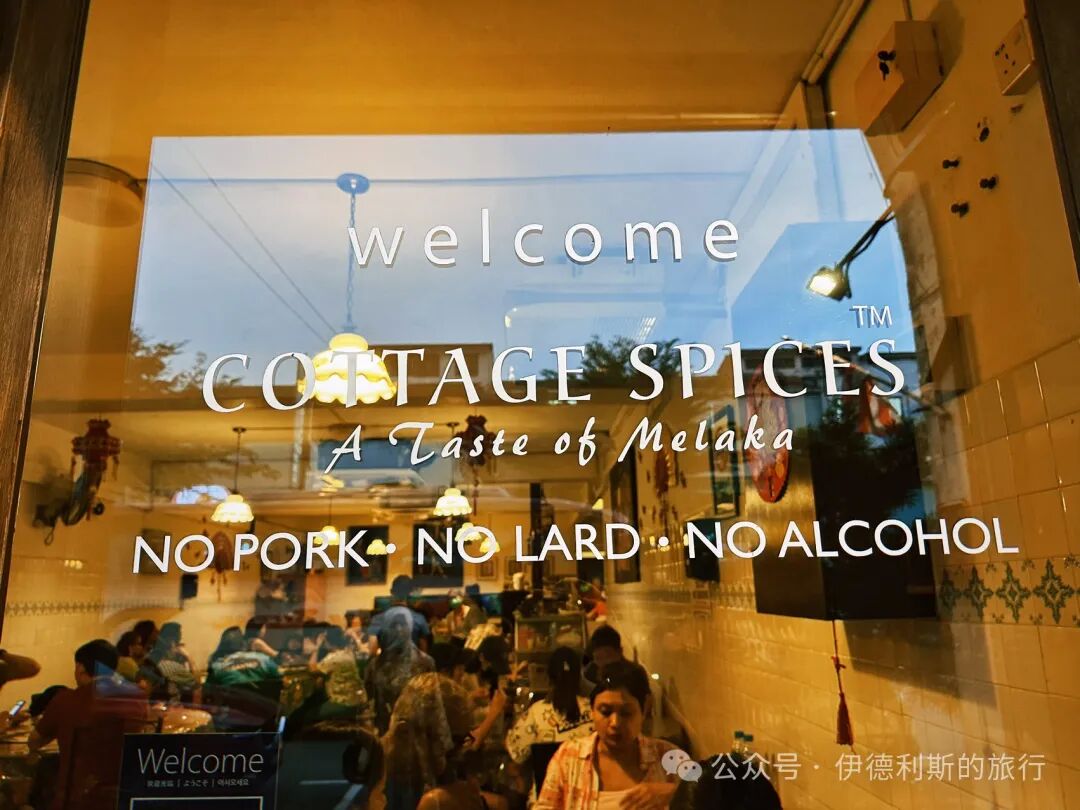
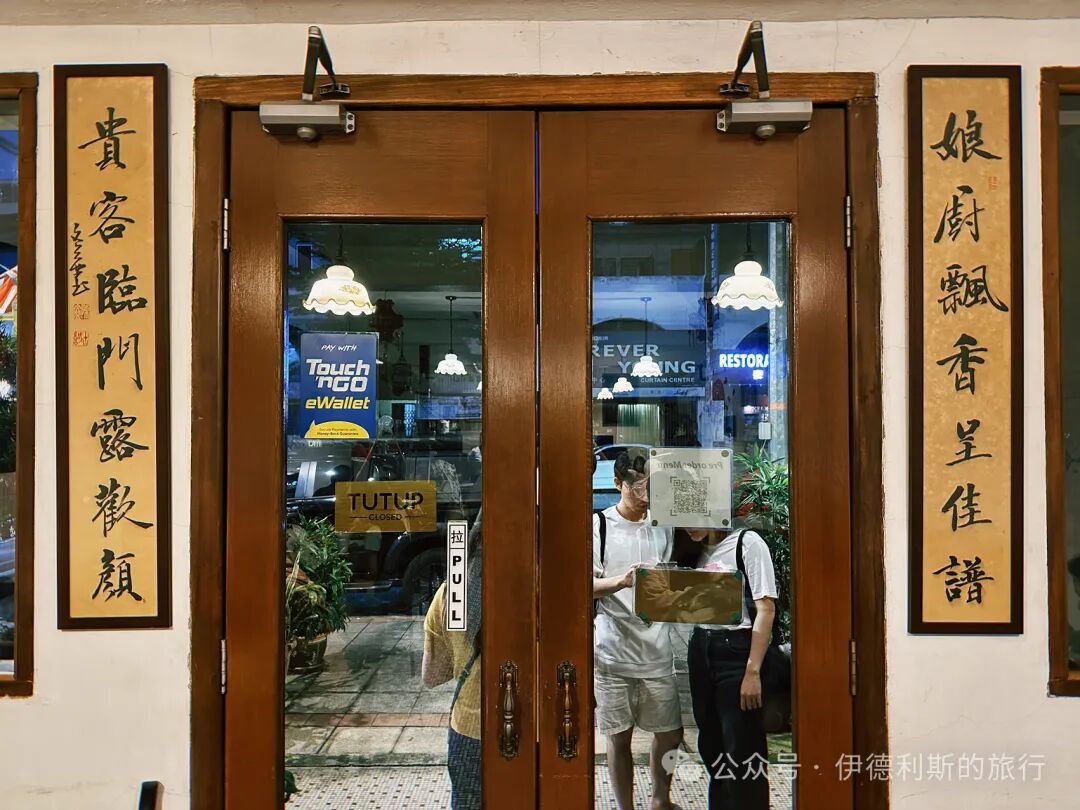
As the birthplace of Nyonya culture, you must eat Nyonya cuisine once when you come to Malacca. There are many halal Nyonya restaurants on the east side of the old town of Malacca on Independence Street (Jln Merdeka), with Atlantic and Cottage Spices being the most famous. Both places had lines when we went, so we both took numbers. Later, a table opened up at Cottage Spices first, so we ate there.
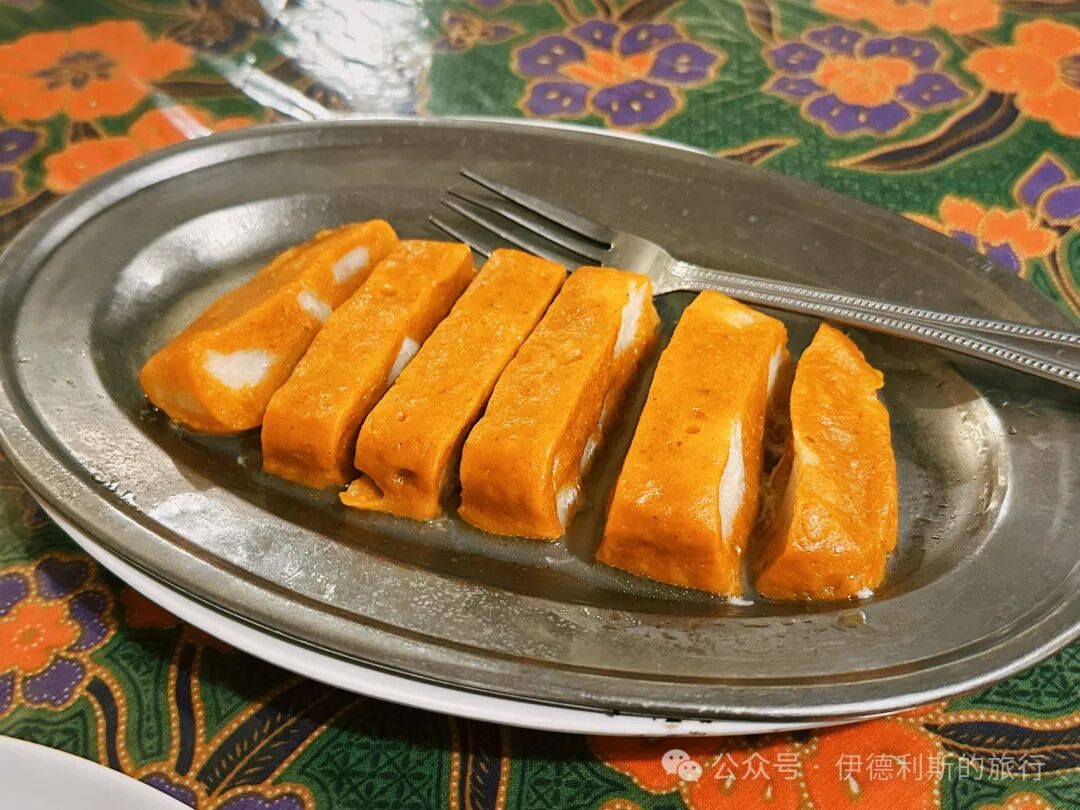
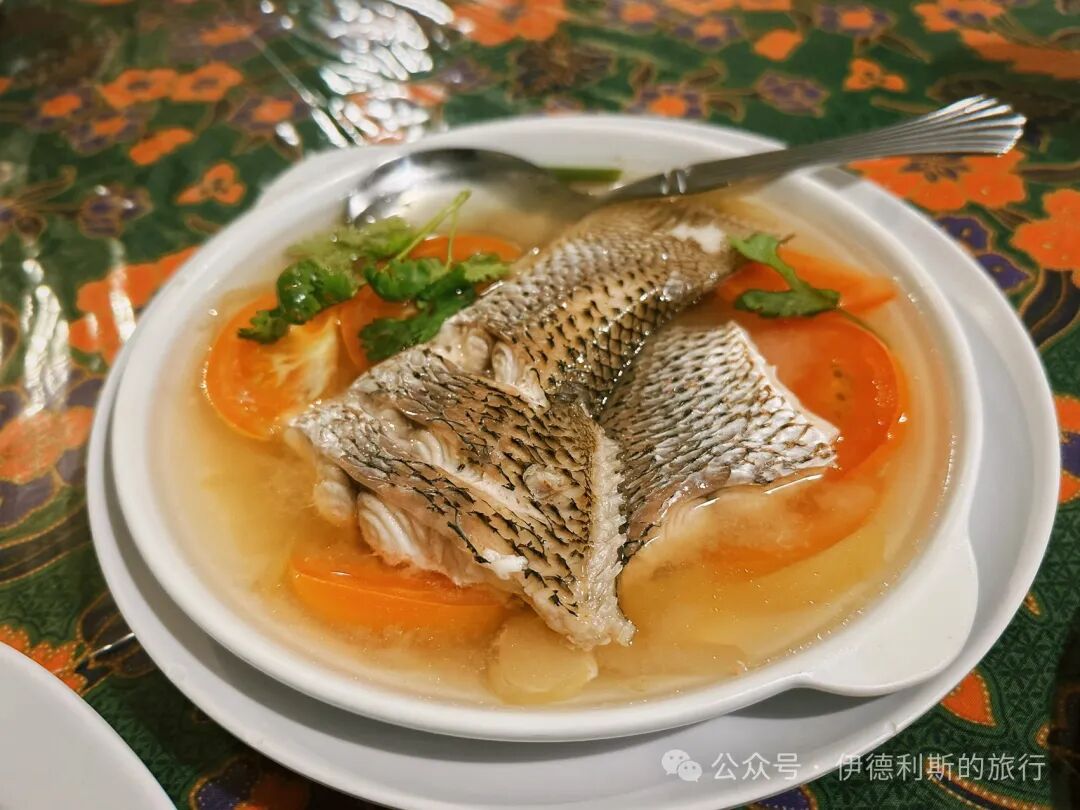
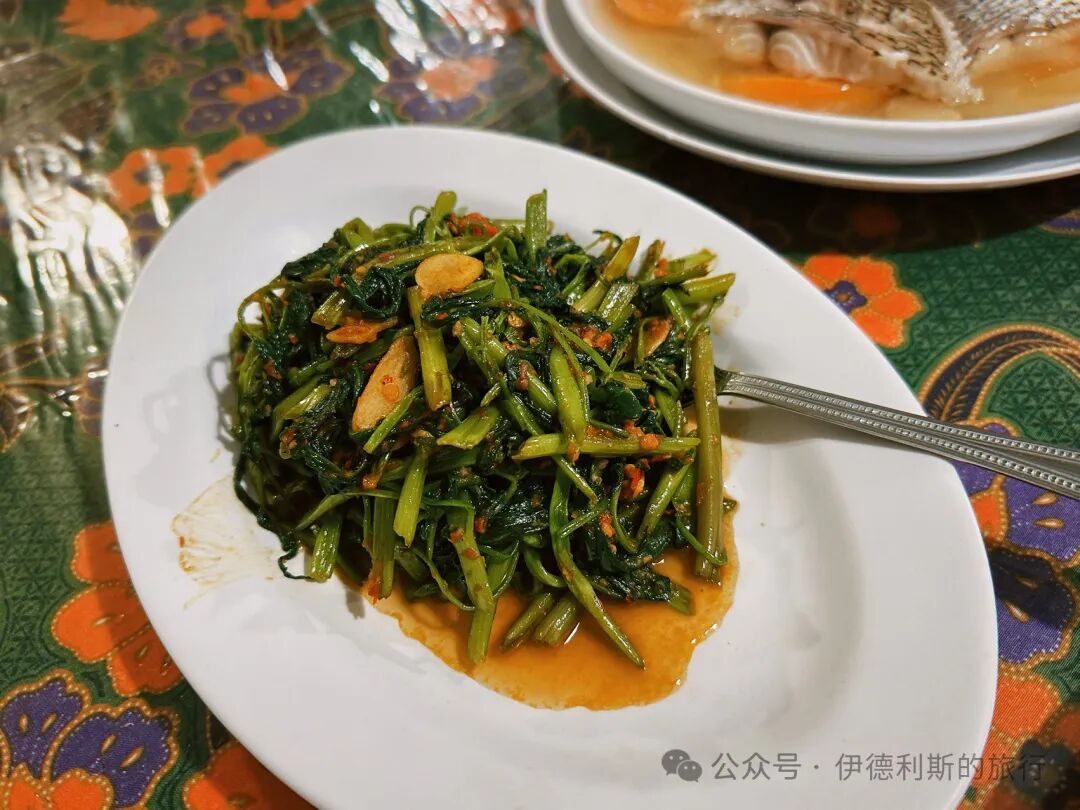
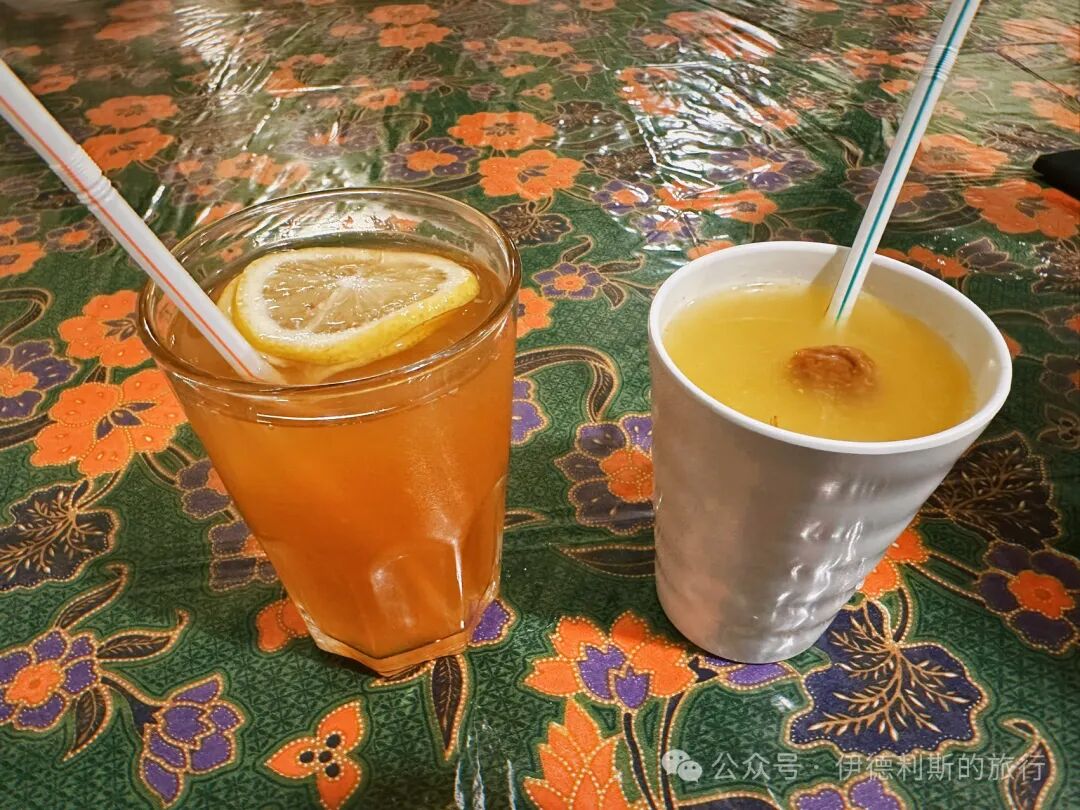
We ordered stir-fried water spinach with shrimp paste (Kangkung Belacan), Teochew steamed fish, steamed Nyonya fish cake (Otak-otak), and drank lime plum juice (Lime Plum), which was a perfect balance of meat and vegetables. Teochew steamed fish is red snapper served with pickled vegetables, pickled plums, and tomatoes. The sour taste is very appetizing. Otak-otak is a fish cake steamed with coconut milk, chili paste, lemongrass, and galangal. It smells and tastes delicious.
Indian Nasi Kandar
To truly experience the food of Malaysia's three main ethnic groups, you must try Indian Muslim Nasi Kandar after eating Nyonya, Chinese-Muslim, and Malay kampung dishes.
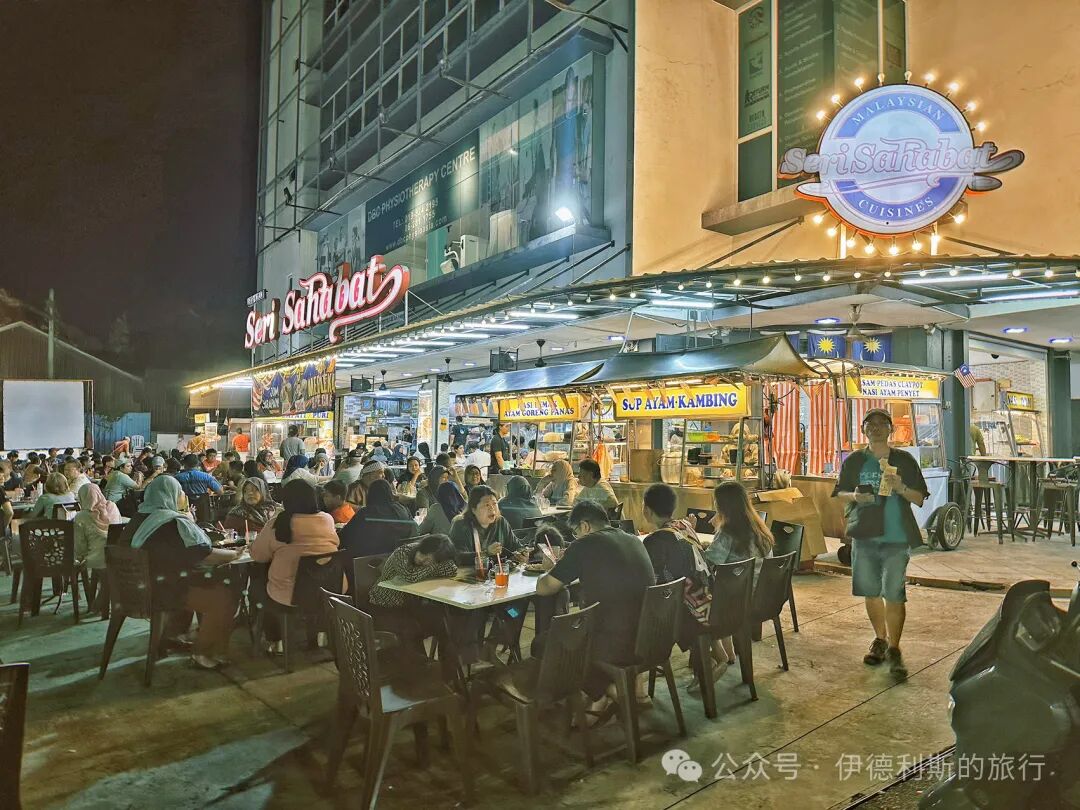
We went to Seri Sahabat next to the Majestic Hotel in Malacca. They are open 24 hours a day, and at night, it gets very crowded with all the food stalls open. It is quieter during the day, when they mainly sell Nasi Kandar. They have meat, fish, and vegetables, making for a very balanced meal.
South Indian Tamil Muslims are called Mamak in Malaysia. This name comes from the Tamil word for uncle (maa-ma), and they are famous for their Mamak stall (Gerai Mamak) and Mamak restaurant (Restoran Mamak) food culture.
Nasi Kandar is the signature dish at Tamil Mamak restaurants. It is rice served with various curries of beef, lamb, chicken, fish, and shrimp, along with side dishes. When Tamil Muslims first arrived in Malaysia in the 19th century, most carried food on shoulder poles to sell along the streets, which is why it became known as shoulder-pole rice (nasi kandar). By the 20th century, Tamil Muslims started opening restaurants and stalls, but the name shoulder-pole rice (nasi kandar) is still used today.
Hainan coffee
On the drive from Malacca back to Kuala Lumpur Airport, the most popular restaurant in Terminal 2 is the Hainan coffee chain Oriental Kopi, where people are almost always waiting in line.
They have a huge variety of dishes and are currently one of the most famous halal Hainan-style cafes. Hainanese people began immigrating to Malaysia in the 19th century. Many early immigrants worked as cooks and waiters in British hotels and restaurants, while some worked as servants for British officers. Influenced by their British employers, the Hainanese learned to cook Western food and blended it with Hainanese culinary elements to create the unique Hainanese coffee shop (Hailam Kopitiam) culture.
We ordered flaky egg tarts, pineapple buns with butter (bo luo bao), Hainanese chicken rice, classic rice vermicelli (mee siam), curry fish balls, coffee, soy milk with grass jelly, and longan sea coconut dessert. Coffee, flaky egg tarts (danta), and pineapple buns with cold butter (binghuo boluobao) are known as the "Huayang Three Treasures" and make a classic Nanyang-style breakfast. Their flaky egg tarts are truly well-made, with a very tender egg custard and a rich aroma. Their sweet dessert soups (tangshui) are also delicious. We rarely drink these in the north, so it felt like a special Nanyang experience.
However, their Hainanese chicken rice was not great. The rice quality seemed poor, with a gritty texture that did not taste as good as the rice at other places.
Summary: Malacca Old City - Food, Hotels and Muslim Heritage is presented as a clear English travel account for readers interested in Muslim life, halal food, architecture, and local history. The article keeps the original names, food details, photographs, and cultural context while focusing on Malacca, Halal Food, Malaysia Travel.
I took a red-eye AirAsia flight to Kuala Lumpur in the early hours of September 15. The flight was delayed by an hour, so I arrived at Kuala Lumpur airport after 9 a.m. Even though I used the self-service immigration gate and jogged to the bus station, I still missed the 10 a.m. bus. I ended up taking the 10:45 a.m. bus and spent three hours in traffic before reaching Melaka Sentral station. Luckily, the bus seats reclined enough to lie back, so I just took a nap and arrived.
In Malaysia, you have to exchange online bus tickets for physical ones at the station, unlike train tickets where you can just scan a code. The ticket counters at the Kuala Lumpur airport bus station get very crowded on weekends and holidays, so make sure to go early to exchange your tickets. By comparison, I think traveling by train in Malaysia is much more convenient. You can scan a code to enter the station, and the schedules are reliable and stress-free.
Staying in a Nanyang-style arcade building
We spent our first night at the Aava Malacca Hotel on Kampung Hulu Road. This area is inside the buffer zone of the Melaka UNESCO World Heritage site. It is right next to two historic mosques, Kampung Hulu Mosque and Kampung Kling Mosque, so the location is excellent. Kampung Hulu Street often has traffic jams. If you want to take a taxi, walk 300 meters north to the main road outside the World Heritage buffer zone.
The Aava Hotel is made from three traditional shophouses (qilou) built before World War II. The exterior is very well preserved, and the interior is simple and elegant. The Nyonya elements are used sparingly but look great. I personally think it offers good value for money. The hotel offers free bicycle rentals for two hours, but one bike has stiff handlebars, so be careful when riding it.
The halal breakfast at Aava Hotel includes Western-style omelets, baked beans, and coconut milk rice (nasi lemak) wrapped in banana leaves. Both Malay and Chinese guests ate breakfast with us. It is very comfortable to drink coffee leisurely inside the shophouse.
Staying at a Straits mansion
On the second day, we stayed at the famous The Majestic Malacca hotel. Staying here really showed me that you get what you pay for. The environment is amazing, the service is very thoughtful, and it feels just like home.
The lobby of the Majestic Hotel is inside a nearly 100-year-old mansion from the Straits Settlements era, with the original tile floors and teak wood features still preserved today. The Majestic Hotel was built in 1929 under the direction of wealthy Chinese businessman Leong Long Man, but he sadly passed away two years later, and his son inherited the mansion. His son kept spending the family fortune until he sold the property to another Chinese businessman, Lim Heng Fang, in 1955. Lim Heng Fang turned the mansion into a hotel. It hosted many British plantation owners in the 1950s and 1960s, and it even welcomed the first Prime Minister, Tunku Abdul Rahman, when Malaysia declared independence in 1957.
The Majestic Hotel closed in 2000 due to poor management. In 2006, the famous Malaysian YTL Hotels group bought and restored it, and it reopened for business in 2008.
After we finished checking in, a Nyonya lady from the front desk guided us to our room and offered us some welcome tea.
The second floor of the Straits Mansion at the Majestic Hotel serves a halal breakfast. You can choose from Western, Malay, or Indian styles. There is an unlimited supply of croissants, which are served to you by Indian staff so you do not have to get them yourself.
We ordered a serving of Indian flatbread (roti canai) with curry and a bowl of spicy noodle soup (laksa).
Roti canai is a classic Nanyang Indian Muslim breakfast. As early as the 17th century, Indian Muslims brought the practice of eating flatbread with curry to the Aceh Sultanate in northern Sumatra. After the 19th century, it spread to Nanyang countries like Indonesia, Malaysia, and Brunei. Various ethnic groups, including the Malays, Acehnese, and Minangkabau people, all love making this dish.
Curry laksa (laksa lemak) is a type of curry laksa that uses rice noodles in a thick coconut curry soup, topped with chicken and seafood. Curry laksa is best represented by Nyonya laksa, which has plenty of coconut milk and is less sour and spicy compared to the other type, Asam laksa.
Hui Muslim snacks
Chan Mari Chan is a sub-brand of the large Malaysian Hui Muslim Chinese restaurant chain Mohd Chan, focusing on affordable home-style snacks. The founder of Mohd Chan, Dato HJ Mohd Chan, was born in Gombak District, Selangor. In 2007, influenced by his Malay friends, he converted to Islam and started his restaurant that same year. Since then, he has been combining Nanyang Chinese cuisine with Malay flavors, and it has now become the most famous and largest Hui Muslim restaurant chain in Malaysia.
This January, we ate at Mohd Chan restaurant in Seremban, Malaysia. You order from a menu there, and they serve a variety of high-end Nanyang Chinese banquet dishes. Chan Mari Chan focuses on fast food and snacks. You go straight to the counter to pick up your food, and the chicken rice, small side dishes, and steamed dumplings (shaomai) are the most popular items. We grabbed roasted chicken rice, three small side dishes, two types of steamed dumplings (shaomai), and drank grass jelly coffee and cocoa coffee. Their food is quite delicious. I especially loved the fragrance and texture of the chicken rice. Eating there wiped away the fatigue of our journey. We instantly felt embraced by Nanyang culture and left feeling very satisfied.
The restaurant environment is also very nice, and many Malaysian Muslim friends (dosti) come here to eat with their families. They have a prayer room in the shop, which sets a great example for us Hui Muslims.
Malaysian Food City
Right next to the E-Red Hotel on Kampung Hulu Street, there is a large Malay food court called Makan Avenue. It has a huge variety of Malay snacks. Many Malay people come here to eat at night, and the tables along the Malacca River are always full. Be careful about ordering drinks here on weekends or holidays. Because they have to serve hundreds of seats, I actually waited an hour just to get my drink. The other food stalls serve their dishes relatively quickly.
The most famous spot in the food court is Cendol Kampung Hulu. Cendol originated on the island of Java and was a classic drink at Javanese weddings before it spread across Southeast Asia. It is made with shaved ice, green rice flour jelly noodles, coconut milk, and palm sugar. You can also add things like red beans or grass jelly. We ordered the durian cendol, which is perfect for the hot and humid weather in Southeast Asia.
We also ordered beef meatball soup (bakso biasa). The name bakso comes from the Southern Min dialect for 'meat crisp.' It is a classic Malaysian street food made from beef, fish paste, and a little tapioca flour, giving it a very firm texture. The finished meatballs are usually served in beef broth with tofu, glass noodles, and various side dishes.
We also ordered fried tilapia (talapia) and catfish (keli). Although they looked charred on the outside, the meat inside was very tender, had no fishy smell, and tasted delicious.
Malaysian night market
Across from Dataran Pahlawan, we found a huge Malaysian night market that seems to only open on weekends, with an endless variety of snacks. We were too full to eat a meal, so we just bought some guava dipped in sour plum powder and a giant avocado juice. Tropical fruits are cheap all over Malaysia. As long as you don't buy durian in tourist areas, you can basically eat as much fruit as you want.
The vibe of the Malacca night market, featuring hand-pounded chili paste (sambal) and lamb soup (yangtang).
Malay cake shop
In Kampung Hulu, there is a lovely cake shop called Malaiqa By Gula Cakery that is especially popular with young people. The shop is inside a shophouse built in 1941. The decor is fresh and simple, a great example of revitalizing the old city.
We ordered the strawberry milk pudding and longan lemon tea, and both tasted great. These fresh little shops in Malaysia are really wonderful, though we usually stick to traditional food and don't visit places like this very often.
Malay village farmhouse cooking
On the road heading east from Malacca to Muar, the whole way is filled with Malay village (kampung) countryside scenery. At noon, we passed through the seaside village of Serkam Pantai, prayed namaz at a 19th-century mosque, and then had an authentic Malay village-style meal in the village.
We ordered shrimp noodle soup (Mee Bandung Udang), black shrimp paste fruit salad (Rojak Petis), and Malay village-style fried rice (Nasi Goreng Kampung), drank iced Milo (Milo Ais Kepal), and had red bean shaved ice (Air Batu Campur).
Shrimp noodle soup (Mee Bandung Udang) is a Malay dish that started in Muar, Malaysia. Bandung means mixed, and Udang means shrimp. It is made by boiling yellow noodles with eggs, shrimp, leafy greens, and beef bits. The thick soup is simmered with shrimp paste, onions, spices, and chili, giving it a very fresh taste.
Fruit salad (Rojak) is said to have started on the island of Java. It was originally a mix of fruits and vegetables with spicy palm sugar syrup, but it later spread across Indonesia, Malaysia, and Singapore, developing many different styles. Black shrimp paste fruit salad (Rojak Petis) started in Surabaya, East Java. It contains raw mango, cucumber, water spinach, and bean sprouts. The sauce is made from black shrimp paste (Petis), fried shallots, palm sugar, and salt, and it is topped with crushed peanuts. The fruit salad tastes quite sweet, so people who prefer milder flavors might find it hard to get used to.
Malay village-style fried rice (Nasi Goreng Kampung) is a classic Malay village dish. It includes diced beef, water spinach, shrimp, dried anchovies, and scrambled eggs. It is stir-fried with sweet soy sauce and shrimp paste, making the flavor very rich. It is one of my favorite Malay dishes.
Air Batu Campur red bean ice, also called ABC ice, is a classic dessert in Southeast Asia after a meal. It is mostly shaved ice with red beans and condensed milk on top, and the one we bought had a scoop of ice cream on it.
Nyonya cuisine
As the birthplace of Nyonya culture, you must eat Nyonya cuisine once when you come to Malacca. There are many halal Nyonya restaurants on the east side of the old town of Malacca on Independence Street (Jln Merdeka), with Atlantic and Cottage Spices being the most famous. Both places had lines when we went, so we both took numbers. Later, a table opened up at Cottage Spices first, so we ate there.
We ordered stir-fried water spinach with shrimp paste (Kangkung Belacan), Teochew steamed fish, steamed Nyonya fish cake (Otak-otak), and drank lime plum juice (Lime Plum), which was a perfect balance of meat and vegetables. Teochew steamed fish is red snapper served with pickled vegetables, pickled plums, and tomatoes. The sour taste is very appetizing. Otak-otak is a fish cake steamed with coconut milk, chili paste, lemongrass, and galangal. It smells and tastes delicious.
Indian Nasi Kandar
To truly experience the food of Malaysia's three main ethnic groups, you must try Indian Muslim Nasi Kandar after eating Nyonya, Chinese-Muslim, and Malay kampung dishes.
We went to Seri Sahabat next to the Majestic Hotel in Malacca. They are open 24 hours a day, and at night, it gets very crowded with all the food stalls open. It is quieter during the day, when they mainly sell Nasi Kandar. They have meat, fish, and vegetables, making for a very balanced meal.
South Indian Tamil Muslims are called Mamak in Malaysia. This name comes from the Tamil word for uncle (maa-ma), and they are famous for their Mamak stall (Gerai Mamak) and Mamak restaurant (Restoran Mamak) food culture.
Nasi Kandar is the signature dish at Tamil Mamak restaurants. It is rice served with various curries of beef, lamb, chicken, fish, and shrimp, along with side dishes. When Tamil Muslims first arrived in Malaysia in the 19th century, most carried food on shoulder poles to sell along the streets, which is why it became known as shoulder-pole rice (nasi kandar). By the 20th century, Tamil Muslims started opening restaurants and stalls, but the name shoulder-pole rice (nasi kandar) is still used today.
Hainan coffee
On the drive from Malacca back to Kuala Lumpur Airport, the most popular restaurant in Terminal 2 is the Hainan coffee chain Oriental Kopi, where people are almost always waiting in line.
They have a huge variety of dishes and are currently one of the most famous halal Hainan-style cafes. Hainanese people began immigrating to Malaysia in the 19th century. Many early immigrants worked as cooks and waiters in British hotels and restaurants, while some worked as servants for British officers. Influenced by their British employers, the Hainanese learned to cook Western food and blended it with Hainanese culinary elements to create the unique Hainanese coffee shop (Hailam Kopitiam) culture.
We ordered flaky egg tarts, pineapple buns with butter (bo luo bao), Hainanese chicken rice, classic rice vermicelli (mee siam), curry fish balls, coffee, soy milk with grass jelly, and longan sea coconut dessert. Coffee, flaky egg tarts (danta), and pineapple buns with cold butter (binghuo boluobao) are known as the "Huayang Three Treasures" and make a classic Nanyang-style breakfast. Their flaky egg tarts are truly well-made, with a very tender egg custard and a rich aroma. Their sweet dessert soups (tangshui) are also delicious. We rarely drink these in the north, so it felt like a special Nanyang experience.
However, their Hainanese chicken rice was not great. The rice quality seemed poor, with a gritty texture that did not taste as good as the rice at other places.
Halal Travel Guide: Malacca Old City - Food, Hotels and Muslim Heritage
Articles • ali2007fr posted the article • 0 comments • 131 views • 2026-05-19 21:35
Reposted from the web
Summary: Malacca Old City - Food, Hotels and Muslim Heritage is presented as a clear English travel account for readers interested in Muslim life, halal food, architecture, and local history. The article keeps the original names, food details, photographs, and cultural context while focusing on Malacca, Halal Food, Malaysia Travel.
I took a red-eye AirAsia flight to Kuala Lumpur in the early hours of September 15. The flight was delayed by an hour, so I arrived at Kuala Lumpur airport after 9 a.m. Even though I used the self-service immigration gate and jogged to the bus station, I still missed the 10 a.m. bus. I ended up taking the 10:45 a.m. bus and spent three hours in traffic before reaching Melaka Sentral station. Luckily, the bus seats reclined enough to lie back, so I just took a nap and arrived.
In Malaysia, you have to exchange online bus tickets for physical ones at the station, unlike train tickets where you can just scan a code. The ticket counters at the Kuala Lumpur airport bus station get very crowded on weekends and holidays, so make sure to go early to exchange your tickets. By comparison, I think traveling by train in Malaysia is much more convenient. You can scan a code to enter the station, and the schedules are reliable and stress-free.
Staying in a Nanyang-style arcade building
We spent our first night at the Aava Malacca Hotel on Kampung Hulu Road. This area is inside the buffer zone of the Melaka UNESCO World Heritage site. It is right next to two historic mosques, Kampung Hulu Mosque and Kampung Kling Mosque, so the location is excellent. Kampung Hulu Street often has traffic jams. If you want to take a taxi, walk 300 meters north to the main road outside the World Heritage buffer zone.
The Aava Hotel is made from three traditional shophouses (qilou) built before World War II. The exterior is very well preserved, and the interior is simple and elegant. The Nyonya elements are used sparingly but look great. I personally think it offers good value for money. The hotel offers free bicycle rentals for two hours, but one bike has stiff handlebars, so be careful when riding it.
The halal breakfast at Aava Hotel includes Western-style omelets, baked beans, and coconut milk rice (nasi lemak) wrapped in banana leaves. Both Malay and Chinese guests ate breakfast with us. It is very comfortable to drink coffee leisurely inside the shophouse.
Staying at a Straits mansion
On the second day, we stayed at the famous The Majestic Malacca hotel. Staying here really showed me that you get what you pay for. The environment is amazing, the service is very thoughtful, and it feels just like home.
The lobby of the Majestic Hotel is inside a nearly 100-year-old mansion from the Straits Settlements era, with the original tile floors and teak wood features still preserved today. The Majestic Hotel was built in 1929 under the direction of wealthy Chinese businessman Leong Long Man, but he sadly passed away two years later, and his son inherited the mansion. His son kept spending the family fortune until he sold the property to another Chinese businessman, Lim Heng Fang, in 1955. Lim Heng Fang turned the mansion into a hotel. It hosted many British plantation owners in the 1950s and 1960s, and it even welcomed the first Prime Minister, Tunku Abdul Rahman, when Malaysia declared independence in 1957.
The Majestic Hotel closed in 2000 due to poor management. In 2006, the famous Malaysian YTL Hotels group bought and restored it, and it reopened for business in 2008.
After we finished checking in, a Nyonya lady from the front desk guided us to our room and offered us some welcome tea.
The second floor of the Straits Mansion at the Majestic Hotel serves a halal breakfast. You can choose from Western, Malay, or Indian styles. There is an unlimited supply of croissants, which are served to you by Indian staff so you do not have to get them yourself.
We ordered a serving of Indian flatbread (roti canai) with curry and a bowl of spicy noodle soup (laksa).
Roti canai is a classic Nanyang Indian Muslim breakfast. As early as the 17th century, Indian Muslims brought the practice of eating flatbread with curry to the Aceh Sultanate in northern Sumatra. After the 19th century, it spread to Nanyang countries like Indonesia, Malaysia, and Brunei. Various ethnic groups, including the Malays, Acehnese, and Minangkabau people, all love making this dish.
Curry laksa (laksa lemak) is a type of curry laksa that uses rice noodles in a thick coconut curry soup, topped with chicken and seafood. Curry laksa is best represented by Nyonya laksa, which has plenty of coconut milk and is less sour and spicy compared to the other type, Asam laksa.
Hui Muslim snacks
Chan Mari Chan is a sub-brand of the large Malaysian Hui Muslim Chinese restaurant chain Mohd Chan, focusing on affordable home-style snacks. The founder of Mohd Chan, Dato HJ Mohd Chan, was born in Gombak District, Selangor. In 2007, influenced by his Malay friends, he converted to Islam and started his restaurant that same year. Since then, he has been combining Nanyang Chinese cuisine with Malay flavors, and it has now become the most famous and largest Hui Muslim restaurant chain in Malaysia.
This January, we ate at Mohd Chan restaurant in Seremban, Malaysia. You order from a menu there, and they serve a variety of high-end Nanyang Chinese banquet dishes. Chan Mari Chan focuses on fast food and snacks. You go straight to the counter to pick up your food, and the chicken rice, small side dishes, and steamed dumplings (shaomai) are the most popular items. We grabbed roasted chicken rice, three small side dishes, two types of steamed dumplings (shaomai), and drank grass jelly coffee and cocoa coffee. Their food is quite delicious. I especially loved the fragrance and texture of the chicken rice. Eating there wiped away the fatigue of our journey. We instantly felt embraced by Nanyang culture and left feeling very satisfied.
The restaurant environment is also very nice, and many Malaysian Muslim friends (dosti) come here to eat with their families. They have a prayer room in the shop, which sets a great example for us Hui Muslims.
Malaysian Food City
Right next to the E-Red Hotel on Kampung Hulu Street, there is a large Malay food court called Makan Avenue. It has a huge variety of Malay snacks. Many Malay people come here to eat at night, and the tables along the Malacca River are always full. Be careful about ordering drinks here on weekends or holidays. Because they have to serve hundreds of seats, I actually waited an hour just to get my drink. The other food stalls serve their dishes relatively quickly.
The most famous spot in the food court is Cendol Kampung Hulu. Cendol originated on the island of Java and was a classic drink at Javanese weddings before it spread across Southeast Asia. It is made with shaved ice, green rice flour jelly noodles, coconut milk, and palm sugar. You can also add things like red beans or grass jelly. We ordered the durian cendol, which is perfect for the hot and humid weather in Southeast Asia.
We also ordered beef meatball soup (bakso biasa). The name bakso comes from the Southern Min dialect for 'meat crisp.' It is a classic Malaysian street food made from beef, fish paste, and a little tapioca flour, giving it a very firm texture. The finished meatballs are usually served in beef broth with tofu, glass noodles, and various side dishes.
We also ordered fried tilapia (talapia) and catfish (keli). Although they looked charred on the outside, the meat inside was very tender, had no fishy smell, and tasted delicious.
Malaysian night market
Across from Dataran Pahlawan, we found a huge Malaysian night market that seems to only open on weekends, with an endless variety of snacks. We were too full to eat a meal, so we just bought some guava dipped in sour plum powder and a giant avocado juice. Tropical fruits are cheap all over Malaysia. As long as you don't buy durian in tourist areas, you can basically eat as much fruit as you want.
The vibe of the Malacca night market, featuring hand-pounded chili paste (sambal) and lamb soup (yangtang).
Malay cake shop
In Kampung Hulu, there is a lovely cake shop called Malaiqa By Gula Cakery that is especially popular with young people. The shop is inside a shophouse built in 1941. The decor is fresh and simple, a great example of revitalizing the old city.
We ordered the strawberry milk pudding and longan lemon tea, and both tasted great. These fresh little shops in Malaysia are really wonderful, though we usually stick to traditional food and don't visit places like this very often.
Malay village farmhouse cooking
On the road heading east from Malacca to Muar, the whole way is filled with Malay village (kampung) countryside scenery. At noon, we passed through the seaside village of Serkam Pantai, prayed namaz at a 19th-century mosque, and then had an authentic Malay village-style meal in the village.
We ordered shrimp noodle soup (Mee Bandung Udang), black shrimp paste fruit salad (Rojak Petis), and Malay village-style fried rice (Nasi Goreng Kampung), drank iced Milo (Milo Ais Kepal), and had red bean shaved ice (Air Batu Campur).
Shrimp noodle soup (Mee Bandung Udang) is a Malay dish that started in Muar, Malaysia. Bandung means mixed, and Udang means shrimp. It is made by boiling yellow noodles with eggs, shrimp, leafy greens, and beef bits. The thick soup is simmered with shrimp paste, onions, spices, and chili, giving it a very fresh taste.
Fruit salad (Rojak) is said to have started on the island of Java. It was originally a mix of fruits and vegetables with spicy palm sugar syrup, but it later spread across Indonesia, Malaysia, and Singapore, developing many different styles. Black shrimp paste fruit salad (Rojak Petis) started in Surabaya, East Java. It contains raw mango, cucumber, water spinach, and bean sprouts. The sauce is made from black shrimp paste (Petis), fried shallots, palm sugar, and salt, and it is topped with crushed peanuts. The fruit salad tastes quite sweet, so people who prefer milder flavors might find it hard to get used to.
Malay village-style fried rice (Nasi Goreng Kampung) is a classic Malay village dish. It includes diced beef, water spinach, shrimp, dried anchovies, and scrambled eggs. It is stir-fried with sweet soy sauce and shrimp paste, making the flavor very rich. It is one of my favorite Malay dishes.
Air Batu Campur red bean ice, also called ABC ice, is a classic dessert in Southeast Asia after a meal. It is mostly shaved ice with red beans and condensed milk on top, and the one we bought had a scoop of ice cream on it.
Nyonya cuisine
As the birthplace of Nyonya culture, you must eat Nyonya cuisine once when you come to Malacca. There are many halal Nyonya restaurants on the east side of the old town of Malacca on Independence Street (Jln Merdeka), with Atlantic and Cottage Spices being the most famous. Both places had lines when we went, so we both took numbers. Later, a table opened up at Cottage Spices first, so we ate there.
We ordered stir-fried water spinach with shrimp paste (Kangkung Belacan), Teochew steamed fish, steamed Nyonya fish cake (Otak-otak), and drank lime plum juice (Lime Plum), which was a perfect balance of meat and vegetables. Teochew steamed fish is red snapper served with pickled vegetables, pickled plums, and tomatoes. The sour taste is very appetizing. Otak-otak is a fish cake steamed with coconut milk, chili paste, lemongrass, and galangal. It smells and tastes delicious.
Indian Nasi Kandar
To truly experience the food of Malaysia's three main ethnic groups, you must try Indian Muslim Nasi Kandar after eating Nyonya, Chinese-Muslim, and Malay kampung dishes.
We went to Seri Sahabat next to the Majestic Hotel in Malacca. They are open 24 hours a day, and at night, it gets very crowded with all the food stalls open. It is quieter during the day, when they mainly sell Nasi Kandar. They have meat, fish, and vegetables, making for a very balanced meal.
South Indian Tamil Muslims are called Mamak in Malaysia. This name comes from the Tamil word for uncle (maa-ma), and they are famous for their Mamak stall (Gerai Mamak) and Mamak restaurant (Restoran Mamak) food culture.
Nasi Kandar is the signature dish at Tamil Mamak restaurants. It is rice served with various curries of beef, lamb, chicken, fish, and shrimp, along with side dishes. When Tamil Muslims first arrived in Malaysia in the 19th century, most carried food on shoulder poles to sell along the streets, which is why it became known as shoulder-pole rice (nasi kandar). By the 20th century, Tamil Muslims started opening restaurants and stalls, but the name shoulder-pole rice (nasi kandar) is still used today.
Hainan coffee
On the drive from Malacca back to Kuala Lumpur Airport, the most popular restaurant in Terminal 2 is the Hainan coffee chain Oriental Kopi, where people are almost always waiting in line.
They have a huge variety of dishes and are currently one of the most famous halal Hainan-style cafes. Hainanese people began immigrating to Malaysia in the 19th century. Many early immigrants worked as cooks and waiters in British hotels and restaurants, while some worked as servants for British officers. Influenced by their British employers, the Hainanese learned to cook Western food and blended it with Hainanese culinary elements to create the unique Hainanese coffee shop (Hailam Kopitiam) culture.
We ordered flaky egg tarts, pineapple buns with butter (bo luo bao), Hainanese chicken rice, classic rice vermicelli (mee siam), curry fish balls, coffee, soy milk with grass jelly, and longan sea coconut dessert. Coffee, flaky egg tarts (danta), and pineapple buns with cold butter (binghuo boluobao) are known as the "Huayang Three Treasures" and make a classic Nanyang-style breakfast. Their flaky egg tarts are truly well-made, with a very tender egg custard and a rich aroma. Their sweet dessert soups (tangshui) are also delicious. We rarely drink these in the north, so it felt like a special Nanyang experience.
However, their Hainanese chicken rice was not great. The rice quality seemed poor, with a gritty texture that did not taste as good as the rice at other places. view all
Summary: Malacca Old City - Food, Hotels and Muslim Heritage is presented as a clear English travel account for readers interested in Muslim life, halal food, architecture, and local history. The article keeps the original names, food details, photographs, and cultural context while focusing on Malacca, Halal Food, Malaysia Travel.
I took a red-eye AirAsia flight to Kuala Lumpur in the early hours of September 15. The flight was delayed by an hour, so I arrived at Kuala Lumpur airport after 9 a.m. Even though I used the self-service immigration gate and jogged to the bus station, I still missed the 10 a.m. bus. I ended up taking the 10:45 a.m. bus and spent three hours in traffic before reaching Melaka Sentral station. Luckily, the bus seats reclined enough to lie back, so I just took a nap and arrived.
In Malaysia, you have to exchange online bus tickets for physical ones at the station, unlike train tickets where you can just scan a code. The ticket counters at the Kuala Lumpur airport bus station get very crowded on weekends and holidays, so make sure to go early to exchange your tickets. By comparison, I think traveling by train in Malaysia is much more convenient. You can scan a code to enter the station, and the schedules are reliable and stress-free.
Staying in a Nanyang-style arcade building
We spent our first night at the Aava Malacca Hotel on Kampung Hulu Road. This area is inside the buffer zone of the Melaka UNESCO World Heritage site. It is right next to two historic mosques, Kampung Hulu Mosque and Kampung Kling Mosque, so the location is excellent. Kampung Hulu Street often has traffic jams. If you want to take a taxi, walk 300 meters north to the main road outside the World Heritage buffer zone.
The Aava Hotel is made from three traditional shophouses (qilou) built before World War II. The exterior is very well preserved, and the interior is simple and elegant. The Nyonya elements are used sparingly but look great. I personally think it offers good value for money. The hotel offers free bicycle rentals for two hours, but one bike has stiff handlebars, so be careful when riding it.
The halal breakfast at Aava Hotel includes Western-style omelets, baked beans, and coconut milk rice (nasi lemak) wrapped in banana leaves. Both Malay and Chinese guests ate breakfast with us. It is very comfortable to drink coffee leisurely inside the shophouse.
Staying at a Straits mansion
On the second day, we stayed at the famous The Majestic Malacca hotel. Staying here really showed me that you get what you pay for. The environment is amazing, the service is very thoughtful, and it feels just like home.
The lobby of the Majestic Hotel is inside a nearly 100-year-old mansion from the Straits Settlements era, with the original tile floors and teak wood features still preserved today. The Majestic Hotel was built in 1929 under the direction of wealthy Chinese businessman Leong Long Man, but he sadly passed away two years later, and his son inherited the mansion. His son kept spending the family fortune until he sold the property to another Chinese businessman, Lim Heng Fang, in 1955. Lim Heng Fang turned the mansion into a hotel. It hosted many British plantation owners in the 1950s and 1960s, and it even welcomed the first Prime Minister, Tunku Abdul Rahman, when Malaysia declared independence in 1957.
The Majestic Hotel closed in 2000 due to poor management. In 2006, the famous Malaysian YTL Hotels group bought and restored it, and it reopened for business in 2008.
After we finished checking in, a Nyonya lady from the front desk guided us to our room and offered us some welcome tea.
The second floor of the Straits Mansion at the Majestic Hotel serves a halal breakfast. You can choose from Western, Malay, or Indian styles. There is an unlimited supply of croissants, which are served to you by Indian staff so you do not have to get them yourself.
We ordered a serving of Indian flatbread (roti canai) with curry and a bowl of spicy noodle soup (laksa).
Roti canai is a classic Nanyang Indian Muslim breakfast. As early as the 17th century, Indian Muslims brought the practice of eating flatbread with curry to the Aceh Sultanate in northern Sumatra. After the 19th century, it spread to Nanyang countries like Indonesia, Malaysia, and Brunei. Various ethnic groups, including the Malays, Acehnese, and Minangkabau people, all love making this dish.
Curry laksa (laksa lemak) is a type of curry laksa that uses rice noodles in a thick coconut curry soup, topped with chicken and seafood. Curry laksa is best represented by Nyonya laksa, which has plenty of coconut milk and is less sour and spicy compared to the other type, Asam laksa.
Hui Muslim snacks
Chan Mari Chan is a sub-brand of the large Malaysian Hui Muslim Chinese restaurant chain Mohd Chan, focusing on affordable home-style snacks. The founder of Mohd Chan, Dato HJ Mohd Chan, was born in Gombak District, Selangor. In 2007, influenced by his Malay friends, he converted to Islam and started his restaurant that same year. Since then, he has been combining Nanyang Chinese cuisine with Malay flavors, and it has now become the most famous and largest Hui Muslim restaurant chain in Malaysia.
This January, we ate at Mohd Chan restaurant in Seremban, Malaysia. You order from a menu there, and they serve a variety of high-end Nanyang Chinese banquet dishes. Chan Mari Chan focuses on fast food and snacks. You go straight to the counter to pick up your food, and the chicken rice, small side dishes, and steamed dumplings (shaomai) are the most popular items. We grabbed roasted chicken rice, three small side dishes, two types of steamed dumplings (shaomai), and drank grass jelly coffee and cocoa coffee. Their food is quite delicious. I especially loved the fragrance and texture of the chicken rice. Eating there wiped away the fatigue of our journey. We instantly felt embraced by Nanyang culture and left feeling very satisfied.
The restaurant environment is also very nice, and many Malaysian Muslim friends (dosti) come here to eat with their families. They have a prayer room in the shop, which sets a great example for us Hui Muslims.
Malaysian Food City
Right next to the E-Red Hotel on Kampung Hulu Street, there is a large Malay food court called Makan Avenue. It has a huge variety of Malay snacks. Many Malay people come here to eat at night, and the tables along the Malacca River are always full. Be careful about ordering drinks here on weekends or holidays. Because they have to serve hundreds of seats, I actually waited an hour just to get my drink. The other food stalls serve their dishes relatively quickly.
The most famous spot in the food court is Cendol Kampung Hulu. Cendol originated on the island of Java and was a classic drink at Javanese weddings before it spread across Southeast Asia. It is made with shaved ice, green rice flour jelly noodles, coconut milk, and palm sugar. You can also add things like red beans or grass jelly. We ordered the durian cendol, which is perfect for the hot and humid weather in Southeast Asia.
We also ordered beef meatball soup (bakso biasa). The name bakso comes from the Southern Min dialect for 'meat crisp.' It is a classic Malaysian street food made from beef, fish paste, and a little tapioca flour, giving it a very firm texture. The finished meatballs are usually served in beef broth with tofu, glass noodles, and various side dishes.
We also ordered fried tilapia (talapia) and catfish (keli). Although they looked charred on the outside, the meat inside was very tender, had no fishy smell, and tasted delicious.
Malaysian night market
Across from Dataran Pahlawan, we found a huge Malaysian night market that seems to only open on weekends, with an endless variety of snacks. We were too full to eat a meal, so we just bought some guava dipped in sour plum powder and a giant avocado juice. Tropical fruits are cheap all over Malaysia. As long as you don't buy durian in tourist areas, you can basically eat as much fruit as you want.
The vibe of the Malacca night market, featuring hand-pounded chili paste (sambal) and lamb soup (yangtang).
Malay cake shop
In Kampung Hulu, there is a lovely cake shop called Malaiqa By Gula Cakery that is especially popular with young people. The shop is inside a shophouse built in 1941. The decor is fresh and simple, a great example of revitalizing the old city.
We ordered the strawberry milk pudding and longan lemon tea, and both tasted great. These fresh little shops in Malaysia are really wonderful, though we usually stick to traditional food and don't visit places like this very often.
Malay village farmhouse cooking
On the road heading east from Malacca to Muar, the whole way is filled with Malay village (kampung) countryside scenery. At noon, we passed through the seaside village of Serkam Pantai, prayed namaz at a 19th-century mosque, and then had an authentic Malay village-style meal in the village.
We ordered shrimp noodle soup (Mee Bandung Udang), black shrimp paste fruit salad (Rojak Petis), and Malay village-style fried rice (Nasi Goreng Kampung), drank iced Milo (Milo Ais Kepal), and had red bean shaved ice (Air Batu Campur).
Shrimp noodle soup (Mee Bandung Udang) is a Malay dish that started in Muar, Malaysia. Bandung means mixed, and Udang means shrimp. It is made by boiling yellow noodles with eggs, shrimp, leafy greens, and beef bits. The thick soup is simmered with shrimp paste, onions, spices, and chili, giving it a very fresh taste.
Fruit salad (Rojak) is said to have started on the island of Java. It was originally a mix of fruits and vegetables with spicy palm sugar syrup, but it later spread across Indonesia, Malaysia, and Singapore, developing many different styles. Black shrimp paste fruit salad (Rojak Petis) started in Surabaya, East Java. It contains raw mango, cucumber, water spinach, and bean sprouts. The sauce is made from black shrimp paste (Petis), fried shallots, palm sugar, and salt, and it is topped with crushed peanuts. The fruit salad tastes quite sweet, so people who prefer milder flavors might find it hard to get used to.
Malay village-style fried rice (Nasi Goreng Kampung) is a classic Malay village dish. It includes diced beef, water spinach, shrimp, dried anchovies, and scrambled eggs. It is stir-fried with sweet soy sauce and shrimp paste, making the flavor very rich. It is one of my favorite Malay dishes.
Air Batu Campur red bean ice, also called ABC ice, is a classic dessert in Southeast Asia after a meal. It is mostly shaved ice with red beans and condensed milk on top, and the one we bought had a scoop of ice cream on it.
Nyonya cuisine
As the birthplace of Nyonya culture, you must eat Nyonya cuisine once when you come to Malacca. There are many halal Nyonya restaurants on the east side of the old town of Malacca on Independence Street (Jln Merdeka), with Atlantic and Cottage Spices being the most famous. Both places had lines when we went, so we both took numbers. Later, a table opened up at Cottage Spices first, so we ate there.
We ordered stir-fried water spinach with shrimp paste (Kangkung Belacan), Teochew steamed fish, steamed Nyonya fish cake (Otak-otak), and drank lime plum juice (Lime Plum), which was a perfect balance of meat and vegetables. Teochew steamed fish is red snapper served with pickled vegetables, pickled plums, and tomatoes. The sour taste is very appetizing. Otak-otak is a fish cake steamed with coconut milk, chili paste, lemongrass, and galangal. It smells and tastes delicious.
Indian Nasi Kandar
To truly experience the food of Malaysia's three main ethnic groups, you must try Indian Muslim Nasi Kandar after eating Nyonya, Chinese-Muslim, and Malay kampung dishes.
We went to Seri Sahabat next to the Majestic Hotel in Malacca. They are open 24 hours a day, and at night, it gets very crowded with all the food stalls open. It is quieter during the day, when they mainly sell Nasi Kandar. They have meat, fish, and vegetables, making for a very balanced meal.
South Indian Tamil Muslims are called Mamak in Malaysia. This name comes from the Tamil word for uncle (maa-ma), and they are famous for their Mamak stall (Gerai Mamak) and Mamak restaurant (Restoran Mamak) food culture.
Nasi Kandar is the signature dish at Tamil Mamak restaurants. It is rice served with various curries of beef, lamb, chicken, fish, and shrimp, along with side dishes. When Tamil Muslims first arrived in Malaysia in the 19th century, most carried food on shoulder poles to sell along the streets, which is why it became known as shoulder-pole rice (nasi kandar). By the 20th century, Tamil Muslims started opening restaurants and stalls, but the name shoulder-pole rice (nasi kandar) is still used today.
Hainan coffee
On the drive from Malacca back to Kuala Lumpur Airport, the most popular restaurant in Terminal 2 is the Hainan coffee chain Oriental Kopi, where people are almost always waiting in line.
They have a huge variety of dishes and are currently one of the most famous halal Hainan-style cafes. Hainanese people began immigrating to Malaysia in the 19th century. Many early immigrants worked as cooks and waiters in British hotels and restaurants, while some worked as servants for British officers. Influenced by their British employers, the Hainanese learned to cook Western food and blended it with Hainanese culinary elements to create the unique Hainanese coffee shop (Hailam Kopitiam) culture.
We ordered flaky egg tarts, pineapple buns with butter (bo luo bao), Hainanese chicken rice, classic rice vermicelli (mee siam), curry fish balls, coffee, soy milk with grass jelly, and longan sea coconut dessert. Coffee, flaky egg tarts (danta), and pineapple buns with cold butter (binghuo boluobao) are known as the "Huayang Three Treasures" and make a classic Nanyang-style breakfast. Their flaky egg tarts are truly well-made, with a very tender egg custard and a rich aroma. Their sweet dessert soups (tangshui) are also delicious. We rarely drink these in the north, so it felt like a special Nanyang experience.
However, their Hainanese chicken rice was not great. The rice quality seemed poor, with a gritty texture that did not taste as good as the rice at other places. view all
Reposted from the web
Summary: Malacca Old City - Food, Hotels and Muslim Heritage is presented as a clear English travel account for readers interested in Muslim life, halal food, architecture, and local history. The article keeps the original names, food details, photographs, and cultural context while focusing on Malacca, Halal Food, Malaysia Travel.
I took a red-eye AirAsia flight to Kuala Lumpur in the early hours of September 15. The flight was delayed by an hour, so I arrived at Kuala Lumpur airport after 9 a.m. Even though I used the self-service immigration gate and jogged to the bus station, I still missed the 10 a.m. bus. I ended up taking the 10:45 a.m. bus and spent three hours in traffic before reaching Melaka Sentral station. Luckily, the bus seats reclined enough to lie back, so I just took a nap and arrived.
In Malaysia, you have to exchange online bus tickets for physical ones at the station, unlike train tickets where you can just scan a code. The ticket counters at the Kuala Lumpur airport bus station get very crowded on weekends and holidays, so make sure to go early to exchange your tickets. By comparison, I think traveling by train in Malaysia is much more convenient. You can scan a code to enter the station, and the schedules are reliable and stress-free.
Staying in a Nanyang-style arcade building
We spent our first night at the Aava Malacca Hotel on Kampung Hulu Road. This area is inside the buffer zone of the Melaka UNESCO World Heritage site. It is right next to two historic mosques, Kampung Hulu Mosque and Kampung Kling Mosque, so the location is excellent. Kampung Hulu Street often has traffic jams. If you want to take a taxi, walk 300 meters north to the main road outside the World Heritage buffer zone.
The Aava Hotel is made from three traditional shophouses (qilou) built before World War II. The exterior is very well preserved, and the interior is simple and elegant. The Nyonya elements are used sparingly but look great. I personally think it offers good value for money. The hotel offers free bicycle rentals for two hours, but one bike has stiff handlebars, so be careful when riding it.
The halal breakfast at Aava Hotel includes Western-style omelets, baked beans, and coconut milk rice (nasi lemak) wrapped in banana leaves. Both Malay and Chinese guests ate breakfast with us. It is very comfortable to drink coffee leisurely inside the shophouse.
Staying at a Straits mansion
On the second day, we stayed at the famous The Majestic Malacca hotel. Staying here really showed me that you get what you pay for. The environment is amazing, the service is very thoughtful, and it feels just like home.
The lobby of the Majestic Hotel is inside a nearly 100-year-old mansion from the Straits Settlements era, with the original tile floors and teak wood features still preserved today. The Majestic Hotel was built in 1929 under the direction of wealthy Chinese businessman Leong Long Man, but he sadly passed away two years later, and his son inherited the mansion. His son kept spending the family fortune until he sold the property to another Chinese businessman, Lim Heng Fang, in 1955. Lim Heng Fang turned the mansion into a hotel. It hosted many British plantation owners in the 1950s and 1960s, and it even welcomed the first Prime Minister, Tunku Abdul Rahman, when Malaysia declared independence in 1957.
The Majestic Hotel closed in 2000 due to poor management. In 2006, the famous Malaysian YTL Hotels group bought and restored it, and it reopened for business in 2008.
After we finished checking in, a Nyonya lady from the front desk guided us to our room and offered us some welcome tea.
The second floor of the Straits Mansion at the Majestic Hotel serves a halal breakfast. You can choose from Western, Malay, or Indian styles. There is an unlimited supply of croissants, which are served to you by Indian staff so you do not have to get them yourself.
We ordered a serving of Indian flatbread (roti canai) with curry and a bowl of spicy noodle soup (laksa).
Roti canai is a classic Nanyang Indian Muslim breakfast. As early as the 17th century, Indian Muslims brought the practice of eating flatbread with curry to the Aceh Sultanate in northern Sumatra. After the 19th century, it spread to Nanyang countries like Indonesia, Malaysia, and Brunei. Various ethnic groups, including the Malays, Acehnese, and Minangkabau people, all love making this dish.
Curry laksa (laksa lemak) is a type of curry laksa that uses rice noodles in a thick coconut curry soup, topped with chicken and seafood. Curry laksa is best represented by Nyonya laksa, which has plenty of coconut milk and is less sour and spicy compared to the other type, Asam laksa.
Hui Muslim snacks
Chan Mari Chan is a sub-brand of the large Malaysian Hui Muslim Chinese restaurant chain Mohd Chan, focusing on affordable home-style snacks. The founder of Mohd Chan, Dato HJ Mohd Chan, was born in Gombak District, Selangor. In 2007, influenced by his Malay friends, he converted to Islam and started his restaurant that same year. Since then, he has been combining Nanyang Chinese cuisine with Malay flavors, and it has now become the most famous and largest Hui Muslim restaurant chain in Malaysia.
This January, we ate at Mohd Chan restaurant in Seremban, Malaysia. You order from a menu there, and they serve a variety of high-end Nanyang Chinese banquet dishes. Chan Mari Chan focuses on fast food and snacks. You go straight to the counter to pick up your food, and the chicken rice, small side dishes, and steamed dumplings (shaomai) are the most popular items. We grabbed roasted chicken rice, three small side dishes, two types of steamed dumplings (shaomai), and drank grass jelly coffee and cocoa coffee. Their food is quite delicious. I especially loved the fragrance and texture of the chicken rice. Eating there wiped away the fatigue of our journey. We instantly felt embraced by Nanyang culture and left feeling very satisfied.
The restaurant environment is also very nice, and many Malaysian Muslim friends (dosti) come here to eat with their families. They have a prayer room in the shop, which sets a great example for us Hui Muslims.
Malaysian Food City
Right next to the E-Red Hotel on Kampung Hulu Street, there is a large Malay food court called Makan Avenue. It has a huge variety of Malay snacks. Many Malay people come here to eat at night, and the tables along the Malacca River are always full. Be careful about ordering drinks here on weekends or holidays. Because they have to serve hundreds of seats, I actually waited an hour just to get my drink. The other food stalls serve their dishes relatively quickly.
The most famous spot in the food court is Cendol Kampung Hulu. Cendol originated on the island of Java and was a classic drink at Javanese weddings before it spread across Southeast Asia. It is made with shaved ice, green rice flour jelly noodles, coconut milk, and palm sugar. You can also add things like red beans or grass jelly. We ordered the durian cendol, which is perfect for the hot and humid weather in Southeast Asia.
We also ordered beef meatball soup (bakso biasa). The name bakso comes from the Southern Min dialect for 'meat crisp.' It is a classic Malaysian street food made from beef, fish paste, and a little tapioca flour, giving it a very firm texture. The finished meatballs are usually served in beef broth with tofu, glass noodles, and various side dishes.
We also ordered fried tilapia (talapia) and catfish (keli). Although they looked charred on the outside, the meat inside was very tender, had no fishy smell, and tasted delicious.
Malaysian night market
Across from Dataran Pahlawan, we found a huge Malaysian night market that seems to only open on weekends, with an endless variety of snacks. We were too full to eat a meal, so we just bought some guava dipped in sour plum powder and a giant avocado juice. Tropical fruits are cheap all over Malaysia. As long as you don't buy durian in tourist areas, you can basically eat as much fruit as you want.
The vibe of the Malacca night market, featuring hand-pounded chili paste (sambal) and lamb soup (yangtang).
Malay cake shop
In Kampung Hulu, there is a lovely cake shop called Malaiqa By Gula Cakery that is especially popular with young people. The shop is inside a shophouse built in 1941. The decor is fresh and simple, a great example of revitalizing the old city.
We ordered the strawberry milk pudding and longan lemon tea, and both tasted great. These fresh little shops in Malaysia are really wonderful, though we usually stick to traditional food and don't visit places like this very often.
Malay village farmhouse cooking
On the road heading east from Malacca to Muar, the whole way is filled with Malay village (kampung) countryside scenery. At noon, we passed through the seaside village of Serkam Pantai, prayed namaz at a 19th-century mosque, and then had an authentic Malay village-style meal in the village.
We ordered shrimp noodle soup (Mee Bandung Udang), black shrimp paste fruit salad (Rojak Petis), and Malay village-style fried rice (Nasi Goreng Kampung), drank iced Milo (Milo Ais Kepal), and had red bean shaved ice (Air Batu Campur).
Shrimp noodle soup (Mee Bandung Udang) is a Malay dish that started in Muar, Malaysia. Bandung means mixed, and Udang means shrimp. It is made by boiling yellow noodles with eggs, shrimp, leafy greens, and beef bits. The thick soup is simmered with shrimp paste, onions, spices, and chili, giving it a very fresh taste.
Fruit salad (Rojak) is said to have started on the island of Java. It was originally a mix of fruits and vegetables with spicy palm sugar syrup, but it later spread across Indonesia, Malaysia, and Singapore, developing many different styles. Black shrimp paste fruit salad (Rojak Petis) started in Surabaya, East Java. It contains raw mango, cucumber, water spinach, and bean sprouts. The sauce is made from black shrimp paste (Petis), fried shallots, palm sugar, and salt, and it is topped with crushed peanuts. The fruit salad tastes quite sweet, so people who prefer milder flavors might find it hard to get used to.
Malay village-style fried rice (Nasi Goreng Kampung) is a classic Malay village dish. It includes diced beef, water spinach, shrimp, dried anchovies, and scrambled eggs. It is stir-fried with sweet soy sauce and shrimp paste, making the flavor very rich. It is one of my favorite Malay dishes.
Air Batu Campur red bean ice, also called ABC ice, is a classic dessert in Southeast Asia after a meal. It is mostly shaved ice with red beans and condensed milk on top, and the one we bought had a scoop of ice cream on it.
Nyonya cuisine
As the birthplace of Nyonya culture, you must eat Nyonya cuisine once when you come to Malacca. There are many halal Nyonya restaurants on the east side of the old town of Malacca on Independence Street (Jln Merdeka), with Atlantic and Cottage Spices being the most famous. Both places had lines when we went, so we both took numbers. Later, a table opened up at Cottage Spices first, so we ate there.
We ordered stir-fried water spinach with shrimp paste (Kangkung Belacan), Teochew steamed fish, steamed Nyonya fish cake (Otak-otak), and drank lime plum juice (Lime Plum), which was a perfect balance of meat and vegetables. Teochew steamed fish is red snapper served with pickled vegetables, pickled plums, and tomatoes. The sour taste is very appetizing. Otak-otak is a fish cake steamed with coconut milk, chili paste, lemongrass, and galangal. It smells and tastes delicious.
Indian Nasi Kandar
To truly experience the food of Malaysia's three main ethnic groups, you must try Indian Muslim Nasi Kandar after eating Nyonya, Chinese-Muslim, and Malay kampung dishes.
We went to Seri Sahabat next to the Majestic Hotel in Malacca. They are open 24 hours a day, and at night, it gets very crowded with all the food stalls open. It is quieter during the day, when they mainly sell Nasi Kandar. They have meat, fish, and vegetables, making for a very balanced meal.
South Indian Tamil Muslims are called Mamak in Malaysia. This name comes from the Tamil word for uncle (maa-ma), and they are famous for their Mamak stall (Gerai Mamak) and Mamak restaurant (Restoran Mamak) food culture.
Nasi Kandar is the signature dish at Tamil Mamak restaurants. It is rice served with various curries of beef, lamb, chicken, fish, and shrimp, along with side dishes. When Tamil Muslims first arrived in Malaysia in the 19th century, most carried food on shoulder poles to sell along the streets, which is why it became known as shoulder-pole rice (nasi kandar). By the 20th century, Tamil Muslims started opening restaurants and stalls, but the name shoulder-pole rice (nasi kandar) is still used today.
Hainan coffee
On the drive from Malacca back to Kuala Lumpur Airport, the most popular restaurant in Terminal 2 is the Hainan coffee chain Oriental Kopi, where people are almost always waiting in line.
They have a huge variety of dishes and are currently one of the most famous halal Hainan-style cafes. Hainanese people began immigrating to Malaysia in the 19th century. Many early immigrants worked as cooks and waiters in British hotels and restaurants, while some worked as servants for British officers. Influenced by their British employers, the Hainanese learned to cook Western food and blended it with Hainanese culinary elements to create the unique Hainanese coffee shop (Hailam Kopitiam) culture.
We ordered flaky egg tarts, pineapple buns with butter (bo luo bao), Hainanese chicken rice, classic rice vermicelli (mee siam), curry fish balls, coffee, soy milk with grass jelly, and longan sea coconut dessert. Coffee, flaky egg tarts (danta), and pineapple buns with cold butter (binghuo boluobao) are known as the "Huayang Three Treasures" and make a classic Nanyang-style breakfast. Their flaky egg tarts are truly well-made, with a very tender egg custard and a rich aroma. Their sweet dessert soups (tangshui) are also delicious. We rarely drink these in the north, so it felt like a special Nanyang experience.
However, their Hainanese chicken rice was not great. The rice quality seemed poor, with a gritty texture that did not taste as good as the rice at other places.
Summary: Malacca Old City - Food, Hotels and Muslim Heritage is presented as a clear English travel account for readers interested in Muslim life, halal food, architecture, and local history. The article keeps the original names, food details, photographs, and cultural context while focusing on Malacca, Halal Food, Malaysia Travel.
I took a red-eye AirAsia flight to Kuala Lumpur in the early hours of September 15. The flight was delayed by an hour, so I arrived at Kuala Lumpur airport after 9 a.m. Even though I used the self-service immigration gate and jogged to the bus station, I still missed the 10 a.m. bus. I ended up taking the 10:45 a.m. bus and spent three hours in traffic before reaching Melaka Sentral station. Luckily, the bus seats reclined enough to lie back, so I just took a nap and arrived.
In Malaysia, you have to exchange online bus tickets for physical ones at the station, unlike train tickets where you can just scan a code. The ticket counters at the Kuala Lumpur airport bus station get very crowded on weekends and holidays, so make sure to go early to exchange your tickets. By comparison, I think traveling by train in Malaysia is much more convenient. You can scan a code to enter the station, and the schedules are reliable and stress-free.
Staying in a Nanyang-style arcade building
We spent our first night at the Aava Malacca Hotel on Kampung Hulu Road. This area is inside the buffer zone of the Melaka UNESCO World Heritage site. It is right next to two historic mosques, Kampung Hulu Mosque and Kampung Kling Mosque, so the location is excellent. Kampung Hulu Street often has traffic jams. If you want to take a taxi, walk 300 meters north to the main road outside the World Heritage buffer zone.
The Aava Hotel is made from three traditional shophouses (qilou) built before World War II. The exterior is very well preserved, and the interior is simple and elegant. The Nyonya elements are used sparingly but look great. I personally think it offers good value for money. The hotel offers free bicycle rentals for two hours, but one bike has stiff handlebars, so be careful when riding it.
The halal breakfast at Aava Hotel includes Western-style omelets, baked beans, and coconut milk rice (nasi lemak) wrapped in banana leaves. Both Malay and Chinese guests ate breakfast with us. It is very comfortable to drink coffee leisurely inside the shophouse.
Staying at a Straits mansion
On the second day, we stayed at the famous The Majestic Malacca hotel. Staying here really showed me that you get what you pay for. The environment is amazing, the service is very thoughtful, and it feels just like home.
The lobby of the Majestic Hotel is inside a nearly 100-year-old mansion from the Straits Settlements era, with the original tile floors and teak wood features still preserved today. The Majestic Hotel was built in 1929 under the direction of wealthy Chinese businessman Leong Long Man, but he sadly passed away two years later, and his son inherited the mansion. His son kept spending the family fortune until he sold the property to another Chinese businessman, Lim Heng Fang, in 1955. Lim Heng Fang turned the mansion into a hotel. It hosted many British plantation owners in the 1950s and 1960s, and it even welcomed the first Prime Minister, Tunku Abdul Rahman, when Malaysia declared independence in 1957.
The Majestic Hotel closed in 2000 due to poor management. In 2006, the famous Malaysian YTL Hotels group bought and restored it, and it reopened for business in 2008.
After we finished checking in, a Nyonya lady from the front desk guided us to our room and offered us some welcome tea.
The second floor of the Straits Mansion at the Majestic Hotel serves a halal breakfast. You can choose from Western, Malay, or Indian styles. There is an unlimited supply of croissants, which are served to you by Indian staff so you do not have to get them yourself.
We ordered a serving of Indian flatbread (roti canai) with curry and a bowl of spicy noodle soup (laksa).
Roti canai is a classic Nanyang Indian Muslim breakfast. As early as the 17th century, Indian Muslims brought the practice of eating flatbread with curry to the Aceh Sultanate in northern Sumatra. After the 19th century, it spread to Nanyang countries like Indonesia, Malaysia, and Brunei. Various ethnic groups, including the Malays, Acehnese, and Minangkabau people, all love making this dish.
Curry laksa (laksa lemak) is a type of curry laksa that uses rice noodles in a thick coconut curry soup, topped with chicken and seafood. Curry laksa is best represented by Nyonya laksa, which has plenty of coconut milk and is less sour and spicy compared to the other type, Asam laksa.
Hui Muslim snacks
Chan Mari Chan is a sub-brand of the large Malaysian Hui Muslim Chinese restaurant chain Mohd Chan, focusing on affordable home-style snacks. The founder of Mohd Chan, Dato HJ Mohd Chan, was born in Gombak District, Selangor. In 2007, influenced by his Malay friends, he converted to Islam and started his restaurant that same year. Since then, he has been combining Nanyang Chinese cuisine with Malay flavors, and it has now become the most famous and largest Hui Muslim restaurant chain in Malaysia.
This January, we ate at Mohd Chan restaurant in Seremban, Malaysia. You order from a menu there, and they serve a variety of high-end Nanyang Chinese banquet dishes. Chan Mari Chan focuses on fast food and snacks. You go straight to the counter to pick up your food, and the chicken rice, small side dishes, and steamed dumplings (shaomai) are the most popular items. We grabbed roasted chicken rice, three small side dishes, two types of steamed dumplings (shaomai), and drank grass jelly coffee and cocoa coffee. Their food is quite delicious. I especially loved the fragrance and texture of the chicken rice. Eating there wiped away the fatigue of our journey. We instantly felt embraced by Nanyang culture and left feeling very satisfied.
The restaurant environment is also very nice, and many Malaysian Muslim friends (dosti) come here to eat with their families. They have a prayer room in the shop, which sets a great example for us Hui Muslims.
Malaysian Food City
Right next to the E-Red Hotel on Kampung Hulu Street, there is a large Malay food court called Makan Avenue. It has a huge variety of Malay snacks. Many Malay people come here to eat at night, and the tables along the Malacca River are always full. Be careful about ordering drinks here on weekends or holidays. Because they have to serve hundreds of seats, I actually waited an hour just to get my drink. The other food stalls serve their dishes relatively quickly.
The most famous spot in the food court is Cendol Kampung Hulu. Cendol originated on the island of Java and was a classic drink at Javanese weddings before it spread across Southeast Asia. It is made with shaved ice, green rice flour jelly noodles, coconut milk, and palm sugar. You can also add things like red beans or grass jelly. We ordered the durian cendol, which is perfect for the hot and humid weather in Southeast Asia.
We also ordered beef meatball soup (bakso biasa). The name bakso comes from the Southern Min dialect for 'meat crisp.' It is a classic Malaysian street food made from beef, fish paste, and a little tapioca flour, giving it a very firm texture. The finished meatballs are usually served in beef broth with tofu, glass noodles, and various side dishes.
We also ordered fried tilapia (talapia) and catfish (keli). Although they looked charred on the outside, the meat inside was very tender, had no fishy smell, and tasted delicious.
Malaysian night market
Across from Dataran Pahlawan, we found a huge Malaysian night market that seems to only open on weekends, with an endless variety of snacks. We were too full to eat a meal, so we just bought some guava dipped in sour plum powder and a giant avocado juice. Tropical fruits are cheap all over Malaysia. As long as you don't buy durian in tourist areas, you can basically eat as much fruit as you want.
The vibe of the Malacca night market, featuring hand-pounded chili paste (sambal) and lamb soup (yangtang).
Malay cake shop
In Kampung Hulu, there is a lovely cake shop called Malaiqa By Gula Cakery that is especially popular with young people. The shop is inside a shophouse built in 1941. The decor is fresh and simple, a great example of revitalizing the old city.
We ordered the strawberry milk pudding and longan lemon tea, and both tasted great. These fresh little shops in Malaysia are really wonderful, though we usually stick to traditional food and don't visit places like this very often.
Malay village farmhouse cooking
On the road heading east from Malacca to Muar, the whole way is filled with Malay village (kampung) countryside scenery. At noon, we passed through the seaside village of Serkam Pantai, prayed namaz at a 19th-century mosque, and then had an authentic Malay village-style meal in the village.
We ordered shrimp noodle soup (Mee Bandung Udang), black shrimp paste fruit salad (Rojak Petis), and Malay village-style fried rice (Nasi Goreng Kampung), drank iced Milo (Milo Ais Kepal), and had red bean shaved ice (Air Batu Campur).
Shrimp noodle soup (Mee Bandung Udang) is a Malay dish that started in Muar, Malaysia. Bandung means mixed, and Udang means shrimp. It is made by boiling yellow noodles with eggs, shrimp, leafy greens, and beef bits. The thick soup is simmered with shrimp paste, onions, spices, and chili, giving it a very fresh taste.
Fruit salad (Rojak) is said to have started on the island of Java. It was originally a mix of fruits and vegetables with spicy palm sugar syrup, but it later spread across Indonesia, Malaysia, and Singapore, developing many different styles. Black shrimp paste fruit salad (Rojak Petis) started in Surabaya, East Java. It contains raw mango, cucumber, water spinach, and bean sprouts. The sauce is made from black shrimp paste (Petis), fried shallots, palm sugar, and salt, and it is topped with crushed peanuts. The fruit salad tastes quite sweet, so people who prefer milder flavors might find it hard to get used to.
Malay village-style fried rice (Nasi Goreng Kampung) is a classic Malay village dish. It includes diced beef, water spinach, shrimp, dried anchovies, and scrambled eggs. It is stir-fried with sweet soy sauce and shrimp paste, making the flavor very rich. It is one of my favorite Malay dishes.
Air Batu Campur red bean ice, also called ABC ice, is a classic dessert in Southeast Asia after a meal. It is mostly shaved ice with red beans and condensed milk on top, and the one we bought had a scoop of ice cream on it.
Nyonya cuisine
As the birthplace of Nyonya culture, you must eat Nyonya cuisine once when you come to Malacca. There are many halal Nyonya restaurants on the east side of the old town of Malacca on Independence Street (Jln Merdeka), with Atlantic and Cottage Spices being the most famous. Both places had lines when we went, so we both took numbers. Later, a table opened up at Cottage Spices first, so we ate there.
We ordered stir-fried water spinach with shrimp paste (Kangkung Belacan), Teochew steamed fish, steamed Nyonya fish cake (Otak-otak), and drank lime plum juice (Lime Plum), which was a perfect balance of meat and vegetables. Teochew steamed fish is red snapper served with pickled vegetables, pickled plums, and tomatoes. The sour taste is very appetizing. Otak-otak is a fish cake steamed with coconut milk, chili paste, lemongrass, and galangal. It smells and tastes delicious.
Indian Nasi Kandar
To truly experience the food of Malaysia's three main ethnic groups, you must try Indian Muslim Nasi Kandar after eating Nyonya, Chinese-Muslim, and Malay kampung dishes.
We went to Seri Sahabat next to the Majestic Hotel in Malacca. They are open 24 hours a day, and at night, it gets very crowded with all the food stalls open. It is quieter during the day, when they mainly sell Nasi Kandar. They have meat, fish, and vegetables, making for a very balanced meal.
South Indian Tamil Muslims are called Mamak in Malaysia. This name comes from the Tamil word for uncle (maa-ma), and they are famous for their Mamak stall (Gerai Mamak) and Mamak restaurant (Restoran Mamak) food culture.
Nasi Kandar is the signature dish at Tamil Mamak restaurants. It is rice served with various curries of beef, lamb, chicken, fish, and shrimp, along with side dishes. When Tamil Muslims first arrived in Malaysia in the 19th century, most carried food on shoulder poles to sell along the streets, which is why it became known as shoulder-pole rice (nasi kandar). By the 20th century, Tamil Muslims started opening restaurants and stalls, but the name shoulder-pole rice (nasi kandar) is still used today.
Hainan coffee
On the drive from Malacca back to Kuala Lumpur Airport, the most popular restaurant in Terminal 2 is the Hainan coffee chain Oriental Kopi, where people are almost always waiting in line.
They have a huge variety of dishes and are currently one of the most famous halal Hainan-style cafes. Hainanese people began immigrating to Malaysia in the 19th century. Many early immigrants worked as cooks and waiters in British hotels and restaurants, while some worked as servants for British officers. Influenced by their British employers, the Hainanese learned to cook Western food and blended it with Hainanese culinary elements to create the unique Hainanese coffee shop (Hailam Kopitiam) culture.
We ordered flaky egg tarts, pineapple buns with butter (bo luo bao), Hainanese chicken rice, classic rice vermicelli (mee siam), curry fish balls, coffee, soy milk with grass jelly, and longan sea coconut dessert. Coffee, flaky egg tarts (danta), and pineapple buns with cold butter (binghuo boluobao) are known as the "Huayang Three Treasures" and make a classic Nanyang-style breakfast. Their flaky egg tarts are truly well-made, with a very tender egg custard and a rich aroma. Their sweet dessert soups (tangshui) are also delicious. We rarely drink these in the north, so it felt like a special Nanyang experience.
However, their Hainanese chicken rice was not great. The rice quality seemed poor, with a gritty texture that did not taste as good as the rice at other places.