

Malay Market
Halal Travel Guide: Singapore - Geylang Serai Malay Market and Muslim Food
Articles • ali2007fr posted the article • 0 comments • 183 views • 2026-05-19 07:25
Reposted from the web
Summary: This Singapore article walks through the Malay market in Geylang Serai and records food, shops, neighborhood scenes, and Malay Muslim culture. It keeps the original market details, dishes, prices, and small observations in clear English.
Geylang Serai is located near the Geylang River in eastern Singapore. Geylang likely comes from the name of a tribe of indigenous sea people (Orang Laut) who lived here when the British arrived in the early 19th century. Serai refers to the lemongrass grown in nearby plantations during the late 19th century.
Malay villages were scattered along the Geylang River in the 19th century, but there were not many people there at first. After the 1920s, as rent and living costs in downtown Singapore rose, many Malays moved to the Geylang Serai area in the east. By the 1930s, Geylang Serai had become a densely populated suburb. After World War II, more Malays settled in Geylang Serai, and it became an important Malay community in Singapore.
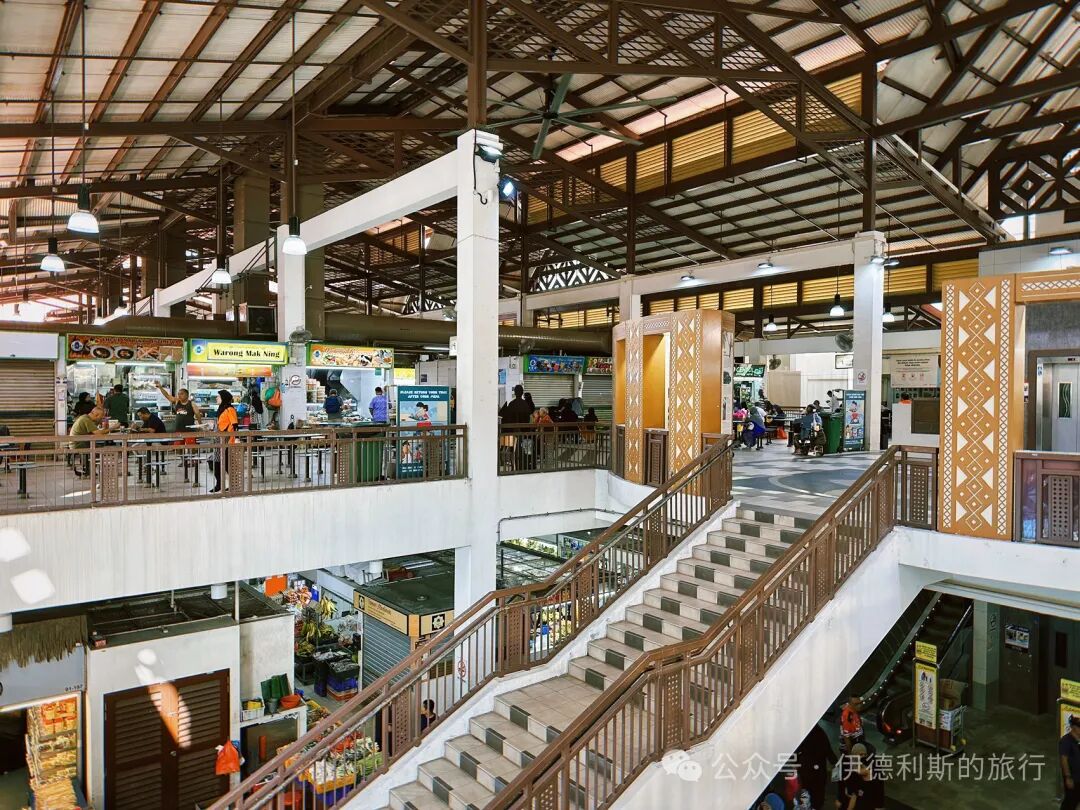
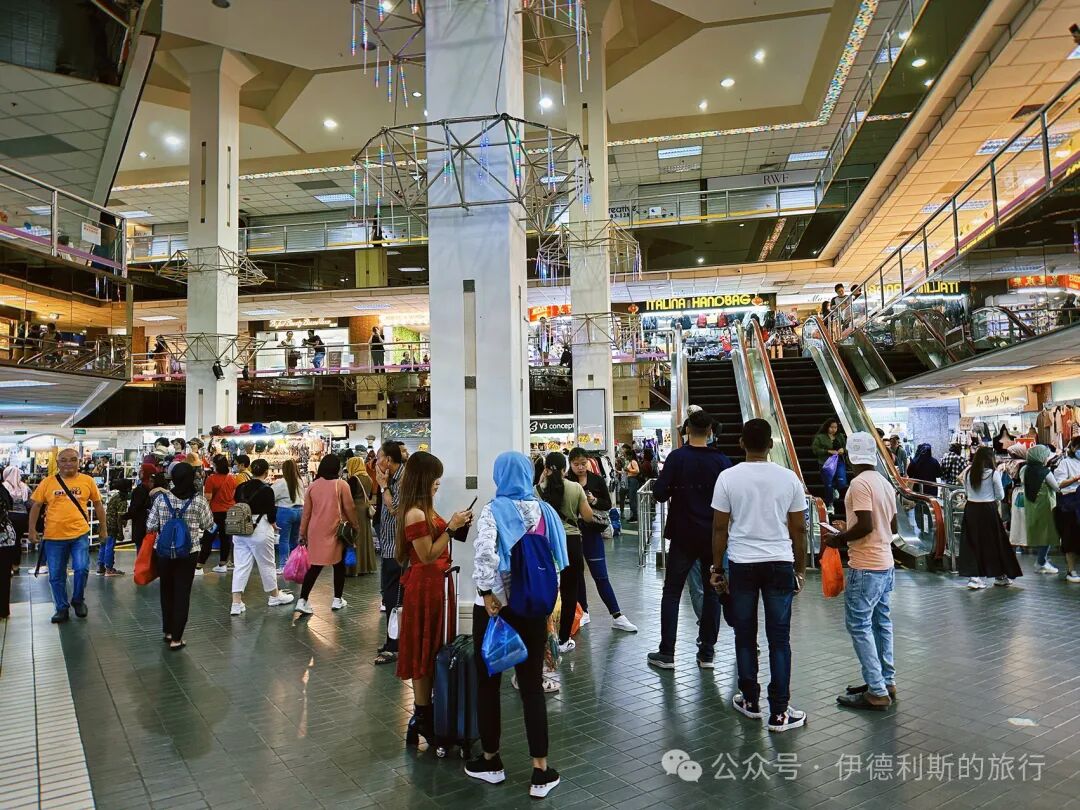
The Malay market (pasar) in Geylang Serai dates back to the 1920s. The Japanese turned it into an amusement park during World War II, but it returned to being a busy Malay market after the war, where local Malays came to shop. Singapore started the Geylang Serai development project in 1962. The Geylang Serai market officially opened in 1964, becoming a place for Malays to buy fresh vegetables, meat, cooked food, clothing, and various groceries. The Geylang Serai market was rebuilt between 2006 and 2010. The new market has two floors and is larger and cleaner.
Since it was built, the Geylang Serai market has been the largest Malay market in Singapore and the best place to experience Malay culture.
We first ate the classic Malay street snack Putu Piring at Haig Road Putu Piring on the first floor of the Geylang Serai market. This shop has been open since 1985. We chose the durian flavor, and they really put durian fruit inside. Putu Piring was first brought to Southeast Asia by immigrants from Fujian. To make it, you put crushed peanuts, shredded coconut, and palm sugar into rice flour and press it into a special stainless steel mold.
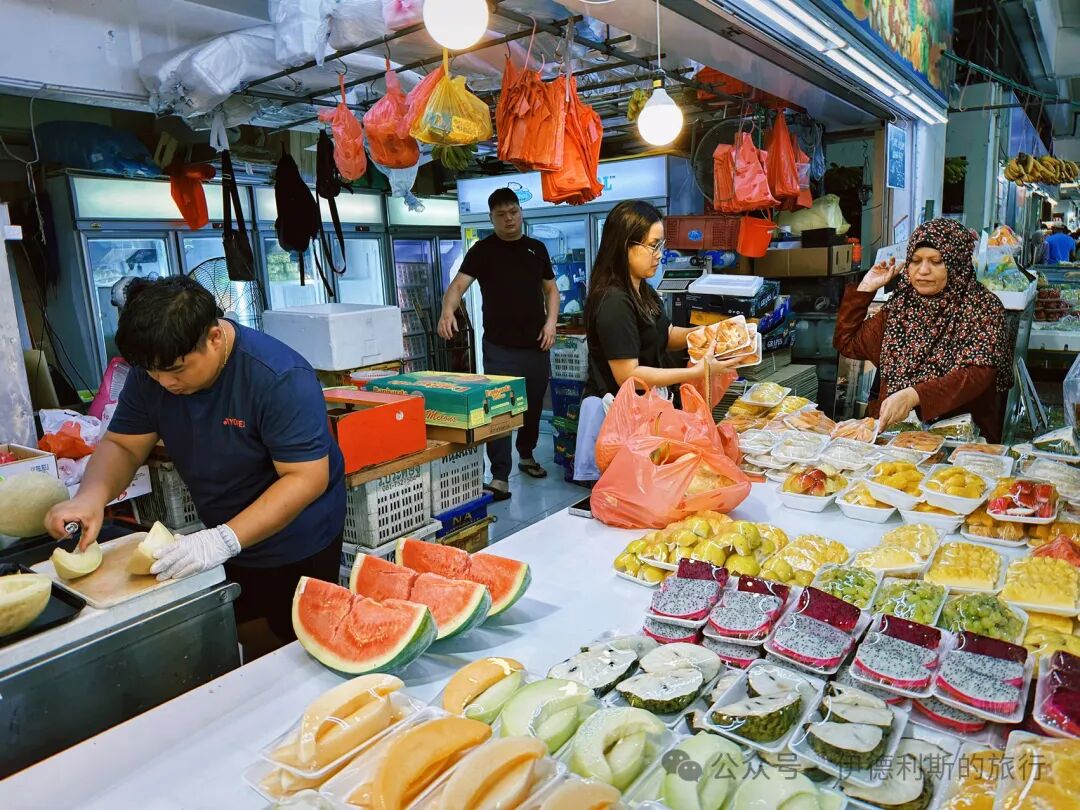
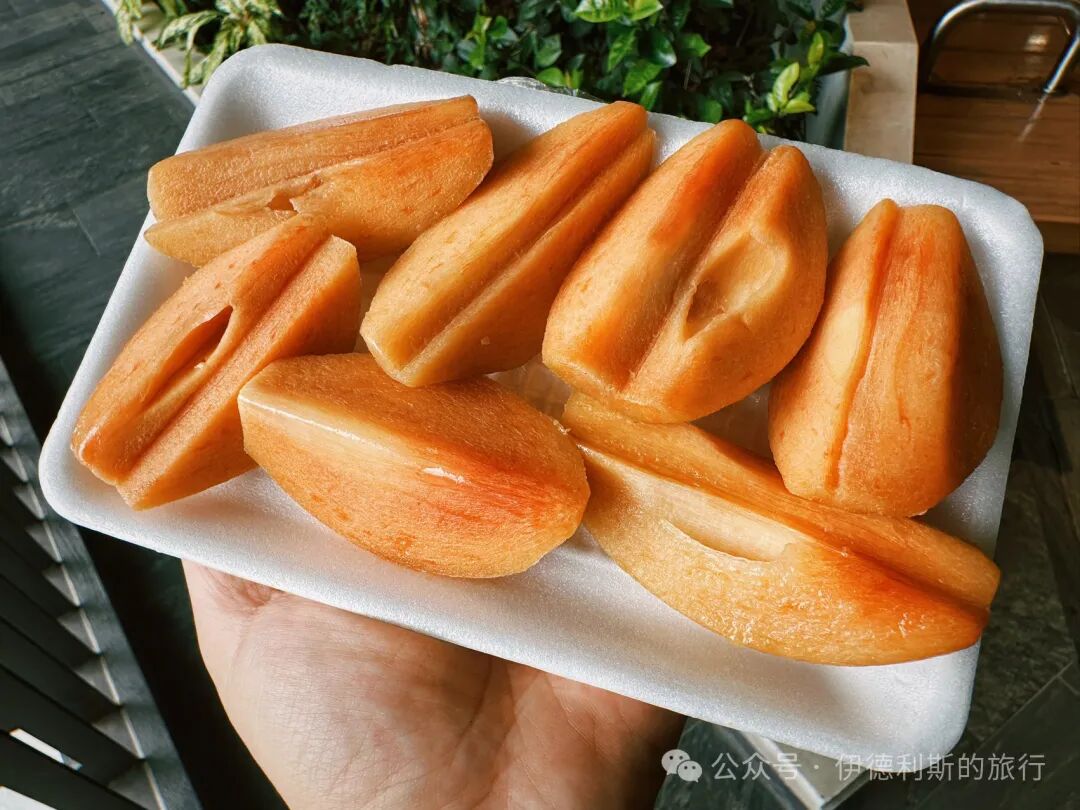
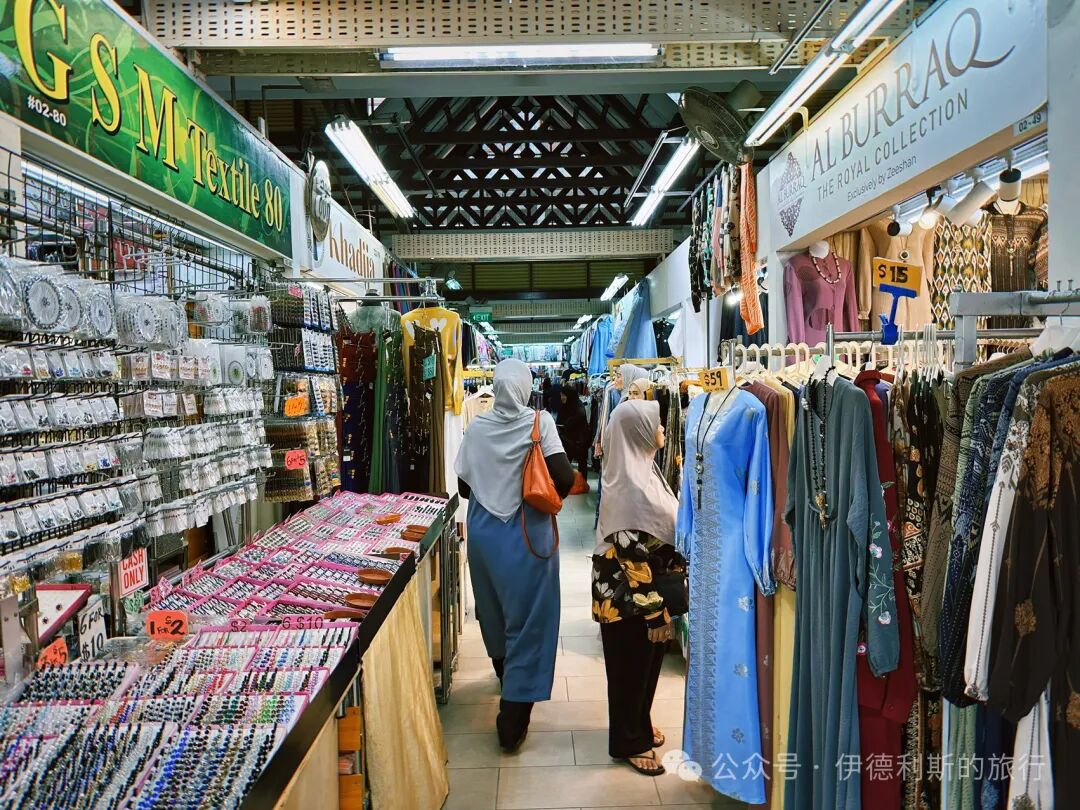
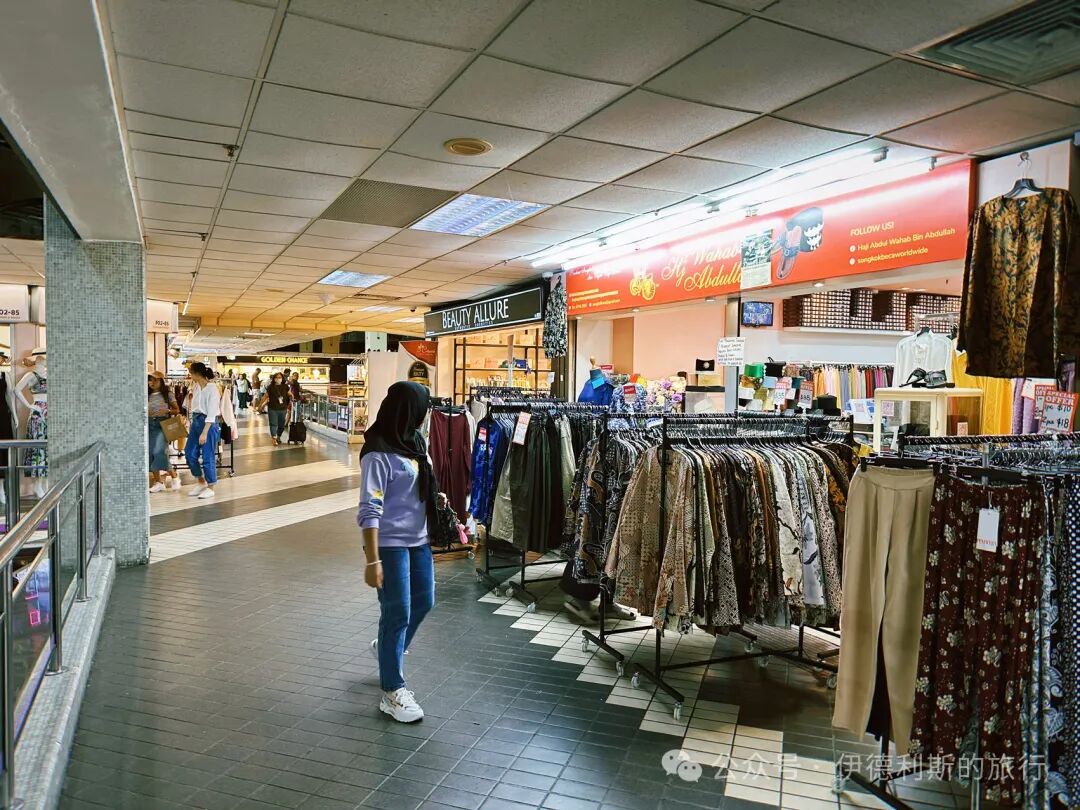
Walking inside from the first floor, you find a place selling all kinds of traditional Malay fruits and vegetables. Then, you go up to the second floor to find where Malays buy clothes.
After going up to the second floor, we first went to the Malay cake stall Kueh Talam Asli. Kueh Talam also originated in Indonesia. Kueh means cake, and Talam is the Indonesian word for tray. Kueh Talam refers to a cake made by steaming rice flour, coconut milk, and other ingredients in a rectangular tray. Traditional Kueh Talam usually has two layers. When making it, you put the bottom layer in the tray first, steam it until it is half-cooked, and then add the top layer. The green color in the rice cakes (kueh) comes from pandan leaf juice, the brown from coconut sugar, the yellow from sweet potato, pumpkin, or corn, and the purple from purple sweet potato or taro.
Also, this stall in the market (pasar) called Warong Keluarga has a wide variety of traditional Malay cakes and snacks that I should try next time.
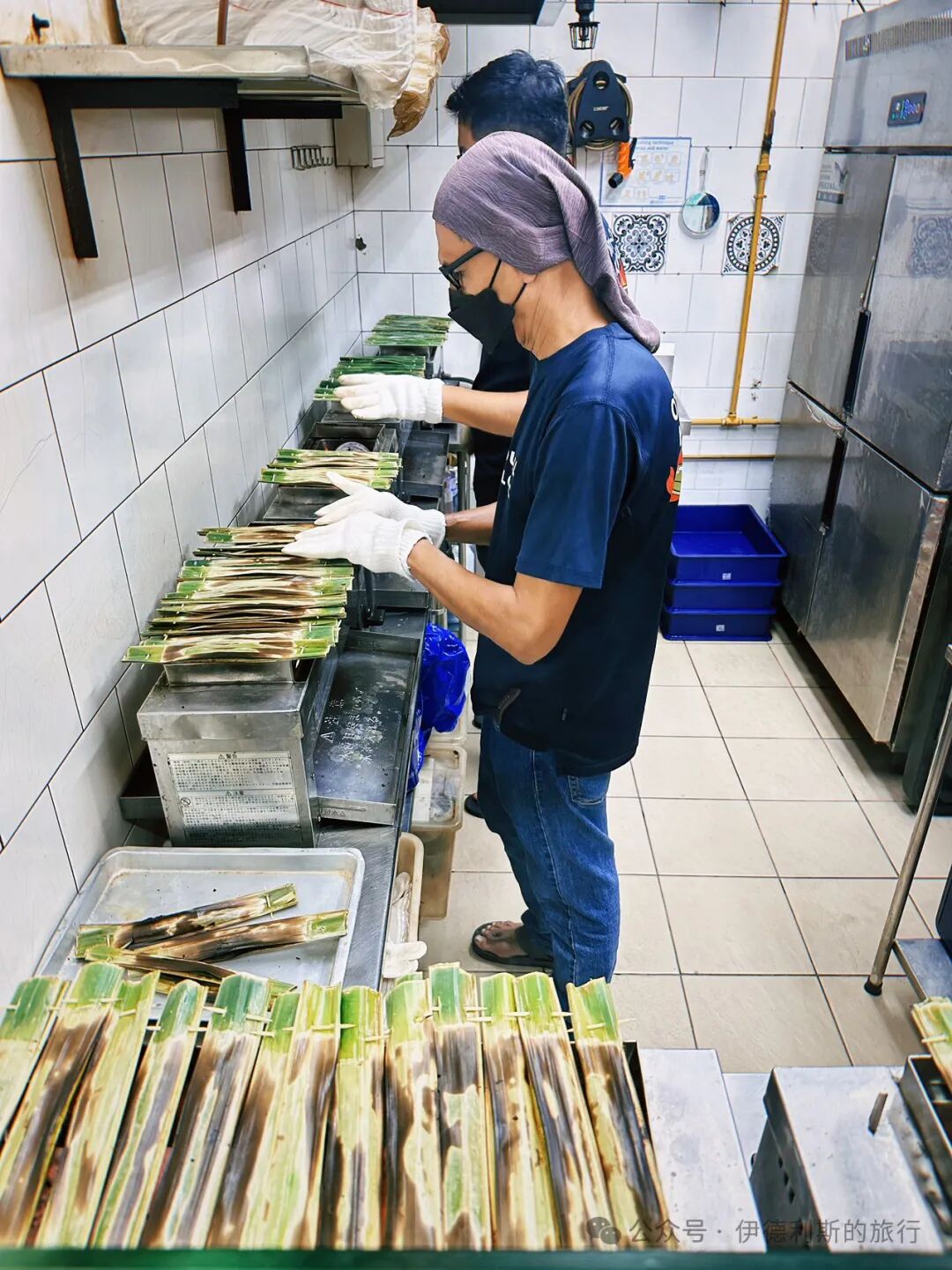
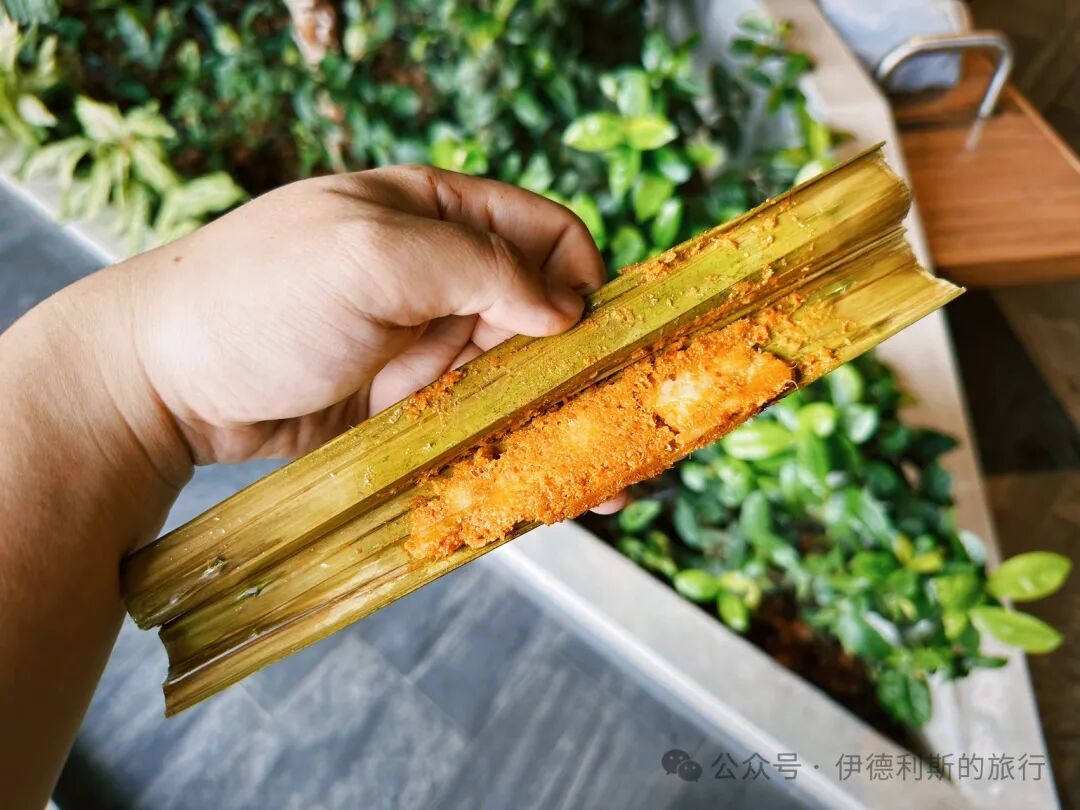
Otak-otak is a fish cake that started in Palembang, Sumatra. It is made by wrapping minced fish, tapioca flour, shredded coconut, and spices in a banana leaf and grilling it. Unlike the white version in Indonesia, otak-otak in Singapore and Malaysia contains chili, shrimp paste (belacan), and turmeric, which gives it an orange-red color.
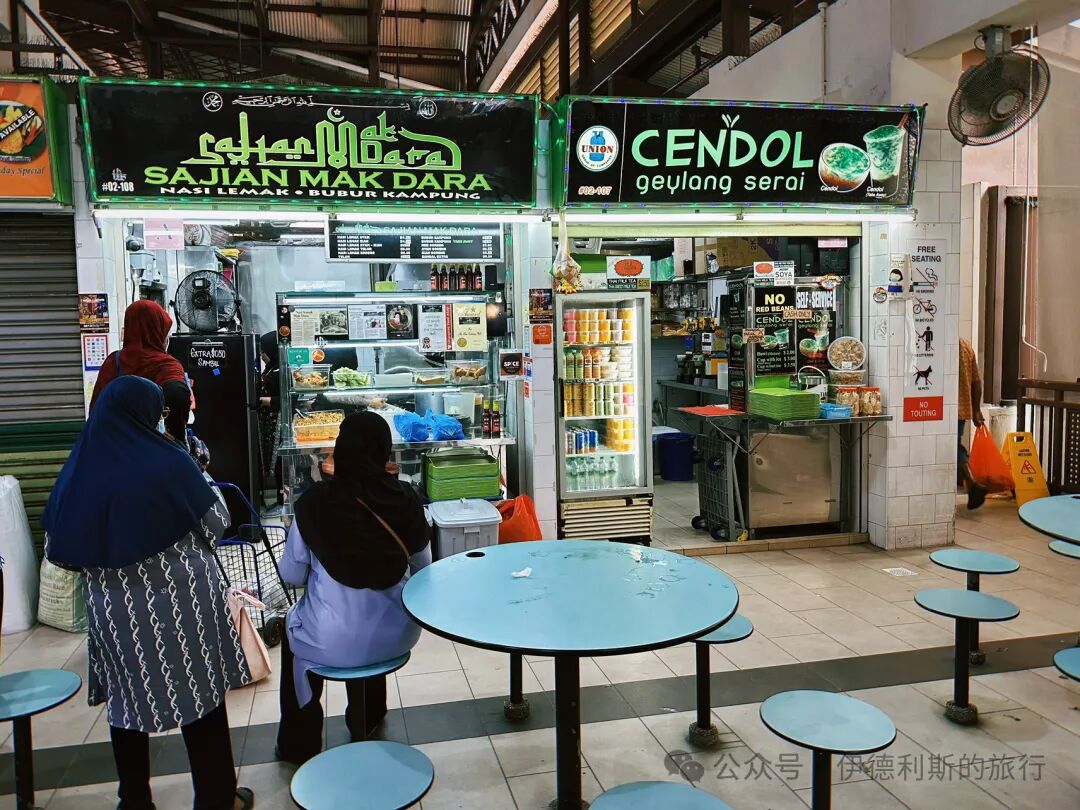
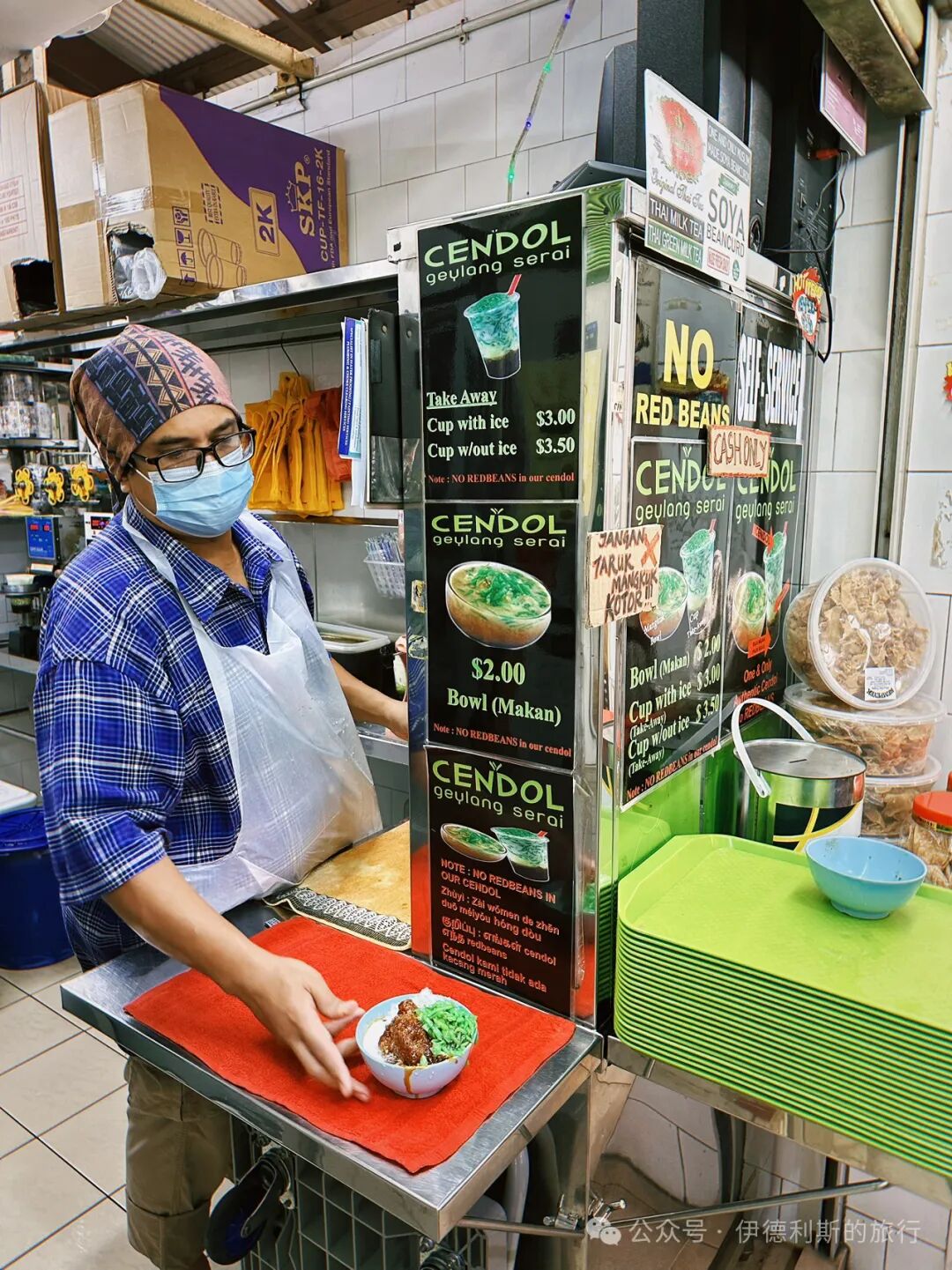
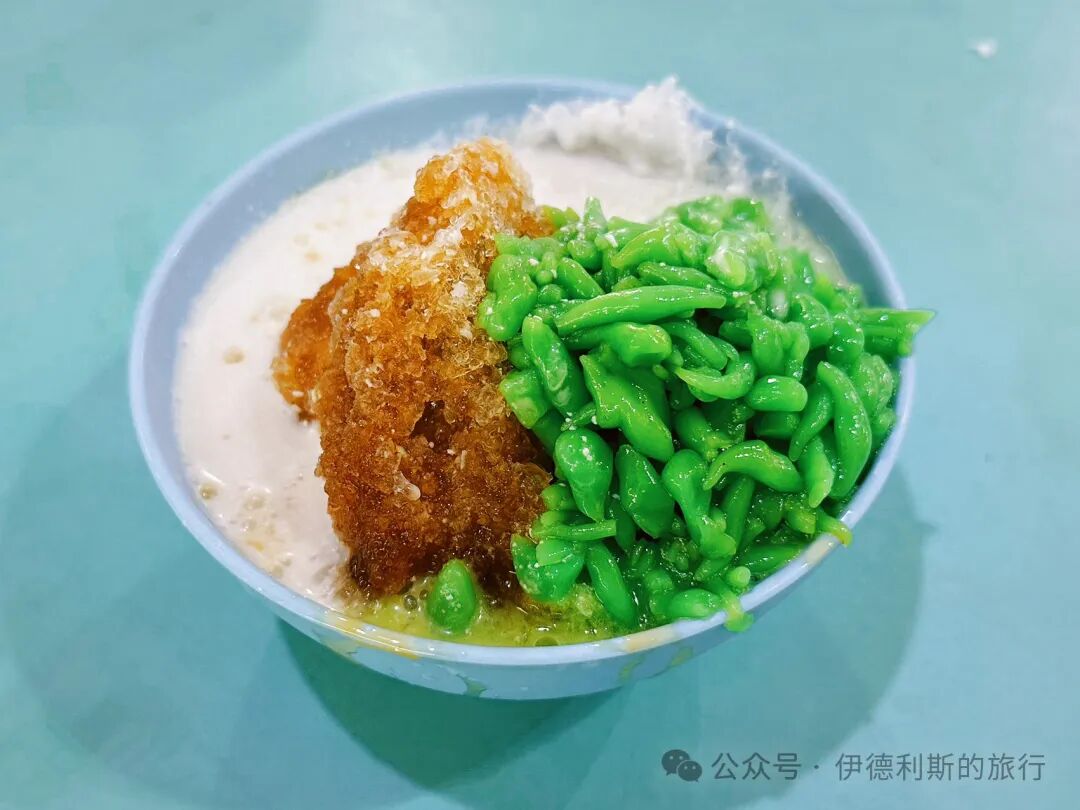
Cendol is a Southeast Asian shaved ice dessert. It features pandan and glutinous rice noodles topped with coconut milk and palm sugar syrup. In traditional Javanese food, cendol usually only has green pandan noodles, unlike the versions in Singapore and Malaysia that include red beans. To show they are authentic, this cendol shop in Geylang Serai Market uses English, pinyin, Tamil, and Malay to state they do not serve red beans, which is an interesting cultural detail.
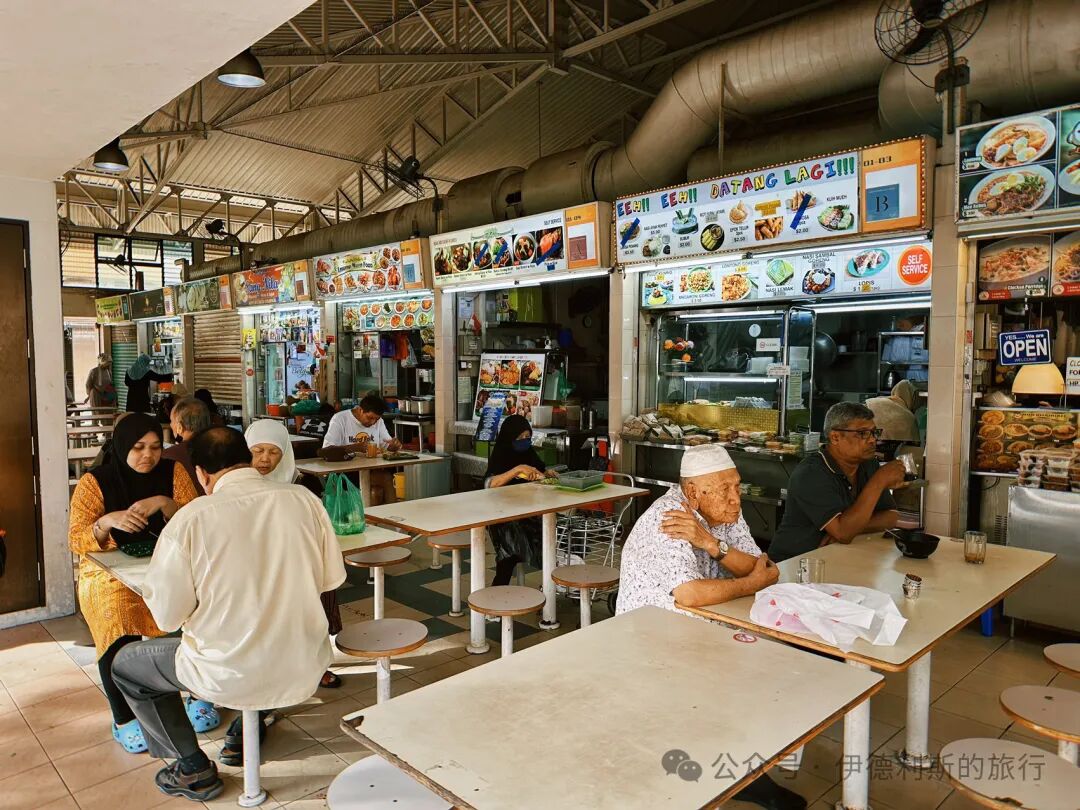
Besides Malay stalls, Geylang Serai Market also has halal Indian and Chinese stalls, showing the cultural diversity of Singapore.
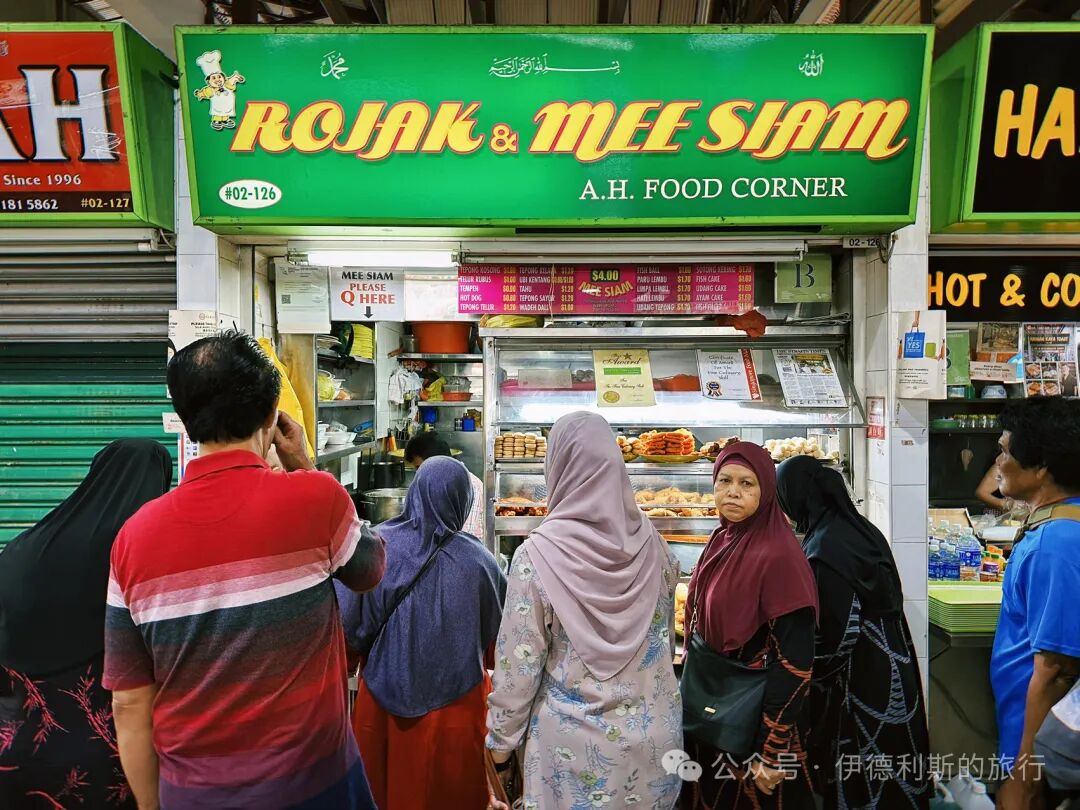
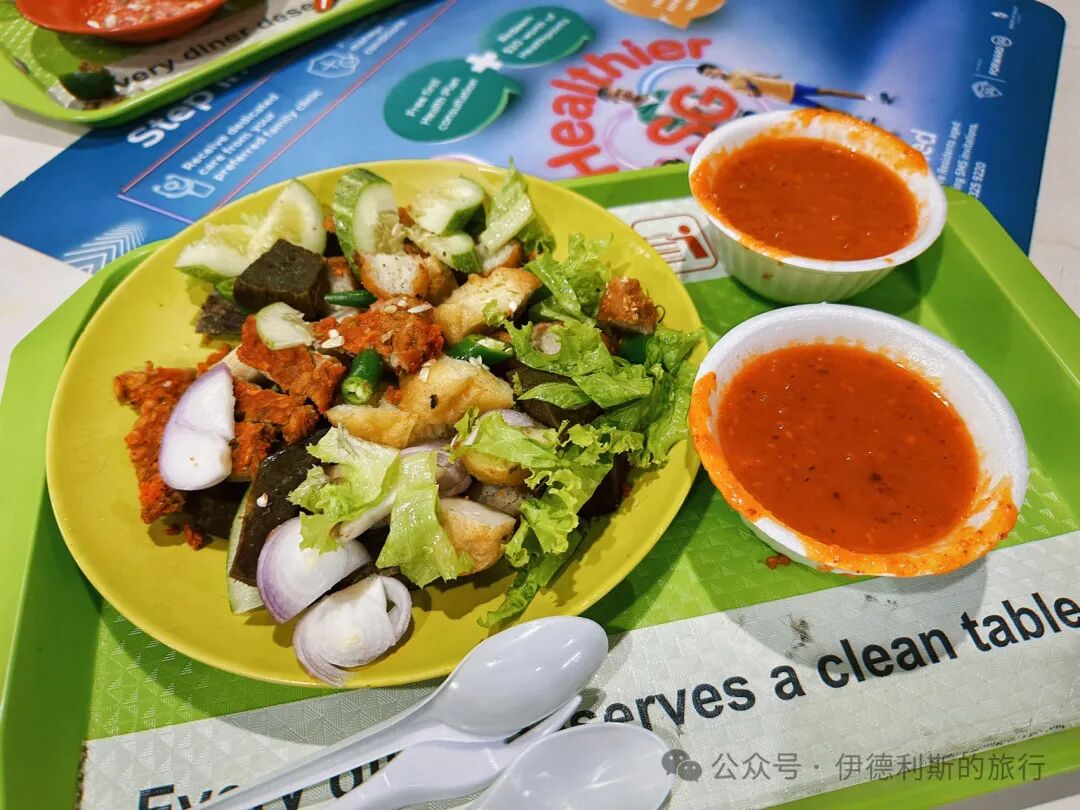
We tried the classic Southeast Asian salad, rojak, at a very popular stall on the second floor of the market called Rojak & Mee Siam. Rojak is said to have started on the island of Java. It was originally a mix of fruits and vegetables with spicy palm sugar syrup, but it spread to Indonesia, Malaysia, and Singapore with Javanese migrants and developed into many different styles.
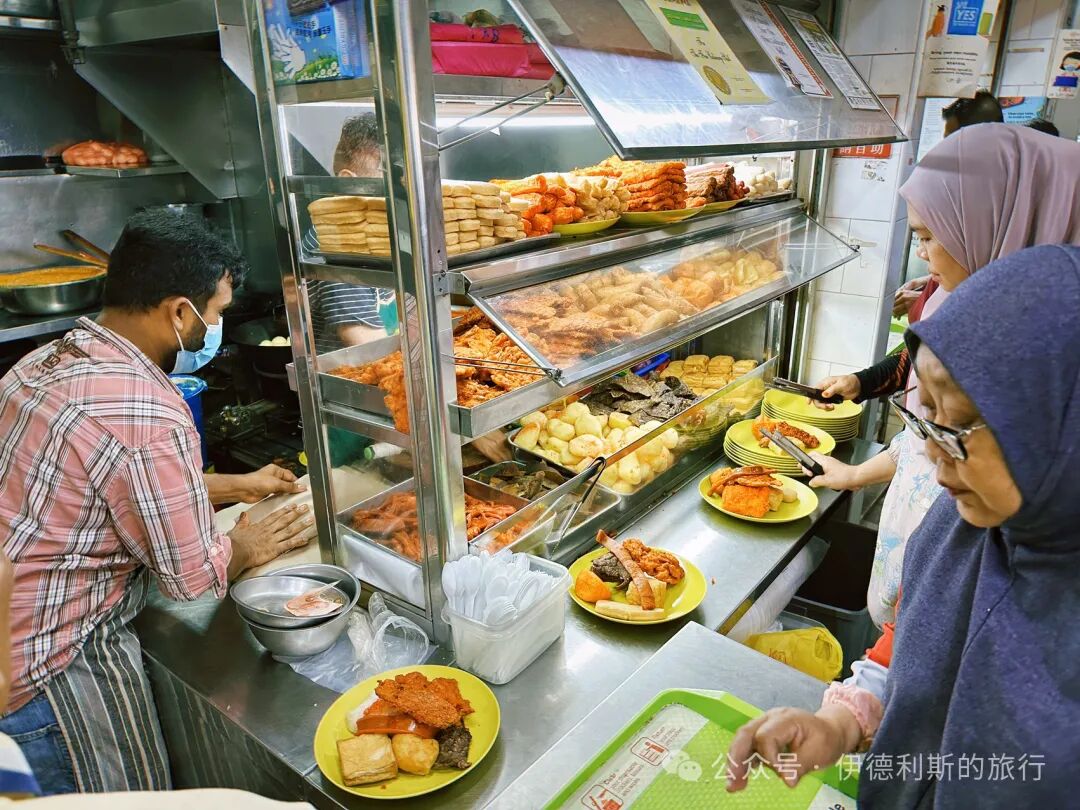
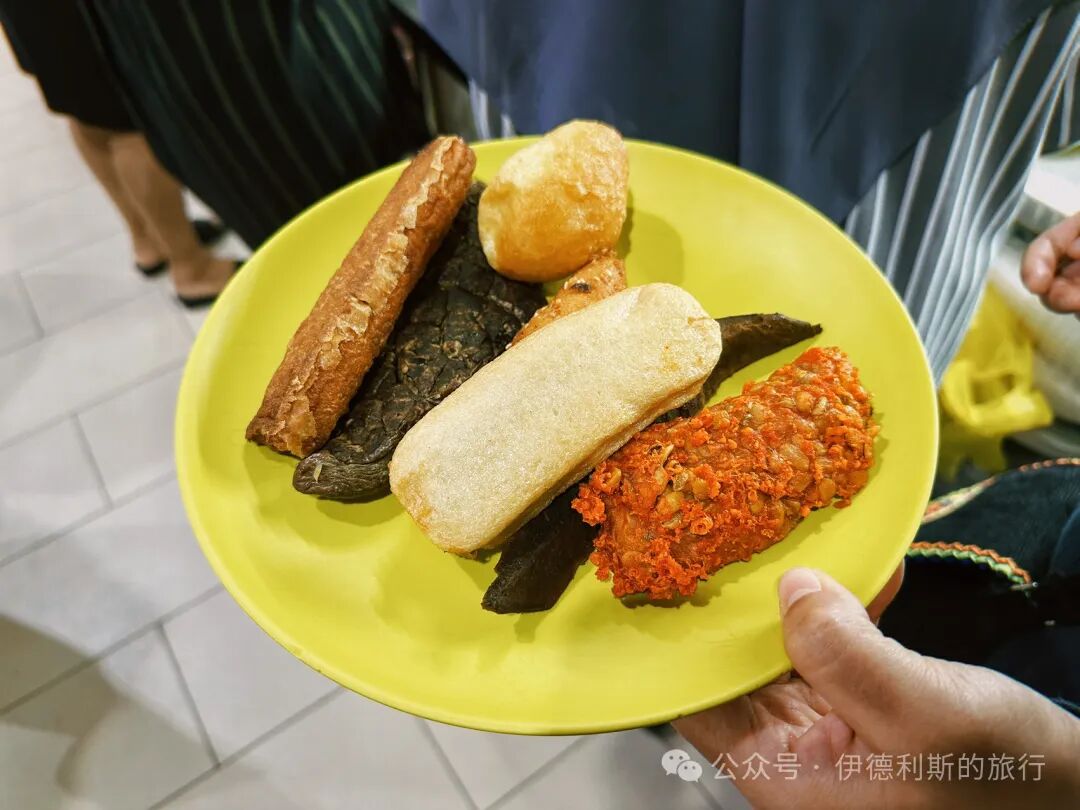
In Singapore, rojak is mainly split into fruit rojak (rojak buah) and Indian rojak (rojak india). The one we ate was Indian rojak. Indian rojak is mostly sold by Tamil Muslim stalls (mamak stalls) and includes items like bean curd, fish cakes, tempeh, cucumber, beef lung, fried dough sticks, and eggs. Customers point to what they want at the window, then the staff cuts and heats it in the back kitchen before adding a thick, spicy, sweet sauce made from mashed sweet potatoes. It is very popular with Malay people.
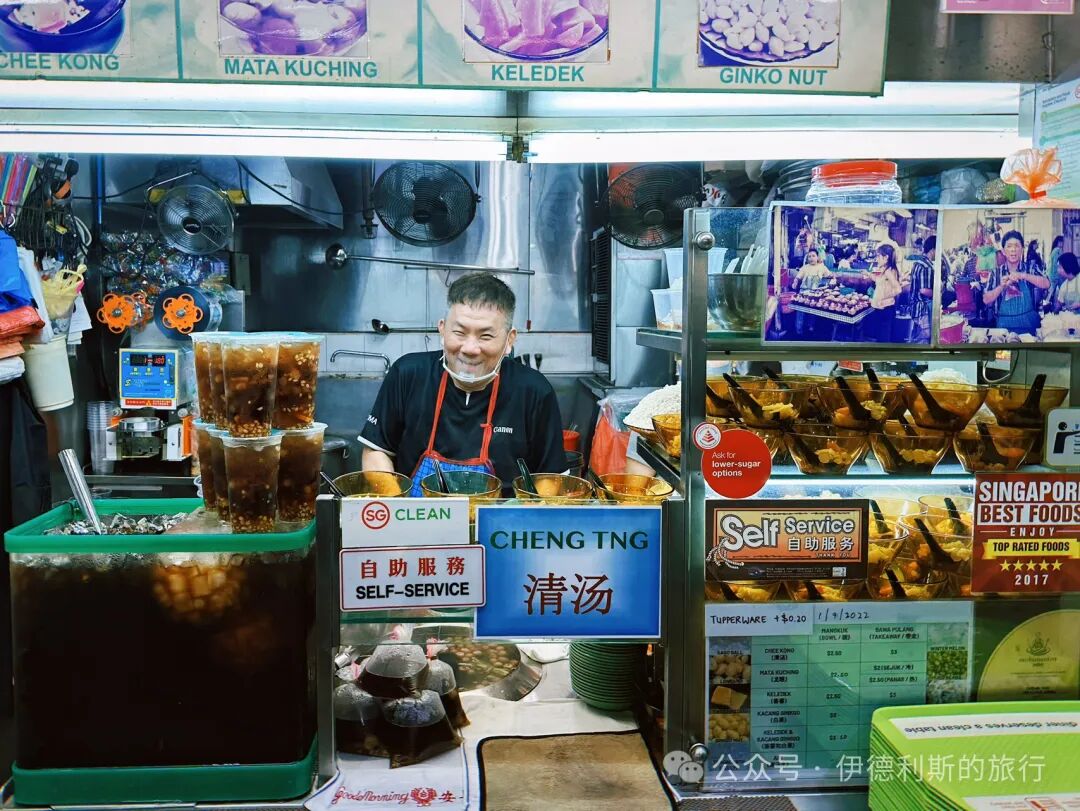
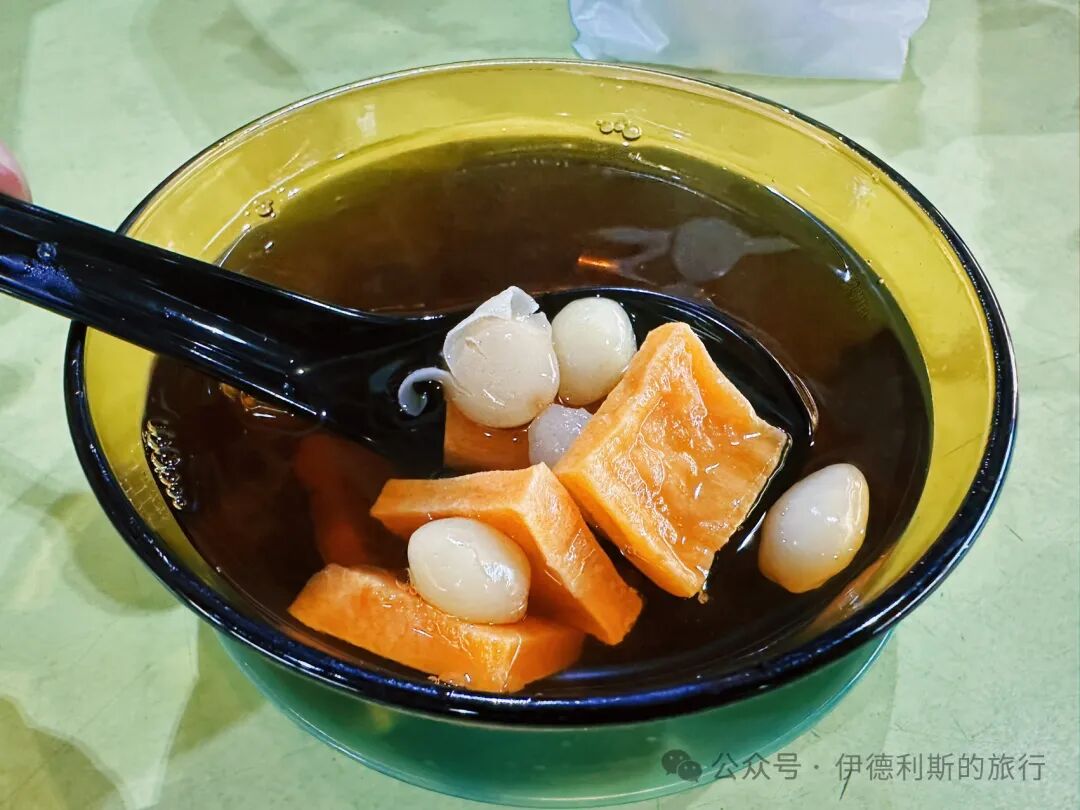
Next to Kueh Talam Asli is the only Chinese stall in the market, an old shop called Chee Kong clear soup (qing tang) that opened in the 1950s. The clear soup (qing tang) can be served with longan, sweet potato, and ginkgo nuts, and you can have it hot or cold. Drinking a bowl of clear soup (qing tang) is very refreshing after eating a lot of spicy Malay food.
Besides Geylang Serai Market, the Haig Road Market & Food Centre to the west also has plenty of Malay food. At the first stall, we had the most affordable Malay boiled noodles (mee rebus), which features yellow egg noodles topped with a thick, sweet and spicy curry sauce, plus lime, green chili, and dried anchovies.
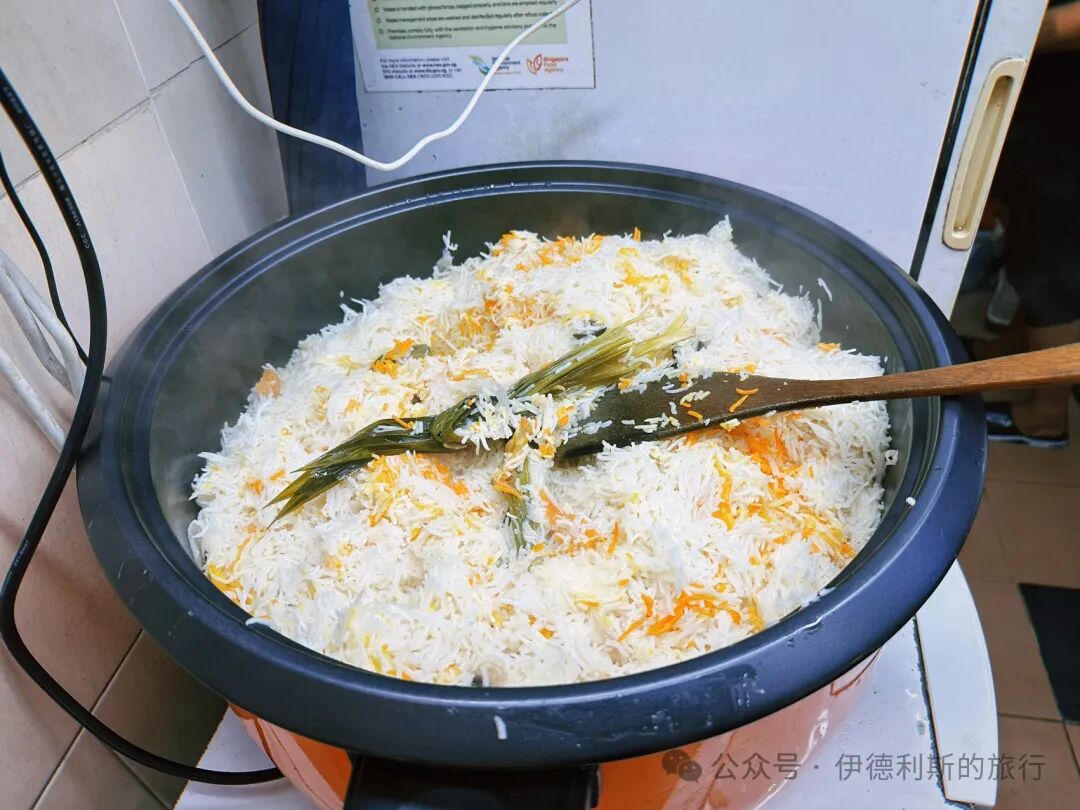
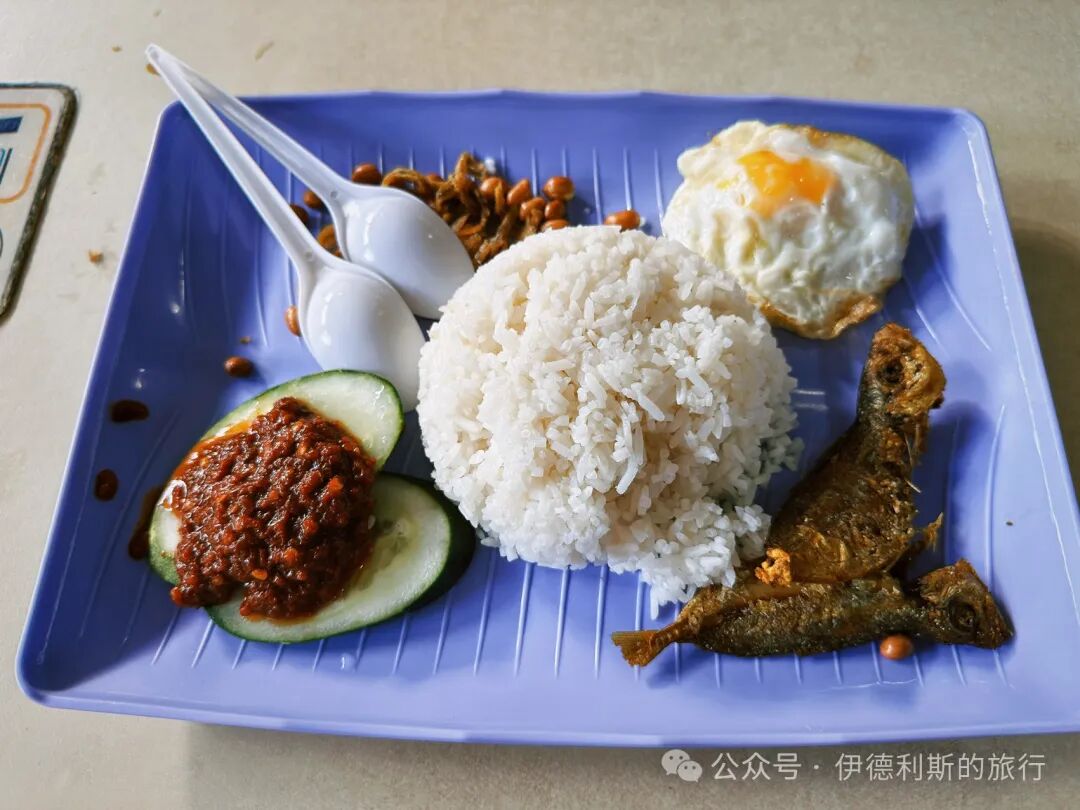
At the second stall, we had another affordable Malay snack, coconut milk rice (nasi lemak), made with rice cooked in coconut milk and pandan leaves, served with fried fish, sambal chili paste, a fried egg, fried peanuts, and dried anchovies.
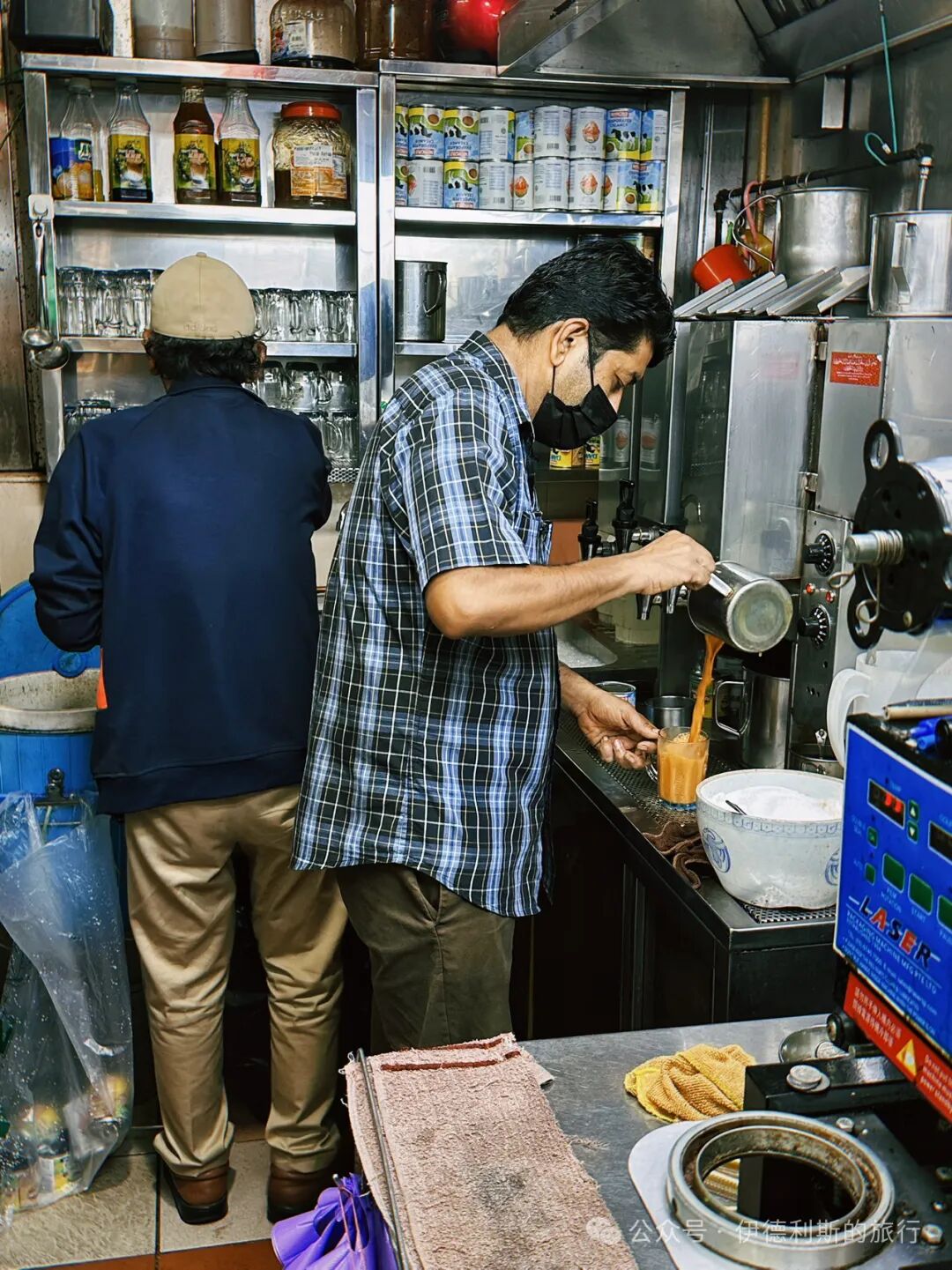
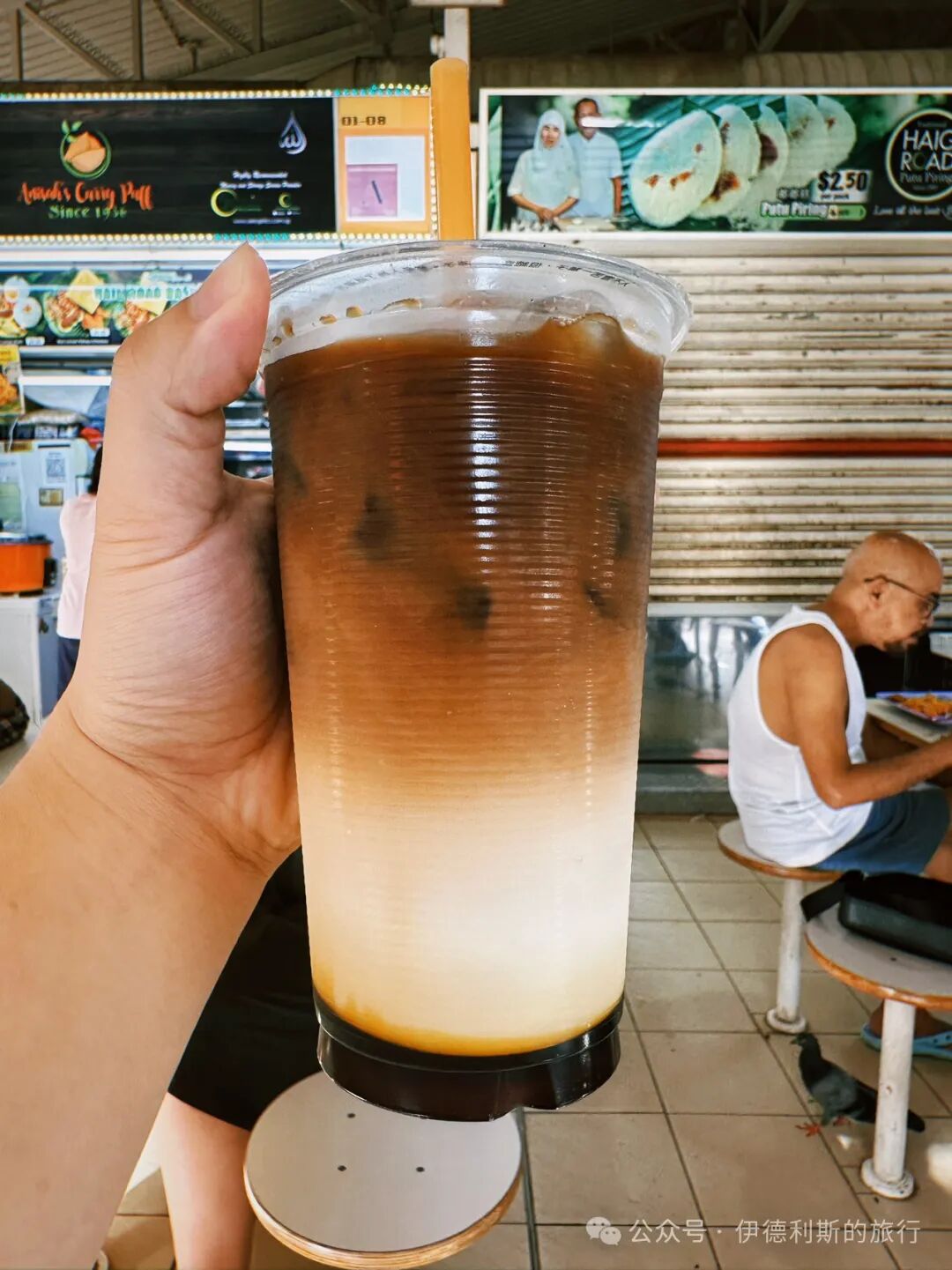
After our main meal, we chose a classic three-layer milk tea, which gets its three colors from palm sugar, milk, and black tea for a rich flavor.
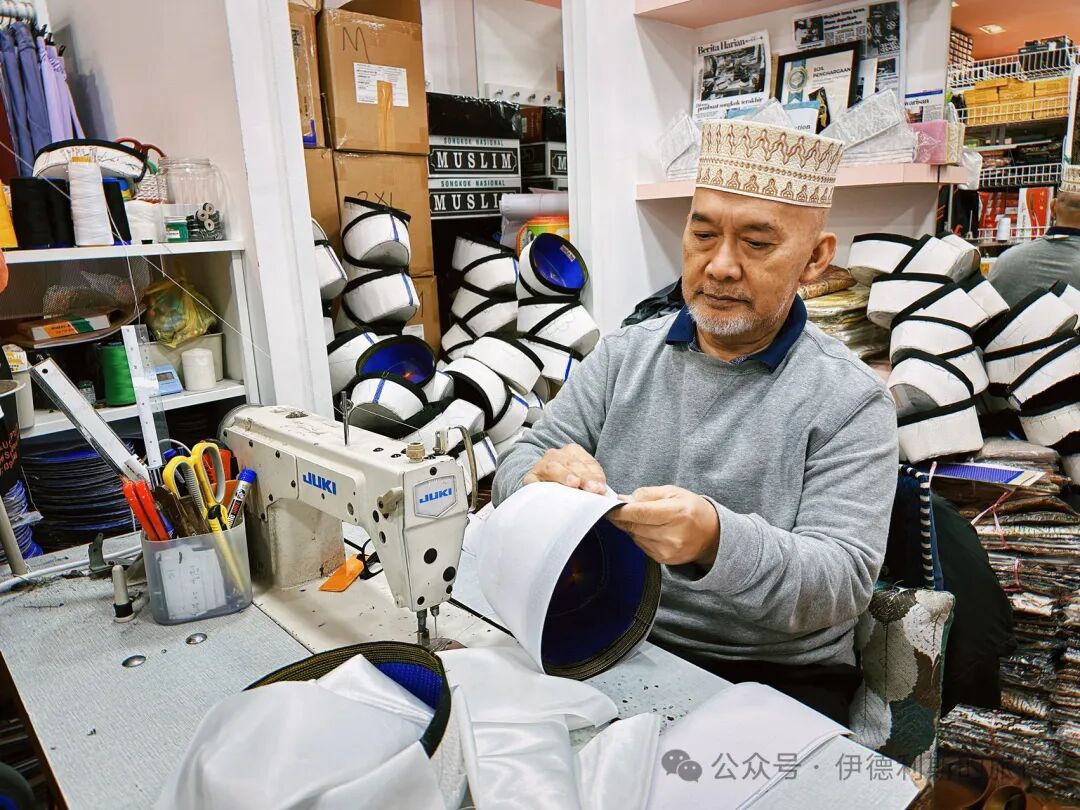
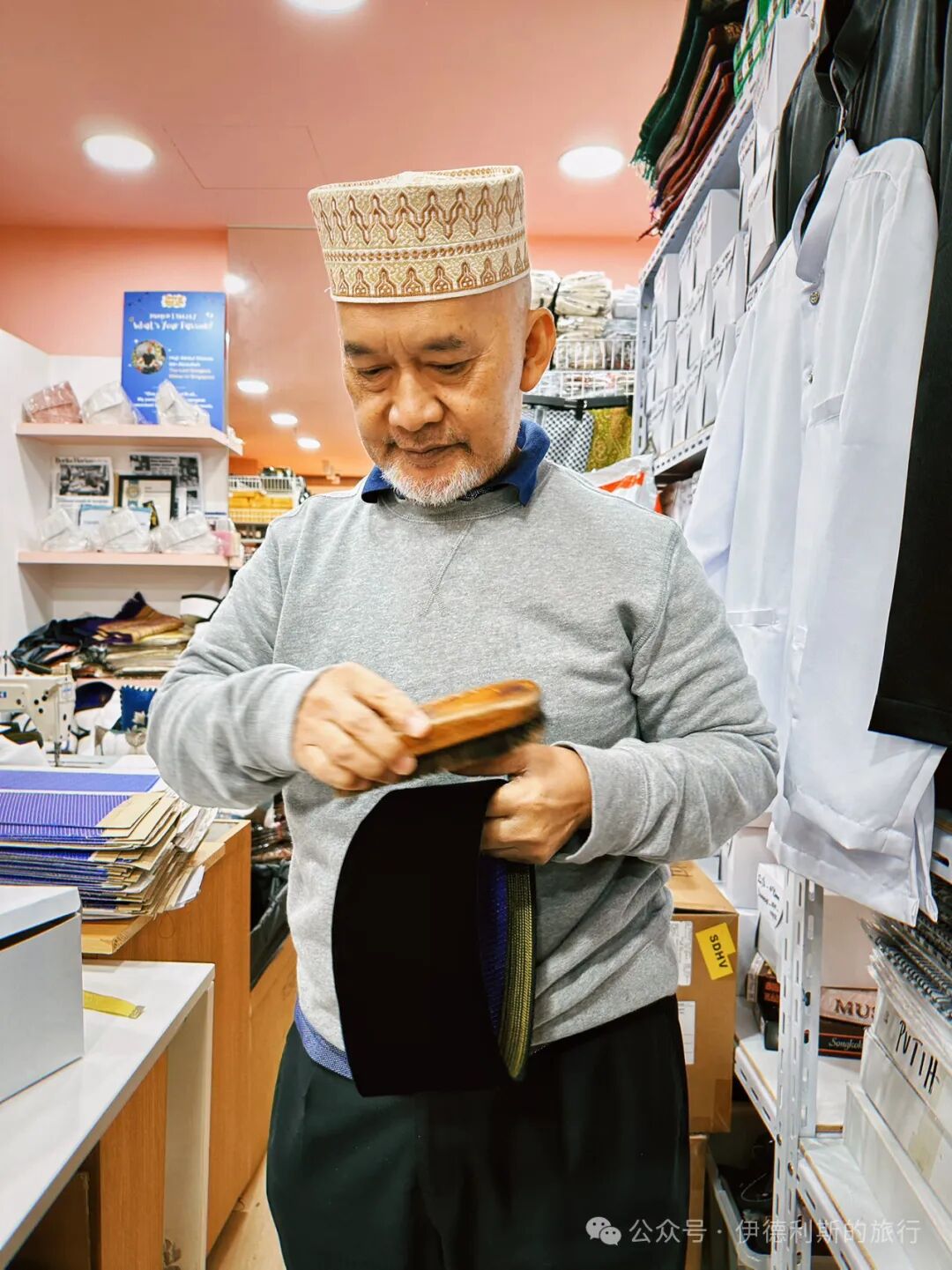
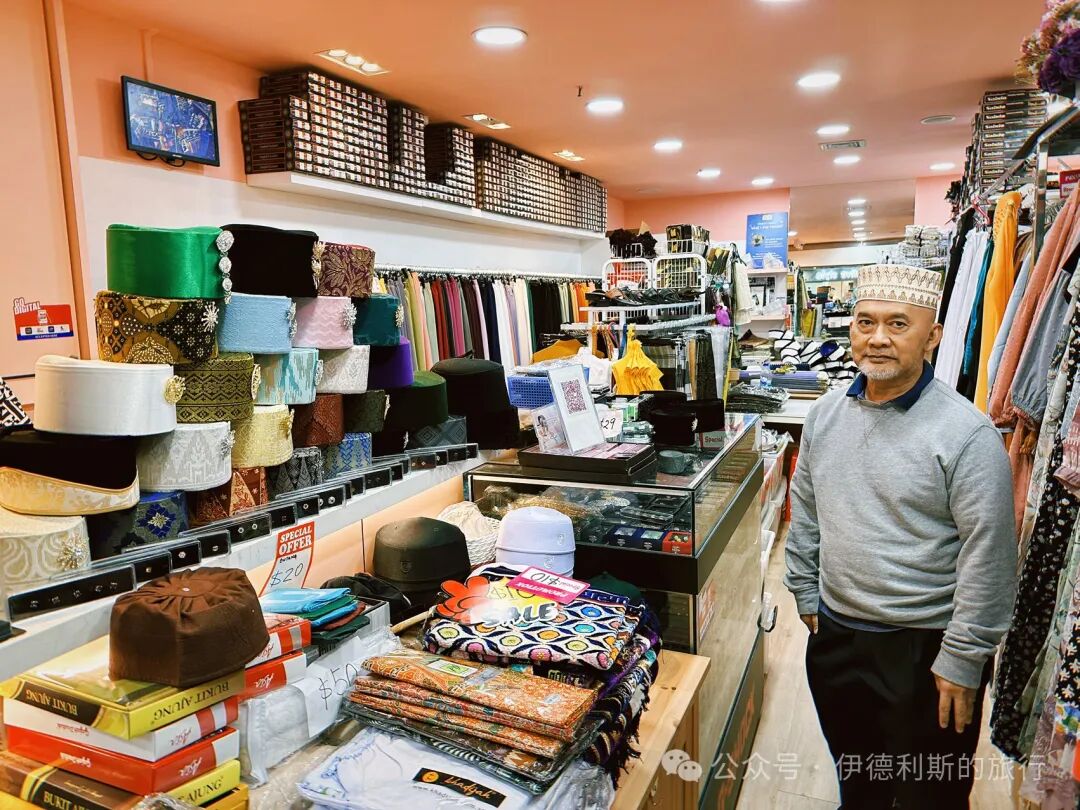
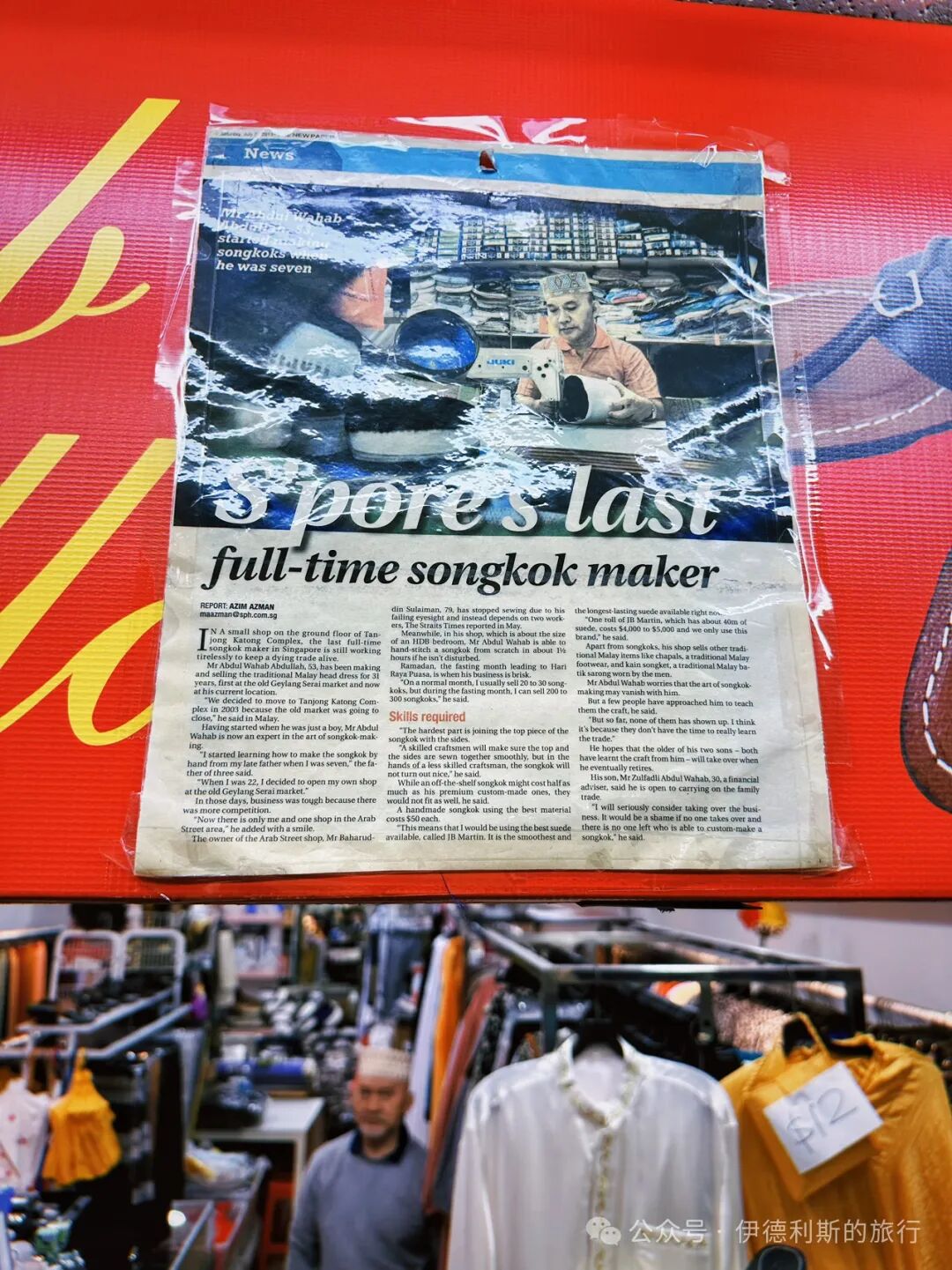
City Plaza by the Geylang River is a mall for affordable Malay clothing, and hidden on the second floor is Songkok Singapura, the last shop in Singapore that makes traditional caps (songkok) by hand. The owner, Haji Abdul Wahab, had a father who started making songkok in the 1970s, back when there were several such shops in Geylang Serai. Haji Abdul Wahab started learning to make songkok from his father as a teenager, opened his own shop at the old Geylang Serai Market at age 22, and has been doing it for 42 years since. Competition between songkok shops was very intense in the 20th century, but with the rise of machine production, Haji Abdul Wahab is now the only one left who still makes them by hand.
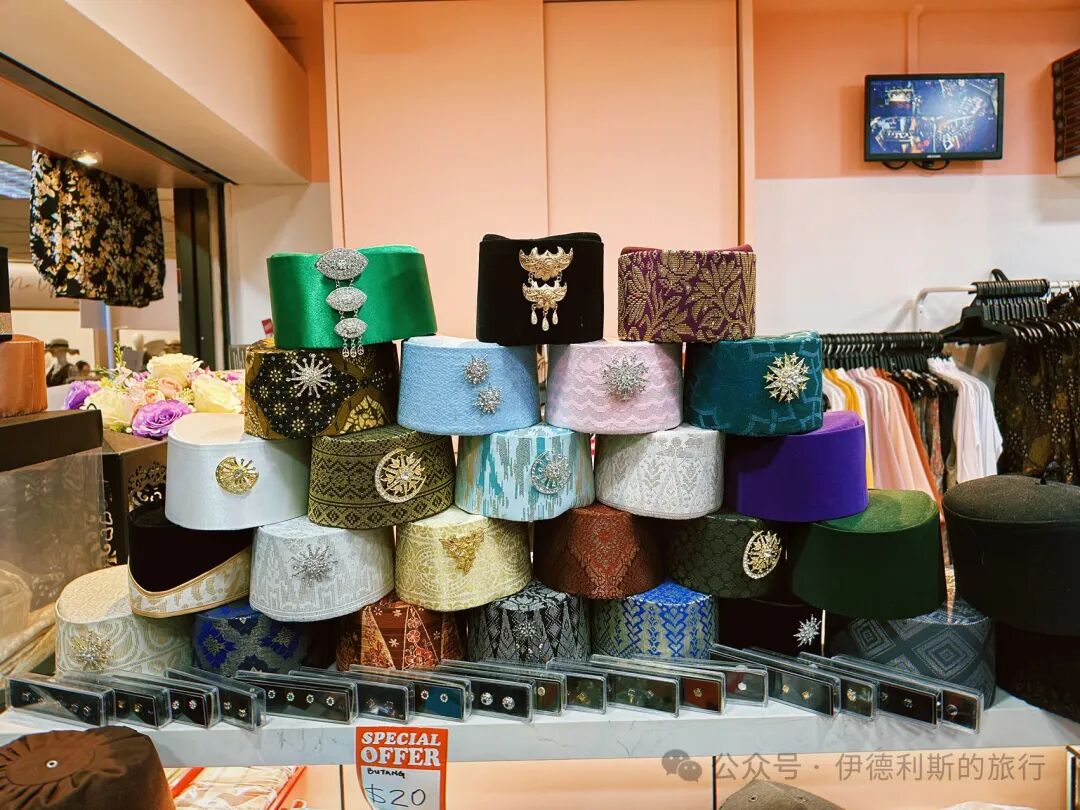
Besides traditional black velvet songkok, Haji Abdul Wahab also makes them in gold, white, and maroon, and many famous people, including the Sultan of Johor, have ordered from his shop. It takes Haji Abdul Wahab about an hour to make each songkok, and the peak season is during Ramadan, when the shop can receive up to 1,000 orders and his whole family helps out.
West of Geylang Serai Market is the newly built community center, Wisma Geylang Serai, which houses the Geylang Serai Malay Heritage Gallery. Although the gallery is small, it is a great place to learn about the history and culture of Geylang Serai.
Old photos of Malay people in Singapore.
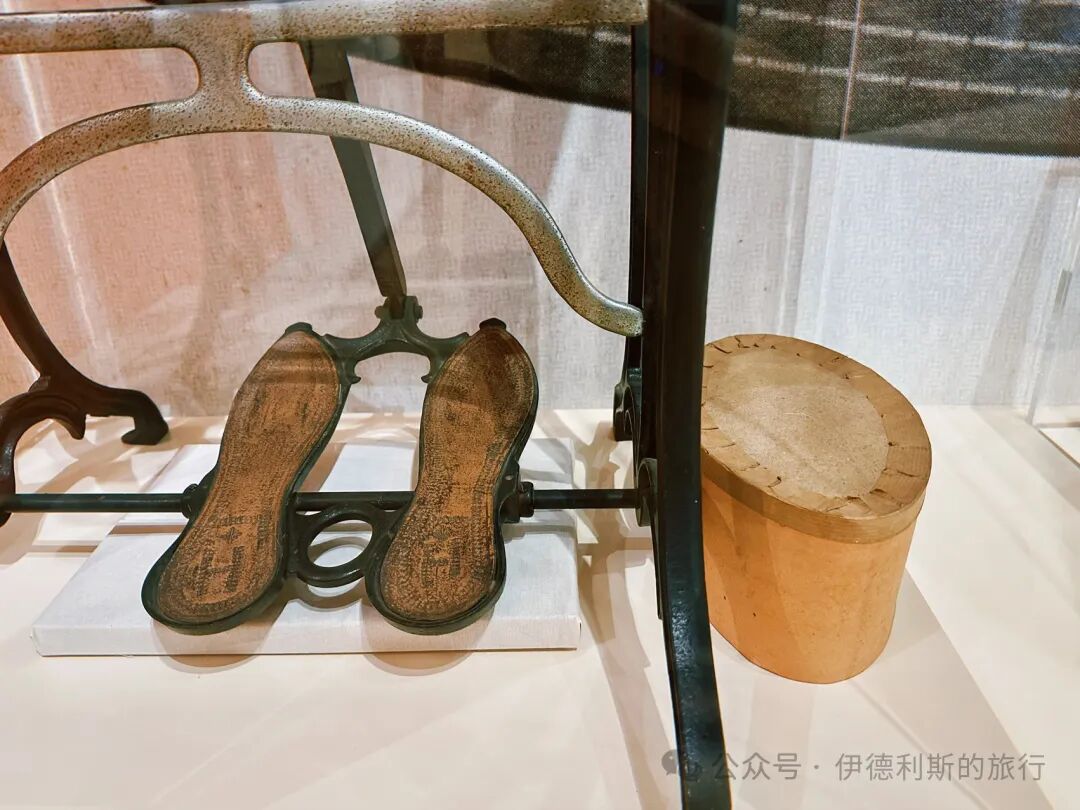
The sewing machine and hat mold used by Hussain bin H. Yunos, who once made songkok in the Geylang Serai Malay Village.
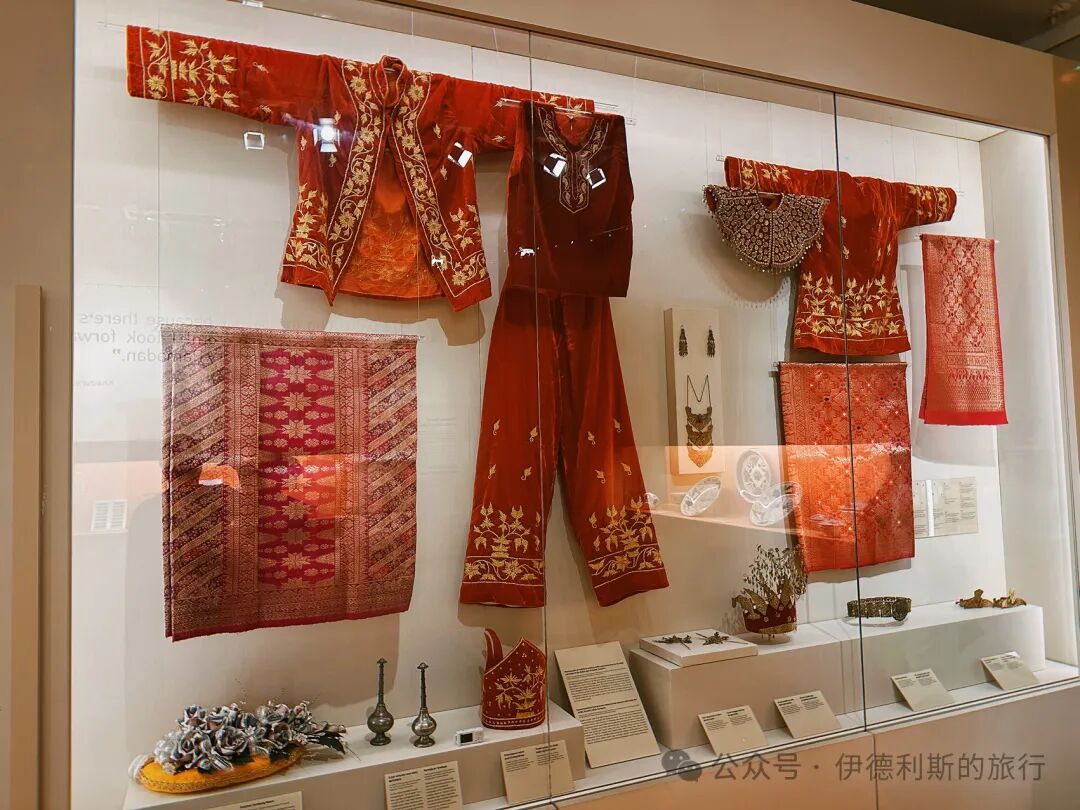
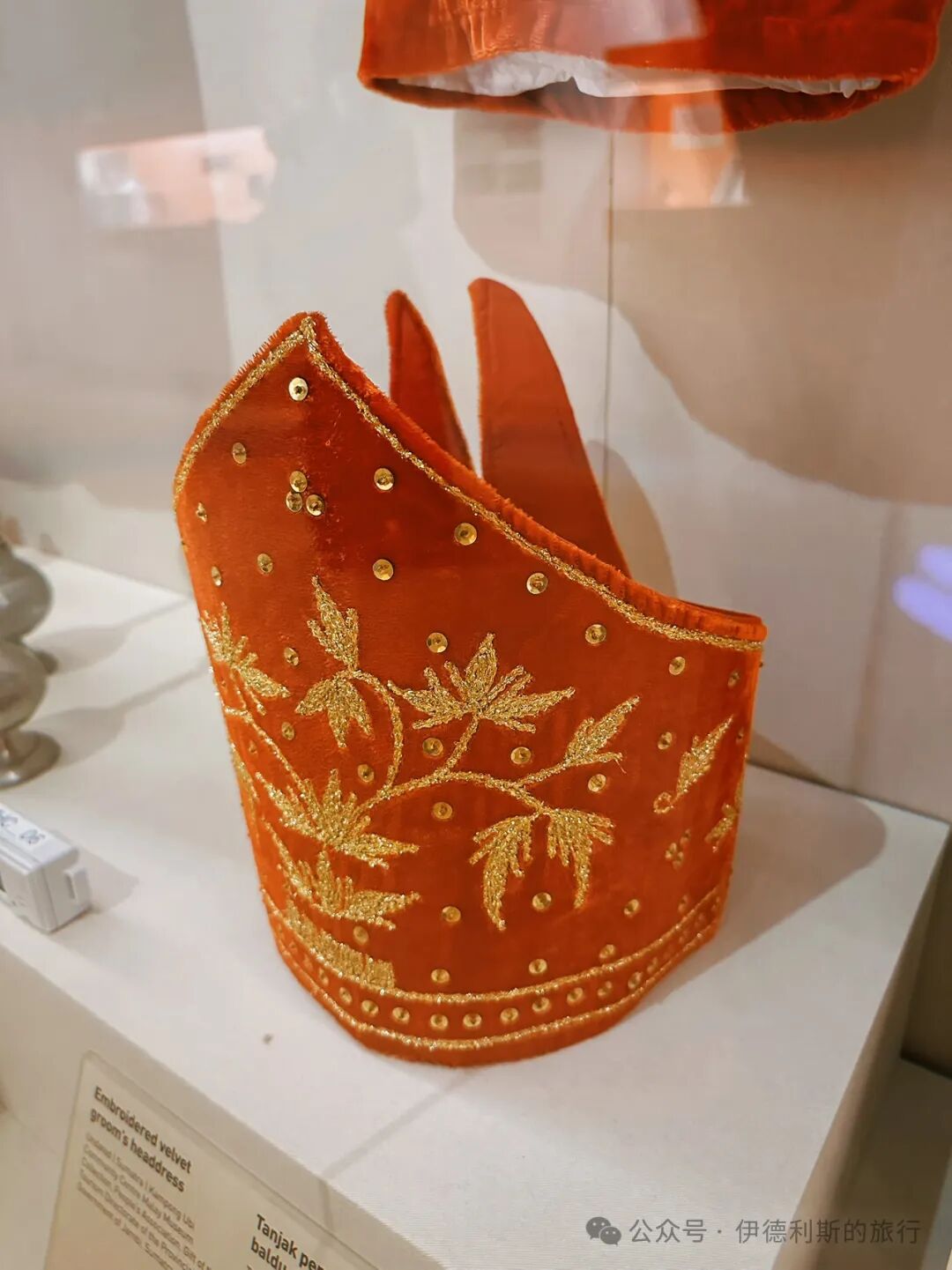
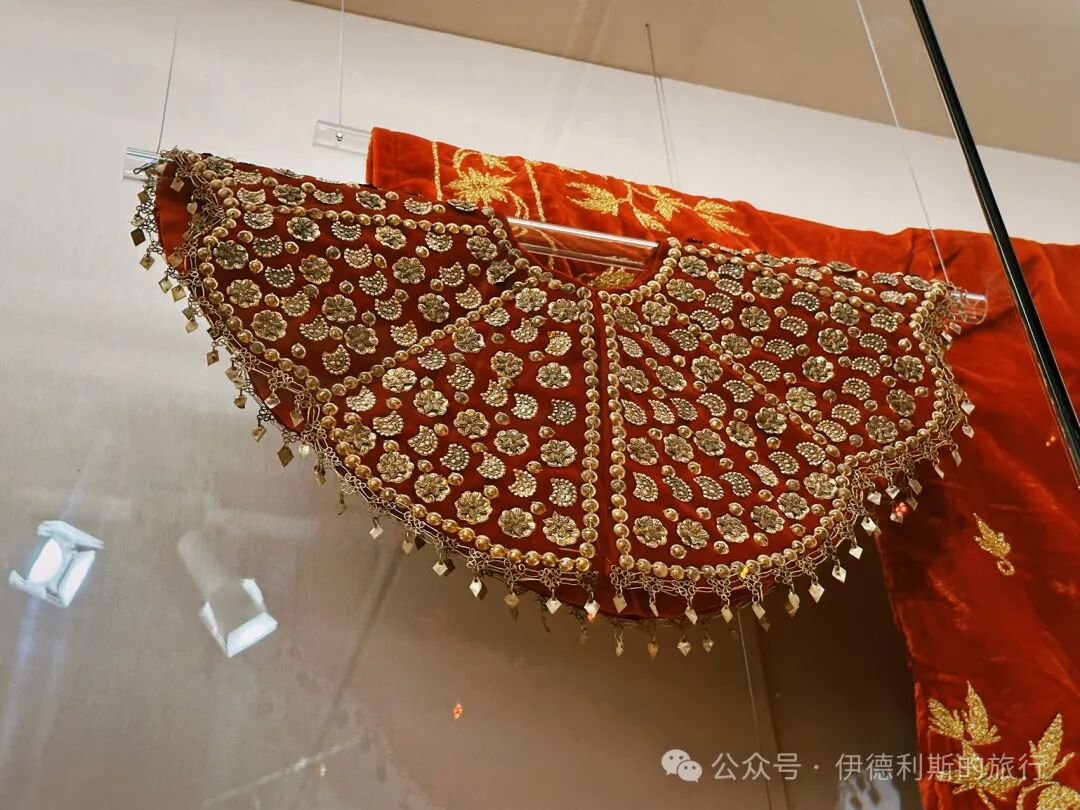
Traditional wedding attire in the Jambi Kodya style from Sumatra.
Molds used for making Malay rice cakes (kuih).
Further reading:
The early history of the Malay people and Singapore
Experience Indian Muslim culture in Singapore
Taste halal Chinese food in Singapore
Eating Peranakan food (nyonya cai) in Singapore view all
Summary: This Singapore article walks through the Malay market in Geylang Serai and records food, shops, neighborhood scenes, and Malay Muslim culture. It keeps the original market details, dishes, prices, and small observations in clear English.
Geylang Serai is located near the Geylang River in eastern Singapore. Geylang likely comes from the name of a tribe of indigenous sea people (Orang Laut) who lived here when the British arrived in the early 19th century. Serai refers to the lemongrass grown in nearby plantations during the late 19th century.
Malay villages were scattered along the Geylang River in the 19th century, but there were not many people there at first. After the 1920s, as rent and living costs in downtown Singapore rose, many Malays moved to the Geylang Serai area in the east. By the 1930s, Geylang Serai had become a densely populated suburb. After World War II, more Malays settled in Geylang Serai, and it became an important Malay community in Singapore.
The Malay market (pasar) in Geylang Serai dates back to the 1920s. The Japanese turned it into an amusement park during World War II, but it returned to being a busy Malay market after the war, where local Malays came to shop. Singapore started the Geylang Serai development project in 1962. The Geylang Serai market officially opened in 1964, becoming a place for Malays to buy fresh vegetables, meat, cooked food, clothing, and various groceries. The Geylang Serai market was rebuilt between 2006 and 2010. The new market has two floors and is larger and cleaner.
Since it was built, the Geylang Serai market has been the largest Malay market in Singapore and the best place to experience Malay culture.
We first ate the classic Malay street snack Putu Piring at Haig Road Putu Piring on the first floor of the Geylang Serai market. This shop has been open since 1985. We chose the durian flavor, and they really put durian fruit inside. Putu Piring was first brought to Southeast Asia by immigrants from Fujian. To make it, you put crushed peanuts, shredded coconut, and palm sugar into rice flour and press it into a special stainless steel mold.
Walking inside from the first floor, you find a place selling all kinds of traditional Malay fruits and vegetables. Then, you go up to the second floor to find where Malays buy clothes.
After going up to the second floor, we first went to the Malay cake stall Kueh Talam Asli. Kueh Talam also originated in Indonesia. Kueh means cake, and Talam is the Indonesian word for tray. Kueh Talam refers to a cake made by steaming rice flour, coconut milk, and other ingredients in a rectangular tray. Traditional Kueh Talam usually has two layers. When making it, you put the bottom layer in the tray first, steam it until it is half-cooked, and then add the top layer. The green color in the rice cakes (kueh) comes from pandan leaf juice, the brown from coconut sugar, the yellow from sweet potato, pumpkin, or corn, and the purple from purple sweet potato or taro.
Also, this stall in the market (pasar) called Warong Keluarga has a wide variety of traditional Malay cakes and snacks that I should try next time.
Otak-otak is a fish cake that started in Palembang, Sumatra. It is made by wrapping minced fish, tapioca flour, shredded coconut, and spices in a banana leaf and grilling it. Unlike the white version in Indonesia, otak-otak in Singapore and Malaysia contains chili, shrimp paste (belacan), and turmeric, which gives it an orange-red color.
Cendol is a Southeast Asian shaved ice dessert. It features pandan and glutinous rice noodles topped with coconut milk and palm sugar syrup. In traditional Javanese food, cendol usually only has green pandan noodles, unlike the versions in Singapore and Malaysia that include red beans. To show they are authentic, this cendol shop in Geylang Serai Market uses English, pinyin, Tamil, and Malay to state they do not serve red beans, which is an interesting cultural detail.
Besides Malay stalls, Geylang Serai Market also has halal Indian and Chinese stalls, showing the cultural diversity of Singapore.
We tried the classic Southeast Asian salad, rojak, at a very popular stall on the second floor of the market called Rojak & Mee Siam. Rojak is said to have started on the island of Java. It was originally a mix of fruits and vegetables with spicy palm sugar syrup, but it spread to Indonesia, Malaysia, and Singapore with Javanese migrants and developed into many different styles.
In Singapore, rojak is mainly split into fruit rojak (rojak buah) and Indian rojak (rojak india). The one we ate was Indian rojak. Indian rojak is mostly sold by Tamil Muslim stalls (mamak stalls) and includes items like bean curd, fish cakes, tempeh, cucumber, beef lung, fried dough sticks, and eggs. Customers point to what they want at the window, then the staff cuts and heats it in the back kitchen before adding a thick, spicy, sweet sauce made from mashed sweet potatoes. It is very popular with Malay people.
Next to Kueh Talam Asli is the only Chinese stall in the market, an old shop called Chee Kong clear soup (qing tang) that opened in the 1950s. The clear soup (qing tang) can be served with longan, sweet potato, and ginkgo nuts, and you can have it hot or cold. Drinking a bowl of clear soup (qing tang) is very refreshing after eating a lot of spicy Malay food.
Besides Geylang Serai Market, the Haig Road Market & Food Centre to the west also has plenty of Malay food. At the first stall, we had the most affordable Malay boiled noodles (mee rebus), which features yellow egg noodles topped with a thick, sweet and spicy curry sauce, plus lime, green chili, and dried anchovies.
At the second stall, we had another affordable Malay snack, coconut milk rice (nasi lemak), made with rice cooked in coconut milk and pandan leaves, served with fried fish, sambal chili paste, a fried egg, fried peanuts, and dried anchovies.
After our main meal, we chose a classic three-layer milk tea, which gets its three colors from palm sugar, milk, and black tea for a rich flavor.
City Plaza by the Geylang River is a mall for affordable Malay clothing, and hidden on the second floor is Songkok Singapura, the last shop in Singapore that makes traditional caps (songkok) by hand. The owner, Haji Abdul Wahab, had a father who started making songkok in the 1970s, back when there were several such shops in Geylang Serai. Haji Abdul Wahab started learning to make songkok from his father as a teenager, opened his own shop at the old Geylang Serai Market at age 22, and has been doing it for 42 years since. Competition between songkok shops was very intense in the 20th century, but with the rise of machine production, Haji Abdul Wahab is now the only one left who still makes them by hand.
Besides traditional black velvet songkok, Haji Abdul Wahab also makes them in gold, white, and maroon, and many famous people, including the Sultan of Johor, have ordered from his shop. It takes Haji Abdul Wahab about an hour to make each songkok, and the peak season is during Ramadan, when the shop can receive up to 1,000 orders and his whole family helps out.
West of Geylang Serai Market is the newly built community center, Wisma Geylang Serai, which houses the Geylang Serai Malay Heritage Gallery. Although the gallery is small, it is a great place to learn about the history and culture of Geylang Serai.
Old photos of Malay people in Singapore.
The sewing machine and hat mold used by Hussain bin H. Yunos, who once made songkok in the Geylang Serai Malay Village.
Traditional wedding attire in the Jambi Kodya style from Sumatra.
Molds used for making Malay rice cakes (kuih).
Further reading:
The early history of the Malay people and Singapore
Experience Indian Muslim culture in Singapore
Taste halal Chinese food in Singapore
Eating Peranakan food (nyonya cai) in Singapore view all
Reposted from the web
Summary: This Singapore article walks through the Malay market in Geylang Serai and records food, shops, neighborhood scenes, and Malay Muslim culture. It keeps the original market details, dishes, prices, and small observations in clear English.
Geylang Serai is located near the Geylang River in eastern Singapore. Geylang likely comes from the name of a tribe of indigenous sea people (Orang Laut) who lived here when the British arrived in the early 19th century. Serai refers to the lemongrass grown in nearby plantations during the late 19th century.
Malay villages were scattered along the Geylang River in the 19th century, but there were not many people there at first. After the 1920s, as rent and living costs in downtown Singapore rose, many Malays moved to the Geylang Serai area in the east. By the 1930s, Geylang Serai had become a densely populated suburb. After World War II, more Malays settled in Geylang Serai, and it became an important Malay community in Singapore.
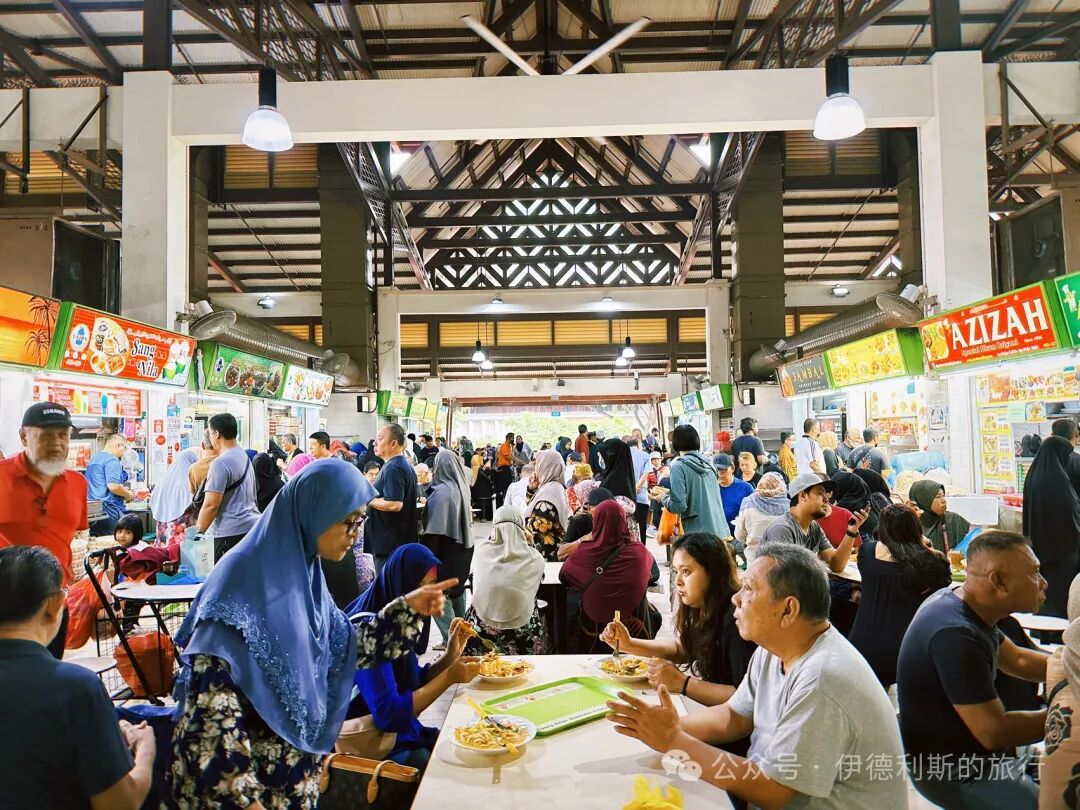
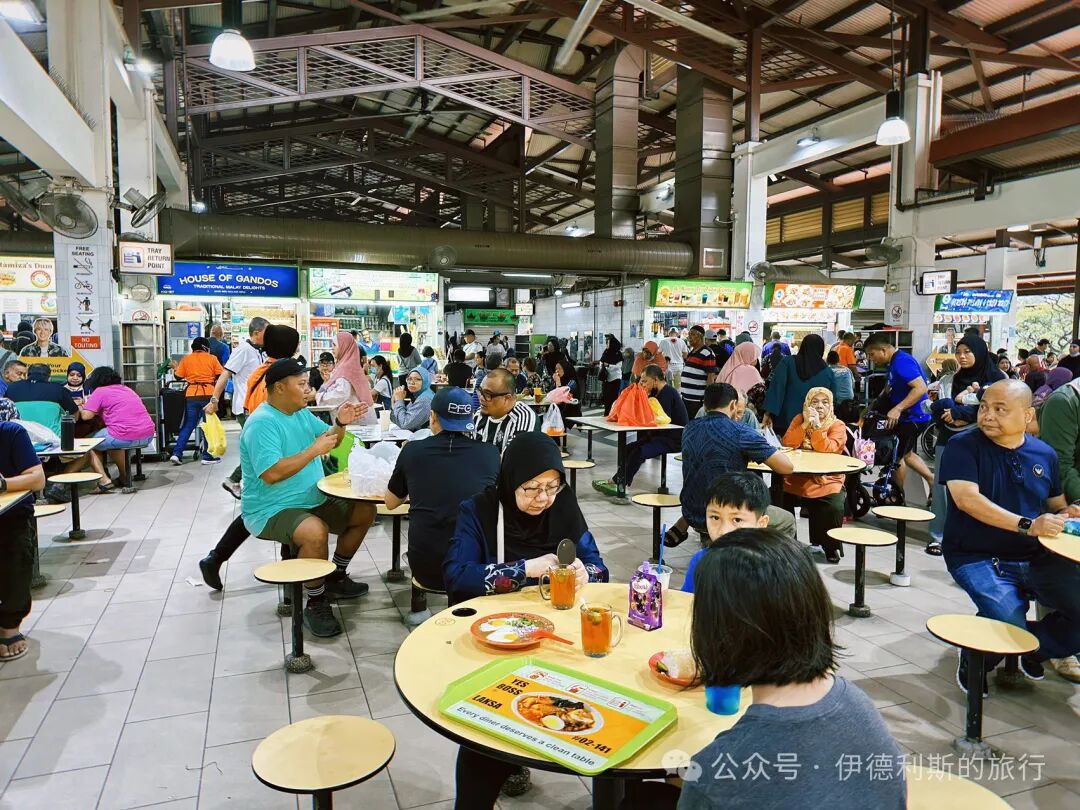
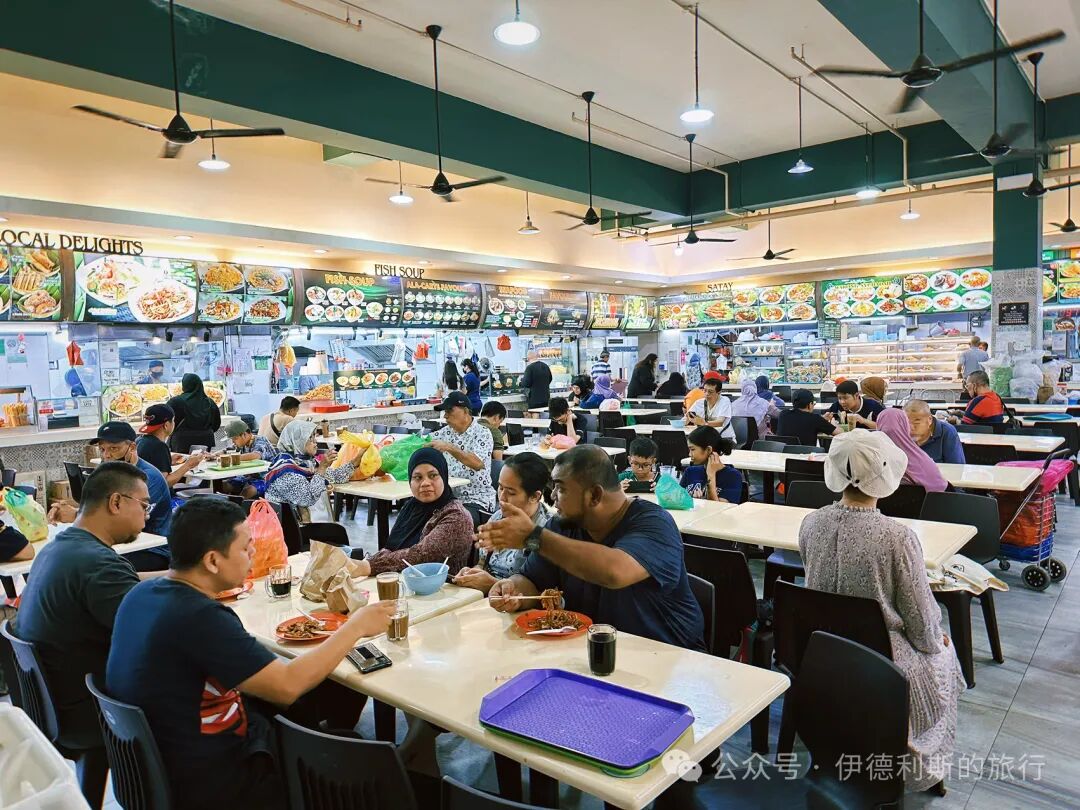
The Malay market (pasar) in Geylang Serai dates back to the 1920s. The Japanese turned it into an amusement park during World War II, but it returned to being a busy Malay market after the war, where local Malays came to shop. Singapore started the Geylang Serai development project in 1962. The Geylang Serai market officially opened in 1964, becoming a place for Malays to buy fresh vegetables, meat, cooked food, clothing, and various groceries. The Geylang Serai market was rebuilt between 2006 and 2010. The new market has two floors and is larger and cleaner.
Since it was built, the Geylang Serai market has been the largest Malay market in Singapore and the best place to experience Malay culture.
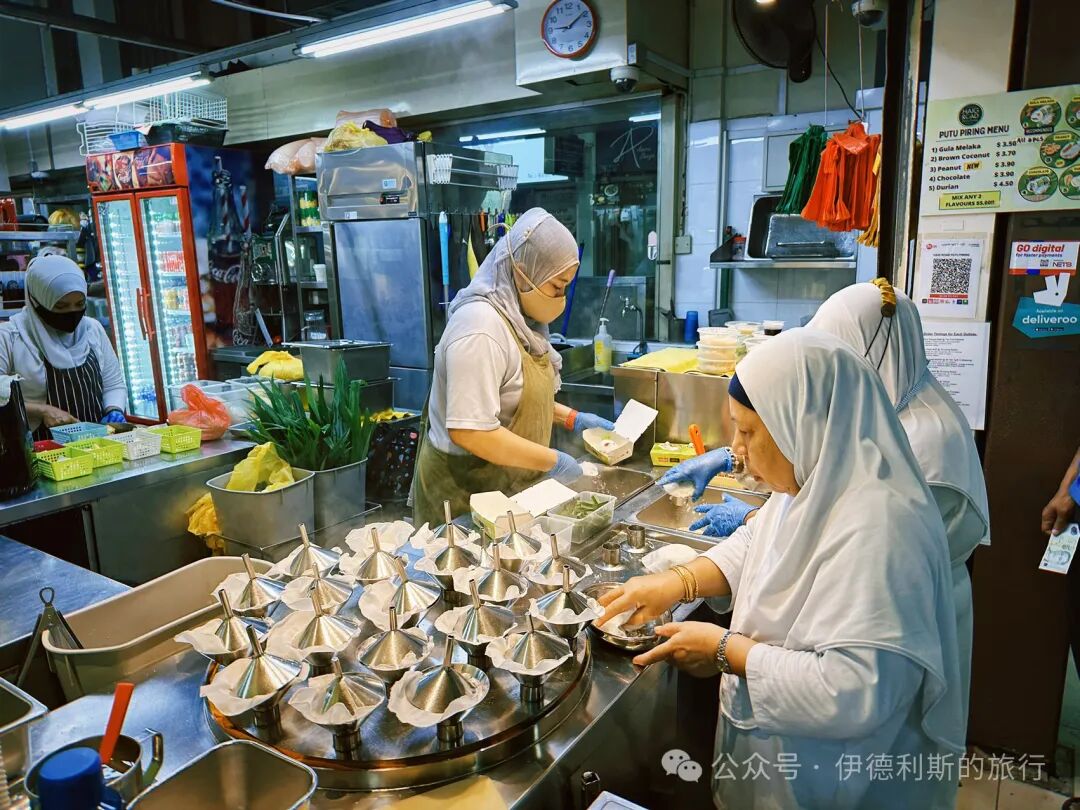
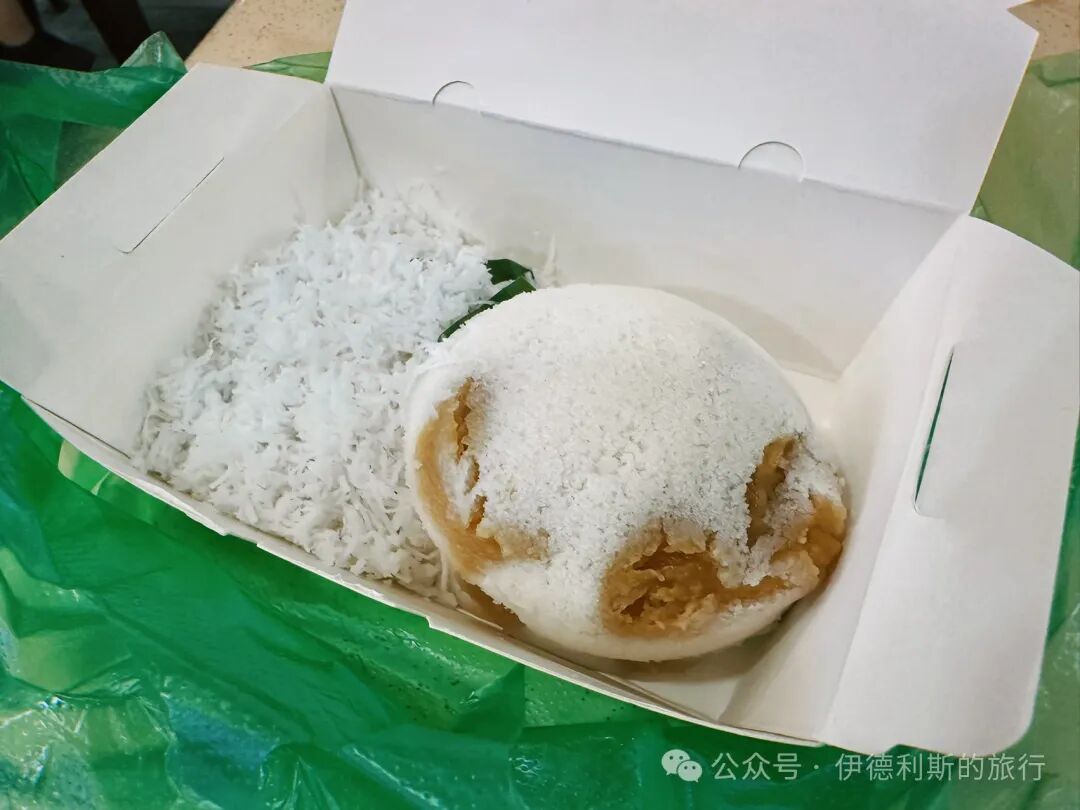
We first ate the classic Malay street snack Putu Piring at Haig Road Putu Piring on the first floor of the Geylang Serai market. This shop has been open since 1985. We chose the durian flavor, and they really put durian fruit inside. Putu Piring was first brought to Southeast Asia by immigrants from Fujian. To make it, you put crushed peanuts, shredded coconut, and palm sugar into rice flour and press it into a special stainless steel mold.
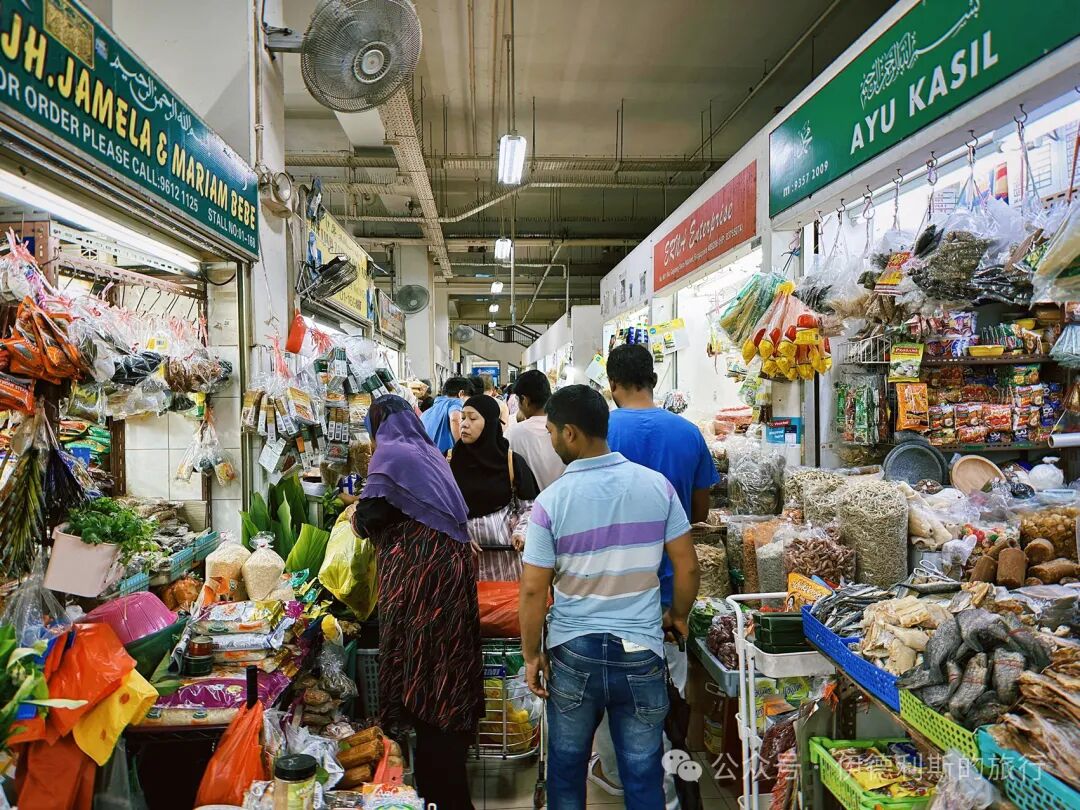
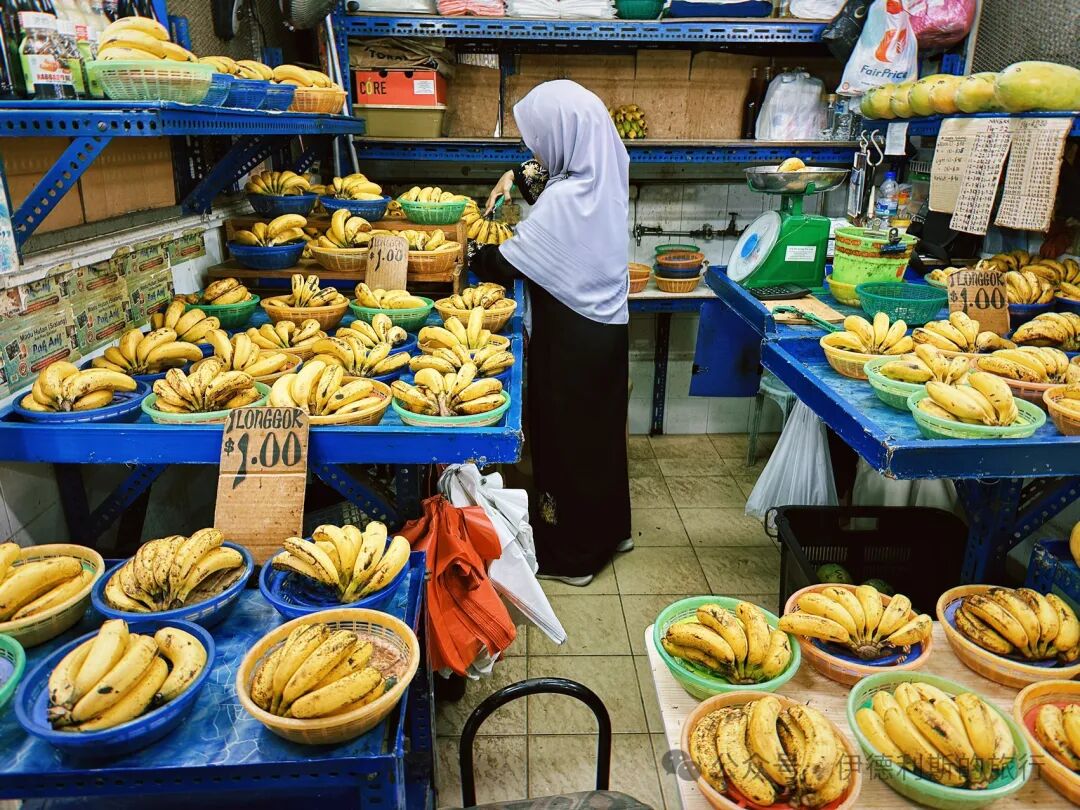
Walking inside from the first floor, you find a place selling all kinds of traditional Malay fruits and vegetables. Then, you go up to the second floor to find where Malays buy clothes.
After going up to the second floor, we first went to the Malay cake stall Kueh Talam Asli. Kueh Talam also originated in Indonesia. Kueh means cake, and Talam is the Indonesian word for tray. Kueh Talam refers to a cake made by steaming rice flour, coconut milk, and other ingredients in a rectangular tray. Traditional Kueh Talam usually has two layers. When making it, you put the bottom layer in the tray first, steam it until it is half-cooked, and then add the top layer. The green color in the rice cakes (kueh) comes from pandan leaf juice, the brown from coconut sugar, the yellow from sweet potato, pumpkin, or corn, and the purple from purple sweet potato or taro.
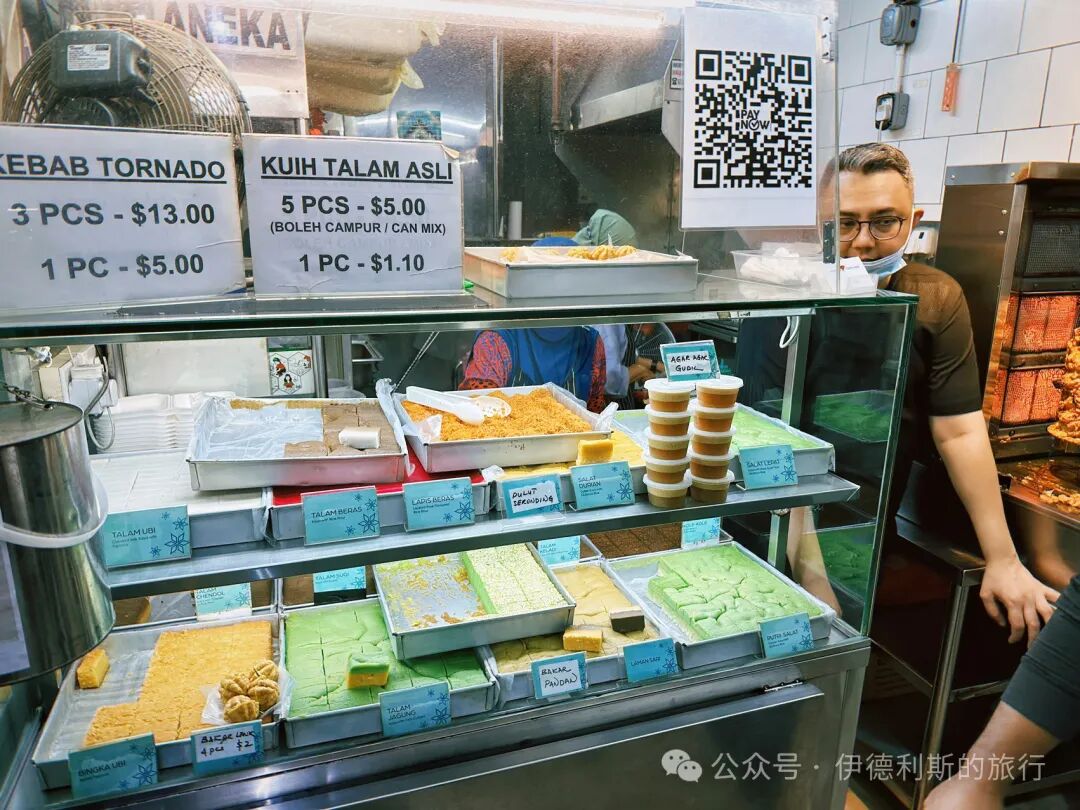
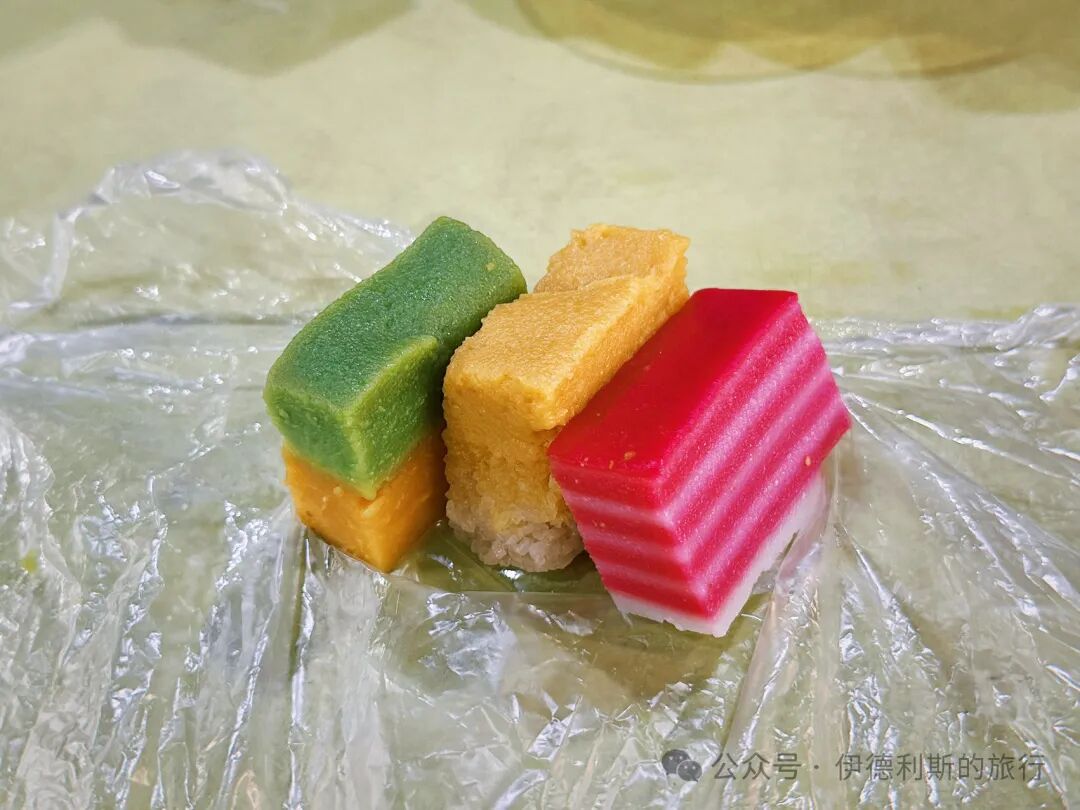
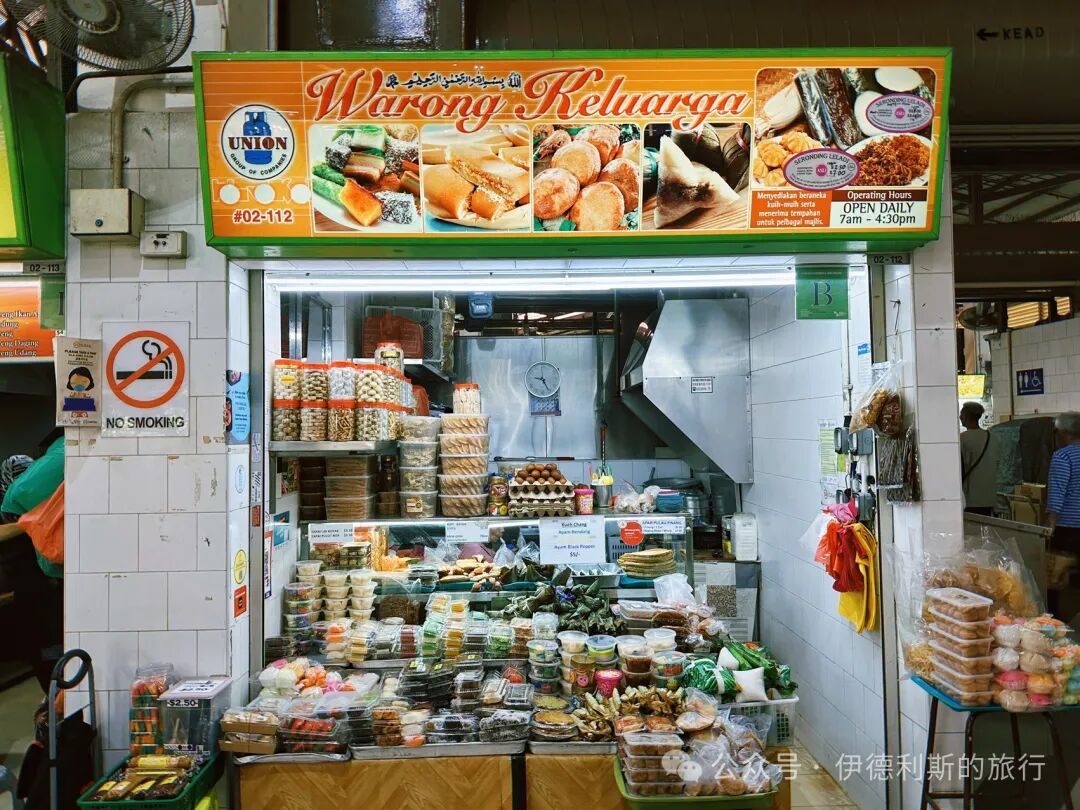
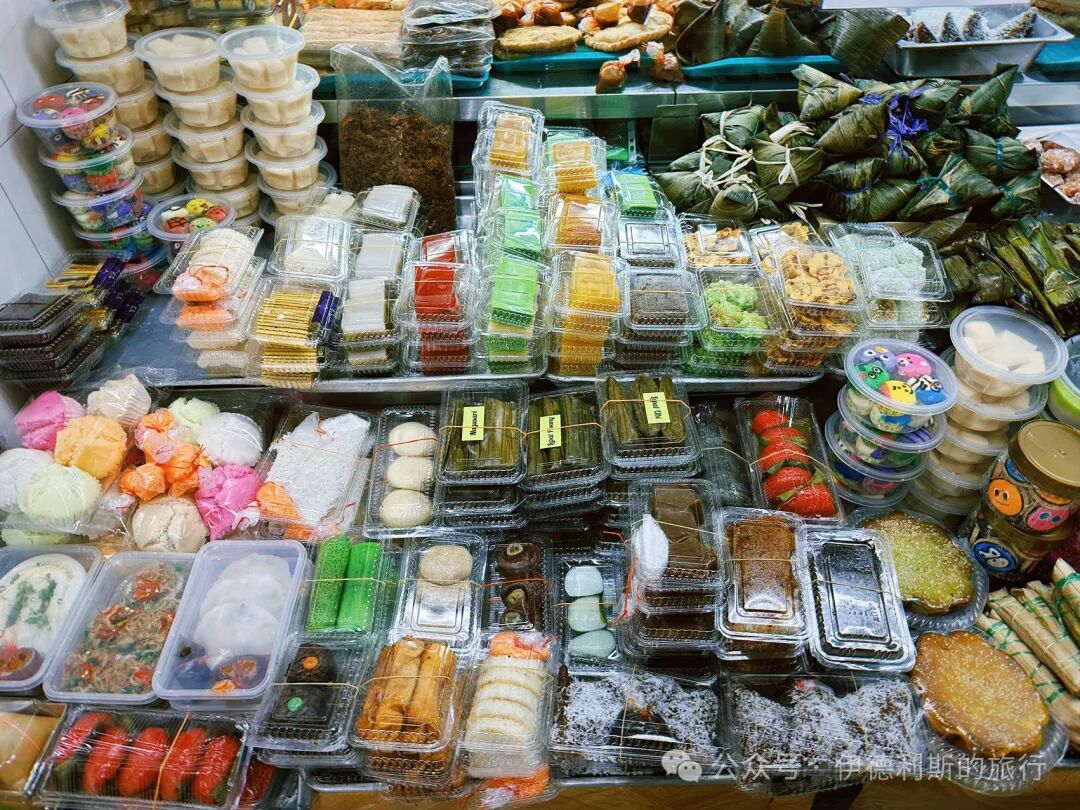
Also, this stall in the market (pasar) called Warong Keluarga has a wide variety of traditional Malay cakes and snacks that I should try next time.
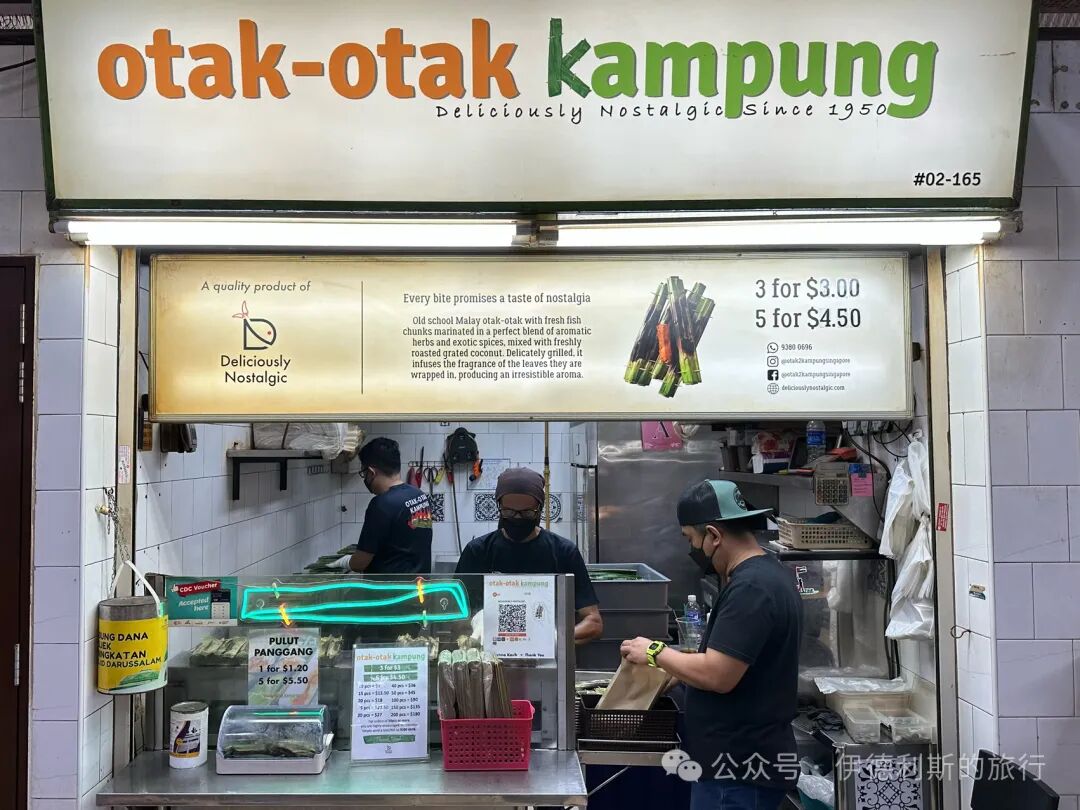
Otak-otak is a fish cake that started in Palembang, Sumatra. It is made by wrapping minced fish, tapioca flour, shredded coconut, and spices in a banana leaf and grilling it. Unlike the white version in Indonesia, otak-otak in Singapore and Malaysia contains chili, shrimp paste (belacan), and turmeric, which gives it an orange-red color.
Cendol is a Southeast Asian shaved ice dessert. It features pandan and glutinous rice noodles topped with coconut milk and palm sugar syrup. In traditional Javanese food, cendol usually only has green pandan noodles, unlike the versions in Singapore and Malaysia that include red beans. To show they are authentic, this cendol shop in Geylang Serai Market uses English, pinyin, Tamil, and Malay to state they do not serve red beans, which is an interesting cultural detail.
Besides Malay stalls, Geylang Serai Market also has halal Indian and Chinese stalls, showing the cultural diversity of Singapore.
We tried the classic Southeast Asian salad, rojak, at a very popular stall on the second floor of the market called Rojak & Mee Siam. Rojak is said to have started on the island of Java. It was originally a mix of fruits and vegetables with spicy palm sugar syrup, but it spread to Indonesia, Malaysia, and Singapore with Javanese migrants and developed into many different styles.
In Singapore, rojak is mainly split into fruit rojak (rojak buah) and Indian rojak (rojak india). The one we ate was Indian rojak. Indian rojak is mostly sold by Tamil Muslim stalls (mamak stalls) and includes items like bean curd, fish cakes, tempeh, cucumber, beef lung, fried dough sticks, and eggs. Customers point to what they want at the window, then the staff cuts and heats it in the back kitchen before adding a thick, spicy, sweet sauce made from mashed sweet potatoes. It is very popular with Malay people.
Next to Kueh Talam Asli is the only Chinese stall in the market, an old shop called Chee Kong clear soup (qing tang) that opened in the 1950s. The clear soup (qing tang) can be served with longan, sweet potato, and ginkgo nuts, and you can have it hot or cold. Drinking a bowl of clear soup (qing tang) is very refreshing after eating a lot of spicy Malay food.
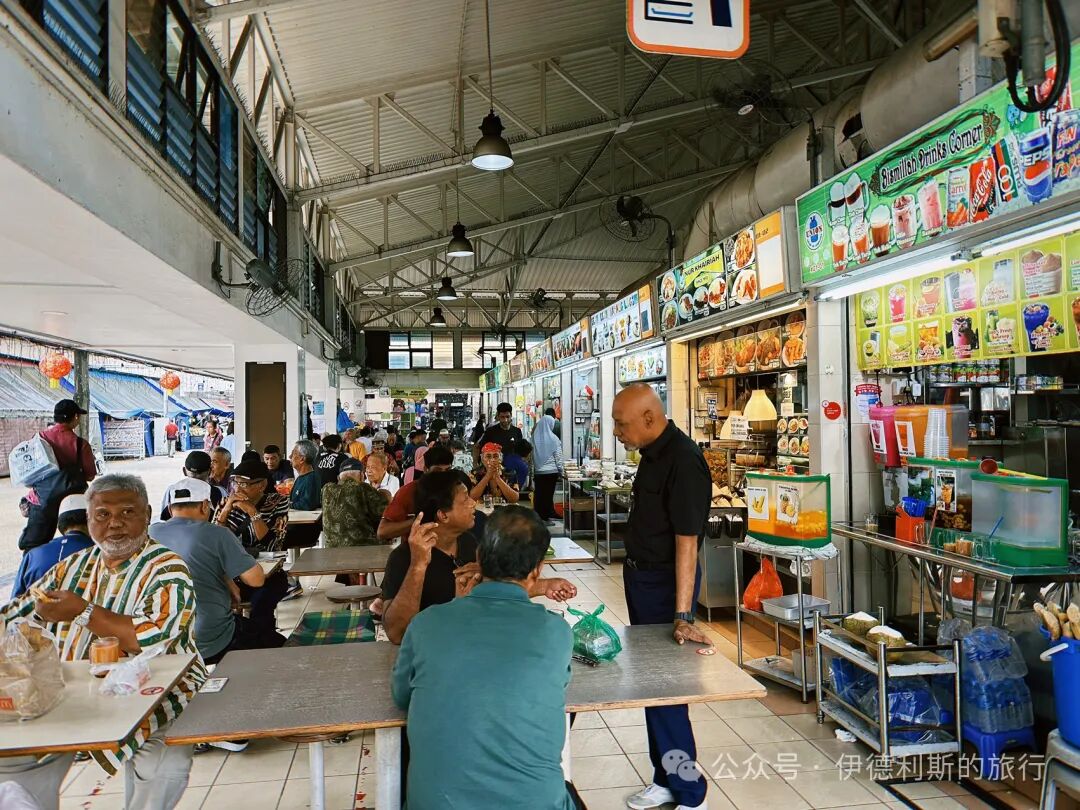
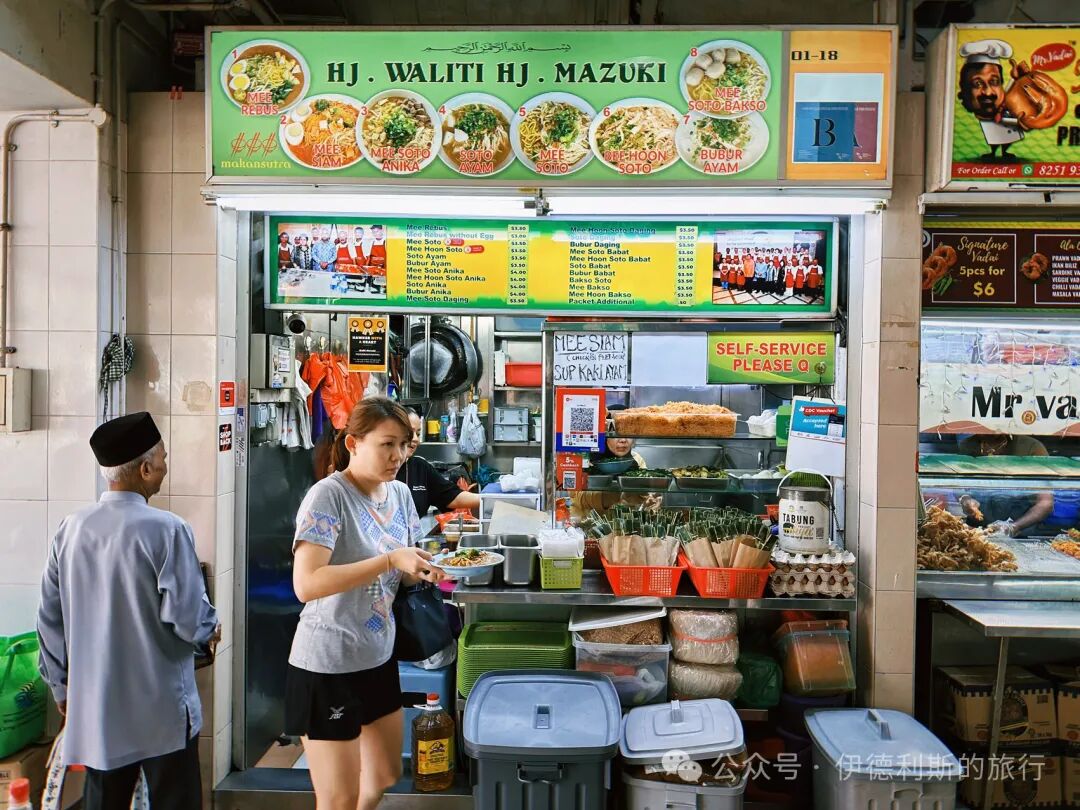
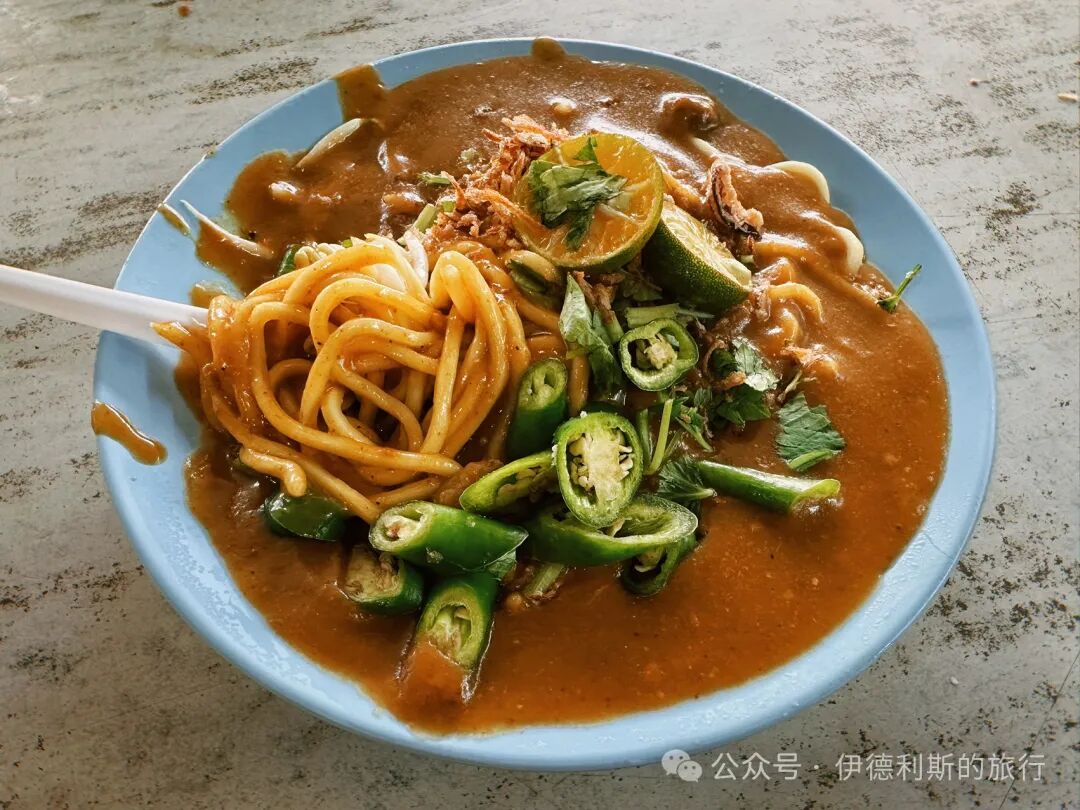
Besides Geylang Serai Market, the Haig Road Market & Food Centre to the west also has plenty of Malay food. At the first stall, we had the most affordable Malay boiled noodles (mee rebus), which features yellow egg noodles topped with a thick, sweet and spicy curry sauce, plus lime, green chili, and dried anchovies.
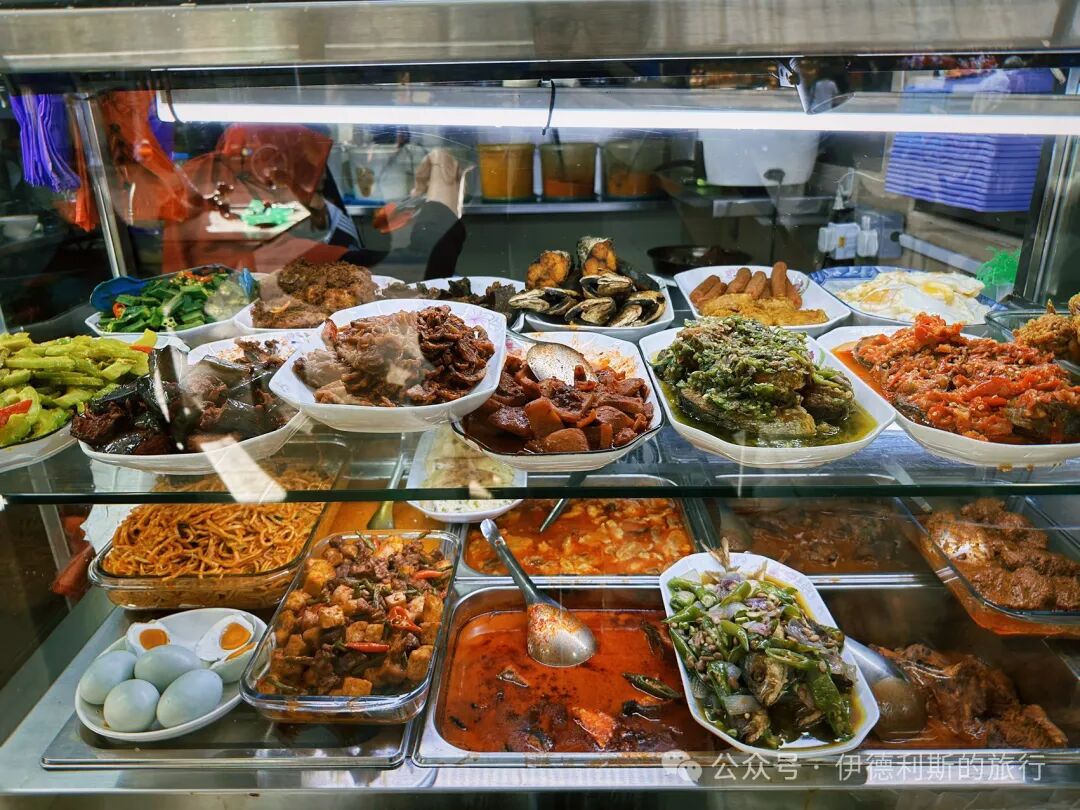
At the second stall, we had another affordable Malay snack, coconut milk rice (nasi lemak), made with rice cooked in coconut milk and pandan leaves, served with fried fish, sambal chili paste, a fried egg, fried peanuts, and dried anchovies.
After our main meal, we chose a classic three-layer milk tea, which gets its three colors from palm sugar, milk, and black tea for a rich flavor.
City Plaza by the Geylang River is a mall for affordable Malay clothing, and hidden on the second floor is Songkok Singapura, the last shop in Singapore that makes traditional caps (songkok) by hand. The owner, Haji Abdul Wahab, had a father who started making songkok in the 1970s, back when there were several such shops in Geylang Serai. Haji Abdul Wahab started learning to make songkok from his father as a teenager, opened his own shop at the old Geylang Serai Market at age 22, and has been doing it for 42 years since. Competition between songkok shops was very intense in the 20th century, but with the rise of machine production, Haji Abdul Wahab is now the only one left who still makes them by hand.
Besides traditional black velvet songkok, Haji Abdul Wahab also makes them in gold, white, and maroon, and many famous people, including the Sultan of Johor, have ordered from his shop. It takes Haji Abdul Wahab about an hour to make each songkok, and the peak season is during Ramadan, when the shop can receive up to 1,000 orders and his whole family helps out.
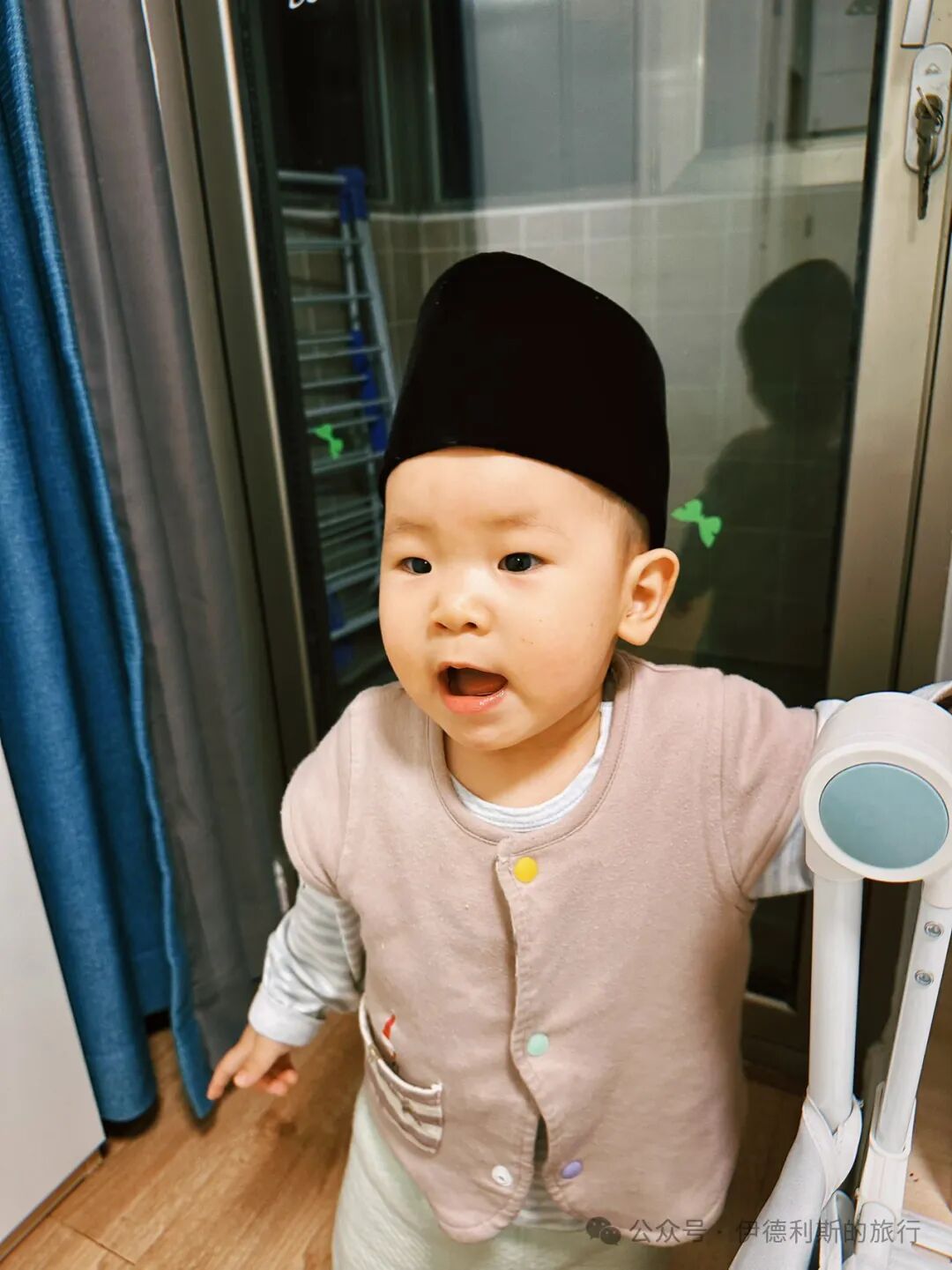
West of Geylang Serai Market is the newly built community center, Wisma Geylang Serai, which houses the Geylang Serai Malay Heritage Gallery. Although the gallery is small, it is a great place to learn about the history and culture of Geylang Serai.
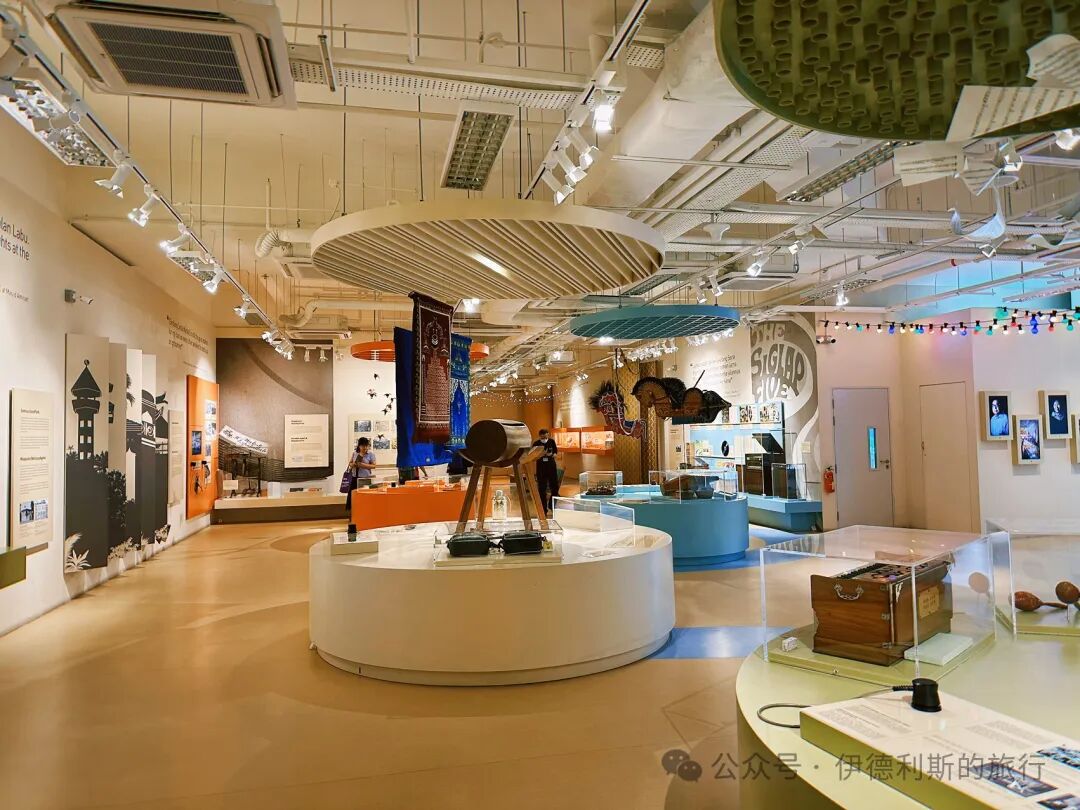
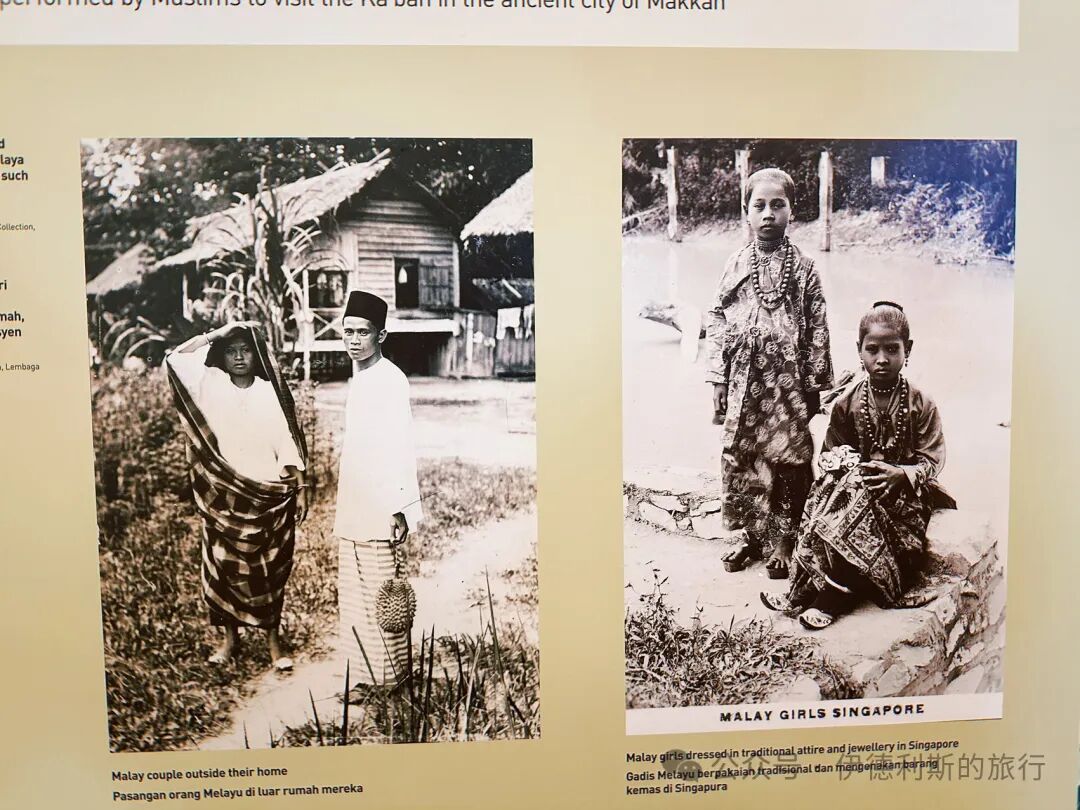
Old photos of Malay people in Singapore.
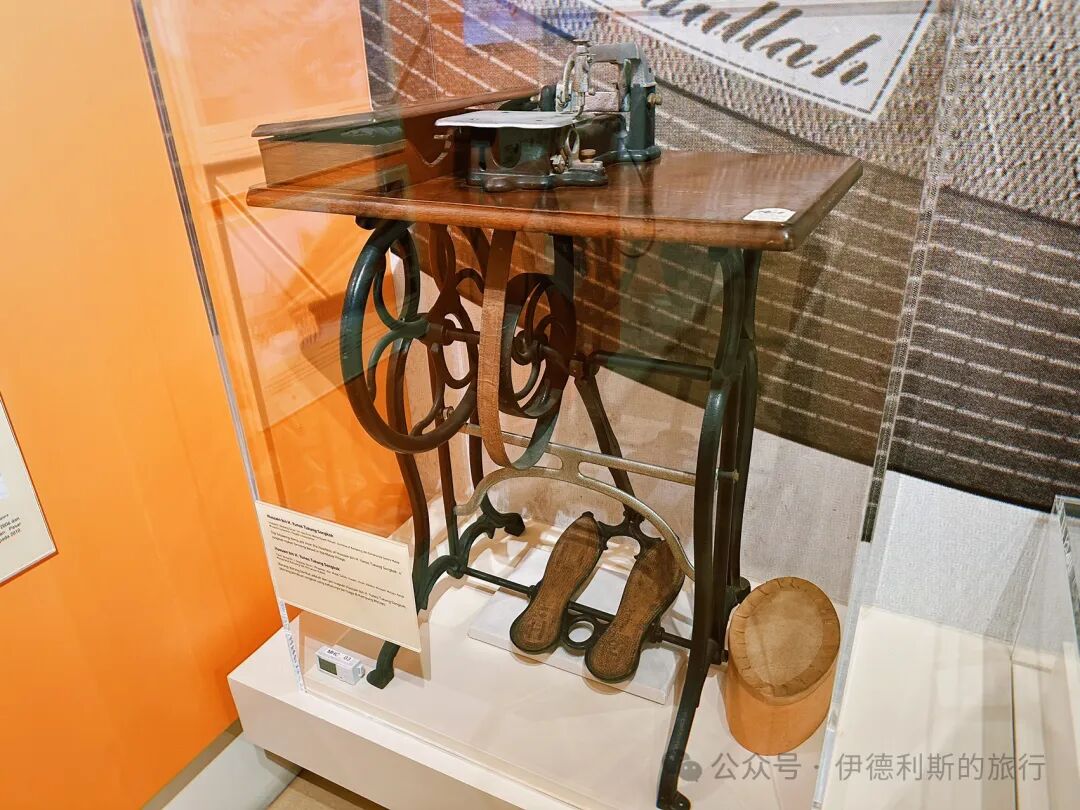
The sewing machine and hat mold used by Hussain bin H. Yunos, who once made songkok in the Geylang Serai Malay Village.
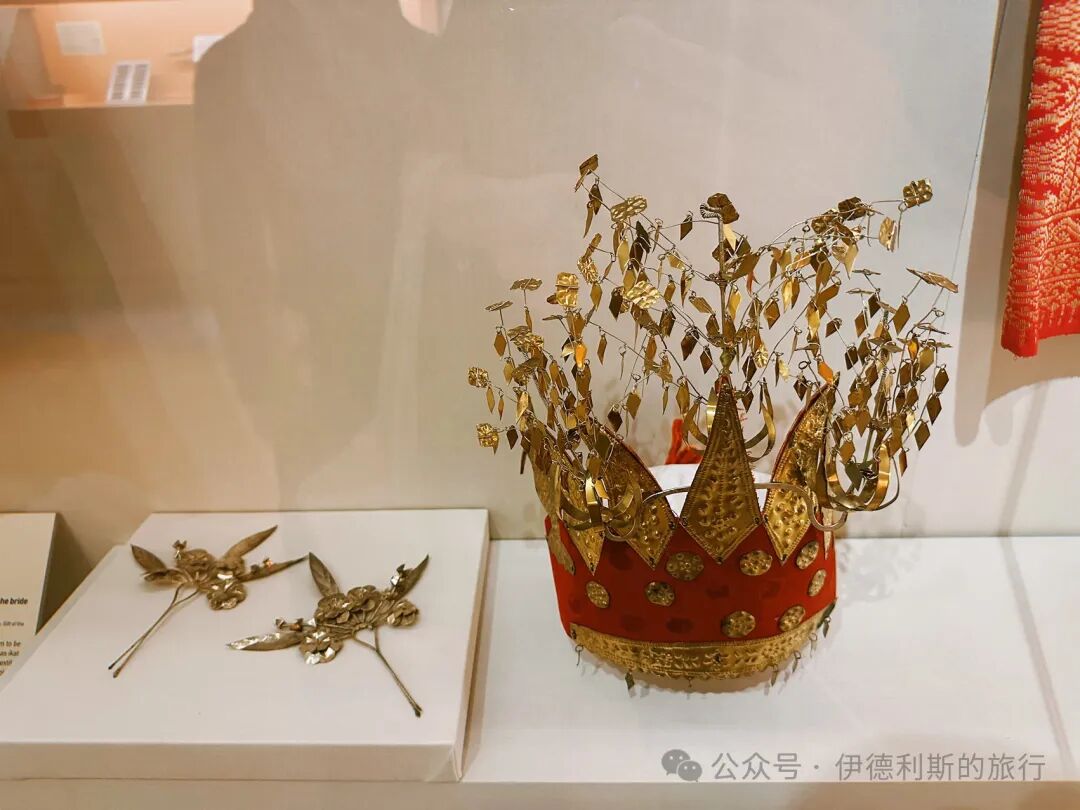
Traditional wedding attire in the Jambi Kodya style from Sumatra.
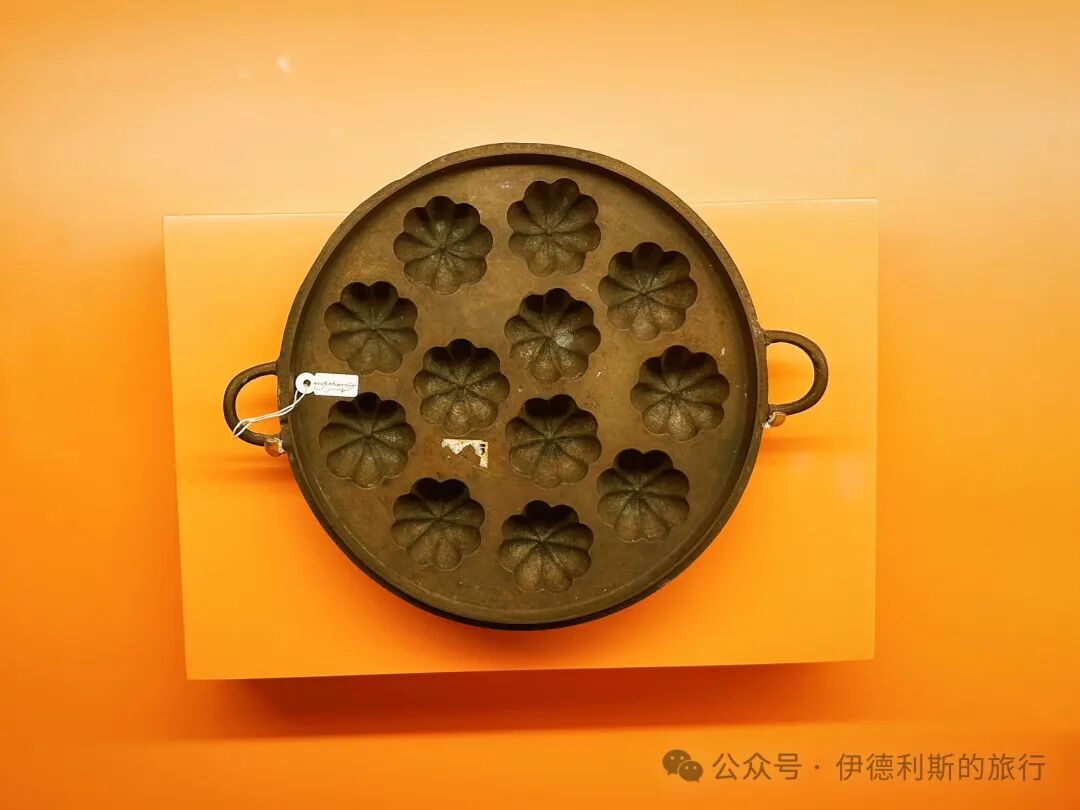
Molds used for making Malay rice cakes (kuih).
Further reading:
The early history of the Malay people and Singapore
Experience Indian Muslim culture in Singapore
Taste halal Chinese food in Singapore
Eating Peranakan food (nyonya cai) in Singapore
Summary: This Singapore article walks through the Malay market in Geylang Serai and records food, shops, neighborhood scenes, and Malay Muslim culture. It keeps the original market details, dishes, prices, and small observations in clear English.
Geylang Serai is located near the Geylang River in eastern Singapore. Geylang likely comes from the name of a tribe of indigenous sea people (Orang Laut) who lived here when the British arrived in the early 19th century. Serai refers to the lemongrass grown in nearby plantations during the late 19th century.
Malay villages were scattered along the Geylang River in the 19th century, but there were not many people there at first. After the 1920s, as rent and living costs in downtown Singapore rose, many Malays moved to the Geylang Serai area in the east. By the 1930s, Geylang Serai had become a densely populated suburb. After World War II, more Malays settled in Geylang Serai, and it became an important Malay community in Singapore.
The Malay market (pasar) in Geylang Serai dates back to the 1920s. The Japanese turned it into an amusement park during World War II, but it returned to being a busy Malay market after the war, where local Malays came to shop. Singapore started the Geylang Serai development project in 1962. The Geylang Serai market officially opened in 1964, becoming a place for Malays to buy fresh vegetables, meat, cooked food, clothing, and various groceries. The Geylang Serai market was rebuilt between 2006 and 2010. The new market has two floors and is larger and cleaner.
Since it was built, the Geylang Serai market has been the largest Malay market in Singapore and the best place to experience Malay culture.
We first ate the classic Malay street snack Putu Piring at Haig Road Putu Piring on the first floor of the Geylang Serai market. This shop has been open since 1985. We chose the durian flavor, and they really put durian fruit inside. Putu Piring was first brought to Southeast Asia by immigrants from Fujian. To make it, you put crushed peanuts, shredded coconut, and palm sugar into rice flour and press it into a special stainless steel mold.
Walking inside from the first floor, you find a place selling all kinds of traditional Malay fruits and vegetables. Then, you go up to the second floor to find where Malays buy clothes.
After going up to the second floor, we first went to the Malay cake stall Kueh Talam Asli. Kueh Talam also originated in Indonesia. Kueh means cake, and Talam is the Indonesian word for tray. Kueh Talam refers to a cake made by steaming rice flour, coconut milk, and other ingredients in a rectangular tray. Traditional Kueh Talam usually has two layers. When making it, you put the bottom layer in the tray first, steam it until it is half-cooked, and then add the top layer. The green color in the rice cakes (kueh) comes from pandan leaf juice, the brown from coconut sugar, the yellow from sweet potato, pumpkin, or corn, and the purple from purple sweet potato or taro.
Also, this stall in the market (pasar) called Warong Keluarga has a wide variety of traditional Malay cakes and snacks that I should try next time.
Otak-otak is a fish cake that started in Palembang, Sumatra. It is made by wrapping minced fish, tapioca flour, shredded coconut, and spices in a banana leaf and grilling it. Unlike the white version in Indonesia, otak-otak in Singapore and Malaysia contains chili, shrimp paste (belacan), and turmeric, which gives it an orange-red color.
Cendol is a Southeast Asian shaved ice dessert. It features pandan and glutinous rice noodles topped with coconut milk and palm sugar syrup. In traditional Javanese food, cendol usually only has green pandan noodles, unlike the versions in Singapore and Malaysia that include red beans. To show they are authentic, this cendol shop in Geylang Serai Market uses English, pinyin, Tamil, and Malay to state they do not serve red beans, which is an interesting cultural detail.
Besides Malay stalls, Geylang Serai Market also has halal Indian and Chinese stalls, showing the cultural diversity of Singapore.
We tried the classic Southeast Asian salad, rojak, at a very popular stall on the second floor of the market called Rojak & Mee Siam. Rojak is said to have started on the island of Java. It was originally a mix of fruits and vegetables with spicy palm sugar syrup, but it spread to Indonesia, Malaysia, and Singapore with Javanese migrants and developed into many different styles.
In Singapore, rojak is mainly split into fruit rojak (rojak buah) and Indian rojak (rojak india). The one we ate was Indian rojak. Indian rojak is mostly sold by Tamil Muslim stalls (mamak stalls) and includes items like bean curd, fish cakes, tempeh, cucumber, beef lung, fried dough sticks, and eggs. Customers point to what they want at the window, then the staff cuts and heats it in the back kitchen before adding a thick, spicy, sweet sauce made from mashed sweet potatoes. It is very popular with Malay people.
Next to Kueh Talam Asli is the only Chinese stall in the market, an old shop called Chee Kong clear soup (qing tang) that opened in the 1950s. The clear soup (qing tang) can be served with longan, sweet potato, and ginkgo nuts, and you can have it hot or cold. Drinking a bowl of clear soup (qing tang) is very refreshing after eating a lot of spicy Malay food.
Besides Geylang Serai Market, the Haig Road Market & Food Centre to the west also has plenty of Malay food. At the first stall, we had the most affordable Malay boiled noodles (mee rebus), which features yellow egg noodles topped with a thick, sweet and spicy curry sauce, plus lime, green chili, and dried anchovies.
At the second stall, we had another affordable Malay snack, coconut milk rice (nasi lemak), made with rice cooked in coconut milk and pandan leaves, served with fried fish, sambal chili paste, a fried egg, fried peanuts, and dried anchovies.
After our main meal, we chose a classic three-layer milk tea, which gets its three colors from palm sugar, milk, and black tea for a rich flavor.
City Plaza by the Geylang River is a mall for affordable Malay clothing, and hidden on the second floor is Songkok Singapura, the last shop in Singapore that makes traditional caps (songkok) by hand. The owner, Haji Abdul Wahab, had a father who started making songkok in the 1970s, back when there were several such shops in Geylang Serai. Haji Abdul Wahab started learning to make songkok from his father as a teenager, opened his own shop at the old Geylang Serai Market at age 22, and has been doing it for 42 years since. Competition between songkok shops was very intense in the 20th century, but with the rise of machine production, Haji Abdul Wahab is now the only one left who still makes them by hand.
Besides traditional black velvet songkok, Haji Abdul Wahab also makes them in gold, white, and maroon, and many famous people, including the Sultan of Johor, have ordered from his shop. It takes Haji Abdul Wahab about an hour to make each songkok, and the peak season is during Ramadan, when the shop can receive up to 1,000 orders and his whole family helps out.
West of Geylang Serai Market is the newly built community center, Wisma Geylang Serai, which houses the Geylang Serai Malay Heritage Gallery. Although the gallery is small, it is a great place to learn about the history and culture of Geylang Serai.
Old photos of Malay people in Singapore.
The sewing machine and hat mold used by Hussain bin H. Yunos, who once made songkok in the Geylang Serai Malay Village.
Traditional wedding attire in the Jambi Kodya style from Sumatra.
Molds used for making Malay rice cakes (kuih).
Further reading:
The early history of the Malay people and Singapore
Experience Indian Muslim culture in Singapore
Taste halal Chinese food in Singapore
Eating Peranakan food (nyonya cai) in Singapore
Halal Travel Guide: Singapore - Geylang Serai Malay Market and Muslim Food
Articles • ali2007fr posted the article • 0 comments • 183 views • 2026-05-19 07:25
Reposted from the web
Summary: This Singapore article walks through the Malay market in Geylang Serai and records food, shops, neighborhood scenes, and Malay Muslim culture. It keeps the original market details, dishes, prices, and small observations in clear English.
Geylang Serai is located near the Geylang River in eastern Singapore. Geylang likely comes from the name of a tribe of indigenous sea people (Orang Laut) who lived here when the British arrived in the early 19th century. Serai refers to the lemongrass grown in nearby plantations during the late 19th century.
Malay villages were scattered along the Geylang River in the 19th century, but there were not many people there at first. After the 1920s, as rent and living costs in downtown Singapore rose, many Malays moved to the Geylang Serai area in the east. By the 1930s, Geylang Serai had become a densely populated suburb. After World War II, more Malays settled in Geylang Serai, and it became an important Malay community in Singapore.
The Malay market (pasar) in Geylang Serai dates back to the 1920s. The Japanese turned it into an amusement park during World War II, but it returned to being a busy Malay market after the war, where local Malays came to shop. Singapore started the Geylang Serai development project in 1962. The Geylang Serai market officially opened in 1964, becoming a place for Malays to buy fresh vegetables, meat, cooked food, clothing, and various groceries. The Geylang Serai market was rebuilt between 2006 and 2010. The new market has two floors and is larger and cleaner.
Since it was built, the Geylang Serai market has been the largest Malay market in Singapore and the best place to experience Malay culture.
We first ate the classic Malay street snack Putu Piring at Haig Road Putu Piring on the first floor of the Geylang Serai market. This shop has been open since 1985. We chose the durian flavor, and they really put durian fruit inside. Putu Piring was first brought to Southeast Asia by immigrants from Fujian. To make it, you put crushed peanuts, shredded coconut, and palm sugar into rice flour and press it into a special stainless steel mold.
Walking inside from the first floor, you find a place selling all kinds of traditional Malay fruits and vegetables. Then, you go up to the second floor to find where Malays buy clothes.
After going up to the second floor, we first went to the Malay cake stall Kueh Talam Asli. Kueh Talam also originated in Indonesia. Kueh means cake, and Talam is the Indonesian word for tray. Kueh Talam refers to a cake made by steaming rice flour, coconut milk, and other ingredients in a rectangular tray. Traditional Kueh Talam usually has two layers. When making it, you put the bottom layer in the tray first, steam it until it is half-cooked, and then add the top layer. The green color in the rice cakes (kueh) comes from pandan leaf juice, the brown from coconut sugar, the yellow from sweet potato, pumpkin, or corn, and the purple from purple sweet potato or taro.
Also, this stall in the market (pasar) called Warong Keluarga has a wide variety of traditional Malay cakes and snacks that I should try next time.
Otak-otak is a fish cake that started in Palembang, Sumatra. It is made by wrapping minced fish, tapioca flour, shredded coconut, and spices in a banana leaf and grilling it. Unlike the white version in Indonesia, otak-otak in Singapore and Malaysia contains chili, shrimp paste (belacan), and turmeric, which gives it an orange-red color.
Cendol is a Southeast Asian shaved ice dessert. It features pandan and glutinous rice noodles topped with coconut milk and palm sugar syrup. In traditional Javanese food, cendol usually only has green pandan noodles, unlike the versions in Singapore and Malaysia that include red beans. To show they are authentic, this cendol shop in Geylang Serai Market uses English, pinyin, Tamil, and Malay to state they do not serve red beans, which is an interesting cultural detail.
Besides Malay stalls, Geylang Serai Market also has halal Indian and Chinese stalls, showing the cultural diversity of Singapore.
We tried the classic Southeast Asian salad, rojak, at a very popular stall on the second floor of the market called Rojak & Mee Siam. Rojak is said to have started on the island of Java. It was originally a mix of fruits and vegetables with spicy palm sugar syrup, but it spread to Indonesia, Malaysia, and Singapore with Javanese migrants and developed into many different styles.
In Singapore, rojak is mainly split into fruit rojak (rojak buah) and Indian rojak (rojak india). The one we ate was Indian rojak. Indian rojak is mostly sold by Tamil Muslim stalls (mamak stalls) and includes items like bean curd, fish cakes, tempeh, cucumber, beef lung, fried dough sticks, and eggs. Customers point to what they want at the window, then the staff cuts and heats it in the back kitchen before adding a thick, spicy, sweet sauce made from mashed sweet potatoes. It is very popular with Malay people.
Next to Kueh Talam Asli is the only Chinese stall in the market, an old shop called Chee Kong clear soup (qing tang) that opened in the 1950s. The clear soup (qing tang) can be served with longan, sweet potato, and ginkgo nuts, and you can have it hot or cold. Drinking a bowl of clear soup (qing tang) is very refreshing after eating a lot of spicy Malay food.
Besides Geylang Serai Market, the Haig Road Market & Food Centre to the west also has plenty of Malay food. At the first stall, we had the most affordable Malay boiled noodles (mee rebus), which features yellow egg noodles topped with a thick, sweet and spicy curry sauce, plus lime, green chili, and dried anchovies.
At the second stall, we had another affordable Malay snack, coconut milk rice (nasi lemak), made with rice cooked in coconut milk and pandan leaves, served with fried fish, sambal chili paste, a fried egg, fried peanuts, and dried anchovies.
After our main meal, we chose a classic three-layer milk tea, which gets its three colors from palm sugar, milk, and black tea for a rich flavor.
City Plaza by the Geylang River is a mall for affordable Malay clothing, and hidden on the second floor is Songkok Singapura, the last shop in Singapore that makes traditional caps (songkok) by hand. The owner, Haji Abdul Wahab, had a father who started making songkok in the 1970s, back when there were several such shops in Geylang Serai. Haji Abdul Wahab started learning to make songkok from his father as a teenager, opened his own shop at the old Geylang Serai Market at age 22, and has been doing it for 42 years since. Competition between songkok shops was very intense in the 20th century, but with the rise of machine production, Haji Abdul Wahab is now the only one left who still makes them by hand.
Besides traditional black velvet songkok, Haji Abdul Wahab also makes them in gold, white, and maroon, and many famous people, including the Sultan of Johor, have ordered from his shop. It takes Haji Abdul Wahab about an hour to make each songkok, and the peak season is during Ramadan, when the shop can receive up to 1,000 orders and his whole family helps out.
West of Geylang Serai Market is the newly built community center, Wisma Geylang Serai, which houses the Geylang Serai Malay Heritage Gallery. Although the gallery is small, it is a great place to learn about the history and culture of Geylang Serai.
Old photos of Malay people in Singapore.
The sewing machine and hat mold used by Hussain bin H. Yunos, who once made songkok in the Geylang Serai Malay Village.
Traditional wedding attire in the Jambi Kodya style from Sumatra.
Molds used for making Malay rice cakes (kuih).
Further reading:
The early history of the Malay people and Singapore
Experience Indian Muslim culture in Singapore
Taste halal Chinese food in Singapore
Eating Peranakan food (nyonya cai) in Singapore view all
Summary: This Singapore article walks through the Malay market in Geylang Serai and records food, shops, neighborhood scenes, and Malay Muslim culture. It keeps the original market details, dishes, prices, and small observations in clear English.
Geylang Serai is located near the Geylang River in eastern Singapore. Geylang likely comes from the name of a tribe of indigenous sea people (Orang Laut) who lived here when the British arrived in the early 19th century. Serai refers to the lemongrass grown in nearby plantations during the late 19th century.
Malay villages were scattered along the Geylang River in the 19th century, but there were not many people there at first. After the 1920s, as rent and living costs in downtown Singapore rose, many Malays moved to the Geylang Serai area in the east. By the 1930s, Geylang Serai had become a densely populated suburb. After World War II, more Malays settled in Geylang Serai, and it became an important Malay community in Singapore.
The Malay market (pasar) in Geylang Serai dates back to the 1920s. The Japanese turned it into an amusement park during World War II, but it returned to being a busy Malay market after the war, where local Malays came to shop. Singapore started the Geylang Serai development project in 1962. The Geylang Serai market officially opened in 1964, becoming a place for Malays to buy fresh vegetables, meat, cooked food, clothing, and various groceries. The Geylang Serai market was rebuilt between 2006 and 2010. The new market has two floors and is larger and cleaner.
Since it was built, the Geylang Serai market has been the largest Malay market in Singapore and the best place to experience Malay culture.
We first ate the classic Malay street snack Putu Piring at Haig Road Putu Piring on the first floor of the Geylang Serai market. This shop has been open since 1985. We chose the durian flavor, and they really put durian fruit inside. Putu Piring was first brought to Southeast Asia by immigrants from Fujian. To make it, you put crushed peanuts, shredded coconut, and palm sugar into rice flour and press it into a special stainless steel mold.
Walking inside from the first floor, you find a place selling all kinds of traditional Malay fruits and vegetables. Then, you go up to the second floor to find where Malays buy clothes.
After going up to the second floor, we first went to the Malay cake stall Kueh Talam Asli. Kueh Talam also originated in Indonesia. Kueh means cake, and Talam is the Indonesian word for tray. Kueh Talam refers to a cake made by steaming rice flour, coconut milk, and other ingredients in a rectangular tray. Traditional Kueh Talam usually has two layers. When making it, you put the bottom layer in the tray first, steam it until it is half-cooked, and then add the top layer. The green color in the rice cakes (kueh) comes from pandan leaf juice, the brown from coconut sugar, the yellow from sweet potato, pumpkin, or corn, and the purple from purple sweet potato or taro.
Also, this stall in the market (pasar) called Warong Keluarga has a wide variety of traditional Malay cakes and snacks that I should try next time.
Otak-otak is a fish cake that started in Palembang, Sumatra. It is made by wrapping minced fish, tapioca flour, shredded coconut, and spices in a banana leaf and grilling it. Unlike the white version in Indonesia, otak-otak in Singapore and Malaysia contains chili, shrimp paste (belacan), and turmeric, which gives it an orange-red color.
Cendol is a Southeast Asian shaved ice dessert. It features pandan and glutinous rice noodles topped with coconut milk and palm sugar syrup. In traditional Javanese food, cendol usually only has green pandan noodles, unlike the versions in Singapore and Malaysia that include red beans. To show they are authentic, this cendol shop in Geylang Serai Market uses English, pinyin, Tamil, and Malay to state they do not serve red beans, which is an interesting cultural detail.
Besides Malay stalls, Geylang Serai Market also has halal Indian and Chinese stalls, showing the cultural diversity of Singapore.
We tried the classic Southeast Asian salad, rojak, at a very popular stall on the second floor of the market called Rojak & Mee Siam. Rojak is said to have started on the island of Java. It was originally a mix of fruits and vegetables with spicy palm sugar syrup, but it spread to Indonesia, Malaysia, and Singapore with Javanese migrants and developed into many different styles.
In Singapore, rojak is mainly split into fruit rojak (rojak buah) and Indian rojak (rojak india). The one we ate was Indian rojak. Indian rojak is mostly sold by Tamil Muslim stalls (mamak stalls) and includes items like bean curd, fish cakes, tempeh, cucumber, beef lung, fried dough sticks, and eggs. Customers point to what they want at the window, then the staff cuts and heats it in the back kitchen before adding a thick, spicy, sweet sauce made from mashed sweet potatoes. It is very popular with Malay people.
Next to Kueh Talam Asli is the only Chinese stall in the market, an old shop called Chee Kong clear soup (qing tang) that opened in the 1950s. The clear soup (qing tang) can be served with longan, sweet potato, and ginkgo nuts, and you can have it hot or cold. Drinking a bowl of clear soup (qing tang) is very refreshing after eating a lot of spicy Malay food.
Besides Geylang Serai Market, the Haig Road Market & Food Centre to the west also has plenty of Malay food. At the first stall, we had the most affordable Malay boiled noodles (mee rebus), which features yellow egg noodles topped with a thick, sweet and spicy curry sauce, plus lime, green chili, and dried anchovies.
At the second stall, we had another affordable Malay snack, coconut milk rice (nasi lemak), made with rice cooked in coconut milk and pandan leaves, served with fried fish, sambal chili paste, a fried egg, fried peanuts, and dried anchovies.
After our main meal, we chose a classic three-layer milk tea, which gets its three colors from palm sugar, milk, and black tea for a rich flavor.
City Plaza by the Geylang River is a mall for affordable Malay clothing, and hidden on the second floor is Songkok Singapura, the last shop in Singapore that makes traditional caps (songkok) by hand. The owner, Haji Abdul Wahab, had a father who started making songkok in the 1970s, back when there were several such shops in Geylang Serai. Haji Abdul Wahab started learning to make songkok from his father as a teenager, opened his own shop at the old Geylang Serai Market at age 22, and has been doing it for 42 years since. Competition between songkok shops was very intense in the 20th century, but with the rise of machine production, Haji Abdul Wahab is now the only one left who still makes them by hand.
Besides traditional black velvet songkok, Haji Abdul Wahab also makes them in gold, white, and maroon, and many famous people, including the Sultan of Johor, have ordered from his shop. It takes Haji Abdul Wahab about an hour to make each songkok, and the peak season is during Ramadan, when the shop can receive up to 1,000 orders and his whole family helps out.
West of Geylang Serai Market is the newly built community center, Wisma Geylang Serai, which houses the Geylang Serai Malay Heritage Gallery. Although the gallery is small, it is a great place to learn about the history and culture of Geylang Serai.
Old photos of Malay people in Singapore.
The sewing machine and hat mold used by Hussain bin H. Yunos, who once made songkok in the Geylang Serai Malay Village.
Traditional wedding attire in the Jambi Kodya style from Sumatra.
Molds used for making Malay rice cakes (kuih).
Further reading:
The early history of the Malay people and Singapore
Experience Indian Muslim culture in Singapore
Taste halal Chinese food in Singapore
Eating Peranakan food (nyonya cai) in Singapore view all
Reposted from the web
Summary: This Singapore article walks through the Malay market in Geylang Serai and records food, shops, neighborhood scenes, and Malay Muslim culture. It keeps the original market details, dishes, prices, and small observations in clear English.
Geylang Serai is located near the Geylang River in eastern Singapore. Geylang likely comes from the name of a tribe of indigenous sea people (Orang Laut) who lived here when the British arrived in the early 19th century. Serai refers to the lemongrass grown in nearby plantations during the late 19th century.
Malay villages were scattered along the Geylang River in the 19th century, but there were not many people there at first. After the 1920s, as rent and living costs in downtown Singapore rose, many Malays moved to the Geylang Serai area in the east. By the 1930s, Geylang Serai had become a densely populated suburb. After World War II, more Malays settled in Geylang Serai, and it became an important Malay community in Singapore.
The Malay market (pasar) in Geylang Serai dates back to the 1920s. The Japanese turned it into an amusement park during World War II, but it returned to being a busy Malay market after the war, where local Malays came to shop. Singapore started the Geylang Serai development project in 1962. The Geylang Serai market officially opened in 1964, becoming a place for Malays to buy fresh vegetables, meat, cooked food, clothing, and various groceries. The Geylang Serai market was rebuilt between 2006 and 2010. The new market has two floors and is larger and cleaner.
Since it was built, the Geylang Serai market has been the largest Malay market in Singapore and the best place to experience Malay culture.
We first ate the classic Malay street snack Putu Piring at Haig Road Putu Piring on the first floor of the Geylang Serai market. This shop has been open since 1985. We chose the durian flavor, and they really put durian fruit inside. Putu Piring was first brought to Southeast Asia by immigrants from Fujian. To make it, you put crushed peanuts, shredded coconut, and palm sugar into rice flour and press it into a special stainless steel mold.
Walking inside from the first floor, you find a place selling all kinds of traditional Malay fruits and vegetables. Then, you go up to the second floor to find where Malays buy clothes.
After going up to the second floor, we first went to the Malay cake stall Kueh Talam Asli. Kueh Talam also originated in Indonesia. Kueh means cake, and Talam is the Indonesian word for tray. Kueh Talam refers to a cake made by steaming rice flour, coconut milk, and other ingredients in a rectangular tray. Traditional Kueh Talam usually has two layers. When making it, you put the bottom layer in the tray first, steam it until it is half-cooked, and then add the top layer. The green color in the rice cakes (kueh) comes from pandan leaf juice, the brown from coconut sugar, the yellow from sweet potato, pumpkin, or corn, and the purple from purple sweet potato or taro.
Also, this stall in the market (pasar) called Warong Keluarga has a wide variety of traditional Malay cakes and snacks that I should try next time.
Otak-otak is a fish cake that started in Palembang, Sumatra. It is made by wrapping minced fish, tapioca flour, shredded coconut, and spices in a banana leaf and grilling it. Unlike the white version in Indonesia, otak-otak in Singapore and Malaysia contains chili, shrimp paste (belacan), and turmeric, which gives it an orange-red color.
Cendol is a Southeast Asian shaved ice dessert. It features pandan and glutinous rice noodles topped with coconut milk and palm sugar syrup. In traditional Javanese food, cendol usually only has green pandan noodles, unlike the versions in Singapore and Malaysia that include red beans. To show they are authentic, this cendol shop in Geylang Serai Market uses English, pinyin, Tamil, and Malay to state they do not serve red beans, which is an interesting cultural detail.
Besides Malay stalls, Geylang Serai Market also has halal Indian and Chinese stalls, showing the cultural diversity of Singapore.
We tried the classic Southeast Asian salad, rojak, at a very popular stall on the second floor of the market called Rojak & Mee Siam. Rojak is said to have started on the island of Java. It was originally a mix of fruits and vegetables with spicy palm sugar syrup, but it spread to Indonesia, Malaysia, and Singapore with Javanese migrants and developed into many different styles.
In Singapore, rojak is mainly split into fruit rojak (rojak buah) and Indian rojak (rojak india). The one we ate was Indian rojak. Indian rojak is mostly sold by Tamil Muslim stalls (mamak stalls) and includes items like bean curd, fish cakes, tempeh, cucumber, beef lung, fried dough sticks, and eggs. Customers point to what they want at the window, then the staff cuts and heats it in the back kitchen before adding a thick, spicy, sweet sauce made from mashed sweet potatoes. It is very popular with Malay people.
Next to Kueh Talam Asli is the only Chinese stall in the market, an old shop called Chee Kong clear soup (qing tang) that opened in the 1950s. The clear soup (qing tang) can be served with longan, sweet potato, and ginkgo nuts, and you can have it hot or cold. Drinking a bowl of clear soup (qing tang) is very refreshing after eating a lot of spicy Malay food.
Besides Geylang Serai Market, the Haig Road Market & Food Centre to the west also has plenty of Malay food. At the first stall, we had the most affordable Malay boiled noodles (mee rebus), which features yellow egg noodles topped with a thick, sweet and spicy curry sauce, plus lime, green chili, and dried anchovies.
At the second stall, we had another affordable Malay snack, coconut milk rice (nasi lemak), made with rice cooked in coconut milk and pandan leaves, served with fried fish, sambal chili paste, a fried egg, fried peanuts, and dried anchovies.
After our main meal, we chose a classic three-layer milk tea, which gets its three colors from palm sugar, milk, and black tea for a rich flavor.
City Plaza by the Geylang River is a mall for affordable Malay clothing, and hidden on the second floor is Songkok Singapura, the last shop in Singapore that makes traditional caps (songkok) by hand. The owner, Haji Abdul Wahab, had a father who started making songkok in the 1970s, back when there were several such shops in Geylang Serai. Haji Abdul Wahab started learning to make songkok from his father as a teenager, opened his own shop at the old Geylang Serai Market at age 22, and has been doing it for 42 years since. Competition between songkok shops was very intense in the 20th century, but with the rise of machine production, Haji Abdul Wahab is now the only one left who still makes them by hand.
Besides traditional black velvet songkok, Haji Abdul Wahab also makes them in gold, white, and maroon, and many famous people, including the Sultan of Johor, have ordered from his shop. It takes Haji Abdul Wahab about an hour to make each songkok, and the peak season is during Ramadan, when the shop can receive up to 1,000 orders and his whole family helps out.
West of Geylang Serai Market is the newly built community center, Wisma Geylang Serai, which houses the Geylang Serai Malay Heritage Gallery. Although the gallery is small, it is a great place to learn about the history and culture of Geylang Serai.
Old photos of Malay people in Singapore.
The sewing machine and hat mold used by Hussain bin H. Yunos, who once made songkok in the Geylang Serai Malay Village.
Traditional wedding attire in the Jambi Kodya style from Sumatra.
Molds used for making Malay rice cakes (kuih).
Further reading:
The early history of the Malay people and Singapore
Experience Indian Muslim culture in Singapore
Taste halal Chinese food in Singapore
Eating Peranakan food (nyonya cai) in Singapore
Summary: This Singapore article walks through the Malay market in Geylang Serai and records food, shops, neighborhood scenes, and Malay Muslim culture. It keeps the original market details, dishes, prices, and small observations in clear English.
Geylang Serai is located near the Geylang River in eastern Singapore. Geylang likely comes from the name of a tribe of indigenous sea people (Orang Laut) who lived here when the British arrived in the early 19th century. Serai refers to the lemongrass grown in nearby plantations during the late 19th century.
Malay villages were scattered along the Geylang River in the 19th century, but there were not many people there at first. After the 1920s, as rent and living costs in downtown Singapore rose, many Malays moved to the Geylang Serai area in the east. By the 1930s, Geylang Serai had become a densely populated suburb. After World War II, more Malays settled in Geylang Serai, and it became an important Malay community in Singapore.
The Malay market (pasar) in Geylang Serai dates back to the 1920s. The Japanese turned it into an amusement park during World War II, but it returned to being a busy Malay market after the war, where local Malays came to shop. Singapore started the Geylang Serai development project in 1962. The Geylang Serai market officially opened in 1964, becoming a place for Malays to buy fresh vegetables, meat, cooked food, clothing, and various groceries. The Geylang Serai market was rebuilt between 2006 and 2010. The new market has two floors and is larger and cleaner.
Since it was built, the Geylang Serai market has been the largest Malay market in Singapore and the best place to experience Malay culture.
We first ate the classic Malay street snack Putu Piring at Haig Road Putu Piring on the first floor of the Geylang Serai market. This shop has been open since 1985. We chose the durian flavor, and they really put durian fruit inside. Putu Piring was first brought to Southeast Asia by immigrants from Fujian. To make it, you put crushed peanuts, shredded coconut, and palm sugar into rice flour and press it into a special stainless steel mold.
Walking inside from the first floor, you find a place selling all kinds of traditional Malay fruits and vegetables. Then, you go up to the second floor to find where Malays buy clothes.
After going up to the second floor, we first went to the Malay cake stall Kueh Talam Asli. Kueh Talam also originated in Indonesia. Kueh means cake, and Talam is the Indonesian word for tray. Kueh Talam refers to a cake made by steaming rice flour, coconut milk, and other ingredients in a rectangular tray. Traditional Kueh Talam usually has two layers. When making it, you put the bottom layer in the tray first, steam it until it is half-cooked, and then add the top layer. The green color in the rice cakes (kueh) comes from pandan leaf juice, the brown from coconut sugar, the yellow from sweet potato, pumpkin, or corn, and the purple from purple sweet potato or taro.
Also, this stall in the market (pasar) called Warong Keluarga has a wide variety of traditional Malay cakes and snacks that I should try next time.
Otak-otak is a fish cake that started in Palembang, Sumatra. It is made by wrapping minced fish, tapioca flour, shredded coconut, and spices in a banana leaf and grilling it. Unlike the white version in Indonesia, otak-otak in Singapore and Malaysia contains chili, shrimp paste (belacan), and turmeric, which gives it an orange-red color.
Cendol is a Southeast Asian shaved ice dessert. It features pandan and glutinous rice noodles topped with coconut milk and palm sugar syrup. In traditional Javanese food, cendol usually only has green pandan noodles, unlike the versions in Singapore and Malaysia that include red beans. To show they are authentic, this cendol shop in Geylang Serai Market uses English, pinyin, Tamil, and Malay to state they do not serve red beans, which is an interesting cultural detail.
Besides Malay stalls, Geylang Serai Market also has halal Indian and Chinese stalls, showing the cultural diversity of Singapore.
We tried the classic Southeast Asian salad, rojak, at a very popular stall on the second floor of the market called Rojak & Mee Siam. Rojak is said to have started on the island of Java. It was originally a mix of fruits and vegetables with spicy palm sugar syrup, but it spread to Indonesia, Malaysia, and Singapore with Javanese migrants and developed into many different styles.
In Singapore, rojak is mainly split into fruit rojak (rojak buah) and Indian rojak (rojak india). The one we ate was Indian rojak. Indian rojak is mostly sold by Tamil Muslim stalls (mamak stalls) and includes items like bean curd, fish cakes, tempeh, cucumber, beef lung, fried dough sticks, and eggs. Customers point to what they want at the window, then the staff cuts and heats it in the back kitchen before adding a thick, spicy, sweet sauce made from mashed sweet potatoes. It is very popular with Malay people.
Next to Kueh Talam Asli is the only Chinese stall in the market, an old shop called Chee Kong clear soup (qing tang) that opened in the 1950s. The clear soup (qing tang) can be served with longan, sweet potato, and ginkgo nuts, and you can have it hot or cold. Drinking a bowl of clear soup (qing tang) is very refreshing after eating a lot of spicy Malay food.
Besides Geylang Serai Market, the Haig Road Market & Food Centre to the west also has plenty of Malay food. At the first stall, we had the most affordable Malay boiled noodles (mee rebus), which features yellow egg noodles topped with a thick, sweet and spicy curry sauce, plus lime, green chili, and dried anchovies.
At the second stall, we had another affordable Malay snack, coconut milk rice (nasi lemak), made with rice cooked in coconut milk and pandan leaves, served with fried fish, sambal chili paste, a fried egg, fried peanuts, and dried anchovies.
After our main meal, we chose a classic three-layer milk tea, which gets its three colors from palm sugar, milk, and black tea for a rich flavor.
City Plaza by the Geylang River is a mall for affordable Malay clothing, and hidden on the second floor is Songkok Singapura, the last shop in Singapore that makes traditional caps (songkok) by hand. The owner, Haji Abdul Wahab, had a father who started making songkok in the 1970s, back when there were several such shops in Geylang Serai. Haji Abdul Wahab started learning to make songkok from his father as a teenager, opened his own shop at the old Geylang Serai Market at age 22, and has been doing it for 42 years since. Competition between songkok shops was very intense in the 20th century, but with the rise of machine production, Haji Abdul Wahab is now the only one left who still makes them by hand.
Besides traditional black velvet songkok, Haji Abdul Wahab also makes them in gold, white, and maroon, and many famous people, including the Sultan of Johor, have ordered from his shop. It takes Haji Abdul Wahab about an hour to make each songkok, and the peak season is during Ramadan, when the shop can receive up to 1,000 orders and his whole family helps out.
West of Geylang Serai Market is the newly built community center, Wisma Geylang Serai, which houses the Geylang Serai Malay Heritage Gallery. Although the gallery is small, it is a great place to learn about the history and culture of Geylang Serai.
Old photos of Malay people in Singapore.
The sewing machine and hat mold used by Hussain bin H. Yunos, who once made songkok in the Geylang Serai Malay Village.
Traditional wedding attire in the Jambi Kodya style from Sumatra.
Molds used for making Malay rice cakes (kuih).
Further reading:
The early history of the Malay people and Singapore
Experience Indian Muslim culture in Singapore
Taste halal Chinese food in Singapore
Eating Peranakan food (nyonya cai) in Singapore