

Malay Mosque
Muslim Travel Guide Singapore: Al-Amin Mosque, Malay-Style Architecture and Prayer Hall
Articles • Hasan09 posted the article • 0 comments • 253 views • 2026-05-24 01:46
Reposted from the web
Summary: This Muslim travel guide visits Al-Amin Mosque in Singapore and its Malay-style design. It preserves the source notes on the main building, minaret, prayer hall, and local mosque atmosphere.
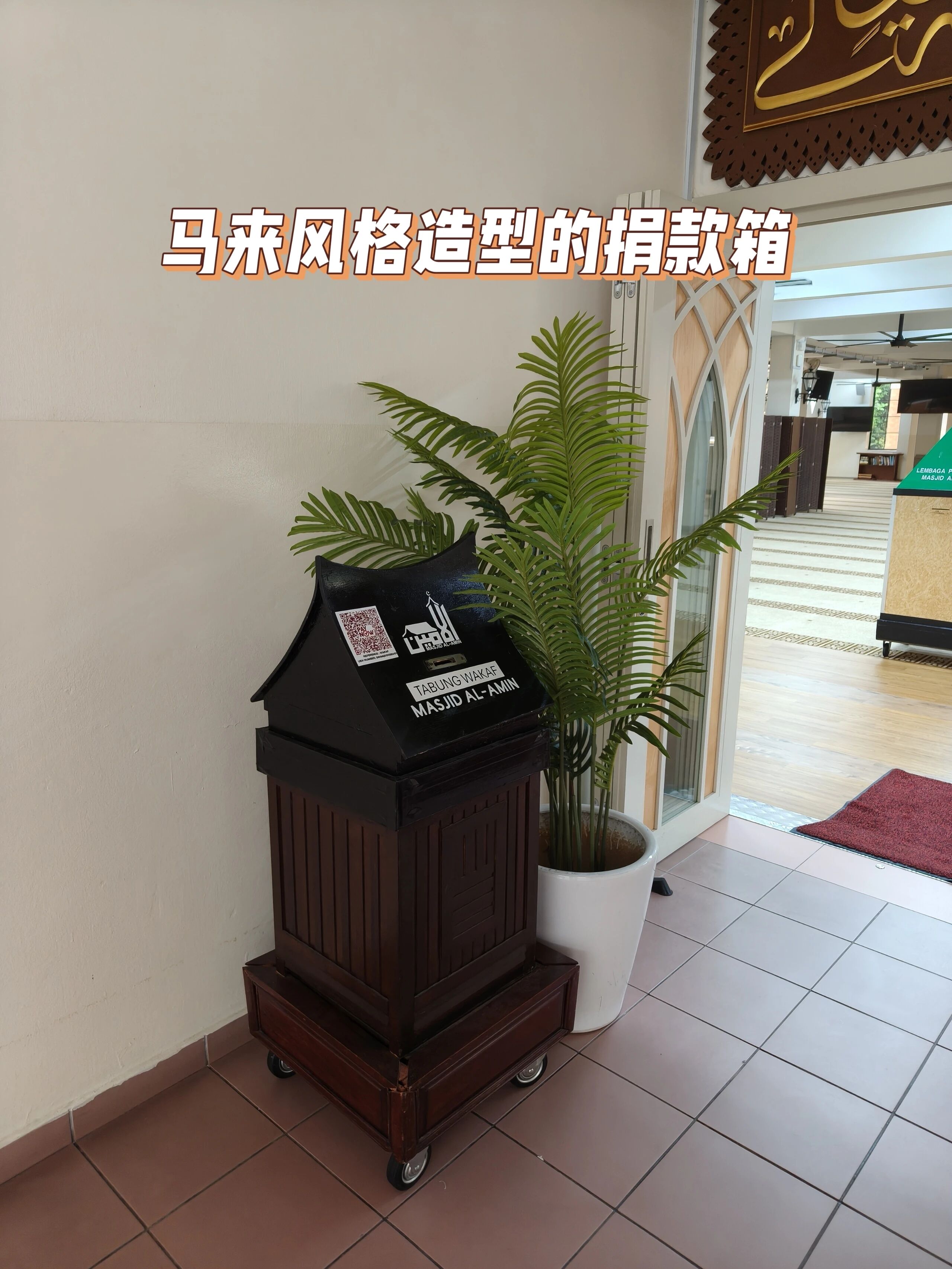
Al-Amin Mosque is built in a Malay style, with both the main building and the minaret showing distinct Malay features.
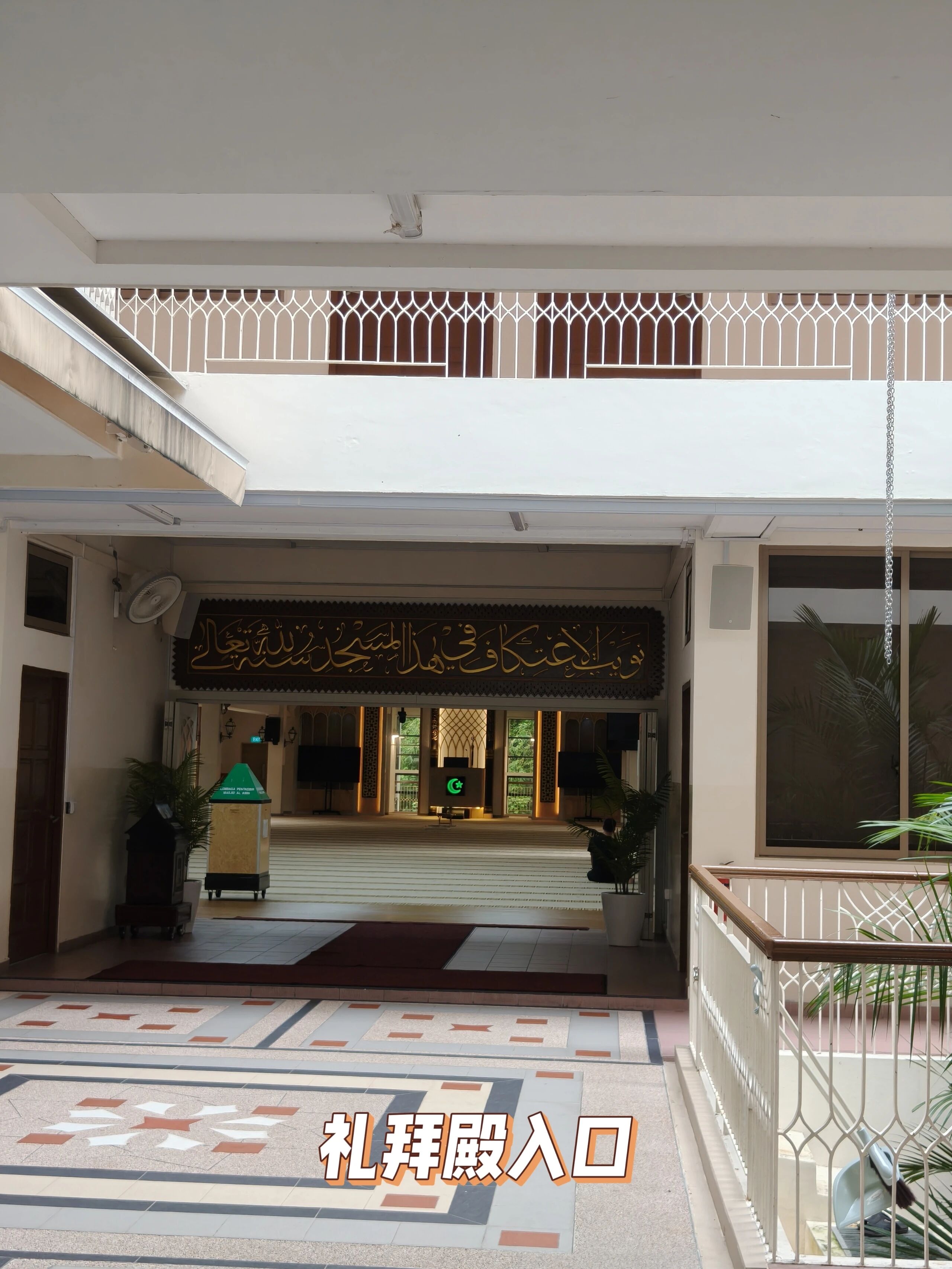
Near the elevator shaft of the mosque, there is a sign written in Jawi script (Figure 3).
At first, I thought it was Arabic, but looking closely, I saw some letters that do not exist in the Arabic alphabet. It is reasonable to conclude that this is Jawi, which uses Arabic letters to write the Malay language, fitting for a Malay-style mosque.
I took the elevator to the second floor and found a small garden (Figure 7). There is a tea dispenser nearby, and the tea tastes similar to Assam milk tea.
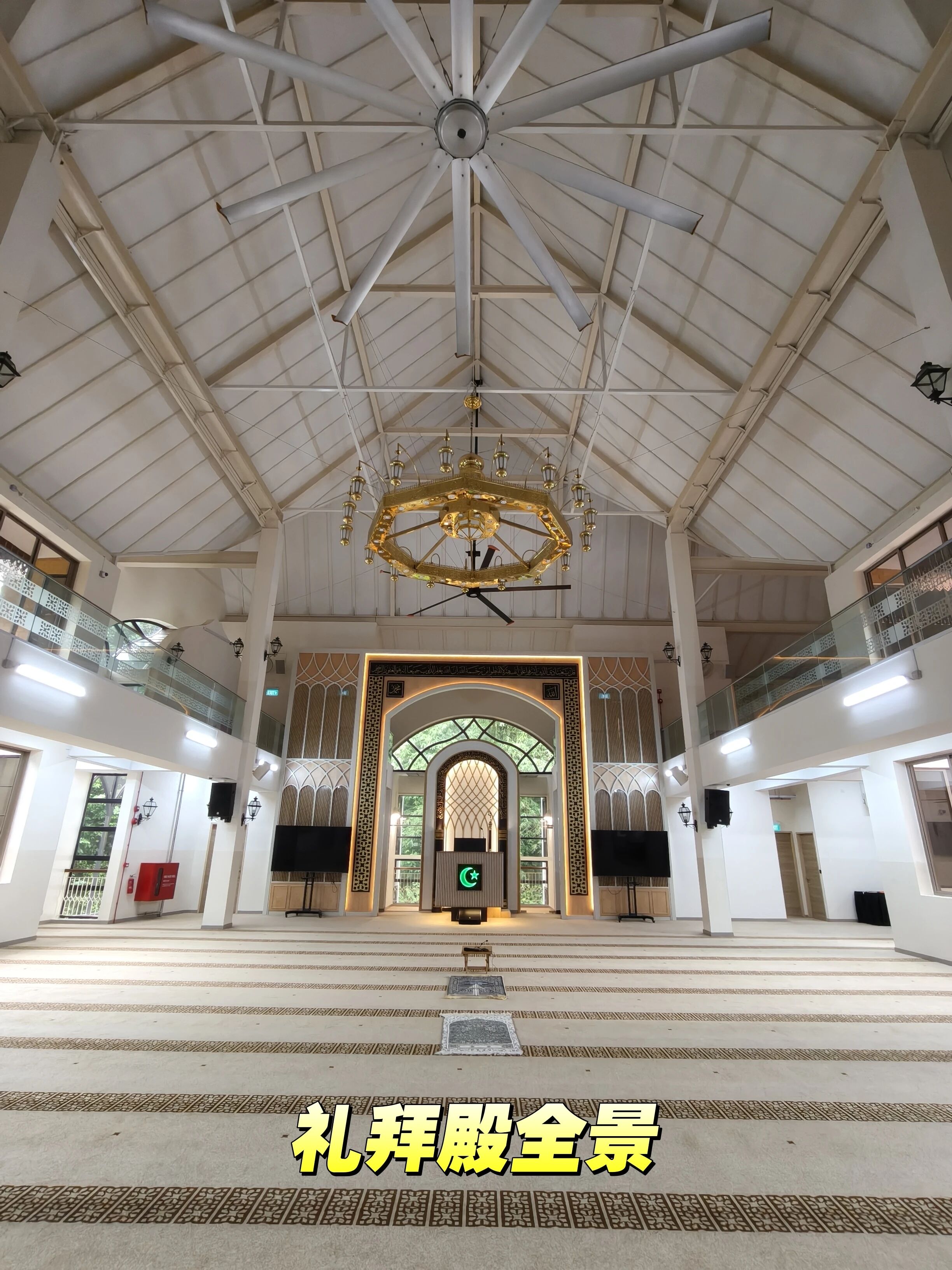
Sitting on a chair in the garden to have a drink helped me recover from the fatigue of my journey. When I entered the prayer hall and got ready to take photos, the elderly caretaker saw me holding my phone and turned on the lights so I could get a clearer shot.
I took photos twice, and both times, the man turned on the lights as soon as he saw me.
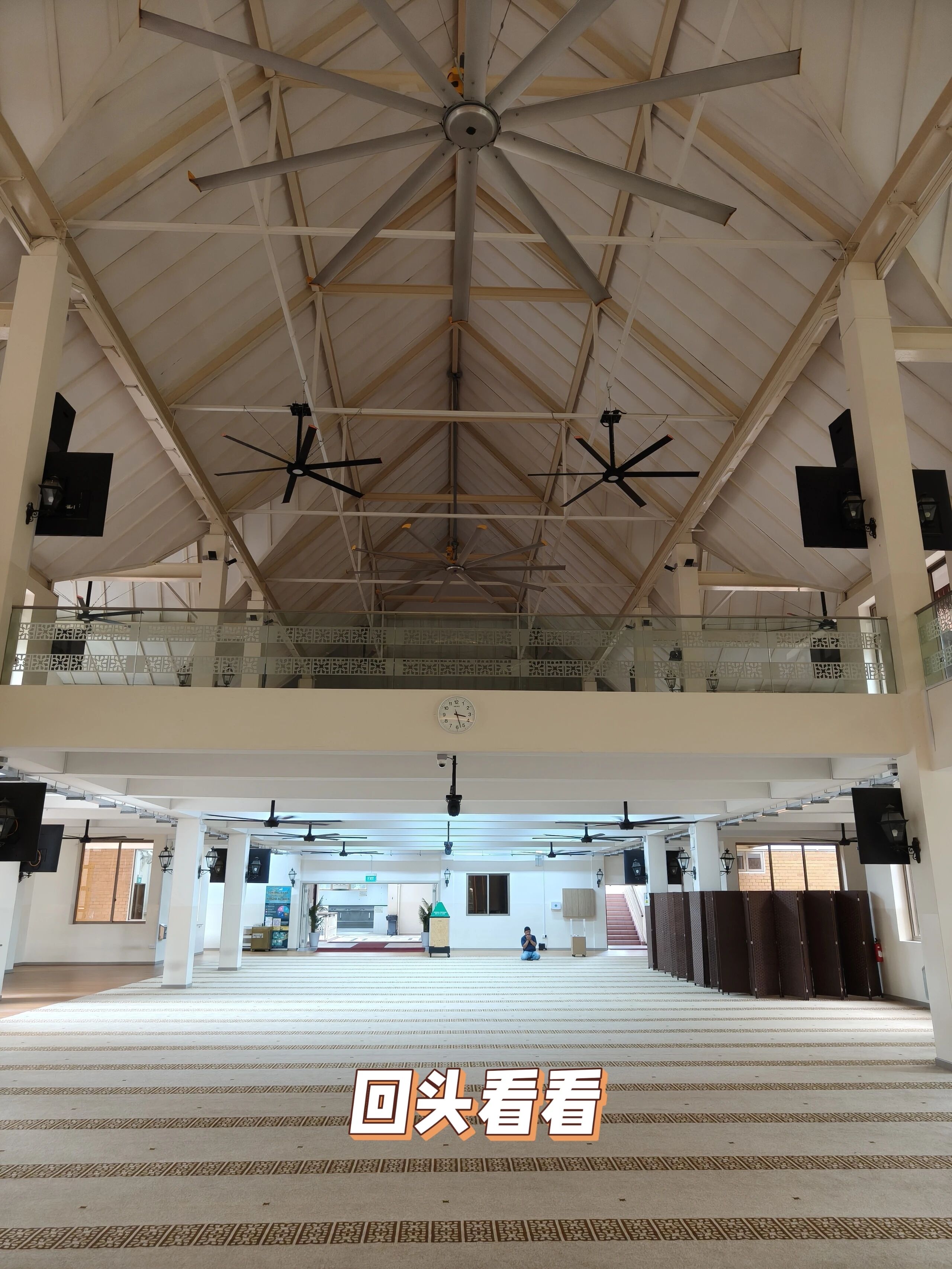
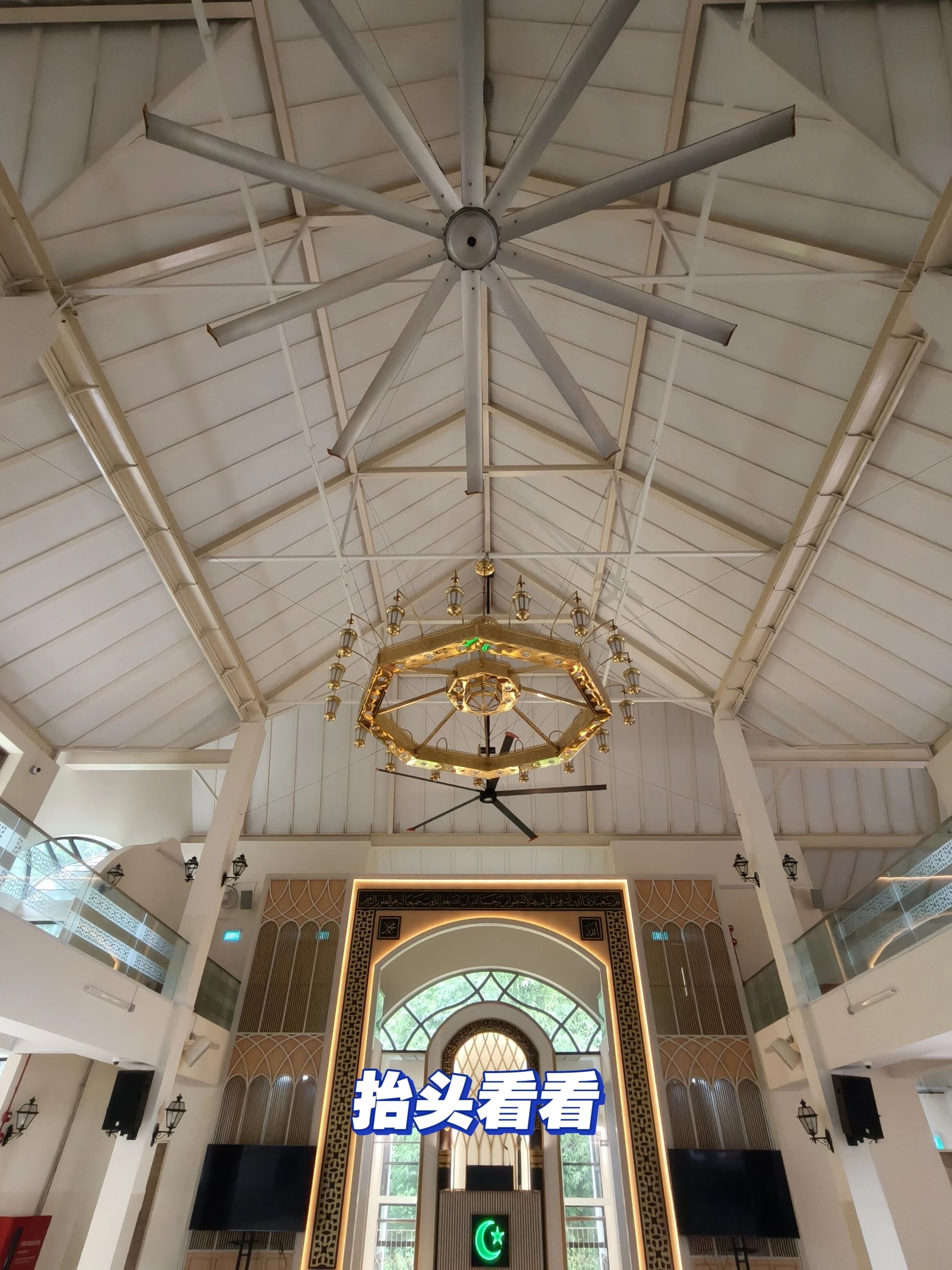
As you can see, the roof of this main hall looks like a shed, and there is an upper level that serves as a prayer area, likely for women.
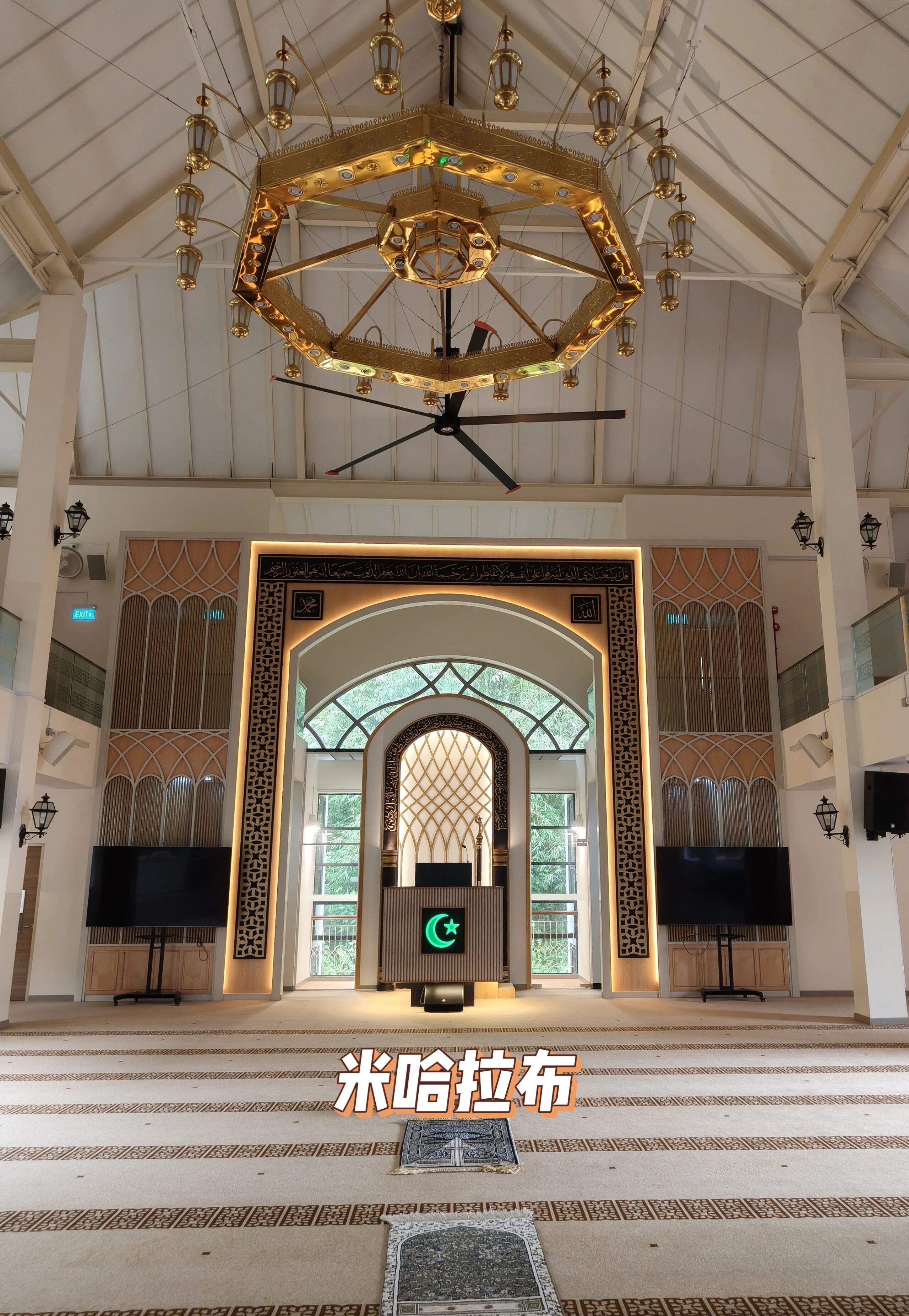
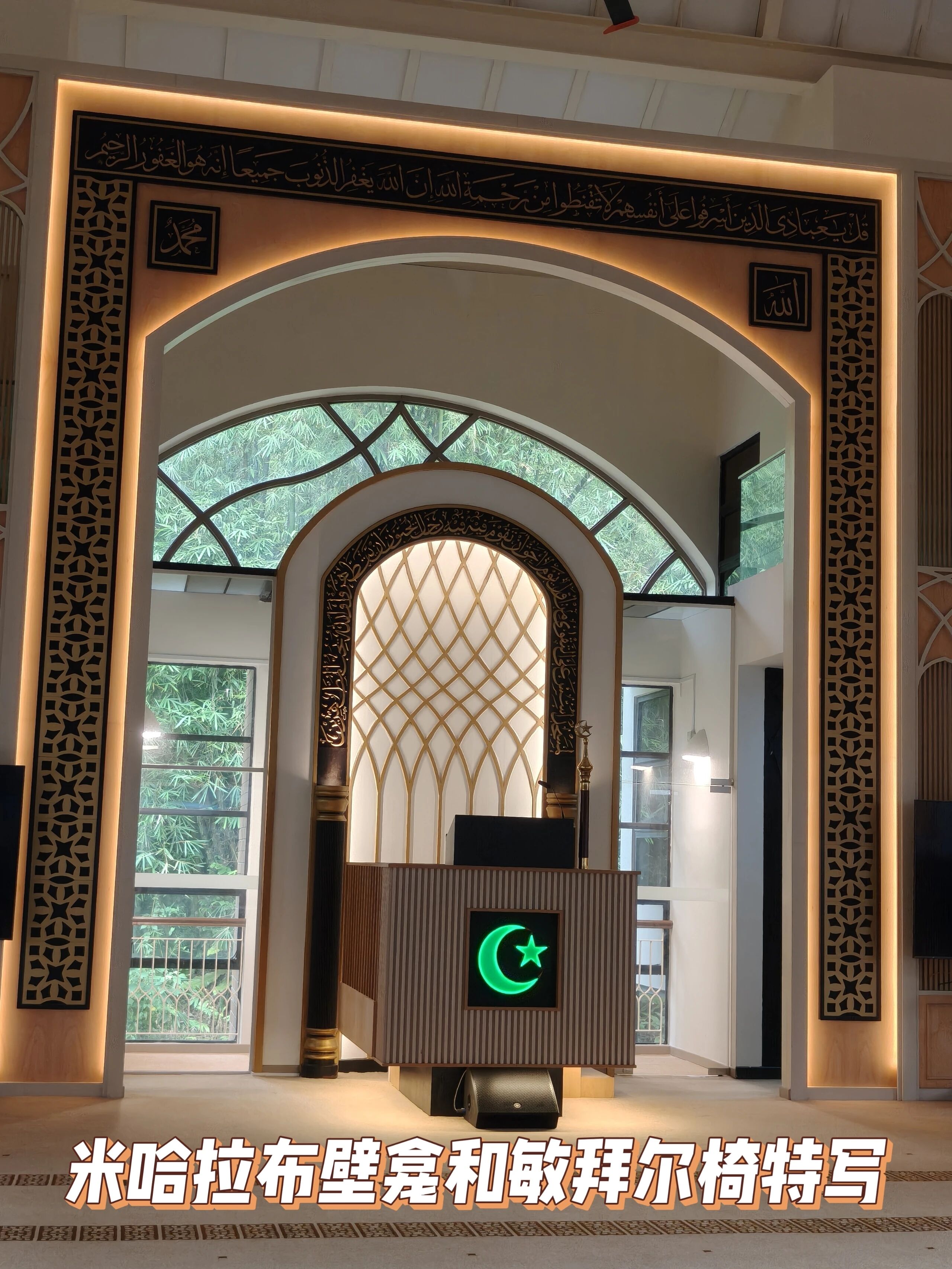
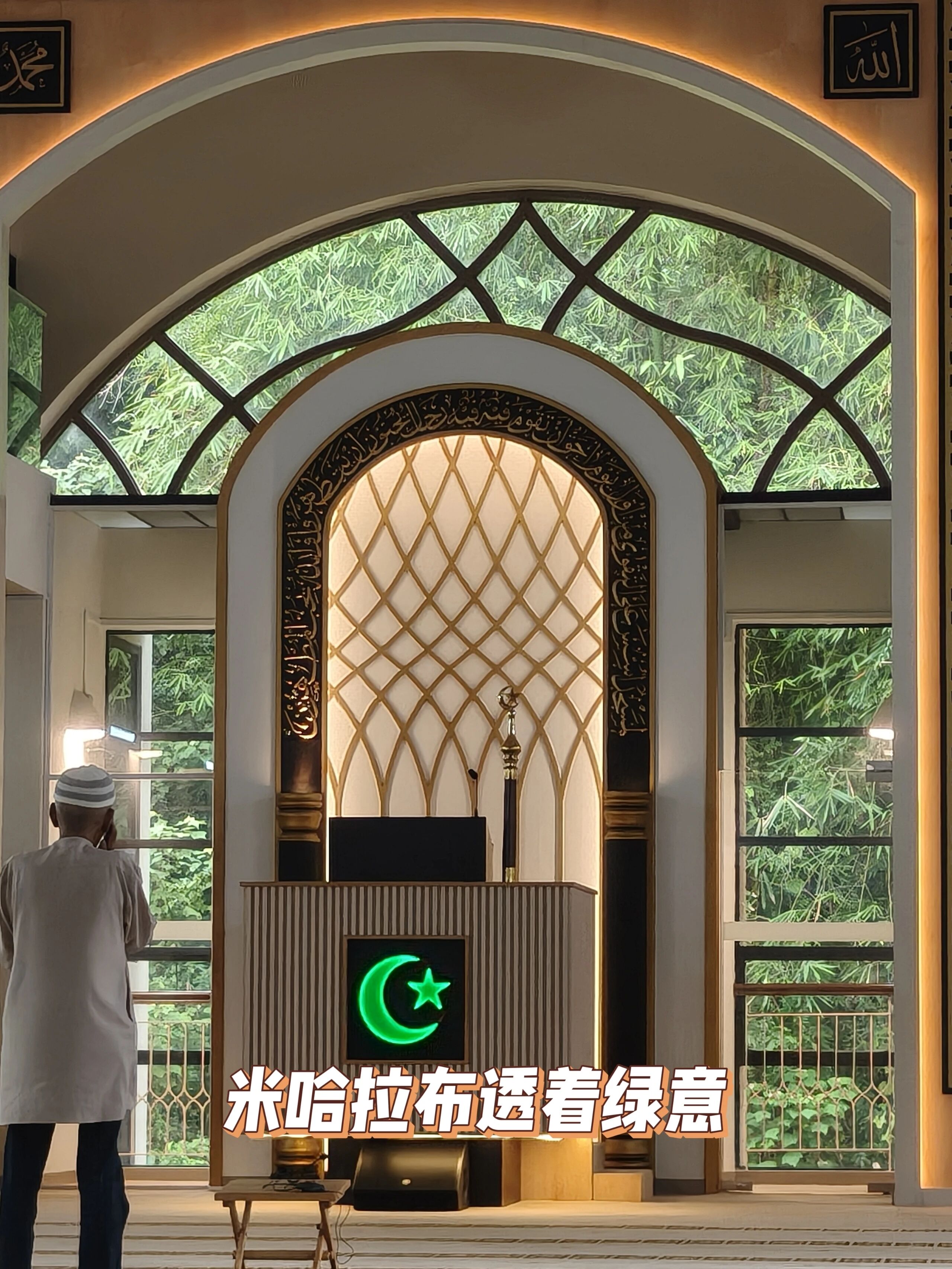
The mihrab is quite unique because it is transparent (Figure 17), allowing you to see the lush rainforest on the mountain outside.
There really is a small hill behind this mosque. It seems Singaporeans have plenty of places to go for weekend outings and camping.
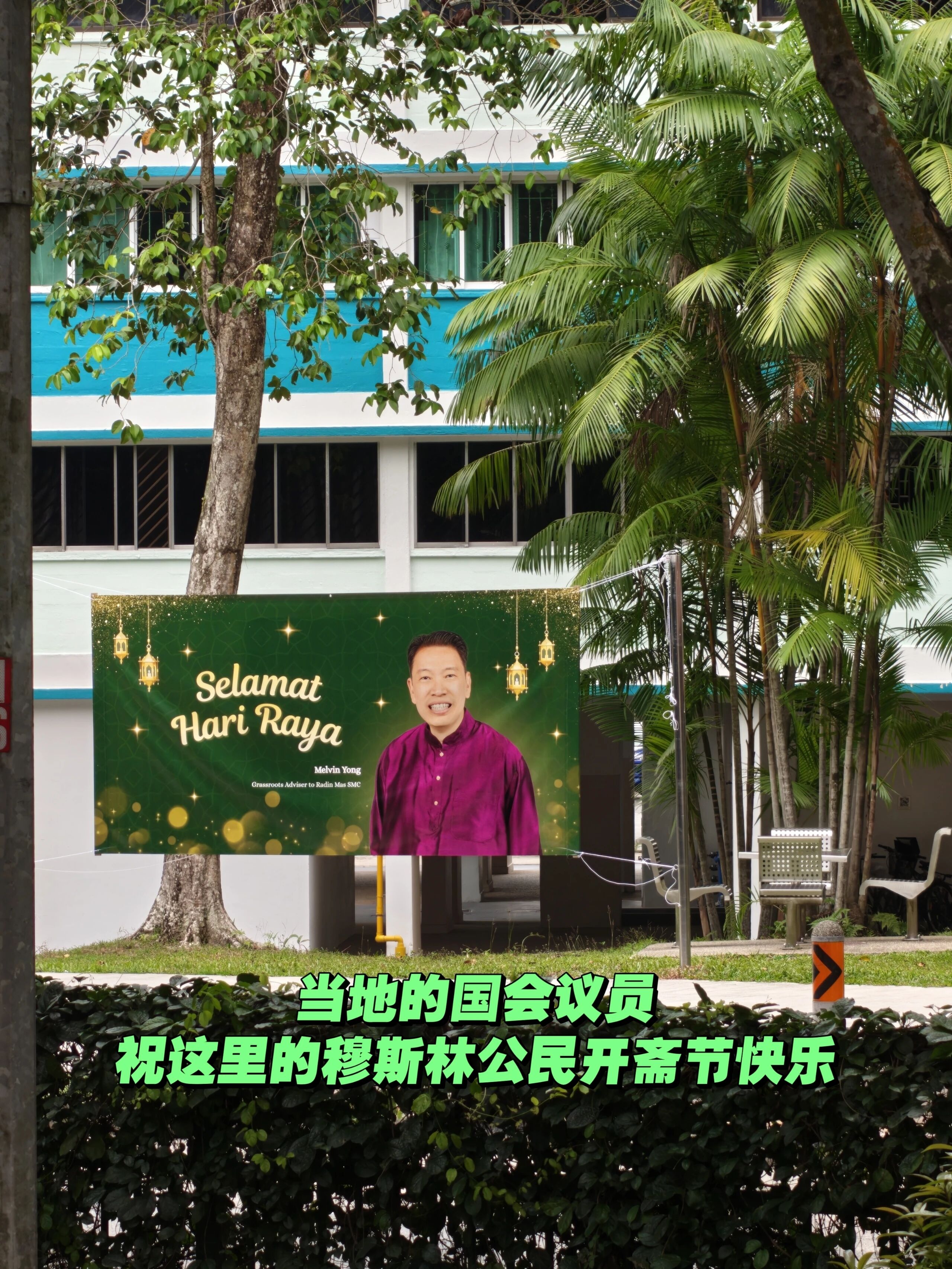
Walking out of the mosque, you can see a poster across the street (Image 18). It says Happy Eid al-Fitr in Malay. Singapore has many electoral districts, and the person on the poster is the representative for the district where this mosque is located. Judging by the name, they appear to be Chinese.
When I last visited Singapore, the Indian festival of Diwali had just ended. Officials from different ethnic groups wore traditional Indian clothing on posters to wish the Indian community a happy Diwali.
In the next article, I will take you to see the Temenggong Mosque in Singapore. Who exactly was Temenggong? Why is there a mosque named after him? I will reveal the answer in the next article. view all
Summary: This Muslim travel guide visits Al-Amin Mosque in Singapore and its Malay-style design. It preserves the source notes on the main building, minaret, prayer hall, and local mosque atmosphere.
Al-Amin Mosque is built in a Malay style, with both the main building and the minaret showing distinct Malay features.
Near the elevator shaft of the mosque, there is a sign written in Jawi script (Figure 3).
At first, I thought it was Arabic, but looking closely, I saw some letters that do not exist in the Arabic alphabet. It is reasonable to conclude that this is Jawi, which uses Arabic letters to write the Malay language, fitting for a Malay-style mosque.
I took the elevator to the second floor and found a small garden (Figure 7). There is a tea dispenser nearby, and the tea tastes similar to Assam milk tea.
Sitting on a chair in the garden to have a drink helped me recover from the fatigue of my journey. When I entered the prayer hall and got ready to take photos, the elderly caretaker saw me holding my phone and turned on the lights so I could get a clearer shot.
I took photos twice, and both times, the man turned on the lights as soon as he saw me.
As you can see, the roof of this main hall looks like a shed, and there is an upper level that serves as a prayer area, likely for women.
The mihrab is quite unique because it is transparent (Figure 17), allowing you to see the lush rainforest on the mountain outside.
There really is a small hill behind this mosque. It seems Singaporeans have plenty of places to go for weekend outings and camping.
Walking out of the mosque, you can see a poster across the street (Image 18). It says Happy Eid al-Fitr in Malay. Singapore has many electoral districts, and the person on the poster is the representative for the district where this mosque is located. Judging by the name, they appear to be Chinese.
When I last visited Singapore, the Indian festival of Diwali had just ended. Officials from different ethnic groups wore traditional Indian clothing on posters to wish the Indian community a happy Diwali.
In the next article, I will take you to see the Temenggong Mosque in Singapore. Who exactly was Temenggong? Why is there a mosque named after him? I will reveal the answer in the next article. view all
Reposted from the web
Summary: This Muslim travel guide visits Al-Amin Mosque in Singapore and its Malay-style design. It preserves the source notes on the main building, minaret, prayer hall, and local mosque atmosphere.
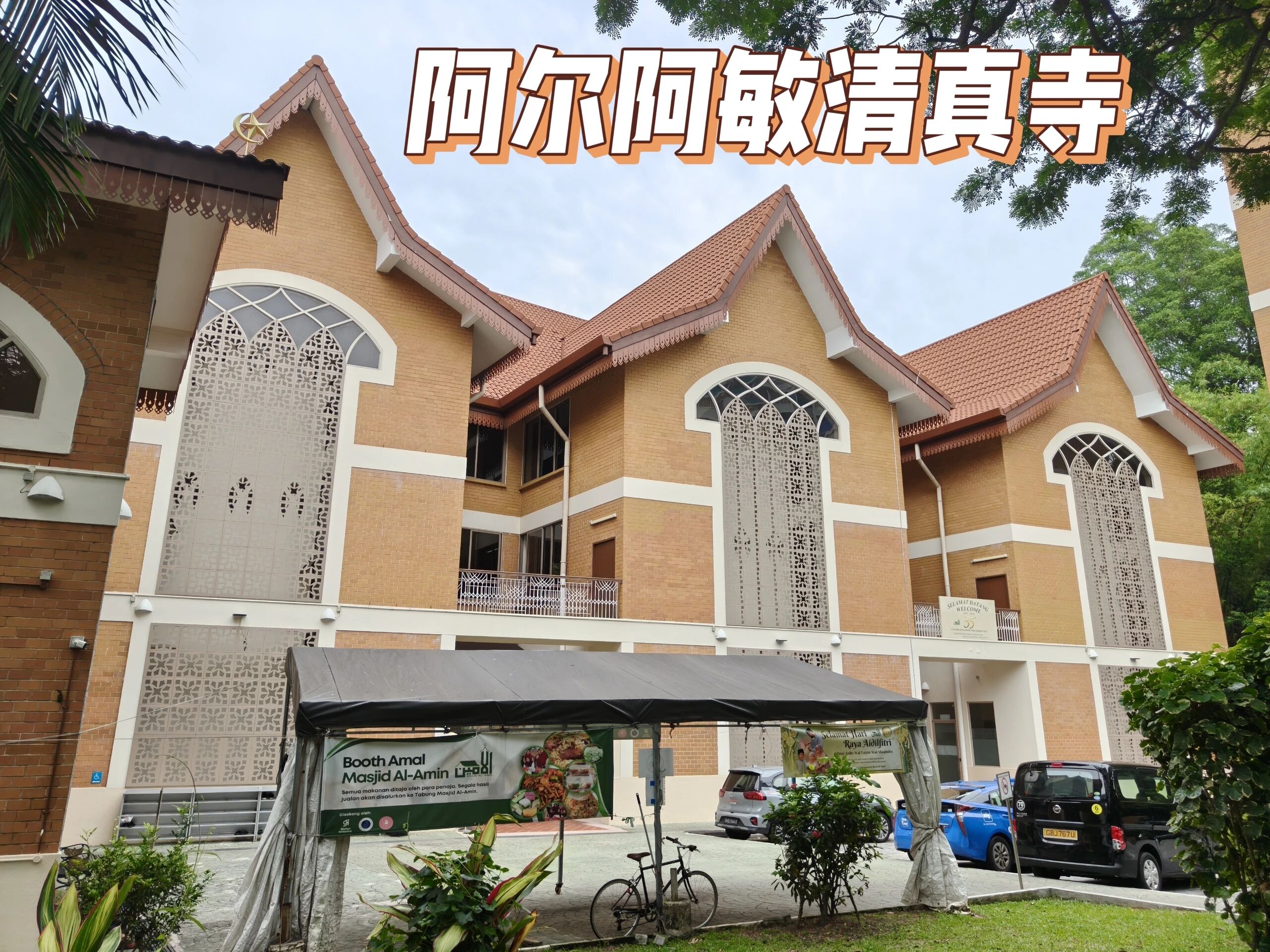
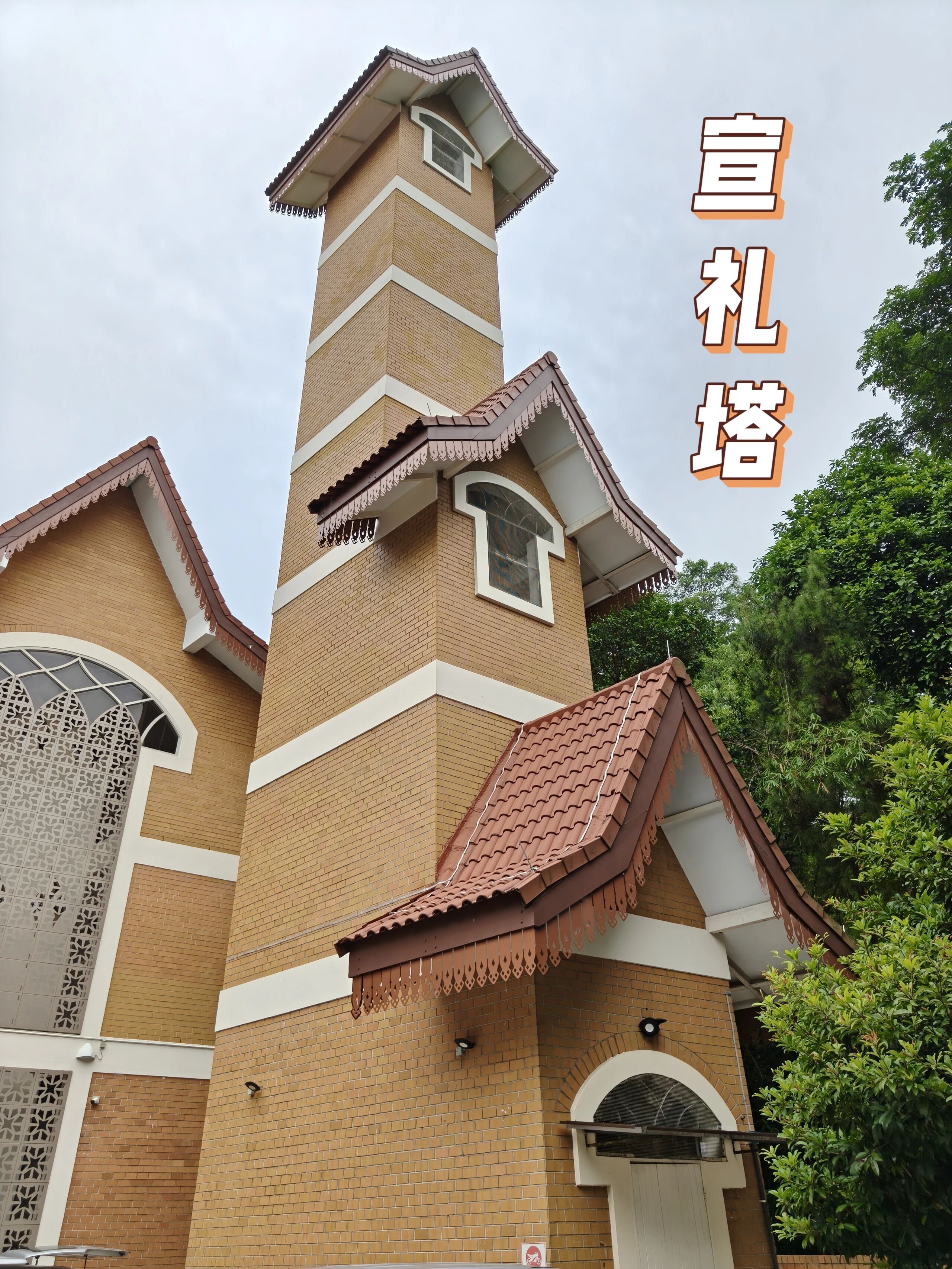
Al-Amin Mosque is built in a Malay style, with both the main building and the minaret showing distinct Malay features.
Near the elevator shaft of the mosque, there is a sign written in Jawi script (Figure 3).
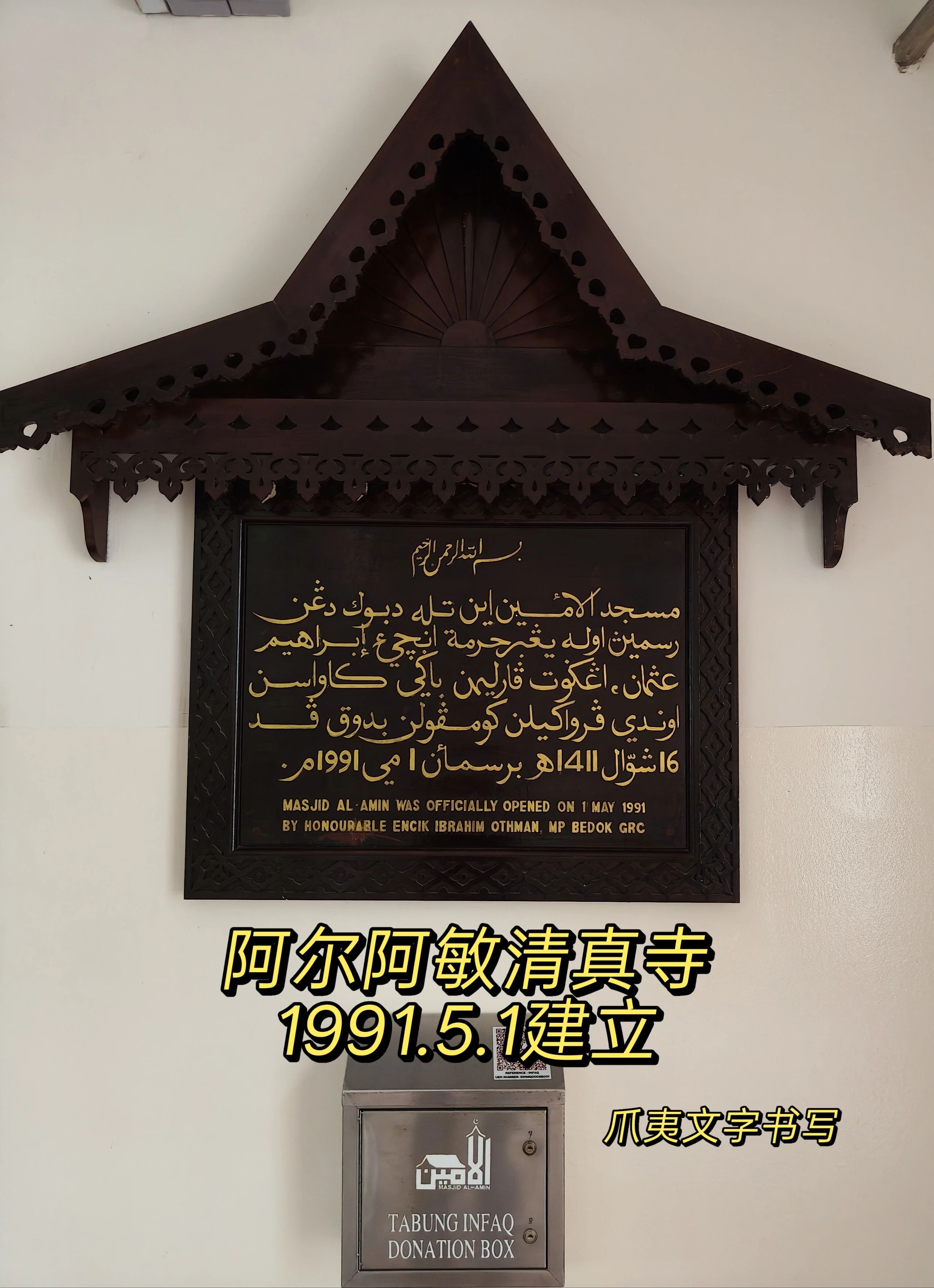
At first, I thought it was Arabic, but looking closely, I saw some letters that do not exist in the Arabic alphabet. It is reasonable to conclude that this is Jawi, which uses Arabic letters to write the Malay language, fitting for a Malay-style mosque.
I took the elevator to the second floor and found a small garden (Figure 7). There is a tea dispenser nearby, and the tea tastes similar to Assam milk tea.
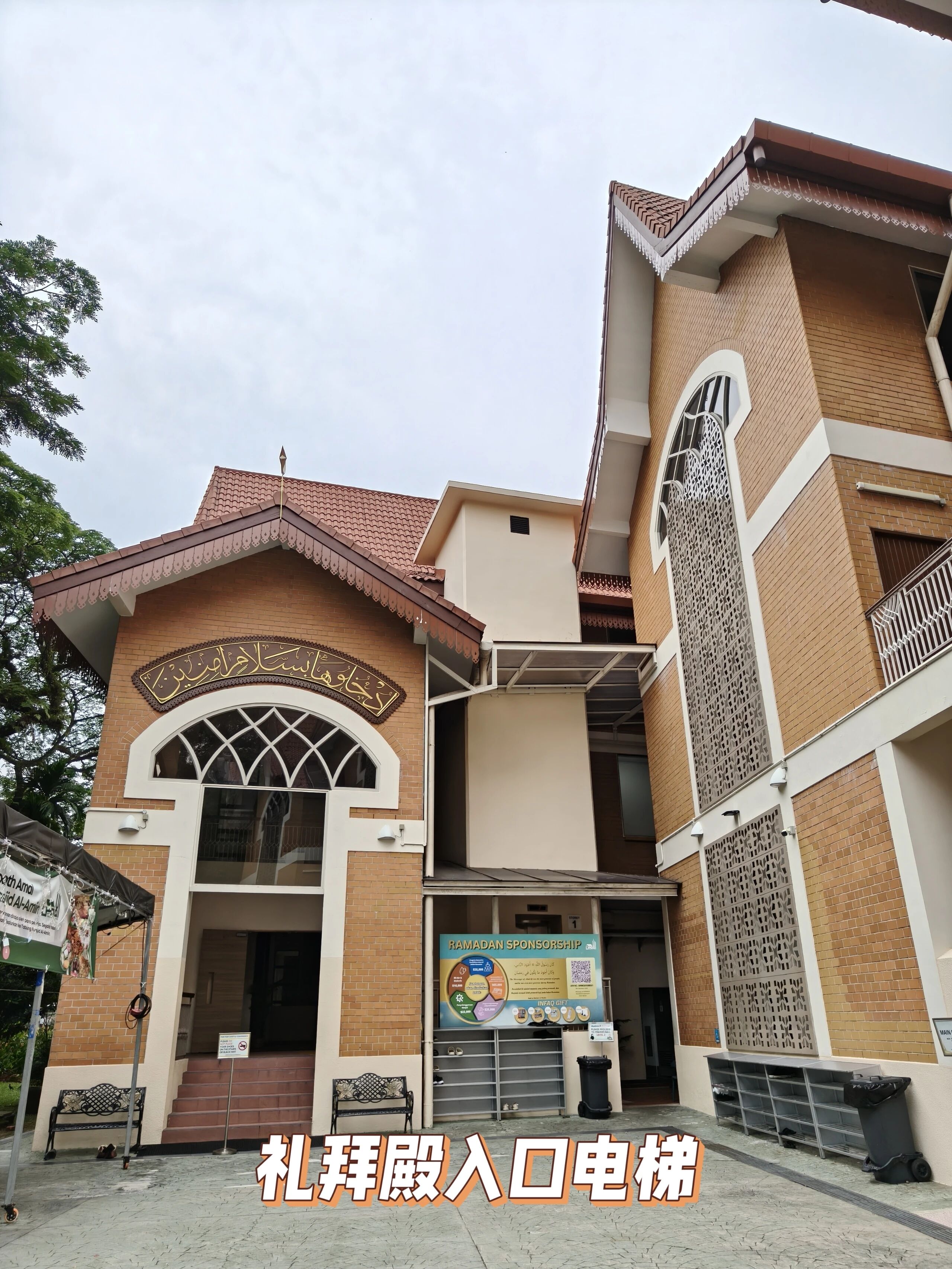
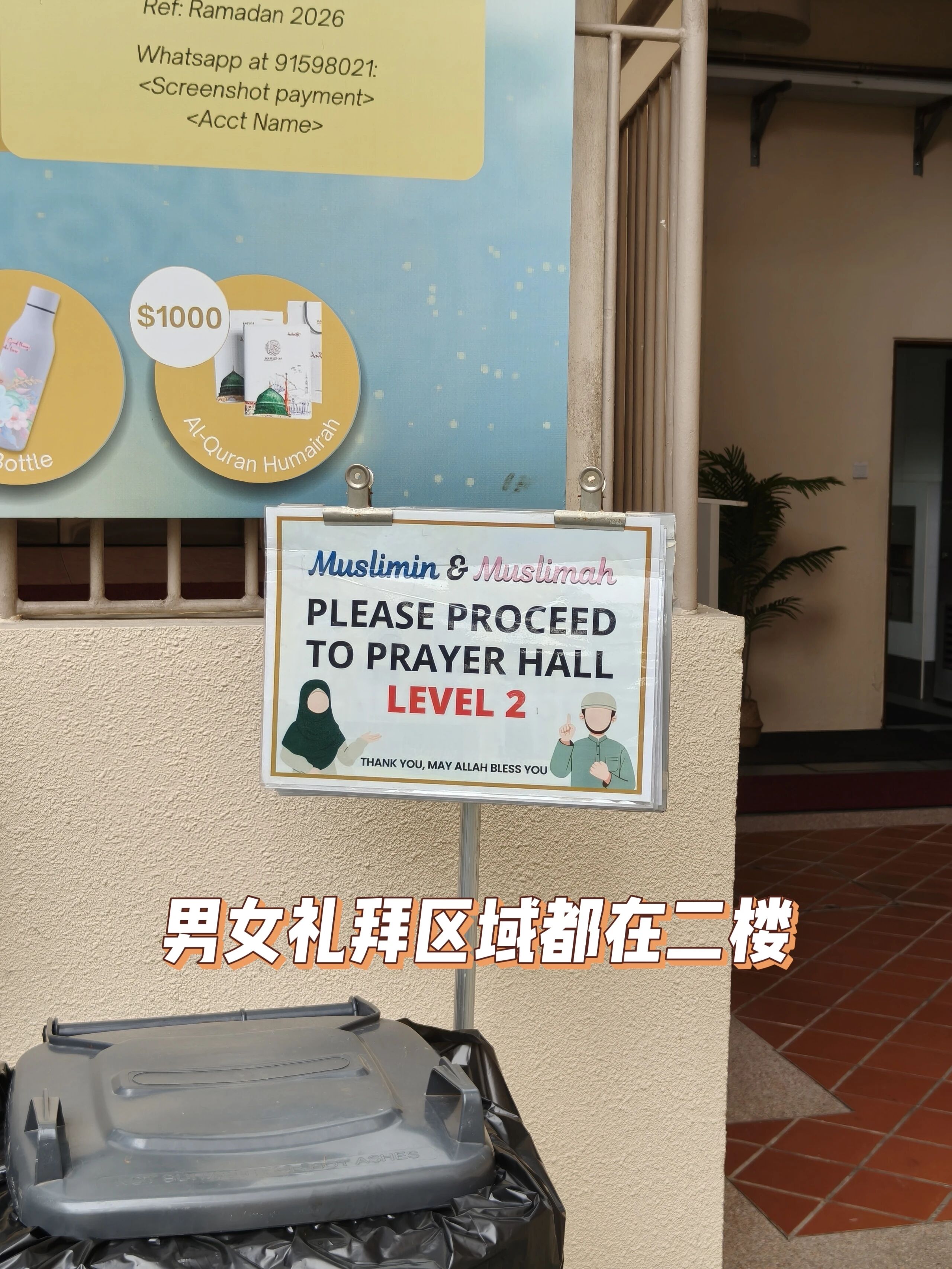
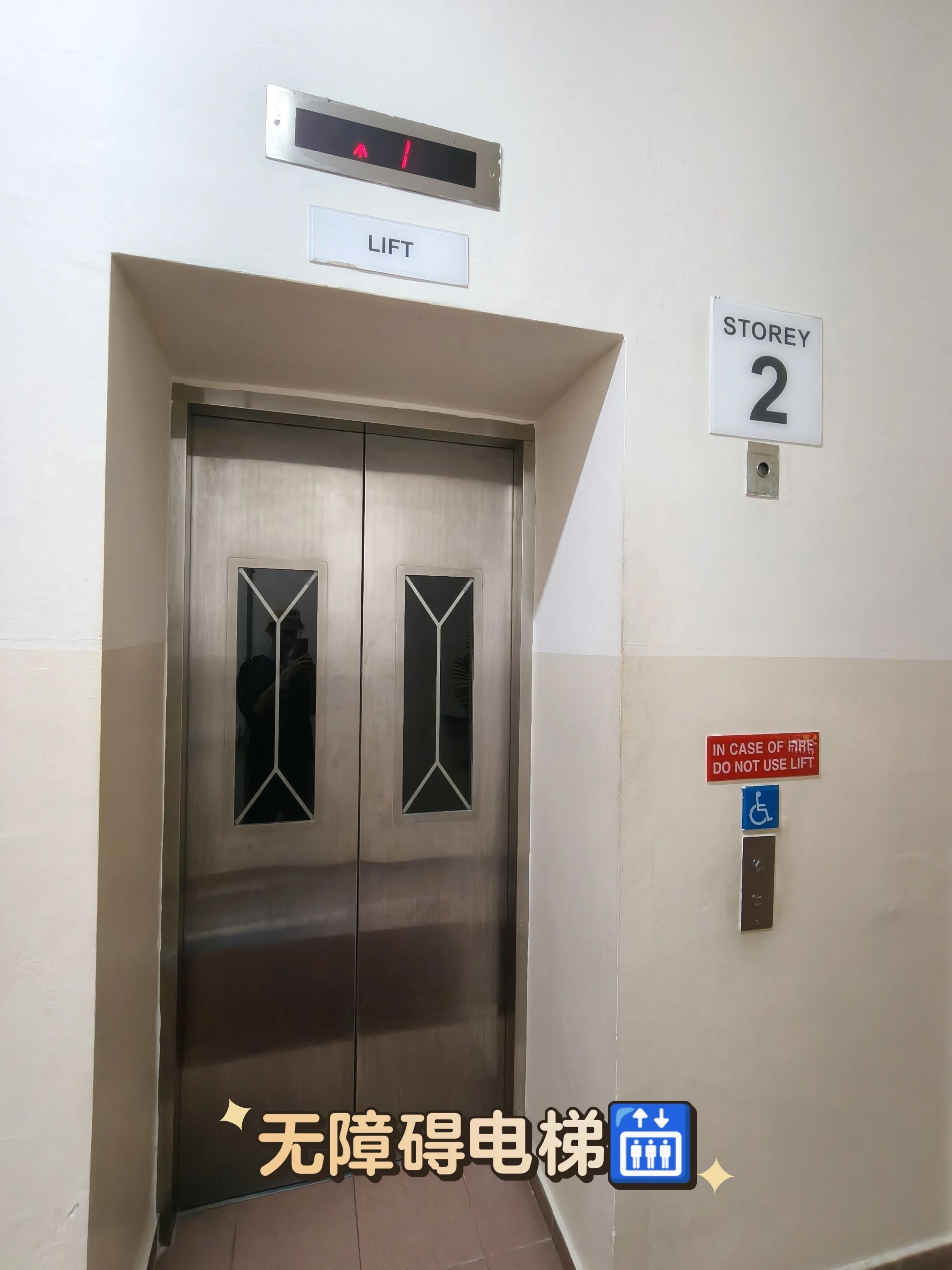
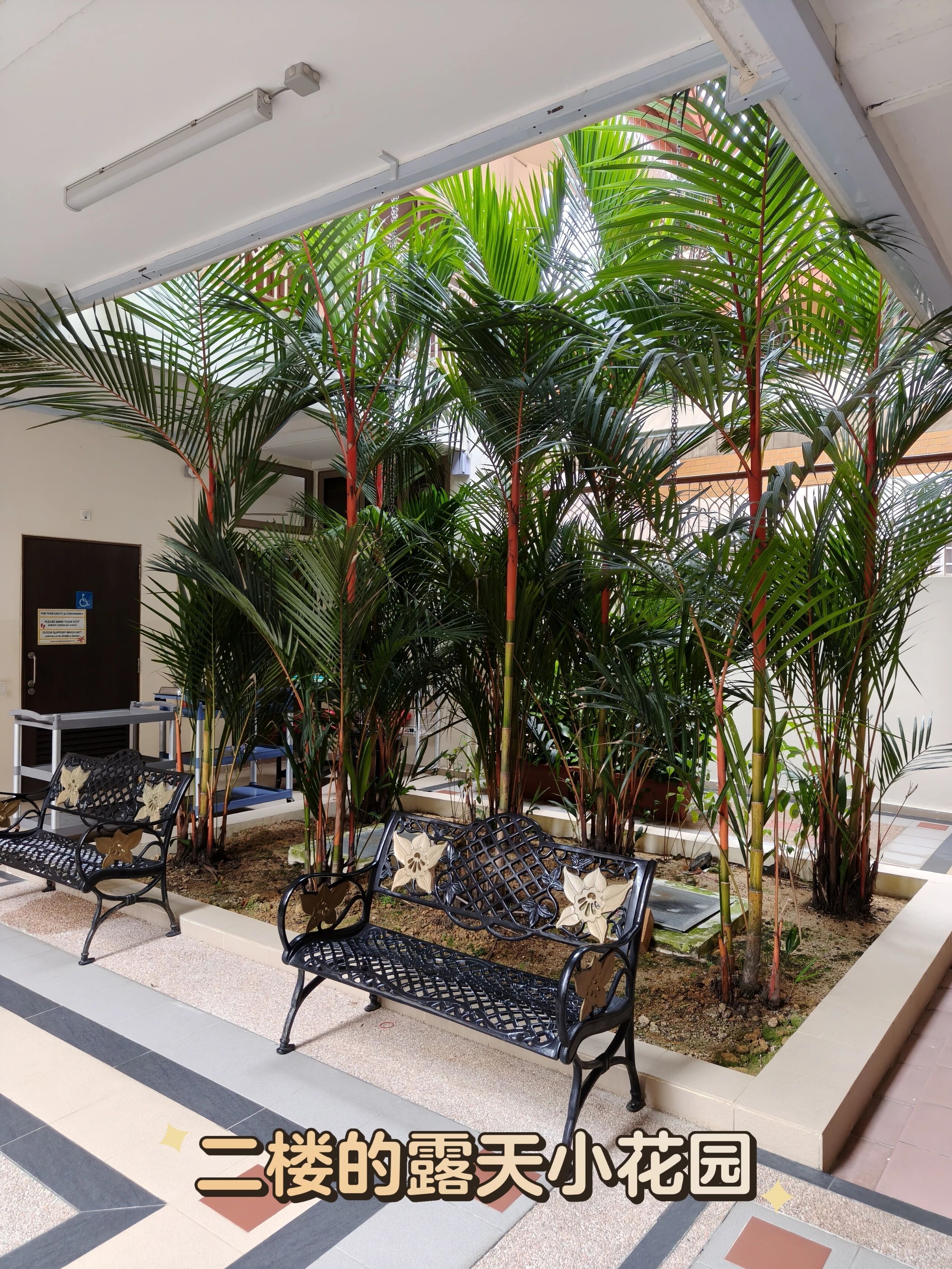
Sitting on a chair in the garden to have a drink helped me recover from the fatigue of my journey. When I entered the prayer hall and got ready to take photos, the elderly caretaker saw me holding my phone and turned on the lights so I could get a clearer shot.
I took photos twice, and both times, the man turned on the lights as soon as he saw me.
As you can see, the roof of this main hall looks like a shed, and there is an upper level that serves as a prayer area, likely for women.
The mihrab is quite unique because it is transparent (Figure 17), allowing you to see the lush rainforest on the mountain outside.
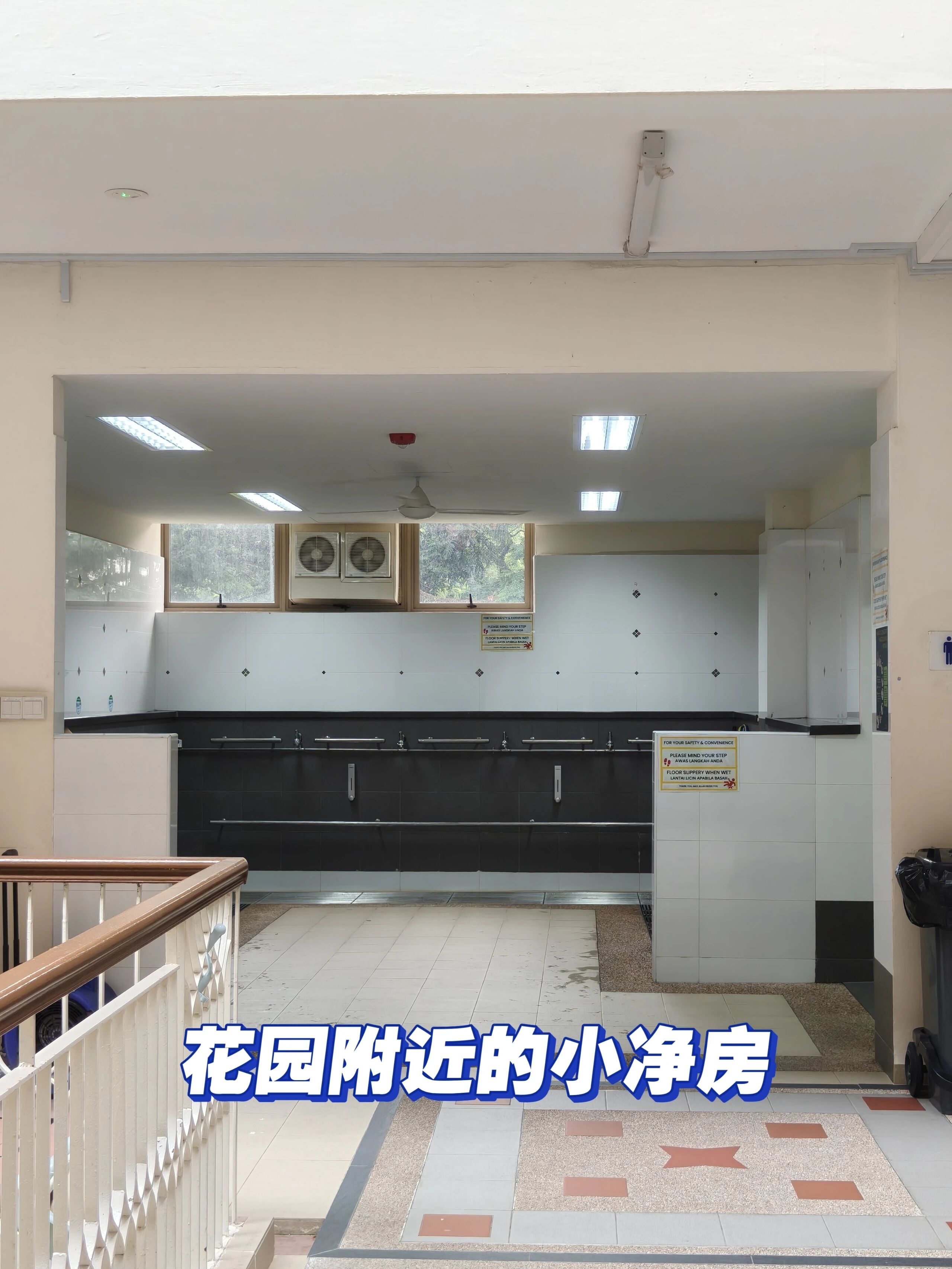
There really is a small hill behind this mosque. It seems Singaporeans have plenty of places to go for weekend outings and camping.
Walking out of the mosque, you can see a poster across the street (Image 18). It says Happy Eid al-Fitr in Malay. Singapore has many electoral districts, and the person on the poster is the representative for the district where this mosque is located. Judging by the name, they appear to be Chinese.
When I last visited Singapore, the Indian festival of Diwali had just ended. Officials from different ethnic groups wore traditional Indian clothing on posters to wish the Indian community a happy Diwali.
In the next article, I will take you to see the Temenggong Mosque in Singapore. Who exactly was Temenggong? Why is there a mosque named after him? I will reveal the answer in the next article.
Summary: This Muslim travel guide visits Al-Amin Mosque in Singapore and its Malay-style design. It preserves the source notes on the main building, minaret, prayer hall, and local mosque atmosphere.
Al-Amin Mosque is built in a Malay style, with both the main building and the minaret showing distinct Malay features.
Near the elevator shaft of the mosque, there is a sign written in Jawi script (Figure 3).
At first, I thought it was Arabic, but looking closely, I saw some letters that do not exist in the Arabic alphabet. It is reasonable to conclude that this is Jawi, which uses Arabic letters to write the Malay language, fitting for a Malay-style mosque.
I took the elevator to the second floor and found a small garden (Figure 7). There is a tea dispenser nearby, and the tea tastes similar to Assam milk tea.
Sitting on a chair in the garden to have a drink helped me recover from the fatigue of my journey. When I entered the prayer hall and got ready to take photos, the elderly caretaker saw me holding my phone and turned on the lights so I could get a clearer shot.
I took photos twice, and both times, the man turned on the lights as soon as he saw me.
As you can see, the roof of this main hall looks like a shed, and there is an upper level that serves as a prayer area, likely for women.
The mihrab is quite unique because it is transparent (Figure 17), allowing you to see the lush rainforest on the mountain outside.
There really is a small hill behind this mosque. It seems Singaporeans have plenty of places to go for weekend outings and camping.
Walking out of the mosque, you can see a poster across the street (Image 18). It says Happy Eid al-Fitr in Malay. Singapore has many electoral districts, and the person on the poster is the representative for the district where this mosque is located. Judging by the name, they appear to be Chinese.
When I last visited Singapore, the Indian festival of Diwali had just ended. Officials from different ethnic groups wore traditional Indian clothing on posters to wish the Indian community a happy Diwali.
In the next article, I will take you to see the Temenggong Mosque in Singapore. Who exactly was Temenggong? Why is there a mosque named after him? I will reveal the answer in the next article.
Muslim Travel Guide Singapore: Al-Amin Mosque, Malay-Style Architecture and Prayer Hall
Articles • Hasan09 posted the article • 0 comments • 253 views • 2026-05-24 01:46
Reposted from the web
Summary: This Muslim travel guide visits Al-Amin Mosque in Singapore and its Malay-style design. It preserves the source notes on the main building, minaret, prayer hall, and local mosque atmosphere.
Al-Amin Mosque is built in a Malay style, with both the main building and the minaret showing distinct Malay features.
Near the elevator shaft of the mosque, there is a sign written in Jawi script (Figure 3).
At first, I thought it was Arabic, but looking closely, I saw some letters that do not exist in the Arabic alphabet. It is reasonable to conclude that this is Jawi, which uses Arabic letters to write the Malay language, fitting for a Malay-style mosque.
I took the elevator to the second floor and found a small garden (Figure 7). There is a tea dispenser nearby, and the tea tastes similar to Assam milk tea.
Sitting on a chair in the garden to have a drink helped me recover from the fatigue of my journey. When I entered the prayer hall and got ready to take photos, the elderly caretaker saw me holding my phone and turned on the lights so I could get a clearer shot.
I took photos twice, and both times, the man turned on the lights as soon as he saw me.
As you can see, the roof of this main hall looks like a shed, and there is an upper level that serves as a prayer area, likely for women.
The mihrab is quite unique because it is transparent (Figure 17), allowing you to see the lush rainforest on the mountain outside.
There really is a small hill behind this mosque. It seems Singaporeans have plenty of places to go for weekend outings and camping.
Walking out of the mosque, you can see a poster across the street (Image 18). It says Happy Eid al-Fitr in Malay. Singapore has many electoral districts, and the person on the poster is the representative for the district where this mosque is located. Judging by the name, they appear to be Chinese.
When I last visited Singapore, the Indian festival of Diwali had just ended. Officials from different ethnic groups wore traditional Indian clothing on posters to wish the Indian community a happy Diwali.
In the next article, I will take you to see the Temenggong Mosque in Singapore. Who exactly was Temenggong? Why is there a mosque named after him? I will reveal the answer in the next article. view all
Summary: This Muslim travel guide visits Al-Amin Mosque in Singapore and its Malay-style design. It preserves the source notes on the main building, minaret, prayer hall, and local mosque atmosphere.
Al-Amin Mosque is built in a Malay style, with both the main building and the minaret showing distinct Malay features.
Near the elevator shaft of the mosque, there is a sign written in Jawi script (Figure 3).
At first, I thought it was Arabic, but looking closely, I saw some letters that do not exist in the Arabic alphabet. It is reasonable to conclude that this is Jawi, which uses Arabic letters to write the Malay language, fitting for a Malay-style mosque.
I took the elevator to the second floor and found a small garden (Figure 7). There is a tea dispenser nearby, and the tea tastes similar to Assam milk tea.
Sitting on a chair in the garden to have a drink helped me recover from the fatigue of my journey. When I entered the prayer hall and got ready to take photos, the elderly caretaker saw me holding my phone and turned on the lights so I could get a clearer shot.
I took photos twice, and both times, the man turned on the lights as soon as he saw me.
As you can see, the roof of this main hall looks like a shed, and there is an upper level that serves as a prayer area, likely for women.
The mihrab is quite unique because it is transparent (Figure 17), allowing you to see the lush rainforest on the mountain outside.
There really is a small hill behind this mosque. It seems Singaporeans have plenty of places to go for weekend outings and camping.
Walking out of the mosque, you can see a poster across the street (Image 18). It says Happy Eid al-Fitr in Malay. Singapore has many electoral districts, and the person on the poster is the representative for the district where this mosque is located. Judging by the name, they appear to be Chinese.
When I last visited Singapore, the Indian festival of Diwali had just ended. Officials from different ethnic groups wore traditional Indian clothing on posters to wish the Indian community a happy Diwali.
In the next article, I will take you to see the Temenggong Mosque in Singapore. Who exactly was Temenggong? Why is there a mosque named after him? I will reveal the answer in the next article. view all
Reposted from the web
Summary: This Muslim travel guide visits Al-Amin Mosque in Singapore and its Malay-style design. It preserves the source notes on the main building, minaret, prayer hall, and local mosque atmosphere.
Al-Amin Mosque is built in a Malay style, with both the main building and the minaret showing distinct Malay features.
Near the elevator shaft of the mosque, there is a sign written in Jawi script (Figure 3).
At first, I thought it was Arabic, but looking closely, I saw some letters that do not exist in the Arabic alphabet. It is reasonable to conclude that this is Jawi, which uses Arabic letters to write the Malay language, fitting for a Malay-style mosque.
I took the elevator to the second floor and found a small garden (Figure 7). There is a tea dispenser nearby, and the tea tastes similar to Assam milk tea.
Sitting on a chair in the garden to have a drink helped me recover from the fatigue of my journey. When I entered the prayer hall and got ready to take photos, the elderly caretaker saw me holding my phone and turned on the lights so I could get a clearer shot.
I took photos twice, and both times, the man turned on the lights as soon as he saw me.
As you can see, the roof of this main hall looks like a shed, and there is an upper level that serves as a prayer area, likely for women.
The mihrab is quite unique because it is transparent (Figure 17), allowing you to see the lush rainforest on the mountain outside.
There really is a small hill behind this mosque. It seems Singaporeans have plenty of places to go for weekend outings and camping.
Walking out of the mosque, you can see a poster across the street (Image 18). It says Happy Eid al-Fitr in Malay. Singapore has many electoral districts, and the person on the poster is the representative for the district where this mosque is located. Judging by the name, they appear to be Chinese.
When I last visited Singapore, the Indian festival of Diwali had just ended. Officials from different ethnic groups wore traditional Indian clothing on posters to wish the Indian community a happy Diwali.
In the next article, I will take you to see the Temenggong Mosque in Singapore. Who exactly was Temenggong? Why is there a mosque named after him? I will reveal the answer in the next article.
Summary: This Muslim travel guide visits Al-Amin Mosque in Singapore and its Malay-style design. It preserves the source notes on the main building, minaret, prayer hall, and local mosque atmosphere.
Al-Amin Mosque is built in a Malay style, with both the main building and the minaret showing distinct Malay features.
Near the elevator shaft of the mosque, there is a sign written in Jawi script (Figure 3).
At first, I thought it was Arabic, but looking closely, I saw some letters that do not exist in the Arabic alphabet. It is reasonable to conclude that this is Jawi, which uses Arabic letters to write the Malay language, fitting for a Malay-style mosque.
I took the elevator to the second floor and found a small garden (Figure 7). There is a tea dispenser nearby, and the tea tastes similar to Assam milk tea.
Sitting on a chair in the garden to have a drink helped me recover from the fatigue of my journey. When I entered the prayer hall and got ready to take photos, the elderly caretaker saw me holding my phone and turned on the lights so I could get a clearer shot.
I took photos twice, and both times, the man turned on the lights as soon as he saw me.
As you can see, the roof of this main hall looks like a shed, and there is an upper level that serves as a prayer area, likely for women.
The mihrab is quite unique because it is transparent (Figure 17), allowing you to see the lush rainforest on the mountain outside.
There really is a small hill behind this mosque. It seems Singaporeans have plenty of places to go for weekend outings and camping.
Walking out of the mosque, you can see a poster across the street (Image 18). It says Happy Eid al-Fitr in Malay. Singapore has many electoral districts, and the person on the poster is the representative for the district where this mosque is located. Judging by the name, they appear to be Chinese.
When I last visited Singapore, the Indian festival of Diwali had just ended. Officials from different ethnic groups wore traditional Indian clothing on posters to wish the Indian community a happy Diwali.
In the next article, I will take you to see the Temenggong Mosque in Singapore. Who exactly was Temenggong? Why is there a mosque named after him? I will reveal the answer in the next article.