

Maritime Silk Road
Exploring Guangzhou's Huaisheng Mosque: A Thousand-Year Maritime Silk Road Heritage Site on Guangta Road
Articles • Hasan09 posted the article • 0 comments • 8 views • 10 hours ago
[Internet Repost]
Exploring Guangzhou's Huaisheng Mosque: A Thousand-Year Maritime Silk Road Heritage Site on Guangta Road
Summary:
Step into the thousand-year-old Huaisheng Mosque (Light Pagoda Mosque) nestled on Guangta Road in Guangzhou's old town. Trace its origins back to the Zhenguan era of the Tang Dynasty, gaze upon the Light Pagoda with its unique blend of Arabian and Lingnan architectural styles, and feel the rich historical weight of early Islamic culture in China.
In Guangzhou's Yuexiu District, Guangta Road isn't particularly wide, flanked by everyday residential buildings and street-level mom-and-pop shops overflowing with local neighborhood vibes. If you're not paying attention, you might totally miss the curved brick wall bearing the inscription 'Huaisheng Relic Base.' Right behind the wall stands an ancient tower that has towered over the city for a thousand years—this is Huaisheng Mosque, one of the oldest mosques in China.
Back in the Tang Dynasty, Guangzhou's Yuexiu District was the core area of the famous Fanfang (Foreigners' Quarter). A thousand years ago, hordes of Arab and Persian merchants settled and traded here, giving birth to this historic masjid. Alongside Quanzhou's Qingjing Mosque, Hangzhou's Phoenix Mosque, and Yangzhou's Crane Mosque, it is hailed as one of the four great ancient mosques along China's coastal trade routes, serving as a core witness to cultural exchanges along the Maritime Silk Road.
Through the centuries, the ancient mosque has weathered countless storms, suffering damage and undergoing rebuilding several times. After being burned down and later restored during the Yuan Dynasty, the surviving architecture and ancient pagoda still fully retain the structural bone and style of the Tang and Song periods, making it the oldest surviving mosque site in the country.
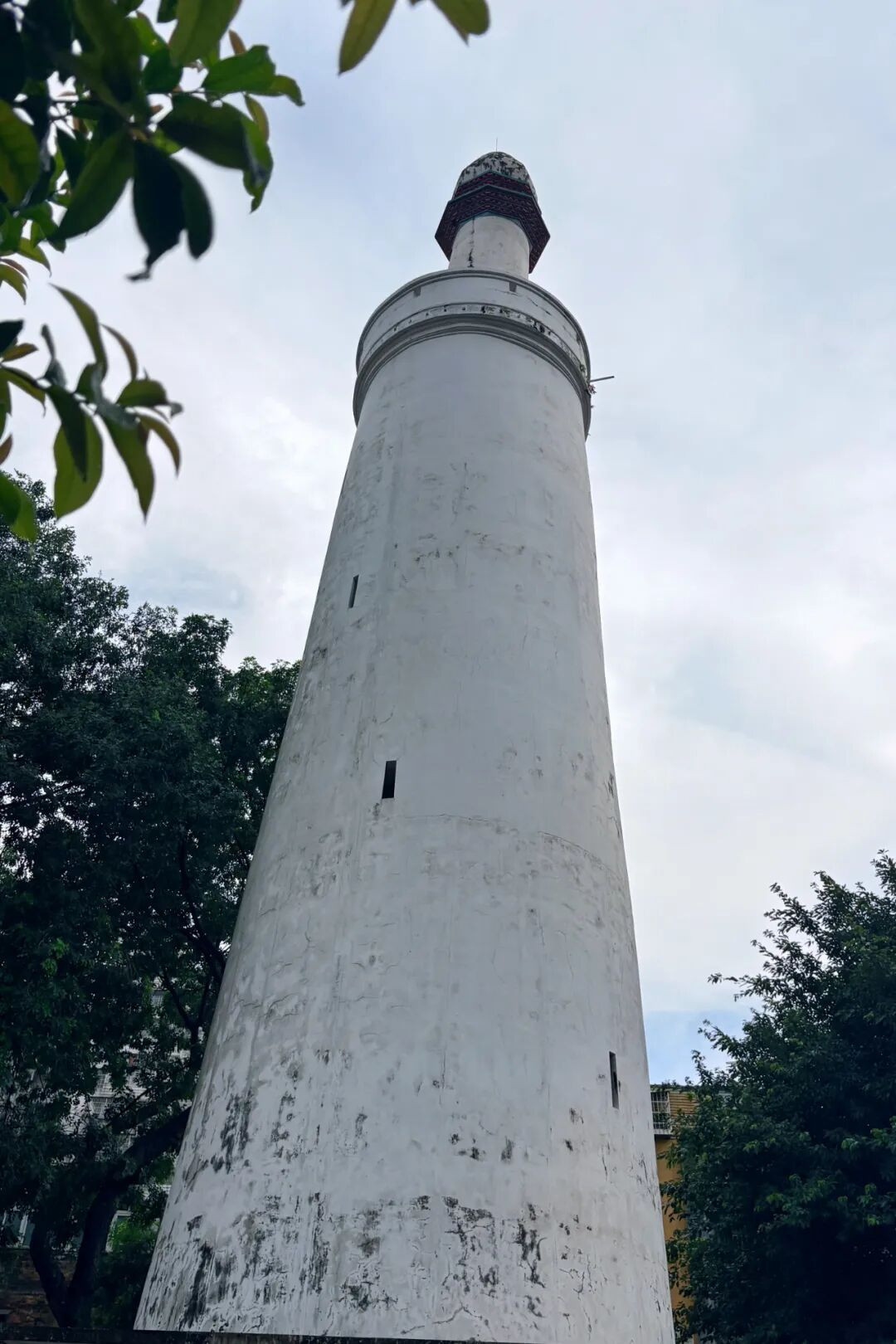
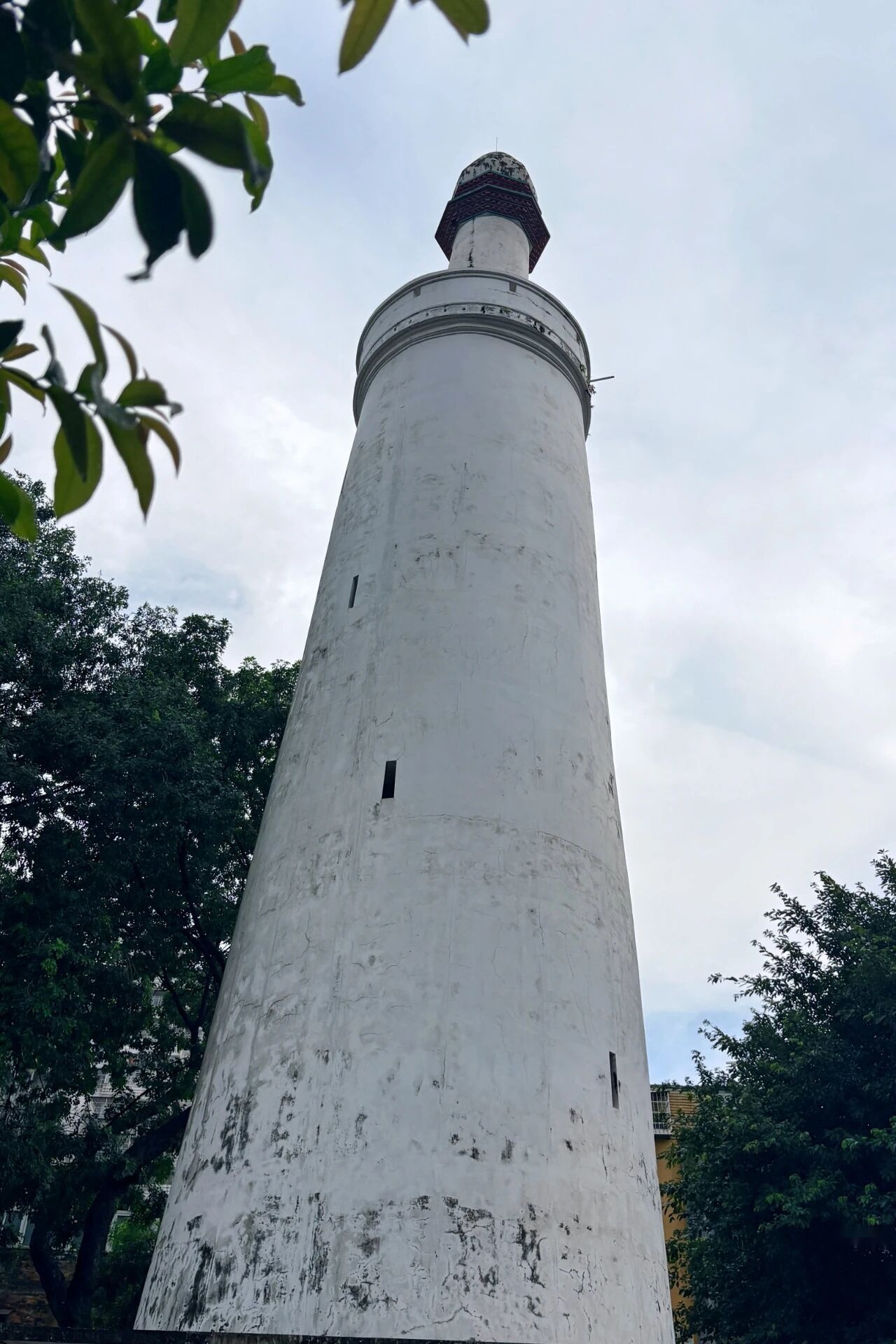
The absolute standout feature of Huaisheng Mosque is its Light Pagoda, which is where the mosque gets its popular nickname, Guangta Temple. This ancient tower is the earliest surviving Arabian-style ancient pagoda in China, and also one of the oldest standing Islamic minarets in the world.
As for why the Light Pagoda is called the 'Light Pagoda,' there are several stories floating around online. One theory says it's because the pagoda's exterior surface is smooth and undecorated; another suggests it's because when Muslims recite prayers, the imam would climb the tower to call out the adhan (call to prayer) in Arabic, and the Cantonese pronunciation for 'call/sound' sounds a lot like 'light.' But the most widely circulated theory is that back in the Tang Dynasty, Huaisheng Mosque sat right on the banks of the Pearl River, and the Light Pagoda stood right by the waterfront. At night, bright lanterns were hung at the top of the tower to guide incoming and outgoing merchant ships on the Pearl River.
Word has it that there used to be a golden rooster perched at the very top of the tower that could spin with the wind to show wind direction, but tragically, it was blown down by a hurricane in the early Ming Dynasty and replaced with a pointed spire during a 1934 restoration.
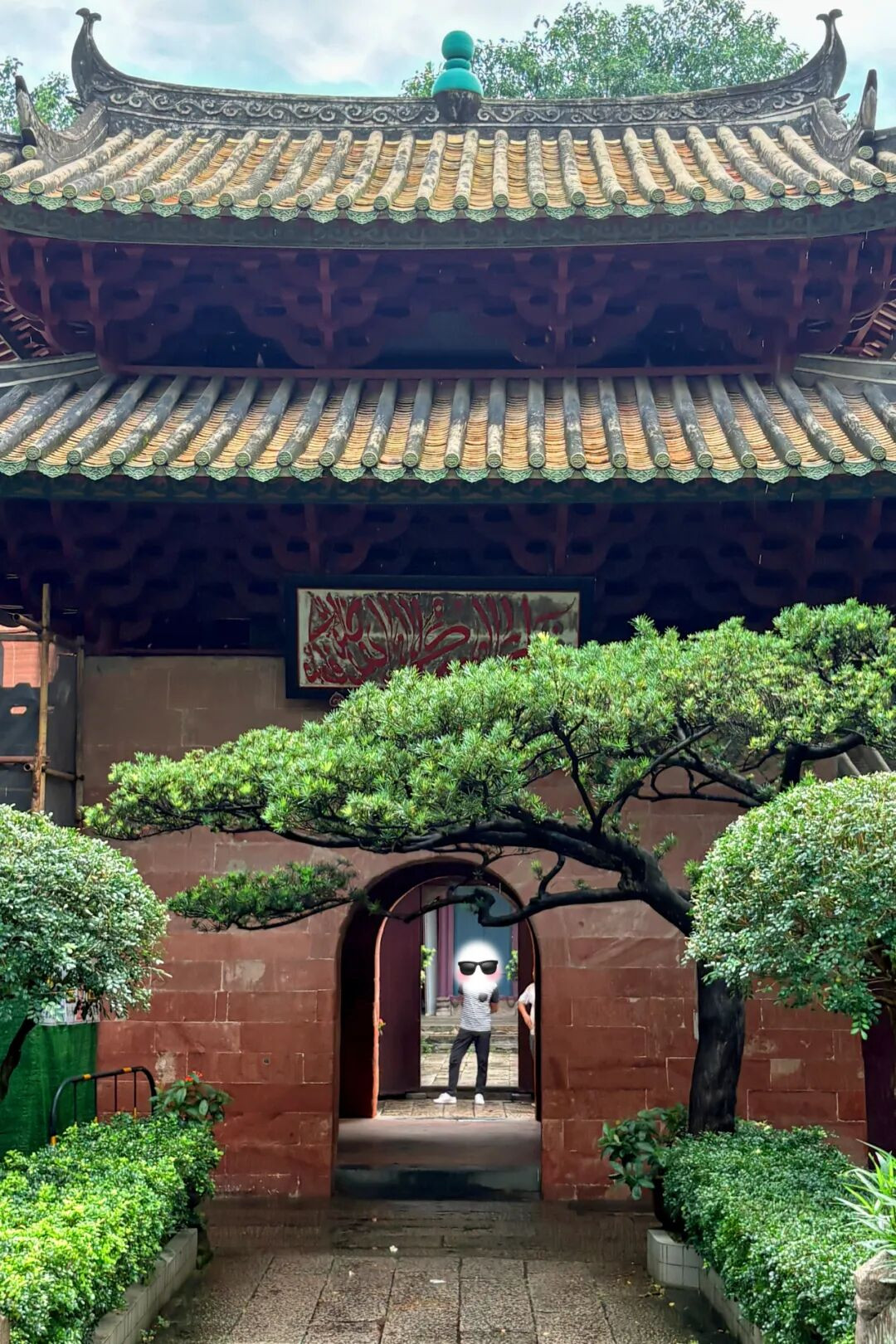
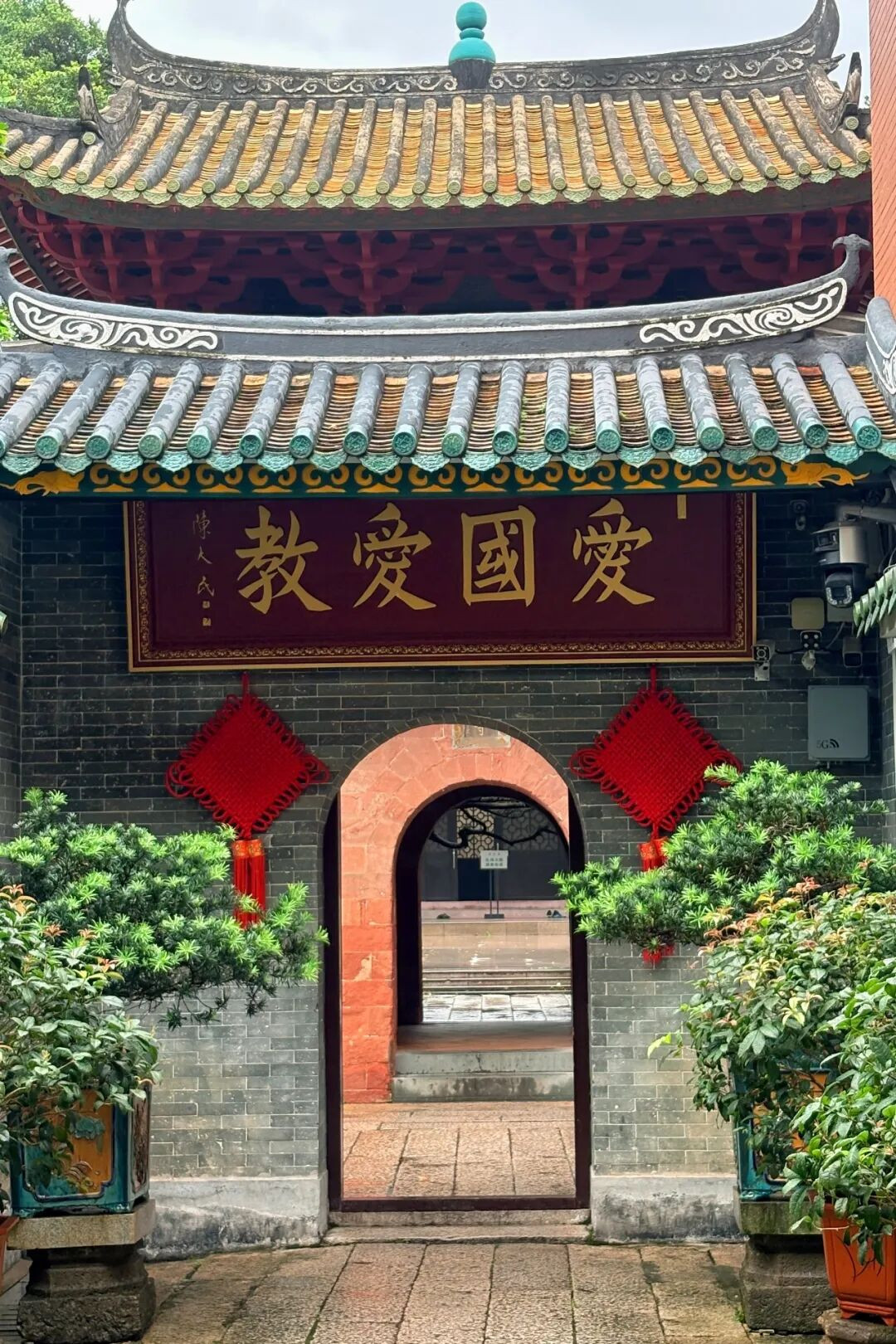
The buildings inside the courtyard are also super unique, blending Eastern and Western aesthetics.
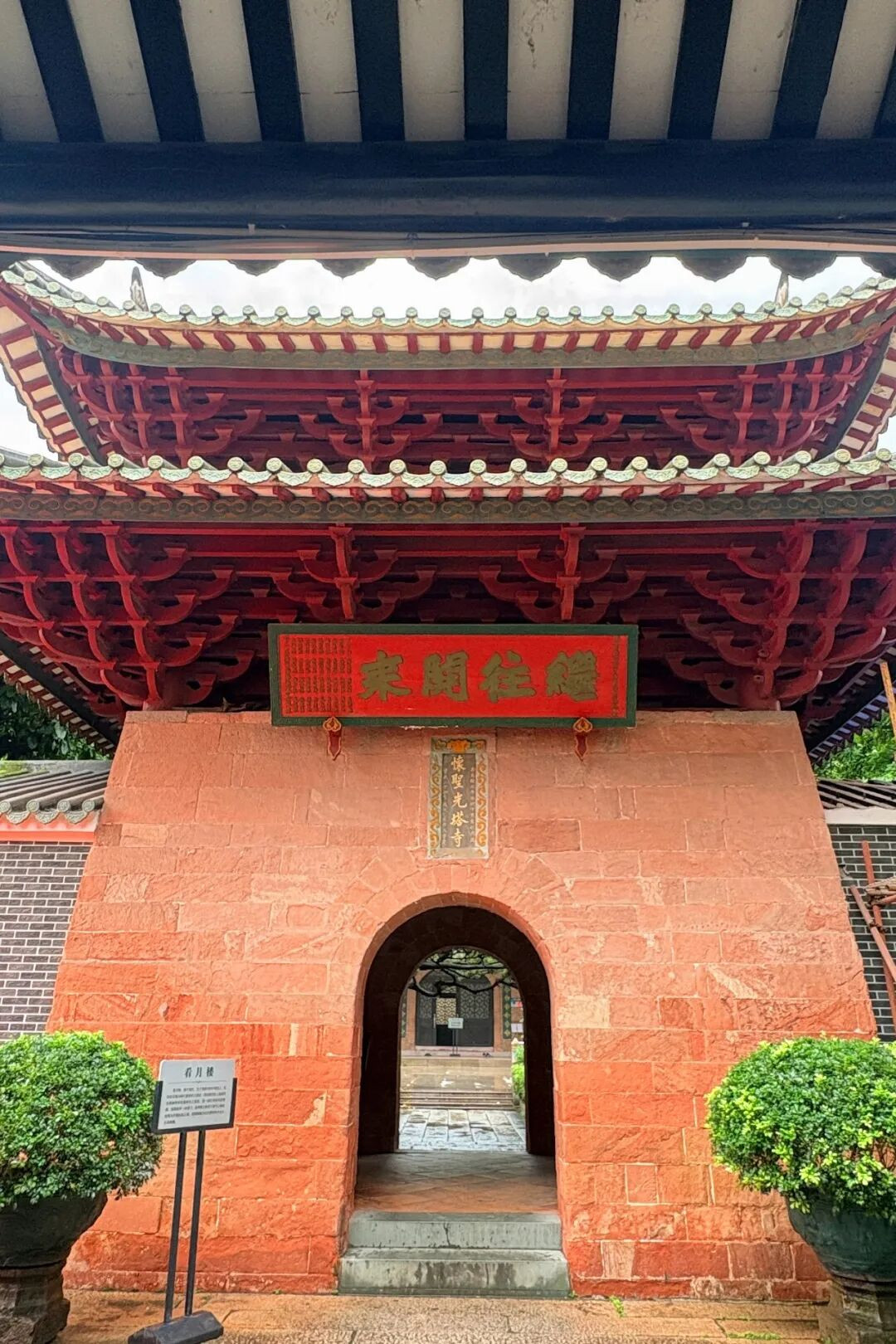
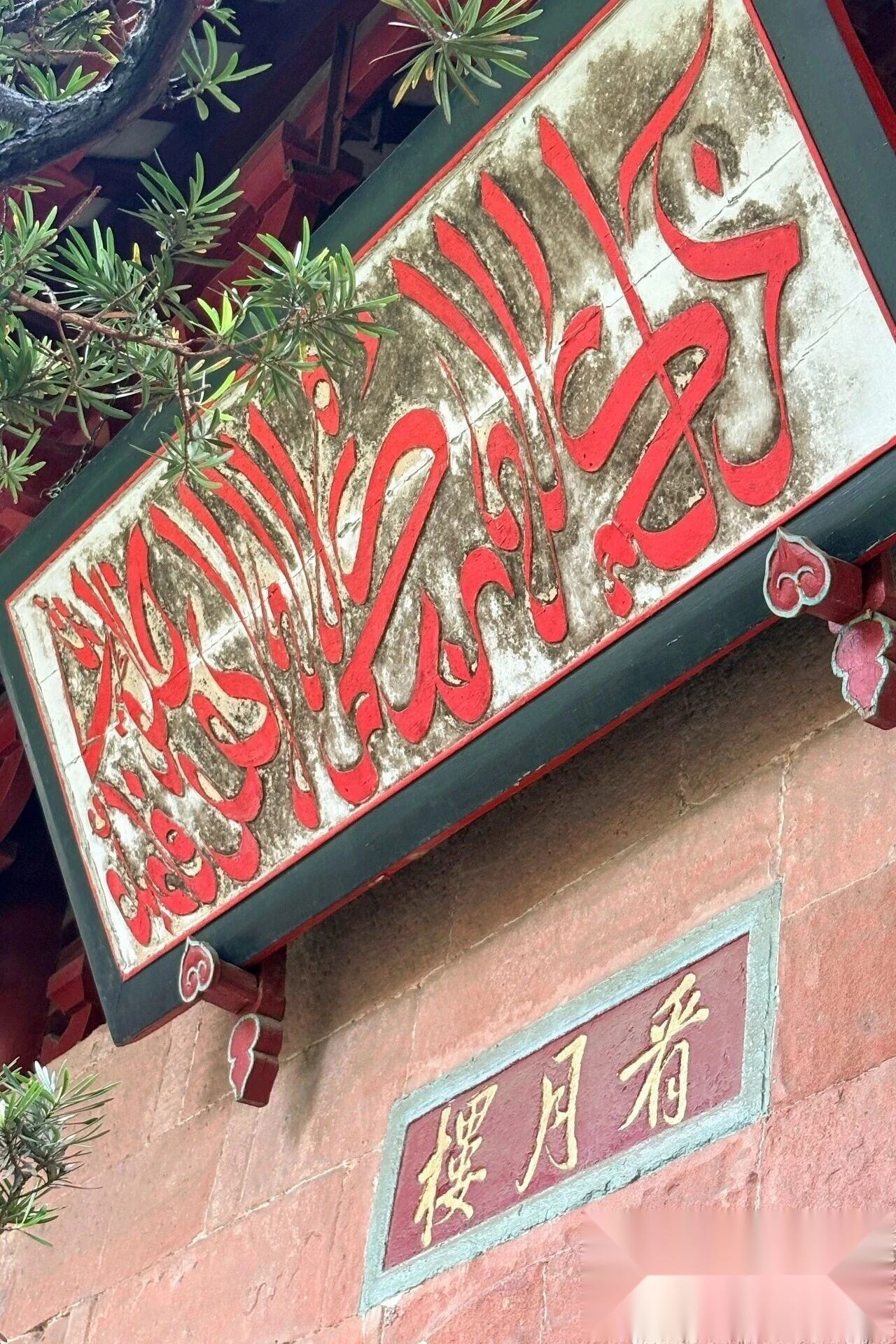
The Moon-Watching Tower was rebuilt in the 34th year of Emperor Kangxi's reign in the Qing Dynasty, featuring a double-eaved hip-and-gable roof, red sandstone walls, and arched doorways on all four sides. It effortlessly rocks the upturned eaves of classical Chinese architecture while carrying the unmistakable vibe of West Asian design.
The main prayer hall still retains its classic Arabian architectural style.
The stone balustrades on the terrace in front of the hall are actual relics from the Ming Dynasty, featuring exquisite carvings.
The courtyard is also dotted with lush longan trees and jiangguo (phoenix eye fruit trees).
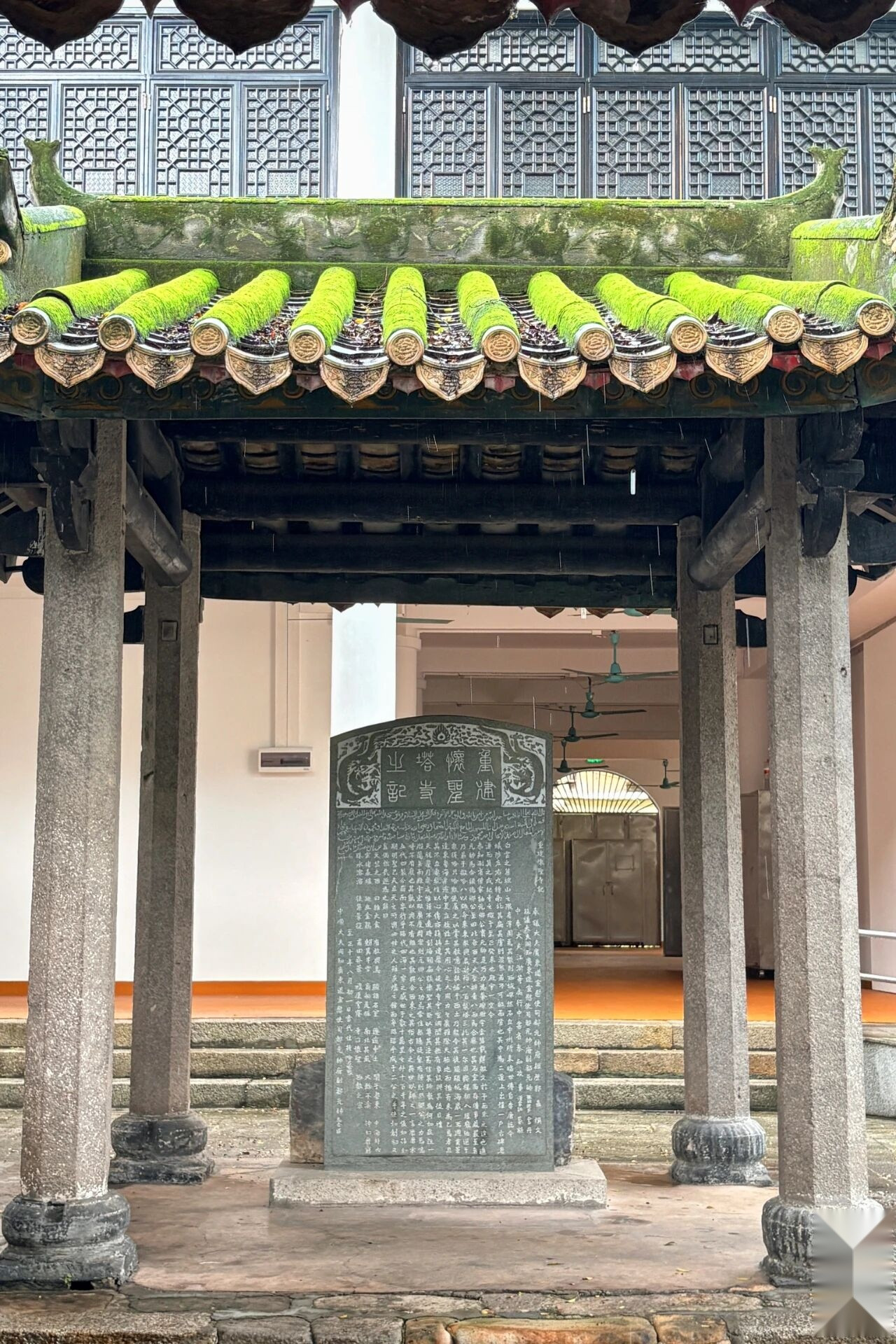
The mosque still preserves more than 40 steles and plaques in both Chinese and Arabic dating back to the Yuan Dynasty and beyond.
Back in 1996, the Huaisheng Mosque Light Pagoda was designated as a fourth-batch Major Historical and Cultural Site Protected at the National Level. Just about 500 meters away sits another national treasure—Five Immortals Taoist Temple (Wuxian Guan). Combined with the Sacred Heart Cathedral, I've personally tested it out, and you can totally and easily bundle them together into an epic city walk.
Huaisheng Mosque is totally free to enter. Regular opening hours are daily from 9:00 AM to 5:00 PM, but keep in mind that Fridays are Jummah (the Muslim congregational prayer day), so it's closed to visitors then. Definitely plan around that.
Driving yourself through the old town is definitely not recommended; public transit is way more convenient. Take Metro Line 1 to Ximenkou Station, use Exit B, and it's about an 8-minute walk from there.
Guangzhou hides a world-class stone cathedral! There are only 4 like it globally, and one is right here in the Yuexiu old town, accessible straight by subway
Two national-treasure Taoist temples in Guangdong: one in Huizhou, the other right in Guangzhou's old town, completely free to wander
Free ancient villages in Guangdong: A 600-year-old longevity village in Foshan, totally free to stroll, uncrowded, and peaceful
First came the official kilns, then came Foshan? Spend 3 weekend hours in Foshan exploring a 500-year-old Ming Dynasty ancestral hall bestowed by the emperor
Foshan actually has two Ancestral Temples? Most people only know the first one, but step right out of the second one and you're at the Beijiang River
Every small town and every landscape is worth documenting.
I'll be sharing more tried-and-tested routes coming up,
Hit that follow button, and let's take our time exploring the scenery of this world together. view all
Exploring Guangzhou's Huaisheng Mosque: A Thousand-Year Maritime Silk Road Heritage Site on Guangta Road
Summary:
Step into the thousand-year-old Huaisheng Mosque (Light Pagoda Mosque) nestled on Guangta Road in Guangzhou's old town. Trace its origins back to the Zhenguan era of the Tang Dynasty, gaze upon the Light Pagoda with its unique blend of Arabian and Lingnan architectural styles, and feel the rich historical weight of early Islamic culture in China.
In Guangzhou's Yuexiu District, Guangta Road isn't particularly wide, flanked by everyday residential buildings and street-level mom-and-pop shops overflowing with local neighborhood vibes. If you're not paying attention, you might totally miss the curved brick wall bearing the inscription 'Huaisheng Relic Base.' Right behind the wall stands an ancient tower that has towered over the city for a thousand years—this is Huaisheng Mosque, one of the oldest mosques in China.
Back in the Tang Dynasty, Guangzhou's Yuexiu District was the core area of the famous Fanfang (Foreigners' Quarter). A thousand years ago, hordes of Arab and Persian merchants settled and traded here, giving birth to this historic masjid. Alongside Quanzhou's Qingjing Mosque, Hangzhou's Phoenix Mosque, and Yangzhou's Crane Mosque, it is hailed as one of the four great ancient mosques along China's coastal trade routes, serving as a core witness to cultural exchanges along the Maritime Silk Road.
Through the centuries, the ancient mosque has weathered countless storms, suffering damage and undergoing rebuilding several times. After being burned down and later restored during the Yuan Dynasty, the surviving architecture and ancient pagoda still fully retain the structural bone and style of the Tang and Song periods, making it the oldest surviving mosque site in the country.
The absolute standout feature of Huaisheng Mosque is its Light Pagoda, which is where the mosque gets its popular nickname, Guangta Temple. This ancient tower is the earliest surviving Arabian-style ancient pagoda in China, and also one of the oldest standing Islamic minarets in the world.
As for why the Light Pagoda is called the 'Light Pagoda,' there are several stories floating around online. One theory says it's because the pagoda's exterior surface is smooth and undecorated; another suggests it's because when Muslims recite prayers, the imam would climb the tower to call out the adhan (call to prayer) in Arabic, and the Cantonese pronunciation for 'call/sound' sounds a lot like 'light.' But the most widely circulated theory is that back in the Tang Dynasty, Huaisheng Mosque sat right on the banks of the Pearl River, and the Light Pagoda stood right by the waterfront. At night, bright lanterns were hung at the top of the tower to guide incoming and outgoing merchant ships on the Pearl River.
Word has it that there used to be a golden rooster perched at the very top of the tower that could spin with the wind to show wind direction, but tragically, it was blown down by a hurricane in the early Ming Dynasty and replaced with a pointed spire during a 1934 restoration.
The buildings inside the courtyard are also super unique, blending Eastern and Western aesthetics.
The Moon-Watching Tower was rebuilt in the 34th year of Emperor Kangxi's reign in the Qing Dynasty, featuring a double-eaved hip-and-gable roof, red sandstone walls, and arched doorways on all four sides. It effortlessly rocks the upturned eaves of classical Chinese architecture while carrying the unmistakable vibe of West Asian design.
The main prayer hall still retains its classic Arabian architectural style.
The stone balustrades on the terrace in front of the hall are actual relics from the Ming Dynasty, featuring exquisite carvings.
The courtyard is also dotted with lush longan trees and jiangguo (phoenix eye fruit trees).
The mosque still preserves more than 40 steles and plaques in both Chinese and Arabic dating back to the Yuan Dynasty and beyond.
Back in 1996, the Huaisheng Mosque Light Pagoda was designated as a fourth-batch Major Historical and Cultural Site Protected at the National Level. Just about 500 meters away sits another national treasure—Five Immortals Taoist Temple (Wuxian Guan). Combined with the Sacred Heart Cathedral, I've personally tested it out, and you can totally and easily bundle them together into an epic city walk.
Huaisheng Mosque is totally free to enter. Regular opening hours are daily from 9:00 AM to 5:00 PM, but keep in mind that Fridays are Jummah (the Muslim congregational prayer day), so it's closed to visitors then. Definitely plan around that.
Driving yourself through the old town is definitely not recommended; public transit is way more convenient. Take Metro Line 1 to Ximenkou Station, use Exit B, and it's about an 8-minute walk from there.
Guangzhou hides a world-class stone cathedral! There are only 4 like it globally, and one is right here in the Yuexiu old town, accessible straight by subway
Two national-treasure Taoist temples in Guangdong: one in Huizhou, the other right in Guangzhou's old town, completely free to wander
Free ancient villages in Guangdong: A 600-year-old longevity village in Foshan, totally free to stroll, uncrowded, and peaceful
First came the official kilns, then came Foshan? Spend 3 weekend hours in Foshan exploring a 500-year-old Ming Dynasty ancestral hall bestowed by the emperor
Foshan actually has two Ancestral Temples? Most people only know the first one, but step right out of the second one and you're at the Beijiang River
Every small town and every landscape is worth documenting.
I'll be sharing more tried-and-tested routes coming up,
Hit that follow button, and let's take our time exploring the scenery of this world together. view all
[Internet Repost]
Exploring Guangzhou's Huaisheng Mosque: A Thousand-Year Maritime Silk Road Heritage Site on Guangta Road
Summary:
Step into the thousand-year-old Huaisheng Mosque (Light Pagoda Mosque) nestled on Guangta Road in Guangzhou's old town. Trace its origins back to the Zhenguan era of the Tang Dynasty, gaze upon the Light Pagoda with its unique blend of Arabian and Lingnan architectural styles, and feel the rich historical weight of early Islamic culture in China.
In Guangzhou's Yuexiu District, Guangta Road isn't particularly wide, flanked by everyday residential buildings and street-level mom-and-pop shops overflowing with local neighborhood vibes. If you're not paying attention, you might totally miss the curved brick wall bearing the inscription 'Huaisheng Relic Base.' Right behind the wall stands an ancient tower that has towered over the city for a thousand years—this is Huaisheng Mosque, one of the oldest mosques in China.
Back in the Tang Dynasty, Guangzhou's Yuexiu District was the core area of the famous Fanfang (Foreigners' Quarter). A thousand years ago, hordes of Arab and Persian merchants settled and traded here, giving birth to this historic masjid. Alongside Quanzhou's Qingjing Mosque, Hangzhou's Phoenix Mosque, and Yangzhou's Crane Mosque, it is hailed as one of the four great ancient mosques along China's coastal trade routes, serving as a core witness to cultural exchanges along the Maritime Silk Road.
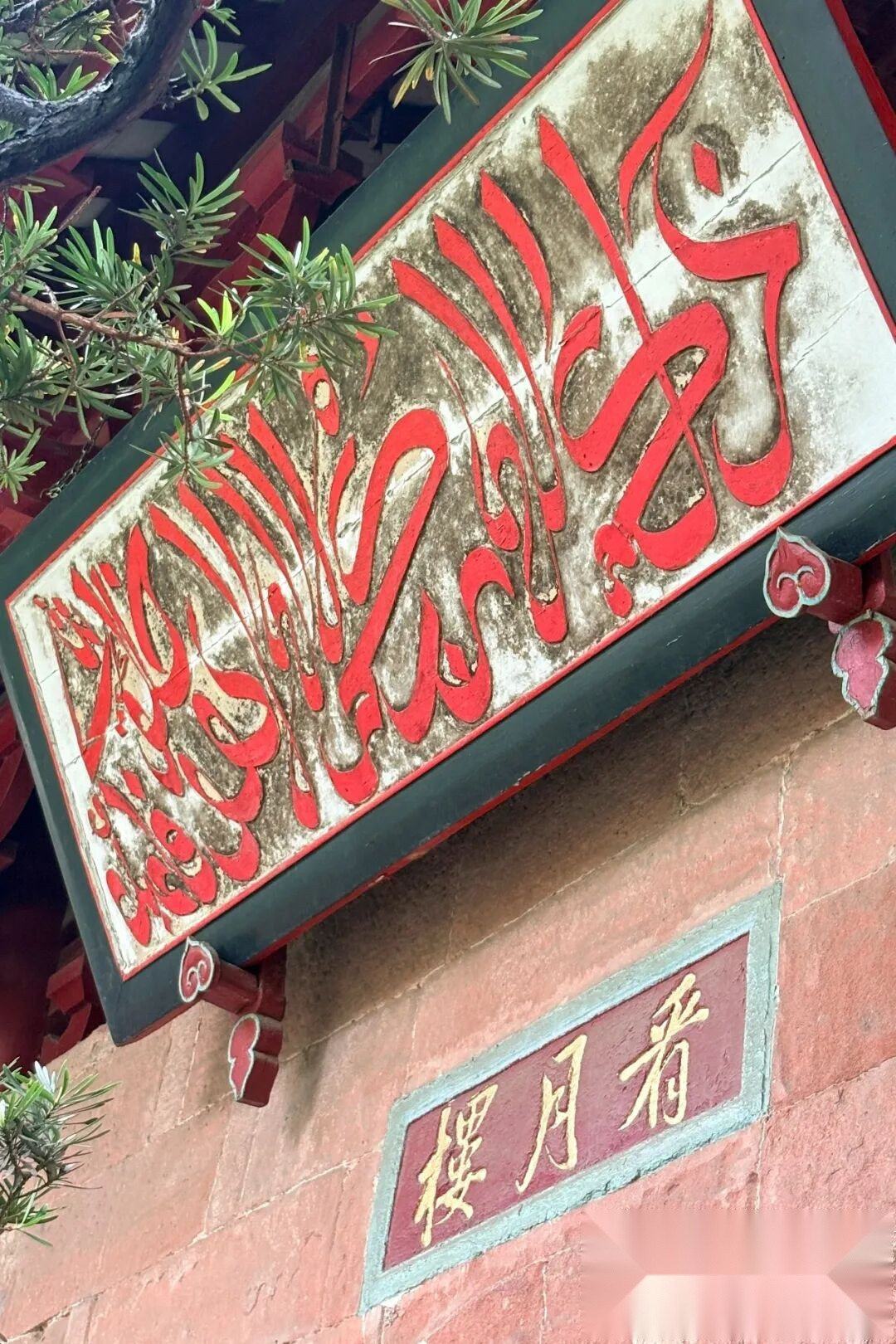
Through the centuries, the ancient mosque has weathered countless storms, suffering damage and undergoing rebuilding several times. After being burned down and later restored during the Yuan Dynasty, the surviving architecture and ancient pagoda still fully retain the structural bone and style of the Tang and Song periods, making it the oldest surviving mosque site in the country.
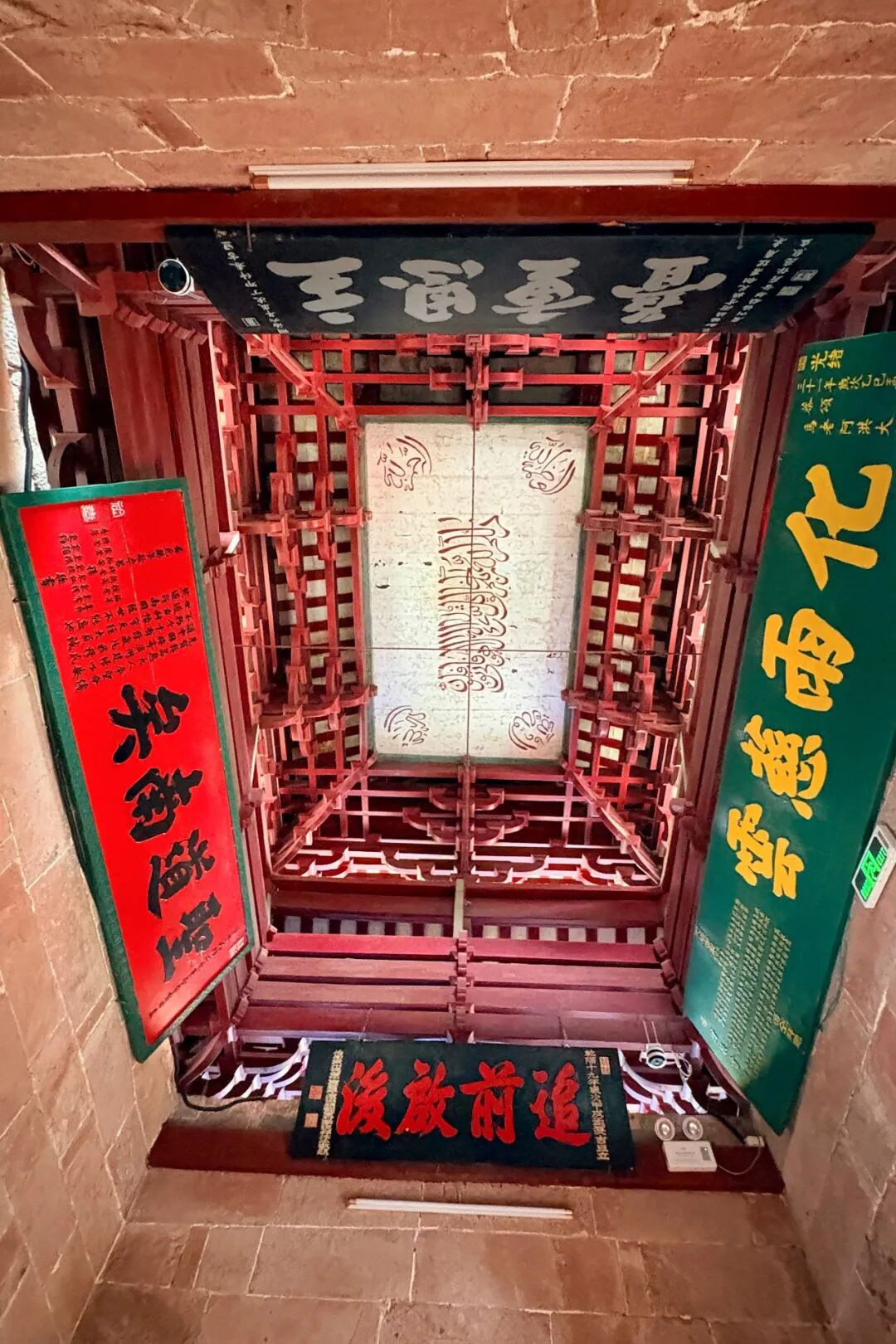
The absolute standout feature of Huaisheng Mosque is its Light Pagoda, which is where the mosque gets its popular nickname, Guangta Temple. This ancient tower is the earliest surviving Arabian-style ancient pagoda in China, and also one of the oldest standing Islamic minarets in the world.
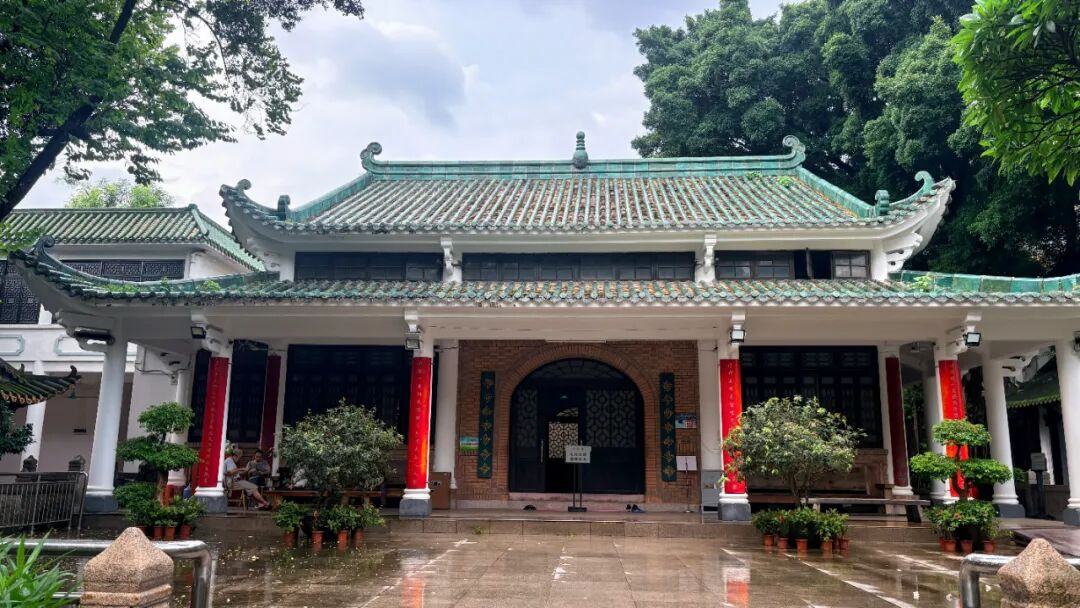
As for why the Light Pagoda is called the 'Light Pagoda,' there are several stories floating around online. One theory says it's because the pagoda's exterior surface is smooth and undecorated; another suggests it's because when Muslims recite prayers, the imam would climb the tower to call out the adhan (call to prayer) in Arabic, and the Cantonese pronunciation for 'call/sound' sounds a lot like 'light.' But the most widely circulated theory is that back in the Tang Dynasty, Huaisheng Mosque sat right on the banks of the Pearl River, and the Light Pagoda stood right by the waterfront. At night, bright lanterns were hung at the top of the tower to guide incoming and outgoing merchant ships on the Pearl River.
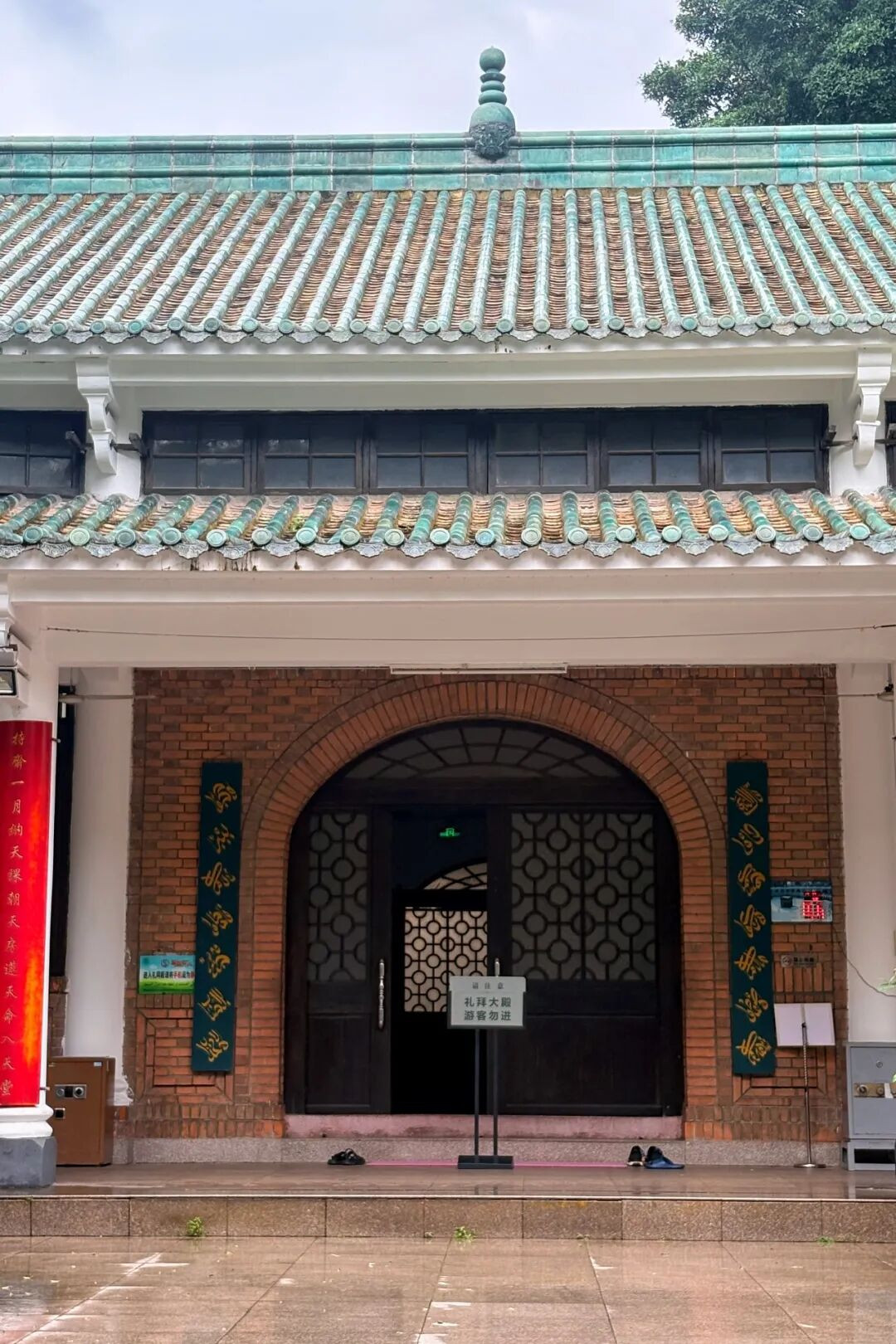
Word has it that there used to be a golden rooster perched at the very top of the tower that could spin with the wind to show wind direction, but tragically, it was blown down by a hurricane in the early Ming Dynasty and replaced with a pointed spire during a 1934 restoration.
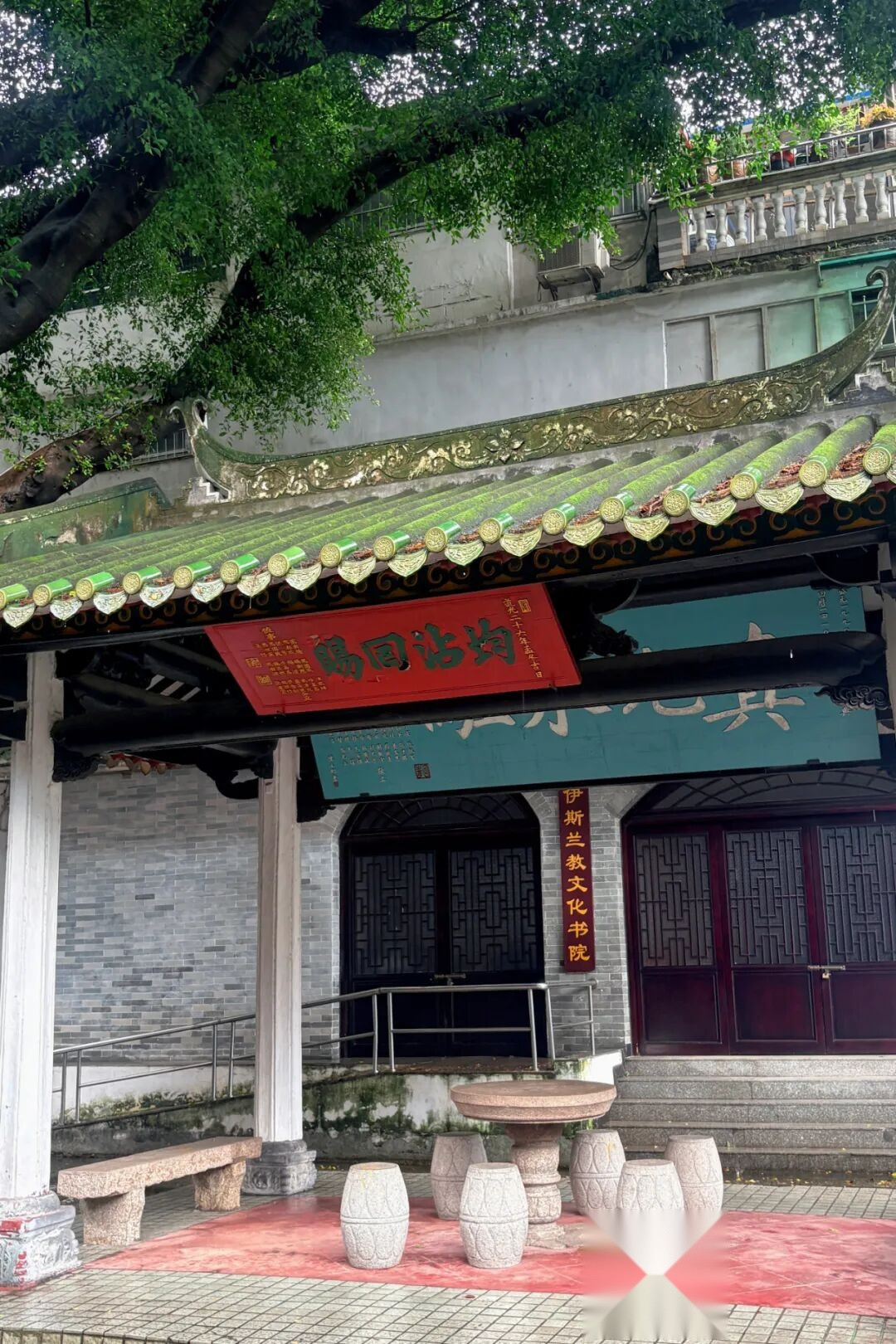
The buildings inside the courtyard are also super unique, blending Eastern and Western aesthetics.
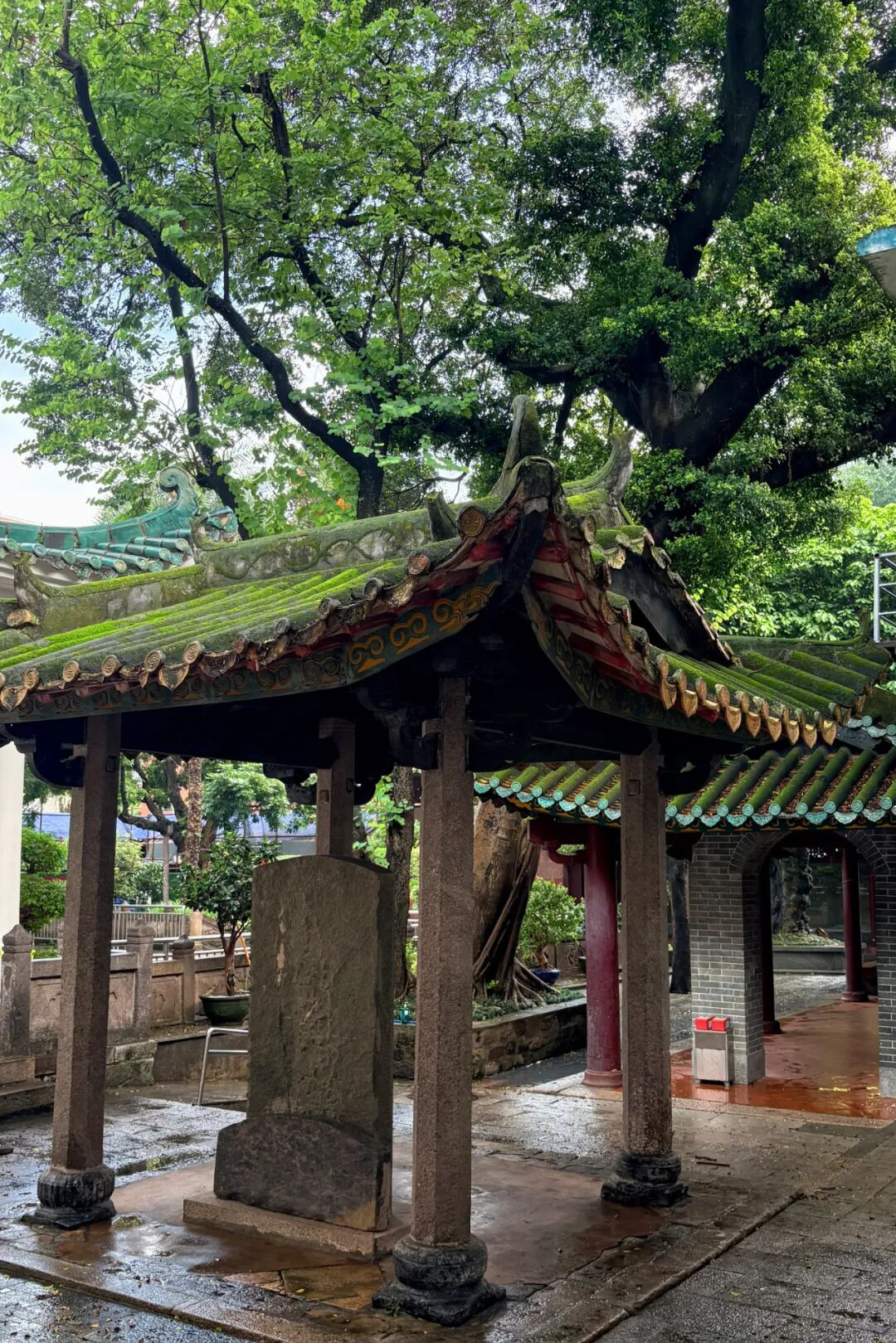
The Moon-Watching Tower was rebuilt in the 34th year of Emperor Kangxi's reign in the Qing Dynasty, featuring a double-eaved hip-and-gable roof, red sandstone walls, and arched doorways on all four sides. It effortlessly rocks the upturned eaves of classical Chinese architecture while carrying the unmistakable vibe of West Asian design.
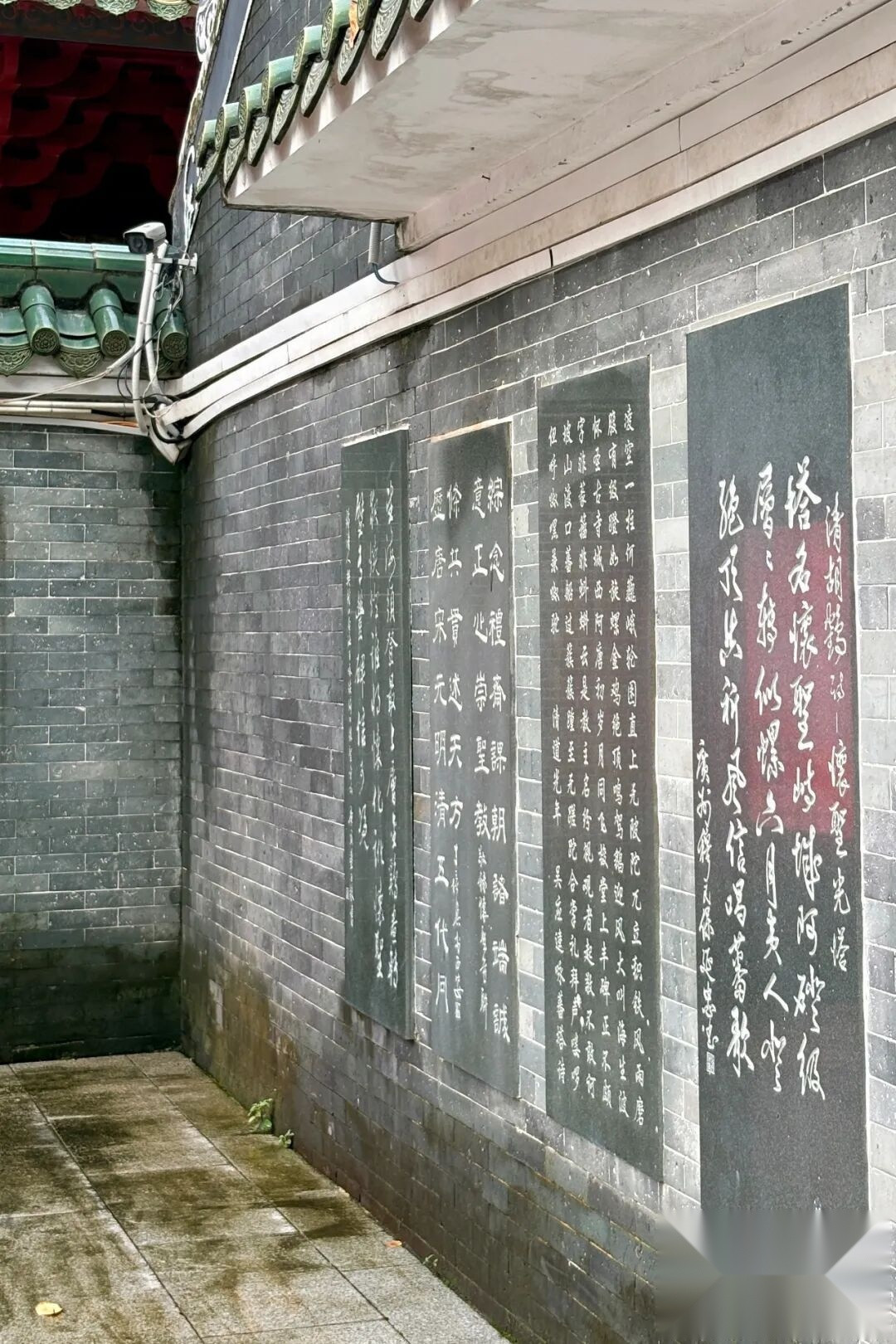
The main prayer hall still retains its classic Arabian architectural style.
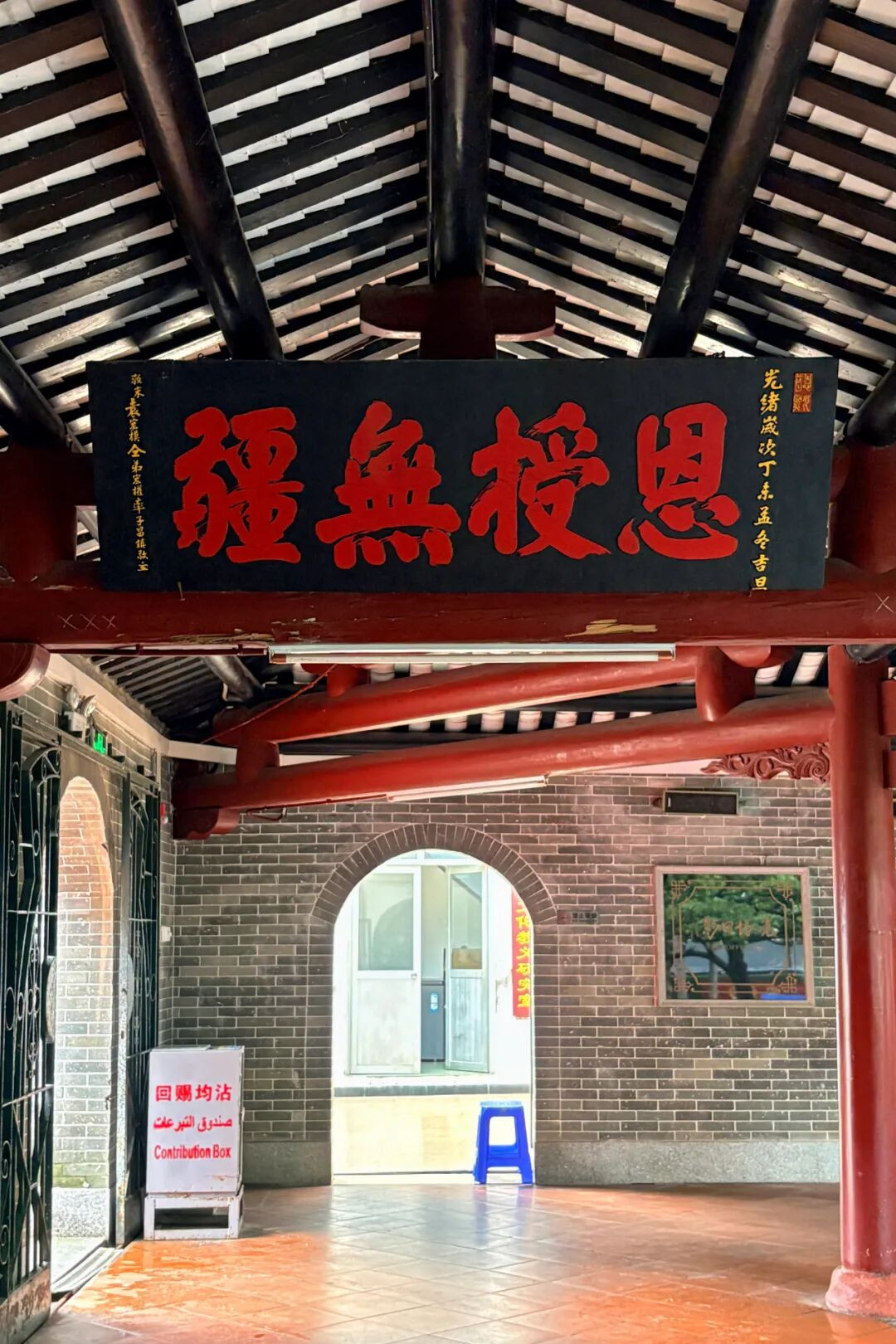
The stone balustrades on the terrace in front of the hall are actual relics from the Ming Dynasty, featuring exquisite carvings.
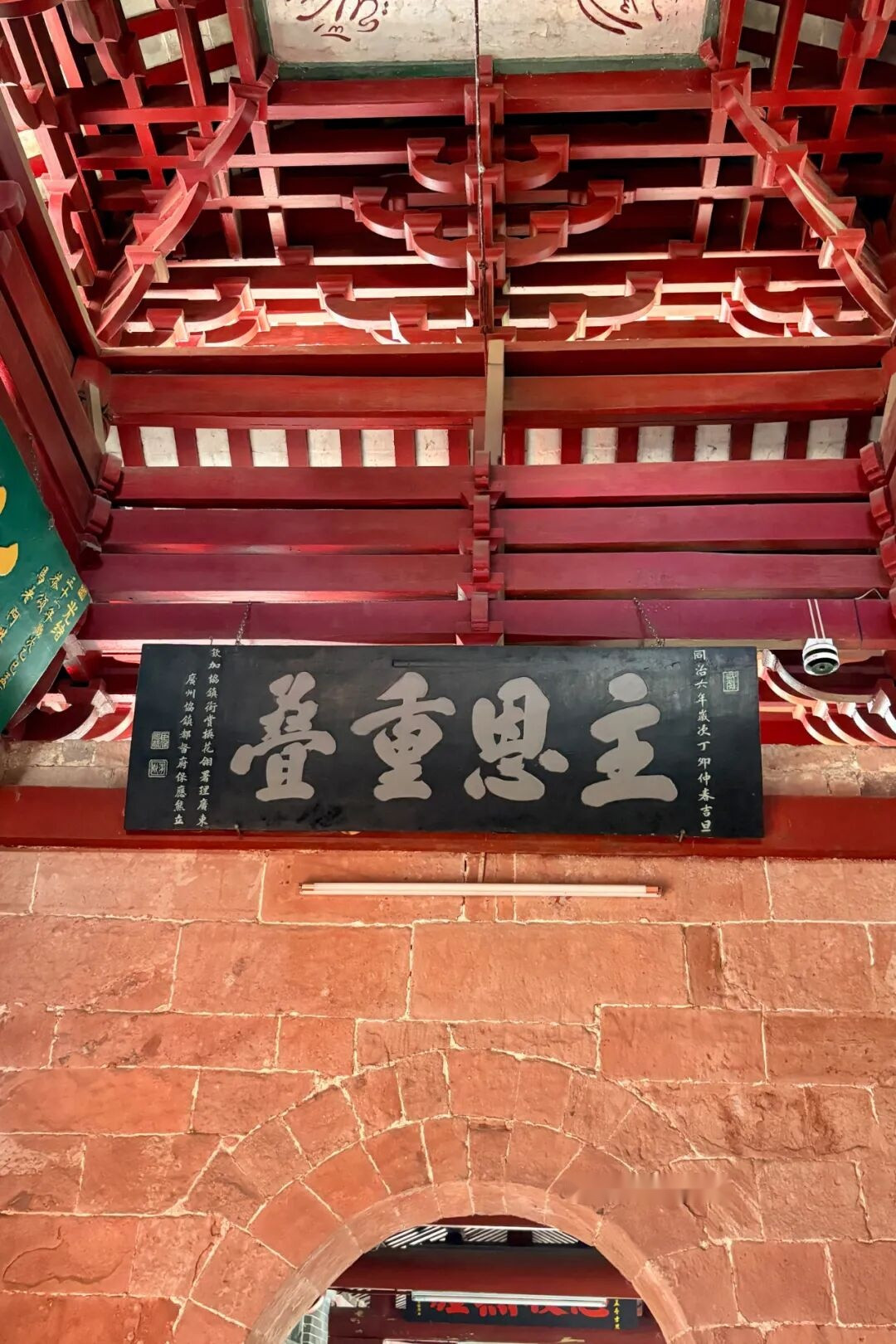
The courtyard is also dotted with lush longan trees and jiangguo (phoenix eye fruit trees).
The mosque still preserves more than 40 steles and plaques in both Chinese and Arabic dating back to the Yuan Dynasty and beyond.
Back in 1996, the Huaisheng Mosque Light Pagoda was designated as a fourth-batch Major Historical and Cultural Site Protected at the National Level. Just about 500 meters away sits another national treasure—Five Immortals Taoist Temple (Wuxian Guan). Combined with the Sacred Heart Cathedral, I've personally tested it out, and you can totally and easily bundle them together into an epic city walk.
Huaisheng Mosque is totally free to enter. Regular opening hours are daily from 9:00 AM to 5:00 PM, but keep in mind that Fridays are Jummah (the Muslim congregational prayer day), so it's closed to visitors then. Definitely plan around that.
Driving yourself through the old town is definitely not recommended; public transit is way more convenient. Take Metro Line 1 to Ximenkou Station, use Exit B, and it's about an 8-minute walk from there.
Guangzhou hides a world-class stone cathedral! There are only 4 like it globally, and one is right here in the Yuexiu old town, accessible straight by subway
Two national-treasure Taoist temples in Guangdong: one in Huizhou, the other right in Guangzhou's old town, completely free to wander
Free ancient villages in Guangdong: A 600-year-old longevity village in Foshan, totally free to stroll, uncrowded, and peaceful
First came the official kilns, then came Foshan? Spend 3 weekend hours in Foshan exploring a 500-year-old Ming Dynasty ancestral hall bestowed by the emperor
Foshan actually has two Ancestral Temples? Most people only know the first one, but step right out of the second one and you're at the Beijiang River
Every small town and every landscape is worth documenting.
I'll be sharing more tried-and-tested routes coming up,
Hit that follow button, and let's take our time exploring the scenery of this world together.
Exploring Guangzhou's Huaisheng Mosque: A Thousand-Year Maritime Silk Road Heritage Site on Guangta Road
Summary:
Step into the thousand-year-old Huaisheng Mosque (Light Pagoda Mosque) nestled on Guangta Road in Guangzhou's old town. Trace its origins back to the Zhenguan era of the Tang Dynasty, gaze upon the Light Pagoda with its unique blend of Arabian and Lingnan architectural styles, and feel the rich historical weight of early Islamic culture in China.
In Guangzhou's Yuexiu District, Guangta Road isn't particularly wide, flanked by everyday residential buildings and street-level mom-and-pop shops overflowing with local neighborhood vibes. If you're not paying attention, you might totally miss the curved brick wall bearing the inscription 'Huaisheng Relic Base.' Right behind the wall stands an ancient tower that has towered over the city for a thousand years—this is Huaisheng Mosque, one of the oldest mosques in China.
Back in the Tang Dynasty, Guangzhou's Yuexiu District was the core area of the famous Fanfang (Foreigners' Quarter). A thousand years ago, hordes of Arab and Persian merchants settled and traded here, giving birth to this historic masjid. Alongside Quanzhou's Qingjing Mosque, Hangzhou's Phoenix Mosque, and Yangzhou's Crane Mosque, it is hailed as one of the four great ancient mosques along China's coastal trade routes, serving as a core witness to cultural exchanges along the Maritime Silk Road.
Through the centuries, the ancient mosque has weathered countless storms, suffering damage and undergoing rebuilding several times. After being burned down and later restored during the Yuan Dynasty, the surviving architecture and ancient pagoda still fully retain the structural bone and style of the Tang and Song periods, making it the oldest surviving mosque site in the country.
The absolute standout feature of Huaisheng Mosque is its Light Pagoda, which is where the mosque gets its popular nickname, Guangta Temple. This ancient tower is the earliest surviving Arabian-style ancient pagoda in China, and also one of the oldest standing Islamic minarets in the world.
As for why the Light Pagoda is called the 'Light Pagoda,' there are several stories floating around online. One theory says it's because the pagoda's exterior surface is smooth and undecorated; another suggests it's because when Muslims recite prayers, the imam would climb the tower to call out the adhan (call to prayer) in Arabic, and the Cantonese pronunciation for 'call/sound' sounds a lot like 'light.' But the most widely circulated theory is that back in the Tang Dynasty, Huaisheng Mosque sat right on the banks of the Pearl River, and the Light Pagoda stood right by the waterfront. At night, bright lanterns were hung at the top of the tower to guide incoming and outgoing merchant ships on the Pearl River.
Word has it that there used to be a golden rooster perched at the very top of the tower that could spin with the wind to show wind direction, but tragically, it was blown down by a hurricane in the early Ming Dynasty and replaced with a pointed spire during a 1934 restoration.
The buildings inside the courtyard are also super unique, blending Eastern and Western aesthetics.
The Moon-Watching Tower was rebuilt in the 34th year of Emperor Kangxi's reign in the Qing Dynasty, featuring a double-eaved hip-and-gable roof, red sandstone walls, and arched doorways on all four sides. It effortlessly rocks the upturned eaves of classical Chinese architecture while carrying the unmistakable vibe of West Asian design.
The main prayer hall still retains its classic Arabian architectural style.
The stone balustrades on the terrace in front of the hall are actual relics from the Ming Dynasty, featuring exquisite carvings.
The courtyard is also dotted with lush longan trees and jiangguo (phoenix eye fruit trees).
The mosque still preserves more than 40 steles and plaques in both Chinese and Arabic dating back to the Yuan Dynasty and beyond.
Back in 1996, the Huaisheng Mosque Light Pagoda was designated as a fourth-batch Major Historical and Cultural Site Protected at the National Level. Just about 500 meters away sits another national treasure—Five Immortals Taoist Temple (Wuxian Guan). Combined with the Sacred Heart Cathedral, I've personally tested it out, and you can totally and easily bundle them together into an epic city walk.
Huaisheng Mosque is totally free to enter. Regular opening hours are daily from 9:00 AM to 5:00 PM, but keep in mind that Fridays are Jummah (the Muslim congregational prayer day), so it's closed to visitors then. Definitely plan around that.
Driving yourself through the old town is definitely not recommended; public transit is way more convenient. Take Metro Line 1 to Ximenkou Station, use Exit B, and it's about an 8-minute walk from there.
Guangzhou hides a world-class stone cathedral! There are only 4 like it globally, and one is right here in the Yuexiu old town, accessible straight by subway
Two national-treasure Taoist temples in Guangdong: one in Huizhou, the other right in Guangzhou's old town, completely free to wander
Free ancient villages in Guangdong: A 600-year-old longevity village in Foshan, totally free to stroll, uncrowded, and peaceful
First came the official kilns, then came Foshan? Spend 3 weekend hours in Foshan exploring a 500-year-old Ming Dynasty ancestral hall bestowed by the emperor
Foshan actually has two Ancestral Temples? Most people only know the first one, but step right out of the second one and you're at the Beijiang River
Every small town and every landscape is worth documenting.
I'll be sharing more tried-and-tested routes coming up,
Hit that follow button, and let's take our time exploring the scenery of this world together.
Guangzhou's Huaisheng Mosque: A Millennia of Islamic History & Tang-Song Architecture in China's Oldest Masjid
Articles • Hasan09 posted the article • 0 comments • 7 views • 10 hours ago
[Internet Repost]
Guangzhou's Yuexiu Old Town Huaisheng Mosque (Light Pagoda Mosque) Photo Guide: A Thousand Years of Tang-Song Era Vibe at China's Foremost Ancient Masjid
Summary:
Dive into this deep photo and text journey exploring the historical architecture of Huaisheng Mosque (Light Pagoda Mosque) in Guangzhou's Yuexiu Old Town. Standing tall as one of China's Four Great Ancient Mosques, renowned alongside Quanzhou's Qingjing Mosque and Hangzhou's Phoenix Mosque, it totally shows off its unique artistic charm, blending traditional Chinese timber structures with ancient Islamic towers.
Huaisheng Mosque is seriously one of China's absolute earliest masjids. It's famous as one of the Four Great Ancient Mosques in China, right up there with Quanzhou's Qingjing Mosque, Hangzhou's Phoenix Mosque, and Yangzhou's Xianhe Mosque. This place is a super important relic of cultural exchange along the Maritime Silk Road. It's been through its fair share of destruction and rebuilding – even getting a major revamp after a fire in the Yuan Dynasty. But check it out, the current architecture still rocks that classic Tang-Song vibe, making it one of the oldest mosques with such deep history in the entire country.
1️⃣ First up, check out the Guangta (Light Pagoda), which is China's oldest existing Arabic-style minaret. Seriously, it's one of the few ancient Islamic minarets left standing globally!
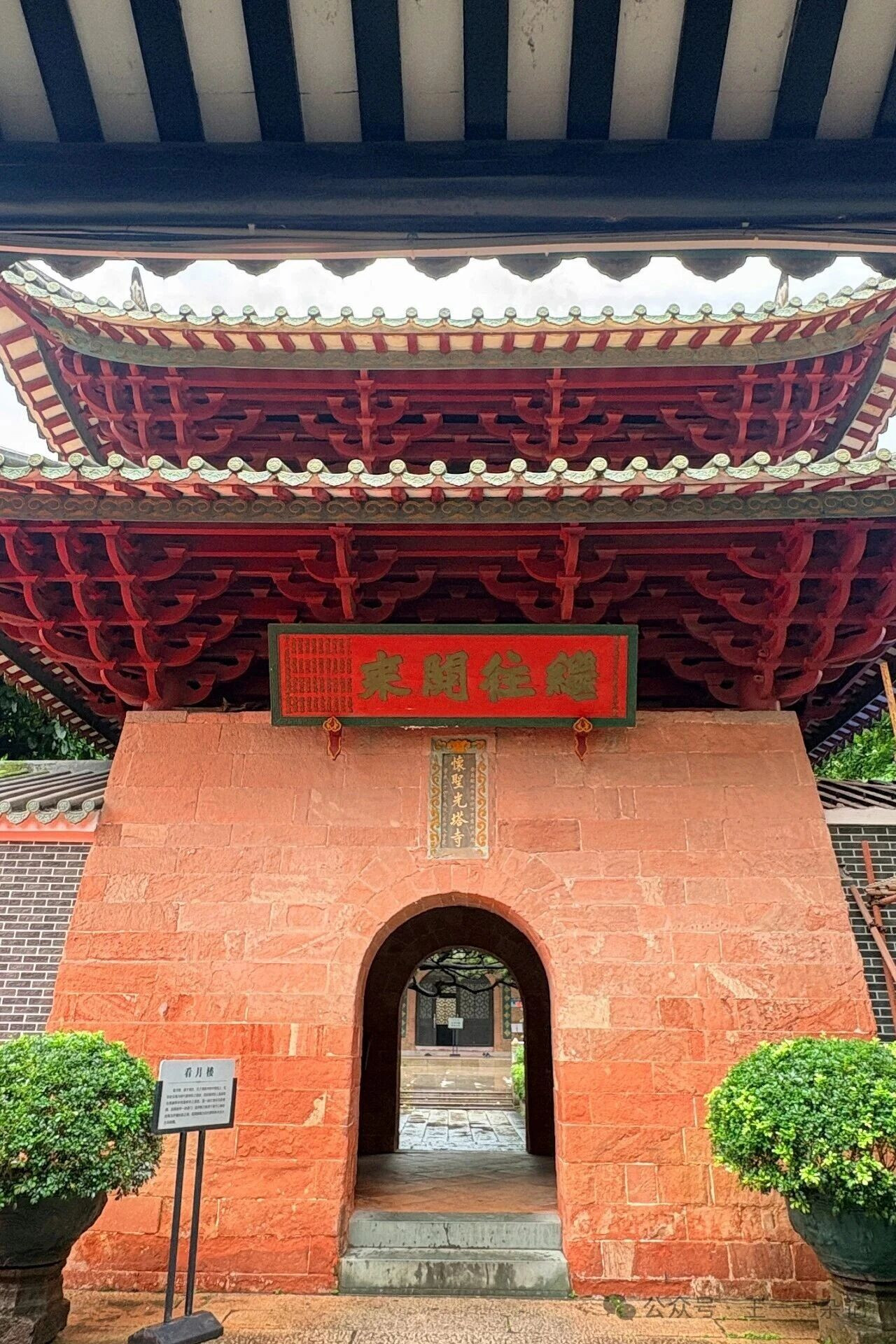
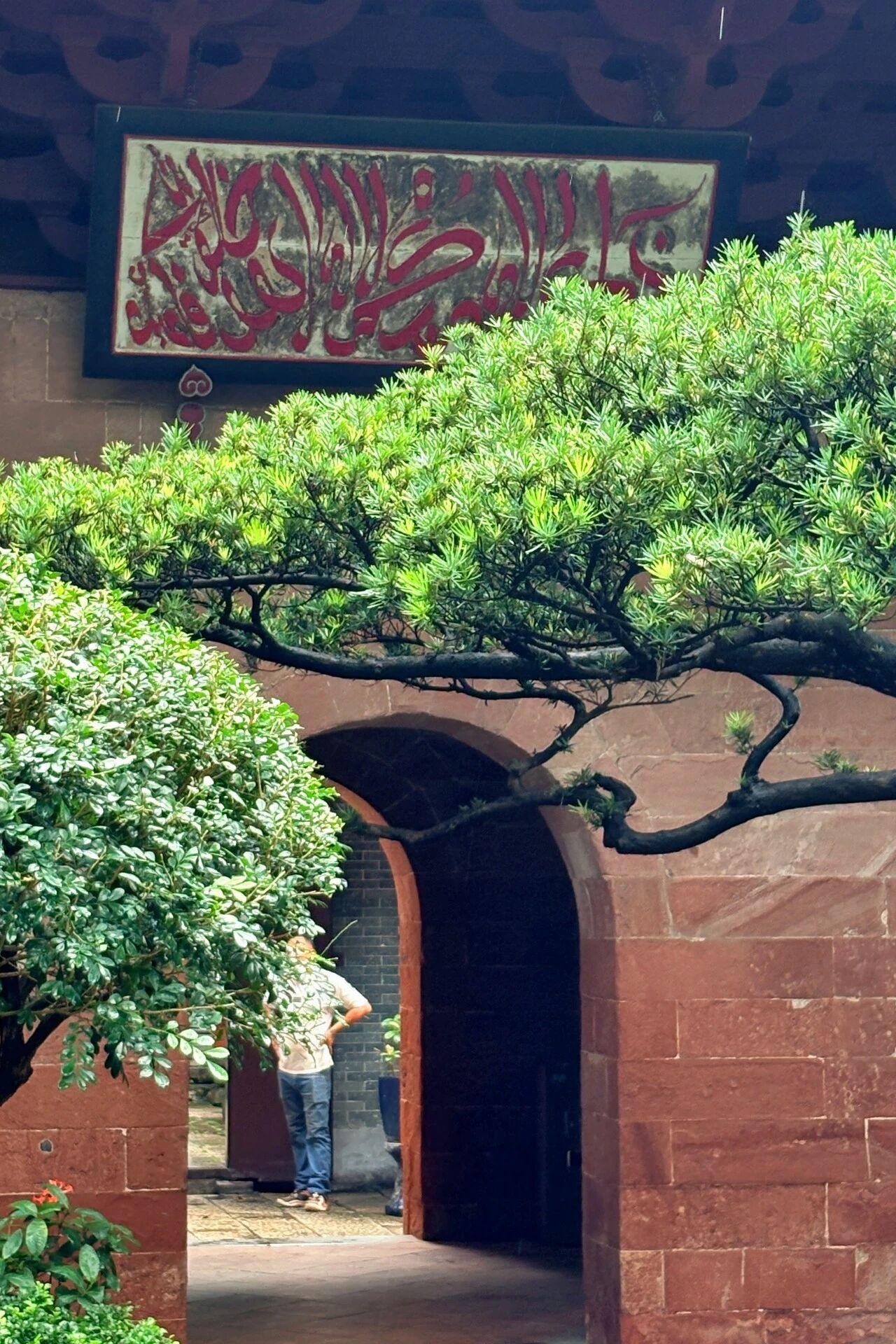
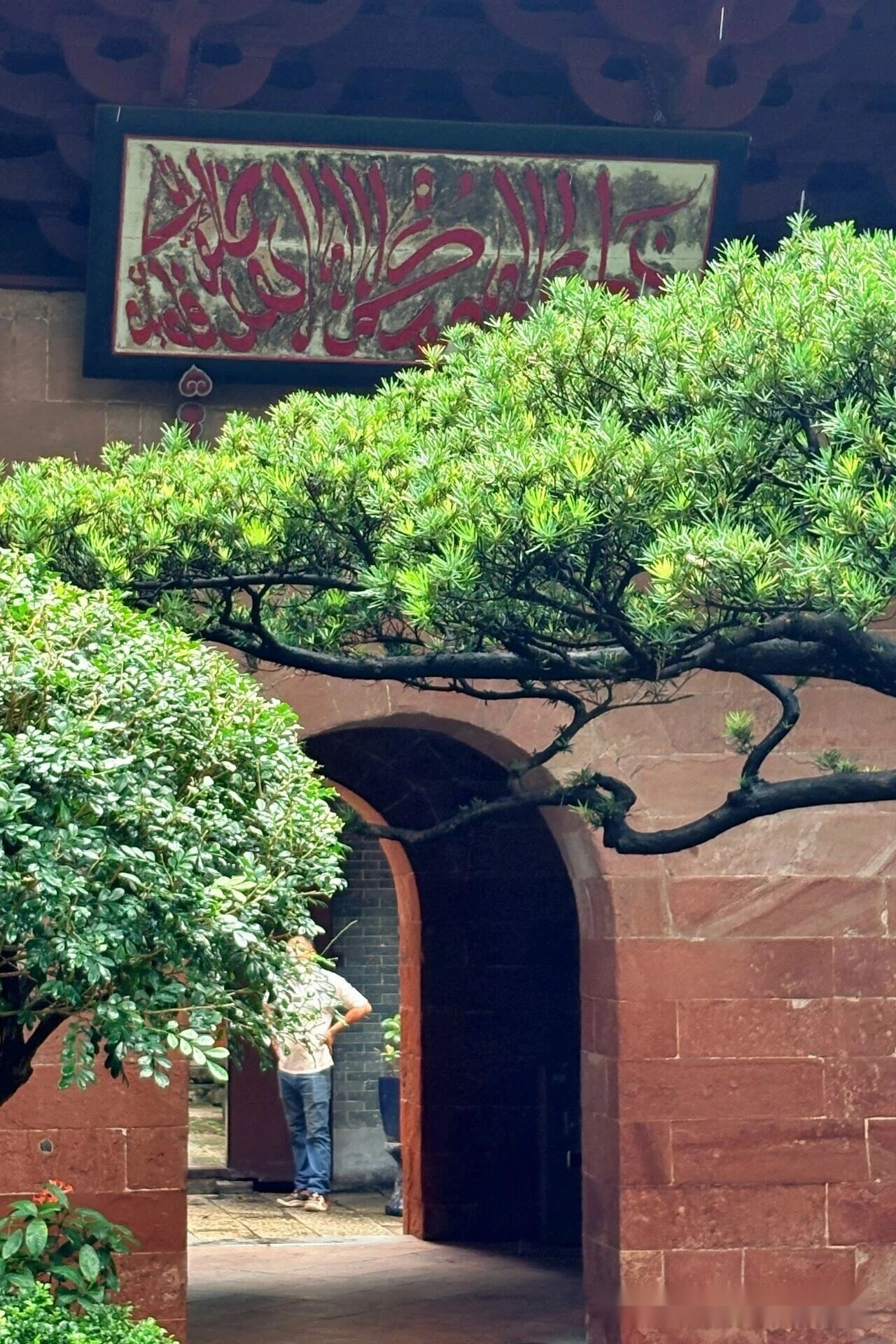
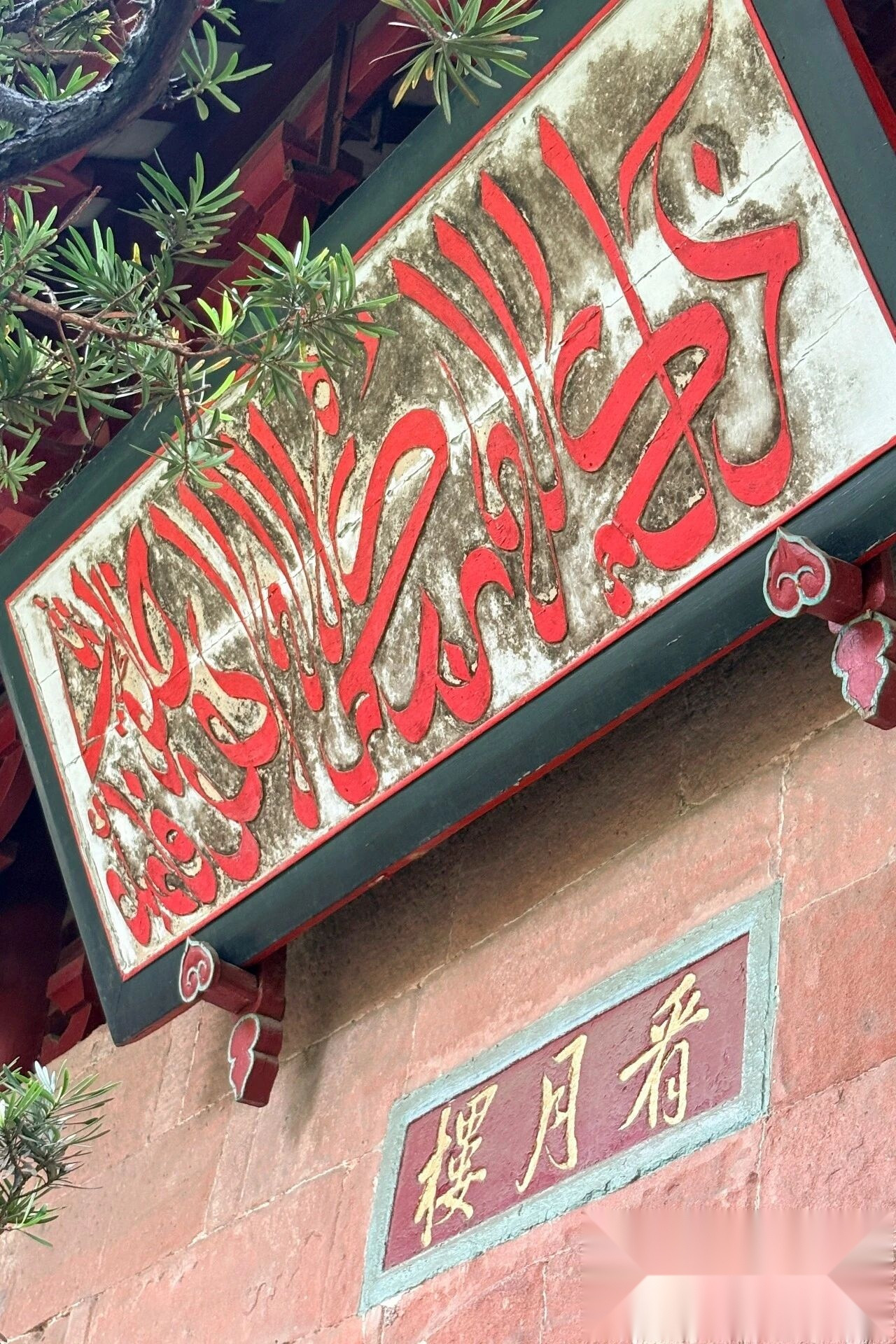
2️⃣ Next, scope out the Kanyuelou (Moon-Viewing Tower). Fun fact: it was rebuilt way back in the Qing Dynasty, during the Kangxi Emperor's 34th year! It sports a super cool double-eaved hip-and-gable roof, red sandstone walls, four arched doorways, and a blend of traditional Chinese flying eaves with a distinct West Asian flair. Talk about architectural fusion!
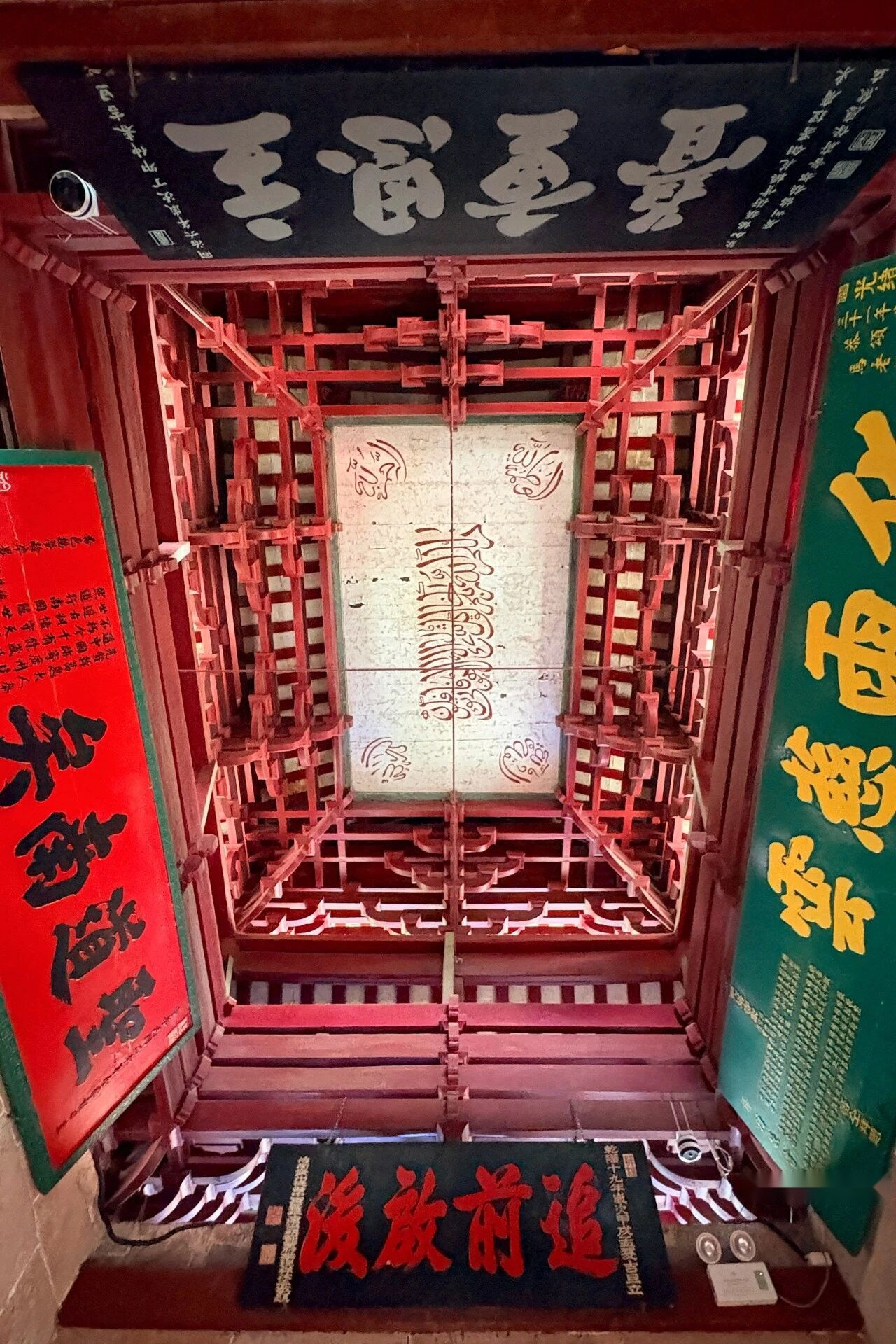
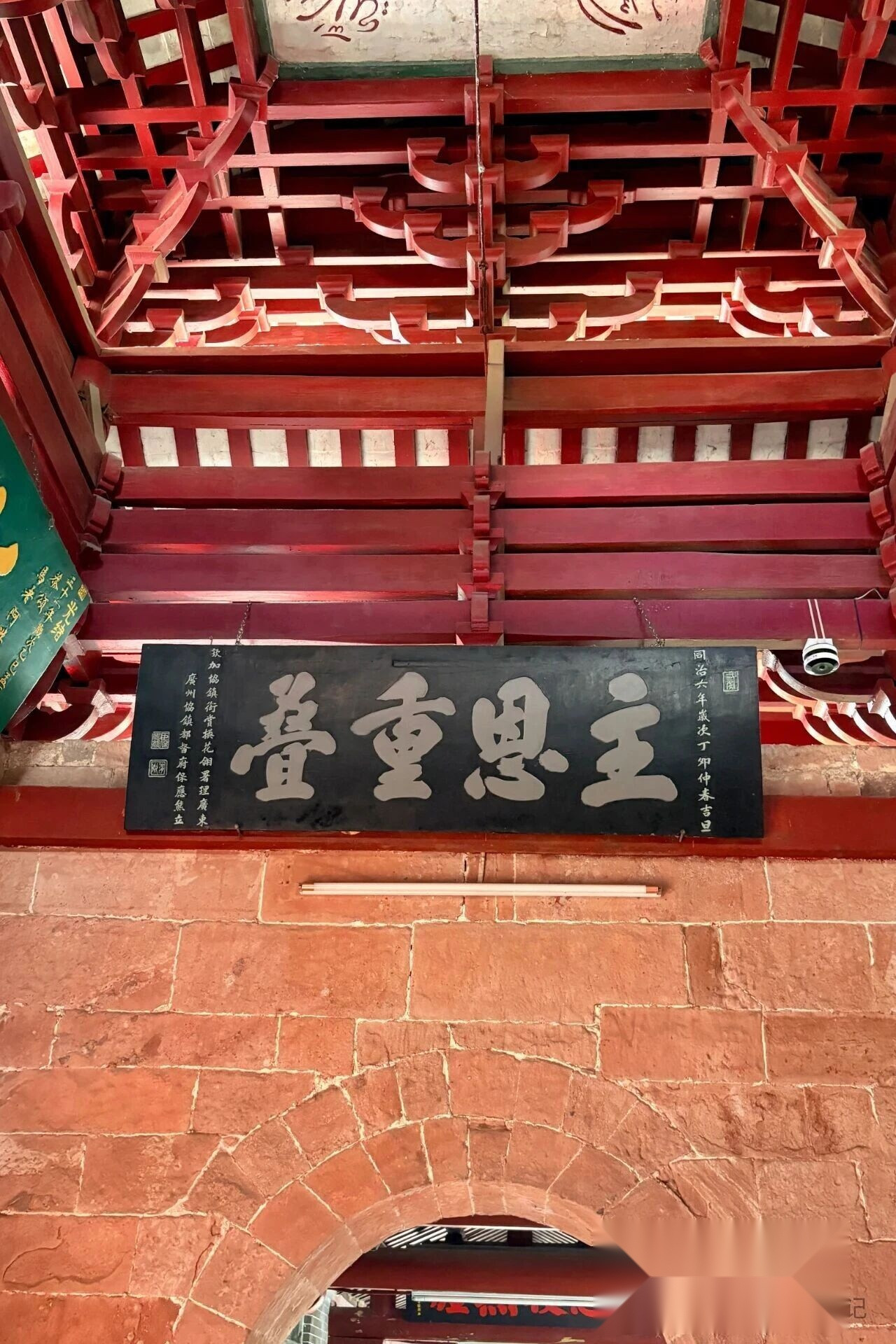
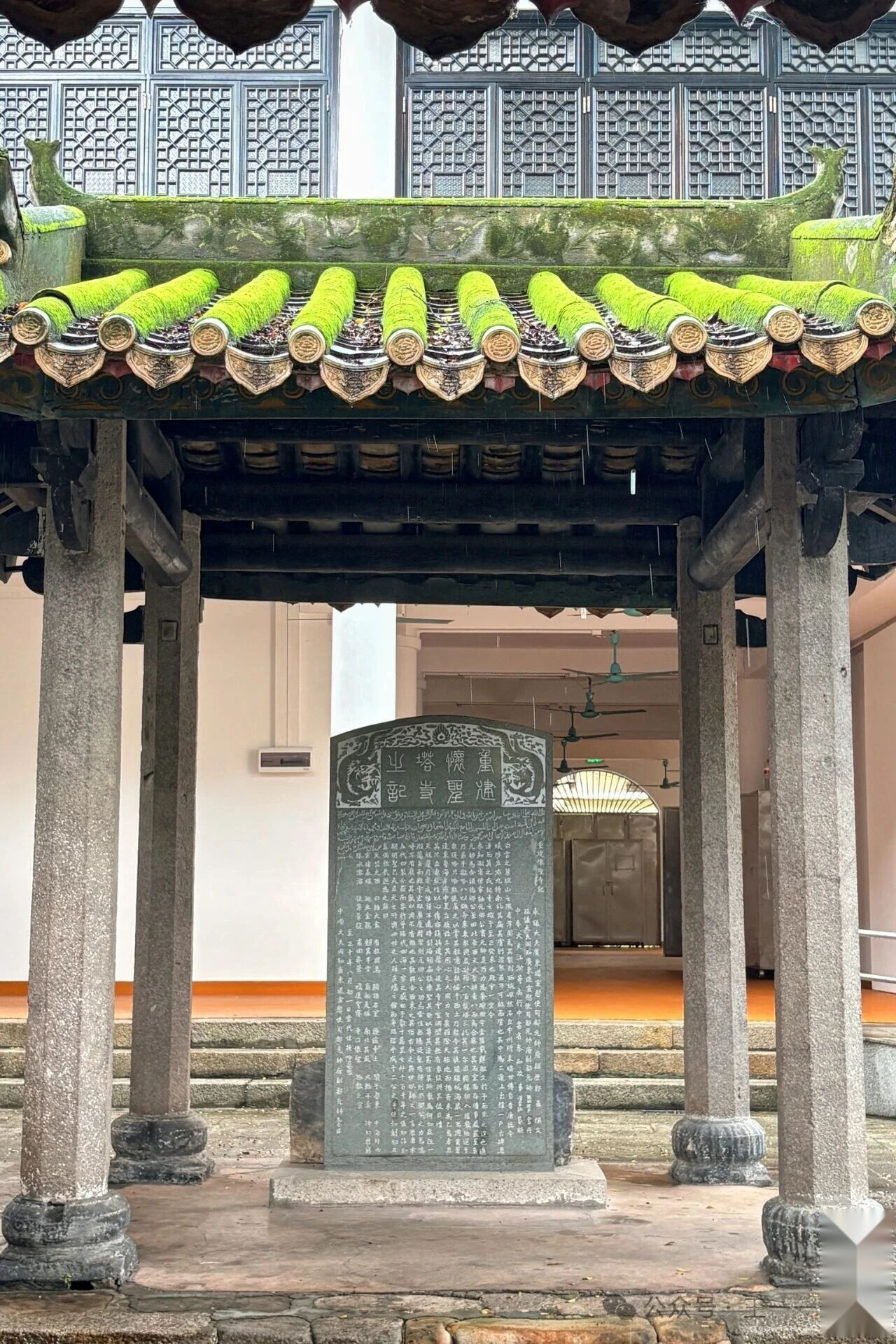
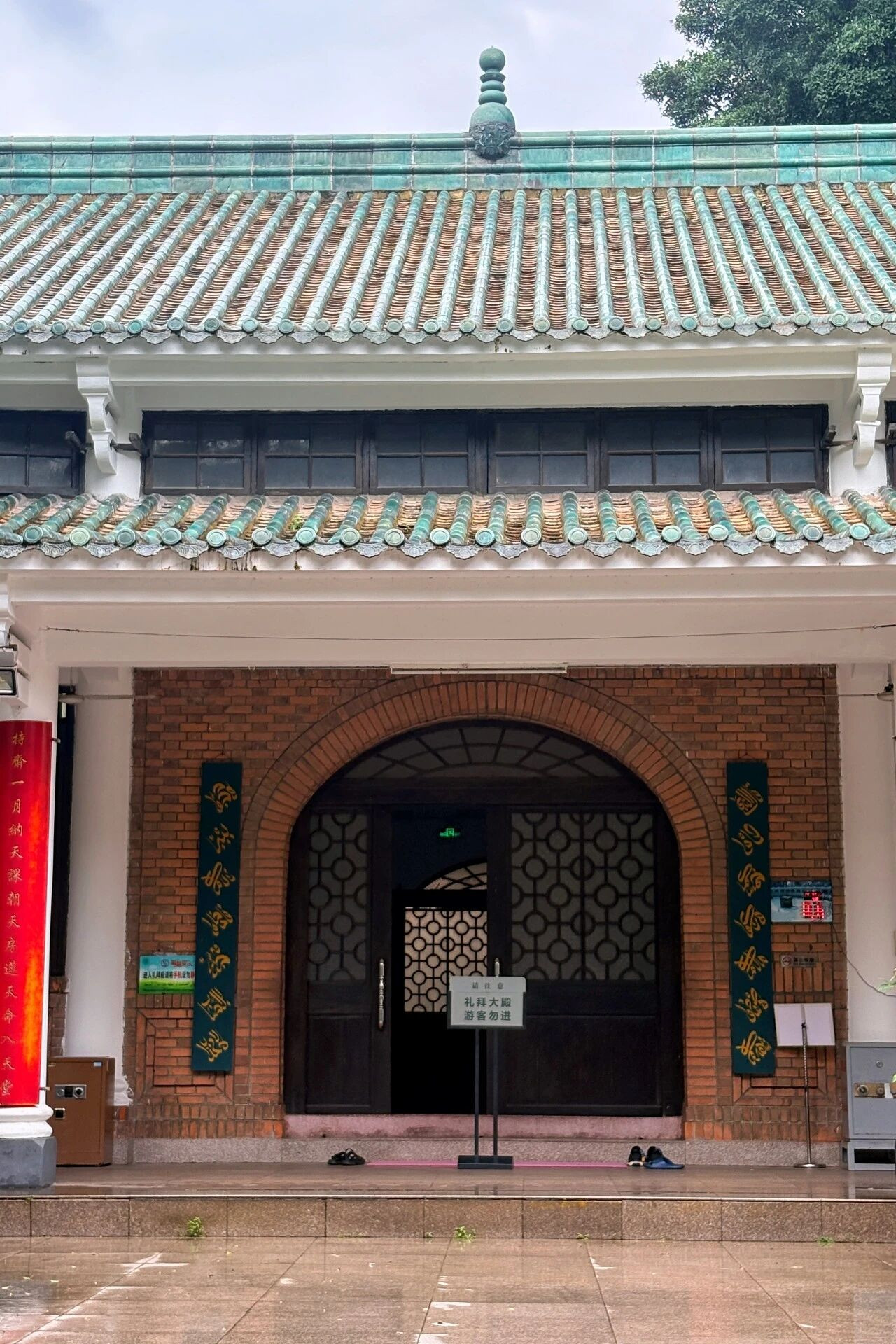
3️⃣ Inside the Prayer Hall, you'll definitely feel those strong Arabic vibes. And seriously, don't miss the super intricate stone railings on the platform out front – they're legit Ming Dynasty relics, carved beautifully!
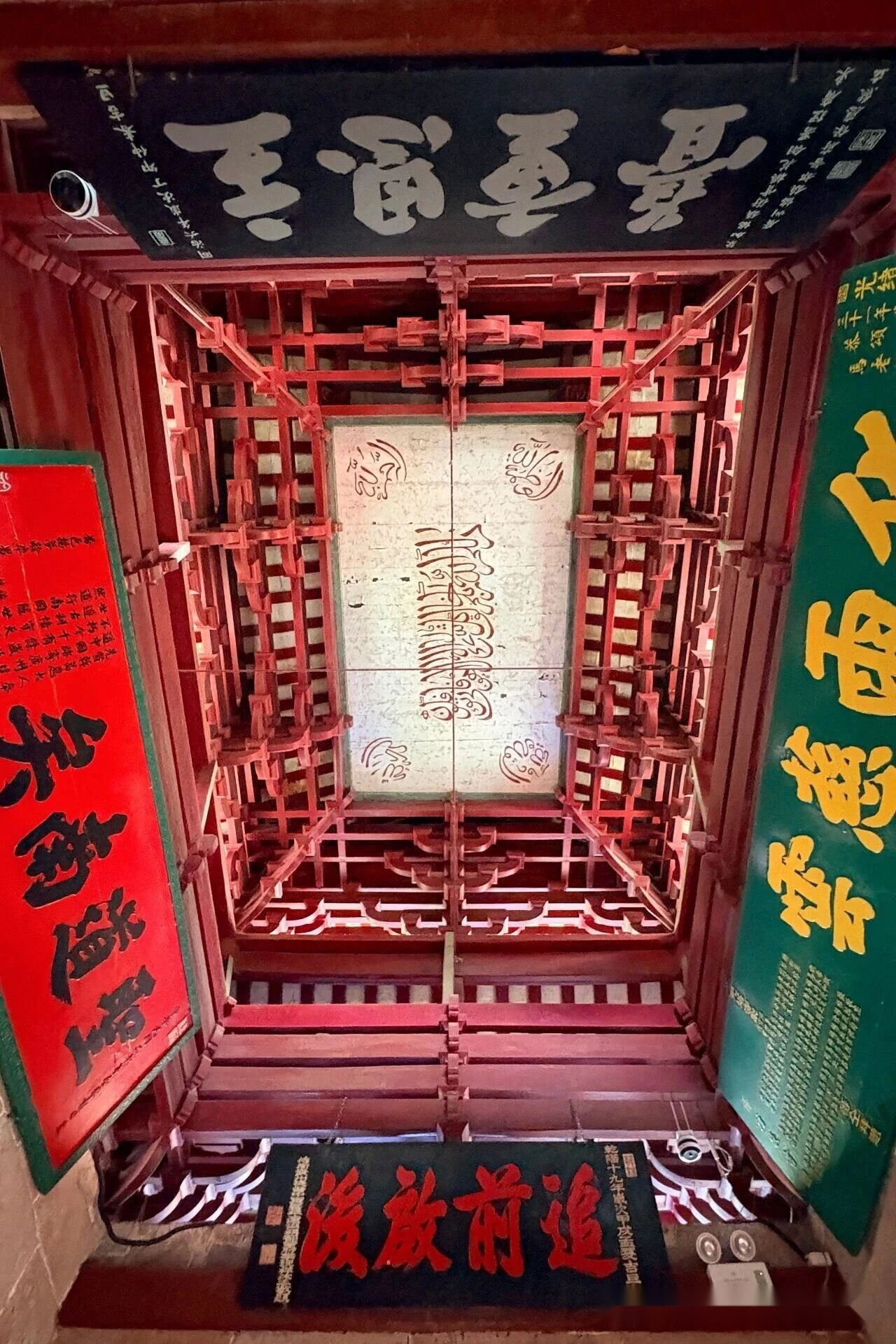
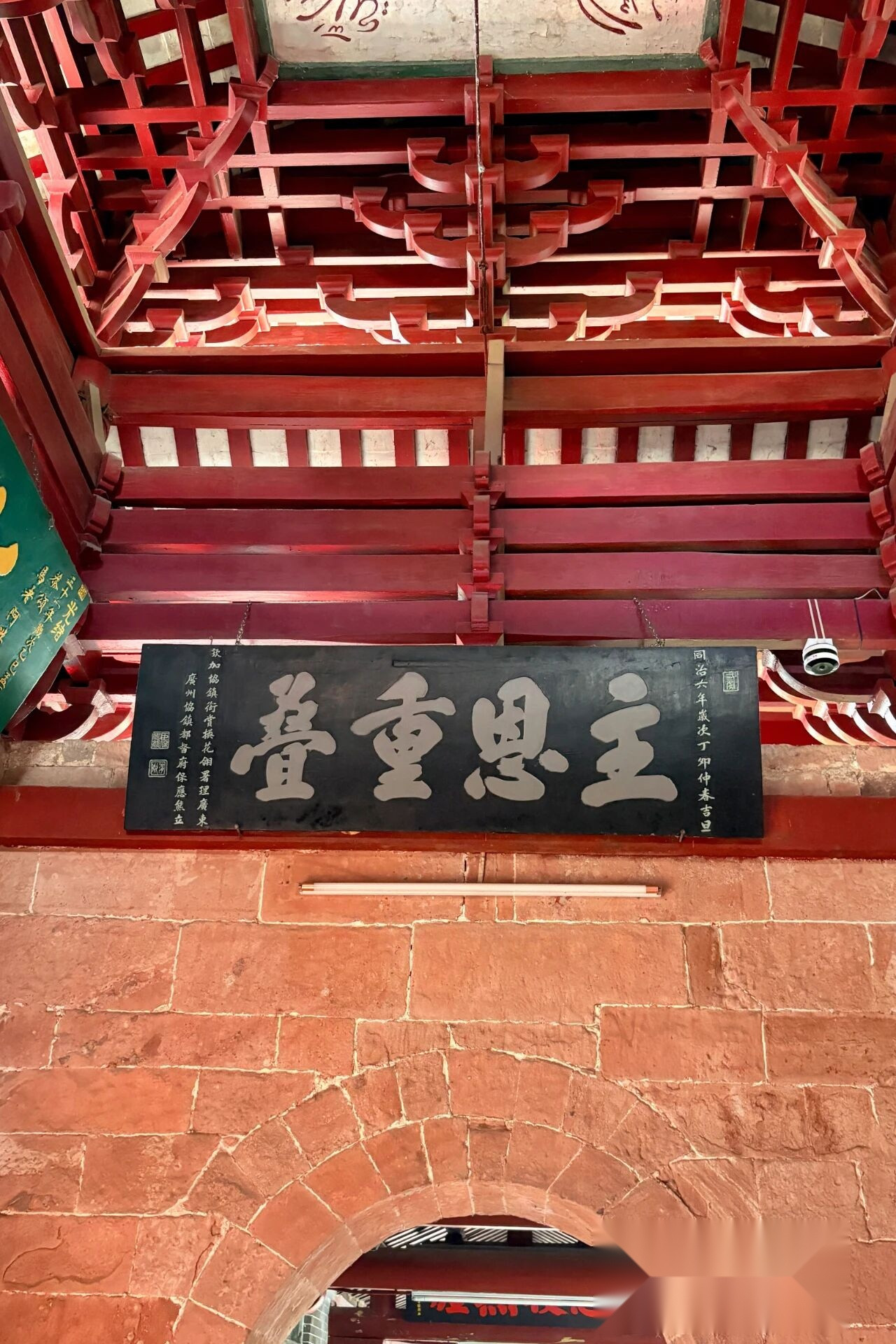
4️⃣ Oh, and history buffs, get this: the mosque preserves over 40 ancient stele plaques with both Chinese and Arabic inscriptions, dating all the way back to the Yuan Dynasty. How cool is that?
✅ Best part? It's totally free to enter! You can visit any day from 9 AM to 5 PM.
Getting there is easy: hop on Metro Line 1 to Ximenkou Station, take Exit B, and it's just an 8-minute walk from there.
Pro-tip for exploring: you can totally link this up with a visit to the Sacred Heart Cathedral, Wuxian Temple, and Guangxiao Temple. It's a killer way to soak in all the diverse historical vibes of Guangzhou's old town!
This spot is perfect for your #GuangzhouCitywalk, #GuangzhouTravel, and #OffbeatSpots bucket list! Dive into #MaritimeSilkRoad history and #AncientArchitectureBeauty, making it an ideal #WeekendVibes destination.
Seriously, one of China's absolute earliest mosques is right here in Guangzhou's old town, and Metro Line 1 takes you straight there. How convenient is that? view all
Guangzhou's Yuexiu Old Town Huaisheng Mosque (Light Pagoda Mosque) Photo Guide: A Thousand Years of Tang-Song Era Vibe at China's Foremost Ancient Masjid
Summary:
Dive into this deep photo and text journey exploring the historical architecture of Huaisheng Mosque (Light Pagoda Mosque) in Guangzhou's Yuexiu Old Town. Standing tall as one of China's Four Great Ancient Mosques, renowned alongside Quanzhou's Qingjing Mosque and Hangzhou's Phoenix Mosque, it totally shows off its unique artistic charm, blending traditional Chinese timber structures with ancient Islamic towers.
Huaisheng Mosque is seriously one of China's absolute earliest masjids. It's famous as one of the Four Great Ancient Mosques in China, right up there with Quanzhou's Qingjing Mosque, Hangzhou's Phoenix Mosque, and Yangzhou's Xianhe Mosque. This place is a super important relic of cultural exchange along the Maritime Silk Road. It's been through its fair share of destruction and rebuilding – even getting a major revamp after a fire in the Yuan Dynasty. But check it out, the current architecture still rocks that classic Tang-Song vibe, making it one of the oldest mosques with such deep history in the entire country.
1️⃣ First up, check out the Guangta (Light Pagoda), which is China's oldest existing Arabic-style minaret. Seriously, it's one of the few ancient Islamic minarets left standing globally!
2️⃣ Next, scope out the Kanyuelou (Moon-Viewing Tower). Fun fact: it was rebuilt way back in the Qing Dynasty, during the Kangxi Emperor's 34th year! It sports a super cool double-eaved hip-and-gable roof, red sandstone walls, four arched doorways, and a blend of traditional Chinese flying eaves with a distinct West Asian flair. Talk about architectural fusion!
3️⃣ Inside the Prayer Hall, you'll definitely feel those strong Arabic vibes. And seriously, don't miss the super intricate stone railings on the platform out front – they're legit Ming Dynasty relics, carved beautifully!
4️⃣ Oh, and history buffs, get this: the mosque preserves over 40 ancient stele plaques with both Chinese and Arabic inscriptions, dating all the way back to the Yuan Dynasty. How cool is that?
✅ Best part? It's totally free to enter! You can visit any day from 9 AM to 5 PM.
Getting there is easy: hop on Metro Line 1 to Ximenkou Station, take Exit B, and it's just an 8-minute walk from there.
Pro-tip for exploring: you can totally link this up with a visit to the Sacred Heart Cathedral, Wuxian Temple, and Guangxiao Temple. It's a killer way to soak in all the diverse historical vibes of Guangzhou's old town!
This spot is perfect for your #GuangzhouCitywalk, #GuangzhouTravel, and #OffbeatSpots bucket list! Dive into #MaritimeSilkRoad history and #AncientArchitectureBeauty, making it an ideal #WeekendVibes destination.
Seriously, one of China's absolute earliest mosques is right here in Guangzhou's old town, and Metro Line 1 takes you straight there. How convenient is that? view all
[Internet Repost]
Guangzhou's Yuexiu Old Town Huaisheng Mosque (Light Pagoda Mosque) Photo Guide: A Thousand Years of Tang-Song Era Vibe at China's Foremost Ancient Masjid
Summary:
Dive into this deep photo and text journey exploring the historical architecture of Huaisheng Mosque (Light Pagoda Mosque) in Guangzhou's Yuexiu Old Town. Standing tall as one of China's Four Great Ancient Mosques, renowned alongside Quanzhou's Qingjing Mosque and Hangzhou's Phoenix Mosque, it totally shows off its unique artistic charm, blending traditional Chinese timber structures with ancient Islamic towers.
Huaisheng Mosque is seriously one of China's absolute earliest masjids. It's famous as one of the Four Great Ancient Mosques in China, right up there with Quanzhou's Qingjing Mosque, Hangzhou's Phoenix Mosque, and Yangzhou's Xianhe Mosque. This place is a super important relic of cultural exchange along the Maritime Silk Road. It's been through its fair share of destruction and rebuilding – even getting a major revamp after a fire in the Yuan Dynasty. But check it out, the current architecture still rocks that classic Tang-Song vibe, making it one of the oldest mosques with such deep history in the entire country.
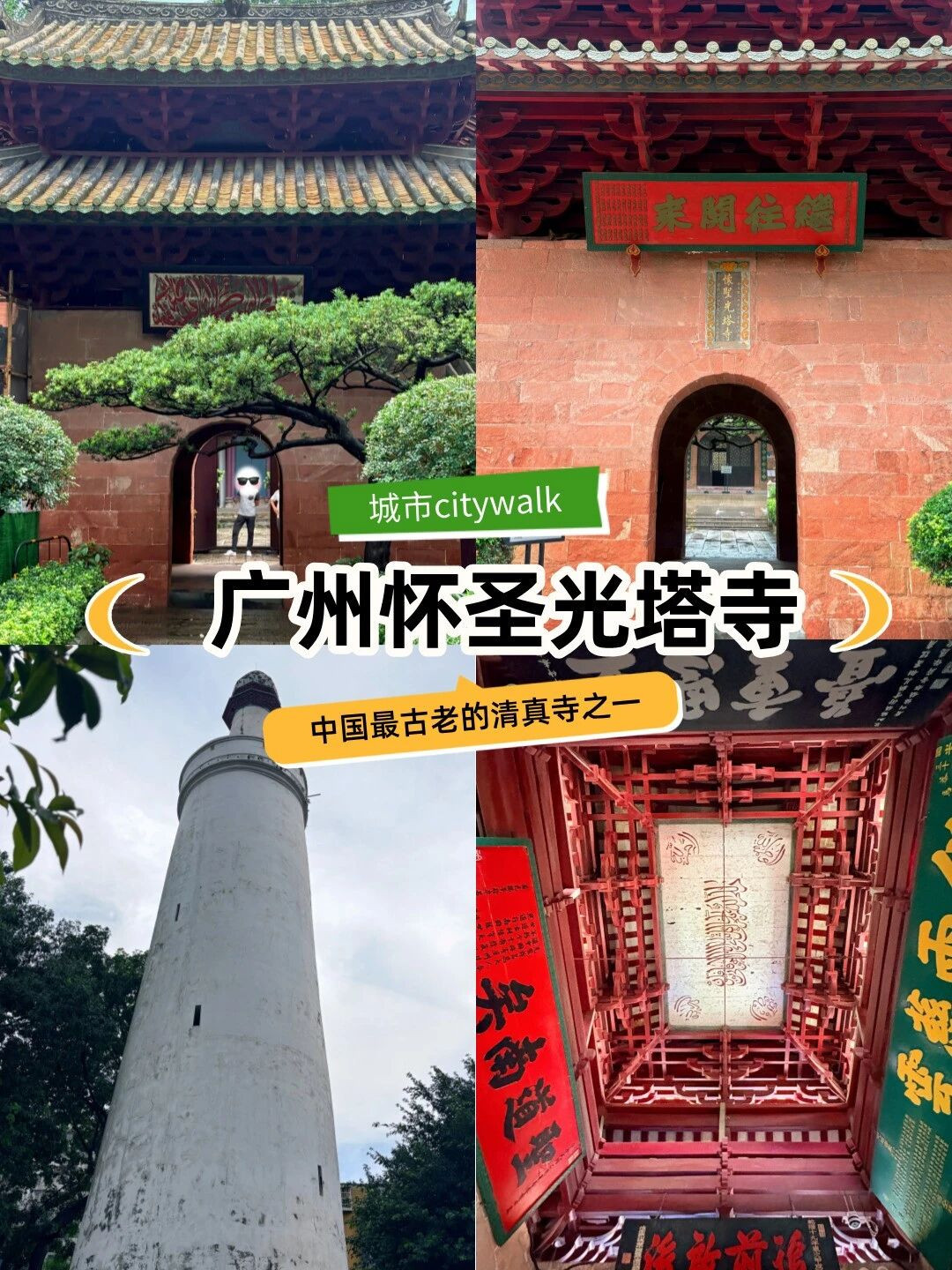
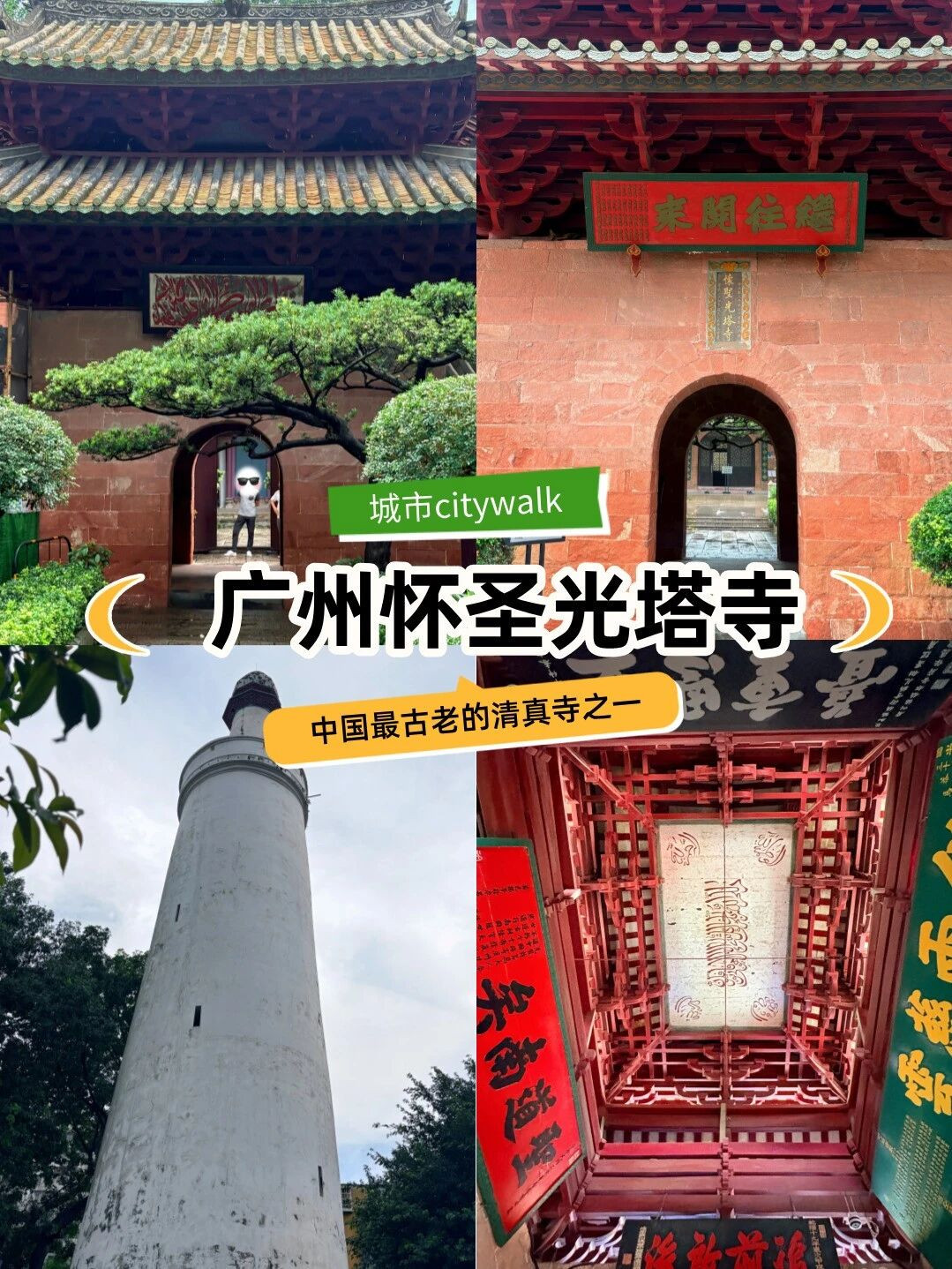
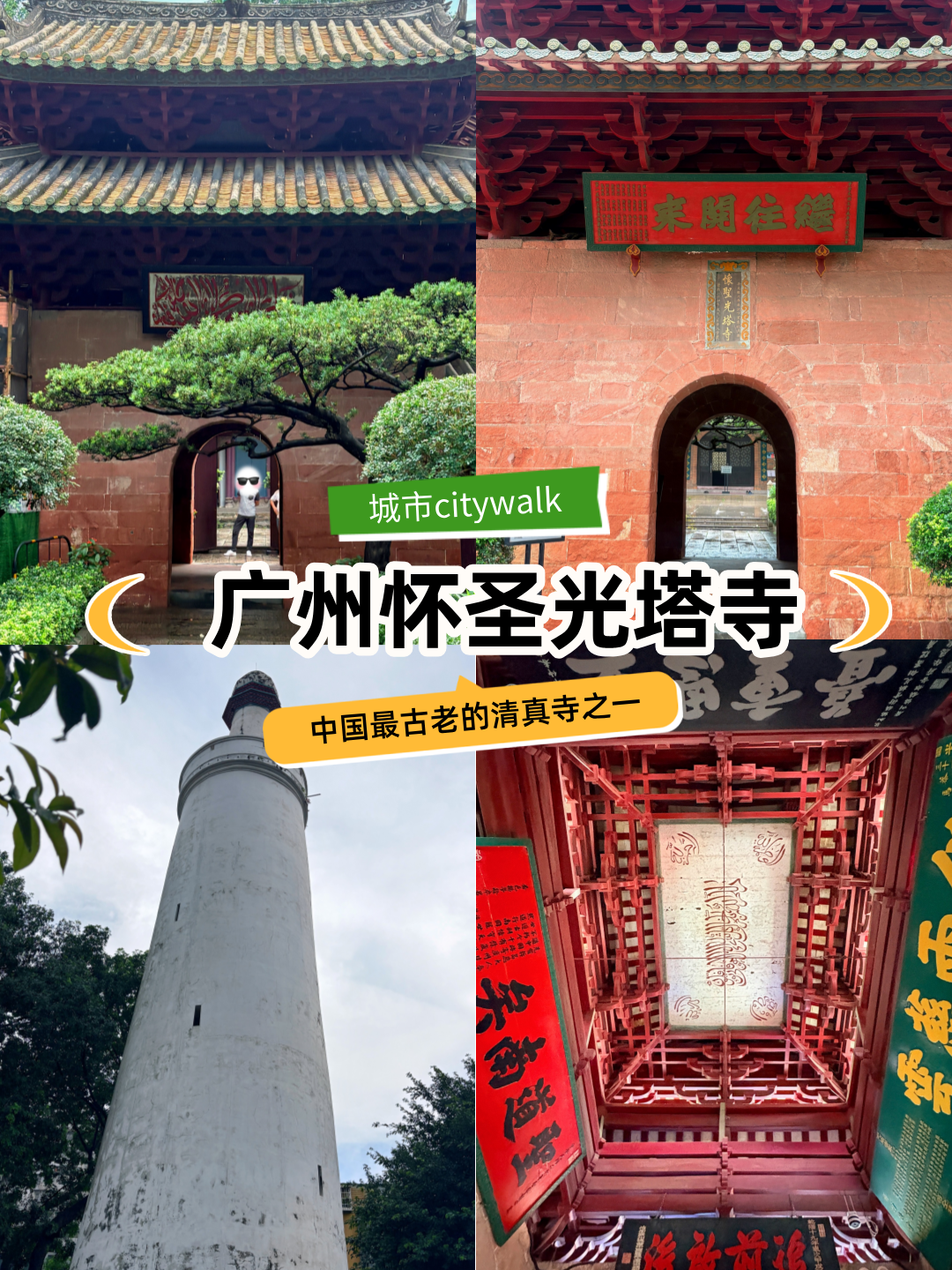
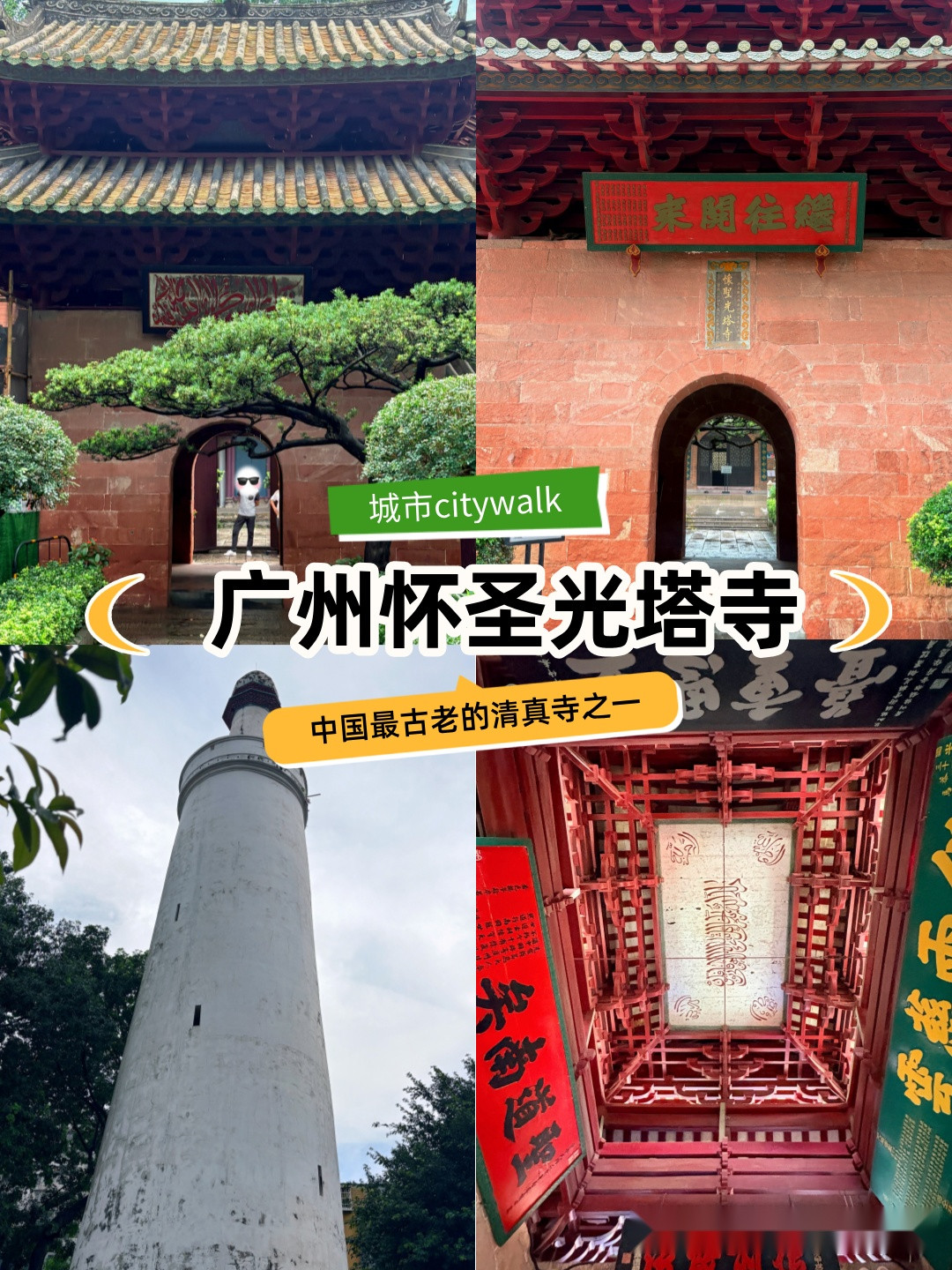
1️⃣ First up, check out the Guangta (Light Pagoda), which is China's oldest existing Arabic-style minaret. Seriously, it's one of the few ancient Islamic minarets left standing globally!
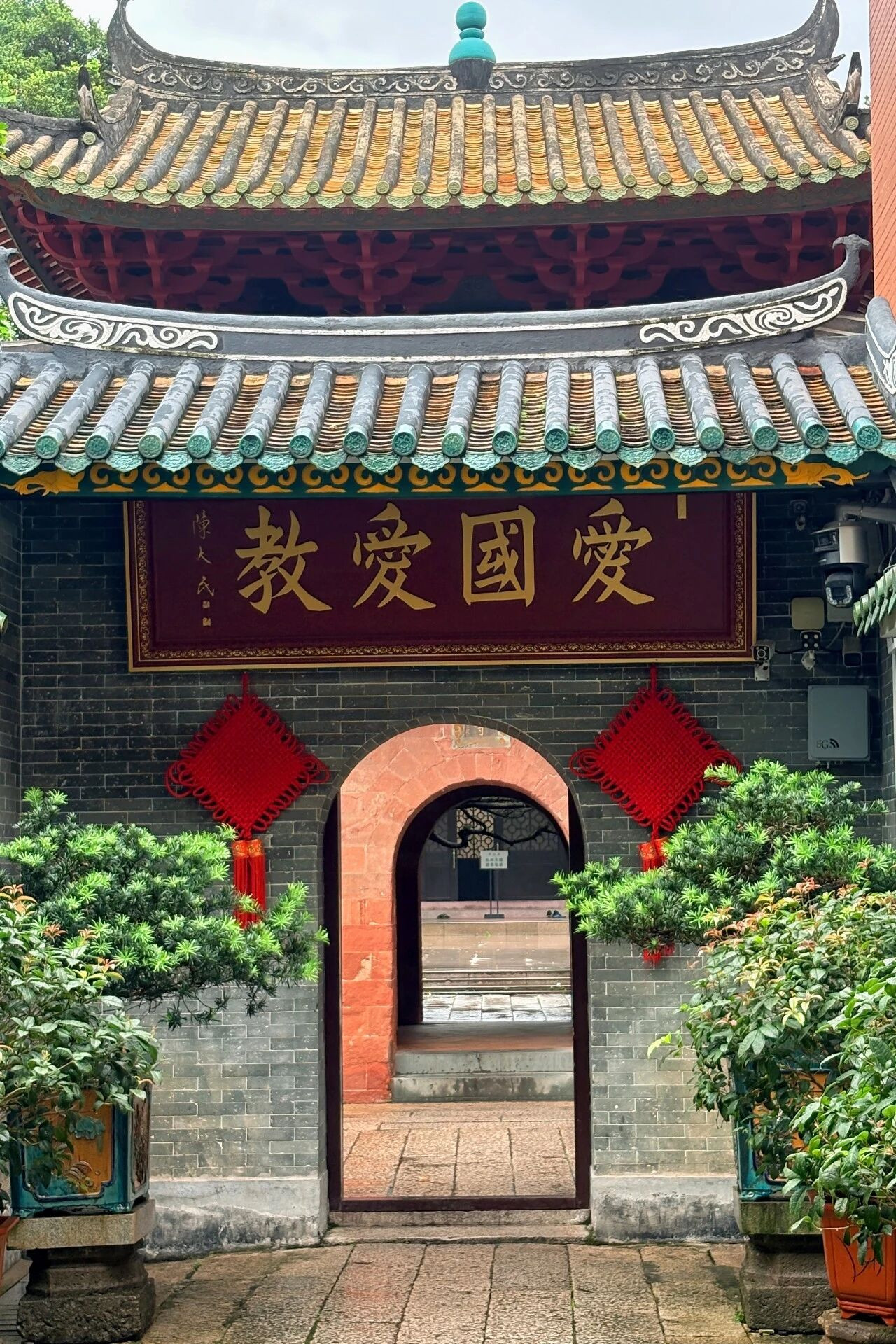
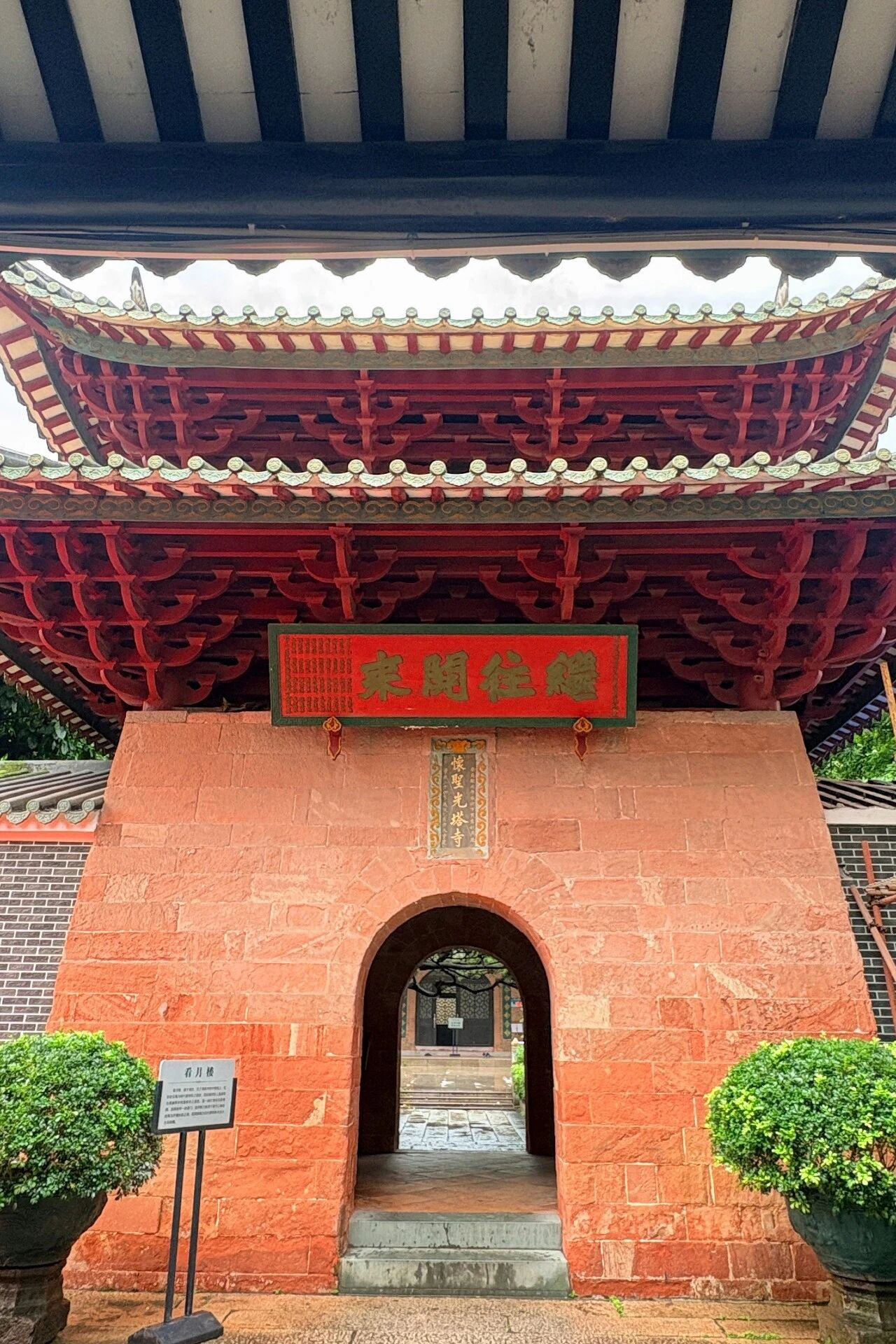
2️⃣ Next, scope out the Kanyuelou (Moon-Viewing Tower). Fun fact: it was rebuilt way back in the Qing Dynasty, during the Kangxi Emperor's 34th year! It sports a super cool double-eaved hip-and-gable roof, red sandstone walls, four arched doorways, and a blend of traditional Chinese flying eaves with a distinct West Asian flair. Talk about architectural fusion!
3️⃣ Inside the Prayer Hall, you'll definitely feel those strong Arabic vibes. And seriously, don't miss the super intricate stone railings on the platform out front – they're legit Ming Dynasty relics, carved beautifully!
4️⃣ Oh, and history buffs, get this: the mosque preserves over 40 ancient stele plaques with both Chinese and Arabic inscriptions, dating all the way back to the Yuan Dynasty. How cool is that?
✅ Best part? It's totally free to enter! You can visit any day from 9 AM to 5 PM.
Getting there is easy: hop on Metro Line 1 to Ximenkou Station, take Exit B, and it's just an 8-minute walk from there.
Pro-tip for exploring: you can totally link this up with a visit to the Sacred Heart Cathedral, Wuxian Temple, and Guangxiao Temple. It's a killer way to soak in all the diverse historical vibes of Guangzhou's old town!
This spot is perfect for your #GuangzhouCitywalk, #GuangzhouTravel, and #OffbeatSpots bucket list! Dive into #MaritimeSilkRoad history and #AncientArchitectureBeauty, making it an ideal #WeekendVibes destination.
Seriously, one of China's absolute earliest mosques is right here in Guangzhou's old town, and Metro Line 1 takes you straight there. How convenient is that?
Guangzhou's Yuexiu Old Town Huaisheng Mosque (Light Pagoda Mosque) Photo Guide: A Thousand Years of Tang-Song Era Vibe at China's Foremost Ancient Masjid
Summary:
Dive into this deep photo and text journey exploring the historical architecture of Huaisheng Mosque (Light Pagoda Mosque) in Guangzhou's Yuexiu Old Town. Standing tall as one of China's Four Great Ancient Mosques, renowned alongside Quanzhou's Qingjing Mosque and Hangzhou's Phoenix Mosque, it totally shows off its unique artistic charm, blending traditional Chinese timber structures with ancient Islamic towers.
Huaisheng Mosque is seriously one of China's absolute earliest masjids. It's famous as one of the Four Great Ancient Mosques in China, right up there with Quanzhou's Qingjing Mosque, Hangzhou's Phoenix Mosque, and Yangzhou's Xianhe Mosque. This place is a super important relic of cultural exchange along the Maritime Silk Road. It's been through its fair share of destruction and rebuilding – even getting a major revamp after a fire in the Yuan Dynasty. But check it out, the current architecture still rocks that classic Tang-Song vibe, making it one of the oldest mosques with such deep history in the entire country.
1️⃣ First up, check out the Guangta (Light Pagoda), which is China's oldest existing Arabic-style minaret. Seriously, it's one of the few ancient Islamic minarets left standing globally!
2️⃣ Next, scope out the Kanyuelou (Moon-Viewing Tower). Fun fact: it was rebuilt way back in the Qing Dynasty, during the Kangxi Emperor's 34th year! It sports a super cool double-eaved hip-and-gable roof, red sandstone walls, four arched doorways, and a blend of traditional Chinese flying eaves with a distinct West Asian flair. Talk about architectural fusion!
3️⃣ Inside the Prayer Hall, you'll definitely feel those strong Arabic vibes. And seriously, don't miss the super intricate stone railings on the platform out front – they're legit Ming Dynasty relics, carved beautifully!
4️⃣ Oh, and history buffs, get this: the mosque preserves over 40 ancient stele plaques with both Chinese and Arabic inscriptions, dating all the way back to the Yuan Dynasty. How cool is that?
✅ Best part? It's totally free to enter! You can visit any day from 9 AM to 5 PM.
Getting there is easy: hop on Metro Line 1 to Ximenkou Station, take Exit B, and it's just an 8-minute walk from there.
Pro-tip for exploring: you can totally link this up with a visit to the Sacred Heart Cathedral, Wuxian Temple, and Guangxiao Temple. It's a killer way to soak in all the diverse historical vibes of Guangzhou's old town!
This spot is perfect for your #GuangzhouCitywalk, #GuangzhouTravel, and #OffbeatSpots bucket list! Dive into #MaritimeSilkRoad history and #AncientArchitectureBeauty, making it an ideal #WeekendVibes destination.
Seriously, one of China's absolute earliest mosques is right here in Guangzhou's old town, and Metro Line 1 takes you straight there. How convenient is that?
Exploring Guangzhou's Huaisheng Mosque: A Thousand-Year Maritime Silk Road Heritage Site on Guangta Road
Articles • Hasan09 posted the article • 0 comments • 8 views • 10 hours ago
[Internet Repost]
Exploring Guangzhou's Huaisheng Mosque: A Thousand-Year Maritime Silk Road Heritage Site on Guangta Road
Summary:
Step into the thousand-year-old Huaisheng Mosque (Light Pagoda Mosque) nestled on Guangta Road in Guangzhou's old town. Trace its origins back to the Zhenguan era of the Tang Dynasty, gaze upon the Light Pagoda with its unique blend of Arabian and Lingnan architectural styles, and feel the rich historical weight of early Islamic culture in China.
In Guangzhou's Yuexiu District, Guangta Road isn't particularly wide, flanked by everyday residential buildings and street-level mom-and-pop shops overflowing with local neighborhood vibes. If you're not paying attention, you might totally miss the curved brick wall bearing the inscription 'Huaisheng Relic Base.' Right behind the wall stands an ancient tower that has towered over the city for a thousand years—this is Huaisheng Mosque, one of the oldest mosques in China.
Back in the Tang Dynasty, Guangzhou's Yuexiu District was the core area of the famous Fanfang (Foreigners' Quarter). A thousand years ago, hordes of Arab and Persian merchants settled and traded here, giving birth to this historic masjid. Alongside Quanzhou's Qingjing Mosque, Hangzhou's Phoenix Mosque, and Yangzhou's Crane Mosque, it is hailed as one of the four great ancient mosques along China's coastal trade routes, serving as a core witness to cultural exchanges along the Maritime Silk Road.
Through the centuries, the ancient mosque has weathered countless storms, suffering damage and undergoing rebuilding several times. After being burned down and later restored during the Yuan Dynasty, the surviving architecture and ancient pagoda still fully retain the structural bone and style of the Tang and Song periods, making it the oldest surviving mosque site in the country.
The absolute standout feature of Huaisheng Mosque is its Light Pagoda, which is where the mosque gets its popular nickname, Guangta Temple. This ancient tower is the earliest surviving Arabian-style ancient pagoda in China, and also one of the oldest standing Islamic minarets in the world.
As for why the Light Pagoda is called the 'Light Pagoda,' there are several stories floating around online. One theory says it's because the pagoda's exterior surface is smooth and undecorated; another suggests it's because when Muslims recite prayers, the imam would climb the tower to call out the adhan (call to prayer) in Arabic, and the Cantonese pronunciation for 'call/sound' sounds a lot like 'light.' But the most widely circulated theory is that back in the Tang Dynasty, Huaisheng Mosque sat right on the banks of the Pearl River, and the Light Pagoda stood right by the waterfront. At night, bright lanterns were hung at the top of the tower to guide incoming and outgoing merchant ships on the Pearl River.
Word has it that there used to be a golden rooster perched at the very top of the tower that could spin with the wind to show wind direction, but tragically, it was blown down by a hurricane in the early Ming Dynasty and replaced with a pointed spire during a 1934 restoration.
The buildings inside the courtyard are also super unique, blending Eastern and Western aesthetics.
The Moon-Watching Tower was rebuilt in the 34th year of Emperor Kangxi's reign in the Qing Dynasty, featuring a double-eaved hip-and-gable roof, red sandstone walls, and arched doorways on all four sides. It effortlessly rocks the upturned eaves of classical Chinese architecture while carrying the unmistakable vibe of West Asian design.
The main prayer hall still retains its classic Arabian architectural style.
The stone balustrades on the terrace in front of the hall are actual relics from the Ming Dynasty, featuring exquisite carvings.
The courtyard is also dotted with lush longan trees and jiangguo (phoenix eye fruit trees).
The mosque still preserves more than 40 steles and plaques in both Chinese and Arabic dating back to the Yuan Dynasty and beyond.
Back in 1996, the Huaisheng Mosque Light Pagoda was designated as a fourth-batch Major Historical and Cultural Site Protected at the National Level. Just about 500 meters away sits another national treasure—Five Immortals Taoist Temple (Wuxian Guan). Combined with the Sacred Heart Cathedral, I've personally tested it out, and you can totally and easily bundle them together into an epic city walk.
Huaisheng Mosque is totally free to enter. Regular opening hours are daily from 9:00 AM to 5:00 PM, but keep in mind that Fridays are Jummah (the Muslim congregational prayer day), so it's closed to visitors then. Definitely plan around that.
Driving yourself through the old town is definitely not recommended; public transit is way more convenient. Take Metro Line 1 to Ximenkou Station, use Exit B, and it's about an 8-minute walk from there.
Guangzhou hides a world-class stone cathedral! There are only 4 like it globally, and one is right here in the Yuexiu old town, accessible straight by subway
Two national-treasure Taoist temples in Guangdong: one in Huizhou, the other right in Guangzhou's old town, completely free to wander
Free ancient villages in Guangdong: A 600-year-old longevity village in Foshan, totally free to stroll, uncrowded, and peaceful
First came the official kilns, then came Foshan? Spend 3 weekend hours in Foshan exploring a 500-year-old Ming Dynasty ancestral hall bestowed by the emperor
Foshan actually has two Ancestral Temples? Most people only know the first one, but step right out of the second one and you're at the Beijiang River
Every small town and every landscape is worth documenting.
I'll be sharing more tried-and-tested routes coming up,
Hit that follow button, and let's take our time exploring the scenery of this world together. view all
Exploring Guangzhou's Huaisheng Mosque: A Thousand-Year Maritime Silk Road Heritage Site on Guangta Road
Summary:
Step into the thousand-year-old Huaisheng Mosque (Light Pagoda Mosque) nestled on Guangta Road in Guangzhou's old town. Trace its origins back to the Zhenguan era of the Tang Dynasty, gaze upon the Light Pagoda with its unique blend of Arabian and Lingnan architectural styles, and feel the rich historical weight of early Islamic culture in China.
In Guangzhou's Yuexiu District, Guangta Road isn't particularly wide, flanked by everyday residential buildings and street-level mom-and-pop shops overflowing with local neighborhood vibes. If you're not paying attention, you might totally miss the curved brick wall bearing the inscription 'Huaisheng Relic Base.' Right behind the wall stands an ancient tower that has towered over the city for a thousand years—this is Huaisheng Mosque, one of the oldest mosques in China.
Back in the Tang Dynasty, Guangzhou's Yuexiu District was the core area of the famous Fanfang (Foreigners' Quarter). A thousand years ago, hordes of Arab and Persian merchants settled and traded here, giving birth to this historic masjid. Alongside Quanzhou's Qingjing Mosque, Hangzhou's Phoenix Mosque, and Yangzhou's Crane Mosque, it is hailed as one of the four great ancient mosques along China's coastal trade routes, serving as a core witness to cultural exchanges along the Maritime Silk Road.
Through the centuries, the ancient mosque has weathered countless storms, suffering damage and undergoing rebuilding several times. After being burned down and later restored during the Yuan Dynasty, the surviving architecture and ancient pagoda still fully retain the structural bone and style of the Tang and Song periods, making it the oldest surviving mosque site in the country.
The absolute standout feature of Huaisheng Mosque is its Light Pagoda, which is where the mosque gets its popular nickname, Guangta Temple. This ancient tower is the earliest surviving Arabian-style ancient pagoda in China, and also one of the oldest standing Islamic minarets in the world.
As for why the Light Pagoda is called the 'Light Pagoda,' there are several stories floating around online. One theory says it's because the pagoda's exterior surface is smooth and undecorated; another suggests it's because when Muslims recite prayers, the imam would climb the tower to call out the adhan (call to prayer) in Arabic, and the Cantonese pronunciation for 'call/sound' sounds a lot like 'light.' But the most widely circulated theory is that back in the Tang Dynasty, Huaisheng Mosque sat right on the banks of the Pearl River, and the Light Pagoda stood right by the waterfront. At night, bright lanterns were hung at the top of the tower to guide incoming and outgoing merchant ships on the Pearl River.
Word has it that there used to be a golden rooster perched at the very top of the tower that could spin with the wind to show wind direction, but tragically, it was blown down by a hurricane in the early Ming Dynasty and replaced with a pointed spire during a 1934 restoration.
The buildings inside the courtyard are also super unique, blending Eastern and Western aesthetics.
The Moon-Watching Tower was rebuilt in the 34th year of Emperor Kangxi's reign in the Qing Dynasty, featuring a double-eaved hip-and-gable roof, red sandstone walls, and arched doorways on all four sides. It effortlessly rocks the upturned eaves of classical Chinese architecture while carrying the unmistakable vibe of West Asian design.
The main prayer hall still retains its classic Arabian architectural style.
The stone balustrades on the terrace in front of the hall are actual relics from the Ming Dynasty, featuring exquisite carvings.
The courtyard is also dotted with lush longan trees and jiangguo (phoenix eye fruit trees).
The mosque still preserves more than 40 steles and plaques in both Chinese and Arabic dating back to the Yuan Dynasty and beyond.
Back in 1996, the Huaisheng Mosque Light Pagoda was designated as a fourth-batch Major Historical and Cultural Site Protected at the National Level. Just about 500 meters away sits another national treasure—Five Immortals Taoist Temple (Wuxian Guan). Combined with the Sacred Heart Cathedral, I've personally tested it out, and you can totally and easily bundle them together into an epic city walk.
Huaisheng Mosque is totally free to enter. Regular opening hours are daily from 9:00 AM to 5:00 PM, but keep in mind that Fridays are Jummah (the Muslim congregational prayer day), so it's closed to visitors then. Definitely plan around that.
Driving yourself through the old town is definitely not recommended; public transit is way more convenient. Take Metro Line 1 to Ximenkou Station, use Exit B, and it's about an 8-minute walk from there.
Guangzhou hides a world-class stone cathedral! There are only 4 like it globally, and one is right here in the Yuexiu old town, accessible straight by subway
Two national-treasure Taoist temples in Guangdong: one in Huizhou, the other right in Guangzhou's old town, completely free to wander
Free ancient villages in Guangdong: A 600-year-old longevity village in Foshan, totally free to stroll, uncrowded, and peaceful
First came the official kilns, then came Foshan? Spend 3 weekend hours in Foshan exploring a 500-year-old Ming Dynasty ancestral hall bestowed by the emperor
Foshan actually has two Ancestral Temples? Most people only know the first one, but step right out of the second one and you're at the Beijiang River
Every small town and every landscape is worth documenting.
I'll be sharing more tried-and-tested routes coming up,
Hit that follow button, and let's take our time exploring the scenery of this world together. view all
[Internet Repost]
Exploring Guangzhou's Huaisheng Mosque: A Thousand-Year Maritime Silk Road Heritage Site on Guangta Road
Summary:
Step into the thousand-year-old Huaisheng Mosque (Light Pagoda Mosque) nestled on Guangta Road in Guangzhou's old town. Trace its origins back to the Zhenguan era of the Tang Dynasty, gaze upon the Light Pagoda with its unique blend of Arabian and Lingnan architectural styles, and feel the rich historical weight of early Islamic culture in China.
In Guangzhou's Yuexiu District, Guangta Road isn't particularly wide, flanked by everyday residential buildings and street-level mom-and-pop shops overflowing with local neighborhood vibes. If you're not paying attention, you might totally miss the curved brick wall bearing the inscription 'Huaisheng Relic Base.' Right behind the wall stands an ancient tower that has towered over the city for a thousand years—this is Huaisheng Mosque, one of the oldest mosques in China.
Back in the Tang Dynasty, Guangzhou's Yuexiu District was the core area of the famous Fanfang (Foreigners' Quarter). A thousand years ago, hordes of Arab and Persian merchants settled and traded here, giving birth to this historic masjid. Alongside Quanzhou's Qingjing Mosque, Hangzhou's Phoenix Mosque, and Yangzhou's Crane Mosque, it is hailed as one of the four great ancient mosques along China's coastal trade routes, serving as a core witness to cultural exchanges along the Maritime Silk Road.
Through the centuries, the ancient mosque has weathered countless storms, suffering damage and undergoing rebuilding several times. After being burned down and later restored during the Yuan Dynasty, the surviving architecture and ancient pagoda still fully retain the structural bone and style of the Tang and Song periods, making it the oldest surviving mosque site in the country.
The absolute standout feature of Huaisheng Mosque is its Light Pagoda, which is where the mosque gets its popular nickname, Guangta Temple. This ancient tower is the earliest surviving Arabian-style ancient pagoda in China, and also one of the oldest standing Islamic minarets in the world.
As for why the Light Pagoda is called the 'Light Pagoda,' there are several stories floating around online. One theory says it's because the pagoda's exterior surface is smooth and undecorated; another suggests it's because when Muslims recite prayers, the imam would climb the tower to call out the adhan (call to prayer) in Arabic, and the Cantonese pronunciation for 'call/sound' sounds a lot like 'light.' But the most widely circulated theory is that back in the Tang Dynasty, Huaisheng Mosque sat right on the banks of the Pearl River, and the Light Pagoda stood right by the waterfront. At night, bright lanterns were hung at the top of the tower to guide incoming and outgoing merchant ships on the Pearl River.
Word has it that there used to be a golden rooster perched at the very top of the tower that could spin with the wind to show wind direction, but tragically, it was blown down by a hurricane in the early Ming Dynasty and replaced with a pointed spire during a 1934 restoration.
The buildings inside the courtyard are also super unique, blending Eastern and Western aesthetics.
The Moon-Watching Tower was rebuilt in the 34th year of Emperor Kangxi's reign in the Qing Dynasty, featuring a double-eaved hip-and-gable roof, red sandstone walls, and arched doorways on all four sides. It effortlessly rocks the upturned eaves of classical Chinese architecture while carrying the unmistakable vibe of West Asian design.
The main prayer hall still retains its classic Arabian architectural style.
The stone balustrades on the terrace in front of the hall are actual relics from the Ming Dynasty, featuring exquisite carvings.
The courtyard is also dotted with lush longan trees and jiangguo (phoenix eye fruit trees).
The mosque still preserves more than 40 steles and plaques in both Chinese and Arabic dating back to the Yuan Dynasty and beyond.
Back in 1996, the Huaisheng Mosque Light Pagoda was designated as a fourth-batch Major Historical and Cultural Site Protected at the National Level. Just about 500 meters away sits another national treasure—Five Immortals Taoist Temple (Wuxian Guan). Combined with the Sacred Heart Cathedral, I've personally tested it out, and you can totally and easily bundle them together into an epic city walk.
Huaisheng Mosque is totally free to enter. Regular opening hours are daily from 9:00 AM to 5:00 PM, but keep in mind that Fridays are Jummah (the Muslim congregational prayer day), so it's closed to visitors then. Definitely plan around that.
Driving yourself through the old town is definitely not recommended; public transit is way more convenient. Take Metro Line 1 to Ximenkou Station, use Exit B, and it's about an 8-minute walk from there.
Guangzhou hides a world-class stone cathedral! There are only 4 like it globally, and one is right here in the Yuexiu old town, accessible straight by subway
Two national-treasure Taoist temples in Guangdong: one in Huizhou, the other right in Guangzhou's old town, completely free to wander
Free ancient villages in Guangdong: A 600-year-old longevity village in Foshan, totally free to stroll, uncrowded, and peaceful
First came the official kilns, then came Foshan? Spend 3 weekend hours in Foshan exploring a 500-year-old Ming Dynasty ancestral hall bestowed by the emperor
Foshan actually has two Ancestral Temples? Most people only know the first one, but step right out of the second one and you're at the Beijiang River
Every small town and every landscape is worth documenting.
I'll be sharing more tried-and-tested routes coming up,
Hit that follow button, and let's take our time exploring the scenery of this world together.
Exploring Guangzhou's Huaisheng Mosque: A Thousand-Year Maritime Silk Road Heritage Site on Guangta Road
Summary:
Step into the thousand-year-old Huaisheng Mosque (Light Pagoda Mosque) nestled on Guangta Road in Guangzhou's old town. Trace its origins back to the Zhenguan era of the Tang Dynasty, gaze upon the Light Pagoda with its unique blend of Arabian and Lingnan architectural styles, and feel the rich historical weight of early Islamic culture in China.
In Guangzhou's Yuexiu District, Guangta Road isn't particularly wide, flanked by everyday residential buildings and street-level mom-and-pop shops overflowing with local neighborhood vibes. If you're not paying attention, you might totally miss the curved brick wall bearing the inscription 'Huaisheng Relic Base.' Right behind the wall stands an ancient tower that has towered over the city for a thousand years—this is Huaisheng Mosque, one of the oldest mosques in China.
Back in the Tang Dynasty, Guangzhou's Yuexiu District was the core area of the famous Fanfang (Foreigners' Quarter). A thousand years ago, hordes of Arab and Persian merchants settled and traded here, giving birth to this historic masjid. Alongside Quanzhou's Qingjing Mosque, Hangzhou's Phoenix Mosque, and Yangzhou's Crane Mosque, it is hailed as one of the four great ancient mosques along China's coastal trade routes, serving as a core witness to cultural exchanges along the Maritime Silk Road.
Through the centuries, the ancient mosque has weathered countless storms, suffering damage and undergoing rebuilding several times. After being burned down and later restored during the Yuan Dynasty, the surviving architecture and ancient pagoda still fully retain the structural bone and style of the Tang and Song periods, making it the oldest surviving mosque site in the country.
The absolute standout feature of Huaisheng Mosque is its Light Pagoda, which is where the mosque gets its popular nickname, Guangta Temple. This ancient tower is the earliest surviving Arabian-style ancient pagoda in China, and also one of the oldest standing Islamic minarets in the world.
As for why the Light Pagoda is called the 'Light Pagoda,' there are several stories floating around online. One theory says it's because the pagoda's exterior surface is smooth and undecorated; another suggests it's because when Muslims recite prayers, the imam would climb the tower to call out the adhan (call to prayer) in Arabic, and the Cantonese pronunciation for 'call/sound' sounds a lot like 'light.' But the most widely circulated theory is that back in the Tang Dynasty, Huaisheng Mosque sat right on the banks of the Pearl River, and the Light Pagoda stood right by the waterfront. At night, bright lanterns were hung at the top of the tower to guide incoming and outgoing merchant ships on the Pearl River.
Word has it that there used to be a golden rooster perched at the very top of the tower that could spin with the wind to show wind direction, but tragically, it was blown down by a hurricane in the early Ming Dynasty and replaced with a pointed spire during a 1934 restoration.
The buildings inside the courtyard are also super unique, blending Eastern and Western aesthetics.
The Moon-Watching Tower was rebuilt in the 34th year of Emperor Kangxi's reign in the Qing Dynasty, featuring a double-eaved hip-and-gable roof, red sandstone walls, and arched doorways on all four sides. It effortlessly rocks the upturned eaves of classical Chinese architecture while carrying the unmistakable vibe of West Asian design.
The main prayer hall still retains its classic Arabian architectural style.
The stone balustrades on the terrace in front of the hall are actual relics from the Ming Dynasty, featuring exquisite carvings.
The courtyard is also dotted with lush longan trees and jiangguo (phoenix eye fruit trees).
The mosque still preserves more than 40 steles and plaques in both Chinese and Arabic dating back to the Yuan Dynasty and beyond.
Back in 1996, the Huaisheng Mosque Light Pagoda was designated as a fourth-batch Major Historical and Cultural Site Protected at the National Level. Just about 500 meters away sits another national treasure—Five Immortals Taoist Temple (Wuxian Guan). Combined with the Sacred Heart Cathedral, I've personally tested it out, and you can totally and easily bundle them together into an epic city walk.
Huaisheng Mosque is totally free to enter. Regular opening hours are daily from 9:00 AM to 5:00 PM, but keep in mind that Fridays are Jummah (the Muslim congregational prayer day), so it's closed to visitors then. Definitely plan around that.
Driving yourself through the old town is definitely not recommended; public transit is way more convenient. Take Metro Line 1 to Ximenkou Station, use Exit B, and it's about an 8-minute walk from there.
Guangzhou hides a world-class stone cathedral! There are only 4 like it globally, and one is right here in the Yuexiu old town, accessible straight by subway
Two national-treasure Taoist temples in Guangdong: one in Huizhou, the other right in Guangzhou's old town, completely free to wander
Free ancient villages in Guangdong: A 600-year-old longevity village in Foshan, totally free to stroll, uncrowded, and peaceful
First came the official kilns, then came Foshan? Spend 3 weekend hours in Foshan exploring a 500-year-old Ming Dynasty ancestral hall bestowed by the emperor
Foshan actually has two Ancestral Temples? Most people only know the first one, but step right out of the second one and you're at the Beijiang River
Every small town and every landscape is worth documenting.
I'll be sharing more tried-and-tested routes coming up,
Hit that follow button, and let's take our time exploring the scenery of this world together.
Guangzhou's Huaisheng Mosque: A Millennia of Islamic History & Tang-Song Architecture in China's Oldest Masjid
Articles • Hasan09 posted the article • 0 comments • 7 views • 10 hours ago
[Internet Repost]
Guangzhou's Yuexiu Old Town Huaisheng Mosque (Light Pagoda Mosque) Photo Guide: A Thousand Years of Tang-Song Era Vibe at China's Foremost Ancient Masjid
Summary:
Dive into this deep photo and text journey exploring the historical architecture of Huaisheng Mosque (Light Pagoda Mosque) in Guangzhou's Yuexiu Old Town. Standing tall as one of China's Four Great Ancient Mosques, renowned alongside Quanzhou's Qingjing Mosque and Hangzhou's Phoenix Mosque, it totally shows off its unique artistic charm, blending traditional Chinese timber structures with ancient Islamic towers.
Huaisheng Mosque is seriously one of China's absolute earliest masjids. It's famous as one of the Four Great Ancient Mosques in China, right up there with Quanzhou's Qingjing Mosque, Hangzhou's Phoenix Mosque, and Yangzhou's Xianhe Mosque. This place is a super important relic of cultural exchange along the Maritime Silk Road. It's been through its fair share of destruction and rebuilding – even getting a major revamp after a fire in the Yuan Dynasty. But check it out, the current architecture still rocks that classic Tang-Song vibe, making it one of the oldest mosques with such deep history in the entire country.
1️⃣ First up, check out the Guangta (Light Pagoda), which is China's oldest existing Arabic-style minaret. Seriously, it's one of the few ancient Islamic minarets left standing globally!
2️⃣ Next, scope out the Kanyuelou (Moon-Viewing Tower). Fun fact: it was rebuilt way back in the Qing Dynasty, during the Kangxi Emperor's 34th year! It sports a super cool double-eaved hip-and-gable roof, red sandstone walls, four arched doorways, and a blend of traditional Chinese flying eaves with a distinct West Asian flair. Talk about architectural fusion!
3️⃣ Inside the Prayer Hall, you'll definitely feel those strong Arabic vibes. And seriously, don't miss the super intricate stone railings on the platform out front – they're legit Ming Dynasty relics, carved beautifully!
4️⃣ Oh, and history buffs, get this: the mosque preserves over 40 ancient stele plaques with both Chinese and Arabic inscriptions, dating all the way back to the Yuan Dynasty. How cool is that?
✅ Best part? It's totally free to enter! You can visit any day from 9 AM to 5 PM.
Getting there is easy: hop on Metro Line 1 to Ximenkou Station, take Exit B, and it's just an 8-minute walk from there.
Pro-tip for exploring: you can totally link this up with a visit to the Sacred Heart Cathedral, Wuxian Temple, and Guangxiao Temple. It's a killer way to soak in all the diverse historical vibes of Guangzhou's old town!
This spot is perfect for your #GuangzhouCitywalk, #GuangzhouTravel, and #OffbeatSpots bucket list! Dive into #MaritimeSilkRoad history and #AncientArchitectureBeauty, making it an ideal #WeekendVibes destination.
Seriously, one of China's absolute earliest mosques is right here in Guangzhou's old town, and Metro Line 1 takes you straight there. How convenient is that? view all
Guangzhou's Yuexiu Old Town Huaisheng Mosque (Light Pagoda Mosque) Photo Guide: A Thousand Years of Tang-Song Era Vibe at China's Foremost Ancient Masjid
Summary:
Dive into this deep photo and text journey exploring the historical architecture of Huaisheng Mosque (Light Pagoda Mosque) in Guangzhou's Yuexiu Old Town. Standing tall as one of China's Four Great Ancient Mosques, renowned alongside Quanzhou's Qingjing Mosque and Hangzhou's Phoenix Mosque, it totally shows off its unique artistic charm, blending traditional Chinese timber structures with ancient Islamic towers.
Huaisheng Mosque is seriously one of China's absolute earliest masjids. It's famous as one of the Four Great Ancient Mosques in China, right up there with Quanzhou's Qingjing Mosque, Hangzhou's Phoenix Mosque, and Yangzhou's Xianhe Mosque. This place is a super important relic of cultural exchange along the Maritime Silk Road. It's been through its fair share of destruction and rebuilding – even getting a major revamp after a fire in the Yuan Dynasty. But check it out, the current architecture still rocks that classic Tang-Song vibe, making it one of the oldest mosques with such deep history in the entire country.
1️⃣ First up, check out the Guangta (Light Pagoda), which is China's oldest existing Arabic-style minaret. Seriously, it's one of the few ancient Islamic minarets left standing globally!
2️⃣ Next, scope out the Kanyuelou (Moon-Viewing Tower). Fun fact: it was rebuilt way back in the Qing Dynasty, during the Kangxi Emperor's 34th year! It sports a super cool double-eaved hip-and-gable roof, red sandstone walls, four arched doorways, and a blend of traditional Chinese flying eaves with a distinct West Asian flair. Talk about architectural fusion!
3️⃣ Inside the Prayer Hall, you'll definitely feel those strong Arabic vibes. And seriously, don't miss the super intricate stone railings on the platform out front – they're legit Ming Dynasty relics, carved beautifully!
4️⃣ Oh, and history buffs, get this: the mosque preserves over 40 ancient stele plaques with both Chinese and Arabic inscriptions, dating all the way back to the Yuan Dynasty. How cool is that?
✅ Best part? It's totally free to enter! You can visit any day from 9 AM to 5 PM.
Getting there is easy: hop on Metro Line 1 to Ximenkou Station, take Exit B, and it's just an 8-minute walk from there.
Pro-tip for exploring: you can totally link this up with a visit to the Sacred Heart Cathedral, Wuxian Temple, and Guangxiao Temple. It's a killer way to soak in all the diverse historical vibes of Guangzhou's old town!
This spot is perfect for your #GuangzhouCitywalk, #GuangzhouTravel, and #OffbeatSpots bucket list! Dive into #MaritimeSilkRoad history and #AncientArchitectureBeauty, making it an ideal #WeekendVibes destination.
Seriously, one of China's absolute earliest mosques is right here in Guangzhou's old town, and Metro Line 1 takes you straight there. How convenient is that? view all
[Internet Repost]
Guangzhou's Yuexiu Old Town Huaisheng Mosque (Light Pagoda Mosque) Photo Guide: A Thousand Years of Tang-Song Era Vibe at China's Foremost Ancient Masjid
Summary:
Dive into this deep photo and text journey exploring the historical architecture of Huaisheng Mosque (Light Pagoda Mosque) in Guangzhou's Yuexiu Old Town. Standing tall as one of China's Four Great Ancient Mosques, renowned alongside Quanzhou's Qingjing Mosque and Hangzhou's Phoenix Mosque, it totally shows off its unique artistic charm, blending traditional Chinese timber structures with ancient Islamic towers.
Huaisheng Mosque is seriously one of China's absolute earliest masjids. It's famous as one of the Four Great Ancient Mosques in China, right up there with Quanzhou's Qingjing Mosque, Hangzhou's Phoenix Mosque, and Yangzhou's Xianhe Mosque. This place is a super important relic of cultural exchange along the Maritime Silk Road. It's been through its fair share of destruction and rebuilding – even getting a major revamp after a fire in the Yuan Dynasty. But check it out, the current architecture still rocks that classic Tang-Song vibe, making it one of the oldest mosques with such deep history in the entire country.
1️⃣ First up, check out the Guangta (Light Pagoda), which is China's oldest existing Arabic-style minaret. Seriously, it's one of the few ancient Islamic minarets left standing globally!
2️⃣ Next, scope out the Kanyuelou (Moon-Viewing Tower). Fun fact: it was rebuilt way back in the Qing Dynasty, during the Kangxi Emperor's 34th year! It sports a super cool double-eaved hip-and-gable roof, red sandstone walls, four arched doorways, and a blend of traditional Chinese flying eaves with a distinct West Asian flair. Talk about architectural fusion!
3️⃣ Inside the Prayer Hall, you'll definitely feel those strong Arabic vibes. And seriously, don't miss the super intricate stone railings on the platform out front – they're legit Ming Dynasty relics, carved beautifully!
4️⃣ Oh, and history buffs, get this: the mosque preserves over 40 ancient stele plaques with both Chinese and Arabic inscriptions, dating all the way back to the Yuan Dynasty. How cool is that?
✅ Best part? It's totally free to enter! You can visit any day from 9 AM to 5 PM.
Getting there is easy: hop on Metro Line 1 to Ximenkou Station, take Exit B, and it's just an 8-minute walk from there.
Pro-tip for exploring: you can totally link this up with a visit to the Sacred Heart Cathedral, Wuxian Temple, and Guangxiao Temple. It's a killer way to soak in all the diverse historical vibes of Guangzhou's old town!
This spot is perfect for your #GuangzhouCitywalk, #GuangzhouTravel, and #OffbeatSpots bucket list! Dive into #MaritimeSilkRoad history and #AncientArchitectureBeauty, making it an ideal #WeekendVibes destination.
Seriously, one of China's absolute earliest mosques is right here in Guangzhou's old town, and Metro Line 1 takes you straight there. How convenient is that?
Guangzhou's Yuexiu Old Town Huaisheng Mosque (Light Pagoda Mosque) Photo Guide: A Thousand Years of Tang-Song Era Vibe at China's Foremost Ancient Masjid
Summary:
Dive into this deep photo and text journey exploring the historical architecture of Huaisheng Mosque (Light Pagoda Mosque) in Guangzhou's Yuexiu Old Town. Standing tall as one of China's Four Great Ancient Mosques, renowned alongside Quanzhou's Qingjing Mosque and Hangzhou's Phoenix Mosque, it totally shows off its unique artistic charm, blending traditional Chinese timber structures with ancient Islamic towers.
Huaisheng Mosque is seriously one of China's absolute earliest masjids. It's famous as one of the Four Great Ancient Mosques in China, right up there with Quanzhou's Qingjing Mosque, Hangzhou's Phoenix Mosque, and Yangzhou's Xianhe Mosque. This place is a super important relic of cultural exchange along the Maritime Silk Road. It's been through its fair share of destruction and rebuilding – even getting a major revamp after a fire in the Yuan Dynasty. But check it out, the current architecture still rocks that classic Tang-Song vibe, making it one of the oldest mosques with such deep history in the entire country.
1️⃣ First up, check out the Guangta (Light Pagoda), which is China's oldest existing Arabic-style minaret. Seriously, it's one of the few ancient Islamic minarets left standing globally!
2️⃣ Next, scope out the Kanyuelou (Moon-Viewing Tower). Fun fact: it was rebuilt way back in the Qing Dynasty, during the Kangxi Emperor's 34th year! It sports a super cool double-eaved hip-and-gable roof, red sandstone walls, four arched doorways, and a blend of traditional Chinese flying eaves with a distinct West Asian flair. Talk about architectural fusion!
3️⃣ Inside the Prayer Hall, you'll definitely feel those strong Arabic vibes. And seriously, don't miss the super intricate stone railings on the platform out front – they're legit Ming Dynasty relics, carved beautifully!
4️⃣ Oh, and history buffs, get this: the mosque preserves over 40 ancient stele plaques with both Chinese and Arabic inscriptions, dating all the way back to the Yuan Dynasty. How cool is that?
✅ Best part? It's totally free to enter! You can visit any day from 9 AM to 5 PM.
Getting there is easy: hop on Metro Line 1 to Ximenkou Station, take Exit B, and it's just an 8-minute walk from there.
Pro-tip for exploring: you can totally link this up with a visit to the Sacred Heart Cathedral, Wuxian Temple, and Guangxiao Temple. It's a killer way to soak in all the diverse historical vibes of Guangzhou's old town!
This spot is perfect for your #GuangzhouCitywalk, #GuangzhouTravel, and #OffbeatSpots bucket list! Dive into #MaritimeSilkRoad history and #AncientArchitectureBeauty, making it an ideal #WeekendVibes destination.
Seriously, one of China's absolute earliest mosques is right here in Guangzhou's old town, and Metro Line 1 takes you straight there. How convenient is that?