

Mianyang Mosques
Hidden Mosques in Mianyang Yanting: Sichuan Hui Muslim Villages and Old Mosque History
Articles • ali2007fr posted the article • 0 comments • 179 views • 2026-05-21 06:45
Reposted from the web
Summary: This Yanting County travelogue explores old mosques, Hui Muslim villages, family histories, and mountain roads around Mianyang during a Spring Festival drive through Sichuan.
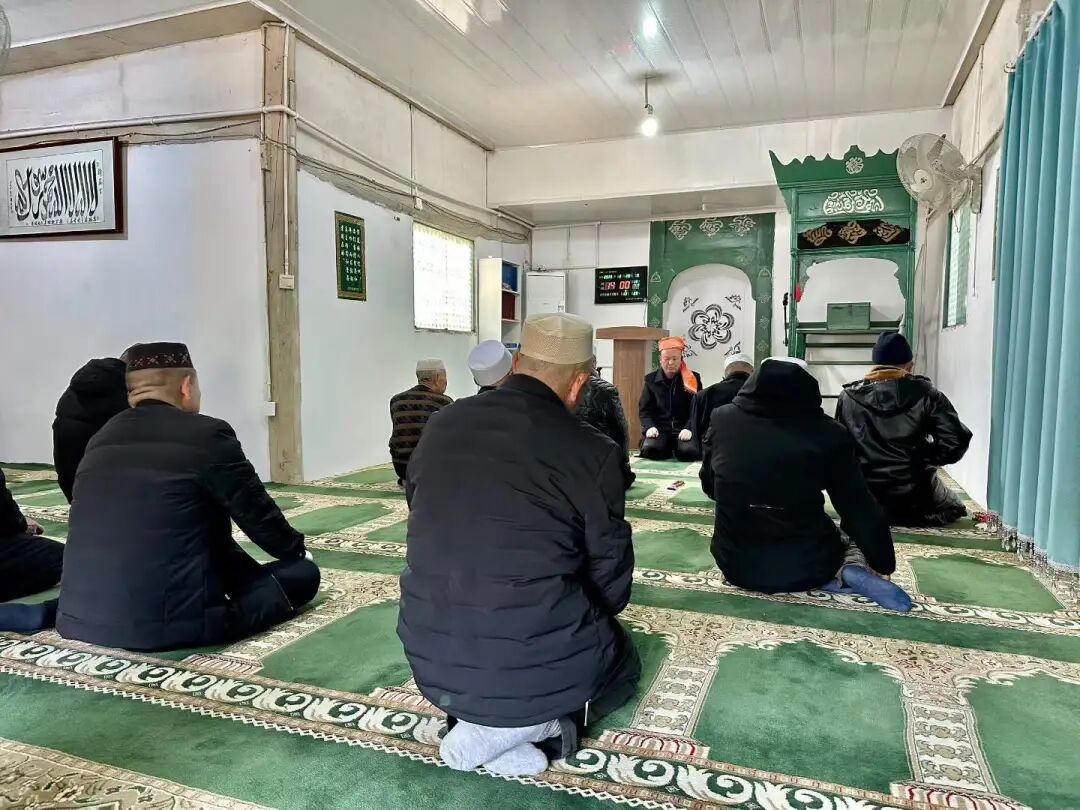
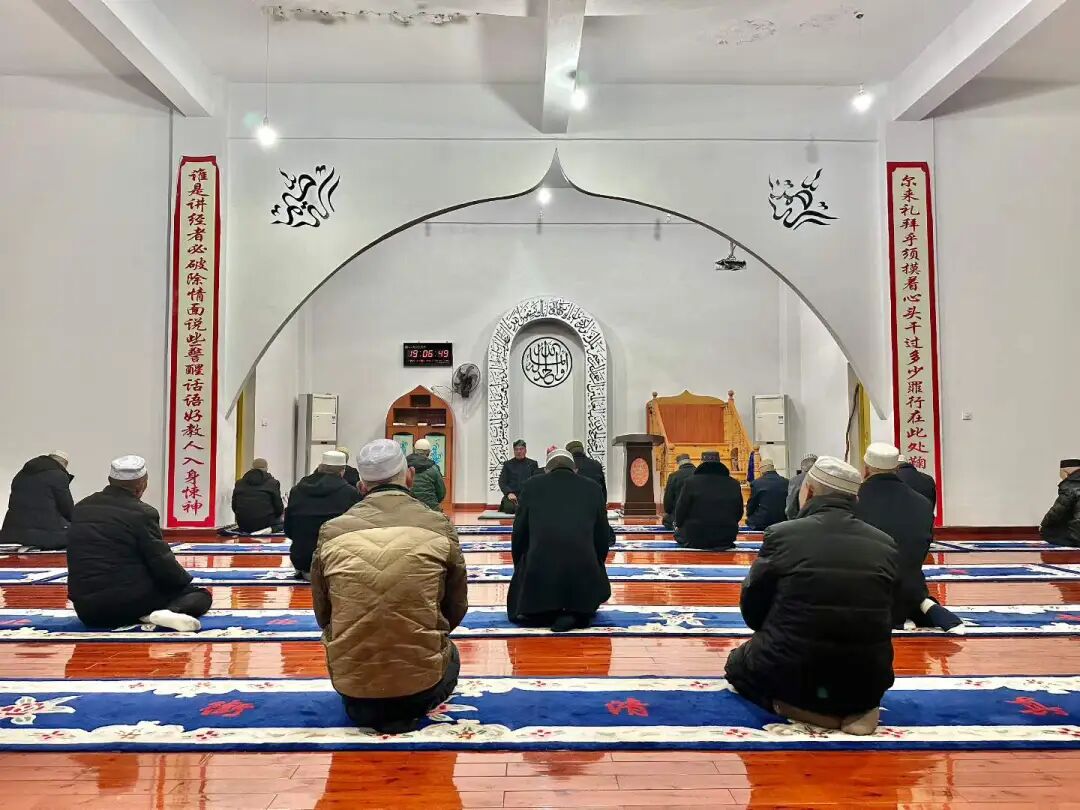
On February 20, I drove for one hour and 20 minutes from Nanchong at noon to reach Dajiaping Mosque in Yanting County, Mianyang City, for Jumu'ah prayer. The mosque was very crowded, and everyone there was a local Hui Muslim.
Yanting is the county with the most Hui Muslims in Mianyang, with ten major surnames: Jiang, Jin, Mu, Da, Ma, Yang, Wu, Ha, Ran, and Sa. The ancestor of the Da surname was a man from the Western Regions during the Yuan Dynasty named Wubalesha. Research shows he belonged to the Kipchak Yuliboli tribe and served as a Darughachi in Zhenjiang Road before passing away in Zhenjiang. His sixth-generation descendant, Da Shanyu, moved from Zhenjiang to Liuhe, Nanjing, in the early Ming Dynasty to serve as a county assistant. He settled in Liuhe, making this the oldest Western Regions Hui Muslim family in Liuhe, Nanjing. In 1644 (the first year of the Shunzhi reign), Da Chengzong was ordered to move from Liuhe to Sichuan. He settled at the foot of Jianzi Mountain in Fenghe, Yanting, which established the Da surname Hui Muslim community in Yanting.
Dajiaping Mosque was originally located on a small hill behind the current kiln hall and was quite small. It was later moved to its current location below the hill. In 1812 (the 17th year of the Jiaqing reign), it was rebuilt into the current courtyard style with donations from Sichuan Baoning Prefecture military officials Da Tengchao, Da Tengrui, Da Tianheng, and Da Guankui. It was renovated in 1908 (the 34th year of the Guangxu reign), and the main gate and side schools were expanded in 1928.
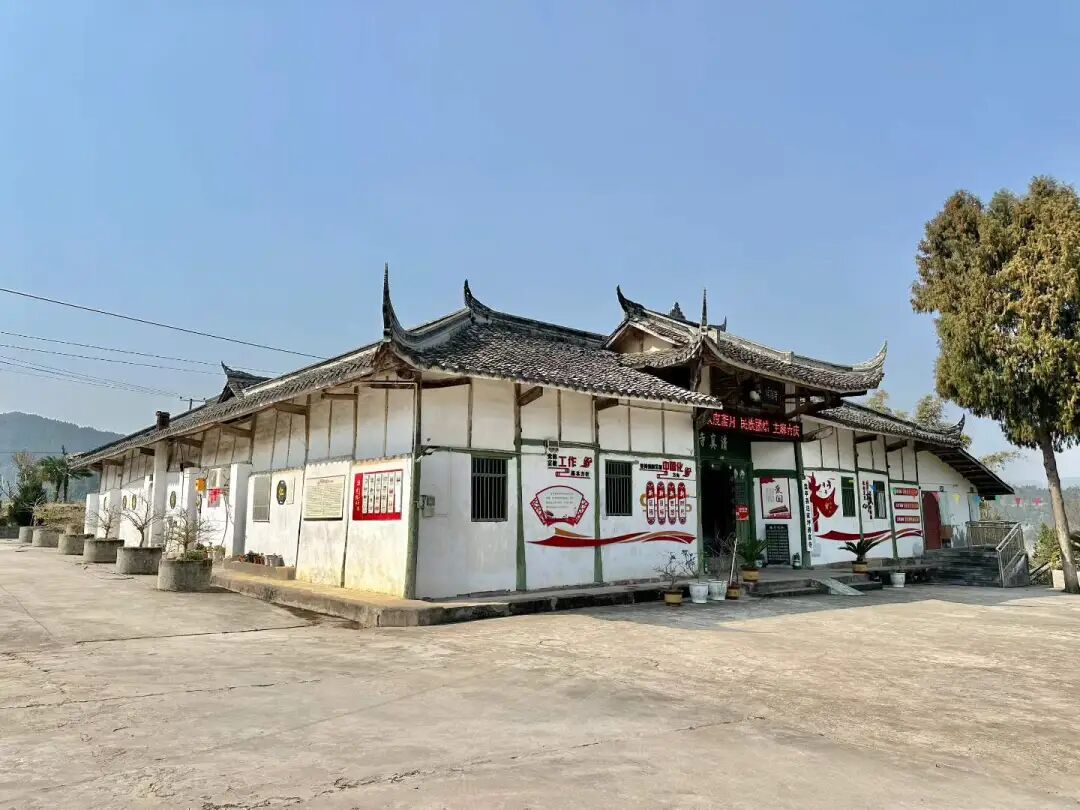
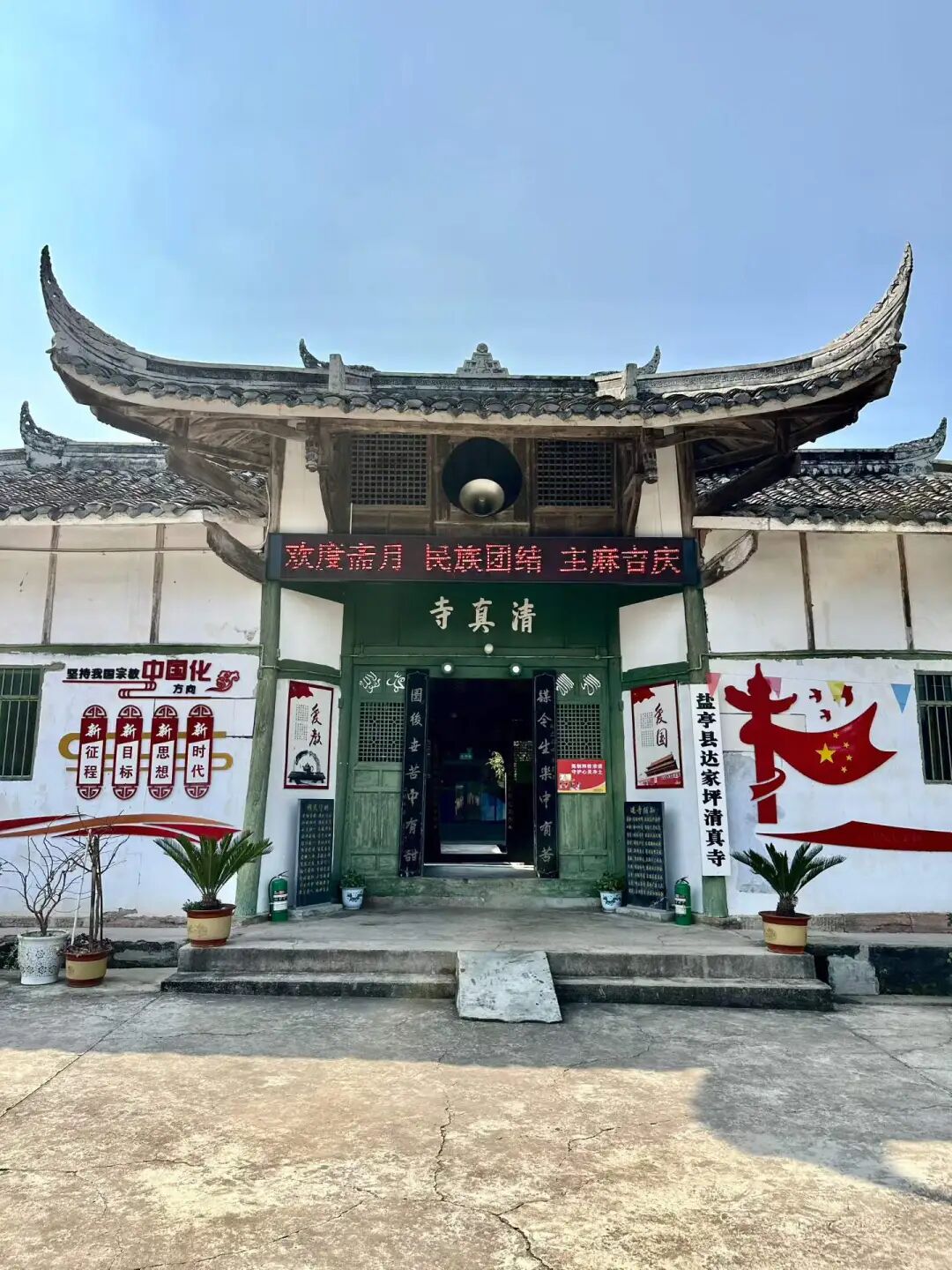
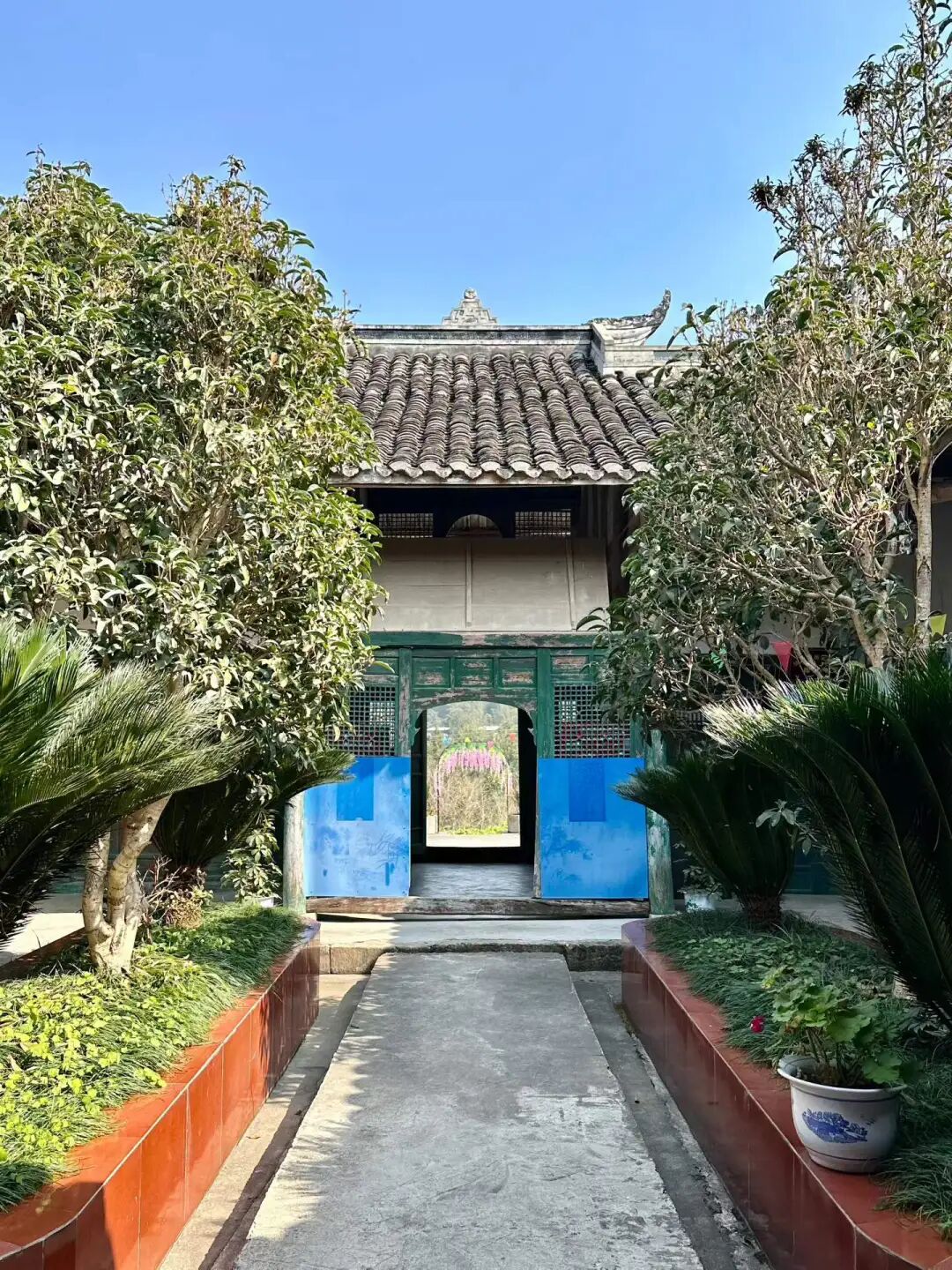
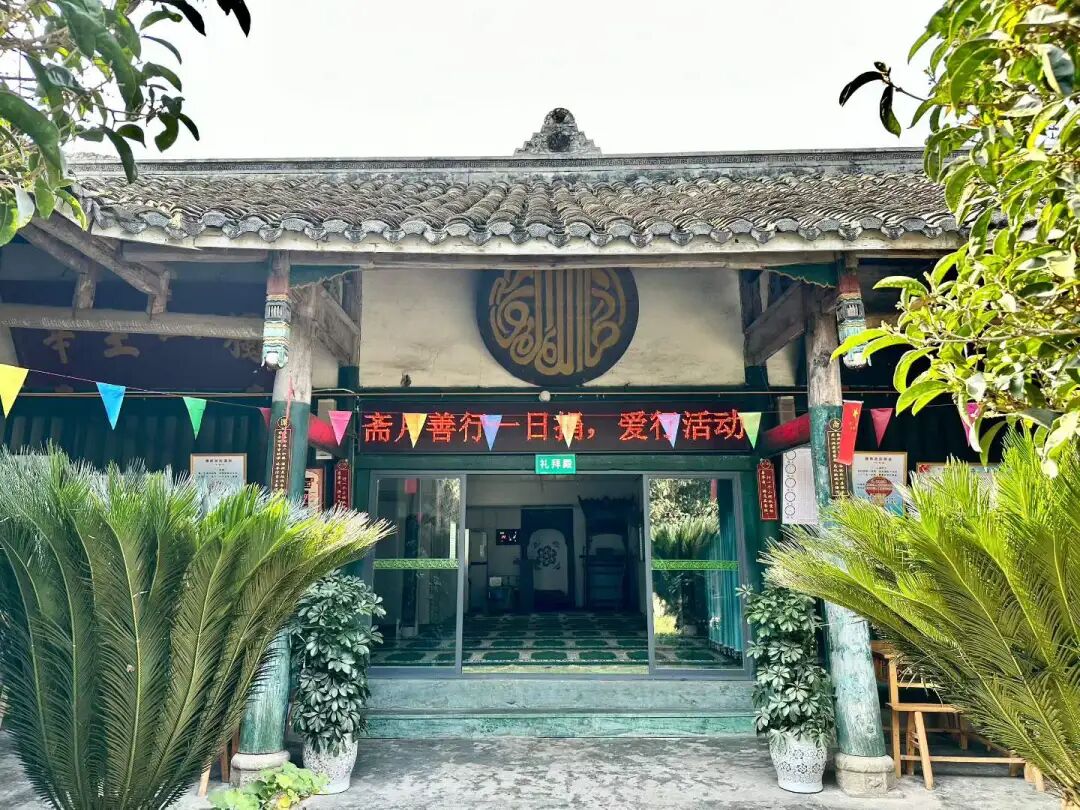
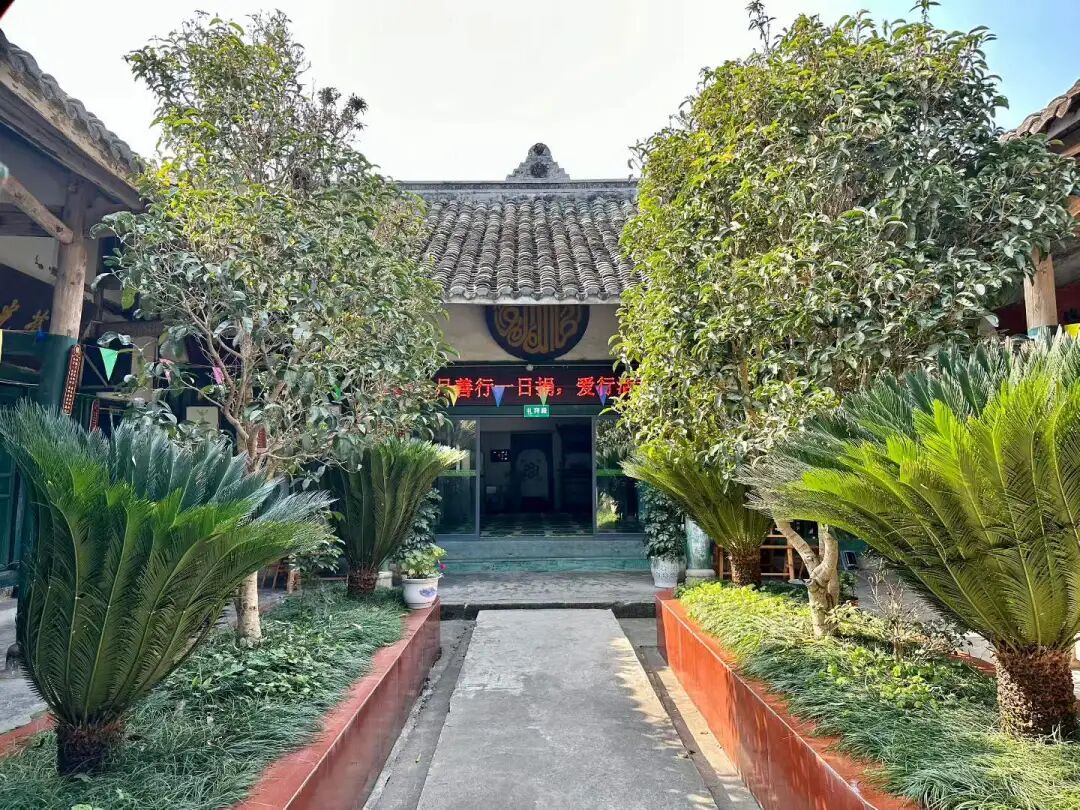
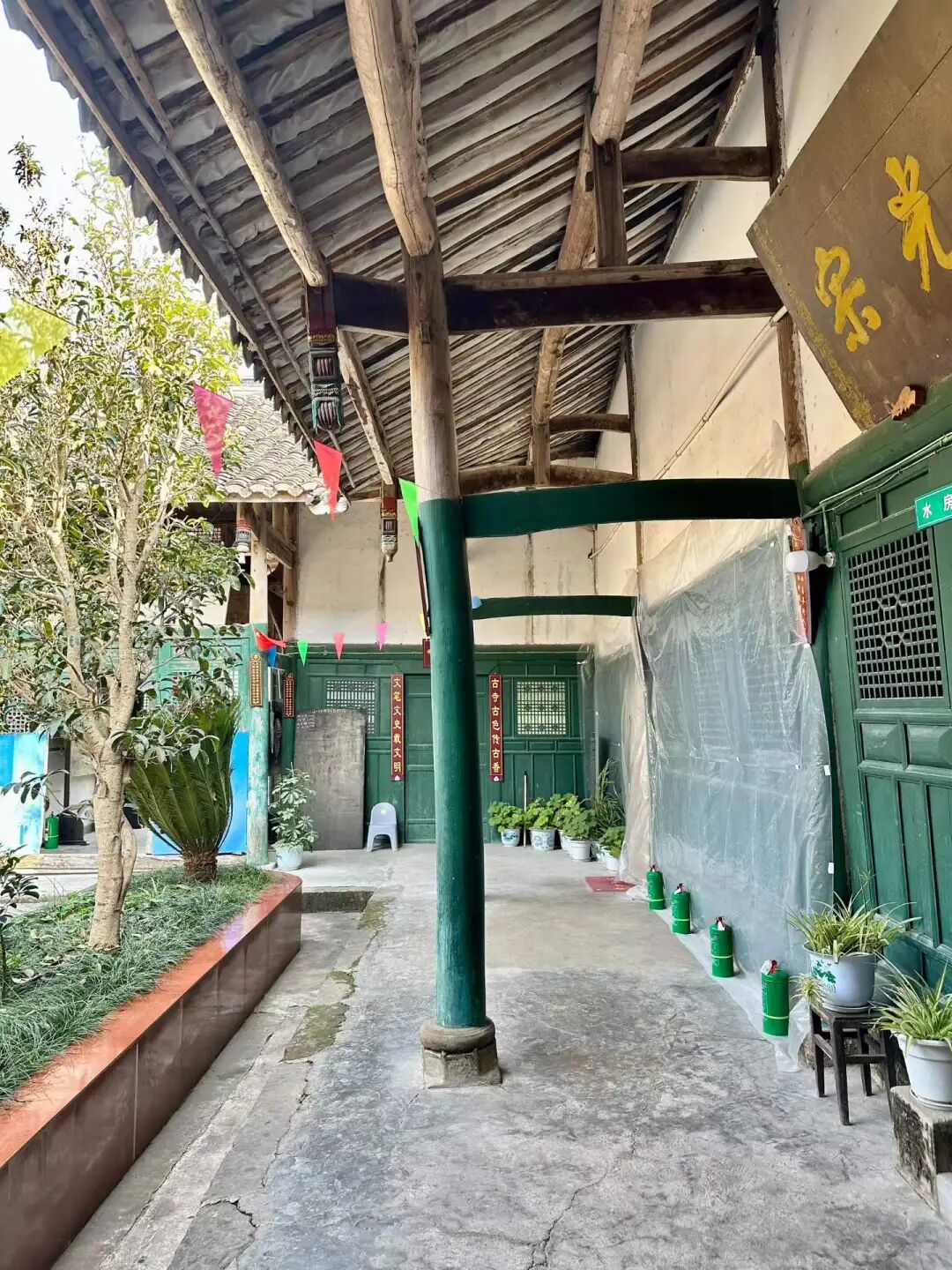
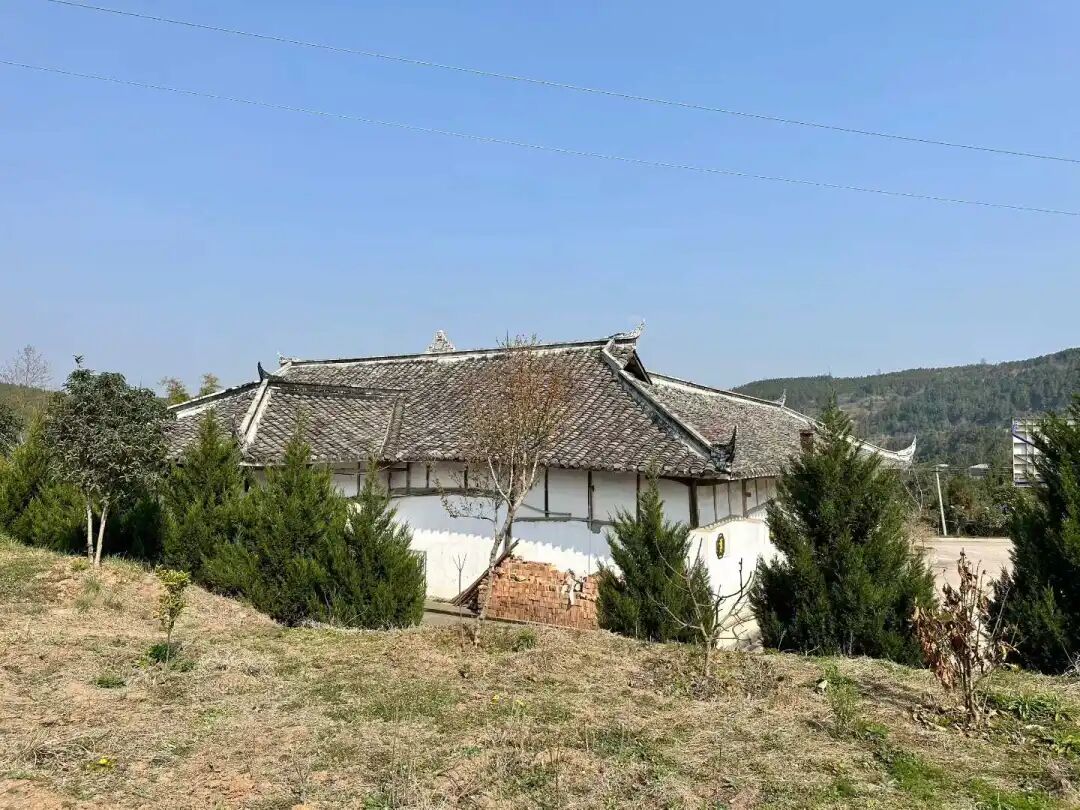
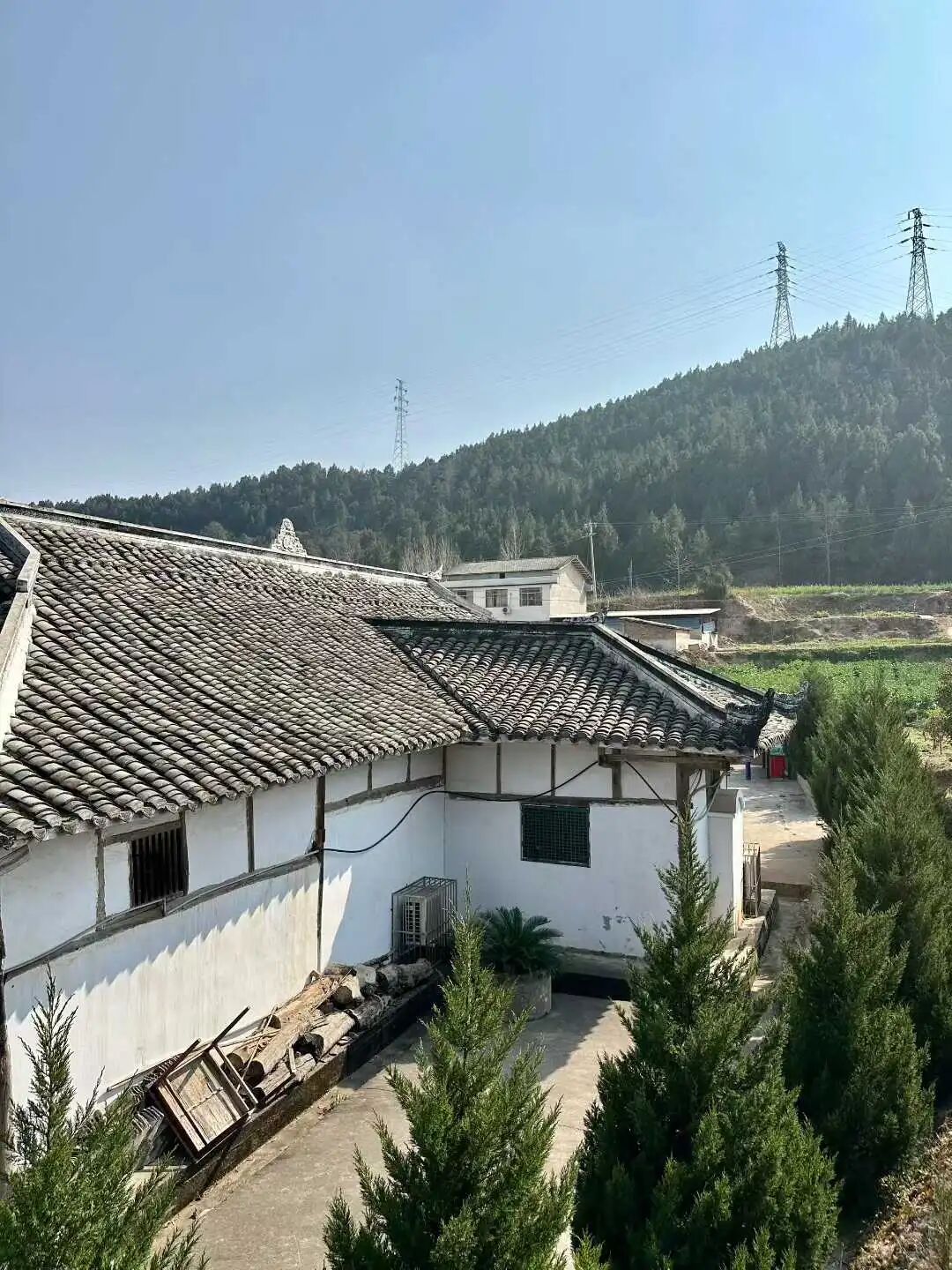
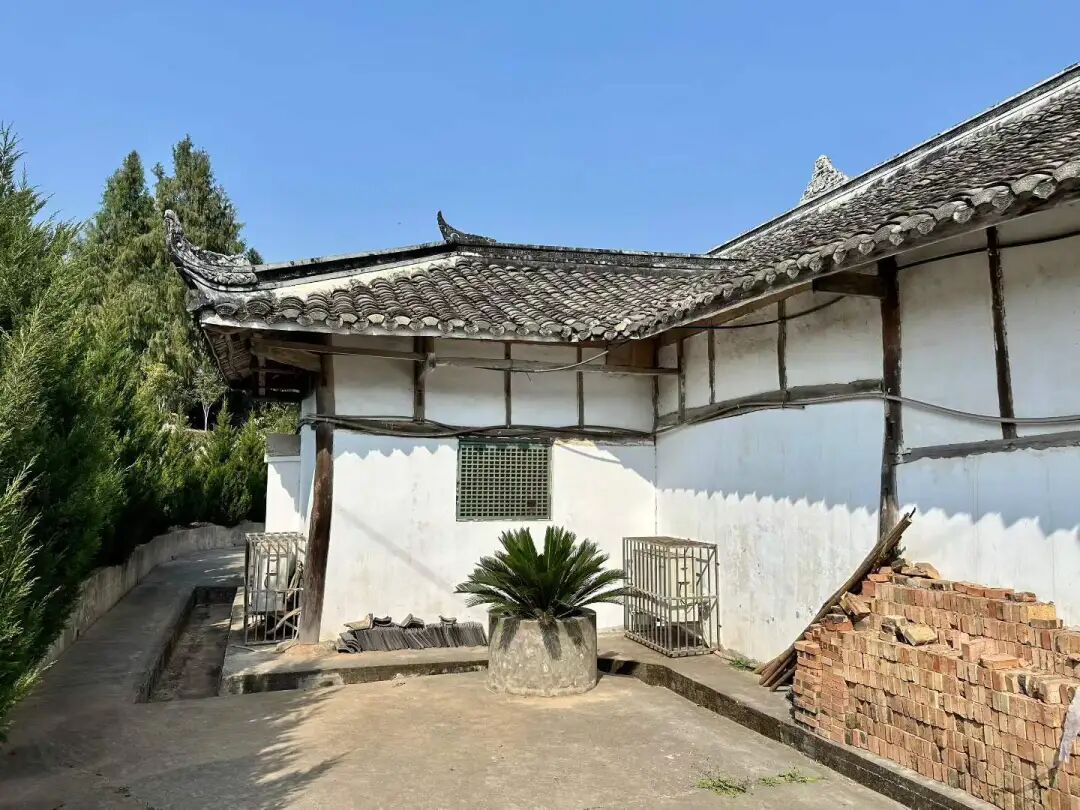
Dajiaping Mosque features the traditional Sichuan courtyard structure known as "four waters flowing into the hall" (si shui dao tang), with elegant, unique bracket sets and flying eaves. There is a path platform in the courtyard's central patio and gardens on both sides.
Dajiaping Mosque houses 30 volumes of scriptures hand-copied by Jin Wanx in the ninth year of the Guangxu reign.
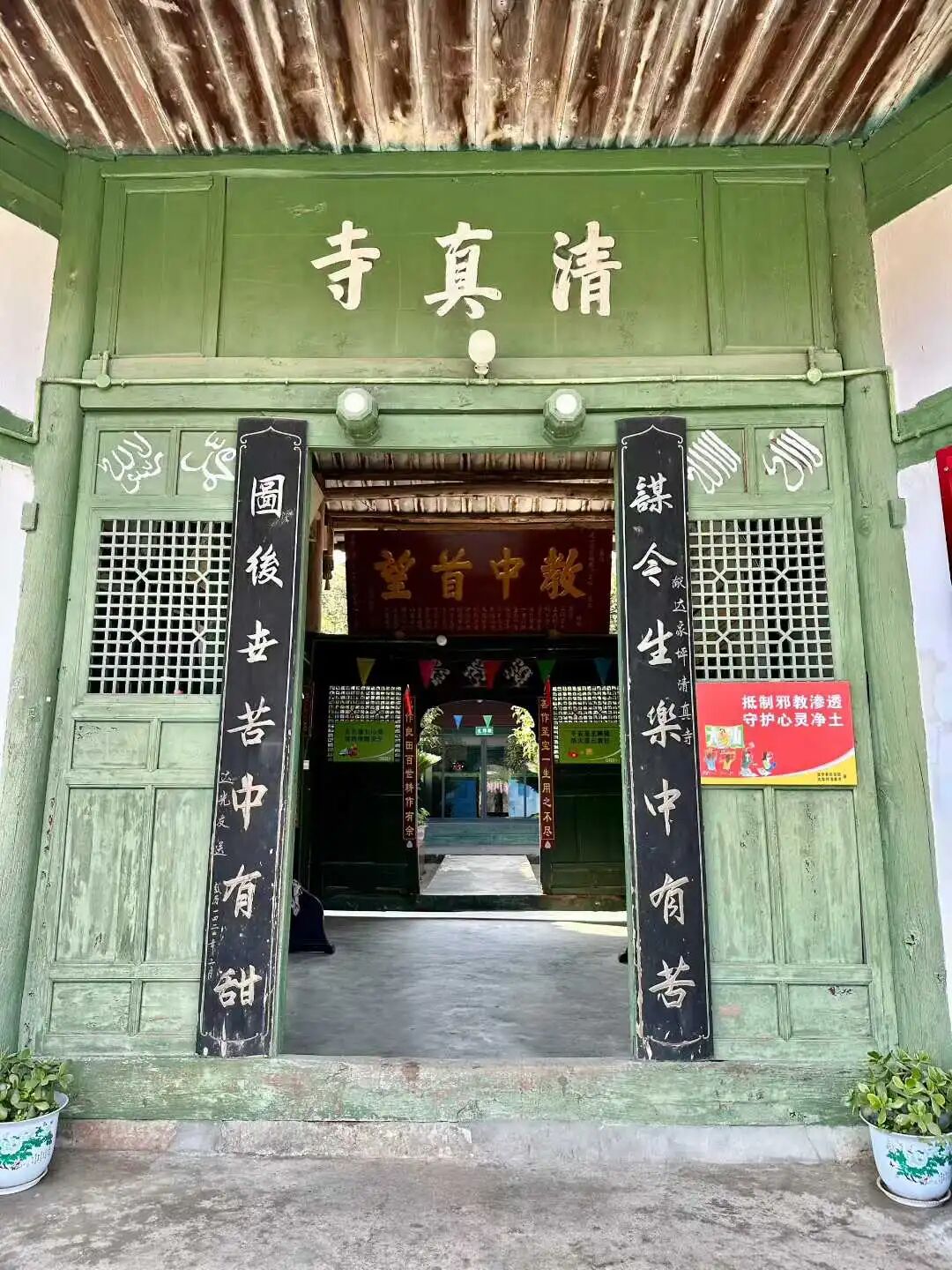
The mosque also preserves three plaques from the Qing Dynasty and two from the Republic of China era:
The "Jiao Long Zhen Yi" plaque from the fourth year of the Daoguang reign: Respectfully erected by Da Tianheng, a specially appointed military official of the Jianzhou garrison in Guangyuan, Sichuan, who was promoted to the rank of thousand-man commander (qian zong) and received honors five times.
Da Tianheng passed the military examination in 1801 (the sixth year of the Jiaqing reign) and was immediately appointed as a thousand-man commander (qian zong) in the Chuanbei Town garrison. He was promoted several times, eventually reaching the rank of regional commander (zong bing) of Chuanbei Town, stationed in Baoning Prefecture, Sichuan. Locals respectfully called him "Commander-in-Chief" (zong zhen du du). In 1854 (the fourth year of the Xianfeng reign), the imperial court ordered him to lead troops to suppress the Taiping Rebellion. Because he did not act immediately, he was falsely accused of "colluding with the enemy and rebelling." The Xianfeng Emperor recalled him to Beijing and had him beheaded in public.
The "Yu Yin Guang Zong" plaque from the ninth year of the Tongzhi reign: Erected by his descendants Da Yuguan, Yu Chun, and Yu Sheng, along with their sons Fenggang, Fengge, and Fengzhu. The plaque honors their ancestor, a military official of the Tongchuan garrison in Chuanbei, Sichuan, who held a fifth-rank blue feather and served as a garrison commander (ba zong) in Tibet and an acting official in Sanchuan County.
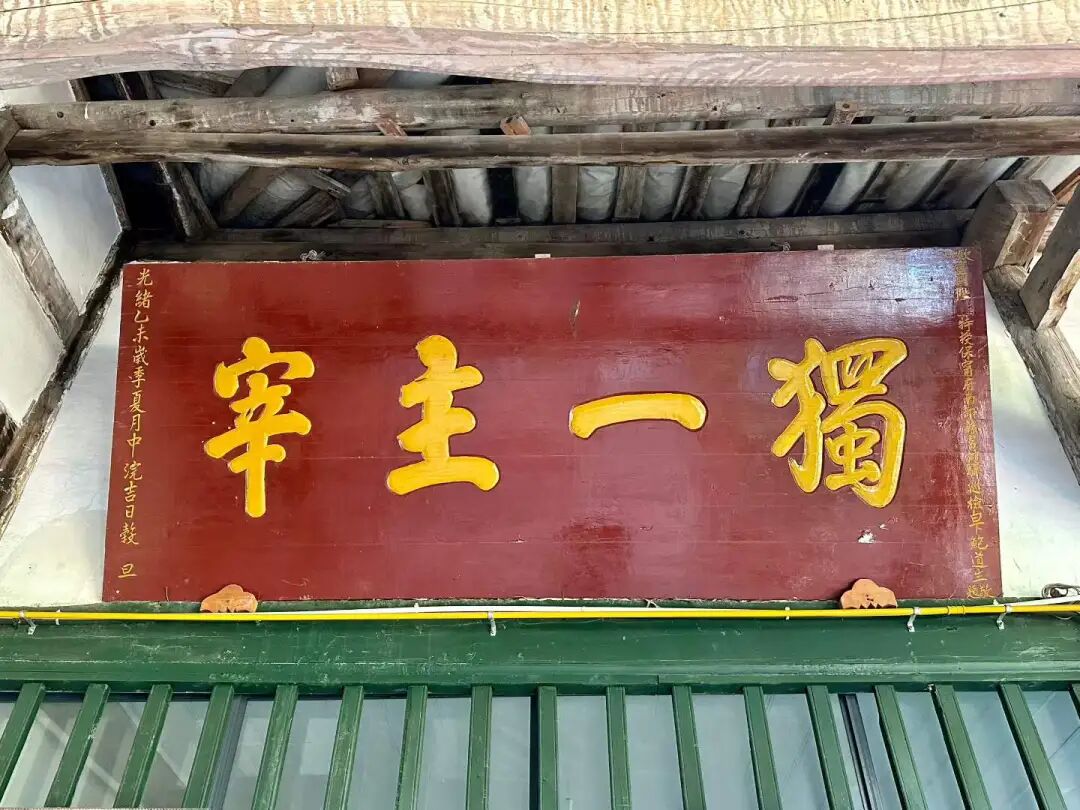
The "Du Yi Zhu Zai" plaque from the 21st year of the Guangxu reign: Respectfully inscribed by Bao Daosheng, a specially appointed inspector of Fucun Station in Nanbu County, Baoning Prefecture.
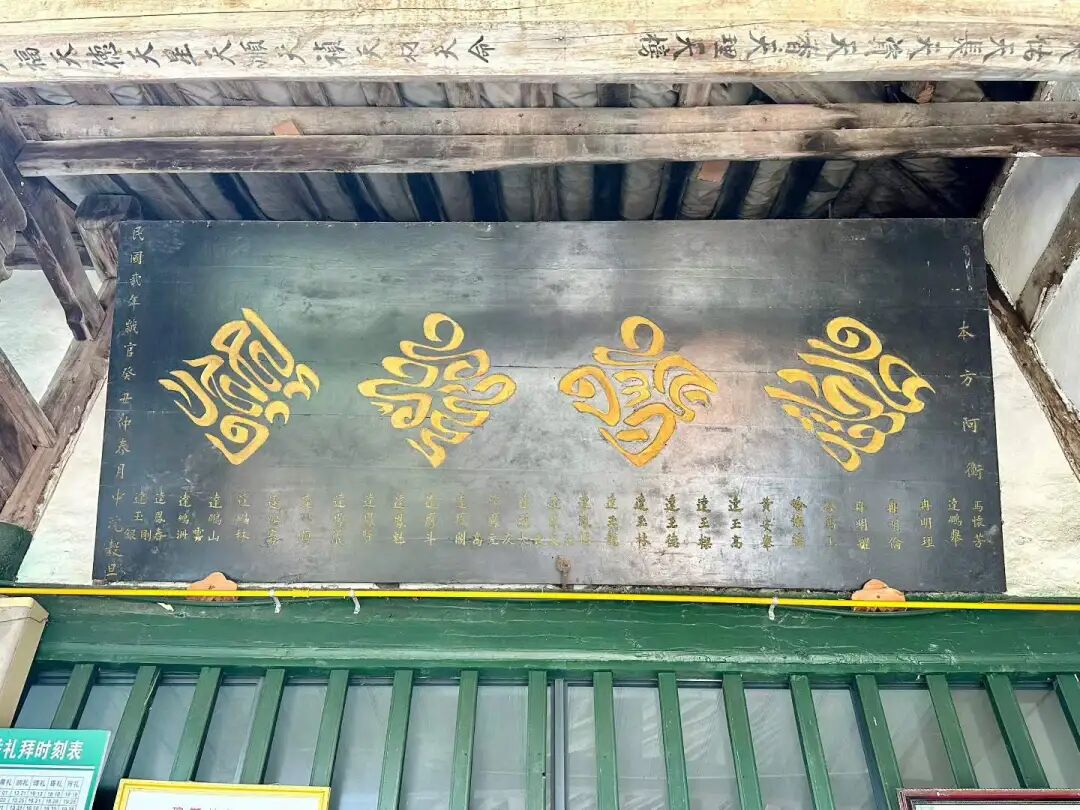
The Arabic plaque from the second year of the Republic of China reading "I created the jinn and mankind only to worship Me": Erected by local imam Ma Huaifang, Da Pengju, Ran Mingli, Ran Minglun, Ran Mingyao, Ha Mayu, Ha Huaide, Huang Anju, Da Yugao, Da Yuliang, Da Yude, Da Yulin, Da Yulong, Da Fengwu, Da Fengzhi, Da Fengwen, Da Fengwu, Da Fengtai, Da Fengyou, Da Fengyuan, Da Fenghao, Da Fengge, Da Fengdou, Da Fengkui, Da Fengxian, Da Fengyi, Da Pengshun, Da Pengqian, Da Penglin, Da Pengshan, Da Pengyun, Da Fengchun, Da Yugang, and Da Yuyin.
Ma Huaifang, also known as Ma Nanxuan, was originally from Lanzhou, Gansu. He fled to Yanting during the early years of the Republic of China and settled there, serving successively as the imam of Dajiaping Mosque and the mosque in Yanting county town. He was a master of martial arts, possessed extraordinary strength, stood up against evil, and was known for helping those in need, earning him high prestige. In 1913, when the Sichuan Army's Zhong Tidao unit was forcibly conscripting men at Lingshan Market, Imam Ma protected the people by driving away an entire squad of soldiers with his bare hands. In 1916, Imam Ma again drove away chaotic soldiers who were forcibly conscripting men at Daxing Market. From 1921 to 1934, Imam Ma opened the "Shou'an Martial Arts Academy" at the Yanting county town mosque, training hundreds of martial arts students. In 1933 and 1934, Imam Ma participated in martial arts competitions in Langzhong and Santai counties, winning silver medals both times. His martial arts style gradually formed into one that was "short, powerful, full of energy, quick to strike, simple, clear, versatile, and focused on winning through strength." In 1932, Imam Ma opened a "Hui Language School" (huiwen xuexiao), training a group of excellent students who were skilled in both literature and martial arts.
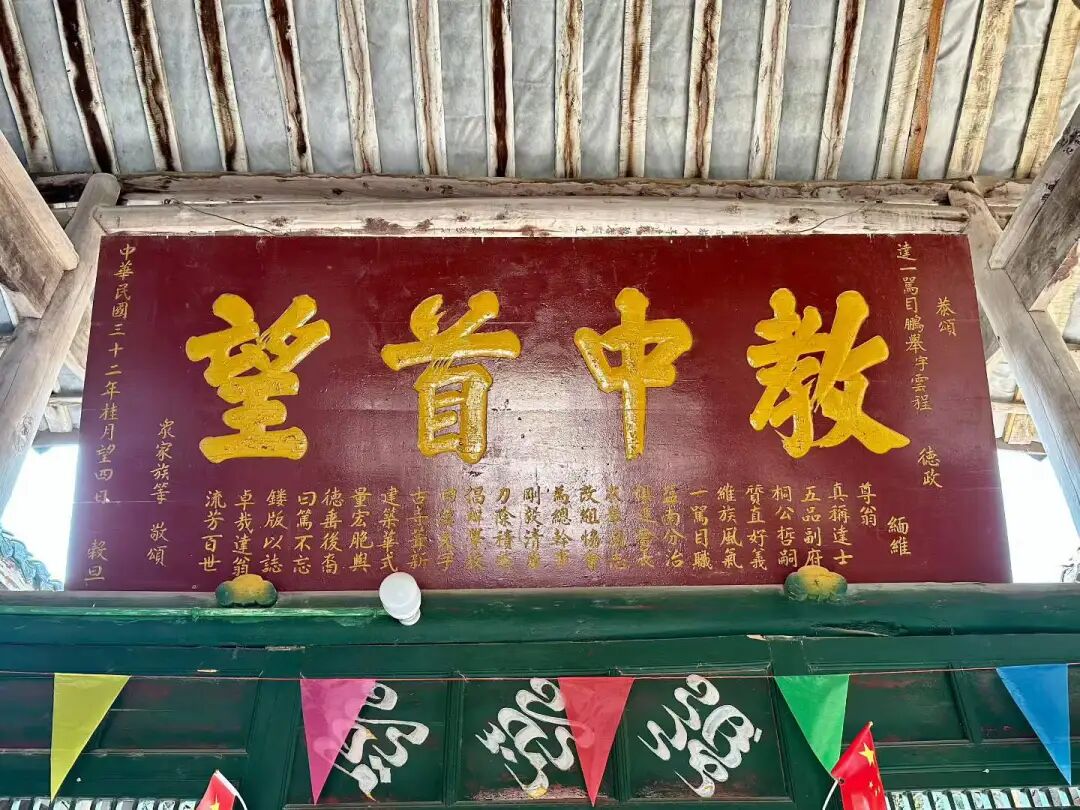
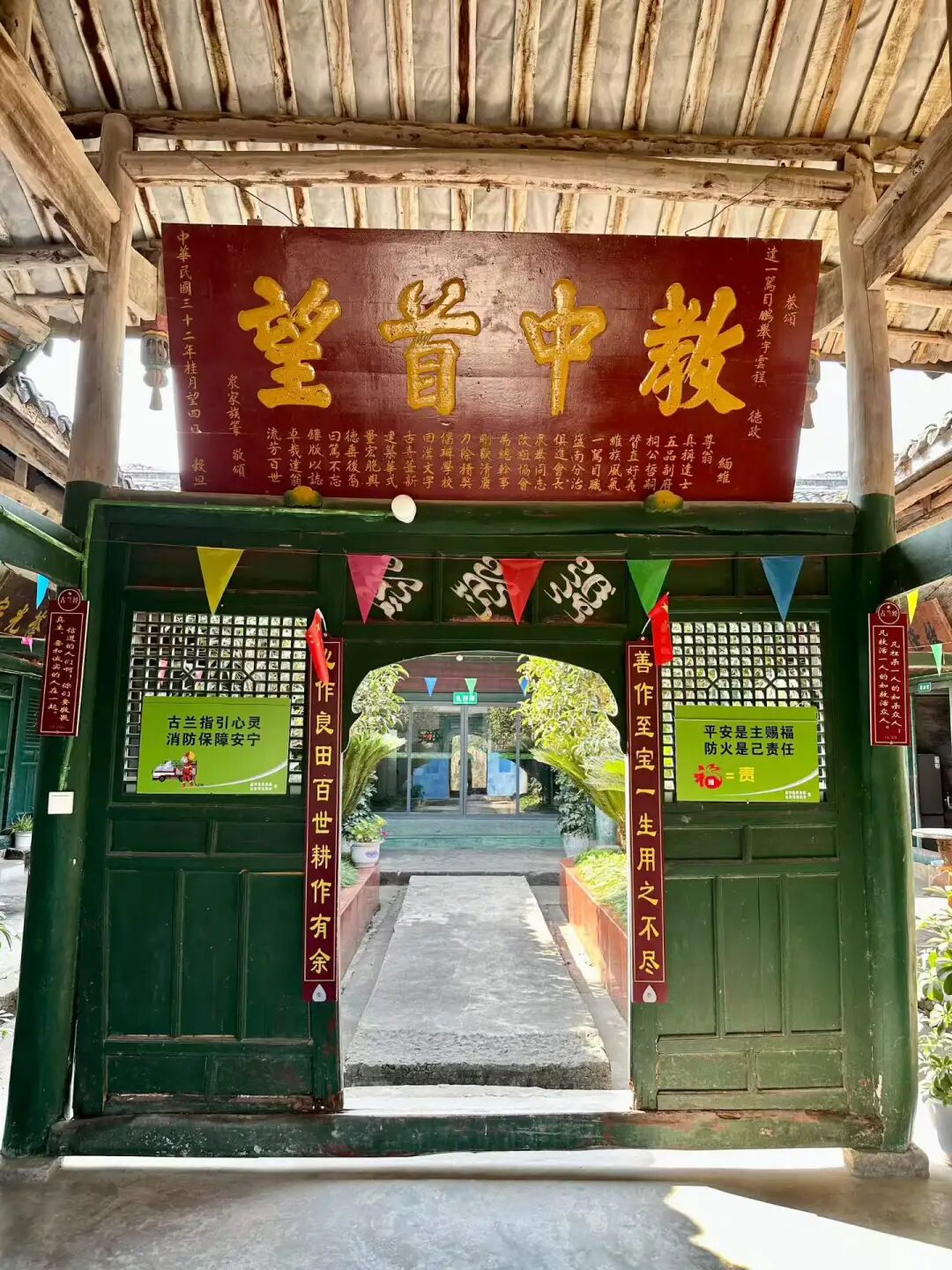
The 1943 plaque titled 'Leader of the Community': We honor Imam (imam) Pengju, courtesy name Yuncheng. A man of virtue, he was a true scholar, a fifth-rank official, and the son of Master Tong. He was upright and righteous, setting a standard for Hui Muslims. He served as imam, managed the Yannan district, and led the Progressive Association. Elected by the people as director-general, he was firm and honest, working hard to remove corruption and starting schools to teach both Arabic and Chinese. The old mosque was renovated with Chinese-style architecture. Its scale is grand, reflecting the prosperity of the community. His virtue will be remembered by descendants forever. We carve this plaque to honor the great Master Da, whose reputation will last for generations. Respectfully dedicated by the family members.
Imam Da Pengju studied religious texts in Chengdu from 1885 to 1891. He became the imam of Dajiaping Mosque in 1912 and taught himself veterinary medicine. In 1914, Imam Da founded an Arabic-Chinese bilingual school in Dajiaping. After the Yanting County Hui Progressive Association was established in 1925, he served as its first president. He also served as president of the Yanting Islamic Association after its founding in 1942. After 1930, Imam Da served as the imam of the Fuyi County Mosque, and after 1951, he served as the imam of the Yanting County Mosque. He was an upright man who helped those in need. He also worked as a veterinarian with excellent skills, saving many sick cattle and earning the respect of everyone.
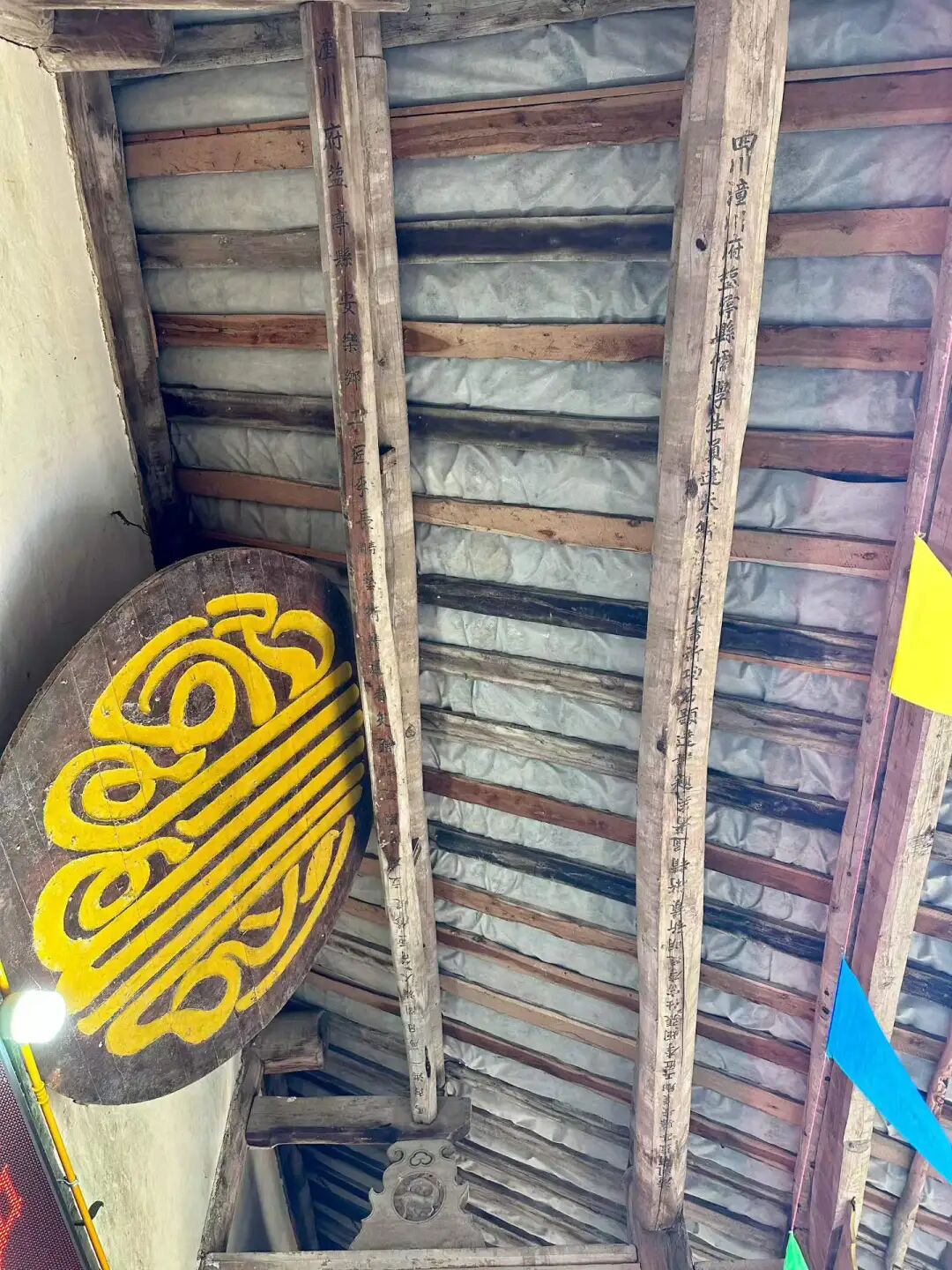
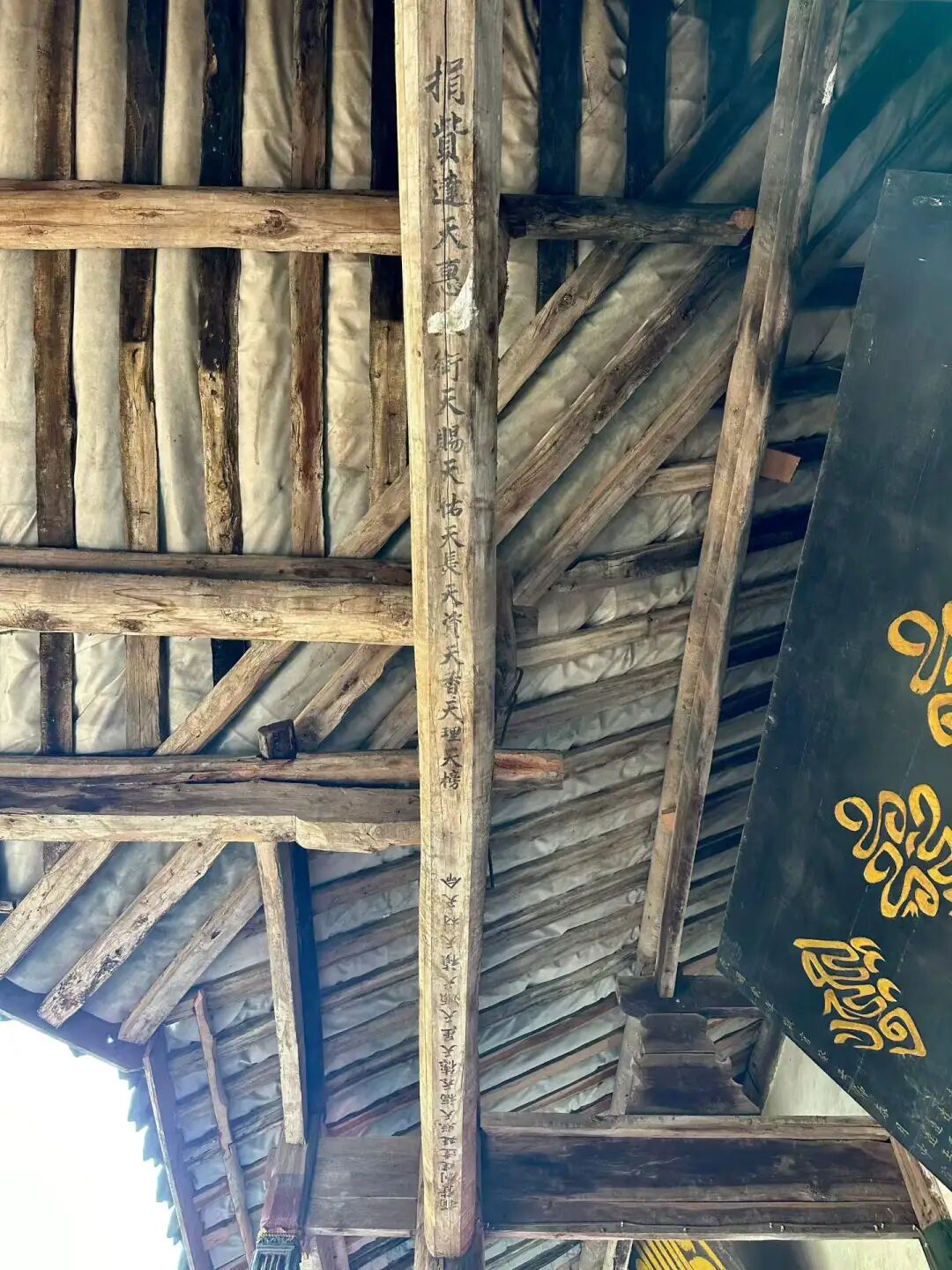
There are many inscriptions on the wooden structures inside the courtyard:
Craftsmen Li Changshou and Li Changkai from Anle Township, Tongchuan Prefecture, Yanting County, are masters of their art. The family of Imam Ma Hong and others rebuilt this, respectfully inscribed by the prominent members.
Craftsmen Li Jiong, Zhang Shifu, and Li Jianming from Anle Township, Tongchuan Prefecture, Yanting County, are masters of their art. Da Tianqu, a Confucian scholar from Yanting County, Tongchuan Prefecture, Sichuan, respectfully washed his hands and wrote this, inscribed by the successful candidates.
Donors: Da Tianhui, Tianwei, Tianci, Tianyou, Tianchang, Tianzi, Tianxiang, Tianli, and Tianbang. Founding donors: Da Tianjianzhao, Tianfu, Tiande, Tianxing, Tianshun, Tianzhen, Tiancai, and Tianming.
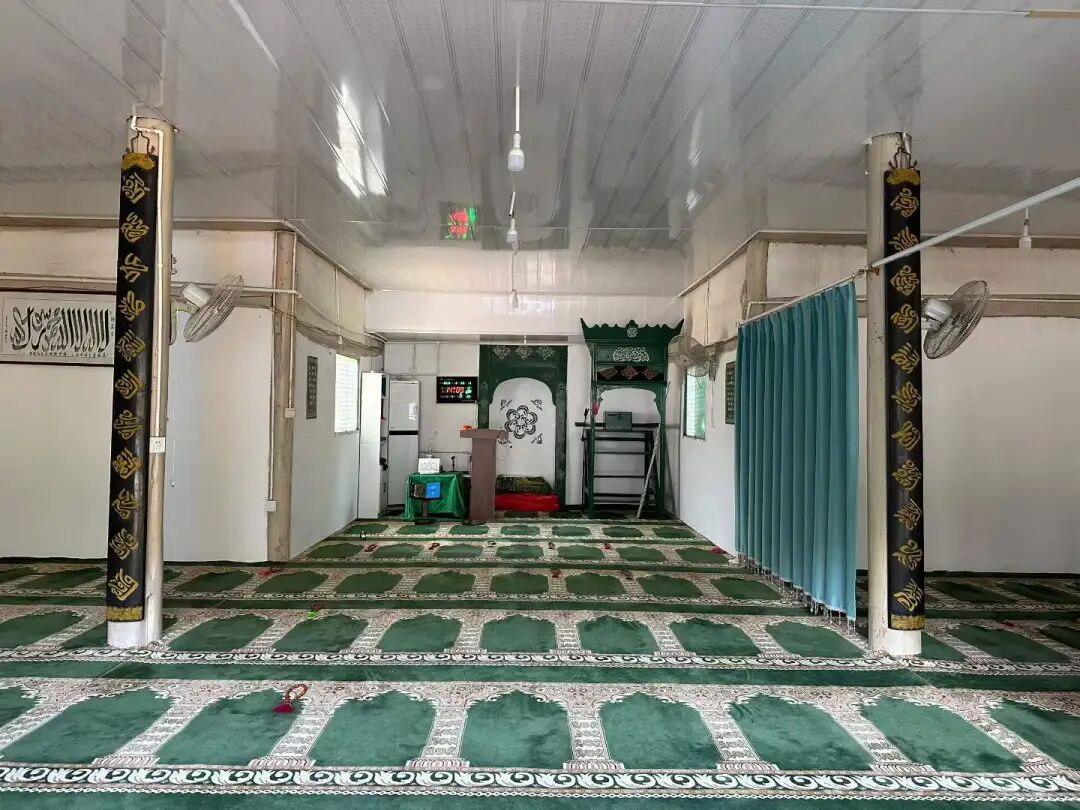
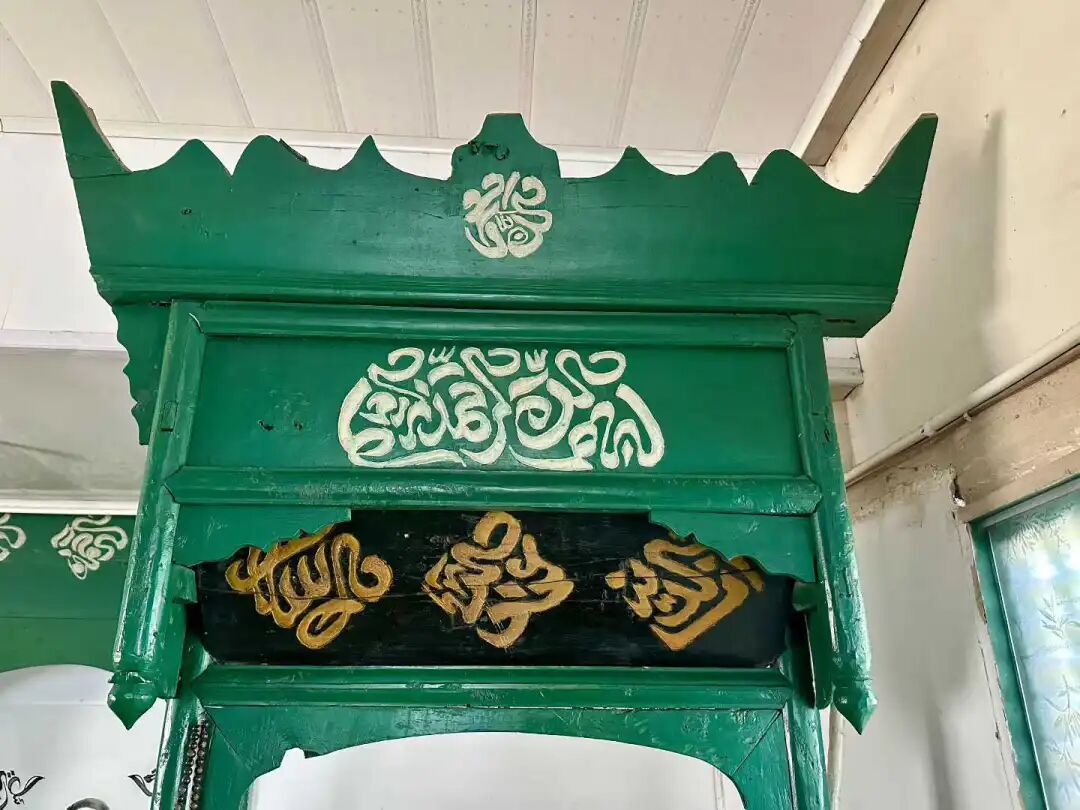
Arabic calligraphy in the main hall of Dajiaping Mosque, and the view looking down from the small hill behind the mosque.
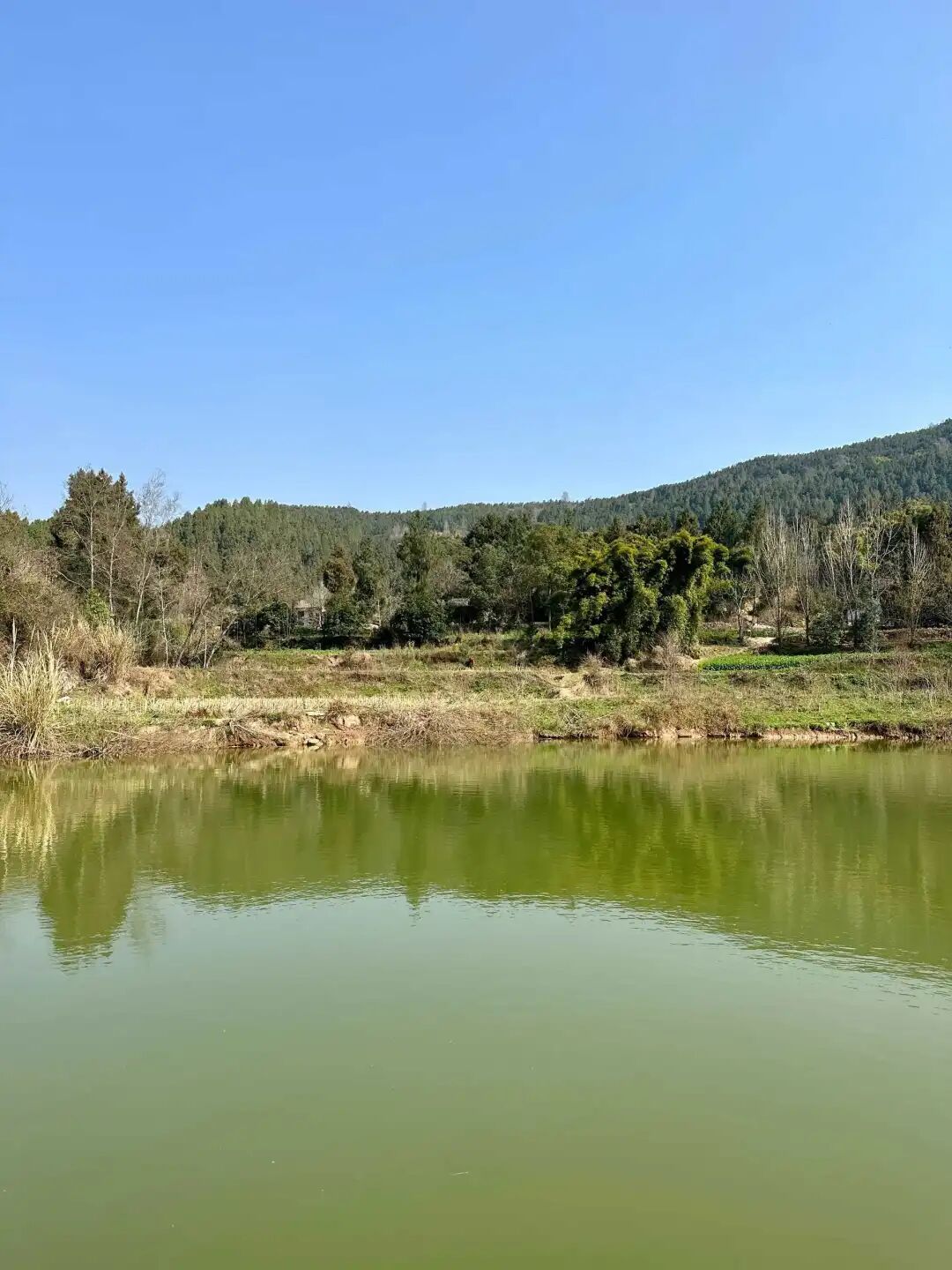
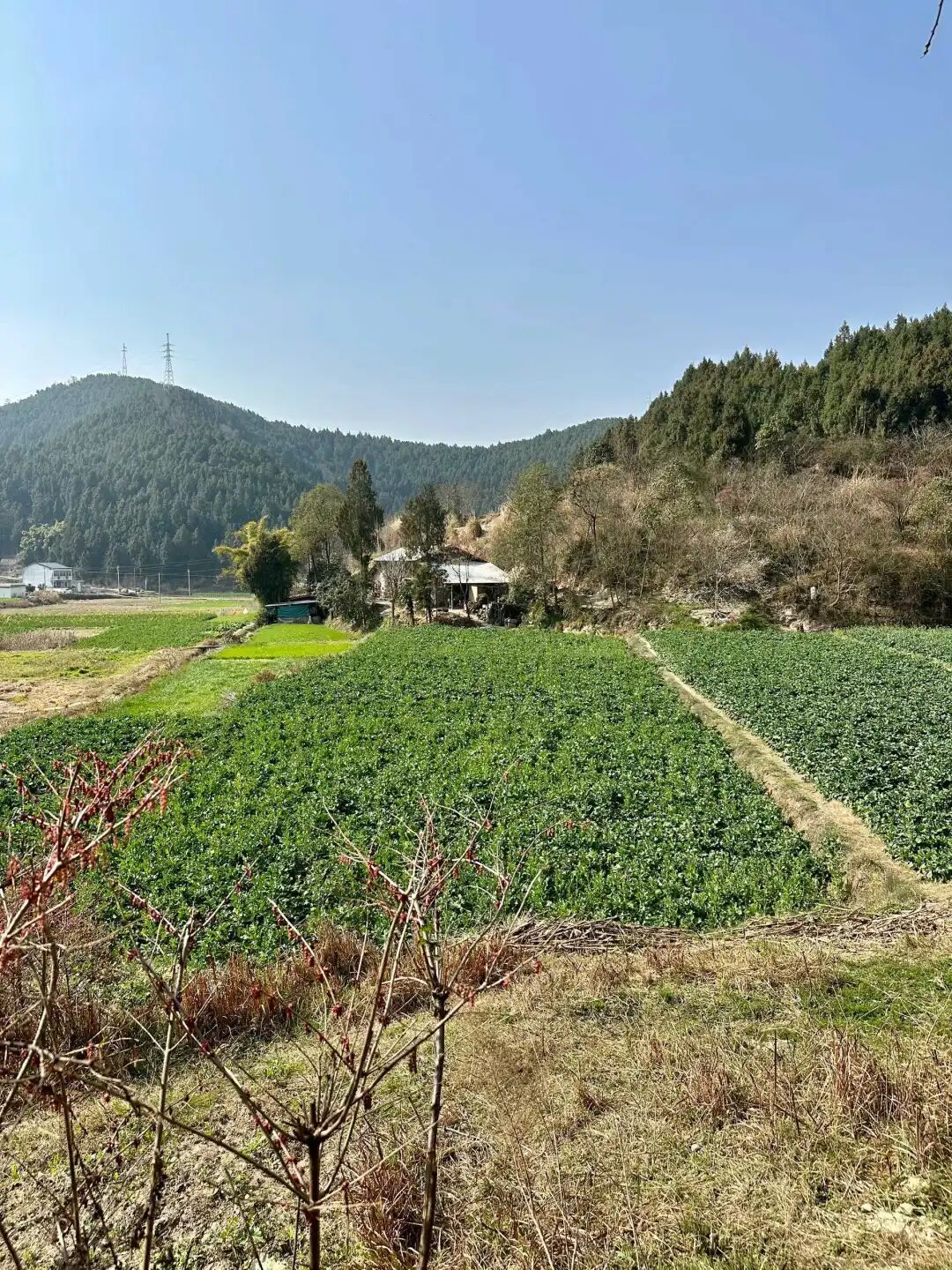
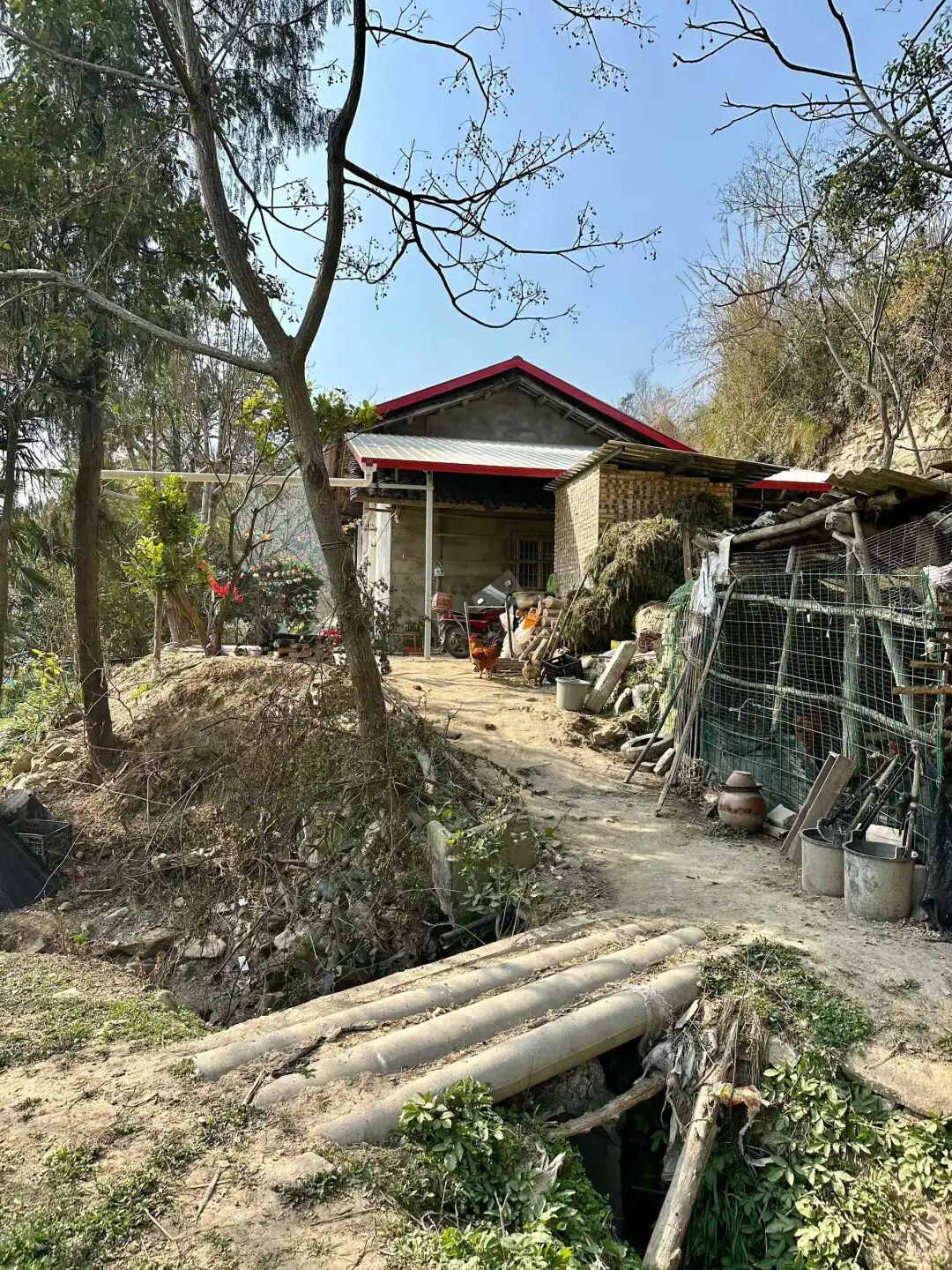
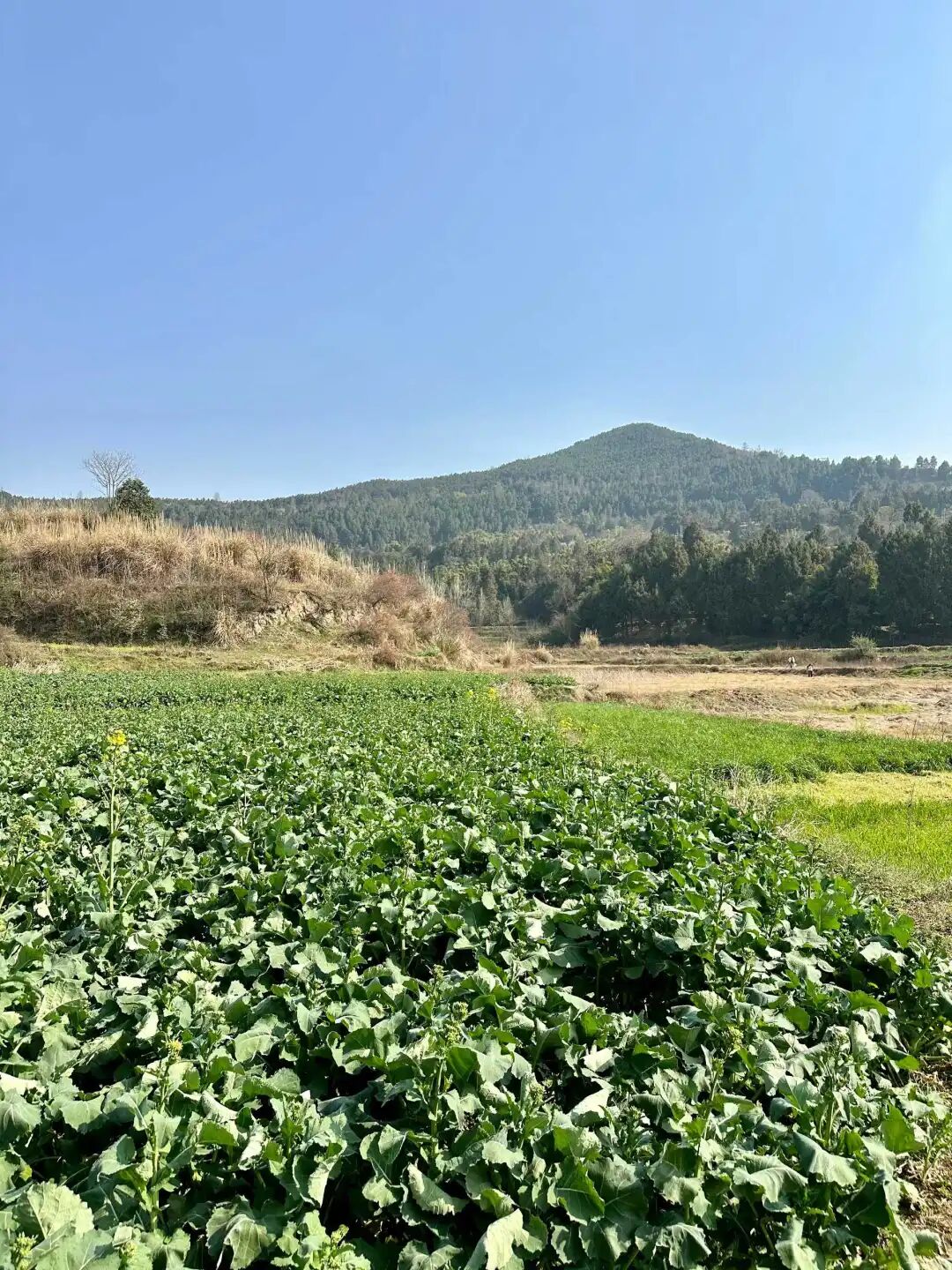
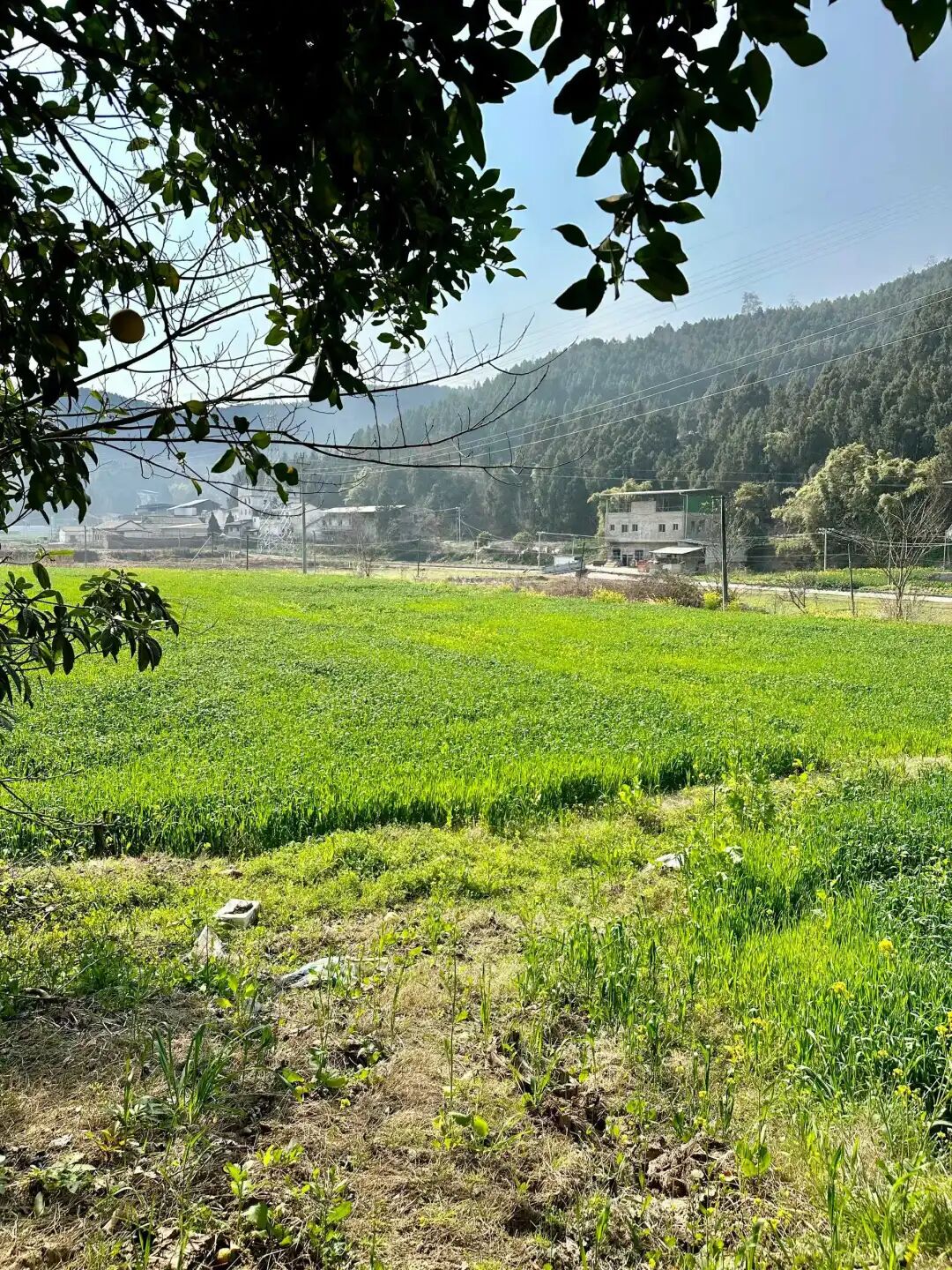
The countryside around Dajiaping is peaceful and quiet. A clear pond reflects the sky, and fields spread out between the hills. It is quiet all around, with only the crisp chirping of birds and the relaxed sounds of cattle and sheep, creating a moving pastoral scene.
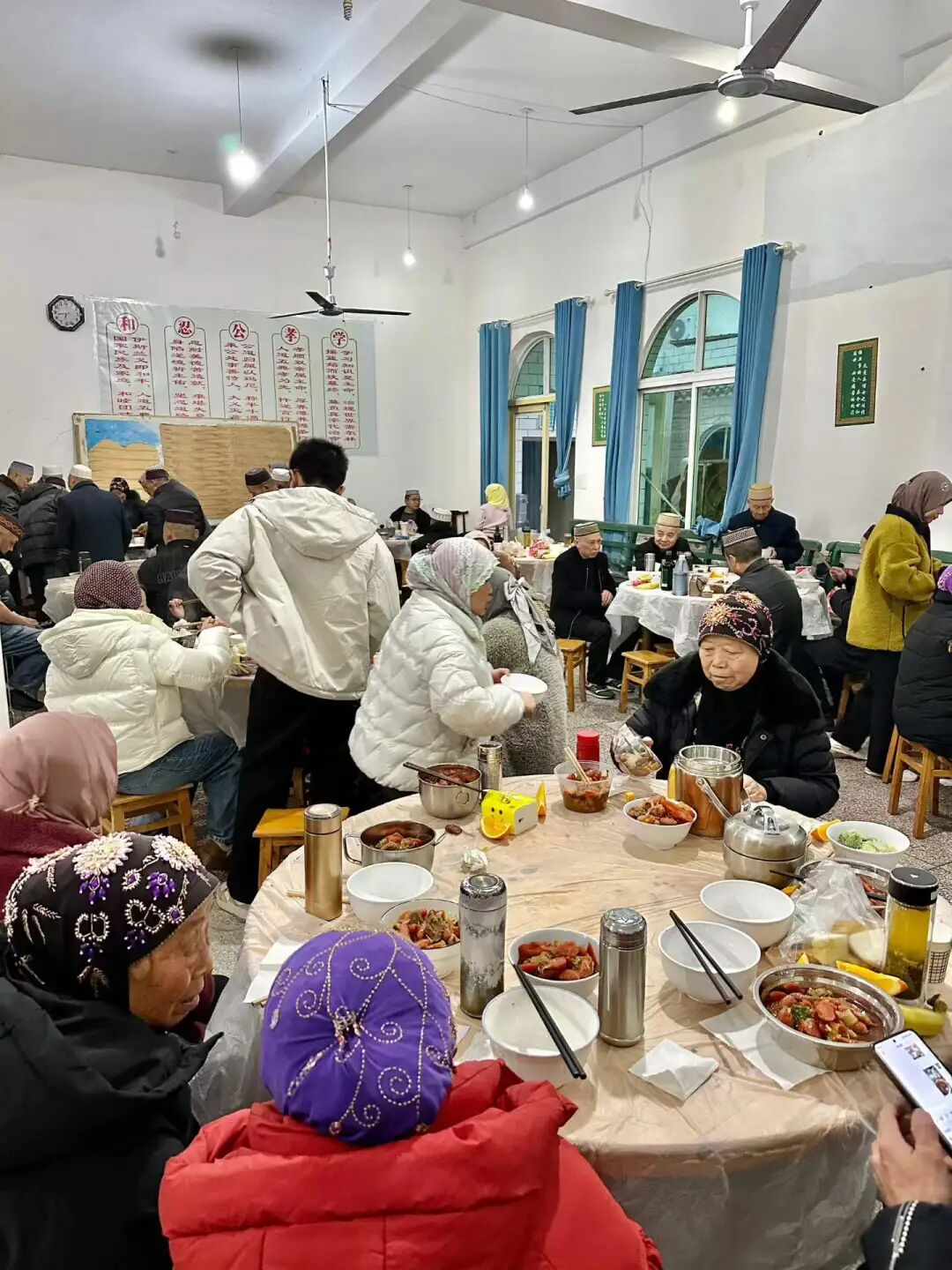
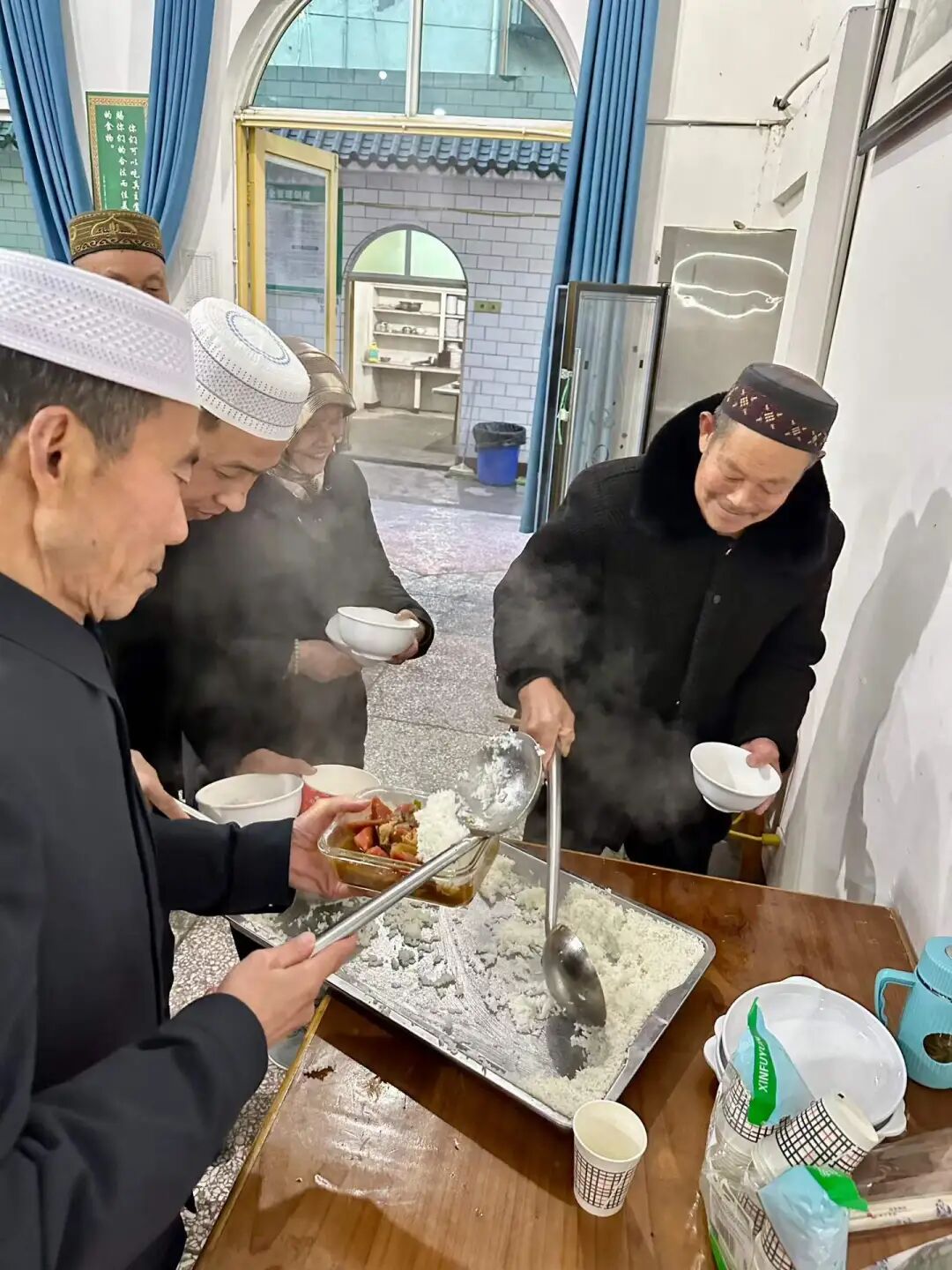
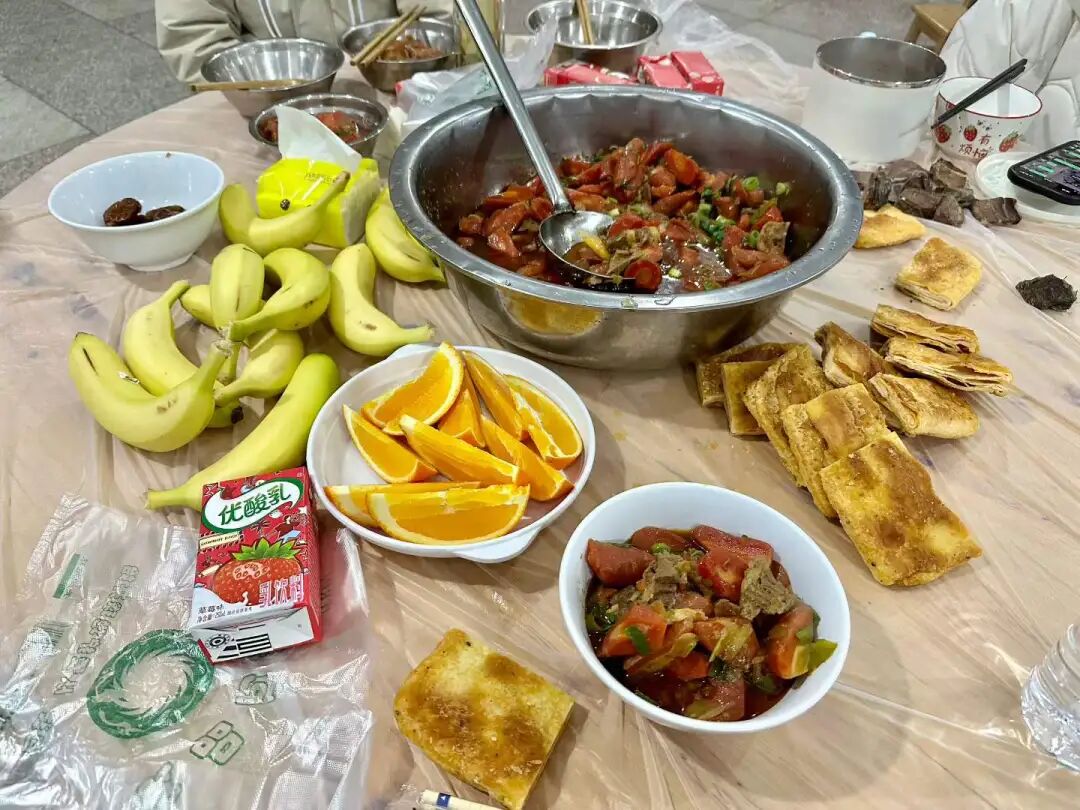
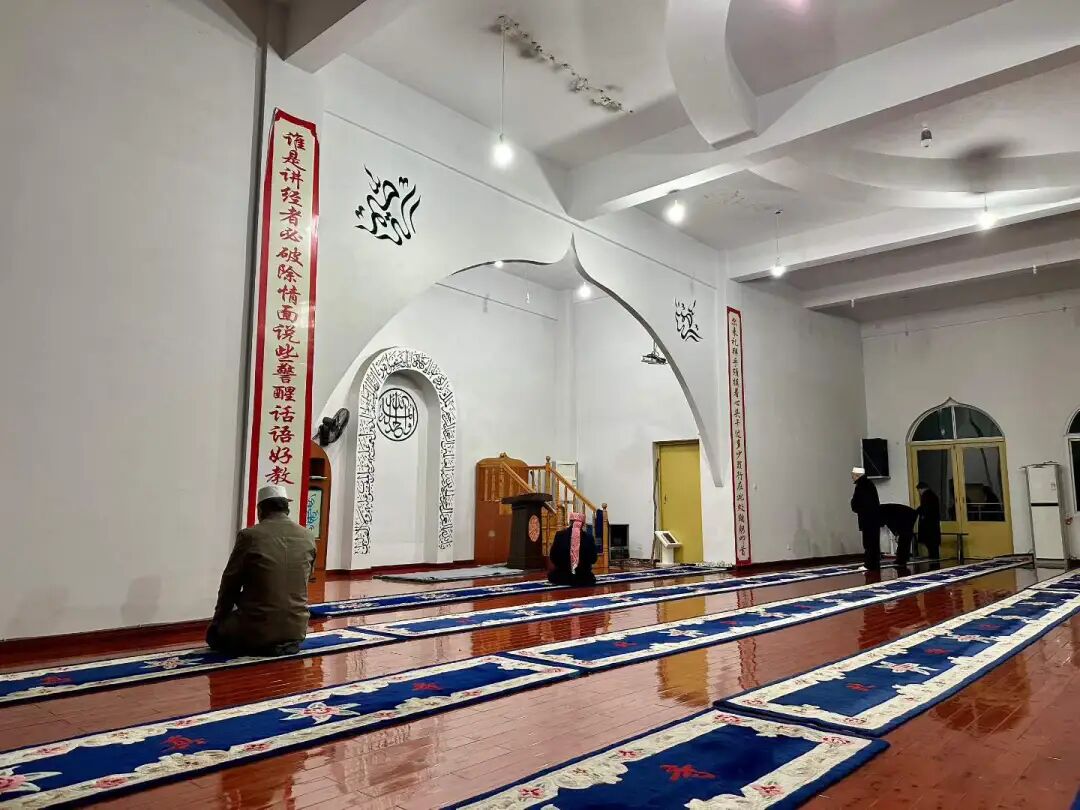
Returning from Dajiaping Mosque to Yanting County, I broke my fast at the North Street Mosque. In the evening, hundreds of people came to the mosque to break their fast. Men, women, old, and young gathered together, showing the prosperity of the faith in Yanting. We had radish beef stew, served with crispy flatbread (subing) and rice. Although it was simple, the atmosphere was exceptionally warm and harmonious.
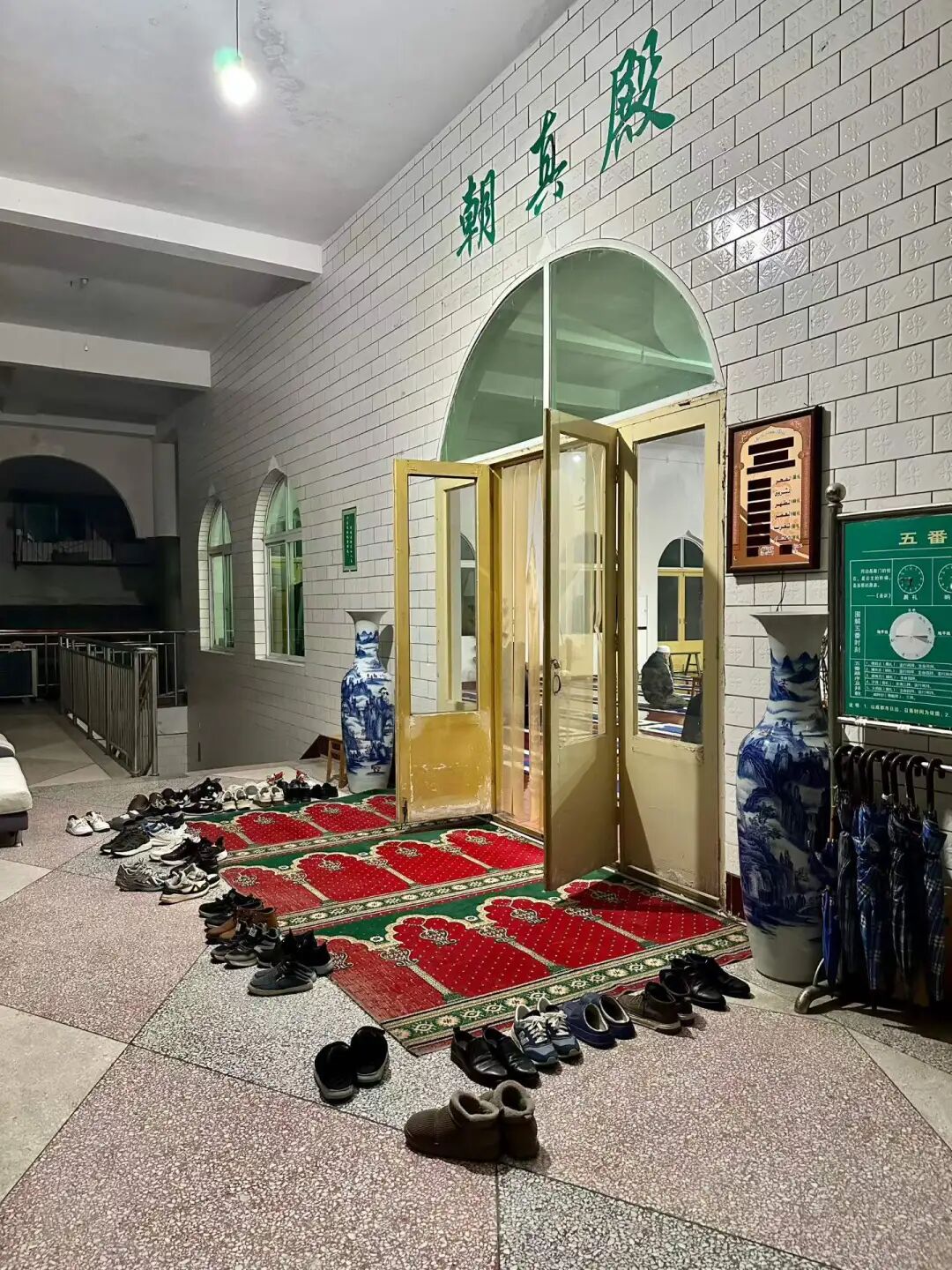
Yanting County Mosque was first built in 1738 (the third year of the Qianlong reign). It was originally located on Xinxie Street next to the Sanbu Liangdong Bridge. In 1796 (the first year of the Jiaqing reign), it moved to its current location at the city gate on Shangbei Street. It was expanded in 1898 and 1947, and rebuilt into its current form in 2006.
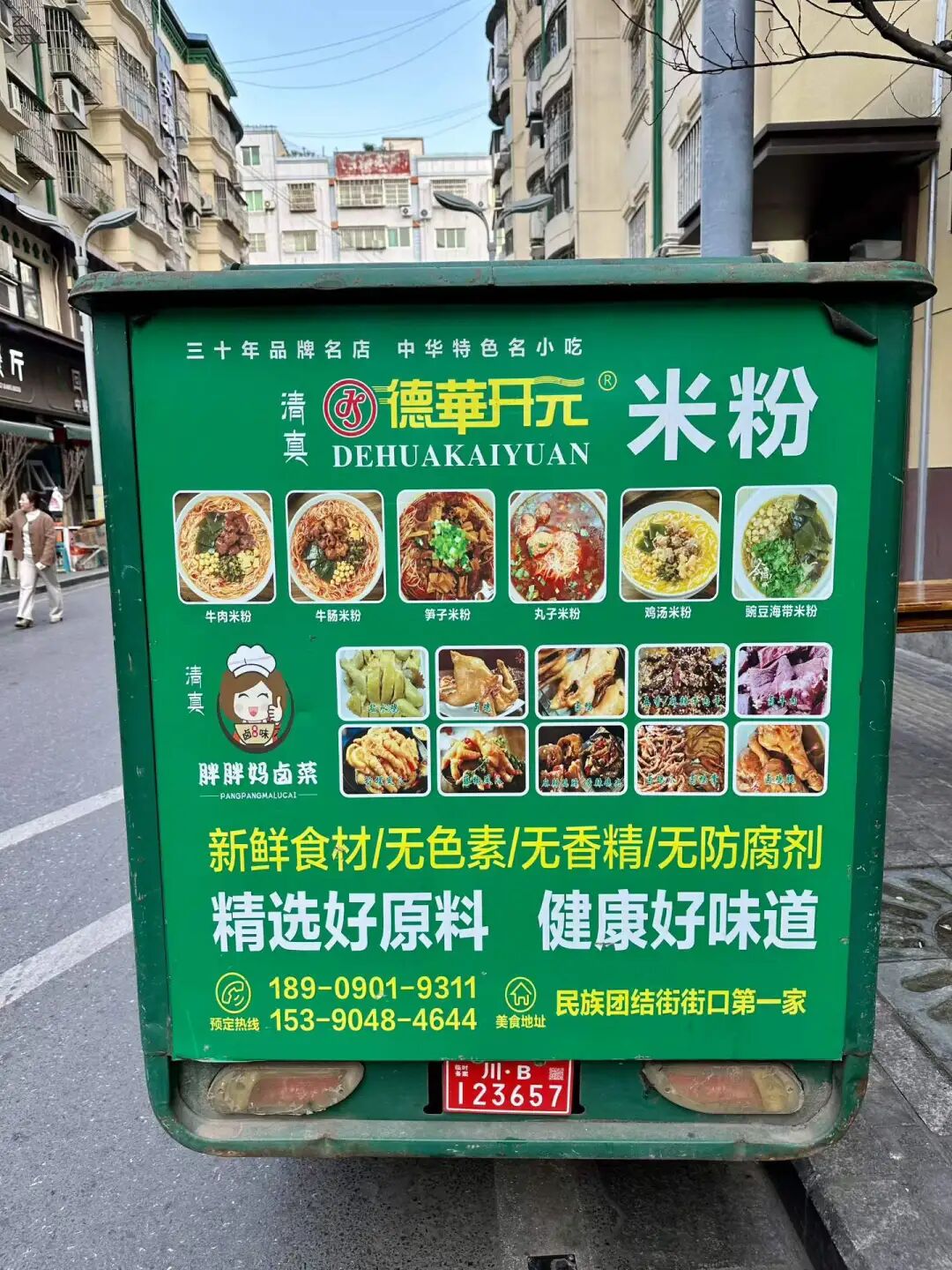
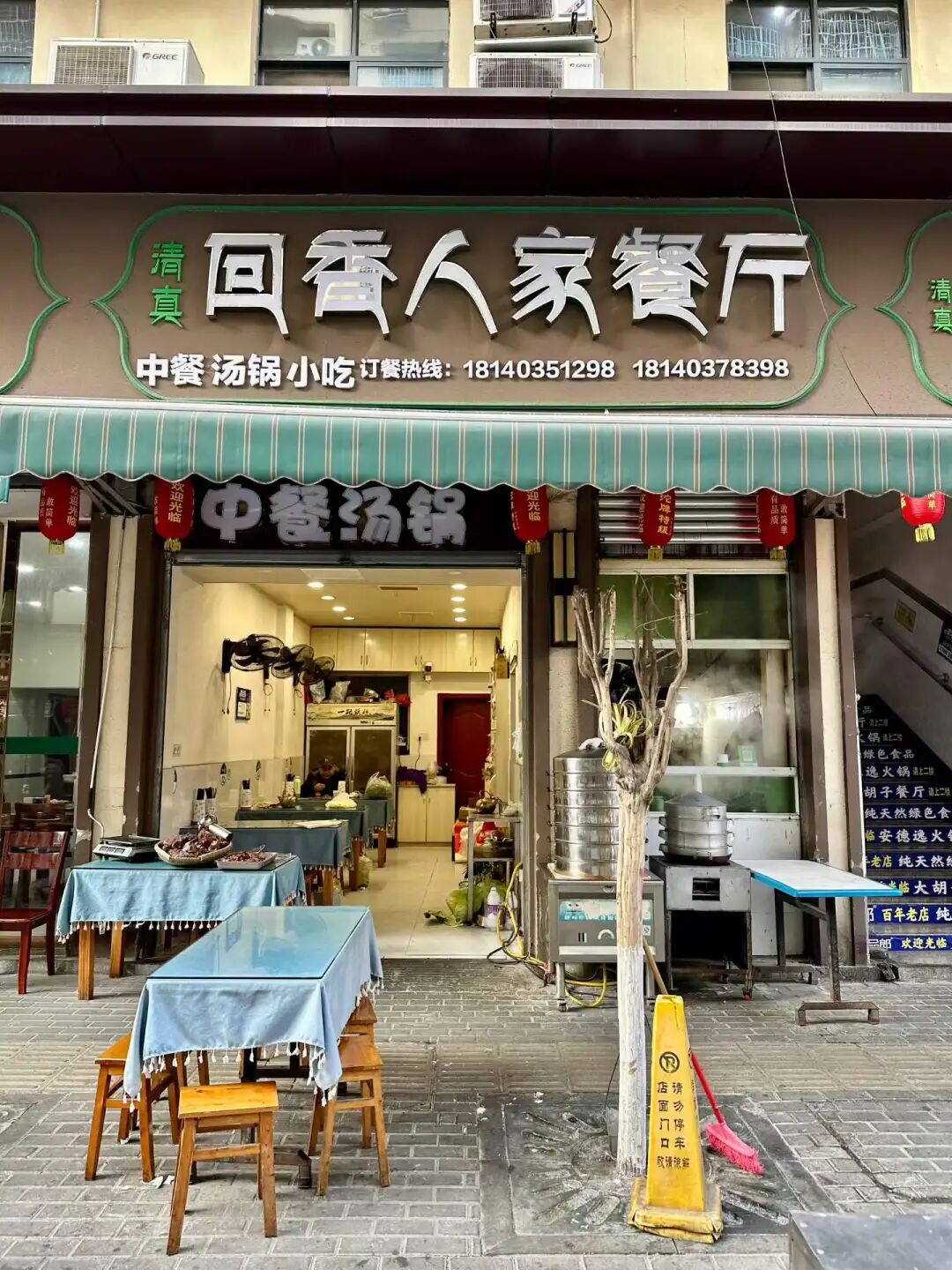
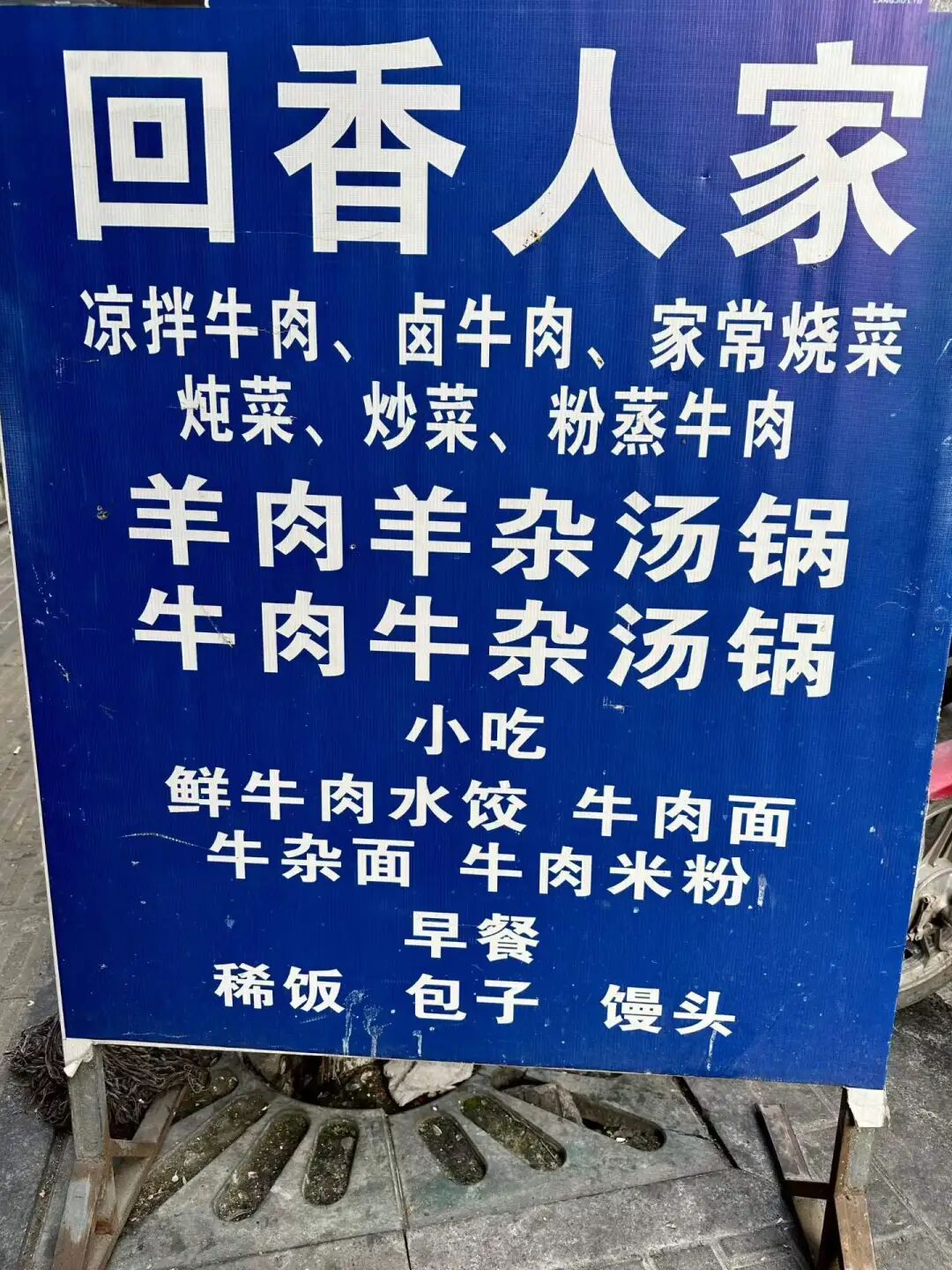
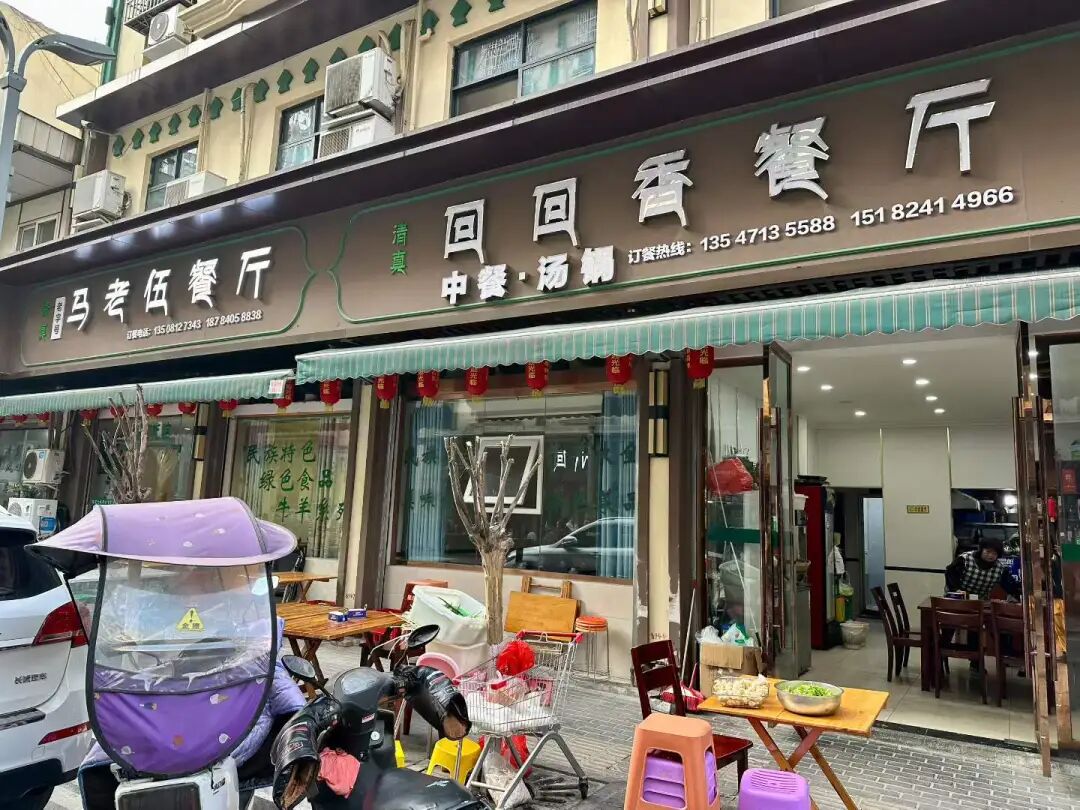
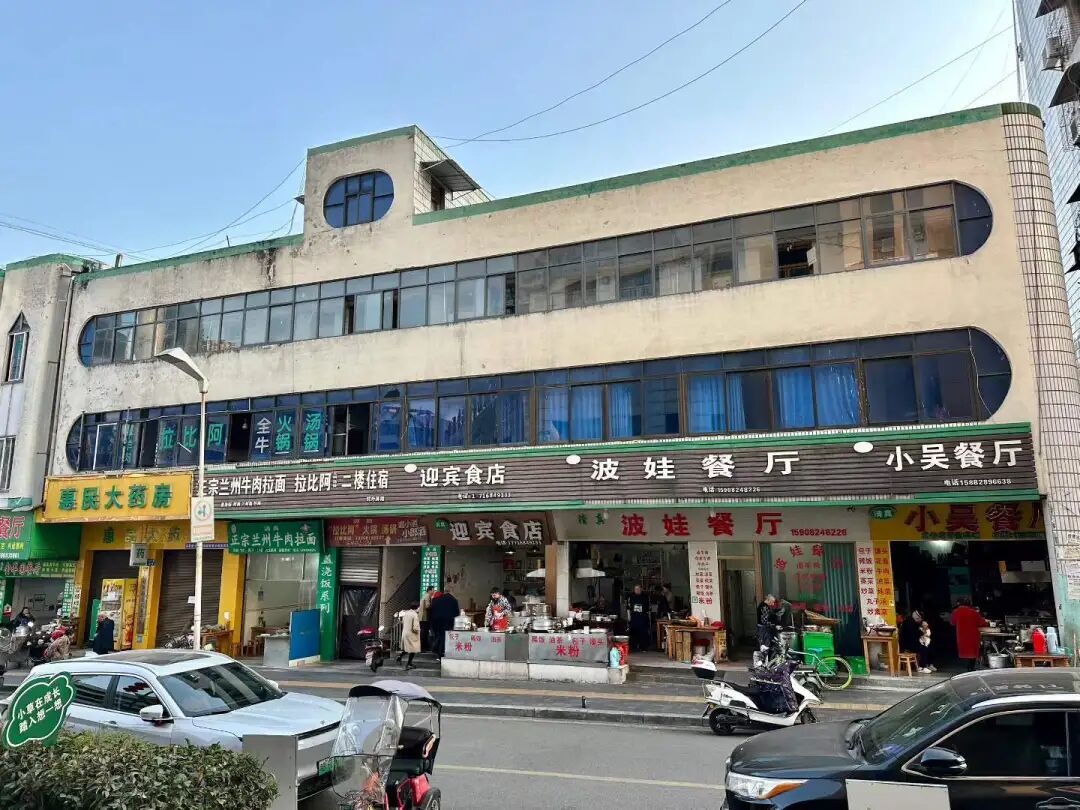
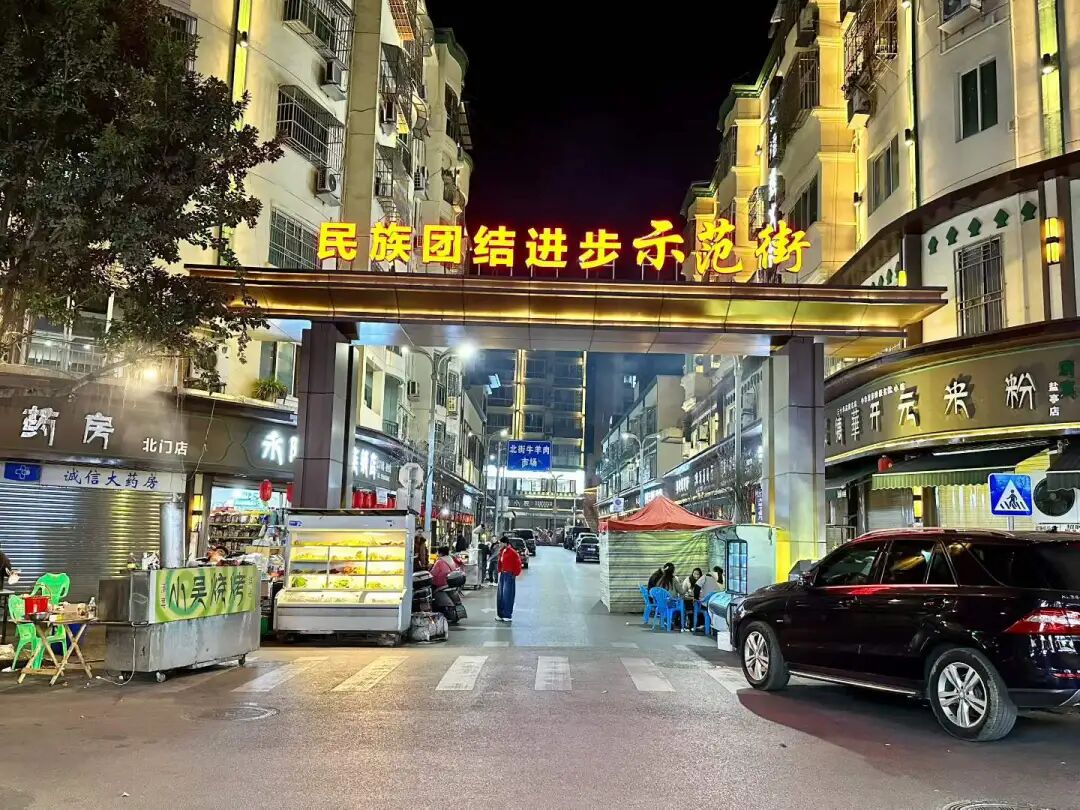
There are many Hui Muslim restaurants near the North Street Mosque in Yanting, especially on Tuanjie Road, which is a 'Hui Muslim food street'. In northern Sichuan, besides Songpan, Yanting is the most convenient place to eat. Even Langzhong does not have as many options as Yanting. Opposite the mosque gate is a shop called 'Benwei Banlu', which sells braised beef, braised chicken feet, and braised duck. The 'Jin's Braised Duck' next door is also very popular. Walking a little further, you reach Tuanjie Road. 'Dehua Kaiyuan Rice Noodles' at the intersection has been open for thirty years. They specialize in bamboo shoot rice noodles, meatball rice noodles, chicken soup rice noodles, and pea and kelp rice noodles. Many people eat there, and they are open early in the morning. Walking into Tuanjie Road, you find many halal restaurants with names like Huixiang Renjia, Huihuixiang, Huiweiju, and Xiaohuimin. They specialize in Sichuan-style braised dishes, stews, stir-fries, steamed beef with rice flour (fenzheng niurou), and beef and mutton hot pots.
After finishing the Taraweeh prayers, I stopped by Muji Noodle Shop on Tuanjie Road in Yanting for a bowl of spicy hot pot (maocai) to get some vegetables.
Near the North Street Mosque in Yanting, you can find restaurants owned by families named Jin, Mu, and Ma. The Jin family seems especially common, with places like Jin Family All-Beef and Mutton Soup House (Jin Jia Quan Niuyang Tangguan), Jincuiyuan Restaurant, and Little Jin Beef (Xiao Jin Niu). Among the Hui Muslims in Yanting, the main family names are Jiang, Mu, Da, Jin, Ma, and Yang, based on when they first arrived in Sichuan. The Jiang family's ancestral home is Qili Village in Penglai, Shandong. They moved to Sichuan in 1465 (the first year of the Chenghua reign of the Ming Dynasty) when an ancestor became the magistrate of Leshan, and they settled in Yanting after he left office. The Mu family's ancestral home is Mujiaping in Hanzhong, Shaanxi. They moved to Yanting in 1615 (the 43rd year of the Wanli reign). The Da family's ancestral home is Liuhe in Nanjing, Jiangsu. They moved to Yanting in 1644 (the first year of the Shunzhi reign of the Qing Dynasty). The Jin family's ancestral home is Wangjiao Village in Dali, Tongchuan, Shaanxi. They moved to Yanting in 1690 (the 29th year of the Kangxi reign). The Ma family's ancestral home is Weinan, Shaanxi. Their ancestor came to Sichuan during the Revolt of the Three Feudatories, and the family moved to Yanting in 1691 (the 30th year of the Kangxi reign). The Yang family's ancestral home is Shaanxi. They moved to Yanting in 1723 (the first year of the Yongzheng reign).
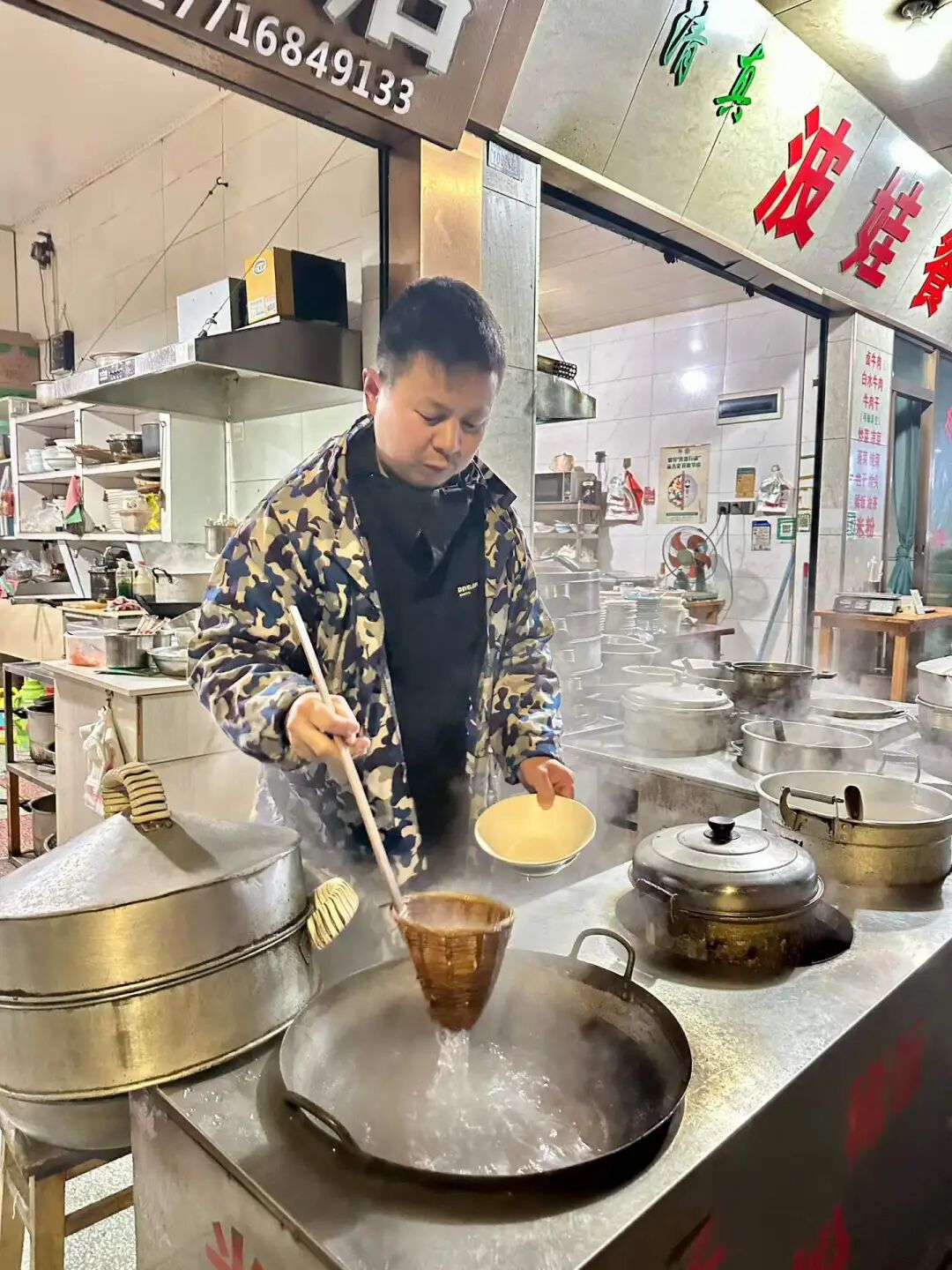
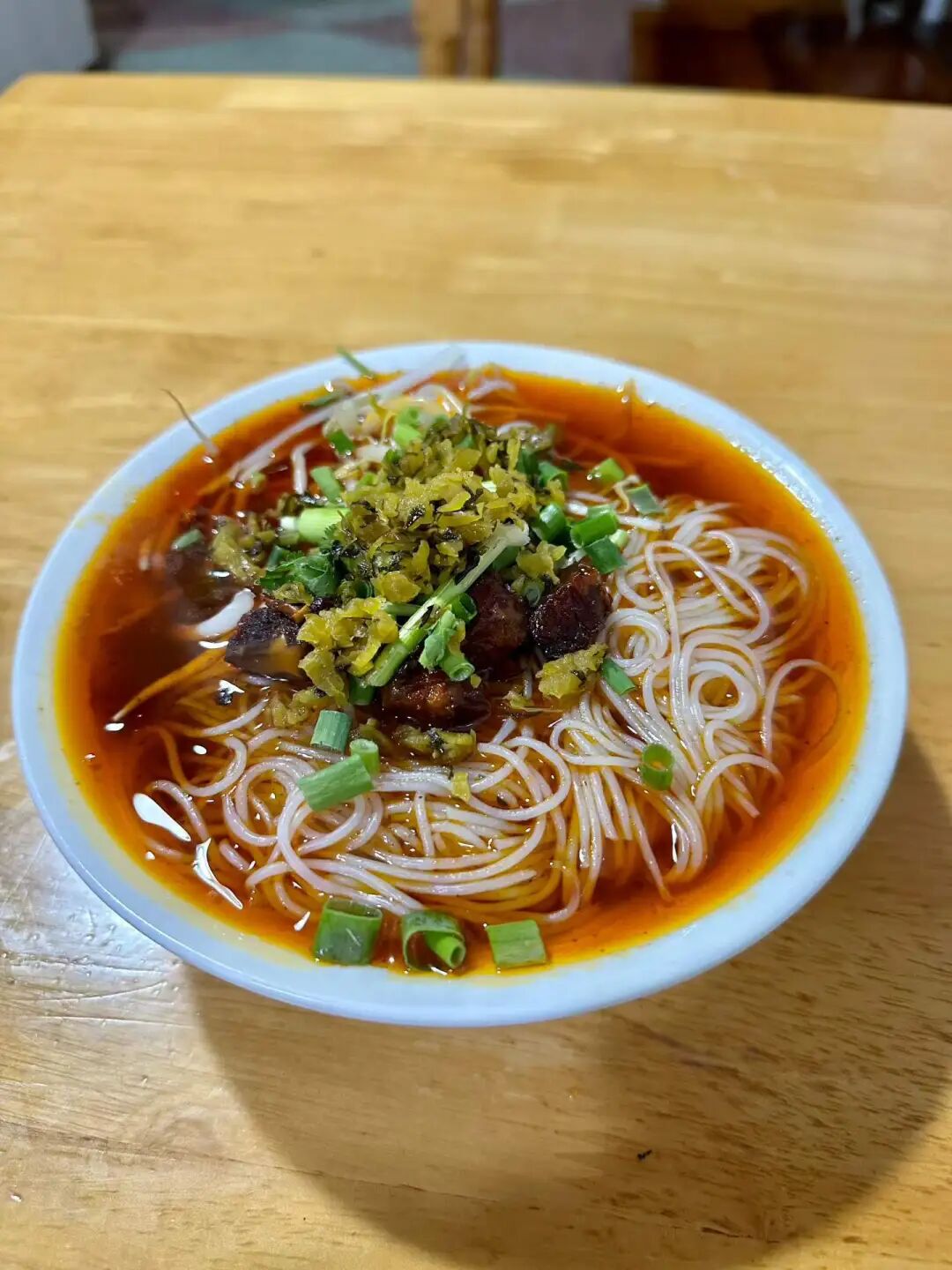
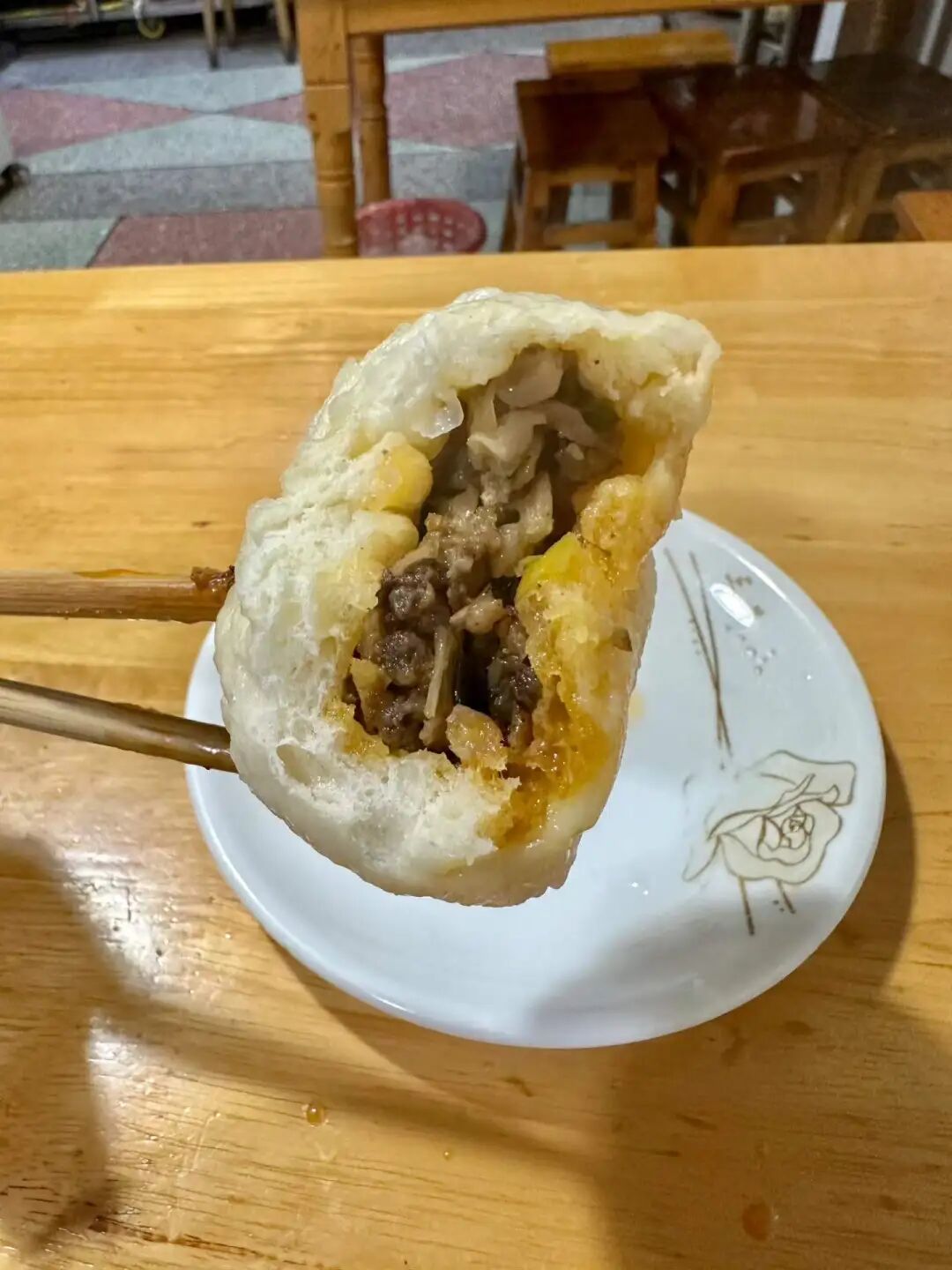
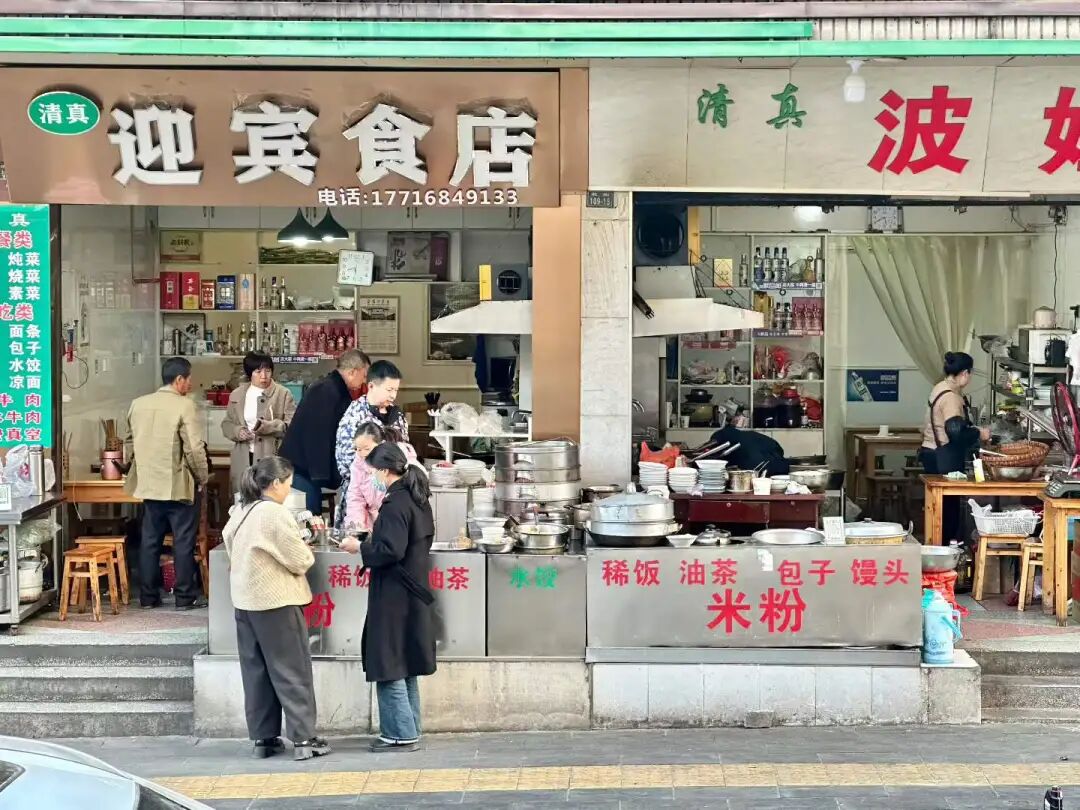
Breakfast starts after 5:00 a.m. near the North Street Mosque in Yanting, which is perfect for eating suhoor. Breakfast here includes steamed buns (baozi), rice porridge (xifan), rice noodles (mifen), and tea-oil porridge (youtiao). I ordered a bowl of rice noodles and a steamed bun. Yanting rice noodles are quite thin. They have a soft, smooth, and slightly chewy texture. They are quickly blanched in boiling water using a bamboo strainer. After draining the water, they are put into a bowl and topped with beef sauce (niurou saozi). The Hui Muslims' beef sauce is made by stir-frying rapeseed oil mixed with beef fat until fragrant, then adding bean paste (doubanjiang) to create a red oil. The beef is firm, flavorful, tender, and not dry. When you eat it, it is spicy, numbing, and rich with a fresh aroma. It is spicy without being harsh, numbing without being bitter, and fresh without being greasy. view all
Summary: This Yanting County travelogue explores old mosques, Hui Muslim villages, family histories, and mountain roads around Mianyang during a Spring Festival drive through Sichuan.
On February 20, I drove for one hour and 20 minutes from Nanchong at noon to reach Dajiaping Mosque in Yanting County, Mianyang City, for Jumu'ah prayer. The mosque was very crowded, and everyone there was a local Hui Muslim.
Yanting is the county with the most Hui Muslims in Mianyang, with ten major surnames: Jiang, Jin, Mu, Da, Ma, Yang, Wu, Ha, Ran, and Sa. The ancestor of the Da surname was a man from the Western Regions during the Yuan Dynasty named Wubalesha. Research shows he belonged to the Kipchak Yuliboli tribe and served as a Darughachi in Zhenjiang Road before passing away in Zhenjiang. His sixth-generation descendant, Da Shanyu, moved from Zhenjiang to Liuhe, Nanjing, in the early Ming Dynasty to serve as a county assistant. He settled in Liuhe, making this the oldest Western Regions Hui Muslim family in Liuhe, Nanjing. In 1644 (the first year of the Shunzhi reign), Da Chengzong was ordered to move from Liuhe to Sichuan. He settled at the foot of Jianzi Mountain in Fenghe, Yanting, which established the Da surname Hui Muslim community in Yanting.
Dajiaping Mosque was originally located on a small hill behind the current kiln hall and was quite small. It was later moved to its current location below the hill. In 1812 (the 17th year of the Jiaqing reign), it was rebuilt into the current courtyard style with donations from Sichuan Baoning Prefecture military officials Da Tengchao, Da Tengrui, Da Tianheng, and Da Guankui. It was renovated in 1908 (the 34th year of the Guangxu reign), and the main gate and side schools were expanded in 1928.
Dajiaping Mosque features the traditional Sichuan courtyard structure known as "four waters flowing into the hall" (si shui dao tang), with elegant, unique bracket sets and flying eaves. There is a path platform in the courtyard's central patio and gardens on both sides.
Dajiaping Mosque houses 30 volumes of scriptures hand-copied by Jin Wanx in the ninth year of the Guangxu reign.
The mosque also preserves three plaques from the Qing Dynasty and two from the Republic of China era:
The "Jiao Long Zhen Yi" plaque from the fourth year of the Daoguang reign: Respectfully erected by Da Tianheng, a specially appointed military official of the Jianzhou garrison in Guangyuan, Sichuan, who was promoted to the rank of thousand-man commander (qian zong) and received honors five times.
Da Tianheng passed the military examination in 1801 (the sixth year of the Jiaqing reign) and was immediately appointed as a thousand-man commander (qian zong) in the Chuanbei Town garrison. He was promoted several times, eventually reaching the rank of regional commander (zong bing) of Chuanbei Town, stationed in Baoning Prefecture, Sichuan. Locals respectfully called him "Commander-in-Chief" (zong zhen du du). In 1854 (the fourth year of the Xianfeng reign), the imperial court ordered him to lead troops to suppress the Taiping Rebellion. Because he did not act immediately, he was falsely accused of "colluding with the enemy and rebelling." The Xianfeng Emperor recalled him to Beijing and had him beheaded in public.
The "Yu Yin Guang Zong" plaque from the ninth year of the Tongzhi reign: Erected by his descendants Da Yuguan, Yu Chun, and Yu Sheng, along with their sons Fenggang, Fengge, and Fengzhu. The plaque honors their ancestor, a military official of the Tongchuan garrison in Chuanbei, Sichuan, who held a fifth-rank blue feather and served as a garrison commander (ba zong) in Tibet and an acting official in Sanchuan County.
The "Du Yi Zhu Zai" plaque from the 21st year of the Guangxu reign: Respectfully inscribed by Bao Daosheng, a specially appointed inspector of Fucun Station in Nanbu County, Baoning Prefecture.
The Arabic plaque from the second year of the Republic of China reading "I created the jinn and mankind only to worship Me": Erected by local imam Ma Huaifang, Da Pengju, Ran Mingli, Ran Minglun, Ran Mingyao, Ha Mayu, Ha Huaide, Huang Anju, Da Yugao, Da Yuliang, Da Yude, Da Yulin, Da Yulong, Da Fengwu, Da Fengzhi, Da Fengwen, Da Fengwu, Da Fengtai, Da Fengyou, Da Fengyuan, Da Fenghao, Da Fengge, Da Fengdou, Da Fengkui, Da Fengxian, Da Fengyi, Da Pengshun, Da Pengqian, Da Penglin, Da Pengshan, Da Pengyun, Da Fengchun, Da Yugang, and Da Yuyin.
Ma Huaifang, also known as Ma Nanxuan, was originally from Lanzhou, Gansu. He fled to Yanting during the early years of the Republic of China and settled there, serving successively as the imam of Dajiaping Mosque and the mosque in Yanting county town. He was a master of martial arts, possessed extraordinary strength, stood up against evil, and was known for helping those in need, earning him high prestige. In 1913, when the Sichuan Army's Zhong Tidao unit was forcibly conscripting men at Lingshan Market, Imam Ma protected the people by driving away an entire squad of soldiers with his bare hands. In 1916, Imam Ma again drove away chaotic soldiers who were forcibly conscripting men at Daxing Market. From 1921 to 1934, Imam Ma opened the "Shou'an Martial Arts Academy" at the Yanting county town mosque, training hundreds of martial arts students. In 1933 and 1934, Imam Ma participated in martial arts competitions in Langzhong and Santai counties, winning silver medals both times. His martial arts style gradually formed into one that was "short, powerful, full of energy, quick to strike, simple, clear, versatile, and focused on winning through strength." In 1932, Imam Ma opened a "Hui Language School" (huiwen xuexiao), training a group of excellent students who were skilled in both literature and martial arts.
The 1943 plaque titled 'Leader of the Community': We honor Imam (imam) Pengju, courtesy name Yuncheng. A man of virtue, he was a true scholar, a fifth-rank official, and the son of Master Tong. He was upright and righteous, setting a standard for Hui Muslims. He served as imam, managed the Yannan district, and led the Progressive Association. Elected by the people as director-general, he was firm and honest, working hard to remove corruption and starting schools to teach both Arabic and Chinese. The old mosque was renovated with Chinese-style architecture. Its scale is grand, reflecting the prosperity of the community. His virtue will be remembered by descendants forever. We carve this plaque to honor the great Master Da, whose reputation will last for generations. Respectfully dedicated by the family members.
Imam Da Pengju studied religious texts in Chengdu from 1885 to 1891. He became the imam of Dajiaping Mosque in 1912 and taught himself veterinary medicine. In 1914, Imam Da founded an Arabic-Chinese bilingual school in Dajiaping. After the Yanting County Hui Progressive Association was established in 1925, he served as its first president. He also served as president of the Yanting Islamic Association after its founding in 1942. After 1930, Imam Da served as the imam of the Fuyi County Mosque, and after 1951, he served as the imam of the Yanting County Mosque. He was an upright man who helped those in need. He also worked as a veterinarian with excellent skills, saving many sick cattle and earning the respect of everyone.
There are many inscriptions on the wooden structures inside the courtyard:
Craftsmen Li Changshou and Li Changkai from Anle Township, Tongchuan Prefecture, Yanting County, are masters of their art. The family of Imam Ma Hong and others rebuilt this, respectfully inscribed by the prominent members.
Craftsmen Li Jiong, Zhang Shifu, and Li Jianming from Anle Township, Tongchuan Prefecture, Yanting County, are masters of their art. Da Tianqu, a Confucian scholar from Yanting County, Tongchuan Prefecture, Sichuan, respectfully washed his hands and wrote this, inscribed by the successful candidates.
Donors: Da Tianhui, Tianwei, Tianci, Tianyou, Tianchang, Tianzi, Tianxiang, Tianli, and Tianbang. Founding donors: Da Tianjianzhao, Tianfu, Tiande, Tianxing, Tianshun, Tianzhen, Tiancai, and Tianming.
Arabic calligraphy in the main hall of Dajiaping Mosque, and the view looking down from the small hill behind the mosque.
The countryside around Dajiaping is peaceful and quiet. A clear pond reflects the sky, and fields spread out between the hills. It is quiet all around, with only the crisp chirping of birds and the relaxed sounds of cattle and sheep, creating a moving pastoral scene.
Returning from Dajiaping Mosque to Yanting County, I broke my fast at the North Street Mosque. In the evening, hundreds of people came to the mosque to break their fast. Men, women, old, and young gathered together, showing the prosperity of the faith in Yanting. We had radish beef stew, served with crispy flatbread (subing) and rice. Although it was simple, the atmosphere was exceptionally warm and harmonious.
Yanting County Mosque was first built in 1738 (the third year of the Qianlong reign). It was originally located on Xinxie Street next to the Sanbu Liangdong Bridge. In 1796 (the first year of the Jiaqing reign), it moved to its current location at the city gate on Shangbei Street. It was expanded in 1898 and 1947, and rebuilt into its current form in 2006.
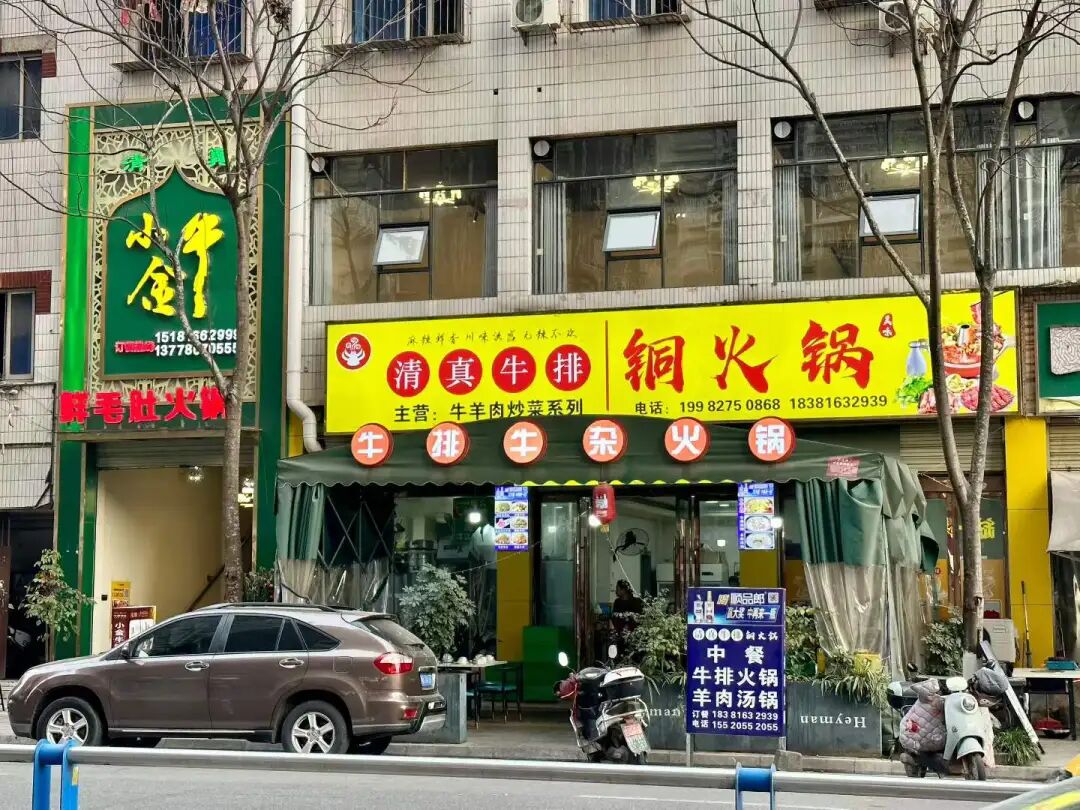
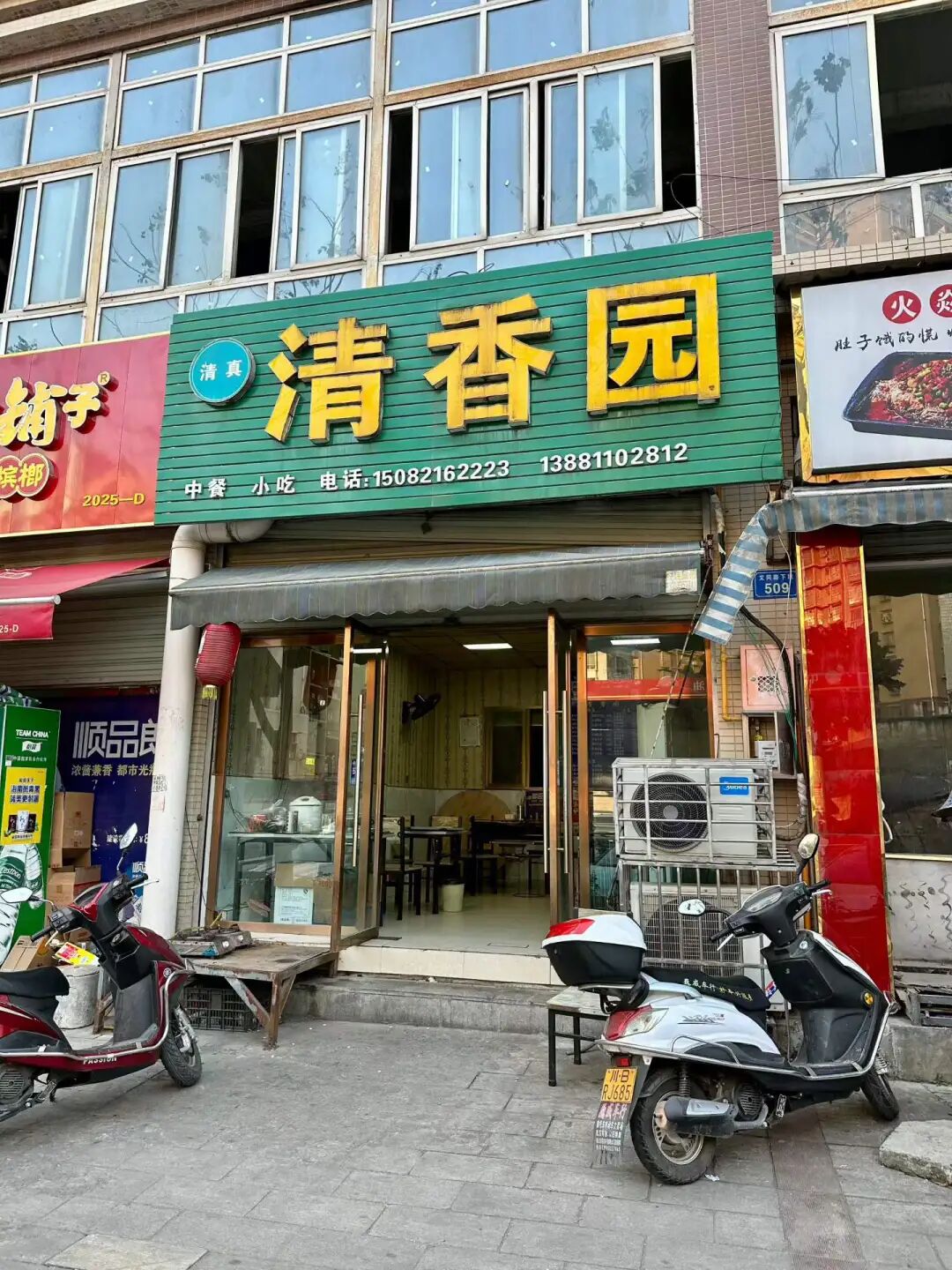
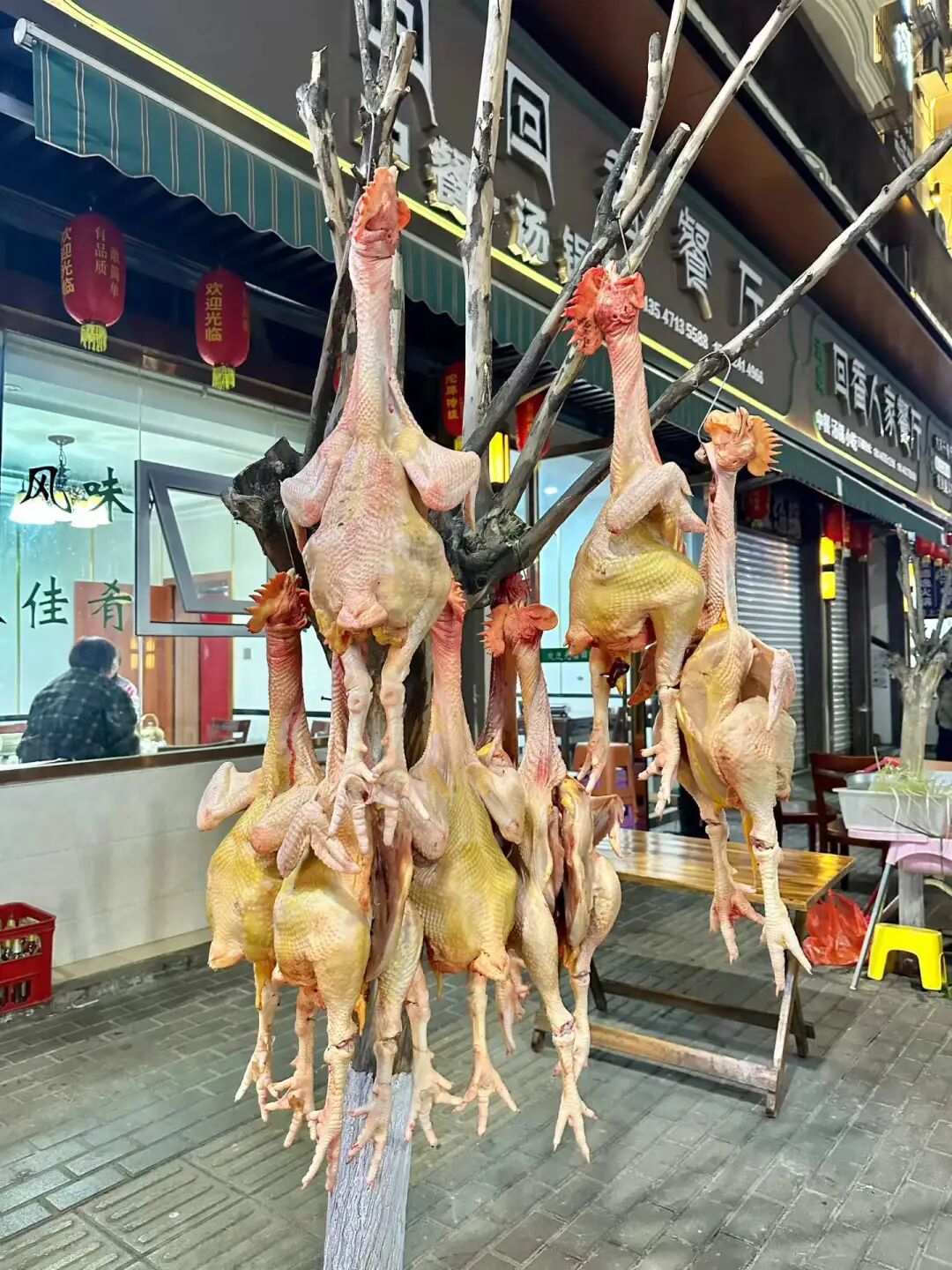
There are many Hui Muslim restaurants near the North Street Mosque in Yanting, especially on Tuanjie Road, which is a 'Hui Muslim food street'. In northern Sichuan, besides Songpan, Yanting is the most convenient place to eat. Even Langzhong does not have as many options as Yanting. Opposite the mosque gate is a shop called 'Benwei Banlu', which sells braised beef, braised chicken feet, and braised duck. The 'Jin's Braised Duck' next door is also very popular. Walking a little further, you reach Tuanjie Road. 'Dehua Kaiyuan Rice Noodles' at the intersection has been open for thirty years. They specialize in bamboo shoot rice noodles, meatball rice noodles, chicken soup rice noodles, and pea and kelp rice noodles. Many people eat there, and they are open early in the morning. Walking into Tuanjie Road, you find many halal restaurants with names like Huixiang Renjia, Huihuixiang, Huiweiju, and Xiaohuimin. They specialize in Sichuan-style braised dishes, stews, stir-fries, steamed beef with rice flour (fenzheng niurou), and beef and mutton hot pots.
After finishing the Taraweeh prayers, I stopped by Muji Noodle Shop on Tuanjie Road in Yanting for a bowl of spicy hot pot (maocai) to get some vegetables.
Near the North Street Mosque in Yanting, you can find restaurants owned by families named Jin, Mu, and Ma. The Jin family seems especially common, with places like Jin Family All-Beef and Mutton Soup House (Jin Jia Quan Niuyang Tangguan), Jincuiyuan Restaurant, and Little Jin Beef (Xiao Jin Niu). Among the Hui Muslims in Yanting, the main family names are Jiang, Mu, Da, Jin, Ma, and Yang, based on when they first arrived in Sichuan. The Jiang family's ancestral home is Qili Village in Penglai, Shandong. They moved to Sichuan in 1465 (the first year of the Chenghua reign of the Ming Dynasty) when an ancestor became the magistrate of Leshan, and they settled in Yanting after he left office. The Mu family's ancestral home is Mujiaping in Hanzhong, Shaanxi. They moved to Yanting in 1615 (the 43rd year of the Wanli reign). The Da family's ancestral home is Liuhe in Nanjing, Jiangsu. They moved to Yanting in 1644 (the first year of the Shunzhi reign of the Qing Dynasty). The Jin family's ancestral home is Wangjiao Village in Dali, Tongchuan, Shaanxi. They moved to Yanting in 1690 (the 29th year of the Kangxi reign). The Ma family's ancestral home is Weinan, Shaanxi. Their ancestor came to Sichuan during the Revolt of the Three Feudatories, and the family moved to Yanting in 1691 (the 30th year of the Kangxi reign). The Yang family's ancestral home is Shaanxi. They moved to Yanting in 1723 (the first year of the Yongzheng reign).
Breakfast starts after 5:00 a.m. near the North Street Mosque in Yanting, which is perfect for eating suhoor. Breakfast here includes steamed buns (baozi), rice porridge (xifan), rice noodles (mifen), and tea-oil porridge (youtiao). I ordered a bowl of rice noodles and a steamed bun. Yanting rice noodles are quite thin. They have a soft, smooth, and slightly chewy texture. They are quickly blanched in boiling water using a bamboo strainer. After draining the water, they are put into a bowl and topped with beef sauce (niurou saozi). The Hui Muslims' beef sauce is made by stir-frying rapeseed oil mixed with beef fat until fragrant, then adding bean paste (doubanjiang) to create a red oil. The beef is firm, flavorful, tender, and not dry. When you eat it, it is spicy, numbing, and rich with a fresh aroma. It is spicy without being harsh, numbing without being bitter, and fresh without being greasy. view all
Reposted from the web
Summary: This Yanting County travelogue explores old mosques, Hui Muslim villages, family histories, and mountain roads around Mianyang during a Spring Festival drive through Sichuan.
On February 20, I drove for one hour and 20 minutes from Nanchong at noon to reach Dajiaping Mosque in Yanting County, Mianyang City, for Jumu'ah prayer. The mosque was very crowded, and everyone there was a local Hui Muslim.
Yanting is the county with the most Hui Muslims in Mianyang, with ten major surnames: Jiang, Jin, Mu, Da, Ma, Yang, Wu, Ha, Ran, and Sa. The ancestor of the Da surname was a man from the Western Regions during the Yuan Dynasty named Wubalesha. Research shows he belonged to the Kipchak Yuliboli tribe and served as a Darughachi in Zhenjiang Road before passing away in Zhenjiang. His sixth-generation descendant, Da Shanyu, moved from Zhenjiang to Liuhe, Nanjing, in the early Ming Dynasty to serve as a county assistant. He settled in Liuhe, making this the oldest Western Regions Hui Muslim family in Liuhe, Nanjing. In 1644 (the first year of the Shunzhi reign), Da Chengzong was ordered to move from Liuhe to Sichuan. He settled at the foot of Jianzi Mountain in Fenghe, Yanting, which established the Da surname Hui Muslim community in Yanting.
Dajiaping Mosque was originally located on a small hill behind the current kiln hall and was quite small. It was later moved to its current location below the hill. In 1812 (the 17th year of the Jiaqing reign), it was rebuilt into the current courtyard style with donations from Sichuan Baoning Prefecture military officials Da Tengchao, Da Tengrui, Da Tianheng, and Da Guankui. It was renovated in 1908 (the 34th year of the Guangxu reign), and the main gate and side schools were expanded in 1928.
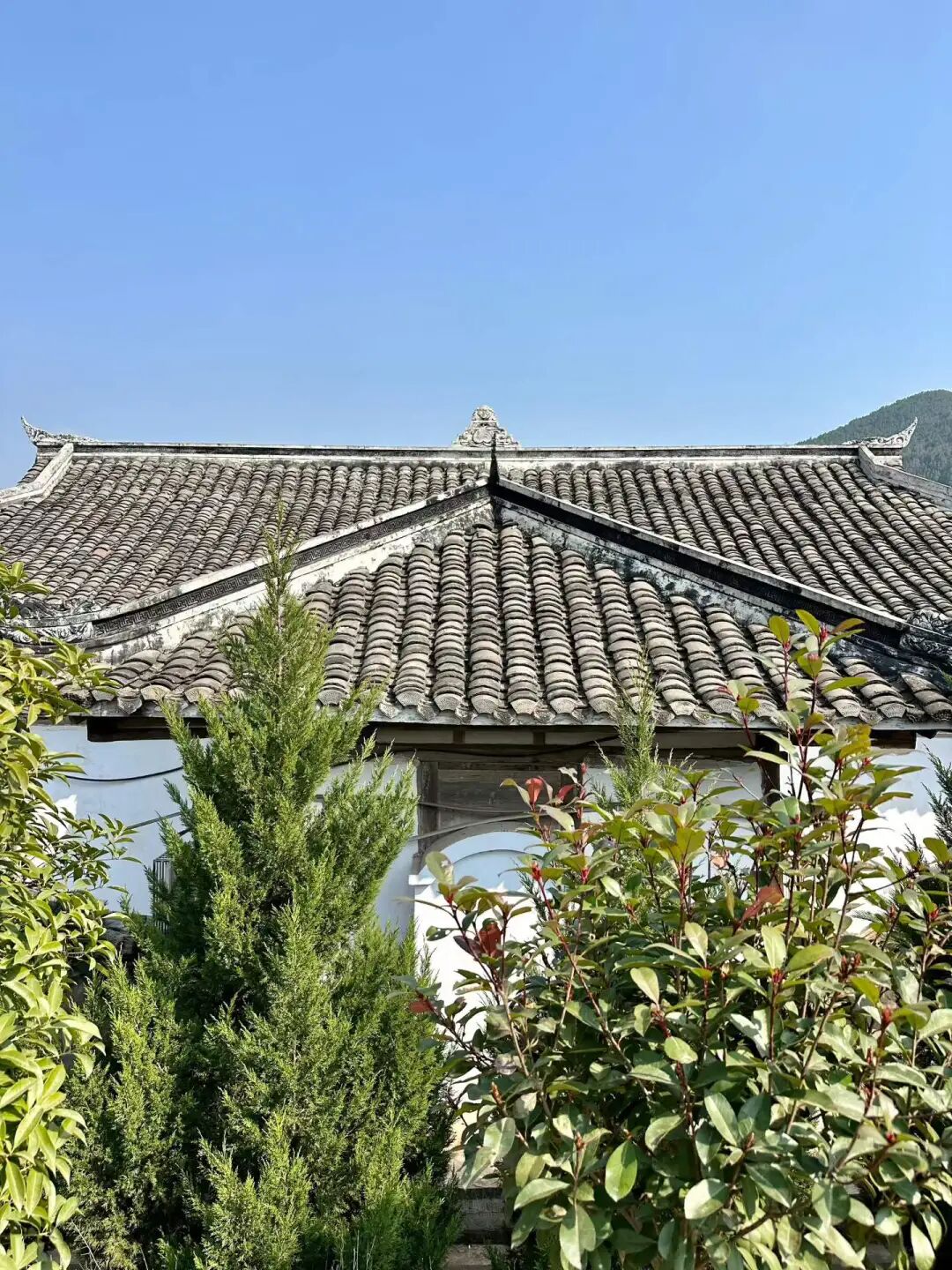
Dajiaping Mosque features the traditional Sichuan courtyard structure known as "four waters flowing into the hall" (si shui dao tang), with elegant, unique bracket sets and flying eaves. There is a path platform in the courtyard's central patio and gardens on both sides.
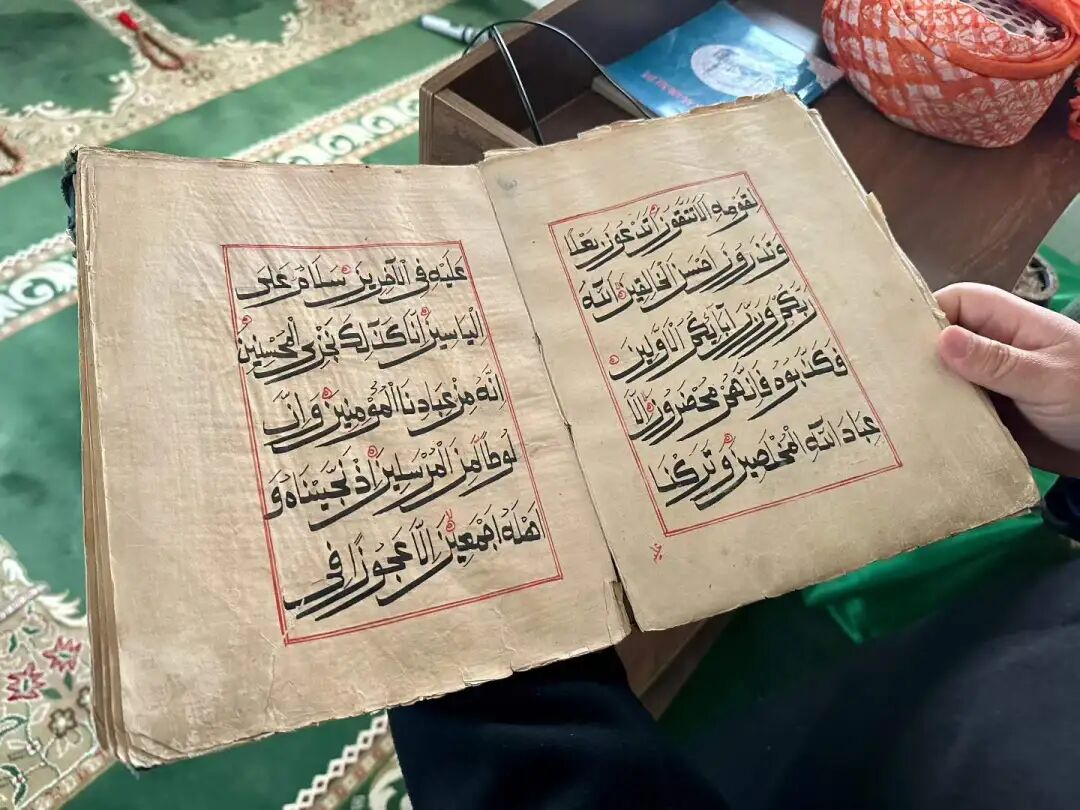
Dajiaping Mosque houses 30 volumes of scriptures hand-copied by Jin Wanx in the ninth year of the Guangxu reign.
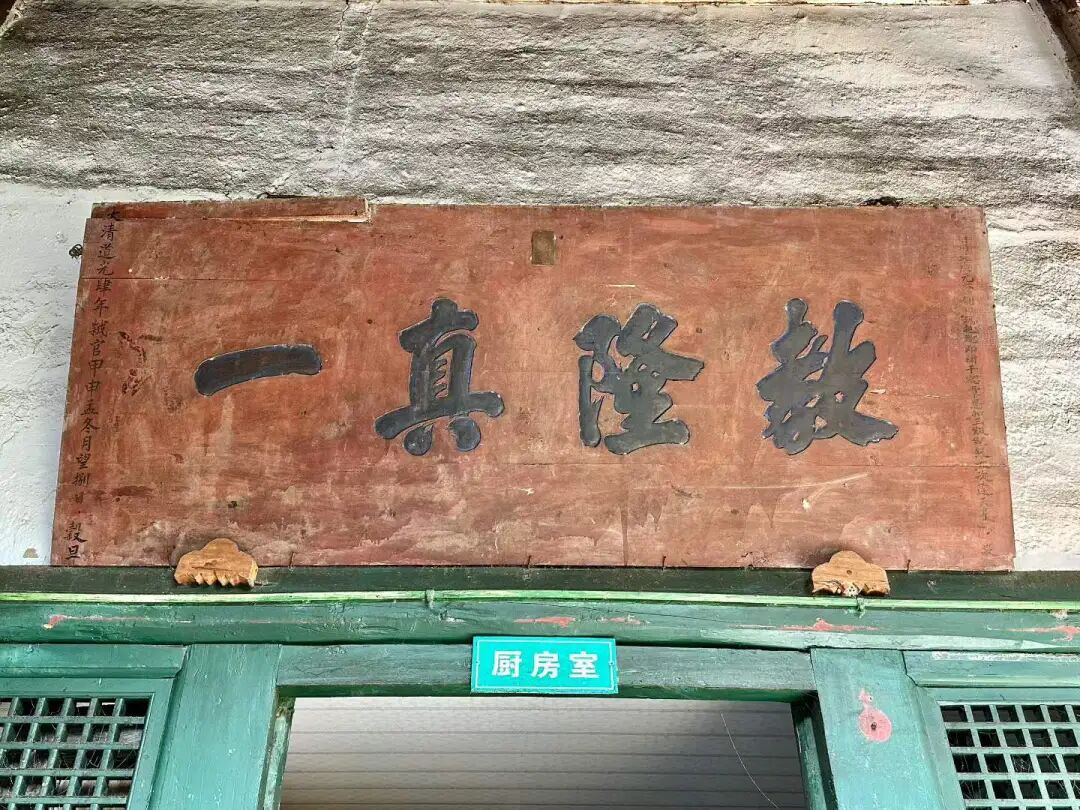
The mosque also preserves three plaques from the Qing Dynasty and two from the Republic of China era:
The "Jiao Long Zhen Yi" plaque from the fourth year of the Daoguang reign: Respectfully erected by Da Tianheng, a specially appointed military official of the Jianzhou garrison in Guangyuan, Sichuan, who was promoted to the rank of thousand-man commander (qian zong) and received honors five times.
Da Tianheng passed the military examination in 1801 (the sixth year of the Jiaqing reign) and was immediately appointed as a thousand-man commander (qian zong) in the Chuanbei Town garrison. He was promoted several times, eventually reaching the rank of regional commander (zong bing) of Chuanbei Town, stationed in Baoning Prefecture, Sichuan. Locals respectfully called him "Commander-in-Chief" (zong zhen du du). In 1854 (the fourth year of the Xianfeng reign), the imperial court ordered him to lead troops to suppress the Taiping Rebellion. Because he did not act immediately, he was falsely accused of "colluding with the enemy and rebelling." The Xianfeng Emperor recalled him to Beijing and had him beheaded in public.
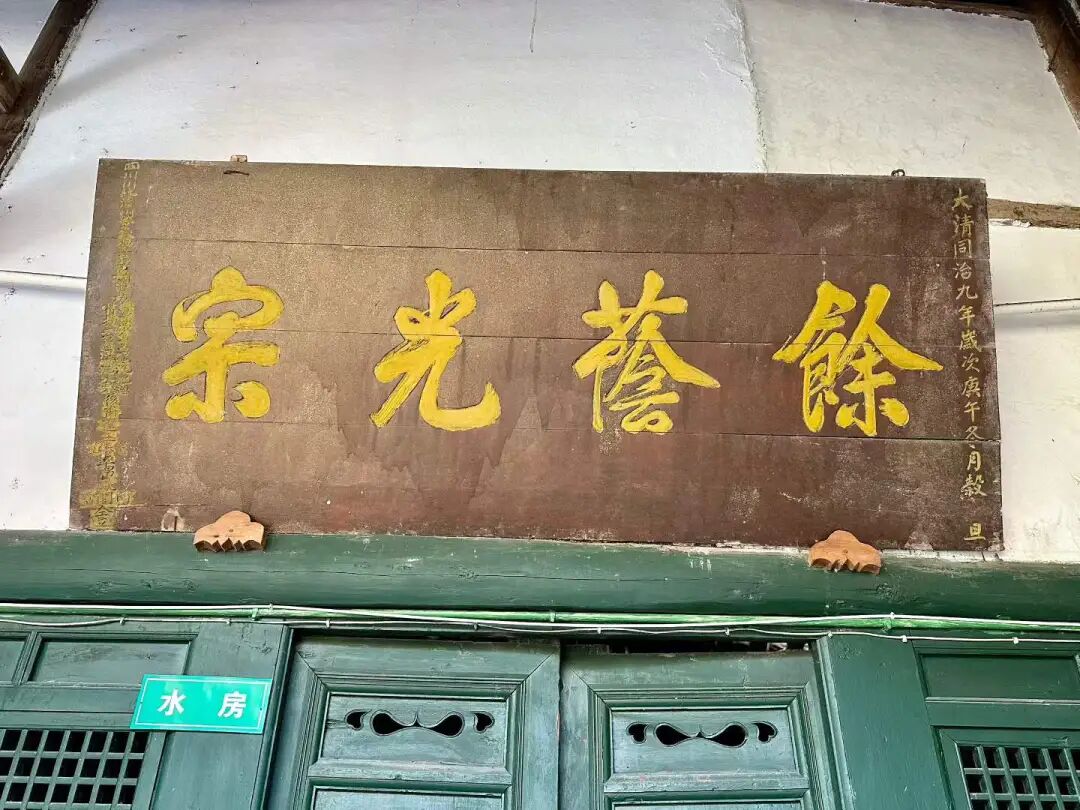
The "Yu Yin Guang Zong" plaque from the ninth year of the Tongzhi reign: Erected by his descendants Da Yuguan, Yu Chun, and Yu Sheng, along with their sons Fenggang, Fengge, and Fengzhu. The plaque honors their ancestor, a military official of the Tongchuan garrison in Chuanbei, Sichuan, who held a fifth-rank blue feather and served as a garrison commander (ba zong) in Tibet and an acting official in Sanchuan County.
The "Du Yi Zhu Zai" plaque from the 21st year of the Guangxu reign: Respectfully inscribed by Bao Daosheng, a specially appointed inspector of Fucun Station in Nanbu County, Baoning Prefecture.
The Arabic plaque from the second year of the Republic of China reading "I created the jinn and mankind only to worship Me": Erected by local imam Ma Huaifang, Da Pengju, Ran Mingli, Ran Minglun, Ran Mingyao, Ha Mayu, Ha Huaide, Huang Anju, Da Yugao, Da Yuliang, Da Yude, Da Yulin, Da Yulong, Da Fengwu, Da Fengzhi, Da Fengwen, Da Fengwu, Da Fengtai, Da Fengyou, Da Fengyuan, Da Fenghao, Da Fengge, Da Fengdou, Da Fengkui, Da Fengxian, Da Fengyi, Da Pengshun, Da Pengqian, Da Penglin, Da Pengshan, Da Pengyun, Da Fengchun, Da Yugang, and Da Yuyin.
Ma Huaifang, also known as Ma Nanxuan, was originally from Lanzhou, Gansu. He fled to Yanting during the early years of the Republic of China and settled there, serving successively as the imam of Dajiaping Mosque and the mosque in Yanting county town. He was a master of martial arts, possessed extraordinary strength, stood up against evil, and was known for helping those in need, earning him high prestige. In 1913, when the Sichuan Army's Zhong Tidao unit was forcibly conscripting men at Lingshan Market, Imam Ma protected the people by driving away an entire squad of soldiers with his bare hands. In 1916, Imam Ma again drove away chaotic soldiers who were forcibly conscripting men at Daxing Market. From 1921 to 1934, Imam Ma opened the "Shou'an Martial Arts Academy" at the Yanting county town mosque, training hundreds of martial arts students. In 1933 and 1934, Imam Ma participated in martial arts competitions in Langzhong and Santai counties, winning silver medals both times. His martial arts style gradually formed into one that was "short, powerful, full of energy, quick to strike, simple, clear, versatile, and focused on winning through strength." In 1932, Imam Ma opened a "Hui Language School" (huiwen xuexiao), training a group of excellent students who were skilled in both literature and martial arts.
The 1943 plaque titled 'Leader of the Community': We honor Imam (imam) Pengju, courtesy name Yuncheng. A man of virtue, he was a true scholar, a fifth-rank official, and the son of Master Tong. He was upright and righteous, setting a standard for Hui Muslims. He served as imam, managed the Yannan district, and led the Progressive Association. Elected by the people as director-general, he was firm and honest, working hard to remove corruption and starting schools to teach both Arabic and Chinese. The old mosque was renovated with Chinese-style architecture. Its scale is grand, reflecting the prosperity of the community. His virtue will be remembered by descendants forever. We carve this plaque to honor the great Master Da, whose reputation will last for generations. Respectfully dedicated by the family members.
Imam Da Pengju studied religious texts in Chengdu from 1885 to 1891. He became the imam of Dajiaping Mosque in 1912 and taught himself veterinary medicine. In 1914, Imam Da founded an Arabic-Chinese bilingual school in Dajiaping. After the Yanting County Hui Progressive Association was established in 1925, he served as its first president. He also served as president of the Yanting Islamic Association after its founding in 1942. After 1930, Imam Da served as the imam of the Fuyi County Mosque, and after 1951, he served as the imam of the Yanting County Mosque. He was an upright man who helped those in need. He also worked as a veterinarian with excellent skills, saving many sick cattle and earning the respect of everyone.
There are many inscriptions on the wooden structures inside the courtyard:
Craftsmen Li Changshou and Li Changkai from Anle Township, Tongchuan Prefecture, Yanting County, are masters of their art. The family of Imam Ma Hong and others rebuilt this, respectfully inscribed by the prominent members.
Craftsmen Li Jiong, Zhang Shifu, and Li Jianming from Anle Township, Tongchuan Prefecture, Yanting County, are masters of their art. Da Tianqu, a Confucian scholar from Yanting County, Tongchuan Prefecture, Sichuan, respectfully washed his hands and wrote this, inscribed by the successful candidates.
Donors: Da Tianhui, Tianwei, Tianci, Tianyou, Tianchang, Tianzi, Tianxiang, Tianli, and Tianbang. Founding donors: Da Tianjianzhao, Tianfu, Tiande, Tianxing, Tianshun, Tianzhen, Tiancai, and Tianming.
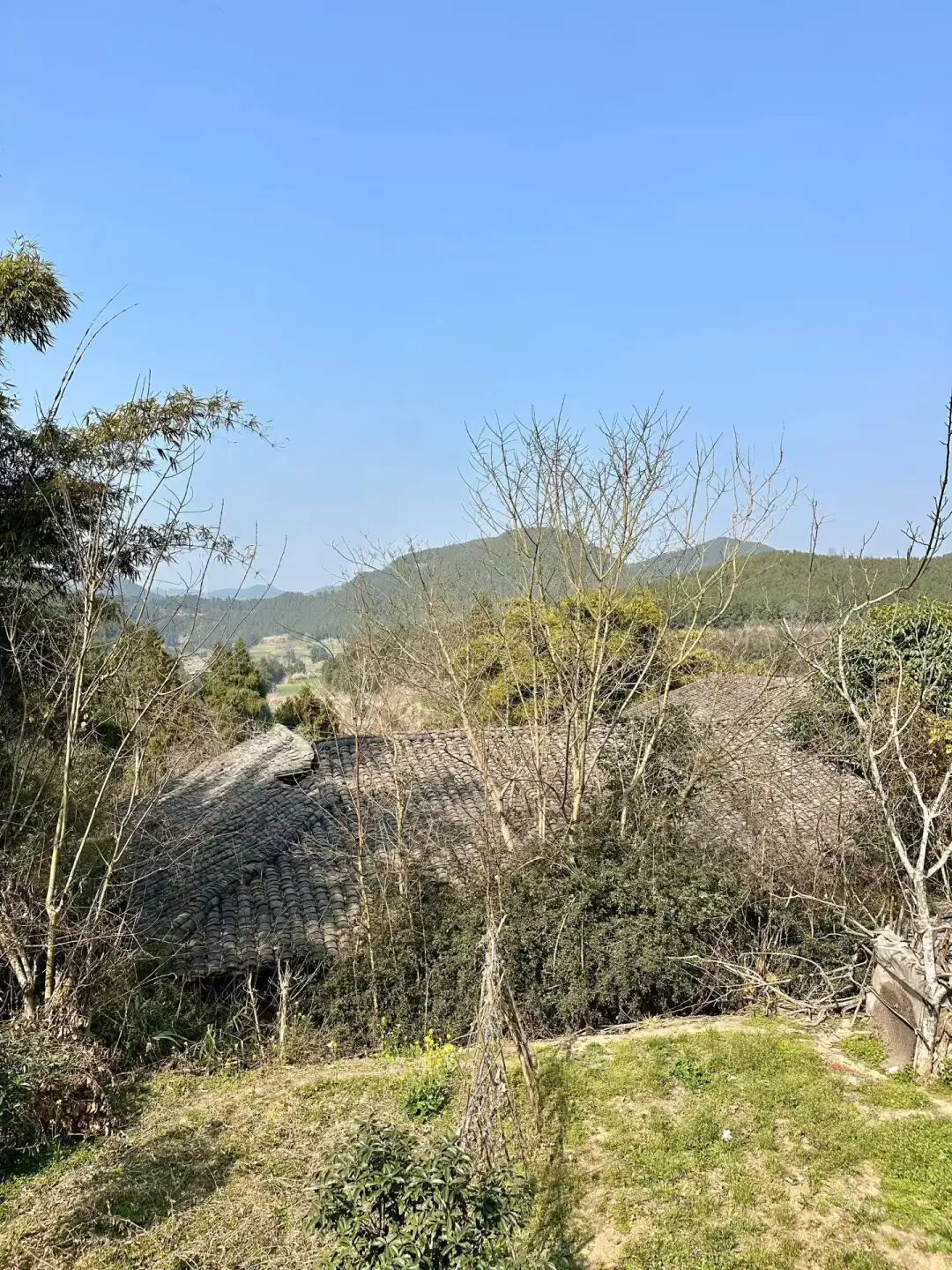
Arabic calligraphy in the main hall of Dajiaping Mosque, and the view looking down from the small hill behind the mosque.
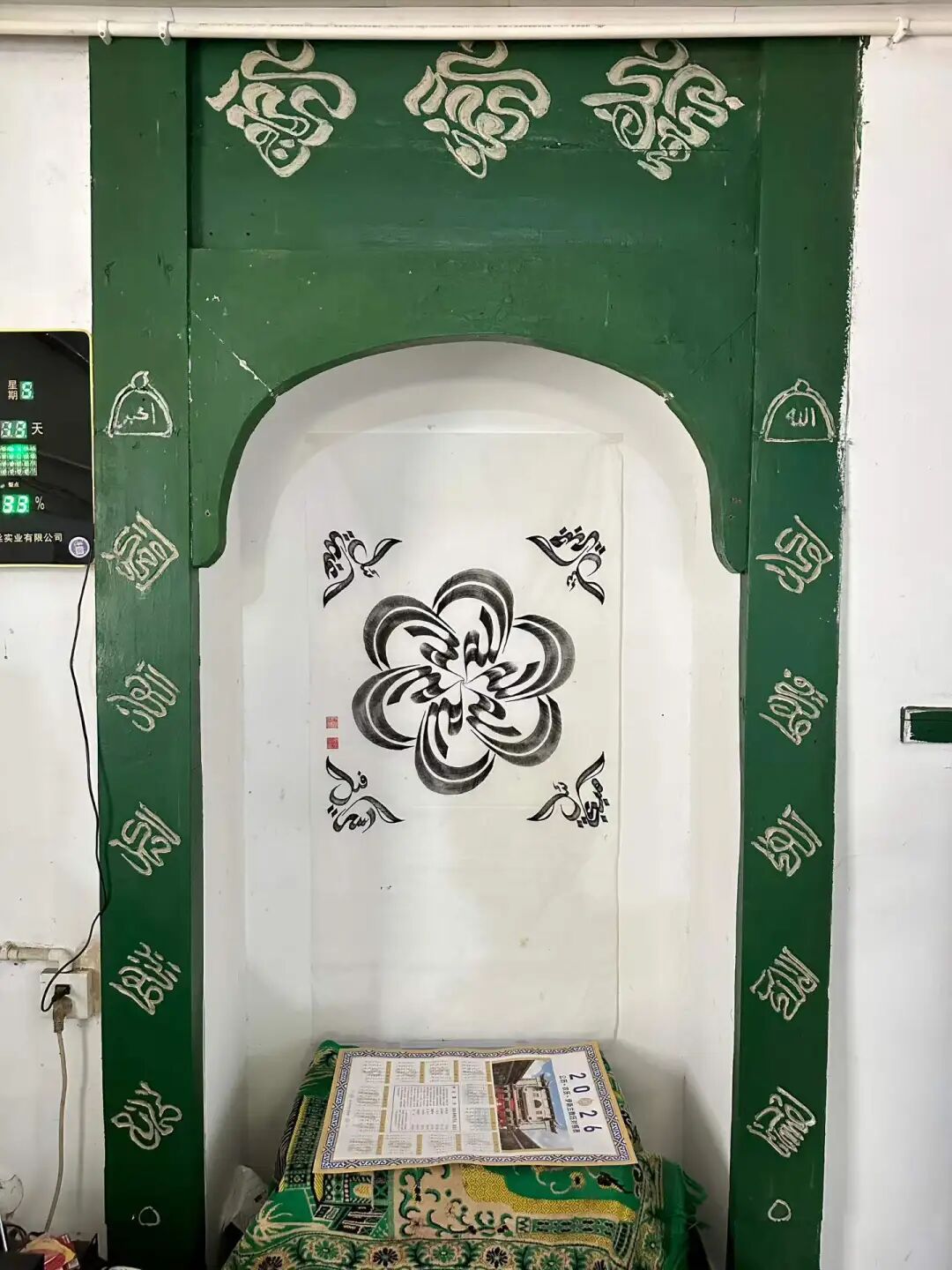
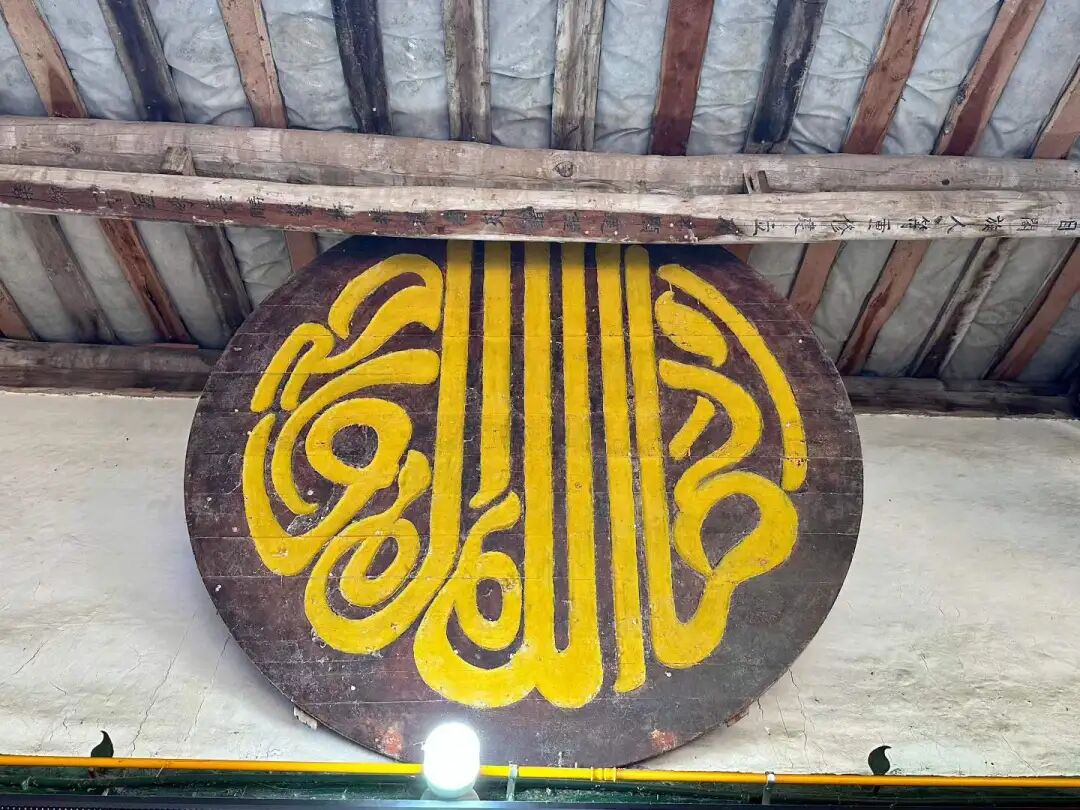
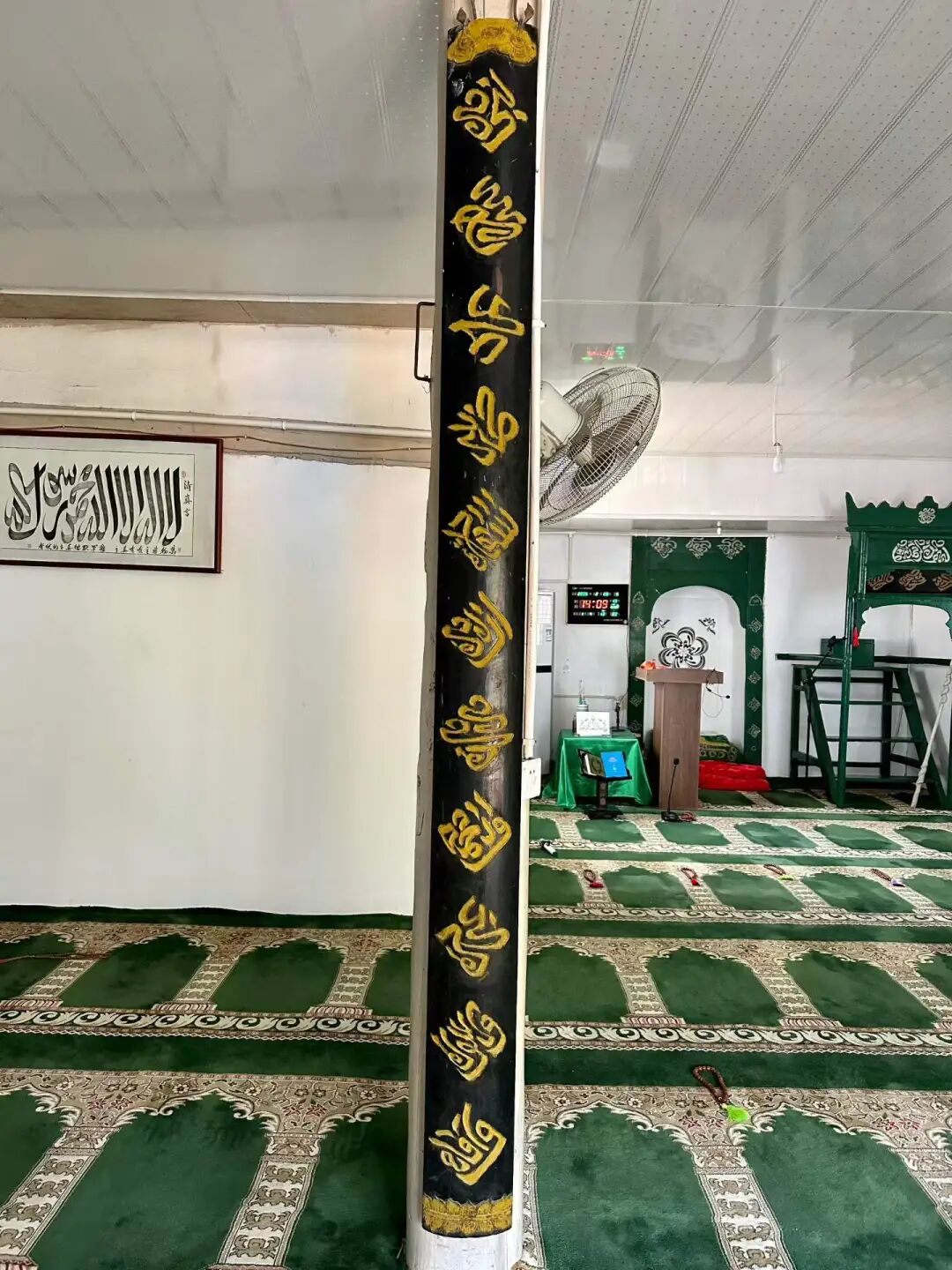
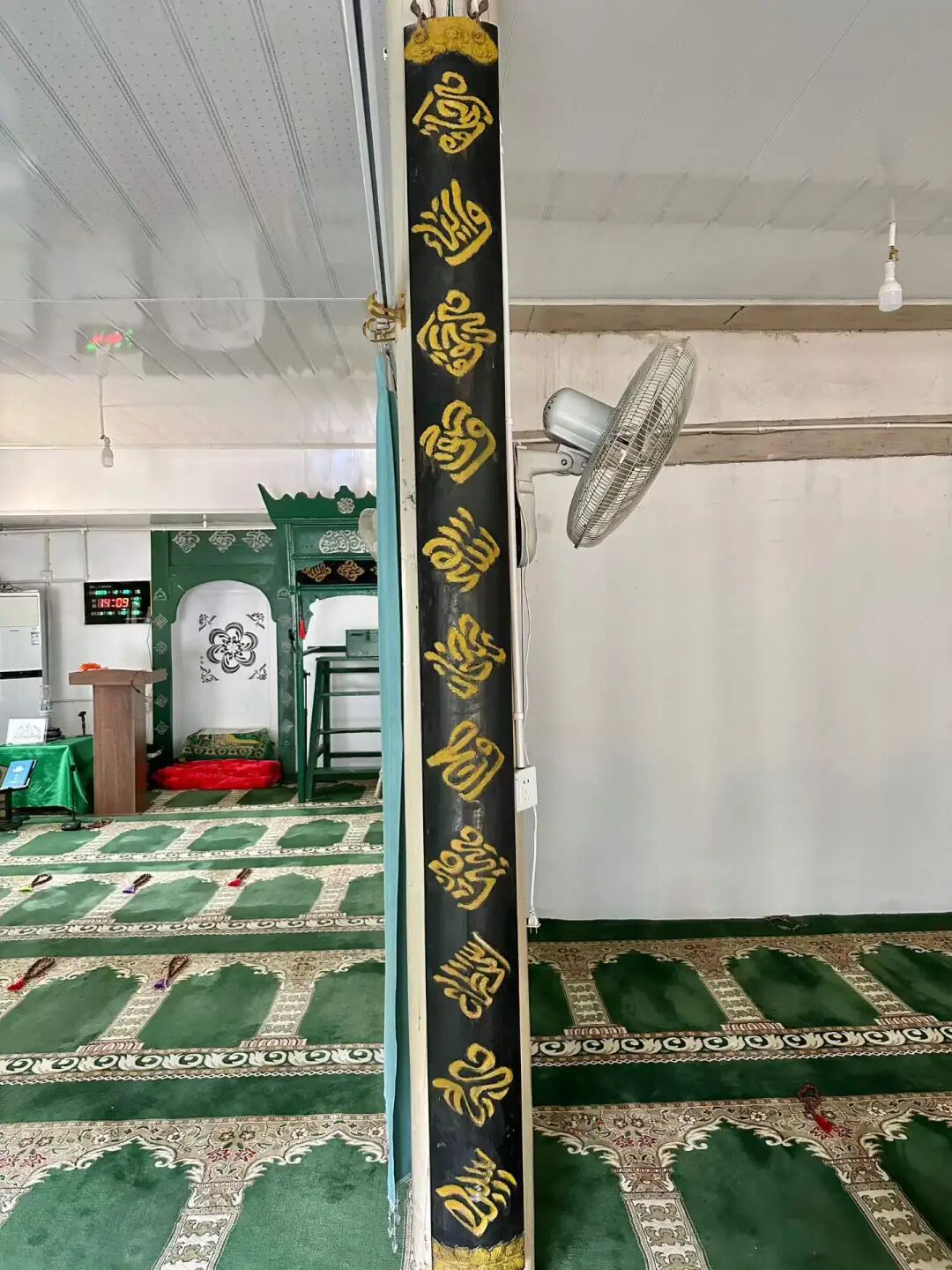
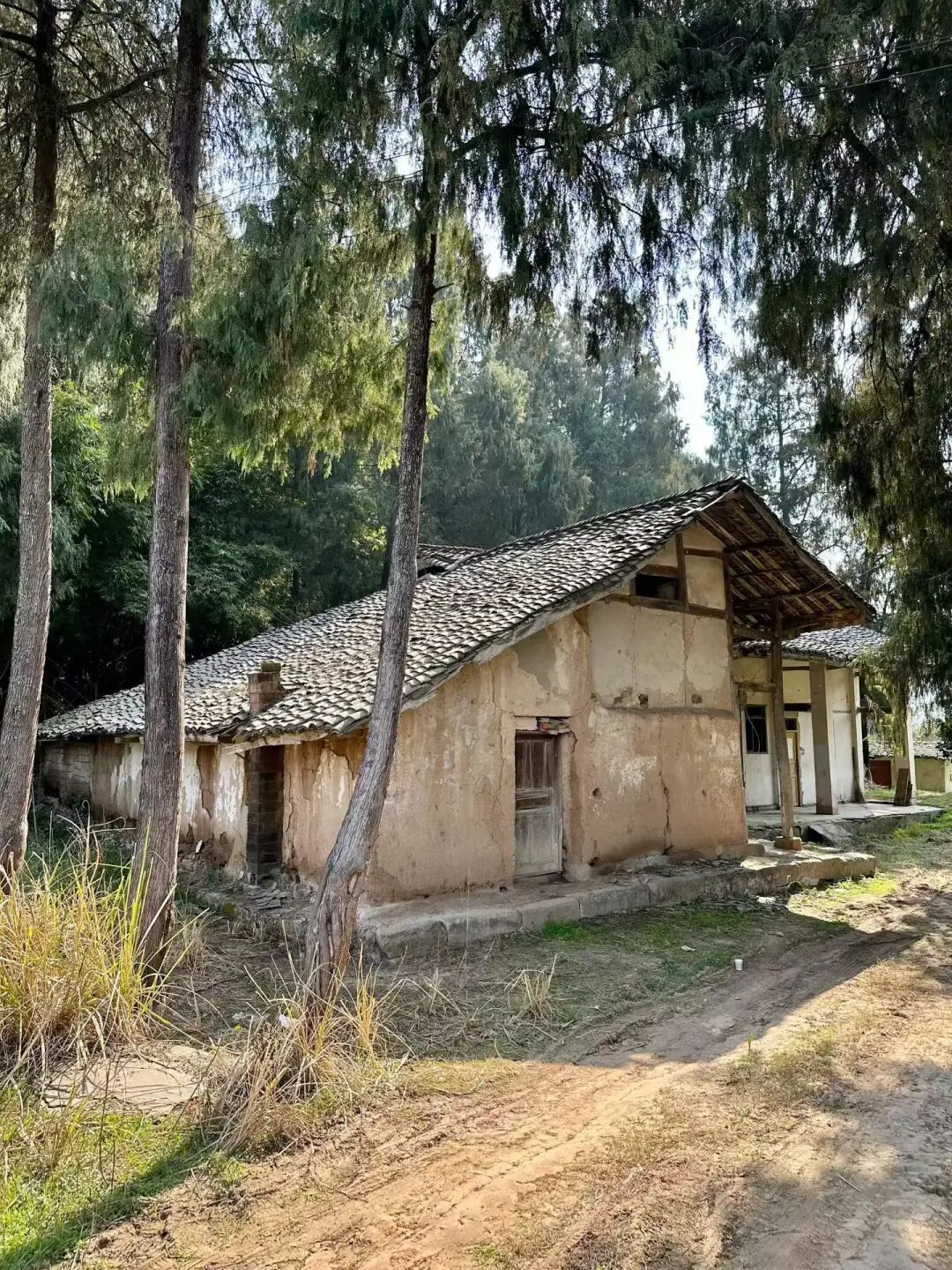
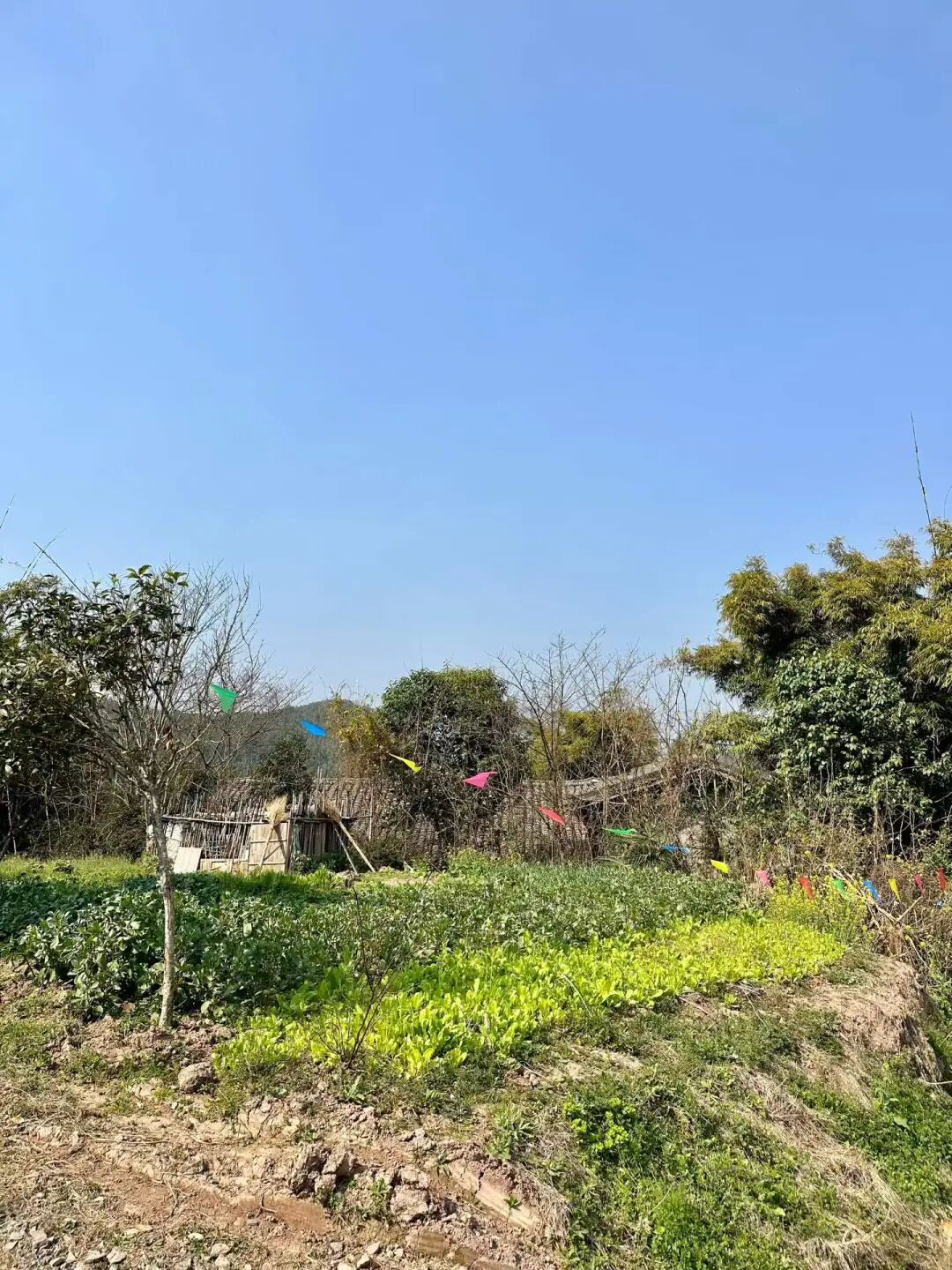
The countryside around Dajiaping is peaceful and quiet. A clear pond reflects the sky, and fields spread out between the hills. It is quiet all around, with only the crisp chirping of birds and the relaxed sounds of cattle and sheep, creating a moving pastoral scene.
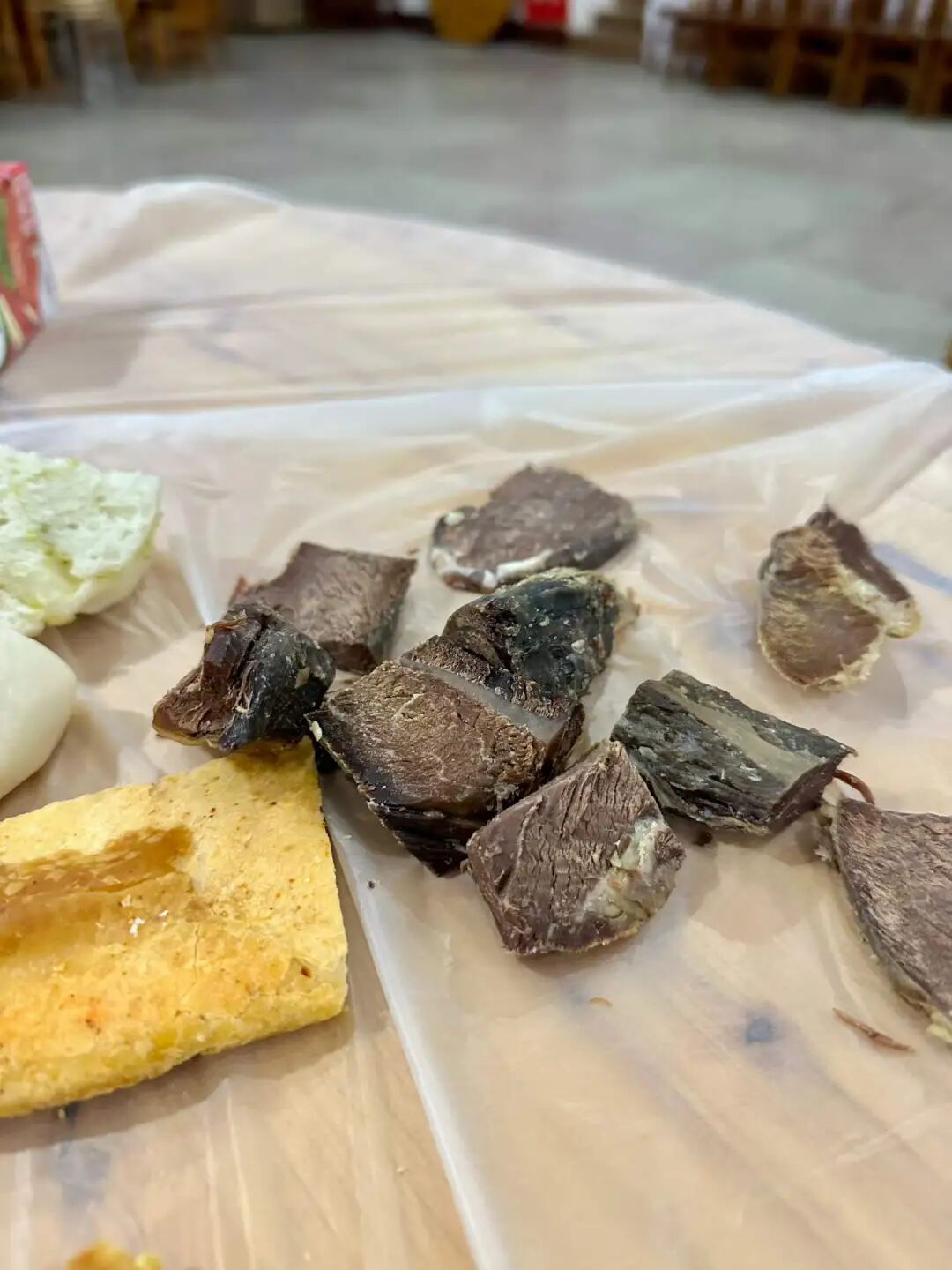
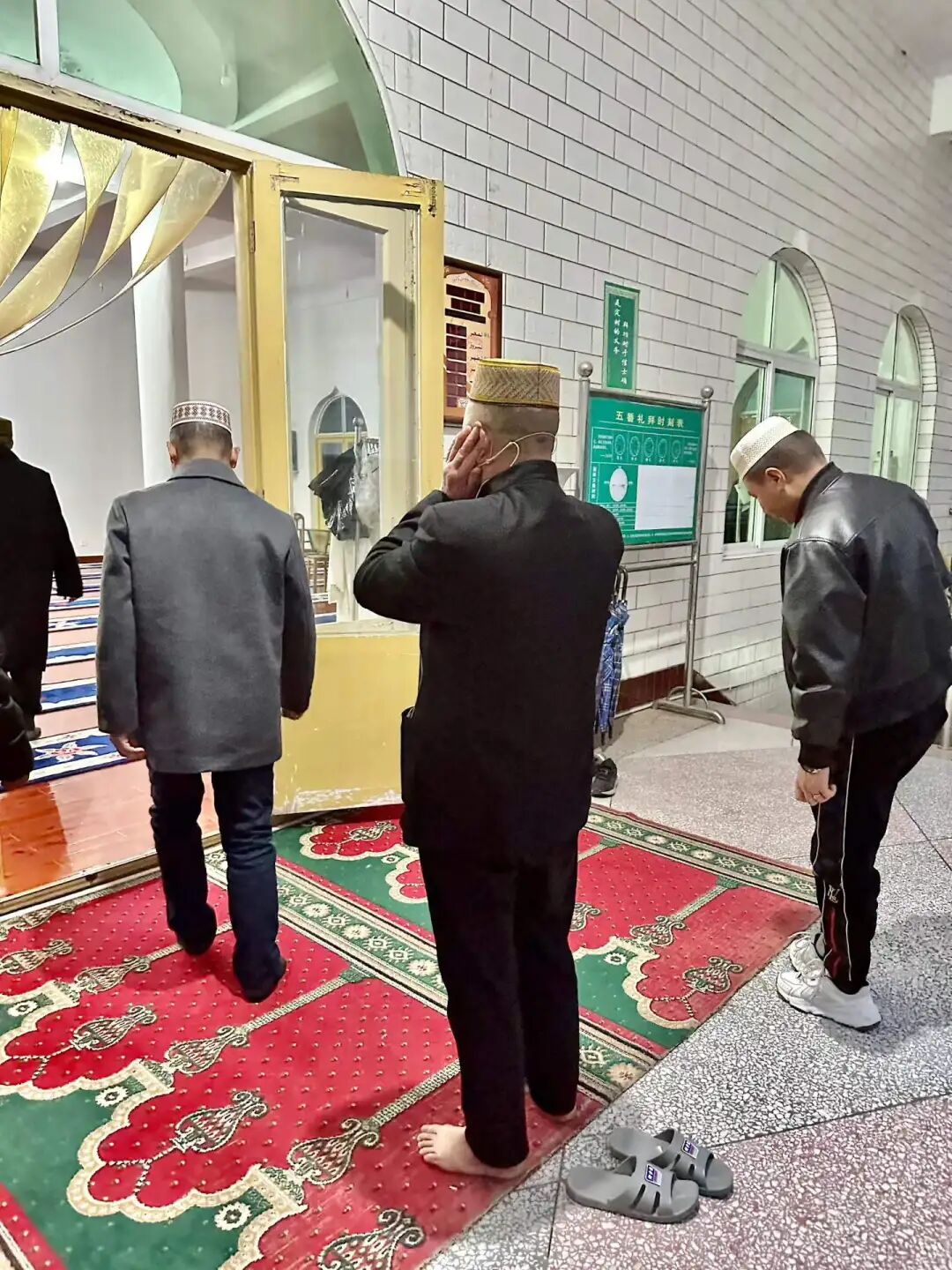
Returning from Dajiaping Mosque to Yanting County, I broke my fast at the North Street Mosque. In the evening, hundreds of people came to the mosque to break their fast. Men, women, old, and young gathered together, showing the prosperity of the faith in Yanting. We had radish beef stew, served with crispy flatbread (subing) and rice. Although it was simple, the atmosphere was exceptionally warm and harmonious.
Yanting County Mosque was first built in 1738 (the third year of the Qianlong reign). It was originally located on Xinxie Street next to the Sanbu Liangdong Bridge. In 1796 (the first year of the Jiaqing reign), it moved to its current location at the city gate on Shangbei Street. It was expanded in 1898 and 1947, and rebuilt into its current form in 2006.
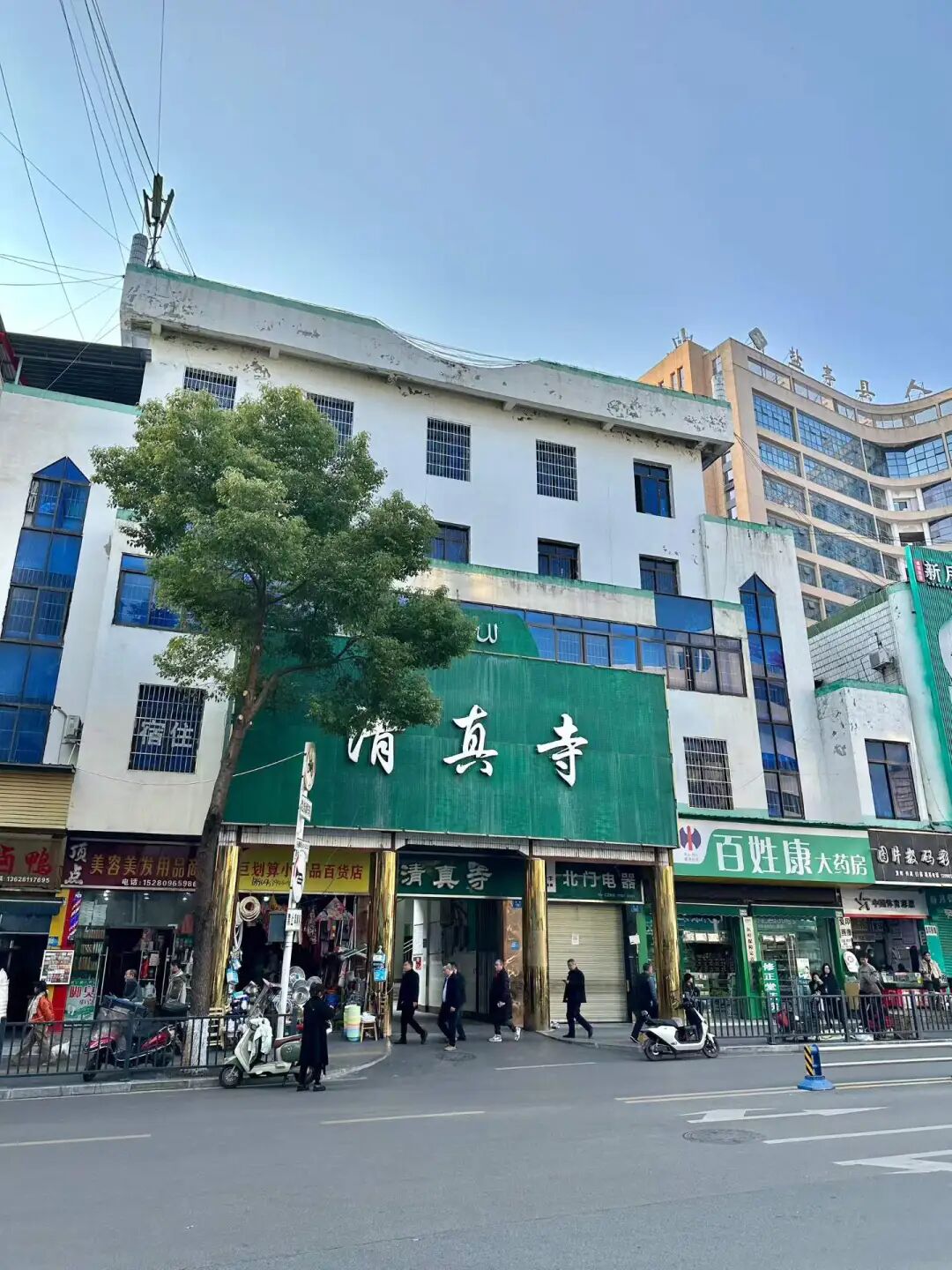
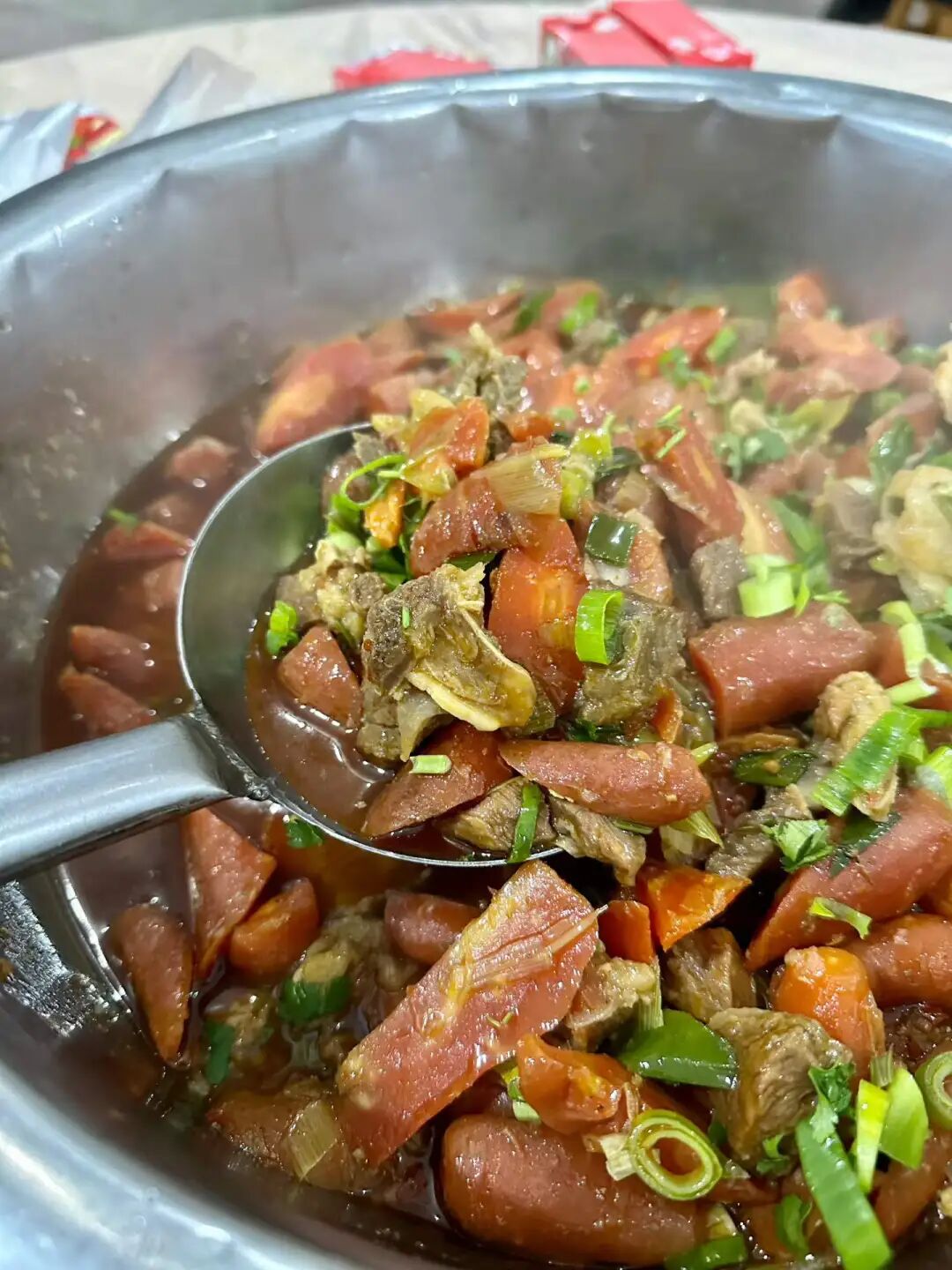
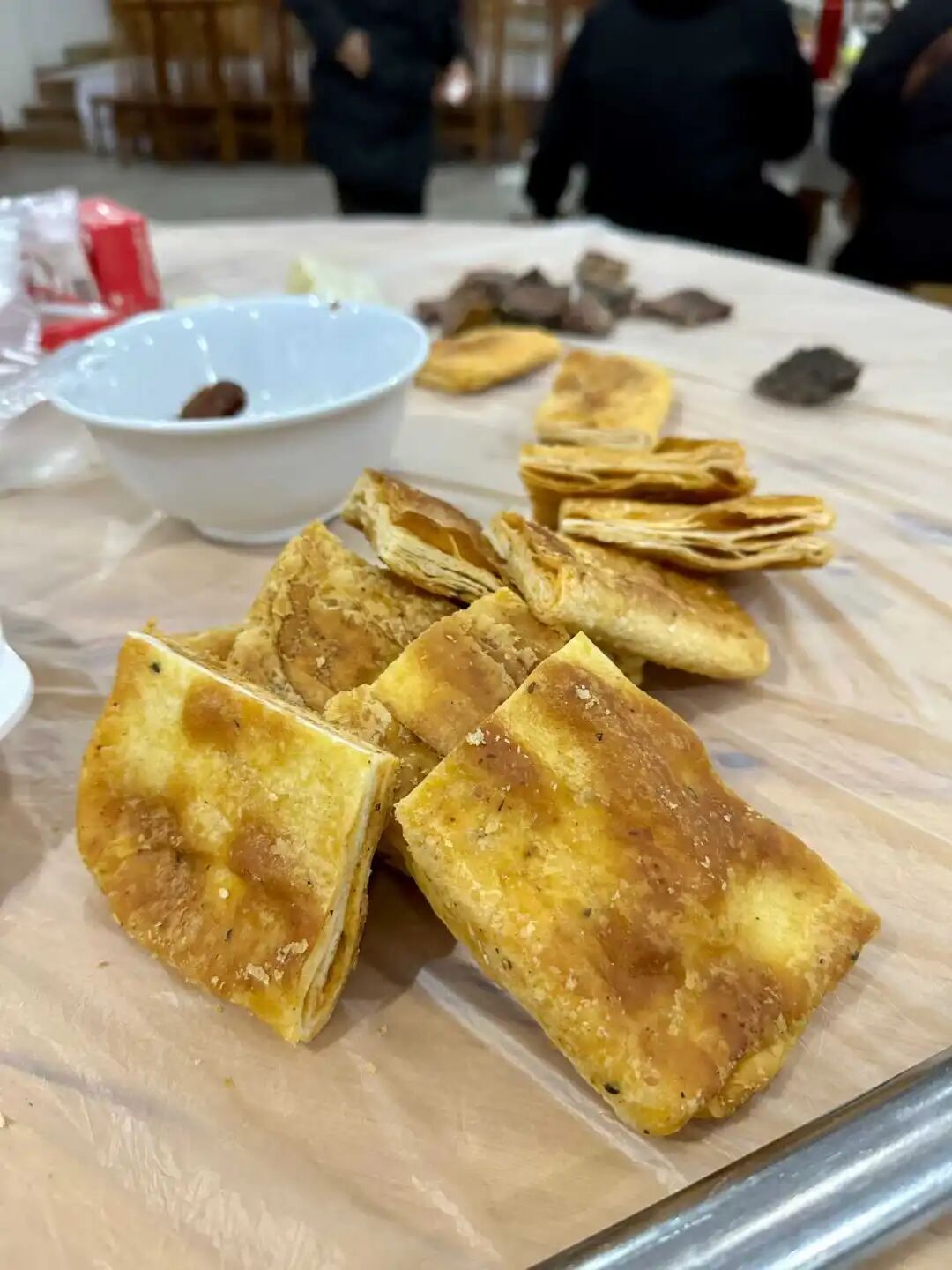
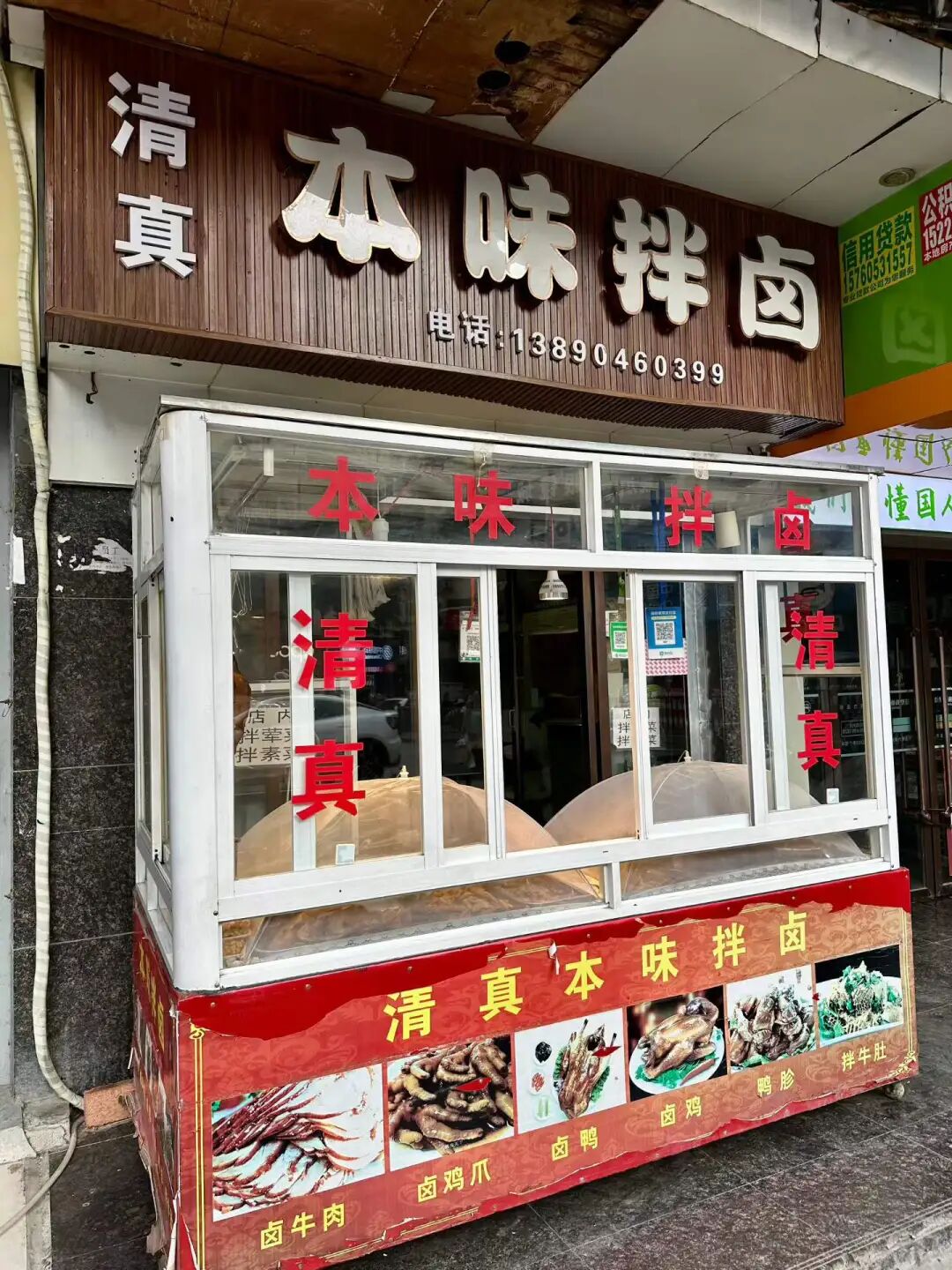
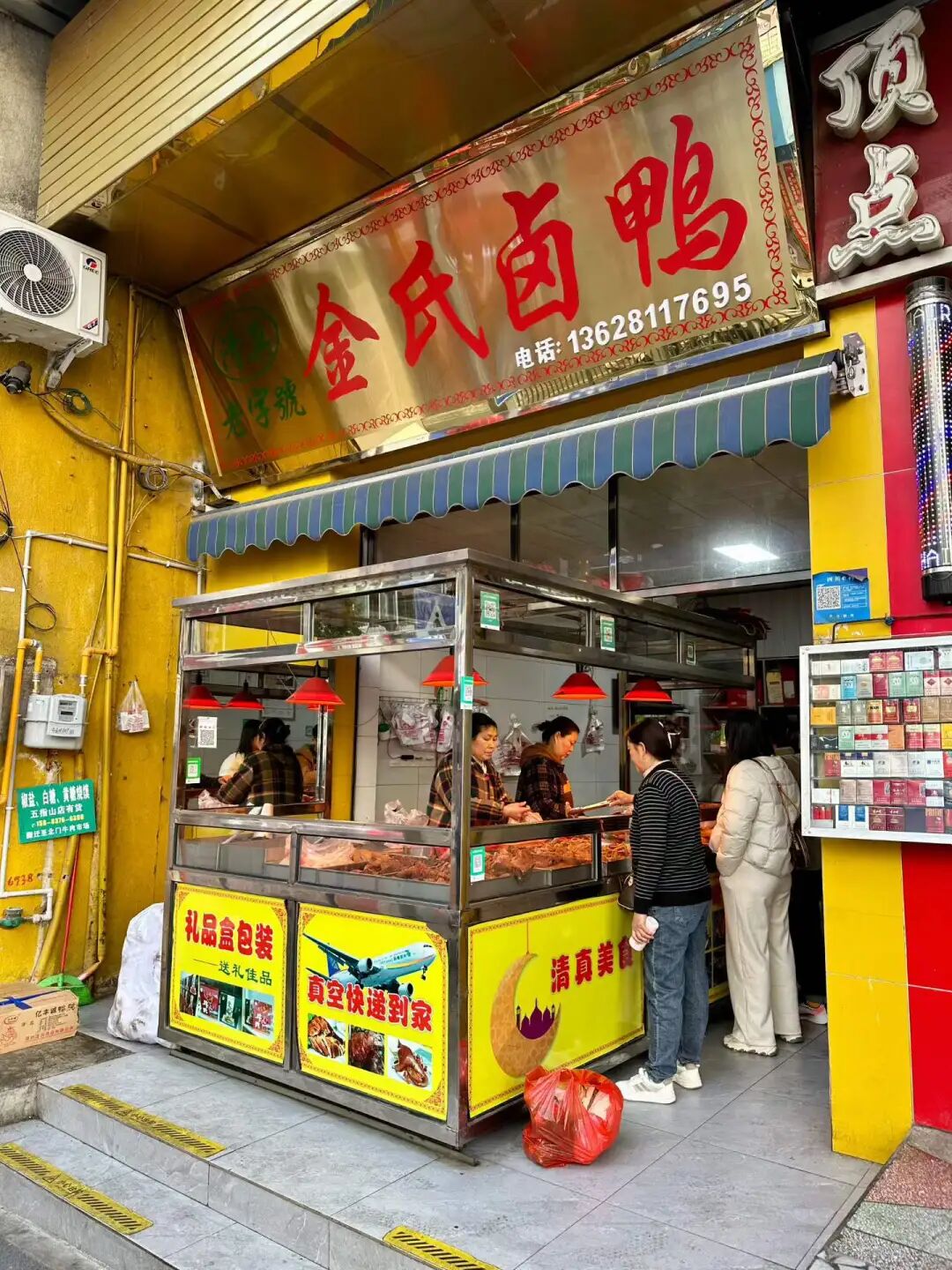
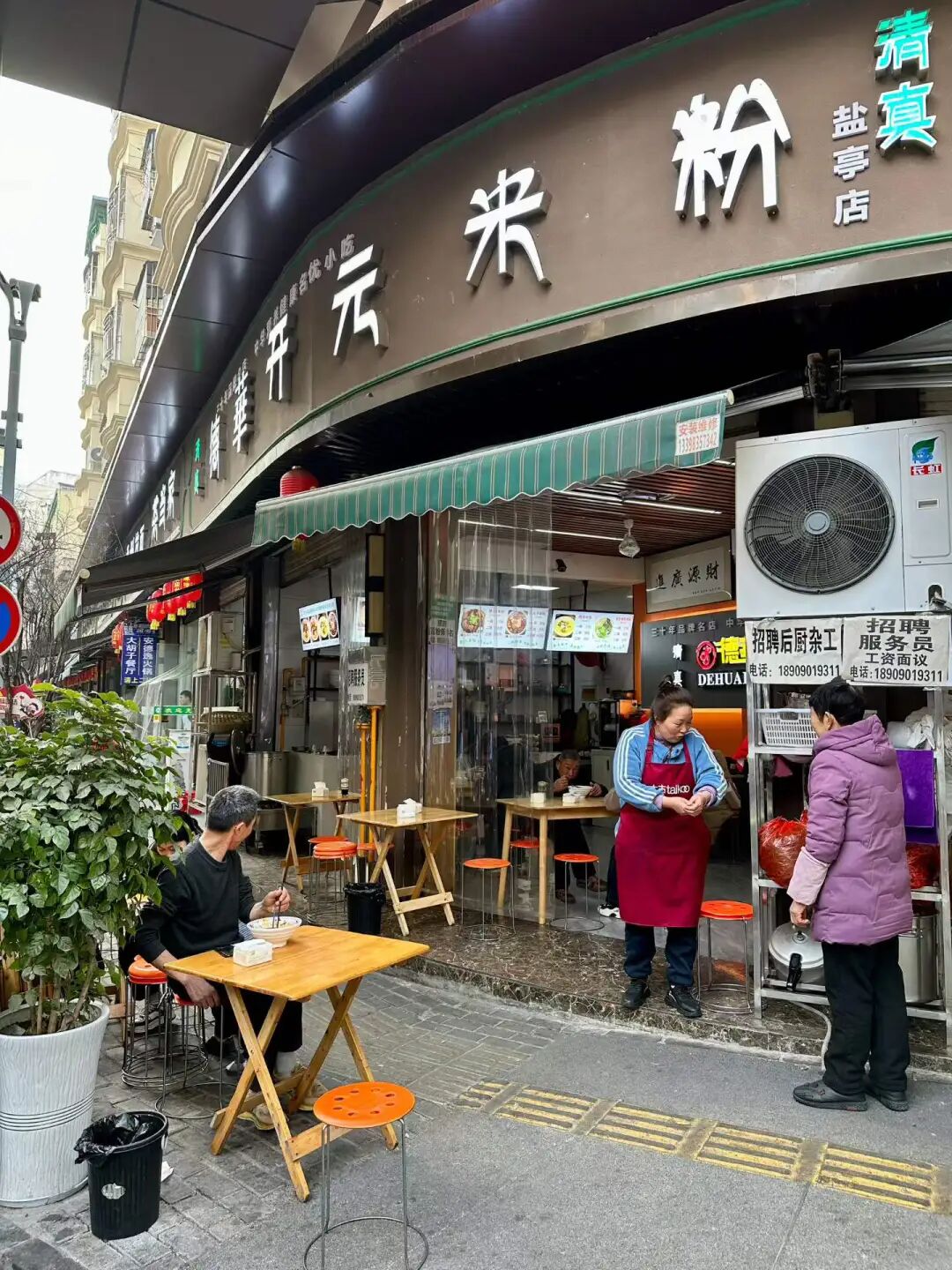
There are many Hui Muslim restaurants near the North Street Mosque in Yanting, especially on Tuanjie Road, which is a 'Hui Muslim food street'. In northern Sichuan, besides Songpan, Yanting is the most convenient place to eat. Even Langzhong does not have as many options as Yanting. Opposite the mosque gate is a shop called 'Benwei Banlu', which sells braised beef, braised chicken feet, and braised duck. The 'Jin's Braised Duck' next door is also very popular. Walking a little further, you reach Tuanjie Road. 'Dehua Kaiyuan Rice Noodles' at the intersection has been open for thirty years. They specialize in bamboo shoot rice noodles, meatball rice noodles, chicken soup rice noodles, and pea and kelp rice noodles. Many people eat there, and they are open early in the morning. Walking into Tuanjie Road, you find many halal restaurants with names like Huixiang Renjia, Huihuixiang, Huiweiju, and Xiaohuimin. They specialize in Sichuan-style braised dishes, stews, stir-fries, steamed beef with rice flour (fenzheng niurou), and beef and mutton hot pots.
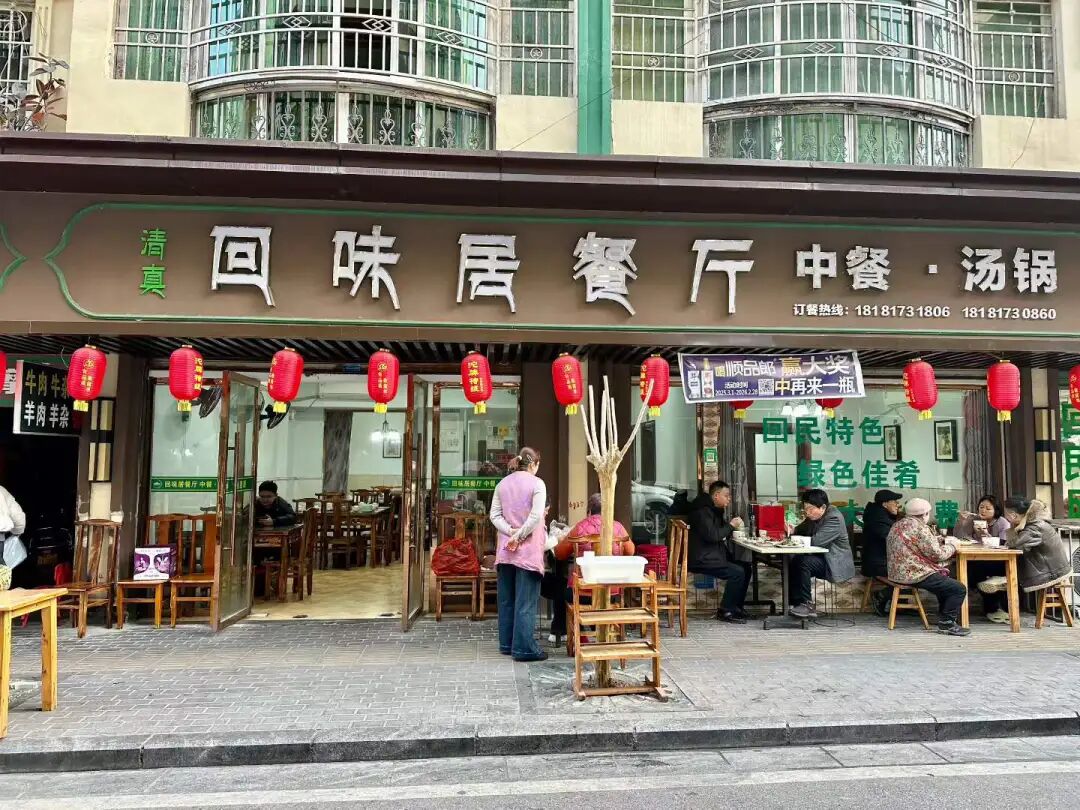
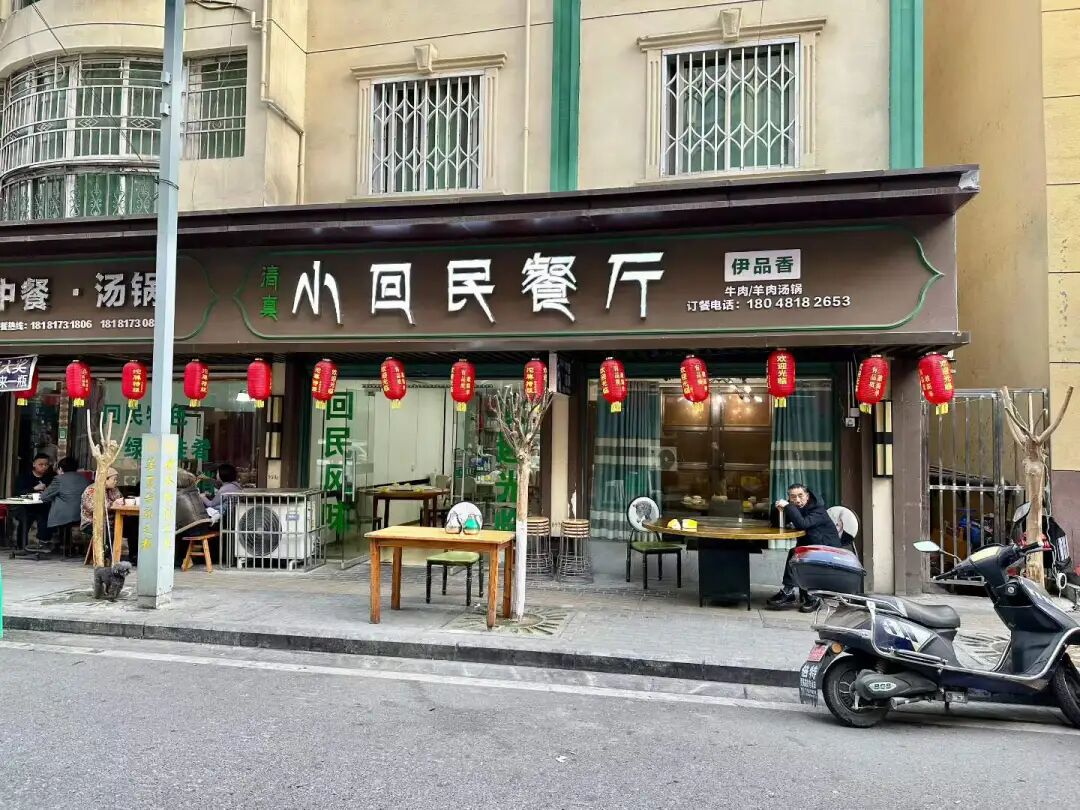
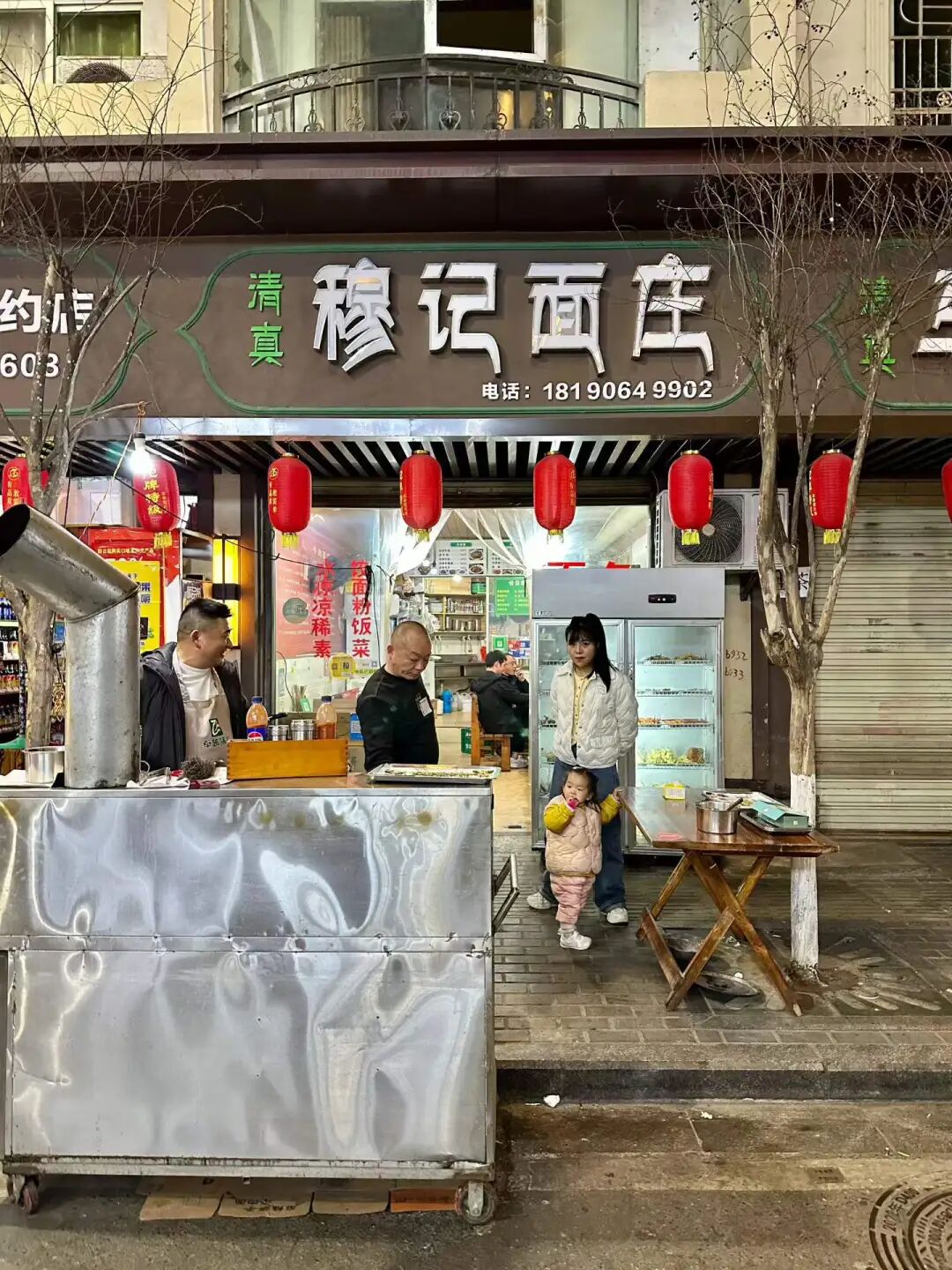
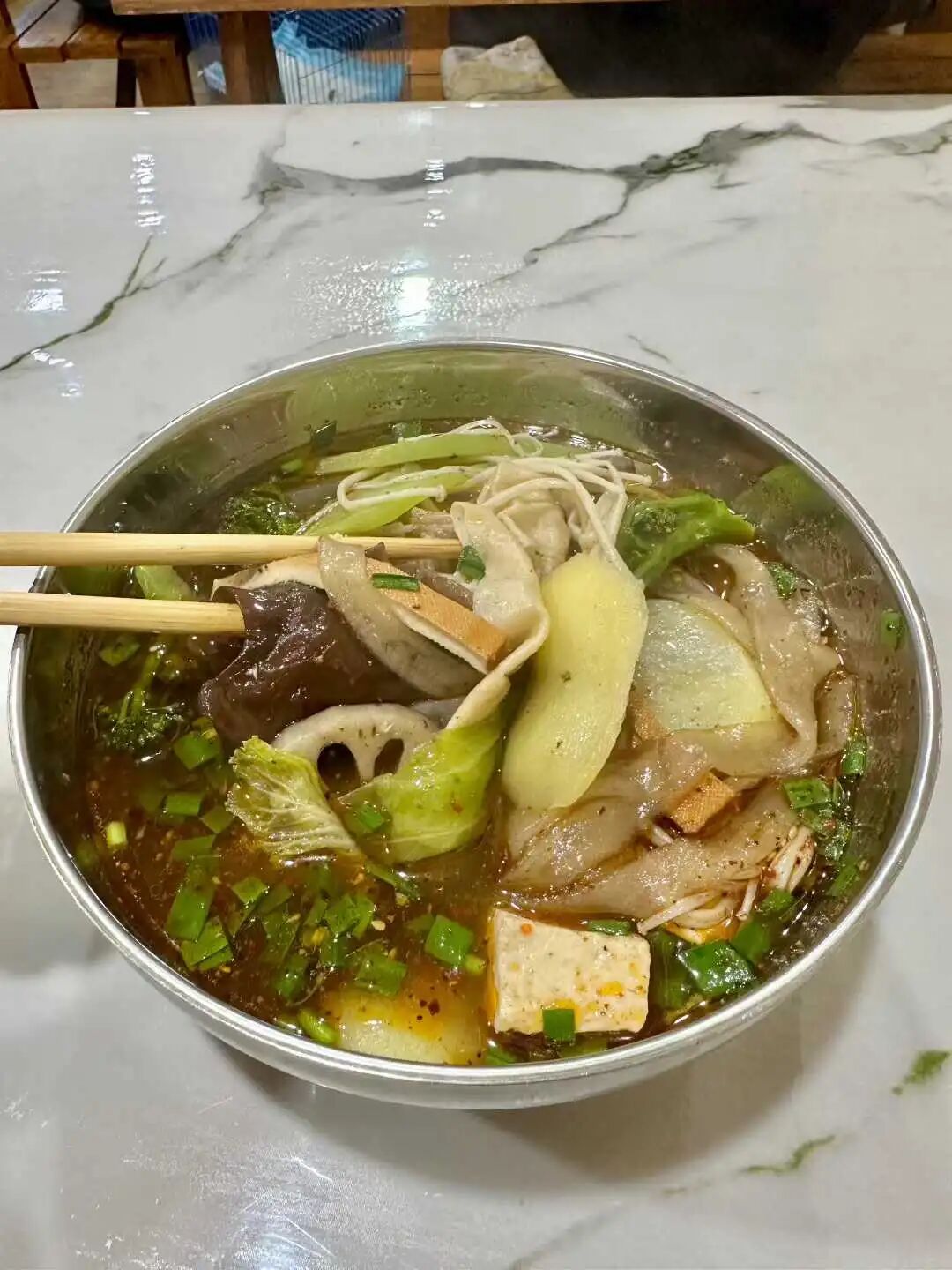
After finishing the Taraweeh prayers, I stopped by Muji Noodle Shop on Tuanjie Road in Yanting for a bowl of spicy hot pot (maocai) to get some vegetables.
Near the North Street Mosque in Yanting, you can find restaurants owned by families named Jin, Mu, and Ma. The Jin family seems especially common, with places like Jin Family All-Beef and Mutton Soup House (Jin Jia Quan Niuyang Tangguan), Jincuiyuan Restaurant, and Little Jin Beef (Xiao Jin Niu). Among the Hui Muslims in Yanting, the main family names are Jiang, Mu, Da, Jin, Ma, and Yang, based on when they first arrived in Sichuan. The Jiang family's ancestral home is Qili Village in Penglai, Shandong. They moved to Sichuan in 1465 (the first year of the Chenghua reign of the Ming Dynasty) when an ancestor became the magistrate of Leshan, and they settled in Yanting after he left office. The Mu family's ancestral home is Mujiaping in Hanzhong, Shaanxi. They moved to Yanting in 1615 (the 43rd year of the Wanli reign). The Da family's ancestral home is Liuhe in Nanjing, Jiangsu. They moved to Yanting in 1644 (the first year of the Shunzhi reign of the Qing Dynasty). The Jin family's ancestral home is Wangjiao Village in Dali, Tongchuan, Shaanxi. They moved to Yanting in 1690 (the 29th year of the Kangxi reign). The Ma family's ancestral home is Weinan, Shaanxi. Their ancestor came to Sichuan during the Revolt of the Three Feudatories, and the family moved to Yanting in 1691 (the 30th year of the Kangxi reign). The Yang family's ancestral home is Shaanxi. They moved to Yanting in 1723 (the first year of the Yongzheng reign).
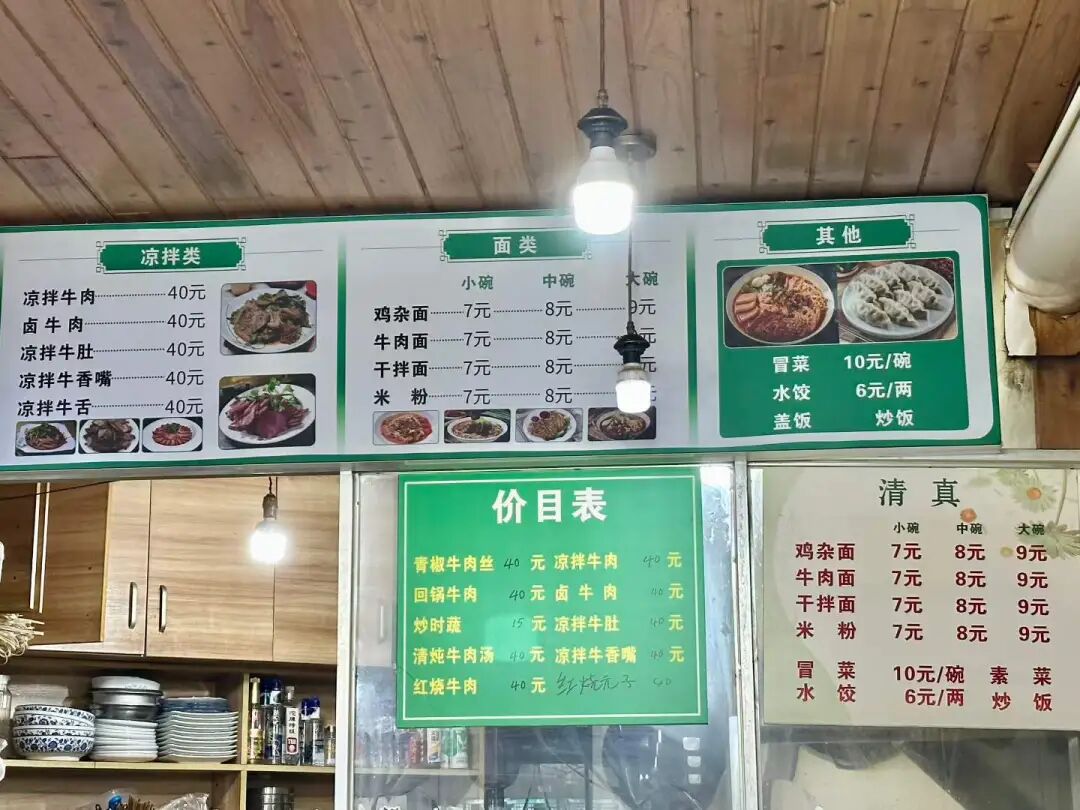
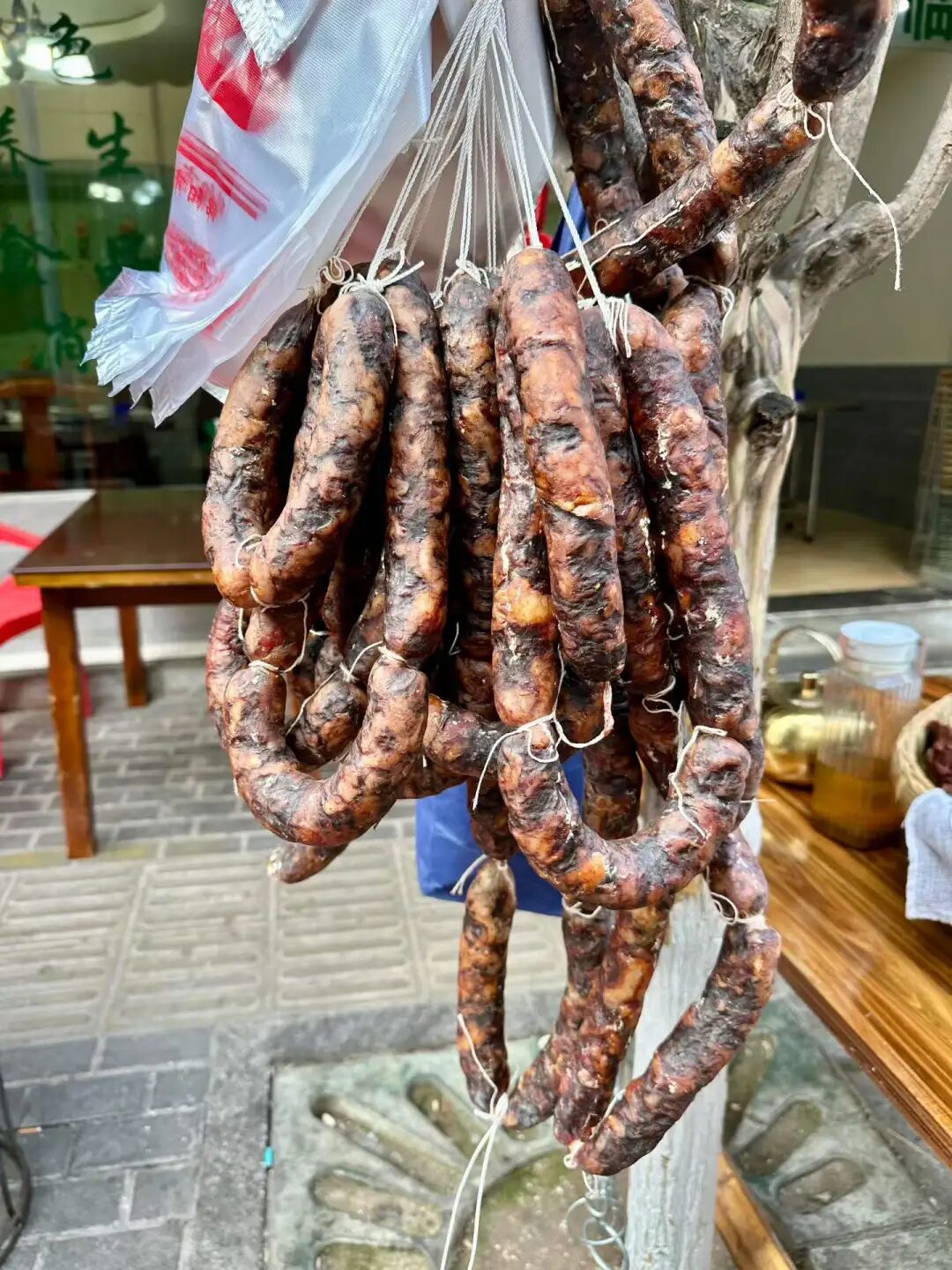
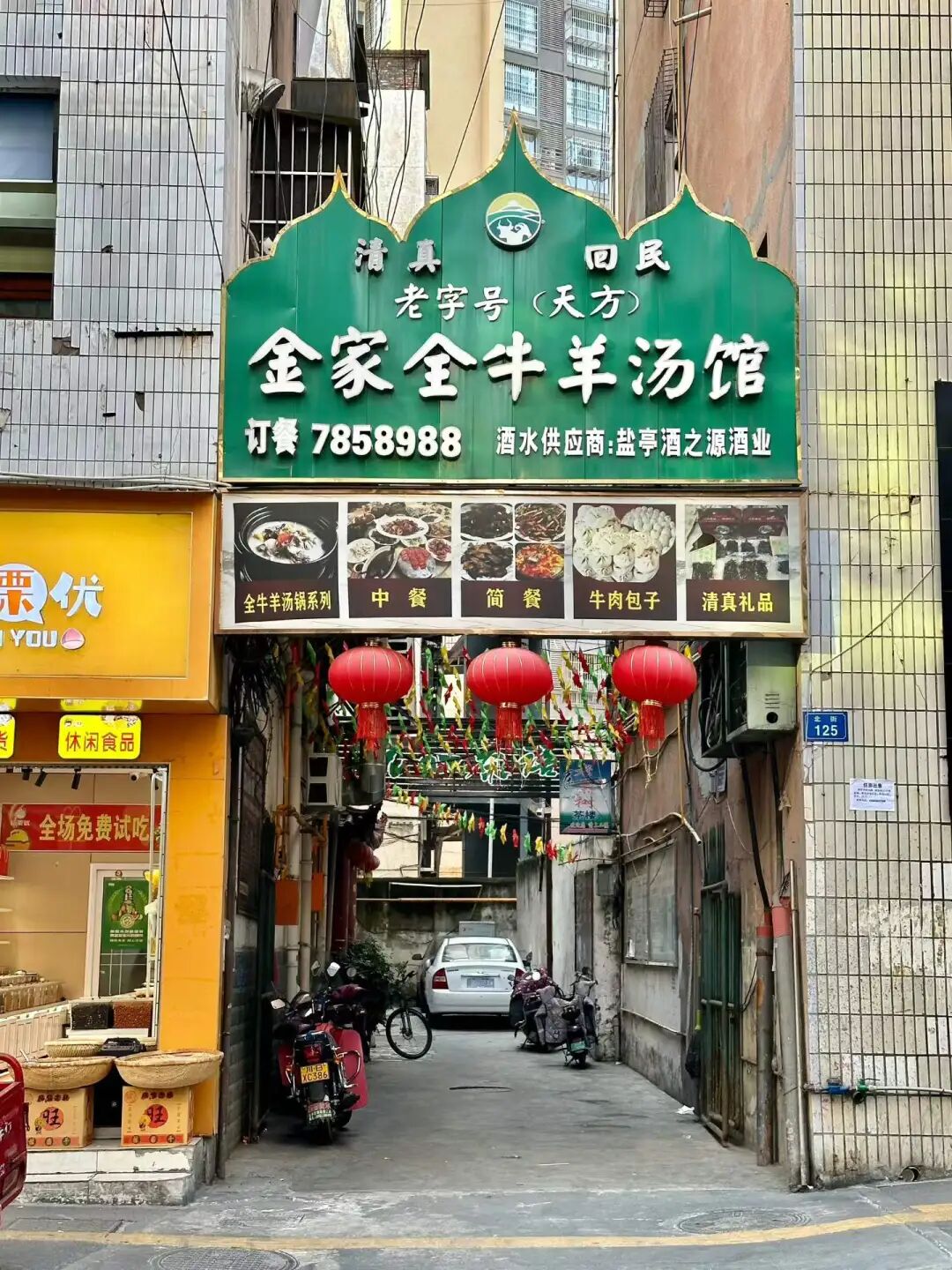
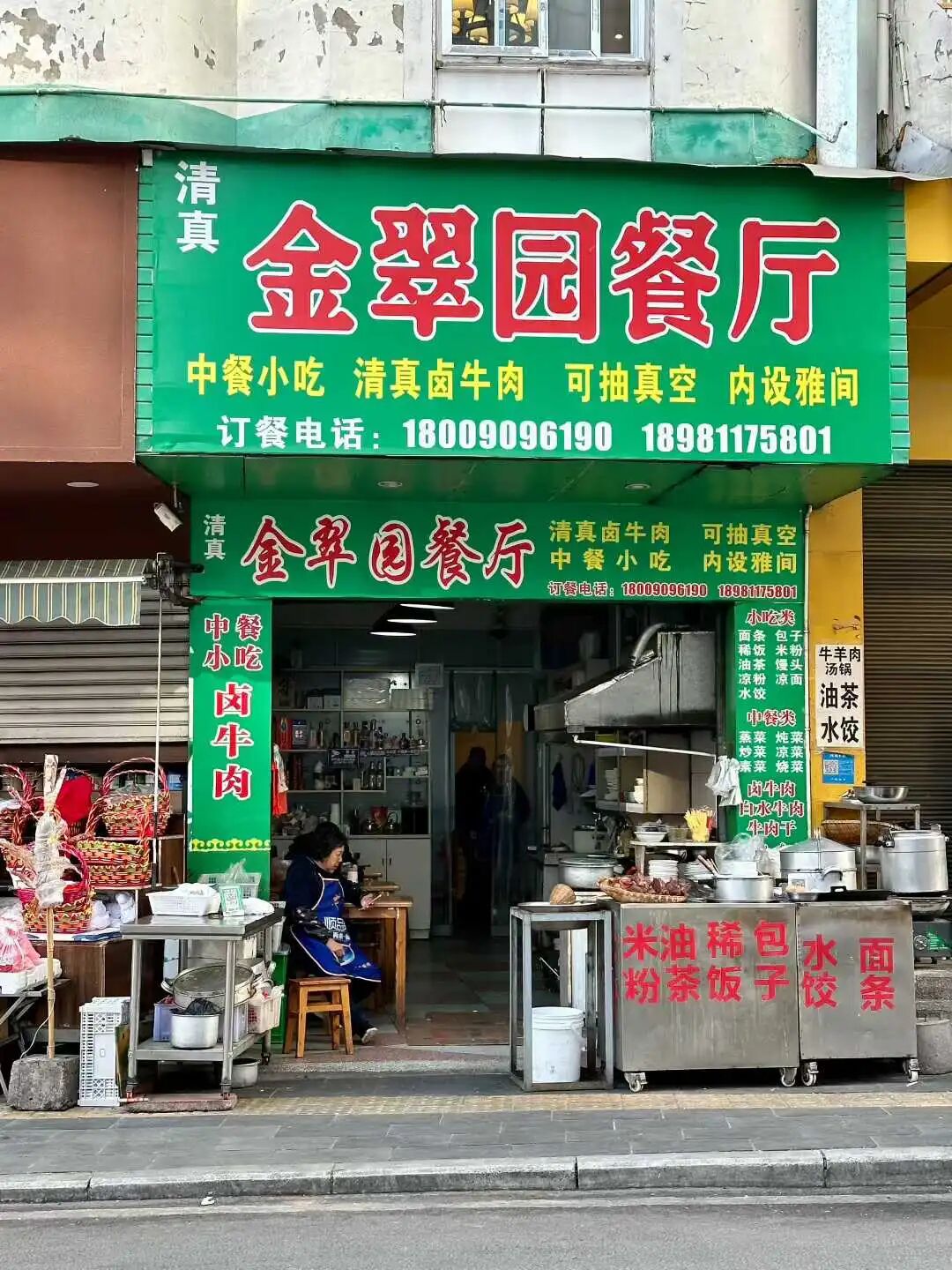
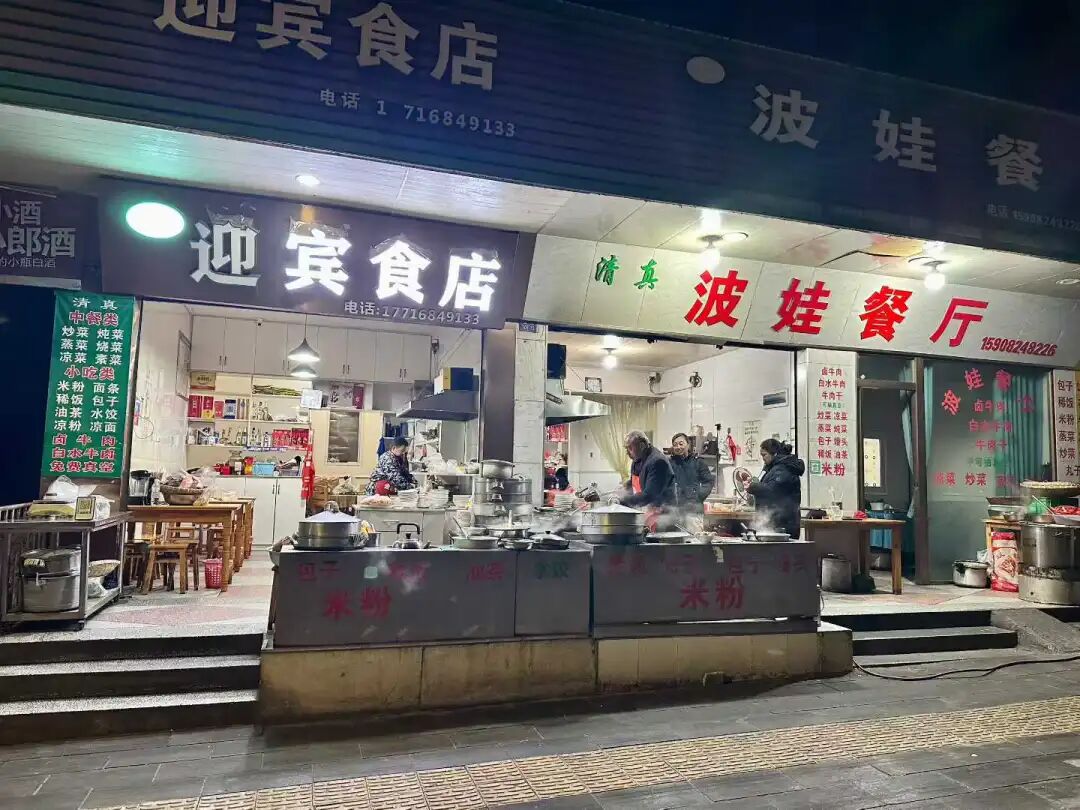
Breakfast starts after 5:00 a.m. near the North Street Mosque in Yanting, which is perfect for eating suhoor. Breakfast here includes steamed buns (baozi), rice porridge (xifan), rice noodles (mifen), and tea-oil porridge (youtiao). I ordered a bowl of rice noodles and a steamed bun. Yanting rice noodles are quite thin. They have a soft, smooth, and slightly chewy texture. They are quickly blanched in boiling water using a bamboo strainer. After draining the water, they are put into a bowl and topped with beef sauce (niurou saozi). The Hui Muslims' beef sauce is made by stir-frying rapeseed oil mixed with beef fat until fragrant, then adding bean paste (doubanjiang) to create a red oil. The beef is firm, flavorful, tender, and not dry. When you eat it, it is spicy, numbing, and rich with a fresh aroma. It is spicy without being harsh, numbing without being bitter, and fresh without being greasy.
Summary: This Yanting County travelogue explores old mosques, Hui Muslim villages, family histories, and mountain roads around Mianyang during a Spring Festival drive through Sichuan.
On February 20, I drove for one hour and 20 minutes from Nanchong at noon to reach Dajiaping Mosque in Yanting County, Mianyang City, for Jumu'ah prayer. The mosque was very crowded, and everyone there was a local Hui Muslim.
Yanting is the county with the most Hui Muslims in Mianyang, with ten major surnames: Jiang, Jin, Mu, Da, Ma, Yang, Wu, Ha, Ran, and Sa. The ancestor of the Da surname was a man from the Western Regions during the Yuan Dynasty named Wubalesha. Research shows he belonged to the Kipchak Yuliboli tribe and served as a Darughachi in Zhenjiang Road before passing away in Zhenjiang. His sixth-generation descendant, Da Shanyu, moved from Zhenjiang to Liuhe, Nanjing, in the early Ming Dynasty to serve as a county assistant. He settled in Liuhe, making this the oldest Western Regions Hui Muslim family in Liuhe, Nanjing. In 1644 (the first year of the Shunzhi reign), Da Chengzong was ordered to move from Liuhe to Sichuan. He settled at the foot of Jianzi Mountain in Fenghe, Yanting, which established the Da surname Hui Muslim community in Yanting.
Dajiaping Mosque was originally located on a small hill behind the current kiln hall and was quite small. It was later moved to its current location below the hill. In 1812 (the 17th year of the Jiaqing reign), it was rebuilt into the current courtyard style with donations from Sichuan Baoning Prefecture military officials Da Tengchao, Da Tengrui, Da Tianheng, and Da Guankui. It was renovated in 1908 (the 34th year of the Guangxu reign), and the main gate and side schools were expanded in 1928.
Dajiaping Mosque features the traditional Sichuan courtyard structure known as "four waters flowing into the hall" (si shui dao tang), with elegant, unique bracket sets and flying eaves. There is a path platform in the courtyard's central patio and gardens on both sides.
Dajiaping Mosque houses 30 volumes of scriptures hand-copied by Jin Wanx in the ninth year of the Guangxu reign.
The mosque also preserves three plaques from the Qing Dynasty and two from the Republic of China era:
The "Jiao Long Zhen Yi" plaque from the fourth year of the Daoguang reign: Respectfully erected by Da Tianheng, a specially appointed military official of the Jianzhou garrison in Guangyuan, Sichuan, who was promoted to the rank of thousand-man commander (qian zong) and received honors five times.
Da Tianheng passed the military examination in 1801 (the sixth year of the Jiaqing reign) and was immediately appointed as a thousand-man commander (qian zong) in the Chuanbei Town garrison. He was promoted several times, eventually reaching the rank of regional commander (zong bing) of Chuanbei Town, stationed in Baoning Prefecture, Sichuan. Locals respectfully called him "Commander-in-Chief" (zong zhen du du). In 1854 (the fourth year of the Xianfeng reign), the imperial court ordered him to lead troops to suppress the Taiping Rebellion. Because he did not act immediately, he was falsely accused of "colluding with the enemy and rebelling." The Xianfeng Emperor recalled him to Beijing and had him beheaded in public.
The "Yu Yin Guang Zong" plaque from the ninth year of the Tongzhi reign: Erected by his descendants Da Yuguan, Yu Chun, and Yu Sheng, along with their sons Fenggang, Fengge, and Fengzhu. The plaque honors their ancestor, a military official of the Tongchuan garrison in Chuanbei, Sichuan, who held a fifth-rank blue feather and served as a garrison commander (ba zong) in Tibet and an acting official in Sanchuan County.
The "Du Yi Zhu Zai" plaque from the 21st year of the Guangxu reign: Respectfully inscribed by Bao Daosheng, a specially appointed inspector of Fucun Station in Nanbu County, Baoning Prefecture.
The Arabic plaque from the second year of the Republic of China reading "I created the jinn and mankind only to worship Me": Erected by local imam Ma Huaifang, Da Pengju, Ran Mingli, Ran Minglun, Ran Mingyao, Ha Mayu, Ha Huaide, Huang Anju, Da Yugao, Da Yuliang, Da Yude, Da Yulin, Da Yulong, Da Fengwu, Da Fengzhi, Da Fengwen, Da Fengwu, Da Fengtai, Da Fengyou, Da Fengyuan, Da Fenghao, Da Fengge, Da Fengdou, Da Fengkui, Da Fengxian, Da Fengyi, Da Pengshun, Da Pengqian, Da Penglin, Da Pengshan, Da Pengyun, Da Fengchun, Da Yugang, and Da Yuyin.
Ma Huaifang, also known as Ma Nanxuan, was originally from Lanzhou, Gansu. He fled to Yanting during the early years of the Republic of China and settled there, serving successively as the imam of Dajiaping Mosque and the mosque in Yanting county town. He was a master of martial arts, possessed extraordinary strength, stood up against evil, and was known for helping those in need, earning him high prestige. In 1913, when the Sichuan Army's Zhong Tidao unit was forcibly conscripting men at Lingshan Market, Imam Ma protected the people by driving away an entire squad of soldiers with his bare hands. In 1916, Imam Ma again drove away chaotic soldiers who were forcibly conscripting men at Daxing Market. From 1921 to 1934, Imam Ma opened the "Shou'an Martial Arts Academy" at the Yanting county town mosque, training hundreds of martial arts students. In 1933 and 1934, Imam Ma participated in martial arts competitions in Langzhong and Santai counties, winning silver medals both times. His martial arts style gradually formed into one that was "short, powerful, full of energy, quick to strike, simple, clear, versatile, and focused on winning through strength." In 1932, Imam Ma opened a "Hui Language School" (huiwen xuexiao), training a group of excellent students who were skilled in both literature and martial arts.
The 1943 plaque titled 'Leader of the Community': We honor Imam (imam) Pengju, courtesy name Yuncheng. A man of virtue, he was a true scholar, a fifth-rank official, and the son of Master Tong. He was upright and righteous, setting a standard for Hui Muslims. He served as imam, managed the Yannan district, and led the Progressive Association. Elected by the people as director-general, he was firm and honest, working hard to remove corruption and starting schools to teach both Arabic and Chinese. The old mosque was renovated with Chinese-style architecture. Its scale is grand, reflecting the prosperity of the community. His virtue will be remembered by descendants forever. We carve this plaque to honor the great Master Da, whose reputation will last for generations. Respectfully dedicated by the family members.
Imam Da Pengju studied religious texts in Chengdu from 1885 to 1891. He became the imam of Dajiaping Mosque in 1912 and taught himself veterinary medicine. In 1914, Imam Da founded an Arabic-Chinese bilingual school in Dajiaping. After the Yanting County Hui Progressive Association was established in 1925, he served as its first president. He also served as president of the Yanting Islamic Association after its founding in 1942. After 1930, Imam Da served as the imam of the Fuyi County Mosque, and after 1951, he served as the imam of the Yanting County Mosque. He was an upright man who helped those in need. He also worked as a veterinarian with excellent skills, saving many sick cattle and earning the respect of everyone.
There are many inscriptions on the wooden structures inside the courtyard:
Craftsmen Li Changshou and Li Changkai from Anle Township, Tongchuan Prefecture, Yanting County, are masters of their art. The family of Imam Ma Hong and others rebuilt this, respectfully inscribed by the prominent members.
Craftsmen Li Jiong, Zhang Shifu, and Li Jianming from Anle Township, Tongchuan Prefecture, Yanting County, are masters of their art. Da Tianqu, a Confucian scholar from Yanting County, Tongchuan Prefecture, Sichuan, respectfully washed his hands and wrote this, inscribed by the successful candidates.
Donors: Da Tianhui, Tianwei, Tianci, Tianyou, Tianchang, Tianzi, Tianxiang, Tianli, and Tianbang. Founding donors: Da Tianjianzhao, Tianfu, Tiande, Tianxing, Tianshun, Tianzhen, Tiancai, and Tianming.
Arabic calligraphy in the main hall of Dajiaping Mosque, and the view looking down from the small hill behind the mosque.
The countryside around Dajiaping is peaceful and quiet. A clear pond reflects the sky, and fields spread out between the hills. It is quiet all around, with only the crisp chirping of birds and the relaxed sounds of cattle and sheep, creating a moving pastoral scene.
Returning from Dajiaping Mosque to Yanting County, I broke my fast at the North Street Mosque. In the evening, hundreds of people came to the mosque to break their fast. Men, women, old, and young gathered together, showing the prosperity of the faith in Yanting. We had radish beef stew, served with crispy flatbread (subing) and rice. Although it was simple, the atmosphere was exceptionally warm and harmonious.
Yanting County Mosque was first built in 1738 (the third year of the Qianlong reign). It was originally located on Xinxie Street next to the Sanbu Liangdong Bridge. In 1796 (the first year of the Jiaqing reign), it moved to its current location at the city gate on Shangbei Street. It was expanded in 1898 and 1947, and rebuilt into its current form in 2006.
There are many Hui Muslim restaurants near the North Street Mosque in Yanting, especially on Tuanjie Road, which is a 'Hui Muslim food street'. In northern Sichuan, besides Songpan, Yanting is the most convenient place to eat. Even Langzhong does not have as many options as Yanting. Opposite the mosque gate is a shop called 'Benwei Banlu', which sells braised beef, braised chicken feet, and braised duck. The 'Jin's Braised Duck' next door is also very popular. Walking a little further, you reach Tuanjie Road. 'Dehua Kaiyuan Rice Noodles' at the intersection has been open for thirty years. They specialize in bamboo shoot rice noodles, meatball rice noodles, chicken soup rice noodles, and pea and kelp rice noodles. Many people eat there, and they are open early in the morning. Walking into Tuanjie Road, you find many halal restaurants with names like Huixiang Renjia, Huihuixiang, Huiweiju, and Xiaohuimin. They specialize in Sichuan-style braised dishes, stews, stir-fries, steamed beef with rice flour (fenzheng niurou), and beef and mutton hot pots.
After finishing the Taraweeh prayers, I stopped by Muji Noodle Shop on Tuanjie Road in Yanting for a bowl of spicy hot pot (maocai) to get some vegetables.
Near the North Street Mosque in Yanting, you can find restaurants owned by families named Jin, Mu, and Ma. The Jin family seems especially common, with places like Jin Family All-Beef and Mutton Soup House (Jin Jia Quan Niuyang Tangguan), Jincuiyuan Restaurant, and Little Jin Beef (Xiao Jin Niu). Among the Hui Muslims in Yanting, the main family names are Jiang, Mu, Da, Jin, Ma, and Yang, based on when they first arrived in Sichuan. The Jiang family's ancestral home is Qili Village in Penglai, Shandong. They moved to Sichuan in 1465 (the first year of the Chenghua reign of the Ming Dynasty) when an ancestor became the magistrate of Leshan, and they settled in Yanting after he left office. The Mu family's ancestral home is Mujiaping in Hanzhong, Shaanxi. They moved to Yanting in 1615 (the 43rd year of the Wanli reign). The Da family's ancestral home is Liuhe in Nanjing, Jiangsu. They moved to Yanting in 1644 (the first year of the Shunzhi reign of the Qing Dynasty). The Jin family's ancestral home is Wangjiao Village in Dali, Tongchuan, Shaanxi. They moved to Yanting in 1690 (the 29th year of the Kangxi reign). The Ma family's ancestral home is Weinan, Shaanxi. Their ancestor came to Sichuan during the Revolt of the Three Feudatories, and the family moved to Yanting in 1691 (the 30th year of the Kangxi reign). The Yang family's ancestral home is Shaanxi. They moved to Yanting in 1723 (the first year of the Yongzheng reign).
Breakfast starts after 5:00 a.m. near the North Street Mosque in Yanting, which is perfect for eating suhoor. Breakfast here includes steamed buns (baozi), rice porridge (xifan), rice noodles (mifen), and tea-oil porridge (youtiao). I ordered a bowl of rice noodles and a steamed bun. Yanting rice noodles are quite thin. They have a soft, smooth, and slightly chewy texture. They are quickly blanched in boiling water using a bamboo strainer. After draining the water, they are put into a bowl and topped with beef sauce (niurou saozi). The Hui Muslims' beef sauce is made by stir-frying rapeseed oil mixed with beef fat until fragrant, then adding bean paste (doubanjiang) to create a red oil. The beef is firm, flavorful, tender, and not dry. When you eat it, it is spicy, numbing, and rich with a fresh aroma. It is spicy without being harsh, numbing without being bitter, and fresh without being greasy.
Hidden Mosques in Mianyang Yanting: Sichuan Hui Muslim Villages and Old Mosque History
Articles • ali2007fr posted the article • 0 comments • 179 views • 2026-05-21 06:45
Reposted from the web
Summary: This Yanting County travelogue explores old mosques, Hui Muslim villages, family histories, and mountain roads around Mianyang during a Spring Festival drive through Sichuan.
On February 20, I drove for one hour and 20 minutes from Nanchong at noon to reach Dajiaping Mosque in Yanting County, Mianyang City, for Jumu'ah prayer. The mosque was very crowded, and everyone there was a local Hui Muslim.
Yanting is the county with the most Hui Muslims in Mianyang, with ten major surnames: Jiang, Jin, Mu, Da, Ma, Yang, Wu, Ha, Ran, and Sa. The ancestor of the Da surname was a man from the Western Regions during the Yuan Dynasty named Wubalesha. Research shows he belonged to the Kipchak Yuliboli tribe and served as a Darughachi in Zhenjiang Road before passing away in Zhenjiang. His sixth-generation descendant, Da Shanyu, moved from Zhenjiang to Liuhe, Nanjing, in the early Ming Dynasty to serve as a county assistant. He settled in Liuhe, making this the oldest Western Regions Hui Muslim family in Liuhe, Nanjing. In 1644 (the first year of the Shunzhi reign), Da Chengzong was ordered to move from Liuhe to Sichuan. He settled at the foot of Jianzi Mountain in Fenghe, Yanting, which established the Da surname Hui Muslim community in Yanting.
Dajiaping Mosque was originally located on a small hill behind the current kiln hall and was quite small. It was later moved to its current location below the hill. In 1812 (the 17th year of the Jiaqing reign), it was rebuilt into the current courtyard style with donations from Sichuan Baoning Prefecture military officials Da Tengchao, Da Tengrui, Da Tianheng, and Da Guankui. It was renovated in 1908 (the 34th year of the Guangxu reign), and the main gate and side schools were expanded in 1928.
Dajiaping Mosque features the traditional Sichuan courtyard structure known as "four waters flowing into the hall" (si shui dao tang), with elegant, unique bracket sets and flying eaves. There is a path platform in the courtyard's central patio and gardens on both sides.
Dajiaping Mosque houses 30 volumes of scriptures hand-copied by Jin Wanx in the ninth year of the Guangxu reign.
The mosque also preserves three plaques from the Qing Dynasty and two from the Republic of China era:
The "Jiao Long Zhen Yi" plaque from the fourth year of the Daoguang reign: Respectfully erected by Da Tianheng, a specially appointed military official of the Jianzhou garrison in Guangyuan, Sichuan, who was promoted to the rank of thousand-man commander (qian zong) and received honors five times.
Da Tianheng passed the military examination in 1801 (the sixth year of the Jiaqing reign) and was immediately appointed as a thousand-man commander (qian zong) in the Chuanbei Town garrison. He was promoted several times, eventually reaching the rank of regional commander (zong bing) of Chuanbei Town, stationed in Baoning Prefecture, Sichuan. Locals respectfully called him "Commander-in-Chief" (zong zhen du du). In 1854 (the fourth year of the Xianfeng reign), the imperial court ordered him to lead troops to suppress the Taiping Rebellion. Because he did not act immediately, he was falsely accused of "colluding with the enemy and rebelling." The Xianfeng Emperor recalled him to Beijing and had him beheaded in public.
The "Yu Yin Guang Zong" plaque from the ninth year of the Tongzhi reign: Erected by his descendants Da Yuguan, Yu Chun, and Yu Sheng, along with their sons Fenggang, Fengge, and Fengzhu. The plaque honors their ancestor, a military official of the Tongchuan garrison in Chuanbei, Sichuan, who held a fifth-rank blue feather and served as a garrison commander (ba zong) in Tibet and an acting official in Sanchuan County.
The "Du Yi Zhu Zai" plaque from the 21st year of the Guangxu reign: Respectfully inscribed by Bao Daosheng, a specially appointed inspector of Fucun Station in Nanbu County, Baoning Prefecture.
The Arabic plaque from the second year of the Republic of China reading "I created the jinn and mankind only to worship Me": Erected by local imam Ma Huaifang, Da Pengju, Ran Mingli, Ran Minglun, Ran Mingyao, Ha Mayu, Ha Huaide, Huang Anju, Da Yugao, Da Yuliang, Da Yude, Da Yulin, Da Yulong, Da Fengwu, Da Fengzhi, Da Fengwen, Da Fengwu, Da Fengtai, Da Fengyou, Da Fengyuan, Da Fenghao, Da Fengge, Da Fengdou, Da Fengkui, Da Fengxian, Da Fengyi, Da Pengshun, Da Pengqian, Da Penglin, Da Pengshan, Da Pengyun, Da Fengchun, Da Yugang, and Da Yuyin.
Ma Huaifang, also known as Ma Nanxuan, was originally from Lanzhou, Gansu. He fled to Yanting during the early years of the Republic of China and settled there, serving successively as the imam of Dajiaping Mosque and the mosque in Yanting county town. He was a master of martial arts, possessed extraordinary strength, stood up against evil, and was known for helping those in need, earning him high prestige. In 1913, when the Sichuan Army's Zhong Tidao unit was forcibly conscripting men at Lingshan Market, Imam Ma protected the people by driving away an entire squad of soldiers with his bare hands. In 1916, Imam Ma again drove away chaotic soldiers who were forcibly conscripting men at Daxing Market. From 1921 to 1934, Imam Ma opened the "Shou'an Martial Arts Academy" at the Yanting county town mosque, training hundreds of martial arts students. In 1933 and 1934, Imam Ma participated in martial arts competitions in Langzhong and Santai counties, winning silver medals both times. His martial arts style gradually formed into one that was "short, powerful, full of energy, quick to strike, simple, clear, versatile, and focused on winning through strength." In 1932, Imam Ma opened a "Hui Language School" (huiwen xuexiao), training a group of excellent students who were skilled in both literature and martial arts.
The 1943 plaque titled 'Leader of the Community': We honor Imam (imam) Pengju, courtesy name Yuncheng. A man of virtue, he was a true scholar, a fifth-rank official, and the son of Master Tong. He was upright and righteous, setting a standard for Hui Muslims. He served as imam, managed the Yannan district, and led the Progressive Association. Elected by the people as director-general, he was firm and honest, working hard to remove corruption and starting schools to teach both Arabic and Chinese. The old mosque was renovated with Chinese-style architecture. Its scale is grand, reflecting the prosperity of the community. His virtue will be remembered by descendants forever. We carve this plaque to honor the great Master Da, whose reputation will last for generations. Respectfully dedicated by the family members.
Imam Da Pengju studied religious texts in Chengdu from 1885 to 1891. He became the imam of Dajiaping Mosque in 1912 and taught himself veterinary medicine. In 1914, Imam Da founded an Arabic-Chinese bilingual school in Dajiaping. After the Yanting County Hui Progressive Association was established in 1925, he served as its first president. He also served as president of the Yanting Islamic Association after its founding in 1942. After 1930, Imam Da served as the imam of the Fuyi County Mosque, and after 1951, he served as the imam of the Yanting County Mosque. He was an upright man who helped those in need. He also worked as a veterinarian with excellent skills, saving many sick cattle and earning the respect of everyone.
There are many inscriptions on the wooden structures inside the courtyard:
Craftsmen Li Changshou and Li Changkai from Anle Township, Tongchuan Prefecture, Yanting County, are masters of their art. The family of Imam Ma Hong and others rebuilt this, respectfully inscribed by the prominent members.
Craftsmen Li Jiong, Zhang Shifu, and Li Jianming from Anle Township, Tongchuan Prefecture, Yanting County, are masters of their art. Da Tianqu, a Confucian scholar from Yanting County, Tongchuan Prefecture, Sichuan, respectfully washed his hands and wrote this, inscribed by the successful candidates.
Donors: Da Tianhui, Tianwei, Tianci, Tianyou, Tianchang, Tianzi, Tianxiang, Tianli, and Tianbang. Founding donors: Da Tianjianzhao, Tianfu, Tiande, Tianxing, Tianshun, Tianzhen, Tiancai, and Tianming.
Arabic calligraphy in the main hall of Dajiaping Mosque, and the view looking down from the small hill behind the mosque.
The countryside around Dajiaping is peaceful and quiet. A clear pond reflects the sky, and fields spread out between the hills. It is quiet all around, with only the crisp chirping of birds and the relaxed sounds of cattle and sheep, creating a moving pastoral scene.
Returning from Dajiaping Mosque to Yanting County, I broke my fast at the North Street Mosque. In the evening, hundreds of people came to the mosque to break their fast. Men, women, old, and young gathered together, showing the prosperity of the faith in Yanting. We had radish beef stew, served with crispy flatbread (subing) and rice. Although it was simple, the atmosphere was exceptionally warm and harmonious.
Yanting County Mosque was first built in 1738 (the third year of the Qianlong reign). It was originally located on Xinxie Street next to the Sanbu Liangdong Bridge. In 1796 (the first year of the Jiaqing reign), it moved to its current location at the city gate on Shangbei Street. It was expanded in 1898 and 1947, and rebuilt into its current form in 2006.
There are many Hui Muslim restaurants near the North Street Mosque in Yanting, especially on Tuanjie Road, which is a 'Hui Muslim food street'. In northern Sichuan, besides Songpan, Yanting is the most convenient place to eat. Even Langzhong does not have as many options as Yanting. Opposite the mosque gate is a shop called 'Benwei Banlu', which sells braised beef, braised chicken feet, and braised duck. The 'Jin's Braised Duck' next door is also very popular. Walking a little further, you reach Tuanjie Road. 'Dehua Kaiyuan Rice Noodles' at the intersection has been open for thirty years. They specialize in bamboo shoot rice noodles, meatball rice noodles, chicken soup rice noodles, and pea and kelp rice noodles. Many people eat there, and they are open early in the morning. Walking into Tuanjie Road, you find many halal restaurants with names like Huixiang Renjia, Huihuixiang, Huiweiju, and Xiaohuimin. They specialize in Sichuan-style braised dishes, stews, stir-fries, steamed beef with rice flour (fenzheng niurou), and beef and mutton hot pots.
After finishing the Taraweeh prayers, I stopped by Muji Noodle Shop on Tuanjie Road in Yanting for a bowl of spicy hot pot (maocai) to get some vegetables.
Near the North Street Mosque in Yanting, you can find restaurants owned by families named Jin, Mu, and Ma. The Jin family seems especially common, with places like Jin Family All-Beef and Mutton Soup House (Jin Jia Quan Niuyang Tangguan), Jincuiyuan Restaurant, and Little Jin Beef (Xiao Jin Niu). Among the Hui Muslims in Yanting, the main family names are Jiang, Mu, Da, Jin, Ma, and Yang, based on when they first arrived in Sichuan. The Jiang family's ancestral home is Qili Village in Penglai, Shandong. They moved to Sichuan in 1465 (the first year of the Chenghua reign of the Ming Dynasty) when an ancestor became the magistrate of Leshan, and they settled in Yanting after he left office. The Mu family's ancestral home is Mujiaping in Hanzhong, Shaanxi. They moved to Yanting in 1615 (the 43rd year of the Wanli reign). The Da family's ancestral home is Liuhe in Nanjing, Jiangsu. They moved to Yanting in 1644 (the first year of the Shunzhi reign of the Qing Dynasty). The Jin family's ancestral home is Wangjiao Village in Dali, Tongchuan, Shaanxi. They moved to Yanting in 1690 (the 29th year of the Kangxi reign). The Ma family's ancestral home is Weinan, Shaanxi. Their ancestor came to Sichuan during the Revolt of the Three Feudatories, and the family moved to Yanting in 1691 (the 30th year of the Kangxi reign). The Yang family's ancestral home is Shaanxi. They moved to Yanting in 1723 (the first year of the Yongzheng reign).
Breakfast starts after 5:00 a.m. near the North Street Mosque in Yanting, which is perfect for eating suhoor. Breakfast here includes steamed buns (baozi), rice porridge (xifan), rice noodles (mifen), and tea-oil porridge (youtiao). I ordered a bowl of rice noodles and a steamed bun. Yanting rice noodles are quite thin. They have a soft, smooth, and slightly chewy texture. They are quickly blanched in boiling water using a bamboo strainer. After draining the water, they are put into a bowl and topped with beef sauce (niurou saozi). The Hui Muslims' beef sauce is made by stir-frying rapeseed oil mixed with beef fat until fragrant, then adding bean paste (doubanjiang) to create a red oil. The beef is firm, flavorful, tender, and not dry. When you eat it, it is spicy, numbing, and rich with a fresh aroma. It is spicy without being harsh, numbing without being bitter, and fresh without being greasy. view all
Summary: This Yanting County travelogue explores old mosques, Hui Muslim villages, family histories, and mountain roads around Mianyang during a Spring Festival drive through Sichuan.
On February 20, I drove for one hour and 20 minutes from Nanchong at noon to reach Dajiaping Mosque in Yanting County, Mianyang City, for Jumu'ah prayer. The mosque was very crowded, and everyone there was a local Hui Muslim.
Yanting is the county with the most Hui Muslims in Mianyang, with ten major surnames: Jiang, Jin, Mu, Da, Ma, Yang, Wu, Ha, Ran, and Sa. The ancestor of the Da surname was a man from the Western Regions during the Yuan Dynasty named Wubalesha. Research shows he belonged to the Kipchak Yuliboli tribe and served as a Darughachi in Zhenjiang Road before passing away in Zhenjiang. His sixth-generation descendant, Da Shanyu, moved from Zhenjiang to Liuhe, Nanjing, in the early Ming Dynasty to serve as a county assistant. He settled in Liuhe, making this the oldest Western Regions Hui Muslim family in Liuhe, Nanjing. In 1644 (the first year of the Shunzhi reign), Da Chengzong was ordered to move from Liuhe to Sichuan. He settled at the foot of Jianzi Mountain in Fenghe, Yanting, which established the Da surname Hui Muslim community in Yanting.
Dajiaping Mosque was originally located on a small hill behind the current kiln hall and was quite small. It was later moved to its current location below the hill. In 1812 (the 17th year of the Jiaqing reign), it was rebuilt into the current courtyard style with donations from Sichuan Baoning Prefecture military officials Da Tengchao, Da Tengrui, Da Tianheng, and Da Guankui. It was renovated in 1908 (the 34th year of the Guangxu reign), and the main gate and side schools were expanded in 1928.
Dajiaping Mosque features the traditional Sichuan courtyard structure known as "four waters flowing into the hall" (si shui dao tang), with elegant, unique bracket sets and flying eaves. There is a path platform in the courtyard's central patio and gardens on both sides.
Dajiaping Mosque houses 30 volumes of scriptures hand-copied by Jin Wanx in the ninth year of the Guangxu reign.
The mosque also preserves three plaques from the Qing Dynasty and two from the Republic of China era:
The "Jiao Long Zhen Yi" plaque from the fourth year of the Daoguang reign: Respectfully erected by Da Tianheng, a specially appointed military official of the Jianzhou garrison in Guangyuan, Sichuan, who was promoted to the rank of thousand-man commander (qian zong) and received honors five times.
Da Tianheng passed the military examination in 1801 (the sixth year of the Jiaqing reign) and was immediately appointed as a thousand-man commander (qian zong) in the Chuanbei Town garrison. He was promoted several times, eventually reaching the rank of regional commander (zong bing) of Chuanbei Town, stationed in Baoning Prefecture, Sichuan. Locals respectfully called him "Commander-in-Chief" (zong zhen du du). In 1854 (the fourth year of the Xianfeng reign), the imperial court ordered him to lead troops to suppress the Taiping Rebellion. Because he did not act immediately, he was falsely accused of "colluding with the enemy and rebelling." The Xianfeng Emperor recalled him to Beijing and had him beheaded in public.
The "Yu Yin Guang Zong" plaque from the ninth year of the Tongzhi reign: Erected by his descendants Da Yuguan, Yu Chun, and Yu Sheng, along with their sons Fenggang, Fengge, and Fengzhu. The plaque honors their ancestor, a military official of the Tongchuan garrison in Chuanbei, Sichuan, who held a fifth-rank blue feather and served as a garrison commander (ba zong) in Tibet and an acting official in Sanchuan County.
The "Du Yi Zhu Zai" plaque from the 21st year of the Guangxu reign: Respectfully inscribed by Bao Daosheng, a specially appointed inspector of Fucun Station in Nanbu County, Baoning Prefecture.
The Arabic plaque from the second year of the Republic of China reading "I created the jinn and mankind only to worship Me": Erected by local imam Ma Huaifang, Da Pengju, Ran Mingli, Ran Minglun, Ran Mingyao, Ha Mayu, Ha Huaide, Huang Anju, Da Yugao, Da Yuliang, Da Yude, Da Yulin, Da Yulong, Da Fengwu, Da Fengzhi, Da Fengwen, Da Fengwu, Da Fengtai, Da Fengyou, Da Fengyuan, Da Fenghao, Da Fengge, Da Fengdou, Da Fengkui, Da Fengxian, Da Fengyi, Da Pengshun, Da Pengqian, Da Penglin, Da Pengshan, Da Pengyun, Da Fengchun, Da Yugang, and Da Yuyin.
Ma Huaifang, also known as Ma Nanxuan, was originally from Lanzhou, Gansu. He fled to Yanting during the early years of the Republic of China and settled there, serving successively as the imam of Dajiaping Mosque and the mosque in Yanting county town. He was a master of martial arts, possessed extraordinary strength, stood up against evil, and was known for helping those in need, earning him high prestige. In 1913, when the Sichuan Army's Zhong Tidao unit was forcibly conscripting men at Lingshan Market, Imam Ma protected the people by driving away an entire squad of soldiers with his bare hands. In 1916, Imam Ma again drove away chaotic soldiers who were forcibly conscripting men at Daxing Market. From 1921 to 1934, Imam Ma opened the "Shou'an Martial Arts Academy" at the Yanting county town mosque, training hundreds of martial arts students. In 1933 and 1934, Imam Ma participated in martial arts competitions in Langzhong and Santai counties, winning silver medals both times. His martial arts style gradually formed into one that was "short, powerful, full of energy, quick to strike, simple, clear, versatile, and focused on winning through strength." In 1932, Imam Ma opened a "Hui Language School" (huiwen xuexiao), training a group of excellent students who were skilled in both literature and martial arts.
The 1943 plaque titled 'Leader of the Community': We honor Imam (imam) Pengju, courtesy name Yuncheng. A man of virtue, he was a true scholar, a fifth-rank official, and the son of Master Tong. He was upright and righteous, setting a standard for Hui Muslims. He served as imam, managed the Yannan district, and led the Progressive Association. Elected by the people as director-general, he was firm and honest, working hard to remove corruption and starting schools to teach both Arabic and Chinese. The old mosque was renovated with Chinese-style architecture. Its scale is grand, reflecting the prosperity of the community. His virtue will be remembered by descendants forever. We carve this plaque to honor the great Master Da, whose reputation will last for generations. Respectfully dedicated by the family members.
Imam Da Pengju studied religious texts in Chengdu from 1885 to 1891. He became the imam of Dajiaping Mosque in 1912 and taught himself veterinary medicine. In 1914, Imam Da founded an Arabic-Chinese bilingual school in Dajiaping. After the Yanting County Hui Progressive Association was established in 1925, he served as its first president. He also served as president of the Yanting Islamic Association after its founding in 1942. After 1930, Imam Da served as the imam of the Fuyi County Mosque, and after 1951, he served as the imam of the Yanting County Mosque. He was an upright man who helped those in need. He also worked as a veterinarian with excellent skills, saving many sick cattle and earning the respect of everyone.
There are many inscriptions on the wooden structures inside the courtyard:
Craftsmen Li Changshou and Li Changkai from Anle Township, Tongchuan Prefecture, Yanting County, are masters of their art. The family of Imam Ma Hong and others rebuilt this, respectfully inscribed by the prominent members.
Craftsmen Li Jiong, Zhang Shifu, and Li Jianming from Anle Township, Tongchuan Prefecture, Yanting County, are masters of their art. Da Tianqu, a Confucian scholar from Yanting County, Tongchuan Prefecture, Sichuan, respectfully washed his hands and wrote this, inscribed by the successful candidates.
Donors: Da Tianhui, Tianwei, Tianci, Tianyou, Tianchang, Tianzi, Tianxiang, Tianli, and Tianbang. Founding donors: Da Tianjianzhao, Tianfu, Tiande, Tianxing, Tianshun, Tianzhen, Tiancai, and Tianming.
Arabic calligraphy in the main hall of Dajiaping Mosque, and the view looking down from the small hill behind the mosque.
The countryside around Dajiaping is peaceful and quiet. A clear pond reflects the sky, and fields spread out between the hills. It is quiet all around, with only the crisp chirping of birds and the relaxed sounds of cattle and sheep, creating a moving pastoral scene.
Returning from Dajiaping Mosque to Yanting County, I broke my fast at the North Street Mosque. In the evening, hundreds of people came to the mosque to break their fast. Men, women, old, and young gathered together, showing the prosperity of the faith in Yanting. We had radish beef stew, served with crispy flatbread (subing) and rice. Although it was simple, the atmosphere was exceptionally warm and harmonious.
Yanting County Mosque was first built in 1738 (the third year of the Qianlong reign). It was originally located on Xinxie Street next to the Sanbu Liangdong Bridge. In 1796 (the first year of the Jiaqing reign), it moved to its current location at the city gate on Shangbei Street. It was expanded in 1898 and 1947, and rebuilt into its current form in 2006.
There are many Hui Muslim restaurants near the North Street Mosque in Yanting, especially on Tuanjie Road, which is a 'Hui Muslim food street'. In northern Sichuan, besides Songpan, Yanting is the most convenient place to eat. Even Langzhong does not have as many options as Yanting. Opposite the mosque gate is a shop called 'Benwei Banlu', which sells braised beef, braised chicken feet, and braised duck. The 'Jin's Braised Duck' next door is also very popular. Walking a little further, you reach Tuanjie Road. 'Dehua Kaiyuan Rice Noodles' at the intersection has been open for thirty years. They specialize in bamboo shoot rice noodles, meatball rice noodles, chicken soup rice noodles, and pea and kelp rice noodles. Many people eat there, and they are open early in the morning. Walking into Tuanjie Road, you find many halal restaurants with names like Huixiang Renjia, Huihuixiang, Huiweiju, and Xiaohuimin. They specialize in Sichuan-style braised dishes, stews, stir-fries, steamed beef with rice flour (fenzheng niurou), and beef and mutton hot pots.
After finishing the Taraweeh prayers, I stopped by Muji Noodle Shop on Tuanjie Road in Yanting for a bowl of spicy hot pot (maocai) to get some vegetables.
Near the North Street Mosque in Yanting, you can find restaurants owned by families named Jin, Mu, and Ma. The Jin family seems especially common, with places like Jin Family All-Beef and Mutton Soup House (Jin Jia Quan Niuyang Tangguan), Jincuiyuan Restaurant, and Little Jin Beef (Xiao Jin Niu). Among the Hui Muslims in Yanting, the main family names are Jiang, Mu, Da, Jin, Ma, and Yang, based on when they first arrived in Sichuan. The Jiang family's ancestral home is Qili Village in Penglai, Shandong. They moved to Sichuan in 1465 (the first year of the Chenghua reign of the Ming Dynasty) when an ancestor became the magistrate of Leshan, and they settled in Yanting after he left office. The Mu family's ancestral home is Mujiaping in Hanzhong, Shaanxi. They moved to Yanting in 1615 (the 43rd year of the Wanli reign). The Da family's ancestral home is Liuhe in Nanjing, Jiangsu. They moved to Yanting in 1644 (the first year of the Shunzhi reign of the Qing Dynasty). The Jin family's ancestral home is Wangjiao Village in Dali, Tongchuan, Shaanxi. They moved to Yanting in 1690 (the 29th year of the Kangxi reign). The Ma family's ancestral home is Weinan, Shaanxi. Their ancestor came to Sichuan during the Revolt of the Three Feudatories, and the family moved to Yanting in 1691 (the 30th year of the Kangxi reign). The Yang family's ancestral home is Shaanxi. They moved to Yanting in 1723 (the first year of the Yongzheng reign).
Breakfast starts after 5:00 a.m. near the North Street Mosque in Yanting, which is perfect for eating suhoor. Breakfast here includes steamed buns (baozi), rice porridge (xifan), rice noodles (mifen), and tea-oil porridge (youtiao). I ordered a bowl of rice noodles and a steamed bun. Yanting rice noodles are quite thin. They have a soft, smooth, and slightly chewy texture. They are quickly blanched in boiling water using a bamboo strainer. After draining the water, they are put into a bowl and topped with beef sauce (niurou saozi). The Hui Muslims' beef sauce is made by stir-frying rapeseed oil mixed with beef fat until fragrant, then adding bean paste (doubanjiang) to create a red oil. The beef is firm, flavorful, tender, and not dry. When you eat it, it is spicy, numbing, and rich with a fresh aroma. It is spicy without being harsh, numbing without being bitter, and fresh without being greasy. view all
Reposted from the web
Summary: This Yanting County travelogue explores old mosques, Hui Muslim villages, family histories, and mountain roads around Mianyang during a Spring Festival drive through Sichuan.
On February 20, I drove for one hour and 20 minutes from Nanchong at noon to reach Dajiaping Mosque in Yanting County, Mianyang City, for Jumu'ah prayer. The mosque was very crowded, and everyone there was a local Hui Muslim.
Yanting is the county with the most Hui Muslims in Mianyang, with ten major surnames: Jiang, Jin, Mu, Da, Ma, Yang, Wu, Ha, Ran, and Sa. The ancestor of the Da surname was a man from the Western Regions during the Yuan Dynasty named Wubalesha. Research shows he belonged to the Kipchak Yuliboli tribe and served as a Darughachi in Zhenjiang Road before passing away in Zhenjiang. His sixth-generation descendant, Da Shanyu, moved from Zhenjiang to Liuhe, Nanjing, in the early Ming Dynasty to serve as a county assistant. He settled in Liuhe, making this the oldest Western Regions Hui Muslim family in Liuhe, Nanjing. In 1644 (the first year of the Shunzhi reign), Da Chengzong was ordered to move from Liuhe to Sichuan. He settled at the foot of Jianzi Mountain in Fenghe, Yanting, which established the Da surname Hui Muslim community in Yanting.
Dajiaping Mosque was originally located on a small hill behind the current kiln hall and was quite small. It was later moved to its current location below the hill. In 1812 (the 17th year of the Jiaqing reign), it was rebuilt into the current courtyard style with donations from Sichuan Baoning Prefecture military officials Da Tengchao, Da Tengrui, Da Tianheng, and Da Guankui. It was renovated in 1908 (the 34th year of the Guangxu reign), and the main gate and side schools were expanded in 1928.
Dajiaping Mosque features the traditional Sichuan courtyard structure known as "four waters flowing into the hall" (si shui dao tang), with elegant, unique bracket sets and flying eaves. There is a path platform in the courtyard's central patio and gardens on both sides.
Dajiaping Mosque houses 30 volumes of scriptures hand-copied by Jin Wanx in the ninth year of the Guangxu reign.
The mosque also preserves three plaques from the Qing Dynasty and two from the Republic of China era:
The "Jiao Long Zhen Yi" plaque from the fourth year of the Daoguang reign: Respectfully erected by Da Tianheng, a specially appointed military official of the Jianzhou garrison in Guangyuan, Sichuan, who was promoted to the rank of thousand-man commander (qian zong) and received honors five times.
Da Tianheng passed the military examination in 1801 (the sixth year of the Jiaqing reign) and was immediately appointed as a thousand-man commander (qian zong) in the Chuanbei Town garrison. He was promoted several times, eventually reaching the rank of regional commander (zong bing) of Chuanbei Town, stationed in Baoning Prefecture, Sichuan. Locals respectfully called him "Commander-in-Chief" (zong zhen du du). In 1854 (the fourth year of the Xianfeng reign), the imperial court ordered him to lead troops to suppress the Taiping Rebellion. Because he did not act immediately, he was falsely accused of "colluding with the enemy and rebelling." The Xianfeng Emperor recalled him to Beijing and had him beheaded in public.
The "Yu Yin Guang Zong" plaque from the ninth year of the Tongzhi reign: Erected by his descendants Da Yuguan, Yu Chun, and Yu Sheng, along with their sons Fenggang, Fengge, and Fengzhu. The plaque honors their ancestor, a military official of the Tongchuan garrison in Chuanbei, Sichuan, who held a fifth-rank blue feather and served as a garrison commander (ba zong) in Tibet and an acting official in Sanchuan County.
The "Du Yi Zhu Zai" plaque from the 21st year of the Guangxu reign: Respectfully inscribed by Bao Daosheng, a specially appointed inspector of Fucun Station in Nanbu County, Baoning Prefecture.
The Arabic plaque from the second year of the Republic of China reading "I created the jinn and mankind only to worship Me": Erected by local imam Ma Huaifang, Da Pengju, Ran Mingli, Ran Minglun, Ran Mingyao, Ha Mayu, Ha Huaide, Huang Anju, Da Yugao, Da Yuliang, Da Yude, Da Yulin, Da Yulong, Da Fengwu, Da Fengzhi, Da Fengwen, Da Fengwu, Da Fengtai, Da Fengyou, Da Fengyuan, Da Fenghao, Da Fengge, Da Fengdou, Da Fengkui, Da Fengxian, Da Fengyi, Da Pengshun, Da Pengqian, Da Penglin, Da Pengshan, Da Pengyun, Da Fengchun, Da Yugang, and Da Yuyin.
Ma Huaifang, also known as Ma Nanxuan, was originally from Lanzhou, Gansu. He fled to Yanting during the early years of the Republic of China and settled there, serving successively as the imam of Dajiaping Mosque and the mosque in Yanting county town. He was a master of martial arts, possessed extraordinary strength, stood up against evil, and was known for helping those in need, earning him high prestige. In 1913, when the Sichuan Army's Zhong Tidao unit was forcibly conscripting men at Lingshan Market, Imam Ma protected the people by driving away an entire squad of soldiers with his bare hands. In 1916, Imam Ma again drove away chaotic soldiers who were forcibly conscripting men at Daxing Market. From 1921 to 1934, Imam Ma opened the "Shou'an Martial Arts Academy" at the Yanting county town mosque, training hundreds of martial arts students. In 1933 and 1934, Imam Ma participated in martial arts competitions in Langzhong and Santai counties, winning silver medals both times. His martial arts style gradually formed into one that was "short, powerful, full of energy, quick to strike, simple, clear, versatile, and focused on winning through strength." In 1932, Imam Ma opened a "Hui Language School" (huiwen xuexiao), training a group of excellent students who were skilled in both literature and martial arts.
The 1943 plaque titled 'Leader of the Community': We honor Imam (imam) Pengju, courtesy name Yuncheng. A man of virtue, he was a true scholar, a fifth-rank official, and the son of Master Tong. He was upright and righteous, setting a standard for Hui Muslims. He served as imam, managed the Yannan district, and led the Progressive Association. Elected by the people as director-general, he was firm and honest, working hard to remove corruption and starting schools to teach both Arabic and Chinese. The old mosque was renovated with Chinese-style architecture. Its scale is grand, reflecting the prosperity of the community. His virtue will be remembered by descendants forever. We carve this plaque to honor the great Master Da, whose reputation will last for generations. Respectfully dedicated by the family members.
Imam Da Pengju studied religious texts in Chengdu from 1885 to 1891. He became the imam of Dajiaping Mosque in 1912 and taught himself veterinary medicine. In 1914, Imam Da founded an Arabic-Chinese bilingual school in Dajiaping. After the Yanting County Hui Progressive Association was established in 1925, he served as its first president. He also served as president of the Yanting Islamic Association after its founding in 1942. After 1930, Imam Da served as the imam of the Fuyi County Mosque, and after 1951, he served as the imam of the Yanting County Mosque. He was an upright man who helped those in need. He also worked as a veterinarian with excellent skills, saving many sick cattle and earning the respect of everyone.
There are many inscriptions on the wooden structures inside the courtyard:
Craftsmen Li Changshou and Li Changkai from Anle Township, Tongchuan Prefecture, Yanting County, are masters of their art. The family of Imam Ma Hong and others rebuilt this, respectfully inscribed by the prominent members.
Craftsmen Li Jiong, Zhang Shifu, and Li Jianming from Anle Township, Tongchuan Prefecture, Yanting County, are masters of their art. Da Tianqu, a Confucian scholar from Yanting County, Tongchuan Prefecture, Sichuan, respectfully washed his hands and wrote this, inscribed by the successful candidates.
Donors: Da Tianhui, Tianwei, Tianci, Tianyou, Tianchang, Tianzi, Tianxiang, Tianli, and Tianbang. Founding donors: Da Tianjianzhao, Tianfu, Tiande, Tianxing, Tianshun, Tianzhen, Tiancai, and Tianming.
Arabic calligraphy in the main hall of Dajiaping Mosque, and the view looking down from the small hill behind the mosque.
The countryside around Dajiaping is peaceful and quiet. A clear pond reflects the sky, and fields spread out between the hills. It is quiet all around, with only the crisp chirping of birds and the relaxed sounds of cattle and sheep, creating a moving pastoral scene.
Returning from Dajiaping Mosque to Yanting County, I broke my fast at the North Street Mosque. In the evening, hundreds of people came to the mosque to break their fast. Men, women, old, and young gathered together, showing the prosperity of the faith in Yanting. We had radish beef stew, served with crispy flatbread (subing) and rice. Although it was simple, the atmosphere was exceptionally warm and harmonious.
Yanting County Mosque was first built in 1738 (the third year of the Qianlong reign). It was originally located on Xinxie Street next to the Sanbu Liangdong Bridge. In 1796 (the first year of the Jiaqing reign), it moved to its current location at the city gate on Shangbei Street. It was expanded in 1898 and 1947, and rebuilt into its current form in 2006.
There are many Hui Muslim restaurants near the North Street Mosque in Yanting, especially on Tuanjie Road, which is a 'Hui Muslim food street'. In northern Sichuan, besides Songpan, Yanting is the most convenient place to eat. Even Langzhong does not have as many options as Yanting. Opposite the mosque gate is a shop called 'Benwei Banlu', which sells braised beef, braised chicken feet, and braised duck. The 'Jin's Braised Duck' next door is also very popular. Walking a little further, you reach Tuanjie Road. 'Dehua Kaiyuan Rice Noodles' at the intersection has been open for thirty years. They specialize in bamboo shoot rice noodles, meatball rice noodles, chicken soup rice noodles, and pea and kelp rice noodles. Many people eat there, and they are open early in the morning. Walking into Tuanjie Road, you find many halal restaurants with names like Huixiang Renjia, Huihuixiang, Huiweiju, and Xiaohuimin. They specialize in Sichuan-style braised dishes, stews, stir-fries, steamed beef with rice flour (fenzheng niurou), and beef and mutton hot pots.
After finishing the Taraweeh prayers, I stopped by Muji Noodle Shop on Tuanjie Road in Yanting for a bowl of spicy hot pot (maocai) to get some vegetables.
Near the North Street Mosque in Yanting, you can find restaurants owned by families named Jin, Mu, and Ma. The Jin family seems especially common, with places like Jin Family All-Beef and Mutton Soup House (Jin Jia Quan Niuyang Tangguan), Jincuiyuan Restaurant, and Little Jin Beef (Xiao Jin Niu). Among the Hui Muslims in Yanting, the main family names are Jiang, Mu, Da, Jin, Ma, and Yang, based on when they first arrived in Sichuan. The Jiang family's ancestral home is Qili Village in Penglai, Shandong. They moved to Sichuan in 1465 (the first year of the Chenghua reign of the Ming Dynasty) when an ancestor became the magistrate of Leshan, and they settled in Yanting after he left office. The Mu family's ancestral home is Mujiaping in Hanzhong, Shaanxi. They moved to Yanting in 1615 (the 43rd year of the Wanli reign). The Da family's ancestral home is Liuhe in Nanjing, Jiangsu. They moved to Yanting in 1644 (the first year of the Shunzhi reign of the Qing Dynasty). The Jin family's ancestral home is Wangjiao Village in Dali, Tongchuan, Shaanxi. They moved to Yanting in 1690 (the 29th year of the Kangxi reign). The Ma family's ancestral home is Weinan, Shaanxi. Their ancestor came to Sichuan during the Revolt of the Three Feudatories, and the family moved to Yanting in 1691 (the 30th year of the Kangxi reign). The Yang family's ancestral home is Shaanxi. They moved to Yanting in 1723 (the first year of the Yongzheng reign).
Breakfast starts after 5:00 a.m. near the North Street Mosque in Yanting, which is perfect for eating suhoor. Breakfast here includes steamed buns (baozi), rice porridge (xifan), rice noodles (mifen), and tea-oil porridge (youtiao). I ordered a bowl of rice noodles and a steamed bun. Yanting rice noodles are quite thin. They have a soft, smooth, and slightly chewy texture. They are quickly blanched in boiling water using a bamboo strainer. After draining the water, they are put into a bowl and topped with beef sauce (niurou saozi). The Hui Muslims' beef sauce is made by stir-frying rapeseed oil mixed with beef fat until fragrant, then adding bean paste (doubanjiang) to create a red oil. The beef is firm, flavorful, tender, and not dry. When you eat it, it is spicy, numbing, and rich with a fresh aroma. It is spicy without being harsh, numbing without being bitter, and fresh without being greasy.
Summary: This Yanting County travelogue explores old mosques, Hui Muslim villages, family histories, and mountain roads around Mianyang during a Spring Festival drive through Sichuan.
On February 20, I drove for one hour and 20 minutes from Nanchong at noon to reach Dajiaping Mosque in Yanting County, Mianyang City, for Jumu'ah prayer. The mosque was very crowded, and everyone there was a local Hui Muslim.
Yanting is the county with the most Hui Muslims in Mianyang, with ten major surnames: Jiang, Jin, Mu, Da, Ma, Yang, Wu, Ha, Ran, and Sa. The ancestor of the Da surname was a man from the Western Regions during the Yuan Dynasty named Wubalesha. Research shows he belonged to the Kipchak Yuliboli tribe and served as a Darughachi in Zhenjiang Road before passing away in Zhenjiang. His sixth-generation descendant, Da Shanyu, moved from Zhenjiang to Liuhe, Nanjing, in the early Ming Dynasty to serve as a county assistant. He settled in Liuhe, making this the oldest Western Regions Hui Muslim family in Liuhe, Nanjing. In 1644 (the first year of the Shunzhi reign), Da Chengzong was ordered to move from Liuhe to Sichuan. He settled at the foot of Jianzi Mountain in Fenghe, Yanting, which established the Da surname Hui Muslim community in Yanting.
Dajiaping Mosque was originally located on a small hill behind the current kiln hall and was quite small. It was later moved to its current location below the hill. In 1812 (the 17th year of the Jiaqing reign), it was rebuilt into the current courtyard style with donations from Sichuan Baoning Prefecture military officials Da Tengchao, Da Tengrui, Da Tianheng, and Da Guankui. It was renovated in 1908 (the 34th year of the Guangxu reign), and the main gate and side schools were expanded in 1928.
Dajiaping Mosque features the traditional Sichuan courtyard structure known as "four waters flowing into the hall" (si shui dao tang), with elegant, unique bracket sets and flying eaves. There is a path platform in the courtyard's central patio and gardens on both sides.
Dajiaping Mosque houses 30 volumes of scriptures hand-copied by Jin Wanx in the ninth year of the Guangxu reign.
The mosque also preserves three plaques from the Qing Dynasty and two from the Republic of China era:
The "Jiao Long Zhen Yi" plaque from the fourth year of the Daoguang reign: Respectfully erected by Da Tianheng, a specially appointed military official of the Jianzhou garrison in Guangyuan, Sichuan, who was promoted to the rank of thousand-man commander (qian zong) and received honors five times.
Da Tianheng passed the military examination in 1801 (the sixth year of the Jiaqing reign) and was immediately appointed as a thousand-man commander (qian zong) in the Chuanbei Town garrison. He was promoted several times, eventually reaching the rank of regional commander (zong bing) of Chuanbei Town, stationed in Baoning Prefecture, Sichuan. Locals respectfully called him "Commander-in-Chief" (zong zhen du du). In 1854 (the fourth year of the Xianfeng reign), the imperial court ordered him to lead troops to suppress the Taiping Rebellion. Because he did not act immediately, he was falsely accused of "colluding with the enemy and rebelling." The Xianfeng Emperor recalled him to Beijing and had him beheaded in public.
The "Yu Yin Guang Zong" plaque from the ninth year of the Tongzhi reign: Erected by his descendants Da Yuguan, Yu Chun, and Yu Sheng, along with their sons Fenggang, Fengge, and Fengzhu. The plaque honors their ancestor, a military official of the Tongchuan garrison in Chuanbei, Sichuan, who held a fifth-rank blue feather and served as a garrison commander (ba zong) in Tibet and an acting official in Sanchuan County.
The "Du Yi Zhu Zai" plaque from the 21st year of the Guangxu reign: Respectfully inscribed by Bao Daosheng, a specially appointed inspector of Fucun Station in Nanbu County, Baoning Prefecture.
The Arabic plaque from the second year of the Republic of China reading "I created the jinn and mankind only to worship Me": Erected by local imam Ma Huaifang, Da Pengju, Ran Mingli, Ran Minglun, Ran Mingyao, Ha Mayu, Ha Huaide, Huang Anju, Da Yugao, Da Yuliang, Da Yude, Da Yulin, Da Yulong, Da Fengwu, Da Fengzhi, Da Fengwen, Da Fengwu, Da Fengtai, Da Fengyou, Da Fengyuan, Da Fenghao, Da Fengge, Da Fengdou, Da Fengkui, Da Fengxian, Da Fengyi, Da Pengshun, Da Pengqian, Da Penglin, Da Pengshan, Da Pengyun, Da Fengchun, Da Yugang, and Da Yuyin.
Ma Huaifang, also known as Ma Nanxuan, was originally from Lanzhou, Gansu. He fled to Yanting during the early years of the Republic of China and settled there, serving successively as the imam of Dajiaping Mosque and the mosque in Yanting county town. He was a master of martial arts, possessed extraordinary strength, stood up against evil, and was known for helping those in need, earning him high prestige. In 1913, when the Sichuan Army's Zhong Tidao unit was forcibly conscripting men at Lingshan Market, Imam Ma protected the people by driving away an entire squad of soldiers with his bare hands. In 1916, Imam Ma again drove away chaotic soldiers who were forcibly conscripting men at Daxing Market. From 1921 to 1934, Imam Ma opened the "Shou'an Martial Arts Academy" at the Yanting county town mosque, training hundreds of martial arts students. In 1933 and 1934, Imam Ma participated in martial arts competitions in Langzhong and Santai counties, winning silver medals both times. His martial arts style gradually formed into one that was "short, powerful, full of energy, quick to strike, simple, clear, versatile, and focused on winning through strength." In 1932, Imam Ma opened a "Hui Language School" (huiwen xuexiao), training a group of excellent students who were skilled in both literature and martial arts.
The 1943 plaque titled 'Leader of the Community': We honor Imam (imam) Pengju, courtesy name Yuncheng. A man of virtue, he was a true scholar, a fifth-rank official, and the son of Master Tong. He was upright and righteous, setting a standard for Hui Muslims. He served as imam, managed the Yannan district, and led the Progressive Association. Elected by the people as director-general, he was firm and honest, working hard to remove corruption and starting schools to teach both Arabic and Chinese. The old mosque was renovated with Chinese-style architecture. Its scale is grand, reflecting the prosperity of the community. His virtue will be remembered by descendants forever. We carve this plaque to honor the great Master Da, whose reputation will last for generations. Respectfully dedicated by the family members.
Imam Da Pengju studied religious texts in Chengdu from 1885 to 1891. He became the imam of Dajiaping Mosque in 1912 and taught himself veterinary medicine. In 1914, Imam Da founded an Arabic-Chinese bilingual school in Dajiaping. After the Yanting County Hui Progressive Association was established in 1925, he served as its first president. He also served as president of the Yanting Islamic Association after its founding in 1942. After 1930, Imam Da served as the imam of the Fuyi County Mosque, and after 1951, he served as the imam of the Yanting County Mosque. He was an upright man who helped those in need. He also worked as a veterinarian with excellent skills, saving many sick cattle and earning the respect of everyone.
There are many inscriptions on the wooden structures inside the courtyard:
Craftsmen Li Changshou and Li Changkai from Anle Township, Tongchuan Prefecture, Yanting County, are masters of their art. The family of Imam Ma Hong and others rebuilt this, respectfully inscribed by the prominent members.
Craftsmen Li Jiong, Zhang Shifu, and Li Jianming from Anle Township, Tongchuan Prefecture, Yanting County, are masters of their art. Da Tianqu, a Confucian scholar from Yanting County, Tongchuan Prefecture, Sichuan, respectfully washed his hands and wrote this, inscribed by the successful candidates.
Donors: Da Tianhui, Tianwei, Tianci, Tianyou, Tianchang, Tianzi, Tianxiang, Tianli, and Tianbang. Founding donors: Da Tianjianzhao, Tianfu, Tiande, Tianxing, Tianshun, Tianzhen, Tiancai, and Tianming.
Arabic calligraphy in the main hall of Dajiaping Mosque, and the view looking down from the small hill behind the mosque.
The countryside around Dajiaping is peaceful and quiet. A clear pond reflects the sky, and fields spread out between the hills. It is quiet all around, with only the crisp chirping of birds and the relaxed sounds of cattle and sheep, creating a moving pastoral scene.
Returning from Dajiaping Mosque to Yanting County, I broke my fast at the North Street Mosque. In the evening, hundreds of people came to the mosque to break their fast. Men, women, old, and young gathered together, showing the prosperity of the faith in Yanting. We had radish beef stew, served with crispy flatbread (subing) and rice. Although it was simple, the atmosphere was exceptionally warm and harmonious.
Yanting County Mosque was first built in 1738 (the third year of the Qianlong reign). It was originally located on Xinxie Street next to the Sanbu Liangdong Bridge. In 1796 (the first year of the Jiaqing reign), it moved to its current location at the city gate on Shangbei Street. It was expanded in 1898 and 1947, and rebuilt into its current form in 2006.
There are many Hui Muslim restaurants near the North Street Mosque in Yanting, especially on Tuanjie Road, which is a 'Hui Muslim food street'. In northern Sichuan, besides Songpan, Yanting is the most convenient place to eat. Even Langzhong does not have as many options as Yanting. Opposite the mosque gate is a shop called 'Benwei Banlu', which sells braised beef, braised chicken feet, and braised duck. The 'Jin's Braised Duck' next door is also very popular. Walking a little further, you reach Tuanjie Road. 'Dehua Kaiyuan Rice Noodles' at the intersection has been open for thirty years. They specialize in bamboo shoot rice noodles, meatball rice noodles, chicken soup rice noodles, and pea and kelp rice noodles. Many people eat there, and they are open early in the morning. Walking into Tuanjie Road, you find many halal restaurants with names like Huixiang Renjia, Huihuixiang, Huiweiju, and Xiaohuimin. They specialize in Sichuan-style braised dishes, stews, stir-fries, steamed beef with rice flour (fenzheng niurou), and beef and mutton hot pots.
After finishing the Taraweeh prayers, I stopped by Muji Noodle Shop on Tuanjie Road in Yanting for a bowl of spicy hot pot (maocai) to get some vegetables.
Near the North Street Mosque in Yanting, you can find restaurants owned by families named Jin, Mu, and Ma. The Jin family seems especially common, with places like Jin Family All-Beef and Mutton Soup House (Jin Jia Quan Niuyang Tangguan), Jincuiyuan Restaurant, and Little Jin Beef (Xiao Jin Niu). Among the Hui Muslims in Yanting, the main family names are Jiang, Mu, Da, Jin, Ma, and Yang, based on when they first arrived in Sichuan. The Jiang family's ancestral home is Qili Village in Penglai, Shandong. They moved to Sichuan in 1465 (the first year of the Chenghua reign of the Ming Dynasty) when an ancestor became the magistrate of Leshan, and they settled in Yanting after he left office. The Mu family's ancestral home is Mujiaping in Hanzhong, Shaanxi. They moved to Yanting in 1615 (the 43rd year of the Wanli reign). The Da family's ancestral home is Liuhe in Nanjing, Jiangsu. They moved to Yanting in 1644 (the first year of the Shunzhi reign of the Qing Dynasty). The Jin family's ancestral home is Wangjiao Village in Dali, Tongchuan, Shaanxi. They moved to Yanting in 1690 (the 29th year of the Kangxi reign). The Ma family's ancestral home is Weinan, Shaanxi. Their ancestor came to Sichuan during the Revolt of the Three Feudatories, and the family moved to Yanting in 1691 (the 30th year of the Kangxi reign). The Yang family's ancestral home is Shaanxi. They moved to Yanting in 1723 (the first year of the Yongzheng reign).
Breakfast starts after 5:00 a.m. near the North Street Mosque in Yanting, which is perfect for eating suhoor. Breakfast here includes steamed buns (baozi), rice porridge (xifan), rice noodles (mifen), and tea-oil porridge (youtiao). I ordered a bowl of rice noodles and a steamed bun. Yanting rice noodles are quite thin. They have a soft, smooth, and slightly chewy texture. They are quickly blanched in boiling water using a bamboo strainer. After draining the water, they are put into a bowl and topped with beef sauce (niurou saozi). The Hui Muslims' beef sauce is made by stir-frying rapeseed oil mixed with beef fat until fragrant, then adding bean paste (doubanjiang) to create a red oil. The beef is firm, flavorful, tender, and not dry. When you eat it, it is spicy, numbing, and rich with a fresh aroma. It is spicy without being harsh, numbing without being bitter, and fresh without being greasy.