

Mianyang Travel
Muslim Friendly Sichuan: Mianyang Halal Food, Jiangyou Mosque and Li Bai Hometown Travel
Articles • yusuf908 posted the article • 0 comments • 160 views • 2026-05-24 00:17
Reposted from the web
Summary: Muslim Friendly Sichuan: Mianyang Halal Food, Jiangyou Mosque and Li Bai Hometown Travel is presented here as a clear English account for Muslim readers, starting with this scene: This trip to Mianyang started because I have clients there. A while ago, they found me online to set up insurance for their family. My company happened to schedule me for training in Chongqing, and since it only takes two hours. It keeps the original names, food details, mosque details, photographs, and cultural context while focusing on Mianyang Travel, Jiangyou Mosque, Halal Food.
This trip to Mianyang started because I have clients there. A while ago, they found me online to set up insurance for their family. My company happened to schedule me for training in Chongqing, and since it only takes two hours by high-speed train from Chongqing to Mianyang, I decided to take advantage of the work trip to visit.
It was past six in the evening when I arrived in Mianyang. Brother Mu and his family invited me to Yitianyuan, a very famous local halal restaurant, to welcome me.
Yitianyuan has been operating in Huagai Town for nearly twenty years and is considered a local institution. Huagai beef is one of the area's culinary calling cards. I have mentioned before that I love Sichuan-style stir-fries. Since there are no authentic halal Sichuan restaurants in Beijing, I really cherish the chance to eat them here in the land of Shu.
When we arrived at Yitianyuan, the owner, Mr. Ma, and his family had already arranged the menu. Every dish was a specialty of the chef and full of local character. Brother Mu has known the owner's family for years, so we sat around the table and listened to Mr. Ma share stories about his time running the restaurant.
Interestingly, Yitianyuan occasionally hosts Hui Muslims from Northwest China. Some friends (dost) who are unfamiliar with the level of religious practice among Sichuan Hui Muslims sometimes doubt if the ingredients are truly halal. In fact, Mr. Ma and his family are devout Muslims. They raise their own cattle and hire an imam to perform the slaughter, ensuring everything is halal. We all laughed when we heard this. The religious dedication of Sichuan Hui Muslims is often severely underestimated by outsiders, yet they make up a significant portion of the annual Hajj pilgrimage groups to Mecca.
The landlady mentioned that the painting of the Sacred Mosque in Mecca hanging on the wall was bought over ten years ago during a trip to Niujie in Beijing. It has been on that wall since the restaurant opened. During the Wenchuan earthquake, other walls in the shop cracked and items fell everywhere, but the wall with the painting remained completely undamaged.
Sichuan-style small barbecue, this is grilled fish.
Fragrant braised beef shank (xianglu jianzi niurou).
Huagai is a place name. The beef here is very famous in the Mianyang area. Locals know to go to Huagai Town to buy beef from Hui Muslims. People often wonder why beef and lamb from Hui sources are of such high quality. It is not because of some secret recipe, but because Hui Muslims insist on slaughtering live animals. They never use meat from animals that died of illness or other non-slaughter causes. They also ensure the blood is drained, as residual blood affects the quality of the meat.
Cold tossed beef (liangban niurou).
Tofu pudding beef (douhua niurou).
Boiled fish (shuizhu yu).
Boiled fish is a classic Sichuan dish. The key is to use fresh, live fish paired with fragrant and spicy Sichuan peppercorns and chili peppers. I could eat a whole basin of this alone. After finishing the fish, there are crunchy bean sprouts underneath. Although many halal restaurants in Beijing serve boiled fish, it is hard to replicate the authentic Sichuan flavor.
Sticky rice dumplings (zongzi).
I happened to be in Mianyang during the Dragon Boat Festival and was lucky enough to eat local zongzi. They are similar to sticky rice cakes (ciba), sprinkled with brown sugar powder and quite sweet.
Mute rabbit (yaba tu).
Why is this dish called mute rabbit? It is because the dish is incredibly spicy and numbing, making people so hot they cannot speak, hence the name. Of course, becoming mute is an exaggeration; it is not actually that spicy, though it was still quite hot for me. A friend from Mianyang sitting next to me said he did not feel the heat at all.
Besides beef, rabbit meat prepared by Hui Muslims is a major local specialty in Sichuan. Some Hui Muslims in other provinces do not eat rabbit, believing it is not halal because rabbits do not ruminate. I have already clarified this in my article about which foods are not halal according to scripture. The concept of rumination is not part of Islamic teaching, but rather comes from the Old Testament of Judaism.
Young ginger braised duck (zijiang shaoya).
Young ginger (zijiang) usually refers to fresh ginger. This is a famous Sichuan dish. The preparation is complex and requires high culinary skill, especially in selecting local ginger and duck, and marinating the duck beforehand to ensure the flavor penetrates the meat.
Dongpo Mian-style pork trotter (Dongpo mianti).
The traditional way to make Dongpo cotton trotters (dongpo mianti) uses pork, but Hui Muslims have improved it by using beef trotters. You must steam the beef trotters first to make them soft and tender. After steaming, you pour sauce over them. They are full of collagen and melt in your mouth.
Sour soup beef tripe (suantang niudu)
I have eaten sour soup beef tripe at restaurants in Beijing, but this is my first time having authentic sour soup beef tripe in Sichuan. The taste is truly different. Sichuan food really tastes best when made locally in Sichuan. Some large halal restaurants in Beijing serve Sichuan dishes, but I always feel that Sichuan cuisine is very home-style. You can find Sichuan restaurants wherever there are Chinese people, so it is best to eat Sichuan food at small, home-style shops for the best flavor.
The next day, we arrived at the mosque in downtown Mianyang. The Mianyang mosque is currently under renovation, so all the shops on the ground floor are closed until the work is finished. I saw many local specialty shops there.
Luckily, there is still a breakfast shop run by local Hui Muslims. Brother Mu strongly suggested I try the Mianyang specialty breakfast, rice noodles (mifen).
Beef bun (niurou bao)
Mianyang rice noodles (mianyang mifen)
Mianyang rice noodles are unique in the Sichuan region. The noodles are thin, and the soup is rich in oil and salt with a strong flavor. Mianyang locals love them for breakfast. This small shop was packed with diners in the morning, and many customers even squeezed into the hallway behind the shop to eat. It felt very lively.
In 2001, an imam was murdered at the Mianyang mosque. The killer was a migrant worker who was unhappy with the imam's work. He killed the imam while he was sleeping, fled to Xinjiang, and was later arrested by the police. He was executed in 2004.
Similar incidents have happened more than once in China. The profession of imam is actually a vulnerable group in many parts of our country. They do not have high incomes and are rarely valued, yet they are indispensable mentors in our daily lives. Especially when a loved one passes away, imagine how a family would give them a dignified burial without the help of an imam.
The renovation of the mosque is not finished yet. I hope it is completed soon so the snack shops downstairs can reopen. I want to come back and taste the food next time.
After breakfast, we drove 50 minutes to Jiangyou City, the hometown of Li Bai. Jiangyou is under the jurisdiction of Mianyang. What attracts me here is not the so-called hometown of Li Bai, because Li Bai has many hometowns. What attracts me most is the mosque located on Zhongba Street in Jiangyou.
Taibai Hall (taibai tang)
Du Fu Hall (dufu tang)
The Li Bai Memorial Hall is a park built in the style of the Tang Dynasty. It is free to visit, and nearby residents come here to cool off in the summer. It is only one kilometer away from the Jiangyou Zhongba Mosque.
Jiangyou Mosque is the only mosque in Jiangyou. It is located in the area where Hui Muslims are concentrated near the North Gate of Zhongba Town, Jiangyou. The mosque was first built in the second year of the Jiaqing reign of the Qing Dynasty (1797 AD).
It is Jumuah today, and hundreds of people have gathered in the mosque. Most of them are local Hui Muslims. There are not many outsiders here, and you can tell the faith is strong by the number of people attending Jumuah.
The imam spoke in a local dialect, so I could not understand much, but I am used to it. Outside of North China and the Northeast, there are not many dialects I can understand.
Brother Mu's hometown is Jiangyou. After the Jumuah prayer, I saw his father and relatives there, which shows he comes from a family with a long tradition of faith and good family education.
The main building of the mosque is an old structure and has been designated as a municipal-level cultural relic protection unit.
The plaque reading 'True Spirit Lively' (zhenji huopo) was inscribed by Xia Yuxiu, a military commander from Songpan, Sichuan. The couplet was inscribed by Shao Bingwen of the Songpan Prefecture.
In the summer of 1935, the Red Fourth Front Army passed through Jiangyou during the Long March. Imam Xiao Fuzhen joined the Red Army and later died heroically in battle against enemy forces by the Suomo River in Jinchuan. In the summer of 1945, a massive flood hit Jiangyou. People used boats to ferry others on Zhongba Street. Because the mosque was on higher ground, the flood did not enter the main hall, and hundreds of Hui and Han compatriots took refuge in the mosque.
The prayer hall and the announcement hall were built during the Guangxu reign. The plaques inside, inscribed with phrases like 'Zhenji Huopo,' 'Guangda Jingwei,' 'Hunlun Haohan,' 'Erwu Zhi Jing,' and 'Qingzhen Yazheng,' are all artifacts from the Guangxu period.
Mianyang Science and Technology Museum
After leaving the Jiangyou mosque, we returned to Mianyang city. Brother Mu took me to the Mianyang Science and Technology Museum. This place is quite mysterious and few people outside know about it. Mianyang is China's only science and technology city and serves as a research base for nuclear weapons. The Mianyang Science and Technology Museum is a nuclear weapons museum that is not open to foreign nationals. Visitors cannot record audio or video, and mobile phones must be handed over. Inside, there are introductions to nuclear weapons research and exhibits of retired nuclear weapons, which is very impressive. view all
Summary: Muslim Friendly Sichuan: Mianyang Halal Food, Jiangyou Mosque and Li Bai Hometown Travel is presented here as a clear English account for Muslim readers, starting with this scene: This trip to Mianyang started because I have clients there. A while ago, they found me online to set up insurance for their family. My company happened to schedule me for training in Chongqing, and since it only takes two hours. It keeps the original names, food details, mosque details, photographs, and cultural context while focusing on Mianyang Travel, Jiangyou Mosque, Halal Food.
This trip to Mianyang started because I have clients there. A while ago, they found me online to set up insurance for their family. My company happened to schedule me for training in Chongqing, and since it only takes two hours by high-speed train from Chongqing to Mianyang, I decided to take advantage of the work trip to visit.
It was past six in the evening when I arrived in Mianyang. Brother Mu and his family invited me to Yitianyuan, a very famous local halal restaurant, to welcome me.
Yitianyuan has been operating in Huagai Town for nearly twenty years and is considered a local institution. Huagai beef is one of the area's culinary calling cards. I have mentioned before that I love Sichuan-style stir-fries. Since there are no authentic halal Sichuan restaurants in Beijing, I really cherish the chance to eat them here in the land of Shu.
When we arrived at Yitianyuan, the owner, Mr. Ma, and his family had already arranged the menu. Every dish was a specialty of the chef and full of local character. Brother Mu has known the owner's family for years, so we sat around the table and listened to Mr. Ma share stories about his time running the restaurant.
Interestingly, Yitianyuan occasionally hosts Hui Muslims from Northwest China. Some friends (dost) who are unfamiliar with the level of religious practice among Sichuan Hui Muslims sometimes doubt if the ingredients are truly halal. In fact, Mr. Ma and his family are devout Muslims. They raise their own cattle and hire an imam to perform the slaughter, ensuring everything is halal. We all laughed when we heard this. The religious dedication of Sichuan Hui Muslims is often severely underestimated by outsiders, yet they make up a significant portion of the annual Hajj pilgrimage groups to Mecca.
The landlady mentioned that the painting of the Sacred Mosque in Mecca hanging on the wall was bought over ten years ago during a trip to Niujie in Beijing. It has been on that wall since the restaurant opened. During the Wenchuan earthquake, other walls in the shop cracked and items fell everywhere, but the wall with the painting remained completely undamaged.
Sichuan-style small barbecue, this is grilled fish.
Fragrant braised beef shank (xianglu jianzi niurou).
Huagai is a place name. The beef here is very famous in the Mianyang area. Locals know to go to Huagai Town to buy beef from Hui Muslims. People often wonder why beef and lamb from Hui sources are of such high quality. It is not because of some secret recipe, but because Hui Muslims insist on slaughtering live animals. They never use meat from animals that died of illness or other non-slaughter causes. They also ensure the blood is drained, as residual blood affects the quality of the meat.
Cold tossed beef (liangban niurou).
Tofu pudding beef (douhua niurou).
Boiled fish (shuizhu yu).
Boiled fish is a classic Sichuan dish. The key is to use fresh, live fish paired with fragrant and spicy Sichuan peppercorns and chili peppers. I could eat a whole basin of this alone. After finishing the fish, there are crunchy bean sprouts underneath. Although many halal restaurants in Beijing serve boiled fish, it is hard to replicate the authentic Sichuan flavor.
Sticky rice dumplings (zongzi).
I happened to be in Mianyang during the Dragon Boat Festival and was lucky enough to eat local zongzi. They are similar to sticky rice cakes (ciba), sprinkled with brown sugar powder and quite sweet.
Mute rabbit (yaba tu).
Why is this dish called mute rabbit? It is because the dish is incredibly spicy and numbing, making people so hot they cannot speak, hence the name. Of course, becoming mute is an exaggeration; it is not actually that spicy, though it was still quite hot for me. A friend from Mianyang sitting next to me said he did not feel the heat at all.
Besides beef, rabbit meat prepared by Hui Muslims is a major local specialty in Sichuan. Some Hui Muslims in other provinces do not eat rabbit, believing it is not halal because rabbits do not ruminate. I have already clarified this in my article about which foods are not halal according to scripture. The concept of rumination is not part of Islamic teaching, but rather comes from the Old Testament of Judaism.
Young ginger braised duck (zijiang shaoya).
Young ginger (zijiang) usually refers to fresh ginger. This is a famous Sichuan dish. The preparation is complex and requires high culinary skill, especially in selecting local ginger and duck, and marinating the duck beforehand to ensure the flavor penetrates the meat.
Dongpo Mian-style pork trotter (Dongpo mianti).
The traditional way to make Dongpo cotton trotters (dongpo mianti) uses pork, but Hui Muslims have improved it by using beef trotters. You must steam the beef trotters first to make them soft and tender. After steaming, you pour sauce over them. They are full of collagen and melt in your mouth.
Sour soup beef tripe (suantang niudu)
I have eaten sour soup beef tripe at restaurants in Beijing, but this is my first time having authentic sour soup beef tripe in Sichuan. The taste is truly different. Sichuan food really tastes best when made locally in Sichuan. Some large halal restaurants in Beijing serve Sichuan dishes, but I always feel that Sichuan cuisine is very home-style. You can find Sichuan restaurants wherever there are Chinese people, so it is best to eat Sichuan food at small, home-style shops for the best flavor.
The next day, we arrived at the mosque in downtown Mianyang. The Mianyang mosque is currently under renovation, so all the shops on the ground floor are closed until the work is finished. I saw many local specialty shops there.
Luckily, there is still a breakfast shop run by local Hui Muslims. Brother Mu strongly suggested I try the Mianyang specialty breakfast, rice noodles (mifen).
Beef bun (niurou bao)
Mianyang rice noodles (mianyang mifen)
Mianyang rice noodles are unique in the Sichuan region. The noodles are thin, and the soup is rich in oil and salt with a strong flavor. Mianyang locals love them for breakfast. This small shop was packed with diners in the morning, and many customers even squeezed into the hallway behind the shop to eat. It felt very lively.
In 2001, an imam was murdered at the Mianyang mosque. The killer was a migrant worker who was unhappy with the imam's work. He killed the imam while he was sleeping, fled to Xinjiang, and was later arrested by the police. He was executed in 2004.
Similar incidents have happened more than once in China. The profession of imam is actually a vulnerable group in many parts of our country. They do not have high incomes and are rarely valued, yet they are indispensable mentors in our daily lives. Especially when a loved one passes away, imagine how a family would give them a dignified burial without the help of an imam.
The renovation of the mosque is not finished yet. I hope it is completed soon so the snack shops downstairs can reopen. I want to come back and taste the food next time.
After breakfast, we drove 50 minutes to Jiangyou City, the hometown of Li Bai. Jiangyou is under the jurisdiction of Mianyang. What attracts me here is not the so-called hometown of Li Bai, because Li Bai has many hometowns. What attracts me most is the mosque located on Zhongba Street in Jiangyou.
Taibai Hall (taibai tang)
Du Fu Hall (dufu tang)
The Li Bai Memorial Hall is a park built in the style of the Tang Dynasty. It is free to visit, and nearby residents come here to cool off in the summer. It is only one kilometer away from the Jiangyou Zhongba Mosque.
Jiangyou Mosque is the only mosque in Jiangyou. It is located in the area where Hui Muslims are concentrated near the North Gate of Zhongba Town, Jiangyou. The mosque was first built in the second year of the Jiaqing reign of the Qing Dynasty (1797 AD).
It is Jumuah today, and hundreds of people have gathered in the mosque. Most of them are local Hui Muslims. There are not many outsiders here, and you can tell the faith is strong by the number of people attending Jumuah.
The imam spoke in a local dialect, so I could not understand much, but I am used to it. Outside of North China and the Northeast, there are not many dialects I can understand.
Brother Mu's hometown is Jiangyou. After the Jumuah prayer, I saw his father and relatives there, which shows he comes from a family with a long tradition of faith and good family education.
The main building of the mosque is an old structure and has been designated as a municipal-level cultural relic protection unit.
The plaque reading 'True Spirit Lively' (zhenji huopo) was inscribed by Xia Yuxiu, a military commander from Songpan, Sichuan. The couplet was inscribed by Shao Bingwen of the Songpan Prefecture.
In the summer of 1935, the Red Fourth Front Army passed through Jiangyou during the Long March. Imam Xiao Fuzhen joined the Red Army and later died heroically in battle against enemy forces by the Suomo River in Jinchuan. In the summer of 1945, a massive flood hit Jiangyou. People used boats to ferry others on Zhongba Street. Because the mosque was on higher ground, the flood did not enter the main hall, and hundreds of Hui and Han compatriots took refuge in the mosque.
The prayer hall and the announcement hall were built during the Guangxu reign. The plaques inside, inscribed with phrases like 'Zhenji Huopo,' 'Guangda Jingwei,' 'Hunlun Haohan,' 'Erwu Zhi Jing,' and 'Qingzhen Yazheng,' are all artifacts from the Guangxu period.
Mianyang Science and Technology Museum
After leaving the Jiangyou mosque, we returned to Mianyang city. Brother Mu took me to the Mianyang Science and Technology Museum. This place is quite mysterious and few people outside know about it. Mianyang is China's only science and technology city and serves as a research base for nuclear weapons. The Mianyang Science and Technology Museum is a nuclear weapons museum that is not open to foreign nationals. Visitors cannot record audio or video, and mobile phones must be handed over. Inside, there are introductions to nuclear weapons research and exhibits of retired nuclear weapons, which is very impressive. view all
Reposted from the web
Summary: Muslim Friendly Sichuan: Mianyang Halal Food, Jiangyou Mosque and Li Bai Hometown Travel is presented here as a clear English account for Muslim readers, starting with this scene: This trip to Mianyang started because I have clients there. A while ago, they found me online to set up insurance for their family. My company happened to schedule me for training in Chongqing, and since it only takes two hours. It keeps the original names, food details, mosque details, photographs, and cultural context while focusing on Mianyang Travel, Jiangyou Mosque, Halal Food.
This trip to Mianyang started because I have clients there. A while ago, they found me online to set up insurance for their family. My company happened to schedule me for training in Chongqing, and since it only takes two hours by high-speed train from Chongqing to Mianyang, I decided to take advantage of the work trip to visit.
It was past six in the evening when I arrived in Mianyang. Brother Mu and his family invited me to Yitianyuan, a very famous local halal restaurant, to welcome me.
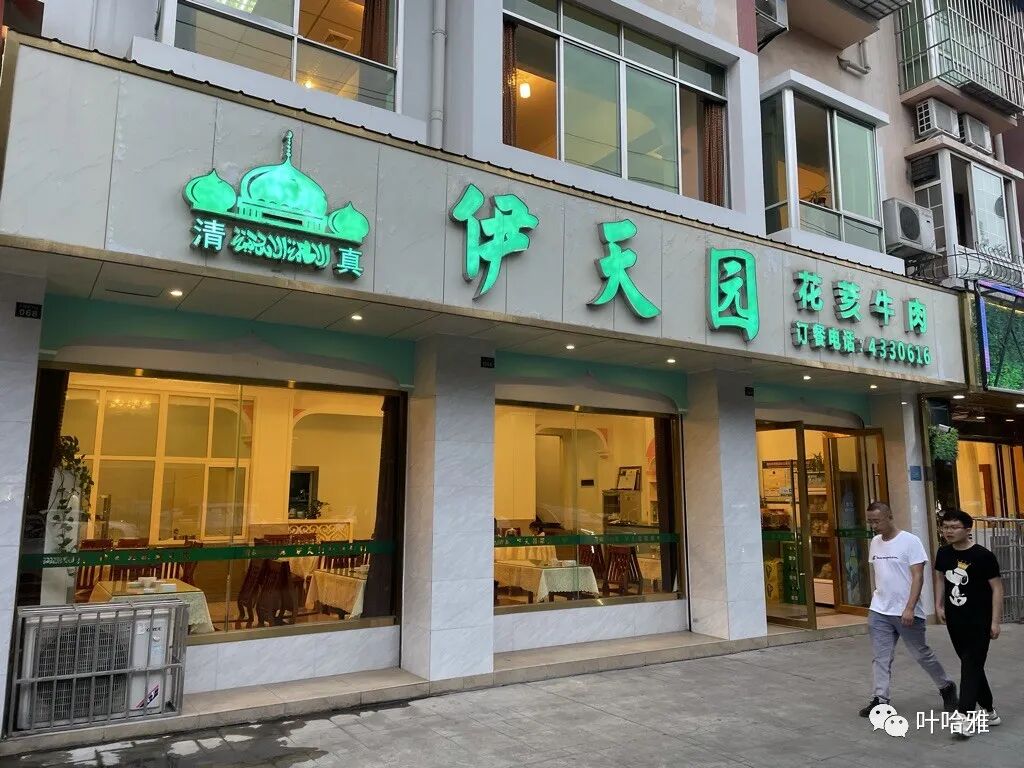
Yitianyuan has been operating in Huagai Town for nearly twenty years and is considered a local institution. Huagai beef is one of the area's culinary calling cards. I have mentioned before that I love Sichuan-style stir-fries. Since there are no authentic halal Sichuan restaurants in Beijing, I really cherish the chance to eat them here in the land of Shu.
When we arrived at Yitianyuan, the owner, Mr. Ma, and his family had already arranged the menu. Every dish was a specialty of the chef and full of local character. Brother Mu has known the owner's family for years, so we sat around the table and listened to Mr. Ma share stories about his time running the restaurant.
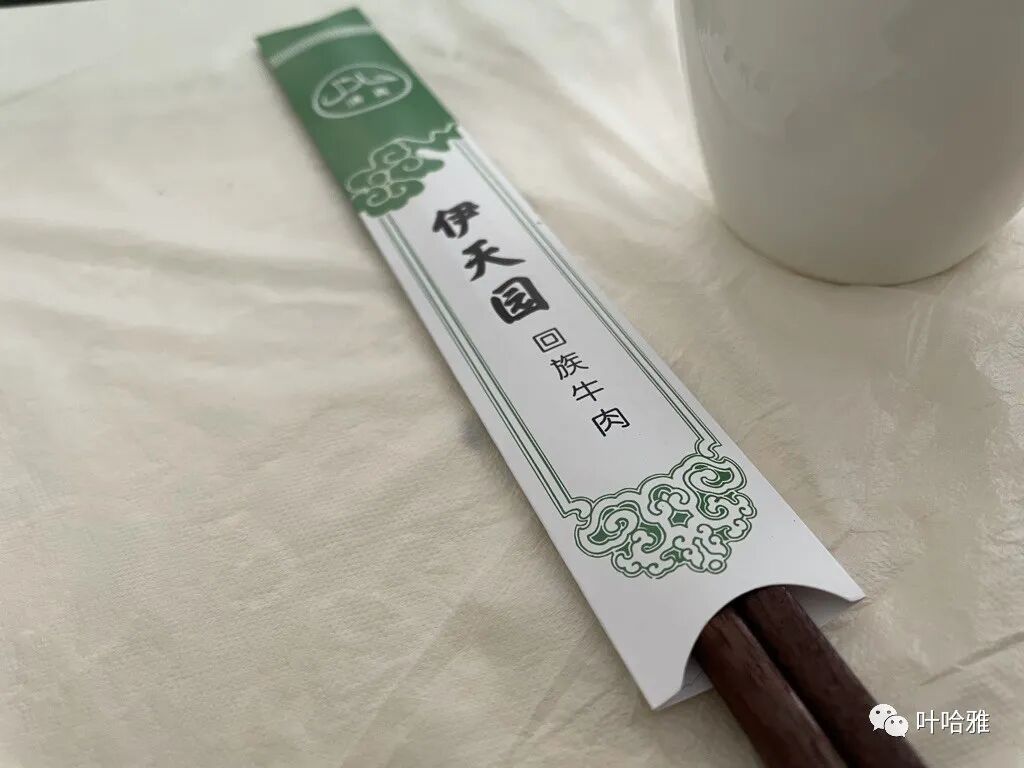
Interestingly, Yitianyuan occasionally hosts Hui Muslims from Northwest China. Some friends (dost) who are unfamiliar with the level of religious practice among Sichuan Hui Muslims sometimes doubt if the ingredients are truly halal. In fact, Mr. Ma and his family are devout Muslims. They raise their own cattle and hire an imam to perform the slaughter, ensuring everything is halal. We all laughed when we heard this. The religious dedication of Sichuan Hui Muslims is often severely underestimated by outsiders, yet they make up a significant portion of the annual Hajj pilgrimage groups to Mecca.
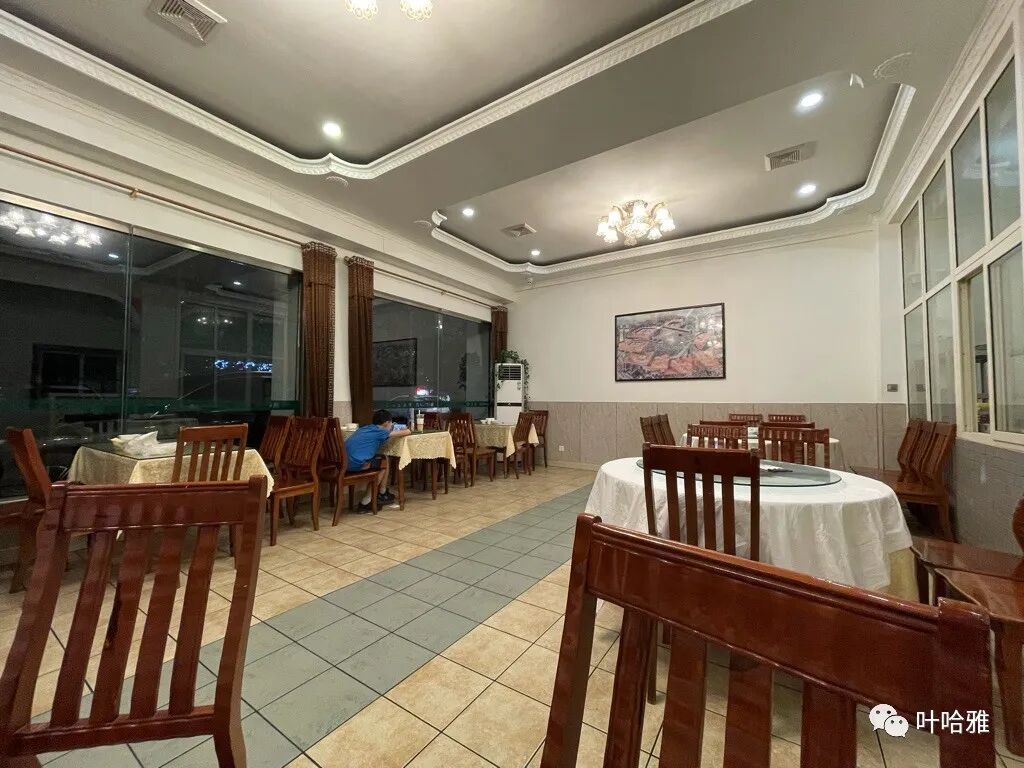
The landlady mentioned that the painting of the Sacred Mosque in Mecca hanging on the wall was bought over ten years ago during a trip to Niujie in Beijing. It has been on that wall since the restaurant opened. During the Wenchuan earthquake, other walls in the shop cracked and items fell everywhere, but the wall with the painting remained completely undamaged.
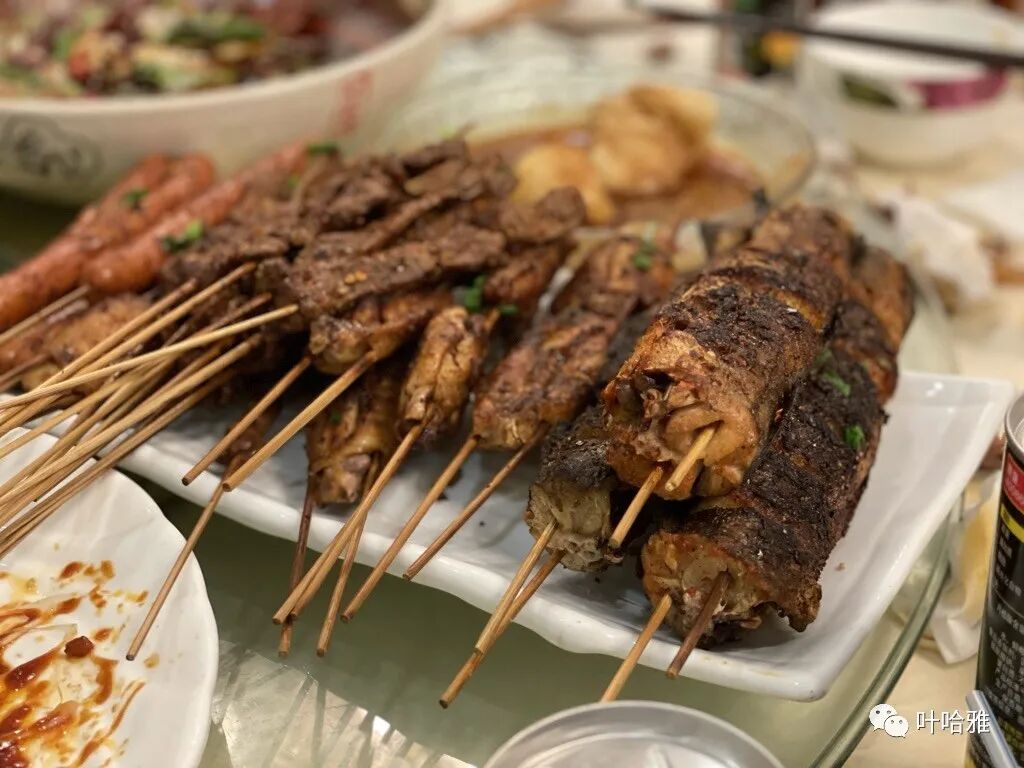
Sichuan-style small barbecue, this is grilled fish.
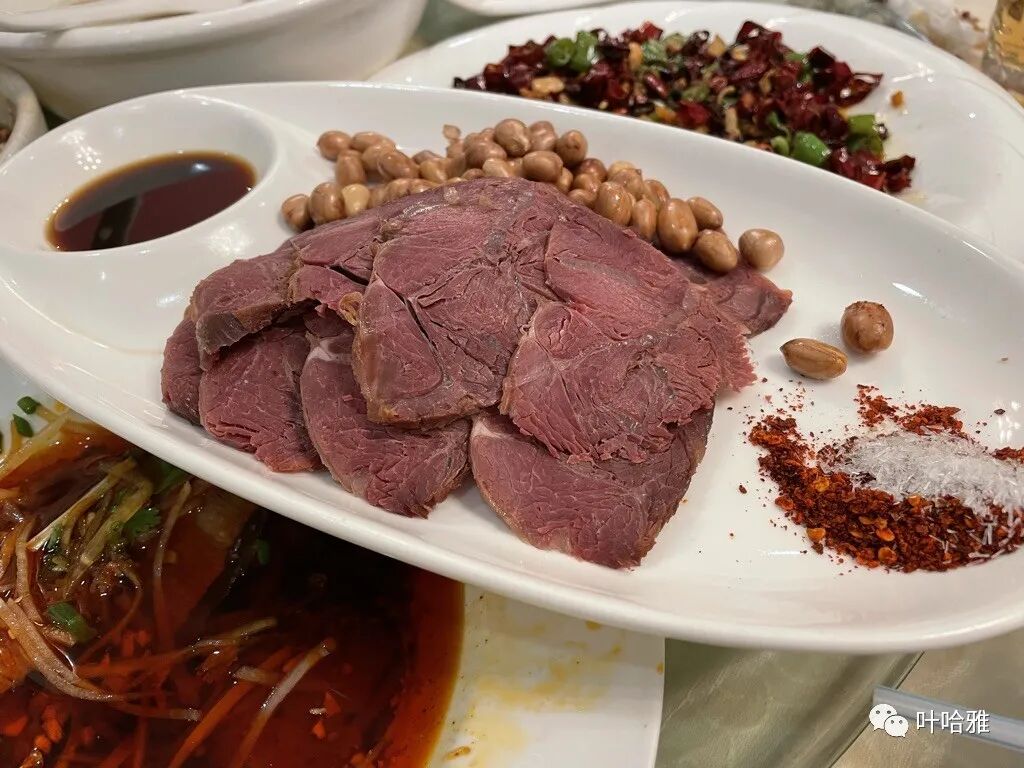
Fragrant braised beef shank (xianglu jianzi niurou).
Huagai is a place name. The beef here is very famous in the Mianyang area. Locals know to go to Huagai Town to buy beef from Hui Muslims. People often wonder why beef and lamb from Hui sources are of such high quality. It is not because of some secret recipe, but because Hui Muslims insist on slaughtering live animals. They never use meat from animals that died of illness or other non-slaughter causes. They also ensure the blood is drained, as residual blood affects the quality of the meat.
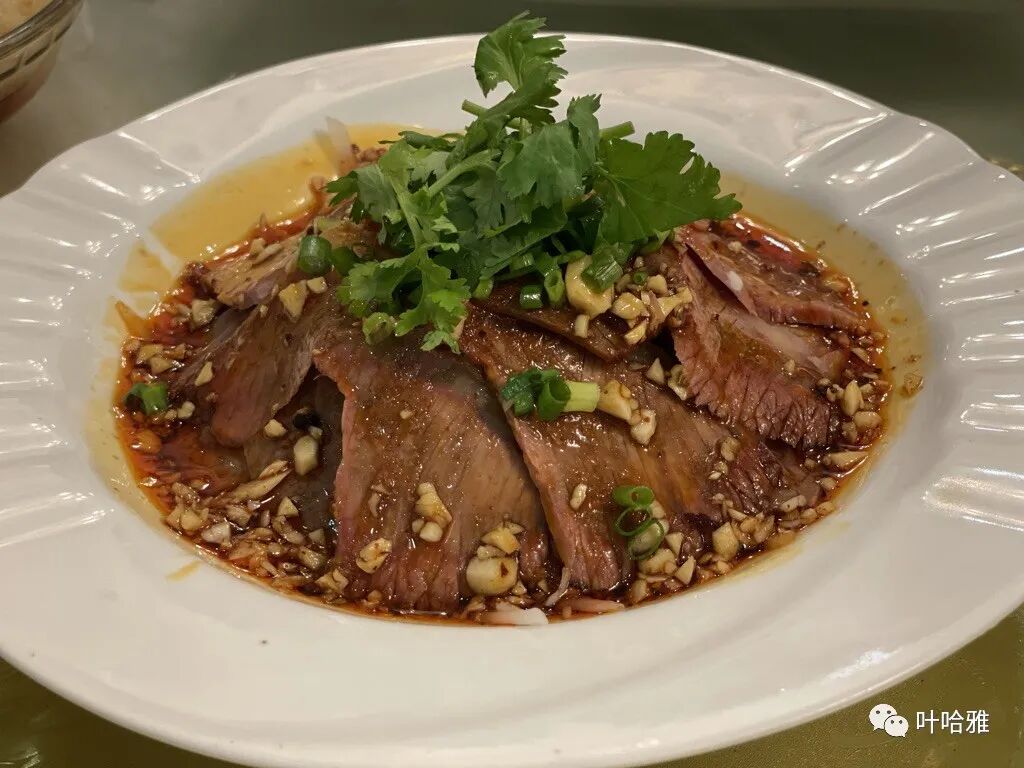
Cold tossed beef (liangban niurou).
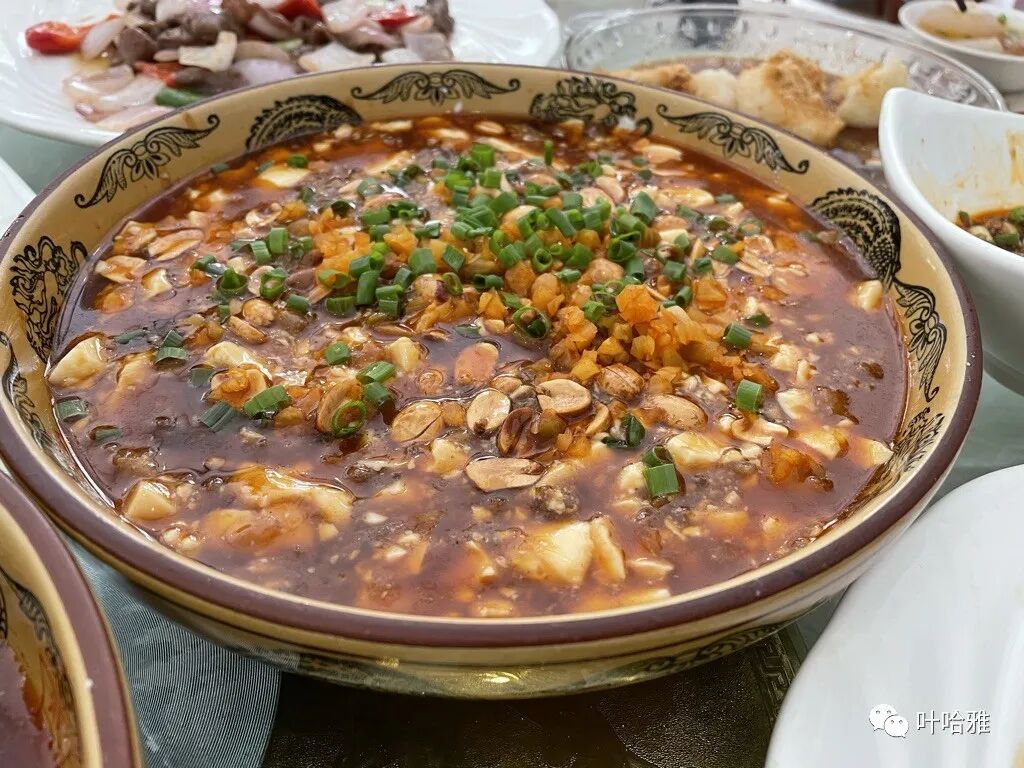
Tofu pudding beef (douhua niurou).
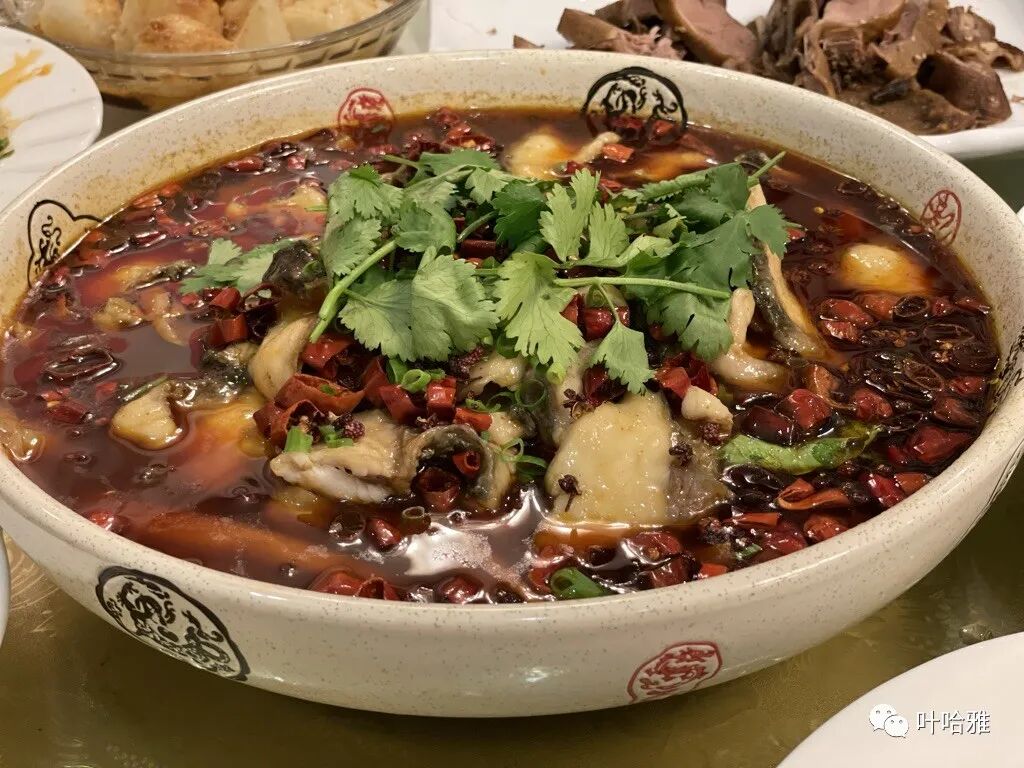
Boiled fish (shuizhu yu).
Boiled fish is a classic Sichuan dish. The key is to use fresh, live fish paired with fragrant and spicy Sichuan peppercorns and chili peppers. I could eat a whole basin of this alone. After finishing the fish, there are crunchy bean sprouts underneath. Although many halal restaurants in Beijing serve boiled fish, it is hard to replicate the authentic Sichuan flavor.
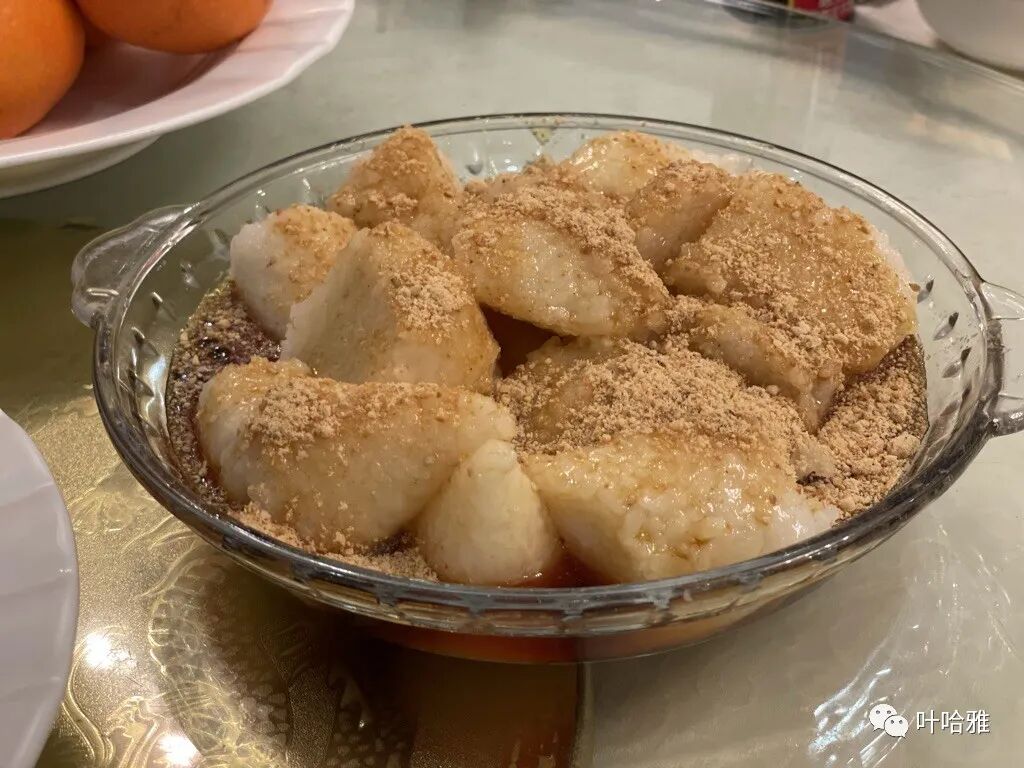
Sticky rice dumplings (zongzi).
I happened to be in Mianyang during the Dragon Boat Festival and was lucky enough to eat local zongzi. They are similar to sticky rice cakes (ciba), sprinkled with brown sugar powder and quite sweet.
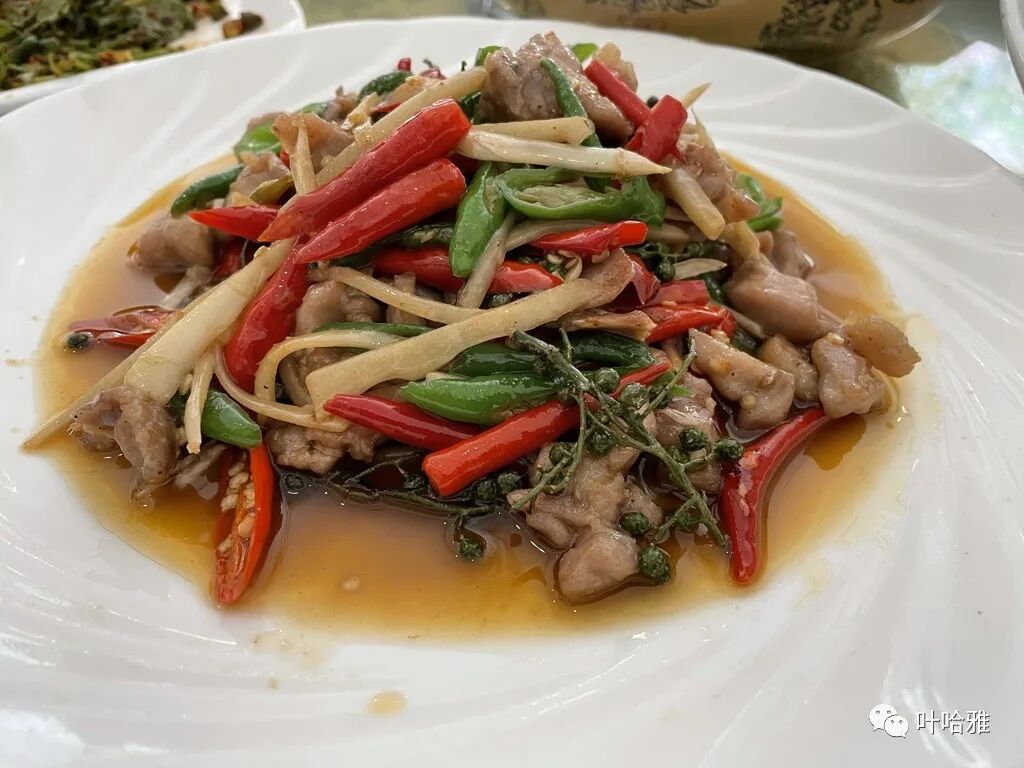
Mute rabbit (yaba tu).
Why is this dish called mute rabbit? It is because the dish is incredibly spicy and numbing, making people so hot they cannot speak, hence the name. Of course, becoming mute is an exaggeration; it is not actually that spicy, though it was still quite hot for me. A friend from Mianyang sitting next to me said he did not feel the heat at all.
Besides beef, rabbit meat prepared by Hui Muslims is a major local specialty in Sichuan. Some Hui Muslims in other provinces do not eat rabbit, believing it is not halal because rabbits do not ruminate. I have already clarified this in my article about which foods are not halal according to scripture. The concept of rumination is not part of Islamic teaching, but rather comes from the Old Testament of Judaism.
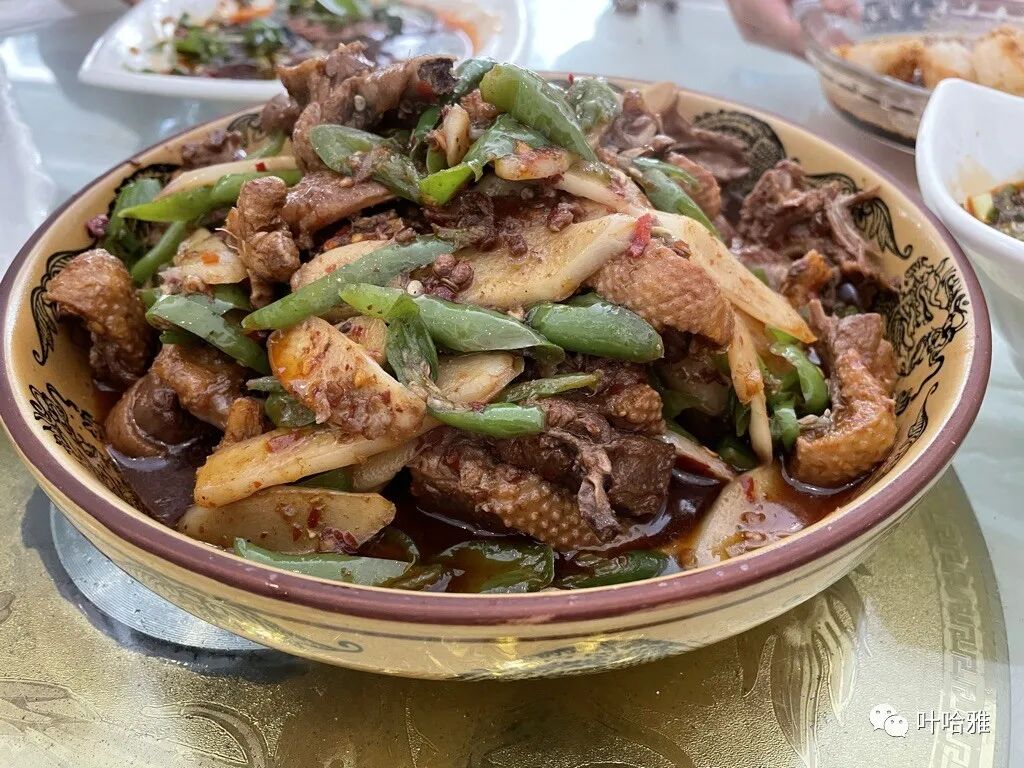
Young ginger braised duck (zijiang shaoya).
Young ginger (zijiang) usually refers to fresh ginger. This is a famous Sichuan dish. The preparation is complex and requires high culinary skill, especially in selecting local ginger and duck, and marinating the duck beforehand to ensure the flavor penetrates the meat.
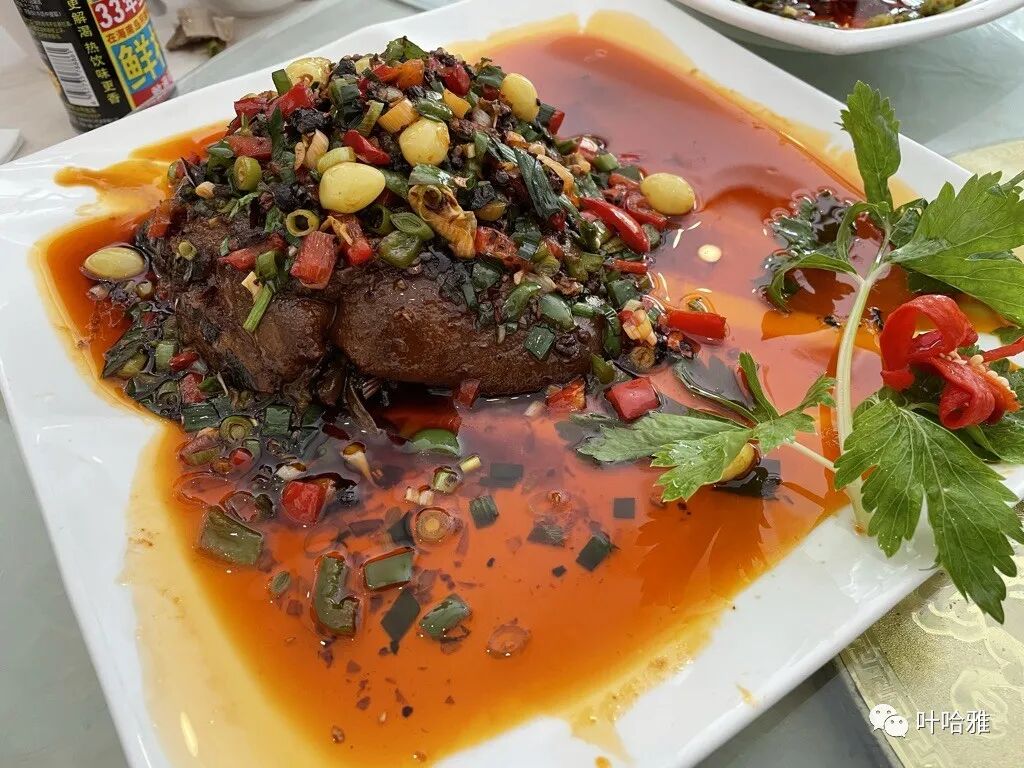
Dongpo Mian-style pork trotter (Dongpo mianti).
The traditional way to make Dongpo cotton trotters (dongpo mianti) uses pork, but Hui Muslims have improved it by using beef trotters. You must steam the beef trotters first to make them soft and tender. After steaming, you pour sauce over them. They are full of collagen and melt in your mouth.
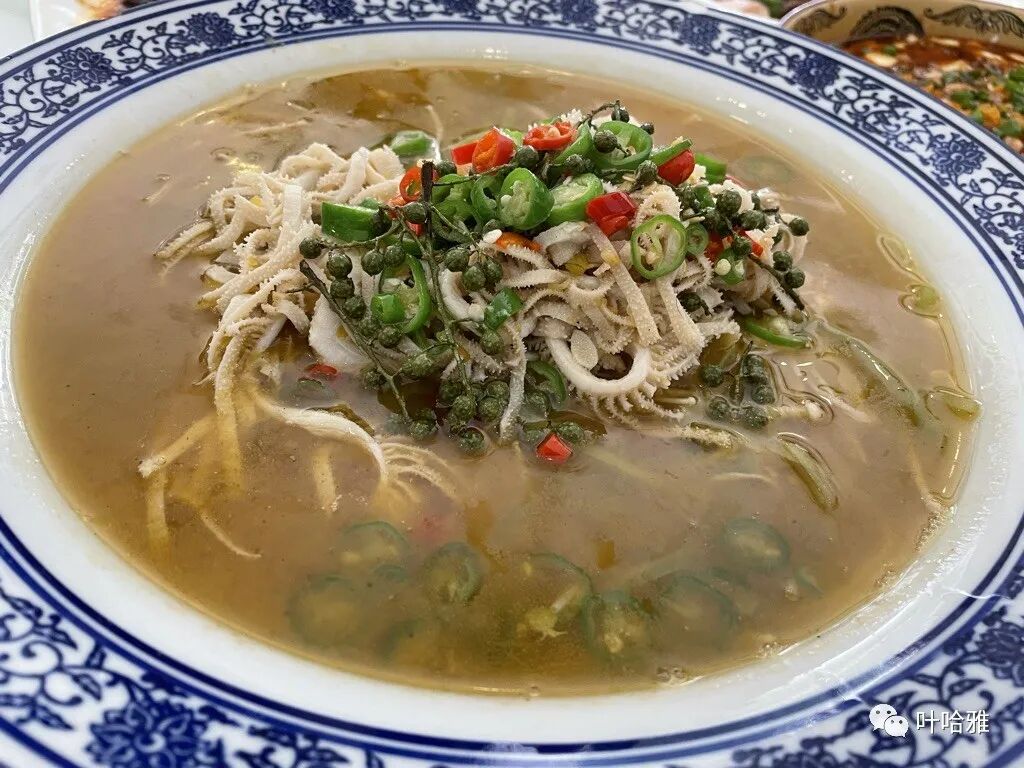
Sour soup beef tripe (suantang niudu)
I have eaten sour soup beef tripe at restaurants in Beijing, but this is my first time having authentic sour soup beef tripe in Sichuan. The taste is truly different. Sichuan food really tastes best when made locally in Sichuan. Some large halal restaurants in Beijing serve Sichuan dishes, but I always feel that Sichuan cuisine is very home-style. You can find Sichuan restaurants wherever there are Chinese people, so it is best to eat Sichuan food at small, home-style shops for the best flavor.
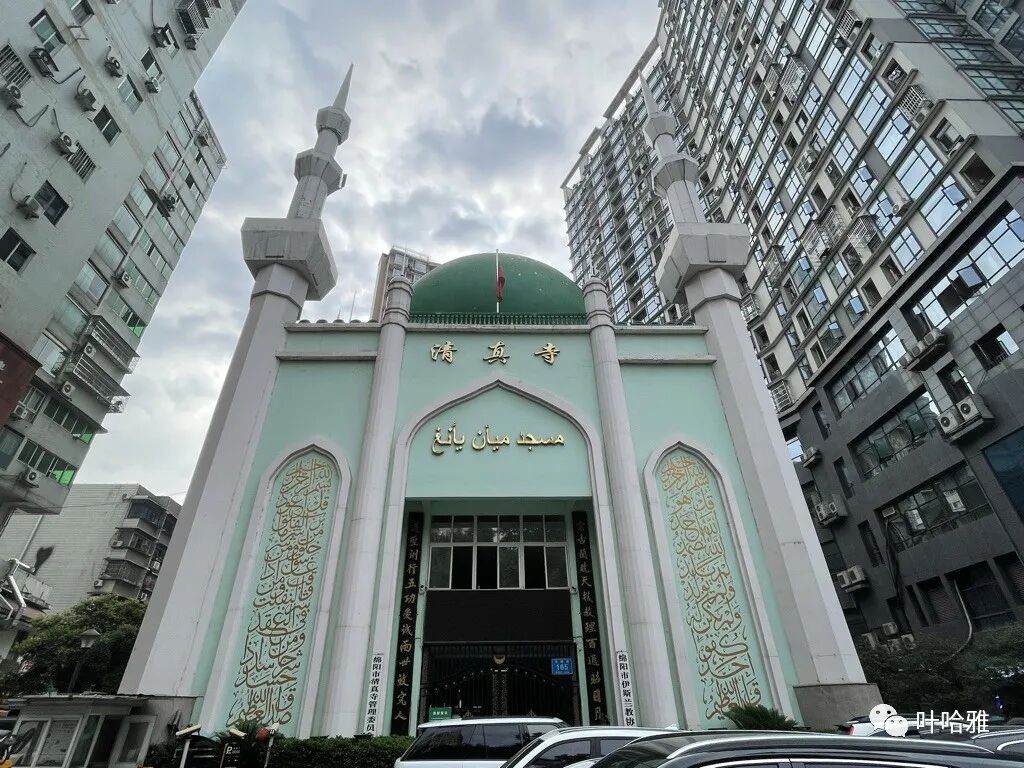
The next day, we arrived at the mosque in downtown Mianyang. The Mianyang mosque is currently under renovation, so all the shops on the ground floor are closed until the work is finished. I saw many local specialty shops there.
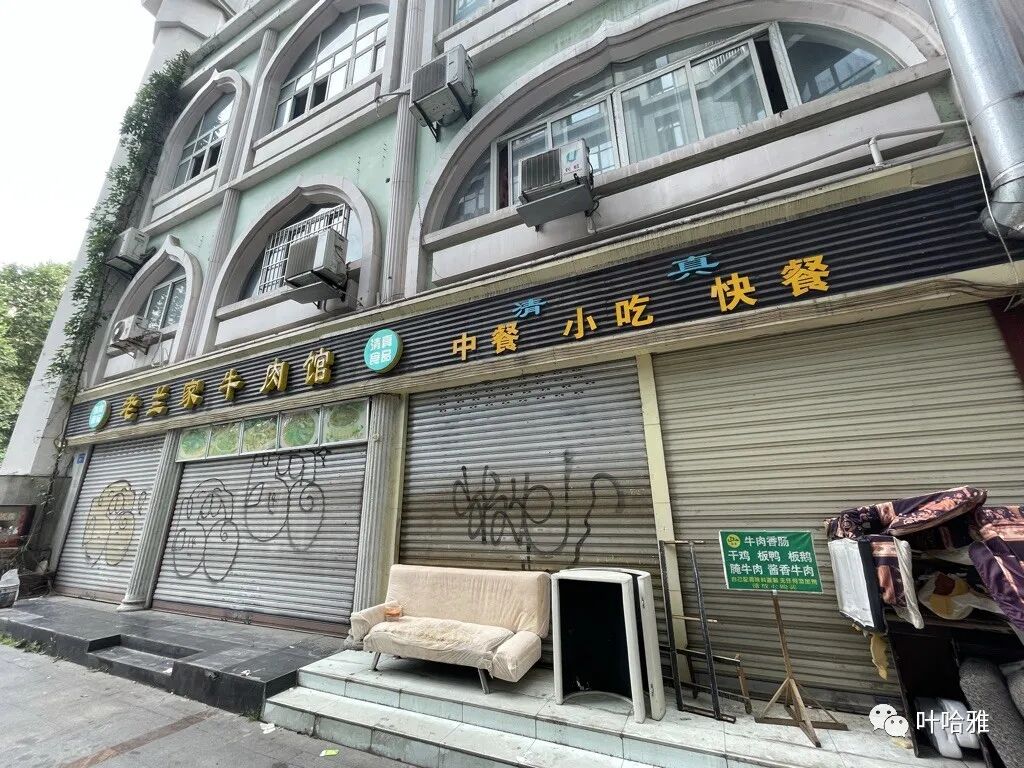
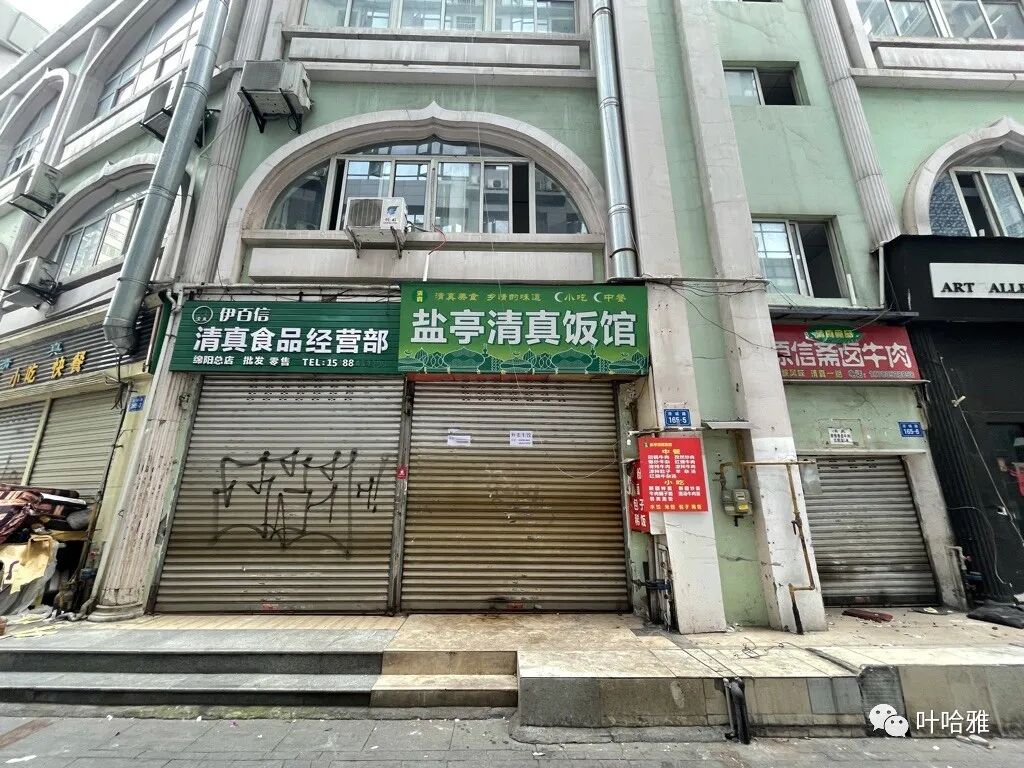
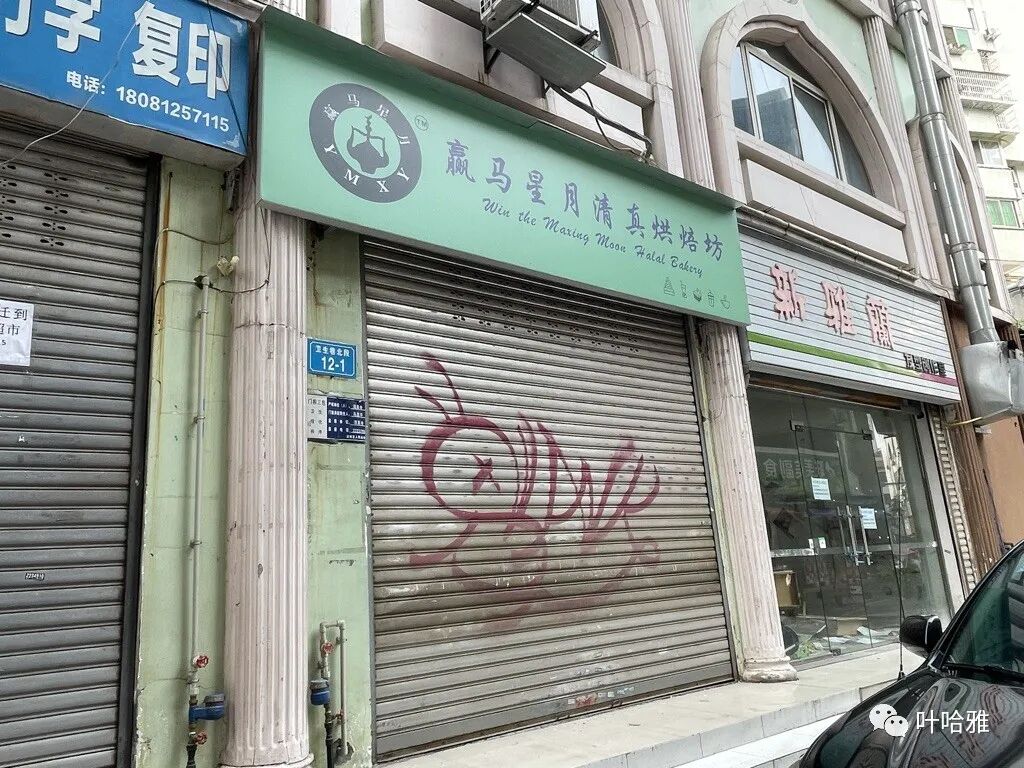
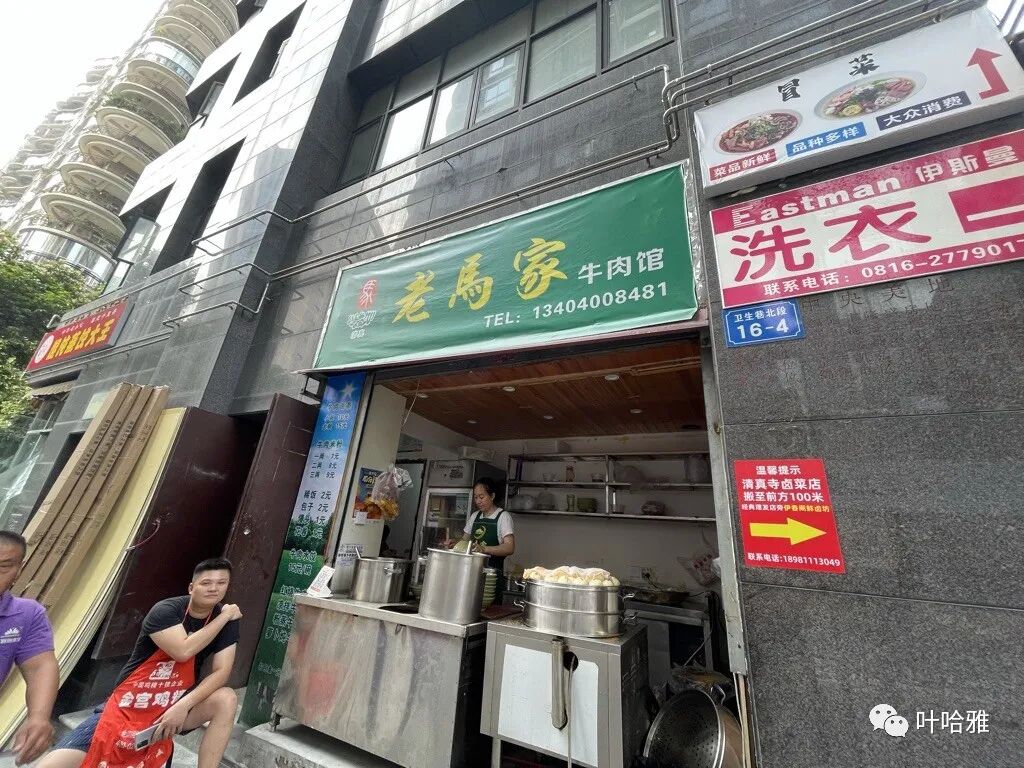
Luckily, there is still a breakfast shop run by local Hui Muslims. Brother Mu strongly suggested I try the Mianyang specialty breakfast, rice noodles (mifen).
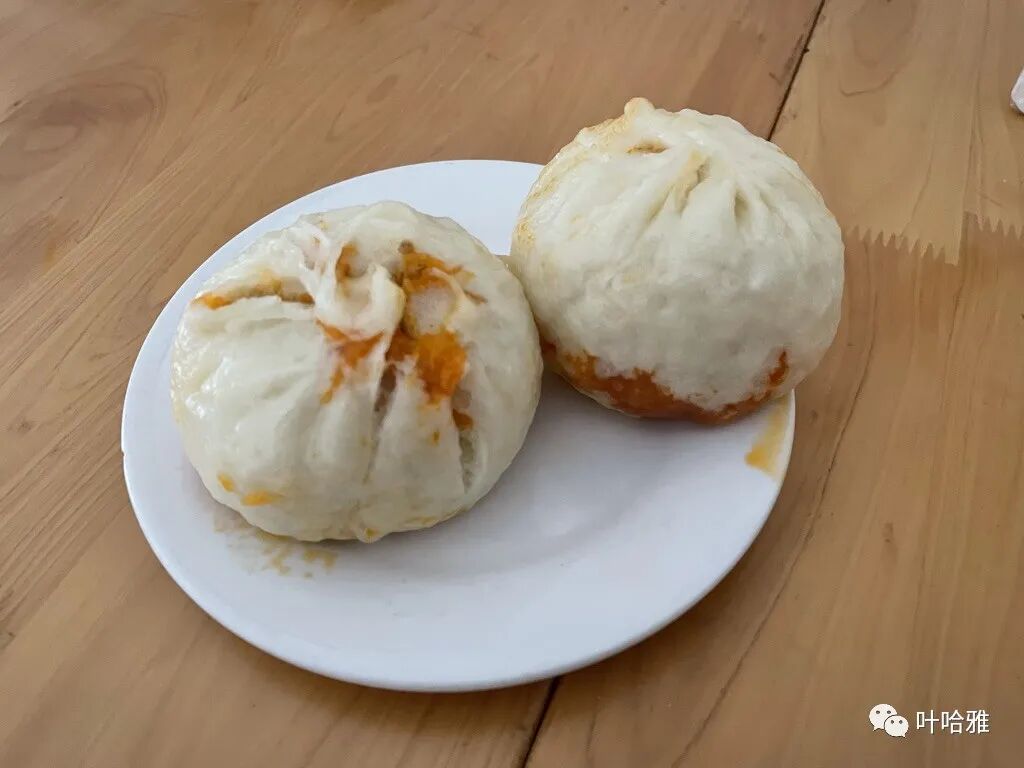
Beef bun (niurou bao)
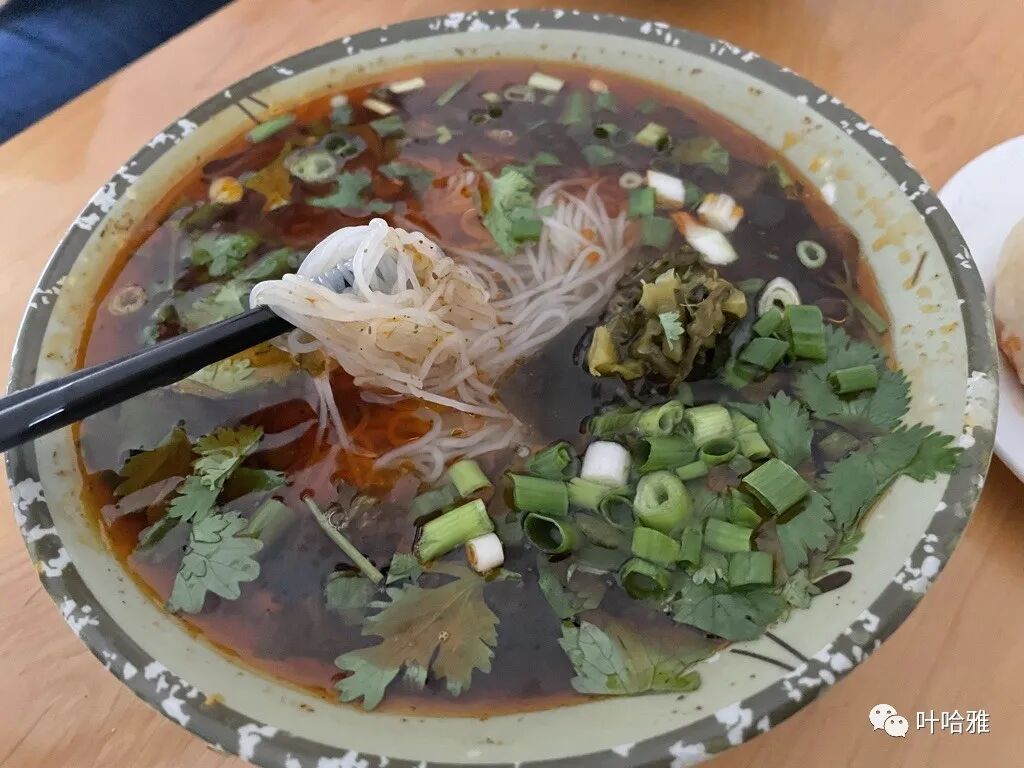
Mianyang rice noodles (mianyang mifen)
Mianyang rice noodles are unique in the Sichuan region. The noodles are thin, and the soup is rich in oil and salt with a strong flavor. Mianyang locals love them for breakfast. This small shop was packed with diners in the morning, and many customers even squeezed into the hallway behind the shop to eat. It felt very lively.
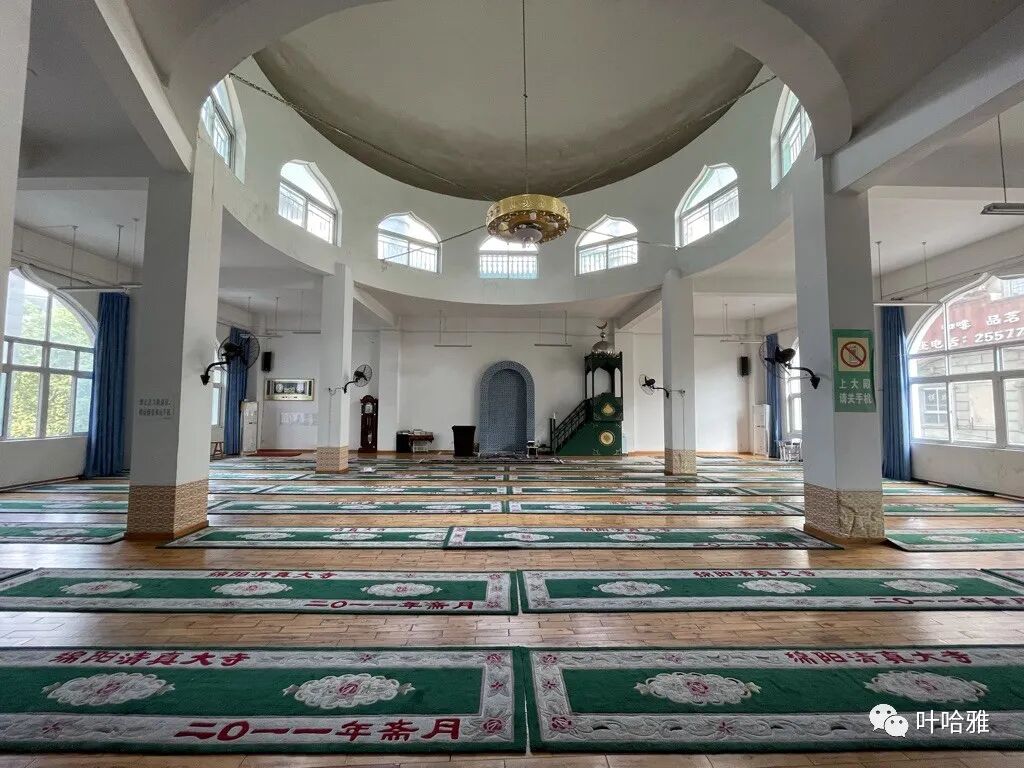
In 2001, an imam was murdered at the Mianyang mosque. The killer was a migrant worker who was unhappy with the imam's work. He killed the imam while he was sleeping, fled to Xinjiang, and was later arrested by the police. He was executed in 2004.
Similar incidents have happened more than once in China. The profession of imam is actually a vulnerable group in many parts of our country. They do not have high incomes and are rarely valued, yet they are indispensable mentors in our daily lives. Especially when a loved one passes away, imagine how a family would give them a dignified burial without the help of an imam.
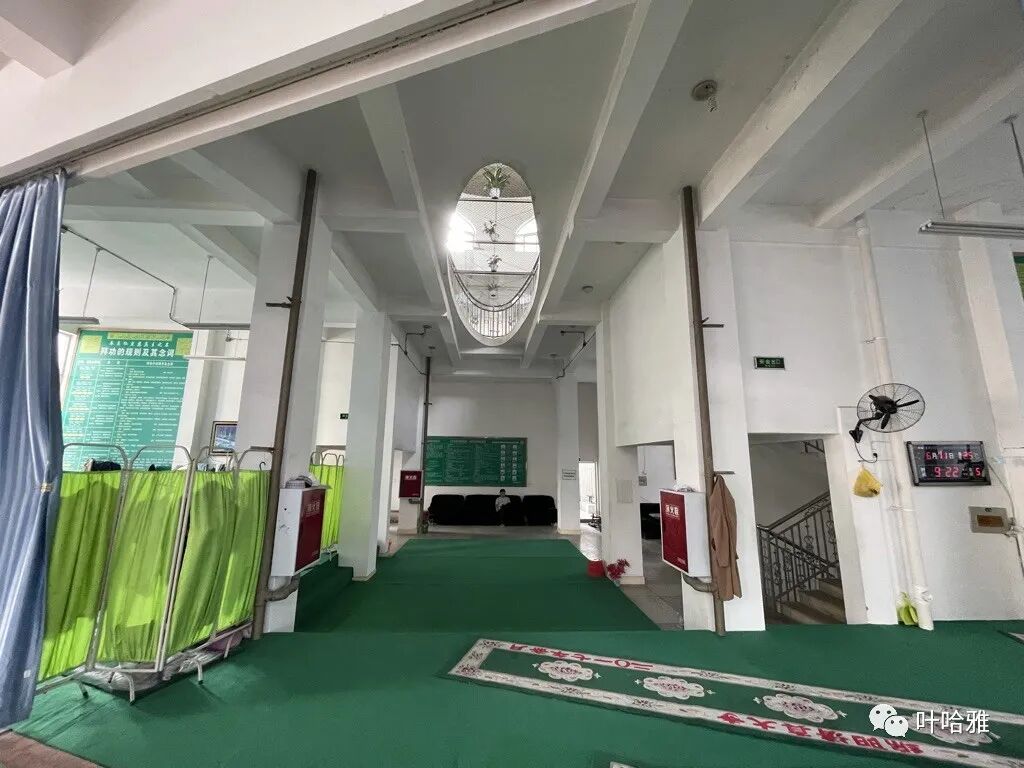
The renovation of the mosque is not finished yet. I hope it is completed soon so the snack shops downstairs can reopen. I want to come back and taste the food next time.
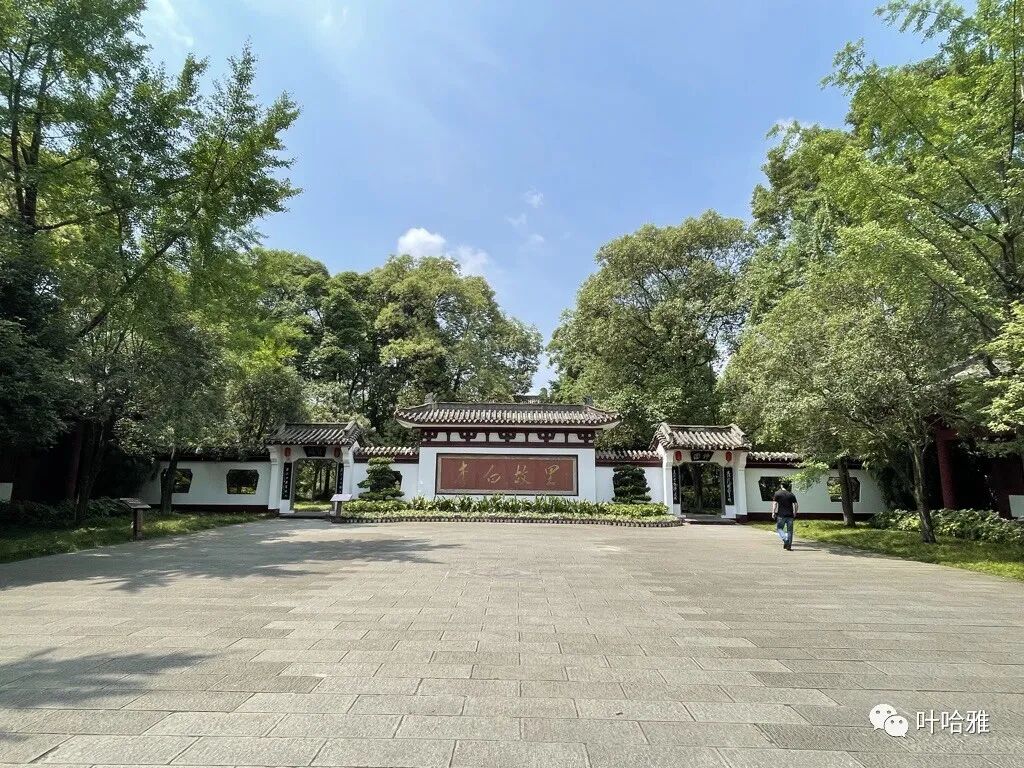
After breakfast, we drove 50 minutes to Jiangyou City, the hometown of Li Bai. Jiangyou is under the jurisdiction of Mianyang. What attracts me here is not the so-called hometown of Li Bai, because Li Bai has many hometowns. What attracts me most is the mosque located on Zhongba Street in Jiangyou.
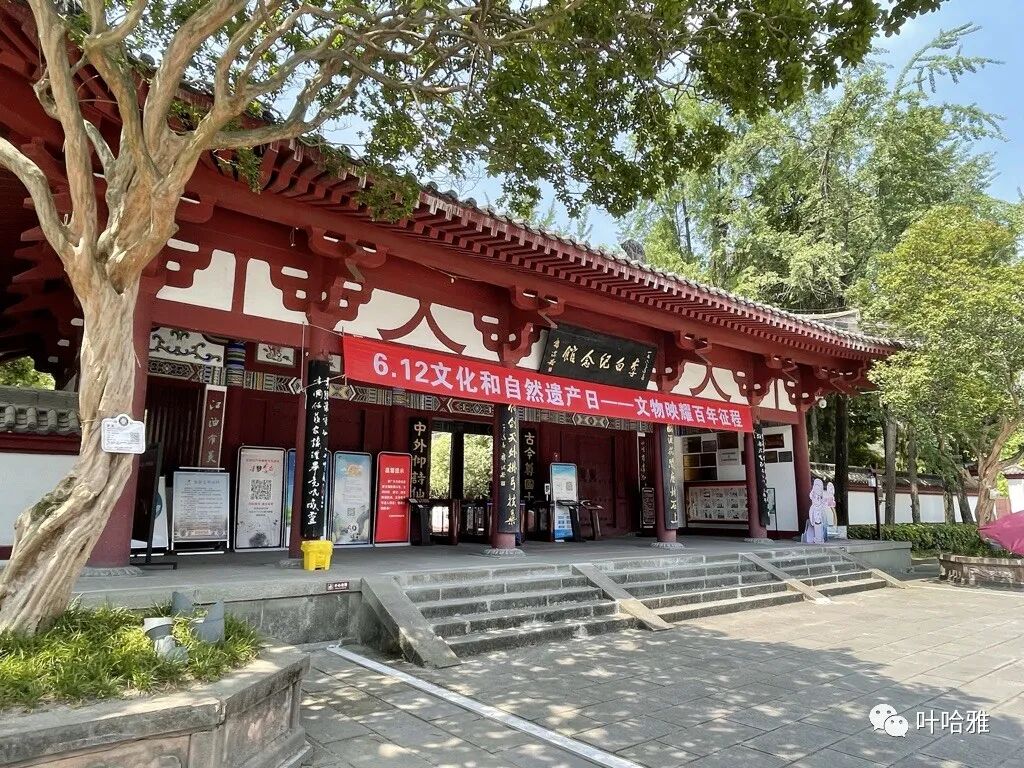
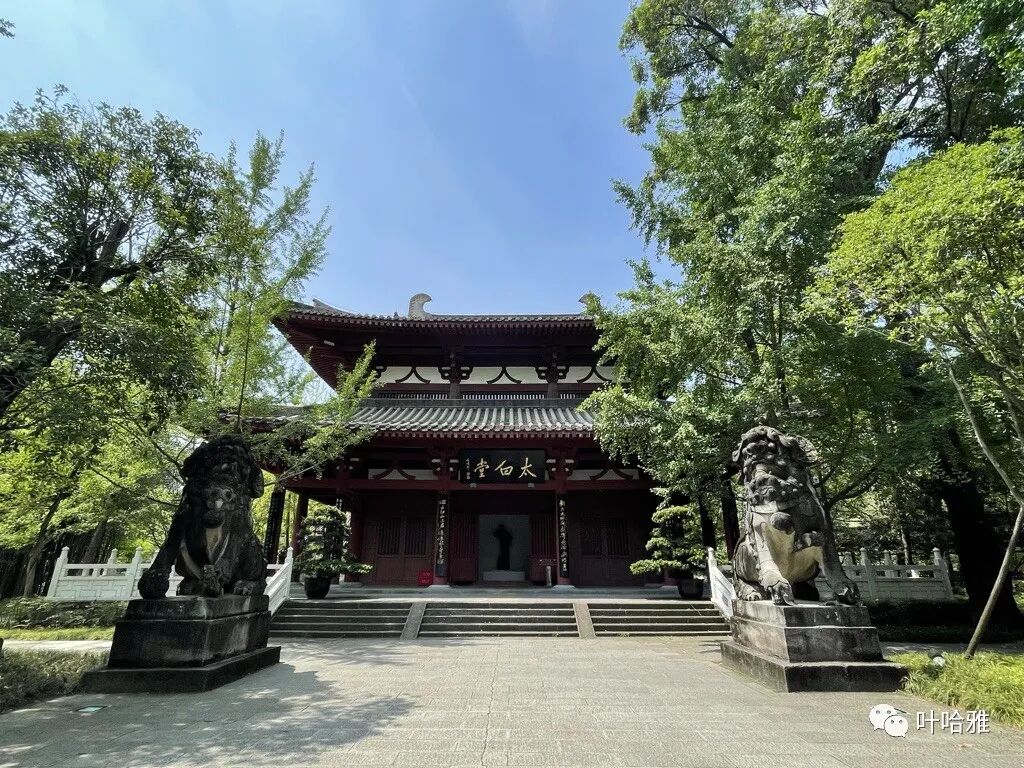
Taibai Hall (taibai tang)
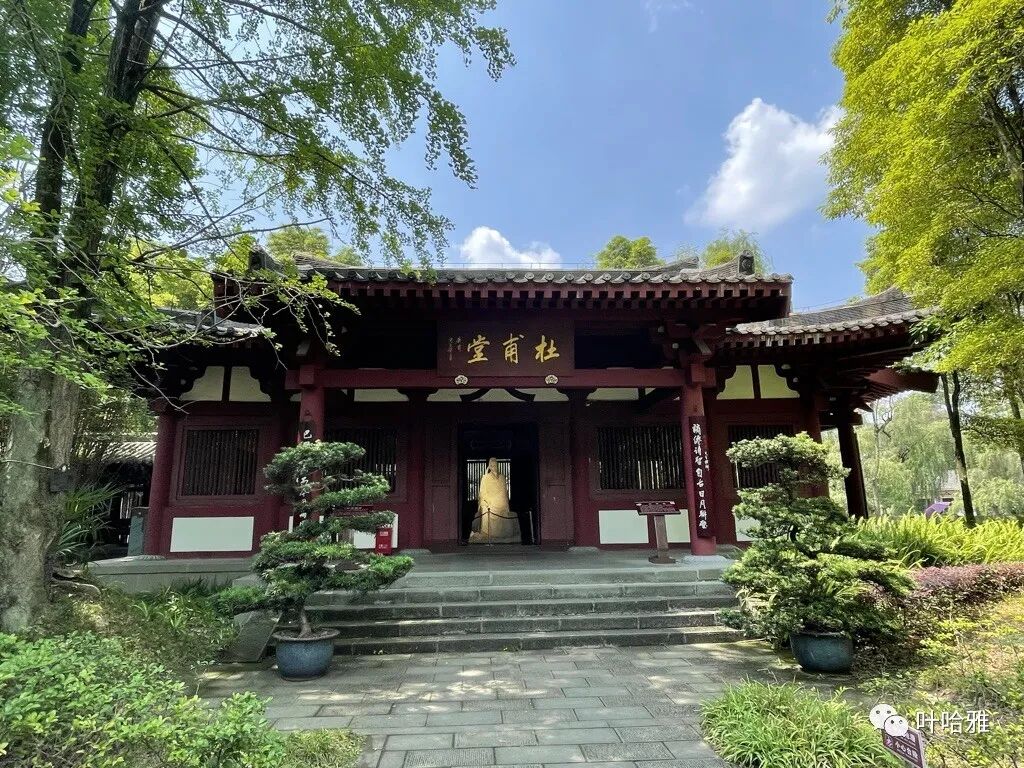
Du Fu Hall (dufu tang)
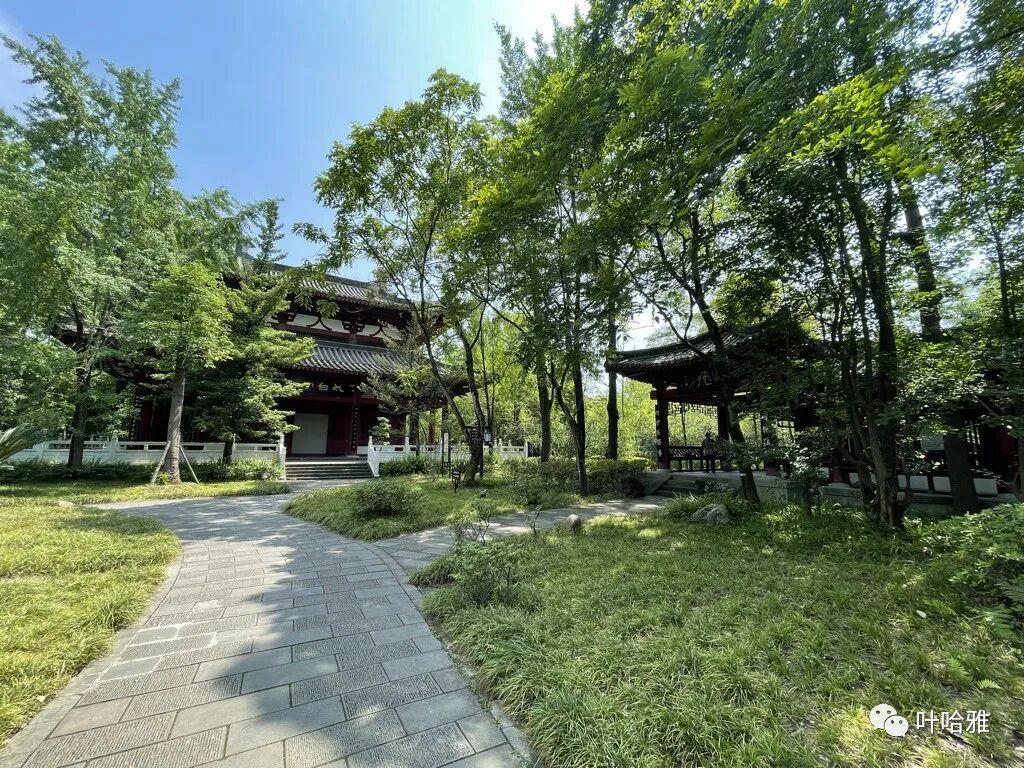
The Li Bai Memorial Hall is a park built in the style of the Tang Dynasty. It is free to visit, and nearby residents come here to cool off in the summer. It is only one kilometer away from the Jiangyou Zhongba Mosque.
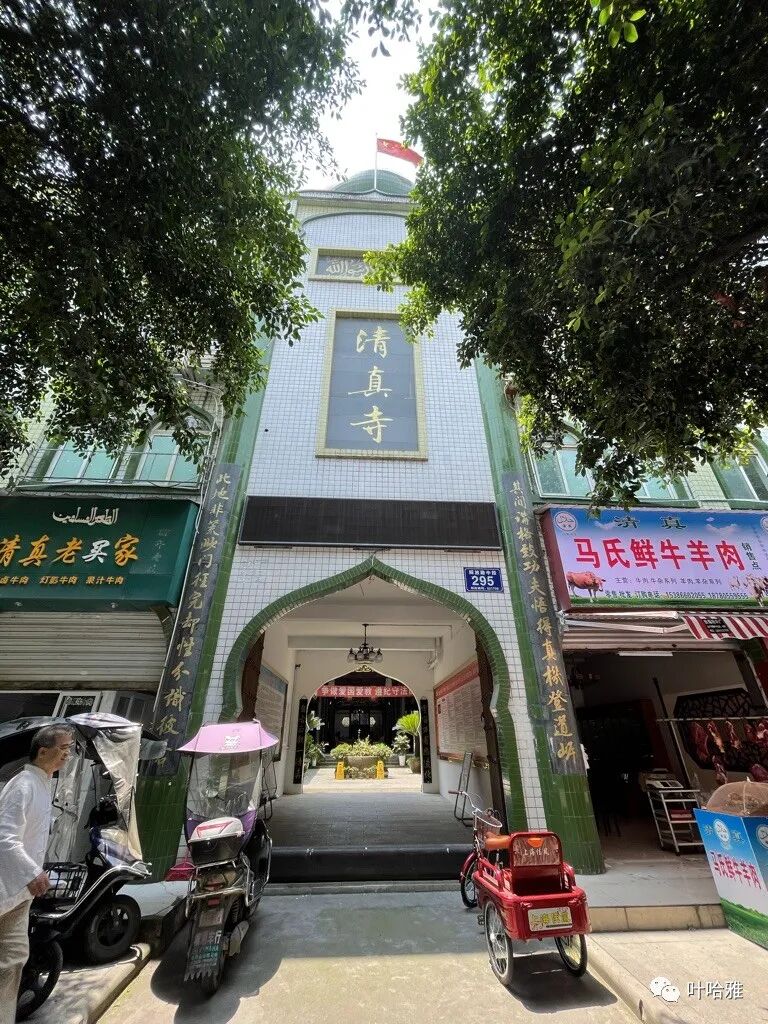
Jiangyou Mosque is the only mosque in Jiangyou. It is located in the area where Hui Muslims are concentrated near the North Gate of Zhongba Town, Jiangyou. The mosque was first built in the second year of the Jiaqing reign of the Qing Dynasty (1797 AD).
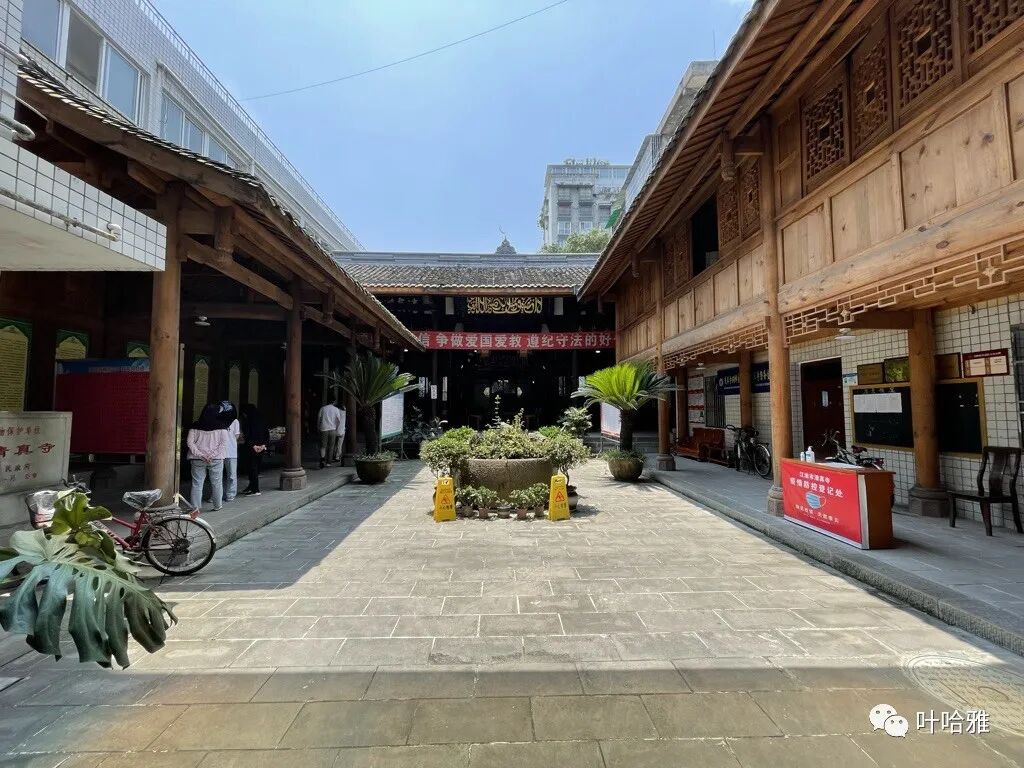
It is Jumuah today, and hundreds of people have gathered in the mosque. Most of them are local Hui Muslims. There are not many outsiders here, and you can tell the faith is strong by the number of people attending Jumuah.
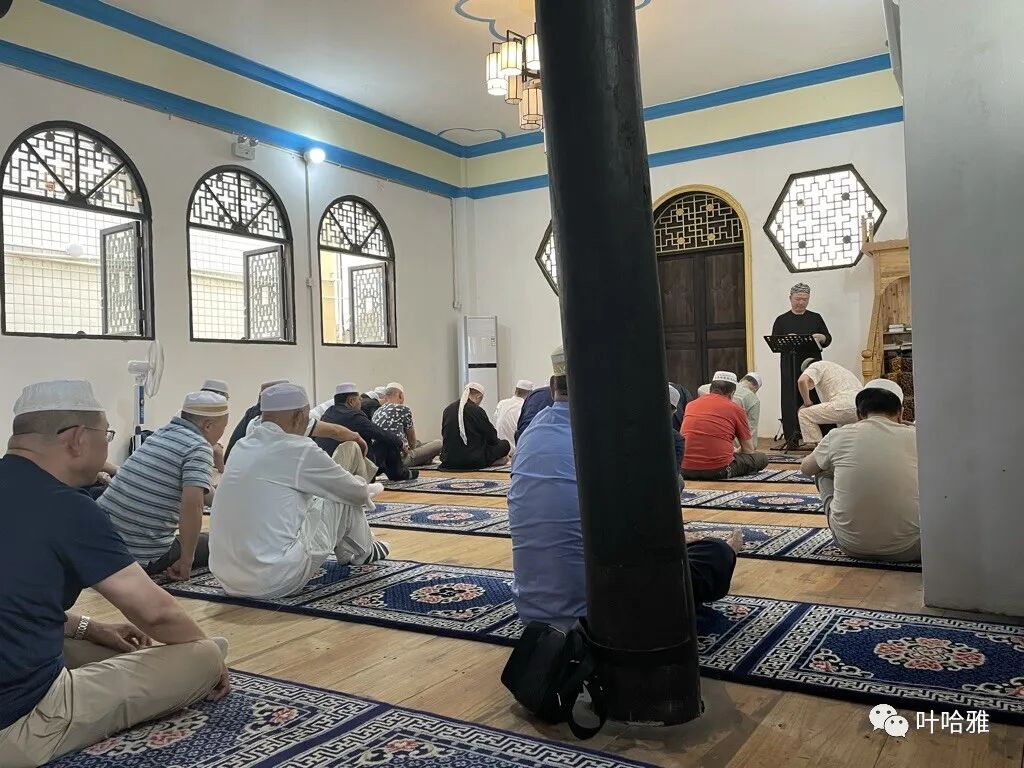
The imam spoke in a local dialect, so I could not understand much, but I am used to it. Outside of North China and the Northeast, there are not many dialects I can understand.
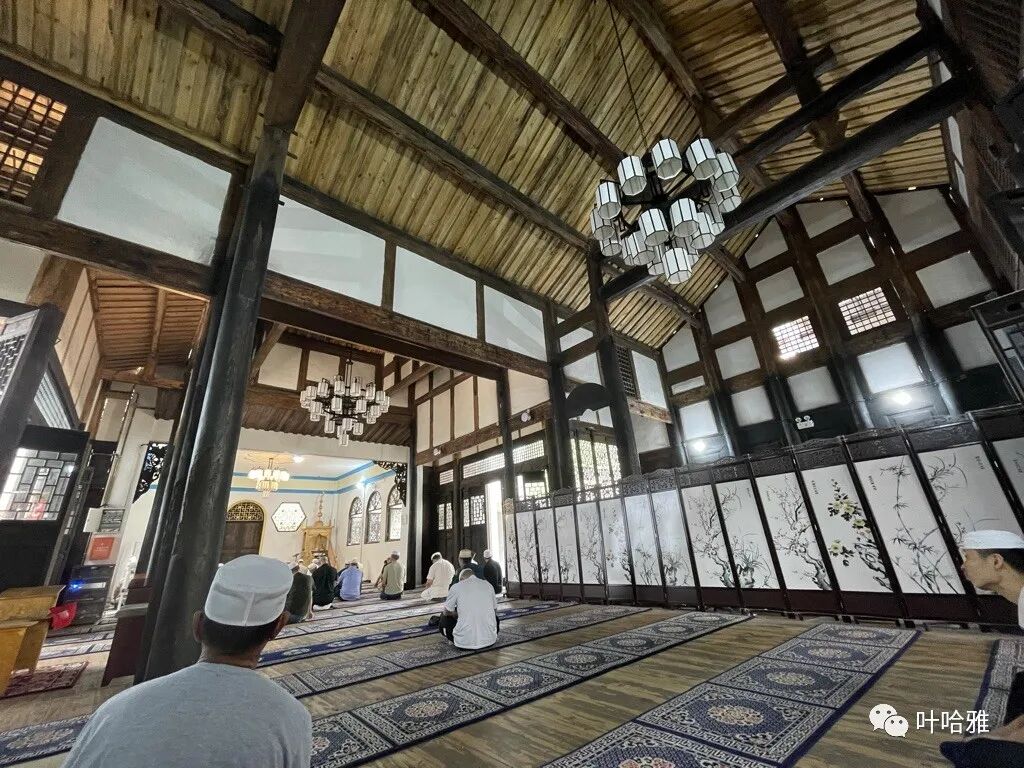
Brother Mu's hometown is Jiangyou. After the Jumuah prayer, I saw his father and relatives there, which shows he comes from a family with a long tradition of faith and good family education.
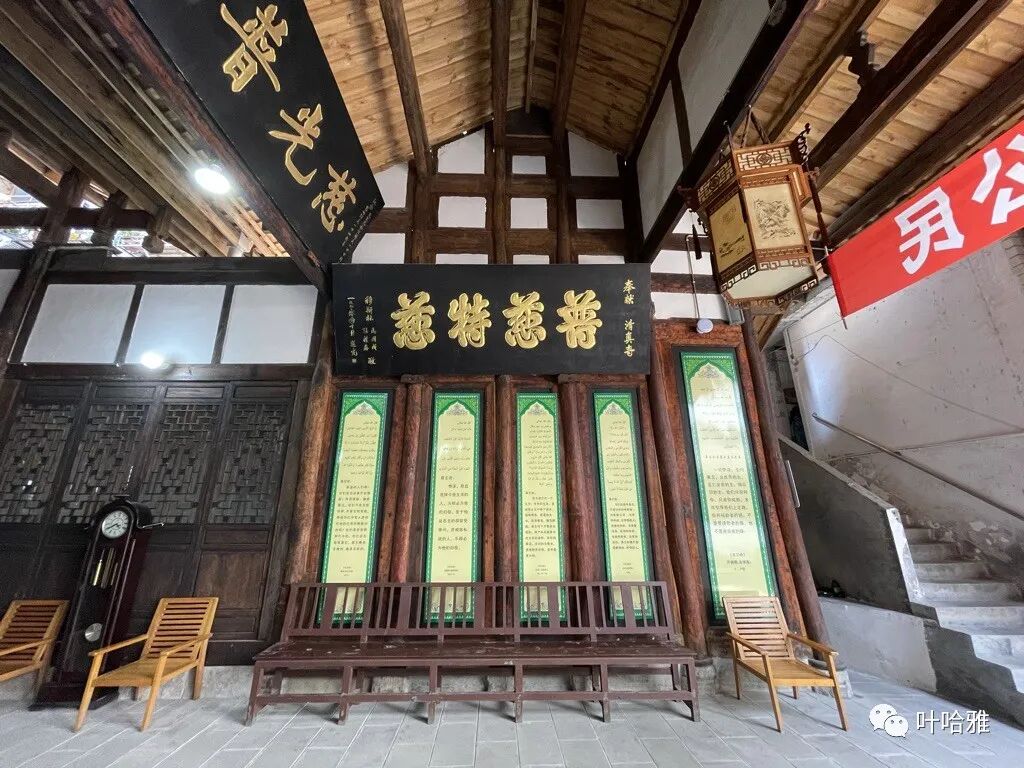
The main building of the mosque is an old structure and has been designated as a municipal-level cultural relic protection unit.
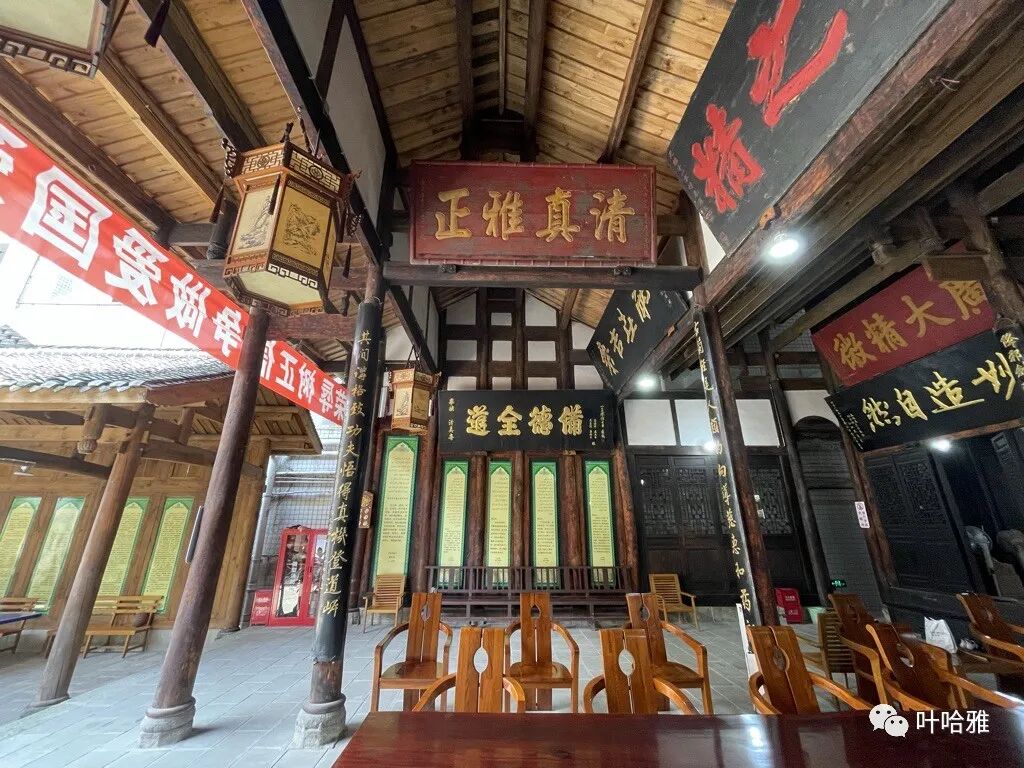
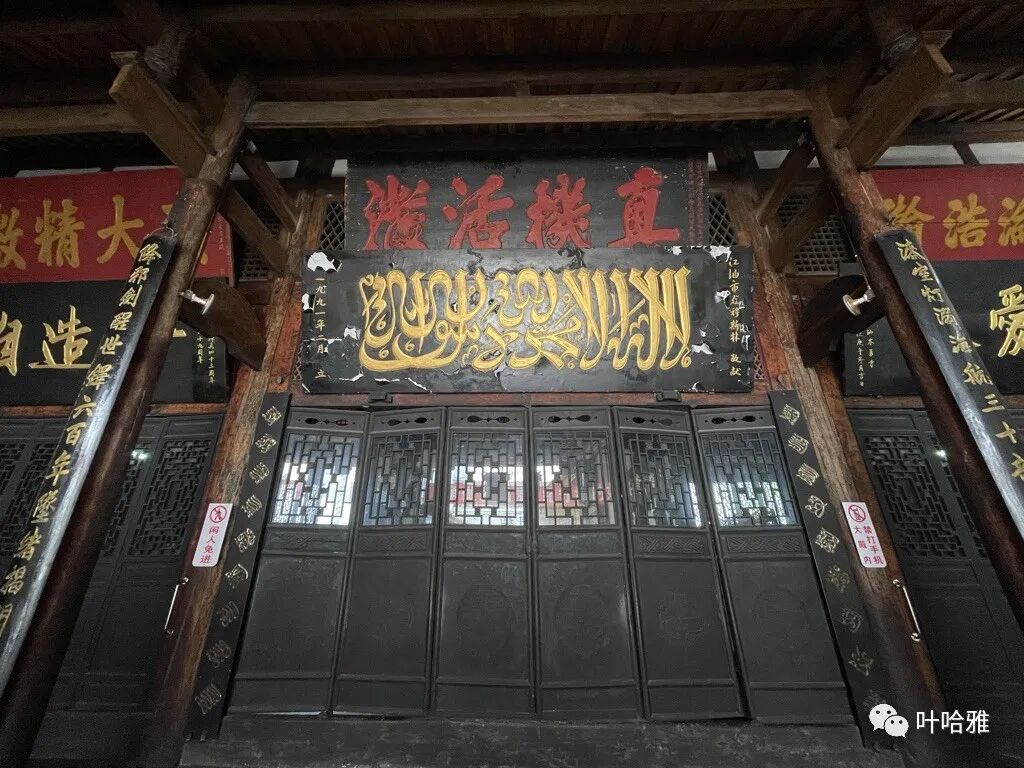
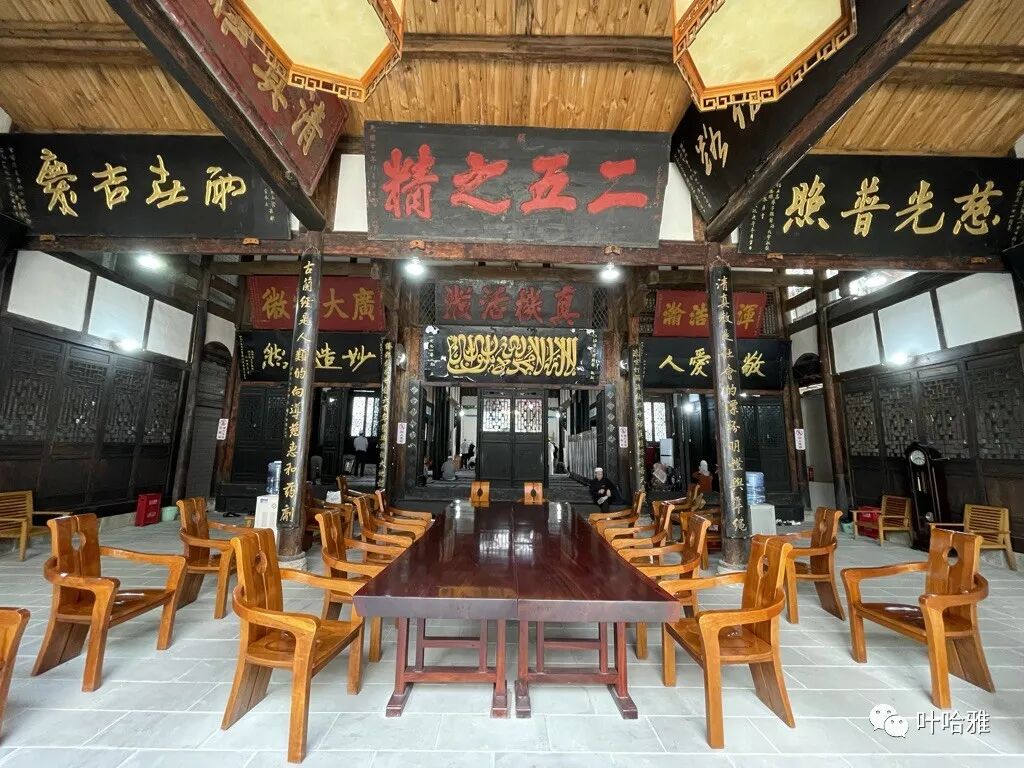
The plaque reading 'True Spirit Lively' (zhenji huopo) was inscribed by Xia Yuxiu, a military commander from Songpan, Sichuan. The couplet was inscribed by Shao Bingwen of the Songpan Prefecture.
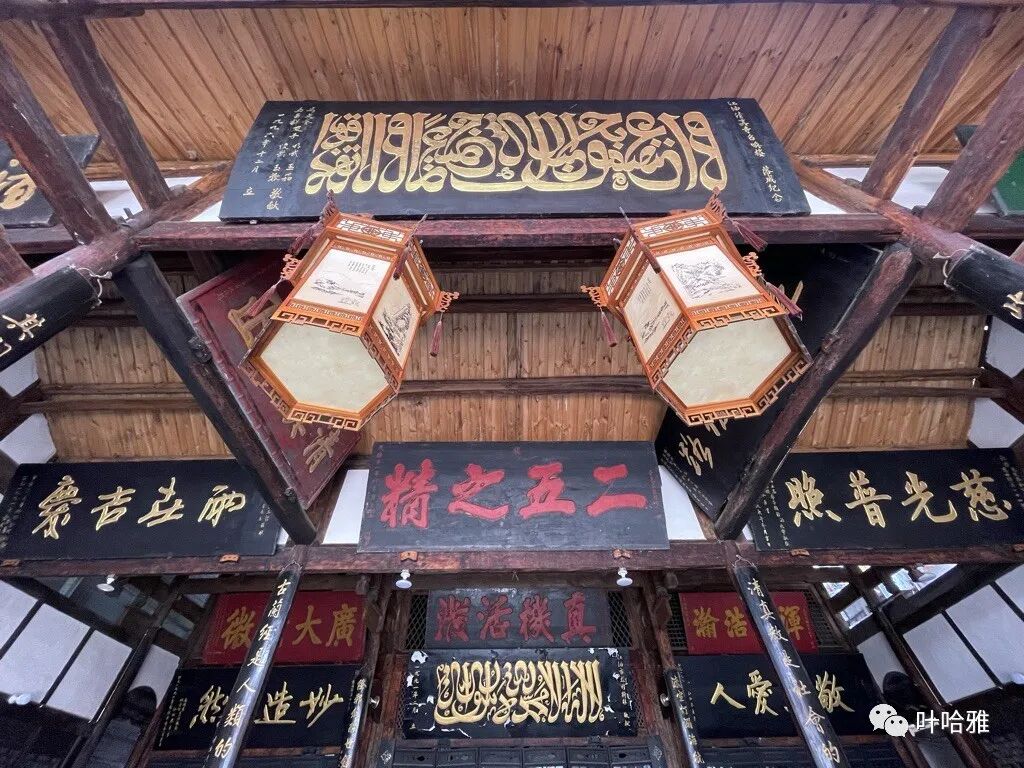
In the summer of 1935, the Red Fourth Front Army passed through Jiangyou during the Long March. Imam Xiao Fuzhen joined the Red Army and later died heroically in battle against enemy forces by the Suomo River in Jinchuan. In the summer of 1945, a massive flood hit Jiangyou. People used boats to ferry others on Zhongba Street. Because the mosque was on higher ground, the flood did not enter the main hall, and hundreds of Hui and Han compatriots took refuge in the mosque.
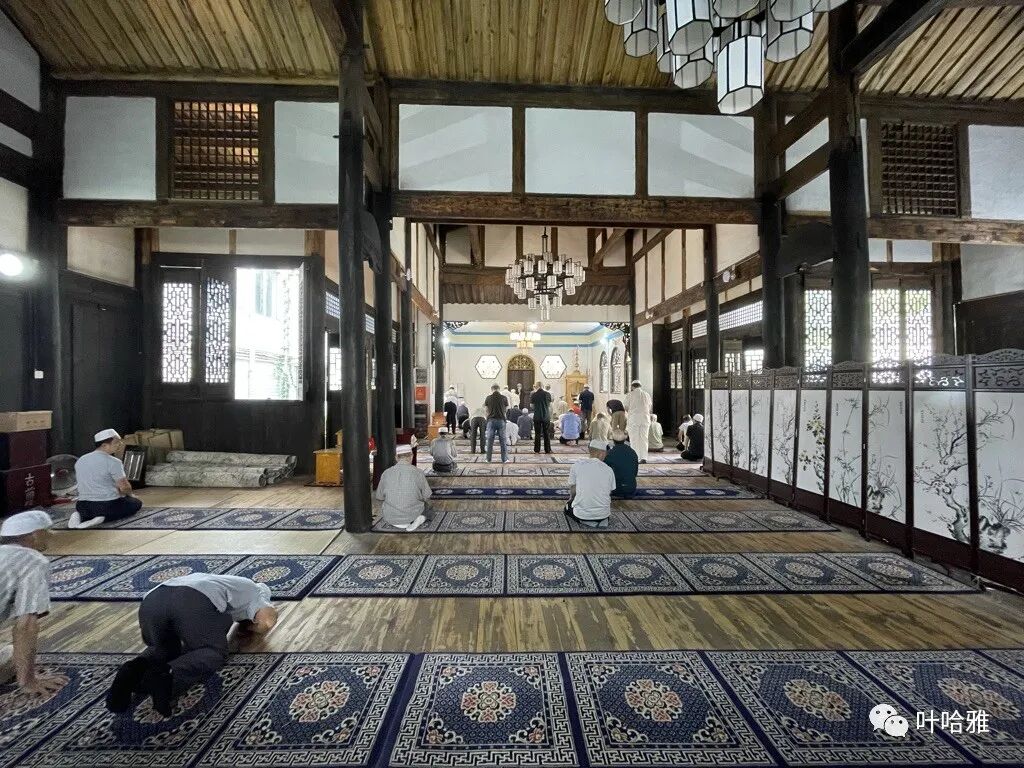
The prayer hall and the announcement hall were built during the Guangxu reign. The plaques inside, inscribed with phrases like 'Zhenji Huopo,' 'Guangda Jingwei,' 'Hunlun Haohan,' 'Erwu Zhi Jing,' and 'Qingzhen Yazheng,' are all artifacts from the Guangxu period.
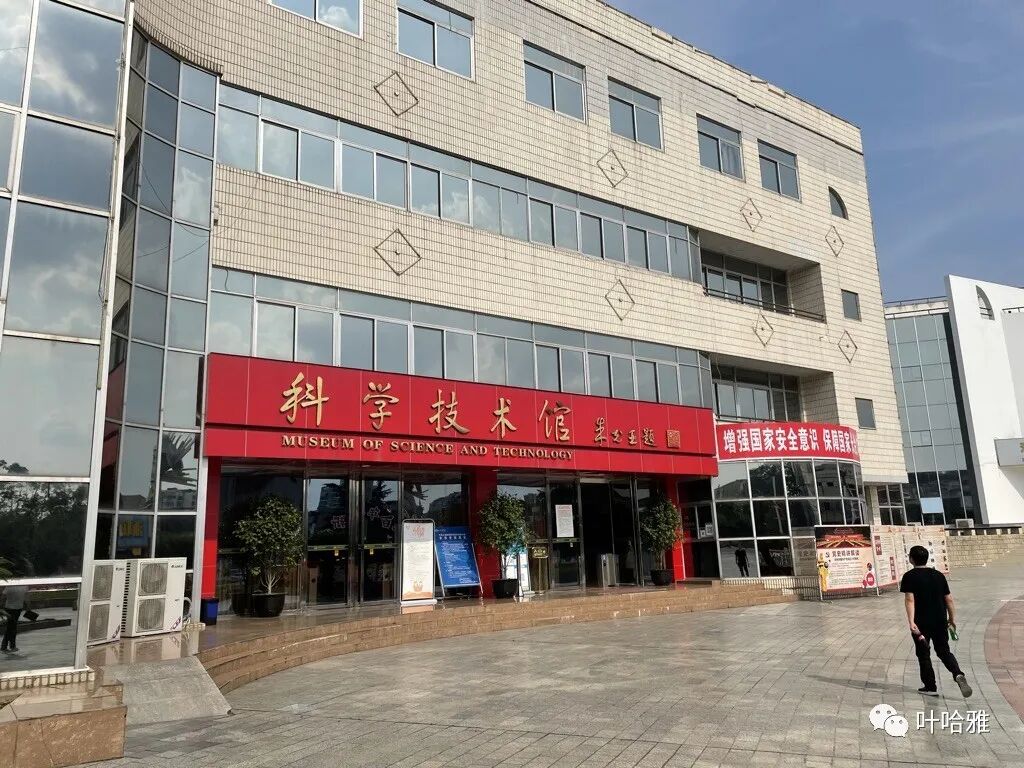
Mianyang Science and Technology Museum
After leaving the Jiangyou mosque, we returned to Mianyang city. Brother Mu took me to the Mianyang Science and Technology Museum. This place is quite mysterious and few people outside know about it. Mianyang is China's only science and technology city and serves as a research base for nuclear weapons. The Mianyang Science and Technology Museum is a nuclear weapons museum that is not open to foreign nationals. Visitors cannot record audio or video, and mobile phones must be handed over. Inside, there are introductions to nuclear weapons research and exhibits of retired nuclear weapons, which is very impressive.
Summary: Muslim Friendly Sichuan: Mianyang Halal Food, Jiangyou Mosque and Li Bai Hometown Travel is presented here as a clear English account for Muslim readers, starting with this scene: This trip to Mianyang started because I have clients there. A while ago, they found me online to set up insurance for their family. My company happened to schedule me for training in Chongqing, and since it only takes two hours. It keeps the original names, food details, mosque details, photographs, and cultural context while focusing on Mianyang Travel, Jiangyou Mosque, Halal Food.
This trip to Mianyang started because I have clients there. A while ago, they found me online to set up insurance for their family. My company happened to schedule me for training in Chongqing, and since it only takes two hours by high-speed train from Chongqing to Mianyang, I decided to take advantage of the work trip to visit.
It was past six in the evening when I arrived in Mianyang. Brother Mu and his family invited me to Yitianyuan, a very famous local halal restaurant, to welcome me.
Yitianyuan has been operating in Huagai Town for nearly twenty years and is considered a local institution. Huagai beef is one of the area's culinary calling cards. I have mentioned before that I love Sichuan-style stir-fries. Since there are no authentic halal Sichuan restaurants in Beijing, I really cherish the chance to eat them here in the land of Shu.
When we arrived at Yitianyuan, the owner, Mr. Ma, and his family had already arranged the menu. Every dish was a specialty of the chef and full of local character. Brother Mu has known the owner's family for years, so we sat around the table and listened to Mr. Ma share stories about his time running the restaurant.
Interestingly, Yitianyuan occasionally hosts Hui Muslims from Northwest China. Some friends (dost) who are unfamiliar with the level of religious practice among Sichuan Hui Muslims sometimes doubt if the ingredients are truly halal. In fact, Mr. Ma and his family are devout Muslims. They raise their own cattle and hire an imam to perform the slaughter, ensuring everything is halal. We all laughed when we heard this. The religious dedication of Sichuan Hui Muslims is often severely underestimated by outsiders, yet they make up a significant portion of the annual Hajj pilgrimage groups to Mecca.
The landlady mentioned that the painting of the Sacred Mosque in Mecca hanging on the wall was bought over ten years ago during a trip to Niujie in Beijing. It has been on that wall since the restaurant opened. During the Wenchuan earthquake, other walls in the shop cracked and items fell everywhere, but the wall with the painting remained completely undamaged.
Sichuan-style small barbecue, this is grilled fish.
Fragrant braised beef shank (xianglu jianzi niurou).
Huagai is a place name. The beef here is very famous in the Mianyang area. Locals know to go to Huagai Town to buy beef from Hui Muslims. People often wonder why beef and lamb from Hui sources are of such high quality. It is not because of some secret recipe, but because Hui Muslims insist on slaughtering live animals. They never use meat from animals that died of illness or other non-slaughter causes. They also ensure the blood is drained, as residual blood affects the quality of the meat.
Cold tossed beef (liangban niurou).
Tofu pudding beef (douhua niurou).
Boiled fish (shuizhu yu).
Boiled fish is a classic Sichuan dish. The key is to use fresh, live fish paired with fragrant and spicy Sichuan peppercorns and chili peppers. I could eat a whole basin of this alone. After finishing the fish, there are crunchy bean sprouts underneath. Although many halal restaurants in Beijing serve boiled fish, it is hard to replicate the authentic Sichuan flavor.
Sticky rice dumplings (zongzi).
I happened to be in Mianyang during the Dragon Boat Festival and was lucky enough to eat local zongzi. They are similar to sticky rice cakes (ciba), sprinkled with brown sugar powder and quite sweet.
Mute rabbit (yaba tu).
Why is this dish called mute rabbit? It is because the dish is incredibly spicy and numbing, making people so hot they cannot speak, hence the name. Of course, becoming mute is an exaggeration; it is not actually that spicy, though it was still quite hot for me. A friend from Mianyang sitting next to me said he did not feel the heat at all.
Besides beef, rabbit meat prepared by Hui Muslims is a major local specialty in Sichuan. Some Hui Muslims in other provinces do not eat rabbit, believing it is not halal because rabbits do not ruminate. I have already clarified this in my article about which foods are not halal according to scripture. The concept of rumination is not part of Islamic teaching, but rather comes from the Old Testament of Judaism.
Young ginger braised duck (zijiang shaoya).
Young ginger (zijiang) usually refers to fresh ginger. This is a famous Sichuan dish. The preparation is complex and requires high culinary skill, especially in selecting local ginger and duck, and marinating the duck beforehand to ensure the flavor penetrates the meat.
Dongpo Mian-style pork trotter (Dongpo mianti).
The traditional way to make Dongpo cotton trotters (dongpo mianti) uses pork, but Hui Muslims have improved it by using beef trotters. You must steam the beef trotters first to make them soft and tender. After steaming, you pour sauce over them. They are full of collagen and melt in your mouth.
Sour soup beef tripe (suantang niudu)
I have eaten sour soup beef tripe at restaurants in Beijing, but this is my first time having authentic sour soup beef tripe in Sichuan. The taste is truly different. Sichuan food really tastes best when made locally in Sichuan. Some large halal restaurants in Beijing serve Sichuan dishes, but I always feel that Sichuan cuisine is very home-style. You can find Sichuan restaurants wherever there are Chinese people, so it is best to eat Sichuan food at small, home-style shops for the best flavor.
The next day, we arrived at the mosque in downtown Mianyang. The Mianyang mosque is currently under renovation, so all the shops on the ground floor are closed until the work is finished. I saw many local specialty shops there.
Luckily, there is still a breakfast shop run by local Hui Muslims. Brother Mu strongly suggested I try the Mianyang specialty breakfast, rice noodles (mifen).
Beef bun (niurou bao)
Mianyang rice noodles (mianyang mifen)
Mianyang rice noodles are unique in the Sichuan region. The noodles are thin, and the soup is rich in oil and salt with a strong flavor. Mianyang locals love them for breakfast. This small shop was packed with diners in the morning, and many customers even squeezed into the hallway behind the shop to eat. It felt very lively.
In 2001, an imam was murdered at the Mianyang mosque. The killer was a migrant worker who was unhappy with the imam's work. He killed the imam while he was sleeping, fled to Xinjiang, and was later arrested by the police. He was executed in 2004.
Similar incidents have happened more than once in China. The profession of imam is actually a vulnerable group in many parts of our country. They do not have high incomes and are rarely valued, yet they are indispensable mentors in our daily lives. Especially when a loved one passes away, imagine how a family would give them a dignified burial without the help of an imam.
The renovation of the mosque is not finished yet. I hope it is completed soon so the snack shops downstairs can reopen. I want to come back and taste the food next time.
After breakfast, we drove 50 minutes to Jiangyou City, the hometown of Li Bai. Jiangyou is under the jurisdiction of Mianyang. What attracts me here is not the so-called hometown of Li Bai, because Li Bai has many hometowns. What attracts me most is the mosque located on Zhongba Street in Jiangyou.
Taibai Hall (taibai tang)
Du Fu Hall (dufu tang)
The Li Bai Memorial Hall is a park built in the style of the Tang Dynasty. It is free to visit, and nearby residents come here to cool off in the summer. It is only one kilometer away from the Jiangyou Zhongba Mosque.
Jiangyou Mosque is the only mosque in Jiangyou. It is located in the area where Hui Muslims are concentrated near the North Gate of Zhongba Town, Jiangyou. The mosque was first built in the second year of the Jiaqing reign of the Qing Dynasty (1797 AD).
It is Jumuah today, and hundreds of people have gathered in the mosque. Most of them are local Hui Muslims. There are not many outsiders here, and you can tell the faith is strong by the number of people attending Jumuah.
The imam spoke in a local dialect, so I could not understand much, but I am used to it. Outside of North China and the Northeast, there are not many dialects I can understand.
Brother Mu's hometown is Jiangyou. After the Jumuah prayer, I saw his father and relatives there, which shows he comes from a family with a long tradition of faith and good family education.
The main building of the mosque is an old structure and has been designated as a municipal-level cultural relic protection unit.
The plaque reading 'True Spirit Lively' (zhenji huopo) was inscribed by Xia Yuxiu, a military commander from Songpan, Sichuan. The couplet was inscribed by Shao Bingwen of the Songpan Prefecture.
In the summer of 1935, the Red Fourth Front Army passed through Jiangyou during the Long March. Imam Xiao Fuzhen joined the Red Army and later died heroically in battle against enemy forces by the Suomo River in Jinchuan. In the summer of 1945, a massive flood hit Jiangyou. People used boats to ferry others on Zhongba Street. Because the mosque was on higher ground, the flood did not enter the main hall, and hundreds of Hui and Han compatriots took refuge in the mosque.
The prayer hall and the announcement hall were built during the Guangxu reign. The plaques inside, inscribed with phrases like 'Zhenji Huopo,' 'Guangda Jingwei,' 'Hunlun Haohan,' 'Erwu Zhi Jing,' and 'Qingzhen Yazheng,' are all artifacts from the Guangxu period.
Mianyang Science and Technology Museum
After leaving the Jiangyou mosque, we returned to Mianyang city. Brother Mu took me to the Mianyang Science and Technology Museum. This place is quite mysterious and few people outside know about it. Mianyang is China's only science and technology city and serves as a research base for nuclear weapons. The Mianyang Science and Technology Museum is a nuclear weapons museum that is not open to foreign nationals. Visitors cannot record audio or video, and mobile phones must be handed over. Inside, there are introductions to nuclear weapons research and exhibits of retired nuclear weapons, which is very impressive.
Muslim Friendly Sichuan: Mianyang Halal Food, Jiangyou Mosque and Li Bai Hometown Travel
Articles • yusuf908 posted the article • 0 comments • 145 views • 2026-05-22 09:39
Reposted from the web
Summary: Muslim Friendly Sichuan: Mianyang Halal Food, Jiangyou Mosque and Li Bai Hometown Travel is presented here as a clear English account for Muslim readers, starting with this scene: This trip to Mianyang started because I have clients there. A while ago, they found me online to set up insurance for their family. My company happened to schedule me for training in Chongqing, and since it only takes two hours. It keeps the original names, food details, mosque details, photographs, and cultural context while focusing on Mianyang Travel, Jiangyou Mosque, Halal Food.
This trip to Mianyang started because I have clients there. A while ago, they found me online to set up insurance for their family. My company happened to schedule me for training in Chongqing, and since it only takes two hours by high-speed train from Chongqing to Mianyang, I decided to take advantage of the work trip to visit.
It was past six in the evening when I arrived in Mianyang. Brother Mu and his family invited me to Yitianyuan, a very famous local halal restaurant, to welcome me.
Yitianyuan has been operating in Huagai Town for nearly twenty years and is considered a local institution. Huagai beef is one of the area's culinary calling cards. I have mentioned before that I love Sichuan-style stir-fries. Since there are no authentic halal Sichuan restaurants in Beijing, I really cherish the chance to eat them here in the land of Shu.
When we arrived at Yitianyuan, the owner, Mr. Ma, and his family had already arranged the menu. Every dish was a specialty of the chef and full of local character. Brother Mu has known the owner's family for years, so we sat around the table and listened to Mr. Ma share stories about his time running the restaurant.
Interestingly, Yitianyuan occasionally hosts Hui Muslims from Northwest China. Some friends (dost) who are unfamiliar with the level of religious practice among Sichuan Hui Muslims sometimes doubt if the ingredients are truly halal. In fact, Mr. Ma and his family are devout Muslims. They raise their own cattle and hire an imam to perform the slaughter, ensuring everything is halal. We all laughed when we heard this. The religious dedication of Sichuan Hui Muslims is often severely underestimated by outsiders, yet they make up a significant portion of the annual Hajj pilgrimage groups to Mecca.
The landlady mentioned that the painting of the Sacred Mosque in Mecca hanging on the wall was bought over ten years ago during a trip to Niujie in Beijing. It has been on that wall since the restaurant opened. During the Wenchuan earthquake, other walls in the shop cracked and items fell everywhere, but the wall with the painting remained completely undamaged.
Sichuan-style small barbecue, this is grilled fish.
Fragrant braised beef shank (xianglu jianzi niurou).
Huagai is a place name. The beef here is very famous in the Mianyang area. Locals know to go to Huagai Town to buy beef from Hui Muslims. People often wonder why beef and lamb from Hui sources are of such high quality. It is not because of some secret recipe, but because Hui Muslims insist on slaughtering live animals. They never use meat from animals that died of illness or other non-slaughter causes. They also ensure the blood is drained, as residual blood affects the quality of the meat.
Cold tossed beef (liangban niurou).
Tofu pudding beef (douhua niurou).
Boiled fish (shuizhu yu).
Boiled fish is a classic Sichuan dish. The key is to use fresh, live fish paired with fragrant and spicy Sichuan peppercorns and chili peppers. I could eat a whole basin of this alone. After finishing the fish, there are crunchy bean sprouts underneath. Although many halal restaurants in Beijing serve boiled fish, it is hard to replicate the authentic Sichuan flavor.
Sticky rice dumplings (zongzi).
I happened to be in Mianyang during the Dragon Boat Festival and was lucky enough to eat local zongzi. They are similar to sticky rice cakes (ciba), sprinkled with brown sugar powder and quite sweet.
Mute rabbit (yaba tu).
Why is this dish called mute rabbit? It is because the dish is incredibly spicy and numbing, making people so hot they cannot speak, hence the name. Of course, becoming mute is an exaggeration; it is not actually that spicy, though it was still quite hot for me. A friend from Mianyang sitting next to me said he did not feel the heat at all.
Besides beef, rabbit meat prepared by Hui Muslims is a major local specialty in Sichuan. Some Hui Muslims in other provinces do not eat rabbit, believing it is not halal because rabbits do not ruminate. I have already clarified this in my article about which foods are not halal according to scripture. The concept of rumination is not part of Islamic teaching, but rather comes from the Old Testament of Judaism.
Young ginger braised duck (zijiang shaoya).
Young ginger (zijiang) usually refers to fresh ginger. This is a famous Sichuan dish. The preparation is complex and requires high culinary skill, especially in selecting local ginger and duck, and marinating the duck beforehand to ensure the flavor penetrates the meat.
Dongpo Mian-style pork trotter (Dongpo mianti).
The traditional way to make Dongpo cotton trotters (dongpo mianti) uses pork, but Hui Muslims have improved it by using beef trotters. You must steam the beef trotters first to make them soft and tender. After steaming, you pour sauce over them. They are full of collagen and melt in your mouth.
Sour soup beef tripe (suantang niudu)
I have eaten sour soup beef tripe at restaurants in Beijing, but this is my first time having authentic sour soup beef tripe in Sichuan. The taste is truly different. Sichuan food really tastes best when made locally in Sichuan. Some large halal restaurants in Beijing serve Sichuan dishes, but I always feel that Sichuan cuisine is very home-style. You can find Sichuan restaurants wherever there are Chinese people, so it is best to eat Sichuan food at small, home-style shops for the best flavor.
The next day, we arrived at the mosque in downtown Mianyang. The Mianyang mosque is currently under renovation, so all the shops on the ground floor are closed until the work is finished. I saw many local specialty shops there.
Luckily, there is still a breakfast shop run by local Hui Muslims. Brother Mu strongly suggested I try the Mianyang specialty breakfast, rice noodles (mifen).
Beef bun (niurou bao)
Mianyang rice noodles (mianyang mifen)
Mianyang rice noodles are unique in the Sichuan region. The noodles are thin, and the soup is rich in oil and salt with a strong flavor. Mianyang locals love them for breakfast. This small shop was packed with diners in the morning, and many customers even squeezed into the hallway behind the shop to eat. It felt very lively.
In 2001, an imam was murdered at the Mianyang mosque. The killer was a migrant worker who was unhappy with the imam's work. He killed the imam while he was sleeping, fled to Xinjiang, and was later arrested by the police. He was executed in 2004.
Similar incidents have happened more than once in China. The profession of imam is actually a vulnerable group in many parts of our country. They do not have high incomes and are rarely valued, yet they are indispensable mentors in our daily lives. Especially when a loved one passes away, imagine how a family would give them a dignified burial without the help of an imam.
The renovation of the mosque is not finished yet. I hope it is completed soon so the snack shops downstairs can reopen. I want to come back and taste the food next time.
After breakfast, we drove 50 minutes to Jiangyou City, the hometown of Li Bai. Jiangyou is under the jurisdiction of Mianyang. What attracts me here is not the so-called hometown of Li Bai, because Li Bai has many hometowns. What attracts me most is the mosque located on Zhongba Street in Jiangyou.
Taibai Hall (taibai tang)
Du Fu Hall (dufu tang)
The Li Bai Memorial Hall is a park built in the style of the Tang Dynasty. It is free to visit, and nearby residents come here to cool off in the summer. It is only one kilometer away from the Jiangyou Zhongba Mosque.
Jiangyou Mosque is the only mosque in Jiangyou. It is located in the area where Hui Muslims are concentrated near the North Gate of Zhongba Town, Jiangyou. The mosque was first built in the second year of the Jiaqing reign of the Qing Dynasty (1797 AD).
It is Jumuah today, and hundreds of people have gathered in the mosque. Most of them are local Hui Muslims. There are not many outsiders here, and you can tell the faith is strong by the number of people attending Jumuah.
The imam spoke in a local dialect, so I could not understand much, but I am used to it. Outside of North China and the Northeast, there are not many dialects I can understand.
Brother Mu's hometown is Jiangyou. After the Jumuah prayer, I saw his father and relatives there, which shows he comes from a family with a long tradition of faith and good family education.
The main building of the mosque is an old structure and has been designated as a municipal-level cultural relic protection unit.
The plaque reading 'True Spirit Lively' (zhenji huopo) was inscribed by Xia Yuxiu, a military commander from Songpan, Sichuan. The couplet was inscribed by Shao Bingwen of the Songpan Prefecture.
In the summer of 1935, the Red Fourth Front Army passed through Jiangyou during the Long March. Imam Xiao Fuzhen joined the Red Army and later died heroically in battle against enemy forces by the Suomo River in Jinchuan. In the summer of 1945, a massive flood hit Jiangyou. People used boats to ferry others on Zhongba Street. Because the mosque was on higher ground, the flood did not enter the main hall, and hundreds of Hui and Han compatriots took refuge in the mosque.
The prayer hall and the announcement hall were built during the Guangxu reign. The plaques inside, inscribed with phrases like 'Zhenji Huopo,' 'Guangda Jingwei,' 'Hunlun Haohan,' 'Erwu Zhi Jing,' and 'Qingzhen Yazheng,' are all artifacts from the Guangxu period.
Mianyang Science and Technology Museum
After leaving the Jiangyou mosque, we returned to Mianyang city. Brother Mu took me to the Mianyang Science and Technology Museum. This place is quite mysterious and few people outside know about it. Mianyang is China's only science and technology city and serves as a research base for nuclear weapons. The Mianyang Science and Technology Museum is a nuclear weapons museum that is not open to foreign nationals. Visitors cannot record audio or video, and mobile phones must be handed over. Inside, there are introductions to nuclear weapons research and exhibits of retired nuclear weapons, which is very impressive. view all
Summary: Muslim Friendly Sichuan: Mianyang Halal Food, Jiangyou Mosque and Li Bai Hometown Travel is presented here as a clear English account for Muslim readers, starting with this scene: This trip to Mianyang started because I have clients there. A while ago, they found me online to set up insurance for their family. My company happened to schedule me for training in Chongqing, and since it only takes two hours. It keeps the original names, food details, mosque details, photographs, and cultural context while focusing on Mianyang Travel, Jiangyou Mosque, Halal Food.
This trip to Mianyang started because I have clients there. A while ago, they found me online to set up insurance for their family. My company happened to schedule me for training in Chongqing, and since it only takes two hours by high-speed train from Chongqing to Mianyang, I decided to take advantage of the work trip to visit.
It was past six in the evening when I arrived in Mianyang. Brother Mu and his family invited me to Yitianyuan, a very famous local halal restaurant, to welcome me.
Yitianyuan has been operating in Huagai Town for nearly twenty years and is considered a local institution. Huagai beef is one of the area's culinary calling cards. I have mentioned before that I love Sichuan-style stir-fries. Since there are no authentic halal Sichuan restaurants in Beijing, I really cherish the chance to eat them here in the land of Shu.
When we arrived at Yitianyuan, the owner, Mr. Ma, and his family had already arranged the menu. Every dish was a specialty of the chef and full of local character. Brother Mu has known the owner's family for years, so we sat around the table and listened to Mr. Ma share stories about his time running the restaurant.
Interestingly, Yitianyuan occasionally hosts Hui Muslims from Northwest China. Some friends (dost) who are unfamiliar with the level of religious practice among Sichuan Hui Muslims sometimes doubt if the ingredients are truly halal. In fact, Mr. Ma and his family are devout Muslims. They raise their own cattle and hire an imam to perform the slaughter, ensuring everything is halal. We all laughed when we heard this. The religious dedication of Sichuan Hui Muslims is often severely underestimated by outsiders, yet they make up a significant portion of the annual Hajj pilgrimage groups to Mecca.
The landlady mentioned that the painting of the Sacred Mosque in Mecca hanging on the wall was bought over ten years ago during a trip to Niujie in Beijing. It has been on that wall since the restaurant opened. During the Wenchuan earthquake, other walls in the shop cracked and items fell everywhere, but the wall with the painting remained completely undamaged.
Sichuan-style small barbecue, this is grilled fish.
Fragrant braised beef shank (xianglu jianzi niurou).
Huagai is a place name. The beef here is very famous in the Mianyang area. Locals know to go to Huagai Town to buy beef from Hui Muslims. People often wonder why beef and lamb from Hui sources are of such high quality. It is not because of some secret recipe, but because Hui Muslims insist on slaughtering live animals. They never use meat from animals that died of illness or other non-slaughter causes. They also ensure the blood is drained, as residual blood affects the quality of the meat.
Cold tossed beef (liangban niurou).
Tofu pudding beef (douhua niurou).
Boiled fish (shuizhu yu).
Boiled fish is a classic Sichuan dish. The key is to use fresh, live fish paired with fragrant and spicy Sichuan peppercorns and chili peppers. I could eat a whole basin of this alone. After finishing the fish, there are crunchy bean sprouts underneath. Although many halal restaurants in Beijing serve boiled fish, it is hard to replicate the authentic Sichuan flavor.
Sticky rice dumplings (zongzi).
I happened to be in Mianyang during the Dragon Boat Festival and was lucky enough to eat local zongzi. They are similar to sticky rice cakes (ciba), sprinkled with brown sugar powder and quite sweet.
Mute rabbit (yaba tu).
Why is this dish called mute rabbit? It is because the dish is incredibly spicy and numbing, making people so hot they cannot speak, hence the name. Of course, becoming mute is an exaggeration; it is not actually that spicy, though it was still quite hot for me. A friend from Mianyang sitting next to me said he did not feel the heat at all.
Besides beef, rabbit meat prepared by Hui Muslims is a major local specialty in Sichuan. Some Hui Muslims in other provinces do not eat rabbit, believing it is not halal because rabbits do not ruminate. I have already clarified this in my article about which foods are not halal according to scripture. The concept of rumination is not part of Islamic teaching, but rather comes from the Old Testament of Judaism.
Young ginger braised duck (zijiang shaoya).
Young ginger (zijiang) usually refers to fresh ginger. This is a famous Sichuan dish. The preparation is complex and requires high culinary skill, especially in selecting local ginger and duck, and marinating the duck beforehand to ensure the flavor penetrates the meat.
Dongpo Mian-style pork trotter (Dongpo mianti).
The traditional way to make Dongpo cotton trotters (dongpo mianti) uses pork, but Hui Muslims have improved it by using beef trotters. You must steam the beef trotters first to make them soft and tender. After steaming, you pour sauce over them. They are full of collagen and melt in your mouth.
Sour soup beef tripe (suantang niudu)
I have eaten sour soup beef tripe at restaurants in Beijing, but this is my first time having authentic sour soup beef tripe in Sichuan. The taste is truly different. Sichuan food really tastes best when made locally in Sichuan. Some large halal restaurants in Beijing serve Sichuan dishes, but I always feel that Sichuan cuisine is very home-style. You can find Sichuan restaurants wherever there are Chinese people, so it is best to eat Sichuan food at small, home-style shops for the best flavor.
The next day, we arrived at the mosque in downtown Mianyang. The Mianyang mosque is currently under renovation, so all the shops on the ground floor are closed until the work is finished. I saw many local specialty shops there.
Luckily, there is still a breakfast shop run by local Hui Muslims. Brother Mu strongly suggested I try the Mianyang specialty breakfast, rice noodles (mifen).
Beef bun (niurou bao)
Mianyang rice noodles (mianyang mifen)
Mianyang rice noodles are unique in the Sichuan region. The noodles are thin, and the soup is rich in oil and salt with a strong flavor. Mianyang locals love them for breakfast. This small shop was packed with diners in the morning, and many customers even squeezed into the hallway behind the shop to eat. It felt very lively.
In 2001, an imam was murdered at the Mianyang mosque. The killer was a migrant worker who was unhappy with the imam's work. He killed the imam while he was sleeping, fled to Xinjiang, and was later arrested by the police. He was executed in 2004.
Similar incidents have happened more than once in China. The profession of imam is actually a vulnerable group in many parts of our country. They do not have high incomes and are rarely valued, yet they are indispensable mentors in our daily lives. Especially when a loved one passes away, imagine how a family would give them a dignified burial without the help of an imam.
The renovation of the mosque is not finished yet. I hope it is completed soon so the snack shops downstairs can reopen. I want to come back and taste the food next time.
After breakfast, we drove 50 minutes to Jiangyou City, the hometown of Li Bai. Jiangyou is under the jurisdiction of Mianyang. What attracts me here is not the so-called hometown of Li Bai, because Li Bai has many hometowns. What attracts me most is the mosque located on Zhongba Street in Jiangyou.
Taibai Hall (taibai tang)
Du Fu Hall (dufu tang)
The Li Bai Memorial Hall is a park built in the style of the Tang Dynasty. It is free to visit, and nearby residents come here to cool off in the summer. It is only one kilometer away from the Jiangyou Zhongba Mosque.
Jiangyou Mosque is the only mosque in Jiangyou. It is located in the area where Hui Muslims are concentrated near the North Gate of Zhongba Town, Jiangyou. The mosque was first built in the second year of the Jiaqing reign of the Qing Dynasty (1797 AD).
It is Jumuah today, and hundreds of people have gathered in the mosque. Most of them are local Hui Muslims. There are not many outsiders here, and you can tell the faith is strong by the number of people attending Jumuah.
The imam spoke in a local dialect, so I could not understand much, but I am used to it. Outside of North China and the Northeast, there are not many dialects I can understand.
Brother Mu's hometown is Jiangyou. After the Jumuah prayer, I saw his father and relatives there, which shows he comes from a family with a long tradition of faith and good family education.
The main building of the mosque is an old structure and has been designated as a municipal-level cultural relic protection unit.
The plaque reading 'True Spirit Lively' (zhenji huopo) was inscribed by Xia Yuxiu, a military commander from Songpan, Sichuan. The couplet was inscribed by Shao Bingwen of the Songpan Prefecture.
In the summer of 1935, the Red Fourth Front Army passed through Jiangyou during the Long March. Imam Xiao Fuzhen joined the Red Army and later died heroically in battle against enemy forces by the Suomo River in Jinchuan. In the summer of 1945, a massive flood hit Jiangyou. People used boats to ferry others on Zhongba Street. Because the mosque was on higher ground, the flood did not enter the main hall, and hundreds of Hui and Han compatriots took refuge in the mosque.
The prayer hall and the announcement hall were built during the Guangxu reign. The plaques inside, inscribed with phrases like 'Zhenji Huopo,' 'Guangda Jingwei,' 'Hunlun Haohan,' 'Erwu Zhi Jing,' and 'Qingzhen Yazheng,' are all artifacts from the Guangxu period.
Mianyang Science and Technology Museum
After leaving the Jiangyou mosque, we returned to Mianyang city. Brother Mu took me to the Mianyang Science and Technology Museum. This place is quite mysterious and few people outside know about it. Mianyang is China's only science and technology city and serves as a research base for nuclear weapons. The Mianyang Science and Technology Museum is a nuclear weapons museum that is not open to foreign nationals. Visitors cannot record audio or video, and mobile phones must be handed over. Inside, there are introductions to nuclear weapons research and exhibits of retired nuclear weapons, which is very impressive. view all
Reposted from the web
Summary: Muslim Friendly Sichuan: Mianyang Halal Food, Jiangyou Mosque and Li Bai Hometown Travel is presented here as a clear English account for Muslim readers, starting with this scene: This trip to Mianyang started because I have clients there. A while ago, they found me online to set up insurance for their family. My company happened to schedule me for training in Chongqing, and since it only takes two hours. It keeps the original names, food details, mosque details, photographs, and cultural context while focusing on Mianyang Travel, Jiangyou Mosque, Halal Food.
This trip to Mianyang started because I have clients there. A while ago, they found me online to set up insurance for their family. My company happened to schedule me for training in Chongqing, and since it only takes two hours by high-speed train from Chongqing to Mianyang, I decided to take advantage of the work trip to visit.
It was past six in the evening when I arrived in Mianyang. Brother Mu and his family invited me to Yitianyuan, a very famous local halal restaurant, to welcome me.
Yitianyuan has been operating in Huagai Town for nearly twenty years and is considered a local institution. Huagai beef is one of the area's culinary calling cards. I have mentioned before that I love Sichuan-style stir-fries. Since there are no authentic halal Sichuan restaurants in Beijing, I really cherish the chance to eat them here in the land of Shu.
When we arrived at Yitianyuan, the owner, Mr. Ma, and his family had already arranged the menu. Every dish was a specialty of the chef and full of local character. Brother Mu has known the owner's family for years, so we sat around the table and listened to Mr. Ma share stories about his time running the restaurant.
Interestingly, Yitianyuan occasionally hosts Hui Muslims from Northwest China. Some friends (dost) who are unfamiliar with the level of religious practice among Sichuan Hui Muslims sometimes doubt if the ingredients are truly halal. In fact, Mr. Ma and his family are devout Muslims. They raise their own cattle and hire an imam to perform the slaughter, ensuring everything is halal. We all laughed when we heard this. The religious dedication of Sichuan Hui Muslims is often severely underestimated by outsiders, yet they make up a significant portion of the annual Hajj pilgrimage groups to Mecca.
The landlady mentioned that the painting of the Sacred Mosque in Mecca hanging on the wall was bought over ten years ago during a trip to Niujie in Beijing. It has been on that wall since the restaurant opened. During the Wenchuan earthquake, other walls in the shop cracked and items fell everywhere, but the wall with the painting remained completely undamaged.
Sichuan-style small barbecue, this is grilled fish.
Fragrant braised beef shank (xianglu jianzi niurou).
Huagai is a place name. The beef here is very famous in the Mianyang area. Locals know to go to Huagai Town to buy beef from Hui Muslims. People often wonder why beef and lamb from Hui sources are of such high quality. It is not because of some secret recipe, but because Hui Muslims insist on slaughtering live animals. They never use meat from animals that died of illness or other non-slaughter causes. They also ensure the blood is drained, as residual blood affects the quality of the meat.
Cold tossed beef (liangban niurou).
Tofu pudding beef (douhua niurou).
Boiled fish (shuizhu yu).
Boiled fish is a classic Sichuan dish. The key is to use fresh, live fish paired with fragrant and spicy Sichuan peppercorns and chili peppers. I could eat a whole basin of this alone. After finishing the fish, there are crunchy bean sprouts underneath. Although many halal restaurants in Beijing serve boiled fish, it is hard to replicate the authentic Sichuan flavor.
Sticky rice dumplings (zongzi).
I happened to be in Mianyang during the Dragon Boat Festival and was lucky enough to eat local zongzi. They are similar to sticky rice cakes (ciba), sprinkled with brown sugar powder and quite sweet.
Mute rabbit (yaba tu).
Why is this dish called mute rabbit? It is because the dish is incredibly spicy and numbing, making people so hot they cannot speak, hence the name. Of course, becoming mute is an exaggeration; it is not actually that spicy, though it was still quite hot for me. A friend from Mianyang sitting next to me said he did not feel the heat at all.
Besides beef, rabbit meat prepared by Hui Muslims is a major local specialty in Sichuan. Some Hui Muslims in other provinces do not eat rabbit, believing it is not halal because rabbits do not ruminate. I have already clarified this in my article about which foods are not halal according to scripture. The concept of rumination is not part of Islamic teaching, but rather comes from the Old Testament of Judaism.
Young ginger braised duck (zijiang shaoya).
Young ginger (zijiang) usually refers to fresh ginger. This is a famous Sichuan dish. The preparation is complex and requires high culinary skill, especially in selecting local ginger and duck, and marinating the duck beforehand to ensure the flavor penetrates the meat.
Dongpo Mian-style pork trotter (Dongpo mianti).
The traditional way to make Dongpo cotton trotters (dongpo mianti) uses pork, but Hui Muslims have improved it by using beef trotters. You must steam the beef trotters first to make them soft and tender. After steaming, you pour sauce over them. They are full of collagen and melt in your mouth.
Sour soup beef tripe (suantang niudu)
I have eaten sour soup beef tripe at restaurants in Beijing, but this is my first time having authentic sour soup beef tripe in Sichuan. The taste is truly different. Sichuan food really tastes best when made locally in Sichuan. Some large halal restaurants in Beijing serve Sichuan dishes, but I always feel that Sichuan cuisine is very home-style. You can find Sichuan restaurants wherever there are Chinese people, so it is best to eat Sichuan food at small, home-style shops for the best flavor.
The next day, we arrived at the mosque in downtown Mianyang. The Mianyang mosque is currently under renovation, so all the shops on the ground floor are closed until the work is finished. I saw many local specialty shops there.
Luckily, there is still a breakfast shop run by local Hui Muslims. Brother Mu strongly suggested I try the Mianyang specialty breakfast, rice noodles (mifen).
Beef bun (niurou bao)
Mianyang rice noodles (mianyang mifen)
Mianyang rice noodles are unique in the Sichuan region. The noodles are thin, and the soup is rich in oil and salt with a strong flavor. Mianyang locals love them for breakfast. This small shop was packed with diners in the morning, and many customers even squeezed into the hallway behind the shop to eat. It felt very lively.
In 2001, an imam was murdered at the Mianyang mosque. The killer was a migrant worker who was unhappy with the imam's work. He killed the imam while he was sleeping, fled to Xinjiang, and was later arrested by the police. He was executed in 2004.
Similar incidents have happened more than once in China. The profession of imam is actually a vulnerable group in many parts of our country. They do not have high incomes and are rarely valued, yet they are indispensable mentors in our daily lives. Especially when a loved one passes away, imagine how a family would give them a dignified burial without the help of an imam.
The renovation of the mosque is not finished yet. I hope it is completed soon so the snack shops downstairs can reopen. I want to come back and taste the food next time.
After breakfast, we drove 50 minutes to Jiangyou City, the hometown of Li Bai. Jiangyou is under the jurisdiction of Mianyang. What attracts me here is not the so-called hometown of Li Bai, because Li Bai has many hometowns. What attracts me most is the mosque located on Zhongba Street in Jiangyou.
Taibai Hall (taibai tang)
Du Fu Hall (dufu tang)
The Li Bai Memorial Hall is a park built in the style of the Tang Dynasty. It is free to visit, and nearby residents come here to cool off in the summer. It is only one kilometer away from the Jiangyou Zhongba Mosque.
Jiangyou Mosque is the only mosque in Jiangyou. It is located in the area where Hui Muslims are concentrated near the North Gate of Zhongba Town, Jiangyou. The mosque was first built in the second year of the Jiaqing reign of the Qing Dynasty (1797 AD).
It is Jumuah today, and hundreds of people have gathered in the mosque. Most of them are local Hui Muslims. There are not many outsiders here, and you can tell the faith is strong by the number of people attending Jumuah.
The imam spoke in a local dialect, so I could not understand much, but I am used to it. Outside of North China and the Northeast, there are not many dialects I can understand.
Brother Mu's hometown is Jiangyou. After the Jumuah prayer, I saw his father and relatives there, which shows he comes from a family with a long tradition of faith and good family education.
The main building of the mosque is an old structure and has been designated as a municipal-level cultural relic protection unit.
The plaque reading 'True Spirit Lively' (zhenji huopo) was inscribed by Xia Yuxiu, a military commander from Songpan, Sichuan. The couplet was inscribed by Shao Bingwen of the Songpan Prefecture.
In the summer of 1935, the Red Fourth Front Army passed through Jiangyou during the Long March. Imam Xiao Fuzhen joined the Red Army and later died heroically in battle against enemy forces by the Suomo River in Jinchuan. In the summer of 1945, a massive flood hit Jiangyou. People used boats to ferry others on Zhongba Street. Because the mosque was on higher ground, the flood did not enter the main hall, and hundreds of Hui and Han compatriots took refuge in the mosque.
The prayer hall and the announcement hall were built during the Guangxu reign. The plaques inside, inscribed with phrases like 'Zhenji Huopo,' 'Guangda Jingwei,' 'Hunlun Haohan,' 'Erwu Zhi Jing,' and 'Qingzhen Yazheng,' are all artifacts from the Guangxu period.
Mianyang Science and Technology Museum
After leaving the Jiangyou mosque, we returned to Mianyang city. Brother Mu took me to the Mianyang Science and Technology Museum. This place is quite mysterious and few people outside know about it. Mianyang is China's only science and technology city and serves as a research base for nuclear weapons. The Mianyang Science and Technology Museum is a nuclear weapons museum that is not open to foreign nationals. Visitors cannot record audio or video, and mobile phones must be handed over. Inside, there are introductions to nuclear weapons research and exhibits of retired nuclear weapons, which is very impressive.
Summary: Muslim Friendly Sichuan: Mianyang Halal Food, Jiangyou Mosque and Li Bai Hometown Travel is presented here as a clear English account for Muslim readers, starting with this scene: This trip to Mianyang started because I have clients there. A while ago, they found me online to set up insurance for their family. My company happened to schedule me for training in Chongqing, and since it only takes two hours. It keeps the original names, food details, mosque details, photographs, and cultural context while focusing on Mianyang Travel, Jiangyou Mosque, Halal Food.
This trip to Mianyang started because I have clients there. A while ago, they found me online to set up insurance for their family. My company happened to schedule me for training in Chongqing, and since it only takes two hours by high-speed train from Chongqing to Mianyang, I decided to take advantage of the work trip to visit.
It was past six in the evening when I arrived in Mianyang. Brother Mu and his family invited me to Yitianyuan, a very famous local halal restaurant, to welcome me.
Yitianyuan has been operating in Huagai Town for nearly twenty years and is considered a local institution. Huagai beef is one of the area's culinary calling cards. I have mentioned before that I love Sichuan-style stir-fries. Since there are no authentic halal Sichuan restaurants in Beijing, I really cherish the chance to eat them here in the land of Shu.
When we arrived at Yitianyuan, the owner, Mr. Ma, and his family had already arranged the menu. Every dish was a specialty of the chef and full of local character. Brother Mu has known the owner's family for years, so we sat around the table and listened to Mr. Ma share stories about his time running the restaurant.
Interestingly, Yitianyuan occasionally hosts Hui Muslims from Northwest China. Some friends (dost) who are unfamiliar with the level of religious practice among Sichuan Hui Muslims sometimes doubt if the ingredients are truly halal. In fact, Mr. Ma and his family are devout Muslims. They raise their own cattle and hire an imam to perform the slaughter, ensuring everything is halal. We all laughed when we heard this. The religious dedication of Sichuan Hui Muslims is often severely underestimated by outsiders, yet they make up a significant portion of the annual Hajj pilgrimage groups to Mecca.
The landlady mentioned that the painting of the Sacred Mosque in Mecca hanging on the wall was bought over ten years ago during a trip to Niujie in Beijing. It has been on that wall since the restaurant opened. During the Wenchuan earthquake, other walls in the shop cracked and items fell everywhere, but the wall with the painting remained completely undamaged.
Sichuan-style small barbecue, this is grilled fish.
Fragrant braised beef shank (xianglu jianzi niurou).
Huagai is a place name. The beef here is very famous in the Mianyang area. Locals know to go to Huagai Town to buy beef from Hui Muslims. People often wonder why beef and lamb from Hui sources are of such high quality. It is not because of some secret recipe, but because Hui Muslims insist on slaughtering live animals. They never use meat from animals that died of illness or other non-slaughter causes. They also ensure the blood is drained, as residual blood affects the quality of the meat.
Cold tossed beef (liangban niurou).
Tofu pudding beef (douhua niurou).
Boiled fish (shuizhu yu).
Boiled fish is a classic Sichuan dish. The key is to use fresh, live fish paired with fragrant and spicy Sichuan peppercorns and chili peppers. I could eat a whole basin of this alone. After finishing the fish, there are crunchy bean sprouts underneath. Although many halal restaurants in Beijing serve boiled fish, it is hard to replicate the authentic Sichuan flavor.
Sticky rice dumplings (zongzi).
I happened to be in Mianyang during the Dragon Boat Festival and was lucky enough to eat local zongzi. They are similar to sticky rice cakes (ciba), sprinkled with brown sugar powder and quite sweet.
Mute rabbit (yaba tu).
Why is this dish called mute rabbit? It is because the dish is incredibly spicy and numbing, making people so hot they cannot speak, hence the name. Of course, becoming mute is an exaggeration; it is not actually that spicy, though it was still quite hot for me. A friend from Mianyang sitting next to me said he did not feel the heat at all.
Besides beef, rabbit meat prepared by Hui Muslims is a major local specialty in Sichuan. Some Hui Muslims in other provinces do not eat rabbit, believing it is not halal because rabbits do not ruminate. I have already clarified this in my article about which foods are not halal according to scripture. The concept of rumination is not part of Islamic teaching, but rather comes from the Old Testament of Judaism.
Young ginger braised duck (zijiang shaoya).
Young ginger (zijiang) usually refers to fresh ginger. This is a famous Sichuan dish. The preparation is complex and requires high culinary skill, especially in selecting local ginger and duck, and marinating the duck beforehand to ensure the flavor penetrates the meat.
Dongpo Mian-style pork trotter (Dongpo mianti).
The traditional way to make Dongpo cotton trotters (dongpo mianti) uses pork, but Hui Muslims have improved it by using beef trotters. You must steam the beef trotters first to make them soft and tender. After steaming, you pour sauce over them. They are full of collagen and melt in your mouth.
Sour soup beef tripe (suantang niudu)
I have eaten sour soup beef tripe at restaurants in Beijing, but this is my first time having authentic sour soup beef tripe in Sichuan. The taste is truly different. Sichuan food really tastes best when made locally in Sichuan. Some large halal restaurants in Beijing serve Sichuan dishes, but I always feel that Sichuan cuisine is very home-style. You can find Sichuan restaurants wherever there are Chinese people, so it is best to eat Sichuan food at small, home-style shops for the best flavor.
The next day, we arrived at the mosque in downtown Mianyang. The Mianyang mosque is currently under renovation, so all the shops on the ground floor are closed until the work is finished. I saw many local specialty shops there.
Luckily, there is still a breakfast shop run by local Hui Muslims. Brother Mu strongly suggested I try the Mianyang specialty breakfast, rice noodles (mifen).
Beef bun (niurou bao)
Mianyang rice noodles (mianyang mifen)
Mianyang rice noodles are unique in the Sichuan region. The noodles are thin, and the soup is rich in oil and salt with a strong flavor. Mianyang locals love them for breakfast. This small shop was packed with diners in the morning, and many customers even squeezed into the hallway behind the shop to eat. It felt very lively.
In 2001, an imam was murdered at the Mianyang mosque. The killer was a migrant worker who was unhappy with the imam's work. He killed the imam while he was sleeping, fled to Xinjiang, and was later arrested by the police. He was executed in 2004.
Similar incidents have happened more than once in China. The profession of imam is actually a vulnerable group in many parts of our country. They do not have high incomes and are rarely valued, yet they are indispensable mentors in our daily lives. Especially when a loved one passes away, imagine how a family would give them a dignified burial without the help of an imam.
The renovation of the mosque is not finished yet. I hope it is completed soon so the snack shops downstairs can reopen. I want to come back and taste the food next time.
After breakfast, we drove 50 minutes to Jiangyou City, the hometown of Li Bai. Jiangyou is under the jurisdiction of Mianyang. What attracts me here is not the so-called hometown of Li Bai, because Li Bai has many hometowns. What attracts me most is the mosque located on Zhongba Street in Jiangyou.
Taibai Hall (taibai tang)
Du Fu Hall (dufu tang)
The Li Bai Memorial Hall is a park built in the style of the Tang Dynasty. It is free to visit, and nearby residents come here to cool off in the summer. It is only one kilometer away from the Jiangyou Zhongba Mosque.
Jiangyou Mosque is the only mosque in Jiangyou. It is located in the area where Hui Muslims are concentrated near the North Gate of Zhongba Town, Jiangyou. The mosque was first built in the second year of the Jiaqing reign of the Qing Dynasty (1797 AD).
It is Jumuah today, and hundreds of people have gathered in the mosque. Most of them are local Hui Muslims. There are not many outsiders here, and you can tell the faith is strong by the number of people attending Jumuah.
The imam spoke in a local dialect, so I could not understand much, but I am used to it. Outside of North China and the Northeast, there are not many dialects I can understand.
Brother Mu's hometown is Jiangyou. After the Jumuah prayer, I saw his father and relatives there, which shows he comes from a family with a long tradition of faith and good family education.
The main building of the mosque is an old structure and has been designated as a municipal-level cultural relic protection unit.
The plaque reading 'True Spirit Lively' (zhenji huopo) was inscribed by Xia Yuxiu, a military commander from Songpan, Sichuan. The couplet was inscribed by Shao Bingwen of the Songpan Prefecture.
In the summer of 1935, the Red Fourth Front Army passed through Jiangyou during the Long March. Imam Xiao Fuzhen joined the Red Army and later died heroically in battle against enemy forces by the Suomo River in Jinchuan. In the summer of 1945, a massive flood hit Jiangyou. People used boats to ferry others on Zhongba Street. Because the mosque was on higher ground, the flood did not enter the main hall, and hundreds of Hui and Han compatriots took refuge in the mosque.
The prayer hall and the announcement hall were built during the Guangxu reign. The plaques inside, inscribed with phrases like 'Zhenji Huopo,' 'Guangda Jingwei,' 'Hunlun Haohan,' 'Erwu Zhi Jing,' and 'Qingzhen Yazheng,' are all artifacts from the Guangxu period.
Mianyang Science and Technology Museum
After leaving the Jiangyou mosque, we returned to Mianyang city. Brother Mu took me to the Mianyang Science and Technology Museum. This place is quite mysterious and few people outside know about it. Mianyang is China's only science and technology city and serves as a research base for nuclear weapons. The Mianyang Science and Technology Museum is a nuclear weapons museum that is not open to foreign nationals. Visitors cannot record audio or video, and mobile phones must be handed over. Inside, there are introductions to nuclear weapons research and exhibits of retired nuclear weapons, which is very impressive.
Muslim Friendly Sichuan: Mianyang Halal Food, Jiangyou Mosque and Li Bai Hometown Travel
Articles • yusuf908 posted the article • 0 comments • 160 views • 2026-05-24 00:17
Reposted from the web
Summary: Muslim Friendly Sichuan: Mianyang Halal Food, Jiangyou Mosque and Li Bai Hometown Travel is presented here as a clear English account for Muslim readers, starting with this scene: This trip to Mianyang started because I have clients there. A while ago, they found me online to set up insurance for their family. My company happened to schedule me for training in Chongqing, and since it only takes two hours. It keeps the original names, food details, mosque details, photographs, and cultural context while focusing on Mianyang Travel, Jiangyou Mosque, Halal Food.
This trip to Mianyang started because I have clients there. A while ago, they found me online to set up insurance for their family. My company happened to schedule me for training in Chongqing, and since it only takes two hours by high-speed train from Chongqing to Mianyang, I decided to take advantage of the work trip to visit.
It was past six in the evening when I arrived in Mianyang. Brother Mu and his family invited me to Yitianyuan, a very famous local halal restaurant, to welcome me.
Yitianyuan has been operating in Huagai Town for nearly twenty years and is considered a local institution. Huagai beef is one of the area's culinary calling cards. I have mentioned before that I love Sichuan-style stir-fries. Since there are no authentic halal Sichuan restaurants in Beijing, I really cherish the chance to eat them here in the land of Shu.
When we arrived at Yitianyuan, the owner, Mr. Ma, and his family had already arranged the menu. Every dish was a specialty of the chef and full of local character. Brother Mu has known the owner's family for years, so we sat around the table and listened to Mr. Ma share stories about his time running the restaurant.
Interestingly, Yitianyuan occasionally hosts Hui Muslims from Northwest China. Some friends (dost) who are unfamiliar with the level of religious practice among Sichuan Hui Muslims sometimes doubt if the ingredients are truly halal. In fact, Mr. Ma and his family are devout Muslims. They raise their own cattle and hire an imam to perform the slaughter, ensuring everything is halal. We all laughed when we heard this. The religious dedication of Sichuan Hui Muslims is often severely underestimated by outsiders, yet they make up a significant portion of the annual Hajj pilgrimage groups to Mecca.
The landlady mentioned that the painting of the Sacred Mosque in Mecca hanging on the wall was bought over ten years ago during a trip to Niujie in Beijing. It has been on that wall since the restaurant opened. During the Wenchuan earthquake, other walls in the shop cracked and items fell everywhere, but the wall with the painting remained completely undamaged.
Sichuan-style small barbecue, this is grilled fish.
Fragrant braised beef shank (xianglu jianzi niurou).
Huagai is a place name. The beef here is very famous in the Mianyang area. Locals know to go to Huagai Town to buy beef from Hui Muslims. People often wonder why beef and lamb from Hui sources are of such high quality. It is not because of some secret recipe, but because Hui Muslims insist on slaughtering live animals. They never use meat from animals that died of illness or other non-slaughter causes. They also ensure the blood is drained, as residual blood affects the quality of the meat.
Cold tossed beef (liangban niurou).
Tofu pudding beef (douhua niurou).
Boiled fish (shuizhu yu).
Boiled fish is a classic Sichuan dish. The key is to use fresh, live fish paired with fragrant and spicy Sichuan peppercorns and chili peppers. I could eat a whole basin of this alone. After finishing the fish, there are crunchy bean sprouts underneath. Although many halal restaurants in Beijing serve boiled fish, it is hard to replicate the authentic Sichuan flavor.
Sticky rice dumplings (zongzi).
I happened to be in Mianyang during the Dragon Boat Festival and was lucky enough to eat local zongzi. They are similar to sticky rice cakes (ciba), sprinkled with brown sugar powder and quite sweet.
Mute rabbit (yaba tu).
Why is this dish called mute rabbit? It is because the dish is incredibly spicy and numbing, making people so hot they cannot speak, hence the name. Of course, becoming mute is an exaggeration; it is not actually that spicy, though it was still quite hot for me. A friend from Mianyang sitting next to me said he did not feel the heat at all.
Besides beef, rabbit meat prepared by Hui Muslims is a major local specialty in Sichuan. Some Hui Muslims in other provinces do not eat rabbit, believing it is not halal because rabbits do not ruminate. I have already clarified this in my article about which foods are not halal according to scripture. The concept of rumination is not part of Islamic teaching, but rather comes from the Old Testament of Judaism.
Young ginger braised duck (zijiang shaoya).
Young ginger (zijiang) usually refers to fresh ginger. This is a famous Sichuan dish. The preparation is complex and requires high culinary skill, especially in selecting local ginger and duck, and marinating the duck beforehand to ensure the flavor penetrates the meat.
Dongpo Mian-style pork trotter (Dongpo mianti).
The traditional way to make Dongpo cotton trotters (dongpo mianti) uses pork, but Hui Muslims have improved it by using beef trotters. You must steam the beef trotters first to make them soft and tender. After steaming, you pour sauce over them. They are full of collagen and melt in your mouth.
Sour soup beef tripe (suantang niudu)
I have eaten sour soup beef tripe at restaurants in Beijing, but this is my first time having authentic sour soup beef tripe in Sichuan. The taste is truly different. Sichuan food really tastes best when made locally in Sichuan. Some large halal restaurants in Beijing serve Sichuan dishes, but I always feel that Sichuan cuisine is very home-style. You can find Sichuan restaurants wherever there are Chinese people, so it is best to eat Sichuan food at small, home-style shops for the best flavor.
The next day, we arrived at the mosque in downtown Mianyang. The Mianyang mosque is currently under renovation, so all the shops on the ground floor are closed until the work is finished. I saw many local specialty shops there.
Luckily, there is still a breakfast shop run by local Hui Muslims. Brother Mu strongly suggested I try the Mianyang specialty breakfast, rice noodles (mifen).
Beef bun (niurou bao)
Mianyang rice noodles (mianyang mifen)
Mianyang rice noodles are unique in the Sichuan region. The noodles are thin, and the soup is rich in oil and salt with a strong flavor. Mianyang locals love them for breakfast. This small shop was packed with diners in the morning, and many customers even squeezed into the hallway behind the shop to eat. It felt very lively.
In 2001, an imam was murdered at the Mianyang mosque. The killer was a migrant worker who was unhappy with the imam's work. He killed the imam while he was sleeping, fled to Xinjiang, and was later arrested by the police. He was executed in 2004.
Similar incidents have happened more than once in China. The profession of imam is actually a vulnerable group in many parts of our country. They do not have high incomes and are rarely valued, yet they are indispensable mentors in our daily lives. Especially when a loved one passes away, imagine how a family would give them a dignified burial without the help of an imam.
The renovation of the mosque is not finished yet. I hope it is completed soon so the snack shops downstairs can reopen. I want to come back and taste the food next time.
After breakfast, we drove 50 minutes to Jiangyou City, the hometown of Li Bai. Jiangyou is under the jurisdiction of Mianyang. What attracts me here is not the so-called hometown of Li Bai, because Li Bai has many hometowns. What attracts me most is the mosque located on Zhongba Street in Jiangyou.
Taibai Hall (taibai tang)
Du Fu Hall (dufu tang)
The Li Bai Memorial Hall is a park built in the style of the Tang Dynasty. It is free to visit, and nearby residents come here to cool off in the summer. It is only one kilometer away from the Jiangyou Zhongba Mosque.
Jiangyou Mosque is the only mosque in Jiangyou. It is located in the area where Hui Muslims are concentrated near the North Gate of Zhongba Town, Jiangyou. The mosque was first built in the second year of the Jiaqing reign of the Qing Dynasty (1797 AD).
It is Jumuah today, and hundreds of people have gathered in the mosque. Most of them are local Hui Muslims. There are not many outsiders here, and you can tell the faith is strong by the number of people attending Jumuah.
The imam spoke in a local dialect, so I could not understand much, but I am used to it. Outside of North China and the Northeast, there are not many dialects I can understand.
Brother Mu's hometown is Jiangyou. After the Jumuah prayer, I saw his father and relatives there, which shows he comes from a family with a long tradition of faith and good family education.
The main building of the mosque is an old structure and has been designated as a municipal-level cultural relic protection unit.
The plaque reading 'True Spirit Lively' (zhenji huopo) was inscribed by Xia Yuxiu, a military commander from Songpan, Sichuan. The couplet was inscribed by Shao Bingwen of the Songpan Prefecture.
In the summer of 1935, the Red Fourth Front Army passed through Jiangyou during the Long March. Imam Xiao Fuzhen joined the Red Army and later died heroically in battle against enemy forces by the Suomo River in Jinchuan. In the summer of 1945, a massive flood hit Jiangyou. People used boats to ferry others on Zhongba Street. Because the mosque was on higher ground, the flood did not enter the main hall, and hundreds of Hui and Han compatriots took refuge in the mosque.
The prayer hall and the announcement hall were built during the Guangxu reign. The plaques inside, inscribed with phrases like 'Zhenji Huopo,' 'Guangda Jingwei,' 'Hunlun Haohan,' 'Erwu Zhi Jing,' and 'Qingzhen Yazheng,' are all artifacts from the Guangxu period.
Mianyang Science and Technology Museum
After leaving the Jiangyou mosque, we returned to Mianyang city. Brother Mu took me to the Mianyang Science and Technology Museum. This place is quite mysterious and few people outside know about it. Mianyang is China's only science and technology city and serves as a research base for nuclear weapons. The Mianyang Science and Technology Museum is a nuclear weapons museum that is not open to foreign nationals. Visitors cannot record audio or video, and mobile phones must be handed over. Inside, there are introductions to nuclear weapons research and exhibits of retired nuclear weapons, which is very impressive. view all
Summary: Muslim Friendly Sichuan: Mianyang Halal Food, Jiangyou Mosque and Li Bai Hometown Travel is presented here as a clear English account for Muslim readers, starting with this scene: This trip to Mianyang started because I have clients there. A while ago, they found me online to set up insurance for their family. My company happened to schedule me for training in Chongqing, and since it only takes two hours. It keeps the original names, food details, mosque details, photographs, and cultural context while focusing on Mianyang Travel, Jiangyou Mosque, Halal Food.
This trip to Mianyang started because I have clients there. A while ago, they found me online to set up insurance for their family. My company happened to schedule me for training in Chongqing, and since it only takes two hours by high-speed train from Chongqing to Mianyang, I decided to take advantage of the work trip to visit.
It was past six in the evening when I arrived in Mianyang. Brother Mu and his family invited me to Yitianyuan, a very famous local halal restaurant, to welcome me.
Yitianyuan has been operating in Huagai Town for nearly twenty years and is considered a local institution. Huagai beef is one of the area's culinary calling cards. I have mentioned before that I love Sichuan-style stir-fries. Since there are no authentic halal Sichuan restaurants in Beijing, I really cherish the chance to eat them here in the land of Shu.
When we arrived at Yitianyuan, the owner, Mr. Ma, and his family had already arranged the menu. Every dish was a specialty of the chef and full of local character. Brother Mu has known the owner's family for years, so we sat around the table and listened to Mr. Ma share stories about his time running the restaurant.
Interestingly, Yitianyuan occasionally hosts Hui Muslims from Northwest China. Some friends (dost) who are unfamiliar with the level of religious practice among Sichuan Hui Muslims sometimes doubt if the ingredients are truly halal. In fact, Mr. Ma and his family are devout Muslims. They raise their own cattle and hire an imam to perform the slaughter, ensuring everything is halal. We all laughed when we heard this. The religious dedication of Sichuan Hui Muslims is often severely underestimated by outsiders, yet they make up a significant portion of the annual Hajj pilgrimage groups to Mecca.
The landlady mentioned that the painting of the Sacred Mosque in Mecca hanging on the wall was bought over ten years ago during a trip to Niujie in Beijing. It has been on that wall since the restaurant opened. During the Wenchuan earthquake, other walls in the shop cracked and items fell everywhere, but the wall with the painting remained completely undamaged.
Sichuan-style small barbecue, this is grilled fish.
Fragrant braised beef shank (xianglu jianzi niurou).
Huagai is a place name. The beef here is very famous in the Mianyang area. Locals know to go to Huagai Town to buy beef from Hui Muslims. People often wonder why beef and lamb from Hui sources are of such high quality. It is not because of some secret recipe, but because Hui Muslims insist on slaughtering live animals. They never use meat from animals that died of illness or other non-slaughter causes. They also ensure the blood is drained, as residual blood affects the quality of the meat.
Cold tossed beef (liangban niurou).
Tofu pudding beef (douhua niurou).
Boiled fish (shuizhu yu).
Boiled fish is a classic Sichuan dish. The key is to use fresh, live fish paired with fragrant and spicy Sichuan peppercorns and chili peppers. I could eat a whole basin of this alone. After finishing the fish, there are crunchy bean sprouts underneath. Although many halal restaurants in Beijing serve boiled fish, it is hard to replicate the authentic Sichuan flavor.
Sticky rice dumplings (zongzi).
I happened to be in Mianyang during the Dragon Boat Festival and was lucky enough to eat local zongzi. They are similar to sticky rice cakes (ciba), sprinkled with brown sugar powder and quite sweet.
Mute rabbit (yaba tu).
Why is this dish called mute rabbit? It is because the dish is incredibly spicy and numbing, making people so hot they cannot speak, hence the name. Of course, becoming mute is an exaggeration; it is not actually that spicy, though it was still quite hot for me. A friend from Mianyang sitting next to me said he did not feel the heat at all.
Besides beef, rabbit meat prepared by Hui Muslims is a major local specialty in Sichuan. Some Hui Muslims in other provinces do not eat rabbit, believing it is not halal because rabbits do not ruminate. I have already clarified this in my article about which foods are not halal according to scripture. The concept of rumination is not part of Islamic teaching, but rather comes from the Old Testament of Judaism.
Young ginger braised duck (zijiang shaoya).
Young ginger (zijiang) usually refers to fresh ginger. This is a famous Sichuan dish. The preparation is complex and requires high culinary skill, especially in selecting local ginger and duck, and marinating the duck beforehand to ensure the flavor penetrates the meat.
Dongpo Mian-style pork trotter (Dongpo mianti).
The traditional way to make Dongpo cotton trotters (dongpo mianti) uses pork, but Hui Muslims have improved it by using beef trotters. You must steam the beef trotters first to make them soft and tender. After steaming, you pour sauce over them. They are full of collagen and melt in your mouth.
Sour soup beef tripe (suantang niudu)
I have eaten sour soup beef tripe at restaurants in Beijing, but this is my first time having authentic sour soup beef tripe in Sichuan. The taste is truly different. Sichuan food really tastes best when made locally in Sichuan. Some large halal restaurants in Beijing serve Sichuan dishes, but I always feel that Sichuan cuisine is very home-style. You can find Sichuan restaurants wherever there are Chinese people, so it is best to eat Sichuan food at small, home-style shops for the best flavor.
The next day, we arrived at the mosque in downtown Mianyang. The Mianyang mosque is currently under renovation, so all the shops on the ground floor are closed until the work is finished. I saw many local specialty shops there.
Luckily, there is still a breakfast shop run by local Hui Muslims. Brother Mu strongly suggested I try the Mianyang specialty breakfast, rice noodles (mifen).
Beef bun (niurou bao)
Mianyang rice noodles (mianyang mifen)
Mianyang rice noodles are unique in the Sichuan region. The noodles are thin, and the soup is rich in oil and salt with a strong flavor. Mianyang locals love them for breakfast. This small shop was packed with diners in the morning, and many customers even squeezed into the hallway behind the shop to eat. It felt very lively.
In 2001, an imam was murdered at the Mianyang mosque. The killer was a migrant worker who was unhappy with the imam's work. He killed the imam while he was sleeping, fled to Xinjiang, and was later arrested by the police. He was executed in 2004.
Similar incidents have happened more than once in China. The profession of imam is actually a vulnerable group in many parts of our country. They do not have high incomes and are rarely valued, yet they are indispensable mentors in our daily lives. Especially when a loved one passes away, imagine how a family would give them a dignified burial without the help of an imam.
The renovation of the mosque is not finished yet. I hope it is completed soon so the snack shops downstairs can reopen. I want to come back and taste the food next time.
After breakfast, we drove 50 minutes to Jiangyou City, the hometown of Li Bai. Jiangyou is under the jurisdiction of Mianyang. What attracts me here is not the so-called hometown of Li Bai, because Li Bai has many hometowns. What attracts me most is the mosque located on Zhongba Street in Jiangyou.
Taibai Hall (taibai tang)
Du Fu Hall (dufu tang)
The Li Bai Memorial Hall is a park built in the style of the Tang Dynasty. It is free to visit, and nearby residents come here to cool off in the summer. It is only one kilometer away from the Jiangyou Zhongba Mosque.
Jiangyou Mosque is the only mosque in Jiangyou. It is located in the area where Hui Muslims are concentrated near the North Gate of Zhongba Town, Jiangyou. The mosque was first built in the second year of the Jiaqing reign of the Qing Dynasty (1797 AD).
It is Jumuah today, and hundreds of people have gathered in the mosque. Most of them are local Hui Muslims. There are not many outsiders here, and you can tell the faith is strong by the number of people attending Jumuah.
The imam spoke in a local dialect, so I could not understand much, but I am used to it. Outside of North China and the Northeast, there are not many dialects I can understand.
Brother Mu's hometown is Jiangyou. After the Jumuah prayer, I saw his father and relatives there, which shows he comes from a family with a long tradition of faith and good family education.
The main building of the mosque is an old structure and has been designated as a municipal-level cultural relic protection unit.
The plaque reading 'True Spirit Lively' (zhenji huopo) was inscribed by Xia Yuxiu, a military commander from Songpan, Sichuan. The couplet was inscribed by Shao Bingwen of the Songpan Prefecture.
In the summer of 1935, the Red Fourth Front Army passed through Jiangyou during the Long March. Imam Xiao Fuzhen joined the Red Army and later died heroically in battle against enemy forces by the Suomo River in Jinchuan. In the summer of 1945, a massive flood hit Jiangyou. People used boats to ferry others on Zhongba Street. Because the mosque was on higher ground, the flood did not enter the main hall, and hundreds of Hui and Han compatriots took refuge in the mosque.
The prayer hall and the announcement hall were built during the Guangxu reign. The plaques inside, inscribed with phrases like 'Zhenji Huopo,' 'Guangda Jingwei,' 'Hunlun Haohan,' 'Erwu Zhi Jing,' and 'Qingzhen Yazheng,' are all artifacts from the Guangxu period.
Mianyang Science and Technology Museum
After leaving the Jiangyou mosque, we returned to Mianyang city. Brother Mu took me to the Mianyang Science and Technology Museum. This place is quite mysterious and few people outside know about it. Mianyang is China's only science and technology city and serves as a research base for nuclear weapons. The Mianyang Science and Technology Museum is a nuclear weapons museum that is not open to foreign nationals. Visitors cannot record audio or video, and mobile phones must be handed over. Inside, there are introductions to nuclear weapons research and exhibits of retired nuclear weapons, which is very impressive. view all
Reposted from the web
Summary: Muslim Friendly Sichuan: Mianyang Halal Food, Jiangyou Mosque and Li Bai Hometown Travel is presented here as a clear English account for Muslim readers, starting with this scene: This trip to Mianyang started because I have clients there. A while ago, they found me online to set up insurance for their family. My company happened to schedule me for training in Chongqing, and since it only takes two hours. It keeps the original names, food details, mosque details, photographs, and cultural context while focusing on Mianyang Travel, Jiangyou Mosque, Halal Food.
This trip to Mianyang started because I have clients there. A while ago, they found me online to set up insurance for their family. My company happened to schedule me for training in Chongqing, and since it only takes two hours by high-speed train from Chongqing to Mianyang, I decided to take advantage of the work trip to visit.
It was past six in the evening when I arrived in Mianyang. Brother Mu and his family invited me to Yitianyuan, a very famous local halal restaurant, to welcome me.
Yitianyuan has been operating in Huagai Town for nearly twenty years and is considered a local institution. Huagai beef is one of the area's culinary calling cards. I have mentioned before that I love Sichuan-style stir-fries. Since there are no authentic halal Sichuan restaurants in Beijing, I really cherish the chance to eat them here in the land of Shu.
When we arrived at Yitianyuan, the owner, Mr. Ma, and his family had already arranged the menu. Every dish was a specialty of the chef and full of local character. Brother Mu has known the owner's family for years, so we sat around the table and listened to Mr. Ma share stories about his time running the restaurant.
Interestingly, Yitianyuan occasionally hosts Hui Muslims from Northwest China. Some friends (dost) who are unfamiliar with the level of religious practice among Sichuan Hui Muslims sometimes doubt if the ingredients are truly halal. In fact, Mr. Ma and his family are devout Muslims. They raise their own cattle and hire an imam to perform the slaughter, ensuring everything is halal. We all laughed when we heard this. The religious dedication of Sichuan Hui Muslims is often severely underestimated by outsiders, yet they make up a significant portion of the annual Hajj pilgrimage groups to Mecca.
The landlady mentioned that the painting of the Sacred Mosque in Mecca hanging on the wall was bought over ten years ago during a trip to Niujie in Beijing. It has been on that wall since the restaurant opened. During the Wenchuan earthquake, other walls in the shop cracked and items fell everywhere, but the wall with the painting remained completely undamaged.
Sichuan-style small barbecue, this is grilled fish.
Fragrant braised beef shank (xianglu jianzi niurou).
Huagai is a place name. The beef here is very famous in the Mianyang area. Locals know to go to Huagai Town to buy beef from Hui Muslims. People often wonder why beef and lamb from Hui sources are of such high quality. It is not because of some secret recipe, but because Hui Muslims insist on slaughtering live animals. They never use meat from animals that died of illness or other non-slaughter causes. They also ensure the blood is drained, as residual blood affects the quality of the meat.
Cold tossed beef (liangban niurou).
Tofu pudding beef (douhua niurou).
Boiled fish (shuizhu yu).
Boiled fish is a classic Sichuan dish. The key is to use fresh, live fish paired with fragrant and spicy Sichuan peppercorns and chili peppers. I could eat a whole basin of this alone. After finishing the fish, there are crunchy bean sprouts underneath. Although many halal restaurants in Beijing serve boiled fish, it is hard to replicate the authentic Sichuan flavor.
Sticky rice dumplings (zongzi).
I happened to be in Mianyang during the Dragon Boat Festival and was lucky enough to eat local zongzi. They are similar to sticky rice cakes (ciba), sprinkled with brown sugar powder and quite sweet.
Mute rabbit (yaba tu).
Why is this dish called mute rabbit? It is because the dish is incredibly spicy and numbing, making people so hot they cannot speak, hence the name. Of course, becoming mute is an exaggeration; it is not actually that spicy, though it was still quite hot for me. A friend from Mianyang sitting next to me said he did not feel the heat at all.
Besides beef, rabbit meat prepared by Hui Muslims is a major local specialty in Sichuan. Some Hui Muslims in other provinces do not eat rabbit, believing it is not halal because rabbits do not ruminate. I have already clarified this in my article about which foods are not halal according to scripture. The concept of rumination is not part of Islamic teaching, but rather comes from the Old Testament of Judaism.
Young ginger braised duck (zijiang shaoya).
Young ginger (zijiang) usually refers to fresh ginger. This is a famous Sichuan dish. The preparation is complex and requires high culinary skill, especially in selecting local ginger and duck, and marinating the duck beforehand to ensure the flavor penetrates the meat.
Dongpo Mian-style pork trotter (Dongpo mianti).
The traditional way to make Dongpo cotton trotters (dongpo mianti) uses pork, but Hui Muslims have improved it by using beef trotters. You must steam the beef trotters first to make them soft and tender. After steaming, you pour sauce over them. They are full of collagen and melt in your mouth.
Sour soup beef tripe (suantang niudu)
I have eaten sour soup beef tripe at restaurants in Beijing, but this is my first time having authentic sour soup beef tripe in Sichuan. The taste is truly different. Sichuan food really tastes best when made locally in Sichuan. Some large halal restaurants in Beijing serve Sichuan dishes, but I always feel that Sichuan cuisine is very home-style. You can find Sichuan restaurants wherever there are Chinese people, so it is best to eat Sichuan food at small, home-style shops for the best flavor.
The next day, we arrived at the mosque in downtown Mianyang. The Mianyang mosque is currently under renovation, so all the shops on the ground floor are closed until the work is finished. I saw many local specialty shops there.
Luckily, there is still a breakfast shop run by local Hui Muslims. Brother Mu strongly suggested I try the Mianyang specialty breakfast, rice noodles (mifen).
Beef bun (niurou bao)
Mianyang rice noodles (mianyang mifen)
Mianyang rice noodles are unique in the Sichuan region. The noodles are thin, and the soup is rich in oil and salt with a strong flavor. Mianyang locals love them for breakfast. This small shop was packed with diners in the morning, and many customers even squeezed into the hallway behind the shop to eat. It felt very lively.
In 2001, an imam was murdered at the Mianyang mosque. The killer was a migrant worker who was unhappy with the imam's work. He killed the imam while he was sleeping, fled to Xinjiang, and was later arrested by the police. He was executed in 2004.
Similar incidents have happened more than once in China. The profession of imam is actually a vulnerable group in many parts of our country. They do not have high incomes and are rarely valued, yet they are indispensable mentors in our daily lives. Especially when a loved one passes away, imagine how a family would give them a dignified burial without the help of an imam.
The renovation of the mosque is not finished yet. I hope it is completed soon so the snack shops downstairs can reopen. I want to come back and taste the food next time.
After breakfast, we drove 50 minutes to Jiangyou City, the hometown of Li Bai. Jiangyou is under the jurisdiction of Mianyang. What attracts me here is not the so-called hometown of Li Bai, because Li Bai has many hometowns. What attracts me most is the mosque located on Zhongba Street in Jiangyou.
Taibai Hall (taibai tang)
Du Fu Hall (dufu tang)
The Li Bai Memorial Hall is a park built in the style of the Tang Dynasty. It is free to visit, and nearby residents come here to cool off in the summer. It is only one kilometer away from the Jiangyou Zhongba Mosque.
Jiangyou Mosque is the only mosque in Jiangyou. It is located in the area where Hui Muslims are concentrated near the North Gate of Zhongba Town, Jiangyou. The mosque was first built in the second year of the Jiaqing reign of the Qing Dynasty (1797 AD).
It is Jumuah today, and hundreds of people have gathered in the mosque. Most of them are local Hui Muslims. There are not many outsiders here, and you can tell the faith is strong by the number of people attending Jumuah.
The imam spoke in a local dialect, so I could not understand much, but I am used to it. Outside of North China and the Northeast, there are not many dialects I can understand.
Brother Mu's hometown is Jiangyou. After the Jumuah prayer, I saw his father and relatives there, which shows he comes from a family with a long tradition of faith and good family education.
The main building of the mosque is an old structure and has been designated as a municipal-level cultural relic protection unit.
The plaque reading 'True Spirit Lively' (zhenji huopo) was inscribed by Xia Yuxiu, a military commander from Songpan, Sichuan. The couplet was inscribed by Shao Bingwen of the Songpan Prefecture.
In the summer of 1935, the Red Fourth Front Army passed through Jiangyou during the Long March. Imam Xiao Fuzhen joined the Red Army and later died heroically in battle against enemy forces by the Suomo River in Jinchuan. In the summer of 1945, a massive flood hit Jiangyou. People used boats to ferry others on Zhongba Street. Because the mosque was on higher ground, the flood did not enter the main hall, and hundreds of Hui and Han compatriots took refuge in the mosque.
The prayer hall and the announcement hall were built during the Guangxu reign. The plaques inside, inscribed with phrases like 'Zhenji Huopo,' 'Guangda Jingwei,' 'Hunlun Haohan,' 'Erwu Zhi Jing,' and 'Qingzhen Yazheng,' are all artifacts from the Guangxu period.
Mianyang Science and Technology Museum
After leaving the Jiangyou mosque, we returned to Mianyang city. Brother Mu took me to the Mianyang Science and Technology Museum. This place is quite mysterious and few people outside know about it. Mianyang is China's only science and technology city and serves as a research base for nuclear weapons. The Mianyang Science and Technology Museum is a nuclear weapons museum that is not open to foreign nationals. Visitors cannot record audio or video, and mobile phones must be handed over. Inside, there are introductions to nuclear weapons research and exhibits of retired nuclear weapons, which is very impressive.
Summary: Muslim Friendly Sichuan: Mianyang Halal Food, Jiangyou Mosque and Li Bai Hometown Travel is presented here as a clear English account for Muslim readers, starting with this scene: This trip to Mianyang started because I have clients there. A while ago, they found me online to set up insurance for their family. My company happened to schedule me for training in Chongqing, and since it only takes two hours. It keeps the original names, food details, mosque details, photographs, and cultural context while focusing on Mianyang Travel, Jiangyou Mosque, Halal Food.
This trip to Mianyang started because I have clients there. A while ago, they found me online to set up insurance for their family. My company happened to schedule me for training in Chongqing, and since it only takes two hours by high-speed train from Chongqing to Mianyang, I decided to take advantage of the work trip to visit.
It was past six in the evening when I arrived in Mianyang. Brother Mu and his family invited me to Yitianyuan, a very famous local halal restaurant, to welcome me.
Yitianyuan has been operating in Huagai Town for nearly twenty years and is considered a local institution. Huagai beef is one of the area's culinary calling cards. I have mentioned before that I love Sichuan-style stir-fries. Since there are no authentic halal Sichuan restaurants in Beijing, I really cherish the chance to eat them here in the land of Shu.
When we arrived at Yitianyuan, the owner, Mr. Ma, and his family had already arranged the menu. Every dish was a specialty of the chef and full of local character. Brother Mu has known the owner's family for years, so we sat around the table and listened to Mr. Ma share stories about his time running the restaurant.
Interestingly, Yitianyuan occasionally hosts Hui Muslims from Northwest China. Some friends (dost) who are unfamiliar with the level of religious practice among Sichuan Hui Muslims sometimes doubt if the ingredients are truly halal. In fact, Mr. Ma and his family are devout Muslims. They raise their own cattle and hire an imam to perform the slaughter, ensuring everything is halal. We all laughed when we heard this. The religious dedication of Sichuan Hui Muslims is often severely underestimated by outsiders, yet they make up a significant portion of the annual Hajj pilgrimage groups to Mecca.
The landlady mentioned that the painting of the Sacred Mosque in Mecca hanging on the wall was bought over ten years ago during a trip to Niujie in Beijing. It has been on that wall since the restaurant opened. During the Wenchuan earthquake, other walls in the shop cracked and items fell everywhere, but the wall with the painting remained completely undamaged.
Sichuan-style small barbecue, this is grilled fish.
Fragrant braised beef shank (xianglu jianzi niurou).
Huagai is a place name. The beef here is very famous in the Mianyang area. Locals know to go to Huagai Town to buy beef from Hui Muslims. People often wonder why beef and lamb from Hui sources are of such high quality. It is not because of some secret recipe, but because Hui Muslims insist on slaughtering live animals. They never use meat from animals that died of illness or other non-slaughter causes. They also ensure the blood is drained, as residual blood affects the quality of the meat.
Cold tossed beef (liangban niurou).
Tofu pudding beef (douhua niurou).
Boiled fish (shuizhu yu).
Boiled fish is a classic Sichuan dish. The key is to use fresh, live fish paired with fragrant and spicy Sichuan peppercorns and chili peppers. I could eat a whole basin of this alone. After finishing the fish, there are crunchy bean sprouts underneath. Although many halal restaurants in Beijing serve boiled fish, it is hard to replicate the authentic Sichuan flavor.
Sticky rice dumplings (zongzi).
I happened to be in Mianyang during the Dragon Boat Festival and was lucky enough to eat local zongzi. They are similar to sticky rice cakes (ciba), sprinkled with brown sugar powder and quite sweet.
Mute rabbit (yaba tu).
Why is this dish called mute rabbit? It is because the dish is incredibly spicy and numbing, making people so hot they cannot speak, hence the name. Of course, becoming mute is an exaggeration; it is not actually that spicy, though it was still quite hot for me. A friend from Mianyang sitting next to me said he did not feel the heat at all.
Besides beef, rabbit meat prepared by Hui Muslims is a major local specialty in Sichuan. Some Hui Muslims in other provinces do not eat rabbit, believing it is not halal because rabbits do not ruminate. I have already clarified this in my article about which foods are not halal according to scripture. The concept of rumination is not part of Islamic teaching, but rather comes from the Old Testament of Judaism.
Young ginger braised duck (zijiang shaoya).
Young ginger (zijiang) usually refers to fresh ginger. This is a famous Sichuan dish. The preparation is complex and requires high culinary skill, especially in selecting local ginger and duck, and marinating the duck beforehand to ensure the flavor penetrates the meat.
Dongpo Mian-style pork trotter (Dongpo mianti).
The traditional way to make Dongpo cotton trotters (dongpo mianti) uses pork, but Hui Muslims have improved it by using beef trotters. You must steam the beef trotters first to make them soft and tender. After steaming, you pour sauce over them. They are full of collagen and melt in your mouth.
Sour soup beef tripe (suantang niudu)
I have eaten sour soup beef tripe at restaurants in Beijing, but this is my first time having authentic sour soup beef tripe in Sichuan. The taste is truly different. Sichuan food really tastes best when made locally in Sichuan. Some large halal restaurants in Beijing serve Sichuan dishes, but I always feel that Sichuan cuisine is very home-style. You can find Sichuan restaurants wherever there are Chinese people, so it is best to eat Sichuan food at small, home-style shops for the best flavor.
The next day, we arrived at the mosque in downtown Mianyang. The Mianyang mosque is currently under renovation, so all the shops on the ground floor are closed until the work is finished. I saw many local specialty shops there.
Luckily, there is still a breakfast shop run by local Hui Muslims. Brother Mu strongly suggested I try the Mianyang specialty breakfast, rice noodles (mifen).
Beef bun (niurou bao)
Mianyang rice noodles (mianyang mifen)
Mianyang rice noodles are unique in the Sichuan region. The noodles are thin, and the soup is rich in oil and salt with a strong flavor. Mianyang locals love them for breakfast. This small shop was packed with diners in the morning, and many customers even squeezed into the hallway behind the shop to eat. It felt very lively.
In 2001, an imam was murdered at the Mianyang mosque. The killer was a migrant worker who was unhappy with the imam's work. He killed the imam while he was sleeping, fled to Xinjiang, and was later arrested by the police. He was executed in 2004.
Similar incidents have happened more than once in China. The profession of imam is actually a vulnerable group in many parts of our country. They do not have high incomes and are rarely valued, yet they are indispensable mentors in our daily lives. Especially when a loved one passes away, imagine how a family would give them a dignified burial without the help of an imam.
The renovation of the mosque is not finished yet. I hope it is completed soon so the snack shops downstairs can reopen. I want to come back and taste the food next time.
After breakfast, we drove 50 minutes to Jiangyou City, the hometown of Li Bai. Jiangyou is under the jurisdiction of Mianyang. What attracts me here is not the so-called hometown of Li Bai, because Li Bai has many hometowns. What attracts me most is the mosque located on Zhongba Street in Jiangyou.
Taibai Hall (taibai tang)
Du Fu Hall (dufu tang)
The Li Bai Memorial Hall is a park built in the style of the Tang Dynasty. It is free to visit, and nearby residents come here to cool off in the summer. It is only one kilometer away from the Jiangyou Zhongba Mosque.
Jiangyou Mosque is the only mosque in Jiangyou. It is located in the area where Hui Muslims are concentrated near the North Gate of Zhongba Town, Jiangyou. The mosque was first built in the second year of the Jiaqing reign of the Qing Dynasty (1797 AD).
It is Jumuah today, and hundreds of people have gathered in the mosque. Most of them are local Hui Muslims. There are not many outsiders here, and you can tell the faith is strong by the number of people attending Jumuah.
The imam spoke in a local dialect, so I could not understand much, but I am used to it. Outside of North China and the Northeast, there are not many dialects I can understand.
Brother Mu's hometown is Jiangyou. After the Jumuah prayer, I saw his father and relatives there, which shows he comes from a family with a long tradition of faith and good family education.
The main building of the mosque is an old structure and has been designated as a municipal-level cultural relic protection unit.
The plaque reading 'True Spirit Lively' (zhenji huopo) was inscribed by Xia Yuxiu, a military commander from Songpan, Sichuan. The couplet was inscribed by Shao Bingwen of the Songpan Prefecture.
In the summer of 1935, the Red Fourth Front Army passed through Jiangyou during the Long March. Imam Xiao Fuzhen joined the Red Army and later died heroically in battle against enemy forces by the Suomo River in Jinchuan. In the summer of 1945, a massive flood hit Jiangyou. People used boats to ferry others on Zhongba Street. Because the mosque was on higher ground, the flood did not enter the main hall, and hundreds of Hui and Han compatriots took refuge in the mosque.
The prayer hall and the announcement hall were built during the Guangxu reign. The plaques inside, inscribed with phrases like 'Zhenji Huopo,' 'Guangda Jingwei,' 'Hunlun Haohan,' 'Erwu Zhi Jing,' and 'Qingzhen Yazheng,' are all artifacts from the Guangxu period.
Mianyang Science and Technology Museum
After leaving the Jiangyou mosque, we returned to Mianyang city. Brother Mu took me to the Mianyang Science and Technology Museum. This place is quite mysterious and few people outside know about it. Mianyang is China's only science and technology city and serves as a research base for nuclear weapons. The Mianyang Science and Technology Museum is a nuclear weapons museum that is not open to foreign nationals. Visitors cannot record audio or video, and mobile phones must be handed over. Inside, there are introductions to nuclear weapons research and exhibits of retired nuclear weapons, which is very impressive.
Muslim Friendly Sichuan: Mianyang Halal Food, Jiangyou Mosque and Li Bai Hometown Travel
Articles • yusuf908 posted the article • 0 comments • 145 views • 2026-05-22 09:39
Reposted from the web
Summary: Muslim Friendly Sichuan: Mianyang Halal Food, Jiangyou Mosque and Li Bai Hometown Travel is presented here as a clear English account for Muslim readers, starting with this scene: This trip to Mianyang started because I have clients there. A while ago, they found me online to set up insurance for their family. My company happened to schedule me for training in Chongqing, and since it only takes two hours. It keeps the original names, food details, mosque details, photographs, and cultural context while focusing on Mianyang Travel, Jiangyou Mosque, Halal Food.
This trip to Mianyang started because I have clients there. A while ago, they found me online to set up insurance for their family. My company happened to schedule me for training in Chongqing, and since it only takes two hours by high-speed train from Chongqing to Mianyang, I decided to take advantage of the work trip to visit.
It was past six in the evening when I arrived in Mianyang. Brother Mu and his family invited me to Yitianyuan, a very famous local halal restaurant, to welcome me.
Yitianyuan has been operating in Huagai Town for nearly twenty years and is considered a local institution. Huagai beef is one of the area's culinary calling cards. I have mentioned before that I love Sichuan-style stir-fries. Since there are no authentic halal Sichuan restaurants in Beijing, I really cherish the chance to eat them here in the land of Shu.
When we arrived at Yitianyuan, the owner, Mr. Ma, and his family had already arranged the menu. Every dish was a specialty of the chef and full of local character. Brother Mu has known the owner's family for years, so we sat around the table and listened to Mr. Ma share stories about his time running the restaurant.
Interestingly, Yitianyuan occasionally hosts Hui Muslims from Northwest China. Some friends (dost) who are unfamiliar with the level of religious practice among Sichuan Hui Muslims sometimes doubt if the ingredients are truly halal. In fact, Mr. Ma and his family are devout Muslims. They raise their own cattle and hire an imam to perform the slaughter, ensuring everything is halal. We all laughed when we heard this. The religious dedication of Sichuan Hui Muslims is often severely underestimated by outsiders, yet they make up a significant portion of the annual Hajj pilgrimage groups to Mecca.
The landlady mentioned that the painting of the Sacred Mosque in Mecca hanging on the wall was bought over ten years ago during a trip to Niujie in Beijing. It has been on that wall since the restaurant opened. During the Wenchuan earthquake, other walls in the shop cracked and items fell everywhere, but the wall with the painting remained completely undamaged.
Sichuan-style small barbecue, this is grilled fish.
Fragrant braised beef shank (xianglu jianzi niurou).
Huagai is a place name. The beef here is very famous in the Mianyang area. Locals know to go to Huagai Town to buy beef from Hui Muslims. People often wonder why beef and lamb from Hui sources are of such high quality. It is not because of some secret recipe, but because Hui Muslims insist on slaughtering live animals. They never use meat from animals that died of illness or other non-slaughter causes. They also ensure the blood is drained, as residual blood affects the quality of the meat.
Cold tossed beef (liangban niurou).
Tofu pudding beef (douhua niurou).
Boiled fish (shuizhu yu).
Boiled fish is a classic Sichuan dish. The key is to use fresh, live fish paired with fragrant and spicy Sichuan peppercorns and chili peppers. I could eat a whole basin of this alone. After finishing the fish, there are crunchy bean sprouts underneath. Although many halal restaurants in Beijing serve boiled fish, it is hard to replicate the authentic Sichuan flavor.
Sticky rice dumplings (zongzi).
I happened to be in Mianyang during the Dragon Boat Festival and was lucky enough to eat local zongzi. They are similar to sticky rice cakes (ciba), sprinkled with brown sugar powder and quite sweet.
Mute rabbit (yaba tu).
Why is this dish called mute rabbit? It is because the dish is incredibly spicy and numbing, making people so hot they cannot speak, hence the name. Of course, becoming mute is an exaggeration; it is not actually that spicy, though it was still quite hot for me. A friend from Mianyang sitting next to me said he did not feel the heat at all.
Besides beef, rabbit meat prepared by Hui Muslims is a major local specialty in Sichuan. Some Hui Muslims in other provinces do not eat rabbit, believing it is not halal because rabbits do not ruminate. I have already clarified this in my article about which foods are not halal according to scripture. The concept of rumination is not part of Islamic teaching, but rather comes from the Old Testament of Judaism.
Young ginger braised duck (zijiang shaoya).
Young ginger (zijiang) usually refers to fresh ginger. This is a famous Sichuan dish. The preparation is complex and requires high culinary skill, especially in selecting local ginger and duck, and marinating the duck beforehand to ensure the flavor penetrates the meat.
Dongpo Mian-style pork trotter (Dongpo mianti).
The traditional way to make Dongpo cotton trotters (dongpo mianti) uses pork, but Hui Muslims have improved it by using beef trotters. You must steam the beef trotters first to make them soft and tender. After steaming, you pour sauce over them. They are full of collagen and melt in your mouth.
Sour soup beef tripe (suantang niudu)
I have eaten sour soup beef tripe at restaurants in Beijing, but this is my first time having authentic sour soup beef tripe in Sichuan. The taste is truly different. Sichuan food really tastes best when made locally in Sichuan. Some large halal restaurants in Beijing serve Sichuan dishes, but I always feel that Sichuan cuisine is very home-style. You can find Sichuan restaurants wherever there are Chinese people, so it is best to eat Sichuan food at small, home-style shops for the best flavor.
The next day, we arrived at the mosque in downtown Mianyang. The Mianyang mosque is currently under renovation, so all the shops on the ground floor are closed until the work is finished. I saw many local specialty shops there.
Luckily, there is still a breakfast shop run by local Hui Muslims. Brother Mu strongly suggested I try the Mianyang specialty breakfast, rice noodles (mifen).
Beef bun (niurou bao)
Mianyang rice noodles (mianyang mifen)
Mianyang rice noodles are unique in the Sichuan region. The noodles are thin, and the soup is rich in oil and salt with a strong flavor. Mianyang locals love them for breakfast. This small shop was packed with diners in the morning, and many customers even squeezed into the hallway behind the shop to eat. It felt very lively.
In 2001, an imam was murdered at the Mianyang mosque. The killer was a migrant worker who was unhappy with the imam's work. He killed the imam while he was sleeping, fled to Xinjiang, and was later arrested by the police. He was executed in 2004.
Similar incidents have happened more than once in China. The profession of imam is actually a vulnerable group in many parts of our country. They do not have high incomes and are rarely valued, yet they are indispensable mentors in our daily lives. Especially when a loved one passes away, imagine how a family would give them a dignified burial without the help of an imam.
The renovation of the mosque is not finished yet. I hope it is completed soon so the snack shops downstairs can reopen. I want to come back and taste the food next time.
After breakfast, we drove 50 minutes to Jiangyou City, the hometown of Li Bai. Jiangyou is under the jurisdiction of Mianyang. What attracts me here is not the so-called hometown of Li Bai, because Li Bai has many hometowns. What attracts me most is the mosque located on Zhongba Street in Jiangyou.
Taibai Hall (taibai tang)
Du Fu Hall (dufu tang)
The Li Bai Memorial Hall is a park built in the style of the Tang Dynasty. It is free to visit, and nearby residents come here to cool off in the summer. It is only one kilometer away from the Jiangyou Zhongba Mosque.
Jiangyou Mosque is the only mosque in Jiangyou. It is located in the area where Hui Muslims are concentrated near the North Gate of Zhongba Town, Jiangyou. The mosque was first built in the second year of the Jiaqing reign of the Qing Dynasty (1797 AD).
It is Jumuah today, and hundreds of people have gathered in the mosque. Most of them are local Hui Muslims. There are not many outsiders here, and you can tell the faith is strong by the number of people attending Jumuah.
The imam spoke in a local dialect, so I could not understand much, but I am used to it. Outside of North China and the Northeast, there are not many dialects I can understand.
Brother Mu's hometown is Jiangyou. After the Jumuah prayer, I saw his father and relatives there, which shows he comes from a family with a long tradition of faith and good family education.
The main building of the mosque is an old structure and has been designated as a municipal-level cultural relic protection unit.
The plaque reading 'True Spirit Lively' (zhenji huopo) was inscribed by Xia Yuxiu, a military commander from Songpan, Sichuan. The couplet was inscribed by Shao Bingwen of the Songpan Prefecture.
In the summer of 1935, the Red Fourth Front Army passed through Jiangyou during the Long March. Imam Xiao Fuzhen joined the Red Army and later died heroically in battle against enemy forces by the Suomo River in Jinchuan. In the summer of 1945, a massive flood hit Jiangyou. People used boats to ferry others on Zhongba Street. Because the mosque was on higher ground, the flood did not enter the main hall, and hundreds of Hui and Han compatriots took refuge in the mosque.
The prayer hall and the announcement hall were built during the Guangxu reign. The plaques inside, inscribed with phrases like 'Zhenji Huopo,' 'Guangda Jingwei,' 'Hunlun Haohan,' 'Erwu Zhi Jing,' and 'Qingzhen Yazheng,' are all artifacts from the Guangxu period.
Mianyang Science and Technology Museum
After leaving the Jiangyou mosque, we returned to Mianyang city. Brother Mu took me to the Mianyang Science and Technology Museum. This place is quite mysterious and few people outside know about it. Mianyang is China's only science and technology city and serves as a research base for nuclear weapons. The Mianyang Science and Technology Museum is a nuclear weapons museum that is not open to foreign nationals. Visitors cannot record audio or video, and mobile phones must be handed over. Inside, there are introductions to nuclear weapons research and exhibits of retired nuclear weapons, which is very impressive. view all
Summary: Muslim Friendly Sichuan: Mianyang Halal Food, Jiangyou Mosque and Li Bai Hometown Travel is presented here as a clear English account for Muslim readers, starting with this scene: This trip to Mianyang started because I have clients there. A while ago, they found me online to set up insurance for their family. My company happened to schedule me for training in Chongqing, and since it only takes two hours. It keeps the original names, food details, mosque details, photographs, and cultural context while focusing on Mianyang Travel, Jiangyou Mosque, Halal Food.
This trip to Mianyang started because I have clients there. A while ago, they found me online to set up insurance for their family. My company happened to schedule me for training in Chongqing, and since it only takes two hours by high-speed train from Chongqing to Mianyang, I decided to take advantage of the work trip to visit.
It was past six in the evening when I arrived in Mianyang. Brother Mu and his family invited me to Yitianyuan, a very famous local halal restaurant, to welcome me.
Yitianyuan has been operating in Huagai Town for nearly twenty years and is considered a local institution. Huagai beef is one of the area's culinary calling cards. I have mentioned before that I love Sichuan-style stir-fries. Since there are no authentic halal Sichuan restaurants in Beijing, I really cherish the chance to eat them here in the land of Shu.
When we arrived at Yitianyuan, the owner, Mr. Ma, and his family had already arranged the menu. Every dish was a specialty of the chef and full of local character. Brother Mu has known the owner's family for years, so we sat around the table and listened to Mr. Ma share stories about his time running the restaurant.
Interestingly, Yitianyuan occasionally hosts Hui Muslims from Northwest China. Some friends (dost) who are unfamiliar with the level of religious practice among Sichuan Hui Muslims sometimes doubt if the ingredients are truly halal. In fact, Mr. Ma and his family are devout Muslims. They raise their own cattle and hire an imam to perform the slaughter, ensuring everything is halal. We all laughed when we heard this. The religious dedication of Sichuan Hui Muslims is often severely underestimated by outsiders, yet they make up a significant portion of the annual Hajj pilgrimage groups to Mecca.
The landlady mentioned that the painting of the Sacred Mosque in Mecca hanging on the wall was bought over ten years ago during a trip to Niujie in Beijing. It has been on that wall since the restaurant opened. During the Wenchuan earthquake, other walls in the shop cracked and items fell everywhere, but the wall with the painting remained completely undamaged.
Sichuan-style small barbecue, this is grilled fish.
Fragrant braised beef shank (xianglu jianzi niurou).
Huagai is a place name. The beef here is very famous in the Mianyang area. Locals know to go to Huagai Town to buy beef from Hui Muslims. People often wonder why beef and lamb from Hui sources are of such high quality. It is not because of some secret recipe, but because Hui Muslims insist on slaughtering live animals. They never use meat from animals that died of illness or other non-slaughter causes. They also ensure the blood is drained, as residual blood affects the quality of the meat.
Cold tossed beef (liangban niurou).
Tofu pudding beef (douhua niurou).
Boiled fish (shuizhu yu).
Boiled fish is a classic Sichuan dish. The key is to use fresh, live fish paired with fragrant and spicy Sichuan peppercorns and chili peppers. I could eat a whole basin of this alone. After finishing the fish, there are crunchy bean sprouts underneath. Although many halal restaurants in Beijing serve boiled fish, it is hard to replicate the authentic Sichuan flavor.
Sticky rice dumplings (zongzi).
I happened to be in Mianyang during the Dragon Boat Festival and was lucky enough to eat local zongzi. They are similar to sticky rice cakes (ciba), sprinkled with brown sugar powder and quite sweet.
Mute rabbit (yaba tu).
Why is this dish called mute rabbit? It is because the dish is incredibly spicy and numbing, making people so hot they cannot speak, hence the name. Of course, becoming mute is an exaggeration; it is not actually that spicy, though it was still quite hot for me. A friend from Mianyang sitting next to me said he did not feel the heat at all.
Besides beef, rabbit meat prepared by Hui Muslims is a major local specialty in Sichuan. Some Hui Muslims in other provinces do not eat rabbit, believing it is not halal because rabbits do not ruminate. I have already clarified this in my article about which foods are not halal according to scripture. The concept of rumination is not part of Islamic teaching, but rather comes from the Old Testament of Judaism.
Young ginger braised duck (zijiang shaoya).
Young ginger (zijiang) usually refers to fresh ginger. This is a famous Sichuan dish. The preparation is complex and requires high culinary skill, especially in selecting local ginger and duck, and marinating the duck beforehand to ensure the flavor penetrates the meat.
Dongpo Mian-style pork trotter (Dongpo mianti).
The traditional way to make Dongpo cotton trotters (dongpo mianti) uses pork, but Hui Muslims have improved it by using beef trotters. You must steam the beef trotters first to make them soft and tender. After steaming, you pour sauce over them. They are full of collagen and melt in your mouth.
Sour soup beef tripe (suantang niudu)
I have eaten sour soup beef tripe at restaurants in Beijing, but this is my first time having authentic sour soup beef tripe in Sichuan. The taste is truly different. Sichuan food really tastes best when made locally in Sichuan. Some large halal restaurants in Beijing serve Sichuan dishes, but I always feel that Sichuan cuisine is very home-style. You can find Sichuan restaurants wherever there are Chinese people, so it is best to eat Sichuan food at small, home-style shops for the best flavor.
The next day, we arrived at the mosque in downtown Mianyang. The Mianyang mosque is currently under renovation, so all the shops on the ground floor are closed until the work is finished. I saw many local specialty shops there.
Luckily, there is still a breakfast shop run by local Hui Muslims. Brother Mu strongly suggested I try the Mianyang specialty breakfast, rice noodles (mifen).
Beef bun (niurou bao)
Mianyang rice noodles (mianyang mifen)
Mianyang rice noodles are unique in the Sichuan region. The noodles are thin, and the soup is rich in oil and salt with a strong flavor. Mianyang locals love them for breakfast. This small shop was packed with diners in the morning, and many customers even squeezed into the hallway behind the shop to eat. It felt very lively.
In 2001, an imam was murdered at the Mianyang mosque. The killer was a migrant worker who was unhappy with the imam's work. He killed the imam while he was sleeping, fled to Xinjiang, and was later arrested by the police. He was executed in 2004.
Similar incidents have happened more than once in China. The profession of imam is actually a vulnerable group in many parts of our country. They do not have high incomes and are rarely valued, yet they are indispensable mentors in our daily lives. Especially when a loved one passes away, imagine how a family would give them a dignified burial without the help of an imam.
The renovation of the mosque is not finished yet. I hope it is completed soon so the snack shops downstairs can reopen. I want to come back and taste the food next time.
After breakfast, we drove 50 minutes to Jiangyou City, the hometown of Li Bai. Jiangyou is under the jurisdiction of Mianyang. What attracts me here is not the so-called hometown of Li Bai, because Li Bai has many hometowns. What attracts me most is the mosque located on Zhongba Street in Jiangyou.
Taibai Hall (taibai tang)
Du Fu Hall (dufu tang)
The Li Bai Memorial Hall is a park built in the style of the Tang Dynasty. It is free to visit, and nearby residents come here to cool off in the summer. It is only one kilometer away from the Jiangyou Zhongba Mosque.
Jiangyou Mosque is the only mosque in Jiangyou. It is located in the area where Hui Muslims are concentrated near the North Gate of Zhongba Town, Jiangyou. The mosque was first built in the second year of the Jiaqing reign of the Qing Dynasty (1797 AD).
It is Jumuah today, and hundreds of people have gathered in the mosque. Most of them are local Hui Muslims. There are not many outsiders here, and you can tell the faith is strong by the number of people attending Jumuah.
The imam spoke in a local dialect, so I could not understand much, but I am used to it. Outside of North China and the Northeast, there are not many dialects I can understand.
Brother Mu's hometown is Jiangyou. After the Jumuah prayer, I saw his father and relatives there, which shows he comes from a family with a long tradition of faith and good family education.
The main building of the mosque is an old structure and has been designated as a municipal-level cultural relic protection unit.
The plaque reading 'True Spirit Lively' (zhenji huopo) was inscribed by Xia Yuxiu, a military commander from Songpan, Sichuan. The couplet was inscribed by Shao Bingwen of the Songpan Prefecture.
In the summer of 1935, the Red Fourth Front Army passed through Jiangyou during the Long March. Imam Xiao Fuzhen joined the Red Army and later died heroically in battle against enemy forces by the Suomo River in Jinchuan. In the summer of 1945, a massive flood hit Jiangyou. People used boats to ferry others on Zhongba Street. Because the mosque was on higher ground, the flood did not enter the main hall, and hundreds of Hui and Han compatriots took refuge in the mosque.
The prayer hall and the announcement hall were built during the Guangxu reign. The plaques inside, inscribed with phrases like 'Zhenji Huopo,' 'Guangda Jingwei,' 'Hunlun Haohan,' 'Erwu Zhi Jing,' and 'Qingzhen Yazheng,' are all artifacts from the Guangxu period.
Mianyang Science and Technology Museum
After leaving the Jiangyou mosque, we returned to Mianyang city. Brother Mu took me to the Mianyang Science and Technology Museum. This place is quite mysterious and few people outside know about it. Mianyang is China's only science and technology city and serves as a research base for nuclear weapons. The Mianyang Science and Technology Museum is a nuclear weapons museum that is not open to foreign nationals. Visitors cannot record audio or video, and mobile phones must be handed over. Inside, there are introductions to nuclear weapons research and exhibits of retired nuclear weapons, which is very impressive. view all
Reposted from the web
Summary: Muslim Friendly Sichuan: Mianyang Halal Food, Jiangyou Mosque and Li Bai Hometown Travel is presented here as a clear English account for Muslim readers, starting with this scene: This trip to Mianyang started because I have clients there. A while ago, they found me online to set up insurance for their family. My company happened to schedule me for training in Chongqing, and since it only takes two hours. It keeps the original names, food details, mosque details, photographs, and cultural context while focusing on Mianyang Travel, Jiangyou Mosque, Halal Food.
This trip to Mianyang started because I have clients there. A while ago, they found me online to set up insurance for their family. My company happened to schedule me for training in Chongqing, and since it only takes two hours by high-speed train from Chongqing to Mianyang, I decided to take advantage of the work trip to visit.
It was past six in the evening when I arrived in Mianyang. Brother Mu and his family invited me to Yitianyuan, a very famous local halal restaurant, to welcome me.
Yitianyuan has been operating in Huagai Town for nearly twenty years and is considered a local institution. Huagai beef is one of the area's culinary calling cards. I have mentioned before that I love Sichuan-style stir-fries. Since there are no authentic halal Sichuan restaurants in Beijing, I really cherish the chance to eat them here in the land of Shu.
When we arrived at Yitianyuan, the owner, Mr. Ma, and his family had already arranged the menu. Every dish was a specialty of the chef and full of local character. Brother Mu has known the owner's family for years, so we sat around the table and listened to Mr. Ma share stories about his time running the restaurant.
Interestingly, Yitianyuan occasionally hosts Hui Muslims from Northwest China. Some friends (dost) who are unfamiliar with the level of religious practice among Sichuan Hui Muslims sometimes doubt if the ingredients are truly halal. In fact, Mr. Ma and his family are devout Muslims. They raise their own cattle and hire an imam to perform the slaughter, ensuring everything is halal. We all laughed when we heard this. The religious dedication of Sichuan Hui Muslims is often severely underestimated by outsiders, yet they make up a significant portion of the annual Hajj pilgrimage groups to Mecca.
The landlady mentioned that the painting of the Sacred Mosque in Mecca hanging on the wall was bought over ten years ago during a trip to Niujie in Beijing. It has been on that wall since the restaurant opened. During the Wenchuan earthquake, other walls in the shop cracked and items fell everywhere, but the wall with the painting remained completely undamaged.
Sichuan-style small barbecue, this is grilled fish.
Fragrant braised beef shank (xianglu jianzi niurou).
Huagai is a place name. The beef here is very famous in the Mianyang area. Locals know to go to Huagai Town to buy beef from Hui Muslims. People often wonder why beef and lamb from Hui sources are of such high quality. It is not because of some secret recipe, but because Hui Muslims insist on slaughtering live animals. They never use meat from animals that died of illness or other non-slaughter causes. They also ensure the blood is drained, as residual blood affects the quality of the meat.
Cold tossed beef (liangban niurou).
Tofu pudding beef (douhua niurou).
Boiled fish (shuizhu yu).
Boiled fish is a classic Sichuan dish. The key is to use fresh, live fish paired with fragrant and spicy Sichuan peppercorns and chili peppers. I could eat a whole basin of this alone. After finishing the fish, there are crunchy bean sprouts underneath. Although many halal restaurants in Beijing serve boiled fish, it is hard to replicate the authentic Sichuan flavor.
Sticky rice dumplings (zongzi).
I happened to be in Mianyang during the Dragon Boat Festival and was lucky enough to eat local zongzi. They are similar to sticky rice cakes (ciba), sprinkled with brown sugar powder and quite sweet.
Mute rabbit (yaba tu).
Why is this dish called mute rabbit? It is because the dish is incredibly spicy and numbing, making people so hot they cannot speak, hence the name. Of course, becoming mute is an exaggeration; it is not actually that spicy, though it was still quite hot for me. A friend from Mianyang sitting next to me said he did not feel the heat at all.
Besides beef, rabbit meat prepared by Hui Muslims is a major local specialty in Sichuan. Some Hui Muslims in other provinces do not eat rabbit, believing it is not halal because rabbits do not ruminate. I have already clarified this in my article about which foods are not halal according to scripture. The concept of rumination is not part of Islamic teaching, but rather comes from the Old Testament of Judaism.
Young ginger braised duck (zijiang shaoya).
Young ginger (zijiang) usually refers to fresh ginger. This is a famous Sichuan dish. The preparation is complex and requires high culinary skill, especially in selecting local ginger and duck, and marinating the duck beforehand to ensure the flavor penetrates the meat.
Dongpo Mian-style pork trotter (Dongpo mianti).
The traditional way to make Dongpo cotton trotters (dongpo mianti) uses pork, but Hui Muslims have improved it by using beef trotters. You must steam the beef trotters first to make them soft and tender. After steaming, you pour sauce over them. They are full of collagen and melt in your mouth.
Sour soup beef tripe (suantang niudu)
I have eaten sour soup beef tripe at restaurants in Beijing, but this is my first time having authentic sour soup beef tripe in Sichuan. The taste is truly different. Sichuan food really tastes best when made locally in Sichuan. Some large halal restaurants in Beijing serve Sichuan dishes, but I always feel that Sichuan cuisine is very home-style. You can find Sichuan restaurants wherever there are Chinese people, so it is best to eat Sichuan food at small, home-style shops for the best flavor.
The next day, we arrived at the mosque in downtown Mianyang. The Mianyang mosque is currently under renovation, so all the shops on the ground floor are closed until the work is finished. I saw many local specialty shops there.
Luckily, there is still a breakfast shop run by local Hui Muslims. Brother Mu strongly suggested I try the Mianyang specialty breakfast, rice noodles (mifen).
Beef bun (niurou bao)
Mianyang rice noodles (mianyang mifen)
Mianyang rice noodles are unique in the Sichuan region. The noodles are thin, and the soup is rich in oil and salt with a strong flavor. Mianyang locals love them for breakfast. This small shop was packed with diners in the morning, and many customers even squeezed into the hallway behind the shop to eat. It felt very lively.
In 2001, an imam was murdered at the Mianyang mosque. The killer was a migrant worker who was unhappy with the imam's work. He killed the imam while he was sleeping, fled to Xinjiang, and was later arrested by the police. He was executed in 2004.
Similar incidents have happened more than once in China. The profession of imam is actually a vulnerable group in many parts of our country. They do not have high incomes and are rarely valued, yet they are indispensable mentors in our daily lives. Especially when a loved one passes away, imagine how a family would give them a dignified burial without the help of an imam.
The renovation of the mosque is not finished yet. I hope it is completed soon so the snack shops downstairs can reopen. I want to come back and taste the food next time.
After breakfast, we drove 50 minutes to Jiangyou City, the hometown of Li Bai. Jiangyou is under the jurisdiction of Mianyang. What attracts me here is not the so-called hometown of Li Bai, because Li Bai has many hometowns. What attracts me most is the mosque located on Zhongba Street in Jiangyou.
Taibai Hall (taibai tang)
Du Fu Hall (dufu tang)
The Li Bai Memorial Hall is a park built in the style of the Tang Dynasty. It is free to visit, and nearby residents come here to cool off in the summer. It is only one kilometer away from the Jiangyou Zhongba Mosque.
Jiangyou Mosque is the only mosque in Jiangyou. It is located in the area where Hui Muslims are concentrated near the North Gate of Zhongba Town, Jiangyou. The mosque was first built in the second year of the Jiaqing reign of the Qing Dynasty (1797 AD).
It is Jumuah today, and hundreds of people have gathered in the mosque. Most of them are local Hui Muslims. There are not many outsiders here, and you can tell the faith is strong by the number of people attending Jumuah.
The imam spoke in a local dialect, so I could not understand much, but I am used to it. Outside of North China and the Northeast, there are not many dialects I can understand.
Brother Mu's hometown is Jiangyou. After the Jumuah prayer, I saw his father and relatives there, which shows he comes from a family with a long tradition of faith and good family education.
The main building of the mosque is an old structure and has been designated as a municipal-level cultural relic protection unit.
The plaque reading 'True Spirit Lively' (zhenji huopo) was inscribed by Xia Yuxiu, a military commander from Songpan, Sichuan. The couplet was inscribed by Shao Bingwen of the Songpan Prefecture.
In the summer of 1935, the Red Fourth Front Army passed through Jiangyou during the Long March. Imam Xiao Fuzhen joined the Red Army and later died heroically in battle against enemy forces by the Suomo River in Jinchuan. In the summer of 1945, a massive flood hit Jiangyou. People used boats to ferry others on Zhongba Street. Because the mosque was on higher ground, the flood did not enter the main hall, and hundreds of Hui and Han compatriots took refuge in the mosque.
The prayer hall and the announcement hall were built during the Guangxu reign. The plaques inside, inscribed with phrases like 'Zhenji Huopo,' 'Guangda Jingwei,' 'Hunlun Haohan,' 'Erwu Zhi Jing,' and 'Qingzhen Yazheng,' are all artifacts from the Guangxu period.
Mianyang Science and Technology Museum
After leaving the Jiangyou mosque, we returned to Mianyang city. Brother Mu took me to the Mianyang Science and Technology Museum. This place is quite mysterious and few people outside know about it. Mianyang is China's only science and technology city and serves as a research base for nuclear weapons. The Mianyang Science and Technology Museum is a nuclear weapons museum that is not open to foreign nationals. Visitors cannot record audio or video, and mobile phones must be handed over. Inside, there are introductions to nuclear weapons research and exhibits of retired nuclear weapons, which is very impressive.
Summary: Muslim Friendly Sichuan: Mianyang Halal Food, Jiangyou Mosque and Li Bai Hometown Travel is presented here as a clear English account for Muslim readers, starting with this scene: This trip to Mianyang started because I have clients there. A while ago, they found me online to set up insurance for their family. My company happened to schedule me for training in Chongqing, and since it only takes two hours. It keeps the original names, food details, mosque details, photographs, and cultural context while focusing on Mianyang Travel, Jiangyou Mosque, Halal Food.
This trip to Mianyang started because I have clients there. A while ago, they found me online to set up insurance for their family. My company happened to schedule me for training in Chongqing, and since it only takes two hours by high-speed train from Chongqing to Mianyang, I decided to take advantage of the work trip to visit.
It was past six in the evening when I arrived in Mianyang. Brother Mu and his family invited me to Yitianyuan, a very famous local halal restaurant, to welcome me.
Yitianyuan has been operating in Huagai Town for nearly twenty years and is considered a local institution. Huagai beef is one of the area's culinary calling cards. I have mentioned before that I love Sichuan-style stir-fries. Since there are no authentic halal Sichuan restaurants in Beijing, I really cherish the chance to eat them here in the land of Shu.
When we arrived at Yitianyuan, the owner, Mr. Ma, and his family had already arranged the menu. Every dish was a specialty of the chef and full of local character. Brother Mu has known the owner's family for years, so we sat around the table and listened to Mr. Ma share stories about his time running the restaurant.
Interestingly, Yitianyuan occasionally hosts Hui Muslims from Northwest China. Some friends (dost) who are unfamiliar with the level of religious practice among Sichuan Hui Muslims sometimes doubt if the ingredients are truly halal. In fact, Mr. Ma and his family are devout Muslims. They raise their own cattle and hire an imam to perform the slaughter, ensuring everything is halal. We all laughed when we heard this. The religious dedication of Sichuan Hui Muslims is often severely underestimated by outsiders, yet they make up a significant portion of the annual Hajj pilgrimage groups to Mecca.
The landlady mentioned that the painting of the Sacred Mosque in Mecca hanging on the wall was bought over ten years ago during a trip to Niujie in Beijing. It has been on that wall since the restaurant opened. During the Wenchuan earthquake, other walls in the shop cracked and items fell everywhere, but the wall with the painting remained completely undamaged.
Sichuan-style small barbecue, this is grilled fish.
Fragrant braised beef shank (xianglu jianzi niurou).
Huagai is a place name. The beef here is very famous in the Mianyang area. Locals know to go to Huagai Town to buy beef from Hui Muslims. People often wonder why beef and lamb from Hui sources are of such high quality. It is not because of some secret recipe, but because Hui Muslims insist on slaughtering live animals. They never use meat from animals that died of illness or other non-slaughter causes. They also ensure the blood is drained, as residual blood affects the quality of the meat.
Cold tossed beef (liangban niurou).
Tofu pudding beef (douhua niurou).
Boiled fish (shuizhu yu).
Boiled fish is a classic Sichuan dish. The key is to use fresh, live fish paired with fragrant and spicy Sichuan peppercorns and chili peppers. I could eat a whole basin of this alone. After finishing the fish, there are crunchy bean sprouts underneath. Although many halal restaurants in Beijing serve boiled fish, it is hard to replicate the authentic Sichuan flavor.
Sticky rice dumplings (zongzi).
I happened to be in Mianyang during the Dragon Boat Festival and was lucky enough to eat local zongzi. They are similar to sticky rice cakes (ciba), sprinkled with brown sugar powder and quite sweet.
Mute rabbit (yaba tu).
Why is this dish called mute rabbit? It is because the dish is incredibly spicy and numbing, making people so hot they cannot speak, hence the name. Of course, becoming mute is an exaggeration; it is not actually that spicy, though it was still quite hot for me. A friend from Mianyang sitting next to me said he did not feel the heat at all.
Besides beef, rabbit meat prepared by Hui Muslims is a major local specialty in Sichuan. Some Hui Muslims in other provinces do not eat rabbit, believing it is not halal because rabbits do not ruminate. I have already clarified this in my article about which foods are not halal according to scripture. The concept of rumination is not part of Islamic teaching, but rather comes from the Old Testament of Judaism.
Young ginger braised duck (zijiang shaoya).
Young ginger (zijiang) usually refers to fresh ginger. This is a famous Sichuan dish. The preparation is complex and requires high culinary skill, especially in selecting local ginger and duck, and marinating the duck beforehand to ensure the flavor penetrates the meat.
Dongpo Mian-style pork trotter (Dongpo mianti).
The traditional way to make Dongpo cotton trotters (dongpo mianti) uses pork, but Hui Muslims have improved it by using beef trotters. You must steam the beef trotters first to make them soft and tender. After steaming, you pour sauce over them. They are full of collagen and melt in your mouth.
Sour soup beef tripe (suantang niudu)
I have eaten sour soup beef tripe at restaurants in Beijing, but this is my first time having authentic sour soup beef tripe in Sichuan. The taste is truly different. Sichuan food really tastes best when made locally in Sichuan. Some large halal restaurants in Beijing serve Sichuan dishes, but I always feel that Sichuan cuisine is very home-style. You can find Sichuan restaurants wherever there are Chinese people, so it is best to eat Sichuan food at small, home-style shops for the best flavor.
The next day, we arrived at the mosque in downtown Mianyang. The Mianyang mosque is currently under renovation, so all the shops on the ground floor are closed until the work is finished. I saw many local specialty shops there.
Luckily, there is still a breakfast shop run by local Hui Muslims. Brother Mu strongly suggested I try the Mianyang specialty breakfast, rice noodles (mifen).
Beef bun (niurou bao)
Mianyang rice noodles (mianyang mifen)
Mianyang rice noodles are unique in the Sichuan region. The noodles are thin, and the soup is rich in oil and salt with a strong flavor. Mianyang locals love them for breakfast. This small shop was packed with diners in the morning, and many customers even squeezed into the hallway behind the shop to eat. It felt very lively.
In 2001, an imam was murdered at the Mianyang mosque. The killer was a migrant worker who was unhappy with the imam's work. He killed the imam while he was sleeping, fled to Xinjiang, and was later arrested by the police. He was executed in 2004.
Similar incidents have happened more than once in China. The profession of imam is actually a vulnerable group in many parts of our country. They do not have high incomes and are rarely valued, yet they are indispensable mentors in our daily lives. Especially when a loved one passes away, imagine how a family would give them a dignified burial without the help of an imam.
The renovation of the mosque is not finished yet. I hope it is completed soon so the snack shops downstairs can reopen. I want to come back and taste the food next time.
After breakfast, we drove 50 minutes to Jiangyou City, the hometown of Li Bai. Jiangyou is under the jurisdiction of Mianyang. What attracts me here is not the so-called hometown of Li Bai, because Li Bai has many hometowns. What attracts me most is the mosque located on Zhongba Street in Jiangyou.
Taibai Hall (taibai tang)
Du Fu Hall (dufu tang)
The Li Bai Memorial Hall is a park built in the style of the Tang Dynasty. It is free to visit, and nearby residents come here to cool off in the summer. It is only one kilometer away from the Jiangyou Zhongba Mosque.
Jiangyou Mosque is the only mosque in Jiangyou. It is located in the area where Hui Muslims are concentrated near the North Gate of Zhongba Town, Jiangyou. The mosque was first built in the second year of the Jiaqing reign of the Qing Dynasty (1797 AD).
It is Jumuah today, and hundreds of people have gathered in the mosque. Most of them are local Hui Muslims. There are not many outsiders here, and you can tell the faith is strong by the number of people attending Jumuah.
The imam spoke in a local dialect, so I could not understand much, but I am used to it. Outside of North China and the Northeast, there are not many dialects I can understand.
Brother Mu's hometown is Jiangyou. After the Jumuah prayer, I saw his father and relatives there, which shows he comes from a family with a long tradition of faith and good family education.
The main building of the mosque is an old structure and has been designated as a municipal-level cultural relic protection unit.
The plaque reading 'True Spirit Lively' (zhenji huopo) was inscribed by Xia Yuxiu, a military commander from Songpan, Sichuan. The couplet was inscribed by Shao Bingwen of the Songpan Prefecture.
In the summer of 1935, the Red Fourth Front Army passed through Jiangyou during the Long March. Imam Xiao Fuzhen joined the Red Army and later died heroically in battle against enemy forces by the Suomo River in Jinchuan. In the summer of 1945, a massive flood hit Jiangyou. People used boats to ferry others on Zhongba Street. Because the mosque was on higher ground, the flood did not enter the main hall, and hundreds of Hui and Han compatriots took refuge in the mosque.
The prayer hall and the announcement hall were built during the Guangxu reign. The plaques inside, inscribed with phrases like 'Zhenji Huopo,' 'Guangda Jingwei,' 'Hunlun Haohan,' 'Erwu Zhi Jing,' and 'Qingzhen Yazheng,' are all artifacts from the Guangxu period.
Mianyang Science and Technology Museum
After leaving the Jiangyou mosque, we returned to Mianyang city. Brother Mu took me to the Mianyang Science and Technology Museum. This place is quite mysterious and few people outside know about it. Mianyang is China's only science and technology city and serves as a research base for nuclear weapons. The Mianyang Science and Technology Museum is a nuclear weapons museum that is not open to foreign nationals. Visitors cannot record audio or video, and mobile phones must be handed over. Inside, there are introductions to nuclear weapons research and exhibits of retired nuclear weapons, which is very impressive.