

Minangkabau
Halal Travel Guide: Negeri Sembilan, Malaysia - Minangkabau Culture and Muslim Life
Articles • ali2007fr posted the article • 0 comments • 134 views • 2026-05-19 08:52
Reposted from the web
Summary: Halal Travel Guide: Negeri Sembilan, Malaysia - Minangkabau Culture and Muslim Life is presented here as a firsthand travel account in clear, natural English. The account focuses on Negeri Sembilan, Minangkabau, Muslim Travel while preserving the names, places, food, photos, and historical details from the Chinese source.
The Minangkabau people are a Malay-speaking group from the Minangkabau Highlands of Sumatra, and they are very closely related to the Malay people. The Minangkabau have long been known for their business skills and are the most mobile ethnic group in Southeast Asia. In the early 14th century, the Minangkabau crossed the Strait of Malacca to reach what is now Negeri Sembilan in Malaysia, where they intermarried with the indigenous Malay people (Orang Asli) to form the Negeri Sembilan Minangkabau community.
Although Malaysian law classifies the Minangkabau as a branch of the Malay people, those in Negeri Sembilan still maintain their own traditions in food, music, and martial arts, and the traditional Minangkabau customary law (Adat Minangkabau) continues to deeply influence them.
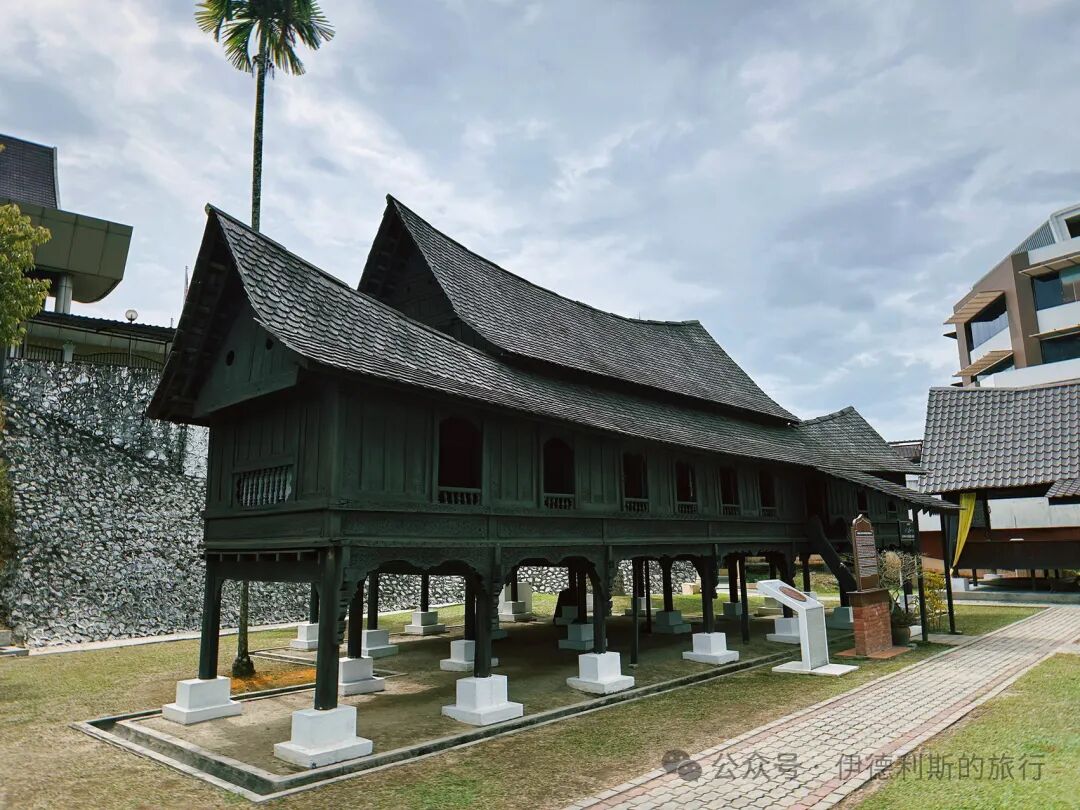
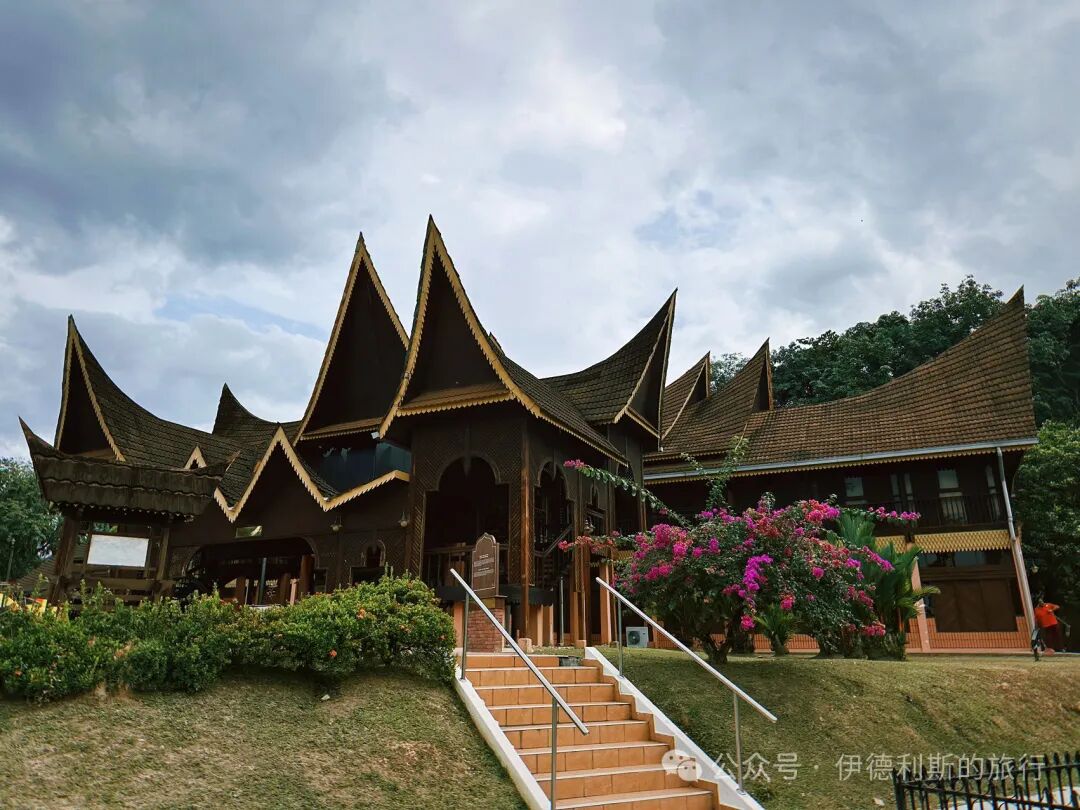
The best place to get a direct look at the Minangkabau culture of Negeri Sembilan is the Negeri Sembilan State Museum. Beyond the main exhibition hall, the museum grounds feature two traditional buildings in the Negeri Sembilan Minangkabau style. After blending with local Malay architecture, the Minangkabau buildings in Negeri Sembilan do not have the high, buffalo-horn-like roof corners found in Sumatra, but the roofs remain curved.
The first house is the Ampang Tinggi Palace (Istana Ampang Tinggi), built between 1865 and 1870 by order of the Negeri Sembilan Minangkabau ruler (Yang di-Pertuan Besar), Tuanku Imam (reigned 1861–1869), on a ridge in eastern Negeri Sembilan overlooking vast rice fields, and it was later occupied by the Negeri Sembilan royal family. In 1953, the then-ruler of Negeri Sembilan (Yang di-Pertuan Besar), Tuanku Abdul Rahman (reigned 1933–1960), agreed to have the palace dismantled and relocated, and it was finally moved to its current site at the Negeri Sembilan State Museum in 1980 and listed as a national heritage site in 2013. Unfortunately, the palace was under renovation when we visited, so we could not go inside.
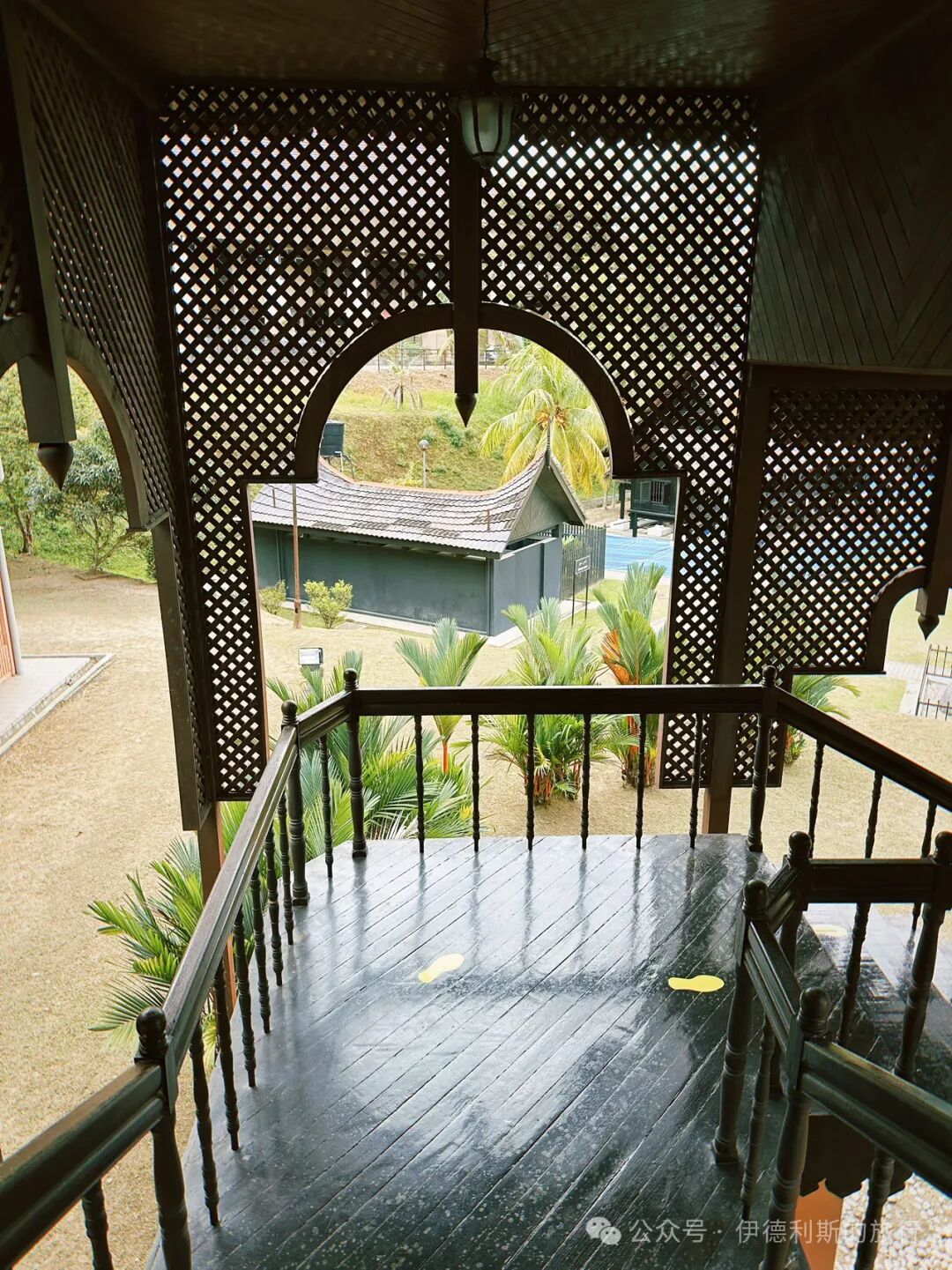
The second building is a traditional house built near Port Dickson in Negeri Sembilan by Minangkabau architects Haji Syahahbudin and Kamaruddin; it was dismantled by the British government in 1924 for display in London, later rebuilt at the Negeri Sembilan State Museum, and recognized as a heritage building in 2013.
Exquisite wood carvings on a traditional Minangkabau building.
The main exhibition hall of the Negeri Sembilan State Museum is called Teratak Perpatih, and it primarily introduces the cultural customs and life rules formed by the Minangkabau people of Negeri Sembilan based on their traditional customary law (Adat Perpatih). The most unique feature of Minangkabau customary law is the combination of patrilineal and matrilineal systems, where men are responsible for religious and political affairs, while property and land are passed from mother to daughter, ensuring that no matter how poor a Minangkabau woman is, she never has to sacrifice her dignity to make a living. If they divorce and return to their hometown, they still have their own land to live on.
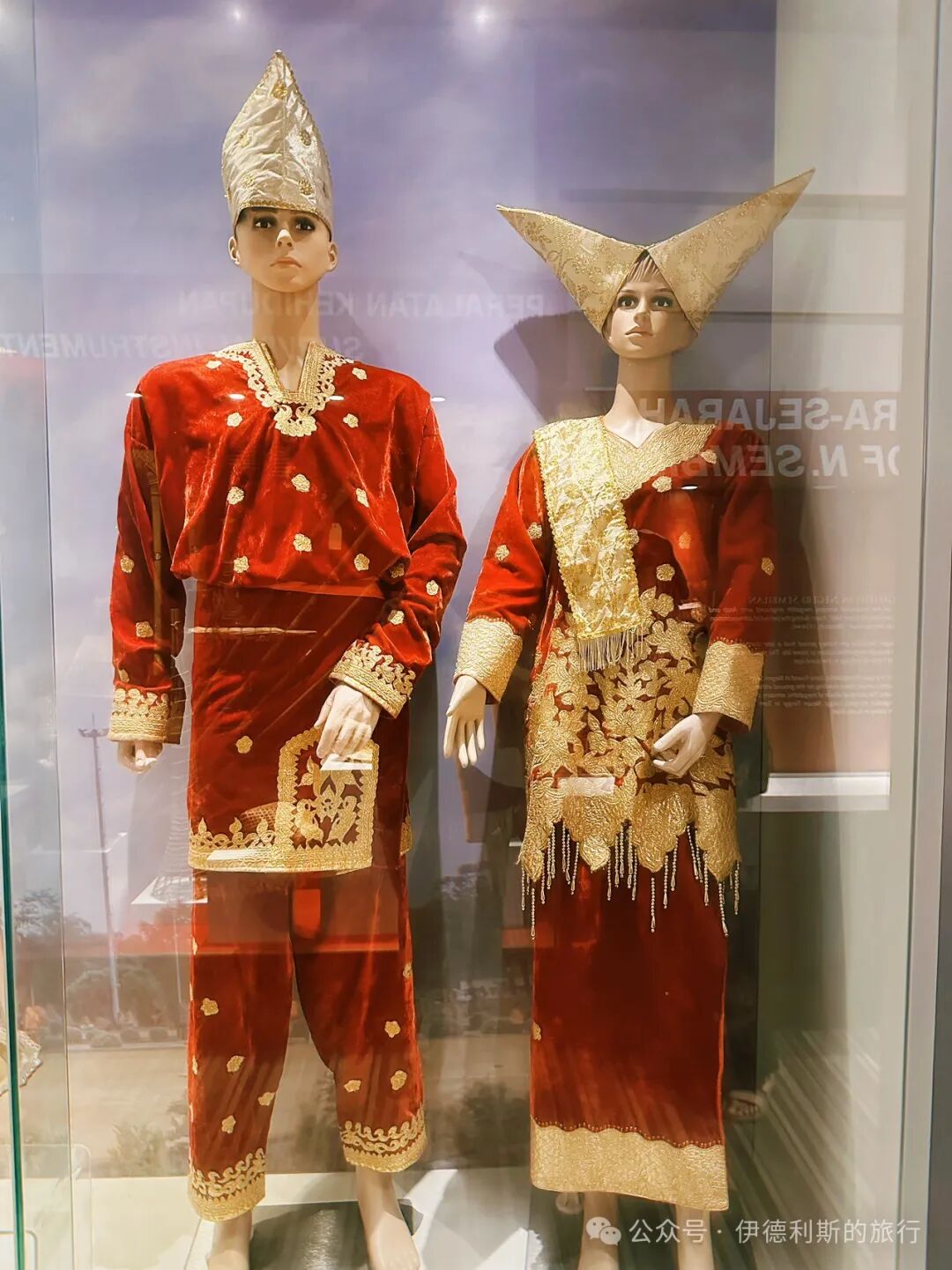
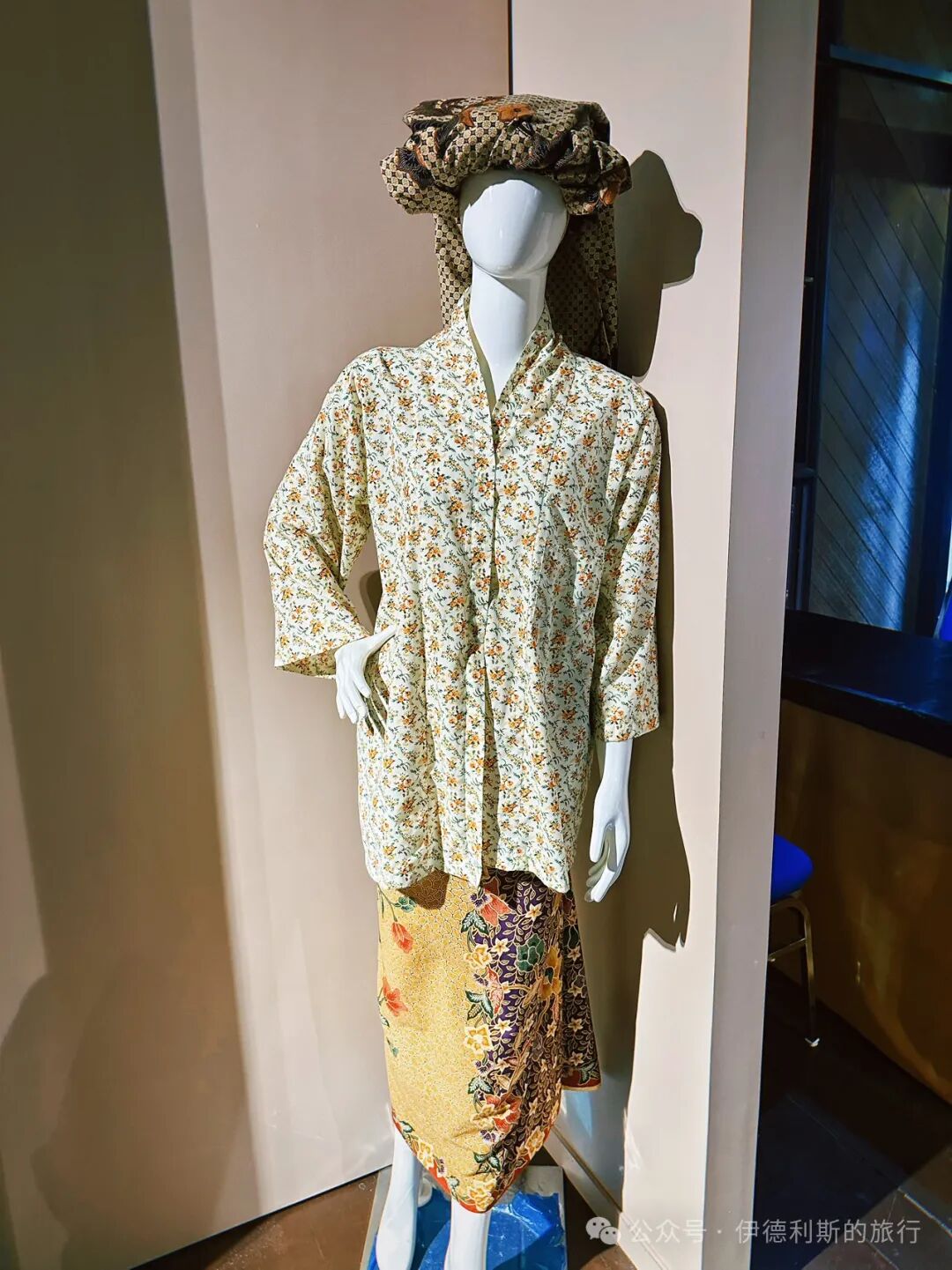
The main hall of the Negeri Sembilan State Museum itself features the high, curved roof corners of traditional Minangkabau architecture, and it displays Minangkabau clothing, musical instruments, and information on their history and culture.
The Negeri Sembilan State Museum houses items belonging to the Minangkabau ruler (Yang di-Pertuan Besar) Tuanku Abdul Rahman, who reigned from 1933 to 1960, and his queen, Tuanku Kurshiah. They were also the first King and Queen of Malaysia.
Between the 15th and 18th centuries, the Minangkabau people of Negeri Sembilan were ruled successively by the Malacca Sultanate and the Johor Sultanate. In the mid-18th century, as the Johor Sultanate declined, attacks from the Bugis people of Sulawesi forced the Minangkabau in Negeri Sembilan to seek help from their ancestral home in Sumatra. A group of Minangkabau chiefs from Negeri Sembilan traveled to the Minangkabau Kingdom of Pagaruyung in West Sumatra, where the King (Yang di-Pertuan Besar) sent his prince, Tuanku Sultan Mahmud Shah, to Negeri Sembilan to establish a throne. In 1773, Tuanku Sultan Mahmud Shah received the title of Yang di-Pertuan Besar from the Sultan of Johor and was crowned king in Negeri Sembilan, marking the beginning of Minangkabau rule in the region.
Tuanku Abdul Rahman was the eighth Yang di-Pertuan Besar of Negeri Sembilan. In 1925, he accompanied his father to visit the British King in England and decided to stay there to study law. After graduating and qualifying as a lawyer in 1928, he returned to Malaya to work as a defense attorney. Following his father's death in 1933, he became the only Malay ruler with a law degree.
When the British tried to establish the Malayan Union in 1946, Tuanku Abdul Rahman initially signed the treaty. Later, on the advice of the Sultan of Kedah, he hired a London-based lawyer to represent the Malay rulers in opposing the Malayan Union plan. Due to strong opposition from the Malay people, the Malayan Union was dissolved in 1948 and reorganized into the Federation of Malaya, which restored the status of the Malay rulers. In 1957, the Federation of Malaya officially gained independence from Britain, and Tuanku Abdul Rahman was elected as the first Supreme Head of State (Yang di-Pertuan Agong).
Tuanku Abdul Rahman firmly defended parliamentary democracy and upheld the position of the popularly elected Prime Minister. To honor him, his portrait is printed on the front of all Malaysian banknotes.
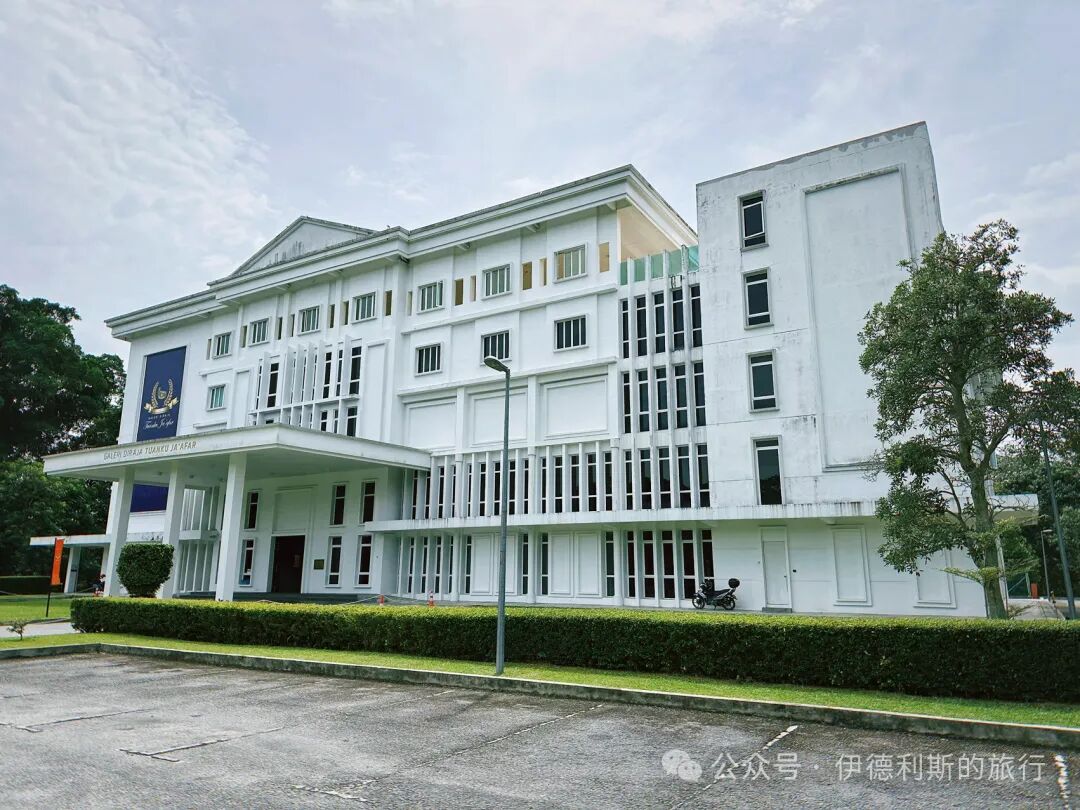
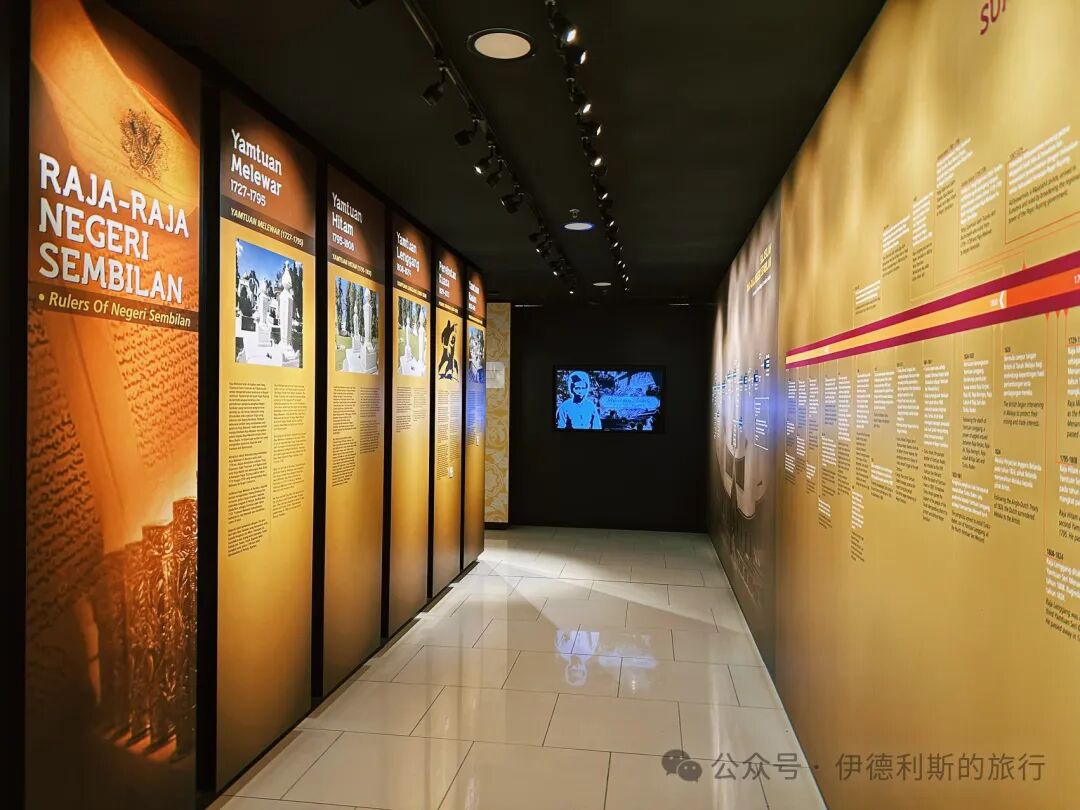
On the hill to the east of Seremban Lake Garden sits the Tuanku Ja'afar Royal Gallery, built to commemorate the tenth Yang di-Pertuan Besar of Negeri Sembilan and the tenth Supreme Head of State of Malaysia, Tuanku Ja'afar.
Tuanku Ja'afar was born in 1922 to a mother of Irish and Anglo-Indian descent. He was educated in Singapore before the war and was a classmate of Lee Kuan Yew. After experiencing World War II, Tuanku Ja'afar decided to pursue advanced legal studies at the University of Nottingham, Oxford University, and the London School of Economics. In 1957, he helped with the negotiations for the independence of the Federation of Malaya in the UK, and later served as a diplomat for ten years. Tuanku Ja'afar became the ruler of Negeri Sembilan in 1967 and served as the King of Malaysia from 1994 to 1999. During his term, Malaysia hosted the 1998 Commonwealth Games and the APEC summit.
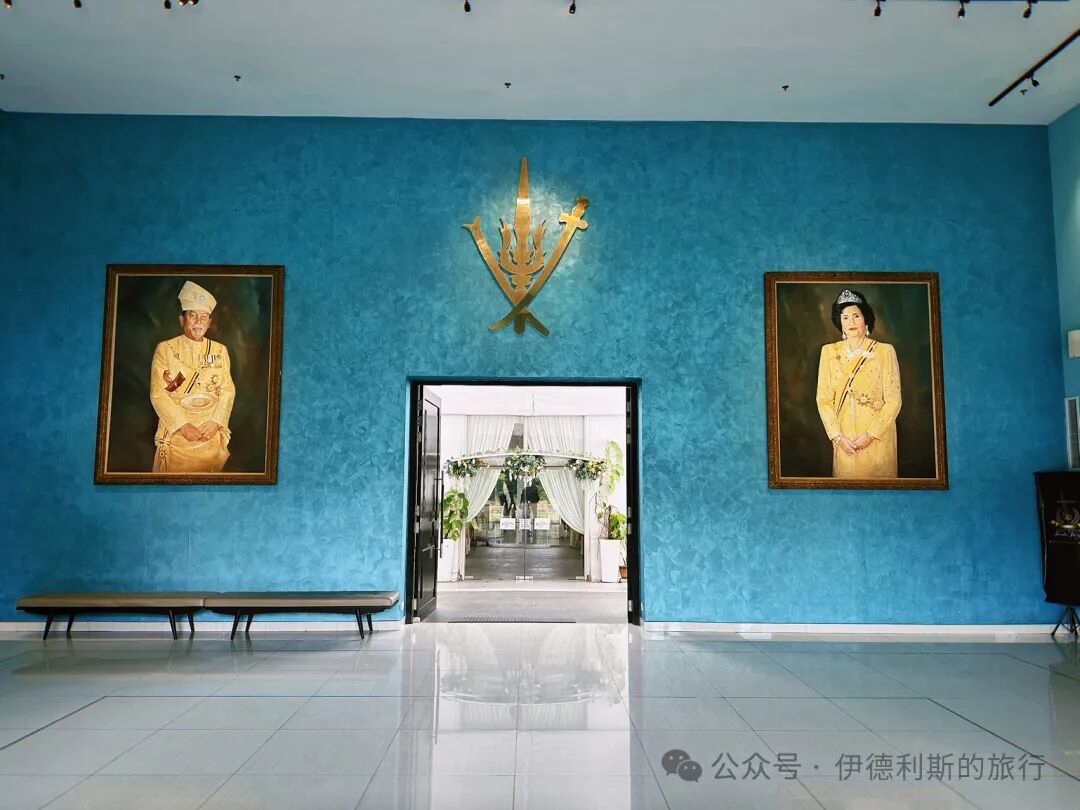
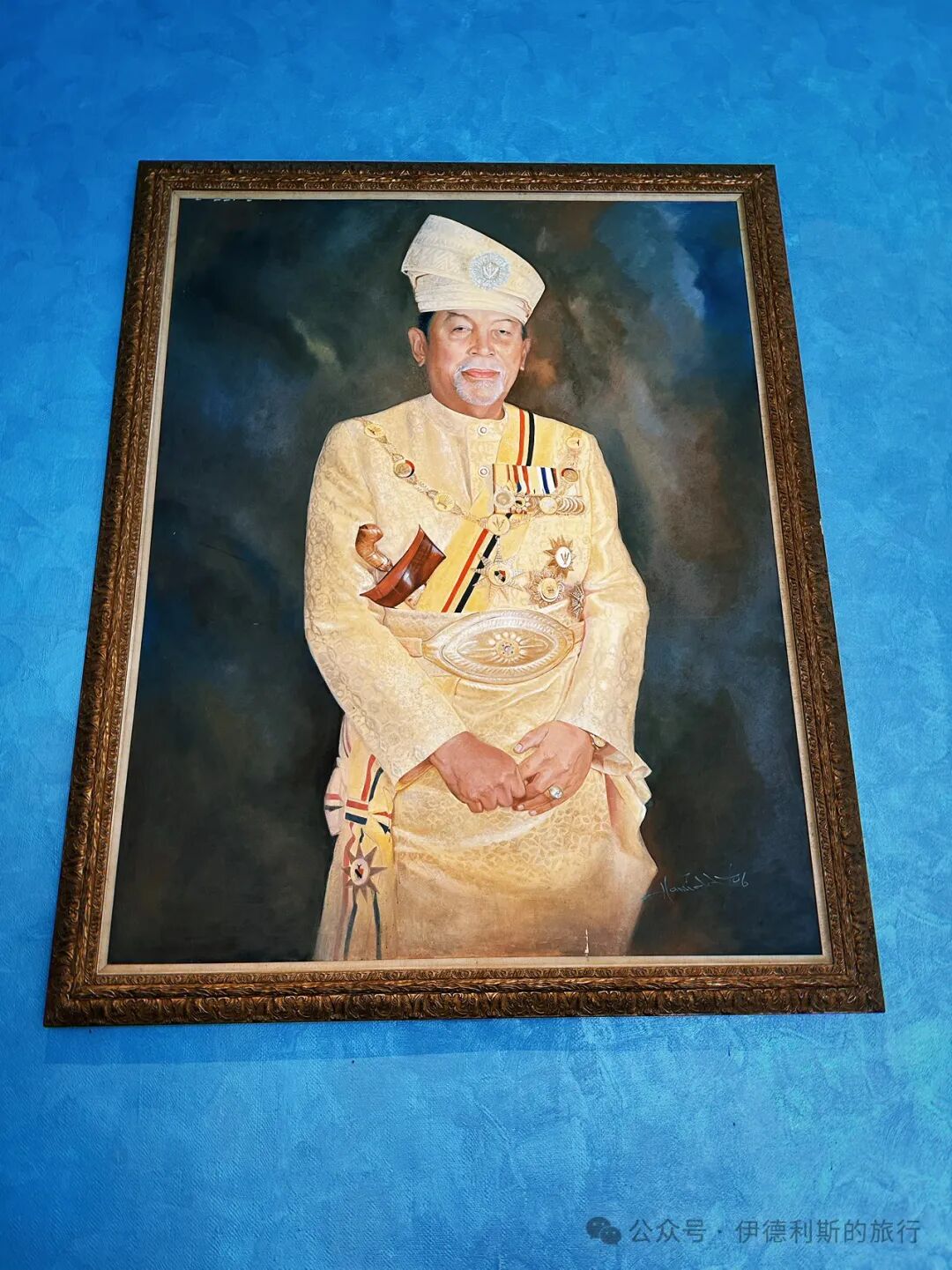
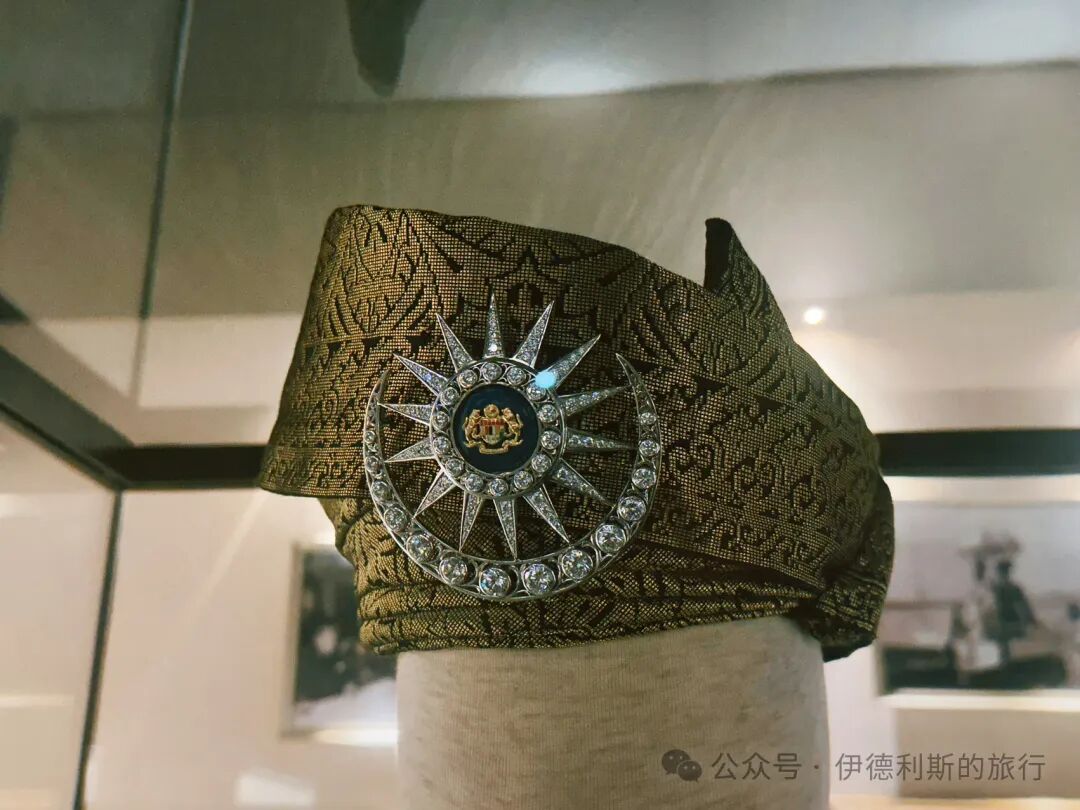
Tuanku Ja'afar loved golf, cricket, and painting. His artwork is currently on display at the Tuanku Ja'afar Royal Gallery. The gallery also houses Tuanku Ja'afar's official royal attire and a replica of the royal throne.
The Lake Garden is on the west side of the Tuanku Ja'afar Royal Gallery. I saw a lizard as long as an arm by the water, but I couldn't get a photo.
Further west is the Negeri Sembilan Royal Palace (Istana Hinggap Negeri Sembilan). All nine of Malaysia's rulers, whether Sultans or Yamtuan, have their own palaces. The Negeri Sembilan Royal Palace was originally in Seri Menanti, east of Seremban. After 1960, the Yamtuan of Negeri Sembilan converted this British-style residence in Seremban into the current palace.
The Negeri Sembilan State Assembly building is on the west side of the palace, where you can see the water buffalo horn roofs typical of Minangkabau architecture.
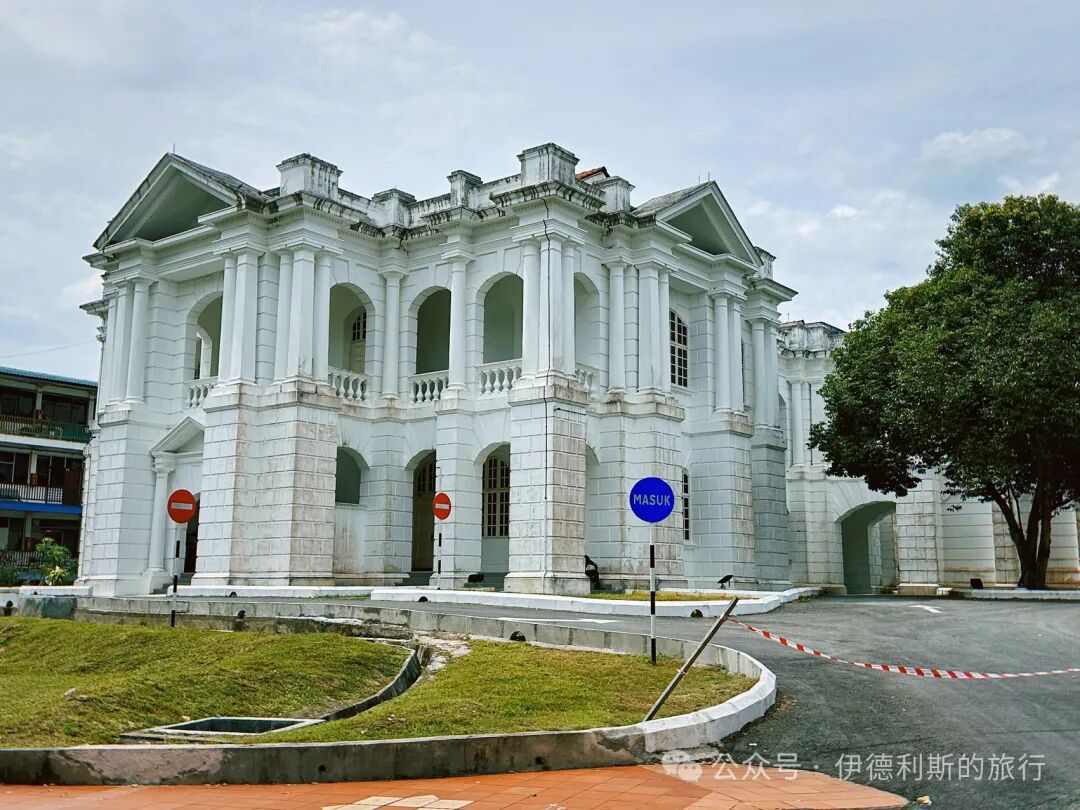
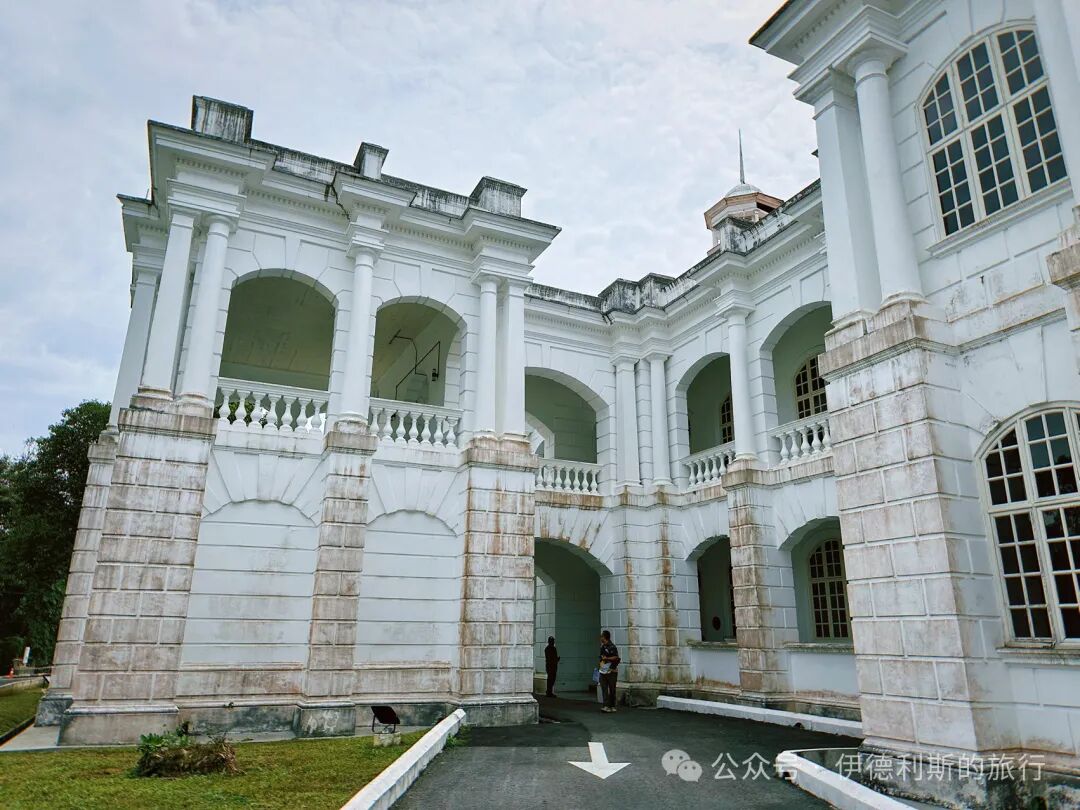
To the south of the palace is the old government building known as the White House. It was built in 1912 by the famous British architect Hubback, who also designed the Kuala Lumpur Railway Station, Jamek Mosque, and the National Textile Museum. The building was moved to its current location in 1984 and has served as the state library ever since.
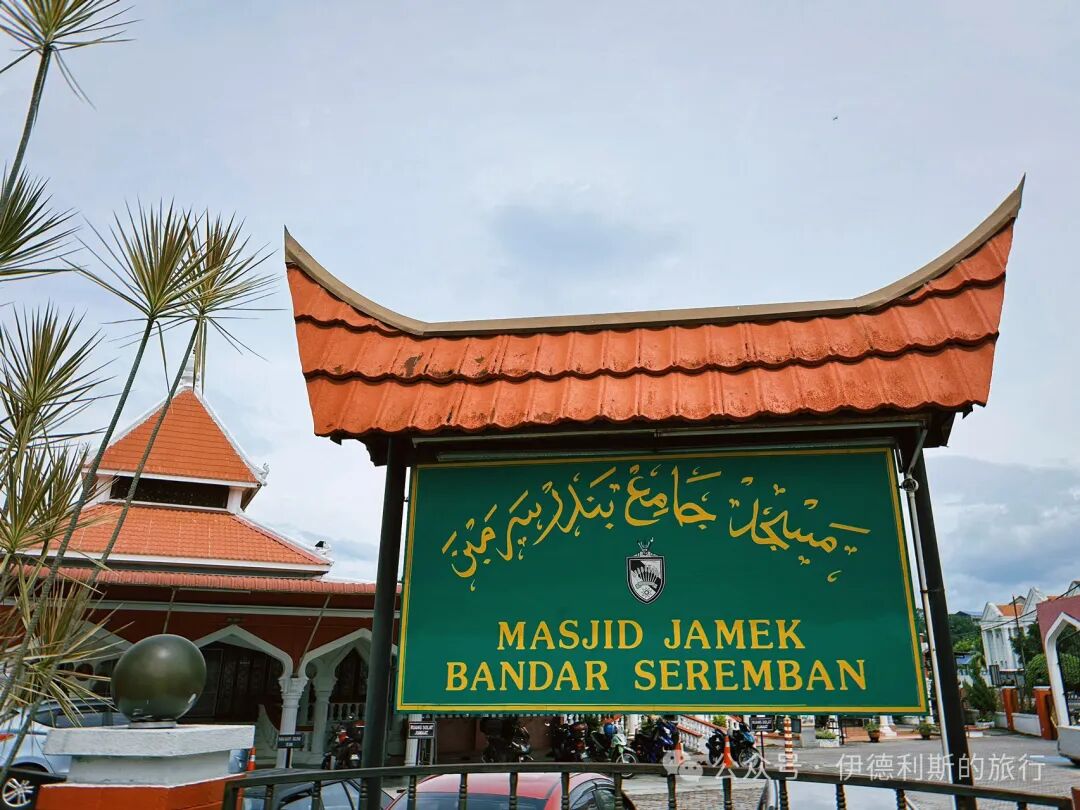
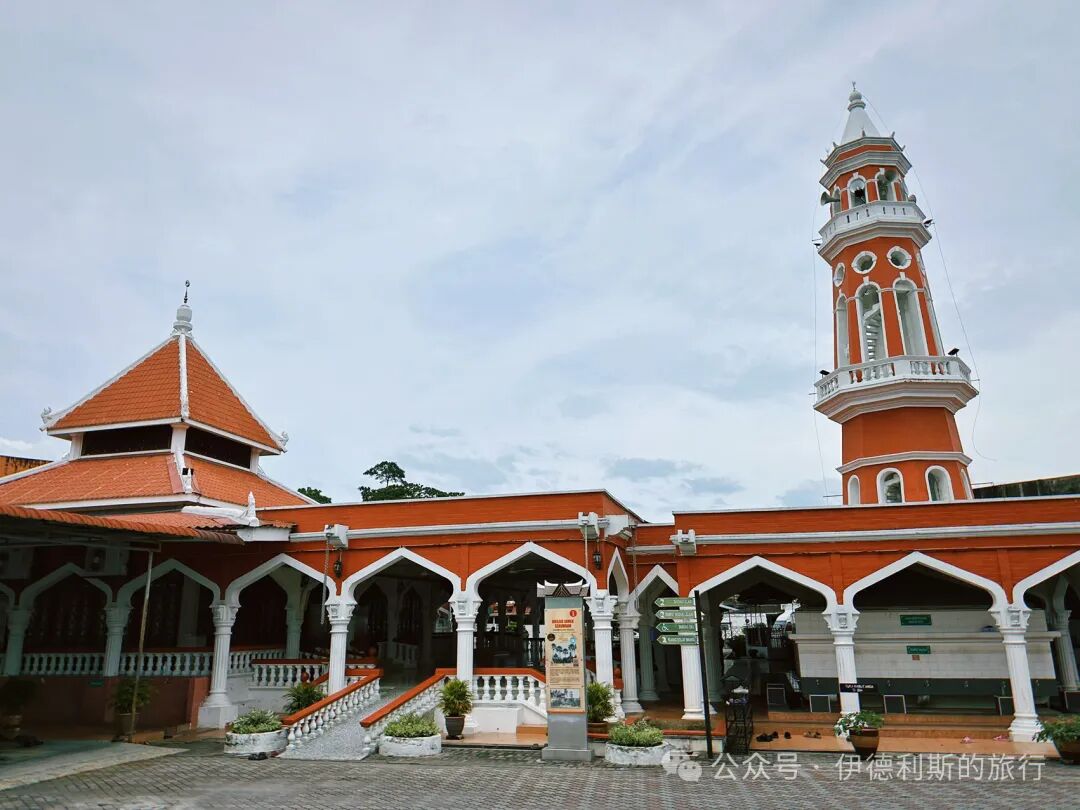
We performed namaz at the Seremban Jamek Mosque. The Seremban Jamek Mosque was originally a wooden structure. It was rebuilt into the current building in 1900, added a pagoda-style minaret in 1924, and was listed as a national heritage building in 2005. The mosque's architecture is similar to traditional mosques in Malacca, featuring a two-tiered pyramid roof and a minaret influenced by Chinese pagoda design.
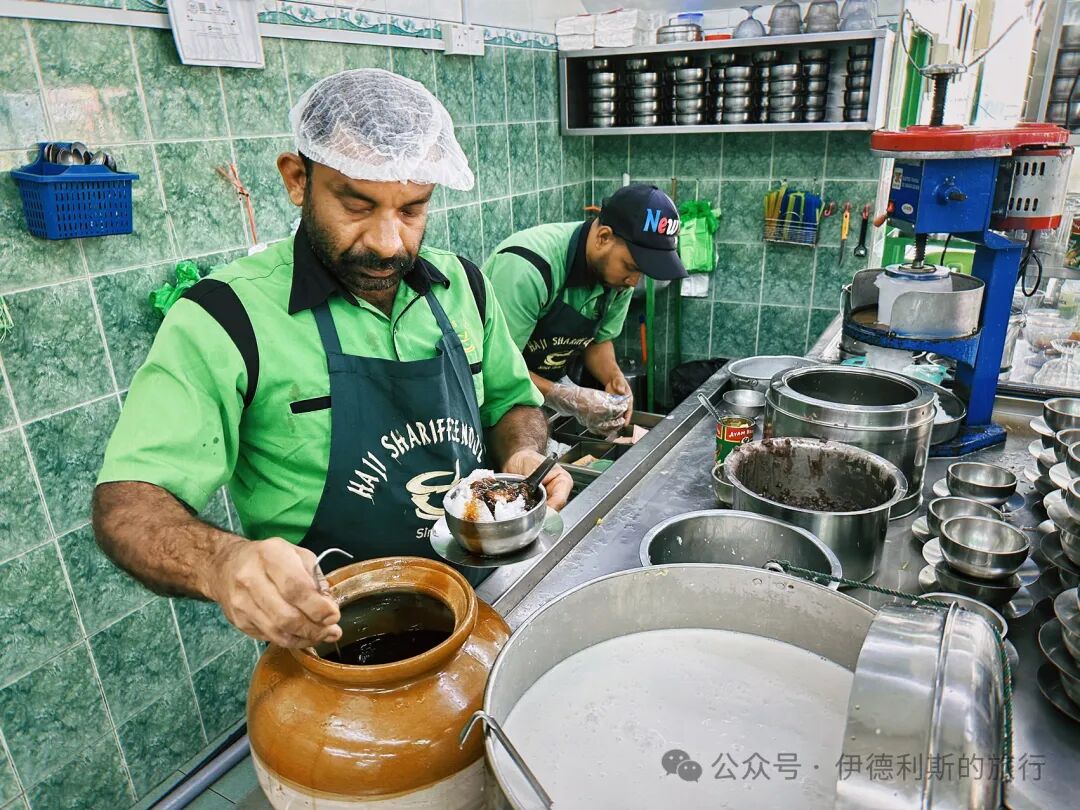
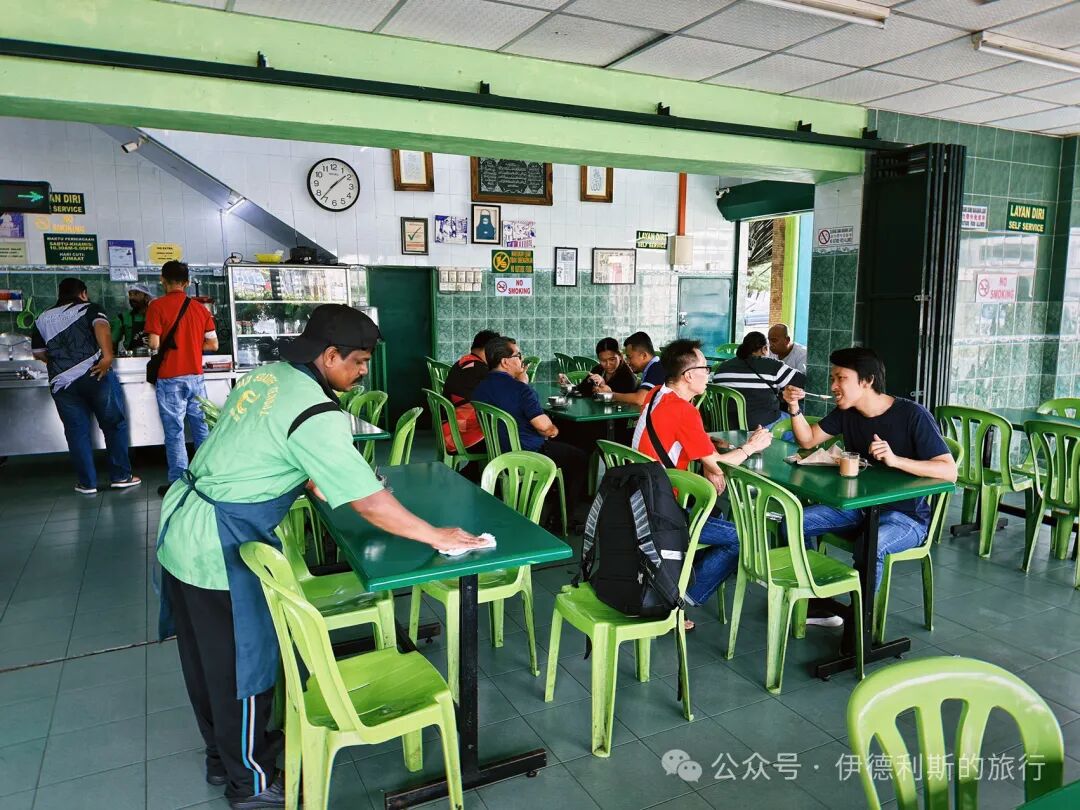
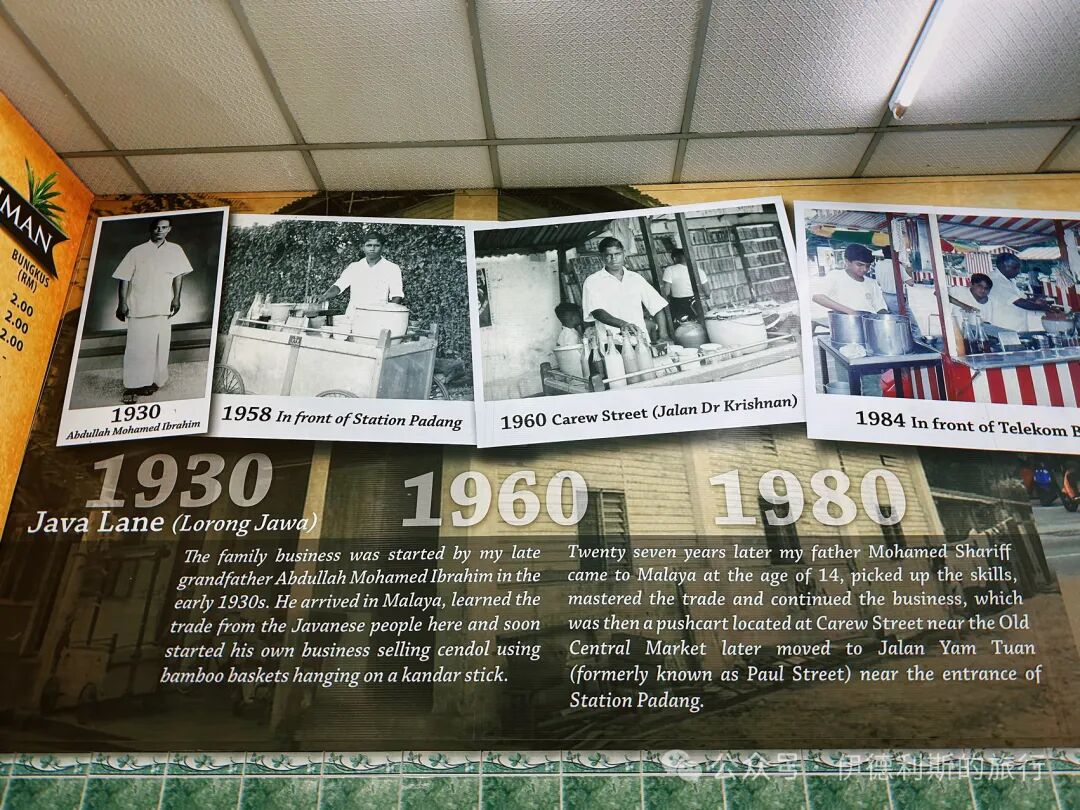
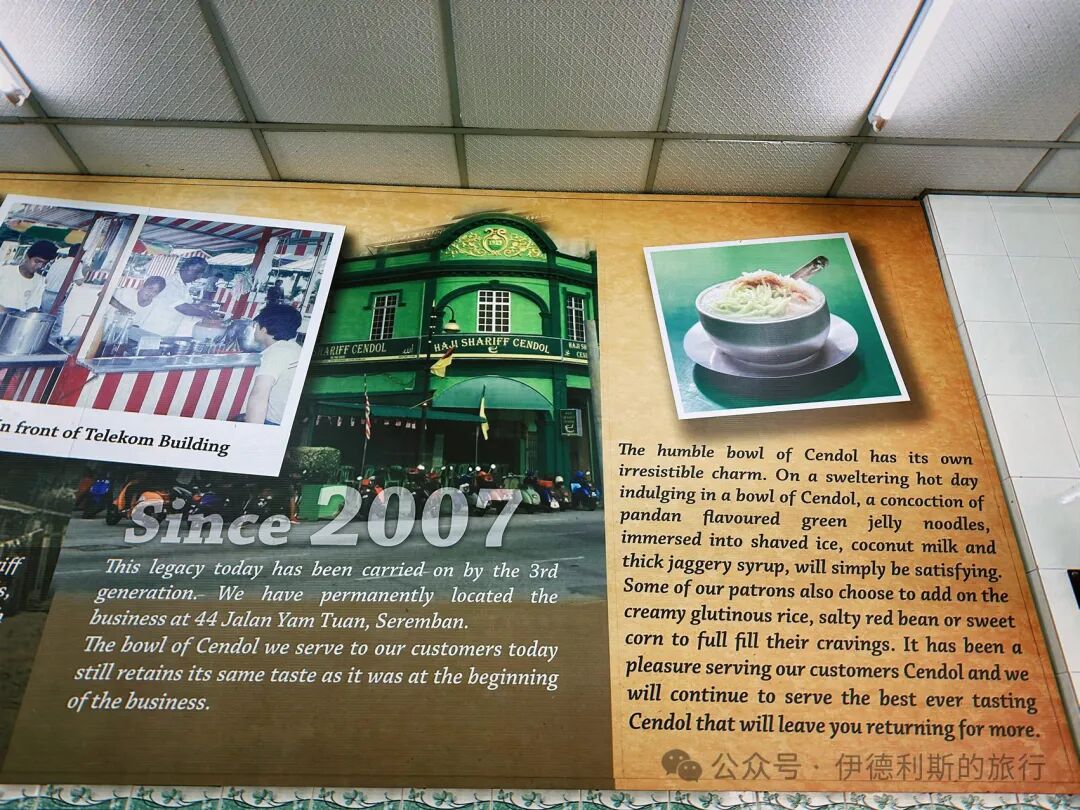
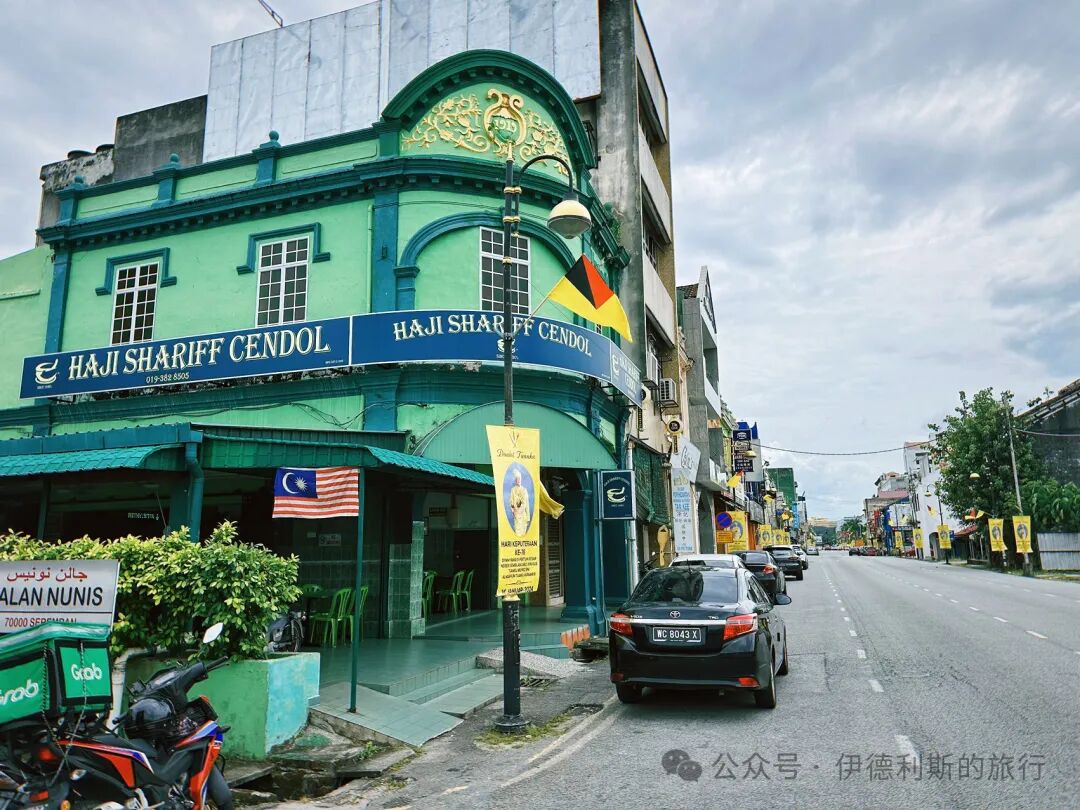
Haji Shariff Cendol is a famous snack shop in Seremban. Its founder, Abdullah Muhammad Ibrahim, came to Malaysia in 1930, learned how to make shaved ice dessert (cendol) from Javanese people, and started selling it on the street using bamboo baskets carried on a shoulder pole. In 1958, Haji Shariff inherited the craft and began selling cendol from a pushcart. It wasn't until 2007 that the family finally moved to their current location and opened a proper shop.
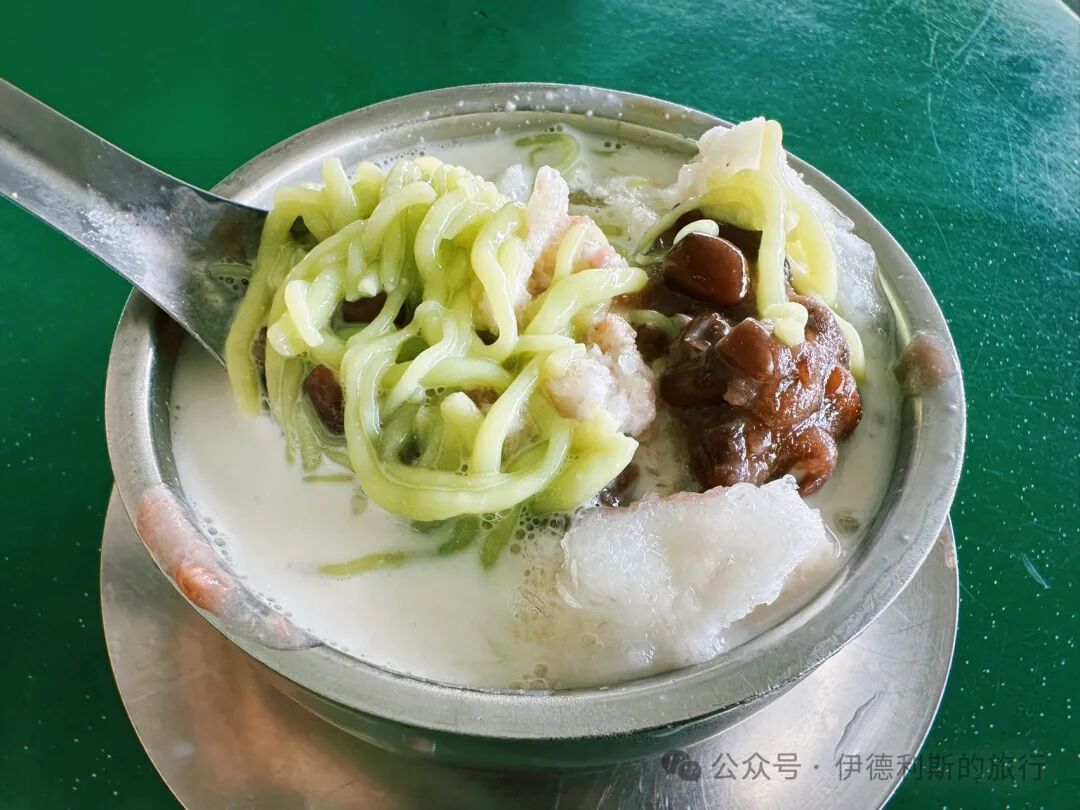
Cendol is a classic cooling ice dessert found across Southeast Asia, with its origins in Java. The most traditional version uses pandan leaf jelly noodles (pandan fen tiao), shaved ice, coconut milk, and palm sugar syrup. Later, new versions added toppings like red bean paste, durian, and jackfruit. view all
Summary: Halal Travel Guide: Negeri Sembilan, Malaysia - Minangkabau Culture and Muslim Life is presented here as a firsthand travel account in clear, natural English. The account focuses on Negeri Sembilan, Minangkabau, Muslim Travel while preserving the names, places, food, photos, and historical details from the Chinese source.
The Minangkabau people are a Malay-speaking group from the Minangkabau Highlands of Sumatra, and they are very closely related to the Malay people. The Minangkabau have long been known for their business skills and are the most mobile ethnic group in Southeast Asia. In the early 14th century, the Minangkabau crossed the Strait of Malacca to reach what is now Negeri Sembilan in Malaysia, where they intermarried with the indigenous Malay people (Orang Asli) to form the Negeri Sembilan Minangkabau community.
Although Malaysian law classifies the Minangkabau as a branch of the Malay people, those in Negeri Sembilan still maintain their own traditions in food, music, and martial arts, and the traditional Minangkabau customary law (Adat Minangkabau) continues to deeply influence them.
The best place to get a direct look at the Minangkabau culture of Negeri Sembilan is the Negeri Sembilan State Museum. Beyond the main exhibition hall, the museum grounds feature two traditional buildings in the Negeri Sembilan Minangkabau style. After blending with local Malay architecture, the Minangkabau buildings in Negeri Sembilan do not have the high, buffalo-horn-like roof corners found in Sumatra, but the roofs remain curved.
The first house is the Ampang Tinggi Palace (Istana Ampang Tinggi), built between 1865 and 1870 by order of the Negeri Sembilan Minangkabau ruler (Yang di-Pertuan Besar), Tuanku Imam (reigned 1861–1869), on a ridge in eastern Negeri Sembilan overlooking vast rice fields, and it was later occupied by the Negeri Sembilan royal family. In 1953, the then-ruler of Negeri Sembilan (Yang di-Pertuan Besar), Tuanku Abdul Rahman (reigned 1933–1960), agreed to have the palace dismantled and relocated, and it was finally moved to its current site at the Negeri Sembilan State Museum in 1980 and listed as a national heritage site in 2013. Unfortunately, the palace was under renovation when we visited, so we could not go inside.
The second building is a traditional house built near Port Dickson in Negeri Sembilan by Minangkabau architects Haji Syahahbudin and Kamaruddin; it was dismantled by the British government in 1924 for display in London, later rebuilt at the Negeri Sembilan State Museum, and recognized as a heritage building in 2013.
Exquisite wood carvings on a traditional Minangkabau building.
The main exhibition hall of the Negeri Sembilan State Museum is called Teratak Perpatih, and it primarily introduces the cultural customs and life rules formed by the Minangkabau people of Negeri Sembilan based on their traditional customary law (Adat Perpatih). The most unique feature of Minangkabau customary law is the combination of patrilineal and matrilineal systems, where men are responsible for religious and political affairs, while property and land are passed from mother to daughter, ensuring that no matter how poor a Minangkabau woman is, she never has to sacrifice her dignity to make a living. If they divorce and return to their hometown, they still have their own land to live on.
The main hall of the Negeri Sembilan State Museum itself features the high, curved roof corners of traditional Minangkabau architecture, and it displays Minangkabau clothing, musical instruments, and information on their history and culture.
The Negeri Sembilan State Museum houses items belonging to the Minangkabau ruler (Yang di-Pertuan Besar) Tuanku Abdul Rahman, who reigned from 1933 to 1960, and his queen, Tuanku Kurshiah. They were also the first King and Queen of Malaysia.
Between the 15th and 18th centuries, the Minangkabau people of Negeri Sembilan were ruled successively by the Malacca Sultanate and the Johor Sultanate. In the mid-18th century, as the Johor Sultanate declined, attacks from the Bugis people of Sulawesi forced the Minangkabau in Negeri Sembilan to seek help from their ancestral home in Sumatra. A group of Minangkabau chiefs from Negeri Sembilan traveled to the Minangkabau Kingdom of Pagaruyung in West Sumatra, where the King (Yang di-Pertuan Besar) sent his prince, Tuanku Sultan Mahmud Shah, to Negeri Sembilan to establish a throne. In 1773, Tuanku Sultan Mahmud Shah received the title of Yang di-Pertuan Besar from the Sultan of Johor and was crowned king in Negeri Sembilan, marking the beginning of Minangkabau rule in the region.
Tuanku Abdul Rahman was the eighth Yang di-Pertuan Besar of Negeri Sembilan. In 1925, he accompanied his father to visit the British King in England and decided to stay there to study law. After graduating and qualifying as a lawyer in 1928, he returned to Malaya to work as a defense attorney. Following his father's death in 1933, he became the only Malay ruler with a law degree.
When the British tried to establish the Malayan Union in 1946, Tuanku Abdul Rahman initially signed the treaty. Later, on the advice of the Sultan of Kedah, he hired a London-based lawyer to represent the Malay rulers in opposing the Malayan Union plan. Due to strong opposition from the Malay people, the Malayan Union was dissolved in 1948 and reorganized into the Federation of Malaya, which restored the status of the Malay rulers. In 1957, the Federation of Malaya officially gained independence from Britain, and Tuanku Abdul Rahman was elected as the first Supreme Head of State (Yang di-Pertuan Agong).
Tuanku Abdul Rahman firmly defended parliamentary democracy and upheld the position of the popularly elected Prime Minister. To honor him, his portrait is printed on the front of all Malaysian banknotes.
On the hill to the east of Seremban Lake Garden sits the Tuanku Ja'afar Royal Gallery, built to commemorate the tenth Yang di-Pertuan Besar of Negeri Sembilan and the tenth Supreme Head of State of Malaysia, Tuanku Ja'afar.
Tuanku Ja'afar was born in 1922 to a mother of Irish and Anglo-Indian descent. He was educated in Singapore before the war and was a classmate of Lee Kuan Yew. After experiencing World War II, Tuanku Ja'afar decided to pursue advanced legal studies at the University of Nottingham, Oxford University, and the London School of Economics. In 1957, he helped with the negotiations for the independence of the Federation of Malaya in the UK, and later served as a diplomat for ten years. Tuanku Ja'afar became the ruler of Negeri Sembilan in 1967 and served as the King of Malaysia from 1994 to 1999. During his term, Malaysia hosted the 1998 Commonwealth Games and the APEC summit.
Tuanku Ja'afar loved golf, cricket, and painting. His artwork is currently on display at the Tuanku Ja'afar Royal Gallery. The gallery also houses Tuanku Ja'afar's official royal attire and a replica of the royal throne.
The Lake Garden is on the west side of the Tuanku Ja'afar Royal Gallery. I saw a lizard as long as an arm by the water, but I couldn't get a photo.
Further west is the Negeri Sembilan Royal Palace (Istana Hinggap Negeri Sembilan). All nine of Malaysia's rulers, whether Sultans or Yamtuan, have their own palaces. The Negeri Sembilan Royal Palace was originally in Seri Menanti, east of Seremban. After 1960, the Yamtuan of Negeri Sembilan converted this British-style residence in Seremban into the current palace.
The Negeri Sembilan State Assembly building is on the west side of the palace, where you can see the water buffalo horn roofs typical of Minangkabau architecture.
To the south of the palace is the old government building known as the White House. It was built in 1912 by the famous British architect Hubback, who also designed the Kuala Lumpur Railway Station, Jamek Mosque, and the National Textile Museum. The building was moved to its current location in 1984 and has served as the state library ever since.
We performed namaz at the Seremban Jamek Mosque. The Seremban Jamek Mosque was originally a wooden structure. It was rebuilt into the current building in 1900, added a pagoda-style minaret in 1924, and was listed as a national heritage building in 2005. The mosque's architecture is similar to traditional mosques in Malacca, featuring a two-tiered pyramid roof and a minaret influenced by Chinese pagoda design.
Haji Shariff Cendol is a famous snack shop in Seremban. Its founder, Abdullah Muhammad Ibrahim, came to Malaysia in 1930, learned how to make shaved ice dessert (cendol) from Javanese people, and started selling it on the street using bamboo baskets carried on a shoulder pole. In 1958, Haji Shariff inherited the craft and began selling cendol from a pushcart. It wasn't until 2007 that the family finally moved to their current location and opened a proper shop.
Cendol is a classic cooling ice dessert found across Southeast Asia, with its origins in Java. The most traditional version uses pandan leaf jelly noodles (pandan fen tiao), shaved ice, coconut milk, and palm sugar syrup. Later, new versions added toppings like red bean paste, durian, and jackfruit. view all
Reposted from the web
Summary: Halal Travel Guide: Negeri Sembilan, Malaysia - Minangkabau Culture and Muslim Life is presented here as a firsthand travel account in clear, natural English. The account focuses on Negeri Sembilan, Minangkabau, Muslim Travel while preserving the names, places, food, photos, and historical details from the Chinese source.
The Minangkabau people are a Malay-speaking group from the Minangkabau Highlands of Sumatra, and they are very closely related to the Malay people. The Minangkabau have long been known for their business skills and are the most mobile ethnic group in Southeast Asia. In the early 14th century, the Minangkabau crossed the Strait of Malacca to reach what is now Negeri Sembilan in Malaysia, where they intermarried with the indigenous Malay people (Orang Asli) to form the Negeri Sembilan Minangkabau community.
Although Malaysian law classifies the Minangkabau as a branch of the Malay people, those in Negeri Sembilan still maintain their own traditions in food, music, and martial arts, and the traditional Minangkabau customary law (Adat Minangkabau) continues to deeply influence them.
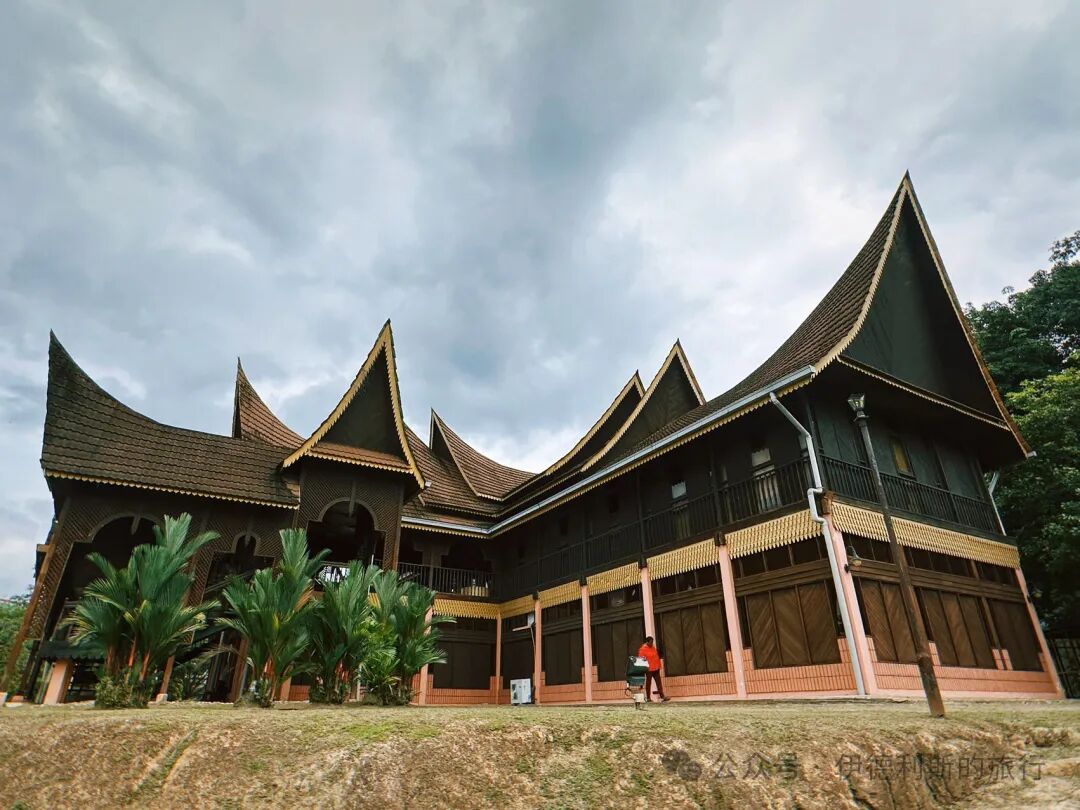
The best place to get a direct look at the Minangkabau culture of Negeri Sembilan is the Negeri Sembilan State Museum. Beyond the main exhibition hall, the museum grounds feature two traditional buildings in the Negeri Sembilan Minangkabau style. After blending with local Malay architecture, the Minangkabau buildings in Negeri Sembilan do not have the high, buffalo-horn-like roof corners found in Sumatra, but the roofs remain curved.
The first house is the Ampang Tinggi Palace (Istana Ampang Tinggi), built between 1865 and 1870 by order of the Negeri Sembilan Minangkabau ruler (Yang di-Pertuan Besar), Tuanku Imam (reigned 1861–1869), on a ridge in eastern Negeri Sembilan overlooking vast rice fields, and it was later occupied by the Negeri Sembilan royal family. In 1953, the then-ruler of Negeri Sembilan (Yang di-Pertuan Besar), Tuanku Abdul Rahman (reigned 1933–1960), agreed to have the palace dismantled and relocated, and it was finally moved to its current site at the Negeri Sembilan State Museum in 1980 and listed as a national heritage site in 2013. Unfortunately, the palace was under renovation when we visited, so we could not go inside.
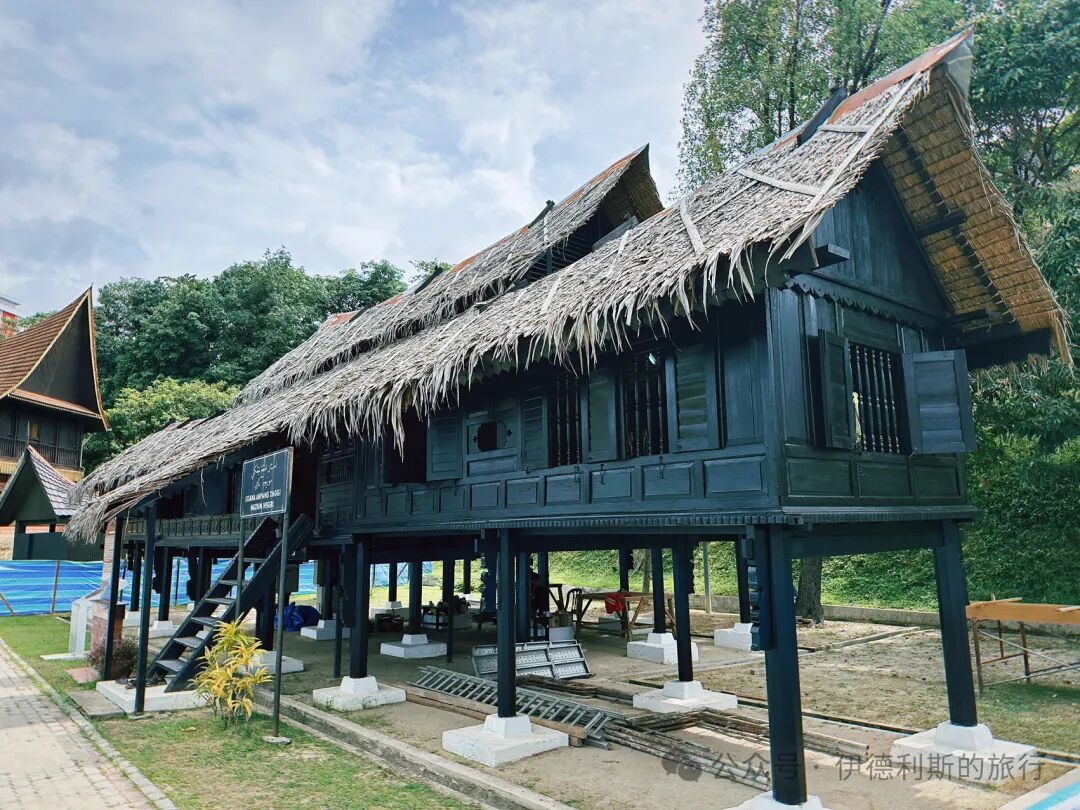
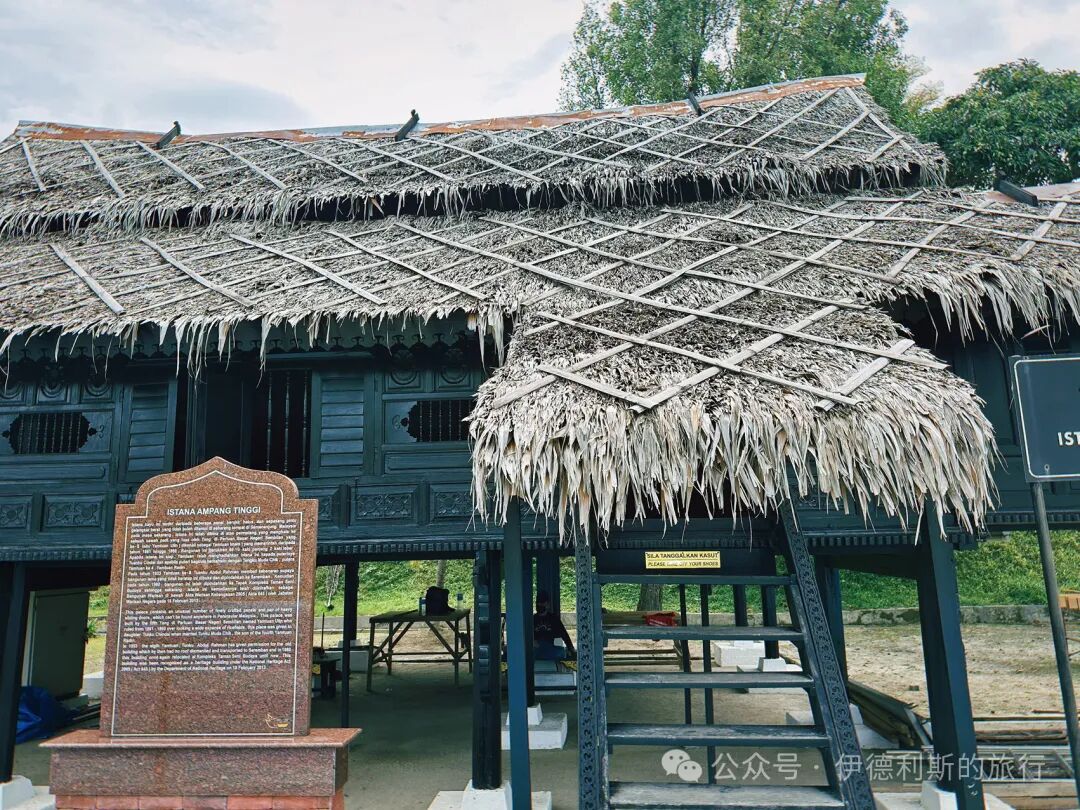
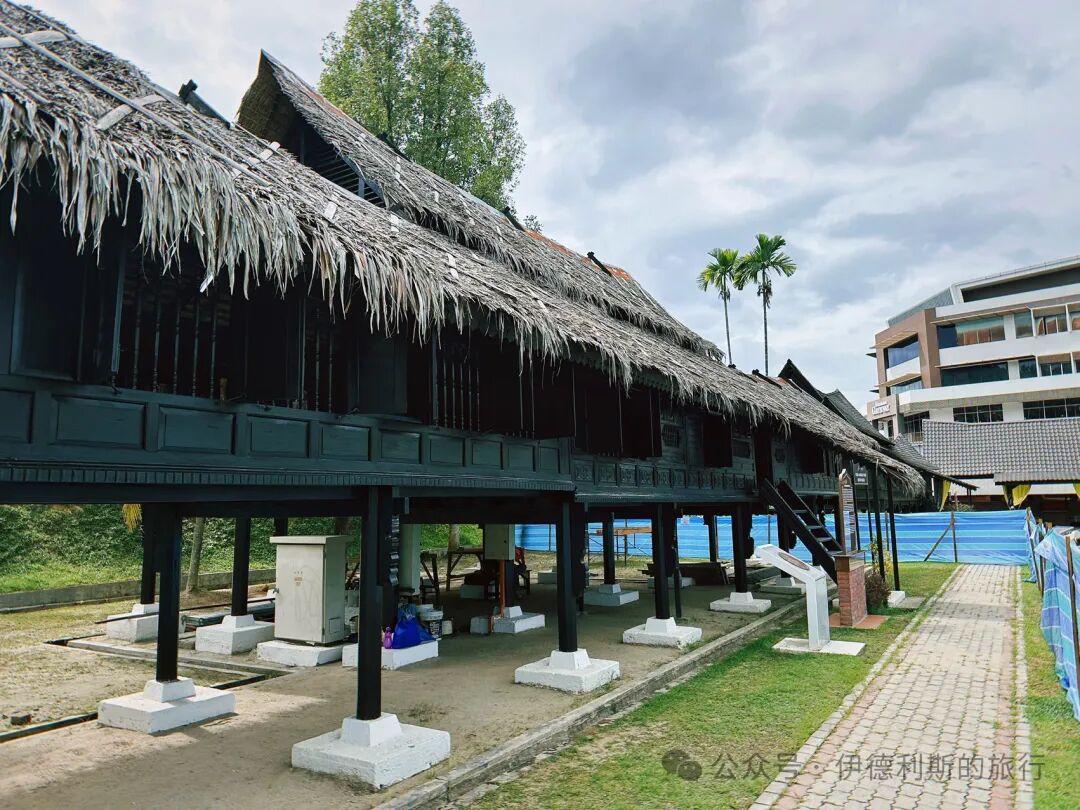
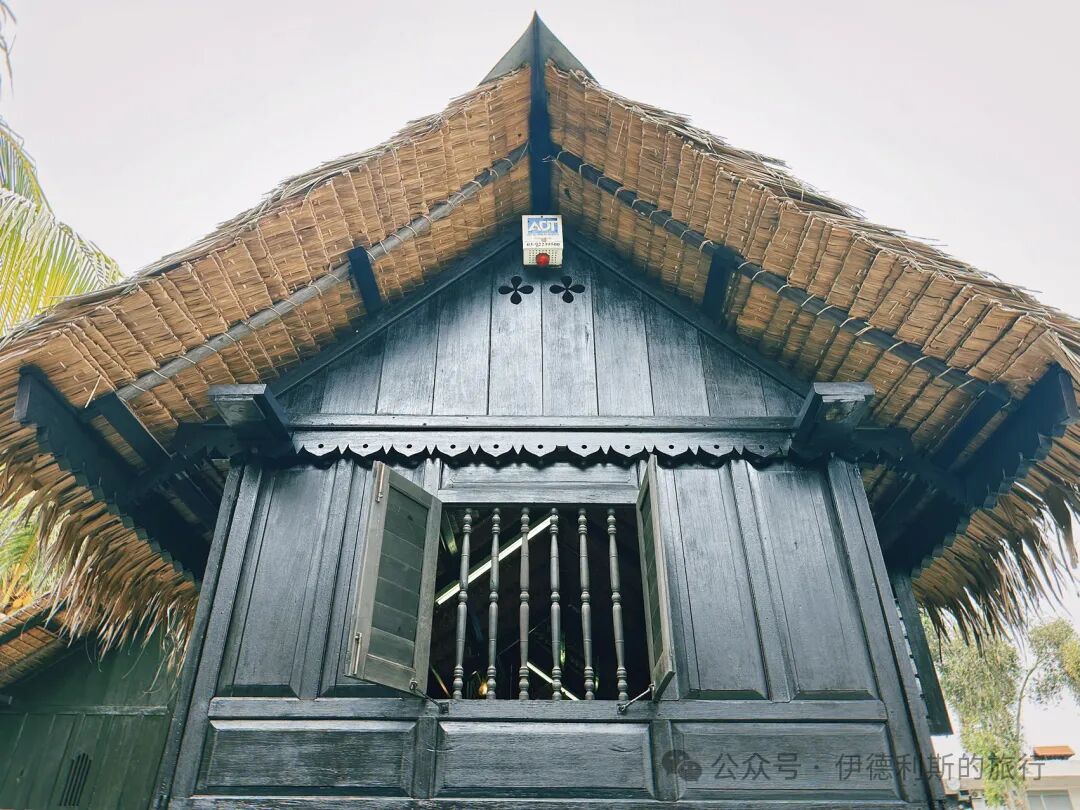
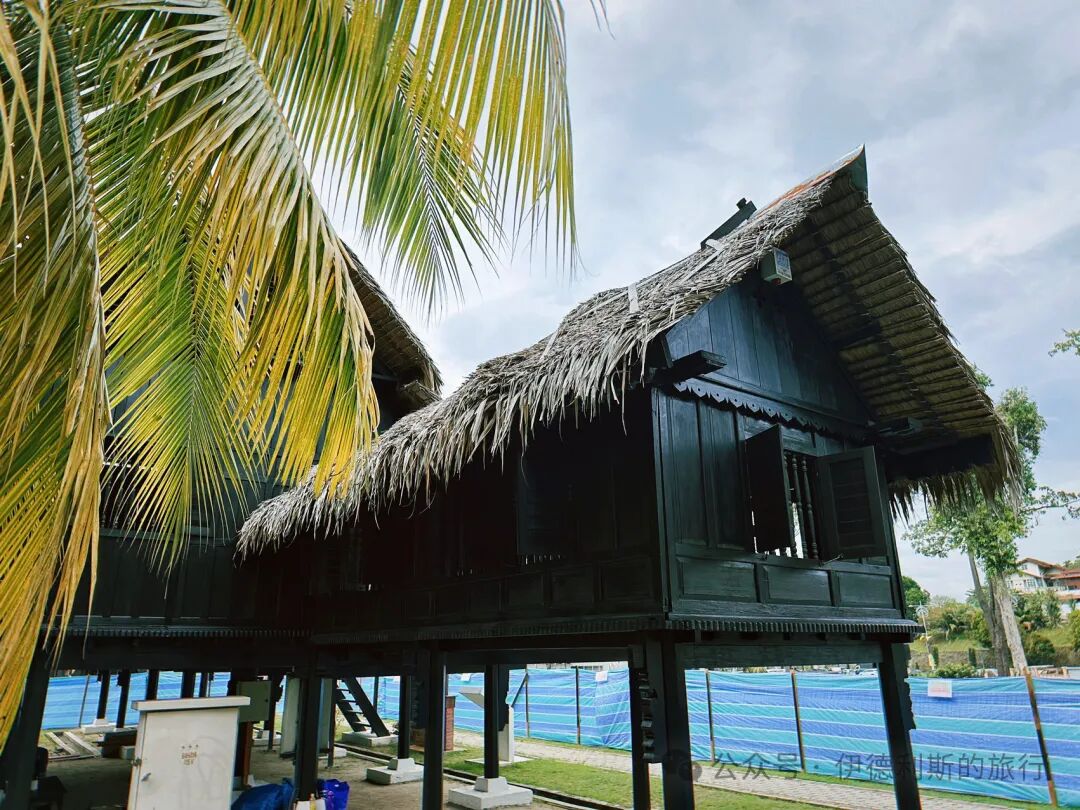
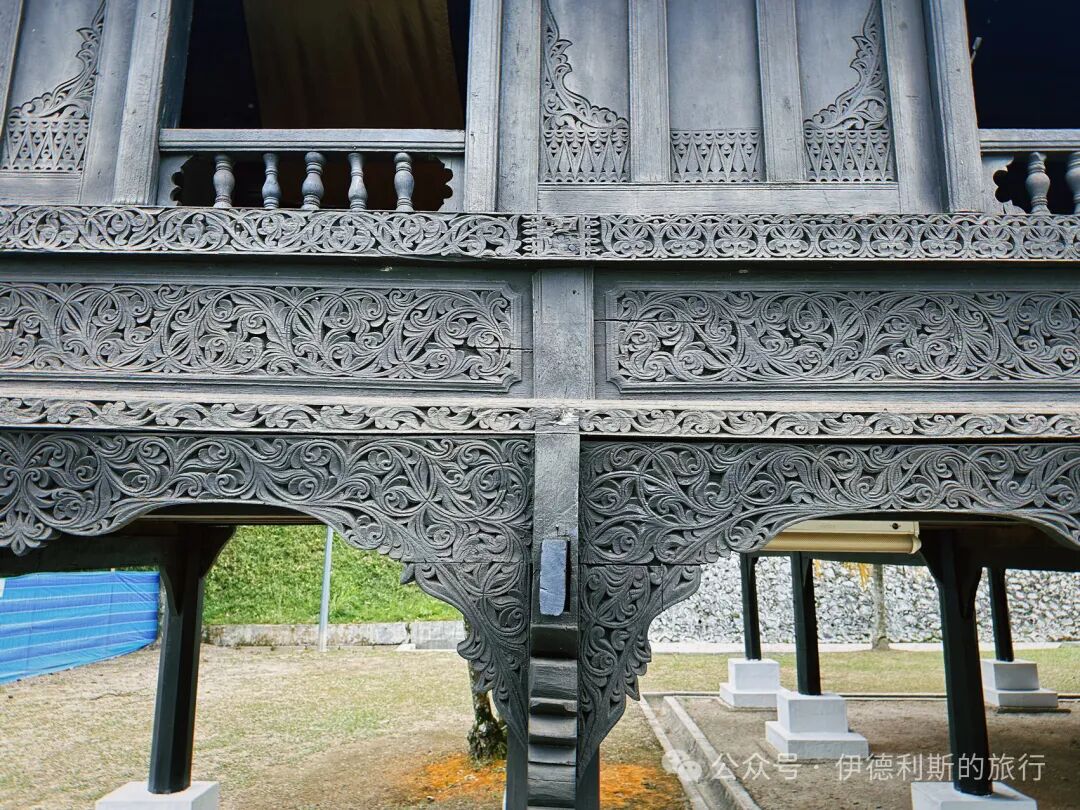
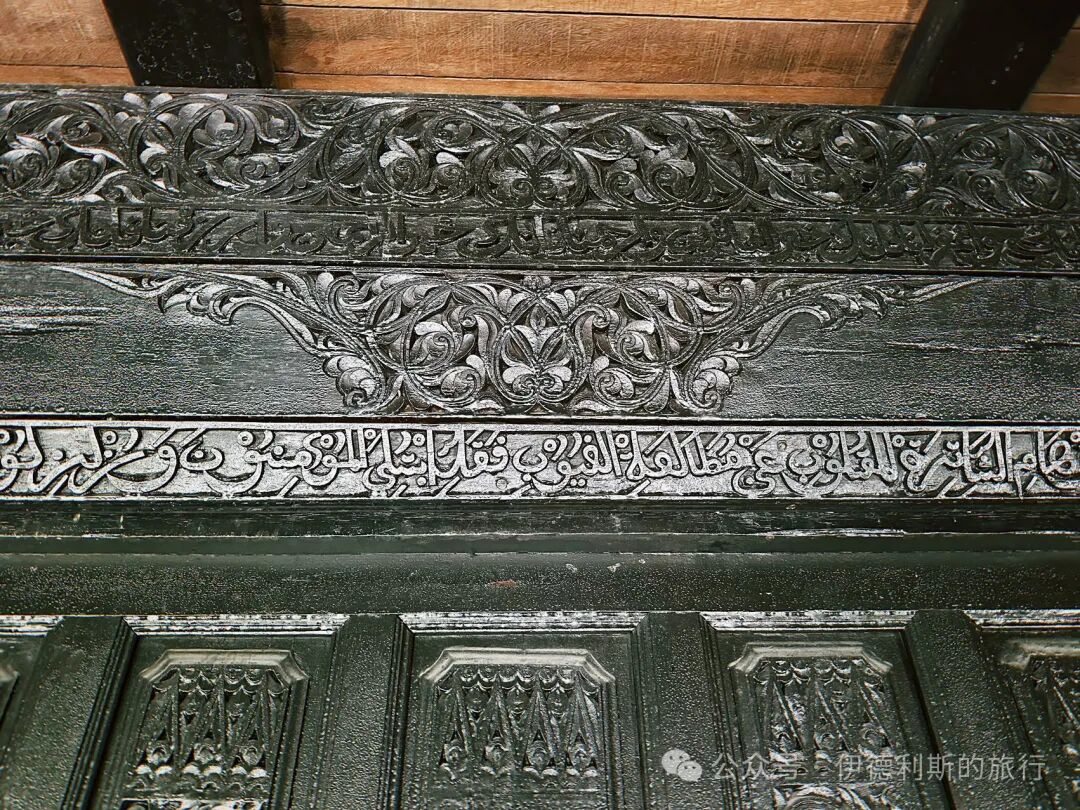
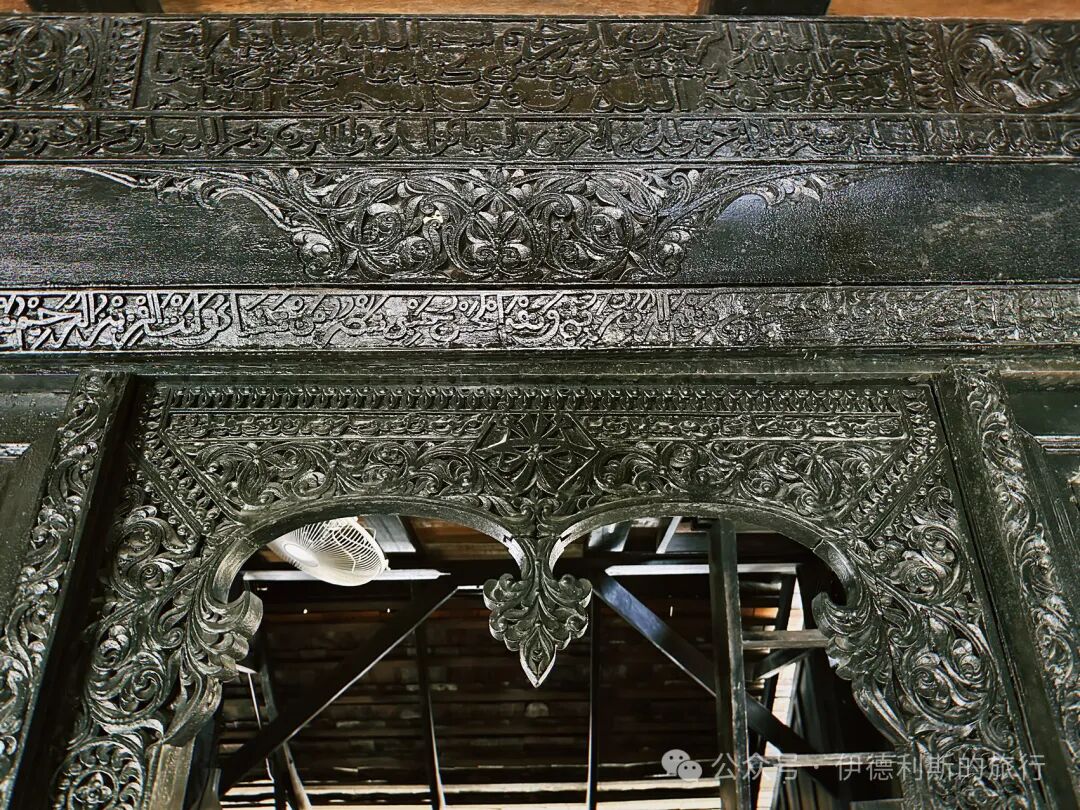
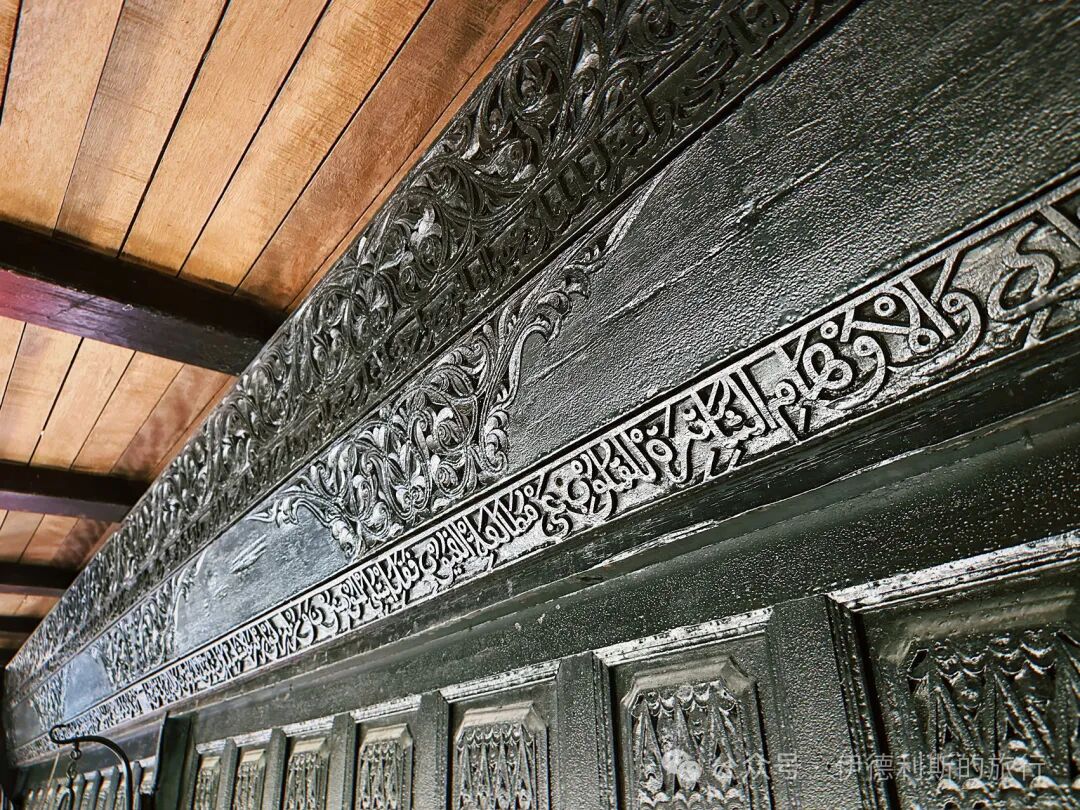
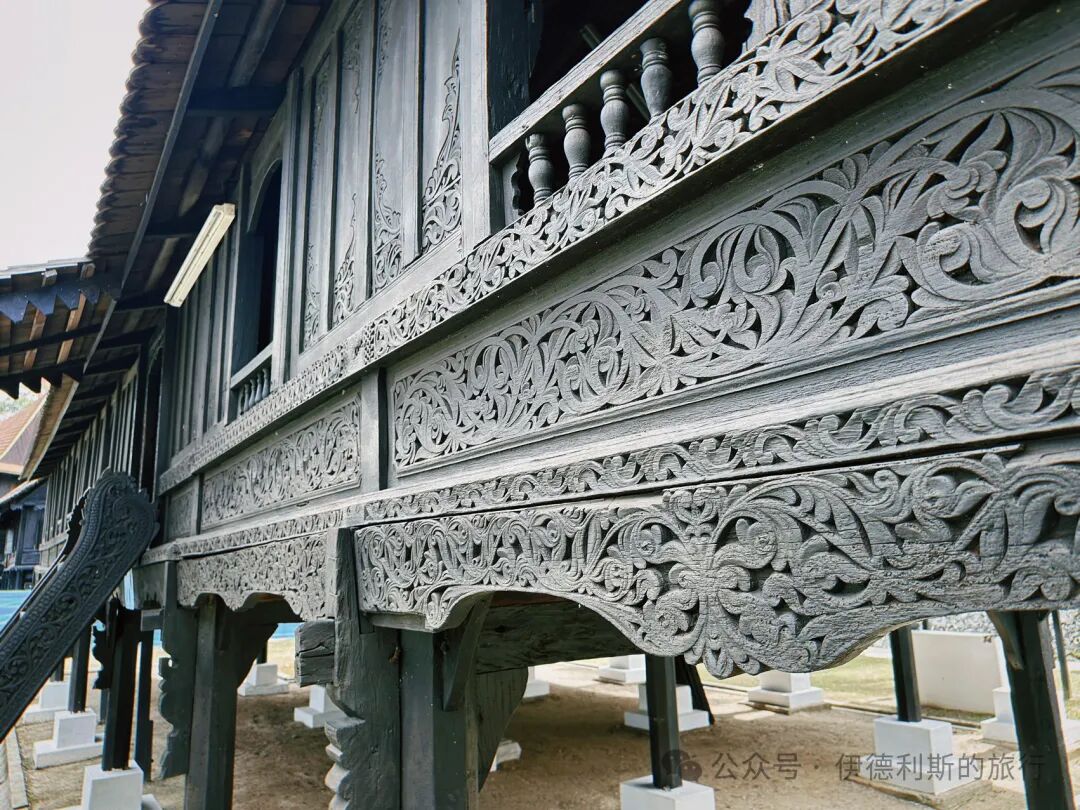
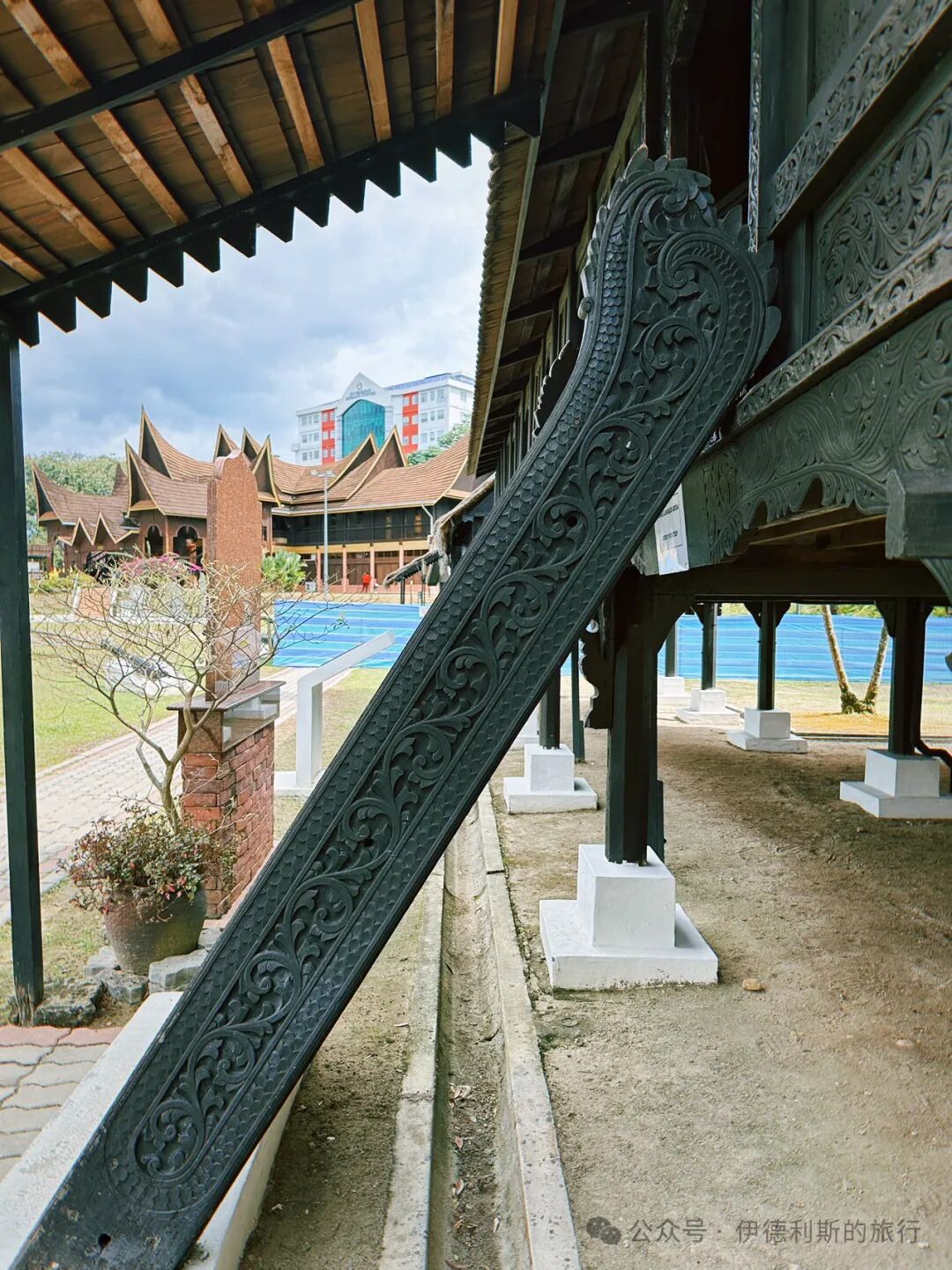
The second building is a traditional house built near Port Dickson in Negeri Sembilan by Minangkabau architects Haji Syahahbudin and Kamaruddin; it was dismantled by the British government in 1924 for display in London, later rebuilt at the Negeri Sembilan State Museum, and recognized as a heritage building in 2013.
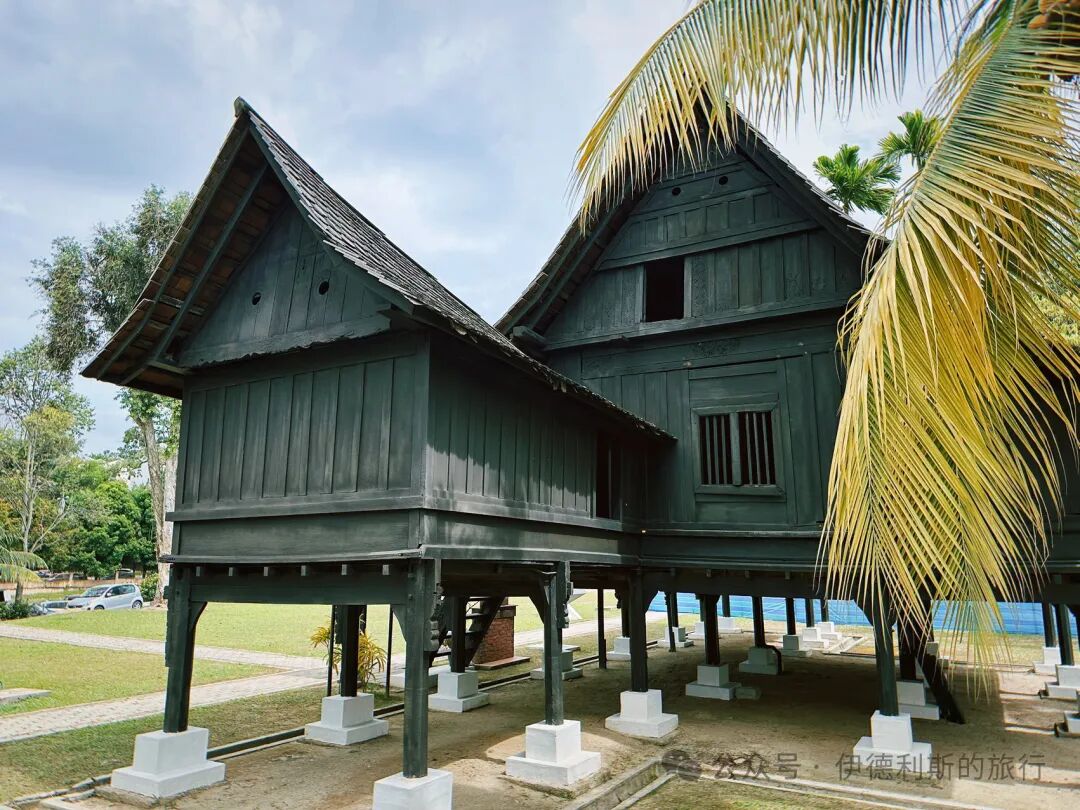
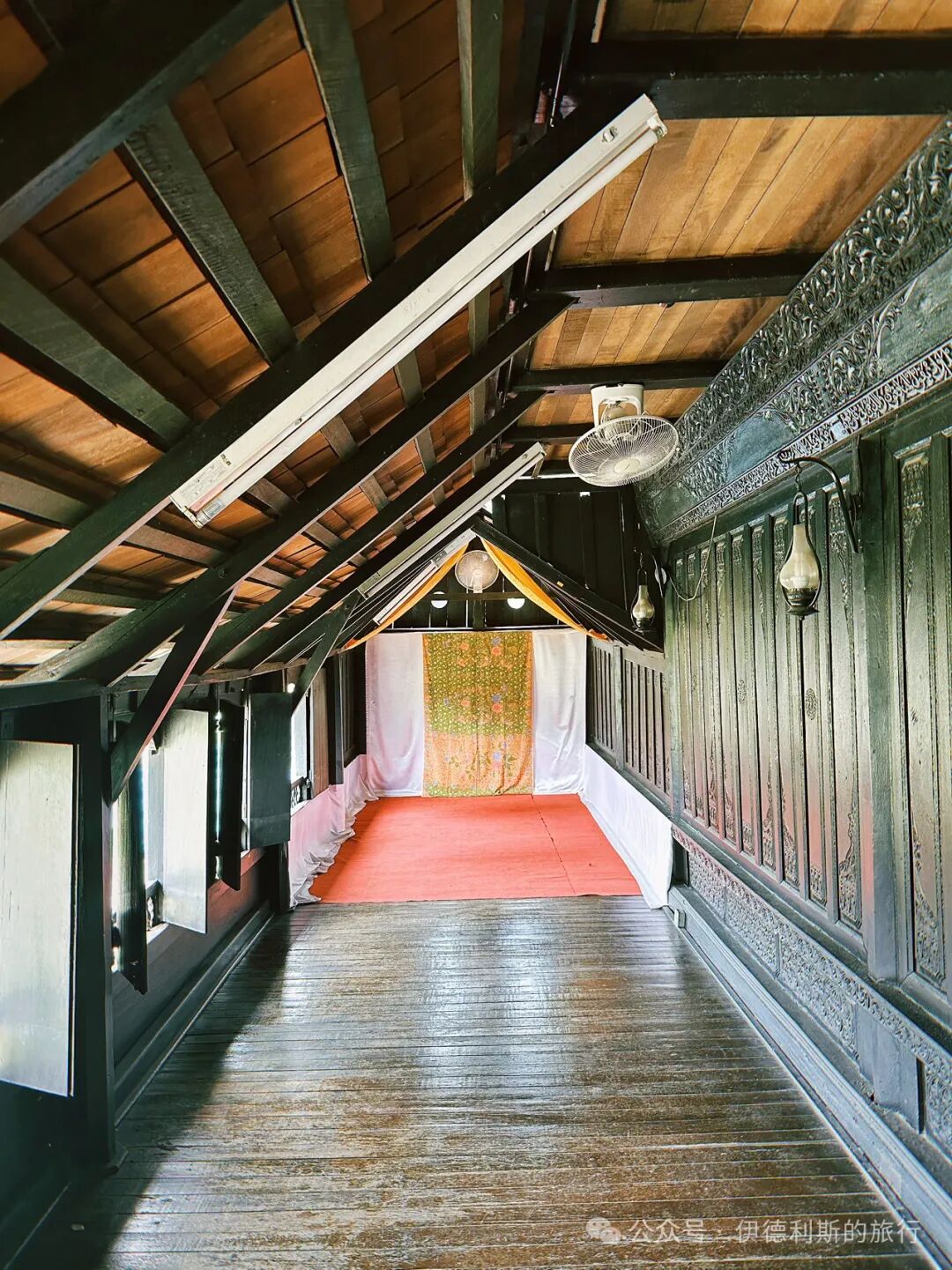
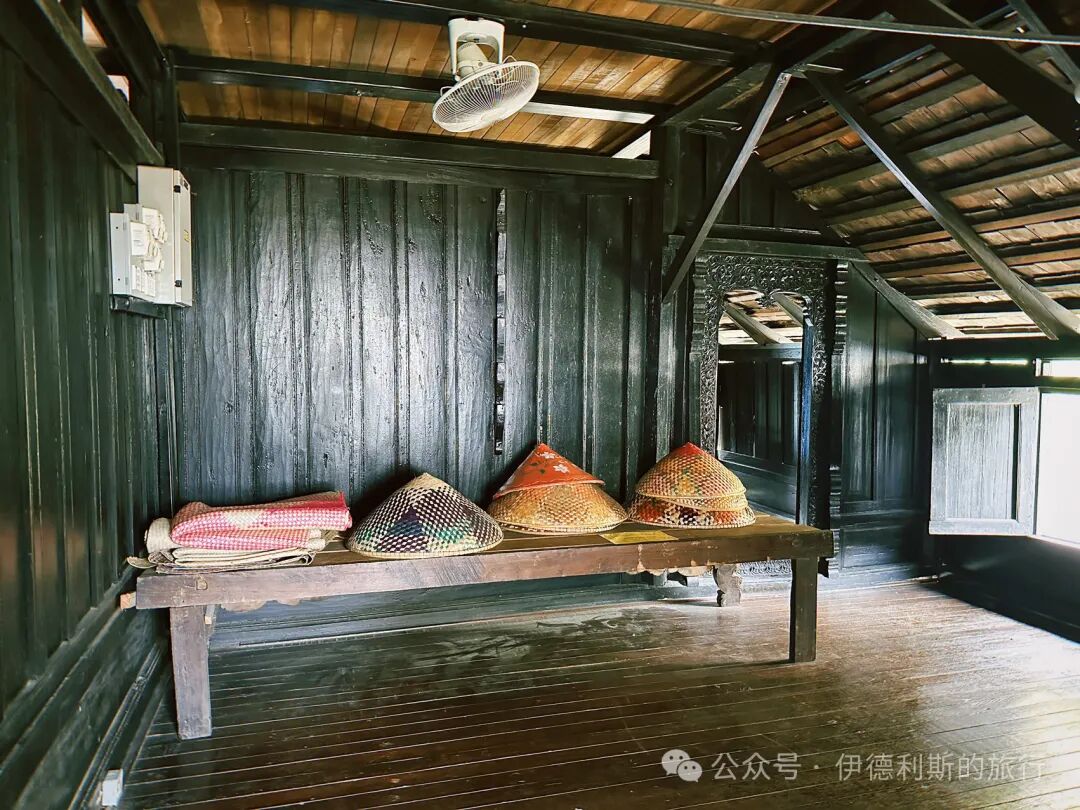
Exquisite wood carvings on a traditional Minangkabau building.
The main exhibition hall of the Negeri Sembilan State Museum is called Teratak Perpatih, and it primarily introduces the cultural customs and life rules formed by the Minangkabau people of Negeri Sembilan based on their traditional customary law (Adat Perpatih). The most unique feature of Minangkabau customary law is the combination of patrilineal and matrilineal systems, where men are responsible for religious and political affairs, while property and land are passed from mother to daughter, ensuring that no matter how poor a Minangkabau woman is, she never has to sacrifice her dignity to make a living. If they divorce and return to their hometown, they still have their own land to live on.
The main hall of the Negeri Sembilan State Museum itself features the high, curved roof corners of traditional Minangkabau architecture, and it displays Minangkabau clothing, musical instruments, and information on their history and culture.
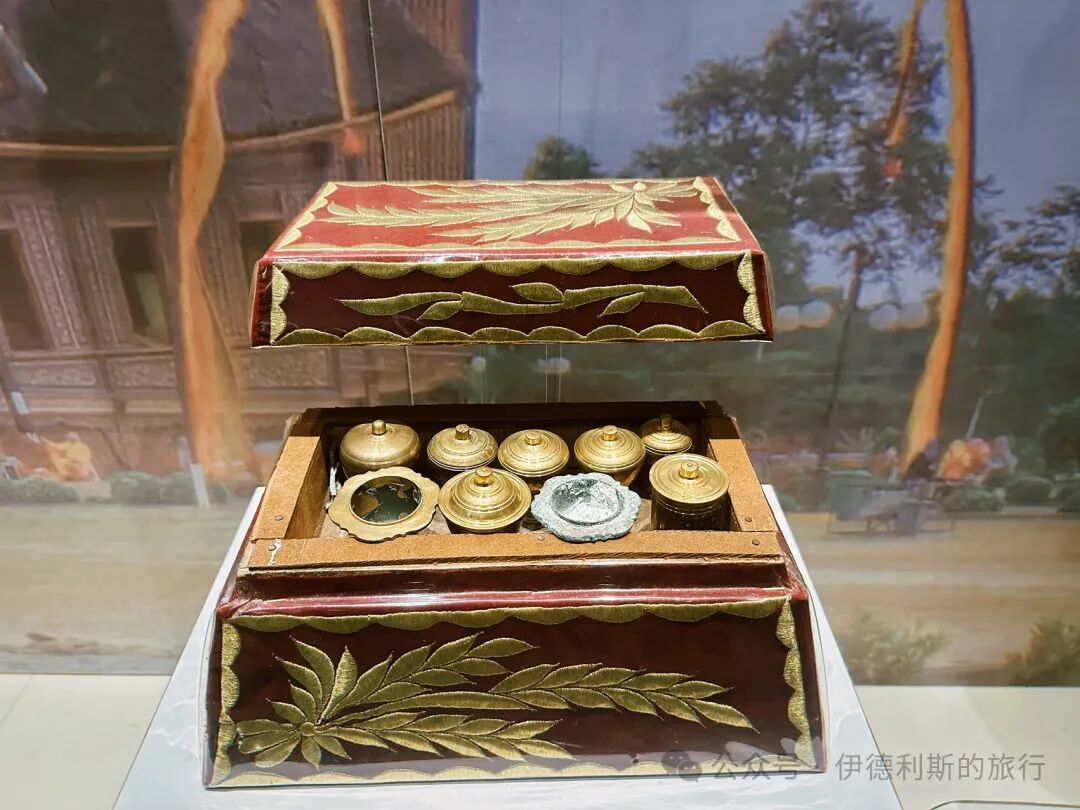
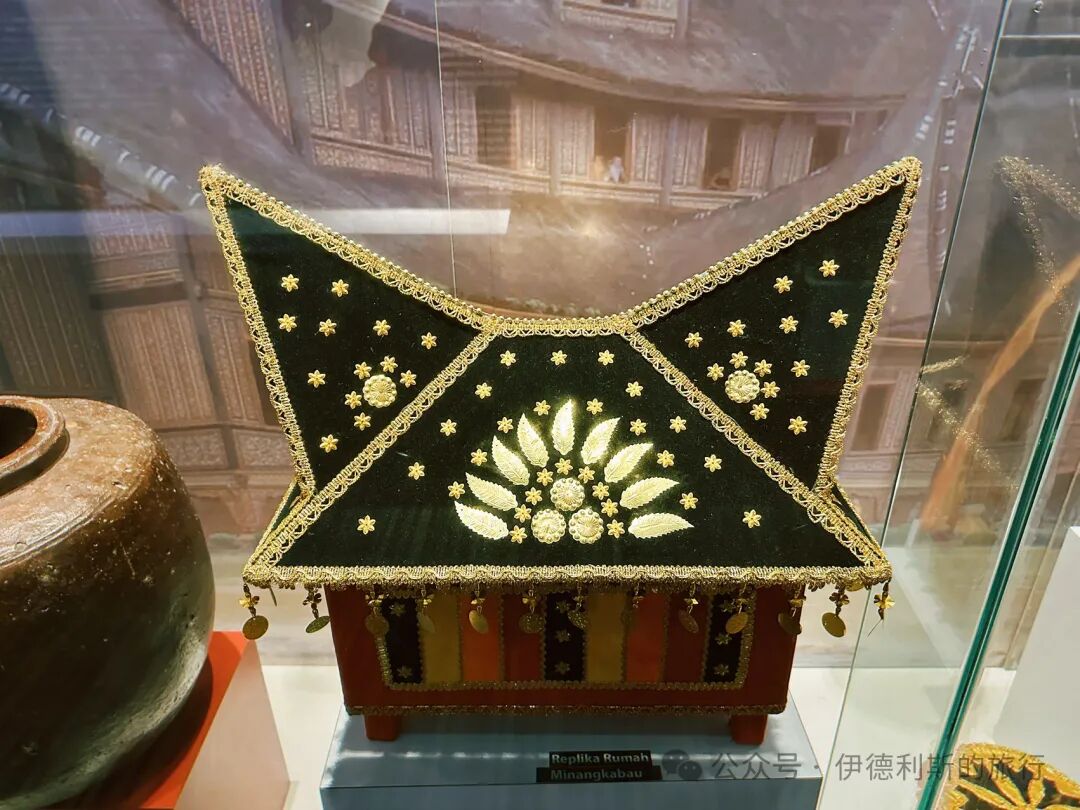
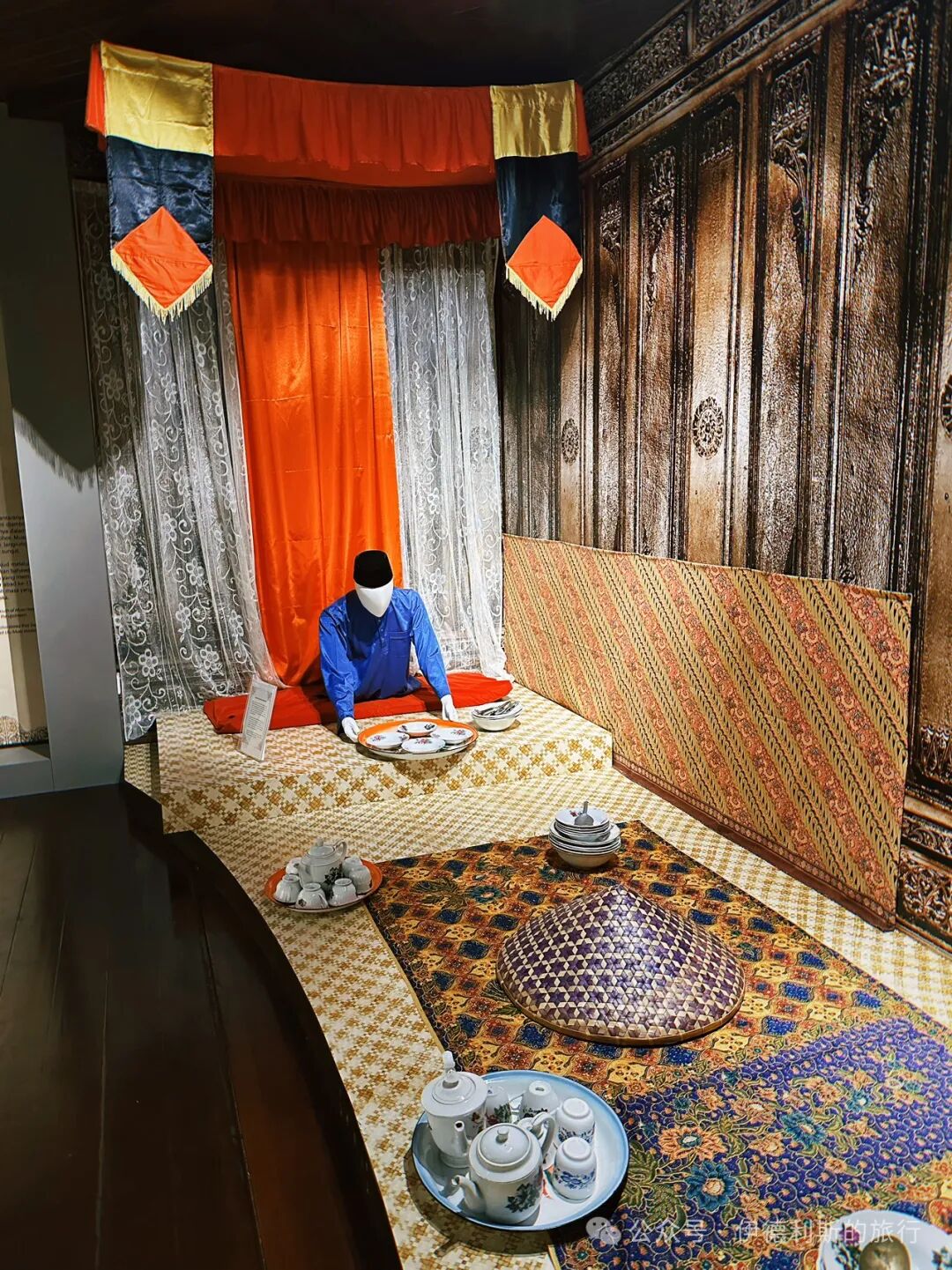
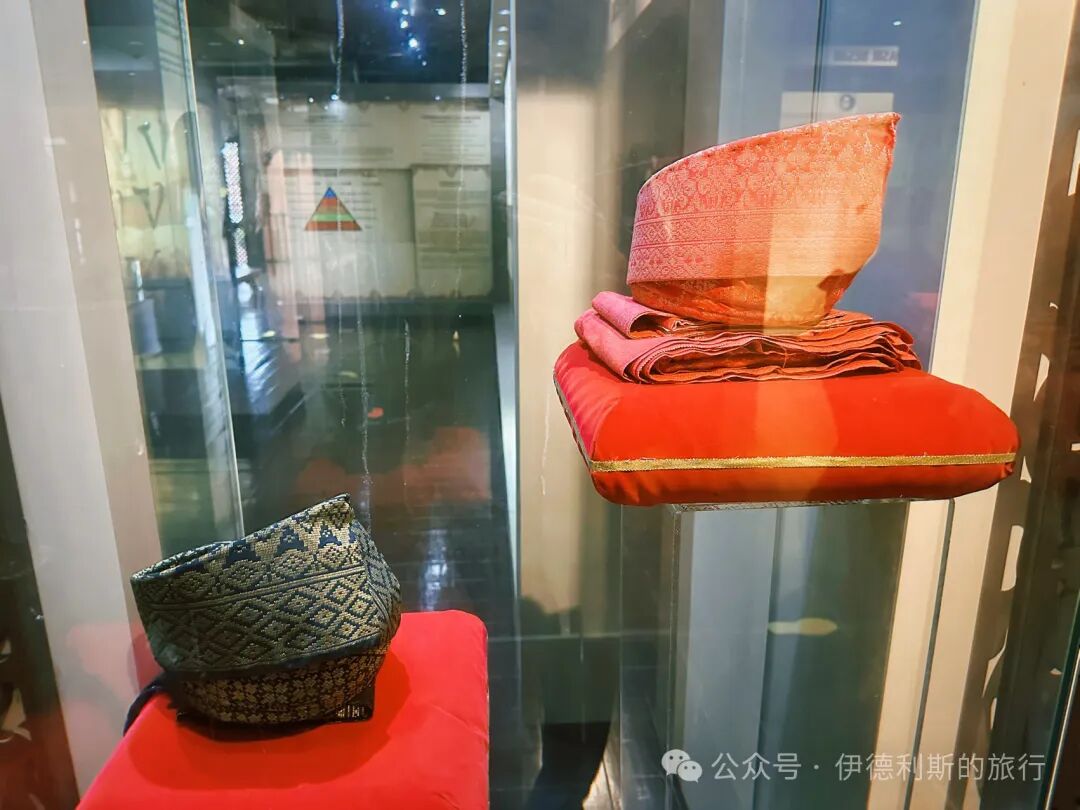
The Negeri Sembilan State Museum houses items belonging to the Minangkabau ruler (Yang di-Pertuan Besar) Tuanku Abdul Rahman, who reigned from 1933 to 1960, and his queen, Tuanku Kurshiah. They were also the first King and Queen of Malaysia.
Between the 15th and 18th centuries, the Minangkabau people of Negeri Sembilan were ruled successively by the Malacca Sultanate and the Johor Sultanate. In the mid-18th century, as the Johor Sultanate declined, attacks from the Bugis people of Sulawesi forced the Minangkabau in Negeri Sembilan to seek help from their ancestral home in Sumatra. A group of Minangkabau chiefs from Negeri Sembilan traveled to the Minangkabau Kingdom of Pagaruyung in West Sumatra, where the King (Yang di-Pertuan Besar) sent his prince, Tuanku Sultan Mahmud Shah, to Negeri Sembilan to establish a throne. In 1773, Tuanku Sultan Mahmud Shah received the title of Yang di-Pertuan Besar from the Sultan of Johor and was crowned king in Negeri Sembilan, marking the beginning of Minangkabau rule in the region.
Tuanku Abdul Rahman was the eighth Yang di-Pertuan Besar of Negeri Sembilan. In 1925, he accompanied his father to visit the British King in England and decided to stay there to study law. After graduating and qualifying as a lawyer in 1928, he returned to Malaya to work as a defense attorney. Following his father's death in 1933, he became the only Malay ruler with a law degree.
When the British tried to establish the Malayan Union in 1946, Tuanku Abdul Rahman initially signed the treaty. Later, on the advice of the Sultan of Kedah, he hired a London-based lawyer to represent the Malay rulers in opposing the Malayan Union plan. Due to strong opposition from the Malay people, the Malayan Union was dissolved in 1948 and reorganized into the Federation of Malaya, which restored the status of the Malay rulers. In 1957, the Federation of Malaya officially gained independence from Britain, and Tuanku Abdul Rahman was elected as the first Supreme Head of State (Yang di-Pertuan Agong).
Tuanku Abdul Rahman firmly defended parliamentary democracy and upheld the position of the popularly elected Prime Minister. To honor him, his portrait is printed on the front of all Malaysian banknotes.
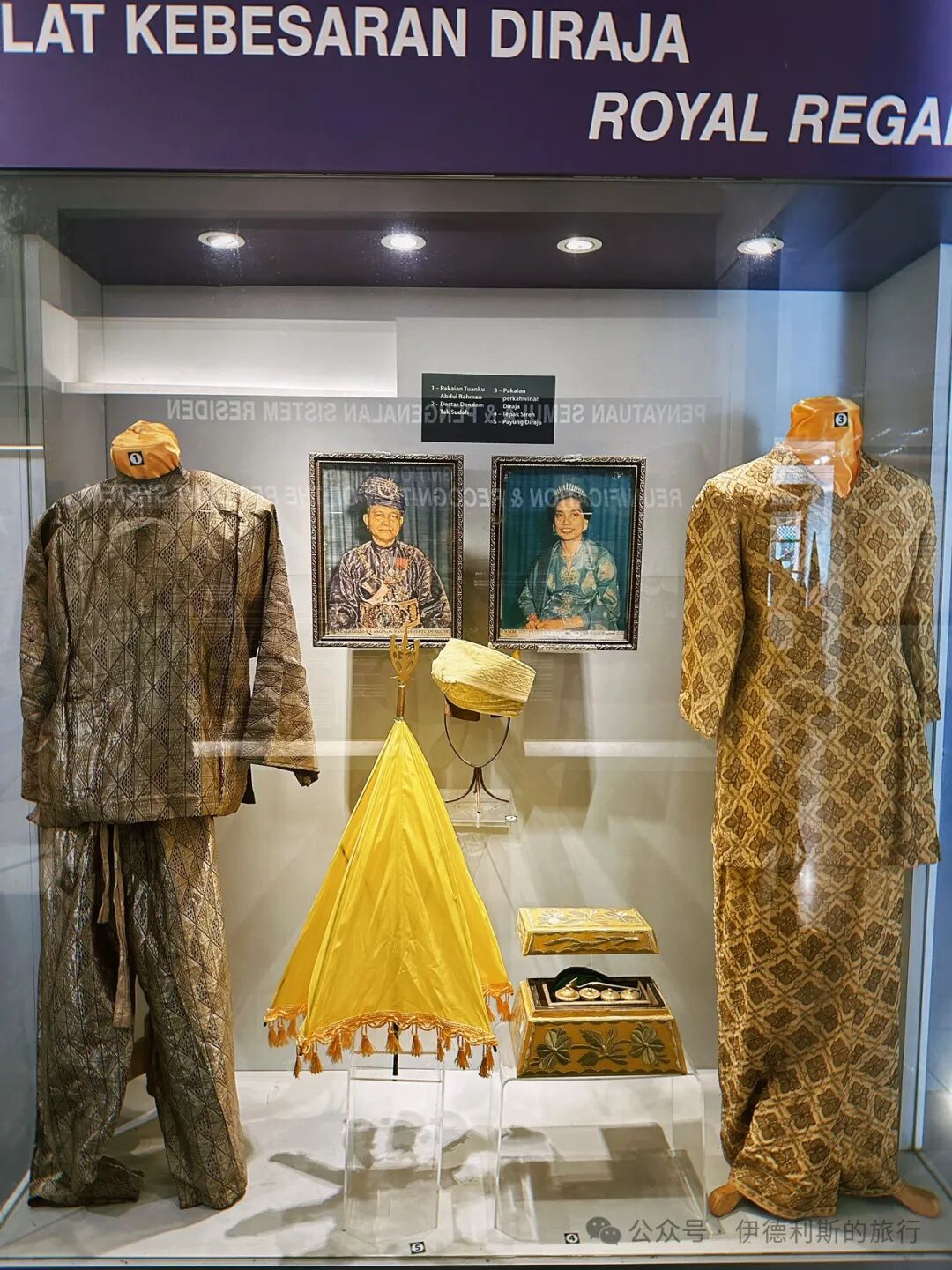
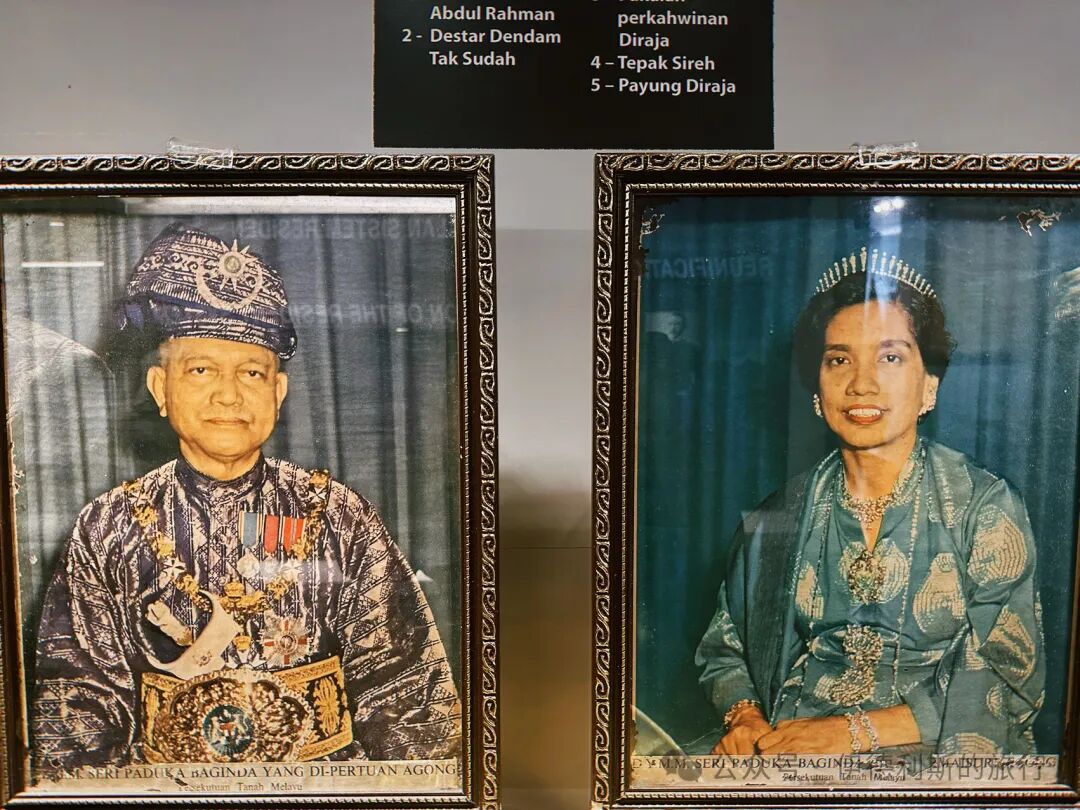
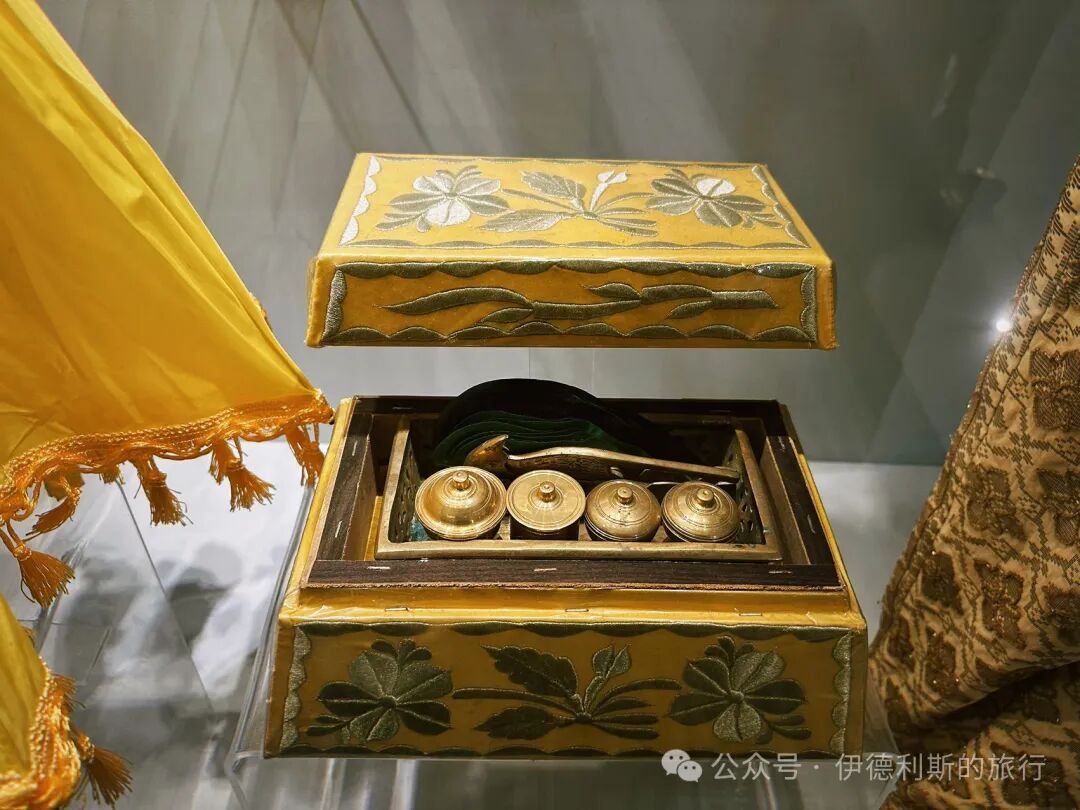
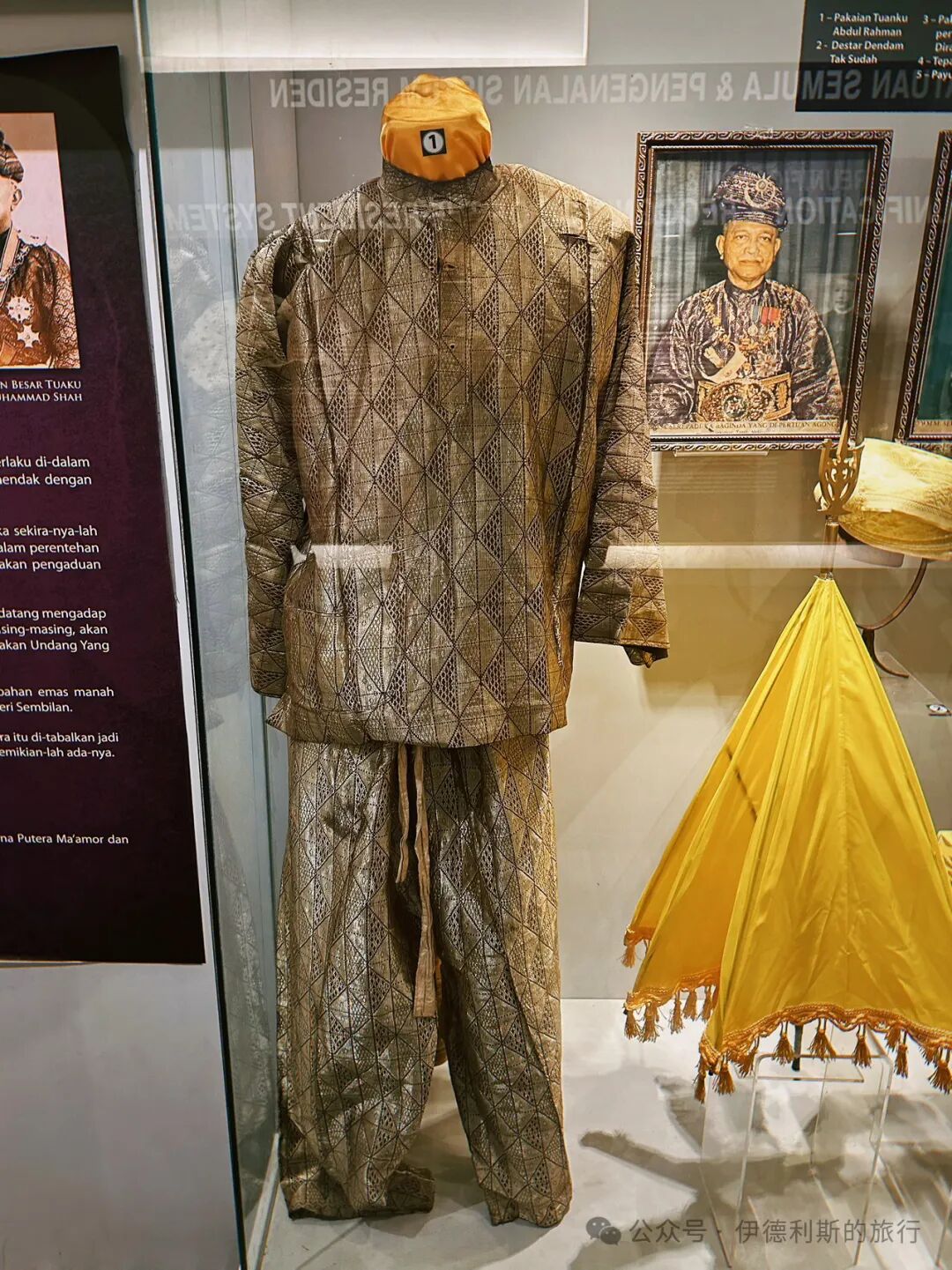
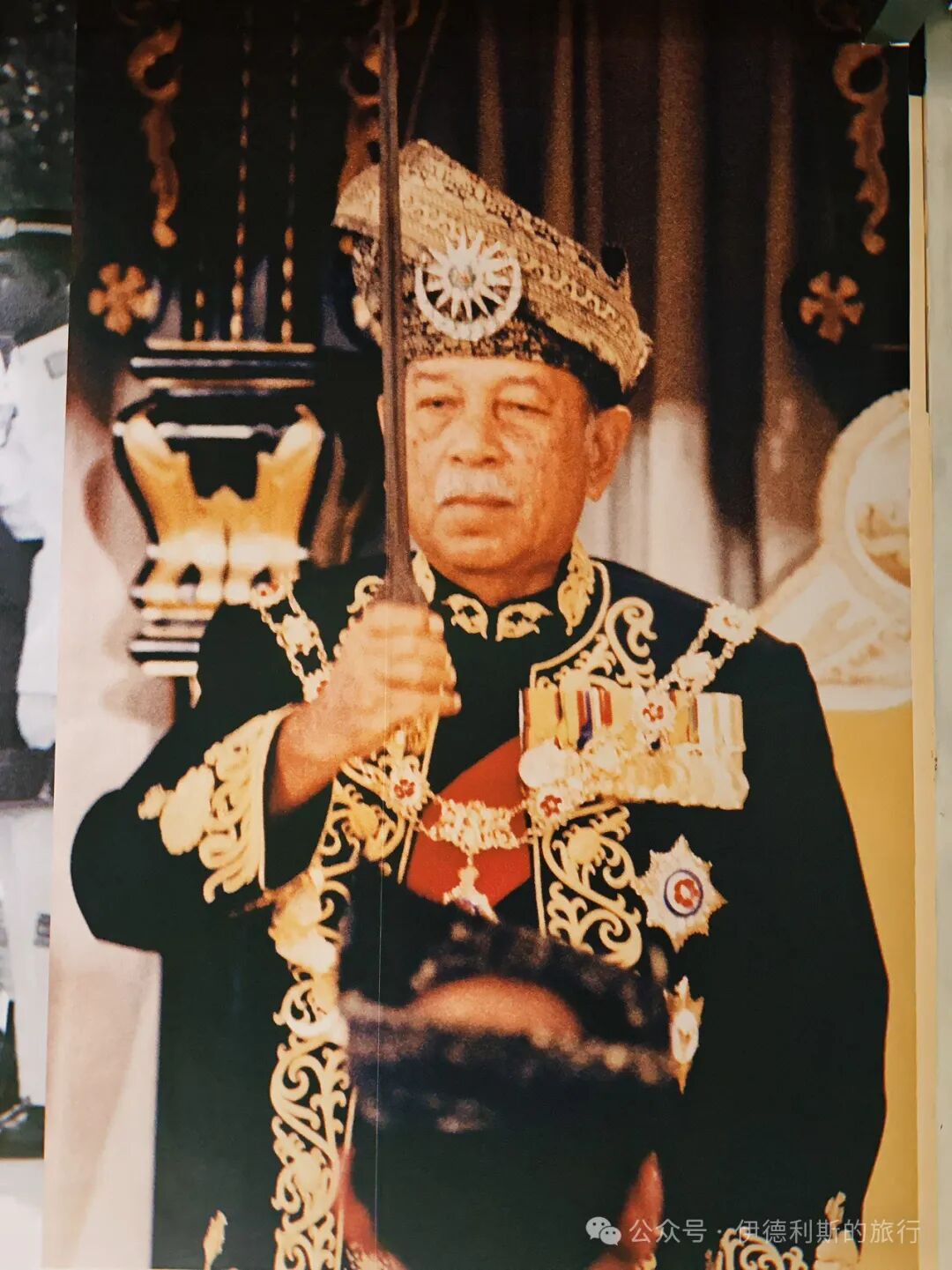
On the hill to the east of Seremban Lake Garden sits the Tuanku Ja'afar Royal Gallery, built to commemorate the tenth Yang di-Pertuan Besar of Negeri Sembilan and the tenth Supreme Head of State of Malaysia, Tuanku Ja'afar.
Tuanku Ja'afar was born in 1922 to a mother of Irish and Anglo-Indian descent. He was educated in Singapore before the war and was a classmate of Lee Kuan Yew. After experiencing World War II, Tuanku Ja'afar decided to pursue advanced legal studies at the University of Nottingham, Oxford University, and the London School of Economics. In 1957, he helped with the negotiations for the independence of the Federation of Malaya in the UK, and later served as a diplomat for ten years. Tuanku Ja'afar became the ruler of Negeri Sembilan in 1967 and served as the King of Malaysia from 1994 to 1999. During his term, Malaysia hosted the 1998 Commonwealth Games and the APEC summit.
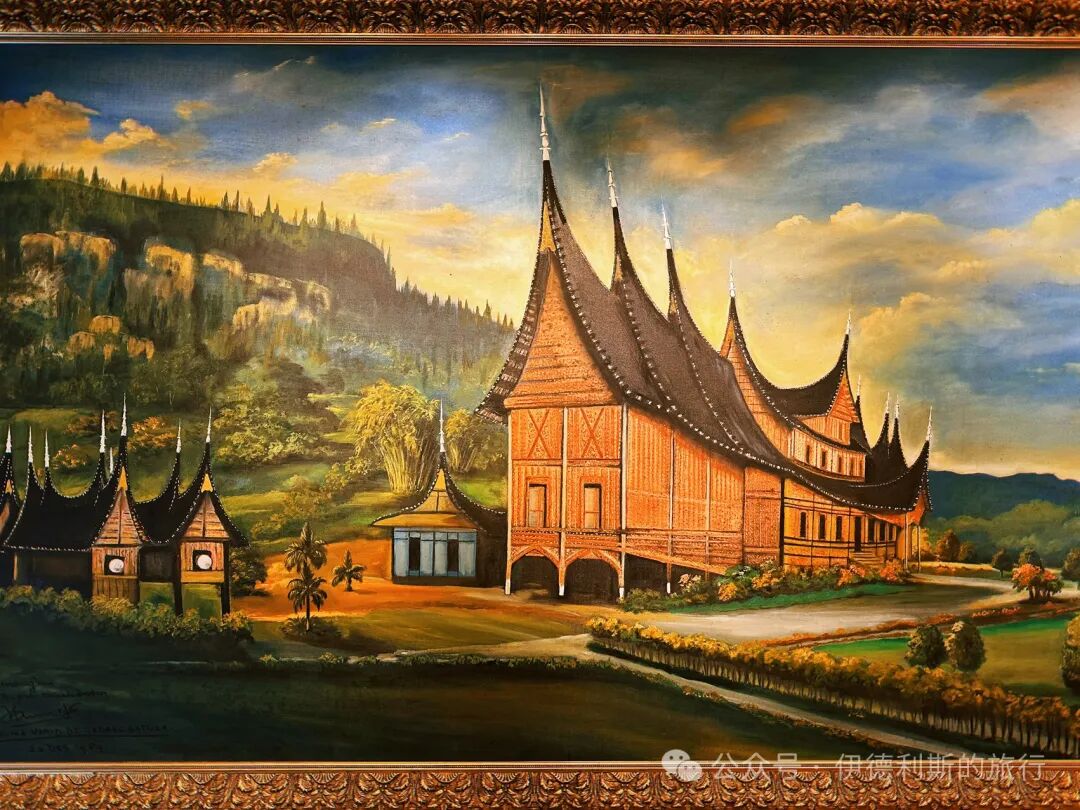
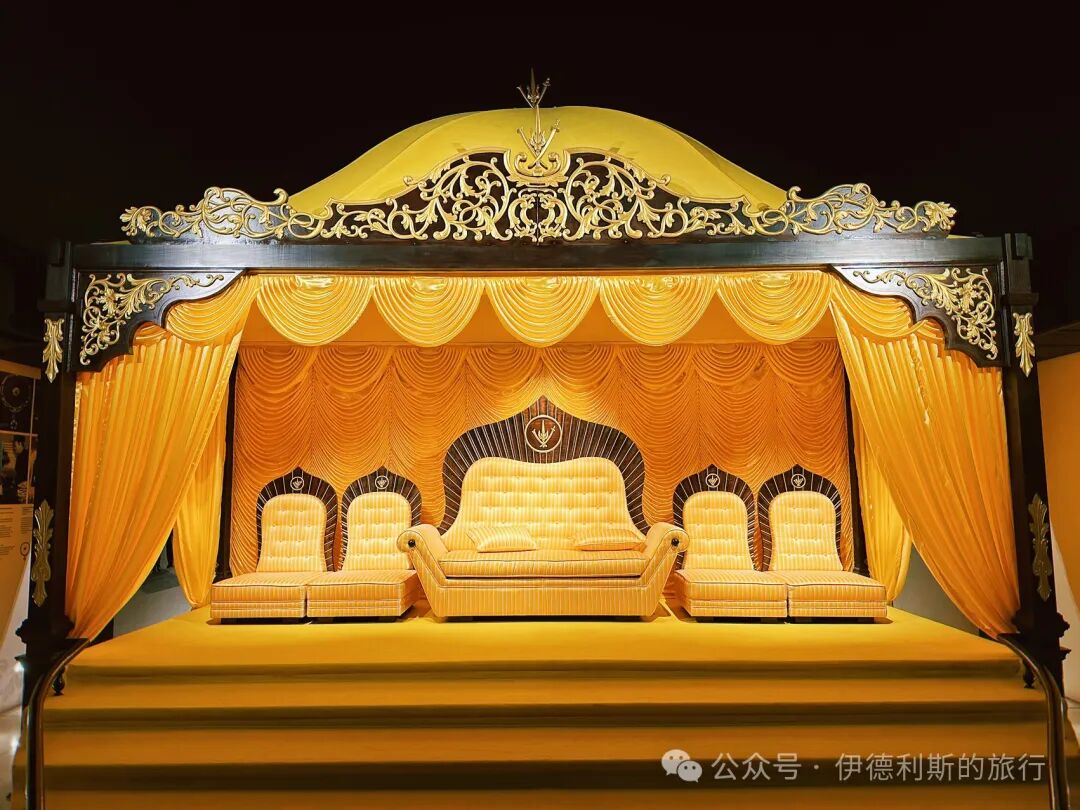
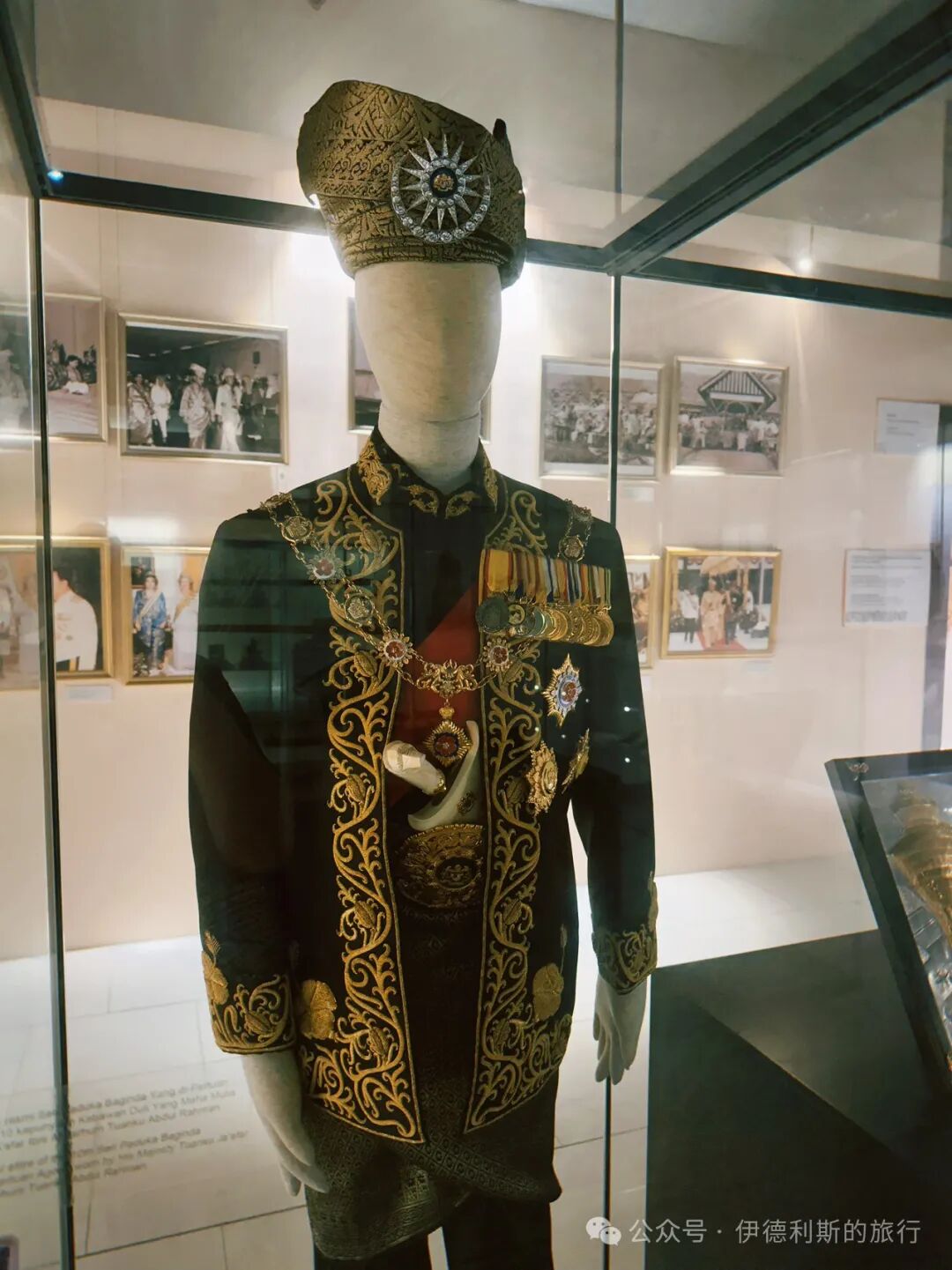
Tuanku Ja'afar loved golf, cricket, and painting. His artwork is currently on display at the Tuanku Ja'afar Royal Gallery. The gallery also houses Tuanku Ja'afar's official royal attire and a replica of the royal throne.
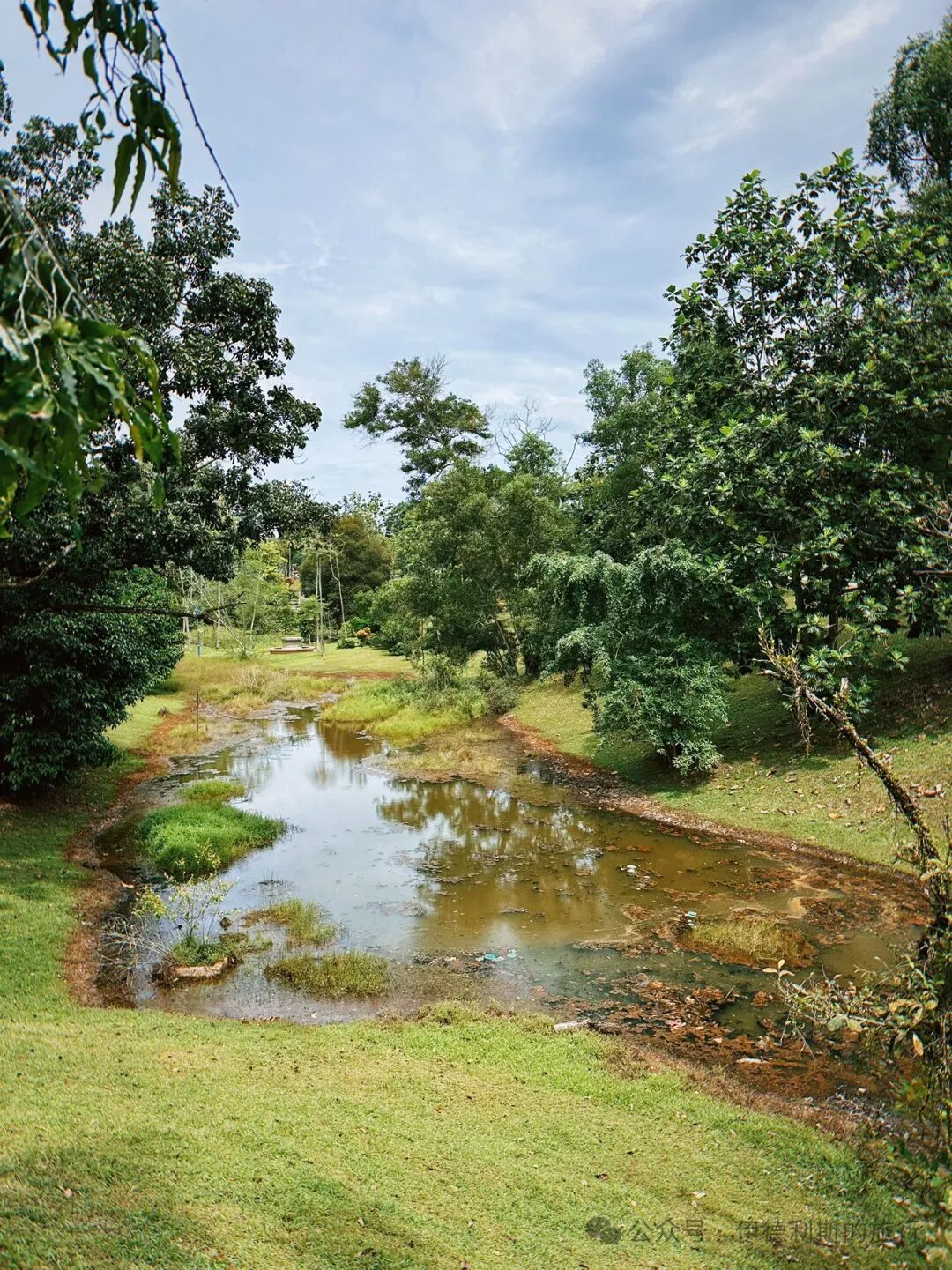
The Lake Garden is on the west side of the Tuanku Ja'afar Royal Gallery. I saw a lizard as long as an arm by the water, but I couldn't get a photo.
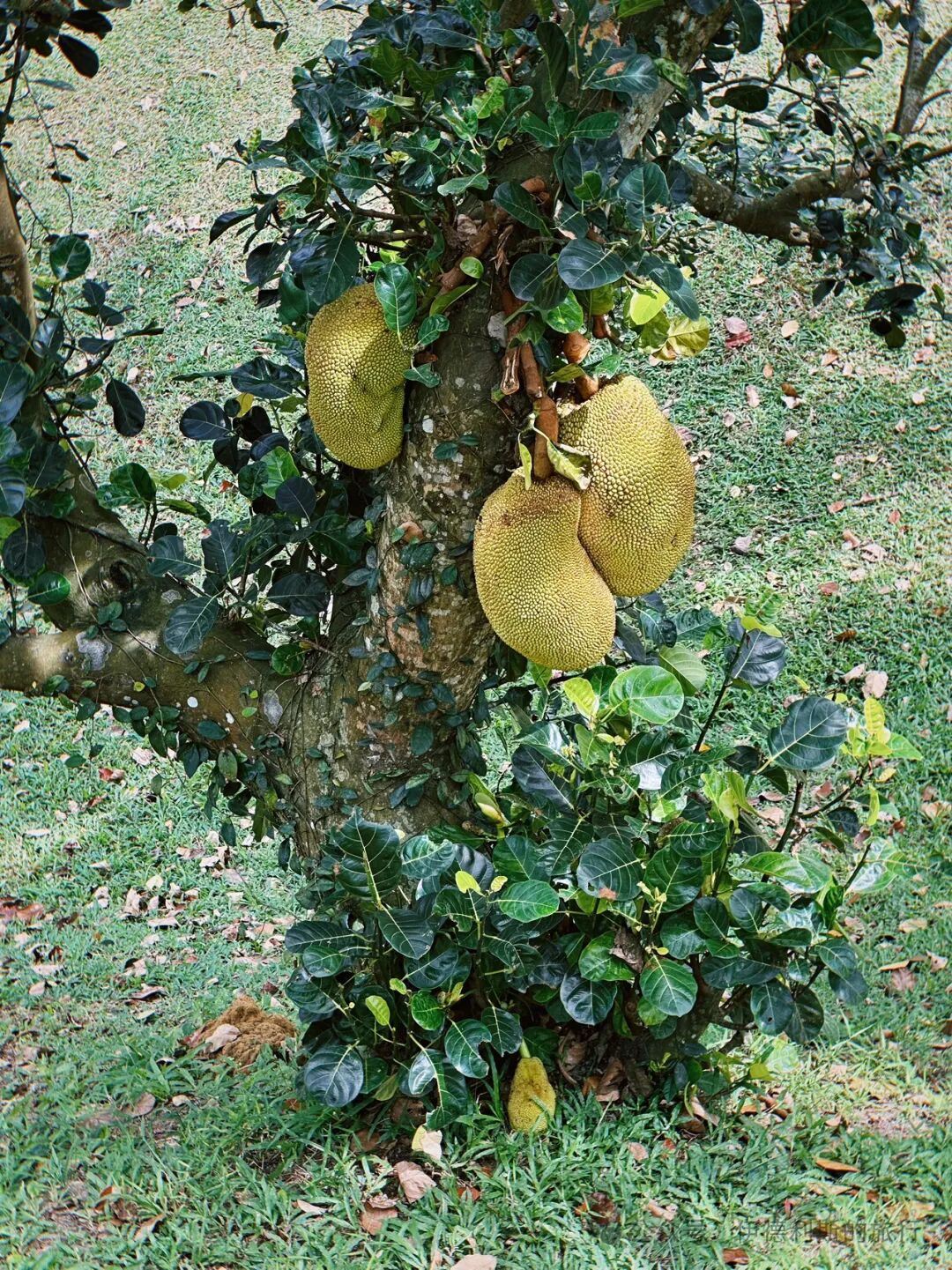
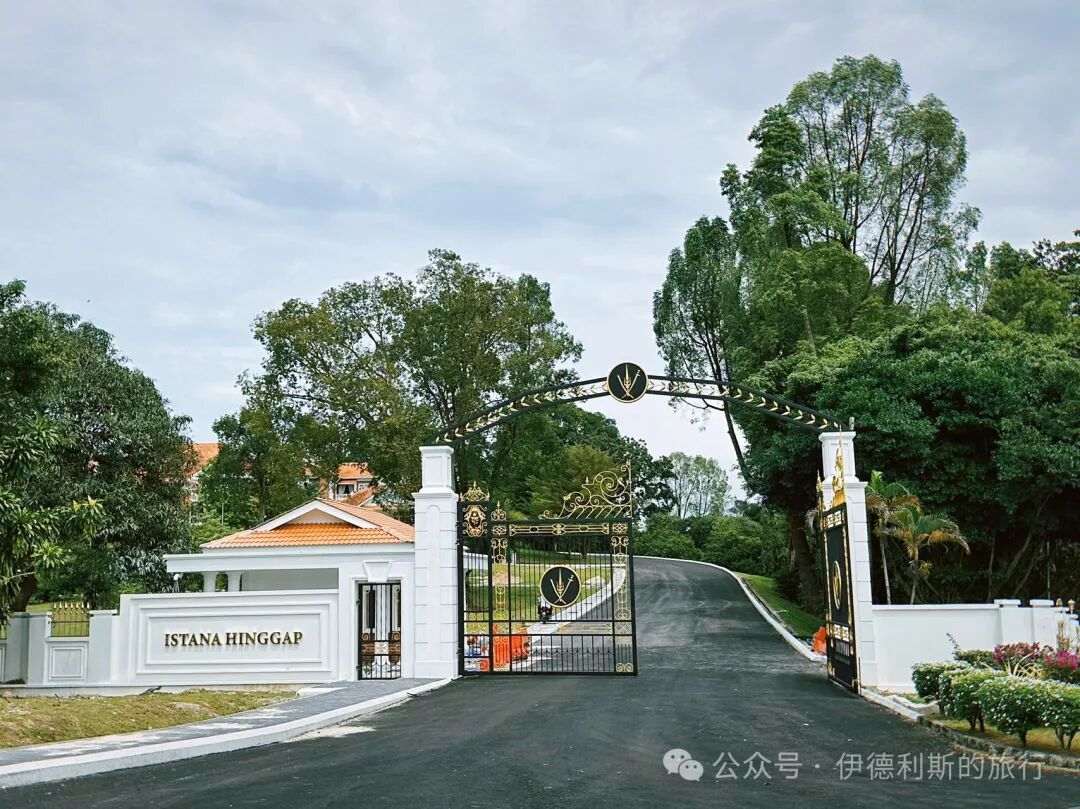
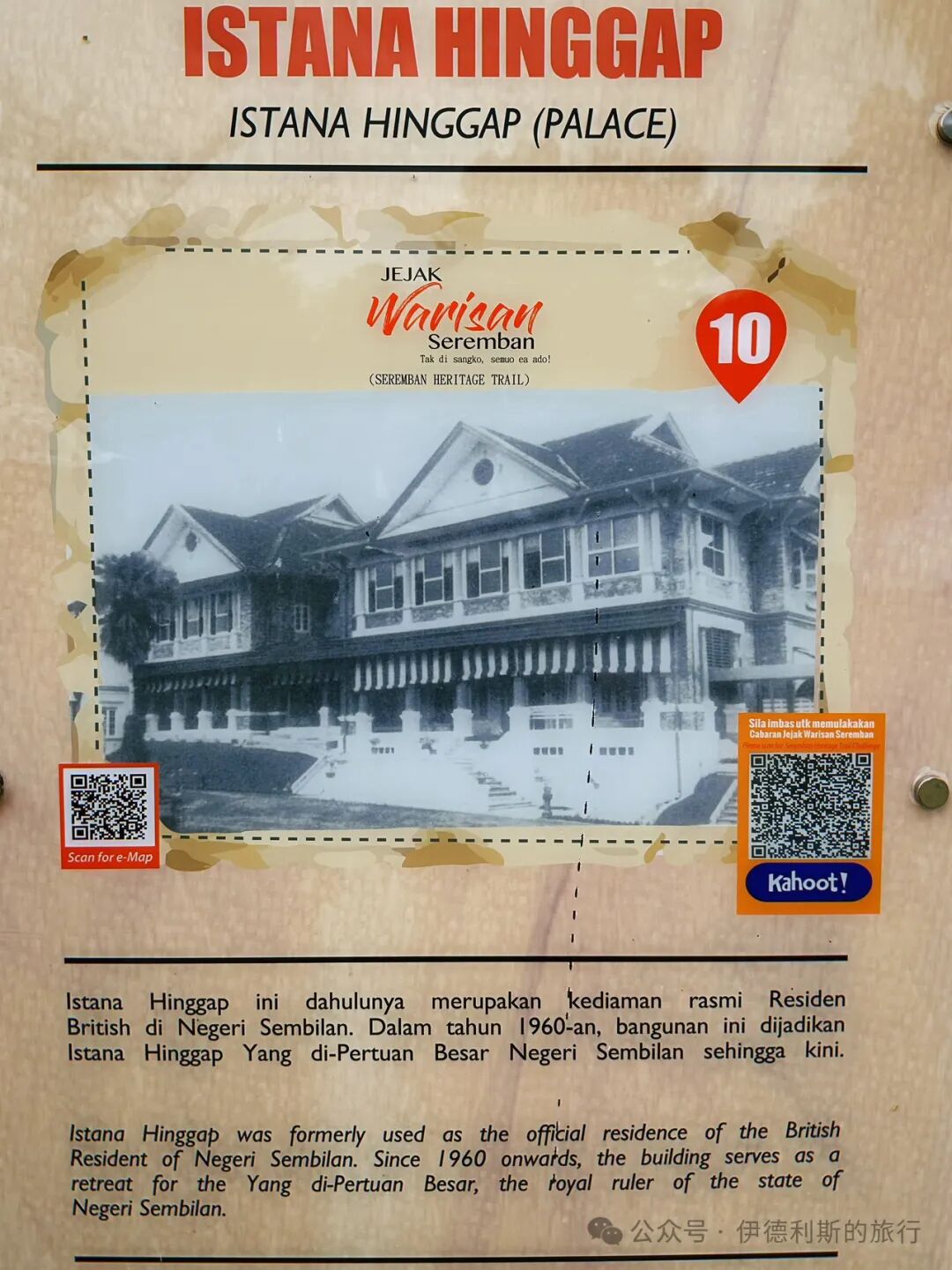
Further west is the Negeri Sembilan Royal Palace (Istana Hinggap Negeri Sembilan). All nine of Malaysia's rulers, whether Sultans or Yamtuan, have their own palaces. The Negeri Sembilan Royal Palace was originally in Seri Menanti, east of Seremban. After 1960, the Yamtuan of Negeri Sembilan converted this British-style residence in Seremban into the current palace.
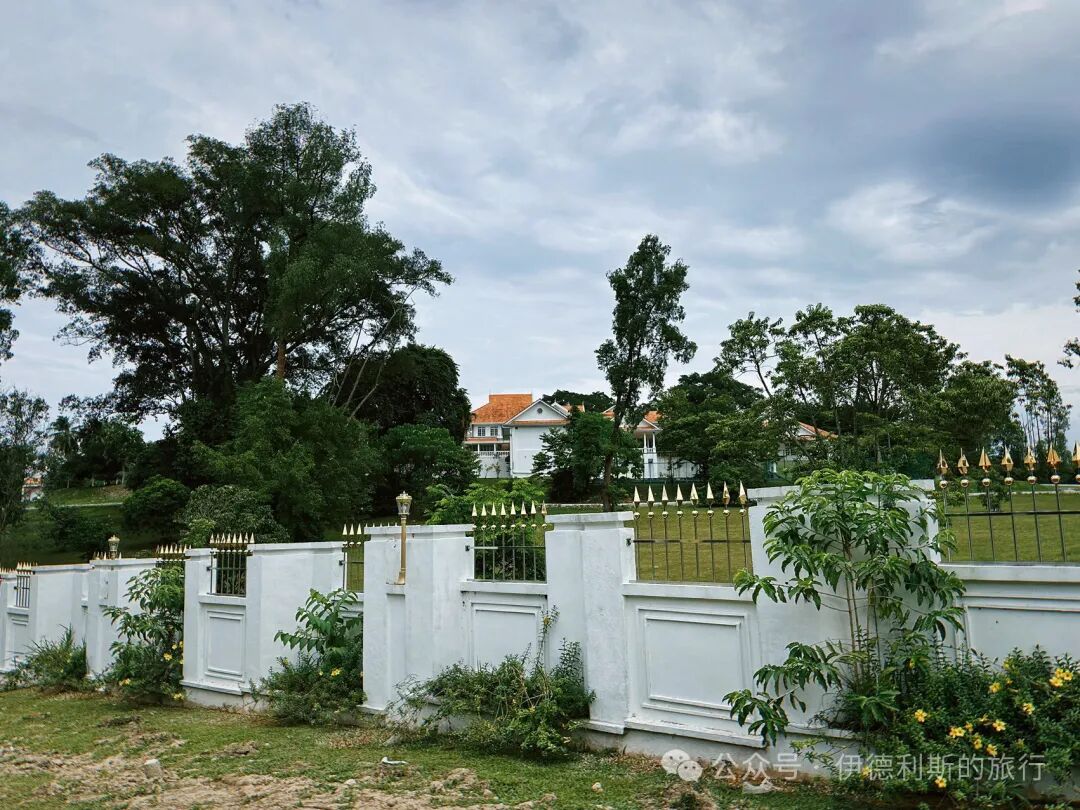
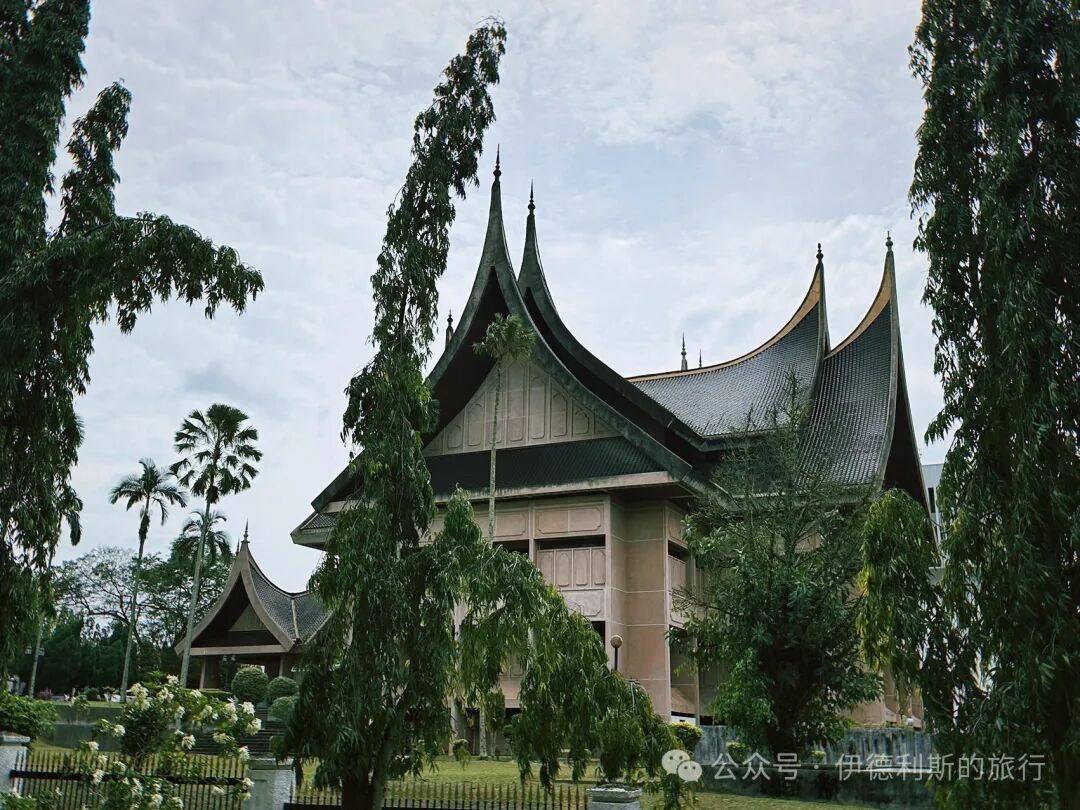
The Negeri Sembilan State Assembly building is on the west side of the palace, where you can see the water buffalo horn roofs typical of Minangkabau architecture.
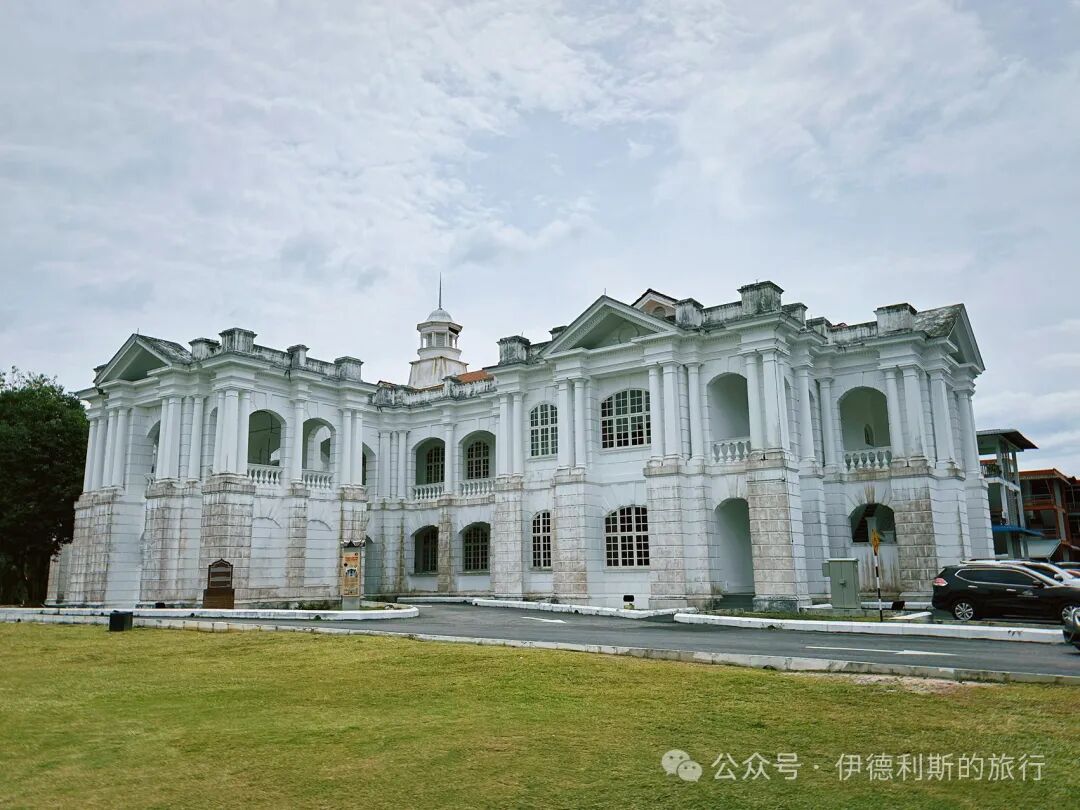
To the south of the palace is the old government building known as the White House. It was built in 1912 by the famous British architect Hubback, who also designed the Kuala Lumpur Railway Station, Jamek Mosque, and the National Textile Museum. The building was moved to its current location in 1984 and has served as the state library ever since.
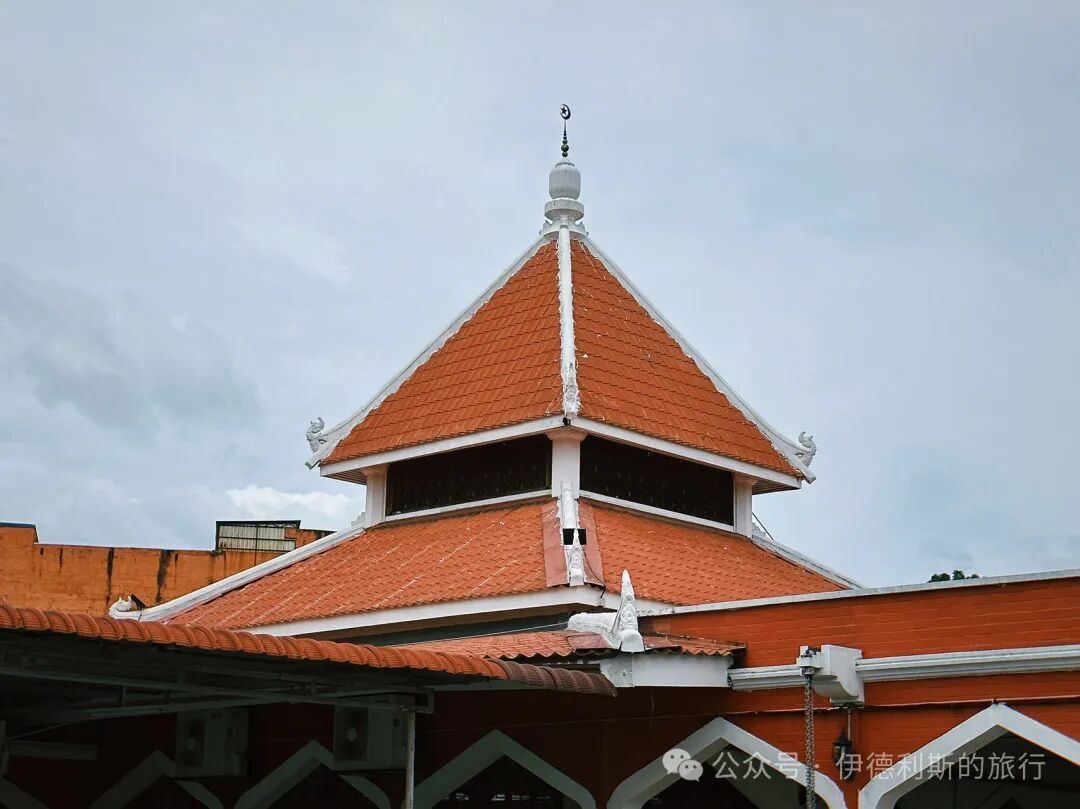
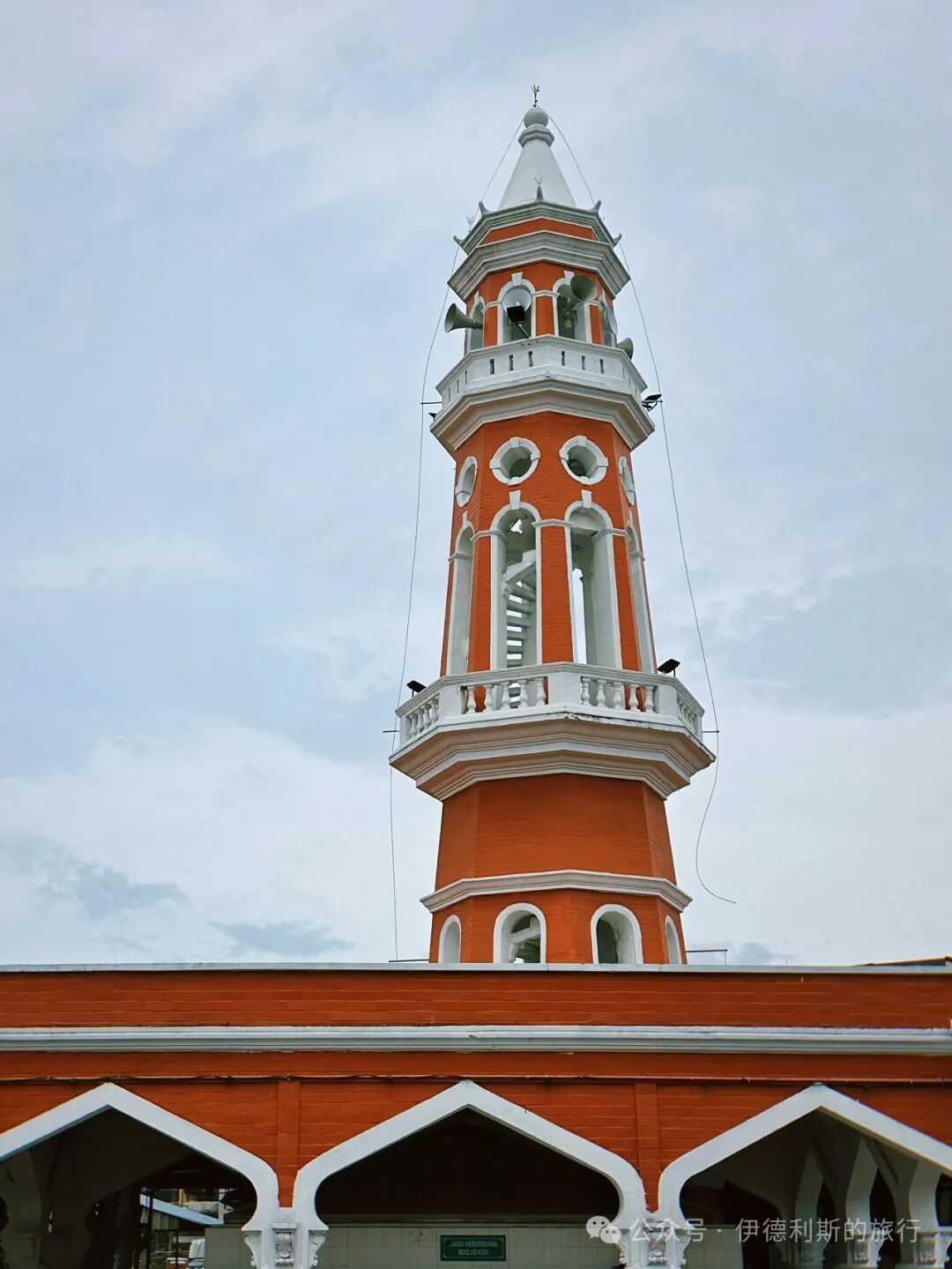
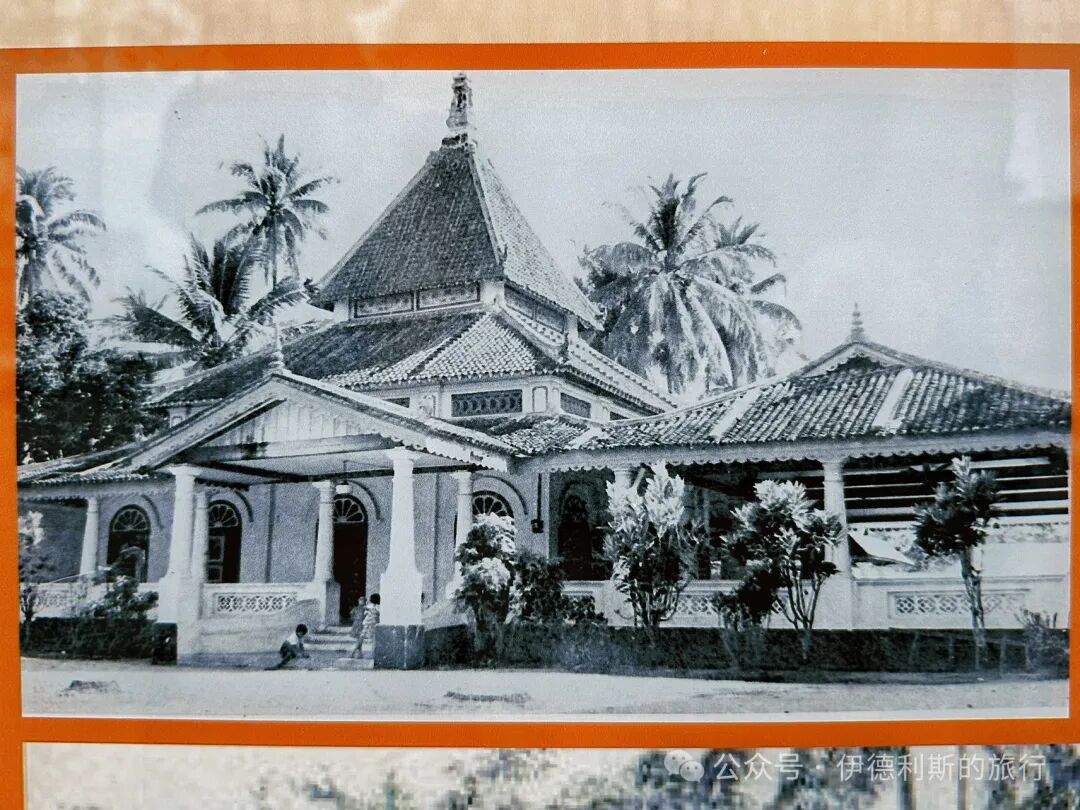
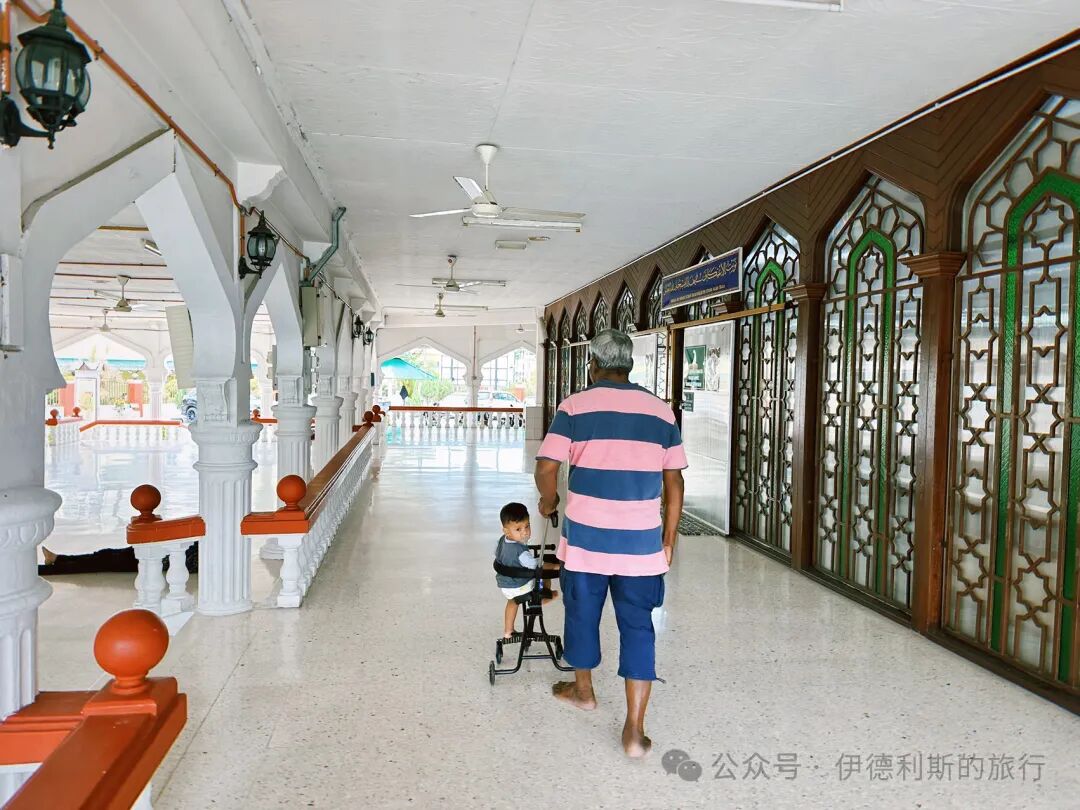
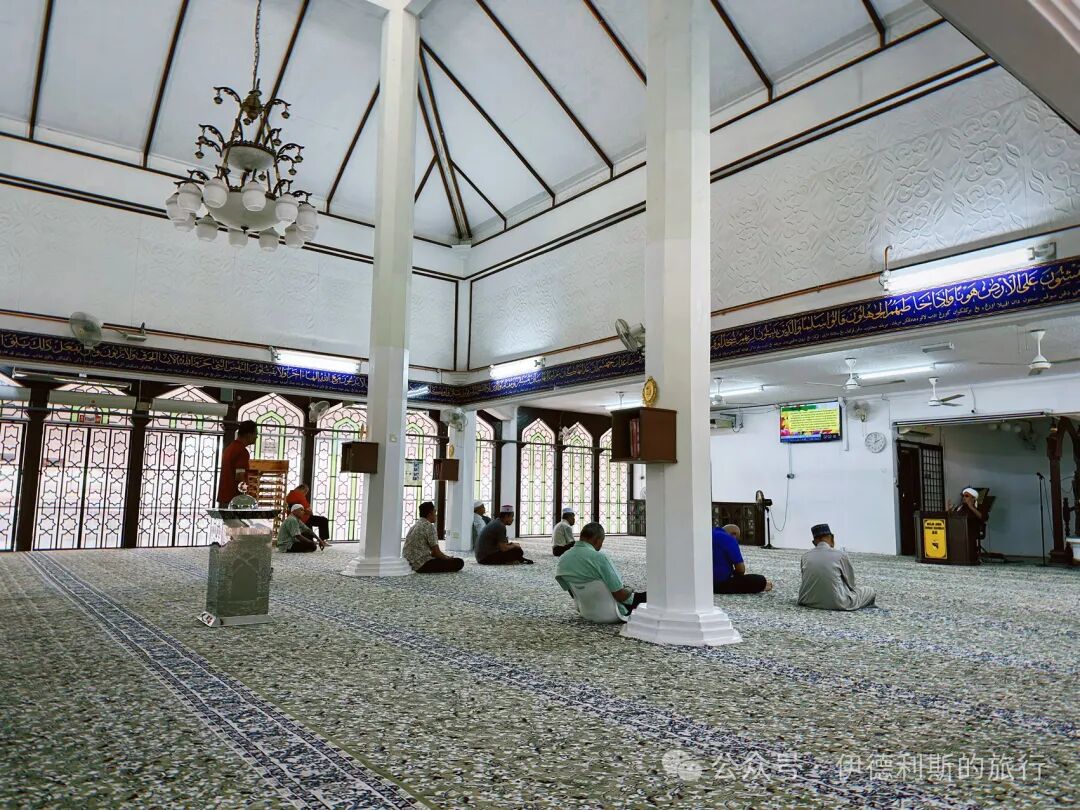
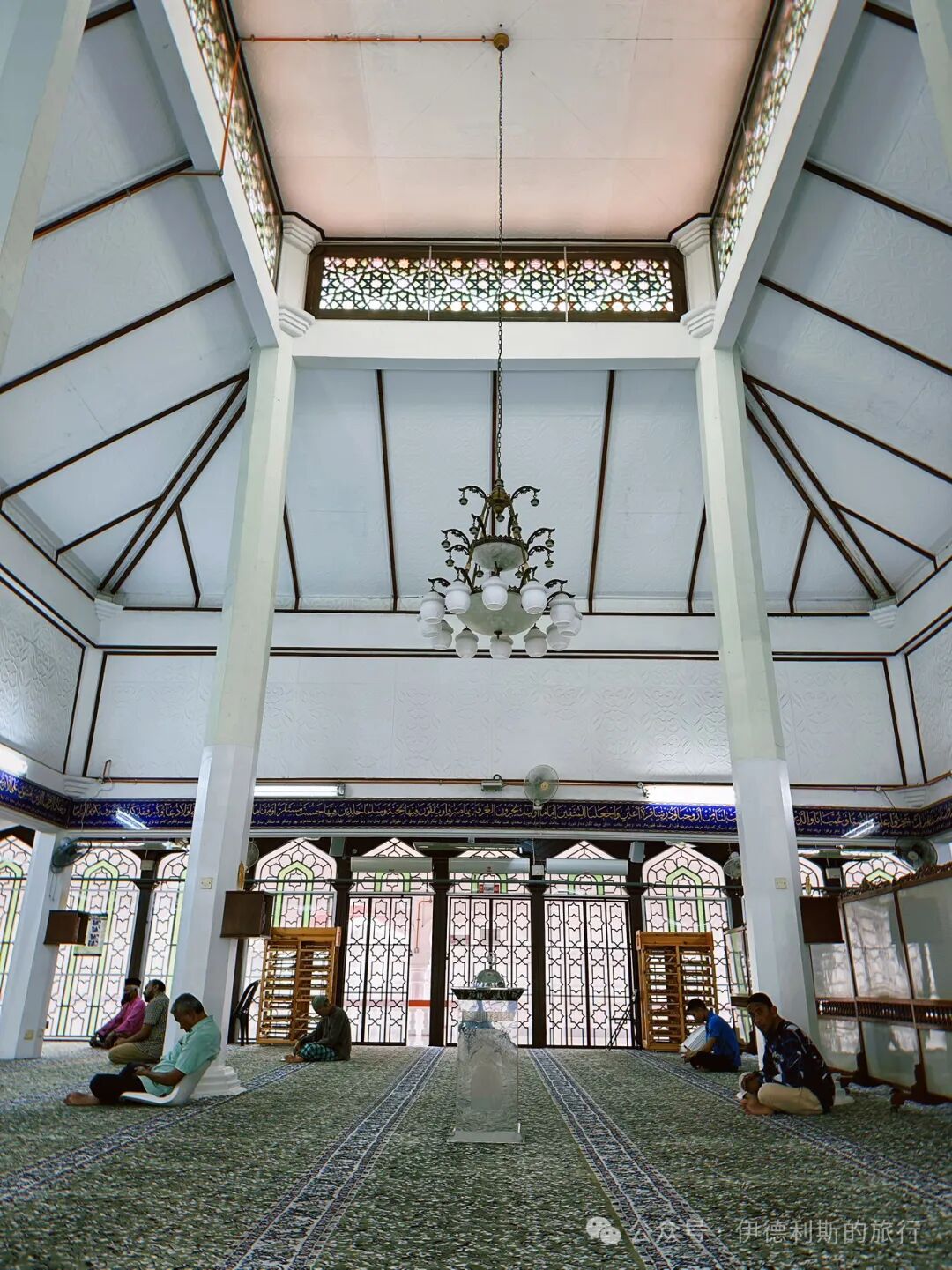
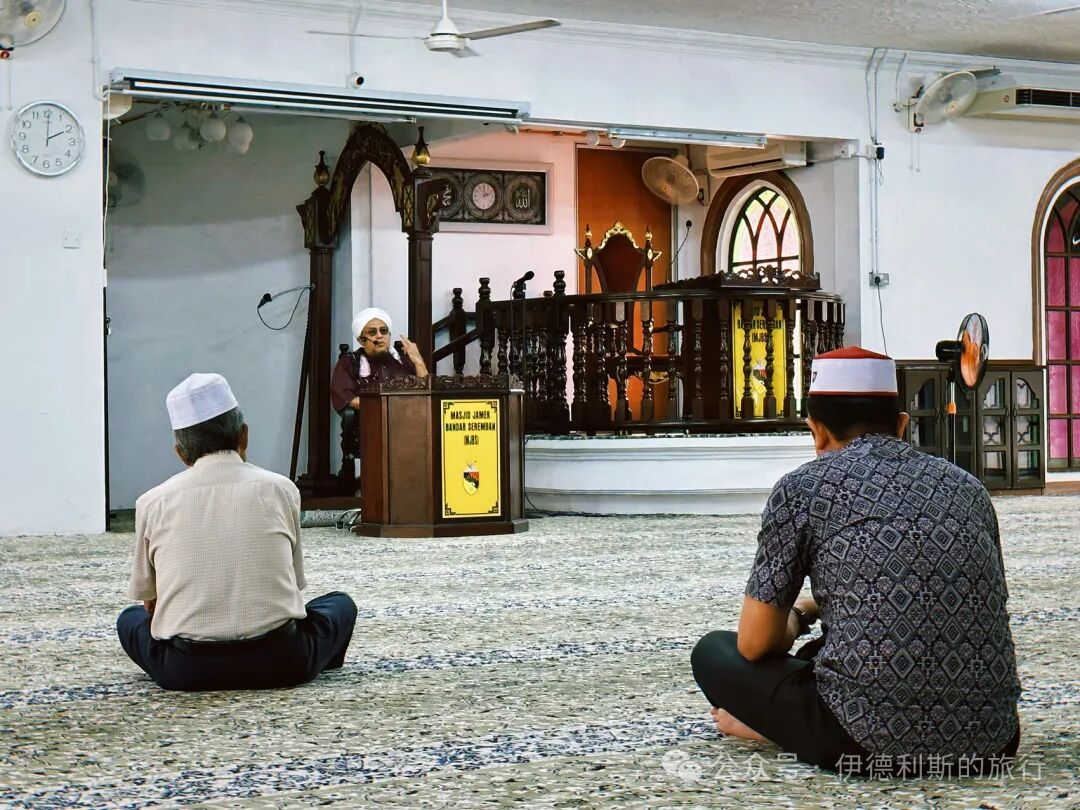
We performed namaz at the Seremban Jamek Mosque. The Seremban Jamek Mosque was originally a wooden structure. It was rebuilt into the current building in 1900, added a pagoda-style minaret in 1924, and was listed as a national heritage building in 2005. The mosque's architecture is similar to traditional mosques in Malacca, featuring a two-tiered pyramid roof and a minaret influenced by Chinese pagoda design.
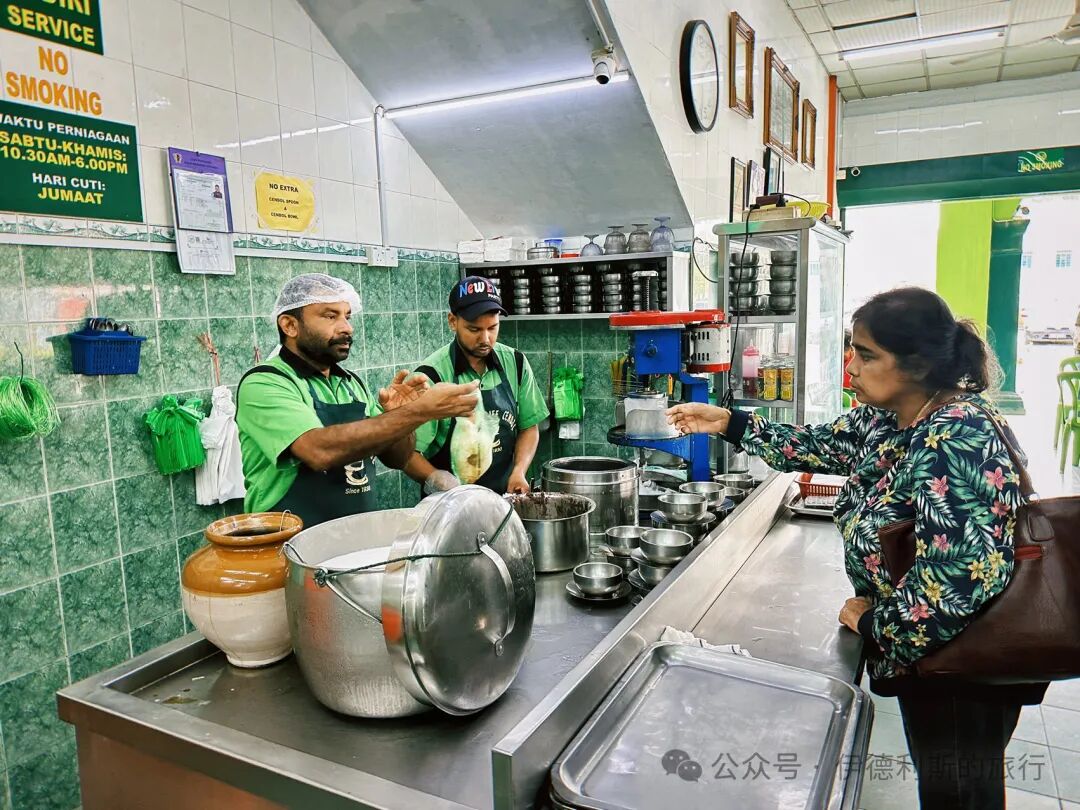
Haji Shariff Cendol is a famous snack shop in Seremban. Its founder, Abdullah Muhammad Ibrahim, came to Malaysia in 1930, learned how to make shaved ice dessert (cendol) from Javanese people, and started selling it on the street using bamboo baskets carried on a shoulder pole. In 1958, Haji Shariff inherited the craft and began selling cendol from a pushcart. It wasn't until 2007 that the family finally moved to their current location and opened a proper shop.
Cendol is a classic cooling ice dessert found across Southeast Asia, with its origins in Java. The most traditional version uses pandan leaf jelly noodles (pandan fen tiao), shaved ice, coconut milk, and palm sugar syrup. Later, new versions added toppings like red bean paste, durian, and jackfruit.
Summary: Halal Travel Guide: Negeri Sembilan, Malaysia - Minangkabau Culture and Muslim Life is presented here as a firsthand travel account in clear, natural English. The account focuses on Negeri Sembilan, Minangkabau, Muslim Travel while preserving the names, places, food, photos, and historical details from the Chinese source.
The Minangkabau people are a Malay-speaking group from the Minangkabau Highlands of Sumatra, and they are very closely related to the Malay people. The Minangkabau have long been known for their business skills and are the most mobile ethnic group in Southeast Asia. In the early 14th century, the Minangkabau crossed the Strait of Malacca to reach what is now Negeri Sembilan in Malaysia, where they intermarried with the indigenous Malay people (Orang Asli) to form the Negeri Sembilan Minangkabau community.
Although Malaysian law classifies the Minangkabau as a branch of the Malay people, those in Negeri Sembilan still maintain their own traditions in food, music, and martial arts, and the traditional Minangkabau customary law (Adat Minangkabau) continues to deeply influence them.
The best place to get a direct look at the Minangkabau culture of Negeri Sembilan is the Negeri Sembilan State Museum. Beyond the main exhibition hall, the museum grounds feature two traditional buildings in the Negeri Sembilan Minangkabau style. After blending with local Malay architecture, the Minangkabau buildings in Negeri Sembilan do not have the high, buffalo-horn-like roof corners found in Sumatra, but the roofs remain curved.
The first house is the Ampang Tinggi Palace (Istana Ampang Tinggi), built between 1865 and 1870 by order of the Negeri Sembilan Minangkabau ruler (Yang di-Pertuan Besar), Tuanku Imam (reigned 1861–1869), on a ridge in eastern Negeri Sembilan overlooking vast rice fields, and it was later occupied by the Negeri Sembilan royal family. In 1953, the then-ruler of Negeri Sembilan (Yang di-Pertuan Besar), Tuanku Abdul Rahman (reigned 1933–1960), agreed to have the palace dismantled and relocated, and it was finally moved to its current site at the Negeri Sembilan State Museum in 1980 and listed as a national heritage site in 2013. Unfortunately, the palace was under renovation when we visited, so we could not go inside.
The second building is a traditional house built near Port Dickson in Negeri Sembilan by Minangkabau architects Haji Syahahbudin and Kamaruddin; it was dismantled by the British government in 1924 for display in London, later rebuilt at the Negeri Sembilan State Museum, and recognized as a heritage building in 2013.
Exquisite wood carvings on a traditional Minangkabau building.
The main exhibition hall of the Negeri Sembilan State Museum is called Teratak Perpatih, and it primarily introduces the cultural customs and life rules formed by the Minangkabau people of Negeri Sembilan based on their traditional customary law (Adat Perpatih). The most unique feature of Minangkabau customary law is the combination of patrilineal and matrilineal systems, where men are responsible for religious and political affairs, while property and land are passed from mother to daughter, ensuring that no matter how poor a Minangkabau woman is, she never has to sacrifice her dignity to make a living. If they divorce and return to their hometown, they still have their own land to live on.
The main hall of the Negeri Sembilan State Museum itself features the high, curved roof corners of traditional Minangkabau architecture, and it displays Minangkabau clothing, musical instruments, and information on their history and culture.
The Negeri Sembilan State Museum houses items belonging to the Minangkabau ruler (Yang di-Pertuan Besar) Tuanku Abdul Rahman, who reigned from 1933 to 1960, and his queen, Tuanku Kurshiah. They were also the first King and Queen of Malaysia.
Between the 15th and 18th centuries, the Minangkabau people of Negeri Sembilan were ruled successively by the Malacca Sultanate and the Johor Sultanate. In the mid-18th century, as the Johor Sultanate declined, attacks from the Bugis people of Sulawesi forced the Minangkabau in Negeri Sembilan to seek help from their ancestral home in Sumatra. A group of Minangkabau chiefs from Negeri Sembilan traveled to the Minangkabau Kingdom of Pagaruyung in West Sumatra, where the King (Yang di-Pertuan Besar) sent his prince, Tuanku Sultan Mahmud Shah, to Negeri Sembilan to establish a throne. In 1773, Tuanku Sultan Mahmud Shah received the title of Yang di-Pertuan Besar from the Sultan of Johor and was crowned king in Negeri Sembilan, marking the beginning of Minangkabau rule in the region.
Tuanku Abdul Rahman was the eighth Yang di-Pertuan Besar of Negeri Sembilan. In 1925, he accompanied his father to visit the British King in England and decided to stay there to study law. After graduating and qualifying as a lawyer in 1928, he returned to Malaya to work as a defense attorney. Following his father's death in 1933, he became the only Malay ruler with a law degree.
When the British tried to establish the Malayan Union in 1946, Tuanku Abdul Rahman initially signed the treaty. Later, on the advice of the Sultan of Kedah, he hired a London-based lawyer to represent the Malay rulers in opposing the Malayan Union plan. Due to strong opposition from the Malay people, the Malayan Union was dissolved in 1948 and reorganized into the Federation of Malaya, which restored the status of the Malay rulers. In 1957, the Federation of Malaya officially gained independence from Britain, and Tuanku Abdul Rahman was elected as the first Supreme Head of State (Yang di-Pertuan Agong).
Tuanku Abdul Rahman firmly defended parliamentary democracy and upheld the position of the popularly elected Prime Minister. To honor him, his portrait is printed on the front of all Malaysian banknotes.
On the hill to the east of Seremban Lake Garden sits the Tuanku Ja'afar Royal Gallery, built to commemorate the tenth Yang di-Pertuan Besar of Negeri Sembilan and the tenth Supreme Head of State of Malaysia, Tuanku Ja'afar.
Tuanku Ja'afar was born in 1922 to a mother of Irish and Anglo-Indian descent. He was educated in Singapore before the war and was a classmate of Lee Kuan Yew. After experiencing World War II, Tuanku Ja'afar decided to pursue advanced legal studies at the University of Nottingham, Oxford University, and the London School of Economics. In 1957, he helped with the negotiations for the independence of the Federation of Malaya in the UK, and later served as a diplomat for ten years. Tuanku Ja'afar became the ruler of Negeri Sembilan in 1967 and served as the King of Malaysia from 1994 to 1999. During his term, Malaysia hosted the 1998 Commonwealth Games and the APEC summit.
Tuanku Ja'afar loved golf, cricket, and painting. His artwork is currently on display at the Tuanku Ja'afar Royal Gallery. The gallery also houses Tuanku Ja'afar's official royal attire and a replica of the royal throne.
The Lake Garden is on the west side of the Tuanku Ja'afar Royal Gallery. I saw a lizard as long as an arm by the water, but I couldn't get a photo.
Further west is the Negeri Sembilan Royal Palace (Istana Hinggap Negeri Sembilan). All nine of Malaysia's rulers, whether Sultans or Yamtuan, have their own palaces. The Negeri Sembilan Royal Palace was originally in Seri Menanti, east of Seremban. After 1960, the Yamtuan of Negeri Sembilan converted this British-style residence in Seremban into the current palace.
The Negeri Sembilan State Assembly building is on the west side of the palace, where you can see the water buffalo horn roofs typical of Minangkabau architecture.
To the south of the palace is the old government building known as the White House. It was built in 1912 by the famous British architect Hubback, who also designed the Kuala Lumpur Railway Station, Jamek Mosque, and the National Textile Museum. The building was moved to its current location in 1984 and has served as the state library ever since.
We performed namaz at the Seremban Jamek Mosque. The Seremban Jamek Mosque was originally a wooden structure. It was rebuilt into the current building in 1900, added a pagoda-style minaret in 1924, and was listed as a national heritage building in 2005. The mosque's architecture is similar to traditional mosques in Malacca, featuring a two-tiered pyramid roof and a minaret influenced by Chinese pagoda design.
Haji Shariff Cendol is a famous snack shop in Seremban. Its founder, Abdullah Muhammad Ibrahim, came to Malaysia in 1930, learned how to make shaved ice dessert (cendol) from Javanese people, and started selling it on the street using bamboo baskets carried on a shoulder pole. In 1958, Haji Shariff inherited the craft and began selling cendol from a pushcart. It wasn't until 2007 that the family finally moved to their current location and opened a proper shop.
Cendol is a classic cooling ice dessert found across Southeast Asia, with its origins in Java. The most traditional version uses pandan leaf jelly noodles (pandan fen tiao), shaved ice, coconut milk, and palm sugar syrup. Later, new versions added toppings like red bean paste, durian, and jackfruit.
Halal Travel Guide: Negeri Sembilan, Malaysia - Minangkabau Culture and Muslim Life
Articles • ali2007fr posted the article • 0 comments • 134 views • 2026-05-19 08:52
Reposted from the web
Summary: Halal Travel Guide: Negeri Sembilan, Malaysia - Minangkabau Culture and Muslim Life is presented here as a firsthand travel account in clear, natural English. The account focuses on Negeri Sembilan, Minangkabau, Muslim Travel while preserving the names, places, food, photos, and historical details from the Chinese source.
The Minangkabau people are a Malay-speaking group from the Minangkabau Highlands of Sumatra, and they are very closely related to the Malay people. The Minangkabau have long been known for their business skills and are the most mobile ethnic group in Southeast Asia. In the early 14th century, the Minangkabau crossed the Strait of Malacca to reach what is now Negeri Sembilan in Malaysia, where they intermarried with the indigenous Malay people (Orang Asli) to form the Negeri Sembilan Minangkabau community.
Although Malaysian law classifies the Minangkabau as a branch of the Malay people, those in Negeri Sembilan still maintain their own traditions in food, music, and martial arts, and the traditional Minangkabau customary law (Adat Minangkabau) continues to deeply influence them.
The best place to get a direct look at the Minangkabau culture of Negeri Sembilan is the Negeri Sembilan State Museum. Beyond the main exhibition hall, the museum grounds feature two traditional buildings in the Negeri Sembilan Minangkabau style. After blending with local Malay architecture, the Minangkabau buildings in Negeri Sembilan do not have the high, buffalo-horn-like roof corners found in Sumatra, but the roofs remain curved.
The first house is the Ampang Tinggi Palace (Istana Ampang Tinggi), built between 1865 and 1870 by order of the Negeri Sembilan Minangkabau ruler (Yang di-Pertuan Besar), Tuanku Imam (reigned 1861–1869), on a ridge in eastern Negeri Sembilan overlooking vast rice fields, and it was later occupied by the Negeri Sembilan royal family. In 1953, the then-ruler of Negeri Sembilan (Yang di-Pertuan Besar), Tuanku Abdul Rahman (reigned 1933–1960), agreed to have the palace dismantled and relocated, and it was finally moved to its current site at the Negeri Sembilan State Museum in 1980 and listed as a national heritage site in 2013. Unfortunately, the palace was under renovation when we visited, so we could not go inside.
The second building is a traditional house built near Port Dickson in Negeri Sembilan by Minangkabau architects Haji Syahahbudin and Kamaruddin; it was dismantled by the British government in 1924 for display in London, later rebuilt at the Negeri Sembilan State Museum, and recognized as a heritage building in 2013.
Exquisite wood carvings on a traditional Minangkabau building.
The main exhibition hall of the Negeri Sembilan State Museum is called Teratak Perpatih, and it primarily introduces the cultural customs and life rules formed by the Minangkabau people of Negeri Sembilan based on their traditional customary law (Adat Perpatih). The most unique feature of Minangkabau customary law is the combination of patrilineal and matrilineal systems, where men are responsible for religious and political affairs, while property and land are passed from mother to daughter, ensuring that no matter how poor a Minangkabau woman is, she never has to sacrifice her dignity to make a living. If they divorce and return to their hometown, they still have their own land to live on.
The main hall of the Negeri Sembilan State Museum itself features the high, curved roof corners of traditional Minangkabau architecture, and it displays Minangkabau clothing, musical instruments, and information on their history and culture.
The Negeri Sembilan State Museum houses items belonging to the Minangkabau ruler (Yang di-Pertuan Besar) Tuanku Abdul Rahman, who reigned from 1933 to 1960, and his queen, Tuanku Kurshiah. They were also the first King and Queen of Malaysia.
Between the 15th and 18th centuries, the Minangkabau people of Negeri Sembilan were ruled successively by the Malacca Sultanate and the Johor Sultanate. In the mid-18th century, as the Johor Sultanate declined, attacks from the Bugis people of Sulawesi forced the Minangkabau in Negeri Sembilan to seek help from their ancestral home in Sumatra. A group of Minangkabau chiefs from Negeri Sembilan traveled to the Minangkabau Kingdom of Pagaruyung in West Sumatra, where the King (Yang di-Pertuan Besar) sent his prince, Tuanku Sultan Mahmud Shah, to Negeri Sembilan to establish a throne. In 1773, Tuanku Sultan Mahmud Shah received the title of Yang di-Pertuan Besar from the Sultan of Johor and was crowned king in Negeri Sembilan, marking the beginning of Minangkabau rule in the region.
Tuanku Abdul Rahman was the eighth Yang di-Pertuan Besar of Negeri Sembilan. In 1925, he accompanied his father to visit the British King in England and decided to stay there to study law. After graduating and qualifying as a lawyer in 1928, he returned to Malaya to work as a defense attorney. Following his father's death in 1933, he became the only Malay ruler with a law degree.
When the British tried to establish the Malayan Union in 1946, Tuanku Abdul Rahman initially signed the treaty. Later, on the advice of the Sultan of Kedah, he hired a London-based lawyer to represent the Malay rulers in opposing the Malayan Union plan. Due to strong opposition from the Malay people, the Malayan Union was dissolved in 1948 and reorganized into the Federation of Malaya, which restored the status of the Malay rulers. In 1957, the Federation of Malaya officially gained independence from Britain, and Tuanku Abdul Rahman was elected as the first Supreme Head of State (Yang di-Pertuan Agong).
Tuanku Abdul Rahman firmly defended parliamentary democracy and upheld the position of the popularly elected Prime Minister. To honor him, his portrait is printed on the front of all Malaysian banknotes.
On the hill to the east of Seremban Lake Garden sits the Tuanku Ja'afar Royal Gallery, built to commemorate the tenth Yang di-Pertuan Besar of Negeri Sembilan and the tenth Supreme Head of State of Malaysia, Tuanku Ja'afar.
Tuanku Ja'afar was born in 1922 to a mother of Irish and Anglo-Indian descent. He was educated in Singapore before the war and was a classmate of Lee Kuan Yew. After experiencing World War II, Tuanku Ja'afar decided to pursue advanced legal studies at the University of Nottingham, Oxford University, and the London School of Economics. In 1957, he helped with the negotiations for the independence of the Federation of Malaya in the UK, and later served as a diplomat for ten years. Tuanku Ja'afar became the ruler of Negeri Sembilan in 1967 and served as the King of Malaysia from 1994 to 1999. During his term, Malaysia hosted the 1998 Commonwealth Games and the APEC summit.
Tuanku Ja'afar loved golf, cricket, and painting. His artwork is currently on display at the Tuanku Ja'afar Royal Gallery. The gallery also houses Tuanku Ja'afar's official royal attire and a replica of the royal throne.
The Lake Garden is on the west side of the Tuanku Ja'afar Royal Gallery. I saw a lizard as long as an arm by the water, but I couldn't get a photo.
Further west is the Negeri Sembilan Royal Palace (Istana Hinggap Negeri Sembilan). All nine of Malaysia's rulers, whether Sultans or Yamtuan, have their own palaces. The Negeri Sembilan Royal Palace was originally in Seri Menanti, east of Seremban. After 1960, the Yamtuan of Negeri Sembilan converted this British-style residence in Seremban into the current palace.
The Negeri Sembilan State Assembly building is on the west side of the palace, where you can see the water buffalo horn roofs typical of Minangkabau architecture.
To the south of the palace is the old government building known as the White House. It was built in 1912 by the famous British architect Hubback, who also designed the Kuala Lumpur Railway Station, Jamek Mosque, and the National Textile Museum. The building was moved to its current location in 1984 and has served as the state library ever since.
We performed namaz at the Seremban Jamek Mosque. The Seremban Jamek Mosque was originally a wooden structure. It was rebuilt into the current building in 1900, added a pagoda-style minaret in 1924, and was listed as a national heritage building in 2005. The mosque's architecture is similar to traditional mosques in Malacca, featuring a two-tiered pyramid roof and a minaret influenced by Chinese pagoda design.
Haji Shariff Cendol is a famous snack shop in Seremban. Its founder, Abdullah Muhammad Ibrahim, came to Malaysia in 1930, learned how to make shaved ice dessert (cendol) from Javanese people, and started selling it on the street using bamboo baskets carried on a shoulder pole. In 1958, Haji Shariff inherited the craft and began selling cendol from a pushcart. It wasn't until 2007 that the family finally moved to their current location and opened a proper shop.
Cendol is a classic cooling ice dessert found across Southeast Asia, with its origins in Java. The most traditional version uses pandan leaf jelly noodles (pandan fen tiao), shaved ice, coconut milk, and palm sugar syrup. Later, new versions added toppings like red bean paste, durian, and jackfruit. view all
Summary: Halal Travel Guide: Negeri Sembilan, Malaysia - Minangkabau Culture and Muslim Life is presented here as a firsthand travel account in clear, natural English. The account focuses on Negeri Sembilan, Minangkabau, Muslim Travel while preserving the names, places, food, photos, and historical details from the Chinese source.
The Minangkabau people are a Malay-speaking group from the Minangkabau Highlands of Sumatra, and they are very closely related to the Malay people. The Minangkabau have long been known for their business skills and are the most mobile ethnic group in Southeast Asia. In the early 14th century, the Minangkabau crossed the Strait of Malacca to reach what is now Negeri Sembilan in Malaysia, where they intermarried with the indigenous Malay people (Orang Asli) to form the Negeri Sembilan Minangkabau community.
Although Malaysian law classifies the Minangkabau as a branch of the Malay people, those in Negeri Sembilan still maintain their own traditions in food, music, and martial arts, and the traditional Minangkabau customary law (Adat Minangkabau) continues to deeply influence them.
The best place to get a direct look at the Minangkabau culture of Negeri Sembilan is the Negeri Sembilan State Museum. Beyond the main exhibition hall, the museum grounds feature two traditional buildings in the Negeri Sembilan Minangkabau style. After blending with local Malay architecture, the Minangkabau buildings in Negeri Sembilan do not have the high, buffalo-horn-like roof corners found in Sumatra, but the roofs remain curved.
The first house is the Ampang Tinggi Palace (Istana Ampang Tinggi), built between 1865 and 1870 by order of the Negeri Sembilan Minangkabau ruler (Yang di-Pertuan Besar), Tuanku Imam (reigned 1861–1869), on a ridge in eastern Negeri Sembilan overlooking vast rice fields, and it was later occupied by the Negeri Sembilan royal family. In 1953, the then-ruler of Negeri Sembilan (Yang di-Pertuan Besar), Tuanku Abdul Rahman (reigned 1933–1960), agreed to have the palace dismantled and relocated, and it was finally moved to its current site at the Negeri Sembilan State Museum in 1980 and listed as a national heritage site in 2013. Unfortunately, the palace was under renovation when we visited, so we could not go inside.
The second building is a traditional house built near Port Dickson in Negeri Sembilan by Minangkabau architects Haji Syahahbudin and Kamaruddin; it was dismantled by the British government in 1924 for display in London, later rebuilt at the Negeri Sembilan State Museum, and recognized as a heritage building in 2013.
Exquisite wood carvings on a traditional Minangkabau building.
The main exhibition hall of the Negeri Sembilan State Museum is called Teratak Perpatih, and it primarily introduces the cultural customs and life rules formed by the Minangkabau people of Negeri Sembilan based on their traditional customary law (Adat Perpatih). The most unique feature of Minangkabau customary law is the combination of patrilineal and matrilineal systems, where men are responsible for religious and political affairs, while property and land are passed from mother to daughter, ensuring that no matter how poor a Minangkabau woman is, she never has to sacrifice her dignity to make a living. If they divorce and return to their hometown, they still have their own land to live on.
The main hall of the Negeri Sembilan State Museum itself features the high, curved roof corners of traditional Minangkabau architecture, and it displays Minangkabau clothing, musical instruments, and information on their history and culture.
The Negeri Sembilan State Museum houses items belonging to the Minangkabau ruler (Yang di-Pertuan Besar) Tuanku Abdul Rahman, who reigned from 1933 to 1960, and his queen, Tuanku Kurshiah. They were also the first King and Queen of Malaysia.
Between the 15th and 18th centuries, the Minangkabau people of Negeri Sembilan were ruled successively by the Malacca Sultanate and the Johor Sultanate. In the mid-18th century, as the Johor Sultanate declined, attacks from the Bugis people of Sulawesi forced the Minangkabau in Negeri Sembilan to seek help from their ancestral home in Sumatra. A group of Minangkabau chiefs from Negeri Sembilan traveled to the Minangkabau Kingdom of Pagaruyung in West Sumatra, where the King (Yang di-Pertuan Besar) sent his prince, Tuanku Sultan Mahmud Shah, to Negeri Sembilan to establish a throne. In 1773, Tuanku Sultan Mahmud Shah received the title of Yang di-Pertuan Besar from the Sultan of Johor and was crowned king in Negeri Sembilan, marking the beginning of Minangkabau rule in the region.
Tuanku Abdul Rahman was the eighth Yang di-Pertuan Besar of Negeri Sembilan. In 1925, he accompanied his father to visit the British King in England and decided to stay there to study law. After graduating and qualifying as a lawyer in 1928, he returned to Malaya to work as a defense attorney. Following his father's death in 1933, he became the only Malay ruler with a law degree.
When the British tried to establish the Malayan Union in 1946, Tuanku Abdul Rahman initially signed the treaty. Later, on the advice of the Sultan of Kedah, he hired a London-based lawyer to represent the Malay rulers in opposing the Malayan Union plan. Due to strong opposition from the Malay people, the Malayan Union was dissolved in 1948 and reorganized into the Federation of Malaya, which restored the status of the Malay rulers. In 1957, the Federation of Malaya officially gained independence from Britain, and Tuanku Abdul Rahman was elected as the first Supreme Head of State (Yang di-Pertuan Agong).
Tuanku Abdul Rahman firmly defended parliamentary democracy and upheld the position of the popularly elected Prime Minister. To honor him, his portrait is printed on the front of all Malaysian banknotes.
On the hill to the east of Seremban Lake Garden sits the Tuanku Ja'afar Royal Gallery, built to commemorate the tenth Yang di-Pertuan Besar of Negeri Sembilan and the tenth Supreme Head of State of Malaysia, Tuanku Ja'afar.
Tuanku Ja'afar was born in 1922 to a mother of Irish and Anglo-Indian descent. He was educated in Singapore before the war and was a classmate of Lee Kuan Yew. After experiencing World War II, Tuanku Ja'afar decided to pursue advanced legal studies at the University of Nottingham, Oxford University, and the London School of Economics. In 1957, he helped with the negotiations for the independence of the Federation of Malaya in the UK, and later served as a diplomat for ten years. Tuanku Ja'afar became the ruler of Negeri Sembilan in 1967 and served as the King of Malaysia from 1994 to 1999. During his term, Malaysia hosted the 1998 Commonwealth Games and the APEC summit.
Tuanku Ja'afar loved golf, cricket, and painting. His artwork is currently on display at the Tuanku Ja'afar Royal Gallery. The gallery also houses Tuanku Ja'afar's official royal attire and a replica of the royal throne.
The Lake Garden is on the west side of the Tuanku Ja'afar Royal Gallery. I saw a lizard as long as an arm by the water, but I couldn't get a photo.
Further west is the Negeri Sembilan Royal Palace (Istana Hinggap Negeri Sembilan). All nine of Malaysia's rulers, whether Sultans or Yamtuan, have their own palaces. The Negeri Sembilan Royal Palace was originally in Seri Menanti, east of Seremban. After 1960, the Yamtuan of Negeri Sembilan converted this British-style residence in Seremban into the current palace.
The Negeri Sembilan State Assembly building is on the west side of the palace, where you can see the water buffalo horn roofs typical of Minangkabau architecture.
To the south of the palace is the old government building known as the White House. It was built in 1912 by the famous British architect Hubback, who also designed the Kuala Lumpur Railway Station, Jamek Mosque, and the National Textile Museum. The building was moved to its current location in 1984 and has served as the state library ever since.
We performed namaz at the Seremban Jamek Mosque. The Seremban Jamek Mosque was originally a wooden structure. It was rebuilt into the current building in 1900, added a pagoda-style minaret in 1924, and was listed as a national heritage building in 2005. The mosque's architecture is similar to traditional mosques in Malacca, featuring a two-tiered pyramid roof and a minaret influenced by Chinese pagoda design.
Haji Shariff Cendol is a famous snack shop in Seremban. Its founder, Abdullah Muhammad Ibrahim, came to Malaysia in 1930, learned how to make shaved ice dessert (cendol) from Javanese people, and started selling it on the street using bamboo baskets carried on a shoulder pole. In 1958, Haji Shariff inherited the craft and began selling cendol from a pushcart. It wasn't until 2007 that the family finally moved to their current location and opened a proper shop.
Cendol is a classic cooling ice dessert found across Southeast Asia, with its origins in Java. The most traditional version uses pandan leaf jelly noodles (pandan fen tiao), shaved ice, coconut milk, and palm sugar syrup. Later, new versions added toppings like red bean paste, durian, and jackfruit. view all
Reposted from the web
Summary: Halal Travel Guide: Negeri Sembilan, Malaysia - Minangkabau Culture and Muslim Life is presented here as a firsthand travel account in clear, natural English. The account focuses on Negeri Sembilan, Minangkabau, Muslim Travel while preserving the names, places, food, photos, and historical details from the Chinese source.
The Minangkabau people are a Malay-speaking group from the Minangkabau Highlands of Sumatra, and they are very closely related to the Malay people. The Minangkabau have long been known for their business skills and are the most mobile ethnic group in Southeast Asia. In the early 14th century, the Minangkabau crossed the Strait of Malacca to reach what is now Negeri Sembilan in Malaysia, where they intermarried with the indigenous Malay people (Orang Asli) to form the Negeri Sembilan Minangkabau community.
Although Malaysian law classifies the Minangkabau as a branch of the Malay people, those in Negeri Sembilan still maintain their own traditions in food, music, and martial arts, and the traditional Minangkabau customary law (Adat Minangkabau) continues to deeply influence them.
The best place to get a direct look at the Minangkabau culture of Negeri Sembilan is the Negeri Sembilan State Museum. Beyond the main exhibition hall, the museum grounds feature two traditional buildings in the Negeri Sembilan Minangkabau style. After blending with local Malay architecture, the Minangkabau buildings in Negeri Sembilan do not have the high, buffalo-horn-like roof corners found in Sumatra, but the roofs remain curved.
The first house is the Ampang Tinggi Palace (Istana Ampang Tinggi), built between 1865 and 1870 by order of the Negeri Sembilan Minangkabau ruler (Yang di-Pertuan Besar), Tuanku Imam (reigned 1861–1869), on a ridge in eastern Negeri Sembilan overlooking vast rice fields, and it was later occupied by the Negeri Sembilan royal family. In 1953, the then-ruler of Negeri Sembilan (Yang di-Pertuan Besar), Tuanku Abdul Rahman (reigned 1933–1960), agreed to have the palace dismantled and relocated, and it was finally moved to its current site at the Negeri Sembilan State Museum in 1980 and listed as a national heritage site in 2013. Unfortunately, the palace was under renovation when we visited, so we could not go inside.
The second building is a traditional house built near Port Dickson in Negeri Sembilan by Minangkabau architects Haji Syahahbudin and Kamaruddin; it was dismantled by the British government in 1924 for display in London, later rebuilt at the Negeri Sembilan State Museum, and recognized as a heritage building in 2013.
Exquisite wood carvings on a traditional Minangkabau building.
The main exhibition hall of the Negeri Sembilan State Museum is called Teratak Perpatih, and it primarily introduces the cultural customs and life rules formed by the Minangkabau people of Negeri Sembilan based on their traditional customary law (Adat Perpatih). The most unique feature of Minangkabau customary law is the combination of patrilineal and matrilineal systems, where men are responsible for religious and political affairs, while property and land are passed from mother to daughter, ensuring that no matter how poor a Minangkabau woman is, she never has to sacrifice her dignity to make a living. If they divorce and return to their hometown, they still have their own land to live on.
The main hall of the Negeri Sembilan State Museum itself features the high, curved roof corners of traditional Minangkabau architecture, and it displays Minangkabau clothing, musical instruments, and information on their history and culture.
The Negeri Sembilan State Museum houses items belonging to the Minangkabau ruler (Yang di-Pertuan Besar) Tuanku Abdul Rahman, who reigned from 1933 to 1960, and his queen, Tuanku Kurshiah. They were also the first King and Queen of Malaysia.
Between the 15th and 18th centuries, the Minangkabau people of Negeri Sembilan were ruled successively by the Malacca Sultanate and the Johor Sultanate. In the mid-18th century, as the Johor Sultanate declined, attacks from the Bugis people of Sulawesi forced the Minangkabau in Negeri Sembilan to seek help from their ancestral home in Sumatra. A group of Minangkabau chiefs from Negeri Sembilan traveled to the Minangkabau Kingdom of Pagaruyung in West Sumatra, where the King (Yang di-Pertuan Besar) sent his prince, Tuanku Sultan Mahmud Shah, to Negeri Sembilan to establish a throne. In 1773, Tuanku Sultan Mahmud Shah received the title of Yang di-Pertuan Besar from the Sultan of Johor and was crowned king in Negeri Sembilan, marking the beginning of Minangkabau rule in the region.
Tuanku Abdul Rahman was the eighth Yang di-Pertuan Besar of Negeri Sembilan. In 1925, he accompanied his father to visit the British King in England and decided to stay there to study law. After graduating and qualifying as a lawyer in 1928, he returned to Malaya to work as a defense attorney. Following his father's death in 1933, he became the only Malay ruler with a law degree.
When the British tried to establish the Malayan Union in 1946, Tuanku Abdul Rahman initially signed the treaty. Later, on the advice of the Sultan of Kedah, he hired a London-based lawyer to represent the Malay rulers in opposing the Malayan Union plan. Due to strong opposition from the Malay people, the Malayan Union was dissolved in 1948 and reorganized into the Federation of Malaya, which restored the status of the Malay rulers. In 1957, the Federation of Malaya officially gained independence from Britain, and Tuanku Abdul Rahman was elected as the first Supreme Head of State (Yang di-Pertuan Agong).
Tuanku Abdul Rahman firmly defended parliamentary democracy and upheld the position of the popularly elected Prime Minister. To honor him, his portrait is printed on the front of all Malaysian banknotes.
On the hill to the east of Seremban Lake Garden sits the Tuanku Ja'afar Royal Gallery, built to commemorate the tenth Yang di-Pertuan Besar of Negeri Sembilan and the tenth Supreme Head of State of Malaysia, Tuanku Ja'afar.
Tuanku Ja'afar was born in 1922 to a mother of Irish and Anglo-Indian descent. He was educated in Singapore before the war and was a classmate of Lee Kuan Yew. After experiencing World War II, Tuanku Ja'afar decided to pursue advanced legal studies at the University of Nottingham, Oxford University, and the London School of Economics. In 1957, he helped with the negotiations for the independence of the Federation of Malaya in the UK, and later served as a diplomat for ten years. Tuanku Ja'afar became the ruler of Negeri Sembilan in 1967 and served as the King of Malaysia from 1994 to 1999. During his term, Malaysia hosted the 1998 Commonwealth Games and the APEC summit.
Tuanku Ja'afar loved golf, cricket, and painting. His artwork is currently on display at the Tuanku Ja'afar Royal Gallery. The gallery also houses Tuanku Ja'afar's official royal attire and a replica of the royal throne.
The Lake Garden is on the west side of the Tuanku Ja'afar Royal Gallery. I saw a lizard as long as an arm by the water, but I couldn't get a photo.
Further west is the Negeri Sembilan Royal Palace (Istana Hinggap Negeri Sembilan). All nine of Malaysia's rulers, whether Sultans or Yamtuan, have their own palaces. The Negeri Sembilan Royal Palace was originally in Seri Menanti, east of Seremban. After 1960, the Yamtuan of Negeri Sembilan converted this British-style residence in Seremban into the current palace.
The Negeri Sembilan State Assembly building is on the west side of the palace, where you can see the water buffalo horn roofs typical of Minangkabau architecture.
To the south of the palace is the old government building known as the White House. It was built in 1912 by the famous British architect Hubback, who also designed the Kuala Lumpur Railway Station, Jamek Mosque, and the National Textile Museum. The building was moved to its current location in 1984 and has served as the state library ever since.
We performed namaz at the Seremban Jamek Mosque. The Seremban Jamek Mosque was originally a wooden structure. It was rebuilt into the current building in 1900, added a pagoda-style minaret in 1924, and was listed as a national heritage building in 2005. The mosque's architecture is similar to traditional mosques in Malacca, featuring a two-tiered pyramid roof and a minaret influenced by Chinese pagoda design.
Haji Shariff Cendol is a famous snack shop in Seremban. Its founder, Abdullah Muhammad Ibrahim, came to Malaysia in 1930, learned how to make shaved ice dessert (cendol) from Javanese people, and started selling it on the street using bamboo baskets carried on a shoulder pole. In 1958, Haji Shariff inherited the craft and began selling cendol from a pushcart. It wasn't until 2007 that the family finally moved to their current location and opened a proper shop.
Cendol is a classic cooling ice dessert found across Southeast Asia, with its origins in Java. The most traditional version uses pandan leaf jelly noodles (pandan fen tiao), shaved ice, coconut milk, and palm sugar syrup. Later, new versions added toppings like red bean paste, durian, and jackfruit.
Summary: Halal Travel Guide: Negeri Sembilan, Malaysia - Minangkabau Culture and Muslim Life is presented here as a firsthand travel account in clear, natural English. The account focuses on Negeri Sembilan, Minangkabau, Muslim Travel while preserving the names, places, food, photos, and historical details from the Chinese source.
The Minangkabau people are a Malay-speaking group from the Minangkabau Highlands of Sumatra, and they are very closely related to the Malay people. The Minangkabau have long been known for their business skills and are the most mobile ethnic group in Southeast Asia. In the early 14th century, the Minangkabau crossed the Strait of Malacca to reach what is now Negeri Sembilan in Malaysia, where they intermarried with the indigenous Malay people (Orang Asli) to form the Negeri Sembilan Minangkabau community.
Although Malaysian law classifies the Minangkabau as a branch of the Malay people, those in Negeri Sembilan still maintain their own traditions in food, music, and martial arts, and the traditional Minangkabau customary law (Adat Minangkabau) continues to deeply influence them.
The best place to get a direct look at the Minangkabau culture of Negeri Sembilan is the Negeri Sembilan State Museum. Beyond the main exhibition hall, the museum grounds feature two traditional buildings in the Negeri Sembilan Minangkabau style. After blending with local Malay architecture, the Minangkabau buildings in Negeri Sembilan do not have the high, buffalo-horn-like roof corners found in Sumatra, but the roofs remain curved.
The first house is the Ampang Tinggi Palace (Istana Ampang Tinggi), built between 1865 and 1870 by order of the Negeri Sembilan Minangkabau ruler (Yang di-Pertuan Besar), Tuanku Imam (reigned 1861–1869), on a ridge in eastern Negeri Sembilan overlooking vast rice fields, and it was later occupied by the Negeri Sembilan royal family. In 1953, the then-ruler of Negeri Sembilan (Yang di-Pertuan Besar), Tuanku Abdul Rahman (reigned 1933–1960), agreed to have the palace dismantled and relocated, and it was finally moved to its current site at the Negeri Sembilan State Museum in 1980 and listed as a national heritage site in 2013. Unfortunately, the palace was under renovation when we visited, so we could not go inside.
The second building is a traditional house built near Port Dickson in Negeri Sembilan by Minangkabau architects Haji Syahahbudin and Kamaruddin; it was dismantled by the British government in 1924 for display in London, later rebuilt at the Negeri Sembilan State Museum, and recognized as a heritage building in 2013.
Exquisite wood carvings on a traditional Minangkabau building.
The main exhibition hall of the Negeri Sembilan State Museum is called Teratak Perpatih, and it primarily introduces the cultural customs and life rules formed by the Minangkabau people of Negeri Sembilan based on their traditional customary law (Adat Perpatih). The most unique feature of Minangkabau customary law is the combination of patrilineal and matrilineal systems, where men are responsible for religious and political affairs, while property and land are passed from mother to daughter, ensuring that no matter how poor a Minangkabau woman is, she never has to sacrifice her dignity to make a living. If they divorce and return to their hometown, they still have their own land to live on.
The main hall of the Negeri Sembilan State Museum itself features the high, curved roof corners of traditional Minangkabau architecture, and it displays Minangkabau clothing, musical instruments, and information on their history and culture.
The Negeri Sembilan State Museum houses items belonging to the Minangkabau ruler (Yang di-Pertuan Besar) Tuanku Abdul Rahman, who reigned from 1933 to 1960, and his queen, Tuanku Kurshiah. They were also the first King and Queen of Malaysia.
Between the 15th and 18th centuries, the Minangkabau people of Negeri Sembilan were ruled successively by the Malacca Sultanate and the Johor Sultanate. In the mid-18th century, as the Johor Sultanate declined, attacks from the Bugis people of Sulawesi forced the Minangkabau in Negeri Sembilan to seek help from their ancestral home in Sumatra. A group of Minangkabau chiefs from Negeri Sembilan traveled to the Minangkabau Kingdom of Pagaruyung in West Sumatra, where the King (Yang di-Pertuan Besar) sent his prince, Tuanku Sultan Mahmud Shah, to Negeri Sembilan to establish a throne. In 1773, Tuanku Sultan Mahmud Shah received the title of Yang di-Pertuan Besar from the Sultan of Johor and was crowned king in Negeri Sembilan, marking the beginning of Minangkabau rule in the region.
Tuanku Abdul Rahman was the eighth Yang di-Pertuan Besar of Negeri Sembilan. In 1925, he accompanied his father to visit the British King in England and decided to stay there to study law. After graduating and qualifying as a lawyer in 1928, he returned to Malaya to work as a defense attorney. Following his father's death in 1933, he became the only Malay ruler with a law degree.
When the British tried to establish the Malayan Union in 1946, Tuanku Abdul Rahman initially signed the treaty. Later, on the advice of the Sultan of Kedah, he hired a London-based lawyer to represent the Malay rulers in opposing the Malayan Union plan. Due to strong opposition from the Malay people, the Malayan Union was dissolved in 1948 and reorganized into the Federation of Malaya, which restored the status of the Malay rulers. In 1957, the Federation of Malaya officially gained independence from Britain, and Tuanku Abdul Rahman was elected as the first Supreme Head of State (Yang di-Pertuan Agong).
Tuanku Abdul Rahman firmly defended parliamentary democracy and upheld the position of the popularly elected Prime Minister. To honor him, his portrait is printed on the front of all Malaysian banknotes.
On the hill to the east of Seremban Lake Garden sits the Tuanku Ja'afar Royal Gallery, built to commemorate the tenth Yang di-Pertuan Besar of Negeri Sembilan and the tenth Supreme Head of State of Malaysia, Tuanku Ja'afar.
Tuanku Ja'afar was born in 1922 to a mother of Irish and Anglo-Indian descent. He was educated in Singapore before the war and was a classmate of Lee Kuan Yew. After experiencing World War II, Tuanku Ja'afar decided to pursue advanced legal studies at the University of Nottingham, Oxford University, and the London School of Economics. In 1957, he helped with the negotiations for the independence of the Federation of Malaya in the UK, and later served as a diplomat for ten years. Tuanku Ja'afar became the ruler of Negeri Sembilan in 1967 and served as the King of Malaysia from 1994 to 1999. During his term, Malaysia hosted the 1998 Commonwealth Games and the APEC summit.
Tuanku Ja'afar loved golf, cricket, and painting. His artwork is currently on display at the Tuanku Ja'afar Royal Gallery. The gallery also houses Tuanku Ja'afar's official royal attire and a replica of the royal throne.
The Lake Garden is on the west side of the Tuanku Ja'afar Royal Gallery. I saw a lizard as long as an arm by the water, but I couldn't get a photo.
Further west is the Negeri Sembilan Royal Palace (Istana Hinggap Negeri Sembilan). All nine of Malaysia's rulers, whether Sultans or Yamtuan, have their own palaces. The Negeri Sembilan Royal Palace was originally in Seri Menanti, east of Seremban. After 1960, the Yamtuan of Negeri Sembilan converted this British-style residence in Seremban into the current palace.
The Negeri Sembilan State Assembly building is on the west side of the palace, where you can see the water buffalo horn roofs typical of Minangkabau architecture.
To the south of the palace is the old government building known as the White House. It was built in 1912 by the famous British architect Hubback, who also designed the Kuala Lumpur Railway Station, Jamek Mosque, and the National Textile Museum. The building was moved to its current location in 1984 and has served as the state library ever since.
We performed namaz at the Seremban Jamek Mosque. The Seremban Jamek Mosque was originally a wooden structure. It was rebuilt into the current building in 1900, added a pagoda-style minaret in 1924, and was listed as a national heritage building in 2005. The mosque's architecture is similar to traditional mosques in Malacca, featuring a two-tiered pyramid roof and a minaret influenced by Chinese pagoda design.
Haji Shariff Cendol is a famous snack shop in Seremban. Its founder, Abdullah Muhammad Ibrahim, came to Malaysia in 1930, learned how to make shaved ice dessert (cendol) from Javanese people, and started selling it on the street using bamboo baskets carried on a shoulder pole. In 1958, Haji Shariff inherited the craft and began selling cendol from a pushcart. It wasn't until 2007 that the family finally moved to their current location and opened a proper shop.
Cendol is a classic cooling ice dessert found across Southeast Asia, with its origins in Java. The most traditional version uses pandan leaf jelly noodles (pandan fen tiao), shaved ice, coconut milk, and palm sugar syrup. Later, new versions added toppings like red bean paste, durian, and jackfruit.