

Mount Emei
Halal Food Guide: Leshan and Mount Emei - Qiaojiao Beef and Sichuan Food
Articles • ali2007fr posted the article • 0 comments • 224 views • 2026-05-19 09:30
Reposted from the web
Summary: Halal Food Guide: Leshan and Mount Emei - Qiaojiao Beef and Sichuan Food is presented here as a firsthand travel account in clear, natural English. The account focuses on Leshan, Mount Emei, Halal Food while preserving the names, places, food, photos, and historical details from the Chinese source.
We left Chengdu early on May 16 and arrived in Leshan after a two-hour drive. At noon, we went to a local restaurant called Hai's Braised Beef (Hai Shi Qiao Jiao Niu Rou). The restaurant is right across from the Leshan Giant Buddha, next to the old Leshan Port on the Min River.
There are relatively few Hui Muslims living in the Leshan city area. During the Tongzhi reign, a Hui Muslim military officer named Ma Yaolong settled here after retiring. He invited a few other Hui Muslim families to join him, and in 1881, they built the Leshan Mosque (Leshan Si). I was on a business trip and unfortunately could not visit the Leshan Mosque.
Hai's Braised Beef was started by Imam Hai Weixiong. Imam Hai is from Qingliu Town in the Rongchang District of Chongqing. His ancestors moved to Sichuan from the Hubei-Hunan region during the Kangxi reign. In October 1989, he became the first imam of the Leshan Mosque after the religious policy was restored. He served until 1998, when he retired to go into business. Today, his restaurant is the top choice for Muslim travelers (dost) visiting Leshan.
Their restaurant specializes in the four signature dishes of Leshan: foot-steeped beef (qiaojiao niurou), sweet-skin duck (tianpi ya), Xiba tofu (xiba doufu), and pot-pot chicken (bobo ji). They also serve river catfish (jiangtuan yu), cold-spiced rabbit (lengchi tu), jar-steamed tofu pudding (guanguan douhua), and various stir-fried dishes.
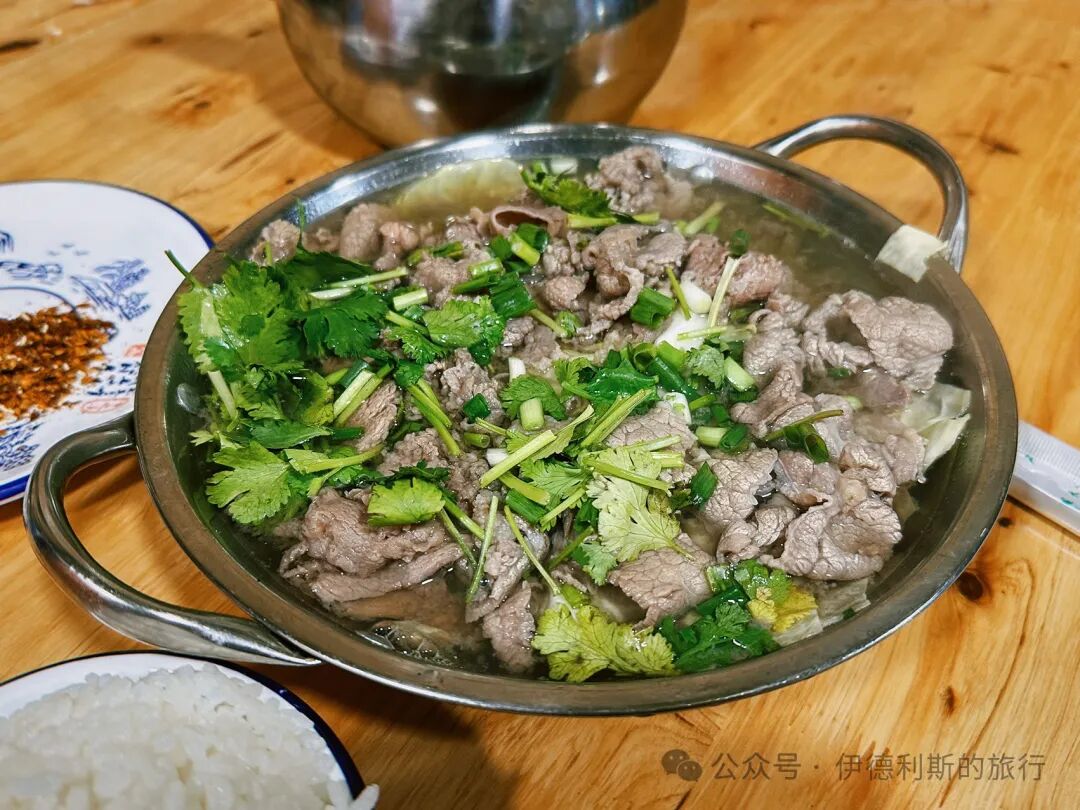
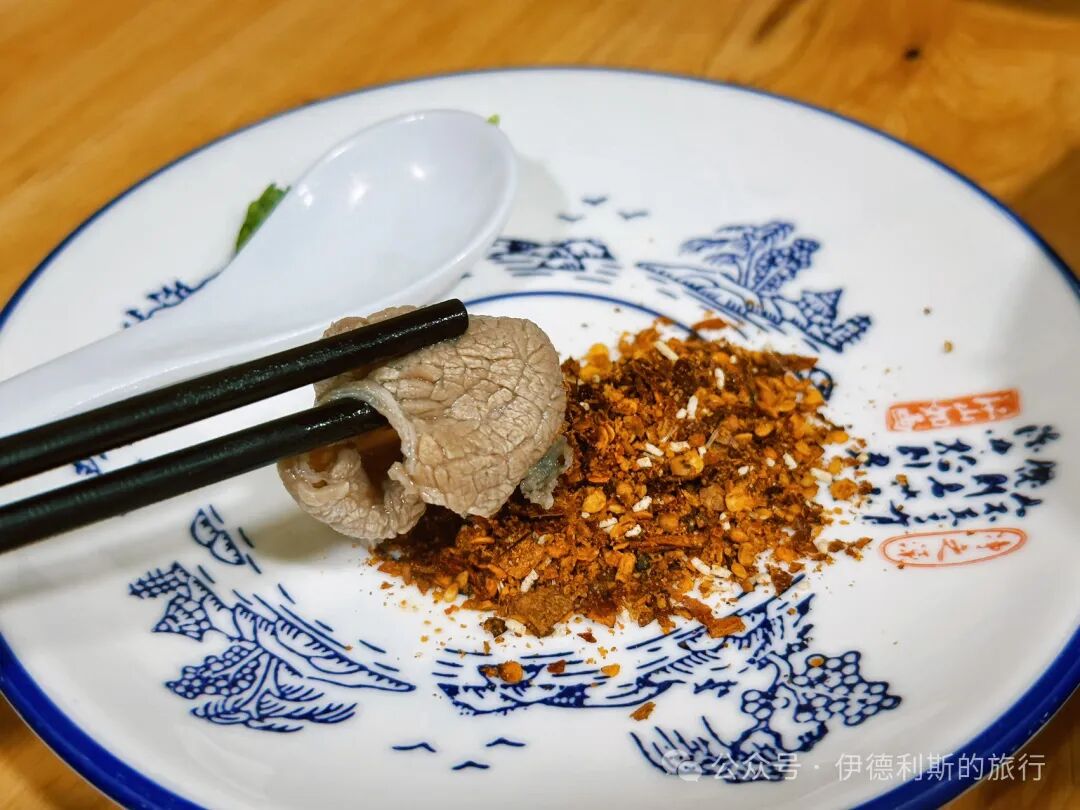
Foot-steeped beef (qiaojiao niurou) is beef simmered in a broth of Chinese herbs, then used to poach various cuts of beef and offal. The beef is very tender, and you can also poach beef spinal cord. Foot-steeped beef (qiaojiao niurou) is not spicy at all on its own; the focus is on the savory aroma of the broth. You dip the meat in chili powder when you eat it.
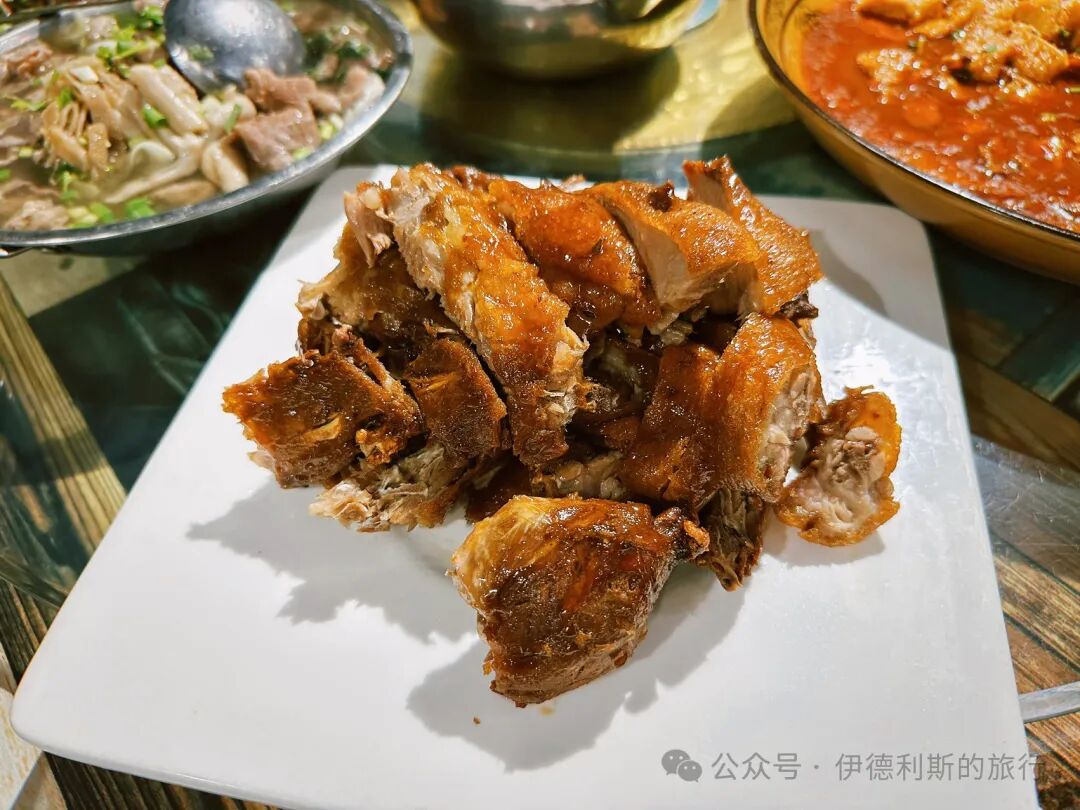
Sweet-skin duck (tianpi ya) is first braised and then deep-fried. Before frying, they stir-fry sugar to make a braising liquid and finish by brushing it with maltose, which gives it a sweet flavor.
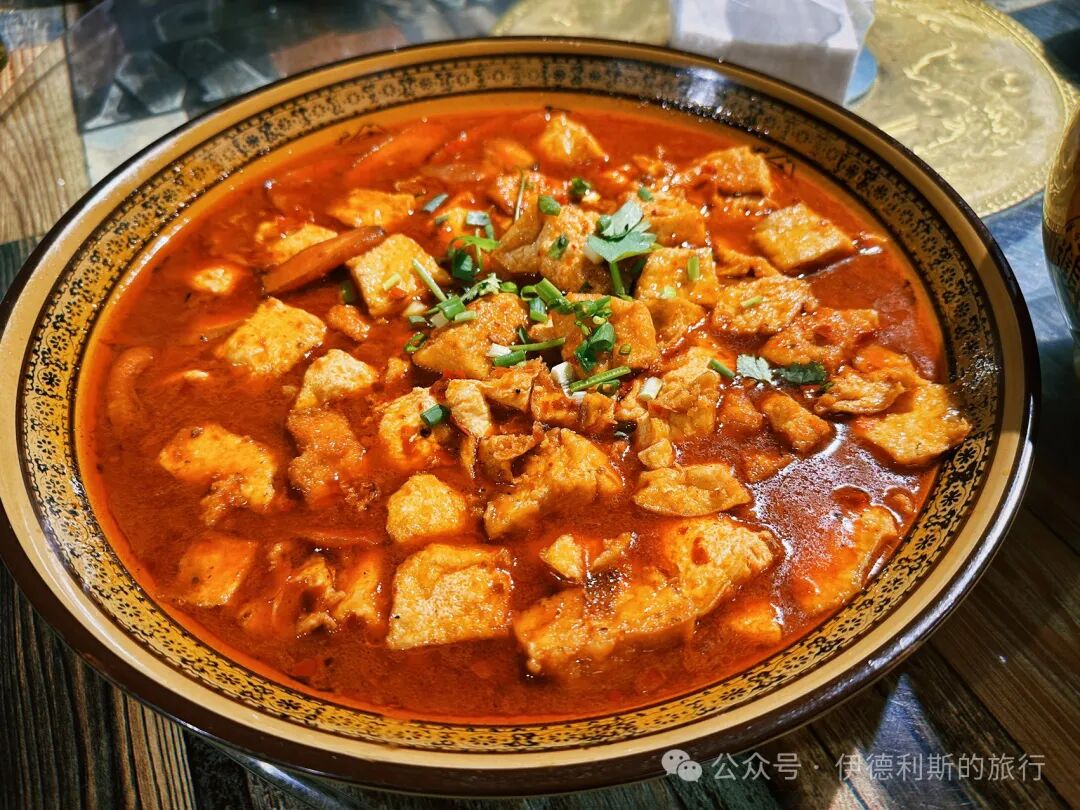
Xiba tofu (xiba doufu) is very delicate and soft. It comes in two styles: red oil and white oil. We had the red oil version, which goes perfectly with rice.
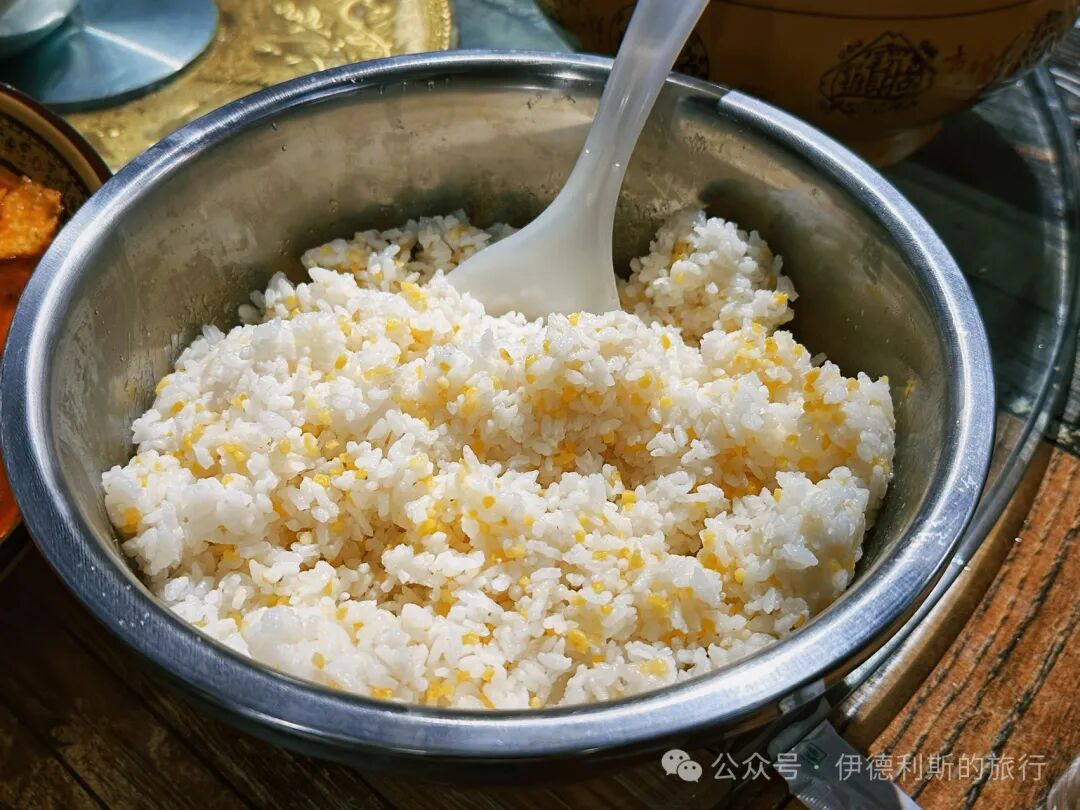
They also serve two-grain rice (ermi fan) made from rice and corn. It comes in a bucket, is charged per person, and you can eat as much as you like, which is a local Sichuan tradition.
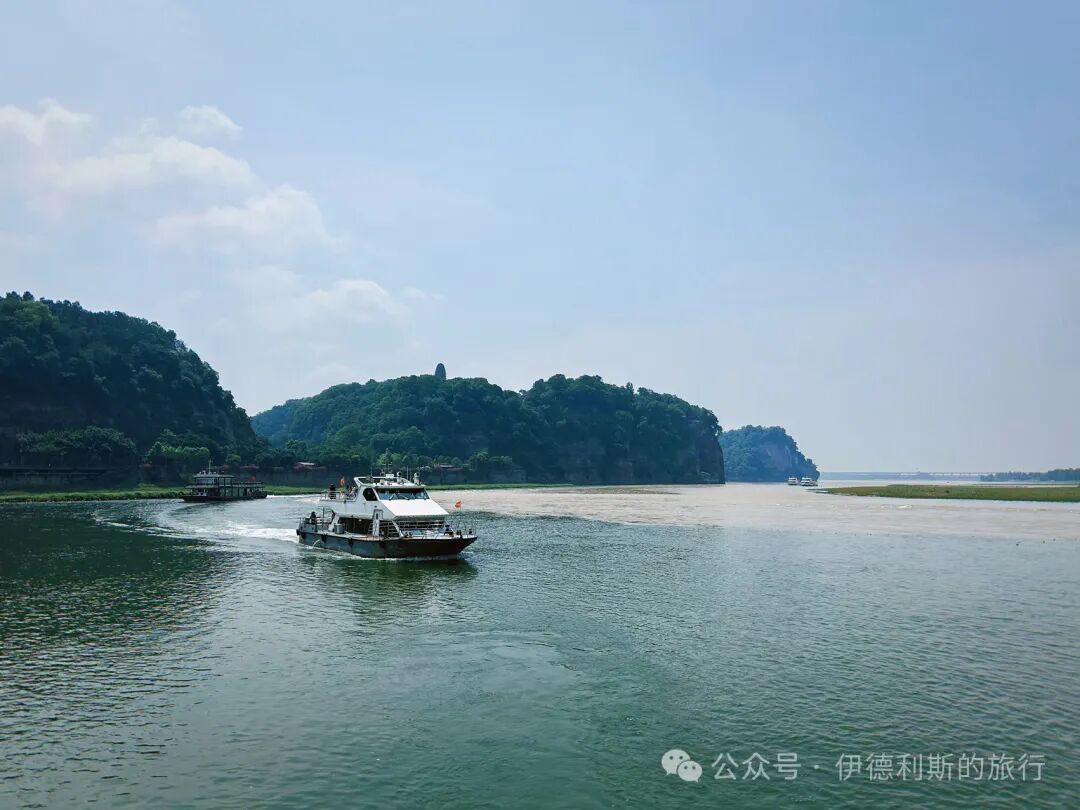
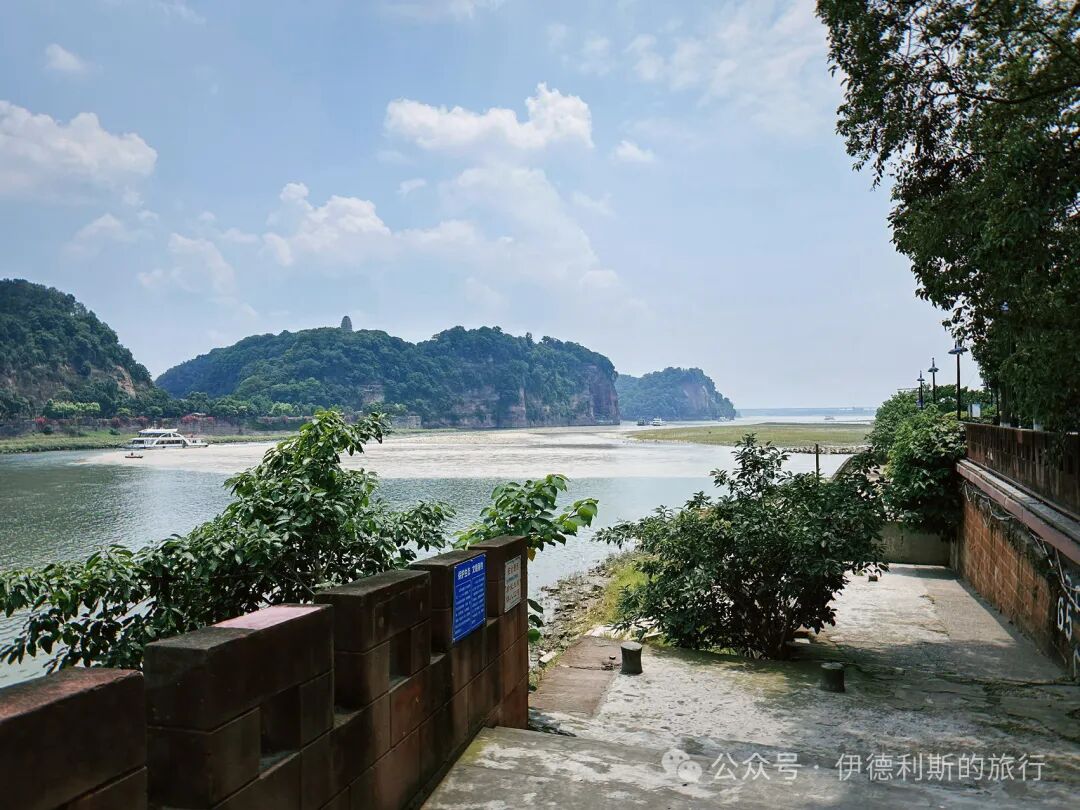
We took a boat trip in Leshan to watch the Dadu River meet the Min River.
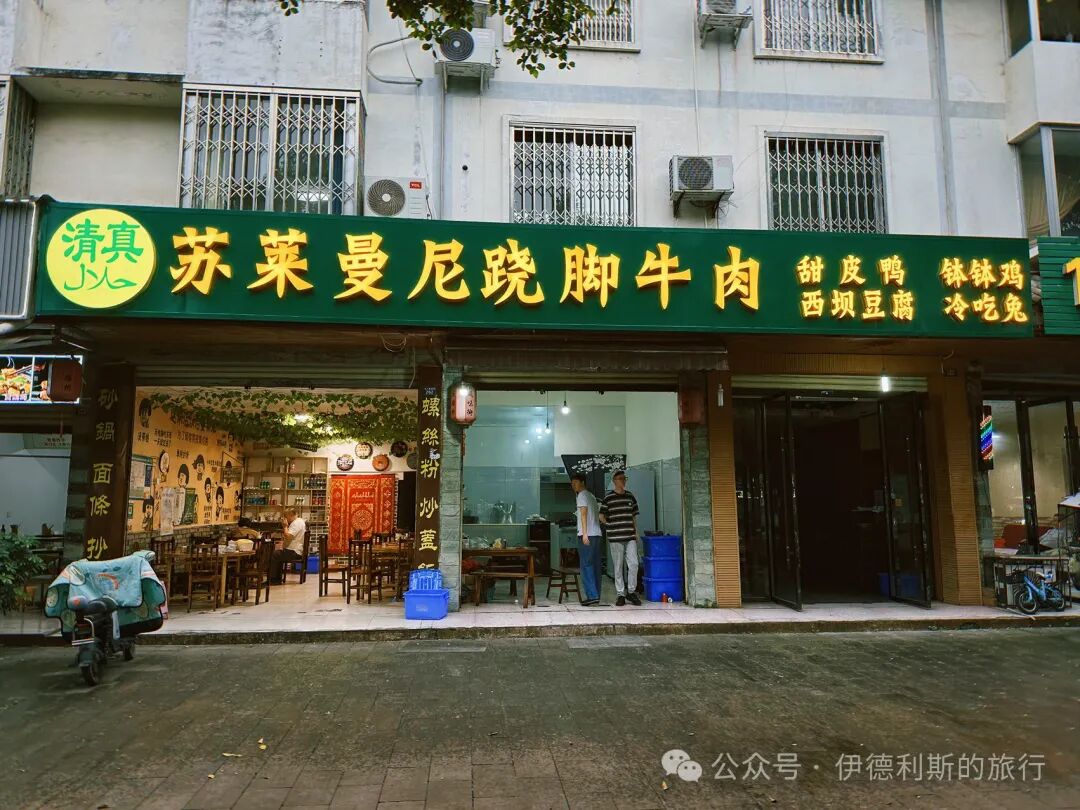
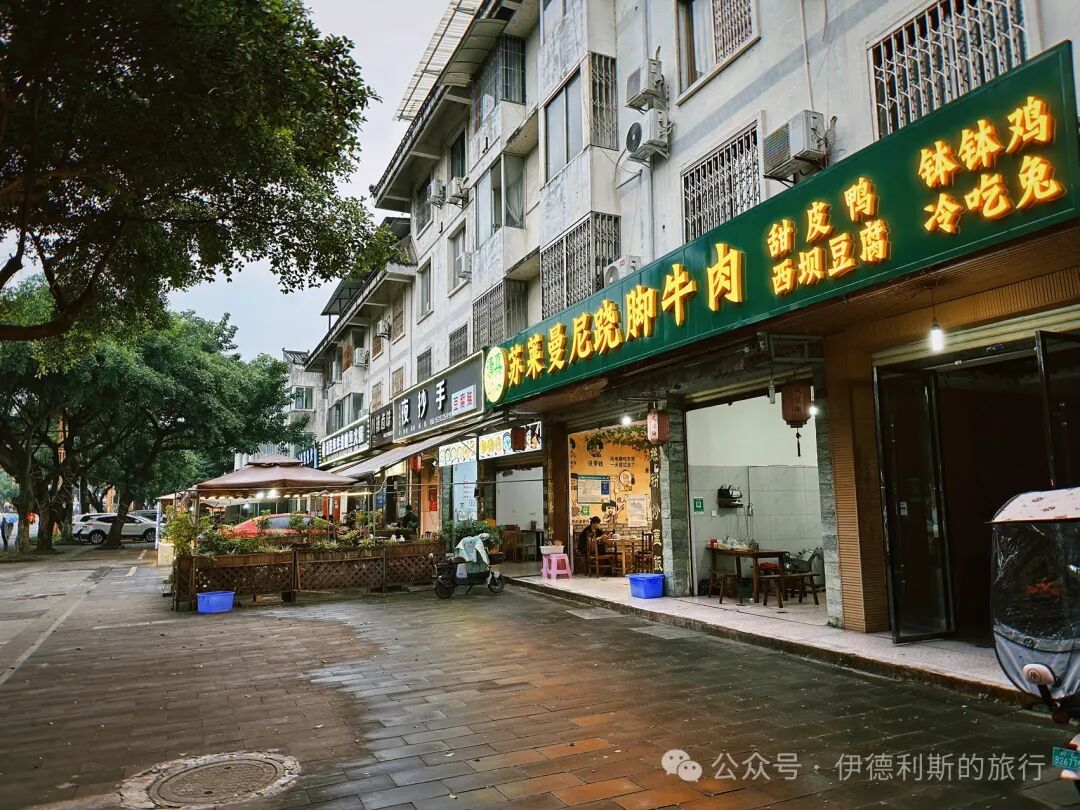
Besides the Hai's cross-legged beef (qiaojiaoniurou) in Leshan, there is also a Sulaimani cross-legged beef restaurant on the Maluqiao food street at the foot of Mount Emei. The owners are Hui Muslims from Rong County in Zigong. They have only been open for three months. Before this, Mount Emei only had noodle shops in the city center, and there were no halal restaurants near the scenic area.
Just like in downtown Leshan, the number of Hui Muslims in Emei County is very small. In the early years of the Guangxu reign, five Hui Muslim merchant families who moved from Qianwei County in Leshan and Shanxi to trade cattle and sheep pooled their money to build the Emei Mosque (Emei Si) at the north gate of Emei County. According to the auntie at the Sulaimani cross-legged beef shop, the Emei Mosque is currently closed because there is no imam.
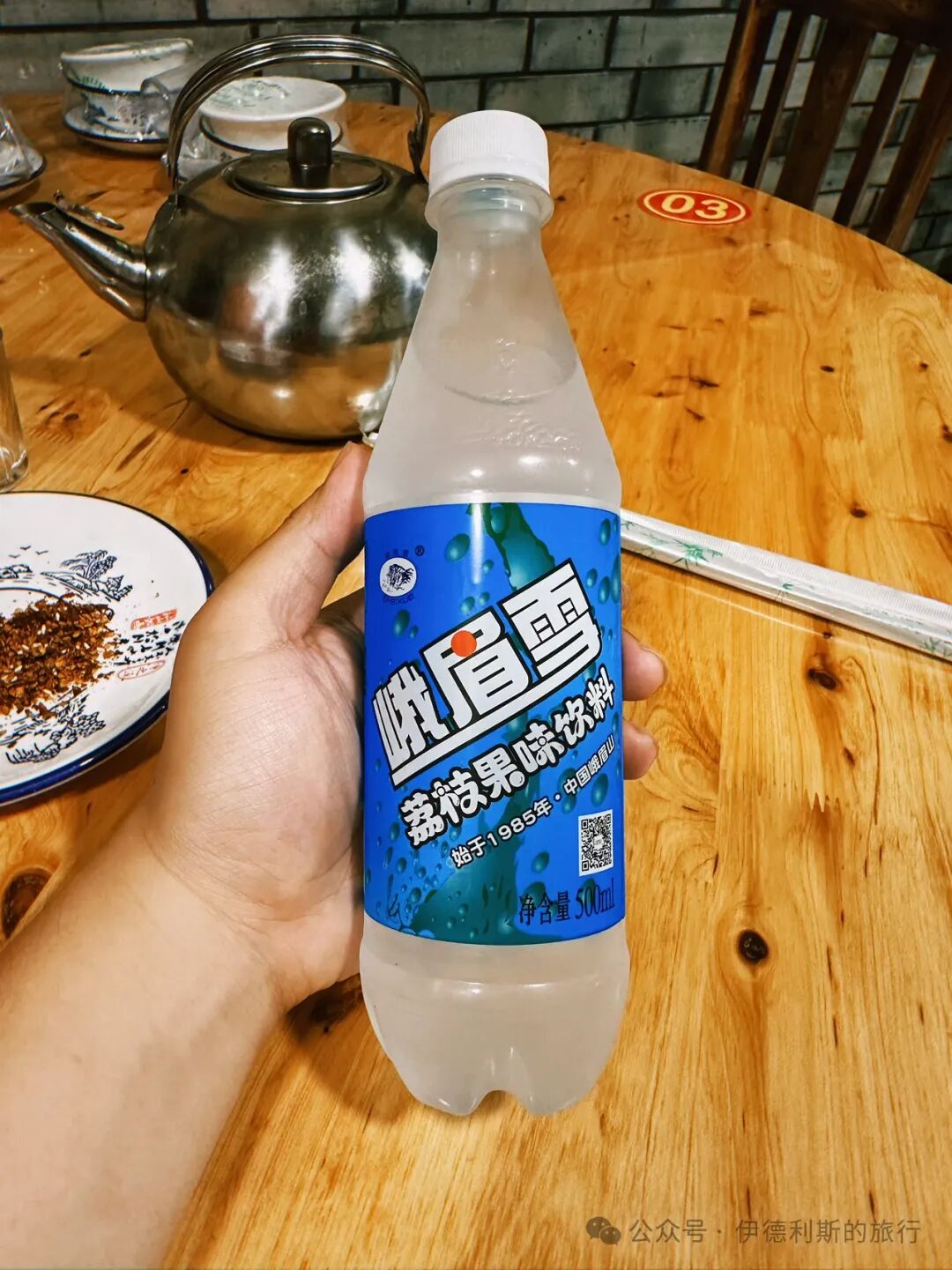
The dishes at Sulaimani are basically the same as at Hai's, including cross-legged beef, sweet skin duck (tianpiya), Xiba tofu (xibadoufu), chicken in chili oil (boboji), river fish (jiangtuanyu), cold-eaten rabbit (lengchitu), jarred tofu pudding (guanguandouhua), and some stir-fried dishes. I ordered a small portion of cross-legged beef with rice, and their beef broth is truly delicious. I also ordered a local Emei Xue lychee soda, which is said to go very well with cross-legged beef. After eating, I ordered a serving of sweet skin duck (tianpiya) and cold noodles with shredded chicken (jisi liangmian) to carry up Mount Emei the next day, otherwise there would only be vegetarian meals on the mountain.
The hot springs at the foot of Mount Emei are wonderful. With the blue sky above and the breeze in the mountain forest, I had a large pool all to myself and forgot all my worries while soaking in it.
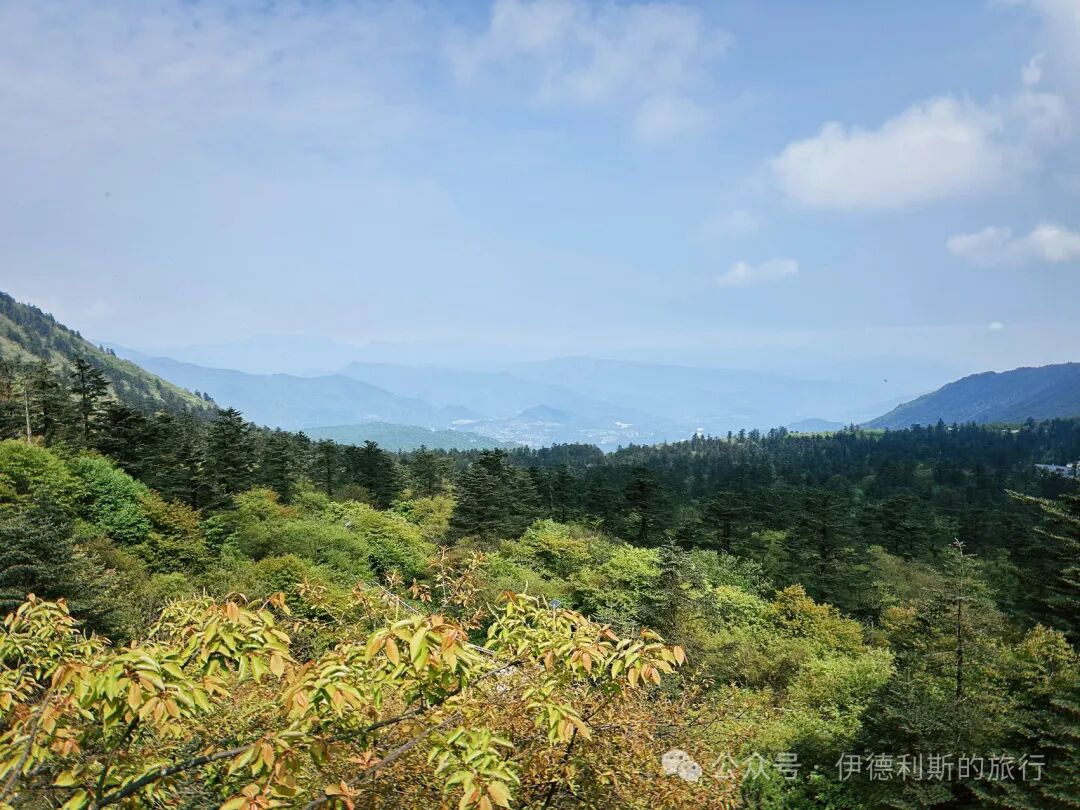
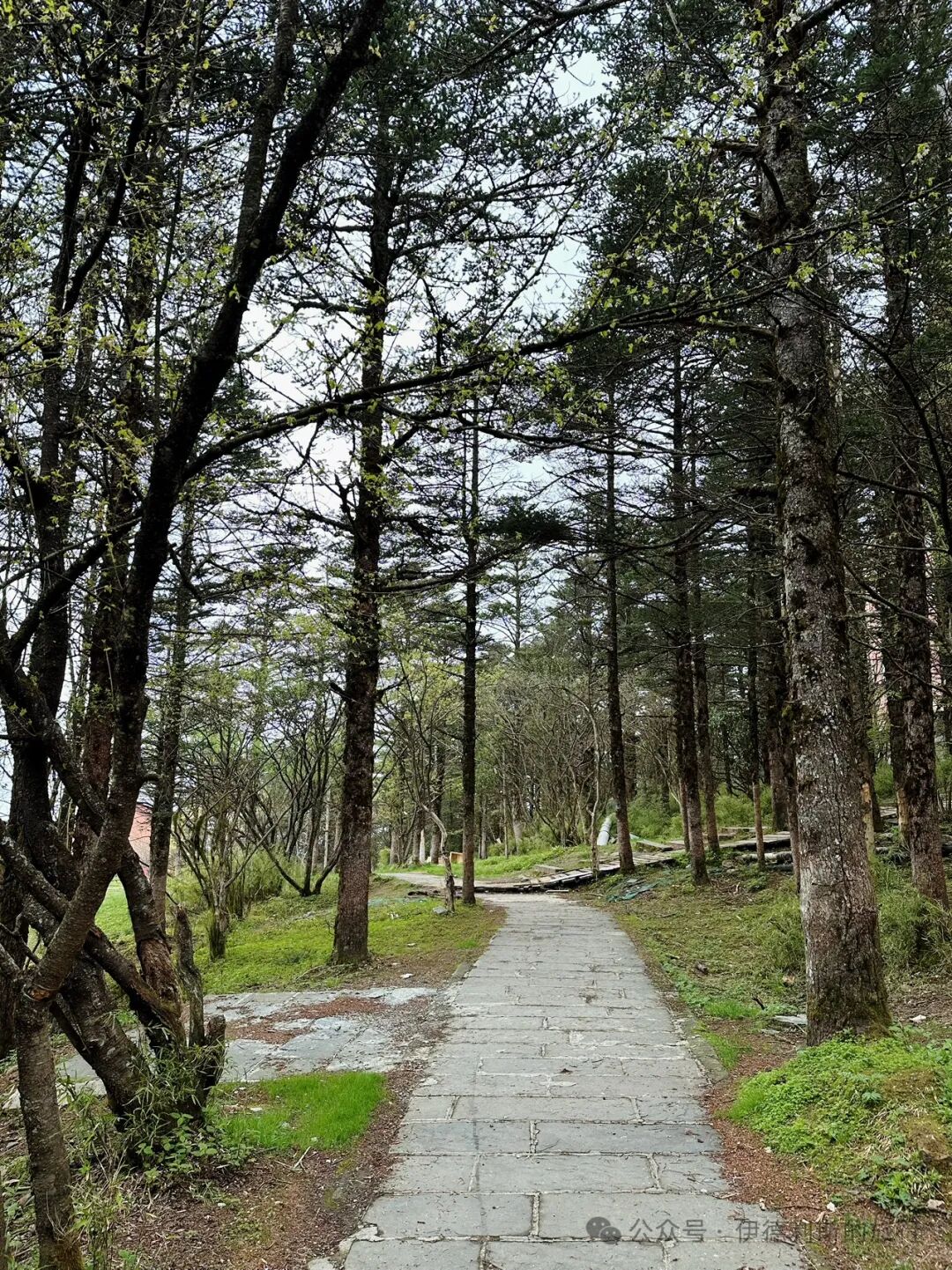
I started climbing Mount Emei early the next morning to experience the clouds and mist. The Golden Summit of Mount Emei is over 3,000 meters above sea level; it was 27 degrees at the foot of the mountain, but only 12 degrees at the top.
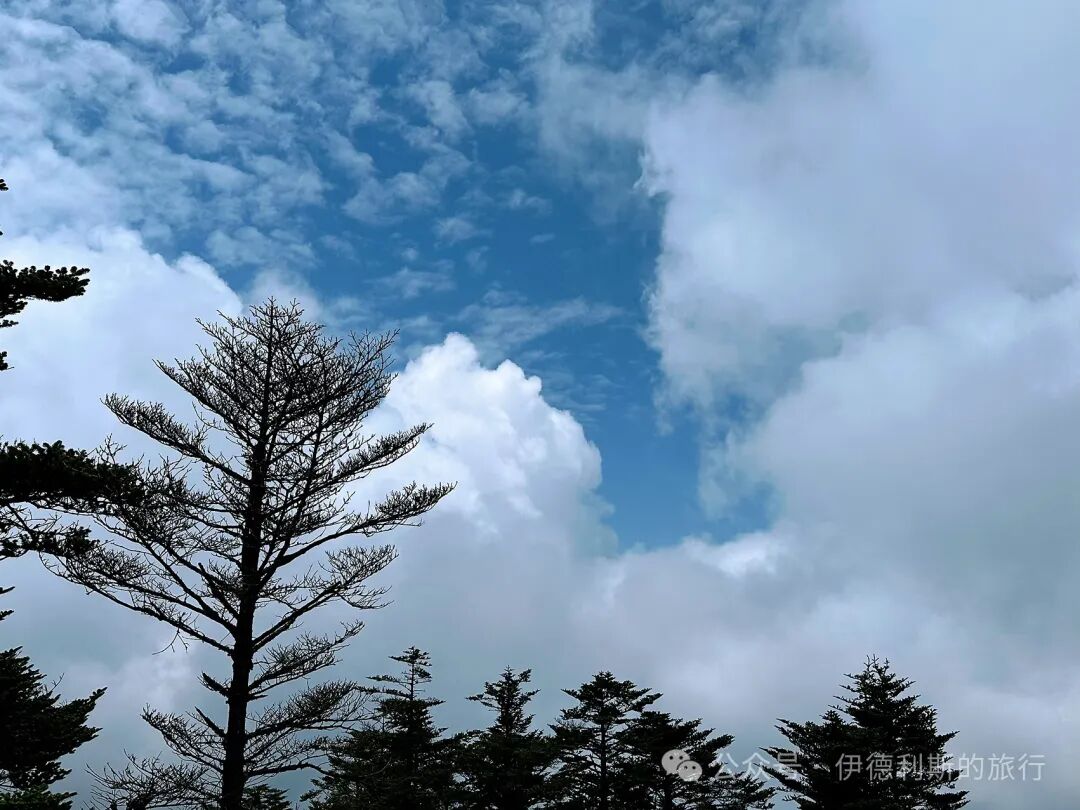
Mount Emei has a different kind of beauty when the clouds and mist clear, and you can see alpine rhododendrons and Tibetan macaques. view all
Summary: Halal Food Guide: Leshan and Mount Emei - Qiaojiao Beef and Sichuan Food is presented here as a firsthand travel account in clear, natural English. The account focuses on Leshan, Mount Emei, Halal Food while preserving the names, places, food, photos, and historical details from the Chinese source.
We left Chengdu early on May 16 and arrived in Leshan after a two-hour drive. At noon, we went to a local restaurant called Hai's Braised Beef (Hai Shi Qiao Jiao Niu Rou). The restaurant is right across from the Leshan Giant Buddha, next to the old Leshan Port on the Min River.
There are relatively few Hui Muslims living in the Leshan city area. During the Tongzhi reign, a Hui Muslim military officer named Ma Yaolong settled here after retiring. He invited a few other Hui Muslim families to join him, and in 1881, they built the Leshan Mosque (Leshan Si). I was on a business trip and unfortunately could not visit the Leshan Mosque.
Hai's Braised Beef was started by Imam Hai Weixiong. Imam Hai is from Qingliu Town in the Rongchang District of Chongqing. His ancestors moved to Sichuan from the Hubei-Hunan region during the Kangxi reign. In October 1989, he became the first imam of the Leshan Mosque after the religious policy was restored. He served until 1998, when he retired to go into business. Today, his restaurant is the top choice for Muslim travelers (dost) visiting Leshan.
Their restaurant specializes in the four signature dishes of Leshan: foot-steeped beef (qiaojiao niurou), sweet-skin duck (tianpi ya), Xiba tofu (xiba doufu), and pot-pot chicken (bobo ji). They also serve river catfish (jiangtuan yu), cold-spiced rabbit (lengchi tu), jar-steamed tofu pudding (guanguan douhua), and various stir-fried dishes.
Foot-steeped beef (qiaojiao niurou) is beef simmered in a broth of Chinese herbs, then used to poach various cuts of beef and offal. The beef is very tender, and you can also poach beef spinal cord. Foot-steeped beef (qiaojiao niurou) is not spicy at all on its own; the focus is on the savory aroma of the broth. You dip the meat in chili powder when you eat it.
Sweet-skin duck (tianpi ya) is first braised and then deep-fried. Before frying, they stir-fry sugar to make a braising liquid and finish by brushing it with maltose, which gives it a sweet flavor.
Xiba tofu (xiba doufu) is very delicate and soft. It comes in two styles: red oil and white oil. We had the red oil version, which goes perfectly with rice.
They also serve two-grain rice (ermi fan) made from rice and corn. It comes in a bucket, is charged per person, and you can eat as much as you like, which is a local Sichuan tradition.
We took a boat trip in Leshan to watch the Dadu River meet the Min River.
Besides the Hai's cross-legged beef (qiaojiaoniurou) in Leshan, there is also a Sulaimani cross-legged beef restaurant on the Maluqiao food street at the foot of Mount Emei. The owners are Hui Muslims from Rong County in Zigong. They have only been open for three months. Before this, Mount Emei only had noodle shops in the city center, and there were no halal restaurants near the scenic area.
Just like in downtown Leshan, the number of Hui Muslims in Emei County is very small. In the early years of the Guangxu reign, five Hui Muslim merchant families who moved from Qianwei County in Leshan and Shanxi to trade cattle and sheep pooled their money to build the Emei Mosque (Emei Si) at the north gate of Emei County. According to the auntie at the Sulaimani cross-legged beef shop, the Emei Mosque is currently closed because there is no imam.
The dishes at Sulaimani are basically the same as at Hai's, including cross-legged beef, sweet skin duck (tianpiya), Xiba tofu (xibadoufu), chicken in chili oil (boboji), river fish (jiangtuanyu), cold-eaten rabbit (lengchitu), jarred tofu pudding (guanguandouhua), and some stir-fried dishes. I ordered a small portion of cross-legged beef with rice, and their beef broth is truly delicious. I also ordered a local Emei Xue lychee soda, which is said to go very well with cross-legged beef. After eating, I ordered a serving of sweet skin duck (tianpiya) and cold noodles with shredded chicken (jisi liangmian) to carry up Mount Emei the next day, otherwise there would only be vegetarian meals on the mountain.
The hot springs at the foot of Mount Emei are wonderful. With the blue sky above and the breeze in the mountain forest, I had a large pool all to myself and forgot all my worries while soaking in it.
I started climbing Mount Emei early the next morning to experience the clouds and mist. The Golden Summit of Mount Emei is over 3,000 meters above sea level; it was 27 degrees at the foot of the mountain, but only 12 degrees at the top.
Mount Emei has a different kind of beauty when the clouds and mist clear, and you can see alpine rhododendrons and Tibetan macaques. view all
Reposted from the web
Summary: Halal Food Guide: Leshan and Mount Emei - Qiaojiao Beef and Sichuan Food is presented here as a firsthand travel account in clear, natural English. The account focuses on Leshan, Mount Emei, Halal Food while preserving the names, places, food, photos, and historical details from the Chinese source.
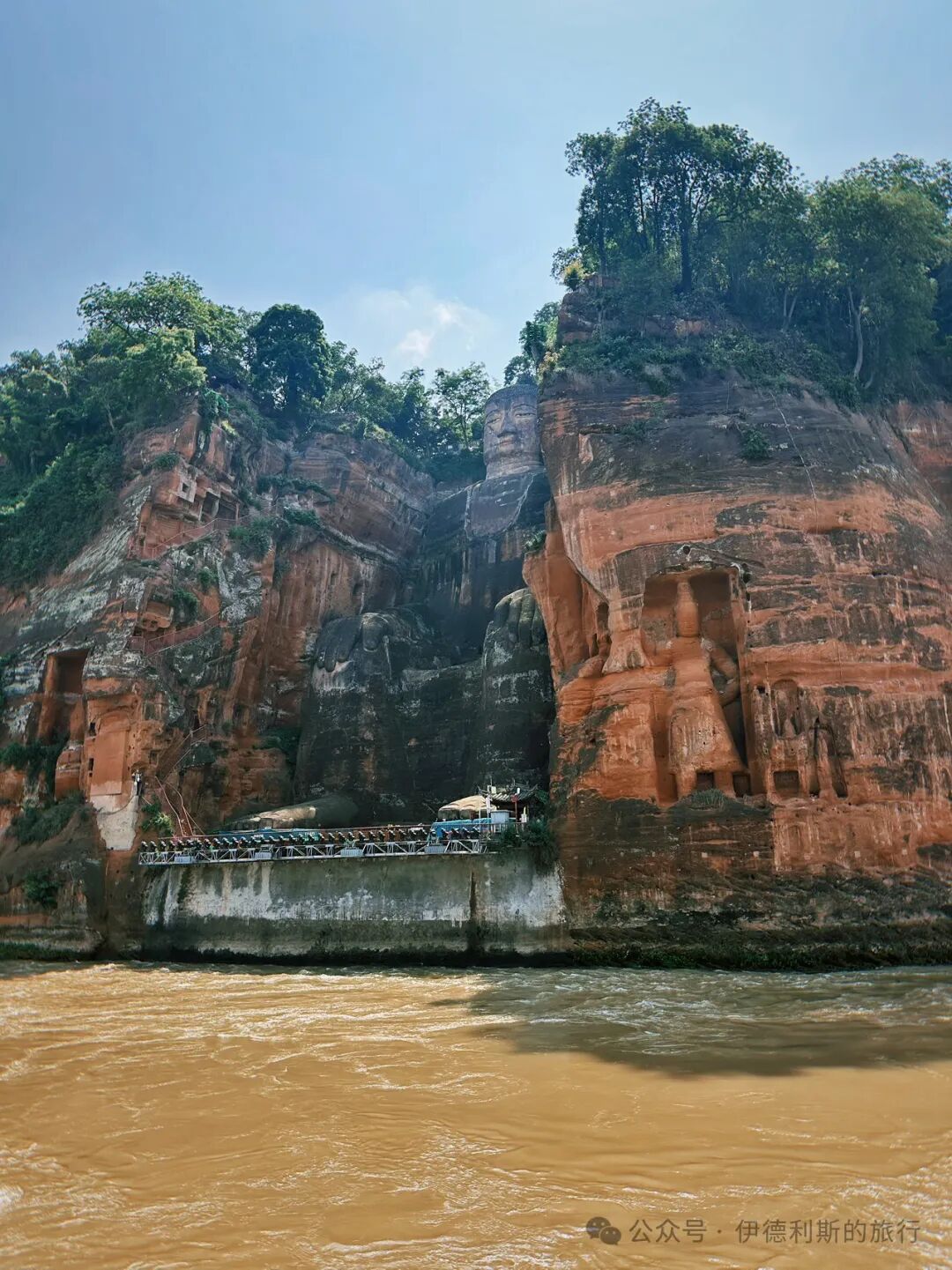
We left Chengdu early on May 16 and arrived in Leshan after a two-hour drive. At noon, we went to a local restaurant called Hai's Braised Beef (Hai Shi Qiao Jiao Niu Rou). The restaurant is right across from the Leshan Giant Buddha, next to the old Leshan Port on the Min River.
There are relatively few Hui Muslims living in the Leshan city area. During the Tongzhi reign, a Hui Muslim military officer named Ma Yaolong settled here after retiring. He invited a few other Hui Muslim families to join him, and in 1881, they built the Leshan Mosque (Leshan Si). I was on a business trip and unfortunately could not visit the Leshan Mosque.
Hai's Braised Beef was started by Imam Hai Weixiong. Imam Hai is from Qingliu Town in the Rongchang District of Chongqing. His ancestors moved to Sichuan from the Hubei-Hunan region during the Kangxi reign. In October 1989, he became the first imam of the Leshan Mosque after the religious policy was restored. He served until 1998, when he retired to go into business. Today, his restaurant is the top choice for Muslim travelers (dost) visiting Leshan.
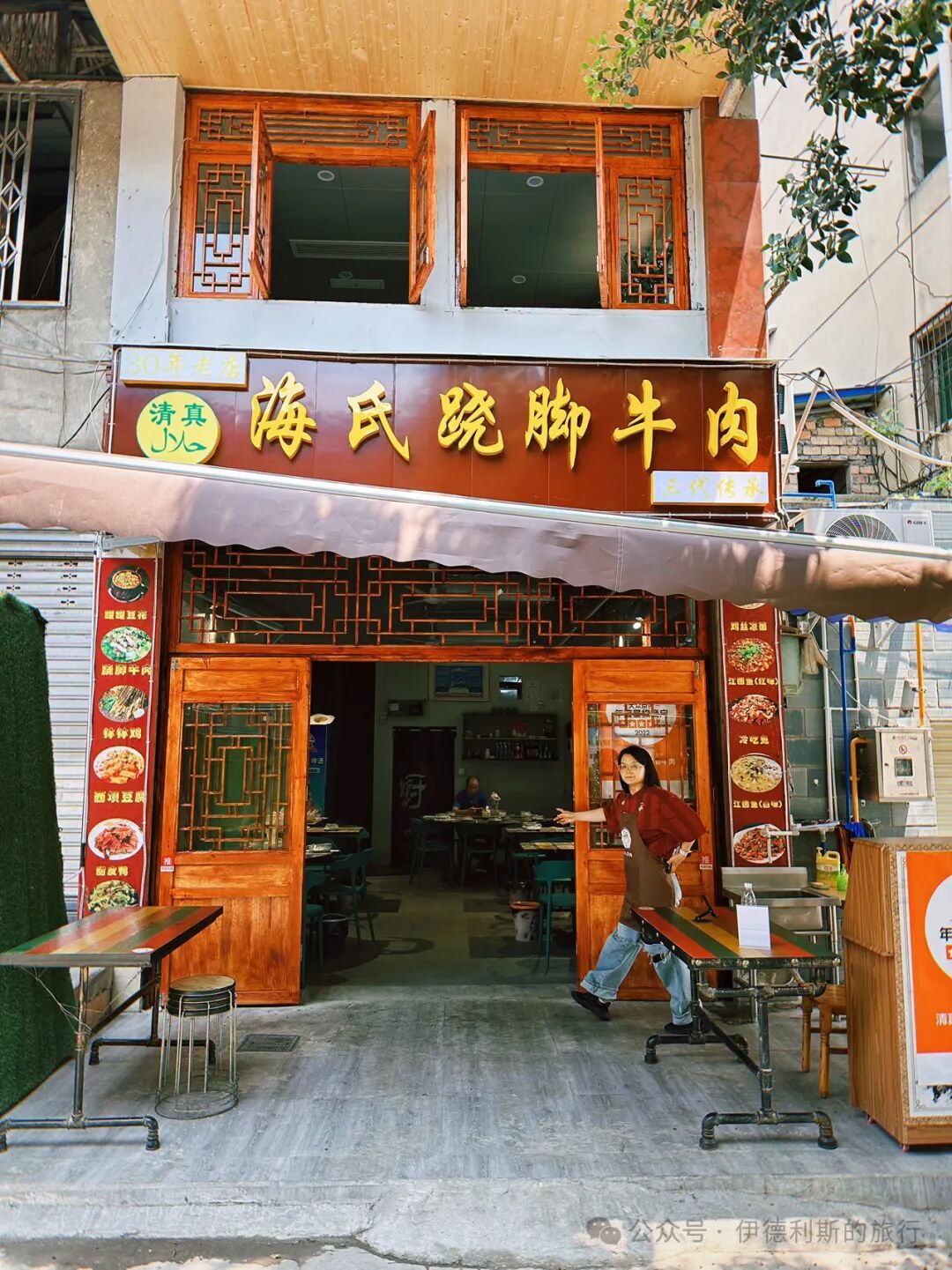
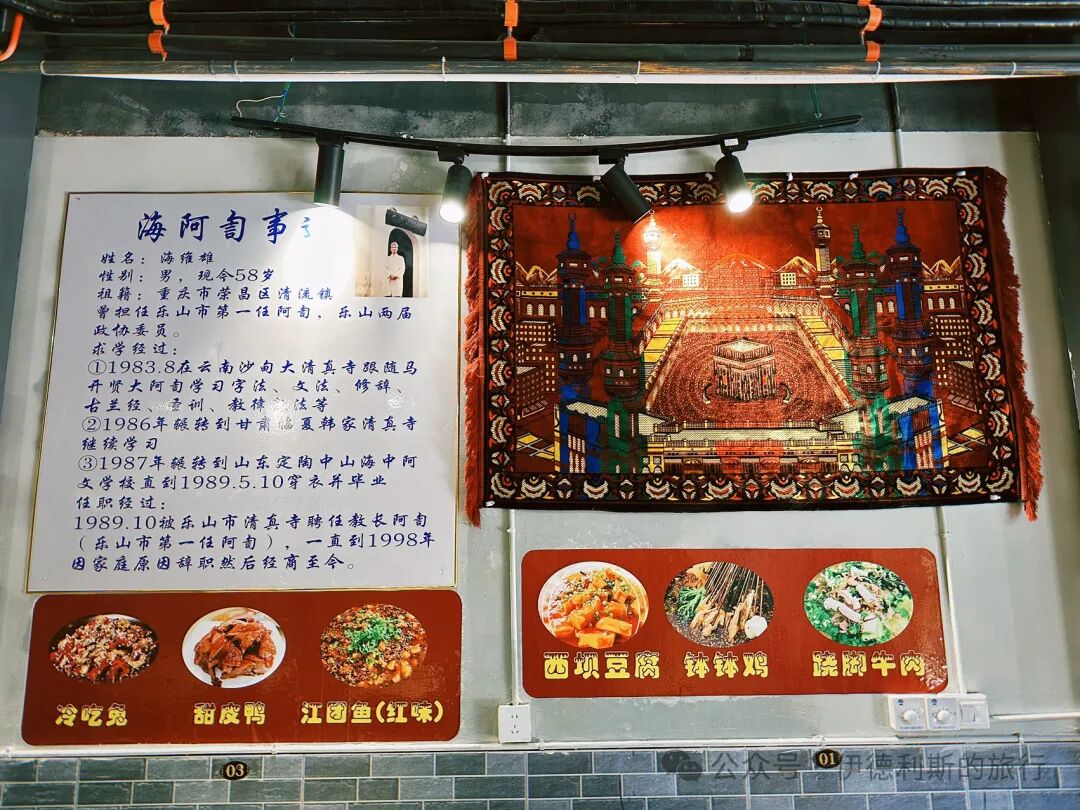
Their restaurant specializes in the four signature dishes of Leshan: foot-steeped beef (qiaojiao niurou), sweet-skin duck (tianpi ya), Xiba tofu (xiba doufu), and pot-pot chicken (bobo ji). They also serve river catfish (jiangtuan yu), cold-spiced rabbit (lengchi tu), jar-steamed tofu pudding (guanguan douhua), and various stir-fried dishes.
Foot-steeped beef (qiaojiao niurou) is beef simmered in a broth of Chinese herbs, then used to poach various cuts of beef and offal. The beef is very tender, and you can also poach beef spinal cord. Foot-steeped beef (qiaojiao niurou) is not spicy at all on its own; the focus is on the savory aroma of the broth. You dip the meat in chili powder when you eat it.
Sweet-skin duck (tianpi ya) is first braised and then deep-fried. Before frying, they stir-fry sugar to make a braising liquid and finish by brushing it with maltose, which gives it a sweet flavor.
Xiba tofu (xiba doufu) is very delicate and soft. It comes in two styles: red oil and white oil. We had the red oil version, which goes perfectly with rice.
They also serve two-grain rice (ermi fan) made from rice and corn. It comes in a bucket, is charged per person, and you can eat as much as you like, which is a local Sichuan tradition.
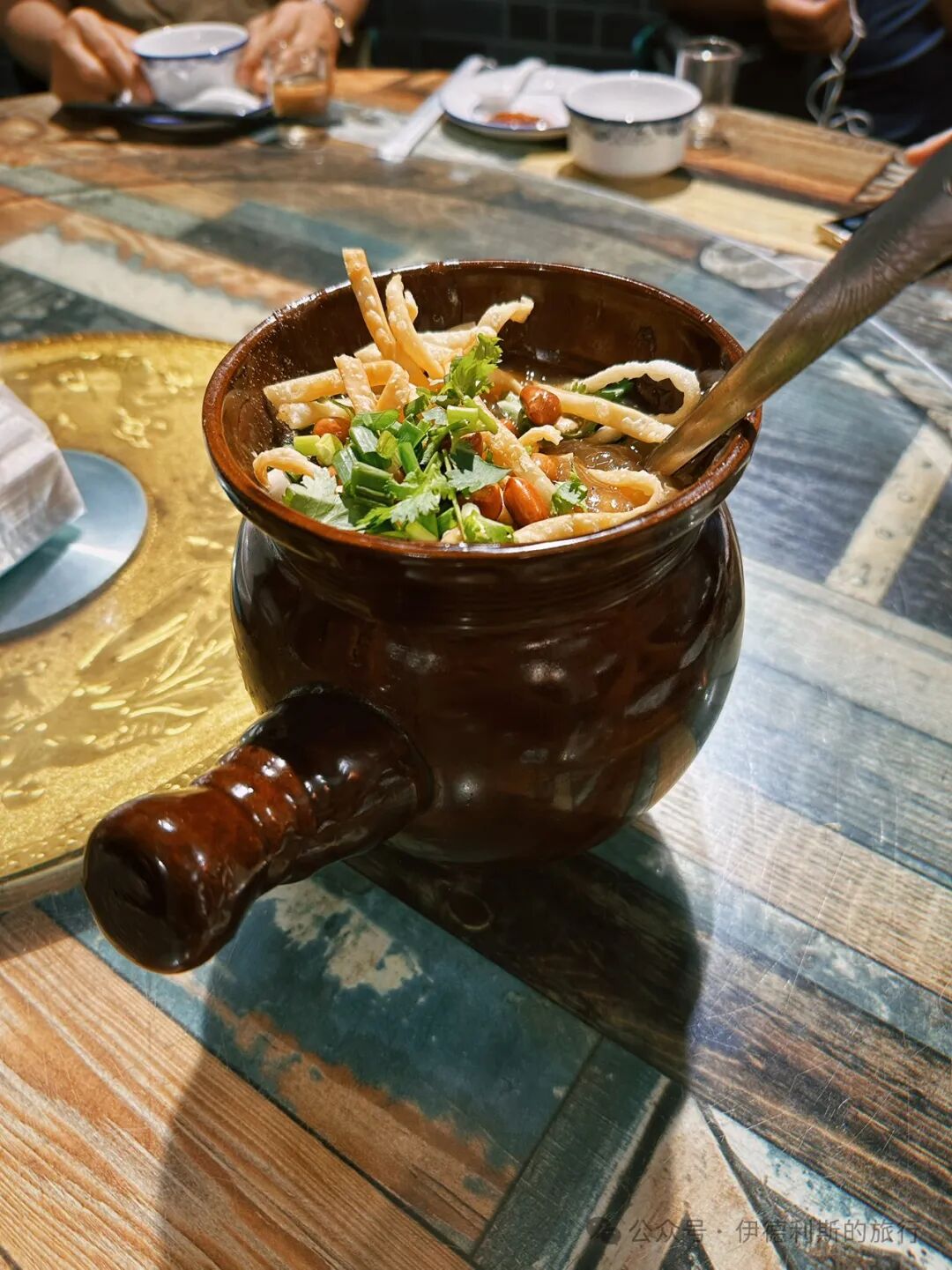
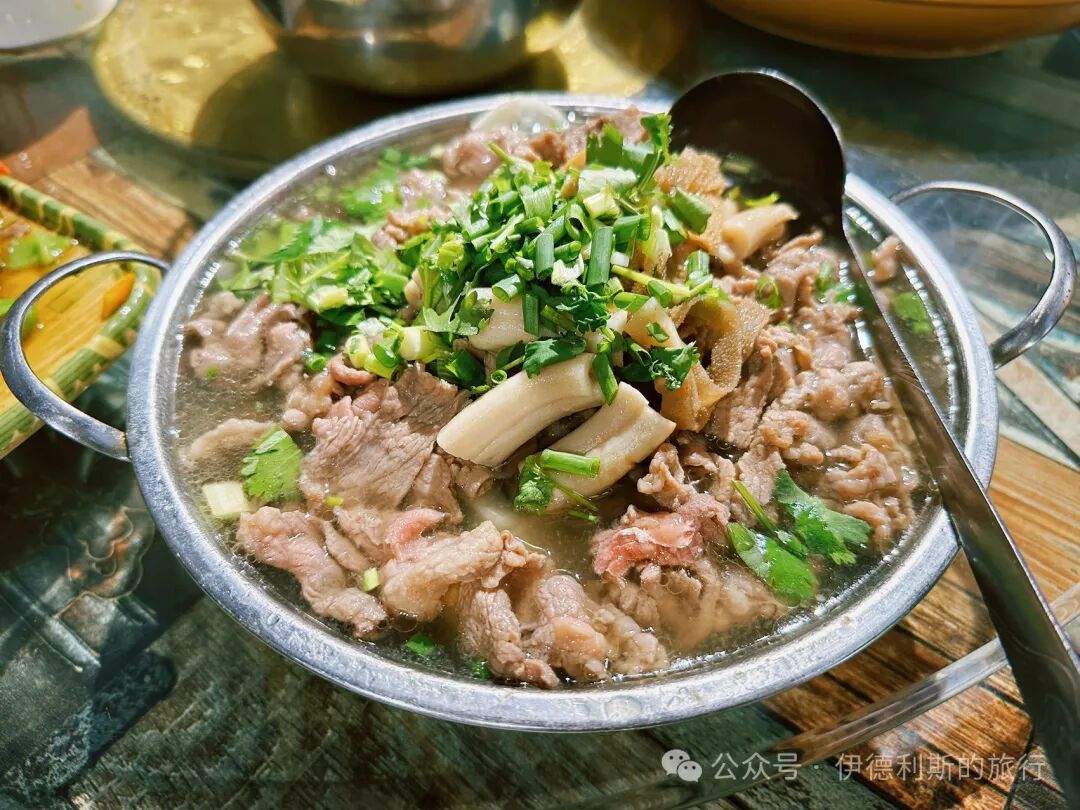
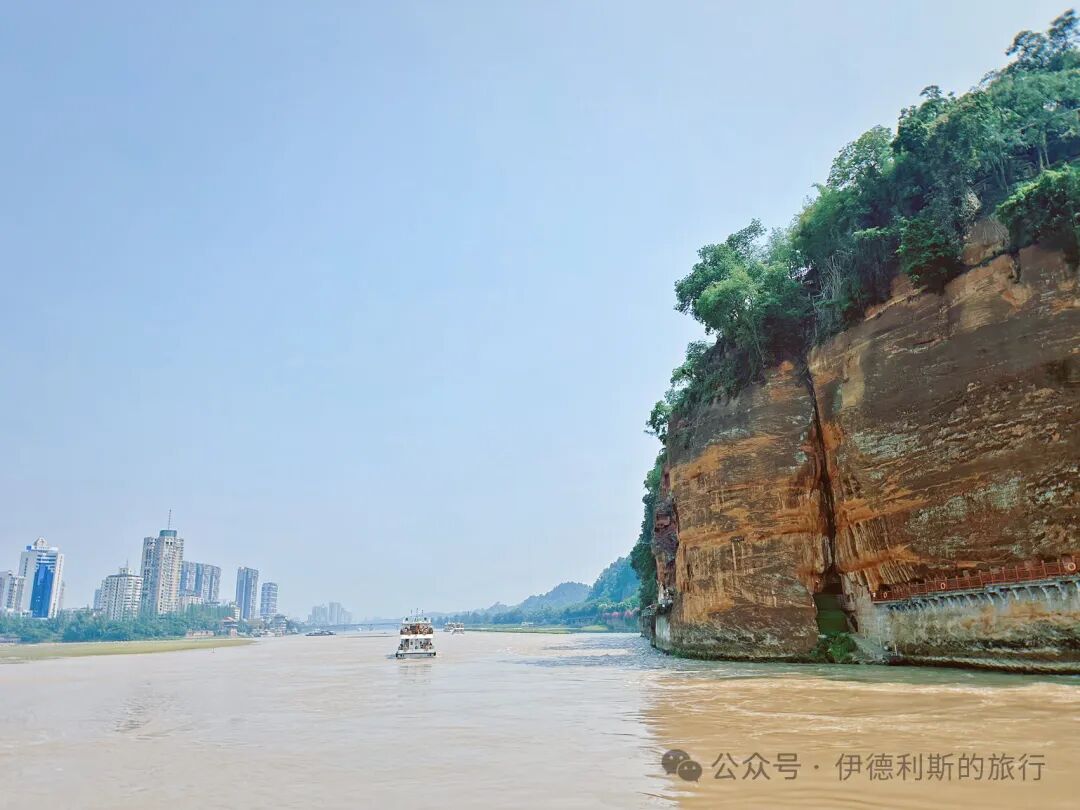
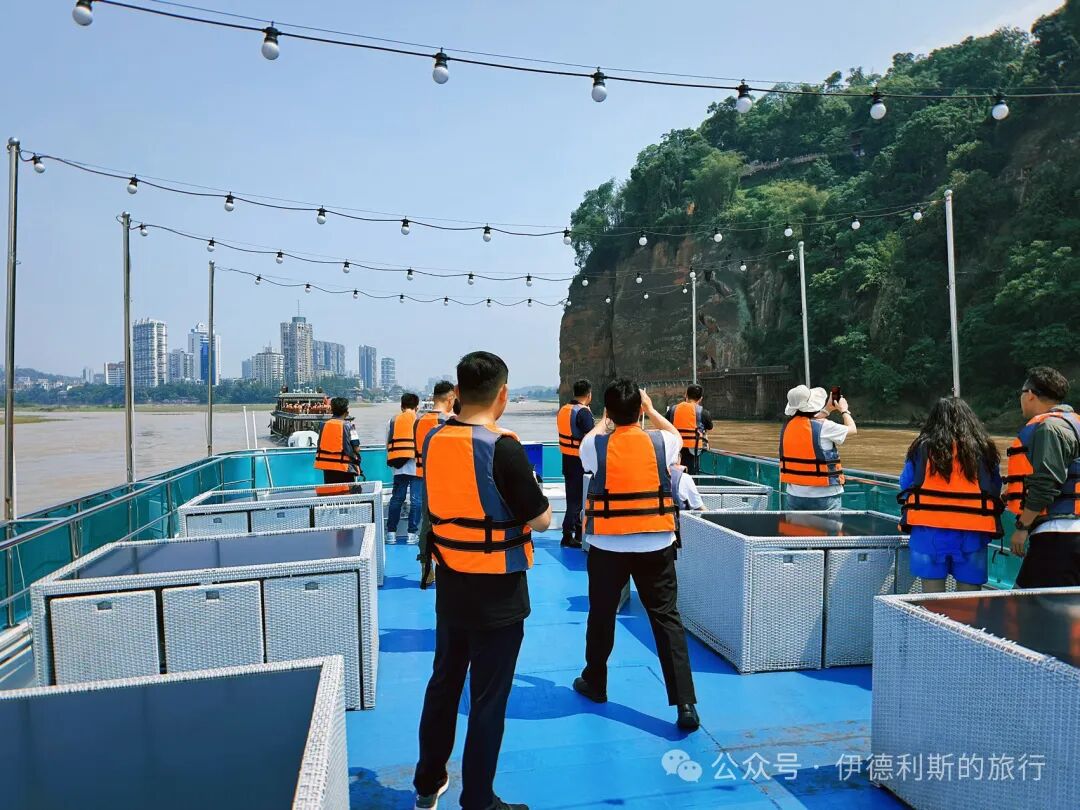
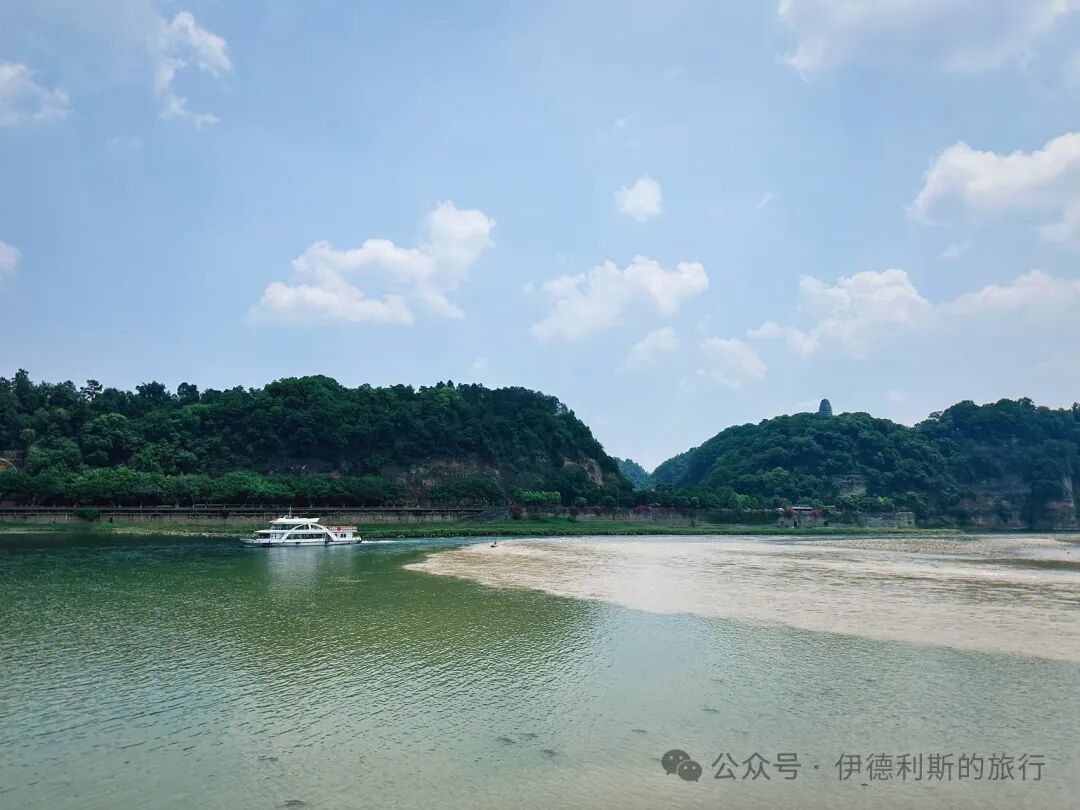
We took a boat trip in Leshan to watch the Dadu River meet the Min River.
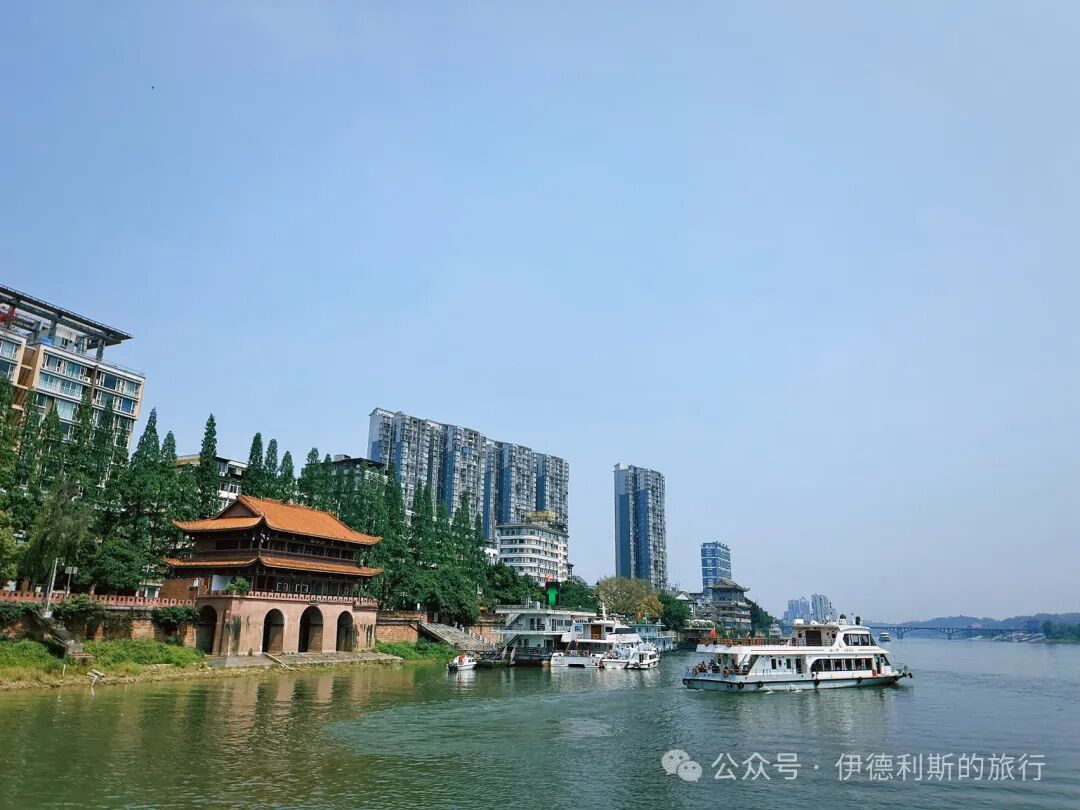
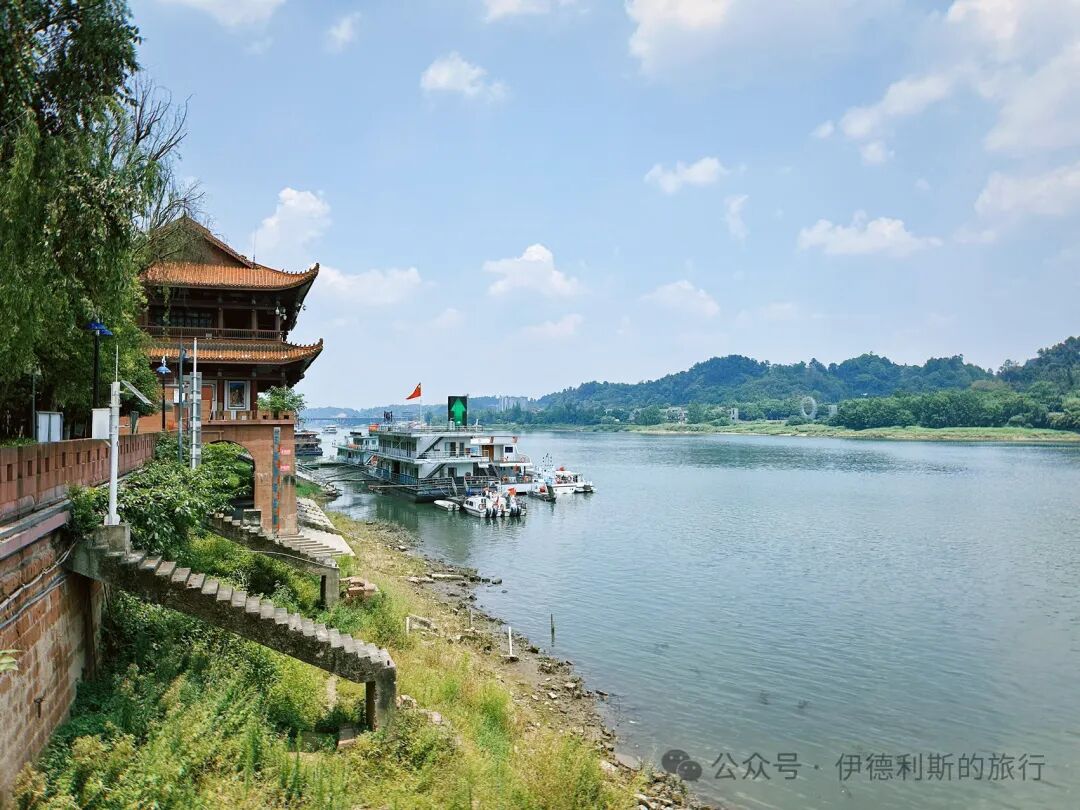
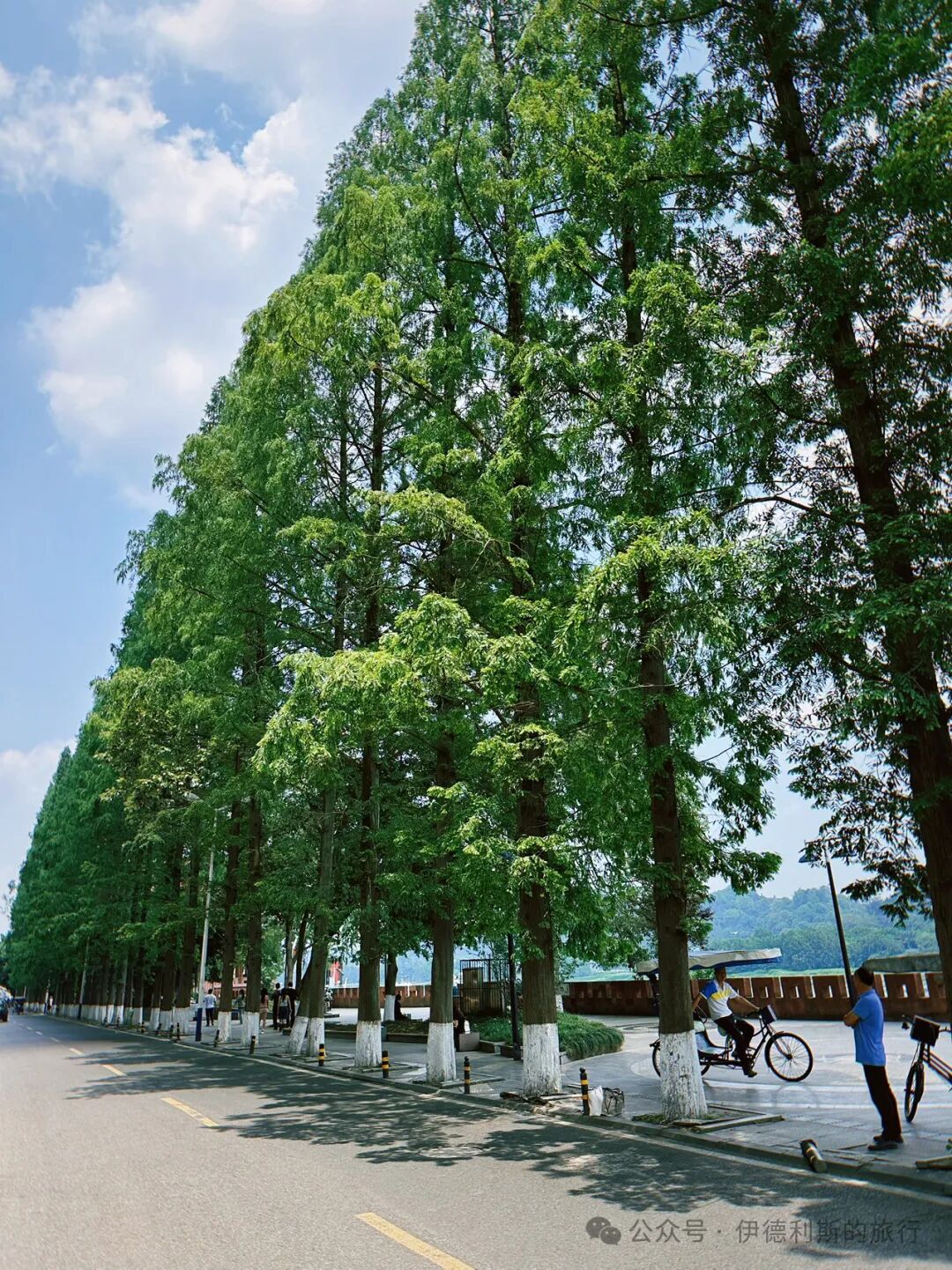
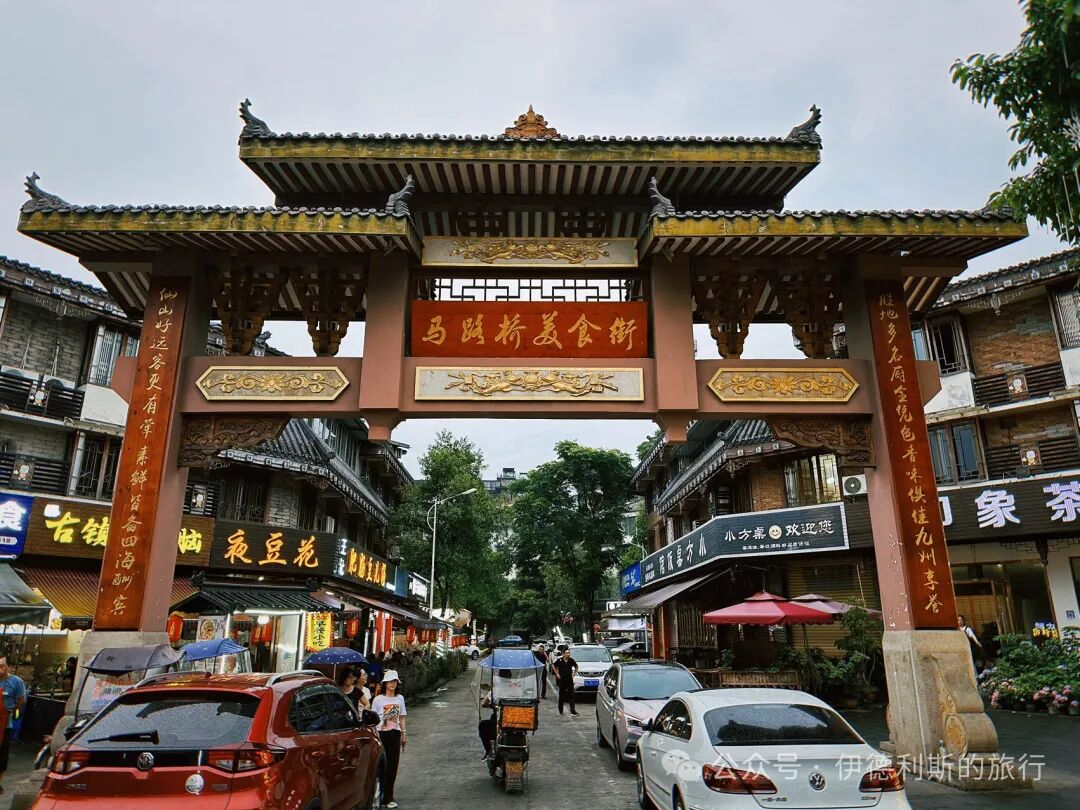
Besides the Hai's cross-legged beef (qiaojiaoniurou) in Leshan, there is also a Sulaimani cross-legged beef restaurant on the Maluqiao food street at the foot of Mount Emei. The owners are Hui Muslims from Rong County in Zigong. They have only been open for three months. Before this, Mount Emei only had noodle shops in the city center, and there were no halal restaurants near the scenic area.
Just like in downtown Leshan, the number of Hui Muslims in Emei County is very small. In the early years of the Guangxu reign, five Hui Muslim merchant families who moved from Qianwei County in Leshan and Shanxi to trade cattle and sheep pooled their money to build the Emei Mosque (Emei Si) at the north gate of Emei County. According to the auntie at the Sulaimani cross-legged beef shop, the Emei Mosque is currently closed because there is no imam.
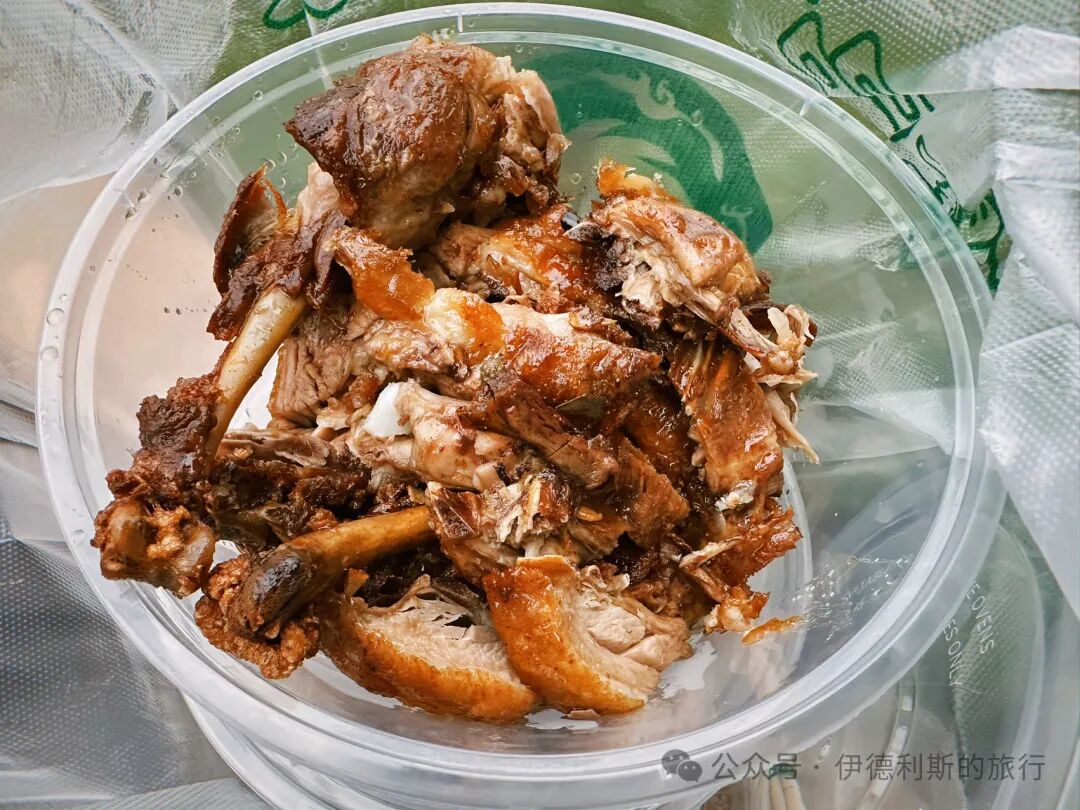
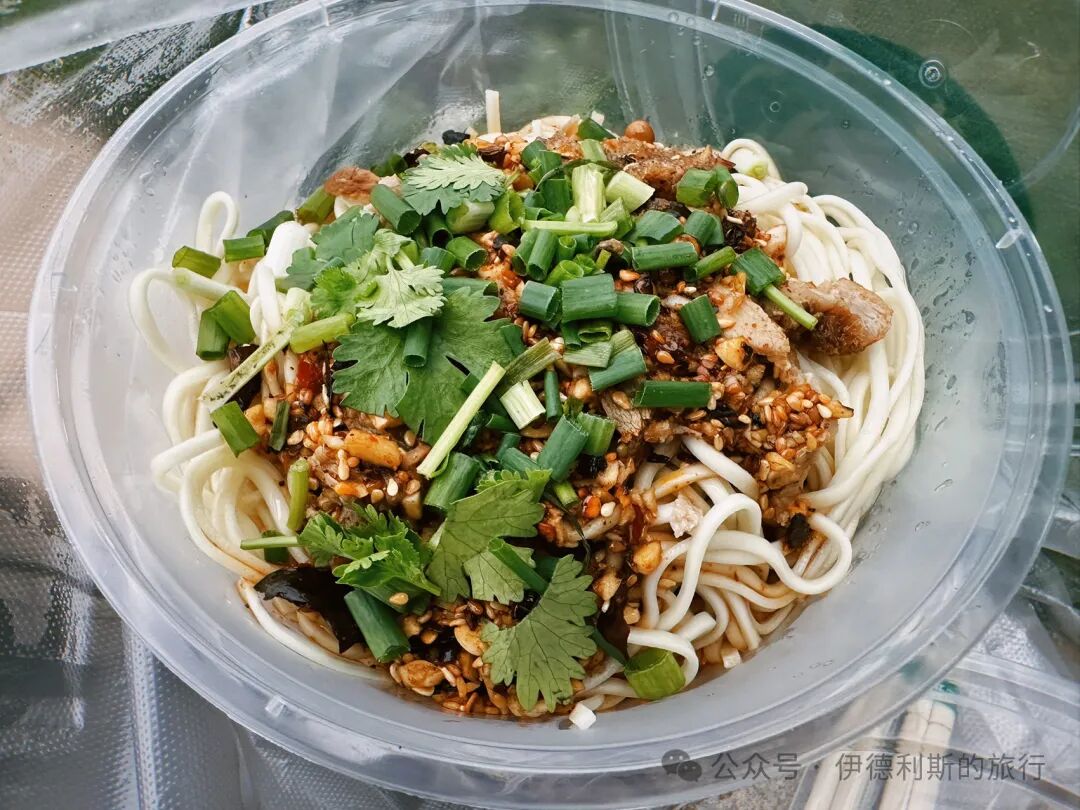
The dishes at Sulaimani are basically the same as at Hai's, including cross-legged beef, sweet skin duck (tianpiya), Xiba tofu (xibadoufu), chicken in chili oil (boboji), river fish (jiangtuanyu), cold-eaten rabbit (lengchitu), jarred tofu pudding (guanguandouhua), and some stir-fried dishes. I ordered a small portion of cross-legged beef with rice, and their beef broth is truly delicious. I also ordered a local Emei Xue lychee soda, which is said to go very well with cross-legged beef. After eating, I ordered a serving of sweet skin duck (tianpiya) and cold noodles with shredded chicken (jisi liangmian) to carry up Mount Emei the next day, otherwise there would only be vegetarian meals on the mountain.
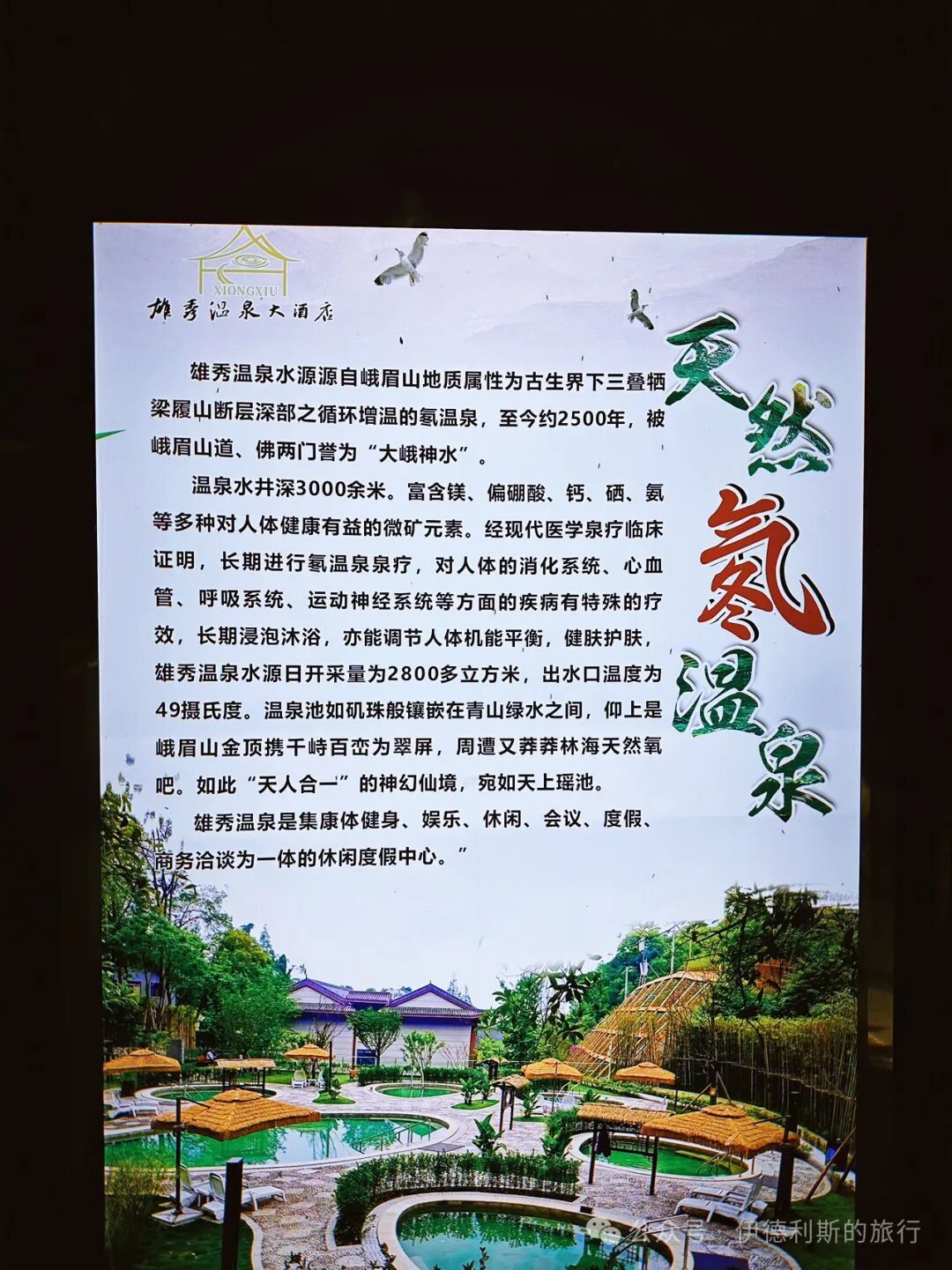
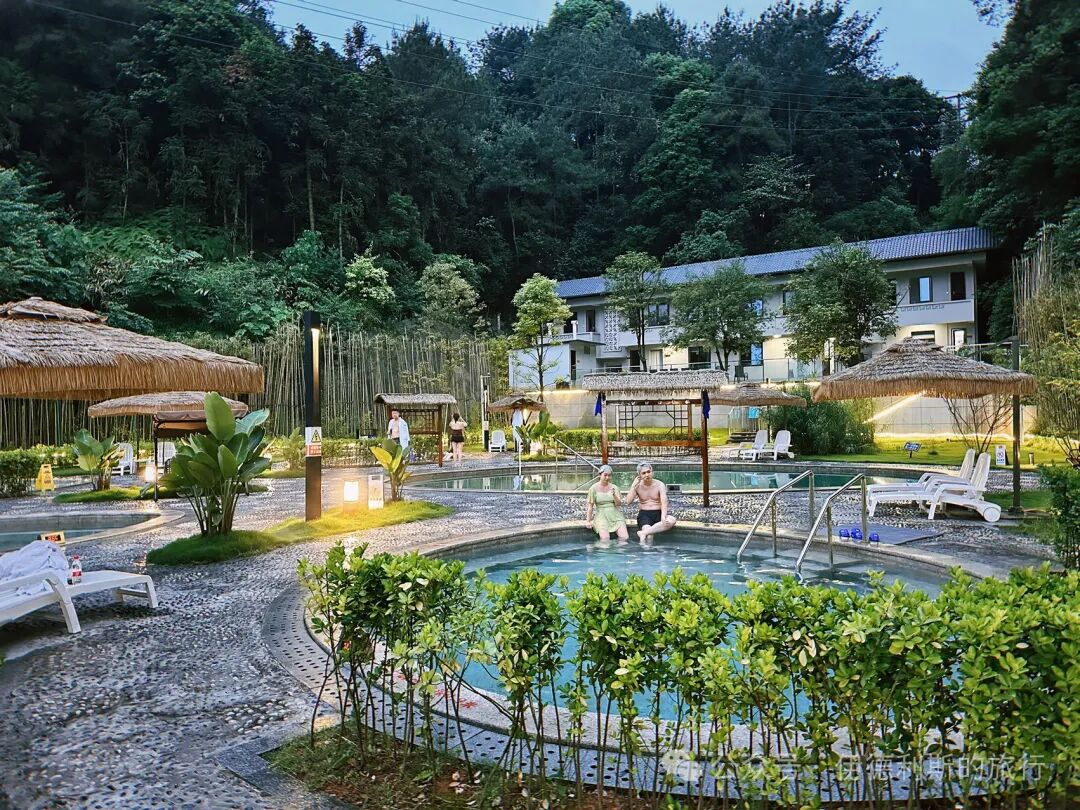
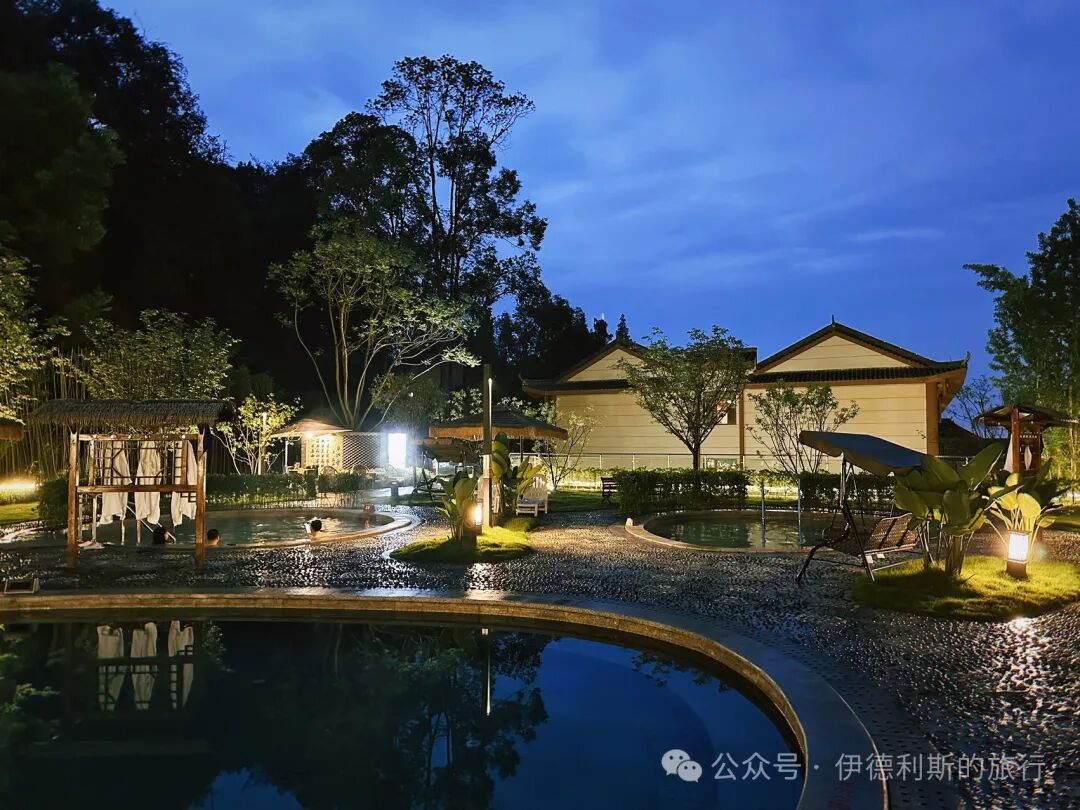
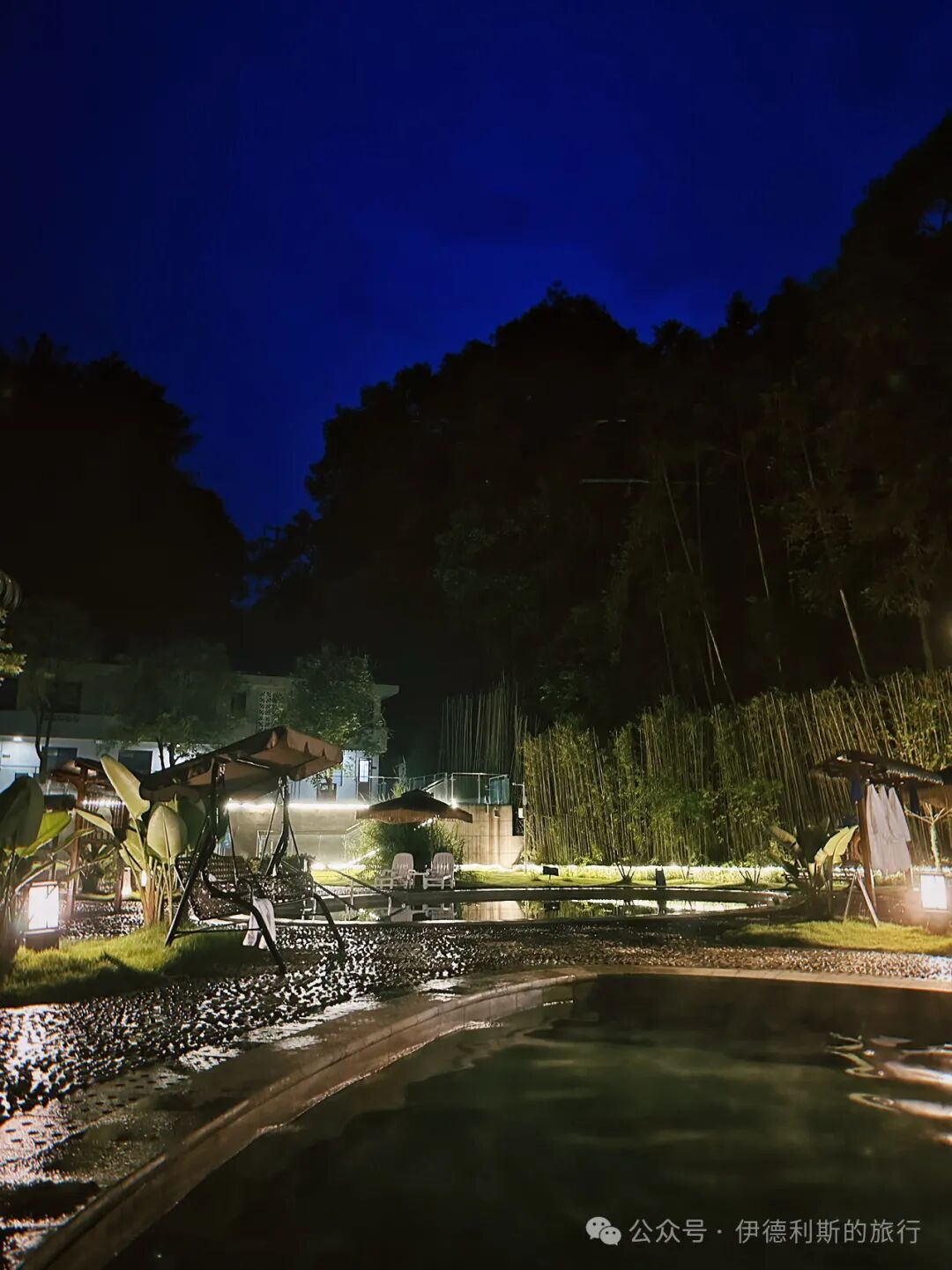
The hot springs at the foot of Mount Emei are wonderful. With the blue sky above and the breeze in the mountain forest, I had a large pool all to myself and forgot all my worries while soaking in it.
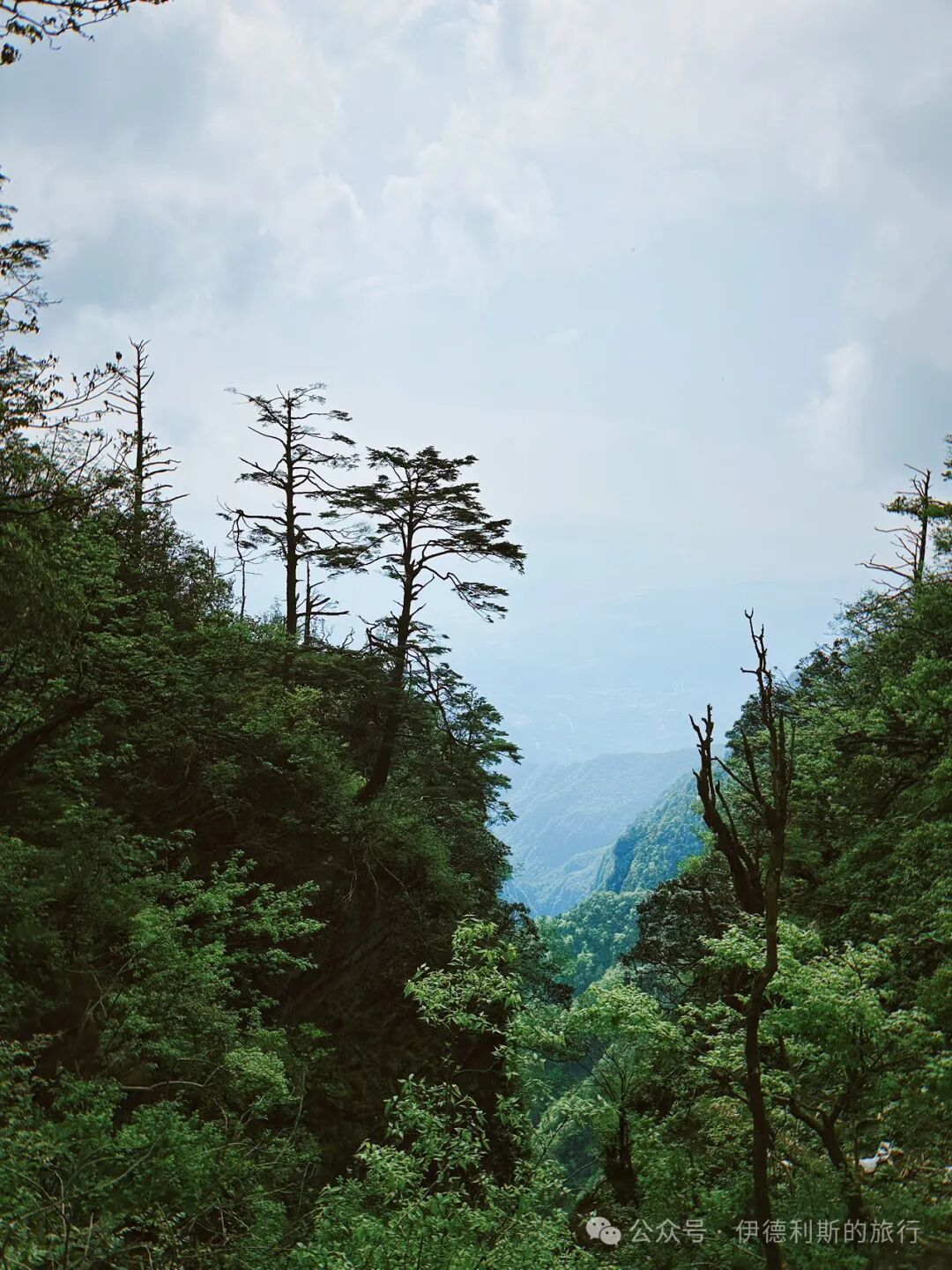
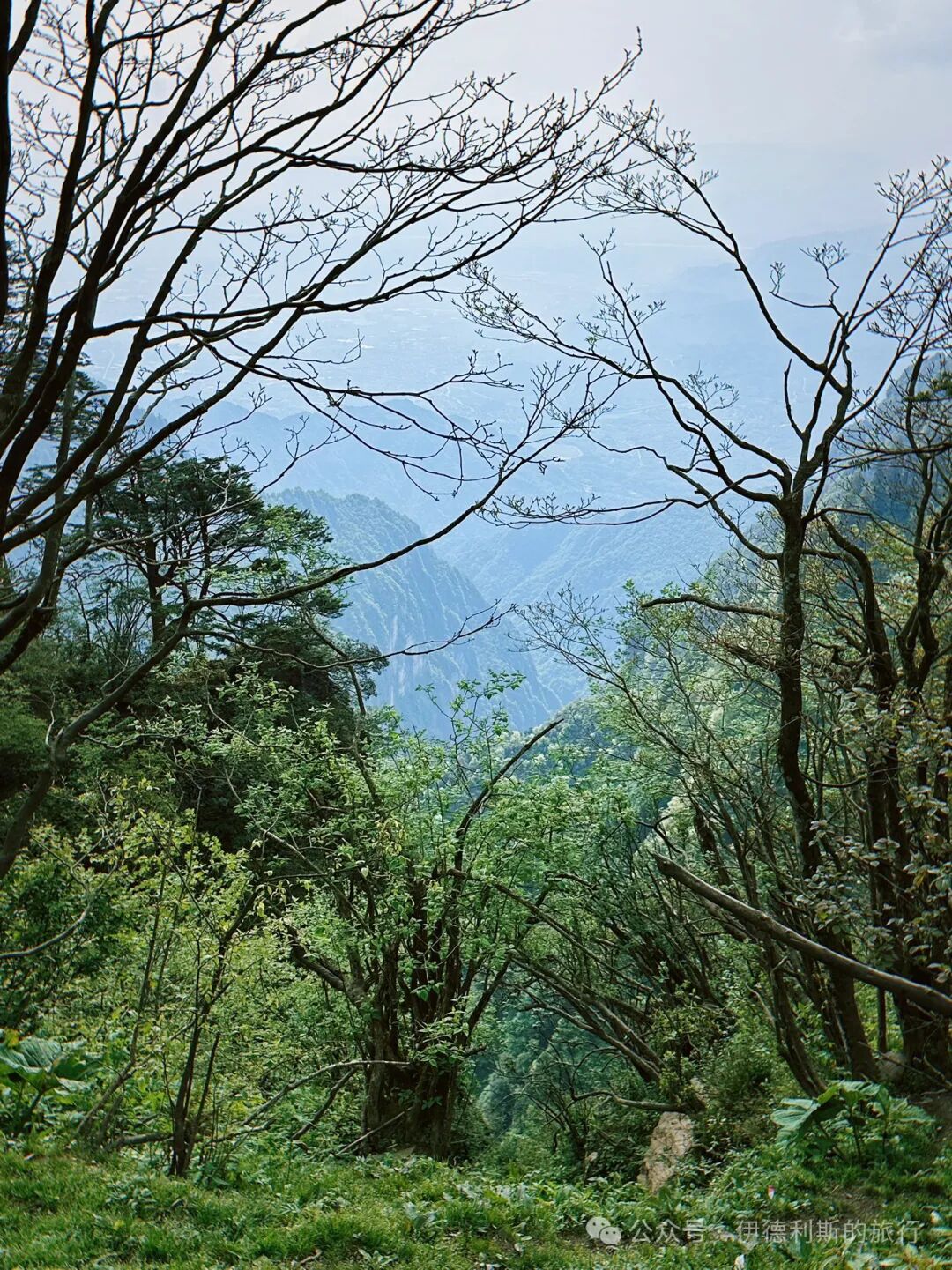
I started climbing Mount Emei early the next morning to experience the clouds and mist. The Golden Summit of Mount Emei is over 3,000 meters above sea level; it was 27 degrees at the foot of the mountain, but only 12 degrees at the top.
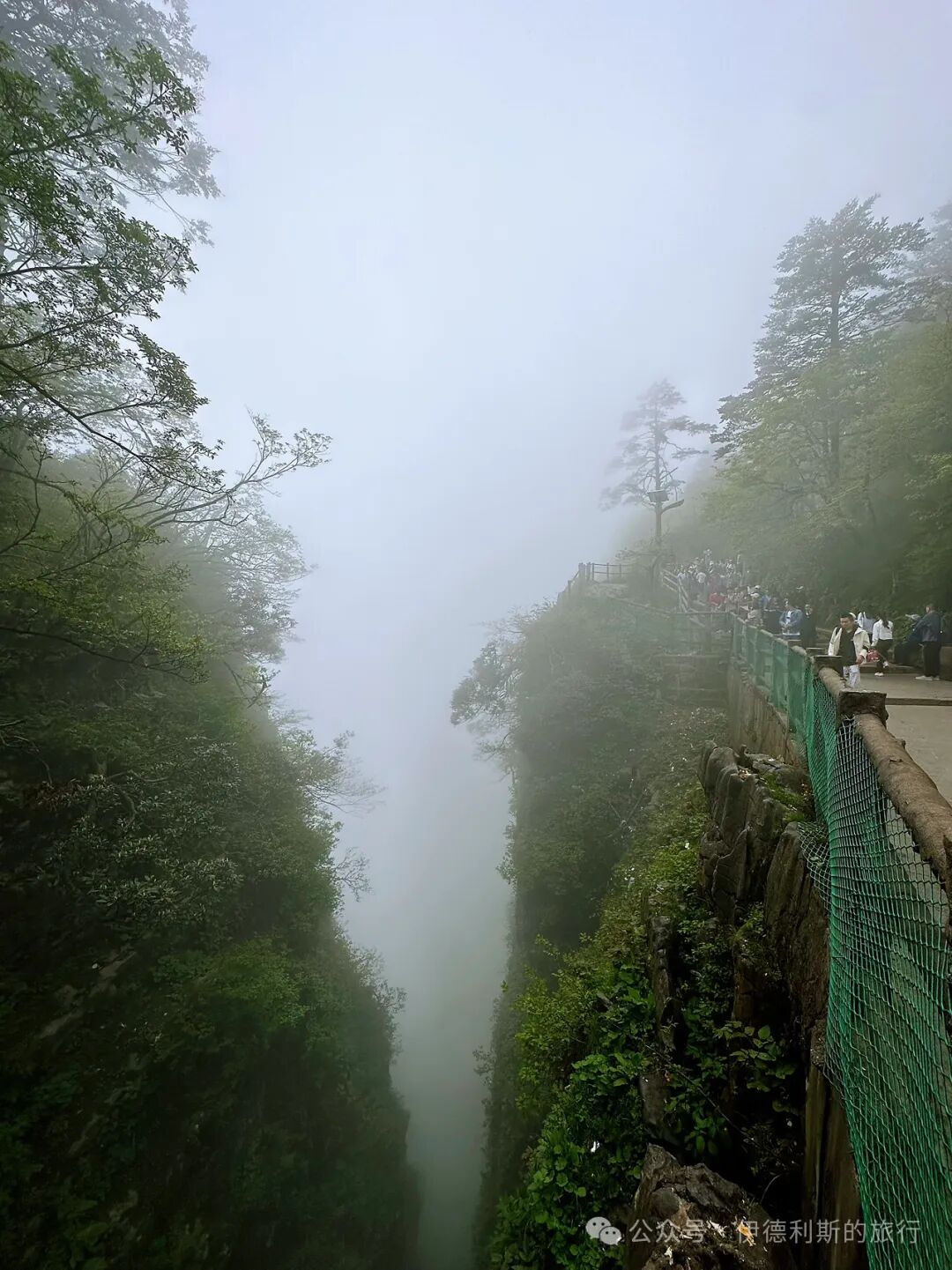
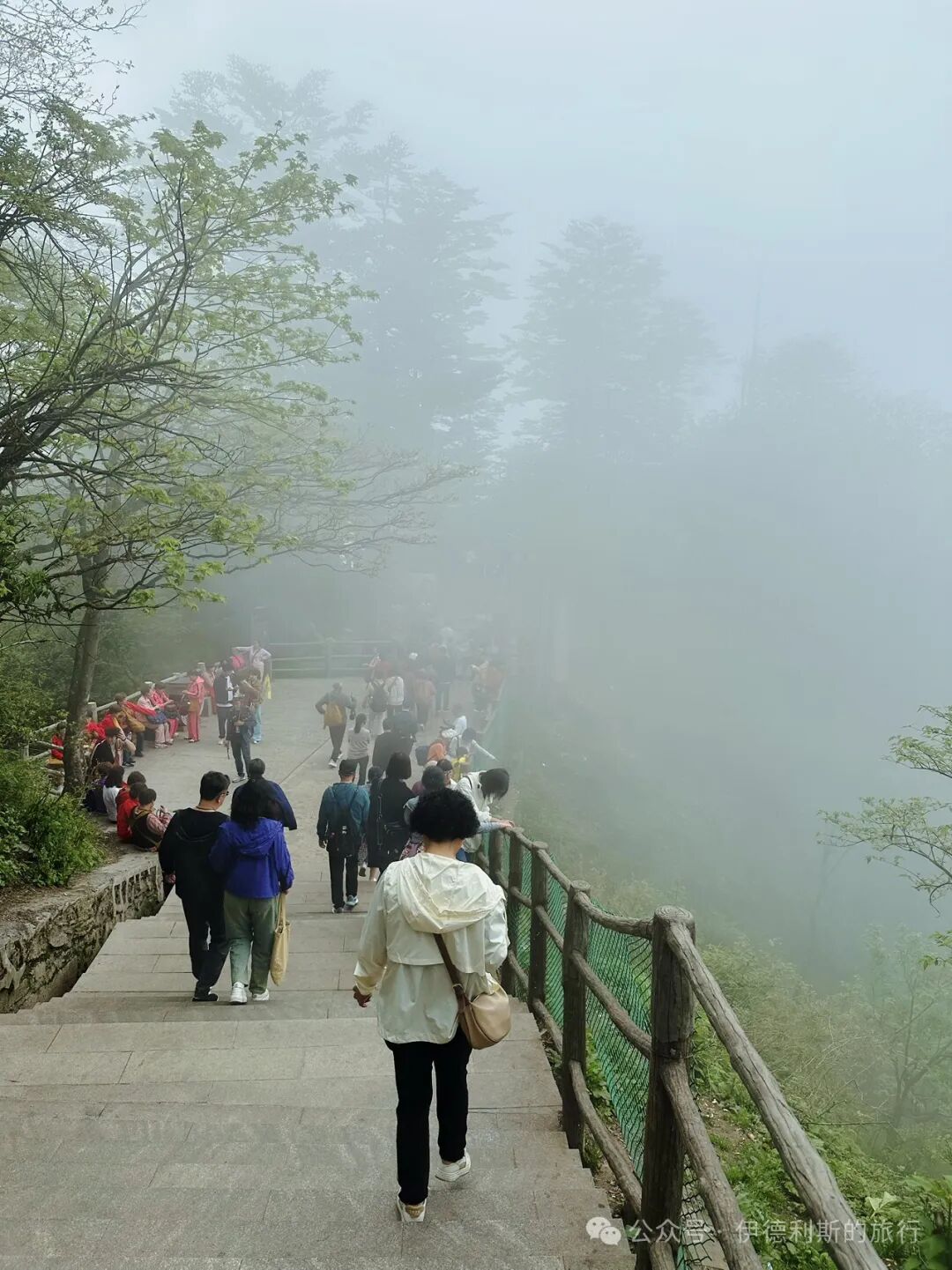
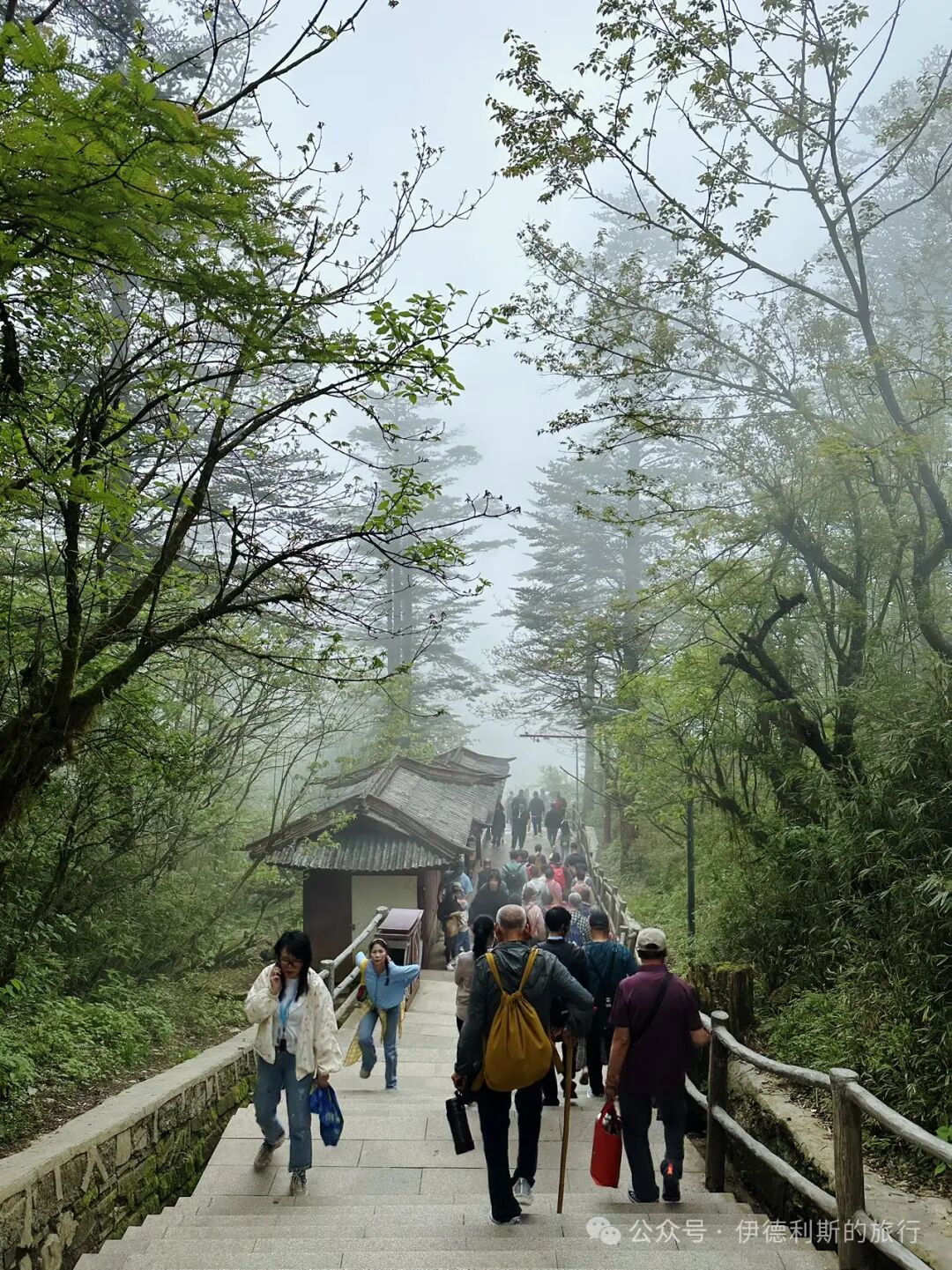
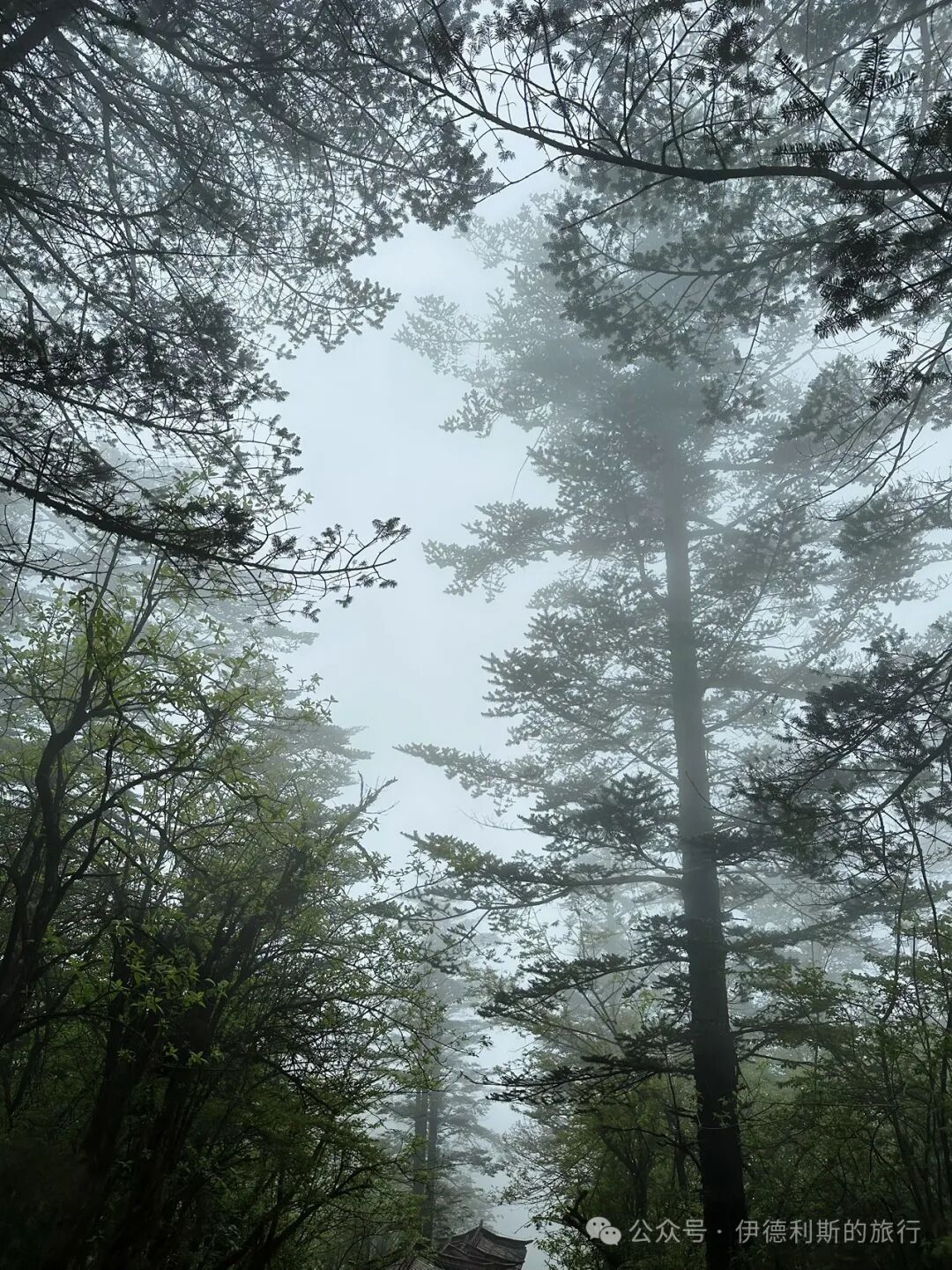
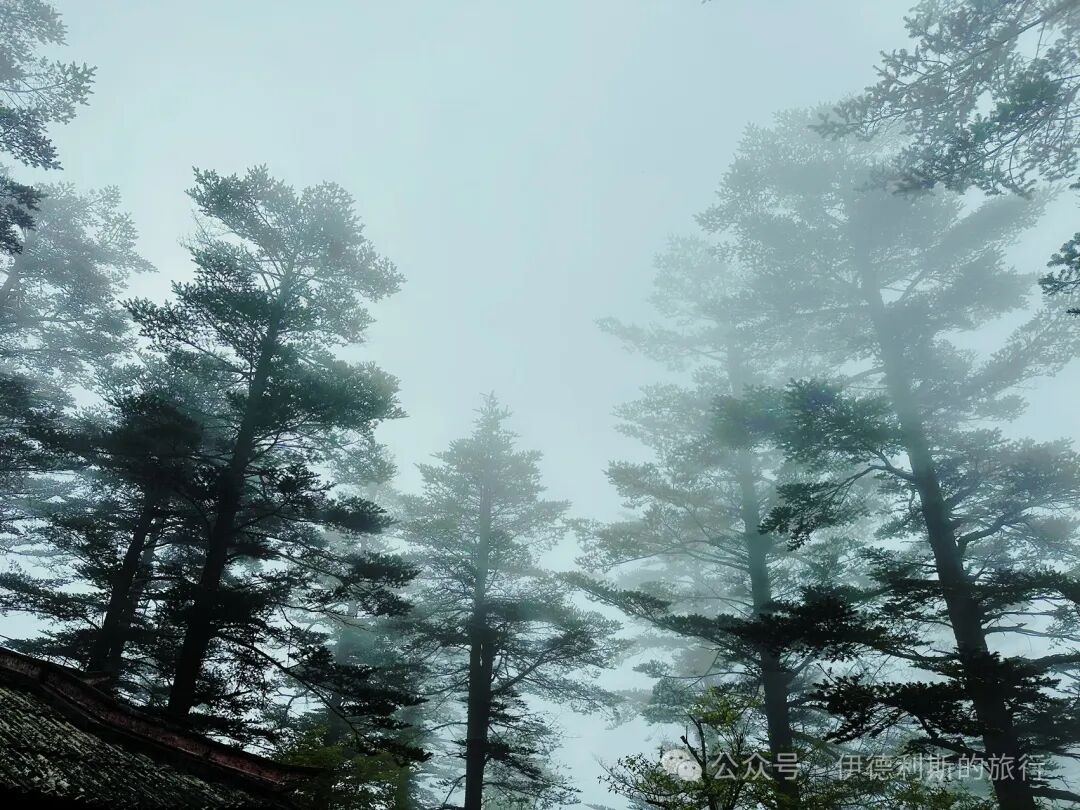
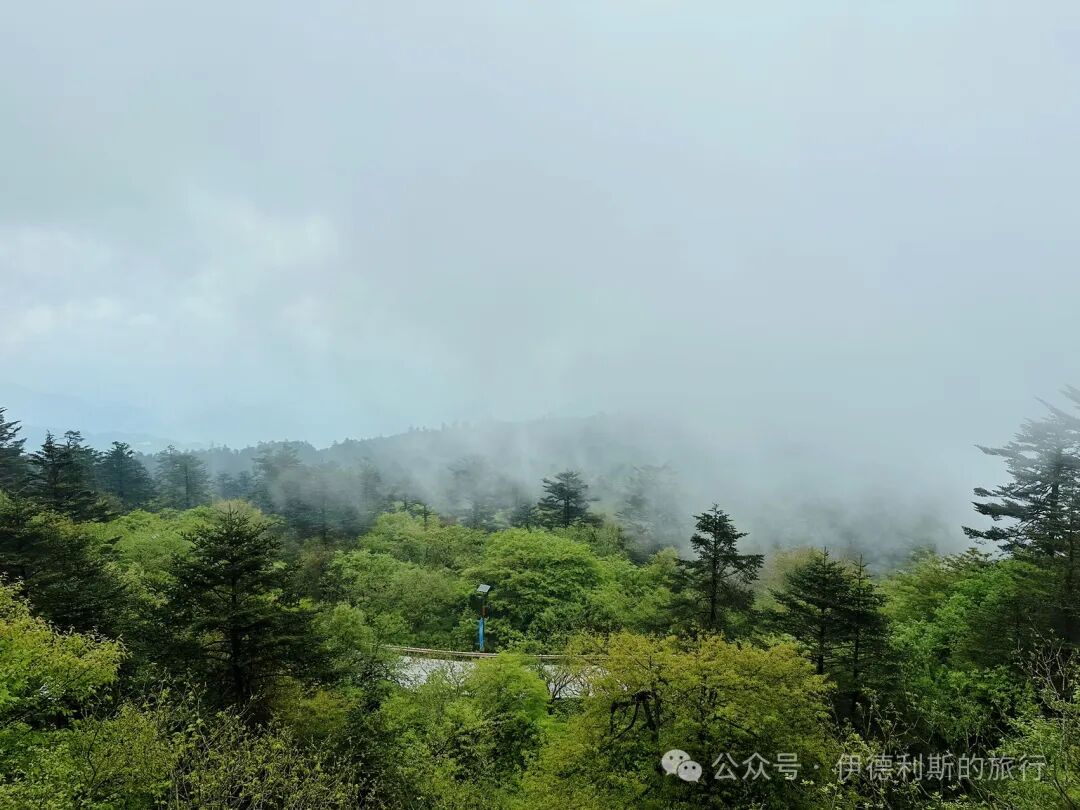
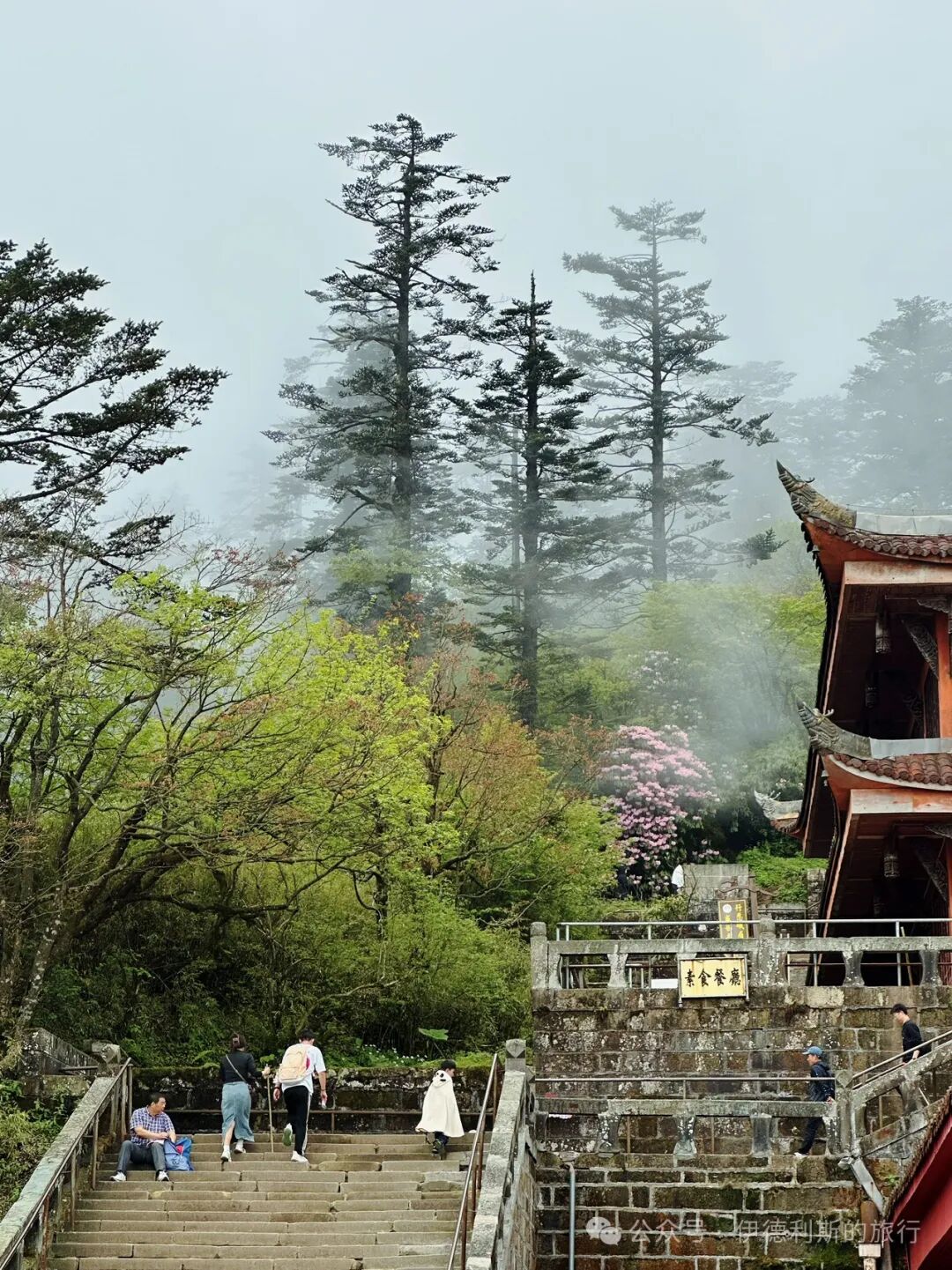
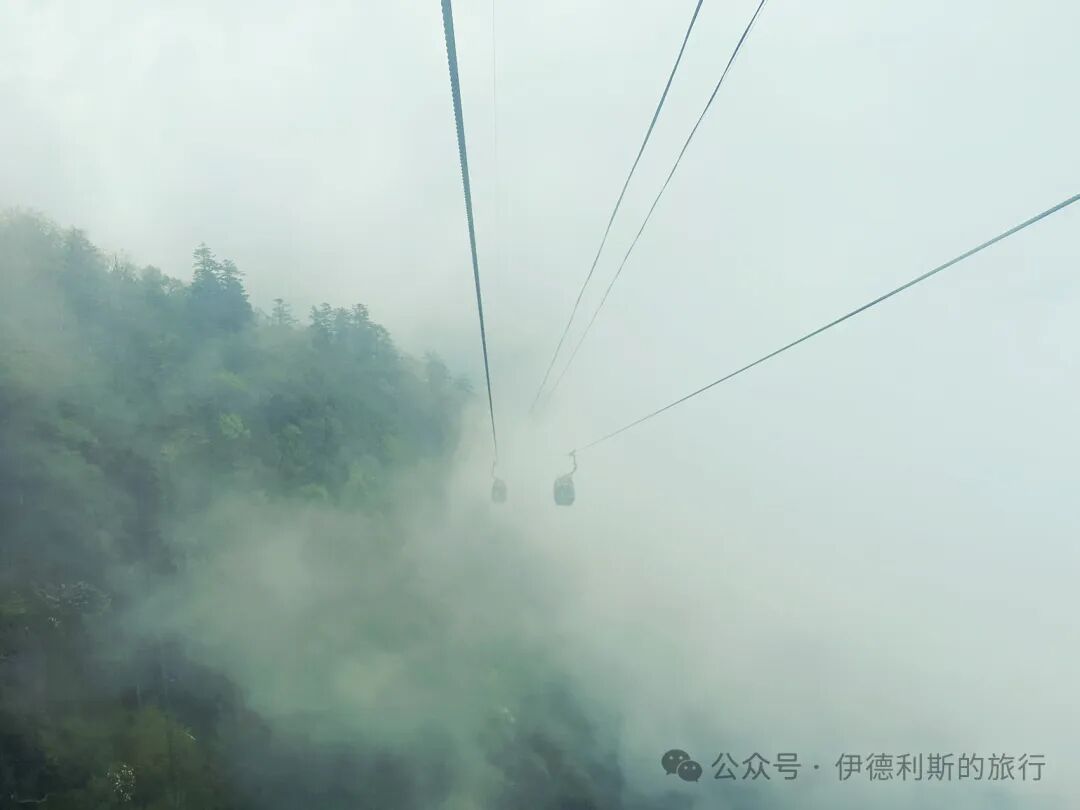
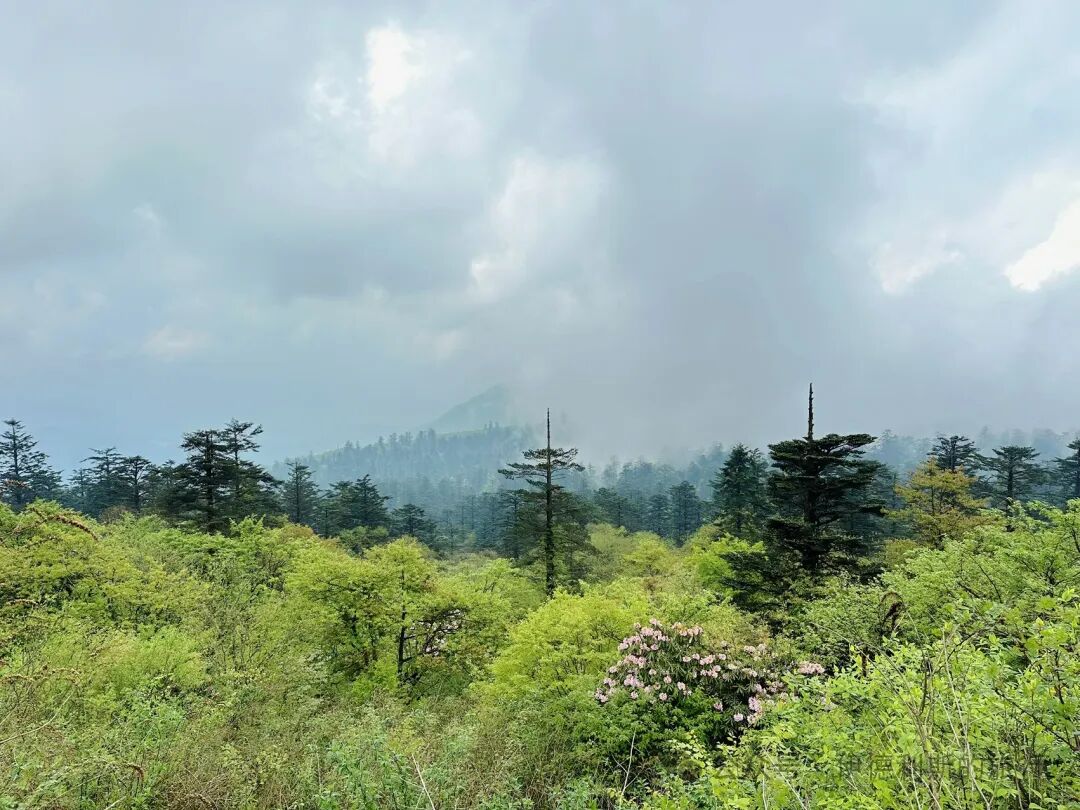
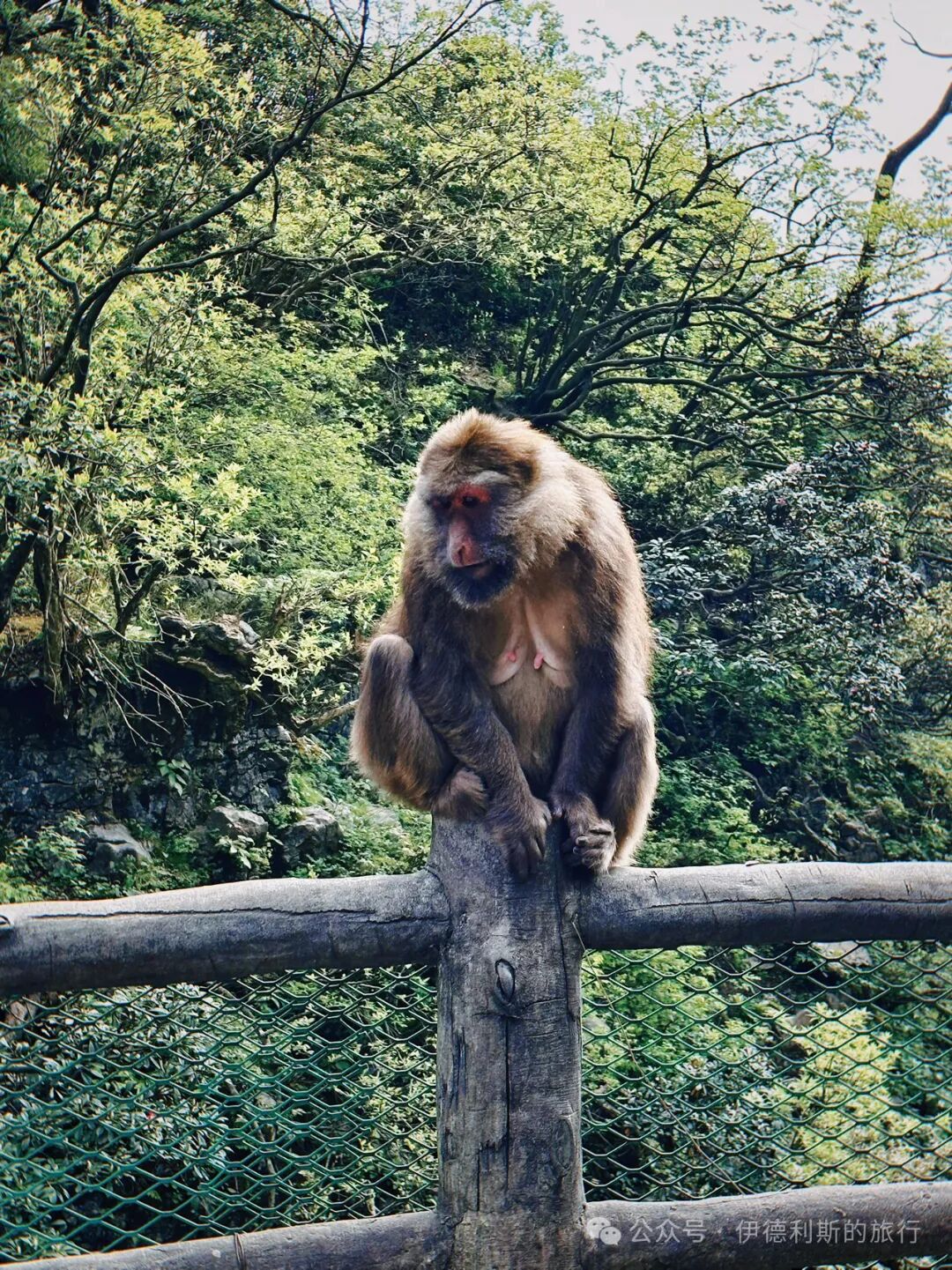
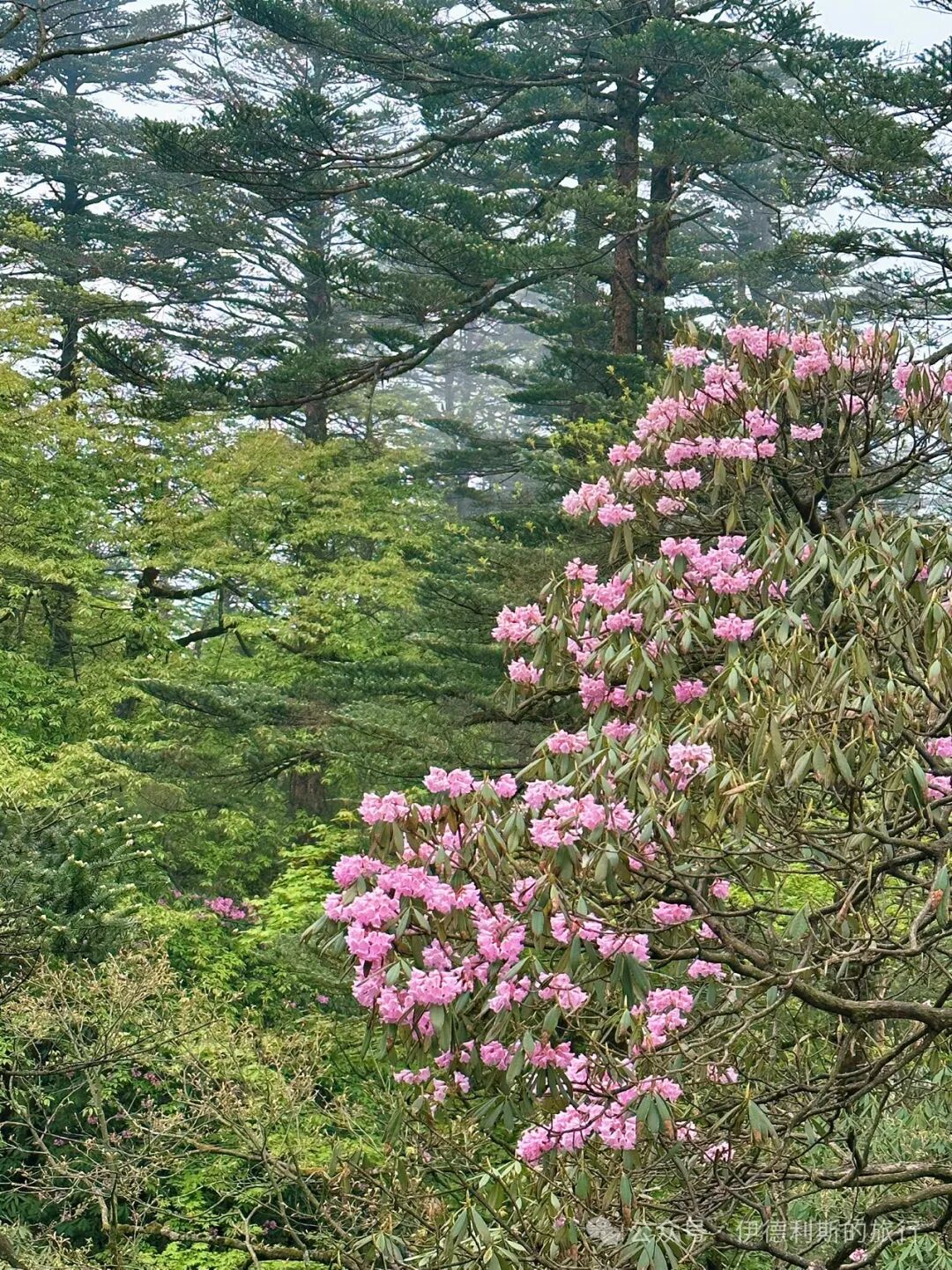
Mount Emei has a different kind of beauty when the clouds and mist clear, and you can see alpine rhododendrons and Tibetan macaques.
Summary: Halal Food Guide: Leshan and Mount Emei - Qiaojiao Beef and Sichuan Food is presented here as a firsthand travel account in clear, natural English. The account focuses on Leshan, Mount Emei, Halal Food while preserving the names, places, food, photos, and historical details from the Chinese source.
We left Chengdu early on May 16 and arrived in Leshan after a two-hour drive. At noon, we went to a local restaurant called Hai's Braised Beef (Hai Shi Qiao Jiao Niu Rou). The restaurant is right across from the Leshan Giant Buddha, next to the old Leshan Port on the Min River.
There are relatively few Hui Muslims living in the Leshan city area. During the Tongzhi reign, a Hui Muslim military officer named Ma Yaolong settled here after retiring. He invited a few other Hui Muslim families to join him, and in 1881, they built the Leshan Mosque (Leshan Si). I was on a business trip and unfortunately could not visit the Leshan Mosque.
Hai's Braised Beef was started by Imam Hai Weixiong. Imam Hai is from Qingliu Town in the Rongchang District of Chongqing. His ancestors moved to Sichuan from the Hubei-Hunan region during the Kangxi reign. In October 1989, he became the first imam of the Leshan Mosque after the religious policy was restored. He served until 1998, when he retired to go into business. Today, his restaurant is the top choice for Muslim travelers (dost) visiting Leshan.
Their restaurant specializes in the four signature dishes of Leshan: foot-steeped beef (qiaojiao niurou), sweet-skin duck (tianpi ya), Xiba tofu (xiba doufu), and pot-pot chicken (bobo ji). They also serve river catfish (jiangtuan yu), cold-spiced rabbit (lengchi tu), jar-steamed tofu pudding (guanguan douhua), and various stir-fried dishes.
Foot-steeped beef (qiaojiao niurou) is beef simmered in a broth of Chinese herbs, then used to poach various cuts of beef and offal. The beef is very tender, and you can also poach beef spinal cord. Foot-steeped beef (qiaojiao niurou) is not spicy at all on its own; the focus is on the savory aroma of the broth. You dip the meat in chili powder when you eat it.
Sweet-skin duck (tianpi ya) is first braised and then deep-fried. Before frying, they stir-fry sugar to make a braising liquid and finish by brushing it with maltose, which gives it a sweet flavor.
Xiba tofu (xiba doufu) is very delicate and soft. It comes in two styles: red oil and white oil. We had the red oil version, which goes perfectly with rice.
They also serve two-grain rice (ermi fan) made from rice and corn. It comes in a bucket, is charged per person, and you can eat as much as you like, which is a local Sichuan tradition.
We took a boat trip in Leshan to watch the Dadu River meet the Min River.
Besides the Hai's cross-legged beef (qiaojiaoniurou) in Leshan, there is also a Sulaimani cross-legged beef restaurant on the Maluqiao food street at the foot of Mount Emei. The owners are Hui Muslims from Rong County in Zigong. They have only been open for three months. Before this, Mount Emei only had noodle shops in the city center, and there were no halal restaurants near the scenic area.
Just like in downtown Leshan, the number of Hui Muslims in Emei County is very small. In the early years of the Guangxu reign, five Hui Muslim merchant families who moved from Qianwei County in Leshan and Shanxi to trade cattle and sheep pooled their money to build the Emei Mosque (Emei Si) at the north gate of Emei County. According to the auntie at the Sulaimani cross-legged beef shop, the Emei Mosque is currently closed because there is no imam.
The dishes at Sulaimani are basically the same as at Hai's, including cross-legged beef, sweet skin duck (tianpiya), Xiba tofu (xibadoufu), chicken in chili oil (boboji), river fish (jiangtuanyu), cold-eaten rabbit (lengchitu), jarred tofu pudding (guanguandouhua), and some stir-fried dishes. I ordered a small portion of cross-legged beef with rice, and their beef broth is truly delicious. I also ordered a local Emei Xue lychee soda, which is said to go very well with cross-legged beef. After eating, I ordered a serving of sweet skin duck (tianpiya) and cold noodles with shredded chicken (jisi liangmian) to carry up Mount Emei the next day, otherwise there would only be vegetarian meals on the mountain.
The hot springs at the foot of Mount Emei are wonderful. With the blue sky above and the breeze in the mountain forest, I had a large pool all to myself and forgot all my worries while soaking in it.
I started climbing Mount Emei early the next morning to experience the clouds and mist. The Golden Summit of Mount Emei is over 3,000 meters above sea level; it was 27 degrees at the foot of the mountain, but only 12 degrees at the top.
Mount Emei has a different kind of beauty when the clouds and mist clear, and you can see alpine rhododendrons and Tibetan macaques.
Halal Food Guide: Leshan and Mount Emei - Qiaojiao Beef and Sichuan Food
Articles • ali2007fr posted the article • 0 comments • 224 views • 2026-05-19 09:30
Reposted from the web
Summary: Halal Food Guide: Leshan and Mount Emei - Qiaojiao Beef and Sichuan Food is presented here as a firsthand travel account in clear, natural English. The account focuses on Leshan, Mount Emei, Halal Food while preserving the names, places, food, photos, and historical details from the Chinese source.
We left Chengdu early on May 16 and arrived in Leshan after a two-hour drive. At noon, we went to a local restaurant called Hai's Braised Beef (Hai Shi Qiao Jiao Niu Rou). The restaurant is right across from the Leshan Giant Buddha, next to the old Leshan Port on the Min River.
There are relatively few Hui Muslims living in the Leshan city area. During the Tongzhi reign, a Hui Muslim military officer named Ma Yaolong settled here after retiring. He invited a few other Hui Muslim families to join him, and in 1881, they built the Leshan Mosque (Leshan Si). I was on a business trip and unfortunately could not visit the Leshan Mosque.
Hai's Braised Beef was started by Imam Hai Weixiong. Imam Hai is from Qingliu Town in the Rongchang District of Chongqing. His ancestors moved to Sichuan from the Hubei-Hunan region during the Kangxi reign. In October 1989, he became the first imam of the Leshan Mosque after the religious policy was restored. He served until 1998, when he retired to go into business. Today, his restaurant is the top choice for Muslim travelers (dost) visiting Leshan.
Their restaurant specializes in the four signature dishes of Leshan: foot-steeped beef (qiaojiao niurou), sweet-skin duck (tianpi ya), Xiba tofu (xiba doufu), and pot-pot chicken (bobo ji). They also serve river catfish (jiangtuan yu), cold-spiced rabbit (lengchi tu), jar-steamed tofu pudding (guanguan douhua), and various stir-fried dishes.
Foot-steeped beef (qiaojiao niurou) is beef simmered in a broth of Chinese herbs, then used to poach various cuts of beef and offal. The beef is very tender, and you can also poach beef spinal cord. Foot-steeped beef (qiaojiao niurou) is not spicy at all on its own; the focus is on the savory aroma of the broth. You dip the meat in chili powder when you eat it.
Sweet-skin duck (tianpi ya) is first braised and then deep-fried. Before frying, they stir-fry sugar to make a braising liquid and finish by brushing it with maltose, which gives it a sweet flavor.
Xiba tofu (xiba doufu) is very delicate and soft. It comes in two styles: red oil and white oil. We had the red oil version, which goes perfectly with rice.
They also serve two-grain rice (ermi fan) made from rice and corn. It comes in a bucket, is charged per person, and you can eat as much as you like, which is a local Sichuan tradition.
We took a boat trip in Leshan to watch the Dadu River meet the Min River.
Besides the Hai's cross-legged beef (qiaojiaoniurou) in Leshan, there is also a Sulaimani cross-legged beef restaurant on the Maluqiao food street at the foot of Mount Emei. The owners are Hui Muslims from Rong County in Zigong. They have only been open for three months. Before this, Mount Emei only had noodle shops in the city center, and there were no halal restaurants near the scenic area.
Just like in downtown Leshan, the number of Hui Muslims in Emei County is very small. In the early years of the Guangxu reign, five Hui Muslim merchant families who moved from Qianwei County in Leshan and Shanxi to trade cattle and sheep pooled their money to build the Emei Mosque (Emei Si) at the north gate of Emei County. According to the auntie at the Sulaimani cross-legged beef shop, the Emei Mosque is currently closed because there is no imam.
The dishes at Sulaimani are basically the same as at Hai's, including cross-legged beef, sweet skin duck (tianpiya), Xiba tofu (xibadoufu), chicken in chili oil (boboji), river fish (jiangtuanyu), cold-eaten rabbit (lengchitu), jarred tofu pudding (guanguandouhua), and some stir-fried dishes. I ordered a small portion of cross-legged beef with rice, and their beef broth is truly delicious. I also ordered a local Emei Xue lychee soda, which is said to go very well with cross-legged beef. After eating, I ordered a serving of sweet skin duck (tianpiya) and cold noodles with shredded chicken (jisi liangmian) to carry up Mount Emei the next day, otherwise there would only be vegetarian meals on the mountain.
The hot springs at the foot of Mount Emei are wonderful. With the blue sky above and the breeze in the mountain forest, I had a large pool all to myself and forgot all my worries while soaking in it.
I started climbing Mount Emei early the next morning to experience the clouds and mist. The Golden Summit of Mount Emei is over 3,000 meters above sea level; it was 27 degrees at the foot of the mountain, but only 12 degrees at the top.
Mount Emei has a different kind of beauty when the clouds and mist clear, and you can see alpine rhododendrons and Tibetan macaques. view all
Summary: Halal Food Guide: Leshan and Mount Emei - Qiaojiao Beef and Sichuan Food is presented here as a firsthand travel account in clear, natural English. The account focuses on Leshan, Mount Emei, Halal Food while preserving the names, places, food, photos, and historical details from the Chinese source.
We left Chengdu early on May 16 and arrived in Leshan after a two-hour drive. At noon, we went to a local restaurant called Hai's Braised Beef (Hai Shi Qiao Jiao Niu Rou). The restaurant is right across from the Leshan Giant Buddha, next to the old Leshan Port on the Min River.
There are relatively few Hui Muslims living in the Leshan city area. During the Tongzhi reign, a Hui Muslim military officer named Ma Yaolong settled here after retiring. He invited a few other Hui Muslim families to join him, and in 1881, they built the Leshan Mosque (Leshan Si). I was on a business trip and unfortunately could not visit the Leshan Mosque.
Hai's Braised Beef was started by Imam Hai Weixiong. Imam Hai is from Qingliu Town in the Rongchang District of Chongqing. His ancestors moved to Sichuan from the Hubei-Hunan region during the Kangxi reign. In October 1989, he became the first imam of the Leshan Mosque after the religious policy was restored. He served until 1998, when he retired to go into business. Today, his restaurant is the top choice for Muslim travelers (dost) visiting Leshan.
Their restaurant specializes in the four signature dishes of Leshan: foot-steeped beef (qiaojiao niurou), sweet-skin duck (tianpi ya), Xiba tofu (xiba doufu), and pot-pot chicken (bobo ji). They also serve river catfish (jiangtuan yu), cold-spiced rabbit (lengchi tu), jar-steamed tofu pudding (guanguan douhua), and various stir-fried dishes.
Foot-steeped beef (qiaojiao niurou) is beef simmered in a broth of Chinese herbs, then used to poach various cuts of beef and offal. The beef is very tender, and you can also poach beef spinal cord. Foot-steeped beef (qiaojiao niurou) is not spicy at all on its own; the focus is on the savory aroma of the broth. You dip the meat in chili powder when you eat it.
Sweet-skin duck (tianpi ya) is first braised and then deep-fried. Before frying, they stir-fry sugar to make a braising liquid and finish by brushing it with maltose, which gives it a sweet flavor.
Xiba tofu (xiba doufu) is very delicate and soft. It comes in two styles: red oil and white oil. We had the red oil version, which goes perfectly with rice.
They also serve two-grain rice (ermi fan) made from rice and corn. It comes in a bucket, is charged per person, and you can eat as much as you like, which is a local Sichuan tradition.
We took a boat trip in Leshan to watch the Dadu River meet the Min River.
Besides the Hai's cross-legged beef (qiaojiaoniurou) in Leshan, there is also a Sulaimani cross-legged beef restaurant on the Maluqiao food street at the foot of Mount Emei. The owners are Hui Muslims from Rong County in Zigong. They have only been open for three months. Before this, Mount Emei only had noodle shops in the city center, and there were no halal restaurants near the scenic area.
Just like in downtown Leshan, the number of Hui Muslims in Emei County is very small. In the early years of the Guangxu reign, five Hui Muslim merchant families who moved from Qianwei County in Leshan and Shanxi to trade cattle and sheep pooled their money to build the Emei Mosque (Emei Si) at the north gate of Emei County. According to the auntie at the Sulaimani cross-legged beef shop, the Emei Mosque is currently closed because there is no imam.
The dishes at Sulaimani are basically the same as at Hai's, including cross-legged beef, sweet skin duck (tianpiya), Xiba tofu (xibadoufu), chicken in chili oil (boboji), river fish (jiangtuanyu), cold-eaten rabbit (lengchitu), jarred tofu pudding (guanguandouhua), and some stir-fried dishes. I ordered a small portion of cross-legged beef with rice, and their beef broth is truly delicious. I also ordered a local Emei Xue lychee soda, which is said to go very well with cross-legged beef. After eating, I ordered a serving of sweet skin duck (tianpiya) and cold noodles with shredded chicken (jisi liangmian) to carry up Mount Emei the next day, otherwise there would only be vegetarian meals on the mountain.
The hot springs at the foot of Mount Emei are wonderful. With the blue sky above and the breeze in the mountain forest, I had a large pool all to myself and forgot all my worries while soaking in it.
I started climbing Mount Emei early the next morning to experience the clouds and mist. The Golden Summit of Mount Emei is over 3,000 meters above sea level; it was 27 degrees at the foot of the mountain, but only 12 degrees at the top.
Mount Emei has a different kind of beauty when the clouds and mist clear, and you can see alpine rhododendrons and Tibetan macaques. view all
Reposted from the web
Summary: Halal Food Guide: Leshan and Mount Emei - Qiaojiao Beef and Sichuan Food is presented here as a firsthand travel account in clear, natural English. The account focuses on Leshan, Mount Emei, Halal Food while preserving the names, places, food, photos, and historical details from the Chinese source.
We left Chengdu early on May 16 and arrived in Leshan after a two-hour drive. At noon, we went to a local restaurant called Hai's Braised Beef (Hai Shi Qiao Jiao Niu Rou). The restaurant is right across from the Leshan Giant Buddha, next to the old Leshan Port on the Min River.
There are relatively few Hui Muslims living in the Leshan city area. During the Tongzhi reign, a Hui Muslim military officer named Ma Yaolong settled here after retiring. He invited a few other Hui Muslim families to join him, and in 1881, they built the Leshan Mosque (Leshan Si). I was on a business trip and unfortunately could not visit the Leshan Mosque.
Hai's Braised Beef was started by Imam Hai Weixiong. Imam Hai is from Qingliu Town in the Rongchang District of Chongqing. His ancestors moved to Sichuan from the Hubei-Hunan region during the Kangxi reign. In October 1989, he became the first imam of the Leshan Mosque after the religious policy was restored. He served until 1998, when he retired to go into business. Today, his restaurant is the top choice for Muslim travelers (dost) visiting Leshan.
Their restaurant specializes in the four signature dishes of Leshan: foot-steeped beef (qiaojiao niurou), sweet-skin duck (tianpi ya), Xiba tofu (xiba doufu), and pot-pot chicken (bobo ji). They also serve river catfish (jiangtuan yu), cold-spiced rabbit (lengchi tu), jar-steamed tofu pudding (guanguan douhua), and various stir-fried dishes.
Foot-steeped beef (qiaojiao niurou) is beef simmered in a broth of Chinese herbs, then used to poach various cuts of beef and offal. The beef is very tender, and you can also poach beef spinal cord. Foot-steeped beef (qiaojiao niurou) is not spicy at all on its own; the focus is on the savory aroma of the broth. You dip the meat in chili powder when you eat it.
Sweet-skin duck (tianpi ya) is first braised and then deep-fried. Before frying, they stir-fry sugar to make a braising liquid and finish by brushing it with maltose, which gives it a sweet flavor.
Xiba tofu (xiba doufu) is very delicate and soft. It comes in two styles: red oil and white oil. We had the red oil version, which goes perfectly with rice.
They also serve two-grain rice (ermi fan) made from rice and corn. It comes in a bucket, is charged per person, and you can eat as much as you like, which is a local Sichuan tradition.
We took a boat trip in Leshan to watch the Dadu River meet the Min River.
Besides the Hai's cross-legged beef (qiaojiaoniurou) in Leshan, there is also a Sulaimani cross-legged beef restaurant on the Maluqiao food street at the foot of Mount Emei. The owners are Hui Muslims from Rong County in Zigong. They have only been open for three months. Before this, Mount Emei only had noodle shops in the city center, and there were no halal restaurants near the scenic area.
Just like in downtown Leshan, the number of Hui Muslims in Emei County is very small. In the early years of the Guangxu reign, five Hui Muslim merchant families who moved from Qianwei County in Leshan and Shanxi to trade cattle and sheep pooled their money to build the Emei Mosque (Emei Si) at the north gate of Emei County. According to the auntie at the Sulaimani cross-legged beef shop, the Emei Mosque is currently closed because there is no imam.
The dishes at Sulaimani are basically the same as at Hai's, including cross-legged beef, sweet skin duck (tianpiya), Xiba tofu (xibadoufu), chicken in chili oil (boboji), river fish (jiangtuanyu), cold-eaten rabbit (lengchitu), jarred tofu pudding (guanguandouhua), and some stir-fried dishes. I ordered a small portion of cross-legged beef with rice, and their beef broth is truly delicious. I also ordered a local Emei Xue lychee soda, which is said to go very well with cross-legged beef. After eating, I ordered a serving of sweet skin duck (tianpiya) and cold noodles with shredded chicken (jisi liangmian) to carry up Mount Emei the next day, otherwise there would only be vegetarian meals on the mountain.
The hot springs at the foot of Mount Emei are wonderful. With the blue sky above and the breeze in the mountain forest, I had a large pool all to myself and forgot all my worries while soaking in it.
I started climbing Mount Emei early the next morning to experience the clouds and mist. The Golden Summit of Mount Emei is over 3,000 meters above sea level; it was 27 degrees at the foot of the mountain, but only 12 degrees at the top.
Mount Emei has a different kind of beauty when the clouds and mist clear, and you can see alpine rhododendrons and Tibetan macaques.
Summary: Halal Food Guide: Leshan and Mount Emei - Qiaojiao Beef and Sichuan Food is presented here as a firsthand travel account in clear, natural English. The account focuses on Leshan, Mount Emei, Halal Food while preserving the names, places, food, photos, and historical details from the Chinese source.
We left Chengdu early on May 16 and arrived in Leshan after a two-hour drive. At noon, we went to a local restaurant called Hai's Braised Beef (Hai Shi Qiao Jiao Niu Rou). The restaurant is right across from the Leshan Giant Buddha, next to the old Leshan Port on the Min River.
There are relatively few Hui Muslims living in the Leshan city area. During the Tongzhi reign, a Hui Muslim military officer named Ma Yaolong settled here after retiring. He invited a few other Hui Muslim families to join him, and in 1881, they built the Leshan Mosque (Leshan Si). I was on a business trip and unfortunately could not visit the Leshan Mosque.
Hai's Braised Beef was started by Imam Hai Weixiong. Imam Hai is from Qingliu Town in the Rongchang District of Chongqing. His ancestors moved to Sichuan from the Hubei-Hunan region during the Kangxi reign. In October 1989, he became the first imam of the Leshan Mosque after the religious policy was restored. He served until 1998, when he retired to go into business. Today, his restaurant is the top choice for Muslim travelers (dost) visiting Leshan.
Their restaurant specializes in the four signature dishes of Leshan: foot-steeped beef (qiaojiao niurou), sweet-skin duck (tianpi ya), Xiba tofu (xiba doufu), and pot-pot chicken (bobo ji). They also serve river catfish (jiangtuan yu), cold-spiced rabbit (lengchi tu), jar-steamed tofu pudding (guanguan douhua), and various stir-fried dishes.
Foot-steeped beef (qiaojiao niurou) is beef simmered in a broth of Chinese herbs, then used to poach various cuts of beef and offal. The beef is very tender, and you can also poach beef spinal cord. Foot-steeped beef (qiaojiao niurou) is not spicy at all on its own; the focus is on the savory aroma of the broth. You dip the meat in chili powder when you eat it.
Sweet-skin duck (tianpi ya) is first braised and then deep-fried. Before frying, they stir-fry sugar to make a braising liquid and finish by brushing it with maltose, which gives it a sweet flavor.
Xiba tofu (xiba doufu) is very delicate and soft. It comes in two styles: red oil and white oil. We had the red oil version, which goes perfectly with rice.
They also serve two-grain rice (ermi fan) made from rice and corn. It comes in a bucket, is charged per person, and you can eat as much as you like, which is a local Sichuan tradition.
We took a boat trip in Leshan to watch the Dadu River meet the Min River.
Besides the Hai's cross-legged beef (qiaojiaoniurou) in Leshan, there is also a Sulaimani cross-legged beef restaurant on the Maluqiao food street at the foot of Mount Emei. The owners are Hui Muslims from Rong County in Zigong. They have only been open for three months. Before this, Mount Emei only had noodle shops in the city center, and there were no halal restaurants near the scenic area.
Just like in downtown Leshan, the number of Hui Muslims in Emei County is very small. In the early years of the Guangxu reign, five Hui Muslim merchant families who moved from Qianwei County in Leshan and Shanxi to trade cattle and sheep pooled their money to build the Emei Mosque (Emei Si) at the north gate of Emei County. According to the auntie at the Sulaimani cross-legged beef shop, the Emei Mosque is currently closed because there is no imam.
The dishes at Sulaimani are basically the same as at Hai's, including cross-legged beef, sweet skin duck (tianpiya), Xiba tofu (xibadoufu), chicken in chili oil (boboji), river fish (jiangtuanyu), cold-eaten rabbit (lengchitu), jarred tofu pudding (guanguandouhua), and some stir-fried dishes. I ordered a small portion of cross-legged beef with rice, and their beef broth is truly delicious. I also ordered a local Emei Xue lychee soda, which is said to go very well with cross-legged beef. After eating, I ordered a serving of sweet skin duck (tianpiya) and cold noodles with shredded chicken (jisi liangmian) to carry up Mount Emei the next day, otherwise there would only be vegetarian meals on the mountain.
The hot springs at the foot of Mount Emei are wonderful. With the blue sky above and the breeze in the mountain forest, I had a large pool all to myself and forgot all my worries while soaking in it.
I started climbing Mount Emei early the next morning to experience the clouds and mist. The Golden Summit of Mount Emei is over 3,000 meters above sea level; it was 27 degrees at the foot of the mountain, but only 12 degrees at the top.
Mount Emei has a different kind of beauty when the clouds and mist clear, and you can see alpine rhododendrons and Tibetan macaques.