

Muharram
Halal Travel Guide: Bangkok - Persian Shia Mosques and Muharram Traditions
Articles • ali2007fr posted the article • 0 comments • 231 views • 2026-05-20 09:12
Reposted from the web
Summary: Bangkok has a long Persian-descended Shia Muslim history, centered in communities such as Kudi Luang Chao Sen Mosque. This account follows the Muharram gatherings, Ashura preparations, symbols of Karbala, mosque details, food sharing, and local conversations described in the original travel note.
As the Islamic New Year arrives, Shia friends (dosti) around the world spend the first ten days of the first month, Muharram, honoring Imam Hussein. This leads up to the grand Ashura festival. Last weekend, I traveled to Thailand to join the Muharram commemorations held by the Persian-descended Shia community in Bangkok.
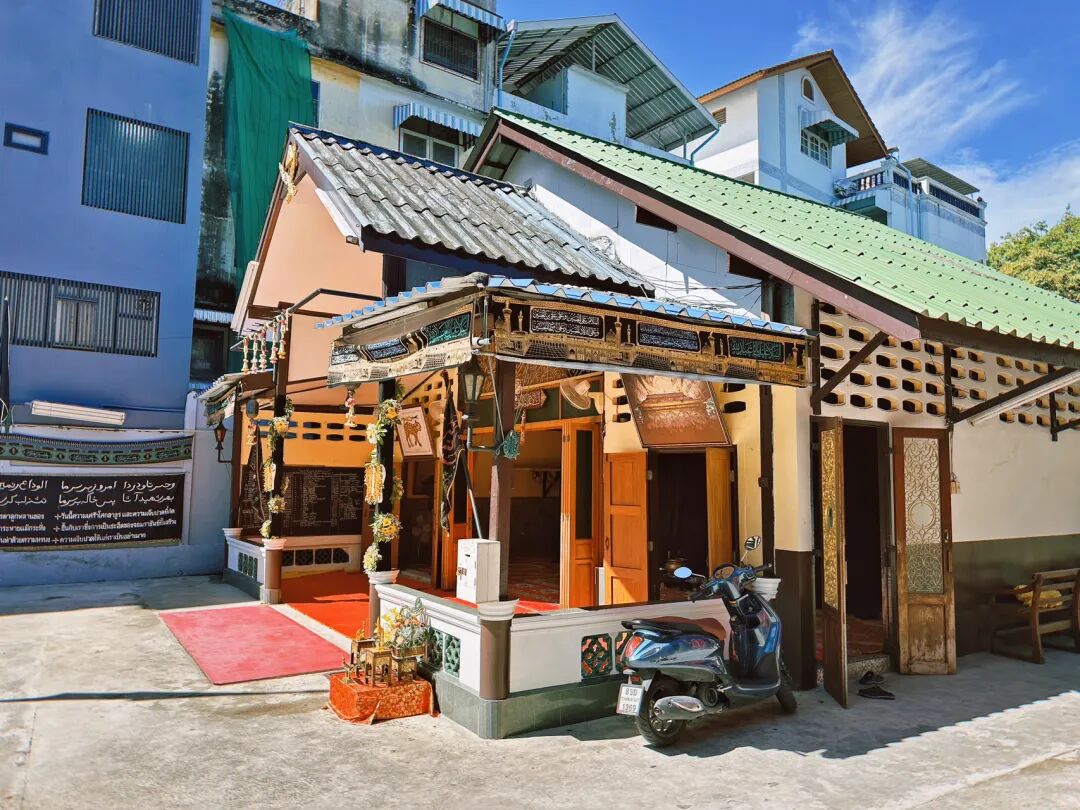
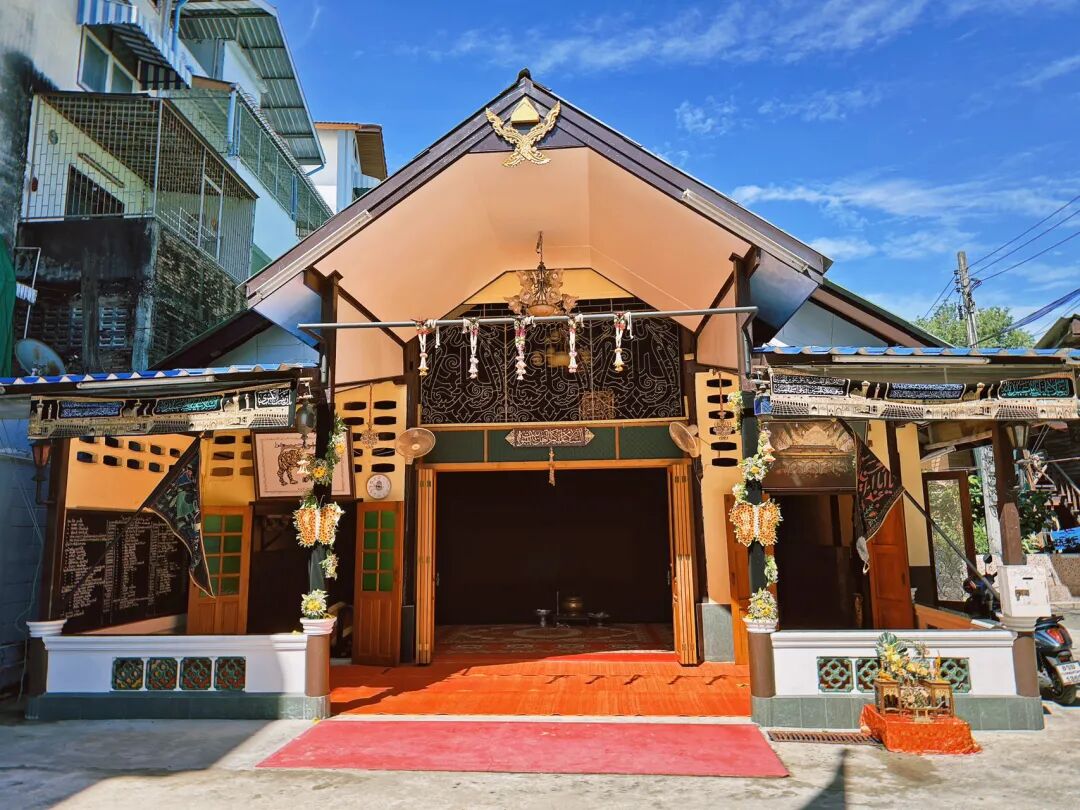
Bangkok currently has five Shia mosques, with two belonging to the Persian community and three to the Indian community. It is the city with the strongest Shia cultural presence in all of Southeast Asia. Since I only had Saturday evening, I chose to attend the memorial at the primary Shia mosque in Bangkok, Kudi Luang Mosque.
Between the 16th and 18th centuries, Shia merchants from the Persian Safavid dynasty traveled along the Indian Ocean coast to trade in Siam, where they were warmly welcomed and hosted by the Siamese royal family. Some Persian merchants married locals and settled down, eventually taking on important roles in the Siamese court. Starting in the 17th century, the Sheik Ahmad family from Qom, Persia, managed Siam's western maritime affairs, overseeing trade, shipping, and diplomacy across the Indian Ocean.
After the Siamese capital of Ayutthaya fell in 1767 and the capital moved to Bangkok in 1782, the Persian community from Ayutthaya moved there as well. The first leader of the Persian Shia community in Bangkok was Konkaew, the son of the last leader from Ayutthaya. In 1797, he began managing Siam's western trade and received a property in the Thonburi area across the Chao Phraya River. People say he and 400 Shia followers established Kudi Chao Sen Mosque, which became the primary Shia mosque in Bangkok.
After Konkaew passed away, his brother and eight direct descendants inherited the title, controlling Siam's western trade rights for a century. In 1897, King Rama V renovated Kudi Chao Sen Mosque and renamed it Kudi Luang Chao Sen Mosque. In 1947, the entire Kudi Luang Mosque was moved to its current location to make room for the Royal Thai Navy headquarters. The community still lives around the mosque, preserving the traditional Shia culture of Bangkok.
We visited Kudi Luang Mosque in the morning. The male and female friends (dosti) were very warm, offering us several bottles of water. Even after learning we were Sunni, they remained very welcoming and told us we were free to take photos. It was a pity that the grandest Ashura event was scheduled for Monday morning, and we could not attend because of work.
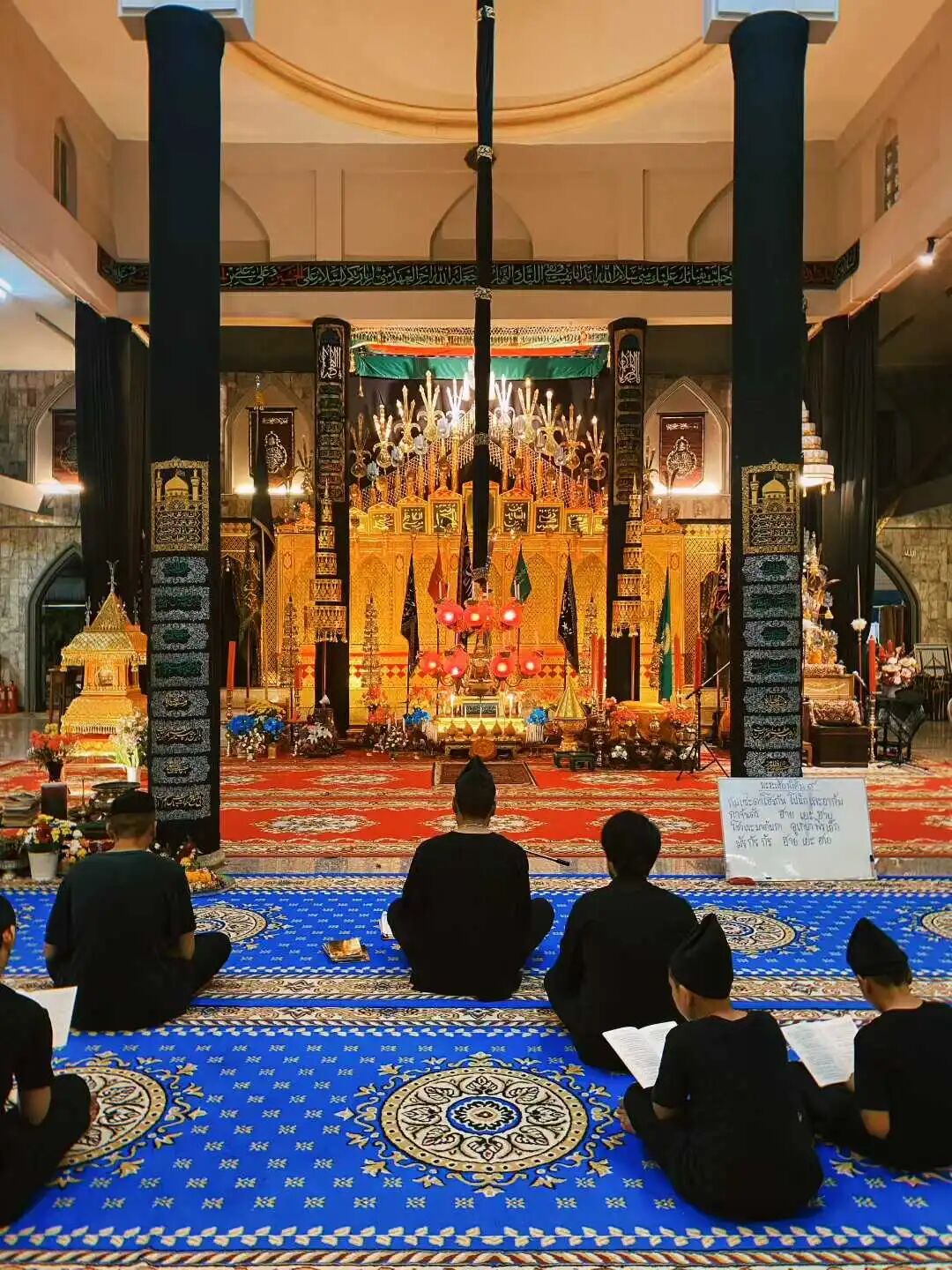
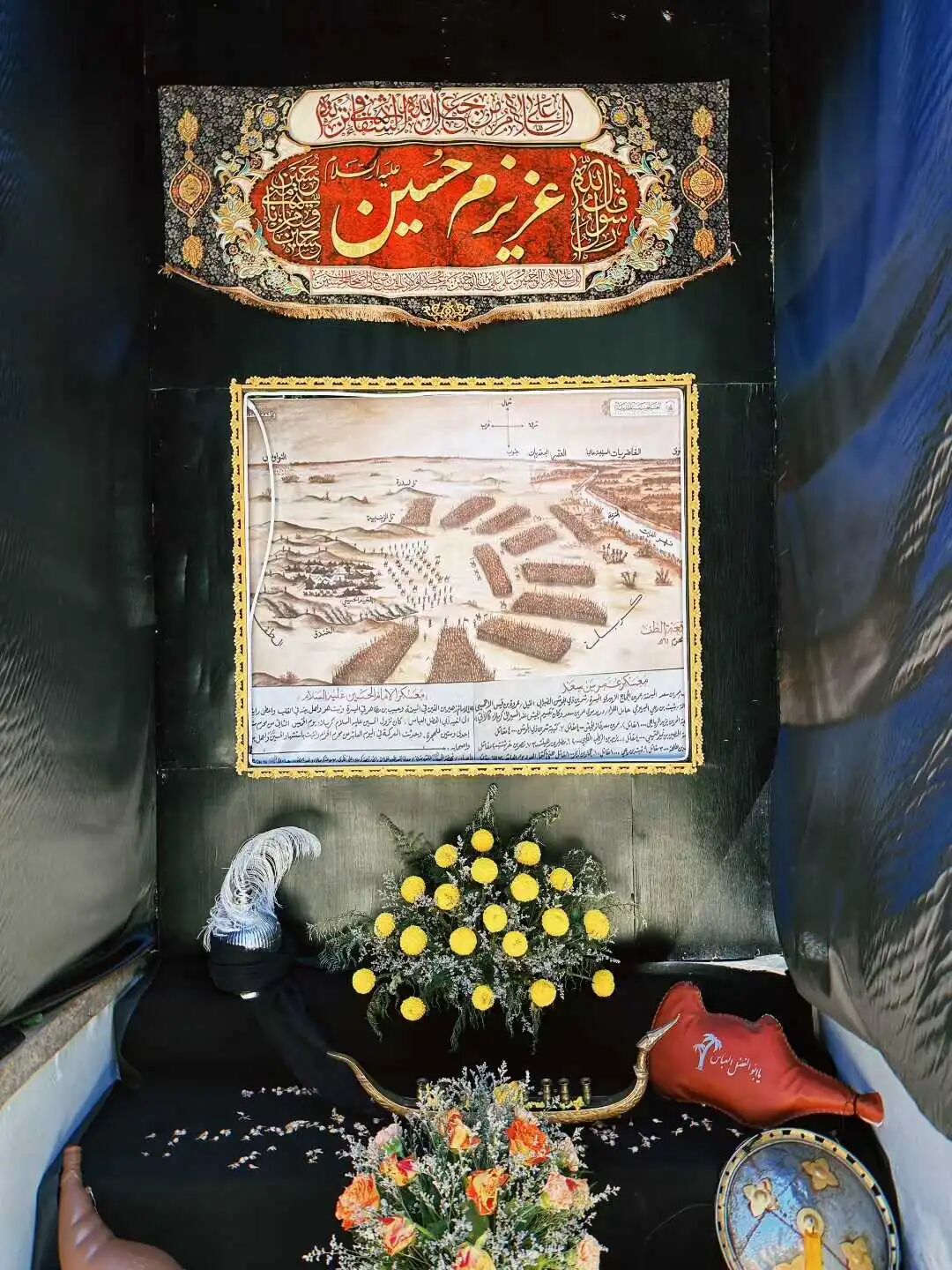
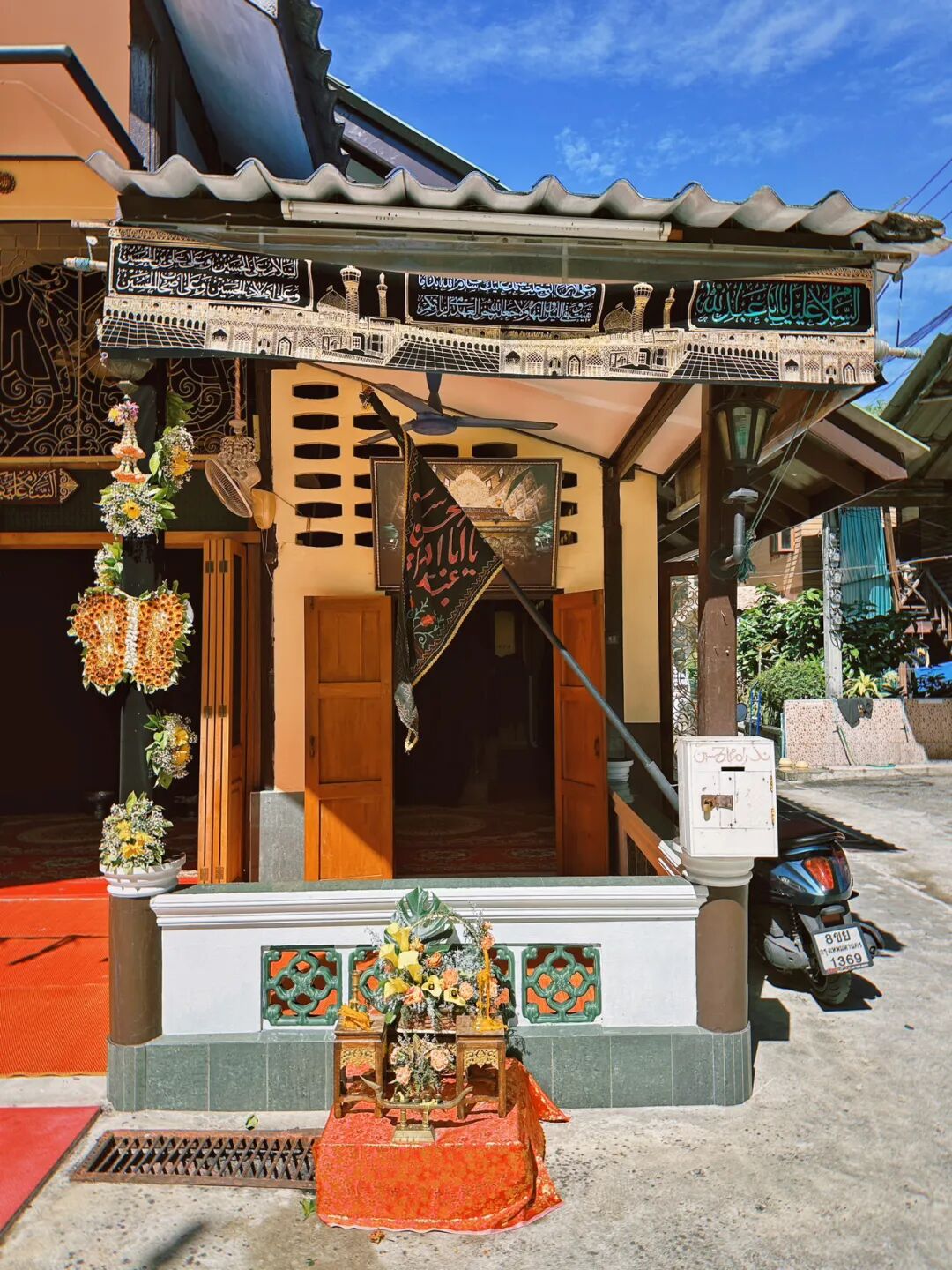
Inside the main hall of Kudi Luang Mosque, a banner hangs that reads, 'Oh!' Hussein. Honoring Imam Hussein is the theme of Muharram.
The Persian-descended Shia elders in Bangkok live around the mosque. They are open-minded and very welcoming to friends (dosti).
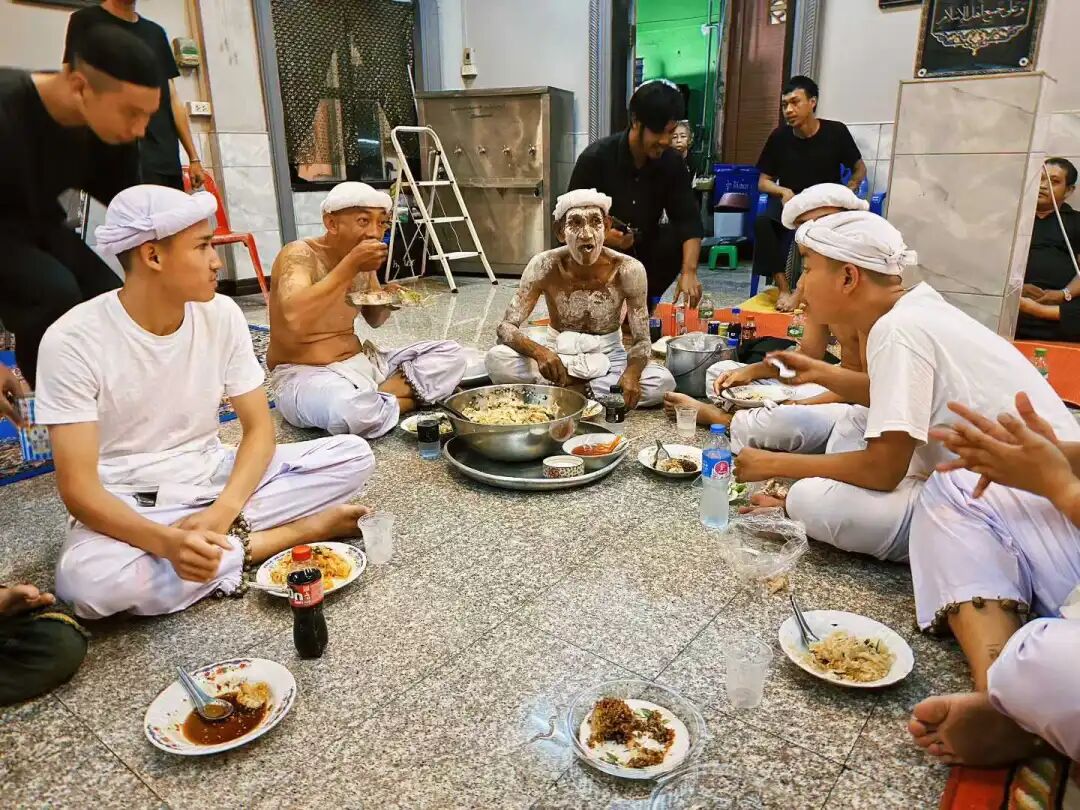
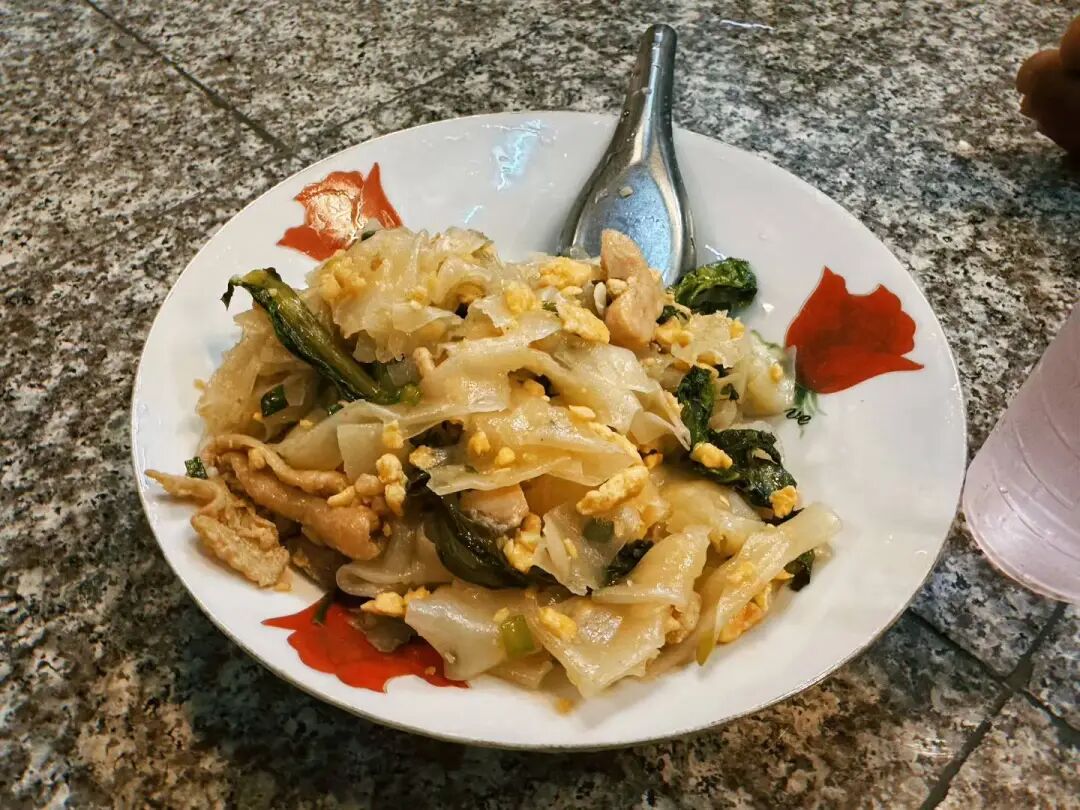
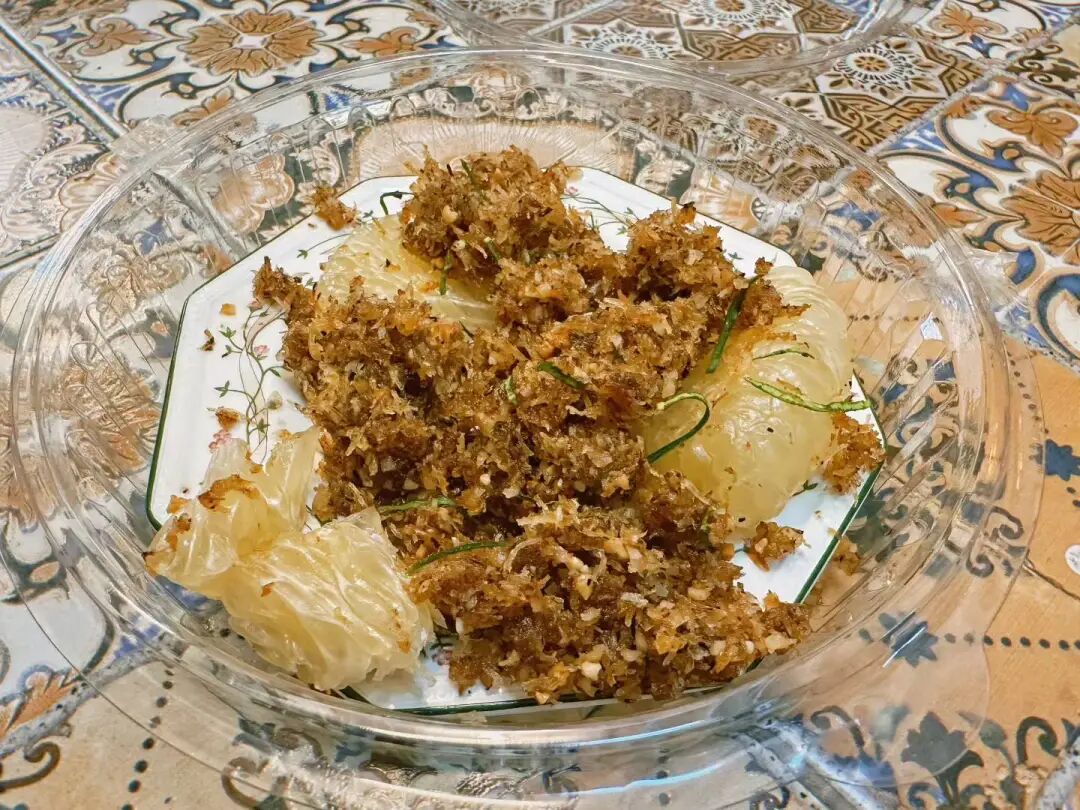
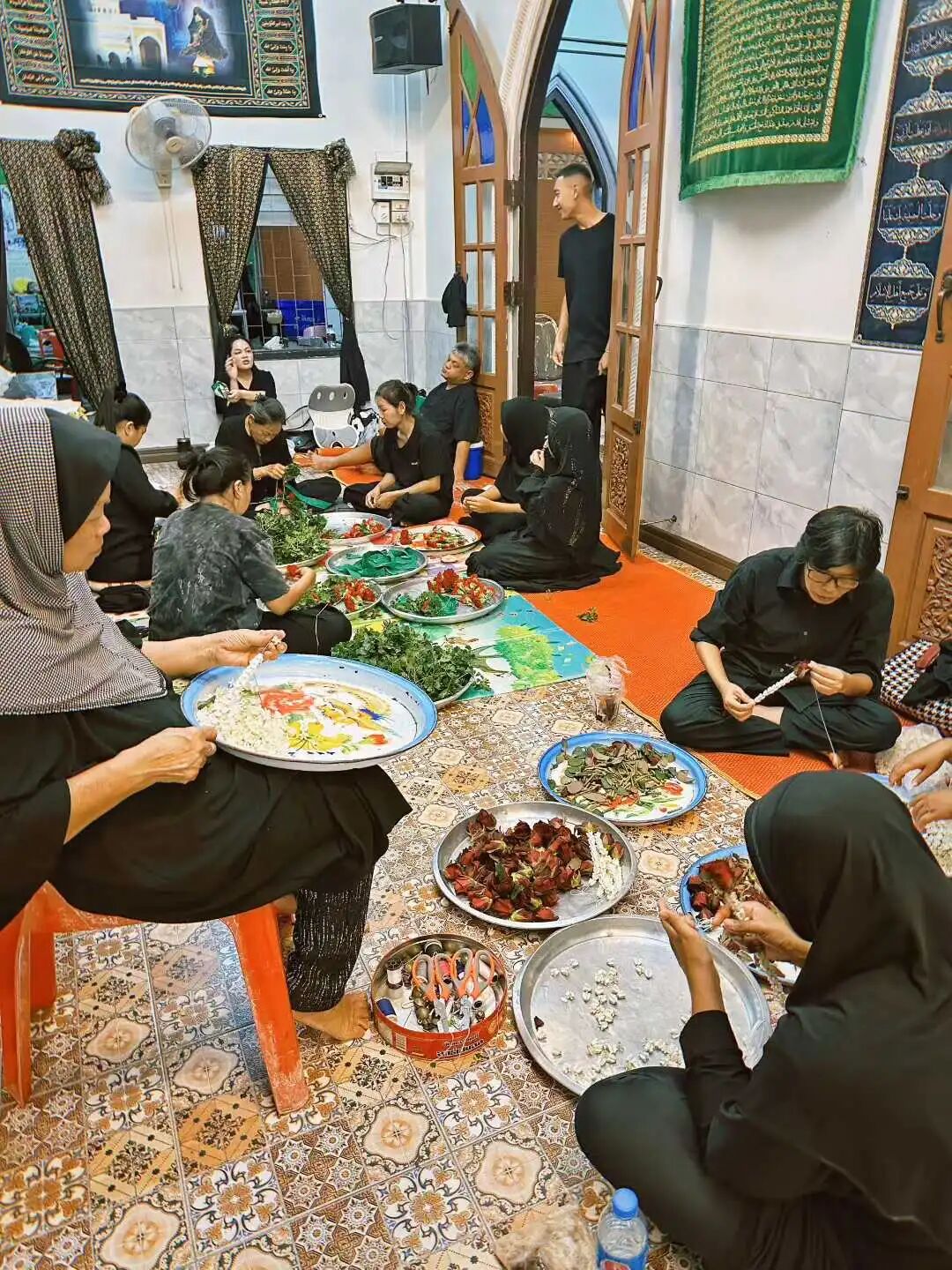
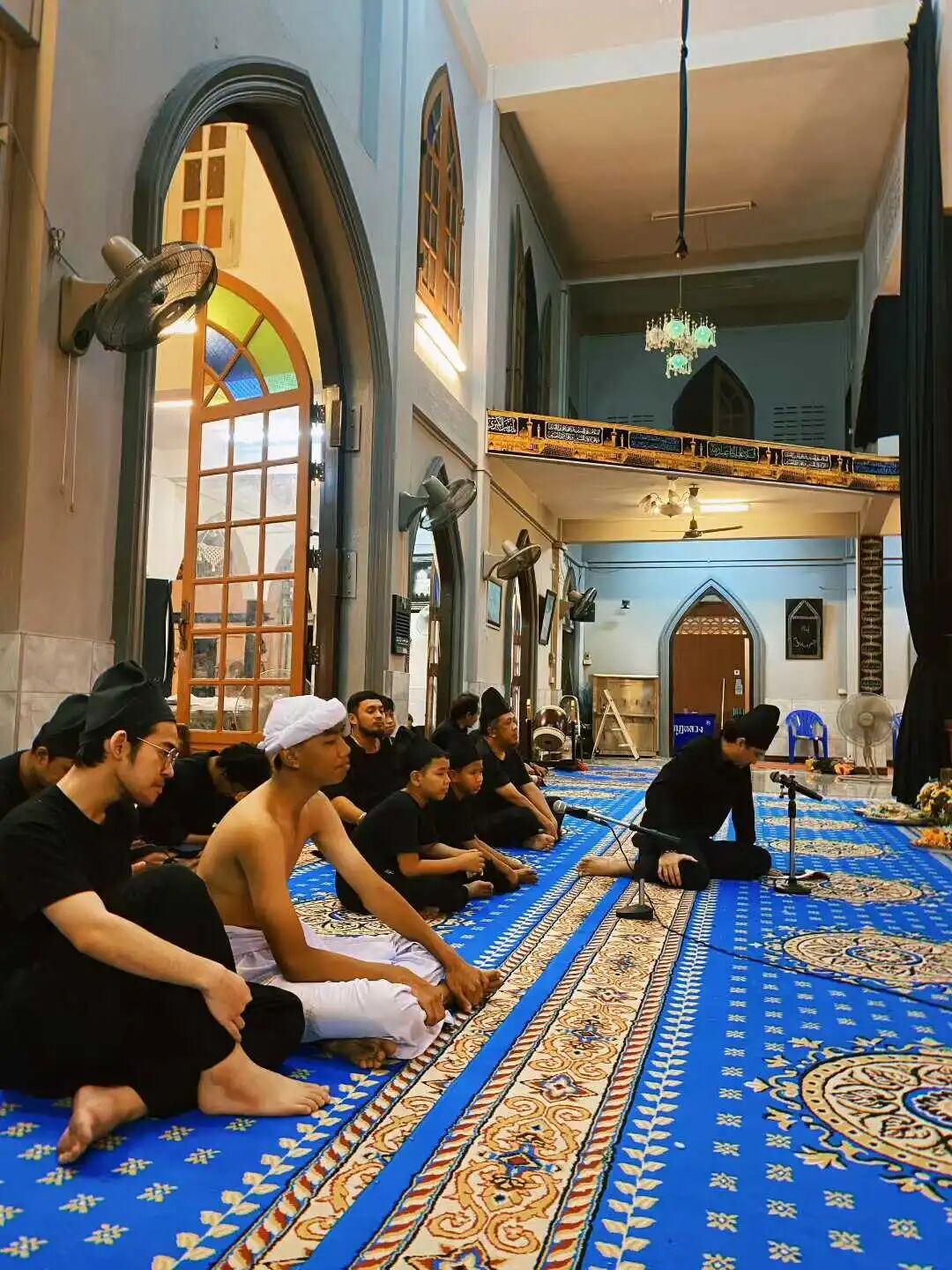
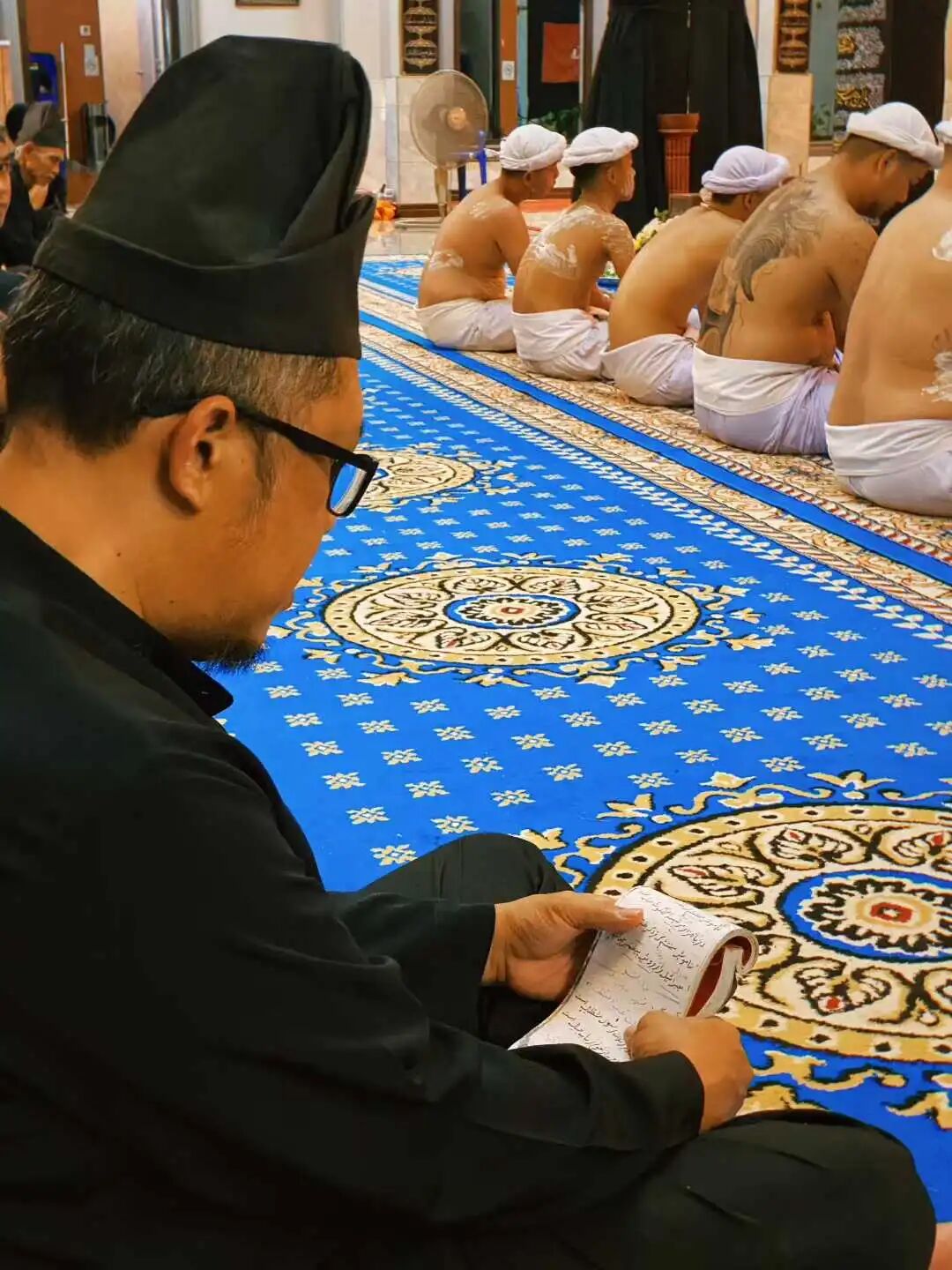
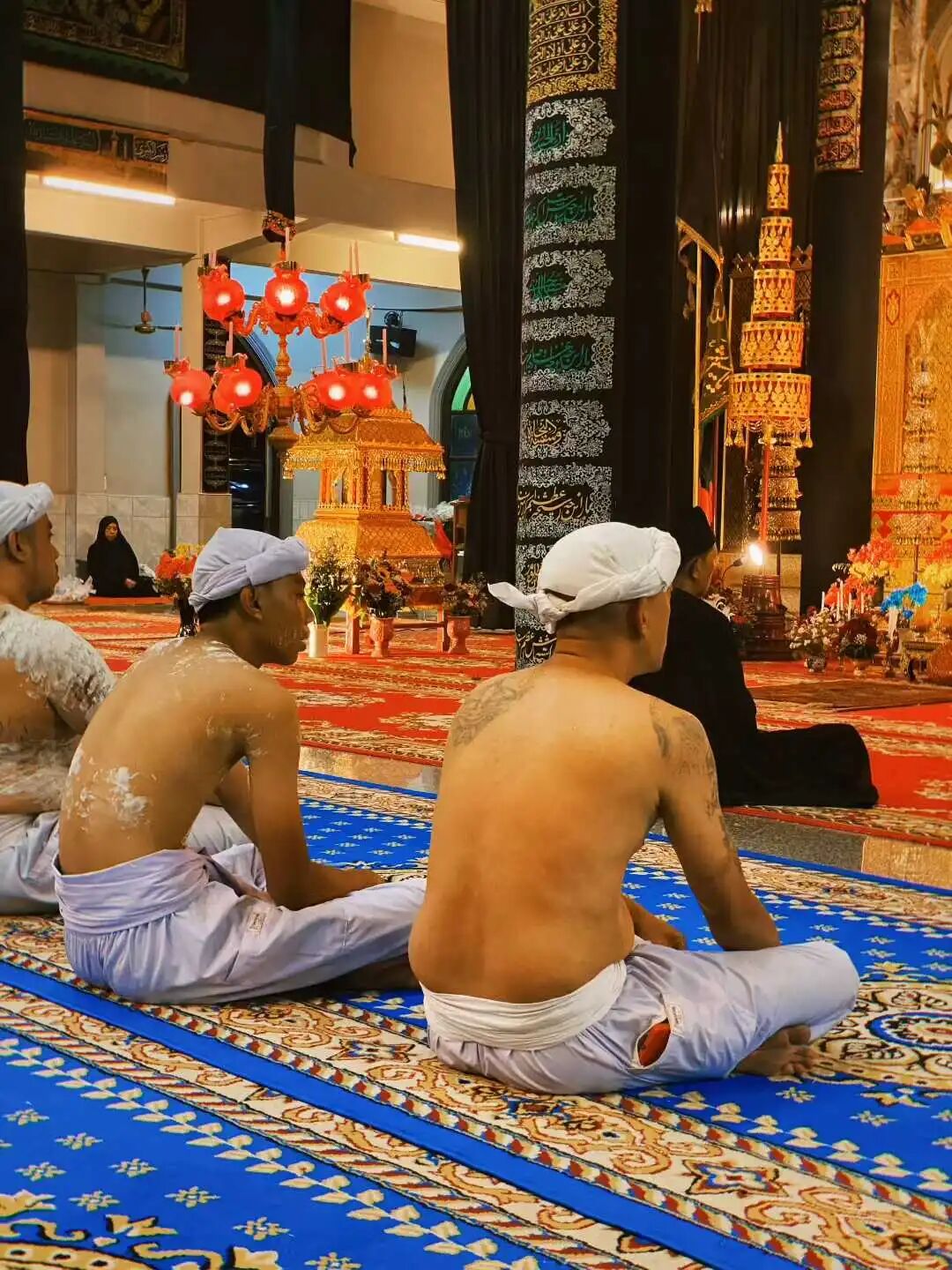
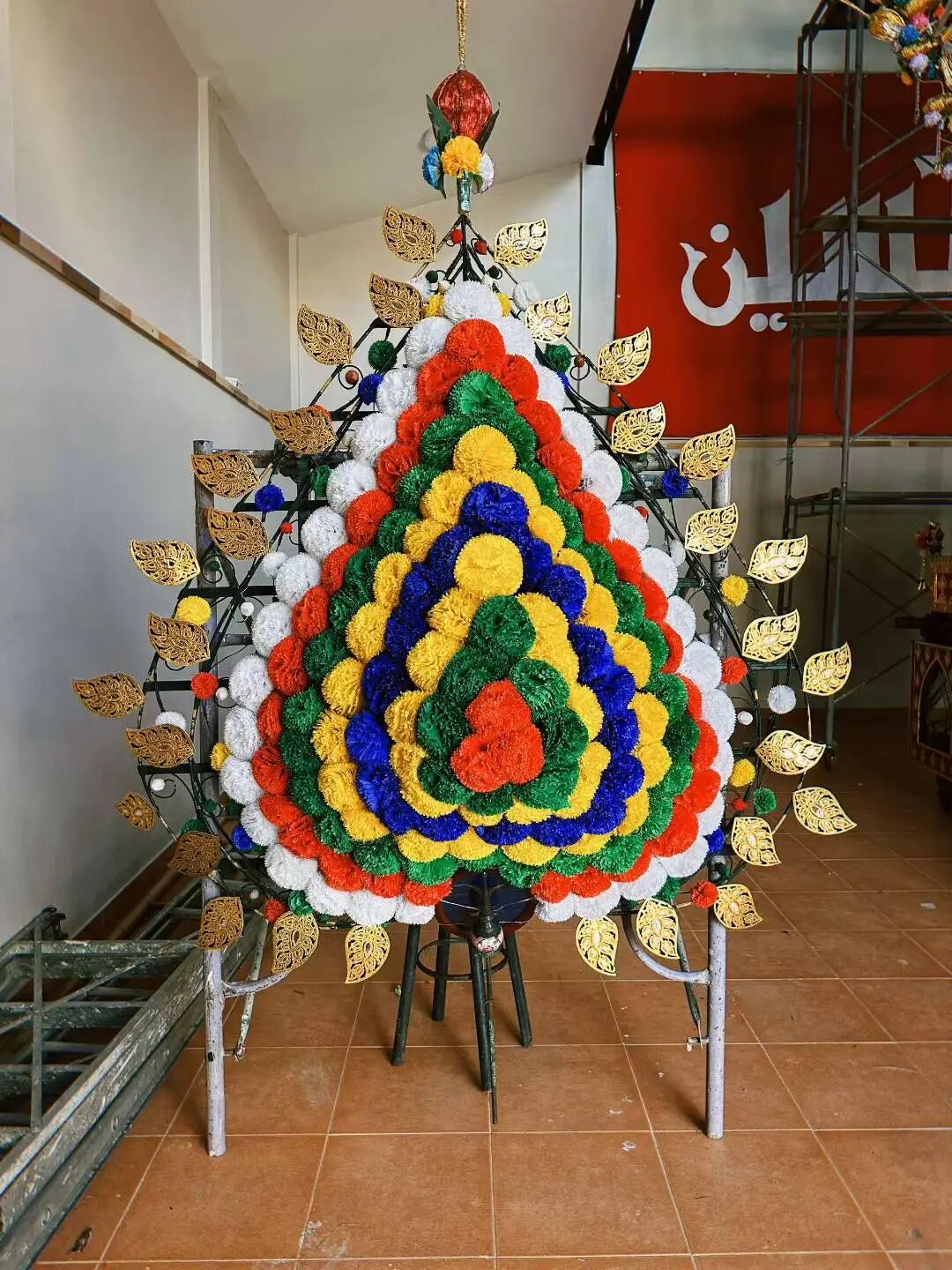
After the prayer (namaz), I returned to Kudi Luang Mosque to eat chicken rice noodle rolls (changfen) with everyone, along with a special dessert made of palm sugar and pomelo that the Persian community in Bangkok eats during Muharram. One of the themes for Shia Muslims during Muharram is sharing and giving. Food during this time is free, and everyone gathers to make the flowers used in the activities. Some people in the mosque wear white pants and headscarves, with bells hanging from their pant legs. They dedicate themselves to serving the mosque during the first ten days of Muharram.
I met a very interesting young man at the mosque who told me many stories about the Shia faith and Ashura. His parents are Afghan, he grew up in Iran, later went to Japan for school and work, and is now stationed in Bangkok by his company. He was the most fluent English speaker in the entire mosque, and I learned a lot from chatting with him. Like everyone else at the mosque, he was very welcoming to Sunni friends (dosti).
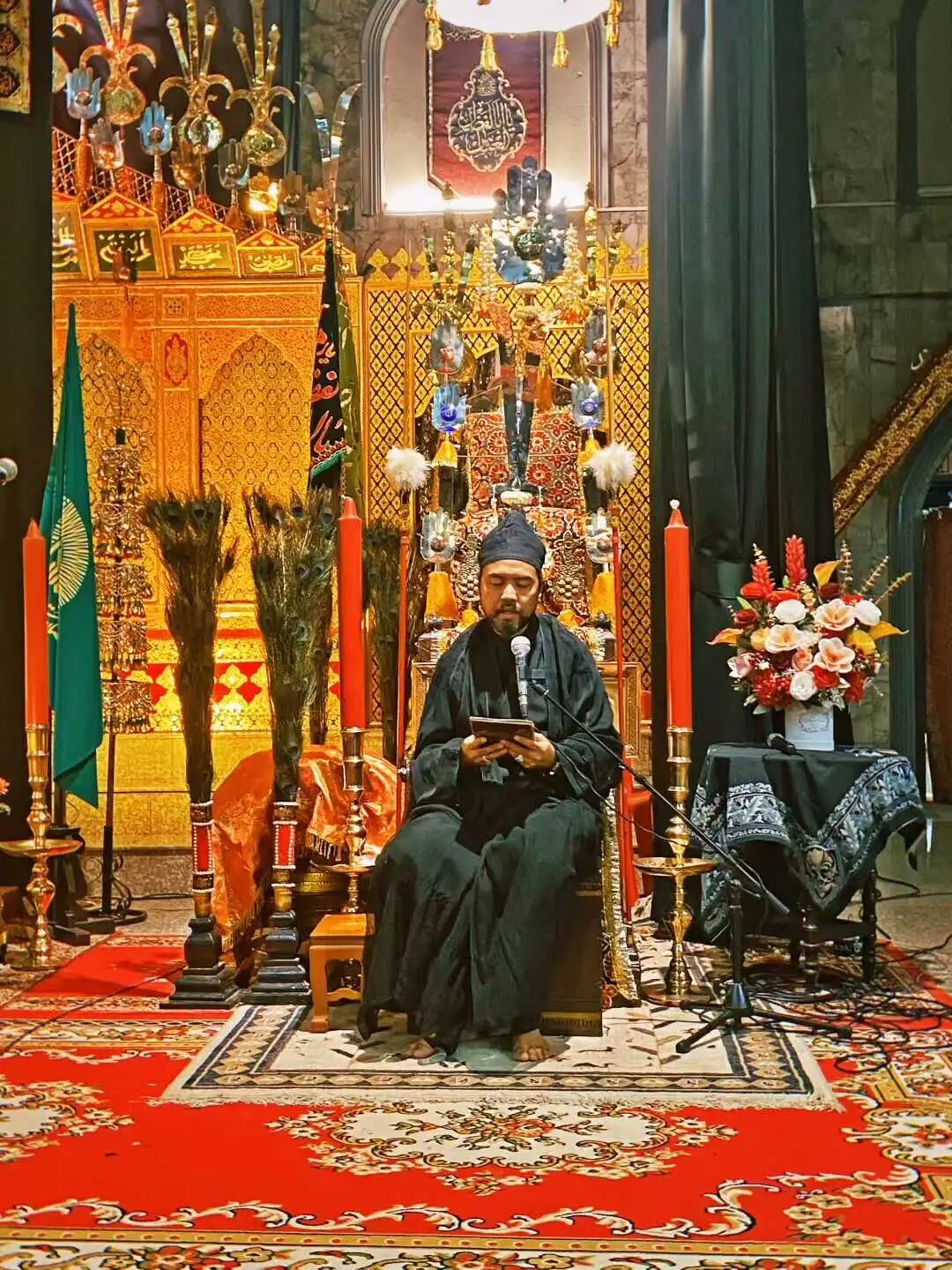
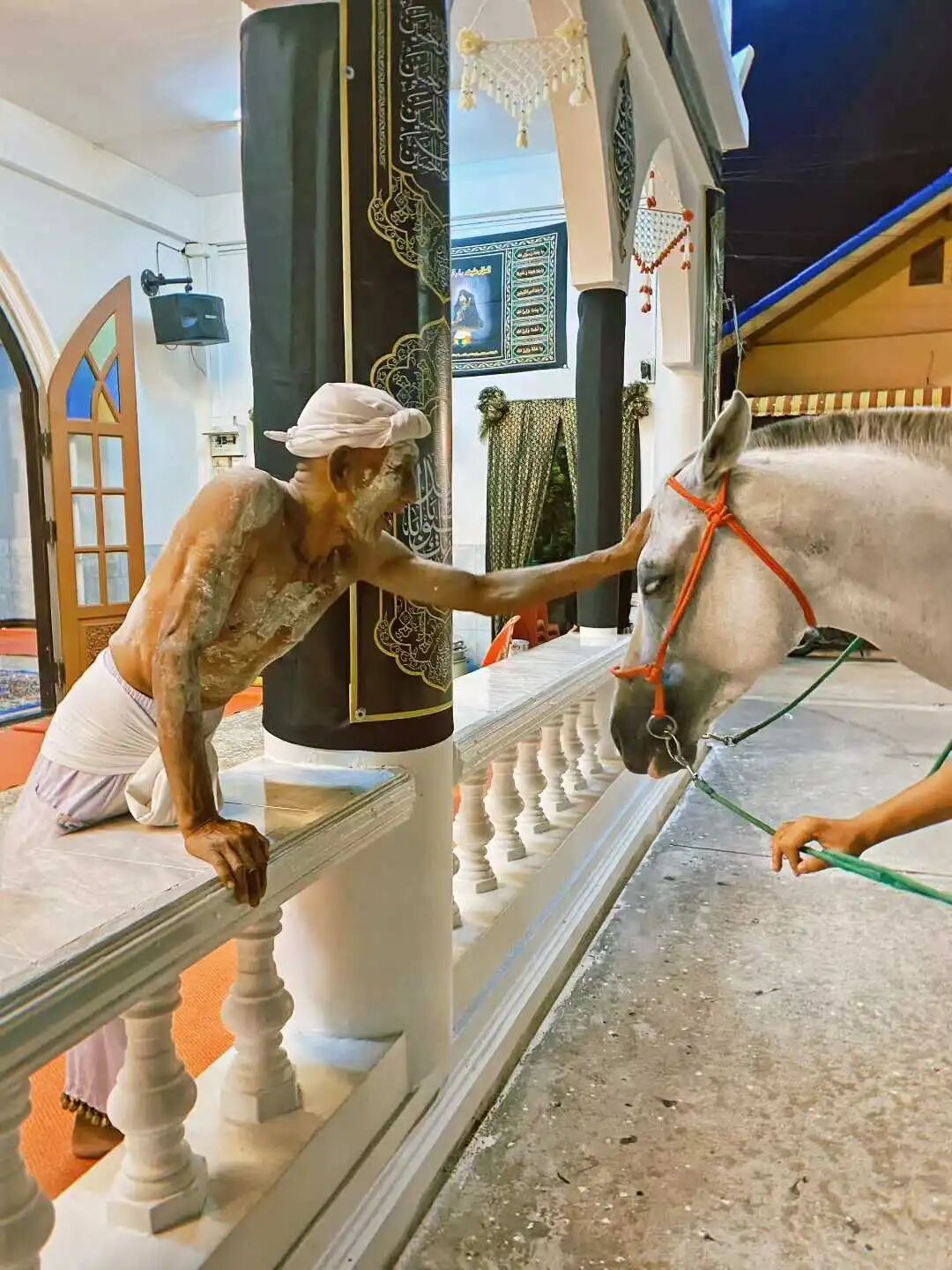
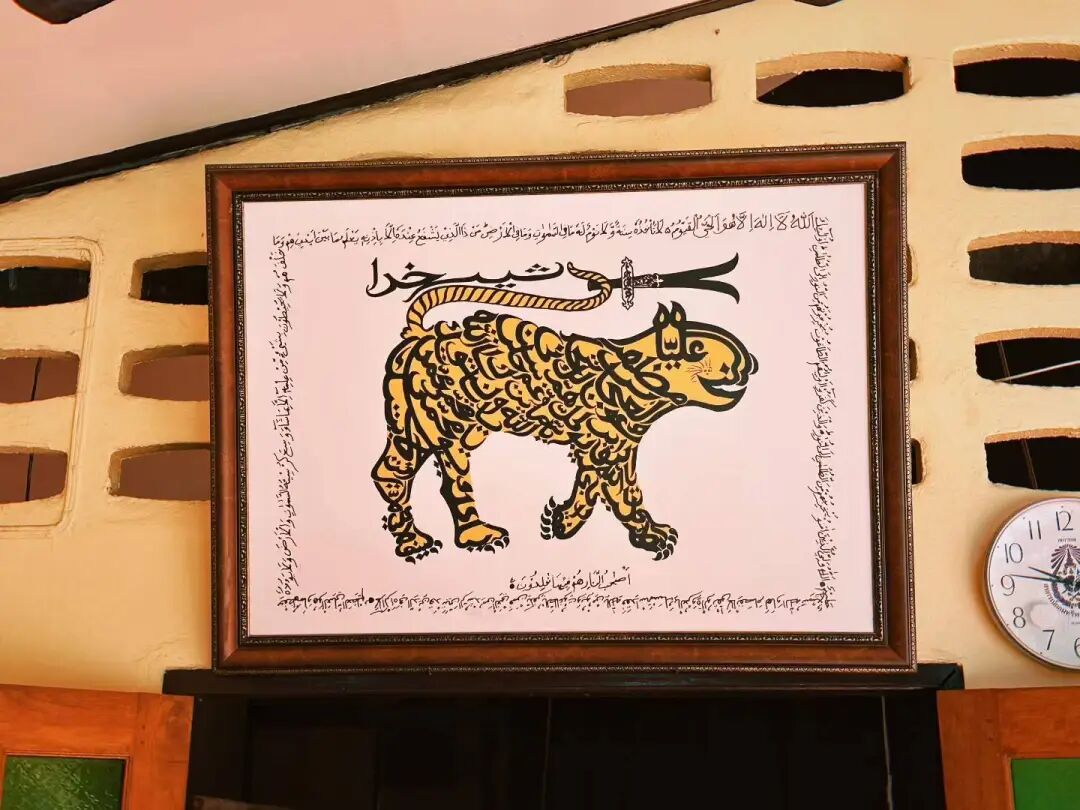
The most eye-catching thing in the mosque is a handsome, tall horse personally gifted by the King of Thailand. This horse represents Zuljanah, the warhorse of Imam Hussein. Zuljanah was raised by the noble Prophet from a young age and was known for loyalty, strength, endurance, and devotion. During the Battle of Karbala, Zuljanah used its body to block arrows aimed at Imam Hussein. After Imam Hussein passed away, Zuljanah returned to his family covered in blood to warn them of an ambush, then died from its wounds after fulfilling its final duty. During the month of Muharram, the horse is kept in the stables of Kudi Luang mosque, and people take turns walking it in the courtyard every night.
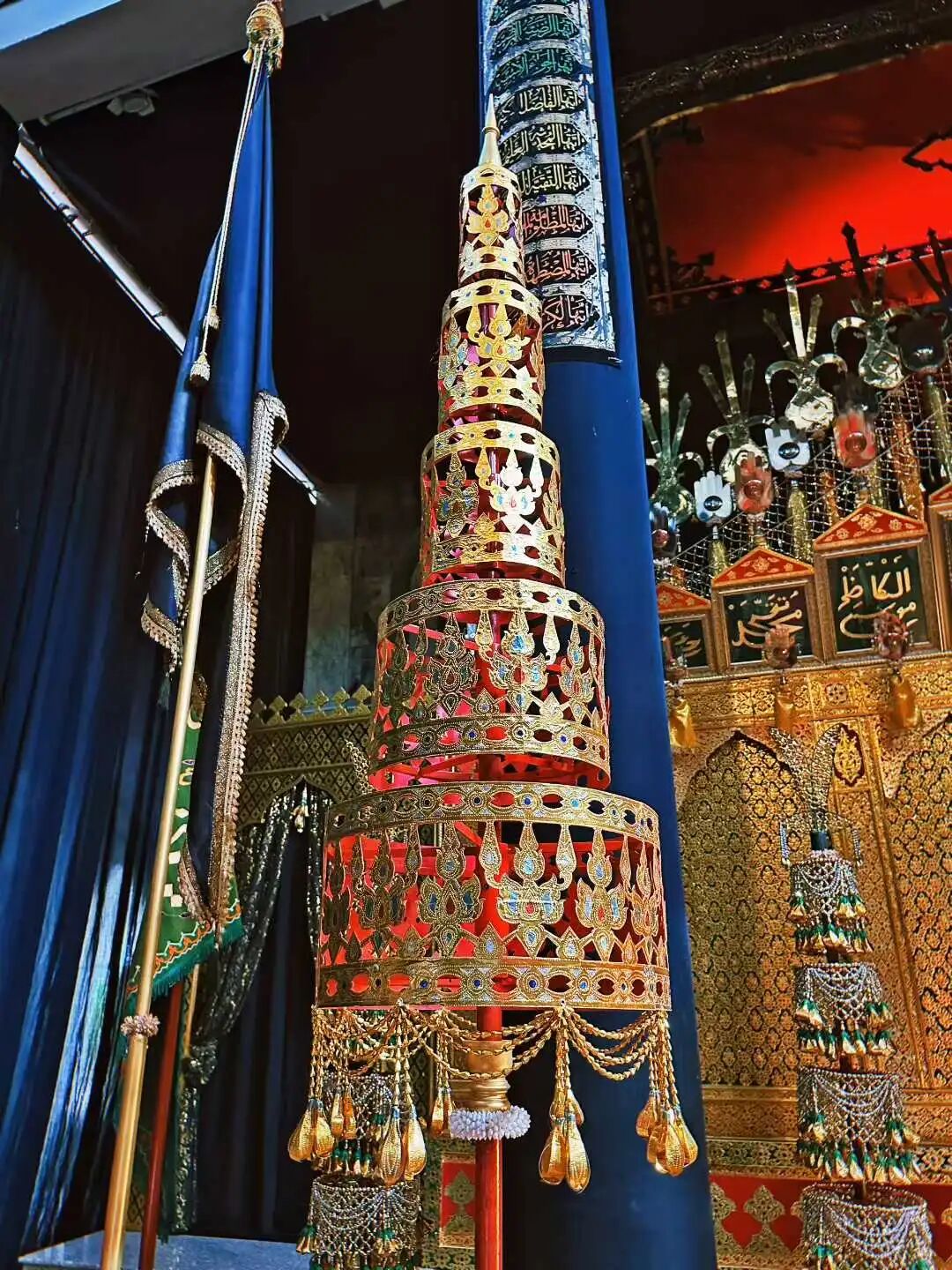
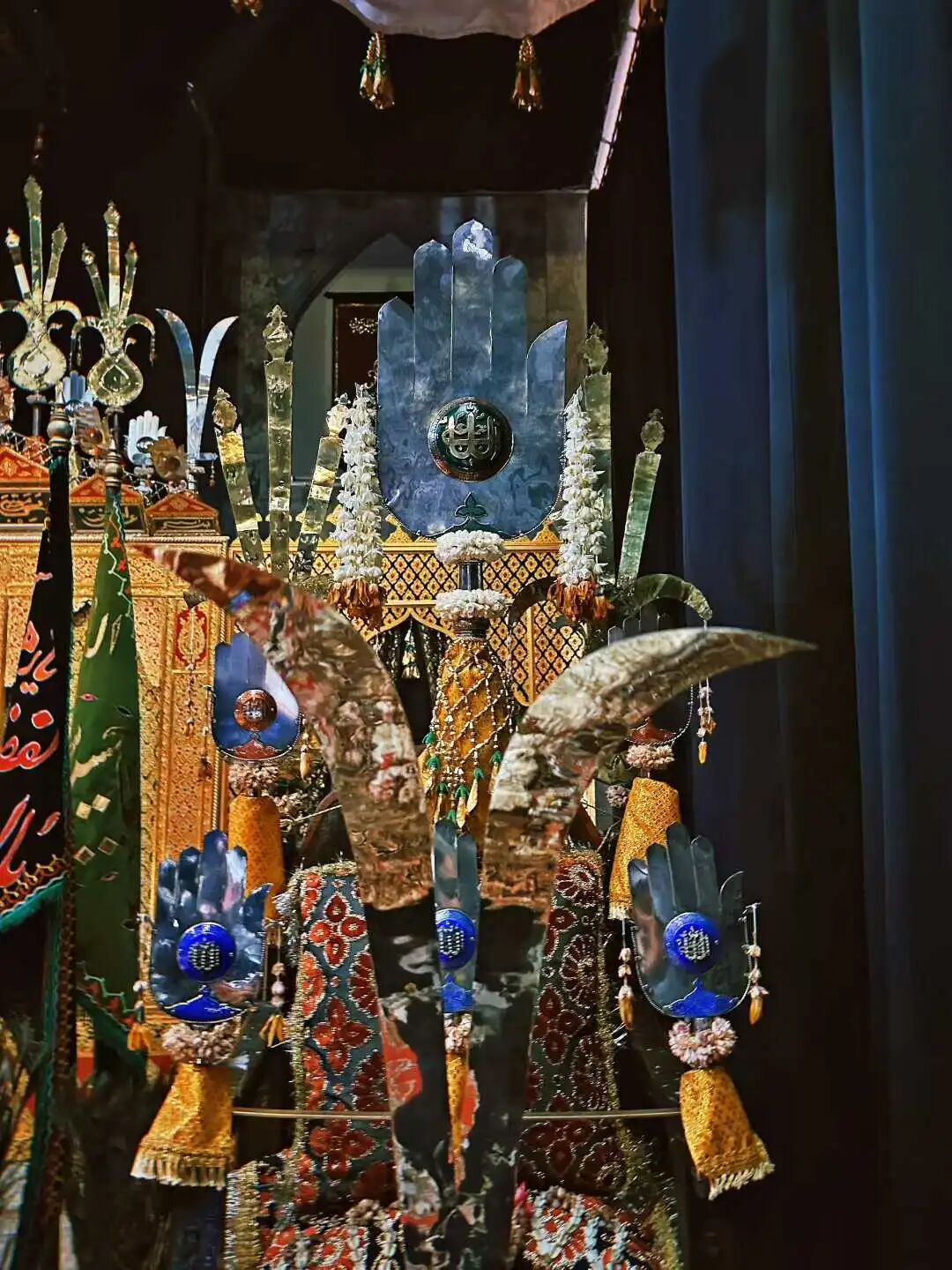
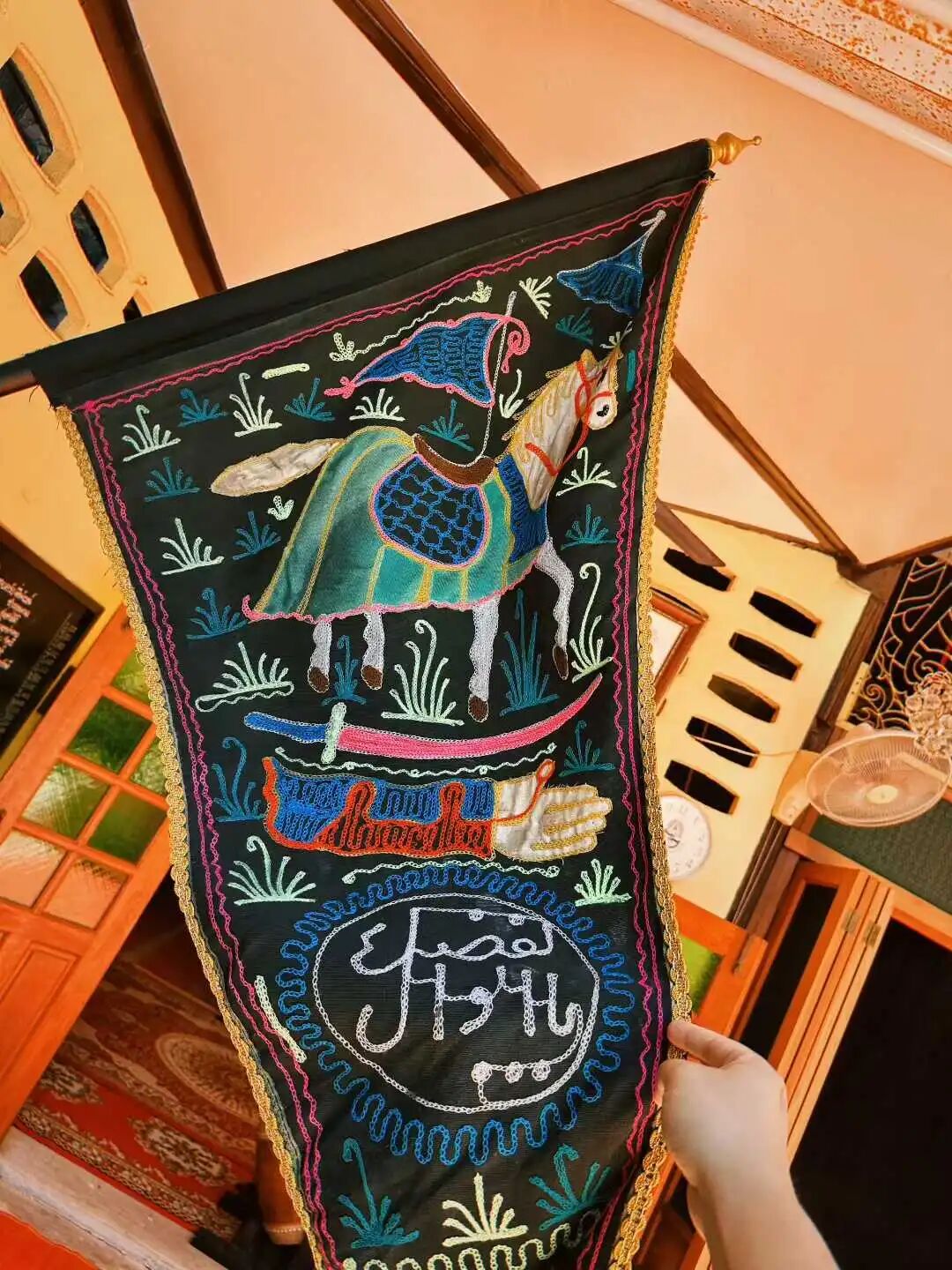
On the qibla wall of the main hall, the flagpole at the top is called an Alam, which represents the flag held by Abbas, the standard-bearer for Imam Hussein at the Battle of Karbala. The metal hand is called a Panja, which symbolizes the severed hands of Abbas. Abbas was the half-brother of Imam Hussein; he inherited the courage of Imam Ali and always held the flag of victory high on the battlefield. On the night of Ashura, he was blocked by enemy forces while returning with water from the Euphrates River; he fought alone, had both arms cut off, and eventually died in battle.
Above the niche on the qibla wall, the names of Allah, the noble Prophet, and the Twelve Imams of the Shia are written. The Twelver school is the largest branch of Shia Islam and is the state religion of Iran.
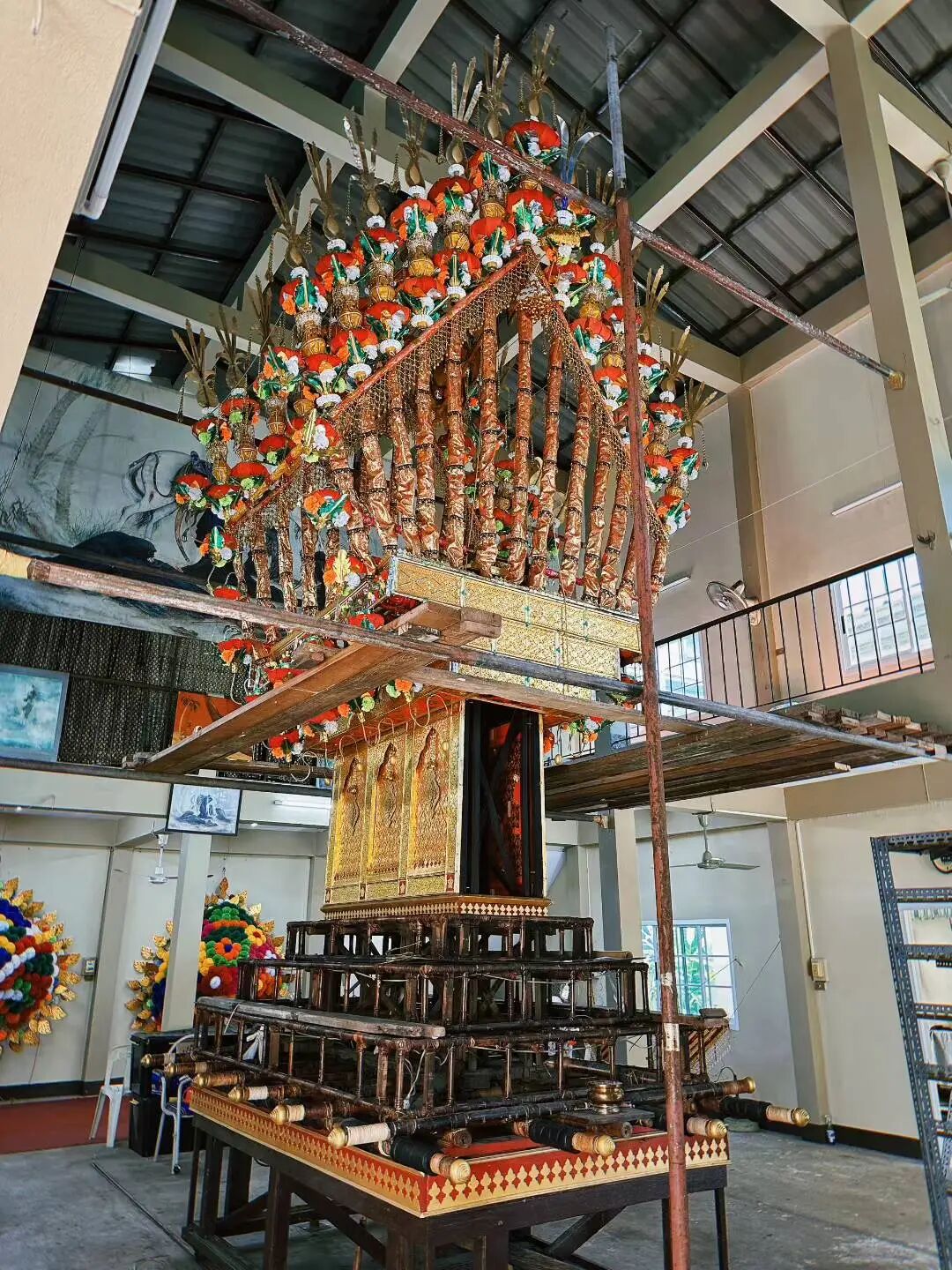
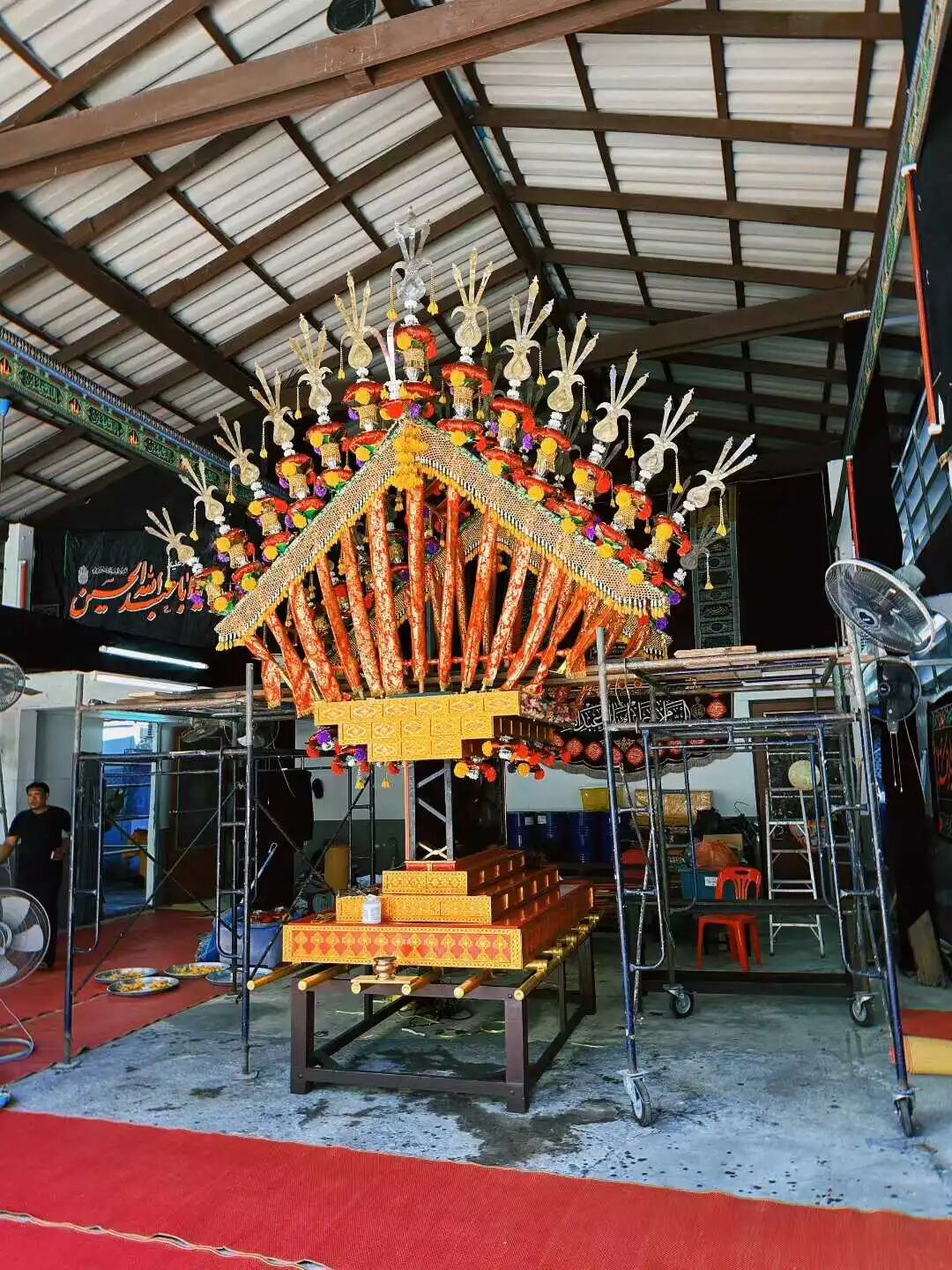
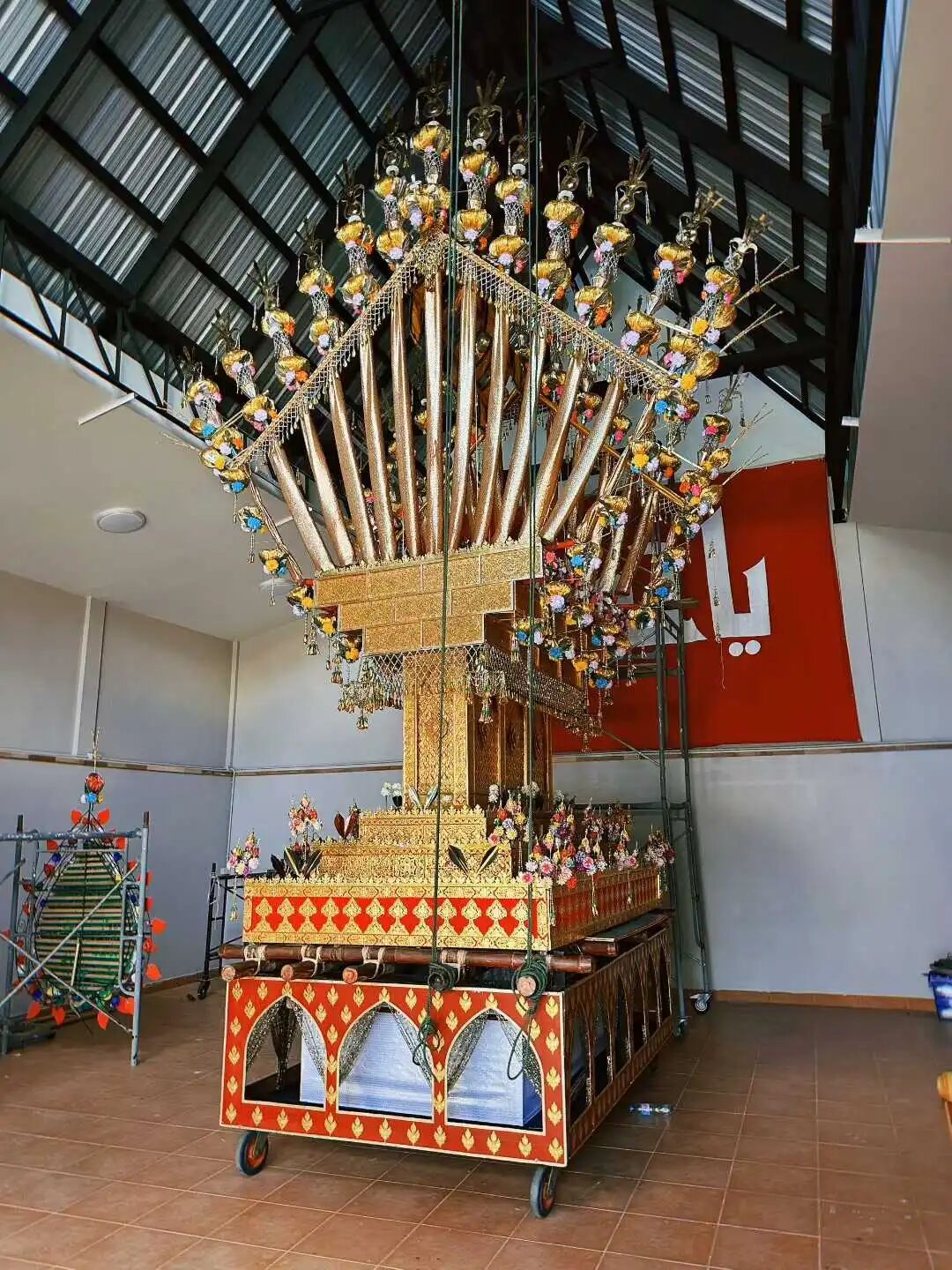
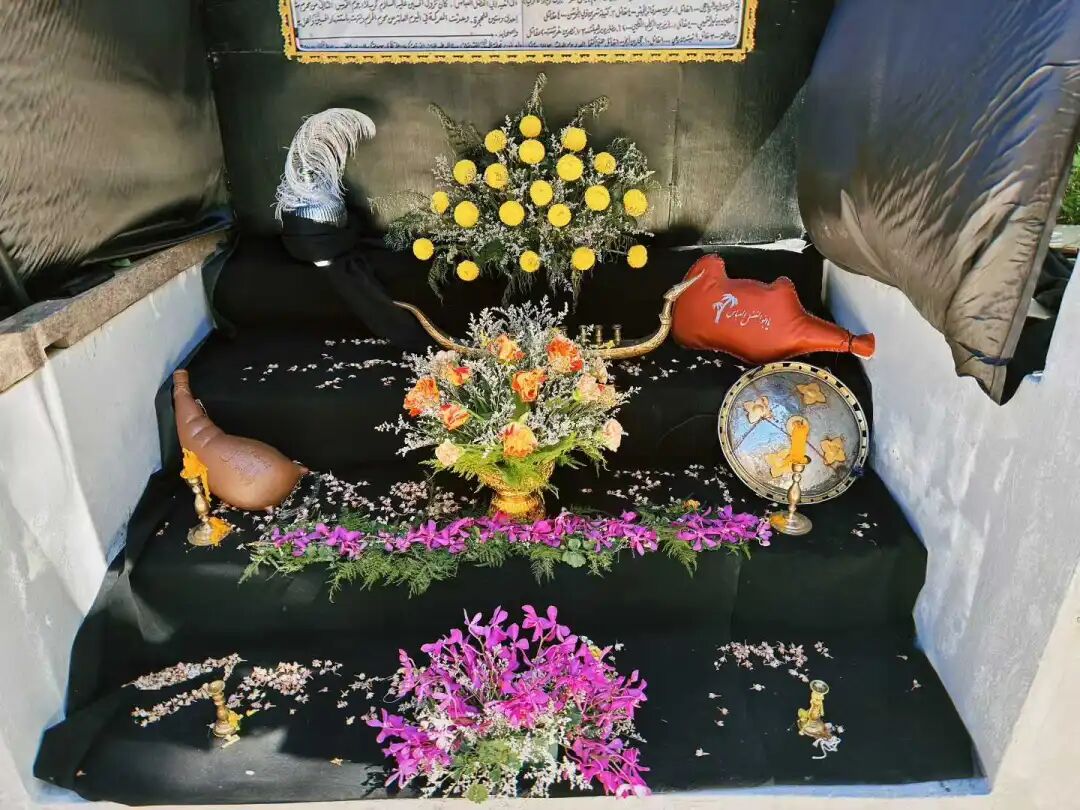
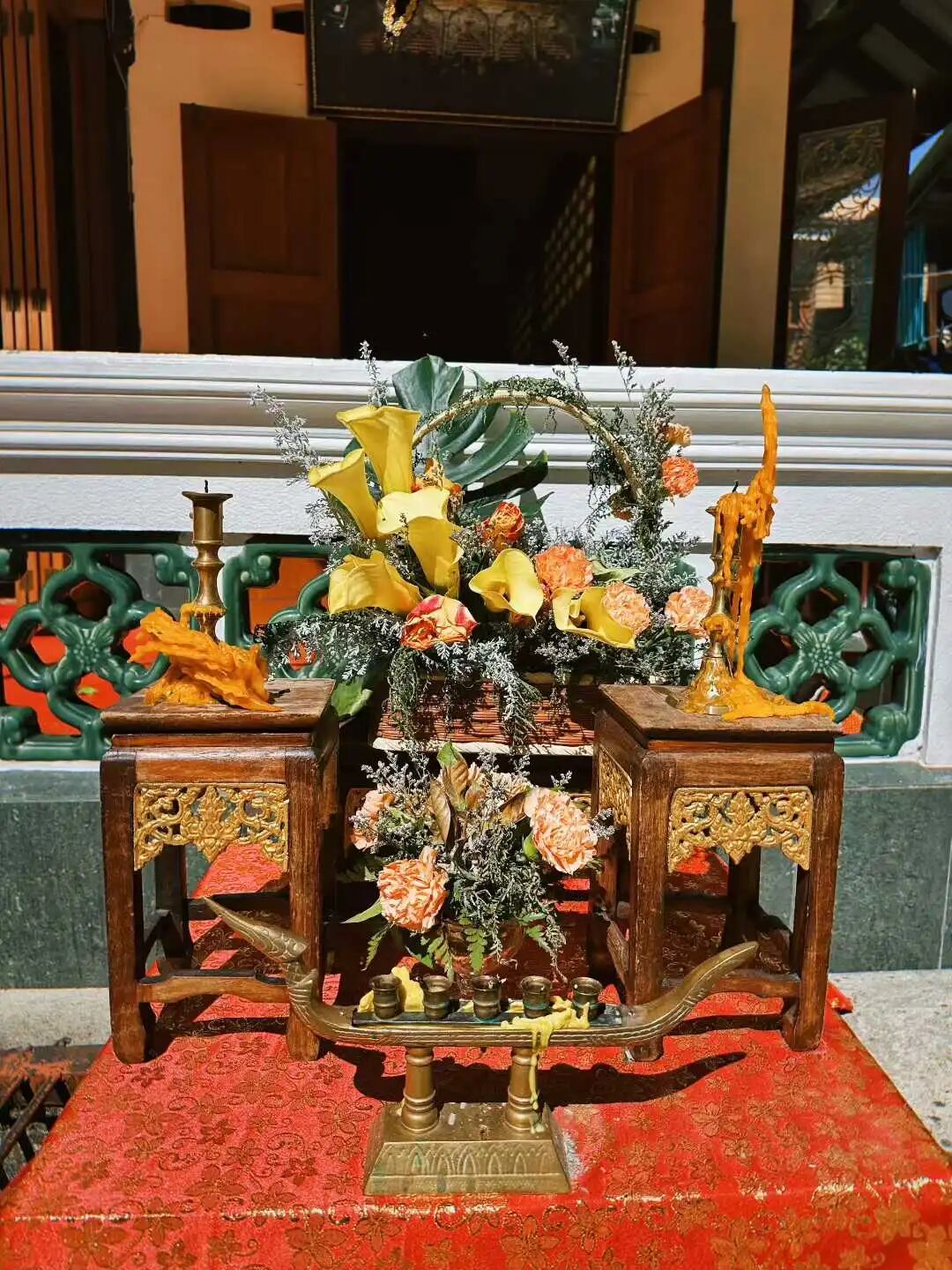
The Nakhl Gardani placed in the main hall symbolizes the funeral bier of Imam Hussein, decorated with a dagger and a turban (dastar) representing those used by him. During Ashura events, people carry the Nakhl Gardani to symbolize the funeral procession for Imam Hussein.
A Tadjah is also placed in the main hall to symbolize the tomb of Imam Hussein.
There is also a small decoration in the hall representing the youngest infant martyred at the Battle of Karbala, Ali Asghar, the six-month-old son of Imam Hussein. Records say that Imam Hussein held the thirsty Ali Asghar and asked the enemy for water for the child, but the enemy fired an arrow that pierced the baby's throat and Imam Hussein's arm at the same time. Ali Asghar later became a symbol of innocent victims and the most painful part of the mourning during Muharram.
During the first ten nights of Muharram, Shia Muslims in Bangkok gather every night to chant in memory of Imam Hussein. During these gatherings, people known as Rawda khwan tell stories about the martyrdom of Imam Hussein and his followers at the Battle of Karbala. The stories come from famous books, the most well-known being The Garden of the Martyrs (Rawdat al-shuhada) by the famous Timurid-era Persian writer Hussein Kashifi. Afterward, the imam gives a sermon (waaz) in Thai, teaching everyone about the bravery, fearlessness, and sacrifice shown by Imam Hussein and his followers at the Battle of Karbala.
Besides the main Shia mosque in Bangkok, Kudi Luang, I also visited two others: the Persian-descended Kudi Charoenphat and the Indian-descended Dilfallah mosque. The people at Kudi Charoenphat told me they did not want me to take photos or visit, which I understand. The people at Dilfallah mosque were friendlier, but they told me their Ashura event was on Monday, which I did not quite understand, as I wondered why it was not held on the 10th day of the first month of the Islamic calendar.
In all three places, I saw the Nakhl Gardani used during Ashura events. It symbolizes the funeral bier of Imam Hussein, and the entire Ashura event is essentially a reenactment of his funeral procession.
I previously spent Muharram in Tehran, Iran. See: Encountering Ashura in Tehran. view all
Summary: Bangkok has a long Persian-descended Shia Muslim history, centered in communities such as Kudi Luang Chao Sen Mosque. This account follows the Muharram gatherings, Ashura preparations, symbols of Karbala, mosque details, food sharing, and local conversations described in the original travel note.
As the Islamic New Year arrives, Shia friends (dosti) around the world spend the first ten days of the first month, Muharram, honoring Imam Hussein. This leads up to the grand Ashura festival. Last weekend, I traveled to Thailand to join the Muharram commemorations held by the Persian-descended Shia community in Bangkok.
Bangkok currently has five Shia mosques, with two belonging to the Persian community and three to the Indian community. It is the city with the strongest Shia cultural presence in all of Southeast Asia. Since I only had Saturday evening, I chose to attend the memorial at the primary Shia mosque in Bangkok, Kudi Luang Mosque.
Between the 16th and 18th centuries, Shia merchants from the Persian Safavid dynasty traveled along the Indian Ocean coast to trade in Siam, where they were warmly welcomed and hosted by the Siamese royal family. Some Persian merchants married locals and settled down, eventually taking on important roles in the Siamese court. Starting in the 17th century, the Sheik Ahmad family from Qom, Persia, managed Siam's western maritime affairs, overseeing trade, shipping, and diplomacy across the Indian Ocean.
After the Siamese capital of Ayutthaya fell in 1767 and the capital moved to Bangkok in 1782, the Persian community from Ayutthaya moved there as well. The first leader of the Persian Shia community in Bangkok was Konkaew, the son of the last leader from Ayutthaya. In 1797, he began managing Siam's western trade and received a property in the Thonburi area across the Chao Phraya River. People say he and 400 Shia followers established Kudi Chao Sen Mosque, which became the primary Shia mosque in Bangkok.
After Konkaew passed away, his brother and eight direct descendants inherited the title, controlling Siam's western trade rights for a century. In 1897, King Rama V renovated Kudi Chao Sen Mosque and renamed it Kudi Luang Chao Sen Mosque. In 1947, the entire Kudi Luang Mosque was moved to its current location to make room for the Royal Thai Navy headquarters. The community still lives around the mosque, preserving the traditional Shia culture of Bangkok.
We visited Kudi Luang Mosque in the morning. The male and female friends (dosti) were very warm, offering us several bottles of water. Even after learning we were Sunni, they remained very welcoming and told us we were free to take photos. It was a pity that the grandest Ashura event was scheduled for Monday morning, and we could not attend because of work.
Inside the main hall of Kudi Luang Mosque, a banner hangs that reads, 'Oh!' Hussein. Honoring Imam Hussein is the theme of Muharram.
The Persian-descended Shia elders in Bangkok live around the mosque. They are open-minded and very welcoming to friends (dosti).
After the prayer (namaz), I returned to Kudi Luang Mosque to eat chicken rice noodle rolls (changfen) with everyone, along with a special dessert made of palm sugar and pomelo that the Persian community in Bangkok eats during Muharram. One of the themes for Shia Muslims during Muharram is sharing and giving. Food during this time is free, and everyone gathers to make the flowers used in the activities. Some people in the mosque wear white pants and headscarves, with bells hanging from their pant legs. They dedicate themselves to serving the mosque during the first ten days of Muharram.
I met a very interesting young man at the mosque who told me many stories about the Shia faith and Ashura. His parents are Afghan, he grew up in Iran, later went to Japan for school and work, and is now stationed in Bangkok by his company. He was the most fluent English speaker in the entire mosque, and I learned a lot from chatting with him. Like everyone else at the mosque, he was very welcoming to Sunni friends (dosti).
The most eye-catching thing in the mosque is a handsome, tall horse personally gifted by the King of Thailand. This horse represents Zuljanah, the warhorse of Imam Hussein. Zuljanah was raised by the noble Prophet from a young age and was known for loyalty, strength, endurance, and devotion. During the Battle of Karbala, Zuljanah used its body to block arrows aimed at Imam Hussein. After Imam Hussein passed away, Zuljanah returned to his family covered in blood to warn them of an ambush, then died from its wounds after fulfilling its final duty. During the month of Muharram, the horse is kept in the stables of Kudi Luang mosque, and people take turns walking it in the courtyard every night.
On the qibla wall of the main hall, the flagpole at the top is called an Alam, which represents the flag held by Abbas, the standard-bearer for Imam Hussein at the Battle of Karbala. The metal hand is called a Panja, which symbolizes the severed hands of Abbas. Abbas was the half-brother of Imam Hussein; he inherited the courage of Imam Ali and always held the flag of victory high on the battlefield. On the night of Ashura, he was blocked by enemy forces while returning with water from the Euphrates River; he fought alone, had both arms cut off, and eventually died in battle.
Above the niche on the qibla wall, the names of Allah, the noble Prophet, and the Twelve Imams of the Shia are written. The Twelver school is the largest branch of Shia Islam and is the state religion of Iran.
The Nakhl Gardani placed in the main hall symbolizes the funeral bier of Imam Hussein, decorated with a dagger and a turban (dastar) representing those used by him. During Ashura events, people carry the Nakhl Gardani to symbolize the funeral procession for Imam Hussein.
A Tadjah is also placed in the main hall to symbolize the tomb of Imam Hussein.
There is also a small decoration in the hall representing the youngest infant martyred at the Battle of Karbala, Ali Asghar, the six-month-old son of Imam Hussein. Records say that Imam Hussein held the thirsty Ali Asghar and asked the enemy for water for the child, but the enemy fired an arrow that pierced the baby's throat and Imam Hussein's arm at the same time. Ali Asghar later became a symbol of innocent victims and the most painful part of the mourning during Muharram.
During the first ten nights of Muharram, Shia Muslims in Bangkok gather every night to chant in memory of Imam Hussein. During these gatherings, people known as Rawda khwan tell stories about the martyrdom of Imam Hussein and his followers at the Battle of Karbala. The stories come from famous books, the most well-known being The Garden of the Martyrs (Rawdat al-shuhada) by the famous Timurid-era Persian writer Hussein Kashifi. Afterward, the imam gives a sermon (waaz) in Thai, teaching everyone about the bravery, fearlessness, and sacrifice shown by Imam Hussein and his followers at the Battle of Karbala.
Besides the main Shia mosque in Bangkok, Kudi Luang, I also visited two others: the Persian-descended Kudi Charoenphat and the Indian-descended Dilfallah mosque. The people at Kudi Charoenphat told me they did not want me to take photos or visit, which I understand. The people at Dilfallah mosque were friendlier, but they told me their Ashura event was on Monday, which I did not quite understand, as I wondered why it was not held on the 10th day of the first month of the Islamic calendar.
In all three places, I saw the Nakhl Gardani used during Ashura events. It symbolizes the funeral bier of Imam Hussein, and the entire Ashura event is essentially a reenactment of his funeral procession.
I previously spent Muharram in Tehran, Iran. See: Encountering Ashura in Tehran. view all
Reposted from the web
Summary: Bangkok has a long Persian-descended Shia Muslim history, centered in communities such as Kudi Luang Chao Sen Mosque. This account follows the Muharram gatherings, Ashura preparations, symbols of Karbala, mosque details, food sharing, and local conversations described in the original travel note.
As the Islamic New Year arrives, Shia friends (dosti) around the world spend the first ten days of the first month, Muharram, honoring Imam Hussein. This leads up to the grand Ashura festival. Last weekend, I traveled to Thailand to join the Muharram commemorations held by the Persian-descended Shia community in Bangkok.
Bangkok currently has five Shia mosques, with two belonging to the Persian community and three to the Indian community. It is the city with the strongest Shia cultural presence in all of Southeast Asia. Since I only had Saturday evening, I chose to attend the memorial at the primary Shia mosque in Bangkok, Kudi Luang Mosque.
Between the 16th and 18th centuries, Shia merchants from the Persian Safavid dynasty traveled along the Indian Ocean coast to trade in Siam, where they were warmly welcomed and hosted by the Siamese royal family. Some Persian merchants married locals and settled down, eventually taking on important roles in the Siamese court. Starting in the 17th century, the Sheik Ahmad family from Qom, Persia, managed Siam's western maritime affairs, overseeing trade, shipping, and diplomacy across the Indian Ocean.
After the Siamese capital of Ayutthaya fell in 1767 and the capital moved to Bangkok in 1782, the Persian community from Ayutthaya moved there as well. The first leader of the Persian Shia community in Bangkok was Konkaew, the son of the last leader from Ayutthaya. In 1797, he began managing Siam's western trade and received a property in the Thonburi area across the Chao Phraya River. People say he and 400 Shia followers established Kudi Chao Sen Mosque, which became the primary Shia mosque in Bangkok.
After Konkaew passed away, his brother and eight direct descendants inherited the title, controlling Siam's western trade rights for a century. In 1897, King Rama V renovated Kudi Chao Sen Mosque and renamed it Kudi Luang Chao Sen Mosque. In 1947, the entire Kudi Luang Mosque was moved to its current location to make room for the Royal Thai Navy headquarters. The community still lives around the mosque, preserving the traditional Shia culture of Bangkok.
We visited Kudi Luang Mosque in the morning. The male and female friends (dosti) were very warm, offering us several bottles of water. Even after learning we were Sunni, they remained very welcoming and told us we were free to take photos. It was a pity that the grandest Ashura event was scheduled for Monday morning, and we could not attend because of work.
Inside the main hall of Kudi Luang Mosque, a banner hangs that reads, 'Oh!' Hussein. Honoring Imam Hussein is the theme of Muharram.
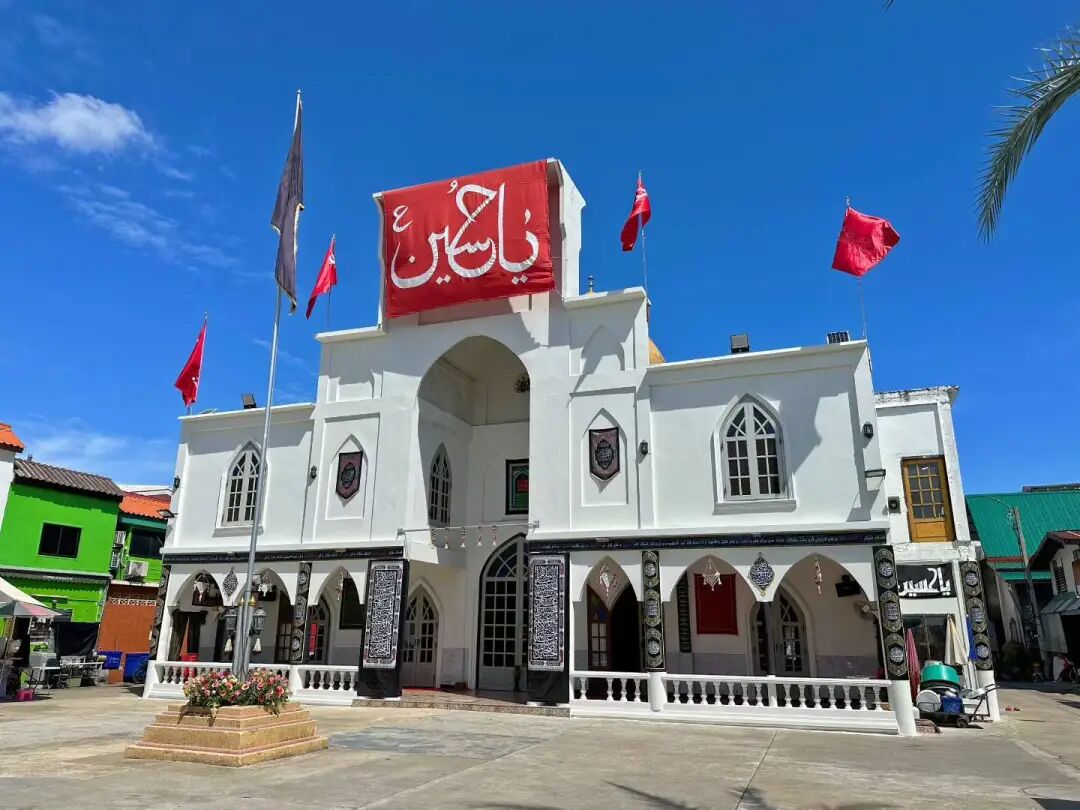
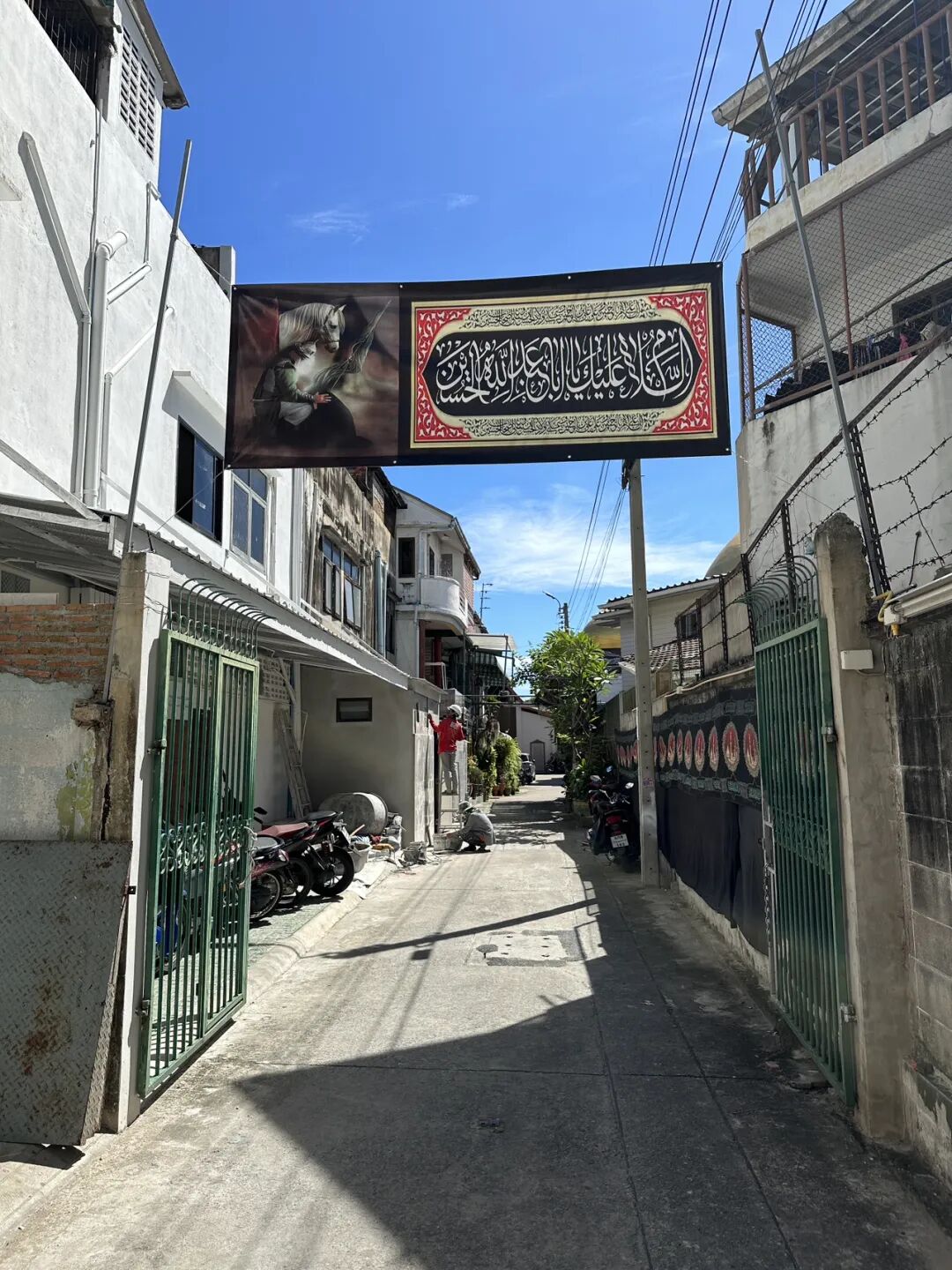
The Persian-descended Shia elders in Bangkok live around the mosque. They are open-minded and very welcoming to friends (dosti).
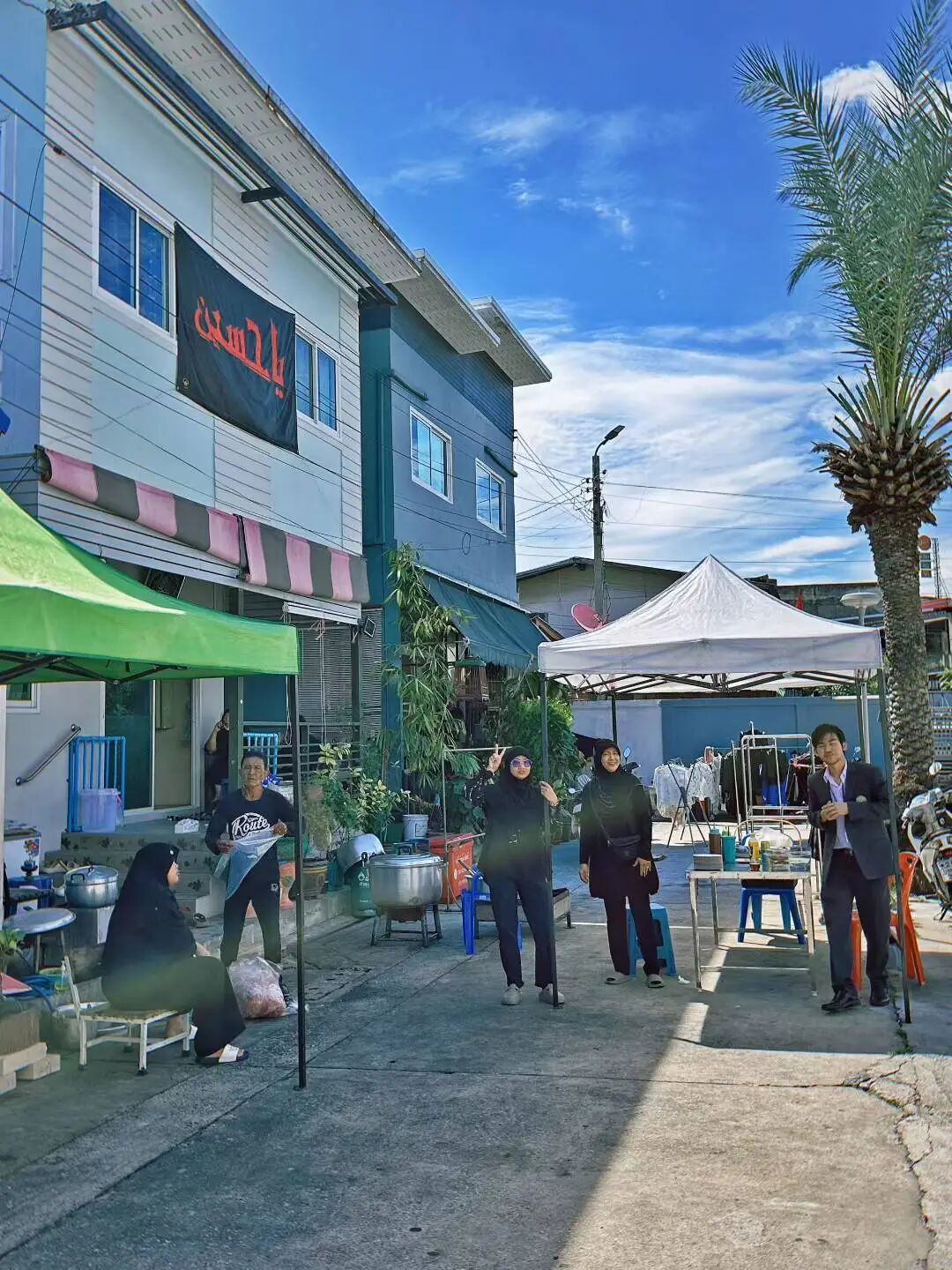
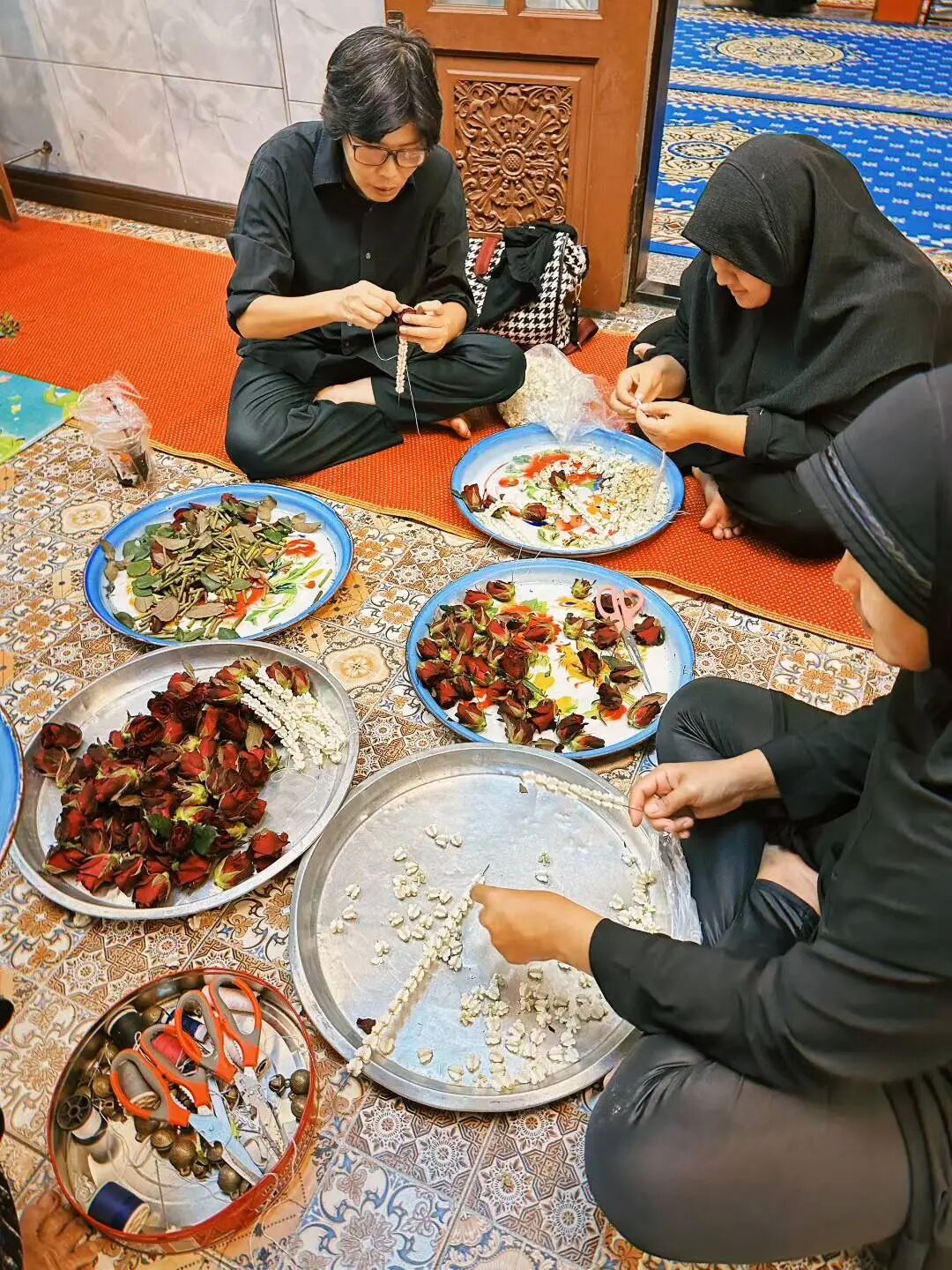
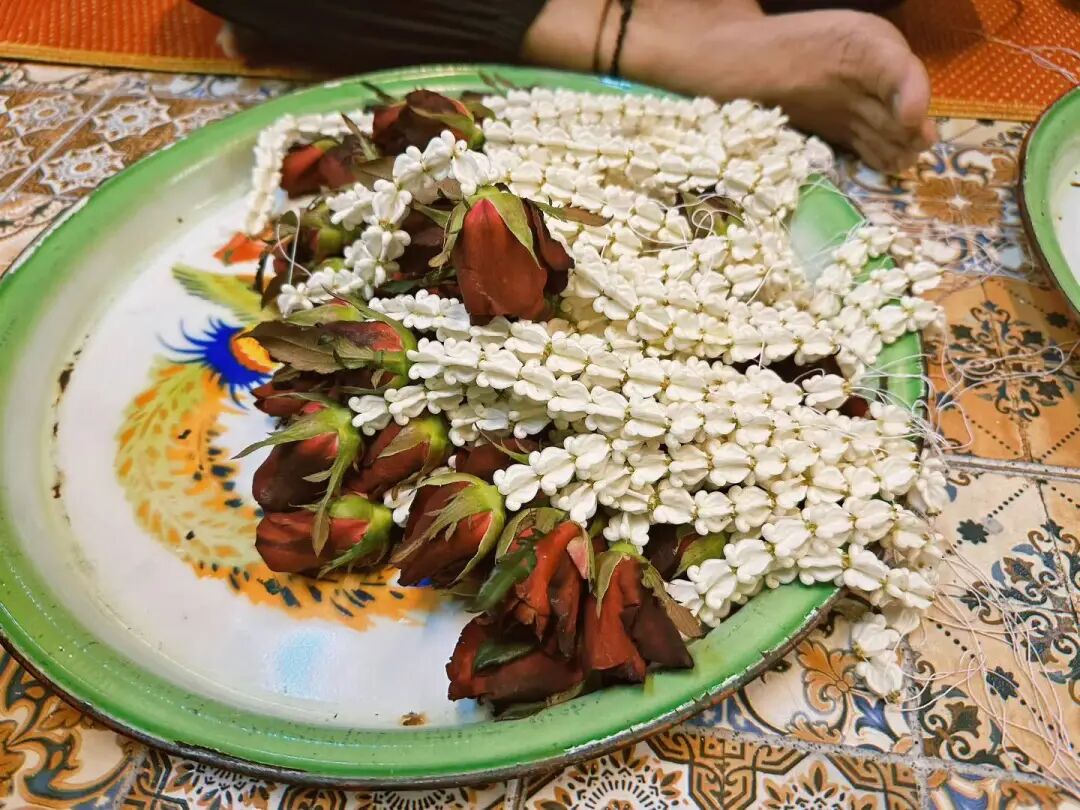
After the prayer (namaz), I returned to Kudi Luang Mosque to eat chicken rice noodle rolls (changfen) with everyone, along with a special dessert made of palm sugar and pomelo that the Persian community in Bangkok eats during Muharram. One of the themes for Shia Muslims during Muharram is sharing and giving. Food during this time is free, and everyone gathers to make the flowers used in the activities. Some people in the mosque wear white pants and headscarves, with bells hanging from their pant legs. They dedicate themselves to serving the mosque during the first ten days of Muharram.
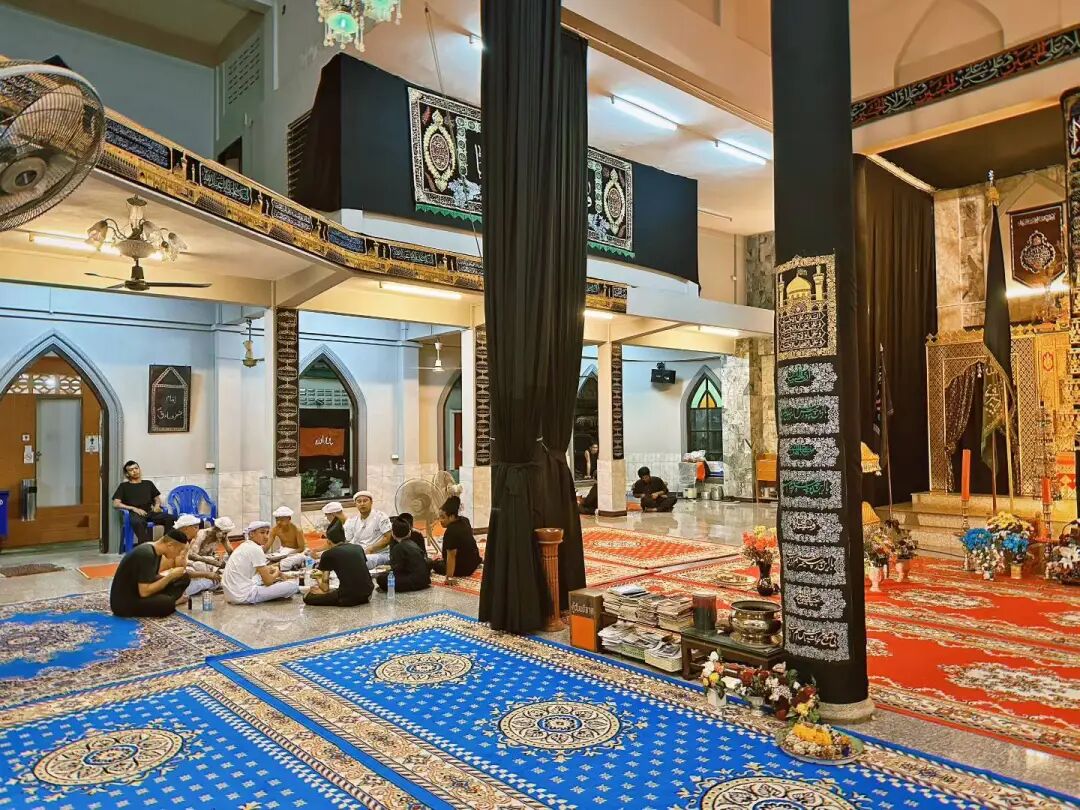
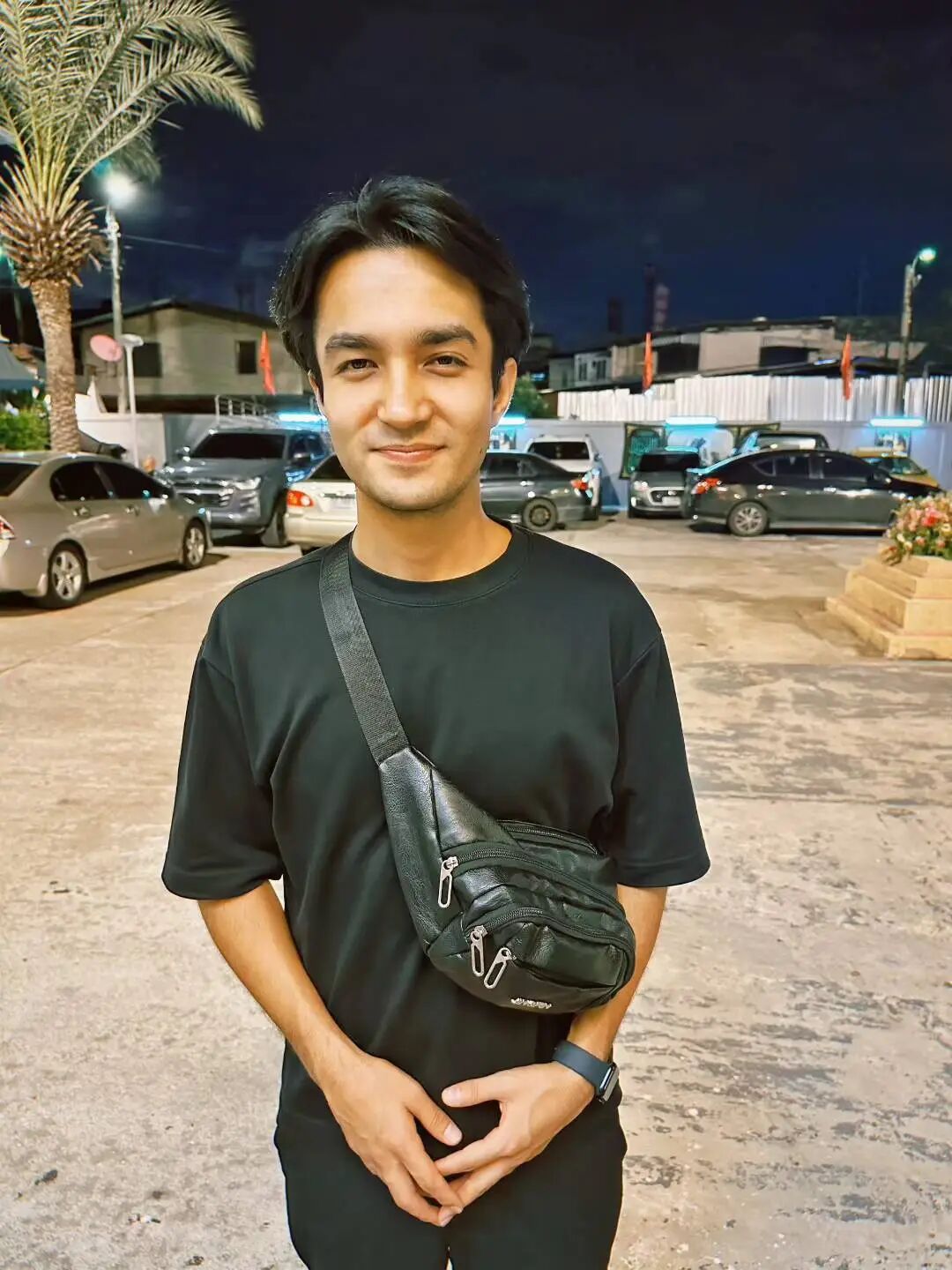
I met a very interesting young man at the mosque who told me many stories about the Shia faith and Ashura. His parents are Afghan, he grew up in Iran, later went to Japan for school and work, and is now stationed in Bangkok by his company. He was the most fluent English speaker in the entire mosque, and I learned a lot from chatting with him. Like everyone else at the mosque, he was very welcoming to Sunni friends (dosti).
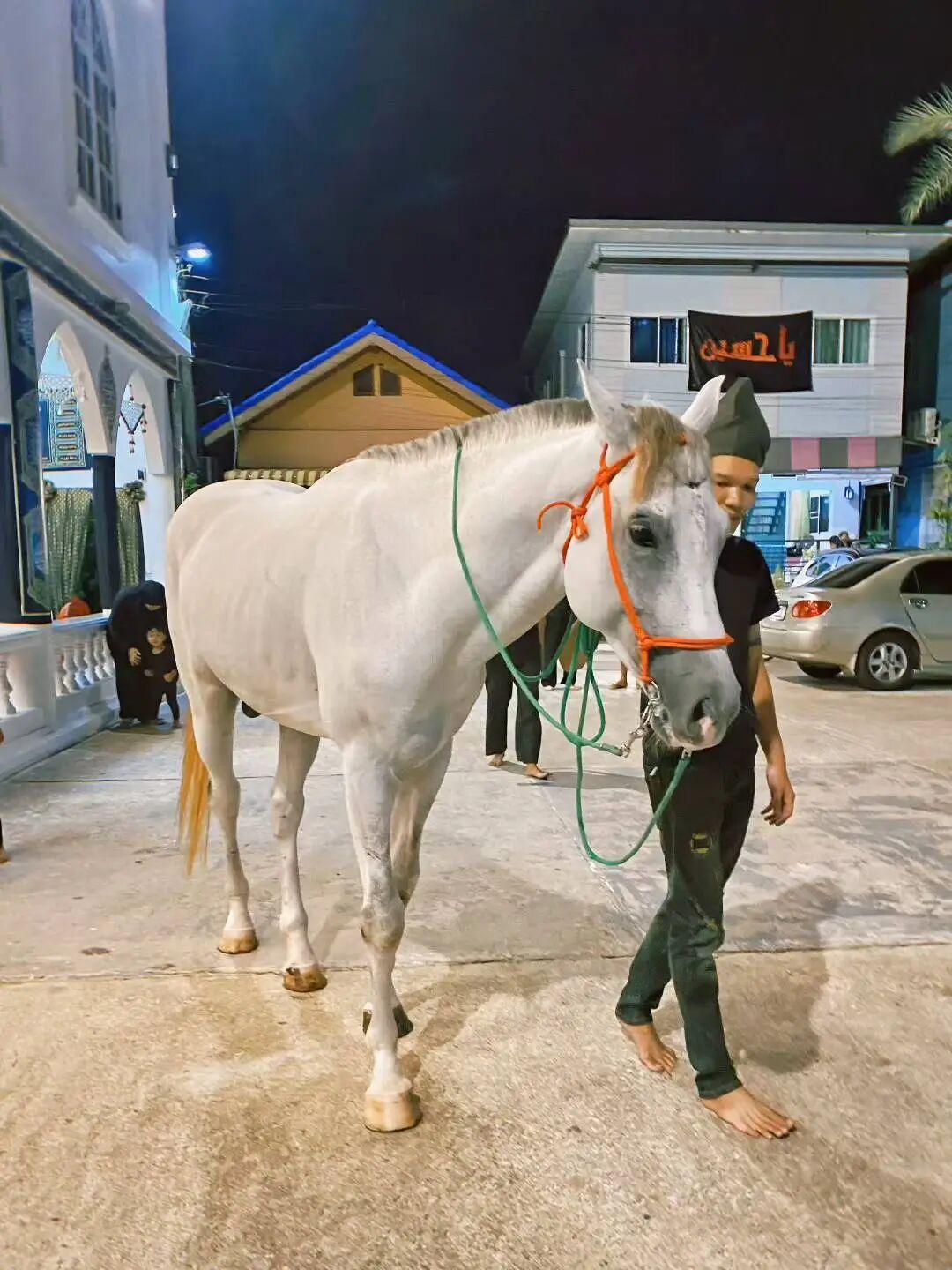
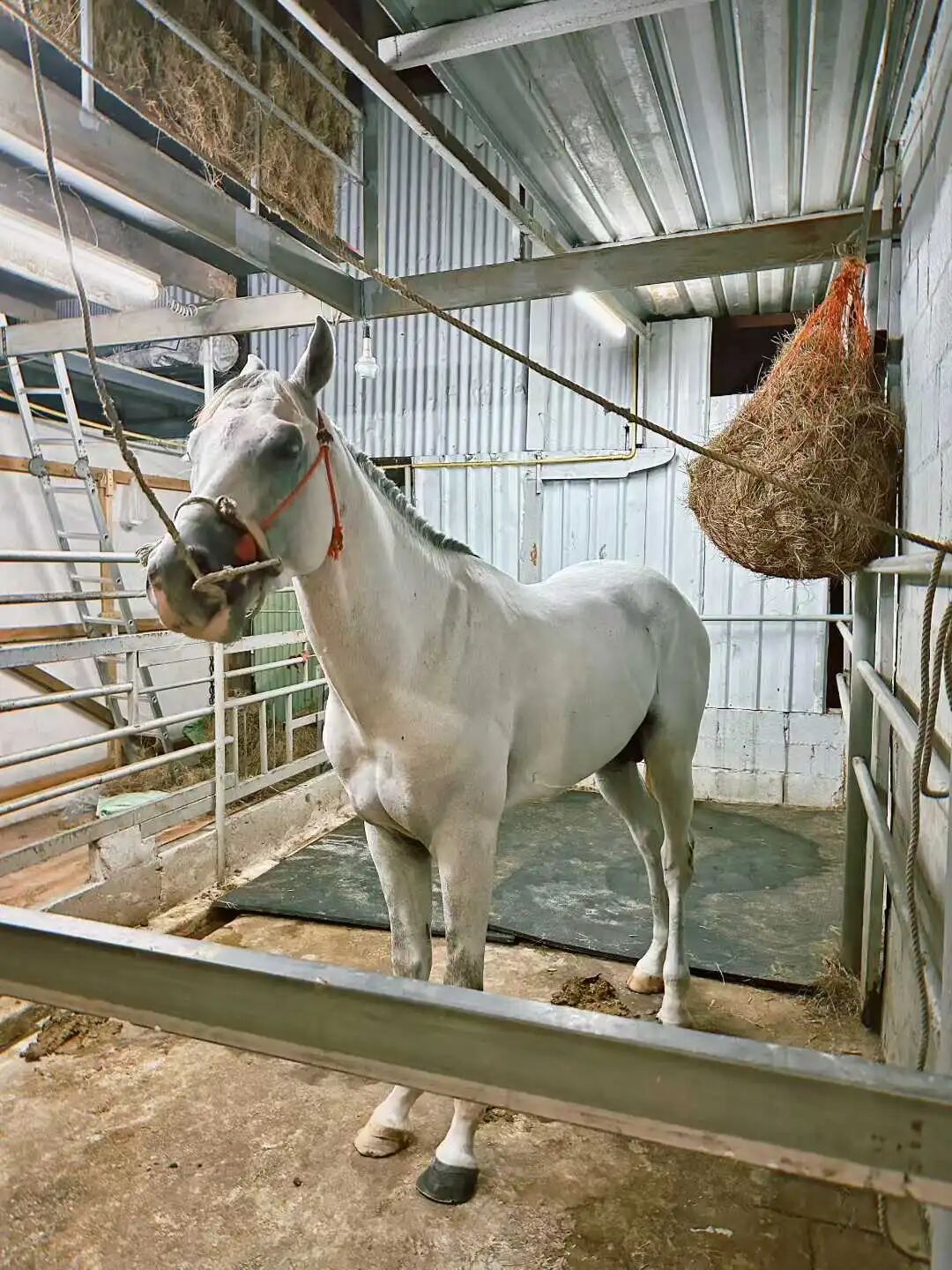
The most eye-catching thing in the mosque is a handsome, tall horse personally gifted by the King of Thailand. This horse represents Zuljanah, the warhorse of Imam Hussein. Zuljanah was raised by the noble Prophet from a young age and was known for loyalty, strength, endurance, and devotion. During the Battle of Karbala, Zuljanah used its body to block arrows aimed at Imam Hussein. After Imam Hussein passed away, Zuljanah returned to his family covered in blood to warn them of an ambush, then died from its wounds after fulfilling its final duty. During the month of Muharram, the horse is kept in the stables of Kudi Luang mosque, and people take turns walking it in the courtyard every night.
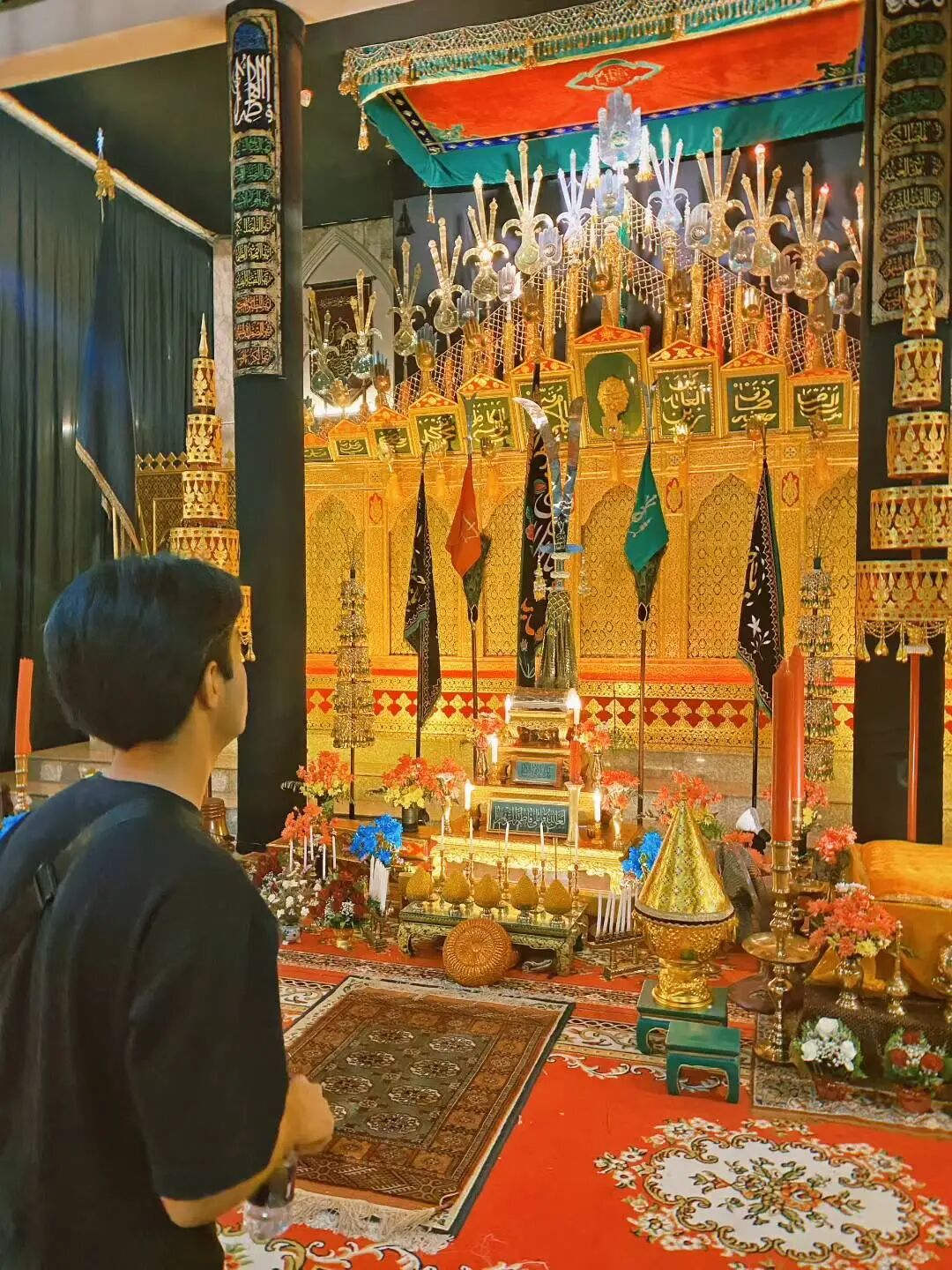
On the qibla wall of the main hall, the flagpole at the top is called an Alam, which represents the flag held by Abbas, the standard-bearer for Imam Hussein at the Battle of Karbala. The metal hand is called a Panja, which symbolizes the severed hands of Abbas. Abbas was the half-brother of Imam Hussein; he inherited the courage of Imam Ali and always held the flag of victory high on the battlefield. On the night of Ashura, he was blocked by enemy forces while returning with water from the Euphrates River; he fought alone, had both arms cut off, and eventually died in battle.
Above the niche on the qibla wall, the names of Allah, the noble Prophet, and the Twelve Imams of the Shia are written. The Twelver school is the largest branch of Shia Islam and is the state religion of Iran.
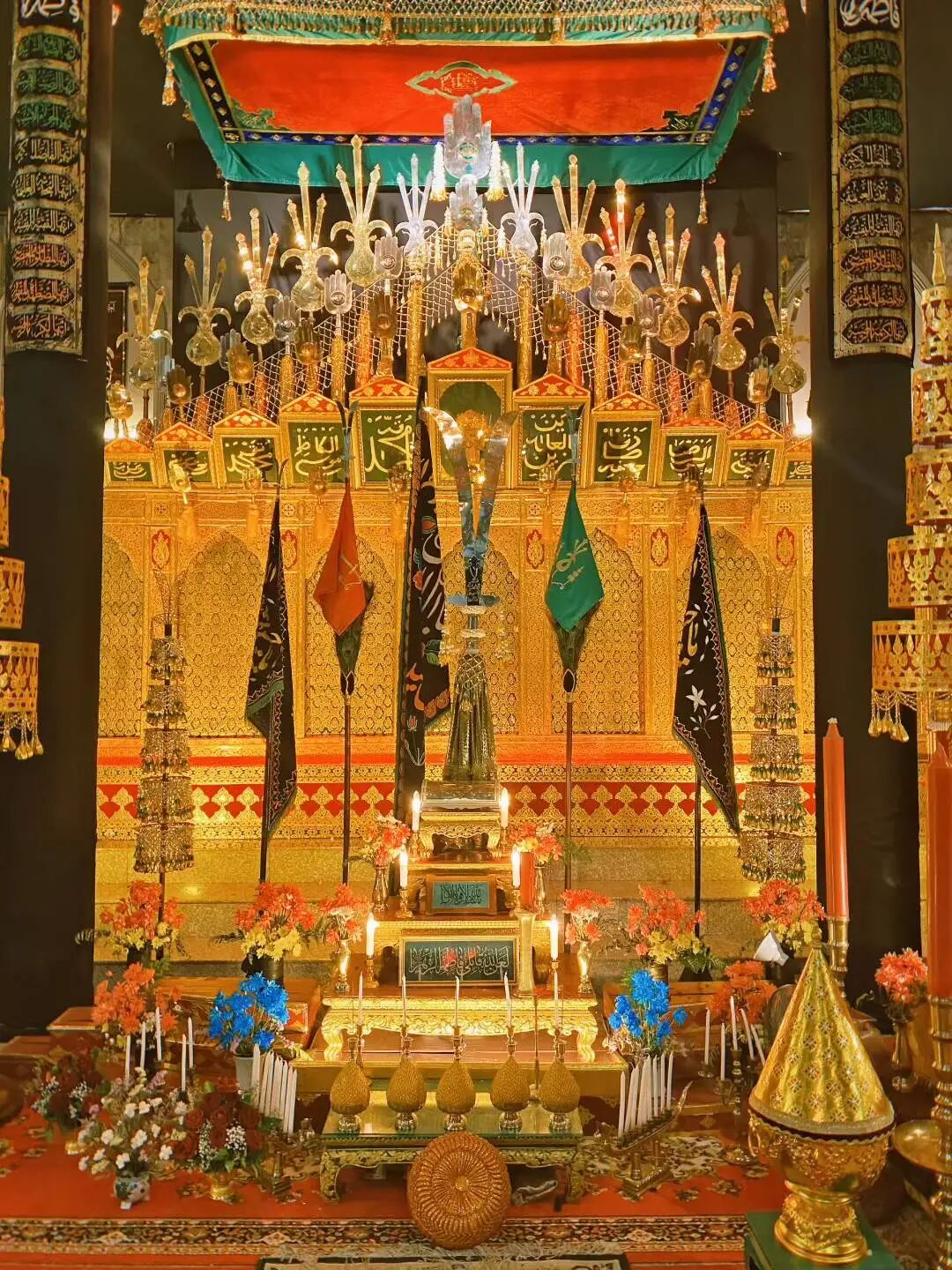
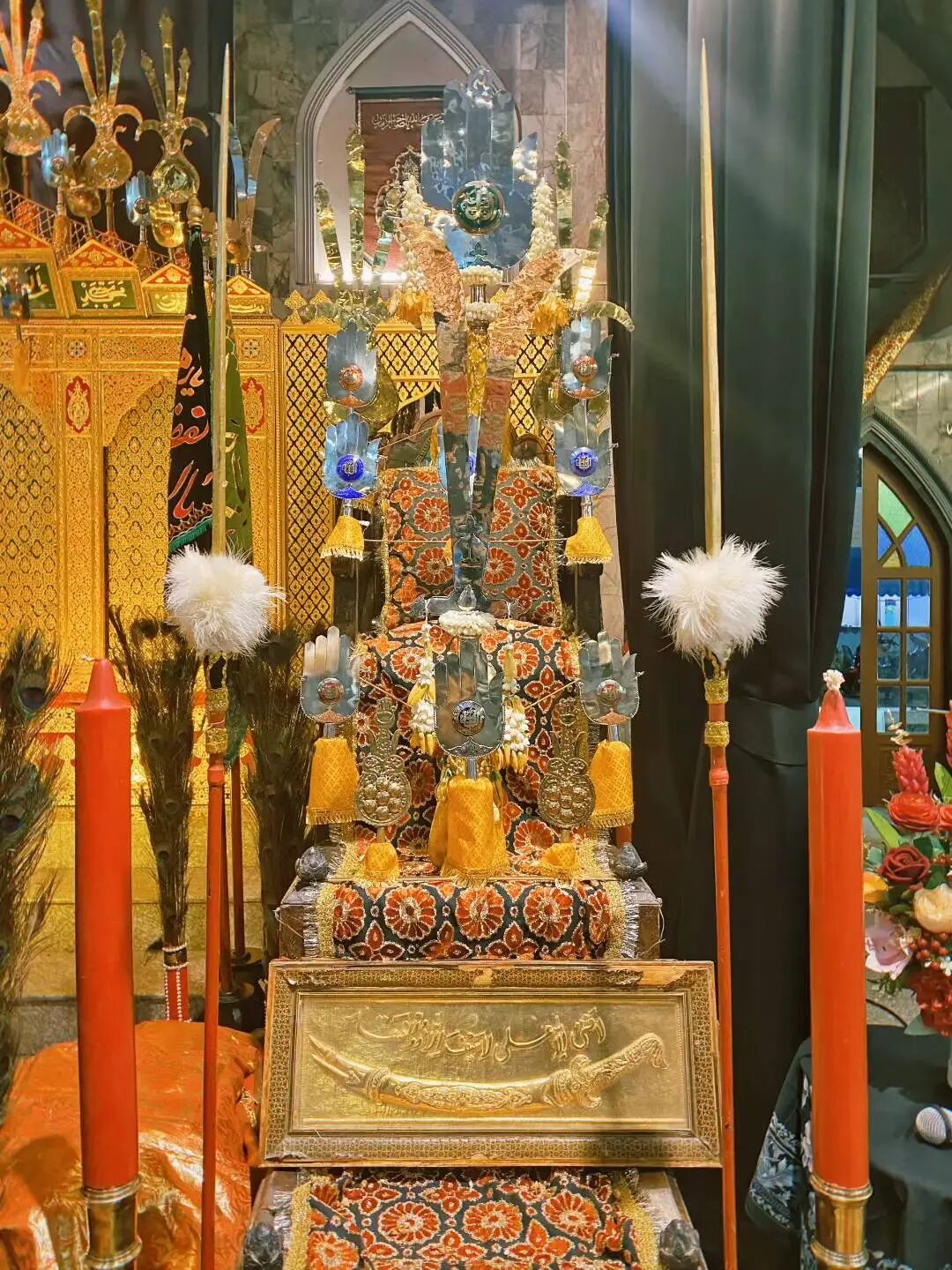
The Nakhl Gardani placed in the main hall symbolizes the funeral bier of Imam Hussein, decorated with a dagger and a turban (dastar) representing those used by him. During Ashura events, people carry the Nakhl Gardani to symbolize the funeral procession for Imam Hussein.
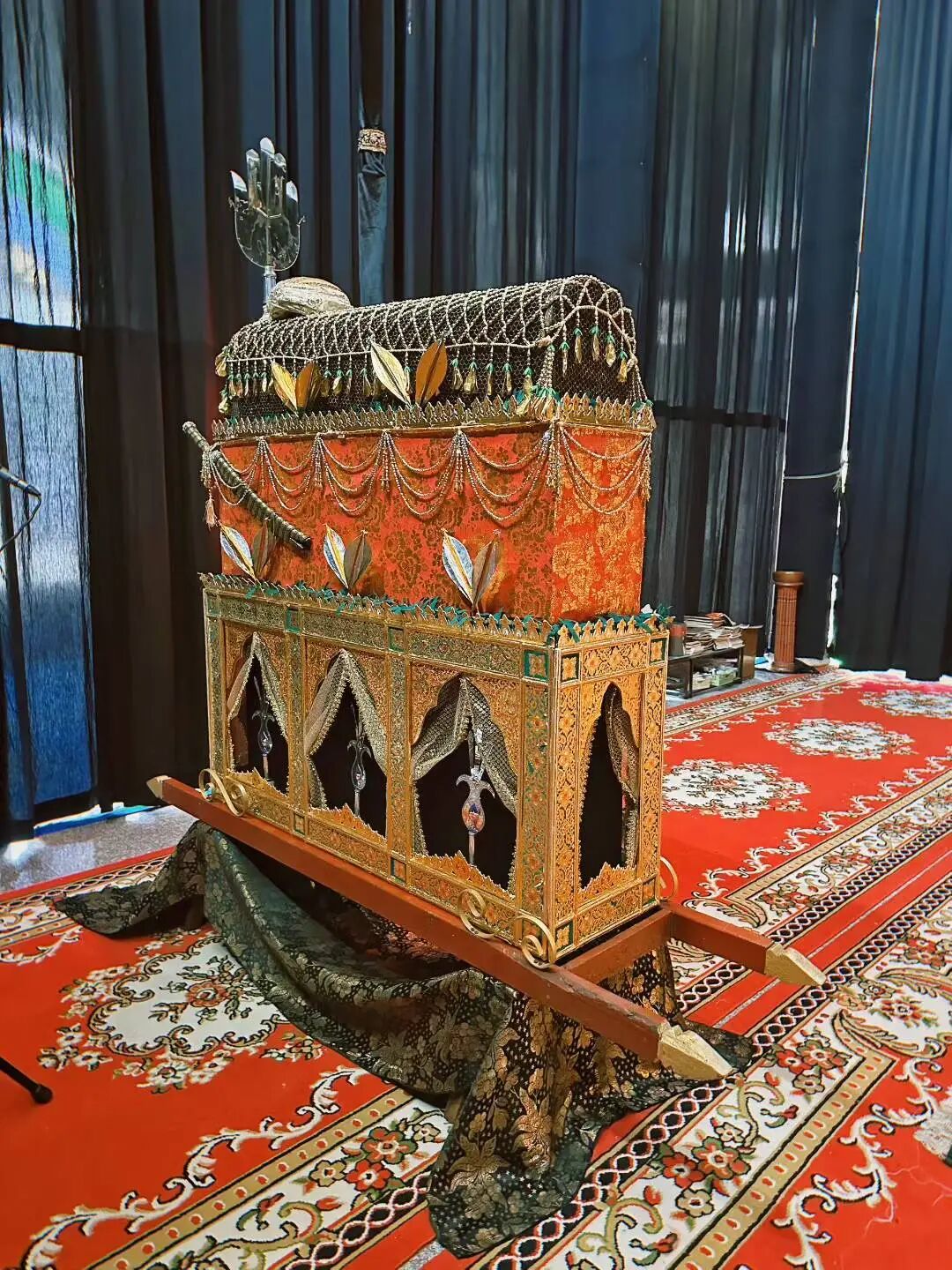
A Tadjah is also placed in the main hall to symbolize the tomb of Imam Hussein.
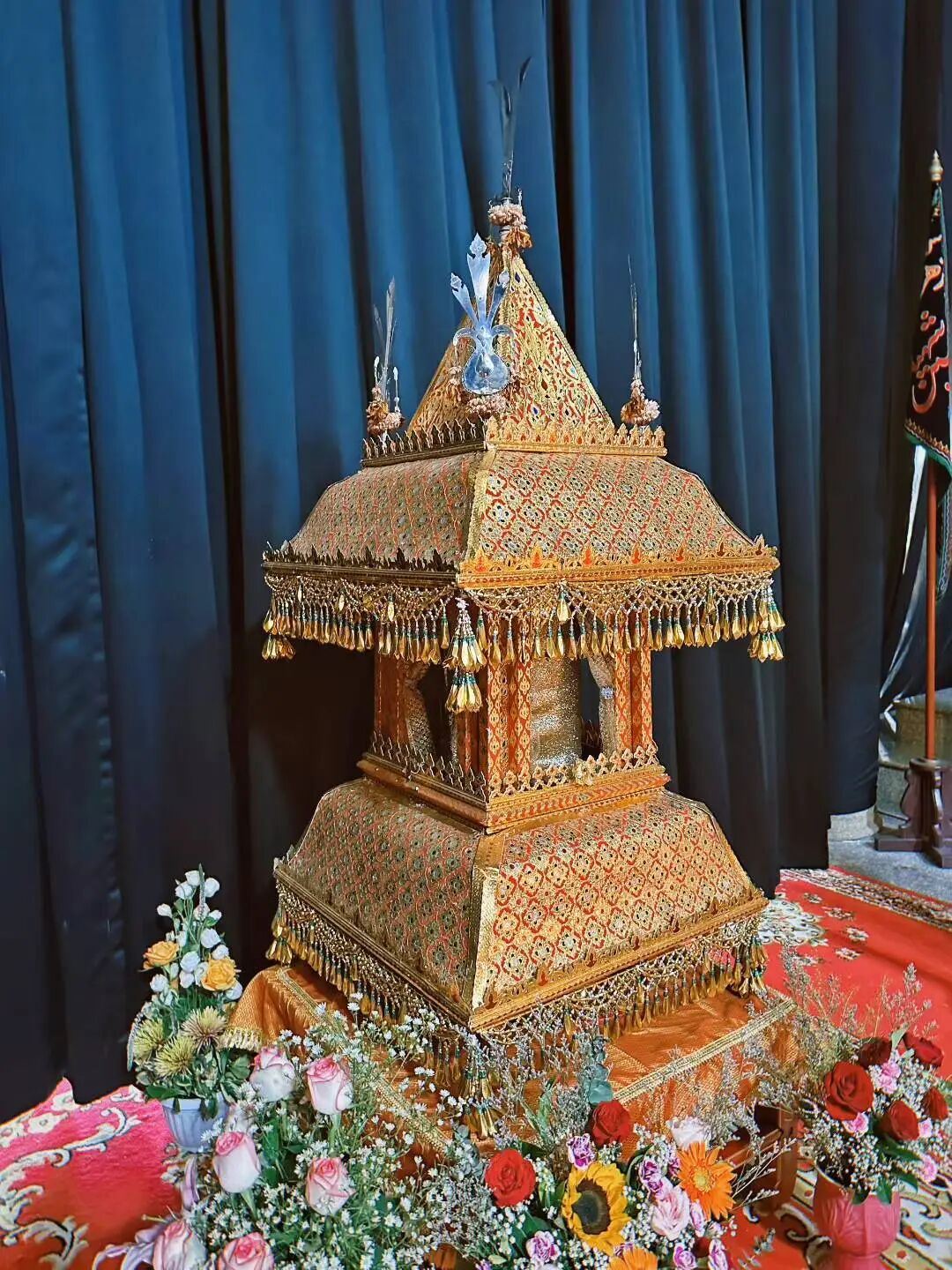
There is also a small decoration in the hall representing the youngest infant martyred at the Battle of Karbala, Ali Asghar, the six-month-old son of Imam Hussein. Records say that Imam Hussein held the thirsty Ali Asghar and asked the enemy for water for the child, but the enemy fired an arrow that pierced the baby's throat and Imam Hussein's arm at the same time. Ali Asghar later became a symbol of innocent victims and the most painful part of the mourning during Muharram.
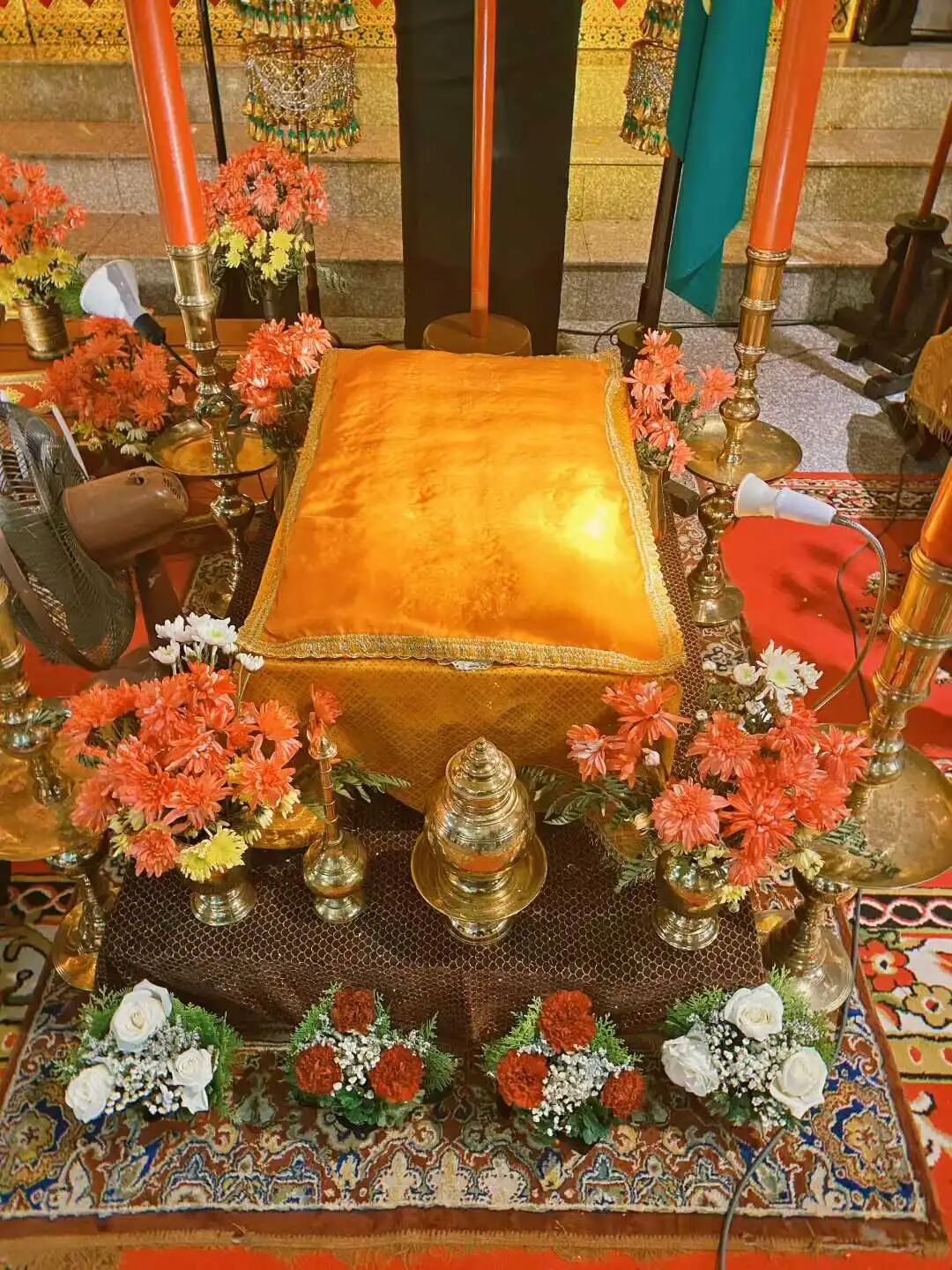
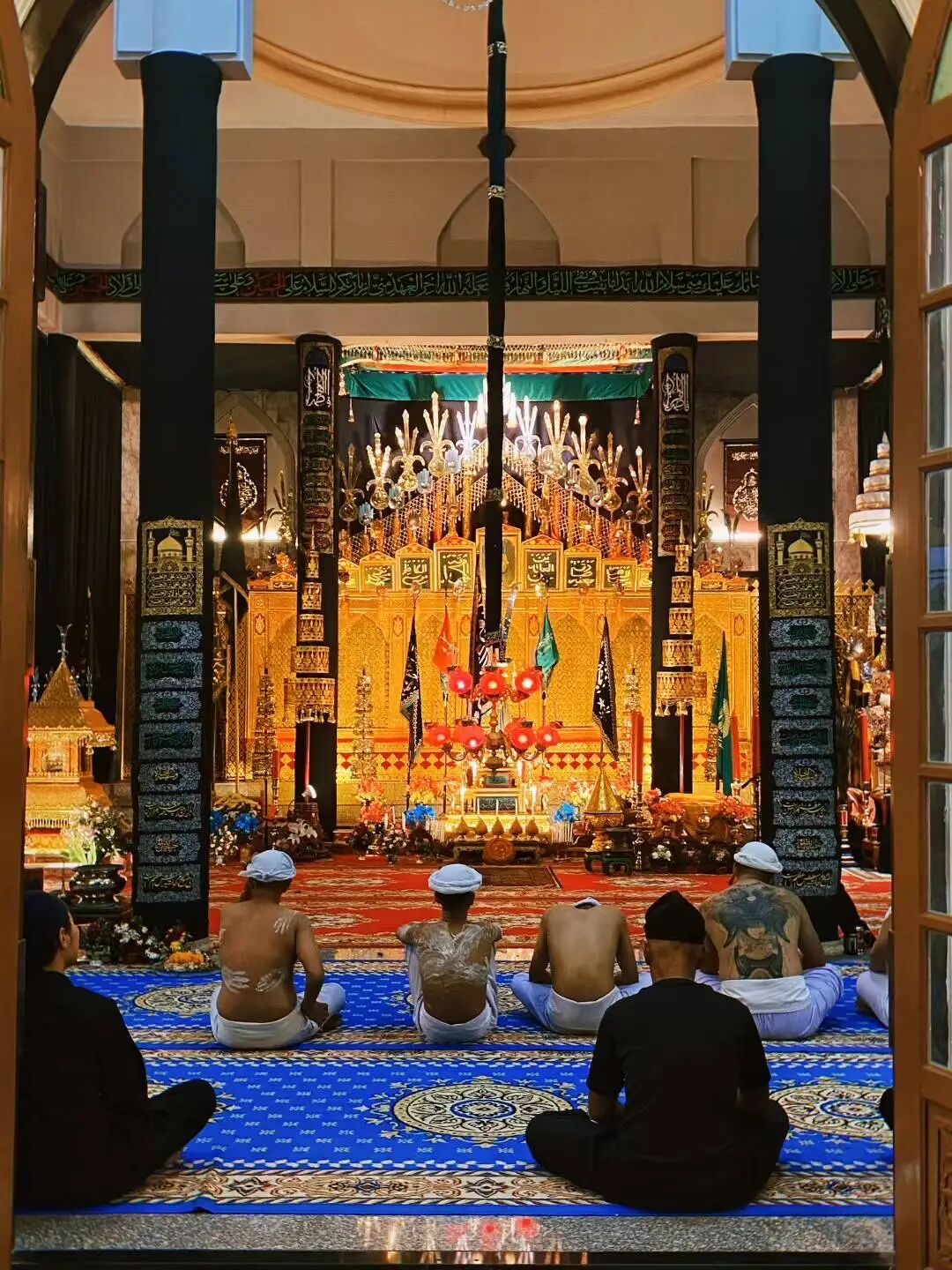
During the first ten nights of Muharram, Shia Muslims in Bangkok gather every night to chant in memory of Imam Hussein. During these gatherings, people known as Rawda khwan tell stories about the martyrdom of Imam Hussein and his followers at the Battle of Karbala. The stories come from famous books, the most well-known being The Garden of the Martyrs (Rawdat al-shuhada) by the famous Timurid-era Persian writer Hussein Kashifi. Afterward, the imam gives a sermon (waaz) in Thai, teaching everyone about the bravery, fearlessness, and sacrifice shown by Imam Hussein and his followers at the Battle of Karbala.
Besides the main Shia mosque in Bangkok, Kudi Luang, I also visited two others: the Persian-descended Kudi Charoenphat and the Indian-descended Dilfallah mosque. The people at Kudi Charoenphat told me they did not want me to take photos or visit, which I understand. The people at Dilfallah mosque were friendlier, but they told me their Ashura event was on Monday, which I did not quite understand, as I wondered why it was not held on the 10th day of the first month of the Islamic calendar.
In all three places, I saw the Nakhl Gardani used during Ashura events. It symbolizes the funeral bier of Imam Hussein, and the entire Ashura event is essentially a reenactment of his funeral procession.
I previously spent Muharram in Tehran, Iran. See: Encountering Ashura in Tehran.
Summary: Bangkok has a long Persian-descended Shia Muslim history, centered in communities such as Kudi Luang Chao Sen Mosque. This account follows the Muharram gatherings, Ashura preparations, symbols of Karbala, mosque details, food sharing, and local conversations described in the original travel note.
As the Islamic New Year arrives, Shia friends (dosti) around the world spend the first ten days of the first month, Muharram, honoring Imam Hussein. This leads up to the grand Ashura festival. Last weekend, I traveled to Thailand to join the Muharram commemorations held by the Persian-descended Shia community in Bangkok.
Bangkok currently has five Shia mosques, with two belonging to the Persian community and three to the Indian community. It is the city with the strongest Shia cultural presence in all of Southeast Asia. Since I only had Saturday evening, I chose to attend the memorial at the primary Shia mosque in Bangkok, Kudi Luang Mosque.
Between the 16th and 18th centuries, Shia merchants from the Persian Safavid dynasty traveled along the Indian Ocean coast to trade in Siam, where they were warmly welcomed and hosted by the Siamese royal family. Some Persian merchants married locals and settled down, eventually taking on important roles in the Siamese court. Starting in the 17th century, the Sheik Ahmad family from Qom, Persia, managed Siam's western maritime affairs, overseeing trade, shipping, and diplomacy across the Indian Ocean.
After the Siamese capital of Ayutthaya fell in 1767 and the capital moved to Bangkok in 1782, the Persian community from Ayutthaya moved there as well. The first leader of the Persian Shia community in Bangkok was Konkaew, the son of the last leader from Ayutthaya. In 1797, he began managing Siam's western trade and received a property in the Thonburi area across the Chao Phraya River. People say he and 400 Shia followers established Kudi Chao Sen Mosque, which became the primary Shia mosque in Bangkok.
After Konkaew passed away, his brother and eight direct descendants inherited the title, controlling Siam's western trade rights for a century. In 1897, King Rama V renovated Kudi Chao Sen Mosque and renamed it Kudi Luang Chao Sen Mosque. In 1947, the entire Kudi Luang Mosque was moved to its current location to make room for the Royal Thai Navy headquarters. The community still lives around the mosque, preserving the traditional Shia culture of Bangkok.
We visited Kudi Luang Mosque in the morning. The male and female friends (dosti) were very warm, offering us several bottles of water. Even after learning we were Sunni, they remained very welcoming and told us we were free to take photos. It was a pity that the grandest Ashura event was scheduled for Monday morning, and we could not attend because of work.
Inside the main hall of Kudi Luang Mosque, a banner hangs that reads, 'Oh!' Hussein. Honoring Imam Hussein is the theme of Muharram.
The Persian-descended Shia elders in Bangkok live around the mosque. They are open-minded and very welcoming to friends (dosti).
After the prayer (namaz), I returned to Kudi Luang Mosque to eat chicken rice noodle rolls (changfen) with everyone, along with a special dessert made of palm sugar and pomelo that the Persian community in Bangkok eats during Muharram. One of the themes for Shia Muslims during Muharram is sharing and giving. Food during this time is free, and everyone gathers to make the flowers used in the activities. Some people in the mosque wear white pants and headscarves, with bells hanging from their pant legs. They dedicate themselves to serving the mosque during the first ten days of Muharram.
I met a very interesting young man at the mosque who told me many stories about the Shia faith and Ashura. His parents are Afghan, he grew up in Iran, later went to Japan for school and work, and is now stationed in Bangkok by his company. He was the most fluent English speaker in the entire mosque, and I learned a lot from chatting with him. Like everyone else at the mosque, he was very welcoming to Sunni friends (dosti).
The most eye-catching thing in the mosque is a handsome, tall horse personally gifted by the King of Thailand. This horse represents Zuljanah, the warhorse of Imam Hussein. Zuljanah was raised by the noble Prophet from a young age and was known for loyalty, strength, endurance, and devotion. During the Battle of Karbala, Zuljanah used its body to block arrows aimed at Imam Hussein. After Imam Hussein passed away, Zuljanah returned to his family covered in blood to warn them of an ambush, then died from its wounds after fulfilling its final duty. During the month of Muharram, the horse is kept in the stables of Kudi Luang mosque, and people take turns walking it in the courtyard every night.
On the qibla wall of the main hall, the flagpole at the top is called an Alam, which represents the flag held by Abbas, the standard-bearer for Imam Hussein at the Battle of Karbala. The metal hand is called a Panja, which symbolizes the severed hands of Abbas. Abbas was the half-brother of Imam Hussein; he inherited the courage of Imam Ali and always held the flag of victory high on the battlefield. On the night of Ashura, he was blocked by enemy forces while returning with water from the Euphrates River; he fought alone, had both arms cut off, and eventually died in battle.
Above the niche on the qibla wall, the names of Allah, the noble Prophet, and the Twelve Imams of the Shia are written. The Twelver school is the largest branch of Shia Islam and is the state religion of Iran.
The Nakhl Gardani placed in the main hall symbolizes the funeral bier of Imam Hussein, decorated with a dagger and a turban (dastar) representing those used by him. During Ashura events, people carry the Nakhl Gardani to symbolize the funeral procession for Imam Hussein.
A Tadjah is also placed in the main hall to symbolize the tomb of Imam Hussein.
There is also a small decoration in the hall representing the youngest infant martyred at the Battle of Karbala, Ali Asghar, the six-month-old son of Imam Hussein. Records say that Imam Hussein held the thirsty Ali Asghar and asked the enemy for water for the child, but the enemy fired an arrow that pierced the baby's throat and Imam Hussein's arm at the same time. Ali Asghar later became a symbol of innocent victims and the most painful part of the mourning during Muharram.
During the first ten nights of Muharram, Shia Muslims in Bangkok gather every night to chant in memory of Imam Hussein. During these gatherings, people known as Rawda khwan tell stories about the martyrdom of Imam Hussein and his followers at the Battle of Karbala. The stories come from famous books, the most well-known being The Garden of the Martyrs (Rawdat al-shuhada) by the famous Timurid-era Persian writer Hussein Kashifi. Afterward, the imam gives a sermon (waaz) in Thai, teaching everyone about the bravery, fearlessness, and sacrifice shown by Imam Hussein and his followers at the Battle of Karbala.
Besides the main Shia mosque in Bangkok, Kudi Luang, I also visited two others: the Persian-descended Kudi Charoenphat and the Indian-descended Dilfallah mosque. The people at Kudi Charoenphat told me they did not want me to take photos or visit, which I understand. The people at Dilfallah mosque were friendlier, but they told me their Ashura event was on Monday, which I did not quite understand, as I wondered why it was not held on the 10th day of the first month of the Islamic calendar.
In all three places, I saw the Nakhl Gardani used during Ashura events. It symbolizes the funeral bier of Imam Hussein, and the entire Ashura event is essentially a reenactment of his funeral procession.
I previously spent Muharram in Tehran, Iran. See: Encountering Ashura in Tehran.
Halal Travel Guide: Bangkok - Persian Shia Mosques and Muharram Traditions
Articles • ali2007fr posted the article • 0 comments • 231 views • 2026-05-20 09:12
Reposted from the web
Summary: Bangkok has a long Persian-descended Shia Muslim history, centered in communities such as Kudi Luang Chao Sen Mosque. This account follows the Muharram gatherings, Ashura preparations, symbols of Karbala, mosque details, food sharing, and local conversations described in the original travel note.
As the Islamic New Year arrives, Shia friends (dosti) around the world spend the first ten days of the first month, Muharram, honoring Imam Hussein. This leads up to the grand Ashura festival. Last weekend, I traveled to Thailand to join the Muharram commemorations held by the Persian-descended Shia community in Bangkok.
Bangkok currently has five Shia mosques, with two belonging to the Persian community and three to the Indian community. It is the city with the strongest Shia cultural presence in all of Southeast Asia. Since I only had Saturday evening, I chose to attend the memorial at the primary Shia mosque in Bangkok, Kudi Luang Mosque.
Between the 16th and 18th centuries, Shia merchants from the Persian Safavid dynasty traveled along the Indian Ocean coast to trade in Siam, where they were warmly welcomed and hosted by the Siamese royal family. Some Persian merchants married locals and settled down, eventually taking on important roles in the Siamese court. Starting in the 17th century, the Sheik Ahmad family from Qom, Persia, managed Siam's western maritime affairs, overseeing trade, shipping, and diplomacy across the Indian Ocean.
After the Siamese capital of Ayutthaya fell in 1767 and the capital moved to Bangkok in 1782, the Persian community from Ayutthaya moved there as well. The first leader of the Persian Shia community in Bangkok was Konkaew, the son of the last leader from Ayutthaya. In 1797, he began managing Siam's western trade and received a property in the Thonburi area across the Chao Phraya River. People say he and 400 Shia followers established Kudi Chao Sen Mosque, which became the primary Shia mosque in Bangkok.
After Konkaew passed away, his brother and eight direct descendants inherited the title, controlling Siam's western trade rights for a century. In 1897, King Rama V renovated Kudi Chao Sen Mosque and renamed it Kudi Luang Chao Sen Mosque. In 1947, the entire Kudi Luang Mosque was moved to its current location to make room for the Royal Thai Navy headquarters. The community still lives around the mosque, preserving the traditional Shia culture of Bangkok.
We visited Kudi Luang Mosque in the morning. The male and female friends (dosti) were very warm, offering us several bottles of water. Even after learning we were Sunni, they remained very welcoming and told us we were free to take photos. It was a pity that the grandest Ashura event was scheduled for Monday morning, and we could not attend because of work.
Inside the main hall of Kudi Luang Mosque, a banner hangs that reads, 'Oh!' Hussein. Honoring Imam Hussein is the theme of Muharram.
The Persian-descended Shia elders in Bangkok live around the mosque. They are open-minded and very welcoming to friends (dosti).
After the prayer (namaz), I returned to Kudi Luang Mosque to eat chicken rice noodle rolls (changfen) with everyone, along with a special dessert made of palm sugar and pomelo that the Persian community in Bangkok eats during Muharram. One of the themes for Shia Muslims during Muharram is sharing and giving. Food during this time is free, and everyone gathers to make the flowers used in the activities. Some people in the mosque wear white pants and headscarves, with bells hanging from their pant legs. They dedicate themselves to serving the mosque during the first ten days of Muharram.
I met a very interesting young man at the mosque who told me many stories about the Shia faith and Ashura. His parents are Afghan, he grew up in Iran, later went to Japan for school and work, and is now stationed in Bangkok by his company. He was the most fluent English speaker in the entire mosque, and I learned a lot from chatting with him. Like everyone else at the mosque, he was very welcoming to Sunni friends (dosti).
The most eye-catching thing in the mosque is a handsome, tall horse personally gifted by the King of Thailand. This horse represents Zuljanah, the warhorse of Imam Hussein. Zuljanah was raised by the noble Prophet from a young age and was known for loyalty, strength, endurance, and devotion. During the Battle of Karbala, Zuljanah used its body to block arrows aimed at Imam Hussein. After Imam Hussein passed away, Zuljanah returned to his family covered in blood to warn them of an ambush, then died from its wounds after fulfilling its final duty. During the month of Muharram, the horse is kept in the stables of Kudi Luang mosque, and people take turns walking it in the courtyard every night.
On the qibla wall of the main hall, the flagpole at the top is called an Alam, which represents the flag held by Abbas, the standard-bearer for Imam Hussein at the Battle of Karbala. The metal hand is called a Panja, which symbolizes the severed hands of Abbas. Abbas was the half-brother of Imam Hussein; he inherited the courage of Imam Ali and always held the flag of victory high on the battlefield. On the night of Ashura, he was blocked by enemy forces while returning with water from the Euphrates River; he fought alone, had both arms cut off, and eventually died in battle.
Above the niche on the qibla wall, the names of Allah, the noble Prophet, and the Twelve Imams of the Shia are written. The Twelver school is the largest branch of Shia Islam and is the state religion of Iran.
The Nakhl Gardani placed in the main hall symbolizes the funeral bier of Imam Hussein, decorated with a dagger and a turban (dastar) representing those used by him. During Ashura events, people carry the Nakhl Gardani to symbolize the funeral procession for Imam Hussein.
A Tadjah is also placed in the main hall to symbolize the tomb of Imam Hussein.
There is also a small decoration in the hall representing the youngest infant martyred at the Battle of Karbala, Ali Asghar, the six-month-old son of Imam Hussein. Records say that Imam Hussein held the thirsty Ali Asghar and asked the enemy for water for the child, but the enemy fired an arrow that pierced the baby's throat and Imam Hussein's arm at the same time. Ali Asghar later became a symbol of innocent victims and the most painful part of the mourning during Muharram.
During the first ten nights of Muharram, Shia Muslims in Bangkok gather every night to chant in memory of Imam Hussein. During these gatherings, people known as Rawda khwan tell stories about the martyrdom of Imam Hussein and his followers at the Battle of Karbala. The stories come from famous books, the most well-known being The Garden of the Martyrs (Rawdat al-shuhada) by the famous Timurid-era Persian writer Hussein Kashifi. Afterward, the imam gives a sermon (waaz) in Thai, teaching everyone about the bravery, fearlessness, and sacrifice shown by Imam Hussein and his followers at the Battle of Karbala.
Besides the main Shia mosque in Bangkok, Kudi Luang, I also visited two others: the Persian-descended Kudi Charoenphat and the Indian-descended Dilfallah mosque. The people at Kudi Charoenphat told me they did not want me to take photos or visit, which I understand. The people at Dilfallah mosque were friendlier, but they told me their Ashura event was on Monday, which I did not quite understand, as I wondered why it was not held on the 10th day of the first month of the Islamic calendar.
In all three places, I saw the Nakhl Gardani used during Ashura events. It symbolizes the funeral bier of Imam Hussein, and the entire Ashura event is essentially a reenactment of his funeral procession.
I previously spent Muharram in Tehran, Iran. See: Encountering Ashura in Tehran. view all
Summary: Bangkok has a long Persian-descended Shia Muslim history, centered in communities such as Kudi Luang Chao Sen Mosque. This account follows the Muharram gatherings, Ashura preparations, symbols of Karbala, mosque details, food sharing, and local conversations described in the original travel note.
As the Islamic New Year arrives, Shia friends (dosti) around the world spend the first ten days of the first month, Muharram, honoring Imam Hussein. This leads up to the grand Ashura festival. Last weekend, I traveled to Thailand to join the Muharram commemorations held by the Persian-descended Shia community in Bangkok.
Bangkok currently has five Shia mosques, with two belonging to the Persian community and three to the Indian community. It is the city with the strongest Shia cultural presence in all of Southeast Asia. Since I only had Saturday evening, I chose to attend the memorial at the primary Shia mosque in Bangkok, Kudi Luang Mosque.
Between the 16th and 18th centuries, Shia merchants from the Persian Safavid dynasty traveled along the Indian Ocean coast to trade in Siam, where they were warmly welcomed and hosted by the Siamese royal family. Some Persian merchants married locals and settled down, eventually taking on important roles in the Siamese court. Starting in the 17th century, the Sheik Ahmad family from Qom, Persia, managed Siam's western maritime affairs, overseeing trade, shipping, and diplomacy across the Indian Ocean.
After the Siamese capital of Ayutthaya fell in 1767 and the capital moved to Bangkok in 1782, the Persian community from Ayutthaya moved there as well. The first leader of the Persian Shia community in Bangkok was Konkaew, the son of the last leader from Ayutthaya. In 1797, he began managing Siam's western trade and received a property in the Thonburi area across the Chao Phraya River. People say he and 400 Shia followers established Kudi Chao Sen Mosque, which became the primary Shia mosque in Bangkok.
After Konkaew passed away, his brother and eight direct descendants inherited the title, controlling Siam's western trade rights for a century. In 1897, King Rama V renovated Kudi Chao Sen Mosque and renamed it Kudi Luang Chao Sen Mosque. In 1947, the entire Kudi Luang Mosque was moved to its current location to make room for the Royal Thai Navy headquarters. The community still lives around the mosque, preserving the traditional Shia culture of Bangkok.
We visited Kudi Luang Mosque in the morning. The male and female friends (dosti) were very warm, offering us several bottles of water. Even after learning we were Sunni, they remained very welcoming and told us we were free to take photos. It was a pity that the grandest Ashura event was scheduled for Monday morning, and we could not attend because of work.
Inside the main hall of Kudi Luang Mosque, a banner hangs that reads, 'Oh!' Hussein. Honoring Imam Hussein is the theme of Muharram.
The Persian-descended Shia elders in Bangkok live around the mosque. They are open-minded and very welcoming to friends (dosti).
After the prayer (namaz), I returned to Kudi Luang Mosque to eat chicken rice noodle rolls (changfen) with everyone, along with a special dessert made of palm sugar and pomelo that the Persian community in Bangkok eats during Muharram. One of the themes for Shia Muslims during Muharram is sharing and giving. Food during this time is free, and everyone gathers to make the flowers used in the activities. Some people in the mosque wear white pants and headscarves, with bells hanging from their pant legs. They dedicate themselves to serving the mosque during the first ten days of Muharram.
I met a very interesting young man at the mosque who told me many stories about the Shia faith and Ashura. His parents are Afghan, he grew up in Iran, later went to Japan for school and work, and is now stationed in Bangkok by his company. He was the most fluent English speaker in the entire mosque, and I learned a lot from chatting with him. Like everyone else at the mosque, he was very welcoming to Sunni friends (dosti).
The most eye-catching thing in the mosque is a handsome, tall horse personally gifted by the King of Thailand. This horse represents Zuljanah, the warhorse of Imam Hussein. Zuljanah was raised by the noble Prophet from a young age and was known for loyalty, strength, endurance, and devotion. During the Battle of Karbala, Zuljanah used its body to block arrows aimed at Imam Hussein. After Imam Hussein passed away, Zuljanah returned to his family covered in blood to warn them of an ambush, then died from its wounds after fulfilling its final duty. During the month of Muharram, the horse is kept in the stables of Kudi Luang mosque, and people take turns walking it in the courtyard every night.
On the qibla wall of the main hall, the flagpole at the top is called an Alam, which represents the flag held by Abbas, the standard-bearer for Imam Hussein at the Battle of Karbala. The metal hand is called a Panja, which symbolizes the severed hands of Abbas. Abbas was the half-brother of Imam Hussein; he inherited the courage of Imam Ali and always held the flag of victory high on the battlefield. On the night of Ashura, he was blocked by enemy forces while returning with water from the Euphrates River; he fought alone, had both arms cut off, and eventually died in battle.
Above the niche on the qibla wall, the names of Allah, the noble Prophet, and the Twelve Imams of the Shia are written. The Twelver school is the largest branch of Shia Islam and is the state religion of Iran.
The Nakhl Gardani placed in the main hall symbolizes the funeral bier of Imam Hussein, decorated with a dagger and a turban (dastar) representing those used by him. During Ashura events, people carry the Nakhl Gardani to symbolize the funeral procession for Imam Hussein.
A Tadjah is also placed in the main hall to symbolize the tomb of Imam Hussein.
There is also a small decoration in the hall representing the youngest infant martyred at the Battle of Karbala, Ali Asghar, the six-month-old son of Imam Hussein. Records say that Imam Hussein held the thirsty Ali Asghar and asked the enemy for water for the child, but the enemy fired an arrow that pierced the baby's throat and Imam Hussein's arm at the same time. Ali Asghar later became a symbol of innocent victims and the most painful part of the mourning during Muharram.
During the first ten nights of Muharram, Shia Muslims in Bangkok gather every night to chant in memory of Imam Hussein. During these gatherings, people known as Rawda khwan tell stories about the martyrdom of Imam Hussein and his followers at the Battle of Karbala. The stories come from famous books, the most well-known being The Garden of the Martyrs (Rawdat al-shuhada) by the famous Timurid-era Persian writer Hussein Kashifi. Afterward, the imam gives a sermon (waaz) in Thai, teaching everyone about the bravery, fearlessness, and sacrifice shown by Imam Hussein and his followers at the Battle of Karbala.
Besides the main Shia mosque in Bangkok, Kudi Luang, I also visited two others: the Persian-descended Kudi Charoenphat and the Indian-descended Dilfallah mosque. The people at Kudi Charoenphat told me they did not want me to take photos or visit, which I understand. The people at Dilfallah mosque were friendlier, but they told me their Ashura event was on Monday, which I did not quite understand, as I wondered why it was not held on the 10th day of the first month of the Islamic calendar.
In all three places, I saw the Nakhl Gardani used during Ashura events. It symbolizes the funeral bier of Imam Hussein, and the entire Ashura event is essentially a reenactment of his funeral procession.
I previously spent Muharram in Tehran, Iran. See: Encountering Ashura in Tehran. view all
Reposted from the web
Summary: Bangkok has a long Persian-descended Shia Muslim history, centered in communities such as Kudi Luang Chao Sen Mosque. This account follows the Muharram gatherings, Ashura preparations, symbols of Karbala, mosque details, food sharing, and local conversations described in the original travel note.
As the Islamic New Year arrives, Shia friends (dosti) around the world spend the first ten days of the first month, Muharram, honoring Imam Hussein. This leads up to the grand Ashura festival. Last weekend, I traveled to Thailand to join the Muharram commemorations held by the Persian-descended Shia community in Bangkok.
Bangkok currently has five Shia mosques, with two belonging to the Persian community and three to the Indian community. It is the city with the strongest Shia cultural presence in all of Southeast Asia. Since I only had Saturday evening, I chose to attend the memorial at the primary Shia mosque in Bangkok, Kudi Luang Mosque.
Between the 16th and 18th centuries, Shia merchants from the Persian Safavid dynasty traveled along the Indian Ocean coast to trade in Siam, where they were warmly welcomed and hosted by the Siamese royal family. Some Persian merchants married locals and settled down, eventually taking on important roles in the Siamese court. Starting in the 17th century, the Sheik Ahmad family from Qom, Persia, managed Siam's western maritime affairs, overseeing trade, shipping, and diplomacy across the Indian Ocean.
After the Siamese capital of Ayutthaya fell in 1767 and the capital moved to Bangkok in 1782, the Persian community from Ayutthaya moved there as well. The first leader of the Persian Shia community in Bangkok was Konkaew, the son of the last leader from Ayutthaya. In 1797, he began managing Siam's western trade and received a property in the Thonburi area across the Chao Phraya River. People say he and 400 Shia followers established Kudi Chao Sen Mosque, which became the primary Shia mosque in Bangkok.
After Konkaew passed away, his brother and eight direct descendants inherited the title, controlling Siam's western trade rights for a century. In 1897, King Rama V renovated Kudi Chao Sen Mosque and renamed it Kudi Luang Chao Sen Mosque. In 1947, the entire Kudi Luang Mosque was moved to its current location to make room for the Royal Thai Navy headquarters. The community still lives around the mosque, preserving the traditional Shia culture of Bangkok.
We visited Kudi Luang Mosque in the morning. The male and female friends (dosti) were very warm, offering us several bottles of water. Even after learning we were Sunni, they remained very welcoming and told us we were free to take photos. It was a pity that the grandest Ashura event was scheduled for Monday morning, and we could not attend because of work.
Inside the main hall of Kudi Luang Mosque, a banner hangs that reads, 'Oh!' Hussein. Honoring Imam Hussein is the theme of Muharram.
The Persian-descended Shia elders in Bangkok live around the mosque. They are open-minded and very welcoming to friends (dosti).
After the prayer (namaz), I returned to Kudi Luang Mosque to eat chicken rice noodle rolls (changfen) with everyone, along with a special dessert made of palm sugar and pomelo that the Persian community in Bangkok eats during Muharram. One of the themes for Shia Muslims during Muharram is sharing and giving. Food during this time is free, and everyone gathers to make the flowers used in the activities. Some people in the mosque wear white pants and headscarves, with bells hanging from their pant legs. They dedicate themselves to serving the mosque during the first ten days of Muharram.
I met a very interesting young man at the mosque who told me many stories about the Shia faith and Ashura. His parents are Afghan, he grew up in Iran, later went to Japan for school and work, and is now stationed in Bangkok by his company. He was the most fluent English speaker in the entire mosque, and I learned a lot from chatting with him. Like everyone else at the mosque, he was very welcoming to Sunni friends (dosti).
The most eye-catching thing in the mosque is a handsome, tall horse personally gifted by the King of Thailand. This horse represents Zuljanah, the warhorse of Imam Hussein. Zuljanah was raised by the noble Prophet from a young age and was known for loyalty, strength, endurance, and devotion. During the Battle of Karbala, Zuljanah used its body to block arrows aimed at Imam Hussein. After Imam Hussein passed away, Zuljanah returned to his family covered in blood to warn them of an ambush, then died from its wounds after fulfilling its final duty. During the month of Muharram, the horse is kept in the stables of Kudi Luang mosque, and people take turns walking it in the courtyard every night.
On the qibla wall of the main hall, the flagpole at the top is called an Alam, which represents the flag held by Abbas, the standard-bearer for Imam Hussein at the Battle of Karbala. The metal hand is called a Panja, which symbolizes the severed hands of Abbas. Abbas was the half-brother of Imam Hussein; he inherited the courage of Imam Ali and always held the flag of victory high on the battlefield. On the night of Ashura, he was blocked by enemy forces while returning with water from the Euphrates River; he fought alone, had both arms cut off, and eventually died in battle.
Above the niche on the qibla wall, the names of Allah, the noble Prophet, and the Twelve Imams of the Shia are written. The Twelver school is the largest branch of Shia Islam and is the state religion of Iran.
The Nakhl Gardani placed in the main hall symbolizes the funeral bier of Imam Hussein, decorated with a dagger and a turban (dastar) representing those used by him. During Ashura events, people carry the Nakhl Gardani to symbolize the funeral procession for Imam Hussein.
A Tadjah is also placed in the main hall to symbolize the tomb of Imam Hussein.
There is also a small decoration in the hall representing the youngest infant martyred at the Battle of Karbala, Ali Asghar, the six-month-old son of Imam Hussein. Records say that Imam Hussein held the thirsty Ali Asghar and asked the enemy for water for the child, but the enemy fired an arrow that pierced the baby's throat and Imam Hussein's arm at the same time. Ali Asghar later became a symbol of innocent victims and the most painful part of the mourning during Muharram.
During the first ten nights of Muharram, Shia Muslims in Bangkok gather every night to chant in memory of Imam Hussein. During these gatherings, people known as Rawda khwan tell stories about the martyrdom of Imam Hussein and his followers at the Battle of Karbala. The stories come from famous books, the most well-known being The Garden of the Martyrs (Rawdat al-shuhada) by the famous Timurid-era Persian writer Hussein Kashifi. Afterward, the imam gives a sermon (waaz) in Thai, teaching everyone about the bravery, fearlessness, and sacrifice shown by Imam Hussein and his followers at the Battle of Karbala.
Besides the main Shia mosque in Bangkok, Kudi Luang, I also visited two others: the Persian-descended Kudi Charoenphat and the Indian-descended Dilfallah mosque. The people at Kudi Charoenphat told me they did not want me to take photos or visit, which I understand. The people at Dilfallah mosque were friendlier, but they told me their Ashura event was on Monday, which I did not quite understand, as I wondered why it was not held on the 10th day of the first month of the Islamic calendar.
In all three places, I saw the Nakhl Gardani used during Ashura events. It symbolizes the funeral bier of Imam Hussein, and the entire Ashura event is essentially a reenactment of his funeral procession.
I previously spent Muharram in Tehran, Iran. See: Encountering Ashura in Tehran.
Summary: Bangkok has a long Persian-descended Shia Muslim history, centered in communities such as Kudi Luang Chao Sen Mosque. This account follows the Muharram gatherings, Ashura preparations, symbols of Karbala, mosque details, food sharing, and local conversations described in the original travel note.
As the Islamic New Year arrives, Shia friends (dosti) around the world spend the first ten days of the first month, Muharram, honoring Imam Hussein. This leads up to the grand Ashura festival. Last weekend, I traveled to Thailand to join the Muharram commemorations held by the Persian-descended Shia community in Bangkok.
Bangkok currently has five Shia mosques, with two belonging to the Persian community and three to the Indian community. It is the city with the strongest Shia cultural presence in all of Southeast Asia. Since I only had Saturday evening, I chose to attend the memorial at the primary Shia mosque in Bangkok, Kudi Luang Mosque.
Between the 16th and 18th centuries, Shia merchants from the Persian Safavid dynasty traveled along the Indian Ocean coast to trade in Siam, where they were warmly welcomed and hosted by the Siamese royal family. Some Persian merchants married locals and settled down, eventually taking on important roles in the Siamese court. Starting in the 17th century, the Sheik Ahmad family from Qom, Persia, managed Siam's western maritime affairs, overseeing trade, shipping, and diplomacy across the Indian Ocean.
After the Siamese capital of Ayutthaya fell in 1767 and the capital moved to Bangkok in 1782, the Persian community from Ayutthaya moved there as well. The first leader of the Persian Shia community in Bangkok was Konkaew, the son of the last leader from Ayutthaya. In 1797, he began managing Siam's western trade and received a property in the Thonburi area across the Chao Phraya River. People say he and 400 Shia followers established Kudi Chao Sen Mosque, which became the primary Shia mosque in Bangkok.
After Konkaew passed away, his brother and eight direct descendants inherited the title, controlling Siam's western trade rights for a century. In 1897, King Rama V renovated Kudi Chao Sen Mosque and renamed it Kudi Luang Chao Sen Mosque. In 1947, the entire Kudi Luang Mosque was moved to its current location to make room for the Royal Thai Navy headquarters. The community still lives around the mosque, preserving the traditional Shia culture of Bangkok.
We visited Kudi Luang Mosque in the morning. The male and female friends (dosti) were very warm, offering us several bottles of water. Even after learning we were Sunni, they remained very welcoming and told us we were free to take photos. It was a pity that the grandest Ashura event was scheduled for Monday morning, and we could not attend because of work.
Inside the main hall of Kudi Luang Mosque, a banner hangs that reads, 'Oh!' Hussein. Honoring Imam Hussein is the theme of Muharram.
The Persian-descended Shia elders in Bangkok live around the mosque. They are open-minded and very welcoming to friends (dosti).
After the prayer (namaz), I returned to Kudi Luang Mosque to eat chicken rice noodle rolls (changfen) with everyone, along with a special dessert made of palm sugar and pomelo that the Persian community in Bangkok eats during Muharram. One of the themes for Shia Muslims during Muharram is sharing and giving. Food during this time is free, and everyone gathers to make the flowers used in the activities. Some people in the mosque wear white pants and headscarves, with bells hanging from their pant legs. They dedicate themselves to serving the mosque during the first ten days of Muharram.
I met a very interesting young man at the mosque who told me many stories about the Shia faith and Ashura. His parents are Afghan, he grew up in Iran, later went to Japan for school and work, and is now stationed in Bangkok by his company. He was the most fluent English speaker in the entire mosque, and I learned a lot from chatting with him. Like everyone else at the mosque, he was very welcoming to Sunni friends (dosti).
The most eye-catching thing in the mosque is a handsome, tall horse personally gifted by the King of Thailand. This horse represents Zuljanah, the warhorse of Imam Hussein. Zuljanah was raised by the noble Prophet from a young age and was known for loyalty, strength, endurance, and devotion. During the Battle of Karbala, Zuljanah used its body to block arrows aimed at Imam Hussein. After Imam Hussein passed away, Zuljanah returned to his family covered in blood to warn them of an ambush, then died from its wounds after fulfilling its final duty. During the month of Muharram, the horse is kept in the stables of Kudi Luang mosque, and people take turns walking it in the courtyard every night.
On the qibla wall of the main hall, the flagpole at the top is called an Alam, which represents the flag held by Abbas, the standard-bearer for Imam Hussein at the Battle of Karbala. The metal hand is called a Panja, which symbolizes the severed hands of Abbas. Abbas was the half-brother of Imam Hussein; he inherited the courage of Imam Ali and always held the flag of victory high on the battlefield. On the night of Ashura, he was blocked by enemy forces while returning with water from the Euphrates River; he fought alone, had both arms cut off, and eventually died in battle.
Above the niche on the qibla wall, the names of Allah, the noble Prophet, and the Twelve Imams of the Shia are written. The Twelver school is the largest branch of Shia Islam and is the state religion of Iran.
The Nakhl Gardani placed in the main hall symbolizes the funeral bier of Imam Hussein, decorated with a dagger and a turban (dastar) representing those used by him. During Ashura events, people carry the Nakhl Gardani to symbolize the funeral procession for Imam Hussein.
A Tadjah is also placed in the main hall to symbolize the tomb of Imam Hussein.
There is also a small decoration in the hall representing the youngest infant martyred at the Battle of Karbala, Ali Asghar, the six-month-old son of Imam Hussein. Records say that Imam Hussein held the thirsty Ali Asghar and asked the enemy for water for the child, but the enemy fired an arrow that pierced the baby's throat and Imam Hussein's arm at the same time. Ali Asghar later became a symbol of innocent victims and the most painful part of the mourning during Muharram.
During the first ten nights of Muharram, Shia Muslims in Bangkok gather every night to chant in memory of Imam Hussein. During these gatherings, people known as Rawda khwan tell stories about the martyrdom of Imam Hussein and his followers at the Battle of Karbala. The stories come from famous books, the most well-known being The Garden of the Martyrs (Rawdat al-shuhada) by the famous Timurid-era Persian writer Hussein Kashifi. Afterward, the imam gives a sermon (waaz) in Thai, teaching everyone about the bravery, fearlessness, and sacrifice shown by Imam Hussein and his followers at the Battle of Karbala.
Besides the main Shia mosque in Bangkok, Kudi Luang, I also visited two others: the Persian-descended Kudi Charoenphat and the Indian-descended Dilfallah mosque. The people at Kudi Charoenphat told me they did not want me to take photos or visit, which I understand. The people at Dilfallah mosque were friendlier, but they told me their Ashura event was on Monday, which I did not quite understand, as I wondered why it was not held on the 10th day of the first month of the Islamic calendar.
In all three places, I saw the Nakhl Gardani used during Ashura events. It symbolizes the funeral bier of Imam Hussein, and the entire Ashura event is essentially a reenactment of his funeral procession.
I previously spent Muharram in Tehran, Iran. See: Encountering Ashura in Tehran.